0001020425 false 485BPOS 2025-12-31 11.98 5.15 21.15 9.91 27.55 19.52 17.75 25.52 17.26 3.33 4.61 30.21 23.61 20.80 30.45 5.02 11.75 21.58 17.40 0.57 4.95 8.37 5.62 6.42 6.85 12.32 8.84 7.37 19.66 13.39 24.74 14.29 0.01 11.25 5.50 0.86 8.08 7.38 3.87 7.39 1.84 9.80 23.07 8.72 7.18 13.85 11.39 14.13 12.12 1.53 21.83 0.04 0001020425 lgft:BloombergUSAggregateBondIndexMember 2018-09-28 2025-12-31 0001020425 lgft:BloombergUSIntermediateCreditIndexMember 2018-09-28 2025-12-31 0001020425 lgft:C000183970Member 2018-09-28 2025-12-31 0001020425 lgft:C000183970Member oef:AfterTaxesOnDistributionsAndSalesMember 2018-09-28 2025-12-31 0001020425 lgft:C000183970Member oef:AfterTaxesOnDistributionsMember 2018-09-28 2025-12-31 0001020425 lgft:C000229356Member 2018-09-28 2025-12-31 0001020425 lgft:C000229356Member oef:AfterTaxesOnDistributionsAndSalesMember 2018-09-28 2025-12-31 0001020425 lgft:C000229356Member oef:AfterTaxesOnDistributionsMember 2018-09-28 2025-12-31 0001020425 lgft:ICEBofAMLUSHighYieldTRUSDIndexMember 2018-09-28 2025-12-31 0001020425 lgft:S000072812BloombergUSAggregateBondIndexMember 2018-09-28 2025-12-31 0001020425 lgft:C000229357Member 2019-05-07 2025-12-31 0001020425 lgft:C000229357Member oef:AfterTaxesOnDistributionsAndSalesMember 2019-05-07 2025-12-31 0001020425 lgft:C000229357Member oef:AfterTaxesOnDistributionsMember 2019-05-07 2025-12-31 0001020425 lgft:S000072813BloombergUSAggregateBondIndexMember 2019-05-07 2025-12-31 0001020425 lgft:SGCTAIndexMember 2019-05-07 2025-12-31 0001020425 lgft:C000218348Member 2020-07-31 2025-12-31 0001020425 lgft:C000218348Member oef:AfterTaxesOnDistributionsAndSalesMember 2020-07-31 2025-12-31 0001020425 lgft:C000218348Member oef:AfterTaxesOnDistributionsMember 2020-07-31 2025-12-31 0001020425 lgft:MorningstarUSSmallBlendCategoryMember 2020-07-31 2025-12-31 0001020425 lgft:Russell2000IndexMember 2020-07-31 2025-12-31 0001020425 lgft:C000243085Member 2023-06-29 2025-12-31 0001020425 lgft:C000243085Member oef:AfterTaxesOnDistributionsAndSalesMember 2023-06-29 2025-12-31 0001020425 lgft:C000243085Member oef:AfterTaxesOnDistributionsMember 2023-06-29 2025-12-31 0001020425 lgft:MorningstarUSLargeValueCategoryMember 2023-06-29 2025-12-31 0001020425 lgft:Russell1000IndexMember 2023-06-29 2025-12-31 0001020425 lgft:C000244515Member 2023-08-29 2025-12-31 0001020425 lgft:C000244515Member oef:AfterTaxesOnDistributionsAndSalesMember 2023-08-29 2025-12-31 0001020425 lgft:C000244515Member oef:AfterTaxesOnDistributionsMember 2023-08-29 2025-12-31 0001020425 lgft:MorningstarGlobalLargeStockGrowthCategoryMember 2023-08-29 2025-12-31 0001020425 lgft:MSCIACWIIndexMember 2023-08-29 2025-12-31 0001020425 lgft:C000247047Member 2024-03-14 2025-12-31 0001020425 lgft:C000247047Member oef:AfterTaxesOnDistributionsAndSalesMember 2024-03-14 2025-12-31 0001020425 lgft:C000247047Member oef:AfterTaxesOnDistributionsMember 2024-03-14 2025-12-31 0001020425 lgft:C000247050Member 2024-03-14 2025-12-31 0001020425 lgft:C000247050Member oef:AfterTaxesOnDistributionsAndSalesMember 2024-03-14 2025-12-31 0001020425 lgft:C000247050Member oef:AfterTaxesOnDistributionsMember 2024-03-14 2025-12-31 0001020425 lgft:MorningstarChinaRegionCategoryMember 2024-03-14 2025-12-31 0001020425 lgft:MorningstarForeignLargeGrowthCategoryMember 2024-03-14 2025-12-31 0001020425 lgft:MSCIACWIExUSAIndexMember 2024-03-14 2025-12-31 0001020425 lgft:MSCIChinaAllSharesIndexMember 2024-03-14 2025-12-31 0001020425 lgft:Bloomberg115YearMunicipalIndexMember 2024-12-16 2025-12-31 0001020425 lgft:C000255834Member 2024-12-16 2025-12-31 0001020425 lgft:C000255834Member oef:AfterTaxesOnDistributionsAndSalesMember 2024-12-16 2025-12-31 0001020425 lgft:C000255834Member oef:AfterTaxesOnDistributionsMember 2024-12-16 2025-12-31 0001020425 lgft:MorningstarMuniNationalIntermediateCategoryMember 2024-12-16 2025-12-31 0001020425 lgft:S000005593Member lgft:ActiveManagementRiskMember 2025-12-31 2025-12-31 0001020425 lgft:S000005593Member lgft:ConvertibleSecuritiesRiskMember 2025-12-31 2025-12-31 0001020425 lgft:S000005593Member lgft:CurrencyRiskMember 2025-12-31 2025-12-31 0001020425 lgft:S000005593Member lgft:CybersecurityRiskMember 2025-12-31 2025-12-31 0001020425 lgft:S000005593Member lgft:EmergingMarketsRiskMember 2025-12-31 2025-12-31 0001020425 lgft:S000005593Member lgft:EquitySecuritiesRiskMember 2025-12-31 2025-12-31 0001020425 lgft:S000005593Member lgft:EuropeInvestingRiskMember 2025-12-31 2025-12-31 0001020425 lgft:S000005593Member lgft:ForeignInvestmentRiskMember 2025-12-31 2025-12-31 0001020425 lgft:S000005593Member lgft:GeopoliticalEventsRiskMember 2025-12-31 2025-12-31 0001020425 lgft:S000005593Member lgft:GrowthInvestingRiskMember 2025-12-31 2025-12-31 0001020425 lgft:S000005593Member lgft:InvestmentSelectionRiskMember 2025-12-31 2025-12-31 0001020425 lgft:S000005593Member lgft:LargeShareholderPurchaseAndRedemptionRiskMember 2025-12-31 2025-12-31 0001020425 lgft:S000005593Member lgft:MarketRisksMember 2025-12-31 2025-12-31 0001020425 lgft:S000005593Member lgft:MidSizedCompaniesRiskMember 2025-12-31 2025-12-31 0001020425 lgft:S000005593Member lgft:MultiManagementRiskMember 2025-12-31 2025-12-31 0001020425 lgft:S000005593Member lgft:OperationalRiskMember 2025-12-31 2025-12-31 0001020425 lgft:S000005593Member lgft:RegulatoryRiskMember 2025-12-31 2025-12-31 0001020425 lgft:S000005593Member oef:RiskLoseMoneyMember 2025-12-31 2025-12-31 0001020425 lgft:S000005593Member oef:RiskNotInsuredDepositoryInstitutionMember 2025-12-31 2025-12-31 0001020425 lgft:S000005593Member lgft:SectorWeightingsRiskMember 2025-12-31 2025-12-31 0001020425 lgft:S000005593Member lgft:SecuritiesLendingRiskMember 2025-12-31 2025-12-31 0001020425 lgft:S000005593Member lgft:USTradePolicyRiskMember 2025-12-31 2025-12-31 0001020425 lgft:S000005593Member lgft:ValueStockRiskMember 2025-12-31 2025-12-31 0001020425 lgft:S000005594Member lgft:ActiveManagementRiskMember 2025-12-31 2025-12-31 0001020425 lgft:S000005594Member lgft:CountryRegionalRiskMember 2025-12-31 2025-12-31 0001020425 lgft:S000005594Member lgft:CurrencyRiskMember 2025-12-31 2025-12-31 0001020425 lgft:S000005594Member lgft:CybersecurityRiskMember 2025-12-31 2025-12-31 0001020425 lgft:S000005594Member lgft:EmergingMarketsRiskMember 2025-12-31 2025-12-31 0001020425 lgft:S000005594Member lgft:EquitySecuritiesRiskMember 2025-12-31 2025-12-31 0001020425 lgft:S000005594Member lgft:EuropeInvestingRiskMember 2025-12-31 2025-12-31 0001020425 lgft:S000005594Member lgft:ForeignInvestmentRiskMember 2025-12-31 2025-12-31 0001020425 lgft:S000005594Member lgft:GeopoliticalEventsRiskMember 2025-12-31 2025-12-31 0001020425 lgft:S000005594Member lgft:GrowthInvestingRiskMember 2025-12-31 2025-12-31 0001020425 lgft:S000005594Member lgft:InvestmentSelectionRiskMember 2025-12-31 2025-12-31 0001020425 lgft:S000005594Member lgft:LargeShareholderPurchaseAndRedemptionRiskMember 2025-12-31 2025-12-31 0001020425 lgft:S000005594Member lgft:MarketRisksMember 2025-12-31 2025-12-31 0001020425 lgft:S000005594Member lgft:MidSizedCompaniesRiskMember 2025-12-31 2025-12-31 0001020425 lgft:S000005594Member lgft:MultiManagementRiskMember 2025-12-31 2025-12-31 0001020425 lgft:S000005594Member lgft:OperationalRiskMember 2025-12-31 2025-12-31 0001020425 lgft:S000005594Member lgft:RegulatoryRiskMember 2025-12-31 2025-12-31 0001020425 lgft:S000005594Member oef:RiskLoseMoneyMember 2025-12-31 2025-12-31 0001020425 lgft:S000005594Member oef:RiskNotInsuredDepositoryInstitutionMember 2025-12-31 2025-12-31 0001020425 lgft:S000005594Member lgft:SectorWeightingsRiskMember 2025-12-31 2025-12-31 0001020425 lgft:S000005594Member lgft:SecuritiesLendingRiskMember 2025-12-31 2025-12-31 0001020425 lgft:S000005594Member lgft:SmallerCompaniesRiskMember 2025-12-31 2025-12-31 0001020425 lgft:S000005594Member lgft:SpecialSituationsRiskMember 2025-12-31 2025-12-31 0001020425 lgft:S000005594Member lgft:USTradePolicyRiskMember 2025-12-31 2025-12-31 0001020425 lgft:S000005594Member lgft:ValueStockRiskMember 2025-12-31 2025-12-31 0001020425 lgft:S000057610Member lgft:ActiveManagementRiskMember 2025-12-31 2025-12-31 0001020425 lgft:S000057610Member lgft:AssetBackedSecuritiesRiskMember 2025-12-31 2025-12-31 0001020425 lgft:S000057610Member lgft:BelowInvestmentGradeFixedIncomeSecuritiesRiskMember 2025-12-31 2025-12-31 0001020425 lgft:S000057610Member lgft:CollateralizedLoanObligationsAndCollateralizedDebtObligationsRiskMember 2025-12-31 2025-12-31 0001020425 lgft:S000057610Member lgft:CollateralRiskMember 2025-12-31 2025-12-31 0001020425 lgft:S000057610Member lgft:ConvertibleSecuritiesRiskMember 2025-12-31 2025-12-31 0001020425 lgft:S000057610Member lgft:CorporateDebtObligationsRiskMember 2025-12-31 2025-12-31 0001020425 lgft:S000057610Member lgft:CurrencyRiskMember 2025-12-31 2025-12-31 0001020425 lgft:S000057610Member lgft:CurrencyRisksMember 2025-12-31 2025-12-31 0001020425 lgft:S000057610Member lgft:CybersecurityRiskMember 2025-12-31 2025-12-31 0001020425 lgft:S000057610Member lgft:DerivativesRisksMember 2025-12-31 2025-12-31 0001020425 lgft:S000057610Member lgft:EmergingMarketsRiskMember 2025-12-31 2025-12-31 0001020425 lgft:S000057610Member lgft:EquitySecuritiesRiskMember 2025-12-31 2025-12-31 0001020425 lgft:S000057610Member lgft:FixedIncomeSecuritiesRiskMember 2025-12-31 2025-12-31 0001020425 lgft:S000057610Member lgft:ForeignInvestmentRiskMember 2025-12-31 2025-12-31 0001020425 lgft:S000057610Member lgft:GeopoliticalEventsRiskMember 2025-12-31 2025-12-31 0001020425 lgft:S000057610Member lgft:InvestmentCompaniesRiskMember 2025-12-31 2025-12-31 0001020425 lgft:S000057610Member lgft:InvestmentInLoansRiskMember 2025-12-31 2025-12-31 0001020425 lgft:S000057610Member lgft:InvestmentSelectionRiskMember 2025-12-31 2025-12-31 0001020425 lgft:S000057610Member lgft:LargeShareholderPurchaseAndRedemptionRiskMember 2025-12-31 2025-12-31 0001020425 lgft:S000057610Member lgft:LeverageRiskMember 2025-12-31 2025-12-31 0001020425 lgft:S000057610Member lgft:LiquidityAndValuationRiskMember 2025-12-31 2025-12-31 0001020425 lgft:S000057610Member lgft:MarketRisksMember 2025-12-31 2025-12-31 0001020425 lgft:S000057610Member lgft:MortgageBackedSecuritiesRiskMember 2025-12-31 2025-12-31 0001020425 lgft:S000057610Member lgft:MultiManagementRiskMember 2025-12-31 2025-12-31 0001020425 lgft:S000057610Member lgft:OperationalRiskMember 2025-12-31 2025-12-31 0001020425 lgft:S000057610Member lgft:RegulatoryRiskMember 2025-12-31 2025-12-31 0001020425 lgft:S000057610Member oef:RiskLoseMoneyMember 2025-12-31 2025-12-31 0001020425 lgft:S000057610Member oef:RiskNotInsuredDepositoryInstitutionMember 2025-12-31 2025-12-31 0001020425 lgft:S000057610Member lgft:SectorWeightingsRiskMember 2025-12-31 2025-12-31 0001020425 lgft:S000057610Member lgft:SecuritiesLendingRiskMember 2025-12-31 2025-12-31 0001020425 lgft:S000057610Member lgft:ShortSaleRiskMember 2025-12-31 2025-12-31 0001020425 lgft:S000057610Member lgft:UnfavorableTaxTreatmentRiskMember 2025-12-31 2025-12-31 0001020425 lgft:S000068190Member lgft:ActiveManagementRiskMember 2025-12-31 2025-12-31 0001020425 lgft:S000068190Member lgft:CybersecurityRiskMember 2025-12-31 2025-12-31 0001020425 lgft:S000068190Member lgft:EmergingMarketsRiskMember 2025-12-31 2025-12-31 0001020425 lgft:S000068190Member lgft:EquitySecuritiesRiskMember 2025-12-31 2025-12-31 0001020425 lgft:S000068190Member lgft:ForeignInvestmentRiskMember 2025-12-31 2025-12-31 0001020425 lgft:S000068190Member lgft:GeopoliticalEventsRiskMember 2025-12-31 2025-12-31 0001020425 lgft:S000068190Member lgft:GrowthInvestingRiskMember 2025-12-31 2025-12-31 0001020425 lgft:S000068190Member lgft:InvestmentSelectionRiskMember 2025-12-31 2025-12-31 0001020425 lgft:S000068190Member lgft:MarketRisksMember 2025-12-31 2025-12-31 0001020425 lgft:S000068190Member lgft:MultiManagementRiskMember 2025-12-31 2025-12-31 0001020425 lgft:S000068190Member lgft:OperationalRiskMember 2025-12-31 2025-12-31 0001020425 lgft:S000068190Member lgft:PortfolioTurnoverRiskMember 2025-12-31 2025-12-31 0001020425 lgft:S000068190Member lgft:RegulatoryRiskMember 2025-12-31 2025-12-31 0001020425 lgft:S000068190Member oef:RiskLoseMoneyMember 2025-12-31 2025-12-31 0001020425 lgft:S000068190Member oef:RiskNotInsuredDepositoryInstitutionMember 2025-12-31 2025-12-31 0001020425 lgft:S000068190Member lgft:SectorWeightingsRiskMember 2025-12-31 2025-12-31 0001020425 lgft:S000068190Member lgft:SecuritiesLendingRiskMember 2025-12-31 2025-12-31 0001020425 lgft:S000068190Member lgft:SmallerCompaniesRiskMember 2025-12-31 2025-12-31 0001020425 lgft:S000068190Member lgft:ValueStockRiskMember 2025-12-31 2025-12-31 0001020425 lgft:S000072812Member lgft:ActiveManagementRiskMember 2025-12-31 2025-12-31 0001020425 lgft:S000072812Member lgft:BelowInvestmentGradeFixedIncomeSecuritiesRiskMember 2025-12-31 2025-12-31 0001020425 lgft:S000072812Member lgft:CorporateDebtObligationsRiskMember 2025-12-31 2025-12-31 0001020425 lgft:S000072812Member lgft:CurrencyRiskMember 2025-12-31 2025-12-31 0001020425 lgft:S000072812Member lgft:CybersecurityRiskMember 2025-12-31 2025-12-31 0001020425 lgft:S000072812Member lgft:FixedIncomeSecuritiesRiskMember 2025-12-31 2025-12-31 0001020425 lgft:S000072812Member lgft:ForeignInvestmentRiskMember 2025-12-31 2025-12-31 0001020425 lgft:S000072812Member lgft:GeopoliticalEventsRiskMember 2025-12-31 2025-12-31 0001020425 lgft:S000072812Member lgft:InvestmentSelectionRiskMember 2025-12-31 2025-12-31 0001020425 lgft:S000072812Member lgft:MarketRisksMember 2025-12-31 2025-12-31 0001020425 lgft:S000072812Member lgft:OperationalRiskMember 2025-12-31 2025-12-31 0001020425 lgft:S000072812Member lgft:RegulatoryRiskMember 2025-12-31 2025-12-31 0001020425 lgft:S000072812Member oef:RiskLoseMoneyMember 2025-12-31 2025-12-31 0001020425 lgft:S000072812Member oef:RiskNotInsuredDepositoryInstitutionMember 2025-12-31 2025-12-31 0001020425 lgft:S000072812Member lgft:SectorWeightingsRiskMember 2025-12-31 2025-12-31 0001020425 lgft:S000072812Member lgft:SecuritiesLendingRiskMember 2025-12-31 2025-12-31 0001020425 lgft:S000072812Member lgft:USGovernmentAndUSAgencyObligationsRiskMember 2025-12-31 2025-12-31 0001020425 lgft:S000072813Member lgft:CommoditiesRiskMember 2025-12-31 2025-12-31 0001020425 lgft:S000072813Member us-gaap:CreditRiskMember 2025-12-31 2025-12-31 0001020425 lgft:S000072813Member lgft:CurrencyRiskMember 2025-12-31 2025-12-31 0001020425 lgft:S000072813Member lgft:CybersecurityRiskMember 2025-12-31 2025-12-31 0001020425 lgft:S000072813Member lgft:DebtSecuritiesAndFixedIncomeRiskMember 2025-12-31 2025-12-31 0001020425 lgft:S000072813Member lgft:DerivativesRisksMember 2025-12-31 2025-12-31 0001020425 lgft:S000072813Member lgft:EquitySecuritiesRiskMember 2025-12-31 2025-12-31 0001020425 lgft:S000072813Member lgft:ETFRisksMember 2025-12-31 2025-12-31 0001020425 lgft:S000072813Member lgft:ForwardContractsRiskMember 2025-12-31 2025-12-31 0001020425 lgft:S000072813Member lgft:FuturesContractsRiskMember 2025-12-31 2025-12-31 0001020425 lgft:S000072813Member lgft:GeopoliticalEventsRiskMember 2025-12-31 2025-12-31 0001020425 lgft:S000072813Member lgft:GovernmentSecuritiesAndAgencyRiskMember 2025-12-31 2025-12-31 0001020425 lgft:S000072813Member lgft:InflationRiskMember 2025-12-31 2025-12-31 0001020425 lgft:S000072813Member us-gaap:InterestRateRiskMember 2025-12-31 2025-12-31 0001020425 lgft:S000072813Member lgft:LeverageRiskMember 2025-12-31 2025-12-31 0001020425 lgft:S000072813Member lgft:LiquidityRiskMember 2025-12-31 2025-12-31 0001020425 lgft:S000072813Member lgft:ManagedFuturesStrategyRiskMember 2025-12-31 2025-12-31 0001020425 lgft:S000072813Member lgft:ManagementRiskMember 2025-12-31 2025-12-31 0001020425 lgft:S000072813Member lgft:MarketRisksMember 2025-12-31 2025-12-31 0001020425 lgft:S000072813Member lgft:ModelsAndDataRiskMember 2025-12-31 2025-12-31 0001020425 lgft:S000072813Member lgft:OperationalRiskMember 2025-12-31 2025-12-31 0001020425 lgft:S000072813Member lgft:RegulatoryRiskMember 2025-12-31 2025-12-31 0001020425 lgft:S000072813Member oef:RiskLoseMoneyMember 2025-12-31 2025-12-31 0001020425 lgft:S000072813Member oef:RiskNotInsuredDepositoryInstitutionMember 2025-12-31 2025-12-31 0001020425 lgft:S000072813Member lgft:ShortPositionRiskMember 2025-12-31 2025-12-31 0001020425 lgft:S000072813Member lgft:SubsidiaryRiskMember 2025-12-31 2025-12-31 0001020425 lgft:S000072813Member lgft:TaxRiskMember 2025-12-31 2025-12-31 0001020425 lgft:S000080576Member lgft:CybersecurityRiskMember 2025-12-31 2025-12-31 0001020425 lgft:S000080576Member lgft:DividendPayingSecuritiesRiskMember 2025-12-31 2025-12-31 0001020425 lgft:S000080576Member lgft:EquitySecuritiesRiskMember 2025-12-31 2025-12-31 0001020425 lgft:S000080576Member lgft:ETFRisksMember 2025-12-31 2025-12-31 0001020425 lgft:S000080576Member lgft:ForeignInvestingRiskMember 2025-12-31 2025-12-31 0001020425 lgft:S000080576Member lgft:GeopoliticalEventsRiskMember 2025-12-31 2025-12-31 0001020425 lgft:S000080576Member lgft:GrowthInvestingRiskMember 2025-12-31 2025-12-31 0001020425 lgft:S000080576Member lgft:InvestmentSelectionRiskMember 2025-12-31 2025-12-31 0001020425 lgft:S000080576Member lgft:LargeCapitalizationInvestingRiskMember 2025-12-31 2025-12-31 0001020425 lgft:S000080576Member lgft:LargeShareholderRiskMember 2025-12-31 2025-12-31 0001020425 lgft:S000080576Member lgft:ManagementRiskMember 2025-12-31 2025-12-31 0001020425 lgft:S000080576Member lgft:MarketRisksMember 2025-12-31 2025-12-31 0001020425 lgft:S000080576Member lgft:MidSizedCompaniesRiskMember 2025-12-31 2025-12-31 0001020425 lgft:S000080576Member lgft:OperationalRiskMember 2025-12-31 2025-12-31 0001020425 lgft:S000080576Member lgft:RegulatoryRiskMember 2025-12-31 2025-12-31 0001020425 lgft:S000080576Member oef:RiskLoseMoneyMember 2025-12-31 2025-12-31 0001020425 lgft:S000080576Member oef:RiskNotInsuredDepositoryInstitutionMember 2025-12-31 2025-12-31 0001020425 lgft:S000080576Member lgft:SecuritiesLendingRiskMember 2025-12-31 2025-12-31 0001020425 lgft:S000081588Member lgft:CountryRegionalRiskMember 2025-12-31 2025-12-31 0001020425 lgft:S000081588Member lgft:CybersecurityRiskMember 2025-12-31 2025-12-31 0001020425 lgft:S000081588Member lgft:EmergingMarketsRiskMember 2025-12-31 2025-12-31 0001020425 lgft:S000081588Member lgft:EquitySecuritiesRiskMember 2025-12-31 2025-12-31 0001020425 lgft:S000081588Member lgft:ESGInvestingRiskMember 2025-12-31 2025-12-31 0001020425 lgft:S000081588Member lgft:ETFRisksMember 2025-12-31 2025-12-31 0001020425 lgft:S000081588Member lgft:EuropeInvestingRiskMember 2025-12-31 2025-12-31 0001020425 lgft:S000081588Member lgft:ForeignInvestmentRiskMember 2025-12-31 2025-12-31 0001020425 lgft:S000081588Member lgft:GeopoliticalEventsRiskMember 2025-12-31 2025-12-31 0001020425 lgft:S000081588Member lgft:GrowthInvestingRiskMember 2025-12-31 2025-12-31 0001020425 lgft:S000081588Member lgft:InvestmentSelectionRiskMember 2025-12-31 2025-12-31 0001020425 lgft:S000081588Member lgft:LargeCapitalizationInvestingRiskMember 2025-12-31 2025-12-31 0001020425 lgft:S000081588Member lgft:LargeShareholderRiskMember 2025-12-31 2025-12-31 0001020425 lgft:S000081588Member lgft:ManagementRiskMember 2025-12-31 2025-12-31 0001020425 lgft:S000081588Member lgft:MarketRisksMember 2025-12-31 2025-12-31 0001020425 lgft:S000081588Member lgft:MidSizedCompaniesRiskMember 2025-12-31 2025-12-31 0001020425 lgft:S000081588Member lgft:NewFundRiskMember 2025-12-31 2025-12-31 0001020425 lgft:S000081588Member lgft:OperationalRiskMember 2025-12-31 2025-12-31 0001020425 lgft:S000081588Member lgft:RegulatoryRiskMember 2025-12-31 2025-12-31 0001020425 lgft:S000081588Member oef:RiskLoseMoneyMember 2025-12-31 2025-12-31 0001020425 lgft:S000081588Member oef:RiskNondiversifiedStatusMember 2025-12-31 2025-12-31 0001020425 lgft:S000081588Member oef:RiskNotInsuredDepositoryInstitutionMember 2025-12-31 2025-12-31 0001020425 lgft:S000081588Member lgft:SectorWeightingsRiskMember 2025-12-31 2025-12-31 0001020425 lgft:S000081588Member lgft:SecuritiesLendingRiskMember 2025-12-31 2025-12-31 0001020425 lgft:S000081588Member lgft:SettlementRiskMember 2025-12-31 2025-12-31 0001020425 lgft:S000081588Member lgft:USTradePolicyRiskMember 2025-12-31 2025-12-31 0001020425 lgft:S000083434Member lgft:ChinaRiskMember 2025-12-31 2025-12-31 0001020425 lgft:S000083434Member lgft:CountryRegionalRiskMember 2025-12-31 2025-12-31 0001020425 lgft:S000083434Member lgft:CybersecurityRiskMember 2025-12-31 2025-12-31 0001020425 lgft:S000083434Member lgft:EmergingMarketsRiskMember 2025-12-31 2025-12-31 0001020425 lgft:S000083434Member lgft:EquitySecuritiesRiskMember 2025-12-31 2025-12-31 0001020425 lgft:S000083434Member lgft:ESGInvestingRiskMember 2025-12-31 2025-12-31 0001020425 lgft:S000083434Member lgft:ETFRisksMember 2025-12-31 2025-12-31 0001020425 lgft:S000083434Member lgft:ForeignInvestmentRiskMember 2025-12-31 2025-12-31 0001020425 lgft:S000083434Member lgft:GeopoliticalEventsRiskMember 2025-12-31 2025-12-31 0001020425 lgft:S000083434Member lgft:GrowthInvestingRiskMember 2025-12-31 2025-12-31 0001020425 lgft:S000083434Member lgft:InvestmentSelectionRiskMember 2025-12-31 2025-12-31 0001020425 lgft:S000083434Member lgft:LargeCapitalizationInvestingRiskMember 2025-12-31 2025-12-31 0001020425 lgft:S000083434Member lgft:LargeShareholderRiskMember 2025-12-31 2025-12-31 0001020425 lgft:S000083434Member lgft:ManagementRiskMember 2025-12-31 2025-12-31 0001020425 lgft:S000083434Member lgft:MidSizedCompaniesRiskMember 2025-12-31 2025-12-31 0001020425 lgft:S000083434Member lgft:NewFundRiskMember 2025-12-31 2025-12-31 0001020425 lgft:S000083434Member lgft:OperationalRiskMember 2025-12-31 2025-12-31 0001020425 lgft:S000083434Member lgft:RegulatoryRiskMember 2025-12-31 2025-12-31 0001020425 lgft:S000083434Member oef:RiskLoseMoneyMember 2025-12-31 2025-12-31 0001020425 lgft:S000083434Member oef:RiskNondiversifiedStatusMember 2025-12-31 2025-12-31 0001020425 lgft:S000083434Member oef:RiskNotInsuredDepositoryInstitutionMember 2025-12-31 2025-12-31 0001020425 lgft:S000083434Member lgft:SectorWeightingsRiskMember 2025-12-31 2025-12-31 0001020425 lgft:S000083434Member lgft:SecuritiesLendingRiskMember 2025-12-31 2025-12-31 0001020425 lgft:S000083434Member lgft:SettlementRiskMember 2025-12-31 2025-12-31 0001020425 lgft:S000083434Member lgft:SmallerCompaniesRiskMember 2025-12-31 2025-12-31 0001020425 lgft:S000083434Member lgft:USTradePolicyRiskMember 2025-12-31 2025-12-31 0001020425 lgft:S000083437Member lgft:CountryRegionalRiskMember 2025-12-31 2025-12-31 0001020425 lgft:S000083437Member lgft:CurrencyRiskMember 2025-12-31 2025-12-31 0001020425 lgft:S000083437Member lgft:CybersecurityRiskMember 2025-12-31 2025-12-31 0001020425 lgft:S000083437Member lgft:EmergingMarketsRiskMember 2025-12-31 2025-12-31 0001020425 lgft:S000083437Member lgft:EquitySecuritiesRiskMember 2025-12-31 2025-12-31 0001020425 lgft:S000083437Member lgft:ESGInvestingRiskMember 2025-12-31 2025-12-31 0001020425 lgft:S000083437Member lgft:ETFRisksMember 2025-12-31 2025-12-31 0001020425 lgft:S000083437Member lgft:EuropeInvestingRiskMember 2025-12-31 2025-12-31 0001020425 lgft:S000083437Member lgft:ForeignInvestmentRiskMember 2025-12-31 2025-12-31 0001020425 lgft:S000083437Member lgft:GeopoliticalEventsRiskMember 2025-12-31 2025-12-31 0001020425 lgft:S000083437Member lgft:GrowthInvestingRiskMember 2025-12-31 2025-12-31 0001020425 lgft:S000083437Member lgft:InvestmentSelectionRiskMember 2025-12-31 2025-12-31 0001020425 lgft:S000083437Member lgft:LargeCapitalizationInvestingRiskMember 2025-12-31 2025-12-31 0001020425 lgft:S000083437Member lgft:LargeShareholderRiskMember 2025-12-31 2025-12-31 0001020425 lgft:S000083437Member lgft:ManagementRiskMember 2025-12-31 2025-12-31 0001020425 lgft:S000083437Member lgft:MarketRisksMember 2025-12-31 2025-12-31 0001020425 lgft:S000083437Member lgft:MidSizedCompaniesRiskMember 2025-12-31 2025-12-31 0001020425 lgft:S000083437Member lgft:NewFundRiskMember 2025-12-31 2025-12-31 0001020425 lgft:S000083437Member lgft:OperationalRiskMember 2025-12-31 2025-12-31 0001020425 lgft:S000083437Member lgft:RegulatoryRiskMember 2025-12-31 2025-12-31 0001020425 lgft:S000083437Member oef:RiskLoseMoneyMember 2025-12-31 2025-12-31 0001020425 lgft:S000083437Member oef:RiskNondiversifiedStatusMember 2025-12-31 2025-12-31 0001020425 lgft:S000083437Member oef:RiskNotInsuredDepositoryInstitutionMember 2025-12-31 2025-12-31 0001020425 lgft:S000083437Member lgft:SectorWeightingsRiskMember 2025-12-31 2025-12-31 0001020425 lgft:S000083437Member lgft:SecuritiesLendingRiskMember 2025-12-31 2025-12-31 0001020425 lgft:S000083437Member lgft:SettlementRiskMember 2025-12-31 2025-12-31 0001020425 lgft:S000083437Member lgft:USTradePolicyRiskMember 2025-12-31 2025-12-31 0001020425 lgft:S000089317Member lgft:ActiveManagementRiskMember 2025-12-31 2025-12-31 0001020425 lgft:S000089317Member lgft:CybersecurityRisksMember 2025-12-31 2025-12-31 0001020425 lgft:S000089317Member lgft:FixedIncomeSecuritiesRiskMember 2025-12-31 2025-12-31 0001020425 lgft:S000089317Member lgft:HighYieldFixedIncomeSecuritiesRiskMember 2025-12-31 2025-12-31 0001020425 lgft:S000089317Member lgft:InvestmentSelectionRiskMember 2025-12-31 2025-12-31 0001020425 lgft:S000089317Member lgft:LargeShareholderRiskMember 2025-12-31 2025-12-31 0001020425 lgft:S000089317Member lgft:MarketRisksMember 2025-12-31 2025-12-31 0001020425 lgft:S000089317Member lgft:MunicipalMarketRiskMember 2025-12-31 2025-12-31 0001020425 lgft:S000089317Member lgft:NewFundRiskMember 2025-12-31 2025-12-31 0001020425 lgft:S000089317Member lgft:OperationalRiskMember 2025-12-31 2025-12-31 0001020425 lgft:S000089317Member lgft:PortfolioTurnoverRiskMember 2025-12-31 2025-12-31 0001020425 lgft:S000089317Member lgft:PrepaymentAndExtensionRiskMember 2025-12-31 2025-12-31 0001020425 lgft:S000089317Member lgft:RegulatoryRiskMember 2025-12-31 2025-12-31 0001020425 lgft:S000089317Member oef:RiskLoseMoneyMember 2025-12-31 2025-12-31 0001020425 lgft:S000089317Member oef:RiskNotInsuredDepositoryInstitutionMember 2025-12-31 2025-12-31 0001020425 lgft:S000089317Member lgft:USGovernmentAndUSAgencyObligationsRiskMember 2025-12-31 2025-12-31 0001020425 2025-12-31 2025-12-31 0001020425 lgft:BloombergUSAggregateBondIndexMember 2021-01-01 2025-12-31 0001020425 lgft:BloombergUSIntermediateCreditIndexMember 2021-01-01 2025-12-31 0001020425 lgft:C000015260Member 2021-01-01 2025-12-31 0001020425 lgft:C000015260Member oef:AfterTaxesOnDistributionsAndSalesMember 2021-01-01 2025-12-31 0001020425 lgft:C000015260Member oef:AfterTaxesOnDistributionsMember 2021-01-01 2025-12-31 0001020425 lgft:C000015261Member 2021-01-01 2025-12-31 0001020425 lgft:C000015261Member oef:AfterTaxesOnDistributionsAndSalesMember 2021-01-01 2025-12-31 0001020425 lgft:C000015261Member oef:AfterTaxesOnDistributionsMember 2021-01-01 2025-12-31 0001020425 lgft:C000183970Member 2021-01-01 2025-12-31 0001020425 lgft:C000183970Member oef:AfterTaxesOnDistributionsAndSalesMember 2021-01-01 2025-12-31 0001020425 lgft:C000183970Member oef:AfterTaxesOnDistributionsMember 2021-01-01 2025-12-31 0001020425 lgft:C000218348Member 2021-01-01 2025-12-31 0001020425 lgft:C000218348Member oef:AfterTaxesOnDistributionsAndSalesMember 2021-01-01 2025-12-31 0001020425 lgft:C000218348Member oef:AfterTaxesOnDistributionsMember 2021-01-01 2025-12-31 0001020425 lgft:C000229356Member 2021-01-01 2025-12-31 0001020425 lgft:C000229356Member oef:AfterTaxesOnDistributionsAndSalesMember 2021-01-01 2025-12-31 0001020425 lgft:C000229356Member oef:AfterTaxesOnDistributionsMember 2021-01-01 2025-12-31 0001020425 lgft:C000229357Member 2021-01-01 2025-12-31 0001020425 lgft:C000229357Member oef:AfterTaxesOnDistributionsAndSalesMember 2021-01-01 2025-12-31 0001020425 lgft:C000229357Member oef:AfterTaxesOnDistributionsMember 2021-01-01 2025-12-31 0001020425 lgft:ICEBofAMLUSHighYieldTRUSDIndexMember 2021-01-01 2025-12-31 0001020425 lgft:MorningstarForeignLargeBlendCategoryMember 2021-01-01 2025-12-31 0001020425 lgft:MorningstarGlobalLargeStockBlendCategoryMember 2021-01-01 2025-12-31 0001020425 lgft:MorningstarUSSmallBlendCategoryMember 2021-01-01 2025-12-31 0001020425 lgft:MSCIEAFEIndexMember 2021-01-01 2025-12-31 0001020425 lgft:MSCIWorldIndexMember 2021-01-01 2025-12-31 0001020425 lgft:Russell2000IndexMember 2021-01-01 2025-12-31 0001020425 lgft:S000072812BloombergUSAggregateBondIndexMember 2021-01-01 2025-12-31 0001020425 lgft:S000072813BloombergUSAggregateBondIndexMember 2021-01-01 2025-12-31 0001020425 lgft:SGCTAIndexMember 2021-01-01 2025-12-31 0001020425 lgft:S000005593Member lgft:C000015260Member 2016-01-01 2016-12-31 0001020425 lgft:S000005594Member lgft:C000015261Member 2016-01-01 2016-12-31 0001020425 lgft:S000005593Member lgft:C000015260Member 2017-01-01 2017-12-31 0001020425 lgft:S000005594Member lgft:C000015261Member 2017-01-01 2017-12-31 0001020425 lgft:S000005593Member lgft:C000015260Member 2018-01-01 2018-12-31 0001020425 lgft:S000005594Member lgft:C000015261Member 2018-01-01 2018-12-31 0001020425 lgft:S000005593Member lgft:C000015260Member 2019-01-01 2019-12-31 0001020425 lgft:S000005594Member lgft:C000015261Member 2019-01-01 2019-12-31 0001020425 lgft:S000057610Member lgft:C000183970Member 2019-01-01 2019-12-31 0001020425 lgft:S000072812Member lgft:C000229356Member 2019-01-01 2019-12-31 0001020425 lgft:S000005593Member lgft:C000015260Member 2020-01-01 2020-12-31 0001020425 lgft:S000005594Member lgft:C000015261Member 2020-01-01 2020-12-31 0001020425 lgft:S000057610Member lgft:C000183970Member 2020-01-01 2020-12-31 0001020425 lgft:S000072812Member lgft:C000229356Member 2020-01-01 2020-12-31 0001020425 lgft:S000072813Member lgft:C000229357Member 2020-01-01 2020-12-31 0001020425 lgft:S000005593Member lgft:C000015260Member 2021-01-01 2021-12-31 0001020425 lgft:S000005594Member lgft:C000015261Member 2021-01-01 2021-12-31 0001020425 lgft:S000057610Member lgft:C000183970Member 2021-01-01 2021-12-31 0001020425 lgft:S000068190Member lgft:C000218348Member 2021-01-01 2021-12-31 0001020425 lgft:S000072812Member lgft:C000229356Member 2021-01-01 2021-12-31 0001020425 lgft:S000072813Member lgft:C000229357Member 2021-01-01 2021-12-31 0001020425 lgft:S000005593Member lgft:C000015260Member 2022-01-01 2022-12-31 0001020425 lgft:S000005594Member lgft:C000015261Member 2022-01-01 2022-12-31 0001020425 lgft:S000057610Member lgft:C000183970Member 2022-01-01 2022-12-31 0001020425 lgft:S000068190Member lgft:C000218348Member 2022-01-01 2022-12-31 0001020425 lgft:S000072812Member lgft:C000229356Member 2022-01-01 2022-12-31 0001020425 lgft:S000072813Member lgft:C000229357Member 2022-01-01 2022-12-31 0001020425 lgft:S000005593Member lgft:C000015260Member 2023-01-01 2023-12-31 0001020425 lgft:S000005594Member lgft:C000015261Member 2023-01-01 2023-12-31 0001020425 lgft:S000057610Member lgft:C000183970Member 2023-01-01 2023-12-31 0001020425 lgft:S000068190Member lgft:C000218348Member 2023-01-01 2023-12-31 0001020425 lgft:S000072812Member lgft:C000229356Member 2023-01-01 2023-12-31 0001020425 lgft:S000072813Member lgft:C000229357Member 2023-01-01 2023-12-31 0001020425 lgft:S000005593Member lgft:C000015260Member 2024-01-01 2024-12-31 0001020425 lgft:S000005594Member lgft:C000015261Member 2024-01-01 2024-12-31 0001020425 lgft:S000057610Member lgft:C000183970Member 2024-01-01 2024-12-31 0001020425 lgft:S000068190Member lgft:C000218348Member 2024-01-01 2024-12-31 0001020425 lgft:S000072812Member lgft:C000229356Member 2024-01-01 2024-12-31 0001020425 lgft:S000072813Member lgft:C000229357Member 2024-01-01 2024-12-31 0001020425 lgft:S000080576Member lgft:C000243085Member 2024-01-01 2024-12-31 0001020425 lgft:S000081588Member lgft:C000244515Member 2024-01-01 2024-12-31 0001020425 lgft:Bloomberg115YearMunicipalIndexMember 2025-01-01 2025-12-31 0001020425 lgft:BloombergUSAggregateBondIndexMember 2025-01-01 2025-12-31 0001020425 lgft:BloombergUSIntermediateCreditIndexMember 2025-01-01 2025-12-31 0001020425 lgft:C000015260Member 2025-01-01 2025-12-31 0001020425 lgft:C000015260Member oef:AfterTaxesOnDistributionsAndSalesMember 2025-01-01 2025-12-31 0001020425 lgft:C000015260Member oef:AfterTaxesOnDistributionsMember 2025-01-01 2025-12-31 0001020425 lgft:C000015261Member 2025-01-01 2025-12-31 0001020425 lgft:C000015261Member oef:AfterTaxesOnDistributionsAndSalesMember 2025-01-01 2025-12-31 0001020425 lgft:C000015261Member oef:AfterTaxesOnDistributionsMember 2025-01-01 2025-12-31 0001020425 lgft:C000183970Member 2025-01-01 2025-12-31 0001020425 lgft:C000183970Member oef:AfterTaxesOnDistributionsAndSalesMember 2025-01-01 2025-12-31 0001020425 lgft:C000183970Member oef:AfterTaxesOnDistributionsMember 2025-01-01 2025-12-31 0001020425 lgft:C000218348Member 2025-01-01 2025-12-31 0001020425 lgft:C000218348Member oef:AfterTaxesOnDistributionsAndSalesMember 2025-01-01 2025-12-31 0001020425 lgft:C000218348Member oef:AfterTaxesOnDistributionsMember 2025-01-01 2025-12-31 0001020425 lgft:C000229356Member 2025-01-01 2025-12-31 0001020425 lgft:C000229356Member oef:AfterTaxesOnDistributionsAndSalesMember 2025-01-01 2025-12-31 0001020425 lgft:C000229356Member oef:AfterTaxesOnDistributionsMember 2025-01-01 2025-12-31 0001020425 lgft:C000229357Member 2025-01-01 2025-12-31 0001020425 lgft:C000229357Member oef:AfterTaxesOnDistributionsAndSalesMember 2025-01-01 2025-12-31 0001020425 lgft:C000229357Member oef:AfterTaxesOnDistributionsMember 2025-01-01 2025-12-31 0001020425 lgft:C000243085Member 2025-01-01 2025-12-31 0001020425 lgft:C000243085Member oef:AfterTaxesOnDistributionsAndSalesMember 2025-01-01 2025-12-31 0001020425 lgft:C000243085Member oef:AfterTaxesOnDistributionsMember 2025-01-01 2025-12-31 0001020425 lgft:C000244515Member 2025-01-01 2025-12-31 0001020425 lgft:C000244515Member oef:AfterTaxesOnDistributionsAndSalesMember 2025-01-01 2025-12-31 0001020425 lgft:C000244515Member oef:AfterTaxesOnDistributionsMember 2025-01-01 2025-12-31 0001020425 lgft:C000247047Member 2025-01-01 2025-12-31 0001020425 lgft:C000247047Member oef:AfterTaxesOnDistributionsAndSalesMember 2025-01-01 2025-12-31 0001020425 lgft:C000247047Member oef:AfterTaxesOnDistributionsMember 2025-01-01 2025-12-31 0001020425 lgft:C000247050Member 2025-01-01 2025-12-31 0001020425 lgft:C000247050Member oef:AfterTaxesOnDistributionsAndSalesMember 2025-01-01 2025-12-31 0001020425 lgft:C000247050Member oef:AfterTaxesOnDistributionsMember 2025-01-01 2025-12-31 0001020425 lgft:C000255834Member 2025-01-01 2025-12-31 0001020425 lgft:C000255834Member oef:AfterTaxesOnDistributionsAndSalesMember 2025-01-01 2025-12-31 0001020425 lgft:C000255834Member oef:AfterTaxesOnDistributionsMember 2025-01-01 2025-12-31 0001020425 lgft:ICEBofAMLUSHighYieldTRUSDIndexMember 2025-01-01 2025-12-31 0001020425 lgft:MorningstarChinaRegionCategoryMember 2025-01-01 2025-12-31 0001020425 lgft:MorningstarForeignLargeBlendCategoryMember 2025-01-01 2025-12-31 0001020425 lgft:MorningstarForeignLargeGrowthCategoryMember 2025-01-01 2025-12-31 0001020425 lgft:MorningstarGlobalLargeStockBlendCategoryMember 2025-01-01 2025-12-31 0001020425 lgft:MorningstarGlobalLargeStockGrowthCategoryMember 2025-01-01 2025-12-31 0001020425 lgft:MorningstarMuniNationalIntermediateCategoryMember 2025-01-01 2025-12-31 0001020425 lgft:MorningstarUSLargeValueCategoryMember 2025-01-01 2025-12-31 0001020425 lgft:MorningstarUSSmallBlendCategoryMember 2025-01-01 2025-12-31 0001020425 lgft:MSCIACWIExUSAIndexMember 2025-01-01 2025-12-31 0001020425 lgft:MSCIACWIIndexMember 2025-01-01 2025-12-31 0001020425 lgft:MSCIChinaAllSharesIndexMember 2025-01-01 2025-12-31 0001020425 lgft:MSCIEAFEIndexMember 2025-01-01 2025-12-31 0001020425 lgft:MSCIWorldIndexMember 2025-01-01 2025-12-31 0001020425 lgft:Russell1000IndexMember 2025-01-01 2025-12-31 0001020425 lgft:Russell2000IndexMember 2025-01-01 2025-12-31 0001020425 lgft:S000005593Member lgft:C000015260Member 2025-01-01 2025-12-31 0001020425 lgft:S000005594Member lgft:C000015261Member 2025-01-01 2025-12-31 0001020425 lgft:S000057610Member lgft:C000183970Member 2025-01-01 2025-12-31 0001020425 lgft:S000068190Member lgft:C000218348Member 2025-01-01 2025-12-31 0001020425 lgft:S000072812BloombergUSAggregateBondIndexMember 2025-01-01 2025-12-31 0001020425 lgft:S000072812Member lgft:C000229356Member 2025-01-01 2025-12-31 0001020425 lgft:S000072813BloombergUSAggregateBondIndexMember 2025-01-01 2025-12-31 0001020425 lgft:S000072813Member lgft:C000229357Member 2025-01-01 2025-12-31 0001020425 lgft:S000080576Member lgft:C000243085Member 2025-01-01 2025-12-31 0001020425 lgft:S000081588Member lgft:C000244515Member 2025-01-01 2025-12-31 0001020425 lgft:S000083434Member lgft:C000247047Member 2025-01-01 2025-12-31 0001020425 lgft:S000083437Member lgft:C000247050Member 2025-01-01 2025-12-31 0001020425 lgft:S000089317Member lgft:C000255834Member 2025-01-01 2025-12-31 0001020425 lgft:SGCTAIndexMember 2025-01-01 2025-12-31 0001020425 lgft:S000005593Member 2025-12-31 2025-12-31 0001020425 lgft:S000005593Member lgft:C000015260Member 2025-12-31 2025-12-31 0001020425 lgft:S000005594Member 2025-12-31 2025-12-31 0001020425 lgft:S000005594Member lgft:C000015261Member 2025-12-31 2025-12-31 0001020425 lgft:S000057610Member 2025-12-31 2025-12-31 0001020425 lgft:S000057610Member lgft:C000183970Member 2025-12-31 2025-12-31 0001020425 lgft:S000068190Member 2025-12-31 2025-12-31 0001020425 lgft:S000068190Member lgft:C000218348Member 2025-12-31 2025-12-31 0001020425 lgft:S000072812Member 2025-12-31 2025-12-31 0001020425 lgft:S000072812Member lgft:C000229356Member 2025-12-31 2025-12-31 0001020425 lgft:S000072813Member 2025-12-31 2025-12-31 0001020425 lgft:S000072813Member lgft:C000229357Member 2025-12-31 2025-12-31 0001020425 lgft:S000080576Member 2025-12-31 2025-12-31 0001020425 lgft:S000080576Member lgft:C000243085Member 2025-12-31 2025-12-31 0001020425 lgft:S000081588Member 2025-12-31 2025-12-31 0001020425 lgft:S000081588Member lgft:C000244515Member 2025-12-31 2025-12-31 0001020425 lgft:S000083434Member 2025-12-31 2025-12-31 0001020425 lgft:S000083434Member lgft:C000247047Member 2025-12-31 2025-12-31 0001020425 lgft:S000083437Member 2025-12-31 2025-12-31 0001020425 lgft:S000083437Member lgft:C000247050Member 2025-12-31 2025-12-31 0001020425 lgft:S000089317Member 2025-12-31 2025-12-31 0001020425 lgft:S000089317Member lgft:C000255834Member 2025-12-31 2025-12-31 0001020425 lgft:C000015260Member 2016-01-01 2025-12-31 0001020425 lgft:C000015260Member oef:AfterTaxesOnDistributionsAndSalesMember 2016-01-01 2025-12-31 0001020425 lgft:C000015260Member oef:AfterTaxesOnDistributionsMember 2016-01-01 2025-12-31 0001020425 lgft:C000015261Member 2016-01-01 2025-12-31 0001020425 lgft:C000015261Member oef:AfterTaxesOnDistributionsAndSalesMember 2016-01-01 2025-12-31 0001020425 lgft:C000015261Member oef:AfterTaxesOnDistributionsMember 2016-01-01 2025-12-31 0001020425 lgft:MorningstarForeignLargeBlendCategoryMember 2016-01-01 2025-12-31 0001020425 lgft:MorningstarGlobalLargeStockBlendCategoryMember 2016-01-01 2025-12-31 0001020425 lgft:MSCIEAFEIndexMember 2016-01-01 2025-12-31 0001020425 lgft:MSCIWorldIndexMember 2016-01-01 2025-12-31 iso4217:USDxbrli:pure
As filed with the U.S. Securities and Exchange Commission on April 30, 2026
File Nos. 811‑07763
333‑10015
UNITED STATES
SECURITIES AND EXCHANGE COMMISSION
WASHINGTON, D.C. 20549
FORM N-1A
|
|
|
|
|
| REGISTRATION STATEMENT UNDER THE SECURITIES ACT OF 1933 |
|
|
☒ |
|
| Pre‑Effective Amendment No. |
|
|
☐ |
|
| Post-Effective Amendment No. 170 |
|
|
☒ |
|
and/or
|
|
|
|
|
| REGISTRATION STATEMENT UNDER THE INVESTMENT COMPANY ACT OF 1940 |
|
|
☒ |
|
| Amendment No. 171 |
|
|
☒ |
|
(Check appropriate box or boxes)
LITMAN GREGORY FUNDS TRUST
(Exact Name of Registrant as Specified in Charter)
2301 Rosecrans Avenue, Suite 2150, El Segundo, California 90245
(Address of Principal Executive Offices) (Zip Code)
(925) 254‑8999
(Registrant’s Telephone Number, including Area Code)
John M. Coughlan
2301 Rosecrans Avenue, Suite 2150
El Segundo, California 90245
(Name and Address of Agent for Service)
Copies of Communications to:
David A. Hearth, Esq.
Paul Hastings LLP
101 California Street, 48th Floor
San Francisco, California 94111
Approximate Date of Proposed Public Offering: As soon as practicable following effectiveness.
It is proposed that this filing will become effective (check appropriate box)
| |
☒ |
immediately upon filing pursuant to paragraph (b) |
| |
☐ |
on (date) pursuant to paragraph (b) |
| |
☐ |
60 days after filing pursuant to paragraph (a)(1) |
| |
☐ |
on (date) pursuant to paragraph (a)(1) |
| |
☐ |
75 days after filing pursuant to paragraph (a)(2) |
| |
☐ |
on (date) pursuant to paragraph (a)(2) of Rule 48. |
If appropriate, check the following box:
| |
☐ |
this post-effective amendment designates a new effective date for a previously filed post-effective amendment. |
Prospectus
(Share Class – Ticker Symbol)
iMGP Global Select Fund
Institutional Class – MSEFX
iMGP International Fund
Institutional Class – MSILX
iMGP Low Duration Income Fund (formerly, iMGP High Income Fund)
Institutional Class – MAHIX
iMGP Small Company Fund
Institutional Class – PFSVX
iMGP APA Enhanced Income Municipal Fund
Institutional Class – APAMX
iMGP Dolan McEniry Core Plus Fund (formerly, iMGP Dolan McEniry Corporate Bond Fund)
Institutional Class – IDMIX
As with all mutual funds, the U.S. Securities and Exchange Commission (“SEC”) has not approved or disapproved these securities, nor has the SEC judged whether the information in this Prospectus is accurate or adequate. Any representation to the contrary is a criminal offense.
Table of Contents
|
|
|
|
|
| |
|
|
2 |
|
|
|
| |
|
|
2 |
|
|
|
| |
|
|
8 |
|
|
|
| |
|
|
14 |
|
|
|
| |
|
|
19 |
|
|
|
| |
|
|
27 |
|
|
|
| |
|
|
32 |
|
|
|
| |
|
|
37 |
|
|
|
| |
|
|
37 |
|
|
|
| |
|
|
37 |
|
|
|
| |
|
|
37 |
|
|
|
| |
|
|
38 |
|
|
|
| |
|
|
45 |
|
|
|
| |
|
|
46 |
|
|
|
| |
|
|
67 |
|
|
|
| |
|
|
68 |
|
|
|
| |
|
|
68 |
|
|
|
| |
|
|
71 |
|
|
|
| |
|
|
72 |
|
|
|
| |
|
|
75 |
|
|
|
| |
|
|
76 |
|
|
|
| |
|
|
79 |
|
|
|
| |
|
|
80 |
|
|
|
| |
|
|
81 |
|
|
|
| |
|
|
87 |
|
|
|
| |
|
|
88 |
|
iMGP Global Select Fund
Summary Section
Investment Objective
The iMGP Global Select Fund (the “Global Select Fund”) seeks long-term growth of capital; that is, the increase in the value of your investment over the long term.
Fees and Expenses of the Global Select Fund
This table describes the fees and expenses that you may pay if you buy, hold and sell shares of the Global Select Fund. You may pay other fees, such as brokerage commissions and other fees to financial intermediaries, which are not reflected in the table and example below.
Annual Operating Expenses (expenses that you pay each year as a percentage of the value of your investment)
|
|
|
|
|
| |
|
Institutional Class |
|
| Management Fees |
|
|
0.80% |
|
| Other Expenses |
|
|
0.44% |
|
| Interest and Dividend Expenses |
|
|
0.00% |
|
|
|
|
|
|
| Total Other Expenses |
|
|
0.44% |
|
|
|
|
|
|
| Total Annual Fund Operating Expenses |
|
|
1.25% |
|
| Fee Waiver and/or Expense Reimbursement(1)(2) |
|
|
-0.31% |
|
| |
|
|
|
|
| Total Annual Fund Operating Expenses After Fee Waiver and/or Expense Reimbursement(1)(2) |
|
|
0.94% |
|
|
|
|
|
|
| (1) |
iM Global Partner Fund Management, LLC (formerly, Litman Gregory Fund Advisors, LLC) (“iM Global” or the “Advisor”), the advisor to the Global Select Fund, has contractually agreed to limit the Fund’s operating expenses (excluding any taxes, interest, brokerage commissions, borrowing costs, dividend expenses, acquired fund fees and expenses and extraordinary expenses such as but not limited to litigation costs) through April 30, 2027 to an annual rate of 0.98%% on the first $750 million of the Global Select Fund’s assets (the “Operating Expense Limitation”). This agreement may be renewed for additional periods not exceeding one (1) year and may be terminated by the Board of Trustees (the “Board”) of Litman Gregory Funds Trust (the “Trust”) upon sixty (60) days’ written notice to iM Global. iM Global may also decline to renew this agreement by written notice to the Trust at least thirty (30) days before the renewal date. Pursuant to this agreement, iM Global may recoup reduced fees and expenses only within three years from the end of the month in which the reimbursement took place, provided that the recoupment does not cause the Fund’s annual expense ratio to exceed the lesser of (i) the expense limitation applicable at the time of that fee waiver and/or expense reimbursement or (ii) the expense limitation in effect at the time of recoupment. |
| (2) |
iM Global has separately contractually agreed through April 30, 2027 to waive a portion of its advisory fees so that after paying all of the sub‑advisory fees, the net advisory fee as a percentage of the Fund’s daily net assets retained by iM Global is 0.40% on the first $750 million of assets and 0.30% on assets over $750 million. This agreement may be terminated at any time by the Board of the Trust upon sixty (60) days’ written notice to iM Global, and iM Global may decline to renew this agreement by written notice to the Trust at least thirty (30) days before the agreement’s annual expiration date. iM Global has waived its right to receive reimbursement of the portion of its advisory fees waived pursuant to this agreement. |
Example
This example is intended to help you compare the cost of investing in the Global Select Fund with the cost of investing in other mutual funds. The example assumes that you invest $10,000 in the Global Select Fund for the time periods indicated and then redeem all of your shares at the end of those periods. The example also assumes that your investment has a 5% return each year and that the Global Select Fund’s operating expenses remain the same. The cost for the Global Select Fund reflects the net expenses of the Fund that result from the contractual expense
limitation in the first year only. Although your actual costs may be higher or lower, based on these assumptions your costs would be:
|
|
|
|
|
|
|
|
|
|
|
|
|
|
|
|
|
| |
|
One Year |
|
|
Three Years |
|
|
Five Years |
|
|
Ten Years |
|
| Institutional Class |
|
$ |
96 |
|
|
$ |
298 |
|
|
$ |
590 |
|
|
$ |
1,420 |
|
Portfolio Turnover
The Global Select Fund pays transaction costs, such as commissions, when it buys and sells securities (or “turns over” its portfolio). A higher portfolio turnover rate may indicate higher transaction costs and may result in higher taxes when shares of the Global Select Fund are held in a taxable account as compared to shares of investment companies that hold investments for a longer period. These costs, which are not reflected in annual fund operating expenses or in the example, affect the Global Select Fund’s performance. During the most recent fiscal year, the Global Select Fund’s portfolio turnover rate was 81% of the average value of its portfolio.
Principal Strategies
The Global Select Fund invests in the securities of companies that the sub‑advisors to the Global Select Fund (each, a “manager” or “sub‑advisor”) believe have strong appreciation potential. The Advisor believes that giving highly disciplined managers latitude in the types of stocks they can own can confer an advantage over managers who are more tightly constrained to an arbitrary “style box.” This belief underlays the premise of the Global Select Fund to seek skilled managers, give them broad flexibility, limit them to their highest-conviction ideas and create diversification at the overall fund level by choosing managers with complementary styles, which the Advisor believes also should reduce risk. The Advisor is responsible for recommending which sub‑advisors to hire or remove. Before hiring a sub‑advisor, the Advisor performs extensive due diligence. This includes quantitative and qualitative analysis, including (but not limited to) an evaluation of the investment process, the consistency of its execution and discipline; individual holdings; strategies employed, past mistakes, risk controls, team depth and quality; operations and compliance; and business focus and vision. The Advisor’s evaluation process includes review of literature and documents, quantitative historical performance evaluation, extensive discussions with members of the investment team and firm management and background checks through industry contacts.
There is no minimum or maximum allocation of the Global Select Fund’s portfolio assets to each sub‑advisor. The Advisor is responsible for establishing the target allocation of the Global Select Fund’s assets to each manager based on the Advisor’s goal of maintaining a balance of investment styles (growth, value, and blend) and market capitalization exposure (large‑cap, mid‑cap and small‑cap companies) and may adjust the target allocations at its discretion. Market performance may result in allocation drift among the managers of the Global Select Fund. The Advisor is responsible for periodically rebalancing the portfolios, the timing and degree of which will be determined by the Advisor based on
|
|
|
|
|
|
|
|
|
|
|
| 2 |
|
|
|
|
|
Litman Gregory Funds Trust |
the amount of deviation from pre‑established target allocation ranges and the Advisor’s assessment of market conditions and investment opportunities available to each sub‑advisor. The Advisor monitors the individual portfolios managed by the sub‑advisors to ensure that the overall portfolio does not include any unintentional over-weights to market capitalization levels, sectors, industries or individual securities. Under normal conditions, each sub‑advisor manages a portion of the Global Select Fund’s assets by independently managing a portfolio typically composed of at least 10, but not more than 35 stocks (resulting in total Fund holdings of 20 to 70 different stocks).
Under normal market conditions, the Global Select Fund invests at least 80% of its net assets, plus the amount of any borrowings for investment purposes, in equity securities. Typically, the Fund invests between 25%‑75% in equity securities of U.S. companies and between 25‑75% of its net assets in equity securities of non‑U.S. companies. The specific allocation to U.S. and non‑U.S. securities will vary from time to time based on the sub‑advisors’ assessment of domestic and international market conditions. An issuer is considered to be “located” in a particular country on the basis of its domicile, its principal place of business or headquarters, its primary stock exchange listing, and/or the primary source of its revenues (i.e., at least 50% of its revenues are generated in that country). There is no minimum portion of the Global Select Fund’s assets required to be invested in any single country, but the Global Select Fund will invest more than 25% of its assets, and typically a much higher percentage, in non‑U.S. countries. The Global Select Fund may invest in emerging markets. iM Global defines an emerging market country as any
country that is included in the MSCI Emerging Markets Index. An emerging market country includes any country that is included in the MSCI Emerging Markets Index, considered to be an emerging market country by the World Bank, the International Finance Corporation, or the United Nations, or other countries or markets that the Sub‑Advisor identifies as having similar emerging markets characteristics. Each sub‑advisor may, at its discretion, invest in foreign currencies or use currency futures or forwards to hedge the currency risk of holding non‑U.S. Dollar denominated securities.
Securities in which the Global Select Fund may invest include predominantly equity securities (common stocks). The Global Select Fund may focus its investments in certain sectors – including, but not limited to, the finance, technology and healthcare sectors – from time to time as a result of the implementation of the Global Select Fund’s investment strategy by the sub‑advisors, but sector focus is not a principal strategy of the Fund. Investment in a sector typically includes investment in multiple industries within a sector. The Fund invests in securities of all sizes, but typically focuses on the securities of large companies, as measured by market capitalization at the time of acquisition.
The Global Select Fund’s two sub‑advisors emphasize different stock-picking styles and invest primarily in large‑cap stocks. The Fund’s two sub‑advised portfolios can generally be described as: (1) global large cap growth and (2) global large cap value, with target allocations to each portfolio as indicated in the following table:
|
|
|
|
|
|
|
| SUB‑ ADVISOR |
|
TARGET
ASSET ALLOCATION |
|
MARKET CAPITALIZATION
OF COMPANIES IN PORTFOLIO |
|
STOCK-PICKING
STYLE |
| Polen Capital Management, LLC (“Polen Capital”) |
|
50% |
|
Large‑sized companies |
|
Growth |
| Scharf Investments, LLC (“Scharf”) |
|
50% |
|
All sizes, but mostly large‑sized companies |
|
Value |
The Global Select Fund’s large cap growth strategy managed by Polen Capital focuses on investments in large capitalization companies (market capitalizations greater than $10 billion at the time of purchase) that are located anywhere in the world, including companies in both developed and emerging markets, and, in Polen Capital’s opinion, have a sustainable competitive advantage. Polen Capital uses an intensive fundamental research process to identify companies that it believes have certain attractive characteristics, which typically reflect an underlying competitive advantage, focusing on five principal “guardrails”, including (i) return on equity, (ii) strong earnings growth and free cash flow generation, (iii) strong balance sheets, (iv) stable or growing profit margins, and (v) organic revenue growth, to narrow down the broad universe to the types of businesses in which the Global Select Fund will invest. The Global Select Fund’s large cap growth strategy invests in high-quality large capitalization growth companies that Polen Capital believes have a competitive advantage within an industry and can deliver sustainable, above-average earnings growth.
The Global Select Fund’s global large cap value strategy managed by Scharf invests in equity securities of companies of all size market capitalizations, with a focus on large capitalization companies. Scharf utilizes five key elements in its equity investment philosophy: (i) low valuation, (ii) discount to fair value, (iii) investment flexibility, (iv) focus and (v) long-term perspective. Through a proprietary screening process, Scharf seeks to identify investments with low valuations combined with growing earnings, cash flow and/or book value, which Scharf describes as “growth stocks at value prices.” Scharf targets companies it can purchase at a 30% discount due to temporary market mispricing and considers certain factors, including, among others, a company’s market conditions and earnings stream, to determine whether a low valuation is temporary and therefore a candidate for investment, or structural and reflecting a larger underlying issue that would make an investment unattractive.
Each sub‑advisor applies its investment process when determining when a security may be sold. Generally, a security may be sold: (1) if the sub‑advisor believes the security’s market price exceeds the its estimate of intrinsic value; (2) if the sub‑advisor’s view of the business fundamentals (profitability,
iMGP Global Select Fund — (Continued)
balance sheet stability, product acceptance, competitive advantages) or management of the underlying company changes; (3) if a more attractive investment in terms of long-term growth potential is found; (4) if general market conditions that may include changes in employment rates, interest rate fluctuations, changes in fiscal policies, changes in regulations and other factors trigger a change in the manager’s assessment criteria; or (5) for other portfolio management reasons.
Principal Risks
As with all mutual funds, it is possible to lose money on an investment in the Global Select Fund. An investment in the Global Select Fund is not a deposit of any bank and is not guaranteed, endorsed or insured by any financial institution, government authority or the Federal Deposit Insurance Corporation (FDIC). The following risks could affect the value of your investment. Each risk summarized below is considered a “principal risk” of investing in the Global Select Fund, regardless of the order in which it appears. Some or all of these risks may adversely affect the Global Select Fund’s net asset value per share (“NAV”), total return and/or ability to meet its objective.
| • |
|
Equity Securities Risk. This is the risk that the value of equity securities may fluctuate, sometimes rapidly and unpredictably, due to factors affecting the general market, an entire industry or sector, or particular companies. These factors include, without limitation, adverse changes in economic conditions, the general outlook for corporate earnings, interest rates or investor sentiment; increases in production costs; and significant management decisions. This risk is greater for small- and medium‑sized companies, which tend to be more vulnerable to adverse developments than larger companies. |
| • |
|
Foreign Investment Risk. This is the risk that an investment in foreign (non‑U.S.) securities may cause the Global Select Fund to experience more rapid and extreme changes in value than a fund that invests exclusively in securities of U.S. companies, due to, among other factors, less publicly available information, less stringent and less uniform accounting, auditing and financial reporting standards, less liquid and more volatile markets, higher transaction and custody costs, additional taxes, less investor protection, delayed or less frequent settlement, political or social instability, civil unrest, acts of terrorism, regional economic volatility, and the imposition of sanctions, confiscations, trade restrictions (including tariffs) and other government restrictions by the United States and/or other governments. |
| • |
|
Emerging Markets Risk. This is the risk that the value of the Global Select Fund’s emerging markets investments will decline due to the greater degree of economic, political and social instability of emerging or developing countries as compared to developed countries. Investments in emerging market countries are subject to substantial risks due to, among other factors, different accounting standards and thinner trading markets as compared to those in developed countries; less publicly available and reliable information about issuers as compared to developed markets; the possibility of currency transfer restrictions; and the risk of expropriation, nationalization or other adverse political, economic or social developments. |
| • |
|
Currency Risk. This is the risk that foreign currencies will decline in value relative to the U.S. dollar and affect the Global Select Fund’s investments in foreign (non‑U.S.) currencies or in securities that trade in, and receive revenues in, or in derivatives that provide exposure to, foreign (non‑U.S.) currencies. |
| • |
|
Convertible Securities Risk. This is the risk that the market value of convertible securities may fluctuate due to changes in, among other things, interest rates; other general economic conditions; industry fundamentals; market sentiment; the issuer’s operating results, financial statements, and credit ratings; and the market value of the underlying common or preferred stock. |
| • |
|
Market Risk. The value of the Global Select Fund’s shares will fluctuate based on the performance of the Global Select Fund’s investments and other factors affecting the securities markets generally. Certain investments selected for the Global Select Fund’s portfolio may be worth less than the price originally paid for them, or less than they were worth at an earlier time. The value of the Global Select Fund’s investments may go up or down, sometimes dramatically and unpredictably, based on current market conditions, such as real or perceived adverse political or economic conditions, tariffs, inflation, changes in interest rates, lack of liquidity in the fixed income markets or adverse investor sentiment. |
| • |
|
Geopolitical Events Risk. The interconnectivity between global economies and financial markets increases the likelihood that events or conditions in one region or financial market may adversely impact issuers in a different country, region or financial market. Securities in the Global Select Fund’s portfolio may underperform due to inflation (or expectations for inflation), interest rates, global demand for particular products or resources, trade disputes, supply chain disruptions, natural disasters, climate change and climate-related events, pandemics, epidemics, terrorism, international conflicts, cybersecurity events, regulatory events and governmental or quasi-governmental actions. The occurrence of global events similar to those in recent years may result in market volatility and may have long-term effects on both the U.S. and global financial markets. |
| • |
|
U.S. Trade Policy Risk: The U.S. presidential administration has recently enacted significant new tariffs, and proposed to enact additional tariffs, on imports from certain countries. Additionally, there has been ongoing discussion and commentary regarding potential significant changes to U.S. trade policies, treaties and tariffs. There continues to exist significant uncertainty about the future relationship between the U.S. and other countries with respect to such trade policies, treaties and tariffs. These developments, or the perception that any of them could occur, may have a material adverse effect on global economic conditions and the stability of global financial markets, and may significantly reduce global trade and, in particular, trade between the impacted nations and the U.S. Any of these factors could depress economic activity and restrict a portfolio company’s access to suppliers or customers and have a material adverse effect on its business, financial condition or operations, which in turn could negatively impact the Global Select Fund. |
|
|
|
|
|
|
|
|
|
|
|
| 4 |
|
|
|
|
|
Litman Gregory Funds Trust |
| • |
|
Mid‑Sized Companies Risk. Securities of companies with mid‑sized market capitalizations are generally more volatile and less liquid than the securities of large-capitalization companies. Mid‑sized companies may be more reliant on a few products, services or key personnel, which can make it riskier than investing in larger companies with more diverse product lines and structured management. Mid‑sized companies may have relatively short operating histories or may be newer public companies. |
| • |
|
Multi-Management Risk. Because portions of the Global Select Fund’s assets are managed by different portfolio managers using different styles, the Global Select Fund could experience overlapping security transactions that could lead to unintended concentration in certain securities. Certain portfolio managers may be purchasing securities at the same time other portfolio managers may be selling those same securities, which may lead to higher transaction expenses and tax inefficiencies compared to using a single investment manager. |
| • |
|
Active Management Risk. The Global Select Fund is actively managed and may not meet its investment objective based on the portfolio managers’ success or failure to implement investment strategies for the Fund. |
| • |
|
Large Shareholder Purchase and Redemption Risk. The Global Select Fund may experience adverse effects when certain large shareholders purchase or redeem large amounts of shares of the Global Select Fund. Such large shareholder redemptions may cause the Global Select Fund to sell its securities at times when it would not otherwise do so, which may negatively impact the Global Select Fund’s net asset value and liquidity. Similarly, large share purchases may adversely affect the Global Select Fund’s performance to the extent that the Global Select Fund is delayed in investing new cash and is required to maintain a larger cash position than it ordinarily would. In addition, a large redemption could result in the Global Select Fund’s current expenses being allocated over a smaller asset base, leading to an increase in the Global Select Fund’s expense ratio. |
| • |
|
Europe Investing Risk. The Global Select Fund may invest a significant portion of its assets in issuers based in Western Europe and the United Kingdom (“UK”). The economies of countries in Europe are often closely connected and interdependent, and events in one country in Europe can have an adverse impact on other European countries. Efforts by the member countries of the European Union (“EU”) to continue to unify their economic and monetary policies may increase the potential for similarities in the movements of European markets and reduce the potential investment benefits of diversification within the region. However, the substance of these policies may not address the needs of all European economies. European financial markets have in recent years experienced increased volatility due to concerns with some countries’ high levels of sovereign debt, budget deficits and unemployment. Markets have also been affected by the decision by the UK to withdraw from the EU (an event commonly known as “Brexit”). There continues to be uncertainty surrounding the ultimate impact of Brexit on the UK, the EU and the broader global economy. An exit by any member countries from the EU or the Economic and Monetary Union of the EU, or even the prospect of such an exit, |
| |
|
could lead to increased volatility in European markets and negatively affect investments both in issuers in the exiting country and throughout Europe. |
| • |
|
Sector Weightings Risk. Although sector focus is not a principal strategy of the Global Select Fund, the Global Select Fund may from time to time emphasize investments in a particular sector as a result of the implementation of its principal investment strategies. To the extent that the Global Select Fund emphasizes investments in a particular sector, the Global Select Fund has the potential to be subject to a greater degree to the risks particular to that sector, including the sectors described below. Market conditions, interest rates, and economic, regulatory, or financial developments could significantly affect a single sector. By focusing its investments in a particular sector, the Global Select Fund may potentially face more risks than if it were diversified broadly over numerous sectors. |
| |
¡ |
|
Financial Sector Risk. The Global Select Fund may invest a significant portion of its assets in the financial sector and, therefore, the performance of the Fund could be negatively impacted by events affecting this sector, including changes in interest rates, government regulation, the rate of defaults on corporate, consumer and government debt and the availability and cost of capital. |
| |
¡ |
|
Technology Sector Risk. The Global Select Fund may invest a significant portion of its assets in the technology sector. Technology companies face competition and potentially rapid product obsolescence. They are also heavily dependent on intellectual property rights and may be adversely affected by the loss or impairment of those rights. Companies in the technology sector are facing increased government and regulatory scrutiny and may be subject to adverse government or regulatory action. Companies in the software industry may be adversely affected by, among other things, the decline or fluctuation of subscription renewal rates for their products and services and actual or perceived vulnerabilities in their products or services. |
| |
¡ |
|
Healthcare Sector Risk. The Global Select Fund may invest a significant portion of its assets in the healthcare sector. The profitability of companies in the healthcare sector may be adversely affected by government regulations and government healthcare programs, increases or decreases in the cost of medical products and services and product liability claims, among other factors. Many healthcare companies are heavily dependent on patent protection, and the expiration of a company’s patent may adversely affect that company’s profitability. Healthcare companies are subject to competitive forces that may result in price discounting, and may be thinly capitalized and susceptible to product obsolescence. |
| • |
|
Investment Selection Risk. The specific investments held in the Global Select Fund’s investment portfolio may underperform other funds in the same asset class or benchmarks that are representative of the general performance of the asset class because of a portfolio manager’s choice of securities. This risk may be greater for multi-manager funds compared to funds with a single manager. |
| • |
|
Cybersecurity Risk. With the increased use of technologies such as the Internet to conduct business, the Global Select Fund |
iMGP Global Select Fund — (Continued)
| |
|
is susceptible to operational, information security, and related risks. Cyber incidents affecting the Global Select Fund or its service providers may cause disruptions and impact business operations, potentially resulting in financial losses, interference with the Global Select Fund’s ability to calculate its NAV, impediments to trading, the inability of shareholders to transact business, violations of applicable privacy and other laws, regulatory fines, penalties, reputational damage, reimbursement or other compensation costs, or additional compliance costs. |
| • |
|
Operational Risk. Operational risks include human error, changes in personnel, system changes, faults in communication, and failures in systems, technology, or processes. Various operational events or circumstances are outside the Advisor’s or a sub‑advisor’s control, including instances at third parties. The Global Select Fund, the Advisor and each sub‑advisor seek to reduce these operational risks through controls and procedures. However, these measures do not address every possible risk and may be inadequate to address these risks. |
| • |
|
Regulatory Risk. Governments, agencies or other regulatory bodies may adopt or change laws or regulations that could adversely affect the issuer, or market value, of an instrument held by the Global Select Fund or that could adversely impact the Fund’s performance. |
| • |
|
Value Stock Risk. Value stocks are stocks of companies that may have experienced adverse business or industry developments or may be subject to special risks that have caused the stocks to be out of favor and, in the opinion of the manager, undervalued. The value of a security believed by the manager to be undervalued may never reach what is believed to be its full (intrinsic) value, or that security’s value may decrease. |
| • |
|
Growth Investing Risk. Growth stocks, as a group, may be out of favor with the market and underperform value stocks or the overall equity market. Growth stocks are generally more sensitive to market movements than other types of stocks primarily because their prices are based heavily on the future expectations of the economy and the stock’s issuing company. |
| • |
|
Securities Lending Risk: The Fund may engage in securities lending. Securities lending involves possible delay in recovery of the securities or possible loss of rights in the collateral should the borrower fail financially. The Fund could also lose money if the value of the collateral decreases. As a result, the value of the Fund shares may fall. |
Performance
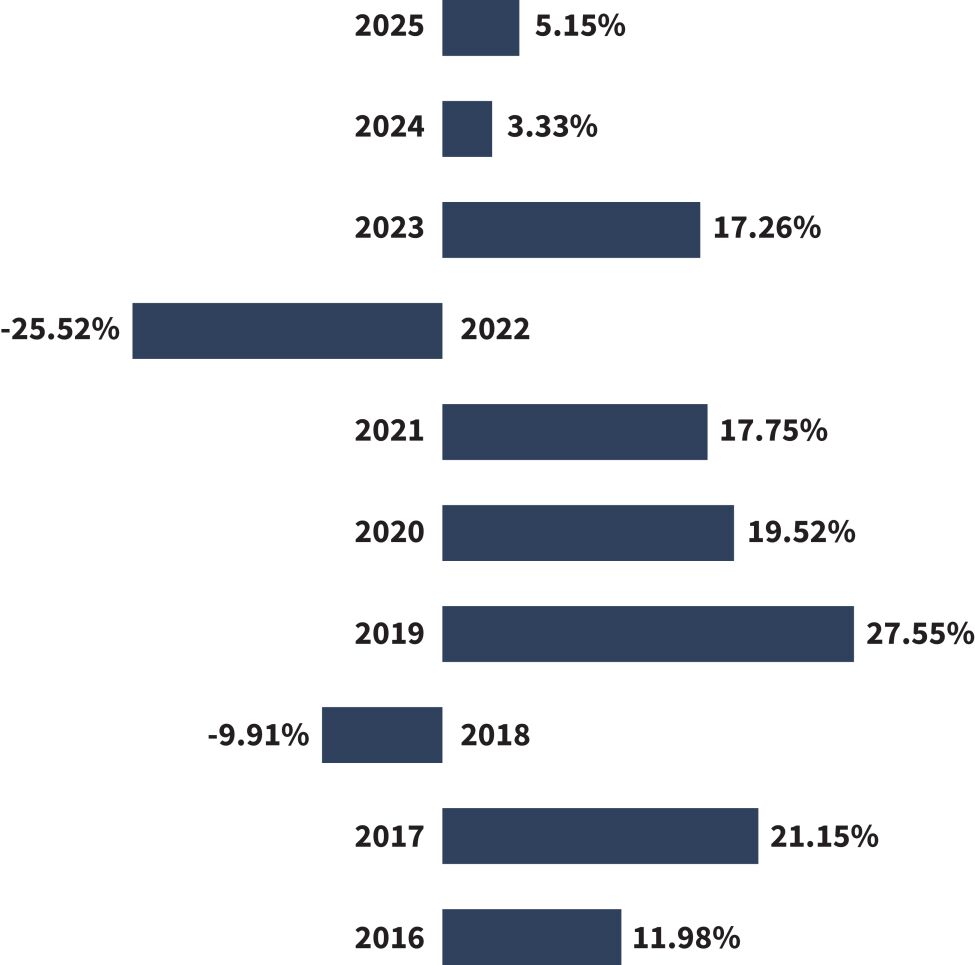
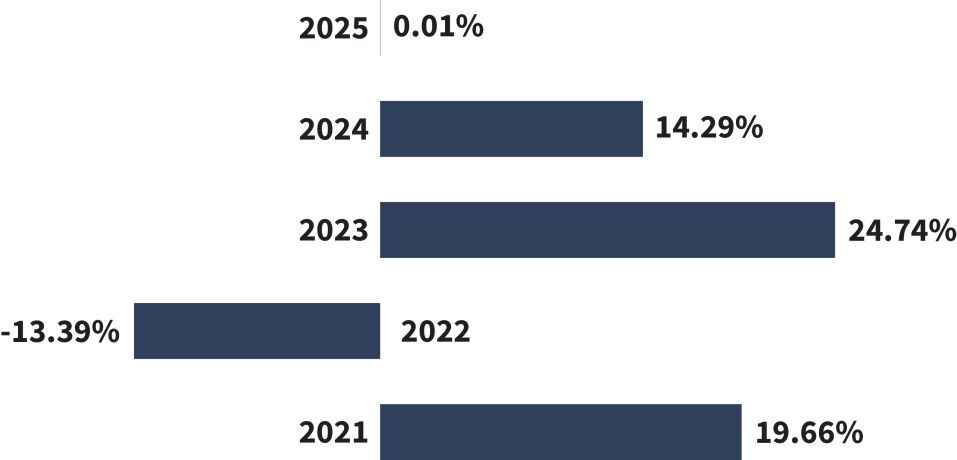
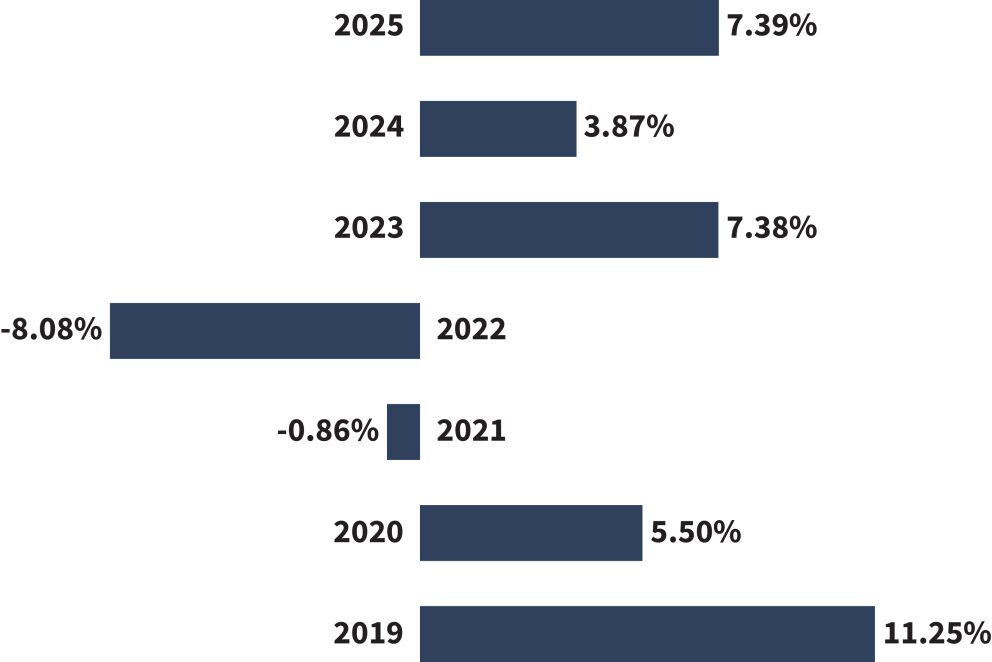
The following performance information provides some indication of the risks of investing in the Global Select Fund. The bar chart shows changes in the performance of the Global Select Fund’s Institutional Class shares from year to year. The table below shows how the Global Select Fund’s average annual total returns of the Institutional Class for the 1‑, 5‑ and 10‑year periods compare to those of a broad-based market index and an index of peer group mutual funds. Past performance, before and after taxes, does not necessarily indicate how the Global Select Fund
will perform in the future. Updated performance information is available on the Global Select Fund’s website at www.imgp.com.
Global Select Fund
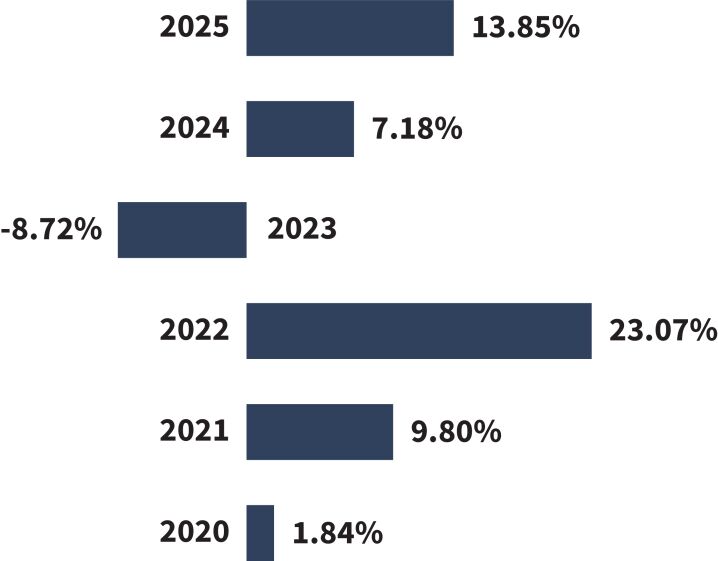
Institutional Class Calendar Year Total Returns
During the period shown above, the highest and lowest quarterly returns earned by the Fund were:
|
|
|
|
|
|
|
| Highest: |
|
|
22.68% |
|
|
Quarter ended June 30, 2020 |
| Lowest: |
|
|
-24.62% |
|
|
Quarter ended March 31, 2020 |
|
|
|
|
|
|
|
|
|
|
|
|
|
| Average Annual Total Returns (for the periods ended December 31, 2025) |
|
| |
|
One Year |
|
|
Five Years |
|
|
Ten Years |
|
| Global Select Fund |
|
|
|
|
|
|
|
|
|
|
|
|
| Institutional Class |
|
|
|
|
|
|
|
|
|
|
|
|
| Return Before Taxes |
|
|
5.15% |
|
|
|
2.24% |
|
|
|
7.61% |
|
| Return After Taxes on Distributions |
|
|
4.33% |
|
|
|
-0.43% |
|
|
|
5.04% |
|
| Return After Taxes on Distributions and Sale of Fund Shares |
|
|
3.62% |
|
|
|
1.42% |
|
|
|
5.73% |
|
| MSCI World Index |
|
|
|
|
|
|
|
|
|
|
|
|
| (reflects no deduction for fees, expenses or taxes) |
|
|
21.09% |
|
|
|
12.15% |
|
|
|
12.17% |
|
| Morningstar Global Large-Stock Blend Category |
|
|
|
|
|
|
|
|
|
|
|
|
| (reflects net performance of funds in this group) |
|
|
19.16% |
|
|
|
8.84% |
|
|
|
9.85% |
|
The Global Select Fund’s after-tax returns as shown in the above table are calculated using the historical highest applicable individual federal marginal income tax rates for the period and do not reflect the impact of state and local taxes. Your actual after-tax returns depend on your tax situation and may differ from
|
|
|
|
|
|
|
|
|
|
|
| 6 |
|
|
|
|
|
Litman Gregory Funds Trust |
those shown. If you own shares of the Global Select Fund in a tax-deferred account, such as a 401(k) plan or an individual retirement account, after-tax returns shown are not relevant to your investment. The after-tax returns on distributions and sale of
Fund shares may be higher than returns before taxes due to the effect of a tax benefit an investor may receive from the realization of capital losses that would have been incurred on the sale of Fund shares.
Management
|
|
|
|
|
|
|
|
| INVESTMENT ADVISOR |
|
|
|
|
|
|
|
| iM Global Partner Fund Management, LLC |
|
|
|
|
|
|
|
|
|
|
| SUB‑ADVISOR |
|
PORTFOLIO MANAGER |
|
MANAGED THE GLOBAL
SELECT FUND SINCE: |
|
|
|
| Polen Capital Management, LLC |
|
Damon Ficklin, Head of Team, Portfolio Manager Quality Growth |
|
|
|
2022 |
|
|
|
|
| |
|
Stephen Atkins, CFA, Portfolio Manager and Analyst, Quality Growth |
|
|
|
July 2025 |
|
|
|
|
| Scharf Investments, LLC |
|
Brian A. Krawez, President, Investment Committee Chairman and Lead Equity Manager |
|
|
|
2022 |
|
|
|
|
| |
|
Gabe Houston, Investment Committee Member, Senior Research Analyst |
|
|
|
2022 |
|
For important information about the purchase and sale of fund shares, tax information and financial intermediary compensation, please turn to the “Summary of Other Important Information Regarding the Funds” section on page 37 of this Prospectus.
iMGP International Fund
Summary Section
Investment Objective
The iMGP International Fund (the “International Fund”) seeks long-term growth of capital; that is, the increase in the value of your investment over the long term.
Fees and Expenses of the International Fund
This table describes the fees and expenses that you may pay if you buy, hold and sell shares of the International Fund. You may pay other fees, such as brokerage commissions and other fees to financial intermediaries, which are not reflected in the table and example below.
Annual Operating Expenses (expenses that you pay each year as a percentage of the value of your investment)
|
|
|
|
|
| |
|
Institutional Class |
|
| Management Fees |
|
|
0.88% |
|
| Other Expenses |
|
|
0.36% |
|
| Interest and Dividend Expenses |
|
|
0.01% |
|
|
|
|
|
|
| Total Other Expenses |
|
|
0.37% |
|
|
|
|
|
|
| Total Annual Fund Operating Expenses |
|
|
1.25% |
|
| Fee Waiver and/or Expense Reimbursement(1) |
|
|
-0.00% |
|
| |
|
|
|
|
| Total Annual Fund Operating Expenses After Fee Waiver and/or Expense Reimbursement(1) |
|
|
1.25% |
|
|
|
|
|
|
| (1) |
iM Global Partner Fund Management, LLC (formerly, Litman Gregory Fund Advisors, LLC (“iM Global” or the “Advisor”), the advisor to the International Fund, has contractually agreed, through April 30, 2027, to waive a portion of its advisory fees so that after paying all of the sub‑advisory fees, the net advisory fee as a percentage of the International Fund’s daily net assets retained by iM Global is 0.40% on the first $1 billion of the International Fund’s assets and 0.30% on assets over $1 billion. This agreement may be terminated at any time by the Board of Trustees (the “Board”) of the Litman Gregory Funds Trust (the “Trust”) upon sixty (60) days’ written notice to iM Global, and iM Global may decline to renew this agreement by written notice to the Trust at least thirty (30) days before the agreement’s annual expiration date. iM Global has waived its right to receive reimbursement of the portion of its advisory fees waived pursuant to this agreement. |
Example
This example is intended to help you compare the cost of investing in the International Fund with the cost of investing in other mutual funds. The example assumes that you invest $10,000 in the International Fund for the time periods indicated and then redeem all of your shares at the end of those periods. The example also assumes that your investment has a 5% return each year and that the International Fund’s operating expenses remain the same. The cost for the International Fund reflects the net expenses of the International Fund that result from the contractual expense limitation in the first year only. Although your actual costs may be higher or lower, based on these assumptions your costs would be:
|
|
|
|
|
|
|
|
|
|
|
|
|
|
|
|
|
| |
|
One Year |
|
|
Three Years |
|
|
Five Years |
|
|
Ten Years |
|
| Institutional Class |
|
$ |
127 |
|
|
$ |
395 |
|
|
$ |
684 |
|
|
$ |
1,506 |
|
Portfolio Turnover
The International Fund pays transaction costs, such as commissions, when it buys and sells securities (or “turns over” its
portfolio). A higher portfolio turnover rate may indicate higher transaction costs and may result in higher taxes when shares of the International Fund are held in a taxable account as compared to shares in investment companies that hold investments for a longer period. These costs, which are not reflected in annual fund operating expenses or in the example, affect the International Fund’s performance. During the most recent fiscal year, the International Fund’s portfolio turnover rate was 99% of the average value of its portfolio.
Principal Strategies
The International Fund invests in the securities of companies that the sub‑advisors to the International Fund (each, a “manager” or “sub‑advisor”) believe have strong appreciation potential. The Advisor believes that giving highly disciplined managers latitude in the types of stocks they can own can confer an advantage over managers who are more tightly constrained to an arbitrary “style box.” This belief underlays the premise of the International Fund to seek skilled managers, give them broad flexibility, limit them to their highest-conviction ideas and create diversification at the overall fund level by choosing managers with complementary styles, which the Advisor believes also should reduce risk. The Advisor is responsible for recommending which sub‑advisors to hire or remove. Before hiring a sub‑advisor, the Advisor performs extensive due diligence. This includes quantitative and qualitative analysis, including (but not limited to) an evaluation of the investment process, the consistency of its execution and discipline; individual holdings; strategies employed, past mistakes, risk controls, team depth and quality; operations and compliance; and business focus and vision. The Advisor’s evaluation process includes review of literature and documents, quantitative historical performance evaluation, extensive discussions with members of the investment team and firm management and background checks through industry contacts.
There is no minimum or maximum allocation of the International Fund’s portfolio assets to each sub‑advisor. The Advisor is responsible for establishing the target allocation of International Fund assets to each manager based on the Advisor’s goal of maintaining a balance of investment styles (growth, value, and blend) and market capitalization exposure (large‑cap, mid‑cap and small‑cap companies) and may adjust the target allocations at its discretion. Market performance may result in allocation drift among the managers of the International Fund. The Advisor is responsible for periodically rebalancing the portfolios, the timing and degree of which will be determined by the Advisor based on the amount of deviation from pre‑established target allocation ranges and the Advisor’s assessment of market conditions and investment opportunities available to each sub‑advisor. The Advisor monitors the individual portfolios managed by the sub‑advisors to ensure that the overall portfolio does not include any unintentional over-weights to market capitalization levels, sectors, industries or individual securities. Under normal conditions, each sub‑advisor manages a portion of the International Fund’s assets by independently managing a focused portfolio (resulting in total International Fund holdings of 40 to 80 different stocks).
|
|
|
|
|
|
|
|
|
|
|
| 8 |
|
|
|
|
|
Litman Gregory Funds Trust |
Under normal market conditions, the International Fund will invest at least 80% of its net assets, plus the amount of any borrowings for investment purposes, in the securities of companies organized or located outside of the United States, including large-, mid‑, and small-capitalization companies, as measured by market capitalization at the time of acquisition, and companies located in emerging markets. iM Global defines an emerging market country as any country that is included in the MSCI Emerging Markets Index. An emerging market country includes any country that is included in the MSCI Emerging Markets Index, considered to be an emerging market country by the World Bank, the International Finance Corporation, or the United Nations, or other countries or markets that the Sub‑Advisor identifies as having similar emerging markets characteristics. The International Fund ordinarily invests in the securities markets of at least five countries outside of the United States. The International Fund may focus its investments in certain sectors – including, but not limited to, the technology and financial sectors – from time to time as a result of the implementation of the International Fund’s investment strategy by the sub‑advisors, but sector focus is not a principal strategy of the International Fund.
Each sub‑advisor uses its own discretion to invest in any sized company it deems appropriate. The managers have limited
flexibility to invest in the securities of U.S. companies. By executing its investment strategy, the International Fund seeks to:
| • |
|
combine the efforts of several experienced, high quality international managers; |
| • |
|
access the highest conviction stock-picking ideas of each manager at any point in time; |
| • |
|
deliver a portfolio that is prudently diversified in terms of stocks (typically 40 to 80) and industries while still allowing each manager to run portfolio segments focused on only its highest conviction stocks; and |
| • |
|
further diversify across different sized companies, countries, and stock-picking styles by including managers with a variety of stock-picking disciplines. |
Generally, a security may be sold: (1) if the manager believes the security’s market price exceeds the manager’s estimate of intrinsic value; (2) if the manager’s view of the business fundamentals or management of the underlying company changes; (3) if a more attractive investment opportunity is found; (4) if general market conditions trigger a change in the manager’s assessment criteria; or (5) for other portfolio management reasons. The International Fund’s managers may trade its portfolio frequently.
|
|
|
|
|
| SUB‑ ADVISOR |
|
TARGET ASSET ALLOCATION |
|
MARKET CAPITALIZATION OF COMPANIES IN PORTFOLIO |
| Harris Associates L.P. (“Harris”) |
|
15% |
|
All sizes |
| Lazard Asset Management (“Lazard”) |
|
30% |
|
All sizes |
| Zadig Asset Management S.A. (“Zadig”) |
|
30% |
|
Mostly large‑sized companies |
| Polen Capital Management, LLC (“Polen Capital”) |
|
25% |
|
All sizes, but mostly large- and mid‑sized companies |
Principal Risks
As with all mutual funds, it is possible to lose money on an investment in the International Fund. An investment in the International Fund is not a deposit of any bank and is not guaranteed, endorsed or insured by any financial institution, government authority or the Federal Deposit Insurance Corporation (FDIC). The following risks could affect the value of your investment. Each risk summarized below is considered a “principal risk” of investing in the International Fund, regardless of the order in which it appears. Some or all of these risks may adversely affect the International Fund’s net asset value per share (“NAV”), total return and/or ability to meet its objective.
| • |
|
Equity Securities Risk. This is the risk that the value of equity securities may fluctuate, sometimes rapidly and unpredictably, due to factors affecting the general market, an entire industry or sector, or particular companies. These factors include, without limitation, adverse changes in economic conditions, the general outlook for corporate earnings, interest rates or investor sentiment; increases in production costs; and significant management decisions. This risk is greater for small‑and medium‑sized companies, which tend to be more vulnerable to adverse developments than larger companies. |
| • |
|
Foreign Investment Risk. This is the risk that an investment in foreign (non‑U.S.) securities may cause the International Fund to experience more rapid and extreme changes in value than a fund that invests exclusively in securities of U.S. companies, due to, among other factors, less publicly available information, less stringent and less uniform accounting, auditing and financial reporting standards, less liquid and more volatile markets, higher transaction and custody costs, additional taxes, less investor protection, delayed or less frequent settlement, political or social instability, civil unrest, acts of terrorism, regional economic volatility, and the imposition of sanctions, confiscations, trade restrictions (including tariffs) and other government restrictions by the United States and/or other governments. |
| • |
|
Country/Regional Risk. This is the risk that world events – such as political upheaval, financial troubles, or natural disasters – will adversely affect the value of securities issued by companies in foreign countries or regions. Because the International Fund may invest a large portion of its assets in securities of companies located in any one country or region, including emerging markets, the International Fund’s performance may be hurt disproportionately by the poor performance of its investments in that area. Country/regional risk is heightened in emerging markets. |
iMGP International Fund — (Continued)
| • |
|
Europe Investing Risk. The International Fund may invest a significant portion of its assets in issuers based in Western Europe and the United Kingdom (“UK”). The economies of countries in Europe are often closely connected and interdependent, and events in one country in Europe can have an adverse impact on other European countries. Efforts by the member countries of the European Union (“EU”) to continue to unify their economic and monetary policies may increase the potential for similarities in the movements of European markets and reduce the potential investment benefits of diversification within the region. However, the substance of these policies may not address the needs of all European economies. European financial markets have in recent years experienced increased volatility due to concerns with some countries’ high levels of sovereign debt, budget deficits and unemployment. Markets have also been affected by the decision by the UK to withdraw from the EU (an event commonly known as “Brexit”). There continues to be uncertainty surrounding the ultimate impact of Brexit on the UK, the EU and the broader global economy. An exit by any member countries from the EU or the Economic and Monetary Union of the EU, or even the prospect of such an exit, could lead to increased volatility in European markets and negatively affect investments both in issuers in the exiting country and throughout Europe. |
| • |
|
Currency Risk. This is the risk that foreign currencies will decline in value relative to the U.S. dollar and affect the International Fund’s investments in foreign (non‑U.S.) currencies or in securities that trade in, and receive revenues in, or in derivatives that provide exposure to, foreign (non‑U.S.) currencies. |
| • |
|
Market Risk. The value of the International Fund’s shares will fluctuate based on the performance of the International Fund’s investments and other factors affecting the securities markets generally. Certain investments selected for the International Fund’s portfolio may be worth less than the price originally paid for them, or less than they were worth at an earlier time. The value of the International Fund’s investments may go up or down, sometimes dramatically and unpredictably, based on current market conditions, such as real or perceived adverse political or economic conditions, tariffs, inflation, changes in interest rates, lack of liquidity in the fixed income markets or adverse investor sentiment. |
| • |
|
Geopolitical Events Risk. The interconnectivity between global economies and financial markets increases the likelihood that events or conditions in one region or financial market may adversely impact issuers in a different country, region or financial market. Securities in the International Fund’s portfolio may underperform due to inflation (or expectations for inflation), interest rates, global demand for particular products or resources, trade disputes, supply chain disruptions, natural disasters, climate change and climate-related events, pandemics, epidemics, terrorism, international conflicts, cybersecurity events, regulatory events and governmental or quasi-governmental actions. The occurrence of global events similar to those in recent years may result in market volatility and may have long-term effects on both the U.S. and global financial markets. |
| • |
|
U.S. Trade Policy Risk: The U.S. presidential administration has recently enacted significant new tariffs, and proposed to enact additional tariffs, on imports from certain countries. Additionally, there has been ongoing discussion and commentary regarding potential significant changes to U.S. trade policies, treaties and tariffs. There continues to exist significant uncertainty about the future relationship between the U.S. and other countries with respect to such trade policies, treaties and tariffs. These developments, or the perception that any of them could occur, may have a material adverse effect on global economic conditions and the stability of global financial markets, and may significantly reduce global trade and, in particular, trade between the impacted nations and the U.S. Any of these factors could depress economic activity and restrict a portfolio company’s access to suppliers or customers and have a material adverse effect on its business, financial condition or operations, which in turn could negatively impact the International Fund. |
| • |
|
Mid‑Size Companies Risk. Securities of companies with mid‑sized market capitalizations are generally more volatile and less liquid than the securities of large-capitalization companies. Mid‑sized companies may be more reliant on a few products, services or key personnel, which can make it riskier than investing in larger companies with more diverse product lines and structured management. Mid‑sized companies may have relatively short operating histories or may be newer public companies. Some of these companies have more aggressive capital structures, including higher debt levels, than large‑cap companies, or are involved in rapidly growing or changing industries and/or new technologies, which pose additional risks. |
| • |
|
Smaller Companies Risk. The International Fund may invest a portion of its assets in the securities of small- and mid‑sized companies. Securities of small- and mid‑cap companies are generally more volatile and less liquid than the securities of large‑cap companies. This is because smaller companies may be more reliant on a few products, services or key personnel, which can make it riskier than investing in larger companies with more diverse product lines and structured management. |
| • |
|
Multi-Management Risk. Because portions of the International Fund’s assets are managed by different portfolio managers using different styles, the International Fund could experience overlapping security transactions that could lead to unintended concentration in certain securities. Certain portfolio managers may be purchasing securities at the same time other portfolio managers may be selling those same securities, which may lead to higher transaction expenses and tax inefficiencies compared to using a single investment manager. |
| • |
|
Active Management Risk. The International Fund is actively managed and may not meet its investment objective based on the portfolio managers’ success or failure to implement investment strategies for the Fund. |
| • |
|
Large Shareholder Purchase and Redemption Risk. The International Fund may experience adverse effects when certain large shareholders purchase or redeem large amounts of shares of the International Fund. Such large shareholder redemptions may cause the International Fund to sell its securities at times when it would not otherwise do so, which may negatively |
|
|
|
|
|
|
|
|
|
|
|
| 10 |
|
|
|
|
|
Litman Gregory Funds Trust |
| |
|
impact the International Fund’s net asset value and liquidity. Similarly, large share purchases may adversely affect the International Fund’s performance to the extent that the International Fund is delayed in investing new cash and is required to maintain a larger cash position than it ordinarily would. In addition, a large redemption could result in the International Fund’s current expenses being allocated over a smaller asset base, leading to an increase in the International Fund’s expense ratio. |
| • |
|
Special Situations Risk. Investments in special situations (undervalued equities, merger arbitrage situations, distressed companies, etc.) may involve greater risks when compared to other investments the International Fund may make due to a variety of factors. For example, mergers, acquisitions, reorganizations, liquidations or recapitalizations may fail or not be completed on the terms originally contemplated, and expected developments may not occur in a timely manner, if at all. |
| • |
|
Sector Weightings Risk. Although sector focus is not a principal strategy of the International Fund, the International Fund may from time to time emphasize investments in a particular sector as a result of the implementation of its principal investment strategies. To the extent that the International Fund emphasizes investments in a particular sector, the International Fund has the potential to be subject to a greater degree to the risks particular to that sector, including the sectors described below. Market conditions, interest rates, and economic, regulatory, or financial developments could significantly affect a single sector. By focusing its investments in a particular sector, the International Fund may potentially face more risks than if it were diversified broadly over numerous sectors. |
| |
¡ |
|
Technology Sector Risk. The International Fund may invest a significant portion of its assets in the technology sector. Technology companies face competition and potentially rapid product obsolescence. They are also heavily dependent on intellectual property rights and may be adversely affected by the loss or impairment of those rights. Companies in the technology sector are facing increased government and regulatory scrutiny and may be subject to adverse government or regulatory action. Companies in the software industry may be adversely affected by, among other things, the decline or fluctuation of subscription renewal rates for their products and services and actual or perceived vulnerabilities in their products or services. |
| |
¡ |
|
Financial Sector Risk. The International Fund may invest a significant portion of its assets in the financial services sector and, therefore, the performance of the Fund could be negatively impacted by events affecting this sector, including changes in interest rates, government regulation, the rate of defaults on corporate, consumer and government debt and the availability and cost of capital. |
| • |
|
Investment Selection Risk. The specific investments held in the International Fund’s investment portfolio may underperform other funds in the same asset class or benchmarks that are representative of the general performance of the asset class because of a portfolio manager’s choice of |
| |
|
securities. This risk may be greater for multi-manager funds compared to funds with a single manager. |
| • |
|
Cybersecurity Risk. With the increased use of technologies such as the Internet to conduct business, the International Fund is susceptible to operational, information security, and related risks. Cyber incidents affecting the International Fund or its service providers may cause disruptions and impact business operations, potentially resulting in financial losses, interference with the International Fund’s ability to calculate its NAV, impediments to trading, the inability of shareholders to transact business, violations of applicable privacy and other laws, regulatory fines, penalties, reputational damage, reimbursement or other compensation costs, or additional compliance costs. |
| • |
|
Operational Risk. Operational risks include human error, changes in personnel, system changes, faults in communication, and failures in systems, technology, or processes. Various operational events or circumstances are outside the Advisor’s or a sub‑advisor’s control, including instances at third parties. The International Fund, the Advisor and each sub‑advisor seek to reduce these operational risks through controls and procedures. However, these measures do not address every possible risk and may be inadequate to address these risks. |
| • |
|
Regulatory Risk. Governments, agencies or other regulatory bodies may adopt or change laws or regulations that could adversely affect the issuer, or market value, of an instrument held by the International Fund or that could adversely impact the Fund’s performance. |
| • |
|
Value Stock Risk. Value stocks are stocks of companies that may have experienced adverse business or industry developments or may be subject to special risks that have caused the stocks to be out of favor and, in the opinion of the manager, undervalued. The value of a security believed by the manager to be undervalued may never reach what is believed to be its full (intrinsic) value, or that security’s value may decrease. |
| • |
|
Growth Investing Risk. Growth stocks, as a group, may be out of favor with the market and underperform value stocks or the overall equity market. Growth stocks are generally more sensitive to market movements than other types of stocks primarily because their prices are based heavily on the future expectations of the economy and the stock’s issuing company. |
| • |
|
Emerging Markets Risk. This is the risk that the value of the International Fund’s emerging markets investments will decline due to the greater degree of economic, political and social instability of emerging or developing countries as compared to developed countries. Investments in emerging market countries are subject to substantial risks due to, among other factors, different accounting standards and thinner trading markets as compared to those in developed countries; less publicly available and reliable information about issuers as compared to developed markets; the possibility of currency transfer restrictions; and the risk of expropriation, nationalization or other adverse political, economic or social developments. |
| • |
|
Securities Lending Risk: The Fund may engage in securities lending. Securities lending involves possible delay in recovery of |
iMGP International Fund — (Continued)
| |
|
the securities or possible loss of rights in the collateral should the borrower fail financially. The Fund could also lose money if the value of the collateral decreases. As a result, the value of the Fund shares may fall. |
Performance
The following performance information provides some indication of the risks of investing in the International Fund. The bar chart shows changes in the performance of the International Fund’s Institutional Class shares from year to year. The table below shows how the International Fund’s average annual total returns of the Institutional Class for the 1‑, 5‑ and 10‑year periods compare to those of a broad-based market index, as well as an index of peer group mutual funds. Past performance, before and after taxes, does not necessarily indicate how the International Fund will perform in the future. Updated performance information is available on the International Fund’s website at www.imgp.com.
International Fund
Institutional Class Calendar Year Total Returns
as of December 31
During the period shown above, the highest and lowest quarterly returns earned by the International Fund were:
|
|
|
|
|
|
|
| Highest: |
|
|
26.96 |
% |
|
Quarter ended December 31, 2020 |
| Lowest: |
|
|
-32.92 |
% |
|
Quarter ended March 31, 2020 |
|
|
|
|
|
|
|
|
|
|
|
|
|
| Average Annual Total Returns (for the periods ended December 31, 2025) |
|
| |
|
One Year |
|
|
Five Years |
|
|
Ten Years |
|
| International Fund |
|
| Institutional Class |
|
|
|
|
|
|
|
|
|
|
|
|
| Return Before Taxes |
|
|
30.21% |
|
|
|
5.90% |
|
|
|
5.48% |
|
| Return After Taxes on Distributions |
|
|
30.01% |
|
|
|
5.79% |
|
|
|
5.18% |
|
| Return After Taxes on Distributions and Sale of Fund Shares |
|
|
18.50% |
|
|
|
4.85% |
|
|
|
4.50% |
|
| MSCI EAFE Index |
|
|
|
|
|
|
|
|
|
|
|
|
| (reflects no deduction of fees, expenses or taxes) |
|
|
31.22% |
|
|
|
8.92% |
|
|
|
8.18% |
|
| Morningstar Foreign Large Blend Category |
|
|
|
|
|
|
|
|
|
|
|
|
| (reflects net performance of funds in this group) |
|
|
30.11% |
|
|
|
7.95% |
|
|
|
7.67% |
|
The International Fund’s after-tax returns as shown in the above table are calculated using the historical highest applicable individual federal marginal income tax rates for the period and do not reflect the impact of state and local taxes. Your actual after-tax returns depend on your tax situation and may differ from those shown. If you own shares of the International Fund in a tax-deferred account, such as a 401(k) plan or an individual retirement account, after-tax returns shown are not relevant to your investment. The after-tax returns on distributions and sale of Fund shares may be higher than returns before taxes due to the effect of a tax benefit an investor may receive from the realization of capital losses that would have been incurred on the sale of Fund shares.
|
|
|
|
|
|
|
|
|
|
|
| 12 |
|
|
|
|
|
Litman Gregory Funds Trust |
Management
|
|
|
|
|
|
|
| INVESTMENT ADVISOR |
|
|
|
|
|
|
|
|
| iM Global Partner Fund Management, LLC |
|
|
|
|
|
|
|
|
|
| SUB‑ADVISOR |
|
PORTFOLIO MANAGER |
|
MANAGED THE INTERNATIONAL FUND SINCE: |
|
|
|
|
| Harris Associates L.P. |
|
David G. Herro, CFA, Deputy Chairman, Portfolio Manager and Co-Chief Investment Officer, International Equity |
|
|
1997 |
|
|
|
|
| Lazard Asset Management LLC |
|
Jimmie Bork, CFA, Portfolio Manager/Analyst |
|
|
2024 |
|
|
|
|
| |
|
Robin O. Jones, Managing Director, Portfolio Manager/Analyst |
|
|
2023 |
|
|
|
|
| Zadig Asset Management S.A. |
|
Régis Bégué, Portfolio Manager and Partner |
|
|
2025 |
|
|
|
|
| |
|
Vincent Steenman, Portfolio Manager and Partner |
|
|
2025 |
|
|
|
|
| Polen Capital Management, LLC |
|
Daniel Fields, CFA, Portfolio Manager, Director of Research and Analyst |
|
|
2021 |
|
For important information about the purchase and sale of fund shares, tax information and financial intermediary compensation, please turn to the “Summary of Other Important Information Regarding the Funds” section on page 37 of this Prospectus.
iMGP APA Enhanced Income Municipal Fund
Summary Section
Investment Objective
The iMGP APA Enhanced Income Municipal Fund (the “APA Enhanced Income Municipal Fund”) seeks to provide investors with a high level of income exempt from federal income tax, with a secondary investment objective of capital appreciation.
Fees and Expenses of the APA Enhanced Income Municipal Fund
This table describes the fees and expenses that you may pay if you buy, hold and sell shares of the APA Enhanced Income Municipal Fund. You may pay other fees, such as brokerage commissions and other fees to financial intermediaries, which are not reflected in the table and example below.
Annual Operating Expenses (expenses that you pay each year as a percentage of the value of your investment)
|
|
|
|
|
| Management Fees |
|
|
0.45% |
|
| Other Expenses |
|
|
1.30% |
|
|
|
|
|
|
| Total Annual Fund Operating Expenses(1) |
|
|
1.75% |
|
| Fee Waiver and/or Expense Reimbursement |
|
|
-1.16% |
|
| |
|
|
|
|
| Total Annual Fund Operating Expenses After Fee Waiver and/or Expense Reimbursement(1) |
|
|
0.59% |
|
|
|
|
|
|
| (1) |
iM Global Partner Fund Management, LLC (“iM Global” or the “Advisor”), the advisor to the APA Enhanced Income Municipal Fund, has contractually agreed to limit the Fund’s operating expenses (excluding any taxes, interest, brokerage commissions, borrowing costs, dividend expenses, acquired fund fees and expenses and extraordinary expenses) through April 30, 2027 to an annual rate of 0.59% for the Institutional Class (the “Operating Expense Limitation”). This agreement may be renewed for additional periods not exceeding one (1) year and may be terminated by the Board of Trustees (the “Board”) of Litman Gregory Funds Trust (the “Trust”) upon sixty (60) days’ written notice to iM Global. iM Global may also decline to renew this agreement by written notice to the Trust at least thirty (30) days before the renewal date. Pursuant to this agreement, iM Global may recoup reduced fees and expenses only within three years from the end of the month in which the reimbursement took place, provided that the recoupment does not cause the APA Enhanced Income Municipal Fund’s annual expense ratio to exceed the lesser of (i) the expense limitation applicable at the time of that fee waiver and/or expense reimbursement or (ii) the expense limitation in effect at the time of recoupment. |
Example
This example is intended to help you compare the cost of investing in the APA Enhanced Income Municipal Fund with the cost of investing in other mutual funds. The example assumes that you invest $10,000 in the APA Enhanced Income Municipal Fund for the time periods indicated and then redeem all of your shares at the end of those periods. The example also assumes that your investment has a 5% return each year and that the APA Enhanced Income Municipal Fund’s operating expenses remain the same. The cost for the APA Enhanced Income Municipal Fund reflects the net expenses of the Fund that result from the contractual expense limitation in the first year only. Although your actual costs may be higher or lower, based on these assumptions your costs would be:
|
|
|
|
|
|
|
|
|
|
|
|
|
|
|
|
|
| |
|
One Year |
|
|
Three Years |
|
|
Five Years |
|
|
Ten Years |
|
|
|
$ |
60 |
|
|
$ |
189 |
|
|
$ |
600 |
|
|
$ |
1,752 |
|
Portfolio Turnover
The APA Enhanced Income Municipal Fund pays transaction costs, such as commissions, when it buys and sells securities (or “turns over” its portfolio). A higher portfolio turnover rate may indicate higher transaction costs and may result in higher taxes when shares of the Fund are held in a taxable account as compared to shares in investment companies that hold investments for a longer period. These costs, which are not reflected in the annual fund operating expenses or in the example, will affect the APA Enhanced Income Municipal Fund’s performance. During the most recent fiscal year, the APA Enhanced Income Municipal Fund’s portfolio turnover rate was 205% of the average value of its portfolio.
Principal Strategies
Under normal market conditions, the APA Enhanced Income Municipal Fund invests at least 80% of its net assets (plus the amount of any borrowing for investment purposes) in U.S. dollar-denominated municipal bonds of intermediate maturities that are exempt from federal income tax. The dollar-weighted average portfolio duration of the APA Enhanced Income Municipal Fund, under normal circumstances, is expected to range from 4 to 8 years. Municipal bonds are debt obligations issued by a state, territory, or possession of the United States or a political subdivision, public instrumentality, agency or other governmental unit of such a state, territory, or possession (e.g., county, city, town, village, district or authority). The municipal bonds in which the APA Enhanced Income Municipal Fund invests may include municipal lease obligations, municipal general obligation bonds, municipal essential service revenue bonds, municipal cash equivalents, loans, mortgages, pre‑refunded and escrowed‑to‑maturity municipal bonds and other debt instruments and pools of any of the foregoing. Some municipal bonds may be issued as variable or floating rate securities and may incorporate market-dependent liquidity features, meaning certain maturity-shortening devices designed to enable the issuer to refinance or redeem outstanding debt securities.
The APA Enhanced Income Municipal Fund may invest up to 10% of its total assets in unrated securities, and may invest up to 20% of its total assets in unrated securities and below investment grade securities (also known as “junk bonds” or “high yield securities”), but will generally invest less than 10% of its total assets in such securities. Below investment grade securities are rated below Baa3 by Moody’s Investors Service, Inc. (“Moody’s”) or below BBB‑ by S&P Global Ratings (“S&P”) or similarly rated by another nationally recognized statistical rating organization, or unrated but determined by the APA Enhanced Income Municipal Fund’s sub‑advisor, Asset Preservation Advisors, LLC (“APA” or the “Sub‑Advisor), to be of comparable quality. In cases where the credit ratings agencies have assigned different credit ratings to the same security, the security will be considered to have the higher credit rating. The APA Enhanced Income Municipal Fund may continue to hold securities that are downgraded in credit rating subsequent to their purchase if the Sub‑Advisor believes it would be advantageous to do so. Under normal circumstances,
|
|
|
|
|
|
|
|
|
|
|
| 14 |
|
|
|
|
|
Litman Gregory Funds Trust |
the Sub‑Advisor will manage the APA Enhanced Income Municipal Fund’s duration to approximate the intermediate-term duration of the Fund’s benchmark index, the Bloomberg 1‑15 Year Municipal Index, an unmanaged, market-weighted index that includes investment-grade municipal bonds with maturities greater than one year but less than fifteen years. As of December 31, 2025, the average duration of the benchmark was 4.82 years. While the APA Enhanced Income Municipal Fund will target intermediate-term maturities and durations, the Fund may invest in bonds of any maturity or duration. The APA Enhanced Income Municipal Fund’s average weighted portfolio maturity and duration will vary from time to time depending on the Sub‑Advisor’s views on the direction of interest rates. At times the Sub‑Advisor may adjust portfolio duration to take a more defensive or opportunistic position as market and yield curve conditions change. Duration measures a bond or fund’s sensitivity to interest rate or other changes (such as changes in a bond’s yield) and is expressed as a number of years. The higher the number, the greater the risk. Under normal circumstances, for example, if a portfolio has a duration of five years, its value will change by 5% if yields change by 1%. Shorter duration bonds generally result in lower expected volatility.
The APA Enhanced Income Municipal Fund will sell a security in the event of deteriorating credit fundamentals, if the municipal market exhibits rich valuations, meaning that municipal securities are priced above expected levels without a logical explanation, or if the Sub‑Advisor identifies an investment that it believes has better relative value.
Although the APA Enhanced Income Municipal Fund seeks to be diversified by geography and across sectors of the municipal bond market, the Fund may at times invest a significant portion of its assets in a particular state or region or in a particular sector due to market conditions. The Sub‑Advisor may also allocate a significant portion of the APA Enhanced Income Municipal Fund to a specific segment of the municipal bond yield curve. A yield curve is a graphic representation of the actual or projected yields of debt obligations in relation to their maturities and durations. In particular, the APA Enhanced Income Municipal Fund often favors bonds with more than 5 years to maturity that may offer higher yields.
Principal Risks
As with all mutual funds, it is possible to lose money on an investment in the APA Enhanced Income Municipal Fund. An investment in the APA Enhanced Income Municipal Fund is not a deposit of any bank and is not guaranteed, endorsed or insured by any financial institution, government authority or the Federal Deposit Insurance Corporation (FDIC). The following risks could affect the value of your investment. Each risk summarized below is considered a “principal risk” of investing in the APA Enhanced Income Municipal Fund, regardless of the order in which it appears. Some or all of these risks may adversely affect the APA Enhanced Income Municipal Fund’s net asset value per share (“NAV”), total return and/or ability to meet its objective.
| • |
|
Municipal Market Risk. Factors unique to the municipal bond market may negatively affect the value of the APA Enhanced |
| |
|
Income Municipal Fund’s investment in municipal bonds. These factors include political or legislative changes, and uncertainties related to the tax status of the securities and the rights of investors in the securities. The APA Enhanced Income Municipal Fund may invest in a group of municipal obligations that are related in such a way that an economic, business, or political development affecting one would also affect the others. Some municipal obligations carry additional risk, such as those that are tied only to a specific stream of revenues. In addition, the municipal bond market, or portions thereof, may experience substantial volatility or become distressed, particularly during recessions or similar periods of economic stress, and individual bonds may go into default, which would lead to heightened risks of investing in municipal bonds generally. Actual or perceived changes in the financial health of the municipal market as a whole or in part may affect the valuation of debt securities held by the APA Enhanced Income Municipal Fund. |
| • |
|
Fixed Income Securities Risk. Interest rates may go up resulting in a decrease in value of the securities held by the APA Enhanced Income Municipal Fund. Fixed income securities held by the APA Enhanced Income Municipal Fund are also subject to interest rate risk, credit risk, call risk and liquidity risk, which are more fully described below. |
| |
¡ |
|
Credit Risk. Credit risk is the risk that an issuer will not make timely payments of principal and interest. A credit rating assigned to a particular debt security is essentially an opinion as to the credit quality of an issuer and may prove to be inaccurate. There is also the risk that a bond issuer may “call,” or repay, its high yielding bonds before their maturity dates. |
| |
¡ |
|
Interest Rate Risk. Interest rates may go up resulting in a decrease in the value of the securities held by the APA Enhanced Income Municipal Fund. Interest rates have been historically low, so the APA Enhanced Income Municipal Fund faces a heightened risk that interest rates may rise. Debt securities subject to prepayment can offer less potential for gains during a declining interest rate environment and similar or greater potential for loss in a rising interest rate environment. A fund with a longer average portfolio duration will be more sensitive to changes in interest rates than a fund with a shorter average portfolio duration. |
| |
¡ |
|
Call Risk. During periods of declining interest rates, a bond issuer may “call” or repay its high yielding bonds before their maturity dates. |
| |
¡ |
|
Liquidity Risk. Certain securities may be difficult or impossible to sell at the time and the price that the Sub‑Advisor would like. Trading opportunities are more limited for fixed income securities that have not received any credit ratings, have received ratings below investment grade or are not widely held. The values of these securities may fluctuate more sharply than those of other securities, and the APA Enhanced Income Municipal Fund may experience some difficulty in closing out positions in these securities at prevailing market prices. |
| |
¡ |
|
Prepayment and Extension Risk. In times of declining interest rates, the APA Enhanced Income Municipal Fund’s higher yielding securities will be prepaid, and the APA Enhanced Income Municipal Fund will have to replace them with |
iMGP APA Enhanced Income Municipal Fund — (Continued)
| |
|
securities having a lower yield. Rising interest rates could extend the life of securities with lower payment rates. This is known as extension risk and may increase the APA Enhanced Income Municipal Fund’s sensitivity to rising rates and its potential for price declines. |
| • |
|
High-Yield Fixed Income Securities Risk. The fixed income securities held by the APA Enhanced Income Municipal Fund that are rated below investment grade are subject to additional risk factors such as increased possibility of default, illiquidity of the security, and changes in value based on public perception of the issuer. Such securities are generally considered speculative because they present a greater risk of loss, including default, than higher quality debt securities. |
| • |
|
Prepayment and Extension Risk. In times of declining interest rates, the APA Enhanced Income Municipal Fund’s higher yielding securities may be prepaid, and the APA Enhanced Income Municipal Fund may have to replace them with securities having a lower yield. Rising interest rates could extend the life of securities with lower payment rates. This is known as extension risk and may increase the APA Enhanced Income Municipal Fund’s sensitivity to rising rates and its potential for price declines. |
| • |
|
U.S. Government and U.S. Agency Obligations Risk. Securities issued by U.S. Government agencies and instrumentalities have different levels of U.S. Government credit support. Some are backed by the full faith and credit of the U.S. Government, while others are supported by only the discretionary authority of the U.S. Government or only by the credit of the agency or instrumentality. No assurance can be given that the U.S. Government will provide financial support to U.S. Government-sponsored instrumentalities because they are not obligated to do so by law. Guarantees of timely prepayment of principal and interest do not assure that the market prices and yields of the securities are guaranteed nor do they guarantee the NAV or performance of the APA Enhanced Income Municipal Fund, which will vary with changes in interest rates, the Sub‑Advisor’s performance and other market conditions. |
| • |
|
New Fund Risk. The APA Enhanced Income Municipal Fund is recently formed and has limited operating history for investors to evaluate. Its performance may not represent how the Fund is expected to or may perform in the long term. In addition, new funds may not attract sufficient assets to achieve investment and trading efficiencies. |
| • |
|
Market Risk. The value of the APA Enhanced Income Municipal Fund’s shares will fluctuate based on the performance of the Fund’s investments and other factors affecting the securities markets generally. Certain investments selected for the APA Enhanced Income Municipal Fund’s portfolio may be worth less than the price originally paid for them, or less than they were worth at an earlier time. The value of the Fund’s investments may go up or down, sometimes dramatically and unpredictably, based on current market conditions, such as real or perceived adverse political or economic conditions, tariffs, inflation, changes in interest rates, lack of liquidity in the fixed income markets or adverse investor sentiment. |
| • |
|
Portfolio Turnover Risk. This is the risk that the APA Enhanced Income Municipal Fund may experience high portfolio turnover rates as a result of its investment strategies. High portfolio turnover rates may indicate higher transaction costs and may result in higher taxes when shares of the APA Enhanced Income Municipall Fund are held in a taxable account as compared to shares in investment companies that hold investments for a longer period. |
| • |
|
Active Management Risk. The APA Enhanced Income Municipal Fund is actively managed and may not meet its investment objective based on the portfolio managers’ success or failure to implement investment strategies for the Fund. |
| • |
|
Investment Selection Risk. The specific investments held in the APA Enhanced Income Municipal Fund’s investment portfolio may underperform other funds in the same asset class or benchmarks that are representative of the general performance of the asset class because of a portfolio manager’s choice of securities. |
| • |
|
Large Shareholder Risk. Certain shareholders may from time to time own a substantial amount of the shares of the APA Enhanced Income Municipal Fund. In addition, a third-party investor, the advisor or an affiliate of the advisor, or another entity may invest in the APA Enhanced Income Municipal Fund and hold its investment for a limited period of time solely to facilitate commencement of the Fund or to facilitate the Fund’s achieving a specified size or scale. There can be no assurance that any large shareholder would not redeem its investment, that the size of the APA Enhanced Income Municipal Fund would be maintained at such levels or that the Fund would continue to meet applicable listing requirements. Redemptions by large shareholders could have a significant negative impact on the Fund. |
| • |
|
Cybersecurity Risk. With the increased use of technologies such as the Internet to conduct business, the APA Enhanced Income Municipal Fund is susceptible to operational, information security, and related risks. Cyber incidents affecting the APA Enhanced Income Municipal Fund or its service providers may cause disruptions and impact business operations, potentially resulting in financial losses, interference with the Fund’s ability to calculate its net asset value, impediments to trading, the inability of shareholders to transact business, violations of applicable privacy and other laws, regulatory fines, penalties, reputational damage, reimbursement or other compensation costs, or additional compliance costs. |
| • |
|
Operational Risk. Operational risks include human error, changes in personnel, system changes, faults in communication, and failures in systems, technology, or processes. Various operational events or circumstances are outside the Advisor’s or the Sub‑Advisor’s control, including instances at third parties. The APA Enhanced Income Municipal Fund, the Advisor and the Sub‑Advisor seek to reduce these operational risks through controls and procedures. However, these measures do not address every possible risk and may be inadequate to address these risks. |
|
|
|
|
|
|
|
|
|
|
|
| 16 |
|
|
|
|
|
Litman Gregory Funds Trust |
| • |
|
Regulatory Risk. Governments, agencies or other regulatory bodies may adopt or change laws or regulations that could adversely affect the issuer, or market value, of an instrument held by the APA Enhanced Income Municipal Fund or that could adversely impact the Fund’s performance. |
Performance
The following performance information provides some indication of the risks of investing in the APA Enhanced Income Municipal Fund. The bar chart shows changes in the performance of the APA Enhanced Income Municipal Fund’s Institutional Class shares from year to year. The table below shows how the APA Enhanced Income Municipal Fund’s average annual total returns of the Institutional Class for the 1-year and since inception periods compare to those of a broad-based market index and a secondary market index. Past performance, before and after taxes, does not necessarily indicate how the APA Enhanced Income Municipal Fund will perform in the future. Updated performance information is available on the APA Enhanced Income Municipal Fund’s website at www.imgp.com.
APA Enhanced Income Municipal Fund
Institutional Class Calendar Year Total Returns
as of December 31
During the period shown above, the highest and lowest quarterly returns earned by the APA Enhanced Income Municipal Fund were:
|
|
|
|
|
| Highest: |
|
2.91% |
|
Quarter ended September 30, 2025 |
| Lowest: |
|
-0.17% |
|
Quarter ended March 31, 2025 |
|
|
|
|
|
|
|
|
|
| Average Annual Total Returns (for the periods ended December 31, 2025) |
|
| |
|
One Year |
|
|
Since Fund
Inception
(12/16/2024) |
|
| APA Enhanced Income Municipal Fund |
|
| Institutional Class |
|
|
|
|
|
|
|
|
| Return Before Taxes |
|
|
4.95% |
|
|
|
4.77% |
|
| Return After Taxes on Distributions |
|
|
4.74% |
|
|
|
4.56% |
|
| Return After Taxes on Distributions and Sale of Fund Shares |
|
|
4.31% |
|
|
|
4.31% |
|
| Morningstar Muni National Intermediate Category |
|
|
|
|
|
|
|
|
| (reflects no deduction for fees, expenses or taxes) |
|
|
4.35% |
|
|
|
3.54% |
|
| Bloomberg 1‑15 Year Municipal Index* |
|
|
|
|
|
|
|
|
| (reflects no deduction for fees, expenses or taxes) |
|
|
5.18% |
|
|
|
4.22% |
|
| * |
Secondary benchmark index that the Advisor believes more closely reflects the market segments in which the APA Enhanced Income Municipal Fund invests. |
iMGP APA Enhanced Income Municipal Fund — (Continued)
|
|
|
|
|
|
|
|
| INVESTMENT ADVISOR |
|
|
|
|
|
|
|
| iM Global Partner Fund Management, LLC |
|
|
|
|
|
|
|
|
|
|
| SUB‑ADVISOR |
|
PORTFOLIO MANAGER |
|
MANAGED THE APA
ENHANCED INCOME
MUNICIPAL FUND SINCE: |
|
|
|
| Asset Preservation Advisors, LLC |
|
Kevin Woods, Co‑Chief Executive Officer and Chief Investment Officer |
|
|
|
Since Inception
(December 2024) |
|
|
|
|
|
|
Kyle Gerberding, Managing Director and Director of Trading |
|
|
|
Since Inception
(December 2024) |
|
|
|
|
| |
|
Patricia Hodgman, President |
|
|
|
Since Inception
(December 2024) |
|
For important information about the purchase and sale of Fund shares, tax information and financial intermediary compensation, please turn to the “Summary of Other Important Information Regarding the Funds” section on page 37 of this Prospectus.
|
|
|
|
|
|
|
|
|
|
|
| 18 |
|
|
|
|
|
Litman Gregory Funds Trust |
iMGP Low Duration Income Fund
(formerly, iMGP High Income Fund)
Summary Section
Investment Objectives
The iMGP Low Duration Income Fund (the “Low Duration Income Fund”) seeks to achieve long-term returns with lower risk and lower volatility than the stock market, and with relatively low correlation to stock and bond market indexes. A high level of current income is a secondary objective.
Fees and Expenses of the Low Duration Income Fund
This table describes the fees and expenses that you may pay if you buy, hold and sell shares of the Low Duration Income Fund. You may pay other fees, such as brokerage commissions and other fees to financial intermediaries, which are not reflected in the table and example below.
Annual Operating Expenses (expenses that you pay each year as a percentage of the value of your investment)
|
|
|
|
|
| |
|
Institutional Class |
|
| Management Fees |
|
|
0.78% |
|
| Distribution and or Service (12b‑1) Fees |
|
|
None |
|
| Other Expenses |
|
|
0.36% |
|
| Interest and Dividend Expenses |
|
|
0.04% |
|
|
|
|
|
|
| Total Other Expenses |
|
|
0.32% |
|
|
|
|
|
|
| Total Annual Fund Operating Expenses |
|
|
1.14% |
|
| Fee Waiver and/or Expense Reimbursement(1)(2) |
|
|
-0.12% |
|
| |
|
|
|
|
| Total Annual Fund Operating Expenses After Fee Waiver and/or Expense Reimbursement(1) |
|
|
1.02% |
|
|
|
|
|
|
| (1) |
iM Global Partner Fund Management, LLC (formerly, Litman Gregory Fund Advisors, LLC) (“iM Global” or the “Advisor”), the advisor to the Low Duration Income Fund, has contractually agreed to limit the Low Duration Income Fund’s operating expenses (excluding any taxes, interest, brokerage commissions, borrowing costs, dividend expenses, acquired fund fees and expenses and extraordinary expenses such as but not limited to litigation costs) through April 30, 2027 to an annual rate of 0.98% for the Institutional Class (the “Operating Expense Limitation”). This agreement may be renewed for additional periods not exceeding one (1) year and may be terminated by the Board of Trustees (the “Board”) of Litman Gregory Funds Trust (the “Trust”) upon sixty (60) days’ written notice to iM Global. iM Global may also decline to renew this agreement by written notice to the Trust at least thirty (30) days before the renewal date. Pursuant to this agreement, iM Global may recoup reduced fees and expenses only within three years from the end of the month in which the reimbursement took place, provided that the recoupment does not cause the Low Duration Income Fund’s annual expense ratio to exceed the lesser of (i) the expense limitation applicable at the time of that fee waiver and/or expense reimbursement or (ii) the expense limitation in effect at the time of recoupment. |
| (2) |
iM Global has separately contractually agreed through April 30, 2027, to waive a portion of its advisory fees so that after paying all of the sub‑advisory fees, the net advisory fee as a percentage of the Low Duration Fund’s daily net assets retained by iM Global is 0.40% on the first $1 billion of assets, 0.375% on the next $1 billion of assets, 0.35% on the next $1 billion of assets, 0.325% on the next $1 billion of assets and 0.30% on assets in excess of $4 billion. This agreement may be terminated at any time by the Board of the Trust upon sixty (60) days’ written notice to iM Global, and iM Global may decline to renew this agreement at its expiration on April 30, 2026 by written notice to the Trust at least thirty (30) days before the agreement’s annual expiration date. iM Global has waived its right to receive reimbursement of the portion of its advisory fees waived pursuant to this advisory fee waiver agreement. |
Example
This example is intended to help you compare the cost of investing in the Low Duration Income Fund with the cost of investing in other mutual funds. The example assumes that you invest $10,000 in the Low Duration Income Fund for the time periods indicated. The example also assumes that your investment has a 5% return each year and that the Low Duration Income Fund’s operating expenses remain the same. The cost for the Low Duration Income Fund reflects the net expenses of the
Low Duration Income Fund that result from the contractual expense limitation in the first year only. Although your actual costs may be higher or lower, based on these assumptions your costs would be:
|
|
|
|
|
|
|
|
|
|
|
|
|
|
|
|
|
| |
|
One Year |
|
|
Three Years |
|
|
Five Years |
|
|
Ten Years |
|
| Institutional Class |
|
$ |
104 |
|
|
$ |
326 |
|
|
$ |
593 |
|
|
$ |
1,355 |
|
Portfolio Turnover
The Low Duration Income Fund pays transaction costs, such as commissions, when it buys and sells securities (or “turns over” its portfolio). A higher portfolio turnover rate may indicate higher transaction costs and may result in higher taxes when shares of the Low Duration Income Fund are held in a taxable account as compared to shares in investment companies that hold investments for a longer period. These costs, which are not reflected in the annual fund operating expenses or in the example, will affect the Low Duration Income Fund’s performance. During the most recent fiscal year, the Low Duration Income Fund’s portfolio turnover rate was 97%.
Principal Strategies
The Low Duration Income Fund invests in a mix of strategies that iM Global believes offer risk-return characteristics that are attractive individually and even more compelling collectively. The Low Duration Income Fund is intended to be used by investors seeking attractive long-term returns with lower risk and lower volatility than the stock market, and with relatively low correlation to stock and bond market indexes. A high level of current income is a secondary objective.
The Advisor believes that giving highly disciplined sub‑advisors (each, a “manager” or “sub‑advisor”) latitude in the types of stocks they can own can confer an advantage over managers who are more tightly constrained to an arbitrary “style box.” This belief underlays the premise of the Low Duration Income Fund to seek skilled managers, give them broad flexibility, limit them to their highest-conviction ideas and create diversification at the overall fund level by choosing managers with complementary styles, which the Advisor believes also should reduce risk. The Advisor is responsible for recommending which sub‑advisors to hire or remove. Before hiring a sub‑advisor, the Advisor performs extensive due diligence. This includes quantitative and qualitative analysis, including (but not limited to) an evaluation of the investment process, the consistency of its execution and discipline; individual holdings; strategies employed, past mistakes, risk controls, team depth and quality; operations and compliance; and business focus and vision. The Advisor’s evaluation process includes review of literature and documents, quantitative historical performance evaluation, extensive discussions with members of the investment team and firm management and background checks through industry contacts.
There is no minimum or maximum allocation of the Low Duration Income Fund’s portfolio assets to each sub‑advisor, but it is expected that no one strategy will be allocated less than 10% of
iMGP Low Duration Income Fund (formerly, iMGP High Income Fund) — (Continued)
portfolio assets or more than 60% of portfolio assets as measured at the time of allocation. It is possible that additional managers and strategies will be added to (or removed from) the Low Duration Income Fund in the future and/or there may be adjustments in the allocation ranges. The Advisor is responsible for establishing the target allocation of Low Duration Income Fund assets to each manager based on the Advisor’s goal of maintaining a balance of investment styles (growth, value, and blend) and market capitalization exposure (large‑cap, mid‑cap and small‑cap companies) and may adjust the target allocations at its discretion. Market performance may result in allocation drift among the managers of the Low Duration Income Fund. The Advisor is responsible for periodically rebalancing the portfolios, the timing and degree of which will be determined by the Advisor based on the amount of deviation from pre‑established target allocation ranges and the Advisor’s assessment of market conditions and investment opportunities available to each sub‑advisor. The Advisor monitors the individual portfolios managed by the sub‑advisors to ensure that the overall portfolio does not include any unintentional over-weights to market capitalization levels, sectors, industries or individual securities.
Sub‑advisor strategies may seek to benefit from: opportunities to combine securities with differing risk characteristics; market inefficiencies; opportunities to provide liquidity; tactical opportunities in asset classes or securities; special situations such as spin-offs; as well as other opportunities in other areas. In the aggregate, the managers can invest globally in debt and equity securities of companies of any size, domicile or market capitalization, government and corporate bonds, loans, loan participation interests, mortgage or other asset-backed securities and other fixed income securities and currencies, including short positions of any of the foregoing, within their respective segments
of the Low Duration Income Fund. The managers may invest without limitation in below investment grade fixed income securities. Under normal market conditions, the Low Duration Income Fund does not expect to invest more than 25% of its total assets in emerging market securities. iM Global defines an emerging market country as any country that is included in the MSCI Emerging Markets Index. An emerging market country includes any country that is included in the MSCI Emerging Markets Index, considered to be an emerging market country by the World Bank, the International Finance Corporation, or the United Nations, or other countries or markets that the Sub‑Advisor identifies as having similar emerging markets characteristics.
The managers may also write options, invest in derivatives, including, without limitation, options, futures contracts, participatory notes (“P‑Notes”) and swaps, to manage risk or enhance return and can also borrow amounts up to one third of the value of the Low Duration Income Fund’s total assets (except that the Low Duration Income Fund may exceed this limit to satisfy redemption requests or for other temporary purposes). Each of the managers may invest in illiquid securities; however, the Low Duration Income Fund as a whole may not hold more than 15% of its net assets in illiquid securities.
Each sub‑advisor will have an investment approach that generally focuses on a particular asset class or specific strategies. Currently, the strategies the sub‑advisors focus on are as follows: (1) a credit value strategy, (2) a multi-credit strategy, and (3) an option income strategy. iM Global may hire sub‑advisors that focus on other strategies in the future, and not all strategies that may be appropriate will be represented in the Low Duration Income Fund’s portfolio at all times.
|
|
|
|
|
|
|
|
| SUB‑ ADVISOR |
|
TARGET ASSET ALLOCATION |
|
STOCK‑PICKING
STYLE |
| Brown Brothers Harriman Credit Partners, LLC (“BBH Credit Partners”) |
|
40% |
|
|
|
Credit Value |
|
| Guggenheim Partners Investment Management, LLC (“Guggenheim”) |
|
40% |
|
|
|
Multi-Credit |
|
| Neuberger Berman Investment Advisers LLC (“Neuberger”) |
|
20% |
|
|
|
Option Income |
|
The sub‑advisor that manages the credit value strategy primarily invests its segment of the Low Duration Income Fund in fixed income securities it believes have the potential for excess return. The sub‑advisor invests in fixed income securities from a wide variety of sectors, asset-backed securities, commercial mortgage-backed securities, corporate bonds, floating-rate loans and municipal bonds. The sub‑advisor expects to invest in structured and corporate securities. The sub‑advisor’s emphasizes A/BBB‑rated asset backed securities and BBB/BB‑rated corporate securities, as these ratings segments have historically offered attractive risk-adjusted returns, along with low default rates. The sub‑advisor also invests in U.S. Treasury futures to manage duration of the portfolio, which allows individual security selection to be managed without regard to portfolio duration. Duration is a measure of the expected life of a fixed income security that is used to determine the sensitivity of a security to changes in interest rates. Fixed income securities and portfolios with longer durations are subject to more volatility than those
with shorter durations. The sub‑advisor will not typically own distressed securities.
The sub‑advisor that manages the multi-credit strategy seeks to preserve invested capital and maximize total return through a combination of current income and capital appreciation. The team invests in a wide range of fixed income and other instruments selected from a variety of credit qualities, and sectors, including, but not limited to, corporate bonds, loans and loan participations, structured finance investments, U.S. government and agency, mezzanine and preferred securities and convertible securities. The team seeks opportunities across fixed income market sectors and aims to take advantage of downturns/inefficiencies that occur during times of uncertainty. The multi-credit strategy is flexible and is not constrained by duration, sector, issuer, or credit quality.
|
|
|
|
|
|
|
|
|
|
|
| 20 |
|
|
|
|
|
Litman Gregory Funds Trust |
The sub‑advisor that manages the option income strategy writes collateralized put options on both U.S. indices, including the S&P 500® Index and the Russell 2000® Index, and exchange traded funds (“ETFs”). The manager seeks to generate returns through the receipt of option premiums from selling puts, as well as through investments in fixed income instruments, which collectively are intended to reduce volatility relative to the level of volatility the strategy would experience if the Low Duration Income Fund held the underlying equity index on which the options are written. The portfolio’s investments in fixed income instruments may be of any duration, may include variable and floating rate instruments, and may include U.S. Treasury securities and other securities issued by the U.S. government and its agencies and instrumentalities, debt securities issued by corporations or trust entities, cash and cash equivalents, mortgage-backed securities and asset-backed securities. The manager also may invest in money market mutual funds and ETFs.
Principal Risks
As with all mutual funds, it is possible to lose money on an investment in the Low Duration Income Fund. An investment in the Low Duration Income Fund is not a deposit of any bank and is not guaranteed, endorsed or insured by any financial institution, government authority or the Federal Deposit Insurance Corporation (FDIC). The following risks could affect the value of your investment. Each risk summarized below is considered a “principal risk” of investing in the Low Duration Income Fund, regardless of the order in which it appears. Some or all of these risks may adversely affect the Low Duration Income Fund’s net asset value per share, total return and/or ability to meet its objective.
| • |
|
Asset-Backed Securities Risk. This is the risk that the impairment of the value of the collateral underlying a security in which the Low Duration Income Fund invests, such as the non‑payment of loans, will result in a reduction in the value of the security. The value of these securities may also fluctuate in response to the market’s perception of the value of issuers or collateral. |
| • |
|
Below Investment-Grade Fixed Income Securities Risk. This is the risk of investing in below investment-grade fixed income securities (also known as “junk bonds”), which may be greater than that of higher rated fixed income securities. These securities are rated Ba1 through C by Moody’s Investors Service (“Moody’s”) or BB+ through D by Standard & Poor’s Rating Group (“S&P”) (or comparably rated by another nationally recognized statistical rating organization), or, if not rated by Moody’s or S&P, are considered by the sub‑advisors to be of similar quality. These securities are regarded by the rating organizations as predominantly speculative with respect to capacity to pay interest and repay principal in accordance with the terms of the obligation and therefore have greater risk of default than higher rated securities. The market value of these securities is more sensitive to corporate developments and economic conditions and can be volatile. Market conditions can diminish liquidity and make accurate valuations difficult to obtain. |
| • |
|
Investment in Loans Risk. Investments in loans, including loan syndicates and other direct lending opportunities, involve special types of risks, including credit risk, interest rate risk, counterparty risk and prepayment risk. Loans may offer a fixed or floating interest rate. Loans are often generally below investment grade and may be unrated. The Low Duration Income Fund’s investments in loans can also be difficult to value accurately and may be more susceptible to liquidity risk than fixed-income instruments of similar credit quality and/or maturity. The Low Duration Income Fund is also subject to the risk that the value of the collateral for the loan may be insufficient or unavailable to cover the borrower’s obligations should the borrower fail to make payments or become insolvent. Participations in loans may subject the Low Duration Income Fund to the credit risk of both the borrower and the issuer of the participation and may make enforcement of loan covenants, if any, more difficult for the Low Duration Income Fund as legal action may have to go through the issuer of the participations. Transactions in loans are often subject to long settlement periods, thus potentially limiting the ability of the Low Duration Income Fund to invest sale proceeds in other investments and to use proceeds to meet its current redemption obligations. In addition, many banks have been weakened by the recent financial crisis, and it may be difficult for the Low Duration Income Fund to obtain an accurate picture of a lending bank’s financial condition. |
| • |
|
Collateral Risk. If the Low Duration Income Fund’s financial instruments are secured by collateral, the issuer may have difficulty liquidating the collateral and/or the Low Duration Income Fund may have difficulty enforcing its rights under the terms of the securities if an issuer defaults. Collateral may be insufficient or the Low Duration Income Fund’s right to the collateral may be set aside by a court. Collateral will generally consist of assets that may not be readily liquidated, including for example, equipment, inventory, work in the process of manufacture, real property and payments to become due under contracts or other receivable obligations. There is no assurance that the liquidation of those assets would satisfy an issuer’s obligations under a financial instrument. Non‑affiliates and affiliates of issuers of financial instruments may provide collateral in the form of secured and unsecured guarantees and/or security interests in assets that they own, which may also be insufficient to satisfy an issuer’s obligations under a financial instrument. |
| • |
|
Collateralized Loan Obligations and Collateralized Debt Obligations Risk. Collateralized loan obligations (“CLOs”) bear many of the same risks as other forms of asset-backed securities, including interest rate risk, credit risk and default risk. As they are backed by pools of loans, CLOs also bear similar risks to investing in loans directly. CLOs issue classes or “tranches” that vary in risk and yield. CLOs may experience substantial losses attributable to loan defaults. Losses caused by defaults on underlying assets are borne first by the holders of subordinate tranches. The Low Duration Income Fund’s investment in CLOs may decrease in market value when the CLO experiences loan defaults or credit impairment, the disappearance of a subordinate tranche, or market anticipation of defaults and investor aversion to CLO securities as a class. |
iMGP Low Duration Income Fund (formerly, iMGP High Income Fund) — (Continued)
| |
Collateralized debt obligations (“CDOs”) are structured similarly to CLOs and bear the same risks as CLOs including interest rate risk, credit risk and default risk. CDOs are subject to additional risks because they are backed by pools of assets other than loans including securities (such as other asset-backed securities), synthetic instruments or bonds and may be highly leveraged. Like CLOs, losses incurred by a CDO are borne first by holders of subordinate tranches. Accordingly, the risks of CDOs depend largely on the type of underlying collateral and the tranche of CDOs in which the Low Duration Income Fund invests. For example, CDOs that obtain their exposure through synthetic investments entail the risks associated with derivative instruments. |
| • |
|
Convertible Securities Risk. This is the risk that the market value of convertible securities may fluctuate due to changes in, among other things, interest rates; other general economic conditions; industry fundamentals; market sentiment; the issuer’s operating results, financial statements, and credit ratings; and the market value of the underlying common or preferred stock. |
| • |
|
Currency Risk. This is the risk that investing in foreign currencies may expose the Low Duration Income Fund to fluctuations in currency exchange rates and that such fluctuations in the exchange rates may negatively affect an investment related to a currency or denominated in a foreign currency. |
| • |
|
Fixed Income Securities Risk. Interest rates may go up resulting in a decrease in value of the securities held by the Low Duration Income Fund. Fixed income securities held by the Low Duration Income Fund are also subject to interest rate risk, credit risk, call risk and liquidity risk, which are more fully described below. |
| |
¡ |
|
Credit Risk. Credit risk is the risk that an issuer will not make timely payments of principal and interest. A credit rating assigned to a particular debt security is essentially an opinion as to the credit quality of an issuer and may prove to be inaccurate. There is also the risk that a bond issuer may “call,” or repay, its high yielding bonds before their maturity dates. |
| |
¡ |
|
Interest Rate Risk. Interest rates may go up resulting in a decrease in the value of the securities held by the Low Duration Income Fund. Interest rates have been historically low, so the Low Duration Income Fund faces a heightened risk that interest rates may rise. Debt securities subject to prepayment can offer less potential for gains during a declining interest rate environment and similar or greater potential for loss in a rising interest rate environment. A fund with a longer average portfolio duration will be more sensitive to changes in interest rates than a fund with a shorter average portfolio duration. |
| |
¡ |
|
Call Risk. During periods of declining interest rates, a bond issuer may “call” or repay its high yielding bonds before their maturity dates. |
| |
¡ |
|
Liquidity Risk. Certain securities may be difficult or impossible to sell at the time and the price that the Low Duration Income Fund would like. Trading opportunities are more limited for fixed income securities that have not received any credit |
| |
|
ratings, have received ratings below investment grade or are not widely held. The values of these securities may fluctuate more sharply than those of other securities, and the Low Duration Income Fund may experience some difficulty in closing out positions in these securities at prevailing market prices. |
| |
¡ |
|
Prepayment and Extension Risk. In times of declining interest rates, the Low Duration Income Fund’s higher yielding securities will be prepaid, and the Low Duration Income Fund will have to replace them with securities having a lower yield. Rising interest rates could extend the life of securities with lower payment rates. This is known as extension risk and may increase the Low Duration Income Fund’s sensitivity to rising rates and its potential for price declines. |
| • |
|
Corporate Debt Obligations Risk. Corporate debt obligations are subject to the risk of an issuer’s inability to meet principal and interest payments on the obligations. Therefore, the Low Duration Income Fund may be indirectly exposed to such risks associated with corporate debt obligations. |
| • |
|
Derivatives Risk. This is the risk that an investment in derivatives may not correlate completely to the performance of the underlying securities and may be volatile and that the insolvency of the counterparty to a derivative instrument could cause the Low Duration Income Fund to lose all or substantially all of its investment in the derivative instrument, as well as the benefits derived therefrom. |
| |
¡ |
|
Options Risk. This is the risk that an investment in options may be subject to greater fluctuation than an investment in the underlying instruments themselves and may be subject to a complete loss of the amounts paid as premiums to purchase the options. |
| |
¡ |
|
Futures Contracts Risk. This is the risk that an investment in futures contracts may be subject to losses that exceed the amount of the premiums paid and may subject the Low Duration Income Fund’s net asset value to greater volatility. |
| |
¡ |
|
Forward Contracts Risk. There are no limitations on daily price movements of forward contracts. Changes in foreign exchange regulations by governmental authorities might limit the trading of forward contracts. To the extent the Low Duration Income Fund enters into non‑U.S. currency forward contracts with banks, the Low Duration Income Fund is subject to the risk of bank failure or the inability of or refusal by a bank to perform such contracts. There have been periods during which certain banks have refused to continue to quote prices for forward contracts or have quoted prices with an unusually wide spread (the difference between the price at which the bank is prepared to buy and the price at which it is prepared to sell). |
| |
¡ |
|
P‑Notes Risk. This is the risk that the performance results of P‑Notes will not replicate exactly the performance of the issuers or markets that the P‑Notes seek to replicate. Investments in P‑Notes involve risks normally associated with a direct investment in the underlying securities as well as additional risks, such as counterparty risk. |
| |
¡ |
|
Swaps Risk. Risks inherent in the use of swaps include: (1) swap contracts may not be assigned without the consent |
|
|
|
|
|
|
|
|
|
|
|
| 22 |
|
|
|
|
|
Litman Gregory Funds Trust |
| |
|
of the counterparty; (2) potential default of the counterparty to the swap; (3) absence of a liquid secondary market for any particular swap at any time; and (4) possible inability of the Low Duration Income Fund to close out the swap transaction at a time that otherwise would be favorable for it to do so. |
| • |
|
Equity Securities Risk. This is the risk that the value of equity securities may fluctuate, sometimes rapidly and unpredictably, due to factors affecting the general market, an entire industry or sector, or particular companies. These factors include, without limitation, adverse changes in economic conditions, the general outlook for corporate earnings, interest rates or investor sentiment; increases in production costs; and significant management decisions. This risk is greater for small- and medium‑sized companies, which tend to be more vulnerable to adverse developments than larger companies. |
| |
¡ |
|
Preferred Stock Risk. In the event an issuer is liquidated or declares bankruptcy, the claims of owners of bonds take precedence over the claims of those who own preferred and common stock. If interest rates rise, the fixed dividend on preferred stocks may be less attractive, causing the price of preferred stocks to decline. |
| • |
|
Foreign Investment Risk. This is the risk that an investment in foreign (non‑U.S.) securities may cause the Low Duration Income Fund to experience more rapid and extreme changes in value than a fund that invests exclusively in securities of U.S. companies, due to, among other factors, less publicly available information, less stringent and less uniform accounting, auditing and financial reporting standards, less liquid and more volatile markets, higher transaction and custody costs, additional taxes, less investor protection, delayed or less frequent settlement, political or social instability, civil unrest, acts of terrorism, regional economic volatility, and the imposition of sanctions, confiscations, trade restrictions (including tariffs) and other government restrictions by the United States and/or other governments. |
| • |
|
Emerging Markets Risk. This is the risk that the value of the Low Duration Income Fund’s emerging markets investments will decline due to the greater degree of economic, political and social instability of emerging or developing countries as compared to developed countries. Investments in emerging market countries are subject to substantial risks due to, among other factors, different accounting standards and thinner trading markets as compared to those in developed countries; less publicly available and reliable information about issuers as compared to developed markets; the possibility of currency transfer restrictions; and the risk of expropriation, nationalization or other adverse political, economic or social developments. |
| • |
|
Currency Risk. This is the risk that foreign currencies will decline in value relative to the U.S. dollar and affect the Low Duration Income Fund’s investments in foreign (non‑U.S.) currencies or in securities that trade in, and receive revenues in, or in derivatives that provide exposure to, foreign (non‑U.S.) currencies. |
| • |
|
Investment Companies Risk. This is the risk that investing in other investment companies, including ETFs, closed‑end funds |
| |
|
(“CEFs”), business development companies (“BDCs”), unit investment trusts and open‑end funds, subjects the Low Duration Income Fund to those risks affecting the investment vehicle, including the possibility that the value of the underlying securities held by the investment vehicle could decrease or the portfolio becomes illiquid. Moreover, the Low Duration Income Fund and its shareholders will incur its pro rata share of the underlying vehicles’ expenses, which will reduce the Low Duration Income Fund’s performance. In addition, investments in an ETF are subject to, among other risks, the risk that the ETF’s shares may trade at a discount or premium relative to the net asset value of the shares and the listing exchange may halt trading of the ETF’s shares. BDCs may carry risks similar to those of a private equity or venture capital fund. BDC company securities are not redeemable at the option of the shareholder and they may trade in the market at a discount to their net asset value. BDCs usually trade at a discount to their net asset value because they invest in unlisted securities and have limited access to capital markets. Shares of CEFs also frequently trade at a discount to their net asset value for those and other reasons. |
| • |
|
Sector Weightings Risk. Although sector focus is not a principal strategy of the Low Duration Income Fund, the Fund may from time to time emphasize investments in a particular sector as a result of the implementation of its principal investment strategies. To the extent that the Low Duration Income Fund emphasizes investments in a particular sector, the Low Duration Income Fund has the potential to be subject to a greater degree to the risks particular to that sector, including the sectors described below. Market conditions, interest rates, and economic, regulatory, or financial developments could significantly affect a single sector. By focusing its investments in a particular sector, the Low Duration Income Fund may potentially face more risks than if it were diversified broadly over numerous sectors. |
| |
¡ |
|
Financial Sector Risk. The Low Duration Income Fund may invest a significant portion of its assets in the financial sector and, therefore, the performance of the Fund could be negatively impacted by events affecting this sector, including changes in interest rates, government regulation, the rate of defaults on corporate, consumer and government debt and the availability and cost of capital. |
| • |
|
Large Shareholder Purchase and Redemption Risk. The Low Duration Income Fund may experience adverse effects when certain large shareholders purchase or redeem large amounts of shares of the Low Duration Income Fund. Such large shareholder redemptions may cause the Low Duration Income Fund to sell its securities at times when it would not otherwise do so, which may negatively impact the Low Duration Income Fund Fund’s net asset value and liquidity. Similarly, large share purchases may adversely affect the Low Duration Income Fund’s performance to the extent that the Low Duration Income Fund is delayed in investing new cash and is required to maintain a larger cash position than it ordinarily would. In addition, a large redemption could result in the Low Duration Income Fund’s current expenses being allocated over a smaller asset base, leading to an increase in the Low Duration Income Fund’s expense ratio. |
iMGP Low Duration Income Fund (formerly, iMGP High Income Fund) — (Continued)
| • |
|
Leverage Risk. This is the risk that leverage may cause the effect of an increase or decrease in the value of the Low Duration Income Fund’s portfolio securities to be magnified and the Low Duration Income Fund to be more volatile than if leverage was not used. Leverage may result from certain transactions, including the use of derivatives and borrowing. |
| • |
|
Market Risk. The value of the Low Duration Income Fund’s shares will fluctuate based on the performance of the Low Duration Income Fund’s investments and other factors affecting the securities markets generally. Certain investments selected for the Low Duration Income Fund’s portfolio may be worth less than the price originally paid for them, or less than they were worth at an earlier time. The value of the Low Duration Income Fund’s investments may go up or down, sometimes dramatically and unpredictably, based on current market conditions, such as real or perceived adverse political or economic conditions, tariffs, inflation, changes in interest rates, lack of liquidity in the fixed income markets or adverse investor sentiment. |
| • |
|
Geopolitical Events Risk. The interconnectivity between global economies and financial markets increases the likelihood that events or conditions in one region or financial market may adversely impact issuers in a different country, region or financial market. Securities in the Low Duration Income Fund’s portfolio may underperform due to inflation (or expectations for inflation), interest rates, global demand for particular products or resources, trade disputes, supply chain disruptions, natural disasters, climate change and climate-related events, pandemics, epidemics, terrorism, international conflicts, cybersecurity events, regulatory events and governmental or quasi-governmental actions. The occurrence of global events similar to those in recent years may result in market volatility and may have long-term effects on both the U.S. and global financial markets. |
| • |
|
Liquidity and Valuation Risk. It may be difficult for the Low Duration Income Fund to purchase and sell particular investments within a reasonable time at a fair price, or the price at which it has been valued by iM Global for purposes of the Low Duration Income Fund’s net asset value, causing the Low Duration Income Fund to be less liquid and unable to realize what iM Global believes should be the price of the investment. Valuation of portfolio investments may be difficult, such as during periods of market turmoil or reduced liquidity, and for investments that may, for example, trade infrequently or irregularly. In these and other circumstances, an investment may be valued using fair value methodologies, which are inherently subjective, reflect good faith judgments based on available information and may not accurately estimate the price at which the Low Duration Income Fund could sell the investment at that time. Based on its investment strategies, a significant portion of the Low Duration Income Fund’s investments can be difficult to value and potentially less liquid and thus particularly prone to the foregoing risks. |
| • |
|
Mortgage-Backed Securities Risk. This is the risk of investing in mortgaged-backed securities, which includes interest rate risk, prepayment risk and the risk of defaults on the mortgage loans underlying these securities. |
| • |
|
Multi-Management Risk. Because portions of the Low Duration Income Fund are managed by different portfolio managers using different styles, the Low Duration Income Fund could experience overlapping security transactions that could lead to unintended concentration in certain securities. Certain portfolio managers may be purchasing securities at the same time other portfolio managers may be selling those same securities, which may lead to higher transaction expenses and tax inefficiencies compared to using a single investment manager. |
| • |
|
Active Management Risk. The Low Duration Income Fund is actively managed and may not meet its investment objective based on the portfolio managers’ success or failure to implement investment strategies for the Fund. |
| • |
|
Investment Selection Risk. The specific investments held in the Low Duration Income Fund’s investment portfolio may underperform other funds in the same asset class or benchmarks that are representative of the general performance of the asset class because of a portfolio manager’s choice of securities. This risk may be greater for multi-manager funds compared to funds with a single manager. |
| • |
|
Short Sale Risk. This is the risk that the value of a security the Low Duration Income Fund sells short does not go down as expected. The risk of loss is theoretically unlimited if the value of the security sold short continues to increase. In addition, short sales may cause the Low Duration Income Fund to be compelled, at a time disadvantageous to it, to buy the security previously sold short, thus resulting in a loss. To meet current margin requirements, the Low Duration Income Fund is required to deposit with the broker additional cash or securities so that the total deposit with the broker is maintained daily at 150% of the current market value of the securities sold short. |
| • |
|
Unfavorable Tax Treatment Risk. This is the risk that a material portion of the Low Duration Income Fund’s return could be in the form of net investment income or short-term capital gains, some of which may be distributed to shareholders and taxed at ordinary income tax rates. Therefore, shareholders may have a greater need to pay regular taxes than compared to other investment strategies that hold investments longer. Due to this investment strategy, it may be preferable for certain shareholders to invest in the Low Duration Income Fund through pre‑tax or tax‑deferred accounts as compared to investment through currently taxable accounts. Potential shareholders are encouraged to consult their tax advisors in this regard. |
| • |
|
Cybersecurity Risk. With the increased use of technologies such as the Internet to conduct business, the Low Duration Income Fund is susceptible to operational, information security, and related risks. Cyber incidents affecting the Low Duration Income Fund or its service providers may cause disruptions and impact business operations, potentially resulting in financial losses, interference with the Low Duration Income Fund’s ability to calculate its NAV, impediments to trading, the inability of shareholders to transact business, violations of applicable privacy and other laws, regulatory fines, penalties, reputational damage, reimbursement or other compensation costs, or additional compliance costs. |
|
|
|
|
|
|
|
|
|
|
|
| 24 |
|
|
|
|
|
Litman Gregory Funds Trust |
| • |
|
Operational Risk. Operational risks include human error, changes in personnel, system changes, faults in communication, and failures in systems, technology, or processes. Various operational events or circumstances are outside the Advisor’s or a sub‑advisor’s control, including instances at third parties. The Low Duration Income Fund, the Advisor and each sub‑advisor seek to reduce these operational risks through controls and procedures. However, these measures do not address every possible risk and may be inadequate to address these risks. |
| • |
|
Regulatory Risk. Governments, agencies or other regulatory bodies may adopt or change laws or regulations that could adversely affect the issuer, or market value, of an instrument held by the Low Duration Income Fund or that could adversely impact the Fund’s performance. |
| • |
|
Securities Lending Risk: The Fund may engage in securities lending. Securities lending involves possible delay in recovery of the securities or possible loss of rights in the collateral should the borrower fail financially. The Fund could also lose money if the value of the collateral decreases. As a result, the value of the Fund shares may fall. |
Performance
The following performance information provides some indication of the risks of investing in the Low Duration Income Fund. The bar chart shows changes in the performance of the Low Duration Income Fund’s Institutional Class shares from year to year. The table below shows how the Low Duration Income Fund’s average annual total returns of the Institutional Class for the 1‑ and 5‑year and since inception periods compare to those of a broad-based market index and a secondary market index. Past performance, before and after taxes, does not necessarily indicate how the Low Duration Income Fund will perform in the future. Updated performance information is available on the Low Duration Income Fund’s website at www.imgp.com.
Low Duration Income Fund
Institutional Class Calendar Year Total Returns
During the period shown above, the highest and lowest quarterly returns earned by the Low Duration Income Fund were:
|
|
|
|
|
|
|
| Highest: |
|
|
10.14 |
% |
|
Quarter ended June 30, 2020 |
| Lowest: |
|
|
-13.79 |
% |
|
Quarter ended March 31, 2020 |
|
|
|
|
|
|
|
|
|
|
|
|
|
| Average Annual Total Returns (for the periods ended December 31, 2025) |
|
| |
|
One Year |
|
|
Five Years |
|
|
Since Fund
Inception
(9/28/2018) |
|
| Low Duration Income Fund |
|
| Institutional Class |
|
|
|
|
|
|
|
|
|
|
|
|
| Return Before Taxes |
|
|
7.37% |
|
|
|
5.41% |
|
|
|
5.19% |
|
| Return After Taxes on Distributions |
|
|
4.32% |
|
|
|
2.92% |
|
|
|
3.01% |
|
| Return After Taxes on Distributions and Sale of Fund Shares |
|
|
4.32% |
|
|
|
3.05% |
|
|
|
3.03% |
|
| Bloomberg U.S. Aggregate Bond Index |
|
| (reflects no deduction for fees, expenses or taxes) |
|
|
7.30% |
|
|
|
-0.36% |
|
|
|
2.14% |
|
| ICE BofAML U.S. High Yield TR USD Index* |
|
| (reflects no deduction for fees, expenses or taxes) |
|
|
5.39% |
|
|
|
1.98% |
|
|
|
2.51% |
|
| * |
Secondary benchmark index that the Advisor believes more closely reflects the market segments in which the Low Duration Income Fund invests. |
iMGP Low Duration Income Fund (formerly, iMGP High Income Fund) — (Continued)
|
|
|
|
|
|
|
|
| INVESTMENT ADVISOR |
|
|
|
|
|
|
|
| iM Global Partner Fund Management, LLC |
|
|
|
|
|
|
|
| SUB‑ADVISOR |
|
PORTFOLIO MANAGER |
|
MANAGED THE LOW DURATION INCOME FUND SINCE: |
|
|
|
| Brown Brothers Harriman & Co. |
|
Andrew P. Hofer, Principal, Portfolio Manager and Head of Taxable Portfolio Management |
|
|
|
2018 |
|
|
|
|
|
|
Neil Hohmann, Partner, Head of Structured Products and Portfolio Manager |
|
|
|
2018 |
|
|
|
|
| |
|
Paul Kunz, CFA, Principal, Head of Corporate Credit and Portfolio Manager |
|
|
|
2018 |
|
|
|
|
| Guggenheim Partners Investment Management, LLC |
|
Anne Walsh, CFA, Chief Investment Officer, Managing Partner and Portfolio Manager |
|
|
|
2018 |
|
|
|
|
|
|
Steven Brown, CFA, Chief Investment Officer – Fixed Income, Senior Managing Director and Portfolio Manager |
|
|
|
2018 |
|
|
|
|
|
|
Adam Bloch, Managing Director and Portfolio Manager |
|
|
|
2018 |
|
|
|
|
| |
|
Evan L. Serdensky, Managing Director and Portfolio Manager |
|
|
|
2023 |
|
|
|
|
| Neuberger Berman Investment Advisers LLC |
|
Derek Devens, CFA, Managing Director and Senior Portfolio Manager |
|
|
|
2018 |
|
|
|
|
|
|
Rory Ewing, Managing Director and Senior Portfolio Manager |
|
|
|
2021 |
|
|
|
|
| |
|
Eric Zhou, Senior Vice President and Portfolio Manager |
|
|
|
2022 |
|
For important information about the purchase and sale of fund shares, tax information and financial intermediary compensation, please turn to the “Summary of Other Important Information Regarding the Funds” section on page 37 of this Prospectus.
|
|
|
|
|
|
|
|
|
|
|
| 26 |
|
|
|
|
|
Litman Gregory Funds Trust |
iMGP Small Company Fund
Summary Section
Investment Objective
The iMGP Small Company Fund (the “Small Company Fund”) seeks long-term growth of capital; that is, the increase in the value of your investment over the long term.
Fees and Expenses of the Small Company Fund
This table describes the fees and expenses that you may pay if you buy, hold and sell shares of the Small Company Fund. You may pay other fees, such as brokerage commissions and other fees to financial intermediaries, which are not reflected in the table and example below.
Annual Operating Expenses (expenses that you pay each year as a percentage of the value of your investment)
|
|
|
|
|
| |
|
Institutional Class |
|
| Management Fees |
|
|
0.80% |
|
| Other Expenses |
|
|
0.65% |
|
| Interest and Dividend Expenses |
|
|
0.07% |
|
|
|
|
|
|
| Total Other Expenses |
|
|
0.58% |
|
|
|
|
|
|
| Total Annual Fund Operating Expenses |
|
|
1.45% |
|
| Fee Waiver and/or Expense Reimbursement(1) |
|
|
-0.23% |
|
| |
|
|
|
|
| Total Annual Fund Operating Expenses After Fee Waiver and/or Expense Reimbursement(1) |
|
|
1.22% |
|
|
|
|
|
|
| (1) |
iM Global Partner Fund Management, LLC, (formerly, Litman Gregory Fund Advisors, LLC) (“iM Global” or the “Advisor”), the advisor to the Small Company Fund, has contractually agreed to limit the Small Company Fund’s operating expenses (excluding any taxes, interest, brokerage commissions, borrowing costs, dividend expenses, acquired fund fees and expenses and extraordinary expenses) through April 30, 2027 to an annual rate of 1.15% for the Institutional Class (the “Operating Expense Limitation”). This agreement may be renewed for additional periods not exceeding one (1) year and may be terminated by the Board of Trustees (the “Board”) of Litman Gregory Funds Trust (the “Trust”) upon sixty (60) days’ written notice to iM Global. iM Global may also decline to renew this agreement by written notice to the Trust at least thirty (30) days before the renewal date. Pursuant to this agreement, iM Global may recoup reduced fees and expenses only within three (3) years from the end of the month in which the reimbursement took place, provided that the recoupment does not cause the Fund’s annual expense ratio to exceed the lesser of (i) the expense limitation applicable at the time of that fee waiver and/or expense reimbursement or (ii) the expense limitation in effect at the time of recoupment. |
Example
This example is intended to help you compare the cost of investing in the Small Company Fund with the cost of investing in other mutual funds. The example assumes that you invest $10,000 in the Small Company Fund for the time periods indicated and then redeem all of your shares at the end of those periods. The example also assumes that your investment has a 5% return each year and that the Small Company Fund’s operating expenses remain the same. The cost for the Small Company Fund reflects the net expenses of the Small Company Fund that result from the contractual expense limitation in the first year only. Although your actual costs may be higher or lower, based on these assumptions your costs would be:
|
|
|
|
|
|
|
|
|
|
|
|
|
|
|
|
|
| |
|
One Year |
|
|
Three Years |
|
|
Five Years |
|
|
Ten Years |
|
| Institutional Class |
|
$ |
124 |
|
|
$ |
387 |
|
|
$ |
723 |
|
|
$ |
1,671 |
|
Portfolio Turnover
The Small Company Fund pays transaction costs, such as commissions, when it buys and sells securities (or “turns over” its portfolio). A higher portfolio turnover rate may indicate higher transaction costs and may result in higher taxes when shares of the Small Company Fund are held in a taxable account as compared to shares in investment companies that hold investments for a longer period. These costs, which are not reflected in annual fund operating expenses or in the example, affect the Small Company Fund’s performance. During the most recent fiscal year, the Small Company Fund’s portfolio turnover rate was 98%.
Principal Strategies
The Small Company Fund invests in the securities of smaller companies that the sub‑advisors to the Fund (each a “manager” or “sub‑advisor”) believe have strong appreciation potential. The Advisor believes that giving highly disciplined managers latitude in the types of stocks they can own can confer an advantage over managers who are more tightly constrained to an arbitrary “style box.” This belief underlays the premise of the Small Company Fund to give its sub‑advisors broad flexibility but limit the sub‑advisors to their highest-conviction ideas. The Advisor is responsible for recommending which sub‑advisors to hire or remove. Before hiring a sub‑advisor, the Advisor performs extensive due diligence. This includes quantitative and qualitative analysis, including (but not limited to) an evaluation of the investment process, the consistency of its execution and discipline; individual holdings; strategies employed, past mistakes, risk controls, team depth and quality; operations and compliance; and business focus and vision. The Advisor’s evaluation process includes review of literature and documents quantitative historical performance evaluation, extensive discussions with members of the investment team and firm management and background checks through industry contacts.
There is no minimum or maximum allocation of the Small Company Fund’s portfolio assets to each sub‑advisor. The Advisor is responsible for establishing the target allocation of Small Company Fund assets to each manager based on the Advisor’s goal of maintaining a balance of investment styles (growth and value) and may adjust the target allocations at its discretion. A “growth investing” style involves identifying securities for the Fund that the sub‑advisor expects to have above-average potential for growth in revenue and earnings. A “value investing” style involves identifying securities for the Fund that the sub‑advisor believes are underpriced relative to comparable securities, determined by price/earnings ratios, cash flows or other measures. Market performance may result in allocation drift among the managers of the Small Company Fund. The Advisor is responsible for periodically rebalancing the portfolios, the timing and degree of which will be determined by the Advisor based on the amount of deviation from pre‑established target allocation ranges and the Advisor’s assessment of market conditions and investment opportunities available to each sub‑advisor. The Advisor monitors the individual portfolios managed by the
iMGP Small Company Fund — (Continued)
sub‑advisors to ensure that the overall portfolio does not include any unintentional over-weights to sectors, industries or individual securities. Under normal conditions, each sub‑advisor manages a portion of the Small Company Fund’s assets by independently
managing a portfolio typically composed of between 25 and 50 stocks (resulting in total Small Company Fund holdings of 50 to 100 different stocks). The target allocations to each sub-advisor are indicated in the following table:
|
|
|
|
|
|
|
|
| SUB‑ADVISOR |
|
TARGET ASSET
ALLOCATION |
|
INVESTMENT STYLE |
| D.F. Dent and Company, Inc. |
|
50% |
|
|
|
Growth |
|
| CI SBH Asset Management |
|
50% |
|
|
|
Value |
|
Under normal market conditions, the Small Company Fund invests at least 80% of its net assets, in securities of small‑sized U.S. companies, as measured by market capitalization at the time of acquisition. The Small Company Fund may focus its investments in certain sectors – including, but not limited to, the industrial and technology sectors – from time to time as a result of the implementation of the Small Company Fund’s investment strategy by the managers, but sector focus is not a principal strategy of the Small Company Fund. The extent of the Fund’s focus on certain sectors will change over time and may shift to other sectors, based on the managers’ ongoing evaluation of the Fund’s holdings and of potential investments that meet the Fund’s investment mandate.
The Advisor defines a “small company” as one whose market capitalization is within the range of the market capitalizations of companies in the Russell 2000 Index. As of December 31, 2025, the range of market capitalizations of companies in the Russell 2000 Index was from approximately $5 million to $31 billion.
A sub‑advisor may invest up to 15% of the Small Company Fund’s net assets in the securities of foreign companies, including those located in emerging markets. The Advisor defines an emerging market country as any country that is included in the MSCI Emerging Markets Index. An emerging market country includes any country that is included in the MSCI Emerging Markets Index, considered to be an emerging market country by the World Bank, the International Finance Corporation, or the United Nations, or other countries or markets that the Sub‑Advisor identifies as having similar emerging markets characteristics
Generally, a security may be sold: (1) if the sub‑advisor believes the security is overvalued; (2) if the sub‑advisor’s view of the business fundamentals or management of the underlying company changes; (3) if a more attractive investment opportunity is found; (4) if general market conditions trigger a change in the sub‑advisor’s assessment criteria; or (5) for other portfolio management reasons.
The Small Company Fund’s sub‑advisors may trade their portfolios frequently.
Principal Risks
As with all mutual funds, it is possible to lose money on an investment in the Small Company Fund. An investment in the Small Company Fund is not a deposit of any bank and is not guaranteed, endorsed or insured by any financial institution, government authority or the Federal Deposit Insurance
Corporation (FDIC). The following risks could affect the value of your investment. Each risk summarized below is considered a “principal risk” of investing in the Small Company Fund, regardless of the order in which it appears. Some or all of these risks may adversely affect the Small Company Fund’s net asset value per share (“NAV”), total return and/or ability to meet its objective.
| • |
|
Smaller Companies Risk. The Small Company Fund may invest a portion of its assets in the securities of small‑and, at times, mid‑sized companies. Securities of small‑cap companies are generally more volatile and less liquid than the securities of large‑cap companies. This is because small companies may be more reliant on a few products, services or key personnel, which can make it riskier than investing in larger companies with more diverse product lines and structured management. |
| • |
|
Market Risk. The value of the Small Company Fund’s shares will fluctuate based on the performance of the Small Company Fund’s investments and other factors affecting the securities markets generally. Certain investments selected for the Small Company Fund’s portfolio may be worth less than the price originally paid for them, or less than they were worth at an earlier time. The value of the Small Company Fund’s investments may go up or down, sometimes dramatically and unpredictably, based on current market conditions, such as real or perceived adverse political or economic conditions, tariffs, inflation, changes in interest rates, lack of liquidity in the fixed income markets or adverse investor sentiment. |
| • |
|
Geopolitical Events Risk. The interconnectivity between global economies and financial markets increases the likelihood that events or conditions in one region or financial market may adversely impact issuers in a different country, region or financial market. Securities in the Small Company Fund’s portfolio may underperform due to inflation (or expectations for inflation), interest rates, global demand for particular products or resources, trade disputes, supply chain disruptions, natural disasters, climate change and climate-related events, pandemics, epidemics, terrorism, international conflicts, cybersecurity events, regulatory events and governmental or quasi-governmental actions. The occurrence of global events similar to those in recent years may result in market volatility and may have long-term effects on both the U.S. and global financial markets. |
| • |
|
Multi-Management Risk. Because portions of the Small Company Fund’s assets are managed by different portfolio managers using different styles, the Small Company Fund could experience overlapping security transactions that could lead to |
|
|
|
|
|
|
|
|
|
|
|
| 28 |
|
|
|
|
|
Litman Gregory Funds Trust |
| |
|
unintended concentration in certain securities. Certain portfolio managers may be purchasing securities at the same time other portfolio managers may be selling those same securities, which may lead to higher transaction expenses and tax inefficiencies compared to using a single investment manager. |
| • |
|
Active Management Risk. The Small Company Fund is actively managed and may not meet its investment objective based on the portfolio managers’ success or failure to implement investment strategies for the Fund. |
| • |
|
Growth Investing Risk. Growth stocks, as a group, may be out of favor with the market and underperform value stocks or the overall equity market. Growth stocks are generally more sensitive to market movements than other types of stocks primarily because their prices are based heavily on the future expectations of the economy and the stock’s issuing company. |
| • |
|
Value Stock Risk. Value stocks are stocks of companies that may have experienced adverse business or industry developments or may be subject to special risks that have caused the stocks to be out of favor and, in the opinion of the manager, undervalued. The value of a security believed by the manager to be undervalued may never reach what is believed to be its full (intrinsic) value, or such security’s value may decrease. |
| • |
|
Equity Securities Risk. This is the risk that the value of equity securities may fluctuate, sometimes rapidly and unpredictably, due to factors affecting the general market, an entire industry or sector, or particular companies. These factors include, without limitation, adverse changes in economic conditions, the general outlook for corporate earnings, interest rates or investor sentiment; increases in production costs; and significant management decisions. This risk is greater for small- and medium‑sized companies, which tend to be more vulnerable to adverse developments than larger companies. |
| • |
|
Emerging Markets Risk. This is the risk that the value of the Small Company Fund’s emerging markets investments will decline due to the greater degree of economic, political and social instability of emerging or developing countries as compared to developed countries. Investments in emerging market countries are subject to substantial risks due to, among other factors, different accounting standards and thinner trading markets as compared to those in developed countries; less publicly available and reliable information about issuers as compared to developed markets; the possibility of currency transfer restrictions; and the risk of expropriation, nationalization or other adverse political, economic or social developments. |
| • |
|
Foreign Investment Risk. This is the risk that an investment in foreign (non‑U.S.) securities may cause the Small Company Fund to experience more rapid and extreme changes in value than a fund that invests exclusively in securities of U.S. companies, due to, among other factors, less publicly available information, less stringent and less uniform accounting, auditing and financial reporting standards, less liquid and more volatile markets, higher transaction and custody costs, additional taxes, less investor protection, delayed or less frequent settlement, political or social instability, civil unrest, acts of terrorism, regional economic volatility, and the imposition of sanctions, confiscations, trade restrictions |
| |
|
(including tariffs) and other government restrictions by the United States and/or other governments. |
| • |
|
Sector Weightings Risk. Although sector focus is not a principal strategy of the Small Company Fund, the Small Company Fund may from time to time emphasize investments in a particular sector as a result of the implementation of its principal investment strategies. To the extent that the Small Company Fund emphasizes investments in a particular sector, the Small Company Fund has the potential to be subject to a greater degree to the risks particular to that sector. Market conditions, interest rates, and economic, regulatory, or financial developments could significantly affect a single sector. By focusing its investments in a particular sector, the Small Company Fund may potentially face more risks than if it were diversified broadly over numerous sectors. |
| |
¡ |
|
Industrial Sector Risk. The Small Company Fund may invest a significant portion of its assets in the industrial sector. Companies in the industrial sector could be affected by, among other things, government regulation, world events and global economic conditions, insurance costs, and labor relations issues. |
| |
¡ |
|
Technology Sector Risk. The Small Company Fund may invest a significant portion of its assets in the technology sector. Technology companies face competition and potentially rapid product obsolescence. They are also heavily dependent on intellectual property rights and may be adversely affected by the loss or impairment of those rights. Companies in the technology sector are facing increased government and regulatory scrutiny and may be subject to adverse government or regulatory action. Companies in the software industry may be adversely affected by, among other things, the decline or fluctuation of subscription renewal rates for their products and services and actual or perceived vulnerabilities in their products or services. |
| • |
|
Investment Selection Risk. The specific investments held in the Small Company Fund’s investment portfolio may underperform other funds in the same asset class or benchmarks that are representative of the general performance of the asset class because of a portfolio manager’s choice of securities. This risk may be greater for multi-manager funds compared to funds with a single manager. |
| • |
|
Portfolio Turnover Risk. This is the risk that the Small Company Fund may experience high portfolio turnover rates as a result of its investment strategies. High portfolio turnover rates may indicate higher transaction costs and may result in higher taxes when shares of the Small Company Fund are held in a taxable account as compared to shares in investment companies that hold investments for a longer period. |
| • |
|
Cybersecurity Risk. With the increased use of technologies such as the Internet to conduct business, the Small Company Fund is susceptible to operational, information security, and related risks. Cyber incidents affecting the Small Company Fund or its service providers may cause disruptions and impact business operations, potentially resulting in financial losses, interference with the Small Company Fund’s ability to calculate its NAV, impediments to trading, the inability of shareholders to transact business, violations of applicable privacy and other |
iMGP Small Company Fund — (Continued)
| |
|
laws, regulatory fines, penalties, reputational damage, reimbursement or other compensation costs, or additional compliance costs. |
| • |
|
Operational Risk. Operational risks include human error, changes in personnel, system changes, faults in communication, and failures in systems, technology, or processes. Various operational events or circumstances are outside the Advisor’s or sub‑advisor’s control, including instances at third parties. The Small Company Fund, the Advisor and the sub‑advisor seek to reduce these operational risks through controls and procedures. However, these measures do not address every possible risk and may be inadequate to address these risks. |
| • |
|
Regulatory Risk. Governments, agencies or other regulatory bodies may adopt or change laws or regulations that could adversely affect the issuer, or market value, of an instrument held by the Small Company Fund or that could adversely impact the Fund’s performance. |
| • |
|
Securities Lending Risk: The Fund may engage in securities lending. Securities lending involves possible delay in recovery of the securities or possible loss of rights in the collateral should the borrower fail financially. The Fund could also lose money if the value of the collateral decreases. As a result, the value of the Fund shares may fall. |
Performance
The following performance information provides some indication of the risks of investing in the Small Company Fund. The bar chart shows changes in the performance of the Small Company Fund’s Institutional Class shares from year to year. The table below shows how the Small Company Fund’s average annual total returns of the Institutional Class for the 1‑year and since inception periods compare to those of a broad-based market index, a secondary market index and an index of peer group mutual funds. Before April 29, 2024, the Fund was managed with the same investment objective but with a different investment strategy and may achieve different performance results under its current investment strategy from the performance shown for periods before that date. Past performance, before and after taxes, does not necessarily indicate how the Small Company Fund will perform in the future. Updated performance information is available on the Small Company Fund’s website at www.imgp.com.
Institutional Class Calendar Year Total Returns
During the period shown above, the highest and lowest quarterly returns earned by the Small Company Fund were:
|
|
|
|
|
|
|
| Highest: |
|
|
17.55 |
% |
|
Quarter ended March 31, 2021 |
| Lowest: |
|
|
-15.88 |
% |
|
Quarter ended June 30, 2022 |
|
|
|
|
|
|
|
|
|
|
|
|
|
| Average Annual Total Returns (for the periods ended December 31, 2025) |
|
| |
|
One Year |
|
|
Five Years |
|
|
Since Fund
Inception
(7/31/2020) |
|
| Small Company Fund |
|
| Institutional Class |
|
|
|
|
|
|
|
|
|
|
|
|
| Return Before Taxes |
|
|
0.01% |
|
|
|
8.12% |
|
|
|
12.33% |
|
| Return After Taxes on Distributions |
|
|
-0.95% |
|
|
|
6.60% |
|
|
|
10.87% |
|
| Return After Taxes on Distributions and Sale of Fund Shares |
|
|
0.71% |
|
|
|
6.29% |
|
|
|
9.79% |
|
| Russell 2000 Index |
|
| (reflects no deduction for fees, expenses or taxes) |
|
|
12.81% |
|
|
|
6.09% |
|
|
|
11.49% |
|
| Morningstar US Small Blend Category |
|
| (reflects no deduction for fees, expenses or taxes) |
|
|
7.74% |
|
|
|
7.42% |
|
|
|
11.91% |
|
|
|
|
|
|
|
|
|
|
|
|
| 30 |
|
|
|
|
|
Litman Gregory Funds Trust |
Management
|
|
|
|
|
|
|
|
| INVESTMENT ADVISOR |
|
|
|
|
|
|
|
| iM Global Partner Fund Management, LLC |
|
|
|
|
|
|
|
| SUB‑ADVISOR |
|
PORTFOLIO MANAGER |
|
MANAGED THE SMALL
COMPANY FUND SINCE: |
|
|
|
| D.F. Dent and Company, Inc. |
|
Brady Cox, CFA, Portfolio Manager and Analyst |
|
|
|
June 2025 |
|
|
|
|
| |
|
Gary Wu, PH. D., CFA, Portfolio Manager and Analyst |
|
|
|
June 2025 |
|
|
|
|
| CI SBH Asset Management |
|
Mark T. Dickherber, CFA, CPA, Senior Portfolio Manager |
|
|
|
2020 |
|
|
|
|
| |
|
Shaun P. Nicholson, Senior Portfolio Manager |
|
|
|
2020 |
|
For important information about the purchase and sale of fund shares, tax information and financial intermediary compensation, please turn to the “Summary of Other Important Information Regarding the Funds” section on page 37 of this Prospectus.
iMGP Dolan McEniry Core Plus Fund
Summary Section
Investment Objective
The iMGP Dolan McEniry Core Plus Fund (the “Dolan McEniry Core Plus Fund”) seeks to provide investors with total return, with a secondary investment objective of preserving capital.
Fees and Expenses of the Dolan McEniry Core Plus Fund
This table describes the fees and expenses that you may pay if you buy, hold and sell shares of the Dolan McEniry Core Plus Fund. You may pay other fees, such as brokerage commissions and other fees to financial intermediaries, which are not reflected in the table and example below.
Annual Operating Expenses (expenses that you pay each year as a percentage of the value of your investment)
|
|
|
|
|
| |
|
Institutional Class |
|
| Management Fees |
|
|
0.42% |
|
| Other Expenses |
|
|
0.31% |
|
|
|
|
|
|
| Total Annual Fund Operating Expenses |
|
|
0.73% |
|
| Less Fee Waiver and/or Expense Reimbursement(1) |
|
|
-0.11% |
|
| |
|
|
|
|
| Total Annual Fund Operating Expenses After Fee Waiver and/or Expense Reimbursement(1) |
|
|
0.62% |
|
|
|
|
|
|
| (1) |
Pursuant to a contractual operating expense limitation between iM Global Partner Fund Management, LLC (formerly, Litman Gregory Fund Advisors, LLC) (“iM Global” or the “Advisor”), the advisor to the Dolan McEniry Core Plus Fund, and the Dolan McEniry Core Plus Fund, iM Global has agreed to waive its management fees and/or reimburse the Dolan McEniry Core Plus Fund to ensure that the Total Annual Fund Operating Expenses (excluding any front‑end or contingent deferred loads, Rule 12b‑1 plan fees, shareholder servicing plan fees, taxes, leverage (i.e., any expenses incurred in connection with borrowings made by the Fund), interest (including interest incurred in connection with bank and custody overdrafts), brokerage commissions and other transactional expenses incurred in connection with any merger or reorganization, dividends or interest on short positions, acquired fund fees and expenses or extraordinary expenses such as litigation (collectively, “Excludable Expenses”)) do not exceed 0.62% of the Dolan McEniry Core Plus Fund’s average daily net assets through April 30, 2027 for the Institutional Class shares. To the extent the Dolan McEniry Core Plus Fund incurs Excludable Expenses, Total Annual Fund Operating Expenses After Fee Waiver and/or Expense Reimbursement will exceed 0.62%. This agreement may be renewed for additional periods of one (1) year and may be terminated by the Board of Trustees (the “Board”) of Litman Gregory Funds Trust (the “Trust”) upon sixty (60) days’ written notice to iM Global. iM Global may also decline to renew this agreement by written notice to the Trust at least thirty (30) days before the renewal date. Pursuant to this agreement, iM Global may recoup reduced fees and expenses only within three years from the end of the month in which the reimbursement took place, provided that the recoupment does not cause the Fund’s annual expense ratio to exceed the lesser of: (1) the expense limitation in place at the time of the waiver and/or expense reimbursement; or (2) the expense limitation in place at the time of the recoupment. |
Example
This example is intended to help you compare the cost of investing in the Dolan McEniry Core Plus Fund with the cost of investing in other mutual funds. The example assumes that you invest $10,000 in the Dolan McEniry Core Plus Fund for the time periods indicated and then redeem all of your shares at the end of those periods. The example also assumes that your investment has a 5% return each year and that the Dolan McEniry Core Plus Fund’s operating expenses remain the same. The cost for the Dolan McEniry Core Plus Fund reflects the net expenses of the Fund that result from the contractual expense limitation in the first year only. Although your actual costs may be higher or lower, based on these assumptions your costs would be:
|
|
|
|
|
|
|
|
|
|
|
|
|
|
|
|
|
| |
|
One Year |
|
|
Three Years |
|
|
Five Years |
|
|
Ten Years |
|
| Institutional Class |
|
$ |
63 |
|
|
$ |
199 |
|
|
$ |
372 |
|
|
$ |
875 |
|
Portfolio Turnover
The Dolan McEniry Core Plus Fund pays transaction costs, such as commissions, when it buys and sells securities (or “turns over” its portfolio). A higher portfolio turnover rate may indicate higher transaction costs and may result in higher taxes when shares of the Dolan McEniry Core Plus Fund are held in a taxable account as compared to shares in investment companies that hold investments for a longer period. These costs, which are not reflected in annual fund operating expenses or in the example, affect the Dolan McEniry Core Plus Fund’s performance. During the fiscal year ended December 31, 2025, the Dolan McEniry Core Plus Fund’s portfolio turnover rate was 15% of the average value of its portfolio.
Principal Strategies
The Dolan McEniry Core Plus Fund invests in a diversified portfolio of corporate investment grade bonds, corporate high yield bonds, and U.S. Government and Treasury securities maturing within 10 years or less. The Advisor believes that giving a highly disciplined manager latitude in the types of bonds it can own can confer an advantage over managers who are more tightly constrained to an arbitrary “style box.” This belief underlays the premise of the Dolan McEniry Core Plus Fund to give its sub‑advisor (the “sub‑advisor” or “manager”) broad flexibility but limit the sub‑advisor to its highest-conviction ideas. The Advisor is responsible for recommending which sub‑advisors to hire or remove. Before hiring a sub‑advisor, the Advisor performs extensive due diligence. This includes quantitative and qualitative analysis, including (but not limited to) an evaluation of the investment process, the consistency of its execution and discipline; individual holdings; strategies employed, past mistakes, risk controls, team depth and quality; operations and compliance; and business focus and vision. The Advisor’s evaluation process includes review of literature and documents, quantitative historical performance evaluation, extensive discussions with members of the investment team and firm management and background checks through industry contacts.
All securities will be U.S. dollar denominated, although they may be issued by a foreign corporation or a U.S. affiliate of a foreign corporation. Under normal market conditions, the Dolan McEniry Core Plus Fund will invest at least 80% of its net assets (plus the amount of any borrowing for investment purposes) in corporate bonds. In addition to investments in corporate bonds issued by U.S. issuers, the Dolan McEniry Core Plus Fund may invest in corporate bonds issued by foreign corporations. With respect to the Dolan McEniry Core Plus Fund’s net assets allocated to investments in corporate bonds, the Dolan McEniry Core Plus Fund invests approximately 75% in corporate bonds that are determined by the sub‑advisor to be investment grade, and approximately 25% in high yield bonds (also known as “junk bonds”). The Dolan McEniry Core Plus Fund’s investments in investment grade corporate bonds will be rated investment grade (BBB‑by Standard & Poor’s or equivalent) by at least one major credit rating agency identified as a nationally recognized statistical rating organization (“NRSRO”), or if unrated,
|
|
|
|
|
|
|
|
|
|
|
| 32 |
|
|
|
|
|
Litman Gregory Funds Trust |
determined to be of comparable quality by the sub‑advisor. The Dolan McEniry Core Plus Fund may invest up to 20% of its net assets in U.S. Government and Treasury securities. The Dolan McEniry Core Plus Fund will not make any change in its investment policy of investing at least 80% of its net assets in corporate bonds without first providing shareholders with at least 60 days’ prior written notice.
The sub‑advisor anticipates that the Dolan McEniry Core Plus Fund’s duration will reflect that of the Bloomberg U.S. Intermediate Credit Index, plus or minus 50%. For example, if the duration of the Bloomberg U.S. Intermediate Credit Index is 5 years, the Dolan McEniry Core Plus Fund’s duration may be 2.5–7.5 years. As of March 31, 2026, the duration of the Bloomberg U.S. Intermediate Credit Index was 4.09 years. Duration measures a bond or fund’s sensitivity to interest rate or other changes (such as changes in a bond’s yield) and is expressed as a number of years. The higher the number, the greater the risk. Under normal circumstances, for example, if a portfolio has a duration of five years, its value will change by 5% if yields change by 1%. Shorter duration bonds generally result in lower expected volatility.
The Dolan McEniry Core Plus Fund’s investment universe consists of corporate investment grade bonds, high yield bonds, and U.S. Government and Treasury securities maturing within 10 years or less. When making decisions to buy or sell an investment for the Dolan McEniry Core Plus Fund, the sub‑advisor utilizes bottom‑up investment analysis which focuses on credit analysis and selection of undervalued bonds. The sub‑advisor analyzes companies’ financial statements and creates financial models to assess trends in revenue, margins, earnings, cash earnings, investments in working capital and fixed assets, debt levels and cash balances, and other items, ranking each company by risk and return. The sub‑advisor then applies qualitative diligence reviews of each company, taking into consideration pricing, liquidity, event risk and duration to select specific investments for the Dolan McEniry Core Plus Fund’s portfolio. The sub‑advisor’s investment process is designed to identify undervalued corporate bonds – those that trade at wide spreads to U.S. Treasury securities yet are issued by companies that, in the sub‑advisor’s assessment, generate sufficient cash flow to meet their debt obligations. The sub‑advisor ranks securities with equal weighting given to risk (cash flow coverage of debt obligations) and return (spread to U.S. Treasuries). The process identifies what the sub‑advisor deems to be the most undervalued bonds. The sub‑advisor will consider selling a security if the company’s fundamentals deteriorate to an unacceptable degree according to the sub‑advisor’s free cash flow credit analysis; the security has appreciated in price to a level that makes it no longer attractive in the sub‑advisor’s ranking system; or if the sub‑advisor identifies a more attractive investment opportunity. Concentration of investments in certain sectors – including, but not limited to, the consumer staples and industrial sectors – may occur from time to time as a result of the implementation of the Dolan McEniry Core Plus Fund’s investment strategy by the manager, but sector focus is not a principal strategy of the Dolan McEniry Core Plus Fund.
Principal Risks
As with all mutual funds, it is possible to lose money on an investment in the Dolan McEniry Core Plus Fund. An investment in the Dolan McEniry Core Plus Fund is not a deposit of any bank and is not guaranteed, endorsed or insured by any financial institution, government authority or the Federal Deposit Insurance Corporation (FDIC). The following risks could affect the value of your investment. Each risk summarized below is considered a “principal risk” of investing in the Dolan McEniry Core Plus Fund, regardless of the order in which it appears. Some or all of these risks may adversely affect the Dolan McEniry Core Plus Fund’s net asset value per share (“NAV”), total return and/or ability to meet its objective.
| • |
|
Corporate Debt Obligations Risk. Corporate debt obligations are subject to the risk of an issuer’s inability to meet principal and interest payments on the obligations. Therefore, the Dolan McEniry Core Plus Fund may be indirectly exposed to such risks associated with corporate debt obligations. |
| • |
|
Market Risk. The value of the Dolan McEniry Core Plus Fund’s shares will fluctuate based on the performance of the Dolan McEniry Core Plus Fund’s investments and other factors affecting the securities markets generally. Certain investments selected for the Dolan McEniry Core Plus Fund’s portfolio may be worth less than the price originally paid for them, or less than they were worth at an earlier time. The value of the Dolan McEniry Core Plus Fund’s investments may go up or down, sometimes dramatically and unpredictably, based on current market conditions, such as real or perceived adverse political or economic conditions, tariffs, inflation, changes in interest rates, lack of liquidity in the fixed income markets or adverse investor sentiment. |
| • |
|
Geopolitical Events Risk. The interconnectivity between global economies and financial markets increases the likelihood that events or conditions in one region or financial market may adversely impact issuers in a different country, region or financial market. Securities in the Dolan McEniry Core Plus Fund’s portfolio may underperform due to inflation (or expectations for inflation), interest rates, global demand for particular products or resources, trade disputes, supply chain disruptions, natural disasters, climate change and climate-related events, pandemics, epidemics, terrorism, international conflicts, cybersecurity events, regulatory events and governmental or quasi-governmental actions. The occurrence of global events similar to those in recent years may result in market volatility and may have long-term effects on both the U.S. and global financial markets. |
| • |
|
Fixed Income Securities Risk. Interest rates may go up resulting in a decrease in value of the securities held by the Dolan McEniry Core Plus Fund. Fixed income securities held by the Dolan McEniry Core Plus Fund are also subject to interest rate risk, credit risk, call risk and liquidity risk, which are more fully described below. |
| |
¡ |
|
Credit Risk. Credit risk is the risk that an issuer will not make timely payments of principal and interest. A credit rating assigned to a particular debt security is essentially an opinion |
iMGP Dolan McEniry Core Plus Fund — (Continued)
| |
as to the credit quality of an issuer and may prove to be inaccurate. There is also the risk that a bond issuer may “call,” or repay, its high yielding bonds before their maturity dates. |
| |
¡ |
|
Interest Rate Risk. Interest rates may go up resulting in a decrease in the value of the securities held by the Dolan McEniry Core Plus Fund. Interest rates have been historically low, so the Dolan McEniry Core Plus Fund faces a heightened risk that interest rates may rise. Debt securities subject to prepayment can offer less potential for gains during a declining interest rate environment and similar or greater potential for loss in a rising interest rate environment. A fund with a longer average portfolio duration will be more sensitive to changes in interest rates than a fund with a shorter average portfolio duration. |
| |
¡ |
|
Call Risk. During periods of declining interest rates, a bond issuer may “call” or repay its high yielding bonds before their maturity dates. |
| |
¡ |
|
Liquidity Risk. Certain securities may be difficult or impossible to sell at the time and the price that the Dolan McEniry Core Plus Fund would like. Trading opportunities are more limited for fixed income securities that have not received any credit ratings, have received ratings below investment grade or are not widely held. The values of these securities may fluctuate more sharply than those of other securities, and the Dolan McEniry Core Plus Fund may experience some difficulty in closing out positions in these securities at prevailing market prices. |
| |
¡ |
|
Prepayment and Extension Risk. In times of declining interest rates, the Dolan McEniry Core Plus Fund’s higher yielding securities will be prepaid, and the Dolan McEniry Core Plus Fund will have to replace them with securities having a lower yield. Rising interest rates could extend the life of securities with lower payment rates. This is known as extension risk and may increase the Dolan McEniry Core Plus Fund’s sensitivity to rising rates and its potential for price declines. |
| • |
|
Below Investment-Grade Fixed Income Securities Risk. This is the risk of investing in below investment-grade fixed income securities (also known as “junk bonds”), which may be greater than that of higher rated fixed income securities. These securities are rated Ba1 through C by Moody’s Investors Service (“Moody’s”) or BB+ through D by Standard & Poor’s Rating Group (“S&P”) (or comparably rated by another nationally recognized statistical rating organization), or, if not rated by Moody’s or S&P, are considered by the sub‑advisors to be of similar quality. These securities have greater risk of default than higher rated securities. The market value of these securities is more sensitive to corporate developments and economic conditions and can be volatile. Market conditions can diminish liquidity and make accurate valuations difficult to obtain. The Dolan McEniry Core Plus Fund expects to invest approximately 25% of its total assets in below investment-grade fixed income securities. |
| • |
|
Sector Weightings Risk. Although sector focus is not a principal strategy of the Dolan McEniry Core Plus Fund, the Dolan McEniry Core Plus Fund may from time to time emphasize investments in a particular sector as a result of the implementation of its principal investment strategies. To the extent that the Dolan |
| |
|
McEniry Core Plus Fund emphasizes investments in a particular sector, the Dolan McEniry Core Plus Fund has the potential to be subject to a greater degree to the risks particular to that sector. Market conditions, interest rates, and economic, regulatory, or financial developments could significantly affect a single sector. By focusing its investments in a particular sector, the Dolan McEniry Core Plus Fund may potentially face more risks than if it were diversified broadly over numerous sectors. |
| |
¡ |
|
Consumer Staples Sector Risk. The Dolan McEniry Core Plus Fund may invest a significant portion of its assets in the consumer staples sector. The success of companies in this sector may be affected by, among other things, marketing campaigns, changes in consumer demands, government regulations and changes in commodity prices. |
| |
¡ |
|
Industrial Sector Risk. The Dolan McEniry Core Plus Fund may invest a significant portion of its assets in the industrial sector. Companies in the industrial sector could be affected by, among other things, government regulation, world events and global economic conditions, insurance costs, and labor relations issues. |
| • |
|
U.S. Government and U.S. Agency Obligations Risk. Securities issued by U.S. Government agencies and instrumentalities have different levels of U.S. Government credit support. Some are backed by the full faith and credit of the U.S. Government, while others are supported by only the discretionary authority of the U.S. Government or only by the credit of the agency or instrumentality. No assurance can be given that the U.S. Government will provide financial support to U.S. Government-sponsored instrumentalities because they are not obligated to do so by law. Guarantees of timely prepayment of principal and interest do not assure that the market prices and yields of the securities are guaranteed nor do they guarantee the NAV or performance of the Dolan McEniry Core Plus Fund, which will vary with changes in interest rates, the sub‑advisor’s performance and other market conditions. |
| • |
|
Foreign Investment Risk. This is the risk that an investment in foreign (non‑U.S.) securities may cause the Dolan McEniry Core Plus Fund to experience more rapid and extreme changes in value than a fund that invests exclusively in securities of U.S. companies, due to, among other factors, less publicly available information, less stringent and less uniform accounting, auditing and financial reporting standards, less liquid and more volatile markets, higher transaction and custody costs, additional taxes, less investor protection, delayed or less frequent settlement, political or social instability, civil unrest, acts of terrorism, regional economic volatility, and the imposition of sanctions, confiscations, trade restrictions (including tariffs) and other government restrictions by the United States and/or other governments. |
| • |
|
Currency Risk. This is the risk that foreign currencies will decline in value relative to the U.S. dollar and affect the Dolan McEniry Core Plus Fund’s investments in foreign (non‑U.S.) currencies or in securities that trade in, and receive revenues in, or in derivatives that provide exposure to, foreign (non‑U.S.) currencies. |
| • |
|
Investment Selection Risk. The specific investments held in the Dolan McEniry Core Plus Fund’s investment portfolio may |
|
|
|
|
|
|
|
|
|
|
|
| 34 |
|
|
|
|
|
Litman Gregory Funds Trust |
| |
|
underperform other funds in the same asset class or benchmarks that are representative of the general performance of the asset class because of a portfolio manager’s choice of securities. |
| • |
|
Active Management Risk. The Dolan McEniry Core Plus Fund is actively managed and may not meet its investment objective based on the portfolio managers’ success or failure to implement investment strategies for the Fund. |
| • |
|
Cybersecurity Risk. With the increased use of technologies such as the Internet to conduct business, the Dolan McEniry Core Plus Fund is susceptible to operational, information security, and related risks. Cyber incidents affecting the Dolan McEniry Core Plus Fund or its service providers may cause disruptions and impact business operations, potentially resulting in financial losses, interference with the Dolan McEniry Core Plus Fund’s ability to calculate its NAV, impediments to trading, the inability of shareholders to transact business, violations of applicable privacy and other laws, regulatory fines, penalties, reputational damage, reimbursement or other compensation costs, or additional compliance costs. |
| • |
|
Operational Risk. Operational risks include human error, changes in personnel, system changes, faults in communication, and failures in systems, technology, or processes. Various operational events or circumstances are outside the Advisor’s or sub‑advisor’s control, including instances at third parties. The Dolan McEniry Core Plus Fund, the Advisor and the sub‑advisor seek to reduce these operational risks through controls and procedures. However, these measures do not address every possible risk and may be inadequate to address these risks. |
| • |
|
Regulatory Risk. Governments, agencies or other regulatory bodies may adopt or change laws or regulations that could adversely affect the issuer, or market value, of an instrument held by the Dolan McEniry Core Plus Fund or that could adversely impact the Fund’s performance. |
| • |
|
Securities Lending Risk: The Fund may engage in securities lending. Securities lending involves possible delay in recovery of the securities or possible loss of rights in the collateral should the borrower fail financially. The Fund could also lose money if the value of the collateral decreases. As a result, the value of the Fund shares may fall. |
Performance
Simultaneous with the Dolan McEniry Core Plus Fund’s commencement of operation on September 20, 2021, the Dolan McEniry Core Plus Fund acquired the assets and assumed the liabilities of the iM Dolan McEniry Core Plus Fund, a series of Manager Directed Portfolios (the “Predecessor Fund”), in a reorganization (the “Reorganization”). The Dolan McEniry Core Plus Fund assumed the performance and accounting history of the Predecessor Fund on the date of the Reorganization. Performance prior to September 20, 2021 is that of the Predecessor Fund.
The following performance information provides some indication of the risks of investing in the Dolan McEniry Core Plus Fund. The
bar chart shows changes in the performance of the Dolan McEniry Core Plus Fund’s Institutional Class shares from year to year. The table below shows how the Dolan McEniry Core Plus Fund’s average annual total returns of the Institutional Class for the 1‑year, 5‑year and since inception periods compare to those of a broad-based market index and a secondary market index. Past performance, before and after taxes, does not necessarily indicate how the Dolan McEniry Core Plus Fund will perform in the future. Updated performance information is available on the Dolan McEniry Core Plus Fund’s website at www.imgp.com.
Dolan McEniry Core Plus Fund
Institutional Class Calendar Year Total Returns
During the period shown above, the highest and lowest quarterly returns earned by the Dolan McEniry Core Plus Fund were:
|
|
|
|
|
|
|
| Highest: |
|
|
7.70 |
% |
|
Quarter ended June 30, 2020 |
| Lowest: |
|
|
-5.56 |
% |
|
Quarter ended March 31, 2020 |
|
|
|
|
|
|
|
|
|
|
|
|
|
| Average Annual Total Returns (for the periods ended December 31, 2025) |
|
| |
|
One Year |
|
|
Five Years |
|
|
Since Fund
Inception
(9/28/2018) |
|
| Dolan McEniry Core Plus Fund |
|
| Institutional Class* |
|
|
|
|
|
|
|
|
|
|
|
|
| Return Before Taxes |
|
|
7.39% |
|
|
|
1.77% |
|
|
|
3.36% |
|
| Return After Taxes on Distributions |
|
|
5.48% |
|
|
|
0.40% |
|
|
|
2.03% |
|
| Return After Taxes on Distributions and Sale of Fund Shares |
|
|
4.34% |
|
|
|
0.75% |
|
|
|
2.01% |
|
| Bloomberg U.S. Aggregate Bond Index |
|
| (reflects no deduction for fees, expenses or taxes) |
|
|
7.30% |
|
|
|
-0.36% |
|
|
|
2.14% |
|
| Bloomberg U.S. Intermediate Credit Index |
|
| (reflects no deduction for fees, expenses or taxes) |
|
|
7.88% |
|
|
|
1.54% |
|
|
|
3.41% |
|
| * |
Returns of the Institutional Class are those of the Institutional Class of the Predecessor Fund, for periods prior to September 20, 2021. |
The Dolan McEniry Core Plus Fund’s after‑tax returns as shown in the above table are calculated using the historical highest
iMGP Dolan McEniry Core Plus Fund — (Continued)
applicable individual federal marginal income tax rates for the period and do not reflect the impact of state and local taxes. Your actual after‑tax returns depend on your tax situation and may differ from those shown. If you own shares of the Dolan McEniry Core Plus Fund in a tax‑deferred account, such as a 401(k) plan or an individual retirement account, after‑tax returns shown are not
relevant to your investment. The after‑tax returns on distributions and sale of Fund shares may be higher than returns before taxes due to the effect of a tax benefit an investor may receive from the realization of capital losses that would have been incurred on the sale of Fund shares.
Management
|
|
|
|
|
|
|
|
| INVESTMENT ADVISOR |
|
|
|
|
|
|
|
| iM Global Partner Fund Management, LLC |
|
|
|
|
|
|
|
| SUB‑ADVISOR |
|
PORTFOLIO MANAGER |
|
MANAGED THE
FUND SINCE: |
|
|
|
| Dolan McEniry Capital Management, LLC |
|
Daniel D. Dolan, Jr., Managing Member, Portfolio Management and Security Selection |
|
|
|
2018 |
|
|
|
|
|
|
Roger S. McEniry, Managing Member, Portfolio Management and Security Selection |
|
|
|
2018 |
|
|
|
|
|
|
Robert W. Greber, III, CFA, Managing Director, Portfolio Management and Trading |
|
|
|
2018 |
|
|
|
|
| |
|
Riley Liegel, Portfolio Manager |
|
|
|
2024 |
|
For important information about the purchase and sale of Fund shares, tax information and financial intermediary compensation, please turn to the “Summary of Other Important Information Regarding the Fund” section on page 37 of this Prospectus.
|
|
|
|
|
|
|
|
|
|
|
| 36 |
|
|
|
|
|
Litman Gregory Funds Trust |
Summary of Other Important Information Regarding the Funds
Transaction Policies – All Funds
You may purchase, redeem or exchange Fund shares on any business day by written request via mail (Litman Gregory Funds Trust, c/o SS&C Global Investor & Distribution Solutions, Inc., P.O. Box 219922, Kansas City, MO 64121-9922), by wire transfer, by telephone at 1‑800‑960‑0188, or through a financial intermediary. The minimum initial and subsequent investment amounts for each Fund are shown below.
|
|
|
|
|
|
|
|
|
|
|
|
|
| Fund/Type of Account |
|
Minimum
Initial
Investment(1) |
|
|
Minimum
Additional
Investment |
|
|
Minimum
Account
Balance |
|
| Global Select Fund, International Fund, Low Duration Income Fund, Small Company Fund, and APA Enhanced Income Municipal Fund |
|
| Regular |
|
|
|
|
|
|
|
|
|
|
|
|
| - Institutional Class |
|
$ |
10,000 |
|
|
$ |
250 |
|
|
$ |
2,500 |
|
| Retirement Account |
|
|
|
|
|
|
|
|
|
|
|
|
| - Institutional Class |
|
$ |
1,000 |
|
|
$ |
100 |
|
|
$ |
250 |
|
| Automatic Investment Account |
|
|
|
|
|
|
|
|
|
|
|
|
| - Institutional Class |
|
$ |
2,500 |
|
|
$ |
250 |
|
|
$ |
2,500 |
|
|
|
|
|
|
|
|
|
|
|
|
|
|
| Dolan McEniry Core Plus Fund |
|
| Regular |
|
|
|
|
|
|
|
|
|
|
|
|
| - Institutional Class |
|
$ |
10,000 |
|
|
$ |
250 |
|
|
$ |
2,500 |
|
| Retirement Account |
|
|
|
|
|
|
|
|
|
|
|
|
| - Institutional Class |
|
$ |
5,000 |
|
|
$ |
100 |
|
|
$ |
250 |
|
| Automatic Investment Account |
|
|
|
|
|
|
|
|
|
|
|
|
| - Institutional Class |
|
$ |
2,500 |
|
|
$ |
250 |
|
|
$ |
2,500 |
|
| (1) |
The minimum investment amounts may be waived or lowered for investments effected through banks and other institutions that have entered into arrangements with a Fund or the distributor of the Fund and for investments effected on a group basis by certain other entities and their employees, such as investments pursuant to a payroll deduction plan and asset-based or wrap programs. Please consult your financial intermediary for information about minimum investment requirements. Each Fund reserves the right to change or waive the minimum initial and subsequent investment requirements at any time. Each Fund reserves the right to close purchases to new investors at any time. |
Tax Information – All Funds
Depending on the character of income distributed, the Funds’ distributions will be taxed as ordinary income or capital gains, unless you are investing through a tax‑deferred arrangement, such as a 401(k) plan or an individual retirement account. Such tax‑deferred arrangements may be taxed later upon withdrawal from those accounts.
Payments to Broker-Dealers and Other Financial Intermediaries – All Funds
If you purchase shares of a Fund through a broker-dealer or other financial intermediary (such as a bank), the Fund and/or iM Global may pay the intermediary for the sale of Fund shares and related services. These payments may create a conflict of interest by influencing the broker-dealer or other intermediary and your salesperson to recommend the Fund over another investment. Ask your salesperson or visit your financial intermediary’s website for more information.
|
|
|
|
|
|
|
|
|
|
|
| Summary of Other Important Information Regarding the Funds |
|
|
|
|
|
37 |
Investment Objectives and Principal Investment Strategies
Global Select Fund
The Global Select Fund’s investment objective is to seek the long-term growth of capital; that is, the increase in the value of your investment over the long term. This investment objective is fundamental, which means that it may be changed only if approved by the favorable vote of the holders of a majority of the Global Select Fund’s outstanding voting securities (as defined in the 1940 Act).
Under normal market conditions, the Global Select Fund invests at least 80% of its net assets, plus the amount of any borrowings for investment purposes, in equity securities. This investment policy may be changed by the Board without shareholder approval, but shareholders would be given at least 60 days’ notice if any change occurs. Typically, the Global Select Fund invests between 25%‑75% in equity securities of U.S. companies and between 25‑75% of its net assets in equity securities of non‑U.S. companies.
The specific allocation to U.S. and non‑U.S. securities will vary from time to time based on the sub‑advisors’ assessment of domestic and international market conditions. An issuer is considered to be “located” in a particular country on the basis of its domicile, its principal place of business or headquarters, its primary stock exchange listing, and/or the primary source of its revenues (i.e., at least 50% of its revenues are generated in that country). There is no minimum portion of the Global Select Fund’s assets required to be invested in any single country, but the Global Select Fund will invest more than 25% of its assets, and typically a much higher percentage, in non‑U.S. countries. The Global Select Fund may invest in emerging markets. iM Global defines an emerging market country as any country that is included in the MSCI Emerging Markets Index. Each sub‑advisor may, at its discretion, invest in foreign currencies or use currency futures or forwards to hedge the currency risk of holding non‑U.S. Dollar denominated securities.
Securities in which the Global Select Fund may invest include predominantly equity securities (common stocks). The Global Select Fund may focus its investments in certain sectors – including, but not limited to, the finance, technology and healthcare sectors – from time to time as a result of the implementation of the Global Select Fund’s investment strategy by the sub‑advisors, but sector focus is not a principal strategy of the Global Select Fund. Investment in a sector typically includes investment in multiple industries within a sector. The Global Select Fund invests in securities of all sizes, but typically focuses on the securities of large- and mid‑sized companies, as measured by market capitalization at the time of acquisition.
Under normal conditions, each portfolio segment typically includes a minimum of 10 and a maximum of 35 securities. A portfolio segment may occasionally hold more than 35 securities. Though the total number of securities the Global Select Fund may hold at any point in time will vary, it is generally expected that the Global Select Fund will hold between 20 and 70 securities. The target allocation of assets to the portfolio segments was designed with the specific objective of maintaining significant exposure to stocks of large companies with a greater emphasis on U.S. domiciled companies.
The Global Select Fund’s two sub‑advisors emphasize different stock-picking styles and invest primarily in large‑cap stocks. iM Global believes that during any given year certain stock-picking styles will generate higher returns than comparable market indexes, while others will lag. By including a variety of stock-picking styles in this single mutual fund, iM Global believes that the variability and volatility of returns can be lessened. The two sub‑advised portfolios can generally be described as: (1) global large cap growth and (2) global large cap value, with target allocations to each portfolio as indicated in the following table:
|
|
|
|
|
|
|
| SUB‑ ADVISOR |
|
TARGET
ASSET
ALLOCATION |
|
MARKET CAPITALIZATION OF COMPANIES
IN PORTFOLIO |
|
STOCK‑PICKING STYLE |
| Polen Capital Management, LLC (“Polen Capital”) |
|
50% |
|
Large‑sized companies |
|
Growth |
| Scharf Investments, LLC (“Scharf”) |
|
50% |
|
All sizes, but mostly large‑sized
companies |
|
Value |
The Global Select Fund’s large cap growth strategy managed by Polen Capital focuses on investments in large capitalization companies (market capitalizations greater than $10 billion at the time of purchase) that are located anywhere in the world, including companies in both developed and emerging markets, and, in Polen Capital’s opinion, have a sustainable competitive advantage. Polen Capital uses an intensive fundamental research process to identify companies that it believes have certain attractive characteristics, which typically reflect an underlying competitive advantage, focusing on five principal “guardrails”, including (i) return on equity, (ii) strong earnings growth and free cash flow generation, (iii) strong balance sheets, (iv) stable or growing profit margins, and (v) organic revenue growth, to narrow down the broad universe to the types of businesses in which the
Global Select Fund will invest. The Global Select Fund’s large cap growth strategy invests in high-quality large capitalization growth companies that Polen Capital believes have a competitive advantage within an industry and can deliver sustainable, above-average earnings growth.
The Global Select Fund’s global large cap value strategy managed by Scharf invests in equity securities of companies of all size market capitalizations, with a focus on large capitalization companies. Scharf utilizes five key elements in its equity investment philosophy: (i) low valuation, (ii) discount to fair value, (iii) investment flexibility, (iv) focus and (v) long-term perspective. Through a proprietary screening process, Scharf seeks to identify investments with low valuations combined with growing earnings,
|
|
|
|
|
|
|
|
|
|
|
| 38 |
|
|
|
|
|
Litman Gregory Funds Trust |
cash flow and/or book value, which Scharf describes as “growth stocks at value prices.” Scharf targets companies it can purchase at a 30% discount due to temporary market mispricing and considers certain factors, including, among others, a company’s market conditions and earnings stream, to determine whether a low valuation is temporary and therefore a candidate for investment, or structural and reflecting a larger underlying issue that would make an investment unattractive.
Each sub‑advisor applies its investment process when determining when a security may be sold. Generally, a security may be sold: (1) if the sub‑advisor believes the security’s market price exceeds the its estimate of intrinsic value; (2) if the sub‑advisor’s view of the business fundamentals (profitability, balance sheet stability, product acceptance, competitive advantages) or management of the underlying company changes; (3) if a more attractive investment in terms of long-term growth potential is found; (4) if general market conditions that may include changes in employment rates, interest rate fluctuations, changes in fiscal policies, changes in regulations and other factors trigger a change in the manager’s assessment criteria; or (5) for other portfolio management reasons.
International Fund
The International Fund’s investment objective is to seek long-term growth of capital; that is, the increase in the value of your investment over the long term.
The International Fund invests in the securities of companies that the sub‑advisors to the International Fund (each, a “manager” or “sub‑advisor”) believe have strong appreciation potential. The International Fund’s three sub‑advisors pursue the International Fund’s objective primarily through investments in common stocks of issuers located outside of the United States. Under normal market conditions, the International Fund will invest at least 80% of its net assets, plus the amount of any borrowings for investment purposes, in the securities of companies organized or located outside of the United States, including large-, mid‑, and small‑cap companies and companies located in emerging markets. This investment policy may be changed by the Board without shareholder approval, but shareholders would be given at least 60 days’ notice if any change occurs.
iM Global’s strategy is to allocate the portfolio’s assets among the managers who, based on iM Global’s research, are judged to be among the best relative to their respective peer groups. There is no minimum or maximum allocation of the International Fund’s portfolio assets to each sub‑advisor. With respect to managers for the International Fund, iM Global has focused exclusively on stock pickers who emphasize bottom‑up stock-picking rather than macro-driven, top‑down country picking.
iM Global believes that bottom‑up stock pickers have an advantage in foreign markets because:
| • |
|
It is iM Global’s opinion that the dynamics that influence individual countries’ markets, including currencies, inflation, economic growth, political factors, regulation and the like, are much more difficult to assess than the prospects and valuation characteristics of individual companies. |
| • |
|
iM Global believes that some individual stocks in foreign markets are less closely analyzed (the markets are less “efficient”) than those in the United States. iM Global believes that this will result in greater opportunities for skilled stock pickers to add value through pure stock selection. |
| • |
|
Based on iM Global’s observations, bottom‑up stock pickers in foreign markets, on average, seem to perform better than top‑down‑oriented managers. |
Though bottom‑up stock picking is emphasized, each manager also monitors specific macro-factors that it believes are relevant in specific countries.
The sub‑advisors manage their individual portfolio segments by building a focused portfolio representing their highest-confidence stocks. Under normal conditions, each manager’s portfolio segment typically includes a minimum of 8 and a maximum of 15 securities. A manager may occasionally hold more than 15 securities. Though the total number of securities the International Fund may hold at any point in time will vary, it is generally expected that the International Fund will hold between 32 and 60 securities.
Each manager may invest in securities traded in both developed and emerging markets. iM Global defines an emerging market country as any country that is included in the MSCI Emerging Markets Index. Though there is no limit on emerging market exposure, it is not expected to be a primary focus, and the majority of the International Fund’s assets is expected to be invested in stocks of companies listed and domiciled in foreign developed countries. There are no limits on the International Fund’s geographic asset distribution but, to provide adequate diversification, the International Fund ordinarily invests in the securities markets of at least five countries outside of the United States. In most periods it is expected that the International Fund will hold securities in more than five countries. Although the International Fund intends to invest substantially all of its assets in issuers located outside of the United States, it may invest in U.S. issues on a limited basis, and at times of abnormal market conditions it may invest all of its assets in fewer than five countries.
The International Fund may focus its investments in certain sectors – including, but not limited to, the technology and financial sectors –from time to time as a result of the implementation of the International Fund’s investment strategy by the sub‑advisors.
By executing its investment strategy, the International Fund seeks to:
| • |
|
combine the efforts of several experienced, high quality international managers; |
| • |
|
access the highest conviction stock-picking ideas of each manager at any point in time; |
| • |
|
deliver a portfolio that is prudently diversified in terms of stocks (typically 40 to 80) and industries while still allowing each manager to run portfolio segments focused on only its highest-conviction stocks; and |
|
|
|
|
|
|
|
|
|
|
|
| Investment Objectives and Principal Investment Strategies |
|
|
|
|
|
39 |
Investment Objectives and Principal Investment Strategies — (Continued)
| • |
|
further diversify across different sized companies, countries, and stock-picking styles by including managers with a variety of stock-picking disciplines. |
Generally, a security may be sold: (1) if the manager believes the security’s market price exceeds the manager’s estimate of intrinsic value; (2) if the manager’s view of the business fundamentals or management of the underlying company changes; (3) if a more attractive investment opportunity is found; (4) if general market conditions trigger a change in the manager’s assessment criteria; or (5) for other portfolio management reasons. The International Fund’s managers may trade its portfolio frequently.
The International Fund’s managers emphasize different stock-picking styles and invest in stocks spanning a range of market
capitalization. iM Global believes that during any given year certain stock-picking styles will generate higher returns than comparable market indexes, while others will lag. By including a variety of stock-picking styles in this single mutual fund, iM Global believes that the variability and volatility of returns can be lessened. Although each manager has the flexibility to invest on a worldwide basis in non‑U.S. companies with market capitalization of any size, it is expected that the International Fund will have significant exposure to large- and mid‑sized foreign companies under normal market conditions. The target allocations to each sub‑adviser are as indicated in the following table:
|
|
|
|
|
| SUB‑ ADVISOR |
|
TARGET ASSET ALLOCATION |
|
MARKET CAPITALIZATION OF COMPANIES
IN PORTFOLIO |
|
|
|
| Harris Associates L.P. (“Harris”) |
|
15% |
|
All size |
|
|
|
| Lazard Asset Management (“Lazard”) |
|
30% |
|
All sizes |
|
|
|
| Zadig Asset Management S.A. (“Zadig”) |
|
30% |
|
All sizes, but mostly large‑sized companies |
|
|
|
| Polen Capital Management, LLC (“Polen Capital”) |
|
25% |
|
All sizes, but mostly large- and mid‑sized companies |
APA Enhanced Income Municipal Fund
The APA Enhanced Income Municipal Fund’s investment objective is to seek to provide investors with a high level of income exempt from federal income tax, with a secondary investment objective of capital appreciation. The APA Enhanced Income Municipal Fund’s investment objective is a fundamental investment policy and therefore may not be changed without the vote of a majority of the outstanding voting securities of the Fund. Under the Investment Company Act of 1940, as amended (the “1940 Act”), “a majority of the outstanding voting securities” of the APA Enhanced Income Municipal Fund means the lesser of (a) 67% or more of the voting securities present at a meeting of shareholders, if the holders of more than 50% of the outstanding voting securities of the Fund are present or represented by proxy, or (b) more than 50% of the outstanding voting securities of the Fund.
Under normal market conditions, the APA Enhanced Income Municipal Fund invests at least 80% of its net assets (plus the amount of any borrowing for investment purposes) in U.S. dollar-denominated municipal bonds of intermediate maturities that are exempt from federal income tax. The dollar-weighted average portfolio duration of the APA Enhanced Income Municipal Fund, under normal circumstances, is expected to range from 4 to 8 years. Municipal bonds are debt obligations issued by a state, territory, or possession of the United States or a political subdivision, public instrumentality, agency or other governmental unit of such a state, territory, or possession (e.g., county, city,
town, village, district or authority). The municipal bonds in which the APA Enhanced Income Municipal Fund invests may include municipal lease obligations, municipal general obligation bonds, municipal essential service revenue bonds, municipal cash equivalents, loans, mortgages, pre‑refunded and escrowed‑to‑maturity municipal bonds and other debt instruments and pools of any of the foregoing. Some municipal bonds may be issued as variable or floating rate securities and may incorporate market-dependent liquidity features, meaning certain maturity-shortening devices designed to enable the issuer to refinance or redeem outstanding debt securities.
The APA Enhanced Income Municipal Fund may invest in pre‑refunded municipal bonds. Pre‑refunded municipal bonds are tax‑exempt bonds that have been refunded to a call date prior to the final maturity of principal, or, in the case of pre‑refunded municipal bonds commonly referred to as “escrowed‑to‑maturity bonds,” to the final maturity of principal, and remain outstanding in the municipal market. The payment of principal and interest of the pre‑refunded municipal bonds held by the APA Enhanced Income Municipal Fund is funded from securities in a designated escrow account that holds U.S. Treasury securities or other obligations of the U.S. Government (including its agencies and instrumentalities (“Agency securities”)). While still tax‑exempt, pre‑refunded municipal bonds usually will bear an Aaa or equivalent rating (if a re‑rating has been requested and paid for) because they are backed by U.S. Treasury and Agency securities. Because the payment of principal and interest is generated from securities held in an escrow account established by the
|
|
|
|
|
|
|
|
|
|
|
| 40 |
|
|
|
|
|
Litman Gregory Funds Trust |
municipality and an independent escrow agent, the pledge of the municipality has been fulfilled and the original pledge of revenue by the municipality is no longer in place. The escrow account securities pledged to pay the principal and interest of the pre‑refunded municipal bond do not guarantee the price movement of the bond before maturity. Issuers of municipal bonds refund in advance of maturity the outstanding higher cost debt and issue new, lower cost debt, placing the proceeds of the lower cost issuance into an escrow account to pre‑refund the older, higher cost debt. Investments in pre‑refunded municipal bonds held by the APA Enhanced Income Municipal Fund may subject the Fund to interest rate risk and market risk. In addition, while a secondary market exists for pre‑refunded municipal bonds, if the APA Enhanced Income Municipal Fund sells pre‑refunded municipal bonds prior to maturity, the price received may be more or less than the original cost, depending on market conditions at the time of sale. To the extent permitted by the Securities and Exchange Commission and the Internal Revenue Service, the APA Enhanced Income Municipal Fund’s investment in pre‑refunded municipal bonds backed by U.S. Treasury and Agency securities in the manner described above, will, for purposes of diversification tests applicable to the Fund, be considered an investment in the respective U.S. Treasury and Agency securities.
The APA Enhanced Income Municipal Fund may invest up to 10% of its total assets in unrated securities, and may invest up to 20% of its total assets in unrated securities and below investment grade securities (also known as “junk bonds” or “high yield securities”), but will generally invest less than 10% of its total assets in such securities. Below investment grade securities are rated below Baa3 by Moody’s Investors Service, Inc. (“Moody’s”) or below BBB‑ by S&P Global Ratings (“S&P”) or similarly rated by another nationally recognized statistical rating organization, or unrated but determined by the APA Enhanced Income Municipal Fund’s sub‑advisor, Asset Preservation Advisors, LLC (“APA” or the “Sub‑Advisor), to be of comparable quality. In cases where the credit ratings agencies have assigned different credit ratings to the same security, the security will be considered to have the higher credit rating. The APA Enhanced Income Municipal Fund may continue to hold securities that are downgraded in credit rating subsequent to their purchase if the Sub‑Advisor believes it would be advantageous to do so.
Under normal circumstances, the Sub‑Advisor will manage the APA Enhanced Municipal Fund’s duration to approximate the intermediate-term duration of the Fund’s benchmark index, the Bloomberg 1‑15 Year Municipal Index, an unmanaged, market-weighted index that includes investment-grade municipal bonds with maturities greater than one year but less than fifteen years. As of December 31, 2025, the average duration of the benchmark was 4.82 years. While the APA Enhanced Income Municipal Fund will target intermediate-term maturities and durations, the Fund may invest in bonds of any maturity or duration. The APA Enhanced Income Municipal Fund’s average weighted portfolio maturity and duration will vary from time to time depending on the Sub‑Advisor’s views on the direction of interest rates. At times the Sub‑Advisor may adjust portfolio duration to take a more defensive or opportunistic position as market and yield curve
conditions change. Duration measures a bond or fund’s sensitivity to interest rate or other changes (such as changes in a bond’s yield) and is expressed as a number of years. The higher the number, the greater the risk. Under normal circumstances, for example, if a portfolio has a duration of five years, its value will change by 5% if yields change by 1%. Shorter duration bonds generally result in lower expected volatility.
The Sub‑Advisor believes that there are opportunities for pricing inefficiencies that exist in the municipal bond market. The APA Enhanced Income Municipal Fund’s investment strategy is designed to capitalize on these market inefficiencies through bottom‑up, internally generated credit research and active portfolio management. This research-driven process is based on the Sub‑Advisor’s assessment of creditworthiness and geographic diversification of issuers and market availability of municipal bonds. The Sub‑Advisor’s emphasis is on finding durable investment-grade securities and/or those that the portfolio credit team deems to be investment grade, those typically characterized as resilient issuers that have demonstrated the ability to weather downturns in credit conditions. In keeping with the firm’s capital preservation mindset, APA’s credit analysts attempt to mitigate these risks by placing a strong emphasis on forward-looking credit fundamentals.
The APA Enhanced Income Municipal Fund will sell a security in the event of deteriorating credit fundamentals, if the municipal market exhibits rich valuations, meaning that municipal securities are priced above expected levels without a logical explanation, or if the Sub‑Advisor identifies an investment that it believes has better relative value.
Although the APA Enhanced Income Municipal Fund seeks to be diversified by geography and across sectors of the municipal bond market, the Fund may at times invest a significant portion of its assets in a particular state or region or in a particular sector due to market conditions. The Sub‑Advisor may also allocate a significant portion of the APA Enhanced Income Municipal Fund to a specific segment of the municipal bond yield curve. A yield curve is a graphic representation of the actual or projected yields of debt obligations in relation to their maturities and durations. In particular, the APA Enhanced Income Municipal Fund often favors bonds with more than 5 years to maturity that may offer higher yields.
The investments and strategies discussed above are those that the Sub‑Advisor will use under normal market conditions. The APA Enhanced Income Municipal Fund also may use other strategies and engage in other investment practices, which are described in the Fund’s Statement of Additional Information (“SAI”).
In anticipation of or in response to adverse market or other conditions or atypical circumstances such as unusually large cash inflows or redemptions, the APA Enhanced Income Municipal Fund may temporarily hold all or a portion of its assets in U.S. Government securities, money market funds, cash or cash equivalents, which the Sub‑Advisor views as defensive assets because they are expected to lose less value under adverse market conditions. The Sub‑Advisor, in consultation with the Advisor, will determine when market conditions warrant
|
|
|
|
|
|
|
|
|
|
|
| Investment Objectives and Principal Investment Strategies |
|
|
|
|
|
41 |
Investment Objectives and Principal Investment Strategies — (Continued)
temporary defensive measures. Under such conditions, the APA Enhanced Income Municipal Fund temporarily may not invest in accordance with its investment objective or principal investment strategy and may not achieve its investment objective.
Low Duration Income Fund
The Low Duration Income Fund’s investment objective is to seek to achieve long-term returns with lower risk and lower volatility than the stock market, and with relatively low correlation to stock and bond market indexes. A high level of current income is a secondary objective.
The Low Duration Income Fund invests in a mix of strategies that iM Global believes offer risk-return characteristics that are attractive individually and even more compelling collectively. The Low Duration Income Fund is intended to be used by investors seeking high current income consistent with capital preservation over time, and with long-term capital appreciation a secondary objective.
No one strategy within the Low Duration Income Fund will be allocated less than 10% of portfolio assets or more than 60% of portfolio assets as measured at the time of allocation. It is possible that additional managers and strategies will be added to (or removed from) the Low Duration Income Fund in the future and/or there may be adjustments in the allocation ranges.
Sub‑advisor strategies may seek to benefit from: opportunities to combine securities with differing risk characteristics; market inefficiencies; opportunities to provide liquidity; tactical opportunities in asset classes or securities; special situations such as spin-offs; as well as other opportunities in other areas. In the
aggregate, the managers can invest globally in debt and equity securities of companies of any size, domicile or market capitalization, government and corporate bonds, loans, loan participation interests, mortgage or other asset-backed securities and other fixed income securities and currencies, including short positions of any of the foregoing, within their respective segments of the Low Duration Income Fund. The managers may invest without limitation in below investment grade fixed income securities. Under normal market conditions, the Low Duration Income Fund does not expect to invest more than 25% of its total assets in emerging market securities iM Global defines an emerging market country as any country that is included in the MSCI Emerging Markets Index.
The managers may also write options, invest in derivatives, including, without limitation, options, futures contracts, participatory notes (“P‑Notes”) and swaps, to manage risk or enhance return and can also borrow amounts up to one third of the value of the Low Duration Income Fund’s total assets (except that the Low Duration Income Fund may exceed this limit to satisfy redemption requests or for other temporary purposes). Each of the managers may invest in illiquid securities; however, the Low Duration Income Fund as a whole may not hold more than 15% of its net assets in illiquid securities.
Each sub‑advisor will have an investment approach that generally focuses on a particular asset class or specific strategies. Currently, the strategies the sub‑advisors focus on are as follows: (1) a credit value strategy, (2) a multi credit strategy, and (3) an option income strategy. iM Global may hire sub‑advisors that focus on other strategies in the future, and not all strategies that may be appropriate will be represented in the Low Duration Income Fund’s portfolio at all times.
|
|
|
|
|
| |
|
|
| SUB‑ ADVISOR |
|
TARGET ASSET ALLOCATION |
|
STOCK-PICKING STYLE |
| Brown Brothers Harriman Credit Partners, LLC (“BBH Credit Partners”) |
|
40% |
|
Credit Value |
| Guggenheim Partners Investment Management, LLC (“Guggenheim”) |
|
40% |
|
Multi-Credit |
| Neuberger Berman Investment Advisers LLC (“Neuberger”) |
|
20% |
|
Option Income |
The sub‑advisor that manages the credit value strategy seeks to achieve the fund’s investment objectives by primarily investing its segment of the Low Duration Income Fund in fixed income securities it believes to have the potential for excess return. The sub‑advisor’s investment strategy will be to invest in fixed income securities from a wide variety of sectors, asset-backed securities, commercial mortgage-backed securities, corporate bonds, floating-rate loans and municipal bonds. The sub‑advisor expects to invest in structured and corporate securities. The sub‑advisor’s emphasis is expected to be on A/BBB‑rated asset backed securities and BBB/BB‑rated corporate securities, as these ratings segments have historically offered attractive risk-adjusted returns, along with low default rates. The sub‑advisor will also invest in U.S. Treasury futures to manage duration of the portfolio, which allows individual security selection to be managed without
regard to portfolio duration. Duration is a measure of the expected life of a fixed income security that is used to determine the sensitivity of a security to changes in interest rates. Fixed income securities and portfolios with longer durations are subject to more volatility than those with shorter durations. The sub‑advisor will not typically own CCC rated or distressed securities.
The sub‑advisor that manages the multi credit strategy seeks to preserve invested capital and maximize total return through a combination of current income and capital appreciation. The team seeks to achieve its investment objective by investing in a wide range of fixed income and other instruments selected from a variety of credit qualities, and sectors, including, but not limited to, corporate bonds, loans and loan participations, structured finance investments, U.S. government and agency, mezzanine and
|
|
|
|
|
|
|
|
|
|
|
| 42 |
|
|
|
|
|
Litman Gregory Funds Trust |
preferred securities and convertible securities. The team seeks opportunities across fixed income market sectors – especially in non‑index‑eligible securities – and they aim to take advantage of downturns/inefficiencies that occur during times of uncertainty. The strategy is flexible and is not constrained by duration, sector, issuer, or credit quality.
The sub‑advisor that manages the option income strategy seeks to achieve its goal primarily through a strategy of writing collateralized put options on both U.S. indices, including the S&P 500® Index and the Russell 2000® Index, and exchange traded funds (“ETFs”). The manager attempts to generate returns through the receipt of option premiums from selling puts, as well as through investments in fixed income instruments, which collectively are intended to reduce volatility relative to what it would be if the Low Duration Income Fund held the underlying equity index on which the options are written. The portfolio’s investments in fixed income instruments may be of any duration, may include variable and floating rate instruments, and may include U.S. Treasury securities and other securities issued by the U.S. government and its agencies and instrumentalities, debt securities issued by corporations or trust entities, cash and cash equivalents, mortgage-backed securities and asset-backed securities. The manager also may invest in money market mutual funds and ETFs.
Small Company Fund
The Small Company Fund’s investment objective is to seek long term growth of capital; that is, the increase in the value of your investment over the long term. The Small Company Fund invests in the securities of smaller companies that the sub‑advisors to the Small Company Fund (the “managers” or “sub‑advisors”) believe have strong appreciation potential. Under normal market conditions, the Small Company Fund invests at least 80% of its net assets, in securities of small‑sized U.S. companies, as measured by market capitalization at the time of acquisition. This investment policy may be changed by the Board without shareholder approval, but shareholders would be given at least 60 days’ notice if any change occurs. The Fund may focus its investments in
certain sectors – including, but not limited to, the industrial and technology sectors –from time to time as a result of the implementation of the Small Company Fund’s investment strategy by the managers. The industrial sector consists of companies that produce capital goods used in manufacturing, resource extraction and construction. The extent of the Fund’s focus on certain sectors will change over time and may shift to other sectors, based on a sub‑advisor’s ongoing evaluation of the Fund’s holdings and of potential investments that meet the Fund’s investment mandate.
There is no minimum or maximum allocation of the Small Company Fund’s portfolio assets to each sub‑advisor. The Advisor is responsible for establishing the target allocation of Small Company Fund assets to each manager based on the Advisor’s goal of maintaining a balance of investment styles (growth and value) and may adjust the target allocations at its discretion. A “growth investing” style involves identifying securities for the Fund that the sub‑advisor expects to have above-average potential for growth in revenue and earnings. A “value investing” style involves identifying securities for the Fund that the sub‑advisor believes are underpriced relative to comparable securities, determined by price/earnings ratios, cash flows or other measures. Market performance may result in allocation drift among the managers of the Small Company Fund. The Advisor is responsible for periodically rebalancing the portfolios, the timing and degree of which will be determined by the Advisor based on the amount of deviation from pre‑established target allocation ranges and the Advisor’s assessment of market conditions and investment opportunities available to each sub‑advisor. The Advisor monitors the individual portfolios managed by the sub‑advisors to ensure that the overall portfolio does not include any unintentional over-weights to sectors, industries or individual securities. Under normal conditions, each sub‑advisor manages a portion of the Small Company Fund’s assets by independently managing a portfolio typically composed of between 15 and 40 stocks (resulting in total Small Company Fund holdings of 30 to 80 different stocks). The target allocations to each sub-advisor are indicated in the following table:
|
|
|
|
|
| |
|
|
| SUB‑ADVISOR |
|
TARGET ASSET ALLOCATION |
|
INVESTMENT STYLE |
| D.F. Dent and Company, Inc. |
|
50% |
|
Growth |
| CI SBH Asset Management |
|
50% |
|
Value |
The Small Company Fund may invest up to 15% its net assets in the securities of foreign companies, including those located in emerging markets. iM Global defines an emerging market country as any country that is included in the MSCI Emerging Markets Index.
As used in this Prospectus, iM Global defines a “Small‑Cap Company” as one whose market capitalization is within the range of the market capitalizations of companies in the Russell 2000 Index. As of December 31, 2025, the range of market capitalization of the companies in the Russell 2000 Index was from approximately $5 million to $31 billion.
Though the primary capitalization focus of the Small Company Fund is in the small‑cap sector, iM Global does not believe that small‑cap investors should be forced to sell a stock that appreciates beyond the upper thresholds of the small‑cap range if a manager continues to maintain a high level of conviction with respect to the holding. This has been a problem with many small‑cap funds, as they have, at times, been forced to sell some of their most compelling holdings. Overall, iM Global expects the majority of the Small Company Fund’s holdings at any point in time to meet the definition of a Small‑Cap Company; however, the Small Company Fund will not be required to sell any company if its market capitalization grows and exceeds the market capitalization of the largest company in the Russell 2000 Index.
|
|
|
|
|
|
|
|
|
|
|
| Investment Objectives and Principal Investment Strategies |
|
|
|
|
|
43 |
Investment Objectives and Principal Investment Strategies — (Continued)
Generally, a security may be sold: (1) if the sub‑advisor believes the security is overvalued; (2) if the sub‑advisor’s view of the business fundamentals or management of the underlying company changes; (3) if a more attractive investment opportunity is found; (4) if general market conditions trigger a change in the sub‑advisor’s assessment criteria; or (5) for other portfolio management reasons. The Small Company Fund’s sub‑advisors may trade their portfolios frequently.
Dolan McEniry Core Plus Fund
The Dolan McEniry Core Plus Fund’s investment objective is to seeks to provide investors with total return, with a secondary investment objective of preserving capital.
The Dolan McEniry Core Plus Fund invests in a diversified portfolio of corporate investment grade bonds, corporate high yield bonds, and U.S. Government and Treasury securities maturing within 10 years or less. All securities will be U.S. dollar denominated, although they may be issued by a foreign corporation or a U.S. affiliate of a foreign corporation. Under normal market conditions, the Dolan McEniry Core Plus Fund will invest at least 80% of its net assets (plus the amount of any borrowing for investment purposes) in corporate bonds. This investment policy may be changed by the Board without shareholder approval, but shareholders would be given at least 60 days’ notice if any change occurs. In addition to investments in corporate bonds issued by U.S. issuers, the Dolan McEniry Core Plus Fund may invest in corporate bonds issued by foreign corporations. With respect to the Dolan McEniry Core Plus Fund’s net assets allocated to investments in corporate bonds, the Dolan McEniry Core Plus Fund invests approximately 75% in corporate bonds that are determined by the Dolan McEniry Core Plus Fund’s sub‑advisor (the “manager” or “sub‑advisor”), to be investment grade, and approximately 25% in high yield bonds (also known as “junk bonds”). The Dolan McEniry Core Plus Fund’s investments in investment grade corporate bonds will be rated investment grade (BBB‑ by Standard & Poor’s or equivalent) by at least one major credit rating agency identified as a nationally recognized statistical rating organization (“NRSRO”), or if unrated, determined to be of comparable quality by the sub‑advisor. The Dolan McEniry Core Plus Fund may invest up to 20% of its net assets in U.S. Government and Treasury securities.
The sub‑advisor anticipates that the Dolan McEniry Core Plus Fund’s duration will reflect that of the Bloomberg U.S. Intermediate Credit Index, plus or minus 50%. For example, if the
duration of the Bloomberg U.S. Intermediate Credit Index is 5 years, the Dolan McEniry Core Plus Fund’s duration may be 2.5–7.5 years. As of March 31, 2026, the duration of the Bloomberg U.S. Intermediate Credit Index was 4.09 years.
Duration measures a bond or fund’s sensitivity to interest rate or other changes (such as changes in a bond’s yield) and is expressed as a number of years. The higher the number, the greater the risk. Under normal circumstances, for example, if a portfolio has a duration of five years, its value will change by 5% if yields change by 1%. Shorter duration bonds generally result in lower expected volatility.
The Dolan McEniry Core Plus Fund’s investment universe consists of corporate investment grade bonds, high yield bonds, and U.S. Government and Treasury securities maturing within 10 years or less. When making decisions to buy or sell an investment for the Dolan McEniry Core Plus Fund, the sub‑advisor utilizes bottom‑up investment analysis which focuses on credit analysis and selection of undervalued bonds. The sub‑advisor analyzes companies’ financial statements and creates financial models to assess trends in revenue, margins, earnings, cash earnings, investments in working capital and fixed assets, debt levels and cash balances, and other items, ranking each company by risk and return. The sub-Advisor then applies qualitative diligence reviews of each company, taking into consideration pricing, liquidity, event risk and duration to select specific investments for the Dolan McEniry Core Plus Fund’s portfolio. The sub-Advisor’s investment process is designed to identify undervalued corporate bonds – those that trade at wide spreads to U.S. Treasury securities yet are issued by companies that, in the sub‑advisor’s assessment, generate sufficient cash flow to meet their debt obligations. The sub-Advisor ranks securities with equal weighting given to risk (cash flow coverage of debt obligations) and return (spread to U.S. Treasuries). The process identifies what the sub-Advisor deems to be the most undervalued bonds. The sub-Advisor will consider selling a security if the company’s fundamentals deteriorate to an unacceptable degree according to the sub-Advisor’s free cash flow credit analysis; the security has appreciated in price to a level that makes it no longer attractive in the sub-Advisor’s ranking system; or if the sub-Advisor identifies a more attractive investment opportunity. Concentration of investments in certain sectors – including, but not limited to, the consumer staples and industrial sectors – may occur from time to time as a result of the implementation of the Dolan McEniry Core Plus Fund’s investment strategy by the manager.
|
|
|
|
|
|
|
|
|
|
|
| 44 |
|
|
|
|
|
Litman Gregory Funds Trust |
Evaluation and Selection of Sub‑Advisors by the Advisor
iM Global, as the Funds’ investment adviser, is responsible for hiring and removing sub‑advisors. iM Global and its parent company, iM Global Partner, perform extensive due diligence to identify what they consider to be the most talented firms and form long-lasting partnerships to bring high-quality investment solutions and strategic research insights to investors in the Funds. In evaluating potential partners to serve as sub‑advisors of the Funds, the Advisor and iM Global Partner seek complementary, entrepreneurial firms that have exceptional investment teams with proven capabilities in withstanding adverse market conditions, and that have built consistent and well-articulated investment processes and manage scalable strategies with strong and repeatable track records.
iM Global’s investment philosophy and rigorous due‑diligence process are based on more than 20 years of experience analyzing hundreds of investment teams. iM Global assesses each potential sub‑advisor across seven key pillars spanning corporate structure and governance, investment philosophy and process, performance consistency, business strategy and growth potential,
operational and regulatory robustness, financial strength and alignment, and approach to environmental, social and governance (ESG) considerations. Once selected, sub‑advisors are subject to continuous monitoring, including regular reviews and transparent reporting.
iM Global is responsible for the general overall supervision of the sub‑advisors along with allocating the portfolio’s assets for their investment decisions as well as rebalancing the portfolio as necessary from time to time. Generally, iM Global seeks to make tactical allocations to securities, markets or strategies at times when it believes such allocations are compelling from a risk/return perspective.
In the event a sub‑advisor ceases to manage a Fund’s portfolio, iM Global will select a replacement sub‑advisor. The securities that were held in the departing sub‑advisor’s portfolio may be retained by the replacement sub‑advisor of the Fund or will be liquidated in an orderly manner, taking into account various factors, which may include but are not limited to the market for the security and the potential tax consequences.
|
|
|
|
|
|
|
|
|
|
|
| Evaluation and Selection of Sub‑Advisors by the Advisor |
|
|
|
|
|
45 |
Description of Principal Investment Risks
All mutual funds carry a certain amount of risk. The Funds’ returns will vary, and you could lose money on your investment in the Funds. An investment in a Fund is not a deposit of a bank and is not insured, endorsed or guaranteed by any financial institution, the Federal Deposit Insurance Corporation (FDIC) or any other government agency. The principal risks for each Fund are identified in the Funds’ Summary Sections and are described in further detail below. Additional information about the principal risks is included in the Funds’ Statement of Additional Information (the “SAI”).
Investors should be aware that in light of the current uncertainty, volatility and distress in economies and financial markets around the world, the risks described below are heightened significantly compared to normal conditions and therefore subject a Fund’s investments and a shareholder’s investment in a Fund to sudden and substantial losses.
The following table summarizes the principal risks of investing in each Fund. Your investment may be subject (in varying degrees) to these risks as well as other risks. Each Fund may be more susceptible to some of these risks than others. Risks not marked for a particular Fund may, however, still apply to some extent to that Fund at various times.
|
|
|
|
|
|
|
|
|
|
|
|
|
| |
|
Global Select Fund |
|
International Fund |
|
Low Duration Income Fund |
|
Small Company Fund |
|
APA
Enhanced Income
Municipal Fund |
|
Dolan McEniry Core Plus Fund |
| Active Management Risk |
|
✓ |
|
✓ |
|
✓ |
|
✓ |
|
✓ |
|
✓ |
| Asset-Backed Securities Risk |
|
|
|
|
|
✓ |
|
|
|
|
|
|
| Below Investment-Grade Fixed Income Securities Risk |
|
|
|
|
|
✓ |
|
|
|
|
|
✓ |
| Collateralized Loan Obligations and Collateralized Debt Obligations Risk |
|
|
|
|
|
✓ |
|
|
|
|
|
|
| Collateral Risk |
|
|
|
|
|
✓ |
|
|
|
|
|
|
| Consumer Staples Sector Risk |
|
|
|
|
|
|
|
|
|
|
|
✓ |
| Convertible Securities Risk |
|
✓ |
|
|
|
✓ |
|
|
|
|
|
|
| Corporate Debt Obligations Risk |
|
|
|
|
|
✓ |
|
|
|
|
|
✓ |
| Country/Regional Risk |
|
|
|
✓ |
|
|
|
|
|
|
|
|
| Currency Risk |
|
✓ |
|
✓ |
|
✓ |
|
|
|
|
|
✓ |
| Cybersecurity Risk |
|
✓ |
|
✓ |
|
✓ |
|
✓ |
|
✓ |
|
✓ |
| Derivatives Risk |
|
|
|
|
|
✓ |
|
|
|
|
|
|
| Emerging Markets Risk |
|
✓ |
|
✓ |
|
✓ |
|
✓ |
|
|
|
|
| Equity Securities Risk |
|
✓ |
|
✓ |
|
✓ |
|
✓ |
|
|
|
|
| Europe Investing Risk |
|
✓ |
|
✓ |
|
|
|
|
|
|
|
|
| Financial Sector Risk |
|
✓ |
|
✓ |
|
✓ |
|
|
|
|
|
|
| Fixed Income Securities Risk |
|
|
|
|
|
✓ |
|
|
|
✓ |
|
✓ |
| Foreign Investment Risk |
|
✓ |
|
✓ |
|
✓ |
|
✓ |
|
|
|
✓ |
| Geopolitical Events Risk |
|
✓ |
|
✓ |
|
✓ |
|
✓ |
|
|
|
✓ |
| Growth Investing Risk |
|
✓ |
|
✓ |
|
|
|
✓ |
|
|
|
|
| Healthcare Sector Risk |
|
✓ |
|
|
|
|
|
|
|
|
|
|
| High-Yield Fixed Income Securities Risk |
|
|
|
|
|
|
|
|
|
✓ |
|
|
| Industrial Sector Risk |
|
|
|
|
|
|
|
✓ |
|
|
|
✓ |
|
|
|
|
|
|
|
|
|
|
|
| 46 |
|
|
|
|
|
Litman Gregory Funds Trust |
|
|
|
|
|
|
|
|
|
|
|
|
|
| |
|
Global Select Fund |
|
International Fund |
|
Low Duration Income Fund |
|
Small Company Fund |
|
APA
Enhanced Income
Municipal Fund |
|
Dolan McEniry Core Plus Fund |
| Investment in Investment Companies Risk |
|
|
|
|
|
✓ |
|
|
|
|
|
|
| Investment in Loans Risk |
|
|
|
|
|
✓ |
|
|
|
|
|
|
| Investment Selection Risk |
|
✓ |
|
✓ |
|
✓ |
|
✓ |
|
✓ |
|
✓ |
| Large Shareholder Purchase and Redemption Risk |
|
✓ |
|
✓ |
|
✓ |
|
|
|
✓ |
|
|
| Leverage Risk |
|
|
|
|
|
✓ |
|
|
|
|
|
|
| Liquidity and Valuation Risk |
|
|
|
|
|
✓ |
|
|
|
|
|
|
| Market Risk |
|
✓ |
|
✓ |
|
✓ |
|
✓ |
|
✓ |
|
✓ |
| Mid‑Sized Companies Risk |
|
✓ |
|
✓ |
|
|
|
|
|
|
|
|
| Mortgage-Backed Securities Risk |
|
|
|
|
|
✓ |
|
|
|
|
|
|
| Multi Management Risk |
|
✓ |
|
✓ |
|
✓ |
|
✓ |
|
|
|
|
| Municipal Market Risk |
|
|
|
|
|
|
|
|
|
✓ |
|
|
| New Fund Risk |
|
|
|
|
|
|
|
|
|
✓ |
|
|
| Operational Risk |
|
✓ |
|
✓ |
|
✓ |
|
✓ |
|
✓ |
|
✓ |
| Portfolio Turnover Risk |
|
|
|
|
|
|
|
✓ |
|
✓ |
|
|
| Prepayment and Extension Risk |
|
|
|
|
|
|
|
|
|
✓ |
|
|
| Regulatory Risk |
|
✓ |
|
✓ |
|
✓ |
|
✓ |
|
✓ |
|
✓ |
| Sector Weightings Risk |
|
✓ |
|
✓ |
|
✓ |
|
✓ |
|
|
|
✓ |
| Securities Lending Risk |
|
✓ |
|
✓ |
|
✓ |
|
✓ |
|
|
|
✓ |
| Short Sale Risk |
|
|
|
|
|
✓ |
|
|
|
|
|
|
| Smaller Companies Risk |
|
|
|
✓ |
|
|
|
✓ |
|
|
|
|
| Special Situations Risk |
|
|
|
✓ |
|
|
|
|
|
|
|
|
| Technology Sector Risk |
|
✓ |
|
✓ |
|
|
|
✓ |
|
|
|
|
| Unfavorable Tax Treatment Risk |
|
|
|
|
|
✓ |
|
|
|
|
|
|
| U.S. Government and U.S. Agency Obligations Risk |
|
|
|
|
|
|
|
|
|
✓ |
|
✓ |
| U.S. Trade Policy Risk |
|
✓ |
|
✓ |
|
|
|
|
|
|
|
|
| Value Stock Risk |
|
✓ |
|
✓ |
|
|
|
✓ |
|
|
|
|
|
|
|
|
|
|
|
|
|
|
|
| Description of Principal Investment Risks |
|
|
|
|
|
47 |
Description of Principal Investment Risks — (Continued)
|
|
|
| Active Management Risk |
|
Each Fund is actively managed and may not meet its investment objective based on the portfolio managers’ success or failure to implement investment strategies for the Fund. A Fund’s investment strategy may fail to produce the intended results. There can be no assurance that a Fund will achieve its investment objective. A sub‑advisor’s judgments about the attractiveness, value and potential appreciation of particular securities may prove to be incorrect, and the sub‑advisor may not anticipate actual market movements or the impact of economic conditions generally. No matter how well a portfolio manager evaluates market conditions, the securities a portfolio manager chooses may fail to produce the intended result, and you could lose money on your investment in a Fund. |
| Asset-Backed Securities Risk |
|
The Low Duration Income Fund may invest in asset-backed securities (“ABS”), which are debt obligations or debt securities that entitle the holders thereof to receive payments that depend primarily on the cash flow from underlying financial assets, together with rights or other assets designed to assure the servicing or timely distribution of proceeds to holders of such securities. An ABS is typically created by the sale of assets or collateral to a conduit, generally a bankruptcy-remote vehicle such as a grantor trust or other special-purpose entity, which becomes the legal issuer of the ABS. Interests in or other securities issued by the trust or special-purpose entity, which give the holder thereof the right to certain cash flows arising from the underlying assets, are then sold to investors through an investment bank or other securities underwriter. The structure of an ABS and the terms of the investors’ interest in the collateral can vary widely depending on the type of collateral, the desires of investors and the use of credit enhancements. Although the basic elements of all ABS are similar, individual transactions can differ markedly in both structure and execution. Holders of ABS bear various risks, including credit risks, liquidity risks, interest rate risks, market risks, operations risks, structural risks and legal risks. Credit risk is an important issue in ABS because of the significant credit risks inherent in the underlying collateral and because issuers are primarily private entities. Credit risk arises from losses due to defaults by the borrowers in the underlying collateral or the issuer’s or servicer’s failure to perform. Market risk arises from the cash-flow characteristics of the security, which for many ABS tend to be predictable. The greatest variability in cash flows comes from credit performance, including the presence of early amortization or acceleration features designed to protect the investor if credit losses in the portfolio rise well above expected levels. Interest-rate risk arises for the issuer from the relationship between the pricing terms on the underlying collateral and the terms of the rate paid to security holders. ABS are subject to the risk that a change in interest rates may influence the pace of prepayments of the underlying securities which, in turn, affects yields on an absolute basis. Liquidity risk can arise from increased perceived credit risk. For example, liquidity can also become a significant problem if concerns regarding credit quality lead investors to avoid the securities issued by the relevant special-purpose entity. Operations risk arises through the potential for misrepresentation of asset quality or terms by the originating institution, misrepresentation of the nature and current value of the assets by the servicer and inadequate controls over disbursements and receipts by the servicer. Structural risk may arise through investments in ABS with structures (for example, the establishment of various security tranches) that are intended to reallocate the risks entailed in the underlying collateral (particularly credit risk) in ways that give certain investors less credit risk protection (i.e., a lower priority claim on the cash flows from the underlying pool of assets) than others. As a result, such securities have a higher risk of loss as a result of delinquencies or losses on the underlying assets. Further, credit risk retention requirements for ABS may increase the costs to originators, securitizers and, in certain cases, asset managers of securitization vehicles in which the Low Duration Income Fund may invest. Although the impact of these requirements is uncertain, certain additional costs may be passed to a Fund and the Fund’s investments in ABS may be adversely affected. Many of the other changes required by the Dodd-Frank Wall Street Reform and Consumer Protection Act (the “Dodd-Frank Act”), or foreign regulatory developments could materially impact the value of the Fund’s assets, expose the Fund to additional costs and require changes to investment practices, thereby adversely affecting the Fund’s performance. |
|
|
|
|
|
|
|
|
|
|
|
| 48 |
|
|
|
|
|
Litman Gregory Funds Trust |
|
|
|
| |
|
Additional risks relating to investments in ABS may arise because of the type of ABS in which the Low Duration Income Fund invests, defined by the assets collateralizing the ABS. For example, collateralized mortgage obligations may have complex or highly variable prepayment terms, such as companion classes, interest only or principal only payments, inverse floaters and residuals. These investments generally entail greater market, prepayment and liquidity risks than other mortgage-backed securities, and may be more volatile or less liquid than other mortgage-backed securities. In addition, ABS backed by aircraft loans and leases may provide a Fund with a less effective security interest in the related underlying collateral than do mortgage-related securities and, thus, it is possible that recovery on repossessed collateral might be unavailable or inadequate to support payments on these ABS. In addition to the risks inherent in ABS generally, risks associated with aircraft securitizations include but are not limited to risks related to commercial aircraft, the leasing of aircraft by commercial airlines and the commercial aviation industry generally. With respect to any one aircraft, the value of such aircraft can be affected by the particular maintenance and operating history for the aircraft or its components, the model and type of aircraft, the jurisdiction of registration (including legal risks, costs and delays in attempting to repossess and export such aircraft following any default under the related loan or lease) and regulatory risk. The Low Duration Income Fund may invest in these and other types of ABS that may be developed in the future. Residential Mortgage-Backed Securities – Home mortgage loans are typically grouped together into pools by banks and other lending institutions, and interests in these pools are then sold to investors, allowing the bank or other lending institution to have more money available to loan to home buyers. Some of these pools are guaranteed by U.S. government agencies or by government sponsored private corporations-familiarly called “Ginnie Mae,” “Fannie Mae” and “Freddie Mac.” Non‑agency MBS is subject to the risk that the value of such security will decline because, among other things, the security is not issued or guaranteed as to principal or interest by the U.S. government or a government sponsored enterprise. These securities are often subject to greater credit risk than agency MBS. In addition, these securities may be less readily marketable as the market for these securities is typically smaller and less liquid than the market for agency MBS, thus these securities may be subject to greater price fluctuation than agency MBS. Home mortgage loans may also be purchased and grouped together by non‑lending institutions such as investment banks and hedge funds who will sell interests in such pools to investors. Mortgage-backed securities may be particularly sensitive to changes in interest rates given that rising interest rates tend to extend the duration of fixed-rate mortgage-backed securities. As a result, a rising interest rate environment can cause the prices of mortgage-backed securities to be increasingly volatile, which may adversely affect the Low Duration Income Fund’s holdings of mortgage-backed securities. In light of the current interest rate environment, the Low Duration Income Fund’s investments in these securities may be subject to heightened interest rate risk. These risks are elevated given current economic and market conditions, notably, the inflationary and high-interest environment, financial market volatility, and uncertainty surrounding the impact of trade restriction and tariffs on the U.S. and global economy. Commercial Mortgage-Backed Securities – Commercial mortgage backed securities (“CMBS”) are collateralized by one or more commercial mortgage loans. Banks and other lending institutions typically group the loans into pools and interests in these pools are then sold to investors, allowing the lender to have more money available to loan to other commercial real estate owners. Commercial mortgage loans may be secured by office properties, retail properties, hotels, mixed use properties or multi-family apartment buildings. Investments in CMBS are subject to the risks of ABS generally and particularly subject to credit risk, interest rate risk, and liquidity and valuation risk. These risks are elevated given current economic and market conditions, notably, the inflationary and high-interest environment, financial market volatility, and uncertainty surrounding the impact of trade restriction and tariffs on the U.S. and global economy. |
| Below Investment-Grade Fixed Income Securities Risk |
|
Below investment-grade fixed income securities (also known as “junk bonds”) are considered speculative. These securities are rated Ba1 through C by Moody’s Investors Service (“Moody’s”) or BB+ through D by Standard & Poor’s Rating Group (“S&P”) (or comparably rated by another nationally recognized statistical rating organization), or, if not rated by Moody’s or S&P, are |
|
|
|
|
|
|
|
|
|
|
|
| Description of Principal Investment Risks |
|
|
|
|
|
49 |
Description of Principal Investment Risks — (Continued)
|
|
|
| |
|
considered by the sub‑advisors to be of similar quality. These securities may be subject to greater risks than those of higher rated fixed income securities, including greater risk of default. The market value of below investment-grade fixed income securities is more sensitive to individual corporate developments and economic changes than higher rated securities. Adverse publicity and investor perceptions, whether or not accurate, regarding below investment-grade fixed income securities may depress prices and diminish liquidity for such securities. The market for below investment-grade fixed income securities may be less active than the market for higher rated securities, which can adversely affect the price at which these securities may be sold. Less active markets may diminish the Low Duration Income Fund’s and Dolan McEniry Core Plus Fund’s ability to obtain accurate market quotations when valuing the portfolio securities and thereby giving rise to valuation risk. In addition, the Low Duration Income Fund and the Dolan McEniry Core Plus Fund may incur additional expenses if a holding defaults and the Low Duration Income Fund and Dolan McEniry Core Plus Fund have to seek recovery of its principal investment. Below investment-grade fixed income securities may also present risks based on payment expectations. For example, these securities may contain redemption or call provisions. If an issuer exercises these provisions in a declining interest rate market, the Low Duration Income Fund and Dolan McEniry Core Plus Fund would have to replace the security with a lower yielding security resulting in a decreased return for investors. There is no limit to the Low Duration Income Fund’s ability to invest in below investment-grade fixed income securities; however, under normal market conditions, it does not expect to invest more than 50% of its total assets in below investment-grade fixed income securities as measured at time of purchase. Under normal market conditions, the Dolan McEniry Core Plus Fund expects to invest approximately 25% of its net assets in below investment-grade fixed income securities as measured at time of purchase. |
| Collateral Risk |
|
If a Fund’s financial instruments are secured by collateral, the issuer may have difficulty liquidating the collateral and/or the Fund may have difficulty enforcing its rights under the terms of the securities if an issuer defaults. Collateral may be insufficient or the Fund’s right to the collateral may be set aside by a court. Collateral will generally consist of assets that may not be readily liquidated, including for example, equipment, inventory, work in the process of manufacture, real property and payments to become due under contracts or other receivable obligations. There is no assurance that the liquidation of those assets would satisfy an issuer’s obligations under a financial instrument. Non‑affiliates and affiliates of issuers of financial instruments may provide collateral in the form of secured and unsecured guarantees and/or security interests in assets that they own, which may also be insufficient to satisfy an issuer’s obligations under a financial instrument. |
| Collateralized Loan Obligations and Collateralized Debt Obligations Risk |
|
The Low Duration Income Fund may invest in collateralized loan obligations (“CLOs”) and collateralized debt obligations (“CDOs”). Investments in CLOs carry the same risks as investments in loans directly, such as interest rate risk, credit and liquidity and valuation risks, and the risk of default. These investments are also subject to the risks associated with a decrease of market value due to collateral defaults and disappearance of subordinate tranches, market anticipation of defaults, and investor aversion to these types of securities as a class. CLOs issue classes or “tranches” that vary in risk and yield. Losses caused by defaults on underlying assets are borne first by the holders of subordinate tranches. A CLO may experience substantial losses attributable to loan defaults. The Fund’s investment in a CLO may decrease in market value because of (i) loan defaults or credit impairment, (ii) the disappearance of subordinate tranches, (iii) market anticipation of defaults, and (iv) investor aversion to CLO securities as a class. These risks may be magnified depending on the tranche of CLO securities in which the Fund invests. For example, investments in a junior tranche of CLO securities will likely be more sensitive to loan defaults or credit impairment than investments in more senior tranches. CDOs are structured similarly to CLOs, but are backed by pools of assets that are debt securities rather than only loans, typically including bonds, other structured finance securities (including other ABS and other CLOs) and/or synthetic instruments. CDOs are often highly leveraged, and like CLOs, the risks of investing in CDOs may be magnified depending on the tranche of CDO securities held by the Fund. The nature of the risks of CDOs depends largely on the type and quality of the underlying collateral and the tranche of CDOs in which the Fund may invest. CDOs collateralized by pools of ABS carry the same risks as investments in ABS directly, including losses with respect to the collateral underlying those ABS. In addition, certain CDOs may not hold their underlying collateral directly, but rather, use derivatives such as swaps to create “synthetic” exposure to the collateral pool. Such CDOs entail the risks associated with derivative instruments. |
|
|
|
|
|
|
|
|
|
|
|
| 50 |
|
|
|
|
|
Litman Gregory Funds Trust |
|
|
|
| Consumer Staples Sector Risk |
|
Certain of the Funds, through the implementation of their respective investment strategies, may from time to time invest a significant portion of their assets in the consumer staples sector, which includes, for example, the food and staples retailing industry, the food, beverage and tobacco industry and the household and personal products industry. This sector can be significantly affected by, among other factors, the regulation of various product components and production methods, marketing campaigns and changes in the global economy, consumer spending and consumer demand. Tobacco companies, in particular, may be adversely affected by new laws, regulations and litigations. Companies in the consumer staples sector may also be adversely affected by changes or trends in commodity prices, which may be influenced by unpredictable factors. These companies may be subject to severe competition, which may have an adverse impact on their profitability. |
| Convertible Securities Risk |
|
Convertible securities generally offer lower interest or dividend yields than non‑convertible securities of similar quality. Because convertible securities are higher in an issuer’s capital structure than equity securities, convertible securities are generally not as risky as the equity securities of the same issuer. However, convertible securities may gain or lose value due to changes in, among other things, interest rates; other general economic conditions; industry fundamentals; market sentiment; and the issuer’s operating results, financial statements and credit ratings. The value of convertible securities also tends to change whenever the market value of the underlying common or preferred stock fluctuates. |
| Corporate Debt Obligations Risk |
|
Corporate debt obligations, which are debt instruments issued by corporations to raise capital, are subject to the risk of an issuer’s inability to meet principal and interest payments on the obligations. Corporate debt obligations have priority over preferred securities and common stock in an issuer’s capital structure, but may be subordinated to an issuer’s other debt instruments. The market value of a corporate debt obligation may be affected by factors directly related to the issuer, such as investors’ perceptions of the creditworthiness of the issuer, the issuer’s financial performance, perceptions of the issuer in the market place, performance of the issuer’s management, the issuer’s capital structure, the use of financial leverage and demand for the issuer’s goods and services, and by factors not directly related to the issuer such as general market liquidity. The market value of corporate debt obligations generally may be expected to rise and fall inversely with interest rates, and as a result, corporate debt obligations may lose value in a rising-rate environment. |
| Country/Regional Risk |
|
World events – such as political upheaval, financial troubles, or natural disasters – may adversely affect the value of securities issued by companies in foreign countries or regions. Because the International Fund may invest a large portion of its assets in securities of companies located in any one country or region, including emerging markets, the performance of the Fund may be hurt disproportionately by the poor performance of its investments in that area. This risk is heightened in emerging markets – see“Emerging Markets Risk” below. |
| Currency Risk |
|
The Low Duration Income Fund may invest in foreign currencies for investment and hedging purposes. All of the Funds may invest in foreign currencies for hedging purposes. Investing in foreign currencies exposes the fund to fluctuations in currency exchange rates. Fluctuations in the exchange rates between different currencies may negatively affect an investment. The Low Duration Income Fund may be subject to currency risk because it may invest a significant portion of its assets in currency-related instruments, such as forward currency exchange contracts, foreign currency futures contracts, options on foreign currencies and foreign currency futures, cross-currency instruments (such as swaps) and direct investments in foreign currencies. The Low Duration Income Fund also are subject to currency risk because each may invest in securities or other instruments denominated in, or receive revenues in, foreign currencies. The sub‑advisors may elect not to hedge currency risk, which may cause the Low Duration Income Fund to incur losses that would not have been incurred had the risk been hedged. |
| Cybersecurity Risk |
|
As the use of technology, including cloud-based technology, and the frequency of cyber attacks in the market have become more prevalent, the Funds have become potentially more susceptible to operational and information security risks resulting from breaches in cyber security that may lead to financial losses. Information and technology systems relied upon by the Funds, iM Global, the |
|
|
|
|
|
|
|
|
|
|
|
| Description of Principal Investment Risks |
|
|
|
|
|
51 |
Description of Principal Investment Risks — (Continued)
|
|
|
| |
|
sub‑advisors, the Funds’ service providers (including, but not limited to, Fund accountants, custodians, transfer agents, administrators, distributors and other financial intermediaries) and/or the issuers of securities in which a Fund invests may be vulnerable to damage or interruption from computer viruses, network failures, computer and telecommunication failures, infiltration by unauthorized persons, security breaches, usage errors, power outages and catastrophic events such as fires, tornadoes, floods, hurricanes and earthquakes. Geopolitical tensions have increased the scale and sophistication of deliberate cybersecurity attacks, particularly those from nation-states or from entities with nation-state backing. Although iM Global has implemented measures to manage risks relating to these types of events, if these systems are compromised, become inoperable for extended periods of time or cease to function properly, significant investment may be required to fix or replace them. The failure of these systems and/or of disaster recovery plans could cause significant interruptions in the operations of the Funds, iM Global, the sub‑advisors, the Funds’ service providers and/or issuers of securities in which a Fund invests and may result in a failure to maintain the security, confidentiality or privacy of sensitive data, including personal information relating to investors (and the beneficial owners of investors). Such a failure could also harm the reputation of the Funds, iM Global, the sub‑advisors, the Funds’ service providers and/or issuers of securities in which a Fund invests, subject such entities and their respective affiliates to legal claims or otherwise affect their business and financial performance. |
| Derivatives Risk |
|
Some of the instruments in which the Low Duration Income Fund may invest may be referred to as “derivatives,” because their value “derives” from the value of an underlying asset, reference rate or index. Use of derivatives is a highly specialized activity that can involve investment techniques and risks different from, and in some respects greater than, those associated with investing in more traditional investments, such as stocks and bonds. Derivatives can be highly complex and highly volatile and may perform in unanticipated ways. Derivatives can create leverage, which can magnify the impact of a decline in the value of the reference instrument underlying the derivative, and the Low Duration Income Fund could lose more than the amount it invests. Derivatives can have the potential for unlimited losses, for example, where a Fund may be called upon to deliver a security it does not own. Derivatives may at times be highly illiquid, and a Fund may not be able to close out or sell a derivative at a particular time or at an anticipated price. Derivatives can be difficult to value and valuation may be more difficult in times of market turmoil. There may be imperfect correlation between the behavior of a derivative and that of the reference instrument, and the reference instrument may not perform as anticipated. Suitable derivatives may not be available in all circumstances, and there can be no assurance that a Fund will use derivatives to reduce exposure to other risks when that might have been beneficial. Derivatives may involve fees, commissions, or other costs that may reduce a Fund’s gains or exacerbate losses from the derivatives. In addition, a Fund’s use of derivatives may have different tax consequences for the Fund than an investment in the reference instruments, and those differences may increase the amount and affect the timing of income recognition and character of taxable distributions payable to shareholders. Certain aspects of the regulatory treatment of derivative instruments, including federal income tax, are currently unclear and may be affected by changes in legislation, regulations, or other legally binding authority. Derivatives involve counterparty risk, which is the risk that the other party to the derivative will fail to make required payments or otherwise comply with the terms of the derivative. Counterparty risk may arise because of market activities and developments, the counterparty’s financial condition (including financial difficulties, bankruptcy, or insolvency), or other reasons. Not all derivative transactions require a counterparty to post collateral, which may expose the Low Duration Income Fund to greater losses in the event of a default by a counterparty. Counterparty risk is generally thought to be greater with OTC derivatives than with derivatives that are centrally cleared. However, derivatives that are traded on organized exchanges and/or through clearing organizations involve the possibility that the futures commission merchant or clearing organization will default in the performance of its obligations. When the Low Duration Income Fund uses derivatives, the Fund will likely be required to provide margin or collateral; these practices are intended to satisfy contractual undertakings and regulatory requirements and will not prevent the Fund from incurring losses on derivatives. The need to provide margin or collateral could limit the Fund’s ability to pursue other opportunities as they arise. Derivatives that have margin requirements involve the risk that if the Fund has |
|
|
|
|
|
|
|
|
|
|
|
| 52 |
|
|
|
|
|
Litman Gregory Funds Trust |
|
|
|
| |
|
insufficient cash or eligible margin securities to meet daily variation margin requirements, it may have to sell securities or other instruments from its portfolio at a time when it may be disadvantageous to do so. The Fund may remain obligated to meet margin requirements until a derivatives position is closed. Rule 18f‑4 (the “Derivatives Rule”), adopted by the SEC on October 28, 2020, replaced previous asset segregation requirements with a new framework for the use of derivatives by registered funds. For funds using a significant amount of derivatives, the Derivatives Rule mandates a fund adopt and/or implement: (i) value at risk limitations in lieu of asset segregation requirements; (ii) a written derivatives risk management program; (iii) new Board oversight responsibilities; and (iv) new reporting and recordkeeping requirements. The Derivatives Rule provides an exception for funds with derivative exposure not exceeding 10% of its net assets, excluding certain currency and interest rate hedging transactions. In addition, the Derivatives Rule provides special treatment for reverse repurchase agreements and similar financing transactions and unfunded commitment agreements. Although the Low Duration Income Fund may use derivatives to attempt to hedge against certain risks, the hedging instruments may not perform as expected and could produce losses. Additional risks associated with certain types of derivatives are discussed below: Options Risk. The Low Duration Income Fund may invest in options. Options trading entails risks in addition to those resulting from trading in traditional securities. Options may be more volatile than the underlying instruments, and therefore, on a percentage basis, an investment in options may be subject to greater fluctuation than an investment in the underlying instruments themselves. An investment in options is subject to the risk of a complete loss of the amounts paid as premiums to purchase the options. Forward Contracts Risk. The Low Duration Income Fund may invest in forward contracts. There are no limitations on daily price movements of forward contracts. Changes in foreign exchange regulations by governmental authorities might limit the trading of forward contracts. To the extent the Low Duration Income Fund enters into non‑U.S. currency forward contracts with banks, the Fund is subject to the risk of bank failure or the inability of or refusal by a bank to perform such contracts. There have been periods during which certain banks have refused to continue to quote prices for forward contracts or have quoted prices with an unusually wide spread (the difference between the price at which the bank is prepared to buy and the price at which it is prepared to sell). Futures Contracts Risk. The Low Duration Income Fund may invest in futures contracts. The loss that may be incurred by entering into futures contracts could exceed the amount of the premiums paid and may be potentially unlimited. Futures markets are highly volatile, and the use of futures may increase the volatility of the Fund’s net asset value (“NAV”). Additionally, as a result of the low collateral deposits normally involved in futures trading, a relatively small movement in the price or value of a futures contract increases the risk of losing more than the amount initially invested by the Fund. Furthermore, exchanges may limit fluctuations in futures contract prices during a trading session by imposing a maximum permissible price movement on each futures contract. The Fund may be disadvantaged if it is prohibited from executing a trade outside the daily permissible price movement. Futures contracts executed on foreign exchanges may not be provided the same protections as provided by U.S. exchanges. P‑Notes Risk. The Low Duration Income Fund may invest in P‑Notes. P‑Notes are a type of equity-linked derivative generally issued by banks or broker-dealers and are designed to replicate the performance of the underlying equity securities. P‑Notes are typically utilized to obtain exposure in certain non‑U.S. markets where direct investment in a company’s equity is not permitted or otherwise feasible. Even though a P‑Note is intended to reflect the performance of the underlying equity securities on a one‑to‑one basis so that investors will not normally gain or lose more in absolute terms than they would have made or lost had they invested in the underlying securities directly, the performance results of P‑Notes will not replicate exactly the performance of the issuers or markets that the P‑Notes seek to replicate due to transaction costs and other expenses. P‑Notes represent unsecured, unsubordinated contractual rights of the issuer and do not confer any right, title or interest in respect to the underlying equity securities or provide rights against the |
|
|
|
|
|
|
|
|
|
|
|
| Description of Principal Investment Risks |
|
|
|
|
|
53 |
Description of Principal Investment Risks — (Continued)
|
|
|
| |
|
issuer of the underlying securities. For this reason, in addition to the risks normally associated with a direct investment in the underlying securities, P‑Notes are subject to counterparty risk if the issuer of the P‑Note is unable or refuses to perform under the terms of the P‑Note and must rely on the creditworthiness of the counterparty for its investment returns on the P‑Notes. While the holder of a P‑Note is entitled to receive from the bank or broker-dealer any dividends or other distributions paid on the underlying securities, the holder is not entitled to the same rights as an owner of the underlying securities, such as voting rights. P‑Notes are also not traded on exchanges, are privately issued, and may be illiquid. There can be no assurance that the trading price or value of P‑Notes will equal the value of the underlying value of the equity securities they seek to replicate. Credit Default Swaps Risk. The Low Duration Income Fund may enter into credit default swap agreements. The “buyer” in a credit default swap contract is obligated to pay the “seller” a periodic stream of payments over the term of the contract, provided no event of default has occurred. In the event of default, the seller must pay the buyer the “par value” (full notional value) of the reference obligation in exchange for the reference obligation. The Fund may be either the buyer or seller in the transaction. If the Fund is a buyer and no event of default occurs, the Fund loses its investment and recovers nothing. However, if an event of default occurs, the buyer receives full notional value for a reference obligation that may have little or no value. As a seller, the Fund receives a fixed rate of income throughout the term of the contract, provided there is no default event. If an event of default occurs, the seller is normally obligated to pay the notional value of the reference obligation. The value of the reference obligation received by the seller, coupled with the periodic payments previously received may be less than the full notional value it pays to the buyer, resulting in a loss of value to the Fund. Credit default swaps involve greater risks than if the Fund had invested in the reference obligation directly. In addition to general market risks, credit default swaps are subject to illiquidity risk, counterparty risk and credit risks. If the Fund writes a credit default swap, it would normally be required to segregate liquid assets equal in value to the notional value of the reference obligation. Total Return Swaps Risk. The Low Duration Income Fund may enter into total return swap agreements. Total return swap is the generic name for any non‑traditional swap where one party agrees to pay the other the “total return” of a defined underlying asset, usually in return for receiving a stream of cash flows based on a reference rate such as Secured Overnight Financing Rate (“SOFR”) or an alternative reference rate. A total return swap may be applied to any underlying asset but is most commonly used with equity indices, single stocks, bonds and defined portfolios of loans and mortgages. Total return swap is a mechanism for the user to accept the economic benefits of asset ownership without utilizing the balance sheet. The other leg of the swap is spread to reflect the non‑balance sheet nature of the product. No notional amounts are exchanged with total return swaps. The total return receiver assumes the entire economic exposure – that is, both market and credit exposure – to the reference asset. The total return payer – often the owner of the reference obligation – gives up economic exposure to the performance of the reference asset and in return takes on counterparty credit exposure to the total return receiver in the event of a default or fall in value of the reference asset. |
| Emerging Markets Risk |
|
Emerging market countries are those with immature economic and political structures, and investing in emerging markets entails greater risk than in developed markets. Emerging markets may be under-capitalized, have less developed legal and financial systems or have less stable currencies than markets in the developed world. Emerging market securities are securities that are issued by companies with their principal place of business or principal office in an emerging market country; or securities issued by companies for which the principal securities trading market is an emerging market country. Emerging market securities typically present even greater exposure to the risks described under “Foreign Investment Risk” and may be particularly sensitive to certain economic changes. For example, emerging market countries are more often dependent on international trade and are therefore often vulnerable to recessions in other countries. Emerging markets may have obsolete financial systems and volatile currencies, and may be more sensitive than more mature markets to a variety of economic factors. Emerging market securities also may be less liquid than securities of more developed countries and could be difficult to sell, particularly during a market downturn. |
|
|
|
|
|
|
|
|
|
|
|
| 54 |
|
|
|
|
|
Litman Gregory Funds Trust |
|
|
|
| |
|
The emerging market countries in which the Funds invest may become subject to economic and trade sanctions or embargoes imposed by the United States, foreign governments or the United Nations. These sanctions or other actions could result in the devaluation of a country’s currency or a decline in the value and liquidity of securities of issuers in that country. In addition, sanctions could result in a freeze on an issuer’s securities, which would prevent the Funds from selling securities they hold or alternatively could force the Funds to sell securities they hold at a time a sub‑advisor otherwise believes to be unattractive. The value of the securities issued by companies that operate in, or have dealings with, these countries may be negatively impacted by any such sanction or embargo and may reduce Fund returns. There may also be restrictions on imports from certain countries, such as Russia, and dealings and transactions with certain Russian companies, officials, individuals, and state-sponsored entities. Further, there may be restrictions on investments in companies domiciled in certain countries, such as China and Russia. Such restrictions can change from time to time, and as a result of forced selling or an inability to participate in an investment a sub‑advisor otherwise believes is attractive, a Fund may incur losses. Any of these factors may adversely affect a Fund’s performance or its ability to pursue its investment objectives. Economies in emerging market countries may also be more susceptible to natural and man‑made disasters, such as earthquakes, tsunamis, terrorist attacks, or adverse changes in climate or weather. In addition, many developing countries with less established health care systems have experienced outbreaks of pandemic or contagious diseases from time to time, including, but not limited to, COVID‑19, Ebola, Zika, avian flu, severe acute respiratory syndrome, and Middle East Respiratory Syndrome. The risks of such phenomena and resulting social, political, economic and environmental damage cannot be quantified. These events can exacerbate market volatility as well as impair economic activity, which can have both short- and immediate-term effects on the valuations of the companies and issuers in which the Funds invest. Among other risks of investing in emerging market countries are the variable quality and reliability of financial information and related audits of companies. In some cases, financial information and related audits can be unreliable and not subject to verification. Auditing firms in some of these markets are not subject to independent inspection or oversight of audit quality. This can result in investment decisions being made based on flawed or misleading information. Additionally, investors may have substantial difficulties in bringing legal actions to enforce or protect investors’ rights, which can increase the risks of loss. The Funds define an emerging market country as any country that is included in the MSCI Emerging Markets Index. |
| Equity Securities Risk |
|
The value of equity securities may fluctuate, sometimes rapidly and unexpectedly, due to various factors, including factors affecting the general market, such as adverse changes in economic conditions, the general outlook for corporate earnings, interest rates or investor sentiment. Equity securities may also lose value because of factors affecting an entire industry or sector, such as increases in production costs, and factors directly related to a specific company, such as significant decisions made by its management. Certain equity securities may decline in value even during periods when the prices of equity securities in general are rising, or may not perform as well as the market in general. The prices of equity securities may also experience greater volatility during periods of challenging market conditions such as the one that the market experienced in April 2025. This risk is greater for small- and medium‑sized companies, which tend to be more vulnerable to adverse developments than larger companies. See also “Additional Investment Risks – Additional Risks Related to U.S. Equity Securities” below. |
| Europe Investing Risk |
|
Each of the Global Select Fund and International Fund may invest a significant portion of its assets in European issuers. The economies of countries in Europe are in different stages of economic development and are often closely connected and interdependent, and events in one country in Europe can have an adverse impact on other European countries. Efforts by the member countries of the European Union (“EU”) to continue to unify their economic and monetary policies may increase the potential for similarities in the movements of European markets and reduce the potential investment benefits of diversification within the region. However, the substance of these policies may not address the needs of all European economies. European financial markets have in recent years experienced increased volatility due to concerns with some countries’ high levels of sovereign debt, budget deficits and unemployment. The United Kingdom (“UK”) formally withdrew from the EU on January 31, 2020 (a process commonly referred to as “Brexit”). There |
|
|
|
|
|
|
|
|
|
|
|
| Description of Principal Investment Risks |
|
|
|
|
|
55 |
Description of Principal Investment Risks — (Continued)
|
|
|
| |
|
remains market uncertainty regarding the ultimate impact of Brexit on the UK, the EU and the broader global economy. The range of possible political, regulatory, economic and market outcomes are difficult to predict and could potentially have an adverse effect on the value of a Fund’s investments. The consequences of the UK’s or another country’s exit from the EU and/or Eurozone could also threaten the stability of the Euro for remaining countries and could negatively affect the financial markets of other countries in the European region and beyond. In addition, the ongoing war in Ukraine and the resulting sanctions against Russia could adversely affect global energy and financial markets and thus could affect the value of a Fund’s investments, even beyond any direct exposure the Fund may have to Russian issuers or the adjoining geographic regions. While many countries in western Europe are considered to have developed markets, many eastern European countries are less developed, and investments in eastern European countries, even if denominated in Euros, may involve special risks associated with investments in emerging markets. |
| Financial Sector Risk |
|
Certain of the Funds, through the implementation of their respective investment strategies, may from time to time invest a significant portion of their assets in the financial sector. The financial sector can be significantly affected by changes in interest rates, government regulation, the rate of defaults on corporate, consumer and government debt, the availability and cost of capital, and the impact of more stringent capital requirements. Financial services companies are subject to extensive governmental regulation which may limit both the amounts and types of loans and other financial commitments they can make, the interest rates and fees they can charge, the scope of their activities, the prices they can charge and the amount of capital they must maintain. Profitability is largely dependent on the availability and cost of capital funds, and can fluctuate significantly when interest rates change or due to increased competition. The Funds may be adversely affected by events or developments negatively impacting the financial sector. For example, events in the financial sector may cause an unusually high degree of volatility in the financial markets, both domestic and foreign, and cause certain financial services companies, including banks, to incur losses. If the Funds focus their investments in banks or bank-related companies, the Funds will be sensitive to adverse developments in the banking industry (domestic or foreign). Banks can be particularly susceptible to, among other things, adverse legislative, regulatory and monetary policy changes, interest rate movements, the availability of capital and cost to borrow, the rate of debt defaults, and developments in the real estate market. |
| Fixed Income Securities Risk |
|
Interest rates may go up resulting in a decrease in value of the securities held by a Fund. Fixed income securities held by a Fund are also subject to interest rate risk, credit risk, call risk and liquidity risk, which are more fully described below. Credit Risk. Fixed income securities are generally subject to the risk that the issuer may be unable to make principal and interest payments when they are due. There is also the risk that the securities could lose value because of a loss of confidence in the ability of the borrower to pay back debt. Lower rated fixed income securities involve greater credit risk, including the possibility of default or bankruptcy. Nationally recognized statistical rating organizations (“NRSROs”) provide ratings on fixed income securities based on their analyses of information they deem relevant. If a fixed income security is unrated, a sub‑advisor may determine the quality of the security based on its own analysis. Ratings are essentially opinions or judgments of the credit quality of an issuer and may prove to be inaccurate. In addition, there may be a delay between events or circumstances adversely affecting the ability of an issuer to pay interest and/or repay principal and a sub‑advisor’s or a NRSRO’s decision to downgrade a security. Interest Rate Risk. Fixed income securities are subject to the risk that the securities could lose value because of interest rate changes. For example, bonds tend to decrease in value if interest rates rise. Fixed income securities with longer maturities sometimes offer higher yields but are subject to greater price shifts as a result of interest rate changes than debt securities with shorter maturities. A fund with a longer average portfolio duration will be more sensitive to changes in interest rates than a fund with a shorter average portfolio duration. Potential future changes in government and/or central bank monetary policy and action may also affect the level of interest rates. Recently, there have been inflationary price movements, which have caused the fixed income securities markets to experience heightened levels of interest volatility and liquidity risk. Monetary policy measures have in the past, and may in the future, exacerbate risks associated with rising interest rates. A wide variety of factors can |
|
|
|
|
|
|
|
|
|
|
|
| 56 |
|
|
|
|
|
Litman Gregory Funds Trust |
|
|
|
| |
|
cause interest rates to rise (e.g., central bank monetary policies, inflation rates, or general economic conditions). Call Risk. During periods of declining interest rates, a bond issuer may “call,” or repay, its high yielding bonds before their maturity dates. A Fund would then be forced to invest the unanticipated proceeds at lower interest rates, resulting in a decline in its income. Liquidity Risk. Trading opportunities are more limited for fixed income securities that have not received any credit ratings, have received ratings below investment grade or are not widely held. These features make it more difficult to sell or buy a security at a favorable price or time. Consequently, a Fund may have to accept a lower price to sell a security, sell other securities to raise cash or give up an investment opportunity, any of which could have a negative effect on its performance. Infrequent trading of securities may also lead to an increase in their price volatility. Liquidity risk also refers to the possibility that a Fund may not be able to sell a security or close out an investment contract when a sub‑advisor believes it prudent to do so. If this happens, a Fund will be required to hold the security or keep the position open, and it could incur losses. Prepayment and Extension Risk. Many types of fixed income securities are subject to prepayment risk. Prepayment occurs when the issuer of a fixed income security can repay principal prior to the security’s maturity. Securities subject to prepayment can offer less potential for gains during a declining interest rate environment and similar or greater potential for loss in a rising interest rate environment. In addition, the potential impact of prepayment features on the price of a fixed income security can be difficult to predict and result in greater volatility. On the other hand, rising interest rates could cause prepayments of the obligations to decrease, extending the life of mortgage- and asset-backed securities with lower payment rates. This is known as extension risk and may increase a Fund’s sensitivity to rising rates and its potential for price declines. |
| Foreign Investment Risk |
|
Investing in foreign (non‑U.S) securities may expose the Funds to risks not typically associated with U.S. investments. These risks include, among others, adverse fluctuations in currency conversion rate, currency blockages, and adverse political, social and economic developments affecting a foreign country. Recently, the wars between Russia and Ukraine and among Israel, Iran, Hamas and other militant groups in the Middle East, as well as recent military action by the U.S. in Iran, have increased tensions in the Middle East and has caused and could continue to cause market disruptions in the region and globally. In addition, foreign securities may have less publicly available information and may be more volatile and/or less liquid. Investments in foreign securities could also be affected by factors such as differences in financial reporting, accounting and auditing standards, nationalization, expropriation or confiscatory taxation, smaller and less-strict regulation of securities markets, restrictions on receiving investment proceeds from a foreign country, and potential difficulties in enforcing contractual obligations. Economies in foreign countries may also be more susceptible to natural and man‑made disasters, such as earthquakes, tsunamis, terrorist attacks, or adverse changes in climate or weather. In addition, many foreign countries with less established health care systems have experienced outbreaks of pandemic or contagious diseases from time to time, including, but not limited to, COVID‑19, Ebola, Zika, avian flu, severe acute respiratory syndrome and Middle East Respiratory Syndrome. The risks of such phenomena and resulting social, political, economic and environmental damage cannot be quantified. These events can exacerbate market volatility as well as impair economic activity, which can have both short- and immediate-term effects on the valuations of the companies and issuers in which the Funds invest. These risks are greater in the emerging markets. Additional information about the risks of emerging markets is described above under “Emerging Markets Risk.” The current political climate has intensified concerns about trade tariffs and a potential trade war between the United States and certain foreign countries, including China, Mexico and Canada, among others. These consequences may trigger a significant reduction in international trade, shortages or oversupply of certain manufactured goods, substantial price increases or decreases of goods, inflationary pressures, and possible failure of individual companies and/or large segments of the foreign export industry with a potentially negative impact to the Funds. |
|
|
|
|
|
|
|
|
|
|
|
| Description of Principal Investment Risks |
|
|
|
|
|
57 |
Description of Principal Investment Risks — (Continued)
|
|
|
| |
|
The International Fund invests a significant portion of its assets in issuers based in Western Europe and the United Kingdom (“UK”). The economies of countries in Europe are often closely connected and interdependent, and events in one country in Europe can have an adverse impact on other European countries. Efforts by the member countries of the European Union (“EU”) to continue to unify their economic and monetary policies may increase the potential for similarities in the movements of European markets and reduce the potential investment benefits of diversification within the region. However, the substance of these policies may not address the needs of all European economies. European financial markets have in recent years experienced increased volatility due to concerns with some countries’ high levels of sovereign debt, budget deficits and unemployment. Markets have also been affected by the withdrawal of the UK from the EU on January 31, 2020 (an event commonly known as “Brexit”). There remains market uncertainty surrounding the ultimate long-term impact of Brexit on the UK, the EU and the broader global economy. An exit by any member countries from the EU or the Economic and Monetary Union of the EU, or even the prospect of such an exit, could lead to increased volatility in European markets and negatively affect investments both in issuers in the exiting country and throughout Europe. In addition, the ongoing war in Ukraine and the resulting sanctions against Russia have adversely affected and may continue to adversely affect global energy and financial markets and thus could affect the value of a Fund’s investments, even beyond any direct exposure a Fund may have to Russian issuers or the adjoining geographic regions. The extent and duration of the military action, sanctions and resulting market disruptions are impossible to predict, but could be substantial. Further, the ongoing conflict among Israel, Iran, Hamas and other militant groups in the Middle East, as well as recent military action by the U.S. in Iran, could have a negative impact on the economy and business activity globally. |
| Geopolitical Events Risk |
|
The interconnectivity between global economies and financial markets increases the likelihood that events or conditions in one region or financial market may adversely impact issuers in a different country, region or financial market. Securities in a Fund’s portfolio may underperform due to inflation (or expectations for inflation), interest rates, global demand for particular products or resources, trade disputes, supply chain disruptions, natural disasters, climate change and climate-related events, pandemics, epidemics, terrorism, cybersecurity events, regulatory events and governmental or quasi-governmental actions. The occurrence of global events similar to those in recent years, such as terrorist attacks around the world, territorial invasions and global economic sanctions implemented in response, natural disasters, social and political discord or debt crises and downgrades, among others, may result in market volatility and may have long-term effects on both the U.S. and global financial markets. For example, military conflicts and wars, such as Russia’s invasion of Ukraine and the war among Israel, Iran, Hamas and other militant groups in the Middle East, as well as recent military action by the U.S. in Iran, have increased tensions in Europe and the Middle East and have caused and could continue to cause market disruptions in the regions and globally. It is difficult to predict when similar events affecting the U.S. or global financial markets may occur, the effects that such events may have and the duration of those effects. Any such event(s) could have a significant adverse impact on the value and risk profile of a Fund’s portfolio. The recent implementation of trade tariffs by the U.S. has intensified concerns about a potential trade war between the U.S. and certain foreign countries, including China, Mexico and Canada, among others. These consequences may trigger a significant reduction in international trade, shortages or oversupply of certain manufactured goods, substantial price increases or decreases of goods, inflationary pressures, and possible failure of individual companies and/or large segments of the foreign export industry with a potentially negative impact to the Funds. The novel coronavirus (COVID‑19) global pandemic and the aggressive responses taken by many governments had severe negative impacts on markets worldwide, and any pandemics that could occur in the future could have similar impacts and result in a prolonged period of global economic slowdown, which may impact your investment in the Funds. Therefore, the Funds could lose money over short periods due to short-term market movements and over longer periods during more prolonged market downturns. During a general market downturn, multiple asset classes may be negatively affected. Changes in market conditions and interest rates can have the same impact on all types of securities and instruments. In times of severe market disruptions, you could lose your entire investment. |
|
|
|
|
|
|
|
|
|
|
|
| 58 |
|
|
|
|
|
Litman Gregory Funds Trust |
|
|
|
| Growth Investing Risk |
|
Growth stocks, as a group, may be out of favor with the market and underperform value stocks or the overall equity market. Growth stocks generally are priced higher than non‑growth stocks, in relation to the issuer’s earnings and other measures, because investors believe they have greater growth potential, but there is no guarantee that their growth potential will be realized. Growth stocks are generally more sensitive to market movements than other types of stocks primarily because their prices are based heavily on the future expectations of the economy and the stock’s issuing company. If investors believe an issuing company’s future earnings expectations will not be met, growth stock prices can decline rapidly and significantly. An investment in growth stocks may also be susceptible to rapid price swings during periods of economic uncertainty. |
| Healthcare Sector Risk |
|
Certain of the Funds, through the implementation of their respective investment strategies, may from time to time invest a significant portion of their assets in the healthcare sector. Companies in the healthcare sector may be affected by the overall economic conditions as well as by factors particular to the healthcare sector. Those factors include extensive government regulation; restrictions on government reimbursement for medical expenses; rising costs of medical products, services and facilities; pricing pressure; an increased emphasis on outpatient services; limited number of products and product obsolescence due to industry innovation; changes in technologies and other market developments. A major source of revenue for the healthcare sector is payments from Medicare and Medicaid programs. As a result, the sector is sensitive to legislative changes and reductions in governmental spending for such programs, as well as state or local healthcare reform measures. Companies in the healthcare sector depend heavily on patent protection. The process of obtaining patent approval can be long and costly, and the expiration of patents may adversely affect the profitability of companies in this sector. Healthcare companies also are subject to extensive litigation based on product liability and similar claims. Healthcare companies are subject to competitive forces that may make raising prices difficult and, at times, may result in price discounting. In addition, companies in the healthcare sector may be thinly capitalized and therefore may be more susceptible to product obsolescence. |
| High-Yield Fixed Income Securities Risk |
|
The fixed income securities held by the APA Enhanced Income Municipal Fund that are rated below investment grade are subject to additional risk factors such as increased possibility of default, illiquidity of the security, and changes in value based on public perception of the issuer. Such securities are generally considered speculative because they present a greater risk of loss, including default, than higher quality debt securities. In times of declining interest rates, the APA Enhanced Income Municipal Fund’s higher yielding securities will be prepaid, and the Fund will have to replace them with securities having a lower yield. Rising interest rates could extend the life of securities with lower payment rates. This is known as extension risk and may increase the APA Enhanced Income Municipal Fund’s sensitivity to rising rates and its potential for price declines. |
| Industrial Sector Risk |
|
Certain of the Funds, through the implementation of their respective investment strategies, may from time to time invest a significant portion of their assets in the industrial sector. Stock prices for the types of companies included in the industrial sector are affected by supply and demand both for their specific product or service and for industrial sector products in general. Government regulation, world events and economic conditions, technological developments and liabilities for environmental damage and general civil liabilities will likewise affect the performance of these companies. Aerospace and defense companies, a component of the industrial sector, can be significantly affected by government spending policies because companies involved in this industry rely to a significant extent on U.S. and foreign government demand for their products and services. Thus, the financial condition of, and investor interest in, aerospace and defense companies are heavily influenced by governmental spending policies which are typically under pressure from efforts to control the U.S. (and other) government budgets. Transportation stocks, a component of the industrial sector, are cyclical and have occasional sharp price movements which may result from changes in the economy, fuel prices, labor agreements and insurance costs. |
| Investment in Investment Companies Risk |
|
The Low Duration Income Fund and its shareholders may incur the pro rata share of the expenses of the underlying investment companies or vehicles in which the Fund invests, such as investment advisory and other management expenses, and shareholders will incur the operating expenses of these investment vehicles. In addition, the Low Duration Income Fund will be subject to those risks affecting the investment vehicle, including the effects of business and regulatory developments that affect an underlying investment company or vehicle or the investment company industry generally as well as the possibility that the value of the underlying securities held by the |
|
|
|
|
|
|
|
|
|
|
|
| Description of Principal Investment Risks |
|
|
|
|
|
59 |
Description of Principal Investment Risks — (Continued)
|
|
|
| |
|
investment vehicle could decrease or the portfolio becomes illiquid. Shares of investment vehicles that trade on an exchange may trade at a discount or premium from their net asset value. The purchase of shares of some investment companies (such as CEFs and ETFs) may require the payment of substantial premiums above the value of such companies’ portfolio securities or net asset values. The Low Duration Income Fund may, from time to time, invest a portion of its assets in investment companies advised by a sub‑advisor, or an affiliate of the sub‑advisor. An underlying investment vehicle may buy the same securities that another underlying investment vehicle sells. If this happens, an investor in the Low Duration Income Fund would indirectly bear the costs of these trades without accomplishing any investment purpose. In addition, certain of the underlying investment vehicles may hold common portfolio positions, thereby reducing the diversification benefits of an asset allocation style. The underlying investment vehicles may engage in investment strategies or invest in specific investments in which the Low Duration Income Fund would not engage or invest directly. The performance of those underlying investment vehicles, in turn, depends upon the performance of the securities in which they invest. The underlying investment companies or other investment vehicles in which the Low Duration Income Fund invests are often institutional funds owned by a small number of shareholders and are thus also subject to the risk that shareholders redeem their shares rapidly, which may adversely affect the performance and liquidity of the underlying investment vehicles and the Low Duration Income Fund. An investment by the Low Duration Income Fund in ETFs generally presents the same primary risks as an investment in a mutual fund. In addition, an investment in an ETF may be subject to additional risk, including: the ETF’s shares may trade at a discount or premium relative to the net asset value of the shares; an active trading market may not develop for the ETF’s shares; the listing exchange may halt trading of the ETF’s shares; the ETF may fail to correctly track the referenced asset (if any); and the ETF may hold troubled securities in the referenced index or basket of investments. Shares of CEFs frequently trade at a discount to their net asset value. Investments in CEFs that elect to be regulated as BDCs may be subject to a high degree of risk. BDCs typically invest in and lend to small and medium‑sized private and certain public companies that may not have access to the public equity markets or capital raising. As a result, a BDC’s portfolio typically will include a substantial amount of securities purchased in private placements, and its portfolio may carry risks similar to those of a private equity or private debt fund. Securities that are not publicly registered may be difficult to value and may be difficult to sell at a price representative of their intrinsic value. Small and medium‑sized companies also may have fewer lines of business so that changes in any one line of business may have a greater impact on the value of their stock than is the case with a larger company. Some BDCs invest substantially, or even exclusively, in one sector or industry group and therefore carry risk of that particular sector or industry group. To the extent a BDC focuses its investments in a specific sector, the BDC will be susceptible to adverse conditions and economic or regulatory occurrences affecting the specific sector or industry group, which tends to increase volatility and result in higher risk. Investments in BDCs are subject to various other risks, including management’s ability to meet the BDC’s investment objective and to manage the BDC’s portfolio when the underlying securities are redeemed or sold, during periods of market turmoil and as investors’ perceptions regarding a BDC or its underlying investments change. BDC shares are not redeemable at the option of the BDC shareholder and, as with shares of other closed‑end funds, they may trade in the secondary market at a discount to their NAV. |
| Investment in Loans Risk |
|
The Low Duration Income Fund may invest in loans, such as syndicated bank loans and other direct lending opportunities, senior floating rate loans, secured and unsecured loans, second lien or more junior loans, bridge loans, revolving credit facilities and unfunded commitments. Loans may incur some of the same risks as other debt securities, such as prepayment risk, credit risk, interest rate risk, liquidity risk and risks found with high yield securities. The terms of certain loan agreements may cause certain loans to be particularly sensitive to changes in benchmark interest rates. Although some loans are secured by collateral, the collateral may be difficult to liquidate |
|
|
|
|
|
|
|
|
|
|
|
| 60 |
|
|
|
|
|
Litman Gregory Funds Trust |
|
|
|
| |
|
and the value of the collateral can decline or be insufficient or unavailable to meet the obligation of the borrower. Certain loans have the benefit of restrictive covenants that limit the ability of the borrower to further encumber its assets or incur other debt obligations. To the extent a loan does not have such covenants, an investment in the loan may be particularly sensitive to the risks associated with loan investments. The Low Duration Income Fund’s interest in a particular loan and/or in a particular collateral securing a loan may be subordinate to the interests of other creditors of the obligor. As a result, a loan may not be fully collateralized (and may be uncollateralized) and can decline significantly in value, which may result in the Fund not receiving payments to which it is entitled on a timely basis or at all. In addition, the Low Duration Income Fund may have limited rights to exercise remedies against collateral or against an obligor when payments are delayed or missed. Loans may offer a fixed rate or floating rate of interest. Loans may decline in value if their interest rates do not rise as much or as fast as interest rates in general. In addition, to the extent the Low Duration Income Fund holds a loan through a financial intermediary, or relies on a financial intermediary to administer the loan, the Fund’s investment, including receipt of principal and interest relating to the loan, will be subject to the credit risk of the intermediary. Loans are subject to the risk that the scheduled interest or principal payments will not be paid. Lower-rated loans and debt securities (those of less than investment grade quality) involve greater risk of default on interest and principal payments than higher-rated loans and securities. In the event that a non‑payment occurs, the value of that obligation likely will decline. Loans and other debt instruments rated below “BBB” category by S&P or “Baa” category by Moody’s or unrated but assessed of similar quality are considered to have speculative characteristics and are commonly referred to as “junk bonds.” Junk bonds entail default and other risks greater than those associated with higher-rated securities. Loans are vulnerable to market sentiment such that economic conditions or other events may reduce the demand for loans and cause their value to decline rapidly and unpredictably. Many loan interests are subject to restrictions on transfer that may limit the ability of the Low Duration Income Fund to sell the interests at an advantageous time or price. Furthermore, while the resale, or secondary, market for loans is growing, it is currently limited. There is no organized exchange or board of trade on which loans are traded. Loans often trade in large denominations (typically $1 million and higher), and trades can be infrequent. The market has limited transparency so that information about actual trades may be difficult to obtain. Accordingly, some of the loans in which the Low Duration Income Fund may invest will be relatively illiquid and difficult to value. Loans are often subject to restrictions on resale or assignment. They may have difficulty in disposing of loans in a favorable or timely fashion, which could result in losses to the Low Duration Income Fund. Transactions in loans are often subject to long settlement periods (in excess of the standard T+2 days settlement cycle for most securities and often longer than seven days). As a result, sale proceeds potentially will not be available to the Low Duration Income Fund to make additional investments or to use proceeds to meet its current redemption obligations. The Low Duration Income Fund thus is subject to the risk of selling other investments at disadvantageous times or prices, taking other actions necessary to raise cash to meet its redemption obligations such as borrowing from a bank or holding additional cash. Loans may be issued in connection with highly leveraged transactions, such as restructurings, leveraged buyouts, leveraged recapitalizations and acquisition financing. In such highly leveraged transactions, the borrower assumes large amounts of debt in order to have the financial resources to attempt to achieve its business objectives. Accordingly, such loans may be part of highly leveraged transactions and involve a significant risk that the borrower may default or go into bankruptcy or become insolvent. Bankruptcy or other court proceedings may delay, limit or negate the Low Duration Income Fund’s ability to collect payments on its loan investments or otherwise adversely affect the Fund’s rights in collateral relating to the loan and the Fund may need to retain legal or similar counsel to help in seeking to enforce its rights. In addition, if the Low Duration Income Fund holds certain loans, the Fund may be required to exercise its rights collectively with other creditors or through an agent or other intermediary acting on behalf of multiple creditors, and the value of the Fund’s investment may decline or otherwise be adversely affected by delays or other risks associated with such collective procedures. |
|
|
|
|
|
|
|
|
|
|
|
| Description of Principal Investment Risks |
|
|
|
|
|
61 |
Description of Principal Investment Risks — (Continued)
|
|
|
| |
|
The Low Duration Income Fund values its assets on each business day that the New York Stock Exchange is open. However, because the secondary market for loans is limited and trading may be irregular, they may be difficult to value. Market quotations may not be readily available for some loans or may be volatile and/or subject to large spreads between bid and ask prices, and valuation may require more research than for other securities. In addition, elements of judgment may play a greater role in valuation than for securities with a more active secondary market, because there is less reliable, objective market value data available. In certain circumstances, the sub‑advisor or its affiliates (including on behalf of clients other than the Low Duration Income Fund) or the Fund may be in possession of material non‑public information about a borrower as a result of its ownership of a loan and/or corporate debt security of a borrower. Because U.S. laws and regulations generally prohibit trading in securities of issuers while in possession of material, non‑public information, the Low Duration Income Fund might be unable to trade securities or other instruments issued by the borrower when it would otherwise be advantageous to do so and, as such, could incur a loss. In circumstances when the sub‑advisor or the Low Duration Income Fund determines not to receive non‑public information about a borrower for loan investments, the Fund may be disadvantaged relative to other investors and the Fund may not take advantage of other investment opportunities that it may otherwise have. In addition, loans and other similar instruments may not be considered “securities” and, as a result, the Low Duration Income Fund may not be entitled to rely on the anti-fraud protections under the federal securities laws and instead may have to resort to state law and direct claims. The sub‑advisor or its affiliates may participate in the primary and secondary market for loans or other transactions with possible borrowers. As a result, the Low Duration Income Fund may be legally restricted from acquiring some loans and from participating in a restructuring of a loan or other similar instrument. |
| Investment Selection Risk |
|
The Sub‑Advisors’ portfolio managers may select investments that underperform, and investors’ Fund shares may decline in value. This risk may be more significant when sub‑advisors focus their holdings in a limited number of securities as may be the case in a Fund because an individual holding can magnify the potential for gains and losses due to its proportional impact on the value of a Fund’s shares. The specific investments held in a Fund’s investment portfolio may underperform other funds in the same asset class or benchmarks that are representative of the general performance of the asset class because of a portfolio manager’s choice of securities. This risk may be greater for multi-manager funds compared to funds with a single manager because multi-manager funds may have more portfolio managers making investment selections independent of one another. |
| Leverage Risk |
|
Leverage may result from certain transactions, including the use of derivatives and borrowing, particularly with respect to the Low Duration Income Fund. Although leverage creates an opportunity for increased income and gain, it also creates certain risks. For example, the use of leverage may cause the effect of an increase or decrease in the value of a Fund’s portfolio securities to be magnified and the Fund to be more volatile than if leverage was not used. Under normal circumstances, the Low Duration Income Fund may each borrow amounts up to one third of the value of its total assets except that it may exceed this limit to satisfy redemption requests or for other temporary purposes. |
| Liquidity and Valuation Risk |
|
It may be difficult for the Low Duration Income Fund to purchase and sell particular investments within a reasonable time at a fair price, or the price at which it has been valued by iM Global for purposes of the Fund’s net asset value, causing the Fund to be less liquid and unable to realize what iM Global believes should be the price of the investment. Valuation of portfolio investments may be difficult, such as during periods of market turmoil or reduced liquidity, and for investments that may, for example, trade infrequently or irregularly. In these and other circumstances, an investment may be valued using fair value methodologies, which are inherently subjective, reflect good faith judgments based on available information and may not accurately estimate the price at which the Low Duration Income Fund could sell the investment at that time. These risks may be heightened for fixed-income instruments because of the near historically low interest rate environment as of the date of this prospectus. Based on its investment strategies, a significant portion of the Low Duration Income Fund’s investments can be difficult to value and potentially less liquid and thus particularly prone to the foregoing risks. |
|
|
|
|
|
|
|
|
|
|
|
| 62 |
|
|
|
|
|
Litman Gregory Funds Trust |
|
|
|
| Market Risk |
|
The market prices of securities owned by a Fund may go up or down, sometimes rapidly or unpredictably. Securities may decline in value or become illiquid due to factors affecting securities markets generally or particular industries represented in the securities markets. The value or liquidity of a security may decline due to general market conditions that are not specifically related to a particular company, such as real or perceived adverse economic conditions, changes in the general outlook for corporate earnings, changes in interest or currency rates or adverse investor sentiment generally. For instance, in recent years failures in the banking sector, tariffs and inflationary pressures have caused significant disruption and volatility in U.S. and global markets. In addition, military conflicts and wars, such as Russia’s invasion of Ukraine and the war among Israel, Iran, Hamas and other militant groups in the Middle East, as well as recent military actions by the United States in Iran, have increased tensions in Europe and the Middle East and have caused and could continue to cause market disruptions in those regions and globally. Securities may also decline or become illiquid due to factors that affect a particular industry or industries, such as labor shortages or increased production costs and competitive conditions within an industry. During a general downturn in the securities markets, multiple asset classes may decline or become illiquid in value simultaneously. Natural disasters, public health emergencies (including pandemics and epidemics), terrorism and other global unforeseeable events may lead to instability in world economies and markets, may lead to increased volatility, and may have adverse long-term effects. The Funds cannot predict the effects of such unforeseeable events in the future on the economy, the markets or the Funds’ investments. |
| Mid‑Sized Companies Risk |
|
Securities of companies with mid‑sized market capitalizations are generally more volatile and less liquid than the securities of large-capitalization companies. Mid‑sized companies may be more reliant on a few products, services or key personnel, which can make it riskier than investing in larger companies with more diverse product lines and structured management. Mid‑sized companies may have relatively short operating histories or may be newer public companies. Some of these companies have more aggressive capital structures, including higher debt levels, than large‑cap companies, or are involved in rapidly growing or changing industries and/or new technologies, which pose additional risks. |
| Mortgage-Backed Securities Risk |
|
The Low Duration Income Fund may invest in mortgage-backed securities. Mortgage-backed securities represent participation interests in pools of residential mortgage loans purchased from individual lenders by a federal agency or originated and issued by private lenders. The values of some mortgage-backed securities may expose these Funds to a lower rate of return upon reinvestment of principal. When interest rates rise, the value of mortgage-related securities generally will decline; however, when interest rates are declining, the value of mortgage related-securities with prepayment features may not increase as much as other fixed income securities. The rate of prepayments on underlying mortgages will affect the price and volatility of a mortgage-related security, and may shorten or extend the effective maturity of the security beyond what was anticipated at the time of purchase. If unanticipated rates of prepayment on underlying mortgages increase the effective maturity of a mortgage-related security, the volatility of the security can be expected to increase. The value of these securities may fluctuate in response to the market’s perception of the creditworthiness of the issuers. Additionally, although mortgages and mortgage-related securities are generally supported by some form of government or private guarantee and/or insurance, there is no assurance that private guarantors or insurers will meet their obligations. Mortgage-backed securities that are collateralized by a portfolio of mortgages or mortgage-related securities depend on the payments of principal and interest made by or through the underlying assets, which may not be sufficient to meet the payment obligations of the mortgage-backed securities. |
| Multi Management Risk |
|
Because portions of some Fund’s assets are managed by different portfolio managers using different styles/strategies, a Fund could experience overlapping security transactions. Certain portfolio managers may be purchasing securities at the same time that other portfolio managers may be selling those same securities, which may lead to higher transaction expenses compared to a Fund using a single investment management style. iM Global’s and the sub‑advisors’ judgments about the attractiveness, value and potential appreciation of a particular asset class or individual security in which a Fund invests may prove to be incorrect, and there is no guarantee that iM Global’s or a sub‑advisor’s judgment will produce the desired results. In addition, a Fund may allocate its assets so as to under- or over-emphasize certain strategies or investments under market conditions that are not optimal, in which case the Fund’s value may be adversely affected. |
|
|
|
|
|
|
|
|
|
|
|
| Description of Principal Investment Risks |
|
|
|
|
|
63 |
Description of Principal Investment Risks — (Continued)
|
|
|
| Municipal Market Risk |
|
Factors unique to the municipal bond market may negatively affect the value of the APA Enhanced Income Municipal Fund’s investment in municipal bonds. These factors include political or legislative changes, and uncertainties related to the tax status of the securities and the rights of investors in the securities. The APA Enhanced Income Municipal Fund may invest in a group of municipal obligations that are related in such a way that an economic, business, or political development affecting one would also affect the others. Some municipal obligations carry additional risk, such as those that are tied only to a specific stream of revenues. In addition, the municipal bond market, or portions thereof, may experience substantial volatility or become distressed, particularly during recessions or similar periods of economic stress, and individual bonds may go into default, which would lead to heightened risks of investing in municipal bonds generally. Actual or perceived changes in the financial health of the municipal market as a whole or in part may affect the valuation of debt securities held by the APA Enhanced Income Municipal Fund. |
| New Fund Risk |
|
The APA Enhanced Income Municipal Fund has a relatively short performance history for investors to evaluate. A new fund’s performance may not represent how the fund is expected to or may perform in the long term. In addition, new funds may not attract sufficient assets to achieve investment and trading efficiencies. If a new fund were to fail to successfully implement its investment strategies or achieve its investment objective, performance may be negatively impacted, and any resulting liquidation could create negative transaction costs for the fund and tax consequences for investors. |
| Operational Risk |
|
Operational risks include human error, changes in personnel, system changes, faults in communication, and failures in systems, technology, or processes. Various operational events or circumstances are outside the Advisor’s or sub‑advisor’s control, including instances at third parties. The Funds, the Advisor and the sub‑advisors seek to reduce these operational risks through controls and procedures. However, these measures do not address every possible risk and may be inadequate to address these risks. |
| Prepayment and Extension Risk |
|
Many types of fixed income securities are subject to prepayment risk. Prepayment occurs when the issuer of a fixed income security can repay principal prior to the security’s maturity. Securities subject to prepayment can offer less potential for gains during a declining interest rate environment and similar or greater potential for loss in a rising interest rate environment. In addition, the potential impact of prepayment features on the price of a fixed income security can be difficult to predict and result in greater volatility. On the other hand, rising interest rates could cause prepayments of the obligations to decrease, extending the life of mortgage- and asset-backed securities with lower payment rates. This is known as extension risk and may increase a Fund’s sensitivity to rising rates and its potential for price declines. |
| Portfolio Turnover Risk |
|
High portfolio turnover involves correspondingly greater expenses, including brokerage commissions or dealer mark‑ups and other transaction costs on the sale of securities and reinvestments in other securities, which may result in adverse tax consequences to a Fund’s shareholders. Certain of a Fund’s investment strategies may result in it having higher portfolio turnover rates. Higher portfolio turnover may cause a Fund to experience increased transaction costs, dealer markups, brokerage expenses and other acquisition costs, and may cause shareholders to incur increased taxes on their investment in a Fund as compared to shareholders in investment companies that hold investments for longer periods. The portfolio managers do not consider portfolio turnover rate a limiting factor in making investment decisions on behalf of a Fund consistent with its investment objective and policies. Variations in portfolio turnover rates may be due to fluctuations in shareholder purchase, exchange and redemption transactions, market conditions or changes in the portfolio manager’s outlook. |
| Regulatory Risk |
|
Governments, agencies or other regulatory bodies may adopt or change laws or regulations that could adversely affect the issuer, or market value, of an instrument held by a Fund or that could adversely impact a Fund’s performance. Governmental and regulatory actions, including tax law changes, may also impair portfolio management and have unexpected or adverse consequences on particular markets, strategies, or investments. Policy and legislative changes in the United States and in other countries are affecting many aspects of financial regulation, and may in some instances contribute to decreased liquidity and increased volatility in the financial markets. The impact of these changes on the markets, and the practical implications for market participants, may not be fully known for some time. |
|
|
|
|
|
|
|
|
|
|
|
| 64 |
|
|
|
|
|
Litman Gregory Funds Trust |
|
|
|
| Sector Weightings Risk |
|
Although sector focus is not a principal strategy of a Fund, a Fund may from time to time emphasize investments in a particular sector as a result of the implementation of its principal investment strategies. To the extent that a Fund emphasizes investments in a particular sector, a Fund has the potential to be subject to a greater degree to the risks particular to that sector, including the sectors described below. Market conditions, interest rates, and economic, regulatory, or financial developments could significantly affect a single sector. By focusing its investments in a particular sector, a Fund may potentially face more risks than if it were diversified broadly over numerous sectors. |
| Securities Lending Risk |
|
Securities lending involves possible delay in recovery of the securities or possible loss of rights in the collateral should the borrower fail financially. As a result, the value of a Fund’s shares may fall. The value of Fund shares could also fall if a loan is called and the Fund is required to liquidate reinvested collateral at a loss or if the Fund is unable to reinvest cash collateral at rates which exceed the costs involved. |
| Short Sale Risk |
|
Each Fund may sell securities short. A Fund may suffer a loss if it sells a security short and the value of the security does not go down as expected. The risk of loss is theoretically unlimited if the value of the security sold short continues to increase. Short sales expose a Fund to the risk that it may be compelled to buy the security sold short (also known as “covering” the short position) at a time when the security has appreciated in value, thus resulting in a loss to the Fund. A Fund’s investment performance may also suffer if it is required to close out a short position earlier than it had intended. In addition, a Fund may be subject to expenses related to short sales that are not typically associated with investing in securities directly, such as costs of borrowing. These expenses may negatively impact the performance of the Fund. To meet current margin requirements, a Fund is required to deposit with the broker additional cash or securities so that the total deposit with the broker is maintained daily at 150% of the current market value of the securities sold short. |
| Smaller Companies Risk |
|
Securities of companies with smaller market capitalizations are generally more volatile and less liquid than the securities of large-capitalization companies. Small- and mid‑sized companies may be more reliant on a few products, services or key personnel, which can make it riskier than investing in larger companies with more diverse product lines and structured management. Smaller companies may have no or relatively short operating histories or may be newer public companies. Some of these companies have aggressive capital structures, including high debt levels, or are involved in rapidly growing or changing industries and/or new technologies, which pose additional risks. |
| Special Situations Risk |
|
Investments in special situations (undervalued equities, merger arbitrage situations, distressed companies, etc.) may involve greater risks when compared to other investments a Fund may make due to a variety of factors. For example, mergers, acquisitions, reorganizations, liquidations or recapitalizations may fail or not be completed on the terms originally contemplated, and expected developments may not occur in a timely manner, if at all. |
| Technology Sector Risk |
|
Certain of the Funds, through the implementation of their respective investment strategies, may from time to time invest a significant portion of their assets in the technology sector. Technology companies face competition and potentially rapid product obsolescence. They are also heavily dependent on intellectual property rights and may be adversely affected by the loss or impairment of those rights. Companies in the technology sector are facing increased government and regulatory scrutiny and may be subject to adverse government or regulatory action. Companies in the software industry may be adversely affected by, among other things, the decline or fluctuation of subscription renewal rates for their products and services and actual or perceived vulnerabilities in their products or services. To the extent that the Fund emphasizes investments in the technology sector, the Fund has the potential to be subject to a greater degree to the risks particular to that sector. |
| Unfavorable Tax Treatment Risk |
|
Various types of investments in which the Low Duration Income Fund may invest, including derivatives, mortgage related securities, and REITs, may cause the returns of those Funds to be in the form of net investment income or short-term capital gains, some of which may be distributed to shareholders and taxed at ordinary income tax rates. Therefore, shareholders may have a greater need to pay regular taxes than compared to other investment strategies that hold investments longer. Due to this investment strategy, it may be preferable for certain shareholders to invest in the Low Duration Income Fund through pre‑tax or tax‑deferred accounts as compared to investment through currently taxable accounts. Potential shareholders are encouraged to consult their tax advisors in this regard. |
|
|
|
|
|
|
|
|
|
|
|
| Description of Principal Investment Risks |
|
|
|
|
|
65 |
Description of Principal Investment Risks — (Continued)
|
|
|
| U.S. Government and U.S. Agency Obligations Risk |
|
U.S. Government obligations include securities issued or guaranteed as to principal and interest by the U.S. Government, its agencies or instrumentalities, such as the U.S. Treasury. Payment of principal and interest on U.S. Government obligations may be backed by the full faith and credit of the United States or may be backed solely by the issuing or guaranteeing agency or instrumentality itself. In the latter case, the investor must look principally to the agency or instrumentality issuing or guaranteeing the obligation for ultimate repayment, which agency or instrumentality may be privately owned. There can be no assurance that the U.S. Government would provide financial support to its agencies or instrumentalities (including government-sponsored enterprises) where it is not obligated to do so. As a result, there is a risk that these entities will default on a financial obligation. For instance, securities issued by Ginnie Mae are supported by the full faith and credit of the U.S. government. Securities issued by Fannie Mae and Freddie Mac are supported only by the discretionary authority of the U.S. government. However, the obligations of Fannie Mae and Freddie Mac have been placed into conservatorship until the entities are restored to a solvent financial condition. Securities issued by the Student Loan Marketing Association or “Sallie Mae” are supported only by the credit of that agency. In addition, raising the ceiling on U.S. government debt has become increasingly politicized. Any failure to increase the total amount that the U.S. government is authorized to borrow could lead to a default on U.S. Government obligations, with unpredictable consequences for economies and markets in the United States and elsewhere. |
| U.S. Trade Policy Risk |
|
The U.S. presidential administration has recently enacted significant new tariffs, and proposed to enact additional tariffs, on imports from certain countries. Additionally, there has been ongoing discussion and commentary regarding potential significant changes to U.S. trade policies, treaties and tariffs. There continues to exist significant uncertainty about the future relationship between the U.S. and other countries with respect to such trade policies, treaties and tariffs. These developments, or the perception that any of them could occur, may have a material adverse effect on global economic conditions and the stability of global financial markets, and may significantly reduce global trade and, in particular, trade between the impacted nations and the U.S. Any of these factors could depress economic activity and restrict a portfolio company’s access to suppliers or customers and have a material adverse effect on its business, financial condition or operations, which in turn could negatively impact a Fund. Some foreign governments have in the past instituted retaliatory tariffs on certain U.S. goods and have indicated a willingness to impose additional tariffs on U.S. products in the future. In recent years, the U.S. and China have each been implementing increased tariffs on imports from each other, and the U.S. has also adopted certain targeted measures such as export controls or sanctions implicating Chinese companies and officials. There remains uncertainty as to whether the trade negotiations between the U.S. and China will be successful and how the trade dispute between the U.S. and China will progress. If the trade dispute between the U.S. and China continues or escalates, or if additional tariffs or trade restrictions are implemented by the U.S., China or other countries in connection with a global trade dispute or “trade war,” there could be material adverse effects on the global economy, and the Funds and their investments could be materially and adversely affected. In addition, other countries have implemented or threatened retaliatory tariffs on certain U.S. products. Global trade disruption, significant introductions of trade barriers and bilateral trade frictions, together with any future downturns in the global economy resulting therefrom, could adversely affect the financial performance of a Fund and its investments. While certain countries may agree to trade deals to address disputes, continued trade disputes between countries may remain unresolved which would result in an ongoing source of instability, potentially resulting in significant currency fluctuations, and/or have other adverse effects on international markets, international trade agreements and/or other existing cross-border cooperation arrangements (whether economic, tax, fiscal, legal, regulatory or otherwise), which could present similar and/or additional potential risks and consequences for a Fund and its investments. |
| Value Stock Risk |
|
Value stocks are stocks of companies that may have experienced adverse business or industry developments or may be subject to special risks that have caused the stocks to be out of favor and, in the opinion of the manager, undervalued. The value of a security believed by the manager to be undervalued may never reach what is believed to be its full (intrinsic) value, or such security’s value may decrease. |
|
|
|
|
|
|
|
|
|
|
|
| 66 |
|
|
|
|
|
Litman Gregory Funds Trust |
Description of Additional Investment Risks
The following are additional or non‑principal risks that also apply to investments in the Funds.
|
|
|
| Risks Associated with U.S. Presidential Elections |
|
The impact of past and future U.S. presidential and other elections could create significant uncertainty with respect to legal, tax and regulatory regimes in which the Funds, as well as iM Global, will operate. Changes in U.S. policy resulting from a new administration could result in a number of changes to U.S. and non‑U.S. economic, national security, fiscal, tax and other policies, as well as the global financial markets generally. Any significant changes in, among other things, economic policy (including with respect to interest rates, foreign trade and regulatory changes leading to greater availability of bank debt), the regulation of the asset management industry, tax law, immigration policy and/or government entitlement programs could have a material adverse impact on a Fund and its investments. |
| Additional Risks Related to U.S. Equity Securities |
|
Although U.S. stocks have enjoyed many years of favorable returns, they have more recently experienced volatility based on political and economic events such as trade disputes and military action. In addition, interest rate increases in the U.S. may adversely affect stocks. Since September 2024, the Federal Reserve has lowered interest rates several times, and it is uncertain whether and when additional rate cuts or rate increases will occur. Changing interest rate environments (whether downward or upward) impact various sectors of the economy and asset classes in different ways. For example, low interest rate environments tend to be positive for the equity markets, whereas high interest rate environments tend to apply downward pressure on earnings and equity prices. In addition, raising the ceiling on U.S. government debt has become increasingly politicized. Any failure to increase the total amount that the U.S. government is authorized to borrow could lead to a default on U.S. government obligations, with unpredictable consequences for economies and markets in the United States and elsewhere. |
|
|
|
|
|
|
|
|
|
|
|
| Description of Additional Investment Risks |
|
|
|
|
|
67 |
Fund Management and Investment Styles
The Advisor, Multi-Manager Issues & Fees
The Advisor
The Funds are managed by iM Global Partner Fund Management, LLC (“iM Global”), 2301 Rosecrans Avenue, Suite 2150, El Segundo, California 90245. iM Global is wholly-owned by iM Global Partner SAS (France), which is beneficially owned by iM Square SAS, a Paris-based asset management business. iM Global has overall responsibility for assets under management, recommends the selection of managers as sub‑advisors of the Funds (each, a “manager” or “sub‑advisor”) to the Board of Trustees (the “Board”) of the Litman Gregory Funds Trust (the “Trust”), evaluates the performance of the managers, monitors changes at the managers’ organizations that may impact their abilities to deliver superior future performance, determines when to rebalance the managers’ assets and the amount of cash equivalents (if any) that may be held in addition to cash in each of the managers’ sub‑portfolios, coordinates with the managers with respect to diversification and tax issues and oversees the operational aspects of the Funds.
Multi-Manager Structure
More on Multi-Management: The investment methods used by the managers in selecting securities for the Funds vary. The segment of each Fund’s portfolio managed by a manager will, under normal circumstances, differ from the segments managed by the other managers with respect to portfolio composition, turnover, issuer capitalization and issuer financial condition. Because security selections are made independently by each manager, it is possible that a security held by one portfolio segment may also be held by other portfolio segments of the Funds or that several managers may simultaneously favor the same industry segment. iM Global monitors the overall portfolio on an ongoing basis to ensure that such overlaps do not create an unintended industry concentration or result in lack of diversification.
iM Global is responsible for establishing the target allocation of Fund assets to each manager and may adjust the target allocations at its discretion. Market performance may result in allocation drift among the managers of a Fund. iM Global is responsible for periodically rebalancing the portfolios, the timing and degree of which will be determined by iM Global. Each manager independently selects the brokers and dealers to execute transactions for the segment of a Fund being managed by that manager. iM Global may at its discretion allow a manager to hold fewer or more than the specified number of holdings in its portfolio. The number of holdings may be the result of a manager’s investment decision, an involuntary spin‑off by one of the companies held in the portfolio, the payment of a stock dividend or split in a separate class of stock, or a timing mismatch when buying or selling a portfolio security while selling or establishing a position in an existing security.
In the event a manager ceases to manage a segment of a Fund’s portfolio, iM Global will select a replacement manager or allocate the assets among the remaining managers. The securities that were held in the departing manager’s segment of the Fund’s
portfolio may be allocated to and retained by another manager of the Fund or will be liquidated in an orderly manner, taking into account various factors, which may include but are not limited to the market for the security and the potential tax consequences. iM Global may also add additional managers in order to increase Fund diversification or capacity.
Temporary Defensive Positions: Under adverse market conditions or for temporary defensive purposes, a substantial part of each Fund’s total assets may be invested in cash or short-term, high-quality debt securities. To the extent that a Fund assumes a temporary defensive position, it may not achieve its investment objective during that time. Defensive positions may be initiated by the individual portfolio managers or by iM Global.
Multi-Manager Exemptive Order: The Trust and iM Global have obtained an exemptive order from the SEC that permits iM Global, subject to certain conditions, to hire, terminate and replace managers with the approval of the Board only and without shareholder approval. iM Global has ultimate responsibility for the performance of the Funds due to its responsibility to oversee the Funds’ managers and recommend their hiring, termination, and replacement. Within 60 days of the hiring of any new manager or the implementation of any proposed material change in a sub‑advisory agreement with an existing manager, shareholders will be furnished information about the new manager or sub‑advisory agreement that would be included in a proxy statement. The order also permits a Fund to disclose sub‑advisory fees only in the aggregate in its registration statement. Pursuant to the order, shareholder approval is required before iM Global enters into any sub‑advisory agreement with a manager that is affiliated with the Funds or iM Global.
Portfolio Holdings Information
A description of the Funds’ policies and procedures regarding disclosure of the Funds’ portfolio holdings can be found in the SAI, which can be obtained free of charge by contacting the Funds’ transfer agent (the “Transfer Agent”) at 1‑800‑960‑0188.
Advisory Fees
Each Fund pays a monthly investment advisory fee to iM Global based on that Fund’s average daily net assets. The table below illustrates the base fee rates payable to iM Global and the reduced fee rates payable on assets in excess of certain levels (breakpoints).
|
|
|
|
|
|
|
|
|
|
|
|
|
| Fund |
|
Advisory Fee (as a percentage of net assets) |
|
Advisory Fee (as a dollar amount) |
| Global Select Fund |
|
First $750 million |
|
|
|
0.85% |
|
|
|
|
$785,811 |
|
| |
|
Over $750 million |
|
|
|
0.75% |
|
|
|
|
|
|
| International Fund |
|
First $1 billion |
|
|
|
0.90% |
|
|
|
|
$1,536,088 |
|
| |
|
Over $1 billion |
|
|
|
0.80% |
|
|
|
|
|
|
|
|
|
|
|
|
|
|
|
|
|
| 68 |
|
|
|
|
|
Litman Gregory Funds Trust |
|
|
|
|
|
|
|
|
|
|
|
|
|
| Fund |
|
Advisory Fee (as a percentage of net assets) |
|
Advisory Fee (as a dollar amount) |
| Low Duration Income Fund |
|
Up to $1 billion |
|
|
|
0.85% |
|
|
|
|
$2,784,226 |
|
|
|
Between $1 and $2 billion |
|
|
|
0.825% |
|
|
|
|
|
|
|
|
Between $2 and $3 billion |
|
|
|
0.80% |
|
|
|
|
|
|
|
|
Between $3 and $4 billion |
|
|
|
0.775% |
|
|
|
|
|
|
| |
|
Over $4 billion |
|
|
|
0.75% |
|
|
|
|
|
|
| Small Company Fund |
|
All net assets |
|
|
|
0.80% |
|
|
|
|
$388,367 |
|
| APA Enhanced Income Municipal Fund |
|
All net assets |
|
|
|
0.45% |
|
|
|
|
$77,046 |
|
| Dolan McEniry Core Plus Fund |
|
All net assets |
|
|
|
0.42% |
|
|
|
|
$1,782,392 |
|
iM Global, not the Funds, is responsible for payment of the sub‑advisory fees to the managers, each of whom is compensated monthly on the basis of the assets committed to its individual discretion. As of March 31, 2026, based on the assets of each Fund and the asset allocation targets, iM Global pays fees to the sub‑advisors as follows, which may change in the future because assets and allocations will fluctuate:
|
|
|
|
|
|
|
|
|
| Fund |
|
Aggregate Gross Annual Fee Rates iM Global Pays to
Sub‑Advisors (%) |
|
|
Aggregate Gross Annual
Fee Rates iM Global Pays to
Sub‑Advisors ($) |
|
| Global Select Fund |
|
|
0.41% |
|
|
|
$374,619 |
|
| International Fund |
|
|
0.48% |
|
|
|
$788,488 |
|
| Low Duration Income Fund |
|
|
0.39% |
|
|
|
$1,266,023 |
|
| Small Company Fund |
|
|
0.45% |
|
|
|
$220,499 |
|
| APA Enhanced Income Municipal Fund |
|
|
0.00% |
|
|
|
$0 |
|
| Dolan McEniry Core Plus Fund |
|
|
0.27% |
|
|
|
$1,145,823 |
|
Through April 30, 2027 pursuant to a Restated Contractual Advisory Fee Waiver Agreement, most recently amended effective as of December 15, 2024 (the “Fee Waiver Agreement”), iM Global has agreed to waive a portion of its advisory fees for each Fund as follows: for the Global Select Fund, iM Global has agreed to waive a portion of its advisory fees so that after paying all of the sub‑advisory fees, the net advisory fee as a percentage of the Fund’s daily net assets retained by iM Global is 0.40% on the first $750 million of the Fund’s assets and 0.30% for assets over $750 million; for the International Fund, iM Global has agreed to waive a portion of its advisory fees so that after paying all of the sub‑advisory fees, the net advisory fee as a percentage of the International Fund’s daily net assets retained by iM Global is 0.40% on the first $1 billion of the International Fund’s assets and 0.30% for assets over $1 billion; for the Low Duration Income Fund, iM Global has agreed to waive a portion of its advisory fees so that after paying all of the sub‑advisory fees, the net advisory fee as a percentage of the Low Duration Income Fund’s daily net
assets retained by iM Global is 0.40% on the first $1 billion of assets, 0.375% on the next $1 billion of assets, 0.35% on the next $1 billion of assets, 0.325% on the next $1 billion of assets and 0.30% on assets in excess of $4 billion; and for the Small Company Fund, iM Global has agreed to waive a portion of its advisory fees so that after paying all of the sub‑advisory fees, the net advisory fee as a percentage of the Small Company Fund’s daily net assets retained by iM Global is 0.35%. This agreement may be terminated at any time by the Board of Trustees of the Litman Gregory Funds Trust (the “Trust”) upon sixty (60) days’ written notice to iM Global, and iM Global may decline to renew this agreement at its expiration on April 30, 2027 by written notice to the Trust at least thirty (30) days before the agreement’s annual expiration date. iM Global has waived its right to receive reimbursement of the portion of its advisory fees waived pursuant to the Fee Waiver Agreement.
Pursuant to an Operating Expenses Limitation Agreement (the “Expenses Limitation Agreement”), iM Global has agreed to limit the operating expenses of the Global Select Fund, through April 30, 2027 (unless otherwise sooner terminated), to an annual rate of 0.98%. Any fee waiver or expense reimbursement made by iM Global pursuant to the Expenses Limitation Agreement is subject to the repayment by the Fund only within three (3) years, provided that the repayment does not cause the Global Select Fund’s annual expense ratio to exceed the lesser of (i) the expense limitation applicable at the time of that fee waiver and/or expense reimbursement or (ii) the expense limitation in effect at the time of repayment, and the repayment is approved by the Board. Operating expenses referred to in this and the following paragraph include management fees payable to iM Global but exclude any taxes, interest, brokerage commissions, expenses incurred in connection with any merger or reorganization, borrowing costs (including commitment fees), dividend expenses, acquired fund fees and expenses and extraordinary expenses such as but not limited to litigation costs.
Pursuant to an Operating Expenses Limitation Agreement (the “Expenses Limitation Agreement”), iM Global has agreed to limit the operating expenses of the Low Duration Income Fund, through April 30, 2027 (unless otherwise sooner terminated), to an annual rate of 0.98%. Pursuant to this agreement, iM Global may recoup reduced fees and expenses only within three years from the end of the month in which the reimbursement took place, provided that the recoupment does not cause the Low Duration Income Fund’s annual expense ratio to exceed the lesser of (i) the expense limitation applicable at the time of that fee waiver and/or expense reimbursement or (ii) the expense limitation in effect at the time of recoupment. Operating expenses referred to in this and the following paragraph include management fees payable to iM Global but exclude any taxes, interest, brokerage commissions, expenses incurred in connection with any merger or reorganization, borrowing costs (including commitment fees), dividend expenses, acquired fund fees and expenses and extraordinary expenses such as but not limited to litigation costs.
Pursuant to an Operating Expenses Limitation Agreement (the “Expenses Limitation Agreement”), iM Global has agreed to limit the operating expenses of the Small Company Fund, through April 30, 2027 (unless otherwise sooner terminated), to an annual
|
|
|
|
|
|
|
|
|
|
|
| Fund Management and Investment Styles |
|
|
|
|
|
69 |
Fund Management and Investment Styles — (Continued)
rate of 1.15% (the “Small Company Expense Cap”). Pursuant to this agreement, iM Global may recoup reduced fees and expenses only within three years from the end of the month in which the reimbursement took place, provided that the recoupment does not cause the Small Company Fund’s annual expense ratio to exceed the lesser of (i) the expense limitation applicable at the time of that fee waiver and/or expense reimbursement or (ii) the expense limitation in effect at the time of recoupment. Operating expenses referred to in this and the following paragraph include management fees payable to iM Global but exclude any taxes, interest, brokerage commissions, expenses incurred in connection with any merger or reorganization, borrowing costs (including commitment fees), dividend expenses, acquired fund fees and expenses and extraordinary expenses such as but not limited to litigation costs.
Pursuant to an Operating Expenses Limitation Agreement (the “Expenses Limitation Agreement”), iM Global has agreed to waive its management fees and/or reimburse the Dolan McEniry Core Plus Fund to ensure that the Total Annual Fund Operating Expenses (excluding any front‑end or contingent deferred loads, Rule 12b‑1 plan fees, shareholder servicing plan fees, taxes, leverage (i.e., any expenses incurred in connection with borrowings made by the Fund), interest (including interest incurred in connection with bank and custody overdrafts), brokerage commissions and other transactional expenses incurred in connection with any merger or reorganization, dividends or interest on short positions, acquired fund fees and expenses or extraordinary expenses such as litigation (collectively, “Excludable Expenses”)) do not exceed 0.62% of the Dolan McEniry Core Plus Fund’s average daily net assets through April 30, 2027 for the Institutional Class shares. To the extent the Dolan McEniry Core Plus Fund incurs Excludable Expenses, Total Annual Fund Operating Expenses After Fee Waiver and/or Expense Reimbursement will exceed 0.62%. This agreement may be renewed for additional periods of one (1) year and may be terminated by the Board of the Trust upon sixty (60) days’ written notice to iM Global. iM Global may also decline to renew this agreement by written notice to the Trust at least thirty (30) days before the renewal date. Pursuant to this agreement, iM Global
may recoup reduced fees and expenses only within three years from the end of the month in which the reimbursement took place, provided that the recoupment does not cause the Dolan McEniry Core Plus Fund’s annual expense ratio to exceed the lesser of (i) the expense limitation applicable at the time of that fee waiver and/or expense reimbursement or (ii) the expense limitation in effect at the time of recoupment.
Pursuant to a contractual operating expense limitation between the Advisor and the APA Enhanced Income Municipal Fund, the Advisor has agreed to waive its management fees and/or reimburse the Fund’s to ensure that the Total Annual Fund Operating Expenses (excluding any front‑end or contingent deferred loads, shareholder servicing plan fees, taxes, leverage (i.e., any expenses incurred in connection with borrowings made by the Fund), interest (including interest incurred in connection with bank and custody overdrafts), brokerage commissions and other transactional expenses incurred in connection with any merger or reorganization, dividends or interest on short positions, acquired fund fees and expenses or extraordinary expenses such as litigation (collectively, “Excludable Expenses”)) do not exceed 0.59% of the Fund’s average daily net assets through April 30, 2027. To the extent the Fund incurs Excludable Expenses, Total Annual Fund Operating Expenses After Fee Waiver and/or Expense Reimbursement will exceed 0.59%. This agreement may be renewed for additional periods of one (1) year and may be terminated by the Board upon sixty (60) days’ written notice to the Advisor. The Advisor may also decline to renew this agreement by written notice to the Trust at least thirty (30) days before the renewal date. The Advisor may request recoupment of previously waived fees and paid expenses from the Fund for up to three years from the date such fees and expenses were waived or paid, if such reimbursement will not cause the Fund’s total expense ratio to exceed the lesser of: (1) the expense limitation in place at the time of the waiver and/or expense payment; or (2) the expense limitation in place at the time of the recoupment.
In 2025, the advisory fees paid and net fees retained by iM Global with respect to the Funds, after fee waivers, expense reimbursements and breakpoint adjustments (collectively, “Fee Adjustments”), were as follows:
|
|
|
|
|
|
|
|
|
|
|
|
|
|
|
|
|
|
|
|
|
|
|
|
|
| Fund |
|
2025 Advisory
Fees Paid by the
Fund after Fee
Adjustments (%) |
|
|
2025 Advisory
Fees Paid by
the Fund
after Fee
Adjustments ($) |
|
|
2025 Aggregate
Sub Advisory
Fees Paid by iM
Global to
Sub‑Advisors (%) |
|
|
2025 Aggregate
Sub Advisory
Fees Paid by iM
Global to
Sub‑Advisors($) |
|
|
2025 Net
Advisory Fees
Retained by iM
Global after Fee
Adjustments and
Payments to
Sub‑Advisors
(%) |
|
|
2025 Net Advisory
Fees Retained by
iM Global after
Fee Adjustments
and Payments to
Sub‑Advisors ($) |
|
| Global Select Fund |
|
|
0.13% |
|
|
|
$119,267 |
|
|
|
0.41% |
|
|
|
$374,620 |
|
|
|
0.13% |
|
|
|
$119,267 |
|
| International Fund |
|
|
0.40% |
|
|
|
$649,121 |
|
|
|
0.48% |
|
|
|
$788,488 |
|
|
|
0.40% |
|
|
|
$649,121 |
|
| Low Duration Income Fund |
|
|
0.23% |
|
|
|
$761,638 |
|
|
|
0.39% |
|
|
|
$1,266,023 |
|
|
|
0.23% |
|
|
|
$761,638 |
|
| Small Company Fund |
|
|
0.05% |
|
|
|
$23,128 |
|
|
|
0.45% |
|
|
|
$220,499 |
|
|
|
0.05% |
|
|
|
$23,128 |
|
| Dolan McEniry Core Plus Fund |
|
|
0.03% |
|
|
|
$145,468 |
|
|
|
0.27% |
|
|
|
$491,101 |
|
|
|
0.03% |
|
|
|
$145,468 |
|
| APA Enhanced Income Municipal Fund |
|
|
0.00% |
|
|
|
$(121,662 |
) |
|
|
0.0% |
|
|
|
$0 |
|
|
|
0.00% |
|
|
|
$(121,662 |
) |
A discussion regarding the Board’s basis for approving, the Funds’ investment advisory agreements with iM Global and each sub‑advisor (other than with respect to the APA Enhanced Income Municipal Fund) is included in the Funds’ Form N‑CSR for the period ended June 30, 2025. With respect to the APA Enhanced
Income Municipal Fund, a discussion regarding the Board’s basis for approving the Fund’s investment advisory agreements with iM Global and APA is included in the Fund’s Form N‑CSR for the period ended December 31, 2024.
|
|
|
|
|
|
|
|
|
|
|
| 70 |
|
|
|
|
|
Litman Gregory Funds Trust |
iMGP Global Select Fund – Sub-Advisors
iMGP Global Select Fund Portfolio Managers
Damon Ficklin
Polen Capital Management, LLC
1825 NW Corporate Boulevard, Suite 300
Boca Raton, FL 33431
Damon Ficklin and Stephen Atkins are the co‑portfolio managers for one of the segments of the Global Select Fund’s assets managed by Polen Capital Management, LLC (“Polen Capital”). Ficklin, Head of the Quality Growth Team, Portfolio Manager, is lead portfolio manager for the Global Growth strategy, co‑portfolio manager for the Focus Growth strategy, and a member of the investment team at Polen Capital. Ficklin joined Polen Capital in 2003. Prior to joining Polen Capital, Ficklin spent one year as an equity analyst at Morningstar. Prior to that, he spent four years as a tax consultant at PricewaterhouseCoopers. Ficklin earned a B.S., magna cum laude, in Accounting from the University of South Florida, an M.S.A. from Appalachian State University, and an M.B.A. with high honors from The University of Chicago Booth School of Business. Atkins joined Polen Capital in 2012. Atkins is a Portfolio Manager and Analyst on Polen Capital’s Quality Growth team. Prior to joining Polen Capital, Atkins spent twelve years as a Portfolio Manager at Northern Trust Investments, including eight years as a mutual fund Co‑Manager. Before joining Northern Trust, Atkins was a Portfolio Manager at Carl Domino Associates, LP. Atkins received his B.S. in Business Administration from Georgetown University and a General Course degree from the London School of Economics. Atkins is a CFA® charterholder and a member of the CFA Institute and the CFA Society of South Florida.
Approximately 50% of the Global Select Fund’s assets are managed by Ficklin and Atkins. Ficklin and Atkins focus on investments in large capitalization companies (market capitalizations greater than $10 billion at the time of purchase) that are located anywhere in the world, including companies in both developed and emerging markets, and, in their opinion, have a sustainable competitive advantage. In addition, Ficklin and Atkins may from time to time purchase a common stock, including the common stock of medium capitalization or “midcap” companies (market capitalizations greater than $2 billion but less than $10 billion at the time of purchase), if, in their opinion, the stock represents a particularly attractive investment opportunity.
In rendering investment advisory services to the Global Select Fund, Polen may use the portfolio management, research and other resources of a foreign (non‑U.S.) affiliate of Polen Capital, Polen Capital UK LLP (“Polen Capital UK”), which may provide services to the Fund through a “participating affiliate” arrangement, as that term is used in relief granted by the staff of the U.S. Securities and Exchange Commission. Under this relief, U.S. registered investment advisers are allowed to use portfolio management or research resources of advisory affiliates subject to the regulatory supervision of the U.S. registered investment adviser.
An affiliate of the Advisor owns a minority, non‑controlling stake in Polen Capital.
Brian A. Krawez
Gabe Houston
Scharf Investments, LLC
16450 Los Gatos Boulevard, Suite 207
Los Gatos, CA 95032
Brian A. Krawez and Gabe Houston are the co‑portfolio managers for the segment of the Global Select Fund’s assets managed by Scharf Investments, LLC (“Scharf Investments”). Krawez is President, Investment Committee Chairman and Lead Equity Manager of Scharf Investments. He has been with Scharf Investments since 2007. Krawez earned both his Bachelor of Science degree and Master of Business Administration from the University of California at Berkeley. Houston serves as an Investment Committee member and Senior Research Analyst for Scharf Investments. He has been with the Adviser since 2006. Houston earned a Bachelor of Arts in business management economics from the University of California, Santa Cruz.
Approximately 50% of the Global Select Fund’s assets are managed by Krawez and Houston. Krawez and Houston invest in equity securities of companies of all size market capitalizations and may occasionally invest in rights and warrants.
The SAI provides additional information about each sub‑advisor’s method of compensation for its portfolio managers, other accounts managed by the portfolio managers, and the portfolio managers’ ownership of securities in the Global Select Fund.
|
|
|
|
|
|
|
|
|
|
|
| iMGP Global Select Fund – Sub-Advisors |
|
|
|
|
|
71 |
iMGP International Fund – Sub‑Advisors
iMGP International Fund Portfolio Managers
David G. Herro, CFA
Harris Associates L.P.
111 S. Wacker Drive
Suite 4600
Chicago, IL 60606
David G. Herro is the portfolio manager for the segment of the International Fund’s assets managed by Harris Associates L.P. (“Harris”). Herro is Deputy Chairman, Co-Chief Investment Officer – International Equities, and a portfolio manager at Harris. He has managed the Oakmark International Fund, the Oakmark International Small Cap Fund and the Oakmark Global Select Fund since their inception in 1992, 1995 and 2006, respectively. Herro has also managed the Oakmark Global Fund since 2016. Herro earned a B.S. degree in Accounting from the University of Wisconsin-Platteville and an M.A. degree from the University of Wisconsin-Milwaukee. He has been in the investment business since 1986. Harris has been a sub‑advisor to the International Fund since the International Fund’s inception in 1997.
Approximately 15% of the International Fund’s assets are managed by Herro. Herro and Harris’ portfolio management team employ Harris’ value investment philosophy and process to manage his portion of the International Fund’s assets. This value investment philosophy is based upon the belief that, over time, a company’s stock price converges with Harris’ estimate of the company’s intrinsic value. By “intrinsic value,” Harris means its estimate of the price a knowledgeable buyer would pay to acquire the entire business. In making its investment decisions, Harris uses a “bottom‑up” approach focused on individual companies, rather than focusing on specific economic factors or specific industries.
The chief consideration in the selection of stocks is the size of the discount of a company’s current stock price compared to Harris’ estimate of the company’s intrinsic value. In addition, Harris looks for companies with the following characteristics, although not all companies will have all of these attributes: free cash flows and intelligent investment of excess cash, earnings that are growing and are reasonably predictable, and a high level of management ownership in the company. Once Harris identifies a stock that it believes is selling at a significant discount compared to Harris’ estimate of the company’s intrinsic value and that the company may have one or more of the additional qualities mentioned above, Harris may consider buying that stock for a strategy. Harris usually sells a stock when the price approaches its estimated intrinsic value. This means Harris sets “buy” and “sell” targets for each stock held by a portfolio. Harris monitors each holding and adjusts those price targets as warranted to reflect changes in a company’s fundamentals. Harris attempts to manage some of the risks of investing in common stocks by purchasing stocks whose prices it considers low relative to Harris’ estimate of the company’s intrinsic value. In addition, Harris seeks companies with solid finances and proven records and continuously monitors each portfolio company. When considering the selection of the stocks for the International Fund, Harris frequently evaluates whether corporate governance factors could have a negative or
positive impact on the intrinsic value or risk profile of a potential investment. Governance factors considered may include, but are not limited to, an issuer’s governance structure and other factors that are economically material to a given issuer. Harris also will evaluate social and environmental factors depending on Harris’ view of the materiality of those factors relative to people, process and/or profit issues that affect the competitive position of the investment. To assess these factors, Harris may consider information derived from its ongoing dialogue with certain companies, proprietary research, and information from third-party sources. Harris will make investment decisions for the International Fund that are not based solely on environmental, social, and governance considerations. Harris does not currently view certain types of investments, including cash, cash equivalents, currency positions, particular types of derivatives and other non‑issuer specific instruments, as presenting environmental, social, and governance risks, opportunities and/or issues, and believes it is not practicable to evaluate such risks on these particular investments.
Jimmie Bork, CFA
Robin O. Jones
Lazard Asset Management LLC
30 Rockefeller Plaza
New York, NY 10112
Jimmie Bork is a Portfolio Manager/Analyst on the International Strategic Equity, Global Strategic Equity, and Global Equity Income teams. Bork began working in the investment field in 2011. Prior to joining Lazard in 2016, he was an Equity Analyst with Legal & General and Credit Suisse. Bork holds an MSc in Accounting & Finance from London School of Economics and a BSc in Psychology from University of Copenhagen. He is a CFA® charter holder.
Robin Jones is a Portfolio Manager/Analyst on the International Strategic Equity, Global Strategic Equity and International Quality Growth teams. Jones began working in the investment field in 2002 at Lazard Asset Management, before leaving in 2006 for Bluecrest Capital Management where he worked as a Portfolio Manager. Jones re‑joined Lazard in 2007. He has a BA Hons in Economics from Durham University and a PGCE in Mathematics from Cambridge University.
Approximately 30% of the International Fund’s assets are managed by Bork and Jones. The portfolio management team at Lazard believe that a company with the ability to improve and/or sustain its profitability at a relatively high level can compound returns at an attractive rate. At the same time, they believe in buying such companies that are trading at discounts relative to their profitability prospects.
Generally, Lazard categorizes any purchased stock into one or more of the following three categories:
| • |
|
Compounders: These are companies that Little and the team think can sustain relatively high levels of profitability and companies whose management may enhance shareholder returns through share buybacks and dividend payments. Lazard will purchase these companies if Little and the team believe |
|
|
|
|
|
|
|
|
|
|
|
| 72 |
|
|
|
|
|
Litman Gregory Funds Trust |
| |
|
they can compound total return (i.e., earnings growth, dividends, and share buybacks) at a relatively high rate over the long term and are reasonably priced in relation to their profitability prospects. |
| • |
|
Mispriced Situations: These are companies that are trading inexpensively relative to what Little and the team think their assets and cash flows should be worth longer term. They may or may not be compounders. |
| • |
|
Restructuring: These are companies whose profitability is depressed relative to their history and companies who are taking steps – such as cutting costs, investing in an underinvested area, selling non‑core businesses, etc. – to return to higher profitability. They may or may not become compounders. |
Lazard’s analysts are largely responsible for generating ideas. They do so by running valuation screens in their sectors and monitoring developments at companies that fall under their coverage. They do most of the fundamental analysis, though Bork, Jones and the other portfolio managers at Lazard are also involved. Bork, Jones and the portfolio management team review and debate the assumptions analysts use in their financial modeling, meet with company management, and lead analysis on some small‑cap companies. The goal of the team’s fundamental company analysis is to identify Lazard’s research edge and estimate how much return can be generated from this edge. Lazard’s research edge is generally a function of its analysts having a differentiated view than the market on the profitability a company can generate, the duration of its profitability, and/or what the company should be worth.
Bork, Jones and the team use several valuation metrics to gauge a company’s worth and set price targets. A company has to be priced in a way that Lazard believes is reasonably valued for the profitability it can generate. This assessment is based upon free cash-flow yield, valuation relative to peers or relative to businesses with similar profitability and growth characteristics, discounted-cash-flow modeling, and sum of the parts (valuing different segments of a company separately). There is a fair amount of judgment involved in balancing these different approaches to assess a company’s worth and set price targets.
Daniel Fields, CFA
Polen Capital Management, LLC
1825 NW Corporate Boulevard, Suite 300
Boca Raton, FL 33431
Daniel Fields is responsible for the day‑to‑day portfolio management and investment analysis for the segment of the International Fund’s assets managed by Polen Capital Management, LLC (“Polen Capital”).
Fields, Portfolio Manager, Director of Research and Analyst, is portfolio manager for the International Growth Strategy and a member of the investment team at Polen Capital. Fields joined Polen Capital in 2017. Prior to joining Polen Capital, Fields spent eight years in Hong Kong where he worked for GaveKal Capital and Marshall Wace LLP as a research analyst analyzing emerging market companies. Fields received a B.S. in Finance from the
University of Idaho and a M.S. in Global Finance from the NYU Stern School of Business and HKUST Business School. Fields is a CFA® charter holder.
Approximately 25% of the International Fund’s assets are managed by Polen Capital. Polen Capital uses an intensive fundamental research process to identify companies that it believes have certain attractive characteristics, which typically reflect an underlying competitive advantage. Those characteristics include: (i) consistent and sustainable high return on capital, (ii) strong earnings growth and free cash flow generation, (iii) strong balance sheets and (iv) competent and shareholder-oriented management teams. Polen Capital invests in companies that it believes have a sustainable competitive advantage within an industry.
Polen Capital believes that a company’s earnings growth is the primary driver of long-term stock price appreciation. Accordingly, Polen Capital focuses on identifying and investing in a concentrated portfolio of high-quality large capitalization growth companies that it believes has a competitive advantage and can deliver sustainable, above-average earnings growth. Polen Capital believes that such companies not only have the potential to contribute greater returns to the International Fund, but also may hold less risk of loss of capital.
Polen Capital will usually sell a security if, in its view, there is a potential threat to the company’s competitive advantage or a degradation in its prospects for strong, long-term earnings growth. Polen Capital may also sell a security if it is deemed to be overvalued or if a more attractive investment opportunity exists. Although Polen Capital may purchase and then sell a security in a shorter period of time, Polen Capital typically invests in securities with the expectation of holding those investments on a long-term basis.
An affiliate of the Advisor owns a minority, non‑controlling stake in Polen Capital.
Régis Bégué
Vincent Steenman
Zadig Asset Management S.A.
70C, route d’Arlon
L‑8008 Strassen
Grand Duchy of Luxembourg
Zadig Asset Management LLP
44 Great Marlborough Street
W1F 7JL London
United Kingdom
Régis Bégué and Vincent Steenman are the co‑portfolio managers for one of the segments of the Global Select Fund’s assets managed by Zadig.
Régis Bégué joined Zadig in April 2024 as Partner and is co‑responsible for the Memnon European strategy and the International Fund with Vincent Steenman. Prior to joining Zadig, he worked as Managing Director at Lazard Frères Gestion since
|
|
|
|
|
|
|
|
|
|
|
| iMGP International Fund – Sub‑Advisors |
|
|
|
|
|
73 |
iMGP International Fund – Sub‑Advisors — (Continued)
2005. At Lazard, Mr. Bégué was supervising a team managing European large- and small-caps, as well as U.S. and Japanese equities strategies. While at Lazard, he managed a proprietary Lazard fund and several other dedicated funds for institutional clients. Previously Mr. Bégué was a Head of UK sales at Oddo Securities. He graduated from HEC in Paris in 1993.
Vincent Steenman rejoined Zadig in 2020 as a Partner to launch and manage the Memnon Opportunities strategy that has the flexibility to invest in small- and mid‑cap companies. In 2022, he became co‑responsible for the Memnon European strategy, a strategy that focuses on larger‑cap companies, with Laurent Saglio and Vincent Bourgeois, and today is co‑responsible for the strategy with Régis Bégué. Prior to joining Zadig, Mr. Steenman worked as a Portfolio Manager and Research Analyst at Sata Capital and Carmignac Gestion. Previously he was a Research Analyst and Partner at Zadig between 2007 and 2012. Mr. Steenman graduated from Ecole Polytechnique and HEC in Paris in 2004.
Approximately 30% of the International Fund’s assets are managed by Mr. Bégué and Mr. Steenman. Mr. Bégué and Mr. Steenman focus on investments in equity securities of
large‑cap companies listed on a stock exchange or traded on an organized market in countries that are member states of the European Economic Community, the United Kingdom and Switzerland.
In rendering investment advisory services to the International Fund, Zadig may use the portfolio management, research and other resources of a foreign affiliate of Zadig, Zadig Asset Management LLP (“Zadig UK”), which may provide services to the Fund through a “participating affiliate” arrangement, as that term is used in relief granted by the staff of the U.S. Securities and Exchange Commission. Under this relief, U.S. registered investment advisers are allowed to use portfolio management or research resources of advisory affiliates subject to the regulatory supervision of the U.S. registered investment adviser.
An affiliate of the Advisor owns a minority, non‑controlling stake in Zadig.
The SAI provides additional information about each sub‑advisor’s method of compensation for its portfolio managers, other accounts managed by the portfolio managers, and the portfolio managers’ ownership of securities in the International Fund.
|
|
|
|
|
|
|
|
|
|
|
| 74 |
|
|
|
|
|
Litman Gregory Funds Trust |
iMGP APA Enhanced Income Municipal Fund – Sub‑Advisors
The Sub‑Advisor
Kevin Woods
Kyle Gerberding
Patricia Hodgman
Asset Preservation Advisors, LLC
3344 Peachtree Road NE, Suite 2050
Atlanta, GA 30326
Woods joined Asset Preservation Advisors, LLC (“APA” or the “Sub‑Advisor”) in 2002 and has over 20 years of fixed income investment experience. He serves as Co‑Chief Executive Officer and Chief Investment Officer of APA. He leads APA’s Investment Committee, and shares oversight for all of APA’s investment strategies, outlook and positioning. Woods is a graduate of The University of Mississippi with a Bachelor of Finance degree and is a member of the National Federation of Municipal Analysts, the Southern Municipal Finance Society, and the Atlanta Society of Finance and Investment Professionals.
Gerberding joined APA in 2008 and has held successive fixed income roles since joining the firm. He serves as portfolio manager, primarily focused on the construction, implementation, and monitoring of client portfolios in separately managed accounts and private funds. Gerberding is an active member of APA’s Investment Committee. Gerberding graduated from the University of Florida where he earned a Bachelor of Science in Business and Sport Management. He is a member of the National Federation of Municipal Analysts.
Hodgman joined APA in 2015 and has over 20 years of investment experience in the financial services industry and specifically in the municipal bond market. In her role at APA, she focuses on portfolio analytics, performance attribution and client services. Additionally, Hodgman serves on APA’s Investment Committee. She earned a Bachelor of Arts in Economics from Hollins University, is a member of the CFA Institute, the Atlanta Society of Financial and Investment Professionals, the National Society of Compliance Professionals, the National Federation of Municipal Analysts and the Southern Municipal Finance Society. She holds a Series 65 license, and is a registered investment advisor representative.
APA is a boutique municipal bond investment management firm founded in 1989 with assets under management of $11.1 billion as of December 31, 2025. APA specializes in managing high-quality tax‑exempt and taxable municipal bond portfolios for registered investment advisors, family wealth offices and institutional clients.
An affiliate of the Advisor owns a non‑controlling, minority interest in APA.
The SAI provides additional information about the sub‑advisor’s method of compensation for its portfolio managers, other accounts managed by the portfolio managers, and the portfolio managers’ ownership of securities in the APA Enhanced Income Municipal Fund.
Prior Performance of Similar Accounts Managed by the Sub‑Advisor
The following table sets forth performance data relating to the historical performance of all accounts managed by Asset Preservation
Advisors, LLC for the periods indicated that have investment objectives, policies, strategies and risks substantially similar to those of the APA Enhanced Income Municipal Fund. The data is provided to illustrate the past performance of Asset Preservation Advisors, LLC in managing substantially similar accounts as measured against a market index and does not represent the performance of the APA Enhanced Income Municipal Fund. You should not consider this performance data as an indication of future performance of the APA Enhanced Income Municipal Fund.
Some of the accounts that are included in the performance data set forth below are private accounts and are not subject to the same types of expenses to which the APA Enhanced Income Municipal Fund is subject, or to the diversification requirements, specific tax restrictions and investment limitations imposed on the Fund by the 1940 Act, or Subchapter M of the Internal Revenue Code of 1986, as amended. Consequently, the performance results for these private accounts could have been adversely affected if the private accounts had been regulated as investment companies under the federal securities laws.
APA Enhanced Intermediate Tax‑Exempt Composite – Average Annual Total Returns for the Periods Ended December 31, 2025:
|
|
|
|
|
|
|
|
|
|
|
|
|
| |
|
1 year |
|
|
5 Years |
|
|
10 Years |
|
| APA Enhanced Intermediate Tax‑Exempt Composite (gross of all actual fees and expenses) |
|
|
4.35% |
|
|
|
1.01% |
|
|
|
2.51% |
|
| APA Enhanced Intermediate Tax‑Exempt Composite (net of model management fee) |
|
|
3.94% |
|
|
|
0.60% |
|
|
|
2.10% |
|
| Bloomberg 1‑15 Year Municipal Index (reflects no deduction for fees, expenses, or taxes)* |
|
|
4.25% |
|
|
|
0.80% |
|
|
|
2.34% |
|
| * |
A description of the Bloomberg 1‑15 Year Municipal Index is located under Index Descriptions on page 87 of this Prospectus. |
APA is an SEC‑registered investment advisory firm founded in 1989. APA has prepared and presented the foregoing reports in compliance with the Global Investment Performance Standards (GIPS®), which differs from the SEC method of calculating performance. The GIPS are a set of standardized, industry wide principles that provide investment firms with guidance on how to calculate and report their investment results. The GIPS total return is calculated by using a methodology that incorporates the time-weighted rate of return concept for all assets, which removes the effects of cash flows. The SEC standardized total return is calculated using a standard formula that uses the average annual total return assuming reinvestment of dividends and distributions and deduction of sales loads or charges.
The net of fees composite returns are calculated by deducting 1/12 the annual model management fee of 0.40% from the Composite’s monthly gross return. Actual fees may vary depending on, among other things, the applicable management fee schedule and portfolio size. The Standard Institutional Investment Fee Schedules are as follows:
Management Fees
|
|
|
|
|
| APA Enhanced Intermediate Tax‑Exempt Strategy: |
|
|
0.40% |
|
A complete list of APA composites and performance results is available upon request.
|
|
|
|
|
|
|
|
|
|
|
| iMGP APA Enhanced Income Municipal Fund – Sub‑Advisors |
|
|
|
|
|
75 |
iMGP Low Duration Income Fund – Sub‑Advisors
iMGP Low Duration Income Fund Portfolio Managers
Credit Value Strategy
Andrew P. Hofer
Neil Hohmann
Paul Kunz, CFA
Brown Brothers Harriman Credit Partners, LLC
140 Broadway
New York, NY 10005
Andrew Hofer, Neil Hohmann and Paul Kunz are the portfolio managers primarily responsible for the credit value strategy (the “Credit Value Strategy”), which is the segment of the Low Duration Income Fund’s assets managed by Brown Brothers Harriman Credit Partners, LLC (“BBH Credit Partners.
Hofer is Co-Head of Taxable Fixed Income for BBH Credit Partners. He joined BBH Credit Partners’ parent company Brown Brothers Harriman & Co. (“BBH”) in 1998, Hofer has held a variety of roles within BBH’s Investment Management division, including the Head of Insurance Asset Management, Chief Operating Officer, and Head of Risk Management. He became a portfolio manager of BBH Credit Partners in January 2026.
Hohmann is Head of Structured Products and a portfolio manager for BBH Credit Partners. In this role, he supervises security selection in asset-backed securities, commercial and agency mortgage-backed securities, and financial institution credit. He is an active member of BBH’s Market Risk Oversight Committee. He became a portfolio manager of BBH Credit Partners in January 2026.
Kunz is Co-Head of Taxable Fixed Income for BBH Credit Partners and a portfolio manager. He is responsible for the oversight of corporate fixed income portfolios encompassing both investment grade and high yield credit, including managing the research efforts of the credit analyst team. He has been a member of the portfolio management team since joining BBH in 2013. He became a portfolio manager of BBH Credit Partners in January 2026.
BBH Credit Partners considers investments based on a bottom‑up assessment of opportunities and the risk/return potential of the yield curve. The investment strategy’s duration is flexible and BBH Credit Partners seeks to maintain a duration that is consistent with positive returns over longer time periods. BBH Credit Partners’ investment process is based on fundamental credit research. BBH Credit Partners identifies fixed income securities for potential purchase based on four fundamental criteria: a durable operating model, effective management, attractive/appropriate structure, and information transparency. BBH Credit Partners also applies a valuation discipline to determine when opportunities are purchased and sold. BBH Credit Partners applies the same valuation approach across all sectors (asset-backed securities (ABS), commercial mortgage-backed securities (CMBS), corporate credit, and municipal bonds). BBH Credit Partners seeks to buy securities trading at a discount to their long-term potential value, and that compensate investors for default risk and liquidity risk. BBH Credit Partners may sell securities for several reasons including to adjust the portfolio’s average maturity, move into more attractively valued securities, take gains, reflect a change in the investment thesis, or to meet redemption requests.
Multi Credit Strategy
Anne Walsh, CFA
Steven Brown, CFA
Adam Bloch
Evan Serdensky
Guggenheim Partners Investment Management, LLC
100 Wilshire Boulevard, 5th Floor
Santa Monica, CA 90401
Anne Walsh, Steven Brown, Adam Bloch and Evan Serdensky are the co‑portfolio managers responsible for the multi credit strategy (the “Multi Credit Strategy”), which is the segment of the Low Duration Income Fund’s assets managed by Guggenheim Partners Investment Management, LLC (“Guggenheim”).
Anne B. Walsh is a Managing Partner of Guggenheim Partners and the Chief Investment Officer of Guggenheim Partners Investment Management, LLC. Walsh provides the vision guiding the firm’s investment strategies and leads the investment process to include the macroeconomic outlook, portfolio design, sector allocation, and risk management. Walsh, whose career in financial services spans over four decades, joined Guggenheim Investments in 2007. She is highly regarded for her active fixed-income, alternatives, and broad portfolio management expertise in addition to deep background in credit and liability-managed investing. In January 2024 she joined the Investor Advisory Committee on Financial Markets (IACFM), an advisory body to the President of the Federal Reserve Bank of New York. Walsh’s professional accomplishments include six consecutive years (2020–2025) as one of Barron’s 100 Most Influential Women in U.S. Finance, one of Forbes Magazine’s “50 Over 50” in 2025, CIO of the Year at the 2022 Women in Asset Management Awards, and the Lifetime Achievement Award at Market Media Group’s 2022 Women in Finance Awards. Walsh holds a BSBA and MBA from Auburn University, and a JD from the University of Miami School of Law. She has earned the right to use the Chartered Financial Analyst® designation and is a member of the CFA Institute.
Steven Brown is Chief Investment Officer, Fixed Income, Senior Managing Director, and a Portfolio Manager for Guggenheim’s Active Fixed Income, Total Return, and Insurance Mandates. He joined Guggenheim in 2010. Mr. Brown works with the Chief Investment Officer, the Sector Teams, Portfolio Management, Macroeconomic Research and Market Strategy Group, and the Portfolio Construction Group to develop and execute investment strategy. Mr. Brown was previously a member of the structured credit sector team at Guggenheim. Prior to joining Guggenheim, he held roles focused on structured products at Bank of America and ABN AMRO. Mr. Brown received a B.S. in Finance from Indiana University’s Kelley School of Business. He has earned the right to use the Chartered Financial Analyst® designation and is a member of the CFA Institute.
Adam Bloch is a Managing Director and Portfolio Manager for Guggenheim’s Active Fixed Income and Total Return Mandates. He joined Guggenheim in 2012 and oversees strategy implementation, working with research analysts and traders to generate trade ideas and manage day‑to‑day risk. Mr. Bloch works with the Chief Investment Officers, the Sector Teams, the
|
|
|
|
|
|
|
|
|
|
|
| 76 |
|
|
|
|
|
Litman Gregory Funds Trust |
Macroeconomic Research and Market Strategy Group, and the Portfolio Construction Group to develop and execute investment strategy. Prior to joining Guggenheim, he worked in Leveraged Finance at Bank of America Merrill Lynch where he structured high-yield bonds and leveraged loans for leveraged buyouts, restructurings, and corporate refinancings across multiple industries. Mr. Bloch graduated with a B.A. in Philosophy, Politics, and Economics from the University of Pennsylvania.
Evan Serdensky is a Managing Director and Portfolio Manager for Guggenheim’s Active Fixed Income and Total Return mandates. He joined the firm in 2018. Previously, Mr. Serdensky was a Trader on the Investment Grade Corporate team at Guggenheim Investments, where he was responsible for identifying and executing investment opportunities across corporate securities. Prior to joining Guggenheim, Mr. Serdensky was a Vice President and Portfolio Manager at BlackRock, responsible for actively managing High Yield and Multi-Sector Credit portfolios. Mr. Serdensky started his career at PIMCO supporting Total Return and Alternative strategies. Mr. Serdensky completed his B.S. in Finance from the University of Maryland and earned his M.S. in Finance from the Washington University in St. Louis.
The managers of the Multi-Credit Strategy seek to maximize total return through a combination of current income and capital appreciation. The team seeks to achieve its investment objective by investing in a wide range of fixed-income assets selected from diversified credit sectors including, but not limited to, corporate bonds, securitized products, U.S. government and agency bonds, municipal bonds, and other credit sectors. The investments can be across the capital structure including, but not limited to, senior secured, unsecured, and second lien debt, other mezzanine investments including preferred stock, and equity. The strategy seeks opportunities across fixed-income market sectors, especially in securities not typically included in standard indices, such as within securitized products. In addition, the team may invest in derivatives or other asset classes to meet its investment objective. The strategy is flexible and is not limited by duration, sector, issuer, or credit quality. As such, the strategy does not target any specific benchmark exposure to sectors, security weightings, and credit quality.
Guggenheim believes that focusing on protecting capital, while earning attractive yields and sustainable income, is the best way to achieve superior long-term investment results. Guggenheim focuses on bottom‑up, fundamental research to identify securities it considers to be undervalued. The team’s macroeconomic expectations serve as a “roadmap” to inform and guide portfolio construction considerations such as duration and credit quality, as well as sector weightings.
Credit research is conducted by teams of sector analysts. The focus is on understanding the underlying business or collateral pool, issuer financial strength, risks pertaining to cash flows, the capital structure (seniority of payments), debt covenants, and other considerations. This analysis involves comprehensive industry analysis that incorporates input from industry experts, competitors, suppliers, servicers, and customers. It also integrates a thorough analysis of creditworthiness under a variety of downside stress-test scenarios and leverages a dedicated legal
team to assist in examining and assessing key contractual issues that may affect a company’s securities.
Risk management plays a prominent role in Guggenheim’s investment process. At a high-level, the team studies a wide range of economic and market scenarios, and assesses the possible impact these scenarios could have on the portfolio. These scenarios can include those driven by macroeconomic risks, changes in regulation and interest rates, broad sector trends, or an assessment of liquidity at the sector, security, and industry levels.
Securities may be sold for several reasons including for relative value to adjust the portfolio’s average duration, shift assets into or out of higher quality securities, or for liquidity management.
Option Income Strategy
Derek Devens, CFA
Rory Ewing
Eric Zhou
Neuberger Berman Investment Advisers LLC
1290 Avenue of the Americas
New York, NY 10104
Derek Devens, CFA, joined Neuberger Berman Investment Advisers LLC (“Neuberger Berman“) in 2016. Derek is a Managing Director and Senior Portfolio Manager of the Option Group.
Rory Ewing, Managing Director, joined the firm in 2016. Rory is a Portfolio Manager for the Option Group at the firm. In his current capacity, Rory’s primary responsibility is to assist in the implementation of the firm’s investment strategy in client accounts and to ensure proper adherence to account guidelines and client-specific restrictions.
Eric Zhou, Senior Vice President, joined the firm in 2016. Eric is a Portfolio Manager for the Option Group at the firm, where he is focused on the implementation of investment strategy, quantitative research, and derivative strategy modeling related to the firm’s option and volatility-based strategies.
In executing the Option Income Strategy, the Neuberger Berman team writes put options on U.S. equity indexes, a strategy conceptually similar to that utilized by the Chicago Board Options Exchange (CBOE) S&P 500 PutWrite Index (the “Put Index”). However, the team manages the strategy actively instead of passively following the Put Index strategy and more actively manages the risk relative to the Put Index. While the Put Index writes one at‑the‑money (ATM)(as defined below) put option on the S&P 500 Index each month, the Neuberger Berman team seeks to diversify the underlying options held by the strategy by strike price and expiration date by writing a series of short-dated put options on diversified U.S. equity indexes and spread across expiration dates, such that option exposures will be relatively consistent across options tenors (i.e., the time left until an option contract expires). This diversification seeks to reduce the likelihood of multiple negative short-term outcomes in a row that could result from selling only one put per month.
|
|
|
|
|
|
|
|
|
|
|
| iMGP Low Duration Income Fund – Sub‑Advisors |
|
|
|
|
|
77 |
iMGP Low Duration Income Fund – Sub‑Advisors — (Continued)
The Low Duration Income Fund’s options will primarily be out‑of‑the‑money (OTM) meaning that the strike price is below the current market value of the underlying security, as compared to the Put Index, which sells ATM options, meaning that the strike price is at the current market value of the underlying security. The Low Duration Income Fund attempts to generate returns through the receipt of option premiums from selling puts, as well as through investments in short duration fixed income instruments, such as U.S. Treasuries, which serve as collateral for the Low Duration Income Fund’s investments in options.
The Neuberger Berman team seeks to actively reduce downside exposures to mitigate equity risk by buying back a portion of the put options that have potential losses and selling new put options at higher premiums. A put writing strategy by definition involves a level of risk; however, the strategy relies on the receipt of option premiums to offset the risk of a decline in U.S. broad based equity indices. As such, investors in the strategy accept limited upside returns relative to U.S. broad-based equity indices in exchange for the potential for option premiums to mitigate equity risk.
In a put writing strategy, a fund (as the seller of the option) receives premiums from the purchaser of the option in exchange for providing the purchaser with the right to sell the underlying instrument to the fund at a specific price (i.e., the strike price). If
the market price of the instrument underlying the option exceeds the strike price, it is anticipated that the option would go unexercised and the fund would earn the full premium upon the option’s expiration or a portion of the premium upon the option’s early termination. If the market price of the instrument underlying the option drops below the strike price, it is anticipated that the option would be exercised and the fund would pay the option buyer the difference between the market value of the underlying instrument and the strike price. The amount of premium varies according to a number of factors, including the market perception of risk, the length of the option, and whether the option is ATM when written (which is riskier for the seller and commands a higher premium) or OTM and by how much. The further OTM the option is, the less likely the index is to decline below the strike price, and thus the less likely the option seller is to be required to make a payment to the option buyer, such that the premium collected by the seller is lower.
The SAI provides additional information about each sub‑advisor’s method of compensation for its portfolio managers, other accounts managed by the portfolio managers, and the portfolio managers’ ownership of securities in the Low Duration Income Fund.
|
|
|
|
|
|
|
|
|
|
|
| 78 |
|
|
|
|
|
Litman Gregory Funds Trust |
iMGP Small Company Fund – The Sub‑Advisors
iMGP Small Company Fund Portfolio Managers
Mark T. Dickherber, CFA, CPA
Shaun P. Nicholson
10 S. Wacker Drive, Suite 3100
Chicago, IL 60606.
Mark T. Dickherber and Shaun P. Nicholson of Segall Bryant & Hamill, LLC d/b/a CI SBH Asset Management (“SBH”) are the portfolio managers for one segment of the Small Company Fund. Dickherber joined SBH in 2007 and is a senior portfolio manager and head of SBH’s Small Cap strategies. He is the lead portfolio manager for SBH’s Small Cap Value strategy and the co‑portfolio manager of SBH’s Small Cap Core and Small Cap Value Concentrated strategies. Dickherber is also responsible for equity research in the Small Cap and Small/Mid Core equity portfolios and is a specialist in the healthcare, utilities and REIT sectors within the respective portfolios. Prior to joining SBH, Dickherber served as director of research for Kennedy Capital Management, where he had worked since 1996. Nicholson joined SBH in 2011 and is a senior portfolio manager for SBH’s Small Cap strategies. He is the lead portfolio manager for SBH’s Small Cap Value Concentrated strategy and the co‑portfolio manager for SBH’s Small Cap Value strategy. He is responsible for research related to materials, autos/transports, industrials and regional banks within the respective portfolios. Prior to joining SBH, Nicholson spent six years at Kennedy Capital Management.
Dickherber and Nicholson are small‑cap value-oriented investors who seek to identify companies that have the potential for significant improvement in return on invested capital (“ROIC”), with the idea being that, as ROIC improves, each dollar invested in the business earns an incrementally higher return. Importantly, Dickherber and Nicholson disaggregate a company’s ROIC down to the business segment level to understand the drivers (and detractors) of a company’s profitability. Armed with segment-level return data, the team seeks to identify companies with low embedded expectations that have company-specific, returns-improving catalysts. The team does not buy stocks simply because they are “cheap.” Dickherber and Nicholson require that management is ROIC-focused, financially incentivized to improve returns through appropriate capital allocation, and able to articulate an appropriate returns-based strategy to improve profitability. The team tracks management’s progress via quarterly financials and quarterly management contact. The team believes that management’s commitment and ability to appropriately improve returns results in the largest portfolio weightings.
Dickherber and Nicholson seek to identify the building blocks of improved (and diminishing) profitability before it is recognized by the market. The team is willing to be early in a particular stock and will stay invested provided the investment team sees continuing evidence that management is taking the appropriate steps to improve returns. Dickherber and Nicholson will sell stocks for a number of reasons. Examples include management making a capital-allocation decision that will likely diminish returns, such as an acquisition of a lower-returning business; management
failing to demonstrate a strategy that improves returns; a change in management that negatively impacts a returns-based culture; the diminishing effectiveness of certain company-specific catalysts for improved returns; or an estimation by the co‑portfolio managers that the risk-reward ratio has become unattractive.
Approximately 50% of the Small Company Fund’s assets are managed by Dickherber and Nicholson.
Brady Cox
Gary Wu
D.F. Dent and Company, Inc.
400 E. Pratt St #720
Baltimore, MD 21202
Brady Cox and Gary Wu are the portfolio managers for one segment of the Small Company Fund’s assets managed by D.F. Dent.
Brady Cox, CFA, Portfolio Manager and Analyst, is a co-portfolio manager for the Small Company Fund. Cox joined the D.F. Dent in March 2018 with seven years of experience in the investment industry. Prior to joining D.F. Dent, he served as an equity research associate analyst at Stifel Nicolaus. Cox is a graduate of the University of South Carolina, where he received a B.S.B.A. with focuses in Finance and Economics, and is a CFA charterholder. Cox currently serves as a portfolio manager on the Small Cap Growth strategy and as a research analyst.
Gary Wu, Ph.D., CFA, Portfolio Manager, Analyst, and Chief Risk Officer, is a co‑portfolio manager for the Small Company Fund. Wu joined D.F. Dent in 2012 with eight years of experience in the investment industry. Prior to joining D.F. Dent, he served as a Senior Vice President at BDT Capital Partners, a Securities Analyst and Co‑Portfolio Manager at Legg Mason Capital Management, healthcare investment banker at Legg Mason Wood Walker (now Stifel Nicolaus), and a management consultant at Mars & Company. Wu earned a Ph.D. in Molecular and Cellular Biology from Columbia University, and he holds a Bachelor of Medicine degree from Peking University Medical School. Wu is also a Charted Financial Analyst.
Approximately 50% of the Small Company Fund’s assets are managed by Brady Cox and Gary Wu.
The SAI provides additional information about each sub‑advisor’s method of compensation for its portfolio managers, other accounts managed by the portfolio managers, and the portfolio managers’ ownership of securities in the Small Company Fund.
|
|
|
|
|
|
|
|
|
|
|
| iMGP Small Company Fund – The Sub‑Advisors |
|
|
|
|
|
79 |
iMGP Dolan McEniry Core Plus Fund – The Sub‑Advisor
iMGP Dolan McEniry Core Plus Fund Portfolio Managers
Daniel D. Dolan, Jr.
Roger S. McEniry
Robert W. Greber, III, CFA
Riley Liegel
Dolan McEniry Capital Management, LLC
120 North LaSalle Street, Suite 1510
Chicago, IL 60602
Daniel D. Dolan, Jr., Roger S. McEniry, Riley Liegel and Robert W. Greber, III are the portfolio managers for the Dolan McEniry Core Plus Fund. Dolan founded Dolan McEniry Capital Management, LLC (“Dolan McEniry”) in 1997, following a 16‑year career in the financial services industry. Dolan previously worked with Morgan Stanley and Salomon Brothers. He received a B.A. from Lake Forest College in 1980. In addition to leading the firm’s business development and client service efforts, Dolan focuses on portfolio management, security selection, and securities trading. McEniry joined Dolan McEniry as a partner in March 2001. Prior to joining the firm, McEniry spent 16 years with a Chicago private equity firm. McEniry graduated from Williams College with honors in 1978 and received an MBA from the University of Michigan in 1981. At Dolan McEniry, McEniry’s focus is the analytical and strategic side of the firm; security selection, risk management, and credit analysis are under his leadership. Greber currently serves as Managing Director, Portfolio Management and Trading. Greber graduated from the University of Missouri in May 2014 with a B.S. in Business Administration and a major in Finance. Liegel joined Dolan McEniry as a Trading Analyst in April 2021 and currently serves as a Portfolio Manager. Liegel received his B.S. in Biological Systems Engineering from the University of Wisconsin-Madison.
Dolan McEniry is an asset management company with $13.7 billion in assets under management as of December 31, 2025, and manages assets for foundations, endowments, public pensions, Taft-Hartley accounts, corporations, sovereign nations, high net worth individuals, charitable organizations, wrap clients and other pooled investment vehicles. In addition to the Dolan McEniry Core Plus Fund, Dolan McEniry also provides sub‑advisory services to a private fund and serves as sub‑manager to the iMGP US Core Plus and iMGP Dolan McEniry US Corporate 2025 UCITS funds. Dolan McEniry is majority-owned and controlled by Daniel D. Dolan, Jr. and Roger S. McEniry, who each hold more than 25% of the voting interests in the firm.
An affiliate of the Advisor owns a minority, non‑controlling stake in Dolan McEniry.
The SAI provides additional information about the sub‑advisor’s method of compensation for its portfolio managers, other accounts managed by the portfolio managers, and the portfolio managers’ ownership of securities in the Dolan McEniry Core Plus Fund.
|
|
|
|
|
|
|
|
|
|
|
| 80 |
|
|
|
|
|
Litman Gregory Funds Trust |
Shareholder Services
How to Buy Shares & Choose a Share Class
Shareholder Services
Each Fund is a no‑load fund, which means that you pay no sales commissions of any kind. Each business day that the New York Stock Exchange (“NYSE”) is open, each Fund calculates its share price, which is also called the Fund’s NAV per share. Shares are purchased at the next share price calculated after your accepted investment is received. Share price is calculated as of the close of the NYSE, normally 4:00 p.m. Eastern Time.
Eligibility
The Funds are not registered for sale outside of the United States and are available for purchase only by residents of the United States of America, the District of Columbia, Puerto Rico, Guam and the U.S. Virgin Islands.
Description of Classes
The Trust has adopted a multiple class plan. Each Fund currently offer a single class of shares – Institutional Class shares.
How to Buy Shares
Step 1
The first step is to determine the type of account you wish to open. The following types of accounts are available to investors:
Individual or Joint Accounts
For your general investment needs:
Individual accounts are owned by one person. Joint accounts can have two or more owners (tenants).
Retirement Accounts
Retirement accounts allow individuals to shelter investment income and capital gains from current taxes. In addition, contributions to these accounts may be tax deductible. Retirement accounts (such as individual retirement accounts (“IRAs”), rollover IRAs, Simplified Employee Pension (SEP) plans and Roth IRAs) require specific applications and typically have lower minimums.
Other retirement plans, such as Keogh or corporate profit-sharing plans, 403(b) plans and 401(k) plans, may invest in the Funds. All of these accounts need to be established by the plan’s trustee. The Funds do not offer versions of these plans.
If you are investing through a tax‑sheltered retirement plan, such as an IRA, for the first time, you will need an IRA Application and Adoption Agreement. Retirement investing also involves separate investment procedures.
Gifts or Transfers to Minors (UGMA and UTMA)
To invest for a child’s education or other future needs:
These custodial accounts provide a way to give money to a child and obtain tax benefits. An individual can give up to a statutorily-defined amount per year per child without paying a federal gift tax. Such amount is subject to change each year. For 2024, the amount is $18,000. Depending on state laws, you can set up a
custodial account under the Uniform Gifts to Minors Act (“UGMA”) or the Uniform Transfers to Minors Act (“UTMA”).
Trust
For money being invested by a trust:
The trust must be established before an account can be opened. The Funds may require additional documentation regarding the formation of the trust prior to establishing an account.
Business or Organization
For investment needs of corporations, associations, partnerships or other groups:
The Funds do not require a special application. However, the Funds may require additional information prior to establishing an account.
Step 2
The second step involves determining the amount of your investment. The Funds have established the following minimum investment levels for your initial investment, additional investments and ongoing account balances for Institutional Class shares (all Funds):
|
|
|
|
|
|
|
|
|
|
|
|
|
| Fund/Type of Account |
|
Minimum Initial Investment(1) |
|
|
Minimum Additional Investment |
|
|
Minimum Account Balance |
|
| Global Select Fund, International Fund, Low Duration Income Fund, Small Company Fund, and APA Enhanced Income Municipal Fund |
|
| Regular |
|
|
|
|
|
|
|
|
|
|
|
|
| - Institutional Class |
|
$ |
10,000 |
|
|
$ |
250 |
|
|
$ |
2,500 |
|
| Retirement Account |
|
|
|
|
|
|
|
|
|
|
|
|
| - Institutional Class |
|
$ |
1,000 |
|
|
$ |
100 |
|
|
$ |
250 |
|
| Automatic Investment Account |
|
|
|
|
|
|
|
|
|
|
|
|
| - Institutional Class |
|
$ |
2,500 |
|
|
$ |
250 |
|
|
$ |
2,500 |
|
|
| Dolan McEniry Core Plus Fund |
|
| Regular |
|
|
|
|
|
|
|
|
|
|
|
|
| - Institutional Class |
|
$ |
10,000 |
|
|
$ |
250 |
|
|
$ |
2,500 |
|
| Retirement Account |
|
|
|
|
|
|
|
|
|
|
|
|
| - Institutional Class |
|
$ |
5,000 |
|
|
$ |
100 |
|
|
$ |
250 |
|
| Automatic Investment Account |
|
|
|
|
|
|
|
|
|
|
|
|
| - Institutional Class |
|
$ |
2,500 |
|
|
$ |
250 |
|
|
$ |
2,500 |
|
| (1) |
The minimum investment amounts may be waived or lowered for investments effected through banks and other institutions that have entered into arrangements with a Fund or the distributor of the Fund and for investments effected on a group basis by certain other entities and their employees, such as investments pursuant to a payroll deduction plan and asset-based or wrap programs. Please consult your financial intermediary for information about minimum investment requirements. Each Fund reserves the right to change or waive the minimum initial and subsequent investment requirements at any time. Each Fund reserves the right to close purchases to new investors at any time. |
Step 3
The third step involves completing your application to open your account. All shareholders must complete and sign an application in order to establish their account. The type of application depends on the type of account you chose to open. Regular investment accounts, including individual, joint tenant, UGMA, UTMA, business, or trust accounts, must complete the Funds’
Shareholder Services — (Continued)
standard account application. Shareholders who wish to establish retirement accounts must complete the IRA application and adoption agreement. Shareholders who wish to transfer retirement holdings from another custodian must also complete the IRA Transfer of Assets Form. Be sure to complete the section of the account application indicating the amount you are investing in each Fund.
Step 4
The final step in opening your account is to mail the completed account application, along with your check payable to the iM Global Funds. The Funds do not accept third-party checks, money orders, cashier’s checks, starter checks, official bank checks, credit cards, cash or checks or wires from foreign financial institutions. If you send any of these instruments, your purchase order will be rejected, and your investment in the Funds will be delayed.
The mailing addresses for the Funds are:
For Regular Delivery:
Litman Gregory Funds Trust
c/o SS&C Global Investor & Distribution Solutions, Inc.
P.O. Box 219922
Kansas City, MO 64121-9922
For Overnight Delivery:
Litman Gregory Funds Trust
c/o SS&C Global Investor & Distribution Solutions, Inc.
801 Pennsylvania Ave.
Kansas City, MO 64105
In compliance with the USA PATRIOT Act of 2001, please note that the Transfer Agent will verify certain information on your account application as part of the Funds’ Anti-Money Laundering Compliance Program. Until such verification is made, the Funds may temporarily limit share purchases. As requested on the application, you should supply your full name, date of birth, social security number and permanent street address. If you are opening an account in the name of a legal entity (e.g., a partnership, limited liability company, business trust, corporation, etc.), you must also supply the identity of the beneficial owners. Mailing addresses containing only a P.O. Box will not be accepted. Your information will be handled by us as discussed in our privacy notice. Please contact the Transfer Agent at 1‑800‑960‑0188 if you need additional assistance when completing your application.
If you wish to open or add to your account by wire, please call 1‑800‑960‑0188 for instructions.
After your account is open, you may increase the amount of your investment by:
| • |
|
Mailing a check to the above addresses along with a letter or the form at the bottom of your account statement. Be sure to put your account number on your check and in your letter, and please refer to Step 4 above for a list of instruments that will not be accepted for investment. |
| • |
|
Wiring money from your bank. Call 1‑800‑960‑0188 for instructions. |
| • |
|
Making automatic investments if you signed up for the Automatic Investment Plan when you opened your account. |
How to Sell Shares
You can arrange to take money out of your account at any time by selling (redeeming) some or all of your shares. Your shares will be sold at the next NAV per share (share price) calculated after your order is received.
To sell shares in a non‑retirement account, you may use any of the methods described in this section. To sell shares in a retirement account, your request must be made in writing.
Certain requests must include a medallion guarantee. This is designed to protect you and each Fund from fraud. Your request must be made in writing and include a medallion guarantee if any of the following situations apply:
| • |
|
You wish to redeem more than $25,000 worth of shares. |
| • |
|
Your account registration information has changed within the past 30 days. |
| • |
|
The redemption check is being mailed to a different address from the one on your account (address of record). |
| • |
|
The check is being made payable to someone other than the account owner. |
Please note that there may be other special cases in which a Medallion Guarantee may be required. Each signature must be guaranteed by an eligible signature guarantor, which must participate in the Securities Transfer Agents Medallion Program (STAMP), the leading signature guarantee program recognized by all major financial service associations throughout the United States and Canada. You should be able to obtain a medallion guarantee from a bank, broker-dealer, credit union (if authorized under state law), securities exchange or association, clearing agency or savings association. A notary public cannot provide a medallion guarantee.
Selling Shares by Letter
Write and sign a “letter of instruction” with:
Your Name
Your Fund’s account number
The dollar amount or number of shares to be redeemed
Please note the following special requirements for redeeming shares for different types of accounts:
| • |
|
Individual, Joint Tenant, Sole Proprietorship, UGMA or UTMA Accounts: The letter of instruction must be signed by all persons required to sign for transactions, exactly as their names appear on the account. |
| • |
|
Retirement Account: The account owner should complete a Retirement Distribution Form. Call 1‑800‑960‑0188 to request one. |
| • |
|
Trust Account: The trustee must sign the letter indicating capacity as trustee. If a trustee’s name is not in the account registration, provide a copy of the trust document certified within the past 60 days. |
| • |
|
Business or Organization: At least one person authorized by corporate resolutions to act on the account must sign the letter. Include a corporate resolution (certified within the past 6 months) with corporate seal or medallion guarantee. |
|
|
|
|
|
|
|
|
|
|
|
| 82 |
|
|
|
|
|
Litman Gregory Funds Trust |
| • |
|
Executor, Administrator, Conservator or Guardian: Call 1‑800‑960‑0188 for instructions. |
Unless otherwise instructed, the Funds will send a check to the address of record.
Mail your letter to:
For Regular Delivery:
Litman Gregory Funds Trust
c/o SS&C Global Investor &
Distribution Solutions, Inc.
P.O. Box 219922
Kansas City, MO 64121-9922
For Overnight Delivery:
Litman Gregory Funds Trust
c/o SS&C Global Investor &
Distribution Solutions, Inc.
801 Pennsylvania Ave.
Kansas City, MO 64105
Selling Shares by Telephone
You must select this option on your account application if you wish to use telephone redemption; it is not automatically available. If you selected the telephone redemption option on your account application, you can sell shares simply by calling 1‑800‑960‑0188. If you wish to add this feature to your account, you must do so in writing at least 30 days in advance of any telephonic redemption. The amount you wish to redeem (up to $25,000) will be sent by check to the address of record. This option is not available for retirement accounts.
Selling Shares by Wire
You must sign up for the wire feature before using it. To verify that it is in place, please call 1‑800‑960‑0188. Wire redemptions may be processed for amounts between $5,000 and $25,000. Your wire redemption request must be received by the Funds before 4:00 p.m., Eastern Time for money to be wired the next business day. This option is not available for retirement accounts.
Shareholder and Account Policies
Statements, Reports, and Inquiries
Statements and reports that each Fund sends you include the following:
| • |
|
Confirmation statements (after every transaction that affects your account balance or your account registration) |
| • |
|
Financial reports (every six months) |
| • |
|
Account statements (every six months) |
SS&C Global Investor & Distribution Solutions, Inc., the Funds’ transfer agent, is located at 330 West Ninth Street, Kansas City, Missouri, 64105. You may call the Transfer Agent at 1‑800‑960‑0188 if you have questions about your account.
ALPS Distributors, Inc., the Funds’ principal underwriter, is located at 1290 Broadway, Suite 1000, Denver, Colorado 80203.
Exchange Privilege
Shares of the Fund may be exchanged for Institutional Class shares of another Fund. Shareholders may exchange shares by mailing or delivering written instructions to the Transfer Agent. Such exchange will be treated as a sale of shares and may result in taxable gains. Please specify the names and class of the applicable Fund(s), the number of shares or dollar amount to be exchanged, and your name and account number. You may not utilize an exchange to establish an account into a closed fund.
Exchanging Shares by Telephone
You must select this option on your account application if you wish to use telephone exchange; it is not automatically available. If you selected the telephone exchange option on your account application, you may also exchange shares (maximum $25,000 worth) by calling the Transfer Agent at 1‑800‑960‑0188 between 9:00 a.m. and 4:00 p.m. Eastern Time on a day that the NYSE is open for normal trading. A Fund will suspend, without notice, the exchange privilege on any accounts it reasonably believes are being used by “market timers.”
Automatic Investment/Withdrawal Plans
One easy way to pursue your financial goals is to invest money regularly. The Funds offer a convenient service that lets you transfer money into your Fund account automatically. Although Automatic Investment Plans do not guarantee a profit and will not protect you against loss in a declining market, they can be an excellent way to invest for retirement, a home, educational expenses and other long-term financial goals. The investment will automatically be processed through the Automated Clearing House (ACH) system. Shares will be issued at the NAV per share after the Fund accepts your order, which will typically be the day after you provide proper instructions to the Transfer Agent (assuming you do so prior to the close of the NYSE).
A systematic withdrawal plan permits you to receive a fixed sum on a monthly, quarterly or annual basis from accounts with a value of $5,000 or more. Payments may be sent electronically to your bank of record or to you in check form. Certain restrictions apply for retirement accounts. Call 1‑800‑960‑0188 for more information.
Share Price
Each Fund is open for business each day the NYSE is open. Each Fund calculates its NAV per share as of the close of business of the NYSE, normally 4:00 p.m., Eastern Time.
Each Fund’s NAV per share is the value of a single share. The NAV per share is computed by adding the value of each Fund’s investments, cash and other assets, subtracting its liabilities and then dividing the result by the number of shares outstanding. The NAV per share is also the redemption price (price to sell one share).
Each Fund’s assets are valued primarily on the basis of market quotations. Securities and other assets for which reliable market quotations are not readily available will be valued at their fair value by the Advisor as the Board’s “valuation designee” for purposes of Rule 2a‑5 under the 1940 Act, as determined under the guidelines approved by, and under the general oversight of, the Board. Fair value pricing is intended to be used as necessary in order to accurately value the Funds’ portfolio securities and their respective NAVs. The SAI further describes the Funds’ valuation procedures. Since securities that are primarily listed on foreign exchanges may trade on weekends or other days when a Fund does not price its shares, the value of a Fund’s securities (and thereby its NAV) may change on days when shareholders will not be able to purchase or redeem the Fund’s shares.
Shareholder Services — (Continued)
General Purchase Information
| • |
|
All of your purchases must be made in U.S. dollars, and checks must be drawn on U.S. banks. |
| • |
|
The Funds do not accept cash, money orders, cashier’s checks, starter checks, official bank checks, credit cards or third-party checks. If you send any of these instruments, your purchase order will be rejected, and your investment in the Funds will be delayed. |
| • |
|
If your check does not clear, your purchase will be canceled and you will be liable for any losses or fees the Funds or the Transfer Agent incur. |
| • |
|
Your ability to make automatic investments may be immediately terminated if any item is unpaid by your financial institution. |
| • |
|
Each Fund reserves the right to reject any purchase order. For example, a purchase order may be refused if, in iM Global’s opinion, it is so large that it would disrupt management of the Funds. Orders will also be rejected from persons believed by the Fund to be “market timers.” |
Buying and Selling Shares through Financial Intermediaries
You may buy and sell shares of the Funds through certain financial intermediaries (and their agents) that have made arrangements with the Funds to sell their shares. When you place your order with such a financial intermediary or its authorized agent, your order is treated as if you had placed it directly with the Transfer Agent, and you will pay or receive the next price calculated by the Funds. The financial intermediary (or agent) may hold your shares in an omnibus account in the financial intermediary’s (or agent’s) name, and the financial intermediary (or agent) maintains your individual ownership records. The Funds may pay the financial intermediary (or agent) a fee for performing this account maintenance service. The financial intermediary (or agent) may charge you a fee for handling your order, which may be in addition to the fees described in this Prospectus. The financial intermediary (or agent) is responsible for processing your order correctly and promptly, keeping you advised regarding the status of your individual account, confirming your transactions and ensuring that you receive copies of the Funds’ Prospectus.
Redemptions
| • |
|
After the Trust has received your redemption request and all proper documents, payment for shares tendered will generally be made within (i) one to three business days for redemptions made by wire, and (ii) three to five business days for ACH redemptions. Normally, redemption payments by check will be mailed to you on the next business day, but your actual receipt of the check will be subject to postal delivery schedules and timing. If making immediate payment could adversely affect the Funds, it may take up to seven days to pay you. The Funds may also delay payment if there have been changes in your mailing address or account registration within 30 days of the date of the redemption. |
| • |
|
A Fund typically expects to meet redemptions with positive cash flows. When that cash is not available, the Fund will seek to maintain its portfolio weightings by selling a cross-section of the Fund’s holdings to meet redemptions. |
| • |
|
During conditions that make the payment of cash unwise and/or in order to protect the interests of a Fund’s remaining shareholders, you could receive your redemption proceeds in the form of readily marketable securities. Receiving securities instead of cash is called “redemption in kind.” The Funds may redeem shares in kind during both normal and stressed market conditions, including when the amount you are redeeming from a Fund exceeds 1% of the Fund’s net assets or $250,000 during any 90‑day period. Generally, in‑kind redemptions will be effected through a pro rata distribution of the Fund’s portfolio securities. You may incur brokerage and other costs in converting to cash any securities distributed. It may take up to several weeks for the initial portion of the in‑kind securities to be delivered to you, and substantially longer periods for the remainder of the in‑kind securities to be delivered to you, in payment of your redemption in kind. |
| • |
|
Under certain circumstances, including stressed market conditions, a Fund may also borrow money (subject to certain regulatory conditions) through a bank line of credit, including from a joint credit facility, in order to meet redemption requests. |
| • |
|
Redemptions may be suspended or payment dates postponed when the NYSE is closed (other than weekends or holidays), when trading on the NYSE is restricted or as permitted by the SEC. |
Policy Regarding Excessive Trading and Market Timing
The Board has adopted policies and procedures with respect to frequent purchases and redemptions of Fund shares by Fund shareholders. These policies are summarized below.
Purchases and exchanges of shares of the Funds should be made for long-term investment purposes only. The Funds, as a matter of policy, actively discourage market timing and excessive short term trading and may block accounts or take other action to prevent this type of activity.
Investors seeking to engage in excessive trading or market timing practices may deploy a variety of strategies to avoid detection and, despite the efforts of the Funds to prevent such trading, there is no guarantee that the Funds or their agents will be able to identify such investors or curtail their practices. The ability of the Funds and their agents to detect and curtail excessive trading or short term trading practices may also be limited by operational systems and technological limitations. In addition, the Funds receive purchase, exchange and redemption orders through financial intermediaries and cannot always know or reasonably detect excessive trading that may be facilitated by these intermediaries or by the use of omnibus account arrangements. Omnibus accounts are common forms of holding Fund shares. Entities utilizing omnibus account arrangements may not identify customers’ trading activity in shares of a Fund on an individual basis (although in order for financial intermediaries to purchase Fund shares in nominee name on behalf of other persons, the Funds are required to enter into shareholder information agreements with the financial intermediaries, which may result in the disclosure of certain identifying information about shareholders to the Funds). Consequently, the Funds may not be able to detect frequent or excessive trading in Fund shares attributable to a particular investor who effects purchase and/or
|
|
|
|
|
|
|
|
|
|
|
| 84 |
|
|
|
|
|
Litman Gregory Funds Trust |
exchange activity in Fund shares through a broker, dealer or other financial intermediary acting in an omnibus capacity. Also, there may be multiple tiers of these entities, each utilizing an omnibus account arrangement, which may further compound the difficulty to the Funds of detecting excessive or short duration trading activity in Fund shares. In seeking to prevent disruptive trading practices in the Funds, the Funds and their agents consider the information actually available to them at the time.
Each Fund reserves the right in its discretion to reject any purchase, in whole or in part (including, without limitation, purchases by persons whose trading activity in Fund shares iM Global believes could be harmful to a Fund). The Funds may decide to restrict purchase and sale activity in its shares based on various factors, including whether frequent purchase and sale activity will disrupt portfolio management strategies and adversely affect Fund performance.
Frequent purchases and redemptions of a Fund’s shares may present certain risks for the Fund and its shareholders. These risks may include, among other things, dilution in the value of Fund shares held by long-term shareholders, interference with the efficient management of the Fund’s portfolios and increased brokerage and administrative costs. A Fund may have difficulty implementing long-term investment strategies if it is unable to anticipate what portion of its assets it should retain in cash to provide liquidity to its shareholders. The Funds may, and the International Fund will, invest in non‑U.S. securities; accordingly, there is an additional risk of undetected frequent trading in Fund shares by investors who attempt to engage in time zone arbitrage. There can be no assurance that the Funds or iM Global will identify all frequent purchase and sale activity affecting a Fund.
Each Fund May Close Small Accounts. Due to the relatively high cost of maintaining smaller accounts, the shares in your account (unless it is a retirement plan or custodial account) may be redeemed by a Fund if, due to redemptions you have made, the total value of your account is reduced to less than $2,500. If a Fund decides to make such an involuntary redemption, you will first be notified that the value of your account is less than $2,500 (or $250, as applicable), and you will be allowed 30 days to make an additional investment to bring the value of your account to at least $2,500 (or $250, as applicable) before a Fund takes any action. Unless you are a tax‑exempt investor or investing through a tax‑deferred retirement plan or other tax‑advantaged arrangement, a redemption of shares is generally a taxable event, and you may realize a gain or a loss for U.S. federal income tax purposes (see “Taxes on Transactions” below).
Unclaimed Property. Your mutual fund account may be transferred to your state of residence if no activity occurs within your account during the “inactivity period” specified in your state’s abandoned property laws.
Dividends, Capital Gains and Taxes
Dividends of net investment income, if any, for the Dolan McEniry Core Plus Fund are generally declared daily and paid monthly.Dividends of net investment income, if any, for the Low Duration Income Fund and the APA Enhanced Income Municipal Fund are
generally declared and paid monthly. Dividends of net investment income, if any, for the Global Select Fund, the International Fund, and the Small Company Fund are generally declared and paid annually. Distributions of capital gains, if any, for the Low Duration Income Fund are generally declared and paid to shareholders quarterly. Distributions of capital gains, if any, for the Global Select Fund, the International Fund, the Small Company Fund, the Dolan McEniry Core Plus Fund and the APA Enhanced Income Municipal Fund are generally declared and paid to shareholders annually.
Distribution Options
When you open an account, specify on your application how you want to receive your distributions. If the option you prefer is not listed on the application, call 1‑800‑960‑0188 for instructions. The Funds offer three options:
| • |
|
Reinvestment Option. Your dividend and capital gains distributions will be reinvested automatically in additional shares of the Funds. If you do not indicate a choice on your application, you will be assigned this option. |
| • |
|
Income-Earned Option. Your capital gains distributions will be reinvested automatically, but you will be sent a check for each dividend distribution. |
| • |
|
Cash Option. You will be sent a check for your dividend and capital gains distributions ($10 minimum check amount). The Funds will automatically reinvest all distributions under $10 in additional shares of the Funds, even if you have elected the cash option. If the U.S. Postal Service cannot deliver your check or if your check remains uncashed for six months, the Fund reserves the right to reinvest the distribution check in your account at the Fund’s then current NAV and to reinvest all subsequent distributions. |
Under each option, dividends and capital gains distributions that are reinvested will be taxed as if received by you in cash.
For retirement accounts, all distributions are automatically reinvested. When you are over 591/2 years old, you can receive distributions in cash.
When a Fund deducts a distribution from its NAV, the reinvestment price is the Fund’s NAV per share at the close of business that day. Cash distribution checks will be mailed within seven days.
Understanding Distributions
As a Fund shareholder, you are entitled to your share of the Fund’s net income and gains on its investments. The Funds pass their earnings along to investors as distributions. Each Fund earns dividends from stocks and interest from short-term investments. These are passed along as dividend distributions. Each Fund realizes capital gains whenever it sells securities for a higher price than it paid for them. These are passed along as capital gains distributions.
Taxes
As with any investment, you should consider how your investment in each Fund will be taxed. If your account is not a tax‑deferred
Shareholder Services — (Continued)
retirement account, you should be aware of these tax implications.
Taxes on Distributions. Distributions are subject to federal income tax and may also be subject to state and local taxes. If you live outside of the United States, your distributions could also be taxed by the country in which you reside, as well as potentially subject to U.S. withholding taxes. Your distributions are taxable when they are paid, whether you take them in cash or reinvest them. Distributions declared in December and paid in January, however, generally are taxable as if they were paid on December 31.
For federal income tax purposes, each Fund’s income and short-term capital gains distributions are taxed as either regular or “qualified” dividends; long-term capital gains distributions are taxed as long-term capital gains. Each Fund will send you and the IRS a statement showing the taxable distributions.
Taxes on Transactions. Your sales and redemptions, including transfers between Funds, are subject to capital gains tax. A capital gain or loss is the difference between the cost of your shares and the price you receive when you sell them. Whenever you sell shares of a Fund, the Fund will send you a confirmation statement
showing how many shares you sold and at what price. You will also receive a consolidated transaction statement. It is up to you or your tax preparer, however, to determine whether the sales resulted in a capital gain and, if so, the amount of the tax to be paid. Be sure to keep your regular account statements; the information they contain will be essential in calculating the amount of your capital gains.
“Buying a Dividend.” If you buy shares just before a Fund deducts a distribution from its NAV, you will pay the full price for the shares and then receive a portion of the price back in the form of a taxable distribution even though economically the distribution could be viewed as a partial return of capital.
There are tax requirements that all funds must follow in order to avoid federal income taxation. In their efforts to adhere to these requirements, the Funds may have to limit their investment activity in some types of instruments. When you sign your account application, you will be asked to certify that your Social Security or Taxpayer Identification number is correct and that you are not subject to federal 24% withholding for failing to report income to the IRS. If you violate IRS regulations, the IRS can require a Fund to withhold 24% of your taxable distributions and redemptions.
|
|
|
|
|
|
|
|
|
|
|
| 86 |
|
|
|
|
|
Litman Gregory Funds Trust |
Index Descriptions
The Bloomberg 1‑15 Year Municipal Index is an unmanaged, market-weighted index that includes investment-grade municipal bonds with maturities greater than one year but less than fifteen years.
The Bloomberg U.S. Aggregate Bond Index is an unmanaged index that measures the investment grade, U.S. dollar-denominated, fixed-rate taxable bond market. The index includes Treasuries, government-related and corporate securities, MBS (agency fixed-rate pass-throughs), ABS and CMBS (agency and non‑agency).
The Bloomberg U.S. Intermediate Credit Index is an unmanaged index that measures the performance of investment grade, U.S. dollar-denominated, fixed-rate, taxable corporate and government-related debt with less than ten years to maturity. It is composed of a corporate and a non‑corporate component that includes non‑U.S. agencies, sovereigns, supranationals and local authorities.
The Morningstar Foreign Large Blend Category measures the performance of foreign large-blend funds which invest in a variety of big international stocks. Most of these funds divide their assets among a dozen or more developed markets, including Japan, Britain, France, and Germany. They tend to invest the rest in emerging markets such as Hong Kong, Brazil, Mexico and Thailand. These funds typically will have less than 20% of assets invested in U.S. stocks.
The Morningstar Global Large-Stock Blend Category measures the performance of large-blend funds which have portfolios that are fairly representative of the overall stock market in size, growth rates, and price. They tend to invest across the spectrum of U.S. industries and owing to their broad exposure, the funds returns are often similar to those of the S&P 500 Index.
The Morningstar Small Blend Category measures the performance of small-blend funds which favor firms at the smaller end of the market-capitalization range, and are flexible in the types of small caps they buy. Some aim to own an array of value and growth stocks while others employ a discipline that leads to holdings with valuations and growth rates close to the small‑cap averages.
The MSCI EAFE Index comprises the MSCI country indices that represent developed markets outside of North America: Europe, Australasia and the Far East and is used to measure international equity performance.
The MSCI World Index measures the performance of companies representative of the market structure of 23 developed market countries in North America, Europe and Asia/Pacific regions.
The Russell 2000® Index measures the performance of the 2,000 smallest U.S. companies of the Russell 3000® Index.
The Russell 3000® Index is a broad-based index that measures the performance of the 3,000 largest U.S. companies as measured by market capitalization, and represents about 98% of the U.S. stock market.
The ICE BofAML U.S. High Yield TR USD Index is an unmanaged index that measures the performance of short-term U.S. dollar denominated below investment grade corporate debt publicly issued in the U.S. domestic market. Qualifying securities must have at least 18 months to final maturity at the time of issuance, at least one year remaining term to final maturity as of the rebalancing date, a fixed coupon schedule and a minimum amount outstanding of $100 million. It is capitalization weighted.
Direct investment in an index is not possible.
Neither MSCI nor any other party involved in or related to compiling, computing, or creating the MSCI data makes any express or implied warranties or representations with respect to such data (or the results to be obtained by the use thereof), and all such parties hereby expressly disclaim all warranties of originality, accuracy, completeness, merchantability, or fitness for a particular purpose with respect to any of such data. Without limiting any of the foregoing, in no event shall MSCI, any of its affiliates, or any third party involved in or related to compiling, computing, or creating the data have any liability for any direct, indirect, special, punitive, consequential, or any other damages (including lost profits) even if notified of the possibility of such damages.
No further distribution or dissemination of the MSCI data is permitted without MSCI’s express written consent.
Financial Highlights
The financial highlights tables are intended to help you understand the Funds’ financial performance for the fiscal years or periods indicated. Certain information reflects financial results for a single Fund share. The total returns in the tables represent the rate that an investor would have earned or lost on an investment in a Fund (assuming reinvestment of all dividends and distributions). This financial information has been audited by Cohen & Company, Ltd., the Funds’ independent registered public accounting firm, whose report, along with the Funds’ financial statements, is included in the Funds’ Form N‑CSR, which is available upon request.
iMGP Global Select Fund – Institutional Class
For a capital share outstanding throughout each year
|
|
|
|
|
|
|
|
|
|
|
|
|
|
|
|
|
|
|
|
|
| |
|
Year Ended December 31, |
|
| |
|
2025 |
|
|
2024 |
|
|
2023 |
|
|
2022 |
|
|
2021 |
|
| Net asset value, beginning of year |
|
$ |
11.60 |
|
|
$ |
12.04 |
|
|
$ |
10.69 |
|
|
$ |
18.80 |
|
|
$ |
18.62 |
|
|
|
|
|
|
|
|
|
|
|
|
| Income from investment operations: |
|
|
|
|
|
|
|
|
|
|
|
|
|
|
|
|
|
|
|
|
| Net investment income (loss)1 |
|
|
0.03 |
|
|
|
0.07 |
|
|
|
0.05 |
|
|
|
(0.01 |
) |
|
|
(0.03 |
) |
| Net realized gain (loss) and net change in unrealized appreciation/depreciation on investments and foreign currency |
|
|
0.56 |
|
|
|
0.35 |
|
|
|
1.79 |
|
|
|
(4.78 |
) |
|
|
3.27 |
|
|
|
|
|
|
| Total income (loss) from investment operations |
|
|
0.59 |
|
|
|
0.42 |
|
|
|
1.84 |
|
|
|
(4.79 |
) |
|
|
3.24 |
|
|
|
|
|
|
|
|
|
|
|
|
| Less distributions: |
|
|
|
|
|
|
|
|
|
|
|
|
|
|
|
|
|
|
|
|
| From net investment income |
|
|
(0.03 |
) |
|
|
(0.15 |
) |
|
|
(0.05 |
) |
|
|
— |
|
|
|
— |
|
| From net realized gains |
|
|
(0.37 |
) |
|
|
(0.71 |
) |
|
|
(0.44 |
) |
|
|
(3.32 |
) |
|
|
(3.06 |
) |
| Return of capital |
|
|
(0.00 |
)^ |
|
|
— |
|
|
|
— |
|
|
|
— |
|
|
|
— |
|
|
|
|
|
|
| Total distributions |
|
|
(0.40 |
) |
|
|
(0.86 |
) |
|
|
(0.49 |
) |
|
|
(3.32 |
) |
|
|
(3.06 |
) |
|
|
|
|
|
| Net asset value, end of year |
|
$ |
11.79 |
|
|
$ |
11.60 |
|
|
$ |
12.04 |
|
|
$ |
10.69 |
|
|
$ |
18.80 |
|
|
|
|
|
|
| Total return |
|
|
5.15 |
% |
|
|
3.33 |
% |
|
|
17.26 |
% |
|
|
(25.52 |
)% |
|
|
17.75 |
% |
|
|
|
|
|
|
|
|
|
|
|
| Ratios/supplemental data: |
|
|
|
|
|
|
|
|
|
|
|
|
|
|
|
|
|
|
|
|
| Net assets, end of year (millions) |
|
$ |
85.5 |
|
|
$ |
98.6 |
|
|
$ |
117.6 |
|
|
$ |
119.7 |
|
|
$ |
260.7 |
|
|
|
|
|
|
| Ratios of total expenses to average net assets: |
|
|
|
|
|
|
|
|
|
|
|
|
|
|
|
|
|
|
|
|
| Before fees waived |
|
|
1.29 |
%5 |
|
|
1.28 |
%5 |
|
|
1.46 |
%4 |
|
|
1.50 |
%3 |
|
|
1.29 |
%2 |
|
|
|
|
|
|
|
|
|
| After fees waived |
|
|
0.98 |
%5,6 |
|
|
0.98 |
%5,6 |
|
|
1.01 |
%4,6 |
|
|
1.18 |
%3,6 |
|
|
1.16 |
%2,6 |
|
|
|
|
|
|
|
|
|
| Ratio of net investment income (loss) to average net assets |
|
|
0.24 |
%5 |
|
|
0.57 |
%5 |
|
|
0.41 |
%4 |
|
|
(0.06 |
)%3 |
|
|
(0.13 |
)%2 |
|
|
|
|
|
|
|
|
|
| Portfolio turnover rate |
|
|
81.15 |
% |
|
|
81.79 |
% |
|
|
55.74 |
% |
|
|
108.86 |
% |
|
|
27.74 |
% |
|
|
|
|
|
| ^ |
|
Amount represents less than $0.01 per share |
| 1 |
|
Calculated based on the average shares outstanding methodology. |
| 2 |
|
Includes Interest & Dividend expense of 0.01% of average net assets. |
| 3 |
|
Includes Interest & Dividend expense of 0.03% of average net assets. |
| 4 |
|
Includes Interest & Dividend expense of 0.04% of average net assets. |
| 5 |
|
Includes Interest & Dividend expense of 0.00% of average net assets. |
| 6 |
|
Includes the impact of the voluntary waiver of less than 0.01% of average net assets. |
|
|
|
|
|
|
|
|
|
|
|
| 88 |
|
|
|
|
|
Litman Gregory Funds Trust |
iMGP International Fund – Institutional Class
For a capital share outstanding throughout each year
|
|
|
|
|
|
|
|
|
|
|
|
|
|
|
|
|
|
|
|
|
| |
|
Year Ended December 31, |
|
| |
|
2025 |
|
|
2024 |
|
|
2023 |
|
|
2022 |
|
|
2021 |
|
| Net asset value, beginning of year |
|
$ |
17.31 |
|
|
$ |
17.62 |
|
|
$ |
15.16 |
|
|
$ |
19.50 |
|
|
$ |
18.12 |
|
|
|
|
|
|
|
|
|
|
|
|
| Income from investment operations: |
|
|
|
|
|
|
|
|
|
|
|
|
|
|
|
|
|
|
|
|
| Net investment income1 |
|
|
0.12 |
|
|
|
0.15 |
|
|
|
0.19 |
|
|
|
0. |
11 |
|
|
0.712 |
|
| Net realized gain (loss) and net change in unrealized appreciation/depreciation on investments and foreign currency |
|
|
5.10 |
|
|
|
(0.25 |
)3 |
|
|
2.45 |
|
|
|
(4.32 |
) |
|
|
1.39 |
|
|
|
|
|
|
| Total income (loss) from investment operations |
|
|
5.22 |
|
|
|
(0.10 |
) |
|
|
2.64 |
|
|
|
(4.21 |
) |
|
|
2.10 |
|
|
|
|
|
|
|
|
|
|
|
|
| Less distributions: |
|
|
|
|
|
|
|
|
|
|
|
|
|
|
|
|
|
|
|
|
| From net investment income |
|
|
(0.34 |
) |
|
|
(0.18 |
) |
|
|
(0.18 |
) |
|
|
(0.13 |
) |
|
|
(0.72 |
) |
| Return of capital |
|
|
— |
|
|
|
(0.03 |
) |
|
|
— |
|
|
|
— |
|
|
|
— |
|
|
|
|
|
|
| Total distributions |
|
|
(0.34 |
) |
|
|
(0.21 |
) |
|
|
(0.18 |
) |
|
|
(0.13 |
) |
|
|
(0.72 |
) |
|
|
|
|
|
| Net asset value, end of year |
|
$ |
22.19 |
|
|
$ |
17.31 |
|
|
$ |
17.62 |
|
|
$ |
15.16 |
|
|
$ |
19.50 |
|
|
|
|
|
|
| Total return |
|
|
30.21 |
% |
|
|
(0.57 |
)% |
|
|
17.40 |
% |
|
|
(21.58 |
)% |
|
|
11.75 |
% |
|
|
|
|
|
|
|
|
|
|
|
| Ratios/supplemental data: |
|
|
|
|
|
|
|
|
|
|
|
|
|
|
|
|
|
|
|
|
| Net assets, end of year (millions) |
|
$ |
124.9 |
|
|
$ |
169.2 |
|
|
$ |
222.9 |
|
|
$ |
205.6 |
|
|
$ |
339.7 |
|
|
|
|
|
|
| Ratios of total expenses to average net assets: |
|
|
|
|
|
|
|
|
|
|
|
|
|
|
|
|
|
|
|
|
| Before fees waived |
|
|
1.31 |
%5 |
|
|
1.23 |
%6 |
|
|
1.29 |
%4 |
|
|
1.47 |
%5 |
|
|
1.28 |
%4 |
|
|
|
|
|
| After fees waived |
|
|
1.25 |
%5,7 |
|
|
1.18 |
%6,7 |
|
|
1.07 |
%4,7 |
|
|
1.24 |
%5,7 |
|
|
1.05 |
%4,7 |
|
|
|
|
|
| Ratio of net investment income to average net assets |
|
|
0.59 |
%5 |
|
|
0.84 |
%6 |
|
|
1.15 |
%4 |
|
|
0.68 |
%5 |
|
|
3.63 |
%2,4 |
|
|
|
|
|
| Portfolio turnover rate |
|
|
98.63 |
% |
|
|
43.58 |
% |
|
|
40.55 |
% |
|
|
42.74 |
% |
|
|
99.91 |
% |
|
|
|
|
|
| 1 |
|
Calculated based on the average shares outstanding methodology. |
| 2 |
|
Include non‑cash distributions amounting to $0.68 per share and 3.46% of average daily net assets. |
| 3 |
|
The amount shown for a share outstanding does not correspond with the aggregate net realized and unrealized gain (loss) on investments due to the timing of purchases and redemptions of the Fund’s shares in relation to fluctuating market values of the investments of the Fund. |
| 4 |
|
Includes Interest & Dividend expense of 0.00% of average net assets. |
| 5 |
|
Includes Interest & Dividend expense of 0.01% of average net assets. |
| 6 |
|
Includes Interest & Dividend expense of 0.02% of average net assets. |
| 7 |
|
Includes the impact of the voluntary waiver of less than 0.01% of average net assets. |
Financial Highlights — (Continued)
iMGP Low Duration Income Fund – Institutional Class
For a capital share outstanding throughout each year
|
|
|
|
|
|
|
|
|
|
|
|
|
|
|
|
|
|
|
|
|
| |
|
Year Ended December 31, |
|
| |
|
2025 |
|
|
2024 |
|
|
2023 |
|
|
2022 |
|
|
2021 |
|
| Net asset value, beginning of year |
|
$ |
9.90 |
|
|
$ |
9.65 |
|
|
$ |
9.16 |
|
|
$ |
10.27 |
|
|
$ |
10.21 |
|
|
|
|
|
|
|
|
|
|
|
|
| Income from investment operations: |
|
|
|
|
|
|
|
|
|
|
|
|
|
|
|
|
|
|
|
|
| Net investment income1 |
|
|
0.57 |
|
|
|
0.60 |
|
|
|
0.56 |
|
|
|
0. |
38 |
|
|
0.322 |
|
| Net realized gain (loss) and net change in unrealized appreciation/depreciation on investments, foreign currency, options, futures and swap contracts |
|
|
0.10 |
|
|
|
0.24 |
|
|
|
0.54 |
|
|
|
(1.08 |
) |
|
|
0.33 |
|
|
|
|
|
|
| Total income (loss) from investment operations |
|
|
0.67 |
|
|
|
0.84 |
|
|
|
1.10 |
|
|
|
(0.70 |
) |
|
|
0.65 |
|
|
|
|
|
|
|
|
|
|
|
|
| Less distributions: |
|
|
|
|
|
|
|
|
|
|
|
|
|
|
|
|
|
|
|
|
| From net investment income |
|
|
(0.71 |
) |
|
|
(0.59 |
) |
|
|
(0.61 |
) |
|
|
(0.38 |
) |
|
|
(0.34 |
) |
| From net realized gains |
|
|
— |
|
|
|
— |
|
|
|
— |
|
|
|
(0.03 |
) |
|
|
(0.25 |
) |
|
|
|
|
|
| Total distributions |
|
|
(0.71 |
) |
|
|
(0.59 |
) |
|
|
(0.61 |
) |
|
|
(0.41 |
) |
|
|
(0.59 |
) |
|
|
|
|
|
| Net asset value, end of year |
|
$ |
9.86 |
|
|
$ |
9.90 |
|
|
$ |
9.65 |
|
|
$ |
9.16 |
|
|
$ |
10.27 |
|
|
|
|
|
|
| Total return |
|
|
6.94 |
% |
|
|
8.84 |
%3 |
|
|
12.32 |
% |
|
|
(6.85 |
)% |
|
|
6.42 |
% |
|
|
|
|
|
|
|
|
|
|
|
| Ratios/supplemental data: |
|
|
|
|
|
|
|
|
|
|
|
|
|
|
|
|
|
|
|
|
| Net assets, end of year (millions) |
|
$ |
315.2 |
|
|
$ |
138.8 |
|
|
$ |
91.7 |
|
|
$ |
99.8 |
|
|
$ |
106.7 |
|
|
|
|
|
|
| Ratios of total expenses to average net assets: |
|
|
|
|
|
|
|
|
|
|
|
|
|
|
|
|
|
|
|
|
| Before fees waived |
|
|
1.27 |
%7 |
|
|
1.35 |
%6 |
|
|
1.51 |
%5 |
|
|
1.41 |
%4 |
|
|
1.44 |
%4 |
|
|
|
|
|
| After fees waived |
|
|
1.02 |
%7,8 |
|
|
0.98 |
%6,8 |
|
|
1.01 |
%5,8 |
|
|
0.99 |
%4,8 |
|
|
0.98 |
%4,8 |
|
|
|
|
|
| Ratio of net investment income to average net assets |
|
|
5.71 |
%7 |
|
|
6.08 |
%6 |
|
|
5.98 |
%5 |
|
|
3.93 |
%4 |
|
|
3.11 |
%2,4 |
|
|
|
|
|
| Portfolio turnover rate |
|
|
97.16 |
% |
|
|
29.76 |
% |
|
|
38.78 |
% |
|
|
49.41 |
% |
|
|
72.02 |
% |
|
|
|
|
|
| 1 |
|
Calculated based on the average shares outstanding methodology. |
| 2 |
|
Include non‑cash distributions amounting to $0.00 per share and 0.01% of average daily net assets. |
| 3 |
|
The total return does not include the impact of financial statement rounding of the net asset value (NAV) per share and/or financial statement adjustments. |
| 4 |
|
Includes Interest & Dividend expense of 0.01% of average net assets. |
| 5 |
|
Includes Interest & Dividend expense of 0.03% of average net assets. |
| 6 |
|
Includes Interest & Dividend expense of 0.00% of average net assets. |
| 7 |
|
Includes Interest & Dividend expense of 0.04% of average net assets. |
| 8 |
|
Includes the impact of the voluntary waiver of less than 0.01% of average net assets. |
|
|
|
|
|
|
|
|
|
|
|
| 90 |
|
|
|
|
|
Litman Gregory Funds Trust |
iMGP Small Company Fund – Institutional Class
For a capital share outstanding throughout each year
|
|
|
|
|
|
|
|
|
|
|
|
|
|
|
|
|
|
|
|
|
| |
|
Year Ended December 31, |
|
| |
|
2025 |
|
|
2024 |
|
|
2023 |
|
|
2022 |
|
|
2021 |
|
| Net asset value, beginning of year |
|
$ |
14.61 |
|
|
$ |
14.89 |
|
|
$ |
12.87 |
|
|
$ |
14.86 |
|
|
$ |
12.71 |
|
|
|
|
|
|
|
|
|
|
|
|
| Income from investment operations: |
|
|
|
|
|
|
|
|
|
|
|
|
|
|
|
|
|
|
|
|
| Net investment income (loss)1 |
|
|
(0.03 |
) |
|
|
0.02 |
|
|
|
0.08 |
|
|
|
0.01 |
|
|
|
(0.01 |
) |
| Net realized gain (loss) and net change in unrealized appreciation/depreciation on investments |
|
|
0.042 |
|
|
|
2.21 |
|
|
|
3.10 |
|
|
|
(2.00 |
) |
|
|
2.50 |
|
|
|
|
|
|
| Total income (loss) from investment operations |
|
|
0.01 |
|
|
|
2.23 |
|
|
|
3.18 |
|
|
|
(1.99 |
) |
|
|
2.49 |
|
|
|
|
|
|
|
|
|
|
|
|
| Less distributions: |
|
|
|
|
|
|
|
|
|
|
|
|
|
|
|
|
|
|
|
|
| From net investment income |
|
|
(0.00 |
)^ |
|
|
(0.04 |
) |
|
|
(0.11 |
) |
|
|
— |
|
|
|
— |
|
| From net realized gains |
|
|
(0.60 |
) |
|
|
(2.47 |
) |
|
|
(1.05 |
) |
|
|
— |
|
|
|
(0.34 |
) |
|
|
|
|
|
| Total distributions |
|
|
(0.60 |
) |
|
|
(2.51 |
) |
|
|
(1.16 |
) |
|
|
— |
|
|
|
(0.34 |
) |
|
|
|
|
|
| Net asset value, end of year |
|
$ |
14.02 |
|
|
$ |
14.61 |
|
|
$ |
14.89 |
|
|
$ |
12.87 |
|
|
$ |
14.86 |
|
|
|
|
|
|
| Total return |
|
|
0.01 |
% |
|
|
14.29 |
% |
|
|
24.74 |
% |
|
|
(13.39 |
)% |
|
|
19.66 |
% |
|
|
|
|
|
|
|
|
|
|
|
| Ratios/supplemental data: |
|
|
|
|
|
|
|
|
|
|
|
|
|
|
|
|
|
|
|
|
| Net assets, end of year (millions) |
|
$ |
56.9 |
|
|
$ |
49.3 |
|
|
$ |
51.8 |
|
|
$ |
48.7 |
|
|
$ |
65.6 |
|
|
|
|
|
|
| Ratios of total expenses to average net assets: |
|
|
|
|
|
|
|
|
|
|
|
|
|
|
|
|
|
|
|
|
| Before fees waived |
|
|
1.51 |
%5 |
|
|
1.37 |
%4 |
|
|
1.43 |
%3 |
|
|
1.68 |
%3 |
|
|
1.48 |
%3 |
|
|
|
|
|
| After fees waived |
|
|
1.21 |
%5,6 |
|
|
1.17 |
%4,6 |
|
|
1.15 |
%3 |
|
|
1.15 |
%3 |
|
|
1.15 |
%3,6 |
|
|
|
|
|
| Ratio of net investment income (loss) to average net assets |
|
|
(0.25 |
)%5 |
|
|
0.11 |
%4 |
|
|
0.59 |
%3 |
|
|
0.11 |
%3 |
|
|
(0.04 |
)%3 |
|
|
|
|
|
| Portfolio turnover rate |
|
|
98.36 |
% |
|
|
148.82 |
% |
|
|
56.46 |
% |
|
|
35.50 |
% |
|
|
45.15 |
% |
|
|
|
|
|
| ^ |
|
Amount represents less than $0.01 per share. |
| 1 |
|
Calculated based on the average shares outstanding methodology. |
| 2 |
|
The amount shown for a share outstanding does not correspond with the aggregate net realized and unrealized gain (loss) on investments due to the timing of purchases and redemptions of the Fund’s shares in relation to fluctuating market values of the investments of the Fund. |
| 3 |
|
Includes Interest & Dividend expense of 0.00% of average net assets. |
| 4 |
|
Includes Interest & Dividend expense of 0.02% of average net assets. |
| 5 |
|
Includes Interest & Dividend expense of 0.07% of average net assets. |
| 6 |
|
Includes the impact of the voluntary waiver of less than 0.01% of average net assets. |
Financial Highlights — (Continued)
iMGP APA Enhanced Income Municipal Fund – Institutional Class
For a capital share outstanding throughout each period
|
|
|
|
|
|
|
|
|
| |
|
Year Ended
December 31, 2025 |
|
|
Period Ended
December 31, 2024** |
|
| Net asset value, beginning of period |
|
$ |
10.01 |
|
|
$ |
10.00 |
|
|
|
|
|
|
|
|
|
|
|
|
|
| Income from investment operations: |
|
|
|
|
|
|
|
|
| Net investment income1 |
|
|
0.34 |
|
|
|
0.00 |
^ |
| Net realized gain (loss) and net change in unrealized appreciation/depreciation on investments |
|
|
0.14 |
|
|
|
0.01 |
|
|
|
|
|
|
|
|
|
|
| Total income from investment operations |
|
|
0.48 |
|
|
|
0.01 |
|
|
|
|
|
|
|
|
|
|
|
|
|
| Less distributions: |
|
|
|
|
|
|
|
|
| From net investment income |
|
|
(0.34 |
) |
|
|
— |
|
| From net realized gains |
|
|
(0.05 |
) |
|
|
— |
|
|
|
|
|
|
|
|
|
|
| Total distributions |
|
|
(0.39 |
) |
|
|
— |
|
|
|
|
|
|
|
|
|
|
| Net asset value, end of period |
|
$ |
10.10 |
|
|
$ |
10.01 |
|
|
|
|
|
|
|
|
|
|
| Total return |
|
|
4.86 |
% |
|
|
0.00 |
%+,2 |
|
|
|
|
|
|
|
|
|
|
|
|
| Ratios/supplemental data: |
|
|
|
|
|
|
|
|
| Net assets, end of period (millions) |
|
$ |
18.1 |
|
|
$ |
14.6 |
|
|
|
|
|
|
|
|
|
|
| Ratios of total expenses to average net assets: |
|
|
|
|
|
|
|
|
| Before fees waived |
|
|
1.76 |
%3 |
|
|
5.49 |
%* |
|
|
|
|
|
|
|
|
|
| After fees waived |
|
|
0.60 |
%3 |
|
|
0.59 |
%* |
|
|
|
|
|
|
|
|
|
| Ratio of net investment income to average net assets |
|
|
3.43 |
%3 |
|
|
0.69 |
%* |
|
|
|
|
|
|
|
|
|
| Portfolio turnover rate |
|
|
205.09 |
% |
|
|
0.00 |
%+ |
|
|
|
|
|
|
|
|
|
| ** |
|
Commenced operations on December 16, 2024. |
| ^ |
|
Amount represents less than $0.01 per share. |
| 1 |
|
Calculated based on the average shares outstanding methodology. |
| 2 |
|
The total return does not include the impact of financial statement rounding of the net asset value (NAV) per share and/or financial statement adjustments. |
| 3 |
|
Includes Interest & Dividend expense of 0.01% of average net assets. |
|
|
|
|
|
|
|
|
|
|
|
| 92 |
|
|
|
|
|
Litman Gregory Funds Trust |
iMGP Dolan McEniry Core Plus Fund – Institutional Class
For a capital share outstanding throughout each year
|
|
|
|
|
|
|
|
|
|
|
|
|
|
|
|
|
|
|
|
|
| |
|
Year Ended December 31, |
|
| |
|
2025 |
|
|
2024 |
|
|
2023 |
|
|
2022 |
|
|
2021 |
|
| Net asset value, beginning of year |
|
$ |
9.81 |
|
|
$ |
9.86 |
|
|
$ |
9.54 |
|
|
$ |
10.62 |
|
|
$ |
10.92 |
|
|
|
|
|
|
|
|
|
|
|
|
| Income from investment operations: |
|
|
|
|
|
|
|
|
|
|
|
|
|
|
|
|
|
|
|
|
| Net investment income1 |
|
|
0.44 |
|
|
|
0.42 |
|
|
|
0.37 |
|
|
|
0.20 |
|
|
|
0.14 |
|
| Net realized gain (loss) and net change in unrealized appreciation/depreciation on investments |
|
|
0.27 |
|
|
|
(0.05 |
) |
|
|
0.32 |
|
|
|
(1.05 |
) |
|
|
(0.23 |
) |
|
|
|
|
|
| Total income (loss) from investment operations |
|
|
0.71 |
|
|
|
0.37 |
|
|
|
0.69 |
|
|
|
(0.85 |
) |
|
|
(0.09 |
) |
|
|
|
|
|
|
|
|
|
|
|
| Less distributions: |
|
|
|
|
|
|
|
|
|
|
|
|
|
|
|
|
|
|
|
|
| From net investment income |
|
|
(0.44 |
) |
|
|
(0.42 |
) |
|
|
(0.37 |
) |
|
|
(0.22 |
) |
|
|
(0.15 |
) |
| From net realized gains |
|
|
— |
|
|
|
— |
|
|
|
— |
|
|
|
(0.01 |
) |
|
|
(0.06 |
) |
|
|
|
|
|
| Total distributions |
|
|
(0.44 |
) |
|
|
(0.42 |
) |
|
|
(0.37 |
) |
|
|
(0.23 |
) |
|
|
(0.21 |
) |
|
|
|
|
|
| Net asset value, end of year |
|
$ |
10.08 |
|
|
$ |
9.81 |
|
|
$ |
9.86 |
|
|
$ |
9.54 |
|
|
$ |
10.62 |
|
|
|
|
|
|
| Total return |
|
|
7.39 |
% |
|
|
3.87 |
% |
|
|
7.38 |
% |
|
|
(8.08 |
)% |
|
|
(0.86 |
)% |
|
|
|
|
|
|
|
|
|
|
|
| Ratios/supplemental data: |
|
|
|
|
|
|
|
|
|
|
|
|
|
|
|
|
|
|
|
|
| Net assets, end of year (thousands) |
|
$ |
487,409 |
|
|
$ |
349,617 |
|
|
$ |
204,102 |
|
|
$ |
95,178 |
|
|
$ |
90,827 |
|
|
|
|
|
|
| Ratios of total expenses to average net assets: |
|
|
|
|
|
|
|
|
|
|
|
|
|
|
|
|
|
|
|
|
| Before fees waived |
|
|
0.73 |
%3 |
|
|
0.74 |
%3 |
|
|
0.83 |
%3 |
|
|
1.02 |
% |
|
|
0.96 |
%2 |
|
|
|
|
|
| After fees waived |
|
|
0.62 |
%3 |
|
|
0.68 |
%3 |
|
|
0.70 |
%3 |
|
|
0.70 |
% |
|
|
0.70 |
%2 |
|
|
|
|
|
| Ratio of net investment income to average net assets |
|
|
4.43 |
%3 |
|
|
4.31 |
%3 |
|
|
3.87 |
%3 |
|
|
2.01 |
% |
|
|
1.28 |
%2 |
|
|
|
|
|
| Portfolio turnover rate |
|
|
14.84 |
% |
|
|
99.98 |
% |
|
|
21.22 |
% |
|
|
26.08 |
%4 |
|
|
32.65 |
%4 |
|
|
|
|
|
| 1 |
|
Calculated based on the average shares outstanding methodology. |
| 2 |
|
Includes Interest & Dividend expense of 0.02% of average net assets. |
| 3 |
|
Includes Interest & Dividend expense of 0.00% of average net assets. |
| 4 |
|
Portfolio turnover is calculated on the basis of the Fund as a whole without distinguishing between classes of shares issued. |
Privacy Notice
The Funds may collect non‑public personal information about you from the following sources:
| |
• |
|
Information we receive about you on applications or other forms; |
| |
• |
|
Information you give us orally; and |
| |
• |
|
Information about your transactions with us. |
We do not disclose any non‑public personal information about our shareholders or former shareholders without the shareholder’s authorization, except as required or permitted by applicable law or in response to inquiries from governmental authorities. We restrict access to your personal and account information to our employees who need to know that information to provide products and services to you and to the employees of our affiliates. We also may disclose that information to non‑affiliated third parties (such as to brokers or custodians) only as permitted or required by applicable law and only as needed for us to provide agreed services to you.
We maintain physical, electronic and procedural safeguards to guard your non‑public personal information.
If you hold shares of the Funds through a financial intermediary, such as a broker-dealer, bank, or trust company, the privacy policy of your financial intermediary would govern how your non‑public personal information would be shared with non‑affiliated third parties.
Privacy Notice
For More Information
Statement of Additional Information:
The SAI contains additional information about the Funds.
Annual and Semi-Annual Reports:
Additional information about the Funds’ investments is available in the Funds’ Annual and Semi-Annual Reports to Shareholders and in Form N‑CSR. In the Funds’ Annual Report, you will find a discussion of the market conditions and investment strategies that significantly affected the Funds’ performance during the last fiscal year. In Form N‑CSR, you will find the Funds’ annual and semi-annual financial statements.
The SAI, the Funds’ Annual and Semi-Annual Reports to Shareholders, and other information such as Fund financial statements are available, without charge, upon request. To request an SAI, the Funds’ Annual or Semi-Annual Reports to Shareholders, the Funds’ financial statements, or to make shareholder inquiries or to obtain other information about the Funds, please call 1‑800‑960‑0188. You may also obtain a copy of the SAI or Annual or Semi-Annual Reports, and other information such as Fund financial statements, free of charge, by accessing the Funds’ website (http://www.imgp.com), or by writing to the Funds.
SEC Contact Information:
If you have access to the Internet, you can view the SAI, the Funds’ Annual or Semi-Annual Reports to Shareholders and other information about the Funds on the EDGAR Database at the Securities and Exchange Commission’s (“SEC”) internet site at www.sec.gov. You may request copies of information available on the EDGAR Database by an electronic request at the following E‑mail address: publicinfo@sec.gov. The SEC charges a duplicating fee for this service.
Fund Information:
|
|
|
|
|
|
|
|
|
|
|
|
|
| Fund |
|
Abbreviation |
|
Symbol |
|
CUSIP |
|
|
Fund Number |
|
| Global Select Fund |
|
Equity |
|
|
|
|
|
|
|
|
|
|
| Institutional Class |
|
|
|
MSEFX |
|
|
53700T108 |
|
|
|
305 |
|
| International Fund |
|
Intl |
|
|
|
|
|
|
|
|
|
|
| Institutional Class |
|
|
|
MSILX |
|
|
53700T207 |
|
|
|
306 |
|
| Low Duration Income Fund |
|
Low Duration Income |
|
|
|
|
|
|
|
|
|
|
| Institutional Class |
|
|
|
MAHIX |
|
|
53700T876 |
|
|
|
1478 |
|
| Small Company Fund |
|
Small Value |
|
|
|
|
|
|
|
|
|
|
| Institutional Class |
|
|
|
PFSVX |
|
|
53700T850 |
|
|
|
2965 |
|
| APA Enhanced Income Municipal Fund
Institutional Class |
|
Intermediate
Municipal Bond |
|
APAMX |
|
|
53700T678 |
|
|
|
Y7BA |
|
| Dolan McEniry Core Plus Fund
Institutional Class |
|
Corporate
Bond |
|
IDMIX |
|
|
53700T777 |
|
|
|
2967 |
|
Website:
|
|
|
| Litman Gregory Funds Trust P.O. Box 219922 Kansas City, MO 64121-9922 1‑800‑960‑0188 |
|
ALPS Distributors, Inc. Denver, Colorado 80203 ©2026 iM Global Partner Fund Management, LLC. All rights reserved. |
Investment Company Act File No: 811‑07763
Prospectus
iMGP DBi Managed Futures Strategy ETF (DBMF)
Listed on the NYSE Arca under the symbol “DBMF”
iMGP Berkshire Dividend Growth ETF (BDVG)
Listed on the NYSE Arca under the symbol “BDVG”
These securities have not been approved or disapproved by the U.S. Securities and Exchange Commission (“SEC”) or the Commodity Futures Trading Commission (“CFTC”), nor has the SEC or the CFTC judged whether the information in this Prospectus is accurate or adequate. Any representation to the contrary is a criminal offense.
Table of Contents
|
|
|
| |
|
2 |
|
|
| |
|
2 |
|
|
| |
|
8 |
|
|
| |
|
12 |
|
|
| |
|
12 |
|
|
| |
|
12 |
|
|
| |
|
12 |
|
|
| |
|
13 |
|
|
| |
|
15 |
|
|
| |
|
16 |
|
|
| |
|
25 |
|
|
| |
|
26 |
|
|
| |
|
26 |
|
|
| |
|
26 |
|
|
| |
|
29 |
|
|
| |
|
29 |
|
|
| |
|
30 |
|
|
| |
|
32 |
|
|
| |
|
32 |
|
|
| |
|
32 |
|
|
| |
|
33 |
|
|
| |
|
35 |
iMGP DBi Managed Futures Strategy ETF
Summary Section
Investment Objective
The iMGP DBi Managed Futures Strategy ETF (the “Fund”) seeks long-term capital appreciation.
Fees and Expenses of the Fund
This table describes the fees and expenses that you may pay if you buy, hold and sell shares of the Fund. You may pay other fees, such as brokerage commissions and other fees to financial intermediaries, which are not reflected in the table and example below.
Annual Operating Expenses (expenses that you pay each year as a percentage of the value of your investment)
|
|
|
|
|
| Management Fees |
|
|
0.85% |
|
| Distribution and/or Service (12b‑1) Fees1 |
|
|
None |
|
| Other Expenses |
|
|
0.00% |
|
| |
|
|
|
|
| Total Annual Fund Operating Expenses |
|
|
0.85% |
|
|
|
|
|
|
| (1) |
The Fund’s Rule 12b‑1 Plan is authorized but inactive, such that no related fees accrue to the Fund. |
Example
This example is intended to help you compare the cost of investing in the Fund with the cost of investing in other mutual funds. The example assumes that you invest $10,000 in the Fund for the time periods indicated and then redeem all of your shares at the end of those periods. The example also assumes that your investment has a 5% return each year and that the Fund’s operating expenses remain the same. Although your actual costs may be higher or lower, based on these assumptions your costs would be:
|
|
|
|
|
|
|
|
|
|
|
|
|
|
|
| One Year |
|
|
Three Years |
|
|
Five Years |
|
|
Ten Years |
|
| $ |
87 |
|
|
$ |
271 |
|
|
$ |
471 |
|
|
$ |
1,049 |
|
Portfolio Turnover
The Fund pays transaction costs, such as commissions, when it buys and sells securities (or “turns over” its portfolio). A higher portfolio turnover rate may indicate higher transaction costs and may result in higher taxes when shares of the Fund are held in a taxable account as compared to shares of investment companies that hold investments for a longer period. These costs, which are not reflected in annual fund operating expenses or in the example, affect the Fund’s performance.
Because amounts relating to derivatives and securities whose maturities or expiration dates at the time of acquisition were one year or less are excluded from the portfolio turnover calculation and these are the only types of instruments held by the Fund, the Fund did not report a portfolio turnover rate during the fiscal year ended December 31, 2025.
Principal Strategies
The Fund is an actively-managed exchange-traded fund (“ETF”) that seeks to achieve its objective by: (i) investing its assets pursuant to a managed futures strategy (described below); (ii) allocating up to 20% of its total assets in its wholly-owned subsidiary (the “Subsidiary”); and (iii) investing directly in select debt instruments for cash management and other purposes. The Subsidiary, which is organized under the laws of the Cayman Islands, is advised by the Fund’s sub‑advisor, Dynamic Beta investments (“DBi” or the “Sub‑Advisor”), and will comply with the Fund’s investment objective and investment policies .
The Fund’s managed futures strategy employs long and short positions in derivatives, primarily futures contracts and forward contracts, across the broad asset classes of equities, fixed income, currencies and, through the Subsidiary, commodities. Fund positions in those contracts are determined based on a proprietary, quantitative model – the Dynamic Beta Engine – that seeks to identify the main drivers of performance by approximating the current asset allocation of a selected pool of the largest commodity trading hedge fund managers (the “Target”), which are managers that use futures or forward contracts to achieve their investment objectives. The Dynamic Beta Engine analyzes recent (i.e., trailing 60‑day) performance of the Target in order to identify a portfolio of liquid financial instruments that closely reflects the Target’s estimated current asset allocation with the goal of simulating the performance, but not the underlying positions, of the Target.
The Sub‑Advisor relies exclusively on the Dynamic Beta Engine and does not have discretion to override the model-determined asset allocation or portfolio weights. The Sub‑Advisor will periodically review whether instruments should be added to or removed from the model in order to improve the model’s efficiency. The model’s asset allocation is limited to asset classes that are traded on U.S.-based exchanges. Based on this analysis, the Fund will invest in an optimized portfolio of long and short positions in domestically-traded, liquid derivative contracts selected from a pool of the most liquid derivative contracts, as determined by the Sub‑Advisor.
Futures contracts and forward contracts are contractual agreements to buy or sell a particular currency, commodity or financial instrument at a pre‑determined price in the future. The Fund takes long positions in derivative contracts that provide exposure to various asset classes, sectors and/or markets that the Fund expects to rise in value, and takes short positions in asset classes, sectors and/or markets that the Fund expects to fall in value. Agreeing to buy the underlying instrument is called buying a futures contract or taking a long position in the contract. Likewise, agreeing to sell the underlying instrument is called selling a futures contract or taking a short position in the contract.
The Fund may have gross notional exposure, which is defined as the sum of the notional exposure of both long and short derivative positions across the Fund, that approximates the current asset allocation and the risk profile of a diversified pool of the largest Commodity Trading Advisors (“CTAs”). The Investment Company Act of 1940, as amended (the “1940 Act”), and the rules and
|
|
|
|
|
|
|
|
|
|
|
| 2 |
|
|
|
|
|
Litman Gregory Funds Trust |
interpretations thereunder, impose certain limitations on the Fund’s ability to use leverage. Under normal market conditions, the Sub‑Advisor will seek to achieve Fund volatility of 8‑10% on an annual basis, which refers to the approximate maximum amount of expected gains or losses during a given year expressed as a percentage of value.
The Sub‑Advisor will, in an effort to reduce certain risks (e.g., volatility of returns), limit the Fund’s gross notional exposure on certain futures contracts whose returns are expected to be particularly volatile. In addition to these specific exposure limits, the Sub‑Advisor will use quantitative methods to assess the level of risk for the Fund.
The Fund intends to gain exposure to commodities through its investments in the Subsidiary and may invest up to 20% of its total assets in the Subsidiary. Generally, the Subsidiary will invest primarily in commodity futures, but it may also invest in financial futures, fixed income securities, pooled investment vehicles, including those that are not registered with the SEC under the 1940 Act, and other investments intended to serve as margin or collateral for the Subsidiary’s derivative positions. Unlike the Fund, the Subsidiary may invest without limitation in commodity-linked derivative instruments; however, the Subsidiary complies with the same 1940 Act requirements with respect to its investments in commodity-linked derivatives that are applicable to the Fund’s transactions in derivatives. In addition, to the extent applicable to the investment activities of the Subsidiary, the Subsidiary will be subject to the same fundamental investment restrictions and will follow the same compliance policies and procedures as the Fund. Unlike the Fund, the Subsidiary will not seek to qualify as a regulated investment company (“RIC”) under Subchapter M of the Internal Revenue Code of 1986, as amended (the “Code”). The Fund is the sole investor in the Subsidiary and does not expect shares of the Subsidiary to be offered or sold to other investors.
In addition to its use of futures and investment in the Subsidiary, the Fund expects, under normal circumstances, to invest a large portion of the portfolio in debt securities in order to collateralize its derivative investments, for liquidity purposes, or to enhance yield. The Fund may hold fixed income instruments of varying maturities, but that have an average duration of less than one year. In particular, the Fund may hold government money market instruments, such as U.S. Treasury securities and U.S. government agency discount notes and bonds with maturities of two years or less.
The Fund will not invest in cryptocurrency or digital assets or cryptocurrency or digital asset derivatives.
Principal Risks
As with any investment, it is possible to lose money on an investment in the Fund. An investment in the Fund is not a deposit of any bank and is not guaranteed, endorsed or insured by any financial institution, government authority or the Federal Deposit Insurance Corporation (FDIC). The following risks could affect the value of your investment. Each risk summarized below is considered a “principal risk” of investing in the Fund, regardless of
the order in which it appears. Some or all of these risks may adversely affect the Fund’s net asset value per share (“NAV”), total return and/or ability to meet its objective.
| • |
|
Managed Futures Strategy Risk. In seeking to achieve its investment objective, the Fund will utilize various investment strategies that involve the use of complex investment techniques, and there is no guarantee that these strategies will succeed. The use of such strategies and techniques may subject the Fund to greater volatility and loss. There can be no assurance that utilizing a certain approach or model will achieve a particular level of return or reduce volatility and loss. |
| • |
|
Futures Contracts Risk. Futures contracts have a high degree of price variability and are subject to occasional rapid and substantial changes. There is an imperfect correlation between the change in market value of the futures contracts and the market value of the underlying instrument or reference assets with respect to such contracts. Futures contracts pose the risk of a possible lack of a liquid secondary market, resulting in the potential inability to close a futures contract when desired. Futures contracts are also subject to risks related to possible market disruptions or other extraordinary events, including but not limited to, governmental intervention, and potentially unlimited losses caused by unanticipated market movements. Futures contracts are subject to the possibility that the counterparties to the contracts will default in the performance of their obligations. If the Fund has insufficient cash, it may either have to sell securities from its portfolio to meet daily variation margin requirements with respect to its futures contracts, or close certain positions at a time when it may be disadvantageous to do so. The successful use of futures contracts draws upon the Sub‑Advisor’s skill and experience with respect to such instruments and is subject to special risk considerations. |
The use of futures contracts, which are derivative instruments, will have the economic effect of financial leverage. Financial leverage magnifies exposure to the swings in prices of an asset class underlying an investment and results in increased volatility, which means the Fund will have the potential for greater losses than if the Fund did not employ leverage in its investment activity. Leveraging tends to magnify, sometimes significantly, the effect of any increase or decrease in the Fund’s exposure to an asset class and may cause the value of the Fund’s securities or related derivatives instruments to be volatile. There is no assurance that the Fund’s investment in a futures contract with leveraged exposure to certain investments and markets will enable the Fund to achieve its investment objective.
| • |
|
Market Risk. The value of the Fund’s shares will fluctuate based on the performance of the Fund’s investments and other factors affecting the securities markets generally. Certain investments selected for the Fund’s portfolio may be worth less than the price originally paid for them, or less than they were worth at an earlier time. The value of the Fund’s investments may go up or down, sometimes dramatically and unpredictably, based on current market conditions, such as real or perceived adverse political or economic conditions, tariffs, inflation, changes in interest rates, lack of liquidity in the fixed income markets or adverse investor sentiment. |
iMGP DBi Managed Futures Strategy ETF — (Continued)
| • |
|
Geopolitical Events Risk. The interconnectivity between global economies and financial markets increases the likelihood that events or conditions in one region or financial market may adversely impact issuers in a different country, region or financial market. Securities in the Fund’s portfolio may underperform due to inflation (or expectations for inflation), interest rates, global demand for particular products or resources, trade disputes, supply chain disruptions, natural disasters, climate change and climate-related events, pandemics, epidemics, terrorism, international conflicts, cybersecurity events, regulatory events and governmental or quasi-governmental actions. The occurrence of global events similar to those in recent years may result in market volatility and may have long-term effects on both the U.S. and global financial markets. |
| • |
|
Derivatives Risk. Derivatives include instruments and contracts that are based on, and are valued in relation to, one or more underlying securities, financial benchmarks or indices, such as futures swap agreements and forward contracts. Derivatives typically have economic leverage inherent in their terms. The primary types of derivatives in which the Fund or the Subsidiary invest are futures contracts and forward contracts. Futures contracts and forward contracts can be highly volatile, illiquid and difficult to value, and changes in the value of such instruments held directly or indirectly by the Fund may not correlate with the underlying instrument or reference assets, or the Fund’s other investments. Although the value of futures contracts and forward contracts depends largely upon price movements in the underlying instrument or reference asset, there are additional risks associated with futures contracts and forward contracts that are possibly greater than the risks associated with investing directly in the underlying instruments or reference assets, including illiquidity risk, leveraging risk and counterparty credit risk. A small position in futures contracts or forward contracts could have a potentially large impact on the Fund’s performance. Trading restrictions or limitations may be imposed by an exchange, and government regulations may restrict trading in futures contracts and forward contracts. |
| • |
|
Commodities Risk. Exposure to the commodities markets (including financial futures markets) may subject the Fund, through its investment in the Subsidiary, to greater volatility than investments in traditional securities. Prices of commodities and related contracts may fluctuate significantly over short periods for a variety of reasons, including changes in interest rates, supply and demand relationships and balances of payments and trade; weather and natural disasters; governmental, agricultural, trade, fiscal, monetary and exchange control programs and policies, public health crises and trade or price wars among commodity producers or buyers. The commodity markets are subject to temporary distortions and other disruptions. U.S. futures exchanges and some foreign exchanges have regulations that limit the amount of fluctuation in futures contract prices which may occur during a single business day. Limit prices have the effect of precluding trading in a particular contract or forcing the liquidation of contracts at disadvantageous times or prices. |
| • |
|
Equity Securities Risk. The Fund may have exposure to equity securities. Equity securities tend to be more volatile than other investment choices, such as debt and money market instruments. The value of your investment may decrease in response to overall stock market movements or the value of individual securities. |
| • |
|
Currency Risk. The Fund’s exposure to foreign currencies subjects the Fund to the risk that those currencies will decline in value relative to the U.S. Dollar, or, in the case of short positions, that the U.S. Dollar will decline in value relative to the currency that the Fund is short. Currency rates in foreign countries may fluctuate significantly over short periods of time for any number of reasons, including changes in interest rates and the imposition of currency controls or other political developments in the U.S. or abroad. |
| • |
|
Credit Risk. Credit risk refers to the possibility that the issuer of the security or a counterparty in respect of a derivative instrument will not be able to satisfy its payment obligations to the Fund when due. Changes in an issuer’s credit rating or the market’s perception of an issuer’s creditworthiness may also affect the value of the Fund’s investment in that issuer. Securities rated in the four highest categories by the rating agencies are considered investment grade but they may also have some speculative characteristics. Investment grade ratings do not guarantee that bonds will not lose value or default. In addition, the credit quality of securities may be lowered if an issuer’s financial condition changes. |
| • |
|
ETF Risks. The Fund is an ETF, and, as a result of an ETF’s structure, it is exposed to the following risks: |
| |
¡ |
|
Authorized Participants, Market Makers, and Liquidity Providers Limitation Risk. The Fund has a limited number of financial institutions that may act as Authorized Participants (“APs”). In addition, there may be a limited number of market makers and/or liquidity providers in the marketplace. To the extent either of the following events occur, shares of the Fund (“Shares”) may trade at a material discount to NAV and possibly face delisting: (i) APs exit the business or otherwise become unable to process creation and/or redemption orders and no other APs step forward to perform these services, or (ii) market makers and/or liquidity providers exit the business or significantly reduce their business activities and no other entities step forward to perform their functions. |
| |
¡ |
|
Cash Redemption Risk. The Fund’s investment strategy may require it to redeem Shares for cash or to otherwise include cash as part of its redemption proceeds. The Fund may be required to sell or unwind portfolio investments to obtain the cash needed to distribute redemption proceeds. This may cause the Fund to recognize a capital gain that it might not have recognized if it had made a redemption in‑kind. As a result, the Fund may pay out higher annual capital gain distributions than if the in‑kind redemption process was used. |
| |
¡ |
|
Costs of Buying or Selling Shares. Due to the costs of buying or selling Shares, including brokerage commissions imposed by brokers and bid/ask spreads, frequent trading of Shares may significantly reduce investment results and an investment in Shares may not be advisable for investors who anticipate regularly making small investments |
|
|
|
|
|
|
|
|
|
|
|
| 4 |
|
|
|
|
|
Litman Gregory Funds Trust |
| |
¡ |
|
Shares May Trade at Prices Other Than NAV. As with all ETFs, Shares may be bought and sold in the secondary market at market prices. Although it is expected that the market price of Shares will approximate the Fund’s NAV, there may be times when the market price of Shares is more than the NAV intra‑day (premium) or less than the NAV intra‑day (discount) due to supply and demand of Shares or during periods of market volatility. This risk is heightened in times of market volatility and volatility in the Fund’s portfolio holdings, periods of steep market declines, and periods when there is limited trading activity for Shares in the secondary market, in which case such premiums or discounts may be significant. If an investor purchases Shares at a time when the market price is at a premium to the NAV of the Shares or sells at a time when the market price is at a discount to the NAV of the Shares, then the investor may sustain losses that are in addition to any losses caused by a decrease in NAV. |
| |
¡ |
|
Trading. Although Shares are listed for trading on a national securities exchange, and may be traded on other U.S. exchanges, there can be no assurance that Shares will trade with any volume, or at all, on any stock exchange. In stressed market conditions, the liquidity of Shares may begin to mirror the liquidity of the Fund’s underlying portfolio holdings, which can be significantly less liquid than Shares. |
| • |
|
Leverage Risk. Although the Fund will not borrow funds for trading, the Fund should be considered highly leveraged and is suitable for investors with high tolerance for investment risk. Leverage embedded in the various derivative instruments traded may result in the Fund or its Subsidiary holding positions whose face or notional value may be many times the Fund’s NAV. As a result of this leveraging, even a small movement in the price of a commodity can cause a correspondingly large profit or loss. Losses incurred on leveraged investments increase in direct proportion to the degree of leverage employed. Furthermore, derivative instruments and futures contracts are highly volatile and are subject to occasional rapid and substantial fluctuations. Volatility is a statistical measurement of the variations of returns of a security or fund or index over time. Higher volatility generally indicates high risk. You could lose all or substantially all of your investment in the Fund should the Fund’s trading positions suddenly turn unprofitable. |
| • |
|
Debt Securities and Fixed-Income Risk. Fixed income securities, such as U.S. Treasuries, or derivatives based on fixed income securities are subject to credit risk and interest rate risk. Credit risk, as described more fully above, refers to the possibility that the issuer of a debt security will be unable to make interest payments or repay principal when it becomes due. Interest rate risk, as described more fully below, refers to fluctuations in the value of a debt security resulting from changes in the general level of interest rates. Prices of fixed income securities tend to move inversely with changes in interest rates. Typically, a rise in rates will adversely affect fixed income security prices and, accordingly, the Fund’s returns and share price. In addition, the Fund may be subject to “call” risk, which is the risk that during a period of falling interest rates the issuer may redeem a security by repaying it early (which may reduce the Fund’s income if the proceeds are reinvested at |
| |
|
lower interest rates), and “extension” risk, which occurs during a rising interest rate environment because certain obligations will be paid off by an issuer more slowly than anticipated (causing the value of those securities held by the Fund to fall). |
| • |
|
Interest Rate Risk. Prices of fixed income securities generally increase when interest rates decline and decrease when interest rates increase. The Fund may lose money if short-term or long-term interest rates rise sharply or otherwise change in a manner not anticipated by the Sub‑Advisor. The Fund may be subject to heightened interest rate risk due to rising rates as the current period of historically low interest rates may be ending. Interest rate risk is generally greater for fixed-income securities with longer maturities or durations, but increasing interest rates may have an adverse effect on the value of the Fund’s investment portfolio as a whole, as investors and markets adjust expected returns relative to such increasing rates. The negative impact on fixed income securities from the resulting rate increases for that and other reasons could be swift and significant. |
| • |
|
Management Risk. The Fund is actively managed and may not meet its investment objective based on the portfolio managers’ success or failure to implement investment strategies for the Fund. |
| • |
|
Models and Data Risk. This is the risk that one or all of the proprietary systematic and quantitative models may fail to identify profitable opportunities at any time. Furthermore, the models may incorrectly identify opportunities and these misidentified opportunities may lead to substantial losses for the Fund. Models may be predictive in nature and such models may result in an incorrect assessment of future events. Data used in the construction of models may prove to be inaccurate or stale, which may result in losses for the Fund. |
| • |
|
Government Securities and Agency Risk. Direct obligations of the U.S. Government such as Treasury bills, notes and bonds are supported by its full faith and credit. Indirect obligations issued by Federal agencies and government-sponsored entities generally are not backed by the full faith and credit of the U.S. Treasury. Accordingly, while U.S. Government agencies and instrumentalities may be chartered or sponsored by Acts of Congress, their securities are neither issued nor guaranteed by the U.S. Treasury. Some of these indirect obligations may be supported by the right of the issuer to borrow from the Treasury; others are supported by the discretionary authority of the U.S. Government to purchase the agency’s obligations; still others are supported only by the credit of the instrumentality. |
| • |
|
Liquidity Risk. The Fund is subject to liquidity risk primarily due to its investments in derivatives. Investments in derivative instruments involve the risk that the Fund may be unable to sell the derivative instrument or sell it at a reasonable price. |
| • |
|
Short Position Risk. The Fund will incur a loss as a result of a short position if the price of the short position instrument increases in value between the date of the short position sale and the date on which the Fund purchases an offsetting position. Short positions may be considered speculative transactions and involve special risks, including greater reliance on the ability to accurately anticipate the future value of a security or instrument. The Fund’s losses are potentially unlimited in a short position transaction. |
iMGP DBi Managed Futures Strategy ETF — (Continued)
| • |
|
Subsidiary Risk. By investing in the Subsidiary, the Fund is indirectly exposed to the risks associated with the Subsidiary’s investments. The derivatives and other investments held by the Subsidiary are generally similar to those that are permitted to be held by the Fund and are subject to the same risks that apply to similar investments if held directly by the Fund. The Subsidiary is not registered under the 1940 Act, and, unless otherwise noted in this Prospectus, is not subject to all the investor protections of the 1940 Act. Changes in the laws of the United States and/or the Cayman Islands could result in the inability of the Fund and/or the Subsidiary to continue to operate as it does currently and could adversely affect the Fund. |
| • |
|
Forward Contracts Risk. Forward contracts involve an obligation to purchase or sell a specific currency at a future date, which may be any fixed number of days from the date of the contract as agreed by the parties in an amount and at a price set at the time of the contract. At the maturity of a forward contract, a fund may either accept or make delivery of the currency specified in the contract or, at or prior to maturity, enter into a closing transaction involving the purchase or sale of an offsetting contract. The Fund may invest in non‑deliverable forwards, which are cash-settled, short-term forward contracts on foreign currencies that are non‑convertible and that may be thinly traded or illiquid. The use of forward contracts involves various risks, including the risks associated with fluctuations in foreign currency and the risk that the counterparty will fail to fulfill its obligations. |
| • |
|
Tax Risk. The federal income tax treatment of the Fund’s income from the Subsidiary may be negatively affected by future legislation, Treasury Regulations (proposed or final), and/or other Internal Revenue Service (“IRS”) guidance or authorities that could affect the character, timing of recognition, and/or amount of the Fund’s investment company taxable income and/or net capital gains and, therefore, the distributions it makes. If the Fund failed the source of income test for any taxable year but was eligible to and did cure the failure, it could incur potentially significant additional federal income tax expenses. If, on the other hand, the Fund failed to qualify as a RIC for any taxable year and was ineligible to or otherwise did not cure the failure, it would be subject to federal income tax at the fund-level on its taxable income at the regular corporate tax rate (without reduction for distributions to shareholders), with the consequence that its income available for distribution to shareholders would be reduced and distributions from its current or accumulated earnings and profits would generally be taxable to its shareholders as dividend income. |
Changes in the laws of the United States and/or the Cayman Islands could result in the inability of the Fund and/or the Subsidiary to operate as described in this Prospectus and the Statement of Additional Information (“SAI”) and could adversely affect the Fund. For example, the Cayman Islands does not currently impose any income, corporate or capital gains tax or withholding tax on the Subsidiary. If Cayman Islands law changes such that the Subsidiary must pay Cayman Islands
taxes, Fund shareholders would likely suffer decreased investment returns.
| • |
|
Inflation Risk. At any time, the Fund may have significant investments in cash or cash equivalents. When a substantial portion of a portfolio is held in cash or cash equivalents, there is the risk that the value of the cash account, including interest, will not keep pace with inflation, thus reducing purchasing power over time. |
| • |
|
Cybersecurity Risk. With the increased use of technologies such as the Internet to conduct business, the Fund is susceptible to operational, information security, and related risks. Cyber incidents affecting the Fund or its service providers may cause disruptions and impact business operations, potentially resulting in financial losses, interference with the Fund’s ability to calculate its net asset value, impediments to trading, the inability of shareholders to transact business, violations of applicable privacy and other laws, regulatory fines, penalties, reputational damage, reimbursement or other compensation costs, or additional compliance costs. |
| • |
|
Operational Risk. Operational risks include human error, changes in personnel, system changes, faults in communication, and failures in systems, technology, or processes. Various operational events or circumstances are outside the Advisor’s or Sub‑Advisor’s control, including instances at third parties. The Fund, the Advisor and the Sub‑Advisor seek to reduce these operational risks through controls and procedures. However, these measures do not address every possible risk and may be inadequate to address these risks. |
| • |
|
Regulatory Risk. Governments, agencies or other regulatory bodies may adopt or change laws or regulations that could adversely affect the issuer, or market value, of an instrument held by the Fund or its Subsidiary or that could adversely impact the Fund’s performance. |
Performance
Simultaneous with the Fund’s commencement of operation on September 20, 2021, the Fund acquired the assets and assumed the liabilities of the iM DBi Managed Futures Strategy ETF, a series of Manager Directed Portfolios (the “Predecessor Fund”), in a reorganization (the “Reorganization”). The Fund assumed the performance and accounting history of the Predecessor Fund on the date of the Reorganization. Performance prior to September 20, 2021 is that of the Predecessor Fund.
The following performance information provides some indication of the risks of investing in the Fund. The bar chart shows changes in the performance of the Fund from year to year. The table below shows how the Fund’s average annual total returns for the 1-year, 5-year, and since inception periods compare to those of a broad-based market index. Past performance, before and after taxes, does not necessarily indicate how the Fund will perform in the future. Updated performance information is available on the Fund’s website at www.imgp.com.
|
|
|
|
|
|
|
|
|
|
|
| 6 |
|
|
|
|
|
Litman Gregory Funds Trust |
DBi Managed Futures Strategy ETF
Calendar Year Total Returns as of December 31
During the period shown above, the highest and lowest quarterly returns earned by the Fund were:
|
|
|
|
|
|
|
| Highest: |
|
|
12.55% |
|
|
Quarter ended June 30, 2022 |
| Lowest: |
|
|
-9.31% |
|
|
Quarter ended March 31, 2023 |
|
|
|
|
|
|
|
|
|
|
|
|
|
| Average Annual Total Returns (for the periods ended December 31, 2025) |
|
| |
|
1 Year |
|
|
5 Year |
|
|
Since
Inception (5/7/2019) |
|
| DBi Managed Futures Strategy ETF |
|
|
|
|
|
|
|
|
|
|
|
|
| Return Before Taxes |
|
|
13.85% |
|
|
|
8.52% |
|
|
|
8.28% |
|
| Return After Taxes on Distributions |
|
|
11.14% |
|
|
|
6.37% |
|
|
|
6.19% |
|
| Return After Taxes on Distributions and Sale of Shares |
|
|
8.14% |
|
|
|
5.79% |
|
|
|
5.69% |
|
| Bloomberg U.S. Aggregate Bond Index |
|
|
|
|
|
|
|
|
|
|
|
|
| (reflects no deduction for fees, expenses, or taxes) |
|
|
7.30% |
|
|
|
-0.36% |
|
|
|
1.60% |
|
| SG CTA Index |
|
|
|
|
|
|
|
|
|
|
|
|
| (reflects no deduction for fees, expenses, or taxes) |
|
|
-0.11% |
|
|
|
4.73% |
|
|
|
4.44% |
|
The Fund’s after-tax returns as shown in the above table are calculated using the historical highest applicable individual federal marginal income tax rates for the period and do not reflect the impact of state and local taxes. Your actual after-tax returns depend on your tax situation and may differ from those shown. If you own shares of the Fund in a tax-deferred account, such as a 401(k) plan or an individual retirement account, after-tax returns shown are not relevant to your investment. The after-tax returns on distributions and sale of Fund shares may be higher than returns before taxes due to the effect of a tax benefit an investor may receive from the realization of capital losses that would have been incurred on the sale of Fund shares.
Management
|
|
|
|
|
|
|
|
| SUB‑ADVISOR |
|
PORTFOLIO MANAGER |
|
MANAGED THE FUND SINCE: |
|
|
|
| Dynamic Beta investments, LLC |
|
Andrew Beer, Managing Member |
|
|
|
2019 |
|
|
|
|
| |
|
Mathias Mamou-Mani, Managing Member |
|
|
|
2019 |
|
For important information about the purchase and sale of fund shares, tax information and financial intermediary compensation, please turn to the “Summary of Other Important Information Regarding the Funds” section on page 12 of this Prospectus.
iMGP Berkshire Dividend Growth ETF
Investment Objective
The iMGP Berkshire Dividend Growth ETF (the “Fund”) seeks dividend income and long-term capital appreciation.
Fees and Expenses of the Fund
This table describes the fees and expenses that you may pay if you buy, hold and sell shares of the Fund. You may pay other fees, such as brokerage commissions and other fees to financial intermediaries, which are not reflected in the table and example below.
Annual Operating Expenses (expenses that you pay each year as a percentage of the value of your investment)
|
|
|
|
|
| Management Fees |
|
|
0.55% |
|
| Distribution and/or Service (12b‑1) Fees1 |
|
|
None |
|
| Other Expenses |
|
|
0.00% |
|
| |
|
|
|
|
| Total Annual Fund Operating Expenses |
|
|
0.55% |
|
|
|
|
|
|
| (1) |
The Fund’s Rule 12b‑1 Plan is authorized but inactive, such that no related fees accrue to the Fund. |
Example
This example is intended to help you compare the cost of investing in the Fund with the cost of investing in other mutual funds. The example assumes that you invest $10,000 in the Fund for the time periods indicated and then redeem all of your shares at the end of those periods. The example also assumes that your investment has a 5% return each year and that the Fund’s operating expenses remain the same. Although your actual costs may be higher or lower, based on these assumptions your costs would be:
|
|
|
|
|
|
|
|
|
|
|
|
|
|
|
| One Year |
|
|
Three Years |
|
|
Five Years |
|
|
Ten Years |
|
| $ |
56 |
|
|
$ |
176 |
|
|
$ |
307 |
|
|
$ |
689 |
|
Portfolio Turnover
The Fund pays transaction costs, such as commissions, when it buys and sells securities (or “turns over” its portfolio). A higher portfolio turnover rate may indicate higher transaction costs and may result in higher taxes when shares of the Fund are held in a taxable account as compared to shares of investment companies that hold investments for a longer period. These costs, which are not reflected in annual fund operating expenses or in the example, affect the Fund’s performance. During the most recent fiscal year, the Fund’s portfolio turnover rate was 30% of the average value of its portfolio.
Principal Strategies
The Fund is an actively-managed exchange-traded fund (“ETF”) that seeks to achieve its objective by investing at least 80% of its net assets, plus borrowings for investment purposes, in common stocks of U.S. companies that pay dividends annually, with an emphasis on stocks that have a strong track record of paying
quarterly dividends or that are expected to increase their dividends over the next one to five years. The Fund seeks to generate a growing stream of equity income by investing in a select portfolio of high-quality businesses that the Fund’s sub‑advisor, Berkshire Asset Management LLC (“Berkshire” or the “Sub‑Advisor”), believes generally have a high, stable, and growing dividend. The Sub‑Advisor focuses on a company’s regular, periodic dividends in its analysis of dividend growth, but may also take into account past payments of special dividends, meaning a non‑recurring, one‑time dividend distributed to a company’s stockholders. The Fund invests primarily in large-capitalization U.S. companies with market capitalizations of $10 billion or higher at the time of initial purchase.
The Fund seeks to invest in companies that have a current dividend yield that is at least as high as the S&P 500 Index average yield. The Fund may invest in companies with a lower dividend yield, however, if the Sub‑Advisor believes that those companies have a clear path to paying higher dividends.
In selecting investments for the Fund, the Sub‑Advisor considers the amount of a company’s current dividend yield, the stability of the dividend, and the growth of the dividend. The Sub‑Advisor evaluates a company’s balance sheet as it relates to the stability of the dividend, including how the amount of a company’s leverage could potentially impact that dividend. In addition, the Sub‑Advisor looks for companies that have a history of dividend growth, as well as prospects for future dividend growth. In assessing dividend growth, the Sub‑Advisor looks for companies with strong return on equity, which is a measure of a company’s profitability in relation to its stockholders’ equity.
The Fund’s portfolio is comprised of 30 to 40 high-quality companies that the Sub‑Advisor views as reasonably priced, where the companies are paying and growing dividends over a period of time of one to five years. The Fund seeks to provide superior risk-adjusted returns when compared to both the Russell 1000 Value Index and S&P 500 Index. The Fund may focus its investments from time to time in one or more sectors of the economy or stock market as a result of the implementation of its principal investment strategies, but sector focus is not a principal investment strategy of the Fund.
The Fund may invest up to 15% of its net assets in foreign equity securities, American Depositary Receipts (“ADRs”) and Global Depositary Receipts (“GDRs”). Depositary Receipts are receipts typically issued in connection with a U.S. or foreign bank or trust company that evidence ownership of underlying securities issued by a foreign corporation.
The Fund will not invest in cryptocurrency or digital assets or cryptocurrency or digital asset derivatives.
Securities may be sold if they underperform or to implement a revised allocation based on a modified view of market conditions. The Fund may also sell a security when the Sub‑Advisor believes that the security is overvalued or better investment opportunities are available, to invest in cash and cash equivalents, or to meet redemptions.
|
|
|
|
|
|
|
|
|
|
|
| 8 |
|
|
|
|
|
Litman Gregory Funds Trust |
Principal Risks
As with all exchange-traded funds, it is possible to lose money on an investment in the Fund. An investment in the Fund is not a deposit of any bank and is not guaranteed, endorsed or insured by any financial institution, government authority or the Federal Deposit Insurance Corporation (FDIC). The following risks could affect the value of your investment. Each risk summarized below is considered a “principal risk” of investing in the Fund, regardless of the order in which it appears. Some or all of these risks may adversely affect the Fund’s net asset value per share (“NAV”), total return and/or ability to meet its objective.
| • |
|
Dividend Paying Securities Risk. The Fund’s emphasis on dividend-paying securities could cause the Fund to underperform funds that invest without consideration of a company’s track record of paying dividends. Stocks of companies with a history of paying dividends may not participate in a broad market advance to the same degree as most other stocks, and a sharp rise in interest rates or economic downturn could cause a company to unexpectedly reduce or eliminate its dividend. In addition, issuers of dividend-paying stocks typically have discretion to defer or stop paying dividends. If the dividend-paying stocks held by the Fund reduce or stop paying dividends, the Fund’s ability to generate income may be adversely affected. |
| • |
|
Equity Securities Risk. This is the risk that the value of equity securities may fluctuate, sometimes rapidly and unpredictably, due to factors affecting the general market, an entire industry or sector, or particular companies. These factors include, without limitation, adverse changes in economic conditions, the general outlook for corporate earnings, interest rates or investor sentiment; increases in production costs; and significant management decisions. |
| • |
|
Mid‑Sized Companies Risk. The Fund may invest a portion of its assets in the securities of midsized companies. Securities of these companies are generally more volatile and less liquid than the securities of large‑cap companies. This is because mid‑cap companies may be more reliant on a few products, services or key personnel than large‑cap companies, which can make it riskier than investing in larger companies with more diverse product lines and structured management. |
| • |
|
Growth Investing Risk. Growth stocks, as a group, may be out of favor with the market and underperform value stocks or the overall equity market. Growth stocks are generally more sensitive to market movements than other types of stocks primarily because their prices are based heavily on the future expectations of the economy and the stock’s issuing company. |
| • |
|
Large-Capitalization Investing Risk. The Fund may invest in the securities of large-capitalization companies. As a result, the Fund’s performance may be adversely affected if securities of these companies underperform securities of smaller capitalization companies or the market as a whole. Large-capitalization companies may adapt more slowly to new competitive challenges and be subject to slower growth during times of economic expansion. |
| • |
|
Market Risk. The value of the Fund’s shares will fluctuate based |
| |
|
on the performance of the Fund’s investments and other factors affecting the securities markets generally. Certain investments selected for the Fund’s portfolio may be worth less than the price originally paid for them, or less than they were worth at an earlier time. The value of the Fund’s investments may go up or down, sometimes dramatically and unpredictably, based on current market conditions, such as real or perceived adverse political or economic conditions, tariffs, inflation, changes in interest rates, lack of liquidity in the fixed income markets or adverse investor sentiment. |
| • |
|
Geopolitical Events Risk. The interconnectivity between global economies and financial markets increases the likelihood that events or conditions in one region or financial market may adversely impact issuers in a different country, region or financial market. Securities in the Fund’s portfolio may underperform due to inflation (or expectations for inflation), interest rates, global demand for particular products or resources, trade disputes, supply chain disruptions, natural disasters, climate change and climate-related events, pandemics, epidemics, terrorism, international conflicts, cybersecurity events, regulatory events and governmental or quasi-governmental actions. The occurrence of global events similar to those in recent years may result in market volatility and may have long-term effects on both the U.S. and global financial markets. |
| • |
|
ETF Risks. The Fund is an ETF, and, as a result of an ETF’s structure, it is exposed to the following risks: |
| |
¡ |
|
Authorized Participants, Market Makers, and Liquidity Providers Limitation Risk. The Fund has a limited number of financial institutions that may act as Authorized Participants (“APs”). In addition, there may be a limited number of market makers and/or liquidity providers in the marketplace. To the extent either of the following events occur, shares of the Fund (“Shares”) may trade at a material discount to NAV and possibly face delisting: (i) APs exit the business or otherwise become unable to process creation and/or redemption orders and no other APs step forward to perform these services, or (ii) market makers and/or liquidity providers exit the business or significantly reduce their business activities and no other entities step forward to perform their functions. |
| |
¡ |
|
Cash Redemption Risk. The Fund’s investment strategy may require it to redeem Shares for cash or to otherwise include cash as part of its redemption proceeds. The Fund may be required to sell or unwind portfolio investments to obtain the cash needed to distribute redemption proceeds. This may cause the Fund to recognize a capital gain that it might not have recognized if it had made a redemption in‑kind. As a result, the Fund may pay out higher annual capital gain distributions than if the in‑kind redemption process was used. |
| |
¡ |
|
Costs of Buying or Selling Shares. Due to the costs of buying or selling Shares, including brokerage commissions imposed by brokers and bid/ask spreads, frequent trading of Shares may significantly reduce investment results and an investment in Shares may not be advisable for investors who anticipate regularly making small investments. |
| |
¡ |
|
Shares May Trade at Prices Other Than NAV. As with all ETFs, Shares may be bought and sold in the secondary market at |
iMGP Berkshire Dividend Growth ETF — (Continued)
| |
|
market prices. Although it is expected that the market price of Shares will approximate the Fund’s NAV, there may be times when the market price of Shares is more than the NAV intra‑day (premium) or less than the NAV intra‑day (discount) due to supply and demand of Shares or during periods of market volatility. This risk is heightened in times of market volatility and volatility in the Fund’s portfolio holdings, periods of steep market declines, and periods when there is limited trading activity for Shares in the secondary market, in which case such premiums or discounts may be significant. If an investor purchases Shares at a time when the market price is at a premium to the NAV of the Shares or sells at a time when the market price is at a discount to the NAV of the Shares, then the investor may sustain losses that are in addition to any losses caused by a decrease in NAV. |
| |
¡ |
|
Trading. Although Shares are listed for trading on a national securities exchange, and may be traded on other U.S. exchanges, there can be no assurance that Shares will trade with any volume, or at all, on any stock exchange. In stressed market conditions, the liquidity of Shares may begin to mirror the liquidity of the Fund’s underlying portfolio holdings, which can be significantly less liquid than Shares. |
| • |
|
Management Risk. The Fund is actively-managed and may not meet its investment objective based on the portfolio managers’ success or failure to implement investment strategies for the Fund. |
| • |
|
Investment Selection Risk. The Sub‑Advisor’s portfolio managers may select investments that underperform and investors’ Fund shares may decline in value. This risk may be more significant when the Sub‑Advisor invests the Fund’s holdings in a limited number of securities, as may be the case with the Fund, because an individual holding can magnify the potential for gains and losses due to its proportional impact on the value of the Fund’s shares. |
| • |
|
Foreign Investing Risk. This is the risk that an investment in foreign (non‑U.S.) securities may cause the Fund to experience more rapid and extreme changes in value than a fund that invests exclusively in securities of U.S. companies, due to, among other factors, less publicly available information, less stringent and less uniform accounting, auditing and financial reporting standards, less liquid and more volatile markets, higher transaction and custody costs, additional taxes, less investor protection, delayed or less frequent settlement, political or social instability, civil unrest, acts of terrorism, regional economic volatility, and the imposition of sanctions, confiscations, trade restrictions (including tariffs) and other government restrictions by the United States and/or other governments. |
| • |
|
Cybersecurity Risk. With the increased use of technologies such as the Internet to conduct business, the Fund is susceptible to operational, information security, and related risks. Cyber incidents affecting the Fund or its service providers may cause disruptions and impact business operations, potentially resulting in financial losses, interference with the Fund’s ability to calculate its net asset value, impediments to trading, the inability of shareholders to transact business, violations of applicable privacy and other laws, regulatory fines, |
| |
|
penalties, reputational damage, reimbursement or other compensation costs, or additional compliance costs. |
| • |
|
Large Shareholder Risk. Certain shareholders may from time to time own a substantial amount of the shares of the Fund. In addition, a third party investor, the advisor or an affiliate of the advisor, an authorized participant, a market maker, or another entity may invest in the Fund and hold its investment for a limited period of time solely to facilitate commencement of the Fund or to facilitate the Fund’s achieving a specified size or scale. There can be no assurance that any large shareholder would not redeem its investment, that the size of the Fund would be maintained at such levels or that the Fund would continue to meet applicable listing requirements. Redemptions by large shareholders could have a significant negative impact on the Fund. In addition, transactions by large shareholders may account for a large percentage of the trading volume on the NYSE Arca and may, therefore, have a material upward or downward effect on the market price of the Fund’s shares. |
| • |
|
Operational Risk. Operational risks include human error, changes in personnel, system changes, faults in communication, and failures in systems, technology, or processes. Various operational events or circumstances are outside the Advisor’s or the Sub‑Advisor’s control, including instances at third parties. The Fund, the Advisor and the Sub‑Advisor seek to reduce these operational risks through controls and procedures. However, these measures do not address every possible risk and may be inadequate to address these risks. |
| • |
|
Regulatory Risk. Governments, agencies or other regulatory bodies may adopt or change laws or regulations that could adversely affect the issuer, or market value, of an instrument held by the Fund or its Subsidiary or that could adversely impact the Fund’s performance. |
| • |
|
Securities Lending Risk: The Fund may engage in securities lending. Securities lending involves possible delay in recovery of the securities or possible loss of rights in the collateral should the borrower fail financially. The Fund could also lose money if the value of the collateral decreases. As a result, the value of the Fund’s shares may fall. |
Performance
The following performance information provides some indication of the risks of investing in the iMGP Berkshire Dividend Growth ETF. The bar chart shows changes in the performance of the Fund from year to year. The table below shows how the Fund’s average annual total returns for the 1-year and since inception periods compare to those of a broad-based market index and an index of peer group mutual funds. Past performance, before and after taxes, does not necessarily indicate how the Fund will perform in the future. Updated performance information is available on the Fund’s website at www.imgp.com.
|
|
|
|
|
|
|
|
|
|
|
| 10 |
|
|
|
|
|
Litman Gregory Funds Trust |
iMGP Berkshire Dividend Growth ETF
Calendar Year Total Returns as of December 31
During the period shown above, the highest and lowest quarterly returns earned by the Fund were:
|
|
|
|
|
|
|
| Highest: |
|
|
7.50% |
|
|
Quarter ended March 31, 2024 |
| Lowest: |
|
|
-1.44% |
|
|
Quarter ended December 31, 2024 |
|
|
|
|
|
|
|
|
|
| Average Annual Total Returns (for the periods ended December 31, 2025) |
|
|
|
|
|
|
|
|
| |
|
1 Year |
|
|
Since
Inception (6/29/2023) |
|
| iMGP Berkshire Dividend Growth ETF |
|
| Return Before Taxes |
|
|
14.13% |
|
|
|
12.02% |
|
| Return After Taxes on Distributions |
|
|
13.64% |
|
|
|
11.55% |
|
| Return After Taxes on Distributions and Sale of Shares |
|
|
8.69% |
|
|
|
9.29% |
|
| Russell 1000 Index |
|
| (reflects no deduction for fees, expenses, or taxes) |
|
|
17.37% |
|
|
|
20.72% |
|
| Morningstar US Large Value Category |
|
| (reflects no deduction for fees, expenses, or taxes) |
|
|
14.90% |
|
|
|
14.81% |
|
The Fund’s after‑tax returns as shown in the above table are calculated using the historical highest applicable individual federal marginal income tax rates for the period and do not reflect the impact of state and local taxes. Your actual after‑tax returns depend on your tax situation and may differ from those shown. If you own shares of the Fund in a tax‑deferred account, such as a 401(k) plan or an individual retirement account, after‑tax returns shown are not relevant to your investment. The after‑tax returns on distributions and sale of Fund shares may be higher than returns before taxes due to the effect of a tax benefit an investor may receive from the realization of capital losses that would have been incurred on the sale of Fund shares.
Management
|
|
|
|
|
|
|
|
| INVESTMENT ADVISOR |
|
|
|
|
|
|
|
| iM Global Partner Fund Management, LLC |
|
|
|
|
|
|
|
|
|
|
| SUB‑ADVISOR |
|
PORTFOLIO MANAGER |
|
MANAGED THE FUND SINCE: |
|
|
|
| Berkshire Asset Management LLC |
|
Kenneth Krogulski, CFA |
|
|
|
Since inception
(June 2023) |
|
|
|
|
|
|
Gerard Mihalick, CFA |
|
|
|
Since inception
(June 2023) |
|
|
|
|
| |
|
Michael Weaver, CFA |
|
|
|
Since inception
(June 2023) |
|
For important information about the purchase and sale of fund shares, tax information and financial intermediary compensation, please turn to the “Summary of Other Important Information Regarding the Funds” section on page 12 of this Prospectus.
Summary of Other Important Information Regarding the Funds
Purchase and Sale of Shares
Shares of each Fund (“Shares”) are listed and trade on the NYSE Arca (the “Exchange”). Individual Shares may only be bought and sold on the Exchange through a broker or dealer at market prices, rather than at NAV. Because Shares trade at market prices rather than at NAV, Shares may trade at a price greater than at NAV (premium) or less than at NAV (discount). Investors may also incur costs attributable to the difference between the highest price a buyer is willing to pay to purchase Shares (bid) and the lowest price a seller is willing to accept for Shares (ask) when buying or selling Shares in the secondary market (the “Bid‑Ask Spread”).
Each Fund issues and redeems Shares at NAV only in large blocks known as “Creation Units,” which only Authorized Participants (“APs”) (typically, broker-dealers) may purchase or redeem. Each Fund generally issues and redeems Creation Units in exchange for a designated amount of U.S. cash and/or a portfolio of securities closely approximating the holdings of the Fund (the “Deposit Securities”).
Information on each Fund’s NAV, market price, premiums and discounts to NAV, and bid‑ask spreads is available on the Fund’s website www.imgp.com.
Tax Information
Fund distributions are generally taxable as ordinary income, qualified dividend income, or capital gains (or a combination), unless your investment is in an IRA or other tax‑advantaged account. Distributions on investments made through tax‑deferred arrangements may be taxed later upon withdrawal of assets from those accounts.
Payments to Broker-Dealers and Other Financial Intermediaries
If you purchase Shares through a broker-dealer or other financial intermediary (such as a bank) (an “Intermediary”), iM Global, the Fund’s investment adviser, or its affiliates may pay Intermediaries for certain activities related to the Fund, including participation in activities that are designed to make Intermediaries more knowledgeable about exchange traded products, including the Fund, or for other activities, such as marketing, educational training or other initiatives related to the sale or promotion of Shares. These payments may create a conflict of interest by influencing the Intermediary and your salesperson to recommend the Fund over another investment. Any such arrangements do not result in increased Fund expenses. Ask your salesperson or visit the Intermediary’s website for more information.
|
|
|
|
|
|
|
|
|
|
|
| 12 |
|
|
|
|
|
Litman Gregory Funds Trust |
Investment Objectives and Principal Investment Strategies
Each Fund’s investment objective has been adopted as a non‑fundamental investment policy and may be changed by the Fund’s Board of Trustees without shareholder approval upon 60 days’ written notice to shareholders.
iMGP DBi Managed Futures Strategy ETF
The Fund is an actively-managed exchange-traded fund (“ETF”) that seeks to achieve its objective by: (i) investing its assets pursuant to a managed futures strategy (described below); (ii) allocating up to 20% of its total assets in its wholly-owned subsidiary (the “Subsidiary”), which is organized under the laws of the Cayman Islands, is advised by the Fund’s sub‑adviser, Dynamic Beta investments (“DBi” or the “Sub‑Advisor”), and will comply with the Fund’s investment objective and investment policies; and (iii) investing directly in select debt instruments for cash management and other purposes.
The Fund’s managed futures strategy employs long and short positions in derivatives, primarily futures contracts and forward contracts, across the broad asset classes of equities, fixed income, currencies and, through the Subsidiary, commodities. Fund positions in those contracts are determined based on a proprietary, quantitative model – the Dynamic Beta Engine – that seeks to identify the main drivers of performance by approximating the current asset allocation of a selected pool of the largest commodity trading hedge fund managers (the “Target”), which are managers that use futures or forward contracts to achieve their investment objectives. The Dynamic Beta Engine analyzes recent (i.e., trailing 60‑day) performance of the Target in order to identify a portfolio of liquid financial instruments that closely reflects the Target’s estimated current asset allocation with the goal of simulating the performance, but not the underlying positions, of the Target.
The Sub‑Advisor relies exclusively on the Dynamic Beta Engine and does not have discretion to override the model-determined asset allocation or portfolio weights. The Sub‑Advisor will periodically review whether instruments should be added to or removed from the model in order to improve the model’s efficiency. The model’s asset allocation is limited to asset classes that are traded on U.S.-based exchanges. Based on this analysis, the Fund invests in an optimized portfolio of long and short positions in domestically-traded, liquid derivative contracts selected from a pool of the most liquid derivative contracts, as determined by the Sub‑Advisor.
Futures contracts and forward contracts are contractual agreements to buy or sell a particular currency, commodity or financial instrument at a pre‑determined price in the future. The Fund takes long positions in derivative contracts that provide exposure to various asset classes, sectors and/or markets that the Fund expects to rise in value, and takes short positions in asset classes, sectors and/or markets that the Fund expects to fall in value. Agreeing to buy the underlying instrument is called buying a futures contract or taking a long position in the contract. Likewise, agreeing to sell the underlying instrument is called selling a futures contract or taking a short position in the contract.
The Fund may have gross notional exposure, which is defined as the sum of the notional exposure of both long and short derivative
positions across the Fund, that approximates the current asset allocation and matches the risk profile of a diversified pool of the largest CTAs. The Investment Company Act of 1940, as amended (the “1940 Act”), and the rules and interpretations thereunder, impose certain limitations on the Fund’s ability to use leverage. Under normal market conditions, the Sub‑Advisor seeks to achieve Fund volatility of 8‑10% on an annual basis, which refers to the approximate maximum amount of expected gains or losses during a given year expressed as a percentage of value.
In an effort to reduce certain risks (e.g., volatility of returns), the Sub‑Advisor limits the Fund’s gross notional exposure on certain futures contracts whose returns are expected to be particularly volatile. In addition to these specific exposure limits, the Sub‑Advisor uses quantitative methods to assess the level of risk for the Fund.
The Fund intends to gain exposure to commodities through its investments in the Subsidiary and may invest up to 20% of its total assets in the Subsidiary. Generally, the Subsidiary will invest primarily in commodity futures, but it may also invest in financial futures, fixed income securities, pooled investment vehicles, including those that are not registered with the SEC under the 1940 Act, and other investments intended to serve as margin or collateral for the Subsidiary’s derivative positions. Unlike the Fund, the Subsidiary may invest without limitation in commodity-linked derivative instruments; however, the Subsidiary complies with the same 1940 Act asset coverage requirements with respect to its investments in commodity-linked derivatives that are applicable to the Fund’s transactions in derivatives. In addition, to the extent applicable to the investment activities of the Subsidiary, the Subsidiary is subject to the same fundamental investment restrictions and follows the same compliance policies and procedures as the Fund. Unlike the Fund, the Subsidiary will not seek to qualify as a regulated investment company (“RIC”) under Subchapter M of the Internal Revenue Code of 1986, as amended (the “Code”). The Fund is the sole investor in the Subsidiary and does not expect shares of the Subsidiary to be offered or sold to other investors.
In addition to its use of futures and investment in the Subsidiary, the Fund expects, under normal circumstances, to invest a large portion of the portfolio in debt securities in order to collateralize its derivative investments, for liquidity purposes, or to enhance yield. The Fund may hold fixed income instruments of varying maturities, but that have an average duration of less than one year. In particular, the Fund may hold government money market instruments, such as U.S. Treasury securities and U.S. government agency discount notes and bonds with maturities of two years or less.
The Fund will not invest in cryptocurrency or digital assets or cryptocurrency or digital asset derivatives.
iMGP Berkshire Dividend Growth ETF
The Fund’s investment objective is to seek dividend income and long-term capital appreciation. The Fund’s investment objective has been adopted as a non‑fundamental investment policy and
|
|
|
|
|
|
|
|
|
|
|
| Investment Objectives and Principal Investment Strategies |
|
|
|
|
|
13 |
Investment Objectives and Principal Investment Strategies — (Continued)
may be changed by the Fund’s Board of Trustees without shareholder approval upon 60 days’ written notice to shareholders.
Under normal market conditions, the Fund seeks to achieve its objective by investing at least 80% of its net assets, plus borrowings for investment purposes, in common stocks of U.S. companies that pay dividends annually, with an emphasis on stocks that have a strong track record of paying quarterly dividends or that are expected to increase their dividends over the next one to five years. The Fund seeks to generate a growing stream of equity income by investing in a select portfolio of high-quality businesses that the Fund’s sub‑advisor, Berkshire Asset Management LLC (“Berkshire” or the “Sub‑Advisor”) believes generally have a high, stable, and growing dividend. The Sub‑Advisor focuses on a company’s regular, periodic dividends in its analysis of dividend growth, but may also take into account past payments of special dividends, meaning a non‑recurring, one‑time dividend distributed to a company’s stockholders. The Fund invests primarily in large-capitalization U.S. companies with market capitalizations of $10 billion or higher at the time of initial purchase.
In analyzing potential investments, the Sub‑Advisor does not simply consider the highest yielding names in the Fund’s investment universe. The Sub‑Advisor also analyzes three aspects of the company’s dividend: (1) the amount of the current dividend, (2) stability of the dividend, and (3) the growth of the dividend. In considering the amount of the current dividend, the Sub‑Advisor seeks to invest in companies that have a current dividend yield (that is, the percentage of a company’s share price that it pays out in dividends each year) that is at least as high as the S&P 500 Index average yield. The Sub‑Advisor compares a company’s dividend yield to the average yield of the S&P 500 Index in order to identify companies that can provide current return to offset market volatility. The Fund may invest in companies with a lower dividend yield, however, if the Sub‑Advisor believes that those companies have a clear path to paying higher dividends.
In considering the stability of a company’s dividend, the Sub‑Advisor evaluates the company’s balance sheet, including how the amount of the company’s leverage could potentially impact that dividend. Too much debt, when combined with certain business models, can result in dividends being cut or suspended. Equity investors are at the bottom of the capital structure, and so the Sub‑Advisor evaluates all of a company’s more senior claims as a means of estimating the ongoing stability of the dividend. The Sub‑Advisor also considers the historic volatility of a company’s operating margins and the consistency of its underlying business and end markets in order to evaluate the stability of its dividend.
The Sub‑Advisor also seeks to identify companies that have a history of dividend growth, as well as prospects for future dividend growth. In assessing the potential for future dividend growth, a key metric the Sub‑Advisor considers is the return on equity for a business in order to understand how the company generates free cash flow that could be available for future dividend payments. The Sub‑Advisor analyzes a company’s return
on equity using the Dupont formula, which focuses on three separate elements: net profit margin (how much profit the company obtains from its revenues), asset turnover (how effectively the company makes use of its assets) and equity multiplier (a measure of how much the company is leveraged). The Sub‑Advisor uses this analysis to model a company’s future income statement, balance sheet and free cash flow and determine its future dividend payout ratio to assess its dividend growth potential. The Sub‑Advisor seeks to identify companies that have above average cash flow, as compared to the companies in the Fund’s investment universe, and a trajectory of increasing cash flow over time as a means of identifying companies with the potential to grow dividends.
Under normal market conditions, the Fund’s portfolio is comprised of 30 to 40 high-quality companies at prices the Sub‑Advisor views as reasonably priced, where the companies are paying and growing dividends over a period of time of one to five years. In determining whether a security is reasonably priced, the Sub‑Advisor conducts a fundamental analysis of a company’s financials in order to determine its intrinsic value (as opposed to its market value) and seeks to purchase securities at or below this intrinsic value. The Sub‑Advisor seeks to provide superior risk-adjusted returns when compared to both the Russell 1000 Value Index and S&P 500 Index through its focus on identifying large cap companies with dividend growth potential, based on its proprietary analysis of a company’s fundamentals and forward-looking modeling process. The Fund also seeks to provide downside protection in times of market volatility, in that the dividend-paying securities in which the Fund invests can provide current return to offset market volatility. However, in periods of strong up markets, the portfolio is unlikely to exhibit greater upside compared to the indexes. Over the course of a full market cycle, the Fund’s investment strategy seeks to have a lower risk profile than the general market. A “market cycle” is the movement from a period of increasing prices and strong performance, or bull market, through a period of weak performance and falling prices, or bear market, and back again to new strength. The term of a full market cycle can vary from three to five years or as long as five to ten years.
The Fund may invest up to 15% of its net assets in foreign equity securities, American Depositary Receipts (“ADRs”) and Global Depositary Receipts (“GDRs”). Depositary Receipts are receipts typically issued in connection with a U.S. or foreign bank or trust company that evidence ownership of underlying securities issued by a foreign corporation.
The Fund will not invest in cryptocurrency or digital assets or cryptocurrency or digital asset derivatives.
The Sub‑Advisor has discretion to actively manage the Fund’s portfolio in accordance with the Fund’s investment objective. Securities may be sold if they underperform or to implement a revised allocation based on a modified view of market conditions. The Fund may also sell a security when the Sub‑Advisor believes that the security is overvalued or better investment opportunities are available, to invest in cash and cash equivalents, or to meet redemptions.
|
|
|
|
|
|
|
|
|
|
|
| 14 |
|
|
|
|
|
Litman Gregory Funds Trust |
Evaluation and Selection of Sub‑Advisors by the Advisor
iM Global Partner Fund Management, LLC (“iM Global” or the “Advisor”), as the Funds’ investment adviser, is responsible for hiring and removing sub‑advisors. iM Global and its parent company, iM Global Partner, perform extensive due diligence to identify what they consider to be the most talented firms and form long-lasting partnerships to bring high-quality investment solutions and strategic research insights to investors in the Funds. In evaluating potential partners to serve as sub‑advisors of the Funds, the Advisor and iM Global Partner seek complementary, entrepreneurial firms that have exceptional investment teams with proven capabilities in withstanding adverse market conditions, and that have built consistent and well-articulated investment processes and manage scalable strategies with strong and repeatable track records.
iM Global’s investment philosophy and rigorous due‑diligence process are based on more than 20 years of experience analyzing hundreds of investment teams. iM Global assesses each potential
sub‑advisor across seven key pillars spanning corporate structure and governance, investment philosophy and process, performance consistency, business strategy and growth potential, operational and regulatory robustness, financial strength and alignment, and approach to environmental, social and governance (ESG) considerations. iM Global is responsible for the general overall supervision of the sub‑advisors. Once selected, sub‑advisors are subject to continuous monitoring, including regular reviews and transparent reporting.
In the event a sub‑advisor ceases to manage a Fund’s portfolio, iM Global will select a replacement sub‑advisor. The securities that were held in the departing sub‑advisor’s portfolio may be retained by the replacement sub‑advisor of the Fund or will be liquidated in an orderly manner, taking into account various factors, which may include but are not limited to the market for the security and the potential tax consequences.
|
|
|
|
|
|
|
|
|
|
|
| Evaluation and Selection of Sub‑Advisors by the Advisor |
|
|
|
|
|
15 |
Description of Principal Investment Risks
All ETFs carry a certain amount of risk. The returns of each Fund (collectively, the “Funds”) will vary, and you could lose money on your investment in the Funds. An investment in a Fund is not a deposit of a bank and is not insured, endorsed or guaranteed by any financial institution, the Federal Deposit Insurance Corporation (FDIC) or any other government agency. The principal risks for each Fund are identified in the Funds’ Summary Sections and are described in further detail below. Additional information about the principal risks is included in the Funds’ Statement of Additional Information (the “SAI”).
Investors should be aware that in light of the current uncertainty, volatility and distress in economies and financial markets around the world, the risks described below are heightened significantly compared to normal conditions and therefore subject a Fund’s investments and a shareholder’s investment in a Fund to sudden and substantial losses.
The following table summarizes the principal risks of investing in each Fund. Your investment may be subject (in varying degrees) to these risks as well as other risks. Each Fund may be more susceptible to some of these risks than others. Risks not marked for a particular Fund may, however, still apply to some extent to that Fund at various times.
|
|
|
|
|
| |
|
iMGP DBi
Managed Futures
Strategy ETF |
|
iMGP
Berkshire Dividend
Growth ETF |
| Commodities Risk |
|
✓ |
|
|
| Credit Risk |
|
✓ |
|
|
| Currency Risk |
|
✓ |
|
|
| Cybersecurity Risk |
|
✓ |
|
✓ |
| Debt Securities and Fixed-Income Risk |
|
✓ |
|
|
| Derivatives Risk |
|
✓ |
|
|
| Dividend Paying Securities Risk |
|
|
|
✓ |
| Equity Securities Risk |
|
✓ |
|
✓ |
| ETF Risks |
|
✓ |
|
✓ |
| Foreign Investing Risk |
|
|
|
✓ |
| Forward Contracts Risk |
|
✓ |
|
|
| Futures Contracts Risk |
|
✓ |
|
|
| Geopolitical Events Risk |
|
✓ |
|
✓ |
| Government Securities and Agency Risk |
|
✓ |
|
|
| Growth Investing Risk |
|
|
|
✓ |
| Inflation Risk |
|
✓ |
|
|
| Interest Rate Risk |
|
✓ |
|
|
| Investment Selection Risk |
|
|
|
✓ |
| Large Capitalization Investing Risk |
|
|
|
✓ |
| Large Shareholder Risk |
|
|
|
✓ |
| Leverage Risk |
|
✓ |
|
|
| Liquidity Risk |
|
✓ |
|
|
| Managed Futures Strategy Risk |
|
✓ |
|
|
| Management Risk |
|
✓ |
|
✓ |
| Market Risk |
|
✓ |
|
✓ |
| Mid‑Sized Companies Risk |
|
|
|
✓ |
| Models and Data Risk |
|
✓ |
|
|
| Operational Risk |
|
✓ |
|
✓ |
| Regulatory Risk |
|
✓ |
|
✓ |
| Securities Lending Risk |
|
✓ |
|
✓ |
| Short Position Risk |
|
✓ |
|
|
| Subsidiary Risk |
|
✓ |
|
|
| Tax Risk |
|
✓ |
|
|
|
|
|
|
|
|
|
|
|
|
|
| 16 |
|
|
|
|
|
Litman Gregory Funds Trust |
|
|
|
| Commodities Risk |
|
Exposure to the commodities markets (including financial futures markets) may subject the iMGP DBi Managed Futures Strategy ETF, through its investment in the Subsidiary to greater volatility than investments in traditional securities. Prices of commodities and related contracts may fluctuate significantly over short periods for a variety of reasons, including changes in interest rates, supply and demand relationships and balances of payments and trade; weather and natural disasters; governmental, agricultural, trade, fiscal, monetary and exchange control programs and policies, public health crises and trade or price wars among commodity producers or buyers. The commodity markets are subject to temporary distortions and other disruptions. U.S. futures exchanges and some foreign exchanges have regulations that limit the amount of fluctuation in futures contract prices which may occur during a single business day. Limit prices have the effect of precluding trading in a particular contract or forcing the liquidation of contracts at disadvantageous times or prices. |
| Credit Risk |
|
Credit risk refers to the possibility that the issuer of the security or a counterparty in respect of a derivative instrument will not be able to satisfy its payment obligations to a Fund when due. Changes in an issuer’s credit rating or the market’s perception of an issuer’s creditworthiness may also affect the value of a Fund’s investment in that issuer. Securities rated in the four highest categories by the rating agencies are considered investment grade but they may also have some speculative characteristics. Investment grade ratings do not guarantee that bonds will not lose value or default. In addition, the credit quality of securities may be lowered if an issuer’s financial condition changes. |
| Currency Risk |
|
A Fund’s exposure to foreign currencies subjects the Fund to the risk that those currencies will decline in value relative to the U.S. Dollar, or, in the case of short positions, that the U.S. Dollar will decline in value relative to the currency that the Fund is short. Currency rates in foreign countries may fluctuate significantly over short periods of time for any number of reasons, including changes in interest rates and the imposition of currency controls or other political developments in the U.S. or abroad. |
| Cybersecurity Risk |
|
As the use of technology, including cloud-based technology, and the frequency of cyber attacks in the market have become more prevalent, the Funds have become potentially more susceptible to operational and information security risks resulting from breaches in cyber security that may lead to financial losses. Information and technology systems relied upon by the Funds, iM Global, the sub‑advisors, the Funds’ service providers (including, but not limited to, Fund accountants, custodians, transfer agents, administrators, distributors and other financial intermediaries) and/or the issuers of securities in which a Fund invests may be vulnerable to damage or interruption from computer viruses, network failures, computer and telecommunication failures, infiltration by unauthorized persons, security breaches, usage errors, power outages and catastrophic events such as fires, tornadoes, floods, hurricanes and earthquakes. Geopolitical tensions have increased the scale and sophistication of deliberate cybersecurity attacks, particularly those from nation-states or from entities with nation-state backing. Although iM Global has implemented measures to manage risks relating to these types of events, if these systems are compromised, become inoperable for extended periods of time or cease to function properly, significant investment may be required to fix or replace them. The failure of these systems and/or of disaster recovery plans could cause significant interruptions in the operations of the Funds, iM Global, the sub‑advisors, the Funds’ service providers and/or issuers of securities in which the Fund invests and may result in a failure to maintain the security, confidentiality or privacy of sensitive data, including personal information relating to investors (and the beneficial owners of investors). Such a failure could also harm the reputation of the Funds, iM Global, the sub‑advisors, the Funds’ service providers and/or issuers of securities in which a Fund invests, subject such entities and their respective affiliates to legal claims or otherwise affect their business and financial performance. |
|
|
|
|
|
|
|
|
|
|
|
| Description of Principal Investment Risks |
|
|
|
|
|
17 |
Description of Principal Investment Risks — (Continued)
|
|
|
| Debt Securities and Fixed-Income Risk |
|
Fixed income securities, such as U.S. Treasuries, or derivatives based on fixed income securities are subject to credit risk and interest rate risk. Credit risk, as described more fully above, refers to the possibility that the issuer of a debt security will be unable to make interest payments or repay principal when it becomes due. Interest rate risk, as described more fully below, refers to fluctuations in the value of a debt security resulting from changes in the general level of interest rates. Prices of fixed income securities tend to move inversely with changes in interest rates. Typically, a rise in rates will adversely affect fixed income security prices and, accordingly, a Fund’s returns and share price. In addition, a Fund may be subject to “call” risk, which is the risk that during a period of falling interest rates the issuer may redeem a security by repaying it early (which may reduce the Fund’s income if the proceeds are reinvested at lower interest rates), and “extension” risk, which occurs during a rising interest rate environment because certain obligations will be paid off by an issuer more slowly than anticipated (causing the value of those securities held by the Fund to fall). |
| Derivatives Risk |
|
The Funds may invest in derivatives. Derivatives include instruments and contracts that are based on, and are valued in relation to, one or more underlying securities, financial benchmarks or indices, such as futures swap agreements and forward contracts. Derivatives typically have economic leverage inherent in their terms. The primary types of derivatives in which the Funds invest are futures contracts and forward contracts. Futures contracts and forward contracts can be highly volatile, illiquid and difficult to value, and changes in the value of such instruments held directly or indirectly by a Fund may not correlate with the underlying instrument or reference assets, or the Fund’s other investments. Although the value of futures contracts and forward contracts depends largely upon price movements in the underlying instrument or reference asset, there are additional risks associated with futures contracts and forward contracts that are possibly greater than the risks associated with investing directly in the underlying instruments or reference assets, including illiquidity risk, leveraging risk and counterparty credit risk. A small position in futures contracts or forward contracts could have a potentially large impact on a Fund’s performance. Trading restrictions or limitations may be imposed by an exchange, and government regulations may restrict trading in futures contracts and forward contracts. |
| Dividend Paying Securities Risk |
|
The iMGP Berkshire Dividend Growth ETF invests in dividend-paying securities. Securities that pay dividends, as a group, may be out of favor with the market and underperform the overall equity market or stocks of companies that do not pay dividends. In addition, changes in the dividend policies of the companies held by the Fund (which may be due to forces outside of a company’s control, such as political, social or other pressures) or the capital resources available for such company’s dividend payments may adversely affect the Fund. In the event a company reduces or eliminates its dividend, the Fund may not only lose the dividend payout but the stock price of the company may also fall. Dividend paying equities may also underperform or outperform based on the overall level of interest rates, as well as changes in the tax treatment of dividends. |
| Equity Securities Risk |
|
The value of equity securities may fluctuate, sometimes rapidly and unexpectedly, due to various factors, including factors affecting the general market, such as adverse changes in economic conditions, the general outlook for corporate earnings, interest rates or investor sentiment. Equity securities may also lose value because of factors affecting an entire industry or sector, such as increases in production costs, and factors directly related to a specific company, such as significant decisions made by its management. Certain equity securities may decline in value even during periods when the prices of equity securities in general are rising, or may not perform as well as the market in general. The prices of equity securities may also experience greater volatility during periods of challenging market conditions such as the one that the market experienced in April 2025. This risk is greater for small- and medium‑sized companies, which tend to be more vulnerable to adverse developments than larger companies. See also “Additional Investment Risks – Additional Risks Related to U.S. Equity Securities” below. |
|
|
|
|
|
|
|
|
|
|
|
| 18 |
|
|
|
|
|
Litman Gregory Funds Trust |
|
|
|
| ETF Risks |
|
Each Fund is an ETF, and, as a result of an ETF’s structure, it is exposed to the following risks: Authorized Participants, Market Makers, and Liquidity Providers Limitation Risk. Each Fund has a limited number of financial institutions that may act as Authorized Participants (“APs”). In addition, there may be a limited number of market makers and/or liquidity providers in the marketplace. To the extent either of the following events occur, shares of a Fund (“Shares”) may trade at a material discount to NAV and possibly face delisting: (i) APs exit the business or otherwise become unable to process creation and/or redemption orders and no other APs step forward to perform these services, or (ii) market makers and/or liquidity providers exit the business or significantly reduce their business activities and no other entities step forward to perform their functions. Cash Redemption Risk. A Fund’s investment strategy may require it to redeem Shares for cash or to otherwise include cash as part of its redemption proceeds. A Fund may be required to sell or unwind portfolio investments to obtain the cash needed to distribute redemption proceeds. This may cause the Fund to recognize a capital gain that it might not have recognized if it had made a redemption in‑kind. As a result, the Fund may pay out higher annual capital gain distributions than if the in‑kind redemption process was used. Costs of Buying or Selling Shares. Due to the costs of buying or selling Shares, including brokerage commissions imposed by brokers and bid/ask spreads, frequent trading of Shares may significantly reduce investment results and an investment in Shares may not be advisable for investors who anticipate regularly making small investments. Shares May Trade at Prices Other Than NAV. As with all ETFs, Shares may be bought and sold in the secondary market at market prices. Although it is expected that the market price of Shares will approximate the Fund’s NAV, there may be times when the market price of Shares is more than the NAV intra‑day (premium) or less than the NAV intra‑day (discount) due to supply and demand of Shares or during periods of market volatility. This risk is heightened in times of market volatility and volatility in the Fund’s portfolio holdings, periods of steep market declines, and periods when there is limited trading activity for Shares in the secondary market, in which case such premiums or discounts may be significant. If an investor purchases Shares at a time when the market price is at a premium to the NAV of the Shares or sells at a time when the market price is at a discount to the NAV of the Shares, then the investor may sustain losses that are in addition to any losses caused by a decrease in NAV. Trading. Although Shares are listed for trading on a national securities exchange, and may be traded on other U.S. exchanges, there can be no assurance that Shares will trade with any volume, or at all, on any stock exchange. In stressed market conditions, the liquidity of Shares may begin to mirror the liquidity of a Fund’s underlying portfolio holdings, which can be significantly less liquid than Shares. |
|
|
|
|
|
|
|
|
|
|
|
| Description of Principal Investment Risks |
|
|
|
|
|
19 |
Description of Principal Investment Risks — (Continued)
|
|
|
| Foreign Investing Risk |
|
Investing in foreign (non‑U.S) securities may expose a Fund to risks not typically associated with U.S. investments. These risks include, among others, adverse fluctuations in currency conversion rate, currency blockages, and adverse political, social and economic developments affecting a foreign country. Recently, the wars between Russia and Ukraine and among Israel, Iran, Hamas and other militant groups in the Middle East, as well as recent military action by the U.S. in Iran, have increased tensions in the Middle East and has caused and could continue to cause market disruptions in the region and globally. In addition, foreign securities may have less publicly available information and may be more volatile and/or less liquid. Investments in foreign securities could also be affected by factors such as differences in financial reporting, accounting and auditing standards, nationalization, expropriation or confiscatory taxation, smaller and less-strict regulation of securities markets, restrictions on receiving investment proceeds from a foreign country, and potential difficulties in enforcing contractual obligations. Economies in foreign countries may also be more susceptible to natural and man‑made disasters, such as earthquakes, tsunamis, terrorist attacks, or adverse changes in climate or weather. In addition, many foreign countries with less established health care systems have experienced outbreaks of pandemic or contagious diseases from time to time, including, but not limited to, COVID‑19, Ebola, Zika, avian flu, severe acute respiratory syndrome and Middle East Respiratory Syndrome. The risks of such phenomena and resulting social, political, economic and environmental damage cannot be quantified. These events can exacerbate market volatility as well as impair economic activity, which can have both short- and immediate-term effects on the valuations of the companies and issuers in which a Fund invests. The recent implementation of trade tariffs by the U.S. has intensified concerns about a potential trade war between the U.S. and certain foreign countries, including China, Mexico and Canada, among others. These consequences may trigger a significant reduction in international trade, shortages or oversupply of certain manufactured goods, substantial price increases or decreases of goods, inflationary pressures, and possible failure of individual companies and/or large segments of the foreign export industry with a potentially negative impact to the Funds. |
| Forward Contracts Risk |
|
Forward contracts involve an obligation to purchase or sell a specific currency at a future date, which may be any fixed number of days from the date of the contract as agreed by the parties in an amount and at a price set at the time of the contract. At the maturity of a forward contract, a fund may either accept or make delivery of the currency specified in the contract or, at or prior to maturity, enter into a closing transaction involving the purchase or sale of an offsetting contract. The Funds may invest in non‑deliverable forwards, which are cash-settled, short-term forward contracts on foreign currencies that are non‑convertible and that may be thinly traded or illiquid. The use of forward contracts involves various risks, including the risks associated with fluctuations in foreign currency and the risk that the counterparty will fail to fulfill its obligations. |
| Futures Contracts Risk |
|
Futures contracts have a high degree of price variability and are subject to occasional rapid and substantial changes. There is an imperfect correlation between the change in market value of the futures contracts and the market value of the underlying instrument or reference assets with respect to such contracts. Futures contracts pose the risk of a possible lack of a liquid secondary market, resulting in the potential inability to close a futures contract when desired. Futures contracts are also subject to risks related to possible market disruptions or other extraordinary events, including but not limited to, governmental intervention, and potentially unlimited losses caused by unanticipated market movements. Futures contracts are subject to the possibility that the counterparties to the contracts will default in the performance of their obligations. If a Fund has insufficient cash, it may either have to sell securities from its portfolio to meet daily variation margin requirements with respect to its futures contracts, or close certain positions at a time when it may be disadvantageous to do so. The successful use of futures contracts draws upon a Sub‑Advisor’s skill and experience with respect to such instruments and is subject to special risk considerations. The use of futures contracts, which are derivative instruments, will have the economic effect of financial leverage. Financial leverage magnifies exposure to the swings in prices of an asset class underlying an investment and results in increased volatility, which means a Fund will have the potential for greater losses than if the Fund did not employ leverage in its investment activity. Leveraging tends to magnify, sometimes significantly, the effect of any increase or decrease in a Fund’s exposure to an asset class and may cause the value of a Fund’s securities or related derivatives instruments to be volatile. There is no assurance that a Fund’s investment in a futures contract with leveraged exposure to certain investments and markets will enable the Fund to achieve its investment objective. |
|
|
|
|
|
|
|
|
|
|
|
| 20 |
|
|
|
|
|
Litman Gregory Funds Trust |
|
|
|
| Geopolitical Events Risk |
|
The increasing interconnectivity between global economies and financial markets increases the likelihood that events or conditions in one region or financial market may adversely impact issuers in a different country, region or financial market. Securities in a Fund’s portfolio may underperform due to inflation (or expectations for inflation), interest rates, global demand for particular products or resources, trade disputes, supply chain disruptions, natural disasters, climate change and climate-related events, pandemics, epidemics, terrorism, cybersecurity events, regulatory events and governmental or quasi-governmental actions. The occurrence of global events similar to those in recent years, such as terrorist attacks around the world, territorial invasions and global economic sanctions implemented in response, natural disasters, social and political discord or debt crises and downgrades, among others, may result in market volatility and may have long-term effects on both the U.S. and global financial markets. For example, military conflicts and wars, such as Russia’s invasion of Ukraine and the war among Israel, Iran, Hamas and other militant groups in the Middle East, as well as recent military action by the U.S. in Iran, have increased tensions in Europe and the Middle East and have caused and could continue to cause market disruptions in the regions and globally. It is difficult to predict when similar events affecting the U.S. or global financial markets may occur, the effects that such events may have and the duration of those effects. Any such event(s) could have a significant adverse impact on the value and risk profile of a Fund’s portfolio. The recent implementation of trade tariffs by the U.S. has intensified concerns about a potential trade war between the U.S. and certain foreign countries, including China, Mexico and Canada, among others. These consequences may trigger a significant reduction in international trade, shortages or oversupply of certain manufactured goods, substantial price increases or decreases of goods, inflationary pressures, and possible failure of individual companies and/or large segments of the foreign export industry with a potentially negative impact to the Funds. In addition, the novel coronavirus (COVID‑19) global pandemic and the aggressive responses taken by many governments, had severe negative impacts on markets worldwide, and any pandemics that could occur in the future could have similar impacts and result in a prolonged period of global economic slowdown, which may impact your investment in the Funds. Therefore, the Funds could lose money over short periods due to short-term market movements and over longer periods during more prolonged market downturns. During a general market downturn, multiple asset classes may be negatively affected. Changes in market conditions and interest rates can have the same impact on all types of securities and instruments. In times of severe market disruptions, you could lose your entire investment. |
| Government Securities and Agency Risk |
|
Direct obligations of the U.S. Government such as Treasury bills, notes and bonds are supported by its full faith and credit. Indirect obligations issued by Federal agencies and government-sponsored entities generally are not backed by the full faith and credit of the U.S. Treasury. Accordingly, while U.S. Government agencies and instrumentalities may be chartered or sponsored by Acts of Congress, their securities are neither issued nor guaranteed by the U.S. Treasury. Some of these indirect obligations may be supported by the right of the issuer to borrow from the Treasury; others are supported by the discretionary authority of the U.S. Government to purchase the agency’s obligations; still others are supported only by the credit of the instrumentality. From time to time, a high national debt level, and uncertainty regarding negotiations to increase the U.S. government’s debt ceiling and periodic legislation to fund the government, could increase the risk that the U.S. government may default on its obligations and/or lead to a downgrade of the credit rating of the U.S. government. Such an event could adversely affect the value of investments in securities backed by the full faith and credit of the U.S. government, cause a Fund to suffer losses and lead to significant disruptions in U.S. and global markets. In addition, raising the ceiling on U.S. government debt has become increasingly politicized. Any failure to increase the total amount that the U.S. government is authorized to borrow could lead to a default on U.S. Government obligations, with unpredictable consequences for economies and markets in the United States and elsewhere. |
|
|
|
|
|
|
|
|
|
|
|
| Description of Principal Investment Risks |
|
|
|
|
|
21 |
Description of Principal Investment Risks — (Continued)
|
|
|
| Growth Investing Risk |
|
Growth stocks, as a group, may be out of favor with the market and underperform value stocks or the overall equity market. Growth stocks generally are priced higher than non‑growth stocks, in relation to the issuer’s earnings and other measures, because investors believe they have greater growth potential, but there is no guarantee that their growth potential will be realized. Growth stocks are generally more sensitive to market movements than other types of stocks primarily because their prices are based heavily on future expectations. If investors believe an issuing company’s future earnings expectations will not be met, growth stock prices can decline rapidly and significantly. An investment in growth stocks may also be susceptible to rapid price swings during periods of economic uncertainty. |
| Inflation Risk |
|
At any time, the iMGP DBi Managed Futures Strategy ETF may have significant investments in cash or cash equivalents. When a substantial portion of a portfolio is held in cash or cash equivalents, there is the risk that the value of the cash account, including interest, will not keep pace with inflation, thus reducing purchasing power over time. |
| Interest Rate Risk |
|
Prices of fixed income securities generally increase when interest rates decline and decrease when interest rates increase. The Funds may lose money if short-term or long-term interest rates rise sharply or otherwise change in a manner not anticipated by a Sub‑Advisor. The Funds may be subject to heightened interest rate risk due to rising rates as the current period of historically low interest rates may be ending. Interest rate risk is generally greater for fixed-income securities with longer maturities or durations, but increasing interest rates may have an adverse effect on the value of a Fund’s investment portfolio as a whole, as investors and markets adjust expected returns relative to such increasing rates. The negative impact on fixed income securities from the resulting rate increases for that and other reasons could be swift and significant. Potential future changes in government and/or central bank monetary policy and action may also affect the level of interest rates. There have been inflationary price movements, which have caused the fixed income securities markets to experience heightened levels of interest volatility and liquidity risk. Monetary policy measures have in the past, and may in the future, exacerbate risks associated with rising interest rates. A wide variety of factors can cause interest rates to rise (e.g., central bank monetary policies, inflation rates, or general economic conditions). |
| Investment Selection Risk |
|
A Sub-Advisor’s portfolio managers may select investments that underperform, and investors’ Fund shares may decline in value. This risk may be more significant when the Sub‑Advisor invests a Fund’s holdings in a limited number of securities, as may be the case with the Funds, because an individual holding can magnify the potential for gains and losses due to its proportional impact on the value of a Fund’s shares. The specific investments held in a Fund’s investment portfolio may underperform other funds in the same asset class or benchmarks that are representative of the general performance of the asset class because of a portfolio manager’s choice of securities. |
| Large Capitalization Investing Risk |
|
The securities of large-capitalization companies may underperform securities of smaller companies or the market as a whole. The securities of large-capitalization companies may be relatively mature compared to smaller companies and therefore subject to slower growth during times of economic expansion. Large-capitalization companies may also be unable to respond quickly to new competitive challenges, such as changes in technology and consumer tastes. |
| Large Shareholder Risk |
|
Certain shareholders may from time to time own a substantial amount of the shares of the iMGP Berkshire Dividend Growth ETF. In addition, a third party investor, the Advisor or an affiliate of the Advisor, an authorized participant, a market maker, or another entity may invest in the Fund and hold its investment for a limited period of time solely to facilitate commencement of the Fund or to facilitate the Fund’s achieving a specified size or scale. There can be no assurance that any large shareholder would not redeem its investment, that the size of the Fund would be maintained at such levels or that the Fund would continue to meet applicable listing requirements. Redemptions by large shareholders could have a significant negative impact on the Fund. In addition, transactions by large shareholders may account for a large percentage of the trading volume on the NYSE Arca and may, therefore, have a material upward or downward effect on the market price of the Fund’s shares. |
|
|
|
|
|
|
|
|
|
|
|
| 22 |
|
|
|
|
|
Litman Gregory Funds Trust |
|
|
|
| Leverage Risk |
|
Leverage is implicit in the iMGP DBi Managed Futures ETF’s use of long and short positions in the derivatives instruments it trades. The implicit leverage may result in the Fund holding positions whose face or notional value may be greater than the Fund’s NAV. As a result of this leveraging, even a small movement in the price of an instrument can cause a correspondingly large profit or loss. Losses incurred on leveraged investments increase in direct proportion to the degree of leverage employed. Furthermore, derivative instruments and futures contracts are highly volatile and are subject to occasional rapid and substantial fluctuations. Volatility is a statistical measurement of the variation of returns of a security or fund or index over time. Higher volatility generally indicates higher risk. You could lose all or substantially all of your investment in the Fund should the Fund’s trading positions suddenly turn unprofitable. |
| Liquidity Risk |
|
The Funds are subject to liquidity risk primarily due to their investments in derivatives. Investments in derivative instruments involve the risk that a Fund may be unable to sell the derivative instrument or sell it at a reasonable price. |
| Managed Futures Risk |
|
In seeking to achieve its investment objective, the iMGP DBi Managed Futures Strategy ETF will utilize various investment strategies that involve the use of complex investment techniques, and there is no guarantee that these strategies will succeed. The use of such strategies and techniques may subject the Fund to greater volatility and loss. There can be no assurance that utilizing a certain approach or model will achieve a particular level of return or reduce volatility and loss. |
| Management Risk |
|
The Funds are actively managed and may not meet their investment objectives based on the portfolio managers’ success or failure to implement the Funds’ investment strategies. A Sub‑Advisor’s objective judgments about the attractiveness and potential appreciation or dividend growth of particular investments may prove incorrect, and there is no guarantee that the Sub‑Advisor’s investment strategies will produce the desired results. |
| Market Risk |
|
The market prices of securities owned by a Fund may go up or down, sometimes rapidly or unpredictably. Securities may decline in value or become illiquid due to factors affecting securities markets generally or particular industries represented in the securities markets. The value or liquidity of a security may decline due to general market conditions that are not specifically related to a particular company, such as real or perceived adverse economic conditions, changes in the general outlook for corporate earnings, changes in interest or currency rates or adverse investor sentiment generally. For instance, in recent years failures in the banking sector, tariffs and inflationary pressures have caused significant disruption and volatility in U.S. and global markets. In addition, military conflicts and wars, such as Russia’s invasion of Ukraine and the war among Israel, Iran, Hamas and other militant groups in the Middle East, as well as recent military action by the U.S. in Iran, have increased tensions in Europe and the Middle East and have caused and could continue to cause market disruptions in those regions and globally. Securities may also decline or become illiquid due to factors that affect a particular industry or industries, such as labor shortages or increased production costs and competitive conditions within an industry. During a general downturn in the securities markets, multiple asset classes may decline or become illiquid in value simultaneously. Natural disasters, public health emergencies (including pandemics and epidemics), terrorism and other global unforeseeable events may lead to instability in world economies and markets, may lead to increased volatility, and may have adverse long-term effects. The Funds cannot predict the effects of such unforeseeable events in the future on the economy, the markets or the Funds’ investments. |
| Mid‑Sized Companies Risk |
|
Securities of companies with mid‑sized market capitalizations are generally more volatile and less liquid than the securities of large-capitalization companies. Mid‑sized companies may be more reliant on a few products, services or key personnel, which can make it riskier than investing in larger companies with more diverse product lines and structured management. Mid‑sized companies may have relatively short operating histories or may be newer public companies. Some of these companies have more aggressive capital structures, including higher debt levels, than large‑cap companies, or are involved in rapidly growing or changing industries and/or new technologies, which pose additional risks. |
| Models and Data Risk |
|
This is the risk that one or all of the proprietary systematic and quantitative models may fail to identify profitable opportunities at any time. Furthermore, the models may incorrectly identify opportunities and these misidentified opportunities may lead to substantial losses for a Fund. Models may be predictive in nature and such models may result in an incorrect assessment of future events. Data used in the construction of models may prove to be inaccurate or stale, which may result in losses for a Fund. |
|
|
|
|
|
|
|
|
|
|
|
| Description of Principal Investment Risks |
|
|
|
|
|
23 |
Description of Principal Investment Risks — (Continued)
|
|
|
| Operational Risk |
|
Operational risks include human error, changes in personnel, system changes, faults in communication, and failures in systems, technology, or processes. Various operational events or circumstances are outside the Advisor’s or Sub‑Advisors’ control, including instances at third parties. The Funds, the Advisor and the Sub‑Advisors seek to reduce these operational risks through controls and procedures. However, these measures do not address every possible risk and may be inadequate to address these risks. |
| Regulatory Risk |
|
Governments, agencies or other regulatory bodies may adopt or change laws or regulations that could adversely affect the issuer, or market value, of an instrument held by a Fund that could adversely impact a Fund’s performance. Governmental and regulatory actions, including tax law changes, may also impair portfolio management and have unexpected or adverse consequences on particular markets, strategies, or investments. Policy and legislative changes in the United States and in other countries are affecting many aspects of financial regulation, and may in some instances contribute to decreased liquidity and increased volatility in the financial markets. The impact of these changes on the markets, and the practical implications for market participants, may not be fully known for some time. |
| Securities Lending Risk |
|
The Funds may engage in securities lending. Securities lending involves possible delay in recovery of the securities or possible loss of rights in the collateral should the borrower fail financially. A Fund could also lose money if the value of the collateral decreases. As a result, the value of a Fund’s shares may fall. The value of a Fund’s shares could also fall if a loan is called and the Fund is required to liquidate reinvested collateral at a loss or if the Fund is unable to reinvest cash collateral at rates which exceed the costs involved. |
| Short Position Risk |
|
A Fund will incur a loss as a result of a short position if the price of the short position instrument increases in value between the date of the short position sale and the date on which the Fund purchases an offsetting position. Short positions may be considered speculative transactions and involve special risks, including greater reliance on the ability to accurately anticipate the future value of a security or instrument. A Fund’s losses are potentially unlimited in a short position transaction. |
| Subsidiary Risk |
|
By investing in the Subsidiary, the iMGP DBi Managed Futures Strategy ETF is indirectly exposed to the risks associated with the Subsidiary’s investments. The derivatives and other investments held by the Subsidiary are generally similar to those that are permitted to be held by the Fund and are subject to the same risks that apply to similar investments if held directly by the Fund. The Subsidiary is not registered under the 1940 Act, and, unless otherwise noted in this Prospectus, is not subject to all the investor protections of the 1940 Act. Changes in the laws of the United States and/or the Cayman Islands could result in the inability of the Fund and/or the Subsidiary to continue to operate as it does currently and could adversely affect the Fund. |
| Tax Risk |
|
The federal income tax treatment of the iMGP DBi Managed Futures Strategy ETF’s income from the Subsidiary may be negatively affected by future legislation, Treasury Regulations (proposed or final), and/or other Internal Revenue Service (“IRS”) guidance or authorities that could affect the character, timing of recognition, and/or amount of the Fund’s investment company taxable income and/or net capital gains and, therefore, the distributions it makes. If the Fund failed the source of income test for any taxable year but was eligible to and did cure the failure, it could incur potentially significant additional federal income tax expenses. If, on the other hand, the Fund failed to qualify as a RIC for any taxable year and was ineligible to or otherwise did not cure the failure, it would be subject to federal income tax at the fund-level on its taxable income at the regular corporate tax rate (without reduction for distributions to shareholders), with the consequence that its income available for distribution to shareholders would be reduced and distributions from its current or accumulated earnings and profits would generally be taxable to its shareholders as dividend income. Changes in the laws of the United States and/or the Cayman Islands could result in the inability of the Fund and/or the Subsidiary to operate as described in this Prospectus and the SAI and could adversely affect the Fund. For example, the Cayman Islands does not currently impose any income, corporate or capital gains tax or withholding tax on the Subsidiary. If Cayman Islands law changes such that the Subsidiary must pay Cayman Islands taxes, Fund shareholders would likely suffer decreased investment returns. |
|
|
|
|
|
|
|
|
|
|
|
| 24 |
|
|
|
|
|
Litman Gregory Funds Trust |
Description of Additional Investment Risks
The following are additional or non‑principal risks that also apply to investments in the Funds.
|
|
|
| Risks Associated with U.S. Presidential Elections |
|
The impact of past and future U.S. presidential and other elections could create significant uncertainty with respect to legal, tax and regulatory regimes in which the Funds, as well as iM Global, will operate. Changes in U.S. policy resulting from a new administration could result in a number of changes to U.S. and non‑U.S. economic, national security, fiscal, tax and other policies, as well as the global financial markets generally. Any significant changes in, among other things, economic policy (including with respect to interest rates, foreign trade and regulatory changes leading to greater availability of bank debt), the regulation of the asset management industry, tax law, immigration policy and/or government entitlement programs could have a material adverse impact on a Fund and its investments. |
| Additional Risks Related to U.S. Equity Securities |
|
Although U.S. stocks have enjoyed many years of favorable returns, they have more recently experienced volatility based on political and economic events such as trade disputes and military action. In addition, interest rate increases in the U.S. may adversely affect stocks. Since September 2024, the Federal Reserve has lowered interest rates several times, and it is uncertain whether and when additional rate cuts or rate increases will occur. Changing interest rate environments (whether downward or upward) impact various sectors of the economy and asset classes in different ways. For example, low interest rate environments tend to be positive for the equity markets, whereas high interest rate environments tend to apply downward pressure on earnings and equity prices. In addition, raising the ceiling on U.S. government debt has become increasingly politicized. Any failure to increase the total amount that the U.S. government is authorized to borrow could lead to a default on U.S. government obligations, with unpredictable consequences for economies and markets in the United States and elsewhere. |
| U.S. Trade Policy Risk |
|
The U.S. presidential administration has recently enacted significant new tariffs, and proposed to enact additional tariffs, on imports from certain countries. Additionally, there has been ongoing discussion and commentary regarding potential significant changes to U.S. trade policies, treaties and tariffs. There continues to exist significant uncertainty about the future relationship between the U.S. and other countries with respect to such trade policies, treaties and tariffs. These developments, or the perception that any of them could occur, may have a material adverse effect on global economic conditions and the stability of global financial markets, and may significantly reduce global trade and, in particular, trade between the impacted nations and the U.S. Any of these factors could depress economic activity and restrict a portfolio company’s access to suppliers or customers and have a material adverse effect on its business, financial condition or operations, which in turn could negatively impact a Fund. Some foreign governments have in the past instituted retaliatory tariffs on certain U.S. goods and have indicated a willingness to impose additional tariffs on U.S. products in the future. In recent years, the U.S. and China have each been implementing increased tariffs on imports from each other, and the U.S. has also adopted certain targeted measures such as export controls or sanctions implicating Chinese companies and officials. There remains uncertainty as to whether the trade negotiations between the U.S. and China will be successful and how the trade dispute between the U.S. and China will progress. If the trade dispute between the U.S. and China continues or escalates, or if additional tariffs or trade restrictions are implemented by the U.S., China or other countries in connection with a global trade dispute or “trade war,” there could be material adverse effects on the global economy, and the Funds and their investments could be materially and adversely affected. In addition, other countries have implemented or threatened retaliatory tariffs on certain U.S. products. Global trade disruption, significant introductions of trade barriers and bilateral trade frictions, together with any future downturns in the global economy resulting therefrom, could adversely affect the financial performance of a Fund and its investments. While certain countries may agree to trade deals to address disputes, continued trade disputes between countries may remain unresolved which would result in an ongoing source of instability, potentially resulting in significant currency fluctuations, and/or have other adverse effects on international markets, international trade agreements and/or other existing cross-border cooperation arrangements (whether economic, tax, fiscal, legal, regulatory or otherwise), which could present similar and/or additional potential risks and consequences for a Fund and its investments. |
|
|
|
|
|
|
|
|
|
|
|
| Description of Additional Investment Risks |
|
|
|
|
|
25 |
Fund Management and Investment Styles
The Advisor, Multi-Manager Issues & Fees
The Advisor
The Funds are managed by iM Global Partner Fund Management, LLC (“iM Global”), 2301 Rosecrans Avenue, Suite 2150, El Segundo, California 90245. iM Global is wholly-owned by iM Global Partner SAS (France), which is beneficially owned by iM Square SAS, a Paris-based asset management business. iM Global has overall responsibility for assets under management, recommends the selection of managers as sub‑advisors of the Funds (each, a “manager” or “sub‑advisor”) to the Board of Trustees (the “Board”) of the Litman Gregory Funds Trust (the “Trust”), evaluates the performance of the managers, monitors changes at the managers’ organizations that may impact their abilities to deliver superior future performance, determines when to rebalance the managers’ assets (for those series of the Trust that have multiple managers) and the amount of cash equivalents (if any) that may be held in addition to cash in each of the managers’ portfolios or sub‑portfolios, as applicable coordinates with the managers with respect to diversification and tax issues and oversees the operational aspects of the Funds.
Temporary Defensive Positions and Related Risks. To respond to adverse market, economic, political, or other conditions, each Fund may invest up to 100% of its assets in a temporary defensive manner by holding all or a substantial portion of its assets in cash, cash equivalents, or other high quality short-term investments. Temporary defensive investments generally may include short-term U.S. government securities, commercial paper, bank obligations, repurchase agreements, money market fund shares, and other money market instruments. The Sub‑Advisors also may invest in these types of securities or hold cash while looking for suitable investment opportunities or to maintain liquidity. In these circumstances, the Funds may be unable to achieve their investment objectives.
Multi-Manager Exemptive Order: The Trust and iM Global have obtained an exemptive order from the SEC (the “Order”) that permits iM Global, subject to certain conditions, to hire, terminate and replace sub‑advisors with the approval of the Board only and without shareholder approval. iM Global has ultimate responsibility for the performance of the Funds due to its responsibility to oversee the Funds’ sub‑advisors and recommend their hiring, termination and replacement. Within 60 days of the hiring of any new sub‑advisors or the implementation of any proposed material change in a sub‑advisory agreement with an existing sub‑advisor, shareholders will be furnished information about the new sub‑advisor or sub‑advisory agreement that would be included in a proxy statement. Each Fund is currently managed by a single sub‑advisor. When there are multiple sub‑advisors to a Fund, the Order also permits the Fund to disclose sub‑advisory fees only in the aggregate in its registration statement. Pursuant to the order, shareholder approval is required before iM Global enters into any sub‑advisory agreement with a sub‑advisor that is affiliated with the Funds or iM Global.
Portfolio Holdings Information
A description of the Funds’ policies and procedures regarding disclosure of the Funds’ portfolio holdings can be found in the SAI, which can be obtained free of charge by contacting the Funds’ transfer agent (the “Transfer Agent”) at 1‑800‑960‑0188.
Advisory Fees
For the services it provides to the Funds, each Fund pays the Advisor a unified management fee, which is calculated daily and paid monthly, at an annual rate of 0.85% for the iMGP DBi Managed Futures Strategy ETF and 0.55% for the iMGP Berkshire Dividend Growth ETF, of the applicable Fund’s average daily net assets. For the fiscal year ended December 31, 2025, each Fund paid its investment adviser the full amount of the advisory fee.
iM Global, not the Funds, is responsible for payment of the sub‑advisory fees to the Sub‑Advisors, which are compensated monthly on the basis of the applicable Fund’s net assets. The Advisor also is responsible for each Fund’s ordinary operating expenses other than taxes, brokerage commissions and other transactional expenses, accrued deferred tax liability, and extraordinary expenses.
A discussion regarding the Board’s basis for approving the Funds’ investment advisory agreements with iM Global and each Sub‑Advisor will be included in the Form N‑CSR for the period ended June 30, 2026.
The Sub‑Advisors
The Sub‑Advisor for the iMGP DBi Managed Futures Strategy ETF
Andrew Beer
Mathias Mamou-Mani
Dynamic Beta investments, LLC
30 East Elm Street
Greenwich, CT 06830
Andrew Beer and Mathias Mamou-Mani are the portfolio managers for the Funds. Beer is a Managing Member, founder and Co‑Portfolio Manager of Dynamic Beta investments, LLC (“DBi” or the “Sub‑Advisor”). Prior to founding DBi in 2012, Andrew co‑founded Pinnacle Asset Management, a commodity investment firm, and was a founder of Apex Capital Management, a hedge fund focused on the Greater China Region. Andrew’s extensive experience in the hedge business started in 1994, when he joined the Baupost Group, Inc., a leading hedge fund firm, as a portfolio manager. He holds an MBA from Harvard Business School and his AB degree from Harvard College. Mathias is a Managing Member, founder and Co‑Portfolio Manager of the Sub‑Advisor and has over 15 years of experience in asset management at DBi and its predecessors overseeing quantitative research, including the proprietary replication and liquid solution models, risk systems and trade implementation. From 2001 to 2006, Mathias worked as a consultant/project manager on critical information systems projects for the French Ministry of Defense, France Telecom and Lafarge. He holds an MBA from the NYU Stern School of Business,
|
|
|
|
|
|
|
|
|
|
|
| 26 |
|
|
|
|
|
Litman Gregory Funds Trust |
with a specialization in Quantitative Finance, and degrees from the University of Paris Dauphine, France.
Founded in 2012, DBi is an SEC‑registered investment advisory firm with over $4 billion in assets under management as of December 31, 2025, and is engaged in the business of offering investment trading advice to registered investment companies, private funds and other separately managed accounts. iM Square Holding 4, LLC, an affiliate of the Advisor, owns a minority interest in the Sub‑Advisor. The Sub‑Advisor is also registered with the CFTC as a CPO and CTA.
Management of the Subsidiary (iMGP DBi Managed Futures Strategy ETF only). DBi also serves as the investment adviser to the Subsidiary, a wholly-owned and controlled subsidiary of the iMGP DBi Managed Futures Strategy ETF organized under the laws of the Cayman Islands as an exempted company, pursuant to an investment advisory agreement with the Subsidiary (the “Subsidiary Agreement”). The Sub‑Advisor does not receive additional compensation for its services to the Subsidiary. The investment advisory agreement between the Sub‑Advisor and the Subsidiary was approved by the Board. However, because the Subsidiary is not registered under the 1940 Act, it is not subject to the regulatory protections of the 1940 Act and the iMGP DBi Managed Futures Strategy ETF, as an investor in the Subsidiary, will not have all of the protections offered to investors in registered investment companies. Because the iMGP DBi Managed Futures Strategy ETF wholly owns and controls the Subsidiary, and the Sub‑Advisor is subject to the oversight of the Board, it is unlikely that the Subsidiary will take action contrary to the interests of the iMGP DBi Managed Futures Strategy ETF or its shareholders. Additionally, as part of the Board’s consideration of the sub‑advisory agreement between the Advisor and the Sub‑Advisor, the Board also considers the Sub‑Advisor’s performance with regard to the Subsidiary.
The Subsidiary Agreement continues indefinitely, subject to annual renewal by the Board. However, the Subsidiary may terminate the Subsidiary Agreement if iM Global terminates its sub‑advisory agreement with the Sub‑Advisor, or if the SEC takes any action that would prohibit the Sub‑Advisor from providing its sub‑advisory services to the iMGP DBi Managed Futures Strategy ETF. In addition, the Subsidiary or the Sub‑Advisor may terminate the Subsidiary Agreement by giving at least 90 days’ written notice to the other party.
In addition, the iMGP DBi Managed Futures Strategy ETF complies with applicable requirements of the 1940 Act relating to investment policies, capital structure, and leverage on an aggregate basis with the Subsidiary, and the Subsidiary will comply with applicable requirements of the 1940 Act relating to affiliated transactions and custody of assets.
The Sub‑Advisor for the iMGP Berkshire Dividend Growth ETF
Kenneth Krogulski, CFA
Gerard Mihalick, CFA
Michael Weaver, CFA
Berkshire Asset Management LLC
46 Public Square, Suite 700
Wilkes-Barre, PA 18701
Kenneth Krogulski, CFA is Managing Partner and Chief Investment Officer of Berkshire Asset Management LLC (“Berkshire”). Ken has 46 years of experience in security analysis and portfolio management. He joined Berkshire in 1990 after serving for 11 years as senior portfolio manager for the First Eastern Bank’s trust company. He is a director of Allied Services and Cumberland Pharmaceuticals, Inc. (CPIX: NASDAQ). Ken holds a BS from Indiana University of Pennsylvania and an MBA from Wilkes University.
Gerard Mihalick, CFA is a Partner and Portfolio Manager at Berkshire. Gerry has over 26 years of experience in the investment management industry and joined Berkshire in 1995. At Berkshire, Gerry is a member of the firm’s investment committee and has equity research and portfolio management responsibilities. Prior to joining Berkshire, he was employed as a portfolio manager with Fleet Investment Advisors in Rochester, New York. Gerry has served on the board of directors for various local non‑profit organizations. Gerry holds a BA from Gettysburg College.
Michael Weaver, CFA is a Partner and Portfolio Manager at Berkshire. Mike has over 21 years of experience in security analysis and portfolio management. At Berkshire, Mike is a member of the firm’s investment committee and has equity research and portfolio management responsibilities. Prior to joining Berkshire in 1999, Mike was a senior portfolio manager for Mellon Private Asset Management. He is a former director of the North Branch Land Trust and the Luzerne Foundation. Mike holds a BA in Economics from the University of Virginia.
Berkshire Asset Management LLC is an SEC‑registered investment advisory firm. Berkshire Asset Management, Inc., was founded in 1986. In 1999 the firm was sold to Legg Mason. In 2007, senior leadership repurchased the firm—forming Berkshire Asset Management, LLC (“Berkshire Asset Management, LLC” and “Berkshire Asset Management, Inc.”, collectively referred to as, “Berkshire”) In December 2022, IM Global Partner, an affiliate of the Adviser, made a strategic non‑controlling investment in Berkshire. The Sub‑Advisor is an independent advisor with $2.9 billion in assets under management as of December 31, 2025.
The SAI provides additional information about each Sub‑Advisor’s method of compensation for its portfolio managers, other accounts managed by the portfolio managers, and the portfolio managers’ ownership of securities in the Fund.
Prior Performance for Similar Accounts Managed by Berkshire
The following tables set forth performance data relating to the historical performance of all accounts managed by Berkshire for the periods indicated that have investment objectives, policies, strategies and risks substantially similar to those of the iMGP Berkshire Dividend Growth ETF. The data is provided to illustrate the past performance of Berkshire in managing substantially similar accounts as measured against a market index and does not represent the performance of the Fund. You should not consider this performance data as an indication of future performance of the Fund.
Some of the accounts that are included in the performance data set forth below are not subject to the same types of expenses to which the Fund is subject, or to the diversification requirements,
|
|
|
|
|
|
|
|
|
|
|
| Fund Management and Investment Styles |
|
|
|
|
|
27 |
Fund Management and Investment Styles — (Continued)
specific tax restrictions and investment limitations imposed on the Fund by the Investment Company Act of 1940, as amended, or Subchapter M of the Internal Revenue Code of 1986, as amended. Consequently, the performance results for these private accounts could have been adversely affected if the private accounts had been regulated as investment companies under the federal securities laws. A complete list of Berkshire composites and performance results is available upon request.
Berkshire Dividend Growth Strategy Composite
Average Annual Total Returns
For the Periods Ended December 31, 2025
|
|
|
|
|
|
|
|
|
|
|
|
|
|
|
|
| |
|
One Year |
|
Five Years |
|
Ten Years |
| Berkshire Dividend Growth Strategy Composite Returns |
|
|
|
|
|
|
|
|
|
|
|
|
|
|
|
| Net of fees / expenses* |
|
|
|
11.05% |
|
|
|
|
6.18% |
|
|
|
|
7.64% |
|
| Gross of fees / expenses |
|
|
|
14.05% |
|
|
|
|
9.18% |
|
|
|
|
10.64% |
|
| S&P 500 |
|
|
|
17.77% |
|
|
|
|
12.04% |
|
|
|
|
14.14% |
|
| Morningstar US Large Value Category |
|
|
|
15.81% |
|
|
|
|
9.40% |
|
|
|
|
10.55% |
|
The composite performance does not represent the historical performance of the Fund and should not be interpreted as being indicative of the future performance of the Fund.
* The net returns for the composite are shown net of all actual fees and expenses, including sales loads. The fees and expenses of accounts included in the composite are lower than the anticipated
operating expenses of the Fund and, accordingly, the Fund would have lower performance results than those shown for the composite. Berkshire is an SEC‑registered investment advisory firm founded in 1986. Berkshire has prepared and presented the foregoing reports in compliance with the Global Investment Performance Standards (GIPS®), which differs from the SEC method of calculating performance. The GIPS are a set of standardized, industry wide principles that provide investment firms with guidance on how to calculate and report their investment results. The GIPS total return is calculated by using a methodology that incorporates the time-weighted rate of return concept for all assets, which removes the effects of cash flows. The SEC standardized total return is calculated using a standard formula that uses the average annual total return assuming reinvestment of dividends and distributions and deduction of sales loads or charges.
The net of fees composite returns are net of management fees, trading commissions, transaction costs and any applicable sales loads and reflect the reinvestment of all income. Actual fees may vary depending on, among other things, the applicable management fee schedule and portfolio size. The Standard Institutional Investment Fee Schedules are as follows:
|
|
|
|
|
| Management Fees |
|
| Berkshire Dividend Growth Strategy: |
|
|
3% |
|
|
|
|
|
|
|
|
|
|
|
|
| 28 |
|
|
|
|
|
Litman Gregory Funds Trust |
Shareholder Services
How to Buy and Sell Shares
The Funds issue and redeem Shares at NAV only in Creation Units. Only Authorized Participants (“APs”) may acquire Shares directly from the Funds, and only APs may tender their Shares for redemption directly to the Funds, at NAV. APs must be a member or participant of a clearing agency registered with the SEC and must execute a Participant Agreement that has been agreed to by the Distributor, and that has been accepted by the Transfer Agent, with respect to purchases and redemptions of Creation Units. Once created, Shares trade in the secondary market in quantities less than a Creation Unit.
Most investors buy and sell individual Shares in secondary market transactions through brokers. Shares are listed for trading on the Exchange and can be bought and sold throughout the trading day like other publicly traded securities.
When buying or selling Shares through a broker, you will incur customary brokerage commissions and charges, and you may pay some or all of the spread between the bid and the offer price in the secondary market on each leg of a round trip (purchase and sale) transaction. In addition, because secondary market transactions occur at market prices, you may pay more than NAV when you buy Shares, and receive less than NAV when you sell those Shares.
Book-Entry
Shares are held in book-entry form, which means that no stock certificates are issued. The Depository Trust Company (“DTC”) or its nominee is the record owner of all outstanding Shares.
Investors owning Shares are beneficial owners as shown on the records of DTC or its participants. DTC serves as the securities depository for all Shares. DTC’s participants include securities brokers and dealers, banks, trust companies, clearing corporations, and other institutions that directly or indirectly maintain a custodial relationship with DTC. As a beneficial owner of Shares, you are not entitled to receive physical delivery of stock certificates or to have Shares registered in your name, and you are not considered a registered owner of Shares. Therefore, to exercise any right as an owner of Shares, you must rely upon the procedures of DTC and its participants. These procedures are the same as those that apply to any other securities that you hold in book-entry or “street name” through your brokerage account.
Share Trading Prices on the Exchange
Trading prices of Shares on the Exchange may differ from a Fund’s daily NAV. Market forces of supply and demand, economic conditions, and other factors may affect the trading prices of Shares. To provide additional information regarding the indicative value of Shares, the Exchange or a market data vendor disseminates information every 15 seconds through the facilities of the Consolidated Tape Association or other widely disseminated means an updated “intraday indicative value” (“IIV”) for Shares as calculated by an information provider or market data vendor. The Funds are not involved in or responsible for any aspect of the calculation or dissemination of the IIVs and make no representation or warranty as to the accuracy of the IIVs. If the calculation of the IIV is based on the basket of Deposit
Securities and/or a designated amount of U.S. cash, such IIV may not represent the best possible valuation of a Fund’s portfolio because the basket of Deposit Securities does not necessarily reflect the precise composition of a Fund’s current portfolio at a particular point in time and does not include a reduction for the fees, operating expenses, or transaction costs incurred by such Fund. The IIV should not be viewed as a “real-time” update of each Fund’s NAV because the IIV may not be calculated in the same manner as the NAV, which is computed only once a day, typically at the end of the business day. The IIV is generally determined by using both current market quotations and/or price quotations obtained from broker-dealers that may trade in the Deposit Securities.
Frequent Purchases and Redemptions of Shares
Each Fund imposes no restrictions on the frequency of purchases and redemptions of Shares. In determining not to adopt a policy restricting frequent trading in the Funds, the Board evaluated the risks of market timing activities by each Fund’s shareholders. Purchases and redemptions by APs, who are the only parties that may purchase or redeem Shares directly with the Funds, are an essential part of the ETF process and help keep Share trading prices in line with NAV. As such, the Funds accommodate frequent purchases and redemptions by APs. However, frequent purchases and redemptions for cash may increase tracking error and portfolio transaction costs and may lead to the realization of capital gains. To minimize these potential consequences of frequent purchases and redemptions, the Funds employ fair value pricing and may impose transaction fees on purchases and redemptions of Creation Units to cover the custodial and other costs incurred by each Fund in effecting trades. In addition, the Funds and iM Global reserve the right to reject any purchase order at any time.
Determination of NAV
Each Fund’s NAV is calculated as of the scheduled close of regular trading on the New York Stock Exchange (“NYSE”), generally 4:00 p.m. Eastern Time, each day the NYSE is open for business. The NAV is calculated by dividing each Fund’s net assets by its Shares outstanding.
In calculating its NAV, each Fund generally values its assets on the basis of market quotations, last sale prices, or estimates of value furnished by a pricing service or brokers who make markets in such instruments. If such information is not available for a security held by a Fund or is determined to be unreliable, the security will be valued at fair value estimates under guidelines established by the Board (as described below).
Applicable federal tax requirements generally limit the degree to which the iMGP DBi Managed Futures Strategy ETF may invest in the Subsidiary to an amount not exceeding 25% of its total assets. The Subsidiary prices its portfolio investments pursuant to the same pricing and valuation methodologies and procedures employed by the iMGP DBi Managed Futures Strategy ETF. The Subsidiary offers to redeem all or a portion of its shares at the current NAV per share every day the iMGP DBi Managed Futures Strategy ETF is open for business. The value of shares of the Subsidiary will fluctuate with the value of the Subsidiary’s portfolio investments.
Shareholder Services — (Continued)
Fair Value Pricing
The Board has approved procedures and methodologies by which the Advisor, as the Funds’ “valuation designee” for purposes of Rule 2a‑5 under the 1940 Act, fair values each Fund’s securities whose market prices are not “readily available” or are deemed to be unreliable. For example, such circumstances may arise when: (i) a security has been de‑listed or has had its trading halted or suspended; (ii) a security’s primary pricing source is unable or unwilling to provide a price; (iii) a security’s primary trading market is closed during regular market hours; or (iv) a security’s value is materially affected by events occurring after the close of the security’s primary trading market. Generally, when fair valuing a security, the Advisor will take into account all reasonably available information that may be relevant to a particular valuation including, but not limited to, fundamental analytical data regarding the issuer, information relating to the issuer’s business, recent trades or offers of the security, general and/or specific market conditions and the specific facts giving rise to the need to fair value the security. Fair value determinations are made in good faith and in accordance with the fair value methodologies included in the Board-approved valuation procedures. Due to the subjective and variable nature of fair value pricing, there can be no assurance that the Advisor will be able to obtain the fair value assigned to the security upon the sale of such security.
Delivery of Shareholder Documents – Householding
Householding is an option available to certain investors of the Funds. Householding is a method of delivery, based on the preference of the individual investor, in which a single copy of certain shareholder documents can be delivered to investors who share the same address, even if their accounts are registered under different names. Householding for the Funds is available through certain broker-dealers. If you are interested in enrolling in householding and receiving a single copy of prospectuses and other shareholder documents, please contact your broker-dealer. If you are currently enrolled in householding and wish to change your householding status, please contact your broker-dealer.
Dividends, Distributions, and Taxes
Dividends and Distributions
Each Fund intends to pay out dividends and interest income, if any, quarterly and distribute net realized capital gains, if any, to its shareholders at least annually. Each Fund will declare and pay income and capital gain distributions in cash. Distributions in cash may be reinvested automatically in additional whole Shares only if the broker through whom you purchased Shares makes such option available. Your broker is responsible for distributing the income and capital gain distributions to you.
Taxes
The following discussion is a summary of some important U.S. federal income tax considerations generally applicable to investments in the Funds. Your investment in a Fund may have other tax implications. Please consult your tax advisor about the tax consequences of an investment in Shares, including the possible application of foreign, state, and local tax laws.
Each Fund intends to qualify each year for treatment as a RIC under the Code. As long as each Fund qualifies for treatment as a RIC and meets certain minimum distribution requirements, then it generally is not subject to federal income tax at the fund level on income and gains from investments that are timely distributed to shareholders. However, a Fund’s failure to qualify as a RIC or to meet minimum distribution requirements would result (if certain relief provisions were not available) in fund-level taxation as a regular corporation and, consequently, a reduction in income available for distribution to shareholders.
Unless your investment in Shares is made through a tax‑exempt entity or tax‑advantaged account, such as an IRA or 401(k) plan, you need to be aware of the possible tax consequences when a Fund makes distributions, when you sell your Shares listed on the Exchange, and when you purchase or redeem Creation Units (institutional investors only).
Taxes on Distributions. Taxes on distributions of capital gains (if any) are determined by how long a Fund owned the investments that generated such capital gains, rather than how long a shareholder has owned his or her Shares. Sales of assets held by a Fund for more than one year generally result in long-term capital gains and losses, and sales of assets held by a Fund for one year or less generally result in short-term capital gains and losses. Distributions of a Fund’s net capital gain (the excess of net long-term capital gains over net short-term capital losses) that are reported by such Fund as capital gain dividends (“Capital Gain Dividends”) will be taxable as long-term capital gains, which for non‑corporate shareholders are subject to federal tax at reduced rates of up to 20% (lower rates apply to individuals in lower tax brackets). Distributions of short-term capital gain will generally be taxable as ordinary income. Dividends and distributions are generally taxable to you whether you receive them in cash or reinvest them in additional Shares.
Distributions reported by a Fund as “qualified dividend income” are generally taxed to non‑corporate shareholders at rates applicable to long-term capital gains under federal law, provided holding period and other requirements are met. “Qualified dividend income” generally is income derived from dividends paid by U.S. corporations or certain foreign corporations that are either incorporated in a U.S. possession or eligible for tax benefits under certain U.S. income tax treaties. In addition, dividends that a Fund received in respect of stock of certain foreign corporations may be qualified dividend income if that stock is readily tradable on an established U.S. securities market.
Shortly after the close of each calendar year, you will be informed of the character of any distributions received from a Fund.
In addition to the federal income tax, certain individuals, trusts and estates may be subject to a net investment income (“NII”) tax of 3.8%. The NII tax is imposed on the lesser of: (i) the taxpayer’s investment income, net of deductions properly allocable to such income; or (ii) the amount by which the taxpayer’s modified adjusted gross income exceeds certain thresholds ($250,000 for married individuals filing jointly, $200,000 for unmarried individuals and $125,000 for married individuals filing separately). Each Fund’s distributions are includable in a shareholder’s
|
|
|
|
|
|
|
|
|
|
|
| 30 |
|
|
|
|
|
Litman Gregory Funds Trust |
investment income for purposes of this NII tax. In addition, any capital gain realized by a shareholder upon a sale or redemption of Shares is includable in such shareholder’s investment income for purposes of this NII tax.
In general, your distributions are subject to federal income tax for the year in which they are paid. Certain distributions paid in January, however, may be treated as paid on December 31 of the prior year. Distributions are generally taxable even if they are paid from income or gains earned by a Fund before your investment (and thus were included in the Shares’ NAV when you purchased your Shares).
You may wish to avoid investing in a Fund shortly before a dividend or other distribution, because such a distribution will generally be taxable even though it may economically represent a return of a portion of your investment.
If you are neither a resident nor a citizen of the United States or if you are a foreign entity, distributions (other than Capital Gain Dividends) paid to you by a Fund will generally be subject to a U.S. withholding tax at the rate of 30% unless a lower treaty rate applies. A Fund may, under certain circumstances, report all or a portion of a dividend as an “interest-related dividend” or a “short-term capital gain dividend,” which would generally be exempt from this 30% U.S. withholding tax, provided certain other requirements are met.
The Funds (or a financial intermediary, such as a broker, through which a shareholder owns Shares) generally are required to withhold and remit to the U.S. Treasury a percentage of the taxable distributions and sale or redemption proceeds paid to any shareholder who fails to properly furnish a correct taxpayer identification number, who has underreported dividend or interest income, or who fails to certify that he, she or it is not subject to such withholding.
Taxes When Shares are Sold on the Exchange. Any capital gain or loss realized upon a sale of Shares generally is treated as a long-term capital gain or loss if Shares have been held for more than one year and as a short-term capital gain or loss if Shares have been held for one year or less. However, any capital loss on a sale of Shares held for six months or less is treated as long-term capital loss to the extent of Capital Gain Dividends paid with respect to such Shares. Your ability to deduct capital losses may be limited.
Taxes on Purchases and Redemptions of Creation Units. An AP having the U.S. dollar as its functional currency for U.S. federal income tax purposes who exchanges securities for Creation Units generally recognizes a gain or a loss. The gain or loss will be equal to the difference between the value of the Creation Units at the time of the exchange and the exchanging AP’s aggregate basis in the securities delivered plus the amount of any cash paid for the Creation Units. An AP who exchanges Creation Units for securities will generally recognize a gain or loss equal to the difference between the exchanging AP’s basis in the Creation Units and the aggregate U.S. dollar market value of the securities received, plus any cash received for such Creation Units. The IRS may assert, however, that a loss that is realized upon an exchange of securities for Creation Units may not be currently deducted under
the rules governing “wash sales” (for an AP who does not mark‑to‑market their holdings), or on the basis that there has been no significant change in economic position. Persons exchanging securities should consult their own tax advisor with respect to whether wash sale rules apply and when a loss might be deductible.
Any capital gain or loss realized upon redemption of Creation Units is generally treated as long-term capital gain or loss if Shares comprising the Creation Units have been held for more than one year and as a short-term capital gain or loss if such Shares have been held for one year or less.
Each Fund may include a payment of cash in addition to, or in place of, the delivery of a basket of securities upon the redemption of Creation Units. A Fund may sell portfolio securities to obtain the cash needed to distribute redemption proceeds. This may cause a Fund to recognize investment income and/or capital gains or losses that it might not have recognized if it had completely satisfied the redemption in‑kind. As a result, a Fund may be less tax efficient if it includes such a cash payment in the proceeds paid upon the redemption of Creation Units.
Tax Risks of Investment in Subsidiary (iMGP DBi Managed Futures Strategy ETF only). The investment of up to 25% of a fund’s assets in a controlled foreign corporation (a “CFC”), such as the Subsidiary, is a structure that has been used by a number of RICs as a way of indirectly making commodities-related investments that would not generate qualifying income if they were made directly by a RIC (as a further precaution, the iMGP DBi Managed Futures Strategy ETF intends to invest only up to 20% of its assets in the Subsidiary). Code Section 851(b) generally provides that income earned by a CFC, such as the Subsidiary, will be treated as qualifying income for a RIC provided that the CFC actually distributes those earnings out to the RIC each year. During the time period from 2006 through 2011, the IRS issued a number of private letter rulings to other funds (which the iMGP DBi Managed Futures Strategy ETF cannot legally rely upon or cite as precedent) in which the IRS ruled that income derived from a fund’s investment in a CFC such as the Subsidiary would generally constitute qualifying income for the fund, even if the CFC engaged in transactions that would not generate qualifying income if they were engaged in by the fund itself and even if the earnings of the CFC were not distributed to the fund each year. In 2011, however, the IRS suspended the issuance of such private letter rulings pending further review of the subject. In September 2016, the IRS issued Proposed Treasury Regulations which would treat income derived by the Fund from the Subsidiary as qualifying income only to the extent that such income is currently distributed to the Fund. However, in 2019, the IRS issued final Treasury Regulations which treat income derived by the Fund from the Subsidiary as qualifying income regardless of whether such amounts are distributed.
Taxation of the Subsidiary (iMGP DBi Managed Futures Strategy ETF only). There is, at present, no direct taxation in the Cayman Islands and interest, dividends and gains payable to the Subsidiary will be received free of all Cayman Islands taxes. The Subsidiary is registered as an “exempted company” pursuant to the Companies Law (as amended). The Subsidiary has received an
Shareholder Services — (Continued)
undertaking from the Governor in Cabinet of the Cayman Islands to the effect that, for a period of twenty years from the date of the undertaking, no law that thereafter is enacted in the Cayman Islands imposing any tax or duty to be levied on profits, income or on gains or appreciation, or any tax in the nature of estate duty or inheritance tax, will apply to any property comprised in or any income arising under the Subsidiary, or to the shareholders thereof, in respect of any such property or income.
Taxation of Foreign Shareholders. If you are a nonresident alien individual or a foreign corporation for U.S. federal income tax purposes, please see the Funds’ SAI for information on how you will be taxed as a result of holding Shares.
The foregoing discussion summarizes some of the possible consequences under current U.S. federal tax law of an investment in the Funds. It is not a substitute for personal tax advice. You also may be subject to state and local tax on a Fund’s distributions and sales of Shares. Consult your personal tax advisor about the potential tax consequences of an investment in Shares under all applicable tax laws. For more information, please see the section entitled “Taxation” in the SAI.
Distribution
ALPS Distributors, Inc. is a broker-dealer registered with the U.S. Securities and Exchange Commission. The Distributor distributes Creation Units for each Fund on an agency basis and does not maintain a secondary market in Shares. The Distributor has no role in determining the policies of the Funds or the securities that are purchased or sold by the Funds. The Distributor’s principal address is 1290 Broadway, Denver, CO 80203.
The Board has adopted a Distribution and Service Plan (the “Rule 12b‑1 Plan”) pursuant to Rule 12b‑1 under the 1940 Act. In accordance with the Rule 12b‑1 Plan, each Fund is authorized to pay an amount up to 0.25% of its average daily net assets each year to pay distribution fees for the sale and distribution of its Shares.
No fees are currently paid by the Funds pursuant to the Rule 12b‑1 Plan, and such fees are not expected to be imposed. However, in the event fees are charged pursuant to the Rule 12b‑1 Plan in the future, because the fees are ongoing, over time these fees will increase the cost of your investment and may cost you more than certain other types of sales charges.
The Advisor, out of its own resources and legitimate profits and without additional cost to the Funds or their shareholders, may
provide cash payments to certain intermediaries, sometimes referred to as revenue sharing. These payments are in addition to or in lieu of any amounts payable to financial intermediaries under the Rule 12b‑1 Plan. The Advisor may make revenue sharing payments to intermediaries for shareholder services or distribution-related services, such as: marketing support services; access to third party platforms; access to sales meetings, sales representatives and management representatives of the intermediary; and inclusion of the Funds on a sales list, including a preferred or select sales list, and in other sales programs. The Advisor may also pay cash compensation in the form of finder’s fees that vary depending on the dollar amount of the Shares sold. From time to time, and in accordance with applicable rules and regulations, the Advisor may also provide non‑cash compensation to representatives of various intermediaries who sell Shares or provide services to a Fund’s shareholders.
Premium/Discount Information
Information regarding how often Shares traded on the Exchange at a price above (i.e., at a premium) or below (i.e., at a discount) the NAV per Share is available, free of charge, on the Funds’ website at www.imgp.com.
Additional Notices
Shares are not sponsored, endorsed, or promoted by the Exchange. The Exchange is not responsible for, nor has it participated in the determination of, the timing, prices, or quantities of Shares to be issued, nor in the determination or calculation of the equation by which Shares are redeemable. The Exchange has no obligation or liability to owners of Shares in connection with the administration, marketing, or trading of Shares.
Without limiting any of the foregoing, in no event shall the Exchange have any liability for any lost profits or indirect, punitive, special, or consequential damages even if notified of the possibility thereof.
The Advisor and each Fund make no representation or warranty, express or implied, to the owners of Shares or any member of the public regarding the advisability of investing in securities generally or in a Fund particularly.
|
|
|
|
|
|
|
|
|
|
|
| 32 |
|
|
|
|
|
Litman Gregory Funds Trust |
Financial Highlights
The financial highlights tables are intended to help you understand the Funds’ financial performance for the fiscal years or periods indicated. Certain information reflects financial results for a single Fund share. The total returns in the tables represent the rate that an investor would have earned or lost on an investment in a Fund (assuming reinvestment of all dividends and distributions). This financial information has been audited by Cohen & Company, Ltd., the Funds’ independent registered public accounting firm, whose report, along with the Funds’ financial statements, is included in the Funds’ Form N‑CSR, which is available upon request .
iMGP DBi Managed Futures Strategy ETF
Consolidated Financial Highlights
For a capital share outstanding throughout each year
|
|
|
|
|
|
|
|
|
|
|
|
|
|
|
|
|
|
|
|
|
| |
|
Year Ended December 31, |
|
| |
|
2025 |
|
|
2024 |
|
|
2023 |
|
|
2022 |
|
|
2021 |
|
| Net asset value, beginning of year |
|
$ |
26.15 |
|
|
$ |
25.77 |
|
|
$ |
29.05 |
|
|
$ |
25.42 |
|
|
$ |
25.58 |
|
|
|
|
|
|
|
|
|
|
|
|
| Income from investment operations: |
|
|
|
|
|
|
|
|
|
|
|
|
|
|
|
|
|
|
|
|
| Net investment income (loss)1 |
|
|
0.82 |
|
|
|
1.10 |
|
|
|
0.81 |
|
|
|
(0.23 |
) |
|
|
(0.26 |
) |
| Net realized gain (loss) and net change in unrealized appreciation/depreciation on investments and futures contracts |
|
|
2.74 |
|
|
|
0.782 |
|
|
|
(3.34 |
) |
|
|
6.112 |
|
|
|
2.78 |
|
|
|
|
|
|
| Total income (loss) from investment operations |
|
|
3.56 |
|
|
|
1.88 |
|
|
|
(2.53 |
) |
|
|
5.88 |
|
|
|
2.52 |
|
|
|
|
|
|
|
|
|
|
|
|
| Less distributions: |
|
|
|
|
|
|
|
|
|
|
|
|
|
|
|
|
|
|
|
|
| From net investment income |
|
|
(1.66 |
) |
|
|
(1.50 |
) |
|
|
(0.69 |
) |
|
|
(1.06 |
) |
|
|
(0.35 |
) |
| From net realized gains |
|
|
— |
|
|
|
— |
|
|
|
— |
|
|
|
(1.18 |
) |
|
|
(1.18 |
) |
| Return of capital |
|
|
— |
|
|
|
— |
|
|
|
(0.06 |
) |
|
|
(0.01 |
) |
|
|
(1.15 |
) |
|
|
|
|
|
| Total distributions |
|
|
(1.66 |
) |
|
|
(1.50 |
) |
|
|
(0.75 |
) |
|
|
(2.25 |
) |
|
|
(2.68 |
) |
|
|
|
|
|
| Net asset value, end of year |
|
$ |
28.05 |
|
|
$ |
26.15 |
|
|
$ |
25.77 |
|
|
$ |
29.05 |
|
|
$ |
25.42 |
|
|
|
|
|
|
| Market price, end of year |
|
$ |
28.06 |
|
|
$ |
26.16 |
|
|
$ |
25.76 |
|
|
$ |
29.11 |
|
|
$ |
25.80 |
|
|
|
|
|
|
| Net asset value total return |
|
|
13.85 |
% |
|
|
7.18 |
% |
|
|
(8.72 |
)% |
|
|
23.07 |
% |
|
|
9.80 |
% |
|
|
|
|
|
|
|
|
|
|
|
| Ratios/supplemental data: |
|
|
|
|
|
|
|
|
|
|
|
|
|
|
|
|
|
|
|
|
| Net assets, end of year (thousands) |
|
$ |
2,098,104 |
|
|
$ |
1,256,977 |
|
|
$ |
684,737 |
|
|
$ |
951,319 |
|
|
$ |
60,379 |
|
|
|
|
|
|
| Ratios of total expenses to average net assets: |
|
|
|
|
|
|
|
|
|
|
|
|
|
|
|
|
|
|
|
|
| Before fees waived |
|
|
0.85 |
% |
|
|
0.85 |
% |
|
|
0.85 |
% |
|
|
0.85 |
% |
|
|
0.95 |
%3 |
|
|
|
|
|
| After fees waived |
|
|
0.85 |
% |
|
|
0.85 |
% |
|
|
0.85 |
% |
|
|
0.85 |
% |
|
|
0.95 |
%3 |
|
|
|
|
|
| Ratio of net investment income (loss) to average net assets |
|
|
3.06 |
% |
|
|
3.94 |
% |
|
|
2.93 |
% |
|
|
(0.73 |
)% |
|
|
(0.93 |
)%3 |
|
|
|
|
|
| Portfolio turnover rate |
|
|
0.00 |
% |
|
|
0.00 |
% |
|
|
0.00 |
% |
|
|
0.00 |
% |
|
|
0.00 |
% |
|
|
|
|
|
| 1 |
|
Calculated based on the average shares outstanding methodology. |
| 2 |
|
The amount shown for a share outstanding does not correspond with the aggregate net realized and unrealized gain (loss) on investments due to the timing of purchases and redemptions of the Fund’s shares in relation to fluctuating market values of the investments of the Fund. |
| 3 |
|
Includes broker interest expense of 0.10% of average net assets. |
Financial Highlights — (Continued)
iMGP Berkshire Dividend Growth ETF
Financial Highlights
For a capital share outstanding throughout each period
|
|
|
|
|
|
|
|
|
|
|
|
|
| |
|
Year Ended December 31, |
|
|
Period Ended
December 31, 2023** |
|
| |
|
2025 |
|
|
2024 |
|
| Net asset value, beginning of period |
|
$ |
11.43 |
|
|
$ |
10.44 |
|
|
$ |
10.08 |
|
|
|
|
|
|
|
|
|
|
|
|
|
|
|
|
|
|
| Income from investment operations: |
|
|
|
|
|
|
|
|
|
|
|
|
| Net investment income1 |
|
|
0.22 |
|
|
|
0.21 |
|
|
|
0.11 |
|
| Net realized gain (loss) and net change in unrealized appreciation/depreciation on investments |
|
|
1.38 |
|
|
|
0.97 |
|
|
|
0.35 |
|
|
|
|
|
|
| Total income from investment operations |
|
|
1.60 |
|
|
|
1.18 |
|
|
|
0.46 |
|
|
|
|
|
|
|
|
|
|
| Less distributions: |
|
|
|
|
|
|
|
|
|
|
|
|
| From net investment income |
|
|
(0.22 |
) |
|
|
(0.17 |
) |
|
|
(0.10 |
) |
| From net realized gains |
|
|
— |
|
|
|
(0.02 |
) |
|
|
— |
|
|
|
|
|
|
| Total distributions |
|
|
(0.22 |
) |
|
|
(0.19 |
) |
|
|
(0.10 |
) |
|
|
|
|
|
| Net asset value, end of period |
|
$ |
12.81 |
|
|
$ |
11.43 |
|
|
$ |
10.44 |
|
|
|
|
|
|
| Market price, end of period |
|
$ |
12.81 |
|
|
$ |
11.47 |
|
|
$ |
10.44 |
|
|
|
|
|
|
| Net asset value total return |
|
|
14.13 |
% |
|
|
11.35 |
% |
|
|
4.56 |
%+ |
|
|
|
|
|
|
|
|
|
| Ratios/supplemental data: |
|
|
|
|
|
|
|
|
|
|
|
|
| Net assets, end of period (thousands) |
|
$ |
8,650 |
|
|
$ |
8,855 |
|
|
$ |
1,305 |
|
|
|
|
|
|
| Ratios of total expenses to average net assets:
Before fees waived |
|
|
0.55 |
% |
|
|
0.55 |
% |
|
|
0.55 |
%* |
| After fees waived |
|
|
0.55 |
% |
|
|
0.55 |
% |
|
|
0.55 |
%* |
|
|
|
|
|
| Ratio of net investment income to average net assets |
|
|
1.79 |
% |
|
|
1.83 |
% |
|
|
2.18 |
%* |
|
|
|
|
|
| Portfolio turnover rate |
|
|
29.62 |
%4 |
|
|
4.11 |
%3 |
|
|
0.02 |
%+,2 |
|
|
|
|
|
| ** |
|
Commenced operations on June 29, 2023. |
| 1 |
|
Calculated based on the average shares outstanding methodology. |
| 2 |
|
Portfolio turnover rate excludes securities received or delivered in‑kind. The portfolio turnover rate including securities received or delivered in‑kind was 0.02% for the period ended December 31, 2023. |
| 3 |
|
Portfolio turnover rate excludes securities received or delivered in‑kind. The portfolio turnover rate including securities received or delivered in‑kind was 4.11% for the year ended December 31, 2024. |
| 4 |
|
Portfolio turnover rate excludes securities received or delivered in‑kind. The portfolio turnover rate including securities received or delivered in-kinf was 36.25% for the year ended December 31, 2025 |
|
|
|
|
|
|
|
|
|
|
|
| 34 |
|
|
|
|
|
Litman Gregory Funds Trust |
Index Descriptions
SG CTA Index calculates the net daily rate of return for a pool of CTAs selected from the largest managers open to new investment. It is equal-weighted and reconstituted annually.
The Bloomberg U.S. Aggregate Bond Index is a broad-based benchmark that measures the investment grade, U.S. dollar-denominated, fixed-rate taxable bond market. The index includes Treasuries, government-related and corporate securities, mortgage-backed securities (agency fixed-rate pass-throughs), asset-backed securities and commercial mortgage-backed securities (agency and non‑agency).
The Morningstar US Large Value Category is a classification for mutual funds and ETFs that invests primarily in large U.S. stocks that are less expensive or growing more slowly than other
large‑cap stocks. Value is defined based on low valuations (low price ratios and high dividend yields) and slow growth (low growth rates for earnings, sales, book value, and cash flow).
The Russell 1000® Index measures the performance of the 1,000 largest U.S. companies of the Russell 3000® Index.
The Russell 1000® Value Index is an unmanaged index that measures the performance of the large‑cap value segment of the U.S. equity universe. It includes those Russell 1000® companies with lower price‑to‑book ratios, lower I/B/E/S forecast medium term (2 year) growth and lower sales per share historical growth (5 years).
Direct investment in an index is not possible.
Privacy Notice
The Funds may collect non-public personal information about you from the following sources:
| |
• |
|
Information we receive about you on applications or other forms; |
| |
• |
|
Information you give us orally; and |
| |
• |
|
Information about your transactions with us. |
We do not disclose any non-public personal information about our shareholders or former shareholders without the shareholder’s authorization, except as required or permitted by applicable law or in response to inquiries from governmental authorities. We restrict access to your personal and account information to our employees who need to know that information to provide products and services to you and to the employees of our affiliates. We also may disclose that information to non-affiliated third parties (such as to brokers or custodians) only as permitted or required by applicable law and only as needed for us to provide agreed services to you.
We maintain physical, electronic and procedural safeguards to guard your non-public personal information.
If you hold shares of the Funds through a financial intermediary, such as a broker-dealer, bank, or trust company, the privacy policy of your financial intermediary would govern how your non-public personal information would be shared with non-affiliated third parties.
Not Part of Prospectus
Privacy Notice
For More Information
Statement of Additional Information:
The SAI contains additional information about the Funds. A current SAI is on file with the SEC, is incorporated by reference, and is legally considered a part of this Prospectus.
Annual and Semi-Annual Reports:
Additional information about the Funds’ investments is available in the Funds’ Annual and Semi-Annual Reports to Shareholders and in Form N‑CSR. In the Funds’ Annual Report, you will find a discussion of the market conditions and investment strategies that significantly affected the Funds’ performance during the last fiscal year. In Form N‑CSR, you will find the Funds’ annual and semi-annual financial statements.
The SAI, the Funds’ Annual and Semi-Annual Reports to Shareholders are available, without charge, upon request. To request an SAI, the Funds’ Annual or Semi-Annual Reports to Shareholders, or to make shareholder inquiries or to obtain other information about the Funds’, please call 1‑800‑960‑0188. You may also obtain a copy of the SAI or Funds’ Annual or Semi-Annual Reports, and other information such as Fund financial statements, free of charge, by accessing the Funds’ website (http://www.imgp.com), or by writing to the Funds.
SEC Contact Information:
If you have access to the Internet, you can view the SAI, the Funds’ Annual or Semi-Annual Reports to Shareholders and other information about the Funds on the EDGAR Database at the Securities and Exchange Commission’s (“SEC”) internet site at www.sec.gov. You may request copies of information available on the EDGAR Database by an electronic request at the following E‑mail address: publicinfo@sec.gov. The SEC charges a duplicating fee for this service.
Fund Information:
|
|
|
|
|
|
|
|
|
|
|
|
|
| Fund |
|
Abbreviation |
|
Symbol |
|
CUSIP |
|
|
Fund Number |
|
| iMGP DBi Managed Futures Strategy ETF |
|
Managed Futures Strategy |
|
DBMF |
|
|
53700T827 |
|
|
|
Y7AX |
|
| iMGP Berkshire Dividend Growth ETF |
|
Dividend Growth |
|
BDVG |
|
|
53700T751 |
|
|
|
Y7A1 |
|
Website:
|
|
|
| Litman Gregory Funds Trust P.O. Box 219922 Kansas City, MO 64121-9922 1‑800‑960‑0188 |
|
ALPS Distributors, Inc. Denver, Colorado 80203 ©2026 iM Global Partner Fund Management, LLC. All rights reserved. |
Investment Company Act File No: 811‑07763
Prospectus
Polen Capital Global Growth ETF (PCGG)
Polen Capital China Growth ETF (PCCE)
Polen Capital International Growth ETF (PCIG)
Listed on the NYSE Arca
April 30, 2026
As with all exchange traded funds, the U.S. Securities and Exchange Commission (“SEC”) has not approved or disapproved these securities, nor has the SEC judged whether the information in this Prospectus is accurate or adequate. Any representation to the contrary is a criminal offense.
Table of Contents
|
|
|
| |
|
2 |
|
|
| |
|
2 |
|
|
| |
|
8 |
|
|
| |
|
14 |
|
|
| |
|
20 |
|
|
| |
|
20 |
|
|
| |
|
20 |
|
|
| |
|
20 |
|
|
| |
|
21 |
|
|
| |
|
26 |
|
|
| |
|
27 |
|
|
| |
|
38 |
|
|
| |
|
39 |
|
|
| |
|
39 |
|
|
| |
|
39 |
|
|
| |
|
42 |
|
|
| |
|
42 |
|
|
| |
|
43 |
|
|
| |
|
44 |
|
|
| |
|
45 |
|
|
| |
|
45 |
|
|
| |
|
46 |
|
|
| |
|
49 |
Polen Capital Global Growth ETF
Summary Section
Investment Objective
The Polen Capital Global Growth ETF (the “Fund”) seeks to achieve long-term growth of capital.
Fees and Expenses of the Fund
This table describes the fees and expenses that you may pay if you buy, hold and sell shares of the Fund. You may pay other fees, such as brokerage commissions and other fees to financial intermediaries, which are not reflected in the table and example below.
Annual Operating Expenses (expenses that you pay each year as a percentage of the value of your investment)
|
|
|
|
|
| Management Fees |
|
|
0.85% |
|
| Distribution and/or Service (12b‑1) Fees1 |
|
|
None |
|
| Other Expenses |
|
|
0.00% |
|
| |
|
|
|
|
| Total Annual Fund Operating Expenses |
|
|
0.85% |
|
|
|
|
|
|
| 1 |
The Fund’s Rule 12b‑1 Plan is authorized but inactive, such that no related fees accrue to the Fund. |
Example
This example is intended to help you compare the cost of investing in the Fund with the cost of investing in other mutual funds. The example assumes that you invest $10,000 in the Fund for the time periods indicated and then redeem all of your shares at the end of those periods. The example also assumes that your investment has a 5% return each year and that the Fund’s operating expenses remain the same. Although your actual costs may be higher or lower, based on these assumptions your costs would be:
|
|
|
|
|
|
|
|
|
|
|
|
|
|
|
| One Year |
|
|
Three Years |
|
|
Five Years |
|
|
Ten Years |
|
| $ |
87 |
|
|
$ |
271 |
|
|
$ |
471 |
|
|
$ |
1,049 |
|
Portfolio Turnover
The Fund pays transaction costs, such as commissions, when it buys and sells securities (or “turns over” its portfolio). A higher portfolio turnover rate may indicate higher transaction costs and may result in higher taxes when shares of the Fund are held in a taxable account as compared to shares of investment companies that hold investments for a longer period. These costs, which are not reflected in annual fund operating expenses or in the example, affect the Fund’s performance. During the most recent fiscal year, the Fund’s portfolio turnover rate was 57% of the average value of its portfolio.
Principal Strategies
The Fund is a non‑diversified, actively-managed exchange-traded fund (“ETF”) that seeks to achieve its objective by investing in a focused portfolio of approximately 25 to 40 common stocks of large capitalization companies (meaning companies with market
capitalizations greater than $10 billion at the time of purchase) that are located anywhere in the world, including companies in both developed and emerging markets, and, in the opinion of Polen Capital Management, LLC, the sub‑advisor to the Fund (the “Sub‑Advisor”), have a sustainable competitive advantage. In addition, the Fund may from time to time purchase common stocks, including the common stock of medium capitalization companies (meaning companies with market capitalizations greater than $2 billion but less than $10 billion at the time of purchase), if, in the Sub‑Advisor’s opinion, the stock represents a particularly attractive investment opportunity.
Under normal market conditions, the Fund will invest in at least three different countries and will typically invest at least 40% of its net assets in non‑U.S. equity securities, or, if conditions are not favorable, invest at least 30% of its assets in non‑U.S. equity securities. While under normal market conditions the Fund will invest in at least three different countries, the Sub‑Advisor anticipates that the Fund will ordinarily invest in approximately six or more countries. The specific allocation to U.S. and non‑U.S. securities will vary from time to time based on the Sub‑Advisor’s assessment of domestic and international market conditions. An issuer is considered to be “located” in a particular country on the basis of its domicile, its principal place of business or headquarters, its primary stock exchange listing, and/or the primary source of its revenues (i.e., at least 50% of its revenues are generated in that country). There is no minimum portion of the Fund’s assets required to be invested in any single country. Consistent with its investment criteria, the Fund may invest in equity securities of companies in emerging markets. An emerging market country is any country that is included in the MSCI Emerging Markets Index. An emerging market country includes any country that is included in the MSCI Emerging Markets Index, considered to be an emerging market country by the World Bank, the International Finance Corporation, or the United Nations, or other countries or markets that the Sub‑Advisor identifies as having similar emerging markets characteristics Typically, emerging markets are in countries that are in the process of industrialization, with lower gross national products (GNP) than more developed countries.
The Fund invests in companies that the Sub‑Advisor believes have a sustainable competitive advantage within an industry with high barriers to entry. Industries with high barriers to entry include those that are dependent on large amounts of capital investment, government approval of products or services, large-scale distribution systems, and/or patents and other intellectual property. In selecting investments for the Fund, the Sub‑Advisor uses an intensive fundamental research process to identify companies that it believes have certain attractive characteristics, which typically reflect an underlying sustainable competitive advantage. Those characteristics include: (i) consistent and sustainable high return on capital, (ii) strong earnings growth and free cash flow generation, (iii) strong balance sheets typically with low or no net debt to total capital and (iv) competent and shareholder-oriented management teams.
The Sub‑Advisor believes that consistent earnings growth is the primary driver of intrinsic value growth and long-term stock price
|
|
|
|
|
|
|
|
|
|
|
| 2 |
|
|
|
|
|
Litman Gregory Funds Trust |
appreciation. Accordingly, the Sub‑Advisor focuses on identifying and investing in a concentrated portfolio of high-quality large capitalization growth companies that it believes has a competitive advantage and can deliver sustainable, above-average earnings growth. In connection with its investment process, the Sub‑Advisor integrates issues it believes should be classified as material environmental, social, and governance (ESG) factors into research analysis as part of a comprehensive evaluation of a company’s long-term financial sustainability. The Sub‑Advisor utilizes an ESG framework that assesses how a company serves its key stakeholders, including employees, customers, shareholders, suppliers and other business partners, and the environment. All business issues studied as part of its investment process, including those classified by the Sub‑Advisor as material ESG issues, are considered as part of the Sub‑Advisor’s holistic assessment of the investment case for each company in the portfolio and its ability to meet the Sub‑Advisor’s return expectations. The Sub‑Advisor believes that such companies not only have the potential to contribute greater returns to the Fund, but also may hold less risk of loss of capital. The Sub‑Advisor may still make an investment even if it fails to satisfy the Sub‑Advisor’s ESG factors.
Because the Fund is non‑diversified, it may invest a greater percentage of its assets in a particular investment or issuer than a diversified fund. Although the Fund may not “concentrate” (invest 25% or more of its net assets) in any industry, the Fund may focus its investments from time to time in one or more sectors of the economy or stock market, including, but not limited to, the technology sector. The extent of the Fund’s focus on certain sectors will change over time and may shift to other sectors, based on the Sub‑Advisor’s ongoing evaluation of the Fund’s holdings and of potential investments that meet the Fund’s investment mandate. The Fund will usually sell a security if, in the view of the Sub‑Advisor, there is a potential threat to the company’s competitive advantage or a degradation in its prospects for strong, long-term earnings growth. The Sub‑Advisor may also sell a security if the Sub‑Advisor believes it is overvalued or if a more attractive investment opportunity exists. Securities may also be sold if they underperform or to implement a revised allocation based on a modified view of market conditions or to invest in cash and cash equivalents. Although the Sub‑Advisor may purchase and then sell a security in a shorter period of time, the Sub‑Advisor typically invests in securities with the expectation of holding those investments on a long term-basis.
Principal Risks
As with all exchange-traded funds, it is possible to lose money on an investment in the Fund. An investment in the Fund is not a deposit of any bank and is not guaranteed, endorsed or insured by any financial institution, government authority or the Federal Deposit Insurance Corporation (FDIC). The following risks could affect the value of your investment. Each risk summarized below is considered a “principal risk” of investing in the Fund, regardless of the order in which it appears. Some or all of these risks may
adversely affect the Fund’s net asset value per share (“NAV”), total return and/or ability to meet its objective.
| • |
|
Equity Securities Risk. This is the risk that the value of equity securities may fluctuate, sometimes rapidly and unpredictably, due to factors affecting the general market, an entire industry or sector, or particular companies. These factors include, without limitation, adverse changes in economic conditions, the general outlook for corporate earnings, interest rates or investor sentiment; increases in production costs; and significant management decisions. |
| • |
|
Foreign Investment Risk. This is the risk that an investment in foreign (non‑U.S.) securities may cause the Fund to experience more rapid and extreme changes in value than a fund that invests exclusively in securities of U.S. companies, due to, among other factors, less publicly available information, less stringent and less uniform accounting, auditing and financial reporting standards, less liquid and more volatile markets, higher transaction and custody costs, additional taxes, less investor protection, delayed or less frequent settlement, political or social instability, civil unrest, acts of terrorism, regional economic volatility, and the imposition of sanctions, confiscations, trade restrictions (including tariffs) and other government restrictions by the United States and/or other governments. |
| • |
|
Europe Investing Risk. The Fund may invest a significant portion of its assets in issuers based in Western Europe and the United Kingdom (“UK”). The economies of countries in Europe are often closely connected and interdependent, and events in one country in Europe can have an adverse impact on other European countries. Efforts by the member countries of the European Union (“EU”) to continue to unify their economic and monetary policies may increase the potential for similarities in the movements of European markets and reduce the potential investment benefits of diversification within the region. However, the substance of these policies may not address the needs of all European economies. European financial markets have in recent years experienced increased volatility due to concerns with some countries’ high levels of sovereign debt, budget deficits and unemployment. Markets have also been affected by the decision by the UK to withdraw from the EU (an event commonly known as “Brexit”). There continues to be uncertainty surrounding the ultimate impact of Brexit on the UK, the EU and the broader global economy. An exit by any member countries from the EU or the Economic and Monetary Union of the EU, or even the prospect of such an exit, could lead to increased volatility in European markets and negatively affect investments both in issuers in the exiting country and throughout Europe. |
| • |
|
Emerging Markets Risk. This is the risk that the value of the Fund’s emerging markets investments will decline due to the greater degree of economic, political and social instability of emerging or developing countries as compared to developed countries. Investments in emerging market countries are subject to substantial risks due to, among other factors, different accounting standards and thinner trading markets as compared to those in developed countries; less publicly available and reliable information about issuers as compared to |
Polen Capital Global Growth ETF — (Continued)
| |
|
developed markets; the possibility of currency transfer restrictions; and the risk of expropriation, nationalization or other adverse political, economic or social developments. |
| • |
|
Country/Regional Risk. This is the risk that world events – such as political upheaval, financial troubles, or natural disasters will adversely affect the value of securities issued by companies in foreign countries or regions. Because the Fund may invest a large portion of its assets in securities of companies located in any one country or region, including emerging markets, the Fund’s performance may be hurt disproportionately by the poor performance of its investments in that area. Country/regional risk is heightened in emerging markets. |
| • |
|
Growth Investing Risk. Growth stocks, as a group, may be out of favor with the market and underperform value stocks or the overall equity market. Growth stocks are generally more sensitive to market movements than other types of stocks primarily because their prices are based heavily on the future expectations of the economy and the stock’s issuing company. |
| • |
|
Large-Capitalization Investing Risk. The Fund may invest in the securities of large-capitalization companies. As a result, the Fund’s performance may be adversely affected if securities of these companies underperform securities of smaller capitalization companies or the market as a whole. Large-capitalization companies may adapt more slowly to new competitive challenges and be subject to slower growth during times of economic expansion. |
| • |
|
Mid‑Sized Companies Risk. The Fund may invest a portion of its assets in the securities of midsized companies. Securities of these companies are generally more volatile and less liquid than the securities of large‑cap companies. This is because mid‑cap companies may be more reliant on a few products, services or key personnel than large‑cap companies, which can make it riskier than investing in larger companies with more diverse product lines and structured management. |
| • |
|
Market Risk. The value of the Fund’s shares will fluctuate based on the performance of the Fund’s investments and other factors affecting the securities markets generally. Certain investments selected for the Fund’s portfolio may be worth less than the price originally paid for them, or less than they were worth at an earlier time. The value of the Fund’s investments may go up or down, sometimes dramatically and unpredictably, based on current market conditions, such as real or perceived adverse political or economic conditions, tariffs, inflation, changes in interest rates, lack of liquidity in the fixed income markets or adverse investor sentiment. |
| • |
|
Non‑Diversified Fund Risk. Because the Fund is “non‑diversified,” it may invest a greater percentage of its assets in the securities of a single issuer. As a result, a decline in the value of an investment in a single issuer could cause the Fund’s overall value to decline to a greater degree than if the Fund held a more diversified portfolio. |
| • |
|
New Fund Risk. The Fund is recently formed and has limited operating history for investors to evaluate. Its performance may not represent how the Fund is expected to or may perform in the long term. In addition, new funds may not attract sufficient assets to achieve investment and trading efficiencies. |
| • |
|
ESG Investing Risk: Because the Fund may take into consideration the environmental, social and governance characteristics of portfolio companies in which it may invest, the Fund may select or exclude securities of certain issuers for reasons other than potential performance. The Fund’s consideration of ESG characteristics in making its investment decisions may reduce or increase the Fund’s exposure to certain issuers, industries, sectors, regions or countries or cause the Fund to forego certain investment opportunities which may lower the performance of the Fund as compared to funds that do not utilize these considerations. Consideration of ESG characteristics is qualitative and subjective by nature, and there is no guarantee that the criteria used by the Sub‑Advisor or any judgment exercised by the Sub‑Advisor will reflect the opinions of any particular investor. Although an investment by the Fund in a company may satisfy one or more ESG and sustainability factors in the view of the portfolio managers, there is no guarantee that such company actually promotes positive environmental, social or economic developments, and that same company may also fail to satisfy other ESG factors. In addition, the Sub‑Advisor may utilize third party data to evaluate ESG factors which may be incomplete or inaccurate and cause the Sub‑Advisor to incorrectly assess the ESG characteristics a security or issuer. Funds with ESG investment strategies are generally suited for long-term rather than short-term investors. |
| • |
|
Sector Weightings Risk. The Fund may from time to time emphasize investments in a particular sector as a result of the implementation of its principal investment strategies, although sector focus is not a principal strategy of the Fund. To the extent that the Fund emphasizes investments in a particular sector, the Fund has the potential to be subject to a greater degree to the risks particular to that sector. Market conditions, interest rates, and economic, regulatory, or financial developments could significantly affect a single sector. By focusing its investments in a particular sector, the Fund may potentially face more risks than if it were diversified broadly over numerous sectors. |
| |
¡ |
|
Technology Sector Risk. The Fund may from time to time invest a significant portion of its assets in the technology sector as a result of the implementation of its principal investment strategies. Technology companies face competition and potentially rapid product obsolescence. They are also heavily dependent on intellectual property rights and may be adversely affected by the loss or impairment of those rights. Companies in the technology sector are facing increased government and regulatory scrutiny and may be subject to adverse government or regulatory action. Companies in the software industry may be adversely affected by, among other things, the decline or fluctuation of subscription renewal rates for their products and services and actual or perceived vulnerabilities in their products or services. To the extent that the Fund emphasizes investments in the technology sector, the Fund has the potential to be subject to a greater degree to the risks particular to this sector. |
| |
¡ |
|
Financial Sector Risk. The Fund may from time to time invest a significant portion of its assets in the financial sector and, |
|
|
|
|
|
|
|
|
|
|
|
| 4 |
|
|
|
|
|
Litman Gregory Funds Trust |
| |
|
therefore, the performance of the Fund could be negatively impacted by events affecting this sector, including changes in interest rates, government regulation, the rate of defaults on corporate, consumer and government debt and the availability and cost of capital. |
| • |
|
Geopolitical Events Risk. The interconnectivity between global economies and financial markets increases the likelihood that events or conditions in one region or financial market may adversely impact issuers in a different country, region or financial market. Securities in the Fund’s portfolio may underperform due to inflation (or expectations for inflation), interest rates, global demand for particular products or resources, trade disputes, supply chain disruptions, natural disasters, climate change and climate-related events, pandemics, epidemics, terrorism, international conflicts, cybersecurity events, regulatory events and governmental or quasi-governmental actions. The occurrence of global events similar to those in recent years may result in market volatility and may have long term effects on both the U.S. and global financial markets. |
| • |
|
U.S. Trade Policy Risk: The U.S. presidential administration has recently enacted significant new tariffs, and proposed to enact additional tariffs, on imports from certain countries. Additionally, there has been ongoing discussion and commentary regarding potential significant changes to U.S. trade policies, treaties and tariffs. There continues to exist significant uncertainty about the future relationship between the U.S. and other countries with respect to such trade policies, treaties and tariffs. These developments, or the perception that any of them could occur, may have a material adverse effect on global economic conditions and the stability of global financial markets, and may significantly reduce global trade and, in particular, trade between the impacted nations and the U.S. Any of these factors could depress economic activity and restrict a portfolio company’s access to suppliers or customers and have a material adverse effect on its business, financial condition or operations, which in turn could negatively impact the Fund. |
| • |
|
ETF Risks. The Fund is an ETF, and, as a result of an ETF’s structure, it is exposed to the following risks: |
| |
¡ |
|
Authorized Participants, Market Makers, and Liquidity Providers Limitation Risk. The Fund has a limited number of financial institutions that may act as Authorized Participants (“APs”). In addition, there may be a limited number of market makers and/or liquidity providers in the marketplace. To the extent either of the following events occur, shares of the Fund (“Shares”) may trade at a material discount to NAV and possibly face delisting: (i) APs exit the business or otherwise become unable to process creation and/or redemption orders and no other APs step forward to perform these services, or (ii) market makers and/or liquidity providers exit the business or significantly reduce their business activities and no other entities step forward to perform their functions. |
| |
¡ |
|
Cash Redemption Risk. The Fund’s investment strategy may require it to redeem Shares for cash or to otherwise include cash as part of its redemption proceeds. The Fund may be required to sell or unwind portfolio investments to obtain the cash needed to distribute redemption proceeds. This may |
| |
|
cause the Fund to recognize a capital gain that it might not have recognized if it had made a redemption in‑kind. As a result, the Fund may pay out higher annual capital gain distributions than if the in‑kind redemption process was used. |
| |
¡ |
|
Costs of Buying or Selling Shares. Due to the costs of buying or selling Shares, including brokerage commissions imposed by brokers and bid/ask spreads, frequent trading of Shares may significantly reduce investment results and an investment in Shares may not be advisable for investors who anticipate regularly making small investments |
| |
¡ |
|
Shares May Trade at Prices Other Than NAV. As with all ETFs, Shares may be bought and sold in the secondary market at market prices. Although it is expected that the market price of Shares will approximate the Fund’s NAV, there may be times when the market price of Shares is more than the NAV intra‑day (premium) or less than the NAV intra‑day (discount) due to supply and demand of Shares or during periods of market volatility. This risk is heightened in times of market volatility and volatility in the Fund’s portfolio holdings, periods of steep market declines, and periods when there is limited trading activity for Shares in the secondary market, in which case such premiums or discounts may be significant. If an investor purchases Shares at a time when the market price is at a premium to the NAV of the Shares or sells at a time when the market price is at a discount to the NAV of the Shares, then the investor may sustain losses that are in addition to any losses caused by a decrease in NAV. |
| |
¡ |
|
Trading. Although Shares are listed for trading on a national securities exchange, and may be traded on other U.S. exchanges, there can be no assurance that Shares will trade with any volume, or at all, on any stock exchange. In stressed market conditions, the liquidity of Shares may begin to mirror the liquidity of the Fund’s underlying portfolio holdings, which can be significantly less liquid than Shares. |
| • |
|
Investment Selection Risk. The Sub‑Advisor’s portfolio managers may select investments that underperform and investors’ Fund shares may decline in value. This risk may be more significant when the Sub-Advisor invests the Fund’s holdings in a limited number of securities, as may be the case with the Fund, because an individual holding can magnify the potential for gains and losses securities due to its proportional impact on the value of the Fund’s shares. |
| • |
|
Management Risk. The Fund is actively-managed and may not meet its investment objective based on the portfolio managers’ success or failure to implement investment strategies for the Fund. |
| • |
|
Large Shareholder Risk. Certain shareholders may from time to time own a substantial amount of the shares of the Fund. In addition, a third party investor, the advisor or an affiliate of the advisor, an authorized participant, a market maker, or another entity may invest in the Fund and hold its investment for a limited period of time solely to facilitate commencement of the Fund or to facilitate the Fund’s achieving a specified size or scale. There can be no assurance that any large shareholder would not redeem its investment, that the size of the Fund would be maintained at such levels or that the Fund would continue to meet applicable listing requirements. Redemptions |
Polen Capital Global Growth ETF — (Continued)
| |
|
by large shareholders could have a significant negative impact on the Fund. In addition, transactions by large shareholders may account for a large percentage of the trading volume on the NYSE Arca and may, therefore, have a material upward or downward effect on the market price of the Fund’s shares. |
| • |
|
Cybersecurity Risk. With the increased use of technologies such as the Internet to conduct business, the Fund is susceptible to operational, information security, and related risks. Cyber incidents affecting the Fund or its service providers may cause disruptions and impact business operations, potentially resulting in financial losses, interference with the Fund’s ability to calculate its net asset value, impediments to trading, the inability of shareholders to transact business, violations of applicable privacy and other laws, regulatory fines, penalties, reputational damage, reimbursement or other compensation costs, or additional compliance costs. |
| • |
|
Operational Risk. Operational risks include human error, changes in personnel, system changes, faults in communication, and failures in systems, technology, or processes. Various operational events or circumstances are outside the Advisor’s or the Sub‑Advisor’s control, including instances at third parties. The Fund, the Advisor and the Sub‑Advisor seek to reduce these operational risks through controls and procedures. However, these measures do not address every possible risk and may be inadequate to address these risks. |
| • |
|
Regulatory Risk. Governments, agencies or other regulatory bodies may adopt or change laws or regulations that could adversely affect the issuer, or market value, of an instrument held by the Fund or that could adversely impact the Fund’s performance. |
| • |
|
Securities Lending Risk: Securities lending involves possible delay in recovery of the securities or possible loss of rights in the collateral should the borrower fail financially. As a result, the value of the Fund’s shares may fall. The value of the Fund’s shares could also fall if a loan is called and the Fund is required to liquidate reinvested collateral at a loss or if the Fund is unable to reinvest cash collateral at rates which exceed the costs involved. |
| • |
|
Settlement Risk. Settlement and clearance procedures in certain foreign markets differ significantly from those in the United States. Foreign settlement procedures and trade regulations also may involve certain risks (such as delays in payment for or delivery of securities) not typically generated by the settlement of U.S. investments. If the Fund cannot settle or is delayed in settling a sale of securities, it may lose money if the value of the security then declines or, if it has contracted to sell the security to another party, the Fund could be liable to that party for any losses incurred. Dividends or interest on, or proceeds from the sale of, foreign securities may be subject to foreign taxes on income from sources in such countries. |
Performance
The following performance information provides some indication of the risks of investing in the Polen Capital Global Growth ETF. The bar chart shows changes in the performance of the Fund from
year to year. The table below shows how the Fund’s average annual total returns for the 1-year and since inception periods compare to those of a broad-based market index and an index of peer group mutual funds. Past performance, before and after taxes, does not necessarily indicate how the Fund will perform in the future. Updated performance information is available on the Fund’s website at www.imgp.com.
Polen Capital Global Growth ETF
Calendar Year Total Returns as of December 31
During the period shown above, the highest and lowest quarterly returns earned by the Fund were:
|
|
|
|
|
|
|
| Highest: |
|
|
7.92% |
|
|
Quarter ended June 30, 2025 |
| Lowest: |
|
|
-5.73% |
|
|
Quarter ended March 31, 2025 |
|
|
|
|
|
|
|
|
|
| Average Annual Total Returns (for the periods ended December 31, 2025) |
|
| |
|
1 Year |
|
|
Since
Inception (8/29/2023) |
|
| Polen Capital Global Growth ETF |
|
|
|
|
|
|
|
|
| Return Before Taxes |
|
|
1.53% |
|
|
|
7.93% |
|
| Return After Taxes on Distributions |
|
|
1.53% |
|
|
|
7.93% |
|
| Return After Taxes on Distributions and Sale of Shares |
|
|
0.90% |
|
|
|
6.12% |
|
| MSCI ACWI Index |
|
|
|
|
|
|
|
|
| (reflects no deduction for fees, expenses, or taxes) |
|
|
22.34% |
|
|
|
20.06% |
|
| Morningstar Global Large-Stock Growth Category |
|
|
|
|
|
|
|
|
| (reflects no deduction for fees, expenses, or taxes) |
|
|
15.87% |
|
|
|
16.28% |
|
The Fund’s after-tax returns as shown in the above table are calculated using the historical highest applicable individual federal marginal income tax rates for the period and do not reflect the impact of state and local taxes. Your actual after-tax returns depend on your tax situation and may differ from those shown. If you own shares of the Fund in a tax-deferred account, such as a 401(k) plan or an individual retirement account, after-tax returns shown are not relevant to your investment. The after-tax returns on distributions and sale of Fund shares may be higher than returns before taxes due to the effect of a tax benefit an investor may receive from the realization of capital losses that would have been incurred on the sale of Fund shares.
|
|
|
|
|
|
|
|
|
|
|
| 6 |
|
|
|
|
|
Litman Gregory Funds Trust |
Management
|
|
|
|
|
|
|
|
| SUB‑ADVISOR |
|
PORTFOLIO MANAGER |
|
MANAGED THE
FUND SINCE: |
|
|
|
| Polen Capital Management LLC |
|
Damon Ficklin, Head of Quality Growth Team, Portfolio Manager |
|
|
|
Since inception
(August 2023) |
|
|
|
|
| |
|
Stephen Atkins, CFA, Portfolio Manager & Analyst |
|
|
|
July 2025 |
|
For important information about the purchase and sale of fund shares, tax information and financial intermediary compensation, please turn to the “Summary of Other Important Information Regarding the Funds” section on page 20 of this Prospectus.
Polen Capital China Growth ETF
Summary Section
Investment Objective
The Polen Capital China Growth ETF (the “Fund”) seeks to achieve long-term growth of capital.
Fees and Expenses of the Fund
This table describes the fees and expenses that you may pay if you buy, hold and sell shares of the Fund. You may pay other fees, such as brokerage commissions and other fees to financial intermediaries, which are not reflected in the table and example below.
Annual Operating Expenses (expenses that you pay each year as a percentage of the value of your investment)
|
|
|
|
|
| Management Fees |
|
|
1.00% |
|
| Distribution and/or Service (12b‑1) Fees1 |
|
|
None |
|
| Other Expenses |
|
|
0.00% |
|
| |
|
|
|
|
| Total Annual Fund Operating Expenses |
|
|
1.00% |
|
|
|
|
|
|
| 1 |
The Fund’s Rule 12b‑1 Plan is authorized but inactive, such that no related fees accrue to the Fund. |
Example
This example is intended to help you compare the cost of investing in the Fund with the cost of investing in other mutual funds. The example assumes that you invest $10,000 in the Fund for the time periods indicated and then redeem all of your shares at the end of those periods. The example also assumes that your investment has a 5% return each year and that the Fund’s operating expenses remain the same. Although your actual costs may be higher or lower, based on these assumptions your costs would be:
|
|
|
|
|
|
|
|
|
|
|
|
|
|
|
| One Year |
|
|
Three Years |
|
|
Five Years |
|
|
Ten Years |
|
| $ |
102 |
|
|
$ |
318 |
|
|
$ |
552 |
|
|
$ |
1,225 |
|
Portfolio Turnover
The Fund pays transaction costs, such as commissions, when it buys and sells securities (or “turns over” its portfolio). A higher portfolio turnover rate may indicate higher transaction costs and may result in higher taxes when shares of the Fund are held in a taxable account as compared to shares of investment companies that hold investments for a longer period. These costs, which are not reflected in annual fund operating expenses or in the example, affect the Fund’s performance. During the most recent fiscal year, the Fund’s portfolio turnover rate was 35% of the average value of its portfolio.
Principal Strategies
The Fund is a non‑diversified, actively-managed exchange-traded fund (“ETF”) that seeks to achieve its objective by investing in a portfolio of equity securities of Chinese companies that in the opinion of Polen Capital Management, LLC, the sub‑advisor to the
Fund (the “Sub‑Advisor”), have a sustainable competitive advantage. Under normal circumstances, the Fund will invest at least 80% of its net assets (plus any borrowings made for investment purposes), at the time of initial purchase, in equity or equity-related securities of issuers that are located in China. Equity and equity-related securities include common and preferred stocks and warrants on common stock. An issuer is considered to be “located” in China based on its domicile, its principal place of business or headquarters, its primary stock exchange listing, and/or the primary source of its revenues (i.e., at least 50% of its revenues are generated) in the People’s Republic of China (“PRC”) or Hong Kong. The Fund’s investments in equity securities may include common stocks, certain eligible China A Shares and China B Shares listed on the Shanghai Stock Exchange and Shenzhen Stock Exchange via the Shanghai-Hong Kong Stock Connect and the Shenzhen‑Hong Kong Stock Connect (together, the “Stock Connects”) and China H Shares issued by companies that are incorporated in the PRC and trade on the Hong Kong Stock Exchange. The Fund may also gain exposure to such issuers by investing in depositary receipts including Global Depositary Receipts, American Depositary Receipts and International Depositary Receipts or through variable interest entities. The Fund invests across the market capitalization spectrum in small, mid‑ and large-capitalization companies.
The Fund invests in companies that the Sub‑Advisor believes have a sustainable competitive advantage within an industry with high barriers to entry. Industries with high barriers to entry include those that are dependent on large amounts of capital investment, government approval of products or services, large-scale distribution systems, and/or patents and other intellectual property. In selecting investments for the Fund, the Sub‑Advisor uses intensive fundamental research processes to identify companies that it believes have certain attractive characteristics, which typically reflect an underlying sustainable competitive advantage. Those characteristics include: (i) consistent and sustainable high return on capital; (ii) strong earnings growth and free cash flow generation; (iii) strong balance sheets and; (iv) competent and shareholder-oriented management teams. The Sub‑Advisor believes that consistent earnings growth is the primary driver of intrinsic value growth and long-term stock price appreciation. Accordingly, the Sub‑Advisor focuses on identifying and investing in a concentrated portfolio of high quality growth companies that it believes have a competitive advantage and can deliver sustainable, above-average earnings growth.
In connection with its investment process, the Sub‑Advisor integrates issues it believes should be classified as material environmental, social, and governance (ESG) factors into research analysis as part of a comprehensive evaluation of a company’s long-term financial sustainability. The Sub‑Advisor utilizes an ESG framework that assesses how a company serves its key stakeholders, including employees, customers, shareholders, suppliers and other business partners, and the environment. All business issues studied as part of its investment process, including those classified by the Sub‑Advisor as material ESG issues, are considered as part of the Sub‑ Advisor’s holistic assessment of the investment case for each company in the portfolio and its ability to meet the Sub‑Advisor’s return
|
|
|
|
|
|
|
|
|
|
|
| 8 |
|
|
|
|
|
Litman Gregory Funds Trust |
expectations. The Sub‑Advisor believes that such companies not only have the potential to contribute greater returns to the Fund, but also may hold less risk of loss of capital. The Sub‑Advisor may still make an investment even if it fails to satisfy the Sub‑Advisor’s ESG factors.
Because the Fund is non‑diversified, it may invest a greater percentage of its assets in a particular investment or issuer than a diversified fund. Although the Fund may not “concentrate” (invest 25% or more of its net assets) in any industry, the Fund may focus its investments from time to time in one or more sectors of the economy or stock market. The extent of the Fund’s focus on certain sectors will change over time and may shift to other sectors, based on the Sub‑Advisor’s ongoing evaluation of the Fund’s holdings and of potential investments that meet the Fund’s investment mandate. The Fund will usually sell a security if, in the view of the Sub‑Advisor, there is a potential threat to the company’s competitive advantage or a degradation in its prospects for strong, long-term earnings growth. The Sub‑Advisor may also sell a security if it is believed by the Sub‑Advisor to be overvalued or if a more attractive investment opportunity exists. Securities may also be sold if they underperform or to implement a revised allocation based on a modified view of market conditions or to invest in cash and cash equivalents. Although the Sub‑Advisor may purchase and then sell a security in a shorter period of time, the Sub‑Advisor typically invests in securities with the expectation of holding those investments on a long-term basis.
Principal Risks
As with all exchange-traded funds, it is possible to lose money on an investment in the Fund. An investment in the Fund is not a deposit of any bank and is not guaranteed, endorsed or insured by any financial institution, government authority or the Federal Deposit Insurance Corporation (FDIC). The following risks could affect the value of your investment. Each risk summarized below is considered a “principal risk” of investing in the Fund, regardless of the order in which it appears. Some or all of these risks may adversely affect the Fund’s net asset value per share (“NAV”), total return and/or ability to meet its objective.
| • |
|
Equity Securities Risk. This is the risk that the value of equity securities may fluctuate, sometimes rapidly and unpredictably, due to factors affecting the general market, an entire industry or sector, or particular companies. These factors include, without limitation, adverse changes in economic conditions, the general outlook for corporate earnings, interest rates or investor sentiment; increases in production costs; and significant management decisions. |
| • |
|
Foreign Investment Risk. This is the risk that an investment in foreign (non‑U.S.) securities may cause the Fund to experience more rapid and extreme changes in value than a fund that invests exclusively in securities of U.S. companies, due to, among other factors, less publicly available information, less stringent and less uniform accounting, auditing and financial reporting standards, less liquid and more volatile markets, higher transaction and custody costs, additional taxes, less investor protection, delayed or less frequent settlement, |
| |
|
political or social instability, civil unrest, acts of terrorism, regional economic volatility, and the imposition of sanctions, confiscations, trade restrictions (including tariffs) and other government restrictions by the United States and/or other governments. |
| • |
|
Emerging Markets Risk. This is the risk that the value of the Fund’s emerging markets investments will decline due to the greater degree of economic, political and social instability of emerging or developing countries as compared to developed countries. Investments in emerging market countries are subject to substantial risks due to, among other factors, different accounting standards and thinner trading markets as compared to those in developed countries; less publicly available and reliable information about issuers as compared to developed markets; the possibility of currency transfer restrictions; and the risk of expropriation, nationalization or other adverse political, economic or social developments. |
| • |
|
Country/Regional Risk. This is the risk that world events – such as political upheaval, financial troubles, or natural disasters will adversely affect the value of securities issued by companies in foreign countries or regions. Because the Fund may invest a large portion of its assets in securities of companies located in any one country or region, including emerging markets, the Fund’s performance may be hurt disproportionately by the poor performance of its investments in that area. Country/regional risk is heightened in emerging markets. |
| • |
|
China Risk. Investing in Chinese securities is riskier than investing in U.S. securities. Investing in China involves risk of loss due to nationalization, expropriation, and confiscation of assets and property. Losses may also occur due to new or expanded restrictions on foreign investments or repatriation of capital. Participants in the Chinese market are subject to less regulation and oversight than participants in the U.S. market. This may lead to trading volatility, difficulty in the settlement and recording of transactions, and uncertainty in interpreting and applying laws and regulations. Reduction in spending on Chinese products and services, institution of tariffs or other trade barriers, or a downturn in the economies of any of China’s key trading partners may adversely affect the securities of Chinese issuers. The current political climate has intensified concerns about trade tariffs and a potential trade war between the United States and certain foreign countries, including China. These consequences may trigger a significant reduction in international trade, shortages or oversupply of certain manufactured goods, substantial price increases or decreases of goods, inflationary pressures, and possible failure of individual companies and/or large segments of the foreign export industry with a potentially negative impact to the Funds and their investments. Regional conflict could also have an adverse effect on the Chinese economy. The U.S. government may occasionally place restrictions on investments in Chinese companies. The Fund may incur losses if more investors attempt to sell such securities or if the Fund is unable to participate in an otherwise attractive investment. Securities that are or become prohibited may become less liquid and their market prices may decline. The market for securities of other |
Polen Capital China Growth ETF — (Continued)
| |
|
Chinese-based issuers may also be negatively impacted, resulting in reduced liquidity and price declines. |
| |
¡ |
|
Variable Interest Entity Risk. The Fund may invest in certain operating companies in China through legal structures known as variable interest entities (“VIEs”). In China, ownership of companies in certain sectors by foreign individuals and entities (including U.S. persons and entities such as the Funds) is prohibited. In order to facilitate foreign investment in these businesses, many Chinese companies have created VIEs, through which foreign investors hold stock in a shell company that has entered into service and other contracts with the China-based operating company, allowing U.S. investors to obtain economic exposure to the China-based company through contractual means rather than through formal equity ownership. VIEs are a longstanding industry practice and well known to officials and regulators in China; however, VIEs are not formally recognized under Chinese law. Recently, the government of China placed restrictions on China-based companies raising capital offshore, including through VIE structures. Investors face uncertainty about future actions by the government of China that could significantly affect an operating company’s financial performance and the enforceability of the shell company’s contractual arrangements. Under extreme circumstances, China might prohibit the existence of VIEs, or sever their ability to transmit economic and governance rights to foreign investors; if so, the market value of the Fund’s associated portfolio holdings would likely decline significantly, which could result in substantial investment losses. |
| • |
|
Growth Investing Risk. Growth stocks, as a group, may be out of favor with the market and underperform value stocks or the overall equity market. Growth stocks are generally more sensitive to market movements than other types of stocks primarily because their prices are based heavily on the future expectations of the economy and the stock’s issuing company. |
| • |
|
Large-Capitalization Investing Risk. The Fund may invest in the securities of large-capitalization companies. As a result, the Fund’s performance may be adversely affected if securities of these companies underperform securities of smaller capitalization companies or the market as a whole. Large-capitalization companies may adapt more slowly to new competitive challenges and be subject to slower growth during times of economic expansion. |
| • |
|
Mid‑Sized Companies Risk. The Fund may invest a portion of its assets in the securities of midsized companies. Securities of these companies are generally more volatile and less liquid than the securities of large‑cap companies. This is because mid‑cap companies may be more reliant on a few products, services or key personnel than large‑cap companies, which can make it riskier than investing in larger companies with more diverse product lines and structured management. |
| • |
|
Smaller Companies Risk. The Fund may invest a portion of its assets in the securities of small‑sized companies. Securities of small‑cap companies are generally more volatile and less liquid than the securities of large‑cap companies. This is because small companies may be more reliant on a few products, services or key personnel, which can make it riskier than |
| |
|
investing in larger companies with more diverse product lines and structured management. |
| • |
|
ETF Risks. The Fund is an ETF, and, as a result of an ETF’s structure, it is exposed to the following risks: |
| |
¡ |
|
Authorized Participants, Market Makers, and Liquidity Providers Limitation Risk. The Fund has a limited number of financial institutions that may act as Authorized Participants (“APs”). In addition, there may be a limited number of market makers and/or liquidity providers in the marketplace. To the extent either of the following events occur, shares of the Fund (“Shares”) may trade at a material discount to NAV and possibly face delisting: (i) APs exit the business or otherwise become unable to process creation and/or redemption orders and no other APs step forward to perform these services, or (ii) market makers and/or liquidity providers exit the business or significantly reduce their business activities and no other entities step forward to perform their functions. |
| |
¡ |
|
Cash Redemption Risk. The Fund’s investment strategy may require it to redeem Shares for cash or to otherwise include cash as part of its redemption proceeds. The Fund may be required to sell or unwind portfolio investments to obtain the cash needed to distribute redemption proceeds. This may cause the Fund to recognize a capital gain that it might not have recognized if it had made a redemption in‑kind. As a result, the Fund may pay out higher annual capital gain distributions than if the in‑kind redemption process was used. |
| |
¡ |
|
Costs of Buying or Selling Shares. Due to the costs of buying or selling Shares, including brokerage commissions imposed by brokers and bid/ask spreads, frequent trading of Shares may significantly reduce investment results and an investment in Shares may not be advisable for investors who anticipate regularly making small investments. |
| |
¡ |
|
Shares May Trade at Prices Other Than NAV. As with all ETFs, Shares may be bought and sold in the secondary market at market prices. Although it is expected that the market price of Shares will approximate the Fund’s NAV, there may be times when the market price of Shares is more than the NAV intra‑day (premium) or less than the NAV intra‑day (discount) due to supply and demand of Shares or during periods of market volatility. This risk is heightened in times of market volatility and volatility in the Fund’s portfolio holdings, periods of steep market declines, and periods when there is limited trading activity for Shares in the secondary market, in which case such premiums or discounts may be significant. If an investor purchases Shares at a time when the market price is at a premium to the NAV of the Shares or sells at a time when the market price is at a discount to the NAV of the Shares, then the investor may sustain losses that are in addition to any losses caused by a decrease in NAV. |
| |
¡ |
|
Trading. Although Shares are listed for trading on a national securities exchange, and may be traded on other U.S. exchanges, there can be no assurance that Shares will trade with any volume, or at all, on any stock exchange. In stressed market conditions, the liquidity of Shares may begin to mirror the liquidity of the Fund’s underlying portfolio holdings, which can be significantly less liquid than Shares. |
|
|
|
|
|
|
|
|
|
|
|
| 10 |
|
|
|
|
|
Litman Gregory Funds Trust |
| • |
|
Non‑Diversified Fund Risk. Because the Fund is “non‑diversified,” it may invest a greater percentage of its assets in the securities of a single issuer. As a result, a decline in the value of an investment in a single issuer could cause the Fund’s overall value to decline to a greater degree than if the Fund held a more diversified portfolio. |
| • |
|
New Fund Risk. The Fund is recently formed and has limited operating history for investors to evaluate. Its performance may not represent how the Fund is expected to or may perform in the long term. In addition, new funds may not attract sufficient assets to achieve investment and trading efficiencies. |
| • |
|
ESG Investing Risk. Because the Fund may take into consideration the environmental, social and governance characteristics of portfolio companies in which it may invest, the Fund may select or exclude securities of certain issuers for reasons other than potential performance. The Fund’s consideration of ESG characteristics in making its investment decisions may reduce or increase the Fund’s exposure to certain issuers, industries, sectors, regions or countries or cause the Fund to forego certain investment opportunities which may lower the performance of the Fund as compared to funds that do not utilize these considerations. Consideration of ESG characteristics is qualitative and subjective by nature, and there is no guarantee that the criteria used by the Sub‑Advisor or any judgment exercised by the Sub‑Advisor will reflect the opinions of any particular investor. Although an investment by the Fund in a company may satisfy one or more ESG and sustainability factors in the view of the portfolio managers, there is no guarantee that such company actually promotes positive environmental, social or economic developments, and that same company may also fail to satisfy other ESG factors. In addition, the Sub‑Advisor may utilize third party data to evaluate ESG factors which may be incomplete or inaccurate and cause the Sub‑Advisor to incorrectly assess the ESG characteristics a security or issuer. Funds with ESG investment strategies are generally suited for long-term rather than short-term investors. |
| • |
|
Geopolitical Events Risk. The interconnectivity between global economies and financial markets increases the likelihood that events or conditions in one region or financial market may adversely impact issuers in a different country, region or financial market. Securities in the Fund’s portfolio may underperform due to inflation (or expectations for inflation), interest rates, global demand for particular products or resources, trade disputes, supply chain disruptions, natural disasters, climate change and climate-related events, pandemics, epidemics, terrorism, international conflicts, cybersecurity events, regulatory events and governmental or quasi-governmental actions. The occurrence of global events similar to those in recent years may result in market volatility and may have long term effects on both the U.S. and global financial markets. |
| • |
|
U.S. Trade Policy Risk: The U.S. presidential administration has recently enacted significant new tariffs, and proposed to enact additional tariffs, on imports from certain countries, including China. Additionally, there has been ongoing discussion and commentary regarding potential significant |
| |
|
changes to U.S. trade policies, treaties and tariffs. There continues to exist significant uncertainty about the future relationship between the U.S. and other countries with respect to such trade policies, treaties and tariffs. These developments, or the perception that any of them could occur, may have a material adverse effect on global economic conditions and the stability of global financial markets, and may significantly reduce global trade and, in particular, trade between the impacted nations and the U.S. Any of these factors could depress economic activity and restrict a portfolio company’s access to suppliers or customers and have a material adverse effect on its business, financial condition or operations, which in turn could negatively impact the Fund. |
| • |
|
Sector Weightings Risk. The Fund may from time to time emphasize investments in a particular sector as a result of the implementation of its principal investment strategies, although sector focus is not a principal investment strategy of the Fund. To the extent that the Fund emphasizes investments in a particular sector, the Fund has the potential to be subject to a greater degree to the risks particular to that sector. Market conditions, interest rates, and economic, regulatory, or financial developments could significantly affect a single sector. By focusing its investments in a particular sector, the Fund may potentially face more risks than if it were diversified broadly over numerous sectors. |
| |
¡ |
|
Consumer Discretionary Sector Risk. The Fund may from time to time invest a significant portion of its assets in the consumer discretionary sector. The consumer discretionary sector may be affected by changes in domestic and international economies, exchange and interest rates, supply chains, competition, consumers’ disposable income, consumer preferences, social trends and marketing campaigns. |
| |
¡ |
|
Communications Sector Risk. The Fund may from time to time invest a significant portion of its assets in the communications sector. Companies in the communications sector may be affected by competitive pressures (including innovation by competitors and pricing competition), substantial capital requirements, government regulation, revenues and earnings, obsolescence of communications products and services due to technological advancement, a potential decrease in the discretionary income of targeted individuals and fluctuating demand due to changing consumer tastes and interests. |
| • |
|
Investment Selection Risk. The Sub‑Advisor’s portfolio managers may select investments that underperform and investors’ Fund shares may decline in value. This risk may be more significant when the Sub‑Advisor invests the Fund’s holdings in a limited number of securities, as may be the case with the Fund, because an individual holding can magnify the potential for gains and losses securities due to its proportional impact on the value of the Fund’s shares. |
| • |
|
Management Risk. The Fund is actively-managed and may not meet its investment objective based on the portfolio managers’ success or failure to implement investment strategies for the Fund. |
Polen Capital China Growth ETF — (Continued)
| • |
|
Large Shareholder Risk. Certain shareholders may from time to time own a substantial amount of the shares of the Fund. In addition, a third party investor, the advisor or an affiliate of the advisor, an authorized participant, a market maker, or another entity may invest in the Fund and hold its investment for a limited period of time solely to facilitate commencement of the Fund or to facilitate the Fund’s achieving a specified size or scale. There can be no assurance that any large shareholder would not redeem its investment, that the size of the Fund would be maintained at such levels or that the Fund would continue to meet applicable listing requirements. Redemptions by large shareholders could have a significant negative impact on the Fund. In addition, transactions by large shareholders may account for a large percentage of the trading volume on the NYSE Arca and may, therefore, have a material upward or downward effect on the market price of the Fund’s shares. |
| • |
|
Cybersecurity Risk. With the increased use of technologies such as the Internet to conduct business, the Fund is susceptible to operational, information security, and related risks. Cyber incidents affecting the Fund or its service providers may cause disruptions and impact business operations, potentially resulting in financial losses, interference with the Fund’s ability to calculate its net asset value, impediments to trading, the inability of shareholders to transact business, violations of applicable privacy and other laws, regulatory fines, penalties, reputational damage, reimbursement or other compensation costs, or additional compliance costs. |
| • |
|
Operational Risk. Operational risks include human error, changes in personnel, system changes, faults in communication, and failures in systems, technology, or processes. Various operational events or circumstances are outside the Advisor’s or the Sub‑Advisor’s control, including instances at third parties. The Fund, the Advisor and the Sub‑Advisor seek to reduce these operational risks through controls and procedures. However, these measures do not address every possible risk and may be inadequate to address these risks. |
| • |
|
Regulatory Risk. Governments, agencies or other regulatory bodies may adopt or change laws or regulations that could adversely affect the issuer, or market value, of an instrument held by the Fund or that could adversely impact the Fund’s performance. |
| • |
|
Securities Lending Risk: Securities lending involves possible delay in recovery of the securities or possible loss of rights in the collateral should the borrower fail financially. As a result, the value of the Fund’s shares may fall. The value of the Fund’s shares could also fall if a loan is called and the Fund is required to liquidate reinvested collateral at a loss or if the Fund is unable to reinvest cash collateral at rates which exceed the costs involved. |
| • |
|
Settlement Risk. Settlement and clearance procedures in certain foreign markets differ significantly from those in the United States. Foreign settlement procedures and trade regulations also may involve certain risks (such as delays in payment for or delivery of securities) not typically generated by the settlement of U.S. investments. If the Fund cannot settle or is delayed in settling a sale of securities, it may lose money if the |
| |
|
value of the security then declines or, if it has contracted to sell the security to another party, the Fund could be liable to that party for any losses incurred. Dividends or interest on, or proceeds from the sale of, foreign securities may be subject to foreign taxes on income from sources in such countries. |
Performance
The following performance information provides some indication of the risks of investing in the Fund. The bar chart shows changes in the performance of the Fund from year to year. The table below shows how the Fund’s average annual total returns for the 1-year and since inception periods compare to those of a broad-based market index and an index of peer group mutual funds. Past performance, before and after taxes, does not necessarily indicate how the Fund will perform in the future. Updated performance information is available on the Fund’s website at www.imgp.com
Polen Capital China Growth ETF
Calendar Year Total Returns as of December 31

During the period shown above, the highest and lowest quarterly returns earned by the Fund were:
|
|
|
|
|
|
|
| Highest: |
|
|
13.60% |
|
|
Quarter ended September 30, 2025 |
| Lowest: |
|
|
-7.47% |
|
|
Quarter ended December 31, 2025 |
|
|
|
|
|
|
|
|
|
| Average Annual Total Returns (for the periods ended December 31, 2025) |
|
| |
|
1 Year |
|
|
Since
Inception (3/14/2024) |
|
| Polen Capital China Growth ETF |
|
|
|
|
|
|
|
|
| Return Before Taxes |
|
|
21.83% |
|
|
|
18.85% |
|
| Return After Taxes on Distributions |
|
|
21.05% |
|
|
|
18.12% |
|
| Return After Taxes on Distributions and Sale of Shares |
|
|
13.25% |
|
|
|
14.46% |
|
| MSCI China All Shares Index |
|
|
|
|
|
|
|
|
| (reflects no deduction for fees, expenses, or taxes) |
|
|
28.94% |
|
|
|
24.88% |
|
| Morningstar China Region Category |
|
|
|
|
|
|
|
|
| (reflects no deduction for fees, expenses, or taxes) |
|
|
30.46% |
|
|
|
22.54% |
|
The Fund’s after‑tax returns as shown in the above table are calculated using the historical highest applicable individual federal marginal income tax rates for the period and do not reflect the impact of state and local taxes. Your actual after‑tax returns depend on your tax situation and may differ from those shown. If you own shares of the Fund in a tax‑deferred account, such as a 401(k) plan or an individual retirement account, after‑tax returns shown are not relevant to your investment. The after‑tax returns on distributions and sale of Fund shares may be higher than returns before taxes due to the effect of a tax benefit an investor may receive from the realization of capital losses that would have been incurred on the sale of Fund shares.
|
|
|
|
|
|
|
|
|
|
|
| 12 |
|
|
|
|
|
Litman Gregory Funds Trust |
|
|
|
|
|
|
|
|
| SUB‑ADVISOR |
|
PORTFOLIO MANAGER |
|
MANAGED THE
FUND SINCE: |
|
|
|
| Polen Capital Management LLC |
|
June Lui, CFA, Portfolio Manager and Analyst |
|
|
|
Since inception
(March 2024) |
|
|
|
|
|
|
Yingying Dong, CFA, Portfolio Manager and Analyst |
|
|
|
Since inception
(March 2024) |
|
|
|
|
| |
|
Kevin Chee, CFA, Portfolio Manager and Analyst |
|
|
|
Since inception
(March 2024) |
|
For important information about the purchase and sale of fund shares, tax information and financial intermediary compensation, please turn to the “Summary of Other Important Information Regarding the Funds” section on page 20 of this Prospectus.
Polen Capital International Growth ETF
Summary Section
Investment Objective
The Polen Capital International Growth ETF (the “Fund”) seeks to achieve long-term growth of capital.
Fees and Expenses of the Fund
This table describes the fees and expenses that you may pay if you buy, hold and sell shares of the Fund. You may pay other fees, such as brokerage commissions and other fees to financial intermediaries, which are not reflected in the table and example below.
Annual Operating Expenses (expenses that you pay each year as a percentage of the value of your investment)
|
|
|
|
|
| Management Fees |
|
|
0.85% |
|
| Distribution and/or Service (12b‑1) Fees1 |
|
|
0.00% |
|
| Other Expenses |
|
|
0.00% |
|
| |
|
|
|
|
| Total Annual Fund Operating Expenses |
|
|
0.85% |
|
|
|
|
|
|
| 1 |
The Fund’s Rule 12b‑1 Plan is authorized but inactive, such that no related fees accrue to the Fund. |
Example
This example is intended to help you compare the cost of investing in the Fund with the cost of investing in other mutual funds. The example assumes that you invest $10,000 in the Fund for the time periods indicated and then redeem all of your shares at the end of those periods. The example also assumes that your investment has a 5% return each year and that the Fund’s operating expenses remain the same. Although your actual costs may be higher or lower, based on these assumptions your costs would be:
|
|
|
|
|
|
|
|
|
|
|
|
|
|
|
| One Year |
|
|
Three Years |
|
|
Five Years |
|
|
Ten Years |
|
| $ |
87 |
|
|
$ |
271 |
|
|
$ |
471 |
|
|
$ |
1,049 |
|
Portfolio Turnover
The Fund pays transaction costs, such as commissions, when it buys and sells securities (or “turns over” its portfolio). A higher portfolio turnover rate may indicate higher transaction costs and may result in higher taxes when shares of the Fund are held in a taxable account as compared to shares of investment companies that hold investments for a longer period. These costs, which are not reflected in annual fund operating expenses or in the example, affect the Fund’s performance. During the most recent fiscal year, the Fund’s portfolio turnover rate was 36% of the average value of its portfolio.
Principal Strategies
The Fund is a non‑diversified, actively-managed exchange-traded fund (“ETF”) that seeks to achieve its objective by investing a focused portfolio of approximately 25 to 35 common stocks of large capitalization companies (meaning companies with market
capitalizations greater than $10 billion at the time of purchase), including companies in both developed and emerging markets, that, in the opinion of Polen Capital Management, LLC, the sub‑advisor to the Fund (the “Sub‑Advisor”), have a sustainable competitive advantage. In addition, the Fund may from time to time purchase common stocks, including the common stock of medium capitalization companies (meaning market capitalizations greater than $2 billion but less than $10 billion at the time of purchase), if, in the Sub‑Advisor’s opinion, the stock represents a particularly attractive investment opportunity.
Under normal market conditions, the Fund invests primarily in non‑U.S. equity securities. While under normal market conditions the Fund will invest in at least three different countries, the Sub‑Advisor anticipates that the Fund will ordinarily invest in approximately six or more countries. The specific allocation to U.S. and non‑U.S. securities will vary from time to time based on the Sub‑Advisor’s assessment of domestic and international market conditions. An issuer is considered to be “located” in a particular country on the basis of its domicile, its principal place of business or headquarters, its primary stock exchange listing, and/or the primary source of its revenues (i.e., at least 50% of its revenues are generated in that country). There is no minimum portion of the Fund’s assets required to be invested in any single country. Consistent with its investment criteria, the Fund may invest in equity securities of companies in emerging markets. An emerging market country is any country that is included in the MSCI Emerging Markets Index. An emerging market country includes any country that is included in the MSCI Emerging Markets Index, considered to be an emerging market country by the World Bank, the International Finance Corporation, or the United Nations, or other countries or markets that the Sub- Advisor identifies as having similar emerging markets characteristics Typically, emerging markets are in countries that are in the process of industrialization, with lower gross national products (GNP) than more developed countries.
The Fund invests in companies that the Sub‑Advisor believes have a sustainable competitive advantage within an industry with high barriers to entry. Industries with high barriers to entry include those that are dependent on large amounts of capital investment, government approval of products or services, large-scale distribution systems, and/or patents and other intellectual property. In selecting investments for the Fund, the Sub‑Advisor uses an intensive fundamental research process to identify companies that it believes have certain attractive characteristics, which typically reflect an underlying sustainable competitive advantage. Those characteristics include: (i) consistent and sustainable high return on capital, (ii) strong earnings growth and free cash flow generation, (iii) strong balance sheets and (iv) competent and shareholder-oriented management teams.
The Sub‑Advisor believes that consistent earnings growth is the primary driver of intrinsic value growth and long-term stock price appreciation. Accordingly, the Sub‑Advisor focuses on identifying and investing in a concentrated portfolio of high-quality large capitalization growth companies that it believes has a competitive advantage and can deliver sustainable, above-average earnings growth. The Sub‑Advisor integrates material environmental,
|
|
|
|
|
|
|
|
|
|
|
| 14 |
|
|
|
|
|
Litman Gregory Funds Trust |
social, and governance (ESG) factors into research analysis as part of a comprehensive evaluation of a company’s long-term financial sustainability. The Sub‑Advisor utilizes an ESG framework that assesses how a company serves its key stakeholders, including employees, customers, shareholders, suppliers and other business partners, and the environment. All business issues studied as part of its investment process, including those classified by the Sub‑Advisor as material ESG issues, are considered as part of the Sub‑Advisor’s holistic assessment of the investment case for each company in the portfolio and its ability to meet the Sub‑Advisor’s return expectations. The Sub‑Advisor believes that such companies not only have the potential to contribute greater returns to the Fund, but also may hold less risk of loss of capital. The Sub‑Advisor may still make an investment even if it fails to satisfy the Sub‑Advisor’s ESG factors.
The Fund is non‑diversified, which means that a significant portion of the Fund’s assets may be invested in the securities of a single or small number of companies and/or in a more limited number of sectors than a diversified mutual fund. Although the Fund may not “concentrate” (invest 25% or more of its net assets) in any industry, the Fund may focus its investments from time to time in one or more sectors of the economy or stock market, including, but not limited to, the technology sector. The extent of the Fund’s focus on certain sectors will change over time and may shift to other sectors, based on the Sub‑Advisor’s ongoing evaluation of the Fund’s holdings and of potential investments that meet the Fund’s investment mandate. The Fund will usually sell a security if, in the view of the Sub‑Advisor, there is a potential threat to the company’s competitive advantage or a degradation in its prospects for strong, long-term earnings growth. The Sub‑Advisor may also sell a security if the Sub‑Advisor believes it to be overvalued or if a more attractive investment opportunity exists. Securities may also be sold if they underperform or to implement a revised allocation based on a modified view of market conditions or to invest in cash and cash equivalents. Although the Sub‑Advisor may purchase and then sell a security in a shorter period of time, the Sub‑Advisor typically invests in securities with the expectation of holding those investments on a long term basis.
Principal Risks
As with all exchange-traded funds, it is possible to lose money on an investment in the Fund. An investment in the Fund is not a deposit of any bank and is not guaranteed, endorsed or insured by any financial institution, government authority or the Federal Deposit Insurance Corporation (FDIC). The following risks could affect the value of your investment. Each risk summarized below is considered a “principal risk” of investing in the Fund, regardless of the order in which it appears. Some or all of these risks may adversely affect the Fund’s net asset value per share (“NAV”), total return and/or ability to meet its objective.
| • |
|
Equity Securities Risk. This is the risk that the value of equity securities may fluctuate, sometimes rapidly and unpredictably, due to factors affecting the general market, an entire industry or sector, or particular companies. These factors include, without limitation, adverse changes in economic conditions, the general |
| |
outlook for corporate earnings, interest rates or investor sentiment; increases in production costs; and significant management decisions. |
| • |
|
Foreign Investment Risk. This is the risk that an investment in foreign (non‑U.S.) securities may cause the Fund to experience more rapid and extreme changes in value than a fund that invests exclusively in securities of U.S. companies, due to, among other factors, less publicly available information, less stringent and less uniform accounting, auditing and financial reporting standards, less liquid and more volatile markets, higher transaction and custody costs, additional taxes, less investor protection, delayed or less frequent settlement, political or social instability, civil unrest, acts of terrorism, regional economic volatility, and the imposition of sanctions, confiscations, trade restrictions (including tariffs) and other government restrictions by the United States and/or other governments. |
| • |
|
Currency Risk. This is the risk that foreign currencies will decline in value relative to the U.S. dollar and affect the Fund’s investments in foreign (non‑U.S.) currencies or in securities that trade in, and receive revenues in, or in derivatives that provide exposure to, foreign (non‑U.S.) currencies. |
| • |
|
Europe Investing Risk. The Fund may invest a significant portion of its assets in issuers based in Western Europe and the United Kingdom (“UK”). The economies of countries in Europe are often closely connected and interdependent, and events in one country in Europe can have an adverse impact on other European countries. Efforts by the member countries of the European Union (“EU”) to continue to unify their economic and monetary policies may increase the potential for similarities in the movements of European markets and reduce the potential investment benefits of diversification within the region. However, the substance of these policies may not address the needs of all European economies. European financial markets have in recent years experienced increased volatility due to concerns with some countries’ high levels of sovereign debt, budget deficits and unemployment. Markets have also been affected by the decision by the UK to withdraw from the EU (an event commonly known as “Brexit”). There continues to be uncertainty surrounding the ultimate impact of Brexit on the UK, the EU and the broader global economy. An exit by any member countries from the EU or the Economic and Monetary Union of the EU, or even the prospect of such an exit, could lead to increased volatility in European markets and negatively affect investments both in issuers in the exiting country and throughout Europe. |
| • |
|
Emerging Markets Risk. This is the risk that the value of the Fund’s emerging markets investments will decline due to the greater degree of economic, political and social instability of emerging or developing countries as compared to developed countries. Investments in emerging market countries are subject to substantial risks due to, among other factors, different accounting standards and thinner trading markets as compared to those in developed countries; less publicly available and reliable information about issuers as compared to developed markets; the possibility of currency transfer restrictions; and the risk of expropriation, nationalization or other adverse political, economic or social developments. |
Polen Capital International Growth ETF — (Continued)
| • |
|
Country/Regional Risk. This is the risk that world events – such as political upheaval, financial troubles, or natural disasters will adversely affect the value of securities issued by companies in foreign countries or regions. Because the Fund may invest a large portion of its assets in securities of companies located in any one country or region, including emerging markets, the Fund’s performance may be hurt disproportionately by the poor performance of its investments in that area. Country/regional risk is heightened in emerging markets. |
| • |
|
Growth Investing Risk. Growth stocks, as a group, may be out of favor with the market and underperform value stocks or the overall equity market. Growth stocks are generally more sensitive to market movements than other types of stocks primarily because their prices are based heavily on the future expectations of the economy and the stock’s issuing company. |
| • |
|
Large-Capitalization Investing Risk. The Fund may invest in the securities of large-capitalization companies. As a result, the Fund’s performance may be adversely affected if securities of these companies underperform securities of smaller capitalization companies or the market as a whole. Large-capitalization companies may adapt more slowly to new competitive challenges and be subject to slower growth during times of economic expansion. |
| • |
|
Mid‑Sized Companies Risk. The Fund may invest a portion of its assets in the securities of midsized companies. Securities of these companies are generally more volatile and less liquid than the securities of large‑cap companies. This is because mid‑cap companies may be more reliant on a few products, services or key personnel than large‑cap companies, which can make it riskier than investing in larger companies with more diverse product lines and structured management. |
| • |
|
Market Risk. The value of the Fund’s shares will fluctuate based on the performance of the Fund’s investments and other factors affecting the securities markets generally. Certain investments selected for the Fund’s portfolio may be worth less than the price originally paid for them, or less than they were worth at an earlier time. The value of the Fund’s investments may go up or down, sometimes dramatically and unpredictably, based on current market conditions, such as real or perceived adverse political or economic conditions, tariffs, inflation, changes in interest rates, lack of liquidity in the fixed income markets or adverse investor sentiment. |
| • |
|
Non‑Diversified Fund Risk. Because the Fund is “non‑diversified,” it may invest a greater percentage of its assets in the securities of a single issuer. As a result, a decline in the value of an investment in a single issuer could cause the Fund’s overall value to decline to a greater degree than if the Fund held a more diversified portfolio. |
| • |
|
New Fund Risk. The Fund is recently formed and has limited operating history for investors to evaluate. Its performance may not represent how the Fund is expected to or may perform in the long term. In addition, new funds may not attract sufficient assets to achieve investment and trading efficiencies. |
| • |
|
ESG Investing Risk: Because the Fund may take into consideration the environmental, social and governance characteristics of portfolio companies in which it may invest, |
| |
|
the Fund may select or exclude securities of certain issuers for reasons other than potential performance. The Fund’s consideration of ESG characteristics in making its investment decisions may reduce or increase the Fund’s exposure to certain issuers, industries, sectors, regions or countries or cause the Fund to forego certain investment opportunities which may lower the performance of the Fund as compared to funds that do not utilize these considerations. Consideration of ESG characteristics is qualitative and subjective by nature, and there is no guarantee that the criteria used by the Sub‑Advisor or any judgment exercised by the Sub‑Advisor will reflect the opinions of any particular investor. Although an investment by the Fund in a company may satisfy one or more ESG and sustainability factors in the view of the portfolio managers, there is no guarantee that such company actually promotes positive environmental, social or economic developments, and that same company may also fail to satisfy other ESG factors. In addition, the Sub‑Advisor may utilize third party data to evaluate ESG factors which may be incomplete or inaccurate and cause the Sub‑Advisor to incorrectly assess the ESG characteristics a security or issuer. Funds with ESG investment strategies are generally suited for long-term rather than short-term investors. |
| • |
|
Geopolitical Events Risk. The interconnectivity between global economies and financial markets increases the likelihood that events or conditions in one region or financial market may adversely impact issuers in a different country, region or financial market. Securities in the Fund’s portfolio may underperform due to inflation (or expectations for inflation), interest rates, global demand for particular products or resources, trade disputes, supply chain disruptions, natural disasters, climate change and climate-related events, pandemics, epidemics, terrorism, international conflicts, cybersecurity events, regulatory events and governmental or quasi-governmental actions. The occurrence of global events similar to those in recent years may result in market volatility and may have long term effects on both the U.S. and global financial markets. |
| • |
|
U.S. Trade Policy Risk: The U.S. presidential administration has recently enacted significant new tariffs, and proposed to enact additional tariffs, on imports from certain countries. Additionally, there has been ongoing discussion and commentary regarding potential significant changes to U.S. trade policies, treaties and tariffs. There continues to exist significant uncertainty about the future relationship between the U.S. and other countries with respect to such trade policies, treaties and tariffs. These developments, or the perception that any of them could occur, may have a material adverse effect on global economic conditions and the stability of global financial markets, and may significantly reduce global trade and, in particular, trade between the impacted nations and the U.S. Any of these factors could depress economic activity and restrict a portfolio company’s access to suppliers or customers and have a material adverse effect on its business, financial condition or operations, which in turn could negatively impact the Fund. |
| • |
|
Sector Weightings Risk. The Fund may from time to time emphasize investments in a particular sector as a result of the |
|
|
|
|
|
|
|
|
|
|
|
| 16 |
|
|
|
|
|
Litman Gregory Funds Trust |
| |
|
implementation of its principal investment strategies. To the extent that the Fund emphasizes investments in a particular sector, the Fund has the potential to be subject to a greater degree to the risks particular to that sector. Market conditions, interest rates, and economic, regulatory, or financial developments could significantly affect a single sector. By focusing its investments in a particular sector, the Fund may potentially face more risks than if it were diversified broadly over numerous sectors. |
| |
¡ |
|
Technology Sector Risk. The Fund may from time to time invest a significant portion of its assets in the technology sector as a result of the implementation of its principal investment strategies. Technology companies face competition and potentially rapid product obsolescence. They are also heavily dependent on intellectual property rights and may be adversely affected by the loss or impairment of those rights. Companies in the technology sector are facing increased government and regulatory scrutiny and may be subject to adverse government or regulatory action. Companies in the software industry may be adversely affected by, among other things, the decline or fluctuation of subscription renewal rates for their products and services and actual or perceived vulnerabilities in their products or services. To the extent that the Fund emphasizes investments in the technology sector, the Fund has the potential to be subject to a greater degree to the risks particular to this sector. |
| |
¡ |
|
Financial Sector Risk. The Fund may from time to time invest a significant portion of its assets in the financial sector and, therefore, the performance of the Fund could be negatively impacted by events affecting this sector, including changes in interest rates, government regulation, the rate of defaults on corporate, consumer and government debt and the availability and cost of capital. |
| • |
|
ETF Risks. The Fund is an ETF, and, as a result of an ETF’s structure, it is exposed to the following risks: |
| |
¡ |
|
Authorized Participants, Market Makers, and Liquidity Providers Limitation Risk. The Fund has a limited number of financial institutions that may act as Authorized Participants (“APs”). In addition, there may be a limited number of market makers and/or liquidity providers in the marketplace. To the extent either of the following events occur, shares of the Fund (“Shares”) may trade at a material discount to NAV and possibly face delisting: (i) APs exit the business or otherwise become unable to process creation and/or redemption orders and no other APs step forward to perform these services, or (ii) market makers and/or liquidity providers exit the business or significantly reduce their business activities and no other entities step forward to perform their functions. |
| |
¡ |
|
Cash Redemption Risk. The Fund’s investment strategy may require it to redeem Shares for cash or to otherwise include cash as part of its redemption proceeds. The Fund may be required to sell or unwind portfolio investments to obtain the cash needed to distribute redemption proceeds. This may cause the Fund to recognize a capital gain that it might not have recognized if it had made a redemption in‑kind. As a result, the Fund may pay out higher annual capital gain distributions than if the in‑kind redemption process was used. |
| |
¡ |
|
Costs of Buying or Selling Shares. Due to the costs of buying or selling Shares, including brokerage commissions imposed by brokers and bid/ask spreads, frequent trading of Shares may significantly reduce investment results and an investment in Shares may not be advisable for investors who anticipate regularly making small investments |
| |
¡ |
|
Shares May Trade at Prices Other Than NAV. As with all ETFs, Shares may be bought and sold in the secondary market at market prices. Although it is expected that the market price of Shares will approximate the Fund’s NAV, there may be times when the market price of Shares is more than the NAV intra‑day (premium) or less than the NAV intra‑day (discount) due to supply and demand of Shares or during periods of market volatility. This risk is heightened in times of market volatility and volatility in the Fund’s portfolio holdings, periods of steep market declines, and periods when there is limited trading activity for Shares in the secondary market, in which case such premiums or discounts may be significant. If an investor purchases Shares at a time when the market price is at a premium to the NAV of the Shares or sells at a time when the market price is at a discount to the NAV of the Shares, then the investor may sustain losses that are in addition to any losses caused by a decrease in NAV. |
| |
¡ |
|
Trading. Although Shares are listed for trading on a national securities exchange, and may be traded on other U.S. exchanges, there can be no assurance that Shares will trade with any volume, or at all, on any stock exchange. In stressed market conditions, the liquidity of Shares may begin to mirror the liquidity of the Fund’s underlying portfolio holdings, which can be significantly less liquid than Shares. |
| • |
|
Investment Selection Risk. The Sub‑Advisor’s portfolio managers may select investments that underperform and investors’ Fund shares may decline in value. This risk may be more significant when the Sub-Advisor invests the Fund’s holdings in a limited number of securities, as may be the case with the Fund, because an individual holding can magnify the potential for gains and losses securities due to its proportional impact on the value of the Fund’s shares. |
| • |
|
Management Risk. The Fund is actively-managed and may not meet its investment objective based on the portfolio managers’ success or failure to implement investment strategies for the Fund. |
| • |
|
Large Shareholder Risk. Certain shareholders may from time to time own a substantial amount of the shares of the Fund. In addition, a third party investor, the advisor or an affiliate of the advisor, an authorized participant, a market maker, or another entity may invest in the Fund and hold its investment for a limited period of time solely to facilitate commencement of the Fund or to facilitate the Fund’s achieving a specified size or scale. There can be no assurance that any large shareholder would not redeem its investment, that the size of the Fund would be maintained at such levels or that the Fund would continue to meet applicable listing requirements. Redemptions by large shareholders could have a significant negative impact on the Fund. In addition, transactions by large shareholders may account for a large percentage of the trading volume on |
Polen Capital International Growth ETF — (Continued)
| |
the NYSE Arca and may, therefore, have a material upward or downward effect on the market price of the Fund’s shares. |
| • |
|
Cybersecurity Risk. With the increased use of technologies such as the Internet to conduct business, the Fund is susceptible to operational, information security, and related risks. Cyber incidents affecting the Fund or its service providers may cause disruptions and impact business operations, potentially resulting in financial losses, interference with the Fund’s ability to calculate its net asset value, impediments to trading, the inability of shareholders to transact business, violations of applicable privacy and other laws, regulatory fines, penalties, reputational damage, reimbursement or other compensation costs, or additional compliance costs. |
| • |
|
Operational Risk. Operational risks include human error, changes in personnel, system changes, faults in communication, and failures in systems, technology, or processes. Various operational events or circumstances are outside the Advisor’s or the Sub‑Advisor’s control, including instances at third parties. The Fund, the Advisor and the Sub‑Advisor seek to reduce these operational risks through controls and procedures. However, these measures do not address every possible risk and may be inadequate to address these risks. |
| • |
|
Regulatory Risk. Governments, agencies or other regulatory bodies may adopt or change laws or regulations that could adversely affect the issuer, or market value, of an instrument held by the Fund or that could adversely impact the Fund’s performance. |
| • |
|
Settlement Risk. Settlement and clearance procedures in certain foreign markets differ significantly from those in the United States. Foreign settlement procedures and trade regulations also may involve certain risks (such as delays in payment for or delivery of securities) not typically generated by the settlement of U.S. investments. If the Fund cannot settle or is delayed in settling a sale of securities, it may lose money if the value of the security then declines or, if it has contracted to sell the security to another party, the Fund could be liable to that party for any losses incurred. Dividends or interest on, or proceeds from the sale of, foreign securities may be subject to foreign taxes on income from sources in such countries. |
| • |
|
Securities Lending Risk: Securities lending involves possible delay in recovery of the securities or possible loss of rights in the collateral should the borrower fail financially. As a result, the value of the Fund’s shares may fall. The value of the Fund’s shares could also fall if a loan is called and the Fund is required to liquidate reinvested collateral at a loss or if the Fund is unable to reinvest cash collateral at rates which exceed the costs involved. |
Performance
The following performance information provides some indication of the risks of investing in the Fund. The bar chart shows changes in the performance of the Fund from year to year. The table below shows how the Fund’s average annual total returns for the 1-year and since inception periods compare to those of a broad-based
market index and an index of peer group mutual funds. Past performance, before and after taxes, does not necessarily indicate how the Fund will perform in the future. Updated performance information is available on the Fund’s website at www.imgp.com
Polen Capital International Growth ETF
Calendar Year Total Returns as of December 31
During the period shown above, the highest and lowest quarterly returns earned by the Fund were:
|
|
|
|
|
|
|
| Highest: |
|
|
7.42% |
|
|
Quarter ended June 30, 2025 |
| Lowest: |
|
|
-4.69% |
|
|
Quarter ended September 30, 2025 |
|
|
|
|
|
|
|
|
|
| Average Annual Total Returns (for the periods ended December 31, 2025) |
|
| |
|
1 Year |
|
|
Since
Inception (3/14/2024) |
|
| Polen Capital International Growth ETF |
|
|
|
|
|
|
|
|
| Return Before Taxes |
|
|
0.04% |
|
|
|
-4.51% |
|
| Return After Taxes on Distributions |
|
|
0.07% |
|
|
|
-4.50% |
|
| Return After Taxes on Distributions and Sale of Shares |
|
|
0.11% |
|
|
|
-3.35% |
|
| MSCI ACWI Ex USA Index |
|
|
|
|
|
|
|
|
| (reflects no deduction for fees, expenses, or taxes) |
|
|
32.39% |
|
|
|
17.80% |
|
| Morningstar Foreign Large Growth Category |
|
|
|
|
|
|
|
|
| (reflects no deduction for fees, expenses, or taxes) |
|
|
19.45% |
|
|
|
9.68% |
|
The Fund’s after‑tax returns as shown in the above table are calculated using the historical highest applicable individual federal marginal income tax rates for the period and do not reflect the impact of state and local taxes. Your actual after‑tax returns depend on your tax situation and may differ from those shown. If you own shares of the Fund in a tax‑deferred account, such as a 401(k) plan or an individual retirement account, after‑tax returns shown are not relevant to your investment. The after‑tax returns on distributions and sale of Fund shares may be higher than returns before taxes due to the effect of a tax benefit an investor may receive from the realization of capital losses that would have been incurred on the sale of Fund shares.
|
|
|
|
|
|
|
|
|
|
|
| 18 |
|
|
|
|
|
Litman Gregory Funds Trust |
|
|
|
|
|
|
|
|
| SUB‑ADVISOR |
|
PORTFOLIO MANAGER |
|
MANAGED THE
FUND SINCE: |
|
|
|
| Polen Capital Management LLC |
|
Daniel Fields, CFA, Portfolio Manager, Director of Research & Analyst |
|
|
|
Since inception
(March 2024) |
|
For important information about the purchase and sale of fund shares, tax information and financial intermediary compensation, please turn to the “Summary of Other Important Information Regarding the Funds” section on page 20 of this Prospectus.
Summary of Other Important Information Regarding the Funds
Purchase and Sale of Shares
Shares of each Fund (“Shares”) are listed and trade on the NYSE Arca (the “Exchange”). Individual Shares may only be bought and sold on the Exchange through a broker or dealer at market prices, rather than at NAV. Because Shares trade at market prices rather than at NAV, Shares may trade at a price greater than at NAV (premium) or less than at NAV (discount). Investors may also incur costs attributable to the difference between the highest price a buyer is willing to pay to purchase Shares (bid) and the lowest price a seller is willing to accept for Shares (ask) when buying or selling Shares in the secondary market (the “Bid‑Ask Spread”).
Each Fund issues and redeems Shares at NAV only in large blocks known as “Creation Units,” which only Authorized Participants (“APs”) (typically, broker-dealers) may purchase or redeem. Each Fund generally issues and redeems Creation Units in exchange for a designated amount of U.S. cash and/or a portfolio of securities closely approximating the holdings of the Fund (the “Deposit Securities”).
Information on each Fund’s NAV, market price, premiums and discounts to NAV, and bid‑ask spreads is available on the Fund’s website www.imgp.com.
Tax Information
Fund distributions are generally taxable as ordinary income, qualified dividend income, or capital gains (or a combination), unless your investment is in an IRA or other tax‑advantaged account. Distributions on investments made through tax‑deferred arrangements may be taxed later upon withdrawal of assets from those accounts.
Payments to Broker-Dealers and Other Financial Intermediaries
If you purchase Shares through a broker-dealer or other financial intermediary (such as a bank) (an “Intermediary”), iM Global Partner Fund Management, LLC, the Fund’s investment adviser, or its affiliates may pay Intermediaries for certain activities related to the Fund, including participation in activities that are designed to make Intermediaries more knowledgeable about exchange traded products, including the Fund, or for other activities, such as marketing, educational training or other initiatives related to the sale or promotion of Shares. These payments may create a conflict of interest by influencing the Intermediary and your salesperson to recommend the Fund over another investment. Any such arrangements do not result in increased Fund expenses. Ask your salesperson or visit the Intermediary’s website for more information.
|
|
|
|
|
|
|
|
|
|
|
| 20 |
|
|
|
|
|
Litman Gregory Funds Trust |
Investment Objectives and Principal Investment Strategies
Polen Capital Global Growth ETF
The Fund’s investment objective is to achieve long-term growth of capital. The Fund’s investment objective has been adopted as a non‑fundamental investment policy and may be changed by the Fund’s Board of Trustees without shareholder approval upon 60 days’ written notice to shareholders.
Under normal market conditions, the Fund will invest in at least three different countries and will typically invest at least 40% of its net assets in non‑U.S. equity securities, or, if conditions are not favorable, invest at least 30% of its assets in non‑U.S. equity securities. While under normal market conditions the Fund will invest in at least three different countries, the Sub‑Advisor anticipates that the Fund will ordinarily invest in approximately six or more countries. The specific allocation to U.S. and non‑U.S. securities will vary from time to time based on the Sub‑Advisor’s assessment of domestic and international market conditions. An issuer is considered to be “located” in a particular country on the basis of its domicile, its principal place of business or headquarters, its primary stock exchange listing, and/or the primary source of its revenues (i.e., at least 50% of its revenues are generated in that country). There is no minimum portion of the Fund’s assets required to be invested in any single country. Consistent with its investment criteria, the Fund may invest in equity securities of companies in emerging markets. An emerging market country is one that is included in the MSCI Emerging Markets Index. Typically, emerging markets are in countries that are in the process of industrialization, with lower gross national products (GNP) than more developed countries.
The Fund invests in companies that the Sub‑Advisor believes have a sustainable competitive advantage within an industry with high barriers to entry. In selecting investments for the Fund, the Sub‑Advisor uses intensive qualitative and quantitative fundamental research processes to identify companies within the Fund’s investment universe that the Sub‑Advisor believes have certain attractive characteristics, which typically reflect an underlying, sustainable competitive advantage. Those characteristics include: (i) consistent and sustainable high return on capital, (ii) strong earnings growth and free cash flow generation, (iii) strong balance sheets typically with low or no net debt to total capital and (iv) competent and shareholder-oriented management teams.
The Sub‑Advisor believes that consistent earnings growth is the primary driver of intrinsic value growth and long-term stock price appreciation. Through its analyses of these characteristics, the Sub‑Advisor focuses on identifying and investing in a concentrated portfolio of high-quality large capitalization growth companies that it believes have a competitive advantage and can deliver sustainable, above-average earnings growth.
In conducting these analyses, the Sub‑Advisor looks for companies that demonstrate organic revenue growth, which relates to a company’s ability to sustain attractive revenue growth by, for example, engaging in internal activities such as increasing output that increases revenue growth without relying on non‑organic financial activities such as acquisitions or divestitures. In order to assess a company’s organic revenue
growth, the Sub‑Advisor may review, for example, materials available on a company’s website, earnings releases and earnings calls, information considered and approved at annual shareholder meetings and information in investor presentations, regulatory filings, industry data and information derived from a company’s competitors.
In constructing the Fund’s portfolio, the Sub‑Advisor begins with a universe of all companies within the Fund’s eligible geographic region or regions, and then screens for quality and growth along the parameters outlined above. The Sub‑Advisor will further refine potential investments through initial research such as testing the sustainability of those companies’ financials, which entails assessing a company’s ability to sustain financial metrics in a stable or improving trajectory. The Sub‑Advisor’s assessment in this regard can include, for example, reviewing a company’s debt ratios, margins, returns on capital and free cash flow levels, as well as determining any cyclical influences on the financials. This assessment is followed by fundamental “deep dive” research, which includes assessing the dynamics of and growth in the relevant industry in which a company operates, identifying any company-specific competitive advantages, assessing valuations of companies based on their cash flow, and engagement with management. The Sub‑Advisor also generally seeks businesses with management teams that have a clear vision for their company and properly aligned incentives, demonstrate good corporate governance, effectively deploy free cash flow, conservatively manage the balance sheet and have a consistent track record of delivering upon stated goals.
In connection with its investment process, the Sub‑Advisor integrates issues it believes should be classified as material environmental, social, and governance (ESG) factors into research analysis as part of a comprehensive evaluation of a company’s long-term financial sustainability. The Sub‑Advisor utilizes an ESG framework that assesses how a company serves its key stakeholders, including employees, customers, shareholders, suppliers and other business partners, and the environment. All business issues studied as part of its investment process, including those classified by the Sub‑Advisor as material ESG issues, are considered as part of the Sub‑Advisor’s holistic assessment of the investment case for each company in the portfolio and its ability to meet the Sub‑Advisor’s return expectations. The Sub‑Advisor believes that such companies not only have the potential to contribute greater returns to the Fund, but also may hold less risk of loss of capital. The Sub‑Advisor may still make an investment even if it fails to satisfy the Sub‑Advisor’s ESG factors.
Within its ESG framework, the Sub‑Advisor assesses how effectively a company balances stakeholder interests and analyzes multiple ESG factors for all Fund investments, including, but not limited to, management structure and experience; executive compensation; the ability to attract, develop, and retain employees; and carbon intensity. The Sub‑Advisor uses both quantitative and qualitative processes to analyze ESG factors and identify, monitor and manage sustainability risk.
Prior to acquiring Fund investments, the Sub‑Advisor conducts fundamental analysis to assess ESG matters to inform its views on
|
|
|
|
|
|
|
|
|
|
|
| Investment Objectives and Principal Investment Strategies |
|
|
|
|
|
21 |
Investment Objectives and Principal Investment Strategies — (Continued)
the adequacy of ESG practices of an issuer and the ability of an issuer to manage the sustainability risk it faces. The Sub‑Advisor also reviews research and ESG ratings from a third-party provider as an additional risk management measure but does not use these ratings to include or exclude a potential investment. The Sub‑Advisor uses the information gathered from its fundamental analysis to determine whether the investment meets the Sub‑Advisor’s expectation for long-term sustainability, including financial sustainability. During the life of the investment, sustainability risk is monitored through ongoing fundamental analysis and a review of third-party ESG ratings to determine whether the level of sustainability risk has meaningfully changed since the initial assessment was conducted. The Sub‑Advisor will evaluate how an issuer is responding to any increased risk it perceives and will assess the potential impact of the increased risk on the investment’s ability to perform in line with the Sub‑Advisor’s expectations.
Because the Fund is non‑diversified, it may invest a greater percentage of its assets in a particular investment or issuer than a diversified fund. Although the Fund may not “concentrate” (invest 25% or more of its net assets) in any industry, the Fund may focus its investments from time to time in one or more sectors of the economy or stock market, including, but not limited to, the technology and financial sectors. The technology sector consists of companies that are involved in the design, development and support of computer operating systems, applications, and artificial intelligence and companies that make computer equipment, data storage products, networking products, semiconductors, and components. The financial sector consists of firms and institutions that provide financial services to retail and commercial customers. The extent of the Fund’s focus on certain sectors will change over time and may shift to other sectors, based on the Sub‑Advisor’s ongoing evaluation of the Fund’s holdings and of potential investments that meet the Fund’s investment mandate. The Fund will usually sell a security if, in the view of the Sub‑Advisor, there is a potential threat to the company’s competitive advantage or a degradation in its prospects for strong, long-term earnings growth. The Sub‑Advisor may also sell a security if the Sub‑Advisor believes it is overvalued or if a more attractive investment opportunity exists. Securities may also be sold if they underperform or to implement a revised allocation based on a modified view of market conditions or to invest in cash and cash equivalents. Although the Sub‑Advisor may purchase and then sell a security in a shorter period of time, the Sub‑Advisor typically invests in securities with the expectation of holding those investments on a long-term basis.
The investments and strategies discussed above are those that the Sub‑Advisor will use under normal market conditions. The Fund also may use other strategies and engage in other investment practices, which are described in the Fund’s Statement of Additional Information (“SAI”).
In anticipation of or in response to adverse market or other conditions or atypical circumstances such as unusually large cash inflows or redemptions, the Fund may temporarily hold all or a portion of its assets in U.S. Government securities, money market funds, cash or cash equivalents, which the Sub‑Adviser views as defensive assets because they are expected to lose less value
under adverse market conditions. The Sub‑Advisor, in consultation with the Advisor, will determine when market conditions warrant temporary defensive measures. Under such conditions, the Fund temporarily may not invest in accordance with its investment objective or principal investment strategy and may not achieve its investment objective.
Polen Capital China Growth ETF
The Fund is a non‑diversified, actively-managed exchange-traded fund (“ETF”) that seeks to achieve its objective by investing in a portfolio of equity securities of Chinese companies that in the opinion of Polen Capital Management, LLC, the sub‑advisor to the Fund (the “Sub‑Advisor”), have a sustainable competitive advantage. Under normal circumstances, the Fund will invest at least 80% of its net assets (plus any borrowings made for investment purposes), at the time of initial purchase, in equity or equity-related securities of issuers that are located in China. Equity and equity-related securities include common and preferred stocks and warrants on common stock. An issuer is considered to be “located” in China based on its domicile, its principal place of business or headquarters, its primary stock exchange listing, and/or the primary source of its revenues (i.e., at least 50% of its revenues are generated) in the People’s Republic of China (“PRC”) or Hong Kong. The Fund’s investments in equity securities may include common stocks, certain eligible China A Shares and China B Shares listed on the Shanghai Stock Exchange and Shenzhen Stock Exchange via the Shanghai-Hong Kong Stock Connect and the Shenzhen‑Hong Kong Stock Connect and China H Shares issued by companies that are incorporated in the PRC and trade on the Hong Kong Stock Exchange. The Fund may also gain exposure to such issuers by investing in depositary receipts including Global Depositary Receipts, American Depositary Receipts and International Depositary Receipts or through variable interest entities. The Fund invests across the market capitalization spectrum in small, mid‑ and large-capitalization companies.
The Fund invests in companies that the Sub‑Advisor believes have a sustainable competitive advantage within an industry with high barriers to entry. Industries with high barriers to entry include those that are dependent on large amounts of capital investment, government approval of products or services, large-scale distribution systems, and/or patents and other intellectual property. In selecting investments for the Fund, the Sub‑Advisor uses intensive quantitative and qualitative fundamental research processes to identify companies within its investment universe that it believes have certain attractive characteristics, which typically reflect an underlying sustainable competitive advantage. Those characteristics include: (i) consistent and sustainable high return on capital; (ii) strong earnings growth and free cash flow generation; (iii) strong balance sheets; and (iv) competent and shareholder-oriented management teams. The Sub‑Advisor believes that consistent earnings growth is the primary driver of intrinsic value growth and long-term stock price appreciation. Through its analyses of these characteristics, the Sub‑Advisor focuses on identifying and investing in a concentrated portfolio of high quality growth companies that it believes have a competitive
|
|
|
|
|
|
|
|
|
|
|
| 22 |
|
|
|
|
|
Litman Gregory Funds Trust |
advantage and can deliver sustainable, above-average earnings growth.
In conducting these analyses, the Sub‑Advisor looks for companies that demonstrate organic revenue growth, which relates to a company’s ability to sustain attractive revenue growth by, for example, engaging in internal activities such as increasing output that increases revenue growth without relying on non‑organic financial activities such as acquisitions or divestitures. In order to assess a company’s organic revenue growth, the Sub‑Advisor may review, for example, materials available on a company’s website, earnings releases and earnings calls, information considered and approved at annual shareholder meetings and information in investor presentations, regulatory filings, industry data and information derived from a company’s competitors.
In constructing the Fund’s portfolio, the Sub‑Advisor begins with a universe of all companies within the Fund’s eligible geographic region or regions, and then screens for quality and growth along the parameters outlined above. The Sub‑Advisor will further refine potential investments through initial research such as testing the sustainability of those companies’ financials, which entails assessing a company’s ability to sustain financial metrics in a stable or improving trajectory. The Sub‑Advisor’s assessment in this regard can include, for example, reviewing a company’s debt ratios, margins, returns on capital and free cash flow levels, as well as determining any cyclical influences on the financials. This assessment is followed by fundamental “deep dive” research, which includes assessing the dynamics of and growth in the relevant industry in which a company operates, identifying any company-specific competitive advantages, assessing valuations of companies based on their cash flow, and engagement with management. The Sub‑Advisor also generally seeks businesses with management teams that have a clear vision for their company and properly aligned incentives, demonstrate good corporate governance, effectively deploy free cash flow, conservatively manage the balance sheet and have a consistent track record of delivering upon stated goals.
In connection with its investment process, the Sub‑Advisor integrates issues it believes should be classified as material environmental, social, and governance (ESG) factors into research analysis as part of a comprehensive evaluation of a company’s long-term financial sustainability. The Sub‑Advisor utilizes an ESG framework that assesses how a company serves its key stakeholders, including employees, customers, shareholders, suppliers and other business partners, and the environment. All business issues studied as part of its investment process, including those classified by the Sub‑Advisor as material ESG issues, are considered as part of the Sub‑ Advisor’s holistic assessment of the investment case for each company in the portfolio and its ability to meet the Sub‑Advisor’s return expectations. The Sub‑Advisor believes that such companies not only have the potential to contribute greater returns to the Fund, but also may hold less risk of loss of capital. The Sub‑Advisor may still make an investment even if it fails to satisfy the Sub‑Advisor’s ESG factors.
Within its ESG framework, the Sub‑Advisor assesses how effectively a company balances stakeholder interests and analyzes multiple ESG factors for all Fund investments, including, but not limited to, management structure and experience; executive compensation; the ability to attract, develop, and retain employees; and carbon intensity. The Sub‑Advisor uses both quantitative and qualitative processes to analyze ESG factors and identify, monitor and manage sustainability risk.
Prior to acquiring Fund investments, the Sub‑Advisor conducts fundamental analysis to assess ESG matters to inform its views on the adequacy of ESG practices of an issuer and the ability of an issuer to manage the sustainability risk it faces. The Sub‑Advisor also reviews research and ESG ratings from a third-party provider as an additional risk management measure but does not use these ratings to include or exclude a potential investment. The Sub‑Advisor uses the information gathered from its fundamental analysis to determine whether the investment meets the Sub‑Advisor’s expectation for long-term sustainability, including financial sustainability. During the life of the investment, sustainability risk is monitored through ongoing fundamental analysis and a review of third-party ESG ratings to determine whether the level of sustainability risk has meaningfully changed since the initial assessment was conducted. The Sub‑Advisor will evaluate how an issuer is responding to any increased risk it perceives and will assess the potential impact of the increased risk on the investment’s ability to perform in line with the Sub‑Advisor’s expectations.
The Fund is non‑diversified, which means that a significant portion of the Fund’s assets may be invested in the securities of a single or small number of companies and/or in a more limited number of sectors than a diversified mutual fund. Although the Fund may not “concentrate” (invest 25% or more of its net assets) in any industry, the Fund may focus its investments from time to time in one or more sectors of the economy or stock market, including, but not limited to, the consumer discretionary and communications sectors. The consumer discretionary sector consists of companies that sell non‑essential goods or services. The communications sector consists of companies providing infrastructure and services for the transmission of voice, data, and video, including telecommunications, broadcasting, cable, satellite, and wireless services. The extent of the Fund’s focus on certain sectors will change over time and may shift to other sectors, based on the Sub‑Advisor’s ongoing evaluation of the Fund’s holdings and of potential investments that meet the Fund’s investment mandate. The Fund will usually sell a security if, in the view of the Sub‑Advisor, there is a potential threat to the company’s competitive advantage or a degradation in its prospects for strong, long-term earnings growth. The Sub‑Advisor may also sell a security if it is believed by the Sub‑Advisor to be overvalued or if a more attractive investment opportunity exists. Securities may also be sold if they underperform or to implement a revised allocation based on a modified view of market conditions or to invest in cash and cash equivalents. Although the Sub‑Advisor may purchase and then sell a security in a shorter period of time, the Sub‑Advisor typically invests in securities with the expectation of holding those investments on a long-term basis.
|
|
|
|
|
|
|
|
|
|
|
| Investment Objectives and Principal Investment Strategies |
|
|
|
|
|
23 |
Investment Objectives and Principal Investment Strategies — (Continued)
The investments and strategies discussed above are those that the Sub‑Advisor will use under normal market conditions. The Fund also may use other strategies and engage in other investment practices, which are described in the Fund’s Statement of Additional Information (“SAI”).
In anticipation of or in response to adverse market or other conditions or atypical circumstances such as unusually large cash inflows or redemptions, the Fund may temporarily hold all or a portion of its assets in U.S. Government securities, money market funds, cash or cash equivalents, which the Sub‑Adviser views as defensive assets because they are expected to lose less value under adverse market conditions. The Sub‑Advisor, in consultation with the Advisor, will determine when market conditions warrant temporary defensive measures. Under such conditions, the Fund temporarily may not invest in accordance with its investment objective or principal investment strategy and may not achieve its investment objective.
Polen Capital International Growth ETF
The Fund’s investment objective is to achieve long-term growth of capital. The Fund’s investment objective has been adopted as a non‑fundamental investment policy and may be changed by the Fund’s Board of Trustees without shareholder approval upon 60 days’ written notice to shareholders.
The Fund is a non‑diversified, actively-managed exchange-traded fund (“ETF”) that seeks to achieve its objective by investing a focused portfolio of approximately 25 to 35 common stocks of large capitalization companies (meaning companies with market capitalizations greater than $10 billion at the time of purchase), including companies in both developed and emerging markets, that, in the opinion of Polen Capital Management, LLC, the sub‑advisor to the Fund (the “Sub‑Advisor”), have a sustainable competitive advantage. In addition, the Fund may from time to time purchase common stocks, including the common stock of medium capitalization companies (meaning market capitalizations greater than $2 billion but less than $10 billion at the time of purchase), if, in the Sub‑Advisor’s opinion, the stock represents a particularly attractive investment opportunity.
Under normal market conditions, the Fund invests primarily in non‑U.S. equity securities. While under normal market conditions the Fund will invest in at least three different countries, the Sub‑Advisor anticipates that the Fund will ordinarily invest in approximately six or more countries. The specific allocation to U.S. and non‑U.S. securities will vary from time to time based on the Sub‑Advisor’s assessment of domestic and international market conditions. An issuer is considered to be “located” in a particular country on the basis of its domicile, its principal place of business or headquarters, its primary stock exchange listing, and/or the primary source of its revenues (i.e., at least 50% of its revenues are generated in that country). There is no minimum portion of the Fund’s assets required to be invested in any single country. Consistent with its investment criteria, the Fund may invest in equity securities of companies in emerging markets. An emerging market country is any country that is included in the MSCI Emerging Markets Index.
Typically, emerging markets are in countries that are in the process of industrialization, with lower gross national products (GNP) than more developed countries.
The Fund invests in companies that the Sub‑Advisor believes have a sustainable competitive advantage within an industry with high barriers to entry. Industries with high barriers to entry include those that are dependent on large amounts of capital investment, government approval of products or services, large-scale distribution systems, and/or patents and other intellectual property. In selecting investments for the Fund, the Sub‑Advisor uses intensive quantitative and qualitative fundamental research processes to identify companies within its investment universe that it believes have certain attractive characteristics, which typically reflect an underlying sustainable competitive advantage. Those characteristics include: (i) consistent and sustainable high return on capital; (ii) strong earnings growth and free cash flow generation; (iii) strong balance sheets; and (iv) competent and shareholder-oriented management teams. The Sub‑Advisor believes that consistent earnings growth is the primary driver of intrinsic value growth and long-term stock price appreciation. Through its analyses of these characteristics, the Sub‑Advisor focuses on identifying and investing in a concentrated portfolio of high quality growth companies that it believes have a competitive advantage and can deliver sustainable, above-average earnings growth. In conducting these analyses, the Sub‑Advisor looks for companies that demonstrate organic revenue growth, which relates to a company’s ability to sustain attractive revenue growth by, for example, engaging in internal activities such as increasing output that increases revenue growth without relying on non‑organic financial activities such as acquisitions or divestitures. In order to assess a company’s organic revenue growth, the Sub‑Advisor may review, for example, materials available on a company’s website, earnings releases and earnings calls, information considered and approved at annual shareholder meetings and information in investor presentations, regulatory filings, industry data and information derived from a company’s competitors.
In constructing the Fund’s portfolio, the Sub‑Advisor begins with a universe of all companies within the Fund’s eligible geographic region or regions, and then screens for quality and growth along the parameters outlined above. The Sub‑Advisor will further refine potential investments through initial research such as testing the sustainability of those companies’ financials, which entails assessing a company’s ability to sustain financial metrics in a stable or improving trajectory. The Sub‑Advisor’s assessment in this regard can include, for example, reviewing a company’s debt ratios, margins, returns on capital and free cash flow levels, as well as determining any cyclical influences on the financials. This assessment is followed by fundamental “deep dive” research, which includes assessing the dynamics of and growth in the relevant industry in which a company operates, identifying any company-specific competitive advantages, assessing valuations of companies based on their cash flow, and engagement with management. The Sub‑Advisor also generally seeks businesses with management teams that have a clear vision for their company and properly aligned incentives, demonstrate good corporate governance, effectively deploy free cash flow,
|
|
|
|
|
|
|
|
|
|
|
| 24 |
|
|
|
|
|
Litman Gregory Funds Trust |
conservatively manage the balance sheet and have a consistent track record of delivering upon stated goals.
The Sub‑Advisor believes that consistent earnings growth is the primary driver of intrinsic value growth and long-term stock price appreciation. Accordingly, the Sub‑Advisor focuses on identifying and investing in a concentrated portfolio of high-quality large capitalization growth companies that it believes has a competitive advantage and can deliver sustainable, above-average earnings growth. The Sub‑Advisor integrates material environmental, social, and governance (ESG) factors into research analysis as part of a comprehensive evaluation of a company’s long-term financial sustainability. The Sub‑Advisor utilizes an ESG framework that assesses how a company serves its key stakeholders, including employees, customers, shareholders, suppliers and other business partners, and the environment. All business issues studied as part of its investment process, including those classified by the Sub‑Advisor as material ESG issues, are considered as part of the Sub‑Advisor’s holistic assessment of the investment case for each company in the portfolio and its ability to meet the Sub‑Advisor’s return expectations. The Sub‑Advisor believes that such companies not only have the potential to contribute greater returns to the Fund, but also may hold less risk of loss of capital. The Sub‑Advisor may still make an investment even if it fails to satisfy the Sub‑Advisor’s ESG factors.
Within its ESG framework, the Sub‑Advisor assesses how effectively a company balances stakeholder interests and analyzes multiple ESG factors for all Fund investments, including, but not limited to, management structure and experience; executive compensation; the ability to attract, develop, and retain employees; and carbon intensity. The Sub‑Advisor uses both quantitative and qualitative processes to analyze ESG factors and identify, monitor and manage sustainability risk.
Prior to acquiring Fund investments, the Sub‑Advisor conducts fundamental analysis to assess ESG matters to inform its views on the adequacy of ESG practices of an issuer and the ability of an issuer to manage the sustainability risk it faces. The Sub‑Advisor also reviews research and ESG ratings from a third-party provider as an additional risk management measure but does not use these ratings to include or exclude a potential investment. The Sub‑Advisor uses the information gathered from its fundamental analysis to determine whether the investment meets the Sub‑Advisor’s expectation for long-term sustainability, including financial sustainability. During the life of the investment, sustainability risk is monitored through ongoing fundamental analysis and a review of third-party ESG ratings to determine whether the level of sustainability risk has meaningfully changed since the initial assessment was conducted. The Sub‑Advisor will evaluate how an issuer is responding to any increased risk it perceives and will assess the potential impact of the increased risk on the investment’s ability to perform in line with the Sub‑Advisor’s expectations.
The Fund is non‑diversified, which means that a significant portion of the Fund’s assets may be invested in the securities of a single or small number of companies and/or in a more limited number of sectors than a diversified mutual fund. Although the Fund may not “concentrate” (invest 25% or more of its net assets) in any industry, the Fund may focus its investments from time to time in one or more sectors of the economy or stock market, including, but not limited to, the technology and financial sectors. The technology sector consists of companies that are involved in the design, development and support of computer operating systems, applications, and artificial intelligence and companies that make computer equipment, data storage products, networking products, semiconductors, and components. The financial sector consists of firms and institutions that provide financial services to retail and commercial customers. The extent of the Fund’s focus on certain sectors will change over time and may shift to other sectors, based on the Sub‑Advisor’s ongoing evaluation of the Fund’s holdings and of potential investments that meet the Fund’s investment mandate. The Fund will usually sell a security if, in the view of the Sub‑Advisor, there is a potential threat to the company’s competitive advantage or a degradation in its prospects for strong, long-term earnings growth. The Sub‑Advisor may also sell a security if the Sub‑Advisor believes it to be overvalued or if a more attractive investment opportunity exists. Securities may also be sold if they underperform or to implement a revised allocation based on a modified view of market conditions or to invest in cash and cash equivalents. Although the Sub‑Advisor may purchase and then sell a security in a shorter period of time, the Sub‑Advisor typically invests in securities with the expectation of holding those investments on a long term basis.
The investments and strategies discussed above are those that the Sub‑Advisor will use under normal market conditions. The Fund also may use other strategies and engage in other investment practices, which are described in the Fund’s Statement of Additional Information (“SAI”).
In anticipation of or in response to adverse market or other conditions or atypical circumstances such as unusually large cash inflows or redemptions, the Fund may temporarily hold all or a portion of its assets in U.S. Government securities, money market funds, cash or cash equivalents, which the Sub‑Advisor views as defensive assets because they are expected to lose less value under adverse market conditions. The Sub‑Advisor, in consultation with the Advisor, will determine when market conditions warrant temporary defensive measures. Under such conditions, the Fund temporarily may not invest in accordance with its investment objective or principal investment strategy and may not achieve its investment objective.
|
|
|
|
|
|
|
|
|
|
|
| Investment Objectives and Principal Investment Strategies |
|
|
|
|
|
25 |
Evaluation and Selection of Sub‑Advisor by the Advisor
iM Global Partner Fund Management, LLC (“iM Global” or the “Advisor”), as the Funds’ investment adviser, is responsible for hiring and removing sub‑advisors. Before hiring a sub‑advisor, iM Global and its parent company, iM Global Partner, perform extensive due diligence to identify what they consider to be the most talented firms and form long-lasting partnerships to bring high-quality investment solutions and strategic research insights to investors in the Funds. In evaluating potential partners to serve as sub‑advisors of the Funds, the Advisor and iM Global Partner seek complementary, entrepreneurial firms that have exceptional investment teams with proven capabilities in withstanding adverse market conditions, and that have built consistent and well-articulated investment processes and manage scalable strategies with strong and repeatable track records.
iM Global’s investment philosophy and rigorous due‑diligence process are based on more than 20 years of experience analyzing hundreds of investment teams. iM Global assesses each potential
sub‑advisor across seven key pillars spanning corporate structure and governance, investment philosophy and process, performance consistency, business strategy and growth potential, operational and regulatory robustness, financial strength and alignment, and approach to environmental, social and governance (ESG) considerations. iM Global is responsible for the general overall supervision of the Sub‑Advisor. Once selected, sub‑advisors are subject to continuous monitoring, including regular reviews and transparent reporting.
In the event the Sub‑Advisor ceases to manage a Fund’s portfolio, iM Global will select a replacement sub‑advisor. The securities that were held in the departing sub‑advisor’s portfolio may be retained by the replacement sub‑advisor of the Fund or will be liquidated in an orderly manner, taking into account various factors, which may include but are not limited to the market for the security and the potential tax consequences.
|
|
|
|
|
|
|
|
|
|
|
| 26 |
|
|
|
|
|
Litman Gregory Funds Trust |
Description of Principal Investment Risks
All ETFs carry a certain amount of risk. The Funds’ returns will vary, and you could lose money on your investment in the Funds. An investment in a Fund is not a deposit of a bank and is not insured, endorsed or guaranteed by any financial institution, the Federal Deposit Insurance Corporation (FDIC) or any other government agency. The principal risks for each Fund are identified in the Fund’s Summary Section and are described in further detail below. Additional information about the principal risks is included in the Funds’ Statement of Additional Information (the “SAI”).
Investors should be aware that in light of the current uncertainty, volatility and distress in economies and financial markets around the world, the risks described below are heightened significantly compared to normal conditions and therefore subject a Fund’s investments and a shareholder’s investment in a Fund to sudden and substantial losses.
The following table summarizes the principal risks of investing in each Fund. Your investment may be subject (in varying degrees) to these risks as well as other risks. Each Fund may be more susceptible to some of these risks than others. Risks not marked for a particular Fund may, however, still apply to some extent to that Fund at various times.
|
|
|
|
|
|
|
| |
|
Polen Capital
Global Growth
ETF |
|
Polen Capital
China Growth
ETF |
|
Polen Capital
International Growth
ETF |
| China Investing Risk |
|
|
|
x |
|
|
| Communications Sector Risk |
|
|
|
x |
|
|
| Consumer Discretionary Sector Risk |
|
|
|
x |
|
|
| Country/Regional Risk |
|
x |
|
x |
|
x |
| Currency Risk |
|
|
|
|
|
x |
| Cybersecurity Risk |
|
x |
|
x |
|
x |
| Emerging Markets Risk |
|
x |
|
x |
|
x |
| Equity Securities Risk |
|
x |
|
x |
|
x |
| ESG Investing Risk |
|
x |
|
x |
|
x |
| ETF Risks |
|
x |
|
x |
|
x |
| Europe Investing Risk |
|
x |
|
|
|
x |
| Financial Sector Risk |
|
x |
|
|
|
x |
| Foreign Investing Risk |
|
x |
|
x |
|
x |
| Geopolitical Events Risk |
|
x |
|
x |
|
x |
| Growth Investing Risk |
|
x |
|
x |
|
x |
| Investing Through Stock Connects Risk |
|
|
|
x |
|
|
| Investment Selection Risk |
|
x |
|
x |
|
x |
| Large Capitalization Investing Risk |
|
x |
|
x |
|
x |
| Large Shareholder Risk |
|
x |
|
x |
|
x |
| Management Risk |
|
x |
|
x |
|
x |
| Market Risk |
|
x |
|
x |
|
x |
| Mid‑Sized Companies Risk |
|
x |
|
x |
|
x |
| New Fund Risk |
|
x |
|
x |
|
x |
| Non‑Diversified Risk |
|
x |
|
x |
|
x |
| Operational Risk |
|
x |
|
x |
|
x |
| Regulatory Risk |
|
x |
|
x |
|
x |
| Sector Weightings Risk |
|
x |
|
x |
|
x |
| Securities Lending Risk |
|
x |
|
x |
|
x |
| Settlement Risk |
|
x |
|
x |
|
x |
| Smaller Companies Risk |
|
|
|
x |
|
|
| Technology Sector Risk |
|
x |
|
|
|
x |
| U.S. Trade Policy Risk |
|
x |
|
x |
|
x |
| Variable Interest Entity Risk |
|
|
|
x |
|
|
|
|
|
|
|
|
|
|
|
|
|
| Description of Principal Investment Risks |
|
|
|
|
|
27 |
Description of Principal Investment Risks — (Continued)
|
|
|
| China Investing Risk |
|
Investing in Chinese securities is riskier than investing in U.S. securities. Investing in China involves risk of loss due to nationalization, expropriation, and confiscation of assets and property. Losses may also occur due to new or expanded restrictions on foreign investments or repatriation of capital. Participants in the Chinese market are subject to less regulation and oversight than participants in the U.S. market. This may lead to trading volatility, difficulty in the settlement and recording of transactions, and uncertainty in interpreting and applying laws and regulations. Reduction in spending on Chinese products and services, institution of tariffs or other trade barriers, or a downturn in the economies of any of China’s key trading partners may adversely affect the securities of Chinese issuers. The current political climate has intensified concerns about trade tariffs and a potential trade war between the United States and certain foreign countries, including China. These consequences may trigger a significant reduction in international trade, shortages or oversupply of certain manufactured goods, substantial price increases or decreases of goods, inflationary pressures, and possible failure of individual companies and/or large segments of the foreign export industry with a potentially negative impact to the Funds and their investments. Regional conflict could also have an adverse effect on the Chinese economy. The U.S. government may occasionally place restrictions on investments in Chinese companies. For example, the U.S. has adopted various restrictions on investments by U.S. persons in certain jurisdictions and industries, such as semiconductors and artificial intelligence, most recently reflected in the COINS Act of 2025. Because these restrictions are focused on China, but also include certain other countries, they may prevent certain investments by the Funds in technology companies and reduce the number of available technology investments by the Funds. In addition, in November 2020, an Executive Order was issued that prohibits U.S. persons from purchasing or investing in certain publicly-traded securities of companies identified as “Communist Chinese military companies” or in instruments that are designed to provide investment exposure to those companies. The companies identified may change from time to time. The Fund may incur losses if more investors attempt to sell such securities or if the Fund is unable to participate in an otherwise attractive investment. Securities that are or become prohibited may become less liquid and their market prices may decline. The market for securities of other Chinese-based issuers may also be negatively impacted, resulting in reduced liquidity and price declines. In addition, the political reunification of China and Taiwan, over which China continues to claim sovereignty, is a highly complex issue that has included threats of invasion by China. Political or economic disturbances (including an attempted unification of Taiwan by force), as well as any economic sanctions implemented in response, may have an adverse impact on the values of investments in either China or Taiwan, or make investments in China and Taiwan impractical or impossible. Any escalation of hostility between China and/or Taiwan would likely have a significant adverse impact on the value of investments in both countries and on economies, markets and individual securities globally, which could negatively affect the value and liquidity of the Fund’s investments. After many years of steady growth, the growth rate of China’s economy slowed prior to 2020, including the once rapidly growing Chinese real estate market, and left local governments with high debts with few viable means to raise revenue, especially with the fall in demand for housing. Although these trends reversed and demand grew within the real estate market during China’s initial recovery from the COVID‑19 pandemic, it remains unclear whether these trends will continue given global economic uncertainties caused by the pandemic and trade relations and fears that the Chinese real estate market may be overheating. The Chinese government has adopted an array of policies designed to stabilize the real estate market. There is no guarantee that the Chinese government will continue to take action to support the real estate market, or that any action taken by the government will be effective. Such events, including government intervention, could have a significant adverse impact on the Chinese, regional and global markets and on a Fund’s holdings. Any further stresses in the Chinese real estate sector could adversely affect the value of a Fund’s holdings. Accounting, auditing, financial, and other reporting standards, practices and disclosure requirements in China are different, sometimes in fundamental ways, from those in the U.S. and certain Western European countries. Although the Chinese government adopted a new set of Accounting Standards for Business Enterprises effective January 1, 2007, which are similar to the International Financial Reporting Standards, the accounting practices in China continue to be frequently criticized and challenged. In addition, China does not allow the Public Company Accounting Oversight Board to inspect the work that auditors perform in China for Chinese companies in which the Funds may invest. That inspection organization conducts on‑going reviews of audits by U.S. accounting firms. As a result, financial reporting by Chinese companies do not have the same degree of transparency and regulatory oversight as reporting by companies in the U.S. Because of Chinese governmental disagreements with the Public Company Accounting Oversight Board concerning the inspection of audits of U.S.-listed Chinese companies, it is possible those companies could be delisted from trading in the U.S. if those disagreements are not resolved. Delisting would likely adversely affect the liquidity and values of those shares. |
|
|
|
|
|
|
|
|
|
|
|
| 28 |
|
|
|
|
|
Litman Gregory Funds Trust |
|
|
|
| Communications Sector Risk |
|
Companies in the communications sector may be affected by competitive pressures (including innovation by competitors and pricing competition), substantial capital requirements, government regulation, revenues and earnings, obsolescence of communications products and services due to technological advancement, a potential decrease in the discretionary income of targeted individuals and fluctuating demand due to changing consumer tastes and interests. |
| Consumer Discretionary Sector Risk |
|
The success of consumer product manufacturers and retailers is tied closely to the performance of domestic and international economies, interest rates, exchange rates, supply chains, competition, consumer confidence, changes in demographics and consumer preferences. Companies in the consumer discretionary sector depend heavily on disposable household income and consumer spending, and may be strongly affected by social trends and marketing campaigns. These companies may be subject to severe competition, which may have an adverse impact on their profitability. |
| Country/Regional Risk |
|
World events – such as political upheaval, financial troubles, or natural disasters – may adversely affect the value of securities issued by companies in foreign countries or regions. Because the Funds may invest a large portion of their assets in securities of companies located in any one country or region, including emerging markets, the performance of the Funds may be hurt disproportionately by the poor performance of their investments in that area. This risk is heightened in emerging markets – see “Emerging Markets Risk” below. |
| Currency Risk |
|
Securities and other instruments in which a Fund invests may be denominated or quoted in currencies other than the U.S. dollar. For this reason, changes in foreign currency exchange rates can affect the value of a Fund’s portfolio. A Fund’s exposure to foreign currencies subjects the Fund to the risk that those currencies will decline in value relative to the U.S. Dollar, or, in the case of short positions, that the U.S. Dollar will decline in value relative to the currency that the Fund is short. Currency rates in foreign countries may fluctuate significantly over short periods of time for any number of reasons, including changes in interest rates and the imposition of currency controls or other political developments in the U.S. or abroad. |
| Cybersecurity Risk |
|
As the use of technology, including cloud-based technology, and the frequency of cyber attacks in the market have become more prevalent, the Funds have become potentially more susceptible to operational and information security risks resulting from breaches in cyber security that may lead to financial losses. Information and technology systems relied upon by the Funds, iM Global, the Sub‑Advisor, the Fund’s service providers (including, but not limited to, Fund accountants, custodians, transfer agents, administrators, distributors and other financial intermediaries) and/or the issuers of securities in which a Fund invests may be vulnerable to damage or interruption from computer viruses, network failures, computer and telecommunication failures, infiltration by unauthorized persons, security breaches, usage errors, power outages and catastrophic events such as fires, tornadoes, floods, hurricanes and earthquakes. Geopolitical tensions have increased the scale and sophistication of deliberate cybersecurity attacks, particularly those from nation-states or from entities with nation-state backing. Although iM Global has implemented measures to manage risks relating to these types of events, if these systems are compromised, become inoperable for extended periods of time or cease to function properly, significant investment may be required to fix or replace them. The failure of these systems and/or of disaster recovery plans could cause significant interruptions in the operations of the Funds, iM Global, the Sub‑Advisor, the Funds’ service providers and/or issuers of securities in which a Fund invests and may result in a failure to maintain the security, confidentiality or privacy of sensitive data, including personal information relating to investors (and the beneficial owners of investors). Such a failure could also harm the reputation of the Funds, iM Global, the Sub‑Advisor, the Funds’ service providers and/or issuers of securities in which a Fund invests, subject such entities and their respective affiliates to legal claims or otherwise affect their business and financial performance. |
|
|
|
|
|
|
|
|
|
|
|
| Description of Principal Investment Risks |
|
|
|
|
|
29 |
Description of Principal Investment Risks — (Continued)
|
|
|
| Emerging Markets Risk |
|
Emerging market countries are those with immature economic and political structures, and investing in emerging markets entails greater risk than in developed markets. Emerging markets may be under-capitalized, have less developed legal and financial systems or have less stable currencies than markets in the developed world. Emerging market securities are securities that are issued by companies with their principal place of business or principal office in an emerging market country; or securities issued by companies for which the principal securities trading market is an emerging market country. Emerging market securities typically present even greater exposure to the risks described under “Foreign Investment Risk” and may be particularly sensitive to certain economic changes. For example, emerging market countries are more often dependent on international trade and are therefore often vulnerable to recessions in other countries. Emerging markets may have obsolete financial systems and volatile currencies, and may be more sensitive than more mature markets to a variety of economic factors. Emerging market securities also may be less liquid than securities of more developed countries and could be difficult to sell, particularly during a market downturn. The emerging market countries in which the Funds invest may become subject to economic and trade sanctions or embargoes imposed by the United States, foreign governments or the United Nations. These sanctions or other actions could result in the devaluation of a country’s currency or a decline in the value and liquidity of securities of issuers in that country. In addition, sanctions could result in a freeze on an issuer’s securities, which would prevent the Funds from selling securities they hold or alternatively could force the Funds to sell securities they hold at a time the Sub‑Advisor otherwise believes to be unattractive. The value of the securities issued by companies that operate in, or have dealings with, these countries may be negatively impacted by any such sanction or embargo and may reduce Fund returns. There may also be restrictions on imports from certain countries, such as Russia, and dealings and transactions with certain Russian companies, officials, individuals, and state-sponsored entities. Further, there may be restrictions on investments in companies domiciled in certain countries, such as China and Russia. Such restrictions can change from time to time, and as a result of forced selling or an inability to participate in an investment the Sub‑Advisor otherwise believes is attractive, a Fund may incur losses. Any of these factors may adversely affect a Fund’s performance or its ability to pursue its investment objectives. Economies in emerging market countries may also be more susceptible to natural and man‑made disasters, such as earthquakes, tsunamis, terrorist attacks, or adverse changes in climate or weather. In addition, many developing countries with less established health care systems have experienced outbreaks of pandemic or contagious diseases from time to time, including, but not limited to, COVID‑19, Ebola, Zika, avian flu, severe acute respiratory syndrome, and Middle East Respiratory Syndrome. The risks of such phenomena and resulting social, political, economic and environmental damage cannot be quantified. These events can exacerbate market volatility as well as impair economic activity, which can have both short- and immediate-term effects on the valuations of the companies and issuers in which a Fund invests. Among other risks of investing in emerging market countries are the variable quality and reliability of financial information and related audits of companies. In some cases, financial information and related audits can be unreliable and not subject to verification. Auditing firms in some of these markets are not subject to independent inspection or oversight of audit quality. This can result in investment decisions being made based on flawed or misleading information. Additionally, investors may have substantial difficulties in bringing legal actions to enforce or protect investors’ rights, which can increase the risks of loss. |
| Equity Securities Risk |
|
The value of equity securities may fluctuate, sometimes rapidly and unexpectedly, due to various factors, including factors affecting the general market, such as adverse changes in economic conditions, the general outlook for corporate earnings, interest rates or investor sentiment. Equity securities may also lose value because of factors affecting an entire industry or sector, such as increases in production costs, and factors directly related to a specific company, such as significant decisions made by its management. Certain equity securities may decline in value even during periods when the prices of equity securities in general are rising, or may not perform as well as the market in general. The prices of equity securities may also experience greater volatility during periods of challenging market conditions such as the one that the market experienced in April 2025. This risk is greater for small- and medium‑sized companies, which tend to be more vulnerable to adverse developments than larger companies. See also “Additional Investment Risks – Additional Risks Related to U.S. Equity Securities” below. |
|
|
|
|
|
|
|
|
|
|
|
| 30 |
|
|
|
|
|
Litman Gregory Funds Trust |
|
|
|
| ESG Investing Risk |
|
The Funds may take into consideration ESG factors in making its investment decisions. As a result, a Fund may choose to sell, or not purchase, investments that are otherwise consistent with its investment objective. Generally, a Fund’s consideration of ESG standards or factors may reduce or increase its exposure to certain issuers, industries, sectors, regions or countries or cause the Fund to forego certain investment opportunities which may lower the performance of the Fund. A Fund’s use of ESG standards or factors as part of its investment process will likely make it perform differently from a fund that relies solely or primarily on financial metrics. ESG investing is qualitative and subjective by nature, and there is no guarantee that the criteria used by the Sub‑Advisor or any judgment exercised by the Sub‑Advisor will reflect the opinions of any particular investor. Although an investment by a Fund in a company may satisfy one or more ESG standards or factors in the view of the portfolio managers, there is no guarantee that such company actually promotes positive environmental, social or economic developments, and that same company may also fail to satisfy other ESG standards or factors, in some cases even egregiously. In addition, the Sub‑Advisor may utilize third-party data to evaluate ESG factors that may be incomplete or inaccurate and cause the Sub‑Advisor to incorrectly assess the ESG characteristics a security or issuer. Funds with ESG investment strategies are generally suited for long-term rather than short-term investors. |
| ETF Risks |
|
The Funds are ETFs, and, as a result of an ETF’s structure, each Fund is exposed to the following risks: Authorized Participants, Market Makers, and Liquidity Providers Limitation Risk. The Funds have a limited number of financial institutions that may act as Authorized Participants (“APs”). In addition, there may be a limited number of market makers and/or liquidity providers in the marketplace. To the extent either of the following events occur, shares of a Fund (“Shares”) may trade at a material discount to NAV and possibly face delisting: (i) APs exit the business or otherwise become unable to process creation and/or redemption orders and no other APs step forward to perform these services, or (ii) market makers and/or liquidity providers exit the business or significantly reduce their business activities and no other entities step forward to perform their functions. Cash Redemption Risk. A Fund’s investment strategy may require it to redeem Shares for cash or to otherwise include cash as part of its redemption proceeds. A Fund may be required to sell or unwind portfolio investments to obtain the cash needed to distribute redemption proceeds. This may cause the Fund to recognize a capital gain that it might not have recognized if it had made a redemption in‑kind. As a result, the Fund may pay out higher annual capital gain distributions than if the in‑kind redemption process was used. Costs of Buying or Selling Shares. Due to the costs of buying or selling Shares, including brokerage commissions imposed by brokers and bid/ask spreads, frequent trading of Shares may significantly reduce investment results and an investment in Shares may not be advisable for investors who anticipate regularly making small investments. Shares May Trade at Prices Other Than NAV. As with all ETFs, Shares may be bought and sold in the secondary market at market prices. Although it is expected that the market price of Shares will approximate a Fund’s NAV, there may be times when the market price of Shares is more than the NAV intra‑day (premium) or less than the NAV intra‑day (discount) due to supply and demand of Shares or during periods of market volatility. This risk is heightened in times of market volatility and volatility in a Fund’s portfolio holdings, periods of steep market declines, and periods when there is limited trading activity for Shares in the secondary market, in which case such premiums or discounts may be significant. If an investor purchases Shares at a time when the market price is at a premium to the NAV of the Shares or sells at a time when the market price is at a discount to the NAV of the Shares, then the investor may sustain losses that are in addition to any losses caused by a decrease in NAV. Trading. Although Shares are listed for trading on a national securities exchange, and may be traded on other U.S. exchanges, there can be no assurance that Shares will trade with any volume, or at all, on any stock exchange. In stressed market conditions, the liquidity of Shares may begin to mirror the liquidity of a Fund’s underlying portfolio holdings, which can be significantly less liquid than Shares. |
|
|
|
|
|
|
|
|
|
|
|
| Description of Principal Investment Risks |
|
|
|
|
|
31 |
Description of Principal Investment Risks — (Continued)
|
|
|
| Europe Investing Risk |
|
The Polen Capital Global Growth ETF and Polen Capital International Growth ETF may invest a significant portion of their assets in European issuers. The economies of countries in Europe are in different stages of economic development and are often closely connected and interdependent, and events in one country in Europe can have an adverse impact on other European countries. Efforts by the member countries of the European Union (“EU”) to continue to unify their economic and monetary policies may increase the potential for similarities in the movements of European markets and reduce the potential investment benefits of diversification within the region. However, the substance of these policies may not address the needs of all European economies. European financial markets have in recent years experienced increased volatility due to concerns with some countries’ high levels of sovereign debt, budget deficits and unemployment. The United Kingdom (“UK”) formally withdrew from the EU on January 31, 2020 (a process commonly referred to as “Brexit”). There remains market uncertainty regarding the ultimate impact of Brexit on the UK, the EU and the broader global economy. The range of possible political, regulatory, economic and market outcomes are difficult to predict and could potentially have an adverse effect on the value of a Fund’s investments. The consequences of the UK’s or another country’s exit from the EU and/or Eurozone could also threaten the stability of the Euro for remaining countries and could negatively affect the financial markets of other countries in the European region and beyond. In addition, the ongoing war in Ukraine and the resulting sanctions against Russia could adversely affect global energy and financial markets and thus could affect the value of a Fund’s investments, even beyond any direct exposure the Fund may have to Russian issuers or the adjoining geographic regions. While many countries in western Europe are considered to have developed markets, many eastern European countries are less developed, and investments in eastern European countries, even if denominated in Euros, may involve special risks associated with investments in emerging markets. |
| Financial Sector Risk |
|
Certain of the Funds, through the implementation of their respective investment strategies, may from time to time invest a significant portion of their assets in the financial sector. The financial sector can be significantly affected by changes in interest rates, government regulation, the rate of defaults on corporate, consumer and government debt, the availability and cost of capital, and the impact of more stringent capital requirements. Financial services companies are subject to extensive governmental regulation which may limit both the amounts and types of loans and other financial commitments they can make, the interest rates and fees they can charge, the scope of their activities, the prices they can charge and the amount of capital they must maintain. Profitability is largely dependent on the availability and cost of capital funds, and can fluctuate significantly when interest rates change or due to increased competition. The Funds may be adversely affected by events or developments negatively impacting the financial sector. For example, events in the financial sector may cause an unusually high degree of volatility in the financial markets, both domestic and foreign, and cause certain financial services companies, including banks, to incur losses. If the Funds focuses its investments in banks or bank-related companies, the Funds will be sensitive to adverse developments in the banking industry (domestic or foreign). Banks can be particularly susceptible to, among other things, adverse legislative, regulatory and monetary policy changes, interest rate movements, the availability of capital and cost to borrow, the rate of debt defaults, and developments in the real estate market. |
|
|
|
|
|
|
|
|
|
|
|
| 32 |
|
|
|
|
|
Litman Gregory Funds Trust |
|
|
|
| Foreign Investment Risk |
|
Investing in foreign (non‑U.S) securities may expose the Funds to risks not typically associated with U.S. investments. These risks include, among others, adverse fluctuations in currency conversion rate, currency blockages, and adverse political, social and economic developments affecting a foreign country. Recently, the wars between Russia and Ukraine and among Israel, Iran, Hamas and other militant groups in the Middle East, as well as recent military action by the U.S. in Iran have increased tensions in the Middle East and has caused and could continue to cause market disruptions in the region and globally. In addition, foreign securities may have less publicly available information and may be more volatile and/or less liquid. Investments in foreign securities could also be affected by factors such as differences in financial reporting, accounting and auditing standards, nationalization, expropriation or confiscatory taxation, smaller and less-strict regulation of securities markets, restrictions on receiving investment proceeds from a foreign country, and potential difficulties in enforcing contractual obligations. Economies in foreign countries may also be more susceptible to natural and man‑made disasters, such as earthquakes, tsunamis, terrorist attacks, or adverse changes in climate or weather. In addition, many foreign countries with less established health care systems have experienced outbreaks of pandemic or contagious diseases from time to time, including, but not limited to, COVID‑19, Ebola, Zika, avian flu, severe acute respiratory syndrome and Middle East Respiratory Syndrome. The risks of such phenomena and resulting social, political, economic and environmental damage cannot be quantified. These events can exacerbate market volatility as well as impair economic activity, which can have both short- and immediate-term effects on the valuations of the companies and issuers in which a Fund invests. The current political climate has intensified concerns about trade tariffs and a potential trade war between the United States and certain foreign countries, including China, Mexico and Canada, among others. These consequences may trigger a significant reduction in international trade, shortages or oversupply of certain manufactured goods, substantial price increases or decreases of goods, inflationary pressures, and possible failure of individual companies and/or large segments of the foreign export industry with a potentially negative impact to the Funds. |
| Geopolitical Events Risks |
|
The interconnectivity between global economies and financial markets increases the likelihood that events or conditions in one region or financial market may adversely impact issuers in a different country, region or financial market. Securities in a Fund’s portfolio may underperform due to inflation (or expectations for inflation), interest rates, global demand for particular products or resources, trade disputes, supply chain disruptions, natural disasters, climate change and climate-related events, pandemics, epidemics, terrorism, cybersecurity events, regulatory events and governmental or quasi-governmental actions. The occurrence of global events similar to those in recent years, such as terrorist attacks around the world, territorial invasions and global economic sanctions implemented in response, natural disasters, social and political discord or debt crises and downgrades, among others, may result in market volatility and may have long term effects on both the U.S. and global financial markets. For example, military conflicts and wars, such as Russia’s invasion of Ukraine and the war among Israel, Iran, Hamas and other militant groups in the Middle East, as well as recent military action by the U.S. in Iran, have increased tensions in Europe and the Middle East and have caused and could continue to cause market disruptions in the regions and globally. It is difficult to predict when similar events affecting the U.S. or global financial markets may occur, the effects that such events may have and the duration of those effects. Any such event(s) could have a significant adverse impact on the value and risk profile of a Fund’s portfolio. The recent implementation of trade tariffs by the U.S. has intensified concerns about a potential trade war between the U.S. and certain foreign countries, including China, Mexico and Canada, among others. These consequences may trigger a significant reduction in international trade, shortages or oversupply of certain manufactured goods, substantial price increases or decreases of goods, inflationary pressures, and possible failure of individual companies and/or large segments of the foreign export industry with a potentially negative impact to the Funds. In addition, the novel coronavirus (COVID‑19) global pandemic and the aggressive responses taken by many governments, had severe negative impacts on markets worldwide, and any pandemics that could occur in the future could have similar impacts and result in a prolonged period of global economic slowdown, which may impact your investment in the Funds. Therefore, the Funds could lose money over short periods due to short-term market movements and over longer periods during more prolonged market downturns. During a general market downturn, multiple asset classes may be negatively affected. Changes in market conditions and interest rates can have the same impact on all types of securities and instruments. In times of severe market disruptions, you could lose your entire investment. |
|
|
|
|
|
|
|
|
|
|
|
| Description of Principal Investment Risks |
|
|
|
|
|
33 |
Description of Principal Investment Risks — (Continued)
|
|
|
| Growth Investing Risk |
|
Growth stocks, as a group, may be out of favor with the market and underperform value stocks or the overall equity market. Growth stocks generally are priced higher than non‑growth stocks, in relation to the issuer’s earnings and other measures, because investors believe they have greater growth potential, but there is no guarantee that their growth potential will be realized. Growth stocks are generally more sensitive to market movements than other types of stocks primarily because their prices are based heavily on future expectations. If investors believe an issuing company’s future earnings expectations will not be met, growth stock prices can decline rapidly and significantly. An investment in growth stocks may also be susceptible to rapid price swings during periods of economic uncertainty. |
| Investing Through Stock Connects Risk |
|
This is the risk that the Polen Capital China Growth ETF’s investments in China A Shares and/or China B Shares through the Stock Connects may be subject to trading, clearance, settlement, and other procedures, which could pose risks to the Fund and which may restrict the Fund’s ability to invest in or sell China A and/or China B Shares in a timely manner. Specifically, trading can be affected by market or bank closures, quota limits, and certain pre‑delivery and pre‑validation requirements, such that the Fund may not be able to purchase or dispose of its shares in a timely manner. In addition, the Fund’s purchase of China A and/or China B Shares through the Stock Connects may only be subsequently sold through the Stock Connects and is not otherwise transferable. The Fund’s shares will be registered in its custodian’s name on the Hong Kong Central Clearing and Settlement System, which may limit the Sub‑Advisor’s ability to effectively manage the Fund’s holdings, including the potential enforcement of equity owner rights. Additionally, due to the differences in trading days, the Fund may be subject to a risk of price fluctuations in China A Shares and/or China B Shares days that the Chinese market is open for trading but the Hong Kong market is closed. |
| Investment Selection Risk |
|
The Sub‑Advisor’s portfolio managers may select investments that underperform, and investors’ Fund shares may decline in value. This risk may be more significant when the Sub‑Advisor invests its holdings in a limited number of securities as may be the case in a Fund because an individual holding can magnify the potential for gains and losses due to its proportional impact on the value of the Fund’s shares. The specific investments held in a Fund’s investment portfolio may underperform other funds in the same asset class or benchmarks that are representative of the general performance of the asset class because of a portfolio manager’s choice of securities. |
| Large Capitalization Investing Risk |
|
The securities of large-capitalization companies may underperform securities of smaller companies or the market as a whole. The securities of large-capitalization companies may be relatively mature compared to smaller companies and therefore subject to slower growth during times of economic expansion. Large-capitalization companies may also be unable to respond quickly to new competitive challenges, such as changes in technology and consumer tastes. |
| Large Shareholder Risk |
|
Certain shareholders may from time to time own a substantial amount of the shares of a Fund. In addition, a third party investor, the Advisor or an affiliate of the Advisor, an authorized participant, a market maker, or another entity may invest in a Fund and hold its investment for a limited period of time solely to facilitate commencement of the Fund or to facilitate the Fund’s achieving a specified size or scale. There can be no assurance that any large shareholder would not redeem its investment, that the size of a Fund would be maintained at such levels or that a Fund would continue to meet applicable listing requirements. Redemptions by large shareholders could have a significant negative impact on a Fund. In addition, transactions by large shareholders may account for a large percentage of the trading volume on the NYSE Arca and may, therefore, have a material upward or downward effect on the market price of a Fund’s shares. |
| Management Risk |
|
The Funds are actively-managed and may not meet their respective investment objectives based on the portfolio managers’ success or failure to implement investment strategies for the Funds. The Sub‑Advisor’s objective judgments about the attractiveness and potential appreciation of particular investments may prove incorrect, and there is no guarantee that the Sub‑Advisor’s investment strategies will produce the desired results. |
|
|
|
|
|
|
|
|
|
|
|
| 34 |
|
|
|
|
|
Litman Gregory Funds Trust |
|
|
|
| Market Risk |
|
The market prices of securities owned by a Fund may go up or down, sometimes rapidly or unpredictably. Securities may decline in value or become illiquid due to factors affecting securities markets generally or particular industries represented in the securities markets. The value or liquidity of a security may decline due to general market conditions that are not specifically related to a particular company, such as real or perceived adverse economic conditions, changes in the general outlook for corporate earnings, changes in interest or currency rates or adverse investor sentiment generally. For instance, in recent years failures in the banking sector, tariffs and inflationary pressures have caused significant disruption and volatility in U.S. and global markets. In addition, military conflicts and wars, such as Russia’s invasion of Ukraine and the war among Israel, Iran, Hamas and other militant groups in the Middle East, as well as recent military action by the United States in Iran, have increased tensions in Europe and the Middle East and have caused and could continue to cause market disruptions in those regions and globally. Securities may also decline or become illiquid due to factors that affect a particular industry or industries, such as labor shortages or increased production costs and competitive conditions within an industry. During a general downturn in the securities markets, multiple asset classes may decline or become illiquid in value simultaneously. Natural disasters, public health emergencies (including pandemics and epidemics), terrorism and other global unforeseeable events may lead to instability in world economies and markets, may lead to increased volatility, and may have adverse long-term effects. The Funds cannot predict the effects of such unforeseeable events in the future on the economy, the markets or the Funds’ investments. |
| Mid‑Sized Companies Risk |
|
Securities of companies with mid‑sized market capitalizations are generally more volatile and less liquid than the securities of large-capitalization companies. Mid‑sized companies may be more reliant on a few products, services or key personnel, which can make it riskier than investing in larger companies with more diverse product lines and structured management. Mid‑sized companies may have relatively short operating histories or may be newer public companies. Some of these companies have more aggressive capital structures, including higher debt levels, than large‑cap companies, or are involved in rapidly growing or changing industries and/or new technologies, which pose additional risks. |
| New Fund Risk |
|
The Funds have relatively short performance histories for investors to evaluate. A new fund’s performance may not represent how the fund is expected to or may perform in the long term. In addition, new funds may not attract sufficient assets to achieve investment and trading efficiencies. If a new fund were to fail to successfully implement its investment strategies or achieve its investment objective, performance may be negatively impacted, and any resulting liquidation could create negative transaction costs for the fund and tax consequences for investors. |
| Non‑Diversification Risk |
|
Each Fund is “non‑diversified,” such that it may invest a greater percentage of its assets in the securities of a single issuer. As a result, a decline in the value of an investment in a single issuer could cause a Fund’s overall value to decline to a greater degree than if the Fund held a more diversified portfolio. |
| Operational Risk |
|
Operational risks include human error, changes in personnel, system changes, faults in communication, and failures in systems, technology, or processes. Various operational events or circumstances are outside the Advisor’s or Sub‑Advisor’s control, including instances at third parties. The Funds, the Advisor and the Sub‑Advisor seek to reduce these operational risks through controls and procedures. However, these measures do not address every possible risk and may be inadequate to address these risks. |
| Regulatory Risk |
|
Governments, agencies or other regulatory bodies may adopt or change laws or regulations that could adversely affect the issuer, or market value, of an instrument held by a Fund or that could adversely impact a Fund’s performance. Governmental and regulatory actions, including tax law changes, may also impair portfolio management and have unexpected or adverse consequences on particular markets, strategies, or investments. Policy and legislative changes in the United States and in other countries are affecting many aspects of financial regulation, and may in some instances contribute to decreased liquidity and increased volatility in the financial markets. The impact of these changes on the markets, and the practical implications for market participants, may not be fully known for some time. |
|
|
|
|
|
|
|
|
|
|
|
| Description of Principal Investment Risks |
|
|
|
|
|
35 |
Description of Principal Investment Risks — (Continued)
|
|
|
| Sector Weightings Risk |
|
Each Fund may from time to time emphasize investments in a particular sector as a result of the implementation of its principal investment strategies. To the extent that a Fund emphasizes investments in a particular sector, the Fund has the potential to be subject to a greater degree to the risks particular to that sector, including the sectors described below. Market conditions, interest rates, and economic, regulatory, or financial developments could significantly affect a single sector. By focusing its investments in a particular sector, a Fund may potentially face more risks than if it were diversified broadly over numerous sectors. |
| Securities Lending Risk |
|
Each Fund may engage in securities lending. Securities lending involves possible delay in recovery of the securities or possible loss of rights in the collateral should the borrower fail financially. A Fund could also lose money if the value of the collateral decreases. As a result, the value of a Fund’s shares may fall. The value of a Fund’s shares could also fall if a loan is called and the Fund is required to liquidate reinvested collateral at a loss or if the Fund is unable to reinvest cash collateral at rates which exceed the costs involved. |
| Settlement Risk |
|
Settlement and clearance procedures in certain foreign markets differ significantly from those in the United States. Foreign settlement procedures and trade regulations also may involve certain risks (such as delays in payment for or delivery of securities) not typically generated by the settlement of U.S. investments. If a Fund cannot settle or is delayed in settling a sale of securities, it may lose money if the value of the security then declines or, if it has contracted to sell the security to another party, the Fund could be liable to that party for any losses incurred. Dividends or interest on, or proceeds from the sale of, foreign securities may be subject to foreign taxes on income from sources in such countries. |
| Smaller Companies Risk |
|
Securities of companies with smaller market capitalizations are generally more volatile and less liquid than the securities of large-capitalization companies. Small- and mid‑sized companies may be more reliant on a few products, services or key personnel, which can make it riskier than investing in larger companies with more diverse product lines and structured management. Smaller companies may have no or relatively short operating histories or may be newer public companies. Some of these companies have aggressive capital structures, including high debt levels, or are involved in rapidly growing or changing industries and/or new technologies, which pose additional risks. |
| Technology Sector Risk |
|
Certain of the Funds, through the implementation of their respective investment strategies, may from time to time invest a significant portion of their assets in the technology sector. Technology companies face competition and potentially rapid product obsolescence. They are also heavily dependent on intellectual property rights and may be adversely affected by the loss or impairment of those rights. Companies in the technology sector are facing increased government and regulatory scrutiny and may be subject to adverse government or regulatory action. Companies in the software industry may be adversely affected by, among other things, the decline or fluctuation of subscription renewal rates for their products and services and actual or perceived vulnerabilities in their products or services. To the extent that a Fund emphasizes investments in the technology sector, the Fund has the potential to be subject to a greater degree to the risks particular to that sector. |
|
|
|
|
|
|
|
|
|
|
|
| 36 |
|
|
|
|
|
Litman Gregory Funds Trust |
|
|
|
| U.S. Trade Policy Risk |
|
The U.S. presidential administration has recently enacted significant new tariffs, and proposed to enact additional tariffs, on imports from certain countries. Additionally, there has been ongoing discussion and commentary regarding potential significant changes to U.S. trade policies, treaties and tariffs. There continues to exist significant uncertainty about the future relationship between the U.S. and other countries with respect to such trade policies, treaties and tariffs. These developments, or the perception that any of them could occur, may have a material adverse effect on global economic conditions and the stability of global financial markets, and may significantly reduce global trade and, in particular, trade between the impacted nations and the U.S. Any of these factors could depress economic activity and restrict a portfolio company’s access to suppliers or customers and have a material adverse effect on its business, financial condition or operations, which in turn could negatively impact a Fund. Some foreign governments have, in the past instituted retaliatory tariffs on certain U.S. goods and have indicated a willingness to impose additional tariffs on U.S. products in the future. In recent years, the U.S. and China have each been implementing increased tariffs on imports from each other, and the U.S. has also adopted certain targeted measures such as export controls or sanctions implicating Chinese companies and officials. There remains uncertainty as to whether the trade negotiations between the U.S. and China will be successful and how the trade dispute between the U.S. and China will progress. If the trade dispute between the U.S. and China continues or escalates, or if additional tariffs or trade restrictions are implemented by the U.S., China or other countries in connection with a global trade dispute or “trade war,” there could be material adverse effects on the global economy, and the Funds and their investments could be materially and adversely affected. In addition, other countries have implemented or threatened retaliatory tariffs on certain U.S. products. Global trade disruption, significant introductions of trade barriers and bilateral trade frictions, together with any future downturns in the global economy resulting therefrom, could adversely affect the financial performance of a Fund and its investments. While certain countries may agree to trade deals to address disputes, continued trade disputes between countries may remain unresolved which would result in an ongoing source of instability, potentially resulting in significant currency fluctuations, and/or have other adverse effects on international markets, international trade agreements and/or other existing cross-border cooperation arrangements (whether economic, tax, fiscal, legal, regulatory or otherwise), which could present similar and/or additional potential risks and consequences for a Fund and its investments. |
| Variable Interest Entity Risk |
|
The Polen Capital China Growth ETF may invest a substantial portion of its assets in certain operating companies in China through legal structures known as variable interest entities (“VIEs”). In China, ownership of companies in certain sectors by foreign individuals and entities (including U.S. persons and entities such as the Fund) is prohibited. In order to facilitate foreign investment in these businesses, many Chinese companies have created VIEs. In such an arrangement, a China-based operating company typically establishes an offshore shell company in another jurisdiction, such as the Cayman Islands. That shell company enters into service and other contracts with the China-based operating company, then issues shares on a foreign exchange, such as the New York Stock Exchange. Foreign investors hold stock in the shell company rather than directly in the China based operating company. This arrangement allows U.S. investors to obtain economic exposure to the China-based company through contractual means rather than through formal equity ownership. VIEs are a longstanding industry practice and well known to officials and regulators in China; however, VIEs are not formally recognized under Chinese law. Recently, the government of China provided new guidance to and placed restrictions on China-based companies raising capital offshore, including through VIE structures. Investors face uncertainty about future actions by the government of China that could significantly affect an operating company’s financial performance and the enforceability of the shell company’s contractual arrangements. It is uncertain whether Chinese officials or regulators will withdraw their implicit acceptance of the VIE structure, or whether any new laws, rules or regulations relating to VIE structures will be adopted or, if adopted, what impact they would have on the interests of foreign shareholders. Under extreme circumstances, China might prohibit the existence of VIEs, or sever their ability to transmit economic and governance rights to foreign individuals and entities; if so, the market value of the Fund’s associated portfolio holdings would likely suffer significant, detrimental, and possibly permanent effects, which could result in substantial investment losses. |
|
|
|
|
|
|
|
|
|
|
|
| Description of Principal Investment Risks |
|
|
|
|
|
37 |
Description of Additional Investment Risks
The following are additional or non‑principal risks that also apply to investments in the Funds.
|
|
|
| Risks Associated with U.S. Presidential Elections |
|
The impact of past and future U.S. presidential and other elections could create significant uncertainty with respect to legal, tax and regulatory regimes in which the Funds, as well as iM Global, will operate. Changes in U.S. policy resulting from a new administration could result in a number of changes to U.S. and non‑U.S. economic, national security, fiscal, tax and other policies, as well as the global financial markets generally. Any significant changes in, among other things, economic policy (including with respect to interest rates, foreign trade and regulatory changes leading to greater availability of bank debt), the regulation of the asset management industry, tax law, immigration policy and/or government entitlement programs could have a material adverse impact on a Fund and its investments. |
| Additional Risks Related to U.S. Equity Securities |
|
Although U.S. stocks have enjoyed many years of favorable returns, they have more recently experienced volatility based on political and economic events such as trade disputes and military action. In addition, interest rate increases in the U.S. may adversely affect stocks. Since September 2024, the Federal Reserve has lowered interest rates several times, and it is uncertain whether and when additional rate cuts or rate increases will occur. Changing interest rate environments (whether downward or upward) impact various sectors of the economy and asset classes in different ways. For example, low interest rate environments tend to be positive for the equity markets, whereas high interest rate environments tend to apply downward pressure on earnings and equity prices. In addition, raising the ceiling on U.S. government debt has become increasingly politicized. Any failure to increase the total amount that the U.S. government is authorized to borrow could lead to a default on U.S. government obligations, with unpredictable consequences for economies and markets in the United States and elsewhere. |
|
|
|
|
|
|
|
|
|
|
|
| 38 |
|
|
|
|
|
Litman Gregory Funds Trust |
Fund Management and Investment Styles
The Advisor, Multi-Manager Issues & Fees
The Advisor
The Funds are managed by iM Global Partner Fund Management, LLC (“iM Global”), 2301 Rosecrans Avenue, Suite 2150, El Segundo, California 90245. iM Global is wholly-owned by iM Global Partner SAS (France), which is beneficially owned by iM Square SAS, a Paris-based asset management business. iM Global has overall responsibility for assets under management, recommends the selection of managers as sub‑advisors of the various series of Litman Gregory Funds Trust (the “Trust” and the series thereof, the “iMGP Funds”) (each, a “manager” or “sub‑advisor”) to the Board of Trustees (the “Board”) of the Trust, evaluates the performance of the managers, monitors changes at the managers’ organizations that may impact their abilities to deliver superior future performance, determines when to rebalance the managers’ assets (for those iMGP Funds that have multiple managers), and the amount of cash equivalents (if any) that may be held in addition to cash in each of the managers’ portfolios or sub‑portfolios, as applicable, coordinates with the managers with respect to diversification and tax issues and oversees the operational aspects of the iMGP Funds.
Temporary Defensive Positions: Under adverse market conditions or for temporary defensive purposes, a substantial part of a Fund’s total assets may be invested in cash or short-term, high-quality debt securities. To the extent that a Fund assumes a temporary defensive position, it may not achieve its investment objective during that time. Defensive positions may be initiated by the individual portfolio managers or by iM Global.
Multi-Manager Exemptive Order: The Trust and iM Global have obtained an exemptive order from the SEC that permits iM Global, subject to certain conditions, to hire, terminate and replace sub‑advisors with the approval of the Board only and without shareholder approval. iM Global has ultimate responsibility for the performance of the Funds due to its responsibility to oversee the Funds’ sub‑advisors and recommend their hiring, termination, and replacement. Within 60 days of the hiring of any new sub‑advisor or the implementation of any proposed material change in a sub‑advisory agreement with an existing sub‑advisor, shareholders will be furnished information about the new sub‑advisor or sub‑advisory agreement that would be included in a proxy statement. Each Fund is managed by a single sub‑advisor. For funds with multiple sub‑advisors, the order also permits a Fund to disclose sub‑advisory fees only in the aggregate in its registration statement. Pursuant to the order, shareholder approval is required before iM Global enters into any sub‑advisory agreement with a sub‑advisor that is affiliated with the Funds or iM Global.
Portfolio Holdings Information
A description of the Funds’ policies and procedures regarding disclosure of the Funds’ portfolio holdings can be found in the SAI, which can be obtained free of charge by contacting the Funds’ transfer agent (the “Transfer Agent”) at 1‑800‑960‑0188.
Advisory Fees
For the services it provides to the Funds, each Fund pays the Advisor a unified management fee, which is calculated daily and paid monthly, at an annual rate of 0.85% for the Polen Capital Global Growth ETF, 1.00% for the Polen Capital China Growth ETF, and 0.85% for the Polen Capital International Growth ETF, of the applicable Fund’s average daily net assets.
iM Global, not the Funds, is responsible for payment of the sub‑advisory fees to the Sub‑Advisor, which is compensated monthly on the basis of the applicable Fund’s net assets. The Advisor is also responsible for each Fund’s ordinary operating expenses other than taxes, brokerage commissions and other transactional expenses, accrued deferred tax liability and extraordinary expenses.
A discussion regarding the Board’s basis for approving the Funds’ investment advisory agreements with the Advisor and the Sub‑Advisor will be included in the Semi-Annual Report to Shareholders for the period ended June 30, 2026.
The Sub‑Advisor
The Sub‑Advisor for the Polen Capital Global Growth ETF
Damon Ficklin
Polen Capital Management, LLC
1825 NW Corporate Boulevard, Suite 300
Boca Raton, FL 33431
Damon Ficklin and Stephen Atkins are the co‑portfolio managers of the Polen Capital Global Growth ETF. Ficklin, Head of the Quality Growth Team, Portfolio Manager, is lead portfolio manager for the Global Growth strategy, co‑portfolio manager of the Focus Growth strategy, and a member of the investment team at Polen Capital. Ficklin joined Polen Capital in 2003. Prior to joining Polen Capital, Ficklin spent one year as an equity analyst at Morningstar. Prior to that, he spent four years as a tax consultant at PricewaterhouseCoopers. Ficklin earned a B.S., magna cum laude, in Accounting from the University of South Florida, an M.S.A. from Appalachian State University, and an M.B.A. with high honors from The University of Chicago Booth School of Business. Atkins joined Polen Capital in 2012. Atkins is a Portfolio Manager and Analyst on Polen Capital’s Quality Growth team. Prior to joining Polen Capital, Atkins spent twelve years as a Portfolio Manager at Northern Trust Investments, including eight years as a mutual fund Co‑Manager. Before joining Northern Trust, Atkins was a Portfolio Manager at Carl Domino Associates, LP. Atkins received his B.S. in Business Administration from Georgetown University and a General Course degree from the London School of Economics. Atkins is a CFA® charterholder and a member of the CFA Institute and the CFA Society of South Florida.
Ficklin and Atkins focus on investments in large capitalization companies (market capitalizations greater than $10 billion at the time of purchase) that are located anywhere in the world, including companies in both developed and emerging markets, and, in their opinion, have a sustainable competitive advantage.
|
|
|
|
|
|
|
|
|
|
|
| Fund Management and Investment Styles |
|
|
|
|
|
39 |
Fund Management and Investment Styles — (Continued)
In addition, Ficklin and Atkins may from time to time purchase a common stock, including the common stock of medium capitalization or “mid‑cap” companies (market capitalizations greater than $2 billion but less than $10 billion at the time of purchase), if, in their opinion, the stock represents a particularly attractive investment opportunity.
An affiliate of the Advisor owns a minority, non‑controlling stake in Polen Capital.
The Sub‑Advisor for the Polen Capital China Growth ETF
June Lui, CFA
Yingying Dong, CFA
Kevin Chee, CFA
Polen Capital HK Limited
c/o Polen Capital Management, LLC
1825 NW Corporate Boulevard, Suite 300
Boca Raton, FL 33431
In rendering investment advisory services, the Sub‑Advisor uses the portfolio management, research and other resources of Polen Capital HK Limited, an affiliate of the Sub‑Advisor. Polen Capital HK Limited is not registered with the SEC as an investment adviser under the Investment Advisers Act of 1940, as amended. Polen Capital HK Limited is considered a “participating affiliate” of the Sub‑Advisor as that term is used in relief granted by the staff of the SEC allowing U.S. registered investment advisers to use portfolio management or research resources of advisory affiliates subject to the supervision of a registered adviser. Investment professionals from Polen Capital HK Limited may render portfolio management, research and other services to the Fund. June Lui, Yingying Dong and Kevin Chee are the co‑portfolio managers of the Fund and members of the investment team at Polen Capital HK. Lui joined Polen Capital HK in 2023. She is a portfolio manager of the firm’s China Growth strategy. Lui has twenty‑two years of industry experience. Prior to joining Polen Capital HK, Lui was the Portfolio Manager for the Greater China strategies at LGM Investment Ltd. (“LGM”). She also worked at BMO Global Asset Management, where she was co‑portfolio manager for the Asia Pacific ex Japan strategies. She also served as the Greater China specialist for the emerging markets team based in London, adding in‑depth local market expertise to the team’s research capabilities. June holds both an M.B.A. from the University of Hong Kong and a B.B.A. from the Chinese University of Hong Kong. Lui is a CFA® charterholder and an EFFAS Certified ESG Analyst. Dong joined Polen Capital HK in 2023. She is a portfolio manager of the firm’s China Growth strategy. Dong has sixteen years of industry experience. Prior to joining Polen Capital HK, she was a portfolio manager and analyst at LGM, covering the Greater China markets and bringing in‑depth, local market expertise. She also worked as a research associate with Deutsche Bank, covering utilities, renewables, and environmental sectors. She holds a B.A. in Economics from Fudan University. Dong is a CFA® charterholder and holds a CFA certificate in ESG investing. Chee joined Polen Capital HK in 2023. He is a portfolio manager of the firm’s China Growth strategy. Chee has eighteen years of industry experience. Prior to joining Polen Capital HK , he was part of the LGM Greater China research team. He worked as a research analyst at Jeffries,
covering Greater China consumer companies, and at Credit Suisse. Chee holds a B.Sc. in Applied Mathematics from National University of Singapore and is a CFA® charterholder.
An affiliate of the Advisor owns a minority, non‑controlling stake in Polen Capital.
The Sub‑Advisor for the Polen Capital International Growth ETF
Daniel Fields, CFA
Polen Capital Management, LLC
1825 NW Corporate Boulevard, Suite 300
Boca Raton, FL 33431
Daniel Fields is the portfolio manager of the Fund. Fields joined Polen Capital in 2017. He is portfolio manager of the International Growth strategy. Prior to joining Polen Capital, Fields spent eight years in Hong Kong where he worked for GaveKal Capital and Marshall Wace LLP as a research analyst evaluating Asian growth companies. He began his career at Fisher Investments as a junior analyst analyzing emerging markets companies. Fields received a B.S. in Finance from the University of Idaho and a M.S. in Global Finance from the NYU Stern School of Business and HKUST Business School. Fields is a CFA charterholder.
An affiliate of the Advisor owns a minority, non‑controlling stake in Polen Capital.
The SAI provides additional information about the Sub‑Advisor’s method of compensation for its portfolio managers, other accounts managed by the portfolio managers, and the portfolio managers’ ownership of securities in the Fund.
Prior Performance for Similar Accounts Managed by the Sub‑Advisor
The following table sets forth performance data relating to the historical performance of all accounts managed by Polen Capital Management, LLC for the periods indicated that have investment objectives, policies, strategies and risks substantially similar to those of each Fund. The data is provided to illustrate the past performance of Polen Capital Management, LLC in managing substantially similar accounts as measured against a market index and does not represent the performance of each Fund. You should not consider this performance data as an indication of future performance of each Fund.
Some of the accounts that are included in the performance data set forth below are private accounts and are not subject to the same types of expenses to which each Fund is subject, or to the diversification requirements, specific tax restrictions and investment limitations imposed on each Fund by the Investment Company Act of 1940, as amended, or Subchapter M of the Internal Revenue Code of 1986, as amended. Consequently, the performance results for these private accounts could have been adversely affected if the private accounts had been regulated as investment companies under the federal securities laws.
|
|
|
|
|
|
|
|
|
|
|
| 40 |
|
|
|
|
|
Litman Gregory Funds Trust |
Polen Capital Global Growth Strategy Composite
Average Annual Total Returns
For the Periods Ended December 31, 2025
|
|
|
|
|
|
|
|
|
|
|
|
|
|
|
|
| |
|
One Year |
|
Five Years |
|
Since
Inception January 1,
2015 |
| Polen Capital Global Growth Strategy Composite Returns(1) |
|
|
|
|
|
|
|
|
|
|
|
|
|
|
|
| Net of fees / expenses |
|
|
|
1.83% |
|
|
|
|
14.26% |
|
|
|
|
10.45% |
|
| Gross of fees / expenses |
|
|
|
2.89% |
|
|
|
|
15.52% |
|
|
|
|
11.48% |
|
| MSCI All Country World® Index (“ACWI”) (Net Dividend)(2) |
|
|
|
22.34% |
|
|
|
|
20.61% |
|
|
|
|
10.36% |
|
Polen Capital China Growth Strategy Composite
Average Annual Total Returns
For the Periods Ended December 31, 2025
|
|
|
|
|
|
|
|
|
|
|
|
|
|
|
|
| |
|
One Year |
|
Five Years |
|
Since
Inception August 1,
2021 |
| Polen Capital China Growth Strategy Composite Returns(1) |
|
|
|
|
|
|
|
|
|
|
|
|
|
|
|
| Net of fees / expenses* |
|
|
|
18.86% |
|
|
|
|
0.91% |
|
|
|
|
-3.89% |
|
| Gross of fees / expenses |
|
|
|
20.18% |
|
|
|
|
1.86% |
|
|
|
|
-3.12% |
|
| MSCI China All Shares Index(2) |
|
|
|
28.94% |
|
|
|
|
9.89% |
|
|
|
|
-0.83% |
|
Polen Capital International Growth Strategy Composite
Average Annual Total Returns
For the Periods Ended December 31, 2025
|
|
|
|
|
|
|
|
|
|
|
|
|
|
|
|
| |
|
One Year |
|
Five Years |
|
Since
Inception January 1,
2017 |
| Polen Capital International Growth Strategy Composite Returns(1) |
|
|
|
|
|
|
|
|
|
|
|
|
|
|
|
| Net of fees / expenses |
|
|
|
-0.52% |
|
|
|
|
6.94% |
|
|
|
|
5.67% |
|
| Gross of fees / expenses |
|
|
|
0.68% |
|
|
|
|
8.23% |
|
|
|
|
6.66% |
|
| MSCI All Country World® Index (“ACWI”)(2) |
|
|
|
25.65% |
|
|
|
|
14.58% |
|
|
|
|
8.81% |
|
The composite performance does not represent the historical performance of a Fund and should not be interpreted as being indicative of the future performance of a Fund.
| (1) |
The net returns for the composite are shown net of all actual fees and expenses, including sales loads. The fees and expenses of accounts included in the composite are lower than the anticipated operating expenses of each Fund and, accordingly, each Fund would have lower performance results than those shown for the composite. |
| (2) |
A description of each Index is located under Description on page 49 of this Prospectus. |
Polen Capital Management, LLC is an SEC‑registered investment advisory firm founded in 1979. Polen Capital has prepared and presented the foregoing reports in compliance with the Global Investment Performance Standards (GIPS®), which differs from the SEC method of calculating performance. The GIPS are a set of standardized, industry wide principles that provide investment firms with guidance on how to calculate and report their investment results. The GIPS total return is calculated by using a methodology that incorporates the time-weighted rate of return concept for all assets, which removes the effects of cash flows. The SEC standardized total return is calculated using a standard formula that uses the average annual total return assuming reinvestment of dividends and distributions and deduction of sales loads or charges.
The net of fees composite returns are net of management fees, trading commissions, transaction costs and any applicable sales loads and reflect the reinvestment of all income. Actual fees may vary depending on, among other things, the applicable management fee schedule and portfolio size. The Standard Institutional Investment Fee Schedules are as follows:
|
|
|
| Polen Capital Global Growth Strategy |
|
0.85% on the first $50 million 0.65% over $50 million |
| Polen Capital China Growth Strategy |
|
0.90% on the first $50 million 0.75% over $50 million |
| Polen Capital International Growth Strategy |
|
0.85% |
A complete list of Polen composites and performance results is available upon request.
|
|
|
|
|
|
|
|
|
|
|
| Fund Management and Investment Styles |
|
|
|
|
|
41 |
Shareholder Services
How to Buy and Sell Shares
The Funds issue and redeem Shares at NAV only in Creation Units. Only Authorized Participants (“APs”) may acquire Shares directly from the Funds, and only APs may tender their Shares for redemption directly to the Funds, at NAV. APs must be a member or participant of a clearing agency registered with the SEC and must execute a Participant Agreement that has been agreed to by the Distributor, and that has been accepted by the Transfer Agent, with respect to purchases and redemptions of Creation Units. Once created, Shares trade in the secondary market in quantities less than a Creation Unit.
Most investors buy and sell individual Shares in secondary market transactions through brokers. Shares are listed for trading on the Exchange and can be bought and sold throughout the trading day like other publicly traded securities.
When buying or selling Shares through a broker, you will incur customary brokerage commissions and charges, and you may pay some or all of the spread between the bid and the offer price in the secondary market on each leg of a round trip (purchase and sale) transaction. In addition, because secondary market transactions occur at market prices, you may pay more than NAV when you buy Shares, and receive less than NAV when you sell those Shares.
Book-Entry
Shares are held in book-entry form, which means that no stock certificates are issued. The Depository Trust Company (“DTC”) or its nominee is the record owner of all outstanding Shares.
Investors owning Shares are beneficial owners as shown on the records of DTC or its participants. DTC serves as the securities depository for all Shares. DTC’s participants include securities brokers and dealers, banks, trust companies, clearing corporations, and other institutions that directly or indirectly maintain a custodial relationship with DTC. As a beneficial owner of Shares, you are not entitled to receive physical delivery of stock certificates or to have Shares registered in your name, and you are not considered a registered owner of Shares. Therefore, to exercise any right as an owner of Shares, you must rely upon the procedures of DTC and its participants. These procedures are the same as those that apply to any other securities that you hold in book-entry or “street name” through your brokerage account.
Share Trading Prices on the Exchange
Trading prices of Shares on the Exchange may differ from a Fund’s daily NAV. Market forces of supply and demand, economic conditions, and other factors may affect the trading prices of Shares. To provide additional information regarding the indicative value of Shares, the Exchange or a market data vendor disseminates information every 15 seconds through the facilities of the Consolidated Tape Association or other widely disseminated means an updated “intraday indicative value” (“IIV”) for Shares as calculated by an information provider or market data vendor. The Funds are not involved in or responsible for any aspect of the calculation or dissemination of the IIVs and make no representation or warranty as to the accuracy of the IIVs. If the calculation of the IIV is based on the basket of Deposit
Securities and/or a designated amount of U.S. cash, such IIV may not represent the best possible valuation of a Fund’s portfolio because the basket of Deposit Securities does not necessarily reflect the precise composition of a Fund’s current portfolio at a particular point in time and does not include a reduction for the fees, operating expenses, or transaction costs incurred by such Fund. The IIV should not be viewed as a “real-time” update of each Fund’s NAV because the IIV may not be calculated in the same manner as the NAV, which is computed only once a day, typically at the end of the business day. The IIV is generally determined by using both current market quotations and/or price quotations obtained from broker-dealers that may trade in the Deposit Securities.
Frequent Purchases and Redemptions of Shares
Each Fund imposes no restrictions on the frequency of purchases and redemptions of Shares. In determining not to adopt a policy restricting frequent trading in the Funds, the Board evaluated the risks of market timing activities by each Fund’s shareholders. Purchases and redemptions by APs, who are the only parties that may purchase or redeem Shares directly with the Funds, are an essential part of the ETF process and help keep Share trading prices in line with NAV. As such, the Funds accommodate frequent purchases and redemptions by APs. However, frequent purchases and redemptions for cash may increase tracking error and portfolio transaction costs and may lead to the realization of capital gains. To minimize these potential consequences of frequent purchases and redemptions, the Funds employ fair value pricing and may impose transaction fees on purchases and redemptions of Creation Units to cover the custodial and other costs incurred by each Fund in effecting trades. In addition, the Funds and iM Global reserve the right to reject any purchase order at any time.
Determination of NAV
Each Fund’s NAV is calculated as of the scheduled close of regular trading on the New York Stock Exchange (“NYSE”), generally 4:00 p.m. Eastern Time, each day the NYSE is open for business. The NAV is calculated by dividing each Fund’s net assets by its Shares outstanding.
In calculating its NAV, each Fund generally values its assets on the basis of market quotations, last sale prices, or estimates of value furnished by a pricing service or brokers who make markets in such instruments. If such information is not available for a security held by a Fund or is determined to be unreliable, the security will be valued at fair value estimates under guidelines established by the Board (as described below).
Fair Value Pricing
Pursuant to Rule 2a‑5 under the 1940 Act, the Board has designated the Advisor as the “valuation designee” for the purpose of determinations of fair value for the Funds’ securities whose market prices are not “readily available” or are deemed to be unreliable. For example, such circumstances may arise when: (i) a security has been de‑listed or has had its trading halted or suspended; (ii) a security’s primary pricing source is unable or unwilling to provide a price; (iii) a security’s primary trading market is closed during regular market hours; or (iv) a security’s
|
|
|
|
|
|
|
|
|
|
|
| 42 |
|
|
|
|
|
Litman Gregory Funds Trust |
value is materially affected by events occurring after the close of the security’s primary trading market. Generally, when fair valuing a security, the Advisor will take into account all reasonably available information that may be relevant to a particular valuation including, but not limited to, fundamental analytical data regarding the issuer, information relating to the issuer’s business, recent trades or offers of the security, general and/or specific market conditions and the specific facts giving rise to the need to fair value the security. Fair value determinations are made in good faith and in accordance with the fair value methodologies included in the valuation procedures approved by the Board. Due to the subjective and variable nature of fair value pricing, there can be no assurance that the Advisor will be able to obtain the fair value assigned to the security upon the sale of such security.
Delivery of Shareholder Documents – Householding
Householding is an option available to certain investors of the Funds. Householding is a method of delivery, based on the preference of the individual investor, in which a single copy of certain shareholder documents can be delivered to investors who share the same address, even if their accounts are registered under different names. Householding for the Funds is available through certain broker-dealers. If you are interested in enrolling in householding and receiving a single copy of prospectuses and other shareholder documents, please contact your broker-dealer. If you are currently enrolled in householding and wish to change your householding status, please contact your broker-dealer.
Dividends, Distributions, and Taxes
Dividends and Distributions
Each Fund intends to pay out dividends and interest income, if any, annually and distribute net realized capital gains, if any, to its shareholders at least annually. Each Fund will declare and pay income and capital gain distributions in cash. Distributions in cash may be reinvested automatically in additional whole Shares only if the broker through whom you purchased Shares makes such option available. Your broker is responsible for distributing the income and capital gain distributions to you.
Taxes
The following discussion is a summary of some important U.S. federal income tax considerations generally applicable to investments in the Funds. Your investment in a Fund may have other tax implications. Please consult your tax advisor about the tax consequences of an investment in Shares, including the possible application of foreign, state, and local tax laws.
Each Fund intends to qualify each year for treatment as a regulated investment company (“RIC”) under Subchapter M of the Internal Revenue Code of 1986, as amended (the “Code”). As long as each Fund qualifies for treatment as a RIC and meets certain minimum distribution requirements, then it generally is not subject to federal income tax at the fund level on income and gains from investments that are timely distributed to shareholders. However, a Fund’s failure to qualify as a RIC or to meet minimum distribution requirements would result (if certain relief provisions were not available) in fund-level taxation as a
regular corporation and, consequently, a reduction in income available for distribution to shareholders.
Unless your investment in Shares is made through a tax‑exempt entity or tax‑advantaged account, such as an IRA or 401(k) plan, you need to be aware of the possible tax consequences when a Fund makes distributions, when you sell your Shares listed on the Exchange, and when you purchase or redeem Creation Units (institutional investors only).
Taxes on Distributions. Taxes on distributions of capital gains (if any) are determined by how long a Fund owned the investments that generated such capital gains, rather than how long a shareholder has owned his or her Shares. Sales of assets held by a Fund for more than one year generally result in long-term capital gains and losses, and sales of assets held by a Fund for one year or less generally result in short-term capital gains and losses. Distributions of a Fund’s net capital gain (the excess of net long-term capital gains over net short-term capital losses) that are reported by such Fund as capital gain dividends (“Capital Gain Dividends”) will be taxable as long-term capital gains, which for non‑corporate shareholders are subject to federal tax at reduced rates of up to 20% (lower rates apply to individuals in lower tax brackets). Distributions of short-term capital gain will generally be taxable as ordinary income. Dividends and distributions are generally taxable to you whether you receive them in cash or reinvest them in additional Shares.
Distributions reported by a Fund as “qualified dividend income” are generally taxed to non‑corporate shareholders at rates applicable to long-term capital gains under federal law, provided holding period and other requirements are met. “Qualified dividend income” generally is income derived from dividends paid by U.S. corporations or certain foreign corporations that are either incorporated in a U.S. possession or eligible for tax benefits under certain U.S. income tax treaties. In addition, dividends that a Fund received in respect of stock of certain foreign corporations may be qualified dividend income if that stock is readily tradable on an established U.S. securities market.
Shortly after the close of each calendar year, you will be informed of the character of any distributions received from a Fund.
In addition to the federal income tax, certain individuals, trusts and estates may be subject to a net investment income (“NII”) tax of 3.8%. The NII tax is imposed on the lesser of: (i) the taxpayer’s investment income, net of deductions properly allocable to such income; or (ii) the amount by which the taxpayer’s modified adjusted gross income exceeds certain thresholds ($250,000 for married individuals filing jointly, $200,000 for unmarried individuals and $125,000 for married individuals filing separately). Each Fund’s distributions are includable in a shareholder’s investment income for purposes of this NII tax. In addition, any capital gain realized by a shareholder upon a sale or redemption of Shares is includable in such shareholder’s investment income for purposes of this NII tax. In general, your distributions are subject to federal income tax for the year in which they are paid. Certain distributions paid in January, however, may be treated as paid on December 31 of the prior year. Distributions are generally taxable even if they are paid from income or gains earned by a Fund before
Shareholder Services — (Continued)
your investment (and thus were included in the Shares’ NAV when you purchased your Shares).
You may wish to avoid investing in a Fund shortly before a dividend or other distribution, because such a distribution will generally be taxable even though it may economically represent a return of a portion of your investment.
If you are neither a resident nor a citizen of the United States or if you are a foreign entity, distributions (other than Capital Gain Dividends) paid to you by a Fund will generally be subject to a U.S. withholding tax at the rate of 30% unless a lower treaty rate applies. A Fund may, under certain circumstances, report all or a portion of a dividend as an “interest-related dividend” or a “short-term capital gain dividend,” which would generally be exempt from this 30% U.S. withholding tax, provided certain other requirements are met.
The Funds (or a financial intermediary, such as a broker, through which a shareholder owns Shares) generally are required to withhold and remit to the U.S. Treasury a percentage of the taxable distributions and sale or redemption proceeds paid to any shareholder who fails to properly furnish a correct taxpayer identification number, who has underreported dividend or interest income, or who fails to certify that he, she or it is not subject to such withholding.
Taxes When Shares are Sold on the Exchange. Any capital gain or loss realized upon a sale of Shares generally is treated as a long-term capital gain or loss if Shares have been held for more than one year and as a short-term capital gain or loss if Shares have been held for one year or less. However, any capital loss on a sale of Shares held for six months or less is treated as long-term capital loss to the extent of Capital Gain Dividends paid with respect to such Shares. Your ability to deduct capital losses may be limited.
Taxes on Purchases and Redemptions of Creation Units. An AP having the U.S. dollar as its functional currency for U.S. federal income tax purposes who exchanges securities for Creation Units generally recognizes a gain or a loss. The gain or loss will be equal to the difference between the value of the Creation Units at the time of the exchange and the exchanging AP’s aggregate basis in the securities delivered plus the amount of any cash paid for the Creation Units. An AP who exchanges Creation Units for securities will generally recognize a gain or loss equal to the difference between the exchanging AP’s basis in the Creation Units and the aggregate U.S. dollar market value of the securities received, plus any cash received for such Creation Units. The IRS may assert, however, that a loss that is realized upon an exchange of securities for Creation Units may not be currently deducted under the rules governing “wash sales” (for an AP who does not mark‑to‑market their holdings), or on the basis that there has been no significant change in economic position. Persons exchanging securities should consult their own tax advisor with respect to whether wash sale rules apply and when a loss might be deductible.
Any capital gain or loss realized upon redemption of Creation Units is generally treated as long-term capital gain or loss if Shares comprising the Creation Units have been held for more
than one year and as a short-term capital gain or loss if such Shares have been held for one year or less.
Each Fund may include a payment of cash in addition to, or in place of, the delivery of a basket of securities upon the redemption of Creation Units. The Funds may sell portfolio securities to obtain the cash needed to distribute redemption proceeds. This may cause a Fund to recognize investment income and/or capital gains or losses that it might not have recognized if it had completely satisfied the redemption in‑kind. As a result, a Fund may be less tax efficient if it includes such a cash payment in the proceeds paid upon the redemption of Creation Units.
Taxation of Foreign Shareholders. If you are a nonresident alien individual or a foreign corporation for U.S. federal income tax purposes, please see the Funds’ SAI for information on how you will be taxed as a result of holding Shares.
The foregoing discussion summarizes some of the possible consequences under current U.S. federal tax law of an investment in the Funds. It is not a substitute for personal tax advice. You also may be subject to state and local tax on the Funds’ distributions and sales of Shares. Consult your personal tax advisor about the potential tax consequences of an investment in Shares under all applicable tax laws. For more information, please see the section entitled “Taxation” in the SAI.
Distribution
ALPS Distributors, Inc. is a broker-dealer registered with the U.S. Securities and Exchange Commission. The Distributor distributes Creation Units for the Funds on an agency basis and does not maintain a secondary market in Shares. The Distributor has no role in determining the policies of the Funds or the securities that are purchased or sold by the Funds. The Distributor’s principal address is 1290 Broadway, Denver, CO 80203.
The Board has adopted a Distribution and Service Plan (the “Rule 12b‑1 Plan”) pursuant to Rule 12b‑1 under the 1940 Act. In accordance with the Rule 12b‑1 Plan, each Fund is authorized to pay an amount up to 0.25% of its average daily net assets each year to pay distribution fees for the sale and distribution of its Shares.
No fees are currently paid by the Funds pursuant to the Rule 12b‑1 Plan, and such fees are not expected to be imposed. However, in the event fees are charged pursuant to the Rule 12b‑1 Plan in the future, because the fees are ongoing, over time these fees will increase the cost of your investment and may cost you more than certain other types of sales charges.
The Advisor, out of its own resources and legitimate profits and without additional cost to the Funds or their shareholders, may provide cash payments to certain intermediaries, sometimes referred to as revenue sharing. These payments are in addition to or in lieu of any amounts payable to financial intermediaries under the Rule 12b‑1 Plan. The Advisor may make revenue sharing payments to intermediaries for shareholder services or distribution-related services, such as: marketing support services; access to third party platforms; access to sales meetings, sales
|
|
|
|
|
|
|
|
|
|
|
| 44 |
|
|
|
|
|
Litman Gregory Funds Trust |
representatives and management representatives of the intermediary; and inclusion of the Funds on a sales list, including a preferred or select sales list, and in other sales programs. The Advisor may also pay cash compensation in the form of finder’s fees that vary depending on the dollar amount of the Shares sold. From time to time, and in accordance with applicable rules and regulations, the Advisor may also provide non‑cash compensation to representatives of various intermediaries who sell Shares or provide services to the Funds’ shareholders. In addition, the Sub‑Advisor has engaged and pays variable compensation to an SEC‑registered broker-dealer and investment adviser for consulting services on marketing strategies and for due diligence, education, training, and support services. The Sub‑Advisor pays these consulting and support service fees from its own resources and not from the assets of the Funds.
Premium/Discount Information
Information regarding how often Shares traded on the Exchange at a price above (i.e., at a premium) or below (i.e., at a discount) the NAV per Share is available, free of charge, on the Funds’ website at www.imgp.com.
Additional Notices
Shares are not sponsored, endorsed, or promoted by the Exchange. The Exchange is not responsible for, nor has it participated in the determination of, the timing, prices, or quantities of Shares to be issued, nor in the determination or calculation of the equation by which Shares are redeemable. The Exchange has no obligation or liability to owners of Shares in connection with the administration, marketing, or trading of Shares.
Without limiting any of the foregoing, in no event shall the Exchange have any liability for any lost profits or indirect, punitive, special, or consequential damages even if notified of the possibility thereof.
The Advisor and the Funds make no representation or warranty, express or implied, to the owners of Shares or any member of the public regarding the advisability of investing in securities generally or in a Fund particularly.
Financial Highlights
The financial highlights tables are intended to help you understand the Funds’ financial performance for the fiscal years or periods indicated. Certain information reflects financial results for a single Fund share. The total returns in the tables represent the rate that an investor would have earned or lost on an investment in a Fund (assuming reinvestment of all dividends and distributions). The financial information has been audited by Cohen & Company, Ltd., the Funds’ independent registered public accounting firm, whose report, along with the Funds’ financial statements, is included in the Funds’ Form N‑CSR, which is available upon request.
Polen Capital Global Growth ETF
Financial Highlights
For a capital share outstanding throughout each period
|
|
|
|
|
|
|
|
|
|
|
|
|
| |
|
Year Ended December 31, |
|
|
Period Ended
December 31, 2023** |
|
| |
|
2025 |
|
|
2024 |
|
| Net asset value, beginning of period |
|
$ |
11.78 |
|
|
$ |
10.50 |
|
|
$ |
10.00 |
|
|
|
|
|
|
|
|
|
|
| Income from investment operations: |
|
|
|
|
|
|
|
|
|
|
|
|
| Net investment loss1 |
|
|
(0.02 |
) |
|
|
(0.02 |
) |
|
|
(0.01 |
) |
| Net realized gain (loss) and net change in unrealized appreciation/depreciation on investments and foreign currency |
|
|
0.20 |
|
|
|
1.30 |
|
|
|
0.51 |
|
|
|
|
|
|
| Total income from investment operations |
|
|
0.18 |
|
|
|
1.28 |
|
|
|
0.50 |
|
|
|
|
|
|
|
|
|
|
| Less distributions: |
|
|
|
|
|
|
|
|
|
|
|
|
| From net investment income |
|
|
— |
|
|
|
— |
|
|
|
— |
|
| From net realized gains |
|
|
— |
|
|
|
— |
|
|
|
— |
|
|
|
|
|
|
| Total distributions |
|
|
— |
|
|
|
— |
|
|
|
— |
|
|
|
|
|
|
| Net asset value, end of period |
|
$ |
11.96 |
|
|
$ |
11.78 |
|
|
$ |
10.50 |
|
|
|
|
|
|
| Market price, end of period |
|
$ |
11.97 |
|
|
$ |
11.78 |
|
|
$ |
10.48 |
|
|
|
|
|
|
| Net asset value total return |
|
|
1.53 |
% |
|
|
12.12 |
%2 |
|
|
5.03 |
%+ |
|
|
|
|
|
|
|
|
|
| Ratios/supplemental data: |
|
|
|
|
|
|
|
|
|
|
|
|
| Net assets, end of period (thousands) |
|
$ |
186,205 |
|
|
$ |
156,619 |
|
|
$ |
38,336 |
|
|
|
|
|
|
| Ratios of total expenses to average net assets: |
|
|
|
|
|
|
|
|
|
|
|
|
| Before fees waived |
|
|
0.85 |
% |
|
|
0.85 |
% |
|
|
0.85 |
%* |
|
|
|
|
|
| After fees waived |
|
|
0.85 |
% |
|
|
0.85 |
% |
|
|
0.85 |
%* |
|
|
|
|
|
| Ratio of net investment loss to average net assets |
|
|
(0.15 |
)% |
|
|
(0.18 |
)% |
|
|
(0.41 |
)%* |
|
|
|
|
|
| Portfolio turnover rate |
|
|
56.70 |
%5 |
|
|
17.61 |
%4 |
|
|
3.65 |
%+,3 |
|
|
|
|
|
| ** |
|
Commenced operations on August 29, 2023. |
| 1 |
|
Calculated based on the average shares outstanding methodology. |
| 2 |
|
The total return does not include the impact of financial statement rounding of the net asset value (NAV) per share and/or financial statement adjustments. |
| 3 |
|
Portfolio turnover rate excludes securities received or delivered in‑kind. The portfolio turnover rate including securities received or delivered in‑kind was 3.65% for the period ended December 31, 2023. |
| 4 |
|
Portfolio turnover rate excludes securities received or delivered in‑kind. The portfolio turnover rate including securities received or delivered in‑kind was 49.86% for the year ended December 31, 2024. |
| 5 |
|
Portfolio turnover rate excludes securities received or delivered in‑kind. The portfolio turnover rate including securities received or delivered in‑kind was 93.60% for the year ended December 31, 2025. |
|
|
|
|
|
|
|
|
|
|
|
| 46 |
|
|
|
|
|
Litman Gregory Funds Trust |
Polen Capital China Growth ETF
Financial Highlights
For a capital share outstanding throughout each period
|
|
|
|
|
|
|
|
|
| |
|
Year Ended
December 31, 2025 |
|
|
Period Ended
December 31,
2024** |
|
| Net asset value, beginning of period |
|
$ |
10.99 |
|
|
$ |
10.00 |
|
|
|
|
|
|
|
|
|
|
|
|
|
| Income from investment operations: |
|
|
|
|
|
|
|
|
| Net investment income1 |
|
|
0.14 |
|
|
|
0.18 |
|
| Net realized gain (loss) and net change in unrealized appreciation/depreciation on investments and foreign currency |
|
|
2.26 |
|
|
|
1.02 |
|
|
|
|
|
|
|
|
|
|
| Total income from investment operations |
|
|
2.40 |
|
|
|
1.20 |
|
|
|
|
|
|
|
|
|
|
|
|
|
| Less distributions: |
|
|
|
|
|
|
|
|
| From net investment income |
|
|
(0.22 |
) |
|
|
(0.21 |
) |
| From net realized gains |
|
|
(0.08 |
) |
|
|
— |
|
|
|
|
|
|
|
|
|
|
| Total distributions |
|
|
(0.30 |
) |
|
|
(0.21 |
) |
|
|
|
|
|
|
|
|
|
| Net asset value, end of period |
|
$ |
13.09 |
|
|
$ |
10.99 |
|
|
|
|
|
|
|
|
|
|
| Market price, end of period |
|
$ |
13.08 |
|
|
$ |
10.87 |
|
|
|
|
|
|
|
|
|
|
| Net asset value total return |
|
|
21.83 |
% |
|
|
12.00 |
%+ |
|
|
|
|
|
|
|
|
|
|
|
|
| Ratios/supplemental data: |
|
|
|
|
|
|
|
|
| Net assets, end of period (thousands) |
|
$ |
1,637 |
|
|
$ |
1,374 |
|
|
|
|
|
|
|
|
|
|
| Ratios of total expenses to average net assets: |
|
|
|
|
|
|
|
|
| Including tax expense and before fees waived |
|
|
1.00 |
% |
|
|
5.65 |
%* |
|
|
|
|
|
|
|
|
|
| Including tax expense and after fees waived |
|
|
1.00 |
% |
|
|
1.00 |
%*,2 |
|
|
|
|
|
|
|
|
|
| Ratio of net investment income to average net assets including tax expense and fees waived |
|
|
1.12 |
% |
|
|
2.08 |
%*,2 |
|
|
|
|
|
|
|
|
|
| Portfolio turnover rate |
|
|
34.69 |
% |
|
|
41.06 |
%+ |
|
|
|
|
|
| ** |
|
Commenced operations on March 14, 2024. |
| 1 |
|
Calculated based on the average shares outstanding methodology. |
| 2 |
|
Ratio of total expenses to average net assets including tax expense after fees waived, and ratio of net investment income to average net assets including tax expense and fees waived includes a voluntary waiver of 4.65% and income tax expense of 4.65%. |
Financial Highlights — (Continued)
Polen Capital International Growth ETF
Financial Highlights
For a capital share outstanding throughout each period
|
|
|
|
|
|
|
|
|
| |
|
Year Ended
December 31, 2025 |
|
|
Period Ended
December 31,
2024** |
|
| Net asset value, beginning of period |
|
$ |
9.17 |
|
|
$ |
10.00 |
|
|
|
|
|
|
|
|
|
|
|
|
|
| Income from investment operations: |
|
|
|
|
|
|
|
|
| Net investment income1 |
|
|
0.01 |
|
|
|
0.04 |
|
| Net realized gain (loss) and net change in unrealized appreciation/depreciation on investments and foreign currency |
|
|
(0.01 |
) |
|
|
(0.84 |
) |
|
|
|
|
|
|
|
|
|
| Total income (loss) from investment operations |
|
|
— |
|
|
|
(0.80 |
) |
|
|
|
|
|
|
|
|
|
|
|
|
| Less distributions: |
|
|
|
|
|
|
|
|
| From net investment income |
|
|
(0.01 |
) |
|
|
(0.03 |
) |
| From net realized gains |
|
|
— |
|
|
|
— |
|
|
|
|
|
|
|
|
|
|
| Total distributions |
|
|
(0.01 |
) |
|
|
(0.03 |
) |
|
|
|
|
|
|
|
|
|
| Net asset value, end of period |
|
$ |
9.16 |
|
|
$ |
9.17 |
|
|
|
|
|
|
|
|
|
|
| Market price, end of period |
|
$ |
9.12 |
|
|
$ |
9.13 |
|
|
|
|
|
|
|
|
|
|
| Net asset value total return |
|
|
0.04 |
% |
|
|
(8.01 |
)%+ |
|
|
|
|
|
|
|
|
|
|
|
|
| Ratios/supplemental data: |
|
|
|
|
|
|
|
|
| Net assets, end of period (thousands) |
|
$ |
26,191 |
|
|
$ |
26,583 |
|
|
|
|
|
|
|
|
|
|
| Ratios of total expenses to average net assets: |
|
|
|
|
|
|
|
|
| Before fees waived |
|
|
0.85 |
% |
|
|
0.85 |
%* |
|
|
|
|
|
|
|
|
|
| After fees waived |
|
|
0.85 |
% |
|
|
0.85 |
%* |
|
|
|
|
|
|
|
|
|
| Ratio of net investment income to average net assets |
|
|
0.14 |
% |
|
|
0.46 |
%* |
|
|
|
|
|
|
|
|
|
| Portfolio turnover rate |
|
|
36.03 |
%3 |
|
|
24.21 |
%+,2 |
|
|
|
|
|
| ** |
|
Commenced operations on March 14, 2024. |
| 1 |
|
Calculated based on the average shares outstanding methodology. |
| 2 |
|
Portfolio turnover rate excludes securities received or delivered in‑kind. The portfolio turnover rate including securities received or delivered in‑kind was 24.21% for the period ended December 31, 2024. |
| 3 |
|
Portfolio turnover rate excludes securities received or delivered in‑kind. The portfolio turnover rate including securities received or delivered in‑kind was 59.62% for the year ended December 31, 2025. |
|
|
|
|
|
|
|
|
|
|
|
| 48 |
|
|
|
|
|
Litman Gregory Funds Trust |
Index Description
The MSCI All Country World® Index (“ACWI”) (Net Dividend) captures large and mid‑cap representation across 23 Developed Markets and 24 Emerging Markets countries. With 2,933 constituents, the MSCI ACWI (Net Dividend) covers approximately 85% of the global investable equity opportunity.
The MSCI ACWI ex USA Index captures large and mid cap representation across 22 of 23 Developed Markets countries (excluding the US) and 24 Emerging Markets countries. With 2,306 constituents, the index covers approximately 85% of the global equity opportunity set outside the US.
The MSCI China All Shares Index captures large and mid‑cap representation across China A‑shares, B‑shares, H‑shares, Red‑chips, P‑chips and foreign listings (e.g. ADRs). The index aims to reflect the opportunity set of China share classes listed in Hong Kong, Shanghai, Shenzhen and outside of China. It is based on the concept of the integrated MSCI China equity universe with China A‑shares included.
The Morningstar China Region Category is a classification for mutual funds and ETFs that invest primarily in equity securities from China, Hong Kong, and Taiwan.
The Morningstar Foreign Large Growth Category is a classification for mutual funds and ETFs that focus on large‑cap growth stocks primarily outside the United States, typically investing in the top 70% of capitalization in established international markets like Europe and Asia. Funds in this category target high-growth earnings and revenue.
The Morningstar Global Large-Stock Growth Category is a classification for mutual funds and ETFs that focus on large‑cap stocks, both domestically and internationally, with a growth-oriented investment strategy. Funds in this category primarily invest in companies that are expected to experience faster-than-average growth in revenue, earnings, and/or market capitalization.
Direct investment in an index is not possible.
Privacy Notice
The Funds may collect non‑public personal information about you from the following sources:
| |
• |
|
Information we receive about you on applications or other forms; |
| |
• |
|
Information you give us orally; and |
| |
• |
|
Information about your transactions with us. |
We do not disclose any non‑public personal information about our shareholders or former shareholders without the shareholder’s authorization, except as required or permitted by applicable law or in response to inquiries from governmental authorities. We restrict access to your personal and account information to our employees who need to know that information to provide products and services to you and to the employees of our affiliates. We also may disclose that information to non‑affiliated third parties (such as to brokers or custodians) only as permitted or required by applicable law and only as needed for us to provide agreed services to you.
We maintain physical, electronic and procedural safeguards to guard your non‑public personal information.
If you hold shares of the Funds through a financial intermediary, such as a broker-dealer, bank, or trust company, the privacy policy of your financial intermediary would govern how your non‑public personal information would be shared with non‑affiliated third parties.
Not Part of Prospectus
Privacy Notice
For More Information
Statement of Additional Information:
The SAI contains additional information about the Funds. A current SAI is on file with the SEC, is incorporated by reference, and is legally considered a part of this Prospectus.
Annual and Semi-Annual Reports:
Additional information about the Funds’ investments is available in the Funds’ Annual and Semi-Annual Reports to Shareholders and in Form N‑CSR. In the Funds’ Annual Report, you will find a discussion of the market conditions and investment strategies that significantly affected the Funds’ performance during the last fiscal year. In Form N‑CSR, you will find the Funds’ annual and semi-annual financial statements.
The SAI and the Funds’ Annual and Semi-Annual Reports to Shareholders are available, without charge, upon request. To request an SAI, the Funds’ Annual or Semi-Annual Reports to Shareholders, or to make shareholder inquiries or to obtain other information about the Funds, please call 1‑800‑960‑0188. You may also obtain a copy of the SAI, the Funds’ financial statements, Annual or Semi-Annual Reports, free of charge, by accessing the Funds’ website (www.imgp.com ) or by writing to the Funds.
SEC Contact Information:
If you have access to the Internet, you can view the SAI, the Funds’ Annual or Semi-Annual Reports to Shareholders, and other information about the Funds on the EDGAR Database at the Securities and Exchange Commission’s (“SEC”) internet site at www.sec.gov. You may request copies of information available on the EDGAR Database by an electronic request at the following E‑mail address: publicinfo@sec.gov. The SEC charges a duplicating fee for this service.
Fund Information:
|
|
|
|
|
|
|
|
|
|
|
|
|
| Fund |
|
Abbreviation |
|
Symbol |
|
CUSIP |
|
|
Fund Number |
|
| Polen Capital Global Growth ETF |
|
Global Growth |
|
PCGG |
|
|
53700T744 |
|
|
|
Y7A3 |
|
| Polen Capital China Growth ETF |
|
China Growth |
|
PCCE |
|
|
53700T728 |
|
|
|
Y7A5 |
|
| Polen Capital International Growth ETF |
|
International Growth |
|
PCIG |
|
|
53700T736 |
|
|
|
Y7A6 |
|
Website:
|
|
|
| Litman Gregory Funds Trust P.O. Box 219922 Kansas City, MO 64121-9922 1‑800‑960‑0188 |
|
ALPS Distributors, Inc. Denver, Colorado 80203 © 2026 iM Global Partner Fund Management, LLC. All rights reserved. |
Investment Company Act File No: 811-07763
LITMAN GREGORY FUNDS TRUST
iMGP Global Select Fund
Institutional Class – MSEFX
iMGP International Fund
Institutional Class – MSILX
iMGP APA Enhanced Income Municipal Fund
Institutional Class–APAMX
iMGP Low Duration Income Fund
(formerly, iMGP High Income Fund)
Institutional Class – MAHIX
iMGP Small Company Fund
Institutional Class – PFSVX
iMGP Dolan McEniry Core Plus Fund
(formerly, iMGP Dolan McEniry Corporate Bond Fund)
Institutional Class – IDMIX
STATEMENT OF ADDITIONAL INFORMATION
Dated April 30, 2026
This Statement of Additional Information (“SAI”) is not a prospectus, and it should be read in conjunction with the prospectus dated April 30, 2026, as it may be amended from time to time, of iMGP Global Select Fund (the “Global Select Fund”), iMGP International Fund (the “International Fund”), iMGP Low Duration Income Fund (the “Low Duration Income Fund”), iMGP Small Company Fund (the “Small Company Fund”), iMGP APA Enhanced Income Municipal Fund (the “APA Enhanced Income Municipal Fund”) and iMGP Dolan McEniry Core Plus Fund (the “Dolan McEniry Core Plus Fund,” and collectively with the Global Select Fund, the International Fund, the Low Duration Income Fund, the Small Company Fund and the APA Enhanced Income Municipal Fund, the “Funds”), each a series of the Litman Gregory Funds Trust (the “Trust. iM Global Partner Fund Management, LLC (“iM Global” or the “Advisor”) is the investment advisor of the Funds. The Advisor has retained certain investment managers as sub-advisors (each, a “Sub-Advisor,” and collectively, the “Sub-Advisors”), responsible for portfolio management of either a segment of a Fund’s total assets or the Fund’s total assets. A copy of the Funds’ prospectus and the Trust’s most recent annual report on Form N-CSR may be obtained from the Trust without charge at 2301 Rosecrans Avenue, Suite 2150, El Segundo, California 90245, telephone 1-800-960-0188.
The Trust’s audited financial statements for the year ended December 31, 2025 are incorporated by reference to the Trust’s Form N-CSR for the year ended December 31, 2025.
FUND HISTORY
The Trust was organized as a Delaware statutory trust on August 1, 1996 and is registered under the Investment Company Act of 1940, as amended (the “1940 Act”), as an open-end management investment company. The Trust consists of eleven separate series: the iMGP Global Select Fund (the “Global Select Fund”), the iMGP International Fund (the “International Fund”), the iMGP Low Duration Income Fund (the “Low Duration Income Fund”), the iMGP Small Company Fund (the “Small Company Fund), the iMGP DBi Managed Futures Strategy ETF (the “DBi Managed Futures Strategy ETF”), the iMGP Dolan McEniry Core Plus Fund (the “Dolan McEniry Core Plus Fund”), the iMGP Berkshire Dividend Growth ETF (the “Berkshire Dividend Growth ETF”), the Polen Capital Global Growth ETF, the Polen Capital China Growth ETF, the Polen Capital International Growth ETF, and the iMGP APA Enhanced Income Municipal Fund (the “APA Enhanced Income Municipal Fund”).
This SAI relates only to the Global Select Fund, the International Fund, the Low Duration Income Fund, the Small Company Fund, the APA Enhanced Income Municipal Fund and the Dolan McEniry Core Plus Fund (collectively, the “Funds”) and not to the other series of the Trust.
The Global Select Fund commenced operations on December 31, 1996. On April 30, 2009, the existing unnamed class of shares was redesignated as the Institutional Class.
The International Fund commenced operations on December 1, 1997. On April 30, 2009, the existing unnamed class of shares was redesignated as the Institutional Class.
The APA Enhanced Income Municipal Fund commenced operations on December 16, 2024.
The Low Duration Income Fund commenced operations on September 28, 2018. The Institutional Class commenced operations on that date.
The Small Company Fund commenced operations on July 31, 2020. The Institutional Class commenced operations on that date.
The Dolan McEniry Core Plus Fund commenced operations on September 20, 2021. The Institutional Class commenced operations on that date. Simultaneous with the Fund’s commencement of operations, the Fund acquired the assets and assumed the liabilities of the iM Dolan McEniry Core Plus Fund, a series of Manager Directed Portfolios (the “Predecessor Fund”).
3
INVESTMENT OBJECTIVES, POLICIES AND RISKS
The primary investment objective of each Fund except the Dolan McEniry Core Plus Fund is fundamental and therefore may be changed only with the favorable vote of the holders of a majority of the outstanding voting securities (as defined in the 1940 Act) of such Fund. The investment objective of the Dolan McEniry Core Plus Fund is non-fundamental and may be changed by the Board without the approval of the Fund’s shareholders upon 60 days’ prior written notice to shareholders. Each Fund’s primary investment objective is set forth in the Funds’ prospectus. Secondary investment objectives, if applicable, are each non-fundamental and may be changed by the Board. There is no assurance that a Fund will achieve its investment objective. The discussion below supplements information contained in the prospectus as to the investment policies of each Fund.
Investment policies or descriptions that are described as percentages of “the Fund’s net assets” are measured as percentages of the Fund’s net assets plus borrowings for investment purposes. The investment policies of the Global Select Fund, International Fund, Small Company Fund, APA Enhanced Income Municipal Fund, and Dolan McEniry Core Plus Fund with respect to “80% of the Fund’s net assets” may be changed by the Board of Trustees of the Trust (the “Board”) without shareholder approval, but shareholders would be given at least 60 days’ notice if any change occurs.
Investors should be aware that in light of the current uncertainty, volatility and distress in economies and financial markets across the world, the risks discussed below are heightened significantly compared to normal conditions and therefore subject a Fund’s investments and a shareholder’s investment in a Fund to sudden and substantial losses.
Cash Position
When a Fund’s Sub-Advisor believes that market conditions are unfavorable for profitable investing, or when the Sub-Advisor is otherwise unable to locate attractive investment opportunities, a Fund’s cash or similar investments may increase. In other words, the Funds do not always stay fully invested in stocks and bonds. Cash or similar investments generally are a residual - they represent the assets that remain after a portfolio manager has committed available assets to desirable investment opportunities. However, the Advisor or a Fund’s Sub-Advisor may also temporarily increase a Fund’s cash position to protect its assets or maintain liquidity. Partly because the Sub-Advisors act independently of each other, the cash positions of the Funds may vary significantly.
When a Fund’s investments in cash or similar investments increase, it may not participate in market advances or declines to the same extent that it would if the Fund remained more fully invested in stocks or bonds. In addition, when a substantial portion of a Fund’s portfolio is held in cash or cash equivalents, there is the risk that the value of the cash account, including interest, will not keep pace with inflation, thus reducing purchasing power over time.
Equity Securities
The Funds may invest in equity securities consistent with its investment objective and strategies. Common stocks, preferred stocks and convertible securities are examples of equity securities.
All investments in equity securities are subject to market risks that may cause their prices to fluctuate over time. Historically, the equity markets have moved in cycles and the value of the securities in a Fund’s portfolio may fluctuate substantially from day to day. Owning an equity security can also subject a Fund to the risk that the issuer may discontinue paying dividends.
To the extent a Fund invests in the equity securities of small- or medium-size companies, it will be exposed to the risks of small- and medium-size companies. Such companies often have limited product lines or
4
services, have narrower markets for their goods and/or services, and more limited managerial and financial resources than larger, more established companies. In addition, because these companies are not well-known to the investing public, they may not have significant institutional ownership and may be followed by relatively few security analysts, and there will normally be less publicly available information when compared to larger companies. Adverse publicity and investor perceptions, whether or not based on fundamental analysis, can decrease the price and liquidity of securities held by the Fund. As a result, as compared to larger-sized companies, the performance of smaller-sized companies can be more volatile and they face greater risk of business failure, which could increase the volatility of the Fund’s portfolio.
Common Stock. A common stock represents a proportionate share of the ownership of a company and its value is based on the success of the company’s business, the cash a company generates, and the value of a company’s assets. However, over short periods of time, the price of any company, whether successful or not, may increase or decrease in price by a meaningful percentage. In addition to the general risks set forth above, investments in common stocks are subject to the risk that in the event a company in which a Fund invests is liquidated, the holders of preferred stock and creditors of that company will be paid in full before any payments are made to the Fund as a holder of that company’s common stock. It is possible that all assets of that company will be exhausted before any payments are made to the Fund.
Preferred Stock. Preferred stocks are equity securities that often pay dividends at a specific rate and have a preference over common stocks in dividend payments and liquidation of assets. A preferred stock has a blend of the characteristics of a bond and common stock. It can offer the higher yield of a bond and has priority over common stock in equity ownership, but does not have the seniority of a bond and, unlike common stock, its participation in the issuer’s growth may be limited. Although the dividend is set at a fixed annual rate, in some circumstances it can be changed or omitted by the issuer.
Convertible Securities and Warrants
Each Fund may invest in convertible securities and warrants. A convertible security is a fixed-income security (a debt instrument or a preferred stock) which may be converted at a stated price within a specified period of time into a certain quantity of the common stock of the same or a different issuer. Convertible securities are senior to common stock in an issuer’s capital structure, but are usually subordinated to similar non-convertible securities. While providing a fixed-income stream (generally higher in yield than the income derivable from common stock but lower than that afforded by a similar non-convertible security), a convertible security also affords an investor the opportunity, through its conversion feature, to participate in the capital appreciation upon a market price advance in the convertible security’s underlying common stock.
A warrant gives the holder the right to purchase at any time during a specified period a predetermined number of shares of common stock at a fixed price. Unlike convertible debt securities or preferred stock, warrants do not pay a fixed dividend. Investments in warrants involve certain risks, including the possible lack of a liquid market for resale of the warrants, potential price fluctuations as a result of speculation or other factors, and failure of the price of the underlying security to reach or have reasonable prospects of reaching a level at which the warrant can be prudently exercised (in which event the warrant may expire without being exercised, resulting in a loss of a Fund’s entire investment therein).
Other Corporate Debt Securities
Each Fund may invest in non-convertible debt securities of foreign and domestic companies over a cross-section of industries. The debt securities in which each Fund may invest will be of varying maturities and may include corporate bonds, debentures, notes and other similar corporate debt instruments. The value of a longer-term debt security fluctuates more widely in response to changes in interest rates than do shorter-term debt securities.
5
Risks of Investing in Debt Securities
There are a number of risks generally associated with an investment in debt securities (including convertible securities). Yields on short-, intermediate-, and long-term securities depend on a variety of factors, including the general condition of the money and bond markets, the size of a particular offering, the maturity of the obligation, and the rating of the issue.
Debt securities with longer maturities tend to produce higher yields and are generally subject to potentially greater capital appreciation and depreciation than obligations with short maturities and lower yields. The market prices of debt securities usually vary, depending upon available yields. An increase in interest rates will generally reduce the value of such portfolio investments, and a decline in interest rates will generally increase the value of such portfolio investments. The ability of each Fund to achieve its investment objective also depends on the continuing ability of the issuers of the debt securities in which each Fund invests to meet their obligations for the payment of interest and principal when due.
Risks of Investing in Lower-Rated Debt Securities
Each Fund may invest a portion of its net assets in debt securities rated below “Ba1” by Moody’s, below “BB+” by Standard & Poor’s (“S&P”) or below investment grade by other recognized rating agencies, or in unrated securities of comparable quality under certain circumstances. Securities with ratings below “Baa” by Moody’s and/or “BBB” by S&P are commonly referred to as “junk bonds.” Such bonds are subject to greater market fluctuations and risk of loss of income and principal than higher rated bonds for a variety of reasons, including the following:
Sensitivity to Interest Rate and Economic Changes. The economy and interest rates affect high yield securities differently from other securities. For example, the prices of high yield bonds have been found to be less sensitive to interest rate changes than higher-rated investments, but more sensitive to adverse economic changes or individual corporate developments. Also, during an economic downturn or substantial period of rising interest rates, highly leveraged issuers may experience financial stress which would adversely affect their ability to service their principal and interest obligations, to meet projected business goals, and to obtain additional financing. If the issuer of a bond defaults, each Fund may incur additional expenses to seek recovery. In addition, periods of economic uncertainty and changes can be expected to result in increased volatility of market prices of high yield bonds and a Fund’s asset values.
Payment Expectations. High yield bonds present certain risks based on payment expectations. For example, high yield bonds may contain redemption and call provisions. If an issuer exercises these provisions in a declining interest rate market, a Fund would have to replace the security with a lower yielding security, resulting in a decreased return for investors. Conversely, a high yield bond’s value will decrease in a rising interest rate market, as will the value of a Fund’s assets. If a Fund experiences unexpected net redemptions, it may be forced to sell its high yield bonds without regard to their investment merits, thereby decreasing the asset base upon which a Fund’s expenses can be spread and possibly reducing a Fund’s rate of return.
Liquidity and Valuation. To the extent that there is no established retail secondary market, there may be thin trading of high yield bonds, and this may impact a Sub-Advisor’s ability to accurately value high yield bonds and a Fund’s assets and hinder a Fund’s ability to dispose of the bonds. Adverse publicity and investor perceptions, whether or not based on fundamental analysis, may decrease the values and liquidity of high yield bonds, especially in a thinly traded market.
Credit Ratings. Credit ratings evaluate the safety of principal and interest payments, not the market value risk of high yield bonds. Also, since credit rating agencies may fail to timely change the credit ratings to reflect subsequent events, a Sub-Advisor must monitor the issuers of high yield bonds in a Fund’s portfolio to determine if the issuers will have sufficient cash flow and profits to meet required principal and interest payments, and to assure the bonds’ liquidity so a Fund can meet redemption requests. A Fund will not necessarily dispose of a portfolio security when its rating has been changed.
6
Exchange-Traded Notes
The Funds may invest in exchange-traded notes (“ETNs”). ETNs are senior, unsecured, unsubordinated debt securities whose returns are linked to the performance of a particular market benchmark or strategy minus applicable fees. ETNs are traded on an exchange (e.g., the New York Stock Exchange (“NYSE”)) during normal trading hours. However, investors can also hold the ETN until maturity. At maturity, the issuer pays to the investor a cash amount equal to the principal amount, subject to the day’s market benchmark or strategy factor.
ETNs do not make periodic coupon payments or provide principal protection. ETNs are subject to credit risk and the value of the ETN may drop due to a downgrade in the issuer’s credit rating, despite the underlying market benchmark or strategy remaining unchanged. The value of an ETN may also be influenced by time to maturity, level of supply and demand for the ETN, volatility and lack of liquidity in underlying assets, changes in the applicable interest rates, changes in the issuer’s credit rating, and economic, legal, political, or geographic events that affect the referenced underlying asset. When a Fund invests in ETNs, it will bear its proportionate share of any fees and expenses borne by the ETN. A Fund’s decision to sell its ETN holdings may be limited by the availability of a secondary market. In addition, although an ETN may be listed on an exchange, the issuer may not be required to maintain the listing and there can be no assurance that a secondary market will exist for an ETN.
ETNs are also subject to tax risk. The tax treatment of ETNs is unclear. No statutory, juridical or administrative authority directly discusses how ETNs should be treated in this context for U.S. federal income tax purposes. No assurance can be given that the Internal Revenue Service (the “IRS”) will accept, or a court will uphold, how the Fund characterizes and treats ETNs for tax purposes. Further, the IRS and Congress are considering proposals that would change the timing and character of income and gains from ETNs.
An ETN that is tied to a specific market benchmark or strategy may not be able to replicate and maintain exactly the composition and relative weighting of securities, commodities or other components in the applicable market benchmark or strategy. Some ETNs that use leverage can, at times, be relatively illiquid and, thus, they may be difficult to purchase or sell at a fair price. Leveraged ETNs are subject to the same risk as other instruments that use leverage in any form.
The market value of ETN shares may differ from their market benchmark or strategy. This difference in price may be due to the fact that the supply and demand in the market for ETN shares at any point in time is not always identical to the supply and demand in the market for the securities, commodities or other components underlying the market benchmark or strategy that the ETN seeks to track. As a result, there may be times when an ETN share trades at a premium or discount to its market benchmark or strategy.
Participation Notes (International Fund and Low Duration Income Fund)
The International Fund and the Low Duration Income Fund may invest in participation notes (“P-Notes”). Some countries, especially emerging markets countries, do not permit foreigners to participate directly in their securities markets or otherwise present difficulties for efficient foreign investment. The International Fund, and the Low Duration Income Fund may use P-Notes to establish a position in such markets as a substitute for direct investment. The International Fund, and the Low Duration Income Fund may also invest in P-Notes, as an alternative to investing directly in the underlying security, if iM Global determines that P-Notes offer greater liquidity than the underlying security. P-Notes are issued by banks or broker-dealers and are designed to track the return of a particular underlying equity or debt security, currency, or market. When the P-Note matures, the issuer of the P-Note will pay to, or receive from, the International Fund, or the Low Duration Income Fund the difference between the nominal value of the underlying instrument at the time of purchase and that instrument’s value at maturity. Investments in P-Notes involve the same risks associated with a direct investment in the underlying security, currency, or market that they seek to replicate, including, as applicable, foreign, emerging, and frontier risks. In addition, P-Notes are generally traded over-the-counter and are subject to
7
counterparty risk. Counterparty risk is the risk that the issuer of the P-Note will not fulfill its contractual obligation to complete the transaction with the International Fund or the Low Duration Income Fund. P-Notes constitute general unsecured contractual obligations of the banks or broker-dealers that issue them, and the International Fund and the Low Duration Income Fund would be relying on the creditworthiness of such banks or broker-dealers and would have no rights under a P-Note against the issuer of the underlying assets. In addition, P-Notes may trade at a discount to the value of the underlying securities or markets that they seek to replicate.
Short-Term Investments
Each Fund may invest in any of the following short-term securities and instruments:
Bank Certificates or Deposits, Bankers’ Acceptances and Time Deposits. Each Fund may acquire certificates of deposit, bankers’ acceptances and time deposits. Certificates of deposit are negotiable certificates issued against funds deposited in a commercial bank for a definite period of time and earning a specified return. Bankers’ acceptances are negotiable drafts or bills of exchange, normally drawn by an importer or exporter to pay for specific merchandise, which are “accepted” by a bank, meaning in effect that the bank unconditionally agrees to pay the face value of the instrument on maturity. Certificates of deposit and bankers’ acceptances acquired by a Fund will be dollar-denominated obligations of domestic or foreign banks or financial institutions which at the time of purchase have capital, surplus and undivided profits in excess of $100 million (including assets of both domestic and foreign branches), based on latest published reports, or less than $100 million if the principal amount of such bank obligations are fully insured by the U.S. Government. If a Fund holds instruments of foreign banks or financial institutions, it may be subject to additional investment risks that are different in some respects from those incurred by a fund that invests only in debt obligations of U.S. domestic issuers. See “Foreign Investments” below. Such risks include those related to future political and economic developments, the possible imposition of withholding taxes by the particular country in which the issuer is located on interest income payable on the securities, the possible seizure or nationalization of foreign deposits, the possible establishment of exchange controls and the possible adoption of other foreign governmental restrictions that might adversely affect the payment of principal and interest on these securities.
Domestic banks and foreign banks are subject to different governmental regulations with respect to the amount and types of loans that may be made and interest rates that may be charged. In addition, the profitability of the banking industry depends largely upon the availability and cost of funds for the purpose of financing lending operations under prevailing money market conditions. General economic conditions as well as exposure to credit losses arising from possible financial difficulties of borrowers play an important part in the operations of the banking industry.
As a result of federal and state laws and regulations, domestic banks are, among other things, required to maintain specified levels of reserves, limited in the amount they can loan to a single borrower, and subject to other regulations designed to promote financial soundness. However, such laws and regulations do not necessarily apply to foreign bank obligations that a Fund may acquire.
In addition to purchasing certificates of deposit and bankers’ acceptances, to the extent permitted under its investment objectives and policies stated above and in its prospectus, a Fund may make interest-bearing time or other interest-bearing deposits in commercial or savings banks. Time deposits are non-negotiable deposits maintained at a banking institution for a specified period of time at a specified interest rate.
Savings Association Obligations. Each Fund may invest in certificates of deposit (interest-bearing time deposits) issued by savings banks or savings and loan associations that have capital, surplus and undivided profits in excess of $100 million, based on latest published reports, or less than $100 million if the principal amount of such obligations is fully insured by the U.S. Government.
Commercial Paper, Short-Term Notes and Other Corporate Obligations. Each Fund may invest a portion of its assets in commercial paper and short-term notes. Commercial paper consists of unsecured
8
promissory notes issued by corporations. Issues of commercial paper and short-term notes will normally have maturities of less than nine months and fixed rates of return, although such instruments may have maturities of up to one year.
Commercial paper and short-term notes in which a Fund may invest will consist of issues rated at the time of purchase “AA-2” or higher by S&P, “Prime-1” or “Prime-2” by Moody’s, or similarly rated by another nationally recognized statistical rating organization or, if unrated, will be determined by a Sub-Advisor to be of comparable quality. These rating symbols are described in Appendix A.
Corporate obligations include bonds and notes issued by corporations to finance longer-term credit needs than supported by commercial paper. While such obligations generally have maturities of ten years or more, a Fund may purchase corporate obligations that have remaining maturities of one year or less from the date of purchase and that are rated “AA” or higher by S&P or “Aa” or higher by Moody’s.
Loan Participations and Assignments (Bank Debt) (Low Duration Income Fund)
The Low Duration Income Fund may invest in bank debt, which includes interests in loans to companies or their affiliates undertaken to finance a capital restructuring or in connection with recapitalizations, acquisitions, leveraged buyouts, refinancings or other financially leveraged transactions and may include loans which are designed to provide temporary or bridge financing to a borrower pending the sale of identified assets, the arrangement of longer-term loans or the issuance and sale of debt obligations. These loans, which may bear fixed or floating rates, have generally been arranged through private negotiations between a corporate borrower and one or more financial institutions (“Lenders”), including banks. Each Fund’s investment may be in the form of participations in loans (“Participations”) or of assignments of all or a portion of loans from third parties (“Assignments”).
The Fund has the right to receive payments of principal, interest and any fees to which it is entitled only from the Lender selling a Participation and only upon receipt by the Lender of the payments from the borrower. In connection with purchasing Participations, the Fund generally will have no right to enforce compliance by the borrower with the terms of the loan agreement relating to the loan, nor any rights of set-off against the borrower, and the Fund may not benefit directly from any collateral supporting the loan in which it has purchased the Participation. Thus, the Fund assumes the credit risk of both the borrower and the Lender that is selling the Participation. In addition, in connection with purchasing Participations, the Fund generally will have no role in terms of negotiating or effecting amendments, waivers and consents with respect to the loans underlying the Participations. In the event of the insolvency of the Lender, the Fund may be treated as a general creditor of the Lender and may not benefit from any set-off between the Lender and the borrower.
In certain cases, the rights and obligations acquired by the Fund through the purchase of an Assignment may differ from, and be more limited than, those held by the assigning selling institution. Assignments are sold strictly without recourse to the selling institutions, and the selling institutions will generally make no representations or warranties to the Fund about the underlying loan, the borrowers, the documentation of the loans or any collateral securing the loans.
Investments in Participations and Assignments involve additional risks, including the risk of nonpayment of principal and interest by the borrower, the risk that any loan collateral may become impaired and that the Fund may obtain less than the full value for the loan interests sold because they may be illiquid. Purchasers of loans depend primarily upon the creditworthiness of the borrower for payment of interest and repayment of principal. If scheduled interest or principal payments are not made, the value of the instrument may be adversely affected.
Investments in loans through direct assignment of a financial institution’s interests with respect to a loan may involve additional risks. For example, if a loan is foreclosed, the Fund could become part owner of any collateral, and would bear the costs and liabilities associated with owning and disposing of the collateral.
9
A loan is often administered by a bank or other financial institution that acts as agent for all holders. The agent administers the terms of the loan, as specified in the loan agreement. Unless, under the terms of the loan or other indebtedness, the Fund has direct recourse against the borrower, the Fund may have to rely on the agent to apply appropriate credit remedies against a borrower. If assets held by the agent for the benefit of the Fund were determined to be subject to the claims of the agent’s general creditors, the Fund might incur certain costs and delays in realizing payment on the loan or loan participation and could suffer a loss of principal or interest.
Interests in loans are also subject to additional liquidity risks. Loans are generally subject to legal or contractual restrictions on resale. Loans are not currently listed on any securities exchange or automatic quotation system, but are traded by banks and other institutional investors engaged in loan syndication. As a result, no active market may exist for some loans, and to the extent a secondary market exists for other loans, such market may be subject to irregular trading activity, wide bid/ask spreads and extended trade settlement periods. Consequently, the Fund may have difficulty disposing of Assignments or Participations in response to a specific economic event such as deterioration in the creditworthiness of the borrower, which can result in a loss. In such market situations, it may be more difficult for the Fund to assign a value to Assignments or Participations when valuing the Fund’s securities and calculating its net asset value (“NAV”).
The Fund limits the amount of its assets that it will invest in any one issuer or in issuers within the same industry (see “Investment Restrictions” below). For purposes of these limits, the Fund will generally treat the corporate borrower as the “issuer” of indebtedness held by the Fund. In the case of Participations where a bank or other lending institution serves as a financial intermediary between the Fund and the corporate borrower, if the Participation does not shift to the Fund the direct debtor-creditor relationship with the corporate borrower, U.S. Securities and Exchange Commission (the “SEC”) interpretations require the Fund, in appropriate circumstances, to treat both the lending bank or other lending institution and the corporate borrower as “issuers” for the purpose of determining whether the Fund has invested more than 5% of its total assets in a single issuer. Treating a financial intermediary as an issuer of indebtedness may restrict the Fund’s ability to invest in indebtedness related to a single financial intermediary, or a group of intermediaries engaged in the same industry, even if the underlying borrowers represent many different companies and industries.
Money Market Funds
Each Fund may under certain circumstances invest a portion of its assets in money market funds. The 1940 Act generally prohibits a Fund from investing more than 5% of the value of its total assets in any one investment company or more than 10% of the value of its total assets in investment companies as a group, and also restricts its investment in any investment company to 3% of the voting securities of such investment company. There are some exceptions, however, to these limitations pursuant to various rules promulgated by the SEC. For example, Section 12(d)(1)(F) of the 1940 Act provides that the limitations set forth above do not apply to securities purchased or otherwise acquired by the Fund if immediately after such purchase or acquisition not more than 3% of the total outstanding stock of such investment company is owned by the Fund and all affiliated persons of the Fund. The Fund must comply with certain other administrative requirements in order to comply this exception, including, among others, that the Fund (or the Advisor or Sub-Advisor acting on behalf of the Fund) complies with certain voting restrictions when voting the shares of such investment company. The Advisor and the Sub-Advisors will not impose advisory fees on assets of a Fund invested in a money market mutual fund. However, an investment in a money market mutual fund will involve payment by a Fund of its pro rata share of advisory and administrative fees charged by such fund.
Municipal Securities (APA Enhanced Income Municipal Fund, Low Duration Income Fund and Dolan McEniry Core Plus Fund)
The APA Enhanced Income Municipal Fund, Low Duration Income Fund and the Dolan McEniry Core Plus Fund may invest in municipal securities. Municipal securities are issued by the states, territories and
10
possessions of the United States, their political subdivisions (such as cities, counties and towns) and various authorities (such as public housing or redevelopment authorities), instrumentalities, public corporations and special districts (such as water, sewer or sanitary districts) of the states, territories, and possessions of the United States or their political subdivisions. In addition, municipal securities include securities issued by or on behalf of public authorities to finance various privately operated facilities, such as industrial development bonds, that are backed only by the assets and revenues of the non-governmental user (such as hospitals and airports).
Municipal securities are issued to obtain funds for a variety of public purposes, including general financing for state and local governments, or financing for specific projects or public facilities. Municipal securities are classified as general obligation or revenue bonds or notes. General obligation securities are secured by the issuer’s pledge of its full faith, credit and taxing power for the payment of principal and interest. Revenue securities are payable from revenue derived from a particular facility, class of facilities, or the proceeds of a special excise tax or other specific revenue source, but not from the issuer’s general taxing power. Each Fund will not invest more than 25% of its total assets in a single type of revenue bond. Private activity bonds and industrial revenue bonds do not carry the pledge of the credit of the issuing municipality, but generally are guaranteed by the corporate entity on whose behalf they are issued.
Shareholders of the APA Enhanced Income Municipal Fund, the Low Duration Income Fund and the Dolan McEniry Core Plus Fund should be aware that certain deductions and exemptions may be designated “tax preference items,” which must be added back to taxable income for purposes of calculating a shareholder’s federal alternative minimum tax (“AMT”), if applicable to such shareholder. Tax preference items may include tax-exempt interest on private activity bonds. To the extent that the APA Enhanced Income Municipal Fund, the Low Duration Income Fund and the Dolan McEniry Core Plus Fund invest in private activity bonds, their shareholders may be required to report that portion of each Fund’s distributions attributable to income from the bonds as a tax preference item in determining their federal AMT, if any. Shareholders are encouraged to consult their tax advisors in this regard.
Municipal leases are entered into by state and local governments and authorities to acquire equipment and facilities such as fire and sanitation vehicles, telecommunications equipment, and other assets. Municipal leases (which normally provide for title to the leased assets to pass eventually to the government issuer) have evolved as a means for governmental issuers to acquire property and equipment without meeting the constitutional and statutory requirements for the issuance of debt. The debt-issuance limitations of many state constitutions and statutes are deemed to be inapplicable because of the inclusion in many leases or contracts of “non-appropriation” clauses that provide that the governmental issuer has no obligation to make future payments under the lease or contract unless money is appropriated for such purpose by the appropriate legislative body on a yearly or other periodic basis.
Government Obligations
Each Fund may make short-term investments in U.S. Government obligations. Such obligations include Treasury bills, certificates of indebtedness, notes and bonds, and issues of such entities as the Government National Mortgage Association (“GNMA”), Export-Import Bank of the United States, Tennessee Valley Authority, Resolution Funding Corporation, Farmers Home Administration, Federal Home Loan Banks, Federal Intermediate Credit Banks, Federal Farm Credit Banks, Federal Land Banks, Federal Housing Administration, Federal National Mortgage Association (“FNMA”), Federal Home Loan Mortgage Corporation (“FHLMC”), and the Student Loan Marketing Association (“SLMA”).
Some of these obligations, such as those of the GNMA, are supported by the full faith and credit of the U.S. Treasury; others, such as those of the Export-Import Bank of United States, are supported by the right of the issuer to borrow from the Treasury; others, such as those of the FNMA, are supported by the discretionary authority of the U.S. Government to purchase the agency’s obligations; still others, such as those of the SLMA, are supported only by the credit of the instrumentality. No assurance can be given that the U.S. Government
11
would provide financial support to U.S. Government-sponsored instrumentalities if it is not obligated to do so by law. From time to time, a high national debt level, and uncertainty regarding negotiations to increase the U.S. government’s debt ceiling and periodic legislation to fund the government, could increase the risk that the U.S. government may default on its obligations and/or lead to a downgrade of the credit rating of the U.S. government. Such an event could adversely affect the value of investments in securities backed by the full faith and credit of the U.S. government, cause a Fund to suffer losses and lead to significant disruptions in U.S. and global markets. In addition, raising the ceiling on U.S. government debt has become increasingly politicized. Any failure to increase the total amount that the U.S. government is authorized to borrow could lead to a default on U.S. Government obligations, with unpredictable consequences for economies and markets in the United States and elsewhere.
Each Fund may invest in sovereign debt obligations of foreign countries. A sovereign debtor’s willingness or ability to repay principal and interest in a timely manner may be affected by a number of factors, including its cash flow situation, the extent of its foreign reserves, the availability of sufficient foreign exchange on the date a payment is due, the relative size of the debt service burden to the economy as a whole, the sovereign debtor’s policy toward principal international lenders and the political constraints to which it may be subject. Emerging market governments could default on their sovereign debt. Such sovereign debtors also may be dependent on expected disbursements from foreign governments, multilateral agencies and other entities abroad to reduce principal and interest arrearages on their debt. The commitments on the part of these governments, agencies and others to make such disbursements may be conditioned on a sovereign debtor’s implementation of economic reforms and/or economic performance and the timely service of such debtor’s obligations. Failure to meet such conditions could result in the cancellation of such third parties’ commitments to lend funds to the sovereign debtor, which may further impair such debtor’s ability or willingness to service its debt in a timely manner.
Variable and Floating Rate Instruments
Each Fund may acquire variable and floating rate instruments. Such instruments are frequently not rated by credit rating agencies; however, unrated variable and floating rate instruments purchased by a Fund will be determined by a Sub-Advisor under guidelines established by the Board to be of comparable quality at the time of the purchase to rated instruments eligible for purchase by a Fund. In making such determinations, a Sub-Advisor will consider the earning power, cash flow and other liquidity ratios of the issuers of such instruments (such issuers include financial, merchandising, bank holding and other companies) and will monitor their financial condition. An active secondary market may not exist with respect to particular variable or floating rate instruments purchased by a Fund. The absence of such an active secondary market could make it difficult for a Fund to dispose of the variable or floating rate instrument involved in the event that the issuer of the instrument defaults on its payment obligation or during periods in which a Fund is not entitled to exercise its demand rights, and a Fund could, for these or other reasons, suffer a loss to the extent of the default. Variable and floating rate instruments may be secured by bank letters of credit.
Asset-Backed Securities (Low Duration Income Fund)
The Low Duration Income Fund may invest in asset-backed securities. Asset-backed securities are securities issued by trusts and special purpose entities that are backed by pools of assets, such as automobile and credit-card receivables and home equity loans, which pass through the payments on the underlying obligations to the security holders (less servicing fees paid to the originator or fees for any credit enhancement). Typically, the originator of the loan or accounts receivable paper transfers it to a specially created trust, which repackages it as securities with a minimum denomination and a specific term. The securities are then privately placed or publicly offered. For example, the Fund may invest in collateralized debt obligations (“CDOs”), which include collateralized bond obligations (“CBOs”), collateralized loan obligations (“CLOs”), and other similarly structured entities. CBOs and CLOs are types of asset-backed securities. A CBO is a trust, which is backed by a diversified pool of high-risk, below investment grade fixed-income securities. A CLO is a trust typically
12
collateralized by a pool of loans, which may include, among others, domestic and foreign senior secured loans, senior unsecured loans, and subordinate corporate loans, including loans that may be rated below investment grade or equivalent unrated loans.
The value of an asset-backed security is affected by, among other things, changes in the market’s perception of the asset backing the security, the creditworthiness of the servicing agent for the loan pool, the originator of the loans and the financial institution providing any credit enhancement. Payments of principal and interest passed through to holders of asset-backed securities are frequently supported by some form of credit enhancement, such as a letter of credit, surety bond, limited guarantee by another entity or by having a priority to certain of the borrower’s other assets. The degree of credit enhancement varies, and generally applies to only a portion of the asset-backed security’s par value. Value is also affected if any credit enhancement has been exhausted.
Mortgage-Related Securities
Each Fund may invest in mortgage-related securities. Mortgage-related securities are derivative interests in pools of mortgage loans made to U.S. residential home buyers, including mortgage loans made by savings and loan institutions, mortgage bankers, commercial banks and others. Pools of mortgage loans are assembled as securities for sale to investors by various governmental, government-related and private organizations. Each Fund may also invest in debt securities which are secured with collateral consisting of U.S. mortgage-related securities, and in other types of U.S. mortgage-related securities.
The effects of the sub-prime mortgage crisis that began to unfold in 2007 continue to manifest in nearly all sub-divisions of the financial services industry. Sub-prime mortgage-related losses and write downs among investment banks and similar institutions reached significant levels in 2008. The impact of these losses among traditional banks, investment banks, broker-dealers and insurers has forced a number of such institutions into either liquidation or combination, while also drastically increasing the volatility of their stock prices. In some cases, the U.S. government has acted to bail out select institutions, such as insurers; however the risks associated with investment in stocks of such insurers has nonetheless increased substantially.
While the U.S. Department of the Treasury, Federal Reserve Board and Congress have taken steps to address problems in the financial markets and with financial institutions, there can be no assurance that the risks associated with investments in financial services company issuers will decrease as a result of these steps.
U.S. Mortgage Pass-Through Securities. Interests in pools of mortgage-related securities differ from other forms of debt securities, which normally provide for periodic payment of interest in fixed amounts with principal payments at maturity or specified call dates. Instead, these securities provide a monthly payment that consists of both interest and principal payments. In effect, these payments are a “pass-through” of the monthly payments made by the individual borrowers on their residential mortgage loans, net of any fees paid to the issuer or guarantor of such securities. Additional payments are caused by repayments of principal resulting from the sale of the underlying residential property, refinancing or foreclosure, net of fees or costs which may be incurred. Some mortgage-related securities (such as securities issued by GNMA) are described as “modified pass-throughs.” These securities entitle the holder to receive all interest and principal payments owed on the mortgage pool, net of certain fees, at the scheduled payment dates regardless of whether or not the mortgagor actually makes the payment.
The principal governmental guarantor of U.S. mortgage-related securities is GNMA, a wholly-owned United States Government corporation within the Department of Housing and Urban Development. GNMA is authorized to guarantee, with the full faith and credit of the United States Government, the timely payment of principal and interest on securities issued by institutions approved by GNMA (such as savings and loan institutions, commercial banks and mortgage bankers) and backed by pools of mortgages insured by the Federal Housing Agency or guaranteed by the Veterans Administration.
13
Government-related guarantors include FNMA and FHLMC. FNMA is a government-sponsored corporation owned entirely by private stockholders and subject to general regulation by the Secretary of Housing and Urban Development. FNMA purchases conventional residential mortgages not insured or guaranteed by any government agency from a list of approved seller/services which include state and federally chartered savings and loan associations, mutual savings banks, commercial banks and credit unions and mortgage bankers. FHLMC is a government-sponsored corporation created to increase availability of mortgage credit for residential housing and owned entirely by private stockholders. FHLMC issues participation certificates which represent interests in conventional mortgages from FHLMC’s national portfolio. Pass-through securities issued by FNMA and participation certificates issued by FHLMC are guaranteed as to timely payment of principal and interest by FNMA and FHLMC, respectively, but are not backed by the full faith and credit of the United States Government.
Although the underlying mortgage loans in a pool may have maturities of up to 30 years, the actual average life of the pool certificates typically will be substantially less because the mortgages will be subject to normal principal amortization and may be prepaid prior to maturity. Prepayment rates vary widely and may be affected by changes in market interest rates. In periods of falling interest rates, the rate of prepayment tends to increase, thereby shortening the actual average life of the pool certificates. Conversely, when interest rates are rising, the rate of prepayments tends to decrease, thereby lengthening the actual average life of the certificates. Accordingly, it is not possible to predict accurately the average life of a particular pool.
Collateralized Mortgage Obligations (“CMOs”). A domestic or foreign CMO in which a Fund may invest is a hybrid between a mortgage-backed bond and a mortgage pass-through security. Like a bond, interest is paid, in most cases, semiannually. CMOs may be collateralized by whole mortgage loans, but are more typically collateralized by portfolios of mortgage pass-through securities guaranteed by GNMA, FHLMC, FNMA or equivalent foreign entities.
CMOs are structured into multiple classes, each bearing a different stated maturity. Actual maturity and average life depend upon the prepayment experience of the collateral. CMOs provide for a modified form of call protection through a de facto breakdown of the underlying pool of mortgages according to how quickly the loans are repaid. Monthly payment of principal and interest received from the pool of underlying mortgages, including prepayments, is first returned to the class having the earliest maturity date or highest maturity. Classes that have longer maturity dates and lower seniority will receive principal only after the higher class has been retired.
Real Estate Investment Trusts
Each Fund may invest in real estate investment trusts (“REITs”). REITs are pooled investment vehicles that invest primarily in either real estate or real estate-related loans. REITs involve certain unique risks in addition to those risks associated with investing in the real estate industry in general (such as possible declines in the value of real estate, lack of availability of mortgage funds, or extended vacancies of property). Equity REITs may be affected by changes in the value of the underlying property owned by the REITs, while mortgage REITs may be affected by the quality of any credit extended and changes in interest rates. REITs whose underlying assets are concentrated in properties used by a particular industry, such as health care, are also subject to risks associated with such industry. REITs are dependent upon management skills, are not diversified, and are subject to heavy cash flow dependency, risks of default by borrowers, and self-liquidation. REITs are also subject to the possibilities of failing to qualify for preferential tax treatment under the Internal Revenue Code of 1986, as amended (the “Code”), and failing to maintain their exemptions from registration under the 1940 Act.
REITs (especially mortgage REITs) are also subject to interest rate risks, including prepayment risk. When interest rates decline, the value of a REIT’s investment in fixed rate obligations can be expected to rise. Conversely, when interest rates rise, the value of a REIT’s investment in fixed rate obligations can be expected to decline. If the REIT invests in adjustable rate mortgage loans the interest rates on which are reset periodically, yields on a REIT’s investments in such loans will gradually align themselves to reflect changes in market interest
14
rates. This causes the value of such investments to fluctuate less dramatically in response to interest rate fluctuations than would investments in fixed rate obligations. REITs may have limited financial resources, may trade less frequently and in a limited volume, and may be subject to more abrupt or erratic price movements than more widely held securities. A Fund’s investment in a REIT may require a Fund to accrue and distribute income not yet received or may result in a Fund making distributions that constitute a return of capital to a Fund’s shareholders for federal income tax purposes. In addition, distributions by a Fund from REITs will not qualify for the corporate dividends-received deduction, or, generally, for treatment as qualified dividend income.
Investments in REITs by a Fund may subject its shareholders to multiple levels of fees and expenses as a Fund’s shareholders will directly bear the fees and expenses of a Fund and will also indirectly bear a portion of the fees and expenses of the REITs in which a Fund invests.
Foreign Investments and Currencies
Each Fund may invest in securities of foreign issuers that are not publicly traded in the United States (the International Fund will invest substantially all of its assets in securities of foreign issuers). Each Fund may also invest in depositary receipts and in foreign currency futures contracts and may purchase and sell foreign currency on a spot basis.
Depositary Receipts. Depositary Receipts (“DRs”) include American Depositary Receipts (“ADRs”), European Depositary Receipts (“EDRs”), Global Depositary Receipts (“GDRs”) or other forms of depositary receipts. DRs are receipts typically issued in connection with a U.S. or foreign bank or trust company which evidence ownership of underlying securities issued by a foreign corporation.
Forward Foreign Currency Exchange Contracts (Low Duration Income Fund). The Low Duration Income Fund may use forward foreign currency exchange contracts for hedging purposes as well as investment purposes. A forward foreign currency contract involves an obligation to purchase or sell a specific amount of currency at a future date or date range at a specific price. In the case of a cancelable forward contract, the holder has the unilateral right to cancel the contract at maturity by paying a specified fee. Forward foreign currency exchange contracts differ from foreign currency futures contracts in certain respects. Unlike futures contracts, forward contracts:
| |
• |
|
Do not have standard maturity dates or amounts (i.e., the parties to the contract may fix the maturity date and the amount). |
| |
• |
|
Are traded in the inter-bank markets conducted directly between currency traders (usually large commercial banks) and their customers, as opposed to futures contracts which are traded only on exchanges regulated by the Commodity Futures Trading Commission (“CFTC”). |
| |
• |
|
Do not require an initial margin deposit. |
| |
• |
|
May be closed by entering into a closing transaction with the currency trader who is a party to the original forward contract, as opposed to a commodities exchange. |
Foreign Currency Hedging Strategies (Low Duration Income Fund). A “settlement hedge” or “transaction hedge” is designed to protect the Fund against an adverse change in foreign currency values between the date a security is purchased or sold and the date on which payment is made or received. Entering into a forward contract for the purchase or sale of the amount of foreign currency involved in an underlying security transaction for a fixed amount of U.S. dollars “locks in” the U.S. dollar price of the security. The Fund may also use forward contracts to purchase or sell a foreign currency when it anticipates purchasing or selling securities denominated in foreign currency, even if it has not yet selected the specific investments.
The Fund may use forward contracts to hedge against a decline in the value of existing investments denominated in foreign currency. Such a hedge, sometimes referred to as a “position hedge,” would tend to offset
15
both positive and negative currency fluctuations, but would not offset changes in security values caused by other factors. The Fund could also hedge the position by selling another currency expected to perform similarly to the currency in which the Fund’s investment is denominated. This type of hedge, sometimes referred to as a “proxy hedge,” could offer advantages in terms of cost, yield, or efficiency, but generally would not hedge currency exposure as effectively as a direct hedge into U.S. dollars. Proxy hedges may result in losses if the currency used to hedge does not perform similarly to the currency in which the hedged securities are denominated.
Transaction and position hedging do not eliminate fluctuations in the underlying prices of the securities that the Fund owns or intends to purchase or sell. They simply establish a rate of exchange that one can achieve at some future point in time. Additionally, these techniques tend to minimize the risk of loss due to a decline in the value of the hedged currency and to limit any potential gain that might result from the increase in value of such currency.
The Fund may enter into forward contracts to shift its investment exposure from one currency into another. Such transactions may call for the delivery of one foreign currency in exchange for another foreign currency, including currencies in which its securities are not then denominated. This may include shifting exposure from U.S. dollars to a foreign currency, or from one foreign currency to another foreign currency. This type of strategy, sometimes known as a “cross-hedge,” will tend to reduce or eliminate exposure to the currency that is sold, and increase exposure to the currency that is purchased. Cross-hedges protect against losses resulting from a decline in the hedged currency, but will cause the Fund to assume the risk of fluctuations in the value of the currency it purchases. Cross hedging transactions also involve the risk of imperfect correlation between changes in the values of the currencies involved.
It is difficult to forecast with precision the market value of portfolio securities at the expiration or maturity of a forward or futures contract. Accordingly, the Fund may have to purchase additional foreign currency on the spot market if the market value of a security it is hedging is less than the amount of foreign currency it is obligated to deliver. Conversely, the Fund may have to sell on the spot market some of the foreign currency it received upon the sale of a security if the market value of such security exceeds the amount of foreign currency it is obligated to deliver.
Risks of Investing in Foreign Securities. Investments in foreign securities involve certain inherent risks, including the following:
Political and Economic Factors. Individual foreign economies of certain countries may differ favorably or unfavorably from the United States’ economy in such respects as growth of gross national product, rate of inflation, capital reinvestment, resource self-sufficiency, diversification and balance of payments position. The internal politics of certain foreign countries may not be as stable as those of the United States. Governments in certain foreign countries also continue to participate to a significant degree, through ownership interest or regulation, in their respective economies. Action by these governments could include restrictions on foreign investment, nationalization, expropriation of goods or imposition of taxes, and could have a significant effect on market prices of securities and payment of interest. The economies of many foreign countries are heavily dependent upon international trade and are accordingly affected by the trade policies and economic conditions of their trading partners. Enactment by these trading partners of protectionist trade legislation could have a significant adverse effect upon the securities markets of such countries.
The European financial markets have continued to experience volatility because of concerns about economic downturns and about high and rising government debt levels of several countries in the European Union and Europe generally. These events have adversely affected the exchange rate of the Euro and the European securities markets, and may spread to other countries in Europe, including countries that do not use the Euro. These events may affect the value and liquidity of certain of a Fund’s investments. Responses to the financial problems by European Union governments, central banks and others, including austerity measures and reforms, may not work, may result in social unrest and may limit future growth and economic recovery or have
16
other unintended consequences. Further defaults or restructurings by governments and others of their debt could have additional adverse effects on economies, financial markets and asset valuations around the world.
The United Kingdom (the “U.K.”) left the EU on January 31, 2020, in a process now commonly referred to as “Brexit.” There remains market uncertainty as to the ultimate long-term effects of Brexit. This uncertainty may, at any stage, adversely affect a Fund and its investments, and there may be detrimental implications for the value of a Fund’s investments and/or its ability to implement its investment program. The withdrawal of the U.K. from the EU could have a material impact on the U.K.’s economy and its future growth, impacting adversely a Fund’s investments in the U.K. It could also result in prolonged uncertainty regarding aspects of the U.K.’s economy and damage customers’ and investors’ confidence. Any of these events could have a material adverse effect on a Fund.
Secessionist movements, such as the Catalan movement in Spain and the independence movement in Scotland, as well as governmental or other responses to such movements, may also create instability and uncertainty in the region. In addition, the national politics of countries in the EU have been unpredictable and subject to influence by disruptive political groups and ideologies. The governments of EU countries may be subject to change and such countries may experience social and political unrest. Unanticipated or sudden political or social developments may result in sudden and significant investment losses. The occurrence of terrorist incidents throughout Europe could also impact financial markets. The impact of these events is not clear but could be significant and far-reaching and could adversely affect the value and liquidity of a Fund’s investments.
In addition, the ongoing war in Ukraine and the resulting sanctions against Russia have adversely affected and may continue to adversely affect global energy and financial markets and thus could affect the value of a Fund’s investments, even beyond any direct exposure a Fund may have to Russian issuers or the adjoining geographic regions. The extent and duration of the military action, sanctions and resulting market disruptions are impossible to predict, but could be substantial. Whether or not a Fund invests in securities of issuers located in Europe or with significant exposure to European issuers or countries, these events could negatively affect the value and liquidity of the Fund’s investments due to the interconnected nature of the global economy and capital markets. Further, the ongoing conflict among Israel, Iran, Hamas and other militant groups in the Middle East, as well as recent military action by the U.S. in Iran, could have a negative impact on the economy and business activity globally.
The recent implementation by the U.S. presidential administration of increased tariffs and restrictions on trade between the U.S. and other countries, including China, Mexico and Canada, among others, could result in a significant reduction in international trade, which could have a negative impact on foreign companies and a commensurately negative impact on a Fund. In addition, the U.S. and other nations and international organizations may impose economic sanctions or take other actions that may adversely affect issuers located in certain countries. In addition, the political reunification of China and Taiwan, over which China continues to claim sovereignty, is a highly complex issue that has included threats of invasion by China. Political or economic disturbances (including an attempted unification of Taiwan by force), as well as any economic sanctions implemented in response, may have an adverse impact on the values of investments in either China or Taiwan, or make investments in China and Taiwan impractical or impossible. Any escalation of hostility between China and/or Taiwan would likely have a significant adverse impact on the value of investments in both countries and on economies, markets and individual securities globally, which could negatively affect the value and liquidity of a Fund’s investments.
Currency Fluctuations. Each Fund may invest in securities denominated in foreign currencies. Accordingly, a change in the value of any such currency against the U.S. dollar will result in a corresponding change in the U.S. dollar value of a Fund’s assets denominated in that currency. Such changes will also affect a Fund’s income. The value of a Fund’s assets may also be affected significantly by currency restrictions and exchange control regulations enacted from time to time.
17
Market Characteristics. The Sub-Advisors expect that many foreign securities in which a Fund invests will be purchased in over-the-counter markets or on exchanges located in the countries in which the principal offices of the issuers of the various securities are located, if that is the best available market. Foreign exchanges and markets may be more volatile than those in the United States. While growing in volume, they usually have substantially less volume than U.S. markets, and a Fund’s portfolio securities may be less liquid and more volatile than U.S. Government securities. Moreover, settlement practices for transactions in foreign markets may differ from those in United States markets, and may include delays beyond periods customary in the United States. Foreign security trading practices, including those involving securities settlement where Fund assets may be released prior to receipt of payment or securities, may expose a Fund to increased risk in the event of a failed trade or the insolvency of a foreign broker-dealer.
Transactions in options on securities, futures contracts, futures options and currency contracts may not be regulated as effectively on foreign exchanges as similar transactions in the United States, and may not involve clearing mechanisms and related guarantees. The value of such positions also could be adversely affected by the imposition of different exercise terms and procedures and margin requirements than in the United States. The value of a Fund’s positions may also be adversely impacted by delays in its ability to act upon economic events occurring in foreign markets during non-business hours in the United States.
Legal and Regulatory Matters. Certain foreign countries may have less supervision of securities markets, brokers and issuers of securities, and less financial information available to issuers, than is available in the United States.
Taxes. The interest payable on certain of a Fund’s foreign portfolio securities may be subject to foreign withholding or other taxes, thus reducing the net amount of income available for distribution to a Fund’s shareholders.
Costs. To the extent that each Fund invests in foreign securities, its expense ratio is likely to be higher than those of investment companies investing only in domestic securities, since the cost of maintaining the custody of foreign securities is higher.
Emerging markets. Some of the securities in which each Fund may invest may be located in developing or emerging markets, which entail additional risks, including less social, political and economic stability; smaller securities markets and lower trading volume, which may result in a less liquidity and greater price volatility; national policies that may restrict a Fund’s investment opportunities, including restrictions on investment in issuers or industries, or expropriation or confiscation of assets or property; and less developed legal structures governing private or foreign investment. Natural disasters, public health emergencies (including pandemics and epidemics), terrorism and other global unforeseeable events may lead to instability in world economies and markets, may lead to market volatility, and may have adverse long-term effects.
There may also be restrictions on imports from certain countries, such as Russia, and dealings and transactions with certain Russian companies, officials, individuals, and state-sponsored entities. Further, there may be restrictions on investments in companies domiciled in certain countries, such as China and Russia. Such restrictions can change from time to time, and as a result of forced selling or an inability to participate in an investment the Advisor or a Sub-Advisor otherwise believes is attractive, a Fund may incur losses. The Funds cannot predict the effects of such unforeseeable events in the future on the economy, the markets or the Funds’ investments. Any of these factors may adversely affect a Fund’s performance or its ability to pursue its investment objectives.
In considering whether to invest in the securities of a foreign company, a Sub-Advisor considers such factors as the characteristics of the particular company, differences between economic trends and the performance of securities markets within the U.S. and those within other countries, and also factors relating to the general economic, governmental and social conditions of the country or countries where the company is
18
located. The extent to which a Fund will be invested in foreign companies and countries and depository receipts will fluctuate from time to time within the limitations described in the prospectus, depending on a Sub-Advisor’s assessment of prevailing market, economic and other conditions.
Derivatives and Other Investment Techniques and Related Risks
In connection with the Funds’ use of derivatives, the Funds will comply with the limitations of the derivatives risk management program adopted with respect to each Fund pursuant to Rule 18f-4 under the 1940 Act.
Options on Securities and Securities Indices.
Purchasing Put and Call Options. Each Fund may purchase covered “put” and “call” options with respect to securities which are otherwise eligible for purchase by a Fund and with respect to various stock indices subject to certain restrictions. Each Fund will engage in trading of such derivative securities primarily for hedging purposes.
If a Fund purchases a put option, a Fund acquires the right to sell the underlying security at a specified price at any time during the term of the option (for “American-style” options) or on the option expiration date (for “European-style” options). Purchasing put options may be used as a portfolio investment strategy when a Sub-Advisor perceives significant short-term risk but substantial long-term appreciation for the underlying security. The put option acts as an insurance policy, as it protects against significant downward price movement while it allows full participation in any upward movement. If a Fund is holding a stock which it feels has strong fundamentals, but for some reason may be weak in the near term, a Fund may purchase a put option on such security, thereby giving itself the right to sell such security at a certain strike price throughout the term of the option. Consequently, a Fund will exercise the put only if the price of such security falls below the strike price of the put. The difference between the put’s strike price and the market price of the underlying security on the date a Fund exercises the put, less transaction costs, will be the amount by which a Fund will be able to hedge against a decline in the underlying security. If during the period of the option the market price for the underlying security remains at or above the put’s strike price, the put will expire worthless, representing a loss of the price a Fund paid for the put, plus transaction costs. If the price of the underlying security increases, the profit a Fund realizes on the sale of the security will be reduced by the premium paid for the put option less any amount for which the put may be sold.
If a Fund purchases a call option, it acquires the right to purchase the underlying security at a specified price at any time during the term of the option. The purchase of a call option is a type of insurance policy to hedge against losses that could occur if a Fund has a short position in the underlying security and the security thereafter increases in price. Each Fund will exercise a call option only if the price of the underlying security is above the strike price at the time of exercise. If during the option period the market price for the underlying security remains at or below the strike price of the call option, the option will expire worthless, representing a loss of the price paid for the option, plus transaction costs. If the call option has been purchased to hedge a short position of a Fund in the underlying security and the price of the underlying security thereafter falls, the profit a Fund realizes on the cover of the short position in the security will be reduced by the premium paid for the call option less any amount for which such option may be sold.
Prior to exercise or expiration, an option may be sold when it has remaining value by a purchaser through a “closing sale transaction,” which is accomplished by selling an option of the same series as the option previously purchased. Each Fund generally will purchase only those options for which a Sub-Advisor believes there is an active secondary market to facilitate closing transactions.
Writing Call Options. Each Fund may write covered call options. A call option is “covered” if a Fund owns the security underlying the call or has an absolute right to acquire the security without additional cash
19
consideration. The writer of a call option receives a premium and gives the purchaser the right to buy the security underlying the option at the exercise price. The writer has the obligation upon exercise of the option to deliver the underlying security against payment of the exercise price during the option period. If the writer of an exchange-traded option wishes to terminate his obligation, he may effect a “closing purchase transaction.” This is accomplished by buying an option of the same series as the option previously written. A writer may not effect a closing purchase transaction after it has been notified of the exercise of an option.
Effecting a closing transaction in the case of a written call option will permit a Fund to write another call option on the underlying security with either a different exercise price, expiration date or both. Also, effecting a closing transaction will permit the cash or proceeds from the concurrent sale of any securities subject to the option to be used for other investments of a Fund. If a Fund desires to sell a particular security from its portfolio on which it has written a call option, it will effect a closing transaction prior to or concurrent with the sale of the security.
Each Fund will realize a gain from a closing transaction if the cost of the closing transaction is less than the premium received from writing the option or if the proceeds from the closing transaction are more than the premium paid to purchase the option. Each Fund will realize a loss from a closing transaction if the cost of the closing transaction is more than the premium received from writing the option or if the proceeds from the closing transaction are less than the premium paid to purchase the option. However, because increases in the market price of a call option will generally reflect increases in the market price of the underlying security, any loss to a Fund resulting from the repurchase of a call option is likely to be offset in whole or in part by appreciation of the underlying security owned by a Fund.
Stock Index Options. Each Fund may also write (sell) and purchase put and call options with respect to the S&P 500 and other stock indices. Such options may be written or purchased as a hedge against changes resulting from market conditions in the values of securities which are held in a Fund’s portfolio or which it intends to purchase or sell, or when they are economically appropriate for the reduction of risks inherent in the ongoing management of a Fund.
The distinctive characteristics of options on stock indices create certain risks that are not present with stock options generally. Because the value of an index option depends upon movements in the level of the index rather than the price of a particular stock, whether a Fund will realize a gain or loss on the purchase or sale of an option on an index depends upon movements in the level of stock prices in the stock market generally rather than movements in the price of a particular stock. Accordingly, successful use by a Fund of options on a stock index would be subject to a Sub-Advisor’s ability to predict correctly movements in the direction of the stock market generally. This requires different skills and techniques than predicting changes in the price of individual stocks.
Index prices may be distorted if trading of certain stocks included in the index is interrupted. Trading of index options also may be interrupted in certain circumstances, such as if trading were halted in a substantial number of stocks included in the index. If this were to occur, a Fund would not be able to close out options which it had purchased, and if restrictions on exercise were imposed, a Fund might be unable to exercise an option it holds, which could result in substantial losses to a Fund. It is the policy of each Fund to purchase put or call options only with respect to an index which a Sub-Advisor believes includes a sufficient number of stocks to minimize the likelihood of a trading halt in the index.
Risks of Investing in Options. There are several risks associated with transactions in options on securities and indices. Options may be more volatile than the underlying instruments and, therefore, on a percentage basis, an investment in options may be subject to greater fluctuation than an investment in the underlying instruments themselves. There are also significant differences between the securities and options markets that could result in an imperfect correlation between these markets, causing a given transaction not to achieve its objective. In addition, a liquid secondary market for particular options may be absent for reasons which include the following: there may be insufficient trading interest in certain options; restrictions may be
20
imposed by an exchange on opening transactions or closing transactions or both; trading halts, suspensions or other restrictions may be imposed with respect to particular classes or series of option of underlying securities; unusual or unforeseen circumstances may interrupt normal operations on an exchange; the facilities of an exchange or clearing corporation may not at all times be adequate to handle current trading volume; or one or more exchanges could, for economic or other reasons, decide or be compelled at some future date to discontinue the trading of options (or a particular class or series of options), in which event the secondary market on that exchange (or in that class or series of options) would cease to exist, although outstanding options that had been issued by a clearing corporation as a result of trades on that exchange would continue to be exercisable in accordance with their terms.
A decision as to whether, when and how to use options involves the exercise of skill and judgment, and even a well-conceived transaction may be unsuccessful to some degree because of market behavior or unexpected events. The extent to which a Fund may enter into options transactions may be limited by the requirements of the Code with respect to qualification of a Fund as a regulated investment company. See “Dividends and Distributions” and “Taxation.”
In addition, when trading options on foreign exchanges, many of the protections afforded to participants in United States option exchanges will not be available. For example, there may be no daily price fluctuation limits in such exchanges or markets, and adverse market movements could therefore continue to an unlimited extent over a period of time. Although the purchaser of an option cannot lose more than the amount of the premium plus related transaction costs, this entire amount could be lost. Moreover, a Fund as an option writer could lose amounts substantially in excess of its initial investment, due to the margin and collateral requirements typically associated with such option writing. See “Dealer Options” below.
Dealer Options. Each Fund may engage in transactions involving dealer options as well as exchange-traded options. Certain risks are specific to dealer options. While a Fund might look to a clearing corporation to exercise exchange-traded options, if a Fund were to purchase a dealer option it would need to rely on the dealer from which it purchased the option to perform if the option were exercised. Failure by the dealer to do so would result in the loss of the premium paid by a Fund as well as loss of the expected benefit of the transaction.
Exchange-traded options generally have a continuous liquid market while dealer options may not. Consequently, a Fund may generally be able to realize the value of a dealer option it has purchased only by exercising or reselling the option to the dealer who issued it. Similarly, when a Fund writes a dealer option, a Fund may generally be able to close out the option prior to its expiration only by entering into a closing purchase transaction with the dealer to whom a Fund originally wrote the option. While a Fund will seek to enter into dealer options only with dealers who will agree to and which are expected to be capable of entering into closing transactions with a Fund, there can be no assurance that a Fund will at any time be able to liquidate a dealer option at a favorable price at any time prior to expiration. Unless a Fund, as a covered dealer call option writer, is able to effect a closing purchase transaction, it will not be able to liquidate securities (or other assets) used as cover until the option expires or is exercised. In the event of insolvency of the other party, a Fund may be unable to liquidate a dealer option. With respect to options written by a Fund, the inability to enter into a closing transaction may result in material losses to a Fund.
The Staff of the SEC has taken the position that purchased dealer options are illiquid securities. A Fund may treat the cover used for written dealer options as liquid if the dealer agrees that a Fund may repurchase the dealer option it has written for a maximum price to be calculated by a predetermined formula. In such cases, the dealer option would be considered illiquid only to the extent the maximum purchase price under the formula exceeds the intrinsic value of the option. Accordingly, each Fund will treat dealer options as subject to a Fund’s limitation on illiquid securities. If the SEC changes its position on the liquidity of dealer options, each Fund will change its treatment of such instruments accordingly.
Foreign Currency Options. Each Fund may buy or sell put and call options on foreign currencies. A put or call option on a foreign currency gives the purchaser of the option the right to sell or purchase a foreign
21
currency at the exercise price until the option expires. Each Fund will use foreign currency options separately or in combination to control currency volatility. Among the strategies employed to control currency volatility is an option collar. An option collar involves the purchase of a put option and the simultaneous sale of call option on the same currency with the same expiration date but with different exercise (or “strike”) prices. Generally, the put option will have an out-of-the-money strike price, while the call option will have either an at-the-money strike price or an in-the-money strike price. Foreign currency options are derivative securities. Currency options traded on U.S. or other exchanges may be subject to position limits that may limit the ability of a Fund to reduce foreign currency risk using such options.
As with other kinds of option transactions, the writing of an option on foreign currency will constitute only a partial hedge, up to the amount of the premium received. Each Fund could be required to purchase or sell foreign currencies at disadvantageous exchange rates, thereby incurring losses. The purchase of an option on foreign currency may constitute an effective hedge against exchange rate fluctuations; however, in the event of exchange rate movements adverse to a Fund’s position, a Fund may forfeit the entire amount of the premium plus related transaction costs.
Spread Transactions. Each Fund may purchase covered spread options from securities dealers. These covered spread options are not presently exchange-listed or exchange-traded. The purchase of a spread option gives a Fund the right to put a security that it owns at a fixed dollar spread or fixed yield spread in relationship to another security that a Fund does not own, but which is used as a benchmark. The risk to a Fund, in addition to the risks of dealer options described above, is the cost of the premium paid as well as any transaction costs. The purchase of spread options will be used to protect a Fund against adverse changes in prevailing credit quality spreads, i.e., the yield spread between high quality and lower quality securities. This protection is provided only during the life of the spread options.
Forward Currency Contracts.
Each Fund may enter into forward currency contracts in anticipation of changes in currency exchange rates. A forward currency contract is an obligation to purchase or sell a specific currency at a future date, which may be any fixed number of days from the date of the contract agreed upon by the parties, at a price set at the time of the contract. For example, a Fund might purchase a particular currency or enter into a forward currency contract to preserve the U.S. dollar price of securities it intends to or has contracted to purchase. Alternatively, it might sell a particular currency on either a spot or forward basis to hedge against an anticipated decline in the dollar value of securities it intends to or has contracted to sell. Although this strategy could minimize the risk of loss due to a decline in the value of the hedged currency, it could also limit any potential gain from an increase in the value of the currency.
Credit Default Swap Agreements (Low Duration Income Fund).
The Low Duration Income Fund may enter into credit default swap agreements. The “buyer” in a credit default swap contract is obligated to pay the “seller” a periodic stream of payments over the term of the contract in return for a contingent payment upon the occurrence of a credit event with respect to an underlying reference obligation. Generally, a credit event means bankruptcy, failure to pay, obligation acceleration or modified restructuring. Each Fund may be either the buyer or the seller in the transaction. As a seller, each Fund receives a fixed rate of income throughout the term of the contract, which typically is between one month and five years, provided that no credit event occurs. If a credit event occurs, each Fund typically must pay the contingent payment to the buyer, which is typically the “par value” (full notional value) of the reference obligation. The contingent payment may be a cash settlement or by physical delivery of the reference obligation in return for payment of the face amount of the obligation. The value of the reference obligation received by each Fund as a seller if a credit event occurs, coupled with the periodic payments previously received, may be less than the full notional value it pays to the buyer, resulting in a loss of value to each Fund. If the reference obligation is a defaulted security, physical delivery of the security will cause each Fund to hold a defaulted security. If each
22
Fund is a buyer and no credit event occurs, each Fund will lose its periodic stream of payments over the term of the contract. However, if a credit event occurs, the buyer typically receives full notional value for a reference obligation that may have little or no value.
In a single name credit default swap the underlying asset or reference obligation is a bond of one particular issuer or reference entity. There are generally two sides to the swap trade: a buyer of protection and a seller of protection. If the reference entity of a credit default swap experiences what is known as a credit event (such as a bankruptcy, downgrade, etc.), then the buyer of protection (who pays a premium for that protection) can receive payment from the seller of protection. This is desirable because the price of those bonds will experience a decrease in value due to the negative credit event. There is also the option of physical, rather than cash, trade settlement in which the underlying bond or reference obligation actually changes hands, from buyer of protection to seller of protection.
The major tradable indexes for credit default swaps are: CDX, ABX, CMBX and LCDX. The CDX indexes are broken out between investment grade, high yield, high volatility, crossover and emerging market. For example, the CDX.NA.HY is an index based on a basket of North American (NA) single-name high yield credit default swaps. The crossover index includes names that are split rated, meaning they are rated “investment grade” by one agency, and “below investment grade” by another.
The CDX index rolls over every six months, and its 125 names enter and leave the index as appropriate. For example, if one of the names is upgraded from below investment grade to investment grade, it will move from the high yield index to the investment grade index when the rebalance occurs.
The ABX and CMBX are baskets of credit default swaps on two securitized products: asset-backed securities and commercial mortgage-backed securities. The ABX is based on asset-backed securities home equity loans and the CMBX on commercial mortgage-backed securities. There are five separate ABX indexes for ratings ranging from ‘AAA’ to ‘BBB-’. The CMBX also has the same breakdown of five indexes by ratings, but is based on a basket of 25 credit default swaps, which reference commercial mortgage-backed securities.
The LCDX is a credit derivative index with a basket made up of single-name, loan-only credit default swaps. The loans referred to are leveraged loans. The basket is made up of 100 names. Although a bank loan is considered secured debt, the names that usually trade in the leveraged loan market are lower quality credits (if they could issue in the normal investment grade markets, they would). Therefore, the LCDX index is used mostly by those looking for exposure to high-yield debt.
All of the aforementioned indexes are issued by the Credit Default Swaps Index Company and administered by Markit. For these indexes to work, they must have sufficient liquidity. Therefore, the issuer has commitments from the largest dealers (large investment banks) to provide liquidity in the market.
Total Return Swap Agreements (Low Duration Income Fund).
The Low Duration Income Fund may enter into total return swap agreements. Total return swap agreements are contracts in which one party agrees to make periodic payments to another party based on the change in market value of the assets underlying the contract, which may include a specified security, basket of securities or securities indices during the specified period, in return for periodic payments based on a fixed or variable interest rate or the total return from other underlying assets. Total return swap agreements may be used to obtain exposure to a security or market without owning or taking physical custody of such security or investing directly in such market. Total return swap agreements may effectively add leverage to each Fund’s portfolio because, in addition to its total net assets, each Fund would be subject to investment exposure on the notional amount of the swap.
Total return swap agreements are subject to the risk that a counterparty will default on its payment obligations to each Fund thereunder. Swap agreements also bear the risk that each Fund will not be able to meet
23
its obligation to the counterparty. Generally, each Fund will enter into total return swaps on a net basis (i.e., the two payment streams are netted against one another with each Fund receiving or paying, as the case may be, only the net amount of the two payments).
Futures Contracts and Related Options.
Each Fund may invest in futures contracts and options on futures contracts as a hedge against changes in market conditions or interest rates. A Fund may trade in such derivative securities for bona fide hedging purposes and otherwise in accordance with the rules of the CFTC. A Fund will segregate liquid assets in a separate account with its custodian when required to do so by CFTC guidelines in order to cover its obligation in connection with futures and options transactions.
No price is paid or received by a Fund upon the purchase or sale of a futures contract. When it enters into a domestic futures contract, a Fund will be required to deposit in a segregated account with its custodian an amount of cash or U.S. Treasury bills equal to approximately 5% of the contract amount. This amount is known as initial margin. The margin requirements for foreign futures contracts may be different.
The nature of initial margin in futures transactions is different from that of margin in securities transactions. Futures contract margin does not involve the borrowing of funds by the customer to finance the transactions. Rather, the initial margin is in the nature of a performance bond or good faith deposit on the contract which is returned to a Fund upon termination of the futures contract, assuming all contractual obligations have been satisfied. Subsequent payments (called variation margin) to and from the broker will be made on a daily basis as the price of the underlying stock index fluctuates, to reflect movements in the price of the contract making the long and short positions in the futures contract more or less valuable. For example, when a Fund has purchased a stock index futures contract and the price of the underlying stock index has risen, that position will have increased in value and a Fund will receive from the broker a variation margin payment equal to that increase in value. Conversely, when a Fund has purchased a stock index futures contract and the price of the underlying stock index has declined, the position will be less valuable and a Fund will be required to make a variation margin payment to the broker.
At any time prior to expiration of a futures contract, a Fund may elect to close the position by taking an opposite position, which will operate to terminate a Fund’s position in the futures contract. A final determination of variation margin is made on closing the position. Additional cash is paid by or released to a Fund, which realizes a loss or a gain.
Stock Index Futures Contracts. Each Fund may invest in futures contracts on stock indices. Currently, stock index futures contracts can be purchased or sold with respect to the S&P 500 Stock Price Index on the Chicago Mercantile Exchange, the Major Market Index on the Chicago Board of Trade, the New York Stock Exchange Composite Index on the New York Futures Exchange and the Value Line Stock Index on the Kansas City Board of Trade. Foreign financial and stock index futures are traded on foreign exchanges including the London International Financial Futures Exchange, the Singapore International Monetary Exchange, the Sydney Futures Exchange Limited and the Tokyo Stock Exchange.
Interest Rate or Financial Futures Contracts. Each Fund may invest in interest rate or financial futures contracts. Bond prices are established in both the cash market and the futures market. In the cash market, bonds are purchased and sold with payment for the full purchase price of the bond being made in cash, generally within five business days after the trade. In the futures market, a contract is made to purchase or sell a bond in the future for a set price on a certain date. Historically, the prices for bonds established in the futures markets have generally tended to move in the aggregate in concert with cash market prices, and the prices have maintained fairly predictable relationships.
The sale of an interest rate or financial futures contract by a Fund would create an obligation by a Fund, as seller, to deliver the specific type of financial instrument called for in the contract at a specific future
24
time for a specified price. A futures contract purchased by a Fund would create an obligation by a Fund, as purchaser, to take delivery of the specific type of financial instrument at a specific future time at a specific price. The specific securities delivered or taken, respectively, at settlement date, would not be determined until at or near that date. The determination would be in accordance with the rules of the exchange on which the futures contract sale or purchase was made.
Although interest rate or financial futures contracts by their terms call for actual delivery or acceptance of securities, in most cases the contracts are closed out before the settlement date without delivery of securities. Closing out of a futures contract sale is effected by a Fund’s entering into a futures contract purchase for the same aggregate amount of the specific type of financial instrument and the same delivery date. If the price in the sale exceeds the price in the offsetting purchase, a Fund is paid the difference and thus realizes a gain. If the offsetting purchase price exceeds the sale price, a Fund pays the difference and realizes a loss. Similarly, the closing out of a futures contract purchase is effected by a Fund’s entering into a futures contract sale. If the offsetting sale price exceeds the purchase price, a Fund realizes a gain, and if the purchase price exceeds the offsetting sale price, a Fund realizes a loss.
Each Fund will deal only in standardized contracts on recognized exchanges. Each exchange guarantees performance under contract provisions through a clearing corporation, a nonprofit organization managed by the exchange membership. Domestic interest rate futures contracts are traded in an auction environment on the floors of several exchanges – principally, the Chicago Board of Trade and the Chicago Mercantile Exchange. A public market now exists in domestic futures contracts covering various financial instruments including long-term United States Treasury bonds and notes, GNMA modified pass-through mortgage-backed securities, three-month United States Treasury bills, and 90-day commercial paper. Each Fund may trade in any futures contract for which there exists a public market, including, without limitation, the foregoing instruments. International interest rate futures contracts are traded on the London International Financial Futures Exchange, the Singapore International Monetary Exchange, the Sydney Futures Exchange Limited and the Tokyo Stock Exchange.
Interest Rate Caps, Floors and Collars (Low Duration Income Fund). The Low Duration Income Fund may use interest rate caps, floors and collars for the same purposes or similar purposes as for which it uses interest rate futures contracts and related options. Interest rate caps, floors and collars are similar to interest rate swap contracts because the payment obligations are measured by changes in interest rates as applied to a notional amount and because they are generally individually negotiated with a specific counterparty. The purchase of an interest rate cap entitles the purchaser, to the extent that a specific index exceeds a specified interest rate, to receive payments of interest on a notional principal amount from the party selling the interest rate cap. The purchase of an interest rate floor entitles the purchaser, to the extent that a specified index falls below specified interest rates, to receive payments of interest on a notional principal amount from the party selling the interest rate floor. The purchase of an interest rate collar entitles the purchaser, to the extent that a specified index exceeds or falls below a specified interest rate, to receive payments of interest on a notional principal amount from the party selling the interest rate collar.
Foreign Currency Futures Contracts. Each Fund may use foreign currency future contracts for hedging purposes. A foreign currency futures contract provides for the future sale by one party and purchase by another party of a specified quantity of a foreign currency at a specified price and time. A public market exists in futures contracts covering several foreign currencies, including the Australian dollar, the Canadian dollar, the British pound, the Japanese yen, the Swiss franc, and certain multinational currencies such as the European Currency Unit (“ECU”). Other foreign currency futures contracts are likely to be developed and traded in the future. Each Fund will only enter into futures contracts and futures options which are standardized and traded on a U.S. or foreign exchange, board of trade, or similar entity, or quoted on an automated quotation system.
Risks of Transactions in Futures Contracts. There are several risks related to the use of futures as a hedging device. One risk arises because of the imperfect correlation between movements in the price of the futures contract and movements in the price of the securities which are the subject of the hedge. The price of the
25
future may move more or less than the price of the securities being hedged. If the price of the future moves less than the price of the securities which are the subject of the hedge, the hedge will not be fully effective, but if the price of the securities being hedged has moved in an unfavorable direction, a Fund would be in a better position than if it had not hedged at all. If the price of the securities being hedged has moved in a favorable direction, this advantage will be partially offset by the loss on the future. If the price of the future moves more than the price of the hedged securities, a Fund will experience either a loss or a gain on the future which will not be completely offset by movements in the price of the securities which are subject to the hedge.
To compensate for the imperfect correlation of movements in the price of securities being hedged and movements in the price of the futures contract, a Fund may buy or sell futures contracts in a greater dollar amount than the dollar amount of securities being hedged if the historical volatility of the prices of such securities has been greater than the historical volatility over such time period of the future. Conversely, a Fund may buy or sell fewer futures contracts if the historical volatility of the price of the securities being hedged is less than the historical volatility of the futures contract being used. It is possible that, when a Fund has sold futures to hedge its portfolio against a decline in the market, the market may advance while the value of securities held in a Fund’s portfolio may decline. If this occurs, a Fund will lose money on the future and also experience a decline in value in its portfolio securities. However, the Advisor believes that over time the value of a diversified portfolio will tend to move in the same direction as the market indices upon which the futures are based.
Where futures are purchased to hedge against a possible increase in the price of securities before a Fund is able to invest its cash (or cash equivalents) in securities (or options) in an orderly fashion, it is possible that the market may decline instead. If a Fund then decides not to invest in securities or options at that time because of concern as to possible further market decline or for other reasons, it will realize a loss on the futures contract that is not offset by a reduction in the price of securities purchased.
In addition to the possibility that there may be an imperfect correlation, or no correlation at all, between movements in the futures and the securities being hedged, the price of futures may not correlate perfectly with movement in the stock index or cash market due to certain market distortions. All participants in the futures market are subject to margin deposit and maintenance requirements. Rather than meeting additional margin deposit requirements, investors may close futures contracts through offsetting transactions, which could distort the normal relationship between the index or cash market and futures markets. In addition, the deposit requirements in the futures market are less onerous than margin requirements in the securities market. Therefore, increased participation by speculators in the futures market may also cause temporary price distortions. As a result of price distortions in the futures market and the imperfect correlation between movements in the cash market and the price of securities and movements in the price of futures, a correct forecast of general trends by a Sub-Advisor may still not result in a successful hedging transaction over a very short time frame.
Positions in futures may be closed out only on an exchange or board of trade which provides a secondary market for such futures. Although a Fund may intend to purchase or sell futures only on exchanges or boards of trade where there appears to be an active secondary market, there is no assurance that a liquid secondary market on an exchange or board of trade will exist for any particular contract or at any particular time. In such event, it may not be possible to close a futures position, and in the event of adverse price movements, a Fund would continue to be required to make daily cash payments of variation margin. When futures contracts have been used to hedge portfolio securities, such securities will not be sold until the futures contract can be terminated. In such circumstances, an increase in the price of the securities, if any, may partially or completely offset losses on the futures contract. However, as described above, there is no guarantee that the price of the securities will in fact correlate with the price movements in the futures contract and thus provide an offset to losses on a futures contract.
Most United States futures exchanges limit the amount of fluctuation permitted in futures contract prices during a single trading day. The daily limit establishes the maximum amount that the price of a futures contract may vary either up or down from the previous day’s settlement price at the end of a trading session. Once the daily limit has been reached in a particular type of futures contract, no trades may be made on
26
that day at a price beyond that limit. The daily limit governs only price movement during a particular trading day and therefore does not limit potential losses, because the limit may prevent the liquidation of unfavorable positions. Futures contract prices have occasionally moved to the daily limit for several consecutive trading days with little or no trading, thereby preventing prompt liquidation of futures positions and subjecting some futures traders to substantial losses.
Successful use of futures by a Fund is also subject to a Sub-Advisor’s ability to predict correctly movements in the direction of the market. For example, if a Fund has hedged against the possibility of a decline in the market adversely affecting stocks held in its portfolio and stock prices increase instead, a Fund will lose part or all of the benefit of the increased value of the stocks which it has hedged because it will have offsetting losses in its futures positions. In addition, in such situations, if a Fund has insufficient cash, it may have to sell securities to meet daily variation margin requirements. Such sales of securities may be, but will not necessarily be, at increased prices which reflect the rising market. Each Fund may have to sell securities at a time when it may be disadvantageous to do so.
In the event of the bankruptcy of a broker through which a Fund engages in transactions in futures contracts or options, a Fund could experience delays and losses in liquidating open positions purchased or sold through the broker, and incur a loss of all or part of its margin deposits with the broker.
Options on Futures Contracts. As described above, each Fund may purchase options on the futures contracts they can purchase or sell. A futures option gives the holder, in return for the premium paid, the right to buy (call) from or sell (put) to the writer of the option a futures contract at a specified price at any time during the period of the option. Upon exercise, the writer of the option is obligated to pay the difference between the cash value of the futures contract and the exercise price. Like the buyer or seller of a futures contract, the holder or writer of an option has the right to terminate its position prior to the scheduled expiration of the option by selling, or purchasing an option of the same series, at which time the person entering into the closing transaction will realize a gain or loss. There is no guarantee that such closing transactions can be effected.
Investments in futures options involve some of the same considerations as investments in futures contracts (for example, the existence of a liquid secondary market). In addition, the purchase of an option also entails the risk that changes in the value of the underlying futures contract will not be fully reflected in the value of the option. Depending on the pricing of the option compared to either the futures contract upon which it is based, or upon the price of the securities being hedged, an option may or may not be less risky than ownership of the futures contract or such securities. In general, the market prices of options can be expected to be more volatile than the market prices on the underlying futures contracts. Compared to the purchase or sale of futures contracts, however, the purchase of call or put options on futures contracts may frequently involve less potential risk to a Fund because the maximum amount at risk is limited to the premium paid for the options (plus transaction costs).
Restrictions on the Use of Futures Contracts and Related Options. Each Fund may engage in transactions in futures contracts or related options primarily as a hedge against changes resulting from market conditions in the values of securities held in a Fund’s portfolio or which it intends to purchase and where the transactions are economically appropriate to the reduction of risks inherent in the ongoing management of each Fund. A Fund may not purchase or sell futures or purchase related options for purposes other than bona fide hedging if, immediately thereafter, more than 25% of its total assets would be hedged. A Fund also may not purchase or sell futures or purchase related options if, immediately thereafter, the sum of the amount of margin deposits on a Fund’s existing futures positions and premiums paid for such options would exceed 5% of the market value of a Fund’s total assets.
These restrictions, which are derived from current federal regulations regarding the use of options and futures by mutual funds, are not “fundamental restrictions” and may be changed by the Trustees of the Trust if applicable law permits such a change and the change is consistent with the overall investment objective and policies of each Fund.
27
The extent to which a Fund may enter into futures and options transactions may be limited by the Code requirements for qualification of a Fund as a regulated investment company. See “Taxation.”
Exclusion from Definition of Commodity Pool Operator
The Funds are operated by a person who has claimed an exclusion from the definition of the term “commodity pool operator” under the Commodity Exchange Act of 1936, as amended (“CEA”), pursuant to Rule 4.5 under the CEA promulgated by the CFTC. Therefore, neither the Funds nor the Advisor is subject to registrations or regulation as a commodity pool operator under the CEA. Effective December 31, 2012, in order to claim the Rule 4.5 exclusion, each Fund is limited in its ability to invest in certain financial instruments regulated under the CEA (“commodity interests”), including futures, options and certain swaps (including securities futures, broad-based stock index futures and financial futures contracts). In the event that the Funds’ investments in commodity interests are not within the thresholds set forth in the Rule 4.5 exclusion, the Advisor may be required to register as a “commodity pool operator” and/or “commodity trading advisor” with the CFTC with respect to the Funds, which may increase the Funds’ expenses and adversely affect the Funds’ total returns. The Advisor’s eligibility to claim the 4.5 exclusion with respect to the Funds will be based upon, among other things, the level and scope of the Funds’ investments in commodity interests, the purposes of such investments and the manner in which the Funds hold out their use of commodity interests. As a result, in the future, the Funds will be more limited in their ability to invest in commodity interests than in the past, which may negatively impact on the ability of the Advisor to manage the Funds and the Funds’ performance.
Repurchase Agreements
Each Fund may enter into repurchase agreements with respect to its portfolio securities. Pursuant to such agreements, a Fund acquires securities from financial institutions such as banks and broker-dealers as are deemed to be creditworthy by the Advisor or a Sub-Advisor, subject to the seller’s agreement to repurchase and a Fund’s agreement to resell such securities at a mutually agreed upon date and price. The repurchase price generally equals the price paid by a Fund plus interest negotiated on the basis of current short-term rates (which may be more or less than the rate on the underlying portfolio security). Securities subject to repurchase agreements will be held by the Custodian or in the Federal Reserve/Treasury Book-Entry System or an equivalent foreign system. The seller under a repurchase agreement will be required to maintain the value of the underlying securities at not less than 102% of the repurchase price under the agreement. If the seller defaults on its repurchase obligation, a Fund holding the repurchase agreement will suffer a loss to the extent that the proceeds from a sale of the underlying securities are less than the repurchase price under the agreement. Bankruptcy or insolvency of such a defaulting seller may cause a Fund’s rights with respect to such securities to be delayed or limited. Repurchase agreements are considered to be loans under the 1940 Act, and the total repurchase agreements of a Fund are limited to 33-1/3% of its total assets.
Reverse Repurchase Agreements
Each Fund may enter into reverse repurchase agreements. A Fund typically will invest the proceeds of a reverse repurchase agreement in money market instruments or repurchase agreements maturing not later than the expiration of the reverse repurchase agreement. A Fund may use the proceeds of reverse repurchase agreements to provide liquidity to meet redemption requests when sale of a Fund’s securities is disadvantageous.
TBAs and Dollar Roll Transactions
Funds that purchase or sell mortgage-backed securities may choose to purchase or sell certain mortgage-backed securities on a delayed delivery or forward commitment basis through the “to-be-announced” (“TBA”) market. With TBA transactions, the Fund would enter into a commitment to either purchase or sell mortgage-backed securities for a fixed price, with payment and delivery at a scheduled future date beyond the customary settlement period for mortgage-backed securities. These transactions are considered TBA because the Fund commits to buy a pool of mortgages that have yet to be specifically identified but will meet certain
28
standardized parameters (such as yield, duration, and credit quality) and contain similar loan characteristics. For either purchase or sale transactions, a Fund may choose to extend the settlement through a dollar roll transaction. A dollar roll transaction involves a sale by a Fund of a security to a financial institution concurrently with an agreement by a Fund to purchase a similar security from the institution at a later date at an agreed-upon price. The securities that are repurchased will bear the same interest rate as those sold, but generally will be collateralized by different pools of mortgages with different prepayment histories than those sold. During the period between the sale and repurchase, a Fund will not be entitled to receive interest and principal payments on the securities sold. Proceeds of the sale will be invested in additional portfolio securities of a Fund, and the income from these investments, together with any additional fee income received on the sale, may or may not generate income for a Fund exceeding the yield on the securities sold.
Although TBA securities must meet industry-accepted “good delivery” standards, there can be no assurance that a security purchased on a forward commitment basis will ultimately be issued or delivered by the counterparty. During the settlement period, the Fund will still bear the risk of any decline in the value of the security to be delivered. Dollar roll transactions involve the simultaneous purchase and sale of substantially similar TBA securities for different settlement dates. Because these transactions do not require the purchase and sale of identical securities, the characteristics of the security delivered to the Fund may be less favorable than the security delivered to the dealer.
Recently finalized rules of FINRA include mandatory margin requirements that require a Fund to post collateral in connection with its TBA transactions. There is no similar requirement applicable to the Funds’ TBA counterparties. The required collateralization of TBA trades could increase the cost of TBA transactions to the Funds and impose added operational complexity.
When-Issued Securities, Forward Commitments and Delayed Settlements
Each Fund may purchase securities on a “when-issued,” forward commitment or delayed settlement basis. In this event, the Custodian will set aside, and the Fund will identify on its books, cash or liquid portfolio securities equal to the amount of the commitment in a separate account. Normally, the Custodian will set aside portfolio securities to satisfy a purchase commitment. In such a case, a Fund may be required subsequently to place additional assets in the separate account in order to assure that the value of the account remains equal to the amount of a Fund’s commitment. It may be expected that a Fund’s net assets will fluctuate to a greater degree when it sets aside portfolio securities to cover such purchase commitments than when it sets aside cash.
Each Fund does not intend to engage in these transactions for speculative purposes but only in furtherance of its investment objectives. Because a Fund will set aside cash or liquid portfolio securities to satisfy its purchase commitments in the manner described, a Fund’s liquidity and the ability of a Sub-Advisor to manage it may be affected in the event a Fund’s forward commitments, commitments to purchase when-issued securities and delayed settlements ever exceeded 15% of the value of its net assets.
Each Fund will purchase securities on a when-issued, forward commitment or delayed settlement basis only with the intention of completing the transaction. If deemed advisable as a matter of investment strategy, however, a Fund may dispose of or renegotiate a commitment after it is entered into, and may sell securities it has committed to purchase before those securities are delivered to a Fund on the settlement date. In these cases a Fund may realize a taxable capital gain or loss. When a Fund engages in when-issued, forward commitment and delayed settlement transactions, it relies on the other party to consummate the trade. Failure of such party to do so may result in a Fund’s incurring a loss or missing an opportunity to obtain a price credited to be advantageous.
The market value of the securities underlying a when-issued purchase, forward commitment to purchase securities, or a delayed settlement and any subsequent fluctuations in their market value is taken into account when determining the market value of a Fund starting on the day a Fund agrees to purchase the securities. A Fund does not earn interest on the securities it has committed to purchase until they are paid for and delivered on the settlement date.
29
Zero-Coupon, Step-Coupon and Pay-in-Kind Securities
Each Fund may invest in zero-coupon, step-coupon and pay-in-kind securities. These securities are debt securities that do not make regular cash interest payments. Zero-coupon and step-coupon securities are sold at a deep discount to their face value. Pay-in-kind securities pay interest through the issuance of additional securities. Because these securities do not pay current cash income, the price of these securities can be volatile when interest rates fluctuate. While these securities do not pay current cash income, the Code requires the holders of these securities to include in income each year the portion of the original issue discount (or deemed discount) and other non-cash income on the securities accruing that year. A Fund may be required to distribute a portion of that discount and income and may be required to dispose of other portfolio securities, which may occur in periods of adverse market prices, in order to generate cash to meet these distribution requirements.
Inflation-Linked and Inflation-Indexed Securities (Low Duration Income Fund)
The Low Duration Income Fund may invest in inflation-linked bonds. The principal amount of these bonds increases with increases in the price index used as a reference value for the bonds. In addition, the amounts payable as coupon interest payments increase when the price index increases because the interest amount is calculated by multiplying the principal amount (as adjusted) by a fixed coupon rate.
Although inflation-indexed securities protect their holders from long-term inflationary trends, short-term increases in inflation may result in a decline in value. The values of inflation-linked securities generally fluctuate in response to changes to real interest rates, which are in turn tied to the relationship between nominal interest rates and the rate of inflation. If inflation were to rise at a rate faster than nominal interest rates, real interest rates might decline, leading to an increase in value of the inflation-linked securities. In contrast, if nominal interest rates increased at a faster rate than inflation, real interest rates might rise, leading to a decrease in the value of inflation-linked securities. If inflation is lower than expected during a period the Fund holds inflation-linked securities, the Fund may earn less on such bonds than on a conventional bond. If interest rates rise due to reasons other than inflation (for example, due to changes in currency exchange rates), investors in inflation-linked securities may not be protected to the extent that the increase is not reflected in the price index used as a reference for the securities. There can be no assurance that the price index used for an inflation-linked security will accurately measure the real rate of inflation in the prices of goods and services. Inflation-linked and inflation-indexed securities include Treasury Inflation-Protected Securities issued by the U.S. government (see the section “U.S. Government Securities” for additional information), but also may include securities issued by state, local and non-U.S. governments and corporations and supranational entities.
Borrowing
Each of the Global Select Fund, International Fund and Small Company Fund is authorized to borrow money from banks from time to time for temporary, extraordinary or emergency purposes or for clearance of transactions in amounts up to 20% of the value of its total assets at the time of such borrowing. The Low Duration Income Fund is authorized to borrow money from banks in amounts up to 33-1/3% of their total assets. Each Fund is authorized to borrow money in amounts up to 5% of the value of its total assets at the time of such borrowings for temporary purposes and is authorized to borrow money in excess of the 5% limit as permitted by the 1940 Act. The 1940 Act requires a Fund to maintain continuous asset coverage (i.e., total assets including borrowings less liabilities exclusive of borrowings) of at least 300% of the amount borrowed. If the 300% asset coverage declines as a result of market fluctuations or other reasons, a Fund may be required to sell some of its portfolio holdings within three days to reduce the debt and restore the 300% asset coverage, even though it may be disadvantageous from an investment standpoint to sell securities at that time. The use of borrowing by the Fund involves special risk considerations that may not be associated with other funds having similar objectives and policies. Since substantially all of the Fund’s assets fluctuate in value, whereas the interest obligation resulting from a borrowing will be fixed by the terms of the Fund’s agreement with its lender, the asset value per share of the Fund will tend to increase more when its portfolio securities increase in value and to
30
decrease more when its portfolio assets decrease in value than would otherwise be the case if the Fund did not borrow funds. In addition, interest costs on borrowings may fluctuate with changing market rates of interest and may partially offset or exceed the return earned on borrowed funds. Under adverse market conditions, the Fund might have to sell portfolio securities to meet interest or principal payments at a time when fundamental investment considerations would not favor such sales.
Lending Portfolio Securities
Each Fund may lend its investment securities to approved institutional borrowers who need to borrow securities in order to complete certain transactions, such as covering short sales, avoiding failures to deliver securities or completing arbitrage operations. By lending its investment securities, a Fund attempts to increase its net investment income through the receipt of interest on the loan. Any gain or loss in the market price of the securities loaned that might occur during the term of the loan would belong to the Fund. Each Fund may lend its investment securities so long as the terms, structure and the aggregate amount of such loans are not inconsistent with the 1940 Act or the rules and regulations or interpretations of the SEC thereunder, which currently require that (i) the loan collateral must be equal to at least 100% of the value of the loaned securities, and the borrower must increase such collateral such that it remains equal to 100% of the value of the loaned securities whenever the price of the loaned securities increases (i.e., mark to market on a daily basis); (ii) the Fund must be able to terminate the loan at any time; (iii) the Fund must receive reasonable interest on the loan, as well as any dividends, interest or other distributions payable on the loaned securities, and any increase in market value; (iv) the Fund may pay reasonable custodial fees in connection with the lending of portfolio securities, which fees must be negotiated by the Fund and the custodian and be approved by the Board; and (v) although the voting rights may pass with the lending of securities, the Board must be obligated to call the loan in time to vote the securities if a material event affecting the investment on loan is to occur.
The primary risk in securities lending is default by the borrower as the value of the borrowed security rises, resulting in a deficiency in the collateral posted by the borrower. The Funds seek to minimize this risk by computing the value of the security loaned on a daily basis and requiring additional collateral if necessary.
The Board has appointed State Street Bank and Trust Company, the Funds’ custodian, as securities lending agent for the Funds’ securities lending activity. The securities lending agent maintains a list of broker-dealers, banks or other institutions that it has determined to be creditworthy. The Funds will only enter into loan arrangements with borrowers on this list and will not lend its securities to be sold short.
Short Sales
Each Fund is authorized to make short sales of securities which it does not own or have the right to acquire. In a short sale, a Fund sells a security that it does not own, in anticipation of a decline in the market value of the security. To complete the sale, a Fund must borrow the security (generally from the broker through which the short sale is made) in order to make delivery to the buyer. Each Fund is then obligated to replace the security borrowed by purchasing it at the market price at the time of replacement. Each Fund is said to have a “short position” in the securities sold until it delivers them to the broker. The period during which a Fund has a short position can range from one day to more than a year. Until the security is replaced, the proceeds of the short sale are retained by the broker, and a Fund is required to pay to the broker a negotiated portion of any dividends or interest that accrue during the period of the loan. To meet current margin requirements, a Fund is also required to deposit with the broker additional cash or securities so that the total deposit with the broker is maintained daily at 150% of the current market value of the securities sold short (100% of the current market value if a security is held in the account that is convertible or exchangeable into the security sold short within 90 days without restriction other than the payment of money).
Short sales by a Fund create opportunities to increase a Fund’s return but, at the same time, involve specific risk considerations and may be considered a speculative technique. Since each Fund in effect profits from a decline in the price of the securities sold short without the need to invest the full purchase price of the
31
securities on the date of the short sale, a Fund’s NAV per share will tend to increase more when the securities it has sold short decrease in value, and to decrease more when the securities it has sold short increase in value, than would otherwise be the case if it had not engaged in such short sales. The amount of any gain will be decreased, and the amount of any loss increased, by the amount of any premium, dividends or interest a Fund may be required to pay in connection with the short sale. Furthermore, under adverse market conditions a Fund might have difficulty purchasing securities to meet its short sale delivery obligations, and might have to sell portfolio securities to raise the capital necessary to meet its short sale obligations at a time when fundamental investment considerations would not favor such sales.
Illiquid Securities
Each Fund may not invest more than 15% of the value of its net assets in illiquid securities, including restricted securities that are not deemed to be liquid by the Sub-Advisor. The Advisor and the Sub-Advisors will monitor the amount of illiquid securities in a Fund’s portfolio, under the supervision of the Board, to ensure compliance with a Fund’s investment restrictions. In accordance with procedures approved by the Board, these securities may be valued using techniques other than market quotations, and the values established for these securities may be different than what would be produced through the use of another methodology or if they had been priced using market quotations. Illiquid securities and other portfolio securities that are valued using techniques other than market quotations, including “fair valued” securities, may be subject to greater fluctuation in their value from one day to the next than would be the case if market quotations were used. In addition, there is no assurance that a Fund could sell a portfolio security for the value established for it at any time, and it is possible that a Fund would incur a loss because a portfolio security is sold at a discount to its established value.
Historically, illiquid securities have included securities subject to contractual or legal restrictions on resale because they have not been registered under the Securities Act of 1933, as amended (the “Securities Act”), securities which are otherwise not readily marketable and repurchase agreements having a maturity of longer than seven days. Securities which have not been registered under the Securities Act are referred to as private placement or restricted securities and are purchased directly from the issuer or in the secondary market. Mutual funds do not typically hold a significant amount of these restricted or other illiquid securities because of the potential for delays on resale and uncertainty in valuation. Limitations on resale may have an adverse effect on the marketability of portfolio securities and a Fund might be unable to dispose of restricted or other illiquid securities promptly or at reasonable prices and might thereby experience difficulty satisfying redemption within seven days. A Fund might also have to register such restricted securities in order to dispose of them, resulting in additional expense and delay. Adverse market conditions could impede such a public offering of securities.
In recent years, however, a large institutional market has developed for certain securities that are not registered under the Securities Act, including repurchase agreements, commercial paper, foreign securities, municipal securities and corporate bonds and notes. Institutional investors depend on an efficient institutional market in which the unregistered security can be readily resold or on an issuer’s ability to honor a demand for repayment. The fact that there are contractual or legal restrictions on resale to the general public or to certain institutions may not be indicative of the liquidity of such investments. If such securities are subject to purchase by institutional buyers in accordance with Rule 144A promulgated by the SEC under the Securities Act, the Sub-Advisor, pursuant to procedures adopted by the Board, may determine that such securities are not illiquid securities notwithstanding their legal or contractual restrictions on resale. In all other cases, however, securities subject to restrictions on resale will be deemed illiquid.
Exchange-Traded Funds
The Funds may invest in exchange-traded funds (“ETFs”), which are a type of index fund bought and sold on a securities exchange. An ETF trades like common stock and represents a fixed portfolio of securities designed to track a particular market index. A Fund could purchase an ETF to temporarily gain exposure to a portion of the U.S. or a foreign market while awaiting purchase of underlying securities. The risks of owning an ETF generally reflect the risks of owning the underlying securities they are designed to track, although lack of
32
liquidity in an ETF could result in it being more volatile and ETFs have management fees that increase their costs. In addition, the Funds may hold an ETF that is actively managed and does not track a particular index. An actively managed ETF may indirectly subject an investor to active management risk. ETFs are also subject to other risks, including the risk that their prices may not correlate perfectly with changes in the underlying index and the risk of possible trading halts due to market conditions or other reasons that, in the view of the exchange upon which an ETF trades, would make trading in the ETF inadvisable. An exchange-traded sector fund may also be adversely affected by the performance of that specific sector or group of industries on which it is based.
Investments in ETFs are generally subject to limits in the 1940 Act on investments in other investment companies. Section 12(d)(1) of the 1940 Act restricts investments by investment companies such as the Funds in the securities of other investment companies, including ETFs. However, registered investment companies are permitted to invest in other investment companies beyond the limits set forth in Section 12(d)(1) in recently adopted rules under the 1940 Act, subject to certain conditions. The Funds intend to rely on Rule 12d1-4 of the 1940 Act, which provides an exemption from Section 12(d)(1) that allows a Fund to invest all of its assets in other registered funds, if the Fund satisfies certain conditions specified in the Rule, including, among other conditions, that the Fund and its advisory group will not control (individually or in the aggregate) an acquired fund (e.g., hold more than 25% of the outstanding voting securities of an acquired fund that is a registered open-end management investment company).
Initial Public Offerings
The Funds may purchase securities of companies in initial public offerings (“IPOs”). By definition, IPOs have not traded publicly until the time of their offerings. Special risks associated with IPOs may include a limited number of shares available for trading, unseasoned trading, lack of investor knowledge of the company, and limited operating history, all of which may contribute to price volatility. Many IPOs are issued by undercapitalized companies of small-or micro-cap size. The effect of IPOs on a Fund’s performance depends on a variety of factors, including the number of IPOs the Fund invests in relative to the size of the Fund and whether and to what extent a security purchased in an IPO appreciates or depreciates in value. As a Fund’s asset base increases, IPOs often have a diminished effect on such Fund’s performance.
Risks of Investing in Small Companies
Each Fund may, and the Small Company Fund will, invest in securities of small companies. Additional risks of such investments include the markets on which such securities are frequently traded. In many instances the securities of smaller companies are traded only over-the-counter or on a regional securities exchange, and the frequency and volume of their trading is substantially less than is typical of larger companies. Therefore, the securities of smaller companies may be subject to greater and more abrupt price fluctuations. When making large sales, a Fund may have to sell portfolio holdings at discounts from quoted prices or may have to make a series of small sales over an extended period of time due to the trading volume of smaller company securities. Investors should be aware that, based on the foregoing factors, an investment in the Funds may be subject to greater price fluctuations than an investment in a fund that invests exclusively in larger, more established companies. A Sub-Advisor’s research efforts may also play a greater role in selecting securities for a Fund than in a fund that invests in larger, more established companies.
Market Events Risk
Events in certain sectors and regions historically have resulted, and may in the future result, in an unusually high degree of volatility in the financial markets, both domestic and foreign. These events have included, but are not limited to: recent tariffs and trade restrictions implemented by the United States; recent failures in the banking sector; bankruptcies, corporate restructuring, and other events related to the sub-prime mortgage crisis in 2008; global health crises and pandemics; governmental efforts to limit short selling, and high frequency trading; measures to address U.S. federal and state budget deficits; social, political, and economic
33
instability in Europe; recent armed conflicts in Ukraine and the Middle East; economic stimulus by the Japanese central bank; steep increases and declines in oil prices; dramatic changes in currency exchange rates; and China’s economic slowdown. Interconnected global economies and financial markets increase the possibility that conditions in one country or region might adversely impact issuers in a different country or region. Such events may cause significant declines in the values and liquidity of many securities and other instruments. It is impossible to predict whether these conditions will recur. Because such situations may be widespread, it may be difficult to identify both risks and opportunities using past models of the interplay of market forces, or to predict the duration of such events.
Large Shareholder Purchase and Redemption Risk
The Global Select Fund, the International Fund, the Low Duration Income Fund, the Small Company Fund, the APA Enhanced Income Municipal Fund and the Dolan McEniry Core Plus Fund may experience adverse effects when certain large shareholders purchase or redeem large amounts of shares of the Fund. Such large shareholder redemptions may cause a Fund to sell its securities at times when it would not otherwise do so, which may negatively impact the Fund’s net asset value and liquidity. Similarly, large share purchases may adversely affect a Fund’s performance to the extent that the Fund is delayed in investing new cash and is required to maintain a larger cash position than it ordinarily would. In addition, a large redemption could result in the Fund’s current expenses being allocated over a smaller asset base, leading to an increase in the Fund’s expense ratio.
Risks of Increased Reliance on Data Analytics
In recent years, the asset management business has become increasingly dependent on data analytics to support portfolio management, investment operations and compliance. The Advisor’s and Sub-Advisors’ regulators have also substantially increased the extent and complexity of the data analytic component of compliance requirements. A failure to source accurate data from third parties or to correctly analyze, integrate or apply data could result in operational, trade or compliance errors, could cause portfolio losses, and could lead to regulatory concerns.
Investment Restrictions
The Trust (on behalf of each Fund) has adopted the following restrictions as fundamental policies, which may not be changed without the favorable vote of the holders of a “majority of the outstanding voting securities,” as defined in the 1940 Act, of a Fund. Under the 1940 Act, the “vote of the holders of a majority of the outstanding voting securities” means the vote of the holders of the lesser of (i) 67% of the shares of a Fund represented at a meeting at which the holders of more than 50% of its outstanding shares are represented or (ii) more than 50% of the outstanding shares of a Fund.
As a matter of fundamental policy, each Fund is diversified; i.e., as to 75% of the value of its total assets: (i) no more than 5% of the value of its total assets may be invested in the securities of any one issuer (other than U.S. Government securities); and (ii) a Fund may not purchase more than 10% of the outstanding voting securities of an issuer. Each Fund’s investment objective is also fundamental.
The following fundamental investment restrictions pertain to the Global Select Fund and the International Fund.
Each Fund may not:
1. Issue senior securities, borrow money or pledge its assets, except that (i) a Fund may borrow on an unsecured basis from banks for temporary or emergency purposes or for the clearance of transactions in amounts not exceeding 20% of its total assets (not including the amount borrowed), provided that it will not make
34
investments while borrowings in excess of 5% of the value of its total assets are outstanding; and (ii) this restriction shall not prohibit a Fund from engaging in options, futures and foreign currency transactions or short sales.
2. Purchase securities on margin, except such short-term credits as may be necessary for the clearance of transactions.
3. Act as underwriter (except to the extent a Fund may be deemed to be an underwriter in connection with the sale of securities in its investment portfolio).
4. Invest 25% or more of its net assets, calculated at the time of purchase and taken at market value, in any one industry (other than U.S. Government securities).
5. Purchase or sell real estate or interests in real estate or real estate limited partnerships (although a Fund may purchase and sell securities which are secured by real estate and securities of companies which invest or deal in real estate).
6. Purchase or sell commodities or commodity futures contracts, except that a Fund may purchase and sell stock index futures contracts and currency and financial futures contracts and related options in accordance with any rules of the CFTC.
7. Invest in oil and gas limited partnerships or oil, gas or mineral leases.
8. Make loans of money (except for purchases of debt securities consistent with the investment policies of a Fund and except for repurchase agreements).
9. Make investments for the purpose of exercising control or management.
With respect to the restriction on investments in oil and gas limited partnerships specified in restriction 7, only direct investment in oil and gas limited partnerships are prohibited. Therefore, the Funds may invest in publicly traded master limited partnerships, public limited partnerships or other investment vehicles that invest in oil and gas limited partnerships.
Each of the Global Select Fund and International Fund observes the following non-fundamental restrictions, which may be changed by a vote of the Board at any time:
Each Fund may not:
1. Invest in the securities of other investment companies or purchase any other investment company’s voting securities or make any other investment in other investment companies except to the extent permitted by federal law. (Generally, the 1940 Act prohibits a Fund from investing more than 5% of the value of its total assets in any one investment company or more than 10% of the value of its total assets in investment companies as a group, and also restricts its investment in any investment company to 3% of the voting securities of such investment company. There are some exceptions, however, to these limitations pursuant to various rules promulgated by the SEC.)
2. Invest more than 15% of its net assets in securities that are restricted as to disposition or otherwise are illiquid or have no readily available market (except for securities that are determined by the Sub-Advisor, pursuant to procedures adopted by the Board, to be liquid).
The following fundamental investment restrictions pertain to the Low Duration Income Fund and the Small Company Fund.
Each Fund may not:
1. Issue senior securities, except as otherwise permitted by its fundamental policy on borrowing.
35
2. Borrow money, except that it may (a) borrow from banks (as defined in the 1940 Act) in amounts up to 33-1/3% of its total assets (including the amount borrowed), (b) borrow amounts equal to an additional 5% of its total assets for temporary purposes, (c) engage in transactions in mortgage dollar rolls and reverse repurchase agreements, make leveraged investments, and engage in other transactions that may entail the use of leverage.
3. Purchase securities on margin, except such short-term credits as may be necessary for the clearance of transactions.
4. Act as underwriter (except to the extent the Fund may be deemed to be an underwriter in connection with the sale of securities in its investment portfolio).
5. Invest 25% or more of its net assets, calculated at the time of purchase and taken at market value, in any one industry (other than U.S. Government securities).
6. Purchase or sell real estate or interests in real estate, except that (i) the Fund may purchase securities backed by real estate or interests therein, or issued by companies, including real estate investment trusts, which invest in real estate or interests therein; and (ii) the Fund may acquire and dispose of real estate or interests in real estate acquired through the exercise of its rights as a holder of debt obligations secured by real estate or interests therein. (For purposes of this restriction, investments by a Fund in mortgage-backed securities and other securities representing interests in mortgage pools shall not constitute the purchase or sale of real estate or interests in real estate or real estate mortgage loans).
7. Purchase or sell commodities or contracts on commodities.
8. Purchase or sell commodities or commodity futures contracts, except that the Low Duration Income Fund may purchase and sell stock index futures contracts and currency and financial futures contracts and related options in accordance with any rules of the CFTC. (Low Duration Income Fund)
9. Purchase or sell commodities or contracts on commodities, except to the extent that the Small Company Fund may do so in accordance with applicable law and the Fund’s Prospectus and Statement of Additional Information, as they may be amended from time to time, and without registering as a commodity pool operator under the Commodity Exchange Act. (Small Company Fund)
10. Purchase or sell commodities or contracts on commodities.
11. Make loans of money (except for purchases of debt securities consistent with the investment policies of the Fund and except for repurchase agreements).
12. Make investments for the purpose of exercising control or management.
The Low Duration Income Fund and the Small Company Fund observe the following non-fundamental restrictions, which may be changed by a vote of the Board at any time:
Each Fund may not:
1. Invest in the securities of other investment companies or purchase any other investment company’s voting securities or make any other investment in other investment companies except to the extent permitted by federal law. (Generally, the 1940 Act prohibits the Fund from investing more than 5% of the value of its total assets in any one investment company or more than 10% of the value of its total assets in investment companies as a group, and also restricts its investment in any investment company to 3% of the voting securities of such investment company. There are some exceptions, however, to these limitations pursuant to various rules promulgated by the SEC.)
36
2. Invest more than 15% of its net assets in securities that are restricted as to disposition or otherwise are illiquid or have no readily available market (except for securities that are determined by a Sub-Advisor, pursuant to procedures adopted by the Board, to be liquid).
The following fundamental investment restrictions pertain to the Dolan McEniry Core Plus Bond Fund and the APA Enhanced Municipal Income Fund.
The Fund may not:
1. purchase the securities of any one issuer, if as a result, more than 5% of the Fund’s total assets would be invested in the securities of such issuer, or the Fund would own or hold 10% or more of the outstanding voting securities of that issuer, provided that: (1) the Fund may invest up to 25% of its total assets without regard to these limitations; (2) these limitations do not apply to securities issued or guaranteed by the U.S. Government, its agencies or instrumentalities; and (3) repurchase agreements fully collateralized by U.S. Government obligations will be treated as U.S. Government obligations;
2. invest 25% or more of its net assets, calculated at the time of purchase and taken at market value, in securities of issuers in any one industry (other than securities issued by the U.S. Government or its agencies, or securities of other investment companies);
3. borrow money, provided that the Fund may borrow money for temporary purposes in amounts not exceeding one-third of its total assets (including the amount borrowed);
4. make loans to other persons, except by: (1) purchasing debt securities in accordance with its investment objective, policies and limitations; (2) entering into repurchase agreements; or (3) engaging in securities loan transactions;
5. underwrite any issue of securities, except to the extent that the Fund may be considered to be acting as underwriter in connection with the disposition of any portfolio security;
6. purchase or sell real estate, provided that the Fund may invest in obligations secured by real estate or interests therein or obligations issued by companies that invest in real estate or interests therein, including real estate investment trusts;
7. purchase or sell physical commodities, (with respect to the Dolan McEniry Bond Fund only: provided that the Fund may invest in, purchase, sell or enter into financial options and futures, forward and spot currency contracts, swap transactions and other derivative financial instruments); or
8. issue senior securities, except to the extent permitted by the 1940 Act.
With regard to the statement that the restriction set forth in item (2) above does not apply to securities issued by other investment companies, the Fund recognizes that the SEC staff has maintained that a fund should consider the underlying investments of investment companies in which the fund is invested when determining concentration of the fund, and takes this into account in determining its compliance with the restriction provided in item (2).
37
BOARD OF TRUSTEES
The overall management of the business and affairs of the Trust is vested with its Board, which is responsible for protecting the interests of shareholders. The Trustees are experienced executives who meet throughout the year to oversee the activities of the Funds, review the compensation arrangements between the Advisor and the Sub-Advisors, review contractual arrangements with companies that provide services to the Funds, including the Advisor, Sub-Advisors, and the Funds’ administrator, custodian and transfer agent, and review the Funds’ performance. The day-to-day operations of the Trust are delegated to its officers, subject to a Fund’s investment objectives and policies and to general supervision by the Board. A majority of the Trustees are not otherwise affiliated with the Advisor or any of the Sub-Advisors. As of December 31, 2025, the Trust consisted of twelve series. As of the date of this SAI, the Trust consists of eleven series.
Independent Trustees*
|
|
|
|
|
|
|
|
|
|
|
| Name, Address and Year Born |
|
Position(s) Held with the Trust |
|
Term of Office and Length of Time Served |
|
Principal Occupation(s) During Past Five Years |
|
# of Portfolios
in Fund
Complex
Overseen by
Trustee |
|
Other Directorships Held by Trustee During Past Five Years |
| Thomas W. Bird 2301 Rosecrans Avenue, Suite 2150 El Segundo, CA 90245 (born 1957) |
|
Independent Trustee |
|
Open-ended term; served since May 2021 |
|
Founder, Chief Executive Officer and Director, Bird Impact LLC (impact investment vehicle) since 2016; Founder, Chairman and Chief Investment Officer, FARM Group (impact not-for-profit organization) since 1998. |
|
12 |
|
Bird Impact LLC (impact investing); One Summit (not-for-profit organization); Cromwell Harbor Supporting Foundation, Inc. (not-for-profit organization) |
|
|
|
|
|
|
| Jennifer M. Borggaard 2301 Rosecrans Avenue, Suite 2150 El Segundo, CA 90245 (born 1969) |
|
Independent Trustee |
|
Open-ended term; served since May 2021 |
|
Co-Founder and Partner, AlderBrook Advisors (management consulting) since 2019; Member, Advisory Committee, Polen Capital (investment advisor) since 2018; Senior Vice President, Affiliated Managers Group, Inc. (asset management) 2007-2017. |
|
12 |
|
BroadStreet Partners Inc. (insurance); BNY Mellon Charitable Gift Fund; Anchor Capital Advisors LLC (asset management); Boston Financial Management, LLC (asset management) |
38
|
|
|
|
|
|
|
|
|
|
|
| Name, Address and Year Born |
|
Position(s) Held with the Trust |
|
Term of Office and Length of Time Served |
|
Principal Occupation(s) During Past Five Years |
|
# of
Portfolios
in Fund
Complex
Overseen by
Trustee |
|
Other Directorships Held by Trustee During Past Five Years |
| Jonathan W. DePriest 2301 Rosecrans Avenue, Suite 2150 El Segundo, CA 90245 (born 1968) |
|
Chairperson of the Board, Independent Trustee |
|
Open-ended term; served since May 2021 |
|
Consultant (financial services) since 2022; Executive Vice President and General Counsel, Salient Partners, L.P. (asset management) 2015-2019. |
|
12 |
|
Independent Directors Council – Governing Council 2024- present |
|
|
|
|
|
|
| Harold M. Shefrin, Ph.D. 2301 Rosecrans Avenue, Suite 2150 El Segundo, CA 90245 (born 1948) |
|
Independent Trustee |
|
Open-ended term; served since February 2005 |
|
Professor, Department of Finance, Santa Clara University since 1979. |
|
12 |
|
SA Funds – Investment Trust (mutual funds) (10 portfolios) |
|
|
|
|
|
|
| Craig Wainscott 2301 Rosecrans Avenue, Suite 2150 El Segundo, CA 90245 (born 1961) |
|
Independent Trustee |
|
Open-ended term; served since July 1, 2024 |
|
Retired from Russell Investments, Managing Director, US Mutual Funds, CEO Canada 1982 - 2006; CEO instaCOVER, LLC (an insurance technology platform) 2014-2021; currently an advisor to early-stage companies. |
|
12 |
|
Advisors Series Trust, 2024-present (mutual funds) (32 portfolios); Brandes Investment Funds, 2012-2024 (mutual funds) (7 portfolios) |
|
|
|
|
|
|
| Pamela Yang 2301 Rosecrans Avenue, Suite 2150 El Segundo, CA 90245 (born 1965) |
|
Independent Trustee |
|
Open-ended term; served since January 1, 2025 |
|
Chief Operating Officer of The Bulfinch Companies, Inc. (commercial real estate) 2021-2025; Managing Director of State Street Global Advisors (asset management) 2018-2021; Senior Vice President of Harvard Management Company (asset management) 2000-2018. |
|
12 |
|
Governor on the board of CFA Institute (not-for-profit); Trustee of Boston Ballet (not-for-profit); Director of Boston Economic Club (not-for-profit) |
39
|
|
|
|
|
|
|
|
|
|
|
| Name, Address and Year Born |
|
Position(s) Held with the Trust |
|
Term of Office and Length of Time Served |
|
Principal Occupation(s) During Past Five Years |
|
# of
Portfolios in Fund Complex Overseen by Trustee |
|
Other Directorships Held by Trustee/ Officer During Past Five Years |
| Luc Dumontier
2301 Rosecrans Avenue, Suite 2150 El Segundo, CA 90245 (born 1974) |
|
President |
|
Open-ended term; served as President since February 2026. |
|
Managing Director, Global Chief Investment Officer of the Advisor since September 2025. Managing Partner – Head of Investments and Operations at Ossiam from September 2021 to August 2025. Partner – Head of Factor Investing at LFIS Capital from September 2013 to 2021. |
|
N/A |
|
None |
|
|
|
|
|
|
| John M. Coughlan 2301 Rosecrans Avenue, Suite 2150 El Segundo, CA 90245 (born 1956) |
|
Treasurer |
|
Open-ended term; served as Treasurer since inception. |
|
Chief Operating Officer of the Advisor since 2004 and Chief Compliance Officer of the Advisor from 2004 to June 2023. |
|
N/A |
|
None |
|
|
|
|
|
|
| Joseph Kelly 2301 Rosecrans Avenue, Suite 2150 El Segundo, CA 90245 (born 1975) |
|
Chief Compliance Officer and Secretary Chief Legal Officer |
|
Open-ended term; served as Chief Compliance Officer since June 2023 and Secretary since September 2023. Open-ended term; served as Chief Legal Officer since February 2026. |
|
Managing Director, Chief Compliance Officer of the Advisor since June 2023. Chief Compliance Officer of iM Global US Distributors, LLC since April 2024. Deputy Chief Compliance Officer, The TCW Group, Inc. from January 2022 to June 2023. Senior Vice President Compliance, The TCW Group, Inc. from June 2021 to December 2021. General Counsel and Chief Compliance Officer, Dunham & Associates Investment Counsel Inc. from November 2013 to June 2021. |
|
N/A N/A |
|
None None |
40
|
|
|
|
|
|
|
|
|
|
|
| Name, Address and Year Born |
|
Position(s) Held with the Trust |
|
Term of Office and Length of Time Served |
|
Principal Occupation(s) During Past Five Years |
|
# of Portfolios in Fund Complex Overseen by Trustee |
|
Other Directorships Held by Trustee/ Officer During Past Five Years |
Ha-Jin Shin-de Bruchard
2301 Rosecrans Avenue, Suite 2150 El Segundo, CA 90245 (born 1977) |
|
|
|
|
|
General Counsel of the Advisor since May 2025. General Counsel of Quadrille Capital from 2022 to April 2025. Senior Legal Counsel of Bpifrance Investissement from 2019-2021. |
|
|
|
|
| * |
Denotes Trustees who are not “interested persons” of the Trust, as such term is defined under the 1940 Act (the “Independent Trustees”). |
In addition, Kiko Vallarta is an Assistant Secretary of the Trust.
Additional Information Concerning Our Board of Trustees
The Role of the Board
The Board oversees the management and operations of the Trust. Like most mutual funds, the day-to-day management and operation of the Trust is performed by various service providers to the Trust, such as the Advisor, the Sub-Advisors, and the Funds’ distributor, administrator, custodian, and transfer agent, each of which is discussed in greater detail in this SAI. The Board has appointed senior employees of certain of these service providers as officers of the Trust, with the responsibility to monitor and report to the Board on the Trust’s operations. In conducting this oversight, the Board receives regular reports from these officers and service providers regarding the Trust’s operations. For example, investment officers report on the performance of the Funds. The Board has appointed a Chief Compliance Officer who administers the Trust’s compliance program and regularly reports to the Board as to compliance matters. Some of these reports are provided as part of formal “Board Meetings,” which are typically held quarterly, both in person and held virtually, and involve the Board’s review of recent Trust operations. From time to time, one or more members of the Board may also meet with management in less formal settings, between formal “Board Meetings,” to discuss various topics. In all cases, however, the role of the Board and of any individual Trustee is one of oversight and not of management of the day-to-day affairs of the Trust and its oversight role does not make the Board a guarantor of the Trust’s investments, portfolio pricing, operations or activities.
Board Structure, Leadership
The Board has structured itself in a manner that it believes allows it to perform its oversight function effectively. It has established four standing committees, an Audit Committee, a Governance Committee, a Qualified Legal Compliance Committee, and a Compensation Committee which are discussed in greater detail under “Board of Trustees – Board Committees” below. Each standing committee of the Board is comprised entirely of Independent Trustees. Mr. DePriest, an Independent Trustee, serves as Chairperson of the Board. The Independent Trustees have engaged their own independent counsel to advise them on matters relating to their responsibilities in connection with the Trust. The Board reviews its leadership structure periodically as part of its annual self-assessment process and believes that its structure is appropriate to enable the Board to exercise its oversight of the Trust.
41
Board Oversight of Risk Management
As part of its oversight function, the Board receives and reviews various risk management reports and assessments and discusses these matters with appropriate management and other personnel. Risk management is a broad concept comprised of many disparate elements (such as, for example, investment risk, issuer and counterparty risk, compliance risk, operational risk, valuation risk and business continuity risk). Consequently, Board oversight of different types of risks is handled in different ways. In the course of providing oversight, the Board and its committees receive reports on the Trust’s activities regarding the Trust’s investment portfolios and its financial accounting and reporting. The Board also receives periodic reports as to how the Advisor conducts service provider oversight and how it monitors for other risks, such as derivatives risk, business continuity risks and risks that might be present with individual Sub-Advisors or specific investment strategies. The Audit Committee meets regularly with the Chief Compliance Officer to discuss compliance and operational risks. The Audit Committee’s meetings with the Treasurer and the Trust’s independent registered public accounting firm also contribute to its oversight of certain internal control risks. The full Board receives reports from the Advisor as to investment risks as well as other risks that may be also discussed in the Audit Committee.
The Board receives regular reports from the Advisor as the “valuation designee” pursuant to Rule 2a-5 under the 1940 Act. As the valuation designee, the Advisor is responsible for determinations of fair value with respect to the Funds’ portfolio holdings, subject to oversight by the Board. The valuation designee reports to the Board on the valuation of the Funds’ portfolio securities, selects pricing agents for the valuation of Fund holdings, and reviews the performance of each such pricing service.
The Trust believes that the Board’s role in risk oversight must be evaluated on a case-by-case basis and that its existing role in risk oversight is appropriate. However, not all risks that may affect the Trust can be identified or processes and controls developed to eliminate or mitigate their occurrence or effects, and some risks are beyond any control of the Trust, the Advisor or its affiliates or other service providers.
Information about Each Trustee’s Qualification, Experience, Attributes or Skills
The Board believes that each of the Trustees has the qualifications, experience, attributes and skills (“Trustee Attributes”) appropriate to their continued service as Trustees of the Trust in light of the Trust’s business and structure. Each of the Trustees has a demonstrated record of business and professional accomplishment that indicates that they have the ability to critically review, evaluate and assess information provided to them. Certain of these business and professional experiences are set forth in detail in the charts above. In addition, certain of the Trustees have served on boards for organizations other than the Trust, and each of the Trustees has served on the Board of the Trust for a number of years. They therefore have substantial boardroom experience and, in their service to the Trust, have gained substantial insight as to the operation of the Trust and have demonstrated a commitment to discharging oversight duties as Trustees in the interest of shareholders.
In addition to the information provided in the charts above, certain additional information concerning each particular Trustee and certain of their Trustee Attributes is provided below. The information provided below, and in the charts above, is not all-inclusive. Many Trustee Attributes involve intangible elements, such as intelligence, work ethic, and the ability to work together, to communicate effectively, to exercise judgment, to ask incisive questions, to manage people and problems, and to develop solutions. The Board annually conducts a self-assessment wherein the effectiveness of the Board and individual Trustees is reviewed. In conducting its annual self-assessment, the Board has determined that the Trustees have the appropriate attributes and experience to continue to serve effectively as Trustees of the Trust.
The summaries set forth below as to the qualifications, attributes, and skills of the Trustees are furnished in response to disclosure requirements imposed by the SEC, do not constitute any representation or guarantee that the Board or any Trustee has any special expertise or experience, and do not impose any greater or additional responsibility or obligation on, or change any standard of care applicable to, any such person or the Board as a whole than otherwise would be the case.
42
Mr. Bird’s Trustee Attributes include his forty years of general management and investment experience, with a focus on private equity and impact investing. Mr. Bird has served on the board and board committees of several for-profit and not-for-profit organizations. Mr. Bird’s experience gives him an extensive understanding of regulatory, investment management, and corporate governance issues.
Ms. Borggaard’s Trustee Attributes include her experience as a financial services executive and board member with broad global experience guiding boutique asset management companies. Ms. Borggaard currently serves on the board of several for-profit and not-for-profit organizations. Ms. Borggaard’s board experience includes providing guidance on diverse business issues including strategy, crisis management, C-suite succession planning, governance, finance, compliance, product development and equity-based total compensation. This experience gives her extensive knowledge of investment, financial management and governance matters.
Mr. DePriest’s Trustee Attributes include his over two decades of experience as legal counsel to advisers to mutual funds, closed-end funds, private funds and other investment vehicles. Through his roles as a senior officer and general counsel of financial services organizations, Mr. DePriest contributes management and oversight experience to boards. Mr. DePriest has served as Chairperson of the Board since January 2026.
Mr. Shefrin’s Trustee Attributes include his distinguished academic career as a Professor at Santa Clara University, where he teaches finance. Mr. Shefrin also has a number of years of mutual fund board experience, having served on the board of trustees of SA Funds—Investment Trust since 1999.
Mr. Wainscott’s Trustee attributes include his substantial mutual fund and financial services experience. He has extensive experience in the investment management business at Russell Investments where he served as a Managing Director in the U.S. mutual fund group, President of Russell Canada and Director of Russell Australia. Mr. Wainscott has worked as a Chartered Financial Analyst (CFA) since 1985 and has experience with quantitative investment techniques, fund marketing and fund distribution.
Ms. Yang’s Trustee Attributes include her three decades of professional experience in the financial services industry, including audit experience at a Big Four public accounting firm. Ms. Yang spent eighteen years at the nation’s largest private university’s endowment management company overseeing charitable assets and later headed the Charitable Asset Management group at State Street Global Advisors. Ms. Yang is also a former C-suite executive at a private real estate firm. In addition, Ms. Yang currently serves on the Board of Governors of the CFA Institute and two other not-for-profit organizations. This experience gives her extensive knowledge in audit, investment, asset management, fiduciary responsibility, financial management and governance matters.
Board Committees
The Board has four standing committees as described below:
Audit Committee
|
|
|
|
|
| Members |
|
Description |
|
Committee Meetings During Fiscal Year Ended December 31, 2025 |
| Jonathan W. DePriest Harold M. Shefrin, Ph.D. (Chair) Craig Wainscott
Pamela Yang |
|
Responsible for advising the full Board with respect to accounting, auditing and financial matters affecting the Trust. |
|
3 |
43
Qualified Legal Compliance Committee
|
|
|
|
|
| Members |
|
Description |
|
Committee Meetings During Fiscal Year Ended December 31, 2025 |
| Jonathan W. DePriest Harold M. Shefrin, Ph.D. (Chair) |
|
Responsible for the receipt, review and consideration of any report made or referred to it by an attorney of evidence of a material violation of applicable U.S. federal or state securities law, material breach of a fiduciary duty under U.S. federal or state law or a similar material violation by the Trust or by any officer, Trustee, employee or agent of the Trust |
|
0 |
Governance Committee
|
|
|
|
|
| Members |
|
Description |
|
Committee Meetings During Fiscal Year Ended December 31, 2025 |
| Thomas W. Bird (Chair) Jonathan W. DePriest Pamela Yang |
|
Responsible for seeking, identifying and recommending to the Board qualified Trustee candidates for election or appointment to the Board and overseeing matters of Trust governance, including evaluation of Board performance and process, and the establishment of Trust governance guidelines and procedures, to the extent necessary or desirable. |
|
0 |
Compensation Committee
|
|
|
|
|
| Members |
|
Description |
|
Committee Meetings During Fiscal Year Ended December 31, 2025 |
| Jennifer M. Borggaard (Chair) Harold M. Shefrin, Ph.D. Thomas W. Bird |
|
Responsible for coordinating the review of, and developing recommendations to the Board relating to, the compensation of (i) the Independent Trustees and committee members and (ii) the Chief Compliance Officer of the Trust. |
|
1 |
44
Trustee Ownership of Fund Shares
As of December 31, 2025, the Trustees owned the following dollar range of shares of the various series of the Trust (the “iMGP Funds”).(1).
|
|
|
|
|
|
|
| Name of Trustee |
|
Fund |
|
Dollar Range of Equity Securities in the Funds |
|
Aggregate Dollar Range
of Equity Securities in all Registered Investment Companies Overseen by Trustee in Family of Investment Companies(2) |
| Independent Trustees |
|
|
|
|
|
|
|
|
|
|
| Thomas W. Bird |
|
iMGP Low Duration Income Fund |
|
D |
|
E |
|
|
iMGP Dolan McEniry Core Plus Fund |
|
D |
|
|
|
|
|
|
| Jennifer M. Borggaard |
|
iMGP Low Duration Income Fund |
|
A |
|
A |
|
|
|
|
|
|
iMGP Small Company Fund |
|
A |
|
|
|
|
|
|
| Jonathan W. DePriest |
|
Polen Capital Global Growth ETF |
|
D |
|
|
|
|
|
|
| Harold M. Shefrin, Ph.D. |
|
iMGP International Fund |
|
E
|
|
E |
|
|
|
|
| Craig Wainscott |
|
None |
|
A |
|
A |
|
|
|
|
| Pamela Yang |
|
iMGP Dolan McEniry Core Plus Fund
|
|
C
|
|
C |
|
|
|
|
|
|
iMGP DBi Managed Futures Strategy ETF |
|
C |
|
|
| (1) |
Dollar Range of Equity Securities in the iMGP Funds: |
A=None
B=$1-$10,000
C=$10,001-$50,000
D=$50,001-$100,000
E= Over $100,000
| (2) |
As of December 31, 2025, the Trustees each oversaw twelve registered investment companies in the fund complex. |
| * |
On or about April 17, 2025, the iMGP Alternatives Strategy Fund merged into the iMGP Low Duration Income Fund. |
Trustee Interest in Investment Advisor, Distributor or Affiliates
As of December 31, 2025, the Independent Trustees, and their respective immediate family members, did not own any securities beneficially or of record in the Advisor, the Sub-Advisors, ALPS Distributors, Inc. (the “Distributor”) or any of their respective affiliates. Further, the Independent Trustees and their respective immediate family members did not have a direct or indirect interest, the value of which exceeds $120,000, in the Advisor, the Sub-Advisors, the Distributor, or any of their respective affiliates during the two most recently completed calendar years.
Compensation
Effective January 1, 2026, each Independent Trustee receives an annual fee of $145,000, allocated $11,250 per operational iMGP Fund with the remaining balance pro-rated quarterly based on each such fund’s net assets, plus expenses incurred by the Trustees in connection with attendance at meetings of the Board and its committees. Each Independent Trustee also receives an attendance fee in the amount of $6,000 for each special
45
meeting of the Board. Mr. DePriest receives an additional annual retainer as Chair in the amount of $15,000. Mr. Shefrin serves as the Audit Committee Chair and receives an additional annual retainer in the amount of $15,000. The additional retainers for the Board and Audit Committee Chairs and the special meeting fees described in this paragraph are allocated to each iMGP Fund on a prorated basis based on each such fund’s assets. Prior to January 1, 2026, each Independent Trustee received an annual fee of $135,000, allocated $11,250 per operational iMGP Fund with the remaining balance pro-rated quarterly based on each such fund’s net assets, plus expenses incurred by the Trustees in connection with attendance at meetings of the Board and its committees. Each Independent Trustee also received an attendance fee in the amount of $6,000 for each special meeting of the Board. Ms. Allecta, the prior Chair of the Board received an additional annual retainer as Chair in the amount of $10,000. Mr. Shefrin, the Audit Committee Chair, received an additional annual retainer in the amount of $15,000.
The table below illustrates the annual compensation paid to each Trustee of the Trust during the fiscal year ended December 31, 2025.
|
|
|
|
|
|
|
|
|
|
|
|
|
| Name of Trustee |
|
Aggregate Compensation
from the Funds in this
SAI |
|
|
Pension or Retirement
Benefits Accrued as part
of Fund Expenses |
|
|
Total Compensation
from the Trust and Fund
Complex^ paid to
Trustees |
|
| Independent Trustees |
|
|
|
|
|
|
|
|
|
|
|
|
| Julie Allecta* |
|
$ |
67,174 |
|
|
$ |
0 |
|
|
$ |
147,500 |
|
| Thomas W. Bird |
|
$ |
61,788 |
|
|
$ |
0 |
|
|
$ |
135,000 |
|
| Jennifer M. Borggaard |
|
$ |
61,788 |
|
|
$ |
0 |
|
|
$ |
135,000 |
|
| Jonathan W. DePriest |
|
$ |
61,788 |
|
|
$ |
0 |
|
|
$ |
135,000 |
|
| Harold M. Shefrin, Ph.D. |
|
$ |
66,097 |
|
|
$ |
0 |
|
|
$ |
145,000 |
|
| Craig Wainscott |
|
$ |
61,788 |
|
|
$ |
0 |
|
|
$ |
135,000 |
|
| Pamela Yang |
|
$ |
61,788 |
|
|
$ |
0 |
|
|
$ |
135,000 |
|
| Interested Trustee |
|
|
|
|
|
|
|
|
|
|
|
|
| Jeffrey K. Seeley** |
|
|
None |
|
|
|
None |
|
|
|
None |
|
| ^ |
As of December 31, 2025, the Fund Complex consisted of twelve separate series of the Trust. |
| * |
Ms. Allecta resigned as a Trustee effective December 31, 2025. |
| ** |
Mr. Seeley is no longer a Trustee as of February 13, 2026. While on the Board, Mr. Seeley was an Interested Trustee because of his relationship with the Advisor and accordingly served on the Board without compensation. |
As of April 1, 2026, to the best of the knowledge of the Trust, the Board and the officers of the Funds, as a group, owned of record less than 1% of the outstanding shares of each Fund.
Control Persons and Principal Shareholders
A principal shareholder is any person who owns (either of record or beneficially) 5% or more of the outstanding shares of any class of any of the Funds. A control person is one who owns, either directly or indirectly, more than 25% of the voting securities of a Fund or acknowledges the existence of such control. A control person can have a significant impact on the outcome of a shareholder vote. As of April 1, 2026, the shareholders indicated below were considered to be either a control person or principal shareholder of the Funds.1
46
Global Select Fund – Institutional Class
|
|
|
|
|
|
|
|
|
|
|
|
|
| Name and Address |
|
Shares |
|
|
% Ownership |
|
|
Type of Ownership |
|
| Charles Schwab & Co., Inc. 211 Main Street San Francisco, CA 94104-4151 |
|
|
1,334,718.2820 |
|
|
|
19.41 |
% |
|
|
Record |
|
| National Financial Services Corp. 499 Washington Blvd. Jersey 100 City, NJ 07310-1995 |
|
|
498,066.3310 |
|
|
|
7.24 |
% |
|
|
Record |
|
International Fund – Institutional Class
|
|
|
|
|
|
|
|
|
|
|
|
|
| Name and Address |
|
Shares |
|
|
% Ownership |
|
|
Type of Ownership |
|
| Mac & Co. 500 Grant Street, Room 151-1010 Pittsburgh, PA 15219-2502 |
|
|
1,174,000.7290 |
|
|
|
21.62 |
% |
|
|
Record |
|
| Charles Schwab & Co., Inc. 101 Montgomery Street San Francisco, CA 94104-4141 |
|
|
2,543,519.0970 |
|
|
|
46.84 |
% |
|
|
Record |
|
| National Financial Services Corp. 499 Washington Blvd. Jersey City, NJ 07310-1995 |
|
|
558,780.8160 |
|
|
|
10.29 |
% |
|
|
Record |
|
Low Duration Income Fund – Institutional Class
|
|
|
|
|
|
|
|
|
|
|
|
|
| Name and Address |
|
Shares |
|
|
% Ownership |
|
|
Type of Ownership |
|
| Charles Schwab & Co., Inc. 101 Montgomery Street San Francisco, CA 94104-4141 |
|
|
9,964,697.8660 |
|
|
|
36.90 |
% |
|
|
Record |
|
| National Financial Services, Corp. 499 Washington Blvd. Jersey City, NJ 07310-1995 |
|
|
4,001,939.5850 |
|
|
|
14.82 |
% |
|
|
Record |
|
| Partners Healthcare System Inc. 101 Merrimac Street. Boston, MA 02114-4799 |
|
|
2,957,816.7590 |
|
|
|
10.95 |
% |
|
|
Record |
|
| Pershing LLC 1 Pershing Plaza. Jersey City, NJ 07399-0001 |
|
|
1,949,998.3510 |
|
|
|
7.22 |
% |
|
|
Record |
|
| SEI Private Trust Company One Freedom Valley Drive Oaks, PA 19456-9989 |
|
|
1,719,178.1110 |
|
|
|
6.37 |
% |
|
|
Record |
|
47
Small Company Fund – Institutional Class
|
|
|
|
|
|
|
|
|
|
|
|
|
| Name and Address |
|
Shares |
|
|
% Ownership |
|
|
Type of Ownership |
|
| Charles Schwab & Co., Inc. 101 Montgomery Street San Francisco, CA 94105-4141 |
|
|
1,536,793.3390 |
|
|
|
42.27 |
% |
|
|
Record |
|
| Charles Schwab & Co., Inc. 211 Main Street San Francisco, CA 94105-1901 |
|
|
1,128,889.2130 |
|
|
|
31.05 |
% |
|
|
Record |
|
| National Financial Services, Corp. 499 Washington Blvd. Jersey City, NJ 07310-1995 |
|
|
193,148.0770 |
|
|
|
5.31 |
% |
|
|
Record |
|
48
Dolan McEniry Core Plus Fund – Institutional Class
|
|
|
|
|
|
|
|
|
|
|
|
|
| Name and Address |
|
Shares |
|
|
% Ownership |
|
|
Type of Ownership |
|
| UBS WM USA 1000 Harbor Blvd., 5th Floor Weehawken, NJ 07086-6761 |
|
|
12,526,251.7220 |
|
|
|
24.44 |
% |
|
|
Record |
|
| Morgan Stanley Smith Barney LLC 1 New York Plaza New York, NY 10004-1901 |
|
|
8,899,472.8830 |
|
|
|
17.36 |
% |
|
|
Record |
|
| Charles Schwab & Co., Inc. 211 Main Street San Francisco, CA 94105-1901 |
|
|
7,077,922.5790 |
|
|
|
13.81 |
% |
|
|
Record |
|
| RBC Capital Markets LLC 60 S South Sixth Street #P08 Minneapolis, MN 55402 |
|
|
4,219,140.6390 |
|
|
|
8.23 |
% |
|
|
Record |
|
| Charles Schwab & Co., Inc. 211 Main Street San Francisco, CA 94105-1901 |
|
|
3,325,714.1270 |
|
|
|
6.49 |
% |
|
|
Record |
|
APA Enhanced Income Municipal Fund
|
|
|
|
|
|
|
|
|
|
|
|
|
| Name and Address |
|
Shares |
|
|
% Ownership |
|
|
Type of Ownership |
|
| Charles Schwab & Co., Inc. 211 Main Street San Francisco, CA 94105-1901 |
|
|
1,589,296.6780 |
|
|
|
86.29 |
% |
|
|
Record |
|
| Susan W Julian TTEE. 580 Washington Ave Glencoe IL 60022-1837 |
|
|
195,247.7520 |
|
|
|
10.60 |
% |
|
|
Record |
|
| 1 |
The Funds have no information regarding the beneficial owners of Fund shares owned through accounts with financial intermediaries. |
49
PORTFOLIO HOLDINGS DISCLOSURE POLICIES AND PROCEDURES
The Board has adopted policies to ensure that any disclosure of information about the Funds’ portfolio holdings is in the best interest of Fund shareholders; and to make clear that information about the Funds’ portfolio holdings should not be distributed to any person unless:
| |
• |
|
The disclosure is required to respond to a regulatory request, court order or other legal proceedings; |
| |
• |
|
The disclosure is to a mutual fund rating or statistical agency or person performing similar functions who has signed a confidentiality agreement with the Trust; |
| |
• |
|
The disclosure is made to internal parties involved in the investment process, administration or custody of the Funds, including but not limited to the Advisor, the Sub-Advisors and the Board; |
| |
• |
|
The disclosure is (a) in connection with a quarterly, semi-annual or annual report that is available to the public or (b) relates to information that is otherwise available to the public ( e.g., portfolio information that is available on a Fund’s website); or |
| |
• |
|
The disclosure is made pursuant to prior written approval of the Chief Compliance Officer of the Advisor or the Funds, or the President of the Trust. |
The Funds make their portfolio holdings publicly available on the Funds’ website 15 days after the end of each calendar quarter.
The Funds do not have any individualized ongoing arrangements to make available information about the Funds’ portfolio securities to any person other than the disclosures made, as described above, to internal parties involved in the Funds’ investment process, administration or custody of the Funds. To the extent required to perform services for the Funds or the Advisor, the Funds’ or the Advisor’s legal counsel or the Funds’ auditors may obtain portfolio holdings information. Such information is provided subject to confidentiality requirements.
50
THE ADVISOR AND THE SUB-ADVISORS
The Advisor is a registered investment advisor with the SEC under the Investment Advisers Act of 1940, as amended (the “Advisers Act”). The Advisor is wholly-owned by iM Global Partner SAS (France), which is beneficially owned by iM Square SAS, a Paris-based investment and development platform dedicated to the asset management business. iM Square SAS is owned by Legendre Holdings 36 and three non-controlling parties. Legendre Holdings 36, a holding company, is majority owned (>75%) by Eurazeo SE, a European investment firm.
Subject to the supervision of the Board, investment management and related services are provided by the Advisor to each of the Funds, pursuant to an investment advisory agreement (the “Advisory Agreement”). The Trust, on behalf of the Funds, and the Advisor are parties to the Advisory Agreement. Shareholders are not parties to, or intended (or “third party”) beneficiaries of, the Advisory Agreement. Rather, the Trust and its respective investment series are the sole intended beneficiaries of the Advisory Agreement. Neither this SAI nor the Prospectus is intended to give rise to any contract rights or other rights in any shareholder, other than any rights conferred by federal or state securities laws that may not be waived.
In addition, individual selection of securities in each segment is provided by a Sub-Advisor approved by the Board pursuant, in each case, to an investment sub-advisory agreement (each, a “Management Agreement”). Under the Advisory Agreement, the Advisor has agreed to (i) furnish each Fund with advice and recommendations with respect to the selection and continued employment of Sub-Advisors to manage the actual investment of each Fund’s assets; (ii) direct the allocation of each Fund’s assets among such Sub-Advisors; (iii) oversee the investments made by such Sub-Advisors on behalf of each Fund, subject to the ultimate supervision and direction of the Board; (iv) oversee the actions of the Sub-Advisors with respect to voting proxies for each Fund, filing Section 13 ownership reports with the SEC for each Fund, and taking other actions on behalf of each Fund; (v) maintain the books and records required to be maintained by each Fund except to the extent arrangements have been made for such books and records to be maintained by the administrator, another agent of each Fund or a Sub-Advisor; (vi) furnish reports, statements and other data on securities, economic conditions and other matters related to the investment of each Fund’s assets that each Fund’s administrator or distributor or the officers of the Trust may reasonably request; and (vii) render to the Board such periodic and special reports with respect to each Fund’s investment activities as the Board may reasonably request, including at least one in-person appearance annually before the Board.
The Advisor has agreed, at its own expense, to maintain such staff and employ or retain such personnel and consult with such other persons as it shall from time to time determine to be necessary to the performance of its obligations under the Advisory Agreement. Personnel of the Advisor may serve as officers of the Trust provided they do so without compensation from the Trust. Without limiting the generality of the foregoing, the staff and personnel of the Advisor shall be deemed to include persons employed or retained by the Advisor to furnish statistical information, research, and other factual information, advice regarding economic factors and trends, information with respect to technical and scientific developments, and such other information, advice and assistance as the Advisor or the Board may desire and reasonably request. With respect to the operation of each Fund, the Advisor has agreed to be responsible for (i) providing the personnel, office space and equipment reasonably necessary for the operation of the Trust and each Fund including the provision of persons qualified to serve as officers of the Trust; (ii) compensating the Sub-Advisors selected to invest the assets of each Fund; (iii) the expenses of printing and distributing extra copies of each Fund’s prospectus, statement of additional information, and sales and advertising materials (but not the legal, auditing or accounting fees incurred thereto) to prospective investors (but not to existing shareholders); and (iv) the costs of any special Board meetings or shareholder meetings convened for the primary benefit of the Advisor or any Sub-Advisor.
Under each Management Agreement, each Sub-Advisor agrees to invest its allocated portion of the assets of each Fund in accordance with the investment objectives, policies and restrictions of each Fund as set forth in the Trust’s and each Fund’s governing documents, including, without limitation, the Trust’s Agreement
51
and Declaration of Trust and By-Laws; each Fund’s prospectus, statement of additional information, and undertakings; and such other limitations, policies and procedures as the Advisor or the Trustees of the Trust may impose from time to time in writing to the Sub-Advisor. In providing such services, each Sub-Advisor shall at all times adhere to the provisions and restrictions contained in the federal securities laws, applicable state securities laws, the Code, and other applicable law.
Without limiting the generality of the foregoing, each Sub-Advisor has agreed to (i) furnish each Fund with advice and recommendations with respect to the investment of the Sub-Advisor’s allocated portion of each Fund’s assets; (ii) effect the purchase and sale of portfolio securities for the Sub-Advisor’s allocated portion or determine that a portion of such allocated portion will remain uninvested; (iii) manage and oversee the investments of the Sub-Advisor’s allocated portion, subject to the ultimate supervision and direction of the Board; (iv) vote proxies and take other actions with respect to the securities in the Sub-Advisor’s allocated portion; (v) maintain the books and records required to be maintained with respect to the securities in the Sub-Advisor’s allocated portion; (vi) furnish reports, statements and other data on securities, economic conditions and other matters related to the investment of each Fund’s assets which the Advisor, Trustees or the officers of the Trust may reasonably request; and (vii) render to the Board such periodic and special reports with respect to Sub-Advisor’s allocated portion as the Board may reasonably request. As compensation for the Advisor’s services (including payment of the Sub-Advisors’ fees), each Fund pays the Advisor an advisory fee at the rate specified in the prospectus. In addition to the fees payable to the Advisor and the Funds’ administrator, the Trust is responsible for its operating expenses, including: fees and expenses incurred in connection with the issuance, registration and transfer of its shares; brokerage and commission expenses; all expenses of transfer, receipt, safekeeping, servicing and accounting for the cash, securities and other property of the Trust for the benefit of each Fund including all fees and expenses of its custodian, shareholder services agent and accounting services agent; interest charges on any borrowings; costs and expenses of pricing and calculating its daily NAV and of maintaining its books of account required under the 1940 Act; taxes, if any; a pro rata portion of expenditures in connection with meetings of each Fund’s shareholders and the Board that are properly payable by each Fund; salaries and expenses of officers and fees and expenses of members of the Board or members of any advisory board or committee who are not members of, affiliated with or interested persons of the Advisor; insurance premiums on property or personnel of each Fund that inure to its benefit, including liability and fidelity bond insurance; the cost of preparing and printing reports, proxy statements, prospectuses and statements of additional information of each Fund or other communications for distribution to existing shareholders; legal, auditing and accounting fees; trade association dues; fees and expenses (including legal fees) of registering and maintaining registration of its shares for sale under federal and applicable state and foreign securities laws; all expenses of maintaining and servicing shareholder accounts, including all charges for transfer, shareholder recordkeeping, dividend disbursing, redemption, and other agents for the benefit of each Fund, if any; and all other charges and costs of its operation plus any extraordinary and non-recurring expenses, except as otherwise prescribed in the Advisory Agreement.
Pursuant to a Restated Contractual Advisory Fee Waiver Agreement effective as of January 1, 2006, for one year and renewable annually for additional one-year terms thereafter (the “Fee Waiver Agreement”), the Advisor has agreed to waive a portion of its advisory fees for each Fund to reflect reductions in the Sub-Advisors’ fees. Reductions in Sub-Advisors’ fees can occur due to changes in Sub-Advisors, the negotiation of different Sub-Advisor fee schedules, the reallocation of assets among Sub-Advisors or for other reasons. The Board may terminate the Fee Waiver Agreement upon 60 days’ notice to the Advisor, and the Advisor has reserved the right to decline renewal by written notice to the Trust at least 30 days before the Fee Waiver Agreement’s annual expiration date. The current term of the Fee Waiver Agreement expires on April 30, 2027. The Advisor’s intent in making such waivers is to pass through to the shareholders the benefits of reductions in the fees the Advisor is required to pay to the Sub-Advisors.
The Advisor has contractually agreed, through April 30, 2027, to waive a portion of its advisory fees so that after paying all of the sub-advisory fees, the net advisory fee as a percentage of the Global Select Fund’s daily net assets retained by the Advisor is 0.40% on the first $750 million of the Global Select Fund’s assets and
52
0.30% for assets over $750 million; for the International Fund, the Advisor has agreed to waive a portion of its advisory fees so that after paying all of the sub-advisory fees, the net advisory fee as a percentage of the International Fund’s daily net assets retained by the Advisor is 0.40% on the first $1 billion of the International Fund’s assets and 0.30% for assets over $1 billion; and for the Low Duration Income Fund, the Advisor has agreed to waive a portion of its advisory fees so that after paying all of the sub-advisory fees, the net advisory fee as a percentage of the Low Duration Income Fund’s daily net assets retained by the Advisor is 0.40% on the first $1 billion of assets, 0.375% on the next $1 billion of assets, 0.35% on the next $1 billion of assets, 0.325% on the next $1 billion of assets and 0.30% on assets in excess of $4 billion. This agreement may be terminated at any time by the Board of Trustees upon sixty (60) days’ written notice to the Advisor, and the Advisor may decline to renew this agreement at its expiration on April 30, 2026 by written notice to the Trust at least thirty (30) days before the agreement’s annual expiration date. The Advisor has waived its right to receive reimbursement of the portion of its advisory fees waived pursuant to the Fee Waiver Agreement. For the APA Enhanced Income Municipal Fund, the Fund pays a monthly investment advisory fee to iM Global based on the Fund’s average daily net assets, at an annual rate of 0.45% of the Fund’s average daily net assets.
Pursuant to a separate Operating Expenses Limitation Agreement (the “Expenses Limitation Agreement”), the Advisor has also agreed to limit the ordinary operating expenses of the Global Select Fund, through April 30, 2027 (unless otherwise sooner terminated), to an annual rate of 0.98% for the Institutional Class. Such annual rate is expressed as a percentage of the daily net assets of the Global Select Fund attributable to the applicable class. Pursuant to this agreement, iM Global may recoup reduced fees and expenses only within three years from the end of the month in which the reimbursement took place, provided that the recoupment does not cause the Fund’s annual expense ratio to exceed the lesser of (i) the expense limitation applicable at the time of that fee waiver and/or expense reimbursement or (ii) the expense limitation in effect at the time of recoupment. The Advisor has waived its right to receive reimbursement of the portion of its advisory fees waived with respect to prior periods pursuant to this agreement. This agreement may be terminated at any time by the Board of Trustees of the Trust upon sixty (60) days’ written notice to the Advisor, and the Advisor may decline to renew this agreement by written notice to the Trust at least thirty (30) days before the agreement’s annual expiration date. Operating expenses referred to in this and the following paragraph include management fees payable to the Advisor but exclude any taxes, interest, brokerage commissions, expenses incurred in connection with any merger or reorganization, borrowing costs (including commitment fees), dividend expenses, acquired fund fees and expenses and extraordinary expenses such as, but not limited to, litigation costs.
Pursuant to a separate Operating Expenses Limitation Agreement (the “Expenses Limitation Agreement”), the Advisor has also agreed to limit the ordinary operating expenses of the Low Duration Income Fund, through April 30, 2027 (unless otherwise sooner terminated), to an annual rate of 0.98% for the Institutional Class. Such annual rate is expressed as a percentage of the daily net assets of the Low Duration Income Fund attributable to the applicable class. Pursuant to this agreement, iM Global may recoup reduced fees and expenses only within three years from the end of the month in which the reimbursement took place, provided that the recoupment does not cause the Fund’s annual expense ratio to exceed the lesser of (i) the expense limitation applicable at the time of that fee waiver and/or expense reimbursement or (ii) the expense limitation in effect at the time of recoupment. The Advisor has waived its right to receive reimbursement of the portion of its advisory fees waived with respect to prior periods pursuant to this agreement. This agreement may be terminated at any time by the Board of Trustees of the Trust upon sixty (60) days’ written notice to the Advisor, and the Advisor may decline to renew this agreement by written notice to the Trust at least thirty (30) days before the agreement’s annual expiration date. Operating expenses referred to in this and the following paragraph include management fees payable to the Advisor but exclude any taxes, interest, brokerage commissions, expenses incurred in connection with any merger or reorganization, borrowing costs (including commitment fees), dividend expenses, acquired fund fees and expenses and extraordinary expenses such as, but not limited to, litigation costs.
53
Pursuant to a separate Operating Expenses Limitation Agreement (the “Expenses Limitation Agreement”), the Advisor has also agreed to limit the ordinary operating expenses of the Small Company Fund, through April 30, 2027 (unless otherwise sooner terminated), to an annual rate of 1.15% for the Institutional Class (the “Small Company Expense Cap”). Such annual rate is expressed as a percentage of the daily net assets of the Small Company Fund attributable to the applicable class. Pursuant to this agreement, iM Global may recoup reduced fees and expenses only within three years from the end of the month in which the reimbursement took place, provided that the recoupment does not cause the Fund’s annual expense ratio to exceed the lesser of (i) the expense limitation applicable at the time of that fee waiver and/or expense reimbursement or (ii) the expense limitation in effect at the time of recoupment. The Advisor has waived its right to receive reimbursement of the portion of its advisory fees waived with respect to prior periods pursuant to this agreement.
Pursuant to a contractual operating expense limitation between iM Global and the Dolan McEniry Core Plus Fund, iM Global has agreed to waive its management fees and/or reimburse the Fund’s to ensure that the Total Annual Fund Operating Expenses (excluding any front-end or contingent deferred loads, Rule 12b-1 plan fees, shareholder servicing plan fees, taxes, leverage (i.e., any expenses incurred in connection with borrowings made by the Fund), interest (including interest incurred in connection with bank and custody overdrafts), brokerage commissions and other transactional expenses incurred in connection with any merger or reorganization, dividends or interest on short positions, or extraordinary expenses such as litigation (collectively, “Excludable Expenses”)) do not exceed 0.62% of the Fund’s average daily net assets through April 30, 2027. To the extent the Fund incurs Excludable Expenses, Total Annual Fund Operating Expenses After Fee Waiver and/or Expense Reimbursement will exceed 0.62%. This agreement may be renewed for additional periods of one (1) year and may be terminated by the Board upon sixty (60) days’ written notice to iM Global. iM Global may also decline to renew this agreement by written notice to the Trust at least thirty (30) days before the renewal date. Pursuant to this agreement, iM Global may recoup reduced fees and expenses only within three years from the end of the month in which the reimbursement took place, provided that the recoupment does not cause the Fund’s annual expense ratio to exceed the lesser of (i) the expense limitation applicable at the time of that fee waiver and/or expense reimbursement or (ii) the expense limitation in effect at the time of recoupment.
Pursuant to a contractual operating expense limitation between the Advisor and the APA Enhanced Income Municipal Fund, the Advisor has agreed to waive its management fees and/or reimburse the Fund’s to ensure that the Total Annual Fund Operating Expenses (excluding any front-end or contingent deferred loads, shareholder servicing plan fees, taxes, leverage (i.e., any expenses incurred in connection with borrowings made by the Fund), interest (including interest incurred in connection with bank and custody overdrafts), brokerage commissions and other transactional expenses incurred in connection with any merger or reorganization, dividends or interest on short positions, acquired fund fees and expenses or extraordinary expenses such as litigation (collectively, “Excludable Expenses”)) do not exceed 0.59% of the Fund’s average daily net assets through April 30, 2027. To the extent the Fund incurs Excludable Expenses, Total Annual Fund Operating Expenses After Fee Waiver and/or Expense Reimbursement will exceed 0.59%. This agreement may be renewed for additional periods of one (1) year and may be terminated by the Board upon sixty (60) days’ written notice to the Advisor. The Advisor may also decline to renew this agreement by written notice to the Trust at least thirty (30) days before the renewal date. The Advisor may request recoupment of previously waived fees and paid expenses from the Fund for up to three years from the date such fees and expenses were waived or paid, if such reimbursement will not cause the Fund’s total expense ratio to exceed the lesser of: (1) the expense limitation in place at the time of the waiver and/or expense payment; or (2) the expense limitation in place at the time of the recoupment.
Under the Advisory Agreement and each Management Agreement, the Advisor and the Sub-Advisors will not be liable to the Trust for any error of judgment by the Advisor or the Sub-Advisors or any loss sustained by the Trust except in the case of a breach of fiduciary duty with respect to the receipt of compensation for services (in which case any award of damages will be limited as provided in the 1940 Act) or of willful misfeasance, bad faith or gross negligence by reason of reckless disregard of its obligations and duties under the applicable agreement.
54
The Advisory Agreement and the Management Agreements remain in effect for an initial period not to exceed two years. Thereafter, if not terminated, the Advisory Agreement and each Management Agreement will continue automatically for successive annual periods, provided that such continuance is specifically approved at least annually (i) by a majority vote of the Independent Trustees cast in person at a meeting called for the purpose of voting on such approval, and (ii) by the Board or by vote of a majority of the outstanding voting securities of a Fund.
The Advisory Agreement and Management Agreements are terminable by vote of the Board or by the holders of a majority of the outstanding voting securities of a Fund at any time without penalty, upon 60 days’ written notice to the Advisor or a Sub-Advisor, as applicable. The Advisory Agreement and the Management Agreements also may be terminated by the Advisor or a Sub-Advisor, as applicable, upon 60 days’ written notice to the applicable Fund. The Advisory Agreement and the Management Agreements terminate automatically upon their assignment (as defined in the 1940 Act).
In determining whether to renew the Advisory Agreement and the Management Agreements each year, the Board requests and evaluates information provided by the Advisor and the Sub-Advisors, in accordance with Section 15(c) of the 1940 Act. A discussion regarding the Board’s basis for approving, other than the APA Enhanced Income Municipal Fund, the Funds’ investment advisory agreements with iM Global and each Sub-Advisor is included in the Funds’ Form N-CSR for the period ended June 30, 2025. With respect to the APA Enhanced Income Municipal Fund, a discussion regarding the Board’s basis for approving the Fund’s investment advisory agreements with iM Global and APA is included in the Fund’s Form N-CSR for the period ended December 31, 2024.
Advisory fees net of waivers of the Funds paid to the Advisor and the amounts waived by the Advisor for the last three fiscal years are specified below. Additional investment advisory fees payable under the Advisory Agreement may have, instead, been reduced by the Advisor and in some circumstances may be subject to reimbursement by the respective Fund, as discussed previously.
Advisor Fees Paid to Advisor, Net of Waivers
|
|
|
|
|
|
|
|
|
|
|
|
|
| Fund |
|
Fiscal Year 2025 |
|
|
Fiscal Year 2024 |
|
|
Fiscal Year 2023 |
|
| Global Select Fund |
|
$ |
498,799 |
|
|
$ |
696,427 |
|
|
$ |
781,850 |
|
| International Fund |
|
$ |
1,435,819 |
|
|
$ |
1,785,875 |
|
|
$ |
1,942,177 |
|
| APA Enhanced Income Municipal Fund |
|
$ |
(121,663 |
) |
|
$ |
(19,336 |
) |
|
|
N/A |
|
| Low Duration Income Fund# |
|
$ |
1,967,659 |
|
|
$ |
579,555 |
|
|
$ |
376,376 |
|
| Small Company Fund* |
|
$ |
242,603 |
|
|
$ |
340,115 |
|
|
$ |
354,643 |
|
| Dolan McEniry Core Plus Fund** |
|
$ |
1,305,680 |
|
|
$ |
1,094,634 |
|
|
$ |
536,768 |
|
| # |
On September 10, 2025, the Fund changed its name from the iMGP High Income Fund to the iMGP Low Duration Income Fund. |
| * |
On April 29, 2024, the Fund changed its name from the iMGP SBH Focused Small Value Fund to the iMGP Small Company Fund. |
| ** |
On March 12, 2026, the Fund changed its name from the iMGP Dolan McEniry Corporate Bond Fund to the iMGP Dolan McEniry Core Plus Fund. |
Amounts Waived by Advisor
|
|
|
|
|
|
|
|
|
|
|
|
|
| Fund |
|
Fiscal Year 2025 |
|
|
Fiscal Year 2024 |
|
|
Fiscal Year 2023 |
|
| Global Select Fund |
|
$ |
(287,012 |
) |
|
$ |
328,384 |
|
|
$ |
541,389 |
|
| International Fund |
|
$ |
(100,269 |
) |
|
$ |
93,966 |
|
|
$ |
499,400 |
|
| APA Enhanced Income Municipal Fund |
|
$ |
(198,709 |
) |
|
$ |
21,292 |
|
|
|
N/A |
|
55
|
|
|
|
|
|
|
|
|
|
|
|
|
| Fund |
|
Fiscal Year 2025 |
|
|
Fiscal Year 2024 |
|
|
Fiscal Year 2023 |
|
| Low Duration Income Fund# |
|
$ |
(816,567 |
) |
|
$ |
427,056 |
|
|
$ |
434,686 |
|
| Small Company Fund* |
|
$ |
(145,764 |
) |
|
$ |
102,009 |
|
|
$ |
140,343 |
|
| Dolan McEniry Core Plus Fund** |
|
$ |
(476,712 |
) |
|
$ |
148,644 |
|
|
$ |
190,175 |
|
| # |
On September 10, 2025, the Fund changed its name from the iMGP High Income Fund to the iMGP Low Duration Income Fund. |
| * |
On April 29, 2024, the Fund changed its name from the iMGP SBH Focused Small Value Fund to the iMGP Small Company Fund. |
| ** |
On March 12, 2026, the Fund changed its name from the iMGP Dolan McEniry Corporate Bond Fund to the iMGP Dolan McEniry Core Plus Fund. |
56
ADDITIONAL PORTFOLIO MANAGER INFORMATION
The following section provides information regarding each portfolio manager’s compensation, other accounts managed, material conflicts of interests, and any ownership of securities in the Funds for which they sub-advise. Each portfolio manager or team member is referred to as a portfolio manager below. The portfolio managers are shown together in this section only for ease in presenting the information and should not be viewed for purposes of comparing the portfolio managers or their firms against one another. Each firm is a separate entity that may employ different compensation structures and may have different management requirements, and each portfolio manager may be affected by different conflicts of interest.
Other Accounts Managed by Portfolio Managers
The table below identifies, for each portfolio manager of each Fund, the number of accounts managed (excluding the Funds) and the total assets in such accounts, within each of the following categories: registered investment companies, other pooled investment vehicles, and other accounts. To the extent that any of these accounts are based on account performance, this information is reflected in separate tables below. Information in all tables is shown as of the Funds’ fiscal year-end, December 31, 2025. Asset amounts are approximate and have been rounded.
|
|
|
|
|
|
|
|
|
|
|
|
|
|
|
|
|
|
|
|
|
|
|
|
|
| |
|
Registered
Investment Companies
(excluding the Funds) |
|
|
Other Pooled
Investment Vehicles |
|
|
Other Accounts |
|
| Fund and Portfolio Manager (Firm) |
|
Number of
Accounts |
|
|
Total
Assets
in the
Accounts |
|
|
Number of
Accounts |
|
|
Total
Assets
in the
Accounts |
|
|
Number of
Accounts |
|
|
Total
Assets
in the
Accounts |
|
| Global Select Fund# |
|
|
|
|
|
|
|
|
|
|
|
|
| Brian A. Krawez (Scharf Investments) |
|
|
3 |
|
|
$ |
911 million |
|
|
|
3 |
|
|
$ |
157 million |
|
|
|
1,380 |
|
|
$ |
1.60 billion |
|
| Gabe Houston (Scharf Investments) |
|
|
3 |
|
|
$ |
911 million |
|
|
|
3 |
|
|
$ |
157 million |
|
|
|
1,380 |
|
|
$ |
1.60 billion |
|
| Damon Ficklin (Polen Capital) |
|
|
6 |
|
|
$ |
4.9 billion |
|
|
|
7 |
|
|
$ |
3.7 billion |
|
|
|
1,601 |
|
|
$ |
22.7 billion |
|
| Stephen Atkins (Polen Capital) |
|
|
2 |
|
|
$ |
439.58 million |
|
|
|
1 |
|
|
$ |
413.71 million |
|
|
|
316 |
|
|
$ |
2.6 billion |
|
| International Fund |
|
|
|
|
|
|
|
|
|
|
|
|
|
|
|
|
|
|
|
|
|
|
|
|
| Daniel Fields (Polen Capital) |
|
|
2 |
|
|
$ |
134.90 million |
|
|
|
2 |
|
|
$ |
17.48 million |
|
|
|
47 |
|
|
$ |
408.19 million |
|
| David G. Herro (Harris) |
|
|
10 |
|
|
$ |
20.9 billion |
|
|
|
29 |
|
|
$ |
10.5 billion |
|
|
|
14 |
|
|
$ |
1.3 billion |
|
| Jimmie Bork (Lazard) |
|
|
2 |
|
|
$ |
1.5 billion |
|
|
|
2 |
|
|
$ |
508.3 million |
|
|
|
22 |
|
|
$ |
4.7 billion |
|
| Robin Jones (Lazard) |
|
|
2 |
|
|
$ |
1.5 billion |
|
|
|
2 |
|
|
$ |
508.3 million |
|
|
|
21 |
|
|
$ |
4.7 billion |
|
| Regis Bégué (Zadig) |
|
|
0 |
|
|
|
0 |
|
|
|
6 |
|
|
$ |
1.1 billion |
|
|
|
0 |
|
|
|
0 |
|
| Vincent Steenman (Zadig) |
|
|
0 |
|
|
|
0 |
|
|
|
6 |
|
|
$ |
1.1 billion |
|
|
|
0 |
|
|
|
0 |
|
| Small Company Fund |
|
|
|
|
|
|
|
|
|
|
|
|
|
|
|
|
|
|
|
|
|
|
|
|
| Mark T. Dickherber (SBH) |
|
|
3 |
|
|
$ |
666.27 million |
|
|
|
0 |
|
|
|
0 |
|
|
|
118 |
|
|
$ |
2.27 billion |
|
| Shaun P. Nicholson (SBH) |
|
|
2 |
|
|
$ |
570.20 million |
|
|
|
0 |
|
|
|
0 |
|
|
|
80 |
|
|
$ |
1.51 billion |
|
| Brady Cox (Dent) |
|
|
1 |
|
|
$ |
168 million |
|
|
|
1 |
|
|
$ |
9.7 million |
|
|
|
0 |
|
|
$ |
0 |
|
| Gary Wu (Dent) |
|
|
1 |
|
|
$ |
168 million |
|
|
|
1 |
|
|
$ |
9.7 million |
|
|
|
0 |
|
|
$ |
0 |
|
| APA Enhanced Income Municipal Fund |
|
|
|
|
|
|
|
|
|
|
|
|
|
|
|
|
|
|
|
|
|
|
|
|
| Kevin Woods (APA) |
|
|
0 |
|
|
$ |
0 |
|
|
|
0 |
|
|
$ |
0 |
|
|
|
3,029 |
|
|
$ |
11.1 billion |
|
| Kyle Gerberding (APA) |
|
|
0 |
|
|
$ |
0 |
|
|
|
0 |
|
|
$ |
0 |
|
|
|
3,029 |
|
|
$ |
11.1 billion |
|
57
|
|
|
|
|
|
|
|
|
|
|
|
|
|
|
|
|
|
|
|
|
|
|
|
|
| |
|
Registered
Investment Companies
(excluding the Funds) |
|
|
Other Pooled
Investment Vehicles |
|
|
Other Accounts |
|
| Fund and Portfolio Manager (Firm) |
|
Number of
Accounts |
|
|
Total
Assets
in the
Accounts |
|
|
Number of
Accounts |
|
|
Total
Assets
in the
Accounts |
|
|
Number of
Accounts |
|
|
Total
Assets
in the
Accounts |
|
| Patricia Hodgman (APA) |
|
|
0 |
|
|
$ |
0 |
|
|
|
0 |
|
|
$ |
0 |
|
|
|
3029 |
|
|
$ |
11.1 billion |
|
| Low Duration Income Fund |
|
|
|
|
|
|
|
|
|
|
|
|
|
|
|
|
|
|
|
|
|
|
|
|
| Andrew P. Hofer (BBH Credit Partners) |
|
|
6 |
|
|
$ |
21.9 billion |
|
|
|
6 |
|
|
$ |
5.4 billion |
|
|
|
150 |
|
|
$ |
30.3 billion |
|
| Neil Hohmann (BBH Credit Partners) |
|
|
5 |
|
|
$ |
12.9 billion |
|
|
|
7 |
|
|
$ |
5.7 billion |
|
|
|
150 |
|
|
$ |
30.3 billion |
|
| Paul Kunz (BBH Credit Partners) |
|
|
4 |
|
|
$ |
12.8 billion |
|
|
|
4 |
|
|
$ |
4.7 billion |
|
|
|
109 |
|
|
$ |
24.1 billion |
|
| Evan L. Serdensky (Guggenheim) |
|
|
18 |
|
|
$ |
54.0 billion |
|
|
|
3 |
|
|
$ |
1.5 billion |
|
|
|
37 |
|
|
$ |
23.2 billion |
|
| Anne Walsh (Guggenheim) |
|
|
22 |
|
|
$ |
54.9 billion |
|
|
|
10 |
|
|
$ |
2.9 billion |
|
|
|
66 |
|
|
$ |
122.7 billion |
|
| Steven Brown (Guggenheim) |
|
|
22 |
|
|
$ |
54.9 billion |
|
|
|
10 |
|
|
$ |
2.9 billion |
|
|
|
66 |
|
|
$ |
122.7 billion |
|
| Adam Bloch (Guggenheim) |
|
|
18 |
|
|
$ |
54.0 billion |
|
|
|
10 |
|
|
$ |
2.9 billion |
|
|
|
48 |
|
|
$ |
24.4 billion |
|
| Derek Devens (Neuberger Berman) |
|
|
2 |
|
|
$ |
2.1 billion |
|
|
|
3 |
|
|
$ |
2 billion |
|
|
|
236 |
|
|
$ |
848 mm |
|
| Rory Ewing (Neuberger Berman) |
|
|
2 |
|
|
$ |
2.1 billion |
|
|
|
3 |
|
|
$ |
2 billion |
|
|
|
236 |
|
|
$ |
848 million |
|
| Eric Zhou (Neuberger Berman) |
|
|
2 |
|
|
$ |
2.1 billion |
|
|
|
3 |
|
|
$ |
2 billion |
|
|
|
136 |
|
|
$ |
552 million |
|
| Dolan McEniry Core Plus Fund |
|
|
|
|
|
|
|
|
|
|
|
|
|
|
|
|
|
|
|
|
|
|
|
|
| Daniel D. Dolan, Jr. (Dolan McEniry) |
|
|
0 |
|
|
$ |
0 |
|
|
|
4 |
|
|
$ |
312 million |
|
|
|
6,398 |
|
|
$ |
12.9 billion |
|
| Roger S. McEniry (Dolan McEniry) |
|
|
0 |
|
|
$ |
0 |
|
|
|
4 |
|
|
$ |
312 million |
|
|
|
6,398 |
|
|
$ |
12.9 billion |
|
| Robert W. Greber, III, CFA (Dolan McEniry) |
|
|
0 |
|
|
$ |
0 |
|
|
|
4 |
|
|
$ |
312 million |
|
|
|
6,398 |
|
|
$ |
12.9 billion |
|
| Riley Liegel (Dolan McEniry) |
|
|
0 |
|
|
$ |
0 |
|
|
|
4 |
|
|
$ |
312 million |
|
|
|
6,398 |
|
|
$ |
12.9 billion |
|
The following table reflects information regarding accounts for which the portfolio manager has day-to-day management responsibilities and with respect to which the advisory fee is based on account performance. The Funds’ portfolio managers not listed below reported that they do not provide day-to-day management of accounts with performance-based advisory fees. Information is shown as of the Funds’ fiscal year-end, December 31, 2025. Asset amounts are approximate and have been rounded.
Other Accounts That Pay Performance-Based Advisory Fees Managed by Portfolio Managers
|
|
|
|
|
|
|
|
|
|
|
|
|
|
|
|
|
|
|
|
|
|
|
|
|
| |
|
Registered
Investment
Companies
(excluding the
Funds) |
|
|
Other Pooled
Investment Vehicles |
|
|
Other Accounts |
|
| Fund and Portfolio Manager (Firm) |
|
Number of
Accounts |
|
|
Total
Assets
in the
Accounts |
|
|
Number of
Accounts |
|
|
Total
Assets
in the
Accounts |
|
|
Number of
Accounts |
|
|
Total
Assets
in the
Accounts |
|
| Global Select Fund# |
|
|
|
|
|
|
|
|
|
|
|
|
|
|
|
|
| Brian A. Krawez (Scharf Investments) |
|
|
0 |
|
|
$ |
0 |
|
|
|
0 |
|
|
$ |
0 |
|
|
|
139 |
|
|
$ |
143 million |
|
| Gabe Houston (Scharf Investments) |
|
|
0 |
|
|
$ |
0 |
|
|
|
0 |
|
|
$ |
0 |
|
|
|
139 |
|
|
$ |
143 million |
|
| Damon Ficklin (Polen Capital) |
|
|
0 |
|
|
$ |
0 |
|
|
|
1 |
|
|
$ |
21.75 million |
|
|
|
4 |
|
|
$ |
823 million |
|
| Stephen Atkins (Polen Capital) |
|
|
0 |
|
|
$ |
0 |
|
|
|
1 |
|
|
$ |
21.75 million |
|
|
|
0 |
|
|
$ |
0 |
|
| International Fund |
|
|
|
|
|
|
|
|
|
|
|
|
|
|
|
|
|
|
|
|
|
|
|
|
| David G. Herro (Harris) |
|
|
0 |
|
|
$ |
0 |
|
|
|
2 |
|
|
$ |
0.1 billion |
|
|
|
1 |
|
|
$ |
0.3 billion |
|
| Regis Bégué (Zadig) |
|
|
0 |
|
|
$ |
0 |
|
|
|
5 |
|
|
$ |
1.1 billion |
|
|
|
0 |
|
|
$ |
0 |
|
| Vincent Steenman (Zadig) |
|
|
0 |
|
|
$ |
0 |
|
|
|
5 |
|
|
$ |
1.1 billion |
|
|
|
0 |
|
|
$ |
0 |
|
| Small Company Fund |
|
|
|
|
|
|
|
|
|
|
|
|
|
|
|
|
|
|
|
|
|
|
|
|
| Mark T. Dickherber (SBH) |
|
|
0 |
|
|
|
0 |
|
|
|
0 |
|
|
|
0 |
|
|
|
2 |
|
|
$ |
110.07 million |
|
58
|
|
|
|
|
|
|
|
|
|
|
|
|
|
|
|
|
|
|
|
|
|
|
|
|
| |
|
Registered
Investment
Companies
(excluding the
Funds) |
|
|
Other Pooled
Investment Vehicles |
|
|
Other Accounts |
|
| Fund and Portfolio Manager (Firm) |
|
Number of
Accounts |
|
|
Total
Assets
in the
Accounts |
|
|
Number of
Accounts |
|
|
Total
Assets
in the
Accounts |
|
|
Number of
Accounts |
|
|
Total
Assets
in the
Accounts |
|
| Brady Cox (Dent) |
|
|
0 |
|
|
$ |
0 |
|
|
|
0 |
|
|
$ |
0 |
|
|
|
0 |
|
|
$ |
0 |
|
| Gary Wu (Dent) |
|
|
0 |
|
|
$ |
0 |
|
|
|
0 |
|
|
$ |
0 |
|
|
|
0 |
|
|
$ |
0 |
|
| Low Duration Income Fund |
|
|
|
|
|
|
|
|
|
|
|
|
|
|
|
|
|
|
|
|
|
|
|
|
| Andrew P. Hofer (BBH Credit Partners) |
|
|
0 |
|
|
$ |
0 |
|
|
|
0 |
|
|
$ |
0 |
|
|
|
3 |
|
|
$ |
392 million |
|
| Neil Hohmann (BBH Credit Partners) |
|
|
0 |
|
|
$ |
0 |
|
|
|
1 |
|
|
$ |
305 million |
|
|
|
5 |
|
|
$ |
500 million |
|
| Paul Kunz (BBH Credit Partners) |
|
|
0 |
|
|
$ |
0 |
|
|
|
0 |
|
|
$ |
0 |
|
|
|
3 |
|
|
$ |
392 million |
|
| Evan L. Serdensky (Guggenheim) |
|
|
0 |
|
|
$ |
0 |
|
|
|
1 |
|
|
$ |
199.8 million |
|
|
|
1 |
|
|
$ |
136.6 million |
|
| Anne Walsh (Guggenheim) |
|
|
0 |
|
|
$ |
0 |
|
|
|
3 |
|
|
$ |
1.6 billion |
|
|
|
1 |
|
|
$ |
136.6 million |
|
| Steven Brown (Guggenheim) |
|
|
0 |
|
|
$ |
0 |
|
|
|
3 |
|
|
$ |
1.6 billion |
|
|
|
1 |
|
|
$ |
136.6 million |
|
| Adam Bloch (Guggenheim) |
|
|
0 |
|
|
$ |
0 |
|
|
|
3 |
|
|
$ |
1.6 billion |
|
|
|
1 |
|
|
$ |
136.6 million |
|
| Derek Devens (Neuberger Berman) |
|
|
0 |
|
|
$ |
0 |
|
|
|
1 |
|
|
$ |
60 million |
|
|
|
0 |
|
|
$ |
0 |
|
| Rory Ewing (Neuberger Berman) |
|
|
0 |
|
|
$ |
0 |
|
|
|
1 |
|
|
$ |
60 million |
|
|
|
0 |
|
|
$ |
0 |
|
| Eric Zhou (Neuberger Berman) |
|
|
0 |
|
|
$ |
0 |
|
|
|
1 |
|
|
$ |
60 million |
|
|
|
0 |
|
|
$ |
0 |
|
Material Conflicts of Interest
Actual or apparent material conflicts of interest may arise when a portfolio manager has day-to-day management responsibilities with respect to more than one investment account or in other circumstances. Portfolio managers of each of the following Sub-Advisors who manage other investment accounts in addition to one or more of the Funds may be presented with the potential conflicts described below.
iM GLOBAL
Advisor to the Funds
iM Global has overall responsibility for assets under management and conducts oversight and evaluation of the Funds’ investment managers and other duties. iM Global generally does not make day-to-day decisions with respect to the purchase and sale of portfolio securities by the Funds. Accordingly, no material conflicts of interest are expected to arise between the Funds and other accounts managed by the portfolio managers. iM Global has adopted compliance policies, including allocation policies and a code of ethics, which are intended to prevent or mitigate conflicts of interest, if any, that may arise.
ASSET PRESERVATION ADVISORS (“APA”)
Sub-Advisor to the APA Enhanced Income Municipal Fund
Material conflicts of interest that may arise in connection with portfolio managers’ management of the Fund’s investments and investments of other accounts managed include material conflicts between the investment strategy of the Fund and the investment strategy of the other accounts managed by the portfolio managers, and conflicts associated with the allocation of investment opportunities between the Fund and other accounts managed by the portfolio managers. The Sub-Advisor maintains investment, trade allocation, and account valuation (including fair valuation) policies and procedures to address such conflicts of interest.
An affiliate of the Advisor owns a minority, non-controlling interest in APA. The Advisor and the Sub-Advisor do not believe that these arrangements present a conflict of interest for the management of the APA Enhanced Income Municipal Fund.
59
BROWN BROTHERS HARRIMAN CREDIT PARNTERS, LLC (“BBH CREDIT PARTNERS”)
Sub-Advisor to the Low Duration Income Fund
BBH Credit partners provides discretionary and non-discretionary investment management services and products to corporations, institutions and individual investors throughout the world. As a result, in the ordinary course of its businesses, BBH Credit Partners may engage in activities in which its interests or the interests of its clients may conflict with or be adverse to the interests of the Fund. In addition, certain of such clients (including the Fund) may utilize the services of BBH Credit Partners for which they will pay to BBH Credit Partners customary fees and expenses that will not be shared with the Fund.
BBH Credit Partners seeks to meet its fiduciary obligation with respect to all investment management clients, including the Fund. BBH Credit Partners has adopted and implemented policies and procedures that seek to manage conflicts of interest. Pursuant to such policies and procedures, BBH Credit Partners monitors a variety of areas, including compliance with Fund investment guidelines, review of allocation decisions and compliance with the sub-advisor’s Code of Ethics. With respect to the allocation of investment opportunities, BBH Credit Partners has adopted and implemented policies designed to achieve fair and equitable allocation of investment opportunities among its clients over time. The sub-advisor has structured the portfolio managers’ compensation in a manner it believes is reasonably designed to safeguard the Fund from being negatively affected as a result of any such potential conflicts.
D.F. DENT AND COMPANY, INC. (“D.F. DENT”)
Sub-Advisor to the Small Company Fund
Actual or apparent conflicts of interest may arise when a portfolio manager has day-to-day management responsibilities with respect to more than one fund or other account. More specifically, portfolio managers who manage multiple funds and/or other accounts may be presented with the following conflicts:
| |
• |
|
The management of multiple client accounts may result in a portfolio manager devoting unequal time and attention to the management of each Fund. D.F. Dent may seek to manage such competing interests for the time and attention of the portfolio managers by having the portfolio managers focus on a particular investment discipline. |
| |
• |
|
If a portfolio manager identifies a limited investment opportunity which may be suitable for more than one account, the Small Company Fund may be unable to take full advantage of that opportunity due to an allocation of filled purchase or sale orders across all eligible accounts. To deal with these situations, D.F. Dent has adopted procedures for allocating portfolio transactions across multiple accounts. |
| |
• |
|
With respect to securities transactions for the Small Company Fund, D.F. Dent determines which broker to use to execute each order, consistent with its duty to seek best execution of the transaction. However, with respect to certain other accounts (such as other pooled investment vehicles that are not registered mutual funds and other accounts managed for organizations and individuals), D.F. Dent may be limited by the client with respect to the selection of brokers or may be instructed to direct trades through a particular broker. In these cases, D.F. Dent may place separate, non-simultaneous transactions for the Small Company Fund and another account which may temporarily affect the market price of the security or the execution of the transaction, or both, to the detriment of the Small Company Fund or the other account. |
D.F. Dent has adopted certain compliance procedures, which are designed to address these types of conflicts. D.F. Dent has developed and implemented policies and procedures designed to ensure that all clients are treated equitably. In addition, compliance oversight and monitoring ensures adherence to policies designed to avoid conflicts. D.F. Dent’s policies and procedures address trade aggregation and allocation. Additionally, given the nature of D.F. Dent’s investment process and its funds and/or other accounts, D.F. Dent’s investment management team services are typically applied collectively to the management of all the funds and/or other accounts following the same strategy.
60
DOLAN MCENIRY CAPITAL MANAGEMENT, LLC (“DOLAN MCENIRY”)
Sub-Advisor to the Dolan McEniry Core Plus Fund
Material conflicts of interest that may arise in connection with portfolio managers’ management of the Fund’s investments and investments of other accounts managed include material conflicts between the investment strategy of the Fund and the investment strategy of the other accounts managed by the portfolio managers, and conflicts associated with the allocation of investment opportunities between the Fund and other accounts managed by the portfolio managers. The Sub-Advisor maintains investment, trade allocation, and account valuation (including fair valuation) policies and procedures to address such conflicts of interest.
An affiliate of the Advisor, owns a minority, non-controlling interest in Dolan McEniry. The Sub-Advisor employs certain of the Advisor’s affiliates to assist the firm in marketing certain other pooled investment vehicles and accounts that are advised under WRAP or SMA programs. The Advisor and the Sub-Advisor do not believe that these arrangements present a conflict of interest for the management of the Dolan McEniry Core Plus Fund.
GUGGENHEIM PARTNERS INVESTMENT MANAGEMENT (“Guggenheim”)
Sub-Advisor to the Low Duration Income Fund
Potential Conflicts Related to Management of the Fund by Guggenheim. The following are descriptions of certain conflicts, financial or otherwise, that Guggenheim and its employees may have in managing the Fund. The descriptions below are not intended to be a complete enumeration or explanation of all of the conflicts of interests that may arise from the business activities of Guggenheim, its affiliates, or their respective clients. To address these and other actual or potential conflicts, Guggenheim and/or the Fund have established various policies and procedures that are reasonably designed to identify and mitigate such conflicts and to ensure that such conflicts are appropriately resolved taking into consideration the best interest of all clients involved, consistent with Guggenheim’s fiduciary obligations and in accordance with applicable law. However, there can be no guarantee that these policies and procedures will be successful in every instance. In certain cases, transactions involving potential conflicts of interest described below may be elevated for review by a conflicts review committee, the members of which are senior personnel of Guggenheim’s affiliates and are not employees or clients of Guggenheim. Additional information about potential conflicts of interest regarding Guggenheim is set forth in Guggenheim’s Form ADV. A copy of Part 1 and Part 2A of Guggenheim’s Form ADV is available on the SEC’s website at www.adviserinfo.sec.gov.
Guggenheim and its Affiliates Provide a Broad Array of Services and Have Various Investment Banking, Advisory and Other Relationships. Guggenheim is an affiliate of Guggenheim Partners, LLC (“Guggenheim Partners”), which is a global, full service financial services firm. Guggenheim Partners and its affiliates, including Guggenheim (collectively, “Guggenheim Entities”), provide their clients with a broad array of investment management, insurance, broker-dealer, investment banking and other similar services (“Other Business Activities”). These Other Business Activities create actual and potential conflicts of interest for Guggenheim in managing the Fund.
For example, the Other Business Activities may create conflicts between the interests of the Fund, on the one hand, and the interests of Guggenheim, its affiliates and their respective other clients, on the other hand. Guggenheim and its affiliates may act as advisers to clients in investment banking, loan arranging and structuring, financial advisory, restructuring, liability management, asset management and other capacities related to securities and instruments that may be purchased, sold or held by the Fund, and Guggenheim or an affiliate may issue, or be engaged as underwriter for the issuer of, securities and instruments that the Fund may (in accordance with applicable rules) purchase, sell or hold. At times, these activities may cause Guggenheim and its affiliates to give advice to their clients that may cause these clients to take actions in conflict with or adverse to the interest of the Fund. In addition, Guggenheim Entities may take action that differs from, potentially
61
conflicts with or is adverse to advice given or action taken for Guggenheim’s clients. The Guggenheim Entities and their respective officers, directors, managing directors, partners, employees and consultants may act in a proprietary capacity with long or short positions in securities and instruments of all types, including those that may be purchased, sold or held by the Fund. Such activities can give rise to interests different from or adverse to those of the Fund, and they could affect the prices and availability of the securities and instruments that the Fund holds or that Guggenheim seeks to buy or sell for the Fund’s account, which could adversely impact the financial returns of the Fund.
These Other Business Activities may create other potential conflicts of interests in managing the Fund, may cause the Fund to be subject to additional regulatory limits and, in certain circumstances, may prevent the Fund from participating or limit the Fund’s participation in an investment opportunity that the Fund’s portfolio managers view to be favorable. As a result, activities and dealings of Guggenheim and its affiliates may affect the Fund in ways that may disadvantage or restrict the Fund or be deemed to benefit Guggenheim, its affiliates or other client accounts.
Guggenheim’s and its Affiliates’ Activities on Behalf of Other Clients. Guggenheim and its affiliates currently manage and expect to continue to manage a variety of other client accounts, including (without limitation) separately managed accounts (including through Guggenheim’s participation in third-party sponsored separately managed account programs through which Guggenheim provides discretionary sub-advisory services to individuals and other investors), open-end registered funds, closed-end registered funds, private funds and other collective investment vehicles, and may serve as asset or collateral manager or in other capacities for certain non-registered structured products (collectively, “Other Clients”). Investors in such Other Clients include insurance companies affiliated with or related to Guggenheim as described below. Other Clients invest pursuant to the same or different investment objectives, strategies and philosophies as those employed by the Fund and may seek to make or sell investments in the same securities, instruments, sectors or strategies as the Fund. This “side-by-side” management of multiple accounts may create potential conflicts, particularly in circumstances where the availability or liquidity of investment opportunities is limited, or when accounts trade in opposite directions. For example, there is a risk that sales (including short sales) of one client portfolio security adversely affects the market value of securities held in another client portfolio, or trading terms could be adversely affected when opposite trades are executed. In addition, Other Clients may also be subject to different legal restrictions or regulatory regimes than the Fund. Regardless of the similarity in investment objectives and strategies between the Fund and Other Clients, Guggenheim may give advice and recommend investments to Other Clients that may differ from advice given to, or investments bought or sold for, the Fund, and the Fund and Other Clients may vote differently on or take or refrain from taking different actions with respect to the same security or instrument. These practices, limitations and conflicts may be disadvantageous to the Fund and adversely affect its performance. Furthermore, the manner in which Guggenheim executes a strategy for the Fund may differ from how that same or similar strategy is executed for Other Clients due to, for example, investment restrictions imposed by the Fund or the Other Client. These practices, limitations and conflicts may be disadvantageous and adversely affect performance.
The investment policies, fee arrangements and other characteristics of the Fund may also vary from those of Other Clients. In some cases, Guggenheim or an affiliate may receive a potentially larger financial benefit from managing one or more such Other Clients as compared to the Fund (for example, some Other Clients are charged performance or incentive fees constituting a percentage of profits or gains), which may provide an incentive to favor such Other Clients over the Fund or to recommend favorable investments to Other Clients who pay higher fees or who have the potential to generate greater fees over the Fund. Guggenheim on behalf of the Fund or Other Clients may, pursuant to one transaction or in a series of transactions over time, invest in different parts of an issuer’s or borrower’s capital structure (including but not limited to investments in public versus private securities, investments in debt versus equity, or investments in senior versus subordinated debt or when the same or similar investments have different rights or benefits), depending on the respective client’s investment objectives and policies. Relevant issuers or borrowers may also include special purpose issuers or borrowers in structured finance, asset backed, collateralized loan obligation, collateralized debt
62
obligation or similar transactions. As a result of the foregoing, the interests of one group of clients could conflict with those of other clients with respect to the same issuer or borrower. In managing such investments, Guggenheim will consider the interests of all affected clients in deciding what actions to take with respect to a given issuer or borrower, but at times will pursue or enforce rights on behalf of some clients in a manner that may have an adverse effect on, or result in asymmetrical financial outcomes to, other clients owning a different, including more senior or junior, investment in the same issuer or borrower. In these types of scenarios, Guggenheim may occasionally engage and appoint an independent party to provide independent analysis or recommendations with respect to consents, proxy voting, or other similar shareholder or debt holder rights decision (or a series of consents, votes or similar decisions) pertaining to the Fund and other clients. These potential conflicts of interests between Guggenheim’s clients may become more pronounced in situations in which an issuer or borrower experiences financial or operational challenges, or as a result of the Fund’s use of certain investment strategies, including small capitalization, emerging market, distressed or less liquid strategies.
Guggenheim Activities on Behalf of Affiliated or Related Accounts. To the extent permitted by the 1940 Act and other laws, Guggenheim, from time to time, may initiate or recommend transactions in the loans or securities of companies in which Guggenheim, its related persons, or its respective affiliates have a controlling or other material direct or indirect interest.
Sammons Enterprises, Inc., a diversified company with several insurance company subsidiaries (together with its subsidiaries, “Sammons”), holds indirect, significant economic interests in Guggenheim Capital, LLC (“Guggenheim Capital”), Guggenheim’s ultimate parent company. As a result of its ownership stake in, Sammons is the largest individual stakeholder of Guggenheim. Certain of Sammons’ wholly owned insurance company and other subsidiaries are advisory clients of, and pay fees to, Guggenheim. As a result, Sammons is the largest individual source of annual advisory fees paid to Guggenheim. Sammons also has other relationships with Guggenheim and various Guggenheim Entities.
Furthermore, some officers and directors of Guggenheim Capital and its subsidiaries, including Guggenheim (“Guggenheim Related Persons”) have economic interests or voting interests in companies, including insurance companies that are advisory clients of Guggenheim. Guggenheim Related Persons from time to time enter into transactions, including loans and other financings, with these companies. Some Guggenheim Related Persons also may have economic interests or voting interests in issuers, which may be controlling or otherwise material interests, or may serve as a director on the board of issuers in which Guggenheim has invested or will invest on behalf of its clients or to which Guggenheim has provided or will provide financing on behalf of its clients. Additionally, Guggenheim Related Persons may have direct or indirect investments in and/or have financial or other relationships with some of Guggenheim’s clients or other investment vehicles that may create potential conflicts of interest. Sammons and certain advisory or other clients in which Guggenheim Related Persons have interests have provided, and from time to time may provide, significant loans and other financing to Guggenheim and its affiliates. In addition, Guggenheim Related Persons have direct or indirect proprietary or personal investments in and/or have financial or other relationships with financial industry participants or other entities (including trading platforms) that may perform services on behalf of, or in connection with, investments made by Guggenheim on behalf of their clients. Guggenheim does not expect these transactions to be material.
The relationships described above create potential conflicts of interest for Guggenheim in managing the Fund and could create an incentive for Guggenheim to favor the interests of these companies over other clients. These incentives are more pronounced where Guggenheim has multiple relationships with the client. For example, Guggenheim has invested, and may in the future invest, on behalf of its clients in issuers or transactions in which Affiliated Insurance Companies or Guggenheim Related Persons have direct and/or indirect interests, which may include a controlling or significant beneficial interest. In addition, Guggenheim Related Persons and the accounts of Affiliated Insurance Companies and other Guggenheim clients have invested, and may in the future invest, in securities at different levels of the capital structure of the same issuer, in some cases at the same time and in other cases at different times as the Fund and other clients of Guggenheim. The following conflicts may arise in such situations: (i) enforcement of rights or determination not to enforce rights by Guggenheim on
63
behalf of the Fund and other clients may have an adverse effect on the interests of its affiliates or related persons, and vice versa, (ii) Guggenheim may have an incentive to invest client funds in the issuer or borrower to either facilitate or obtain preferable terms for a proposed investment by an affiliate or related person in such issuer or borrower, or (iii) Guggenheim may have an incentive to preserve or protect the value or rights associated with an existing economic interest of an affiliate or related person in the issuer or borrower, which may have an adverse effect on the interests of other clients, including the Fund. In addition, Guggenheim may be subject to conflicts of interest with respect to financial industry participants or other entities (including trading platforms) because transactions on or through such platforms may result in compensation directly being paid to these entities that indirectly benefits Guggenheim Related Persons.
Guggenheim mitigates potential conflicts of interest in the foregoing and similar situations, including through policies and procedures (i) designed to identify and mitigate conflicts of interest on a transaction-by-transaction basis and (ii) that require investment decisions for all client accounts be made independently from those of other client accounts and be made with specific reference to the individual needs and objectives of each client account, without consideration of Guggenheim’s pecuniary or investment interests (or those of their respective employees or affiliates). The Fund and Guggenheim also maintain procedures to comply with applicable laws, notably relevant provisions of the 1940 Act that prohibit Fund transactions with affiliates (or exemptive rules thereunder).
Allocation of Investment Opportunities. As described above, Guggenheim and its affiliates currently manage and expect to continue to manage Other Clients that may invest pursuant to the same or different strategies as those employed by the Fund, and such Other Clients could be viewed as being in competition with the Fund for appropriate investment opportunities, particularly where there is limited capacity with respect to such investment opportunities. The investment policies, fee arrangements and other circumstances of the Fund may vary from those of the Other Clients, and Guggenheim may face potential conflicts of interest because Guggenheim may have an incentive to favor particular client accounts (such as client accounts that pay performance-based fees) over other client accounts that may be less lucrative in the allocation of investment opportunities.
At times, in order to minimize execution costs for clients, trades in the same security transacted on behalf of more than one client will generally be aggregated (i.e., blocked or bunched) by Guggenheim, unless it believes that doing so would conflict or otherwise be inconsistent with its duty to seek best execution for the clients and/or the terms of the respective investment advisory contracts and other agreements and understandings relating to the clients for which trades are being aggregated. When Guggenheim believes that it can effectively obtain best execution for the clients by aggregating trades, it will do so for all clients participating in the trade for which aggregated trades are consistent with the respective investment advisory contracts, investment guidelines, and other agreements and understandings relating to the clients.
Guggenheim has implemented policies and procedures that govern the allocation of investment opportunities among clients in a fair and equitable manner, taking into account the needs and investment objectives of the clients, their specific objectives and constraints for each account, as well as prevailing market conditions. If an investment opportunity would be appropriate for more than one client, Guggenheim may be required to choose among those clients in allocating the opportunity, or to allocate less of the opportunity to a client than it would ideally allocate if it did not have to allocate to multiple clients. In addition, Guggenheim may determine that an investment opportunity is appropriate for a particular client account, but not for another.
Guggenheim allocates transactions on an objective basis and in a manner designed to assure that no participating client is favored over any other participating client. If an investment is suitable and desirable for more than one client account, an initial allocation study will be determined based upon demand ascertained from the portfolio managers. With respect to fixed income and private equity, this initial allocation study is overseen by a central allocation group and generally reflects a pro rata participation in the investment opportunity among the participating client accounts that expressed demand. Final allocation decisions are made or verified
64
independently by the central allocation group. With respect to public equity securities and public equity-related securities, the allocation generally reflects a pro rata participation in the investment opportunity among participating accounts. Allocations may be adjusted under specific circumstances, such as situations of scarcity where pro rata allocations would result in de minimis positions or odd lots. The application of relevant allocation factors can result in non-pro rata allocations, and particular client accounts (including client accounts in which Guggenheim and its affiliates or related persons, or their respective officers, directors or employees, including portfolio managers or senior managers, have an interest) will receive an allocation when other client accounts do not or receive a greater than pro-rata allocation. There can be no assurance that a particular investment opportunity will be allocated in any particular manner, and circumstances may occur in which an allocation could have adverse effects on the Fund with respect to the price or size of securities positions obtainable or saleable. All of the foregoing procedures could in certain circumstances adversely affect the price paid or received by the Fund or the size of the position purchased or sold by the Fund (including prohibiting the Fund from purchasing a position) or may limit the rights that the Fund may exercise with respect to an investment.
Allocation of Limited Time and Attention. The portfolio managers for the Fund may devote as much time to the Fund as Guggenheim deems appropriate to perform their duties in accordance with reasonable commercial standards and Guggenheim’s duties. However, as described above, these portfolio managers are presently committed to and expect to be committed in the future to providing investment advisory and other services for Other Clients and engage in Other Business Activities in which the Fund may have no interest. As a result of these separate business activities, Guggenheim may have conflicts of interest in allocating management time, services and functions among the Fund and Other Business Activities or Other Clients in that the time and effort of the Fund’s portfolio managers would not be devoted exclusively to the business of the Fund.
Potential Restrictions and Issues Related to Material Non-Public Information. By reason of Other Business Activities as well as services and advice provided to Other Clients, Guggenheim and its affiliates may acquire confidential or material non-public information and may be restricted from initiating transactions in certain securities and instruments. Guggenheim will not be free to divulge, or to act upon, any such confidential or material non-public information and, due to these restrictions, Guggenheim may be unable to initiate a transaction for the Fund’s account that it otherwise might have initiated. As a result, the Fund may be frozen in an investment position that it otherwise might have liquidated or closed out or may not be able to acquire a position that it might otherwise have acquired.
Investments in Other Guggenheim Funds. To the extent permitted by applicable law, the Fund may invest in other funds sponsored, managed, advised or sub-advised by Guggenheim. Investments by the Fund in such funds present potential conflicts of interest, including potential incentives to invest in smaller or newer funds to increase asset levels or provide greater viability and to invest in funds managed by the portfolio manager(s) of the Fund. In other circumstances, Guggenheim may make investments for clients for various portfolio management purposes in limited partnerships or similar vehicles that are managed or otherwise serviced by affiliates of Guggenheim that will be compensated for such services.
Potential Conflicts Associated with Guggenheim and its Affiliates Acting in Multiple Capacities Simultaneously.
Principal and Cross Transactions. Guggenheim may, to the extent permitted under applicable law, effect client cross transactions where Guggenheim causes a transaction to be effected between the Fund and an Other Client; provided, that conditions set forth in SEC rules under the 1940 Act are followed. Cross transactions present an inherent conflict of interest because Guggenheim represents the interests of both the selling account and the buying account in the same transaction, and Guggenheim could seek to treat one party to the cross transaction more favorably than the other party. Guggenheim has policies and procedures designed to mitigate these conflicts and help ensure that any cross transactions are in the best interests of, and appropriate for, all clients involved and the transactions are consistent with Guggenheim’s fiduciary duties and obligation to seek best execution and applicable rules.
65
Guggenheim and its Affiliates May Act in Multiple Commercial Capacities. Subject to applicable law and subject to the provisions of the 1940 Act and rules thereunder, Guggenheim may cause the Fund to invest in securities, bank loans or other obligations of companies or structured product vehicles that result in commissions, initial or ongoing fees, or other remuneration paid to (or retained by) Guggenheim or one of its affiliates. Such investments may include (i) investments that Guggenheim or one of its affiliates originated, arranged or placed, (ii) investments in which Guggenheim’s affiliate provided investment banking, financial advisory or similar services to a party involved in the transaction to which the investment relates (such as acquisition financing in a transaction in which Guggenheim’s affiliate represented the buyer or seller); (iii) investments where Guggenheim or its affiliates provided other services to a transaction participant or other third party, (iv) investments where Guggenheim or one of its affiliates acts as the collateral agent, administrator, originator, manager, or other service provider, and (v) investments that are secured or otherwise backed by collateral that could include assets originated, sold or financed by Guggenheim or its affiliates, investment funds or pools managed by Guggenheim or its affiliates or assets or obligations managed by Guggenheim or its affiliates. Commissions, fees, or other remuneration payable to Guggenheim or its affiliates in these transactions may present a potential conflict in that Guggenheim may be viewed as having an incentive to purchase such investments to earn, or facilitate its affiliates’ ability to earn, such additional fees or compensation.
In some circumstances, and also subject to applicable law, Guggenheim may cause the Fund to invest in or provide financing to issuers or borrowers, or otherwise participate in transactions, in which the issuer, borrower or another transaction party (such as a placement agent or arranger) is, or is a subsidiary or affiliate of or otherwise related to, (a) an Other Client or (b) a company with which Guggenheim Related Persons, or officers or employees of Guggenheim, have investment, financial or other interests or relationships (including but not limited to directorships or equivalent roles). The financial interests of Guggenheim’s affiliates or their related persons in issuers or borrowers create potential conflict between the economic interests of these affiliates or related persons and the interests of Guggenheim’s clients. In addition, to the extent that a potential issuer or borrower (or one of its affiliates) is an advisory client of Guggenheim, or Guggenheim’s advisory client is a lender or financing provider to Guggenheim or its affiliates (including a parent), a potential conflict may exist as Guggenheim may have an incentive to favor the interests of those clients relative to those of its other clients.
Because of limitations imposed by applicable law, notably by provisions of the 1940 Act and rules thereunder, the involvement or presence of Guggenheim’s affiliates in the offerings described above or the financial markets more broadly may restrict the Fund’s ability to acquire some securities or loans, even if they would otherwise be desirable investments for the Fund, or affect the timing or price of such acquisitions or the sale of an investment, which may adversely affect the Fund’s performance.
Subject to applicable law and regulation, personnel of the Guggenheim Entities may support the overall investment management functions of Guggenheim but may be subject to potential conflicts of interest with respect to certain investment opportunities and, as such, may have an incentive to identify investment opportunities for, and allocate investment opportunities to, third-parties. Similarly, to the extent that other Guggenheim Entities sponsor and manage funds that compete with the Fund’s investment programs, these funds may reduce capacity otherwise available to the Fund.
To the extent permitted by applicable law, Guggenheim and its affiliates may create, write, sell, issue, invest in or act as placement agent or distributor of derivative instruments related to the Fund, or with respect to portfolio holdings of the Fund, or which may be otherwise based on or seek to replicate or hedge the performance of the Fund. Such derivative transactions, and any associated hedging activity, may differ from and be adverse to the interests of the Fund.
Some of Guggenheim’s employees (and others acting as consultants or advisors) may serve as directors or otherwise serve a role within a portfolio company in which a Fund invests. These services are separate from the services Guggenheim renders to the Fund and may thus create conflicts.
66
Certain professionals, including investment professionals, of Guggenheim may, from time to time, also serve as investment professionals of affiliates. These arrangements, and the relationship between Guggenheim and its affiliates, present potential conflicts of interest, including those described herein.
Present and future activities of Guggenheim and its affiliates (and the role and relationships of Guggenheim’s personnel with other Guggenheim Entities), in addition to those described in this SAI, may give rise to additional or different conflicts of interest.
Portfolio Manager Compensation. Portfolio managers may own Fund shares, and a portion of their compensation may include equity in the form of shares of certain funds (other than the Fund) managed by the particular portfolio manager. As a result, a potential conflict of interest may arise to the extent a portfolio manager owns or has an interest in shares of the Fund or fund that he or she manages. These personal investments may create an incentive for a portfolio manager to favor the Fund or fund(s) over other advisory clients, including other funds.
HARRIS ASSOCIATES L.P. (“Harris”)
Sub-Advisor to the International Fund
Actual or apparent conflicts may arise when Harris manages the Fund(s) and has discretionary authority over other accounts. Specifically, actual or apparent conflicts of interest may arise in the allocation of investment opportunities, aggregated orders, and time among the International Fund and the other accounts managed by the portfolio managers with different or similar objectives, benchmarks, time horizons, and fee arrangements. A portfolio manager potentially could give favorable treatment to some accounts for a variety of reasons, including favoring larger accounts, accounts that have a different advisory fee arrangement (including any accounts that pay performance-based fees), accounts of affiliated companies, or accounts in which the portfolio manager has a personal investment.
Portfolio managers may be privy to the size, timing and possible market impact of trades of multiple accounts, which may be detrimental to other accounts, including the Fund, managed by Harris. A portfolio manager may execute transactions for another Fund or account that may be contrary to a Fund’s investments or that may adversely impact the value of a Fund’s investments. In the event a portfolio manager identifies a limited investment opportunity that they believe may be suitable for more than one Fund or other account, a Fund may not be able to take full advantage of that opportunity. Similarly, there may be limited opportunity to sell an investment held by a Fund and another account. A conflict of interest may also arise to the extent a portfolio manager short sells a stock for some accounts while buying the stock for others.
With respect to the allocation of investment opportunities, Harris makes decisions to recommend, purchase, sell or hold securities for all of its client accounts, including the International Fund, based on the specific investment objectives, guidelines, restrictions and circumstances of each account. It is Harris’ policy to allocate investment opportunities to each account, including the International Fund, over a period of time on a fair and equitable basis relative to its other accounts. With respect to the allocation of aggregated orders, each account that participates in the aggregated order will participate at the average share price, and where the order has not been completely filled, each institutional account, including the International Fund, will generally participate on a pro rata basis. Investing in different parts of an issuer’s capital structure (e.g., equity or debt, or different positions in the debt structure) or with different rights (e.g., voting rights, dividend priorities, or other features that may differ) may also create a potential conflict and this may adversely impact, or in some instances benefit, one or more affected accounts, including the Fund.
Additionally, a conflict of interest might exist in the exercise of Harris’ proxy voting authority. For example, a conflict could arise when an issuer who is soliciting proxy votes also has a client relationship with Harris, when a client of Harris is involved in a proxy contest (such as a corporate director) or when one of Harris’ employees has a personal interest in a proxy matter.
67
Harris is a long-only firm, so it does not have the conflicts normally associated with side-by-side management where hedge funds could also be in the market taking opposing positions to those of a long-only fund.
Additionally, from time to time, the Fund may hold equity securities of third party service providers to the Fund, which may create a conflict.
Harris has compliance policies and procedures in place that it believes are reasonably designed to mitigate these conflicts. However, there is no guarantee that such procedures will detect each and every situation in which an actual or potential conflict may arise, and unanticipated conflicts of interest could arise in the ordinary course of Harris’ business. Harris seeks to anticipate circumstances that could cause a conflict between the firm and its employees on the one hand and the firm’s clients on the other. Harris has adopted and enforces a Code of Ethics that sets forth specific requirements and restrictions to address and help mitigate potential conflicts.
LAZARD ASSET MANAGEMENT LLC (“LAZARD”)
Sub-Advisor to the International Fund
Lazard’s portfolio managers manage multiple accounts for a diverse client base, including private clients, institutions and investment funds. Lazard manages all portfolios on a team basis. The team is involved at all levels of the investment process. This team approach allows for every portfolio manager to benefit from his/her peers, and for clients to receive the firm’s best thinking, rather than that of a single portfolio manager. Lazard manages all like investment mandates against a model portfolio. Specific client objectives, guidelines or limitations then are applied against the model, and any necessary adjustments are made.
Although the potential for conflicts of interest exists when an investment adviser and portfolio managers manage other accounts that invest in securities in which the International Fund may invest or that may pursue a strategy similar to the Fund’s investment strategies implemented by Lazard (collectively, “Similar Accounts”), Lazard has procedures in place that are designed to ensure that all accounts are treated fairly and that the Fund is not disadvantaged, including procedures regarding trade allocations and “conflicting trades” (e.g., long and short positions in the same or similar securities). In addition, the Fund, as a registered investment company, is subject to different regulations than certain of the Similar Accounts, and, consequently, may not be permitted to engage in all the investment techniques or transactions, or to engage in such techniques or transactions to the same degree, as the Similar Accounts.
Potential conflicts of interest may arise because of Lazard’s management of the Fund and Similar Accounts, including the following:
1. Similar Accounts may have investment objectives, strategies and risks that differ from those of the Fund. In addition, the Fund is an open-end investment company and “diversified” as defined in the Investment Company Act, subject to different regulations than certain of the Similar Accounts and, consequently, may not be permitted to invest in the same securities, exercise rights to exchange or convert securities or engage in all the investment techniques or transactions, or to invest, exercise or engage to the same degree, as the Similar Accounts. For these or other reasons, the portfolio managers may purchase different securities for the Fund and the corresponding Similar Accounts, and the performance of securities purchased for the Fund may vary from the performance of securities purchased for Similar Accounts, perhaps materially.
2. Conflicts of interest may arise with both the aggregation and allocation of securities transactions and allocation of limited investment opportunities. Lazard may be perceived as causing accounts it manages to participate in an offering to increase Lazard’s overall allocation of securities in that offering, or to increase Lazard’s ability to participate in future offerings by the same underwriter or issuer. Allocations of bunched trades, particularly trade orders that were only partially filled due to limited availability, and allocation
68
of investment opportunities generally, could raise a potential conflict of interest, as Lazard may have an incentive to allocate securities that are expected to increase in value to preferred accounts. Initial public offerings, in particular, are frequently of very limited availability. A potential conflict of interest may be perceived to arise if transactions in one account closely follow related transactions in a different account, such as when a purchase increases the value of securities previously purchased by the other account, or when a sale in one account lowers the sale price received in a sale by a second account.
3. Portfolio managers may be perceived to have a conflict of interest because of the large number of Similar Accounts, in addition to the Fund, that they are managing on behalf of Lazard. Although Lazard does not track each individual portfolio manager’s time dedicated to each account, Lazard periodically reviews each portfolio manager’s overall responsibilities to ensure that he or she is able to allocate the necessary time and resources to effectively manage the Fund. Most of Lazard’s portfolio managers manage a significant number of Similar Accounts in addition to the Fund.
4. Generally, Lazard and/or its portfolio managers have investments in Similar Accounts. This could be viewed as creating a potential conflict of interest, since certain of the portfolio managers do not invest in the Fund.
5. The table above notes the portfolio managers who manage Similar Accounts with respect to which the advisory fee is based on the performance of the account, which could give the portfolio managers and Lazard an incentive to favor such Similar Accounts over the Fund.
6. Portfolio managers may place transactions on behalf of Similar Accounts that are directly or indirectly contrary to investment decisions made for the Fund, which could have the potential to adversely impact the Fund, depending on market conditions. In addition, if the Fund’s investment in an issuer is at a different level of the issuer’s capital structure than an investment in the issuer by Similar Accounts, in the event of credit deterioration of the issuer, there may be a conflict of interest between the Fund’s and such Similar Accounts’ investments in the issuer. If Lazard sells securities short, including on behalf of a Similar Account, it may be seen as harmful to the performance of the Fund to the extent it invests “long” in the same or similar securities whose market values fall as a result of short-selling activities.
7. Investment decisions are made independently from those of the Similar Accounts. If, however, such Similar Accounts desire to invest in, or dispose of, the same securities as the Fund, available investments or opportunities for sales will be allocated equitably to each. In some cases, this procedure may adversely affect the size of the position obtained for or disposed of by the Fund or the price paid or received by the Fund.
8. Under Lazard’s trade allocation procedures applicable to domestic and foreign initial and secondary public offerings and Rule 144A transactions (collectively herein a “Limited Offering”), Lazard will generally allocate Limited Offering shares among client accounts, including the Fund, pro rata based upon the aggregate asset size (excluding leverage) of the account. Lazard may also allocate Limited Offering shares on a random basis, as selected electronically, or other basis. It is often difficult for the Adviser to obtain a sufficient number of Limited Offering shares to provide a full allocation to each account. Lazard’s allocation procedures are designed to allocate Limited Offering securities in a fair and equitable manner.
NEUBERGER BERMAN INVESTMENT ADVISERS LLC
Sub-Advisor to the Low Duration Income Fund
Actual or apparent conflicts of interest may arise when a Portfolio Manager for Neuberger Berman Investment Advisers LLC (“NBIA”) has day-to-day management responsibilities with respect to more than one fund or other account. The management of multiple funds and accounts (including proprietary accounts) may give rise to actual or potential conflicts of interest if the funds and accounts have different or similar
69
objectives, benchmarks, time horizons, and fees, as the Portfolio Manager must allocate his or her time and investment ideas across multiple funds and accounts. The Portfolio Manager may execute transactions for another fund or account that may adversely impact the value of securities or instruments held by a fund, and which may include transactions that are directly contrary to the positions taken by a fund. For example, a Portfolio Manager may engage in short sales of securities or instruments for another account that are the same type of securities or instruments in which a fund it manages also invests. In such a case, the Portfolio Manager could be seen as harming the performance of the fund for the benefit of the account engaging in short sales if the short sales cause the market value of the securities or instruments to fall.
Additionally, if a Portfolio Manager identifies a limited investment opportunity that may be suitable for more than one fund or other account, a fund may not be able to take full advantage of that opportunity. There may also be regulatory limitations that prevent a fund from participating in a transaction that another account or fund managed by the same Portfolio Manager will invest. For example, the Investment Company Act of 1940, as amended, prohibits the mutual funds from participating in certain transactions with certain of its affiliates and from participating in “joint” transactions alongside certain of its affiliates. The prohibition on “joint” transactions may limit the ability of the funds to participate alongside its affiliates in privately negotiated transactions unless the transaction is otherwise permitted under existing regulatory guidance and may reduce the amount of privately negotiated transactions that the funds may participate in. Further, NBIA may take an investment position or action for a fund or account that may be different from, inconsistent with, or have different rights than (e.g., voting rights, dividend or repayment priorities or other features that may conflict with one another), an action or position taken for one or more other funds or accounts, including a fund, having similar or different objectives.
A conflict may also be created by investing in different parts of an issuer’s capital structure (e.g., equity or debt, or different positions in the debt structure). Those positions and actions may adversely impact, or in some instances benefit, one or more affected accounts, including a fund.
Potential conflicts may also arise because portfolio decisions and related actions regarding a position held for a fund or another account may not be in the best interests of a position held by another fund or account having similar or different objectives. If one account were to buy or sell portfolio securities or instruments shortly before another account bought or sold the same securities or instruments, it could affect the price paid or received by the second account. Securities selected for funds or accounts other than a fund may outperform the securities selected for the fund.
Finally, a conflict of interest may arise if NBIA and a Portfolio Manager have a financial incentive to favor one account over another, such as a performance-based management fee that applies to one account but not all funds or accounts for which the portfolio manager is responsible. In the ordinary course of operations certain businesses within the Neuberger organization (“Neuberger”) will seek access to material non-public information. For instance, NBIA portfolio managers may obtain and utilize material non-public information in purchasing loans and other debt instruments and certain privately placed or restricted equity instruments. From time to time, NBIA portfolio managers will be offered the opportunity on behalf of applicable clients to participate on a creditors or other similar committee in connection with restructuring or other “work-out” activity, which participation could provide access to material non-public information.
Neuberger maintains procedures that address the process by which material non-public information may be acquired intentionally by Neuberger. When considering whether to acquire material non-public information, Neuberger will attempt to balance the interests of all clients, taking into consideration relevant factors, including the extent of the prohibition on trading that would occur, the size of Neuberger’s existing position in the issuer, if any, and the value of the information as it relates to the investment decision-making process. The acquisition of material non-public information would likely give rise to a conflict of interest since Neuberger may be prohibited from rendering investment advice to clients regarding the securities or instruments of such issuer and thereby potentially limiting the universe of securities or instruments that
70
Neuberger, including a fund, may purchase or potentially limiting the ability of Neuberger, including a fund, to sell such securities or instruments. Similarly, where Neuberger declines access to (or otherwise does not receive or share within Neuberger) material non-public information regarding an issuer, the portfolio managers could potentially base investment decisions with respect to assets of such issuer solely on public information, thereby limiting the amount of information available to the portfolio managers in connection with such investment decisions. In determining whether or not to elect to receive material non-public information, Neuberger will endeavor to act fairly to its clients as a whole. Neuberger reserves the right to decline access to material non-public information, including declining to join a creditors or similar committee.
NBIA has adopted certain compliance procedures which are designed to address these types of conflicts. However, there is no guarantee that such procedures will detect each and every situation in which a conflict arises.
POLEN CAPITAL MANAGEMENT, LLC (“Polen Capital”)
Sub-Advisor to the Global Select Fund and International Fund
Polen Capital provides advisory services to other clients which invest in securities of the same type as the Global Select Fund and International Fund invest. Polen Capital is aware of its obligation to ensure that when orders for the same securities are entered on behalf of the Global Select Fund and International Fund and other accounts, the Global Select Fund and the International Fund receive fair and equitable allocation of these orders, particularly where affiliated accounts may participate. Polen Capital attempts to mitigate potential conflicts of interest by adopting policies and procedures regarding trade execution, brokerage allocation and order aggregation which provide a methodology for ensuring fair treatment for all clients in situations where orders cannot be completely filled or filled at different prices.
An affiliate of the Advisor owns a minority, non-controlling interest in Polen Capital. The Advisor and the Sub-Advisor do not believe that these arrangements present a conflict of interest for the management of the Global Select Fund or the International Fund.
SCHARF INVESTMENTS, LLC (“Scharf Investments”)
Sub-Advisor to the Global Select Fund
The portfolio managers have portfolio management responsibility for all the investment accounts of Scharf Investments. There is a potential conflict should one of these accounts be favored over another, but the intention of Scharf Investments is to treat all accounts equally. The investment accounts are expected to hold generally the same securities in the same proportions. Buy and/or sell orders will normally be placed concurrently for each account. Any differences between the investment accounts would be expected to arise from differential cash flows and investment restrictions.
An affiliate of the Advisor owns a minority, non-controlling interest in Scharf. The Advisor and the Sub-Advisor do not believe that these arrangements present a conflict of interest for the management of the Global Select Fund.
CI SBH ASSET MANAGEMENT (“SBH”)
Sub-Advisor to the Small Company Fund
SBH has adopted policies and procedures in which conflicts of interest are identified and managed according to the firm’s operating agreement and compliance manual. The issues monitored by the firm’s compliance process cover a wide range of legal and regulatory elements. Some examples of the more frequent
71
monitoring areas include employee personal trading, billing reviews, proxy voting, best-execution, electronic communication reviews, political contributions, employee holdings, and marketing and advertising review. SBH has identified certain potential conflicts of interest, including (1) conflicts related to managing multiple client accounts side by side in the same or similar investment styles, the allocation of limited investment opportunities, the order of executing transactions when the aggregation of the order is not possible, and differences in client fees/structure, (2) investment teams obtaining investment research through client commissions (research arrangements) (3) adviser personnel and their personal investing activities, (4) proxy voting of portfolio securities on behalf of clients and (5) structure of investment team compensation. SBH has adopted policies and procedures that the firm believes address these potential conflicts of interest as well as monitoring systems and procedures to provide ongoing oversight. While there is no guarantee that such policies and procedures will be effective in all cases, SBH believes that its policies and procedures and associated controls relating to potential material conflicts of interest involving the fund and its other managed funds and accounts have been reasonably designed.
ZADIG ASSET MANAGEMENT S.A. (“ZADIG”)
Sub-Advisor to the International Fund
Actual or apparent material conflicts of interest may arise when a portfolio manager has day-to-day management responsibilities with respect to more than one investment account or in other circumstances. Portfolio managers of each of the following Sub-Advisors who manage other investment accounts in addition to one or more of the Funds may be presented with the potential conflicts described below.
Zadig provides discretionary and non-discretionary investment management services to UCITS in Luxembourg and to some US accounts (1940 Act Fund and US pension Fund). As a result, in the ordinary course of its businesses, Zadig may engage in activities in which its interests or the interests of its clients may conflict with or be adverse to the interests of the Fund.
Zadig seeks to meet its fiduciary obligation with respect to all investment management clients, including the Fund. Zadig has adopted and implemented policies and procedures that seek to manage conflicts of interest. Pursuant to such policies and procedures, Zadig monitors a variety of areas, including compliance with Fund investment guidelines, review of allocation decisions and compliance with the sub-advisor’s Code of Ethics. With respect to the allocation of investment opportunities, Zadig has adopted and implemented policies designed to achieve fair and equitable allocation of investment opportunities among its clients over time.
An affiliate of the Advisor owns a minority, non-controlling interest in Zadig. The Advisor and the Sub-Advisor do not believe that these arrangements present a conflict of interest for the management of the International Fund.
Compensation Structure and Methods
The following section describes the structure of, and the methods used to determine the different types of compensation (e.g., salary, bonus, deferred compensation, retirement plans and arrangements) for each of the Funds’ portfolio managers as of the fiscal year ended December 31, 2025.
iM GLOBAL
Advisor to the Funds
iM Global’s portfolio managers are compensated based on a fixed salary and a distribution of iM Global’s profits commensurate with the portfolio managers’ respective ownership percentages in the parent company of the Advisor.
72
ASSET PRESERVATION ADVISORS (“APA”)
Sub-Advisor to the APA Enhanced Income Municipal Fund
Compensation of portfolio managers at APA includes base compensation and revenue-based and performance-based compensation for the team and, if principals, a profits interest in APA. The overall compensation structure is reviewed annually for market competitiveness. Portfolio managers, and other key investment personnel, have membership interests in APA and are evaluated on an annual basis to determine additional allocations of membership interests. Such interests entitle the members to distribution of profits as well as certain liquidity features. The interests vest immediately.
BBH CREDIT PARTNERS
Sub-Advisor to the Low Duration Income Fund
Portfolio managers of BBH Credit Partners are paid a salary and variable incentives based on experience, the investment performance of their respective Funds and other portfolios managed or co-managed, and the overall profitability of BBH Credit Partners. Their salaries are determined within a market competitive salary range, based on individual experience and performance, and are consistent with the salaries paid to other Principals of Brown Brothers Harriman & Co. (“BBH”) and BBH Credit Partners. The variable incentives are composed of two separate elements. The first element is a cash bonus paid after the end of each calendar year based on multiple performance criteria (the “Performance Bonus”). A portion of the Performance Bonus is a deferred award. The main criteria for establishing the Principals Performance Bonuses are the investment performance of their respective funds and certain other funds and separate accounts managed by the portfolio managers, their leadership, collaboration, and communication skills. In addition to salary and variable incentives, certain portfolio managers may have an equity or profit-sharing interest in affiliated private funds, including performance-based compensation such as carried interest.
Mr. Hohmann is a Partner of BBH and Portfolio Manager of BBH Credit Partners. As a Partner, most of his compensation is linked directly to the profits of BBH through a working interest in BBH’s profits and a return on capital invested in BBH. Mr. Hohmann’s working interest is set at the beginning of each calendar year by BBH’s Executive Committee based on his overall contribution to BBH and BBH Credit Partners, including the investment performance and profitability of the Funds and other funds and accounts that he manages and co-manages. Mr. Hohmann has also invested capital in BBH and receives an annual return on his invested capital that fluctuates each year based on the overall profits of BBH.
DOLAN MCENIRY
Sub-Advisor to the Dolan McEniry Core Plus Fund
Portfolio managers are compensated with a salary based on employee experience and performance in their respective jobs and contributions to the success of the Dolan McEniry team and are generally tracked with growth in the firm’s assets under management. Work ethic, teamwork, attitude and commitment to Dolan McEniry are the important criteria in setting individual compensation levels. Two portfolio managers, Mr. Dolan and Mr. McEniry, also own an equity interest in the Sub-Advisor and may be compensated based on the Sub-Advisor’s revenue at the end of each fiscal year.
GUGGENHEIM
Sub-Advisor to the Low Duration Income Fund
Guggenheim compensates portfolio managers for their management of a fund’s portfolio. Compensation is evaluated (1) quantitatively based on their contribution to investment performance and portfolio
73
risk control and (2) qualitatively based on factors such as teamwork and client service efforts. The portfolio managers’ incentives may include: a competitive base salary, bonus determined by individual and firm-wide performance, equity participation, co-investment options, and participation opportunities in various investments, including through deferred compensation programs. To ensure alignment with client interests, a portfolio manager’s compensation is not correlated to the size of assets under management in the strategy for which the portfolio manager is responsible. Some portfolio managers may earn compensation that varies based on the performance of certain accounts or investments. All employees of Guggenheim are also eligible to participate in a 401(k) plan to which a discretionary match may be made after the completion of each plan year. Guggenheim’s deferred compensation programs include equity that vests over a period of years, including equity in the form of shares of certain fund(s) managed by the particular portfolio manager. The value of the fund shares under the deferred compensation program is awarded annually and each award vests over a period of years (generally four years).
HARRIS
Sub-Advisor to the International Fund
Harris receives fees based on the assets under management of the International Fund, as set forth in the Investment Sub-Advisory Agreement between Harris and iM Global.
Harris is solely responsible for compensating its portfolio managers. Compensation for each of its portfolio managers is based on Harris’ assessment of the individual’s long-term contribution to the investment success of the firm. Each portfolio manager receives a base salary and participates in a discretionary bonus pool. In addition, most of the portfolio managers also participate in a long-term compensation plan that provides current compensation to certain key employees of Harris and deferred compensation to both current and former key employees. The compensation plan consists of bonus units awarded to participants that vest and are paid out over a period of time.
The determination of the amount of such portfolio manager’s base salary and discretionary bonus participation and, where applicable, participation in the long-term compensation plan is based on a variety of qualitative and quantitative factors. The factor given the most significant weight is the subjective assessment of the individual’s contribution to the overall investment results of Harris’ domestic or international investment group, whether as a portfolio manager, a research analyst or both.
The quantitative factors considered in evaluating the contribution of a portfolio manager include the performance of the portfolios managed by that individual relative to benchmarks, peers and other portfolio managers, as well as the assets under management in the accounts managed by the portfolio manager. The portfolio managers’ compensation is not based solely on an evaluation of the performance of the accounts or the amount of assets under management. Performance is measured in a number of ways, including by funds, accounts and by strategy, and is compared to one or more of the following benchmarks but not limited to: S&P 500® Index, Russell Mid-Cap® Value Index, Russell 1000® Value Index, Bloomberg U.S. Aggregate Bond Index (60% S&P 500® Index and 40% Bloomberg U.S. Aggregate Bond Index), MSCI World Index, MSCI World ex U.S. Index, MSCI World ex-U.S. Small Cap Index and Harris’ approved lists of stocks, depending on whether the portfolio manager manages accounts in the particular strategy to which these benchmarks would be applicable. Performance is measured over short and long term periods, including one year, three years, five years, ten years and since a fund’s inception or since a portfolio manager has been managing a fund, as applicable. Performance is measured on a pre-tax and after-tax basis to the extent such information is available.
If a portfolio manager also serves as a research analyst, then his compensation is also based on the contribution made to Harris in that role. The specific quantitative and qualitative factors considered in evaluating a research analyst’s contributions include, among other things, new investment ideas, the performance of investment ideas covered by the analyst during the current year as well as over longer-term periods, the portfolio
74
impact of the analyst’s investment ideas, other contributions to the research process, and an assessment of the quality of analytical work. If a portfolio manager also serves as a research analyst, then such manager may participate in a long-term compensation plan that may provide future compensation upon vesting after a multi-year period. The plan consists of an award based on a quantitative evaluation of the performance of the investment ideas covered by the analyst over the same multi-year period. In addition, an individual’s other contributions to Harris, such as a role in investment thought leadership and management, are taken into account in the overall compensation process.
LAZARD
Sub-Advisor to the International Fund
Lazard compensates key investment personnel by a competitive salary and bonus structure, which is determined both quantitatively and qualitatively.
Salary and bonus are paid in cash, stock and restricted interests in funds managed by Lazard or its affiliates. Portfolio managers are compensated on the performance of the aggregate group of portfolios managed by them rather than for a specific fund or account. Various factors are considered in the determination of a portfolio manager’s compensation. All of the portfolios managed by a portfolio manager are comprehensively evaluated to determine his or her positive and consistent performance contribution over time. Further factors include the amount of assets in the portfolios as well as qualitative aspects that reinforce Lazard’s investment philosophy.
Total compensation is generally not fixed, but rather is based on the following factors: (i) leadership, teamwork and commitment; (ii) maintenance of current knowledge and opinions on companies owned in the portfolio; (iii) generation and development of new investment ideas, including the quality of security analysis and identification of appreciation catalysts; (iv) ability and willingness to develop and share ideas on a team basis; and (v) the performance results of the portfolios managed by the investment teams of which the portfolio manager is a member.
A variable bonus is based on the portfolio manager’s quantitative performance as measured by his or her ability to make investment decisions that contribute to the pre-tax absolute and relative returns of the accounts managed by the teams of which the portfolio manager is a member, by comparison of each account to a predetermined benchmark (as set forth in the prospectus or other governing document) over the current fiscal year and the longer-term performance of such account, as well as performance of the account relative to peers. In addition, the portfolio manager’s bonus can be influenced by subjective measurement of the manager’s ability to help others make investment decisions. A portion of a portfolio manager’s variable bonus is awarded under a deferred arrangement pursuant to which the portfolio manager may allocate certain amounts awarded among certain accounts in shares that vest in two to three years. Certain portfolio managers’ bonus compensation may be tied to a fixed percentage of revenues or assets generated by the accounts managed by such portfolio management teams.
NEUBERGER BERMAN
Sub-Advisor to the Low Duration Income Fund
NBIA’s compensation philosophy is one that focuses on rewarding performance and incentivizing employees. NBIA is also focused on creating a compensation process that it believes is fair, transparent, and competitive with the market.
Compensation for Portfolio Managers consists of either (i) fixed (salary) and variable (discretionary bonus) compensation but is more heavily weighted on the variable portion of total compensation, (ii) on a
75
production model, whereby formulaic compensation is paid from the team compensation pool on a fixed schedule (typically monthly), or (iii) a combination of salary, bonus and/or production compensation. Compensation is paid from a team compensation pool made available to the portfolio management team with which the Portfolio Manager is associated. The size of the team compensation pool is determined based on a formula that takes into consideration a number of factors including the pre-tax revenue that is generated by that particular portfolio management team, less certain adjustments. The amount allocated to individual Portfolio Managers is determined on the basis of a variety of criteria, including investment performance (including the aggregate multi-year track record), utilization of central resources (including research, sales and operations/support), business building to further the longer term sustainable success of the investment team, effective team/people management, and overall contribution to the success of Neuberger. Certain Portfolio Managers may manage products other than mutual funds, such as high net worth separate accounts. The share of pre-tax revenue a Portfolio Manager receives pursuant to any such arrangement will vary based on certain revenue thresholds.
The terms of NBIA’s long-term retention incentives are as follows:
Employee-Owned Equity. Certain employees (primarily senior leadership and investment professionals) participated in Neuberger’s equity ownership structure, which was launched as part of the firm’s management buyout in 2009 and designed to incentivize and retain key personnel. NBIA also currently offers an equity acquisition program which allows employees a more direct opportunity to invest in Neuberger.
Contingent Compensation. Certain employees may participate in Neuberger’s Contingent Compensation Plan (the “CCP”) to serve as a means to further align the interests of NBIA’s employees with the success of the firm and the interests of NBIA’s clients, and to reward continued employment. Under the CCP, up to 20% of a participant’s annual total compensation in excess of $500,000 is contingent and subject to vesting. The contingent amounts are maintained in a notional account that is tied to the performance of a portfolio of Neuberger investment strategies as specified by the firm on an employee-by-employee basis. By having a participant’s contingent compensation tied to Neuberger investment strategies, each employee is given further incentive to operate as a prudent risk manager and to collaborate with colleagues to maximize performance across all business areas. In the case of members of investment teams, including Portfolio Managers, the CCP is currently structured so that such employees have exposure to the investment strategies of their respective teams as well as the broader Neuberger portfolio.
Restrictive Covenants. Most investment professionals, including Portfolio Managers, are subject to notice periods and restrictive covenants which include employee and client non-solicit restrictions as well as restrictions on the use of confidential information. In addition, depending on participation levels, certain senior professionals who have received equity grants have also agreed to additional notice and transition periods and, in some cases, non-compete restrictions.
D.F. DENT
Sub-Advisor to the Small Company Fund
For the period ended December 31, 2025, Brady M. Cox and Gary Wu were compensated by D.F. Dent based on a fixed salary plus a bonus based on calendar year total job performance, which may factor in the pre-tax performance of the funds and/or other accounts they manage, paid at calendar year end.
POLEN CAPITAL
Sub-Advisor to the Global Select Fund and the International Fund
Each portfolio manager’s compensation consists of (i) a base salary, (ii) a year-end bonus and (iii) awards of equity (“Equity Interests”) in Polen Capital, including direct Equity Interests and/or phantom
76
Equity Interests, entitling each portfolio manager to a proportionate year-end distribution of Polen Capital’s net profits. Polen Capital’s compensation strategy is to provide reasonable base salaries commensurate with an individual’s responsibility and provide performance bonus awards. Total compensation of the portfolio managers is not related to the Global Select Fund’s or International Fund’s performance.
SBH
Sub-Advisor to the Small Company Fund
Investment professionals’ compensation includes multiple components and is designed to attract and retain superior investment talent and to align the teams’ incentives with client interests. Compensation for investment professionals generally consists of base salary, profit sharing, and incentive compensation. Investment professionals are eligible for a performance-based bonus (incentive compensation), which emphasizes long-term performance of client portfolios and expands/contracts with strategy revenue. Importantly, this compensation is based on the performance of the aggregate portfolio and not the performance of the individual investment professional. Individual incentive allocation is merit-based and determined by the investment team’s director, with final approval from SBH’s President. The incentive compensation is comprised of cash and phantom securities of the U.S. based business of SBH’s parent company to align individual interests with company success.
SCHARF INVESTMENTS
Sub-Advisor to the Global Select Fund
Each portfolio manager receives a fixed base salary and a share of the profits of Scharf Investments equal in proportion to his ownership of the firm.
ZADIG ASSET MANAGEMENT S.A. (“Zadig”)
Sub-Advisor to the International Fund
Portfolio managers of Zadig are paid a salary and variable incentives based the investment performance of their respective Funds and other portfolios managed or co-managed, and the overall profitability of Zadig (through dividends). The variable incentives is composed of cash or shares of investment funds and is linked to the overall profitability of Zadig.
Portfolio Manager Securities Ownership
The table below identifies the dollar range of Fund shares beneficially owned by each portfolio manager of such Fund, as of December 31, 2025.
|
|
|
| Portfolio Manager/ Fund(s) Managed |
|
Dollar Range of
Securities Owned |
| Adam Bloch/ |
|
|
| Low Duration Income Fund |
|
A |
| Steven Brown/ |
|
|
| Low Duration Income Fund |
|
D |
| Derek Devens/ |
|
|
| Low Duration Income Fund |
|
A |
| Mark T. Dickherber/ |
|
|
| Small Company Fund |
|
A |
| Daniel D. Dolan, Jr./ |
|
|
| Dolan McEniry Core Plus Fund |
|
A |
77
|
|
|
| Portfolio Manager/ Fund(s) Managed |
|
Dollar Range of
Securities Owned |
| Rory Ewing/ |
|
|
| Low Duration Income Fund |
|
A |
| Damon Ficklin/ |
|
|
| Global Select Fund |
|
A |
| Daniel Fields/ |
|
|
| International Fund |
|
A |
| Robert W. Greber, III, CFA |
|
|
| Dolan McEniry Core Plus Fund |
|
A |
| David G. Herro/ |
|
|
| International Fund |
|
E |
| Andrew Hofer/ |
|
|
| Low Duration Income Fund |
|
E |
| Neil Hohmann/ |
|
|
| Low Duration Income Fund |
|
A |
| Gabe Houston/ |
|
|
| Global Select Fund . |
|
A |
| Jimmie Bork/ |
|
|
| International Fund |
|
A |
| Brian A. Krawez/ |
|
|
| Global Select Fund |
|
A |
| Paul Kunz/ |
|
|
| Low Duration Income Fund |
|
A |
| Robin Jones/ |
|
|
| International Fund |
|
A |
| Regis Bégué/ |
|
|
| International Fund |
|
A |
| Vincent Steenman/ |
|
|
| International Fund |
|
A |
| Roger S. McEniry |
|
|
| Dolan McEniry Core Plus Fund |
|
G |
| Shaun P. Nicholson/ |
|
|
| Small Company Fund |
|
A |
| Riley Liegel |
|
|
| Dolan McEniry Core Plus Fund |
|
A |
| Evan L. Serdensky/ |
|
|
| Low Duration Income Fund |
|
A |
| Anne Walsh/ |
|
|
| Low Duration Income Fund |
|
A |
| Eric Zhou/ |
|
|
| Low Duration Income Fund |
|
A |
| Stephen Atkins/ |
|
|
| Global Select Fund |
|
A |
| Kevin Woods |
|
|
| APA Enhanced Income Municipal Fund |
|
F |
| Kyle Gerberding |
|
|
| APA Enhanced Income Municipal Fund |
|
C |
| Patricia Hodgman |
|
|
| APA Enhanced Income Municipal Fund |
|
A |
| Brady Cox |
|
|
| Small Company Fund |
|
A |
78
|
|
|
| Portfolio Manager/ Fund(s) Managed |
|
Dollar Range of
Securities Owned |
| Gary Wu |
|
|
| Small Company Fund |
|
A |
Key of Dollar Ranges for Table: A - None; B - $1 to $10,000; C - $10,001 to $50,000; D - $50,001 to $100,000; E - $100,001 - $500,000; F - $500,001 - $1,000,000; G - Over $1,000,000.
79
PROXY VOTING POLICIES AND PROCEDURES
The Board has delegated the responsibility for voting proxies relating to portfolio securities held by the Funds to the Advisor as a part of the Advisor’s general management of the Funds, subject to the Board’s continuing oversight. The policy of the Trust is also to adopt the policies and procedures used by the Advisor to vote proxies relating to portfolio securities held by its clients.
The following information is a summary of the proxy voting policies and procedures of the Advisor and the Sub-Advisors.
iM GLOBAL
Advisor to the Funds
It is the Advisor’s policy to vote all proxies received by the Funds in a timely manner. In general, the Advisor will vote in accordance with its pre-determined voting guidelines (the “Guidelines”). However, the Advisor reserves the right to depart from any of the Guidelines and make a voting decision on a case-by-case basis. Although many proxy proposals will be covered by the Guidelines, the Advisor recognizes that some proposals require special consideration, and the Advisor will make a decision on a case-by-case basis in these situations. Where such a case-by-case determination is required, the Advisor’s proxy voting coordinator may, but is not required to, consult with other personnel of the Advisor to determine the appropriate action on the matter.
Unless otherwise instructed by the Funds, the Advisor may, and generally will, delegate the responsibility for voting proxies relating to the Funds’ portfolio securities to one or more of the Sub-Advisors. To the extent such responsibility is delegated to a Sub-Advisor, the Sub-Advisor shall assume the fiduciary duty and reporting responsibilities of the Advisor. Unless otherwise instructed by the Funds or the Advisor, the Sub-Advisor shall apply its own proxy voting policies and procedures.
The Advisor’s duty is to vote in the best interests of the Funds’ shareholders. In situations where the Advisor determines that a proxy proposal raises a material conflict of interest between the interests of the Advisor, the Funds’ principal underwriter, or an affiliated person of the Advisor or the principal underwriter and that of one or more Funds, the conflict shall be resolved by voting in accordance with a predetermined voting policy. However, to the extent that (1) no pre-determined voting policy applies to the specific proposal or (2) there is an applicable pre-determined voting policy, but the Advisor has discretion to deviate from such policy, the Advisor shall disclose the conflict to the Board and seek the Board’s direction or consent to the proposed vote prior to voting on such proposal.
APA
Sub-Advisor to the APA Enhanced Income Municipal Fund
The Advisor has delegated the authority to vote proxies for the portfolio securities held by the Fund to the Sub-Advisor in accordance with the proxy voting policy (the “Voting Policy”) adopted by the Sub-Advisor.
APA recognizes that an investment adviser is a fiduciary that owes its clients a duty of utmost good faith and full and fair disclosure of all material facts. In voting proxies, APA seeks to act solely in the best financial and economic interests of the Fund and to avoid material conflicts of interest in voting proxies on behalf of the Fund.
Due to the nature of fixed income securities, it is very rare for APA to receive a proxy which needs to be voted on behalf of the Fund. In the event APA receives a proxy to vote, the Sub-Advisor will adhere to the Voting Policy as described below.
80
Each proxy is reviewed, categorized and analyzed in accordance with written guidelines in effect from time to time. The guidelines are reviewed periodically and updated as necessary to reflect new issues and changes to the policies on specific issues.
If a conflict may exist which cannot be otherwise addressed by the portfolio manager, APA may choose one of several options including: (1) voting as recommended by an independent third party service; (2) “echo” or “mirror” voting the proxies in the same proportion as the votes of other proxy holders that are not APA clients; or, (3) if possible, erecting information barriers around the person or persons making the voting decision sufficient to insulate the decision from the conflict.
APA’s general investment philosophy that good management is shareholder focused, proxy votes will generally be cast in support of management on routine corporate matters and in support of any management proposal that is plainly in the interest of all shareholders. Specifically, proxy votes generally will be cast in favor of proposals that:
| |
• |
|
maintain or increase shareholder rights generally. |
| |
• |
|
maintain or strengthen the shared interests of stockholders and management; and |
| |
• |
|
increase shareholder value. |
Where it is perceived that a management proposal, if approved, would tend to limit or reduce the market value of the company’s securities, APA will generally vote against it. APA generally supports shareholder rights and recapitalization measures undertaken unilaterally by boards of directors properly exercising their responsibilities and authority, unless such measures could have the effect of reducing shareholder rights or potential shareholder value. In cases where shareholder proposals challenge such actions, APA’s voting position will generally favor not interfering with the directors’ proper function in the interest of all shareholders.
APA may abstain from voting a client proxy if it is concluded that the effect on shareholders’ economic interests or the value of the portfolio holding is indeterminable or insignificant. APA may abstain from voting a client proxy for cost reasons (e.g., costs associated with voting proxies of non-U.S. securities). Therefore, APA will weigh the costs and benefits of voting proxy proposals and make an informed decision with respect to whether voting a given proxy proposal is prudent. The decision takes into account the effect that the vote of APA clients, either by itself or together with other votes, is expected to have on the value of clients’ investment and whether this expected effect would outweigh the cost of voting.
APA shall maintain certain records required by applicable law in connection with proxy voting activities and shall provide proxy voting information to a client for which APA is responsible for voting proxies upon written request.
BBH Credit Partners
Sub-Advisor to the Low Duration Income Fund
BBH Credit Partners has adopted a Proxy Voting & Class Action Policy and Procedures which are designed to mitigate potential conflicts of interest from influencing proxy voting decisions that BBH makes on behalf of advisory clients. Upon request, clients may obtain copies of a report showing how proxies were voted with respect to securities in their accounts by requesting a copy. Nevertheless, notwithstanding such Proxy Voting & Class Action Policy and Procedures, actual proxy voting decisions of BBH Credit Partners may have the effect of favoring the interests of certain clients or businesses of other divisions or units of BBH Credit Partners or its affiliates provided that BBH Credit Partners believes such voting decisions to be in accordance with its fiduciary obligations. Unless otherwise stated in the investment management agreement, BBH Credit Partners maintains the right to vote proxies on behalf of clients and may utilize the services of a third- party
81
proxy agent in making voting decisions. BBH Credit Partners reserves the right to vote proxies in a manner that is different than the vote recommended by third-party proxy agents. When BBH Credit Partners uses a sub-adviser, the sub-adviser generally votes proxies on behalf of BBH Credit Partners. BBH Credit Partners is not responsible for voting proxies where clients choose to opt out of BBH Credit Partners’ proxy process. The clients’ custody banks must be instructed to mail proxy material directly to clients who choose to vote their own proxies.
DOLAN MCENIRY
Sub-Advisor to the Dolan McEniry Core Plus Fund
Due to the nature of fixed income securities, it is very rare for the Fund to receive a proxy in which to vote. The Advisor has delegated the authority to vote proxies for the portfolio securities held by the Fund to the Sub-Advisor in accordance with the proxy voting policy (the “Voting Policy”) adopted by the Sub-Advisor. In the event the Fund receives a proxy to vote, the Sub-Advisor will adhere to the Voting Policy as described below.
Where a proxy proposal raises a material conflict of interest between the interests of the Advisor or Sub-Advisor, or an affiliated person of the Advisor or Sub-Advisor, and the interests of the Fund, the Advisor or Sub-Advisor shall abstain from making a voting decision and will forward all necessary proxy voting materials to the Trust for the Board to make a voting decision. Only the Trustees without a conflict of interest with regard to the security in question or the matter to be voted upon shall be permitted to participate in the decision of how the Fund’s vote will be cast. Alternately, a material conflict of interest in a proxy proposal involving the Fund may be addressed by such other method set forth in the Voting Policies and approved by the Board.
The Sub-Advisor strives to vote all proxies in the best economic interests of its clients. The decision how to vote follows the same criteria the Sub-Advisor uses in managing client accounts – to vote for proposals in such a manner that, in the Sub-Advisor’s opinion, will increase shareholder value. In evaluating a particular proposal, the Sub-Advisor takes into consideration, among other things:
| |
• |
|
management’s assertions regarding the proxy proposal; |
| |
• |
|
the Sub-Advisor’s determination of how the proxy proposal will impact its clients; and |
| |
• |
|
the Sub-Advisor’s determination of whether the proxy proposal will create dilution for shareholders. |
The Sub-Advisor will generally support management’s recommendations on proxy issues related to business operation matters. The Sub-Advisor believes a company’s management should generally have the latitude to make decisions related to other company’s business operations. However, when the Sub-Advisor believes the company’s management is acting in an inconsistent manner with its clients’ best interests, the Sub-Advisor will vote against management recommendations.
The Sub-Advisor will generally vote against non-salary compensation plans, unless in the Sub-Advisor’s opinion, such plans are structured to not create serious dilution to shareholders. The Sub-Advisor will analyze all other compensation plans on a case-by-case basis. The Sub-Advisor will review proxy proposals regarding control matters related to a company on a case-by-case basis. The Sub-Advisor generally opposes measures limiting rights of shareholders, and the Sub-Advisor generally opposes measures preventing shareholders from accepting an offer of a sale of a company.
GUGGENHEIM
Sub-Advisor to the Low Duration Income Fund
Guggenheim’s Proxy Voting Policies and Procedures (the “Procedures”) are designed to ensure that proxies are voted in the best interests of clients. Where Guggenheim has been delegated the responsibility for
82
voting proxies, it will take reasonable steps under the Procedures to ensure that proxies are received and voted in the best long-term interests of its clients. Guggenheim will consider all relevant factors and will not give undue weight to the opinions of other individuals or groups who may have an economic interest in the outcome of the proxy vote.
The financial interest of Guggenheim’s clients is the primary consideration in determining how proxies should be voted. Any material conflicts of interest between Guggenheim and its clients with respect to proxy voting are resolved in the best interests of the clients. Corporate actions, such as rights offerings, tender offers, and stock splits or actions initiated by holders of a security rather than the issuer (such as reset rights for a CLO) or legal actions, such as bankruptcy proceedings or class action lawsuits, are outside the scope of the Procedures.
Guggenheim has adopted the proxy voting guidelines of an outside proxy voting firm, Institutional Shareholder Services Inc. (“ISS”), as Guggenheim’s proxy voting guidelines (the “Guidelines”). Guggenheim has also engaged ISS to act as agent for the proxy process, to maintain records on proxy votes for its clients, and to provide independent research on corporate governance, proxy and corporate responsibility issues. At inception, Guggenheim will assess the Procedures to determine which Guidelines will be followed. Guggenheim reviews the Guidelines and conducts a due diligence assessment of ISS and the performance of its duties as agent at least annually.
Guggenheim may override the Guidelines recommending a vote on a particular proposal if Guggenheim determines a different vote to be in the best interest of the client or if required to deviate under applicable law, rule or regulation. If a proposal is voted contrary to the Guidelines, the reasons will be documented in writing by Guggenheim.
Guggenheim seeks to vote securities in the best interest of clients and will apply the Guidelines regardless of whether the issuer, a third party, or both solicit Guggenheim’s vote.
In the absence of contrary instructions received from Guggenheim, ISS will vote proxies in accordance with the Guidelines, as such Guidelines may be revised from time to time. Guggenheim will typically vote proxies itself in two scenarios: (1) the Guidelines do not address the proposal; and (2) Guggenheim has decided to vote some or all of the securities contrary to the Guidelines.
(1) Proposals not addressed by Guidelines: ISS will notify Guggenheim of all proxy proposals that do not fall within the Guidelines (i.e., proposals which are either not addressed in the Guidelines or proposals for which Guggenheim has indicated that a decision will be made on a case-by-case basis, such as fixed-income securities). If the investment team(s) responsible, together with the Proxy Voting Advisory Group (“PVAG”), (a group comprised of representatives from investment management, compliance, operational due diligence services, operations, and legal that is responsible for overseeing the proxy voting activities and policies and procedures of Guggenheim and certain affiliated entities), determines that there are no material conflicts of interest, the proposal will be voted in accordance with the recommendation of said team(s) and approval from the PVAG. If there is a material conflict of interest, Guggenheim will follow the procedures outlined below.
(2) Proposal to be voted contrary to Guidelines: When an investment team decides that a proposal should be voted contrary to the Guidelines, because it believes it is in the best interest of the client to do so, the investment team will consult with the PVAG to determine whether there is a material conflict of interest as to that proposal. If the investment team(s) responsible, together with the PVAG, determines that there is no material conflict of interest, Guggenheim will override ISS’s vote recommendation in accordance with the recommendation of said investment team(s) and approval from the PVAG . If there is a material conflict of interest, Guggenheim will follow the procedures outlined below.
Guggenheim occasionally will be subject to conflicts of interest in the voting of proxies due to relationships it maintains with persons having an interest in the outcome of particular votes. Common examples
83
of conflicts in the voting of proxies are: (a) Guggenheim or an affiliate of Guggenheim provides or is seeking to provide services to the company on whose behalf proxies are being solicited, (b) an employee of Guggenheim or its affiliate has a personal relationships with the company’s management or another proponent of a proxy issue, and the employee may be in a position to influence the proxy voting decision, or (c) an immediate family member of the employee of Guggenheim or its affiliates is a director or executive officer of the company, and the employee may be in a position to influence the proxy voting decision. Senior members of the investment team(s) responsible for voting the proxy, in consultation with compliance, will decide whether a material conflict of interest exists. If a material conflict of interest exists, the investment team(s) will consult with the PVAG to determine how to resolve the conflict consistent with the procedures below. In certain cases, Guggenheim occasionally engages and appoints an independent party to provide independent analysis or recommendations with respect to consents, proxy voting, or other similar shareholder or debt holder rights decision (or a series of consents, votes or similar decisions) pertaining to a client.
If the Guidelines do not address a proposal, or Guggenheim wishes to vote a proposal contrary to the Guidelines, or ISS does not provide a recommendation on a proposal, and Guggenheim has a material conflict of interest as to the vote, then Guggenheim will seek to resolve the conflict in any of the following ways, as recommended by the PVAG:
| |
• |
|
Refer Proposal to the Client - Guggenheim may refer the proposal to the client and obtain instructions from the client on how to vote the proxy relating to that proposal. |
| |
• |
|
Obtain Client Ratification - If Guggenheim is in a position to disclose the conflict to the client (i.e., such information is not confidential), Guggenheim may determine how it proposes to vote the proposal on which it has a conflict, fully disclose the nature of the conflict to the client, and obtain the client’s consent for how Guggenheim will vote on the proposal (or otherwise obtain instructions from the client on how the proxy on the proposal should be voted). |
| |
• |
|
Use another Independent Third Party for All Proposals - Subject to any client-imposed proxy voting policies, Guggenheim may vote all proposals in a single proxy according to the policies of an independent third party other than ISS (or have the third party vote such proxies). |
| |
• |
|
Use another Independent Third Party to Vote Only the Specific Proposals that Involve a Conflict - Subject to any client-imposed proxy voting policies, Guggenheim may use an independent third party other than ISS to recommend how the proxy for specific proposals that involve a conflict should be voted (or have the third party vote such proxies). |
The method selected by the PVAG to resolve the conflict may vary from one instance to another depending upon the facts and circumstances of the situation, but in each case, consistent with its duty of loyalty and care.
In certain instances, proxy voting involves logistical issues which affect Guggenheim’s ability to vote such proxies, as well as the desirability of voting such proxies. These issues include but are not limited to: (i) securities being subject to lending arrangements; (ii) special issues with voting foreign proxies; (iii) share blocking; and (iv) lack of adequate information, untimely receipt of proxy, or excessive costs.
Clients may obtain information about how Guggenheim voted proxies on their behalf by contacting Guggenheim.
HARRIS
Sub-Advisor to the International Fund
Harris believes that proxy voting rights are valuable portfolio assets and an important part of the investment process, and Harris exercises voting responsibilities as a fiduciary solely with the goals of serving the
84
best interests of Harris’ clients in their capacity as shareholders of a company. As an investment manager, Harris is primarily concerned with maximizing the value of its clients’ investment portfolios. Harris has long been active in voting proxies on behalf of shareholders in the belief that the proxy voting process is a significant means of addressing crucial corporate governance issues and encouraging corporate actions that are believed to enhance shareholder value. Harris has a Proxy Voting Committee comprised of investment professionals that reviews and recommends policies and procedures regarding proxy voting and ensures compliance with those policies.
In determining the vote on any proposal, the Proxy Voting Committee will consider the proposal’s expected impact on shareholder value and will not consider any benefit to Harris, its employees, its affiliates or any other person, other than benefits to the owners of the securities to be voted, as shareholders.
Harris considers the reputation, experience and competence of a company’s management when it evaluates the merits of investing in a particular company, and it invests in companies in which Harris believes management goals and shareholder goals are aligned. Therefore, on most issues, Harris casts votes in accordance with management’s recommendations. However, there is no presumption to vote in line with management. When Harris believes that management’s position on a particular issue is not in the best interest of its clients, Harris will vote contrary to management’s recommendation. Each resolution is evaluated on its own merits.
The proxy voting guidelines below summarize Harris’ position on various issues of concern to investors and give a general indication of how proxies on portfolio securities will be voted on proposals dealing with particular issues. Harris will generally vote proxies in accordance with these guidelines, except as otherwise determined by the Proxy Voting Committee, unless the client has specifically instructed Harris to vote otherwise. Harris’ voting guidelines generally address issues related to boards of directors, auditors, equity based compensation plans, and shareholder rights.
| |
• |
|
With respect to a company’s board of directors, Harris believes that boards should have a majority of independent directors and that audit, compensation and nominating committees should generally consist solely of independent directors, and will usually vote in favor of proposals that ensure such independence, including proposals requiring the separation of the Chairman of the Board and the Chief Executive Officer positions. |
| |
• |
|
With respect to auditors, Harris believes that the relationship between an issuer and its auditors should be limited primarily to the audit engagement, although it may include certain closely-related activities such as financial statement preparation and tax-related services that do not raise any appearance of impaired independence. |
| |
• |
|
With respect to equity based compensation plans, Harris believes that appropriately designed equity-based compensation plans approved by shareholders can be an effective way to align the interests of long-term shareholders and the interests of management, employees and directors. However, Harris will normally vote against plans that substantially dilute its clients’ ownership interest in the company or provide participants with excessive awards. Harris usually also will vote in favor of proposals to require the expensing of options, in favor of proposals for an annual shareholder advisory vote on executive compensation and in favor of advisory votes to ratify executive officer compensation. Harris will normally vote against proposals that prohibit the automatic vesting of equity awards upon a change of control, permit repricing of underwater options, or seek to limit directors’ compensation to common stock. |
| |
• |
|
With respect to corporate structure and shareholder rights, Harris generally believes that all shareholders should have an equal voice and that barriers which limit the ability of shareholders to effect change and to realize full value are not desirable. Therefore, Harris will usually vote against proposals for supermajority voting rights, against the adoption of anti-takeover measures, and against proposals for different classes of stock with different voting rights. |
85
| |
• |
|
With respect to proxy access proposals, Harris will usually vote in favor of such proposals if either management recommends a favorable vote or the proposal meets certain criteria spelled out in the Adviser’s proxy voting policy. |
| |
• |
|
With respect to routine corporate matters, Harris will generally vote in favor of such matters. Routine corporate matters include as approving a motion to adjourn the meeting, declaring final payment of dividends, approving a change in the annual meeting date and location, approving the minutes of a previously held meeting, receiving consolidated financial statements, change of corporate name and similar matters. |
| |
• |
|
With respect to ESG issues, Harris, to the extent the issue is not addressed elsewhere, will review each proposal on a case-by-case basis. Harris will generally support proposals that address financially material issues that are likely to protect or enhance the long-term value of the company. Harris considers environmental, social and/or governance matters when they are material to the intrinsic value of the company. With respect to Climate Change and Energy Transition issues, Harris recognizes that companies may face risks related to climate change and the transition to a lower carbon economy in the coming decades, in particular for companies that emit high levels of greenhouse gases. Likewise, these factors may also create opportunities. In that regard, Harris generally votes in favor of well-developed and meaningful climate-related proposals supported by the company’s Board of Directors. Harris evaluates shareholder climate-related proposals on a case-by-case basis to determine whether the proposal is likely to be in the best interests of the company and its shareholders. Harris will generally vote against climate-related shareholder proposals requiring companies to implement specific corporate strategies rather than leaving the strategy up to the company’s Boards of Directors. |
The Proxy Voting Committee, in consultation with Harris’ Legal and Compliance, is responsible for monitoring and resolving any possible material conflicts of interest with respect to proxy voting. A conflict of interest may exist, for example, when: (i) proxy votes regarding non-routine matters are solicited by an issuer who has an institutional separate account relationship with Harris, or Harris is actively soliciting business from the issuer; (ii) when Harris, is aware that a proponent of a proxy proposal has a business relationship with Harris or Harris is actively soliciting such business (e.g., an employee group for which Harris manages money); (iii) when Harris is aware that it has business relationships with participants in proxy contests, corporate directors or director candidates; or (iv) when Harris is aware that a Harris employee has a personal interest in the outcome of a particular matter before shareholders (e.g., a Harris executive has an immediate family member who serves as a director of a company).
Harris is committed to resolving any such conflicts in its clients’ collective best interest, and accordingly, will vote pursuant to the Guidelines set forth in the Proxy Voting Policy when conflicts of interest arise. However, if Harris believes that voting in accordance with a Guideline is not in the best interest of clients under the particular facts and circumstances presented, or if the proposal is not addressed by the Guidelines, then Harris will vote in accordance with the guidance of ISS. If ISS has not provided guidance with respect to the proposal or if Harris believes the recommendation of ISS is not in the best interests of clients, then the Proxy Voting Committee will refer the matter to (1) the Executive Committee of the Board of Trustees of Harris Associates Investment Trust for a determination of how shares held in the Oakmark Funds will be voted, and (2) the Proxy Voting Conflicts Committee consisting of Harris’ General Counsel, Chief Compliance Officer and Chief Financial Officer for a determination of how shares held in all other client accounts will be voted. Each of those committees will keep a written record of the basis for its decision.
LAZARD
Sub-Advisor to the International Fund
Lazard Asset Management LLC and its investment advisory subsidiaries (“Lazard”) provide investment management services for client accounts, including proxy voting services. As a fiduciary, Lazard is
86
obligated to vote proxies in the best interests of its clients over the long-term. Lazard has developed a structure that is designed to ensure that proxy voting is conducted in an appropriate manner, consistent with clients’ best interests, and within the framework of its Proxy Voting Policy (the “Policy”).
Lazard manages assets for a variety of clients worldwide, including institutions, financial intermediaries, sovereign wealth funds, and private clients. To the extent that proxy voting authority is delegated to Lazard, Lazard’s general Policy is to vote proxies on a given issue consistently for all of its clients. The Policy is based on the view that, in its role as investment adviser, Lazard must vote proxies based on what it believes will maximize shareholder value as a long-term investor, and that the votes it casts on behalf of all its clients are intended to accomplish that objective.
To assist it in its proxy-voting responsibilities, Lazard continues to subscribe to several research and other proxy-related services offered by Institutional Shareholder Services, Inc. (“ISS”), one of the world’s largest providers of proxy-voting services. ISS provides Lazard with its independent analysis and recommendation regarding virtually every proxy proposal that Lazard votes on behalf of its clients, with respect to both U.S. and non-U.S. securities. Lazard also continues to use the ISS operations platform to submit its proxy votes.
Lazard’s Proxy Committee has approved specific proxy voting guidelines regarding the most common proxy proposals (the “Approved Guidelines”), which are set forth in the Policy. These Approved Guidelines provide that Lazard generally should vote FOR a particular proposal, AGAINST a particular proposal, or that the proposal should be considered on a case-by-case basis.
The Policy recognizes that there may be times when meeting agendas or proposals create the appearance of a material conflict of interest for Lazard. Should the appearance of such a conflict exist, Lazard will seek to alleviate the conflict by voting consistent with an Approved Guideline (to vote for or against), or, in situations where the Approved Guideline is to vote case-by-case, with the recommendation of an independent source, currently ISS. If the recommendations of the two services offered by ISS, the Proxy Advisor Service and the Proxy Voter Service, are not the same, Lazard will obtain a recommendation from a third independent source that provides proxy voting advisory services, and will defer to the majority recommendation. If a third independent source is not available, Lazard will follow the recommendation of ISS’s Proxy Advisor Service, or also may abstain.
NEUBERGER BERMAN
Sub-Advisor to the Low Duration Income Fund
Proxy Voting. NBIA has implemented written Proxy Voting Policies and Procedures (“Proxy Voting Policy”) that are designed to reasonably ensure that NBIA votes proxies prudently and in the best interest of its advisory clients for whom NBIA has voting authority, including the Fund(s). The Proxy Voting Policy also describes how NBIA addresses any conflicts that may arise between its interests and those of its clients with respect to proxy voting. The following is a summary of the Proxy Voting Policy.
NBIA’s Governance and Proxy Voting Guidelines (“voting guidelines”) are available on www.nb.com. NBIA’s Governance and Proxy Committee (“Proxy Committee”) is responsible for developing, authorizing, implementing and updating the Proxy Voting Policy, administering and overseeing the proxy voting process and engaging and overseeing any independent third-party vendors as voting delegates to review, monitor and/or vote proxies. In order to apply the Proxy Voting Policy noted above in a timely and consistent manner, NBIA utilizes Glass, Lewis & Co. (“Glass Lewis”) to vote proxies in accordance with NBIA’s voting guidelines. In instances where a material conflict has been determined to exist, NBIA will generally instruct that such shares be voted in the same proportion as other shares are voted with respect to a proposal, subject to applicable legal, regulatory and operational requirements. NBIA retains final authority and fiduciary responsibility for proxy voting. NBIA believes that this process is reasonably designed to address material conflicts of interest that may arise between NBIA and a Fund or other clients as to how proxies are voted.
87
In the event that an investment professional at NBIA believes that it is in the best interests of a client or clients to vote proxies in a manner inconsistent with the voting guidelines, the Proxy Committee will review information submitted by the investment professional to determine that there is no material conflict of interest between NBIA and the client with respect to the voting of the proxy in the requested manner. In the event that the Proxy Committee determines that such vote will not present a material conflict, the Proxy Committee will make a determination whether to vote such proxy as recommended by the NB investment professional.
If the Proxy Committee determines that the voting of a proxy as recommended by the investment professional would not be appropriate, the Proxy Committee shall: (i) take no further action, in which case NBIA shall vote such proxy in accordance with the voting guidelines; (ii) disclose such conflict to the client or clients and obtain instructions or consent, which may be negative consent, from the client as to how to vote the proxy; (iii) suggest that the client or clients engage another party to determine how to vote the proxy; (iv) instruct that such shares be voted in the same proportion as other shares are voted with respect to a proposal, subject to applicable legal, regulatory and operational requirements; or (v) engage another independent third party to determine how to vote the proxy.
D.F. DENT
Sub-Advisor to the Small Company Fund
D.F. Dent is responsible for coordinating the delivery of proxies to be voted by the Custodian to D.F. Dent or to an agent of D.F. Dent selected by D.F. Dent to vote proxies with respect to which D.F. Dent has such discretion (a “Proxy Voting Service”). Upon request, D.F. Dent shall provide periodic reports to the Board as to the implementation and operation of its shareholder voting policies and procedures as they relate to the Trust.
D.F. Dent will vote proxies in the best interest of its clients and the Small Company Fund’s shareholders and in accordance with its Proxy Voting Policies and Procedures. Since the quality and integrity of management is a primary factor D.F. Dent considers when investing in an issuer, the recommendation of the issuer’s management on any issue, particularly routine issues, will be given substantial weight in deciding how to vote proxies. However, D.F. Dent will not support the position of the issuer’s management in any situation where D.F. Dent determines that the position is not in the best interest of clients and shareholders.
D.F. Dent is responsible for maintaining procedures to identify and address material conflicts of interest and, when applicable, determine the adequacy of a Proxy Voting Service’s procedures to identify and address material conflicts of interest. D.F. Dent is responsible for ensuring a voting record is maintained that includes all instances where the Small Company Fund was entitled to vote and will coordinate the annual delivery of such record to the Administrator for purposes of preparing the Trust’s annual Form N-PX filing.
POLEN CAPITAL
Sub-Advisor to the Global Select Fund and the International Fund
In exercising its voting obligations, Polen Capital is guided by general fiduciary principles. It must act prudently, solely in the interest of the Global Select Fund and the International Fund, and for the purpose of providing benefits to the Global Select Fund and International Fund. Polen Capital will consider the factors that could affect the value of the Global Select Fund’s and the International Fund’s investment in its determination on a vote.
Polen Capital has identified certain significant contributors to shareholder value with respect to a number of common or routine matters that are often the subject of proxy solicitations for shareholder meetings. The proxy voting procedures address these considerations and establish a framework for consideration of a vote that would be appropriate for the Global Select Fund and International Fund. In particular, the proxy voting procedures outline principles and factors to be considered in the exercise of voting authority for proposals addressing such common or routine matters.
88
Polen Capital’s proxy voting procedures establish a protocol for voting of proxies in cases in which Polen Capital or an affiliated entity has an interest that is reasonably likely to be affected by a proxy to be voted on behalf of the Global Select Fund and International Fund or that could compromise Polen Capital’s independence of judgment and action in voting the proxy in the best interest of the Global Select Fund’s and International Fund’s shareholders. Polen Capital believes that consistently voting in accordance with its stated guidelines will address most conflicts of interest, and to the extent any deviation of such guidelines occurs it will be carefully assessed by a securities review committee to determine if a conflict of interest exists, and if a material conflict of interest exists, the committee will determine an appropriate resolution, which may include consultation with management or Trustees of the Trust, analyses by independent third parties, or other means necessary to ensure and demonstrate the proxy was voted in the best interest of shareholders.
SBH
Sub-Advisor to the Small Company Fund
SBH has adopted proxy voting policies and procedures that address recordkeeping and include provisions that address material conflicts of interest that arise in the proxy voting process. SBH relies on a third-party vendor, Institutional Shareholder Services (“ISS”), to research, vote and record all proxy ballots for the security positions maintained on clients’ behalf and for which the Adviser has voting authority. Annually, SBH reviews ISS’ independence and its Proxy Voting Guidelines. SBH follows ISS’ General Guidelines on most issues for shareholder votes.
The ISS’ Global Voting Principles provide for four key tenets on accountability, stewardship, independence and transparency. These underlie their approach to developing recommendations on management and shareholder proposals at publicly traded companies.
The principles guiding the policy construction intend to assist institutional investors in meeting their fiduciary requirements, with respect to voting, by aiming to promote long-term shareholder value creation and risk mitigation at their portfolio firms through support of responsible global corporate governance practices.
These practices seek to respect shareholder rights and provide appropriate transparency, taking into account relevant laws, customs, and best practice codes of each market and region, as well as the right and responsibility of shareholders to make informed voting decisions.
In the rare instance when a portfolio manager or analyst believes that an ISS recommendation would be to the detriment of SBH’s investment clients, SBH may override ISS’ recommendation. The final authorization to override an ISS recommendation must be approved by the Chief Compliance Officer (CCO) or the CCO’s designee. A written record supporting the decision to override the ISS recommendation will be maintained.
Generally, for stocks traded on foreign exchanges, SBH will exercise its voting authority. However, if SBH believes that by voting, a client will incur excessive expense or that a lack of liquidity of a stock may be an issue or for any other reason that seeks to optimize the benefit to the client, SBH may not exercise its voting authority after considering all relevant factors.
SCHARF INVESTMENTS
Sub-Advisor to the Global Select Fund
Scharf Investments will vote all proxies after making the determination that the vote is in the best interest of the Global Select Fund’s shareholders. In determining whether a proposal serves the best interests of the Global Select Fund and its shareholders, Scharf Investments will consider a number of factors, including the economic effect of the proposal on shareholder value, the threat posed by the proposal to existing rights of
89
shareholders, the dilution of existing shares that would result from the proposal, the effect of the proposal on management or director accountability to shareholders, and, if the proposal is a shareholder initiative, whether it wastes time and resources of the company or reflects the grievance of one individual. Scharf Investments will abstain from voting proxies when it believes it is appropriate to do so. Scharf Investments has established a Proxy Voting Committee which is comprised of employees separate from those persons responsible for the Global Select Fund’s portfolio management. If a material conflict of interest over proxy voting arises between Scharf Investments and the Global Select Fund, such proxy votes will be referred to the Proxy Voting Committee and the Committee will vote all such proxies in accordance with the policy described above. The goal of the Proxy Voting Committee is to ensure that all proxy votes serve the best interests of the Global Select Fund and its shareholders.
ZADIG ASSET MANAGEMENT S.A. (“Zadig”)
Sub-Advisor to the International Fund
Zadig has adopted a Proxy Voting & Class Action Policy and Procedures which are designed to mitigate potential conflicts of interest from influencing proxy voting decisions that Zadig makes on behalf of advisory clients. Upon request, clients may obtain copies of a report showing how proxies were voted with respect to securities in their accounts by requesting a copy. Unless otherwise stated in the investment management agreement, Zadig maintains the right to vote proxies on behalf of clients and may utilize the services of a third- party proxy agent in making voting decisions. Zadig reserves the right to vote proxies in a manner that is different than the vote recommended by third-party proxy agents.
MORE INFORMATION ABOUT PROXY VOTING
The actual voting records relating to portfolio securities during the most recent 12-month period ended June 30, are available without charge, upon request, by calling toll-free, 1-800-960-0188 or by accessing the SEC’s website at www.sec.gov. In addition, a copy of the Funds’ proxy voting policies and procedures are also available without charge, upon request, by calling 1-800-960-0188.
90
ADMINISTRATOR
State Street Bank and Trust Company (“State Street” or the “Administrator”) serves as the Trust’s administrator pursuant to an Administration Agreement dated September 10, 2014 (the “Administration Agreement”). State Street is a wholly owned subsidiary of State Street Corporation, a publicly held bank holding company. State Street is located at 1 Congress Building, One Congress Street, Suite 1, Boston, Massachusetts 02114. Pursuant to the Administration Agreement with the Trust, the Administrator has agreed to furnish statistical and research data, clerical services, and stationery and office supplies; prepare various reports for filing with the appropriate regulatory agencies; and prepare various materials required by the SEC or any state securities commission having jurisdiction over the Trust. The Administration Agreement provides that the Administrator performing services thereunder shall not be liable under the Administration Agreement except for the negligence or willful misconduct of the Administrator, its officers or employees. As compensation for these services, each Fund pays State Street an annual administration fee based upon a percentage of the average net assets of such Fund.
The following table shows administrative fees paid to the Funds’ administrator during the fiscal years or period ended December 31:
|
|
|
|
|
|
|
|
|
|
|
|
|
| Fund |
|
Fiscal Year
2025 |
|
|
Fiscal Year 2024 |
|
|
Fiscal Year
2023 |
|
| Global Select Fund |
|
$ |
24,755 |
|
|
$ |
31,487 |
|
|
$ |
0 |
|
| International Fund |
|
$ |
36,793 |
|
|
$ |
34,841 |
|
|
$ |
0 |
|
| APA Enhanced Income Municipal Fund |
|
$ |
14,347 |
|
|
$ |
1,000 |
|
|
|
N/A |
|
| Low Duration Income Fund## |
|
$ |
62,611 |
|
|
$ |
34,752 |
|
|
$ |
0 |
|
| Small Company Fund* |
|
$ |
19,349 |
|
|
$ |
21,182 |
|
|
$ |
4,902 |
|
| Dolan McEniry Core Plus Fund** |
|
$ |
53,219 |
|
|
$ |
27,507 |
|
|
$ |
16,036 |
|
| ## |
On September 10, 2025, the Fund changed its name from the iMGP High Income Fund to the iMGP Low Duration Income Fund. |
| * |
On April 29, 2024, the Fund changed its name from the iMGP SBH Focused Small Value Fund to the iMGP Small Company Fund. |
| ** |
On March 12, 2026, the Fund changed its name from the iMGP Dolan McEniry Corporate Bond Fund to the iMGP Dolan McEniry Core Plus Fund. |
91
PORTFOLIO TRANSACTIONS AND BROKERAGE
Each Management Agreement states that, with respect to the segment of each Fund’s portfolio allocated to the applicable Sub-Advisor, the Sub-Advisor shall be responsible for broker-dealer selection and for negotiation of brokerage commission rates, provided that the Sub-Advisor shall not direct orders to an affiliated person of the Sub-Advisor without general prior authorization to use such affiliated broker or dealer by the Board. In general, a Sub-Advisor’s primary consideration in effecting a securities transaction will be execution at the most favorable cost or proceeds under the circumstances. In selecting a broker-dealer to execute each particular transaction, a Sub-Advisor may take the following into consideration: the best net price available; the reliability, integrity and financial condition of the broker-dealer; the size of and difficulty in executing the order; and the value of the expected contribution of the broker-dealer to the investment performance of each Fund on a continuing basis. The price to each Fund in any transaction may be less favorable than that available from another broker-dealer if the difference is reasonably justified by other aspects of the portfolio execution services offered.
The aggregate dollar amounts of brokerage commissions paid by the Funds during the last three fiscal years or period are as follows:
|
|
|
|
|
|
|
|
|
|
|
|
|
| Fund |
|
Fiscal Year
2025 |
|
|
Fiscal Year 2024 |
|
|
Fiscal Year
2023 |
|
| Global Select Fund |
|
$ |
54,152 |
|
|
$ |
75,121 |
|
|
$ |
60,711 |
|
| International Fund |
|
$ |
191,340 |
|
|
$ |
126,719 |
|
|
$ |
103,112 |
|
| APA Enhanced Income Municipal Fund |
|
$ |
0 |
|
|
$ |
0 |
|
|
|
N/A |
|
| Low Duration Income Fund# |
|
$ |
1,313 |
|
|
$ |
0 |
|
|
$ |
426 |
|
| Small Company Fund* |
|
$ |
40,793 |
|
|
$ |
43,996 |
|
|
$ |
51,162 |
|
| Dolan McEniry Core Plus Fund** |
|
|
N/A |
|
|
$ |
0 |
|
|
$ |
0 |
|
| # |
On September 10, 2025, the Fund changed its name from the iMGP High Income Fund to the iMGP Low Duration Income Fund. |
| * |
On April 29, 2024, the Fund changed its name from the iMGP SBH Focused Small Value Fund to the iMGP Small Company Fund. |
| ** |
On March 12, 2026, the Fund changed its name from the iMGP Dolan McEniry Corporate Bond Fund to the iMGP Dolan McEniry Core Plus Fund. |
Of these amounts, the dollar amount of brokerage commissions paid to the brokers who furnished research services during the last three fiscal years are as follows:
|
|
|
|
|
|
|
|
|
|
|
|
|
| Fund |
|
Fiscal Year
2025 |
|
|
Fiscal Year 2024 |
|
|
Fiscal Year
2023 |
|
| Global Select Fund |
|
$ |
20,032 |
|
|
$ |
7,523 |
|
|
$ |
21,973 |
|
| International Fund |
|
$ |
81,507 |
|
|
$ |
79,792 |
|
|
$ |
37,473 |
|
| Low Duration Income Fund# |
|
$ |
0 |
|
|
$ |
0 |
|
|
$ |
0 |
|
| Small Company Fund* |
|
$ |
4,088 |
|
|
$ |
20,445 |
|
|
$ |
28,128 |
|
| Dolan McEniry Core Plus Fund** |
|
$ |
0 |
|
|
$ |
0 |
|
|
|
N/A |
|
| APA Enhanced Income Municipal Fund |
|
$ |
0 |
|
|
$ |
0 |
|
|
|
N/A |
|
| # |
On September 10, 2025, the Fund changed its name from the iMGP High Income Fund to the iMGP Low Duration Income Fund. |
| * |
On April 29, 2024, the Fund changed its name from the iMGP SBH Focused Small Value Fund to the iMGP Small Company Fund. |
| ** |
On March 12, 2026, the Fund changed its name from the iMGP Dolan McEniry Corporate Bond Fund to the iMGP Dolan McEniry Core Plus Fund. |
92
For the fiscal years ended December 31, 2025, 2024 and 2023, the Funds paid no commissions to broker-dealers affiliated with the Advisor or any of the Sub-Advisors.
Subject to such policies as the Advisor and the Board may determine, a Sub-Advisor shall not be deemed to have acted unlawfully or to have breached any duty created by its Management Agreement with a Fund or otherwise solely by reason of its having caused any Fund to pay a broker or dealer that provides (directly or indirectly) brokerage or research services to the Sub-Advisor a commission for effecting a portfolio transaction in excess of the amount of commission another broker or dealer would have charged for effecting that transaction, if the Sub-Advisor determines in good faith that such amount of commission was reasonable in relation to the value of the brokerage and research services provided by such broker or dealer, viewed in terms of either that particular transaction or the Sub-Advisor’s or Advisor’s overall responsibilities with respect to each Fund or other advisory clients. Each Sub-Advisor is further authorized to allocate the orders placed by it on behalf of each Fund to such brokers or dealers who also provide research or statistical material, or other services, to the Trust, the Advisor or any affiliate of either. Such allocation shall be in such amounts and proportions as the Sub-Advisor shall determine. Each Sub-Advisor shall report on such allocations regularly to the Advisor and the Trust, indicating the broker-dealers to whom such allocations have been made and the basis for such allocations.
On occasions when a Sub-Advisor deems the purchase or sale of a security to be in the best interest of a Fund as well as other clients of the Sub-Advisor, the Sub-Advisor, to the extent permitted by applicable laws and regulations, may aggregate the securities to be so purchased or sold in order to obtain the most favorable price or lower brokerage commissions and the most efficient execution. In such event, allocation of the securities so purchased or sold, as well as the expenses incurred in the transaction, will be made by the Sub-Advisor in the manner it considers to be the most equitable and consistent with its fiduciary obligations to each Fund and to such other clients.
The following Funds acquired securities of their regular brokers or dealers (as defined in Rule 10b-1 under the 1940 Act) during the most recent fiscal year.
|
|
|
|
|
|
|
| Fund |
|
Broker |
|
Amount |
|
| Low Duration Income Fund |
|
Bank of America Corp. |
|
$ |
3,046,366 |
|
|
|
Goldman Sachs Group INC. |
|
$ |
1,156,584 |
|
|
|
JP Morgan Chase & Co LLC. |
|
$ |
2,126,088 |
|
|
|
Jefferies Financial Group, Inc. |
|
$ |
1,155,895 |
|
|
|
Morgan Stanley |
|
$ |
429,604 |
|
| International Fund |
|
BNP Paribas |
|
$ |
1,158,050 |
|
Distribution of Fund Shares
The Funds’ principal underwriter is ALPS Distributors, Inc., 1290 Broadway, Suite 1000, Denver, Colorado 80203. The Distributor is engaged on a non-exclusive, best efforts basis to assist in the distribution of the Funds’ shares in a continuous offering of such shares. The Distributor is compensated for performing this service by the Advisor and does not receive underwriting commissions from the Funds (and has not received any such commissions during the last three fiscal years for the Funds).
Other Shareholder Servicing Expenses Paid by the Funds
The Funds make payments to financial intermediaries for certain sub-recordkeeping, sub-transfer agent or similar services provided by financial intermediaries in amounts determined by the Funds’ Board of Trustees to represent reasonable amounts for those services. These expenses paid by a Fund would remain subject to any overall expense limitation applicable to that Fund. These expenses are in addition to any supplemental amounts the Advisor pays out of its own resources and are in addition to a Fund’s payment of any amounts through the Distribution Plan.
93
The prospect of receiving, or the receipt of additional payments or other compensation as described above by financial intermediaries may provide financial intermediaries and/or their salespersons with an incentive to favor sales of shares of the Funds, and other mutual funds whose affiliates make similar compensation available, over sale of shares of mutual funds (or non-mutual fund investments) not making such payments. You may wish to take these payment arrangements into account when considering and evaluating any recommendations relating to the Funds’ shares.
The table below identifies the financial intermediaries who received compensation from the Funds for providing sub-recordkeeping, sub-transfer agency or similar services during the calendar year ended December 31, 2025:
|
|
|
|
|
| Broker Dealer |
|
Total Payments |
|
| Charles Schwab & Co., Inc. |
|
$ |
405,057.97 |
|
| Fidelity Brokerage Services LLC |
|
$ |
269,692.29 |
|
| Morgan Stanley |
|
$ |
173,583.36 |
|
| Pershing LLC |
|
$ |
39,810.94 |
|
| RBC Capital Markets, LLC |
|
$ |
38,985.73 |
|
| UBS Financial Services, Inc. |
|
$ |
14,127.97 |
|
| Vanguard Marketing Corporation |
|
$ |
11,771.93 |
|
| LPL Financial LLC |
|
$ |
10,746.49 |
|
| Broadridge Business Process Outsourcing, LLC |
|
$ |
2,540.99 |
|
| Merrill Lynch, Pierce, Fenner & Smith, Inc. |
|
$ |
713.69 |
|
| Empower Financial Services, Inc. |
|
$ |
155.94 |
|
| Massachusetts Mutual Life Insurance Company |
|
$ |
77.49 |
|
| Wells Fargo Clearing Services, LLC |
|
$ |
54.00 |
|
| Total |
|
$ |
967,318.79 |
|
Payments by the Advisor
Set forth below is a list of FINRA member firms to which the Advisor, or its affiliates, made payments from its own resources, including profits from advisory fees received from a Fund, to broker-dealers and other financial institutions for their services and expenses incurred in connection with the distribution and promotion of each Fund’s Shares. In this regard, the Advisor or an affiliate of the Advisor, may directly or indirectly make cash payments to certain broker-dealers for participating in activities that are designed to make registered representatives and other professionals more knowledgeable about the Funds, or for other activities, such as participation in marketing activities and presentations, educational training programs, conferences, the development of technology platforms and reporting systems. Any additions, modifications, or deletions to the FINRA member firms identified in this list since December 31, 2025 are not reflected:
FINRA member firms
Raymond James
The Advisor or its affiliates may also make payments to selling and shareholder servicing agents that are not FINRA member firms and that sell shares of or provide services to the Funds and their shareholders, such as banks, insurance companies and plan administrators. These firms are not included on the list above, although they may be affiliated with companies on the above list.
94
PORTFOLIO TURNOVER
Although the Funds generally will not invest for short-term trading purposes, portfolio securities may be sold without regard to the length of time they have been held when, in the opinion of a Sub-Advisor, investment considerations warrant such action. Portfolio turnover rate is calculated by dividing (1) the lesser of purchases or sales of portfolio securities for the fiscal year by (2) the monthly average of the value of portfolio securities owned during the fiscal year. A 100% turnover rate would occur if all the securities in a Fund’s portfolio, with the exception of securities whose maturities at the time of acquisition were one year or less, were sold and either repurchased or replaced within one year. A high rate of portfolio turnover (100% or more) generally leads to higher transaction costs and may result in a greater number of taxable transactions as compared to the costs and taxable transactions of an investment company that holds investments for a longer period. The increase in portfolio turnover from 2024 to 2025 with respect to the International Fund was caused by significant shareholder redemptions. The increase in portfolio turnover from 2024 to 2025 with respect to the APA Enhanced Income Municipal Fund was attributable to the APA Enhanced Income Municipal Fund’s inception date of December 16, 2024, resulting in a shortened period of operations in 2024. The increase in portfolio turnover from 2024 to 2025 with respect to the Low Duration Income Fund was caused by significant shareholder redemptions. The decrease in portfolio turnover from 2024 to 2025 with respect to the Dolan McEniry Core Plus Fund was caused by a one-time rebalancing trade executed in 2024. The Advisor does not expect each Fund’s portfolio turnover rate to exceed 150% in most years.
Portfolio turnover rates for the fiscal years or period ended December 31, 2025 and 2024 were as follows:
|
|
|
|
|
|
|
|
|
| Fund |
|
2025 |
|
|
2024 |
|
| Global Select Fund |
|
|
81.15 |
% |
|
|
81.79 |
% |
| International Fund |
|
|
98.63 |
% |
|
|
43.58 |
% |
| APA Enhanced Income Municipal Fund |
|
|
205.09 |
% |
|
|
0.00 |
% |
| Low Duration Income Fund* |
|
|
97.16 |
% |
|
|
29.76 |
% |
| Small Company Fund# |
|
|
98.36 |
% |
|
|
148.82 |
% |
| Dolan McEniry Core Plus Fund** |
|
|
14.84 |
% |
|
|
99.98 |
% |
| * |
On September 10, 2025, the Fund changed its name from the iMGP High Income Fund to the iMGP Low Duration Income Fund. |
| # |
On April 29, 2024, the Fund changed its name from the iMGP SBH Focused Small Value Fund to the iMGP Small Company Fund. |
| ** |
On March 12, 2026, the Fund changed its name from the iMGP Dolan McEniry Corporate Bond Fund to the iMGP Dolan McEniry Core Plus Fund. |
95
ANTI-MONEY LAUNDERING PROGRAM
The Trust has established an Anti-Money Laundering Compliance Program (the “Program”) as required by the Uniting and Strengthening America by Providing Appropriate Tools Required to Intercept and Obstruct Terrorism Act of 2001 (“USA PATRIOT Act”). To ensure compliance with this law, the Trust’s Program provides for the development of internal practices, procedures and controls, designation of anti-money laundering compliance officers, an ongoing training program and an independent audit function to determine the effectiveness of the Program.
Procedures to implement the Program include, but are not limited to, determining that the Distributor and the Funds’ transfer agent have established proper anti-money laundering procedures, reporting suspicious and/or fraudulent activity and conducting a complete and thorough review of all new opening account applications. The Funds will not transact business with any person or entity whose identity cannot be adequately verified under the provisions of the USA PATRIOT Act.
As a result of the Program, the Trust may be required to “freeze” the account of a shareholder if the shareholder appears to be involved in suspicious activity or if certain account information matches information on government lists of known terrorists or other suspicious persons, or the Trust may be required to transfer the account or proceeds of the account to a governmental agency.
96
NET ASSET VALUE
The NAV of a Fund’s shares will fluctuate and is determined as of the close of trading on the NYSE (currently, 4:00 p.m., Eastern Time) each business day that the NYSE is open for trading. The NYSE annually announces the days on which it will not be open for trading. The most recent announcement indicates that the NYSE will not be open on the following days: New Year’s Day, Martin Luther King’s Birthday, Presidents’ Day, Good Friday, Memorial Day, Juneteenth National Independence Day, Independence Day, Labor Day, Thanksgiving Day and Christmas Day. However, the NYSE may close on days not included in that announcement.
The NAV per share is computed by dividing the value of the securities held by a Fund plus any cash or other assets (including interest and dividends accrued but not yet received) minus all liabilities (including accrued expenses) by the total number of shares in a Fund outstanding at such time.
Generally, trading in and valuation of foreign securities is substantially completed each day at various times prior to the close of the NYSE. In addition, trading in and valuation of foreign securities may not take place on every day in which the NYSE is open for trading. In that case, the price used to determine a Fund’s NAV on the last day on which such exchange was open will be used, unless the Advisor, as the Board’s “valuation designee” for purposes of Rule 2a-5 under the 1940 Act, determines that a different price should be used. Furthermore, trading takes place in various foreign markets on days in which the NYSE is not open for trading and on which a Fund’s NAV is not calculated. Occasionally, events affecting the values of such securities in U.S. dollars on a day on which a Fund calculates its NAV may occur between the times when such securities are valued and the close of the NYSE which will not be reflected in the computation of a Fund’s NAV unless the Advisor deems that such events would materially affect the NAV, in which case an adjustment would be made.
Generally, a Fund’s investments are valued on the basis of market quotations. Securities or assets for which market quotations are not available, or for which the pricing service selected by the Advisor does not provide a valuation or provides a valuation that in the judgment of the relevant Sub-Advisor, with the concurrence of the Advisor, is stale or does not represent the fair value of such securities or assets, shall be valued by the Advisor in consultation with the relevant Sub-Advisor and the Administrator pursuant to procedures approved by the Board.
Each Fund’s securities, including ADRs, EDRs and GDRs, which are traded on securities exchanges, are generally determined on the basis of the last reported sale price on the exchange on which such securities are traded (or the NASDAQ official closing price for NASDAQ-reported securities, if such price is provided by the Funds’ accountant), as of the close of business on the day the securities are being valued or, lacking any reported sales, at the mean between the last available bid and asked price. Securities that are traded on more than one exchange are valued on the exchange determined by the Sub-Advisors to be the primary market. Securities traded in the over-the-counter market are valued at the mean between the last available bid and asked price prior to the time of valuation. Securities and assets for which market quotations are not readily available (including restricted securities, which are subject to limitations as to their sale) are valued at fair value as determined in good faith by the Advisor.
Short-term debt obligations with remaining maturities in excess of 60 days are valued at current market prices, as discussed above. Short-term securities with 60 days or less remaining to maturity are, unless conditions indicate otherwise, amortized to maturity based on their cost to a Fund if acquired within 60 days of maturity or, if already held by a Fund on the 60th day, based on the value determined on the 61st day.
Corporate debt securities, mortgage-related securities and asset-backed securities held by a Fund are valued on the basis of valuations provided by dealers in those instruments, by an independent pricing service and approved by the Advisor, or at fair value as determined in good faith by the Advisor in accordance with procedures approved by the Board. Any such pricing service, in determining value, will use information with
97
respect to transactions in the securities being valued, quotations from dealers, market transactions in comparable securities, analyses and evaluations of various relationships between securities and yield to maturity information.
An option that is written by a Fund is generally valued at the last sale price or, in the absence of the last sale price, the last offer price. An option that is purchased by a Fund is generally valued at the last sale price or, in the absence of the last sale price, the last bid price. The value of a futures contract is the last sale or settlement price on the exchange or board of trade on which the future is traded or, if no sales are reported, at the mean between the last bid and asked price. When a settlement price cannot be used, futures contracts will be valued at their fair market value as determined by the Advisor. If an options or futures exchange closes after the time at which a Fund’s NAV is calculated, the last sale or last bid and asked prices as of that time will be used to calculate the NAV.
Any assets or liabilities initially expressed in terms of foreign currencies are translated into U.S. dollars at the official exchange rate or, alternatively, at the mean of the current bid and asked prices of such currencies against the U.S. dollar last quoted by a major bank that is a regular participant in the foreign exchange market or on the basis of a pricing service that takes into account the quotes provided by a number of such major banks. If neither of these alternatives is available or both are deemed not to provide a suitable methodology for converting a foreign currency into U.S. dollars, the Advisor in good faith will establish a conversion rate for such currency.
All other assets of a Fund are valued in such manner as the Advisor in good faith deems appropriate to reflect their fair value.
98
TAXATION
The following is a summary of certain material U.S. federal income tax consequences of acquiring, holding and disposing of the interests in the Funds. It is based upon the Code, the U.S. Treasury Regulations promulgated thereunder, published rulings and court decisions, all as in effect on the date hereof and all of which are subject to change or differing interpretations at any time (possibly with retroactive effect). This summary does not purport to deal with all of the U.S. federal income tax consequences applicable to a Fund or to all categories of investors, some of whom may be subject to special rules (including, without limitation, dealers in securities or currencies, financial institutions, life insurance companies, holders of Fund interests held as part of a “straddle,” “hedge” or “conversion transaction” with other investments, persons whose “functional currency” is not the U.S. dollar or persons for whom the Fund interests are not capital assets). This discussion also does not address U.S. federal tax consequences other than income taxes (such as estate and gift tax consequences). In addition, the following discussion generally applies only to “U.S. persons,” as defined for U.S. federal income tax purposes) who are beneficial owners of Fund interests. A “U.S. person” is generally defined as (i) a citizen or resident of the United States, (ii) a corporation (or an entity treated as a corporation for federal income tax purposes) or partnership (or an entity or arrangement treated as a partnership for federal income tax purposes) created or organized in or under the law of the United States or any political subdivision thereof, (iii) an estate whose income is subject to U.S. federal income tax regardless of its source or (iv) a trust if (a) it is subject to the primary supervision of a court within the United States and one or more U.S. persons have the authority to control all substantial decisions of the trust or (b) it has a valid election in effect under applicable U.S. Treasury Regulations to be treated as a U.S. person.
If a partnership (or other entity or arrangement treated as a partnership for U.S. federal income tax purposes) is an investor in the Funds, the U.S. federal income tax treatment of a partner in that partnership will generally depend on the status of the partner and the activities of the partnership.
The tax consequences of an investment in the Funds will depend not only on the nature of the Funds’ operations and the then applicable U.S. federal tax principles, but also on certain factual determinations that cannot be made at this time, and upon a particular investor’s individual circumstances. No advance rulings have been sought from the Internal Revenue Service (the “IRS”).
IN VIEW OF THE FOREGOING, EACH PROSPECTIVE INVESTOR SHOULD CONSULT ITS OWN TAX ADVISOR REGARDING ALL THE U.S. FEDERAL, STATE, LOCAL AND FOREIGN INCOME AND OTHER TAX CONSEQUENCES OF AN INVESTMENT IN THE FUNDS WITH SPECIFIC REFERENCE TO SUCH INVESTOR’S OWN PARTICULAR TAX SITUATION AND RECENT CHANGES IN APPLICABLE LAW.
Each Fund will be taxed, under the Code, as a separate entity from any other series of the Trust, and each Fund has elected to qualify for treatment as a regulated investment company (“RIC”) under Subchapter M of the Code. In each taxable year that a Fund qualifies, a Fund (but not its shareholders) will be relieved of federal income tax on that part of its investment company taxable income (consisting generally of interest and dividend income, net short term capital gain and net realized gains from currency transactions) and net capital gain that is distributed to shareholders.
In order to qualify for treatment as a RIC, a Fund must distribute annually to shareholders at least 90% of its investment company taxable income and must meet several additional requirements. Among these requirements are the following: (1) at least 90% of a Fund’s gross income each taxable year must be derived from dividends, interest, payments with respect to securities loans and gains from the sale or other disposition of securities or foreign currencies, or other income derived with respect to its business of investing in securities or currencies; (2) at the close of each quarter of a Fund’s taxable year, at least 50% of the value of its total assets must be represented by cash and cash items (including receivables), U.S. Government securities, securities of other RICs and other securities, limited in respect of any one issuer, to an amount that does not exceed 5% of the
99
value of a Fund and that does not represent more than 10% of the outstanding voting securities of such issuer; and (3) at the close of each quarter of a Fund’s taxable year, not more than 25% of the value of its assets may be invested in (i) securities (other than U.S. Government securities or the securities of other RICs) of any one issuer, (ii) securities (other than the securities of other RICs) of two or more issuers which the Fund controls and which are engaged in the same or similar trades or businesses or related trades or businesses, or (iii) securities of one or more of qualified publicly traded partnerships, as such term is defined under the Code.
Distributions of net investment income and net realized capital gains by a Fund will be taxable to shareholders whether made in cash or reinvested in shares. In determining amounts of net realized capital gains to be distributed, any capital loss carryovers from prior years will be applied against capital gains to the extent permitted under the Code. Shareholders receiving distributions in the form of additional shares will have a cost basis for federal income tax purposes in each share so received equal to the NAV of a share of a Fund on the reinvestment date. Fund distributions also will be included in individual and corporate shareholders’ income on which the alternative minimum tax may be imposed. Tax consequences are not the primary consideration of a Fund in implementing its investment strategy.
Each Fund or any securities dealer effecting a redemption of a Fund’s shares by a shareholder will be required to file information reports with the IRS with respect to distributions and payments made to the shareholder. In addition, under the federal backup withholding rules, a Fund will be required to withhold federal income tax at the current rate of 24% on taxable dividends, redemptions and other payments made to accounts of individual or other non-exempt shareholders who have not furnished their correct taxpayer identification numbers and made certain required certifications on the account application or with respect to which a Fund or the securities dealer has been notified by the IRS that the number furnished is incorrect or that the account is otherwise subject to federal backup withholding.
Each Fund intends to declare and pay dividends and other distributions, as stated in the prospectus. In order to avoid the payment of a 4% non-deductible federal excise tax based on net income, a Fund must declare on or before December 31 of each year, and pay on or before January 31 of the following year, distributions at least equal to 98% of its ordinary income for that calendar year and at least 98.2% of the excess of any capital gains over any capital losses realized in the one-year period ending October 31 of that year, together with any undistributed amounts of ordinary income and capital gains (in excess of capital losses) from the previous calendar year.
Certain U.S. shareholders, including individuals and estates and trusts, in the higher income brackets will be subject to an additional 3.8% federal tax on all or a portion of their “net investment income,” which generally will include dividends from the Funds and net gain from the disposition of shares of the Funds. U.S. shareholders are urged to consult their tax advisors regarding the implications of the additional net investment income tax resulting from an investment in the Funds.
Each Fund may receive dividend distributions from U.S. corporations. To the extent that a Fund receives such dividends and distributes them to its shareholders, and meets certain other requirements of the Code, corporate shareholders of a Fund may be entitled to the dividends received deduction, and individual shareholders may, depending on the Fund’s underlying sources of income, have “qualified dividend income,” which would be subject to tax at the shareholder’s maximum federal capital gains tax rate. Availability of the deduction and/or taxation at the maximum federal capital gains tax rate is subject to certain holding period and debt-financing limitations.
The use of hedging strategies, such as entering into futures contracts and forward contracts and purchasing options, involves complex rules that will determine the character and timing of recognition of the income received in connection therewith by a Fund. Income from foreign currencies (except certain gains therefrom that may be excluded by future regulations) and income from transactions in options, futures contracts and forward contracts derived by a Fund with respect to its business of investing in securities or foreign currencies should qualify as permissible income under Subchapter M of the Code.
100
For accounting purposes, premiums paid by a Fund are recorded as an asset and are subsequently adjusted to the current market value of the option. Any gain or loss realized by the Fund upon the expiration or sale of such options held by the Fund generally will be capital gain or loss.
Any security, option or other position entered into or held by a Fund that substantially diminishes the Fund’s risk of loss from any other position held by that Fund may constitute a straddle for federal income tax purposes. In general, straddles are subject to certain rules that may affect the amount, character and timing of the Fund’s gains and losses with respect to straddle positions by requiring, among other things, that the loss realized on disposition of one position of a straddle be deferred until gain is realized on disposition of the offsetting position; that the Fund’s holding period in certain straddle positions not begin until the straddle is terminated (possibly resulting in the gain being treated as short-term capital gain rather than long-term capital gain); and that losses recognized with respect to certain straddle positions, which would otherwise constitute short-term capital losses, be treated as long-term capital losses. Different elections are available to the Fund that may mitigate the effects of the straddle rules.
Certain options, futures contracts and forward contracts that are subject to Section 1256 of the Code (“Section 1256 Contracts”) and that are held by a Fund at the end of its taxable year generally will be required to be “marked to market” for federal income tax purposes, that is, deemed to have been sold at market value. Sixty percent of any net gain or loss recognized on these deemed sales and 60% of any net gain or loss realized from any actual sales of Section 1256 Contracts will be treated as long-term capital gain or loss, and the balance will be treated as short-term capital gain or loss.
Section 988 of the Code contains special tax rules applicable to certain foreign currency transactions that may affect the amount, timing and character of income, gain or loss recognized by a Fund. Under these rules, foreign exchange gain or loss realized with respect to foreign currency-denominated debt instruments, foreign currency forward contracts, foreign currency-denominated payables and receivables and foreign currency options and futures contracts (other than options and futures contracts that are governed by the mark-to-market and 60%/40% rules of Section 1256 of the Code and for which no election is made) is treated as ordinary income or loss. Some part of the Fund’s gain or loss on the sale or other disposition of shares of a foreign corporation may, because of changes in foreign currency exchange rates, be treated as ordinary income or loss under Section 988 of the Code, rather than as capital gain or loss.
Redemptions and exchanges of shares of a Fund will result in gains or losses for federal income tax purposes to the extent of the difference between the proceeds and the shareholder’s adjusted tax basis for the shares. Any loss realized (to the extent it is allowed) upon the redemption or exchange of shares within six months from their date of purchase will be treated as a long-term capital loss to the extent of distributions of long-term capital gain dividends with respect to such shares during such six-month period. All or a portion of a loss realized upon the redemption of shares of the Fund may be disallowed to the extent shares of the same Fund are purchased (including shares acquired by means of reinvested dividends) within 30 days before or after such redemption.
As of December 31, 2025, the capital loss carryforwards for each Fund were as follows:
|
|
|
|
|
|
|
|
|
|
|
|
|
| |
|
Global Select
Fund |
|
|
Low Duration Income
Fund |
|
|
Dolan McEniry Core Plus
Fund |
|
| Capital Loss Carryforwards |
|
|
|
|
|
|
|
|
|
|
|
|
| Perpetual Short-Term |
|
$ |
1,954,653 |
|
|
$ |
36,880,883 |
|
|
$ |
58,716 |
|
| Perpetual Long-Term |
|
$ |
0 |
|
|
$ |
70,298,027 |
|
|
$ |
2,796,366 |
|
| Total |
|
$ |
1,954,653 |
|
|
$ |
107,178,910 |
|
|
$ |
2,855,082 |
|
Distributions and redemptions may be subject to state and local taxes, and the treatment thereof may differ from the federal income tax treatment. Foreign taxes may apply to non-U.S. investors.
101
Nonresident aliens and foreign persons are subject to different tax rules, and may be subject to withholding of up to 30% on certain payments received from a Fund.
The Foreign Account Tax Compliance Act (“FATCA”)
A 30% withholding tax on the Funds’ distributions generally applies if paid to a foreign entity unless: (i) if the foreign entity is a “foreign financial institution,” it undertakes certain due diligence, reporting, withholding and certification obligations (including, if applicable, complying with an intergovernmental agreement); (ii) if the foreign entity is not a “foreign financial institution,” it identifies certain of its U.S. investors; or (iii) the foreign entity is otherwise excepted under FATCA. If applicable, and subject to any intergovernmental agreements, withholding under FATCA is required generally with respect to distributions from the Funds. Under proposed Treasury regulations, which may be relied upon by taxpayers until final Treasury regulations are published, there is no FATCA withholding on certain capital gains distributions and gross proceeds from a sale or disposition of Fund shares. If withholding is required under FATCA on a payment related to your shares, investors that otherwise would not be subject to withholding (or that otherwise would be entitled to a reduced rate of withholding) on such payment generally will be required to seek a refund or credit from the IRS to obtain the benefits of such exemption or reduction. The Funds will not pay any additional amounts in respect to amounts withheld under FATCA. You should consult your tax adviser regarding the effect of FATCA based on your individual circumstances.
The above discussion and the related discussion in each prospectus are not intended to be complete discussions of all applicable tax consequences of an investment in the Funds. Paul Hastings LLP, counsel to the Trust, has expressed no opinion in respect thereof. Shareholders are advised to consult with their own tax advisers concerning the application of foreign, federal, state and local taxes to an investment in a Fund.
102
DIVIDENDS AND DISTRIBUTIONS
Dividends from a Fund’s investment company taxable income (whether paid in cash or invested in additional shares) will be taxable to shareholders as ordinary income to the extent of the Fund’s earnings and profits. Distributions of a Fund’s net capital gain (whether paid in cash or invested in additional shares) will be taxable to shareholders as long-term capital gain, regardless of how long they have held their Fund shares. A Fund may make taxable distributions to shareholders even during periods in which the share price has declined.
Dividends declared by a Fund in October, November or December of any year and payable to shareholders of record on a date in one of such months will be deemed to have been paid by the Fund and received by the shareholders on December 31 of such year if the dividends are paid by the Fund during the following January. Accordingly, such dividends will be taxed to shareholders for the year in which the record date falls.
The Funds are required to withhold as federal backup withholding 24% of all dividends, capital gain distributions and redemption proceeds payable to any individuals and certain other non-corporate shareholders who do not provide the Fund with their correct taxpayer identification number. The Funds also are required to withhold 24% of all dividends and capital gain distributions paid to such shareholders who otherwise are subject to federal backup withholding.
103
GENERAL INFORMATION
The Trust is a Delaware statutory trust organized on August 1, 1996. The Global Select Fund commenced operations on December 31, 1996. The International Fund commenced operations on December 1, 1997. The APA Enhanced Income Municipal Fund commenced operations on December 16, 2024. The Low Duration Income Fund commenced operations on September 28, 2018. The Small Company Fund commenced operations on July 31, 2020. The Dolan McEniry Core Plus Fund commenced operations on September 20, 2021. The Agreement and Declaration of Trust permits the Trust to issue an unlimited number of full and fractional shares of beneficial interest and to divide or combine the shares into a greater or lesser number of shares without thereby changing the proportionate beneficial interest in a Fund. Each share represents an interest in a Fund proportionately equal to the interest of each other share. Upon the Trust’s liquidation, all shareholders would share pro rata in the net assets of a Fund available for distribution to shareholders. The Board may create additional series in the future, which have separate assets and liabilities. Income and operating expenses not specifically attributable to a particular Fund will be allocated fairly among the Funds by the Trustees, generally on the basis of the relative net assets of each Fund.
The Trust has adopted a Multiple Class Plan pursuant to Rule 18f-3 under the 1940 Act on behalf of the Funds. The Global Select Fund, International Fund, Low Duration Income Fund, Small Company Fund, APA Enhanced Income Municipal Fund and Dolan McEniry Core Plus Fund are authorized to issue one class of shares: Institutional Class shares.
Rule 18f-2 under the 1940 Act provides that as to any investment company which has two or more series outstanding and as to any matter required to be submitted to shareholder vote, such matter is not deemed to have been effectively acted upon unless approved by the holders of a “majority” (as defined in the Rule) of the voting securities of each series affected by the matter. Such separate voting requirements do not apply to the election of Trustees or the ratification of the selection of accountants. Rule 18f-2 contains special provisions for cases in which an advisory contract is approved by one or more, but not all, series. A change in investment policy may go into effect as to one or more series whose holders so approve the change even though the required vote is not obtained as to the holders of other affected series.
Each Fund may hold special meetings and mail proxy materials. These meetings may be called to elect or remove Trustees, change fundamental policies, approve an investment advisory contract or for other purposes. Shareholders not attending these meetings are encouraged to vote by proxy. Each Fund will mail proxy materials in advance, including a voting card and information about the proposals to be voted on. The number of votes each shareholder is entitled to is based on the number of shares he or she owns. Shareholders are entitled to one vote for each full share held (and fractional votes for fractional shares) and may vote in the election of Trustees and on other matters submitted to meetings of shareholders. It is not contemplated that regular annual meetings of shareholders will be held.
The Global Select Fund, the International Fund, the APA Enhanced Income Municipal Fund, the Low Duration Income Fund, the Small Company Fund, the Dolan McEniry Core Plus Fund, the DBi Managed Futures Strategy ETF, the Berkshire Dividend Growth ETF, the Polen Capital Global Growth ETF, the Polen Capital China Growth ETF and the Polen Capital International Growth ETF are the only operating series of shares of the Trust. The Board may, at its own discretion, create additional series of shares. The Agreement and Declaration of Trust contains an express disclaimer of shareholder liability for the Trust’s acts or obligations and provides for indemnification and reimbursement of expenses out of the Trust’s property for any shareholder held personally liable for its obligations.
The Agreement and Declaration of Trust provides that the shareholders have the right to remove a Trustee. Upon the written request of the record holders of 10% of the Trust’s shares, the Trustees will call a meeting of shareholders to vote on the removal of a Trustee. No amendment may be made to the Agreement and Declaration of Trust that would have a material adverse effect on shareholders without the approval of the
104
holders of more than 50% of the Trust’s shares. Shareholders have no preemptive or conversion rights. Shares when issued are fully paid and non-assessable by the Trust, except as set forth above.
The Trust and iM Global have obtained an exemptive order from the SEC, which permits iM Global, subject to certain conditions, to hire, terminate and replace managers with the approval of the Board only and without shareholder approval. Within 60 days of the hiring of any new manager or the implementation of any proposed material change in a sub-advisory agreement with an existing manager, shareholders will be furnished information about the new manager or sub-advisory agreement that would be included in a proxy statement. The order also permits a Fund to disclose sub-advisory fees only in the aggregate in its registration statement. Pursuant to the order, shareholder approval is required before iM Global enters into any sub-advisory agreement with a manager that is affiliated with the Funds or iM Global.
The Trust, the Advisor, the Sub-Advisors and the Distributor have adopted codes of ethics pursuant to Rule 17j-1 under the 1940 Act. These codes of ethics permit, subject to certain conditions, personnel of the Advisor, the Sub-Advisors and the Distributor, to invest in securities that may be purchased or held by the Funds.
The Trust’s custodian, State Street Bank and Trust Company, 1 Congress Building, One Congress Street, Suite 1, Boston, Massachusetts 02114 is responsible for holding the Funds’ assets and acting as the Trust’s accounting services agent. The Trust’s transfer agent, SS&C Global Investor & Distribution Solutions, Inc., is located at 330 West Ninth Street, Kansas City, Missouri, 64105. You may call SS&C Global Investor & Distribution Solutions, Inc. at 1-800-960-0188 if you have questions about your account. Cohen & Co Advisory, LLC, an affiliate of Cohen & Company, Ltd., the Trust’s independent registered public accounting firm, 1350 Euclid Avenue, Suite 800, Cleveland, Ohio 44115, provides tax services as requested. The Trust’s legal counsel is Paul Hastings LLP, 101 California Street, 48th Floor, San Francisco, California 94111.
The Funds reserve the right, if conditions exist that make cash payments undesirable, to honor any request for redemption or repurchase order by making payment in whole or in part in readily marketable securities chosen by the Fund and valued as they are for purposes of computing the Fund’s NAV (a redemption in kind). If payment is made in securities, a shareholder may incur transaction expenses in converting these securities into cash.
105
FINANCIAL STATEMENTS
The audited financial statements, including the Financial Highlights of the Funds for the year ended December 31, 2025, and Cohen & Company, Ltd.’s report thereon are incorporated by reference to the Trust’s Form N-CSR for the fiscal year ended December 31, 2025. The report of Cohen & Company, Ltd., the independent registered public accounting firm of the Funds, with respect to the audited financial statements, is incorporated herein in its entirety in reliance upon such report of Cohen & Company, Ltd. and on the authority of such firm as experts in auditing and accounting. Shareholders will receive a copy of the audited and unaudited financial statements at no additional charge when requesting a copy of the SAI.
106
APPENDIX
Description of Ratings
The following terms are generally used to describe the credit quality of debt securities:
Moody’s Investors Service, Inc.: Corporate Bond Ratings
Aaa—Bonds which are rated Aaa are judged to be of the best quality and carry the smallest degree of investment risk. Interest payments are protected by a large or by an exceptionally stable margin, and principal is secure. While the various protective elements are likely to change, such changes as can be visualized are most unlikely to impair the fundamentally strong position of such issues.
Aa—Bonds which are rated Aa are judged to be of high quality and are subject to very low credit risk. Together with the Aaa group they comprise what are generally known as high grade bonds. They are rated lower than the best bonds because margins of protection may not be as large as in Aaa securities or fluctuation of protective elements may be of greater amplitude or there may be other elements present which make the long term risks appear somewhat larger than in Aaa securities.
Moody’s appends numerical modifiers “1”, “2” and “3” to each generic rating classification from Aa through Caa. Both the Aaa and Aa rating classifications. The modifier “1” indicates that the security ranks in the higher end of its generic rating category; the modifier “2” indicates a mid-range ranking; and the modifier “3” indicates that the issue ranks in the lower end of its generic rating category. Additionally a “(hyb)” indicator is appended to all ratings of hybrid securities issued by banks, insurers, finance companies, and securities firms.
A—Bonds which are rated A possess many favorable investment attributes and are to be considered as upper medium grade obligations and subject to low credit risk. Factors giving security to principal and interest are considered adequate but elements may be present which suggest a susceptibility to impairment sometime in the future.
Baa—Bonds which are rated Baa are considered as medium grade obligations, subject to moderate credit risk, i.e., they are neither highly protected nor poorly secured. Interest payments and principal security appear adequate for the present but certain protective elements may be lacking or may be characteristically unreliable over any great period of time. Such bonds lack outstanding investment characteristics and in fact have speculative characteristics as well.
Standard & Poor’s Corporation: Corporate Bond Ratings
AAA—This is the highest rating assigned by Standard & Poor’s to a debt obligation and indicates an extremely strong capacity to pay principal and interest.
AA—Bonds rated AA also qualify as high-quality debt obligations. Capacity to pay principal and interest is very strong, and in the majority of instances they differ from AAA issues only in small degree.
A—Bonds rated A have a strong capacity to pay principal and interest, although they are somewhat more susceptible to the adverse effects of changes in circumstances and economic conditions.
BBB—Bonds rated BBB are regarded as having an adequate capacity to pay principal and interest. Whereas they normally exhibit adequate protection parameters, adverse economic conditions or changing circumstances are more likely to lead to a weakened capacity to pay principal and interest for bonds in this category than for bonds in the A category.
107
Commercial Paper Ratings
Moody’s commercial paper ratings are assessments of the issuer’s ability to repay punctually promissory obligations. Moody’s employs the following three designations, all judged to be investment grade, to indicate the relative repayment capacity of rated issuers: Prime 1—highest quality; Prime 2—higher quality; Prime 3—high quality.
A Standard & Poor’s commercial paper rating is a current assessment of the likelihood of timely payment. Ratings are graded into four categories, ranging from “A” for the highest quality obligations to “D” for the lowest.
Issues assigned the highest rating, A, are regarded as having the greatest capacity for timely payment. Issues in this category are delineated with the numbers “1”, “2” and “3” to indicate the relative degree of safety. The designation A-1 indicates that the degree of safety regarding timely payment is either overwhelming or very strong. A “+” designation is applied to those issues rated “A-1” which possess extremely strong safety characteristics. Capacity for timely payment on issues with the designation “A-2” is strong. However, the relative degree of safety is not as high as for issues designated A-1. Issues carrying the designation “A-3” have a satisfactory capacity for timely payment. They are, however, somewhat more vulnerable to the adverse effect of changes in circumstances than obligations carrying the higher designations.
108
LITMAN GREGORY FUNDS TRUST
iMGP DBi Managed Futures Strategy ETF (DBMF)
iMGP Berkshire Dividend Growth ETF (BDVG)
Listed on the NYSE Arca
STATEMENT OF ADDITIONAL INFORMATION
Dated April 30, 2026
This Statement of Additional Information (“SAI”) is not a prospectus, and it should be read in conjunction with the prospectus dated April 30, 2026, as it may be amended from time to time, of iMGP DBi Managed Futures Strategy ETF (the “DBi Managed Futures Strategy ETF”),and iMGP Berkshire Dividend Growth ETF (the “Berkshire Dividend Growth ETF”) (each, a “Fund,” and collectively, the “Funds”), each a series of the Litman Gregory Funds Trust (the “Trust”). iM Global Partner Fund Management, LLC (“iM Global” or the “Advisor”) is the investment advisor of the Funds. The Advisor has retained certain investment managers as sub-advisors (each a “Sub-Advisor,” and collectively, the “Sub-Advisors”), responsible for portfolio management of a Fund’s assets. A copy of the Funds’ prospectus and the Trust’s most recent annual report on Form N-CSR may be obtained from the Trust without charge at 2301 Rosecrans Avenue, Suite 2150, El Segundo, California 90245, telephone 1-800-960-0188.
The Trust’s audited financial statements for the fiscal year ended December 31, 2025 are incorporated by reference to the Trust’s Form N-CSR for the fiscal year ended December 31, 2025.
1
FUND HISTORY
The Trust was organized as a Delaware statutory trust on August 1, 1996 and is registered under the Investment Company Act of 1940, as amended (the “1940 Act”), as an open-end management investment company. The Trust consists of eleven separate series: the iMGP Global Select Fund (the “Global Select Fund”), the iMGP International Fund (the “International Fund”), the iMGP Low Duration Income Fund (the “Low Duration Income Fund”), the iMGP Small Company Fund (the “Small Company Fund), the iMGP DBi Managed Futures Strategy ETF (the “DBi Managed Futures Strategy ETF”), the iMGP Dolan McEniry Core Plus Fund (the “Dolan McEniry Core Plus Fund”), the iMGP Berkshire Dividend Growth ETF (the “Berkshire Dividend Growth ETF”), the Polen Capital Global Growth ETF, the Polen Capital China Growth ETF, the Polen Capital International Growth ETF, and the iMGP APA Enhanced Income Municipal Fund (the “APA Enhanced Income Municipal Fund”).
This SAI relates only to the DBi Managed Futures Strategy ETF and the Berkshire Dividend Growth ETF (together, the “Funds”) and not to the other series of the Trust.
The DBi Managed Futures Strategy ETF commenced operations on September 20, 2021. Simultaneous with the DBi Managed Futures Strategy ETF’s commencement of operations, the Fund acquired the assets and assumed the liabilities of the iM DBi Managed Futures Strategy ETF, a series of Manager Directed Portfolios (the “Predecessor Fund”). The Berkshire Dividend Growth ETF commenced operations on June 29, 2023.
Each Fund is an actively managed exchange-traded fund (“ETF”) that is a separate series of the Trust. Each Fund offers and issues shares (“Shares”) at its net asset value (“NAV”) only in aggregations of a specified number of Shares (each, a “Creation Unit”). Each Fund expects to make purchases and redemptions of Creation Units in whole or in part on a cash basis. However, a Fund reserves the right to offer and issue Creation Units in exchange for an in-kind deposit of specified instruments (each, a “Deposit Security” and collectively the “Deposit Securities”), or for specified instruments together with a specified cash payment. Shares are listed on the NYSE Arca, Inc. (the “Exchange”) and trade on the Exchange at market prices that may differ from the Shares’ NAV. As noted above, Shares are also redeemable only in Creation Unit aggregations, generally for a specified cash payment. As a practical matter, only institutions or large investors purchase or redeem Creation Units. Except when aggregated in Creation Units, Shares are not individually redeemable securities.
Shares may be issued in advance of receipt of Deposit Securities subject to various conditions, including a requirement to maintain on deposit with the Trust cash at least equal to a specified percentage of the value of the missing Deposit Securities, as set forth in the Participant Agreement (as defined below). The Trust may impose a transaction fee for each creation or redemption. In all cases, such fees will be limited in accordance with the requirements of the U.S. Securities and Exchange Commission (the “SEC”) applicable to management investment companies offering redeemable securities. As in the case of other publicly traded securities, brokers’ commissions on transactions in the secondary market will be based on negotiated commission rates at customary levels
INVESTMENT OBJECTIVES, POLICIES AND RISKS
The investment objective of each Fund is non-fundamental and therefore may be changed without the approval of the Fund’s shareholders upon 60 days’ prior written notice to shareholders. Each Fund’s investment objective is set forth in the Fund’s prospectus. There is no assurance that a Fund will achieve its investment objective. The discussion below supplements information contained in the prospectus as to the investment policies of the Funds.
Investment policies or descriptions that are described as percentages of “the Fund’s net assets” are measured as percentages of the Fund’s net assets plus borrowings for investment purposes. Investors should be aware that in light of the current uncertainty, volatility and distress in economies and financial market conditions across the world, the risks discussed below are heightened significantly compared to normal conditions and therefore subject a Fund’s investments and a shareholder’s investment in a Fund to sudden and substantial losses.
Cash Position
When a Fund’s Sub-Advisor believes that market conditions are unfavorable for profitable investing, or when the Sub-Advisor is otherwise unable to locate attractive investment opportunities, a Fund’s cash or similar investments may increase. In other words, the Funds do not always stay fully invested in stocks and bonds. Cash or similar investments generally are a residual—they represent the assets that remain after a portfolio manager has committed available assets to desirable investment opportunities. However, the Advisor or a Fund’s Sub-Advisor may also temporarily increase a Fund’s cash position to protect its assets or maintain liquidity.
3
When a Fund’s investments in cash or similar investments increase, it may not participate in market advances or declines to the same extent that it would if the Fund remained more fully invested in stocks or bonds. In addition, when a substantial portion of a Fund’s portfolio is held in cash or cash equivalents, there is the risk that the value of the cash account, including interest, will not keep pace with inflation, thus reducing purchasing power over time.
Equity Securities
The Funds may invest in equity securities consistent with its investment objective and strategies. Common stocks, preferred stocks and convertible securities are examples of equity securities.
All investments in equity securities are subject to market risks that may cause their prices to fluctuate over time. Historically, the equity markets have moved in cycles and the value of the securities in a Fund’s portfolio may fluctuate substantially from day to day. Owning an equity security can also subject a Fund to the risk that the issuer may discontinue paying dividends.
To the extent a Fund invests in the equity securities of small- or medium-size companies, it will be exposed to the risks of small- and medium-size companies. Such companies often have limited product lines or services, have narrower markets for their goods and/or services, and more limited managerial and financial resources than larger, more established companies. In addition, because these companies are not well-known to the investing public, they may not have significant institutional ownership and may be followed by relatively few security analysts, and there will normally be less publicly available information when compared to larger companies. Adverse publicity and investor perceptions, whether or not based on fundamental analysis, can decrease the price and liquidity of securities held by the Fund. As a result, as compared to larger-sized companies, the performance of smaller-sized companies can be more volatile and they face greater risk of business failure, which could increase the volatility of the Fund’s portfolio.
Common Stock. A common stock represents a proportionate share of the ownership of a company and its value is based on the success of the company’s business, the cash a company generates, and the value of a company’s assets. However, over short periods of time, the price of any company, whether successful or not, may increase or decrease in price by a meaningful percentage. In addition to the general risks set forth above, investments in common stocks are subject to the risk that in the event a company in which a Fund invests is liquidated, the holders of preferred stock and creditors of that company will be paid in full before any payments are made to the Fund as a holder of that company’s common stock. It is possible that all assets of that company will be exhausted before any payments are made to the Fund.
Preferred Stock. Preferred stocks are equity securities that often pay dividends at a specific rate and have a preference over common stocks in dividend payments and liquidation of assets. A preferred stock has a blend of the characteristics of a bond and common stock. It can offer the higher yield of a bond and has priority over common stock in equity ownership, but does not have the seniority of a bond and, unlike common stock, its participation in the issuer’s growth may be limited. Although the dividend is set at a fixed annual rate, in some circumstances it can be changed or omitted by the issuer.
Subsidiary Risk (DBi Managed Futures Strategy ETF only)
The Fund may invest up to 20% of its assets in a subsidiary that is wholly-owned by the Fund and organized under the laws of the Cayman Islands (the “Subsidiary”). The Subsidiary may invest without limitation in commodity-linked derivative instruments, including commodity futures contracts, swap agreements, commodity-linked structured notes, as well as other instruments intended to serve as margin or collateral for these derivative instruments. The Subsidiary may invest in any type of investment in which the Fund is permitted to invest, as described in the Prospectus and this SAI. The Fund’s investment in the Subsidiary will not exceed 20% of the value of the Fund’s total assets (notwithstanding any subsequent market appreciation in the Subsidiary’s value). Asset limitations are imposed by Subchapter M of the Internal Revenue Code of 1986, as amended (the “Code”), and are measured at each taxable year and quarter end. The Sub-Advisor also serves as the investment adviser to the Subsidiary, but will not receive separate compensation.
The Subsidiary is not registered under the 1940 Act, but will be subject to certain protections of the 1940 Act with respect to the Fund, as described in this SAI. All of the Fund’s investments in the Subsidiary will be subject to the investment policies and restrictions of the Fund, including those related to leverage, collateral and segregation requirements and liquidity. In addition, the valuation and brokerage policies of the Fund will be applied to the Subsidiary. The Fund’s investments in the Subsidiary are not subject to all investor protection provisions of the 1940 Act. However, because the Fund is the sole investor in the Subsidiary, it is not likely that the Subsidiary will take any action that is contrary to the interests of the Fund and its shareholders.
4
The Subsidiary is subject to regulation as a commodity pool under the Commodity Exchange Act of 1936, as amended (“CEA”), and the Commodity Futures Trading Commission (“CFTC”) rules and regulations thereunder. The Sub-Advisor is registered and regulated by the CFTC as a CPO and commodity trading advisor (“CTA”). Although the Subsidiary is subject to regulation as a commodity pool, the Fund’s trading in commodity interests will be limited. There is no assurance that the Sub-Advisor will remain a registered CPO with respect to the Subsidiary, or that the Subsidiary will remain a commodity pool to the extent that one or more exclusions or exemptions are available under applicable CFTC regulations. The Sub-Advisor currently does not rely on an exclusion from the definition of CPO in CFTC Rule 4.5 with respect to the Fund. The Sub-Advisor is subject to dual regulation by the CFTC and the SEC. The CFTC adopted regulations that seek to “harmonize” CFTC regulations with overlapping SEC rules and regulations. The Sub-Advisor has availed itself of the CFTC’s substituted compliance option under the harmonization regulations with respect to the Fund by filing a notice with the National Futures Association. The Sub-Advisor will remain subject to certain CFTC-mandated disclosure, reporting and recordkeeping regulations.
The financial information of the Subsidiary will be consolidated into the Fund’s financial statements, as contained within the Fund’s annual and semi-annual reports provided to shareholders.
Regulatory changes, including changes in the laws of the U.S. or the Cayman Islands, could result in the inability of the Fund and/or the Subsidiary to operate as described in the Fund’s Prospectus and this SAI. Such changes could potentially impact the Fund’s ability to implement its investment strategy and could result in decreased investment returns. In addition, in the event changes to the laws of the Cayman Islands require the Subsidiary to pay taxes to a governmental authority, the Fund would be likely to suffer decreased returns.
Investments in the Subsidiary are expected to provide exposure to the commodity markets within the limitations of Subchapter M of the Code. In order to qualify for the special tax treatment accorded RICs and their shareholders under the Code, the Fund must, among other things, satisfy certain diversification requirements, including the requirement that not more than 25% of the value of the Fund’s total assets may be invested in the securities (other than those of the U.S. government or other RICs) of any one issuer or of two or more issuers which the Fund controls and which are engaged in the same, similar or related trades or businesses. Therefore, so long as the Fund is subject to this limit, the Fund may not invest any more than 25% of the value of its total assets in the Subsidiary.
In order to qualify as a RIC under Subchapter M of the Code and be eligible to receive “pass-through” tax treatment, the Fund must, among other things, meet certain requirements regarding the source of its income, the diversification of its assets and the distribution of its income. Under the source of income test, at least 90% of a RIC’s gross income each year must be “qualifying income,” which generally consists of dividends, interest, gains on investment assets and certain other categories of investment income. Qualifying income generally does not include income derived directly from commodities, including certain commodity-linked derivatives. When a RIC is a “U.S. Shareholder” of certain foreign subsidiaries (“controlled foreign corporations” or “CFCs”), the RIC will generally be required to include in gross income certain income whether or not such income is distributed by the CFC. Under final Treasury Regulations issued in 2019 (“the Final Regulations”), both imputed and actual distributions from a CFC are generally treated as qualifying income under the RIC source of income test. The Fund’s investment in the Subsidiary is intended to provide the Fund with exposure to the commodities markets within the limitations of the Code such that the Fund continues to qualify as a RIC, but there is a risk that the Internal Revenue Service (“IRS”) could assert that the income that the Fund derives from the Subsidiary and/or certain commodity-linked structured notes will not be considered qualifying income for purposes of the source of income test.
The IRS issued many private letter rulings (which the Fund may not use or cite as precedent because only the recipient of a private letter ruling may rely upon it) between 2006 and 2011 concluding that income a RIC derives from a CFC, such as the Subsidiary, which earns income derived from commodities is qualifying income. In the past, there have been some indications that the aforementioned 2006 to 2011 private letter rulings may no longer represent the IRS’ views. The policies underlying those private letter rulings would have been officially overturned if Treasury Regulations proposed on September 28, 2016 (the “Proposed Regulations”) were finalized as proposed. Under the Proposed Regulations, the Subpart F Inclusions, which the 2006 through 2011 private letter rulings concluded was qualifying income for a RIC, would no longer be considered qualifying income. Instead, only actual distributions that the CFC makes to the RIC out of the CFC’s earnings and profits for the applicable taxable year that are attributable to the Subpart F Inclusion (“Earnings and Profits”) would qualify. As discussed above, in the Final Regulations, the Proposed Regulations were reversed with respect to this particular issue. Under the Final Regulations, both actual and imputed distributions that the CFC makes to the RIC and Subpart F Inclusions are generally treated as qualifying income under the source of income test, provided that such income is derived with respect to the RIC’s business of investing in stock, securities or currencies. However, the Final Regulations do not specifically address distributions or Subpart F Imputations from CFCs that derive income from commodities. The Final Regulations do not clarify whether there are any limitations on whether such income is qualifying income under the source of income test. The Final Regulations also do not expressly adopt or apply the aforementioned 2006-2011 private letter rulings to other taxpayers, although those private letter rulings are consistent with the Final Regulations and may continue to be valid (as opposed to invalid as they would have been under the Proposed Regulations).
5
The federal income tax treatment of the Fund’s income from the Subsidiary also may be negatively affected by future legislation, Treasury Regulations (proposed or final), and/or other IRS guidance or authorities that could affect the character, timing of recognition, and/or amount of the Fund’s investment company taxable income and/or net capital gains and, therefore, the distributions it makes. If the Fund failed the source of income test for any taxable year but was eligible to and did cure the failure, it could incur potentially significant additional federal income tax expenses. If, on the other hand, the Fund failed to qualify as a RIC for any taxable year and was ineligible to or otherwise did not cure the failure, it would be subject to federal income tax at the fund level on its taxable income at the regular corporate tax rate (without reduction for distributions to shareholders), with the consequence that its income available for distribution to shareholders would be reduced and distributions from its current or accumulated earnings and profits would generally be taxable to its shareholders as dividend income.
Derivatives and Other Investment Techniques and Related Risks (DBi Managed Futures Strategy ETF only)
In connection with the Fund’s use of derivatives, the Fund will comply with the limitations of the derivatives risk management program adopted with respect to the Fund pursuant to Rule 18f-4 under the 1940 Act.
Futures. Futures contracts provide for the future sale by one party and purchase by another party of a specified amount of a specific financial instrument at a specified future time and at a specified price. The Fund may use futures contracts for: enhancing returns; bona fide hedging; attempting to offset changes in the value of financial instruments held or expected to be acquired or be disposed of; attempting to minimize fluctuations in foreign currencies; attempting to gain exposure to a particular market, index or instrument; or other risk management purposes.
Transactions in futures by the Fund are subject to limitations established by futures exchanges governing the maximum number of futures that may be written or held by a single investor or group of investors acting in concert, regardless of whether the futures were written or purchased on the same or different exchanges or are held in one or more accounts or through one or more different exchanges or through one or more brokers. Thus the number of futures that the Fund may write or hold may be affected by futures written or held by other entities. An exchange may order the liquidation of positions found to be in violation of those limits and may impose certain other sanctions.
An index futures contract is a bilateral agreement pursuant to which two parties agree to take or make delivery of an amount of cash equal to a specified currency amount times the difference between the index value at the close of trading of the contract and the price at which the futures contract is originally struck. No physical delivery of the securities comprising the index is made; generally contracts are closed out prior to the expiration date of the contract.
The Fund or the Subsidiary may enter into an agreement with a Futures Commodity Merchant that provides for the cash settlement of futures contracts. If this occurs, the Fund would treat the financial instrument as being cash-settled for purposes of determining the Fund’s coverage requirements.
There are significant risks associated with the Fund’s use of futures contracts, including the following: (1) the success of a hedging strategy may depend on the Sub-Advisor’s ability to predict movements in the prices of individual securities, fluctuations in markets and movements in interest rates; (2) there may be an imperfect or no correlation between the changes in market value of the instruments held by the Fund and the prices of futures; (3) there may not be a liquid secondary market for a futures contract; (4) trading restrictions or limitations may be imposed by an exchange; and (5) government regulations may restrict trading in futures contracts. In addition, some strategies reduce the Fund’s exposure to price fluctuations, while others tend to increase its market exposure.
Commodity-Linked Instruments. There are several additional risks associated with transactions in commodity futures contracts, swaps on commodity futures contracts, commodity forward contracts and other commodities instruments. In the commodity instruments markets, producers of the underlying commodity may decide to hedge the price risk of selling the commodity by selling commodity instruments today to lock in the price of the commodity at delivery tomorrow. In order to induce speculators to purchase the other side of the same commodity instrument, the commodity producer generally must sell the commodity instrument at a lower price than the expected future spot price. Conversely, if most hedgers in the commodity instruments market are purchasing commodity instruments to hedge against a rise in prices, then speculators will only sell the other side of the commodity instrument at a higher future price than the expected future spot price of the commodity. The changing nature of the hedgers and speculators in the commodity markets will influence whether futures prices are above or below the expected future spot price, which can have significant implications for the Fund. If the nature of hedgers and speculators in commodity instrument markets has shifted when it is time for the Fund to reinvest the proceeds of a maturing contract in a new commodity instrument, the Fund might reinvest at a higher or lower future price, or choose to pursue other investments. The commodities which underlie commodity instruments may be subject to additional economic and non-economic variables, such as drought, floods, weather, livestock disease, embargoes, tariffs, and international economic, political and regulatory developments. These factors may have a larger impact on commodity prices and commodity-linked instruments than on traditional securities. Certain commodities are also subject to limited pricing flexibility because
6
of supply and demand factors. Others are subject to broad price fluctuations as a result of the volatility of the prices for certain raw materials and the instability of supplies of other materials. These additional variables may create additional investment risks which subject the Fund’s investments to greater volatility than investments in traditional securities. Also, unlike the financial instruments markets, in the commodity instruments markets there are costs of physical storage associated with purchasing the underlying commodity. The price of the commodity instruments contract will reflect the storage costs of purchasing the physical commodity, including the time value of money invested in the physical commodity. To the extent that the storage costs for an underlying commodity change while the Fund is invested in instruments on that commodity, the value of the commodity instrument may change proportionately. Pursuant to Rule 4.5 under CEA, the Fund does not qualify for an exclusion from the definition of a commodity pool. Accordingly, the Fund is subject to regulation as a commodity pool and each of the Advisor and Sub-Advisor is registered as a CPO under the CEA.
Risks of Potential Government Regulation of Derivatives. It is possible that additional government regulation of various types of derivative instruments, including futures, and swap agreements, may limit or prevent the Fund from using such instruments as part of its investment strategy, and could ultimately prevent the Fund from being able to achieve its investment objectives. It is impossible to fully predict the effects of past, present or future legislation and regulation in this area, but the effects could be substantial and adverse. It is possible that legislative and regulatory activity could limit or restrict the ability of the Fund to use certain instruments as part of its investment strategy. Limits or restrictions applicable to the counterparties with which the Fund engages in derivative transactions could also prevent the Fund from using certain instruments.
There is a possibility of future regulatory changes altering, perhaps to a material extent, the nature of an investment in the Fund or the ability of the Fund to continue to implement its investment strategies. The futures and swaps markets are subject to comprehensive statutes, regulations, and margin requirements. In addition, the SEC, the CFTC and the exchanges are authorized to take extraordinary actions in the event of a market emergency, including, for example, the implementation or reduction of speculative position limits, the implementation of higher margin requirements, the establishment of daily price limits, and the suspension of trading. The regulation of futures and swap transactions in the U.S. is a rapidly changing area of law and is subject to modification by government action. In particular, Title VII of the Dodd-Frank Act set forth a new legislative framework for OTC derivatives, including financial instruments, such as swaps, in which the Fund may invest. The provisions of Title VII of the Dodd-Frank Act have not yet been fully implemented and accordingly, it is not possible at this time to gauge the exact nature and scope of the impact of the Dodd-Frank Act on the Fund. However, swap dealers, major market participants and swap counterparties are now becoming subject to new and/or additional regulations, requirements, compliance burdens and associated costs. This law and the rules to be promulgated may negatively impact the Fund’s ability to meet its investment objective either through limits or requirements imposed on it or upon its counterparties. In particular, position limits imposed on the Fund or its counterparties may impact the Fund’s ability to invest in futures and swaps in a manner that efficiently meets its investment objective. New requirements, even if not directly applicable to the Fund, including capital requirements and mandatory clearing, may increase the cost of the Fund’s investments and cost of doing business, which could adversely affect investors.
Regulation of Derivatives in Europe. The European Markets and Infrastructure Regulation (“EMIR”) introduces uniform requirements in respect of OTC derivative contracts by requiring certain “eligible” OTC derivative contracts to be submitted for clearing to regulated central clearing counterparties and by mandating the reporting of certain details of OTC derivative contracts to trade repositories. In addition, EMIR imposes requirements for appropriate procedures and arrangements to measure, monitor and mitigate operational counterparty credit risk in respect of OTC derivatives contracts which are not subject to mandatory clearing. These requirements are likely to include the posting and segregation of collateral, not only to and for, but also by, the Fund.
Many provisions of EMIR require the adoption of delegated acts by the European Commission before becoming fully effective. Accordingly, it is difficult to predict the precise impact of EMIR on the Fund. However, investors should be aware that the regulatory changes arising from EMIR may in due course adversely affect the Fund’s ability to adhere to its investment approach and achieve its investment objective.
Counterparty Credit Risk. The Fund will be subject to counterparty credit risk with respect to their use of derivative and short sale transactions. If a counterparty to a derivatives contract becomes bankrupt or otherwise fails to perform its obligations due to financial difficulties, the Fund may experience significant delays in obtaining any recovery in a bankruptcy or other reorganization proceeding. The Fund may obtain only a limited recovery or may obtain no recovery in such circumstances. To partially mitigate this risk, the Sub-Advisor will seek to effect derivative transactions only with counterparties that it believes are creditworthy. However, there is no assurance that a counterparty will remain creditworthy or solvent.
Tax Risk. The Fund intends to qualify annually to be treated as a RIC under the Code. To qualify as a RIC under the Code, the Fund must invest in assets which produce the types of income specified in the Code and the Treasury regulations (“Qualifying Income”). Whether the income from certain derivatives, swaps, commodity-linked derivatives and other commodity/natural resource-related securities, including income from the DBi Managed Futures Strategy ETF’s investment in the Subsidiary, is Qualifying Income is not entirely clear. The DBi Managed Futures Strategy ETF’s investment in the Subsidiary is
7
expected to provide the DBi Managed Futures Strategy ETF with exposure to the commodities markets within the limitations of the Code for qualification as a RIC, but there is a risk that the IRS could assert that the income derived from the DBi Managed Futures Strategy ETF’s investment in the Subsidiary and certain commodity-linked structured notes will not be considered Qualifying Income. For more information on the tax risks related to the Subsidiary, see the section “Subsidiary Risk,” above.
An investment in the Subsidiary generally may not exceed 25% of the value of the DBi Managed Futures Strategy ETF’s total assets at the end of each quarter of the Fund’s taxable year. If the Subsidiary does exceed 25% of the value of the DBi Managed Futures Strategy ETF’s total assets, in any quarter, the DBi Managed Futures Strategy ETF may fail to qualify as a RIC under the Code. See “Taxes” below for additional information related to these restrictions.
In addition, the Fund’s transactions in financial instruments, including, but not limited to, options, futures contracts, and hedging transactions, will be subject to special tax rules (which may include mark to market, constructive sale, wash sale, and short sale rules), the effect of which may be to accelerate income to the Fund, defer losses to the Fund, cause adjustments in the holding periods of the Fund’s securities, convert long-term capital gains into short-term capital gains or convert short-term capital losses into long-term capital losses. These rules could, therefore, affect the amount, timing and character of distributions to the Fund’s shareholders. The Fund’s use of such transactions may result in it realizing more short-term capital gains and ordinary income, in each case subject to U.S. federal income tax at higher ordinary income tax rates, than it would if it did not engage in such transactions.
As with any investment, you should consider how your investment in Shares will be taxed. The tax information in the Prospectus and this SAI is provided as general information. You should consult your own tax professional about the tax consequences of an investment in Shares.
Unless your investment in Shares is made through a tax-exempt entity or tax-advantaged retirement account, such as an individual retirement account, you need to be aware of the possible tax consequences when a Fund makes distributions or you sell Shares.
Risks of Investing in Debt Securities
There are a number of risks generally associated with an investment in debt securities (including convertible securities). Yields on short-, intermediate-, and long-term securities depend on a variety of factors, including the general condition of the money and bond markets, the size of a particular offering, the maturity of the obligation, and the rating of the issue.
Debt securities with longer maturities tend to produce higher yields and are generally subject to potentially greater capital appreciation and depreciation than obligations with short maturities and lower yields. The market prices of debt securities usually vary, depending upon available yields. An increase in interest rates will generally reduce the value of such portfolio investments, and a decline in interest rates will generally increase the value of such portfolio investments. The ability of each Fund to achieve its investment objective also depends on the continuing ability of the issuers of the debt securities in which each Fund invests to meet their obligations for the payment of interest and principal when due.
Risks of Investing in Lower-Rated Debt Securities
Each Fund may invest a portion of its net assets in debt securities rated below “Ba1” by Moody’s, below “BB+” by Standard & Poor’s (“S&P”) or below investment grade by other recognized rating agencies, or in unrated securities of comparable quality under certain circumstances. Securities with ratings below “Baa” by Moody’s and/or “BBB” by S&P are commonly referred to as “junk bonds.” Such bonds are subject to greater market fluctuations and risk of loss of income and principal than higher rated bonds for a variety of reasons, including the following:
Sensitivity to Interest Rate and Economic Changes. The economy and interest rates affect high yield securities differently from other securities. For example, the prices of high yield bonds have been found to be less sensitive to interest rate changes than higher-rated investments, but more sensitive to adverse economic changes or individual corporate developments. Also, during an economic downturn or substantial period of rising interest rates, highly leveraged issuers may experience financial stress which would adversely affect their ability to service their principal and interest obligations, to meet projected business goals, and to obtain additional financing. If the issuer of a bond defaults, each Fund may incur additional expenses to seek recovery. In addition, periods of economic uncertainty and changes can be expected to result in increased volatility of market prices of high yield bonds and a Fund’s asset values.
Payment Expectations. High yield bonds present certain risks based on payment expectations. For example, high yield bonds may contain redemption and call provisions. If an issuer exercises these provisions in a declining interest rate market, a Fund would have to replace the security with a lower yielding security, resulting in a decreased return for investors. Conversely, a high yield bond’s value will decrease in a rising interest rate market, as will the value of a Fund’s assets. If a Fund experiences unexpected net redemptions, it may be forced to sell its high yield bonds without regard to their investment merits, thereby decreasing the asset base upon which a Fund’s expenses can be spread and possibly reducing a Fund’s rate of return.
8
Liquidity and Valuation. To the extent that there is no established retail secondary market, there may be thin trading of high yield bonds, and this may impact a Sub-Advisor’s ability to accurately value high yield bonds and a Fund’s assets and hinder a Fund’s ability to dispose of the bonds. Adverse publicity and investor perceptions, whether or not based on fundamental analysis, may decrease the values and liquidity of high yield bonds, especially in a thinly traded market.
Credit Ratings. Credit ratings evaluate the safety of principal and interest payments, not the market value risk of high yield bonds. Also, since credit rating agencies may fail to timely change the credit ratings to reflect subsequent events, a Sub-Advisor must monitor the issuers of high yield bonds in a Fund’s portfolio to determine if the issuers will have sufficient cash flow and profits to meet required principal and interest payments, and to assure the bonds’ liquidity so a Fund can meet redemption requests. A Fund will not necessarily dispose of a portfolio security when its rating has been changed.
Short-Term Investments
Each Fund may invest in any of the following short-term securities and instruments:
Bank Certificates or Deposits, Bankers’ Acceptances and Time Deposits. Each Fund may acquire certificates of deposit, bankers’ acceptances and time deposits. Certificates of deposit are negotiable certificates issued against funds deposited in a commercial bank for a definite period of time and earning a specified return. Bankers’ acceptances are negotiable drafts or bills of exchange, normally drawn by an importer or exporter to pay for specific merchandise, which are “accepted” by a bank, meaning in effect that the bank unconditionally agrees to pay the face value of the instrument on maturity. Certificates of deposit and bankers’ acceptances acquired by a Fund will be dollar-denominated obligations of domestic or foreign banks or financial institutions which at the time of purchase have capital, surplus and undivided profits in excess of $100 million (including assets of both domestic and foreign branches), based on latest published reports, or less than $100 million if the principal amount of such bank obligations are fully insured by the U.S. Government. If a Fund holds instruments of foreign banks or financial institutions, it may be subject to additional investment risks that are different in some respects from those incurred by a fund that invests only in debt obligations of U.S. domestic issuers. See “Foreign Investments” below. Such risks include those related to future political and economic developments, the possible imposition of withholding taxes by the particular country in which the issuer is located on interest income payable on the securities, the possible seizure or nationalization of foreign deposits, the possible establishment of exchange controls and the possible adoption of other foreign governmental restrictions that might adversely affect the payment of principal and interest on these securities.
Domestic banks and foreign banks are subject to different governmental regulations with respect to the amount and types of loans that may be made and interest rates that may be charged. In addition, the profitability of the banking industry depends largely upon the availability and cost of funds for the purpose of financing lending operations under prevailing money market conditions. General economic conditions as well as exposure to credit losses arising from possible financial difficulties of borrowers play an important part in the operations of the banking industry.
As a result of federal and state laws and regulations, domestic banks are, among other things, required to maintain specified levels of reserves, limited in the amount they can loan to a single borrower, and subject to other regulations designed to promote financial soundness. However, such laws and regulations do not necessarily apply to foreign bank obligations that a Fund may acquire.
In addition to purchasing certificates of deposit and bankers’ acceptances, to the extent permitted under its investment objectives and policies stated above and in its prospectus, a Fund may make interest-bearing time or other interest-bearing deposits in commercial or savings banks. Time deposits are non-negotiable deposits maintained at a banking institution for a specified period of time at a specified interest rate.
Savings Association Obligations. Each Fund may invest in certificates of deposit (interest-bearing time deposits) issued by savings banks or savings and loan associations that have capital, surplus and undivided profits in excess of $100 million, based on latest published reports, or less than $100 million if the principal amount of such obligations is fully insured by the U.S. Government.
Commercial Paper, Short-Term Notes and Other Corporate Obligations. Each Fund may invest a portion of its assets in commercial paper and short-term notes. Commercial paper consists of unsecured promissory notes issued by corporations. Issues of commercial paper and short-term notes will normally have maturities of less than nine months and fixed rates of return, although such instruments may have maturities of up to one year.
9
Commercial paper and short-term notes in which a Fund may invest will consist of issues rated at the time of purchase “AA-2” or higher by S&P, “Prime-1” or “Prime-2” by Moody’s, or similarly rated by another nationally recognized statistical rating organization or, if unrated, will be determined by a Sub-Advisor to be of comparable quality. These rating symbols are described in Appendix A.
Corporate obligations include bonds and notes issued by corporations to finance longer-term credit needs than supported by commercial paper. While such obligations generally have maturities of ten years or more, a Fund may purchase corporate obligations that have remaining maturities of one year or less from the date of purchase and that are rated “AA” or higher by S&P or “Aa” or higher by Moody’s.
Money Market Funds (Berkshire Dividend Growth ETF only)
The Fund may under certain circumstances invest a portion of its assets in money market funds. The 1940 Act generally prohibits the Fund from investing more than 5% of the value of its total assets in any one investment company or more than 10% of the value of its total assets in investment companies as a group, and also restricts its investment in any investment company to 3% of the voting securities of such investment company. There are some exceptions, however, to these limitations pursuant to various rules promulgated by the SEC. For example, Section 12(d)(1)(F) of the 1940 Act provides that the limitations set forth above do not apply to securities purchased or otherwise acquired by the Fund if immediately after such purchase or acquisition not more than 3% of the total outstanding stock of such investment company is owned by the Fund and all affiliated persons of the Fund. The Fund must comply with certain other administrative requirements in order to comply this exception, including, among others, that the Fund (or the Advisor or Sub-Advisor acting on behalf of the Fund) complies with certain voting restrictions when voting the shares of such investment company. The Advisor and the Sub-Advisor will not impose advisory fees on assets of the Fund invested in a money market mutual fund. However, an investment in a money market mutual fund will involve payment by the Fund of its pro rata share of advisory and administrative fees charged by such fund.
Government Obligations (DBi Managed Futures Strategy ETF only)
The Fund may make short-term investments in U.S. Government obligations. Such obligations include Treasury bills, certificates of indebtedness, notes and bonds, and issues of such entities as the Government National Mortgage Association (“GNMA”), Export-Import Bank of the United States, Tennessee Valley Authority, Resolution Funding Corporation, Farmers Home Administration, Federal Home Loan Banks, Federal Intermediate Credit Banks, Federal Farm Credit Banks, Federal Land Banks, Federal Housing Administration, Federal National Mortgage Association (“FNMA”), Federal Home Loan Mortgage Corporation (“FHLMC”), and the Student Loan Marketing Association (“SLMA”).
Some of these obligations, such as those of the GNMA, are supported by the full faith and credit of the U.S. Treasury; others, such as those of the Export-Import Bank of United States, are supported by the right of the issuer to borrow from the Treasury; others, such as those of the FNMA, are supported by the discretionary authority of the U.S. Government to purchase the agency’s obligations; still others, such as those of the SLMA, are supported only by the credit of the instrumentality. No assurance can be given that the U.S. Government would provide financial support to U.S. Government-sponsored instrumentalities if it is not obligated to do so by law. From time to time, a high national debt level, and uncertainty regarding negotiations to increase the U.S. government’s debt ceiling and periodic legislation to fund the government, could increase the risk that the U.S. government may default on its obligations and/or lead to a downgrade of the credit rating of the U.S. government. Such an event could adversely affect the value of investments in securities backed by the full faith and credit of the U.S. government, cause a Fund to suffer losses and lead to significant disruptions in U.S. and global markets. In addition, raising the ceiling on U.S. government debt has become increasingly politicized. Any failure to increase the total amount that the U.S. government is authorized to borrow could lead to a default on U.S. Government obligations, with unpredictable consequences for economies and markets in the United States and elsewhere,
The Fund may invest in sovereign debt obligations of foreign countries. A sovereign debtor’s willingness or ability to repay principal and interest in a timely manner may be affected by a number of factors, including its cash flow situation, the extent of its foreign reserves, the availability of sufficient foreign exchange on the date a payment is due, the relative size of the debt service burden to the economy as a whole, the sovereign debtor’s policy toward principal international lenders and the political constraints to which it may be subject. Emerging market governments could default on their sovereign debt. Such sovereign debtors also may be dependent on expected disbursements from foreign governments, multilateral agencies and other entities abroad to reduce principal and interest arrearages on their debt. The commitments on the part of these governments, agencies and others to make such disbursements may be conditioned on a sovereign debtor’s implementation of economic reforms and/or economic performance and the timely service of such debtor’s obligations. Failure to meet such conditions could result in the cancellation of such third parties’ commitments to lend funds to the sovereign debtor, which may further impair such debtor’s ability or willingness to service its debt in a timely manner.
10
Foreign Investments and Currencies
Each Fund may invest in securities of foreign issuers that are not publicly traded in the United States. Each Fund may also invest in depositary receipts and in foreign currency futures contracts and may purchase and sell foreign currency on a spot basis.
Depositary Receipts. Depositary Receipts (“DRs”) include American Depositary Receipts (“ADRs”), European Depositary Receipts (“EDRs”), Global Depositary Receipts (“GDRs”) or other forms of depositary receipts. DRs are receipts typically issued in connection with a U.S. or foreign bank or trust company which evidence ownership of underlying securities issued by a foreign corporation.
Risks of Investing in Foreign Securities. Investments in foreign securities involve certain inherent risks, including the following:
Political and Economic Factors. Individual foreign economies of certain countries may differ favorably or unfavorably from the United States’ economy in such respects as growth of gross national product, rate of inflation, capital reinvestment, resource self-sufficiency, diversification and balance of payments position. The internal politics of certain foreign countries may not be as stable as those of the United States. Governments in certain foreign countries also continue to participate to a significant degree, through ownership interest or regulation, in their respective economies. Action by these governments could include restrictions on foreign investment, nationalization, expropriation of goods or imposition of taxes, and could have a significant effect on market prices of securities and payment of interest. The economies of many foreign countries are heavily dependent upon international trade and are accordingly affected by the trade policies and economic conditions of their trading partners. Enactment by these trading partners of protectionist trade legislation could have a significant adverse effect upon the securities markets of such countries.
The European financial markets have continued to experience volatility because of concerns about economic downturns and about high and rising government debt levels of several countries in the European Union and Europe generally. These events have adversely affected the exchange rate of the Euro and the European securities markets, and may spread to other countries in Europe, including countries that do not use the Euro. These events may affect the value and liquidity of certain of the Funds’ investments. Responses to the financial problems by European Union governments, central banks and others, including austerity measures and reforms, may not work, may result in social unrest and may limit future growth and economic recovery or have other unintended consequences. Further defaults or restructurings by governments and others of their debt could have additional adverse effects on economies, financial markets and asset valuations around the world.
The United Kingdom (the “U.K.”) left the EU on January 31, 2020, in a process now commonly referred to as “Brexit.” There remains market uncertainty as to the ultimate long-term effects of Brexit. This uncertainty may, at any stage, adversely affect a Fund and its investments and there may be detrimental implications for the value of a Fund’s investments and/or its ability to implement its investment program. The withdrawal of the U.K. from the EU could have a material impact on the U.K.’s economy and its future growth, impacting adversely a Fund’s investments in the U.K. It could also result in prolonged uncertainty regarding aspects of the U.K.’s economy and damage customers’ and investors’ confidence. Any of these events could have a material adverse effect on a Fund.
Secessionist movements, such as the Catalan movement in Spain and the independence movement in Scotland, as well as governmental or other responses to such movements, may also create instability and uncertainty in the region. In addition, the national politics of countries in the EU have been unpredictable and subject to influence by disruptive political groups and ideologies. The governments of EU countries may be subject to change and such countries may experience social and political unrest. Unanticipated or sudden political or social developments may result in sudden and significant investment losses. The occurrence of terrorist incidents throughout Europe could also impact financial markets. The impact of these events is not clear but could be significant and far-reaching and could adversely affect the value and liquidity of the Funds’ investments.
In addition, the ongoing war in Ukraine and the resulting sanctions against Russia have adversely affected and may continue to adversely affect global energy and financial markets and thus could affect the value of a Fund’s investments, even beyond any direct exposure a Fund may have to Russian issuers or the adjoining geographic regions. The extent and duration of the military action, sanctions and resulting market disruptions are impossible to predict, but could be substantial. Whether or not a Fund invests in securities of issuers located in Europe or with significant exposure to European issuers or countries, these events could negatively affect the value and liquidity of the Fund’s investments due to the interconnected nature of the global economy and capital markets. Further, the ongoing conflict among Israel, Iran, Hamas and other militant groups in the Middle East, as well as recent military action by the U.S. in Iran, could have a negative impact on the economy and business activity globally.
11
The recent implementation by the U.S. presidential administration of increased tariffs and restrictions on trade between the U.S. and other countries, including China, Mexico and Canada, among others, could result in a significant reduction in international trade, which could have a negative impact on foreign companies and a commensurately negative impact on a Fund. In addition, the U.S. and other nations and international organizations may impose economic sanctions or take other actions that may adversely affect issuers located in certain countries. In addition, the political reunification of China and Taiwan, over which China continues to claim sovereignty, is a highly complex issue that has included threats of invasion by China. Political or economic disturbances (including an attempted unification of Taiwan by force), as well as any economic sanctions implemented in response, may have an adverse impact on the values of investments in either China or Taiwan, or make investments in China and Taiwan impractical or impossible. Any escalation of hostility between China and/or Taiwan would likely have a significant adverse impact on the value of investments in both countries and on economies, markets and individual securities globally, which could negatively affect the value and liquidity of a Fund’s investments.
Currency Fluctuations. Each Fund may invest in securities denominated in foreign currencies. Accordingly, a change in the value of any such currency against the U.S. dollar will result in a corresponding change in the U.S. dollar value of a Fund’s assets denominated in that currency. Such changes will also affect a Fund’s income. The value of a Fund’s assets may also be affected significantly by currency restrictions and exchange control regulations enacted from time to time.
Market Characteristics. The Sub-Advisors expect that many foreign securities in which a Fund invests will be purchased in over-the-counter markets or on exchanges located in the countries in which the principal offices of the issuers of the various securities are located, if that is the best available market. Foreign exchanges and markets may be more volatile than those in the United States. While growing in volume, they usually have substantially less volume than U.S. markets, and a Fund’s portfolio securities may be less liquid and more volatile than U.S. Government securities. Moreover, settlement practices for transactions in foreign markets may differ from those in United States markets, and may include delays beyond periods customary in the United States. Foreign security trading practices, including those involving securities settlement where Fund assets may be released prior to receipt of payment or securities, may expose a Fund to increased risk in the event of a failed trade or the insolvency of a foreign broker-dealer. Transactions in options on securities, futures contracts, futures options and currency contracts may not be regulated as effectively on foreign exchanges as similar transactions in the United States, and may not involve clearing mechanisms and related guarantees. The value of such positions also could be adversely affected by the imposition of different exercise terms and procedures and margin requirements than in the United States. The value of a Fund’s positions may also be adversely impacted by delays in its ability to act upon economic events occurring in foreign markets during non-business hours in the United States.
Legal and Regulatory Matters. Certain foreign countries may have less supervision of securities markets, brokers and issuers of securities, and less financial information available to issuers, than is available in the United States.
Taxes. The interest payable on certain of a Fund’s foreign portfolio securities may be subject to foreign withholding or other taxes, thus reducing the net amount of income available for distribution to a Fund’s shareholders.
Costs. To the extent that each Fund invests in foreign securities, its expense ratio is likely to be higher than those of investment companies investing only in domestic securities, since the cost of maintaining the custody of foreign securities is higher.
Emerging markets. Some of the securities in which each Fund may invest may be located in developing or emerging markets, which entail additional risks, including less social, political and economic stability; smaller securities markets and lower trading volume, which may result in a less liquidity and greater price volatility; national policies that may restrict a Fund’s investment opportunities, including restrictions on investment in issuers or industries, or expropriation or confiscation of assets or property; and less developed legal structures governing private or foreign investment. Natural disasters, public health emergencies (including pandemics and epidemics), terrorism and other global unforeseeable events may lead to instability in world economies and markets, may lead to market volatility, and may have adverse long-term effects. There may also be restrictions on imports from certain countries, such as Russia, and dealings and transactions with certain Russian companies, officials, individuals, and state-sponsored entities. Further, there may be restrictions on investments in companies domiciled in certain countries, such as China and Russia. Such restrictions can change from time to time, and as a result of forced selling or an inability to participate in an investment the Advisor or a Sub-Advisor otherwise believes is attractive, a Fund may incur losses. The Funds cannot predict the effects of such unforeseeable events in the future on the economy, the markets or the Funds’ investments. Any of these factors may adversely affect a Fund’s performance or its ability to pursue its investment objectives.
In considering whether to invest in the securities of a foreign company, a Sub-Advisor considers such factors as the characteristics of the particular company, differences between economic trends and the performance of securities markets within the U.S. and those within other countries, and also factors relating to the general economic, governmental and social conditions of the country or countries where the company is located. The extent to which a Fund will be invested in foreign companies and countries and depository receipts will fluctuate from time to time within the limitations described in the prospectus, depending on the Sub-Advisor’s assessment of prevailing market, economic and other conditions.
12
Exclusion from Definition of Commodity Pool Operator (Berkshire Dividend Growth ETF only)
The Fund is operated by a person who has claimed an exclusion from the definition of the term “commodity pool operator” under the Commodity Exchange Act of 1936, as amended (“CEA”), pursuant to Rule 4.5 under the CEA promulgated by the CFTC. Therefore, neither the Fund nor the Advisor is subject to registrations or regulation as a commodity pool operator under the CEA. Effective December 31, 2012, in order to claim the Rule 4.5 exclusion, the Fund is limited in its ability to invest in certain financial instruments regulated under the CEA (“commodity interests”), including futures, options and certain swaps (including securities futures, broad-based stock index futures and financial futures contracts). In the event that the Fund’s investments in commodity interests are not within the thresholds set forth in the Rule 4.5 exclusion, the Advisor may be required to register as a “commodity pool operator” and/or “commodity trading advisor” with the CFTC with respect to the Fund, which may increase the Fund’s expenses and adversely affect the Fund’s total returns. The Advisor’s eligibility to claim the 4.5 exclusion with respect to the Fund will be based upon, among other things, the level and scope of the Fund’s investments in commodity interests, the purposes of such investments and the manner in which the Fund holds out its use of commodity interests. As a result, in the future, the Fund will be more limited in their ability to invest in commodity interests than in the past, which may negatively impact on the ability of the Advisor to manage the Fund and the Fund’s performance.
Repurchase Agreements (DBi Managed Futures Strategy ETF only)
The Fund may enter into repurchase agreements with respect to its portfolio securities. Pursuant to such agreements, the Fund acquires securities from financial institutions such as banks and broker-dealers as are deemed to be creditworthy by the Advisor or the Sub-Advisor, subject to the seller’s agreement to repurchase and the Fund’s agreement to resell such securities at a mutually agreed upon date and price. The repurchase price generally equals the price paid by the Fund plus interest negotiated on the basis of current short-term rates (which may be more or less than the rate on the underlying portfolio security). Securities subject to repurchase agreements will be held by the Custodian or in the Federal Reserve/Treasury Book-Entry System or an equivalent foreign system. The seller under a repurchase agreement will be required to maintain the value of the underlying securities at not less than 102% of the repurchase price under the agreement. If the seller defaults on its repurchase obligation, the Fund holding the repurchase agreement will suffer a loss to the extent that the proceeds from a sale of the underlying securities are less than the repurchase price under the agreement. Bankruptcy or insolvency of such a defaulting seller may cause the Fund’s rights with respect to such securities to be delayed or limited. Repurchase agreements are considered to be loans under the 1940 Act, and the total repurchase agreements of the Fund are limited to 33-1/3% of its total assets.
Reverse Repurchase Agreements (DBi Managed Futures Strategy ETF only)
The Fund may enter into reverse repurchase agreements. The Fund typically will invest the proceeds of a reverse repurchase agreement in money market instruments or repurchase agreements maturing not later than the expiration of the reverse repurchase agreement. The Fund may use the proceeds of reverse repurchase agreements to provide liquidity to meet redemption requests when sale of the Fund’s securities is disadvantageous.
When-Issued Securities, Forward Commitments and Delayed Settlements (DBi Managed Futures Strategy ETF only)
The Fund may purchase securities on a “when-issued,” forward commitment or delayed settlement basis. In this event, the Custodian will set aside, and the Fund will identify on its books, cash or liquid portfolio securities equal to the amount of the commitment in a separate account. Normally, the Custodian will set aside portfolio securities to satisfy a purchase commitment. In such a case, the Fund may be required subsequently to place additional assets in the separate account in order to assure that the value of the account remains equal to the amount of the Fund’s commitment. It may be expected that the Fund’s net assets will fluctuate to a greater degree when it sets aside portfolio securities to cover such purchase commitments than when it sets aside cash.
The Fund does not intend to engage in these transactions for speculative purposes but only in furtherance of its investment objectives. Because the Fund will set aside cash or liquid portfolio securities to satisfy its purchase commitments in the manner described, the Fund’s liquidity and the ability of the Sub-Advisor to manage it may be affected in the event the Fund’s forward commitments, commitments to purchase when-issued securities and delayed settlements ever exceeded 15% of the value of its net assets.
The Fund will purchase securities on a when-issued, forward commitment or delayed settlement basis only with the intention of completing the transaction. If deemed advisable as a matter of investment strategy, however, the Fund may dispose of or renegotiate a commitment after it is entered into, and may sell securities it has committed to purchase before those securities are delivered to the Fund on the settlement date. In these cases the Fund may realize a taxable capital gain or loss. When the Fund engages in when-issued, forward commitment and delayed settlement transactions, it relies on the other party to consummate the trade. Failure of such party to do so may result in the Fund’s incurring a loss or missing an opportunity to obtain a price credited to be advantageous.
13
The market value of the securities underlying a when-issued purchase, forward commitment to purchase securities, or a delayed settlement and any subsequent fluctuations in their market value is taken into account when determining the market value of the Fund starting on the day the Fund agrees to purchase the securities. The Fund does not earn interest on the securities it has committed to purchase until they are paid for and delivered on the settlement date.
Borrowing
Each Fund is authorized to borrow money from banks in amounts up to 33-1/3% of their total assets. Each Fund is authorized to borrow money in amounts up to 5% of the value of its total assets at the time of such borrowings for temporary purposes and is authorized to borrow money in excess of the 5% limit as permitted by the 1940 Act. The 1940 Act requires a Fund to maintain continuous asset coverage (i.e., total assets including borrowings less liabilities exclusive of borrowings) of at least 300% of the amount borrowed. If the 300% asset coverage declines as a result of market fluctuations or other reasons, a Fund may be required to sell some of its portfolio holdings within three days to reduce the debt and restore the 300% asset coverage, even though it may be disadvantageous from an investment standpoint to sell securities at that time. The use of borrowing by the Funds involves special risk considerations that may not be associated with other funds having similar objectives and policies. Since substantially all of a Fund’s assets fluctuate in value, whereas the interest obligation resulting from a borrowing will be fixed by the terms of the Fund’s agreement with its lender, the asset value per share of the Fund will tend to increase more when its portfolio securities increase in value and to decrease more when its portfolio assets decrease in value than would otherwise be the case if the Fund did not borrow funds. In addition, interest costs on borrowings may fluctuate with changing market rates of interest and may partially offset or exceed the return earned on borrowed funds. Under adverse market conditions, a Fund might have to sell portfolio securities to meet interest or principal payments at a time when fundamental investment considerations would not favor such sales.
Lending Portfolio Securities
Each Fund may lend its investment securities to approved institutional borrowers who need to borrow securities in order to complete certain transactions, such as covering short sales, avoiding failures to deliver securities or completing arbitrage operations. By lending its investment securities, a Fund attempts to increase its net investment income through the receipt of interest on the loan. Any gain or loss in the market price of the securities loaned that might occur during the term of the loan would belong to the Fund. Each Fund may lend its investment securities so long as the terms, structure and the aggregate amount of such loans are not inconsistent with the 1940 Act or the rules and regulations or interpretations of the SEC thereunder, which currently require that (i) the loan collateral must be equal to at least 100% of the value of the loaned securities, and the borrower must increase such collateral such that it remains equal to 100% of the value of the loaned securities whenever the price of the loaned securities increases (i.e., mark to market on a daily basis); (ii) the Fund must be able to terminate the loan at any time; (iii) the Fund must receive reasonable interest on the loan, as well as any dividends, interest or other distributions payable on the loaned securities, and any increase in market value; (iv) the Fund may pay reasonable custodial fees in connection with the lending of portfolio securities, which fees must be negotiated by the Fund and the custodian and be approved by the Board; and (v) although the voting rights may pass with the lending of securities, the Board must be obligated to call the loan in time to vote the securities if a material event affecting the investment on loan is to occur.
The primary risk in securities lending is default by the borrower as the value of the borrowed security rises, resulting in a deficiency in the collateral posted by the borrower. The Funds seek to minimize this risk by computing the value of the security loaned on a daily basis and requiring additional collateral if necessary.
The Board has appointed State Street Bank and Trust Company, the Funds’ custodian, as securities lending agent for the Funds’ securities lending activity. The securities lending agent maintains a list of broker-dealers, banks or other institutions that it has determined to be creditworthy. The Funds will only enter into loan arrangements with borrowers on this list and will not lend its securities to be sold short.
Short Sales (DBi Managed Futures Strategy ETF only)
The Fund is authorized to make short sales of securities which it does not own or have the right to acquire. In a short sale, the Fund sells a security that it does not own, in anticipation of a decline in the market value of the security. To complete the sale, the Fund must borrow the security (generally from the broker through which the short sale is made) in order to make delivery to the buyer. The Fund is then obligated to replace the security borrowed by purchasing it at the market price at the time of replacement. The Fund is said to have a “short position” in the securities sold until it delivers them to the broker. The period during which the Fund has a short position can range from one day to more than a year. Until the security is replaced, the proceeds of the short sale are retained by the broker, and the Fund is required to pay to the broker a negotiated portion of any dividends or interest that accrue during the period of the loan. To meet current margin requirements, the Fund is also required to deposit with the broker additional cash or securities so that the total deposit with the broker is maintained daily at 150% of the current market value of the securities sold short (100% of the current market value if a security is held in the account that is convertible or exchangeable into the security sold short within 90 days without restriction other than the payment of money).
14
Short sales by the Fund create opportunities to increase the Fund’s return but, at the same time, involve specific risk considerations and may be considered a speculative technique. Since the Fund in effect profits from a decline in the price of the securities sold short without the need to invest the full purchase price of the securities on the date of the short sale, the Fund’s NAV per share will tend to increase more when the securities it has sold short decrease in value, and to decrease more when the securities it has sold short increase in value, than would otherwise be the case if it had not engaged in such short sales. The amount of any gain will be decreased, and the amount of any loss increased, by the amount of any premium, dividends or interest the Fund may be required to pay in connection with the short sale. Furthermore, under adverse market conditions the Fund might have difficulty purchasing securities to meet its short sale delivery obligations, and might have to sell portfolio securities to raise the capital necessary to meet its short sale obligations at a time when fundamental investment considerations would not favor such sales.
Illiquid Securities
Each Fund may not invest more than 15% of the value of its net assets in illiquid securities, including restricted securities that are not deemed to be liquid by the Sub-Advisor. The Advisor and the Sub-Advisors will monitor the amount of illiquid securities in a Fund’s portfolio, under the supervision of the Board, to ensure compliance with a Fund’s investment restrictions. In accordance with procedures approved by the Board, these securities may be valued using techniques other than market quotations, and the values established for these securities may be different than what would be produced through the use of another methodology or if they had been priced using market quotations. Illiquid securities and other portfolio securities that are valued using techniques other than market quotations, including “fair valued” securities, may be subject to greater fluctuation in their value from one day to the next than would be the case if market quotations were used. In addition, there is no assurance that a Fund could sell a portfolio security for the value established for it at any time, and it is possible that a Fund would incur a loss because a portfolio security is sold at a discount to its established value.
Historically, illiquid securities have included securities subject to contractual or legal restrictions on resale because they have not been registered under the Securities Act of 1933, as amended (the “Securities Act”), securities which are otherwise not readily marketable and repurchase agreements having a maturity of longer than seven days. Securities which have not been registered under the Securities Act are referred to as private placement or restricted securities and are purchased directly from the issuer or in the secondary market. Mutual funds do not typically hold a significant amount of these restricted or other illiquid securities because of the potential for delays on resale and uncertainty in valuation. Limitations on resale may have an adverse effect on the marketability of portfolio securities and a Fund might be unable to dispose of restricted or other illiquid securities promptly or at reasonable prices and might thereby experience difficulty satisfying redemption within seven days. A Fund might also have to register such restricted securities in order to dispose of them, resulting in additional expense and delay. Adverse market conditions could impede such a public offering of securities.
In recent years, however, a large institutional market has developed for certain securities that are not registered under the Securities Act, including repurchase agreements, commercial paper, foreign securities, municipal securities and corporate bonds and notes. Institutional investors depend on an efficient institutional market in which the unregistered security can be readily resold or on an issuer’s ability to honor a demand for repayment. The fact that there are contractual or legal restrictions on resale to the general public or to certain institutions may not be indicative of the liquidity of such investments. If such securities are subject to purchase by institutional buyers in accordance with Rule 144A promulgated by the SEC under the Securities Act, the Sub-Advisor, pursuant to procedures adopted by the Board, may determine that such securities are not illiquid securities notwithstanding their legal or contractual restrictions on resale. In all other cases, however, securities subject to restrictions on resale will be deemed illiquid.
Market Events Risk
Events in certain sectors and regions historically have resulted, and may in the future result, in an unusually high degree of volatility in the financial markets, both domestic and foreign. These events have included, but are not limited to: recent tariffs and trade restrictions implemented by the United States; recent failures in the banking sector; bankruptcies, corporate restructuring, and other events related to the sub-prime mortgage crisis in 2008; global health crises and pandemics; governmental efforts to limit short selling, and high frequency trading; measures to address U.S. federal and state budget deficits; social, political, and economic instability in Europe; recent armed conflicts in Ukraine and the Middle East; economic stimulus by the Japanese central bank; steep increases and declines in oil prices; dramatic changes in currency exchange rates; and China’s economic slowdown. Interconnected global economies and financial markets increase the possibility that conditions in one country or region might adversely impact issuers in a different country or region. Such events may cause significant declines in the values and liquidity of many securities and other instruments. It is impossible to predict whether these conditions will recur. Because such situations may be widespread, it may be difficult to identify both risks and opportunities using past models of the interplay of market forces, or to predict the duration of such events.
15
Large Shareholder Purchase and Redemption Risk
The Berkshire Dividend Growth ETF may experience adverse effects when certain large shareholders purchase or redeem large amounts of shares of the Fund. Such large shareholder redemptions may cause the Fund to sell its securities at times when it would not otherwise do so, which may negatively impact the Fund’s net asset value and liquidity. Similarly, large share purchases may adversely affect a Fund’s performance to the extent that the Fund is delayed in investing new cash and is required to maintain a larger cash position than it ordinarily would. In addition, a large redemption could result in the Fund’s current expenses being allocated over a smaller asset base, leading to an increase in the Fund’s expense ratio.
Risks of Increased Reliance on Data Analytics
In recent years, the asset management business has become increasingly dependent on data analytics to support portfolio management, investment operations and compliance. The Advisor’s and Sub-Advisors’ regulators have also substantially increased the extent and complexity of the data analytic component of compliance requirements. A failure to source accurate data from third parties or to correctly analyze, integrate or apply data could result in operational, trade or compliance errors, could cause portfolio losses, and could lead to regulatory concerns.
Investment Restrictions
The Trust (on behalf of each Fund) has adopted the following restrictions as fundamental policies, which may not be changed without the favorable vote of the holders of a “majority of the outstanding voting securities,” as defined in the 1940 Act, of a Fund. Under the 1940 Act, the “vote of the holders of a majority of the outstanding voting securities” means the vote of the holders of the lesser of (i) 67% of the shares of a Fund represented at a meeting at which the holders of more than 50% of its outstanding shares are represented or (ii) more than 50% of the outstanding shares of a Fund.
As a matter of fundamental policy, DBi Managed Futures Strategy ETF will not:
| |
1. |
purchase the securities of any one issuer, if as a result, more than 5% of the Fund’s total assets would be invested in the securities of such issuer, or the Fund would own or hold 10% or more of the outstanding voting securities of that issuer, provided that: (1) the Fund may invest up to 25% of its total assets without regard to these limitations; and (2) these limitations do not apply to securities issued or guaranteed by the U.S. Government, its agencies or instrumentalities; |
| |
2. |
invest 25% or more of its net assets, calculated at the time of purchase and taken at market value, in securities of issuers in any one industry (other than securities issued by the U.S. Government or its agencies, or securities of other investment companies); |
| |
3. |
borrow money, provided that such Fund may borrow money for temporary purposes in amounts not exceeding one-third of its total assets (including the amount borrowed); |
| |
4. |
make loans to other persons, except by: (1) purchasing debt securities in accordance with its investment objective, policies and limitations; (2) entering into repurchase agreements; or (3) engaging in securities loan transactions; |
| |
5. |
underwrite any issue of securities, except to the extent that such Fund may be considered to be acting as underwriter in connection with the disposition of any portfolio security; |
| |
6. |
purchase or sell real estate, provided that such Fund may invest in obligations secured by real estate or interests therein or obligations issued by companies that invest in real estate or interests therein, including real estate investment trusts; |
| |
7. |
purchase or sell physical commodities, provided that such Fund may invest in, purchase, sell or enter into futures, forward and spot currency contracts, swap transactions and other derivative financial instruments; or |
| |
8. |
issue senior securities, except to the extent permitted by the 1940 Act. |
With regard to the statement that the restriction set forth in item (1) above does not apply to securities issued by other investment companies, the Fund recognizes that the SEC staff has maintained that a fund should consider the underlying investments of investment companies in which the fund is invested when determining concentration of the fund, and takes this into account in determining its compliance with the restriction provided in item (1).
16
As a matter of fundamental policy, the Berkshire Dividend Growth ETF will not:
| |
1. |
invest 25% or more of its net assets, calculated at the time of purchase and taken at market value, in securities of issuers in a particular industry or group of industries (other than securities issued by the U.S. Government or its agencies, or securities of other investment companies); |
| |
2. |
borrow money, provided that such Fund may borrow money for temporary purposes in amounts not exceeding one-third of its total assets (including the amount borrowed); |
| |
3. |
make loans to other persons, except by: (1) purchasing debt securities in accordance with its investment objective, policies and limitations; (2) entering into repurchase agreements; or (3) engaging in securities loan transactions; |
| |
4. |
underwrite any issue of securities, except to the extent that such Fund may be considered to be acting as underwriter in connection with the disposition of any portfolio security; |
| |
5. |
purchase or sell real estate, provided that such Fund may invest in obligations secured by real estate or interests therein or obligations issued by companies that invest in real estate or interests therein, including real estate investment trusts; |
| |
6. |
purchase or sell physical commodities, provided that such Fund may invest in, purchase, sell or enter into futures, forward and spot currency contracts, swap transactions and other derivative financial instruments; or |
| |
7. |
issue senior securities, except to the extent permitted by the 1940 Act. |
With regard to the statement that the restriction set forth in item (1) above does not apply to securities issued by other investment companies, the SEC staff has maintained that a fund should consider the underlying investments of investment companies in which the fund is invested when determining concentration of the fund, and takes this into account in determining its compliance with the restriction provided in item (1).
EXCHANGE LISTING AND TRADING
Shares are listed for trading and trade throughout the day on the Exchange.
There can be no assurance that a Fund will continue to meet the requirements of the Exchange necessary to maintain the listing of Shares. The Exchange may, but is not required to, remove Shares from the listing under any of the following circumstances: (1) the Exchange becomes aware that a Fund is no longer able to operate in reliance on Rule 6c-11 of the 1940 Act; (2) a Fund no longer complies with the Exchange’s requirements for Shares; or (3) such other event shall occur or condition shall exist that, in the opinion of the Exchange, makes further dealings on the Exchange inadvisable. The Exchange will remove the Shares of a Fund from listing and trading upon termination of the Fund.
The Trust reserves the right to adjust the price levels of Shares in the future to help maintain convenient trading ranges for investors. Any adjustments would be accomplished through stock splits or reverse stock splits, which would have no effect on the net assets of a Fund.
To provide additional information regarding the indicative value of Shares, the Exchange or a market data vendor disseminates information every 15 seconds through the facilities of the Consolidated Tape Association, or other widely disseminated means, an updated “intraday indicative value” (“IIV”) for a Fund as calculated by an information provider or market data vendor. The Trust is not involved in or responsible for any aspect of the calculation or dissemination of the IIVs and makes no representation or warranty as to the accuracy of the IIVs.
BOARD OF TRUSTEES
The overall management of the business and affairs of the Trust is vested with its Board, which is responsible for protecting the interests of shareholders. The Trustees are experienced executives who meet throughout the year to oversee the activities of the Funds, review the compensation arrangements between the Advisor and the Sub-Advisors, review contractual arrangements with companies that provide services to the Funds, including the Advisor, Sub-Advisors, and the Funds’ administrator, custodian and transfer agent, and review the Funds’ performance. The day-to-day operations of the Trust are delegated to its officers, subject to the Funds’ investment objectives and policies and to general supervision by the Board. A majority of the Trustees are not otherwise affiliated with the Advisor or the Sub-Advisors. As of December 31, 2025, the Trust consisted of twelve series. As of the date of this SAI, the Trust consists of eleven series.
17
Independent Trustees*
|
|
|
|
|
|
|
|
|
|
|
| Name, Address and Year Born |
|
Position(s) Held with the Trust |
|
Term of Office and Length of Time Served |
|
Principal Occupation(s) During Past Five Years |
|
# of
Portfolios
in Fund
Complex
Overseen
by
Trustee |
|
Other
Directorships
Held by
Trustee
During
Past Five
Years |
| Thomas W. Bird 2301 Rosecrans Avenue, Suite 2150 El Segundo, CA 90245 (born 1957) |
|
Independent Trustee |
|
Open-ended term; served since May 2021 |
|
Founder, Chief Executive Officer and Director, Bird Impact LLC (impact investment vehicle) since 2016; Founder, Chairman and Chief Investment Officer, FARM Group (impact not-for-profit organization) since 1998. |
|
12 |
|
Bird Impact LLC
(impact investing); One
Summit (not-for-profit
organization);Cromwell
Harbor Supporting
Foundation, Inc. (not-
for-profit organization) |
|
|
|
|
|
|
| Jennifer M. Borggaard 2301 Rosecrans Avenue, Suite 2150 El Segundo, CA 90245 (born 1969) |
|
Independent Trustee |
|
Open-ended term; served since May 2021 |
|
Co-Founder and Partner, AlderBrook Advisors (management consulting) since 2019; Member, Advisory Committee, Polen Capital (investment advisor) since 2018; Senior Vice President, Affiliated Managers Group, Inc. (asset management) 2007-2017. |
|
12
|
|
BroadStreet
Partners Inc. (insurance); BNY Mellon Charitable Gift Fund; Anchor Capital Advisors LLC (asset management);
Boston Financial
Management, LLC
(asset management) |
18
|
|
|
|
|
|
|
|
|
|
|
| Name, Address and Year Born |
|
Position(s) Held with the Trust |
|
Term of Office and Length of Time Served |
|
Principal Occupation(s) During Past Five Years |
|
# of
Portfolios
in Fund
Complex
Overseen
by
Trustee |
|
Other Directorships Held by Trustee During Past Five Years |
| Jonathan W. DePriest 2301 Rosecrans Avenue, Suite 2150 El Segundo, CA 90245 (born 1968) |
|
Chairperson of the Board, Independent Trustee |
|
Open-ended term; served since May 2021 |
|
Consultant (financial services) since 2022; Executive Vice President and General Counsel, Salient Partners, L.P. (asset management) 2015-2019. |
|
12 |
|
Independent Directors Council – Governing Council, 2024-present |
|
|
|
|
|
|
| Harold M. Shefrin, Ph.D. 2301 Rosecrans Avenue, Suite 2150 El Segundo, CA 90245 (born 1948) |
|
Independent Trustee |
|
Open-ended term; served since February 2005 |
|
Professor, Department of Finance, Santa Clara University since 1979. |
|
12 |
|
SA Funds – Investment Trust (mutual funds) (10 portfolios) |
|
|
|
|
|
|
| Craig Wainscott 2301 Rosecrans Avenue, Suite 2150 El Segundo, CA 90245 (born 1961) |
|
Independent Trustee |
|
Open-ended term; served since July 1, 2024 |
|
Retired from Russell Investments, Managing Director, US Mutual Funds, CEO Canada, 1982-2006; CEO instaCOVER, LLC (an insurance technology platform) 2014-2021; currently an advisor to early-stage companies. |
|
12 |
|
Advisors Series Trust, 2024-present (mutual funds) (32 portfolios); Brandes Investment Funds, 2012-2024 (mutual funds) (7 portfolios) |
|
|
|
|
|
|
| Pamela Yang 2301 Rosecrans Avenue, Suite 2150 El Segundo, CA 90245 (born 1965) |
|
Independent Trustee |
|
Open-ended term; served since January 1, 2025 |
|
Chief Operating Officer of The Bulfinch Companies, Inc. (commercial real estate) 2021-2025; Managing Director of State Street Global Advisors (asset management) 2018-2021; Senior Vice President of Harvard Management Company (asset management) 2000-2018. |
|
12 |
|
Governor on the board of CFA Institute (not-for-profit); Trustee of Boston Ballet (not-for-profit); Director of Boston Economic Club (not-for-profit) |
|
|
|
|
|
|
|
|
|
|
|
| Name, Address and Year Born |
|
Position(s) Held with the Trust |
|
Term of Office and Length of Time Served |
|
Principal Occupation(s) During Past Five Years |
|
# of
Portfolios
in Fund
Complex
Overseen
by
Trustee |
|
Other
Directorships
Held by
Trustee/
Officer
During
Past Five
Years |
| Luc Dumontier 2301 Rosecrans Avenue,
Suite 2150 El Segundo, CA 90245 (born 1974) |
|
President |
|
Open-ended term; served as President since February 2026. |
|
Managing Director, Global Chief Investment Officer of the Advisor since September 2025. Managing Partner – Head of Investments and Operations at Ossiam from September 2021 to August 2025. Partner – Head of Factor Investing at LFIS Capital from September 2013 to 2021. |
|
N/A |
|
None |
19
|
|
|
|
|
|
|
|
|
|
|
| Name, Address and Year Born |
|
Position(s) Held with the Trust |
|
Term of Office and Length of Time Served |
|
Principal Occupation(s) During Past Five Years |
|
# of
Portfolios
in Fund
Complex
Overseen
by
Trustee |
|
Other
Directorships
Held by
Trustee
During
Past Five
Years |
|
|
|
|
|
|
| John M. Coughlan 2301 Rosecrans Avenue, Suite 2150 El Segundo, CA 90245 (born 1956) |
|
Treasurer |
|
Open-ended term; served as Treasurer since inception. |
|
Chief Operating Officer of the Advisor since 2004. Chief Compliance Officer of the Advisor from 2004 to June 2023. |
|
N/A |
|
None |
|
|
|
|
|
|
| Joseph Kelly 2301 Rosecrans Avenue, Suite 2150 El Segundo, CA 90245 (born 1975) |
|
Chief Compliance Officer and Secretary |
|
Open-ended term; served as Chief Compliance Officer since June 2023. Secretary since September 2023 |
|
Managing Director, Chief Compliance Officer of the Advisor since June 2023. Chief Compliance Officer of iM Global US Distributors, LLC since April 2024; Deputy Chief Compliance Officer, The TCW Group, Inc. from January 2022 to June 2023. Senior Vice President Compliance, The TCW Group, Inc. from June 2021 to December 2021. General Counsel and Chief Compliance Officer, Dunham & Associates Investment Counsel Inc. from November 2013 to June 2021. |
|
N/A |
|
None |
|
|
|
|
|
|
| Ha-Jin Shin-de Bruchard 2301 Rosecrans Avenue, Suite 2150 El Segundo, CA 90245 (born 1977) |
|
Chief Legal Officer |
|
Open-ended term; served as Chief Legal Officer since February 2026. |
|
General Counsel of the Advisor since May 2025. General Counsel of Quadrille Capital from 2022 to April 2025. Senior Legal Counsel of Bpifrance Investissement from 2019 to 2021. |
|
N/A |
|
None |
| * |
Denotes Trustees who are not “interested persons” of the Trust, as such term is defined under the 1940 Act (the “Independent Trustees”). |
In addition, Kiko Vallarta is an Assistant Secretary of the Trust.
Additional Information Concerning Our Board of Trustees
The Role of the Board
The Board oversees the management and operations of the Trust. Like most mutual funds, the day-to-day management and operation of the Trust is performed by various service providers to the Trust, such as the Advisor, the Sub-Advisors, and the Funds’ distributor, administrator, custodian, and transfer agent, each of which is discussed in greater detail in this SAI. The Board has appointed senior employees of certain of these service providers as officers of the Trust, with the responsibility to monitor and report to the Board on the Trust’s operations. In conducting this oversight, the Board receives regular reports from these officers and service providers regarding the Trust’s operations. For example, investment officers report on the performance of the Funds. The Board has appointed a Chief Compliance Officer who administers the Trust’s compliance program and regularly reports to the Board as to compliance matters. Some of these reports are provided as part of formal “Board Meetings,” which are typically held quarterly, both in person and held virtually, and involve the Board’s review of recent Trust operations. From time to time, one or more members of the Board may also meet with management in less formal settings, between formal “Board Meetings,” to discuss various topics. In all cases, however, the role of the Board and of any individual Trustee is one of oversight and not of management of the day-to-day affairs of the Trust and its oversight role does not make the Board a guarantor of the Trust’s investments, portfolio pricing, operations or activities.
20
Board Structure, Leadership
The Board has structured itself in a manner that it believes allows it to perform its oversight function effectively. It has established four standing committees, an Audit Committee, a Governance Committee, a Qualified Legal Compliance Committee, and a Compensation Committee which are discussed in greater detail under “Board of Trustees – Board Committees” below. Each of the standing committees of the Board is comprised entirely of Independent Trustees. Mr. DePriest, an Independent Trustee, serves as the Chairperson of the Board. The Independent Trustees have engaged their own independent counsel to advise them on matters relating to their responsibilities in connection with the Trust. The Board reviews its leadership structure periodically as part of its annual self-assessment process and believes that its structure is appropriate to enable the Board to exercise its oversight of the Trust.
Board Oversight of Risk Management
As part of its oversight function, the Board receives and reviews various risk management reports and assessments and discusses these matters with appropriate management and other personnel. Risk management is a broad concept comprised of many disparate elements (such as, for example, investment risk, issuer and counterparty risk, compliance risk, operational risk, valuation risk and business continuity risk). Consequently, Board oversight of different types of risks is handled in different ways. In the course of providing oversight, the Board and its committees receive reports on the Trust’s activities regarding the Trust’s investment portfolios and its financial accounting and reporting. The Board also receives periodic reports as to how the Advisor conducts service provider oversight and how it monitors for other risks, such as derivatives risk, business continuity risks and risks that might be present with the Sub-Advisors or specific investment strategies. The Audit Committee meets regularly with the Chief Compliance Officer to discuss compliance and operational risks. The Audit Committee’s meetings with the Treasurer and the Trust’s independent registered public accounting firm also contribute to its oversight of certain internal control risks. The full Board receives reports from the Advisor as to investment risks as well as other risks that may be also discussed in the Audit Committee.
The Board receives regular reports from the Advisor as the “valuation designee” pursuant to Rule 2a-5 under the 1940 Act. As the valuation designee, the Advisor is responsible for determinations of fair value with respect to the Funds’ portfolio holdings, subject to oversight by the Board. The valuation designee reports to the Board on the valuation of the Funds’ portfolio securities, selects pricing agents for the valuation of Fund holdings, and reviews the performance of each such pricing service.
The Trust believes that the Board’s role in risk oversight must be evaluated on a case-by-case basis and that its existing role in risk oversight is appropriate. However, not all risks that may affect the Trust can be identified or processes and controls developed to eliminate or mitigate their occurrence or effects, and some risks are beyond any control of the Trust, the Advisor or its affiliates or other service providers.
Information about Each Trustee’s Qualification, Experience, Attributes or Skills
The Board believes that each of the Trustees has the qualifications, experience, attributes and skills (“Trustee Attributes”) appropriate to their continued service as Trustees of the Trust in light of the Trust’s business and structure. Each of the Trustees has a demonstrated record of business and professional accomplishment that indicates that they have the ability to critically review, evaluate and assess information provided to them. Certain of these business and professional experiences are set forth in detail in the charts above. In addition, certain of the Trustees have served on boards for organizations other than the Trust, and the Trustees have served on the Board of the Trust for a number of years. They therefore have substantial boardroom experience and, in their service to the Trust, have gained substantial insight as to the operation of the Trust and have demonstrated a commitment to discharging oversight duties as Trustees in the interest of shareholders.
In addition to the information provided in the charts above, certain additional information concerning each particular Trustee and certain of their Trustee Attributes is provided below. The information provided below, and in the charts above, is not all-inclusive. Many Trustee Attributes involve intangible elements, such as intelligence, work ethic, and the ability to work together, to communicate effectively, to exercise judgment, to ask incisive questions, to manage people and problems, and to develop solutions. The Board annually conducts a self-assessment wherein the effectiveness of the Board and individual Trustees is reviewed. In conducting its annual self-assessment, the Board has determined that the Trustees have the appropriate attributes and experience to continue to serve effectively as Trustees of the Trust.
The summaries set forth below as to the qualifications, attributes, and skills of the Trustees are furnished in response to disclosure requirements imposed by the SEC, do not constitute any representation or guarantee that the Board or any Trustee has any special expertise or experience, and do not impose any greater or additional responsibility or obligation on, or change any standard of care applicable to, any such person or the Board as a whole than otherwise would be the case.
Mr. Bird’s Trustee Attributes include his forty years of general management and investment experience, with a focus on private equity and impact investing. Mr. Bird has served on the board and board committees of several for-profit and not-for-profit organizations. Mr. Bird’s experience gives him an extensive understanding of regulatory, investment management, and corporate governance issues.
21
Ms. Borggaard’s Trustee Attributes include her experience as a financial services executive and board member with broad global experience guiding boutique asset management companies. Ms. Borggaard currently serves on the board of several for-profit and not-for-profit organizations. Ms. Borggaard’s board experience includes providing guidance on diverse business issues including strategy, crisis management, C-suite succession planning, governance, finance, compliance, product development and equity-based total compensation. This experience gives her extensive knowledge of investment, financial management and governance matters.
Mr. DePriest’s Trustee Attributes include his over two decades of experience as legal counsel to advisers to mutual funds, closed-end funds, private funds and other investment vehicles. Through his roles as a senior officer and general counsel of financial services organizations, Mr. DePriest contributes management and oversight experience to boards. Mr. DePriest has served as Chairperson of the Board since January 2026.
Mr. Shefrin’s Trustee Attributes include his distinguished academic career as a Professor at Santa Clara University, where he teaches finance. Mr. Shefrin also has a number of years of mutual fund board experience, having served on the board of trustees of SA Funds - Investment Trust since 1999.
Mr. Wainscott’s Trustee attributes include his substantial mutual fund and financial services experience. He has extensive experience in the investment management business at Russell Investments where he served as a Managing Director in the U.S. mutual fund group, President of Russell Canada and Director of Russell Australia. Mr. Wainscott has worked as a Chartered Financial Analyst (CFA) since 1985 and has experience with quantitative investment techniques, fund marketing and fund distribution.
Ms. Yang’s Trustee Attributes include her three decades of professional experience in the financial services industry, including audit experience at a Big Four public accounting firm. Ms. Yang spent eighteen years at the nation’s largest private university’s endowment management company overseeing charitable assets and later headed the Charitable Asset Management group at State Street Global Advisors. Ms. Yang is also a former C-suite executive at a private real estate firm. In addition, Ms. Yang currently serves on the Board of Governors of the CFA Institute and two other not-for-profit organizations. This experience gives her extensive knowledge in audit, investment, asset management, fiduciary responsibility, financial management and governance matters.
Board Committees
The Board has four standing committees as described below:
Audit Committee
|
|
|
|
|
| Members |
|
Description |
|
Committee Meetings During Fiscal Year Ended December 31, 2025 |
|
|
|
| Jonathan W. DePriest Harold M. Shefrin, Ph.D. (Chair) Craig Wainscott |
|
Responsible for advising the full Board with respect to accounting, auditing and financial matters affecting the Trust. |
|
3 |
| Pamela Yang |
|
|
|
|
Qualified Legal Compliance Committee
|
|
|
|
|
| Members |
|
Description |
|
Committee Meetings During Fiscal Year Ended December 31, 2025 |
|
|
|
| Jonathan W. DePriest Harold M. Shefrin, Ph.D.(Chair) |
|
Responsible for the receipt, review and consideration of any report made or referred to it by an attorney of evidence of a material violation of applicable U.S. federal or state securities law, material breach of a fiduciary duty under U.S. federal or state law or a similar material violation by the Trust or by any officer, Trustee, employee or agent of the Trust |
|
0 |
22
Governance Committee
|
|
|
|
|
| Members |
|
Description |
|
Committee Meetings During Fiscal Year Ended December 31, 2025 |
| Thomas W. Bird (Chair) Jonathan W. DePriest Pamela Yang |
|
Responsible for seeking, identifying and recommending to the Board qualified Trustee candidates for election or appointment to the Board and overseeing matters of Trust governance, including evaluation of Board performance and process, and the establishment of Trust governance guidelines and procedures, to the extent necessary or desirable. |
|
0 |
Compensation Committee
|
|
|
|
|
| Members |
|
Description |
|
Committee Meetings During Fiscal Year Ended December 31, 2025 |
| Jennifer M. Borggaard (Chair) Harold M. Shefrin, Ph.D. Thomas W. Bird |
|
Responsible for coordinating the review of, and developing recommendations to the Board relating to the compensation of (i) the Independent Trustees and committee members and (ii) the Chief Compliance Officer of the Trust. |
|
1 |
Trustee Ownership of Fund Shares
As of December 31, 2025, the Trustees owned the following dollar range of shares of the various series of the Trust (the “iMGP Funds”).(1).
|
|
|
|
|
|
|
|
|
| Name of Trustee |
|
Fund |
|
Dollar Range of Equity Securities in the Funds |
|
Aggregate Dollar Range
of Equity Securities in all
Registered Investment
Companies Overseen by
Trustee in Family of
Investment Companies(2) |
|
| Independent Trustees |
|
|
|
|
|
|
|
|
|
|
|
|
| Thomas W. Bird |
|
iMGP Low Duration Income Fund |
|
D |
|
|
E |
|
|
|
|
|
|
|
iMGP Dolan McEniry Core Plus Fund |
|
D |
|
|
|
|
|
|
|
|
| Jennifer M. Borggaard |
|
iMGP Low Duration Income Fund iMGP Small Company Fund |
|
A A |
|
|
A |
|
|
|
|
|
| Jonathan W. DePriest |
|
Polen Capital Global Grwoth ETF |
|
D |
|
|
|
|
|
|
|
|
| Harold M. Shefrin, Ph.D. |
|
iMGP International Fund |
|
E |
|
|
E |
|
|
|
|
|
| Craig Wainscott |
|
None |
|
A |
|
|
A |
|
|
|
|
|
| Pamela Yang |
|
iMGP Dolan McEniry Core Plus Fund iMGP DBi Managed Futures Strategy ETF |
|
C C |
|
|
C |
|
23
| (1) |
Dollar Range of Equity Securities in the iMGP Funds: |
A=None
B=$1-$10,000
C=$10,001-$50,000
D=$50,001-$100,000
E= Over $100,000
| (2) |
As of December 31, 2025, the Trustees each oversaw twelve registered investment companies in the fund complex. |
Trustee Interest in Investment Advisor, Distributor or Affiliates
As of December 31, 2025, the Independent Trustees, and their respective immediate family members, did not own any securities beneficially or of record in the Advisor, the Sub-Advisors, ALPS Distributors, Inc. (the “Distributor”) or any of their respective affiliates. Further, the Independent Trustees and their respective immediate family members did not have a direct or indirect interest, the value of which exceeds $120,000, in the Advisor, the Sub-Advisors, the Distributor, or any of their respective affiliates during the two most recently completed calendar years.
Compensation
Effective January 1, 2026, each Independent Trustee receives an annual fee of $145,000, allocated $11,250 per operational iMGP Fund with the remaining balance pro-rated quarterly based on each such fund’s net assets, plus expenses incurred by the Trustees in connection with attendance at meetings of the Board and its committees. Each Independent Trustee also receives an attendance fee in the amount of $6,000 for each special meeting of the Board. Mr. DePriest receives an additional annual retainer as Chair in the amount of $15,000. Mr. Shefrin serves as the Audit Committee Chair and receives an additional annual retainer in the amount of $15,000. The additional retainers for the Board and Audit Committee Chairs and the special meeting fees described in this paragraph are allocated to each iMGP Fund on a prorated basis based on each such fund’s assets. Prior to January 1, 2026, each Independent Trustee received an annual fee of $135,000, allocated $11,250 per operational iMGP Fund with the remaining balance pro-rated quarterly based on each such fund’s net assets, plus expenses incurred by the Trustees in connection with attendance at meetings of the Board and its committees. Each Independent Trustee also received an attendance fee in the amount of $6,000 for each special meeting of the Board. Ms. Allecta, the prior Chair of the Board received an additional annual retainer as Chair in the amount of $10,000. Mr. Shefrin, the Audit Committee Chair, received an additional annual retainer in the amount of $15,000.
The table below illustrates the annual compensation paid to each Trustee of the Trust during the fiscal year ended December 31, 2025.
|
|
|
|
|
|
|
|
|
|
|
|
|
| Name of Trustee |
|
Aggregate Compensation
from the Funds in this
SAI |
|
|
Pension or Retirement
Benefits Accrued as part
of Fund Expenses |
|
|
Total Compensation
from the Trust and Fund
Complex^ paid to
Trustees |
|
| Independent Trustees |
|
|
|
|
|
|
|
|
|
|
|
|
| Thomas W. Bird |
|
$ |
0 |
|
|
$ |
0 |
|
|
$ |
147,500 |
|
| Jennifer M. Borggaard |
|
$ |
0 |
|
|
$ |
0 |
|
|
$ |
135,000 |
|
| Jonathan W. DePriest |
|
$ |
0 |
|
|
$ |
0 |
|
|
$ |
135,000 |
|
| Harold M. Shefrin, Ph.D. |
|
$ |
0 |
|
|
$ |
0 |
|
|
$ |
135,000 |
|
| Craig Wainscott |
|
$ |
0 |
|
|
$ |
0 |
|
|
$ |
145,000 |
|
| Pamela Yang |
|
$ |
0 |
|
|
$ |
0 |
|
|
$ |
135,000 |
|
| Julie Allecta* |
|
$ |
0 |
|
|
$ |
0 |
|
|
$ |
135,000 |
|
| Interested Trustee |
|
|
|
|
|
|
|
|
|
|
|
|
| Jeffrey K. Seeley** |
|
|
None |
|
|
|
None |
|
|
|
None |
|
| ^ |
As of December 31, 2025, the Fund complex consisted of twelve separate series of the Trust. |
| * |
Ms. Allecta resigned as a Trustee effective December 31, 2025. |
| ** |
Mr. Seeley is no longer a Trustee as of February 13, 2026. While on the Board, Mr. Seeley was an Interested Trustee because of his relationship with the Advisor and accordingly served on the Board without compensation. |
24
As of April 1, 2026, to the best of the knowledge of the Trust, the Board and the officers of the Funds, as a group, owned of record less than 1% of the outstanding shares of each Fund.
Control Persons and Principal Shareholders
A principal shareholder is any person who owns (either of record or beneficially) 5% or more of the outstanding shares of any class of a Fund. A control person is one who owns, either directly or indirectly, more than 25% of the voting securities of a Fund or acknowledges the existence of such control. A control person can have a significant impact on the outcome of a shareholder vote. As of April 1, 2026, the shareholders indicated below were considered to be either a control person or principal shareholder of the Funds.1
|
|
|
|
|
|
|
|
|
| DBi Managed Futures Strategy ETF |
|
|
|
|
|
|
| Name and Address |
|
% Ownership |
|
|
Type of Ownership |
|
| Charles Schwab & Co. Main Street San Francisco, CA 94105 |
|
|
17.5 |
% |
|
|
Record |
|
| LPL Financial LLC 308 Market Street Kittanning, PA 16201 |
|
|
22.7 |
% |
|
|
Record |
|
| J.P. Morgan Securities 277 Park Avenue New York, NY 10172 |
|
|
8.8 |
% |
|
|
Record |
|
| Morgan Stanley 200 Hudson Street Jersey City, NJ 07311 |
|
|
10.0 |
% |
|
|
Record |
|
|
|
|
| Berkshire Dividend Growth ETF |
|
|
|
|
|
|
| Name and Address |
|
% Ownership |
|
|
Type of Ownership |
|
| Charles Schwab & Co. 211 Main Street San Francisco, CA 94105 |
|
|
52.6 |
% |
|
|
Record |
|
| Vanguard Marketing Corporation 400 Devon Park Dr. Wayne, PA 19087 |
|
|
5.7 |
% |
|
|
Record |
|
| 1 |
The Funds have no information regarding the beneficial owners of Fund shares owned through accounts with financial intermediaries. |
25
PORTFOLIO HOLDINGS DISCLOSURE POLICIES AND PROCEDURES
The Board has adopted a policy regarding the disclosure of information about the Funds’ security holdings. Each Fund’s entire portfolio holdings are publicly disseminated each day the Fund is open for business and through financial reporting and news services including publicly available internet web sites. In addition, the composition of the Deposit Securities is publicly disseminated daily prior to the opening of the Exchange via the National Securities Clearing Corporation (“NSCC”).
THE ADVISOR AND THE SUB-ADVISORS
The Advisor is a registered investment advisor with the SEC under the Investment Advisers Act of 1940, as amended (the “Advisers Act”). The Advisor is wholly-owned by iM Global Partner SAS (France), which is beneficially owned by iM Square SAS, a Paris-based investment and development platform dedicated to the asset management business. iM Square SAS is owned by Legendre Holdings 36 and three non-controlling parties. Legendre Holdings 36, a holding company, is majority owned (>75%) by Eurazeo SE, a European investment firm.
Subject to the supervision of the Board, investment management and related services are provided by the Advisor to each of the Funds, pursuant to an investment advisory agreement (the “Advisory Agreement”). The Trust, on behalf of the Funds, and the Advisor are parties to the Advisory Agreement. Shareholders are not parties to, or intended (or “third party”) beneficiaries of, the Advisory Agreement. Rather, the Trust and its respective investment series are the sole intended beneficiaries of the Advisory Agreement. Neither this SAI nor the Prospectus is intended to give rise to any contract rights or other rights in any shareholder, other than any rights conferred by federal or state securities laws that may not be waived.
In addition, individual selection of securities is provided by the Sub-Advisors approved by the Board pursuant, in each case, to an investment sub-advisory agreement (each, a “Management Agreement”). Under the Advisory Agreement, the Advisor has agreed to (i) furnish each Fund with advice and recommendations with respect to the selection and continued employment of Sub-Advisors to manage the actual investment of each Fund’s assets; (ii) direct the allocation of each Fund’s assets among such Sub-Advisors; (iii) oversee the investments made by such Sub-Advisor on behalf of each Fund, subject to the ultimate supervision and direction of the Board; (iv) oversee the actions of the Sub-Advisors with respect to voting proxies for each Fund, filing Section 13 ownership reports with the SEC for each Fund, and taking other actions on behalf of each Fund; (v) maintain the books and records required to be maintained by each Fund except to the extent arrangements have been made for such books and records to be maintained by the administrator, another agent of each Fund or the Sub-Advisors; (vi) furnish reports, statements and other data on securities, economic conditions and other matters related to the investment of each Fund’s assets that each Fund’s administrator or distributor or the officers of the Trust may reasonably request; and (vii) render to the Board such periodic and special reports with respect to each Fund’s investment activities as the Board may reasonably request, including at least one in-person appearance annually before the Board.
The Advisor has agreed, at its own expense, to maintain such staff and employ or retain such personnel and consult with such other persons as it shall from time to time determine to be necessary to the performance of its obligations under the Advisory Agreement. Personnel of the Advisor may serve as officers of the Trust provided they do so without compensation from the Trust. Without limiting the generality of the foregoing, the staff and personnel of the Advisor shall be deemed to include persons employed or retained by the Advisor to furnish statistical information, research, and other factual information, advice regarding economic factors and trends, information with respect to technical and scientific developments, and such other information, advice and assistance as the Advisor or the Board may desire and reasonably request. With respect to the operation of each Fund, the Advisor has agreed to be responsible for (i) providing the personnel, office space and equipment reasonably necessary for the operation of the Trust and each Fund including the provision of persons qualified to serve as officers of the Trust; (ii) compensating the Sub-Advisors selected to invest the assets of each Fund; (iii) the expenses of printing and distributing extra copies of each Fund’s prospectus, statement of additional information, and sales and advertising materials (but not the legal, auditing or accounting fees incurred thereto) to prospective investors (but not to existing shareholders); and (iv) the costs of any special Board meetings or shareholder meetings convened for the primary benefit of the Advisor or any Sub-Advisor.
Under each Management Agreement, each Sub-Advisor agrees to invest the assets of each Fund in accordance with the investment objectives, policies and restrictions of each Fund as set forth in the Trust’s and each Fund’s governing documents, including, without limitation, the Trust’s Agreement and Declaration of Trust and By-Laws; each Fund’s prospectus, statement of additional information, and undertakings; and such other limitations, policies and procedures as the Advisor or the Trustees of the Trust may impose from time to time in writing to the Sub-Advisor. In providing such services, each Sub-Advisor shall at all times adhere to the provisions and restrictions contained in the federal securities laws, applicable state securities laws, the Code, and other applicable law.
26
Without limiting the generality of the foregoing, each Sub-Advisor has agreed to (i) furnish each Fund with advice and recommendations with respect to the investment of each Fund’s assets; (ii) effect the purchase and sale of portfolio securities; (iii) manage and oversee the investments , subject to the ultimate supervision and direction of the Board; (iv) vote proxies and take other actions with respect to the securities; (v) maintain the books and records required to be maintained (vi) furnish reports, statements and other data on securities, economic conditions and other matters related to the investment of each Fund’s assets which the Advisor, Trustees or the officers of the Trust may reasonably request; and (vii) render to the Board such periodic and special reports as the Board may reasonably request.
As compensation for the Advisor’s services (including payment of the Sub-Advisors’ fees), each Fund pays the Advisor an advisory fee at the rate specified in the prospectus. From that advisory fee, the Advisor is responsible for each Fund’s operating expenses, including: fees and expenses incurred in connection with the issuance, registration and transfer of its shares; all expenses of transfer, receipt, safekeeping, servicing and accounting for the cash, securities and other property of the Trust for the benefit of each Fund including all fees and expenses of its custodian, shareholder services agent and accounting services agent; costs and expenses of pricing and calculating its daily NAV and of maintaining its books of account required under the 1940 Act; taxes, if any; a pro rata portion of expenditures in connection with meetings of each Fund’s shareholders and the Board that are properly payable by each Fund; salaries and expenses of officers and fees and expenses of members of the Board or members of any advisory board or committee who are not members of, affiliated with or interested persons of the Advisor; insurance premiums on property or personnel of each Fund that inure to its benefit, including liability and fidelity bond insurance; the cost of preparing and printing reports, proxy statements, prospectuses and statements of additional information of each Fund or other communications for distribution to existing shareholders; legal, auditing and accounting fees; trade association dues; fees and expenses (including legal fees) of registering and maintaining registration of its shares for sale under federal and applicable state and foreign securities laws; all expenses of maintaining and servicing shareholder accounts, including all charges for transfer, shareholder recordkeeping, dividend disbursing, redemption, and other agents for the benefit of each Fund, if any; and all other charges and costs of its operation plus any extraordinary and non-recurring expenses, except as otherwise prescribed in the Advisory Agreement. Each Fund remains responsible for taxes, brokerage commissions and other transactional expenses, accrued deferred tax liability, and extraordinary expenses.
Under the Advisory Agreement and each Management Agreement, the Advisor and the Sub-Advisors will not be liable to the Trust for any error of judgment by the Advisor or the Sub-Advisors or any loss sustained by the Trust except in the case of a breach of fiduciary duty with respect to the receipt of compensation for services (in which case any award of damages will be limited as provided in the 1940 Act) or of willful misfeasance, bad faith or gross negligence by reason of reckless disregard of its obligations and duties under the applicable agreement.
The Advisory Agreement and the Management Agreements remain in effect for an initial period not to exceed two years. Thereafter, if not terminated, the Advisory Agreement and each Management Agreement will continue automatically for successive annual periods, provided that such continuance is specifically approved at least annually (i) by a majority vote of the Independent Trustees cast in person at a meeting called for the purpose of voting on such approval, and (ii) by the Board or by vote of a majority of the outstanding voting securities of a Fund.
The Advisory Agreement and Management Agreements are terminable by vote of the Board or by the holders of a majority of the outstanding voting securities of a Fund at any time without penalty, upon 60 days’ written notice to the Advisor or the Sub-Advisors, as applicable. The Advisory Agreement and the Management Agreements also may be terminated by the Advisor or the Sub-Advisors, as applicable, upon 60 days’ written notice to the applicable Fund. The Advisory Agreement and the Management Agreements terminate automatically upon their assignment (as defined in the 1940 Act).
In determining whether to renew the Advisory Agreement and the Management Agreements each year, the Board requests and evaluates information provided by the Advisor and the Sub-Advisors, in accordance with Section 15(c) of the 1940 Act. A discussion regarding the Board’s basis for approving the Funds’ investment advisory agreements with iM Global and each Sub-Advisor is included in Form N-CSR for the period ended June 30, 2024 with respect to the iMGP DBi Managed Futures Strategy ETF and in the Annual Report to Shareholders for the year ended December 31, 2023 with respect to the iMGP Berkshire Dividend Growth ETF.
For the fiscal periods/years indicated below, the Funds paid the Advisor the following amounts of advisory fees.
|
|
|
|
|
|
|
|
|
|
|
|
|
| Name of Fund |
|
2025 |
|
|
2024 |
|
|
2023 |
|
| DBi Managed Futures Strategy ETF |
|
|
$12,087,279 |
|
|
|
$8,162,239 |
|
|
|
$6,807,956 |
|
| Berkshire Dividend Growth ETF |
|
|
$48,224 |
|
|
|
$33,754 |
|
|
|
$2,812(1) |
|
| (1) |
For the period June 29, 2023 (commencement of Fund operations) through December 31, 2023. |
27
The Sub-Advisor for the DBi Managed Futures Strategy ETF, Dynamic Beta investments LLC, located at 30 East Elm St, 2nd Floor, Greenwich, CT 06830 is engaged in the business of providing investment advice to funds. The Sub-Advisor, an SEC-registered investment adviser, was founded in 2012, and is owned by Beachhead Capital Holdings LLC, and iM Square Holding 4 LLC, an affiliate of the Advisor. Beachhead Capital Holdings LLC is owned by the Andrew Beer Family Trust, Mathias Mamou-Mani and certain employees of DBi. iM Square Holding 4 LLC is a wholly-owned subsidiary of iM Square SAS, a French company in which Legendre Holding 36 is the principal owner. The principal owner of Legendre Holding 36 is Eurazeo SA. Prior to September 2018, the name of the Sub-Adviser was Beachhead Capital Management, LLC.
The Sub-Advisor for the Berkshire Dividend Growth ETF is Berkshire Asset Management, LLC, an SEC-registered investment advisory firm. Berkshire Asset Management, Inc., was founded in 1986. In 1999 the firm was sold to Legg Mason. In 2007, senior leadership repurchased the firm—forming Berkshire Asset Management, LLC (“Berkshire Asset Management, LLC” and “Berkshire Asset Management, Inc.”, collectively referred to as, “Berkshire”). In December 2022, iM Global Partner, an affiliate of the Advisor, acquired a 45% minority non-controlling stake in Berkshire. Employees of the firm own more than 50% of the firm. The Sub-Advisor is an independent advisor with $2.90 billion in assets under management as of December 31, 2025.
iM Global, not the Funds, is responsible for the payment of the sub-advisory fee to the Sub-Advisor, which is compensated monthly on the basis of each Fund’s assets.
Management of the Subsidiary (DBi Managed Futures Strategy ETF only). DBi also serves as the investment adviser to a wholly-owned and controlled subsidiary of the Fund organized under the laws of the Cayman Islands as an exempted company pursuant to an investment advisory agreement with the Subsidiary. The Sub-Advisor does not receive additional compensation for its services to the Subsidiary. The investment advisory agreement between the Sub-Advisor and the Subsidiary was approved by the Board. However, because the Subsidiary is not registered under the 1940 Act, it is not subject to the regulatory protections of the 1940 Act and the Fund, as an investor in the Subsidiary, will not have all of the protections offered to investors in registered investment companies. Because the Fund wholly owns and controls the Subsidiary, and the Sub-Advisor is subject to the oversight of the Board, it is unlikely that the Subsidiary will take action contrary to the interests of the Fund or the Fund’s shareholders. Additionally, as part of the Board’s consideration of the sub-advisory agreement between the Advisor and the Sub-Advisor, the Board will also consider the Sub-Advisor’s performance with regard to the Subsidiary.
The Advisor and the Sub-Advisor, as it relates to the Subsidiary, comply with provisions of the 1940 Act relating to investment advisory contracts under Section 15 as an investment adviser to the DBi Managed Futures Strategy ETF under Section 2(a)(20) of the 1940 Act. The DBi Managed Futures Strategy ETF complies with the provisions of the 1940 Act, including those relating to investment policies (Section 8) and capital structure and leverage (Section 18) on an aggregate basis with the Subsidiary, and the Subsidiary complies with the provisions relating to affiliated transactions and custody (Section 17).
ADDITIONAL PORTFOLIO MANAGER INFORMATION
The following section provides information regarding each portfolio manager’s compensation, other accounts managed, material conflicts of interests, and any ownership of securities in the Funds they sub-advise. Each portfolio manager or team member is referred to as a portfolio manager below. The portfolio managers are shown together in this section only for ease in presenting the information and should not be viewed for purposes of comparing the portfolio managers or their firms against one another. Each firm is a separate entity that may employ different compensation structures and may have different management requirements, and each portfolio manager may be affected by different conflicts of interest.
Other Accounts Managed by Portfolio Managers
The table below identifies, for each portfolio manager of each Fund, the number of accounts managed (excluding the Funds) and the total assets in such accounts, within each of the following categories: registered investment companies, other pooled
investment vehicles, and other accounts. To the extent that any of these accounts are based on account performance, this information is reflected in separate tables below. Information in all tables is shown as of the Funds’ fiscal year-end, December 31, 2025. Asset amounts are approximate and have been rounded.
28
|
|
|
|
|
|
|
|
|
|
|
|
|
|
|
|
|
|
|
|
|
|
|
|
|
| |
|
Registered
Investment Companies
(excluding the Funds) |
|
|
Other Pooled
Investment Vehicles |
|
|
Other Accounts |
|
| Portfolio Manager (Firm) |
|
Number of
Accounts |
|
|
Total
Assets
in the
Accounts |
|
|
Number
of
Accounts |
|
|
Total
Assets
in the
Accounts |
|
|
Number
of
Accounts |
|
|
Total
Assets
in the
Accounts |
|
| Andrew Beer (DBi) |
|
|
2 |
|
|
$ |
464,908,062 |
|
|
|
4 |
|
|
$ |
1,711,504,305 |
|
|
|
2 |
|
|
$ |
96,677,129 |
|
| Mathias Mamou-Mani (DBi) |
|
|
2 |
|
|
$ |
464,908,062 |
|
|
|
4 |
|
|
$ |
1,711,504,305 |
|
|
|
2 |
|
|
$ |
96,677,129 |
|
| Kenneth Krogulski (Berkshire) |
|
|
2,819 |
|
|
$ |
2,958,886,236 |
|
|
|
2 |
|
|
$ |
27,586,527 |
|
|
|
0 |
|
|
$ |
0 |
|
| Gerald Mihalick (Berkshire) |
|
|
2,819 |
|
|
$ |
2,958,886,236 |
|
|
|
2 |
|
|
$ |
27,586,527 |
|
|
|
0 |
|
|
$ |
0 |
|
| Michael Weaver (Berkshire) |
|
|
2,819 |
|
|
$ |
2,958,886,236 |
|
|
|
2 |
|
|
$ |
27,586,527 |
|
|
|
0 |
|
|
$ |
0 |
|
Material Conflicts of Interest
Actual or apparent material conflicts of interest may arise when a portfolio manager has day-to-day management responsibilities with respect to more than one investment account or in other circumstances. Portfolio managers of the Sub-Advisor who manage other investment accounts in addition to one or more of the Funds may be presented with the potential conflicts described below.
Advisor to the Funds
iM Global has overall responsibility for assets under management and conducts oversight and evaluation of the Funds’ investment managers and other duties. iM Global generally does not make day-to-day decisions with respect to the purchase and sale of portfolio securities by the Funds. Accordingly, no material conflicts of interest are expected to arise between the Funds and other accounts managed by the portfolio managers. iM Global has adopted compliance policies, including allocation policies and a code of ethics, which are intended to prevent or mitigate conflicts of interest, if any, that may arise.
DYNAMIC BETA INVESTMENTS, LLC (“DBi”)
Sub-Advisor to the DBi Managed Futures Strategy ETF
Material conflicts of interest that may arise in connection with a portfolio manager’s management of the Fund’s investments and investments of other accounts managed include material conflicts between the investment strategy of the Fund and the investment strategy of the other accounts managed by the portfolio managers, and conflicts associated with the allocation of investment opportunities between the Fund and other accounts managed by the portfolio managers. The Sub-Advisor maintains investment, trade allocation, and account valuation (including fair valuation) policies and procedures to address such conflicts of interest.
An affiliate of the Advisor owns a minority, non-controlling interest in DBi. The Advisor and the Sub-Advisor do not believe that these arrangements present a conflict of interest for the management of the Fund.
BERKSHIRE ASSET MANAGEMENT (“BERKSHIRE”)
Sub-Advisor to the Berkshire Dividend Growth ETF
Material conflicts of interest that may arise in connection with a portfolio manager’s management of the Fund’s investments and investments of other accounts managed include material conflicts between the investment strategy of the Fund and the investment strategy of the other accounts managed by the portfolio managers, and conflicts associated with the allocation of investment opportunities between the Fund and other accounts managed by the portfolio managers. The Sub-Advisor maintains investment, trade allocation, and account valuation (including fair valuation) policies and procedures to address such conflicts of interest.
29
An affiliate of the Advisor owns a minority, non-controlling interest in Berkshire. The Advisor and the Sub-Advisor do not believe that these arrangements present a conflict of interest for the management of the Fund.
Compensation Structure and Methods
The following section describes the structure of, and the methods used to determine the different types of compensation (e.g., salary, bonus, deferred compensation, retirement plans and arrangements) for each of the Funds’ portfolio managers as of the fiscal year ended December 31, 2025.
iM GLOBAL
Advisor to the Funds
iM Global’s portfolio managers are compensated based on a fixed salary and a distribution of iM Global’s profits commensurate with the portfolio managers’ respective ownership percentages in the parent company of the Advisor.
DBi
Sub-Advisor to the DBi Managed Futures Strategy ETF
Each portfolio manager receives a fixed salary and owns an equity interest in the Sub-Advisor. Each Portfolio Manager’s compensation is determined by the profitability of the Sub-Advisor and is not based on the performance or value of assets of the Fund.
BERKSHIRE ASSET MANAGEMENT
Sub-Advisor to the Berkshire Dividend Growth ETF
Each portfolio manager receives a fixed salary and owns an equity interest in the Sub-Advisor. Each Portfolio Manager’s compensation is determined by the profitability of the Sub-Advisor and is not based on the performance or value of assets of the Fund.
Portfolio Manager Securities Ownership
The table below identifies the dollar range of Fund shares beneficially owned by each portfolio manager of such Fund, as of December 31, 2025.
|
|
|
|
|
| Portfolio Manager/ Fund(s) Managed |
|
Dollar Range of
Securities Owned |
|
|
|
| Andrew Beer/ |
|
|
|
|
| DBi Managed Futures Strategy ETF |
|
|
A |
|
|
|
| Mathias Mamou-Mani |
|
|
|
|
| DBi Managed Futures Strategy ETF |
|
|
C |
|
|
|
| Kenneth Krogulski/ |
|
|
|
|
| Berkshire Dividend Growth ETF |
|
|
E |
|
|
|
| Gerard Mihalick/ |
|
|
|
|
| Berkshire Dividend Growth ETF |
|
|
E |
|
|
|
| Michael Weaver / |
|
|
|
|
| Berkshire Dividend Growth ETF |
|
|
A |
|
Key of Dollar Ranges for Table: A - None; B - $1 to $10,000; C - $10,001 to $50,000; D - $50,001 to $100,000; E - $100,001 - $500,000; F - $500,001 - $1,000,000; G - Over $1,000,000.
PROXY VOTING POLICIES AND PROCEDURES
The Board has delegated the responsibility for voting proxies relating to portfolio securities held by the Funds to the Advisor as a part of the Advisor’s general management of the Funds, subject to the Board’s continuing oversight. The policy of the Trust is also to adopt the policies and procedures used by the Advisor to vote proxies relating to portfolio securities held by its clients.
30
The following information is a summary of the proxy voting policies and procedures of the Advisor and the Sub-Advisors.
iM GLOBAL
Advisor to the Funds
It is the Advisor’s policy to vote all proxies received by the Funds in a timely manner. In general, the Advisor will vote in accordance with its pre-determined voting guidelines (the “Guidelines”). However, the Advisor reserves the right to depart from any of the Guidelines and make a voting decision on a case-by-case basis. Although many proxy proposals will be covered by the Guidelines, the Advisor recognizes that some proposals require special consideration, and the Advisor will make a decision on a case-by-case basis in these situations. Where such a case-by-case determination is required, the Advisor’s proxy voting coordinator may, but is not required to, consult with other personnel of the Advisor to determine the appropriate action on the matter.
Unless otherwise instructed by a Fund, the Advisor may, and generally will, delegate the responsibility for voting proxies relating to a Fund’s portfolio securities to its Sub-Advisor. To the extent such responsibility is delegated to a Sub-Advisor, the Sub-Advisor shall assume the fiduciary duty and reporting responsibilities of the Advisor. Unless otherwise instructed by a Fund or the Advisor, the Sub-Advisor shall apply its own proxy voting policies and procedures.
The Advisor’s duty is to vote in the best interests of a Fund’s shareholders. In situations where the Advisor determines that a proxy proposal raises a material conflict of interest between the interests of the Advisor, the Funds’ principal underwriter, or an affiliated person of the Advisor or the principal underwriter and that of one or more Funds, the conflict shall be resolved by voting in accordance with a predetermined voting policy. However, to the extent that (1) no pre-determined voting policy applies to the specific proposal or (2) there is an applicable pre-determined voting policy, but the Advisor has discretion to deviate from such policy, the Advisor shall disclose the conflict to the Board and seek the Board’s direction or consent to the proposed vote prior to voting on such proposal.
DBi
Sub-Advisor to the DBi Managed Futures Strategy ETF
Due to the nature of its investment activities, DBi will seldom, if ever, be called upon to vote client proxies. If a situation ever arises where DBi is in a position to vote proxies, it will vote any proxies in accordance with its fiduciary duty to its clients and will generally seek to vote proxies in a way that maximizes the value of clients’ assets. DBi will document and abide by any specific proxy voting instructions conveyed by a client with respect to that client’s securities and maintain certain books and records associated with its proxy voting policies and procedures in accordance with paragraph (c)(ii) of Rule 204-2 under the Investment Advisers Act of 1940, as amended. The CCO will ensure that DBi complies with all applicable recordkeeping requirements associated with proxy voting.
31
BERKSHIRE ASSET MANAGEMENT
Sub-Advisor to the Berkshire Dividend Growth ETF
Corporate Action and Proxy Voting Policy Background
Berkshire has adopted and implemented policies and procedures that it believes are reasonably designed to ensure that proxies are voted in the best interest of the clients, in accordance with our fiduciary duties under applicable laws, rules and regulations.
In exercising its voting authority, Berkshire will not consult or enter into agreements with anyone regarding the voting of any securities owned by its clients.
Policy
Berkshire’s proxy voting procedures are designed and implemented in a way that is reasonably expected to ensure that proxy matters are handled in the best interest of clients for whom it has voting authority. While the guidelines included in the procedures are intended to provide a benchmark for voting standards, each vote is ultimately cast on a case-by-case basis, taking into consideration Berkshire’s obligations to its clients and all other relevant facts and circumstances at the time of the vote (such that these guidelines may be overridden to the extent Berkshire deems appropriate).
Procedures
Responsibility and Oversight
Berkshire’s investment committee (the “Investment Committee”) is responsible for overseeing the proxy voting process. Berkshire’s proxy coordinator (the “Proxy Coordinator”) coordinates the gathering of proxies.
To assist in the physical act of voting proxies; to ensure the timely receipt of all proxy statements, solicitations and voting cards pertaining to a particular security; to provide an affirmation that all client accounts are being voted; and to enhance the accuracy and ensure the uniformity of proxy voting record keeping, Berkshire currently contracts the proxy voting services of Broadridge Financial Services, ProxyEdge (“ProxyEdge”). As a result, Berkshire has authorized and delegated the mechanics of voting to a professional voting agent thus further reducing the possibility of error and confusion. Most clients for which Berkshire has proxy voting authority and its equity holdings are registered into the ProxyEdge voting system to facilitate electronic voting. This is designed to result in the preparation and voting of a single proxy card reflecting the total of all shares owned by Berkshire clients. It also provides the data foundation to create a record of the proxy votes entered for each client in conformance with SEC Rule 275.204-2(c)(2)(iii). There may be instances whereby certain prime brokers utilize other third-party proxy administrators that Berkshire may rely upon if necessary.
Proxy Voting
Once proxy materials are received, the Proxy Coordinator will initiate the following actions:
| |
• |
|
Proxies are reviewed to determine accounts impacted. |
| |
• |
|
Impacted accounts are checked to confirm Berkshire’s voting authority. |
| |
• |
|
The Investment Committee reviews proxy issues to determine any material conflicts of interest. |
| |
• |
|
If a material conflict of interest exists (i) to the extent reasonably practicable and permitted by applicable law, the client is promptly notified, the conflict is disclosed and Berkshire obtains the client’s proxy voting instructions, and (ii) to the extent to which it is not reasonably practicable and permitted by applicable law to notify the client and obtain such instructions (e.g., in the case of the Fund), Berkshire generally seeks voting instructions from an independent third party research firm such as Glass Lewis & Co. |
| |
• |
|
The Investment Committee determines votes on a case-by-case basis taking into account the voting guidelines contained in these procedures. Subject to the best interest of each individual client, Berkshire votes proxies in the same way for similarly situated clients. The Investment Committee’s basis for decision is documented and maintained by a member of the Investment Committee. |
| |
• |
|
Proxies may also be voted against Board recommendation’s if the Investment Committee believes voting against Board recommendation is in the best interest of the client. |
| |
• |
|
The Investment Committee votes the proxy pursuant to the instructions received in bullets # 4 or 5 above and returns the voted proxy as indicated in the proxy materials. |
32
Timing
Berkshire personnel act in such a manner to ensure that, absent special circumstances, the proxy gathering and proxy voting steps noted above can be completed before the applicable deadline for returning proxy votes.
Conflicts of Interest
All proxies are reviewed for potential material conflicts of interest by ProxyEdge with support of the Proxy Coordinator. Issues to be reviewed include, but are not limited to:
| |
• |
|
Whether Berkshire manages assets for the issuer, a shareholder proponent or an employee group of the issuer or otherwise has a current or potential business relationship with the issuer; |
| |
• |
|
Whether Berkshire, an officer or director of the adviser or the applicable portfolio manager, analyst or other person(s) responsible for recommending the proxy vote (together, “Voting Persons”) is a close relative of or has any personal or business relationship with the issuer (excluding normal commercial transactions and investment relationships where there is not special treatment), with an officer, director or other executive person at the issuer, with a candidate for election to the board of the issuer or with a shareholder proponent; |
| |
• |
|
Whether there is any other material business or personal relationship as a result of which a Voting Person has an interest in the outcome of the matter before shareholders; or |
| |
• |
|
Whether an affiliate of Berkshire has a conflict as described in bullets #1-3 above and such conflict is known to the adviser’s Voting Persons. |
All of the conflicts noted above should be deemed material. If the conflict resides with an individual Voting Person, that person will exclude himself or herself from the vote determination process in order to shield the adviser and the other Voting Persons from the conflict, provided that the other Voting Persons can determine a vote without undue influence from the conflicted Voting Person. If the conflict cannot be walled off, the vote will be passed on to a neutral party such as a third-party service provider or to the client directly. Any time a material conflict is encountered, Berkshire will keep records on the nature of the conflict, the actual vote and the basis for the vote determination.
Voting Guidelines
Berkshire’s substantive voting decisions turn on the particular facts and circumstances of each proxy vote and are evaluated by the Proxy Coordinator and if necessary the Investment Committee. The examples outlined below are meant as guidelines to aid in the decision making process.
Guidelines are grouped according to the types of proposals generally presented to shareholders. Part I deals with proposals which have been approved and are recommended by a company’s board of directors; Part II deals with proposals submitted by shareholders for inclusion in proxy statements; Part III addresses issues relating to voting shares of investment companies; and Part IV addresses unique considerations pertaining to foreign issuers.
Board Approves Proposals
The vast majority of matters presented to shareholders for a vote involve proposals made by a company itself that have been approved and recommended by its board of directors. In view of the enhanced corporate governance practices currently being implemented in public companies, Berkshire generally votes in support of decisions reached by independent boards of directors. More specific guidelines related to board-approved proposals are as follows:
Matters Relating to the Board of Directors
Berkshire votes proxies for the election of a company’s nominees for directors and for board-approved proposals on matters relating to the board of directors with the following exceptions:
| |
• |
|
Votes are withheld for the entire board of directors if the board does not have a majority of independent directors or the board does not have nominating, audit and compensation committees composed solely of independent directors. |
| |
• |
|
Votes are withheld for any nominee director who is considered an independent director by the company and who has received compensation from the company other than for service as a director. |
33
| |
• |
|
Votes are withheld for any nominee for director who attends less than 75% of board and committee meetings without valid reasons for absences. |
| |
• |
|
Votes are cast on a case-by-case basis in contested elections of directors. |
Matters Relating to Executive Compensation
Berkshire generally favors compensation programs that relate executive compensation to a company’s long-term performance. Votes are cast on a case-by-case basis on board-approved proposals relating to executive compensation except as follows:
| |
• |
|
Except where the firm is otherwise withholding votes for the entire board of directors, Berkshire votes for stock option plans that will result in a minimal annual dilution. |
| |
• |
|
Berkshire votes against stock option plans or proposals that permit replacing or repricing of underwater options. |
| |
• |
|
Berkshire usually votes against stock option plans that permit issuance of options with an exercise price below the stock’s current market price. |
| |
• |
|
Except where the firm is otherwise withholding votes for the entire board of directors, Berkshire votes for employee stock purchase plans that limit the discount for shares purchased under the plan to no more than 15% of their market value, have an offering period of 27 months or less and result in dilution of 10% or less. |
Matters Relating to Capitalization
The management of a company’s capital structure involves a number of important issues, including cash flows, financing needs and market conditions that are unique to the circumstances of each company. As a result, Berkshire votes on a case-by-case basis on board-approved proposals involving changes to a company’s capitalization except where Berkshire is otherwise withholding votes for the entire board of directors.
| |
• |
|
Berkshire votes for proposals relating to the authorization of additional common stock. |
| |
• |
|
Berkshire votes for proposals to effect stock splits (excluding reverse stock splits). |
| |
• |
|
Berkshire votes for proposals authorizing share repurchase programs. |
Matters Relating to Acquisitions, Mergers, Reorganizations and Other Transactions
| |
• |
|
Berkshire votes these issues on a case-by-case basis on board-approved transactions. |
Matters Relating to Anti-Takeover Measures
Berkshire votes against board-approved proposals to adopt anti-takeover measures except as follows:
| |
• |
|
Berkshire votes on a case-by-case basis on proposals to ratify or approve shareholder rights plans. |
| |
• |
|
Berkshire votes on a case-by-case basis on proposals to adopt fair price provisions. |
| |
• |
|
Other business matters: |
| |
• |
|
Berkshire votes for board-approved proposals approving such routine business matters such as changing the company’s name, ratifying the appointment of auditors and procedural matters relating to the shareholder meeting. |
| |
• |
|
Berkshire votes on a case-by-case basis on proposals to amend a company’s charter or bylaws. |
| |
• |
|
Berkshire votes against authorization to transact other unidentified, substantive business at the meeting. |
Shareholder Proposals – SEC regulations permit shareholders to submit proposals for inclusion in a company’s proxy statement. These proposals generally seek to change some aspect of a company’s corporate governance structure or to change some aspect of its business operations. Berkshire votes in accordance with the recommendation of the company’s board of directors on all shareholder proposals, except as follows:
| |
• |
|
Berkshire votes for shareholder proposals to require shareholder approval of shareholder rights plans. |
| |
• |
|
Berkshire votes for shareholder proposals that are consistent with Berkshire’s proxy voting guidelines for board-approved proposals. |
| |
• |
|
Berkshire votes on a case-by-case basis on other shareholder proposals where the firm is otherwise withholding votes for the entire board of directors. |
34
Voting Shares of Investment Companies
Berkshire may utilize shares of open or closed-end investment companies to implement its investment strategies. Shareholder votes for investment companies that fall within the categories listed in Parts I and II above are voted in accordance with those guidelines.
| |
• |
|
Berkshire votes on a case-by-case basis on proposals relating to changes in the investment objectives of an investment company taking into account the original intent of the fund and the role the fund plays in the clients’ portfolios. |
| |
• |
|
Berkshire votes on a case-by-case basis all proposals that would result in increases in expenses (e.g., proposals to adopt 12b-1 plans, alter investment advisory arrangements or approve fund mergers) taking into account comparable expenses for similar funds and the services to be provided. |
Voting Shares of Foreign Issuers
In the event Berkshire is required to vote on securities held in foreign issuers – i.e. issuers that are incorporated under the laws of a foreign jurisdiction and that are not listed on a U.S. securities exchange or the NASDAQ stock market, the following guidelines are used, which are premised on the existence of a sound corporate governance and disclosure framework. These guidelines, however, may not be appropriate under some circumstances for foreign issuers and therefore apply only where applicable.
| |
• |
|
Berkshire votes for shareholder proposals calling for a majority of the directors to be independent of management. |
| |
• |
|
Berkshire votes for shareholder proposals seeking to increase the independence of board nominating, audit and compensation committees. |
| |
• |
|
Berkshire votes for shareholder proposals that implement corporate governance standards similar to those established under U.S. federal law and the listing requirements of U.S. stock exchanges and that do not otherwise violate the laws of the jurisdiction under which the company is incorporated. |
| |
• |
|
Berkshire votes on a case-by-case basis on proposals relating to (1) the issuance of common stock in excess of 20% of a company’s outstanding common stock where shareholders do not have preemptive rights, or (2) the issuance of common stock in excess of 100% of a company’s outstanding common stock where shareholders have preemptive rights. |
Voting Procedures when Berkshire Utilizes a Third Party Proxy Service
If Berkshire is utilizing a third party proxy service in connection with certain client accounts, the Proxy Coordinator will ensure that the proxy service receives updated holdings for the affected accounts. The Proxy Coordinator will also ensure that the proxy service delivers its recommendations on a timely basis and that such information is provided to the Proxy Voting Chairman. After the Proxy Voting Chairman authorizes the proxy service to vote, the Proxy Coordinator will maintain records of the proxy service recommendations and voting reports.
MORE INFORMATION ABOUT PROXY VOTING
The actual voting records relating to portfolio securities during the most recent 12-month period ended June 30, are available without charge, upon request, by calling toll-free, 1-800-960-0188 or by accessing the SEC’s website at www.sec.gov. In addition, a copy of the Funds’ proxy voting policies and procedures are also available without charge, upon request, by calling 1-800-960-0188.
ADMINISTRATOR
State Street Bank and Trust Company (“State Street” or the “Administrator”) serves as the Trust’s administrator pursuant to an Administration Agreement dated September 10, 2014 (the “Administration Agreement”). State Street is a wholly owned subsidiary of State Street Corporation, a publicly held bank holding company. State Street is located at One Congress Street, Suite 1, Boston, MA 02114. Pursuant to the Administration Agreement with the Trust, the Administrator has agreed to furnish statistical and research data, clerical services, and stationery and office supplies; prepare various reports for filing with the appropriate regulatory
35
agencies; and prepare various materials required by the SEC or any state securities commission having jurisdiction over the Trust. The Administration Agreement provides that the Administrator performing services thereunder shall not be liable under the Administration Agreement except for the negligence or willful misconduct of the Administrator, its officers or employees. As compensation for these services, State Street receives certain out-of-pocket costs, transaction fees and asset-based fees which are accrued daily and paid monthly.
PORTFOLIO TRANSACTIONS AND BROKERAGE
Each Management Agreement states that, with respect to the segment of each Fund’s portfolio allocated to the applicable Sub-Advisor, the Sub-Advisor shall be responsible for broker-dealer selection and for negotiation of brokerage commission rates, provided that the Sub-Advisor shall not direct orders to an affiliated person of the Sub-Advisor without general prior authorization to use such affiliated broker or dealer by the Board. In general, a Sub-Advisor’s primary consideration in effecting a securities transaction will be execution at the most favorable cost or proceeds under the circumstances. In selecting a broker-dealer to execute each particular transaction, a Sub-Advisor may take the following into consideration: the best net price available; the reliability, integrity and financial condition of the broker-dealer; the size of and difficulty in executing the order; and the value of the expected contribution of the broker-dealer to the investment performance of each Fund on a continuing basis. The price to each Fund in any transaction may be less favorable than that available from another broker-dealer if the difference is reasonably justified by other aspects of the portfolio execution services offered.
Subject to such policies as the Advisor and the Board may determine, a Sub-Advisor shall not be deemed to have acted unlawfully or to have breached any duty created by its Management Agreement with the Fund or otherwise solely by reason of its having caused the Fund to pay a broker or dealer that provides (directly or indirectly) brokerage or research services to the Sub-Advisor a commission for effecting a portfolio transaction in excess of the amount of commission another broker or dealer would have charged for effecting that transaction, if the Sub-Advisor determines in good faith that such amount of commission was reasonable in relation to the value of the brokerage and research services provided by such broker or dealer, viewed in terms of either that particular transaction or the Sub-Advisor’s or Advisor’s overall responsibilities with respect to the Fund or other advisory clients. The Sub-Advisor is further authorized to allocate the orders placed by it on behalf of the Fund to such brokers or dealers who also provide research or statistical material, or other services, to the Trust, the Advisor or any affiliate of either. Such allocation shall be in such amounts and proportions as the Sub-Advisor shall determine. The Sub-Advisor shall report on such allocations regularly to the Advisor and the Trust, indicating the broker-dealers to whom such allocations have been made and the basis for such allocations.
On occasions when a Sub-Advisor deems the purchase or sale of a security to be in the best interest of the Fund as well as other clients of the Sub-Advisor, the Sub-Advisor, to the extent permitted by applicable laws and regulations, may aggregate the securities to be so purchased or sold in order to obtain the most favorable price or lower brokerage commissions and the most efficient execution. In such event, allocation of the securities so purchased or sold, as well as the expenses incurred in the transaction, will be made by the Sub-Advisor in the manner it considers to be the most equitable and consistent with its fiduciary obligations to the Fund and to such other clients.
The table below shows brokerage commissions paid in the aggregate amount by each Fund for the fiscal period/years ended December 31.
|
|
|
|
|
|
|
|
|
|
|
|
|
| Name of Fund |
|
2025 |
|
|
2024 |
|
|
2023 |
|
| DBi Managed Futures Strategy ETF |
|
$ |
897,385 |
|
|
$ |
1,835,000 |
|
|
$ |
1,341,866 |
|
| Berkshire Dividend Growth ETF(1) |
|
$ |
831 |
|
|
$ |
167 |
|
|
$ |
17 |
|
| (1) |
The Berkshire Dividend Growth ETF commenced operations on June 29, 2023. |
Brokerage with Fund Affiliates. A Fund may execute brokerage or other agency transactions through registered broker-dealer affiliates of the Funds, the Advisor, the Sub-Advisors or the Distributor for a commission in conformity with the 1940 Act, the 1934 Act and rules promulgated by the SEC. These rules require that commissions paid to the affiliate by the Funds for exchange transactions not exceed “usual and customary” brokerage commissions. The rules define “usual and customary” commissions to include amounts which are “reasonable and fair compared to the commission, fee or other remuneration received or to be received by other brokers in connection with comparable transactions involving similar securities being purchased or sold on a securities exchange during a comparable period of time.” The Trustees, including those who are not “interested persons” of the Funds, have adopted procedures for evaluating the reasonableness of commissions paid to affiliates and review these procedures periodically.
For the fiscal year ended December 31, 2025, the Funds paid no commissions to affiliated broker dealers.
36
Securities of “Regular Broker-Dealers.” Each Fund is required to identify any securities of its “regular brokers and dealers” (as such term is defined in the 1940 Act) that it may hold at the close of its most recent fiscal year. “Regular brokers or dealers” of a Fund are the ten brokers or dealers that, during the most recent fiscal year: (i) received the greatest dollar amounts of brokerage commissions from a Fund’s portfolio transactions; (ii) engaged as principal in the largest dollar amounts of portfolio transactions of a Fund; or (iii) sold the largest dollar amounts of the Shares.
The following Fund acquired securities of its regular brokers or dealers (as defined in Rule 10b-1 under the 1940 Act) during the most recent fiscal year.
|
|
|
|
|
|
|
| Fund |
|
Broker |
|
Amount |
|
| Berkshire Dividend Growth ETF |
|
Bank of America Corp. |
|
$ |
322,850 |
|
|
|
JP Morgan Chase & Co. LLC |
|
$ |
414,053 |
|
Subject to such policies as the Advisor and the Board may determine, a Sub-Advisor shall not be deemed to have acted unlawfully or to have breached any duty created by its Management Agreement with a Fund or otherwise solely by reason of its having caused any Fund to pay a broker or dealer that provides (directly or indirectly) brokerage or research services to the Sub-Advisor a commission for effecting a portfolio transaction in excess of the amount of commission another broker or dealer would have charged for effecting that transaction, if the Sub-Advisor determines in good faith that such amount of commission was reasonable in relation to the value of the brokerage and research services provided by such broker or dealer, viewed in terms of either that particular transaction or the Sub-Advisor’s or Advisor’s overall responsibilities with respect to each Fund or other advisory clients. Each Sub-Advisor is further authorized to allocate the orders placed by it on behalf of each Fund to such brokers or dealers who also provide research or statistical material, or other services, to the Trust, the Advisor or any affiliate of either. Such allocation shall be in such amounts and proportions as the Sub-Advisor shall determine. Each Sub-Advisor shall report on such allocations regularly to the Advisor and the Trust, indicating the broker-dealers to whom such allocations have been made and the basis for such allocations. During the fiscal period/years ended December 31, 2025, December 31, 2024, and December 31, 2023, the Funds and the Predecessor Funds did not direct brokerage transactions to a broker because of research services provided.
On occasions when a Sub-Advisor deems the purchase or sale of a security to be in the best interest of a Fund as well as other clients of the Sub-Advisor, the Sub-Advisor, to the extent permitted by applicable laws and regulations, may aggregate the securities to be so purchased or sold in order to obtain the most favorable price or lower brokerage commissions and the most efficient execution. In such event, allocation of the securities so purchased or sold, as well as the expenses incurred in the transaction, will be made by the Sub-Advisor in the manner it considers to be the most equitable and consistent with its fiduciary obligations to each Fund and to such other clients.
Distribution of Fund Shares
The Funds’ principal underwriter is ALPS Distributors, Inc., 1290 Broadway, Suite 1100, Denver, Colorado 80203. Shares are continuously offered for sale by the Distributor only in Creation Units on a best efforts basis. The Distributor will not distribute Shares in amounts less than a Creation Unit and does not maintain a secondary market in Shares. The principal business address of the Distributor is 111 East Kilbourn Avenue, Suite 2200, Milwaukee, Wisconsin 53202.
Under the Distribution Agreement, the Distributor, as agent for the Trust, will review orders for the purchase and redemption of Creation Units, provided that any subscriptions and orders will not be binding on the Trust until accepted by the Trust. The Distributor is a broker-dealer registered under the Securities Exchange Act of 1934 (the “Exchange Act”) and a member of FINRA.
The Distributor may also enter into agreements with securities dealers (“Soliciting Dealers”) who will solicit purchases of Creation Units of Shares. Such Soliciting Dealers may also be Authorized Participants (as discussed in “Procedures for Purchase of Creation Units” below) or DTC participants (as defined below).
The Distribution Agreement continues in effect only if its continuance is specifically approved at least annually by the Board or by vote of a majority of a Fund’s outstanding voting securities and, in either case, by a majority of the Independent Trustees who are not parties to the agreement or interested persons of any such party. The Distribution Agreement is terminable without penalty by the Trust on behalf of a Fund on 60 days’ written notice when authorized either by a majority vote of the outstanding voting securities of the Fund or by vote of a majority of the Independent Trustees. The Distribution Agreement is terminable without penalty by the Distributor upon 60 days’ written notice to the Trust. The Distribution Agreement will automatically terminate in the event of its “assignment” (as defined in the 1940 Act).
37
Distribution Plan
As noted in the prospectus, the Trust has adopted a Distribution and Shareholder Servicing Plan pursuant to Rule 12b-1 under the 1940 Act (the “Distribution Plan”) on behalf of the Funds. In accordance with the Plan, each Fund is authorized to pay an amount up to 0.25% of its average daily net assets each year for certain distribution-related activities and shareholder services. Under the Plan, a Fund is authorized to pay a Rule 12b-1 fee to the Distributor and other authorized recipients (the “Distribution Fee”) for distribution and shareholder services on behalf of such Fund. The Plan provides that the Distributor may use all or any portion of such Distribution Fee to finance any activity that is principally intended to result in the sale of a Fund’s shares, subject to the terms of the Plan, or to provide certain shareholder services.
No fees are currently paid pursuant to the Plan by a Fund, and there is no expectation that such fees will be imposed. However, in the event fees are charged to a Fund pursuant to the Plan in the future, because the fees are paid out of a Fund’s assets, over time these fees will increase the cost of your investment and may cost you more than certain other types of sales charges.
Under the Plan, each Fund is authorized to pay a fee (the “Distribution Fee”) to the Distributor and other authorized persons pursuant to the Plan for distribution and shareholder services on behalf of the applicable Fund. Under the Plan, the Distributor may use all or any portion of such Distribution Fee to finance any activity that is principally intended to result in the sale of a Fund’s shares, subject to the terms of the Plan, or to provide certain shareholder services.
Set forth below is a list of FINRA member firms to which the Advisor, or its affiliates, made payments from its own resources, including profits from advisory fees received from a Fund, to broker-dealers and other financial institutions for their services and expenses incurred in connection with the distribution and promotion of each Fund’s Shares. In this regard, the Advisor or an affiliate of the Advisor, may directly or indirectly make cash payments to certain broker-dealers for participating in activities that are designed to make registered representatives and other professionals more knowledgeable about exchange traded products, including a Fund, or for other activities, such as participation in marketing activities and presentations, educational training programs, conferences, the development of technology platforms and reporting systems. Any additions, modifications, or deletions to the FINRA member firms identified in this list since December 31, 2025 are not reflected:
FINRA member firms
Raymond James
The Advisor or its affiliates may also make payments to selling and shareholder servicing agents that are not FINRA member firms and that sell shares of or provide services to the Funds and their shareholders, such as banks, insurance companies and plan administrators. These firms are not included on the list above, although they may be affiliated with companies on the above list.
PORTFOLIO TURNOVER
The portfolio turnover rate is calculated by dividing the lesser of purchases or sales of portfolio securities by the average monthly value of the Fund’s portfolio securities. For purposes of this calculation, portfolio securities exclude all securities having a maturity when purchased of one year or less. High turnover rates are likely to result in comparatively greater brokerage expenses. Because amounts relating to derivatives and securities whose maturities or expiration dates at the time of acquisition were one year or less are excluded from the portfolio turnover calculation and these are the only types of instruments held by the DBi Managed Futures Strategy ETF, the Fund did not report a portfolio turnover rate for the fiscal years ended December 31, 2025 or December 31, 2024. For the fiscal year ended December 31, 2025 and December 31, 2024, the Berkshire Dividend Growth ETF’s portfolio turnover rates were 29.62% and 4%, respectively, of the average value of its portfolio.
BOOK ENTRY ONLY SYSTEM
The Depository Trust Company (“DTC”) acts as securities depositary for Shares. Shares are represented by securities registered in the name of DTC or its nominee, Cede & Co., and deposited with, or on behalf of, DTC. Except in limited circumstances set forth below, certificates will not be issued for Shares.
DTC is a limited-purpose trust company that was created to hold securities of its participants (the “DTC Participants”) and to facilitate the clearance and settlement of securities transactions among the DTC Participants in such securities through electronic book-entry changes in accounts of the DTC Participants, thereby eliminating the need for physical movement of securities certificates. DTC Participants include securities brokers and dealers, banks, trust companies, clearing corporations and certain other
38
organizations, some of whom (and/or their representatives) own DTC. More specifically, DTC is owned by a number of its DTC Participants and by the New York Stock Exchange (“NYSE”) and FINRA. Access to the DTC system is also available to others such as banks, brokers, dealers, and trust companies that clear through or maintain a custodial relationship with a DTC Participant, either directly or indirectly (the “Indirect Participants”).
Beneficial ownership of Shares is limited to DTC Participants, Indirect Participants, and persons holding interests through DTC Participants and Indirect Participants. Ownership of beneficial interests in Shares (owners of such beneficial interests are referred to in this SAI as “Beneficial Owners”) is shown on, and the transfer of ownership is effected only through, records maintained by DTC (with respect to DTC Participants) and on the records of DTC Participants (with respect to Indirect Participants and Beneficial Owners that are not DTC Participants). Beneficial Owners will receive from or through the DTC Participant a written confirmation relating to their purchase of Shares. The Trust recognizes DTC or its nominee as the record owner of all Shares for all purposes. Beneficial Owners of Shares are not entitled to have Shares registered in their names, and will not receive or be entitled to physical delivery of Share certificates. Each Beneficial Owner must rely on the procedures of DTC and any DTC Participant and/or Indirect Participant through which such Beneficial Owner holds its interests, to exercise any rights of a holder of Shares.
Conveyance of all notices, statements, and other communications to Beneficial Owners is effected as follows. DTC will make available to the Trust upon request and for a fee a listing of Shares held by each DTC Participant. The Trust shall obtain from each such DTC Participant the number of Beneficial Owners holding Shares, directly or indirectly, through such DTC Participant. The Trust shall provide each such DTC Participant with copies of such notice, statement, or other communication, in such form, number and at such place as such DTC Participant may reasonably request, in order that such notice, statement or communication may be transmitted by such DTC Participant, directly or indirectly, to such Beneficial Owners. In addition, the Trust shall pay to each such DTC Participant a fair and reasonable amount as reimbursement for the expenses attendant to such transmittal, all subject to applicable statutory and regulatory requirements.
Share distributions shall be made to DTC or its nominee, Cede & Co., as the registered holder of all Shares. DTC or its nominee, upon receipt of any such distributions, shall credit immediately DTC Participants’ accounts with payments in amounts proportionate to their respective beneficial interests in a Fund as shown on the records of DTC or its nominee. Payments by DTC Participants to Indirect Participants and Beneficial Owners of Shares held through such DTC Participants will be governed by standing instructions and customary practices, as is now the case with securities held for the accounts of customers in bearer form or registered in a “street name,” and will be the responsibility of such DTC Participants.
The Trust has no responsibility or liability for any aspect of the records relating to or notices to Beneficial Owners, or payments made on account of beneficial ownership interests in Shares, or for maintaining, supervising, or reviewing any records relating to such beneficial ownership interests, or for any other aspect of the relationship between DTC and the DTC Participants or the relationship between such DTC Participants and the Indirect Participants and Beneficial Owners owning through such DTC Participants.
DTC may determine to discontinue providing its service with respect to a Fund at any time by giving reasonable notice to the Fund and discharging its responsibilities with respect thereto under applicable law. Under such circumstances, a Fund shall take action either to find a replacement for DTC to perform its functions at a comparable cost or, if such replacement is unavailable, to issue and deliver printed certificates representing ownership of Shares, unless the Trust makes other arrangements with respect thereto satisfactory to the Exchange.
PURCHASE AND REDEMPTION OF SHARES IN CREATION UNITS
The Trust issues and sells Shares only in Creation Units on a continuous basis through the Distributor, without a sales load (but subject to transaction fees, if applicable), at their NAV per share next determined after receipt of an order, on any Business Day, in proper form pursuant to the terms of the Authorized Participant Agreement (“Participant Agreement”). The NAV of Shares is calculated each business day as of the scheduled close of regular trading on the NYSE, generally 4:00 p.m., Eastern Time. The Funds will not issue fractional Creation Units. A “Business Day” is any day on which the Exchange is open for business.
Fund Deposit. The consideration for purchase of a Creation Unit of a Fund generally consists of a specified cash payment (the “Deposit Cash”) and/or Deposit Securities (defined below) and a Cash Component (defined below). Notwithstanding the foregoing, the Trust reserves the right to offer and issue Shares in exchange for an in-kind deposit of a designated portfolio of Deposit Securities per each Creation Unit, constituting a substantial replication of the securities included in a Fund’s portfolio and a Cash Component (defined below), computed as described below. The Trust also reserves the right to permit or require the substitution of a “cash in lieu” amount to be added to the Deposit Cash to replace any Deposit Security. When accepting purchases of Creation Units for all or a portion of Deposit Cash, a Fund may incur additional costs associated with the acquisition of Deposit Securities that would otherwise be provided by an in-kind purchaser.
39
Together, the Deposit Securities or Deposit Cash, as applicable, and the Cash Component constitute the “Fund Deposit,” which represents the minimum initial and subsequent investment amount for a Creation Unit of a Fund. The “Cash Component” is an amount equal to the difference between the NAV of Shares (per Creation Unit) and the value of the Deposit Securities or Deposit Cash, as applicable. If the Cash Component is a positive number (i.e., the NAV per Creation Unit exceeds the value of the Deposit Securities or Deposit Cash, as applicable), the Cash Component shall be such positive amount. If the Cash Component is a negative number (i.e., the NAV per Creation Unit is less than the value of the Deposit Securities or Deposit Cash, as applicable), the Cash Component shall be such negative amount and the creator will be entitled to receive cash in an amount equal to the Cash Component. The Cash Component serves the function of compensating for any differences between the NAV per Creation Unit and the value of the Deposit Securities or Deposit Cash, as applicable. Computation of the Cash Component excludes any stamp duty or other similar fees and expenses payable upon transfer of beneficial ownership of the Deposit Securities, if applicable, which shall be the sole responsibility of the Authorized Participant.
Each Fund, through NSCC, makes available on each Business Day, prior to the opening of business on the Exchange (currently 9:30 a.m., Eastern Time), the list of the names and the required number of shares of each Deposit Security or the required amount of Deposit Cash, as applicable, to be included in the current Fund Deposit (based on information at the end of the previous Business Day) for the applicable Fund. Such Fund Deposit is subject to any applicable adjustments as described below, to effect purchases of Creation Units of the applicable Fund until such time as the next-announced composition of the Deposit Securities or the required amount of Deposit Cash, as applicable, is made available. Notwithstanding the foregoing, each Fund may determine on a given Business Day that all purchases, all redemptions, or all purchases and redemptions on that day will be made entirely in cash.
The identity and number of Shares of the Deposit Securities or the amount of Deposit Cash, as applicable, required for a Fund Deposit for a Fund may change from time to time.
Procedures for Purchase of Creation Units. To be eligible to place orders with the Transfer Agent to purchase a Creation Unit of a Fund, an entity must be (i) a “Participating Party” (i.e., a broker-dealer or other participant in the clearing process through the Continuous Net Settlement System of the NSCC (the “Clearing Process”)), a clearing agency that is registered with the SEC; or (ii) a DTC Participant (see “Book Entry Only System”). In addition, each Participating Party or DTC Participant (each, an “Authorized Participant”) must execute a Participant Agreement that has been agreed to by the Distributor, and that has been accepted by the Transfer Agent, with respect to purchases and redemptions of Creation Units. Each Authorized Participant will agree, pursuant to the terms of a Participant Agreement, on behalf of itself or any investor on whose behalf it will act, to certain conditions, including that it will pay to the Trust, an amount of cash sufficient to pay the Cash Component together with the creation transaction fee (described below), if applicable, and any other applicable fees and taxes.
All orders to purchase Shares directly from the Funds must be placed for one or more Creation Units and in the manner and by the time set forth in the Participant Agreement and/or applicable order form. The order cut-off time for the Funds for orders to purchase Creation Units, including custom orders, is expected to be 2:00 p.m. Eastern time, which time may be modified by each Fund from time-to-time by amendment to the Participant Agreement and/or applicable order form. The date on which an order to purchase Creation Units (or an order to redeem Creation Units, as set forth below) is received and accepted is referred to as the “Order Placement Date.”
An Authorized Participant may require an investor to make certain representations or enter into agreements with respect to the order (e.g., to provide for payments of cash, when required). Investors should be aware that their particular broker may not have executed a Participant Agreement and that, therefore, orders to purchase Shares directly from a Fund in Creation Units have to be placed by the investor’s broker through an Authorized Participant that has executed a Participant Agreement. In such cases there may be additional charges to such investor. At any given time, there may be only a limited number of broker-dealers that have executed a Participant Agreement and only a small number of such Authorized Participants may have international capabilities.
On days when the Exchange closes earlier than normal, a Fund may require orders to create Creation Units to be placed earlier in the day. In addition, if a market or markets on which a Fund’s investments are primarily traded is closed, the applicable Fund will also generally not accept orders on such day(s). Orders must be transmitted by an Authorized Participant by telephone or other transmission method acceptable to the Transfer Agent pursuant to procedures set forth in the Participant Agreement and in accordance with the applicable order form. On behalf of the Funds, the Transfer Agent will notify the Custodian of such order. The Custodian will then provide such information to the appropriate local sub-custodian(s). Those placing orders through an Authorized Participant should allow sufficient time to permit proper submission of the purchase order to the Transfer Agent by the cut-off time on such Business Day. Economic or market disruptions or changes, or telephone or other communication failure may impede the ability to reach the Transfer Agent or an Authorized Participant.
40
Fund Deposits must be delivered by an Authorized Participant through the Federal Reserve System (for cash) or through DTC (for corporate securities), through a sub custody agent (for foreign securities) and/or through such other arrangements allowed by the Trust or its agents. With respect to foreign Deposit Securities, the Custodian shall cause the sub custodian of the Funds to maintain an account into which the Authorized Participant shall deliver, on behalf of itself or the party on whose behalf it is acting, such Deposit Securities (or Deposit Cash for all or a part of such securities, as permitted or required), with any appropriate adjustments as advised by the Trust. Foreign Deposit Securities must be delivered to an account maintained at the applicable local sub custodian. The Fund Deposit transfer must be ordered by the Authorized Participant in a timely fashion so as to ensure the delivery of the requisite number of Deposit Securities or Deposit Cash, as applicable, to the account of the applicable Fund or its agents by no later than 12:00 p.m. Eastern Time (or such other time as specified by the Trust) on the Settlement Date. If a Fund or its agents do not receive all of the Deposit Securities, or the required Deposit Cash in lieu thereof, by such time, then the order may be deemed rejected and the Authorized Participant shall be liable to the applicable Fund for losses, if any, resulting therefrom. The “Settlement Date” for a Fund is generally the second Business Day after the Order Placement Date. All questions as to the number of Deposit Securities or Deposit Cash to be delivered, as applicable, and the validity, form and eligibility (including time of receipt) for the deposit of any tendered securities or cash, as applicable, will be determined by the Trust, whose determination shall be final and binding. The amount of cash represented by the Cash Component must be transferred directly to the Custodian through the Federal Reserve Bank wire transfer system in a timely manner so as to be received by the Custodian no later than the Settlement Date. If the Cash Component and the Deposit Securities or Deposit Cash, as applicable, are not received by the Custodian in a timely manner by the Settlement Date, the creation order may be cancelled. Upon written notice to the Transfer Agent, such canceled order may be resubmitted the following Business Day using a Fund Deposit as newly constituted to reflect the then current NAV of the applicable Fund.
The order shall be deemed to be received on the Business Day on which the order is placed provided that the order is placed in proper form prior to the applicable cut-off time and the federal funds in the appropriate amount are deposited by 3:00 p.m., Eastern Time (as set forth on the applicable order form), with the Custodian on the Settlement Date. If the order is not placed in proper form as required, or federal funds in the appropriate amount are not received by 3:00 p.m., Eastern Time (as set forth on the applicable order form) on the Settlement Date, then the order may be deemed to be rejected and the Authorized Participant shall be liable to the applicable Fund for losses, if any, resulting therefrom. A creation request is considered to be in “proper form” if all procedures set forth in the Participant Agreement, order form and this SAI are properly followed.
Issuance of a Creation Unit. Except as provided in this SAI, Creation Units will not be issued until the transfer of good title to the Trust of the Deposit Securities or payment of Deposit Cash, as applicable, and the payment of the Cash Component have been completed. When the sub custodian has confirmed to the Custodian that the required Deposit Securities (or the cash value thereof) have been delivered to the account of the relevant sub custodian or sub custodians, the Transfer Agent and the Adviser shall be notified of such delivery, and the Trust will issue and cause the delivery of the Creation Units. The delivery of Creation Units so created generally will occur no later than the second Business Day following the day on which the purchase order is deemed received by the Transfer Agent. The Authorized Participant shall be liable to the applicable Fund for losses, if any, resulting from unsettled orders.
Creation Units may be purchased in advance of receipt by the Trust of all or a portion of the applicable Deposit Securities as described below. In these circumstances, the initial deposit will have a value greater than the NAV of Shares on the date the order is placed in proper form since, in addition to available Deposit Securities, cash must be deposited in an amount equal to the sum of (i) the Cash Component, plus (ii) an additional amount of cash equal to a percentage of the value as set forth in the Participant Agreement, of the undelivered Deposit Securities (the “Additional Cash Deposit”), which shall be maintained in a separate non-interest bearing collateral account. The Authorized Participant must deposit with the Custodian the Additional Cash Deposit, as applicable, by 12:00 p.m. Eastern Time (or such other time as specified by the Trust) on the Settlement Date. If a Fund or its agents do not receive the Additional Cash Deposit in the appropriate amount, by such time, then the order may be deemed rejected and the Authorized Participant shall be liable to the applicable Fund for losses, if any, resulting therefrom. An additional amount of cash shall be required to be deposited with the Trust, pending delivery of the missing Deposit Securities to the extent necessary to maintain the Additional Cash Deposit with the Trust in an amount at least equal to the applicable percentage, as set forth in the Participant Agreement, of the daily market value of the missing Deposit Securities. The Participant Agreement will permit the Trust to buy the missing Deposit Securities at any time. Authorized Participants will be liable to the Trust for the costs incurred by the Trust in connection with any such purchases. These costs will be deemed to include the amount by which the actual purchase price of the Deposit Securities exceeds the value of such Deposit Securities on the day the purchase order was deemed received by the Transfer Agent plus the brokerage and related transaction costs associated with such purchases. The Trust will return any unused portion of the Additional Cash Deposit once all of the missing Deposit Securities have been properly received by the Custodian or purchased by the Trust and deposited into the Trust. In addition, a transaction fee, as described below under “Creation Transaction Fee”, may be charged. The delivery of Creation Units so created generally will occur no later than the Settlement Date.
Acceptance of Orders of Creation Units. The Trust reserves the right to reject an order for Creation Units transmitted to it by the Transfer Agent with respect to a Fund including, without limitation, if (a) the order is not in proper form; (b) the Deposit Securities or Deposit Cash, as applicable, delivered by the Authorized Participant are not as disseminated through the facilities of the NSCC for that date by the Custodian; (c) the acceptance of the Fund Deposit would, in the opinion of counsel, be unlawful; (d) the acceptance or receipt of the order for a Creation Unit would, in the opinion of counsel to the Trust, be unlawful; or (e) in the event that circumstances outside the control of the Trust, the Custodian, the Transfer Agent and/or the Adviser make it for all practical purposes not feasible to process orders for Creation Units.
41
Examples of such circumstances include acts of God or public service or utility problems such as fires, floods, extreme weather conditions and power outages resulting in telephone, telecopy and computer failures; market conditions or activities causing trading halts; systems failures involving computer or other information systems affecting the Trust, the Distributor, the Custodian, a sub-custodian, the Transfer Agent, DTC, NSCC, Federal Reserve System, or any other participant in the creation process, and other extraordinary events. The Transfer Agent shall notify a prospective creator of a Creation Unit and/or the Authorized Participant acting on behalf of the creator of a Creation Unit of its rejection of the order of such person. The Trust, the Transfer Agent, the Custodian, any sub-custodian and the Distributor are under no duty, however, to give notification of any defects or irregularities in the delivery of Fund Deposits nor shall either of them incur any liability for the failure to give any such notification. The Trust, the Transfer Agent, the Custodian and the Distributor shall not be liable for the rejection of any purchase order for Creation Units.
All questions as to the number of Shares of each security in the Deposit Securities and the validity, form, eligibility and acceptance for deposit of any securities to be delivered shall be determined by the Trust, and the Trust’s determination shall be final and binding.
Creation Transaction Fee. A fixed purchase (i.e., creation) transaction fee, payable to the Funds’ custodian, may be imposed for the transfer and other transaction costs associated with the purchase of Creation Units (“Creation Order Costs”). The standard fixed creation transaction fee for each Fund is $250, regardless of the number of Creation Units created in the transaction. A Fund may adjust the standard fixed creation transaction fee from time to time. The fixed creation fee may be waived on certain orders if the applicable Fund’s custodian has determined to waive some or all of the Creation Order Costs associated with the order or another party, such as the Adviser, has agreed to pay such fee.
In addition, a variable fee, payable to the applicable Fund, of up to a maximum of 2% of the value of the Creation Units subject to the transaction may be imposed for cash purchases, non-standard orders, or partial cash purchases of Creation Units. The variable charge is primarily designed to cover additional costs (e.g., brokerage, taxes) involved with buying the securities with cash. Each Fund may determine to not charge a variable fee on certain orders when the Adviser has determined that doing so is in the best interests of the shareholders of the applicable Fund. Investors who use the services of a broker or other such intermediary may be charged a fee for such services. Investors are responsible for the fixed costs of transferring the Fund Securities from the applicable Fund to their account or on their order.
Risks of Purchasing Creation Units. There are certain legal risks unique to investors purchasing Creation Units directly from the Funds. Because Shares may be issued on an ongoing basis, a “distribution” of Shares could be occurring at any time. Certain activities that a shareholder performs as a dealer could, depending on the circumstances, result in the shareholder being deemed a participant in the distribution in a manner that could render the shareholder a statutory underwriter and subject to the prospectus delivery and liability provisions of the Securities Act. For example, a shareholder could be deemed a statutory underwriter if it purchases Creation Units from a Fund, breaks them down into the constituent Shares, and sells those Shares directly to customers, or if a shareholder chooses to couple the creation of a supply of new Shares with an active selling effort involving solicitation of secondary-market demand for Shares. Whether a person is an underwriter depends upon all of the facts and circumstances pertaining to that person’s activities, and the examples mentioned here should not be considered a complete description of all the activities that could cause you to be deemed an underwriter.
Dealers who are not “underwriters” but are participating in a distribution (as opposed to engaging in ordinary secondary-market transactions), and thus dealing with Shares as part of an “unsold allotment” within the meaning of Section 4(a)(3)(C) of the Securities Act, will be unable to take advantage of the prospectus delivery exemption provided by Section 4(a)(3) of the Securities Act.
Redemption. Shares may be redeemed only in Creation Units at their NAV next determined after receipt of a redemption request in proper form by a Fund through the Transfer Agent and only on a Business Day. EXCEPT UPON LIQUIDATION OF A FUND, THE TRUST WILL NOT REDEEM SHARES IN AMOUNTS LESS THAN CREATION UNITS. Investors must accumulate enough Shares in the secondary market to constitute a Creation Unit to have such Shares redeemed by the Trust. There can be no assurance, however, that there will be sufficient liquidity in the public trading market at any time to permit assembly of a Creation Unit. Investors should expect to incur brokerage and other costs in connection with assembling a sufficient number of Shares to constitute a redeemable Creation Unit.
42
With respect to the Funds, the Custodian, through the NSCC, makes available prior to the opening of business on the Exchange (currently 9:30 a.m., Eastern Time) on each Business Day, the list of the names and Share quantities of each Fund’s portfolio securities that will be applicable (subject to possible amendment or correction) to redemption requests received in proper form (as defined below) on that day (“Fund Securities”). Fund Securities received on redemption may not be identical to Deposit Securities.
Redemption proceeds for a Creation Unit are paid either in-kind or in cash, or combination thereof, as determined by the Trust. With respect to in-kind redemptions of a Fund, redemption proceeds for a Creation Unit will consist of Fund Securities—as announced by the Custodian on the Business Day of the request for redemption received in proper form plus cash in an amount equal to the difference between the NAV of Shares being redeemed, as next determined after a receipt of a request in proper form, and the value of the Fund Securities (the “Cash Redemption Amount”), less a fixed redemption transaction fee, as applicable, as set forth below. If the Fund Securities have a value greater than the NAV of Shares, a compensating cash payment equal to the differential is required to be made by or through an Authorized Participant by the redeeming shareholder. Notwithstanding the foregoing, at the Trust’s discretion, an Authorized Participant may receive the corresponding cash value of the securities in lieu of the in-kind securities value representing one or more Fund Securities.
Redemption Transaction Fee. A fixed redemption transaction fee, payable to the Funds’ custodian, may be imposed for the transfer and other transaction costs associated with the redemption of Creation Units (“Redemption Order Costs”). The standard fixed redemption transaction fee for each Fund is $250 regardless of the number of Creation Units redeemed in the transaction. Each Fund may adjust the redemption transaction fee from time to time. The fixed redemption fee may be waived on certain orders if the applicable Fund’s custodian has determined to waive some or all of the Redemption Order Costs associated with the order or another party, such as the Adviser, has agreed to pay such fee.
In addition, a variable fee, payable to the applicable Fund, of up to a maximum of 2% of the value of the Creation Units subject to the transaction may be imposed for cash redemptions, non-standard orders, or partial cash redemptions (when cash redemptions are available) of Creation Units. The variable charge is primarily designed to cover additional costs (e.g., brokerage, taxes) involved with selling portfolio securities to satisfy a cash redemption. Each Fund may determine to not charge a variable fee on certain orders when the Adviser has determined that doing so is in the best interests of the shareholders of the applicable Fund.
Investors who use the services of a broker or other such intermediary may be charged a fee for such services. Investors are responsible for the fixed costs of transferring the Fund Securities from the applicable Fund to their account or on their order.
Procedures for Redemption of Creation Units. Orders to redeem Creation Units must be submitted in proper form to the Transfer Agent prior to 2:00 p.m. Eastern Time. A redemption request is considered to be in “proper form” if (i) an Authorized Participant has transferred or caused to be transferred to the Trust’s Transfer Agent the Creation Unit(s) being redeemed through the book-entry system of DTC so as to be effective by the time as set forth in the Participant Agreement and (ii) a request in form satisfactory to the Trust is received by the Transfer Agent from the Authorized Participant on behalf of itself or another redeeming investor within the time periods specified in the Participant Agreement. If the Transfer Agent does not receive the investor’s Shares through DTC’s facilities by the times and pursuant to the other terms and conditions set forth in the Participant Agreement, the redemption request shall be rejected.
The Authorized Participant must transmit the request for redemption, in the form required by the Trust, to the Transfer Agent in accordance with procedures set forth in the Authorized Participant Agreement. Investors should be aware that their particular broker may not have executed an Authorized Participant Agreement, and that, therefore, requests to redeem Creation Units may have to be placed by the investor’s broker through an Authorized Participant who has executed an Authorized Participant Agreement. Investors making a redemption request should be aware that such request must be in the form specified by such Authorized Participant. Investors making a request to redeem Creation Units should allow sufficient time to permit proper submission of the request by an Authorized Participant and transfer of Shares to the Trust’s Transfer Agent; such investors should allow for the additional time that may be required to effect redemptions through their banks, brokers or other financial intermediaries if such intermediaries are not Authorized Participants.
Additional Redemption Procedures. In connection with taking delivery of Shares of Fund Securities upon redemption of Creation Units, a redeeming shareholder or Authorized Participant acting on behalf of such shareholder must maintain appropriate custody arrangements with a qualified broker-dealer, bank, or other custody providers in each jurisdiction in which any of the Fund Securities are customarily traded, to which account such Fund Securities will be delivered. Deliveries of redemption proceeds generally will be made within two business days of the trade date.
The Trust may in its discretion exercise its option to redeem such Shares in cash, and the redeeming investor will be required to receive its redemption proceeds in cash. In addition, an investor may request a redemption in cash that a Fund may, in its sole discretion, permit. In either case, the investor will receive a cash payment equal to the NAV of its Shares based on the NAV of Shares next determined after the redemption request is received in proper form (minus a redemption transaction fee, if applicable, and additional charge for requested cash redemptions specified above, to offset the Trust’s brokerage and other transaction costs associated with the disposition of Fund Securities). Each Fund may also, in its sole discretion, upon request of a shareholder, provide such redeemer a portfolio of securities that differs from the exact composition of the Fund Securities but does not differ in NAV.
43
Redemptions of Shares for Fund Securities will be subject to compliance with applicable federal and state securities laws and the Funds (whether or not it otherwise permits cash redemptions) reserve the right to redeem Creation Units for cash to the extent that the Trust could not lawfully deliver specific Fund Securities upon redemptions or could not do so without first registering the Fund Securities under such laws. An Authorized Participant or an investor for which it is acting subject to a legal restriction with respect to a particular security included in the Fund Securities applicable to the redemption of Creation Units may be paid an equivalent amount of cash. The Authorized Participant may request the redeeming investor of Shares to complete an order form or to enter into agreements with respect to such matters as compensating cash payment. Further, an Authorized Participant that is not a “qualified institutional buyer” (“QIB”), as such term is defined under Rule 144A of the Securities Act, will not be able to receive Fund Securities that are restricted securities eligible for resale under Rule 144A. An Authorized Participant may be required by the Trust to provide a written confirmation with respect to QIB status to receive Fund Securities.
Because the portfolio securities of the Funds may trade on other exchanges on days that the Exchange is closed or are otherwise not Business Days for such Fund, shareholders may not be able to redeem their Shares, or to purchase or sell Shares on the Exchange, on days when the NAV of the applicable Fund could be significantly affected by events in the relevant foreign markets.
The right of redemption may be suspended or the date of payment postponed with respect to a Fund (1) for any period during which the Exchange is closed (other than customary weekend and holiday closings); (2) for any period during which trading on the Exchange is suspended or restricted; (3) for any period during which an emergency exists as a result of which disposal of Shares or determination of the NAV of the Shares is not reasonably practicable; or (4) in such other circumstance as is permitted by the SEC.
NET ASSET VALUE
The NAV of a Fund’s shares will fluctuate and is determined as of the close of trading on the NYSE (currently, 4:00 p.m., Eastern Time) each business day that the NYSE is open for trading. The NYSE annually announces the days on which it will not be open for trading. The most recent announcement indicates that the NYSE will not be open on the following days: New Year’s Day, Martin Luther King’s Birthday, Presidents’ Day, Good Friday, Memorial Day, Juneteenth National Independence Day, Independence Day, Labor Day, Thanksgiving Day and Christmas Day. However, the NYSE may close on days not included in that announcement.
The NAV per share is computed by dividing the value of the securities held by a Fund plus any cash or other assets (including interest and dividends accrued but not yet received) minus all liabilities (including accrued expenses) by the total number of shares in a Fund outstanding at such time.
Generally, trading in and valuation of foreign securities is substantially completed each day at various times prior to the close of the NYSE. In addition, trading in and valuation of foreign securities may not take place on every day in which the NYSE is open for trading. In that case, the price used to determine a Fund’s NAV on the last day on which such exchange was open will be used, unless the Advisor, as the Board’s “valuation designee” for purposes of Rule 2a-5 under the 1940 Act, determines that a different price should be used. Furthermore, trading takes place in various foreign markets on days in which the NYSE is not open for trading and on which a Fund’s NAV is not calculated. Occasionally, events affecting the values of such securities in U.S. dollars on a day on which a Fund calculates its NAV may occur between the times when such securities are valued and the close of the NYSE which will not be reflected in the computation of a Fund’s NAV unless the Advisor deems that such events would materially affect the NAV, in which case an adjustment would be made.
Generally, a Fund’s investments are valued on the basis of market quotations. Securities or assets for which market quotations are not available, or for which the pricing service selected by the Advisor does not provide a valuation or provides a valuation that in the judgment of the relevant Sub-Advisor, with the concurrence of the Advisor, is stale or does not represent the fair value of such securities or assets, shall be valued by the Advisor in consultation with the relevant Sub-Advisor and the Administrator pursuant to procedures approved by the Board.
Each Fund’s securities, including ADRs, EDRs and GDRs, which are traded on securities exchanges, are generally determined on the basis of the last reported sale price on the exchange on which such securities are traded (or the NASDAQ official closing price for NASDAQ-reported securities, if such price is provided by the Funds’ accountant), as of the close of business on the day the securities are being valued or, lacking any reported sales, at the mean between the last available bid and asked price. Securities that are traded on more than one exchange are valued on the exchange determined by a Sub-Advisor to be the primary market. Securities traded in the over-the-counter market are valued at the mean between the last available bid and asked price prior to the time of valuation. Securities and assets for which market quotations are not readily available (including restricted securities, which are subject to limitations as to their sale) are valued at fair value as determined in good faith by the Advisor.
44
Short-term debt obligations with remaining maturities in excess of 60 days are valued at current market prices, as discussed above. Short-term securities with 60 days or less remaining to maturity are, unless conditions indicate otherwise, amortized to maturity based on their cost to a Fund if acquired within 60 days of maturity or, if already held by a Fund on the 60th day, based on the value determined on the 61st day.
Corporate debt securities, mortgage-related securities and asset-backed securities held by a Fund are valued on the basis of valuations provided by dealers in those instruments, by an independent pricing service and approved by the Advisor, or at fair value as determined in good faith by the Advisor in accordance with procedures approved by the Board. Any such pricing service, in determining value, will use information with respect to transactions in the securities being valued, quotations from dealers, market transactions in comparable securities, analyses and evaluations of various relationships between securities and yield to maturity information.
An option that is written by a Fund is generally valued at the last sale price or, in the absence of the last sale price, the last offer price. An option that is purchased by a Fund is generally valued at the last sale price or, in the absence of the last sale price, the last bid price. The value of a futures contract is the last sale or settlement price on the exchange or board of trade on which the future is traded or, if no sales are reported, at the mean between the last bid and asked price. When a settlement price cannot be used, futures contracts will be valued at their fair market value as determined by the Advisor. If an options or futures exchange closes after the time at which a Fund’s NAV is calculated, the last sale or last bid and asked prices as of that time will be used to calculate the NAV.
Any assets or liabilities initially expressed in terms of foreign currencies are translated into U.S. dollars at the official exchange rate or, alternatively, at the mean of the current bid and asked prices of such currencies against the U.S. dollar last quoted by a major bank that is a regular participant in the foreign exchange market or on the basis of a pricing service that takes into account the quotes provided by a number of such major banks. If neither of these alternatives is available or both are deemed not to provide a suitable methodology for converting a foreign currency into U.S. dollars, the Advisor in good faith will establish a conversion rate for such currency.
All other assets of a Fund are valued in such manner as the Advisor in good faith deems appropriate to reflect their fair value.
TAXATION
The following summarizes certain additional U.S. federal income tax considerations generally affecting a Fund and its shareholders that are not described in the Prospectus. No attempt is made to present a detailed explanation of the tax treatment of a Fund or its shareholders, and the discussion here and in the Prospectus are not intended as a substitute for careful tax planning.
The following general discussion of certain U.S. federal income tax consequences is based on provisions of the Code and the regulations issued thereunder as in effect on the date of this SAI. New legislation, as well as administrative changes or court decisions, may significantly change the conclusions expressed herein, and may have a retroactive effect with respect to the transactions contemplated herein.
Shareholders are urged to consult their own tax advisers regarding the application of the provisions of tax law described in this SAI in light of the particular tax situations of the shareholders and regarding specific questions as to federal, state, local, or foreign taxes.
Taxation of the Funds. Each Fund intends to qualify each year to be treated as a separate RIC under the Code. As such, a Fund should not be subject to federal income taxes on its net investment income and capital gains, if any, to the extent that it timely distributes such income and capital gains to its shareholders. To qualify for treatment as a RIC, a Fund must distribute annually to its shareholders at least the sum of 90% of its net investment income (generally including the excess of net short-term capital gains over net long-term capital losses) and 90% of its net tax-exempt interest income, if any (the “Distribution Requirement”) and also must meet several additional requirements. Among these requirements are the following: (i) at least 90% of the applicable Fund’s gross income each taxable year must be derived from dividends, interest, payments with respect to certain securities loans, gains from the sale or other disposition of stock, securities or foreign currencies, or other income derived with respect to its business of investing in such stock, securities or foreign currencies and net income derived from interests in qualified publicly traded partnerships (the “Qualifying Income Requirement”); and (ii) at the end of each quarter of the Fund’s taxable year, the Fund’s assets must be diversified so that (a) at least 50% of the value of the Fund’s total assets is represented by cash and cash items, U.S. government securities, securities of other RICs, and other securities, with such other securities limited, in respect to any one issuer, to an amount not greater in value than 5% of the value of the Fund’s total assets and to not more than 10% of the outstanding voting securities of such issuer,
45
including the equity securities of a qualified publicly traded partnership, and (b) not more than 25% of the value of its total assets is invested, including through corporations in which the Fund owns a 20% or more voting stock interest, in the securities (other than U.S. government securities or securities of other RICs) of any one issuer, the securities (other than securities of other RICs) of two or more issuers which the applicable Fund controls and which are engaged in the same, similar, or related trades or businesses, or the securities of one or more qualified publicly traded partnerships (the “Diversification Requirement”).
To the extent a Fund makes investments that may generate income that is not qualifying income, including certain derivatives, the Fund will seek to restrict the resulting income from such investments so that the Fund’s non-qualifying income does not exceed 10% of its gross income.
Although the Funds intend to distribute substantially all of their net investment income and may distribute their capital gains for any taxable year, the Funds will be subject to federal income taxation to the extent any such income or gains are not distributed. Each Fund is treated as a separate corporation for federal income tax purposes. A Fund therefore is considered to be a separate entity in determining its treatment under the rules for RICs described herein. The requirements (other than certain organizational requirements) for qualifying RIC status are determined at the Fund level rather than at the Trust level.
If a Fund fails to satisfy the Qualifying Income Requirement or the Diversification Requirement in any taxable year, the applicable Fund may be eligible for relief provisions if the failures are due to reasonable cause and not willful neglect, and if a penalty tax is paid with respect to each failure to satisfy the applicable requirements. Additionally, relief is provided for certain de minimis failures of the Diversification Requirement where a Fund corrects the failure within a specified period of time. To be eligible for the relief provisions with respect to a failure to meet the Diversification Requirement, a Fund may be required to dispose of certain assets. If these relief provisions were not available to a Fund and it were to fail to qualify for treatment as a RIC for a taxable year, all of its taxable income would be subject to tax at regular corporate rates without any deduction for distributions to shareholders, and its distributions (including capital gains distributions) generally would be taxable to the shareholders of the applicable Fund as ordinary income dividends, subject to the dividends received deduction for corporate shareholders and the lower tax rates on qualified dividend income received by noncorporate shareholders, subject to certain limitations. To requalify for treatment as a RIC in a subsequent taxable year, a Fund would be required to satisfy the RIC qualification requirements for that year and to distribute any earnings and profits from any year in which the applicable Fund failed to qualify for tax treatment as a RIC. If a Fund failed to qualify as a RIC for a period greater than two taxable years, it would generally be required to pay a fund-level tax on certain net built-in gains recognized with respect to certain of its assets upon disposition of such assets within five years of qualifying as a RIC in a subsequent year. The Board reserves the right not to maintain the qualification of a Fund for treatment as a RIC if it determines such course of action to be beneficial to shareholders. If a Fund determines that it will not qualify as a RIC, the applicable Fund will establish procedures to reflect the anticipated tax liability in the Fund’s NAV.
A Fund may elect to treat part or all of any “qualified late year loss” as if it had been incurred in the succeeding taxable year in determining the Fund’s taxable income, net capital gain, net short-term capital gain, and earnings and profits. The effect of this election is to treat any such “qualified late year loss” as if it had been incurred in the succeeding taxable year in characterizing Fund distributions for any calendar year. A “qualified late year loss” generally includes net capital loss, net long-term capital loss, or net short-term capital loss incurred after October 31 of the current taxable year (commonly referred to as “post-October losses”) and certain other late-year losses.
Capital losses in excess of capital gains (“net capital losses”) are not permitted to be deducted against a RIC’s net investment income. Instead, for U.S. federal income tax purposes, potentially subject to certain limitations, a Fund may carry a net capital loss from any taxable year forward indefinitely to offset its capital gains, if any, in years following the year of the loss. To the extent subsequent capital gains are offset by such losses, they will not result in U.S. federal income tax liability to the applicable Fund and may not be distributed as capital gains to its shareholders. Generally, a Fund may not carry forward any losses other than net capital losses. The carryover of capital losses may be limited under the general loss limitation rules if the Fund experiences an ownership change as defined in the Code.
As of December 31, 2025, the capital loss carryforwards for the DBi Managed Futures Strategy ETF and the Berkshire Dividend Growth ETF were as follows:
|
|
|
|
|
|
|
|
|
| |
|
DBi Managed Futures Strategy ETF1 |
|
|
Berkshire Dividend
Growth ETF |
|
| Capital Loss Carryforwards |
|
|
|
|
|
|
| Perpetual Short-Term |
|
$ |
51,279,786 |
|
|
$ |
3,660 |
|
| Perpetual Long-Term |
|
$ |
114,284,964 |
|
|
$ |
286,495 |
|
|
|
|
|
|
|
|
|
|
| Total |
|
$ |
165,564,750 |
|
|
$ |
290,155 |
|
| 1 |
Amounts disclosed as of September 30, 2025. |
46
A Fund will be subject to a nondeductible 4% federal excise tax on certain undistributed income if it does not distribute to its shareholders in each calendar year an amount at least equal to 98% of its ordinary income for the calendar year plus 98.2% of its capital gain net income for the one-year period ending on October 31 of that year, subject to an increase for any shortfall in the prior year’s distribution. The Funds intend to declare and distribute dividends and distributions in the amounts and at the times necessary to avoid the application of the excise tax, but can make no assurances that all such tax liability will be eliminated.
If a Fund meets the Distribution Requirement but retains some or all of its income or gains, it will be subject to federal income tax to the extent any such income or gains are not distributed. A Fund may designate certain amounts retained as undistributed net capital gain in a notice to its shareholders, who (i) will be required to include in income for U.S. federal income tax purposes, as long-term capital gain, their proportionate shares of the undistributed amount so designated, (ii) will be entitled to credit their proportionate shares of the income tax paid by the Fund on that undistributed amount against their federal income tax liabilities and to claim refunds to the extent such credits exceed their tax liabilities, and (iii) will be entitled to increase their tax basis, for federal income tax purposes, in their Shares by an amount equal to the excess of the amount of undistributed net capital gain included in their respective income over their respective income tax credits.
Taxation of Shareholders – Distributions. Each Fund intends to distribute annually to its shareholders substantially all of its investment company taxable income (computed without regard to the deduction for dividends paid), and its net tax-exempt income, if any. Each Fund intends to distribute annually any net capital gain (net long-term capital gains in excess of net short-term capital losses, taking into account any capital loss carryforwards). The distribution of investment company taxable income (as so computed) and net realized capital gain will be taxable to Fund shareholders regardless of whether the shareholders receive these distributions in cash or reinvest them in additional Shares.
Each Fund (or your broker) will report to shareholders annually the amounts of dividends paid from ordinary income, the amount of distributions of net capital gain, the portion of dividends which may qualify for the dividends received deduction for corporations, and the portion of dividends which may qualify for treatment as qualified dividend income, which is taxable to non-corporate shareholders at federal rates of up to 20%. Distributions from a Fund’s net capital gain will be taxable to shareholders at long-term capital gains rates, regardless of how long shareholders have held their Shares. Distributions may be subject to state and local taxes.
Qualified dividend income includes, in general, subject to certain holding period and other requirements, dividend income from taxable domestic corporations and certain foreign corporations. Subject to certain limitations, eligible foreign corporations include those incorporated in possessions of the United States, those incorporated in certain countries with comprehensive tax treaties with the United States, and other foreign corporations if the stock with respect to which the dividends are paid is readily tradable on an established securities market in the United States. Dividends received by a Fund from an ETF or an underlying fund taxable as a RIC or a real estate investment trust (“REIT”) may be treated as qualified dividend income generally only to the extent so reported by such ETF, underlying fund or REIT. If 95% or more of a Fund’s gross income (calculated without taking into account net capital gain derived from sales or other dispositions of stock or securities) consists of qualified dividend income, the applicable Fund may report all distributions of such income as qualified dividend income.
As noted above, dividends received by a Fund from a REIT may be treated as qualified dividend income, but generally only to the extent so reported by such REIT. Additionally, in general, qualified REIT dividends that an investor receives directly from a REIT are automatically eligible for the 20% qualified business income deduction. The IRS has issued final Treasury Regulations that permit a dividend or part of a dividend paid by a RIC and reported as a “section 199A dividend” to be treated by the recipient as a qualified REIT dividend for purposes of the federal 20% qualified business income deduction, if certain holding period and other requirements have been satisfied by the recipient with respect to its Fund shares.
Fund dividends will not be treated as qualified dividend income if a Fund does not meet holding period and other requirements with respect to dividend paying stocks in its portfolio, or the shareholder does not meet holding period and other requirements with respect to the Shares on which the dividends were paid. Distributions by a Fund of its net short-term capital gains will be taxable as ordinary income.
47
In the case of corporate shareholders, certain dividends received by a Fund from U.S. corporations (generally, dividends received by a Fund in respect of any share of stock (1) with a tax holding period of at least 46 days during the 91-day period beginning on the date that is 45 days before the date on which the stock becomes ex-dividend as to that dividend and (2) that is held in an unleveraged position) and distributed and appropriately so reported by the applicable Fund may be eligible for the 50% dividends-received deduction. Certain preferred stock must have a holding period of at least 91 days during the 181-day period beginning on the date that is 90 days before the date on which the stock becomes ex-dividend as to that dividend to be eligible. Capital gain dividends distributed to a Fund from other RICs are not eligible for the dividends-received deduction. To qualify for the deduction, corporate shareholders must meet the minimum holding period requirement stated above with respect to their Shares, taking into account any holding period reductions from certain hedging or other transactions or positions that diminish their risk of loss with respect to their Shares, and, if they borrow to acquire or otherwise incur debt attributable to Shares, they may be denied a portion of the dividends-received deduction with respect to those Shares.
Although dividends generally will be treated as distributed when paid, any dividend declared by a Fund in October, November or December and payable to shareholders of record in such a month that is paid during the following January will be treated for U.S. federal income tax purposes as received by shareholders on December 31 of the calendar year in which it was declared.
In addition to the federal income tax, certain individuals, trusts and estates may be subject to a net investment income (“NII”) tax of 3.8%. The NII tax is imposed on the lesser of: (i) the taxpayer’s investment income, net of deductions properly allocable to such income; or (ii) the amount by which the taxpayer’s modified adjusted gross income exceeds certain thresholds ($250,000 for married individuals filing jointly, $200,000 for unmarried individuals and $125,000 for married individuals filing separately). A Fund’s distributions are includable in a shareholder’s investment income for purposes of this NII tax. In addition, any capital gain realized by a shareholder upon a sale or redemption of Fund shares is includable in such shareholder’s investment income for purposes of this NII tax.
Shareholders who have not held Shares for a full year should be aware that a Fund may report and distribute, as ordinary dividends or capital gain dividends, a percentage of income that is not equal to the percentage of the applicable Fund’s ordinary income or net capital gain, respectively, actually earned during the applicable shareholder’s period of investment in the Fund. A taxable shareholder may wish to avoid investing in a Fund shortly before a dividend or other distribution because the distribution will generally be taxable even though it may economically represent a return of a portion of the shareholder’s investment.
To the extent that a Fund makes a distribution of income received by the Fund in lieu of dividends (a “substitute payment”) with respect to securities on loan pursuant to a securities lending transaction, such income will not constitute qualified dividend income to individual shareholders and will not be eligible for the dividends received deduction for corporate shareholders.
If a Fund’s distributions exceed its earnings and profits, all or a portion of the distributions made for a taxable year may be recharacterized as a return of capital to shareholders. A return of capital distribution will generally not be taxable, but will reduce each shareholder’s cost basis in a Fund and result in a higher capital gain or lower capital loss when Shares on which the distribution was received are sold. After a shareholder’s basis in Shares has been reduced to zero, distributions in excess of earnings and profits will be treated as gain from the sale of the shareholder’s Shares.
Taxation of Shareholders – Sale of Shares. A sale or redemption of Shares may give rise to a gain or loss. In general, any gain or loss realized upon a taxable disposition of Shares will be treated as long-term capital gain or loss if Shares have been held for more than 12 months. Otherwise, the gain or loss on the taxable disposition of Shares will generally be treated as short-term capital gain or loss. Any loss realized upon a taxable disposition of Shares held for six months or less will be treated as long-term capital loss, rather than short-term capital loss, to the extent of any amounts treated as distributions to the shareholder of long-term capital gain with respect to such Shares (including any amounts credited to the shareholder as undistributed capital gains). All or a portion of any loss realized upon a taxable disposition of Shares may be disallowed if substantially identical Shares are acquired (through the reinvestment of dividends or otherwise) within a 61-day period beginning 30 days before and ending 30 days after the disposition. In such a case, the basis of the newly acquired Shares will be adjusted to reflect the disallowed loss.
The cost basis of Shares acquired by purchase will generally be based on the amount paid for Shares and then may be subsequently adjusted for other applicable transactions as required by the Code. The difference between the selling price and the cost basis of Shares generally determines the amount of the capital gain or loss realized on the sale of Shares. Contact the broker through whom you purchased your Shares to obtain information with respect to the available cost basis reporting methods and elections for your account.
An Authorized Participant who exchanges securities for Creation Units generally will recognize a gain or a loss. The gain or loss will be equal to the difference between the market value of the Creation Units at the time and the sum of the exchanger’s aggregate basis in the securities surrendered plus the amount of cash paid for such Creation Units. A person who redeems Creation Units will generally recognize a gain or loss equal to the difference between the exchanger’s basis in the Creation Units and the sum
48
of the aggregate market value of any securities received plus the amount of any cash received for such Creation Units. The IRS, however, may assert that a loss realized upon an exchange of securities for Creation Units cannot currently be deducted under the rules governing “wash sales” (for a person who does not mark-to-market its portfolio) or on the basis that there has been no significant change in economic position.
Any capital gain or loss realized upon the creation of Creation Units will generally be treated as long-term capital gain or loss if the securities exchanged for such Creation Units have been held for more than one year. Any capital gain or loss realized upon the redemption of Creation Units will generally be treated as long-term capital gain or loss if Shares comprising the Creation Units have been held for more than one year. Otherwise, such capital gains or losses will generally be treated as short-term capital gains or losses. Any loss upon a redemption of Creation Units held for six months or less may be treated as long-term capital loss to the extent of any amounts treated as distributions to the applicable Authorized Participant of long-term capital gain with respect to the Creation Units (including any amounts credited to the Authorized Participant as undistributed capital gains).
The Trust, on behalf of the Funds, has the right to reject an order for Creation Units if the purchaser (or a group of purchasers) would, upon obtaining the Creation Units so ordered, own 80% or more of the outstanding Shares and if, pursuant to Section 351 of the Code, a Fund would have a basis in the deposit securities different from the market value of such securities on the date of deposit. The Trust also has the right to require the provision of information necessary to determine beneficial Share ownership for purposes of the 80% determination. If a Fund does issue Creation Units to a purchaser (or a group of purchasers) that would, upon obtaining the Creation Units so ordered, own 80% or more of the outstanding Shares, the purchaser (or a group of purchasers) will not recognize gain or loss upon the exchange of securities for Creation Units.
Persons purchasing or redeeming Creation Units should consult their own tax advisers with respect to the tax treatment of any creation or redemption transaction and whether the wash sales rule applies and when a loss may be deductible.
Taxation of Fund Investments. Certain of a Fund’s investments may be subject to complex provisions of the Code (including provisions relating to hedging transactions, straddles, integrated transactions, foreign currency contracts, forward foreign currency contracts, and notional principal contracts) that, among other things, may affect a Fund’s ability to qualify as a RIC, affect the character of gains and losses realized by the Fund (e.g., may affect whether gains or losses are ordinary or capital), accelerate recognition of income to the Fund and defer losses. These rules could therefore affect the character, amount and timing of distributions to shareholders. These provisions also may require a Fund to mark to market certain types of positions in its portfolio (i.e., treat them as if they were closed out) which may cause a Fund to recognize income without the Fund receiving cash with which to make distributions in amounts sufficient to enable the Fund to satisfy the RIC distribution requirements for avoiding Fund-level income and excise taxes. Each Fund intends to monitor its transactions, intends to make appropriate tax elections, and intends to make appropriate entries in its books and records in order to mitigate the effect of these rules and preserve the Fund’s qualification for treatment as a RIC. To the extent a Fund invests in an underlying fund that is taxable as a RIC, the rules applicable to the tax treatment of complex securities will also apply to the underlying funds that also invest in such complex securities and investments.
A Fund is required for federal income tax purposes to mark-to-market and recognize as income for each taxable year its net unrealized gains and losses on certain futures contracts as of the end of the year as well as those actually realized during the year that qualify as section 1256 contracts under the Code. Gain or loss from futures contracts on broad-based indexes required to be marked to market will be 60% long-term and 40% short-term capital gain or loss. Application of this rule may alter the timing and character of distributions to shareholders. A Fund may be required to defer the recognition of losses on futures contracts and swaps to the extent of any unrecognized gains on offsetting positions held by the Fund. If a Fund is required to mark-to-market certain types of positions in its portfolios (i.e., treat them as if they were closed out), this may cause the Fund to recognize income without receiving cash with which to make distributions in amounts necessary to satisfy the Distribution Requirement and for avoiding Fund-level income and excise taxes. Accordingly, in order to avoid certain income and excise taxes, a Fund may be required to liquidate its investments at a time when the investment adviser might not otherwise have chosen to do so.
Any annual net profit of the Subsidiary will be recognized as ordinary income by the Fund, but any annual net loss of the Subsidiary will not be recognized and will not carry forward. In general, DBi Managed Futures Strategy ETF will have to recognize as ordinary income its pro rata share of (i) any Subpart F income of the Subsidiary, (ii) any investments by the Subsidiary in U.S. property, and (iii) any global intangible low-taxed income of the Subsidiary, regardless of whether the Subsidiary makes any distributions of any such income to DBi Managed Futures Strategy ETF.
Backup Withholding. Each Fund will be required in certain cases to withhold (as “backup withholding”) on amounts payable to any shareholder who (1) fails to provide a correct taxpayer identification number certified under penalty of perjury; (2) is subject to backup withholding by the IRS for failure to properly report all payments of interest or dividends; (3) fails to provide a certified statement that he or she is not subject to backup withholding; or (4) fails to provide a certified statement that he or she is a U.S. person (including a U.S. resident alien). The federal backup withholding rate is currently 24%. Backup withholding is not an additional tax and any amounts withheld may be credited against the shareholder’s ultimate U.S. tax liability. Backup withholding will not be applied to payments that have been subject to the 30% withholding tax on shareholders who are neither citizens nor permanent residents of the United States.
49
Foreign Shareholders. Any non-U.S. investors in a Fund may be subject to U.S. withholding and estate tax and are encouraged to consult their tax advisors prior to investing in the Fund. Foreign shareholders (i.e., nonresident alien individuals and foreign corporations, partnerships, trusts and estates) are generally subject to U.S. withholding tax at the rate of 30% (or a lower tax treaty rate) on distributions derived from taxable ordinary income, as long as the income from a Fund is not effectively connected with the foreign shareholder’s U.S. trade or business. However, distributions of a Fund attributable to U.S.-source portfolio interest income paid may not be subject to this withholding tax if appropriately designated and reported by such Fund (subject to certain additional restrictions in the hands of a foreign shareholder). Additionally, qualifying foreign shareholders generally may be exempt from federal income tax on distributions of a Fund attributable to net long-term and short-term capital gain and on gain realized from the sale or redemption of shares of the Fund, if appropriately designated and reported by such Fund. Special rules apply in the case of a shareholder that is a foreign trust or foreign partnership.
If the income from a Fund is effectively connected with a foreign shareholder’s U.S. trade or business, then ordinary income distributions, capital gain distributions, and any gain realized upon the sale of shares of the Fund will be subject to federal income tax at the rates applicable to U.S. citizens or U.S. corporations.
A Fund may, under certain circumstances, report all or a portion of a dividend as an “interest-related dividend” or a “short-term capital gain dividend,” which would generally be exempt from the 30% U.S. withholding tax, provided certain other requirements are met. Short-term capital gain dividends received by a nonresident alien individual who is present in the U.S. for a period or periods aggregating 183 days or more during the taxable year are not exempt from this 30% withholding tax. Gains realized by foreign shareholders from the sale or other disposition of Shares generally are not subject to U.S. taxation, unless the recipient is an individual who is physically present in the U.S. for 183 days or more per year (as determined under a special formula). Foreign shareholders who fail to provide an applicable IRS form may be subject to backup withholding on certain payments from a Fund. Backup withholding will not be applied to payments that are subject to the 30% (or lower applicable treaty rate) withholding tax described in this paragraph. Different tax consequences may result if the foreign shareholder is engaged in a trade or business within the United States. In addition, the tax consequences to a foreign shareholder entitled to claim the benefits of a tax treaty may be different than those described above.
The Foreign Account Tax Compliance Act (“FATCA”)
A 30% withholding tax on the Funds’ distributions generally applies if paid to a foreign entity unless: (i) if the foreign entity is a “foreign financial institution,” it undertakes certain due diligence, reporting, withholding and certification obligations (including, if applicable, complying with an intergovernmental agreement); (ii) if the foreign entity is not a “foreign financial institution,” it identifies certain of its U.S. investors; or (iii) the foreign entity is otherwise excepted under FATCA. If applicable, and subject to any intergovernmental agreements, withholding under FATCA is required generally with respect to distributions from the Funds. Under proposed Treasury regulations, which may be relied upon by taxpayers until final Treasury regulations are published, there is no FATCA withholding on certain capital gains distributions and gross proceeds from a sale or disposition of Fund shares. If withholding is required under FATCA on a payment related to your shares, investors that otherwise would not be subject to withholding (or that otherwise would be entitled to a reduced rate of withholding) on such payment generally will be required to seek a refund or credit from the IRS to obtain the benefits of such exemption or reduction. The Funds will not pay any additional amounts in respect to amounts withheld under FATCA. You should consult your tax adviser regarding the effect of FATCA based on your individual circumstances.
For foreign shareholders to qualify for an exemption from backup withholding, described above, the foreign shareholder must comply with special certification and filing requirements. Foreign shareholders in a Fund should consult their tax advisors in this regard.
Foreign taxpayers are generally subject to withholding tax at a flat rate of 30% on U.S.-source income that is not effectively connected with the conduct of a trade or business in the U.S. This withholding rate may be lower under the terms of a tax treaty or convention.
The tax consequences to a foreign shareholder entitled to claim the benefits of an applicable tax treaty may be different from those described herein.
The tax rules of other countries with respect to an investment in a Fund can differ from the federal income taxation rules described above. These foreign rules are not discussed herein. Foreign shareholders are urged to consult their own tax advisors as to the consequences of foreign tax rules with respect to an investment in a Fund.
50
Tax-Exempt Shareholders. Certain tax-exempt shareholders, including qualified pension plans, individual retirement accounts, salary deferral arrangements, 401(k) plans, and other tax-exempt entities, generally are exempt from federal income taxation except with respect to their unrelated business taxable income (“UBTI”). Tax-exempt entities are not permitted to offset losses from one unrelated trade or business against the income or gain of another unrelated trade or business. Under current law, a Fund generally serves to block UBTI from being realized by its tax-exempt shareholders with respect to their shares of Fund income. However, notwithstanding the foregoing, tax-exempt shareholders could realize UBTI by virtue of their investment in a Fund if, for example, (i) a Fund invests in residual interests of Real Estate Mortgage Investment Conduits (“REMICs”), (ii) a Fund invests in a REIT that is a taxable mortgage pool or that has a subsidiary that is a taxable mortgage pool or that invests in the residual interest of a REMIC, or (iii) Shares constitute debt-financed property in the hands of the tax-exempt shareholders within the meaning of section 514(b) of the Code. Charitable remainder trusts are subject to special rules and should consult their tax advisers. The IRS has issued guidance with respect to these issues and prospective shareholders, especially charitable remainder trusts, are strongly encouraged to consult with their tax advisers regarding these issues.
Certain Potential Tax Reporting Requirements. Under U.S. Treasury regulations, if a shareholder recognizes a loss on disposition of Shares of $2 million or more for an individual shareholder or $10 million or more for a corporate shareholder (or certain greater amounts over a combination of years), the shareholder must file with the IRS a disclosure statement on IRS Form 8886. Direct shareholders of portfolio securities are in many cases excepted from this reporting requirement, but under current guidance, shareholders of a RIC are not excepted. Significant penalties may be imposed for the failure to comply with the reporting requirements. The fact that a loss is reportable under these regulations does not affect the legal determination of whether the taxpayer’s treatment of the loss is proper. Shareholders should consult their tax advisors to determine the applicability of these regulations in light of their individual circumstances.
Other Issues. In those states and localities which have income tax laws, the tax treatment of a Fund and of Fund shareholders with respect to distributions by the Fund may differ from federal tax treatment.
DIVIDENDS AND DISTRIBUTIONS
The following information supplements and should be read in conjunction with the section in the Prospectus entitled “Dividends, Distributions, and Taxes.”
General Policies. Dividends from net investment income, if any, are generally declared and paid quarterly by each Fund. Distributions of net realized securities gains, if any, generally are declared and paid once a year, but a Fund may make distributions on a more frequent basis to comply with the distribution requirements of the Code, in all events in a manner consistent with the provisions of the 1940 Act.
Dividends and other distributions on Shares are distributed, as described below, on a pro rata basis to Beneficial Owners of such Shares. Dividend payments are made through DTC Participants and Indirect Participants to Beneficial Owners then of record with proceeds received from the Trust.
Each Fund makes additional distributions to the extent necessary (i) to distribute the entire annual taxable income of the applicable Fund, plus any net capital gains and (ii) to avoid imposition of the excise tax imposed by Section 4982 of the Code. Management of the Trust reserves the right to declare special dividends if, in its reasonable discretion, such action is necessary or advisable to preserve a Fund’s eligibility for treatment as a RIC or to avoid imposition of income or excise taxes on undistributed income at the Fund level.
Dividend Reinvestment Service. The Trust will not make the DTC book-entry dividend reinvestment service available for use by Beneficial Owners for reinvestment of their cash proceeds, but certain individual broker-dealers may make available the DTC book-entry Dividend Reinvestment Service for use by Beneficial Owners of a Fund through DTC Participants for reinvestment of their dividend distributions. Investors should contact their brokers to ascertain the availability and description of these services. Beneficial Owners should be aware that each broker may require investors to adhere to specific procedures and timetables to participate in the dividend reinvestment service and investors should ascertain from their brokers such necessary details. If this service is available and used, dividend distributions of both income and realized gains will be automatically reinvested in additional whole Shares issued by the Trust of the applicable Fund at NAV per Share. Distributions reinvested in additional Shares will nevertheless be taxable to Beneficial Owners acquiring such additional Shares to the same extent as if such distributions had been received in cash.
51
ANTI-MONEY LAUNDERING PROGRAM
The Trust has established an Anti-Money Laundering Compliance Program (the “Program”) as required by the Uniting and Strengthening America by Providing Appropriate Tools Required to Intercept and Obstruct Terrorism Act of 2001 (“USA PATRIOT Act”). To ensure compliance with this law, the Trust’s Program provides for the development of internal practices, procedures and controls, designation of anti-money laundering compliance officers, an ongoing training program and an independent audit function to determine the effectiveness of the Program.
Procedures to implement the Program include, but are not limited to, determining that the Distributor and the Funds’ transfer agent have established proper anti-money laundering procedures, reporting suspicious and/or fraudulent activity and conducting a complete and thorough review of all new opening account applications. The Funds will not transact business with any person or entity whose identity cannot be adequately verified under the provisions of the USA PATRIOT Act.
As a result of the Program, the Trust may be required to “freeze” the account of a shareholder if the shareholder appears to be involved in suspicious activity or if certain account information matches information on government lists of known terrorists or other suspicious persons, or the Trust may be required to transfer the account or proceeds of the account to a governmental agency.
GENERAL INFORMATION
The Trust is a Delaware statutory trust organized on August 1, 1996. DBi Managed Futures Strategy ETF commenced operations on September 20, 2021. Berkshire Dividend Growth ETF commenced operations on June 29, 2023. The Agreement and Declaration of Trust permits the Trust to issue an unlimited number of full and fractional shares of beneficial interest and to divide or combine the shares into a greater or lesser number of shares without thereby changing the proportionate beneficial interest in a Fund. Each share represents an interest in a Fund proportionately equal to the interest of each other share. Upon the Trust’s liquidation, all shareholders would share pro rata in the net assets of a Fund available for distribution to shareholders. The Board may create additional series in the future, which have separate assets and liabilities. Income and operating expenses not specifically attributable to a particular Fund will be allocated fairly among the Funds by the Trustees, generally on the basis of the relative net assets of each Fund.
Each Fund may hold special meetings and mail proxy materials. These meetings may be called to elect or remove Trustees, change fundamental policies, approve an investment advisory contract or for other purposes. Shareholders not attending these meetings are encouraged to vote by proxy. Each Fund will mail proxy materials in advance, including a voting card and information about the proposals to be voted on. The number of votes each shareholder is entitled to is based on the number of shares he or she owns. Shareholders are entitled to one vote for each full share held (and fractional votes for fractional shares) and may vote in the election of Trustees and on other matters submitted to meetings of shareholders. It is not contemplated that regular annual meetings of shareholders will be held.
The Global Select Fund, the International Fund, the APA Enhanced Income Municipal Fund, the Low Duration Income Fund, the Small Company Fund, the Dolan McEniry Core Plus Fund, the DBi Managed Futures Strategy ETF, the Berkshire Dividend Growth ETF, the Polen Capital Global Growth ETF, the Polen Capital China Growth ETF and the Polen Capital International Growth ETF are the only operating series of shares of the Trust. The Board may, at its own discretion, create additional series of shares. The Agreement and Declaration of Trust contains an express disclaimer of shareholder liability for the Trust’s acts or obligations and provides for indemnification and reimbursement of expenses out of the Trust’s property for any shareholder held personally liable for its obligations.
The Agreement and Declaration of Trust provides that the shareholders have the right to remove a Trustee. Upon the written request of the record holders of 10% of the Trust’s shares, the Trustees will call a meeting of shareholders to vote on the removal of a Trustee. No amendment may be made to the Agreement and Declaration of Trust that would have a material adverse effect on shareholders without the approval of the holders of more than 50% of the Trust’s shares. Shareholders have no preemptive or conversion rights. Shares when issued are fully paid and non-assessable by the Trust, except as set forth above.
The Trust and iM Global have obtained an exemptive order from the SEC, which permits iM Global, subject to certain conditions, to hire, terminate and replace managers with the approval of the Board only and without shareholder approval. Within 60 days of the hiring of any new manager or the implementation of any proposed material change in a sub-advisory agreement with an existing manager, shareholders will be furnished information about the new manager or sub-advisory agreement that would be included in a proxy statement. The order also permits a Fund to disclose sub-advisory fees only in the aggregate in its registration statement. Pursuant to the order, shareholder approval is required before iM Global enters into any sub-advisory agreement with a manager that is affiliated with the Funds or iM Global.
52
The Trust, the Advisor, the Sub-Advisors and the Distributor have adopted codes of ethics pursuant to Rule 17j-1 under the 1940 Act. These codes of ethics permit, subject to certain conditions, personnel of the Advisor, the Sub-Advisors and the Distributor, to invest in securities that may be purchased or held by the Funds.
The Trust’s custodian, State Street Bank and Trust Company (“State Street”), One Congress Street, Suite 1, Boston, Massachusetts 02114 is responsible for holding the Funds’ assets and acting as the Trust’s accounting services agent. The transfer agent is State Street. Cohen & Co Advisory, LLC, an affiliate of Cohen & Company, Ltd., the Trust’s independent registered public accounting firm, 1350 Euclid Avenue, Suite 800, Cleveland, Ohio 44115, provides tax services as requested.
The Trust’s legal counsel is Paul Hastings LLP, 101 California Street, 48th Floor, San Francisco, California 94111.
Each Fund reserves the right, if conditions exist that make cash payments undesirable, to honor any request for redemption or repurchase order by making payment in whole or in part in readily marketable securities chosen by the Fund and valued as they are for purposes of computing the Fund’s NAV (a redemption in kind). If payment is made in securities, a shareholder may incur transaction expenses in converting these securities into cash.
FINANCIAL STATEMENTS
The audited financial statements, including the Financial Highlights of the Funds for the year ended December 31, 2025, and Cohen & Company, Ltd.’s report thereon are incorporated by reference to the Trust’s Form N-CSR for the fiscal year ended December 31, 2025. The report of Cohen & Company, Ltd., the independent registered public accounting firm of the Funds, with respect to the audited financial statements, is incorporated herein in its entirety in reliance upon such report of Cohen & Company, Ltd. and on the authority of such firm as experts in auditing and accounting. Shareholders will receive a copy of the audited and unaudited financial statements at no additional charge when requesting a copy of the SAI.
53
APPENDIX
Description of Ratings
The following terms are generally used to describe the credit quality of debt securities:
Moody’s Investors Service, Inc.: Corporate Bond Ratings
Aaa—Bonds which are rated Aaa are judged to be of the best quality and carry the smallest degree of investment risk. Interest payments are protected by a large or by an exceptionally stable margin, and principal is secure. While the various protective elements are likely to change, such changes as can be visualized are most unlikely to impair the fundamentally strong position of such issues.
Aa—Bonds which are rated Aa are judged to be of high quality and are subject to very low credit risk. Together with the Aaa group they comprise what are generally known as high grade bonds. They are rated lower than the best bonds because margins of protection may not be as large as in Aaa securities or fluctuation of protective elements may be of greater amplitude or there may be other elements present which make the long term risks appear somewhat larger than in Aaa securities.
Moody’s appends numerical modifiers “1”, “2” and “3” to each generic rating classification from Aa through Caa. Both the Aaa and Aa rating classifications. The modifier “1” indicates that the security ranks in the higher end of its generic rating category; the modifier “2” indicates a mid-range ranking; and the modifier “3” indicates that the issue ranks in the lower end of its generic rating category. Additionally a “(hyb)” indicator is appended to all ratings of hybrid securities issued by banks, insurers, finance companies, and securities firms.
A—Bonds which are rated A possess many favorable investment attributes and are to be considered as upper medium grade obligations and subject to low credit risk. Factors giving security to principal and interest are considered adequate but elements may be present which suggest a susceptibility to impairment sometime in the future.
Baa—Bonds which are rated Baa are considered as medium grade obligations, subject to moderate credit risk, i.e., they are neither highly protected nor poorly secured. Interest payments and principal security appear adequate for the present but certain protective elements may be lacking or may be characteristically unreliable over any great period of time. Such bonds lack outstanding investment characteristics and in fact have speculative characteristics as well.
Standard & Poor’s Corporation: Corporate Bond Ratings
AAA—This is the highest rating assigned by Standard & Poor’s to a debt obligation and indicates an extremely strong capacity to pay principal and interest.
AA—Bonds rated AA also qualify as high-quality debt obligations. Capacity to pay principal and interest is very strong, and in the majority of instances they differ from AAA issues only in small degree.
A—Bonds rated A have a strong capacity to pay principal and interest, although they are somewhat more susceptible to the adverse effects of changes in circumstances and economic conditions.
BBB—Bonds rated BBB are regarded as having an adequate capacity to pay principal and interest. Whereas they normally exhibit adequate protection parameters, adverse economic conditions or changing circumstances are more likely to lead to a weakened capacity to pay principal and interest for bonds in this category than for bonds in the A category.
Commercial Paper Ratings
Moody’s commercial paper ratings are assessments of the issuer’s ability to repay punctually promissory obligations. Moody’s employs the following three designations, all judged to be investment grade, to indicate the relative repayment capacity of rated issuers: Prime 1—highest quality; Prime 2—higher quality; Prime 3—high quality.
A Standard & Poor’s commercial paper rating is a current assessment of the likelihood of timely payment. Ratings are graded into four categories, ranging from “A” for the highest quality obligations to “D” for the lowest.
54
Issues assigned the highest rating, A, are regarded as having the greatest capacity for timely payment. Issues in this category are delineated with the numbers “1”, “2” and “3” to indicate the relative degree of safety. The designation A-1 indicates that the degree of safety regarding timely payment is either overwhelming or very strong. A “+” designation is applied to those issues rated “A-1” which possess extremely strong safety characteristics. Capacity for timely payment on issues with the designation “A-2” is strong. However, the relative degree of safety is not as high as for issues designated A-1. Issues carrying the designation “A-3” have a satisfactory capacity for timely payment. They are, however, somewhat more vulnerable to the adverse effect of changes in circumstances than obligations carrying the higher designations.
55
LITMAN GREGORY FUNDS TRUST
Polen Capital Global Growth ETF (PCGG)
Polen Capital China Growth ETF (PCCE)
Polen Capital International Growth ETF (PCIG)
Listed on NYSE Arca
STATEMENT OF ADDITIONAL INFORMATION
Dated April 30, 2026
This Statement of Additional Information (“SAI”) is not a prospectus, and it should be read in conjunction with the prospectus dated April 30, 2026, as it may be amended from time to time, of Polen Capital Global Growth ETF, Polen Capital China Growth ETF, Polen Capital International Growth ETF (each, a “Fund” and collectively, the “Funds”), each a series of the Litman Gregory Funds Trust (the “Trust”). iM Global Partner Fund Management, LLC (the “Advisor” or “iM Global”) is the investment advisor of the Funds. The Advisor has retained an investment manager as sub-advisor (the “Sub-Advisor”), which is responsible for portfolio management of the Funds’ assets. A copy of the Funds’ prospectus and the Trust’s most recent annual report on Form N-CSR may be obtained from the Trust without charge at 2301 Rosecrans Avenue, Suite 2150, El Segundo, California 90245, telephone 1-800-960-0188.
The Trust’s audited financial statements for the fiscal year ended December 31, 2025 are incorporated by reference to the Trust’s Form N-CSR for the year ended December 31, 2025.
1
FUND HISTORY
The Trust was organized as a Delaware statutory trust on August 1, 1996 and is registered under the Investment Company Act of 1940, as amended (the “1940 Act”), as an open-end management investment company. The Trust consists of eleven separate series: the iMGP Global Select Fund (the “Global Select Fund”), the iMGP International Fund (the “International Fund”), the iMGP Low Duration Income Fund (the “Low Duration Income Fund”), the iMGP Small Company Fund (the “Small Company Fund”), the iMGP DBi Managed Futures Strategy ETF (the “DBi Managed Futures Strategy ETF”), the iMGP Dolan McEniry Core Plus Fund (the “Dolan McEniry Core Plus Fund”), the iMGP Berkshire Dividend Growth ETF (the “Berkshire Dividend Growth ETF”), the Polen Capital Global Growth ETF, the Polen Capital China Growth ETF, the Polen Capital International Growth ETF, and the iMGP APA Enhanced Income Municipal Fund (the “APA Enhanced Income Municipal Fund”).
This SAI relates only to the Polen Capital Global Growth ETF, Polen Capital China Growth ETF, and Polen Capital International Growth ETF (the “Funds”), and not to the other series of the Trust.
The Polen Capital Global Growth ETF commenced operations on August 29, 2023.
The Polen Capital China Growth ETF commenced operations on March 14, 2024.
The Polen Capital International Growth ETF commenced operations on March 14, 2024.
The Funds are actively managed exchange-traded funds (“ETFs”) that are separate series of the Trust. The Funds are non-diversified series of the Trust meaning each can invest a greater portion of its assets in a particular investment or issuer than a diversified fund. Each Fund offers and issues shares (“Shares”) at its net asset value (“NAV”) only in aggregations of a specified number of Shares (each, a “Creation Unit”). The Funds expect to offer and issue Creation Units in exchange for an in-kind deposit of specified instruments (each, a “Deposit Security” and collectively the “Deposit Securities”), or for specified instruments together with a specified cash payment. The Funds also reserve the right to make purchases and redemptions of Creation Units in whole or in part on a cash basis. Shares are listed on the NYSE Arca, Inc. (the “Exchange”) and trade on the Exchange at market prices that may differ from the Shares’ NAV. As noted above, Shares are also redeemable only in Creation Unit aggregations, generally for a specified cash payment. As a practical matter, only institutions or large investors purchase or redeem Creation Units. Except when aggregated in Creation Units, Shares are not individually redeemable securities.
Shares may be issued in advance of receipt of Deposit Securities subject to various conditions, including a requirement to maintain on deposit with the Trust cash at least equal to a specified percentage of the value of the missing Deposit Securities, as set forth in the Participant Agreement (as defined below). The Trust may impose a transaction fee for each creation or redemption. In all cases, such fees will be limited in accordance with the requirements of the U.S. Securities and Exchange Commission (the “SEC”) applicable to management investment companies offering redeemable securities. As in the case of other publicly traded securities, brokers’ commissions on transactions in the secondary market will be based on negotiated commission rates at customary levels.
INVESTMENT OBJECTIVES, POLICIES AND RISKS
The investment objective of each Fund has been adopted as a non-fundamental investment policy and may be changed by the Fund’s Board of Trustees without shareholder approval upon 60 days’ written notice to shareholders. The Funds’ investment objectives are set forth in the Funds’ prospectus. There is no assurance that a Fund will achieve its investment objective. The discussion below supplements information contained in the prospectus as to the investment policies of the Funds.
Investment policies or descriptions that are described as percentages of “the Fund’s net assets” are measured as percentages of a Fund’s net assets plus borrowings for investment purposes. The investment policies of the Funds with respect to “80% of the Fund’s net assets” may be changed by the Board of Trustees of the Trust (the “Board”) without shareholder approval, but shareholders would be given at least 60 days’ notice if any change occurs.
3
Investors should be aware that in light of the current uncertainty, volatility and distress in economies and financial markets across the world, the risks discussed below are heightened significantly compared to normal conditions and therefore subject the Funds’ investments and a shareholder’s investment in the Funds to sudden and substantial losses.
Cash Position
When the Funds’ Sub-Advisor believes that market conditions are unfavorable for profitable investing, or when the Sub-Advisor is otherwise unable to locate attractive investment opportunities, a Funds’ cash or similar investments may increase. In other words, the Funds do not always stay fully invested in stocks and bonds. Cash or similar investments generally are a residual—they represent the assets that remain after a portfolio manager has committed available assets to desirable investment opportunities. However, the Advisor or the Funds’ Sub-Advisor may also temporarily increase a Fund’s cash position to protect its assets or maintain liquidity.
When a Fund’s investments in cash or similar investments increase, it may not participate in market advances or declines to the same extent that it would if the Fund remained more fully invested in stocks or bonds. In addition, when a substantial portion of a Fund’s portfolio is held in cash or cash equivalents, there is the risk that the value of the cash account, including interest, will not keep pace with inflation, thus reducing purchasing power over time.
Convertible Securities and Warrants
The Funds may invest in convertible securities and warrants. A convertible security is a fixed-income security (a debt instrument or a preferred stock) which may be converted at a stated price within a specified period of time into a certain quantity of the common stock of the same or a different issuer. Convertible securities are senior to common stock in an issuer’s capital structure but are usually subordinated to similar non-convertible securities. While providing a fixed-income stream (generally higher in yield than the income derivable from common stock but lower than that afforded by a similar non-convertible security), a convertible security also affords an investor the opportunity, through its conversion feature, to participate in the capital appreciation upon a market price advance in the convertible security’s underlying common stock.
A warrant gives the holder the right to purchase at any time during a specified period a predetermined number of shares of common stock at a fixed price. Unlike convertible debt securities or preferred stock, warrants do not pay a fixed dividend. Investments in warrants involve certain risks, including the possible lack of a liquid market for resale of the warrants, potential price fluctuations as a result of speculation or other factors, and failure of the price of the underlying security to reach or have reasonable prospects of reaching a level at which the warrant can be prudently exercised (in which event the warrant may expire without being exercised, resulting in a loss of a Fund’s entire investment therein).
Other Corporate Debt Securities
The Funds may invest in non-convertible debt securities of foreign and domestic companies over a cross-section of industries. The debt securities in which the Funds may invest will be of varying maturities and may include corporate bonds, debentures, notes and other similar corporate debt instruments. The value of a longer-term debt security fluctuates more widely in response to changes in interest rates than do shorter-term debt securities.
Risks of Investing in Debt Securities
There are a number of risks generally associated with an investment in debt securities (including convertible securities). Yields on short-, intermediate-, and long-term securities depend on a variety of factors, including the general condition of the money and bond markets, the size of a particular offering, the maturity of the obligation, and the rating of the issue.
4
Debt securities with longer maturities tend to produce higher yields and are generally subject to potentially greater capital appreciation and depreciation than obligations with short maturities and lower yields. The market prices of debt securities usually vary, depending upon available yields. An increase in interest rates will generally reduce the value of such portfolio investments, and a decline in interest rates will generally increase the value of such portfolio investments. The ability of a Fund to achieve its investment objective also depends on the continuing ability of the issuers of the debt securities in which the Fund invests to meet its obligations for the payment of interest and principal when due.
Risks of Investing in Lower-Rated Debt Securities
Each Fund may invest a portion of its net assets in debt securities rated below “Ba1” by Moody’s, below “BB+” by Standard & Poor’s (“S&P”) or below investment grade by other recognized rating agencies, or in unrated securities of comparable quality under certain circumstances. Securities with ratings below “Baa” by Moody’s and/or “BBB” by S&P are commonly referred to as “junk bonds.” Such bonds are subject to greater market fluctuations and risk of loss of income and principal than higher rated bonds for a variety of reasons, including the following:
Sensitivity to Interest Rate and Economic Changes. The economy and interest rates affect high yield securities differently from other securities. For example, the prices of high yield bonds have been found to be less sensitive to interest rate changes than higher-rated investments, but more sensitive to adverse economic changes or individual corporate developments. Also, during an economic downturn or substantial period of rising interest rates, highly leveraged issuers may experience financial stress which would adversely affect their ability to service their principal and interest obligations, to meet projected business goals, and to obtain additional financing. If the issuer of a bond defaults, the Funds may incur additional expenses to seek recovery. In addition, periods of economic uncertainty and changes can be expected to result in increased volatility of market prices of high yield bonds and a Fund’s asset values.
Payment Expectations. High yield bonds present certain risks based on payment expectations. For example, high yield bonds may contain redemption and call provisions. If an issuer exercises these provisions in a declining interest rate market, a Fund would have to replace the security with a lower yielding security, resulting in a decreased return for investors. Conversely, a high yield bond’s value will decrease in a rising interest rate market, as will the value of a Fund’s assets. If a Fund experiences unexpected net redemptions, it may be forced to sell its high yield bonds without regard to their investment merits, thereby decreasing the asset base upon which a Fund’s expenses can be spread and possibly reducing the Fund’s rate of return.
Liquidity and Valuation. To the extent that there is no established retail secondary market, there may be thin trading of high yield bonds, and this may impact the Sub-Advisor’s ability to accurately value high yield bonds and a Fund’s assets and hinders a Fund’s ability to dispose of the bonds. Adverse publicity and investor perceptions, whether or not based on fundamental analysis, may decrease the values and liquidity of high yield bonds, especially in a thinly traded market.
Credit Ratings. Credit ratings evaluate the safety of principal and interest payments, not the market value risk of high yield bonds. Also, since credit rating agencies may fail to timely change the credit ratings to reflect subsequent events, the Sub-Advisor must monitor the issuers of high yield bonds in a Fund’s portfolio to determine if the issuers will have sufficient cash flow and profits to meet required principal and interest payments, and to assure the bonds’ liquidity so a Fund can meet redemption requests. The Funds will not necessarily dispose of a portfolio security when its rating has been changed.
Derivatives and Other Investment Techniques and Related Risks
In connection with the Funds’ use of derivatives, the Funds will comply with the limitations of the derivatives risk management program adopted with respect to the Funds pursuant to Rule 18f-4 under the 1940 Act.
Futures. Futures contracts provide for the future sale by one party and purchase by another party of a specified amount of a specific financial instrument at a specified future time and at a specified price. The Funds may use futures contracts for: enhancing returns; bona fide hedging; attempting to offset changes in the value of financial instruments held or expected to be acquired or be disposed of; attempting to minimize fluctuations in foreign currencies; attempting to gain exposure to a particular market, index or instrument; or other risk management purposes.
5
Transactions in futures by the Funds are subject to limitations established by futures exchanges governing the maximum number of futures that may be written or held by a single investor or group of investors acting in concert, regardless of whether the futures were written or purchased on the same or different exchanges or are held in one or more accounts or through one or more different exchanges or through one or more brokers. Thus the number of futures that the Funds may write or hold may be affected by futures written or held by other entities. An exchange may order the liquidation of positions found to be in violation of those limits and may impose certain other sanctions.
An index futures contract is a bilateral agreement pursuant to which two parties agree to take or make delivery of an amount of cash equal to a specified currency amount times the difference between the index value at the close of trading of the contract and the price at which the futures contract is originally struck. No physical delivery of the securities comprising the index is made; generally contracts are closed out prior to the expiration date of the contract.
The Funds may enter into an agreement with a Futures Commodity Merchant that provides for the cash settlement of futures contracts. If this occurs, the Funds would treat the financial instrument as being cash-settled for purposes of determining the Funds’ coverage requirements.
There are significant risks associated with the Funds’ use of futures contracts, including the following: (1) the success of a hedging strategy may depend on the Sub-Advisor’s ability to predict movements in the prices of individual securities, fluctuations in markets and movements in interest rates; (2) there may be an imperfect or no correlation between the changes in market value of the instruments held by the Funds and the prices of futures; (3) there may not be a liquid secondary market for a futures contract; (4) trading restrictions or limitations may be imposed by an exchange; and (5) government regulations may restrict trading in futures contracts. In addition, some strategies reduce the Funds’ exposure to price fluctuations, while others tend to increase its market exposure.
Commodity-Linked Instruments. There are several additional risks associated with transactions in commodity futures contracts, swaps on commodity futures contracts, commodity forward contracts and other commodities instruments. In the commodity instruments markets, producers of the underlying commodity may decide to hedge the price risk of selling the commodity by selling commodity instruments today to lock in the price of the commodity at delivery tomorrow. In order to induce speculators to purchase the other side of the same commodity instrument, the commodity producer generally must sell the commodity instrument at a lower price than the expected future spot price. Conversely, if most hedgers in the commodity instruments market are purchasing commodity instruments to hedge against a rise in prices, then speculators will only sell the other side of the commodity instrument at a higher future price than the expected future spot price of the commodity. The changing nature of the hedgers and speculators in the commodity markets will influence whether futures prices are above or below the expected future spot price, which can have significant implications for the Funds. If the nature of hedgers and speculators in commodity instrument markets has shifted when it is time for the Funds to reinvest the proceeds of a maturing contract in a new commodity instrument, the Funds might reinvest at a higher or lower future price, or choose to pursue other investments. The commodities which underlie commodity instruments may be subject to additional economic and non-economic variables, such as drought, floods, weather, livestock disease, embargoes, tariffs, and international economic, political and regulatory developments. These factors may have a larger impact on commodity prices and commodity-linked instruments than on traditional securities. Certain commodities are also subject to limited pricing flexibility because of supply and demand factors. Others are subject to broad price fluctuations as a result of the volatility of the prices for certain raw materials and the instability of supplies of other materials. These additional variables may create additional investment risks which subject the Funds’ investments to greater volatility than investments in traditional securities. Also, unlike the financial instruments markets, in the commodity instruments markets there are costs of physical storage associated with purchasing the underlying commodity. The price of the commodity instruments contract will reflect the storage costs of purchasing the physical commodity, including the time value of money invested in the physical commodity. To the extent that the storage costs for an underlying commodity change while the Funds are invested in instruments on that commodity, the value of the commodity instrument may change proportionately. Pursuant to Rule 4.5 under CEA, the Funds do not qualify for an exclusion from the definition of a commodity pool. Accordingly, the Funds are subject to regulation as a commodity pool and each of the Advisor and Sub-Advisor is registered as a CPO under the CEA.
6
Risks of Potential Government Regulation of Derivatives. It is possible that additional government regulation of various types of derivative instruments, including futures, and swap agreements, may limit or prevent the Fund from using such instruments as part of its investment strategy, and could ultimately prevent the Funds from being able to achieve its investment objectives. It is impossible to fully predict the effects of past, present or future legislation and regulation in this area, but the effects could be substantial and adverse. It is possible that legislative and regulatory activity could limit or restrict the ability of the Funds to use certain instruments as part of its investment strategy. Limits or restrictions applicable to the counterparties with which the Funds engage in derivative transactions could also prevent the Fund from using certain instruments.
There is a possibility of future regulatory changes altering, perhaps to a material extent, the nature of an investment in the Funds or the ability of the Funds to continue to implement its investment strategies. The futures and swaps markets are subject to comprehensive statutes, regulations, and margin requirements. In addition, the SEC, the CFTC and the exchanges are authorized to take extraordinary actions in the event of a market emergency, including, for example, the implementation or reduction of speculative position limits, the implementation of higher margin requirements, the establishment of daily price limits, and the suspension of trading. The regulation of futures and swap transactions in the U.S. is a rapidly changing area of law and is subject to modification by government action. In particular, Title VII of the Dodd-Frank Act set forth a new legislative framework for OTC derivatives, including financial instruments, such as swaps, in which the Funds may invest. The provisions of Title VII of the Dodd-Frank Act have not yet been fully implemented and accordingly, it is not possible at this time to gauge the exact nature and scope of the impact of the Dodd-Frank Act on the Funds. However, swap dealers, major market participants and swap counterparties are now becoming subject to new and/or additional regulations, requirements, compliance burdens and associated costs. This law and the rules to be promulgated may negatively impact a Fund’s ability to meet its investment objective either through limits or requirements imposed on it or upon its counterparties. In particular, position limits imposed on the Funds or its counterparties may impact the Fund’s ability to invest in futures and swaps in a manner that efficiently meets its investment objective. New requirements, even if not directly applicable to the Funds, including capital requirements and mandatory clearing, may increase the cost of a Fund’s investments and cost of doing business, which could adversely affect investors.
Regulation of Derivatives in Europe. The European Markets and Infrastructure Regulation (“EMIR”) introduces uniform requirements in respect of OTC derivative contracts by requiring certain “eligible” OTC derivative contracts to be submitted for clearing to regulated central clearing counterparties and by mandating the reporting of certain details of OTC derivative contracts to trade repositories. In addition, EMIR imposes requirements for appropriate procedures and arrangements to measure, monitor and mitigate operational counterparty credit risk in respect of OTC derivatives contracts which are not subject to mandatory clearing. These requirements are likely to include the posting and segregation of collateral, not only to and for, but also by, the Funds.
Many provisions of EMIR require the adoption of delegated acts by the European Commission before becoming fully effective. Accordingly, it is difficult to predict the precise impact of EMIR on the Funds. However, investors should be aware that the regulatory changes arising from EMIR may in due course adversely affect the Funds’ ability to adhere to its investment approach and achieve its investment objective.
Counterparty Credit Risk. The Funds will be subject to counterparty credit risk with respect to their use of derivative and short sale transactions. If a counterparty to a derivatives contract becomes bankrupt or otherwise fails to perform its obligations due to financial difficulties, the Funds may experience significant delays in obtaining any recovery in a bankruptcy or other reorganization proceeding. The Funds may obtain only a limited recovery or may obtain no recovery in such circumstances. To partially mitigate this risk, the Sub-Advisor will seek to effect derivative transactions only with counterparties that it believes are creditworthy. However, there is no assurance that a counterparty will remain creditworthy or solvent.
Tax Risk. The Funds intend to qualify annually to be treated as a RIC under the Code. To qualify as a RIC under the Code, the Funds must invest in assets which produce the types of income specified in the Code and the Treasury regulations (“Qualifying Income”). Whether the income from certain derivatives, swaps, commodity-linked derivatives and other commodity/natural resource-related securities is Qualifying Income is not entirely clear.
7
In addition, the Funds’ transactions in financial instruments, including, but not limited to, options, futures contracts, and hedging transactions, will be subject to special tax rules (which may include mark to market, constructive sale, wash sale, and short sale rules), the effect of which may be to accelerate income to the Funds, defer losses to the Funds, cause adjustments in the holding periods of the Funds’ securities, convert long-term capital gains into short-term capital gains or convert short-term capital losses into long-term capital losses. These rules could, therefore, affect the amount, timing and character of distributions to the Funds’ shareholders. The Funds’ use of such transactions may result in it realizing more short-term capital gains and ordinary income, in each case subject to U.S. federal income tax at higher ordinary income tax rates, than it would if it did not engage in such transactions.
As with any investment, you should consider how your investment in Shares will be taxed. The tax information in the Prospectus and this SAI is provided as general information. You should consult your own tax professional about the tax consequences of an investment in Shares.
Unless your investment in Shares is made through a tax-exempt entity or tax-advantaged retirement account, such as an individual retirement account, you need to be aware of the possible tax consequences when the Funds make distributions or you sell Shares.
Dollar Roll Transactions (Applicable only to Polen Capital International Growth ETF)
A dollar roll transaction involves a sale by the Fund of a security to a financial institution concurrently with an agreement by the Fund to purchase a similar security from the institution at a later date at an agreed-upon price. The securities that are repurchased will bear the same interest rate as those sold, but generally will be collateralized by different pools of mortgages with different prepayment histories than those sold. During the period between the sale and repurchase, the Fund will not be entitled to receive interest and principal payments on the securities sold. Proceeds of the sale will be invested in additional portfolio securities of the Fund, and the income from these investments, together with any additional fee income received on the sale, may or may not generate income for the Fund exceeding the yield on the securities sold.
Equity Securities
The Funds may invest in equity securities consistent with its investment objective and strategies. Common stocks, preferred stocks and convertible securities are examples of equity securities.
All investments in equity securities are subject to market risks that may cause their prices to fluctuate over time. Historically, the equity markets have moved in cycles and the value of the securities in a Fund’s portfolio may fluctuate substantially from day to day. Owning an equity security can also subject a Fund to the risk that the issuer may discontinue paying dividends.
To the extent a Fund invests in the equity securities of small- or medium-size companies, it will be exposed to the risks of small- and medium-size companies. Such companies often have limited product lines or services, have narrower markets for their goods and/or services, and more limited managerial and financial resources than larger, more established companies. In addition, because these companies are not well-known to the investing public, they may not have significant institutional ownership and may be followed by relatively few security analysts, and there will normally be less publicly available information when compared to larger companies. Adverse publicity and investor perceptions, whether or not based on fundamental analysis, can decrease the price and liquidity of securities held by a Fund. As a result, as compared to larger-sized companies, the performance of smaller-sized companies can be more volatile and they face greater risk of business failure, which could increase the volatility of a Fund’s portfolio.
8
Common Stock. A common stock represents a proportionate share of the ownership of a company and its value is based on the success of the company’s business, the cash a company generates, and the value of a company’s assets. However, over short periods of time, the price of any company, whether successful or not, may increase or decrease in price by a meaningful percentage. In addition to the general risks set forth above, investments in common stocks are subject to the risk that in the event a company in which a Fund invests is liquidated, the holders of preferred stock and creditors of that company will be paid in full before any payments are made to a Fund as a holder of that company’s common stock. It is possible that all assets of that company will be exhausted before any payments are made to a Fund.
Preferred Stock. Preferred stocks are equity securities that often pay dividends at a specific rate and have a preference over common stocks in dividend payments and liquidation of assets. A preferred stock has a blend of the characteristics of a bond and common stock. It can offer the higher yield of a bond and has priority over common stock in equity ownership, but does not have the seniority of a bond and, unlike common stock, its participation in the issuer’s growth may be limited. Although the dividend is set at a fixed annual rate, in some circumstances it can be changed or omitted by the issuer.
Exchange-Traded Funds (Applicable only to Polen Global Growth ETF and Polen Capital International Growth ETF)
Each Fund may invest in exchange-traded funds (“ETFs”), which are a type of fund bought and sold on a securities exchange. An ETF trades like common stock and represents a fixed portfolio of securities designed to track a particular market index. A Fund could purchase an ETF to temporarily gain exposure to a portion of the U.S. or a foreign market while awaiting purchase of underlying securities. The risks of owning an ETF generally reflect the risks of owning the underlying securities they are designed to track, although lack of liquidity in an ETF could result in it being more volatile and ETFs have management fees that increase their costs. In addition, a Fund may hold an ETF that is actively managed and does not track a particular index. An actively managed ETF may indirectly subject an investor to active management risk. ETFs are also subject to other risks, including the risk that their prices may not correlate perfectly with changes in the underlying index and the risk of possible trading halts due to market conditions or other reasons that, in the view of the exchange upon which an ETF trades, would make trading in the ETF inadvisable. An exchange-traded sector fund may also be adversely affected by the performance of that specific sector or group of industries on which it is based.
Investments in ETFs are generally subject to limits in the 1940 Act on investments in other investment companies. Section 12(d)(1) of the 1940 Act restricts investments by investment companies such as the Funds in the securities of other investment companies, including ETFs. However, registered investment companies are permitted to invest in other investment companies beyond the limits set forth in Section 12(d)(1) in recently adopted rules under the 1940 Act, subject to certain conditions. The Funds intend to rely on Rule 12d1-4 of the 1940 Act, which provides an exemption from Section 12(d)(1) that allow the Funds to invest all of its assets in other registered funds, if the Funds satisfy certain conditions specified in the Rule, including, among other conditions, that the Funds and its advisory group will not control (individually or in the aggregate) an acquired fund (e.g., hold more than 25% of the outstanding voting securities of an acquired fund that is a registered open-end management investment company).
Government Obligations
The Funds may make short-term investments in U.S. Government obligations. Such obligations include Treasury bills, certificates of indebtedness, notes and bonds, and issues of such entities as the Government National Mortgage Association (“GNMA”), Export-Import Bank of the United States, Tennessee Valley Authority, Resolution Funding Corporation, Farmers Home Administration, Federal Home Loan Banks, Federal Intermediate Credit Banks, Federal Farm Credit Banks, Federal Land Banks, Federal Housing Administration, Federal National Mortgage Association (“FNMA”), Federal Home Loan Mortgage Corporation (“FHLMC”), and the Student Loan Marketing Association (“SLMA”).
Some of these obligations, such as those of the GNMA, are supported by the full faith and credit of the U.S. Treasury; others, such as those of the Export-Import Bank of United States, are supported by the right of the issuer to borrow from the Treasury; others, such as those of the FNMA, are supported by the discretionary authority of the U.S. Government to purchase the agency’s obligations; still others, such as those of the SLMA, are supported only by the credit of the instrumentality. No assurance can be given that the U.S. Government would provide financial support to U.S. Government-sponsored instrumentalities if it is not obligated to do so by law. From time to
9
time, a high national debt level, and uncertainty regarding negotiations to increase the U.S. government’s debt ceiling and periodic legislation to fund the government, could increase the risk that the U.S. government may default on its obligations and/or lead to a downgrade of the credit rating of the U.S. government. Such an event could adversely affect the value of investments in securities backed by the full faith and credit of the U.S. government, cause a Fund to suffer losses and lead to significant disruptions in U.S. and global markets. In addition, raising the ceiling on U.S. government debt has become increasingly politicized. Any failure to increase the total amount that the U.S. government is authorized to borrow could lead to a default on U.S. Government obligations, with unpredictable consequences for economies and markets in the United States and elsewhere.
The Funds may invest in sovereign debt obligations of foreign countries. A sovereign debtor’s willingness or ability to repay principal and interest in a timely manner may be affected by a number of factors, including its cash flow situation, the extent of its foreign reserves, the availability of sufficient foreign exchange on the date a payment is due, the relative size of the debt service burden to the economy as a whole, the sovereign debtor’s policy toward principal international lenders and the political constraints to which it may be subject. Emerging market governments could default on their sovereign debt. Such sovereign debtors also may be dependent on expected disbursements from foreign governments, multilateral agencies and other entities abroad to reduce principal and interest arrearages on their debt. The commitments on the part of these governments, agencies and others to make such disbursements may be conditioned on a sovereign debtor’s implementation of economic reforms and/or economic performance and the timely service of such debtor’s obligations. Failure to meet such conditions could result in the cancellation of such third parties’ commitments to lend funds to the sovereign debtor, which may further impair such debtor’s ability or willingness to service its debt in a timely manner.
Money Market Funds
Each Fund may under certain circumstances invest a portion of its assets in money market funds. The 1940 Act generally prohibits the Funds from investing more than 5% of the value of its total assets in any one investment company or more than 10% of the value of its total assets in investment companies as a group, and also restricts its investment in any investment company to 3% of the voting securities of such investment company. There are some exceptions, however, to these limitations pursuant to various rules promulgated by the SEC. For example, Section 12(d)(1)(F) of the 1940 Act provides that the limitations set forth above do not apply to securities purchased or otherwise acquired by a Fund if immediately after such purchase or acquisition not more than 3% of the total outstanding stock of such investment company is owned by a Fund and all affiliated persons of a Fund. The Funds must comply with certain other administrative requirements in order to comply this exception, including, among others, that the Funds (or the Advisor or Sub-Advisor acting on behalf of the Funds) complies with certain voting restrictions when voting the shares of such investment company. The Advisor and the Sub-Advisor will not impose advisory fees on assets of the Funds invested in a money market mutual fund. However, an investment in a money market mutual fund will involve payment by the Funds of their pro rata share of advisory and administrative fees charged by such fund.
Mortgage-Related Securities (Applicable only to Polen Global Growth ETF and Polen Capital International Growth ETF)
The Funds may invest in mortgage-related securities. Mortgage-related securities are derivative interests in pools of mortgage loans made to U.S. residential home buyers, including mortgage loans made by savings and loan institutions, mortgage bankers, commercial banks and others. Pools of mortgage loans are assembled as securities for sale to investors by various governmental, government-related and private organizations. The Funds may also invest in debt securities which are secured with collateral consisting of U.S. mortgage-related securities, and in other types of U.S. mortgage-related securities. The effects of the sub-prime mortgage crisis that began to unfold in 2007 continue to manifest in nearly all sub-divisions of the financial services industry. Sub-prime mortgage-related losses and write downs among investment banks and similar institutions reached significant levels in 2008. The impact of these losses among traditional banks, investment banks, broker-dealers and insurers has forced a number of such institutions into either liquidation or combination, while also drastically increasing the volatility of their stock prices. In some cases, the U.S. government has acted to bail out select institutions, such as insurers; however the risks associated with investment in stocks of such insurers has nonetheless increased substantially. While the U.S. Department of the Treasury, Federal Reserve Board and Congress have taken steps to address problems in the financial markets and with financial institutions, there can be no assurance that the risks associated with investments in financial services company issuers will decrease as a result of these steps.
10
Foreign Investments and Currencies
The Funds may invest in securities of foreign issuers that are not publicly traded in the United States. The Funds may also invest in depositary receipts and in foreign currency futures contracts and may purchase and sell foreign currency on a spot basis.
Depositary Receipts. Depositary Receipts (“DRs”) include American Depositary Receipts (“ADRs”), European Depositary Receipts (“EDRs”), Global Depositary Receipts (“GDRs”) or other forms of depositary receipts. DRs are receipts typically issued in connection with a U.S. or foreign bank or trust company which evidence ownership of underlying securities issued by a foreign corporation.
Risks of Investing in Foreign Securities. Investments in foreign securities involve certain inherent risks, including the following:
Political and Economic Factors. Individual foreign economies of certain countries may differ favorably or unfavorably from the United States’ economy in such respects as growth of gross national product, rate of inflation, capital reinvestment, resource self-sufficiency, diversification and balance of payments position. The internal politics of certain foreign countries may not be as stable as those of the United States. Governments in certain foreign countries also continue to participate to a significant degree, through ownership interest or regulation, in their respective economies. Action by these governments could include restrictions on foreign investment, nationalization, expropriation of goods or imposition of taxes, and could have a significant effect on market prices of securities and payment of interest. The economies of many foreign countries are heavily dependent upon international trade and are accordingly affected by the trade policies and economic conditions of their trading partners. Enactment by these trading partners of protectionist trade legislation could have a significant adverse effect upon the securities markets of such countries.
The European financial markets have continued to experience volatility because of concerns about economic downturns and about high and rising government debt levels of several countries in the European Union and Europe generally. These events have adversely affected the exchange rate of the Euro and the European securities markets, and may spread to other countries in Europe, including countries that do not use the Euro. These events may affect the value and liquidity of certain of the Funds’ investments. Responses to the financial problems by European Union governments, central banks and others, including austerity measures and reforms, may not work, may result in social unrest and may limit future growth and economic recovery or have other unintended consequences. Further defaults or restructurings by governments and others of their debt could have additional adverse effects on economies, financial markets and asset valuations around the world.
The United Kingdom (the “U.K.”) left the EU on January 31, 2020, in a process now commonly referred to as “Brexit.” There remains market uncertainty as to the ultimate long-term effects of Brexit. This uncertainty may, at any stage, adversely affect a Fund and its investments, and there may be detrimental implications for the value of a Fund’s investments and/or its ability to implement its investment program. The withdrawal of the U.K. from the EU could have a material impact on the U.K.’s economy and its future growth, impacting adversely a Fund’s investments in the U.K. It could also result in prolonged uncertainty regarding aspects of the U.K.’s economy and damage customers’ and investors’ confidence. Any of these events could have a material adverse effect on a Fund.
Secessionist movements, such as the Catalan movement in Spain and the independence movement in Scotland, as well as governmental or other responses to such movements, may also create instability and uncertainty in the region. In addition, the national politics of countries in the EU have been unpredictable and subject to influence by disruptive political groups and ideologies. The governments of EU countries may be subject to change and such countries may experience social and political unrest. Unanticipated or sudden political or social developments may result in sudden and significant investment losses. The occurrence of terrorist incidents throughout Europe could also impact financial markets. The impact of these events is not clear but could be significant and far-reaching and could adversely affect the value and liquidity of a Fund’s investments.
11
In addition, the ongoing war in Ukraine and the resulting sanctions against Russia have adversely affected and may continue to adversely affect global energy and financial markets and thus could affect the value of a Fund’s investments, even beyond any direct exposure a Fund may have to Russian issuers or the adjoining geographic regions. The extent and duration of the military action, sanctions and resulting market disruptions are impossible to predict, but could be substantial. Whether or not a Fund invests in securities of issuers located in Europe or with significant exposure to European issuers or countries, these events could negatively affect the value and liquidity of the Fund’s investments due to the interconnected nature of the global economy and capital markets. Further, the ongoing conflict among Israel, Iran, Hamas and other militant groups in the Middle East, as well as recent military action by the U.S. in Iran, could have a negative impact on the economy and business activity globally.
The recent implementation by the U.S. presidential administration of increased tariffs and restrictions on trade between the U.S. and other countries, including China, Mexico and Canada, among others, could result in a significant reduction in international trade, which could have a negative impact on foreign companies and a commensurately negative impact on a Fund. In addition, the U.S. and other nations and international organizations may impose economic sanctions or take other actions that may adversely affect issuers located in certain countries. In addition, the political reunification of China and Taiwan, over which China continues to claim sovereignty, is a highly complex issue that has included threats of invasion by China. Political or economic disturbances (including an attempted unification of Taiwan by force), as well as any economic sanctions implemented in response, may have an adverse impact on the values of investments in either China or Taiwan, or make investments in China and Taiwan impractical or impossible. Any escalation of hostility between China and/or Taiwan would likely have a significant adverse impact on the value of investments in both countries and on economies, markets and individual securities globally, which could negatively affect the value and liquidity of a Fund’s investments.
Currency Fluctuations. The Funds may invest in securities denominated in foreign currencies. Accordingly, a change in the value of any such currency against the U.S. dollar will result in a corresponding change in the U.S. dollar value of a Fund’s assets denominated in that currency. Such changes will also affect a Fund’s income. The value of a Fund’s assets may also be affected significantly by currency restrictions and exchange control regulations enacted from time to time.
Market Characteristics. The Sub-Advisor expects that many foreign securities in which the Funds invest will be purchased in over-the-counter markets or on exchanges located in the countries in which the principal offices of the issuers of the various securities are located, if that is the best available market. Foreign exchanges and markets may be more volatile than those in the United States. While growing in volume, they usually have substantially less volume than U.S. markets, and a Fund’s portfolio securities may be less liquid and more volatile than U.S. Government securities. Moreover, settlement practices for transactions in foreign markets may differ from those in United States markets, and may include delays beyond periods customary in the United States. Foreign security trading practices, including those involving securities settlement where Fund assets may be released prior to receipt of payment or securities, may expose a Fund to increased risk in the event of a failed trade or the insolvency of a foreign broker-dealer.
Transactions in options on securities, futures contracts, futures options and currency contracts may not be regulated as effectively on foreign exchanges as similar transactions in the United States, and may not involve clearing mechanisms and related guarantees. The value of such positions also could be adversely affected by the imposition of different exercise terms and procedures and margin requirements than in the United States. The value of a Fund’s positions may also be adversely impacted by delays in its ability to act upon economic events occurring in foreign markets during non-business hours in the United States.
Legal and Regulatory Matters. Certain foreign countries may have less supervision of securities markets, brokers and issuers of securities, and less financial information available to issuers, than is available in the United States.
Taxes. The interest payable on certain of a Fund’s foreign portfolio securities may be subject to foreign withholding or other taxes, thus reducing the net amount of income available for distribution to the Fund’s shareholders.
12
Costs. To the extent that a Fund invests in foreign securities, its expense ratio is likely to be higher than those of investment companies investing only in domestic securities, since the cost of maintaining the custody of foreign securities is higher.
Emerging markets. Some of the securities in which the Funds may invest may be located in developing or emerging markets, which entail additional risks, including less social, political and economic stability; smaller securities markets and lower trading volume, which may result in a less liquidity and greater price volatility; national policies that may restrict a Fund’s investment opportunities, including restrictions on investment in issuers or industries, or expropriation or confiscation of assets or property; and less developed legal structures governing private or foreign investment. Natural disasters, public health emergencies (including pandemics and epidemics), terrorism and other global unforeseeable events may lead to instability in world economies and markets, may lead to market volatility, and may have adverse long-term effects.
There may also be restrictions on imports from certain countries, such as Russia, and dealings and transactions with certain Russian companies, officials, individuals, and state-sponsored entities. Further, there may be restrictions on investments in companies domiciled in certain countries, such as China and Russia. Such restrictions can change from time to time, and as a result of forced selling or an inability to participate in an investment the Advisor or the Sub-Advisor otherwise believes is attractive, a Fund may incur losses. The Funds cannot predict the effects of such unforeseeable events in the future on the economy, the markets or the Funds’ investments. Any of these factors may adversely affect a Fund’s performance or its ability to pursue its investment objectives.
In considering whether to invest in the securities of a foreign company, the Sub-Advisor considers such factors as the characteristics of the particular company, differences between economic trends and the performance of securities markets within the U.S. and those within other countries, and also factors relating to the general economic, governmental and social conditions of the country or countries where the company is located. The extent to which a Fund will be invested in foreign companies and countries and depository receipts will fluctuate from time to time within the limitations described in the prospectus, depending on the Sub-Advisor’s assessment of prevailing market, economic and other conditions.
Risks of Investing in China. The stock markets in mainland China are undergoing rapid growth and changes. This may lead to trading volatility, difficulties in settlement and in interpreting and applying the relevant regulations. In addition, there is a lower level of regulation and enforcement activity in these securities markets compared to more developed international markets.
There exist controls on foreign investment in the People’s Republic of China (“PRC”) and limitations on repatriation of invested capital. Accordingly, the companies or enterprises in which a Fund invests may experience difficulty in exchanging Chinese Renminbi for US Dollars which may in turn result in difficulties in those companies or enterprises paying dividends in US Dollars to the Fund. Further, currency exchange rate fluctuations may adversely affect the value of the shares of a Fund.
The companies in which a Fund invests may be held to lower disclosure, corporate governance, accounting and reporting standards than companies in more developed markets. These factors may have an unpredictable impact on the Fund’s investments and increase the volatility and hence the risk of loss to the value of an investment in the Fund.
The recent implementation of trade tariffs by the United States has intensified concerns about a potential trade war between the United States and certain foreign countries, including China. These consequences may trigger a significant reduction in international trade, shortages or oversupply of certain manufactured goods, substantial price increases or decreases of goods, inflationary pressures, and possible failure of individual companies and/or large segments of the foreign export industry with a potentially negative impact to the Funds and their investments.
13
The value of a Fund’s assets may be affected by uncertainties arising from political and social developments in the PRC or changes in Chinese law or regulations, in particular: (i) any political changes may result in changes to the present rules and the regulatory climate may change without advance notice; (ii) the legal and regulatory framework for capital markets and joint stock companies in the PRC is less developed than in more developed countries; and (iii) the Chinese economy is still undergoing restructuring from a system of rigid, centralized, planned economy to a mixed economy.
Investing in Class H Shares. China H Shares refer to the shares issued by Chinese companies incorporated in China and are traded on Hong Kong and other foreign exchanges. Similar to other securities listed on the Hong Kong Stock Exchange, China H Shares trade in Hong Kong Dollars and do not have any restrictions on who can trade them.
While China H Shares can be traded more freely than other Chinese securities such as China A and B Shares, they are still subject to risks associated with investment in the PRC and its regions, including exchange rate risk and regulatory risk.
The value of the assets of a Fund may be affected by uncertainties such as political developments in the PRC and Hong Kong, changes in social conditions, changes in government policies, taxation, restrictions on foreign investments and currency repatriation, the level of interest rates, currency fluctuations, fluctuations in both debt and equity capital markets, sovereign defaults, inflation and money supply deflation, and other developments in the legal, regulatory and political climate in Hong Kong and the PRC in which investments may be made, which may or may not occur without prior notice. Any such changes or developments may affect the value and marketability of a Fund’s investments in China H Shares.
There may also be a price disparity between for example China A Shares and China H Shares. This may be on the basis that there has historically been limited access for foreign investment in China A Shares as compared to China H Shares resulting in disparity in the valuations of China A and China H Shares, as China H Shares do not have the same prohibitive costs and limited availability issues associated with China A Shares which can cause the price of the China A Shares to trade at a premium as compared to China H Shares.
Risks of Investing through the Stock Connects. The relevant rules and regulations of the Shanghai-Hong Kong Stock Connect and the Shenzhen-Hong Kong Stock Connect (collectively, the “Stock Connects”) are untested and subject to change which may have potential retroactive effect. The programs are subject to quota limitations which may restrict a Fund’s ability to invest in China A and/or China B Shares through the programs in a timely manner and where a suspension in the trading through the programs is effected, a Fund’s ability to access the China A and/or China B Shares market (and hence to pursue its investment strategy) will be adversely affected. The Chinese regulations impose certain restrictions on selling and buying of China A and China B Shares. A Fund may not be able to dispose of holdings of China A and/or B Shares in a timely manner.
Also, a stock may be recalled from the scope of eligible stocks for trading via the Stock Connects. This may adversely affect the investments or management strategies of a Fund. Due to the differences in trading days, a Fund may be subject to a risk of price fluctuations in China A and/or B Shares on a day that the Chinese market is open for trading but the Hong Kong market is closed.
Uncertainties in Chinese tax rules governing taxation of income and gains from investments in China A and/or B Shares could result in unexpected tax liabilities for a Fund. The withholding tax treatment of dividends and capital gains payable to overseas investors currently is unsettled. The Stock Connect program is a relatively new program and may be subject to further interpretation and guidance. There can be no assurance as to the program’s continued existence or whether future developments regarding the program may restrict or adversely affect a Fund’s investments. In addition, the application and interpretation of the laws and regulations of Hong Kong and China, and the rules, policies or guidelines published or applied by relevant regulators and exchanges in respect of the Stock Connect program are uncertain, and they may have a detrimental effect on a Fund’s investments.
14
Borrowing
Each Fund is authorized to borrow money from banks in amounts up to 33-1/3% of its total assets. Each Fund is authorized to borrow money in amounts up to 5% of the value of its total assets at the time of such borrowings for temporary purposes and is authorized to borrow money in excess of the 5% limit as permitted by the 1940 Act. The 1940 Act requires a Fund to maintain continuous asset coverage (i.e., total assets including borrowings less liabilities exclusive of borrowings) of at least 300% of the amount borrowed. If the 300% asset coverage declines as a result of market fluctuations or other reasons, a Fund may be required to sell some of its portfolio holdings within three days to reduce the debt and restore the 300% asset coverage, even though it may be disadvantageous from an investment standpoint to sell securities at that time. The use of borrowing by a Fund involves special risk considerations that may not be associated with other funds having similar objectives and policies. Since substantially all of a Fund’s assets fluctuate in value, whereas the interest obligation resulting from a borrowing will be fixed by the terms of the Funds’ agreement with its lender, the asset value per share of the Fund will tend to increase more when its portfolio securities increase in value and to decrease more when its portfolio assets decrease in value than would otherwise be the case if the Funds did not borrow funds. In addition, interest costs on borrowings may fluctuate with changing market rates of interest and may partially offset or exceed the return earned on borrowed funds. Under adverse market conditions, a Fund might have to sell portfolio securities to meet interest or principal payments at a time when fundamental investment considerations would not favor such sales.
Lending Portfolio Securities
Each Fund may lend its investment securities to approved institutional borrowers who need to borrow securities in order to complete certain transactions, such as covering short sales, avoiding failures to deliver securities or completing arbitrage operations. By lending its investment securities, a Fund attempts to increase its net investment income through the receipt of interest on the loan. Any gain or loss in the market price of the securities loaned that might occur during the term of the loan would belong to the Funds. Each Fund may lend its investment securities so long as the terms, structure and the aggregate amount of such loans are not inconsistent with the 1940 Act or the rules and regulations or interpretations of the SEC thereunder, which currently require that (i) the loan collateral must be equal to at least 100% of the value of the loaned securities, and the borrower must increase such collateral such that it remains equal to 100% of the value of the loaned securities whenever the price of the loaned securities increases (i.e., mark to market on a daily basis); (ii) the Fund must be able to terminate the loan at any time; (iii) the Fund must receive reasonable interest on the loan, as well as any dividends, interest or other distributions payable on the loaned securities, and any increase in market value; (iv) the Fund may pay reasonable custodial fees in connection with the lending of portfolio securities, which fees must be negotiated by the Fund and the custodian and be approved by the Board; and (v) although the voting rights may pass with the lending of securities, the Board must be obligated to call the loan in time to vote the securities if a material event affecting the investment on loan is to occur.
The primary risk in securities lending is default by the borrower as the value of the borrowed security rises, resulting in a deficiency in the collateral posted by the borrower. The Funds seek to minimize this risk by computing the value of the security loaned on a daily basis and requiring additional collateral if necessary.
The Board has appointed State Street Bank and Trust Company, the Funds’ custodian, as securities lending agent for the Funds’ securities lending activity. The securities lending agent maintains a list of broker-dealers, banks or other institutions that it has determined to be creditworthy. The Funds will only enter into loan arrangements with borrowers on this list and will not lend its securities to be sold short.
Illiquid Securities
Each Fund may not invest more than 15% of the value of its net assets in illiquid securities, including restricted securities that are not deemed to be liquid by the Sub-Advisor. The Advisor and the Sub-Advisor will monitor the amount of illiquid securities in a Fund’s portfolio, under the supervision of the Board, to ensure compliance with a Fund’s investment restrictions. In accordance with procedures approved by the Board, these securities may be valued using techniques other than market quotations, and the values established for these securities may be different than what would be produced through the use of another methodology or if they had been
15
priced using market quotations. Illiquid securities and other portfolio securities that are valued using techniques other than market quotations, including “fair valued” securities, may be subject to greater fluctuation in their value from one day to the next than would be the case if market quotations were used. In addition, there is no assurance that a Fund could sell a portfolio security for the value established for it at any time, and it is possible that a Fund would incur a loss because a portfolio security is sold at a discount to its established value.
Historically, illiquid securities have included securities subject to contractual or legal restrictions on resale because they have not been registered under the Securities Act of 1933, as amended (the “Securities Act”), securities which are otherwise not readily marketable and repurchase agreements having a maturity of longer than seven days. Securities which have not been registered under the Securities Act are referred to as private placement or restricted securities and are purchased directly from the issuer or in the secondary market. Mutual funds do not typically hold a significant amount of these restricted or other illiquid securities because of the potential for delays on resale and uncertainty in valuation. Limitations on resale may have an adverse effect on the marketability of portfolio securities and a Fund might be unable to dispose of restricted or other illiquid securities promptly or at reasonable prices and might thereby experience difficulty satisfying redemption within seven days. A Fund might also have to register such restricted securities in order to dispose of them, resulting in additional expense and delay. Adverse market conditions could impede such a public offering of securities.
In recent years, however, a large institutional market has developed for certain securities that are not registered under the Securities Act, including repurchase agreements, commercial paper, foreign securities, municipal securities and corporate bonds and notes. Institutional investors depend on an efficient institutional market in which the unregistered security can be readily resold or on an issuer’s ability to honor a demand for repayment. The fact that there are contractual or legal restrictions on resale to the general public or to certain institutions may not be indicative of the liquidity of such investments. If such securities are subject to purchase by institutional buyers in accordance with Rule 144A promulgated by the SEC under the Securities Act, the Sub-Advisor, pursuant to procedures adopted by the Board, may determine that such securities are not illiquid securities notwithstanding their legal or contractual restrictions on resale. In all other cases, however, securities subject to restrictions on resale will be deemed illiquid.
Market Events Risk
Events in certain sectors and regions historically have resulted, and may in the future result, in an unusually high degree of volatility in the financial markets, both domestic and foreign. These events have included, but are not limited to: recent tariffs and trade restrictions implemented by the United States; recent failures in the banking sector, bankruptcies, corporate restructuring, and other events related to the sub-prime mortgage crisis in 2008; global health crises and pandemics; governmental efforts to limit short selling, and high frequency trading; measures to address U.S. federal and state budget deficits; social, political, and economic instability in Europe; recent armed conflicts in Ukraine and the Middle East; economic stimulus by the Japanese central bank; steep increases and declines in oil prices; dramatic changes in currency exchange rates; and China’s economic slowdown. Interconnected global economies and financial markets increase the possibility that conditions in one country or region might adversely impact issuers in a different country or region. Such events may cause significant declines in the values and liquidity of many securities and other instruments. It is impossible to predict whether these conditions will recur. Because such situations may be widespread, it may be difficult to identify both risks and opportunities using past models of the interplay of market forces, or to predict the duration of such events.
Large Shareholder Purchase and Redemption Risk
The Funds may experience adverse effects when certain large shareholders purchase or redeem large amounts of shares of the Fund. Such large shareholder redemptions may cause a Fund to sell its securities at times when it would not otherwise do so, which may negatively impact the Fund’s net asset value and liquidity. Similarly, large share purchases may adversely affect a Fund’s performance to the extent that the Fund is delayed in investing new cash and is required to maintain a larger cash position than it ordinarily would. In addition, a large redemption could result in the Fund’s current expenses being allocated over a smaller asset base, leading to an increase in the Fund’s expense ratio.
16
Real Estate Investment Trusts (Applicable only to Polen Capital Global Growth ETF)
The Fund may invest in real estate investment trusts (“REITs”). REITs are pooled investment vehicles that invest primarily in either real estate or real estate-related loans. REITs involve certain unique risks in addition to those risks associated with investing in the real estate industry in general (such as possible declines in the value of real estate, lack of availability of mortgage funds, or extended vacancies of property). Equity REITs may be affected by changes in the value of the underlying property owned by the REITs, while mortgage REITs may be affected by the quality of any credit extended and changes in interest rates. REITs whose underlying assets are concentrated in properties used by a particular industry, such as health care, are also subject to risks associated with such industry. REITs are dependent upon management skills, are not diversified, and are subject to heavy cash flow dependency, risks of default by borrowers, and self-liquidation. REITs are also subject to the possibilities of failing to qualify for preferential tax treatment under the Internal Revenue Code of 1986, as amended (the “Code”), and failing to maintain their exemptions from registration under the 1940 Act.
REITs (especially mortgage REITs) are also subject to interest rate risks, including prepayment risk. When interest rates decline, the value of a REIT’s investment in fixed rate obligations can be expected to rise. Conversely, when interest rates rise, the value of a REIT’s investment in fixed rate obligations can be expected to decline. If the REIT invests in adjustable-rate mortgage loans the interest rates on which are reset periodically, yields on a REIT’s investments in such loans will gradually align themselves to reflect changes in market interest rates. This causes the value of such investments to fluctuate less dramatically in response to interest rate fluctuations than would investments in fixed rate obligations. REITs may have limited financial resources, may trade less frequently and in a limited volume, and may be subject to more abrupt or erratic price movements than more widely held securities. The Fund’s investment in a REIT may require the Fund to accrue and distribute income not yet received or may result in the Fund making distributions that constitute a return of capital to the Fund’s shareholders for federal income tax purposes. In addition, distributions by the Fund from REITs will not qualify for the corporate dividends-received deduction, or, generally, for treatment as qualified dividend income.
Repurchase Agreements
Each Fund may enter into repurchase agreements with respect to its portfolio securities. Pursuant to such agreements, a Fund acquires securities from financial institutions such as banks and broker-dealers as are deemed to be creditworthy by the Advisor or the Sub-Advisor, subject to the seller’s agreement to repurchase and the Fund’s agreement to resell such securities at a mutually agreed upon date and price. The repurchase price generally equals the price paid by the Fund plus interest negotiated on the basis of current short-term rates (which may be more or less than the rate on the underlying portfolio security). Securities subject to repurchase agreements will be held by the Custodian or in the Federal Reserve/Treasury Book-Entry System or an equivalent foreign system. The seller under a repurchase agreement will be required to maintain the value of the underlying securities at not less than 102% of the repurchase price under the agreement. If the seller defaults on its repurchase obligation, the Fund holding the repurchase agreement will suffer a loss to the extent that the proceeds from a sale of the underlying securities are less than the repurchase price under the agreement. Bankruptcy or insolvency of such a defaulting seller may cause the Fund’s rights with respect to such securities to be delayed or limited. Repurchase agreements are considered to be loans under the 1940 Act, and the total repurchase agreements of a Fund are limited to 33-1/3% of its total assets.
Reverse Repurchase Agreements
Each Fund may enter into reverse repurchase agreements. A Fund typically will invest the proceeds of a reverse repurchase agreement in money market instruments or repurchase agreements maturing not later than the expiration of the reverse repurchase agreement. A Fund may use the proceeds of reverse repurchase agreements to provide liquidity to meet redemption requests when sale of the Fund’s securities is disadvantageous.
Risks of Increased Reliance on Data Analytics
In recent years, the asset management business has become increasingly dependent on data analytics to support portfolio management, investment operations and compliance. The Advisor’s and Sub-Advisor’s regulators have also substantially increased the extent and complexity of the data analytic component of compliance requirements. A failure to source accurate data from third parties or to correctly analyze, integrate or apply data could result in operational, trade or compliance errors, could cause portfolio losses, and could lead to regulatory concerns.
17
Short Sales
Each Fund is authorized to make short sales of securities which it does not own or have the right to acquire. In a short sale, a Fund sells a security that it does not own, in anticipation of a decline in the market value of the security. To complete the sale, the Fund must borrow the security (generally from the broker through which the short sale is made) in order to make delivery to the buyer. The Fund is then obligated to replace the security borrowed by purchasing it at the market price at the time of replacement. The Fund is said to have a “short position” in the securities sold until it delivers them to the broker. The period during which the Fund has a short position can range from one day to more than a year. Until the security is replaced, the proceeds of the short sale are retained by the broker, and the Fund is required to pay to the broker a negotiated portion of any dividends or interest that accrue during the period of the loan. To meet current margin requirements, the Fund is also required to deposit with the broker additional cash or securities so that the total deposit with the broker is maintained daily at 150% of the current market value of the securities sold short (100% of the current market value if a security is held in the account that is convertible or exchangeable into the security sold short within 90 days without restriction other than the payment of money).
Short sales by a Fund creates opportunities to increase a Fund’s returns but, at the same time, involve specific risk considerations and may be considered a speculative technique. Since a Fund in effect profits from a decline in the price of the securities sold short without the need to invest the full purchase price of the securities on the date of the short sale, the Fund’s NAV per share will tend to increase more when the securities it has sold short decrease in value, and to decrease more when the securities it has sold short increase in value, than would otherwise be the case if it had not engaged in such short sales. The amount of any gain will be decreased, and the amount of any loss increased, by the amount of any premium, dividends or interest the Fund may be required to pay in connection with the short sale. Furthermore, under adverse market conditions a Fund might have difficulty purchasing securities to meet its short sale delivery obligations, and might have to sell portfolio securities to raise the capital necessary to meet its short sale obligations at a time when fundamental investment considerations would not favor such sales.
Short-Term Investments
The Funds may invest in any of the following short-term securities and instruments:
Bank Certificates or Deposits, Bankers’ Acceptances and Time Deposits. Each Fund may acquire certificates of deposit, bankers’ acceptances and time deposits. Certificates of deposit are negotiable certificates issued against funds deposited in a commercial bank for a definite period of time and earning a specified return. Bankers’ acceptances are negotiable drafts or bills of exchange, normally drawn by an importer or exporter to pay for specific merchandise, which are “accepted” by a bank, meaning in effect that the bank unconditionally agrees to pay the face value of the instrument on maturity. Certificates of deposit and bankers’ acceptances acquired by a Fund will be dollar-denominated obligations of domestic or foreign banks or financial institutions which at the time of purchase have capital, surplus and undivided profits in excess of $100 million (including assets of both domestic and foreign branches), based on latest published reports, or less than $100 million if the principal amount of such bank obligations are fully insured by the U.S. Government. If a Fund holds instruments of foreign banks or financial institutions, it may be subject to additional investment risks that are different in some respects from those incurred by a fund that invests only in debt obligations of U.S. domestic issuers. See “Foreign Investments” below. Such risks include those related to future political and economic developments, the possible imposition of withholding taxes by the particular country in which the issuer is located on interest income payable on the securities, the possible seizure or nationalization of foreign deposits, the possible establishment of exchange controls and the possible adoption of other foreign governmental restrictions that might adversely affect the payment of principal and interest on these securities.
18
Domestic banks and foreign banks are subject to different governmental regulations with respect to the amount and types of loans that may be made and interest rates that may be charged. In addition, the profitability of the banking industry depends largely upon the availability and cost of funds for the purpose of financing lending operations under prevailing money market conditions. General economic conditions as well as exposure to credit losses arising from possible financial difficulties of borrowers play an important part in the operations of the banking industry.
As a result of federal and state laws and regulations, domestic banks are, among other things, required to maintain specified levels of reserves, limited in the amount they can loan to a single borrower, and subject to other regulations designed to promote financial soundness. However, such laws and regulations do not necessarily apply to foreign bank obligations that a Fund may acquire.
In addition to purchasing certificates of deposit and bankers’ acceptances, to the extent permitted under its investment objectives and policies stated above and, in its prospectus, a Fund may make interest-bearing time or other interest-bearing deposits in commercial or savings banks. Time deposits are non-negotiable deposits maintained at a banking institution for a specified period of time at a specified interest rate.
Commercial Paper. Each Fund may invest a portion of its assets in commercial paper. Commercial paper consists of unsecured promissory notes issued by corporations. Issues of commercial paper will normally have maturities of less than nine months and fixed rates of return, although such instruments may have maturities of up to one year.
Commercial paper in which a Fund may invest will consist of issues rated at the time of purchase “AA-2” or higher by S&P, “Prime-1” or “Prime-2” by Moody’s, or similarly rated by another nationally recognized statistical rating organization or, if unrated, will be determined by a Sub-Advisor to be of comparable quality. These rating symbols are described in Appendix A.
Variable and Floating Rate Instruments
Each Fund may acquire variable and floating rate instruments. Such instruments are frequently not rated by credit rating agencies; however, unrated variable and floating rate instruments purchased by a Fund will be determined by the Sub-Advisor under guidelines established by the Board to be of comparable quality at the time of the purchase to rated instruments eligible for purchase by the Fund. In making such determinations, the Sub-Advisor will consider the earning power, cash flow and other liquidity ratios of the issuers of such instruments (such issuers include financial, merchandising, bank holding and other companies) and will monitor their financial condition. An active secondary market may not exist with respect to particular variable or floating rate instruments purchased by a Fund. The absence of such an active secondary market could make it difficult for a Fund to dispose of the variable or floating rate instrument involved in the event that the issuer of the instrument defaults on its payment obligation or during periods in which the Fund is not entitled to exercise its demand rights, and the Fund could, for these or other reasons, suffer a loss to the extent of the default. Variable and floating rate instruments may be secured by bank letters of credit.
When-Issued Securities, Forward Commitments and Delayed Settlements
Each Fund may purchase securities on a “when-issued,” forward commitment or delayed settlement basis. In this event, the Custodian will set aside, and a Fund will identify on its books, cash or liquid portfolio securities equal to the amount of the commitment in a separate account. Normally, the Custodian will set aside portfolio securities to satisfy a purchase commitment. In such a case, the Fund may be required subsequently to place additional assets in the separate account in order to assure that the value of the account remains equal to the amount of the Fund’s commitment. It may be expected that the Fund’s net assets will fluctuate to a greater degree when it sets aside portfolio securities to cover such purchase commitments than when it sets aside cash.
Each Fund does not intend to engage in these transactions for speculative purposes but only in furtherance of its investment objectives. Because a Fund will set aside cash or liquid portfolio securities to satisfy its purchase commitments in the manner described, the Fund’s liquidity and the ability of the Sub-Advisor to manage it may be affected in the event the Fund’s forward commitments, commitments to purchase when-issued securities and delayed settlements ever exceeded 15% of the value of its net assets.
19
A Fund will purchase securities on a when-issued, forward commitment or delayed settlement basis only with the intention of completing the transaction. If deemed advisable as a matter of investment strategy, however, a Fund may dispose of or renegotiate a commitment after it is entered into, and may sell securities it has committed to purchase before those securities are delivered to the Funds on the settlement date. In these cases, the Fund may realize a taxable capital gain or loss. When a Fund engages in when-issued, forward commitment and delayed settlement transactions, it relies on the other party to consummate the trade. Failure of such party to do so may result in a Fund incurring a loss or missing an opportunity to obtain a price credited to be advantageous.
The market value of the securities underlying a when-issued purchase, forward commitment to purchase securities, or a delayed settlement and any subsequent fluctuations in their market value is taken into account when determining the market value of a Fund starting on the day the Fund agrees to purchase the securities. A Fund does not earn interest on the securities it has committed to purchase until they are paid for and delivered on the settlement date.
Zero Coupon Securities (Applicable only to Polen Capital China Growth ETF and Polen Capital International Growth ETF)
The Funds may invest up to 35% of their respective net assets in zero coupon securities issued by the U.S. Treasury. Zero coupon Treasury securities are U.S. Treasury notes and bonds that have been stripped of their unmatured interest coupons and receipts, or certificates representing interests in such stripped debt obligations or coupons. Because a zero coupon security pays no interest to its holder during its life or for a substantial period of time, it usually trades at a deep discount from its face or par value and will be subject to greater fluctuations of market value in response to changing interest rates than debt obligations of comparable maturities that make current distributions of interest.
Investment Restrictions
The Trust (on behalf of each Fund) has adopted the following restrictions as fundamental policies, which may not be changed without the favorable vote of the holders of a “majority of the outstanding voting securities,” as defined in the 1940 Act, of a Fund. Under the 1940 Act, the “vote of the holders of a majority of the outstanding voting securities” means the vote of the holders of the lesser of (i) 67% of the shares of a Fund represented at a meeting at which the holders of more than 50% of its outstanding shares are represented or (ii) more than 50% of the outstanding shares of a Fund.
As a matter of fundamental policy, each Fund will not:
| |
1. |
invest 25% or more of its net assets, calculated at the time of purchase and taken at market value, in securities of issuers in a particular industry or group of industries (other than securities issued by the U.S. Government or its agencies, or securities of other investment companies); |
| |
2. |
borrow money, provided that such Fund may borrow money for temporary purposes in amounts not exceeding one-third of its total assets (including the amount borrowed); |
| |
3. |
make loans to other persons, except by: (1) purchasing debt securities in accordance with its investment objective, policies and limitations; (2) entering into repurchase agreements; or (3) engaging in securities loan transactions; |
| |
4. |
underwrite any issue of securities, except to the extent that such Fund may be considered to be acting as underwriter in connection with the disposition of any portfolio security; |
| |
5. |
purchase or sell real estate, provided that such Fund may invest in obligations secured by real estate or interests therein or obligations issued by companies that invest in real estate or interests therein, including real estate investment trusts; |
| |
6. |
purchase or sell physical commodities, provided that such Fund may invest in, purchase, sell or enter into futures, forward and spot currency contracts, swap transactions and other derivative financial instruments; or |
| |
7. |
issue senior securities, except to the extent permitted by the 1940 Act. |
20
EXCHANGE LISTING AND TRADING
Shares are listed for trading and trade throughout the day on the Exchange.
There can be no assurance that a Fund will continue to meet the requirements of the Exchange necessary to maintain the listing of Shares. The Exchange may, but is not required to, remove Shares from the listing under any of the following circumstances: (1) the Exchange becomes aware that a Fund is no longer able to operate in reliance on Rule 6c-11 of the 1940 Act; (2) a Fund no longer complies with the Exchange’s requirements for Shares; or (3) such other event shall occur or condition shall exist that, in the opinion of the Exchange, makes further dealings on the Exchange inadvisable. The Exchange will remove the Shares of a Fund from listing and trading upon termination of a Fund.
The Trust reserves the right to adjust the price levels of Shares in the future to help maintain convenient trading ranges for investors. Any adjustments would be accomplished through stock splits or reverse stock splits, which would have no effect on the net assets of a Fund.
To provide additional information regarding the indicative value of Shares, the Exchange or a market data vendor disseminates information every 15 seconds through the facilities of the Consolidated Tape Association, or other widely disseminated means, an updated “intraday indicative value” (“IIV”) for a Fund as calculated by an information provider or market data vendor. The Trust is not involved in or responsible for any aspect of the calculation or dissemination of the IIVs and makes no representation or warranty as to the accuracy of the IIVs.
BOARD OF TRUSTEES
The overall management of the business and affairs of the Trust is vested with its Board, which is responsible for protecting the interests of shareholders. The Trustees are experienced executives who meet throughout the year to oversee the activities of the Funds, review the compensation arrangements between the Advisor and the Sub-Advisor, review contractual arrangements with companies that provide services to the Funds, including the Advisor, Sub-Advisor, and the Funds’ administrator, custodian and transfer agent, and review the Funds’ performance. The day-to-day operations of the Trust are delegated to its officers, subject to the Funds’ investment objectives and policies and to general supervision by the Board. A majority of the Trustees are not otherwise affiliated with the Advisor or the Sub-Advisor. As of December 31, 2025, the Trust consisted of eleven series. As of the date of this SAI, the Trust consists of eleven series.
21
Independent Trustees*
|
|
|
|
|
|
|
|
|
|
|
| Name, Address and Year Born |
|
Position(s)
Held with the
Trust |
|
Term of Office and Length of Time Served |
|
Principal
Occupation(s) During Past Five
Years |
|
# of Portfolios in Fund Complex Overseen by Trustee |
|
Other Directorships Held by Trustee During Past Five Years |
|
|
|
|
|
|
| Thomas W. Bird 2301 Rosecrans Avenue, Suite 2150 El Segundo, CA 90245 (born 1957) |
|
Independent Trustee |
|
Open-ended term; served since May 2021 |
|
Founder, Chief Executive Officer and Director, Bird Impact LLC (impact investment vehicle) since 2016; Founder, Chairman and Chief Investment Officer, FARM Group (impact not-for-profit organization) since 1998. |
|
12 |
|
Bird Impact LLC (impact investing); One Summit (not-for-profit organization); Cromwell Harbor Supporting Foundation, Inc. (not-for-profit organization) |
|
|
|
|
|
|
| Jennifer M. Borggaard 2301 Rosecrans Avenue, Suite 2150 El Segundo, CA 90245 (born 1969) |
|
Independent Trustee |
|
Open-ended term; served since May 2021 |
|
Co-Founder and Partner, AlderBrook Advisors (management consulting) since 2019; Member, Advisory Committee, Polen Capital (investment advisor) since 2018; Senior Vice President, Affiliated Managers Group, Inc. (asset management) 2007-2017. |
|
12 |
|
BroadStreet Partners Inc. (insurance); BNY Mellon Charitable Gift Fund; Anchor Capital Advisors LLC (asset management); Boston Financial Management, LLC (asset management) |
22
|
|
|
|
|
|
|
|
|
|
|
| Name, Address and Year Born |
|
Position(s)
Held with the
Trust |
|
Term of Office and Length of Time Served |
|
Principal Occupation(s) During Past Five Years |
|
# of Portfolios in Fund Complex Overseen by Trustee |
|
Other Directorships Held by Trustee During Past Five Years |
|
|
|
|
|
|
| Jonathan W. DePriest 2301 Rosecrans Avenue, Suite 2150 El Segundo, CA 90245 (born 1968) |
|
Chairperson of the Board, Independent Trustee |
|
Open-ended term; served since May 2021 |
|
Consultant (financial services) since 2022; Executive Vice President and General Counsel, Salient Partners, L.P. (asset management) 2015-2019. |
|
12 |
|
Independent
Directors
Council -
Governing
Council,
2024-
present |
|
|
|
|
|
|
| Harold M. Shefrin, Ph.D. 2301 Rosecrans Avenue, Suite 2150 El Segundo, CA 90245 (born 1948) |
|
Independent Trustee |
|
Open-ended term; served since February 2005 |
|
Professor, Department of Finance, Santa Clara University since 1979. |
|
12 |
|
SA Funds –
Investment
Trust
(mutual
funds) (10
portfolios) |
|
|
|
|
|
|
| Craig Wainscott 2301 Rosecrans Avenue, Suite 2150 El Segundo, CA 90245 (born 1961) |
|
Independent Trustee |
|
Open-ended term; served since July 1, 2024 |
|
Retired from Russell Investments, Managing Director, US Mutual Funds, CEO Canada, 1982-2006; CEO instaCOVER, LLC (an insurance technology platform) 2014-2021; currently an advisor to early-stage companies. |
|
12 |
|
Advisors
Series
Trust, 2024-
present
(mutual
funds) (32
portfolios);
Brandes
Investment
Funds,
2012-2024
(mutual
funds) (7
portfolios) |
23
|
|
|
|
|
|
|
|
|
|
|
| Name, Address and Year Born |
|
Position(s)
Held with the
Trust |
|
Term of Office and Length of Time Served |
|
Principal
Occupation(s) During Past Five
Years |
|
# of Portfolios in Fund Complex Overseen by Trustee |
|
Other Directorships Held by Trustee During Past Five Years |
| Pamela Yang 2301 Rosecrans Avenue, Suite 2150 El Segundo, CA 90245 (born 1965) |
|
Independent Trustee |
|
Open-ended term; served since January 1, 2025 |
|
Chief Operating Officer of The Bulfinch Companies, Inc. (commercial real estate) 2021-2025; Managing Director of State Street Global Advisors (asset management) 2018-2021; Senior Vice President of Harvard Management Company (asset management) 2000-2018. |
|
12 |
|
Governor on the board of CFA Institute (not-for-profit); Trustee of Boston Ballet (not-for-profit); Director of Boston Economic Club (not-for-profit) |
|
|
|
|
|
|
|
|
|
|
|
| Name, Address and Year Born |
|
Position(s)
Held with the
Trust |
|
Term of Office and Length of Time Served |
|
Principal Occupation(s) During Past Five Years |
|
# of Portfolios in Fund Complex Overseen by Trustee |
|
Other Directorships Held by Trustee/ Officer During Past Five Years |
| Luc Dumontier 2301 Rosecrans Avenue , Suite 2150 El Segundo, CA 90245 (born 1974) |
|
President |
|
Open-ended term; served as President since February 2026. |
|
Managing Director, Global Chief Investment Officer of the Advisor since September 2025. Managing Partner – Head of Investments and Operations at Ossiam from September 2021 to August 2025. Partner – Head of Factor Investing at LFIS Capital from September 2013 to 2021. |
|
N/A |
|
None |
|
|
|
|
|
|
| John M. Coughlan 2301 Rosecrans Avenue, Suite 2150 El Segundo, CA 90245 (born 1956) |
|
Treasurer |
|
Open-ended term; served as Treasurer since inception. |
|
Chief Operating Officer of the Advisor since 2004 and Chief Compliance Officer of the Advisor from 2004 to June 2023. |
|
N/A |
|
None |
24
|
|
|
|
|
|
|
|
|
|
|
| Joseph Kelly 2301 Rosecrans Avenue, Suite 2150 El Segundo, CA 90245 (born 1975) |
|
Chief Compliance Officer and Secretary |
|
Open-ended term; served as Chief Compliance Officer since June 2023 and Secretary since September 2023. |
|
Managing Director, Chief Compliance Officer of the Advisor since June 2023. Chief Compliance Officer of iM Global US Distributors, LLC since April 2024. Deputy Chief Compliance Officer, The TCW Group, Inc. from January 2022 to June 2023. Senior Vice President Compliance, The TCW Group, Inc. from June 2021 to December 2021. General Counsel and Chief Compliance Officer, Dunham & Associates Investment Counsel Inc. from November 2013 to June 2021. |
|
N/A |
|
None |
|
|
|
|
|
|
| Ha-Jin Shin-de Bruchard 2301 Rosecrans Avenue, Suite 2150 El Segundo, CA 90245 (born 1977) |
|
Chief Legal Officer |
|
Open-ended term; served as Chief Legal Officer since February 2026. |
|
General Counsel of the Advisor since May 2025. General Counsel of Quadrille Capital from 2022 to April 2025. Senior Legal Counsel of Bpifrance Investissement from 2019 to 2021. |
|
N/A |
|
None |
| * |
Denotes Trustees who are not “interested persons” of the Trust, as such term is defined under the 1940 Act (the “Independent Trustees”). |
In addition, Kiko Vallarta is an Assistant Secretary of the Trust.
Additional Information Concerning Our Board of Trustees
The Role of the Board
The Board oversees the management and operations of the Trust. Like most mutual funds, the day-to-day management and operation of the Trust is performed by various service providers to the Trust, such as the Advisor, the Sub-Advisor, and the Funds’ distributor, administrator, custodian, and transfer agent, each of which is discussed in greater detail in this SAI. The Board has appointed senior employees of certain of these service providers as officers of the Trust, with the responsibility to monitor and report to the Board on the Trust’s operations. In conducting this oversight, the Board receives regular reports from these officers and service providers regarding the Trust’s operations. For example, investment officers report on the performance of the Funds. The Board has appointed a Chief Compliance Officer who administers the Trust’s compliance program and regularly reports to the Board as to compliance matters. Some of these reports are provided as part of formal “Board Meetings,” which are typically held quarterly, both in person and held virtually, and involve the Board’s review of recent Trust operations. From time to time, one or more members of the Board may also meet with management in less formal settings, between formal “Board Meetings,” to discuss various topics. In all cases, however, the role of the Board and of any individual Trustee is one of oversight and not of management of the day-to-day affairs of the Trust and its oversight role does not make the Board a guarantor of the Trust’s investments, portfolio pricing, operations or activities.
Board Structure, Leadership
The Board has structured itself in a manner that it believes allows it to perform its oversight function effectively. It has established four standing committees, an Audit Committee, a Governance Committee, a Qualified Legal Compliance Committee and a Compensation Committee which are discussed in greater detail under “Board of Trustees – Board Committees” below. Each standing committee of the Board is comprised entirely of Independent Trustees. Mr. DePriest, an Independent Trustee, serves as the Chairperson of the Board. The Independent Trustees have engaged their own independent counsel to advise them on matters relating to their responsibilities in connection with the Trust. The Board reviews its leadership structure periodically as part of its annual self-assessment process and believes that its structure is appropriate to enable the Board to exercise its oversight of the Trust.
25
Board Oversight of Risk Management
As part of its oversight function, the Board receives and reviews various risk management reports and assessments and discusses these matters with appropriate management and other personnel. Risk management is a broad concept comprised of many disparate elements (such as, for example, investment risk, issuer and counterparty risk, compliance risk, operational risk, valuation risk and business continuity risk). Consequently, Board oversight of different types of risks is handled in different ways. In the course of providing oversight, the Board and its committees receive reports on the Trust’s activities regarding the Trust’s investment portfolios and its financial accounting and reporting. The Board also receives periodic reports as to how the Advisor conducts service provider oversight and how it monitors for other risks, such as derivatives risk, business continuity risks and risks that might be present with the Sub-Advisor or specific investment strategies. The Audit Committee meets regularly with the Chief Compliance Officer to discuss compliance and operational risks. The Audit Committee’s meetings with the Treasurer and the Trust’s independent registered public accounting firm also contribute to its oversight of certain internal control risks. The full Board receives reports from the Advisor as to investment risks as well as other risks that may be also discussed in the Audit Committee.
The Board receives regular reports from the Advisor as the “valuation designee” pursuant to Rule 2a-5 under the 1940 Act. As the valuation designee, the Advisor is responsible for determinations of fair value with respect to the Funds’ portfolio holdings, subject to oversight by the Board. The valuation designee reports to the Board on the valuation of the Funds’ portfolio securities, selects pricing agents for the valuation of Fund holdings, and reviews the performance of each such pricing service.
The Trust believes that the Board’s role in risk oversight must be evaluated on a case-by-case basis and that its existing role in risk oversight is appropriate. However, not all risks that may affect the Trust can be identified or processes and controls developed to eliminate or mitigate their occurrence or effects, and some risks are beyond any control of the Trust, the Advisor or its affiliates or other service providers.
Information about Each Trustee’s Qualification, Experience, Attributes or Skills
The Board believes that each of the Trustees has the qualifications, experience, attributes and skills (“Trustee Attributes”) appropriate to their continued service as Trustees of the Trust in light of the Trust’s business and structure. Each of the Trustees has a demonstrated record of business and professional accomplishment that indicates that they have the ability to critically review, evaluate and assess information provided to them. Certain of these business and professional experiences are set forth in detail in the charts above. In addition, certain of the Trustees have served on boards for organizations other than the Trust, and the Trustees have served on the Board of the Trust for a number of years. They therefore have substantial boardroom experience and, in their service to the Trust, have gained substantial insight as to the operation of the Trust and have demonstrated a commitment to discharging oversight duties as Trustees in the interest of shareholders.
In addition to the information provided in the charts above, certain additional information concerning each particular Trustee and certain of their Trustee Attributes is provided below. The information provided below, and in the charts above, is not all-inclusive. Many Trustee Attributes involve intangible elements, such as intelligence, work ethic, and the ability to work together, to communicate effectively, to exercise judgment, to ask incisive questions, to manage people and problems, and to develop solutions. The Board annually conducts a self-assessment wherein the effectiveness of the Board and individual Trustees is reviewed. In conducting its annual self-assessment, the Board has determined that the Trustees have the appropriate attributes and experience to continue to serve effectively as Trustees of the Trust.
The summaries set forth below as to the qualifications, attributes, and skills of the Trustees are furnished in response to disclosure requirements imposed by the SEC, do not constitute any representation or guarantee that the Board or any Trustee has any special expertise or experience, and do not impose any greater or additional responsibility or obligation on, or change any standard of care applicable to, any such person or the Board as a whole than otherwise would be the case.
26
Mr. Bird’s Trustee Attributes include his forty years of general management and investment experience, with a focus on private equity and impact investing. Mr. Bird has served on the board and board committees of several for-profit and not-for-profit organizations. Mr. Bird’s experience gives him an extensive understanding of regulatory, investment management, and corporate governance issues.
Ms. Borggaard’s Trustee Attributes include her experience as a financial services executive and board member with broad global experience guiding boutique asset management companies. Ms. Borggaard currently serves on the board of several for-profit and not-for-profit organizations. Ms. Borggaard’s board experience includes providing guidance on diverse business issues including strategy, crisis management, C-suite succession planning, governance, finance, compliance, product development and equity-based total compensation. This experience gives her extensive knowledge of investment, financial management and governance matters.
Mr. DePriest’s Trustee Attributes include his over two decades of experience as legal counsel to advisers to mutual funds, closed-end funds, private funds and other investment vehicles. Through his roles as a senior officer and general counsel of financial services organizations, Mr. DePriest contributes management and oversight experience to boards. Mr. DePriest has served as Chairperson of the Board since January 2026.
Mr. Shefrin’s Trustee Attributes include his distinguished academic career as a Professor at Santa Clara University, where he teaches finance. Mr. Shefrin also has a number of years of mutual fund board experience, having served on the board of trustees of SA Funds—Investment Trust since 1999.
Mr. Wainscott’s Trustee attributes include his substantial mutual fund and financial services experience. He has extensive experience in the investment management business at Russell Investments where he served as a Managing Director in the U.S. mutual fund group, President of Russell Canada and Director of Russell Australia. Mr. Wainscott has worked as a Chartered Financial Analyst (CFA) since 1985 and has experience with quantitative investment techniques, fund marketing and fund distribution.
Ms. Yang’s Trustee Attributes include her three decades of professional experience in the financial services industry, including audit experience at a Big Four public accounting firm. Ms. Yang spent eighteen years at the nation’s largest private university’s endowment management company overseeing charitable assets and later headed the Charitable Asset Management group at State Street Global Advisors. Ms. Yang is also a former C-suite executive at a private real estate firm. In addition, Ms. Yang currently serves on the Board of Governors of the CFA Institute and two other not-for-profit organizations. This experience gives her extensive knowledge in audit, investment, asset management, fiduciary responsibility, financial management and governance matters.
Board Committees
The Board has four standing committees as described below:
|
|
|
|
|
| Audit Committee |
| Members |
|
Description |
|
Committee Meetings During Fiscal Year Ended December 31, 2025 |
| Jonathan W. DePriest Harold M. Shefrin, Ph.D. (Chair) Craig Wainscott |
|
Responsible for advising the full Board with respect to accounting, auditing and financial matters affecting the Trust. |
|
3 |
| Pamela Yang |
|
|
|
|
27
|
|
|
|
|
|
|
| Qualified Legal Compliance Committee |
| Members |
|
Description |
|
Committee Meetings During Fiscal Year Ended December 31, 2025 |
| Jonathan W. DePriest Harold M. Shefrin, Ph.D. (Chair) |
|
Responsible for the receipt, review and consideration of any report made or referred to it by an attorney of evidence of a material violation of applicable U.S. federal or state securities law, material breach of a fiduciary duty under U.S. federal or state law or a similar material violation by the Trust or by any officer, Trustee, employee or agent of the Trust |
|
0 |
| Governance Committee |
|
|
|
|
|
|
| Members |
|
Description |
|
Committee Meetings During Fiscal Year Ended December 31, 2025 |
| Thomas W. Bird (Chair) Jonathan W. DePriest Pamela Yang |
|
Responsible for seeking, identifying and recommending to the Board qualified Trustee candidates for election or appointment to the Board and overseeing matters of Trust governance, including evaluation of Board performance and process, and the establishment of Trust governance guidelines and procedures, to the extent necessary or desirable. |
|
0 |
| Compensation Committee |
|
|
|
|
|
|
| |
|
|
|
Committee Meetings During Fiscal Year Ended December 31, 2025 |
| Members |
|
Description |
|
|
|
|
| Jennifer M. Borggaard (Chair) Harold M. Shefrin, Ph. D. Thomas W. Bird |
|
Responsible for coordinating the review of, and developing recommendations to the Board relating to, the compensation of (i) the Independent Trustees and committee members and (ii) the Chief Compliance Officer of the Trust. |
|
1 |
28
Trustee Ownership of Fund Shares
As of December 31, 2025, the Trustees owned the following dollar range of shares of the various series of the Trust (the “iMGP Funds“):(1).
|
|
|
|
|
|
|
|
|
| Name of Trustee |
|
Fund |
|
Dollar Range of Equity Securities in the Funds |
|
Aggregate Dollar Range
of Equity Securities in all Registered Investment Companies Overseen by Trustee in Family of Investment Companies(2) |
|
| Independent Trustees |
|
|
|
|
|
|
|
|
|
|
|
|
| Thomas W. Bird |
|
iMGP Low Duration Income Fund |
|
D |
|
|
E |
|
|
|
|
|
|
|
iMGP Dolan McEniry Core Plus Fund |
|
D |
|
|
|
|
|
|
|
|
| Jennifer M. Borggaard |
|
iMGP Low Duration Income Fund iMGP Small Company Fund |
|
A A |
|
|
A |
|
|
|
|
|
| Jonathan W. DePriest |
|
Polen Capital Global Growth ETF |
|
D |
|
|
|
|
|
|
|
|
| Harold M. Shefrin, Ph.D. |
|
iMGP International Fund |
|
E
|
|
|
E |
|
|
|
|
|
| Craig Wainscott |
|
None |
|
A |
|
|
A |
|
|
|
|
|
| Pamela Yang |
|
iMGP Dolan McEniry Core Plus Fund iMGP DBi Managed Futures Strategy ETF |
|
C C |
|
|
C |
|
29
| (1) |
Dollar Range of Equity Securities in the iMGP Funds: |
A=None
B=$1-$10,000
C=$10,001-$50,000
D=$50,001-$100,000
E= Over $100,000
| (2) |
As of December 31, 2025, the Trustees each oversaw 12 registered investment companies in the fund complex. |
Trustee Interest in Investment Advisor, Distributor or Affiliates
As of December 31, 2025, the Independent Trustees, and their respective immediate family members, did not own any securities beneficially or of record in the Advisor, the Sub-Advisor, ALPS Distributors, Inc. (the “Distributor”) or any of their respective affiliates. Further, the Independent Trustees and their respective immediate family members did not have a direct or indirect interest, the value of which exceeds $120,000, in the Advisor, the Sub-Advisor, the Distributor, or any of their respective affiliates during the two most recently completed calendar years.
Compensation
Effective January 1, 2026, each Independent Trustee receives an annual fee of $145,000, allocated $11,250 per operational iMGP Fund with the remaining balance pro-rated quarterly based on each such fund’s net assets, plus expenses incurred by the Trustees in connection with attendance at meetings of the Board and its committees. Each Independent Trustee also receives an attendance fee in the amount of $6,000 for each special meeting of the Board. Mr. DePriest receives an additional annual retainer as Chair in the amount of $15,000. Mr. Shefrin serves as the Audit Committee Chair and receives an additional annual retainer in the amount of $15,000. The additional retainers for the Board and Audit Committee Chairs and the special meeting fees described in this paragraph are allocated to each iMGP Fund on a prorated basis based on each such fund’s assets. Prior to January 1, 2026, each Independent Trustee received an annual fee of $135,000, allocated $11,250 per operational iMGP Fund with the remaining balance pro-rated quarterly based on each such fund’s net assets, plus expenses incurred by the Trustees in connection with attendance at meetings of the Board and its committees. Each Independent Trustee also received an attendance fee in the amount of $6,000 for each special meeting of the Board. Ms. Allecta, the prior Chair of the Board received an additional annual retainer as Chair in the amount of $10,000. Mr. Shefrin, the Audit Committee Chair, received an additional annual retainer in the amount of $15,000.
The table below illustrates the annual compensation paid to each Trustee of the Trust during the fiscal year ended December 31, 2025.
|
|
|
|
|
|
|
|
|
|
|
|
|
| Name of Trustee |
|
Aggregate Compensation
from the Funds in this
SAI |
|
|
Pension or Retirement
Benefits Accrued as part
of Fund Expenses |
|
|
Total Compensation
from the Trust and Fund
Complex^ paid to
Trustees |
|
| Independent Trustees |
|
|
|
|
|
|
|
|
|
|
|
|
| Julie Allecta* |
|
$ |
0 |
|
|
$ |
0 |
|
|
$ |
147,500 |
|
| Thomas W. Bird |
|
$ |
0 |
|
|
$ |
0 |
|
|
$ |
135,000 |
|
| Jennifer M. Borggaard |
|
$ |
0 |
|
|
$ |
0 |
|
|
$ |
135,000 |
|
| Jonathan W. DePriest |
|
$ |
0 |
|
|
$ |
0 |
|
|
$ |
135,000 |
|
| Harold M. Shefrin, Ph.D. |
|
$ |
0 |
|
|
$ |
0 |
|
|
$ |
145,000 |
|
| Craig Wainscott |
|
$ |
0 |
|
|
$ |
0 |
|
|
$ |
135,000 |
|
| Pamela Yang |
|
$ |
0 |
|
|
$ |
0 |
|
|
$ |
135,000 |
|
| Interested Trustee |
|
|
|
|
|
|
|
|
|
|
|
|
| Jeffrey K. Seeley** |
|
|
None |
|
|
|
None |
|
|
|
None |
|
| ^ |
As of December 31, 2025, the Fund Complex consisted of twelve separate series of the Trust. |
| * |
Ms. Allecta resigned as a Trustee effective December 31, 2025. |
| ** |
Mr. Seeley is no longer a Trustee as of February 13, 2026. While on the Board, Mr. Seeley was an Interested Trustee because of his relationship with the Advisor and accordingly served on the Board without compensation. |
30
As of April 1, 2026, to the best of the knowledge of the Trust, the Board and the officers of the Funds, as a group, owned of record less than 1% of the outstanding shares of each Fund.
Control Persons and Principal Shareholders
A principal shareholder is any person who owns (either of record or beneficially) 5% or more of the outstanding shares of any class of a Fund. A control person is one who owns, either directly or indirectly, more than 25% of the voting securities of a Fund or acknowledges the existence of such control. A control person can have a significant impact on the outcome of a shareholder vote. As of April 1, 2026 the shareholders indicated below were considered to be either a control person or principal shareholder of the Funds.1
|
|
|
|
|
|
|
|
|
| Polen Capital Global Growth ETF Name and Address |
|
% Ownership |
|
|
Type of Ownership |
|
| Goldman Sachs Trust Company 200 Bellevue Parkway, Suite 250 Wilmington, DE 19809 |
|
|
21.8 |
% |
|
|
Record |
|
| Charles Schwab Retail 1 Financial Plaza Providence, RI 02903 |
|
|
16.4 |
% |
|
|
Record |
|
| BMO Nesbitt Burns, Inc. 1 First Canadian Place Toronto, Ontario M5X1H3 |
|
|
15.8 |
% |
|
|
Record |
|
| Merrill Lynch, Pierce, Fenner & Smith Inc. 11.0% 1 Bryant Park New York, NY 10036 |
|
|
11.0 |
% |
|
|
Record |
|
| Charles Schwab & Co. 575 5th Avenue New York, NY10017 |
|
|
10.1 |
% |
|
|
Record |
|
| J.P. Morgan Securities 277 Park Avenue New York, NY 10172 |
|
|
7.9 |
% |
|
|
Record |
|
| Morgan Stanley 100 Wilshire Boulevard Santa Monica, CA 90401 |
|
|
5.8 |
% |
|
|
Record |
|
| Polen Capital China Growth ETF |
|
|
|
|
|
|
|
|
| Charles Schwab & Co 11811 NE 1st Street Bellevue, WA 98005 |
|
|
25.5 |
% |
|
|
Record |
|
| Merrill Lynch, Pierce, Feener & Smith Inc. 1 Bryant Park New York, NY 10036 |
|
|
36.2 |
% |
|
|
Record |
|
| Polen Capital International Growth ETF |
|
|
|
|
|
|
|
|
| Charles Schwab & Co 445 Skokie Boulevard Northbrook, IL 60062 |
|
|
14.9 |
% |
|
|
Record |
|
| 1 |
The Funds have no information regarding the beneficial owners of Fund shares owned through accounts with financial intermediaries. |
31
PORTFOLIO HOLDINGS DISCLOSURE POLICIES AND PROCEDURES
The Board has adopted a policy regarding the disclosure of information about the Funds’ security holdings. A Fund’s entire portfolio holdings are publicly disseminated each day the Fund is open for business and through financial reporting and news services including publicly available internet web sites. In addition, the composition of the Deposit Securities is publicly disseminated daily prior to the opening of the Exchange via the National Securities Clearing Corporation (“NSCC”).
THE ADVISOR AND THE SUB-ADVISOR
The Advisor is a registered investment advisor with the SEC under the Investment Advisers Act of 1940, as amended (the “Advisers Act”). The Advisor is wholly-owned by iM Global Partner SAS (France), which is beneficially owned by iM Square SAS, a Paris-based investment and development platform dedicated to the asset management business. iM Square SAS is owned by Legendre Holdings 36 and three non-controlling parties. Legendre Holdings 36, a holding company, is majority owned (>75%) by Eurazeo SE, a European investment firm.
Subject to the supervision of the Board, investment management and related services are provided by the Advisor to the Funds, pursuant to an investment advisory agreement (the “Advisory Agreement”). The Trust, on behalf of the Funds, and the Advisor are parties to the Advisory Agreement. Shareholders are not parties to, or intended (or “third party”) beneficiaries of, the Advisory Agreement. Rather, the Trust and its respective investment series are the sole intended beneficiaries of the Advisory Agreement. Neither this SAI nor the Prospectus is intended to give rise to any contract rights or other rights in any shareholder, other than any rights conferred by federal or state securities laws that may not be waived.
In addition, individual selection of securities is provided by the Sub-Advisor approved by the Board pursuant, in each case, to an investment sub-advisory agreement (each, a “Management Agreement”). Under the Advisory Agreement, the Advisor has agreed to (i) furnish the Funds with advice and recommendations with respect to the selection and continued employment of Sub-Advisor to manage the actual investment of the Funds’ assets; (ii) direct the allocation of the Funds’ assets among such Sub-Advisor; (iii) oversee the investments made by such Sub-Advisor on behalf of the Funds, subject to the ultimate supervision and direction of the Board; (iv) oversee the actions of the Sub-Advisor with respect to voting proxies for the Funds, filing Section 13 ownership reports with the SEC for the Funds, and taking other actions on behalf of the Funds; (v) maintain the books and records required to be maintained by the Funds except to the extent arrangements have been made for such books and records to be maintained by the administrator, another agent of the Funds or the Sub-Advisor; (vi) furnish reports, statements and other data on securities, economic conditions and other matters related to the investment of the Funds’ assets that the Funds’ administrator or distributor or the officers of the Trust may reasonably request; and (vii) render to the Board such periodic and special reports with respect to the Funds’ investment activities as the Board may reasonably request, including at least one in-person appearance annually before the Board.
The Advisor has agreed, at its own expense, to maintain such staff and employ or retain such personnel and consult with such other persons as it shall from time to time determine to be necessary to the performance of its obligations under the Advisory Agreement. Personnel of the Advisor may serve as officers of the Trust provided they do so without compensation from the Trust. Without limiting the generality of the foregoing, the staff and personnel of the Advisor shall be deemed to include persons employed or retained by the Advisor to furnish statistical information, research, and other factual information, advice regarding economic factors and trends, information with respect to technical and scientific developments, and such other information, advice and assistance as the Advisor or the Board may desire and reasonably request. With respect to the operation of the Funds, the Advisor has agreed to be responsible for (i) providing the personnel, office space and equipment reasonably necessary for the operation of the Trust and the Funds including the provision of persons qualified to serve as officers of the Trust; (ii) compensating the Sub-Advisor selected to invest the assets of the Funds; (iii) the expenses of printing and distributing extra copies of the Funds’ prospectus, statement of additional information, and sales and advertising materials (but not the legal, auditing or accounting fees incurred thereto) to prospective investors (but not to existing shareholders); and (iv) the costs of any special Board meetings or shareholder meetings convened for the primary benefit of the Advisor or any Sub-Advisor.
32
Under the Management Agreement for the Funds, the Sub-Advisor agrees to invest the assets of each Fund in accordance with the investment objectives, policies and restrictions of the Fund as set forth in the Trust’s and the Fund’s governing documents, including, without limitation, the Trust’s Agreement and Declaration of Trust and By-Laws; the Fund’s prospectus, statement of additional information, and undertakings; and such other limitations, policies and procedures as the Advisor or the Trustees of the Trust may impose from time to time in writing to the Sub-Advisor. In providing such services, the Sub-Advisor shall at all times adhere to the provisions and restrictions contained in the federal securities laws, applicable state securities laws, the Code, and other applicable law.
Without limiting the generality of the foregoing, with respect to each Fund, the Sub-Advisor has agreed to (i) furnish the Fund with advice and recommendations with respect to the investment of the Fund’s assets; (ii) effect the purchase and sale of portfolio securities; (iii) manage and oversee the investments, subject to the ultimate supervision and direction of the Board; (iv) vote proxies and take other actions with respect to the securities; (v) maintain the books and records required to be maintained; (vi) furnish reports, statements and other data on securities, economic conditions and other matters related to the investment of the Fund’s assets which the Advisor, Trustees or the officers of the Trust may reasonably request; and (vii) render to the Board such periodic and special reports as the Board may reasonably request.
As compensation for the Advisor’s services (including payment of the Sub-Advisor’s fees), each Fund pays the Advisor an advisory fee at the rate specified in the prospectus. From that advisory fee, the Advisor is responsible for each Fund’s operating expenses, including: fees and expenses incurred in connection with the issuance, registration and transfer of its shares; all expenses of transfer, receipt, safekeeping, servicing and accounting for the cash, securities and other property of the Trust for the benefit of the Fund including all fees and expenses of its custodian, shareholder services agent and accounting services agent; costs and expenses of pricing and calculating its daily NAV and of maintaining its books of account required under the 1940 Act; taxes, if any; a pro rata portion of expenditures in connection with meetings of the Fund’s shareholders and the Board that are properly payable by the Fund; salaries and expenses of officers and fees and expenses of members of the Board or members of any advisory board or committee who are not members of, affiliated with or interested persons of the Advisor; insurance premiums on property or personnel of the Fund that inure to its benefit, including liability and fidelity bond insurance; the cost of preparing and printing reports, proxy statements, prospectuses and statements of additional information of the Fund or other communications for distribution to existing shareholders; legal, auditing and accounting fees; trade association dues; fees and expenses (including legal fees) of registering and maintaining registration of its shares for sale under federal and applicable state and foreign securities laws; all expenses of maintaining and servicing shareholder accounts, including all charges for transfer, shareholder recordkeeping, dividend disbursing, redemption, and other agents for the benefit of the Fund, if any; and all other charges and costs of its operation plus any extraordinary and non-recurring expenses, except as otherwise prescribed in the Advisory Agreement. Each Fund remains responsible for taxes, brokerage commissions and other transactional expenses, accrued deferred tax liability, and extraordinary expenses.
Under the Advisory Agreement and the Management Agreement, the Advisor and the Sub-Advisor will not be liable to the Trust for any error of judgment by the Advisor or the Sub-Advisor or any loss sustained by the Trust except in the case of a breach of fiduciary duty with respect to the receipt of compensation for services (in which case any award of damages will be limited as provided in the 1940 Act) or of willful misfeasance, bad faith or gross negligence by reason of reckless disregard of its obligations and duties under the applicable agreement.
With respect to each Fund, the Advisory Agreement and the Management Agreement remain in effect for an initial period not to exceed two years. Thereafter, if not terminated, the Advisory Agreement and the Management Agreement will continue automatically for successive annual periods, provided that such continuance is specifically approved at least annually (i) by a majority vote of the Independent Trustees cast in person at a meeting called for the purpose of voting on such approval, and (ii) by the Board or by vote of a majority of the outstanding voting securities of the Fund.
With respect to each Fund, the Advisory Agreement and Management Agreement are terminable by vote of the Board or by the holders of a majority of the outstanding voting securities of the Fund at any time without penalty, upon 60 days’ written notice to the Advisor or the Sub-Advisor, as applicable. The Advisory Agreement and the Management Agreement also may be terminated by the Advisor or the Sub-Advisor, as applicable, upon 60 days’ written notice to the Fund. The Advisory Agreement and the Management Agreement terminate automatically upon their assignment (as defined in the 1940 Act).
33
In determining whether to renew the Advisory Agreement and the Management Agreement each year, the Board requests and evaluates information provided by the Advisor and the Sub-Advisor, in accordance with Section 15(c) of the 1940 Act. A discussion regarding the Board’s basis for approving the Funds’ investment advisory agreements with the Advisor and the Sub-Advisor is included in the Form N-CSR for the period ended June 30, 2025 with respect to the Polen Capital Global Growth ETF, Polen Capital China Growth ETF and the Polen Capital International Growth ETF.
The Sub-Advisor is Polen Capital Management, LLC (“Polen Capital’) a registered investment adviser headquartered at 1825 NW Corporate Blvd., Suite 300, Boca Raton, FL 33431. Polen Capital was founded in 1979 and, in addition to serving as the sub-advisor to the Funds, provides portfolio management services to individuals, pension and profit sharing plans, other pooled investment vehicles, charitable organizations, state or municipal government agencies and other businesses. As of December 31, 2025, Polen Capital had approximately $41.2 billion in assets under management.
Advisory fees, net of waivers, of the Funds paid to the Advisor for the last three fiscal years are specified below.
Advisor Fees Paid to Advisor
|
|
|
|
|
|
|
|
|
|
|
|
|
| Fund |
|
Fiscal Year 2025 |
|
|
Fiscal Year 2024 |
|
|
Fiscal Year 2023 |
|
| Polen Capital Global Growth ETF |
|
$ |
1,505,391 |
|
|
$ |
929,712 |
|
|
$ |
34,044 |
|
| Polen Capital China Growth ETF |
|
$ |
15,918 |
|
|
$ |
(39,244 |
)*, # |
|
|
N/A |
|
| Polen Capital International Growth ETF |
|
$ |
231,113 |
|
|
$ |
174,456 |
# |
|
|
N/A |
|
| * |
The Advisor voluntarily agreed to reimburse the Polen Capital China Growth ETF for taxes payable by the Polen Capital China Growth ETF in the amount of $50,000. These waived/reimbursed fees are not eligible for recoupment. |
| # |
This information captures fees paid from Fund inception through December 31, 2024. |
ADDITIONAL PORTFOLIO MANAGER INFORMATION
The following section provides information regarding each portfolio manager’s compensation, other accounts managed, material conflicts of interests, and any ownership of securities in the Funds.
Other Accounts Managed by Portfolio Managers
The tables below identify, for each portfolio manager of the Funds, the number of accounts managed (excluding the Funds) and the total assets in such accounts, within each of the following categories: registered investment companies, other pooled investment vehicles, and other accounts. To the extent that any of these accounts are based on account performance, this information is reflected in separate tables below. Information in all tables is shown as of December 31, 2025. Asset amounts are approximate and have been rounded.
34
|
|
|
|
|
|
|
|
|
|
|
|
|
|
|
|
|
|
|
|
|
|
|
|
|
| |
|
Registered
Investment Companies
(excluding the Funds) |
|
|
Other Pooled
Investment Vehicles |
|
|
Other Accounts |
|
| Fund and Portfolio Manager (Firm) |
|
Number of
Accounts |
|
|
Total
Assets
in the
Accounts |
|
|
Number of
Accounts |
|
|
Total
Assets
in the
Accounts |
|
|
Number of
Accounts |
|
|
Total
Assets
in the
Accounts |
|
| Polen Capital Global Growth ETF |
|
|
|
|
|
|
|
|
|
|
|
|
|
|
|
|
| Damon Ficklin (Polen Capital) |
|
|
6 |
|
|
$ |
4,824.62 million |
|
|
|
7 |
|
|
$ |
3,745.07 million |
|
|
|
1,601 |
|
|
$ |
22,796.29 million |
|
| Stephen Atkins (Polen Capital) |
|
|
2 |
|
|
$ |
289.76 million |
|
|
|
1 |
|
|
$ |
413.71 million |
|
|
|
316 |
|
|
$ |
2,637.82 million |
|
| Polen Capital China Growth ETF |
|
|
|
|
|
|
|
|
|
|
|
|
|
|
|
|
|
|
|
|
|
|
|
|
| June Lui (Polen Capital) |
|
|
0 |
|
|
|
0.00 |
|
|
|
2 |
|
|
|
49.3 |
|
|
|
0 |
|
|
|
0.00 |
|
| Yingying Dong (Polen Capital) |
|
|
0 |
|
|
|
0.00 |
|
|
|
2 |
|
|
|
49.3 |
|
|
|
0 |
|
|
|
0.00 |
|
| Kevin Chee (Polen Capital) |
|
|
0 |
|
|
|
0.00 |
|
|
|
2 |
|
|
|
49.3 |
|
|
|
0 |
|
|
|
0.00 |
|
| Polen Capital International Growth ETF |
|
|
|
|
|
|
|
|
|
|
|
|
|
|
|
|
|
|
|
|
|
|
|
|
| Daniel Fields (Polen Capital) |
|
|
2 |
|
|
$ |
139.60 million |
|
|
|
2 |
|
|
$ |
17.48 million |
|
|
|
47 |
|
|
$ |
408.19 million |
|
The following table reflects information regarding accounts for which the portfolio manager has day-to-day management responsibilities and with respect to which the advisory fee is based on account performance. The Funds’ portfolio managers not listed below reported that they do not provide day-to-day management of accounts with performance-based advisory fees. Information is shown as of the Funds’ fiscal year-end, December 31, 2025. Asset amounts are approximate and have been rounded.
Other Accounts That Pay Performance-Based Advisory Fees Managed by Portfolio Managers
|
|
|
|
|
|
|
|
|
|
|
|
|
|
|
|
|
|
|
|
|
|
|
|
|
| |
|
Registered
Investment Companies
(excluding the Funds) |
|
|
Other Pooled
Investment Vehicles |
|
|
Other Accounts |
|
| Fund and Portfolio Manager (Firm) |
|
Number of
Accounts |
|
|
Total
Assets
in the
Accounts |
|
|
Number of
Accounts |
|
|
Total
Assets
in the
Accounts |
|
|
Number of
Accounts |
|
|
Total
Assets
in the
Accounts |
|
| Polen Capital Global Growth ETF |
|
|
|
|
|
|
|
|
|
|
|
|
|
|
|
|
| Damon Ficklin (Polen Capital) |
|
|
0 |
|
|
$ |
0 |
|
|
|
1 |
|
|
$ |
21.75 million |
|
|
|
4 |
|
|
$
|
823
million |
|
| Stephen Atkins (Polen Capital) |
|
|
0 |
|
|
$ |
0 |
|
|
|
1 |
|
|
$ |
21.75 million |
|
|
|
0 |
|
|
$ |
0 |
|
| Polen Capital China Growth ETF |
|
|
|
|
|
|
|
|
|
|
|
|
|
|
|
|
|
|
|
|
|
|
|
|
| June Lui (Polen Capital) |
|
|
0 |
|
|
$ |
0 |
|
|
|
1 |
|
|
$ |
723.7 million |
|
|
|
0 |
|
|
$ |
0 |
|
| Yingying Dong (Polen Capital) |
|
|
0 |
|
|
$ |
0 |
|
|
|
1 |
|
|
$ |
723.7 million |
|
|
|
0 |
|
|
$ |
0 |
|
| Kevin Chee (Polen Capital) |
|
|
0 |
|
|
$ |
0 |
|
|
|
1 |
|
|
$ |
723.7 million |
|
|
|
0 |
|
|
$ |
0 |
|
Material Conflicts of Interest
Actual or apparent material conflicts of interest may arise when a portfolio manager has day-to-day management responsibilities with respect to more than one investment account or in other circumstances. Portfolio managers of the Sub-Advisor who manage other investment accounts in addition to the Funds may be presented with the potential conflicts described below.
35
iM GLOBAL
Advisor to the Funds
iM Global has overall responsibility for assets under management and conducts oversight and evaluation of the Funds’ investment managers and other duties. iM Global generally does not make day-to-day decisions with respect to the purchase and sale of portfolio securities by the Funds. Accordingly, no material conflicts of interest are expected to arise between the Funds and other accounts managed by the portfolio managers. iM Global has adopted compliance policies, including allocation policies and a code of ethics, which are intended to prevent or mitigate conflicts of interest, if any, that may arise.
POLEN CAPITAL MANAGEMENT, LLC
Sub-Advisor to the Funds
Polen Capital provides advisory services to other clients which invest in securities of the same type as the Funds invest. Polen Capital is aware of its obligation to ensure that when orders for the same securities are entered on behalf of the Funds and other accounts, the Funds receive fair and equitable allocation of these orders, particularly where affiliated accounts may participate. Polen Capital attempts to mitigate potential conflicts of interest by adopting policies and procedures regarding trade execution, brokerage allocation and order aggregation which provide a methodology for ensuring fair treatment for all clients in situations where orders cannot be completely filled or filled at different prices.
An affiliate of the Advisor owns a minority, non-controlling interest in Polen Capital. The Advisor and the Sub-Advisor do not believe that these arrangements present a conflict of interest for the management of the Funds.
Compensation Structure and Methods
The following section describes the structure of, and the methods used to determine the different types of compensation (e.g., salary, bonus, deferred compensation, retirement plans and arrangements) for each of the Funds’ portfolio managers as of the date of this SAI.
iM GLOBAL
Advisor to the Funds
iM Global’s portfolio managers are compensated based on a fixed salary and a distribution of iM Global’s profits commensurate with the portfolio managers’ respective ownership percentages in the parent company of the Advisor.
POLEN CAPITAL MANAGEMENT, LLC
Sub-Advisor to the Funds
Each portfolio manager’s compensation consists of (i) a base salary, (ii) a year-end bonus and (iii) awards of equity (“Equity Interests”) in Polen Capital, including direct Equity Interests and/or phantom Equity Interests, entitling each portfolio manager to a proportionate year-end distribution of Polen Capital’s net profits. Polen Capital’s compensation strategy is to provide reasonable base salaries commensurate with an individual’s responsibility and provide performance bonus awards. Total compensation of the portfolio managers is not related to a Fund’s performance.
Portfolio Manager Securities Ownership
The table below identifies the dollar range of Fund shares beneficially owned by each portfolio manager of such Fund, as of December 31, 2025.
36
Polen Capital Global Growth ETF
|
|
|
| Portfolio Manager |
|
Dollar Range of Securities Owned |
| Damon Ficklin (Polen Capital) |
|
A |
| Stephen Atkins (Polen Capital) |
|
A |
Polen Capital China Growth ETF
|
|
|
| Portfolio Manager |
|
Dollar Range of Securities Owned |
| June Lui (Polen Capital) |
|
A |
| Yingying Dong (Polen Capital) |
|
A |
| Kevin Chee (Polen Capital) |
|
A |
Polen Capital International Growth ETF
|
|
|
| Portfolio Manager |
|
Dollar Range of Securities Owned |
| Daniel Fields (Polen Capital) |
|
A |
Key of Dollar Ranges for Table: A - None; B - $1 to $10,000; C - $10,001 to $50,000; D - $50,001 to $100,000; E - $100,001 - $500,000; F - $500,001 - $1,000,000; G - Over $1,000,000.
PROXY VOTING POLICIES AND PROCEDURES
The Board has delegated the responsibility for voting proxies relating to portfolio securities held by the Funds to the Advisor as a part of the Advisor’s general management of the Funds, subject to the Board’s continuing oversight. The policy of the Trust is also to adopt the policies and procedures used by the Advisor to vote proxies relating to portfolio securities held by its clients.
The following information is a summary of the proxy voting policies and procedures of the Advisor and the Sub-Advisor.
iM GLOBAL
Advisor to the Funds
It is the Advisor’s policy to vote all proxies received by the Funds in a timely manner. In general, the Advisor will vote in accordance with its pre-determined voting guidelines (the “Guidelines”). However, the Advisor reserves the right to depart from any of the Guidelines and make a voting decision on a case-by-case basis. Although many proxy proposals will be covered by the Guidelines, the Advisor recognizes that some proposals require special consideration, and the Advisor will make a decision on a case-by-case basis in these situations. Where such a case-by-case determination is required, the Advisor’s proxy voting coordinator may, but is not required to, consult with other personnel of the Advisor to determine the appropriate action on the matter.
Unless otherwise instructed by a Fund, the Advisor may, and generally will, delegate the responsibility for voting proxies relating to the Fund’s portfolio securities to the Sub-Advisor. To the extent such responsibility is delegated to the Sub-Advisor, the Sub-Advisor shall assume the fiduciary duty and reporting responsibilities of the Advisor. Unless otherwise instructed by a Fund or the Advisor, the Sub-Advisor shall apply its own proxy voting policies and procedures.
37
The Advisor’s duty is to vote in the best interests of a Fund’s shareholders. In situations where the Advisor determines that a proxy proposal raises a material conflict of interest between the interests of the Advisor, the Funds’ principal underwriter, or an affiliated person of the Advisor or the principal underwriter and that of one or more Funds, the conflict shall be resolved by voting in accordance with a predetermined voting policy. However, to the extent that (1) no pre-determined voting policy applies to the specific proposal or (2) there is an applicable pre-determined voting policy, but the Advisor has discretion to deviate from such policy, the Advisor shall disclose the conflict to the Board and seek the Board’s direction or consent to the proposed vote prior to voting on such proposal.
POLEN CAPITAL MANAGEMENT, LLC
Sub-Advisor to the Funds
In exercising its voting obligations, Polen Capital is guided by general fiduciary principles. It must act prudently, solely in the interest of the Funds, and for the purpose of providing benefits to the Funds. Polen Capital will consider the factors that could affect the value of a Fund’s investment in its determination on a vote.
Polen Capital has identified certain significant contributors to shareholder value with respect to a number of common or routine matters that are often the subject of proxy solicitations for shareholder meetings. The proxy voting procedures address these considerations and establish a framework for consideration of a vote that would be appropriate for the Funds. In particular, the proxy voting procedures outline principles and factors to be considered in the exercise of voting authority for proposals addressing such common or routine matters.
Polen Capital’s proxy voting procedures establish a protocol for voting of proxies in cases in which Polen Capital or an affiliated entity has an interest that is reasonably likely to be affected by a proxy to be voted on behalf of the Funds or that could compromise Polen Capital’s independence of judgment and action in voting the proxy in the best interest of the Funds’ shareholders. Polen Capital believes that consistently voting in accordance with its stated guidelines will address most conflicts of interest, and to the extent any deviation of such guidelines occurs it will be carefully assessed by a securities review committee to determine if a conflict of interest exists, and if a material conflict of interest exists, the committee will determine an appropriate resolution, which may include consultation with management or Trustees of the Trust, analyses by independent third parties, or other means necessary to ensure and demonstrate the proxy was voted in the best interest of shareholders.
MORE INFORMATION ABOUT PROXY VOTING
The actual voting records relating to portfolio securities during the most recent 12-month period ended June 30, are available without charge, upon request, by calling toll-free, 1-800-960-0188 or by accessing the SEC’s website at www.sec.gov. In addition, a copy of the Funds’ proxy voting policies and procedures are also available without charge, upon request, by calling 1-800-960-0188.
ADMINISTRATOR
State Street Bank and Trust Company (“State Street” or the “Administrator”) serves as the Trust’s administrator pursuant to an Administration Agreement dated September 10, 2014 (the “Administration Agreement”). State Street is a wholly owned subsidiary of State Street Corporation, a publicly held bank holding company. State Street is located at One Congress Street, Suite 1, Boston, MA 02114-2016. Pursuant to the Administration Agreement with the Trust, the Administrator has agreed to furnish statistical and research data, clerical services, and stationery and office supplies; prepare various reports for filing with the appropriate regulatory agencies; and prepare various materials required by the SEC or any state securities commission having jurisdiction over the Trust. The Administration Agreement provides that the Administrator performing services thereunder shall not be liable under the Administration Agreement except for the negligence or willful misconduct of the Administrator, its officers or employees. As compensation for these services, the Advisor pays State Street an annual administration fee based upon a percentage of the average net assets of the Funds.
38
PORTFOLIO TRANSACTIONS AND BROKERAGE
The Management Agreement states that the Sub-Advisor shall be responsible for broker-dealer selection and for negotiation of brokerage commission rates, provided that the Sub-Advisor shall not direct orders to an affiliated person of the Sub-Advisor without general prior authorization to use such affiliated broker or dealer by the Board. In general, the Sub-Advisor’s primary consideration in effecting a securities transaction will be execution at the most favorable cost or proceeds under the circumstances. In selecting a broker-dealer to execute each particular transaction, the Sub-Advisor may take the following into consideration: the best net price available; the reliability, integrity and financial condition of the broker-dealer; the size of and difficulty in executing the order; and the value of the expected contribution of the broker-dealer to the investment performance of each Fund on a continuing basis. The price to a Fund in any transaction may be less favorable than that available from another broker-dealer if the difference is reasonably justified by other aspects of the portfolio execution services offered.
The aggregate dollar amounts of brokerage commissions paid by the Funds during the last three fiscal years or period are as follows:
|
|
|
|
|
|
|
|
|
|
|
|
|
| Fund |
|
Fiscal year
2025 |
|
|
Fiscal year
2024 |
|
|
Fiscal Year
2023 |
|
| Polen Capital Global Growth ETF |
|
$ |
34,890 |
|
|
$ |
19,928 |
|
|
$ |
554 |
|
| Polen Capital China Growth ETF |
|
$ |
712 |
|
|
$ |
1,686 |
# |
|
|
N/A |
|
| Polen Capital International Growth ETF |
|
$ |
10,687 |
|
|
$ |
7,578 |
# |
|
|
N/A |
|
| # |
This information captures amounts paid from Fund inception through December 31, 2024. |
Of these amounts, the dollar amount of brokerage commissions paid to the brokers who furnished research services during the last three fiscal years are as follows:
|
|
|
|
|
|
|
|
|
|
|
|
|
| Fund |
|
Fiscal Year
2025 |
|
|
Fiscal Year
2024 |
|
|
Fiscal Year
2023 |
|
| Polen Capital Global Growth ETF |
|
$ |
0 |
|
|
$ |
0 |
|
|
$ |
0 |
|
| Polen Capital China Growth ETF |
|
$ |
0 |
|
|
$ |
0 |
# |
|
|
N/A |
|
| Polen Capital International Growth ETF |
|
$ |
0 |
|
|
$ |
0 |
# |
|
|
N/A |
|
| # |
This information captures amounts paid from Fund inception through December 31, 2024. |
Subject to such policies as the Advisor and the Board may determine, the Sub-Advisor shall not be deemed to have acted unlawfully or to have breached any duty created by its Management Agreement with the Funds or otherwise solely by reason of its having caused the Funds to pay a broker or dealer that provides (directly or indirectly) brokerage or research services to the Sub-Advisor a commission for effecting a portfolio transaction in excess of the amount of commission another broker or dealer would have charged for effecting that transaction, if the Sub-Advisor determines in good faith that such amount of commission was reasonable in relation to the value of the brokerage and research services provided by such broker or dealer, viewed in terms of either that particular transaction or the Sub-Advisor’s or Advisor’s overall responsibilities with respect to the Funds or other advisory clients. The Sub-Advisor is further authorized to allocate the orders placed by it on behalf of the Funds to such brokers or dealers who also provide research or statistical material, or other services, to the Trust, the Advisor or any affiliate of either. Such allocation shall be in such amounts and proportions as the Sub-Advisor shall determine. The Sub-Advisor shall report on such allocations regularly to the Advisor and the Trust, indicating the broker-dealers to whom such allocations have been made and the basis for such allocations.
On occasions when the Sub-Advisor deems the purchase or sale of a security to be in the best interest of a Fund as well as other clients of the Sub-Advisor, the Sub-Advisor, to the extent permitted by applicable laws and regulations, may aggregate the securities to be so purchased or sold in order to obtain the most favorable price or lower brokerage commissions and the most efficient execution. In such event, allocation of the securities so purchased or sold, as well as the expenses incurred in the transaction, will be made by the Sub-Advisor in the manner it considers to be the most equitable and consistent with its fiduciary obligations to the Funds and to such other clients.
39
Brokerage with Fund Affiliates. The Funds may execute brokerage or other agency transactions through registered broker-dealer affiliates of the Funds, the Advisor, the Sub-Advisor or the Distributor for a commission in conformity with the 1940 Act, the 1934 Act and rules promulgated by the SEC. These rules require that commissions paid to the affiliate by the Funds for exchange transactions not exceed “usual and customary” brokerage commissions. The rules define “usual and customary” commissions to include amounts which are
“reasonable and fair compared to the commission, fee or other remuneration received or to be received by other brokers in connection with comparable transactions involving similar securities being purchased or sold on a securities exchange during a comparable period of time.” The Trustees, including those who are not “interested persons” of the Funds, have adopted procedures for evaluating the reasonableness of commissions paid to affiliates and review these procedures periodically.
For the fiscal year ended December 31, 2025, the Funds paid no commissions to broker-dealers affiliated with the Advisor or the Sub-Advisor.
Securities of “Regular Broker-Dealers.” Each Fund is required to identify any securities of its “regular brokers and dealers” (as such term is defined in the 1940 Act) that it may hold at the close of its most recent fiscal year. “Regular brokers or dealers” of a Fund are the ten brokers or dealers that, during the most recent fiscal year: (i) received the greatest dollar amounts of brokerage commissions from the Fund’s portfolio transactions; (ii) engaged as principal in the largest dollar amounts of portfolio transactions of the Fund; or (iii) sold the largest dollar amounts of the Shares.
Subject to such policies as the Advisor and the Board may determine, the Sub-Advisor shall not be deemed to have acted unlawfully or to have breached any duty created by its Management Agreement with a Fund or otherwise solely by reason of its having caused any Fund to pay a broker or dealer that provides (directly or indirectly) brokerage or research services to the Sub-Advisor a commission for effecting a portfolio transaction in excess of the amount of commission another broker or dealer would have charged for effecting that transaction, if the Sub-Advisor determines in good faith that such amount of commission was reasonable in relation to the value of the brokerage and research services provided by such broker or dealer, viewed in terms of either that particular transaction or the Sub-Advisor’s or Advisor’s overall responsibilities with respect to each Fund or other advisory clients. The Sub-Advisor is further authorized to allocate the orders placed by it on behalf of each Fund to such brokers or dealers who also provide research or statistical material, or other services, to the Trust, the Advisor or any affiliate of either. Such allocation shall be in such amounts and proportions as the Sub-Advisor shall determine. The Sub-Advisor shall report on such allocations regularly to the Advisor and the Trust, indicating the broker-dealers to whom such allocations have been made and the basis for such allocations.
On occasions when the Sub-Advisor deems the purchase or sale of a security to be in the best interest of a Fund as well as other clients of the Sub-Advisor, the Sub-Advisor, to the extent permitted by applicable laws and regulations, may aggregate the securities to be so purchased or sold in order to obtain the most favorable price or lower brokerage commissions and the most efficient execution. In such event, allocation of the securities so purchased or sold, as well as the expenses incurred in the transaction, will be made by the Sub-Advisor in the manner it considers to be the most equitable and consistent with its fiduciary obligations to each Fund and to such other clients.
Distribution of Fund Shares
The Funds’ principal underwriter is ALPS Distributors, Inc., 1290 Broadway, Suite 1100, Denver, Colorado 80203. Shares are continuously offered for sale by the Distributor only in Creation Units on a best efforts basis. The Distributor will not distribute Shares in amounts less than a Creation Unit and does not maintain a secondary market in Shares. The principal business address of the Distributor is 111 East Kilbourn Avenue, Suite 2200, Milwaukee, Wisconsin 53202.
Under the Distribution Agreement, the Distributor, as agent for the Trust, will review orders for the purchase and redemption of Creation Units, provided that any subscriptions and orders will not be binding on the Trust until accepted by the Trust. The Distributor is a broker-dealer registered under the Securities Exchange Act of 1934 (the “Exchange Act”) and a member of FINRA.
40
The Distributor may also enter into agreements with securities dealers (“Soliciting Dealers”) who will solicit purchases of Creation Units of Shares. Such Soliciting Dealers may also be Authorized Participants (as discussed in “Procedures for Purchase of Creation Units” below) or DTC participants (as defined below).
The Distribution Agreement continues in effect only if its continuance is specifically approved at least annually by the Board or by vote of a majority of a Fund’s outstanding voting securities and, in either case, by a majority of the Independent Trustees who are not parties to the agreement or interested persons of any such party. The Distribution Agreement is terminable without penalty by the Trust on behalf of a Fund on 60 days’ written notice when authorized either by a majority vote of the outstanding voting securities of the Fund or by vote of a majority of the Independent Trustees. The Distribution Agreement is terminable without penalty by the Distributor upon 60 days’ written notice to the Trust. The Distribution Agreement will automatically terminate in the event of its “assignment” (as defined in the 1940 Act).
Distribution Plan
As noted in the prospectus, the Trust has adopted a Distribution and Shareholder Servicing Plan pursuant to Rule 12b-1 under the 1940 Act (the “Distribution Plan”) on behalf of the Funds. In accordance with the Plan, each Fund is authorized to pay an amount up to 0.25% of its average daily net assets each year for certain distribution-related activities and shareholder services. Under the Plan, a Fund is authorized to pay a Rule 12b-1 fee to the Distributor and other authorized recipients (the “Distribution Fee”) for distribution and shareholder services on behalf of the Fund. The Plan provides that the Distributor may use all or any portion of such Distribution Fee to finance any activity that is principally intended to result in the sale of a Fund’s shares, subject to the terms of the Plan, or to provide certain shareholder services.
No fees are currently paid pursuant to the Plan by a Fund, and there is no expectation that such fees will be imposed. However, in the event fees are charged to a Fund pursuant to the Plan in the future, because the fees are paid out of a Fund’s assets, over time these fees will increase the cost of your investment and may cost you more than certain other types of sales charges.
Under the Plan, each Fund is authorized to pay a fee (the “Distribution Fee”) to the Distributor and other authorized persons pursuant to the Plan for distribution and shareholder services on behalf of the applicable Fund. Under the Plan, the Distributor may use all or any portion of such Distribution Fee to finance any activity that is principally intended to result in the sale of a Fund’s shares, subject to the terms of the Plan, or to provide certain shareholder services.
Set forth below is a list of FINRA member firms to which the Advisor, or its affiliates, made payments from its own resources, including profits from advisory fees received from a Fund, to broker-dealers and other financial institutions for their services and expenses incurred in connection with the distribution and promotion of each Fund’s Shares. In this regard, the Advisor or an affiliate of the Advisor, may directly or indirectly make cash payments to certain broker-dealers for participating in activities that are designed to make registered representatives and other professionals more knowledgeable about exchange traded products, including a Fund, or for other activities, such as participation in marketing activities and presentations, educational training programs, conferences, the development of technology platforms and reporting systems. Any additions, modifications, or deletions to the FINRA member firms identified in this list since December 31, 2025 are not reflected:
FINRA member firms
Raymond James
The Advisor or its affiliates may also make payments to selling and shareholder servicing agents that are not FINRA member firms and that sell shares of or provide services to the Funds and their shareholders, such as banks, insurance companies and plan administrators. These firms are not included on the list above, although they may be affiliated with companies on the above list.
41
Other Distribution and Marketing Arrangements
As described in the Funds’ prospectus, the Advisor and the Sub-Advisor may make payments out of their own resources to intermediaries and other parties for shareholder services and distribution-related services.
As part of one such arrangement, the Sub-Advisor has engaged and pays variable compensation to Hantz Financial Services, Inc., an SEC-registered broker-dealer and investment adviser (“Hantz”), for consulting services on marketing strategies involving third-party investment platforms utilizing third-party investment management models. The Sub-Advisor also compensates Hantz for due diligence, education, training, and support services available to Hantz’s investment professionals in fixed amounts adjusted periodically. The Sub-Advisor pays these consulting and support service fees from its own resources and not from the assets of the Funds. The amounts received by Hantz in these special compensation arrangements, together with the related conflicts of interest, are disclosed and updated annually by Hantz on its website.
PORTFOLIO TURNOVER
The portfolio turnover rate for a Fund is calculated by dividing the lesser of purchases or sales of portfolio securities by the average monthly value of the Fund’s portfolio securities. For purposes of this calculation, portfolio securities exclude all securities having a maturity when purchased of one year or less. High turnover rates are likely to result in comparatively greater brokerage expenses. Portfolio turnover rates for the fiscal years or period ended December 31, 2025 and 2024 were as follows:
|
|
|
|
|
|
|
|
|
| Fund |
|
2025 |
|
|
2024 |
|
| Polen Capital Global Growth ETF |
|
|
56.70 |
% |
|
|
17.61 |
% |
| Polen Capital China Growth ETF |
|
|
34.69 |
% |
|
|
41.06 |
% |
| Polen Capital International Growth ETF |
|
|
36.03 |
% |
|
|
24.21 |
% |
BOOK ENTRY ONLY SYSTEM
The Depository Trust Company (“DTC”) acts as securities depositary for Shares. Shares are represented by securities registered in the name of DTC or its nominee, Cede & Co., and deposited with, or on behalf of, DTC. Except in limited circumstances set forth below, certificates will not be issued for Shares.
DTC is a limited-purpose trust company that was created to hold securities of its participants (the “DTC Participants”) and to facilitate the clearance and settlement of securities transactions among the DTC Participants in such securities through electronic book-entry changes in accounts of the DTC Participants, thereby eliminating the need for physical movement of securities certificates. DTC Participants include securities brokers and dealers, banks, trust companies, clearing corporations and certain other organizations, some of whom (and/or their representatives) own DTC. More specifically, DTC is owned by a number of its DTC Participants and by the New York Stock Exchange (“NYSE”) and FINRA. Access to the DTC system is also available to others such as banks, brokers, dealers, and trust companies that clear through or maintain a custodial relationship with a DTC Participant, either directly or indirectly (the “Indirect Participants”).
Beneficial ownership of Shares is limited to DTC Participants, Indirect Participants, and persons holding interests through DTC Participants and Indirect Participants. Ownership of beneficial interests in Shares (owners of such beneficial interests are referred to in this SAI as “Beneficial Owners”) is shown on, and the transfer of ownership is effected only through, records maintained by DTC (with respect to DTC Participants) and on the records of DTC Participants (with respect to Indirect Participants and Beneficial Owners that are not DTC Participants). Beneficial Owners will receive from or through the DTC Participant a written confirmation relating to their purchase of Shares. The Trust recognizes DTC or its nominee as the record owner of all Shares for all purposes. Beneficial Owners of Shares are not entitled to have Shares registered in their names, and will not receive or be entitled to physical delivery of Share certificates. Each Beneficial Owner must rely on the procedures of DTC and any DTC Participant and/or Indirect Participant through which such Beneficial Owner holds its interests, to exercise any rights of a holder of Shares.
42
Conveyance of all notices, statements, and other communications to Beneficial Owners is effected as follows. DTC will make available to the Trust upon request and for a fee a listing of Shares held by each DTC Participant. The Trust shall obtain from each such DTC Participant the number of Beneficial Owners holding Shares, directly or indirectly, through such DTC Participant. The Trust shall provide each such DTC Participant with copies of such notice, statement, or other communication, in such form, number and at such place as such DTC Participant may reasonably request, in order that such notice, statement or communication may be transmitted by such DTC Participant, directly or indirectly, to such Beneficial Owners. In addition, the Trust shall pay to each such DTC Participant a fair and reasonable amount as reimbursement for the expenses attendant to such transmittal, all subject to applicable statutory and regulatory requirements.
Share distributions shall be made to DTC or its nominee, Cede & Co., as the registered holder of all Shares. DTC or its nominee, upon receipt of any such distributions, shall credit immediately DTC Participants’ accounts with payments in amounts proportionate to their respective beneficial interests in the Funds as shown on the records of DTC or its nominee. Payments by DTC Participants to Indirect Participants and Beneficial Owners of Shares held through such DTC Participants will be governed by standing instructions and customary practices, as is now the case with securities held for the accounts of customers in bearer form or registered in a “street name,” and will be the responsibility of such DTC Participants.
The Trust has no responsibility or liability for any aspect of the records relating to or notices to Beneficial Owners, or payments made on account of beneficial ownership interests in Shares, or for maintaining, supervising, or reviewing any records relating to such beneficial ownership interests, or for any other aspect of the relationship between DTC and the DTC Participants or the relationship between such DTC Participants and the Indirect Participants and Beneficial Owners owning through such DTC Participants.
DTC may determine to discontinue providing its service with respect to a Fund at any time by giving reasonable notice to the Fund and discharging its responsibilities with respect thereto under applicable law. Under such circumstances, a Fund shall take action either to find a replacement for DTC to perform its functions at a comparable cost or, if such replacement is unavailable, to issue and deliver printed certificates representing ownership of Shares, unless the Trust makes other arrangements with respect thereto satisfactory to the Exchange.
PURCHASE AND REDEMPTION OF SHARES IN CREATION UNITS
The Trust issues and sells Shares only in Creation Units on a continuous basis through the Distributor, without a sales load (but subject to transaction fees, if applicable), at their NAV per share next determined after receipt of an order, on any Business Day, in proper form pursuant to the terms of the Authorized Participant Agreement (“Participant Agreement”). The NAV of Shares is calculated each business day as of the scheduled close of regular trading on the NYSE, generally 4:00 p.m., Eastern Time. The Funds will not issue fractional Creation Units. A “Business Day” is any day on which the Exchange is open for business.
Fund Deposit. The consideration for purchase of a Creation Unit of a Fund generally consists of a specified cash payment (the “Deposit Cash”) and/or Deposit Securities (defined below) and a Cash Component (defined below). Notwithstanding the foregoing, the Trust reserves the right to offer and issue Shares in exchange for an in-kind deposit of a designated portfolio of Deposit Securities per each Creation Unit, constituting a substantial replication of the securities included in a Fund’s portfolio and a Cash Component (defined below), computed as described below. The Trust also reserves the right to permit or require the substitution of a “cash in lieu” amount to be added to the Deposit Cash to replace any Deposit Security. When accepting purchases of Creation Units for all or a portion of Deposit Cash, a Fund may incur additional costs associated with the acquisition of Deposit Securities that would otherwise be provided by an in-kind purchaser.
43
Together, the Deposit Securities or Deposit Cash, as applicable, and the Cash Component constitute the “Fund Deposit,” which represents the minimum initial and subsequent investment amount for a Creation Unit of a Fund. The “Cash Component” is an amount equal to the difference between the NAV of Shares (per Creation Unit) and the value of the Deposit Securities or Deposit Cash, as applicable. If the Cash Component is a positive number (i.e., the NAV per Creation Unit exceeds the value of the Deposit Securities or Deposit Cash, as applicable), the Cash Component shall be such positive amount. If the Cash Component is a negative number (i.e., the NAV per Creation Unit is less than the value of the Deposit Securities or Deposit Cash, as applicable), the Cash Component shall be such negative amount and the creator will be entitled to receive cash in an amount equal to the Cash Component. The Cash Component serves the function of compensating for any differences between the NAV per Creation Unit and the value of the Deposit Securities or Deposit Cash, as applicable. Computation of the Cash Component excludes any stamp duty or other similar fees and expenses payable upon transfer of beneficial ownership of the Deposit Securities, if applicable, which shall be the sole responsibility of the Authorized Participant.
Each Fund, through NSCC, makes available on each Business Day, prior to the opening of business on the Exchange (currently 9:30 a.m., Eastern Time), the list of the names and the required number of shares of each Deposit Security or the required amount of Deposit Cash, as applicable, to be included in the current Fund Deposit (based on information at the end of the previous Business Day) for the applicable Fund. Such Fund Deposit is subject to any applicable adjustments as described below, to effect purchases of Creation Units of the applicable Fund until such time as the next-announced composition of the Deposit Securities or the required amount of Deposit Cash, as applicable, is made available. Notwithstanding the foregoing, each Fund may determine on a given Business Day that all purchases, all redemptions, or all purchases and redemptions on that day will be made entirely in cash.
The identity and number of Shares of the Deposit Securities or the amount of Deposit Cash, as applicable, required for a Fund Deposit for a Fund may change from time to time.
Procedures for Purchase of Creation Units. To be eligible to place orders with the Transfer Agent to purchase a Creation Unit of a Fund, an entity must be (i) a “Participating Party” (i.e., a broker-dealer or other participant in the clearing process through the Continuous Net Settlement System of the NSCC (the “Clearing Process”)), a clearing agency that is registered with the SEC; or (ii) a DTC Participant (see “Book Entry Only System”). In addition, each Participating Party or DTC Participant (each, an “Authorized Participant”) must execute a Participant Agreement that has been agreed to by the Distributor, and that has been accepted by the Transfer Agent, with respect to purchases and redemptions of Creation Units. Each Authorized Participant will agree, pursuant to the terms of a Participant Agreement, on behalf of itself or any investor on whose behalf it will act, to certain conditions, including that it will pay to the Trust, an amount of cash sufficient to pay the Cash Component together with the creation transaction fee (described below), if applicable, and any other applicable fees and taxes.
All orders to purchase Shares directly from the Funds must be placed for one or more Creation Units and in the manner and by the time set forth in the Participant Agreement and/or applicable order form. The order cut-off time for the Funds for orders to purchase Creation Units, including custom orders, is expected to be 2:00 p.m. Eastern time, which time may be modified by a Fund from time-to-time by amendment to the Participant Agreement and/or applicable order form. The date on which an order to purchase Creation Units (or an order to redeem Creation Units, as set forth below) is received and accepted is referred to as the “Order Placement Date.”
An Authorized Participant may require an investor to make certain representations or enter into agreements with respect to the order (e.g., to provide for payments of cash, when required). Investors should be aware that their particular broker may not have executed a Participant Agreement and that, therefore, orders to purchase Shares directly from a Fund in Creation Units have to be placed by the investor’s broker through an Authorized Participant that has executed a Participant Agreement. In such cases there may be additional charges to such investor. At any given time, there may be only a limited number of broker-dealers that have executed a Participant Agreement and only a small number of such Authorized Participants may have international capabilities.
44
On days when the Exchange closes earlier than normal, a Fund may require orders to create Creation Units to be placed earlier in the day. In addition, if a market or markets on which a Fund’s investments are primarily traded is closed, the Funds will also generally not accept orders on such day(s). Orders must be transmitted by an Authorized Participant by telephone or other transmission method acceptable to the Transfer Agent pursuant to procedures set forth in the Participant Agreement and in accordance with the applicable order form. On behalf of the Funds, the Transfer Agent will notify the Custodian of such order. The Custodian will then provide such information to the appropriate local sub-custodian(s). Those placing orders through an Authorized Participant should allow sufficient time to permit proper submission of the purchase order to the Transfer Agent by the cut-off time on such Business Day. Economic or market disruptions or changes, or telephone or other communication failure may impede the ability to reach the Transfer Agent or an Authorized Participant.
Fund Deposits must be delivered by an Authorized Participant through the Federal Reserve System (for cash) or through DTC (for corporate securities), through a subcustody agent (for foreign securities) and/or through such other arrangements allowed by the Trust or its agents. With respect to foreign Deposit Securities, the Custodian shall cause the subcustodian of the Funds to maintain an account into which the Authorized Participant shall deliver, on behalf of itself or the party on whose behalf it is acting, such Deposit Securities (or Deposit Cash for all or a part of such securities, as permitted or required), with any appropriate adjustments as advised by the Trust. Foreign Deposit Securities must be delivered to an account maintained at the applicable local subcustodian. The Fund Deposit transfer must be ordered by the Authorized Participant in a timely fashion so as to ensure the delivery of the requisite number of Deposit Securities or Deposit Cash, as applicable, to the account of the applicable Fund or its agents by no later than 12:00 p.m. Eastern Time (or such other time as specified by the Trust) on the Settlement Date. If a Fund or its agents do not receive all of the Deposit Securities, or the required Deposit Cash in lieu thereof, by such time, then the order may be deemed rejected and the Authorized Participant shall be liable to the applicable Fund for losses, if any, resulting therefrom. The “Settlement Date” for a Fund is generally the second Business Day after the Order Placement Date. All questions as to the number of Deposit Securities or Deposit Cash to be delivered, as applicable, and the validity, form and eligibility (including time of receipt) for the deposit of any tendered securities or cash, as applicable, will be determined by the Trust, whose determination shall be final and binding. The amount of cash represented by the Cash Component must be transferred directly to the Custodian through the Federal Reserve Bank wire transfer system in a timely manner so as to be received by the Custodian no later than the Settlement Date. If the Cash Component and the Deposit Securities or Deposit Cash, as applicable, are not received by the Custodian in a timely manner by the Settlement Date, the creation order may be cancelled. Upon written notice to the Transfer Agent, such canceled order may be resubmitted the following Business Day using a Fund Deposit as newly constituted to reflect the then current NAV of the applicable Fund.
The order shall be deemed to be received on the Business Day on which the order is placed provided that the order is placed in proper form prior to the applicable cut-off time and the federal funds in the appropriate amount are deposited by 3:00 p.m., Eastern Time (as set forth on the applicable order form), with the Custodian on the Settlement Date. If the order is not placed in proper form as required, or federal funds in the appropriate amount are not received by 3:00 p.m., Eastern Time (as set forth on the applicable order form) on the Settlement Date, then the order may be deemed to be rejected and the Authorized Participant shall be liable to the applicable Fund for losses, if any, resulting therefrom. A creation request is considered to be in “proper form” if all procedures set forth in the Participant Agreement, order form and this SAI are properly followed.
Issuance of a Creation Unit. Except as provided in this SAI, Creation Units will not be issued until the transfer of good title to the Trust of the Deposit Securities or payment of Deposit Cash, as applicable, and the payment of the Cash Component have been completed. When the subcustodian has confirmed to the Custodian that the required Deposit Securities (or the cash value thereof) have been delivered to the account of the relevant subcustodian or subcustodians, the Transfer Agent and the Adviser shall be notified of such delivery, and the Trust will issue and cause the delivery of the Creation Units. The delivery of Creation Units so created generally will occur no later than the second Business Day following the day on which the purchase order is deemed received by the Transfer Agent. The Authorized Participant shall be liable to the applicable Fund for losses, if any, resulting from unsettled orders.
Creation Units may be purchased in advance of receipt by the Trust of all or a portion of the applicable Deposit Securities as described below. In these circumstances, the initial deposit will have a value greater than the NAV of Shares on the date the order is placed in proper form since, in addition to available Deposit Securities, cash must be deposited in an amount equal to the sum of (i) the Cash Component, plus (ii) an additional amount of cash equal to a percentage of the value as set forth in the Participant Agreement, of the undelivered Deposit Securities (the “Additional Cash Deposit”), which shall be maintained in a separate non-interest bearing collateral account. The
45
Authorized Participant must deposit with the Custodian the Additional Cash Deposit, as applicable, by 12:00 p.m. Eastern Time (or such other time as specified by the Trust) on the Settlement Date. If a Fund or its agents do not receive the Additional Cash Deposit in the appropriate amount, by such time, then the order may be deemed rejected and the Authorized Participant shall be liable to the applicable Fund for losses, if any, resulting therefrom. An additional amount of cash shall be required to be deposited with the Trust, pending delivery of the missing Deposit Securities to the extent necessary to maintain the Additional Cash Deposit with the Trust in an amount at least equal to the applicable percentage, as set forth in the Participant Agreement, of the daily market value of the missing Deposit Securities. The Participant Agreement will permit the Trust to buy the missing Deposit Securities at any time. Authorized Participants will be liable to the Trust for the costs incurred by the Trust in connection with any such purchases. These costs will be deemed to include the amount by which the actual purchase price of the Deposit Securities exceeds the value of such Deposit Securities on the day the purchase order was deemed received by the Transfer Agent plus the brokerage and related transaction costs associated with such purchases. The Trust will return any unused portion of the Additional Cash Deposit once all of the missing Deposit Securities have been properly received by the Custodian or purchased by the Trust and deposited into the Trust. In addition, a transaction fee, as described below under “Creation Transaction Fee”, may be charged. The delivery of Creation Units so created generally will occur no later than the Settlement Date.
Acceptance of Orders of Creation Units. The Trust reserves the right to reject an order for Creation Units transmitted to it by the Transfer Agent with respect to a Fund including, without limitation, if (a) the order is not in proper form; (b) the Deposit Securities or Deposit Cash, as applicable, delivered by the Authorized Participant are not as disseminated through the facilities of the NSCC for that date by the Custodian; (c) the acceptance of the Fund Deposit would, in the opinion of counsel, be unlawful; (d) the acceptance or receipt of the order for a Creation Unit would, in the opinion of counsel to the Trust, be unlawful; or (e) in the event that circumstances outside the control of the Trust, the Custodian, the Transfer Agent and/or the Adviser make it for all practical purposes not feasible to process orders for Creation Units.
Examples of such circumstances include acts of God or public service or utility problems such as fires, floods, extreme weather conditions and power outages resulting in telephone, telecopy and computer failures; market conditions or activities causing trading halts; systems failures involving computer or other information systems affecting the Trust, the Distributor, the Custodian, a sub-custodian, the Transfer Agent, DTC, NSCC, Federal Reserve System, or any other participant in the creation process, and other extraordinary events. The Transfer Agent shall notify a prospective creator of a Creation Unit and/or the Authorized Participant acting on behalf of the creator of a Creation Unit of its rejection of the order of such person. The Trust, the Transfer Agent, the Custodian, any sub-custodian and the Distributor are under no duty, however, to give notification of any defects or irregularities in the delivery of Fund Deposits nor shall either of them incur any liability for the failure to give any such notification. The Trust, the Transfer Agent, the Custodian and the Distributor shall not be liable for the rejection of any purchase order for Creation Units.
All questions as to the number of Shares of each security in the Deposit Securities and the validity, form, eligibility and acceptance for deposit of any securities to be delivered shall be determined by the Trust, and the Trust’s determination shall be final and binding.
Creation Transaction Fee. A fixed purchase (i.e., creation) transaction fee, payable to the Funds’ custodian, may be imposed for the transfer and other transaction costs associated with the purchase of Creation Units (“Creation Order Costs”). The standard fixed creation transaction fee for each Fund is $250, regardless of the number of Creation Units created in the transaction. The Funds may adjust the standard fixed creation transaction fee from time to time. The fixed creation fee may be waived on certain orders if the Funds’ custodian has determined to waive some or all of the Creation Order Costs associated with the order or another party, such as the Adviser, has agreed to pay such fee.
In addition, a variable fee, payable to the applicable Fund, of up to a maximum of 2% of the value of the Creation Units subject to the transaction may be imposed for cash purchases, non-standard orders, or partial cash purchases of Creation Units. The variable charge is primarily designed to cover additional costs (e.g., brokerage, taxes) involved with buying the securities with cash. Each Fund may determine to not charge a variable fee on certain orders when the Adviser has determined that doing so is in the best interests of the shareholders of the applicable Fund. Investors who use the services of a broker or other such intermediary may be charged a fee for such services. Investors are responsible for the fixed costs of transferring the Fund Securities from the applicable Fund to their account or on their order.
46
Risks of Purchasing Creation Units. There are certain legal risks unique to investors purchasing Creation Units directly from the Funds. Because Shares may be issued on an ongoing basis, a “distribution” of Shares could be occurring at any time. Certain activities that a shareholder performs as a dealer could, depending on the circumstances, result in the shareholder being deemed a participant in the distribution in a manner that could render the shareholder a statutory underwriter and subject to the prospectus delivery and liability provisions of the Securities Act. For example, a shareholder could be deemed a statutory underwriter if it purchases Creation Units from a Fund, breaks them down into the constituent Shares, and sells those Shares directly to customers, or if a shareholder chooses to couple the creation of a supply of new Shares with an active selling effort involving solicitation of secondary-market demand for Shares. Whether a person is an underwriter depends upon all of the facts and circumstances pertaining to that person’s activities, and the examples mentioned here should not be considered a complete description of all the activities that could cause you to be deemed an underwriter.
Dealers who are not “underwriters” but are participating in a distribution (as opposed to engaging in ordinary secondary-market transactions), and thus dealing with Shares as part of an “unsold allotment” within the meaning of Section 4(a)(3)(C) of the Securities Act, will be unable to take advantage of the prospectus delivery exemption provided by Section 4(a)(3) of the Securities Act.
Redemption. Shares may be redeemed only in Creation Units at their NAV next determined after receipt of a redemption request in proper form by a Fund through the Transfer Agent and only on a Business Day. EXCEPT UPON LIQUIDATION OF A FUND, THE TRUST WILL NOT REDEEM SHARES IN AMOUNTS LESS THAN CREATION UNITS. Investors must accumulate enough Shares in the secondary market to constitute a Creation Unit to have such Shares redeemed by the Trust. There can be no assurance, however, that there will be sufficient liquidity in the public trading market at any time to permit assembly of a Creation Unit. Investors should expect to incur brokerage and other costs in connection with assembling a sufficient number of Shares to constitute a redeemable Creation Unit.
With respect to the Funds, the Custodian, through the NSCC, makes available prior to the opening of business on the Exchange (currently 9:30 a.m., Eastern Time) on each Business Day, the list of the names and Share quantities of each Fund’s portfolio securities that will be applicable (subject to possible amendment or correction) to redemption requests received in proper form (as defined below) on that day (“Fund Securities”). Fund Securities received on redemption may not be identical to Deposit Securities.
Redemption proceeds for a Creation Unit are paid either in-kind or in cash, or combination thereof, as determined by the Trust. With respect to in-kind redemptions of a Fund, redemption proceeds for a Creation Unit will consist of Fund Securities—as announced by the Custodian on the Business Day of the request for redemption received in proper form plus cash in an amount equal to the difference between the NAV of Shares being redeemed, as next determined after a receipt of a request in proper form, and the value of the Fund Securities (the “Cash Redemption Amount”), less a fixed redemption transaction fee, as applicable, as set forth below. If the Fund Securities have a value greater than the NAV of Shares, a compensating cash payment equal to the differential is required to be made by or through an Authorized Participant by the redeeming shareholder. Notwithstanding the foregoing, at the Trust’s discretion, an Authorized Participant may receive the corresponding cash value of the securities in lieu of the in-kind securities value representing one or more Fund Securities.
Redemption Transaction Fee. A fixed redemption transaction fee, payable to the Funds’ custodian, may be imposed for the transfer and other transaction costs associated with the redemption of Creation Units (“Redemption Order Costs”). The standard fixed redemption transaction fee for each Fund is $250 regardless of the number of Creation Units redeemed in the transaction. Each Fund may adjust the redemption transaction fee from time to time. The fixed redemption fee may be waived on certain orders if the applicable Fund’s custodian has determined to waive some or all of the Redemption Order Costs associated with the order or another party, such as the Adviser, has agreed to pay such fee.
47
In addition, a variable fee, payable to the applicable Fund, of up to a maximum of 2% of the value of the Creation Units subject to the transaction may be imposed for cash redemptions, non-standard orders, or partial cash redemptions (when cash redemptions are available) of Creation Units. The variable charge is primarily designed to cover additional costs (e.g., brokerage, taxes) involved with selling portfolio securities to satisfy a cash redemption. Each Fund may determine to not charge a variable fee on certain orders when the Adviser has determined that doing so is in the best interests of the shareholders of the applicable Fund.
Investors who use the services of a broker or other such intermediary may be charged a fee for such services. Investors are responsible for the fixed costs of transferring the Fund Securities from the applicable Fund to their account or on their order.
Procedures for Redemption of Creation Units. Orders to redeem Creation Units must be submitted in proper form to the Transfer Agent prior to 2:00 p.m. Eastern Time. A redemption request is considered to be in “proper form” if (i) an Authorized Participant has transferred or caused to be transferred to the Trust’s Transfer Agent the Creation Unit(s) being redeemed through the book-entry system of DTC so as to be effective by the time as set forth in the Participant Agreement and (ii) a request in form satisfactory to the Trust is received by the Transfer Agent from the Authorized Participant on behalf of itself or another redeeming investor within the time periods specified in the Participant Agreement. If the Transfer Agent does not receive the investor’s Shares through DTC’s facilities by the times and pursuant to the other terms and conditions set forth in the Participant Agreement, the redemption request shall be rejected.
The Authorized Participant must transmit the request for redemption, in the form required by the Trust, to the Transfer Agent in accordance with procedures set forth in the Authorized Participant Agreement. Investors should be aware that their particular broker may not have executed an Authorized Participant Agreement, and that, therefore, requests to redeem Creation Units may have to be placed by the investor’s broker through an Authorized Participant who has executed an Authorized Participant Agreement. Investors making a redemption request should be aware that such request must be in the form specified by such Authorized Participant. Investors making a request to redeem Creation Units should allow sufficient time to permit proper submission of the request by an Authorized Participant and transfer of Shares to the Trust’s Transfer Agent; such investors should allow for the additional time that may be required to effect redemptions through their banks, brokers or other financial intermediaries if such intermediaries are not Authorized Participants.
Additional Redemption Procedures. In connection with taking delivery of Shares of Fund Securities upon redemption of Creation Units, a redeeming shareholder or Authorized Participant acting on behalf of such shareholder must maintain appropriate custody arrangements with a qualified broker-dealer, bank, or other custody providers in each jurisdiction in which any of the Fund Securities are customarily traded, to which account such Fund Securities will be delivered. Deliveries of redemption proceeds generally will be made within two business days of the trade date.
The Trust may in its discretion exercise its option to redeem such Shares in cash, and the redeeming investor will be required to receive its redemption proceeds in cash. In addition, an investor may request a redemption in cash that a Fund may, in its sole discretion, permit. In either case, the investor will receive a cash payment equal to the NAV of its Shares based on the NAV of Shares next determined after the redemption request is received in proper form (minus a redemption transaction fee, if applicable, and additional charge for requested cash redemptions specified above, to offset the Trust’s brokerage and other transaction costs associated with the disposition of Fund Securities). Each Fund may also, in its sole discretion, upon request of a shareholder, provide such redeemer a portfolio of securities that differs from the exact composition of the Fund Securities but does not differ in NAV.
Redemptions of Shares for Fund Securities will be subject to compliance with applicable federal and state securities laws and the Funds (whether or not it otherwise permits cash redemptions) reserve the right to redeem Creation Units for cash to the extent that the Trust could not lawfully deliver specific Fund Securities upon redemptions or could not do so without first registering the Fund Securities under such laws. An Authorized Participant or an investor for which it is acting subject to a legal restriction with respect to a particular security included in the Fund Securities applicable to the redemption of Creation Units may be paid an equivalent amount of cash. The Authorized Participant may request the redeeming investor of Shares to complete an order form or to enter into agreements with respect to such matters as compensating cash payment. Further, an Authorized Participant that is not a “qualified institutional buyer” (“QIB”), as such term is defined under Rule 144A of the Securities Act, will not be able to receive Fund Securities that are restricted securities eligible for resale under Rule 144A. An Authorized Participant may be required by the Trust to provide a written confirmation with respect to QIB status to receive Fund Securities.
48
Because the portfolio securities of the Funds may trade on other exchanges on days that the Exchange is closed or are otherwise not Business Days for the Funds, shareholders may not be able to redeem their Shares, or to purchase or sell Shares on the Exchange, on days when the NAV of the applicable Fund could be significantly affected by events in the relevant foreign markets.
The right of redemption may be suspended or the date of payment postponed with respect to a Fund (1) for any period during which the Exchange is closed (other than customary weekend and holiday closings); (2) for any period during which trading on the Exchange is suspended or restricted; (3) for any period during which an emergency exists as a result of which disposal of Shares or determination of the NAV of the Shares is not reasonably practicable; or (4) in such other circumstance as is permitted by the SEC.
NET ASSET VALUE
The NAV of a Fund’s shares will fluctuate and is determined as of the close of trading on the NYSE (currently, 4:00 p.m., Eastern Time) each business day that the NYSE is open for trading. The NYSE annually announces the days on which it will not be open for trading. The most recent announcement indicates that the NYSE will not be open on the following days: New Year’s Day, Martin Luther King’s Birthday, Presidents’ Day, Good Friday, Memorial Day, Juneteenth National Independence Day, Independence Day, Labor Day, Thanksgiving Day and Christmas Day. However, the NYSE may close on days not included in that announcement.
The NAV per share is computed by dividing the value of the securities held by a Fund plus any cash or other assets (including interest and dividends accrued but not yet received) minus all liabilities (including accrued expenses) by the total number of shares in the Fund outstanding at such time.
Generally, trading in and valuation of foreign securities is substantially completed each day at various times prior to the close of the NYSE. In addition, trading in and valuation of foreign securities may not take place on every day in which the NYSE is open for trading. In that case, the price used to determine a Fund’s NAV on the last day on which such exchange was open will be used, unless the Advisor, as the Board’s “valuation designee” for purposes of Rule 2a-5 under the 1940 Act, determines that a different price should be used. Furthermore, trading takes place in various foreign markets on days in which the NYSE is not open for trading and on which a Fund’s NAV is not calculated. Occasionally, events affecting the values of such securities in U.S. dollars on a day on which the Fund calculates its NAV may occur between the times when such securities are valued and the close of the NYSE which will not be reflected in the computation of a Fund’s NAV unless the Advisor deems that such events would materially affect the NAV, in which case an adjustment would be made.
Generally, a Fund’s investments are valued on the basis of market quotations. Securities or assets for which market quotations are not available, or for which the pricing service selected by the Advisor does not provide a valuation or provides a valuation that in the judgment of the Sub-Advisor, with the concurrence of the Advisor, is stale or does not represent the fair value of such securities or assets, shall be valued by the Advisor in consultation with the Sub-Advisor and the Administrator pursuant to procedures approved by the Board.
Each Fund’s securities, including ADRs, EDRs and GDRs, which are traded on securities exchanges, are generally determined on the basis of the last reported sale price on the exchange on which such securities are traded (or the NASDAQ official closing price for NASDAQ-reported securities, if such price is provided by the Funds’ accountant), as of the close of business on the day the securities are being valued or, lacking any reported sales, at the mean between the last available bid and asked price. Securities that are traded on more than one exchange are valued on the exchange determined by the Sub-Advisor to be the primary market. Securities traded in the over-the-counter market are valued at the mean between the last available bid and asked price prior to the time of valuation. Securities and assets for which market quotations are not readily available (including restricted securities, which are subject to limitations as to their sale) are valued at fair value as determined in good faith by the Advisor.
49
Short-term debt obligations with remaining maturities in excess of 60 days are valued at current market prices, as discussed above. Short-term securities with 60 days or less remaining to maturity are, unless conditions indicate otherwise, amortized to maturity based on their cost to a Fund if acquired within 60 days of maturity or, if already held by a Fund on the 60th day, based on the value determined on the 61st day.
Corporate debt securities, mortgage-related securities and asset-backed securities held by a Fund are valued on the basis of valuations provided by dealers in those instruments, by an independent pricing service and approved by the Advisor, or at fair value as determined in good faith by the Advisor in accordance with procedures approved by the Board. Any such pricing service, in determining value, will use information with respect to transactions in the securities being valued, quotations from dealers, market transactions in comparable securities, analyses and evaluations of various relationships between securities and yield to maturity information.
An option that is written by a Fund is generally valued at the last sale price or, in the absence of the last sale price, the last offer price. An option that is purchased by a Fund is generally valued at the last sale price or, in the absence of the last sale price, the last bid price. The value of a futures contract is the last sale or settlement price on the exchange or board of trade on which the future is traded or, if no sales are reported, at the mean between the last bid and asked price. When a settlement price cannot be used, futures contracts will be valued at their fair market value as determined by the Advisor. If an options or futures exchange closes after the time at which a Fund’s NAV is calculated, the last sale or last bid and asked prices as of that time will be used to calculate the NAV.
Any assets or liabilities initially expressed in terms of foreign currencies are translated into U.S. dollars at the official exchange rate or, alternatively, at the mean of the current bid and asked prices of such currencies against the U.S. dollar last quoted by a major bank that is a regular participant in the foreign exchange market or on the basis of a pricing service that takes into account the quotes provided by a number of such major banks. If neither of these alternatives is available or both are deemed not to provide a suitable methodology for converting a foreign currency into U.S. dollars, the Advisor in good faith will establish a conversion rate for such currency.
All other assets of a Fund are valued in such manner as the Advisor in good faith deems appropriate to reflect their fair value.
TAXATION
The following summarizes certain additional U.S. federal income tax considerations generally affecting the Funds and their respective shareholders that are not described in the Prospectus. No attempt is made to present a detailed explanation of the tax treatment of a Fund or its shareholders, and the discussion here and in the Prospectus are not intended as a substitute for careful tax planning.
The following general discussion of certain U.S. federal income tax consequences is based on provisions of the Code and the regulations issued thereunder as in effect on the date of this SAI. New legislation, as well as administrative changes or court decisions, may significantly change the conclusions expressed herein, and may have a retroactive effect with respect to the transactions contemplated herein.
Shareholders are urged to consult their own tax advisers regarding the application of the provisions of tax law described in this SAI in light of the particular tax situations of the shareholders and regarding specific questions as to federal, state, local, or foreign taxes.
Taxation of the Funds. Each Fund intends to qualify each year to be treated as a separate regulated investment company (“RIC”) under the Code. As such, a Fund should not be subject to federal income taxes on its net investment income and capital gains, if any, to the extent that it timely distributes such income and capital gains to its shareholders. To qualify for treatment as a RIC, a Fund must distribute annually to its shareholders at least the sum of 90% of its net investment income (generally including the excess of net short-term capital gains over net long-term capital losses) and 90% of its net tax-exempt interest income, if any (the “Distribution Requirement”) and also must meet several additional requirements. Among these requirements are the following: (i) at least 90% of the
50
applicable Fund’s gross income each taxable year must be derived from dividends, interest, payments with respect to certain securities loans, gains from the sale or other disposition of stock, securities or foreign currencies, or other income derived with respect to its business of investing in such stock, securities or foreign currencies and net income derived from interests in qualified publicly traded partnerships (the “Qualifying Income Requirement”); and (ii) at the end of each quarter of the Fund’s taxable year, the Fund’s assets must be diversified so that (a) at least 50% of the value of the Fund’s total assets is represented by cash and cash items, U.S. government securities, securities of other RICs, and other securities, with such other securities limited, in respect to any one issuer, to an amount not greater in value than 5% of the value of the Fund’s total assets and to not more than 10% of the outstanding voting securities of such issuer, including the equity securities of a qualified publicly traded partnership, and (b) not more than 25% of the value of its total assets is invested, including through corporations in which the Fund owns a 20% or more voting stock interest, in the securities (other than U.S. government securities or securities of other RICs) of any one issuer, the securities (other than securities of other RICs) of two or more issuers which the applicable Fund controls and which are engaged in the same, similar, or related trades or businesses, or the securities of one or more qualified publicly traded partnerships (the “Diversification Requirement”).
To the extent a Fund makes investments that may generate income that is not qualifying income, including certain derivatives, the Funds will seek to restrict the resulting income from such investments so that the Fund’s non-qualifying income does not exceed 10% of its gross income.
Although the Funds intend to distribute substantially all of their net investment income and may distribute their capital gains for any taxable year, the Funds will be subject to federal income taxation to the extent any such income or gains are not distributed. Each Fund is treated as a separate corporation for federal income tax purposes. A Fund therefore is considered to be a separate entity in determining its treatment under the rules for RICs described herein. The requirements (other than certain organizational requirements) for qualifying RIC status are determined at the Fund level rather than at the Trust level.
If a Fund fails to satisfy the Qualifying Income Requirement or the Diversification Requirement in any taxable year, the applicable Fund may be eligible for relief provisions if the failures are due to reasonable cause and not willful neglect, and if a penalty tax is paid with respect to each failure to satisfy the applicable requirements. Additionally, relief is provided for certain de minimis failures of the Diversification Requirement where a Fund corrects the failure within a specified period of time. To be eligible for the relief provisions with respect to a failure to meet the Diversification Requirement, a Fund may be required to dispose of certain assets. If these relief provisions were not available to a Fund and it were to fail to qualify for treatment as a RIC for a taxable year, all of its taxable income would be subject to tax at regular corporate rates without any deduction for distributions to shareholders, and its distributions (including capital gains distributions) generally would be taxable to the shareholders of the applicable Fund as ordinary income dividends, subject to the dividends received deduction for corporate shareholders and the lower tax rates on qualified dividend income received by noncorporate shareholders, subject to certain limitations. To requalify for treatment as a RIC in a subsequent taxable year, a Fund would be required to satisfy the RIC qualification requirements for that year and to distribute any earnings and profits from any year in which the applicable Fund failed to qualify for tax treatment as a RIC. If a Fund failed to qualify as a RIC for a period greater than two taxable years, it would generally be required to pay a fund-level tax on certain net built in gains recognized with respect to certain of its assets upon disposition of such assets within five years of qualifying as a RIC in a subsequent year. The Board reserves the right not to maintain the qualification of a Fund for treatment as a RIC if it determines such course of action to be beneficial to shareholders. If a Fund determines that it will not qualify as a RIC, the applicable Fund will establish procedures to reflect the anticipated tax liability in the Fund’s NAV.
A Fund may elect to treat part or all of any “qualified late year loss” as if it had been incurred in the succeeding taxable year in determining the Fund’s taxable income, net capital gain, net short-term capital gain, and earnings and profits. The effect of this election is to treat any such “qualified late year loss” as if it had been incurred in the succeeding taxable year in characterizing Fund distributions for any calendar year. A “qualified late year loss” generally includes net capital loss, net long-term capital loss, or net short-term capital loss incurred after October 31 of the current taxable year (commonly referred to as “post-October losses”) and certain other late-year losses.
51
Capital losses in excess of capital gains (“net capital losses”) are not permitted to be deducted against a RIC’s net investment income. Instead, for U.S. federal income tax purposes, potentially subject to certain limitations, a Fund may carry a net capital loss from any taxable year forward indefinitely to offset its capital gains, if any, in years following the year of the loss. To the extent subsequent capital gains are offset by such losses, they will not result in U.S. federal income tax liability to the applicable Fund and may not be distributed as capital gains to its shareholders. Generally, a Fund may not carry forward any losses other than net capital losses. The carryover of capital losses may be limited under the general loss limitation rules if a Fund experiences an ownership change as defined in the Code.
As of December 31, 2025, the capital loss carryforwards for the Polen Capital Global Growth ETF and the Polen Capital International Growth ETF were as follows:
|
|
|
|
|
|
|
|
|
| |
|
Polen Capital Global
Growth ETF |
|
|
Polen Capital
International Growth
ETF |
|
| Capital Loss Carryforwards |
|
|
|
|
|
|
|
|
| Perpetual Short-Term |
|
$ |
3,780,085 |
|
|
$ |
1,077,820 |
|
| Perpetual Long-Term |
|
$ |
9,631,821 |
|
|
$ |
1,379,563 |
|
|
|
|
|
|
|
|
|
|
| Total |
|
$ |
13,411,906 |
|
|
$ |
2,457,383 |
|
A Fund will be subject to a nondeductible 4% federal excise tax on certain undistributed income if it does not distribute to its shareholders in each calendar year an amount at least equal to 98% of its ordinary income for the calendar year plus 98.2% of its capital gain net income for the one-year period ending on October 31 of that year, subject to an increase for any shortfall in the prior year’s distribution. A Fund intends to declare and distribute dividends and distributions in the amounts and at the times necessary to avoid the application of the excise tax, but can make no assurances that all such tax liability will be eliminated.
If a Fund meets the Distribution Requirement but retains some or all of its income or gains, it will be subject to federal income tax to the extent any such income or gains are not distributed. A Fund may designate certain amounts retained as undistributed net capital gain in a notice to its shareholders, who (i) will be required to include in income for U.S. federal income tax purposes, as long-term capital gain, their proportionate shares of the undistributed amount so designated, (ii) will be entitled to credit their proportionate shares of the income tax paid by the Fund on that undistributed amount against their federal income tax liabilities and to claim refunds to the extent such credits exceed their tax liabilities, and (iii) will be entitled to increase their tax basis, for federal income tax purposes, in their Shares by an amount equal to the excess of the amount of undistributed net capital gain included in their respective income over their respective income tax credits.
Taxation of Shareholders – Distributions. Each Fund intends to distribute annually to its shareholders substantially all of its investment company taxable income (computed without regard to the deduction for dividends paid), and its net tax-exempt income, if any. Each Fund intends to distribute annually any net capital gain (net long-term capital gains in excess of net short-term capital losses, taking into account any capital loss carryforwards). The distribution of investment company taxable income (as so computed) and net realized capital gain will be taxable to Fund shareholders regardless of whether the shareholders receive these distributions in cash or reinvest them in additional Shares.
Each Fund (or your broker) will report to shareholders annually the amounts of dividends paid from ordinary income, the amount of distributions of net capital gain, the portion of dividends which may qualify for the dividends received deduction for corporations, and the portion of dividends which may qualify for treatment as qualified dividend income, which is taxable to non-corporate shareholders at federal rates of up to 20%. Distributions from a Fund’s net capital gain will be taxable to shareholders at long-term capital gains rates, regardless of how long shareholders have held their Shares. Distributions may be subject to state and local taxes.
52
Qualified dividend income includes, in general, subject to certain holding period and other requirements, dividend income from taxable domestic corporations and certain foreign corporations. Subject to certain limitations, eligible foreign corporations include those incorporated in possessions of the United States, those incorporated in certain countries with comprehensive tax treaties with the United States, and other foreign corporations if the stock with respect to which the dividends are paid is readily tradable on an established securities market in the United States. Dividends received by a Fund from an ETF or an underlying fund taxable as a RIC or a real estate investment trust (“REIT”) may be treated as qualified dividend income generally only to the extent so reported by such ETF, underlying fund or REIT. If 95% or more of a Fund’s gross income (calculated without taking into account net capital gain derived from sales or other dispositions of stock or securities) consists of qualified dividend income, the applicable Fund may report all distributions of such income as qualified dividend income.
As noted above, dividends received by a Fund from a REIT may be treated as qualified dividend income, but generally only to the extent so reported by such REIT. Additionally, in general, qualified REIT dividends that an investor receives directly from a REIT are automatically eligible for the 20% qualified business income deduction. The IRS has issued final Treasury Regulations that permit a dividend or part of a dividend paid by a RIC and reported as a “section 199A dividend” to be treated by the recipient as a qualified REIT dividend for purposes of the federal 20% qualified business income deduction, if certain holding period and other requirements have been satisfied by the recipient with respect to its Fund shares.
Fund dividends will not be treated as qualified dividend income if a Fund does not meet holding period and other requirements with respect to dividend paying stocks in its portfolio, or the shareholder does not meet holding period and other requirements with respect to the Shares on which the dividends were paid. Distributions by a Fund of its net short-term capital gains will be taxable as ordinary income.
In the case of corporate shareholders, certain dividends received by a Fund from U.S. corporations (generally, dividends received by a Fund in respect of any share of stock (1) with a tax holding period of at least 46 days during the 91-day period beginning on the date that is 45 days before the date on which the stock becomes ex-dividend as to that dividend and (2) that is held in an unleveraged position) and distributed and appropriately so reported by the applicable Fund may be eligible for the 50% dividends-received deduction. Certain preferred stock must have a holding period of at least 91 days during the 181-day period beginning on the date that is 90 days before the date on which the stock becomes ex-dividend as to that dividend to be eligible. Capital gain dividends distributed to a Fund from other RICs are not eligible for the dividends-received deduction. To qualify for the deduction, corporate shareholders must meet the minimum holding period requirement stated above with respect to their Shares, taking into account any holding period reductions from certain hedging or other transactions or positions that diminish their risk of loss with respect to their Shares, and, if they borrow to acquire or otherwise incur debt attributable to Shares, they may be denied a portion of the dividends-received deduction with respect to those Shares.
Although dividends generally will be treated as distributed when paid, any dividend declared by a Fund in October, November or December and payable to shareholders of record in such a month that is paid during the following January will be treated for U.S. federal income tax purposes as received by shareholders on December 31 of the calendar year in which it was declared.
In addition to the federal income tax, certain individuals, trusts and estates may be subject to a Net Investment Income (“NII”) tax of 3.8%. The NII tax is imposed on the lesser of: (i) the taxpayer’s investment income, net of deductions properly allocable to such income; or (ii) the amount by which the taxpayer’s modified adjusted gross income exceeds certain thresholds ($250,000 for married individuals filing jointly, $200,000 for unmarried individuals and $125,000 for married individuals filing separately). A Fund’s distributions are includable in a shareholder’s investment income for purposes of this NII tax. In addition, any capital gain realized by a shareholder upon a sale or redemption of Fund shares is includable in such shareholder’s investment income for purposes of this NII tax.
Shareholders who have not held Shares for a full year should be aware that a Fund may report and distribute, as ordinary dividends or capital gain dividends, a percentage of income that is not equal to the percentage of the applicable Fund’s ordinary income or net capital gain, respectively, actually earned during the applicable shareholder’s period of investment in the Fund. A taxable shareholder may wish to avoid investing in a Fund shortly before a dividend or other distribution because the distribution will generally be taxable even though it may economically represent a return of a portion of the shareholder’s investment.
53
To the extent that a Fund makes a distribution of income received by the Funds in lieu of dividends (a “substitute payment”) with respect to securities on loan pursuant to a securities lending transaction, such income will not constitute qualified dividend income to individual shareholders and will not be eligible for the dividends received deduction for corporate shareholders.
If a Fund’s distributions exceed its earnings and profits, all or a portion of the distributions made for a taxable year may be recharacterized as a return of capital to shareholders. A return of capital distribution will generally not be taxable, but will reduce each shareholder’s cost basis in a Fund and result in a higher capital gain or lower capital loss when Shares on which the distribution was received are sold. After a shareholder’s basis in Shares has been reduced to zero, distributions in excess of earnings and profits will be treated as gain from the sale of the shareholder’s Shares.
Taxation of Shareholders – Sale of Shares. A sale or redemption of Shares may give rise to a gain or loss. In general, any gain or loss realized upon a taxable disposition of Shares will be treated as long-term capital gain or loss if Shares have been held for more than 12 months. Otherwise, the gain or loss on the taxable disposition of Shares will generally be treated as short-term capital gain or loss. Any loss realized upon a taxable disposition of Shares held for six months or less will be treated as long-term capital loss, rather than short-term capital loss, to the extent of any amounts treated as distributions to the shareholder of long-term capital gain with respect to such Shares (including any amounts credited to the shareholder as undistributed capital gains). All or a portion of any loss realized upon a taxable disposition of Shares may be disallowed if substantially identical Shares are acquired (through the reinvestment of dividends or otherwise) within a 61-day period beginning 30 days before and ending 30 days after the disposition. In such a case, the basis of the newly acquired Shares will be adjusted to reflect the disallowed loss.
The cost basis of Shares acquired by purchase will generally be based on the amount paid for Shares and then may be subsequently adjusted for other applicable transactions as required by the Code. The difference between the selling price and the cost basis of Shares generally determines the amount of the capital gain or loss realized on the sale of Shares. Contact the broker through whom you purchased your Shares to obtain information with respect to the available cost basis reporting methods and elections for your account.
An Authorized Participant who exchanges securities for Creation Units generally will recognize a gain or a loss. The gain or loss will be equal to the difference between the market value of the Creation Units at the time and the sum of the exchanger’s aggregate basis in the securities surrendered plus the amount of cash paid for such Creation Units. A person who redeems Creation Units will generally recognize a gain or loss equal to the difference between the exchanger’s basis in the Creation Units and the sum of the aggregate market value of any securities received plus the amount of any cash received for such Creation Units. The IRS, however, may assert that a loss realized upon an exchange of securities for Creation Units cannot currently be deducted under the rules governing “wash sales” (for a person who does not mark-to-market its portfolio) or on the basis that there has been no significant change in economic position.
Any capital gain or loss realized upon the creation of Creation Units will generally be treated as long-term capital gain or loss if the securities exchanged for such Creation Units have been held for more than one year. Any capital gain or loss realized upon the redemption of Creation Units will generally be treated as long-term capital gain or loss if Shares comprising the Creation Units have been held for more than one year. Otherwise, such capital gains or losses will generally be treated as short-term capital gains or losses. Any loss upon a redemption of Creation Units held for six months or less may be treated as long-term capital loss to the extent of any amounts treated as distributions to the applicable Authorized Participant of long-term capital gain with respect to the Creation Units (including any amounts credited to the Authorized Participant as undistributed capital gains).
The Trust, on behalf of the Funds, has the right to reject an order for Creation Units if the purchaser (or a group of purchasers) would, upon obtaining the Creation Units so ordered, own 80% or more of the outstanding Shares and if, pursuant to Section 351 of the Code, a Fund would have a basis in the deposit securities different from the market value of such securities on the date of deposit. The Trust also has the right to require the provision of information necessary to determine beneficial Share ownership for purposes of the 80% determination. If a Fund does issue Creation Units to a purchaser (or a group of purchasers) that would, upon obtaining the Creation Units so ordered, own 80% or more of the outstanding Shares, the purchaser (or a group of purchasers) will not recognize gain or loss upon the exchange of securities for Creation Units.
54
Persons purchasing or redeeming Creation Units should consult their own tax advisers with respect to the tax treatment of any creation or redemption transaction and whether the wash sales rule applies and when a loss may be deductible.
Taxation of Fund Investments. Certain of a Fund’s investments may be subject to complex provisions of the Code (including provisions relating to hedging transactions, straddles, integrated transactions, foreign currency contracts, forward foreign currency contracts, and notional principal contracts) that, among other things, may affect the Fund’s ability to qualify as a RIC, affect the character of gains and losses realized by the Fund (e.g., may affect whether gains or losses are ordinary or capital), accelerate recognition of income to the Fund and defer losses. These rules could therefore affect the character, amount and timing of distributions to shareholders. These provisions also may require a Fund to mark to market certain types of positions in its portfolio (i.e., treat them as if they were closed out) which may cause a Fund to recognize income without the Fund receiving cash with which to make distributions in amounts sufficient to enable the Fund to satisfy the RIC distribution requirements for avoiding Fund-level income and excise taxes. Each Fund intends to monitor its transactions, intends to make appropriate tax elections, and intends to make appropriate entries in its books and records in order to mitigate the effect of these rules and preserve the Fund’s qualification for treatment as a RIC. To the extent a Fund invests in an underlying fund that is taxable as a RIC, the rules applicable to the tax treatment of complex securities will also apply to the underlying funds that also invest in such complex securities and investments.
A Fund is required for federal income tax purposes to mark-to-market and recognize as income for each taxable year its net unrealized gains and losses on certain futures contracts as of the end of the year as well as those actually realized during the year that qualify as section 1256 contracts under the Code. Gain or loss from futures contracts on broad-based indexes required to be marked to market will be 60% long-term and 40% short-term capital gain or loss. Application of this rule may alter the timing and character of distributions to shareholders. A Fund may be required to defer the recognition of losses on futures contracts and swaps to the extent of any unrecognized gains on offsetting positions held by the Funds. If a Fund is required to mark-to-market certain types of positions in its portfolios (i.e., treat them as if they were closed out), this may cause the Funds to recognize income without receiving cash with which to make distributions in amounts necessary to satisfy the Distribution Requirement and for avoiding Fund-level income and excise taxes. Accordingly, in order to avoid certain income and excise taxes, a Fund may be required to liquidate its investments at a time when the investment adviser might not otherwise have chosen to do so.
Backup Withholding. Each Fund will be required in certain cases to withhold (as “backup withholding”) on amounts payable to any shareholder who (1) fails to provide a correct taxpayer identification number certified under penalty of perjury; (2) is subject to backup withholding by the IRS for failure to properly report all payments of interest or dividends; (3) fails to provide a certified statement that he or she is not subject to backup withholding; or (4) fails to provide a certified statement that he or she is a U.S. person (including a U.S. resident alien). The federal backup withholding rate is currently 24%. Backup withholding is not an additional tax and any amounts withheld may be credited against the shareholder’s ultimate U.S. tax liability. Backup withholding will not be applied to payments that have been subject to the 30% withholding tax on shareholders who are neither citizens nor permanent residents of the United States.
Foreign Shareholders. Any non-U.S. investors in a Fund may be subject to U.S. withholding and estate tax and are encouraged to consult their tax advisors prior to investing in the Fund. Foreign shareholders (i.e., nonresident alien individuals and foreign corporations, partnerships, trusts and estates) are generally subject to U.S. withholding tax at the rate of 30% (or a lower tax treaty rate) on distributions derived from taxable ordinary income, as long as the income from a Fund is not effectively connected with the foreign shareholder’s U.S. trade or business. However, distributions of a Fund attributable to U.S.-source portfolio interest income paid may not be subject to this withholding tax if appropriately designated and reported by such Fund (subject to certain additional restrictions in the hands of a foreign shareholder). Additionally, qualifying foreign shareholders generally may be exempt from federal income tax on distributions of a Fund attributable to net long-term and short-term capital gain and on gain realized from the sale or redemption of shares of the Fund, if appropriately designated and reported by such Fund. Special rules apply in the case of a shareholder that is a foreign trust or foreign partnership.
55
If the income from a Fund is effectively connected with a foreign shareholder’s U.S. trade or business, then ordinary income distributions, capital gain distributions, and any gain realized upon the sale of shares of the Fund will be subject to federal income tax at the rates applicable to U.S. citizens or U.S. corporations.
A Fund may, under certain circumstances, report all or a portion of a dividend as an “interest-related dividend” or a “short-term capital gain dividend,” which would generally be exempt from the 30% U.S. withholding tax, provided certain other requirements are met. Short-term capital gain dividends received by a nonresident alien individual who is present in the U.S. for a period or periods aggregating 183 days or more during the taxable year are not exempt from this 30% withholding tax. Gains realized by foreign shareholders from the sale or other disposition of Shares generally are not subject to U.S. taxation, unless the recipient is an individual who is physically present in the U.S. for 183 days or more per year (as determined under a special formula). Foreign shareholders who fail to provide an applicable IRS form may be subject to backup withholding on certain payments from a Fund. Backup withholding will not be applied to payments that are subject to the 30% (or lower applicable treaty rate) withholding tax described in this paragraph. Different tax consequences may result if the foreign shareholder is engaged in a trade or business within the United States. In addition, the tax consequences to a foreign shareholder entitled to claim the benefits of a tax treaty may be different than those described above.
The Foreign Account Tax Compliance Act (“FATCA”).
A 30% withholding tax on the Funds’ distributions generally applies if paid to a foreign entity unless: (i) if the foreign entity is a “foreign financial institution,” it undertakes certain due diligence, reporting, withholding and certification obligations (including, if applicable, complying with an intergovernmental agreement); (ii) if the foreign entity is not a “foreign financial institution,” it identifies certain of its U.S. investors; or (iii) the foreign entity is otherwise excepted under FATCA. If applicable, and subject to any intergovernmental agreements, withholding under FATCA is required generally with respect to distributions from the Funds. Under proposed Treasury regulations, which may be relied upon by taxpayers until final Treasury regulations are published, there is no FATCA withholding on certain capital gains distributions and gross proceeds from a sale or disposition of Fund shares. If withholding is required under FATCA on a payment related to your shares, investors that otherwise would not be subject to withholding (or that otherwise would be entitled to a reduced rate of withholding) on such payment generally will be required to seek a refund or credit from the IRS to obtain the benefits of such exemption or reduction. The Funds will not pay any additional amounts in respect to amounts withheld under FATCA. You should consult your tax adviser regarding the effect of FATCA based on your individual circumstances.
For foreign shareholders to qualify for an exemption from backup withholding, described above, the foreign shareholder must comply with special certification and filing requirements. Foreign shareholders in a Fund should consult their tax advisors in this regard.
Foreign taxpayers are generally subject to withholding tax at a flat rate of 30% on U.S.-source income that is not effectively connected with the conduct of a trade or business in the U.S. This withholding rate may be lower under the terms of a tax treaty or convention.
The tax consequences to a foreign shareholder entitled to claim the benefits of an applicable tax treaty may be different from those described herein.
The tax rules of other countries with respect to an investment in a Fund can differ from the federal income taxation rules described above. These foreign rules are not discussed herein. Foreign shareholders are urged to consult their own tax advisors as to the consequences of foreign tax rules with respect to an investment in a Fund.
Tax-Exempt Shareholders. Certain tax-exempt shareholders, including qualified pension plans, individual retirement accounts, salary deferral arrangements, 401(k) plans, and other tax-exempt entities, generally are exempt from federal income taxation except with respect to their unrelated business taxable income (“UBTI”). Tax-exempt entities are not permitted to offset losses from one unrelated trade or business against the income or gain of another unrelated trade or business. Under current law, a Fund generally serves to block UBTI from being realized by its tax-exempt shareholders with respect to their shares of Fund income. However, notwithstanding the foregoing, tax-exempt shareholders could realize UBTI by virtue of their investment in a Fund if, for example, (i) a Fund invests in residual interests of Real Estate Mortgage Investment Conduits (“REMICs”), (ii) a Fund invests in a
56
REIT that is a taxable mortgage pool (“TMP”) or that has a subsidiary that is a TMP or that invests in the residual interest of a REMIC, or (iii) Shares constitute debt-financed property in the hands of the tax-exempt shareholders within the meaning of section 514(b) of the Code. Charitable remainder trusts are subject to special rules and should consult their tax advisers. The IRS has issued guidance with respect to these issues and prospective shareholders, especially charitable remainder trusts, are strongly encouraged to consult with their tax advisers regarding these issues.
Certain Potential Tax Reporting Requirements. Under U.S. Treasury regulations, if a shareholder recognizes a loss on disposition of Shares of $2 million or more for an individual shareholder or $10 million or more for a corporate shareholder (or certain greater amounts over a combination of years), the shareholder must file with the IRS a disclosure statement on IRS Form 8886. Direct shareholders of portfolio securities are in many cases excepted from this reporting requirement, but under current guidance, shareholders of a RIC are not excepted. Significant penalties may be imposed for the failure to comply with the reporting requirements. The fact that a loss is reportable under these regulations does not affect the legal determination of whether the taxpayer’s treatment of the loss is proper. Shareholders should consult their tax advisors to determine the applicability of these regulations in light of their individual circumstances.
Other Issues. In those states and localities which have income tax laws, the tax treatment of a Fund and of Fund shareholders with respect to distributions by the Funds may differ from federal tax treatment.
DIVIDENDS AND DISTRIBUTIONS
The following information supplements and should be read in conjunction with the section in the Prospectus entitled “Dividends, Distributions, and Taxes.”
General Policies. Dividends from net investment income, if any, are generally declared and paid annually by each Fund. Distributions of net realized securities gains, if any, generally are declared and paid once a year, but a Fund may make distributions on a more frequent basis to comply with the distribution requirements of the Code, in all events in a manner consistent with the provisions of the 1940 Act.
Dividends and other distributions on Shares are distributed, as described below, on a pro rata basis to Beneficial Owners of such Shares. Dividend payments are made through DTC Participants and Indirect Participants to Beneficial Owners then of record with proceeds received from the Trust.
Each Fund makes additional distributions to the extent necessary (i) to distribute the entire annual taxable income of the applicable Fund, plus any net capital gains and (ii) to avoid imposition of the excise tax imposed by Section 4982 of the Code. Management of the Trust reserves the right to declare special dividends if, in its reasonable discretion, such action is necessary or advisable to preserve a Fund’s eligibility for treatment as a RIC or to avoid imposition of income or excise taxes on undistributed income at the Fund level.
Dividend Reinvestment Service. The Trust will not make the DTC book-entry dividend reinvestment service available for use by Beneficial Owners for reinvestment of their cash proceeds, but certain individual broker-dealers may make available the DTC book-entry Dividend Reinvestment Service for use by Beneficial Owners of a Fund through DTC Participants for reinvestment of their dividend distributions. Investors should contact their brokers to ascertain the availability and description of these services. Beneficial Owners should be aware that each broker may require investors to adhere to specific procedures and timetables to participate in the dividend reinvestment service and investors should ascertain from their brokers such necessary details. If this service is available and used, dividend distributions of both income and realized gains will be automatically reinvested in additional whole Shares issued by the Trust of the applicable Fund at NAV per Share. Distributions reinvested in additional Shares will nevertheless be taxable to Beneficial Owners acquiring such additional Shares to the same extent as if such distributions had been received in cash.
57
ANTI-MONEY LAUNDERING PROGRAM
The Trust has established an Anti-Money Laundering Compliance Program (the “Program”) as required by the Uniting and Strengthening America by Providing Appropriate Tools Required to Intercept and Obstruct Terrorism Act of 2001 (“USA PATRIOT Act”). To ensure compliance with this law, the Trust’s Program provides for the development of internal practices, procedures and controls, designation of anti-money laundering compliance officers, an ongoing training program and an independent audit function to determine the effectiveness of the Program.
Procedures to implement the Program include, but are not limited to, determining that the Distributor and the Funds’ transfer agent have established proper anti-money laundering procedures, reporting suspicious and/or fraudulent activity and conducting a complete and thorough review of all new opening account applications. The Funds will not transact business with any person or entity whose identity cannot be adequately verified under the provisions of the USA PATRIOT Act.
As a result of the Program, the Trust may be required to “freeze” the account of a shareholder if the shareholder appears to be involved in suspicious activity or if certain account information matches information on government lists of known terrorists or other suspicious persons, or the Trust may be required to transfer the account or proceeds of the account to a governmental agency.
GENERAL INFORMATION
The Trust is a Delaware statutory trust organized on August 1, 1996. The Polen Capital Global Growth ETF commenced operations on August 29, 2023. The Polen Capital China Growth ETF commenced operations on March 14, 2024. The Polen Capital International Growth ETF commenced operations on March 14, 2024. The Agreement and Declaration of Trust permits the Trust to issue an unlimited number of full and fractional shares of beneficial interest and to divide or combine the shares into a greater or lesser number of shares without thereby changing the proportionate beneficial interest in a Fund. Each share represents an interest in the Funds proportionately equal to the interest of each other share. Upon the Trust’s liquidation, all shareholders would share pro rata in the net assets of the Fund available for distribution to shareholders. The Board may create additional series in the future, which have separate assets and liabilities. Income and operating expenses not specifically attributable to a particular Fund will be allocated fairly among the Funds by the Trustees, generally on the basis of the relative net assets of each Fund.
Each Fund may hold special meetings and mail proxy materials. These meetings may be called to elect or remove Trustees, change fundamental policies, approve an investment advisory contract or for other purposes. Shareholders not attending these meetings are encouraged to vote by proxy. Each Fund will mail proxy materials in advance, including a voting card and information about the proposals to be voted on. The number of votes each shareholder is entitled to is based on the number of shares he or she owns. Shareholders are entitled to one vote for each full share held (and fractional votes for fractional shares) and may vote in the election of Trustees and on other matters submitted to meetings of shareholders. It is not contemplated that regular annual meetings of shareholders will be held.
The Global Select Fund, the International Fund, the APA Enhanced Income Municipal Fund, the Low Duration Income Fund, the Small Company Fund, the Dolan McEniry Core Plus Fund, the DBi Managed Futures Strategy ETF, the Berkshire Dividend Growth ETF, the Polen Capital Global Growth ETF, the Polen Capital China Growth ETF, and the Polen Capital International Growth ETF are the only operating series of shares of the Trust. The Board may, at its own discretion, create additional series of shares. The Agreement and Declaration of Trust contains an express disclaimer of shareholder liability for the Trust’s acts or obligations and provides for indemnification and reimbursement of expenses out of the Trust’s property for any shareholder held personally liable for its obligations.
58
The Agreement and Declaration of Trust provides that the shareholders have the right to remove a Trustee. Upon the written request of the record holders of 10% of the Trust’s shares, the Trustees will call a meeting of shareholders to vote on the removal of a Trustee. No amendment may be made to the Agreement and Declaration of Trust that would have a material adverse effect on shareholders without the approval of the holders of more than 50% of the Trust’s shares. Shareholders have no preemptive or conversion rights. Shares when issued are fully paid and non-assessable by the Trust, except as set forth above.
The Trust and iM Global have obtained an exemptive order from the SEC, which permits iM Global, subject to certain conditions, to hire, terminate and replace managers with the approval of the Board only and without shareholder approval. Within 60 days of the hiring of any new manager or the implementation of any proposed material change in a sub-advisory agreement with an existing manager, shareholders will be furnished information about the new manager or sub-advisory agreement that would be included in a proxy statement. The order also permits a Fund to disclose sub-advisory fees only in the aggregate in its registration statement. Pursuant to the order, shareholder approval is required before iM Global enters into any sub-advisory agreement with a manager that is affiliated with the Funds or iM Global.
The Trust, the Advisor, the Sub-Advisor and the Distributor have adopted codes of ethics pursuant to Rule 17j-1 under the 1940 Act. These codes of ethics permit, subject to certain conditions, personnel of the Advisor, the Sub-Advisor and the Distributor, to invest in securities that may be purchased or held by the Funds.
The Trust’s custodian, State Street Bank and Trust Company (“State Street”), One Congress Street, Suite 1, Boston, MA 02114-2016 is responsible for holding the Funds’ assets and acting as the Trust’s accounting services agent. The Funds’ transfer agent is State Street. Cohen & Co Advisory, LLC, an affiliate of Cohen & Company, Ltd., the Trust’s independent registered public accounting firm, 1350 Euclid Avenue, Suite 800, Cleveland, Ohio 44115, provides tax services as requested. The Trust’s legal counsel is Paul Hastings LLP, 101 California Street, 48th Floor, San Francisco, California 94111.
Each Fund reserves the right, if conditions exist that make cash payments undesirable, to honor any request for redemption or repurchase order by making payment in whole or in part in readily marketable securities chosen by the Funds and valued as they are for purposes of computing the Fund’s NAV (a redemption in kind). If payment is made in securities, a shareholder may incur transaction expenses in converting these securities into cash.
FINANCIAL STATEMENTS
The audited financial statements, including the Financial Highlights of the Funds for the period ended December 31, 2025, and Cohen & Company, Ltd.’s report thereon are incorporated by reference to the Trust’s Form N-CSR for the year ended December 31, 2025. The report of Cohen & Company, Ltd., the independent registered public accounting firm of the Funds, with respect to the audited financial statements, is incorporated herein in its entirety in reliance upon such report of Cohen & Company, Ltd. and on the authority of such firm as experts in auditing and accounting. Shareholders will receive a copy of the audited and unaudited financial statements at no additional charge when requesting a copy of the SAI.
59
APPENDIX
Description of Ratings
The following terms are generally used to describe the credit quality of debt securities:
Moody’s Investors Service, Inc.: Corporate Bond Ratings
Aaa—Bonds which are rated Aaa are judged to be of the best quality and carry the smallest degree of investment risk. Interest payments are protected by a large or by an exceptionally stable margin, and principal is secure. While the various protective elements are likely to change, such changes as can be visualized are most unlikely to impair the fundamentally strong position of such issues.
Aa—Bonds which are rated Aa are judged to be of high quality and are subject to very low credit risk. Together with the Aaa group they comprise what are generally known as high grade bonds. They are rated lower than the best bonds because margins of protection may not be as large as in Aaa securities or fluctuation of protective elements may be of greater amplitude or there may be other elements present which make the long term risks appear somewhat larger than in Aaa securities.
Moody’s appends numerical modifiers “1”, “2” and “3” to each generic rating classification from Aa through Caa. Both the Aaa and Aa rating classifications. The modifier “1” indicates that the security ranks in the higher end of its generic rating category; the modifier “2” indicates a mid-range ranking; and the modifier “3” indicates that the issue ranks in the lower end of its generic rating category. Additionally a “(hyb)” indicator is appended to all ratings of hybrid securities issued by banks, insurers, finance companies, and securities firms.
A—Bonds which are rated A possess many favorable investment attributes and are to be considered as upper medium grade obligations and subject to low credit risk. Factors giving security to principal and interest are considered adequate but elements may be present which suggest a susceptibility to impairment sometime in the future.
Baa—Bonds which are rated Baa are considered as medium grade obligations, subject to moderate credit risk, i.e., they are neither highly protected nor poorly secured. Interest payments and principal security appear adequate for the present but certain protective elements may be lacking or may be characteristically unreliable over any great period of time. Such bonds lack outstanding investment characteristics and in fact have speculative characteristics as well.
Standard & Poor’s Corporation: Corporate Bond Ratings
AAA—This is the highest rating assigned by Standard & Poor’s to a debt obligation and indicates an extremely strong capacity to pay principal and interest.
AA—Bonds rated AA also qualify as high-quality debt obligations. Capacity to pay principal and interest is very strong, and in the majority of instances they differ from AAA issues only in small degree.
A—Bonds rated A have a strong capacity to pay principal and interest, although they are somewhat more susceptible to the adverse effects of changes in circumstances and economic conditions.
BBB—Bonds rated BBB are regarded as having an adequate capacity to pay principal and interest. Whereas they normally exhibit adequate protection parameters, adverse economic conditions or changing circumstances are more likely to lead to a weakened capacity to pay principal and interest for bonds in this category than for bonds in the A category.
60
Commercial Paper Ratings
Moody’s commercial paper ratings are assessments of the issuer’s ability to repay punctually promissory obligations. Moody’s employs the following three designations, all judged to be investment grade, to indicate the relative repayment capacity of rated issuers: Prime 1—highest quality; Prime 2—higher quality; Prime 3—high quality.
A Standard & Poor’s commercial paper rating is a current assessment of the likelihood of timely payment. Ratings are graded into four categories, ranging from “A” for the highest quality obligations to “D” for the lowest.
Issues assigned the highest rating, A, are regarded as having the greatest capacity for timely payment. Issues in this category are delineated with the numbers “1”, “2” and “3” to indicate the relative degree of safety. The designation A-1 indicates that the degree of safety regarding timely payment is either overwhelming or very strong. A “+” designation is applied to those issues rated “A-1” which possess extremely strong safety characteristics. Capacity for timely payment on issues with the designation “A-2” is strong. However, the relative degree of safety is not as high as for issues designated A-1. Issues carrying the designation “A-3” have a satisfactory capacity for timely payment. They are, however, somewhat more vulnerable to the adverse effect of changes in circumstances than obligations carrying the higher designations.
61
LITMAN GREGORY FUNDS TRUST
PART C
OTHER INFORMATION
Item 28. Exhibits
|
|
|
|
|
|
|
|
|
| (a) |
|
|
|
Articles of Incorporation. |
|
|
|
|
|
(1) |
|
Agreement and Declaration of Trust is incorporated by reference to the Registrant’s initial Registration Statement on Form N-1A, filed with the U.S. Securities and Exchange Commission (“SEC”) on August 12, 1996 |
|
|
|
|
|
|
|
|
(A) |
|
Amendment to Agreement and Declaration of Trust is incorporated by reference to Pre-Effective Amendment No. 1 to the Registrant’s Registration Statement on Form N-1A, filed with the SEC on November 15, 1996 |
|
|
|
|
|
|
|
|
(B) |
|
Amendment to Agreement and Declaration of Trust dated December 4, 2008 is incorporated by reference to Post-Effective Amendment No. 50 to the Registrant’s Registration Statement on Form N-1A, filed with the SEC on September 2, 2011 |
|
|
|
|
|
|
|
|
(C) |
|
Amendment to Agreement and Declaration of Trust dated August 31, 2011 is incorporated by reference to Post-Effective Amendment No. 50 to the Registrant’s Registration Statement on Form N-1A, filed with the SEC on September 2, 2011 |
|
|
|
| (b) |
|
|
|
By-laws are incorporated by reference to Post-Effective Amendment No. 57 to the Registrant’s Registration Statement on Form N-1A, filed with the SEC on April 30, 2014 |
|
|
|
| (c) |
|
|
|
Instruments Defining Rights of Security Holders – See Articles III and V of Agreement and Declaration of Trust and Article II of Third Amended and Restated By-Laws |
|
|
|
| (d) |
|
|
|
Investment Advisory Contracts |
|
|
|
|
|
(1) |
|
Unified Investment Advisory Agreement between Litman Gregory Funds Trust and Litman Gregory Fund Advisors, LLC dated June 1, 2021, as amended September 20, 2021, is incorporated by reference to Post-Effective Amendment No. 112 to the Registrant’s Registration Statement on Form N-1A, filed with the SEC on January 20, 2022 |
|
|
|
|
|
(2) |
|
Form of Amended Appendix A and Appendix B to the Unified Investment Advisory Agreement dated December 15, 2024 is incorporated by reference to Post-Effective Amendment No. 153 to the Registrant’s Registration Statement on Form N-1A, filed with the SEC on February 14, 2025. |
|
|
|
|
|
(3) |
|
Amended and Restated Investment Advisory Agreement between Litman Gregory Funds Trust and iM Global Partner Fund Management, LLC dated December 22, 2023 is incorporated by reference to Post-Effective Amendment No. 144 to the Registrant’s Registration Statement on Form N-1A, filed with the SEC on July 26, 2024. |
|
|
|
|
|
(4) |
|
Amended Appendix A and Appendix B to the Amended and Restated Investment Advisory Agreement between Litman Gregory Funds Trust and iM Global Partner Fund Management, LLC is incorporated by reference to Post-Effective Amendment No. 144 to the Registrant’s Registration Statement on Form N-1A, filed with the SEC on July 26, 2024. |
|
|
|
|
|
(5) |
|
Sub-Advisory Agreements |
|
|
|
|
|
|
|
|
(A) |
|
Global Select Fund (formerly, the Equity Fund) |
|
|
|
|
|
|
|
|
|
|
|
1. |
|
Investment Management Agreement with Polen Capital Management, LLC is incorporated by reference to Post-Effective Amendment No. 124 to the Registrant’s Registration Statement on Form N-1A, filed with the SEC on November 4, 2022 |
|
|
|
|
|
|
|
|
|
|
|
2. |
|
Investment Management Agreement with Scharf Investments, LLC is incorporated by reference to Post-Effective Amendment No. 124 to the Registrant’s Registration Statement on Form N-1A, filed with the SEC on November 4, 2022 |
|
|
|
|
|
|
|
|
(B) |
|
International Fund |
|
|
|
|
|
|
|
|
|
|
|
1. |
|
Investment Management Agreement with Harris Associates L.P. is incorporated by reference to Post-Effective Amendment No. 126 to the Registrant’s Registration Statement on Form N-1A, filed with the SEC on April 28, 2023 |
1
|
|
|
|
|
|
|
|
|
|
|
|
|
|
|
|
|
|
|
|
2. |
|
Investment Management Agreement with Lazard Asset Management LLC is incorporated by reference to Post-Effective Amendment No. 126 to the Registrant’s Registration Statement on Form N-1A, filed with the SEC on April 28, 2023 |
|
|
|
|
|
|
|
|
|
|
|
3. |
|
Investment Management Agreement with Polen Capital Management, LLC is incorporated by reference to Post-Effective Amendment No. 112 to the Registrant’s Registration Statement on Form N-1A, filed with the SEC on January 20, 2022 |
|
|
|
|
|
|
|
|
|
|
|
4. |
|
Investment Management Agreement with Zadig Asset Management S.A. – is incorporated by reference to Post-Effective Amendment No. 156 to the Registrant’s Registration Statement on Form N-1A, filed with the SEC on April 29, 2025 |
|
|
|
|
|
|
|
|
(C) |
|
Low Duration Income Fund (formerly known as High Income Fund) |
|
|
|
|
|
|
|
|
|
|
|
1. |
|
Investment Management Agreement with Brown Brothers Harriman Credit Partners, LLC (formerly, Brown Brothers Harriman & Co.) is incorporated by reference to Post-Effective Amendment No. 126 to the Registrant’s Registration Statement on Form N-1A, filed with the SEC on April 28, 2023 |
|
|
|
|
|
|
|
|
|
|
|
2. |
|
Investment Management Agreement with Guggenheim Partners Investment Management, LLC is incorporated by reference to Post-Effective Amendment No. 126 to the Registrant’s Registration Statement on Form N-1A, filed with the SEC on April 28, 2023 |
|
|
|
|
|
|
|
|
|
|
|
3. |
|
Investment Management Agreement with Neuberger Berman Investment Advisers LLC is incorporated by reference to Post-Effective Amendment No. 126 to the Registrant’s Registration Statement on Form N-1A, filed with the SEC on April 28, 2023 |
|
|
|
|
|
|
|
|
|
|
|
4. |
|
Assignment and Assumption of Investment Sub-Advisory Agreement with Brown Brothers Harriman Credit Partners, LLC – filed herewith |
|
|
|
|
|
|
|
|
(D) |
|
Small Company Fund (formerly known as SBH Focused Small Value Fund) |
|
|
|
|
|
|
|
|
|
|
|
1. |
|
Investment Management Agreement with CI Segall Bryant and Hamill Asset Management (formerly, Segall Bryant & Hamill, LLC) is incorporated by reference to Post-Effective Amendment No. 126 to the Registrant’s Registration Statement on Form N-1A, filed with the SEC on April 28, 2023 |
|
|
|
|
|
|
|
|
|
|
|
2. |
|
Investment Management Agreement with Segall Bryand & Hamill, LLC – filed herewith |
|
|
|
|
|
|
|
|
|
|
|
3. |
|
Investment Management Agreement with D.F. Dent & Company, Inc – filed herewith |
|
|
|
|
|
|
|
|
(E) |
|
Dolan McEniry Core Plus Fund (formerly known as Dolan McEniry Corporate Bond Fund) |
|
|
|
|
|
|
|
|
|
|
|
1. |
|
Investment Management Agreement with Dolan McEniry Capital Management, LLC is incorporated by reference to Post-Effective Amendment No. 112 to the Registrant’s Registration Statement on Form N-1A, filed with the SEC on January 20, 2022 |
|
|
|
|
|
|
|
|
(F) |
|
DBi Managed Futures Strategy ETF |
|
|
|
|
|
|
|
|
|
|
|
1. |
|
Investment Management Agreement with Dynamic Beta investments, LLC on behalf of DBi Managed Futures Strategy ETF is incorporated by reference to Post-Effective Amendment No. 112 to the Registrant’s Registration Statement on Form N-1A, filed with the SEC on January 20, 2022 |
|
|
|
|
|
|
|
|
|
|
|
2. |
|
Investment Management Agreement between iM DBi Cayman Managed Futures Subsidiary and Dynamic Beta investments, LLC is incorporated by reference to Post-Effective Amendment No. 105 to the Registrant’s Registration Statement on Form N-1A, filed with the SEC on August 17, 2021 |
|
|
|
|
|
|
|
|
(G) |
|
Berkshire Dividend Growth ETF |
|
|
|
|
|
|
|
|
|
|
|
1. |
|
Investment Management Agreement with Berkshire Asset Management, LLC, is incorporated by reference to Post-Effective Amendment No. 130 to the Registrant’s Registration Statement on Form N-1A, filed with the SEC on August 22, 2023 |
|
|
|
|
|
|
|
|
(H) |
|
Polen Capital Global Growth ETF |
|
|
|
|
|
|
|
|
|
|
|
1. |
|
Investment Management Agreement with Polen Capital Management, LLC, is incorporated by reference to Post-Effective Amendment No. 144 to the Registrant’s Registration Statement on Form N-1A, filed with the SEC on July 26, 2024. |
|
|
|
|
|
|
|
|
(I) |
|
Polen Capital China Growth ETF |
|
|
|
|
|
|
|
|
|
|
|
1. |
|
Investment Management Agreement with Polen Capital Management, LLC is incorporated by reference to Post-Effective Amendment No. 144 to the Registrant’s Registration Statement on Form N-1A, filed with the SEC on July 26, 2024. |
2
|
|
|
|
|
|
|
|
|
|
|
|
|
|
|
|
|
(J) |
|
Polen Capital International Growth ETF |
|
|
|
|
|
|
|
|
|
|
1. Investment Management Agreement with Polen Capital Management, LLC is incorporated by reference to Post-Effective Amendment No. 144 to the Registrant’s Registration Statement on Form N-1A, filed with the SEC on July 26, 2024. |
|
|
|
|
|
|
|
|
(K) |
|
Polen Capital Global SMID Company Growth ETF |
|
|
|
|
|
|
|
|
|
|
1. Form of Investment Management Agreement with Polen Capital Management, LLC – is incorporated by reference to Post-Effective Amendment No. 143 to the Registrant’s Registration Statement on Form N-1A, filed with the SEC on May 16, 2024 |
|
|
|
|
|
|
|
|
(L) |
|
Polen Capital U.S. SMID Company Growth ETF |
|
|
|
|
|
|
|
|
|
|
1. Investment Management Agreement with Polen Capital Management, LLC is incorporated by reference to Post-Effective Amendment No. 153 to the Registrant’s Registration Statement on Form N-1A, filed with the SEC on February 14, 2025. |
|
|
|
|
|
|
|
|
(M) |
|
APA Enhanced Income Municipal Fund |
|
|
|
|
|
|
|
|
|
|
1. Investment Management Agreement with Asset Preservation Advisors, LLC is incorporated by reference to Post-Effective Amendment No. 153 to the Registrant’s Registration Statement on Form N-1A, filed with the SEC on February 14, 2025. |
|
|
|
| (e) |
|
|
|
Underwriting Contracts |
|
|
|
|
|
(1) |
|
Distribution Agreement with ALPS Distributors, Inc. dated April 26, 2018 is incorporated by reference to Post-Effective Amendment No. 79 to the Registrant’s Registration Statement on Form N-1A, filed with the SEC on April 30, 2018 |
|
|
|
|
|
(2) |
|
Amended and Restated Distribution Letter Agreement with ALPS Distributors, Inc. is incorporated by reference to Post-Effective Amendment No. 131 to the Registrant’s Registration Statement on Form N-1A, filed with the SEC on September 5, 2023 |
|
|
|
|
|
|
|
|
(A) |
|
Amendment to the Amended and Restated Distribution Letter Agreement with ALPS Distributors, Inc. is incorporated by reference to Post-Effective Amendment No. 131 to the Registrant’s Registration Statement on Form N-1A, filed with the SEC on September 5, 2023 |
|
|
|
|
|
|
|
|
(B) |
|
Amendment to the Amended and Restated Distribution Letter Agreement with ALPS Distributors, Inc. is incorporated by reference to Post-Effective Amendment No. 144 to the Registrant’s Registration Statement on Form N-1A, filed with the SEC on July 26, 2024. |
|
|
|
|
|
(3) |
|
Amendment No. 5 dated November 30, 2020 to the Distribution Agreement is incorporated by reference to Post-Effective Amendment No. 103 to the Registrant’s Registration Statement on Form N-1A, filed with the SEC on April 29, 2021 |
|
|
|
|
|
(4) |
|
Form of Amendment to the Distribution Agreement is incorporated by reference to Post-Effective Amendment No. 105 to the Registrant’s Registration Statement on Form N-1A, filed with the SEC on August 17, 2021 |
|
|
|
|
|
(5) |
|
Form of Authorized Participant Agreement is incorporated by reference to Post-Effective Amendment No. 105 to the Registrant’s Registration Statement on Form N-1A, filed with the SEC on August 17, 2021 |
|
|
|
|
|
(6) |
|
Amendment to the Distribution Agreement is incorporated by reference to Post-Effective Amendment No. 131 to the Registrant’s Registration Statement on Form N-1A, filed with the SEC on September 5, 2023 |
|
|
|
|
|
(7) |
|
Amendment to the Distribution Agreement is incorporated by reference to Post-Effective Amendment No. 144 to the Registrant’s Registration Statement on Form N-1A, filed with the SEC on July 26, 2024. |
|
|
|
| (f) |
|
|
|
Bonus or Profit Sharing Contracts – None |
|
|
|
| (g) |
|
|
|
Custodian Agreements |
|
|
|
|
|
(1) |
|
Custody Agreement with State Street Bank and Trust dated July 1, 2023, is incorporated by reference to Post-Effective Amendment No. 130 to the Registrant’s Registration Statement on Form N-1A, filed with the SEC on August 22, 2023 |
3
|
|
|
|
|
|
|
|
|
| (h) |
|
|
|
Other Material Contracts |
|
|
|
|
|
(1) |
|
Administration Agreement with State Street Bank and Trust Company dated September 10, 2014 is incorporated by reference to Post-Effective Amendment No. 59 to the Registrant’s Registration Statement on Form N-1A, filed with the SEC on April 30, 2015 |
|
|
|
|
|
|
|
|
(A) |
|
Amendment dated September 20, 2018 to the Administration Agreement is incorporated by reference to Post-Effective Amendment No. 87 to the Registrant’s Registration Statement on Form N-1A, filed with the SEC on April 30, 2019 |
|
|
|
|
|
|
|
|
(B) |
|
Amendment dated July 30, 2020 to the Administration Agreement is incorporated by reference to Post-Effective Amendment No. 103 to the Registrant’s Registration Statement on Form N-1A, filed with the SEC on April 29, 2021 |
|
|
|
|
|
|
|
|
(C) |
|
Amendment dated October 30, 2020 to the Administration Agreement is incorporated by reference to Post-Effective Amendment No. 103 to the Registrant’s Registration Statement on Form N-1A, filed with the SEC on April 29, 2021 |
|
|
|
|
|
|
|
|
(D) |
|
Amendment dated August 31, 2021 to the Administration Agreement is incorporated by reference to Post-Effective Amendment No. 107 to the Registrant’s Registration Statement on Form N-1A, filed with the SEC on October 1, 2021 |
|
|
|
|
|
|
|
|
(E) |
|
Amendment dated July 1, 2023 to the Administration Agreement is incorporated by reference to Post-Effective Amendment No. 130 to the Registrant’s Registration Statement on Form N-1A, filed with the SEC on August 22, 2023 |
|
|
|
|
|
(2) |
|
Power of Attorney dated May 26, 2021 is incorporated by reference to Post-Effective Amendment No. 104 to the Registrant’s Registration Statement on Form N-1A, filed with the SEC on June 4, 2021 |
|
|
|
|
|
(3) |
|
Power of Attorney dated April 26, 2023 is incorporated by reference to Post-Effective Amendment No. 129 to the Registrant’s Registration Statement on Form N-1A, filed with the SEC on June 28, 2023 |
|
|
|
|
|
(4) |
|
Power of Attorney dated March 18, 2026 – filed herewith |
|
|
|
|
|
(5) |
|
Restated Contractual Advisory Fee Waiver Agreement is incorporated by reference to Post-Effective Amendment No. 59 to the Registrant’s Registration Statement on Form N-1A, filed with the SEC on April 30, 2015 |
|
|
|
|
|
|
|
|
(A) |
|
Amendment dated August 31, 2011 to the Restated Contractual Advisory Fee Waiver Agreement is incorporated by reference to Post-Effective Amendment No. 59 to the Registrant’s Registration Statement on Form N-1A, filed with the SEC on April 30, 2015 |
|
|
|
|
|
|
|
|
(B) |
|
Amendment dated May 20, 2013 to the Restated Contractual Advisory Fee Waiver Agreement is incorporated by reference to Post-Effective Amendment No. 56 to the Registrant’s Registration Statement on Form N-1A, filed with the SEC on February 26, 2014 |
|
|
|
|
|
|
|
|
(C) |
|
Amendment dated January 1, 2017 to the Restated Contractual Advisory Fee Waiver Agreement is incorporated by reference to Post-Effective Amendment No. 64 to the Registrant’s Registration Statement on Form N-1A, filed with the SEC on April 28, 2017 |
|
|
|
|
|
|
|
|
(D) |
|
Amendment dated August 28, 2018 to the Restated Contractual Advisory Fee Waiver Agreement is incorporated by reference to Post-Effective Amendment No. 85 to the Registrant’s Registration Statement on Form N-1A, filed with the SEC on September 6, 2018 |
|
|
|
|
|
|
|
|
(E) |
|
Amendment dated July 31, 2020 to the Restated Contractual Advisory Fee Waiver Agreement is incorporated by reference to Post-Effective Amendment No. 98 to the Registrant’s Registration Statement on Form N-1A, filed with the SEC on July 22, 2020 |
|
|
|
|
|
|
|
|
(F) |
|
Amendment dated October 30, 2020 to the Restated Contractual Advisory Fee Waiver Agreement is incorporated by reference to Post-Effective Amendment No. 103 to the Registrant’s Registration Statement on Form N-1A, filed with the SEC on April 29, 2021 |
|
|
|
|
|
|
|
|
(G) |
|
Amendment to the Restated Contractual Advisory Fee Waiver Agreement is incorporated by reference to Post-Effective Amendment No. 130 to the Registrant’s Registration Statement on Form N-1A, filed with the SEC on August 22, 2023 |
|
|
|
|
|
|
|
|
(H) |
|
Amendment to the Restated Contractual Advisory Fee Waiver Agreement is incorporated by reference to Post-Effective Amendment No. 153 to the Registrant’s Registration Statement on Form N-1A, filed with the SEC on February 14, 2025. |
4
|
|
|
|
|
|
|
|
|
|
|
|
|
|
(6) |
|
Operating Expenses Limitation Agreement |
|
|
|
|
|
|
|
|
(A) |
|
Operating Expenses Limitation Agreement dated August 28, 2018 for the Low Duration Income Fund is incorporated by reference to Post-Effective Amendment No. 85 to the Registrant’s Registration Statement on Form N-1A, filed with the SEC on September 6, 2018 |
|
|
|
|
|
|
|
|
(B) |
|
Operating Expenses Limitation Agreement dated July 31, 2020 for the Small Company Fund is incorporated by reference to Post-Effective Amendment No. 98 to the Registrant’s Registration Statement on Form N-1A, filed with the SEC on July 22, 2020 |
|
|
|
|
|
|
|
|
(C) |
|
Operating Expenses Limitation Agreement dated September 30, 2021 for the Dolan McEniry Core Plus Fund is incorporated by reference to Post-Effective Amendment No. 120 to the Registrant’s Registration Statement on Form N-1A, filed with the SEC on July 29, 2022 |
|
|
|
|
|
|
|
|
(D) |
|
Operating Expenses Limitation Agreement for the Global Select Fund dated August 1, 2022 is incorporated by reference to Post-Effective Amendment No. 124 to the Registrant’s Registration Statement on Form N-1A, filed with the SEC on November 4, 2022 |
|
|
|
|
|
|
|
|
(E) |
|
Operating Expenses Limitation Agreement for the Dolan McEniry Core Plus Fund is incorporated by reference to Post-Effective Amendment No. 153 to the Registrant’s Registration Statement on Form N-1A, filed with the SEC on February 14, 2025. |
|
|
|
|
|
|
|
|
(F) |
|
Operating Expenses Limitation Agreement for the APA Enhanced Income Municipal Fund is incorporated by reference to Post-Effective Amendment No. 153 to the Registrant’s Registration Statement on Form N-1A, filed with the SEC on February 14, 2025. |
|
|
|
|
|
(7) |
|
Fund of Funds Investment Agreements |
|
|
|
|
|
|
|
|
(A) |
|
Fund of Funds Investment Agreement with Wisdom Tree Trust – is incorporated by reference to Post-Effective Amendment No.136 to the Registrant’s Registration Statement on Form N-1A, filed with the SEC on February 20, 2024 |
|
|
|
|
|
|
|
|
(B) |
|
Fund of Funds Investment Agreement with Nuveen Investment Trust, Nuveen Investment Trust II, Nuveen Investment Trust III, Nuveen Investment Trust IV, Nuveen Investment Trust V, Nuveen Municipal Trust, Nuveen Multistate Trust I, Nuveen Multistate Trust II, Nuveen Multistate Trust III, Nuveen Multistate Trust IV, Nuveen Investment Funds, Inc. and NuShares ETF Trust – is incorporated by reference to Post-Effective Amendment No.136 to the Registrant’s Registration Statement on Form N-1A, filed with the SEC on February 20, 2024 |
|
|
|
|
|
|
|
|
(C) |
|
Fund of Funds Investment Agreement with BlackRock ETF Trust, BlackRock ETF Trust II, iShares Trust, iShares, Inc. and iShares U.S. ETF Trust – is incorporated by reference to Post-Effective Amendment No.136 to the Registrant’s Registration Statement on Form N-1A, filed with the SEC on February 20, 2024 |
|
|
|
|
|
|
|
|
(D) |
|
Fund of Funds Investment Agreement with Vanguard Funds – is incorporated by reference to Post-Effective Amendment No.136 to the Registrant’s Registration Statement on Form N-1A, filed with the SEC on February 20, 2024 |
|
|
|
|
|
|
|
|
(E) |
|
Fund of Funds Investment Agreement with Janus Detroit Street Trust – is incorporated by reference to Post-Effective Amendment No.136 to the Registrant’s Registration Statement on Form N-1A, filed with the SEC on February 20, 2024 |
|
|
|
|
|
|
|
|
(F) |
|
Fund of Funds Investment Agreement with Potomac Funds – is incorporated by reference to Post-Effective Amendment No.150 to the Registrant’s Registration Statement on Form N-1A, filed with the SEC on December 16, 2024. |
|
|
|
|
|
|
|
|
(G) |
|
Fund of Funds Investment Agreement with The Advisors’ Inner Circle Fund II – is incorporated by reference to Post-Effective Amendment No.150 to the Registrant’s Registration Statement on Form N-1A, filed with the SEC on December 16, 2024. |
|
|
|
| (i) |
|
|
|
Legal Opinions |
|
|
|
|
|
|
(1) |
|
|
|
Opinion and Consent of Counsel relating to the iMGP Berkshire Dividend Growth ETF is incorporated by reference to Post-Effective Amendment No. 129 to the Registrant’s Registration Statement on Form N-1A, filed with the SEC on June 28, 2023 |
|
|
|
|
|
|
(2) |
|
|
|
Opinion and Consent of Counsel relating to the Polen Capital Global Growth ETF is incorporated by reference to Post-Effective Amendment No. 131 to the Registrant’s Registration Statement on Form N-1A, filed with the SEC on September 5, 2023 |
5
|
|
|
|
|
|
|
|
|
|
|
|
|
|
|
(3) |
|
Opinion and Consent of Counsel relating to the Polen Capital China Growth ETF and Polen Capital International Growth ETF- is incorporated by reference to Post-Effective Amendment No.136 to the Registrant’s Registration Statement on Form N-1A, filed with the SEC on February 20, 2024 |
|
|
|
|
|
|
|
|
|
|
|
(4) |
|
Opinion and Consent of Counsel relating to the Polen Capital Global SMID Company Growth ETF – is incorporated by reference to Post-Effective Amendment No.143 to the Registrant’s Registration Statement on Form N-1A, filed with the SEC on May 16, 2024 |
|
|
|
|
|
|
|
|
|
|
|
(5) |
|
Opinion and Consent of Counsel relating to the APA Enhanced Income Municipal Fund - is incorporated by reference to Post-Effective Amendment No.150 to the Registrant’s Registration Statement on Form N-1A, filed with the SEC on December 16, 2024. Consent of Counsel – filed herewith |
|
|
|
|
|
|
|
|
|
|
|
(6) |
|
|
|
|
|
|
|
|
|
|
|
(j) |
|
|
|
Other Opinions |
|
|
|
|
|
|
|
|
|
|
|
(1) |
|
Consent of Independent Registered Public Accounting Firm for iMGP Global Select Fund, iMGP International Fund, iMGP APA Enhanced Income Municipal Fund, iMGP Low Duration Income Fund, iMGP Small Company Fund, and iMGP Dolan McEniry Core Plus Fund – filed herewith |
|
|
|
|
|
|
|
|
|
|
|
(2) |
|
Consent of Independent Registered Public Accounting Firm for iMGP DBi Managed Futures Strategy ETF and iMGP Berkshire Dividend Growth ETF – filed herewith |
|
|
|
|
|
|
|
|
|
|
|
(3) |
|
Consent of Independent Registered Public Accounting Firm for Polen Capital Global Growth ETF, Polen Capital China Growth ETF, and Polen Capital International Growth ETF – filed herewith |
|
|
|
|
|
|
|
|
|
(k) |
|
|
|
Omitted Financial Statements – None |
|
|
|
|
|
|
|
|
|
(l) |
|
|
|
Initial Capital Agreements |
|
|
|
|
|
|
|
|
|
|
|
(1) |
|
Subscription Agreement (initial seed capital only) is incorporated by reference to Pre-Effective Amendment No. 2 to the Registrant’s Registration Statement on Form N-1A, filed with the SEC on December 17, 1996 |
|
|
|
|
|
|
|
|
|
(m) |
|
|
|
Rule 12b-1 Plan |
|
|
|
|
|
|
|
|
|
|
|
(1) |
|
Distribution and Shareholder Servicing Plan is incorporated by reference to Post-Effective Amendment No. 112 to the Registrant’s Registration Statement on Form N-1A, filed with the SEC on January 20, 2022 |
|
|
|
|
|
|
|
|
|
|
|
(2) |
|
Amendment to Appendix B to Distribution and Shareholder Servicing Plan is incorporated by reference to Post-Effective Amendment No. 131 to the Registrant’s Registration Statement on Form N-1A, filed with the SEC on September 5, 2023 |
|
|
|
|
|
|
|
|
|
|
|
(3) |
|
Amendment to Appendix B to Distribution and Shareholder Servicing Plan is incorporated by reference to Post-Effective Amendment No. 144 to the Registrant’s Registration Statement on Form N-1A, filed with the SEC on July 26, 2024. |
|
|
|
|
|
|
|
|
|
(n) |
|
|
|
Rule 18f-3 Plan |
|
|
|
|
|
|
|
|
|
|
|
(1) |
|
Multiple Class Plan – is incorporated by reference to Post-Effective Amendment No. 112 to the Registrant’s Registration Statement on Form N-1A, filed with the SEC on January 20, 2022. |
|
|
|
|
|
|
|
|
|
(o) |
|
|
|
Reserved |
|
|
|
|
|
|
|
|
|
(p) |
|
|
|
Codes of Ethics |
|
|
|
|
|
|
|
|
|
|
|
(1) |
|
Code of Ethics for Litman Gregory Funds Trust is incorporated by reference to Post-Effective Amendment No. 112 to the Registrant’s Registration Statement on Form N-1A, filed with the SEC on January 20, 2022 |
|
|
|
|
|
|
|
|
|
|
|
(2) |
|
Code of Ethics for iM Global Partner Fund Management, LLC is incorporated by reference to Post-Effective Amendment No. 112 to the Registrant’s Registration Statement on Form N-1A, filed with the SEC on January 20, 2022 |
|
|
|
|
|
|
|
|
|
|
|
(3) |
|
Code of Ethics for ALPS Distributors, Inc. is incorporated by reference to Post-Effective Amendment No. 79 to the Registrant’s Registration Statement on Form N-1A, filed with the SEC on April 30, 2018 |
|
|
|
|
|
|
|
|
|
|
|
(4) |
|
Codes of Ethics for the Sub-Advisors |
|
|
|
|
|
|
|
|
|
|
|
|
|
(A) Harris Associates L.P. is incorporated by reference to Post-Effective Amendment No. 116 to the Registrant’s Registration Statement on Form N-1A, filed with the SEC on April 29, 2022 |
|
|
|
|
|
|
|
|
|
|
|
|
|
(B) Lazard Asset Management LLC is incorporated by reference to Post-Effective Amendment No. 79 to the Registrant’s Registration Statement on Form N-1A, filed with the SEC on April 30, 2018 |
6
|
|
|
|
|
|
|
|
|
|
(C) |
|
CI Segall Bryant and Hamill Asset Management (formerly, Segall Bryant & Hamill, LLC) is incorporated by reference to Post-Effective Amendment No. 87 to the Registrant’s Registration Statement on Form N-1A, filed with the SEC on April 30, 2019 |
|
|
|
|
|
(D) |
|
Brown Brothers Harriman Credit Partners, LLC (formerly, Brown Brothers Harriman & Co.) is incorporated by reference to Post-Effective Amendment No. 85 to the Registrant’s Registration Statement on Form N-1A, filed with the SEC on September 6, 2018 |
|
|
|
|
|
(E) |
|
Guggenheim Partners Investment Management, LLC, dated June 13, 2023 is incorporated by reference to Post-Effective Amendment No. 132 to the Registrant’s Registration Statement on Form N-1A, filed with the SEC on October 3, 2023 |
|
|
|
|
|
(F) |
|
Neuberger Berman Investment Advisers LLC, dated January 13, 2023 is incorporated by reference to Post-Effective Amendment No. 132 to the Registrant’s Registration Statement on Form N-1A, filed with the SEC on October 3, 2023 |
|
|
|
|
|
(G) |
|
Dolan McEniry Capital Management, LLC is incorporated by reference to Post-Effective Amendment No. 112 to the Registrant’s Registration Statement on Form N-1A, filed with the SEC on January 20, 2022 |
|
|
|
|
|
(H) |
|
Dynamic Beta investments, LLC is incorporated by reference to Post-Effective Amendment No. 105 to the Registrant’s Registration Statement on Form N-1A, filed with the SEC on August 17, 2021 |
|
|
|
|
|
(I) |
|
Polen Capital Management, LLC is incorporated by reference to Post-Effective Amendment No. 126 to the Registrant’s Registration Statement on Form N-1A, filed with the SEC on April 28, 2023 |
|
|
|
|
|
(J) |
|
Scharf Investments, LLC is incorporated by reference to Post-Effective Amendment No. 120 to the Registrant’s Registration Statement on Form N-1A, filed with the SEC on July 29, 2022 |
|
|
|
|
|
(K) |
|
Berkshire Asset Management, LLC is incorporated by reference to Post-Effective Amendment No. 129 to the Registrant’s Registration Statement on Form N-1A, filed with the SEC on June 28, 2023 |
|
|
|
|
|
(L) |
|
Asset Preservation Advisors, LLC is incorporated by reference to Post-Effective Amendment No. 153 to the Registrant’s Registration Statement on Form N-1A, filed with the SEC on February 14, 2025. |
|
|
|
|
|
(M) |
|
Zadig Asset Management S.A. – is incorporated by reference to Post-Effective Amendment No. 156 to the Registrant’s Registration Statement on Form N-1A, filed with the SEC on April 16, 2025. |
|
|
|
|
|
(N) |
|
D.F. Dent and Company, Inc. – filed herewith. |
Item 29. Persons Controlled by or Under Common Control with the Fund
No person is directly or indirectly controlled by or under common control with the Registrant.
Item 30. Indemnification
Article VI of Registrant’s By-Laws states as follows:
Section 1. AGENTS, PROCEEDINGS AND EXPENSES. For the purpose of this Article, “agent” means any person who is or was a Trustee, officer, employee or other agent of this Trust or is or was serving at the request of this Trust as a Trustee, director, officer, employee or agent of another foreign or domestic corporation, partnership, joint venture, trust or other enterprise or was a Trustee, director, officer, employee or agent of a foreign or domestic corporation which was a predecessor of another enterprise at the request of such predecessor entity; “proceeding” means any threatened, pending or completed action or proceeding, whether civil, criminal, administrative or investigative; and “expenses” includes without limitation attorney’s fees and any expenses of establishing a right to indemnification under this Article.
Section 2. ACTIONS OTHER THAN BY TRUST. This Trust shall indemnify any person who was or is a party or is threatened to be made a party to any proceeding (other than an action by or in the right of this Trust) by reason of the fact that such person is or was an agent of this Trust, against expenses, judgments, fines, settlements and other amounts actually and reasonably incurred in connection with such proceeding, if it is determined that person acted in good faith and reasonably believed:
(a) in the case of conduct in his official capacity as a Trustee of the Trust, that his conduct was in the Trust’s best interests, and
(b) in all other cases, that his conduct was at least not opposed to the Trust’s best interests, and
7
(c) in the case of a criminal proceeding, that he had no reasonable cause to believe the conduct of that person was unlawful.
The termination of any proceeding by judgment, order, settlement, conviction or upon a plea of nolo contendere or its equivalent shall not of itself create a presumption that the person did not act in good faith and in a manner which the person reasonably believed to be in the best interests of this Trust or that the person had reasonable cause to believe that the person’s conduct was unlawful.
Section 3. ACTIONS BY THE TRUST. This Trust shall indemnify any person who was or is a party or is threatened to be made a party to any threatened, pending or completed action by or in the right of this Trust to procure a judgment in its favor by reason of the fact that that person is or was an agent of this Trust, against expenses actually and reasonably incurred by that person in connection with the defense or settlement of that action if that person acted in good faith, in a manner that person believed to be in the best interests of this Trust and with such care, including reasonable inquiry, as an ordinarily prudent person in a like position would use under similar circumstances.
Section 4. EXCLUSION OF INDEMNIFICATION. Notwithstanding any provision to the contrary contained herein, there shall be no right to indemnification for any liability arising by reason of willful misfeasance, bad faith, gross negligence, or the reckless disregard of the duties involved in the conduct of the agent’s office with this Trust.
No indemnification shall be made under Sections 2 or 3 of this Article:
(a) In respect of any claim, issue, or matter as to which that person shall have been adjudged to be liable on the basis that personal benefit was improperly received by him, whether or not the benefit resulted from an action taken in the person’s official capacity; or
(b) In respect of any claim, issue or matter as to which that person shall have been adjudged to be liable in the performance of that person’s duty to this Trust, unless and only to the extent that the court in which that action was brought shall determine upon application that in view of all the circumstances of the case, that person was not liable by reason of the disabling conduct set forth in the preceding paragraph and is fairly and reasonably entitled to indemnity for the expenses which the court shall determine.
(c) Of amounts paid in settling or otherwise disposing of a threatened or pending action, with or without court approval, or of expenses incurred in defending a threatened or pending action which is settled or otherwise disposed of without court approval, unless the required approval set forth in Section 6 of this Article is obtained.
Section 5. SUCCESSFUL DEFENSE BY AGENT. To the extent that an agent of this Trust has been successful on the merits in defense of any proceeding referred to in Sections 2 or 3 of this Article or in defense of any claim, issue or matter therein, before the court or other body before whom the proceeding was brought, the agent shall be indemnified against expenses actually and reasonably incurred by the agent in connection therewith, provided that the Board of Trustees, including a majority who are disinterested, non-party Trustees, also determines that based upon a review of the facts, the agent was not liable by reason of the disabling conduct referred to in Section 4 of this Article.
Section 6. REQUIRED APPROVAL. Except as provided in Section 5 of this Article, any indemnification under this Article shall be made by this Trust only if authorized in the specific case on a determination that indemnification of the agent is proper in the circumstances because the agent has met the applicable standard of conduct set forth in Sections 2 or 3 of this Article and is not prohibited from indemnification because of the disabling conduct set forth in Section 4 of this Article, by:
(a) A majority vote of a quorum consisting of Trustees who are not parties to the proceeding and are not interested persons of the Trust (as defined in the Investment Company Act of 1940); or
(b) A written opinion by an independent legal counsel.
8
Section 7. ADVANCE OF EXPENSES. Expenses incurred in defending any proceeding may be advanced by this Trust before the final disposition of the proceeding upon a written undertaking by or on behalf of the agent, to repay the amount of the advance if it is ultimately determined that he or she is not entitled to indemnification, together with at least one of the following as a condition to the advance: (i) security for the undertaking; or (ii) the existence of insurance protecting the Trust against losses arising by reason of any lawful advances; or (iii) a determination by a majority of a quorum of Trustees who are not parties to the proceeding and are not interested persons of the Trust, or by an independent legal counsel in a written opinion, based on a review of readily available facts that there is reason to believe that the agent ultimately will be found entitled to indemnification. Determinations and authorizations of payments under this Section must be made in the manner specified in Section 6 of this Article for determining that the indemnification is permissible.
Section 8. OTHER CONTRACTUAL RIGHTS. Nothing contained in this Article shall affect any right to indemnification to which persons other than Trustees and officers of this Trust or any subsidiary hereof may be entitled by contract or otherwise.
Section 9. LIMITATIONS. No indemnification or advance shall be made under this Article, except as provided in Sections 5 or 6 in any circumstances where it appears:
(a) that it would be inconsistent with a provision of the Agreement and Declaration of Trust of the Trust, a resolution of the shareholders, or an agreement in effect at the time of accrual of the alleged cause of action asserted in the proceeding in which the expenses were incurred or other amounts were paid which prohibits or otherwise limits indemnification; or
(b) that it would be inconsistent with any condition expressly imposed by a court in approving a settlement.
Section 10. INSURANCE. Upon and in the event of a determination by the Board of Trustees of this Trust to purchase such insurance, this Trust shall purchase and maintain insurance on behalf of any agent of this Trust against any liability asserted against or incurred by the agent in such capacity or arising out of the agent’s status as such, but only to the extent that this Trust would have the power to indemnify the agent against that liability under the provisions of this Article and the Agreement and Declaration of Trust of the Trust.
Section 11. FIDUCIARIES OF EMPLOYEE BENEFIT PLAN. This Article does not apply to any proceeding against any Trustee, investment manager or other fiduciary of an employee benefit plan in that person’s capacity as such, even though that person may also be an agent of this Trust as defined in Section 1 of this Article. Nothing contained in this Article shall limit any right to indemnification to which such a Trustee, investment manager, or other fiduciary may be entitled by contract or otherwise which shall be enforceable to the extent permitted by applicable law other than this Article.
In addition to the indemnification provisions provided for in the Registrant’s By-Laws, the Registrant has also entered into indemnification agreements (the “Indemnification Agreements”) with each of the Trustees and with its Chief Compliance Officer (collectively, the “Indemnitees”). The Indemnification Agreements set forth the procedure by which Indemnitees are to request and receive advancement of expenses and indemnification. The Indemnification Agreements provide that, in any determination for advancement of expenses or indemnification, the Indemnitees are entitled to a rebuttable presumption that they did not engage in conduct that would disqualify them from eligibility to receive advancement of expenses or for indemnification. The Indemnification Agreements also set forth the procedure by which an independent counsel may be chosen if independent counsel is to make a determination of any Indemnitee’s qualification for advancement of expenses or indemnification.
Insofar as indemnification for liability arising under the Securities Act of 1933, as amended (the “Securities Act”), may be permitted to trustees, officers and controlling persons of the registrant pursuant to the foregoing provisions, or otherwise, the registrant has been advised that in the opinion of the Securities and Exchange Commission such indemnification is against public policy as expressed in the Securities Act and is, therefore, unenforceable. In the event that a claim for indemnification against such liabilities (other than the payment by the registrant of expenses incurred or paid by a trustee, officer or controlling person of the registrant in the successful defense of any action, suit or proceeding) is asserted by such trustee, officer or controlling person in connection with the securities being registered, the registrant will, unless in the opinion of its counsel the matter has been settled by controlling precedent, submit to a court of appropriate jurisdiction the question whether such indemnification by it is against public policy as expressed in the Securities Act and will be governed by the final adjudication of such issue.
9
Item 31. Business and Other Connections of the Investment Adviser
The information required by this item is contained in the Form ADVs of the following entities and is incorporated herein by reference:
|
|
|
|
|
| |
|
File No. |
|
| Name of Investment Adviser |
|
|
|
|
iM Global Partner Fund Management, LLC
(formerly Litman Gregory Fund Advisors, LLC) |
|
|
801-52710 |
|
| Name of Sub-Advisors |
|
|
|
|
| Asset Preservation Advisors, LLC |
|
|
801-41636 |
|
| Berkshire Asset Management, LLC |
|
|
801-68485 |
|
| Brown Brothers Harriman Credit Partners LLC. |
|
|
801-60256 |
|
| D.F. Dent & Company, Inc. |
|
|
801-11364 |
|
| Dolan McEniry Capital Management, LLC |
|
|
801-54756 |
|
| Dynamic Beta investments, LLC |
|
|
801-77106 |
|
| Guggenheim Partners Investment Management, LLC |
|
|
801-66786 |
|
| Harris Associates L.P. |
|
|
801-50333 |
|
| Lazard Asset Management LLC |
|
|
801-61701 |
|
| Neuberger Berman Investment Advisers LLC |
|
|
801-61757 |
|
| Polen Capital Management, LLC |
|
|
801-15180 |
|
| Scharf Investments, LLC |
|
|
801-18799 |
|
| Segall Bryant & Hamill, LLC |
|
|
801-47232 |
|
| Zadig Asset Management S.A |
|
|
801-78318 |
|
Item 32. Principal Underwriters
| |
(a) |
ALPS Distributors, Inc., the Registrant’s principal underwriter, acts as principal underwriter for the following investment companies: |
1290 Funds
1WS Credit Income Fund
Aberdeen Income Credit Strategies Fund
abrdn ETFs
abrdn Funds
abrdn Global Dynamic Dividend Fund
abrdn Global Premier Properties Fund
abrdn Income Credit Strategies Fund
Accordant ODCE Index Fund
Alpha Alternative Assets Fund
ALPS Series Trust
Alternative Credit Income Fund
Apollo Diversified Credit Fund (fka Griffin Institutional Access Credit Fund)
Apollo Diversified Real Estate Fund (fka Griffin Institutional Access Real Estate Fund)
AQR Funds
Arrowmark Financial Corp.
Axonic Alternative Income Fund
Axonic Funds
BBH Trust
Bluerock High Income Institutional Credit Fund
Bluerock Total Income+ Real Estate Fund
Bridge Builder Trust
Cambria ETF Trust
10
CION Ares Diversified Credit Fund
CION Grosvenor Infrastructure Fund
Columbia ETF Trust
Columbia ETF Trust I
Columbia ETF Trust II
Columbia Seligman Premium Technology Growth Fund, Inc.
CRM Mutual Fund Trust
DBX ETF Trust
Diameter Dynamic Credit Fund
Eagle Point Defensive Income Trust
Eagle Point Enhanced Income Trust
EA Series Trust (Cambria Series)
ETF Series Solutions (Vident Series)
Financial Investors Trust
Firsthand Funds
FS Credit Income Fund
FS Credit Opportunities Corp.
FS MVP Private Markets Fund
Gemcorp Commodities Alternative Products Fund
Goehring & Rozencwajg Investment Funds
Goldman Sachs ETF Trust
Goldman Sachs ETF Trust II
GraniteShares ETF Trust
Hartford Funds Exchange-Traded Trust
Heartland Group, Inc.
Investment Managers Series Trust II (AXS- Advised Funds)
Investment Managers Series Trust II (Alternative Access-Advised Fund)
Janus Detroit Street Trust
Lattice Strategies Trust
Litman Gregory Funds Trust
Longleaf Partners Funds Trust
Manager Directed Portfolios (Spyglass Growth Fund)
Meridian Fund, Inc.
Natixis ETF Trust
Natixis ETF Trust II
New York Life Investments ETF Trust
New York Life Investments Active ETF Trust
Opportunistic Credit Interval Fund
PRIMECAP Odyssey Funds
Principal Exchange-Traded Funds
RiverNorth Funds
RiverNorth Opportunities Fund, Inc.
RiverNorth/DoubleLine Strategic Opportunity Fund, Inc.
RiverNorth Opportunistic Municipal Income Fund, Inc.
RiverNorth Managed Duration Municipal Income Fund, Inc.
RiverNorth Flexible Municipal Income Fund, Inc.
RiverNorth Capital and Income Fund, Inc.
RiverNorth Flexible Municipal Income Fund II, Inc.
RiverNorth Managed Duration Municipal Income Fund II, Inc.
SPDR Dow Jones Industrial Average ETF Trust
SPDR S&P 500 ETF Trust
SPDR S&P MIDCAP 400 ETF Trust
Sprott Funds Trust
The Arbitrage Funds
Themes ETF Trust
Tidal Trust II (Cambria Series)
11
Thornburg ETF Trust
Thrivent ETF Trust
Trust for Professional Managers (PT Asset Management Series)
USCF ETF Trust
USVC Venture Capital Access Fund
Valkyrie ETF Trust II
Wasatch Funds
Wilmington Funds
X-Square Balanced Fund, LLC
X-Square Series Trust
| |
(b) |
To the best of Registrant’s knowledge, the directors and executive officers of ALPS Distributors, Inc. are as follows: |
|
|
|
|
|
| Name and Principal Business Address* |
|
Positions and Offices with ALPS Distributors, Inc. |
|
Positions and Offices with Registrant |
| Stephen J. Kyllo |
|
President, Chief Operating Officer, Director, CCO |
|
None |
| Eric Parsons |
|
Vice President, Controller and Assistant Treasurer |
|
None |
| Brian N. Schell |
|
Vice President, Treasurer |
|
None |
| Jason White |
|
Secretary |
|
None |
| Eric Theroff |
|
Assistant Secretary |
|
None |
| Terence Digan |
|
Vice President |
|
None |
| Richard C. Noyes |
|
Senior Vice President, General Counsel, Assistant Secretary |
|
None |
| Liza Price |
|
Vice President, Managing Counsel |
|
None |
| James Stegall |
|
Vice President |
|
None |
| Gary Ross |
|
Senior Vice President |
|
None |
| Hilary Quinn |
|
Vice President |
|
None |
| * |
Except as otherwise noted, the principal business address for each of the above directors and executive officers is 1290 Broadway, Suite 1100, Denver, Colorado 80203. |
Item 33. Location of Accounts and Records
All accounts, books and other documents required to be maintained by Section 31(a) of the Investment Company Act of 1940, as amended (the “1940 Act”), and the rules thereunder are maintained at the following locations:
|
|
|
| Records Relating to: |
|
Are located at: |
| Registrant’s Investment Adviser |
|
iM Global Partner Fund Management, LLC (formerly, Litman Gregory Fund Advisors, LLC) 1676 N. California Blvd., Suite 500 Walnut Creek, CA 94596 |
|
|
| Registrant’s Fund Administrator |
|
State Street Bank and Trust Company One Congress Street Suite 1 Boston, MA 02114-2016 |
|
|
| Registrant’s Custodian/Fund Accountant |
|
State Street Bank and Trust Company 1776 Heritage Drive Quincy, MA 02171 |
|
|
| Registrant’s Distributor |
|
ALPS Distributors, Inc. 1290 Broadway, Suite 1100 Denver, CO 80203 |
12
|
|
|
| Records Relating to: |
|
Are located at: |
| Registrant’s Transfer Agent |
|
SS&C Global Investor & Distribution Solutions, Inc (formerly, DST Asset Manager Solutions, Inc.) 330 West 9th Street Kansas City, MO 64105 |
The documents required to be maintained by paragraphs (5), (6), (10) and (11) of Rule 31a-1(b) under the 1940 Act will be maintained by the Registrant’s respective Sub-Advisors:
|
| Berkshire Asset Management, LCC 46 Public Square Suite 700 Wilkes-Barre, PA 8701-2609 |
|
| Brown Brothers Harriman Credit Partners LLC 140 Broadway New York, NY 10005 |
|
DF Dent & Company, Inc.
400 East Pratt Street
Baltimore, MD 21202 |
|
| Dolan McEniry Capital Management, LLC 120 North LaSalle Street Suite 1510 Chicago, IL 60602 |
|
| Dynamic Beta investments, LLC 12 East 49th Street New York, NY 10017 |
|
| Guggenheim Partners Investment Management, LLC 100 Wilshire Boulevard, 5th Floor Santa Monica, CA 90401 |
|
| Harris Associates L.P. 111 S. Wacker Drive, Suite 4600 Chicago, IL 60606 |
|
| Lazard Asset Management LLC 30 Rockefeller Plaza New York, NY 10112 |
|
| Neuberger Berman Investment Advisers LLC 1290 Avenue of the Americas New York, NY 10104 |
|
| Polen Capital Management, LLC 1825 NW Corporate Boulevard, Suite 300 Boca Raton, FL 33431 |
|
| Scharf Investments, LLC 16450 Los Gatos Boulevard, Suite 207 Los Gatos, CA 95032 |
|
| CI Segall Bryant and Hamill Asset Management 540 West Madison Street, Suite 1900 Chicago, IL 60661 |
|
| Asset Preservation Advisors, LLC 3344 Peachtree Road NE, Suite 2050 Atlanta, GA 30326 |
|
Zadig Asset Management S.A.
70C, route d’Arlon
L-8008 Strassen
Luxembourg |
13
Item 34. Management Services
The Registrant has disclosed all management-related service contracts in Parts A and B.
Item 35. Undertakings
Registrant hereby undertakes to:
| (1) |
Furnish each person to whom a Prospectus is delivered a copy of Registrant’s latest annual report to shareholders, upon request and without charge. |
| (2) |
If requested to do so by the holders of at least 10% of the Trust’s outstanding shares, call a meeting of shareholders for the purposes of voting upon the question of removal of a trustee and assist in communications with other shareholders. |
14
SIGNATURES
Pursuant to the requirements of the Securities Act of 1933, as amended, and the Investment Company Act of 1940, as amended, the Registrant certifies that this Post-Effective Amendment No. 170 to its Registration Statement meets all of the requirements for effectiveness pursuant to Rule 485(b) of the Securities Act of 1933, as amended, and the Registrant has duly caused this Post-Effective Amendment No. 170 and Amendment No. 171 under the Investment Company Act of 1940, as amended, to the Registration Statement on Form N-1A to be signed on its behalf by the undersigned, thereunto duly authorized, in the City of El Segundo and State of California, on the 30th day of April 2026.
LITMAN GREGORY FUNDS TRUST
/s/ John M. Coughlan
John M. Coughlan
Principal Executive Officer and Principal Financial Officer
Pursuant to the requirements of the Securities Act of 1933, as amended, this Post-Effective Amendment No. 170 to its Registration Statement has been signed below by the following persons in the capacities and on the dates indicated.
|
|
|
|
|
| Signature |
|
Title |
|
Date |
|
|
|
|
|
|
|
|
| /s/ Thomas W. Bird* |
|
Trustee |
|
April 30, 2026 |
| Thomas W. Bird |
|
|
|
|
|
|
|
| /s/ Jennifer M. Borggaard* |
|
Trustee |
|
April 30, 2026 |
| Jennifer M. Borggaard |
|
|
|
|
|
|
|
| /s/ Jonathan W. DePriest* |
|
Trustee |
|
April 30, 2026 |
| Jonathan W. DePriest |
|
|
|
|
|
|
|
| /s/ Craig Wainscott* |
|
Trustee |
|
April 30, 2026 |
| Craig Wainscott |
|
|
|
|
|
|
|
| /s/ Harold M. Shefrin* |
|
Trustee |
|
April 30, 2026 |
| Harold M. Shefrin |
|
|
|
|
| /s/ Pamela Yang* Pamela Yang |
|
Trustee |
|
April 30, 2026 |
|
|
|
| /s/ John M. Coughlan |
|
Principal Executive Officer |
|
April 30, 2026 |
| John M. Coughlan |
|
|
|
|
| /s/ John M. Coughlan John M. Coughlan |
|
Treasurer (Principal Financial Officer) |
|
April 30, 2026 |
|
|
|
| * By: /s/ John M. Coughlan |
|
|
|
|
| John M. Coughlan, Attorney-in-Fact |
|
|
|
|
15
INDEX TO EXHIBITS
|
|
|
| (d)(5)(C)(4) |
|
Sub-Advisory Agreement with Brown Brothers Harriman Credit Partners, LLC. |
|
|
| (d)(5)(d)(2) |
|
Sub-Advisory Agreement with CI Segall Bryant and Hamill Asset Management |
|
|
| (d)(5)(d)(3) |
|
Sub-Advisory Agreement with DF Dent & Company, Inc. |
|
|
| (i)(7) |
|
Consent of Counsel |
|
|
| (j)(1) |
|
Consent of Independent Registered Public Accounting Firm for iMGP Global Select Fund, iMGP International Fund, iMGP APA Enhanced Income Municipal Fund, iMGP Low Duration Income Fund, iMGP Small Company Fund, and iMGP Dolan McEniry Core Plus Fund |
|
|
| (j)(2) |
|
Consent of Independent Registered Public Accounting Firm for iMGP DBi Managed Futures Strategy ETF and iMGP Berkshire Dividend Growth ETF |
|
|
| (j)(3) |
|
Consent of Independent Registered Public Accounting Firm for Polen Capital Global Growth ETF, Polen Capital China Growth ETF, and Polen Capital International Growth ETF |
|
|
| (h)(4) |
|
Power of Attorney dated March 18, 2026 |
|
|
| (p)(4)(N) |
|
D.F. Dent and Company, Inc. Code of Ethics |
16