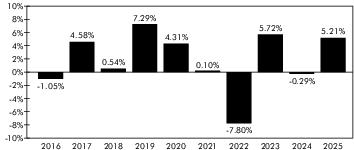
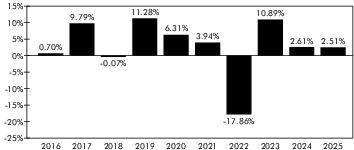
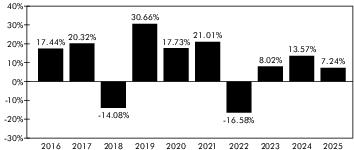
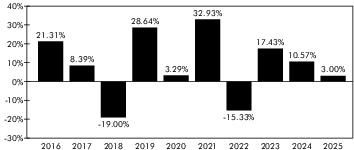
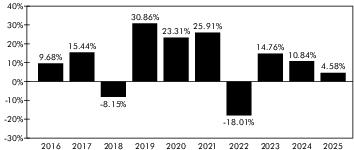
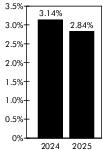
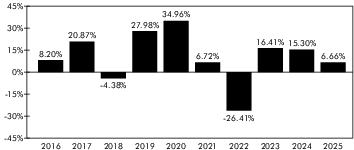
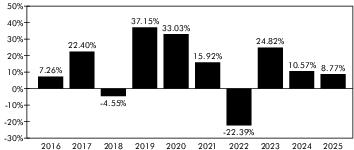
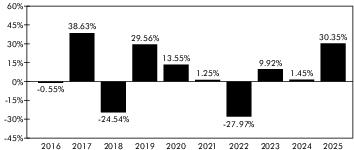
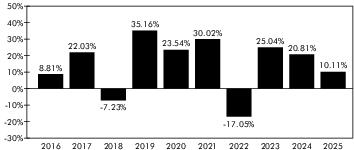
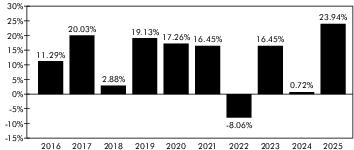
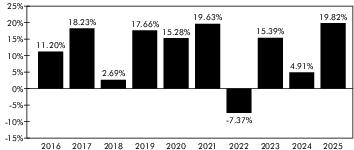
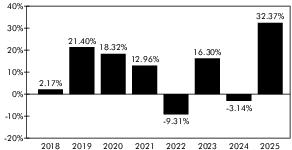
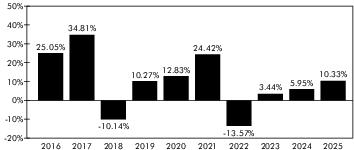
0001089951 false 485BPOS 2025-12-31 AMG Funds LLC (the "Investment Manager") has contractually agreed, through at least May 1, 2027, to waive management fees and/or pay or reimburse the Fund’s expenses in order to limit Total Annual Fund Operating Expenses After Fee Waiver and Expense Reimbursements (exclusive of taxes, interest (including interest incurred in connection with bank and custody overdrafts and in connection with securities sold short), shareholder servicing fees, distribution and service (12b-1) fees, brokerage commissions and other transaction costs, dividends payable with respect to securities sold short, acquired fund fees and expenses, and extraordinary expenses) of the Fund to the annual rate of 0.34% of the Fund’s average daily net assets (this annual rate or such other annual rate that may be in effect from time to time, the "Expense Cap"), subject to later reimbursement by the Fund in certain circumstances. In general, for a period of up to 36 months after the date any amounts are paid, waived or reimbursed by the Investment Manager, the Investment Manager may recover such amounts from the Fund, provided that such repayment would not cause the Fund’s Total Annual Fund Operating Expenses After Fee Waiver and Expense Reimbursements (exclusive of the items noted in the parenthetical above) to exceed either (i) the Expense Cap in effect at the time such amounts were paid, waived or reimbursed, or (ii) the Expense Cap in effect at the time of such repayment by the Fund. The contractual expense limitation may only be terminated in the event the Investment Manager or a successor ceases to be the investment manager of the Fund or a successor fund, by mutual agreement between the Investment Manager and the AMG Funds Board of Trustees or in the event of the Fund’s liquidation unless the Fund is reorganized or is a party to a merger in which the surviving entity is successor to the accounting and performance information of the Fund. 0.29 5.21 1.05 4.58 0.54 7.29 4.31 0.10 7.80 5.72 AMG Funds LLC (the "Investment Manager") has contractually agreed, through at least May 1, 2027, to waive management fees and/or pay or reimburse the Fund’s expenses in order to limit Total Annual Fund Operating Expenses After Fee Waiver and Expense Reimbursements (exclusive of taxes, interest (including interest incurred in connection with bank and custody overdrafts and in connection with securities sold short), shareholder servicing fees, distribution and service (12b-1) fees, brokerage commissions and other transaction costs, dividends payable with respect to securities sold short, acquired fund fees and expenses, and extraordinary expenses) of the Fund to the annual rate of 0.59% of the Fund’s average daily net assets (this annual rate or such other annual rate that may be in effect from time to time, the "Expense Cap"), subject to later reimbursement by the Fund in certain circumstances. In general, for a period of up to 36 months after the date any amounts are paid, waived or reimbursed by the Investment Manager, the Investment Manager may recover such amounts from the Fund, provided that such repayment would not cause the Fund’s Total Annual Fund Operating Expenses After Fee Waiver and Expense Reimbursements (exclusive of the items noted in the parenthetical above) to exceed either (i) the Expense Cap in effect at the time such amounts were paid, waived or reimbursed, or (ii) the Expense Cap in effect at the time of such repayment by the Fund. The contractual expense limitation may only be terminated in the event the Investment Manager or a successor ceases to be the investment manager of the Fund or a successor fund, by mutual agreement between the Investment Manager and the AMG Funds Board of Trustees or in the event of the Fund’s liquidation unless the Fund is reorganized or is a party to a merger in which the surviving entity is successor to the accounting and performance information of the Fund. Class Z and Index performance shown reflects performance since the inception date of the Fund's Class Z shares on February 24, 2017. 0.70 9.79 0.07 11.28 6.31 3.94 17.86 10.89 2.61 2.51 Class Z and Index performance shown reflects performance since the inception date of the Fund's Class Z shares on February 24, 2017. 17.44 7.24 20.32 14.08 30.66 17.73 21.01 16.58 8.02 13.57 Expense information has been restated to reflect current fees. AMG Funds LLC (the "Investment Manager") has contractually agreed, through at least May 1, 2027, to waive management fees and/or pay or reimburse the Fund’s expenses in order to limit Total Annual Fund Operating Expenses After Fee Waiver and Expense Reimbursements (exclusive of taxes, interest (including interest incurred in connection with bank and custody overdrafts and in connection with securities sold short), shareholder servicing fees, distribution and service (12b-1) fees, brokerage commissions and other transaction costs, dividends payable with respect to securities sold short, acquired fund fees and expenses, and extraordinary expenses) of the Fund to the annual rate of 0.90% of the Fund’s average daily net assets (this annual rate or such other annual rate that may be in effect from time to time, the “Expense Cap”), subject to later reimbursement by the Fund in certain circumstances. In general, for a period of up to 36 months after the date any amounts are paid, waived or reimbursed by the Investment Manager, the Investment Manager may recover such amounts from the Fund, provided that such repayment would not cause the Fund’s Total Annual Fund Operating Expenses After Fee Waiver and Expense Reimbursements (exclusive of the items noted in the parenthetical above) to exceed either (i) the Expense Cap in effect at the time such amounts were paid, waived or reimbursed, or (ii) the Expense Cap in effect at the time of such repayment by the Fund. The contractual expense limitation may only be terminated in the event the Investment Manager or a successor ceases to be the investment manager of the Fund or a successor fund, by mutual agreement between the Investment Manager and the AMG Funds Board of Trustees or in the event of the Fund’s liquidation unless the Fund is reorganized or is a party to a merger in which the surviving entity is successor to the accounting and performance information of the Fund. Class I, Class Z and Index performance shown reflects performance since the inception date of the Fund's Class I and Class Z shares on February 24, 2017. 19.00 28.64 3.29 32.93 15.33 17.43 10.57 3.00 21.31 8.39 Class N, Class Z and Index performance shown reflects performance since the inception date of the Fund's Class N and Class Z shares on February 24, 2017. 9.68 15.44 8.15 30.86 23.31 25.91 18.01 14.76 10.84 4.58 The Investment Manager has contractually agreed, through at least May 1, 2027, to waive fees and/or pay or reimburse the Fund’s expenses in order to limit total annual operating expenses (exclusive of taxes, interest (including interest incurred in connection with bank and custody overdrafts and in connection with securities sold short), brokerage commissions and other transaction costs, dividends payable with respect to securities sold short, acquired fund fees and expenses, and extraordinary expenses) of the Fund to the annual rate of 0.00% of the average daily net assets attributable to the Fund. The contractual expense limitation may only be terminated in the event the Investment Manager or a successor ceases to be the investment manager of the Fund or a successor fund, by mutual agreement between the Investment Manager and the AMG Funds Board of Trustees or in the event of the Fund’s liquidation unless the Fund is reorganized or is a party to a merger in which the surviving entity is successor to the accounting and performance information of the Fund. Fund and Index performance shown reflects performance since the inception date of the Fund on February 28, 2023. Neither AMG Funds LLC (the “Investment Manager”) nor GW&K Investment Management, LLC (“GW&K” or the “Subadviser”) charges a management fee to the Fund. Shareholders should be aware, however, that the Fund is an integral part of separately managed account programs, and the Investment Manager or the Subadviser will be compensated directly or indirectly by sponsors of separately managed account programs (“Program Sponsors”) or program participants for managed account advisory services. 3.14 2.84 Expense information has been restated to reflect current fees. The Investment Manager has contractually agreed, through at least May 1, 2027, to waive fees and/or pay or reimburse the Fund’s expenses in order to limit total annual operating expenses (exclusive of taxes, interest (including interest incurred in connection with bank and custody overdrafts and in connection with securities sold short), brokerage commissions and other transaction costs, dividends payable with respect to securities sold short, acquired fund fees and expenses, and extraordinary expenses) of the Fund to the annual rate of 0.00% of the average daily net assets attributable to the Fund. The contractual expense limitation may only be terminated in the event the Investment Manager or a successor ceases to be the investment manager of the Fund or a successor fund, by mutual agreement between the Investment Manager and the AMG Funds Board of Trustees or in the event of the Fund’s liquidation unless the Fund is reorganized or is a party to a merger in which the surviving entity is successor to the accounting and performance information of the Fund. Neither AMG Funds LLC (the “Investment Manager”) nor GW&K Investment Management, LLC (“GW&K” or the “Subadviser”) charges a management fee to the Fund. Shareholders should be aware, however, that the Fund is an integral part of separately managed account programs, and the Investment Manager or the Subadviser will be compensated directly or indirectly by sponsors of separately managed account programs (“Program Sponsors”) or program participants for managed account advisory services. Expense information has been restated to reflect current fees. The Total Annual Fund Operating Expenses and Total Annual Fund Operating Expenses After Fee Waiver and Expense Reimbursements do not correlate to the ratios of expenses to average net assets in the Financial Highlights section of this Prospectus, which reflect only the operating expenses of the Fund and do not include fees and expenses of any acquired fund. AMG Funds LLC (the “Investment Manager”) has contractually agreed, through at least May 1, 2027, to waive management fees and/or pay or reimburse the Fund’s expenses in order to limit Total Annual Fund Operating Expenses After Fee Waiver and Expense Reimbursements (exclusive of taxes, interest (including interest incurred in connection with bank and custody overdrafts and in connection with securities sold short), shareholder servicing fees, distribution and service (12b-1) fees, brokerage commissions and other transaction costs, dividends payable with respect to securities sold short, acquired fund fees and expenses, and extraordinary expenses) of the Fund to the annual rate of 0.96% of the Fund’s average daily net assets (this annual rate or such other annual rate that may be in effect from time to time, the “Expense Cap”), subject to later reimbursement by the Fund in certain circumstances. In general, for a period of up to 36 months after the date any amounts are paid, waived or reimbursed by the Investment Manager, the Investment Manager may recover such amounts from the Fund, provided that such repayment would not cause the Fund’s Total Annual Fund Operating Expenses After Fee Waiver and Expense Reimbursements (exclusive of the items noted in the parenthetical above) to exceed either (i) the Expense Cap in effect at the time such amounts were paid, waived or reimbursed, or (ii) the Expense Cap in effect at the time of such repayment by the Fund. The contractual expense limitation may only be terminated in the event the Investment Manager or a successor ceases to be the investment manager of the Fund or a successor fund, by mutual agreement between the Investment Manager and the AMG Funds Board of Trustees or in the event of the Fund’s liquidation unless the Fund is reorganized or is a party to a merger in which the surviving entity is successor to the accounting and performance information of the Fund. Class I and Index performance shown reflects performance since the inception date of the Fund's Class I shares on February 24, 2017. 8.20 20.87 4.38 27.98 34.96 6.72 26.41 16.41 15.30 6.66 Expense information has been restated to reflect current fees. Class I and Index performance shown reflects performance since the inception date of the Fund's Class I shares on February 24, 2017. 7.26 22.40 4.55 37.15 33.03 15.92 22.39 24.82 10.57 8.77 AMG Funds LLC (the “Investment Manager”) has contractually agreed, through at least May 1, 2027, to waive management fees and/or pay or reimburse the Fund’s expenses in order to limit Total Annual Fund Operating Expenses After Fee Waiver and Expense Reimbursements (exclusive of taxes, interest (including interest incurred in connection with bank and custody overdrafts and in connection with securities sold short), shareholder servicing fees, distribution and service (12b-1) fees, brokerage commissions and other transaction costs, dividends payable with respect to securities sold short, acquired fund fees and expenses, and extraordinary expenses) of the Fund to the annual rate of 1.05% of the Fund’s average daily net assets (this annual rate or such other annual rate that may be in effect from time to time, the “Expense Cap”), subject to later reimbursement by the Fund in certain circumstances. In general, for a period of up to 36 months after the date any amounts are paid, waived or reimbursed by the Investment Manager, the Investment Manager may recover such amounts from the Fund, provided that such repayment would not cause the Fund’s Total Annual Fund Operating Expenses After Fee Waiver and Expense Reimbursements (exclusive of the items noted in the parenthetical above) to exceed either (i) the Expense Cap in effect at the time such amounts were paid, waived or reimbursed, or (ii) the Expense Cap in effect at the time of such repayment by the Fund. The contractual expense limitation may only be terminated in the event the Investment Manager or a successor ceases to be the investment manager of the Fund or a successor fund, by mutual agreement between the Investment Manager and the AMG Funds Board of Trustees or in the event of the Fund’s liquidation unless the Fund is reorganized or is a party to a merger in which the surviving entity is successor to the accounting and performance information of the Fund. Class I and Index performance shown reflects performance since the inception date of the Fund's Class I shares on February 24, 2017. 0.55 38.63 24.54 29.56 13.55 1.25 27.97 9.92 1.45 30.35 AMG Funds LLC (the “Investment Manager”) has contractually agreed, through at least May 1, 2027, to waive management fees and/or pay or reimburse the Fund’s expenses in order to limit Total Annual Fund Operating Expenses After Fee Waiver and Expense Reimbursements (exclusive of taxes, interest (including interest incurred in connection with bank and custody overdrafts and in connection with securities sold short), shareholder servicing fees, distribution and service (12b-1) fees, brokerage commissions and other transaction costs, dividends payable with respect to securities sold short, acquired fund fees and expenses, and extraordinary expenses) of the Fund to the annual rate of 0.66% of the Fund’s average daily net assets (this annual rate or such other annual rate that may be in effect from time to time, the “Expense Cap”), subject to later reimbursement by the Fund in certain circumstances. In general, for a period of up to 36 months after the date any amounts are paid, waived or reimbursed by the Investment Manager, the Investment Manager may recover such amounts from the Fund, provided that such repayment would not cause the Fund’s Total Annual Fund Operating Expenses After Fee Waiver and Expense Reimbursements (exclusive of the items noted in the parenthetical above) to exceed either (i) the Expense Cap in effect at the time such amounts were paid, waived or reimbursed, or (ii) the Expense Cap in effect at the time of such repayment by the Fund. The contractual expense limitation may only be terminated in the event the Investment Manager or a successor ceases to be the investment manager of the Fund or a successor fund, by mutual agreement between the Investment Manager and the AMG Funds Board of Trustees or in the event of the Fund’s liquidation unless the Fund is reorganized or is a party to a merger in which the surviving entity is successor to the accounting and performance information of the Fund. 8.81 22.03 7.23 35.16 23.54 30.02 17.05 25.04 20.81 10.11 11.29 23.94 20.03 2.88 19.13 17.26 16.45 8.06 16.45 0.72 11.20 19.82 18.23 2.69 17.66 15.28 19.63 7.37 15.39 4.91 AMG Funds LLC (the “Investment Manager”) has contractually agreed, through at least May 1, 2027, to waive management fees and/or pay or reimburse the Fund’s expenses in order to limit Total Annual Fund Operating Expenses After Fee Waiver and Expense Reimbursements (exclusive of taxes, interest (including interest incurred in connection with bank and custody overdrafts and in connection with securities sold short), shareholder servicing fees, distribution and service (12b-1) fees, brokerage commissions and other transaction costs, dividends payable with respect to securities sold short, acquired fund fees and expenses, and extraordinary expenses) of the Fund to the annual rate of 0.93% of the Fund’s average daily net assets (this annual rate or such other annual rate that may be in effect from time to time, the “Expense Cap”), subject to later reimbursement by the Fund in certain circumstances. In general, for a period of up to 36 months after the date any amounts are paid, waived or reimbursed by the Investment Manager, the Investment Manager may recover such amounts from the Fund, provided that such repayment would not cause the Fund’s Total Annual Fund Operating Expenses After Fee Waiver and Expense Reimbursements (exclusive of the items noted in the parenthetical above) to exceed either (i) the Expense Cap in effect at the time such amounts were paid, waived or reimbursed, or (ii) the Expense Cap in effect at the time of such repayment by the Fund. The contractual expense limitation may only be terminated in the event the Investment Manager or a successor ceases to be the investment manager of the Fund or a successor fund, by mutual agreement between the Investment Manager and the AMG Funds Board of Trustees or in the event of the Fund’s liquidation unless the Fund is reorganized or is a party to a merger in which the surviving entity is successor to the accounting and performance information of the Fund. Performance shown reflects performance since the inception date of the Fund on January 30, 2017. 2.17 21.40 18.32 12.96 9.31 16.30 3.14 32.37 The Fund pays a monthly investment management fee consisting of a base fee, plus or minus an adjustment based on the Fund’s performance relative to the MSCI ACWI All Cap Index (net) over the immediately preceding rolling 12 months. The base fee is calculated at an annual rate of 1.37% of the Fund’s average daily net assets for the month. The performance adjustment for each month ranges from an annual rate of -0.75% to +0.75% and is multiplied by the Fund’s average monthly net assets for the prior rolling 12 months. AMG Funds LLC (the “Investment Manager”) has contractually agreed, through at least May 1, 2027, to waive investment management fees and/or pay or reimburse the Fund’s expenses in order to limit Total Annual Fund Operating Expenses After Fee Waiver and Expense Reimbursements (exclusive of investment management fees, administrative fees, taxes, interest (including interest incurred in connection with bank and custody overdrafts and in connection with securities sold short), shareholder servicing fees, distribution and service (12b-1) fees, brokerage commissions and other transaction costs, dividends payable with respect to securities sold short, acquired fund fees and expenses, and extraordinary expenses) of the Fund to the annual rate of 0.12% of the Fund’s average daily net assets (this annual rate or such other annual rate that may be in effect from time to time, the “Expense Cap”), subject to later reimbursement by the Fund in certain circumstances. In general, for a period of up to 36 months after the date any amounts are paid, waived or reimbursed by the Investment Manager, the Investment Manager may recover such amounts from the Fund, provided that such repayment would not cause the Fund’s Total Annual Fund Operating Expenses After Fee Waiver and Expense Reimbursements (exclusive of the items noted in the parenthetical above) to exceed either (i) the Expense Cap in effect at the time such amounts were paid, waived or reimbursed, or (ii) the Expense Cap in effect at the time of such repayment by the Fund. The contractual expense limitation may only be terminated in the event the Investment Manager or a successor ceases to be the investment manager of the Fund or a successor fund, by mutual agreement between the Investment Manager and the AMG Funds Board of Trustees or in the event of the Fund’s liquidation unless the Fund is reorganized or is a party to a merger in which the surviving entity is successor to the accounting and performance information of the Fund. For purposes of this contractual expense limitation, “investment management fees” includes any performance adjustments. 25.05 34.81 10.14 10.27 12.83 24.42 13.57 3.44 5.95 10.33 The Fund pays a monthly investment management fee consisting of a base fee, plus or minus an adjustment based on the Fund’s performance relative to the MSCI ACWI All Cap Index (net) over the immediately preceding rolling 12 months. The base fee is calculated at an annual rate of 1.37% of the Fund’s average daily net assets for the month. The performance adjustment for each month ranges from an annual rate of -0.75% to +0.75% and is multiplied by the Fund’s average monthly net assets for the prior rolling 12 months. AMG Funds LLC (the “Investment Manager”) has contractually agreed, through at least May 1, 2027, to waive investment management fees and/or pay or reimburse the Fund’s expenses in order to limit Total Annual Fund Operating Expenses After Fee Waiver and Expense Reimbursements (exclusive of investment management fees, administrative fees, taxes, interest (including interest incurred in connection with bank and custody overdrafts and in connection with securities sold short), shareholder servicing fees, distribution and service (12b-1) fees, brokerage commissions and other transaction costs, dividends payable with respect to securities sold short, acquired fund fees and expenses, and extraordinary expenses) of the Fund to the annual rate of 0.12% of the Fund’s average daily net assets (this annual rate or such other annual rate that may be in effect from time to time, the “Expense Cap”), subject to later reimbursement by the Fund in certain circumstances. In general, for a period of up to 36 months after the date any amounts are paid, waived or reimbursed by the Investment Manager, the Investment Manager may recover such amounts from the Fund, provided that such repayment would not cause the Fund’s Total Annual Fund Operating Expenses After Fee Waiver and Expense Reimbursements (exclusive of the items noted in the parenthetical above) to exceed either (i) the Expense Cap in effect at the time such amounts were paid, waived or reimbursed, or (ii) the Expense Cap in effect at the time of such repayment by the Fund. The contractual expense limitation may only be terminated in the event the Investment Manager or a successor ceases to be the investment manager of the Fund or a successor fund, by mutual agreement between the Investment Manager and the AMG Funds Board of Trustees or in the event of the Fund’s liquidation unless the Fund is reorganized or is a party to a merger in which the surviving entity is successor to the accounting and performance information of the Fund. For purposes of this contractual expense limitation, “investment management fees” includes any performance adjustments. 0001089951 af:C000176471Member 2017-01-30 2025-12-31 0001089951 af:C000176471Member oef:AfterTaxesOnDistributionsAndSalesMember 2017-01-30 2025-12-31 0001089951 af:C000176471Member oef:AfterTaxesOnDistributionsMember 2017-01-30 2025-12-31 0001089951 af:C000176472Member 2017-01-30 2025-12-31 0001089951 af:MSCIWorldIndexMember 2017-01-30 2025-12-31 0001089951 af:C000157696Member 2017-02-24 2025-12-31 0001089951 af:C000157696Member af:S000049941Russell2500IndexMember 2017-02-24 2025-12-31 0001089951 af:C000157696Member af:S000049941SP500IndexMember 2017-02-24 2025-12-31 0001089951 af:C000180065Member 2017-02-24 2025-12-31 0001089951 af:C000180065Member af:S000009876RussellMidcapGrowthIndexMember 2017-02-24 2025-12-31 0001089951 af:C000180065Member af:S000009876SP500IndexMember 2017-02-24 2025-12-31 0001089951 af:C000180066Member 2017-02-24 2025-12-31 0001089951 af:C000180066Member af:S000009877Russell2000GrowthIndexMember 2017-02-24 2025-12-31 0001089951 af:C000180066Member af:S000009877SP500IndexMember 2017-02-24 2025-12-31 0001089951 af:C000180067Member 2017-02-24 2025-12-31 0001089951 af:C000180067Member af:S000020207Russell2000ValueIndexMember 2017-02-24 2025-12-31 0001089951 af:C000180067Member af:S000020207SP500IndexMember 2017-02-24 2025-12-31 0001089951 af:C000180068Member 2017-02-24 2025-12-31 0001089951 af:C000180068Member af:S000020207Russell2000ValueIndexMember 2017-02-24 2025-12-31 0001089951 af:C000180068Member af:S000020207SP500IndexMember 2017-02-24 2025-12-31 0001089951 af:C000180069Member 2017-02-24 2025-12-31 0001089951 af:C000180069Member af:S000023781BloombergUSMunicipalBondBAAIndexMember 2017-02-24 2025-12-31 0001089951 af:C000180069Member af:S000023781BloombergUSMunicipalBondIndexMember 2017-02-24 2025-12-31 0001089951 af:C000180070Member 2017-02-24 2025-12-31 0001089951 af:C000180070Member af:Russell2000IndexMember 2017-02-24 2025-12-31 0001089951 af:C000180070Member af:SP500IndexMember 2017-02-24 2025-12-31 0001089951 af:C000180071Member 2017-02-24 2025-12-31 0001089951 af:C000180071Member af:MSCIEAFEIndexMember 2017-02-24 2025-12-31 0001089951 af:C000180071Member af:MSCIEAFESmallCapIndexMember 2017-02-24 2025-12-31 0001089951 af:C000180072Member 2017-02-24 2025-12-31 0001089951 af:C000180072Member af:S000049941Russell2500IndexMember 2017-02-24 2025-12-31 0001089951 af:C000180072Member af:S000049941SP500IndexMember 2017-02-24 2025-12-31 0001089951 af:C000241081Member 2023-02-28 2025-12-31 0001089951 af:C000241081Member oef:AfterTaxesOnDistributionsAndSalesMember 2023-02-28 2025-12-31 0001089951 af:C000241081Member oef:AfterTaxesOnDistributionsMember 2023-02-28 2025-12-31 0001089951 af:S000079761BloombergUSMunicipalBondBAAIndexMember 2023-02-28 2025-12-31 0001089951 af:S000079761BloombergUSMunicipalBondIndexMember 2023-02-28 2025-12-31 0001089951 af:S000009876Member 2025-12-31 2025-12-31 0001089951 af:S000009876Member af:C000027322Member 2025-12-31 2025-12-31 0001089951 af:S000009876Member af:C000027323Member 2025-12-31 2025-12-31 0001089951 af:S000009876Member af:C000180065Member 2025-12-31 2025-12-31 0001089951 af:S000009876Member af:GrowthStockRiskMember 2025-12-31 2025-12-31 0001089951 af:S000009876Member af:ManagementRiskMember 2025-12-31 2025-12-31 0001089951 af:S000009876Member af:MarketRisksMember 2025-12-31 2025-12-31 0001089951 af:S000009876Member af:MidCapitalizationStockRiskMember 2025-12-31 2025-12-31 0001089951 af:S000009876Member oef:RiskLoseMoneyMember 2025-12-31 2025-12-31 0001089951 af:S000009876Member oef:RiskNotInsuredDepositoryInstitutionMember 2025-12-31 2025-12-31 0001089951 af:S000009876Member af:SectorRiskMember 2025-12-31 2025-12-31 0001089951 af:S000009877Member 2025-12-31 2025-12-31 0001089951 af:S000009877Member af:C000027324Member 2025-12-31 2025-12-31 0001089951 af:S000009877Member af:C000027325Member 2025-12-31 2025-12-31 0001089951 af:S000009877Member af:C000180066Member 2025-12-31 2025-12-31 0001089951 af:S000009877Member af:GrowthStockRiskMember 2025-12-31 2025-12-31 0001089951 af:S000009877Member af:LiquidityRiskMember 2025-12-31 2025-12-31 0001089951 af:S000009877Member af:ManagementRiskMember 2025-12-31 2025-12-31 0001089951 af:S000009877Member af:MarketRisksMember 2025-12-31 2025-12-31 0001089951 af:S000009877Member oef:RiskLoseMoneyMember 2025-12-31 2025-12-31 0001089951 af:S000009877Member oef:RiskNotInsuredDepositoryInstitutionMember 2025-12-31 2025-12-31 0001089951 af:S000009877Member af:SectorRiskMember 2025-12-31 2025-12-31 0001089951 af:S000009877Member af:SmallCapitalizationStockRiskMember 2025-12-31 2025-12-31 0001089951 af:S000020207Member 2025-12-31 2025-12-31 0001089951 af:S000020207Member af:C000056573Member 2025-12-31 2025-12-31 0001089951 af:S000020207Member af:C000180067Member 2025-12-31 2025-12-31 0001089951 af:S000020207Member af:C000180068Member 2025-12-31 2025-12-31 0001089951 af:S000020207Member af:LiquidityRiskMember 2025-12-31 2025-12-31 0001089951 af:S000020207Member af:ManagementRiskMember 2025-12-31 2025-12-31 0001089951 af:S000020207Member af:MarketRisksMember 2025-12-31 2025-12-31 0001089951 af:S000020207Member af:RealEstateIndustryRiskMember 2025-12-31 2025-12-31 0001089951 af:S000020207Member oef:RiskLoseMoneyMember 2025-12-31 2025-12-31 0001089951 af:S000020207Member oef:RiskNotInsuredDepositoryInstitutionMember 2025-12-31 2025-12-31 0001089951 af:S000020207Member af:SectorRiskMember 2025-12-31 2025-12-31 0001089951 af:S000020207Member af:SmallCapitalizationStockRiskMember 2025-12-31 2025-12-31 0001089951 af:S000020207Member af:ValueStockRiskMember 2025-12-31 2025-12-31 0001089951 af:S000023781Member af:ChangingDistributionLevelRiskMember 2025-12-31 2025-12-31 0001089951 af:S000023781Member us-gaap:CreditRiskMember 2025-12-31 2025-12-31 0001089951 af:S000023781Member af:DebtSecuritiesRiskMember 2025-12-31 2025-12-31 0001089951 af:S000023781Member af:DerivativesRisksMember 2025-12-31 2025-12-31 0001089951 af:S000023781Member af:ExtensionRiskMember 2025-12-31 2025-12-31 0001089951 af:S000023781Member af:HighYieldRiskMember 2025-12-31 2025-12-31 0001089951 af:S000023781Member af:InflationDeflationRiskMember 2025-12-31 2025-12-31 0001089951 af:S000023781Member af:InterestRateRisksMember 2025-12-31 2025-12-31 0001089951 af:S000023781Member af:LiquidityRiskMember 2025-12-31 2025-12-31 0001089951 af:S000023781Member af:ManagementRiskMember 2025-12-31 2025-12-31 0001089951 af:S000023781Member af:MarketRisksMember 2025-12-31 2025-12-31 0001089951 af:S000023781Member af:MunicipalMarketRiskMember 2025-12-31 2025-12-31 0001089951 af:S000023781Member af:PrepaymentRisksMember 2025-12-31 2025-12-31 0001089951 af:S000023781Member af:ReinvestmentRiskMember 2025-12-31 2025-12-31 0001089951 af:S000023781Member oef:RiskLoseMoneyMember 2025-12-31 2025-12-31 0001089951 af:S000023781Member oef:RiskNotInsuredDepositoryInstitutionMember 2025-12-31 2025-12-31 0001089951 af:S000023781Member af:SectorRiskMember 2025-12-31 2025-12-31 0001089951 af:S000023782Member af:GrowthStockRiskMember 2025-12-31 2025-12-31 0001089951 af:S000023782Member af:LiquidityRiskMember 2025-12-31 2025-12-31 0001089951 af:S000023782Member af:ManagementRiskMember 2025-12-31 2025-12-31 0001089951 af:S000023782Member af:MarketRisksMember 2025-12-31 2025-12-31 0001089951 af:S000023782Member oef:RiskLoseMoneyMember 2025-12-31 2025-12-31 0001089951 af:S000023782Member oef:RiskNotInsuredDepositoryInstitutionMember 2025-12-31 2025-12-31 0001089951 af:S000023782Member af:SmallCapitalizationStockRiskMember 2025-12-31 2025-12-31 0001089951 af:S000023782Member af:ValueStockRiskMember 2025-12-31 2025-12-31 0001089951 af:S000025838Member af:ChangingDistributionLevelRiskMember 2025-12-31 2025-12-31 0001089951 af:S000025838Member us-gaap:CreditRiskMember 2025-12-31 2025-12-31 0001089951 af:S000025838Member af:DebtSecuritiesRiskMember 2025-12-31 2025-12-31 0001089951 af:S000025838Member af:ExtensionRiskMember 2025-12-31 2025-12-31 0001089951 af:S000025838Member af:InflationDeflationRiskMember 2025-12-31 2025-12-31 0001089951 af:S000025838Member af:InterestRateRisksMember 2025-12-31 2025-12-31 0001089951 af:S000025838Member af:LiquidityRiskMember 2025-12-31 2025-12-31 0001089951 af:S000025838Member af:ManagementRiskMember 2025-12-31 2025-12-31 0001089951 af:S000025838Member af:MarketRisksMember 2025-12-31 2025-12-31 0001089951 af:S000025838Member af:MunicipalMarketRiskMember 2025-12-31 2025-12-31 0001089951 af:S000025838Member af:PrepaymentRisksMember 2025-12-31 2025-12-31 0001089951 af:S000025838Member af:ReinvestmentRiskMember 2025-12-31 2025-12-31 0001089951 af:S000025838Member oef:RiskLoseMoneyMember 2025-12-31 2025-12-31 0001089951 af:S000025838Member oef:RiskNotInsuredDepositoryInstitutionMember 2025-12-31 2025-12-31 0001089951 af:S000025838Member af:SectorRiskMember 2025-12-31 2025-12-31 0001089951 af:S000025839Member 2025-12-31 2025-12-31 0001089951 af:S000025839Member af:C000077270Member 2025-12-31 2025-12-31 0001089951 af:S000025839Member af:C000077271Member 2025-12-31 2025-12-31 0001089951 af:S000025839Member af:C000077272Member 2025-12-31 2025-12-31 0001089951 af:S000025839Member af:GrowthStockRiskMember 2025-12-31 2025-12-31 0001089951 af:S000025839Member af:LargeCapitalizationStockRiskMember 2025-12-31 2025-12-31 0001089951 af:S000025839Member af:ManagementRiskMember 2025-12-31 2025-12-31 0001089951 af:S000025839Member af:MarketRisksMember 2025-12-31 2025-12-31 0001089951 af:S000025839Member af:MidCapitalizationStockRiskMember 2025-12-31 2025-12-31 0001089951 af:S000025839Member af:ModelAndDataRiskMember 2025-12-31 2025-12-31 0001089951 af:S000025839Member oef:RiskLoseMoneyMember 2025-12-31 2025-12-31 0001089951 af:S000025839Member oef:RiskNotInsuredDepositoryInstitutionMember 2025-12-31 2025-12-31 0001089951 af:S000025839Member af:SectorRiskMember 2025-12-31 2025-12-31 0001089951 af:S000037565Member 2025-12-31 2025-12-31 0001089951 af:S000037565Member af:C000115978Member 2025-12-31 2025-12-31 0001089951 af:S000037565Member af:C000115979Member 2025-12-31 2025-12-31 0001089951 af:S000037565Member af:ConvertibleSecuritiesRiskMember 2025-12-31 2025-12-31 0001089951 af:S000037565Member af:CreditAndCounterpartyRiskMember 2025-12-31 2025-12-31 0001089951 af:S000037565Member af:CurrencyRiskMember 2025-12-31 2025-12-31 0001089951 af:S000037565Member af:DebtSecuritiesRiskMember 2025-12-31 2025-12-31 0001089951 af:S000037565Member af:DerivativesRisksMember 2025-12-31 2025-12-31 0001089951 af:S000037565Member af:EmergingMarketsRiskMember 2025-12-31 2025-12-31 0001089951 af:S000037565Member af:FocusedInvestmentRiskMember 2025-12-31 2025-12-31 0001089951 af:S000037565Member af:ForeignInvestmentRiskMember 2025-12-31 2025-12-31 0001089951 af:S000037565Member af:GeographicFocusRiskMember 2025-12-31 2025-12-31 0001089951 af:S000037565Member af:HedgingRiskMember 2025-12-31 2025-12-31 0001089951 af:S000037565Member af:HighYieldRiskMember 2025-12-31 2025-12-31 0001089951 af:S000037565Member af:InterestRateRisksMember 2025-12-31 2025-12-31 0001089951 af:S000037565Member af:LargeCapitalizationStockRiskMember 2025-12-31 2025-12-31 0001089951 af:S000037565Member af:LiquidityRiskMember 2025-12-31 2025-12-31 0001089951 af:S000037565Member af:ManagementRiskMember 2025-12-31 2025-12-31 0001089951 af:S000037565Member af:MarketRisksMember 2025-12-31 2025-12-31 0001089951 af:S000037565Member oef:RiskLoseMoneyMember 2025-12-31 2025-12-31 0001089951 af:S000037565Member oef:RiskNondiversifiedStatusMember 2025-12-31 2025-12-31 0001089951 af:S000037565Member oef:RiskNotInsuredDepositoryInstitutionMember 2025-12-31 2025-12-31 0001089951 af:S000037565Member af:SectorRiskMember 2025-12-31 2025-12-31 0001089951 af:S000037565Member af:ShortSalesRiskMember 2025-12-31 2025-12-31 0001089951 af:S000037565Member af:SmallAndMidCapitalizationStockRiskMember 2025-12-31 2025-12-31 0001089951 af:S000037565Member af:ValueStockRiskMember 2025-12-31 2025-12-31 0001089951 af:S000037566Member af:C000115980Member af:ClassNAndClassZMember 2025-12-31 2025-12-31 0001089951 af:S000037566Member af:C000115981Member af:ClassIMember 2025-12-31 2025-12-31 0001089951 af:S000037566Member af:C000115982Member af:ClassNAndClassZMember 2025-12-31 2025-12-31 0001089951 af:S000037566Member af:ClassIMember 2025-12-31 2025-12-31 0001089951 af:S000037566Member af:ClassIMember af:ConvertibleSecuritiesRiskMember 2025-12-31 2025-12-31 0001089951 af:S000037566Member af:ClassIMember af:CreditAndCounterpartyRiskMember 2025-12-31 2025-12-31 0001089951 af:S000037566Member af:ClassIMember af:CurrencyRiskMember 2025-12-31 2025-12-31 0001089951 af:S000037566Member af:ClassIMember af:DebtSecuritiesRiskMember 2025-12-31 2025-12-31 0001089951 af:S000037566Member af:ClassIMember af:EmergingMarketsRiskMember 2025-12-31 2025-12-31 0001089951 af:S000037566Member af:ClassIMember af:ForeignInvestmentRiskMember 2025-12-31 2025-12-31 0001089951 af:S000037566Member af:ClassIMember af:GeographicFocusRiskMember 2025-12-31 2025-12-31 0001089951 af:S000037566Member af:ClassIMember af:HighYieldRiskMember 2025-12-31 2025-12-31 0001089951 af:S000037566Member af:ClassIMember af:InterestRateRisksMember 2025-12-31 2025-12-31 0001089951 af:S000037566Member af:ClassIMember af:LargeCapitalizationStockRiskMember 2025-12-31 2025-12-31 0001089951 af:S000037566Member af:ClassIMember af:ManagementRiskMember 2025-12-31 2025-12-31 0001089951 af:S000037566Member af:ClassIMember af:MarketRisksMember 2025-12-31 2025-12-31 0001089951 af:S000037566Member af:ClassIMember oef:RiskLoseMoneyMember 2025-12-31 2025-12-31 0001089951 af:S000037566Member af:ClassIMember oef:RiskNotInsuredDepositoryInstitutionMember 2025-12-31 2025-12-31 0001089951 af:S000037566Member af:ClassIMember af:SectorRiskMember 2025-12-31 2025-12-31 0001089951 af:S000037566Member af:ClassIMember af:SmallAndMidCapitalizationStockRiskMember 2025-12-31 2025-12-31 0001089951 af:S000037566Member af:ClassIMember af:ValueStockRiskMember 2025-12-31 2025-12-31 0001089951 af:S000037566Member af:ClassNAndClassZMember 2025-12-31 2025-12-31 0001089951 af:S000039569Member 2025-12-31 2025-12-31 0001089951 af:S000039569Member af:C000122075Member 2025-12-31 2025-12-31 0001089951 af:S000039569Member af:C000122076Member 2025-12-31 2025-12-31 0001089951 af:S000039569Member af:C000180071Member 2025-12-31 2025-12-31 0001089951 af:S000039569Member af:CurrencyRiskMember 2025-12-31 2025-12-31 0001089951 af:S000039569Member af:EmergingMarketsRiskMember 2025-12-31 2025-12-31 0001089951 af:S000039569Member af:ForeignInvestmentRiskMember 2025-12-31 2025-12-31 0001089951 af:S000039569Member af:GeographicFocusRiskMember 2025-12-31 2025-12-31 0001089951 af:S000039569Member af:GrowthStockRiskMember 2025-12-31 2025-12-31 0001089951 af:S000039569Member af:LiquidityRiskMember 2025-12-31 2025-12-31 0001089951 af:S000039569Member af:ManagementRiskMember 2025-12-31 2025-12-31 0001089951 af:S000039569Member af:MarketRisksMember 2025-12-31 2025-12-31 0001089951 af:S000039569Member af:PoliticalRiskMember 2025-12-31 2025-12-31 0001089951 af:S000039569Member oef:RiskLoseMoneyMember 2025-12-31 2025-12-31 0001089951 af:S000039569Member oef:RiskNotInsuredDepositoryInstitutionMember 2025-12-31 2025-12-31 0001089951 af:S000039569Member af:SectorRiskMember 2025-12-31 2025-12-31 0001089951 af:S000039569Member af:SmallCapitalizationStockRiskMember 2025-12-31 2025-12-31 0001089951 af:S000045879Member af:C000142968Member af:ClassIAndClassZMember 2025-12-31 2025-12-31 0001089951 af:S000045879Member af:C000142969Member af:ClassIAndClassZMember 2025-12-31 2025-12-31 0001089951 af:S000045879Member af:C000142970Member af:ClassNMember 2025-12-31 2025-12-31 0001089951 af:S000045879Member af:ClassIAndClassZMember 2025-12-31 2025-12-31 0001089951 af:S000045879Member af:ClassIAndClassZMember af:ConvertibleSecuritiesRiskMember 2025-12-31 2025-12-31 0001089951 af:S000045879Member af:ClassIAndClassZMember af:CreditAndCounterpartyRiskMember 2025-12-31 2025-12-31 0001089951 af:S000045879Member af:ClassIAndClassZMember af:CurrencyRiskMember 2025-12-31 2025-12-31 0001089951 af:S000045879Member af:ClassIAndClassZMember af:DebtSecuritiesRiskMember 2025-12-31 2025-12-31 0001089951 af:S000045879Member af:ClassIAndClassZMember af:DerivativesRisksMember 2025-12-31 2025-12-31 0001089951 af:S000045879Member af:ClassIAndClassZMember af:EmergingMarketsRiskMember 2025-12-31 2025-12-31 0001089951 af:S000045879Member af:ClassIAndClassZMember af:FocusedInvestmentRiskMember 2025-12-31 2025-12-31 0001089951 af:S000045879Member af:ClassIAndClassZMember af:ForeignInvestmentRiskMember 2025-12-31 2025-12-31 0001089951 af:S000045879Member af:ClassIAndClassZMember af:HedgingRiskMember 2025-12-31 2025-12-31 0001089951 af:S000045879Member af:ClassIAndClassZMember af:HighYieldRiskMember 2025-12-31 2025-12-31 0001089951 af:S000045879Member af:ClassIAndClassZMember af:InterestRateRisksMember 2025-12-31 2025-12-31 0001089951 af:S000045879Member af:ClassIAndClassZMember af:LargeCapitalizationStockRiskMember 2025-12-31 2025-12-31 0001089951 af:S000045879Member af:ClassIAndClassZMember af:LiquidityRiskMember 2025-12-31 2025-12-31 0001089951 af:S000045879Member af:ClassIAndClassZMember af:ManagementRiskMember 2025-12-31 2025-12-31 0001089951 af:S000045879Member af:ClassIAndClassZMember af:MarketRisksMember 2025-12-31 2025-12-31 0001089951 af:S000045879Member af:ClassIAndClassZMember af:MicroCapitalizationStockRiskMember 2025-12-31 2025-12-31 0001089951 af:S000045879Member af:ClassIAndClassZMember af:PerformanceBasedFeeRiskMember 2025-12-31 2025-12-31 0001089951 af:S000045879Member af:ClassIAndClassZMember af:PoliticalRiskMember 2025-12-31 2025-12-31 0001089951 af:S000045879Member af:ClassIAndClassZMember oef:RiskLoseMoneyMember 2025-12-31 2025-12-31 0001089951 af:S000045879Member af:ClassIAndClassZMember oef:RiskNondiversifiedStatusMember 2025-12-31 2025-12-31 0001089951 af:S000045879Member af:ClassIAndClassZMember oef:RiskNotInsuredDepositoryInstitutionMember 2025-12-31 2025-12-31 0001089951 af:S000045879Member af:ClassIAndClassZMember af:SectorRiskMember 2025-12-31 2025-12-31 0001089951 af:S000045879Member af:ClassIAndClassZMember af:ShortSalesRiskMember 2025-12-31 2025-12-31 0001089951 af:S000045879Member af:ClassIAndClassZMember af:SmallAndMidCapitalizationStockRiskMember 2025-12-31 2025-12-31 0001089951 af:S000045879Member af:ClassIAndClassZMember af:ValueStockRiskMember 2025-12-31 2025-12-31 0001089951 af:S000045879Member af:ClassNMember 2025-12-31 2025-12-31 0001089951 af:S000049941Member 2025-12-31 2025-12-31 0001089951 af:S000049941Member af:C000157694Member 2025-12-31 2025-12-31 0001089951 af:S000049941Member af:C000157696Member 2025-12-31 2025-12-31 0001089951 af:S000049941Member af:C000180072Member 2025-12-31 2025-12-31 0001089951 af:S000049941Member af:GrowthStockRiskMember 2025-12-31 2025-12-31 0001089951 af:S000049941Member af:LiquidityRiskMember 2025-12-31 2025-12-31 0001089951 af:S000049941Member af:ManagementRiskMember 2025-12-31 2025-12-31 0001089951 af:S000049941Member af:MarketRisksMember 2025-12-31 2025-12-31 0001089951 af:S000049941Member oef:RiskLoseMoneyMember 2025-12-31 2025-12-31 0001089951 af:S000049941Member oef:RiskNotInsuredDepositoryInstitutionMember 2025-12-31 2025-12-31 0001089951 af:S000049941Member af:SectorRiskMember 2025-12-31 2025-12-31 0001089951 af:S000049941Member af:SmallAndMidCapitalizationStockRiskMember 2025-12-31 2025-12-31 0001089951 af:S000049941Member af:ValueStockRiskMember 2025-12-31 2025-12-31 0001089951 af:S000056045Member 2025-12-31 2025-12-31 0001089951 af:S000056045Member af:C000176471Member 2025-12-31 2025-12-31 0001089951 af:S000056045Member af:C000176472Member 2025-12-31 2025-12-31 0001089951 af:S000056045Member af:ConvertibleSecuritiesRiskMember 2025-12-31 2025-12-31 0001089951 af:S000056045Member af:CreditAndCounterpartyRiskMember 2025-12-31 2025-12-31 0001089951 af:S000056045Member af:CurrencyRiskMember 2025-12-31 2025-12-31 0001089951 af:S000056045Member af:DebtSecuritiesRiskMember 2025-12-31 2025-12-31 0001089951 af:S000056045Member af:DerivativesRisksMember 2025-12-31 2025-12-31 0001089951 af:S000056045Member af:EmergingMarketsRiskMember 2025-12-31 2025-12-31 0001089951 af:S000056045Member af:FocusedInvestmentRiskMember 2025-12-31 2025-12-31 0001089951 af:S000056045Member af:ForeignInvestmentRiskMember 2025-12-31 2025-12-31 0001089951 af:S000056045Member af:GeographicFocusRiskMember 2025-12-31 2025-12-31 0001089951 af:S000056045Member af:HedgingRiskMember 2025-12-31 2025-12-31 0001089951 af:S000056045Member af:HighYieldRiskMember 2025-12-31 2025-12-31 0001089951 af:S000056045Member af:InterestRateRisksMember 2025-12-31 2025-12-31 0001089951 af:S000056045Member af:LargeCapitalizationStockRiskMember 2025-12-31 2025-12-31 0001089951 af:S000056045Member af:LiquidityRiskMember 2025-12-31 2025-12-31 0001089951 af:S000056045Member af:ManagementRiskMember 2025-12-31 2025-12-31 0001089951 af:S000056045Member af:MarketRisksMember 2025-12-31 2025-12-31 0001089951 af:S000056045Member oef:RiskLoseMoneyMember 2025-12-31 2025-12-31 0001089951 af:S000056045Member oef:RiskNondiversifiedStatusMember 2025-12-31 2025-12-31 0001089951 af:S000056045Member oef:RiskNotInsuredDepositoryInstitutionMember 2025-12-31 2025-12-31 0001089951 af:S000056045Member af:SectorRiskMember 2025-12-31 2025-12-31 0001089951 af:S000056045Member af:ShortSalesRiskMember 2025-12-31 2025-12-31 0001089951 af:S000056045Member af:SmallAndMidCapitalizationStockRiskMember 2025-12-31 2025-12-31 0001089951 af:S000056045Member af:ValueStockRiskMember 2025-12-31 2025-12-31 0001089951 af:S000079761Member 2025-12-31 2025-12-31 0001089951 af:S000079761Member af:C000241081Member 2025-12-31 2025-12-31 0001089951 af:S000079761Member af:ChangingDistributionLevelRiskMember 2025-12-31 2025-12-31 0001089951 af:S000079761Member af:CreditAndCounterpartyRiskMember 2025-12-31 2025-12-31 0001089951 af:S000079761Member af:DebtSecuritiesRiskMember 2025-12-31 2025-12-31 0001089951 af:S000079761Member af:DerivativesRisksMember 2025-12-31 2025-12-31 0001089951 af:S000079761Member af:ExtensionRiskMember 2025-12-31 2025-12-31 0001089951 af:S000079761Member af:HighYieldRiskMember 2025-12-31 2025-12-31 0001089951 af:S000079761Member af:InflationDeflationRiskMember 2025-12-31 2025-12-31 0001089951 af:S000079761Member af:InterestRateRisksMember 2025-12-31 2025-12-31 0001089951 af:S000079761Member af:LiquidityRiskMember 2025-12-31 2025-12-31 0001089951 af:S000079761Member af:ManagementRiskMember 2025-12-31 2025-12-31 0001089951 af:S000079761Member af:MarketRisksMember 2025-12-31 2025-12-31 0001089951 af:S000079761Member af:MunicipalMarketRiskMember 2025-12-31 2025-12-31 0001089951 af:S000079761Member af:PrepaymentRisksMember 2025-12-31 2025-12-31 0001089951 af:S000079761Member af:ReinvestmentRiskMember 2025-12-31 2025-12-31 0001089951 af:S000079761Member oef:RiskLoseMoneyMember 2025-12-31 2025-12-31 0001089951 af:S000079761Member oef:RiskNotInsuredDepositoryInstitutionMember 2025-12-31 2025-12-31 0001089951 af:S000079761Member af:SectorRiskMember 2025-12-31 2025-12-31 0001089951 af:S000093069Member af:AssetBackedAndMortgageBackedSecuritiesRiskMember 2025-12-31 2025-12-31 0001089951 af:S000093069Member af:ChangingDistributionLevelRiskMember 2025-12-31 2025-12-31 0001089951 af:S000093069Member af:CollateralizedLoanObligationsAndOtherCollateralizedObligationsRiskMember 2025-12-31 2025-12-31 0001089951 af:S000093069Member af:CreditAndCounterpartyRiskMember 2025-12-31 2025-12-31 0001089951 af:S000093069Member af:DebtSecuritiesRiskMember 2025-12-31 2025-12-31 0001089951 af:S000093069Member af:DerivativesRisksMember 2025-12-31 2025-12-31 0001089951 af:S000093069Member af:ExtensionRiskMember 2025-12-31 2025-12-31 0001089951 af:S000093069Member af:FloatingRateInstrumentRiskMember 2025-12-31 2025-12-31 0001089951 af:S000093069Member af:InflationDeflationRiskMember 2025-12-31 2025-12-31 0001089951 af:S000093069Member af:InterestRateRisksMember 2025-12-31 2025-12-31 0001089951 af:S000093069Member af:LeverageRiskMember 2025-12-31 2025-12-31 0001089951 af:S000093069Member af:LiquidityRiskMember 2025-12-31 2025-12-31 0001089951 af:S000093069Member af:ManagementRiskMember 2025-12-31 2025-12-31 0001089951 af:S000093069Member af:MarketRisksMember 2025-12-31 2025-12-31 0001089951 af:S000093069Member af:PrepaymentRisksMember 2025-12-31 2025-12-31 0001089951 af:S000093069Member af:RestrictedSecuritiesRiskMember 2025-12-31 2025-12-31 0001089951 af:S000093069Member oef:RiskLoseMoneyMember 2025-12-31 2025-12-31 0001089951 af:S000093069Member oef:RiskNotInsuredDepositoryInstitutionMember 2025-12-31 2025-12-31 0001089951 af:S000093069Member af:USGovernmentSecuritiesRiskMember 2025-12-31 2025-12-31 0001089951 2025-12-31 2025-12-31 0001089951 af:C000027322Member 2021-01-01 2025-12-31 0001089951 af:C000027323Member 2021-01-01 2025-12-31 0001089951 af:C000027323Member oef:AfterTaxesOnDistributionsAndSalesMember 2021-01-01 2025-12-31 0001089951 af:C000027323Member oef:AfterTaxesOnDistributionsMember 2021-01-01 2025-12-31 0001089951 af:C000027324Member 2021-01-01 2025-12-31 0001089951 af:C000027325Member 2021-01-01 2025-12-31 0001089951 af:C000027325Member oef:AfterTaxesOnDistributionsAndSalesMember 2021-01-01 2025-12-31 0001089951 af:C000027325Member oef:AfterTaxesOnDistributionsMember 2021-01-01 2025-12-31 0001089951 af:C000056573Member 2021-01-01 2025-12-31 0001089951 af:C000056573Member oef:AfterTaxesOnDistributionsAndSalesMember 2021-01-01 2025-12-31 0001089951 af:C000056573Member oef:AfterTaxesOnDistributionsMember 2021-01-01 2025-12-31 0001089951 af:C000069909Member 2021-01-01 2025-12-31 0001089951 af:C000069909Member oef:AfterTaxesOnDistributionsAndSalesMember 2021-01-01 2025-12-31 0001089951 af:C000069909Member oef:AfterTaxesOnDistributionsMember 2021-01-01 2025-12-31 0001089951 af:C000069910Member 2021-01-01 2025-12-31 0001089951 af:C000069910Member oef:AfterTaxesOnDistributionsAndSalesMember 2021-01-01 2025-12-31 0001089951 af:C000069910Member oef:AfterTaxesOnDistributionsMember 2021-01-01 2025-12-31 0001089951 af:C000069911Member 2021-01-01 2025-12-31 0001089951 af:C000077267Member 2021-01-01 2025-12-31 0001089951 af:C000077269Member 2021-01-01 2025-12-31 0001089951 af:C000077269Member oef:AfterTaxesOnDistributionsAndSalesMember 2021-01-01 2025-12-31 0001089951 af:C000077269Member oef:AfterTaxesOnDistributionsMember 2021-01-01 2025-12-31 0001089951 af:C000077270Member 2021-01-01 2025-12-31 0001089951 af:C000077271Member 2021-01-01 2025-12-31 0001089951 af:C000077272Member 2021-01-01 2025-12-31 0001089951 af:C000077272Member oef:AfterTaxesOnDistributionsAndSalesMember 2021-01-01 2025-12-31 0001089951 af:C000077272Member oef:AfterTaxesOnDistributionsMember 2021-01-01 2025-12-31 0001089951 af:C000078885Member 2021-01-01 2025-12-31 0001089951 af:C000115978Member 2021-01-01 2025-12-31 0001089951 af:C000115978Member oef:AfterTaxesOnDistributionsAndSalesMember 2021-01-01 2025-12-31 0001089951 af:C000115978Member oef:AfterTaxesOnDistributionsMember 2021-01-01 2025-12-31 0001089951 af:C000115979Member 2021-01-01 2025-12-31 0001089951 af:C000115981Member af:ClassIMember 2021-01-01 2025-12-31 0001089951 af:C000115981Member af:ClassIMember oef:AfterTaxesOnDistributionsAndSalesMember 2021-01-01 2025-12-31 0001089951 af:C000115981Member af:ClassIMember oef:AfterTaxesOnDistributionsMember 2021-01-01 2025-12-31 0001089951 af:C000122075Member 2021-01-01 2025-12-31 0001089951 af:C000122076Member 2021-01-01 2025-12-31 0001089951 af:C000122076Member oef:AfterTaxesOnDistributionsAndSalesMember 2021-01-01 2025-12-31 0001089951 af:C000122076Member oef:AfterTaxesOnDistributionsMember 2021-01-01 2025-12-31 0001089951 af:C000142968Member af:ClassIAndClassZMember 2021-01-01 2025-12-31 0001089951 af:C000142968Member af:ClassIAndClassZMember oef:AfterTaxesOnDistributionsAndSalesMember 2021-01-01 2025-12-31 0001089951 af:C000142968Member af:ClassIAndClassZMember oef:AfterTaxesOnDistributionsMember 2021-01-01 2025-12-31 0001089951 af:C000142969Member af:ClassIAndClassZMember 2021-01-01 2025-12-31 0001089951 af:C000157694Member 2021-01-01 2025-12-31 0001089951 af:C000157694Member oef:AfterTaxesOnDistributionsAndSalesMember 2021-01-01 2025-12-31 0001089951 af:C000157694Member oef:AfterTaxesOnDistributionsMember 2021-01-01 2025-12-31 0001089951 af:C000157696Member 2021-01-01 2025-12-31 0001089951 af:C000157696Member af:S000049941Russell2500IndexMember 2021-01-01 2025-12-31 0001089951 af:C000157696Member af:S000049941SP500IndexMember 2021-01-01 2025-12-31 0001089951 af:C000176471Member 2021-01-01 2025-12-31 0001089951 af:C000176471Member oef:AfterTaxesOnDistributionsAndSalesMember 2021-01-01 2025-12-31 0001089951 af:C000176471Member oef:AfterTaxesOnDistributionsMember 2021-01-01 2025-12-31 0001089951 af:C000176472Member 2021-01-01 2025-12-31 0001089951 af:C000180065Member 2021-01-01 2025-12-31 0001089951 af:C000180065Member af:S000009876RussellMidcapGrowthIndexMember 2021-01-01 2025-12-31 0001089951 af:C000180065Member af:S000009876SP500IndexMember 2021-01-01 2025-12-31 0001089951 af:C000180066Member 2021-01-01 2025-12-31 0001089951 af:C000180066Member af:S000009877Russell2000GrowthIndexMember 2021-01-01 2025-12-31 0001089951 af:C000180066Member af:S000009877SP500IndexMember 2021-01-01 2025-12-31 0001089951 af:C000180067Member 2021-01-01 2025-12-31 0001089951 af:C000180067Member af:S000020207Russell2000ValueIndexMember 2021-01-01 2025-12-31 0001089951 af:C000180067Member af:S000020207SP500IndexMember 2021-01-01 2025-12-31 0001089951 af:C000180068Member 2021-01-01 2025-12-31 0001089951 af:C000180068Member af:S000020207Russell2000ValueIndexMember 2021-01-01 2025-12-31 0001089951 af:C000180068Member af:S000020207SP500IndexMember 2021-01-01 2025-12-31 0001089951 af:C000180069Member 2021-01-01 2025-12-31 0001089951 af:C000180069Member af:S000023781BloombergUSMunicipalBondBAAIndexMember 2021-01-01 2025-12-31 0001089951 af:C000180069Member af:S000023781BloombergUSMunicipalBondIndexMember 2021-01-01 2025-12-31 0001089951 af:C000180070Member 2021-01-01 2025-12-31 0001089951 af:C000180070Member af:Russell2000IndexMember 2021-01-01 2025-12-31 0001089951 af:C000180070Member af:SP500IndexMember 2021-01-01 2025-12-31 0001089951 af:C000180071Member 2021-01-01 2025-12-31 0001089951 af:C000180071Member af:MSCIEAFEIndexMember 2021-01-01 2025-12-31 0001089951 af:C000180071Member af:MSCIEAFESmallCapIndexMember 2021-01-01 2025-12-31 0001089951 af:C000180072Member 2021-01-01 2025-12-31 0001089951 af:C000180072Member af:S000049941Russell2500IndexMember 2021-01-01 2025-12-31 0001089951 af:C000180072Member af:S000049941SP500IndexMember 2021-01-01 2025-12-31 0001089951 af:ClassIAndClassZMember af:MSCIACWIAllCapIndexNetMember 2021-01-01 2025-12-31 0001089951 af:ClassIMember af:S000037566Russell1000ValueIndexMember 2021-01-01 2025-12-31 0001089951 af:ClassIMember af:S000037566SP500IndexMember 2021-01-01 2025-12-31 0001089951 af:MSCIWorldIndexMember 2021-01-01 2025-12-31 0001089951 af:Russell1000GrowthIndexMember 2021-01-01 2025-12-31 0001089951 af:S000025838Bloomberg10YearMunicipalBondIndexMember 2021-01-01 2025-12-31 0001089951 af:S000025838BloombergUSMunicipalBondIndexMember 2021-01-01 2025-12-31 0001089951 af:S000025839SP500IndexMember 2021-01-01 2025-12-31 0001089951 af:S000037565Russell1000ValueIndexMember 2021-01-01 2025-12-31 0001089951 af:S000037565SP500IndexMember 2021-01-01 2025-12-31 0001089951 af:S000009876Member af:C000027323Member 2016-01-01 2016-12-31 0001089951 af:S000009877Member af:C000027325Member 2016-01-01 2016-12-31 0001089951 af:S000020207Member af:C000056573Member 2016-01-01 2016-12-31 0001089951 af:S000023781Member af:C000069909Member 2016-01-01 2016-12-31 0001089951 af:S000023782Member af:C000069910Member 2016-01-01 2016-12-31 0001089951 af:S000025838Member af:C000077269Member 2016-01-01 2016-12-31 0001089951 af:S000025839Member af:C000077272Member 2016-01-01 2016-12-31 0001089951 af:S000037565Member af:C000115978Member 2016-01-01 2016-12-31 0001089951 af:S000037566Member af:C000115981Member af:ClassIMember 2016-01-01 2016-12-31 0001089951 af:S000039569Member af:C000122076Member 2016-01-01 2016-12-31 0001089951 af:S000045879Member af:C000142968Member af:ClassIAndClassZMember 2016-01-01 2016-12-31 0001089951 af:S000049941Member af:C000157694Member 2016-01-01 2016-12-31 0001089951 af:S000009876Member af:C000027323Member 2017-01-01 2017-12-31 0001089951 af:S000009877Member af:C000027325Member 2017-01-01 2017-12-31 0001089951 af:S000020207Member af:C000056573Member 2017-01-01 2017-12-31 0001089951 af:S000023781Member af:C000069909Member 2017-01-01 2017-12-31 0001089951 af:S000023782Member af:C000069910Member 2017-01-01 2017-12-31 0001089951 af:S000025838Member af:C000077269Member 2017-01-01 2017-12-31 0001089951 af:S000025839Member af:C000077272Member 2017-01-01 2017-12-31 0001089951 af:S000037565Member af:C000115978Member 2017-01-01 2017-12-31 0001089951 af:S000037566Member af:C000115981Member af:ClassIMember 2017-01-01 2017-12-31 0001089951 af:S000039569Member af:C000122076Member 2017-01-01 2017-12-31 0001089951 af:S000045879Member af:C000142968Member af:ClassIAndClassZMember 2017-01-01 2017-12-31 0001089951 af:S000049941Member af:C000157694Member 2017-01-01 2017-12-31 0001089951 af:S000009876Member af:C000027323Member 2018-01-01 2018-12-31 0001089951 af:S000009877Member af:C000027325Member 2018-01-01 2018-12-31 0001089951 af:S000020207Member af:C000056573Member 2018-01-01 2018-12-31 0001089951 af:S000023781Member af:C000069909Member 2018-01-01 2018-12-31 0001089951 af:S000023782Member af:C000069910Member 2018-01-01 2018-12-31 0001089951 af:S000025838Member af:C000077269Member 2018-01-01 2018-12-31 0001089951 af:S000025839Member af:C000077272Member 2018-01-01 2018-12-31 0001089951 af:S000037565Member af:C000115978Member 2018-01-01 2018-12-31 0001089951 af:S000037566Member af:C000115981Member af:ClassIMember 2018-01-01 2018-12-31 0001089951 af:S000039569Member af:C000122076Member 2018-01-01 2018-12-31 0001089951 af:S000045879Member af:C000142968Member af:ClassIAndClassZMember 2018-01-01 2018-12-31 0001089951 af:S000049941Member af:C000157694Member 2018-01-01 2018-12-31 0001089951 af:S000056045Member af:C000176471Member 2018-01-01 2018-12-31 0001089951 af:S000009876Member af:C000027323Member 2019-01-01 2019-12-31 0001089951 af:S000009877Member af:C000027325Member 2019-01-01 2019-12-31 0001089951 af:S000020207Member af:C000056573Member 2019-01-01 2019-12-31 0001089951 af:S000023781Member af:C000069909Member 2019-01-01 2019-12-31 0001089951 af:S000023782Member af:C000069910Member 2019-01-01 2019-12-31 0001089951 af:S000025838Member af:C000077269Member 2019-01-01 2019-12-31 0001089951 af:S000025839Member af:C000077272Member 2019-01-01 2019-12-31 0001089951 af:S000037565Member af:C000115978Member 2019-01-01 2019-12-31 0001089951 af:S000037566Member af:C000115981Member af:ClassIMember 2019-01-01 2019-12-31 0001089951 af:S000039569Member af:C000122076Member 2019-01-01 2019-12-31 0001089951 af:S000045879Member af:C000142968Member af:ClassIAndClassZMember 2019-01-01 2019-12-31 0001089951 af:S000049941Member af:C000157694Member 2019-01-01 2019-12-31 0001089951 af:S000056045Member af:C000176471Member 2019-01-01 2019-12-31 0001089951 af:S000009876Member af:C000027323Member 2020-01-01 2020-12-31 0001089951 af:S000009877Member af:C000027325Member 2020-01-01 2020-12-31 0001089951 af:S000020207Member af:C000056573Member 2020-01-01 2020-12-31 0001089951 af:S000023781Member af:C000069909Member 2020-01-01 2020-12-31 0001089951 af:S000023782Member af:C000069910Member 2020-01-01 2020-12-31 0001089951 af:S000025838Member af:C000077269Member 2020-01-01 2020-12-31 0001089951 af:S000025839Member af:C000077272Member 2020-01-01 2020-12-31 0001089951 af:S000037565Member af:C000115978Member 2020-01-01 2020-12-31 0001089951 af:S000037566Member af:C000115981Member af:ClassIMember 2020-01-01 2020-12-31 0001089951 af:S000039569Member af:C000122076Member 2020-01-01 2020-12-31 0001089951 af:S000045879Member af:C000142968Member af:ClassIAndClassZMember 2020-01-01 2020-12-31 0001089951 af:S000049941Member af:C000157694Member 2020-01-01 2020-12-31 0001089951 af:S000056045Member af:C000176471Member 2020-01-01 2020-12-31 0001089951 af:S000009876Member af:C000027323Member 2021-01-01 2021-12-31 0001089951 af:S000009877Member af:C000027325Member 2021-01-01 2021-12-31 0001089951 af:S000020207Member af:C000056573Member 2021-01-01 2021-12-31 0001089951 af:S000023781Member af:C000069909Member 2021-01-01 2021-12-31 0001089951 af:S000023782Member af:C000069910Member 2021-01-01 2021-12-31 0001089951 af:S000025838Member af:C000077269Member 2021-01-01 2021-12-31 0001089951 af:S000025839Member af:C000077272Member 2021-01-01 2021-12-31 0001089951 af:S000037565Member af:C000115978Member 2021-01-01 2021-12-31 0001089951 af:S000037566Member af:C000115981Member af:ClassIMember 2021-01-01 2021-12-31 0001089951 af:S000039569Member af:C000122076Member 2021-01-01 2021-12-31 0001089951 af:S000045879Member af:C000142968Member af:ClassIAndClassZMember 2021-01-01 2021-12-31 0001089951 af:S000049941Member af:C000157694Member 2021-01-01 2021-12-31 0001089951 af:S000056045Member af:C000176471Member 2021-01-01 2021-12-31 0001089951 af:S000009876Member af:C000027323Member 2022-01-01 2022-12-31 0001089951 af:S000009877Member af:C000027325Member 2022-01-01 2022-12-31 0001089951 af:S000020207Member af:C000056573Member 2022-01-01 2022-12-31 0001089951 af:S000023781Member af:C000069909Member 2022-01-01 2022-12-31 0001089951 af:S000023782Member af:C000069910Member 2022-01-01 2022-12-31 0001089951 af:S000025838Member af:C000077269Member 2022-01-01 2022-12-31 0001089951 af:S000025839Member af:C000077272Member 2022-01-01 2022-12-31 0001089951 af:S000037565Member af:C000115978Member 2022-01-01 2022-12-31 0001089951 af:S000037566Member af:C000115981Member af:ClassIMember 2022-01-01 2022-12-31 0001089951 af:S000039569Member af:C000122076Member 2022-01-01 2022-12-31 0001089951 af:S000045879Member af:C000142968Member af:ClassIAndClassZMember 2022-01-01 2022-12-31 0001089951 af:S000049941Member af:C000157694Member 2022-01-01 2022-12-31 0001089951 af:S000056045Member af:C000176471Member 2022-01-01 2022-12-31 0001089951 af:S000009876Member af:C000027323Member 2023-01-01 2023-12-31 0001089951 af:S000009877Member af:C000027325Member 2023-01-01 2023-12-31 0001089951 af:S000020207Member af:C000056573Member 2023-01-01 2023-12-31 0001089951 af:S000023781Member af:C000069909Member 2023-01-01 2023-12-31 0001089951 af:S000023782Member af:C000069910Member 2023-01-01 2023-12-31 0001089951 af:S000025838Member af:C000077269Member 2023-01-01 2023-12-31 0001089951 af:S000025839Member af:C000077272Member 2023-01-01 2023-12-31 0001089951 af:S000037565Member af:C000115978Member 2023-01-01 2023-12-31 0001089951 af:S000037566Member af:C000115981Member af:ClassIMember 2023-01-01 2023-12-31 0001089951 af:S000039569Member af:C000122076Member 2023-01-01 2023-12-31 0001089951 af:S000045879Member af:C000142968Member af:ClassIAndClassZMember 2023-01-01 2023-12-31 0001089951 af:S000049941Member af:C000157694Member 2023-01-01 2023-12-31 0001089951 af:S000056045Member af:C000176471Member 2023-01-01 2023-12-31 0001089951 af:S000009876Member af:C000027323Member 2024-01-01 2024-12-31 0001089951 af:S000009877Member af:C000027325Member 2024-01-01 2024-12-31 0001089951 af:S000020207Member af:C000056573Member 2024-01-01 2024-12-31 0001089951 af:S000023781Member af:C000069909Member 2024-01-01 2024-12-31 0001089951 af:S000023782Member af:C000069910Member 2024-01-01 2024-12-31 0001089951 af:S000025838Member af:C000077269Member 2024-01-01 2024-12-31 0001089951 af:S000025839Member af:C000077272Member 2024-01-01 2024-12-31 0001089951 af:S000037565Member af:C000115978Member 2024-01-01 2024-12-31 0001089951 af:S000037566Member af:C000115981Member af:ClassIMember 2024-01-01 2024-12-31 0001089951 af:S000039569Member af:C000122076Member 2024-01-01 2024-12-31 0001089951 af:S000045879Member af:C000142968Member af:ClassIAndClassZMember 2024-01-01 2024-12-31 0001089951 af:S000049941Member af:C000157694Member 2024-01-01 2024-12-31 0001089951 af:S000056045Member af:C000176471Member 2024-01-01 2024-12-31 0001089951 af:S000079761Member af:C000241081Member 2024-01-01 2024-12-31 0001089951 af:C000027322Member 2025-01-01 2025-12-31 0001089951 af:C000027323Member 2025-01-01 2025-12-31 0001089951 af:C000027323Member oef:AfterTaxesOnDistributionsAndSalesMember 2025-01-01 2025-12-31 0001089951 af:C000027323Member oef:AfterTaxesOnDistributionsMember 2025-01-01 2025-12-31 0001089951 af:C000027324Member 2025-01-01 2025-12-31 0001089951 af:C000027325Member 2025-01-01 2025-12-31 0001089951 af:C000027325Member oef:AfterTaxesOnDistributionsAndSalesMember 2025-01-01 2025-12-31 0001089951 af:C000027325Member oef:AfterTaxesOnDistributionsMember 2025-01-01 2025-12-31 0001089951 af:C000056573Member 2025-01-01 2025-12-31 0001089951 af:C000056573Member oef:AfterTaxesOnDistributionsAndSalesMember 2025-01-01 2025-12-31 0001089951 af:C000056573Member oef:AfterTaxesOnDistributionsMember 2025-01-01 2025-12-31 0001089951 af:C000069909Member 2025-01-01 2025-12-31 0001089951 af:C000069909Member oef:AfterTaxesOnDistributionsAndSalesMember 2025-01-01 2025-12-31 0001089951 af:C000069909Member oef:AfterTaxesOnDistributionsMember 2025-01-01 2025-12-31 0001089951 af:C000069910Member 2025-01-01 2025-12-31 0001089951 af:C000069910Member oef:AfterTaxesOnDistributionsAndSalesMember 2025-01-01 2025-12-31 0001089951 af:C000069910Member oef:AfterTaxesOnDistributionsMember 2025-01-01 2025-12-31 0001089951 af:C000069911Member 2025-01-01 2025-12-31 0001089951 af:C000077267Member 2025-01-01 2025-12-31 0001089951 af:C000077269Member 2025-01-01 2025-12-31 0001089951 af:C000077269Member oef:AfterTaxesOnDistributionsAndSalesMember 2025-01-01 2025-12-31 0001089951 af:C000077269Member oef:AfterTaxesOnDistributionsMember 2025-01-01 2025-12-31 0001089951 af:C000077270Member 2025-01-01 2025-12-31 0001089951 af:C000077271Member 2025-01-01 2025-12-31 0001089951 af:C000077272Member 2025-01-01 2025-12-31 0001089951 af:C000077272Member oef:AfterTaxesOnDistributionsAndSalesMember 2025-01-01 2025-12-31 0001089951 af:C000077272Member oef:AfterTaxesOnDistributionsMember 2025-01-01 2025-12-31 0001089951 af:C000078885Member 2025-01-01 2025-12-31 0001089951 af:C000115978Member 2025-01-01 2025-12-31 0001089951 af:C000115978Member oef:AfterTaxesOnDistributionsAndSalesMember 2025-01-01 2025-12-31 0001089951 af:C000115978Member oef:AfterTaxesOnDistributionsMember 2025-01-01 2025-12-31 0001089951 af:C000115979Member 2025-01-01 2025-12-31 0001089951 af:C000115981Member af:ClassIMember 2025-01-01 2025-12-31 0001089951 af:C000115981Member af:ClassIMember oef:AfterTaxesOnDistributionsAndSalesMember 2025-01-01 2025-12-31 0001089951 af:C000115981Member af:ClassIMember oef:AfterTaxesOnDistributionsMember 2025-01-01 2025-12-31 0001089951 af:C000122075Member 2025-01-01 2025-12-31 0001089951 af:C000122076Member 2025-01-01 2025-12-31 0001089951 af:C000122076Member oef:AfterTaxesOnDistributionsAndSalesMember 2025-01-01 2025-12-31 0001089951 af:C000122076Member oef:AfterTaxesOnDistributionsMember 2025-01-01 2025-12-31 0001089951 af:C000142968Member af:ClassIAndClassZMember 2025-01-01 2025-12-31 0001089951 af:C000142968Member af:ClassIAndClassZMember oef:AfterTaxesOnDistributionsAndSalesMember 2025-01-01 2025-12-31 0001089951 af:C000142968Member af:ClassIAndClassZMember oef:AfterTaxesOnDistributionsMember 2025-01-01 2025-12-31 0001089951 af:C000142969Member af:ClassIAndClassZMember 2025-01-01 2025-12-31 0001089951 af:C000157694Member 2025-01-01 2025-12-31 0001089951 af:C000157694Member oef:AfterTaxesOnDistributionsAndSalesMember 2025-01-01 2025-12-31 0001089951 af:C000157694Member oef:AfterTaxesOnDistributionsMember 2025-01-01 2025-12-31 0001089951 af:C000157696Member 2025-01-01 2025-12-31 0001089951 af:C000157696Member af:S000049941Russell2500IndexMember 2025-01-01 2025-12-31 0001089951 af:C000157696Member af:S000049941SP500IndexMember 2025-01-01 2025-12-31 0001089951 af:C000176471Member 2025-01-01 2025-12-31 0001089951 af:C000176471Member oef:AfterTaxesOnDistributionsAndSalesMember 2025-01-01 2025-12-31 0001089951 af:C000176471Member oef:AfterTaxesOnDistributionsMember 2025-01-01 2025-12-31 0001089951 af:C000176472Member 2025-01-01 2025-12-31 0001089951 af:C000180065Member 2025-01-01 2025-12-31 0001089951 af:C000180065Member af:S000009876RussellMidcapGrowthIndexMember 2025-01-01 2025-12-31 0001089951 af:C000180065Member af:S000009876SP500IndexMember 2025-01-01 2025-12-31 0001089951 af:C000180066Member 2025-01-01 2025-12-31 0001089951 af:C000180066Member af:S000009877Russell2000GrowthIndexMember 2025-01-01 2025-12-31 0001089951 af:C000180066Member af:S000009877SP500IndexMember 2025-01-01 2025-12-31 0001089951 af:C000180067Member 2025-01-01 2025-12-31 0001089951 af:C000180067Member af:S000020207Russell2000ValueIndexMember 2025-01-01 2025-12-31 0001089951 af:C000180067Member af:S000020207SP500IndexMember 2025-01-01 2025-12-31 0001089951 af:C000180068Member 2025-01-01 2025-12-31 0001089951 af:C000180068Member af:S000020207Russell2000ValueIndexMember 2025-01-01 2025-12-31 0001089951 af:C000180068Member af:S000020207SP500IndexMember 2025-01-01 2025-12-31 0001089951 af:C000180069Member 2025-01-01 2025-12-31 0001089951 af:C000180069Member af:S000023781BloombergUSMunicipalBondBAAIndexMember 2025-01-01 2025-12-31 0001089951 af:C000180069Member af:S000023781BloombergUSMunicipalBondIndexMember 2025-01-01 2025-12-31 0001089951 af:C000180070Member 2025-01-01 2025-12-31 0001089951 af:C000180070Member af:Russell2000IndexMember 2025-01-01 2025-12-31 0001089951 af:C000180070Member af:SP500IndexMember 2025-01-01 2025-12-31 0001089951 af:C000180071Member 2025-01-01 2025-12-31 0001089951 af:C000180071Member af:MSCIEAFEIndexMember 2025-01-01 2025-12-31 0001089951 af:C000180071Member af:MSCIEAFESmallCapIndexMember 2025-01-01 2025-12-31 0001089951 af:C000180072Member 2025-01-01 2025-12-31 0001089951 af:C000180072Member af:S000049941Russell2500IndexMember 2025-01-01 2025-12-31 0001089951 af:C000180072Member af:S000049941SP500IndexMember 2025-01-01 2025-12-31 0001089951 af:C000241081Member 2025-01-01 2025-12-31 0001089951 af:C000241081Member oef:AfterTaxesOnDistributionsAndSalesMember 2025-01-01 2025-12-31 0001089951 af:C000241081Member oef:AfterTaxesOnDistributionsMember 2025-01-01 2025-12-31 0001089951 af:ClassIAndClassZMember af:MSCIACWIAllCapIndexNetMember 2025-01-01 2025-12-31 0001089951 af:ClassIMember af:S000037566Russell1000ValueIndexMember 2025-01-01 2025-12-31 0001089951 af:ClassIMember af:S000037566SP500IndexMember 2025-01-01 2025-12-31 0001089951 af:MSCIWorldIndexMember 2025-01-01 2025-12-31 0001089951 af:Russell1000GrowthIndexMember 2025-01-01 2025-12-31 0001089951 af:S000009876Member af:C000027323Member 2025-01-01 2025-12-31 0001089951 af:S000009877Member af:C000027325Member 2025-01-01 2025-12-31 0001089951 af:S000020207Member af:C000056573Member 2025-01-01 2025-12-31 0001089951 af:S000023781Member af:C000069909Member 2025-01-01 2025-12-31 0001089951 af:S000023782Member af:C000069910Member 2025-01-01 2025-12-31 0001089951 af:S000025838Bloomberg10YearMunicipalBondIndexMember 2025-01-01 2025-12-31 0001089951 af:S000025838BloombergUSMunicipalBondIndexMember 2025-01-01 2025-12-31 0001089951 af:S000025838Member af:C000077269Member 2025-01-01 2025-12-31 0001089951 af:S000025839Member af:C000077272Member 2025-01-01 2025-12-31 0001089951 af:S000025839SP500IndexMember 2025-01-01 2025-12-31 0001089951 af:S000037565Member af:C000115978Member 2025-01-01 2025-12-31 0001089951 af:S000037565Russell1000ValueIndexMember 2025-01-01 2025-12-31 0001089951 af:S000037565SP500IndexMember 2025-01-01 2025-12-31 0001089951 af:S000037566Member af:C000115981Member af:ClassIMember 2025-01-01 2025-12-31 0001089951 af:S000039569Member af:C000122076Member 2025-01-01 2025-12-31 0001089951 af:S000045879Member af:C000142968Member af:ClassIAndClassZMember 2025-01-01 2025-12-31 0001089951 af:S000049941Member af:C000157694Member 2025-01-01 2025-12-31 0001089951 af:S000056045Member af:C000176471Member 2025-01-01 2025-12-31 0001089951 af:S000079761BloombergUSMunicipalBondBAAIndexMember 2025-01-01 2025-12-31 0001089951 af:S000079761BloombergUSMunicipalBondIndexMember 2025-01-01 2025-12-31 0001089951 af:S000079761Member af:C000241081Member 2025-01-01 2025-12-31 0001089951 af:S000023781Member 2025-12-31 2025-12-31 0001089951 af:S000023781Member af:C000069909Member 2025-12-31 2025-12-31 0001089951 af:S000023781Member af:C000078885Member 2025-12-31 2025-12-31 0001089951 af:S000023781Member af:C000180069Member 2025-12-31 2025-12-31 0001089951 af:S000023782Member 2025-12-31 2025-12-31 0001089951 af:S000023782Member af:C000069910Member 2025-12-31 2025-12-31 0001089951 af:S000023782Member af:C000069911Member 2025-12-31 2025-12-31 0001089951 af:S000023782Member af:C000180070Member 2025-12-31 2025-12-31 0001089951 af:S000025838Member 2025-12-31 2025-12-31 0001089951 af:S000025838Member af:C000077267Member 2025-12-31 2025-12-31 0001089951 af:S000025838Member af:C000077269Member 2025-12-31 2025-12-31 0001089951 af:S000093069Member 2025-12-31 2025-12-31 0001089951 af:S000093069Member af:C000261130Member 2025-12-31 2025-12-31 0001089951 af:C000027322Member 2016-01-01 2025-12-31 0001089951 af:C000027323Member 2016-01-01 2025-12-31 0001089951 af:C000027323Member oef:AfterTaxesOnDistributionsAndSalesMember 2016-01-01 2025-12-31 0001089951 af:C000027323Member oef:AfterTaxesOnDistributionsMember 2016-01-01 2025-12-31 0001089951 af:C000027324Member 2016-01-01 2025-12-31 0001089951 af:C000027325Member 2016-01-01 2025-12-31 0001089951 af:C000027325Member oef:AfterTaxesOnDistributionsAndSalesMember 2016-01-01 2025-12-31 0001089951 af:C000027325Member oef:AfterTaxesOnDistributionsMember 2016-01-01 2025-12-31 0001089951 af:C000056573Member 2016-01-01 2025-12-31 0001089951 af:C000056573Member oef:AfterTaxesOnDistributionsAndSalesMember 2016-01-01 2025-12-31 0001089951 af:C000056573Member oef:AfterTaxesOnDistributionsMember 2016-01-01 2025-12-31 0001089951 af:C000069909Member 2016-01-01 2025-12-31 0001089951 af:C000069909Member oef:AfterTaxesOnDistributionsAndSalesMember 2016-01-01 2025-12-31 0001089951 af:C000069909Member oef:AfterTaxesOnDistributionsMember 2016-01-01 2025-12-31 0001089951 af:C000069910Member 2016-01-01 2025-12-31 0001089951 af:C000069910Member oef:AfterTaxesOnDistributionsAndSalesMember 2016-01-01 2025-12-31 0001089951 af:C000069910Member oef:AfterTaxesOnDistributionsMember 2016-01-01 2025-12-31 0001089951 af:C000069911Member 2016-01-01 2025-12-31 0001089951 af:C000077267Member 2016-01-01 2025-12-31 0001089951 af:C000077269Member 2016-01-01 2025-12-31 0001089951 af:C000077269Member oef:AfterTaxesOnDistributionsAndSalesMember 2016-01-01 2025-12-31 0001089951 af:C000077269Member oef:AfterTaxesOnDistributionsMember 2016-01-01 2025-12-31 0001089951 af:C000077270Member 2016-01-01 2025-12-31 0001089951 af:C000077271Member 2016-01-01 2025-12-31 0001089951 af:C000077272Member 2016-01-01 2025-12-31 0001089951 af:C000077272Member oef:AfterTaxesOnDistributionsAndSalesMember 2016-01-01 2025-12-31 0001089951 af:C000077272Member oef:AfterTaxesOnDistributionsMember 2016-01-01 2025-12-31 0001089951 af:C000078885Member 2016-01-01 2025-12-31 0001089951 af:C000115978Member 2016-01-01 2025-12-31 0001089951 af:C000115978Member oef:AfterTaxesOnDistributionsAndSalesMember 2016-01-01 2025-12-31 0001089951 af:C000115978Member oef:AfterTaxesOnDistributionsMember 2016-01-01 2025-12-31 0001089951 af:C000115979Member 2016-01-01 2025-12-31 0001089951 af:C000115981Member af:ClassIMember 2016-01-01 2025-12-31 0001089951 af:C000115981Member af:ClassIMember oef:AfterTaxesOnDistributionsAndSalesMember 2016-01-01 2025-12-31 0001089951 af:C000115981Member af:ClassIMember oef:AfterTaxesOnDistributionsMember 2016-01-01 2025-12-31 0001089951 af:C000122075Member 2016-01-01 2025-12-31 0001089951 af:C000122076Member 2016-01-01 2025-12-31 0001089951 af:C000122076Member oef:AfterTaxesOnDistributionsAndSalesMember 2016-01-01 2025-12-31 0001089951 af:C000122076Member oef:AfterTaxesOnDistributionsMember 2016-01-01 2025-12-31 0001089951 af:C000142968Member af:ClassIAndClassZMember 2016-01-01 2025-12-31 0001089951 af:C000142968Member af:ClassIAndClassZMember oef:AfterTaxesOnDistributionsAndSalesMember 2016-01-01 2025-12-31 0001089951 af:C000142968Member af:ClassIAndClassZMember oef:AfterTaxesOnDistributionsMember 2016-01-01 2025-12-31 0001089951 af:C000142969Member af:ClassIAndClassZMember 2016-01-01 2025-12-31 0001089951 af:C000157694Member 2016-01-01 2025-12-31 0001089951 af:C000157694Member oef:AfterTaxesOnDistributionsAndSalesMember 2016-01-01 2025-12-31 0001089951 af:C000157694Member oef:AfterTaxesOnDistributionsMember 2016-01-01 2025-12-31 0001089951 af:C000157696Member 2016-01-01 2025-12-31 0001089951 af:C000157696Member af:S000049941Russell2500IndexMember 2016-01-01 2025-12-31 0001089951 af:C000157696Member af:S000049941SP500IndexMember 2016-01-01 2025-12-31 0001089951 af:C000180065Member 2016-01-01 2025-12-31 0001089951 af:C000180065Member af:S000009876RussellMidcapGrowthIndexMember 2016-01-01 2025-12-31 0001089951 af:C000180065Member af:S000009876SP500IndexMember 2016-01-01 2025-12-31 0001089951 af:C000180066Member 2016-01-01 2025-12-31 0001089951 af:C000180066Member af:S000009877Russell2000GrowthIndexMember 2016-01-01 2025-12-31 0001089951 af:C000180066Member af:S000009877SP500IndexMember 2016-01-01 2025-12-31 0001089951 af:C000180067Member 2016-01-01 2025-12-31 0001089951 af:C000180067Member af:S000020207Russell2000ValueIndexMember 2016-01-01 2025-12-31 0001089951 af:C000180067Member af:S000020207SP500IndexMember 2016-01-01 2025-12-31 0001089951 af:C000180068Member 2016-01-01 2025-12-31 0001089951 af:C000180068Member af:S000020207Russell2000ValueIndexMember 2016-01-01 2025-12-31 0001089951 af:C000180068Member af:S000020207SP500IndexMember 2016-01-01 2025-12-31 0001089951 af:C000180069Member 2016-01-01 2025-12-31 0001089951 af:C000180069Member af:S000023781BloombergUSMunicipalBondBAAIndexMember 2016-01-01 2025-12-31 0001089951 af:C000180069Member af:S000023781BloombergUSMunicipalBondIndexMember 2016-01-01 2025-12-31 0001089951 af:C000180070Member 2016-01-01 2025-12-31 0001089951 af:C000180070Member af:SP500IndexMember 2016-01-01 2025-12-31 0001089951 af:C000180071Member 2016-01-01 2025-12-31 0001089951 af:C000180071Member af:MSCIEAFEIndexMember 2016-01-01 2025-12-31 0001089951 af:C000180071Member af:MSCIEAFESmallCapIndexMember 2016-01-01 2025-12-31 0001089951 af:C000180072Member 2016-01-01 2025-12-31 0001089951 af:C000180072Member af:S000049941Russell2500IndexMember 2016-01-01 2025-12-31 0001089951 af:C000180072Member af:S000049941SP500IndexMember 2016-01-01 2025-12-31 0001089951 af:ClassIAndClassZMember af:MSCIACWIAllCapIndexNetMember 2016-01-01 2025-12-31 0001089951 af:ClassIMember af:S000037566Russell1000ValueIndexMember 2016-01-01 2025-12-31 0001089951 af:ClassIMember af:S000037566SP500IndexMember 2016-01-01 2025-12-31 0001089951 af:Russell1000GrowthIndexMember 2016-01-01 2025-12-31 0001089951 af:Russell2000IndexMember af:C000180070Member 2016-01-01 2025-12-31 0001089951 af:S000025838Bloomberg10YearMunicipalBondIndexMember 2016-01-01 2025-12-31 0001089951 af:S000025838BloombergUSMunicipalBondIndexMember 2016-01-01 2025-12-31 0001089951 af:S000025839SP500IndexMember 2016-01-01 2025-12-31 0001089951 af:S000037565Russell1000ValueIndexMember 2016-01-01 2025-12-31 0001089951 af:S000037565SP500IndexMember 2016-01-01 2025-12-31 iso4217:USDxbrli:pure
As filed with the Securities and Exchange Commission on April 30, 2026
1933 Act Registration No. 333-84639
1940 Act Registration No. 811-09521
SECURITIES AND EXCHANGE COMMISSION
Washington, D.C. 20549
FORM N-1A
REGISTRATION STATEMENT
UNDER
|
|
|
|
|
|
|
THE SECURITIES ACT OF 1933 |
|
☒ |
|
|
Pre-Effective Amendment No. |
|
☐ |
|
|
Post-Effective Amendment No. 240 |
|
☒ |
REGISTRATION STATEMENT
UNDER
|
|
|
|
|
|
|
THE INVESTMENT COMPANY ACT OF 1940 |
|
☒ |
|
|
Amendment No. 243 |
|
☒ |
AMG FUNDS
(Exact name of registrant as specified in charter)
680 Washington Boulevard, Suite 500
Stamford, Connecticut 06901
(Address of principal executive offices)
Registrant’s telephone number, including area code: (800) 548-4539
Gregory C. Davis
Ropes & Gray LLP
Three Embarcadero Center
San Francisco, CA 94111-4006
(Name and address of agent for service)
It is proposed that this filing will become effective:
| ☐ |
immediately upon filing pursuant to paragraph (b) |
| ☒ |
on May 1, 2026 pursuant to paragraph (b) |
| ☐ |
60 days after filing pursuant to paragraph (a) |
| ☐ |
on (date) pursuant to paragraph (a) |
| ☐ |
75 days after filing pursuant to paragraph (a)(2) |
| ☐ |
on (date) pursuant to (a)(2) of rule 485 |
If appropriate, check the following box:
| ☐ |
This post-effective amendment designates a new effective date for a previously filed post-effective amendment. |
The Amendment relates solely to AMG GW&K Municipal Bond Fund, AMG GW&K Municipal Enhanced SMA Shares, AMG GW&K Municipal Enhanced Yield Fund, AMG GW&K Small Cap Core Fund, AMG GW&K Securitized Bond SMA Shares, AMG GW&K Small Cap Value Fund, AMG GW&K Small/Mid Cap Core Fund, AMG Renaissance Large Cap Growth Fund, AMG TimesSquare Small Cap Growth Fund, AMG TimesSquare Mid Cap Growth Fund, AMG TimesSquare International Small Cap Fund, AMG Yacktman Focused Fund, AMG Yacktman Fund, AMG Yacktman Global Fund, and AMG Yacktman Special Opportunities Fund, each a series of AMG Funds (the “Trust”). The Amendment does not supersede or amend any disclosure in the Trust’s Registration Statement relating to any other series of the Trust. Without limitation, this Amendment does not relate to the 485APOS filed on March 20, 2026 with respect to AMG GW&K High Yield Bond SMA Shares.
AMG GW&K Municipal Bond Fund
AMG GW&K Municipal Enhanced Yield Fund
AMG GW&K Small Cap Core Fund
AMG GW&K Small Cap Value Fund
AMG GW&K Small/Mid Cap Core Fund
As with all mutual funds, the Securities and Exchange Commission has not approved or disapproved these securities or
determined if this Prospectus is truthful or complete. Any representation to the contrary is a criminal offense.
THIS PAGE INTENTIONALLY LEFT BLANK
THIS PAGE INTENTIONALLY LEFT BLANK
AMG GW&K Municipal Bond Fund
Investment Objective
The AMG GW&K Municipal Bond Fund's (the “Fund”) investment objective is to seek current income exempt from federal income tax, consistent with preservation of capital. Capital appreciation is a secondary objective.
Fees and Expenses of the Fund
The table below describes the fees and expenses that you may pay if you buy, hold and sell shares of the Fund. You may pay other fees, such as brokerage commissions and other fees to financial intermediaries, which are not reflected in the tables and examples below.
Annual Fund Operating Expenses
(expenses that you pay each year as a percentage of the value of your investment)
| |
|
|
| |
|
|
Distribution and Service (12b-1) Fees |
|
|
| |
|
|
Total Annual Fund Operating Expenses |
|
|
Fee Waiver and Expense Reimbursements1 |
|
|
Total Annual Fund Operating Expenses After Fee Waiver and Expense Reimbursements1 |
|
|
1AMG Funds LLC (the “Investment Manager”) has contractually agreed, through at least May 1, 2027, to waive management fees and/or pay or reimburse the Fund’s expenses in order to limit Total Annual Fund Operating Expenses After Fee Waiver and Expense Reimbursements (exclusive of taxes, interest (including interest incurred in connection with bank and custody overdrafts and in connection with securities sold short), shareholder servicing fees, distribution and service (12b-1) fees, brokerage commissions and other transaction costs, dividends payable with respect to securities sold short, acquired fund fees and expenses, and extraordinary expenses) of the Fund to the annual rate of 0.34% of the Fund’s average daily net assets (this annual rate or such other annual rate that may be in effect from time to time, the “Expense Cap”), subject to later reimbursement by the Fund in certain circumstances. In general, for a period of up to 36 months after the date any amounts are paid, waived or reimbursed by the Investment Manager, the Investment Manager may recover such amounts from the Fund, provided that such repayment would not cause the Fund’s Total Annual Fund Operating Expenses After Fee Waiver and Expense Reimbursements (exclusive of the items noted in the parenthetical above) to exceed either (i) the Expense Cap in effect at the time such amounts were paid, waived or reimbursed, or (ii) the Expense Cap in effect at the time of such repayment by the Fund. The contractual expense limitation may only be terminated in the event the Investment Manager or a successor ceases to be the investment manager of the Fund or a successor fund, by mutual agreement between the Investment Manager and the AMG Funds Board of Trustees or in the event of the Fund’s liquidation unless the Fund is reorganized or is a party to a merger in which the surviving entity is successor to the accounting and performance information of the Fund.
This Example will help you compare the cost of investing in the Fund to the cost of investing in other mutual funds. The Example makes certain assumptions. It assumes that you invest $10,000 as an initial investment in the Fund for the time periods
indicated and then redeem all of your shares at the end of those periods. It also assumes that your investment has a 5% total return each year and the Fund’s operating expenses remain the same. The first year of each amount shown in the Example reflects the Fund’s contractual expense limitation through May 1, 2027. Although your actual costs may be higher or lower, based on the above assumptions, your costs would be:
The Fund pays transaction costs, such as commissions, when it buys and sells securities (or “turns over” its portfolio). A higher portfolio turnover rate may indicate higher transaction costs and may result in higher taxes when Fund shares are held in a taxable account. These costs, which are not reflected in Annual Fund Operating Expenses or in the Example, affect the Fund’s performance. During the most recent fiscal year, the Fund’s portfolio turnover rate was 61% of the average value of its portfolio.
Principal Investment Strategies
Under normal circumstances, the Fund invests at least 80% of its net assets, plus the amount of any borrowings for investment purposes, in municipal bonds that are exempt from federal income tax. This policy is fundamental and may not be changed without shareholder approval. In addition, up to 100% of the Fund’s assets may be invested in municipal bonds, the interest on which may be subject to the federal alternative minimum tax.
GW&K Investment Management, LLC, the subadviser to the Fund (“GW&K” or the “Subadviser”), normally invests in municipal bonds that are rated “investment grade” by a nationally recognized statistical rating organization (“NRSRO”), such as Moody’s Investors Service, Inc. (“Moody’s”) or S&P Global Ratings (“S&P”). Investment grade securities are rated at least in the Baa major rating category by Moody’s or the BBB major rating category by S&P or rated similarly by another NRSRO. From time to time, the Fund may invest in unrated municipal bonds, which are considered by the Subadviser to be of comparable quality and creditworthiness as investment grade rated securities. In cases where the credit ratings agencies have assigned different credit ratings to the same security, the Fund will use the median rating when three NRSROs provide ratings (split-to-middle). When ratings are available from only two NRSROs, the Fund will assign the lower of the two ratings (split-to-low). The Fund may continue to hold securities that are downgraded in credit rating subsequent to their purchase if GW&K believes it would be advantageous to do so. The Fund has no limitations on the maturity of individual securities, but
expects to maintain a dollar-weighted average maturity of 6 to 12 years. The Fund expects to maintain an average effective duration of +/- 25% of the average effective duration of the Bloomberg 10-Year Municipal Bond Index, which was 5.76 years as of February 28, 2026. The Fund’s average weighted portfolio maturity and duration may vary from time to time depending on the Subadviser’s views on the direction of interest rates.
In selecting municipal bonds, the Subadviser uses a bottom-up, research-driven process based on its assessment of creditworthiness and geographic diversification of issuers and market availability of municipal bonds. The Subadviser typically invests for the long-term and seeks opportunities across the yield curve while retaining flexibility to react to interest rate shifts. Although the Fund invests nationally and seeks to be diversified by geography and across sectors of the municipal bond market, the Fund may at times invest a significant portion of its assets in a particular state or region or in a particular sector due to market conditions.
There is the risk that you may lose money on your investment. All investments carry a certain amount of risk, and the Fund cannot guarantee that it will achieve its investment objective. An investment in the Fund is not a deposit or obligation of any bank, is not endorsed or guaranteed by any bank, and is not insured by the Federal Deposit Insurance Corporation (“FDIC”) or any other government agency.
Below are some of the risks of investing in the Fund. The risks are presented in an order intended to facilitate readability and their order does not imply that the realization of one risk is more likely to occur than another risk or likely to have a greater adverse impact than another risk. The significance of any specific risk to an investment in the Fund will vary over time, depending on the composition of the Fund’s portfolio, market conditions, and other factors. You should read all of the risk information presented below carefully, because any one or more of these risks may result in losses to the Fund.
Debt Securities Risk—the value of a debt security changes in response to various factors, including, for example, market-related factors, such as changes in interest rates or changes in the actual or perceived ability of an issuer to meet its obligations. Investments in debt securities are subject to, among other risks, credit risk, interest rate risk, extension risk, prepayment risk and liquidity risk.
Municipal Market Risk—factors unique to the municipal bond market may negatively affect the value of municipal bonds. These factors include political or legislative changes, and uncertainties related to the tax status of the securities and the rights of investors in the securities. The Fund may invest in a group of municipal obligations that are related in such a way that an economic, business, or political development affecting one would also affect the others.
Interest Rate Risk—fixed coupon payments (cash flows) of bonds and debt securities may become less competitive with the market in periods of rising interest rates and cause bond prices to decline. During periods of increasing interest rates, the Fund
may experience high levels of volatility and shareholder redemptions, and may have to sell securities at times when it would otherwise not do so, and at unfavorable prices, which could reduce the returns of the Fund.
Credit Risk—the issuer of bonds or other debt securities may be unable or unwilling, or may be perceived as unable or unwilling, to make timely interest or principal payments or otherwise honor its obligations. Changes in an issuer’s financial strength, credit rating or the market’s perception of an issuer’s creditworthiness may also affect the value of the Fund’s investment in that issuer.
Liquidity Risk—the Fund may not be able to dispose of particular investments, such as illiquid securities, readily at favorable times or prices or the Fund may have to sell them at a loss.
Changing Distribution Level Risk—the Fund will normally receive income which may include interest, dividends and/or capital gains, depending upon its investments. The distribution amount paid by the Fund will vary and generally depends on the amount of income the Fund earns (less expenses) on its portfolio holdings, and capital gains or losses it recognizes. A decline in the Fund’s income or net capital gains arising from its investments may reduce its distribution level.
Extension Risk—during periods of rising interest rates, a debtor may pay back a bond or other fixed income security slower than expected or required, and the value of such security may fall.
Inflation/Deflation Risk—inflation risk is the risk that the value of assets or income from investments will be worth less in the future. Inflation rates may change frequently and drastically as a result of various factors and the Fund’s investments may not keep pace with inflation, which may result in losses to Fund investors or adversely affect the real value of shareholders’ investments in the Fund. As inflation rates increase, fixed income securities markets may experience heightened levels of interest rate volatility and liquidity risk. Deflation risk is the risk that the prices throughout the economy decline over time – the opposite of inflation. Deflation may have an adverse effect on the creditworthiness of issuers and may make issuer default more likely, which may result in a decline in the value of the Fund’s portfolio.
Management Risk—because the Fund is an actively managed investment portfolio, security selection or focus on securities in a particular style, market sector or group of companies may cause the Fund to incur losses or underperform relative to its benchmarks or other funds with a similar investment objective. There can be no guarantee that the Subadviser’s investment techniques and risk analysis will produce the desired result.
Market Risk—market prices of investments held by the Fund may fall rapidly or unpredictably due to a variety of factors, including economic or market conditions, or other factors including terrorism, war, natural disasters and the spread of infectious illness or other public health issues, including epidemics or pandemics, or in response to events that affect particular industries or companies. In addition, unexpected
political, regulatory, trade and diplomatic events within the United States and abroad may affect investor and consumer confidence and may adversely impact financial markets and the broader economy, perhaps suddenly and to a significant degree.
Prepayment Risk—a debtor may exercise its right to pay back a bond or other debt security earlier than expected or required during periods of decreasing interest rates.
Reinvestment Risk—the Fund may have difficulty reinvesting payments from debtors and may receive lower rates than from its original investments.
Sector Risk—issuers and companies that are in similar industry sectors may be similarly affected by particular economic or market events; to the extent the Fund has substantial holdings within a particular sector, the risks associated with that sector increase. A portion of the Fund's assets may be invested in fixed income securities that would tend to respond similarly to particular economic or political developments or the interest on which is based on revenues or otherwise related to similar types of projects. An example would be securities of issuers whose revenues are paid from similar types of projects, such as utilities or transportation.
The following performance information illustrates the risks of investing in the Fund by showing changes in the Fund’s performance from year to year and by showing how the Fund’s performance compares to that of (i) a broad-based index and (ii) an additional index reflecting the market segment(s) in which the Fund invests. As always, past performance of the Fund (before and after taxes) is not an indication of how the Fund will perform in the future. Effective October 1, 2016, outstanding Investor Class and Institutional Class shares of the Fund were renamed Class N and Class I shares, respectively. To obtain updated performance information please visit wealth.amg.com or call 800.548.4539.
Calendar Year Total Returns as of 12/31/25 (Class N)
Best Quarter: 7.81% (4th Quarter 2023)
Worst Quarter: -6.87% (1st Quarter 2022)
Average Annual Total Returns as of 12/31/25 |
AMG GW&K Municipal Bond Fund |
|
|
|
Class N Return Before Taxes |
|
|
|
Class N Return After Taxes on Distributions |
|
|
|
Class N Return After Taxes on Distributions and Sale of Fund Shares |
|
|
|
Class I Return Before Taxes |
|
|
|
Bloomberg US Municipal Bond Index (reflects no deduction for fees, expenses, or taxes) |
|
|
|
Bloomberg 10-Year Municipal Bond Index (reflects no deduction for fees, expenses, or taxes) |
|
|
|
After-tax returns are calculated using the historical highest individual U.S. federal marginal income tax rates and do not reflect the impact of state and local taxes. Actual after-tax returns depend on an investor’s tax situation and may differ from those shown. After-tax returns are not relevant to investors who hold their Fund shares through tax-advantaged arrangements, such as 401(k) plans or individual retirement accounts (“IRAs”). After-tax returns are shown for Class N shares only, and after-tax returns for Class I shares will vary.
AMG Funds LLC
GW&K Investment Management, LLC
John B. Fox, CFA
Partner and Director of Fixed Income of GW&K; Portfolio Manager of the Fund since 06/09.
Martin R. Tourigny, CFA
Partner of GW&K; Portfolio Manager of the Fund since 06/09.
Brian T. Moreland, CFA
Partner of GW&K; Portfolio Manager of the Fund since 07/22.
Kara M. South, CFA
Partner of GW&K; Portfolio Manager of the Fund since 07/22.
Buying and Selling Fund Shares
Initial Investment Minimum
Regular Account: $2,000
Individual Retirement Account: $1,000
Class I
Regular Account: $100,000
Individual Retirement Account: $25,000
Additional Investment Minimum
Class N and Class I (all accounts): $100
You may purchase or sell your shares of the Fund any day that the New York Stock Exchange is open for business, either through your registered investment professional or directly from or to the Fund. Shares may be purchased, sold or exchanged by mail at the address listed below, by phone at 800.548.4539, online at wealth.amg.com, or by bank wire (if bank wire instructions are on file for your account).
AMG Funds
c/o BNY Mellon Investment Servicing (US) Inc.
P.O. Box 534426
Pittsburgh, PA 15253-4426
The Fund intends to make distributions of exempt-interest dividends, which are generally not taxable to you for federal income tax purposes but may be subject to the federal alternative minimum tax. A portion of the Fund’s distributions may not qualify as exempt-interest dividends; such distributions will generally be taxable to you as ordinary income or capital gains, except when your investment is through an IRA, 401(k), or other tax-advantaged investment plan.
Payments to Broker-Dealers and Other Financial Intermediaries
If you purchase the Fund through a broker-dealer or other financial intermediary (such as a bank), the Fund and its related companies, including the Investment Manager, AMG Distributors, Inc. (the “Distributor”) and the Subadviser, may pay the intermediary for the sale of Fund shares and related services. These payments may create a conflict of interest by influencing the broker-dealer or other intermediary and your salesperson to recommend the Fund over another investment. Ask your salesperson or visit your financial intermediary’s website for more information.
AMG GW&K Municipal Enhanced Yield Fund
Investment Objective
The investment objective of the AMG GW&K Municipal Enhanced Yield Fund (the “Fund”) is to provide investors with a high level of current income that is exempt from federal income tax. Capital appreciation is also an objective, but is secondary to income.
Fees and Expenses of the Fund
The table below describes the fees and expenses that you may pay if you buy, hold and sell shares of the Fund. You may pay other fees, such as brokerage commissions and other fees to financial intermediaries, which are not reflected in the tables and examples below.
Annual Fund Operating Expenses
(expenses that you pay each year as a percentage of the value of your investment)
| |
|
|
|
| |
|
|
|
Distribution and Service (12b-1) Fees |
|
|
|
| |
|
|
|
Total Annual Fund Operating Expenses |
|
|
|
| |
|
|
|
Total Annual Fund Operating Expenses After Fee Waiver and |
|
|
|
1AMG Funds LLC (the “Investment Manager”) has contractually agreed, through at least May 1, 2027, to waive management fees and/or pay or reimburse the Fund’s expenses in order to limit Total Annual Fund Operating Expenses After Fee Waiver and Expense Reimbursements (exclusive of taxes, interest (including interest incurred in connection with bank and custody overdrafts and in connection with securities sold short), shareholder servicing fees, distribution and service (12b-1) fees, brokerage commissions and other transaction costs, dividends payable with respect to securities sold short, acquired fund fees and expenses, and extraordinary expenses) of the Fund to the annual rate of 0.59% of the Fund’s average daily net assets (this annual rate or such other annual rate that may be in effect from time to time, the “Expense Cap”), subject to later reimbursement by the Fund in certain circumstances. In general, for a period of up to 36 months after the date any amounts are paid, waived or reimbursed by the Investment Manager, the Investment Manager may recover such amounts from the Fund, provided that such repayment would not cause the Fund’s Total Annual Fund Operating Expenses After Fee Waiver and Expense Reimbursements (exclusive of the items noted in the parenthetical above) to exceed either (i) the Expense Cap in effect at the time such amounts were paid, waived or reimbursed, or (ii) the Expense Cap in effect at the time of such repayment by the Fund. The contractual expense limitation may only be terminated in the event the Investment Manager or a successor ceases to be the investment manager of the Fund or a successor fund, by mutual agreement between the Investment Manager and the AMG Funds Board of Trustees or in the event of the Fund’s liquidation unless the Fund is reorganized or is a party to a merger in which the surviving entity is successor to the accounting and performance information of the Fund.
Expense Example
This Example will help you compare the cost of investing in the Fund to the cost of investing in other mutual funds. The Example makes certain assumptions. It assumes that you invest $10,000 as an initial investment in the Fund for the time periods indicated and then redeem all of your shares at the end of those periods. It also assumes that your investment has a 5% total return each year and the Fund’s operating expenses remain the same. The first year of each amount shown in the Example reflects the Fund’s contractual expense limitation through May 1, 2027. Although your actual costs may be higher or lower, based on the above assumptions, your costs would be:
The Fund pays transaction costs, such as commissions, when it buys and sells securities (or “turns over” its portfolio). A higher portfolio turnover rate may indicate higher transaction costs and may result in higher taxes when Fund shares are held in a taxable account. These costs, which are not reflected in Annual Fund Operating Expenses or in the Example, affect the Fund’s performance. During the most recent fiscal year, the Fund’s portfolio turnover rate was 36% of the average value of its portfolio.
Principal Investment Strategies
In pursuing its investment objective, which is a fundamental policy that may not be changed without shareholder approval, the Fund, under normal circumstances, invests at least 80% of its net assets, plus the amount of any borrowings for investment purposes, in U.S. dollar-denominated fixed income securities that are exempt from federal income tax. This policy is also fundamental and may not be changed without shareholder approval. In addition, up to 50% of the Fund’s net assets, plus the amount of any borrowings for investment purposes, may be invested in securities that are subject to the federal alternative minimum tax.
The Fund may invest up to 35% of its total assets in unrated securities, and may invest up to 50% of its total assets in unrated securities and below investment grade securities (commonly known as “junk bonds” or “high yield securities”). Below investment grade securities are rated below Baa3 by Moody’s Investors Service, Inc. (“Moody’s”) or below BBB- by S&P Global Ratings (“S&P”) or similarly rated by another nationally recognized statistical rating organization (“NRSRO”), or unrated but determined by GW&K Investment Management, LLC, the subadviser to the Fund (“GW&K” or the “Subadviser”), to be of comparable credit quality. In cases where the credit ratings
agencies have assigned different credit ratings to the same security, the Fund will use the median rating when three NRSROs provide ratings (split-to-middle). When ratings are available from only two NRSROs, the Fund will assign the lower of the two ratings (split-to-low). The Fund may continue to hold securities that are downgraded in credit rating subsequent to their purchase if GW&K believes it would be advantageous to do so. The Fund may invest in bonds of any maturity or duration and does not expect to target any specific range of maturity or duration. The Fund’s average weighted portfolio maturity and average effective duration will vary from time to time depending on the Subadviser’s views on the direction of interest rates.
Although the Fund seeks to be diversified by geography and across sectors of the municipal bond market, the Fund may at times invest a significant portion of its assets in a particular state or region or in a particular sector due to market conditions. GW&K may also allocate a significant portion of the Fund to a specific segment of the municipal bond yield. In particular, the Fund often favors bonds with more than 10 years to maturity that offer higher yields.
There is the risk that you may lose money on your investment. All investments carry a certain amount of risk, and the Fund cannot guarantee that it will achieve its investment objective. An investment in the Fund is not a deposit or obligation of any bank, is not endorsed or guaranteed by any bank, and is not insured by the Federal Deposit Insurance Corporation (“FDIC”) or any other government agency.
Below are some of the risks of investing in the Fund. The risks are presented in an order intended to facilitate readability and their order does not imply that the realization of one risk is more likely to occur than another risk or likely to have a greater adverse impact than another risk. The significance of any specific risk to an investment in the Fund will vary over time, depending on the composition of the Fund’s portfolio, market conditions, and other factors. You should read all of the risk information presented below carefully, because any one or more of these risks may result in losses to the Fund.
Debt Securities Risk—the value of a debt security changes in response to various factors, including, for example, market-related factors, such as changes in interest rates or changes in the actual or perceived ability of an issuer to meet its obligations. Investments in debt securities are subject to, among other risks, credit risk, interest rate risk, extension risk, prepayment risk and liquidity risk.
Municipal Market Risk—factors unique to the municipal bond market may negatively affect the value of municipal bonds. These factors include political or legislative changes, and uncertainties related to the tax status of the securities and the rights of investors in the securities. The Fund may invest in a group of municipal obligations that are related in such a way that an economic, business, or political development affecting one would also affect the others.
Interest Rate Risk—fixed coupon payments (cash flows) of bonds and debt securities may become less competitive with the market in periods of rising interest rates and cause bond prices to decline. During periods of increasing interest rates, the Fund
may experience high levels of volatility and shareholder redemptions, and may have to sell securities at times when it would otherwise not do so, and at unfavorable prices, which could reduce the returns of the Fund.
Credit and Counterparty Risk—the issuer of bonds or other debt securities or a counterparty to a derivatives contract (including over-the-counter counterparties as well as brokers and clearinghouses in respect of exchange-traded and/or cleared products) may be unable or unwilling, or may be perceived as unable or unwilling, to make timely interest, principal or settlement payments or otherwise honor its obligations. Changes in an issuer’s financial strength, credit rating or the market’s perception of an issuer’s creditworthiness may also affect the value of the Fund’s investment in that issuer.
Liquidity Risk—the Fund may not be able to dispose of particular investments, such as illiquid securities, readily at favorable times or prices or the Fund may have to sell them at a loss.
Changing Distribution Level Risk—the Fund will normally receive income which may include interest, dividends and/or capital gains, depending upon its investments. The distribution amount paid by the Fund will vary and generally depends on the amount of income the Fund earns (less expenses) on its portfolio holdings, and capital gains or losses it recognizes. A decline in the Fund’s income or net capital gains arising from its investments may reduce its distribution level.
Derivatives Risk—the use of derivatives involves costs, the risk that the value of derivatives may not correlate perfectly with their underlying assets, rates or indices, liquidity risk, and the risk of mispricing or improper valuation. The use of derivatives may not succeed for various reasons, and the complexity and rapidly changing structure of derivatives markets may increase the possibility of market losses.
Extension Risk—during periods of rising interest rates, a debtor may pay back a bond or other fixed income security slower than expected or required, and the value of such security may fall.
High Yield Risk—below investment grade debt securities and unrated securities of similar credit quality (commonly known as “junk bonds” or “high yield securities”) may be subject to greater levels of interest rate, credit, liquidity, and market risk than higher-rated securities. These securities are considered predominately speculative with respect to the issuer’s continuing ability to make principal and interest payments.
Inflation/Deflation Risk—inflation risk is the risk that the value of assets or income from investments will be worth less in the future. Inflation rates may change frequently and drastically as a result of various factors and the Fund’s investments may not keep pace with inflation, which may result in losses to Fund investors or adversely affect the real value of shareholders’ investments in the Fund. As inflation rates increase, fixed income securities markets may experience heightened levels of interest rate volatility and liquidity risk. Deflation risk is the risk that the prices throughout the economy decline over time – the opposite of inflation. Deflation may have an adverse effect on the
creditworthiness of issuers and may make issuer default more likely, which may result in a decline in the value of the Fund’s portfolio.
Management Risk—because the Fund is an actively managed investment portfolio, security selection or focus on securities in a particular style, market sector or group of companies may cause the Fund to incur losses or underperform relative to its benchmarks or other funds with a similar investment objective. There can be no guarantee that the Subadviser’s investment techniques and risk analysis will produce the desired result.
Market Risk—market prices of investments held by the Fund may fall rapidly or unpredictably due to a variety of factors, including economic or market conditions, or other factors including terrorism, war, natural disasters and the spread of infectious illness or other public health issues, including epidemics or pandemics, or in response to events that affect particular industries or companies. In addition, unexpected political, regulatory, trade and diplomatic events within the United States and abroad may affect investor and consumer confidence and may adversely impact financial markets and the broader economy, perhaps suddenly and to a significant degree.
Prepayment Risk—a debtor may exercise its right to pay back a bond or other debt security earlier than expected or required during periods of decreasing interest rates.
Reinvestment Risk—the Fund may have difficulty reinvesting payments from debtors and may receive lower rates than from its original investments.
Sector Risk—issuers and companies that are in similar industry sectors may be similarly affected by particular economic or market events; to the extent the Fund has substantial holdings within a particular sector, the risks associated with that sector increase. A portion of the Fund's assets may be invested in fixed income securities that would tend to respond similarly to particular economic or political developments or the interest on which is based on revenues or otherwise related to similar types of projects. An example would be securities of issuers whose revenues are paid from similar types of projects, such as health care (including hospitals) or transportation.
The following performance information illustrates the risks of investing in the Fund by showing changes in the Fund’s performance from year to year and by showing how the Fund’s performance compares to that of (i) a broad-based index and (ii) an additional index reflecting the market segment(s) in which the Fund invests. As always, past performance of the Fund (before and after taxes) is not an indication of how the Fund will perform in the future. Effective October 1, 2016, outstanding Investor Class and Institutional Class shares of the Fund were renamed Class N and Class I shares, respectively. To obtain updated performance information please visit wealth.amg.com or call 800.548.4539.
Calendar Year Total Returns as of 12/31/25 (Class I)
Best Quarter: 10.66% (4th Quarter 2023)
Worst Quarter: -9.36% (1st Quarter 2022)
Average Annual Total Returns as of 12/31/25 |
AMG GW&K Municipal Enhanced Yield Fund |
|
|
|
|
Class I Return Before Taxes |
|
|
|
|
Class I Return After Taxes on Distributions |
|
|
|
|
Class I Return After Taxes on Distributions and Sale of Fund Shares |
|
|
|
|
Class N Return Before Taxes |
|
|
|
|
Class Z Return Before Taxes |
|
|
|
|
Bond Index (reflects no deduction for fees, expenses, or taxes) |
|
|
|
|
Bond BAA Index (reflects no deduction for fees, expenses, or taxes) |
|
|
|
|
1Class Z and Index performance shown reflects performance since the inception date of the Fund's Class Z shares on February 24, 2017.
After-tax returns are calculated using the historical highest individual U.S. federal marginal income tax rates and do not reflect the impact of state and local taxes. Actual after-tax returns depend on an investor’s tax situation and may differ from those shown. After-tax returns are not relevant to investors who hold their Fund shares through tax-advantaged arrangements, such as 401(k) plans or individual retirement accounts (“IRAs”). After-tax returns are shown for Class I shares only, and after-tax returns for Class N and Class Z shares will vary.
AMG Funds LLC
GW&K Investment Management, LLC
Portfolio Managers
John B. Fox, CFA
Partner and Director of Fixed Income of GW&K; Portfolio Manager of the Fund since 12/05.
Martin R. Tourigny, CFA
Partner of GW&K; Portfolio Manager of the Fund since 12/05.
Brian T. Moreland, CFA
Partner of GW&K; Portfolio Manager of the Fund since 10/06.
Kara M. South, CFA
Partner of GW&K; Portfolio Manager of the Fund since 07/22.
Buying and Selling Fund Shares
Initial Investment Minimum
Regular Account: $2,000
Individual Retirement Account: $1,000
Regular Account: $100,000
Individual Retirement Account: $25,000
Regular Account: $5,000,000
Individual Retirement Account: $50,000
Additional Investment Minimum
Class N and Class I (all accounts): $100
Class Z (all accounts): $1,000
*Individual retirement accounts may only invest in Class Z shares by purchasing shares directly from the Fund.
You may purchase or sell your shares of the Fund any day that the New York Stock Exchange is open for business, either through your registered investment professional or directly from or to the Fund. Shares may be purchased, sold or exchanged by mail at the address listed below, by phone at 800.548.4539, online at wealth.amg.com, or by bank wire (if bank wire instructions are on file for your account).
AMG Funds
c/o BNY Mellon Investment Servicing (US) Inc.
P.O. Box 534426
Pittsburgh, PA 15253-4426
The Fund intends to make distributions of exempt-interest dividends, which are generally not taxable to you for federal income tax purposes but may be subject to the federal alternative minimum tax. A portion of the Fund’s distributions may not qualify as exempt-interest dividends; such distributions will generally be taxable to you as ordinary income or capital gains, except when your investment is through an IRA, 401(k), or other tax-advantaged investment plan.
Payments to Broker-Dealers and Other Financial Intermediaries
If you purchase the Fund through a broker-dealer or other financial intermediary (such as a bank), the Fund and its related companies, including the Investment Manager, AMG Distributors, Inc. (the “Distributor”) and the Subadviser, may pay the intermediary for the sale of Fund shares and related services. These payments may create a conflict of interest by influencing the broker-dealer or other intermediary and your salesperson to recommend the Fund over another investment. Ask your salesperson or visit your financial intermediary’s website for more information.
AMG GW&K Small Cap Core Fund
Investment Objective
The investment objective of the AMG GW&K Small Cap Core Fund (the “Fund”) is to provide investors with long-term capital appreciation.
Fees and Expenses of the Fund
The table below describes the fees and expenses that you may pay if you buy, hold and sell shares of the Fund. You may pay other fees, such as brokerage commissions and other fees to financial intermediaries, which are not reflected in the tables and examples below.
Annual Fund Operating Expenses
(expenses that you pay each year as a percentage of the value of your investment)
| |
|
|
|
| |
|
|
|
Distribution and Service (12b-1) Fees |
|
|
|
| |
|
|
|
Total Annual Fund Operating Expenses |
|
|
|
1Expense information has been restated to reflect current fees.
This Example will help you compare the cost of investing in the Fund to the cost of investing in other mutual funds. The Example makes certain assumptions. It assumes that you invest $10,000 as an initial investment in the Fund for the time periods indicated and then redeem all of your shares at the end of those periods. It also assumes that your investment has a 5% total return each year and the Fund’s operating expenses remain the same. Although your actual costs may be higher or lower, based on the above assumptions, your costs would be:
The Fund pays transaction costs, such as commissions, when it buys and sells securities (or “turns over” its portfolio). A higher portfolio turnover rate may indicate higher transaction costs and may result in higher taxes when Fund shares are held in a taxable account. These costs, which are not reflected in Annual Fund Operating Expenses or in the Example, affect the Fund’s performance. During the most recent fiscal year, the Fund’s portfolio turnover rate was 33% of the average value of its portfolio.
Principal Investment Strategies
Under normal circumstances, the Fund invests at least 80% of its net assets, plus the amount of any borrowings for investment purposes, in equity securities of small-capitalization companies. The Fund primarily invests in common stock and preferred stock of U.S. small-capitalization companies. Small-capitalization companies are those with a market capitalization at the time of purchase of less than $5 billion or otherwise within the range of capitalizations of companies in the Russell 2000® Index, the S&P SmallCap 600 Index, or the Dow Jones U.S. Small-Cap Total Stock Market Index. As of April 30, 2025, the date of the latest reconstitution of the Russell 2000® Index (implemented by the Index June 27, 2025), the range of market capitalizations of the Russell 2000® Index was $119.4 million to $7.4 billion. As of February 28, 2026, the range of market capitalizations of the S&P SmallCap 600 Index was $335.71 million to $12.462 billion. As of February 28, 2026, the range of market capitalizations of the Dow Jones U.S. Small-Cap Total Stock Market Index was $35.33 million to $93.78 billion. These capitalization ranges will change over time. The Fund may continue to hold securities of a portfolio company that subsequently appreciates above the small-capitalization threshold. Because of this, the Fund may have less than 80% of its net assets in equity securities of small-capitalization companies at any given time.
The Fund invests in an unrestricted opportunity set, pursuing what it believes to be quality companies with either growth- or value-oriented characteristics. GW&K Investment Management, LLC, the subadviser to the Fund (“GW&K” or the “Subadviser”), seeks to assemble a portfolio of securities diversified as to companies and industries. The Subadviser generally expects that each economic sector within the Russell 2000® Index will be represented in the Fund’s portfolio. The Subadviser may consider increasing or reducing the Fund’s investment in a particular industry in view of the Fund’s goal of achieving industry diversification.
There is the risk that you may lose money on your investment. All investments carry a certain amount of risk, and the Fund cannot guarantee that it will achieve its investment objective. An investment in the Fund is not a deposit or obligation of any bank, is not endorsed or guaranteed by any bank, and is not insured by the Federal Deposit Insurance Corporation (“FDIC”) or any other government agency.
Below are some of the risks of investing in the Fund. The risks are presented in an order intended to facilitate readability and their order does not imply that the realization of one risk is more likely to occur than another risk or likely to have a greater adverse impact than another risk. The significance of any specific risk to an investment in the Fund will vary over time,
depending on the composition of the Fund’s portfolio, market conditions, and other factors. You should read all of the risk information presented below carefully, because any one or more of these risks may result in losses to the Fund.
Market Risk—market prices of investments held by the Fund may fall rapidly or unpredictably due to a variety of factors, including economic or market conditions, or other factors including terrorism, war, natural disasters and the spread of infectious illness or other public health issues, including epidemics or pandemics, or in response to events that affect particular industries or companies. In addition, unexpected political, regulatory, trade and diplomatic events within the United States and abroad may affect investor and consumer confidence and may adversely impact financial markets and the broader economy, perhaps suddenly and to a significant degree.
Small-Capitalization Stock Risk—the stocks of small-capitalization companies often have greater price volatility, lower trading volume, and less liquidity than the stocks of larger, more established companies.
Growth Stock Risk—the prices of equity securities of companies that are expected to experience relatively rapid earnings growth, or “growth stocks,” may be more sensitive to market movements because the prices tend to reflect future investor expectations rather than just current profits.
Value Stock Risk—value stocks may perform differently from the market as a whole and may be undervalued by the market for a long period of time.
Management Risk—because the Fund is an actively managed investment portfolio, security selection or focus on securities in a particular style, market sector or group of companies may cause the Fund to incur losses or underperform relative to its benchmarks or other funds with a similar investment objective. There can be no guarantee that the Subadviser’s investment techniques and risk analysis will produce the desired result.
Liquidity Risk—the Fund may not be able to dispose of particular investments, such as illiquid securities, readily at favorable times or prices or the Fund may have to sell them at a loss.
The following performance information illustrates the risks of investing in the Fund by showing changes in the Fund’s performance from year to year and by showing how the Fund’s performance compares to that of (i) a broad-based index and (ii) an additional index reflecting the market segment(s) in which the Fund invests. As always, past performance of the Fund (before and after taxes) is not an indication of how the Fund will perform in the future. Effective October 1, 2016, outstanding Investor Class shares and Institutional Class shares of the Fund were renamed Class N shares and Class I shares, respectively. To obtain updated performance information please visit wealth.amg.com or call 800.548.4539.
Calendar Year Total Returns as of 12/31/25 (Class N)
Best Quarter: 25.63% (4th Quarter 2020)
Worst Quarter: -27.98% (1st Quarter 2020)
Average Annual Total Returns as of 12/31/25 |
AMG GW&K Small Cap Core Fund |
|
|
|
|
Class N Return Before Taxes |
|
|
|
|
Class N Return After Taxes on Distributions |
|
|
|
|
Class N Return After Taxes on Distributions and Sale of Fund Shares |
|
|
|
|
Class I Return Before Taxes |
|
|
|
|
Class Z Return Before Taxes |
|
|
|
|
S&P 500® Index (reflects no deduction for fees, expenses, or taxes) |
|
|
|
|
Russell 2000® Index (reflects no deduction for fees, expenses, or taxes) |
|
|
|
|
1Class Z and Index performance shown reflects performance since the inception date of the Fund's Class Z shares on February 24, 2017.
After-tax returns are calculated using the historical highest individual U.S. federal marginal income tax rates and do not reflect the impact of state and local taxes. Actual after-tax returns depend on an investor’s tax situation and may differ from those shown. After-tax returns are not relevant to investors who hold their Fund shares through tax-advantaged arrangements, such as 401(k) plans or individual retirement accounts (“IRAs”). After-tax returns are shown for Class N shares only, and after-tax returns for Class I and Class Z shares will vary.
AMG Funds LLC (the “Investment Manager”)
GW&K Investment Management, LLC
Portfolio Managers
Daniel L. Miller, CFA
Partner and Director of Equities of GW&K; Portfolio Manager of the Fund since 07/09.
Jeffrey W. Thibault, CFA
Partner of GW&K; Portfolio Manager of the Fund since 07/09.
Buying and Selling Fund Shares
Initial Investment Minimum
Regular Account: $2,000
Individual Retirement Account: $1,000
Regular Account: $100,000
Individual Retirement Account: $25,000
Regular Account: $5,000,000
Individual Retirement Account: $50,000
Additional Investment Minimum
Class N and Class I (all accounts): $100
Class Z (all accounts): $1,000
*Individual retirement accounts may only invest in Class Z shares by purchasing shares directly from the Fund.
You may purchase or sell your shares of the Fund any day that the New York Stock Exchange is open for business, either through your registered investment professional or directly from or to the Fund. Shares may be purchased, sold or exchanged by mail at the address listed below, by phone at 800.548.4539, online at wealth.amg.com, or by bank wire (if bank wire instructions are on file for your account).
AMG Funds
c/o BNY Mellon Investment Servicing (US) Inc.
P.O. Box 534426
Pittsburgh, PA 15253-4426
The Fund intends to make distributions that are taxable to you as ordinary income, qualified dividend income or capital gains, except when your investment is through an IRA, 401(k), or other tax-advantaged investment plan. By investing in the Fund through such a plan, you will not be subject to tax on distributions from the Fund so long as the amounts distributed remain in the plan, but you will generally be taxed upon withdrawal of monies from the plan.
Payments to Broker-Dealers and Other Financial Intermediaries
If you purchase the Fund through a broker-dealer or other financial intermediary (such as a bank), the Fund and its related companies, including the Investment Manager, AMG Distributors, Inc. (the “Distributor”) and the Subadviser, may pay the intermediary for the sale of Fund shares and related
services. These payments may create a conflict of interest by influencing the broker-dealer or other intermediary and your salesperson to recommend the Fund over another investment. Ask your salesperson or visit your financial intermediary’s website for more information.
AMG GW&K Small Cap Value Fund
Investment Objective
The investment objective of AMG GW&K Small Cap Value Fund (the “Fund”) is to seek to provide long-term capital appreciation.
Fees and Expenses of the Fund
The table below describes the fees and expenses that you may pay if you buy, hold and sell shares of the Fund. You may pay other fees, such as brokerage commissions and other fees to financial intermediaries, which are not reflected in the tables and examples below.
Annual Fund Operating Expenses
(expenses that you pay each year as a percentage of the value of your investment)
| |
|
|
|
| |
|
|
|
Distribution and Service (12b-1) Fees |
|
|
|
| |
|
|
|
Total Annual Fund Operating Expenses |
|
|
|
| |
|
|
|
Total Annual Fund Operating Expenses After Fee Waiver and |
|
|
|
1Expense information has been restated to reflect current fees.
2AMG Funds LLC (the “Investment Manager”) has contractually agreed, through at least May 1, 2027, to waive management fees and/or pay or reimburse the Fund’s expenses in order to limit Total Annual Fund Operating Expenses After Fee Waiver and Expense Reimbursements (exclusive of taxes, interest (including interest incurred in connection with bank and custody overdrafts and in connection with securities sold short), shareholder servicing fees, distribution and service (12b-1) fees, brokerage commissions and other transaction costs, dividends payable with respect to securities sold short, acquired fund fees and expenses, and extraordinary expenses) of the Fund to the annual rate of 0.90% of the Fund’s average daily net assets (this annual rate or such other annual rate that may be in effect from time to time, the “Expense Cap”), subject to later reimbursement by the Fund in certain circumstances. In general, for a period of up to 36 months after the date any amounts are paid, waived or reimbursed by the Investment Manager, the Investment Manager may recover such amounts from the Fund, provided that such repayment would not cause the Fund’s Total Annual Fund Operating Expenses After Fee Waiver and Expense Reimbursements (exclusive of the items noted in the parenthetical above) to exceed either (i) the Expense Cap in effect at the time such amounts were paid, waived or reimbursed, or (ii) the Expense Cap in effect at the time of such repayment by the Fund. The contractual expense limitation may only be terminated in the event the Investment Manager or a successor ceases to be the investment manager of the Fund or a successor fund, by mutual agreement between the Investment Manager and the AMG Funds Board of Trustees or in the event of the Fund’s liquidation unless the Fund is reorganized or is a party to a merger in which the surviving entity is successor to the accounting and performance information of the Fund.
Expense Example
This Example will help you compare the cost of investing in the Fund to the cost of investing in other mutual funds. The Example makes certain assumptions. It assumes that you invest $10,000 as an initial investment in the Fund for the time periods indicated and then redeem all of your shares at the end of those periods. It also assumes that your investment has a 5% total return each year and the Fund’s operating expenses remain the same. The first year of each amount shown in the Example reflects the Fund’s contractual expense limitation through May 1, 2027. Although your actual costs may be higher or lower, based on the above assumptions, your costs would be:
The Fund pays transaction costs, such as commissions, when it buys and sells securities (or “turns over” its portfolio). A higher portfolio turnover rate may indicate higher transaction costs and may result in higher taxes when Fund shares are held in a taxable account. These costs, which are not reflected in Annual Fund Operating Expenses or in the Example, affect the Fund’s performance. During the most recent fiscal year, the Fund’s portfolio turnover rate was 36% of the average value of its portfolio.
Principal Investment Strategies
Under normal circumstances, the Fund invests at least 80% of its net assets, plus the amount of any borrowings for investment purposes, in equity securities of small-capitalization companies. Small-capitalization companies are those with a market capitalization, at the time of purchase, of less than $5 billion or otherwise within the range of capitalizations of companies in the Russell 2000® Index, the S&P SmallCap 600 Index, or the Dow Jones U.S. Small-Cap Total Stock Market Index. As of April 30, 2025, the date of the latest reconstitution of the Russell 2000® Index (implemented by the Index June 27, 2025), the range of market capitalizations of the Russell 2000® Index was $119.4 million to $7.4 billion. As of February 28, 2026, the range of market capitalizations of the S&P SmallCap 600 Index was $335.71 million to $12.462 billion. As of February 28, 2026, the range of market capitalizations of the Dow Jones U.S. Small-Cap Total Stock Market Index was $35.33 million to $93.78 billion. This capitalization range will change over time. The Fund may continue to hold securities of a portfolio company that subsequently appreciates above the small-capitalization threshold. Because of this, the Fund may have less than 80% of its net assets in equity securities of small-capitalization companies at
any given time. The Fund may also invest in real estate investment trusts (“REITs”).
Through its fundamental research and proprietary screening, GW&K Investment Management, LLC, the subadviser to the Fund (“GW&K” or the “Subadviser”), seeks to identify well-managed, undervalued companies with improving fundamental and financial characteristics. GW&K seeks to assemble a portfolio of securities diversified as to companies and sectors. The Subadviser may consider increasing or reducing the Fund’s investment in a particular sector in view of the Fund’s goal of achieving sector diversification.
There is the risk that you may lose money on your investment. All investments carry a certain amount of risk, and the Fund cannot guarantee that it will achieve its investment objective. An investment in the Fund is not a deposit or obligation of any bank, is not endorsed or guaranteed by any bank, and is not insured by the Federal Deposit Insurance Corporation (“FDIC”) or any other government agency.
Below are some of the risks of investing in the Fund. The risks are presented in an order intended to facilitate readability and their order does not imply that the realization of one risk is more likely to occur than another risk or likely to have a greater adverse impact than another risk. The significance of any specific risk to an investment in the Fund will vary over time, depending on the composition of the Fund’s portfolio, market conditions, and other factors. You should read all of the risk information presented below carefully, because any one or more of these risks may result in losses to the Fund.
Market Risk—market prices of investments held by the Fund may fall rapidly or unpredictably due to a variety of factors, including economic or market conditions, or other factors including terrorism, war, natural disasters and the spread of infectious illness or other public health issues, including epidemics or pandemics, or in response to events that affect particular industries or companies. In addition, unexpected political, regulatory, trade and diplomatic events within the United States and abroad may affect investor and consumer confidence and may adversely impact financial markets and the broader economy, perhaps suddenly and to a significant degree.
Small-Capitalization Stock Risk—the stocks of small-capitalization companies often have greater price volatility, lower trading volume, and less liquidity than the stocks of larger, more established companies.
Value Stock Risk—value stocks may perform differently from the market as a whole and may be undervalued by the market for a long period of time.
Management Risk—because the Fund is an actively managed investment portfolio, security selection or focus on securities in a particular style, market sector or group of companies may cause the Fund to incur losses or underperform relative to its benchmarks or other funds with a similar investment objective. There can be no guarantee that the Subadviser’s investment techniques and risk analysis will produce the desired result.
Liquidity Risk—the Fund may not be able to dispose of particular investments, such as illiquid securities, readily at favorable times or prices or the Fund may have to sell them at a loss.
Real Estate Industry Risk—investments in the Fund may be subject to many of the same risks as a direct investment in real estate. The stock prices of companies in the real estate industry, including REITs, are typically sensitive to changes in real estate values, property taxes, interest rates, cash flow of underlying real estate assets, occupancy rates, government regulations affecting zoning, land use, and rents, as well as the management skill and creditworthiness of the issuer. Investments in the real estate sector also may be adversely impacted by natural or environmental disasters. REITs also depend generally on their ability to generate cash flow to make distributions to shareholders or unitholders and are subject to the risk of failing to qualify for favorable tax treatment under the Internal Revenue Code of 1986, as amended (the “Internal Revenue Code”).
Sector Risk—issuers and companies that are in similar industry sectors may be similarly affected by particular economic or market events; to the extent the Fund has substantial holdings within a particular sector, the risks associated with that sector increase. Stocks in the financials sector may comprise a significant portion of the Fund’s portfolio. Unique risks of the financials sector include, but are not limited to, government regulation uncertainty, yield curve fluctuation, asset flow fluctuation, and capital market fluctuations.
The following performance information illustrates the risks of investing in the Fund by showing changes in the Fund’s performance from year to year and by showing how the Fund’s performance compares to that of (i) a broad-based index and (ii) an additional index reflecting the market segment(s) in which the Fund invests. As always, past performance of the Fund (before and after taxes) is not an indication of how the Fund will perform in the future.
As of December 4, 2020, GW&K was appointed as subadviser to the Fund and the Fund changed its name to “AMG GW&K Small Cap Value Fund” and adopted its current investment strategies. The Fund’s performance information for periods prior to December 4, 2020 reflects the Fund’s investment strategy that was in effect at that time and would have been different had the Fund’s current investment strategy been in effect. Effective February 27, 2017, outstanding Class S shares of the Fund (formerly shares of the Fund’s sole share class, which were reclassified and redesignated as Class S shares on October 1, 2016) were renamed Class N shares.
To obtain updated performance information please visit wealth.amg.com or call 800.548.4539.
Calendar Year Total Returns as of 12/31/25 (Class N)
Best Quarter: 27.14% (4th Quarter 2020)
Worst Quarter: -39.07% (1st Quarter 2020)
Average Annual Total Returns as of 12/31/25 |
AMG GW&K Small Cap Value Fund |
|
|
|
|
Class N Return Before Taxes |
|
|
|
|
Class N Return After Taxes on Distributions |
|
|
|
|
Class N Return After Taxes on Distributions and Sale of Fund Shares |
|
|
|
|
Class I Return Before Taxes |
|
|
|
|
Class Z Return Before Taxes |
|
|
|
|
S&P 500® Index (reflects no deduction for fees, expenses, or taxes) |
|
|
|
|
Russell 2000® Value Index (reflects no deduction for fees, expenses, or taxes) |
|
|
|
|
1Class I, Class Z and Index performance shown reflects performance since the inception date of the Fund's Class I and Class Z shares on February 24, 2017.
After-tax returns are calculated using the historical highest individual U.S. federal marginal income tax rates and do not reflect the impact of state and local taxes. Actual after-tax returns depend on an investor’s tax situation and may differ from those shown. After-tax returns are not relevant to investors who hold their Fund shares through tax-advantaged arrangements, such as 401(k) plans or individual retirement accounts (“IRAs”). After-tax returns are shown for Class N shares only, and after-tax returns for Class I and Class Z shares will vary.
AMG Funds LLC
GW&K Investment Management, LLC
Portfolio Managers
Jeffrey O. Whitney, CFA
Partner and Equity Portfolio Manager of GW&K; Portfolio Manager of the Fund since 12/20.
Daniel L. Miller, CFA
Partner and Director of Equities of GW&K; Portfolio Manager of the Fund since 12/20.
Buying and Selling Fund Shares
Initial Investment Minimum
Regular Account: $2,000
Individual Retirement Account: $1,000
Regular Account: $100,000
Individual Retirement Account: $25,000
Regular Account: $5,000,000
Individual Retirement Account: $50,000
Additional Investment Minimum
Class N and Class I (all accounts): $100
Class Z (all accounts): $1,000
* Individual retirement accounts may only invest in Class Z shares by purchasing shares directly from the Fund.
You may purchase or sell your shares of the Fund any day that the New York Stock Exchange is open for business, either through your registered investment professional or directly from or to the Fund. Shares may be purchased, sold or exchanged by mail at the address listed below, by phone at 800.548.4539, online at wealth.amg.com, or by bank wire (if bank wire instructions are on file for your account).
AMG Funds
c/o BNY Mellon Investment Servicing (US) Inc.
P.O. Box 534426
Pittsburgh, PA 15253-4426
The Fund intends to make distributions that are taxable to you as ordinary income, qualified dividend income or capital gains, except when your investment is through an IRA, 401(k), or other tax-advantaged investment plan. By investing in the Fund through such a plan, you will not be subject to tax on distributions from the Fund so long as the amounts distributed remain in the plan, but you will generally be taxed upon withdrawal of monies from the plan.
Payments to Broker-Dealers and Other Financial Intermediaries
If you purchase the Fund through a broker-dealer or other financial intermediary (such as a bank), the Fund and its related companies, including the Investment Manager, AMG Distributors, Inc. (the “Distributor”) and the Subadviser, may
pay the intermediary for the sale of Fund shares and related services. These payments may create a conflict of interest by influencing the broker-dealer or other intermediary and your salesperson to recommend the Fund over another investment. Ask your salesperson or visit your financial intermediary’s website for more information.
AMG GW&K Small/Mid Cap Core Fund
Investment Objective
The investment objective of the AMG GW&K Small/Mid Cap Core Fund (the “Fund”) is to provide investors with long-term capital appreciation.
Fees and Expenses of the Fund
The table below describes the fees and expenses that you may pay if you buy, hold and sell shares of the Fund. You may pay other fees, such as brokerage commissions and other fees to financial intermediaries, which are not reflected in the tables and examples below.
Annual Fund Operating Expenses
(expenses that you pay each year as a percentage of the value of your investment)
| |
|
|
|
| |
|
|
|
Distribution and Service (12b-1) Fees |
|
|
|
| |
|
|
|
Total Annual Fund Operating Expenses |
|
|
|
This Example will help you compare the cost of investing in the Fund to the cost of investing in other mutual funds. The Example makes certain assumptions. It assumes that you invest $10,000 as an initial investment in the Fund for the time periods indicated and then redeem all of your shares at the end of those periods. It also assumes that your investment has a 5% total return each year and the Fund’s operating expenses remain the same. Although your actual costs may be higher or lower, based on the above assumptions, your costs would be:
The Fund pays transaction costs, such as commissions, when it buys and sells securities (or “turns over” its portfolio). A higher portfolio turnover rate may indicate higher transaction costs and may result in higher taxes when Fund shares are held in a taxable account. These costs, which are not reflected in Annual Fund Operating Expenses or in the Example, affect the Fund’s performance. During the most recent fiscal year, the Fund’s portfolio turnover rate was 28% of the average value of its portfolio.
Principal Investment Strategies
Under normal circumstances, the Fund invests at least 80% of its net assets, plus the amount of any borrowings for investment purposes, in equity securities of small- and mid-capitalization companies. The Fund primarily invests in common stock and preferred stock of U.S. small- and mid-capitalization companies. Small- and mid-capitalization companies are those with a market capitalization, at the time of purchase, between $250 million and $10 billion or otherwise within the range of capitalizations of companies in the Russell 2500™ Index (between $119.4 million and $18.6 billion as of April 30, 2025, the date of the latest reconstitution of the Index (implemented by the Index June 27, 2025)). This capitalization range will change over time. The Fund may continue to hold securities of a portfolio company that subsequently drops below or appreciates above this capitalization threshold. Because of this, the Fund may have less than 80% of its net assets in equity securities of small- and mid-capitalization companies at any given time.
The Fund invests in an unrestricted opportunity set, pursuing what it believes to be quality companies with either growth- or value-oriented characteristics. GW&K Investment Management, LLC, the subadviser to the Fund (“GW&K” or the “Subadviser”), seeks to assemble a portfolio of securities diversified as to companies and industries. The Subadviser may consider increasing or reducing the Fund’s investment in a particular industry in view of the Fund’s goal of achieving industry diversification.
There is the risk that you may lose money on your investment. All investments carry a certain amount of risk, and the Fund cannot guarantee that it will achieve its investment objective. An investment in the Fund is not a deposit or obligation of any bank, is not endorsed or guaranteed by any bank, and is not insured by the Federal Deposit Insurance Corporation (“FDIC”) or any other government agency.
Below are some of the risks of investing in the Fund. The risks are presented in an order intended to facilitate readability and their order does not imply that the realization of one risk is more likely to occur than another risk or likely to have a greater adverse impact than another risk. The significance of any specific risk to an investment in the Fund will vary over time, depending on the composition of the Fund’s portfolio, market conditions, and other factors. You should read all of the risk information presented below carefully, because any one or more of these risks may result in losses to the Fund.
Market Risk—market prices of investments held by the Fund may fall rapidly or unpredictably due to a variety of factors, including economic or market conditions, or other factors including terrorism, war, natural disasters and the spread of
infectious illness or other public health issues, including epidemics or pandemics, or in response to events that affect particular industries or companies. In addition, unexpected political, regulatory, trade and diplomatic events within the United States and abroad may affect investor and consumer confidence and may adversely impact financial markets and the broader economy, perhaps suddenly and to a significant degree.
Small- and Mid-Capitalization Stock Risk—the stocks of small- and mid-capitalization companies often have greater price volatility, lower trading volume, and less liquidity than the stocks of larger, more established companies.
Growth Stock Risk—the prices of equity securities of companies that are expected to experience relatively rapid earnings growth, or “growth stocks,” may be more sensitive to market movements because the prices tend to reflect future investor expectations rather than just current profits.
Value Stock Risk—value stocks may perform differently from the market as a whole and may be undervalued by the market for a long period of time.
Management Risk—because the Fund is an actively managed investment portfolio, security selection or focus on securities in a particular style, market sector or group of companies may cause the Fund to incur losses or underperform relative to its benchmarks or other funds with a similar investment objective. There can be no guarantee that the Subadviser’s investment techniques and risk analysis will produce the desired result.
Liquidity Risk—the Fund may not be able to dispose of particular investments, such as illiquid securities, readily at favorable times or prices or the Fund may have to sell them at a loss.
Sector Risk—issuers and companies that are in similar industry sectors may be similarly affected by particular economic or market events; to the extent the Fund has substantial holdings within a particular sector, the risks associated with that sector increase. Stocks in the industrials sector may comprise a significant portion of the Fund’s portfolio. The industrials sector may be affected by general economic trends, including employment, economic growth and interest rates, changes in consumer confidence and spending, government regulation, commodity prices and competitive pressures.
The following performance information illustrates the risks of investing in the Fund by showing changes in the Fund’s performance from year to year and by showing how the Fund’s performance compares to that of (i) a broad-based index and (ii) an additional index reflecting the market segment(s) in which the Fund invests. As always, past performance of the Fund (before and after taxes) is not an indication of how the Fund will perform in the future. As of February 27, 2017, the Fund changed its name from “AMG GW&K Small Cap Growth Fund” to “AMG GW&K Small/Mid Cap Fund,” adopted the Fund’s current investment strategies, and began comparing its performance to the Russell 2500™ Index. Prior to February 27, 2017 (including the periods shown below prior to February 27, 2017), the Fund
focused on a small-cap equity strategy. The Fund’s performance information for periods prior to February 27, 2017 reflects the Fund’s investment strategy that was in effect at that time and would have been different had the Fund’s current investment strategy been in effect.
Effective October 1, 2016, outstanding Institutional Class shares of the Fund were renamed Class I shares. To obtain updated performance information please visit wealth.amg.com or call 800.548.4539.
Calendar Year Total Returns as of 12/31/25 (Class I)
Best Quarter: 24.07% (2nd Quarter 2020)
Worst Quarter: -23.85% (1st Quarter 2020)
Average Annual Total Returns as of 12/31/25 |
AMG GW&K Small/Mid Cap Core Fund |
|
|
|
|
Class I Return Before Taxes |
|
|
|
|
Class I Return After Taxes on Distributions |
|
|
|
|
Class I Return After Taxes on Distributions and Sale of Fund Shares |
|
|
|
|
Class N Return Before Taxes |
|
|
|
|
Class Z Return Before Taxes |
|
|
|
|
S&P 500® Index (reflects no deduction for fees, expenses, or taxes) |
|
|
|
|
Russell 2500™ Index (reflects no deduction for fees, expenses, or taxes) |
|
|
|
|
1Class N, Class Z and Index performance shown reflects performance since the inception date of the Fund's Class N and Class Z shares on February 24, 2017.
After-tax returns are calculated using the historical highest individual U.S. federal marginal income tax rates and do not reflect the impact of state and local taxes. Actual after-tax returns depend on an investor’s tax situation and may differ from those shown. After-tax returns are not relevant to investors who hold their Fund shares through tax-advantaged arrangements, such as 401(k) plans or individual retirement accounts (“IRAs”).
After-tax returns are shown for Class I shares only, and after-tax returns for Class N and Class Z shares will vary.
AMG Funds LLC (the “Investment Manager”)
GW&K Investment Management, LLC
Daniel L. Miller, CFA
Partner and Director of Equities of GW&K; Portfolio Manager of the Fund since 06/15.
Jeffrey W. Thibault, CFA
Partner of GW&K; Portfolio Manager of the Fund since 02/17.
Buying and Selling Fund Shares
Initial Investment Minimum
Regular Account: $2,000
Individual Retirement Account: $1,000
Regular Account: $100,000
Individual Retirement Account: $25,000
Regular Account: $5,000,000
Individual Retirement Account: $50,000
Additional Investment Minimum
Class N and Class I (all accounts): $100
Class Z (all accounts): $1,000
*Individual retirement accounts may only invest in Class Z shares by purchasing shares directly from the Fund.
You may purchase or sell your shares of the Fund any day that the New York Stock Exchange is open for business, either through your registered investment professional or directly from or to the Fund. Shares may be purchased, sold or exchanged by mail at the address listed below, by phone at 800.548.4539, online at wealth.amg.com, or by bank wire (if bank wire instructions are on file for your account).
AMG Funds
c/o BNY Mellon Investment Servicing (US) Inc.
P.O. Box 534426
Pittsburgh, PA 15253-4426
The Fund intends to make distributions that are taxable to you as ordinary income qualified dividend income or capital gains, except when your investment is through an IRA, 401(k), or other tax-advantaged investment plan. By investing in the Fund through such a plan, you will not be subject to tax on distributions from the Fund so long as the amounts distributed remain in
the plan, but you will generally be taxed upon withdrawal of monies from the plan.
Payments to Broker-Dealers and Other Financial Intermediaries
If you purchase the Fund through a broker-dealer or other financial intermediary (such as a bank), the Fund and its related companies, including the Investment Manager, AMG Distributors, Inc. (the “Distributor”) and the Subadviser, may pay the intermediary for the sale of Fund shares and related services. These payments may create a conflict of interest by influencing the broker-dealer or other intermediary and your salesperson to recommend the Fund over another investment. Ask your salesperson or visit your financial intermediary’s website for more information.
Additional Information About the Funds
AMG GW&K Municipal Bond Fund The Fund will invest primarily in the securities and instruments as described in the summary section of the Fund’s Prospectus. This section contains additional information about the Fund’s investment strategies and the investment techniques utilized by the Subadviser in managing the Fund, and also additional information about the Fund's expenses and performance.
ADDITIONAL INFORMATION ABOUT THE FUND'S PRINCIPAL INVESTMENT STRATEGIES
The Fund typically invests in a diversified portfolio of municipal bonds. Municipal bonds are debt obligations issued by a state, territory, or possession of the United States or a political subdivision, public instrumentality, agency or other governmental unit of such a state, territory, or possession (e.g., county, city, town, village, district or authority). Municipal bonds in which the Fund may invest include: general obligation notes and bonds; revenue bonds; housing bonds; tax and revenue authorization notes; short-term municipal notes, such as tax anticipation notes; tax-exempt commercial paper; private activity bonds, such as industrial development bonds; bond anticipation notes; revenue anticipation notes; and participations in pools of municipal obligations. The interest on certain of these municipal obligations may be subject to federal income tax and/or the federal alternative minimum tax, subject to the investment limits described above in the summary section of the Fund’s Prospectus.
In selecting municipal bonds, the Subadviser uses a bottom-up, research-driven process based on its assessment of creditworthiness and geographic diversification of issuers and market availability of municipal bonds. The Subadviser typically invests for the long-term and seeks opportunities across the yield curve while retaining flexibility to react to interest rate shifts. Although the Fund invests nationally and seeks to be diversified by geography and across sectors of the municipal bond market, the Fund may at times invest a significant portion of its assets in a particular state or region or in a particular sector due to market conditions.
As a temporary defensive measure, the Fund may invest more than 20% of its net assets, plus the amount of borrowings for investment purposes, in taxable securities, such as money market instruments and debt securities issued or guaranteed by the U.S. Government or its agencies, and cash or cash equivalents. Under such circumstances, the Fund may not achieve its investment objective.
Unless otherwise indicated or as required by applicable law or regulation, the Fund’s compliance with its investment limitations and requirements described in the Prospectus is usually determined at the time of investment. If such percentage limitation is complied with at the time of an investment, any subsequent change in percentage resulting from a change in values or assets, or a change in market capitalization of a company, will not constitute a violation of that limitation.
WHERE THIS FUND FITS AS PART OF YOUR ASSET ALLOCATION
In selecting a mutual fund, one should consider its overall fit within an asset allocation plan. This Fund may be appropriate as part of your overall investment allocation if you are:
•Interested in the income potential of municipal bonds.
•Seeking monthly income exempt from federal income tax.
•Willing to accept short-term volatility of returns.
ADDITIONAL INFORMATION ABOUT THE FUND'S EXPENSES AND PERFORMANCE
Under “Fees and Expenses of the Fund” in the Fund’s summary section, because Class N and Class I shares are authorized to pay up to 0.15% and 0.05% in shareholder servicing fees, respectively, Total Annual Fund Operating Expenses and Total Annual Fund Operating Expenses After Fee Waiver and Expense Reimbursements may fluctuate from year-to-year based on the actual amount of shareholder servicing fees incurred. Shareholder servicing fees paid by Class N and Class I shares are reflected in “Other Expenses” in the Annual Fund Operating Expenses table for such classes. Please see “Choosing A Share Class” below for
PORTFOLIO MANAGERS
John B. Fox, CFA
Partner,
Director of Fixed Income
Martin R. Tourigny, CFA
Partner
Brian T. Moreland, CFA
Partner
Kara M. South, CFA
Partner
See “Fund Management” below for more information on the portfolio
managers.
Additional Information About the Funds
AMG GW&K Municipal Bond Fund (CONTINUED)
more information on the Fund’s shareholder servicing fees. The Fund’s annual operating expenses may vary throughout the period and from year to year. The Fund’s expenses for the current fiscal year may be different than the expenses listed in the Fund’s fee and expense table above.
As discussed under “Fees and Expenses of the Fund” in the Fund’s summary section, the Investment Manager has contractually agreed, through at least May 1, 2027, to waive management fees and/or pay or reimburse the Fund’s expenses in order to limit Total Annual Fund Operating Expenses After Fee Waiver and Expense Reimbursements (exclusive of taxes, interest (including interest incurred in connection with bank and custody overdrafts and in connection with securities sold short), shareholder servicing fees, distribution and service (12b-1) fees, brokerage commissions and other transaction costs, dividends payable with respect to securities sold short, acquired fund fees and expenses, and extraordinary expenses) of the Fund to the annual rate of 0.34% of the Fund’s average daily net assets (this annual rate or such other annual rate that may be in effect from time to time, the “Expense Cap”), subject to later reimbursement by the Fund in certain circumstances. In general, for a period of up to 36 months after the date any amounts are paid, waived or reimbursed by the Investment Manager, the Investment Manager may recover such amounts from the Fund, provided that such repayment would not cause the Fund’s Total Annual Fund Operating Expenses After Fee Waiver and Expense Reimbursements (exclusive of the items noted in the parenthetical above) to exceed either (i) the Expense Cap in effect at the time such amounts were paid, waived or reimbursed, or (ii) the Expense Cap in effect at the time of such repayment by the Fund. The contractual expense limitation may only be terminated in the event the Investment Manager or a successor ceases to be the investment manager of the Fund or a successor fund, by mutual agreement between the Investment Manager and the AMG Funds Board of Trustees or in the event of the Fund’s liquidation unless the Fund is reorganized or is a party to a merger in which the surviving entity is successor to the accounting and performance information of the Fund.
Under “Performance” in the Fund’s summary section, the performance information shown assumes that all dividend and capital gain distributions have been reinvested for the Fund and, where applicable, for the indices shown in the table. Effective October 1, 2016, outstanding Investor Class and Institutional Class shares of the Fund were renamed Class N and Class I shares, respectively. The information in the bar chart is for Class N shares of the Fund. Class I shares would have similar annual returns as Class N shares because both of the classes are invested in the same portfolio of securities. However, Class I shares are subject to different expenses than Class N shares, and Class I share performance varies. The performance information also reflects the impact of the Fund’s contractual expense limitations in effect during the periods shown. If the Investment Manager had not agreed to limit expenses, returns would have been lower.
Additional Information About the Funds
AMG GW&K Municipal Enhanced Yield Fund The Fund will invest primarily in the securities and instruments as described in the summary section of the Fund’s Prospectus. This section contains additional information about the Fund’s investment strategies and the investment techniques utilized by the Subadviser in managing the Fund, and also additional information about the Fund's expenses and performance.
ADDITIONAL INFORMATION ABOUT THE FUND'S PRINCIPAL INVESTMENT STRATEGIES
The Fund typically invests in a diversified portfolio of municipal obligations. Municipal obligations are debt obligations issued by a state, territory, or possession of the United States or a political subdivision, public instrumentality, agency or other governmental unit of such a state, territory, or possession (e.g., county, city, town, village, district or authority). Municipal obligations in which the Fund may invest include: general obligation notes and bonds; revenue bonds; tax and revenue authorization notes; short-term municipal notes, such as tax anticipation notes; tax-exempt commercial paper; private activity bonds, such as industrial development bonds; bond anticipation notes; revenue anticipation notes; and participations in pools of municipal obligations. The interest on certain of these municipal obligations may be subject to federal income tax and/or the federal alternative minimum tax, subject to the investment limits described above.
The Subadviser uses a research-driven process based on its assessment of creditworthiness and market availability in selecting bonds.
As a temporary defensive measure, the Fund may invest more than 20% of its net assets, plus the amount of any borrowings for investment purposes, in taxable securities, such as money market instruments and debt securities issued or guaranteed by the U.S. government or its agencies, and cash or cash equivalents. Under such circumstances, the Fund may not achieve its investment objective.
To a limited extent or if otherwise necessary, the Fund also may use certain derivatives (e.g., futures, options), which are investments whose value is determined by underlying securities, indices or reference rates.
Unless otherwise indicated or as required by applicable law or regulation, the Fund’s compliance with its investment limitations and requirements described in the Prospectus is usually determined at the time of investment. If such percentage limitation is complied with at the time of an investment, any subsequent change in percentage resulting from a change in values or assets, or a change in market capitalization of a company, will not constitute a violation of that limitation.
WHERE THIS FUND FITS AS PART OF YOUR ASSET ALLOCATION
In selecting a mutual fund, one should consider its overall fit within an asset allocation plan. This Fund may be appropriate as part of your overall investment allocation if you are:
•Interested in the income potential of municipal bonds.
•Seeking monthly income exempt from federal income tax.
•Willing to accept short-term volatility of returns.
ADDITIONAL INFORMATION ABOUT THE FUND'S EXPENSES AND PERFORMANCE
Under “Fees and Expenses of the Fund” in the Fund’s summary section because Class N and Class I shares are authorized to pay up to 0.15% and 0.05% in shareholder servicing fees, respectively, Total Annual Fund Operating Expenses and Total Annual Fund Operating Expenses After Fee Waiver and Expense Reimbursements may fluctuate from year-to-year based on the actual amount of shareholder servicing fees incurred. Shareholder servicing fees paid by Class N and Class I shares are reflected in “Other Expenses” in the Annual Fund Operating Expenses table for such classes. Please see “Choosing A Share Class” below for more information on the Fund’s shareholder servicing fees. The Fund’s annual operating
PORTFOLIO MANAGERS
John B. Fox, CFA
Partner,
Director of Fixed Income
Martin R. Tourigny, CFA
Partner
Brian T. Moreland, CFA
Partner
Kara M. South, CFA
Partner
See “Fund Management” below for more information on the portfolio
managers.
Additional Information About the Funds
AMG GW&K Municipal Enhanced Yield Fund (CONTINUED)
expenses may vary throughout the period and from year to year. The Fund’s expenses for the current fiscal year may be different than the expenses listed in the Fund’s fee and expense table above.
As discussed under “Fees and Expenses of the Fund” in the Fund’s summary section, the Investment Manager has contractually agreed, through at least May 1, 2027, to waive management fees and/or pay or reimburse the Fund’s expenses in order to limit Total Annual Fund Operating Expenses After Fee Waiver and Expense Reimbursements (exclusive of taxes, interest (including interest incurred in connection with bank and custody overdrafts and in connection with securities sold short), shareholder servicing fees, distribution and service (12b-1) fees, brokerage commissions and other transaction costs, dividends payable with respect to securities sold short, acquired fund fees and expenses, and extraordinary expenses) of the Fund to the annual rate of 0.59% of the Fund’s average daily net assets (this annual rate or such other annual rate that may be in effect from time to time, the “Expense Cap”), subject to later reimbursement by the Fund in certain circumstances. In general, for a period of up to 36 months after the date any amounts are paid, waived or reimbursed by the Investment Manager, the Investment Manager may recover such amounts from the Fund, provided that such repayment would not cause the Fund’s Total Annual Fund Operating Expenses After Fee Waiver and Expense Reimbursements (exclusive of the items noted in the parenthetical above) to exceed either (i) the Expense Cap in effect at the time such amounts were paid, waived or reimbursed, or (ii) the Expense Cap in effect at the time of such repayment by the Fund. The contractual expense limitation may only be terminated in the event the Investment Manager or a successor ceases to be the investment manager of the Fund or a successor fund, by mutual agreement between the Investment Manager and the AMG Funds Board of Trustees or in the event of the Fund’s liquidation unless the Fund is reorganized or is a party to a merger in which the surviving entity is successor to the accounting and performance information of the Fund.
Under “Performance” in the Fund’s summary section, the performance information shown assumes that all dividend and capital gain distributions have been reinvested for the Fund and, where applicable, for the indices shown in the table. Effective October 1, 2016, outstanding Investor Class and Institutional Class shares of the Fund were renamed Class N and Class I shares, respectively. Effective February 27, 2017, the Fund established one additional share class: Class Z. The information in the bar chart is for Class I shares of the Fund. Class N and Class Z shares would have similar annual returns as Class I shares because all of the classes are invested in the same portfolio of securities. However, Class N and Class Z shares are subject to different expenses than Class I shares, and Class N and Class Z share performance would vary to that extent. The performance information also reflects the impact of the Fund’s contractual expense limitations in effect during the periods shown. If the Investment Manager had not agreed to limit expenses, returns would have been lower.
Additional Information About the Funds
AMG GW&K Small Cap Core Fund The Fund will invest primarily in the securities and instruments as described in the summary section of the Fund’s Prospectus. This section contains additional information about the Fund’s investment strategies and the investment techniques utilized by the Subadviser in managing the Fund, and also additional information about the Fund's expenses and performance.
ADDITIONAL INFORMATION ABOUT THE FUND'S PRINCIPAL INVESTMENT STRATEGIES
The Subadviser utilizes fundamental research and bottom-up stock selection to seek to identify small-cap companies with sustainable earnings growth in niche markets, and whose management is focused on enhancing value for shareholders. The Fund seeks to hold securities for the long term. The Fund aims to participate in rising markets and defend in down markets.
The Subadviser seeks to focus on quality small-cap companies with sound management and long-term sustainable growth regardless of style. In selecting companies for the Fund, the Subadviser looks for firms with the following key attributes:
•Experienced, tenured, high-quality management;
•Business models that deliver consistent long-term growth;
•Leading companies in attractive and defensible niche markets;
•Strong financial characteristics; and
Various factors may lead the Subadviser to consider selling a particular security, such as a significant change in the relevant company’s senior management or its products, a deterioration in its fundamental characteristics, if the company has corporate governance issues, or if the Subadviser believes the security has become overvalued.
Under normal circumstances, the Fund invests at least 80% of its net assets, plus the amount of any borrowings for investment purposes, in equity securities of small-capitalization companies. The Fund will provide shareholders with at least 60 days’ prior written notice of any change in this policy.
Unless otherwise indicated or as required by applicable law or regulation, the Fund’s compliance with its investment limitations and requirements described in the Prospectus is usually determined at the time of investment. If such percentage limitation is complied with at the time of an investment, any subsequent change in percentage resulting from a change in values or assets, or a change in market capitalization of a company, will not constitute a violation of that limitation.
WHERE THIS FUND FITS AS PART OF YOUR ASSET ALLOCATION
In selecting a mutual fund, one should consider its overall fit within an asset allocation plan. This Fund may be appropriate as part of your overall investment allocation if you are:
•Looking to gain exposure to small-cap equities in your portfolio.
•Seeking exposure to both growth and value oriented investments.
•Seeking long-term capital appreciation.
•Willing to accept short-term volatility of returns.
ADDITIONAL INFORMATION ABOUT THE FUND'S EXPENSES AND PERFORMANCE
Under “Fees and Expenses of the Fund” in the Fund’s summary section, because Class N and Class I shares are authorized to pay up to 0.15% and 0.05% in shareholder servicing fees, respectively, Total Annual Fund Operating Expenses may fluctuate from year-to-year based on the actual amount of shareholder servicing fees incurred. Shareholder servicing fees paid by
PORTFOLIO MANAGERS
Daniel L. Miller, CFA
Partner,
Director of Equities
Jeffrey W. Thibault, CFA
Partner
See “Fund Management” below for more information on the portfolio
managers.
Additional Information About the Funds
AMG GW&K Small Cap Core Fund (CONTINUED)
Class N and Class I shares are reflected in “Other Expenses” in the Annual Fund Operating Expenses table for such classes. Please see “Choosing A Share Class” below for more information on the Fund’s shareholder servicing fees. The Fund’s annual operating expenses may vary throughout the period and from year to year. The Fund’s expenses for the current fiscal year may be different from the expenses listed in the Fund’s fee and expense table above.
The Investment Manager has contractually agreed, through at least May 1, 2027, to waive management fees and/or pay or reimburse the Fund’s expenses in order to limit total annual operating expenses (exclusive of taxes, interest (including interest incurred in connection with bank and custody overdrafts and in connection with securities sold short), shareholder servicing fees, distribution and service (12b-1) fees, brokerage commissions and other transaction costs, dividends payable with respect to securities sold short, acquired fund fees and expenses, and extraordinary expenses) of the Fund to the annual rate of 0.90% of the Fund’s average daily net assets (this annual rate or such other annual rate that may be in effect from time to time, the “Expense Cap”), subject to later reimbursement by the Fund in certain circumstances. In general, for a period of up to 36 months after the date any amounts are paid, waived or reimbursed by the Investment Manager, the Investment Manager may recover such amounts from the Fund, provided that such repayment would not cause the Fund’s total annual operating expenses (exclusive of the items noted in the parenthetical above) to exceed either (i) the Expense Cap in effect at the time such amounts were paid, waived or reimbursed, or (ii) the Expense Cap in effect at the time of such repayment by the Fund. The contractual expense limitation may only be terminated in the event the Investment Manager or a successor ceases to be the investment manager of the Fund or a successor fund, by mutual agreement between the Investment Manager and the AMG Funds Board of Trustees or in the event of the Fund’s liquidation unless the Fund is reorganized or is a party to a merger in which the surviving entity is successor to the accounting and performance information of the Fund.
Under “Performance” in the Fund’s summary section, the performance information shown assumes that all dividend and capital gain distributions have been reinvested for the Fund and, where applicable, for the indices shown in the table. Effective October 1, 2016, outstanding Investor Class and Institutional Class shares of the Fund were renamed Class N and Class I shares, respectively. Effective February 27, 2017, the Fund established one additional share class: Class Z. The information in the bar chart is for Class N shares of the Fund. Class I and Class Z shares would have similar annual returns as Class N shares because all of the classes are invested in the same portfolio of securities. However, Class I and Class Z shares are subject to different expenses than Class N shares, and Class I and Class Z share performance would vary to that extent. The performance information also reflects the impact of the Fund’s contractual expense limitations in effect during the periods shown. If the Investment Manager had not agreed to limit expenses, returns would have been lower.
Additional Information About the Funds
AMG GW&K Small Cap Value Fund The Fund will invest primarily in the securities and instruments as described in the summary section of the Fund’s Prospectus. This section contains additional information about the Fund’s investment strategies and the investment techniques utilized by the Subadviser in managing the Fund, and also additional information about the Fund's expenses and performance.
ADDITIONAL INFORMATION ABOUT THE FUND'S PRINCIPAL INVESTMENT STRATEGIES
Through its fundamental research and proprietary screening, GW&K seeks to identify well-managed, undervalued companies with improving fundamental and financial characteristics. The Fund seeks to hold securities for the long term until value is recognized in the market place. The Fund aims to participate in rising markets and defend in down markets.
GW&K utilizes its proprietary screening process to narrow the investment universe of small-capitalization companies. GW&K’s proprietary screening process evaluates:
•Valuation, uncovering undervalued stocks;
•Quality, identifying sustainable and reliable earnings; and
•Change, focusing on positive trends.
In selecting companies for the Fund, GW&K seeks to identify firms with the following key attributes:
•Motivated leadership, high-quality management;
•Companies in stable or improving markets;
•Improving financial metrics; and
•Companies with a positive catalyst for change
GW&K seeks to manage risk through its proprietary screening process, rigorous valuation discipline, in-depth fundamental research and portfolio construction.
Various factors may lead GW&K to consider selling a particular security, such as the company’s valuation (for example, when GW&K’s estimate of intrinsic value is reached), management (for example, changes in the management team or corporate governance issues), market positioning (for example, a deterioration of fundamentals), financial stability (for example, increased levels of debt or declining profit margins) and/or growth profile (for example, a deteriorating earnings outlook).
Under normal circumstances, the Fund will invest at least 80% of its net assets, plus the amount of any borrowings for investment purposes, in equity securities of small-capitalization companies. The Fund will provide shareholders with at least 60 days’ prior written notice of any change in this policy.
Unless otherwise indicated or as required by applicable law or regulation, the Fund’s compliance with its investment limitations and requirements described in the Prospectus is usually determined at the time of investment. If such percentage limitation is complied with at the time of an investment, any subsequent change in percentage resulting from a change in values or assets, or a change in market capitalization of a company, will not constitute a violation of that limitation.
WHERE THIS FUND FITS AS PART OF YOUR ASSET ALLOCATION
In selecting a mutual fund, one should consider its overall fit within an asset allocation plan. This Fund may be appropriate as part of your overall investment allocation if you are:
•Looking to gain exposure to small-cap companies.
•Seeking exposure to value-oriented investments.
PORTFOLIO MANAGERS
Jeffrey O. Whitney, CFA
Partner and Equity Portfolio Manager
Daniel L. Miller, CFA
Partner and Director of Equities
See “Fund Management” below for more information on the portfolio
managers.
Additional Information About the Funds
AMG GW&K Small Cap Value Fund (CONTINUED)
•Willing to accept short-term volatility of returns.
ADDITIONAL INFORMATION ABOUT THE FUND'S EXPENSES AND PERFORMANCE
Under “Fees and Expenses of the Fund” in the Fund’s summary section, because Class N and Class I shares are authorized to pay up to 0.25% and 0.05% in shareholder servicing fees, respectively, Total Annual Fund Operating Expenses and Total Annual Fund Operating Expenses After Fee Waiver and Expense Reimbursements may fluctuate from year-to-year based on the actual amount of shareholder servicing fees incurred. Shareholder servicing fees paid by Class N and Class I shares are reflected in “Other Expenses” in the Annual Fund Operating Expenses table for such classes. Please see “Choosing a Share Class” for more information on the Fund’s shareholder servicing fees. The Fund’s annual operating expenses may vary throughout the period and from year to year. The Fund’s expenses for the current fiscal year may be different than the expenses listed in the Fund’s fee and expense table above.
As discussed under “Fees and Expenses of the Fund” in the Fund’s summary section, the Investment Manager has contractually agreed, through at least May 1, 2027, to waive management fees and/or pay or reimburse the Fund’s expenses in order to limit Total Annual Fund Operating Expenses After Fee Waiver and Expense Reimbursements (exclusive of taxes, interest (including interest incurred in connection with bank and custody overdrafts and in connection with securities sold short), shareholder servicing fees, distribution and service (12b-1) fees, brokerage commissions and other transaction costs, dividends payable with respect to securities sold short, acquired fund fees and expenses, and extraordinary expenses) of the Fund to the annual rate of 0.90% of the Fund’s average daily net assets (this annual rate or such other annual rate that may be in effect from time to time, the “Expense Cap”), subject to later reimbursement by the Fund in certain circumstances. In general, for a period of up to 36 months after the date any amounts are paid, waived or reimbursed by the Investment Manager, the Investment Manager may recover such amounts from the Fund, provided that such repayment would not cause the Fund’s Total Annual Fund Operating Expenses After Fee Waiver and Expense Reimbursements (exclusive of the items noted in the parenthetical above) to exceed either (i) the Expense Cap in effect at the time such amounts were paid, waived or reimbursed, or (ii) the Expense Cap in effect at the time of such repayment by the Fund. The contractual expense limitation may only be terminated in the event the Investment Manager or a successor ceases to be the investment manager of the Fund or a successor fund, by mutual agreement between the Investment Manager and the AMG Funds Board of Trustees or in the event of the Fund’s liquidation unless the Fund is reorganized or is a party to a merger in which the surviving entity is successor to the accounting and performance information of the Fund.
Under “Performance” in the Fund’s summary section, the performance information shown assumes that all dividend and capital gain distributions have been reinvested for the Fund and, where applicable, for the indices shown in the table. Effective February 27, 2017, outstanding Class S shares of the Fund (formerly shares of the Fund’s sole share class, which were reclassified and redesignated as Class S shares on October 1, 2016) were renamed Class N shares and the Fund established two additional share classes: Class I and Class Z. The information in the bar chart is for Class N shares of the Fund. Class I and Class Z shares would have similar annual returns as Class N shares because all of the classes are invested in the same portfolio of securities. However, Class I and Class Z shares are subject to different expenses than Class N shares, and Class I and Class Z performance would vary to that extent. The performance information also reflects the impact of the Fund’s contractual expense limitations in effect during the periods shown. If the Investment Manager had not agreed to limit expenses, returns would have been lower.
Additional Information About the Funds
AMG GW&K Small/Mid Cap Core Fund The Fund will invest primarily in the securities and instruments as described in the summary section of the Fund’s Prospectus. This section contains additional information about the Fund’s investment strategies and the investment techniques utilized by the Subadviser in managing the Fund, and also additional information about the Fund's expenses and peformance.
ADDITIONAL INFORMATION ABOUT THE FUND'S PRINCIPAL INVESTMENT STRATEGIES
The Subadviser utilizes fundamental research and bottom-up stock selection to seek to identify small- and mid- capitalization companies with sustainable earnings growth in niche markets, and whose management is focused on enhancing value for shareholders. The Fund seeks to hold securities for the long term. The Fund aims to participate in rising markets and defend in down markets.
The Subadviser seeks to focus on quality small- and mid-capitalization companies with sound management and long-term sustainable growth regardless of style. In selecting companies for the Fund, the Subadviser looks for firms with the following key attributes:
•Experienced, tenured, high quality management;
•Business models that deliver consistent long-term growth;
•Leading companies in attractive and defensible niche markets;
•Strong financial characteristics; and
Various factors may lead the Subadviser to consider selling a particular security, such as a significant change in the relevant company’s senior management or its products, a deterioration in its fundamental characteristics, if the company has corporate governance issues, or if the Subadviser believes the security has become overvalued.
Under normal circumstances, the Fund invests at least 80% of its net assets, plus the amount of any borrowings for investment purposes, in equity securities of small- and mid-capitalization companies. The Fund will provide shareholders with at least 60 days’ prior written notice of any change in this policy.
Unless otherwise indicated or as required by applicable law or regulation, the Fund’s compliance with its investment limitations and requirements described in this Prospectus is usually determined at the time of investment. If such percentage limitation is complied with at the time of an investment, any subsequent change in percentage resulting from a change in values or assets, or a change in market capitalization of a company, will not constitute a violation of that limitation.
WHERE THIS FUND FITS AS PART OF YOUR ASSET ALLOCATION
In selecting a mutual fund, one should consider its overall fit within an asset allocation plan. This Fund may be appropriate as part of your overall investment allocation if you are:
•Looking to gain exposure to small- and mid-capitalization equities in your portfolio.
•Seeking exposure to growth- and value-oriented investments.
•Seeking long-term capital appreciation.
•Willing to accept short-term volatility of returns.
ADDITIONAL INFORMATION ABOUT THE FUND'S EXPENSES AND PERFORMANCE
Under “Fees and Expenses of the Fund” in the Fund’s summary section, because Class I shares are authorized to pay up to 0.05% in shareholder servicing fees, Total Annual Fund Operating Expenses may fluctuate from year-to-year based on the actual amount of shareholder servicing fees incurred. Shareholder servicing fees paid by Class I shares are reflected in
PORTFOLIO MANAGERS
Daniel L. Miller, CFA
Partner,
Director of Equities
Jeffrey W. Thibault, CFA
Partner
See “Fund Management” below for more information on the portfolio
managers.
Additional Information About the Funds
AMG GW&K Small/Mid Cap Core Fund (CONTINUED)
“Other Expenses” in the Annual Fund Operating Expenses table for such class. Please see “Choosing A Share Class” below for more information on the Fund’s shareholder servicing fees. The Fund’s annual operating expenses may vary throughout the period and from year to year. The Fund’s expenses for the current fiscal year may be different than the expenses listed in the Fund’s fee and expense table above.
The Investment Manager has contractually agreed, through at least May 1, 2027, to waive management fees and/or pay or reimburse the Fund’s expenses in order to limit total annual operating expenses (exclusive of taxes, interest (including interest incurred in connection with bank and custody overdrafts and in connection with securities sold short), shareholder servicing fees, distribution and service (12b-1) fees, brokerage commissions and other transaction costs, dividends payable with respect to securities sold short, acquired fund fees and expenses, and extraordinary expenses) of the Fund to the annual rate of 0.82% of the Fund’s average daily net assets (this annual rate or such other annual rate that may be in effect from time to time, the “Expense Cap”), subject to later reimbursement by the Fund in certain circumstances. In general, for a period of up to 36 months after the date any amounts are paid, waived or reimbursed by the Investment Manager, the Investment Manager may recover such amounts from the Fund, provided that such repayment would not cause the Fund’s total annual operating expenses (exclusive of the items noted in the parenthetical above) to exceed either (i) the Expense Cap in effect at the time such amounts were paid, waived or reimbursed, or (ii) the Expense Cap in effect at the time of such repayment by the Fund. The contractual expense limitation may only be terminated in the event the Investment Manager or a successor ceases to be the investment manager of the Fund or a successor fund, by mutual agreement between the Investment Manager and the AMG Funds Board of Trustees or in the event of the Fund’s liquidation unless the Fund is reorganized or is a party to a merger in which the surviving entity is successor to the accounting and performance information of the Fund.
Under “Performance” in the Fund’s summary section, the performance information shown assumes that all dividend and capital gain distributions have been reinvested for the Fund, and where applicable, for the indices shown in the table. Effective October 1, 2016, outstanding Institutional Class shares of the Fund were renamed Class I shares. Effective February 27, 2017, the Fund established one additional share class: Class Z. Class N and Class Z shares of the Fund commenced operations on February 27, 2017. The information in the bar chart is for Class I shares of the Fund. Class N and Class Z shares would have similar annual returns as Class I shares because all of the classes are invested in the same portfolio of securities. However, Class N and Class Z shares are subject to different expenses than Class I shares, and Class N and Class Z performance would vary to that extent. The performance information also reflects the impact of the Fund’s contractual expense limitations in effect during the periods shown. If the Investment Manager had not agreed to limit expenses, returns would have been lower.
Additional Information About the Funds
Summary of the Funds’ Principal Risks
This section presents more detailed information about each Fund’s risks as described in the summary section of the Fund’s Prospectus. The risks are described in alphabetical order and not in the order of importance or potential exposure. The significance of any specific risk to an investment in a Fund will vary over time, depending on the composition of the Fund’s portfolio, market conditions, and other factors. You should read all of the risk information presented below carefully, because any one or more of these risks may result in losses to a Fund. The Funds may not be subject to all of the risks below, and not all Funds invest in the types of instruments mentioned. Please see each Fund’s summary section for a description of the Fund’s principal risks and the types of instruments in which the Fund invests. All Funds could be subject to additional risks because the types of investments they make and market conditions may change over time.
All investments involve some type and level of risk. There is the risk that you will lose money on your investment. Before you invest, please make sure that you have read, and understand, the risk factors that apply to the Funds.
Changing distribution level RISK
(AMG GW&K Municipal Bond Fund, AMG GW&K Municipal Enhanced Yield Fund)
The Funds will normally receive income which may include interest, dividends and/or capital gains, depending upon their investments. The distribution amount paid by a Fund will vary and generally depends on the amount of income a Fund earns (less expenses) on its portfolio holdings, and capital gains or losses it recognizes. A decline in a Fund’s income or net capital gains arising from its investments may reduce its distribution level.
Credit and Counterparty Risk
(AMG GW&K Municipal Bond Fund, AMG GW&K Municipal Enhanced Yield Fund)
An issuer of bonds or other debt securities or a counterparty to a derivatives contract (including over-the-counter counterparties as well as brokers and clearinghouses in respect of exchange-traded and/or cleared products) may be unable or unwilling, or may be perceived (whether by market participants, ratings agencies, pricing services or otherwise) as unable or unwilling, to make timely interest, principal or settlement payments or otherwise honor its obligations. To the extent a Fund has significant exposure to a counterparty under a derivatives contract (or multiple derivatives contracts), this risk may be particularly pronounced for the Fund. This risk of default for most debt securities is monitored by several nationally recognized statistical rating organizations such as Moody’s and S&P. Actual or perceived changes in a company’s financial health will affect the valuation of its debt securities. Bonds or debt securities rated BBB/Baa by S&P/Moody’s, although investment grade, may have speculative characteristics because their issuers are more vulnerable to financial setbacks and economic pressures than issuers with higher ratings. Changes in an issuer’s financial strength, credit rating or the market’s perception of an issuer’s creditworthiness may also affect the value of a Fund’s investment in that issuer.
Debt SECURITIES RISK
(AMG GW&K Municipal Bond Fund, AMG GW&K Municipal Enhanced Yield Fund)
The value of a debt security may increase or decrease as a result of the following: market fluctuations, increases in interest rates, actual or perceived inability or unwillingness of issuers, guarantors or liquidity providers to make scheduled principal or interest payments or illiquidity in debt securities markets; the risk of low rates of return due to reinvestment of securities during periods of falling interest rates or repayment by issuers with higher coupon or interest rates; and/or the risk of low income due to falling interest rates. To the extent that interest rates rise, certain underlying obligations may be paid off substantially slower than originally anticipated and the value of those securities may fall sharply. A rising interest rate environment may cause the value of a Fund’s fixed income securities to decrease, have an adverse impact on the liquidity of a Fund’s fixed income securities, and increase volatility of the fixed income markets. If the principal on a debt obligation is prepaid before expected, the prepayments of principal may have to be reinvested in obligations paying interest at lower rates. During periods of falling interest rates, the income received by a Fund may decline. Changes in interest rates will likely have a greater effect on the values of debt securities of longer durations. Returns on investments in debt securities could trail the returns on other investment options, including investments in equity securities.
(AMG GW&K Municipal Enhanced Yield Fund)
Derivatives, including options, futures and forwards, are financial contracts whose value depends on, or is derived from, the value of an underlying asset, interest rate or index. The use of derivatives will involve costs, the risk that the value of derivatives may not correlate perfectly with their underlying assets, rates or indices, liquidity risk, the risk of mispricing or improper valuation, and may result in losses or have the effect of accelerating the recognition of gain. Derivative transactions typically involve leverage and may be highly volatile. The use of derivatives may not succeed for various reasons, including unexpected changes in the value of the derivatives or the assets, rates or indices underlying them. Derivatives are also subject to credit and counterparty risk in that a counterparty (including over-the-counter counterparties as well as brokers and clearinghouses in respect of exchange-traded and/or cleared products) may fail to honor its obligations and/or become bankrupt or insolvent, causing a loss for the Fund. Government regulation of derivative instruments may limit or prevent the Fund from using such instruments as part of its investment strategies or result in materially increased costs in using such instruments, which could adversely affect the Fund.
(AMG GW&K Municipal Bond Fund, AMG GW&K Municipal Enhanced Yield Fund)
During periods of rising interest rates, a debtor may pay back a bond or other fixed income security slower than expected or required, and the value of such security may fall. Extension risk may be heightened during periods of adverse economic conditions generally, as payment rates decline due to higher unemployment levels and other factors.
Additional Information About the Funds
Summary of the Funds’ Principal Risks (CONTINUED)
GROWTH STOCK RISK
(AMG GW&K Small Cap Core Fund, AMG GW&K Small/Mid Cap Core Fund)
The prices of equity securities of companies that are expected to experience relatively rapid earnings growth, or “growth stocks,” may be more sensitive to changes in current or expected earnings than other types of stocks and tend to be more volatile than the market in general. Growth stocks may underperform value stocks and stocks in other broad style categories (and the stock market as a whole) during given periods.
(AMG GW&K Municipal Enhanced Yield Fund)
A fund that invests in below investment grade debt securities and unrated securities of similar credit quality (commonly known as “junk bonds” or “high yield securities”) may be subject to greater levels of interest rate, credit, liquidity, and market risk than a fund that invests in higher-rated securities. These securities are considered predominately speculative with respect to the issuer’s continuing ability to make principal and interest payments. These issuers may be involved in bankruptcy proceedings, reorganizations, or financial restructurings, and are not as strong financially as higher-rated issuers. If the issuer of a security is in default with respect to interest or principal payments, the Fund may lose its entire investment. Below investment grade securities are more susceptible to sudden and significant price movements because they are generally more sensitive to adverse developments. Many below investment grade securities are subject to legal or contractual restrictions that limit their resale at desired prices.
(AMG GW&K Municipal Bond Fund, AMG GW&K Municipal Enhanced Yield Fund)
Inflation risk is the risk that the value of assets or income from investments will be worth less in the future as inflation decreases the present value of future payments. Inflation rates may change frequently and drastically as a result of various factors, including unexpected shifts in the domestic or global economy (or expectations that domestic or global economic policies will change), and the Funds’ investments may not keep pace with inflation, which may result in losses to Fund investors or adversely affect the real value of shareholders’ investments in the Funds. As inflation rates increase, fixed income securities markets may experience heightened levels of interest rate volatility and liquidity risk. Deflation risk is the risk that prices throughout the economy decline over time (the opposite of inflation). Deflation may have an adverse effect on the creditworthiness of issuers and may make issuer default more likely, which may result in a decline in the value of a Fund’s portfolio.
(AMG GW&K Municipal Bond Fund, AMG GW&K Municipal Enhanced Yield Fund)
Changes in interest rates can impact bond and debt security prices. As interest rates rise, the fixed coupon payments (cash flows) of debt securities become less competitive with the market and thus the price of the securities will fall. Interest rate risk is generally higher for investments with longer maturities or durations. Duration is the weighted average time (typically quoted in years) to the receipt of cash flows (principal plus interest) for a particular bond, debt security or portfolio, and is used to evaluate such bond’s, debt
security’s or portfolio’s interest rate sensitivity. For example, if interest rates rise by one percentage point, the share price of a fund with an average duration of one year would be expected to fall approximately 1% and a fund with an average duration of five years would be expected to decline by about 5%. If rates decrease by one percentage point, the share price of a fund with an average duration of one year would be expected to rise approximately 1% and the share price of a fund with an average duration of five years would be expected to rise by about 5%. Negative or very low interest rates could magnify the risks associated with changes in interest rates. During periods of increasing interest rates, the Fund may experience high levels of volatility and shareholder redemptions, and may have to sell securities at times when it would otherwise not do so, and at unfavorable prices, which could reduce the returns of the Fund. Changes in interest rate levels are caused by a variety of factors, such as central bank monetary policies, inflation rates, and general economic and market conditions. Through the implementation of monetary policy, central banks, such as the U.S. Federal Reserve, take actions that are designed to increase or decrease interest rates. There can be no assurance that the actions taken by central banks will have their intended effect. Fiscal, economic, monetary or other governmental policies have in the past caused or exacerbated risks associated with interest rates, including changes in interest rates, and they may do so in the future.
(All Funds)
Liquidity risk is the risk that a Fund may not be able to dispose of investments or close out derivatives transactions readily at favorable times or prices or may have to sell them at a loss. For example, investments in derivatives, non-U.S. investments, restricted securities, securities having small market capitalizations, and securities having substantial market and/or credit and counterparty risk tend to involve greater liquidity risk. Additionally, the market for certain investments may become illiquid under adverse market or economic conditions independent of any specific adverse changes in the conditions of a particular issuer, such as a rising interest rate environment. In such cases, a Fund, due to limitations on investments in illiquid securities and the difficulty in purchasing and selling such securities or instruments, may decline in value or be unable to achieve its desired level of exposure to a certain issuer or sector. The values of illiquid investments are often more volatile than the values of more liquid investments.
(All Funds)
The Funds are subject to management risk because they are actively managed investment portfolios. Management risk is the chance that security selection or focus on securities in a particular style, market sector or group of companies will cause a Fund to incur losses or underperform relative to its benchmarks or other funds with a similar investment objective. The Subadviser will apply its investment techniques and risk analyses in making investment decisions for each Fund, but there can be no guarantee that these will produce the desired result.
Additional Information About the Funds
Summary of the Funds’ Principal Risks (CONTINUED)
MARKET RISK
(All Funds)
Market prices of investments held by a Fund may fall rapidly or unpredictably and will rise and fall due to economic or market conditions or perceptions, government actions, geopolitical events, or in response to events that affect particular industries, geographies, or companies. The value of your investment could go up or down depending on market conditions and other factors including terrorism, war, natural disasters and the spread of infectious illness or other public health issues, including epidemics or pandemics such as the COVID-19 pandemic. Equity investments generally have greater price volatility than fixed income investments, although under certain market conditions fixed income investments may have comparable or greater price volatility. Unexpected political, trade, regulatory and diplomatic events within the United States and abroad, as well as trade policy changes or disputes, may affect investor and consumer confidence and may adversely impact financial markets and the broader economy, perhaps suddenly and to a significant degree. New or escalation of hostilities in the Middle East region could disrupt energy production or transportation, including through key shipping routes, which may lead to increased volatility in energy and other commodity prices. The extent and duration of these conflicts, and others around the world, are impossible to predict but could continue to be significant. Market disruption caused by these conflicts, and any countermeasures or responses thereto (including international sanctions, a downgrade in a country’s credit rating, purchasing and financing restrictions, boycotts, tariffs, changes in consumer or purchaser preferences, cyberattacks and espionage) could continue to have severe adverse impacts on regional and/or global securities and commodities markets, including markets for oil and natural gas. These impacts may include reduced market liquidity, distress in credit markets, further disruption of global supply chains, increased risk of inflation, and limited access to investments in certain international markets and/or issuers. These developments and other related events could negatively impact Fund performance. In addition, a Fund's performance may also be negatively impacted by the commencement, continuation or ending of government policies and economic stimulus programs, changes in monetary policy, increases or decreases in interest rates, or other factors or events that affect the financial markets.
Adverse developments that affect financial institutions or the financial services industry generally, or concerns or rumors about any events of these kinds or other similar risks, may reduce liquidity in the market generally or have other adverse effects on the economy, a Fund or issuers in which a Fund invests.
(AMG GW&K Municipal Bond Fund, AMG GW&K Municipal Enhanced Yield Fund)
Factors unique to the municipal bond market may negatively affect the value of a Fund’s investment in municipal bonds. These factors include political or legislative changes, and uncertainties related to the tax status of the securities and the rights of investors in the securities. A Fund may invest in a group of municipal obligations that are related in such a way that an economic, business, or political development affecting one would also affect the others. In addition, the municipal bond market, or portions thereof, may experience substantial volatility or become distressed, particularly
during recessions or similar periods of economic stress, and individual bonds may go into default, which would lead to heightened risks of investing in municipal bonds generally. Such defaults may occur, for example, when municipalities that have issued bonds are not able to meet interest or principal payments when such payments come due. Actual or perceived changes in the financial health of the municipal market as a whole or in part may affect the valuation of debt securities held by the Fund. The secondary market for municipal obligations also tends to be less well-developed and less liquid than many other securities markets, which may limit a Fund’s ability to sell its municipal obligations at attractive prices, particularly in stressed market conditions. The differences between the price at which an obligation can be purchased and the price at which it can be sold may widen during periods of market distress. Less liquid obligations can become more difficult to value and be subject to erratic price movements.
Some municipal obligations carry additional risk. For example, they may be difficult to trade or their interest payments may be tied only to a specific stream of revenues. Since some municipal obligations may be secured or guaranteed by banks and other financial institutions, the risk to the Fund could increase if the banking or financial sector suffers an economic downturn or if the credit ratings of the institutions issuing the guarantee are downgraded or at risk of being downgraded by a national rating organization. If such events were to occur, the value of the security could decrease or the value could be lost entirely, and it may be difficult or impossible for the Fund to sell the security at the time and price that normally prevails in the market.
(AMG GW&K Municipal Bond Fund, AMG GW&K Municipal Enhanced Yield Fund)
Prepayment risk is the risk that a debtor will exercise its right to pay back a bond or other fixed income security held by a Fund earlier than expected or required. Typically, debtors prepay their debt when it is to their advantage (when interest rates drop making a new loan at current rates more attractive), in which case a Fund may have to reinvest prepayment proceeds in securities with lower yields, resulting in a decline in the Fund’s income. This is especially true with mortgage-backed and asset-backed securities, which can be paid back at any time. Prepayment risk will vary depending on the provisions of the security and current interest rates relative to the interest rate of the debt.
REAL ESTATE INDUSTRY RISK
(AMG GW&K Small Cap Value Fund)
The stock prices of companies in the real estate industry, including REITs, are typically sensitive to changes in real estate values, property taxes, interest rates, cash flow of underlying real estate assets, occupancy rates, government regulations affecting zoning, land use, and rents, as well as the management skill and creditworthiness of the issuer. Companies in the real estate industry may also be subject to liabilities under environmental and hazardous waste laws that could negatively affect their value. Investments in the real estate sector also may be adversely impacted by natural or environmental disasters, such as earthquakes, fires, floods, hurricanes, tsunamis, and other severe weather-related phenomena. These factors may reduce the value of the Fund’s investments in REITs and the real estate industry. REITs depend generally on their ability to
Additional Information About the Funds
Summary of the Funds’ Principal Risks (CONTINUED)
generate cash flow to make distributions to shareholders or unitholders, which may be subject to defaults by borrowers and self-liquidations, and some REITs may have limited diversification. REITs are also subject to the risk of failing to qualify for favorable tax treatment under the Internal Revenue Code. Distributions by the Fund to its shareholders that the Fund properly reports as “section 199A dividends,” as defined and subject to certain conditions described in the SAI (defined below), are treated as qualified REIT dividends in the hands of non-corporate shareholders. See "Certain U.S. Federal Income Tax Matters – REITs” in the SAI for further details.
(AMG GW&K Municipal Bond Fund, AMG GW&K Municipal Enhanced Yield Fund)
As debtors pay principal or interest on a bond or other fixed income security held by a Fund, there is no guarantee that the Fund will be able to reinvest these payments and receive rates equal to or better than its original investment. If interest rates fall, the rate of return available to reinvested money will also fall. For example, if a Fund purchases a 30-year, 5% coupon bond, it can anticipate that it will receive a 5% return on its original capital, but unless it can reinvest all of the interest receipts at or above 5%, the total return over 30 years will be below 5%. The higher the coupon and prepayment risk, the higher the reinvestment risk.
(AMG GW&K Municipal Bond Fund, AMG GW&K Municipal Enhanced Yield Fund, AMG GW&K Small Cap Value Fund, AMG GW&K Small/Mid Cap Core Fund)
Issuers and companies that are in similar industry sectors may be similarly affected by particular economic or market events. As a result, the Fund’s performance could be more volatile than the performance of a fund that is more diversified across industry sectors. A portion of AMG GW&K Municipal Bond Fund’s and AMG GW&K Municipal Enhanced Yield Fund’s assets may be invested in fixed income securities that would tend to respond similarly to particular economic or political developments or the interest on which is based on revenues or otherwise related to similar types of projects. An example would be securities of issuers whose revenues are paid from similar types of projects, such as health care (including hospitals) or transportation. Stocks in the financials sector may comprise a significant portion of AMG GW&K Small Cap Value
Fund’s portfolio, and stocks in the industrials sector may comprise a significant portion of AMG GW&K Small/Mid Cap Core Fund’s portfolio. Unique risks of the financials sector include, but are not limited to, government regulation uncertainty, yield curve fluctuation, asset flow fluctuation, and capital market fluctuations. The industrials sector may be affected by general economic trends, including employment, economic growth and interest rates, changes in consumer confidence and spending, government regulation, commodity prices and competitive pressures.
SMALL- AND MID-CAPITALIZATIOn stock RISK
(AMG GW&K Small/Mid Cap Core Fund (Small-Capitalization Stock Risk only for AMG GW&K Small Cap Core Fund and AMG GW&K Small Cap Value Fund))
The stocks of small- and mid-capitalization companies may involve more risk than the stocks of larger, more established companies because they often have greater price volatility, lower trading volume, and less liquidity. These companies tend to have smaller revenues, narrower product lines, less management depth and experience, smaller shares of their product or service markets, fewer financial resources, less proven track records, and less competitive strength than larger companies. A fund that invests in small- and mid-capitalization companies may underperform other stock funds (such as large-company stock funds) when stocks of small- and mid-capitalization companies are out of favor.
(AMG GW&K Small Cap Core Fund, AMG GW&K Small Cap Value Fund, AMG GW&K Small/Mid Cap Core Fund)
Value stocks present the risk that a stock may decline in price or never reach what the Subadviser believes is its full market value, either because the market fails to recognize what the Subadviser considers to be the company’s true business value or because the Subadviser overestimates the company’s true business value. Companies that issue value securities may have experienced adverse business developments or may be subject to special risks that have caused their securities to be out of favor. Value stocks may underperform growth stocks and stocks in other broad style categories (and the stock market as a whole) during given periods.
Other Important Information About the Funds and their Investment Strategies and Risks
In addition to the principal investment strategies described in this Prospectus, the Funds may also make other types of investments, and, therefore, may be subject to other risks, which the Investment Manager does not currently consider to be principal risks of the Funds. Some of these risks are described in the Funds' Statement of Additional Information dated May 1, 2026, as supplemented from time to time (the “SAI”).
INVESTMENT OBJECTIVES
AMG GW&K Municipal Bond Fund’s, AMG GW&K Small Cap Core Fund’s, AMG GW&K Small Cap Value Fund’s and AMG GW&K Small/Mid Cap Core Fund’s investment objectives may be changed without shareholder approval and without prior notice. AMG GW&K Municipal Enhanced Yield Fund’s investment objective is a fundamental policy and may not be changed without shareholder approval.
Additional Information About the Funds
Other Important Information About the Funds and their Investment Strategies and Risks (CONTINUED)
OTHER INVESTMENT COMPANIES
The Funds may invest cash holdings in affiliated or non-affiliated money market funds as part of a cash sweep program. These types of investments by a Fund could affect the amount, timing and character of distributions to you, and may result in higher taxes when Fund shares are held in a taxable account.
TEMPORARY DEFENSIVE MEASURES
Each Fund may, from time to time, take a temporary defensive position that is inconsistent with its principal investment strategies. When the Subadviser believes a temporary defensive position is necessary in response to adverse market, economic, political or other conditions, each of AMG GW&K Small Cap Core Fund, AMG GW&K Small Cap Value Fund and AMG GW&K Small/Mid Cap Core Fund may invest any amount of its net assets in money market securities, cash or cash equivalents, and each of AMG GW&K Municipal Bond Fund and AMG GW&K Municipal Enhanced Yield Fund may invest any amount of its net assets in taxable securities, such as money market securities and debt securities issued or guaranteed by the U.S. government or its agencies, and cash or cash equivalents. Taking a defensive position might prevent each Fund from achieving its investment objective.
Each Fund may sell any security when it believes the sale is consistent with the Fund’s investment strategies and in the Fund’s best interest to do so. This may result in active and frequent trading of portfolio securities. A portfolio turnover rate greater than 100% would indicate that the Fund sold and replaced the entire value of its securities holdings during the previous one-year period. Higher portfolio turnover may adversely affect Fund performance by increasing Fund transaction costs and may increase your tax liability.
A description of the policies and procedures with respect to the disclosure of each Fund’s portfolio securities is available in the Funds' SAI, which is available on the Funds' website at wealth.amg.com.
large transactions RISK
A Fund may experience adverse effects when large shareholders, or a number of shareholders collectively, rapidly or unexpectedly purchase or redeem large amounts of shares of the Fund (“large shareholder transactions”). Such larger than normal redemptions may cause the Fund to sell portfolio securities at times when it would not otherwise do so, which may negatively impact the Fund's NAV and liquidity. Similarly, large Fund share purchases may adversely affect a Fund's performance to the extent that the Fund is delayed in investing new cash and is required to maintain a larger cash position than it ordinarily would. Large shareholder transactions may also result in taxable income and/or gains for a Fund, which may increase taxable distributions to shareholders, and may also increase transaction costs. The effects of taxable income and/or gains resulting from large shareholder transactions would particularly impact non-redeeming shareholders who do not hold their Fund shares in an IRA, 401(k) plan or other tax-advantaged investment plans. To the extent that such transactions result in short-term capital gains, such gains when distributed by a Fund will generally be taxed at the ordinary income tax rate for individual shareholders who hold Fund shares in a taxable account. In addition, a large redemption could result in a Fund's current expenses being allocated over a smaller asset base, leading to an increase in the Fund's expense ratio. A number of circumstances may cause a Fund to experience large redemptions, including, but not limited to, the occurrence of significant events affecting investor demand for securities or asset classes in which the Fund invests; changes in the eligibility criteria for the Fund or share class of the Fund; liquidations, reorganizations, repositionings, or other announced Fund events; or changes in investment objectives, strategies, policies, risks, or investment personnel. Although large shareholder transactions may be more frequent under certain circumstances, a Fund is generally subject to the risk that shareholders can purchase or redeem a significant percentage of Fund shares at any time.
Each Fund is a series of AMG Funds, a Massachusetts business trust (the “Trust”). The Trust is part of the AMG Funds Family of Funds, a mutual fund family comprised of different funds, each having distinct investment management objectives, strategies, risks, and policies.
The Investment Manager, located at 680 Washington Boulevard, Suite 500, Stamford, Connecticut 06901, is a subsidiary of Affiliated Managers Group, Inc. (“AMG”), located at 1001 U.S. Highway One North, Suite 702, Jupiter, Florida 33477. The Investment Manager serves as investment manager and administrator to the Funds and is responsible for the Funds’ overall administration and operations. The Investment Manager also monitors the performance, security holdings, and investment strategies of the Subadviser to the Funds. The Distributor, a wholly owned subsidiary of the Investment Manager, serves as the Funds’ distributor. Except for distribution
and shareholder service (12b-1) fees, the Distributor receives no compensation from the Funds for its services as distributor.
GW&K, the Subadviser to the Funds, has day-to-day responsibility for managing the Funds’ portfolios and has managed AMG GW&K Small Cap Core Fund and its predecessor funds since inception in 1996, AMG GW&K Municipal Enhanced Yield Fund and its predecessor fund since inception in 2005, AMG GW&K Municipal Bond Fund since its inception in 2009, AMG GW&K Small/Mid Cap Core Fund since inception in 2015, and AMG GW&K Small Cap Value Fund since 2020. GW&K, located at 222 Berkeley Street, Boston, MA 02116, has advised individual and institutional clients since 1974 and, as of December 31, 2025, had assets under management of approximately $52.8 billion. AMG indirectly owns a majority interest in GW&K.
Additional Information About the Funds
Fund Management (CONTINUED)
AMG GW&K MUNICIPAL BOND FUND
John B. Fox, CFA, Martin R. Tourigny, CFA, Brian T. Moreland, CFA, and Kara M. South, CFA are the portfolio managers jointly and primarily responsible for the day-to-day management of the Fund’s portfolio and share equal portfolio management responsibilities in respect of the Fund. Messrs. Fox and Tourigny have managed the Fund since its inception in 2009, and Mr. Moreland and Ms. South have managed the Fund since July 2022. Mr. Fox joined GW&K in 1990, and he has been a Partner since 2008 and a Senior Vice President since 2002. He is a member of GW&K’s Management and Investment Committees. Mr. Fox serves as Director of the firm’s Fixed Income department, having served as Co-Director of the department from 2001 through 2023. Mr. Tourigny joined GW&K in 1994, and has been a Partner since October 2008 and was previously a Vice President since 1998. He is a member of GW&K’s Management and Investment Committees. Mr. Moreland joined GW&K as an Operations Specialist in 1998, and joined the Municipal Bond investment team in 1999. He has been a Partner since 2017, and was previously a Principal from 2013 to 2017, a Vice President from 2006 to 2013, and an Assistant Vice President from 2002 to 2006. He is a member of GW&K’s Investment Committee. Ms. South joined GW&K as a Principal in 2022 and has been a Partner since 2024. She is a portfolio manager for all of GW&K’s municipal bond strategies and is a member of GW&K’s Investment and ESG Committees. Prior to joining GW&K, Ms. South was a senior portfolio manager and co-director of credit research and a member of the Investment Committee at Income Research + Management (IR+M). Prior to IR+M, she was a securities valuation analyst at John Hancock Financial. She began her career at Wachovia Corporation (now Wells Fargo) as an interest rate derivative analyst.
The Fund is obligated by its Investment Management Agreement to pay an annual management fee to the Investment Manager of 0.35% of the average daily net assets of the Fund for the first $25,000,000, 0.30% for the next $25,000,000, 0.25% for the next $50,000,000 and 0.20% on amounts in excess of $100,000,000. The Investment Manager, in turn, pays GW&K a portion of this fee for its services as Subadviser. Under a separate Administration Agreement with the Fund, the Investment Manager provides a variety of administrative services to the Fund and receives an annual administrative fee from the Fund for these services of 0.15% of the Fund’s average daily net assets.
AMG GW&K MUNICIPAL ENHANCED YIELD FUND
John B. Fox, CFA, Martin R. Tourigny, CFA, Brian T. Moreland, CFA, and Kara M. South, CFA are the portfolio managers jointly and primarily responsible for the day-to-day management of the Fund’s portfolio and share equal portfolio management responsibilities in respect of the Fund. Messrs. Fox, Tourigny, and Moreland have managed the Fund and its predecessor fund since its inception in 2005 (October 2006 in the case of Mr. Moreland), and Ms. South has managed the Fund since July 2022. Mr. Fox joined GW&K in 1990, and he has been a Partner since 2008 and a Senior Vice President since 2002. He is a member of GW&K’s Management and Investment Committees. Mr. Fox serves as Director of the firm’s Fixed Income department, having served as Co-Director of the department from 2001 through 2023. Mr. Tourigny joined GW&K in 1994, and has been a Partner since October 2008 and was previously a Vice President since 1998. He is a member of GW&K’s
Management and Investment Committees. Mr. Moreland joined GW&K as an Operations Specialist in 1998, and joined the Municipal Bond investment team in 1999. He has been a Partner since 2017, and was previously a Principal from 2013 to 2017, a Vice President from 2006 to 2013, and an Assistant Vice President from 2002 to 2006. He is a member of GW&K’s Investment Committee. Ms. South joined GW&K as a Principal in 2022 and has been a Partner since 2024. She is a portfolio manager for all of GW&K’s municipal bond strategies and is a member of GW&K’s Investment and ESG Committees. Prior to joining GW&K, Ms. South was a senior portfolio manager and co-director of credit research and a member of the Investment Committee at Income Research + Management (IR+M). Prior to IR+M, she was a securities valuation analyst at John Hancock Financial. She began her career at Wachovia Corporation (now Wells Fargo) as an interest rate derivative analyst.
The Fund is obligated by its Investment Management Agreement to pay an annual management fee to the Investment Manager of 0.45% of the average daily net assets of the Fund. The Investment Manager, in turn, pays GW&K a portion of this fee for its services as Subadviser. Under a separate Administration Agreement with the Fund the Investment Manager provides a variety of administrative services to the Fund and receives an annual administrative fee from the Fund for these services of 0.15% of the Fund’s average daily net assets.
In addition to the expense limitation for the Fund discussed above, from time to time in the future GW&K may waive all or a portion of its subadvisory fee. In such an event, the Investment Manager will, subject to certain conditions, waive an equal amount of its management fee.
AMG GW&K SMALL CAP Core FUND
Daniel L. Miller, CFA and Jeffrey W. Thibault, CFA are the portfolio managers jointly and primarily responsible for the day-to-day management of the Fund’s portfolio, and have managed the Fund since July 27, 2009. Mr. Miller joined GW&K in December 2008 as Partner and Director of Equities, responsible for overseeing all aspects of GW&K’s equity investment teams, including portfolio management, research and trading. He is a member of GW&K’s Management, Investment and ESG Committees. Mr. Miller has worked with various companies in the Boston area as an investment and financial consultant. Prior to joining GW&K, he spent 21 years at Putnam Investments in Boston, where he was Chief Investment Officer for the specialty growth group. Mr. Thibault has been a Partner since September 2011 and was previously a Vice President for more than five years and portfolio manager for GW&K’s Small Cap Equity and Small/Mid Cap Equity Strategies since November 2004. He is a member of GW&K’s Management and Investment Committees.
The Fund is obligated by its Investment Management Agreement to pay an annual management fee to the Investment Manager of 0.70% of the average daily net assets of the Fund. The Investment Manager, in turn, pays GW&K a portion of this fee for its services as Subadviser. Under a separate Administration Agreement with the Fund, the Investment Manager provides a variety of administrative services to the Fund and receives an annual administrative fee from the Fund for these services of 0.15% of the Fund’s average daily net assets.
Additional Information About the Funds
Fund Management (CONTINUED)
In addition to the expense limitation for the Fund discussed above, from time to time in the future GW&K may waive all or a portion of its subadvisory fee. In such an event, the Investment Manager will, subject to certain conditions, waive an equal amount of its management fee.
AMG GW&K Small cap value FUND
Jeffrey O. Whitney, CFA and Daniel L. Miller, CFA are the portfolio managers jointly and primarily responsible for the day-to-day management of the Fund’s portfolio, and have managed the Fund since December 2020. Mr. Whitney joined GW&K in 2005 and is a Partner and Equity Portfolio Manager. He is a portfolio manager for the GW&K Small Cap Value strategy and provides research coverage for GW&K’s other domestic equity strategies. He is also a member of the firm’s Investment Committee. Prior to joining GW&K, Mr. Whitney was an Assistant Portfolio Manager at ING Investment Management and a Vice President and Equity Analyst at J.P. Morgan Fleming Asset Management. Mr. Miller joined GW&K in December 2008 as Partner and Director of Equities, responsible for overseeing all aspects of GW&K’s equity investment teams, including portfolio management, research and trading. He is a member of GW&K’s Management, Investment and ESG Committees. Mr. Miller has worked with various companies in the Boston area as an investment and financial consultant. Prior to joining GW&K, he spent 21 years at Putnam Investments in Boston, where he was Chief Investment Officer for the specialty growth group.
Pursuant to an exemptive order issued by the Securities and Exchange Commission (the “SEC”), the Fund participates in a manager of managers structure whereby the Investment Manager serves as the investment manager of the Fund and selects and recommends to the Fund’s Board of Trustees investment subadvisers to manage the Fund’s investment portfolio. Under the terms of this exemptive order, the Investment Manager is able, subject to certain conditions and oversight by the Fund’s Board of Trustees but without shareholder approval, to hire or change the contract terms of subadvisers for the Fund. In addition, subject to approval by the SEC of an amendment to the Fund’s exemptive order, the Fund may disclose fees paid to subadvisers on an aggregate, rather than individual, basis. The Investment Manager, subject to oversight by the Trustees, has ultimate responsibility to oversee the subadvisers and recommend their hiring, termination, and replacement. Shareholders of the Fund continue to have the right to terminate such subadvisory agreements for the Fund at any time by a vote of a majority of the outstanding voting securities of the Fund.
The Fund is obligated by its Investment Management Agreement to pay an annual management fee to the Investment Manager of 0.70% of the average daily net assets of the Fund. The Investment Manager, in turn, pays GW&K a portion of this fee for its services as Subadviser. Under a separate Administration Agreement with the Fund, the Investment Manager provides a variety of administrative services to the Fund and receives an annual administrative fee from the Fund for these services of 0.15% of the Fund’s average daily net assets.
AMG GW&K Small/Mid Cap core fund
Daniel L. Miller, CFA and Jeffrey W. Thibault, CFA are the portfolio managers jointly and primarily responsible for the day-to-day management of the Fund’s portfolio, and have managed the Fund
since its inception. Mr. Miller joined GW&K in December 2008 as Partner and Director of Equities, responsible for overseeing all aspects of GW&K’s equity investment teams, including portfolio management, research and trading. He is a member of GW&K’s Management, Investment and ESG Committees. Mr. Miller has worked with various companies in the Boston area as an investment and financial consultant. Prior to joining GW&K, he spent 21 years at Putnam Investments in Boston, where he was Chief Investment Officer for the specialty growth group. Mr. Thibault has been a Partner since September 2011 and was previously a Vice President for more than five years and portfolio manager for GW&K’s Small Cap Equity and Small/Mid Cap Equity Strategies since November 2004. He is a member of GW&K’s Management and Investment Committees.
Pursuant to an exemptive order issued by the Securities and Exchange Commission (the “SEC”), the Fund participates in a manager of managers structure whereby the Investment Manager serves as the investment manager of the Fund and selects and recommends to the Fund’s Board of Trustees investment subadvisers to manage the Fund’s investment portfolio. Under the terms of this exemptive order, the Investment Manager is able, subject to certain conditions and oversight by the Fund’s Board of Trustees but without shareholder approval, to hire or change the contract terms of unaffiliated subadvisers of the Fund. The Investment Manager, subject to oversight by the Trustees, has ultimate responsibility to oversee the subadvisers and recommend their hiring, termination, and replacement. Shareholders of the Fund continue to have the right to terminate such subadvisory agreements for the Fund at any time by a vote of a majority of the outstanding voting securities of the Fund.
The Fund is obligated by its Investment Management Agreement to pay an annual management fee to the Investment Manager of 0.62% of the average daily net assets of the Fund. The Investment Manager, in turn, pays GW&K a portion of this fee for its services as Subadviser. Under a separate Administration Agreement with the Fund, the Investment Manager provides a variety of administrative services to the Fund and receives an annual administrative fee from the Fund for these services of 0.15% of the Fund’s average daily net assets.
In addition to the expense limitation for the Fund discussed above, from time to time in the future GW&K may waive all or a portion of its subadvisory fee. In such an event, the Investment Manager will, subject to certain conditions, waive an equal amount of its management fee.
Additional information regarding other accounts managed by the Funds’ portfolio managers, and their compensation and ownership of Fund shares, is available in the Funds’ SAI.
A discussion regarding the basis for the Board of Trustees approving the Investment Management Agreement with respect to the Funds between the Trust and the Investment Manager and the Subadvisory Agreements with respect to the Funds between the Investment Manager and the Funds’ Subadviser is available in the Funds’ Form N-CSR filing for the fiscal period ended June 30.
Additional Information About the Funds
Fund Management (CONTINUED)
The Trustees of the Trust oversee generally the operations of the Funds and the Trust. The Trust enters into contractual arrangements with various parties, including, among others, the Funds’ investment manager, subadvisers, administrator, custodian, transfer agent, accountants and distributor, who provide services to the Funds. Shareholders are not parties to, or intended (or “third-party”) beneficiaries of, any of those contractual arrangements, and those contractual arrangements are not intended to create in any individual shareholder or group of shareholders any right to enforce them against the service providers or to seek any remedy under them against the service providers, either directly or on behalf of the Trust.
This Prospectus provides information concerning the Trust and the Funds that you should consider in determining whether to purchase shares of a Fund. None of this Prospectus, the SAI or any contract that is an exhibit to the Trust’s registration statement, is intended to, nor does it, give rise to an agreement or contract between the Trust or the Funds and any investor, or give rise to any contract or other rights in any individual shareholder, group of shareholders or other person other than any rights conferred explicitly by federal or state securities laws that may not be waived.
You may invest in each of AMG GW&K Small Cap Core Fund, AMG GW&K Small Cap Value Fund, AMG GW&K Small/Mid Cap Core Fund and AMG GW&K Municipal Enhanced Yield Fund by purchasing Class N, Class I or Class Z shares. You may invest in AMG GW&K Municipal Bond Fund by purchasing Class N or Class I shares. Each class of shares is subject to different types and levels of expenses and minimum initial investment amounts, as described below.
The Class N shares of the Funds other than AMG GW&K Small Cap Value Fund are subject to the expenses of a 12b-1 plan of distribution adopted by the Board of Trustees. Because each class bears fees and expenses in different amounts, and Class N and Class I shares also bear shareholder servicing fees in different amounts, the net asset value (the “NAV”) per share of the classes may differ. Class N shares are expected to have lower total returns than Class I and Class Z shares, and Class I shares are expected to have lower total returns than Class Z shares. In all other material respects, the Class N, Class I and Class Z shares are the same, each share representing a proportionate interest in the Fund. Each class of shares of a Fund is subject to a minimum investment amount, as described below.
Your purchase or redemption of Fund shares is based on each class’s share price. The price at which you purchase and redeem your shares is based on the NAV per share next determined after your purchase or redemption order is received on each day the New York Stock Exchange (the “NYSE”) is open for trading. The NAV per share of each class of shares of a Fund is equal to the class’s net worth (assets minus liabilities) divided by the number of shares outstanding for that class. The NAV for each class is calculated at the close of regular business of the NYSE, usually 4:00 p.m. New York time. Purchase orders received after 4:00 p.m. from certain processing organizations that have entered into contractual arrangements with the Funds will also receive that day’s offering price provided that the purchase orders the processing organization transmits to the Funds were received by the processing organization in proper form before 4:00 p.m. Likewise, redemption orders received after 4:00 p.m. from certain processing organizations that have entered into contractual arrangements with the Funds will also be redeemed at the NAV computed that day provided that the orders the processing organization transmits to the Funds were received by the processing organization in proper form before 4:00 p.m. To be in proper form, the request must include the shareholder’s taxpayer identification number, account number, Fund number and signatures of all account holders.
Current net asset values per share for each Fund are available on the Funds’ website at wealth.amg.com.
Investments traded in foreign markets may trade when the NYSE is closed. Those investments are generally valued at the closing of the exchange where they are primarily traded. Foreign securities may trade on days when a Fund is not open for business, thus affecting the value of a Fund’s assets on days when Fund shareholders may not be able to buy or sell Fund shares.
FAIR VALUE POLICY
Each Fund’s investments are generally valued based on market quotations provided by third-party pricing services. Under certain circumstances, a Fund investment will be priced based on an evaluation of its fair value, under the general supervision of the Board of Trustees. Each Fund may use the fair value of a portfolio investment to calculate its NAV in the event that the market quotation, price or market based valuation for the portfolio investment is not deemed to be readily available or otherwise not determinable pursuant to the Funds’ valuation procedures, if the Investment Manager believes the quotation, price or market based valuation to be unreliable, or in certain other circumstances.
Portfolio investments that trade primarily on foreign markets are priced based upon the market quotation of such securities as of the close of their respective principal markets. Unless a foreign equity security is fair valued, if there are no reported sales for such security on the valuation date, it may be valued at the last quoted bid price or the mean between the last quoted bid and ask prices. Securities held in a Fund that can be fair valued by the applicable fair value pricing service are fair valued on each business day provided that each individual price exceeds a pre-established confidence level.
Each Fund may invest in securities that may be thinly traded. The Board of Trustees has adopted procedures to adjust prices of securities that are judged to be stale so that they reflect fair value. An investment valued on the basis of its fair value may be valued at a price higher or lower than available market quotations.
Pursuant to Rule 2a-5 under the 1940 Act, the Funds’ Board has designated the Funds’ Investment Manager as the Funds’ “Valuation Designee” to perform the Funds’ fair value determinations, which are subject to Board oversight and certain reporting and other requirements intended to ensure that the Board receives the information it needs to oversee the Investment Manager’s fair value determinations.
Investors can choose among the following share classes when investing in the Funds:
Not all share classes are available for each Fund.
The classes differ in expense structure and eligibility requirements. When choosing a share class, it is important to consider these three factors:
•The amount you plan to invest;
•Your investment objectives; and
•The expenses and charges for the class.
We recommend that you discuss your investment goals and choices with your financial professional to determine which share class is right for you.
Class N shares have no up-front sales charges or deferred sales charges. Your entire amount invested purchases Fund shares at the Class N’s NAV per share. Shareholders of AMG GW&K Municipal Bond Fund, AMG GW&K Small Cap Core Fund and AMG GW&K Municipal Enhanced Yield Fund may bear shareholder servicing fees of up to 0.15%, and shareholders of AMG GW&K Small Cap Value Fund may bear shareholder servicing fees of up to 0.25% for shareholder servicing provided by financial intermediaries, such as broker-dealers (including fund supermarket platforms), banks, and trust companies. Shareholders of AMG GW&K Small/Mid Cap Core Fund do not bear shareholder servicing fees for shareholder servicing provided by financial intermediaries, such as broker-dealers (including fund supermarket platforms), banks, and trust companies. See “Investing Through an Intermediary” below for more
information on shareholder servicing fees paid to financial intermediaries. Shareholders of Class N shares of Funds other than AMG GW&K Small Cap Value Fund also pay distribution (12b-1) fees of 0.25%. See “Distribution and Service (12b-1) Fees” below for more information on 12b-1 fees.
Class I shares have no up-front sales charges or deferred sales charges. Your entire amount invested purchases Fund shares at the Class I’s NAV per share. Shareholders may bear shareholder servicing fees of up to 0.05% for shareholder servicing provided by financial intermediaries, such as broker-dealers (including fund supermarket platforms), banks, and trust companies. See “Investing Through an Intermediary” below for more information on shareholder servicing fees paid to financial intermediaries. The Class I shares do not pay distribution (12b-1) fees. Shareholders who transact in Class I shares through a financial intermediary may be required to pay a commission to the financial intermediary for effecting such transactions.
Class Z shares have no up-front sales charges or deferred sales charges. Your entire amount invested purchases Fund shares at the Class Z’s NAV per share. Shareholders do not bear shareholder servicing fees for shareholder servicing provided by financial intermediaries, such as broker-dealers (including fund supermarket platforms), banks, and trust companies. See “Investing Through an Intermediary” below for more information on shareholder servicing fees paid to financial intermediaries. The Class Z shares do not pay distribution (12b-1) fees.
*Individual retirement accounts may only invest in Class Z shares if the account is held directly on the books of the Fund (e.g., not through an omnibus or NSCC networked account established by a financial intermediary).
Investing Through an Intermediary
If you invest through a third party such as a bank, broker-dealer (including through a fund supermarket platform), trust company or other financial intermediary (each of the above, a “Financial Intermediary”), rather than directly with a Fund, the Financial Intermediary’s transaction policies, fees, and minimum investment amounts will also apply to your investment in the Fund. Please consult with your Financial Intermediary for additional information about their policies. Many, if not all, of these Financial Intermediaries may receive various forms of compensation in connection with the sale of Fund shares and/or the servicing of shareholder accounts. Such compensation from the Funds may include receipt of distribution (12b-1) fees and/or shareholder servicing fees. For more information on 12b-1 fees, see “Distribution and Service (12b-1) Fees” below. Shareholder servicing fees are paid out of the assets of Class N shares of AMG GW&K Municipal Bond Fund, AMG GW&K Small
Cap Core Fund, AMG GW&K Small Cap Value Fund and AMG GW&K Municipal Enhanced Yield Fund and Class I shares of each Fund on an ongoing basis for the receipt of certain shareholder services from Financial Intermediaries (including through fund supermarket platforms), including account maintenance, recordkeeping or sub-accounting, forwarding communications to shareholders, providing shareholders with account statements, transaction processing and customer liaison services, and will increase the cost to shareholders who invest in such classes. These payments are made pursuant to written agreements between the Financial Intermediaries and the Investment Manager, the Distributor and/or a Fund. Class I shares, which do not have any front-end sales charge, contingent deferred sales charge, or other asset-based fee for sales or distribution, such as a distribution (12b-1) fee, may be available on
Investing Through an Intermediary (CONTINUED)
brokerage platforms of Financial Intermediaries that have agreements with the Distributor to offer such shares solely when acting as your agent. If you transact in Class I shares through such a Financial Intermediary, you may be required to pay a commission and/or other forms of compensation to the Financial Intermediary for effecting such transactions. Shares of the Funds are available in other share classes that have different fees and expenses.
The Investment Manager, the Subadviser and/or the Distributor may pay additional compensation (directly out of their own resources and not as an expense of a Fund) to certain affiliated or unaffiliated Financial Intermediaries in connection with the sale, including distribution, marketing and promotional services, or retention of Fund shares and/or shareholder servicing. To the extent permitted by SEC and Financial Industry Regulatory Authority, Inc. (“FINRA”) rules and other applicable laws and regulations, the Investment
Manager, the Subadviser and the Distributor may make other payments or allow other promotional incentives to Financial Intermediaries. This compensation may provide such Financial Intermediaries with an incentive to favor sales of shares of the Funds over other investment options. Any such payments may be substantial; however, they will be made by the Investment Manager, the Subadviser and/or the Distributor, as applicable, not by the Funds or their shareholders, and will not change the NAV or the price of the Funds’ shares.
You can ask your Financial Intermediary for information about any payments it receives from the Investment Manager, the Subadviser and/or the Distributor and any services it provides, as well as about fees and/or commissions it charges and which share class(es) you are eligible to purchase.
Distribution and Service (12b-1) Fees
t
The Funds other than AMG GW&K Small Cap Value Fund have adopted a Plan of Distribution under Rule 12b-1 (a 12b-1 Plan) for Class N shares that allows such Funds to pay the Distributor and Financial Intermediaries for selling and distributing Class N shares (for example, for sales, marketing, and promotional activities and to cover related expenses) and for providing service to shareholders of
Class N shares. Because 12b-1 fees are deducted from the net assets of Class N on an ongoing basis, they increase the cost of your investment the longer you hold it, and will result in lower total returns and may end up costing you more than other types of sales charges.
OPENING YOUR ACCOUNT
You can set up your account either through a registered financial professional or on your own, by submitting your completed application to the Funds with your initial investment. Your account application must be in “good order” before we can process it; that is, the application must contain all of the information and documentation requested. Failing to provide what we request may delay the purchase date or cause us to reject your application and return your investment monies.
To help the U.S. government fight the funding of terrorism and money laundering activities, federal law requires the Trust to verify identifying information provided by each investor in its application, and the Trust may require further identifying documentation. The Trust also must maintain and update identifying information and conduct monitoring to identify and report suspicious transactions. If the Trust is unable to verify the information shortly after your account is opened or within a reasonable amount of time after a request for updated information, the account may be closed and your shares redeemed at their net asset value at the time of the redemption.
BUYING AND SELLING Fund SHARES
You may buy shares of the Funds once you set up an account. You also may buy additional shares or sell your shares any day the NYSE is open for business. When you buy or sell Fund shares, the price is the NAV per share that is calculated after we receive your order in proper form. Each class’s NAV is calculated at the close of regular trading on the NYSE, usually 4:00 p.m. New York time.
The Funds typically expect to pay out redemption proceeds on the next business day after a redemption request is received in good order if redemption proceeds are sent by wire. If redemption proceeds are sent by check via express mail or Automated Clearing House (“ACH”), the Funds typically expect to pay out redemption proceeds within two business days after a redemption request is received in good order. If redemption proceeds are sent by check via regular mail, the Funds typically expect to pay out redemption proceeds within five to seven business days after a redemption request is received in good order.
If you sell shares of the Funds, the Funds will send your check to the address we have on file for your account. A request to send a check to any other address or a third party requires a signature medallion guarantee. If the sale of your shares follows a purchase by check, the
Transaction Policies (CONTINUED)
Funds may hold the proceeds of your sale for up to 15 calendar days to ensure that the check has cleared. ACH transactions are also subject to a 15 calendar day holding period. A Fund may delay sending out sales proceeds for up to seven days. This usually applies to very large sales without notice, excessive trading, or during unusual market conditions.
Under normal circumstances, each Fund expects to meet redemption requests by using cash or cash equivalents in its portfolio and/or selling portfolio assets to generate cash. A Fund also may pay redemption proceeds using cash obtained through borrowing arrangements (including interfund lending) that may be available from time to time.
A Fund may pay all or a portion of redemption proceeds with in-kind distributions of portfolio securities when such action is in the best interest of the Fund. For example, a shareholder may request a redemption in-kind to avoid any disruption in market exposure, or a redemption may be so relatively large that a redemption in-kind is most appropriate. The securities received as payment remain subject to market and other risks until they are sold and such sales may result in transaction costs, such as brokerage fees and taxes. A redeeming shareholder may receive less for them than the price at which they were valued for purposes of the redemption. In addition, a redemption is generally a taxable event for shareholders, regardless of whether the redemption is satisfied in cash or in-kind.
During periods of deteriorating or stressed market conditions, when an increased portion of a Fund’s portfolio may be comprised of less-liquid investments, or during extraordinary or emergency circumstances, the Fund may be more likely to pay redemption proceeds with cash obtained through short-term borrowing arrangements (if available) or by giving you securities.
How to Buy or Sell Shares
| |
If you wish to open an account and buy shares*... |
If you wish to add shares to your account*... |
If you wish to sell shares* †... |
Through your registered investment professional: |
Contact your investment advisor or other investment professional |
Send any additional monies to your investment professional to the address on your account statement |
Contact your investment advisor or other investment professional |
| |
Complete the account application, then mail the application and a check payable to AMG Funds to: AMG Funds c/o BNY Mellon Investment Servicing (US) Inc. PO Box 534426 Pittsburgh, PA 15253-4426 |
Send a letter of instruction and a check payable to AMG Funds to: AMG Funds c/o BNY Mellon Investment Servicing (US) Inc. PO Box 534426 Pittsburgh, PA 15253-4426 (Include your account number and Fund name on your check) |
Write a letter of instruction containing: • Dollar amount or number of shares you wish to sell • Signatures of all account owners Mail your letter to: AMG Funds c/o BNY Mellon Investment Servicing (US) Inc. PO Box 534426 Pittsburgh, PA 15253-4426 |
| |
|
If your account has already been established, call the transfer agent at 800.548.4539 |
If you elected telephone redemption privileges on your account application, call us at 800.548.4539. Telephone redemptions are available only for redemptions of less than $100,000 for Class N and Class I shares and less than $250,000 for Class Z shares. |
| |
|
If your account has already been established and ACH banking instructions are on file, go to our website at wealth.amg.com |
Go to our website at wealth.amg.com. Internet redemptions are available only for redemptions of less than $100,000 for Class N and Class I shares and less than $250,000 for Class Z shares. |
| |
Call us at 800.548.4539 for instructions |
Call us at 800.548.4539 for instructions |
Available if bank wire instructions are on file for your account |
*Please indicate which class of shares you are buying or selling when you place your order.
†Redemptions of $100,000 and over for Class N and Class I shares and $250,000 and over for Class Z shares require a medallion signature guarantee. A medallion guarantee is a signature guarantee by a guarantor institution such as a bank, broker-dealer, credit union, national securities exchange, or savings association that is a recognized participant of the Securities Transfer Agents Medallion Program (STAMP) 2000. Telephone and Internet redemptions are available only for redemptions that are below $100,000 for Class N and Class I shares and below $250,000 for Class Z shares.
How to Buy or Sell Shares (CONTINUED)
INVESTMENT MINIMUMS
Your cash investments in the Funds must be in U.S. dollars. We do not accept third-party or “starter” checks.
| |
|
|
| |
|
|
| |
|
|
• Individual Retirement Accounts |
|
|
| |
|
|
| |
|
|
• Individual Retirement Accounts |
|
|
| |
|
|
| |
|
|
• Individual Retirement Accounts (Direct Accounts Only) |
|
|
The minimum initial and additional investment amounts may be waived for investments by current or retired officers and Trustees of the Trust and other funds of the AMG Funds Family of Funds, as well as their family members; current or retired officers, directors, and employees of AMG and affiliated companies of AMG; the immediate family members of any such officer, director, or employee (including parents, grandparents, spouses, children, grandchildren, siblings, fathers/mothers-in-law, sisters/brothers-in-law, daughters/sons-in-law, nieces, nephews, and domestic partners); a trust or plan established primarily for the benefit of any of the foregoing persons; certain omnibus accounts, mutual fund advisory platforms and fee-based investment platforms via a custodian or clearing firm (Class I shares); and certain qualified retirement plans, such as 401(k) plans, 403(b) plans and 457 plans. Additionally, a Fund or the Distributor may, in its discretion, waive the minimum initial or additional investment amounts at any time.
OTHER PURCHASE INFORMATION
Subject to the approval of the Trust and in accordance with the Trust’s policies and procedures, an investor may purchase shares of a Fund with securities that are eligible for purchase by the Fund (consistent with the Fund’s investment policies and restrictions) and that have a value that is readily ascertainable and determined in accordance with the Trust’s valuation policies. These transactions will be effected only if the Investment Manager or the Subadviser intends to retain the security in a Fund as an investment. Assets purchased by a Fund in such transactions will be valued in generally the same manner as they would be valued for purposes of pricing the Fund’s shares, if such assets were included in the Fund’s assets at the time of purchase. The Trust reserves the right to amend or terminate this practice at any time.
If you are selling $100,000 or more worth of Class N or Class I shares or $250,000 or more worth of Class Z shares, you will need to provide a Fund with a medallion guarantee, an imprint that verifies the authenticity of your signature. The medallion program offers shareholders added protection because it guarantees that the person who signs the transaction request is the actual shareholder or legally authorized representative.
We accept medallion imprints only from a guarantor institution such as a bank, broker-dealer, credit union, national securities exchange, or savings association that is a recognized participant of the Securities Transfer Agents Medallion Program (STAMP) 2000. When requesting a medallion signature guarantee from a guarantor institution, please be sure it is issued in an amount that covers your planned transaction. A notary public cannot provide a signature guarantee.
UNAUTHORIZED TRANSACTIONS
The Funds are not responsible for any losses due to unauthorized transactions as long as the Funds follow reasonable security procedures designed to verify your identity. It is your responsibility to review and verify the accuracy of your confirmation statements immediately after you receive them. If you do not want the ability to sell and exchange shares by telephone or the Internet, call the Funds at 800.548.4539 for instructions.
The Funds may restrict or limit certain transactions, including, but not limited to, the following examples:
•Redeem your account if its value (i) falls below $500 for Class N shares, $25,000 for Class I shares or $50,000 for Class Z shares due to redemptions you make, or (ii) is below $100, but, in each case, not until after a Fund gives you at least 60 days’ notice and the opportunity to increase your account balance to the minimum account balance amount;
•Suspend sales or postpone payments when the NYSE is closed for any reason other than its usual weekend or holiday closings or when the SEC restricts trading;
•Change the minimum required investment amounts;
•Refuse a buy order for any reason, including your failure to submit a properly completed application;
•Refuse an exchange request for any person or group if a Fund determines that the request could adversely affect the Fund, for example, if the person or group has engaged in excessive trading. (See “Limiting Trades” below.) This determination is at the Investment Manager’s discretion, based on a case-by-case
How to Buy or Sell Shares (CONTINUED)
analysis consistent with the Trust’s policies and procedures regarding frequent trading; and
•End or limit the exchange privilege policy after giving 60 days’ advance notice to shareholders or impose fees in connection with exchanges or sales.
The Funds or the Funds’ transfer agent may temporarily delay for more than seven days the disbursement of redemption proceeds from the account of a “Specified Adult” (as that term is defined in FINRA Rule 2165) based on a reasonable belief that financial exploitation of the Specified Adult has occurred, is occurring, has been attempted, or will be attempted, subject to certain conditions.
In connection with the Trust’s anti-money laundering efforts, the Trust also may redeem Fund shares at their net asset value and close a shareholder’s account if a shareholder fails to timely provide the Trust with any requested documentation or information, the Trust is unable to verify such documentation or information within a reasonable amount of time, or the Trust is otherwise required by law to redeem Fund shares.
The Board of Trustees of the Trust has adopted policies and procedures reasonably designed to prevent frequent trading in shares of the Funds. Frequent trading may result from an effort by a shareholder to engage in “market timing.” These activities may disrupt management of the Funds' portfolios, increase the Funds' expenses, and have a negative impact on the Funds' performance. There may be additional risks due to frequent trading activities. As described previously, the Funds have adopted procedures to minimize these risks.
To help prevent frequent trading, the Investment Manager monitors the trading activities of Fund accounts on a daily basis, including large accounts maintained directly with the Funds' transfer agent. If the Investment Manager determines that an account shows a pattern of excessive trading and/or excessive exchanging among the AMG Funds Family of Funds, the Investment Manager reviews the account’s activities and may warn the account owner and/or restrict the account. The Investment Manager also notifies the Funds' transfer agent of any restriction and periodically informs the Board of Trustees about the implementation of these frequent trading policies and procedures.
The Funds may refuse a purchase order for any reason and will refuse the purchase portion of an exchange request if the Investment Manager believes that a shareholder is engaging in market timing
activities that may harm the Funds and their shareholders. Transactions accepted by a Financial Intermediary that violate the Funds' frequent trading policies are not considered to be acceptable by the Funds, and the Funds may reject them on the next business day after the Financial Intermediary has received them.
Although the Funds use reasonable efforts to prevent market timing activities in the Funds, their efforts may not always succeed. For example, although the Funds strive to apply these policies and procedures uniformly to all accounts, the Funds receive certain purchase, exchange, and redemption orders through Financial Intermediaries that maintain omnibus accounts with the Funds. Although the Funds have attempted to put safeguards in place to ensure that Financial Intermediaries have implemented procedures designed to deter market timing, the Funds' ability to detect frequent trading activities by investors who hold shares through omnibus accounts at Financial Intermediaries will still be limited by the ability of the Funds and such intermediaries to monitor for a pattern of excessive trading and/or excessive exchanging within an omnibus account.
Lost Stockholders, Inactive Accounts and Unclaimed Property
It is important that each Fund maintains a correct address for each investor. An incorrect address may cause an investor's account statements and other mailings to be returned to the Fund. Based upon statutory requirements for returned mail, the Funds' transfer agent will attempt to locate the investor or rightful owner of the account. If the Funds' transfer agent is unable to locate the investor, then it will determine whether the investor's account can legally be considered abandoned. Fund accounts may be transferred to the state government of an investor's state of residence if no activity occurs within the account during the “inactivity period” specified in the applicable state's abandoned property laws, which varies by state. The Funds are legally obligated to escheat (or transfer) abandoned property to the appropriate state's unclaimed property administrator in accordance with statutory requirements. The investor's last known address of record determines which state has jurisdiction. It is your responsibility to ensure that you maintain a correct address for your account. Please proactively contact the Funds' transfer agent toll-free at 800.548.4539 at least annually to ensure your account remains in active status. The Funds and the Investment Manager will not be liable to shareholders or their representatives for good faith compliance with escheatment laws.
AUTOMATIC INVESTMENTS
You may arrange to make automatic deductions at regular intervals from a designated bank account.
AUTOMATIC REINVESTMENT PLAN
This plan lets you conveniently reinvest your dividends and capital gain distributions in additional shares of the Funds.
With this feature, you can easily redeem a set amount each month from your account. You may make automatic monthly redemptions of $100 or more. Redemptions are normally completed on the 25th day of each month. If the 25th day falls on a weekend or holiday, the Funds will complete the redemption on the next business day.
You may hold your shares in a traditional or Roth IRA, which are available to you at no additional cost. Call us at 800.548.4539 to get more information and an IRA kit.
To enhance your investment flexibility, we allow you to exchange your shares of the Funds for the same class of shares of other funds in the Trust or for shares of other funds managed by the Investment Manager, subject to the applicable investment minimum. Not all funds managed by the Investment Manager offer all classes of shares or are open to new investors. In addition to exchanging into other funds managed by the Investment Manager as described above, you also may exchange your shares of the Funds through the Investment Manager for shares in the Agency share class of the JPMorgan U.S. Government Money Market Fund (the “JPMorgan Fund”). In addition, the following restrictions apply:
•Except for the JPMorgan Fund, the value of the shares exchanged must meet the minimum purchase requirement of the fund and class for which you are exchanging them. There is no minimum purchase requirement to exchange into the JPMorgan Fund if you exchange out of a Fund through the Investment Manager.
•There is no fee associated with the exchange privilege; however, your exchange may result in tax consequences. For details, see “Taxability of Transactions” below.
•The exchange privilege is available only if both of the accounts involved in the transaction are registered in the same name with the same address and taxpayer identification number (“TIN”).
You can request your exchange in writing, by telephone (if elected on the application), by Internet, or through your investment advisor, bank, or investment professional. Normally, we will execute the entire exchange transaction in a single business day.
Be sure to read the prospectus of any fund that you are considering for an exchange. Subject to the restrictions above, when you purchase a fund’s shares by exchange, the same terms and conditions that apply to any new investment in that fund also apply to the exchange. The Funds may discontinue, alter, or limit the exchange privileges at any time, subject to applicable law.
The Funds will send you quarterly and yearly statements with details about your account activity. The applicable Fund will also send you a Form 1099-DIV annually (unless your account is an IRA, 401(k) or other tax-advantaged investment plan) that shows the tax breakdown of any dividends and distributions you received from your account. In addition, you will receive a confirmation after each trade execution.
Upon the redemption or exchange of your shares in a Fund, the Fund or, if you purchased your shares through a Financial Intermediary, your Financial Intermediary generally will be required to provide you and the Internal Revenue Service (the “IRS”) with cost basis information. This cost basis reporting requirement is effective for shares purchased, including through dividend reinvestment, on or after January 1, 2012. Please see wealth.amg.com or contact the Funds at 800.548.4539, or consult your Financial Intermediary, as appropriate, for more information regarding available methods for cost basis reporting and how to select a particular method. Please consult your tax advisor to determine which available cost basis method is best for you.
DIVIDENDS AND DISTRIBUTIONS
AMG GW&K Small Cap Core Fund, AMG GW&K Small Cap Value Fund and AMG GW&K Small/Mid Cap Core Fund normally declare and pay any income dividends and net realized capital gain distributions, if any, annually in December. AMG GW&K Municipal Bond Fund and AMG GW&K Municipal Enhanced Yield Fund normally declare and pay any income dividends monthly and declare and pay net realized capital gain distributions, if any, annually in December. Most investors have their dividends and distributions reinvested in additional shares, and the Funds will do this automatically unless you request otherwise. You may also change your election at any time by giving the Funds written notice at least 10 days before the scheduled payment date.
The Funds will mail correspondence and other materials to the address on file for you. Please notify the Funds immediately of any changes to your address or to other information that might affect your account.
Certain U.S. Federal Income Tax Information
The following tax information is a general summary of certain U.S. federal income tax consequences applicable to an investment in a Fund under the Internal Revenue Code of 1986, as amended and as in effect as of the date of this Prospectus. A more detailed tax discussion is provided in the SAI. The Funds do not intend for this information to address all aspects of taxation that may apply to individual shareholders or to specific types of shareholders such as insurance companies, financial institutions, tax-advantaged retirement plans, broker-dealers, and foreign persons, each of whom may qualify for special treatment under U.S. federal income tax laws. You should consult a tax advisor about the U.S. federal, state and local, and foreign tax consequences to you of your investment in a Fund based on your particular circumstances.
Each Fund has elected and intends to qualify and be eligible to be treated each taxable year as a regulated investment company. A regulated investment company generally is not subject to tax at the corporate level on income and gains from investments that are distributed to shareholders. However, a Fund’s failure to qualify and be eligible for treatment as a regulated investment company would result in corporate-level taxation, and consequently a reduction in income available for distribution to shareholders.
TAXABILITY OF DIVIDENDS AND DISTRIBUTIONS
For U.S. federal income tax purposes, distributions of investment income (other than exempt-interest dividends, discussed below), whether reinvested or taken as cash, are generally taxable to you as ordinary income. Taxes on distributions of capital gains are determined by how long a Fund owned or is considered to have owned the investments that generated them, rather than how long you have owned your shares in the Fund.
•Distributions from the sale of investments that a Fund owns or is considered to have owned for more than one year and that are properly reported by the Fund as capital gain dividends are treated as long-term capital gains includible in your net capital gain and taxed to individuals at reduced rates.
•Distributions from the sale of investments that a Fund owns or is considered to have owned for one year or less are taxable as ordinary income.
•Properly reported distributions of “qualified dividend income” are taxable to an individual shareholder at the rate that applies to net capital gains, provided that both the shareholder and the distributing Fund meet certain holding period and other requirements. AMG GW&K Municipal Bond Fund and AMG GW&K Municipal Enhanced Yield Fund do not expect a significant portion of their distributions to be derived from qualified dividend income.
•Distributions that are properly reported as exempt-interest dividends are exempt from U.S. federal income tax, but may be subject to federal alternative minimum tax.
•A 3.8% Medicare contribution tax is imposed on the “net investment income” of certain individuals, estates and trusts to the extent their income exceeds certain threshold amounts. Net
investment income generally includes for this purpose dividends paid by a Fund, including any capital gain dividends but excluding any exempt-interest dividends, and net gains recognized on the sale, redemption or exchange of shares of a Fund. Shareholders are advised to consult their tax advisors regarding the possible implications of this additional tax on their investment in a Fund.
•Distributions are taxable to you in the same manner whether you receive them in cash or reinvest them in additional shares of a Fund.
Distributions by a Fund to retirement plans that qualify for tax-exempt treatment under U.S. federal income tax laws are not taxable. By investing in a Fund through such a plan, you will not be subject to tax on distributions from the Fund so long as the amounts distributed remain in the plan, but you will generally be taxed upon withdrawal of monies from the plan. You should consult your tax advisor to determine the suitability of a Fund as an investment through your retirement plan and the tax treatment of distributions (including distributions of amounts attributable to an investment in a Fund) from such a plan.
TAXABILITY OF TRANSACTIONS
Any gain or loss that results from the sale, exchange (including an exchange of a Fund's shares for shares of another fund) or redemption of your shares will be treated generally as capital gain or loss for U.S. federal income tax purposes, which will be long-term or short-term depending on how long you have held your shares.
Certain of a Fund’s investments, including certain debt instruments and derivatives, could affect the amount, timing and character of distributions you receive and could cause the Fund to recognize taxable income in excess of the cash generated by such investments (which may require the Fund to sell other investments in order to make required distributions).
Because the tax rules applicable to such investments may be uncertain under current U.S. federal income tax law, an adverse determination or future IRS guidance with respect to these rules may affect whether a Fund has derived its income from the proper sources, made sufficient distributions, and otherwise satisfied the relevant requirements, to maintain its qualification and eligibility for treatment as a regulated investment company and avoid a fund-level tax. Please see the SAI for more detailed tax information.
To avoid back-up withholding of U.S. federal income taxes on distributions or sale proceeds, U.S. federal tax law requires you to:
•Provide your Social Security Number (“SSN”) or other TIN;
•Certify that your SSN or TIN is correct; and
•Certify that you are not subject to back-up withholding.
Certain U.S. Federal Income Tax Information (CONTINUED)
In addition, a Fund must also withhold taxes on distributions and sale proceeds if the IRS notifies the Fund that the SSN or TIN you provided is incorrect, or the IRS notifies the Fund that you have failed to properly report certain interest and dividend income.
THIS PAGE INTENTIONALLY LEFT BLANK
The following tables are intended to help you understand each Fund’s financial performance for the past five years (or since inception). Certain information reflects financial results for a single Fund share. The total returns in the tables represent the rate that an investor would have earned or lost on an investment in each Fund (assuming reinvestment of all dividends and distributions). The information below is derived from each Fund’s financial statements, and has been audited by PricewaterhouseCoopers LLP, an independent registered public accounting firm, whose report is included in the Funds’ financial statements filed with the SEC on Form N-CSR, which is available upon request.
AMG GW&K Municipal Bond Fund
| |
For the fiscal years ended December 31, |
| |
|
|
|
|
|
Net Asset Value, Beginning of Year |
|
|
|
|
|
Income (loss) from Investment Operations: |
|
|
|
|
|
| |
|
|
|
|
|
Net realized and unrealized gain (loss) on investments |
|
|
|
|
|
Total income (loss) from investment operations |
|
|
|
|
|
Less Distributions to Shareholders from: |
|
|
|
|
|
| |
|
|
|
|
|
Net realized gain on investments |
|
|
|
|
|
Total distributions to shareholders |
|
|
|
|
|
Net Asset Value, End of Year |
|
|
|
|
|
| |
|
|
|
|
|
Ratio of net expenses to average net assets |
|
|
|
|
|
Ratio of gross expenses to average net assets5 |
|
|
|
|
|
Ratio of net investment income to average net assets2 |
|
|
|
|
|
| |
|
|
|
|
|
Net assets end of Year (000's) omitted |
|
|
|
|
|
| |
For the fiscal years ended December 31, |
| |
|
|
|
|
|
Net Asset Value, Beginning of Year |
|
|
|
|
|
Income (loss) from Investment Operations: |
|
|
|
|
|
| |
|
|
|
|
|
Net realized and unrealized gain (loss) on |
|
|
|
|
|
Total income (loss) from investment operations |
|
|
|
|
|
Less Distributions to Shareholders from: |
|
|
|
|
|
| |
|
|
|
|
|
Net realized gain on investments |
|
|
|
|
|
Total distributions to shareholders |
|
|
|
|
|
Net Asset Value, End of Year |
|
|
|
|
|
| |
|
|
|
|
|
Ratio of net expenses to average net assets |
|
|
|
|
|
Ratio of gross expenses to average net assets5 |
|
|
|
|
|
Ratio of net investment income to average net |
|
|
|
|
|
| |
|
|
|
|
|
Net assets end of Year (000's) omitted |
|
|
|
|
|
| |
Per share numbers have been calculated using average shares. |
| |
Total returns and net investment income would have been lower had certain expenses not been offset. |
| |
The total return is calculated using the published Net Asset Value as of fiscal year end. |
| |
Includes interest expense of less than 0.01% related to participation in the interfund lending program. |
| |
Excludes the impact of expense reimbursement or fee waivers and expense reductions such as brokerage credits, but includes expense repayments and non-reimbursable expenses, if any, such as interest, taxes, and extraordinary expenses. |
AMG GW&K Municipal Enhanced Yield Fund
| |
For the fiscal years ended December 31, |
| |
|
|
|
|
|
Net Asset Value, Beginning of Year |
|
|
|
|
|
Income (loss) from Investment Operations: |
|
|
|
|
|
| |
|
|
|
|
|
Net realized and unrealized gain (loss) on investments |
|
|
|
|
|
Total income (loss) from investment operations |
|
|
|
|
|
Less Distributions to Shareholders from: |
|
|
|
|
|
| |
|
|
|
|
|
Net realized gain on investments |
|
|
|
|
|
Total distributions to shareholders |
|
|
|
|
|
Net Asset Value, End of Year |
|
|
|
|
|
| |
|
|
|
|
|
Ratio of net expenses to average net assets |
|
|
|
|
|
Ratio of gross expenses to average net assets5 |
|
|
|
|
|
Ratio of net investment income to average net assets2 |
|
|
|
|
|
| |
|
|
|
|
|
Net assets end of Year (000's) omitted |
|
|
|
|
|
| |
For the fiscal years ended December 31, |
| |
|
|
|
|
|
Net Asset Value, Beginning of Year |
|
|
|
|
|
Income (loss) from Investment Operations: |
|
|
|
|
|
| |
|
|
|
|
|
Net realized and unrealized gain (loss) on investments |
|
|
|
|
|
Total income (loss) from investment operations |
|
|
|
|
|
Less Distributions to Shareholders from: |
|
|
|
|
|
| |
|
|
|
|
|
Net realized gain on investments |
|
|
|
|
|
Total distributions to shareholders |
|
|
|
|
|
Net Asset Value, End of Year |
|
|
|
|
|
| |
|
|
|
|
|
Ratio of net expenses to average net assets |
|
|
|
|
|
Ratio of gross expenses to average net assets5 |
|
|
|
|
|
Ratio of net investment income to average net assets2 |
|
|
|
|
|
| |
|
|
|
|
|
Net assets end of Year (000's) omitted |
|
|
|
|
|
| |
For the fiscal years ended December 31, |
| |
|
|
|
|
|
Net Asset Value, Beginning of Year |
|
|
|
|
|
Income (loss) from Investment Operations: |
|
|
|
|
|
| |
|
|
|
|
|
Net realized and unrealized gain (loss) on investments |
|
|
|
|
|
Total income (loss) from investment operations |
|
|
|
|
|
Less Distributions to Shareholders from: |
|
|
|
|
|
| |
|
|
|
|
|
Net realized gain on investments |
|
|
|
|
|
Total distributions to shareholders |
|
|
|
|
|
Net Asset Value, End of Year |
|
|
|
|
|
| |
|
|
|
|
|
Ratio of net expenses to average net assets |
|
|
|
|
|
Ratio of gross expenses to average net assets5 |
|
|
|
|
|
Ratio of net investment income to average net assets2 |
|
|
|
|
|
| |
|
|
|
|
|
Net assets end of Year (000's) omitted |
|
|
|
|
|
| |
Per share numbers have been calculated using average shares. |
| |
Total returns and net investment income would have been lower had certain expenses not been offset. |
| |
The total return is calculated using the published Net Asset Value as of fiscal year end. |
| |
Includes interest expense of less than 0.01% related to participation in the interfund lending program. |
| |
Excludes the impact of expense reimbursement or fee waivers and expense reductions such as brokerage credits, but includes expense repayments and non-reimbursable expenses, if any, such as interest, taxes, and extraordinary expenses. |
AMG GW&K Small Cap Core Fund
| |
For the fiscal years ended December 31, |
| |
|
|
|
|
|
Net Asset Value, Beginning of Year |
|
|
|
|
|
Income (loss) from Investment Operations: |
|
|
|
|
|
Net investment income (loss)1,2 |
|
|
|
|
|
Net realized and unrealized gain (loss) on investments |
|
|
|
|
|
Total income (loss) from investment operations |
|
|
|
|
|
Less Distributions to Shareholders from: |
|
|
|
|
|
| |
|
|
|
|
|
Net realized gain on investments |
|
|
|
|
|
Total distributions to shareholders |
|
|
|
|
|
Net Asset Value, End of Year |
|
|
|
|
|
| |
|
|
|
|
|
Ratio of net expenses to average net assets5 |
|
|
|
|
|
Ratio of gross expenses to average net assets8 |
|
|
|
|
|
Ratio of net investment income (loss) to average net assets2 |
|
|
|
|
|
| |
|
|
|
|
|
Net assets end of Year (000's) omitted |
|
|
|
|
|
| |
For the fiscal years ended December 31, |
| |
|
|
|
|
|
Net Asset Value, Beginning of Year |
|
|
|
|
|
Income (loss) from Investment Operations: |
|
|
|
|
|
Net investment income (loss)1,2 |
|
|
|
|
|
Net realized and unrealized gain (loss) on investments |
|
|
|
|
|
Total income (loss) from investment operations |
|
|
|
|
|
Less Distributions to Shareholders from: |
|
|
|
|
|
| |
|
|
|
|
|
Net realized gain on investments |
|
|
|
|
|
Total distributions to shareholders |
|
|
|
|
|
Net Asset Value, End of Year |
|
|
|
|
|
| |
|
|
|
|
|
Ratio of net expenses to average net assets5 |
|
|
|
|
|
Ratio of gross expenses to average net assets8 |
|
|
|
|
|
Ratio of net investment income (loss) to average net |
|
|
|
|
|
| |
|
|
|
|
|
Net assets end of Year (000's) omitted |
|
|
|
|
|
| |
For the fiscal years ended December 31, |
| |
|
|
|
|
|
Net Asset Value, Beginning of Year |
|
|
|
|
|
Income (loss) from Investment Operations: |
|
|
|
|
|
Net investment income (loss)1,2 |
|
|
|
|
|
Net realized and unrealized gain (loss) on investments |
|
|
|
|
|
Total income (loss) from investment operations |
|
|
|
|
|
Less Distributions to Shareholders from: |
|
|
|
|
|
| |
|
|
|
|
|
Net realized gain on investments |
|
|
|
|
|
Total distributions to shareholders |
|
|
|
|
|
Net Asset Value, End of Year |
|
|
|
|
|
| |
|
|
|
|
|
Ratio of net expenses to average net assets5 |
|
|
|
|
|
Ratio of gross expenses to average net assets8 |
|
|
|
|
|
Ratio of net investment income (loss) to average net |
|
|
|
|
|
| |
|
|
|
|
|
Net assets end of Year (000's) omitted |
|
|
|
|
|
| |
Per share numbers have been calculated using average shares. |
| |
Total returns and net investment income (loss) would have been lower had certain expenses not been offset. |
| |
Less than $0.005 per share. |
| |
The total return is calculated using the published Net Asset Value as of fiscal year end. |
| |
Includes reduction from broker recapture amounting to 0.01%, less than 0.01%, less than 0.01%, 0.01% and less than 0.01% for the fiscal years ended December 31, 2025, 2024, 2023, 2022 and 2021, respectively. |
| |
Includes interest expense of less than 0.01% related to participation in the interfund lending program. |
| |
Such ratio includes recapture of waived/reimbursed fees from prior periods amounting to less than 0.01%, less than 0.01% and 0.01% for the fiscal years ended December 31, 2023, 2022 and 2021, respectively. |
| |
Excludes the impact of expense reimbursement or fee waivers and expense reductions such as brokerage credits, but includes expense repayments and non-reimbursable expenses, if any, such as interest, taxes, and extraordinary expenses. |
AMG GW&K Small Cap Value Fund
| |
For the fiscal years ended December 31, |
| |
|
|
|
|
|
Net Asset Value, Beginning of Year |
|
|
|
|
|
Income (loss) from Investment Operations: |
|
|
|
|
|
| |
|
|
|
|
|
Net realized and unrealized gain (loss) on investments |
|
|
|
|
|
Total income (loss) from investment operations |
|
|
|
|
|
Less Distributions to Shareholders from: |
|
|
|
|
|
| |
|
|
|
|
|
Net realized gain on investments |
|
|
|
|
|
Total distributions to shareholders |
|
|
|
|
|
Net Asset Value, End of Year |
|
|
|
|
|
| |
|
|
|
|
|
Ratio of net expenses to average net assets4 |
|
|
|
|
|
Ratio of gross expenses to average net assets6 |
|
|
|
|
|
Ratio of net investment income to average net assets2 |
|
|
|
|
|
| |
|
|
|
|
|
Net assets end of Year (000's) omitted |
|
|
|
|
|
| |
For the fiscal years ended December 31, |
| |
|
|
|
|
|
Net Asset Value, Beginning of Year |
|
|
|
|
|
Income (loss) from Investment Operations: |
|
|
|
|
|
| |
|
|
|
|
|
Net realized and unrealized gain (loss) on investments |
|
|
|
|
|
Total income (loss) from investment operations |
|
|
|
|
|
Less Distributions to Shareholders from: |
|
|
|
|
|
| |
|
|
|
|
|
Net realized gain on investments |
|
|
|
|
|
Total distributions to shareholders |
|
|
|
|
|
Net Asset Value, End of Year |
|
|
|
|
|
| |
|
|
|
|
|
Ratio of net expenses to average net assets4 |
|
|
|
|
|
Ratio of gross expenses to average net assets6 |
|
|
|
|
|
Ratio of net investment income to average net assets2 |
|
|
|
|
|
| |
|
|
|
|
|
Net assets end of Year (000's) omitted |
|
|
|
|
|
| |
For the fiscal years ended December 31, |
| |
|
|
|
|
|
Net Asset Value, Beginning of Year |
|
|
|
|
|
Income (loss) from Investment Operations: |
|
|
|
|
|
| |
|
|
|
|
|
Net realized and unrealized gain (loss) on investments |
|
|
|
|
|
Total income (loss) from investment operations |
|
|
|
|
|
Less Distributions to Shareholders from: |
|
|
|
|
|
| |
|
|
|
|
|
Net realized gain on investments |
|
|
|
|
|
Total distributions to shareholders |
|
|
|
|
|
Net Asset Value, End of Year |
|
|
|
|
|
| |
|
|
|
|
|
Ratio of net expenses to average net assets4 |
|
|
|
|
|
Ratio of gross expenses to average net assets6 |
|
|
|
|
|
Ratio of net investment income to average net assets2 |
|
|
|
|
|
| |
|
|
|
|
|
Net assets end of Year (000's) omitted |
|
|
|
|
|
| |
Per share numbers have been calculated using average shares. |
| |
Total returns and net investment income would have been lower had certain expenses not been offset. |
| |
The total return is calculated using the published Net Asset Value as of fiscal year end. |
| |
Includes reduction from broker recapture amounting to 0.02%, 0.01%, 0.01%, 0.01% and 0.02% for the fiscal years ended December 31, 2025, 2024, 2023, 2022 and 2021, respectively. |
| |
Includes interest expense of less than 0.01% related to participation in the interfund lending program. |
| |
Excludes the impact of expense reimbursement or fee waivers and expense reductions such as brokerage credits, but includes expense repayments and non-reimbursable expenses, if any, such as interest, taxes, and extraordinary expenses. |
AMG GW&K Small/Mid Cap Core Fund
| |
For the fiscal years ended December 31, |
| |
|
|
|
|
|
Net Asset Value, Beginning of Year |
|
|
|
|
|
Income (loss) from Investment Operations: |
|
|
|
|
|
Net investment income (loss)1,2 |
|
|
|
|
|
Net realized and unrealized gain (loss) on investments |
|
|
|
|
|
Total income (loss) from investment operations |
|
|
|
|
|
Less Distributions to Shareholders from: |
|
|
|
|
|
| |
|
|
|
|
|
Net realized gain on investments |
|
|
|
|
|
Total distributions to shareholders |
|
|
|
|
|
Net Asset Value, End of Year |
|
|
|
|
|
| |
|
|
|
|
|
Ratio of net expenses to average net assets5 |
|
|
|
|
|
Ratio of gross expenses to average net assets8 |
|
|
|
|
|
Ratio of net investment income (loss) to average net assets2 |
|
|
|
|
|
| |
|
|
|
|
|
Net assets end of Year (000's) omitted |
|
|
|
|
|
| |
For the fiscal years ended December 31, |
| |
|
|
|
|
|
Net Asset Value, Beginning of Year |
|
|
|
|
|
Income (loss) from Investment Operations: |
|
|
|
|
|
Net investment income (loss)1,2 |
|
|
|
|
|
Net realized and unrealized gain (loss) on investments |
|
|
|
|
|
Total income (loss) from investment operations |
|
|
|
|
|
Less Distributions to Shareholders from: |
|
|
|
|
|
| |
|
|
|
|
|
Net realized gain on investments |
|
|
|
|
|
Total distributions to shareholders |
|
|
|
|
|
Net Asset Value, End of Year |
|
|
|
|
|
| |
|
|
|
|
|
Ratio of net expenses to average net assets5 |
|
|
|
|
|
Ratio of gross expenses to average net assets8 |
|
|
|
|
|
Ratio of net investment income (loss) to average net |
|
|
|
|
|
| |
|
|
|
|
|
Net assets end of Year (000's) omitted |
|
|
|
|
|
| |
For the fiscal years ended December 31, |
| |
|
|
|
|
|
Net Asset Value, Beginning of Year |
|
|
|
|
|
Income (loss) from Investment Operations: |
|
|
|
|
|
Net investment income (loss)1,2 |
|
|
|
|
|
Net realized and unrealized gain (loss) on investments |
|
|
|
|
|
Total income (loss) from investment operations |
|
|
|
|
|
Less Distributions to Shareholders from: |
|
|
|
|
|
| |
|
|
|
|
|
Net realized gain on investments |
|
|
|
|
|
Total distributions to shareholders |
|
|
|
|
|
Net Asset Value, End of Year |
|
|
|
|
|
| |
|
|
|
|
|
Ratio of net expenses to average net assets5 |
|
|
|
|
|
Ratio of gross expenses to average net assets8 |
|
|
|
|
|
Ratio of net investment income (loss) to average net |
|
|
|
|
|
| |
|
|
|
|
|
Net assets end of Year (000's) omitted |
|
|
|
|
|
| |
Per share numbers have been calculated using average shares. |
| |
Total returns and net investment income (loss) would have been lower had certain expenses not been offset. |
| |
Less than $(0.005) per share. |
| |
The total return is calculated using the published Net Asset Value as of fiscal year end. |
| |
Includes reduction from broker recapture amounting to less than 0.01%, less than 0.01%, less than 0.01%, less than 0.01% and 0.01% for the fiscal years ended December 31, 2025, 2024, 2023, 2022 and 2021, respectively. |
| |
Includes interest expense of less than 0.01% related to participation in the interfund lending program. |
| |
Such ratio includes recapture of waived/reimbursed fees from prior periods amounting to less than 0.01%. |
| |
Excludes the impact of expense reimbursement or fee waivers and expense reductions such as brokerage credits, but includes expense repayments and non-reimbursable expenses, if any, such as interest, taxes, and extraordinary expenses. |
THIS PAGE INTENTIONALLY LEFT BLANK
AMG GW&K MUNICIPAL BOND FUND
AMG GW&K MUNICIPAL ENHANCED YIELD FUND
AMG GW&K SMALL CAP CORE FUND
AMG GW&K SMALL CAP VALUE FUND
AMG GW&K SMALL/MID CAP CORE FUND
INVESTMENT MANAGER AND ADMINISTRATOR
AMG Funds LLC
680 Washington Boulevard, Suite 500
Stamford, Connecticut 06901
203.299.3500 or 800.548.4539
GW&K Investment Management, LLC
222 Berkeley Street
Boston, Massachusetts 02116
AMG Distributors, Inc.
680 Washington Boulevard, Suite 500
Stamford, Connecticut 06901
The Bank of New York Mellon
Mutual Funds Custody
240 Greenwich Street
New York, New York 10286
Ropes & Gray LLP
Prudential Tower
800 Boylston Street
Boston, Massachusetts 02199-3600
TRANSFER AGENT
BNY Mellon Investment Servicing (US) Inc.
P.O. Box 534426
Pittsburgh, Pennsylvania 15253-4426
800.548.4539
Jill R. Cuniff
Kurt A. Keilhacker
Peter W. MacEwen
Eric Rakowski
Victoria L. Sassine
Garret W. Weston
Where to find additional information
The Funds' Statement of Additional Information (the “SAI”) contains additional information about the Funds and their investments. Additional information about the Funds' investments is available in the Funds' Annual and Semi-Annual Reports to shareholders and in Form N-CSR. In the Funds' Annual Report, you will find a discussion of the market conditions and investment strategies that significantly affected the Funds' performance during their last fiscal year. In Form N-CSR, you will find the Funds' annual and semi-annual financial statements.
To request free copies of the Funds’ SAI, the Funds’ Annual and Semi-Annual Reports, and other information such as Fund financial statements or to make other inquiries, please contact the Funds:
•By telephone:
800.548.4539
•By mail:
AMG Funds
680 Washington Boulevard, Suite 500
Stamford, Connecticut 06901
•On the Internet:
Electronic copies are available free of charge on our website
at wealth.amg.com
Information about the Funds, including the Funds' current SAI and Annual and Semi-Annual Reports and other information such as Fund financial statements, is on file with the Securities and Exchange Commission (the “SEC”). The Funds' SAI is incorporated by reference into (is legally part of) this Prospectus.
Reports and other information about the Funds are also available on the EDGAR database of the SEC’s website at http://www.sec.gov. You may obtain copies by electronic request, after paying a duplicating fee, via email to publicinfo@sec.gov.
Investment Company Act Registration Number 811-09521
As with all mutual funds, the Securities and Exchange Commission has not approved or disapproved these securities or
determined if this Prospectus is truthful or complete. Any representation to the contrary is a criminal offense.
AMG GW&K Municipal Enhanced SMA Shares
As with all mutual funds, the Securities and Exchange Commission has not approved or disapproved these securities or
determined if this Prospectus is truthful or complete. Any representation to the contrary is a criminal offense.
THIS PAGE INTENTIONALLY LEFT BLANK
THIS PAGE INTENTIONALLY LEFT BLANK
AMG GW&K Municipal Enhanced SMA Shares
Investment Objective
The investment objective of the AMG GW&K Municipal Enhanced SMA Shares (the “Fund”) is to provide investors with a high level of current income that is exempt from federal income tax. Capital appreciation is also an objective, but is secondary to income.
Fees and Expenses of the Fund
The table below describes the fees and expenses that you may pay if you buy, hold and sell shares of the Fund. You may pay other fees, such as brokerage commissions and other fees to financial intermediaries, which are not reflected in the tables and examples below.
Annual Fund Operating Expenses
(expenses that you pay each year as a percentage of the value of your investment)
| |
|
| |
|
Distribution and Service (12b-1) Fees |
|
| |
|
Total Annual Fund Operating Expenses |
|
Fee Waiver and Expense Reimbursements2 |
|
Total Annual Fund Operating Expenses After Fee Waiver and Expense Reimbursements2 |
|
1Neither AMG Funds LLC (the “Investment Manager”) nor GW&K Investment Management, LLC (“GW&K” or the “Subadviser”) charges a management fee to the Fund. Shareholders should be aware, however, that the Fund is an integral part of separately managed account programs, and the Investment Manager or the Subadviser will be compensated directly or indirectly by sponsors of separately managed account programs (“Program Sponsors”) or program participants for managed account advisory services.
2The Investment Manager has contractually agreed, through at least May 1, 2027, to waive fees and/or pay or reimburse the Fund’s expenses in order to limit total annual operating expenses (exclusive of taxes, interest (including interest incurred in connection with bank and custody overdrafts and in connection with securities sold short), brokerage commissions and other transaction costs, dividends payable with respect to securities sold short, acquired fund fees and expenses, and extraordinary expenses) of the Fund to the annual rate of 0.00% of the average daily net assets attributable to the Fund. The contractual expense limitation may only be terminated in the event the Investment Manager or a successor ceases to be the investment manager of the Fund or a successor fund, by mutual agreement between the Investment Manager and the AMG Funds Board of Trustees or in the event of the Fund’s liquidation unless the Fund is reorganized or is a party to a merger in which the surviving entity is successor to the accounting and performance information of the Fund.
This Example will help you compare the cost of investing in the Fund to the cost of investing in other mutual funds. The Example makes certain assumptions. It assumes that you invest $10,000 as an initial investment in the Fund for the time periods indicated and then redeem all of your shares at the end of those periods. It also assumes that your investment has a 5% total return each year and the Fund’s operating expenses remain the
same. The first year of each amount shown in the Example reflects the Fund’s contractual expense limitation through May 1, 2027. Although your actual costs may be higher or lower, based on the above assumptions, your costs would be:
The Fund pays transaction costs, such as commissions, when it buys and sells securities (or “turns over” its portfolio). A higher portfolio turnover rate may indicate higher transaction costs and may result in higher taxes when Fund shares are held in a taxable account. These costs, which are not reflected in Annual Fund Operating Expenses or in the Example, affect the Fund’s performance. During the most recent fiscal year, the Fund’s portfolio turnover rate was 41% of the average value of its portfolio.
Principal Investment Strategies
In pursuing its investment objective, the Fund, under normal circumstances, invests at least 80% of its net assets, plus the amount of any borrowings for investment purposes, in U.S. dollar-denominated fixed income securities, the income from which is exempt from federal income tax. In addition, up to 50% of the Fund’s net assets, plus the amount of any borrowings for investment purposes, may be invested in securities that are subject to the federal alternative minimum tax.
The Fund may invest up to 35% of its total assets in unrated securities, and may invest up to 50% of its total assets in unrated securities and below investment grade securities (commonly known as “junk bonds” or “high yield securities”). Below investment grade securities are rated below Baa3 by Moody’s Investors Service, Inc. (“Moody’s”) or below BBB- by S&P Global Ratings (“S&P”) or similarly rated by another nationally recognized statistical rating organization (“NRSRO”), or unrated but determined by GW&K to be of comparable credit quality. In cases where the credit ratings agencies have assigned different credit ratings to the same security, the Fund will use the median rating when three NRSROs provide ratings (split-to-middle). When ratings are available from only two NRSROs, the Fund will assign the lower of the two ratings (split-to-low). The Fund may continue to hold securities that are downgraded in credit rating subsequent to their purchase if GW&K believes it would be advantageous to do so. The Fund may invest in bonds of any maturity or duration and does not expect to target any specific range of maturity or duration. The Fund’s average weighted portfolio maturity and average effective duration will vary from time to time depending on the Subadviser’s views on the direction of interest rates.
Although the Fund seeks to be diversified by geography and across sectors of the municipal bond market, the Fund may at times invest a significant portion of its assets in a particular state or region or in a particular sector due to market conditions. GW&K may also allocate a significant portion of the Fund to a specific segment of the municipal bond yield. In particular, the Fund often favors bonds with more than 10 years to maturity that offer higher yields.
There is the risk that you may lose money on your investment. All investments carry a certain amount of risk, and the Fund cannot guarantee that it will achieve its investment objective. An investment in the Fund is not a deposit or obligation of any bank, is not endorsed or guaranteed by any bank, and is not insured by the Federal Deposit Insurance Corporation (“FDIC”) or any other government agency. The Fund is intended to be used as part of a managed account program. The performance and objectives of the Fund should be evaluated in the context of the investor’s managed account program. The Fund is not designed to be used as a stand-alone investment.
Below are some of the risks of investing in the Fund. The risks are presented in an order intended to facilitate readability and their order does not imply that the realization of one risk is more likely to occur than another risk or likely to have a greater adverse impact than another risk. The significance of any specific risk to an investment in the Fund will vary over time, depending on the composition of the Fund’s portfolio, market conditions, and other factors. You should read all of the risk information presented below carefully, because any one or more of these risks may result in losses to the Fund.
Debt Securities Risk—the value of a debt security changes in response to various factors, including, for example, market-related factors, such as changes in interest rates or changes in the actual or perceived ability of an issuer to meet its obligations. Investments in debt securities are subject to, among other risks, credit risk, interest rate risk, extension risk, prepayment risk and liquidity risk.
Municipal Market Risk—factors unique to the municipal bond market may negatively affect the value of municipal bonds. These factors include political or legislative changes, and uncertainties related to the tax status of the securities and the rights of investors in the securities. The Fund may invest in a group of municipal obligations that are related in such a way that an economic, business, or political development affecting one would also affect the others.
Interest Rate Risk—fixed coupon payments (cash flows) of bonds and debt securities may become less competitive with the market in periods of rising interest rates and cause bond prices to decline. During periods of increasing interest rates, the Fund may experience high levels of volatility and shareholder redemptions, and may have to sell securities at times when it would otherwise not do so, and at unfavorable prices, which could reduce the returns of the Fund.
Credit and Counterparty Risk—the issuer of bonds or other debt securities or a counterparty to a derivatives contract (including over-the-counter counterparties as well as brokers and clearinghouses in respect of exchange-traded and/or cleared
products) may be unable or unwilling, or may be perceived as unable or unwilling, to make timely interest, principal or settlement payments or otherwise honor its obligations. Changes in an issuer’s financial strength, credit rating or the market’s perception of an issuer’s creditworthiness may also affect the value of the Fund’s investment in that issuer.
Liquidity Risk—the Fund may not be able to dispose of particular investments, such as illiquid securities, readily at favorable times or prices or the Fund may have to sell them at a loss.
Changing Distribution Level Risk—the Fund will normally receive income which may include interest, dividends and/or capital gains, depending upon its investments. The distribution amount paid by the Fund will vary and generally depends on the amount of income the Fund earns (less expenses) on its portfolio holdings, and capital gains or losses it recognizes. A decline in the Fund’s income or net capital gains arising from its investments may reduce its distribution level.
Derivatives Risk—the use of derivatives involves costs, the risk that the value of derivatives may not correlate perfectly with their underlying assets, rates or indices, liquidity risk, and the risk of mispricing or improper valuation. The use of derivatives may not succeed for various reasons, and the complexity and rapidly changing structure of derivatives markets may increase the possibility of market losses.
Extension Risk—during periods of rising interest rates, a debtor may pay back a bond or other fixed income security slower than expected or required, and the value of such security may fall.
High Yield Risk—below investment grade debt securities and unrated securities of similar credit quality (commonly known as “junk bonds” or “high yield securities”) may be subject to greater levels of interest rate, credit, liquidity, and market risk than higher-rated securities. These securities are considered predominately speculative with respect to the issuer’s continuing ability to make principal and interest payments.
Inflation/Deflation Risk—inflation risk is the risk that the value of assets or income from investments will be worth less in the future. Inflation rates may change frequently and drastically as a result of various factors and the Fund’s investments may not keep pace with inflation, which may result in losses to Fund investors or adversely affect the real value of shareholders’ investments in the Fund. As inflation rates increase, fixed income securities markets may experience heightened levels of interest rate volatility and liquidity risk. Deflation risk is the risk that the prices throughout the economy decline over time – the opposite of inflation. Deflation may have an adverse effect on the creditworthiness of issuers and may make issuer default more likely, which may result in a decline in the value of the Fund’s portfolio.
Management Risk—because the Fund is an actively managed investment portfolio, security selection or focus on securities in a particular style, market sector or group of companies may cause the Fund to incur losses or underperform relative to its benchmarks or other funds with a similar investment objective. There can be no guarantee that the Subadviser’s investment techniques and risk analysis will produce the desired result.
Market Risk—market prices of investments held by the Fund may fall rapidly or unpredictably due to a variety of factors, including economic or market conditions, or other factors including terrorism, war, natural disasters and the spread of infectious illness or other public health issues, including epidemics or pandemics, or in response to events that affect particular industries or companies. In addition, unexpected political, regulatory, trade and diplomatic events within the United States and abroad may affect investor and consumer confidence and may adversely impact financial markets and the broader economy, perhaps suddenly and to a significant degree.
Prepayment Risk—a debtor may exercise its right to pay back a bond or other debt security earlier than expected or required during periods of decreasing interest rates.
Reinvestment Risk—the Fund may have difficulty reinvesting payments from debtors and may receive lower rates than from its original investments.
Sector Risk—issuers and companies that are in similar industry sectors may be similarly affected by particular economic or market events; to the extent the Fund has substantial holdings within a particular sector, the risks associated with that sector increase. A portion of the Fund's assets may be invested in fixed income securities that would tend to respond similarly to particular economic or political developments or the interest on which is based on revenues or otherwise related to similar types of projects. An example would be securities of issuers whose revenues are paid from similar types of projects, such as health care (including hospitals) or transportation.
The following performance information illustrates the risks of investing in the Fund by showing changes in the Fund’s performance from year to year and by showing how the Fund’s performance compares to that of (i) a broad-based index and (ii) an additional index reflecting the market segment(s) in which the Fund invests. As always, past performance of the Fund (before and after taxes) is not an indication of how the Fund will perform in the future. To obtain updated performance information please visit wealth.amg.com or call 800.548.4539.
The Fund is only offered to participants in certain managed account programs, and the Fund’s performance will differ from the performance of a client’s overall managed account. For more information about your managed account’s performance, contact the Subadviser or your Program Sponsor.
Calendar Year Total Returns as of 12/31/25
Best Quarter: 3.71% (3rd Quarter 2025)
Worst Quarter: -1.70% (2nd Quarter 2025)
Average Annual Total Returns as of 12/31/25 |
AMG GW&K Municipal Enhanced SMA Shares |
|
|
| |
|
|
Return After Taxes on Distributions |
|
|
Return After Taxes on Distributions and Sale of Fund Shares |
|
|
Bloomberg US Municipal Bond Index (reflects no deduction for fees, expenses, or taxes) |
|
|
Bloomberg US Municipal Bond BAA Index (reflects no deduction for fees, expenses, or taxes) |
|
|
1Fund and Index performance shown reflects performance since the inception date of the Fund on February 28, 2023.
After-tax returns are calculated using the historical highest individual U.S. federal marginal income tax rates and do not reflect the impact of state and local taxes. Actual after-tax returns depend on an investor’s tax situation and may differ from those shown. After-tax returns are not relevant to investors who hold their Fund shares through tax-advantaged arrangements, such as 401(k) plans or individual retirement accounts (“IRAs”).
AMG Funds LLC
GW&K Investment Management, LLC
John B. Fox, CFA
Partner and Director of Fixed Income of GW&K; Portfolio Manager of the Fund since its inception in February 2023.
Martin R. Tourigny, CFA
Partner of GW&K; Portfolio Manager of the Fund since its inception in February 2023.
Brian T. Moreland, CFA
Partner of GW&K; Portfolio Manager of the Fund since its inception in February 2023.
Kara M. South, CFA
Partner of GW&K; Portfolio Manager of the Fund since its inception in February 2023.
Buying and Selling Fund Shares
Shares of the Fund may be purchased only by or on behalf of separately managed account clients where the Subadviser has an agreement with the Program Sponsor, or directly with the client, to provide management or advisory services to the managed account or to the Program Sponsor for its use in managing such account.
There are no maximum or minimum investment requirements in the Fund (although the Subadviser or your Program Sponsor may have certain investment requirements).
Redemption orders are made based on instructions from the Subadviser or Program Sponsor to the broker-dealer who executes trades for the account. Shares of the Fund can be redeemed through the broker-dealer on any day the New York Stock Exchange is open.
The Fund intends to make distributions of exempt-interest dividends, which are generally not taxable to you for federal income tax purposes but may be subject to the federal alternative minimum tax. A portion of the Fund’s distributions may not qualify as exempt-interest dividends; such distributions will generally be taxable to you as ordinary income or capital gains, except when your investment is through an IRA, 401(k), or other tax-advantaged investment plan.
Payments to Broker-Dealers and Other Financial Intermediaries
If you purchase the Fund through a Program Sponsor, broker-dealer or other financial intermediary (such as a bank), the Fund and its related companies, including the Investment Manager, AMG Distributors, Inc. (the “Distributor”) and the Subadviser, may pay the intermediary for the sale of Fund shares and related services. These payments may create a conflict of interest by influencing the broker-dealer or other intermediary and your salesperson to recommend the Fund, or a managed account strategy of which the Fund is a part, over another investment. Ask your salesperson or visit your financial intermediary’s website for more information.
Additional Information About the Fund
AMG GW&K Municipal Enhanced SMA Shares The Fund will invest primarily in the securities and instruments as described in the summary section of the Fund’s Prospectus. This section contains additional information about the Fund’s investment strategies and the investment techniques utilized by the Subadviser in managing the Fund, and also additional information about the Fund's expenses and performance.
ADDITIONAL INFORMATION ABOUT THE FUND'S PRINCIPAL INVESTMENT STRATEGIES
The Fund typically invests in a diversified portfolio of municipal obligations. Municipal obligations are debt obligations issued by a state, territory, or possession of the United States or a political subdivision, public instrumentality, agency or other governmental unit of such a state, territory, or possession (e.g., county, city, town, village, district or authority). Municipal obligations in which the Fund may invest include: general obligation notes and bonds; revenue bonds; tax and revenue authorization notes; short-term municipal notes, such as tax anticipation notes; tax-exempt commercial paper; private activity bonds, such as industrial development bonds; bond anticipation notes; revenue anticipation notes; and participations in pools of municipal obligations. The interest on certain of these municipal obligations may be subject to federal income tax and/or the federal alternative minimum tax, subject to the investment limits described above.
The Subadviser uses a research-driven process based on its assessment of creditworthiness and market availability in selecting bonds.
As a temporary defensive measure, the Fund may invest more than 20% of its net assets, plus the amount of any borrowings for investment purposes, in taxable securities, such as money market instruments and debt securities issued or guaranteed by the U.S. government or its agencies, and cash or cash equivalents. Under such circumstances, the Fund may not achieve its investment objective.
To a limited extent or if otherwise necessary, the Fund also may use certain derivatives (e.g., futures, options), which are investments whose value is determined by underlying securities, indices or reference rates.
Under normal circumstances, the Fund invests at least 80% of its net assets, plus the amount of any borrowings for investment purposes, in U.S. dollar-denominated fixed income securities, the income from which is exempt from federal income tax. The Fund will provide shareholders with at least 60 days’ prior written notice of any change in this policy.
Unless otherwise indicated or as required by applicable law or regulation, the Fund’s compliance with its investment limitations and requirements described in the Prospectus is usually determined at the time of investment. If such percentage limitation is complied with at the time of an investment, any subsequent change in percentage resulting from a change in values or assets, or a change in market capitalization of a company, will not constitute a violation of that limitation.
WHERE THIS FUND FITS AS PART OF YOUR ASSET ALLOCATION
In selecting a mutual fund, one should consider its overall fit within an asset allocation plan. This Fund may be appropriate as part of your overall investment allocation if you are:
•Interested in the income potential of municipal bonds.
•Seeking monthly income exempt from federal income tax.
•Willing to accept short-term volatility of returns.
•Seeking to use the Fund as part of a managed account program and not as a stand-alone investment.
PORTFOLIO MANAGERS
John B. Fox, CFA
Partner,
Director of Fixed Income
Martin R. Tourigny, CFA
Partner
Brian T. Moreland, CFA
Partner
Kara M. South, CFA
Partner
See “Fund Management” below for more information on the portfolio
managers.
Additional Information About the Fund
AMG GW&K Municipal Enhanced SMA Shares (CONTINUED)
ADDITIONAL INFORMATION ABOUT THE FUND'S EXPENSES AND PERFORMANCE
Shareholders should be aware that, as shown in the Annual Fund Operating Expenses table in the Fund’s summary section, the Fund pays no fees under its investment management agreement and subadvisory agreement to the Investment Manager and the Subadviser, respectively. Shares of the Fund may be purchased only by or on behalf of separately managed account clients where the Subadviser has an agreement with the Program Sponsor (typically, a registered investment adviser or broker-dealer), or directly with the client, to provide management or advisory services to the managed account. Participants in separately managed account programs pay fees to Program Sponsors for the costs and expenses of the programs, including fees for investment advice, custody and portfolio execution. When a program participant, alone or with his or her Program Sponsor, elects to allocate assets to an investment strategy managed or advised by the Subadviser, the Subadviser typically receives a fee from the Program Sponsor for providing such management or advisory services to the managed account, including with respect to assets that may be invested in the Fund. In certain cases, a program participant will pay a fee for investment advice directly to the Subadviser in its capacity as manager or adviser to the participant’s managed account.
As discussed under “Fees and Expenses of the Fund” in the Fund’s summary section, the Investment Manager has contractually agreed, through at least May 1, 2027, to waive fees and/or pay or reimburse the Fund’s expenses in order to limit total annual operating expenses (exclusive of taxes, interest (including interest incurred in connection with bank and custody overdrafts and in connection with securities sold short), brokerage commissions and other transaction costs, dividends payable with respect to securities sold short, acquired fund fees and expenses, and extraordinary expenses) of the Fund to the annual rate of 0.00% of the average daily net assets attributable to the Fund. The contractual expense limitation may only be terminated in the event the Investment Manager or a successor ceases to be the investment manager of the Fund or a successor fund, by mutual agreement between the Investment Manager and the AMG Funds Board of Trustees or in the event of the Fund’s liquidation unless the Fund is reorganized or is a party to a merger in which the surviving entity is successor to the accounting and performance information of the Fund. The Fund’s expenses for the current fiscal year may be different than the expenses listed in the Fund’s fee and expense table above.
Under “Performance” in the Fund’s summary section, the performance information shown assumes that all dividend and capital gain distributions have been reinvested for the Fund and, where applicable, for the indices shown in the table. The performance information also reflects the impact of the Fund’s contractual expense limitations in effect during the periods shown. If the Investment Manager had not agreed to limit expenses, returns would have been lower.
Additional Information About the Fund
Summary of the Fund’s Principal Risks
This section presents more detailed information about the Fund’s risks as described in the summary section of the Fund’s Prospectus. The risks are presented in an order intended to facilitate readability and their order does not imply that the realization of one risk is more likely to occur than another risk or likely to have a greater adverse impact than another risk. The significance of any specific risk to an investment in the Fund will vary over time, depending on the composition of the Fund’s portfolio, market conditions, and other factors. You should read all of the risk information presented below carefully, because any one or more of these risks may result in losses to the Fund. The Fund could be subject to additional risks because the types of investments it makes and market conditions may change over time.
All investments involve some type and level of risk. There is the risk that you will lose money on your investment. Before you invest, please make sure that you have read, and understand, the risk factors that apply to the Fund.
The value of a debt security may increase or decrease as a result of the following: market fluctuations, increases in interest rates, actual or perceived inability or unwillingness of issuers, guarantors or liquidity providers to make scheduled principal or interest payments or illiquidity in debt securities markets; the risk of low rates of return due to reinvestment of securities during periods of falling interest rates or repayment by issuers with higher coupon or interest rates; and/or the risk of low income due to falling interest rates. To the extent that interest rates rise, certain underlying obligations may be paid off substantially slower than originally anticipated and the value of those securities may fall sharply. A rising interest rate environment may cause the value of the Fund’s fixed income securities to decrease, have an adverse impact on the liquidity of the Fund’s fixed income securities, and increase volatility of the fixed income markets. If the principal on a debt obligation is prepaid before expected, the prepayments of principal may have to be reinvested in obligations paying interest at lower rates. During periods of falling interest rates, the income received by the Fund may decline. Changes in interest rates will likely have a greater effect on the values of debt securities of longer durations. Returns on investments in debt securities could trail the returns on other investment options, including investments in equity securities.
Factors unique to the municipal bond market may negatively affect the value of the Fund’s investment in municipal bonds. These factors include political or legislative changes, and uncertainties related to the tax status of the securities and the rights of investors in the securities. The Fund may invest in a group of municipal obligations that are related in such a way that an economic, business, or political development affecting one would also affect the others. In addition, the municipal bond market, or portions thereof, may experience substantial volatility or become distressed, particularly during recessions or similar periods of economic stress, and individual bonds may go into default, which would lead to heightened risks of investing in municipal bonds generally. Such defaults may occur, for example, when municipalities that have issued bonds are not able to meet interest or principal payments when such payments come due. Actual or perceived changes in the financial health of the municipal market as a whole or in part may
affect the valuation of debt securities held by the Fund. The secondary market for municipal obligations also tends to be less well-developed and less liquid than many other securities markets, which may limit the Fund’s ability to sell its municipal obligations at attractive prices, particularly in stressed market conditions. The differences between the price at which an obligation can be purchased and the price at which it can be sold may widen during periods of market distress. Less liquid obligations can become more difficult to value and be subject to erratic price movements.
Some municipal obligations carry additional risk. For example, they may be difficult to trade or their interest payments may be tied only to a specific stream of revenues. Since some municipal obligations may be secured or guaranteed by banks and other financial institutions, the risk to the Fund could increase if the banking or financial sector suffers an economic downturn or if the credit ratings of the institutions issuing the guarantee are downgraded or at risk of being downgraded by a national rating organization. If such events were to occur, the value of the security could decrease or the value could be lost entirely, and it may be difficult or impossible for the Fund to sell the security at the time and price that normally prevails in the market.
Changes in interest rates can impact bond and debt security prices. As interest rates rise, the fixed coupon payments (cash flows) of debt securities become less competitive with the market and thus the price of the securities will fall. Interest rate risk is generally higher for investments with longer maturities or durations. Duration is the weighted average time (typically quoted in years) to the receipt of cash flows (principal plus interest) for a particular bond, debt security or portfolio, and is used to evaluate such bond’s, debt security’s or portfolio’s interest rate sensitivity. For example, if interest rates rise by one percentage point, the share price of a fund with an average duration of one year would be expected to fall approximately 1% and a fund with an average duration of five years would be expected to decline by about 5%. If rates decrease by one percentage point, the share price of a fund with an average duration of one year would be expected to rise approximately 1% and the share price of a fund with an average duration of five years would be expected to rise by about 5%. Negative or very low interest rates could magnify the risks associated with changes in interest rates. During periods of increasing interest rates, the Fund may experience high levels of volatility and shareholder redemptions, and may have to sell securities at times when it would otherwise not do so, and at unfavorable prices, which could reduce the returns of the Fund. Changes in interest rate levels are caused by a variety of factors, such as central bank monetary policies, inflation rates, and general economic and market conditions. Through the implementation of monetary policy, central banks, such as the U.S. Federal Reserve, take actions that are designed to increase or decrease interest rates. There can be no assurance that the actions taken by central banks will have their intended effect. Fiscal, economic, monetary or other governmental policies have in the past caused or exacerbated risks associated with interest rates, including changes in interest rates, and they may do so in the future.
Additional Information About the Fund
Summary of the Fund’s Principal Risks (CONTINUED)
Credit and Counterparty Risk
An issuer of bonds or other debt securities or a counterparty to a derivatives contract (including over-the-counter counterparties as well as brokers and clearinghouses in respect of exchange-traded and/or cleared products) may be unable or unwilling, or may be perceived (whether by market participants, ratings agencies, pricing services or otherwise) as unable or unwilling, to make timely interest, principal or settlement payments or otherwise honor its obligations. To the extent the Fund has significant exposure to a counterparty under a derivatives contract (or multiple derivatives contracts), this risk may be particularly pronounced for the Fund. This risk of default for most debt securities is monitored by several nationally recognized statistical rating organizations such as Moody’s and S&P. Actual or perceived changes in a company’s financial health will affect the valuation of its debt securities. Bonds or debt securities rated BBB/Baa by S&P/Moody’s, although investment grade, may have speculative characteristics because their issuers are more vulnerable to financial setbacks and economic pressures than issuers with higher ratings. Changes in an issuer’s financial strength, credit rating or the market’s perception of an issuer's creditworthiness may also affect the value of the Fund’s investment in that issuer.
Liquidity risk is the risk that the Fund may not be able to dispose of investments or close out derivatives transactions readily at favorable times or prices or may have to sell them at a loss. For example, investments in derivatives, non-U.S. investments, restricted securities, securities having small market capitalizations, and securities having substantial market and/or credit and counterparty risk tend to involve greater liquidity risk. Additionally, the market for certain investments may become illiquid under adverse market or economic conditions independent of any specific adverse changes in the conditions of a particular issuer, such as a rising interest rate environment. In such cases, the Fund, due to limitations on investments in illiquid securities and the difficulty in purchasing and selling such securities or instruments, may decline in value or be unable to achieve its desired level of exposure to a certain issuer or sector. The values of illiquid investments are often more volatile than the values of more liquid investments.
Changing distribution level RISK
The Fund will normally receive income which may include interest, dividends and/or capital gains, depending upon its investments. The distribution amount paid by the Fund will vary and generally depends on the amount of income the Fund earns (less expenses) on its portfolio holdings, and capital gains or losses it recognizes. A decline in the Fund’s income or net capital gains arising from its investments may reduce its distribution level.
Derivatives, including options, futures and forwards, are financial contracts whose value depends on, or is derived from, the value of an underlying asset, interest rate or index. The use of derivatives will involve costs, the risk that the value of derivatives may not correlate perfectly with their underlying assets, rates or indices, liquidity risk, the risk of mispricing or improper valuation, and may result in losses or have the effect of accelerating the recognition of gain. Derivative transactions typically involve leverage and may be highly volatile. The use of derivatives may not succeed for various reasons,
including unexpected changes in the value of the derivatives or the assets, rates or indices underlying them. Derivatives are also subject to credit and counterparty risk in that a counterparty (including over-the-counter counterparties as well as brokers and clearinghouses in respect of exchange-traded and/or cleared products) may fail to honor its obligations and/or become bankrupt or insolvent, causing a loss for the Fund. Government regulation of derivative instruments may limit or prevent the Fund from using such instruments as part of its investment strategies or result in materially increased costs in using such instruments, which could adversely affect the Fund.
During periods of rising interest rates, a debtor may pay back a bond or other fixed income security slower than expected or required, and the value of such security may fall. Extension risk may be heightened during periods of adverse economic conditions generally, as payment rates decline due to higher unemployment levels and other factors.
A fund that invests in below investment grade debt securities and unrated securities of similar credit quality (commonly known as “junk bonds” or “high yield securities”) may be subject to greater levels of interest rate, credit, liquidity, and market risk than a fund that invests in higher-rated securities. These securities are considered predominately speculative with respect to the issuer’s continuing ability to make principal and interest payments. These issuers may be involved in bankruptcy proceedings, reorganizations, or financial restructurings, and are not as strong financially as higher-rated issuers. If the issuer of a security is in default with respect to interest or principal payments, the Fund may lose its entire investment. Below investment grade securities are more susceptible to sudden and significant price movements because they are generally more sensitive to adverse developments. Many below investment grade securities are subject to legal or contractual restrictions that limit their resale at desired prices.
Inflation risk is the risk that the value of assets or income from investments will be worth less in the future as inflation decreases the present value of future payments. Inflation rates may change frequently and drastically as a result of various factors, including unexpected shifts in the domestic or global economy (or expectations that domestic or global economic policies will change), and the Fund’s investments may not keep pace with inflation, which may result in losses to Fund investors or adversely affect the real value of shareholders’ investments in the Fund. As inflation rates increase, fixed income securities markets may experience heightened levels of interest rate volatility and liquidity risk. Deflation risk is the risk that prices throughout the economy decline over time (the opposite of inflation). Deflation may have an adverse effect on the creditworthiness of issuers and may make issuer default more likely, which may result in a decline in the value of the Fund’s portfolio.
The Fund is subject to management risk because it is an actively managed investment portfolio. Management risk is the chance that security selection or focus on securities in a particular style, market sector or group of companies will cause the Fund to incur losses or
Additional Information About the Fund
Summary of the Fund’s Principal Risks (CONTINUED)
underperform relative to its benchmarks or other funds with a similar investment objective. The Subadviser will apply its investment techniques and risk analyses in making investment decisions for the Fund, but there can be no guarantee that these will produce the desired result.
Market prices of investments held by the Fund may fall rapidly or unpredictably and will rise and fall due to economic or market conditions or perceptions, government actions, geopolitical events, or in response to events that affect particular industries, geographies, or companies. The value of your investment could go up or down depending on market conditions and other factors including terrorism, war, natural disasters and the spread of infectious illness or other public health issues, including epidemics or pandemics such as the COVID-19 pandemic. Equity investments generally have greater price volatility than fixed income investments, although under certain market conditions fixed income investments may have comparable or greater price volatility. Unexpected political, trade, regulatory and diplomatic events within the United States and abroad, as well as trade policy changes or disputes, may affect investor and consumer confidence and may adversely impact financial markets and the broader economy, perhaps suddenly and to a significant degree. New or escalation of hostilities in the Middle East region could disrupt energy production or transportation, including through key shipping routes, which may lead to increased volatility in energy and other commodity prices. The extent and duration of these conflicts, and others around the world, are impossible to predict but could continue to be significant. Market disruption caused by these conflicts, and any countermeasures or responses thereto (including international sanctions, a downgrade in a country's credit rating, purchasing and financing restrictions, boycotts, tariffs, changes in consumer or purchaser preferences, cyberattacks and espionage) could continue to have severe adverse impacts on regional and/or global securities and commodities markets, including markets for oil and natural gas. These impacts may include reduced market liquidity, distress in credit markets, further disruption of global supply chains, increased risk of inflation, and limited access to investments in certain international markets and/or issuers. These developments and other related events could negatively impact Fund performance. In addition, the Fund's performance may also be negatively impacted by the commencement, continuation or ending of government policies and economic stimulus programs, changes in monetary policy, increases or decreases in interest rates, or other factors or events that affect the financial markets.
Adverse developments that affect financial institutions or the financial services industry generally, or concerns or rumors about any events of these kinds or other similar risks, may reduce liquidity in the market generally or have other adverse effects on the economy, the Fund or issuers in which the Fund invests.
Prepayment risk is the risk that a debtor will exercise its right to pay back a bond or other fixed income security held by the Fund earlier than expected or required. Typically, debtors prepay their debt when it is to their advantage (when interest rates drop making a new loan at current rates more attractive), in which case the Fund may have to reinvest prepayment proceeds in securities with lower yields, resulting in a decline in the Fund’s income. This is especially true with mortgage-backed and asset-backed securities, which can be paid back at any time. Prepayment risk will vary depending on the provisions of the security and current interest rates relative to the interest rate of the debt.
As debtors pay principal or interest on a bond or other fixed income security held by the Fund, there is no guarantee that the Fund will be able to reinvest these payments and receive rates equal to or better than its original investment. If interest rates fall, the rate of return available to reinvested money will also fall. For example, if the Fund purchases a 30-year, 5% coupon bond, it can anticipate that it will receive a 5% return on its original capital, but unless it can reinvest all of the interest receipts at or above 5%, the total return over 30 years will be below 5%. The higher the coupon and prepayment risk, the higher the reinvestment risk.
Issuers and companies that are in similar industry sectors may be similarly affected by particular economic or market events. As a result, the Fund’s performance could be more volatile than the performance of a fund that is more diversified across industry sectors. A portion of the Fund’s assets may be invested in fixed income securities that would tend to respond similarly to particular economic or political developments or the interest on which is based on revenues or otherwise related to similar types of projects. An example would be securities of issuers whose revenues are paid from similar types of projects, such as health care (including hospitals) or transportation.
Other Important Information About the Fund and its Investment Strategies and Risks
In addition to the principal investment strategies described in this Prospectus, the Fund may also make other types of investments, and, therefore, may be subject to other risks, which the Investment Manager does not currently consider to be principal risks of the Fund. Some of these risks are described in the Fund’s Statement of Additional Information, dated May 1, 2026, as supplemented from time to time (the “SAI”).
INVESTMENT OBJECTIVE
The Fund’s investment objective may be changed without shareholder approval and without prior notice.
OTHER INVESTMENT COMPANIES
The Fund may invest cash holdings in affiliated or non-affiliated money market funds as part of a cash sweep program. These types of investments by the Fund could affect the amount, timing and
Additional Information About the Fund
Other Important Information About the Fund and its Investment Strategies and Risks (CONTINUED)
character of distributions to you, and may result in higher taxes when Fund shares are held in a taxable account.
TEMPORARY DEFENSIVE MEASURES
The Fund may, from time to time, take a temporary defensive position that is inconsistent with its principal investment strategies. When the Subadviser believes a temporary defensive position is necessary in response to adverse market, economic, political or other conditions, the Fund may invest any amount of its net assets in taxable securities, such as money market securities and debt securities issued or guaranteed by the U.S. government or its agencies, and cash or cash equivalents. Taking a defensive position might prevent the Fund from achieving its investment objective.
The Fund may sell any security when it believes the sale is consistent with the Fund’s investment strategies and in the Fund’s best interest to do so. This may result in active and frequent trading of portfolio securities. A portfolio turnover rate greater than 100% would indicate that the Fund sold and replaced the entire value of its securities holdings during the previous one-year period. Higher portfolio turnover may adversely affect Fund performance by increasing Fund transaction costs and may increase your tax liability.
A description of the policies and procedures with respect to the disclosure of the Fund’s portfolio securities is available in the Fund's SAI, which is available on the Fund's website at wealth.amg.com.
The Fund may experience adverse effects when large shareholders, or a number of shareholders collectively, rapidly or unexpectedly purchase or redeem large amounts of shares of the Fund (“large
shareholder transactions”). Such larger than normal redemptions may cause the Fund to sell portfolio securities at times when it would not otherwise do so, which may negatively impact the Fund’s NAV and liquidity. Similarly, large Fund share purchases may adversely affect the Fund’s performance to the extent that the Fund is delayed in investing new cash and is required to maintain a larger cash position than it ordinarily would. Large shareholder transactions may also result in taxable income and/or gains for the Fund, which may increase taxable distributions to shareholders, and may also increase transaction costs. The effects of taxable income and/or gains resulting from large shareholder transactions would particularly impact non-redeeming shareholders who do not hold their Fund shares in an IRA, 401(k) plan or other tax-advantaged investment plans. To the extent that such transactions result in short-term capital gains, such gains when distributed by the Fund will generally be taxed at the ordinary income tax rate for individual shareholders who hold Fund shares in a taxable account. In addition, a large redemption could result in the Fund’s current expenses being allocated over a smaller asset base, leading to an increase in the Fund’s expense ratio. A number of circumstances may cause the Fund to experience large redemptions, including, but not limited to, the occurrence of significant events affecting investor demand for securities or asset classes in which the Fund invests; changes in the eligibility criteria for the Fund or share class of the Fund; liquidations, reorganizations, repositionings, or other announced Fund events; or changes in investment objectives, strategies, policies, risks, or investment personnel. Although large shareholder transactions may be more frequent under certain circumstances, the Fund is generally subject to the risk that shareholders can purchase or redeem a significant percentage of Fund shares at any time.
The Fund is a series of AMG Funds, a Massachusetts business trust (the “Trust”). The Trust is part of the AMG Funds Family of Funds, a mutual fund family comprised of different funds, each having distinct investment management objectives, strategies, risks, and policies.
The Investment Manager, located at 680 Washington Boulevard, Suite 500, Stamford, Connecticut 06901, is a subsidiary of Affiliated Managers Group, Inc. (“AMG”), located at 1001 U.S. Highway One North, Suite 702, Jupiter, Florida 33477. The Investment Manager serves as investment manager and administrator to the Fund and is responsible for the Fund’s overall administration and operations. The Investment Manager also monitors the performance, security holdings, and investment strategies of the Subadviser to the Fund. The Distributor, a wholly owned subsidiary of the Investment Manager, serves as the Fund’s distributor. The Distributor receives no compensation from the Fund for its services as distributor.
Pursuant to an exemptive order issued by the Securities and Exchange Commission (the “SEC”), the Fund participates in a manager of managers structure whereby the Investment Manager
serves as the investment manager of the Fund and selects and recommends to the Fund’s Board of Trustees investment subadvisers to manage the Fund’s investment portfolio. Under the terms of this exemptive order, the Investment Manager is able, subject to certain conditions and oversight by the Fund’s Board of Trustees but without shareholder approval, to hire or change the contract terms of subadvisers for the Fund. In addition, subject to approval by the SEC of an amendment to the Fund’s exemptive order, the Fund may disclose fees paid to subadvisers on an aggregate, rather than individual, basis. The Investment Manager, subject to oversight by the Trustees, has ultimate responsibility to oversee the subadvisers and recommend their hiring, termination, and replacement. Shareholders of the Fund continue to have the right to terminate such subadvisory agreements for the Fund at any time by a vote of a majority of the outstanding voting securities of the Fund.
GW&K, the Subadviser to the Fund, has day-to-day responsibility for managing the Fund’s portfolio and has managed the Fund since its inception in February 2023. GW&K, located at 222 Berkeley Street, Boston, MA 02116, has advised individual and institutional clients since 1974 and, as of December 31, 2025, had assets under
Additional Information About the Fund
Fund Management (CONTINUED)
management of approximately $52.8 billion. AMG indirectly owns a majority interest in GW&K.
John B. Fox, CFA, Martin R. Tourigny, CFA, Brian T. Moreland, CFA and Kara M. South, CFA, are the portfolio managers jointly and primarily responsible for the day-to-day management of the Fund’s portfolio, share equal portfolio management responsibilities in respect of the Fund, and have jointly managed the Fund since its inception in February 2023. Mr. Fox joined GW&K in 1990, and he has been a Partner since 2008 and a Senior Vice President since 2002. He is a member of GW&K’s Management and Investment Committees. Mr. Fox serves as Director of the firm’s Fixed Income department, having served as Co-Director of the department from 2001 through 2023. Mr. Tourigny joined GW&K in 1994, and has been a Partner since October 2008 and was previously a Vice President since 1998. He is a member of GW&K’s Management and Investment Committees. Mr. Moreland joined GW&K as an Operations Specialist in 1998, and joined the Municipal Bond investment team in 1999. He has been a Partner since 2017, and was previously a Principal from 2013 to 2017, a Vice President from 2006 to 2013, and an Assistant Vice President from 2002 to 2006. He is a member of GW&K’s Investment Committee. Ms. South joined GW&K as a Principal in 2022 and has been a Partner since 2024. She is a portfolio manager for all of GW&K’s municipal bond strategies and is a member of GW&K’s Investment and ESG Committees. Prior to joining GW&K, Ms. South was a senior portfolio manager and co-director of credit research and a member of the Investment Committee at Income Research + Management (IR+M). Prior to IR+M, she was a securities valuation analyst at John Hancock Financial. She began her career at Wachovia Corporation (now Wells Fargo) as an interest rate derivative analyst.
The Fund does not pay advisory fees to the Investment Manager or the Subadviser. Under a separate Administration Agreement with the Fund the Investment Manager provides a variety of administrative services to the Fund. The Fund does not pay administrative fees to the Investment Manager for these services. Shareholders should be aware, however, that the Fund is an integral part of separately managed account programs, and the Investment Manager or the
Subadviser will be compensated directly or indirectly by Program Sponsors or program participants.
Additional information regarding other accounts managed by the Fund’s portfolio managers, and their compensation and ownership of Fund shares, is available in the Fund’s SAI.
A discussion regarding the basis for the Board of Trustees approving the Investment Management Agreement with respect to the Fund between the Trust and the Investment Manager and the Subadvisory Agreement with respect to the Fund between the Investment Manager and the Subadviser is available in the Fund’s Form N-CSR filing for the fiscal period ended June 30.
The Trustees of the Trust oversee generally the operations of the Fund and the Trust. The Trust enters into contractual arrangements with various parties, including, among others, the Fund’s investment manager, subadvisers, administrator, custodian, transfer agent, accountants and distributor, who provide services to the Fund. Shareholders are not parties to, or intended (or “third-party”) beneficiaries of, any of those contractual arrangements, and those contractual arrangements are not intended to create in any individual shareholder or group of shareholders any right to enforce them against the service providers or to seek any remedy under them against the service providers, either directly or on behalf of the Trust.
This Prospectus provides information concerning the Trust and the Fund that you should consider in determining whether to purchase shares of the Fund. None of this Prospectus, the SAI or any contract that is an exhibit to the Trust’s registration statement, is intended to, nor does it, give rise to an agreement or contract between the Trust or the Fund and any investor, or give rise to any contract or other rights in any individual shareholder, group of shareholders or other person other than any rights conferred explicitly by federal or state securities laws that may not be waived.
Shares of the Fund may be purchased only by or on behalf of separately managed account clients where the Subadviser has an agreement with the Program Sponsor (typically, a registered investment adviser or broker-dealer), or directly with the client, to provide management or advisory services to the managed account. The Fund offers a single class of shares for purchase. There are no maximum or minimum investment requirements applicable to the Fund (although the Subadviser or your Program Sponsor may have certain investment requirements for separately managed accounts). The shares have no up-front sales charges or deferred sales charges. Your entire amount invested purchases Fund shares at the Fund’s NAV per share.
Your purchase or redemption of Fund shares is based on the Fund’s share price. The price at which you purchase and redeem your shares is based on the NAV per share next determined after your purchase or redemption order is received on each day the New York Stock Exchange (the “NYSE”) is open for trading. The NAV per share of the Fund is equal to the Fund’s net worth (assets minus liabilities) divided by the number of shares outstanding. The NAV is calculated at the close of regular business of the NYSE, usually 4:00 p.m. New York time. Purchase orders received after 4:00 p.m. from certain processing organizations that have entered into contractual arrangements with the Fund will also receive that day’s offering price provided that the purchase orders the processing organization transmits to the Fund were received by the processing organization in proper form before 4:00 p.m. Likewise, redemption orders received after 4:00 p.m. from certain processing organizations that have entered into contractual arrangements with the Fund will also be redeemed at the NAV computed that day provided that the orders the processing organization transmits to the Fund were received by the processing organization in proper form before 4:00 p.m. To be in proper form, the request must include the shareholder’s taxpayer identification number, account number, Fund number and signatures of all account holders.
Current net asset values per share for the Fund are available on the Fund’s website at wealth.amg.com.
Investments traded in foreign markets may trade when the NYSE is closed. Those investments are generally valued at the closing of the exchange where they are primarily traded. Foreign securities may
trade on days when the Fund is not open for business, thus affecting the value of the Fund’s assets on days when Fund shareholders may not be able to buy or sell Fund shares.
The Fund’s investments are generally valued based on market quotations provided by third-party pricing services. Under certain circumstances, a Fund investment will be priced based on an evaluation of its fair value, under the general supervision of the Board of Trustees. The Fund may use the fair value of a portfolio investment to calculate its NAV in the event that the market quotation, price or market based valuation for the portfolio investment is not deemed to be readily available or otherwise not determinable pursuant to the Fund’s valuation procedures, if the Investment Manager believes the quotation, price or market based valuation to be unreliable, or in certain other circumstances.
Portfolio investments that trade primarily on foreign markets are priced based upon the market quotation of such securities as of the close of their respective principal markets. Unless a foreign equity security is fair valued, if there are no reported sales for such security on the valuation date, it may be valued at the last quoted bid price or the mean between the last quoted bid and ask prices. Securities held in the Fund that can be fair valued by the applicable fair value pricing service are fair valued on each business day provided that each individual price exceeds a pre-established confidence level.
The Fund may invest in securities that may be thinly traded. The Board of Trustees has adopted procedures to adjust prices of securities that are judged to be stale so that they reflect fair value. An investment valued on the basis of its fair value may be valued at a price higher or lower than available market quotations.
Pursuant to Rule 2a-5 under the 1940 Act, the Fund’s Board has designated the Fund’s Investment Manager as the Fund’s “Valuation Designee” to perform the Fund’s fair value determinations, which are subject to Board oversight and certain reporting and other requirements intended to ensure that the Board receives the information it needs to oversee the Investment Manager’s fair value determinations.
Investing Through an Intermediary
If you invest through a third party such as a Program Sponsor, bank, broker-dealer (including through a fund supermarket platform), trust company or other financial intermediary (each of the above, a “Financial Intermediary”), rather than directly with the Fund, the Financial Intermediary’s transaction policies, fees, and minimum investment amounts will also apply to your investments in the Fund.
Please consult with your Financial Intermediary for additional information about their policies. Many, if not all, of these Financial Intermediaries may receive various forms of compensation in connection with the sale of Fund shares and/or the servicing of shareholder accounts.
No such compensation is paid by the Fund. The Investment Manager, the Subadviser and/or the Distributor may pay additional compensation (directly out of their own resources and not as an expense of the Fund) to certain affiliated or unaffiliated Financial
Investing Through an Intermediary (CONTINUED)
Intermediaries in connection with the sale, including distribution, marketing and promotional services, or retention of Fund shares and/or shareholder servicing. To the extent permitted by SEC and Financial Industry Regulatory Authority, Inc. (“FINRA”) rules and other applicable laws and regulations, the Investment Manager, the Subadviser and the Distributor may make other payments or allow other promotional incentives to Financial Intermediaries. This compensation may provide such Financial Intermediaries with an incentive to favor sales of shares of the Fund over other investment
options. Any such payments may be substantial; however, they will be made by the Investment Manager, the Subadviser and/or the Distributor, as applicable, not by the Fund or its shareholders, and will not change the NAV or the price of the Fund’s shares.
You can ask your Financial Intermediary for information about any payments it receives from the Investment Manager, the Subadviser and/or the Distributor and any services it provides, as well as about fees and/or commissions it charges.
OPENING YOUR ACCOUNT
Shares of the Fund may be purchased only by or on behalf of separately managed account clients where the Subadviser has an agreement with the Program Sponsor (typically, a registered investment adviser or broker-dealer), or directly with the client, to provide management or advisory services to the managed account. Your account application must be in “good order” before we can process it; that is, the application must contain all of the information and documentation requested. Failing to provide what we request may delay the purchase date or cause us to reject your application and return your investment monies.
For more information about opening your account, please contact the Subadviser or your Program Sponsor.
To help the U.S. government fight the funding of terrorism and money laundering activities, federal law requires the Trust to verify identifying information provided by each investor in its application, and the Trust may require further identifying documentation. The Trust also must maintain and update identifying information and conduct monitoring to identify and report suspicious transactions. If the Trust is unable to verify the information shortly after your account is opened or within a reasonable amount of time after a request for updated information, the account may be closed and your shares redeemed at their net asset value at the time of the redemption.
BUYING AND SELLING Fund SHARES
Shares of the Fund may be purchased only by or on behalf of separately managed account clients where the Subadviser has an agreement with the Program Sponsor (typically, a registered investment adviser or broker-dealer), or directly with the client, to provide management or advisory services to the managed account. Purchase orders are made based on instructions from the Subadviser or your Program Sponsor to the broker-dealer who executes trades for your account. To make a purchase, your broker-dealer must submit a purchase order to the Fund’s transfer agent, either directly or through an appropriate clearing agency (e.g., the National Securities Clearing Corporation—Fund/SERV). Redemption orders are placed on your behalf by the Subadviser or Program Sponsor with the broker-dealer that executes trades for your managed account.
Purchase or redemption orders may be made on any day the NYSE is open for business. When Fund shares are bought or sold, the price is the NAV per share that is calculated after we receive the order in proper form. The Fund’s NAV is calculated at the close of regular trading on the NYSE, usually 4:00 p.m. New York time.
For more information about buying and selling shares, please contact the Subadviser or your Program Sponsor.
Your redemption proceeds normally will be sent to the broker-dealer that executes trades for your managed account within two business days after your request is received in good order, regardless of the method the Fund uses to make payment (e.g., check, wire, or electronic transfer (ACH)). The Fund may delay sending out sales proceeds for up to seven days. This usually applies to very large sales without notice, excessive trading, or during unusual market conditions.
Under normal circumstances, the Fund expects to meet redemption requests by using cash or cash equivalents in its portfolio and/or selling portfolio assets to generate cash. The Fund also may pay redemption proceeds using cash obtained through borrowing arrangements (including interfund lending) that may be available from time to time.
The Fund may pay all or a portion of redemption proceeds with in-kind distributions of portfolio securities when such action is in the best interest of the Fund. For example, a shareholder may request a redemption in-kind to avoid any disruption in market exposure, or a redemption may be so relatively large that a redemption in-kind is most appropriate. The securities received as payment remain subject to market and other risks until they are sold and such sales may result in transaction costs, such as brokerage fees and taxes. A redeeming shareholder may receive less for them than the price at which they were valued for purposes of the redemption. In addition, a redemption is generally a taxable event for shareholders, regardless of whether the redemption is satisfied in cash or in-kind.
During periods of deteriorating or stressed market conditions, when an increased portion of the Fund’s portfolio may be comprised of less-liquid investments, or during extraordinary or emergency
Transaction Policies (CONTINUED)
circumstances, the Fund may be more likely to pay redemption proceeds with cash obtained through short-term borrowing arrangements (if available) or by giving you securities.
Shares of the Fund may be held only by investors participating in an eligible managed account program. Transfers of Fund shares may be limited. Please contact the Subadviser or your Program Sponsor for more information. The Fund intends to redeem shares of any investor if the investor ceases to be a participant in an eligible managed account program or arrangement. The liquidation of Fund shares will have tax consequences for the investor. Each investor, by participating in a managed account program that purchases Fund shares, agrees to the redemption of such Fund shares upon termination of its participation in such program. Subject to applicable law, the Fund may, with prior notice, adopt other policies from time to time requiring mandatory redemption of shares in certain circumstances.
How to Buy or Sell Shares
There are no maximum or minimum investment requirements in the Fund. For more information about investment requirements that may apply to participants in separately managed account programs, please contact the Subadviser or your Program Sponsor.
OTHER PURCHASE INFORMATION
Subject to the approval of the Trust and in accordance with the Trust’s policies and procedures, an investor may purchase shares of the Fund with securities that are eligible for purchase by the Fund (consistent with the Fund’s investment policies and restrictions) and that have a value that is readily ascertainable and determined in accordance with the Trust’s valuation policies. These transactions will be effected only if the Investment Manager or the Subadviser intends to retain the security in the Fund as an investment. Assets purchased by the Fund in such transactions will be valued in generally the same manner as they would be valued for purposes of pricing the Fund’s shares, if such assets were included in the Fund’s assets at the time of purchase. The Trust reserves the right to amend or terminate this practice at any time.
UNAUTHORIZED TRANSACTIONS
The Fund is not responsible for any losses due to unauthorized transactions as long as the Fund follows reasonable security procedures designed to verify your identity. It is your responsibility to review and verify the accuracy of your confirmation statements immediately after you receive them.
The Fund may restrict or limit certain transactions, including, but not limited to, the following examples:
•Redeem shares if you cease to be a participant in an eligible managed account program or arrangement;
•Suspend sales or postpone payments when the NYSE is closed for any reason other than its usual weekend or holiday closings or when the SEC restricts trading;
•Impose minimum required investment amounts; and
•Refuse a buy order for any reason, including your failure to submit a properly completed application.
The Fund or the Fund’s transfer agent may temporarily delay for more than seven days the disbursement of redemption proceeds from the account of a “Specified Adult” (as that term is defined in FINRA Rule 2165) based on a reasonable belief that financial exploitation of the Specified Adult has occurred, is occurring, has been attempted, or will be attempted, subject to certain conditions.
In connection with the Trust’s anti-money laundering efforts, the Trust also may redeem Fund shares at their net asset value and close a shareholder’s account if a shareholder fails to timely provide the Trust with any requested documentation or information, the Trust is unable to verify such documentation or information within a reasonable amount of time, or the Trust is otherwise required by law to redeem Fund shares.
FREQUENT TRADING POLICY
The Board of Trustees of the Trust has adopted policies and procedures reasonably designed to prevent frequent trading in shares of the Fund. Frequent trading may result from an effort by a shareholder to engage in “market timing.” These activities may disrupt management of the Fund's portfolio, increase the Fund's expenses, and have a negative impact on the Fund's performance. There may be additional risks due to frequent trading activities. As described previously, the Fund has adopted procedures to minimize these risks.
Because the Fund is designed to be a component of separately managed accounts that may also invest, at the direction of or based on the advice of the Subadviser, in individual securities and other investments, Fund shares may be purchased or redeemed on a frequent basis for rebalancing purposes or in order to invest new monies (including through dividend reinvestment) or to accommodate reductions in account size. The Fund is managed in a manner that is consistent with its role in separately managed accounts. Because all purchase and redemption orders are initiated by or based on the advice of the Subadviser, managed account clients are not in a position to effect purchase and redemption orders and are, therefore, unable to directly trade in Fund shares.
To help prevent frequent trading, the Investment Manager monitors the trading activities of Fund accounts on a daily basis, including large accounts maintained directly with the Fund's transfer agent. If the Investment Manager determines that an account shows a pattern of excessive trading and/or excessive exchanging among the AMG Funds Family of Funds, the Investment Manager reviews the account’s activities and may warn the account owner and/or restrict the account. The Investment Manager also notifies the Fund's transfer agent of any restriction and periodically informs the Board of Trustees about the implementation of these frequent trading policies and procedures.
The Fund may refuse a purchase order for any reason if the Investment Manager believes that a shareholder is engaging in market timing activities that may harm the Fund and its shareholders. Transactions accepted by a Financial Intermediary that violate the Fund's frequent trading policies are not considered to be acceptable by the Fund, and the Fund may reject them on the next business day after the Financial Intermediary has received them.
Although the Fund uses reasonable efforts to prevent market timing activities in the Fund, its efforts may not always succeed. For example, although the Fund strives to apply these policies and procedures uniformly to all accounts, the Fund receives certain purchase and redemption orders through Financial Intermediaries that maintain omnibus accounts with the Fund. Although the Fund has attempted to put safeguards in place to ensure that Financial
How to Buy or Sell Shares (CONTINUED)
Intermediaries have implemented procedures designed to deter market timing, the Fund's ability to detect frequent trading activities by investors who hold shares through omnibus accounts at Financial Intermediaries will still be limited by the ability of the Fund and such intermediaries to monitor for a pattern of excessive trading and/or excessive exchanging within an omnibus account.
Lost Stockholders, Inactive Accounts and Unclaimed Property
It is important that the Fund maintains a correct address for each investor. An incorrect address may cause an investor's account statements and other mailings to be returned to the Fund. Based upon statutory requirements for returned mail, the Fund’s transfer agent will attempt to locate the investor or rightful owner of the account. If the Fund’s transfer agent is unable to locate the investor, then it will
determine whether the investor's account can legally be considered abandoned. Fund accounts may be transferred to the state government of an investor's state of residence if no activity occurs within the account during the “inactivity period” specified in the applicable state's abandoned property laws, which varies by state. The Fund is legally obligated to escheat (or transfer) abandoned property to the appropriate state's unclaimed property administrator in accordance with statutory requirements. The investor's last known address of record determines which state has jurisdiction. It is your responsibility to ensure that you maintain a correct address for your account. Please proactively contact the Fund’s transfer agent toll-free at 800.548.4539 at least annually to ensure your account remains in active status. The Fund and the Investment Manager will not be liable to shareholders or their representatives for good faith compliance with escheatment laws.
AUTOMATIC REINVESTMENT PLAN
This plan lets you conveniently reinvest your dividends and capital gain distributions in additional shares of the Fund.
Upon the redemption of your shares in the Fund, your Financial Intermediary generally will be required to provide you and the Internal Revenue Service (the “IRS”) with cost basis information. Please consult your Financial Intermediary for more information regarding available methods for cost basis reporting and how to select a particular method. Please consult your tax advisor to determine which available cost basis method is best for you.
DIVIDENDS AND DISTRIBUTIONS
The Fund normally declares and pays any income dividends monthly and declares and pays net realized capital gain distributions, if any, annually in December. Most investors have their dividends and
distributions reinvested in additional shares, and the Fund will do this automatically unless you request otherwise. Please contact the Subadviser or your Program Sponsor if you wish to change your election at any time.
The Fund will mail correspondence and other materials to the address on file for you. Please notify the Subadviser or your Program Sponsor immediately of any changes to your address or to other information that might affect your account.
Certain U.S. Federal Income Tax Information
The following tax information is a general summary of certain U.S. federal income tax consequences applicable to an investment in the Fund under the Internal Revenue Code of 1986, as amended, as in effect as of the date of this Prospectus. A more detailed tax discussion is provided in the SAI. The Fund does not intend for this information to address all aspects of taxation that may apply to individual shareholders or to specific types of shareholders such as insurance companies, financial institutions, tax-advantaged retirement plans, broker-dealers, and foreign persons, each of whom may qualify for special treatment under U.S. federal income tax laws. You should consult a tax advisor about the U.S. federal, state and local, and foreign tax consequences to you of your investment in the Fund based on your particular circumstances.
The Fund intends to elect and intends to qualify and be eligible to be treated each taxable year as a regulated investment company. A regulated investment company generally is not subject to tax at a corporate level on income and gains from investments that are distributed to shareholders. However, the Fund’s failure to qualify and be eligible for treatment as a regulated investment company would result in corporate-level taxation, and consequently a reduction in income available for distribution to shareholders.
TAXABILITY OF DIVIDENDS AND DISTRIBUTIONS
For U.S. federal income tax purposes, distributions of investment income (other than exempt-interest dividends, discussed below), whether reinvested or taken as cash, are generally taxable to you as
Certain U.S. Federal Income Tax Information (CONTINUED)
ordinary income. Taxes on distributions of capital gains are determined by how long the Fund owned or is considered to have owned the investments that generated them, rather than how long you have owned your shares in the Fund.
•Distributions from the sale of investments that the Fund owns or is considered to have owned for more than one year and that are properly reported by the Fund as capital gain dividends are treated as long-term capital gains includible in your net capital gain and taxed to individuals at reduced rates.
•Distributions from the sale of investments that the Fund owns or is considered to have owned for one year or less are taxable as ordinary income.
•Properly reported distributions of “qualified dividend income” are taxable to an individual shareholder at the rate that applies to net capital gains, provided that both the shareholder and the distributing Fund meet certain holding period and other requirements. The Fund does not expect a significant portion of its distributions to be derived from qualified dividend income.
•Distributions that are properly reported as exempt-interest dividends are exempt from U.S. federal income tax, but may be subject to federal alternative minimum tax.
•A 3.8% Medicare contribution tax is imposed on the “net investment income” of certain individuals, estates and trusts to the extent their income exceeds certain threshold amounts. Net investment income generally includes for this purpose dividends paid by the Fund, including any capital gain dividends but excluding any exempt-interest dividends, and net gains recognized on the sale or redemption of shares of the Fund. Shareholders are advised to consult their tax advisors regarding the possible implications of this additional tax on their investment in the Fund.
•Distributions are taxable to you in the same manner whether you receive them in cash or reinvest them in additional shares of the Fund.
Distributions by the Fund to retirement plans that qualify for tax-exempt treatment under U.S. federal income tax laws are not taxable. By investing in the Fund through such a plan, you will not be subject to tax on distributions from the Fund so long as the amounts distributed remain in the plan, but you will generally be
taxed upon withdrawal of monies from the plan. You should consult your tax advisor to determine the suitability of the Fund as an investment through your retirement plan and the tax treatment of distributions (including distributions of amounts attributable to an investment in the Fund) from such a plan.
TAXABILITY OF TRANSACTIONS
Any gain or loss that results from the sale or redemption of your shares will be treated generally as capital gain or loss for U.S. federal income tax purposes, which will be long-term or short-term depending on how long you have held your shares.
Certain of the Fund’s investments, including certain debt instruments and derivatives, could affect the amount, timing and character of distributions you receive and could cause the Fund to recognize taxable income in excess of the cash generated by such investments (which may require the Fund to sell other investments in order to make required distributions).
Because the tax rules applicable to such investments may be uncertain under current U.S. federal income tax law, an adverse determination or future IRS guidance with respect to these rules may affect whether the Fund has derived its income from the proper sources, made sufficient distributions, and otherwise satisfied the relevant requirements, to maintain its qualification and eligibility for treatment as a regulated investment company and avoid a fund-level tax. Please see the SAI for more detailed tax information.
To avoid back-up withholding of U.S. federal income taxes on distributions or sale proceeds, U.S. federal tax law requires you to:
•Provide your Social Security Number (“SSN”) or other taxpayer identification number (“TIN”);
•Certify that your SSN or TIN is correct; and
•Certify that you are not subject to back-up withholding.
In addition, the Fund must also withhold taxes on distributions and sale proceeds if the IRS notifies the Fund that the SSN or TIN you provided is incorrect, or the IRS notifies the Fund that you have failed to properly report certain interest and dividend income.
THIS PAGE INTENTIONALLY LEFT BLANK
The following Financial Highlights table is intended to help you understand the Fund’s financial performance since inception. Certain information reflects financial results for a single Fund share. The total returns in the table represent the rate that an investor would have earned or lost on an investment in the Fund assuming reinvestment of all dividends and distributions. The information below is derived from the Fund’s financial statements, and has been audited by PricewaterhouseCoopers LLP, an independent registered public accounting firm, whose report is included in the Fund’s financial statements filed with the SEC on Form N-CSR, which is available upon request.
AMG GW&K Municipal Enhanced SMA Shares
| |
For the fiscal years ended December 31, |
For the fiscal
period ended
December 31, |
| |
|
|
|
Net Asset Value, Beginning of Period |
|
|
|
Income (loss) from Investment Operations: |
|
|
|
| |
|
|
|
Net realized and unrealized gain (loss) on investments |
|
|
|
Total income from investment operations |
|
|
|
Less Distributions to Shareholders from: |
|
|
|
| |
|
|
|
Net realized gain on investments |
|
|
|
Total distributions to shareholders |
|
|
|
Net Asset Value, End of Period |
|
|
|
| |
|
|
|
Ratio of net expenses to average net assets |
|
|
|
Ratio of gross expenses to average net assets8 |
|
|
|
Ratio of net investment income to average net assets3 |
|
|
|
| |
|
|
|
Net assets end of Period (000's) omitted |
|
|
|
| |
Commencement of operations was February 28, 2023. |
| |
Per share numbers have been calculated using average shares. |
| |
Total returns and net investment income would have been lower had certain expenses not been offset. |
| |
Less than $(0.005) per share. |
| |
The total return is calculated using the published Net Asset Value as of period end. |
| |
|
| |
|
| |
Excludes the impact of expense reimbursement or fee waivers and expense reductions such as brokerage credits, but includes expense repayments and non-reimbursable expenses, if any, such as interest, taxes, and extraordinary expenses. |
| |
Portfolio turnover rate excludes securities received from processing a subscription in-kind. |
THIS PAGE INTENTIONALLY LEFT BLANK
AMG GW&K MUNICIPAL ENHANCED SMA SHARES
INVESTMENT MANAGER AND ADMINISTRATOR
AMG Funds LLC
680 Washington Boulevard, Suite 500
Stamford, Connecticut 06901
203.299.3500 or 800.548.4539
GW&K Investment Management, LLC
222 Berkeley Street
Boston, Massachusetts 02116
AMG Distributors, Inc.
680 Washington Boulevard, Suite 500
Stamford, Connecticut 06901
The Bank of New York Mellon
Mutual Funds Custody
240 Greenwich Street
New York, New York 10286
Ropes & Gray LLP
Prudential Tower
800 Boylston Street
Boston, Massachusetts 02199-3600
TRANSFER AGENT
BNY Mellon Investment Servicing (US) Inc.
P.O. Box 534426
Pittsburgh, Pennsylvania 15253-4426
800.548.4539
Jill R. Cuniff
Kurt A. Keilhacker
Peter W. MacEwen
Eric Rakowski
Victoria L. Sassine
Garret W. Weston
Where to find additional information
The Fund's Statement of Additional Information (the “SAI”) contains additional information about the Fund and its investments. Additional information about the Fund's investments is available in the Fund's Annual and Semi-Annual Reports to shareholders and in Form N-CSR. In the Fund's Annual Report, you will find a discussion of the market conditions and investment strategies that significantly affected the Fund's performance during its last fiscal year. In Form N-CSR, you will find the Fund’s annual and semi-annual financial statements.
To request free copies of the Fund’s SAI, the Fund’s Annual and Semi-Annual Reports, and other information such as Fund financial statements or to make other inquiries, please contact the Fund:
•By telephone:
800.548.4539
•By mail:
AMG Funds
680 Washington Boulevard, Suite 500
Stamford, Connecticut 06901
•On the Internet:
Electronic copies are available free of charge on our website
at wealth.amg.com
Information about the Fund, including the Fund's current SAI and Annual and Semi-Annual Reports and other information such as Fund financial statements, is on file with the Securities and Exchange Commission (the “SEC”). The Fund's SAI is incorporated by reference into (is legally part of) this Prospectus.
Reports and other information about the Fund are also available on the EDGAR database of the SEC’s website at http://www.sec.gov. You may obtain copies by electronic request, after paying a duplicating fee, via email to publicinfo@sec.gov.
Investment Company Act Registration Number 811-09521
As with all mutual funds, the Securities and Exchange Commission has not approved or disapproved these securities or
determined if this Prospectus is truthful or complete. Any representation to the contrary is a criminal offense.
AMG GW&K Securitized Bond SMA Shares
As with all mutual funds, the Securities and Exchange Commission has not approved or disapproved these securities or
determined if this Prospectus is truthful or complete. Any representation to the contrary is a criminal offense.
THIS PAGE INTENTIONALLY LEFT BLANK
THIS PAGE INTENTIONALLY LEFT BLANK
AMG GW&K Securitized Bond SMA Shares
Investment Objective
The investment objective of AMG GW&K Securitized Bond SMA Shares (the “Fund”) is to provide total return through income and capital appreciation.
Fees and Expenses of the Fund
The table below describes the fees and expenses that you may pay if you buy, hold and sell shares of the Fund. You may pay other fees, such as brokerage commissions and other fees to financial intermediaries, which are not reflected in the tables and examples below.
Annual Fund Operating Expenses
(expenses that you pay each year as a percentage of the value of your investment)
| |
|
| |
|
Distribution and Service (12b-1) Fees |
|
| |
|
Total Annual Fund Operating Expenses |
|
Fee Waiver and Expense Reimbursements3 |
|
Total Annual Fund Operating Expenses After Fee Waiver and Expense Reimbursements3 |
|
1Neither AMG Funds LLC (the “Investment Manager”) nor GW&K Investment Management, LLC (“GW&K” or the “Subadviser”) charges a management fee to the Fund. Shareholders should be aware, however, that the Fund is an integral part of separately managed account programs, and the Investment Manager or the Subadviser will be compensated directly or indirectly by sponsors of separately managed account programs (“Program Sponsors”) or program participants for managed account advisory services.
2Expense information has been restated to reflect current fees.
3The Investment Manager has contractually agreed, through at least May 1, 2027, to waive fees and/or pay or reimburse the Fund’s expenses in order to limit total annual operating expenses (exclusive of taxes, interest (including interest incurred in connection with bank and custody overdrafts and in connection with securities sold short), brokerage commissions and other transaction costs, dividends payable with respect to securities sold short, acquired fund fees and expenses, and extraordinary expenses) of the Fund to the annual rate of 0.00% of the average daily net assets attributable to the Fund. The contractual expense limitation may only be terminated in the event the Investment Manager or a successor ceases to be the investment manager of the Fund or a successor fund, by mutual agreement between the Investment Manager and the AMG Funds Board of Trustees or in the event of the Fund’s liquidation unless the Fund is reorganized or is a party to a merger in which the surviving entity is successor to the accounting and performance information of the Fund.
This Example will help you compare the cost of investing in the Fund to the cost of investing in other mutual funds. The Example makes certain assumptions. It assumes that you invest $10,000 as an initial investment in the Fund for the time periods indicated and then redeem all of your shares at the end of those periods. It also assumes that your investment has a 5% total return each year and the Fund’s operating expenses remain the same. The first year of each amount shown in the Example
reflects the Fund’s contractual expense limitation through May 1, 2027. Although your actual costs may be higher or lower, based on the above assumptions, your costs would be:
The Fund pays transaction costs, such as commissions, when it buys and sells securities (or “turns over” its portfolio). A higher portfolio turnover rate may indicate higher transaction costs and may result in higher taxes when Fund shares are held in a taxable account. These costs, which are not reflected in Annual Fund Operating Expenses or in the Example, affect the Fund’s performance. During the Fund’s initial fiscal period (June 12, 2025 through December 31, 2025), the Fund’s portfolio turnover rate was 33% of the average value of its portfolio.
Principal Investment Strategies
Under normal market conditions, the Fund will invest at least 80% of its net assets (plus the amount of any borrowings for investment purposes) in a diversified portfolio of securitized bonds. The Fund considers a securitized bond to be an interest in a pool of mortgages, loans, receivables, or other assets. The payment of principal or interest on securitized bonds generally depends on the cash flows generated by the underlying assets. The Fund normally invests in bonds that are rated “investment grade” by a nationally recognized statistical rating organization (“NRSRO”), such as Moody’s Investors Service, Inc. (“Moody’s”) or S&P Global Ratings (“S&P”), at the time of purchase. Investment grade securities are rated at least in the BBB/Baa major ratings categories by an NRSRO. From time to time, the Fund may invest in unrated bonds, which are considered by GW&K to be of comparable quality and creditworthiness as investment grade rated securities. In cases where the credit ratings agencies have assigned different credit ratings to the same security, the Fund will use the median rating when three NRSROs provide ratings (split-to-middle). When ratings are available from only two NRSROs, the Fund will assign the lower of the two ratings (split-to-low). The Fund may continue to hold securities that are downgraded in credit rating subsequent to their purchase if GW&K believes it would be advantageous to do so.
The Fund intends to invest primarily in, but is not limited to, agency residential mortgage-backed securities, non-agency residential mortgage-backed securities, non-agency commercial mortgage-backed securities and agency commercial mortgage-backed securities, collateralized mortgage obligations (including interest only, principal only, and other prepayment derivatives), collateralized loan obligations (“CLOs”), asset-backed securities and credit linked notes. GW&K may consider, among other factors, credit, interest rate, prepayment and liquidity risks, as
well as general market conditions, when deciding whether to buy or sell investments.
The Fund also may invest up to 20% of its net assets in other US government securities, including, but not limited to, US Treasury bills, notes and bonds, securities issued by agencies or instrumentalities of the U.S. Government which may or may not be backed by the full faith and credit of the United States, and securities issued by agencies or instrumentalities which are backed solely by the credit of the issuing agency or instrumentality but that are not considered securitized bonds.
While the Fund may purchase debt securities of any duration, the Fund typically seeks to maintain an average effective duration that is within +/-20% of the average effective duration of the Bloomberg US Securitized Index (the “Index”), which was approximately 4.89 years as of February 28, 2026. The average effective duration of debt securities in the Fund’s portfolio may, however, be shorter or longer depending on market conditions.
In selecting potential investments for the Fund, GW&K uses top-down research that focuses on managing duration, yield curve, credit quality, volatility and liquidity, as well as bottom-up research that focuses on fundamental analysis, valuation analysis, and technical analysis. GW&K may adjust its assessment of an investment based on a number of considerations.
The Fund may use derivatives and similar instruments for a variety of purposes, including hedging, risk management, portfolio management or to earn income. The Fund’s use of derivatives may involve the purchase and sale of derivative instruments such as futures, options, to-be-announced (TBA) commitments, swaps and other similar instruments and techniques. Derivatives that provide investment exposure to securitized bonds, or to one or more market risk factors associated with securitized bonds, may be counted toward the Fund’s 80% investment policy.
There is the risk that you may lose money on your investment. All investments carry a certain amount of risk, and the Fund cannot guarantee that it will achieve its investment objective. An investment in the Fund is not a deposit or obligation of any bank, is not endorsed or guaranteed by any bank, and is not insured by the Federal Deposit Insurance Corporation (“FDIC”) or any other government agency. The Fund is intended to be used as part of a managed account program. The performance and objectives of the Fund should be evaluated in the context of the investor’s managed account program. The Fund is not designed to be used as a stand-alone investment.
Below are some of the risks of investing in the Fund. The risks are presented in an order intended to facilitate readability and their order does not imply that the realization of one risk is more likely to occur than another risk or likely to have a greater adverse impact than another risk. The significance of any specific risk to an investment in the Fund will vary over time, depending on the composition of the Fund’s portfolio, market conditions, and other factors. You should read all of the risk information presented below carefully, because any one or more of these risks may result in losses to the Fund.
Debt Securities Risk—the value of a debt security changes in response to various factors, including, for example, market-related factors, such as changes in interest rates or changes in the actual or perceived ability of an issuer to meet its obligations. Investments in debt securities are subject to, among other risks, credit risk, interest rate risk, extension risk, prepayment risk and liquidity risk.
Market Risk—market prices of investments held by the Fund may fall rapidly or unpredictably due to a variety of factors, including economic or market conditions, or other factors including terrorism, war, natural disasters and the spread of infectious illness or other public health issues, including epidemics or pandemics, or in response to events that affect particular industries or companies. In addition, unexpected political, regulatory, trade and diplomatic events within the United States and abroad may affect investor and consumer confidence and may adversely impact financial markets and the broader economy, perhaps suddenly and to a significant degree.
Interest Rate Risk—fixed coupon payments (cash flows) of bonds and debt securities may become less competitive with the market in periods of rising interest rates and cause bond prices to decline. During periods of increasing interest rates, the Fund may experience high levels of volatility and shareholder redemptions, and may have to sell securities at times when it would otherwise not do so, and at unfavorable prices, which could reduce the returns of the Fund.
Asset-Backed and Mortgage-Backed Securities Risk—investments in asset-backed and mortgage-backed securities involve risk of severe credit downgrades, loss due to prepayments that occur earlier or later than expected, illiquidity and default.
Credit and Counterparty Risk—the issuer of bonds or other debt securities or a counterparty to a derivatives contract (including over-the-counter counterparties as well as brokers and clearinghouses in respect of exchange-traded and/or cleared products) may be unable or unwilling, or may be perceived as unable or unwilling, to make timely interest, principal or settlement payments or otherwise honor its obligations. Changes in an issuer’s financial strength, credit rating or the market’s perception of an issuer's creditworthiness may also affect the value of the Fund’s investment in that issuer.
Changing Distribution Level Risk—the Fund will normally receive income which may include interest, dividends and/or capital gains, depending upon its investments. The distribution amount paid by the Fund will vary and generally depends on the amount of income the Fund earns (less expenses) on its portfolio holdings, and capital gains or losses it recognizes. A decline in the Fund’s income or net capital gains arising from its investments may reduce its distribution level.
Collateralized Loan Obligations and Other Collateralized Obligations Risk—the risks of investing in a CLO generally can be summarized as a combination of economic risks of the underlying loans combined with the risks associated with the CLO structure governing the priority of payments, and include interest rate risk, credit risk, liquidity risk, prepayment risk, and the risk of default of the underlying asset, among others.
Derivatives Risk—the use of derivatives involves costs, the risk that the value of derivatives may not correlate perfectly with their underlying assets, rates or indices, liquidity risk, and the risk of mispricing or improper valuation. The use of derivatives may not succeed for various reasons, and the complexity and rapidly changing structure of derivatives markets may increase the possibility of market losses.
Extension Risk—during periods of rising interest rates, a debtor may pay back a bond or other fixed income security slower than expected or required, and the value of such security may fall.
Floating Rate Instrument Risk— changes in interest rates may affect the yield on the Fund’s investments in floating rate investments. Floating rate investments may decline in value if their interest rates do not rise as much, or as quickly, as interest rates in general. Conversely, a decline in interest rates may result in a reduction in income received from floating rate investments held by the Fund and may adversely affect the value of the Fund’s shares.
Inflation/Deflation Risk—inflation risk is the risk that the value of assets or income from investments will be worth less in the future. Inflation rates may change frequently and drastically as a result of various factors and the Fund’s investments may not keep pace with inflation, which may result in losses to Fund investors or adversely affect the real value of shareholders’ investments in the Fund. As inflation rates increase, fixed income securities markets may experience heightened levels of interest rate volatility and liquidity risk. Deflation risk is the risk that the prices throughout the economy decline over time – the opposite of inflation. Deflation may have an adverse effect on the creditworthiness of issuers and may make issuer default more likely, which may result in a decline in the value of the Fund’s portfolio.
Leverage Risk—borrowing and some derivative investments such as futures, forward commitment transactions and swaps may increase volatility and magnify smaller adverse market movements into relatively larger losses.
Liquidity Risk—the Fund may not be able to dispose of particular investments, such as illiquid securities, readily at favorable times or prices or the Fund may have to sell them at a loss.
Management Risk—because the Fund is an actively managed investment portfolio, security selection or focus on securities in a particular style, market sector or group of companies may cause the Fund to incur losses or underperform relative to its benchmarks or other funds with a similar investment objective. There can be no guarantee that the Subadviser’s investment techniques and risk analysis will produce the desired result.
Prepayment Risk—a debtor may exercise its right to pay back a bond or other debt security earlier than expected or required during periods of decreasing interest rates.
Restricted Securities Risk— investing in restricted securities (including, without limitation, Rule 144A securities) may reduce the liquidity of the Fund’s investments in the event that an adequate trading market does not exist for these securities. Limitations on the resale of restricted securities could adversely
affect the marketability of the securities, and the Fund may be unable to sell the security at the desired time or price, if at all. The purchase price and subsequent valuation of restricted securities normally reflect a discount, which may be significant, from the market price of comparable unrestricted securities for which a liquid trading market exists.
U.S. Government Securities Risk—obligations issued by some U.S. Government agencies, authorities, instrumentalities, or sponsored enterprises such as Government National Mortgage Association (“GNMA”) are backed by the full faith and credit of the U.S. Government, while obligations issued by others, such as Federal National Mortgage Association (“FNMA”), Federal Home Loan Mortgage Corporation (“FHLMC”), and Federal Home Loan Banks (“FHLBs”), are not backed by the full faith and credit of the U.S. Government and are backed solely by the entity’s own resources or by the ability of the entity to borrow from the U.S. Treasury. If one of these agencies defaults on a loan, there is no guarantee that the U.S. Government will provide financial support.
This section would normally include a bar chart and a table showing how the Fund has performed and how its performance has varied from year to year. Because the Fund has not yet completed a full calendar year of operations as of the date of this Prospectus, the bar chart and table are not shown. Although past performance of the Fund is no guarantee of how it will perform in the future, historical performance may give you some indication of the risks of investing in the Fund. The Fund is only offered to participants in certain managed account programs, and the Fund’s performance will differ from the performance of a client’s overall managed account. For more information about your managed account’s performance, contact the Subadviser or your Program Sponsor.
AMG Funds LLC
GW&K Investment Management, LLC
Brett Kozlowski, CFA
Partner and Portfolio Manager of GW&K; Portfolio Manager of the Fund since its inception in June 2025.
Brendan Doucette
Principal and Portfolio Manager of GW&K; Portfolio Manager of the Fund since its inception in June 2025.
Buying and Selling Fund Shares
Shares of the Fund may be purchased only by or on behalf of separately managed account clients where the Subadviser has an agreement with the Program Sponsor, or directly with the client, to provide management or advisory services to the managed account or to the Program Sponsor for its use in managing such account.
There are no maximum or minimum investment requirements in the Fund (although the Subadviser or your Program Sponsor may have certain investment requirements).
Redemption orders are made based on instructions from the Subadviser or Program Sponsor to the broker-dealer who executes trades for the account. Shares of the Fund can be redeemed through the broker-dealer on any day the New York Stock Exchange is open.
The Fund intends to make distributions that are taxable to you as ordinary income or capital gains, except when your investment is through an IRA, 401(k), or other tax-advantaged investment plan. By investing in the Fund through such a plan, you will not be subject to tax on distributions from the Fund so long as the amounts distributed remain in the plan, but you will generally be taxed upon withdrawal of monies from the plan.
Payments to Broker-Dealers and Other Financial Intermediaries
If you purchase the Fund through a Program Sponsor, broker-dealer or other financial intermediary (such as a bank), the Fund and its related companies, including the Investment Manager, AMG Distributors, Inc. (the “Distributor”) and the Subadviser, may pay the intermediary for the sale of Fund shares and related services. These payments may create a conflict of interest by influencing the broker-dealer or other intermediary and your salesperson to recommend the Fund, or a managed account strategy of which the Fund is a part, over another investment. Ask your salesperson or visit your financial intermediary’s website for more information.
Additional Information About the Fund
AMG GW&K Securitized Bond SMA Shares The Fund will invest primarily in the securities and instruments as described in the summary section of the Fund’s Prospectus. This section contains additional information about the Fund’s investment strategies and the investment techniques utilized by the Subadviser in managing the Fund, and also additional information about the Fund's expenses.
ADDITIONAL INFORMATION ABOUT THE FUND'S PRINCIPAL INVESTMENT STRATEGIES
GW&K serves as subadviser to the Fund and adheres to guidelines on issuers that it considers for investment. When deciding which securities to buy or sell, typically, GW&K:
•Seeks exposure to sectors that GW&K believes will provide stable or positive credit performance due to cyclical or secular drivers.
•Seeks specific securities that GW&K believes are undervalued due to the expected timing or likelihood of cashflows given their specific structures.
•Seeks securities that GW&K believes are undervalued due to temporary or discrete events related to liquidity, counterparties, or other market technical indicators.
•Uses top-down research that focuses on managing:
•Uses bottom-up research that focuses on one or more of the following:
Under normal market conditions, the Fund will invest at least 80% of its net assets (plus the amount of any borrowings for investment purposes) in a diversified portfolio of securitized bonds. The Fund will notify shareholders at least 60 days in advance of any change in this policy.
Unless otherwise indicated or as required by applicable law or regulation, the Fund’s compliance with its investment limitations and requirements described in the Prospectus is usually determined at the time of investment. If such percentage limitation is complied with at the time of an investment, any subsequent change in percentage resulting from a change in values or assets, or a change in market capitalization of a company, will not constitute a violation of that limitation.
WHERE THIS FUND FITS AS PART OF YOUR ASSET ALLOCATION
In selecting a mutual fund, one should consider its overall fit within an asset allocation plan. This Fund may be appropriate as part of your overall investment allocation if you are:
•Looking to gain exposure to a diversified portfolio of securitized bonds;
•Willing to accept short-term volatility of returns.
•Seeking to use the Fund as part of a managed account program and not as a stand-alone investment.
PORTFOLIO MANAGERS
Brett Kozlowski, CFA
Partner and Portfolio Manager
Brendan Doucette
Principal and Portfolio Manager
See “Fund Management” below for more information on the portfolio
managers.
Additional Information About the Fund
AMG GW&K Securitized Bond SMA Shares (CONTINUED)
ADDITIONAL INFORMATION ABOUT THE FUND'S EXPENSES
Shareholders should be aware that, as shown in the Annual Fund Operating Expenses table in the Fund’s summary section, the Fund pays no fees under its investment management agreement and subadvisory agreement to the Investment Manager and the Subadviser, respectively. Shares of the Fund may be purchased only by or on behalf of separately managed account clients where the Subadviser has an agreement with the Program Sponsor (typically, a registered investment adviser or broker-dealer), or directly with the client, to provide management or advisory services to the managed account. Participants in separately managed account programs pay fees to Program Sponsors for the costs and expenses of the programs, including fees for investment advice, custody and portfolio execution. When a program participant, alone or with his or her Program Sponsor, elects to allocate assets to an investment strategy managed or advised by the Subadviser, the Subadviser typically receives a fee from the Program Sponsor for providing such management or advisory services to the managed account, including with respect to assets that may be invested in the Fund. In certain cases, a program participant will pay a fee for investment advice directly to the Subadviser in its capacity as manager or adviser to the participant’s managed account.
As discussed under “Fees and Expenses of the Fund” in the Fund’s summary section, the Investment Manager has contractually agreed, through at least May 1, 2027, to waive fees and/or pay or reimburse the Fund’s expenses in order to limit total annual operating expenses (exclusive of taxes, interest (including interest incurred in connection with bank and custody overdrafts and in connection with securities sold short), brokerage commissions and other transaction costs, dividends payable with respect to securities sold short, acquired fund fees and expenses, and extraordinary expenses) of the Fund to the annual rate of 0.00% of the average daily net assets attributable to the Fund. The contractual expense limitation may only be terminated in the event the Investment Manager or a successor ceases to be the investment manager of the Fund or a successor fund, by mutual agreement between the Investment Manager and the AMG Funds Board of Trustees or in the event of the Fund’s liquidation unless the Fund is reorganized or is a party to a merger in which the surviving entity is successor to the accounting and performance information of the Fund. The Fund’s expenses for the current fiscal year may be different than the expenses listed in the Fund’s fee and expense table above.
Additional Information About the Fund
Summary of the Fund’s Principal Risks
This section presents more detailed information about the Fund’s risks as described in the summary section of the Fund’s Prospectus. The risks are presented in an order intended to facilitate readability and their order does not imply that the realization of one risk is more likely to occur than another risk or likely to have a greater adverse impact than another risk. The significance of any specific risk to an investment in the Fund will vary over time, depending on the composition of the Fund’s portfolio, market conditions, and other factors. You should read all of the risk information presented below carefully, because any one or more of these risks may result in losses to the Fund. The Fund could be subject to additional risks because the types of investments it makes and market conditions may change over time.
All investments involve some type and level of risk. There is the risk that you will lose money on your investment. Before you invest, please make sure that you have read, and understand, the risk factors that apply to the Fund.
The value of a debt security may increase or decrease as a result of the following: market fluctuations, increases in interest rates, actual or perceived inability or unwillingness of issuers, guarantors or liquidity providers to make scheduled principal or interest payments or illiquidity in debt securities markets; the risk of low rates of return due to reinvestment of securities during periods of falling interest rates or repayment by issuers with higher coupon or interest rates; and/or the risk of low income due to falling interest rates. To the extent that interest rates rise, certain underlying obligations may be paid off substantially slower than originally anticipated and the value of those securities may fall sharply. A rising interest rate environment may cause the value of the Fund’s fixed income securities to decrease, have an adverse impact on the liquidity of the Fund’s fixed income securities, and increase volatility of the fixed income markets. If the principal on a debt obligation is prepaid before expected, the prepayments of principal may have to be reinvested in obligations paying interest at lower rates. During periods of falling interest rates, the income received by the Fund may decline. Changes in interest rates will likely have a greater effect on the values of debt securities of longer durations. Returns on investments in debt securities could trail the returns on other investment options, including investments in equity securities.
Market prices of investments held by the Fund may fall rapidly or unpredictably and will rise and fall due to economic or market conditions or perceptions, government actions, geopolitical events, or in response to events that affect particular industries, geographies, or companies. The value of your investment could go up or down depending on market conditions and other factors including terrorism, war, natural disasters and the spread of infectious illness or other public health issues, including epidemics or pandemics such as the COVID-19 pandemic. Equity investments generally have greater price volatility than fixed income investments, although under certain market conditions fixed income investments may have comparable or greater price volatility. Since foreign investments trade on different markets, which have different supply and demand characteristics, their prices are not as closely linked to the U.S. markets. Foreign securities markets have their own market risks, and they may be more or less volatile than U.S.
markets and may move in different directions. Unexpected political, trade, regulatory and diplomatic events within the United States and abroad, as well as trade policy changes or disputes, may affect investor and consumer confidence and may adversely impact financial markets and the broader economy, perhaps suddenly and to a significant degree. New or escalation of hostilities in the Middle East region could disrupt energy production or transportation, including through key shipping routes, which may lead to increased volatility in energy and other commodity prices. The extent and duration of these conflicts, and others around the world, are impossible to predict but could continue to be significant. Market disruption caused by these conflicts, and any countermeasures or responses thereto (including international sanctions, a downgrade in a country’s credit rating, purchasing and financing restrictions, boycotts, tariffs, changes in consumer or purchaser preferences, cyberattacks and espionage) could continue to have severe adverse impacts on regional and/or global securities and commodities markets, including markets for oil and natural gas. These impacts may include reduced market liquidity, distress in credit markets, further disruption of global supply chains, increased risk of inflation, and limited access to investments in certain international markets and/or issuers. These developments and other related events could negatively impact Fund performance. In addition, the Fund’s performance may also be negatively impacted by the commencement, continuation or ending of government policies and economic stimulus programs, changes in monetary policy, increases or decreases in interest rates, or other factors or events that affect the financial markets.
Adverse developments that affect financial institutions or the financial services industry generally, or concerns or rumors about any events of these kinds or other similar risks, may reduce liquidity in the market generally or have other adverse effects on the economy, the Fund or issuers in which the Fund invests.
Changes in interest rates can impact bond and debt security prices. As interest rates rise, the fixed coupon payments (cash flows) of debt securities become less competitive with the market and thus the price of the securities will fall. Interest rate risk is generally higher for investments with longer maturities or durations. Duration is the weighted average time (typically quoted in years) to the receipt of cash flows (principal plus interest) for a particular bond, debt security or portfolio, and is used to evaluate such bond’s, debt security’s or portfolio’s interest rate sensitivity. For example, if interest rates rise by one percentage point, the share price of a fund with an average duration of one year would be expected to fall approximately 1% and a fund with an average duration of five years would be expected to decline by about 5%. If rates decrease by one percentage point, the share price of a fund with an average duration of one year would be expected to rise approximately 1% and the share price of a fund with an average duration of five years would be expected to rise by about 5%. Negative or very low interest rates could magnify the risks associated with changes in interest rates. During periods of increasing interest rates, the Fund may experience high levels of volatility and shareholder redemptions, and may have to sell securities at times when it would otherwise not do so, and at unfavorable prices, which could reduce the returns of the Fund. Changes in interest rate levels are caused by a variety of factors, such as central bank monetary policies, inflation rates, and
Additional Information About the Fund
Summary of the Fund’s Principal Risks (CONTINUED)
general economic and market conditions. Through the implementation of monetary policy, central banks, such as the U.S. Federal Reserve, take actions that are designed to increase or decrease interest rates. There can be no assurance that the actions taken by central banks will have their intended effect. Fiscal, economic, monetary or other governmental policies have in the past caused or exacerbated risks associated with interest rates, including changes in interest rates, and they may do so in the future.
Asset-Backed and Mortgage-Backed Securities Risk
Asset-backed and mortgage-backed securities are interests in a stream of payments from specific assets, such as auto or credit card receivables, or in the case of mortgage-backed securities, a pool of mortgages. The Fund’s investments in asset-backed or mortgage-backed securities are subject to the risk of severe credit downgrades, loss due to prepayments that occur earlier or later than expected, illiquidity and default to a greater extent than many other types of fixed income investments. Some of these securities may have additional risk because they may receive little or no collateral protection from the underlying assets.
Credit and Counterparty Risk
An issuer of bonds or other debt securities or a counterparty to a derivatives contract (including over-the-counter counterparties as well as brokers and clearinghouses in respect of exchange-traded and/or cleared products) may be unable or unwilling, or may be perceived (whether by market participants, ratings agencies, pricing services or otherwise) as unable or unwilling, to make timely interest, principal or settlement payments or otherwise honor its obligations. To the extent the Fund has significant exposure to a counterparty under a derivatives contract (or multiple derivatives contracts), this risk may be particularly pronounced for the Fund. This risk of default for most debt securities is monitored by several nationally recognized statistical rating organizations such as Moody’s and S&P. Actual or perceived changes in a company’s financial health will affect the valuation of its debt securities. Bonds or debt securities rated BBB/Baa by S&P/Moody’s, although investment grade, may have speculative characteristics because their issuers are more vulnerable to financial setbacks and economic pressures than issuers with higher ratings. Changes in an issuer’s financial strength, credit rating or the market’s perception of an issuer’s creditworthiness may also affect the value of the Fund’s investment in that issuer.
Changing distribution level RISK
The Fund will normally receive income which may include interest, dividends and/or capital gains, depending upon its investments. The distribution amount paid by the Fund will vary and generally depends on the amount of income the Fund earns (less expenses) on its portfolio holdings, and capital gains or losses it recognizes. A decline in the Fund’s income or net capital gains arising from its investments may reduce its distribution level.
Collateralized Loan Obligations and Other Collateralized Obligations Risk
CLOs are a type of asset-backed security that is typically structured as a trust collateralized by a pool of loans. The cash flows from a CLO are divided into two or more classes called “tranches,” each having a different risk-reward structure in terms of the right (or
priority) to receive interest payments from the CLO. The risks of an investment in a CLO depend largely on the type of the collateral held in the CLO portfolio and the tranche of securities in which the Fund invests. The risks of investing in a CLO generally can be summarized as a combination of economic risks of the underlying loans combined with the risks associated with the CLO structure governing the priority of payments, and include interest rate risk, credit risk, liquidity risk, prepayment risk, and the risk of default of the underlying asset, among others.
Derivatives, including options, futures and forwards, are financial contracts whose value depends on, or is derived from, the value of an underlying asset, interest rate or index. The use of derivatives will involve costs, the risk that the value of derivatives may not correlate perfectly with their underlying assets, rates, or indices, liquidity risk, the risk of mispricing or improper valuation, and may result in losses or have the effect of accelerating the recognition of gain. Derivative transactions typically involve leverage and may be highly volatile. The use of derivatives may not succeed for various reasons, including unexpected changes in the value of the derivatives or the assets, rates or indices underlying them. Derivatives are also subject to credit and counterparty risk in that a counterparty (including over-the-counter counterparties as well as brokers and clearinghouses in respect of exchange-traded and/or cleared products) may fail to honor its obligations and/or become bankrupt or insolvent, causing a loss for the Fund. Government regulation of derivative instruments may limit or prevent the Fund from using such instruments as part of its investment strategies or result in materially increased costs in using such instruments, which could adversely affect the Fund.
During periods of rising interest rates, a debtor may pay back a bond or other fixed income security slower than expected or required, and the value of such security may fall. Extension risk may be heightened during periods of adverse economic conditions generally, as payment rates decline due to higher unemployment levels and other factors.
Floating Rate Instrument Risk
Floating rate securities provide for periodic adjustment in the interest rate paid on the securities. Securities with floating interest rates can be less sensitive to interest rate changes than securities with fixed interest rates, but may decline in value if their coupon rates do not reset as high, or as quickly, as comparable market interest rates, and generally carry lower yields than fixed securities of the same maturity. These securities will not generally increase in value if interest rates decline. A decline in interest rates may result in a reduction in income received from variable and floating rate securities held by the Fund and may adversely affect the value of the Fund’s shares. These securities may be subject to greater illiquidity risk than other fixed income securities, meaning the absence of an active market for these securities could make it difficult for the Fund to dispose of them at any given time. Floating rate securities generally are subject to legal or contractual restrictions on resale, may trade infrequently, and their value may be impaired when the Fund needs to liquidate such loans. Benchmark interest rates may not accurately track market interest rates. Although floating rate securities are less sensitive to interest rate risk than fixed-rate
Additional Information About the Fund
Summary of the Fund’s Principal Risks (CONTINUED)
securities, they are subject to credit risk and default risk, which could impair their value.
Inflation risk is the risk that the value of assets or income from investments will be worth less in the future as inflation decreases the present value of future payments. Inflation rates may change frequently and drastically as a result of various factors, including unexpected shifts in the domestic or global economy (or expectations that domestic or global economic policies will change), and the Fund’s investments may not keep pace with inflation, which may result in losses to Fund investors or adversely affect the real value of shareholders’ investments in the Fund. As inflation rates increase, fixed income securities markets may experience heightened levels of interest rate volatility and liquidity risk. Deflation risk is the risk that prices throughout the economy decline over time (the opposite of inflation). Deflation may have an adverse effect on the creditworthiness of issuers and may make issuer default more likely, which may result in a decline in the value of the Fund’s portfolio.
Borrowing, and some derivative investments such as futures and forward commitment transactions, may create investment leverage. Leverage generally magnifies smaller adverse market movements into relatively larger losses for the Fund. There is no assurance that the Fund will leverage its portfolio, or if it does, that the leveraging strategy will be successful. Leverage may cause the Fund to be more volatile and riskier and magnify the Fund’s losses to an extent greater than if it had not been leveraged.
Liquidity risk is the risk that the Fund may not be able to dispose of investments or close out derivatives transactions readily at favorable times or prices or may have to sell them at a loss. For example, investments in derivatives, non-U.S. investments, restricted securities, securities having small market capitalizations, and securities having substantial market and/or credit and counterparty risk tend to involve greater liquidity risk. Additionally, the market for certain investments may become illiquid under adverse market or economic conditions independent of any specific adverse changes in the conditions of a particular issuer, such as a rising interest rate environment. In such cases, the Fund, due to limitations on investments in illiquid securities and the difficulty in purchasing and selling such securities or instruments, may decline in value or be unable to achieve its desired level of exposure to a certain issuer or sector. The values of illiquid investments are often more volatile than the values of more liquid investments.
The Fund is subject to management risk because it is an actively managed investment portfolio. Management risk is the chance that security selection or focus on securities in a particular style, market
sector or group of companies will cause the Fund to incur losses or underperform relative to its benchmarks or other funds with a similar investment objective. The Fund’s Subadviser will apply its investment techniques and risk analyses in making investment decisions for the Fund, but there can be no guarantee that these will produce the desired result.
Prepayment risk is the risk that a debtor will exercise its right to pay back a bond or other fixed income security held by the Fund earlier than expected or required. Typically, debtors prepay their debt when it is to their advantage (when interest rates drop making a new loan at current rates more attractive), in which case the Fund may have to reinvest prepayment proceeds in securities with lower yields, resulting in a decline in the Fund’s income. This is especially true with mortgage-backed and asset-backed securities, which can be paid back at any time. Prepayment risk will vary depending on the provisions of the security and current interest rates relative to the interest rate of the debt.
Restricted Securities Risk
Investing in restricted securities (including, without limitation, Rule 144A securities) may reduce the liquidity of the Fund’s investments in the event that an adequate trading market does not exist for these securities. Limitations on the resale of restricted securities could adversely affect the marketability of the securities, and the Fund may be unable to sell the security at the desired time or price, if at all. The purchase price and subsequent valuation of restricted securities normally reflect a discount, which may be significant, from the market price of comparable unrestricted securities for which a liquid trading market exists. The Fund may also have to bear the expense of registering the securities for resale and the risk of substantial delays in effecting the registration.
U.S. GOVERNMENT SECURITIES RISK
Obligations issued by some U.S. Government agencies, authorities, instrumentalities or sponsored enterprises, such as GNMA, are backed by the full faith and credit of the U.S. Government, while obligations issued by others, such as FNMA, FHLMC, and FHLBs, are not backed by the full faith and credit of the U.S. Government and are backed solely by the entity’s own resources or by the ability of the entity to borrow from the U.S. Treasury. No assurance can be given that the U.S. Government will provide financial support to U.S. Government agencies, authorities, instrumentalities or sponsored enterprises if it is not obligated to do so by law. The value and liquidity of U.S. Government securities may be affected adversely by changes in the ratings of those securities.
Additional Information About the Fund
Other Important Information About the Fund and its Investment Strategies and Risks
In addition to the principal investment strategies described in this Prospectus, the Fund may also make other types of investments, and, therefore, may be subject to other risks, which the Investment Manager does not currently consider to be principal risks of the Fund. Some of these risks are described in the Fund’s Statement of Additional Information, dated May 1, 2026, as supplemented from time to time (the “SAI”).
The Fund’s investment objective may be changed without shareholder approval and without prior notice.
OTHER INVESTMENT COMPANIES
The Fund may invest cash holdings in affiliated or non-affiliated money market funds as part of a cash sweep program. These types of investments by the Fund could affect the amount, timing and character of distributions to you, and may result in higher taxes when Fund shares are held in a taxable account.
TEMPORARY DEFENSIVE MEASURES
The Fund may, from time to time, take a temporary defensive position that is inconsistent with its principal investment strategies. When the Subadviser believes a temporary defensive position is necessary in response to adverse market, economic, political or other conditions, the Fund may invest any amount of its net assets in taxable securities, such as money market securities and debt securities issued or guaranteed by the U.S. government or its agencies, and cash or cash equivalents. Taking a defensive position might prevent the Fund from achieving its investment objective.
The Fund may sell any security when it believes the sale is consistent with the Fund’s investment strategies and in the Fund’s best interest to do so. This may result in active and frequent trading of portfolio securities. A portfolio turnover rate greater than 100% would indicate that the Fund sold and replaced the entire value of its securities holdings during the previous one-year period. Higher portfolio turnover may adversely affect Fund performance by increasing Fund transaction costs and may increase your tax liability.
PORTFOLIO HOLDINGS
A description of the policies and procedures with respect to the disclosure of the Fund’s portfolio securities is available in the Fund's SAI, which is available on the Fund's website at wealth.amg.com.
The Fund may experience adverse effects when large shareholders, or a number of shareholders collectively, rapidly or unexpectedly purchase or redeem large amounts of shares of the Fund (“large shareholder transactions”). Such larger than normal redemptions may cause the Fund to sell portfolio securities at times when it would not otherwise do so, which may negatively impact the Fund’s NAV and liquidity. Similarly, large Fund share purchases may adversely affect the Fund’s performance to the extent that the Fund is delayed in investing new cash and is required to maintain a larger cash position than it ordinarily would. Large shareholder transactions may also result in taxable income and/or gains for the Fund, which may increase taxable distributions to shareholders, and may also increase transaction costs. The effects of taxable income and/or gains resulting from large shareholder transactions would particularly impact non-redeeming shareholders who do not hold their Fund shares in an IRA, 401(k) plan or other tax-advantaged investment plans. To the extent that such transactions result in short-term capital gains, such gains when distributed by the Fund will generally be taxed at the ordinary income tax rate for individual shareholders who hold Fund shares in a taxable account. In addition, a large redemption could result in the Fund’s current expenses being allocated over a smaller asset base, leading to an increase in the Fund’s expense ratio. A number of circumstances may cause the Fund to experience large redemptions, including, but not limited to, the occurrence of significant events affecting investor demand for securities or asset classes in which the Fund invests; changes in the eligibility criteria for the Fund or share class of the Fund; liquidations, reorganizations, repositionings, or other announced Fund events; or changes in investment objectives, strategies, policies, risks, or investment personnel. Although large shareholder transactions may be more frequent under certain circumstances, the Fund is generally subject to the risk that shareholders can purchase or redeem a significant percentage of Fund shares at any time.
The Fund is a series of AMG Funds, a Massachusetts business trust (the “Trust”). The Trust is part of the AMG Funds Family of Funds, a mutual fund family comprised of different funds, each having distinct investment management objectives, strategies, risks, and policies.
The Investment Manager, located at 680 Washington Boulevard, Suite 500, Stamford, Connecticut 06901, is a subsidiary of Affiliated Managers Group, Inc. (“AMG”), located at 1001 U.S. Highway One North, Suite 702, Jupiter, Florida 33477. The Investment Manager serves as investment manager and administrator to the Fund and is responsible for the Fund’s overall administration and operations. The Investment Manager also monitors the performance, security holdings, and investment strategies of the Subadviser to the Fund. The Distributor, a wholly owned subsidiary of the Investment
Manager, serves as the Fund’s distributor. The Distributor receives no compensation from the Fund for its services as distributor.
Pursuant to an exemptive order issued by the Securities and Exchange Commission (the “SEC”), the Fund participates in a manager of managers structure whereby the Investment Manager serves as the investment manager of the Fund and selects and recommends to the Fund’s Board of Trustees investment subadvisers to manage the Fund’s investment portfolio. Under the terms of this exemptive order, the Investment Manager is able, subject to certain conditions and oversight by the Fund’s Board of Trustees but without shareholder approval, to hire or change the contract terms of subadvisers for the Fund. In addition, subject to approval by the SEC of an amendment to the Fund’s exemptive order, the Fund may disclose fees paid to subadvisers on an aggregate, rather than
Additional Information About the Fund
Fund Management (CONTINUED)
individual, basis. The Investment Manager, subject to oversight by the Trustees, has ultimate responsibility to oversee the subadvisers and recommend their hiring, termination, and replacement. Shareholders of the Fund continue to have the right to terminate such subadvisory agreements for the Fund at any time by a vote of a majority of the outstanding voting securities of the Fund.
GW&K, the Subadviser to the Fund, has day-to-day responsibility for managing the Fund’s portfolio and has managed the Fund since its inception in June 2025. GW&K, located at 222 Berkeley Street, Boston, MA 02116, has advised individual and institutional clients since 1974 and, as of December 31, 2025, had assets under management of approximately $52.8 billion. AMG indirectly owns a majority interest in GW&K.
Brett Kozlowski, CFA, and Brendan Doucette are the portfolio managers jointly and primarily responsible for the day-to-day management of the Fund’s portfolio, share equal portfolio management responsibilities in respect of the Fund, and have jointly managed the Fund since its inception in June 2025. Mr. Kozlowski joined GW&K in 2025 and is a Partner and Portfolio Manager, and has served in those positions since 2026 and 2025, respectively. He is a member of GW&K’s taxable bond team responsible for opportunistic and strategic portfolio positioning, performance, and risk management for all of the firm’s taxable bond strategies. He is a member of GW&K’s Management and Investment Committees. Prior to joining GW&K, Mr. Kozlowski was co-head of Structured Credit at Franklin Templeton. Mr. Doucette joined GW&K in 2014 and is a Principal and Portfolio Manager. He is responsible for analyzing and trading securitized products across GW&K’s taxable bond strategies and serves as a portfolio manager for the government bond strategy. Mr. Doucette is a member of GW&K’s Investment Committee.
The Fund does not pay advisory fees to the Investment Manager or the Subadviser. Under a separate Administration Agreement with the Fund the Investment Manager provides a variety of administrative services to the Fund. The Fund does not pay administrative fees to the Investment Manager for these services. Shareholders should be aware, however, that the Fund is an integral part of separately managed account programs, and the Investment Manager or the
Subadviser will be compensated directly or indirectly by Program Sponsors or program participants.
Additional information regarding other accounts managed by the Fund’s portfolio managers, and their compensation and ownership of Fund shares, is available in the Fund’s SAI.
A discussion regarding the basis for the Trust’s Board of Trustees approving the Investment Management Agreement with respect to the Fund between the Trust and the Investment Manager and the Subadvisory Agreement for the Fund between the Investment Manager and the Subadviser is available in the Fund’s Form N-CSR filing for the fiscal period ended June 30, 2025.
The Trustees of the Trust oversee generally the operations of the Fund and the Trust. The Trust enters into contractual arrangements with various parties, including, among others, the Fund’s investment manager, subadvisers, administrator, custodian, transfer agent, accountants and distributor, who provide services to the Fund. Shareholders are not parties to, or intended (or “third-party”) beneficiaries of, any of those contractual arrangements, and those contractual arrangements are not intended to create in any individual shareholder or group of shareholders any right to enforce them against the service providers or to seek any remedy under them against the service providers, either directly or on behalf of the Trust.
This Prospectus provides information concerning the Trust and the Fund that you should consider in determining whether to purchase shares of the Fund. None of this Prospectus, the SAI or any contract that is an exhibit to the Trust’s registration statement, is intended to, nor does it, give rise to an agreement or contract between the Trust or the Fund and any investor, or give rise to any contract or other rights in any individual shareholder, group of shareholders or other person other than any rights conferred explicitly by federal or state securities laws that may not be waived.
Shares of the Fund may be purchased only by or on behalf of separately managed account clients where the Subadviser has an agreement with the Program Sponsor (typically, a registered investment adviser or broker-dealer), or directly with the client, to provide management or advisory services to the managed account. The Fund offers a single class of shares for purchase. There are no maximum or minimum investment requirements applicable to the Fund (although the Subadviser or your Program Sponsor may have certain investment requirements for separately managed accounts). The shares have no up-front sales charges or deferred sales charges. Your entire amount invested purchases Fund shares at the Fund’s NAV per share.
Your purchase or redemption of Fund shares is based on the Fund’s share price. The price at which you purchase and redeem your shares is based on the NAV per share next determined after your purchase or redemption order is received on each day the New York Stock Exchange (the “NYSE”) is open for trading. The NAV per share of the Fund is equal to the Fund’s net worth (assets minus liabilities) divided by the number of shares outstanding. The NAV is calculated at the close of regular business of the NYSE, usually 4:00 p.m. New York time. Purchase orders received after 4:00 p.m. from certain processing organizations that have entered into contractual arrangements with the Fund will also receive that day’s offering price provided that the purchase orders the processing organization transmits to the Fund were received by the processing organization in proper form before 4:00 p.m. Likewise, redemption orders received after 4:00 p.m. from certain processing organizations that have entered into contractual arrangements with the Fund will also be redeemed at the NAV computed that day provided that the orders the processing organization transmits to the Fund were received by the processing organization in proper form before 4:00 p.m. To be in proper form, the request must include the shareholder’s taxpayer identification number, account number, Fund number and signatures of all account holders.
Current net asset values per share for the Fund are available on the Fund’s website at wealth.amg.com.
Investments traded in foreign markets may trade when the NYSE is closed. Those investments are generally valued at the closing of the exchange where they are primarily traded. Foreign securities may
trade on days when the Fund is not open for business, thus affecting the value of the Fund’s assets on days when Fund shareholders may not be able to buy or sell Fund shares.
The Fund’s investments are generally valued based on market quotations provided by third-party pricing services. Under certain circumstances, a Fund investment will be priced based on an evaluation of its fair value, under the general supervision of the Board of Trustees. The Fund may use the fair value of a portfolio investment to calculate its NAV in the event that the market quotation, price or market based valuation for the portfolio investment is not deemed to be readily available or otherwise not determinable pursuant to the Fund’s valuation procedures, if the Investment Manager believes the quotation, price or market based valuation to be unreliable, or in certain other circumstances.
Portfolio investments that trade primarily on foreign markets are priced based upon the market quotation of such securities as of the close of their respective principal markets. Unless a foreign equity security is fair valued, if there are no reported sales for such security on the valuation date, it may be valued at the last quoted bid price or the mean between the last quoted bid and ask prices. Securities held in the Fund that can be fair valued by the applicable fair value pricing service are fair valued on each business day provided that each individual price exceeds a pre-established confidence level.
The Fund may invest in securities that may be thinly traded. The Board of Trustees has adopted procedures to adjust prices of securities that are judged to be stale so that they reflect fair value. An investment valued on the basis of its fair value may be valued at a price higher or lower than available market quotations.
Pursuant to Rule 2a-5 under the 1940 Act, the Fund’s Board has designated the Fund’s Investment Manager as the Fund’s “Valuation Designee” to perform the Fund’s fair value determinations, which are subject to Board oversight and certain reporting and other requirements intended to ensure that the Board receives the information it needs to oversee the Investment Manager’s fair value determinations.
Investing Through an Intermediary
If you invest through a third party such as a Program Sponsor, bank, broker-dealer (including through a fund supermarket platform), trust company or other financial intermediary (each of the above, a “Financial Intermediary”), rather than directly with the Fund, the Financial Intermediary’s transaction policies, fees, and minimum investment amounts will also apply to your investments in the Fund.
Please consult with your Financial Intermediary for additional information about their policies. Many, if not all, of these Financial Intermediaries may receive various forms of compensation in connection with the sale of Fund shares and/or the servicing of shareholder accounts.
No such compensation is paid by the Fund. The Investment Manager, the Subadviser and/or the Distributor may pay additional compensation (directly out of their own resources and not as an expense of the Fund) to certain affiliated or unaffiliated Financial
Investing Through an Intermediary (CONTINUED)
Intermediaries in connection with the sale, including distribution, marketing and promotional services, or retention of Fund shares and/or shareholder servicing. To the extent permitted by SEC and Financial Industry Regulatory Authority, Inc. (“FINRA”) rules and other applicable laws and regulations, the Investment Manager, the Subadviser and the Distributor may make other payments or allow other promotional incentives to Financial Intermediaries. This compensation may provide such Financial Intermediaries with an incentive to favor sales of shares of the Fund over other investment
options. Any such payments may be substantial; however, they will be made by the Investment Manager, the Subadviser and/or the Distributor, as applicable, not by the Fund or its shareholders, and will not change the NAV or the price of the Fund’s shares.
You can ask your Financial Intermediary for information about any payments it receives from the Investment Manager, the Subadviser and/or the Distributor and any services it provides, as well as about fees and/or commissions it charges.
OPENING YOUR ACCOUNT
Shares of the Fund may be purchased only by or on behalf of separately managed account clients where the Subadviser has an agreement with the Program Sponsor (typically, a registered investment adviser or broker-dealer), or directly with the client, to provide management or advisory services to the managed account. Your account application must be in “good order” before we can process it; that is, the application must contain all of the information and documentation requested. Failing to provide what we request may delay the purchase date or cause us to reject your application and return your investment monies.
For more information about opening your account, please contact the Subadviser or your Program Sponsor.
To help the U.S. government fight the funding of terrorism and money laundering activities, federal law requires the Trust to verify identifying information provided by each investor in its application, and the Trust may require further identifying documentation. The Trust also must maintain and update identifying information and conduct monitoring to identify and report suspicious transactions. If the Trust is unable to verify the information shortly after your account is opened or within a reasonable amount of time after a request for updated information, the account may be closed and your shares redeemed at their net asset value at the time of the redemption.
BUYING AND SELLING Fund SHARES
Shares of the Fund may be purchased only by or on behalf of separately managed account clients where the Subadviser has an agreement with the Program Sponsor (typically, a registered investment adviser or broker-dealer), or directly with the client, to provide management or advisory services to the managed account. Purchase orders are made based on instructions from the Subadviser or your Program Sponsor to the broker-dealer who executes trades for your account. To make a purchase, your broker-dealer must submit a purchase order to the Fund’s transfer agent, either directly or through an appropriate clearing agency (e.g., the National Securities Clearing Corporation—Fund/SERV). Redemption orders are placed on your behalf by the Subadviser or Program Sponsor with the broker-dealer that executes trades for your managed account.
Purchase or redemption orders may be made on any day the NYSE is open for business. When Fund shares are bought or sold, the price is the NAV per share that is calculated after we receive the order in proper form. The Fund’s NAV is calculated at the close of regular trading on the NYSE, usually 4:00 p.m. New York time.
For more information about buying and selling shares, please contact the Subadviser or your Program Sponsor.
Your redemption proceeds normally will be sent to the broker-dealer that executes trades for your managed account within two business days after your request is received in good order, regardless of the method the Fund uses to make payment (e.g., check, wire, or electronic transfer (ACH)). The Fund may delay sending out sales proceeds for up to seven days. This usually applies to very large sales without notice, excessive trading, or during unusual market conditions.
Under normal circumstances, the Fund expects to meet redemption requests by using cash or cash equivalents in its portfolio and/or selling portfolio assets to generate cash. The Fund also may pay redemption proceeds using cash obtained through borrowing arrangements (including interfund lending) that may be available from time to time.
The Fund may pay all or a portion of redemption proceeds with in-kind distributions of portfolio securities when such action is in the best interest of the Fund. For example, a shareholder may request a redemption in-kind to avoid any disruption in market exposure, or a redemption may be so relatively large that a redemption in-kind is most appropriate. The securities received as payment remain subject to market and other risks until they are sold and such sales may result in transaction costs, such as brokerage fees and taxes. A redeeming shareholder may receive less for them than the price at which they were valued for purposes of the redemption. In addition, a redemption is generally a taxable event for shareholders, regardless of whether the redemption is satisfied in cash or in-kind.
During periods of deteriorating or stressed market conditions, when an increased portion of the Fund’s portfolio may be comprised of less-liquid investments, or during extraordinary or emergency
Transaction Policies (CONTINUED)
circumstances, the Fund may be more likely to pay redemption proceeds with cash obtained through short-term borrowing arrangements (if available) or by giving you securities.
Shares of the Fund may be held only by investors participating in an eligible managed account program. Transfers of Fund shares may be limited. Please contact the Subadviser or your Program Sponsor for more information. The Fund intends to redeem shares of any investor if the investor ceases to be a participant in an eligible managed account program or arrangement. The liquidation of Fund shares will have tax consequences for the investor. Each investor, by participating in a managed account program that purchases Fund shares, agrees to the redemption of such Fund shares upon termination of its participation in such program. Subject to applicable law, the Fund may, with prior notice, adopt other policies from time to time requiring mandatory redemption of shares in certain circumstances.
How to Buy or Sell Shares
There are no maximum or minimum investment requirements in the Fund. For more information about investment requirements that may apply to participants in separately managed account programs, please contact the Subadviser or your Program Sponsor.
OTHER PURCHASE INFORMATION
Subject to the approval of the Trust and in accordance with the Trust’s policies and procedures, an investor may purchase shares of the Fund with securities that are eligible for purchase by the Fund (consistent with the Fund’s investment policies and restrictions) and that have a value that is readily ascertainable and determined in accordance with the Trust’s valuation policies. These transactions will be effected only if the Investment Manager or the Subadviser intends to retain the security in the Fund as an investment. Assets purchased by the Fund in such transactions will be valued in generally the same manner as they would be valued for purposes of pricing the Fund’s shares, if such assets were included in the Fund’s assets at the time of purchase. The Trust reserves the right to amend or terminate this practice at any time.
UNAUTHORIZED TRANSACTIONS
The Fund is not responsible for any losses due to unauthorized transactions as long as the Fund follows reasonable security procedures designed to verify your identity. It is your responsibility to review and verify the accuracy of your confirmation statements immediately after you receive them.
The Fund may restrict or limit certain transactions, including, but not limited to, the following examples:
•Redeem shares if you cease to be a participant in an eligible managed account program or arrangement;
•Suspend sales or postpone payments when the NYSE is closed for any reason other than its usual weekend or holiday closings or when the SEC restricts trading;
•Impose minimum required investment amounts; and
•Refuse a buy order for any reason, including your failure to submit a properly completed application.
The Fund or the Fund’s transfer agent may temporarily delay for more than seven days the disbursement of redemption proceeds from the account of a “Specified Adult” (as that term is defined in FINRA Rule 2165) based on a reasonable belief that financial exploitation of the Specified Adult has occurred, is occurring, has been attempted, or will be attempted, subject to certain conditions.
In connection with the Trust’s anti-money laundering efforts, the Trust also may redeem Fund shares at their net asset value and close a shareholder’s account if a shareholder fails to timely provide the Trust with any requested documentation or information, the Trust is unable to verify such documentation or information within a reasonable amount of time, or the Trust is otherwise required by law to redeem Fund shares.
FREQUENT TRADING POLICY
The Board of Trustees of the Trust has adopted policies and procedures reasonably designed to prevent frequent trading in shares of the Fund. Frequent trading may result from an effort by a shareholder to engage in “market timing.” These activities may disrupt management of the Fund's portfolio, increase the Fund's expenses, and have a negative impact on the Fund's performance. There may be additional risks due to frequent trading activities. As described previously, the Fund has adopted procedures to minimize these risks.
Because the Fund is designed to be a component of separately managed accounts that may also invest, at the direction of or based on the advice of the Subadviser, in individual securities and other investments, Fund shares may be purchased or redeemed on a frequent basis for rebalancing purposes or in order to invest new monies (including through dividend reinvestment) or to accommodate reductions in account size. The Fund is managed in a manner that is consistent with its role in separately managed accounts. Because all purchase and redemption orders are initiated by or based on the advice of the Subadviser, managed account clients are not in a position to effect purchase and redemption orders and are, therefore, unable to directly trade in Fund shares.
To help prevent frequent trading, the Investment Manager monitors the trading activities of Fund accounts on a daily basis, including large accounts maintained directly with the Fund's transfer agent. If the Investment Manager determines that an account shows a pattern of excessive trading and/or excessive exchanging among the AMG Funds Family of Funds, the Investment Manager reviews the account’s activities and may warn the account owner and/or restrict the account. The Investment Manager also notifies the Fund's transfer agent of any restriction and periodically informs the Board of Trustees about the implementation of these frequent trading policies and procedures.
The Fund may refuse a purchase order for any reason if the Investment Manager believes that a shareholder is engaging in market timing activities that may harm the Fund and its shareholders. Transactions accepted by a Financial Intermediary that violate the Fund's frequent trading policies are not considered to be acceptable by the Fund, and the Fund may reject them on the next business day after the Financial Intermediary has received them.
Although the Fund uses reasonable efforts to prevent market timing activities in the Fund, its efforts may not always succeed. For example, although the Fund strives to apply these policies and procedures uniformly to all accounts, the Fund receives certain purchase and redemption orders through Financial Intermediaries that maintain omnibus accounts with the Fund. Although the Fund has attempted to put safeguards in place to ensure that Financial
How to Buy or Sell Shares (CONTINUED)
Intermediaries have implemented procedures designed to deter market timing, the Fund's ability to detect frequent trading activities by investors who hold shares through omnibus accounts at Financial Intermediaries will still be limited by the ability of the Fund and such intermediaries to monitor for a pattern of excessive trading and/or excessive exchanging within an omnibus account.
Lost Stockholders, Inactive Accounts and Unclaimed Property
It is important that the Fund maintains a correct address for each investor. An incorrect address may cause an investor's account statements and other mailings to be returned to the Fund. Based upon statutory requirements for returned mail, the Fund’s transfer agent will attempt to locate the investor or rightful owner of the account. If the Fund’s transfer agent is unable to locate the investor, then it will
determine whether the investor's account can legally be considered abandoned. Fund accounts may be transferred to the state government of an investor's state of residence if no activity occurs within the account during the “inactivity period” specified in the applicable state's abandoned property laws, which varies by state. The Fund is legally obligated to escheat (or transfer) abandoned property to the appropriate state's unclaimed property administrator in accordance with statutory requirements. The investor's last known address of record determines which state has jurisdiction. It is your responsibility to ensure that you maintain a correct address for your account. Please proactively contact the Fund’s transfer agent toll-free at 800.548.4539 at least annually to ensure your account remains in active status. The Fund and the Investment Manager will not be liable to shareholders or their representatives for good faith compliance with escheatment laws.
AUTOMATIC REINVESTMENT PLAN
This plan lets you conveniently reinvest your dividends and capital gain distributions in additional shares of the Fund.
Upon the redemption of your shares in the Fund, your Financial Intermediary generally will be required to provide you and the Internal Revenue Service (the “IRS”) with cost basis information. Please consult your Financial Intermediary for more information regarding available methods for cost basis reporting and how to select a particular method. Please consult your tax advisor to determine which available cost basis method is best for you.
DIVIDENDS AND DISTRIBUTIONS
The Fund normally declares and pays any income dividends monthly and declares and pays net realized capital gain distributions, if any, annually in December. Most investors have their dividends and
distributions reinvested in additional shares, and the Fund will do this automatically unless you request otherwise. Please contact the Subadviser or your Program Sponsor if you wish to change your election at any time.
The Fund will mail correspondence and other materials to the address on file for you. Please notify the Subadviser or your Program Sponsor immediately of any changes to your address or to other information that might affect your account.
Certain U.S. Federal Income Tax Information
The following tax information is a general summary of certain U.S. federal income tax consequences applicable to an investment in the Fund under the Internal Revenue Code of 1986, as amended, as in effect as of the date of this Prospectus. A more detailed tax discussion is provided in the SAI. The Fund does not intend for this information to address all aspects of taxation that may apply to individual shareholders or to specific types of shareholders such as insurance companies, financial institutions, tax-advantaged retirement plans, broker-dealers, and foreign persons, each of whom may qualify for special treatment under U.S. federal income tax laws. You should consult a tax advisor about the U.S. federal, state and local, and foreign tax consequences to you of your investment in the Fund based on your particular circumstances.
The Fund intends to elect and intends to qualify and be eligible to be treated each taxable year as a regulated investment company. A regulated investment company generally is not subject to tax at a corporate level on income and gains from investments that are distributed to shareholders. However, the Fund’s failure to qualify and be eligible for treatment as a regulated investment company would result in corporate-level taxation, and consequently a reduction in income available for distribution to shareholders.
TAXABILITY OF DIVIDENDS AND DISTRIBUTIONS
For U.S. federal income tax purposes, distributions of investment income, whether reinvested or taken as cash, are generally taxable to you as ordinary income. Taxes on distributions of capital gains are determined by how long the Fund owned or is considered to have
Certain U.S. Federal Income Tax Information (CONTINUED)
owned the investments that generated them, rather than how long you have owned your shares in the Fund.
•Distributions from the sale of investments that the Fund owns or is considered to have owned for more than one year and that are properly reported by the Fund as capital gain dividends are treated as long-term capital gains includible in your net capital gain and taxed to individuals at reduced rates.
•Distributions from the sale of investments that the Fund owns or is considered to have owned for one year or less are taxable as ordinary income.
•Properly reported distributions of “qualified dividend income” are taxable to an individual shareholder at the rate that applies to net capital gains, provided that both the shareholder and the distributing Fund meet certain holding period and other requirements. The Fund does not expect a significant portion of its distributions to be derived from qualified dividend income.
•A 3.8% Medicare contribution tax is imposed on the “net investment income” of certain individuals, estates and trusts to the extent their income exceeds certain threshold amounts. Net investment income generally includes for this purpose dividends paid by the Fund, including any capital gain dividends, and net gains recognized on the sale or redemption of shares of the Fund. Shareholders are advised to consult their tax advisors regarding the possible implications of this additional tax on their investment in the Fund.
•Distributions are taxable to you in the same manner whether you receive them in cash or reinvest them in additional shares of the Fund.
Distributions by the Fund to retirement plans that qualify for tax-exempt treatment under U.S. federal income tax laws are not taxable. By investing in the Fund through such a plan, you will not be subject to tax on distributions from the Fund so long as the amounts distributed remain in the plan, but you will generally be taxed upon withdrawal of monies from the plan. You should consult your tax advisor to determine the suitability of the Fund as an investment through your retirement plan and the tax treatment of distributions (including distributions of amounts attributable to an investment in the Fund) from such a plan.
TAXABILITY OF TRANSACTIONS
Any gain or loss that results from the sale or redemption of your shares will be treated generally as capital gain or loss for U.S. federal income tax purposes, which will be long-term or short-term depending on how long you have held your shares.
Certain of the Fund’s investments, including certain debt instruments and derivatives, could affect the amount, timing and character of distributions you receive and could cause the Fund to recognize taxable income in excess of the cash generated by such investments (which may require the Fund to sell other investments in order to make required distributions).
Because the tax rules applicable to such investments may be uncertain under current U.S. federal income tax law, an adverse determination or future IRS guidance with respect to these rules may affect whether the Fund has derived its income from the proper sources, made sufficient distributions, and otherwise satisfied the relevant requirements, to maintain its qualification and eligibility for treatment as a regulated investment company and avoid a fund-level tax. Please see the SAI for more detailed tax information.
To avoid back-up withholding of U.S. federal income taxes on distributions or sale proceeds, U.S. federal tax law requires you to:
•Provide your Social Security Number (“SSN”) or other taxpayer identification number (“TIN”);
•Certify that your SSN or TIN is correct; and
•Certify that you are not subject to back-up withholding.
In addition, the Fund must also withhold taxes on distributions and sale proceeds if the IRS notifies the Fund that the SSN or TIN you provided is incorrect, or the IRS notifies the Fund that you have failed to properly report certain interest and dividend income.
THIS PAGE INTENTIONALLY LEFT BLANK
The following Financial Highlights table is intended to help you understand the Fund’s financial performance since inception. Certain information reflects financial results for a single Fund share. The total returns in the table represent the rate that an investor would have earned or lost on an investment in the Fund assuming reinvestment of all dividends and distributions. The information below is derived from the Fund’s financial statements, and has been audited by PricewaterhouseCoopers LLP, an independent registered public accounting firm, whose report is included in the Fund’s financial statements filed with the SEC on Form N-CSR, which is available upon request.
AMG GW&K Securitized Bond SMA Shares
| |
For the fiscal
period ended
December 31, |
| |
|
Net Asset Value, Beginning of Period |
|
Income from Investment Operations: |
|
| |
|
Net realized and unrealized gain on investments |
|
Total income from investment operations |
|
Less Distributions to Shareholders from: |
|
| |
|
Net realized gain on investments |
|
Total distributions to shareholders |
|
Net Asset Value, End of Period |
|
| |
|
Ratio of net expenses to average net assets7 |
|
Ratio of gross expenses to average net assets10 |
|
Ratio of net investment income to average net assets3 |
|
| |
|
Net assets end of Period (000's) omitted |
|
| |
Commencement of operations was on June 12, 2025. |
| |
Per share numbers have been calculated using average shares. |
| |
Total returns and net investment income would have been lower had certain expenses not been offset. |
| |
The total return is calculated using the published Net Asset Value as of period end. |
| |
Includes Net increase from payment by affiliate. Total return would have been 4.66% excluding payment by affiliate. See Note 2 to the Notes to Financial Statements. |
| |
|
| |
Includes interest expense of less than 0.01% related to participation in the interfund lending program. |
| |
|
| |
|
| |
Excludes the impact of expense reimbursement or fee waivers and expense reductions such as brokerage credits, but includes expense repayments and non-reimbursable expenses, if any, such as interest, taxes, and extraordinary expenses. |
| |
Ratio does not reflect the annualization of audit fees. |
THIS PAGE INTENTIONALLY LEFT BLANK
AMG GW&K SECURITIZED BOND SMA SHARES
INVESTMENT MANAGER AND ADMINISTRATOR
AMG Funds LLC
680 Washington Boulevard, Suite 500
Stamford, Connecticut 06901
203.299.3500 or 800.548.4539
GW&K Investment Management, LLC
222 Berkeley Street
Boston, Massachusetts 02116
AMG Distributors, Inc.
680 Washington Boulevard, Suite 500
Stamford, Connecticut 06901
The Bank of New York Mellon
Mutual Funds Custody
240 Greenwich Street
New York, New York 10286
Ropes & Gray LLP
Prudential Tower
800 Boylston Street
Boston, Massachusetts 02199-3600
TRANSFER AGENT
BNY Mellon Investment Servicing (US) Inc.
P.O. Box 534426
Pittsburgh, Pennsylvania 15253-4426
800.548.4539
Jill R. Cuniff
Kurt A. Keilhacker
Peter W. MacEwen
Eric Rakowski
Victoria L. Sassine
Garret W. Weston
Where to find additional information
The Fund's Statement of Additional Information (the “SAI”) contains additional information about the Fund and its investments. Additional information about the Fund's investments is available in the Fund's Annual and Semi-Annual Reports to shareholders and in Form N-CSR. In the Fund’s Annual Report, you will find a discussion of the market conditions and investment strategies that significantly affected the Fund’s performance during its last fiscal year. In Form N-CSR, you will find the Fund’s annual and semi-annual financial statements.
To request free copies of the Fund’s SAI, the Fund’s Annual and Semi-Annual Reports, and other information such as Fund financial statements or to make other inquiries, please contact the Fund:
•By telephone:
800.548.4539
•By mail:
AMG Funds
680 Washington Boulevard, Suite 500
Stamford, Connecticut 06901
•On the Internet:
Electronic copies are available free of charge on our website
at wealth.amg.com
Information about the Fund, including the Fund's current SAI and Annual and Semi-Annual Reports and other information such as Fund financial statements, is on file with the Securities and Exchange Commission (the “SEC”). The Fund's SAI is incorporated by reference into (is legally part of) this Prospectus.
Reports and other information about the Fund are also available on the EDGAR database of the SEC’s Web site at http://www.sec.gov. You may obtain copies by electronic request, after paying a duplicating fee, via email to publicinfo@sec.gov.
Investment Company Act Registration Number 811-09521
As with all mutual funds, the Securities and Exchange Commission has not approved or disapproved these securities or
determined if this Prospectus is truthful or complete. Any representation to the contrary is a criminal offense.
AMG TimesSquare Small Cap Growth Fund
AMG TimesSquare Mid Cap Growth Fund
AMG TimesSquare International Small Cap Fund
As with all mutual funds, the Securities and Exchange Commission has not approved or disapproved these securities or
determined if this Prospectus is truthful or complete. Any representation to the contrary is a criminal offense.
THIS PAGE INTENTIONALLY LEFT BLANK
THIS PAGE INTENTIONALLY LEFT BLANK
AMG TimesSquare Small Cap Growth Fund
Investment Objective
The investment objective of the AMG TimesSquare Small Cap Growth Fund (the “Fund”) is to achieve long-term capital appreciation.
Fees and Expenses of the Fund
The table below describes the fees and expenses that you may pay if you buy, hold and sell shares of the Fund. You may pay other fees, such as brokerage commissions and other fees to financial intermediaries, which are not reflected in the tables and examples below.
Annual Fund Operating Expenses
(expenses that you pay each year as a percentage of the value of your investment)
| |
|
|
|
| |
|
|
|
Distribution and Service (12b-1) Fees |
|
|
|
| |
|
|
|
Acquired Fund Fees and Expenses |
|
|
|
Total Annual Fund Operating |
|
|
|
| |
|
|
|
Total Annual Fund Operating Expenses After Fee Waiver and Expense Reimbursements2,3 |
|
|
|
1Expense information has been restated to reflect current fees.
2The Total Annual Fund Operating Expenses and Total Annual Fund Operating Expenses After Fee Waiver and Expense Reimbursements do not correlate to the ratios of expenses to average net assets in the Financial Highlights section of this Prospectus, which reflect only the operating expenses of the Fund and do not include fees and expenses of any acquired fund.
3AMG Funds LLC (the “Investment Manager”) has contractually agreed, through at least May 1, 2027, to waive management fees and/or pay or reimburse the Fund’s expenses in order to limit Total Annual Fund Operating Expenses After Fee Waiver and Expense Reimbursements (exclusive of taxes, interest (including interest incurred in connection with bank and custody overdrafts and in connection with securities sold short), shareholder servicing fees, distribution and service (12b-1) fees, brokerage commissions and other transaction costs, dividends payable with respect to securities sold short, acquired fund fees and expenses, and extraordinary expenses) of the Fund to the annual rate of 0.96% of the Fund’s average daily net assets (this annual rate or such other annual rate that may be in effect from time to time, the “Expense Cap”), subject to later reimbursement by the Fund in certain circumstances. In general, for a period of up to 36 months after the date any amounts are paid, waived or reimbursed by the Investment Manager, the Investment Manager may recover such amounts from the Fund, provided that such repayment would not cause the Fund’s Total Annual Fund Operating Expenses After Fee Waiver and Expense Reimbursements (exclusive of the items noted in the parenthetical above) to exceed either (i) the Expense Cap in effect at the time such amounts were paid, waived or reimbursed, or (ii) the Expense Cap in effect at the time of such repayment by the Fund. The contractual expense limitation may only be terminated in the event the Investment Manager or a successor ceases to be the investment manager of the Fund or a successor fund, by mutual agreement between the
Investment Manager and the AMG Funds Board of Trustees or in the event of the Fund’s liquidation unless the Fund is reorganized or is a party to a merger in which the surviving entity is successor to the accounting and performance information of the Fund.
This Example will help you compare the cost of investing in the Fund to the cost of investing in other mutual funds. The Example makes certain assumptions. It assumes that you invest $10,000 as an initial investment in the Fund for the time periods indicated and then redeem all of your shares at the end of those periods. It also assumes that your investment has a 5% total return each year and the Fund’s operating expenses remain the same. The first year of each amount shown in the Example reflects the Fund’s contractual expense limitation through May 1, 2027. Although your actual costs may be higher or lower, based on the above assumptions, your costs would be:
The Fund pays transaction costs, such as commissions, when it buys and sells securities (or “turns over” its portfolio). A higher portfolio turnover rate may indicate higher transaction costs and may result in higher taxes when Fund shares are held in a taxable account. These costs, which are not reflected in Annual Fund Operating Expenses or in the Example, affect the Fund’s performance. During the most recent fiscal year, the Fund’s portfolio turnover rate was 96% of the average value of its portfolio.
Principal Investment Strategies
Under normal circumstances, the Fund will invest at least 80% of its net assets, plus the amount of any borrowings for investment purposes, in equity securities of small-capitalization companies.
Consistent with its focus, the Fund typically invests in common and preferred stocks of U.S. small-capitalization companies. TimesSquare Capital Management, LLC (“TimesSquare” or the “Subadviser”) generally considers a company to be a “small-capitalization” company if, at the time of purchase, the market capitalization is below $3 billion or otherwise within the range of capitalizations of companies in the Russell 2000® Index (between $119.4 million and $7.4 billion as of April 30, 2025, the date of the latest reconstitution of the Index (implemented by the Index June 27, 2025)). This capitalization range will change over time. The Fund may continue to hold securities of a portfolio company whose market capitalization subsequently
appreciates above the Fund’s small-capitalization threshold. Because of this, the Fund may have less than 80% of its net assets in equity securities of small-capitalization companies at any given time. In addition, the Fund focuses on growing companies involved in new product development and technological breakthroughs. TimesSquare looks across all sectors of the stock market to find companies that meet the Fund’s investment criteria – including the potential for strong, sustainable growth, consistent earnings, proprietary products and services and minimal institutional ownership. Typically, TimesSquare seeks out stocks that have the potential for significant price appreciation over the following 18 months and price/earnings ratios at a discount relative to their earnings growth rates.
There is the risk that you may lose money on your investment. All investments carry a certain amount of risk, and the Fund cannot guarantee that it will achieve its investment objective. An investment in the Fund is not a deposit or obligation of any bank, is not endorsed or guaranteed by any bank, and is not insured by the Federal Deposit Insurance Corporation (“FDIC”) or any other government agency.
Below are some of the risks of investing in the Fund. The risks are presented in an order intended to facilitate readability and their order does not imply that the realization of one risk is more likely to occur than another risk or likely to have a greater adverse impact than another risk. The significance of any specific risk to an investment in the Fund will vary over time, depending on the composition of the Fund’s portfolio, market conditions, and other factors. You should read all of the risk information presented below carefully, because any one or more of these risks may result in losses to the Fund.
Market Risk—market prices of investments held by the Fund may fall rapidly or unpredictably due to a variety of factors, including economic or market conditions, or other factors including terrorism, war, natural disasters and the spread of infectious illness or other public health issues, including epidemics or pandemics, or in response to events that affect particular industries or companies. In addition, unexpected political, regulatory, trade and diplomatic events within the United States and abroad may affect investor and consumer confidence and may adversely impact financial markets and the broader economy, perhaps suddenly and to a significant degree.
Small-Capitalization Stock Risk—the stocks of small-capitalization companies often have greater price volatility, lower trading volume, and less liquidity than the stocks of larger, more established companies.
Growth Stock Risk—the prices of equity securities of companies that are expected to experience relatively rapid earnings growth, or “growth stocks,” may be more sensitive to market movements because the prices tend to reflect future investor expectations rather than just current profits.
Management Risk—because the Fund is an actively managed investment portfolio, security selection or focus on securities in a particular style, market sector or group of companies may cause
the Fund to incur losses or underperform relative to its benchmarks or other funds with a similar investment objective. There can be no guarantee that the Subadviser’s investment techniques and risk analysis will produce the desired result.
Liquidity Risk—the Fund may not be able to dispose of particular investments, such as illiquid securities, readily at favorable times or prices or the Fund may have to sell them at a loss.
Sector Risk—issuers and companies that are in similar industry sectors may be similarly affected by particular economic or market events; to the extent the Fund has substantial holdings within a particular sector, the risks associated with that sector increase. Stocks in the healthcare, information technology and industrials sectors may comprise a significant portion of the Fund's portfolio. Stocks in the healthcare sector may be affected by technological obsolescence, changes in regulatory approval policies for drugs, medical devices or procedures and changes in governmental and private payment systems. The information technology sector may be affected by technological obsolescence, short product cycles, falling prices and profits, competitive pressures and general market conditions. The industrials sector may be affected by general economic trends, including employment, economic growth and interest rates, changes in consumer confidence and spending, government regulation, commodity prices and competitive pressures.
The following performance information illustrates the risks of investing in the Fund by showing changes in the Fund’s performance from year to year and by showing how the Fund’s performance compares to that of (i) a broad-based index and (ii) an additional index reflecting the market segment(s) in which the Fund invests. As always, past performance of the Fund (before and after taxes) is not an indication of how the Fund will perform in the future. Effective February 27, 2017, outstanding Class S shares (formerly Premier Class shares, which were renamed Class S shares on October 1, 2016) and Class I shares (formerly Institutional Class shares, which were renamed Class I shares on October 1, 2016) were renamed Class N and Class Z shares, respectively. Also effective February 27, 2017, the Fund established an additional share class: Class I. To obtain updated performance information please visit wealth.amg.com or call 800.548.4539.
Calendar Year Total Returns as of 12/31/25 (Class N)
Best Quarter: 34.77% (2nd Quarter 2020)
Worst Quarter: -25.22% (1st Quarter 2020)
Average Annual Total Returns as of 12/31/25 |
AMG TimesSquare Small Cap Growth Fund |
|
|
|
|
Class N Return Before Taxes |
|
|
|
|
Class N Return After Taxes on Distributions |
|
|
|
|
Class N Return After Taxes on Distributions and Sale of Fund Shares |
|
|
|
|
Class I Return Before Taxes |
|
|
|
|
Class Z Return Before Taxes |
|
|
|
|
S&P 500® Index (reflects no deduction for fees, expenses, or taxes) |
|
|
|
|
Index (reflects no deduction for fees, expenses, or taxes) |
|
|
|
|
1Class I and Index performance shown reflects performance since the inception date of the Fund's Class I shares on February 24, 2017.
After-tax returns are calculated using the historical highest individual U.S. federal marginal income tax rates and do not reflect the impact of state and local taxes. Actual after-tax returns depend on an investor’s tax situation and may differ from those shown. After-tax returns are not relevant to investors who hold their Fund shares through tax-advantaged arrangements, such as 401(k) plans or individual retirement accounts (“IRAs”). After-tax returns are shown for Class N shares only, and after-tax returns for Class I and Class Z shares will vary.
AMG Funds LLC
TimesSquare Capital Management, LLC
Portfolio Managers
Grant R. Babyak
Chief Executive Officer, Partner and Portfolio Manager of TimesSquare;
Portfolio Manager of the Fund since 2000.
David Ferreiro, PhD
Partner and Portfolio Manager of TimesSquare;
Portfolio Manager of the Fund since May 2024.
Greg J. Vasse
Partner and Portfolio Manager/Analyst of TimesSquare;
Portfolio Manager of the Fund since July 2025.
Buying and Selling Fund Shares
Initial Investment Minimum
Class N
Regular Account: $2,000
Individual Retirement Account: $1,000
Class I
Regular Account: $100,000
Individual Retirement Account: $25,000
Class Z*
Regular Account: $5,000,000
Individual Retirement Account: $50,000
Additional Investment Minimum
Class N and Class I (all accounts): $100
Class Z (all accounts): $1,000
* Individual retirement accounts may only invest in Class Z shares by purchasing shares directly from the Fund.
You may purchase or sell your shares of the Fund any day that the New York Stock Exchange is open for business, either through your registered investment professional or directly from or to the Fund. Shares may be purchased, sold or exchanged by mail at the address listed below, by phone at 800.548.4539, online at wealth.amg.com, or by bank wire (if bank wire instructions are on file for your account).
AMG Funds
c/o BNY Mellon Investment Servicing (US) Inc.
P.O. Box 534426
Pittsburgh, PA 15253-4426
The Fund intends to make distributions that are taxable to you as ordinary income, qualified dividend income or capital gains, except when your investment is through an IRA, 401(k), or other tax-advantaged investment plan. By investing in the Fund through such a plan, you will typically not be subject to tax on distributions from the Fund so long as the amounts distributed remain in the plan, but you will generally be taxed upon withdrawal of monies from the plan.
Payments to Broker-Dealers and Other Financial Intermediaries
If you purchase the Fund through a broker-dealer or other financial intermediary (such as a bank), the Fund and its related companies, including the Investment Manager, AMG Distributors, Inc. (the “Distributor”) and the Subadviser, may pay the intermediary for the sale of Fund shares and related services. These payments may create a conflict of interest by influencing the broker-dealer or other intermediary and your salesperson to recommend the Fund over another investment. Ask your salesperson or visit your financial intermediary’s website for more information.
AMG TimesSquare Mid Cap Growth Fund
Investment Objective
The investment objective of the AMG TimesSquare Mid Cap Growth Fund (the “Fund” ) is to achieve long-term capital appreciation.
Fees and Expenses of the Fund
The table below describes the fees and expenses that you may pay if you buy, hold and sell shares of the Fund. You may pay other fees, such as brokerage commissions and other fees to financial intermediaries, which are not reflected in the tables and examples below.
Annual Fund Operating Expenses
(expenses that you pay each year as a percentage of the value of your investment)
| |
|
|
|
| |
|
|
|
Distribution and Service (12b-1) Fees |
|
|
|
| |
|
|
|
Total Annual Fund Operating Expenses |
|
|
|
1Expense information has been restated to reflect current fees.
This Example will help you compare the cost of investing in the Fund to the cost of investing in other mutual funds. The Example makes certain assumptions. It assumes that you invest $10,000 as an initial investment in the Fund for the time periods indicated and then redeem all of your shares at the end of those periods. It also assumes that your investment has a 5% total return each year and the Fund’s operating expenses remain the same. Although your actual costs may be higher or lower, based on the above assumptions, your costs would be:
The Fund pays transaction costs, such as commissions, when it buys and sells securities (or “turns over” its portfolio). A higher portfolio turnover rate may indicate higher transaction costs and may result in higher taxes when Fund shares are held in a taxable account. These costs, which are not reflected in Annual Fund Operating Expenses or in the Example, affect the Fund’s performance. During the most recent fiscal year, the Fund’s portfolio turnover rate was 50% of the average value of its portfolio.
Principal Investment Strategies
Under normal circumstances, the Fund invests at least 80% of its net assets, plus the amount of any borrowings for investment purposes, in common and preferred stocks of U.S. mid-capitalization companies. TimesSquare Capital Management, LLC (“TimesSquare” or the “Subadviser”), the subadviser to the Fund, considers the term “mid-capitalization companies” to refer to companies that, at the time of purchase, are within the range of capitalizations of companies in the Russell Midcap® Growth Index. As of April 30, 2025, the date of the latest reconstitution of the Index (implemented by the Index June 27, 2025), the range of market capitalizations for the Russell Midcap® Growth Index was $2.06 billion to $58.36 billion. This capitalization range will change over time. The Fund may continue to hold securities of a portfolio company whose market capitalization subsequently drops below or appreciates above the Fund’s mid-capitalization range. Because of this, the Fund may have less than 80% of its net assets in common and preferred stocks of mid-capitalization companies at any given time. TimesSquare seeks to outperform the Russell Midcap® Growth Index in a risk-controlled manner. TimesSquare uses a bottom-up, research-intensive approach to identify mid-capitalization growth companies that it believes have the greatest potential to achieve significant price appreciation over a 12- to 18-month horizon.
There is the risk that you may lose money on your investment. All investments carry a certain amount of risk, and the Fund cannot guarantee that it will achieve its investment objective. An investment in the Fund is not a deposit or obligation of any bank, is not endorsed or guaranteed by any bank, and is not insured by the Federal Deposit Insurance Corporation (“FDIC”) or any other government agency.
Below are some of the risks of investing in the Fund. The risks are presented in an order intended to facilitate readability and their order does not imply that the realization of one risk is more likely to occur than another risk or likely to have a greater adverse impact than another risk. The significance of any specific risk to an investment in the Fund will vary over time, depending on the composition of the Fund’s portfolio, market conditions, and other factors. You should read all of the risk information presented below carefully, because any one or more of these risks may result in losses to the Fund.
Market Risk—market prices of investments held by the Fund may fall rapidly or unpredictably due to a variety of factors, including economic or market conditions, or other factors including terrorism, war, natural disasters and the spread of infectious illness or other public health issues, including epidemics or pandemics, or in response to events that affect
particular industries or companies. In addition, unexpected political, regulatory, trade and diplomatic events within the United States and abroad may affect investor and consumer confidence and may adversely impact financial markets and the broader economy, perhaps suddenly and to a significant degree.
Mid-Capitalization Stock Risk—the stocks of mid-capitalization companies often have greater price volatility, lower trading volume, and less liquidity than the stocks of larger, more established companies.
Growth Stock Risk—the prices of equity securities of companies that are expected to experience relatively rapid earnings growth, or “growth stocks,” may be more sensitive to market movements because the prices tend to reflect future investor expectations rather than just current profits.
Management Risk—because the Fund is an actively managed investment portfolio, security selection or focus on securities in a particular style, market sector or group of companies may cause the Fund to incur losses or underperform relative to its benchmarks or other funds with a similar investment objective. There can be no guarantee that the Subadviser’s investment techniques and risk analysis will produce the desired result.
Sector Risk— issuers and companies that are in similar industry sectors may be similarly affected by particular economic or market events; to the extent the Fund has substantial holdings within a particular sector, the risks associated with that sector increase. Stocks in the industrials and information technology sectors may comprise a significant portion of the Fund’s portfolio. The industrials sector may be affected by general economic trends, including employment, economic growth and interest rates, changes in consumer confidence and spending, government regulation, commodity prices and competitive pressures. The information technology sector may be affected by technological obsolescence, short product cycles, falling prices and profits, competitive pressures and general market conditions.
The following performance information illustrates the risks of investing in the Fund by showing changes in the Fund’s performance from year to year and by showing how the Fund’s performance compares to that of (i) a broad-based index and (ii) an additional index reflecting the market segment(s) in which the Fund invests. As always, past performance of the Fund (before and after taxes) is not an indication of how the Fund will perform in the future. Effective February 27, 2017, outstanding Class S shares (formerly Premier Class shares, which were renamed Class S shares on October 1, 2016) and Class I shares (formerly Institutional Class shares, which were renamed Class I shares on October 1, 2016) were renamed Class N and Class Z shares, respectively. Also effective February 27, 2017, the Fund established an additional share class: Class I. To obtain updated performance information please visit wealth.amg.com or call 800.548.4539.
Calendar Year Total Returns as of 12/31/25 (Class N)
Best Quarter: 28.01% (2nd Quarter 2020)
Worst Quarter: -19.28% (1st Quarter 2020)
Average Annual Total Returns as of 12/31/25 |
AMG TimesSquare Mid Cap Growth Fund |
|
|
|
|
Class N Return Before Taxes |
|
|
|
|
Class N Return After Taxes on Distributions |
|
|
|
|
Class N Return After Taxes on Distributions and Sale of Fund Shares |
|
|
|
|
Class I Return Before Taxes |
|
|
|
|
Class Z Return Before Taxes |
|
|
|
|
S&P 500® Index (reflects no deduction for fees, expenses, or taxes) |
|
|
|
|
Index (reflects no deduction for fees, expenses, or taxes) |
|
|
|
|
1Class I and Index performance shown reflects performance since the inception date of the Fund's Class I shares on February 24, 2017.
After-tax returns are calculated using the historical highest individual U.S. federal marginal income tax rates and do not reflect the impact of state and local taxes. Actual after-tax returns depend on an investor’s tax situation and may differ from those shown. After-tax returns are not relevant to investors who hold their Fund shares through tax-advantaged arrangements, such as 401(k) plans or individual retirement accounts (“IRAs”). After-tax returns are shown for Class N shares only, and after-tax returns for Class I and Class Z shares will vary.
AMG Funds LLC (the “Investment Manager”)
TimesSquare Capital Management, LLC
Portfolio Managers
Grant R. Babyak
Chief Executive Officer, Partner and Portfolio Manager of TimesSquare;
Portfolio Manager of the Fund since March 2005.
Sonu Chawla, CFA
Partner and Portfolio Manager of TimesSquare;
Portfolio Manager of the Fund since May 2022.
Edward F. Salib
Partner and Portfolio Manager/Analyst of TimesSquare;
Portfolio Manager of the Fund since July 2025.
BUYING AND SELLING Fund SHARES
Initial Investment Minimum
Regular Account: $2,000
Individual Retirement Account: $1,000
Regular Account: $100,000
Individual Retirement Account: $25,000
Regular Account: $5,000,000
Individual Retirement Account: $50,000
Additional Investment Minimum
Class N and Class I (all accounts): $100
Class Z (all accounts): $1,000
* Individual retirement accounts may only invest in Class Z shares by purchasing shares directly from the Fund.
You may purchase or sell your shares of the Fund any day that the New York Stock Exchange is open for business, either through your registered investment professional or directly from or to the Fund. Shares may be purchased, sold or exchanged by mail at the address listed below, by phone at 800.548.4539, online at wealth.amg.com, or by bank wire (if bank wire instructions are on file for your account).
AMG Funds
c/o BNY Mellon Investment Servicing (US) Inc.
P.O. Box 534426
Pittsburgh, PA 15253-4426
The Fund intends to make distributions that are taxable to you as ordinary income, qualified dividend income or capital gains, except when your investment is through an IRA, 401(k), or other tax-advantaged investment plan. By investing in the Fund through such a plan, you will typically not be subject to tax on distributions from the Fund so long as the amounts distributed remain in the plan, but you will generally be taxed upon withdrawal of monies from the plan.
Payments to Broker-Dealers and Other Financial Intermediaries
If you purchase the Fund through a broker-dealer or other financial intermediary (such as a bank), the Fund and its related companies, including the Investment Manager, AMG Distributors, Inc. (the “Distributor”) and the Subadviser, may pay the intermediary for the sale of Fund shares and related services. These payments may create a conflict of interest by influencing the broker-dealer or other intermediary and your salesperson to recommend the Fund over another investment. Ask your salesperson or visit your financial intermediary’s website for more information.
AMG TimesSquare International Small Cap Fund
Investment Objective
The AMG TimesSquare International Small Cap Fund's (the “Fund”) investment objective is to seek long-term capital appreciation.
Fees and Expenses of the Fund
The table below describes the fees and expenses that you may pay if you buy, hold and sell shares of the Fund. You may pay other fees, such as brokerage commissions and other fees to financial intermediaries, which are not reflected in the tables and examples below.
Annual Fund Operating Expenses
(expenses that you pay each year as a percentage of the value of your investment)
| |
|
|
|
| |
|
|
|
Distribution and Service (12b-1) Fees |
|
|
|
| |
|
|
|
Total Annual Fund Operating Expenses |
|
|
|
| |
|
|
|
Total Annual Fund Operating Expenses After Fee Waiver and |
|
|
|
1AMG Funds LLC (the “Investment Manager”) has contractually agreed, through at least May 1, 2027, to waive management fees and/or pay or reimburse the Fund’s expenses in order to limit Total Annual Fund Operating Expenses After Fee Waiver and Expense Reimbursements (exclusive of taxes, interest (including interest incurred in connection with bank and custody overdrafts and in connection with securities sold short), shareholder servicing fees, distribution and service (12b-1) fees, brokerage commissions and other transaction costs, dividends payable with respect to securities sold short, acquired fund fees and expenses, and extraordinary expenses) of the Fund to the annual rate of 1.05% of the Fund’s average daily net assets (this annual rate or such other annual rate that may be in effect from time to time, the “Expense Cap”), subject to later reimbursement by the Fund in certain circumstances. In general, for a period of up to 36 months after the date any amounts are paid, waived or reimbursed by the Investment Manager, the Investment Manager may recover such amounts from the Fund, provided that such repayment would not cause the Fund’s Total Annual Fund Operating Expenses After Fee Waiver and Expense Reimbursements (exclusive of the items noted in the parenthetical above) to exceed either (i) the Expense Cap in effect at the time such amounts were paid, waived or reimbursed, or (ii) the Expense Cap in effect at the time of such repayment by the Fund. The contractual expense limitation may only be terminated in the event the Investment Manager or a successor ceases to be the investment manager of the Fund or a successor fund, by mutual agreement between the Investment Manager and the AMG Funds Board of Trustees or in the event of the Fund’s liquidation unless the Fund is reorganized or is a party to a merger in which the surviving entity is successor to the accounting and performance information of the Fund.
Expense Example
This Example will help you compare the cost of investing in the Fund to the cost of investing in other mutual funds. The Example makes certain assumptions. It assumes that you invest $10,000 as an initial investment in the Fund for the time periods indicated and then redeem all of your shares at the end of those periods. It also assumes that your investment has a 5% total return each year and the Fund’s operating expenses remain the same. The first year of each amount shown in the Example reflects the Fund’s contractual expense limitation through May 1, 2027. Although your actual costs may be higher or lower, based on the above assumptions, your costs would be:
The Fund pays transaction costs, such as commissions, when it buys and sells securities (or “turns over” its portfolio). A higher portfolio turnover rate may indicate higher transaction costs and may result in higher taxes when Fund shares are held in a taxable account. These costs, which are not reflected in Annual Fund Operating Expenses or in the Example, affect the Fund’s performance. During the most recent fiscal year, the Fund’s portfolio turnover rate was 60% of the average value of its portfolio.
Principal Investment Strategies
Under normal circumstances, the Fund invests at least 80% of its net assets, plus the amount of any borrowings for investment purposes, in equity securities (generally common and preferred stocks) of small market capitalization companies (“small cap companies”). Additionally, under normal circumstances, the Fund will invest at least 40% of its net assets, plus the amount of any borrowing for investment purposes, in investments of issuers located outside the United States, and/or investments that expose the Fund to such issuers, and the Fund will invest in and/or have investments that expose the Fund to a minimum of three countries, excluding the United States. The Fund considers an issuer to be located outside the United States if the issuer maintains a principal place of business outside the United States, its securities are traded principally outside the United States, or it derives at least 50% of its revenues or profits from goods produced or sold, investments made, or services performed outside the United States or it has at least 50% of its assets outside the United States.
The Fund primarily invests in non-U.S. small cap companies, allocating investments across different countries and regions. The Subadviser considers non-U.S. small cap companies to be those with market capitalizations at the time of purchase within the range of capitalizations of companies in the MSCI EAFE Small Cap Index. As of March 2, 2026, the date of the latest rebalance of the MSCI EAFE Small Cap Index, the range of market capitalizations was $43.22 million to $13.574 billion. This capitalization range will change over time. The Fund may continue to hold securities of a portfolio company whose market capitalization subsequently drops below or appreciates above the Fund’s small market capitalization range. Because of this, the Fund may have less than 80% of its net assets in equity securities of small cap companies at any given time. The Fund may invest in securities of issuers located in emerging markets countries.
TimesSquare Capital Management, LLC, the subadviser to the Fund (“TimesSquare” or the “Subadviser”), uses a bottom-up investment process driven by fundamental research conducted by its investment analysts. Under normal circumstances, the Subadviser seeks to maintain a growth oriented focus and invest the Fund’s assets pursuant to the following core principles:
•Revenue growth and profitability should drive equity returns over the long term.
•Early-stage and traditional growth companies should provide the greatest opportunity.
•Risk management with respect to the Fund’s portfolio should focus on avoiding losing money, rather than minimizing tracking error against the benchmark.
•A disciplined investment process requires consistently identifying opportunities, evaluating potential returns and responding with timely buy/sell decisions.
There is the risk that you may lose money on your investment. All investments carry a certain amount of risk, and the Fund cannot guarantee that it will achieve its investment objective. An investment in the Fund is not a deposit or obligation of any bank, is not endorsed or guaranteed by any bank, and is not insured by the Federal Deposit Insurance Corporation (“FDIC”) or any other government agency.
Below are some of the risks of investing in the Fund. The risks are presented in an order intended to facilitate readability and their order does not imply that the realization of one risk is more likely to occur than another risk or likely to have a greater adverse impact than another risk. The significance of any specific risk to an investment in the Fund will vary over time, depending on the composition of the Fund’s portfolio, market conditions, and other factors. You should read all of the risk information presented below carefully, because any one or more of these risks may result in losses to the Fund.
Market Risk—market prices of investments held by the Fund may fall rapidly or unpredictably due to a variety of factors, including economic or market conditions, or other factors including terrorism, war, natural disasters and the spread of
infectious illness or other public health issues, including epidemics or pandemics, or in response to events that affect particular industries or companies. In addition, unexpected political, regulatory, trade and diplomatic events within the United States and abroad may affect investor and consumer confidence and may adversely impact financial markets and the broader economy, perhaps suddenly and to a significant degree.
Foreign Investment Risk—investments in foreign issuers involve additional risks (such as risks arising from less frequent trading, changes in political or social conditions, and less publicly available information about non-U.S. issuers) that differ from those associated with investments in U.S. issuers and may result in greater price volatility.
Small-Capitalization Stock Risk—the stocks of small-capitalization companies often have greater price volatility, lower trading volume, and less liquidity than the stocks of larger, more established companies.
Growth Stock Risk—the prices of equity securities of companies that are expected to experience relatively rapid earnings growth, or “growth stocks,” may be more sensitive to market movements because the prices tend to reflect future investor expectations rather than just current profits.
Emerging Markets Risk—investments in emerging markets are subject to the general risks of foreign investments, as well as additional risks which can result in greater price volatility. Such additional risks include the risk that markets in emerging market countries are typically less developed and less liquid than markets in developed countries and such markets are subjected to increased economic, political, or regulatory uncertainties.
Currency Risk—fluctuations in exchange rates may affect the total loss or gain on a non-U.S. dollar investment when converted back to U.S. dollars and exposure to non-U.S. currencies may subject the Fund to the risk that those currencies will decline in value relative to the U.S. dollar. The values of foreign currencies relative to the U.S. dollar may fluctuate in response to, among other factors, interest rate changes, intervention (or failure to intervene) by national governments, central banks, or supranational entities such as the International Monetary Fund, the imposition of currency controls, and other political or regulatory developments.
Geographic Focus Risk—to the extent the Fund focuses its investments in a particular country, group of countries or geographic region, the Fund is particularly susceptible to economic, political, regulatory or other events or conditions affecting such countries or region, and the Fund’s NAV may be more volatile than the NAV of a more geographically diversified fund and may result in losses.
Japan. The Fund is highly susceptible to the social, political, economic, regulatory and other conditions or events that may affect Japan’s economy. The Japanese economy is heavily dependent upon international trade, and, therefore, is particularly exposed to the risks of currency fluctuation, foreign trade policy and regional and global economic disruption, including the risk of increased tariffs, embargoes, and other trade limitations or factors. The Japanese economy, at times, has been
impacted by government regulation, intervention, and protectionism; cross-ownership among major corporations; an aging demographic; and a declining population. The potential for natural disasters, such as earthquakes, volcanic eruptions, typhoons and tsunamis, could also have significant negative effects on Japan’s economy.
Liquidity Risk—the Fund may not be able to dispose of particular investments, such as illiquid securities, readily at favorable times or prices or the Fund may have to sell them at a loss.
Management Risk—because the Fund is an actively managed investment portfolio, security selection or focus on securities in a particular style, market sector or group of companies may cause the Fund to incur losses or underperform relative to its benchmarks or other funds with a similar investment objective. There can be no guarantee that the Subadviser’s investment techniques and risk analysis will produce the desired result.
Political Risk—changes in the general political and social environment of a country can have substantial effects on the value of investments exposed to that country.
Sector Risk—issuers and companies that are in similar industry sectors may be similarly affected by particular economic or market events; to the extent the Fund has substantial holdings within a particular sector, the risks associated with that sector increase. Stocks in the industrials sector may comprise a significant portion of the Fund's portfolio. The industrials sector may be affected by general economic trends, including employment, economic growth and interest rates, changes in consumer confidence and spending, government regulation, commodity prices and competitive pressures.
The following performance information illustrates the risks of investing in the Fund by showing changes in the Fund’s performance from year to year and by showing how the Fund’s performance compares to that of (i) a broad-based index and (ii) an additional index reflecting the market segment(s) in which the Fund invests. As always, past performance of the Fund (before and after taxes) is not an indication of how the Fund will perform in the future. Effective February 27, 2017, outstanding Class S shares (formerly Premier Class shares, which were renamed Class S shares on October 1, 2016) and Class I shares (formerly Institutional Class shares, which were renamed Class I shares on October 1, 2016) were renamed Class N and Class Z shares, respectively. Also effective February 27, 2017, the Fund established an additional share class: Class I. To obtain updated performance information please visit wealth.amg.com or call 800.548.4539.
Calendar Year Total Returns as of 12/31/25 (Class N)
Best Quarter: 23.98% (2nd Quarter 2020)
Worst Quarter: -28.88% (1st Quarter 2020)
Average Annual Total Returns as of 12/31/25 |
AMG TimesSquare International Small Cap Fund |
|
|
|
|
Class N Return Before Taxes |
|
|
|
|
Class N Return After Taxes on Distributions |
|
|
|
|
Class N Return After Taxes on Distributions and Sale of Fund Shares |
|
|
|
|
Class I Return Before Taxes |
|
|
|
|
Class Z Return Before Taxes |
|
|
|
|
MSCI EAFE Index (reflects no deduction for fees, expenses, or taxes) |
|
|
|
|
MSCI EAFE Small Cap Index (reflects no deduction for fees, expenses, or taxes) |
|
|
|
|
1Class I and Index performance shown reflects performance since the inception date of the Fund's Class I shares on February 24, 2017.
After-tax returns are calculated using the historical highest individual U.S. federal marginal income tax rates and do not reflect the impact of state and local taxes. Actual after-tax returns depend on an investor’s tax situation and may differ from those shown. After-tax returns are not relevant to investors who hold their Fund shares through tax-advantaged arrangements, such as 401(k) plans or individual retirement accounts (“IRAs”). After-tax returns are shown for Class N shares only, and after-tax returns for Class I and Class Z shares will vary.
AMG Funds LLC
TimesSquare Capital Management, LLC
Portfolio Managers
Magnus Larsson
Partner and Portfolio Manager of TimesSquare;
Lead Portfolio Manager of the Fund since January 2013.
David Hirsh
Partner and Portfolio Manager of TimesSquare;
Portfolio Manager of the Fund since January 2022.
Buying and Selling Fund Shares
Initial Investment Minimum
Regular Account: $2,000
Individual Retirement Account: $1,000
Regular Account: $100,000
Individual Retirement Account: $25,000
Regular Account: $5,000,000
Individual Retirement Account: $50,000
Additional Investment Minimum
Class N and Class I (all accounts): $100
Class Z (all accounts): $1,000
* Individual retirement accounts may only invest in Class Z shares by purchasing shares directly from the Fund.
You may purchase or sell your shares of the Fund any day that the New York Stock Exchange is open for business, either through your registered investment professional or directly from or to the Fund. Shares may be purchased, sold or exchanged by mail at the address listed below, by phone at 800.548.4539, online at wealth.amg.com, or by bank wire (if bank wire instructions are on file for your account).
AMG Funds
c/o BNY Mellon Investment Servicing (US) Inc.
P.O. Box 534426
Pittsburgh, PA 15253-4426
The Fund intends to make distributions that are taxable to you as ordinary income, qualified dividend income or capital gains, except when your investment is through an IRA, 401(k), or other tax-advantaged investment plan. By investing in the Fund through such a plan, you will not be subject to tax on distributions from the Fund so long as the amounts distributed remain in the plan, but you will generally be taxed upon withdrawal of monies from the plan.
Payments to Broker-Dealers and Other Financial Intermediaries
If you purchase the Fund through a broker-dealer or other financial intermediary (such as a bank), the Fund and its related companies, including the Investment Manager, AMG Distributors, Inc. (the “Distributor”) and the Subadviser, may
pay the intermediary for the sale of Fund shares and related services. These payments may create a conflict of interest by influencing the broker-dealer or other intermediary and your salesperson to recommend the Fund over another investment. Ask your salesperson or visit your financial intermediary’s website for more information.
Additional Information About the Funds
AMG TimesSquare Small Cap Growth Fund The Fund will invest primarily in the securities and instruments as described in the summary section of the Fund’s Prospectus. This section contains additional information about the Fund’s investment strategies and the investment techniques utilized by the Subadviser in managing the Fund, and also additional information about the Fund's expenses and performance.
ADDITIONAL INFORMATION ABOUT THE FUND'S PRINCIPAL INVESTMENT STRATEGIES
TimesSquare applies fundamental investment research techniques when deciding which stocks to buy or sell. Typically, TimesSquare:
•Seeks out stocks that have the potential for significant price appreciation over the following 18 months and price/earnings ratios at a discount relative to their earnings growth rates.
•Sells all or part of the Fund’s holdings in a particular stock if:
—The stock no longer meets the Fund’s investment criteria;
—TimesSquare believes the company issuing the security is unable to sustain a competitive advantage;
—Valuation is no longer attractive compared with TimesSquare’s expectations of long-term growth; or
—Appreciation causes the stock’s value to exceed 5% of the Fund’s assets.
For purposes of the Fund’s investment strategy, “U.S. companies” includes those issuers that are either incorporated in the U.S., headquartered in the U.S., generate a majority of their revenues in the U.S. or locate a majority of their assets in the U.S. In all cases, the securities of these “U.S. companies” must trade on a U.S. exchange or U.S. based over-the-counter (“OTC”) market.
Under normal circumstances, the Fund will invest at least 80% of its net assets, plus the amount of any borrowings for investment purposes, in equity securities of small-capitalization companies. The Fund will provide shareholders with at least 60 days’ prior written notice of any change in this policy.
Unless otherwise indicated or as required by applicable law or regulation, the Fund’s compliance with its investment limitations and requirements described in this Prospectus is usually determined at the time of investment. If such percentage limitation is complied with at the time of an investment, any subsequent change in percentage resulting from a change in values or assets, or a change in market capitalization of a company, will not constitute a violation of that limitation.
Although the investment strategies of TimesSquare do not ordinarily involve trading securities for short-term profits, TimesSquare may sell any security when it believes such sale is in the best interests of the Fund, which may result in short-term trading. Short-term trading may increase the Fund’s transaction costs, which may have an adverse effect on the Fund’s performance, and may increase your tax liability.
WHERE THIS FUND FITS AS PART OF YOUR ASSET ALLOCATION
In selecting a mutual fund, one should consider its overall fit within an asset allocation plan. This Fund may be appropriate as part of your overall investment allocation if you are:
•Looking to gain exposure to small-cap companies.
•Diversifying equity investments that may primarily be held in larger-cap companies.
•Seeking exposure to growth-oriented investments.
•Willing to accept short-term volatility of returns.
PORTFOLIO MANAGERS
Grant R. Babyak
Chief Executive Officer,
Partner and Portfolio Manager
David Ferreiro, PhD
Partner and
Portfolio Manager
Greg J. Vasse
Partner and
Portfolio Manager/Analyst
See “Fund Management” below for more information on the portfolio
managers.
Additional Information About the Funds
AMG TimesSquare Small Cap Growth Fund (CONTINUED)
ADDITIONAL INFORMATION ABOUT THE FUND'S EXPENSES AND PERFORMANCE
Under “Fees and Expenses of the Fund” in the Fund’s summary section, “Other Expenses” for Class N and Class I shares in the “Annual Fund Operating Expenses” table include payments the Class N and Class I pay to third-party financial intermediaries who maintain omnibus accounts with the Fund. These payments, representing payments for shareholder recordkeeping services, may not exceed 0.20% and 0.10% of the average daily net assets attributable to Class N and Class I shares, respectively. Total Annual Fund Operating Expenses and Total Annual Fund Operating Expenses After Fee Waiver and Expense Reimbursements may fluctuate from year-to-year based on the actual amount of shareholder servicing fees incurred. Please see “Choosing A Share Class” below for more information on the Fund’s shareholder servicing fees. The Fund’s annual operating expenses may vary throughout the period and from year to year. The Fund’s expenses for the current fiscal year may be different than the expenses listed in the Fund’s fee and expense table above.
As discussed under “Fees and Expenses of the Fund” in the Fund’s summary section, the Investment Manager has contractually agreed, through at least May 1, 2027, to waive management fees and/or pay or reimburse the Fund’s expenses in order to limit Total Annual Fund Operating Expenses After Fee Waiver and Expense Reimbursements (exclusive of taxes, interest (including interest incurred in connection with bank and custody overdrafts and in connection with securities sold short), shareholder servicing fees, distribution and service (12b-1) fees, brokerage commissions and other transaction costs, dividends payable with respect to securities sold short, acquired fund fees and expenses, and extraordinary expenses) of the Fund to the annual rate of 0.96% of the Fund’s average daily net assets (this annual rate or such other annual rate that may be in effect from time to time, the “Expense Cap”), subject to later reimbursement by the Fund in certain circumstances. In general, for a period of up to 36 months after the date any amounts are paid, waived or reimbursed by the Investment Manager, the Investment Manager may recover such amounts from the Fund, provided that such repayment would not cause the Fund’s Total Annual Fund Operating Expenses After Fee Waiver and Expense Reimbursements (exclusive of the items noted in the parenthetical above) to exceed either (i) the Expense Cap in effect at the time such amounts were paid, waived or reimbursed, or (ii) the Expense Cap in effect at the time of such repayment by the Fund. The contractual expense limitation may only be terminated in the event the Investment Manager or a successor ceases to be the investment manager of the Fund or a successor fund, by mutual agreement between the Investment Manager and the AMG Funds Board of Trustees or in the event of the Fund’s liquidation unless the Fund is reorganized or is a party to a merger in which the surviving entity is successor to the accounting and performance information of the Fund.
Under “Performance” in the Fund’s summary section, the performance information shown assumes that all dividend and capital gain distributions have been reinvested for the Fund and, where applicable, for the indices shown in the table. Effective February 27, 2017, outstanding Class S shares (formerly Premier Class shares, which were renamed Class S shares on October 1, 2016) and Class I shares (formerly Institutional Class shares, which were renamed Class I shares on October 1, 2016) were renamed Class N and Class Z shares, respectively. Also effective February 27, 2017, the Fund established an additional share class: Class I. The information in the bar chart is for the Class N shares of the Fund. Class I and Class Z shares would have similar annual returns as Class N shares because all of the classes are invested in the same portfolio of securities. However, Class I and Class Z shares are subject to different expenses than Class N shares, and Class I and Class Z performance would vary to that extent. The performance information also reflects the impact of the Fund’s contractual expense limitations in effect during the periods shown. If the Investment Manager had not agreed to contractually limit expenses, returns would have been lower.
Additional Information About the Funds
AMG TimesSquare Mid Cap Growth Fund The Fund will invest primarily in the securities and instruments as described in the summary section of the Fund’s Prospectus. This section contains additional information about the Fund’s investment strategies and the investment techniques utilized by the Subadviser in managing the Fund, and also additional information about the Fund's expenses and performance.
ADDITIONAL INFORMATION ABOUT THE FUND'S PRINCIPAL INVESTMENT STRATEGIES
TimesSquare applies fundamental investment research techniques when deciding which stocks to buy or sell. Typically, TimesSquare:
•Sells all or part of the Fund’s holdings in a particular stock if:
—The company’s operating objectives are not met; or
—Valuation is no longer attractive compared with TimesSquare’s expectations of long-term growth.
For purposes of this investment strategy, “U.S. companies” includes those issuers that are either incorporated in the U.S., headquartered in the U.S., generate a majority of their revenues in the U.S. or locate a majority of their assets in the U.S. In all cases the securities of these “U.S. companies” must trade on a U.S. exchange or U.S. based over-the-counter (“OTC”) market.
Under normal circumstances, the Fund invests at least 80% of its net assets, plus the amount of any borrowings for investment purposes, in common and preferred stocks of U.S. mid-capitalization companies. The Fund will provide shareholders with at least 60 days’ prior written notice of any change in this policy.
The Fund may also invest in other investment companies, including exchange-traded funds (“ETFs”), to the extent permitted by applicable law (including those advised by TimesSquare).
Unless otherwise indicated or as required by applicable law or regulation, the Fund’s compliance with its investment limitations and requirements described in this Prospectus is usually determined at the time of investment. If such percentage limitation is complied with at the time of an investment, any subsequent change in percentage resulting from a change in values or assets, or a change in market capitalization of a company, will not constitute a violation of that limitation.
Although the investment strategies of TimesSquare do not ordinarily involve trading securities for short-term profits, TimesSquare may sell any security when it believes such sale is in the best interests of the Fund, which may result in short-term trading. Short-term trading may increase the Fund’s transaction costs, which may have an adverse effect on the Fund’s performance, and may increase your tax liability.
WHERE THIS FUND FITS AS PART OF YOUR ASSET ALLOCATION
In selecting a mutual fund, one should consider its overall fit within an asset allocation plan. This Fund may be appropriate as part of your overall investment allocation if you are:
•Looking to gain exposure to mid-cap companies.
•Diversifying equity investments that may primarily be held in larger-cap companies.
•Seeking exposure to growth-oriented investments.
•Willing to accept short-term volatility of returns.
ADDITIONAL INFORMATION ABOUT THE FUND'S EXPENSES AND PERFORMANCE
Under “Fees and Expenses of the Fund” in the Fund’s summary section, “Other Expenses” for Class N and Class I shares in the “Annual Fund Operating Expenses” table include payments the Class N and Class I pay to third-party financial intermediaries who maintain omnibus
PORTFOLIO MANAGERS
Grant R. Babyak
Chief Executive Officer,
Partner and Portfolio Manager
Sonu Chawla, CFA
Partner and Portfolio Manager
Edward F. Salib
Partner and Portfolio Manager/Analyst
See “Fund Management” below for more information on the portfolio
managers.
Additional Information About the Funds
AMG TimesSquare Mid Cap Growth Fund (CONTINUED)
accounts with the Fund. These payments, representing payments for shareholder recordkeeping services, may not exceed 0.20% and 0.05% of the average daily net assets attributable to Class N and Class I shares, respectively. Total Annual Fund Operating Expenses may fluctuate from year-to-year based on the actual amount of shareholder servicing fees incurred. Please see “Choosing A Share Class” below for more information on the Fund’s shareholder servicing fees. The Fund’s annual operating expenses may vary throughout the period and from year to year. The Fund’s expenses for the current fiscal year may be different than the expenses listed in the Fund’s fee and expense table above.
The Investment Manager has contractually agreed, through at least May 1, 2027, to waive management fees and/or pay or reimburse the Fund’s expenses in order to limit total annual operating expenses (exclusive of taxes, interest (including interest incurred in connection with bank and custody overdrafts and in connection with securities sold short), shareholder servicing fees, distribution and service (12b-1) fees, brokerage commissions and other transaction costs, dividends payable with respect to securities sold short, acquired fund fees and expenses, and extraordinary expenses) of the Fund to the annual rate of 1.13% of the Fund’s average daily net assets (this annual rate or such other annual rate that may be in effect from time to time, the “Expense Cap”), subject to later reimbursement by the Fund in certain circumstances. In general, for a period of up to 36 months after the date any amounts are paid, waived or reimbursed by the Investment Manager, the Investment Manager may recover such amounts from the Fund, provided that such repayment would not cause the Fund’s total annual operating expenses (exclusive of the items noted in the parenthetical above) to exceed either (i) the Expense Cap in effect at the time such amounts were paid, waived or reimbursed, or (ii) the Expense Cap in effect at the time of such repayment by the Fund. The contractual expense limitation may only be terminated in the event the Investment Manager or a successor ceases to be the investment manager of the Fund or a successor fund, by mutual agreement between the Investment Manager and the AMG Funds Board of Trustees or in the event of the Fund’s liquidation unless the Fund is reorganized or is a party to a merger in which the surviving entity is successor to the accounting and performance information of the Fund.
Under “Performance” in the Fund’s summary section, the performance information shown assumes that all dividend and capital gain distributions have been reinvested for the Fund and, where applicable, for the indices shown in the table. Effective February 27, 2017, outstanding Class S shares (formerly Premier Class shares, which were renamed Class S shares on October 1, 2016) and Class I shares (formerly Institutional Class shares, which were renamed Class I shares on October 1, 2016) were renamed Class N and Class Z shares, respectively. Also effective February 27, 2017, the Fund established an additional share class: Class I. The information in the bar chart is for the Class N shares of the Fund. Class I and Class Z shares would have similar annual returns as Class N shares because all of the classes are invested in the same portfolio of securities. However, Class I and Class Z shares are subject to different expenses than Class N shares, and Class I and Class Z performance would vary to that extent. The performance information also reflects the impact of the Fund’s contractual expense limitations in effect during the periods shown. If the Investment Manager had not agreed to contractually limit expenses, returns would have been lower.
Additional Information About the Funds
AMG TimesSquare International Small Cap Fund The Fund will invest primarily in the securities and instruments as described in the Fund’s summary section of the Prospectus. This section contains additional information about the Fund’s investment strategies and the investment techniques utilized by the Subadviser in managing the Fund and also additional information about the Fund’s expenses and performance.
ADDITIONAL INFORMATION ABOUT THE FUND'S PRINCIPAL INVESTMENT STRATEGIES
TimesSquare’s initial investment screen identifies stocks with market capitalizations within the range of capitalizations of companies in the MSCI EAFE Small Cap Index demonstrating revenue growth, profitability, and return on equity. TimesSquare utilizes proprietary quantitative and qualitative screens to narrow down the universe of stocks that meet specific quality metrics. The Subadviser then focuses ideas for the Fund by analyzing individual securities, establishing price targets and developing a buy list. The portfolio management team then identifies stocks by integrating judgment of the upside return and downside risk potential with global risk analysis. Regional and sector portfolio weights are driven primarily by the Subadviser’s bottom up research process.
The Subadviser’s sell discipline is driven by the target prices established for each security. Stocks are sold when the target price is achieved, a more compelling idea is identified, the fundamentals deteriorate or a “high risk event” becomes a concern.
Under normal circumstances, the Fund invests at least 80% of its net assets, plus the amount of any borrowings for investment purposes, in equity securities (generally common and preferred stocks) of small market capitalization companies (“small cap companies”). The Fund will provide shareholders with at least 60 days’ prior written notice of any change in this policy.
Unless otherwise indicated or as required by applicable law or regulation, the Fund’s compliance with its investment limitations and requirements described in this Prospectus is usually determined at the time of investment. If such percentage limitation is complied with at the time of an investment, any subsequent change in percentage resulting from a change in values or assets, or a change in market capitalization of a company, will not constitute a violation of that limitation.
WHERE THIS FUND FITS AS PART OF YOUR ASSET ALLOCATION
In selecting a mutual fund, one should consider its overall fit within an asset allocation plan. This Fund may be appropriate as part of your overall investment allocation if you are:
•Looking to gain exposure to non-U.S. small cap companies.
•Seeking capital appreciation.
•Willing to accept short-term volatility of returns.
ADDITIONAL INFORMATION ABOUT THE FUND'S EXPENSES and Performance
Under “Fees and Expenses of the Fund” in the Fund’s summary section, because Class N and Class I shares are authorized to pay up to 0.25% and 0.10% in shareholder servicing fees, respectively, Total Annual Fund Operating Expenses and Total Annual Fund Operating Expenses After Fee Waiver and Expense Reimbursements may fluctuate from year-to-year based on the actual amount of shareholder servicing fees incurred. Shareholder servicing fees paid by Class N and Class I shares are reflected in “Other Expenses” in the Annual Fund Operating Expenses table for such classes. Please see “Choosing A Share Class” for more information on the Fund’s shareholder servicing fees. The Fund’s annual operating expenses may vary throughout the period and from year to year. The Fund’s expenses for the current fiscal year may be different than the expenses listed in the Fund’s fee and expense table above.
PORTFOLIO MANAGERS
Magnus Larsson
Partner and Portfolio Manager
David Hirsh
Partner and Portfolio Manager
See “Fund Management” below for more information on the portfolio
managers.
Additional Information About the Funds
AMG TimesSquare International Small Cap Fund (CONTINUED)
As discussed under “Fees and Expenses of the Fund” in the Fund’s summary section, the Investment Manager has contractually agreed, through at least May 1, 2027, to waive management fees and/or pay or reimburse the Fund’s expenses in order to limit Total Annual Fund Operating Expenses After Fee Waiver and Expense Reimbursements (exclusive of taxes, interest (including interest incurred in connection with bank and custody overdrafts and in connection with securities sold short), shareholder servicing fees, distribution and service (12b-1) fees, brokerage commissions and other transaction costs, dividends payable with respect to securities sold short, acquired fund fees and expenses, and extraordinary expenses) of the Fund to the annual rate of 1.05% of the Fund’s average daily net assets (this annual rate or such other annual rate that may be in effect from time to time, the “Expense Cap”), subject to later reimbursement by the Fund in certain circumstances. In general, for a period of up to 36 months after the date any amounts are paid, waived or reimbursed by the Investment Manager, the Investment Manager may recover such amounts from the Fund, provided that such repayment would not cause the Fund’s Total Annual Fund Operating Expenses After Fee Waiver and Expense Reimbursements (exclusive of the items noted in the parenthetical above) to exceed either (i) the Expense Cap in effect at the time such amounts were paid, waived or reimbursed, or (ii) the Expense Cap in effect at the time of such repayment by the Fund. The contractual expense limitation may only be terminated in the event the Investment Manager or a successor ceases to be the investment manager of the Fund or a successor fund, by mutual agreement between the Investment Manager and the AMG Funds Board of Trustees or in the event of the Fund’s liquidation unless the Fund is reorganized or is a party to a merger in which the surviving entity is successor to the accounting and performance information of the Fund.
Under “Performance” in the Fund’s summary section, the performance information shown assumes that all dividend and capital gain distributions have been reinvested for the Fund and, where applicable, for the indices shown in the table. Effective February 27, 2017, outstanding Class S shares (formerly Premier Class shares, which were renamed Class S shares on October 1, 2016) and Class I shares (formerly Institutional Class shares, which were renamed Class I shares on October 1, 2016) were renamed Class N and Class Z shares, respectively. Also effective February 27, 2017, the Fund established an additional share class: Class I. The information in the bar chart is for the Class N shares of the Fund. Class I and Class Z shares would have similar annual returns as Class N shares because all of the classes are invested in the same portfolio of securities. However, Class I and Class Z shares are subject to different expenses than Class N shares, and Class I and Class Z performance would vary to that extent. The performance information also reflects the impact of the Fund’s contractual expense limitations in effect during the periods shown. If the Investment Manager had not agreed to contractually limit expenses, returns would have been lower.
Additional Information About the Funds
Summary of the Funds’ Principal Risks
This section presents more detailed information about each Fund’s risks as described in the summary section of the Fund’s Prospectus. The risks are described in alphabetical order and not in the order of importance or potential exposure. The significance of any specific risk to an investment in a Fund will vary over time, depending on the composition of the Fund’s portfolio, market conditions, and other factors. You should read all of the risk information presented below carefully, because any one or more of these risks may result in losses to a Fund. The Funds may not be subject to all of the risks below, and not all Funds invest in the types of instruments mentioned. Please see each Fund’s summary section for a description of the Fund’s principal risks and the types of instruments in which the Fund invests. All Funds could be subject to additional risks because the types of investments they make and market conditions may change over time.
All investments involve some type and level of risk. There is the risk that you will lose money on your investment. Before you invest, please make sure that you have read, and understand, the risk factors that apply to the Funds.
(AMG TimesSquare International Small Cap Fund)
The value of foreign investments denominated in a foreign currency depends both upon the price of the securities and the exchange rate of the currency. Thus, the value of an investment in a foreign security will drop if the value of the foreign currency drops relative to the U.S. dollar. The values of foreign currencies relative to the U.S. dollar may fluctuate in response to, among other factors, interest rate changes, intervention (or failure to intervene) by national governments, central banks, or supranational entities such as the International Monetary Fund, the imposition of currency controls, and other political or regulatory developments. Adverse currency fluctuations are an added risk to foreign investments. To the extent the Fund invests directly in non-U.S. currencies, or in securities that trade in, or receive revenues in, foreign currencies, it will be subject to the risk that those currencies will decline in value relative to the U.S. dollar, or, in the case of hedging positions, that the U.S. dollar will decline in value relative to the currency being hedged. Currency rates may fluctuate significantly over short periods of time for a number of reasons, including changes in interest rates, intervention (or the failure to intervene) by U.S. or non-U.S. governments, central banks or supranational entities such as the International Monetary Fund, or by the imposition of currency controls or other political developments in the United States or abroad. As a result, the Fund’s exposure to non-U.S. currencies, including investments in foreign currency-denominated securities, may reduce the returns of the Fund. Currency risk can be reduced through diversification among currencies or through hedging with the use of foreign currency contracts.
(AMG TimesSquare International Small Cap Fund)
Investments in emerging markets involve all of the risks of foreign investments (see Foreign Investment Risk), and also have additional risks. Such additional risks include the risk that markets in
emerging market countries are typically less developed and less liquid than markets in developed countries and such markets are subject to increased economic, political, or regulatory uncertainties. The markets of developing countries may be more volatile than the markets of developed countries with more mature economies. Many emerging markets companies in the early stages of development are dependent on a small number of products and lack substantial capital reserves. In addition, emerging markets often have less developed legal and financial systems. These markets often have provided significantly higher or lower rates of return than developed markets and usually carry higher risks to investors than securities of companies in developed countries.
(AMG TimesSquare International Small Cap Fund)
Investments in foreign issuers (including those denominated in U.S. dollars), whether directly or indirectly, involve additional risks different from those associated with investments in U.S. issuers. There may be limited information available to investors, and foreign issuers are not generally subject to uniform accounting, auditing and financial standards and requirements like those applicable to U.S. issuers. Different accounting, corporate governance, regulatory, and market systems may cause foreign investments to be more volatile. The value of foreign investments may be adversely affected by changes in the political or social conditions, taxation, including confiscatory or withholding taxes, diplomatic relations, embargoes, sanctions or the threat of sanctions against a particular country or countries, organizations, entities and/or individuals, expropriation, nationalization, limitation on the removal of funds or assets, or the establishment of exchange controls or other restrictions and tax regulations in foreign countries, which risks also apply to investments traded on a U.S. securities exchange that are issued by companies with significant exposure to foreign countries. Foreign investments trade with less frequency and volume than U.S. investments and, therefore, may have greater price volatility. In certain countries, legal remedies available to investors may be more limited than those available with regard to U.S. investments. In addition, just as foreign markets may respond to events differently from U.S. markets, foreign investments can perform differently from U.S. investments.
(AMG TimesSquare International Small Cap Fund)
To the extent the Fund focuses its investments in a particular country, group of countries or geographic region, the Fund is particularly susceptible to economic, political, regulatory or other events or conditions affecting such countries or region. This may cause the Fund’s NAV to be more volatile than the NAV of a more geographically diversified fund and may result in losses.
Japan. AMG TimesSquare International Small Cap Fund is highly susceptible to the social, political, economic, regulatory and other conditions or events that may affect Japan’s economy. The Japanese economy is heavily dependent upon international trade, and, therefore, is particularly exposed to the risks of currency fluctuation, foreign trade policy and regional and global economic disruption,
Additional Information About the Funds
Summary of the Funds’ Principal Risks (CONTINUED)
including the risk of increased tariffs, embargoes, and other trade limitations or factors. At times, Japanese government policy has been characterized by economic regulation, intervention, protectionism and large government deficits and the Japanese economy may be challenged by extensive cross-ownership among major corporations. Structural social and labor market changes, including an aging workforce, population decline and traditional aversion to labor mobility may adversely affect Japan’s economic competitiveness and growth potential. The potential for natural disasters, such as earthquakes, volcanic eruptions, typhoons and tsunamis, could also have significant negative effects on Japan’s economy.
(All Funds)
The prices of equity securities of companies that are expected to experience relatively rapid earnings growth, or “growth stocks,” may be more sensitive to changes in current or expected earnings than other types of stocks and tend to be more volatile than the market in general. Growth stocks may underperform value stocks and stocks in other broad style categories (and the stock market as a whole) during given periods.
(AMG TimesSquare Small Cap Growth Fund, AMG TimesSquare International Small Cap Fund)
Liquidity risk is the risk that a Fund may not be able to dispose of investments or close out derivatives transactions readily at favorable times or prices or may have to sell them at a loss. For example, investments in derivatives, non-U.S. investments, restricted securities, securities having small market capitalizations, and securities having substantial market and/or credit and counterparty risk tend to involve greater liquidity risk. Additionally, the market for certain investments may become illiquid under adverse market or economic conditions independent of any specific adverse changes in the conditions of a particular issuer, such as a rising interest rate environment. In such cases, a Fund, due to limitations on investments in illiquid securities and the difficulty in purchasing and selling such securities or instruments, may decline in value or be unable to achieve its desired level of exposure to a certain issuer or sector. The values of illiquid investments are often more volatile than the values of more liquid investments.
(All Funds)
The Funds are subject to management risk because they are actively managed investment portfolios. Management risk is the chance that security selection or focus on securities in a particular style, market sector or group of companies will cause a Fund to incur losses or underperform relative to its benchmarks or other funds with a similar investment objective. Each Fund’s Subadviser will apply its investment techniques and risk analyses in making investment decisions for each Fund, but there can be no guarantee that these will produce the desired result. To the extent a Fund’s Subadviser uses quantitative analyses or models, any imperfections, errors or limitations in such analyses or models could affect the Fund’s performance or the ability of the Subadviser to implement its strategies. In
particular, with respect to limitations in such analyses or models, the analyses and models may make simplifying assumptions that limit their effectiveness, may appear to explain prior market data but fail to predict future market events, and may use data that is inaccurate or does not include the most recent information about a company or a security.
(All Funds)
Market prices of investments held by a Fund may fall rapidly or unpredictably and will rise and fall due to economic or market conditions or perceptions, government actions, geopolitical events or in response to events that affect particular industries, geographies, or companies. The value of your investment could go up or down depending on market conditions and other factors including terrorism, war, natural disasters and the spread of infectious illness or other public health issues, including epidemics or pandemics such as the COVID-19 pandemic. Equity investments generally have greater price volatility than fixed income investments, although under certain market conditions fixed income investments may have comparable or greater price volatility. With respect to AMG TimesSquare International Small Cap Fund, additional market risks may apply. Since foreign investments trade on different markets, which have different supply and demand characteristics, their prices are not as closely linked to the U.S. markets. Foreign securities markets have their own market risks, and they may be more or less volatile than U.S. markets and may move in different directions. Unexpected political, trade, regulatory and diplomatic events within the United States and abroad, as well as trade policy changes or disputes, may affect investor and consumer confidence and may adversely impact financial markets and the broader economy, perhaps suddenly and to a significant degree. New or escalation of hostilities in the Middle East region could disrupt energy production or transportation, including through key shipping routes, which may lead to increased volatility in energy and other commodity prices. The extent and duration of these conflicts, and others around the world, are impossible to predict but could continue to be significant. Market disruption caused by these conflicts, and any countermeasures or responses thereto (including international sanctions, a downgrade in a country’s credit rating, purchasing and financing restrictions, boycotts, tariffs, changes in consumer or purchaser preferences, cyberattacks and espionage) could continue to have severe adverse impacts on regional and/or global securities and commodities markets, including markets for oil and natural gas. These impacts may include reduced market liquidity, distress in credit markets, further disruption of global supply chains, increased risk of inflation, and limited access to investments in certain international markets and/or issuers. These developments and other related events could negatively impact Fund performance. In addition, a Fund’s performance may also be negatively impacted by the commencement, continuation or ending of government policies and economic stimulus programs, changes in monetary policy, increases or decreases in interest rates, or other factors or events that affect the financial markets.
Additional Information About the Funds
Summary of the Funds’ Principal Risks (CONTINUED)
Adverse developments that affect financial institutions or the financial services industry generally, or concerns or rumors about any events of these kinds or other similar risks, may reduce liquidity in the market generally or have other adverse effects on the economy, a Fund or issuers in which a Fund invests.
MID-CAPITALIZATION STOCK RISK
(AMG TimesSquare Mid Cap Growth Fund)
The stocks of mid-capitalization companies may involve more risk than the stocks of larger, more established companies because they often have greater price volatility, lower trading volume, and less liquidity. These companies tend to have smaller revenues, narrower product lines, less management depth and experience, smaller shares of their product or service markets, fewer financial resources, less proven track records, and less competitive strength than larger companies. A fund that invests in mid-capitalization companies may underperform other stock funds (such as large-company stock funds) when stocks of mid-capitalization companies are out of favor.
(AMG TimesSquare International Small Cap Fund)
Changes in the general political and social environment of a country can have substantial effects on the value of investments exposed to that country. This may include, among other factors, government instability, poor socioeconomic conditions, corruption, internal and external conflict, changes in the regulatory environment, and changes in sovereign health. High political risk can have a negative impact on the economic welfare of a country.
(All Funds)
Issuers and companies that are in similar industry sectors may be similarly affected by particular economic or market events. As a result, a Fund’s performance could be more volatile than the performance of a fund that is more diversified across industry sectors. Stocks in the healthcare sector may comprise a significant portion of AMG TimesSquare Small Cap Growth Fund’s portfolio. Stocks in the information technology sector may comprise a significant portion of AMG TimesSquare Small Cap Growth Fund’s and AMG TimesSquare Mid Cap Growth Fund’s portfolios. Stocks in the industrials sector may comprise a significant portion of each Fund’s portfolio. Stocks in the healthcare sector may be affected by technological obsolescence, changes in regulatory approval policies for drugs, medical devices or procedures and changes in governmental and private payment systems. The information technology industries may be affected by technological obsolescence, short product cycles, falling prices and profits, competitive pressures and general market conditions. The industrial industries may be affected by general economic trends, including employment, economic growth and interest rates, changes in consumer confidence and spending, government regulation, commodity prices and competitive pressures.
SMALL-CAPITALIZATION STOCK RISK
(AMG TimesSquare Small Cap Growth Fund, AMG TimesSquare International Small Cap Fund)
The stocks of small-capitalization companies may involve more risk than the stocks of larger, more established companies because they often have greater price volatility, lower trading volume, and less liquidity. These companies tend to have smaller revenues, narrower product lines, less management depth and experience, smaller shares of their product or service markets, fewer financial resources, less proven track records, and less competitive strength than larger companies. A fund that invests in small-capitalization companies may underperform other stock funds (such as medium- and large-company stock funds) when stocks of small-capitalization companies are out of favor.
Additional Information About the Funds
Other Important Information About the Funds and their Investment Strategies and Risks
In addition to the principal investment strategies described in this Prospectus, the Funds may also make other types of investments, and, therefore, may be subject to other risks, which the Investment Manager does not currently consider to be principal risks of the Funds. Some of these risks are described in the Funds' Statement of Additional Information dated May 1, 2026, as supplemented from time to time (the “SAI”).
Each Fund’s investment objective may be changed without shareholder approval and without prior notice.
TEMPORARY DEFENSIVE MEASURES
From time to time, each Fund may invest a portion of its assets in money market securities, cash, or cash equivalents as a temporary defensive measure in response to adverse market, economic, political or other conditions. These temporary defensive measures may be inconsistent with each Fund’s investment objective and principal investment strategies. Each Fund may not be able to achieve its stated investment objective while taking these defensive measures.
Each Fund may sell any security when it believes the sale is consistent with the Fund’s investment strategies and in the Fund’s best interest to do so. This may result in active and frequent trading of portfolio securities. A portfolio turnover rate greater than 100% would indicate that the Fund sold and replaced the entire value of its securities holdings during the previous one-year period. Higher portfolio turnover may adversely affect Fund performance by increasing Fund transaction costs and may increase your tax liability.
A description of the policies and procedures with respect to the disclosure of each Fund’s portfolio securities is available in the Funds' SAI, which is available on the Funds' website at wealth.amg.com.
large transactions RISK
A Fund may experience adverse effects when large shareholders, or a number of shareholders collectively, rapidly or unexpectedly purchase or redeem large amounts of shares of the Fund (“large shareholder transactions”). Such larger than normal redemptions may cause the Fund to sell portfolio securities at times when it would not otherwise do so, which may negatively impact the Fund's NAV and liquidity. Similarly, large Fund share purchases may adversely affect a Fund's performance to the extent that the Fund is delayed in investing new cash and is required to maintain a larger cash position than it ordinarily would. Large shareholder transactions may also result in taxable income and/or gains for a Fund, which may increase taxable distributions to shareholders, and may also increase transaction costs. The effects of taxable income and/or gains resulting from large shareholder transactions would particularly impact non-redeeming shareholders who do not hold their Fund shares in an IRA, 401(k) plan or other tax-advantaged investment plans. To the extent that such transactions result in short-term capital gains, such gains when distributed by a Fund will generally be taxed at the ordinary income tax rate for individual shareholders who hold Fund shares in a taxable account. In addition, a large redemption could result in a Fund's current expenses being allocated over a smaller asset base, leading to an increase in the Fund's expense ratio. A number of circumstances may cause a Fund to experience large redemptions, including, but not limited to, the occurrence of significant events affecting investor demand for securities or asset classes in which the Fund invests; changes in the eligibility criteria for the Fund or share class of the Fund; liquidations, reorganizations, repositionings, or other announced Fund events; or changes in investment objectives, strategies, policies, risks, or investment personnel. Although large shareholder transactions may be more frequent under certain circumstances, a Fund is generally subject to the risk that shareholders can purchase or redeem a significant percentage of Fund shares at any time.
Each Fund is a series of AMG Funds, a Massachusetts business trust (the “Trust”). The Trust is part of the AMG Funds Family of Funds, a mutual fund family comprised of different funds, each having distinct investment management objectives, strategies, risks, and policies.
The Investment Manager, located at 680 Washington Boulevard, Suite 500, Stamford, Connecticut 06901, is a subsidiary of Affiliated Managers Group, Inc. (“AMG”), located at 1001 U.S. Highway One North, Suite 702, Jupiter, Florida 33477. The Investment Manager serves as investment manager and administrator to the Funds and is responsible for the Funds’ overall administration and operations. The Investment Manager also monitors the performance, security
holdings, and investment strategies of the Subadviser to the Funds. The Distributor, a wholly owned subsidiary of the Investment Manager, serves as the Funds’ distributor. Except for distribution and shareholder service (12b-1) fees, if any, the Distributor receives no compensation from the Funds for its services as distributor.
TimesSquare Capital Management, LLC (“TimesSquare”) has day-to-day responsibility for managing each Fund’s portfolio and has managed each Fund since its inception. TimesSquare, located at 75 Rockefeller Plaza, 30th Floor, New York, New York 10019, manages assets primarily for institutional clients including corporate pension plans, endowments and foundations, public pension plans, and Taft-Hartley pension plans. As of December 31, 2025, TimesSquare
Additional Information About the Funds
Fund Management (CONTINUED)
managed approximately $7.9 billion in assets. An indirect subsidiary of AMG is the Managing Member of and owns a majority interest in TimesSquare.
AMG TIMESSQUARE SMALL CAP GROWTH FUND
The Fund is managed by a team of portfolio managers, analysts, and other investment professionals at TimesSquare. Grant R. Babyak, David Ferreiro, and Greg J. Vasse serve as the portfolio managers jointly and primarily responsible for day-to-day management and strategic oversight of the Fund’s investments. The portfolio managers make investment decisions for the Fund’s portfolio using a consensus approach. Mr. Babyak has served as a portfolio manager of the Fund since its inception, Mr. Ferreiro has served as a portfolio manager of the Fund since May 2024, and Mr. Vasse has served as a portfolio manager of the Fund since July 2025.
Mr. Babyak is a Partner, Chief Executive Officer and Portfolio Manager on TimesSquare’s U.S. Equity Team and serves as a member of the Management Committee. He shares responsibility for overseeing all of TimesSquare’s U.S. Mid Cap Growth, U.S. Small Cap Growth, and Global Small Cap strategies. Mr. Babyak joined TimesSquare in 2000 and was a co-founder, CEO, and portfolio manager of the reorganized TimesSquare partnership in 2004. Prior to TimesSquare, Mr. Babyak managed small cap and mid cap portfolios at Fiduciary Trust Company International and held portfolio management and analyst responsibilities at Avatar Associates and The United States Trust Company of New York. Mr. Babyak holds a B.A. in Political Science from Yale and an M.B.A. in Finance from NYU Stern School of Business.
Mr. Ferreiro is a Partner and Portfolio Manager in TimesSquare’s growth equity group, responsible for research coverage of the biotechnology, pharmaceuticals and medical devices industries. Prior to joining TimesSquare in 2015, Mr. Ferreiro was a Vice President at GMT Capital Corporation covering global health care companies. Before joining GMT Capital he had additional health care and biotechnology research analyst experience as an Executive Director at Oppenheimer, an Associate at JMP Securities, a Strategist at First Brokers Securities/Linkbrokers and an Associate at Banc of America Securities. Mr. Ferreiro has a B.A. in Biology from Middlebury College, and an M.S. and Ph.D. in Microbiology and Immunology from the Albert Einstein College of Medicine.
Mr. Vasse is a Partner and Portfolio Manager/Analyst on TimesSquare’s U.S. equity team and is responsible for research coverage of Industrials. Prior to joining TimesSquare as a Research Associate in 2008, Mr. Vasse was an Associate at Lehman Brothers working with the firm’s Institutional Investor-ranked Machinery and Bank equity research teams. Prior to Lehman Brothers, Mr. Vasse was an investment banking analyst at Needham & Company focused on Industrial Growth and Technology M&A and equity capital transactions. Mr. Vasse graduated Cum Laude with a B.S. in Business Administration from Babson College with concentrations in finance and economics.
The Fund is obligated by its Investment Management Agreement to pay an annual management fee to the Investment Manager of 0.76% of the average daily net assets of the Fund. The Investment Manager, in turn, pays TimesSquare a portion of this fee for its services as Subadviser. Under a separate Administration Agreement with the
Fund, the Investment Manager provides a variety of administrative services to the Fund and receives an annual administrative fee from the Fund for these services of 0.15% of the Fund’s average daily net assets.
AMG TIMESSQUARE MID CAP GROWTH FUND
The Fund is managed by a team of portfolio managers, analysts, and other investment professionals at TimesSquare. Grant R. Babyak, Sonu Chawla, and Edward F. Salib serve as the portfolio managers jointly and primarily responsible for the day-to-day management and strategic oversight of the Fund’s investments. The portfolio managers make investment decisions for the Fund's portfolio using a consensus approach.
Mr. Babyak has served as a portfolio manager of the Fund since its inception. Mr. Babyak is a Partner, Chief Executive Officer and Portfolio Manager on TimesSquare’s U.S. Equity Team and serves as a member of the Management Committee. He shares responsibility for overseeing all of TimesSquare’s U.S. Mid Cap Growth, U.S. Small Cap Growth, and Global Small Cap strategies. Mr. Babyak joined TimesSquare in 2000 and was a co-founder, CEO, and portfolio manager of the reorganized TimesSquare partnership in 2004. Prior to TimesSquare, Mr. Babyak managed small cap and mid cap portfolios at Fiduciary Trust Company International and held portfolio management and analyst responsibilities at Avatar Associates and The United States Trust Company of New York. Mr. Babyak holds a B.A. in Political Science from Yale and an M.B.A. in Finance from NYU Stern School of Business.
Ms. Chawla has served as a portfolio manager of the Fund since May 2022. She is a Partner and Portfolio Manager in TimesSquare’s growth equity group and has 22 years of experience. She is responsible for research coverage of the Software, Technology Services, and Internet & Communications sectors within the technology, media and telecommunications (“TMT”) industry. Ms. Chawla joined TimesSquare in August 2018 from Pine River Capital Management, a multi-strategy hedge fund where she was a Senior Analyst covering TMT sectors across Software, Internet, Services, Hardware and Telecom. Her previous research analyst experiences were as a Senior TMT Analyst at Surveyor Capital platform of Citadel and an Analyst at Fred Alger Management. Ms. Chawla has an M.S. in Mathematics and Computer Science from Indian Institute of Technology, Delhi and an M.B.A. from Kellogg School of Management at Northwestern University. She is a member of the CFA Institute and the CFA Society New York. Ms. Chawla is conversational in Hindi.
Mr. Salib is a Partner and Portfolio Manager/Analyst on TimesSquare’s U.S. equity team and is responsible for research coverage of Consumer Discretionary & Staples, Media, and related services. Mr. Salib joined TimesSquare in 2002 as a Research Associate and had provided analytical support to the research analysts through the development of financial models and databases. He graduated with a B.S. in Applied Economics & Management from Cornell University.
The Fund is obligated by its Investment Management Agreement to pay an annual management fee to the Investment Manager of 0.66% of the average daily net assets of the Fund. The Investment Manager, in turn, pays TimesSquare a portion of this fee for its services as
Additional Information About the Funds
Fund Management (CONTINUED)
Subadviser. TimesSquare has agreed to waive a portion of the subadvisory fee payable by the Investment Manager in an amount equal to the aggregate management fee earned by TimesSquare from the TimesSquare Quality Mid Cap Growth ETF (the "TimesSquare ETF") that is attributable to the Fund's assets invested in the TimesSquare ETF (the "Fee Waiver Amount") and the Investment Manager has agreed to waive a portion of its management fee payable by the Fund equal to the Fee Waiver Amount. Under a separate Administration Agreement with the Fund, the Investment Manager provides a variety of administrative services to the Fund and receives an annual administrative fee from the Fund for these services of 0.15% of the Fund’s average daily net assets.
AMG TIMESSQUARE INTERNATIONAL SMALL CAP FUND
Magnus Larsson and David Hirsh serve as the portfolio managers jointly and primarily responsible for the day-to-day management and strategic oversight of the Fund. Mr. Larsson is the Lead Portfolio Manager of the Fund and is assisted by Mr. Hirsh.
Mr. Larsson has served as lead portfolio manager of the Fund since inception. Mr. Larsson is a Partner and Portfolio Manager on TimesSquare’s International Small Cap team which covers Developed, Emerging, and Frontier markets. Prior to joining TimesSquare in 2012, Mr. Larsson was a Portfolio Manager at Nordea Investment Management where he focused on European small and mid cap equities. Prior to Nordea, he held a similar role at SEB Asset Management as a Portfolio Manager focusing on European small and mid caps. Mr. Larsson’s prior experience also includes a Financial Analyst role specializing in small and mid cap equity research with Borsinsikt and a position as an Institutional Equity Sales Director at Beeson Gregory. He holds a B.S. in Economics and Business Administration from the University of Orebro, Sweden as well as a B.A. in Social Science.
Mr. Hirsh has served as portfolio manager of the Fund since January 2022. Mr. Hirsh is a Partner and Portfolio Manager on TimesSquare’s International Small Cap team which covers Developed, Emerging, and Frontier markets. Prior to joining TimesSquare in 2012, Mr. Hirsh was a Senior Principal at HawkStone Capital, focusing on Europe. Prior to HawkStone, he worked at Societe Generale, Kepler Equities, and Julius Baer with a focus on small- to mid-cap European stocks. He holds a B.A. in International Affairs from Lafayette College and is fluent in French.
Pursuant to an exemptive order issued by the Securities and Exchange Commission (the “SEC”), the Fund participates in a manager of managers structure whereby the Investment Manager serves as the investment manager of the Fund and selects and recommends to the Fund’s Board of Trustees investment subadvisers to manage the Fund’s investment portfolio. Under the terms of this exemptive order, the Investment Manager is able, subject to certain conditions and oversight by the Fund’s Board of Trustees but without shareholder approval, to hire or change the contract terms of unaffiliated subadvisers of the Fund. The Investment Manager, subject to oversight by the Trustees, has ultimate responsibility to oversee the subadvisers and recommend their hiring, termination, and replacement. Shareholders of the Fund continue to have the
right to terminate such subadvisory agreements for the Fund at any time by a vote of a majority of the outstanding voting securities of the Fund.
The Fund is obligated by its Investment Management Agreement to pay an annual management fee to the Investment Manager of 0.75% of the average daily net assets of the Fund. The Investment Manager, in turn, pays TimesSquare a portion of this fee for its services as Subadviser. Under a separate Administration Agreement with the Fund, the Investment Manager provides a variety of administrative services to the Fund and receives an annual administrative fee from the Fund for these services of 0.15% of the Fund’s average daily net assets.
In addition to the expense limitation for the Fund discussed under “Fees and Expenses of the Fund” above, from time to time in the future the Subadviser may waive all or a portion of its subadvisory fee. In such an event, the Investment Manager will, subject to certain conditions, waive an equal amount of its management fee.
Additional information regarding other accounts managed by the Portfolio Managers, the compensation of the Portfolio Managers, and the Portfolio Managers’ ownership of Fund shares is available in the Funds’ SAI.
A discussion regarding the basis for the Board of Trustees approving the Investment Management Agreement with respect to the Funds between the Trust and the Investment Manager and the Subadvisory Agreements with respect to the Funds between the Investment Manager and the Subadviser is available in the Funds’ Form N-CSR filing for the fiscal period ended June 30.
The Trustees of the Trust oversee generally the operations of the Funds and the Trust. The Trust enters into contractual arrangements with various parties, including, among others, the Funds’ investment manager, subadvisers, administrator, custodian, transfer agent, accountants and distributor, who provide services to the Funds. Shareholders are not parties to, or intended (or “third-party”) beneficiaries of, any of those contractual arrangements, and those contractual arrangements are not intended to create in any individual shareholder or group of shareholders any right to enforce them against the service providers or to seek any remedy under them against the service providers, either directly or on behalf of the Trust.
This Prospectus provides information concerning the Trust and the Funds that you should consider in determining whether to purchase shares of a Fund. None of this Prospectus, the SAI or any contract that is an exhibit to the Trust’s registration statement, is intended to, nor does it, give rise to an agreement or contract between the Trust or the Funds and any investor, or give rise to any contract or other rights in any individual shareholder, group of shareholders or other person other than any rights conferred explicitly by federal or state securities laws that may not be waived.
You may invest in the Funds by purchasing Class N, Class I or Class Z shares. Each class of shares is subject to different types and levels of expenses and minimum initial investment amounts, as described below. Class N and Class I shares also bear shareholder servicing fees in different amounts. Because each class bears fees and expenses in different amounts, the net asset value (the “NAV”) per share of the classes may differ. Class N shares are expected to have lower total returns than Class I and Class Z shares, and Class I shares are expected to have lower total returns than Class Z shares. In all other material respects, the Class N, Class I and Class Z shares are the same, each share representing a proportionate interest in a Fund. Each class of shares of a Fund is subject to a minimum investment amount, as described below.
As an investor, you pay no sales charge to invest in the Funds or to redeem out of the Funds. Your purchase or redemption of Fund shares is based on the share price of the Class N, Class I and Class Z. The price at which you purchase and redeem your shares is based on the NAV per share next determined after your purchase or redemption order is received on each day the New York Stock Exchange (the “NYSE”) is open for trading. The NAV per share of each class of shares of the Funds is equal to the class’s net worth (assets minus liabilities) divided by the number of shares outstanding for that class. The NAV for each class is calculated at the close of regular business of the NYSE, usually 4:00 p.m. New York time. Purchase orders received after 4:00 p.m. from certain processing organizations that have entered into contractual arrangements with the Funds will also receive that day’s offering price provided that the purchase orders the processing organization transmits to the Funds were received by the processing organization in proper form before 4:00 p.m. Likewise, redemption orders received after 4:00 p.m. from certain processing organizations that have entered into contractual arrangements with the Funds will also be redeemed at the NAV computed that day provided that the orders the processing organization transmits to the Funds were received by the processing organization in proper form before 4:00 p.m. To be in proper form, the request must include the shareholder’s taxpayer identification number, account number, Fund number and signatures of all account holders.
Current net asset values per share for each Fund are available on the Fund’s website at wealth.amg.com.
Investments traded in foreign markets may trade when the NYSE is closed. Those investments are generally valued at the closing of the exchange where they are primarily traded. Foreign securities may
trade on days when a Fund is not open for business, thus affecting the value of a Fund’s assets on days when Fund shareholders may not be able to buy or sell Fund shares.
Each Fund’s investments are generally valued based on market quotations provided by third-party pricing services. Under certain circumstances, a Fund investment will be priced based on an evaluation of its fair value, under the general supervision of the Board of Trustees. Each Fund may use the fair value of a portfolio investment to calculate its NAV in the event that the market quotation, price or market based valuation for the portfolio investment is not deemed to be readily available or otherwise not determinable pursuant to the Funds’ valuation procedures, if the Investment Manager believes the quotation, price or market based valuation to be unreliable, or in certain other circumstances.
Portfolio investments that trade primarily on foreign markets are priced based upon the market quotation of such securities as of the close of their respective principal markets. Unless a foreign equity security is fair valued, if there are no reported sales for such security on the valuation date, it may be valued at the last quoted bid price or the mean between the last quoted bid and ask prices. Securities held in a Fund that can be fair valued by the applicable fair value pricing service are fair valued on each business day provided that each individual price exceeds a pre-established confidence level.
Each Fund may invest in securities that may be thinly traded. The Board of Trustees has adopted procedures to adjust prices of securities that are judged to be stale so that they reflect fair value. An investment valued on the basis of its fair value may be valued at a price higher or lower than available market quotations.
Pursuant to Rule 2a-5 under the 1940 Act, the Funds’ Board has designated the Funds’ Investment Manager as the Funds’ “Valuation Designee” to perform the Funds’ fair value determinations, which are subject to Board oversight and certain reporting and other requirements intended to ensure that the Board receives the information it needs to oversee the Investment Manager’s fair value determinations.
Investors may choose among the following share classes when investing in the Funds:
•Class N
The classes differ in expense structure and eligibility requirements. When choosing a share class, it is important to consider these three factors:
•The amount you plan to invest;
Choosing a Share Class (CONTINUED)
•Your investment objectives; and
•The expenses and charges for the class.
We recommend that you discuss your investment goals and choices with your financial professional to determine which share class is right for you.
Class Z shares have no up-front sales charges or deferred sales charges. Your entire amount invested purchases Fund shares at the Class Z’s NAV per share. Shareholders do not bear shareholder servicing fees for shareholder servicing provided by financial intermediaries, such as broker-dealers (including fund supermarket platforms), banks, and trust companies. See “Investing Through an Intermediary” below for more information on shareholder servicing fees paid to financial intermediaries. The Class Z shares do not pay distribution (12b-1) fees.
*Individual retirement accounts may only invest in Class Z shares if the account is held directly on the books of the Fund (e.g., not through an omnibus or NSCC networked account established by a financial intermediary).
Class I shares have no up-front sales charges or deferred sales charges. Your entire amount invested purchases Fund shares at the Class I’s NAV per share. Shareholders may bear shareholder
servicing fees of up to 0.05% with respect to AMG TimesSquare Mid Cap Growth Fund and up to 0.10% with respect to AMG TimesSquare Small Cap Growth Fund and AMG TimesSquare International Small Cap Fund for shareholder servicing provided by financial intermediaries, such as broker-dealers (including fund supermarket platforms), banks, and trust companies. See “Investing Through an Intermediary” below for more information on shareholder servicing fees paid to financial intermediaries. The Class I shares do not pay distribution (12b-1) fees. Shareholders who transact in Class I shares through a financial intermediary may be required to pay a commission to the financial intermediary for effecting such transactions.
Class N shares have no up-front sales charges or deferred sales charges. Your entire amount invested purchases Fund shares at Class N’s NAV per share. Shareholders may bear shareholder servicing fees of up to 0.20% with respect to each of AMG TimesSquare Small Cap Growth Fund and AMG TimesSquare Mid Cap Growth Fund and up to 0.25% with respect to AMG TimesSquare International Small Cap Fund for shareholder servicing provided by financial intermediaries, such as broker-dealers (including fund supermarket platforms), banks, and trust companies. See “Investing Through an Intermediary” below for more information on shareholder servicing fees paid to financial intermediaries. The Class N shares do not pay annual distribution (12b-1) fees.
Investing Through an Intermediary
If you invest through a third party such as a bank, broker-dealer (including through a fund supermarket platform), trust company or other financial intermediary (each of the above, a “Financial Intermediary”), rather than directly with a Fund, the Financial Intermediary’s transaction policies, fees, and minimum investment amounts will also apply to your investment in the Fund. Please consult with your Financial Intermediary for additional information about their policies. Many, if not all, of these Financial Intermediaries may receive various forms of compensation in connection with the sale of Fund shares and/or the servicing of shareholder accounts. Such compensation from the Funds may include shareholder servicing fees. Shareholder servicing fees are paid out of the assets of Class N and Class I shares on an ongoing basis for the receipt of certain shareholder services from Financial Intermediaries (including through fund supermarket platforms), including account maintenance, recordkeeping or sub-accounting, forwarding communications to shareholders, providing shareholders with account statements, transaction processing and customer liaison services, and will increase the cost to shareholders who invest in Class N and Class I shares. These payments are made pursuant to written agreements between the Financial Intermediaries and the Investment Manager, the Distributor and/or a Fund. Class I shares, which do not have any front-end sales charge, contingent deferred sales charge, or other asset-based fee for sales or distribution, such as a distribution
(12b-1) fee, may be available on brokerage platforms of Financial Intermediaries that have agreements with the Distributor to offer such shares solely when acting as your agent. If you transact in Class I shares through such a Financial Intermediary, you may be required to pay a commission and/or other forms of compensation to the Financial Intermediary for effecting such transactions. Shares of the Funds are available in other share classes that have different fees and expenses.
The Investment Manager, the Subadviser and/or the Distributor may pay additional compensation (directly out of their own resources and not as an expense of a Fund) to certain affiliated or unaffiliated Financial Intermediaries in connection with the sale, including distribution, marketing and promotional services, or retention of Fund shares and/or shareholder servicing. To the extent permitted by SEC and Financial Industry Regulatory Authority, Inc. (“FINRA”) rules and other applicable laws and regulations, the Investment Manager, the Subadviser and the Distributor may make other payments or allow other promotional incentives to Financial Intermediaries. This compensation may provide such Financial Intermediaries with an incentive to favor sales of shares of the Funds over other investment options. Any such payments may be substantial; however, they will be made by the Investment Manager, the Subadviser and/or the Distributor, as applicable, not by the Funds or
Investing Through an Intermediary (CONTINUED)
their shareholders, and will not change the NAV or the price of the Funds’ shares.
You can ask your Financial Intermediary for information about any payments it receives from the Investment Manager, the Subadviser and/or the Distributor and any services it provides, as well as about
fees and/or commissions it charges and which share class(es) you are eligible to purchase.
OPENING YOUR ACCOUNT
You can set up your account either through a registered financial professional or on your own, by submitting your completed application to the Funds with your initial investment. Your account application must be in “good order” before we can process it; that is, the application must contain all of the information and documentation requested. Failing to provide what we request may delay the purchase date or cause us to reject your application and return your investment monies.
To help the U.S. government fight the funding of terrorism and money laundering activities, federal law requires the Trust to verify identifying information provided by each investor in its application, and the Trust may require further identifying documentation. The Trust also must maintain and update identifying information and conduct monitoring to identify and report suspicious transactions. If the Trust is unable to verify the information shortly after your account is opened or within a reasonable amount of time after a request for updated information, the account may be closed and your shares redeemed at their net asset value at the time of the redemption.
BUYING AND SELLING Fund SHARES
You may buy shares of the Funds once you set up an account. You also may buy additional shares or sell your shares any day that the NYSE is open for business. When you buy or sell Fund shares, the price is the NAV per share that is calculated after we receive your order in proper form. Each class’s NAV is calculated at the close of regular trading on the NYSE, usually 4:00 p.m. New York time.
The Funds typically expect to pay out redemption proceeds on the next business day after a redemption request is received in good order if redemption proceeds are sent by wire. If redemption proceeds are sent by check via express mail or Automated Clearing House (“ACH”), the Funds typically expect to pay out redemption proceeds within two business days after a redemption request is received in good order. If redemption proceeds are sent by check via regular mail, the Funds typically expect to pay out redemption proceeds within five to seven business days after a redemption request is received in good order.
If you sell shares of the Funds, the Funds will send your check to the address we have on file for your account. A request to send a check to any other address or a third party requires a signature medallion guarantee. If the sale of your shares follows a purchase by check, the
Funds may hold the proceeds of your sale for up to 15 calendar days to ensure that the check has cleared. ACH transactions are also subject to a 15 calendar day holding period. A Fund may delay sending out sales proceeds for up to seven days. This usually applies to very large sales without notice, excessive trading, or during unusual market conditions.
Under normal circumstances, each Fund expects to meet redemption requests by using cash or cash equivalents in its portfolio and/or selling portfolio assets to generate cash. A Fund also may pay redemption proceeds using cash obtained through borrowing arrangements (including interfund lending) that may be available from time to time.
A Fund may pay all or a portion of redemption proceeds with in-kind distributions of portfolio securities when such action is in the best interest of the Fund. For example, a shareholder may request a redemption in-kind to avoid any disruption in market exposure, or a redemption may be so relatively large that a redemption in-kind is most appropriate. The securities received as payment remain subject to market and other risks until they are sold and such sales may result in transaction costs, such as brokerage fees and taxes. A redeeming shareholder may receive less for them than the price at which they were valued for purposes of the redemption. In addition, a redemption is generally a taxable event for shareholders, regardless of whether the redemption is satisfied in cash or in-kind.
During periods of deteriorating or stressed market conditions, when an increased portion of a Fund’s portfolio may be comprised of less-liquid investments, or during extraordinary or emergency circumstances, the Fund may be more likely to pay redemption proceeds with cash obtained through short-term borrowing arrangements (if available) or by giving you securities.
How to Buy or Sell Shares
| |
If you wish to open an account and buy shares*... |
If you wish to add shares to your account*... |
If you wish to sell shares* † ... |
Through your registered investment professional: |
Contact your investment advisor or other investment professional |
Send any additional monies to your investment professional to the address on your account statement |
Contact your investment advisor or other investment professional |
| |
Complete the account application, then mail the application and a check payable to AMG Funds to: AMG Funds c/o BNY Mellon Investment Servicing (US) Inc. PO Box 534426 Pittsburgh, PA 15253-4426 |
Send a letter of instruction and a check payable to AMG Funds to: AMG Funds c/o BNY Mellon Investment Servicing (US) Inc. PO Box 534426 Pittsburgh, PA 15253-4426 (Include your account number and Fund name on your check) |
Write a letter of instruction containing: • Dollar amount or number of shares you wish to sell • Signatures of all account owners Mail your letter to: AMG Funds c/o BNY Mellon Investment Servicing (US) Inc. PO Box 534426 Pittsburgh, PA 15253-4426 |
| |
|
If your account has already been established, call the transfer agent at 800.548.4539 |
If you elected telephone redemption privileges on your account application, call us at 800.548.4539. Telephone redemptions are available only for redemptions of less than $100,000 for Class N and Class I shares and less than $250,000 for Class Z shares. |
| |
|
If your account has already been established and ACH banking instructions are on file, go to our website at wealth.amg.com |
Go to our website at wealth.amg.com. Internet redemptions are available only for redemptions of less than $100,000 for Class N and Class I shares and less than $250,000 for Class Z shares. |
| |
Call us at 800.548.4539 for instructions |
Call us at 800.548.4539 for instructions |
Available if bank wire instructions are on file for your account |
*Please indicate which class of shares you are buying or selling when you place your order.
†Redemptions of $100,000 and over for Class N and Class I shares and $250,000 and over for Class Z shares require a medallion signature guarantee. A medallion guarantee is a signature guarantee by a guarantor institution such as a bank, broker-dealer, credit union, national securities exchange, or savings association that is a recognized participant of the Securities Transfer Agents Medallion Program (STAMP) 2000. Telephone and Internet redemptions are available only for redemptions that are below $100,000 for Class N and Class I shares and below $250,000 for Class Z shares.
How to Buy or Sell Shares (CONTINUED)
INVESTMENT MINIMUMS
Your cash investments in the Funds must be in U.S. dollars. We do not accept third-party or “starter” checks.
| |
|
|
| |
|
|
| |
|
|
• Individual Retirement Accounts |
|
|
| |
|
|
| |
|
|
• Individual Retirement Accounts |
|
|
| |
|
|
| |
|
|
• Individual Retirement Accounts (Direct Accounts Only) |
|
|
The minimum initial and additional investment amounts may be waived for investments by current or retired officers and Trustees of the Trust and other funds of the AMG Funds Family of Funds, as well as their family members; current or retired officers, directors, and employees of AMG and affiliated companies of AMG; the immediate family members of any such officer, director, or employee (including parents, grandparents, spouses, children, grandchildren, siblings, fathers/mothers-in-law, sisters/brothers-in-law, daughters/sons-in-law, nieces, nephews, and domestic partners); a trust or plan established primarily for the benefit of any of the foregoing persons; certain omnibus accounts, mutual fund advisory platforms and fee-based investment platforms via a custodian or clearing firm (Class I shares); and certain qualified retirement plans, such as 401(k) plans, 403(b) plans and 457 plans. Additionally, a Fund or the Distributor may, in its discretion, waive the minimum initial or additional investment amounts at any time.
OTHER PURCHASE INFORMATION
Subject to the approval of the Trust and in accordance with the Trust’s policies and procedures, an investor may purchase shares of a Fund with securities that are eligible for purchase by the Fund (consistent with the Fund’s investment policies and restrictions) and that have a value that is readily ascertainable and determined in accordance with the Trust’s valuation policies. These transactions will be effected only if the Investment Manager or the Subadviser intends to retain the security in a Fund as an investment. Assets purchased by a Fund in such transactions will be valued in generally the same manner as they would be valued for purposes of pricing the Fund’s shares, if such assets were included in the Fund’s assets at the time of purchase. The Trust reserves the right to amend or terminate this practice at any time.
If you are selling $100,000 or more worth of Class N or Class I shares or $250,000 or more worth of Class Z shares, you will need to provide the Fund with a medallion guarantee, an imprint that verifies the authenticity of your signature. The medallion program offers shareholders added protection because it guarantees that the person who signs the transaction request is the actual shareholder or legally authorized representative.
We accept medallion imprints only from a guarantor institution such as a bank, broker-dealer, credit union, national securities exchange, or savings association that is a recognized participant of the Securities Transfer Agents Medallion Program (STAMP) 2000. When requesting a medallion signature guarantee from a guarantor institution, please be sure it is issued in an amount that covers your planned transaction. A notary public cannot provide a signature guarantee.
UNAUTHORIZED TRANSACTIONS
The Funds are not responsible for any losses due to unauthorized transactions as long as the Funds follow reasonable security procedures designed to verify your identity. It is your responsibility to review and verify the accuracy of your confirmation statements immediately after you receive them. If you do not want the ability to sell and exchange shares by telephone or the Internet, call the Funds at 800.548.4539 for instructions.
The Funds may restrict or limit certain transactions, including, but not limited to, the following examples:
•Redeem your account if its value (i) falls below $500 for Class N shares, $25,000 for Class I shares or $50,000 for Class Z shares of a Fund due to redemptions you make, or (ii) is below $100, but, in each case, not until after the Fund gives you at least 60 days’ notice and the opportunity to increase your account balance to the minimum account balance amount;
•Suspend sales or postpone payments when the NYSE is closed for any reason other than its usual weekend or holiday closings or when the SEC restricts trading;
•Change the minimum required investment amounts;
•Refuse a buy order for any reason, including your failure to submit a properly completed application;
•Refuse an exchange request for any person or group if a Fund determines that the request could adversely affect the Fund, for example, if the person or group has engaged in excessive trading. (See “Limiting Trades” below.) This determination is at the Investment Manager’s discretion, based on a case-by-case
How to Buy or Sell Shares (CONTINUED)
analysis consistent with the Trust’s policies and procedures regarding frequent trading; and
•End or limit the exchange privilege policy after giving 60 days’ advance notice to shareholders or impose fees in connection with exchanges or sales.
The Funds or the Funds’ transfer agent may temporarily delay for more than seven days the disbursement of redemption proceeds from the account of a “Specified Adult” (as that term is defined in FINRA Rule 2165) based on a reasonable belief that financial exploitation of the Specified Adult has occurred, is occurring, has been attempted, or will be attempted, subject to certain conditions.
In connection with the Trust’s anti-money laundering efforts, the Trust also may redeem Fund shares at their net asset value and close a shareholder’s account if a shareholder fails to timely provide the Trust with any requested documentation or information, the Trust is unable to verify such documentation or information within a reasonable amount of time, or the Trust is otherwise required by law to redeem Fund shares.
The Board of Trustees of the Trust has adopted policies and procedures reasonably designed to prevent frequent trading in shares of the Funds. Frequent trading may result from an effort by a shareholder to engage in “market timing.” These activities may disrupt management of the Funds' portfolios, increase the Funds' expenses, and have a negative impact on the Funds' performance. The Funds may be subject to additional risks of frequent trading activities because the securities in which the Funds invest tend to be less liquid and their prices more volatile than the securities of larger capitalization companies. In addition, the AMG TimesSquare International Small Cap Fund may be subject to additional risks of frequent trading activities because of the potential for time-zone arbitrage relating to the foreign and emerging market portfolio securities held by such Fund. As a result, such Fund may be a target for investors that seek to capitalize on price arbitrage opportunities. There may be additional risks due to frequent trading activities. As described previously, the Funds have adopted procedures to minimize these risks.
To help prevent frequent trading, the Investment Manager monitors the trading activities of Fund accounts on a daily basis, including large accounts maintained directly with the Funds' transfer agent. If the Investment Manager determines that an account shows a pattern of excessive trading and/or excessive exchanging among the AMG Funds Family of Funds, the Investment Manager reviews the account’s activities and may warn the account owner and/or restrict the account. The Investment Manager also notifies the Funds' transfer agent of any restriction and periodically informs the Board
of Trustees about the implementation of these frequent trading policies and procedures.
The Funds may refuse a purchase order for any reason and will refuse the purchase portion of an exchange request if the Investment Manager believes that a shareholder is engaging in market timing activities that may harm the Funds and their shareholders. Transactions accepted by a Financial Intermediary that violate the Funds' frequent trading policies are not considered to be acceptable by the Funds, and the Funds may reject them on the next business day after the Financial Intermediary has received them.
Although the Funds use reasonable efforts to prevent market timing activities in the Funds, their efforts may not always succeed. For example, although the Funds strive to apply these policies and procedures uniformly to all accounts, the Funds receive certain purchase, exchange, and redemption orders through Financial Intermediaries that maintain omnibus accounts with the Funds. Although the Funds have attempted to put safeguards in place to ensure that Financial Intermediaries have implemented procedures designed to deter market timing, the Funds' ability to detect frequent trading activities by investors who hold shares through omnibus accounts at Financial Intermediaries will still be limited by the ability of the Funds and such intermediaries to monitor for a pattern of excessive trading and/or excessive exchanging within an omnibus account.
Lost Stockholders, Inactive Accounts and Unclaimed Property
It is important that each Fund maintains a correct address for each investor. An incorrect address may cause an investor's account statements and other mailings to be returned to the Fund. Based upon statutory requirements for returned mail, the Funds' transfer agent will attempt to locate the investor or rightful owner of the account. If the Funds' transfer agent is unable to locate the investor, then it will determine whether the investor's account can legally be considered abandoned. Fund accounts may be transferred to the state government of an investor's state of residence if no activity occurs within the account during the “inactivity period” specified in the applicable state's abandoned property laws, which varies by state. The Funds are legally obligated to escheat (or transfer) abandoned property to the appropriate state's unclaimed property administrator in accordance with statutory requirements. The investor's last known address of record determines which state has jurisdiction. It is your responsibility to ensure that you maintain a correct address for your account. Please proactively contact the Funds' transfer agent toll-free at 800.548.4539 at least annually to ensure your account remains in active status. The Funds and the Investment Manager will not be liable to shareholders or their representatives for good faith compliance with escheatment laws.
AUTOMATIC INVESTMENTS
You may arrange to make automatic deductions at regular intervals from a designated bank account.
AUTOMATIC REINVESTMENT PLAN
This plan lets you conveniently reinvest your dividends and capital gain distributions in additional shares of the Funds.
With this feature, you can easily redeem a set amount each month from your account. You may make automatic monthly redemptions of $100 or more. Redemptions are normally completed on the 25th day of each month. If the 25th day falls on a weekend or holiday, the Funds will complete the redemption on the next business day.
You may hold your shares in a traditional or Roth IRA, which are available to you at no additional cost. Call us at 800.548.4539 to get more information and an IRA kit.
To enhance your investment flexibility, we allow you to exchange your shares of the Funds for the same class of shares of other funds in the Trust or for shares of other funds managed by the Investment Manager, subject to the applicable investment minimum. Not all funds managed by the Investment Manager offer all classes of shares or are open to new investors. In addition to exchanging into other funds managed by the Investment Manager as described above, you also may exchange your shares of the Funds through the Investment Manager for shares in the Agency share class of the JPMorgan U.S. Government Money Market Fund (the “JPMorgan Fund”).
In addition, the following restrictions apply:
•Except for the JPMorgan Fund, the value of the shares exchanged must meet the minimum purchase requirement of the fund and class for which you are exchanging them. There is no minimum purchase requirement to exchange into the JPMorgan Fund if you exchange out of a Fund through the Investment Manager.
•There is no fee associated with the exchange privilege; however, your exchange may result in tax consequences. For details, see “Taxability of Transactions” below.
•The exchange privilege is available only if both of the accounts involved in the transaction are registered in the same name with the same address and taxpayer identification number (“TIN”).
You can request your exchange in writing, by telephone (if elected on the application), by Internet, or through your investment advisor, bank, or investment professional. Normally, we will execute the entire exchange transaction in a single business day.
Be sure to read the prospectus of any fund that you are considering for an exchange. Subject to the restrictions above, when you purchase a fund’s shares by exchange, the same terms and conditions that apply to any new investment in that fund also apply to the exchange. The Funds may discontinue, alter, or limit the exchange privileges at any time, subject to applicable law.
The Funds will send you quarterly and yearly statements with details about your account activity. The applicable Fund will also send you a Form 1099-DIV annually (unless your account is an IRA, 401(k) or other tax-advantaged investment plan) that shows the tax breakdown of any dividends and distributions you received from your account. In addition, you will receive a confirmation after each trade execution.
Upon the redemption or exchange of your shares in a Fund, the Fund or, if you purchased your shares through a Financial Intermediary, your Financial Intermediary generally will be required to provide you and the Internal Revenue Service (the “IRS”) with cost basis information. This cost basis reporting requirement is effective for shares purchased, including through dividend reinvestment, on or after January 1, 2012. Please see wealth.amg.com or contact the Funds at 800.548.4539, or consult your Financial Intermediary, as appropriate, for more information regarding available methods for cost basis reporting and how to select a particular method. Please consult your tax advisor to determine which available cost basis method is best for you.
DIVIDENDS AND DISTRIBUTIONS
The Funds normally declare and pay any income dividends and net realized capital gain distributions, if any, annually in December. Most investors have their dividends and distributions reinvested in additional shares, and the Funds will do this automatically unless you request otherwise. You may also change your election at any time by giving the Funds written notice at least 10 days before the scheduled payment date.
The Funds will mail correspondence and other materials to the address on file for you. Please notify the Funds immediately of any changes to your address or to other information that might affect your account.
Certain U.S. Federal Income Tax Information
The following tax information is a general summary of certain U.S. federal income tax consequences applicable to an investment in a Fund under the Internal Revenue Code of 1986, as amended, as in effect as of the date of this Prospectus. A more detailed tax discussion is provided in the SAI. The Funds do not intend for this information to address all aspects of taxation that may apply to individual shareholders or to specific types of shareholders such as insurance companies, financial institutions, tax-advantaged retirement plans, broker-dealers, and foreign persons, each of whom may qualify for special treatment under U.S. federal income tax laws. You should consult a tax advisor about the U.S. federal, state and local, and foreign tax consequences to you of your investment in a Fund based on your particular circumstances.
Each Fund has elected (or intends to elect) and intends to qualify and be eligible to be treated each taxable year as a regulated investment company. A regulated investment company generally is not subject to tax at a corporate level on income and gains from investments that are distributed to shareholders. However, a Fund’s failure to qualify and be eligible for treatment as a regulated investment company would result in corporate-level taxation and, consequently, a reduction in income available for distribution to shareholders.
TAXABILITY OF DIVIDENDS AND DISTRIBUTIONS
For U.S. federal income tax purposes, distributions of investment income, whether reinvested or taken as cash, are generally taxable to you as ordinary income. Taxes on distributions of capital gains are determined by how long a Fund owned or is considered to have owned the investments that generated them, rather than how long you have owned your shares in the Fund.
•Distributions from the sale of investments that a Fund owns or is considered to have owned for more than one year and that are properly reported by the Fund as capital gain dividends are treated as long-term capital gains includible in your net capital gain and taxed to individuals at reduced rates.
•Distributions from the sale of investments that a Fund owns or is considered to have owned for one year or less are taxable as ordinary income.
•Properly reported distributions of “qualified dividend income” are taxable to an individual shareholder at the rate that applies to net capital gains, provided that both the shareholder and the distributing Fund meet certain holding period and other requirements.
•A 3.8% Medicare contribution tax is imposed on the “net investment income” of certain individuals, estates and trusts to the extent their income exceeds certain threshold amounts. Net investment income generally includes for this purpose dividends paid by a Fund, including any capital gain dividends, and net gains recognized on the sale, redemption or exchange of shares of a Fund. Shareholders are advised to consult their tax advisors regarding the possible implications of this additional tax on their investment in a Fund.
•Distributions are taxable to you in the same manner whether you receive them in cash or reinvest them in additional shares of a Fund.
Distributions by a Fund to retirement plans that qualify for tax-exempt treatment under U.S. federal income tax laws are not taxable. By investing in a Fund through such a plan, you will typically not be subject to tax on distributions from the Fund so long as the amounts distributed remain in the plan, but you will generally be taxed upon withdrawal of monies from the plan. You should consult your tax advisor to determine the suitability of a Fund as an investment through your retirement plan and the tax treatment of distributions (including distributions of amounts attributable to an investment in a Fund) from such a plan.
TAXABILITY OF TRANSACTIONS
Any gain or loss that results from the sale, exchange (including an exchange of a Fund's shares for shares of another fund) or redemption of your shares will be treated generally as capital gain or loss for U.S. federal income tax purposes, which will be long-term or short-term depending on how long you have held your shares.
A Fund's investments in foreign securities, if any, may be subject to foreign taxes. In that case, the Fund’s return on those securities would generally be decreased. The application of certain foreign taxes, including withholding taxes, may be unclear. If more than 50% of the value of a Fund’s total assets at the close of a taxable year consists of securities of foreign corporations, the Fund will be eligible to elect to “pass through” to you foreign income taxes that it pays. If a Fund is eligible to and does so elect, you will be required to include your share of those taxes in gross income as a distribution from the Fund and you generally will be allowed to claim a credit (or, if you itemize deductions and so choose, a deduction) for such amounts on your U.S. federal income tax return, subject to certain limitations. If a Fund is not eligible to or does not so elect, shareholders will not be entitled separately to claim a credit or deduction for U.S. federal income tax purposes with respect to foreign taxes paid by the Fund; in that case the foreign tax will nonetheless reduce the Fund’s taxable income.
In addition, a Fund’s investments in foreign currencies, certain foreign securities, and derivatives could affect the amount, timing and character of distributions you receive and could cause the Fund to recognize taxable income in excess of the cash generated by such investments (which may require the Fund to sell other investments in order to make required distributions).
Because the tax rules applicable to such investments may be uncertain under current U.S. federal income tax law, an adverse determination or future IRS guidance with respect to these rules may affect whether a Fund has derived its income from the proper sources, made sufficient distributions, and otherwise satisfied the relevant requirements, to maintain its qualification and eligibility for treatment as a regulated investment company and avoid a fund-level tax. Please see the SAI for more detailed tax information.
Certain U.S. Federal Income Tax Information (CONTINUED)
TAX WITHHOLDING
To avoid back-up withholding of U.S. federal income taxes on distributions or sale proceeds, U.S. federal tax law requires you to:
•Provide your Social Security Number (“SSN”) or other TIN;
•Certify that your SSN or TIN is correct; and
•Certify that you are not subject to back-up withholding.
In addition, a Fund must also withhold taxes on distributions and sale proceeds if the IRS notifies the Fund that the SSN or TIN you provided is incorrect, or the IRS notifies the Fund that you have failed to properly report certain interest and dividend income.
The following Financial Highlights tables are intended to help you understand the Funds’ financial performance for the past five years. Certain information reflects financial results for a single Fund share. The total returns in the tables represent the rate that an investor would have earned or lost on an investment in a Fund assuming reinvestment of all dividends and distributions. The information below is derived from the Funds’ financial statements, and has been audited by PricewaterhouseCoopers LLP, an independent registered public accounting firm, whose report is included in the Funds’ financial statements filed with the SEC on Form N-CSR, which is available upon request.
AMG TimesSquare Small Cap Growth Fund
| |
For the fiscal years ended December 31, |
| |
|
|
|
|
|
Net Asset Value, Beginning of Year |
|
|
|
|
|
Income (loss) from Investment Operations: |
|
|
|
|
|
| |
|
|
|
|
|
Net realized and unrealized gain (loss) on investments |
|
|
|
|
|
Total income (loss) from investment operations |
|
|
|
|
|
Less Distributions to Shareholders from: |
|
|
|
|
|
Net realized gain on investments |
|
|
|
|
|
Net Asset Value, End of Year |
|
|
|
|
|
| |
|
|
|
|
|
Ratio of net expenses to average net assets4 |
|
|
|
|
|
Ratio of gross expenses to average net assets6 |
|
|
|
|
|
Ratio of net investment loss to average net assets2 |
|
|
|
|
|
| |
|
|
|
|
|
Net assets end of Year (000's) omitted |
|
|
|
|
|
| |
For the fiscal years ended December 31, |
| |
|
|
|
|
|
Net Asset Value, Beginning of Year |
|
|
|
|
|
Income (loss) from Investment Operations: |
|
|
|
|
|
| |
|
|
|
|
|
Net realized and unrealized gain (loss) on investments |
|
|
|
|
|
Total income (loss) from investment operations |
|
|
|
|
|
Less Distributions to Shareholders from: |
|
|
|
|
|
Net realized gain on investments |
|
|
|
|
|
Net Asset Value, End of Year |
|
|
|
|
|
| |
|
|
|
|
|
Ratio of net expenses to average net assets4 |
|
|
|
|
|
Ratio of gross expenses to average net assets6 |
|
|
|
|
|
Ratio of net investment loss to average net assets2 |
|
|
|
|
|
| |
|
|
|
|
|
Net assets end of Year (000's) omitted |
|
|
|
|
|
| |
For the fiscal years ended December 31, |
| |
|
|
|
|
|
Net Asset Value, Beginning of Year |
|
|
|
|
|
Income (loss) from Investment Operations: |
|
|
|
|
|
| |
|
|
|
|
|
Net realized and unrealized gain (loss) on investments |
|
|
|
|
|
Total income (loss) from investment operations |
|
|
|
|
|
Less Distributions to Shareholders from: |
|
|
|
|
|
Net realized gain on investments |
|
|
|
|
|
Net Asset Value, End of Year |
|
|
|
|
|
| |
|
|
|
|
|
Ratio of net expenses to average net assets4 |
|
|
|
|
|
Ratio of gross expenses to average net assets6 |
|
|
|
|
|
Ratio of net investment loss to average net assets2 |
|
|
|
|
|
| |
|
|
|
|
|
Net assets end of Year (000's) omitted |
|
|
|
|
|
| |
Per share numbers have been calculated using average shares. |
| |
Total returns and net investment loss would have been lower had certain expenses not been offset. |
| |
The total return is calculated using the published Net Asset Value as of fiscal year end. |
| |
Includes reduction from broker recapture amounting to 0.04%, 0.01%, 0.02%, 0.02% and 0.02% for the fiscal years ended December 31, 2025, 2024, 2023, 2022 and 2021, respectively. |
| |
Such ratio includes recapture of waived/reimbursed fees from prior periods amounting to 0.01%. |
| |
Excludes the impact of expense reimbursement or fee waivers and expense reductions such as brokerage credits, but includes expense repayments and non-reimbursable expenses, if any, such as interest, taxes, and extraordinary expenses. |
AMG TimesSquare Mid Cap Growth Fund
| |
For the fiscal years ended December 31, |
| |
|
|
|
|
|
Net Asset Value, Beginning of Year |
|
|
|
|
|
Income (loss) from Investment Operations: |
|
|
|
|
|
| |
|
|
|
|
|
Net realized and unrealized gain (loss) on investments |
|
|
|
|
|
Total income (loss) from investment operations |
|
|
|
|
|
Less Distributions to Shareholders from: |
|
|
|
|
|
Net realized gain on investments |
|
|
|
|
|
Net Asset Value, End of Year |
|
|
|
|
|
| |
|
|
|
|
|
Ratio of net expenses to average net assets5 |
|
|
|
|
|
Ratio of gross expenses to average net assets7 |
|
|
|
|
|
Ratio of net investment loss to average net assets2 |
|
|
|
|
|
| |
|
|
|
|
|
Net assets end of Year (000's) omitted |
|
|
|
|
|
| |
For the fiscal years ended December 31, |
| |
|
|
|
|
|
Net Asset Value, Beginning of Year |
|
|
|
|
|
Income (loss) from Investment Operations: |
|
|
|
|
|
| |
|
|
|
|
|
Net realized and unrealized gain (loss) on investments |
|
|
|
|
|
Total income (loss) from investment operations |
|
|
|
|
|
Less Distributions to Shareholders from: |
|
|
|
|
|
| |
|
|
|
|
|
Net realized gain on investments |
|
|
|
|
|
Total distributions to shareholders |
|
|
|
|
|
Net Asset Value, End of Year |
|
|
|
|
|
| |
|
|
|
|
|
Ratio of net expenses to average net assets5 |
|
|
|
|
|
Ratio of gross expenses to average net assets7 |
|
|
|
|
|
Ratio of net investment loss to average net assets2 |
|
|
|
|
|
| |
|
|
|
|
|
Net assets end of Year (000's) omitted |
|
|
|
|
|
| |
For the fiscal years ended December 31, |
| |
|
|
|
|
|
Net Asset Value, Beginning of Year |
|
|
|
|
|
Income (loss) from Investment Operations: |
|
|
|
|
|
| |
|
|
|
|
|
Net realized and unrealized gain (loss) on investments |
|
|
|
|
|
Total income (loss) from investment operations |
|
|
|
|
|
Less Distributions to Shareholders from: |
|
|
|
|
|
| |
|
|
|
|
|
Net realized gain on investments |
|
|
|
|
|
Total distributions to shareholders |
|
|
|
|
|
Net Asset Value, End of Year |
|
|
|
|
|
| |
|
|
|
|
|
Ratio of net expenses to average net assets5 |
|
|
|
|
|
Ratio of gross expenses to average net assets7 |
|
|
|
|
|
Ratio of net investment loss to average net assets2 |
|
|
|
|
|
| |
|
|
|
|
|
Net assets end of Year (000's) omitted |
|
|
|
|
|
| |
Per share numbers have been calculated using average shares. |
| |
Total returns and net investment loss would have been lower had certain expenses not been offset. |
| |
Includes non-recurring dividends. Without these dividends, net investment loss per share would have been $(0.16), $(0.13) and $(0.12) for Class N, Class I and Class Z, respectively. |
| |
The total return is calculated using the published Net Asset Value as of fiscal year end. |
| |
Includes reduction from broker recapture amounting to 0.01% for each fiscal year ended December 31, 2025, 2024, 2023, 2022 and 2021. |
| |
Includes interest expense of less than 0.01% related to participation in the interfund lending program. |
| |
Excludes the impact of expense reimbursement or fee waivers and expense reductions such as brokerage credits, but includes expense repayments and non-reimbursable expenses, if any, such as interest, taxes, and extraordinary expenses. |
AMG TimesSquare International Small Cap Fund
| |
For the fiscal years ended December 31, |
| |
|
|
|
|
|
Net Asset Value, Beginning of Year |
|
|
|
|
|
Income (loss) from Investment Operations: |
|
|
|
|
|
| |
|
|
|
|
|
Net realized and unrealized gain (loss) on investments |
|
|
|
|
|
Total income (loss) from investment operations |
|
|
|
|
|
Less Distributions to Shareholders from: |
|
|
|
|
|
| |
|
|
|
|
|
Net Asset Value, End of Year |
|
|
|
|
|
| |
|
|
|
|
|
Ratio of net expenses to average net assets |
|
|
|
|
|
Ratio of gross expenses to average net assets6 |
|
|
|
|
|
Ratio of net investment income to average net assets2 |
|
|
|
|
|
| |
|
|
|
|
|
Net assets end of Year (000's) omitted |
|
|
|
|
|
| |
For the fiscal years ended December 31, |
| |
|
|
|
|
|
Net Asset Value, Beginning of Year |
|
|
|
|
|
Income (loss) from Investment Operations: |
|
|
|
|
|
| |
|
|
|
|
|
Net realized and unrealized gain (loss) on investments |
|
|
|
|
|
Total income (loss) from investment operations |
|
|
|
|
|
Less Distributions to Shareholders from: |
|
|
|
|
|
| |
|
|
|
|
|
Net Asset Value, End of Year |
|
|
|
|
|
| |
|
|
|
|
|
Ratio of net expenses to average net assets |
|
|
|
|
|
Ratio of gross expenses to average net assets6 |
|
|
|
|
|
Ratio of net investment income to average net assets2 |
|
|
|
|
|
| |
|
|
|
|
|
Net assets end of Year (000's) omitted |
|
|
|
|
|
| |
For the fiscal years ended December 31, |
| |
|
|
|
|
|
Net Asset Value, Beginning of Year |
|
|
|
|
|
Income (loss) from Investment Operations: |
|
|
|
|
|
| |
|
|
|
|
|
Net realized and unrealized gain (loss) on investments |
|
|
|
|
|
Total income (loss) from investment operations |
|
|
|
|
|
Less Distributions to Shareholders from: |
|
|
|
|
|
| |
|
|
|
|
|
Net Asset Value, End of Year |
|
|
|
|
|
| |
|
|
|
|
|
Ratio of net expenses to average net assets |
|
|
|
|
|
Ratio of gross expenses to average net assets6 |
|
|
|
|
|
Ratio of net investment income to average net assets2 |
|
|
|
|
|
| |
|
|
|
|
|
Net assets end of Year (000's) omitted |
|
|
|
|
|
| |
Per share numbers have been calculated using average shares. |
| |
Total returns and net investment income would have been lower had certain expenses not been offset. |
| |
Includes non-recurring dividends. Without these dividends, net investment income per share would have been $0.15, $0.17 and $0.18 for Class N, Class I and Class Z, respectively. |
| |
The total return is calculated using the published Net Asset Value as of fiscal year end. |
| |
Includes interest expense of 0.01% and 0.02% for the fiscal years ended December 31, 2024 and 2023, respectively, related to participation in the interfund lending program. |
| |
Excludes the impact of expense reimbursement or fee waivers and expense reductions such as brokerage credits, but includes expense repayments and non-reimbursable expenses, if any, such as interest, taxes, and extraordinary expenses. |
AMG TIMESSQUARE SMALL CAP GROWTH FUND
AMG TIMESSQUARE MID CAP GROWTH FUND
AMG TIMESSQUARE INTERNATIONAL SMALL CAP FUND
INVESTMENT MANAGER AND ADMINISTRATOR
AMG Funds LLC
680 Washington Boulevard, Suite 500
Stamford, Connecticut 06901
203.299.3500 or 800.548.4539
TimesSquare Capital Management, LLC
75 Rockefeller Plaza
30th Floor
New York, New York 10019
AMG Distributors, Inc.
680 Washington Boulevard, Suite 500
Stamford, Connecticut 06901
The Bank of New York Mellon
Mutual Funds Custody
240 Greenwich Street
New York, New York 10286
Ropes & Gray LLP
Prudential Tower
800 Boylston Street
Boston, Massachusetts 02199-3600
TRANSFER AGENT
BNY Mellon Investment Servicing (US) Inc.
P.O. Box 534426
Pittsburgh, Pennsylvania 15253-4426
800.548.4539
Jill R. Cuniff
Kurt A. Keilhacker
Peter W. MacEwen
Eric Rakowski
Victoria L. Sassine
Garret W. Weston
Where to find additional information
The Funds’ Statement of Additional Information (the “SAI”) contains additional information about the Funds and their investments. Additional information about the Funds’ investments is available in the Funds’ Annual and Semi-Annual Reports to shareholders and in Form N-CSR. In the Funds’ Annual Report, you will find a discussion of the market conditions and investment strategies that significantly affected the Funds’ performance during their last fiscal year. In Form N-CSR, you will find the Funds’ annual and semi-annual financial statements.
To request free copies of the Funds’ SAI, the Funds’ Annual and Semi-Annual Reports, and other information such as Fund financial statements or to make other inquiries, please contact the Funds:
•By telephone:
800.548.4539
•By mail:
AMG Funds
680 Washington Boulevard, Suite 500
Stamford, Connecticut 06901
•On the Internet:
Electronic copies are available free of charge on our website
at wealth.amg.com
Information about the Funds, including the Funds’ current SAI and Annual and Semi-Annual Reports and other information such as Fund financial statements, is on file with the Securities and Exchange Commission (the “SEC”). The Funds’ SAI is incorporated by reference into (is legally part of) this Prospectus.
Reports and other information about the Funds are also available on the EDGAR database of the SEC’s website at http://www.sec.gov. You may obtain copies by electronic request, after paying a duplicating fee, via email to publicinfo@sec.gov.
Investment Company Act Registration Number 811-09521
As with all mutual funds, the Securities and Exchange Commission has not approved or disapproved these securities or
determined if this Prospectus is truthful or complete. Any representation to the contrary is a criminal offense.
AMG Renaissance Large Cap Growth Fund
As with all mutual funds, the Securities and Exchange Commission has not approved or disapproved these securities or
determined if this Prospectus is truthful or complete. Any representation to the contrary is a criminal offense.
THIS PAGE INTENTIONALLY LEFT BLANK
THIS PAGE INTENTIONALLY LEFT BLANK
AMG Renaissance Large Cap Growth Fund
Investment Objective
The AMG Renaissance Large Cap Growth Fund's (the “Fund”) investment objective is to provide investors with long-term capital appreciation.
Fees and Expenses of the Fund
The table below describes the fees and expenses that you may pay if you buy, hold and sell shares of the Fund. You may pay other fees, such as brokerage commissions and other fees to financial intermediaries, which are not reflected in the tables and examples below.
Annual Fund Operating Expenses
(expenses that you pay each year as a percentage of the value of your investment)
| |
|
|
|
| |
|
|
|
Distribution and Service (12b-1) Fees |
|
|
|
| |
|
|
|
Total Annual Fund Operating Expenses |
|
|
|
| |
|
|
|
Total Annual Fund Operating Expenses After Fee Waiver and |
|
|
|
1Expense information has been restated to reflect current fees.
2AMG Funds LLC (the “Investment Manager”) has contractually agreed, through at least May 1, 2027, to waive management fees and/or pay or reimburse the Fund’s expenses in order to limit Total Annual Fund Operating Expenses After Fee Waiver and Expense Reimbursements (exclusive of taxes, interest (including interest incurred in connection with bank and custody overdrafts and in connection with securities sold short), shareholder servicing fees, distribution and service (12b-1) fees, brokerage commissions and other transaction costs, dividends payable with respect to securities sold short, acquired fund fees and expenses, and extraordinary expenses) of the Fund to the annual rate of 0.66% of the Fund’s average daily net assets (this annual rate or such other annual rate that may be in effect from time to time, the “Expense Cap”), subject to later reimbursement by the Fund in certain circumstances. In general, for a period of up to 36 months after the date any amounts are paid, waived or reimbursed by the Investment Manager, the Investment Manager may recover such amounts from the Fund, provided that such repayment would not cause the Fund’s Total Annual Fund Operating Expenses After Fee Waiver and Expense Reimbursements (exclusive of the items noted in the parenthetical above) to exceed either (i) the Expense Cap in effect at the time such amounts were paid, waived or reimbursed, or (ii) the Expense Cap in effect at the time of such repayment by the Fund. The contractual expense limitation may only be terminated in the event the Investment Manager or a successor ceases to be the investment manager of the Fund or a successor fund, by mutual agreement between the Investment Manager and the AMG Funds Board of Trustees or in the event of the Fund’s liquidation unless the Fund is reorganized or is a party to a merger in which the surviving entity is successor to the accounting and performance information of the Fund.
Expense Example
This Example will help you compare the cost of investing in the Fund to the cost of investing in other mutual funds. The Example makes certain assumptions. It assumes that you invest $10,000 as an initial investment in the Fund for the time periods indicated and then redeem all of your shares at the end of those periods. It also assumes that your investment has a 5% total return each year and the Fund’s operating expenses remain the same. The first year of each amount shown in the Example reflects the Fund’s contractual expense limitation through May 1, 2027. Although your actual costs may be higher or lower, based on the above assumptions, your costs would be:
The Fund pays transaction costs, such as commissions, when it buys and sells securities (or “turns over” its portfolio). A higher portfolio turnover rate may indicate higher transaction costs and may result in higher taxes when Fund shares are held in a taxable account. These costs, which are not reflected in Annual Fund Operating Expenses or in the Example, affect the Fund’s performance. During the most recent fiscal year, the Fund’s portfolio turnover rate was 43% of the average value of its portfolio.
Principal Investment Strategies
Under normal circumstances, the Fund invests at least 80% of its net assets, plus the amount of any borrowings for investment purposes, in securities of large-capitalization companies. The Renaissance Group LLC (“Renaissance” or the “Subadviser”), the subadviser to the Fund, considers the term “large-capitalization” companies to generally refer to companies that, at the time of purchase, have a minimum market capitalization of approximately $3 billion. The Fund may continue to hold securities of a portfolio company that subsequently drops below this capitalization threshold. Because of this, the Fund may have less than 80% of its net assets in securities of large-capitalization companies at any given time.
The Fund invests primarily in common stocks of U.S. large-capitalization companies. Renaissance uses a quantitative and qualitative investment process to create and manage a diversified growth-oriented equity portfolio. Typically, Renaissance seeks to invest in high-quality growth companies that are experiencing positive changes in earnings expectations and whose securities appear to trade at reasonable valuations.
Principal Risks
There is the risk that you may lose money on your investment. All investments carry a certain amount of risk, and the Fund cannot guarantee that it will achieve its investment objective. An investment in the Fund is not a deposit or obligation of any bank, is not endorsed or guaranteed by any bank, and is not insured by the Federal Deposit Insurance Corporation (“FDIC”) or any other government agency.
Below are some of the risks of investing in the Fund. The risks are presented in an order intended to facilitate readability and their order does not imply that the realization of one risk is more likely to occur than another risk or likely to have a greater adverse impact than another risk. The significance of any specific risk to an investment in the Fund will vary over time, depending on the composition of the Fund’s portfolio, market conditions, and other factors. You should read all of the risk information presented below carefully, because any one or more of these risks may result in losses to the Fund.
Market Risk—market prices of investments held by the Fund may fall rapidly or unpredictably due to a variety of factors, including economic or market conditions, or other factors including terrorism, war, natural disasters and the spread of infectious illness or other public health issues, including epidemics or pandemics, or in response to events that affect particular industries or companies. In addition, unexpected political, regulatory, trade and diplomatic events within the United States and abroad may affect investor and consumer confidence and may adversely impact financial markets and the broader economy, perhaps suddenly and to a significant degree.
Large-Capitalization Stock Risk—the stocks of large-capitalization companies are generally more mature and may not be able to reach the same levels of growth as the stocks of small- or mid-capitalization companies.
Growth Stock Risk—the prices of equity securities of companies that are expected to experience relatively rapid earnings growth, or “growth stocks,” may be more sensitive to market movements because the prices tend to reflect future investor expectations rather than just current profits.
Management Risk—because the Fund is an actively managed investment portfolio, security selection or focus on securities in a particular style, market sector or group of companies may cause the Fund to incur losses or underperform relative to its benchmarks or other funds with a similar investment objective. There can be no guarantee that the Subadviser’s investment techniques and risk analysis will produce the desired result.
Sector Risk—issuers and companies that are in similar industry sectors may be similarly affected by particular economic or market events; to the extent the Fund has substantial holdings within a particular sector, the risks associated with that sector increase. Stocks in the information technology sector may comprise a significant portion of the Fund’s portfolio. The information technology sector may be affected by technological obsolescence, short product cycles, falling prices and profits, competitive pressures and general market conditions.
Mid-Capitalization Stock Risk—the stocks of mid-capitalization companies often have greater price volatility, lower trading volume, and less liquidity than the stocks of larger, more established companies.
Model and Data Risk—when a quantitative model (“Model”) or information or data (“Data”) used in managing the Fund contains an error, or is incorrect or incomplete, any investment decision made in reliance on the Model or Data may not produce the desired results and the Fund may realize losses. In addition, any hedging based on a faulty Model or Data may prove to be unsuccessful. Furthermore, the success of a Model that is predictive in nature is dependent largely on the accuracy and reliability of the supplied historical data. All Models are susceptible to input errors or errors in design, which may cause the resulting output to be faulty.
The following performance information illustrates the risks of investing in the Fund by showing changes in the Fund’s performance from year to year and by showing how the Fund’s performance compares to that of (i) a broad-based index and (ii) an additional index reflecting the market segment(s) in which the Fund invests. As always, past performance of the Fund (before and after taxes) is not an indication of how the Fund will perform in the future. Effective October 1, 2016, outstanding Investor Class, Service Class and Institutional Class shares of the Fund were renamed Class N, Class I and Class Z shares, respectively. To obtain updated performance information please visit wealth.amg.com or call 800.548.4539.
Calendar Year Total Returns as of 12/31/25 (Class N)
Best Quarter: 25.57% (2nd Quarter 2020)
Worst Quarter: -19.14% (1st Quarter 2020)
Average Annual Total Returns as of 12/31/25 |
AMG Renaissance Large Cap Growth Fund |
|
|
|
Class N Return Before Taxes |
|
|
|
Class N Return After Taxes on Distributions |
|
|
|
Class N Return After Taxes on Distributions and Sale of Fund Shares |
|
|
|
Class I Return Before Taxes |
|
|
|
Average Annual Total Returns as of 12/31/25 (continued) |
AMG Renaissance Large Cap Growth Fund |
|
|
|
Class Z Return Before Taxes |
|
|
|
S&P 500® Index (reflects no deduction for fees, expenses, or taxes) |
|
|
|
Russell 1000® Growth Index (reflects no deduction for fees, expenses, or taxes) |
|
|
|
After-tax returns are calculated using the historical highest individual U.S. federal marginal income tax rates and do not reflect the impact of state and local taxes. Actual after-tax returns depend on an investor’s tax situation and may differ from those shown. After-tax returns are not relevant to investors who hold their Fund shares through tax-advantaged arrangements, such as 401(k) plans or individual retirement accounts (“IRAs”). After-tax returns are shown for Class N shares only, and after-tax returns for Class I and Class Z shares will vary.
AMG Funds LLC
The Renaissance Group LLC
Michael E. Schroer, CFA
Managing Partner and Chief Investment Officer of Renaissance;
Portfolio Manager of the Fund since 06/09.
Andy Eng, CFA
Partner and Senior Research Analyst of Renaissance;
Portfolio Manager of the Fund since 01/20.
Buying and Selling Fund Shares
Initial Investment Minimum
Regular Account: $2,000
Individual Retirement Account: $1,000
Regular Account: $100,000
Individual Retirement Account: $25,000
Regular Account: $5,000,000
Individual Retirement Account: $50,000
Additional Investment Minimum
Class N and Class I (all accounts): $100
Class Z (all accounts): $1,000
* Individual retirement accounts may only invest in Class Z shares by purchasing shares directly from the Fund.
TRANSACTION POLICIES
You may purchase or sell your shares of the Fund any day that the New York Stock Exchange is open for business, either through your registered investment professional or directly from or to the Fund. Shares may be purchased, sold or exchanged by mail at the address listed below, by phone at 800.548.4539, online at wealth.amg.com, or by bank wire (if bank wire instructions are on file for your account).
AMG Funds
c/o BNY Mellon Investment Servicing (US) Inc.
P.O. Box 534426
Pittsburgh, PA 15253-4426
The Fund intends to make distributions that are taxable to you as ordinary income, qualified dividend income or capital gains, except when your investment is through an IRA, 401(k), or other tax-advantaged investment plan. By investing in the Fund through such a plan, you will not be subject to tax on distributions from the Fund so long as the amounts distributed remain in the plan, but you will generally be taxed upon withdrawal of monies from the plan.
Payments to Broker-Dealers and Other Financial Intermediaries
If you purchase the Fund through a broker-dealer or other financial intermediary (such as a bank), the Fund and its related companies, including the Investment Manager, AMG Distributors, Inc. (the “Distributor”) and the Subadviser, may pay the intermediary for the sale of Fund shares and related services. These payments may create a conflict of interest by influencing the broker-dealer or other intermediary and your salesperson to recommend the Fund over another investment. Ask your salesperson or visit your financial intermediary’s website for more information.
Additional Information About the Fund
AMG Renaissance Large Cap Growth Fund The Fund will invest primarily in the securities and instruments as described in the summary section of the Fund’s Prospectus. This section contains additional information about the Fund’s investment strategies and the investment techniques utilized by the Subadviser in managing the Fund, and also additional information about the Fund's expenses and performance.
ADDITIONAL INFORMATION ABOUT THE FUND'S PRINCIPAL INVESTMENT STRATEGIES
Renaissance seeks to construct a portfolio of attractively priced companies with demonstrated records of above-average profitability and accelerating earnings trends. Renaissance employs a disciplined decision-making process to create and manage a diversified growth-oriented equity portfolio. Renaissance’s investment process combines both quantitative and qualitative analysis to create a portfolio of what Renaissance views as its “best ideas.” This proprietary process is designed to identify large market capitalization companies with above-average historical rates of profitability and strong financial characteristics.
•Seeks to invest in high-quality growth companies that are experiencing positive changes in earnings expectations and whose securities are trading at reasonable valuations;
•Utilizes a multi-dimensional quantitative screening process/scoring system to identify stocks that exhibit a specific set of characteristics, combined with a focused fundamental overlay to identify the best candidates;
•Employs traditional qualitative analysis to evaluate whether companies actually exhibit the desired attributes with minimal risk exposure;
•Utilizes a dynamic approach to continually refine the factors screened to reflect new and long-term changes in market conditions; and
•Sells a security if the security no longer meets Renaissance’s quantitative or qualitative criteria for high quality growth potential.
Under normal circumstances, the Fund invests at least 80% of its net assets, plus the amount of any borrowings for investment purposes, in securities of large-capitalization companies. The Fund will provide its shareholders with at least 60 days’ prior written notice of any change in this policy.
Unless otherwise indicated or as required by applicable law or regulation, the Fund’s compliance with its investment limitations and requirements described in the Prospectus is usually determined at the time of investment. If such percentage limitation is complied with at the time of an investment, any subsequent change in percentage resulting from a change in values or assets, or a change in market capitalization of a company, will not constitute a violation of that limitation.
WHERE THIS FUND FITS AS PART OF YOUR ASSET ALLOCATION
In selecting a mutual fund, one should consider its overall fit within an asset allocation plan. This Fund may be appropriate as part of your overall investment allocation if you are:
•Looking to gain exposure to high-quality U.S. large-capitalization companies.
•Seeking exposure to growth oriented investments.
•Seeking long-term capital appreciation.
•Willing to accept short-term volatility of returns.
PORTFOLIO MANAGERS
Michael E. Schroer, CFA
Managing Partner and Chief
Investment Officer
Andy Eng, CFA
Partner and Senior
Research Analyst
See “Fund Management” below for more information on the portfolio
managers.
Additional Information About the Fund
AMG Renaissance Large Cap Growth Fund (CONTINUED)
ADDITIONAL INFORMATION ABOUT THE FUND'S EXPENSES AND PERFORMANCE
Under “Fees and Expenses of the Fund” in the Fund’s summary section, because Class N and Class I shares are each authorized to pay up to 0.15% in shareholder servicing fees, Total Annual Fund Operating Expenses and Total Annual Fund Operating Expenses After Fee Waiver and Expense Reimbursements may fluctuate from year-to-year based on the actual amount of shareholder servicing fees incurred. The Investment Manager has voluntarily agreed, through at least December 31, 2026, to waive a portion of the shareholder servicing fees paid by Class I shares of the Fund. Shareholder servicing fees paid by Class N and Class I shares are reflected in “Other Expenses” in the Annual Fund Operating Expenses table for such classes. Please see “Choosing a Share Class” for more information on the Fund’s shareholder servicing fees. The Fund’s annual operating expenses may vary throughout the period and from year to year. The Fund’s expenses for the current fiscal year may be different than the expenses listed in the Fund’s fee and expense table above.
As discussed under “Fees and Expenses of the Fund” in the Fund’s summary section, the Investment Manager has contractually agreed, through at least May 1, 2027, to waive management fees and/or pay or reimburse the Fund’s expenses in order to limit Total Annual Fund Operating Expenses After Fee Waiver and Expense Reimbursements (exclusive of taxes, interest (including interest incurred in connection with bank and custody overdrafts and in connection with securities sold short), shareholder servicing fees, distribution and service (12b-1) fees, brokerage commissions and other transaction costs, dividends payable with respect to securities sold short, acquired fund fees and expenses, and extraordinary expenses) of the Fund to the annual rate of 0.66% of the Fund’s average daily net assets (this annual rate or such other annual rate that may be in effect from time to time, the “Expense Cap”), subject to later reimbursement by the Fund in certain circumstances. In general, for a period of up to 36 months after the date any amounts are paid, waived or reimbursed by the Investment Manager, the Investment Manager may recover such amounts from the Fund, provided that such repayment would not cause the Fund’s Total Annual Fund Operating Expenses After Fee Waiver and Expense Reimbursements (exclusive of the items noted in the parenthetical above) to exceed either (i) the Expense Cap in effect at the time such amounts were paid, waived or reimbursed, or (ii) the Expense Cap in effect at the time of such repayment by the Fund. The contractual expense limitation may only be terminated in the event the Investment Manager or a successor ceases to be the investment manager of the Fund or a successor fund, by mutual agreement between the Investment Manager and the AMG Funds Board of Trustees or in the event of the Fund’s liquidation unless the Fund is reorganized or is a party to a merger in which the surviving entity is successor to the accounting and performance information of the Fund.
Under “Performance” in the Fund’s summary section, the performance information shown assumes that all dividend and capital gain distributions have been reinvested for the Fund and, where applicable, for the indices shown in the table. Effective October 1, 2016, outstanding Investor Class, Service Class and Institutional Class shares of the Fund were renamed Class N, Class I and Class Z shares, respectively. The information in the bar chart is for Class N shares of the Fund. Class I and Class Z shares would have similar annual returns as Class N shares because all of the classes are invested in the same portfolio of securities. However, because Class I and Class Z shares are subject to different expenses than Class N shares, Class I and Class Z share performance varies. The performance information also reflects the impact of the Fund’s contractual expense limitations in effect during the periods shown. If the Investment Manager had not agreed to limit expenses, returns would have been lower.
Additional Information About the Fund
Summary of the Fund’s Principal Risks
This section presents more detailed information about the Fund’s risks as described in the summary section of the Fund’s Prospectus. The risks are presented in an order intended to facilitate readability and their order does not imply that the realization of one risk is more likely to occur than another risk or likely to have a greater adverse impact than another risk. The significance of any specific risk to an investment in the Fund will vary over time, depending on the composition of the Fund’s portfolio, market conditions, and other factors. You should read all of the risk information presented below carefully, because any one or more of these risks may result in losses to the Fund. The Fund could be subject to additional risks because the types of investments it makes and market conditions may change over time.
All investments involve some type and level of risk. There is the risk that you will lose money on your investment. Before you invest, please make sure that you have read, and understand, the risk factors that apply to the Fund.
Market prices of investments held by the Fund may fall rapidly or unpredictably and will rise and fall due to economic or market conditions or perceptions, government actions, geopolitical events, or in response to events that affect particular industries, geographies, or companies. The value of your investment could go up or down depending on market conditions and other factors including terrorism, war, natural disasters and the spread of infectious illness or other public health issues, including epidemics or pandemics such as the COVID-19 pandemic. Equity investments generally have greater price volatility than fixed income investments, although under certain market conditions fixed income investments may have comparable or greater price volatility. Since foreign investments trade on different markets, which have different supply and demand characteristics, their prices are not as closely linked to the U.S. markets. Foreign securities markets have their own market risks, and they may be more or less volatile than U.S. markets and may move in different directions. Unexpected political, trade, regulatory and diplomatic events within the United States and abroad, as well as trade policy changes or disputes, may affect investor and consumer confidence and may adversely impact financial markets and the broader economy, perhaps suddenly and to a significant degree. New or escalation of hostilities in the Middle East region could disrupt energy production or transportation, including through key shipping routes, which may lead to increased volatility in energy and other commodity prices. The extent and duration of these conflicts, and others around the world, are impossible to predict but could continue to be significant. Market disruption caused by these conflicts, and any countermeasures or responses thereto (including international sanctions, a downgrade in a country's credit rating, purchasing and financing restrictions, boycotts, tariffs, changes in consumer or purchaser preferences, cyberattacks and espionage) could continue to have severe adverse impacts on regional and/or global securities and commodities markets, including markets for oil and natural gas. These impacts may include reduced market liquidity, distress in credit markets, further disruption of global supply chains, increased risk of inflation, and limited access to
investments in certain international markets and/or issuers. These developments and other related events could negatively impact Fund performance. In addition, the Fund’s performance may also be negatively impacted by the commencement, continuation or ending of government policies and economic stimulus programs, changes in monetary policy, increases or decreases in interest rates, or other factors or events that affect the financial markets.
Adverse developments that affect financial institutions or the financial services industry generally, or concerns or rumors about any events of these kinds or other similar risks, may reduce liquidity in the market generally or have other adverse effects on the economy, the Fund or issuers in which the Fund invests.
LARGE-CAPITALIZATION STOCK RISK
Large-capitalization companies tend to compete in mature product markets and do not typically experience the level of sustained growth of smaller companies and companies competing in less mature product markets. Also, large-capitalization companies may be unable to respond as quickly as smaller companies to competitive challenges or changes in business, product, financial, or other market conditions. For these and other reasons, a fund that invests in large-capitalization companies may underperform other stock funds (such as funds that focus on the stocks of small- and medium-capitalization companies) when stocks of large-capitalization companies are out of favor.
The prices of equity securities of companies that are expected to experience relatively rapid earnings growth, or “growth stocks,” may be more sensitive to changes in current or expected earnings than other types of stocks and tend to be more volatile than the market in general. Growth stocks may underperform value stocks and stocks in other broad style categories (and the stock market as a whole) during given periods.
The Fund is subject to management risk because it is an actively managed investment portfolio. Management risk is the chance that security selection or focus on securities in a particular style, market sector or group of companies will cause the Fund to incur losses or underperform relative to its benchmarks or other funds with a similar investment objective. The Fund’s Subadviser will apply its investment techniques and risk analyses in making investment decisions for the Fund, but there can be no guarantee that these will produce the desired result. To the extent the Fund’s Subadviser uses quantitative analyses or models, any imperfections, errors or limitations in such analyses or models could affect the Fund’s performance or the ability of the Subadviser to implement its strategies. In particular, with respect to limitations in such analyses or models, the analyses and models may make simplifying assumptions that limit their effectiveness, may appear to explain prior market data but fail to predict future market events, and may use data that is inaccurate or does not include the most recent information about a company or a security.
Additional Information About the Fund
Summary of the Fund’s Principal Risks (CONTINUED)
SECTOR RISK
Issuers and companies that are in similar industry sectors may be similarly affected by particular economic or market events. As a result, the Fund’s performance could be more volatile than the performance of a fund that is more diversified across industry sectors. Stocks in the information technology sector may comprise a significant portion of the Fund’s portfolio. The information technology sector may be affected by technological obsolescence, short product cycles, falling prices and profits, competitive pressures and general market conditions.
MID-CAPITALIZATION STOCK RISK
The stocks of mid-capitalization companies may involve more risk than the stocks of larger, more established companies because they often have greater price volatility, lower trading volume, and less liquidity. These companies tend to have smaller revenues, narrower product lines, less management depth and experience, smaller shares of their product or service markets, fewer financial resources, less proven track records, and less competitive strength than larger companies. A fund that invests in mid-capitalization companies may underperform other stock funds (such as large-company stock funds) when stocks of mid-capitalization companies are out of favor.
Given the complexity of the Fund’s investments and strategies, the Subadviser may rely heavily on one or more quantitative models (both proprietary models and those developed by third parties) (“Models”) and information and data (“Data”) supplied by third parties. Models and Data may be used by the Subadviser to, among other things, construct sets of transactions and investments, provide risk management insights and assist in hedging the Fund’s investments.
When a Model or Data used in managing the Fund contains an error, or is incorrect or incomplete, any investment decision made in reliance on the Model or Data may not produce the desired results
and the Fund may realize losses. In addition, any hedging based on a faulty Model or Data may prove to be unsuccessful. Some of the Models that may be used by the Subadviser may be predictive in nature. Because these predictive Models are typically constructed based on historical data supplied by third parties, the success of these Models is dependent largely on the accuracy and reliability of the supplied historical data. In addition, Models that are predictive in nature may, for example, incorrectly forecast future behavior, leading to potential losses on a cash flow and/or mark-to-market basis. Use of these Models in unforeseen or certain low-probability scenarios (often involving a market disruption of some kind) also may result in losses for the Fund.
All Models require Data inputs. It is not possible or practicable to factor all relevant, available data into Models. The Subadviser will use its discretion to determine what Data to gather and what Data the Models will take into account. There is no guarantee that the Fund’s Subadviser will use any specific Data or type of Data, nor is there any guarantee that the Data actually utilized will be the most accurate data available or free from errors. If incorrect or inaccurate Data is entered into a Model, the resulting information will be incorrect or inaccurate. As a result, any investment decisions made in reliance on the incorrect or inaccurate output from a Model may not produce the desired results and the Fund may realize losses. Errors in data inputs, or Model design, are often extremely difficult to detect and some may go undetected for long periods of time and some may never be detected. The adverse impact caused by these errors can compound over time. Even when Data input is correct, the resulting information may differ, sometimes substantially, from other available information. For example, “model prices” that are provided by a Model will often differ substantially from market prices, particularly for instruments that are complex in nature, such as derivatives.
Other Important Information About the Fund and its Investment Strategies and Risks
In addition to the principal investment strategies described in this Prospectus, the Fund may also make other types of investments, and, therefore, may be subject to other risks, which the Investment Manager does not currently consider to be principal risks of the Fund. Some of these risks are described in the Fund’s Statement of Additional Information, dated May 1, 2026, as supplemented from time to time (the “SAI”).
The Fund’s investment objective may be changed without shareholder approval and without prior notice.
TEMPORARY DEFENSIVE MEASURES
From time to time, the Fund may invest a portion of its assets in money market securities, cash, or cash equivalents as a temporary defensive measure in response to adverse market, economic, political or other conditions. These temporary defensive measures may be inconsistent with the Fund’s investment objective and principal investment strategies. The Fund may not be able to achieve its stated investment objective while taking these defensive measures.
The Fund may sell any security when it believes the sale is consistent with the Fund’s investment strategies and in the Fund’s best interest to do so. This may result in active and frequent trading of portfolio securities. A portfolio turnover rate greater than 100%
Additional Information About the Fund
Other Important Information About the Fund and its Investment Strategies and Risks (CONTINUED)
would indicate that the Fund sold and replaced the entire value of its securities holdings during the previous one-year period. Higher portfolio turnover may adversely affect Fund performance by increasing Fund transaction costs and may increase your tax liability.
A description of the policies and procedures with respect to the disclosure of the Fund’s portfolio securities is available in the Fund's SAI, which is available on the Fund's website at wealth.amg.com.
The Fund may experience adverse effects when large shareholders, or a number of shareholders collectively, rapidly or unexpectedly purchase or redeem large amounts of shares of the Fund (“large shareholder transactions”). Such larger than normal redemptions may cause the Fund to sell portfolio securities at times when it would not otherwise do so, which may negatively impact the Fund’s NAV and liquidity. Similarly, large Fund share purchases may adversely affect the Fund’s performance to the extent that the Fund is delayed in investing new cash and is required to maintain a larger cash position than it ordinarily would. Large shareholder transactions may also result in taxable income and/or gains for the Fund,
which may increase taxable distributions to shareholders, and may also increase transaction costs. The effects of taxable income and/or gains resulting from large shareholder transactions would particularly impact non-redeeming shareholders who do not hold their Fund shares in an IRA, 401(k) plan or other tax-advantaged investment plans. To the extent that such transactions result in short-term capital gains, such gains when distributed by the Fund will generally be taxed at the ordinary income tax rate for individual shareholders who hold Fund shares in a taxable account. In addition, a large redemption could result in the Fund’s current expenses being allocated over a smaller asset base, leading to an increase in the Fund’s expense ratio. A number of circumstances may cause the Fund to experience large redemptions, including, but not limited to, the occurrence of significant events affecting investor demand for securities or asset classes in which the Fund invests; changes in the eligibility criteria for the Fund or share class of the Fund; liquidations, reorganizations, repositionings, or other announced Fund events; or changes in investment objectives, strategies, policies, risks, or investment personnel. Although large shareholder transactions may be more frequent under certain circumstances, the Fund is generally subject to the risk that shareholders can purchase or redeem a significant percentage of Fund shares at any time.
The Fund is a series of AMG Funds, a Massachusetts business trust (the “Trust”). The Trust is part of the AMG Funds Family of Funds, a mutual fund family comprised of different funds, each having distinct investment management objectives, strategies, risks, and policies.
The Investment Manager, located at 680 Washington Boulevard, Suite 500, Stamford, Connecticut 06901, is a subsidiary of Affiliated Managers Group, Inc. (“AMG”), located at 1001 U.S. Highway One North, Suite 702, Jupiter, Florida 33477. The Investment Manager serves as investment manager and administrator to the Fund and is responsible for the Fund’s overall administration and operations. The Investment Manager also monitors the performance, security holdings, and investment strategies of the Subadviser to the Fund. The Distributor, a wholly owned subsidiary of the Investment Manager, serves as the Fund’s distributor. Except for distribution and shareholder service (12b-1) fees, the Distributor receives no compensation from the Fund for its services as distributor.
Pursuant to an exemptive order issued by the Securities and Exchange Commission (the “SEC”), the Fund participates in a manager of managers structure whereby the Investment Manager serves as the investment manager of the Fund and selects and recommends to the Fund’s Board of Trustees investment subadvisers to manage the Fund’s investment portfolio. Under the terms of this exemptive order, the Investment Manager is able, subject to certain conditions and oversight by the Fund’s Board of Trustees but without shareholder approval, to hire or change the contract terms of unaffiliated subadvisers for the Fund. The Investment Manager,
subject to oversight by the Trustees, has ultimate responsibility to oversee the subadvisers and recommend their hiring, termination, and replacement. Shareholders of the Fund continue to have the right to terminate such subadvisory agreements for the Fund at any time by a vote of a majority of the outstanding voting securities of the Fund.
Renaissance, the Fund’s Subadviser, has day-to-day responsibility for managing the Fund’s portfolio and has managed the Fund since its inception in 2009. Renaissance, located at 50 East RiverCenter Boulevard, Suite 1200, Covington, Kentucky 41011, is an investment advisor that has specialized in growth equity management since 1978. As of December 31, 2025, Renaissance had assets under management of approximately $3.6 billion. Renaissance operates under the name of Renaissance Investment Management and AMG indirectly owns a majority interest in Renaissance.
Michael E. Schroer and Andy Eng are the portfolio managers jointly and primarily responsible for day-to-day management of the Fund’s portfolio. Messrs. Schroer and Eng are supported by two analysts: Brad N. Zoltak and Curt J. Ludwick. Mr. Zoltak and Mr. Ludwick are generalists and, along with Messrs. Schroer and Eng, are primarily responsible for conducting company-specific research for current and future portfolio holdings.
Additional Information About the Fund
Fund Management (CONTINUED)
Michael E. Schroer, CFA, Managing Partner and Chief Investment Officer
Mr. Schroer is a Managing Partner and Chief Investment Officer of Renaissance, positions he has held since 1995 and 1990, respectively, has been employed by Renaissance since 1984, and has more than 40 years of investment management experience. Mr. Schroer supervises the management and direction of Renaissance’s investment research efforts and determines overall portfolio strategy.
Andy Eng, CFA, Partner and Senior Research Analyst
Mr. Eng is a Partner and Senior Research Analyst of Renaissance, positions he has held since 2019 and 2016, respectively, has been employed by Renaissance since 2016, and has over 30 years of investment management experience. He is also a portfolio manager for Renaissance’s Midcap Growth strategy. Prior to joining Renaissance, Mr. Eng was the portfolio manager for the equity portfolio of Northwestern Mutual Life Insurance Company in Milwaukee.
Brad N. Zoltak, CFA, Partner, Portfolio Manager (MCG) and Senior Research Analyst
Brad joined Renaissance in 2019 and is a Partner and Portfolio Manager. He is a Senior Research Analyst on the Large Cap Growth and Small Cap Growth team. He has over 10 years of investment experience prior to joining Renaissance, most recently at ClearArc Capital in Cincinnati as an equity analyst. Prior to ClearArc, Brad worked at Robert Baird in Milwaukee and Victory Capital in Cleveland as an equity analyst. Brad graduated from the University of Wisconsin-Whitewater with a Bachelor of Business Administration in Finance and Economics. He also holds a Master of Business Administration from the University of Wisconsin-Madison where he participated in the Applied Securities Analysis Program (ASAP). Brad became a CFA charterholder in 2007 and is a member of the CFA Institute and the CFA Society of Cincinnati.
Curtis J. Ludwick, CFA, Partner, Portfolio Manager (SMG) and Senior Research Analyst
Curt joined Renaissance in 2017 and is a Partner and Portfolio Manager. He is a Senior Research Analyst on the Small Cap Growth and Large Cap Growth team. In addition, he is a Portfolio Manager for Renaissance’s Small Mid Growth Strategy. He has over 20 years of investment experience prior to joining Renaissance and held various portfolio manager and analyst positions at Northwestern Mutual in Milwaukee. Prior to joining Northwestern Mutual, Curt started his career at Strong Capital Management (now part of Wells Fargo) as a small/mid cap equity analyst. Curt graduated from the University of Wisconsin – Madison with a Bachelor of Business Administration and holds a Master of Business Administration from
the University of Illinois. Curt became a CFA charterholder in 1998 and is a member of the CFA Institute and the CFA Society of Cincinnati.
The Fund is obligated by its Investment Management Agreement to pay an annual management fee to the Investment Manager of 0.55% of the average daily net assets of the Fund for the first $50,000,000 of assets under management, 0.50% for the next $25,000,000, 0.45% for the next $25,000,000 and 0.40% on amounts in excess of $100,000,000. The Investment Manager, in turn, pays Renaissance a portion of this fee for its services as Subadviser. Under a separate Administration Agreement with the Fund, the Investment Manager provides a variety of administrative services to the Fund and receives an annual administrative fee from the Fund for these services of 0.15% of the Fund’s average daily net assets.
Additional information regarding other accounts managed by the Fund’s portfolio managers and their compensation and ownership of Fund shares is available in the Fund’s SAI.
A discussion regarding the basis for the Board of Trustees approving the Investment Management Agreement with respect to the Fund between the Trust and the Investment Manager and the Subadvisory Agreement with respect to the Fund between the Investment Manager and the Subadviser is available in the Fund’s Form N-CSR filing for the fiscal period ended June 30.
The Trustees of the Trust oversee generally the operations of the Fund and the Trust. The Trust enters into contractual arrangements with various parties, including, among others, the Fund’s investment manager, subadvisers, administrator, custodian, transfer agent, accountants and distributor, who provide services to the Fund. Shareholders are not parties to, or intended (or “third-party”) beneficiaries of, any of those contractual arrangements, and those contractual arrangements are not intended to create in any individual shareholder or group of shareholders any right to enforce them against the service providers or to seek any remedy under them against the service providers, either directly or on behalf of the Trust.
This Prospectus provides information concerning the Trust and the Fund that you should consider in determining whether to purchase shares of the Fund. None of this Prospectus, the SAI or any contract that is an exhibit to the Trust’s registration statement, is intended to, nor does it, give rise to an agreement or contract between the Trust or the Fund and any investor, or give rise to any contract or other rights in any individual shareholder, group of shareholders or other person other than any rights conferred explicitly by federal or state securities laws that may not be waived.
You may invest in the Fund by purchasing Class N, Class I, or Class Z shares. Each class of shares is subject to different types and levels of expenses and minimum initial investment amounts, as described below.
The Class N shares of the Fund are subject to the expenses of a 12b-1 plan of distribution adopted by the Board of Trustees, and Class N and Class I shares also bear shareholder servicing fees in different amounts. Because each class bears fees and expenses in different amounts, the net asset value (the “NAV”) per share of the three classes may differ. Class N shares are expected to have lower total returns than Class I shares and Class Z shares, and Class I shares are expected to have lower total returns than Class Z shares. In all other material respects, the Class N shares, Class I shares, and Class Z shares are the same, each share representing a proportionate interest in the Fund. Each class of shares is subject to a minimum investment amount, as described below.
Your purchase or redemption of Fund shares is based on each class's share price. The price at which you purchase and redeem your shares is based on the NAV per share next determined after your purchase or redemption order is received on each day the New York Stock Exchange (the “NYSE”) is open for trading. The NAV per share of each class of shares of the Fund is equal to the class's net worth (assets minus liabilities) divided by the number of shares outstanding for that class. The NAV for each class is calculated at the close of regular business of the NYSE, usually 4:00 p.m. New York time. Purchase orders received after 4:00 p.m. from certain processing organizations that have entered into contractual arrangements with the Fund will also receive that day's offering price provided that the purchase orders the processing organization transmits to the Fund were received by the processing organization in proper form before 4:00 p.m. Likewise, redemption orders received after 4:00 p.m. from certain processing organizations that have entered into contractual arrangements with the Fund will also be redeemed at the NAV computed that day provided that the orders the processing organization transmits to the Fund were received by the processing organization in proper form before 4:00 p.m. To be in proper form, the request must include the shareholder’s taxpayer identification number, account number, Fund number and signatures of all account holders.
Current net asset values per share for the Fund are available on the Fund’s website at wealth.amg.com.
Investments traded in foreign markets may trade when the NYSE is closed. Those investments are generally valued at the closing of the exchange where they are primarily traded. Foreign securities may trade on days when the Fund is not open for business, thus affecting the value of the Fund’s assets on days when Fund shareholders may not be able to buy or sell Fund shares.
The Fund’s investments are generally valued based on market quotations provided by third-party pricing services. Under certain circumstances, a Fund investment will be priced based on an evaluation of its fair value, under the general supervision of the Board of Trustees.
The Fund may use the fair value of a portfolio investment to calculate its NAV in the event that the market quotation, price or market based valuation for the portfolio investment is not deemed to be readily available or otherwise not determinable pursuant to the Fund’s valuation procedures, if the Investment Manager believes the quotation, price or market based valuation to be unreliable, or in certain other circumstances.
Portfolio investments that trade primarily on foreign markets are priced based upon the market quotation of such securities as of the close of their respective principal markets. Unless a foreign equity security is fair valued, if there are no reported sales for such security on the valuation date, it may be valued at the last quoted bid price or the mean between the last quoted bid and ask prices. Securities held in the Fund that can be fair valued by the applicable fair value pricing service are fair valued on each business day provided that each individual price exceeds a pre-established confidence level.
The Fund may invest in securities that may be thinly traded. The Board of Trustees has adopted procedures to adjust prices of securities that are judged to be stale so that they reflect fair value. An investment valued on the basis of its fair value may be valued at a price higher or lower than available market quotations.
Pursuant to Rule 2a-5 under the 1940 Act, the Fund’s Board has designated the Fund’s Investment Manager as the Fund’s “Valuation Designee” to perform the Fund’s fair value determinations, which are subject to Board oversight and certain reporting and other requirements intended to ensure that the Board receives the information it needs to oversee the Investment Manager’s fair value determinations.
Investors can choose among the following share classes when investing in the Fund: Class N, Class I and Class Z.
The classes differ in expense structure and eligibility requirements. When choosing a share class, it is important to consider these three factors:
•The amount you plan to invest;
•Your investment objectives; and
•The expenses and charges for the class.
We recommend that you discuss your investment goals and choices with your financial professional to determine which share class is right for you.
Class N shares have no up-front sales charges or deferred sales charges. Your entire amount invested purchases Fund shares at the Class N’s NAV per share. Shareholders may bear shareholder servicing fees of up to 0.15% for shareholder servicing provided by financial intermediaries, such as broker-dealers (including fund supermarket platforms), banks, and trust companies. See “Investing Through an Intermediary” below for more information on shareholder servicing fees paid to financial intermediaries. Shareholders of Class N shares also pay distribution (12b-1) fees of 0.25%. See “Distribution and Service (12b-1) Fees” below for more information on 12b-1 fees.
Class I shares have no up-front sales charges or deferred sales charges. Your entire amount invested purchases Fund shares at the Class I’s NAV per share. Shareholders may bear shareholder
servicing fees of up to 0.15% for shareholder servicing provided by financial intermediaries, such as broker-dealers (including fund supermarket platforms), banks, and trust companies. The Investment Manager has voluntarily agreed, through at least December 31, 2026, to waive a portion of the shareholder servicing fees paid by Class I shares of the Fund. See “Investing Through an Intermediary” below for more information on shareholder servicing fees paid to financial intermediaries. The Class I shares do not pay distribution (12b-1) fees. Shareholders who transact in Class I shares through a financial intermediary may be required to pay a commission to the financial intermediary for effecting such transactions.
Class Z shares have no up-front sales charges or deferred sales charges. Your entire amount invested purchases Fund shares at the Class Z’s NAV per share. Shareholders do not bear shareholder servicing fees for shareholder servicing provided by financial intermediaries, such as broker-dealers (including fund supermarket platforms), banks, and trust companies. See “Investing Through an Intermediary” below for more information on shareholder servicing fees paid to financial intermediaries. The Class Z shares do not pay distribution (12b-1) fees.
* Individual retirement accounts may only invest in Class Z shares if the account is held directly on the books of the Fund (e.g., not through an omnibus or NSCC networked account established by a financial intermediary).
Investing Through an Intermediary
If you invest through a third party such as a bank, broker-dealer (including through a fund supermarket platform), trust company or other financial intermediary (each of the above, a “Financial Intermediary”), rather than directly with the Fund, the Financial Intermediary’s transaction policies, fees, and minimum investment amounts will also apply to your investment in the Fund. Please consult with your Financial Intermediary for additional information about their policies. Many, if not all, of these Financial Intermediaries may receive various forms of compensation in connection with the sale of Fund shares and/or the servicing of shareholder accounts. Such compensation from the Fund may include receipt of distribution (12b-1) fees and/or shareholder servicing fees. For more information on 12b-1 fees, see “Distribution and Service (12b-1) Fees” below. Shareholder servicing fees are paid out of the assets of each of Class N and Class I shares on an ongoing basis for the receipt of certain shareholder services from Financial Intermediaries (including
through fund supermarket platforms), including account maintenance, recordkeeping or sub-accounting, forwarding communications to shareholders, providing shareholders with account statements, transaction processing and customer liaison services, and will increase the cost to shareholders who invest in Class N and Class I shares. These payments are made pursuant to written agreements between the Financial Intermediaries and the Investment Manager, the Distributor and/or the Fund. Class I shares, which do not have any front-end sales charge, contingent deferred sales charge, or other asset-based fee for sales or distribution, such as a distribution (12b-1) fee, may be available on brokerage platforms of Financial Intermediaries that have agreements with the Distributor to offer such shares solely when acting as your agent. If you transact in Class I shares through such a Financial Intermediary, you may be required to pay a commission and/or other forms of compensation to the Financial Intermediary for effecting such transactions. Shares of the Fund are available in other share classes that have different fees and expenses.
Investing Through an Intermediary (CONTINUED)
The Investment Manager and/or the Distributor may pay additional compensation (directly out of their own resources and not as an expense of the Fund) to certain affiliated or unaffiliated Financial Intermediaries in connection with the sale, including distribution, marketing and promotional services, or retention of Fund shares and/or shareholder servicing. To the extent permitted by SEC and Financial Industry Regulatory Authority, Inc. (“FINRA”) rules and other applicable laws and regulations, the Investment Manager and the Distributor may make other payments or allow other promotional incentives to Financial Intermediaries. This compensation may provide such Financial Intermediaries with an incentive to favor
sales of shares of the Fund over other investment options. Any such payments may be substantial; however, they will be made by the Investment Manager and/or the Distributor, as applicable, not by the Fund or its shareholders, and will not change the NAV or the price of the Fund’s shares.
You can ask your Financial Intermediary for information about any payments it receives from the Investment Manager and/or the Distributor and any services it provides, as well as about fees and/or commissions it charges and which share class(es) you are eligible to purchase.
Distribution and Service (12b-1) Fees
The Fund has adopted a Plan of Distribution under Rule 12b-1 (a 12b-1 Plan) for Class N shares that allows the Fund to pay the Distributor and Financial Intermediaries for selling and distributing Class N shares (for example, for sales, marketing, and promotional activities and to cover related expenses) and for providing service to
shareholders of Class N shares. Because 12b-1 fees are deducted from the net assets of Class N on an ongoing basis, they increase the cost of your investment the longer you hold it, and will result in lower total returns and may end up costing you more than other types of sales charges.
OPENING YOUR ACCOUNT
You can set up your account either through a registered financial professional or on your own, by submitting your completed application to the Fund with your initial investment. Your account application must be in “good order” before we can process it; that is, the application must contain all of the information and documentation requested. Failing to provide what we request may delay the purchase date or cause us to reject your application and return your investment monies.
To help the U.S. government fight the funding of terrorism and money laundering activities, federal law requires the Trust to verify identifying information provided by each investor in its application, and the Trust may require further identifying documentation. The Trust also must maintain and update identifying information and conduct monitoring to identify and report suspicious transactions. If the Trust is unable to verify the information shortly after your account is opened or within a reasonable amount of time after a request for updated information, the account may be closed and your shares redeemed at their net asset value at the time of the redemption.
BUYING AND SELLING Fund SHARES
You may buy shares of the Fund once you set up an account. You also may buy additional shares or sell your shares any day the NYSE is open for business. When you buy or sell Fund shares, the price is the NAV per share that is calculated after we receive your order in proper form. Each class’s NAV is calculated at the close of regular trading on the NYSE, usually 4:00 p.m. New York time.
PROCESSING ORDERS
The Fund typically expects to pay out redemption proceeds on the next business day after a redemption request is received in good order if redemption proceeds are sent by wire. If redemption proceeds are sent by check via express mail or Automated Clearing House (“ACH”), the Fund typically expects to pay out redemption proceeds within two business days after a redemption request is received in good order. If redemption proceeds are sent by check via regular mail, the Fund typically expects to pay out redemption proceeds within five to seven business days after a redemption request is received in good order.
If you sell shares of the Fund, the Fund will send your check to the address we have on file for your account. A request to send a check to any other address or a third party requires a signature medallion guarantee. If the sale of your shares follows a purchase by check, the Fund may hold the proceeds of your sale for up to 15 calendar days to ensure that the check has cleared. ACH transactions are also subject to a 15 calendar day holding period. The Fund may delay sending out sales proceeds for up to seven days. This usually applies to very large sales without notice, excessive trading, or during unusual market conditions.
Under normal circumstances, the Fund expects to meet redemption requests by using cash or cash equivalents in its portfolio and/or selling portfolio assets to generate cash. The Fund also may pay redemption proceeds using cash obtained through borrowing arrangements (including interfund lending) that may be available from time to time.
Transaction Policies (CONTINUED)
The Fund may pay all or a portion of redemption proceeds with in-kind distributions of portfolio securities when such action is in the best interest of the Fund. For example, a shareholder may request a redemption in-kind to avoid any disruption in market exposure, or a redemption may be so relatively large that a redemption in-kind is most appropriate. The securities received as payment remain subject to market and other risks until they are sold and such sales may result in transaction costs, such as brokerage fees and taxes. A redeeming shareholder may receive less for them than the price at which they were valued for purposes of the redemption. In addition, a redemption is generally a taxable event for shareholders, regardless of whether the redemption is satisfied in cash or in-kind.
During periods of deteriorating or stressed market conditions, when an increased portion of the Fund’s portfolio may be comprised of less-liquid investments, or during extraordinary or emergency circumstances, the Fund may be more likely to pay redemption proceeds with cash obtained through short-term borrowing arrangements (if available) or by giving you securities.
How to Buy or Sell Shares
| |
If you wish to open an account and buy shares*... |
If you wish to add shares to your account*... |
If you wish to sell shares* †... |
Through your registered investment professional: |
Contact your investment advisor or other investment professional |
Send any additional monies to your investment professional to the address on your account statement |
Contact your investment advisor or other investment professional |
| |
Complete the account application, then mail the application and a check payable to AMG Funds to: AMG Funds c/o BNY Mellon Investment Servicing (US) Inc. PO Box 534426 Pittsburgh, PA 15253-4426 |
Send a letter of instruction and a check payable to AMG Funds to: AMG Funds c/o BNY Mellon Investment Servicing (US) Inc. PO Box 534426 Pittsburgh, PA 15253-4426 (Include your account number and Fund name on your check) |
Write a letter of instruction containing: • Dollar amount or number of shares you wish to sell • Signatures of all account owners Mail your letter to: AMG Funds c/o BNY Mellon Investment Servicing (US) Inc. PO Box 534426 Pittsburgh, PA 15253-4426 |
| |
|
If your account has already been established, call the transfer agent at 800.548.4539 |
If you elected telephone redemption privileges on your account application, call us at 800.548.4539. Telephone redemptions are available only for redemptions of less than $100,000 for Class N shares and Class I shares and less than $250,000 for Class Z shares. |
| |
|
If your account has already been established and ACH banking instructions are on file, go to our website at wealth.amg.com |
Go to our website at wealth.amg.com. Internet redemptions are available only for redemptions of less than $100,000 for Class N shares and Class I shares and less than $250,000 for Class Z shares. |
| |
Call us at 800.548.4539 for instructions |
Call us at 800.548.4539 for instructions |
Available if bank wire instructions are on file for your account |
*Please indicate which class of shares you are buying or selling when you place your order.
†Redemptions of $100,000 and over for Class N and Class I shares and $250,000 and over for Class Z shares require a medallion signature guarantee. A medallion guarantee is a signature guarantee by a guarantor institution such as a bank, broker-dealer, credit union, national securities exchange, or savings association that is a recognized participant of the Securities Transfer Agents Medallion Program (STAMP) 2000. Telephone and Internet redemptions are available only for redemptions that are below $100,000 for Class N and Class I shares and below $250,000 for Class Z shares.
How to Buy or Sell Shares (CONTINUED)
INVESTMENT MINIMUMS
Your cash investments in the Fund must be in U.S. dollars. We do not accept third-party or “starter” checks.
| |
|
|
| |
|
|
| |
|
|
• Individual Retirement Accounts |
|
|
| |
|
|
| |
|
|
• Individual Retirement Accounts |
|
|
| |
|
|
| |
|
|
• Individual Retirement Accounts (Direct Accounts Only) |
|
|
The minimum initial and additional investment amounts may be waived for investments by current or retired officers and Trustees of the Trust and other funds of the AMG Funds Family of Funds, as well as their family members; current or retired officers, directors, and employees of AMG and affiliated companies of AMG; the immediate family members of any such officer, director, or employee (including parents, grandparents, spouses, children, grandchildren, siblings, fathers/mothers-in-law, sisters/brothers-in-law, daughters/sons-in-law, nieces, nephews, and domestic partners); a trust or plan established primarily for the benefit of any of the foregoing persons; certain omnibus accounts, mutual fund advisory platforms and fee-based investment platforms via a custodian or clearing firm (Class I shares); and certain qualified retirement plans, such as 401(k) plans, 403(b) plans and 457 plans. Additionally, the Fund or the Distributor may, in its discretion, waive the minimum initial or additional investment amounts at any time.
OTHER PURCHASE INFORMATION
Subject to the approval of the Trust and in accordance with the Trust’s policies and procedures, an investor may purchase shares of the Fund with securities that are eligible for purchase by the Fund (consistent with the Fund’s investment policies and restrictions) and that have a value that is readily ascertainable and determined in accordance with the Trust’s valuation policies. These transactions will be effected only if the Investment Manager or the Subadviser intends to retain the security in the Fund as an investment. Assets purchased by the Fund in such transactions will be valued in generally the same manner as they would be valued for purposes of pricing the Fund’s shares, if such assets were included in the Fund’s assets at the time of purchase. The Trust reserves the right to amend or terminate this practice at any time.
If you are selling $100,000 or more worth of Class N or Class I shares or $250,000 or more worth of Class Z shares, you will need to provide the Fund with a medallion guarantee, an imprint that verifies the authenticity of your signature. The medallion program offers shareholders added protection because it guarantees that the person who signs the transaction request is the actual shareholder or legally authorized representative.
We accept medallion imprints only from a guarantor institution such as a bank, broker-dealer, credit union, national securities exchange, or savings association that is a recognized participant of the Securities Transfer Agents Medallion Program (STAMP) 2000. When requesting a medallion signature guarantee from a guarantor institution, please be sure it is issued in an amount that covers your planned transaction. A notary public cannot provide a signature guarantee.
UNAUTHORIZED TRANSACTIONS
The Fund is not responsible for any losses due to unauthorized transactions as long as the Fund follows reasonable security procedures designed to verify your identity. It is your responsibility to review and verify the accuracy of your confirmation statements immediately after you receive them. If you do not want the ability to sell and exchange shares by telephone or the Internet, call the Fund at 800.548.4539 for instructions.
The Fund may restrict or limit certain transactions, including, but not limited to, the following examples:
•Redeem your account if its value (i) falls below $500 for Class N shares, $25,000 for Class I shares or $50,000 for Class Z shares due to redemptions you make, or (ii) is below $100, but, in each case, not until after the Fund gives you at least 60 days’ notice and the opportunity to increase your account balance to the minimum account balance amount;
•Suspend sales or postpone payments when the NYSE is closed for any reason other than its usual weekend or holiday closings or when the SEC restricts trading;
•Change the minimum required investment amounts;
•Refuse a buy order for any reason, including your failure to submit a properly completed application;
•Refuse an exchange request for any person or group if the Fund determines that the request could adversely affect the Fund, for example, if the person or group has engaged in excessive trading. (See “Limiting Trades” below.) This determination is at the Investment Manager’s discretion, based on a case-by-case
How to Buy or Sell Shares (CONTINUED)
analysis consistent with the Trust’s policies and procedures regarding frequent trading; and
•End or limit the exchange privilege policy after giving 60 days’ advance notice to shareholders or impose fees in connection with exchanges or sales.
The Fund or the Fund’s transfer agent may temporarily delay for more than seven days the disbursement of redemption proceeds from the account of a “Specified Adult” (as that term is defined in FINRA Rule 2165) based on a reasonable belief that financial exploitation of the Specified Adult has occurred, is occurring, has been attempted, or will be attempted, subject to certain conditions.
In connection with the Trust’s anti-money laundering efforts, the Trust also may redeem Fund shares at their net asset value and close a shareholder’s account if a shareholder fails to timely provide the Trust with any requested documentation or information, the Trust is unable to verify such documentation or information within a reasonable amount of time, or the Trust is otherwise required by law to redeem Fund shares.
The Board of Trustees of the Trust has adopted policies and procedures reasonably designed to prevent frequent trading in shares of the Fund. Frequent trading may result from an effort by a shareholder to engage in “market timing.” These activities may disrupt management of the Fund's portfolio, increase the Fund's expenses, and have a negative impact on the Fund's performance. There may be additional risks due to frequent trading activities. As described previously, the Fund has adopted procedures to minimize these risks.
To help prevent frequent trading, the Investment Manager monitors the trading activities of Fund accounts on a daily basis, including large accounts maintained directly with the Fund's transfer agent. If the Investment Manager determines that an account shows a pattern of excessive trading and/or excessive exchanging among the AMG Funds Family of Funds, the Investment Manager reviews the account’s activities and may warn the account owner and/or restrict the account. The Investment Manager also notifies the Fund's transfer agent of any restriction and periodically informs the Board of Trustees about the implementation of these frequent trading policies and procedures.
The Fund may refuse a purchase order for any reason and will refuse the purchase portion of an exchange request if the Investment Manager believes that a shareholder is engaging in market timing
activities that may harm the Fund and its shareholders. Transactions accepted by a Financial Intermediary that violate the Fund's frequent trading policies are not considered to be acceptable by the Fund, and the Fund may reject them on the next business day after the Financial Intermediary has received them.
Although the Fund uses reasonable efforts to prevent market timing activities in the Fund, its efforts may not always succeed. For example, although the Fund strives to apply these policies and procedures uniformly to all accounts, the Fund receives certain purchase, exchange, and redemption orders through Financial Intermediaries that maintain omnibus accounts with the Fund. Although the Fund has attempted to put safeguards in place to ensure that Financial Intermediaries have implemented procedures designed to deter market timing, the Fund's ability to detect frequent trading activities by investors who hold shares through omnibus accounts at Financial Intermediaries will still be limited by the ability of the Fund and such intermediaries to monitor for a pattern of excessive trading and/or excessive exchanging within an omnibus account.
Lost Stockholders, Inactive Accounts and Unclaimed Property
It is important that the Fund maintains a correct address for each investor. An incorrect address may cause an investor's account statements and other mailings to be returned to the Fund. Based upon statutory requirements for returned mail, the Fund’s transfer agent will attempt to locate the investor or rightful owner of the account. If the Fund’s transfer agent is unable to locate the investor, then it will determine whether the investor's account can legally be considered abandoned. Fund accounts may be transferred to the state government of an investor's state of residence if no activity occurs within the account during the “inactivity period” specified in the applicable state's abandoned property laws, which varies by state. The Fund is legally obligated to escheat (or transfer) abandoned property to the appropriate state's unclaimed property administrator in accordance with statutory requirements. The investor's last known address of record determines which state has jurisdiction. It is your responsibility to ensure that you maintain a correct address for your account. Please proactively contact the Fund’s transfer agent toll-free at 800.548.4539 at least annually to ensure your account remains in active status. The Fund and the Investment Manager will not be liable to shareholders or their representatives for good faith compliance with escheatment laws.
AUTOMATIC INVESTMENTS
You may arrange to make automatic deductions at regular intervals from a designated bank account.
AUTOMATIC REINVESTMENT PLAN
This plan lets you conveniently reinvest your dividends and capital gain distributions in additional shares of the Fund.
With this feature, you can easily redeem a set amount each month from your account. You may make automatic monthly redemptions of $100 or more. Redemptions are normally completed on the 25th day of each month. If the 25th day falls on a weekend or holiday, the Fund will complete the redemption on the next business day.
You may hold your shares in a traditional or Roth IRA, which are available to you at no additional cost. Call us at 800.548.4539 to get more information and an IRA kit.
To enhance your investment flexibility, we allow you to exchange your shares of the Fund for the same class of shares of other funds in the Trust or for shares of other funds managed by the Investment Manager, subject to the applicable investment minimum. Not all funds managed by the Investment Manager offer all classes of shares or are open to new investors. In addition to exchanging into other funds managed by the Investment Manager as described above, you also may exchange your shares of the Fund through the Investment Manager for shares in the Agency share class of the JPMorgan U.S. Government Money Market Fund (the “JPMorgan Fund”). In addition, the following restrictions apply:
•Except for the JPMorgan Fund, the value of the shares exchanged must meet the minimum purchase requirement of the fund and class for which you are exchanging them. There is no minimum purchase requirement to exchange into the JPMorgan Fund if you exchange out of the Fund through the Investment Manager.
•There is no fee associated with the exchange privilege; however, your exchange may result in tax consequences. For details, see “Taxability of Transactions” below.
•The exchange privilege is available only if both of the accounts involved in the transaction are registered in the same name with the same address and taxpayer identification number (“TIN”).
You can request your exchange in writing, by telephone (if elected on the application), by Internet, or through your investment advisor, bank, or investment professional. Normally, we will execute the entire exchange transaction in a single business day.
Be sure to read the prospectus of any fund that you are considering for an exchange. Subject to the restrictions above, when you purchase a fund’s shares by exchange, the same terms and conditions that apply to any new investment in that fund also apply to the exchange. The Fund may discontinue, alter, or limit the exchange privileges at any time, subject to applicable law.
The Fund will send you quarterly and yearly statements with details about your account activity. The Fund will also send you a Form 1099-DIV annually (unless your account is an IRA, 401(k) or other tax-advantaged investment plan) that shows the tax breakdown of any dividends and distributions you received from your account. In addition, you will receive a confirmation after each trade execution.
Upon the redemption or exchange of your shares in the Fund, the Fund or, if you purchased your shares through a Financial Intermediary, your Financial Intermediary generally will be required to provide you and the Internal Revenue Service (the “IRS”) with cost basis information. This cost basis reporting requirement is effective for shares purchased, including through dividend reinvestment, on or after January 1, 2012. Please see wealth.amg.com or contact the Fund at 800.548.4539, or consult your Financial Intermediary, as appropriate, for more information regarding available methods for cost basis reporting and how to select a particular method. Please consult your tax advisor to determine which available cost basis method is best for you.
DIVIDENDS AND DISTRIBUTIONS
The Fund normally declares and pays any income dividends and net realized capital gain distributions, if any, annually in December. Most investors have their dividends and distributions reinvested in additional shares, and the Fund will do this automatically unless you request otherwise. You may also change your election at any time by giving the Fund written notice at least 10 days before the scheduled payment date.
The Fund will mail correspondence and other materials to the address on file for you. Please notify the Fund immediately of any changes to your address or to other information that might affect your account.
Certain U.S. Federal Income Tax Information
The following tax information is a general summary of certain U.S. federal income tax consequences applicable to an investment in the Fund under the Internal Revenue Code of 1986, as amended, as in effect as of the date of this Prospectus. A more detailed tax discussion is provided in the SAI. The Fund does not intend for this information to address all aspects of taxation that may apply to individual shareholders or to specific types of shareholders such as insurance companies, financial institutions, tax-advantaged retirement plans, broker-dealers, and foreign persons, each of whom may qualify for special treatment under U.S. federal income tax laws. You should consult a tax advisor about the U.S. federal, state, local, and foreign tax consequences to you of your investment in the Fund based on your particular circumstances.
The Fund has elected and intends to qualify and be eligible to be treated each taxable year as a regulated investment company. A regulated investment company generally is not subject to tax at the corporate level on income and gains from investments that are distributed to shareholders. However, the Fund’s failure to qualify and be eligible for treatment as a regulated investment company would result in corporate-level taxation, and consequently a reduction in income available for distribution to shareholders.
TAXABILITY OF DIVIDENDS AND DISTRIBUTIONS
For U.S. federal income tax purposes, distributions of investment income, whether reinvested or taken as cash, are generally taxable to you as ordinary income. Taxes on distributions of capital gains are determined by how long the Fund owned or is considered to have owned the investments that generated them, rather than how long you have owned your shares in the Fund.
•Distributions from the sale of investments that the Fund owns or is considered to have owned for more than one year and that are properly reported by the Fund as capital gain dividends are treated as long-term capital gains includible in your net capital gain and taxed to individuals at reduced rates.
•Distributions from the sale of investments that the Fund owns or is considered to have owned for one year or less are taxable as ordinary income.
•Properly reported distributions of “qualified dividend income” are taxable to an individual shareholder at the rate that applies to net capital gains, provided that both the shareholder and the distributing Fund meet certain holding period and other requirements.
•A 3.8% Medicare contribution tax is imposed on the “net investment income” of certain individuals, estates and trusts to the extent their income exceeds certain threshold amounts. Net
investment income generally includes for this purpose dividends paid by the Fund, including any capital gain dividends, and net gains recognized on the sale, redemption or exchange of shares of the Fund. Shareholders are advised to consult their tax advisors regarding the possible implications of this additional tax on their investment in the Fund.
•Distributions are taxable to you in the same manner whether you receive them in cash or reinvest them in additional shares of the Fund.
Distributions by the Fund to retirement plans that qualify for tax-exempt treatment under U.S. federal income tax laws are not taxable. By investing in the Fund through such a plan, you will not be subject to tax on distributions from the Fund so long as the amounts distributed remain in the plan, but you will generally be taxed upon withdrawal of monies from the plan. You should consult your tax advisor to determine the suitability of the Fund as an investment through your retirement plan and the tax treatment of distributions (including distributions of amounts attributable to an investment in the Fund) from such a plan.
TAXABILITY OF TRANSACTIONS
Any gain or loss that results from the sale, exchange (including an exchange of the Fund's shares for shares of another fund) or redemption of your shares will be treated generally as capital gain or loss for U.S. federal income tax purposes, which will be long-term or short-term depending on how long you have held your shares.
To avoid back-up withholding of U.S. federal income taxes on distributions or sale proceeds, U.S. federal tax law requires you to:
•Provide your Social Security Number (“SSN”) or other TIN;
•Certify that your SSN or TIN is correct; and
•Certify that you are not subject to back-up withholding.
In addition, the Fund must also withhold taxes on distributions and sale proceeds if the IRS notifies the Fund that the SSN or TIN you provided is incorrect, or the IRS notifies the Fund that you have failed to properly report certain interest and dividend income.
THIS PAGE INTENTIONALLY LEFT BLANK
The following Financial Highlights tables are intended to help you understand the Fund’s financial performance for the past five fiscal years. Certain information reflects financial results for a single Fund share. The total returns in the tables represent the rate that an investor would have earned or lost on an investment in the Fund assuming reinvestment of all dividends and distributions. This information, derived from the Fund’s financial statements, has been audited by PricewaterhouseCoopers LLP, an independent registered public accounting firm, whose report is included in the Fund’s financial statements filed with the SEC on Form N-CSR, which is available upon request.
AMG Renaissance Large Cap Growth Fund
| |
For the fiscal years ended December 31, |
| |
|
|
|
|
|
Net Asset Value, Beginning of Year |
|
|
|
|
|
Income (loss) from Investment Operations: |
|
|
|
|
|
Net investment income (loss)1,2 |
|
|
|
|
|
Net realized and unrealized gain (loss) on investments |
|
|
|
|
|
Total income (loss) from investment operations |
|
|
|
|
|
Less Distributions to Shareholders from: |
|
|
|
|
|
| |
|
|
|
|
|
Net realized gain on investments |
|
|
|
|
|
Total distributions to shareholders |
|
|
|
|
|
Net Asset Value, End of Year |
|
|
|
|
|
| |
|
|
|
|
|
Ratio of net expenses to average net assets7 |
|
|
|
|
|
Ratio of gross expenses to average net assets9 |
|
|
|
|
|
Ratio of net investment income (loss) to average net assets2 |
|
|
|
|
|
| |
|
|
|
|
|
Net assets end of Year (000's) omitted |
|
|
|
|
|
| |
For the fiscal years ended December 31, |
| |
|
|
|
|
|
Net Asset Value, Beginning of Year |
|
|
|
|
|
Income (loss) from Investment Operations: |
|
|
|
|
|
Net investment income (loss)1,2 |
|
|
|
|
|
Net realized and unrealized gain (loss) on investments |
|
|
|
|
|
Total income (loss) from investment operations |
|
|
|
|
|
Less Distributions to Shareholders from: |
|
|
|
|
|
| |
|
|
|
|
|
Net realized gain on investments |
|
|
|
|
|
Total distributions to shareholders |
|
|
|
|
|
Net Asset Value, End of Year |
|
|
|
|
|
| |
|
|
|
|
|
Ratio of net expenses to average net assets7 |
|
|
|
|
|
Ratio of gross expenses to average net assets9 |
|
|
|
|
|
Ratio of net investment income (loss) to average net assets2 |
|
|
|
|
|
| |
|
|
|
|
|
Net assets end of Year (000's) omitted |
|
|
|
|
|
| |
For the fiscal years ended December 31, |
| |
|
|
|
|
|
Net Asset Value, Beginning of Year |
|
|
|
|
|
Income (loss) from Investment Operations: |
|
|
|
|
|
Net investment income (loss)1,2 |
|
|
|
|
|
Net realized and unrealized gain (loss) on investments |
|
|
|
|
|
Total income (loss) from investment operations |
|
|
|
|
|
Less Distributions to Shareholders from: |
|
|
|
|
|
| |
|
|
|
|
|
Net realized gain on investments |
|
|
|
|
|
Total distributions to shareholders |
|
|
|
|
|
Net Asset Value, End of Year |
|
|
|
|
|
| |
|
|
|
|
|
Ratio of net expenses to average net assets7 |
|
|
|
|
|
Ratio of gross expenses to average net assets9 |
|
|
|
|
|
Ratio of net investment income (loss) to average net assets2 |
|
|
|
|
|
| |
|
|
|
|
|
Net assets end of Year (000's) omitted |
|
|
|
|
|
| |
Per share numbers have been calculated using average shares. |
| |
Total returns and net investment income (loss) would have been lower had certain expenses not been offset. |
| |
Includes non-recurring dividends. Without these dividends, net investment income (loss) per share would have been $(0.05), $0.00 and $0.01 for Class N, Class I and Class Z, respectively. |
| |
Less than $0.005 or $(0.005) per share. |
| |
Includes non-recurring dividends. Without these dividends, net investment income (loss) per share would have been $(0.02), $0.02, and $0.04 for Class N, Class I and Class Z, respectively. |
| |
The total return is calculated using the published Net Asset Value as of fiscal year end. |
| |
Includes reduction from broker recapture amounting to 0.01% for the fiscal year ended December 31, 2025 and less than 0.01% for the fiscal years ended December 31, 2024, 2023, 2022, and 2021, respectively. |
| |
Includes interest expense of less than 0.01% related to participation in the interfund lending program. |
| |
Excludes the impact of expense reimbursement or fee waivers and expense reductions such as brokerage credits, but includes expense repayments and non-reimbursable expenses, if any, such as interest, taxes, and extraordinary expenses. |
| |
|
THIS PAGE INTENTIONALLY LEFT BLANK
AMG RENAISSANCE LARGE CAP GROWTH FUND
INVESTMENT MANAGER AND ADMINISTRATOR
AMG Funds LLC
680 Washington Boulevard, Suite 500
Stamford, Connecticut 06901
203.299.3500 or 800.548.4539
The Renaissance Group LLC
50 East RiverCenter Boulevard
Suite 1200
Covington, Kentucky 41011
AMG Distributors, Inc.
680 Washington Boulevard, Suite 500
Stamford, Connecticut 06901
The Bank of New York Mellon
Mutual Funds Custody
240 Greenwich Street
New York, New York 10286
Ropes & Gray LLP
Prudential Tower
800 Boylston Street
Boston, Massachusetts 02199-3600
TRANSFER AGENT
BNY Mellon Investment Servicing (US) Inc.
P.O. Box 534426
Pittsburgh, Pennsylvania 15253-4426
800.548.4539
Jill R. Cuniff
Kurt A. Keilhacker
Peter W. MacEwen
Eric Rakowski
Victoria L. Sassine
Garret W. Weston
Where to find additional information
The Fund's Statement of Additional Information (the “SAI”) contains additional information about the Fund and its investments. Additional information about the Fund's investments is available in the Fund's Annual and Semi-Annual Reports to shareholders and in Form N-CSR. In the Fund’s Annual Report, you will find a discussion of the market conditions and investment strategies that significantly affected the Fund’s performance during its last fiscal year. In Form N-CSR, you will find the Fund’s annual and semi-annual financial statements.
To request free copies of the Fund’s SAI, the Fund’s Annual and Semi-Annual Reports, and other information such as Fund financial statements or to make other inquiries, please contact the Fund:
•By telephone:
800.548.4539
•By mail:
AMG Funds
680 Washington Boulevard, Suite 500
Stamford, Connecticut 06901
•On the Internet:
Electronic copies are available free of charge on our website
at wealth.amg.com
Information about the Fund, including the Fund's current SAI and Annual and Semi-Annual Reports and other information such as Fund financial statements, is on file with the Securities and Exchange Commission (the “SEC”). The Fund's SAI is incorporated by reference into (is legally part of) this Prospectus.
Reports and other information about the Fund are also available on the EDGAR database of the SEC’s website at http://www.sec.gov. You may obtain copies by electronic request, after paying a duplicating fee, via email to publicinfo@sec.gov.
Investment Company Act Registration Number 811-09521
As with all mutual funds, the Securities and Exchange Commission has not approved or disapproved these securities or
determined if this Prospectus is truthful or complete. Any representation to the contrary is a criminal offense.
AMG Yacktman Focused Fund
AMG Yacktman Special Opportunities Fund
As with all mutual funds, the Securities and Exchange Commission has not approved or disapproved these securities or
determined if this Prospectus is truthful or complete. Any representation to the contrary is a criminal offense.
THIS PAGE INTENTIONALLY LEFT BLANK
THIS PAGE INTENTIONALLY LEFT BLANK
AMG Yacktman Focused Fund
Investment Objective
The AMG Yacktman Focused Fund’s (the “Fund”) investment objective is to seek long-term capital appreciation and, to a lesser extent, current income.
Fees and Expenses of the Fund
The table below describes the fees and expenses that you may pay if you buy, hold and sell shares of the Fund. You may pay other fees, such as brokerage commissions and other fees to financial intermediaries, which are not reflected in the tables and examples below.
Annual Fund Operating Expenses
(expenses that you pay each year as a percentage of the value of your investment)
| |
|
|
| |
|
|
Distribution and Service (12b-1) Fees |
|
|
| |
|
|
Total Annual Fund Operating Expenses |
|
|
This Example will help you compare the cost of investing in the Fund to the cost of investing in other mutual funds. The Example makes certain assumptions. It assumes that you invest $10,000 as an initial investment in the Fund for the time periods indicated and then redeem all of your shares at the end of those periods. It also assumes that your investment has a 5% total return each year and the Fund’s operating expenses remain the same. Although your actual costs may be higher or lower, based on the above assumptions, your costs would be:
The Fund pays transaction costs, such as commissions, when it buys and sells securities (or “turns over” its portfolio). A higher portfolio turnover rate may indicate higher transaction costs and may result in higher taxes when Fund shares are held in a taxable account. These costs, which are not reflected in Annual Fund Operating Expenses or in the Example, affect the Fund's performance. During the most recent fiscal year, the Fund had a portfolio turnover rate of 1% of the average value of its portfolio.
Principal Investment Strategies
The Fund invests primarily in domestic and foreign equity securities. The Fund’s investments in foreign equity securities may include emerging market securities. The Fund also may invest in debt securities.
The Fund’s investments in equity securities may include common stocks, preferred stocks, convertible preferred stocks, warrants, options and American Depositary Receipts (“ADRs”). Some, but not all, of the equity securities will pay a dividend.
The Fund’s investments in debt securities may include U.S. Treasury notes and bonds, investment grade corporate debt securities, convertible debt securities and debt securities below investment grade (high yield or junk bonds). The Fund may invest up to 20% of its assets in such debt securities, including junk bonds, in any proportion provided that the total invested does not exceed the 20% threshold at the time of investment.
For hedging and investment purposes, the Fund may engage in short sales of securities, including short sales of securities the Fund does not own.
At times, depending on market and other conditions, and in the sole discretion of the Fund’s subadviser, Yacktman Asset Management LP (“Yacktman” or the “Subadviser”), the Fund may invest a substantial portion of its assets in a small number of issuers, business sectors or industries. The Fund is non-diversified.
The Subadviser employs a disciplined investment strategy. The Fund invests in securities of any size company at levels the Subadviser believes offer an attractive forward rate of return. When the Subadviser purchases stocks, it generally searches for companies that it believes possess one or more of the following three attributes: (1) good business; (2) shareholder-oriented management; or (3) low purchase price. The Fund generally sells companies that no longer meet its investment criteria, or if better investment opportunities are available.
Under normal market conditions, the majority of the Fund’s assets will be allocated to equity securities. The Fund may hold assets in cash and cash equivalents, and at times these holdings may be significant. The Fund’s cash level at any point typically relates to the Subadviser’s individual security selection process, and therefore may vary, depending on the Subadviser’s desired security weightings.
There is the risk that you may lose money on your investment. All investments carry a certain amount of risk, and the Fund cannot guarantee that it will achieve its investment objective. An investment in the Fund is not a deposit or obligation of any bank, is not endorsed or guaranteed by any bank, and is not insured by
the Federal Deposit Insurance Corporation (“FDIC”) or any other government agency.
Below are some of the risks of investing in the Fund. The risks are presented in an order intended to facilitate readability and their order does not imply that the realization of one risk is more likely to occur than another risk or likely to have a greater adverse impact than another risk. The significance of any specific risk to an investment in the Fund will vary over time, depending on the composition of the Fund’s portfolio, market conditions, and other factors. You should read all of the risk information presented below carefully, because any one or more of these risks may result in losses to the Fund.
Market Risk—market prices of investments held by the Fund may fall rapidly or unpredictably due to a variety of factors, including economic or market conditions, or other factors including terrorism, war, natural disasters and the spread of infectious illness or other public health issues, including epidemics or pandemics, or in response to events that affect particular industries or companies. In addition, unexpected political, regulatory, trade and diplomatic events within the United States and abroad may affect investor and consumer confidence and may adversely impact financial markets and the broader economy, perhaps suddenly and to a significant degree.
Focused Investment Risk—to the extent the Fund invests a substantial portion of its assets in a relatively small number of securities or a particular market, industry, group of industries, country, region, group of countries, asset class or sector, it generally will be subject to greater risk than a fund that invests in a more diverse investment portfolio. In addition, the value of the Fund would be more susceptible to any single economic, market, political or regulatory occurrence affecting, for example, that particular market, industry, region or sector.
Large-Capitalization Stock Risk—the stocks of large-capitalization companies are generally more mature and may not be able to reach the same levels of growth as the stocks of small- or mid-capitalization companies.
Value Stock Risk—value stocks may perform differently from the market as a whole and may be undervalued by the market for a long period of time.
Foreign Investment Risk—investments in foreign issuers involve additional risks (such as risks arising from less frequent trading, changes in political or social conditions, and less publicly available information about non-U.S. issuers) that differ from those associated with investments in U.S. issuers and may result in greater price volatility.
Convertible Securities Risk— convertible preferred stocks, which are convertible into shares of the issuer’s common stock and pay regular dividends, and convertible debt securities, which are convertible into shares of the issuer’s common stock and bear interest, are subject to the risks of equity securities and fixed income securities. The lower the conversion premium, the more likely the price of the convertible security will follow the price of the underlying common stock. Conversely, higher premium convertible securities are more likely to exhibit the behavior of bonds because the likelihood of conversion is lower,
which may cause their prices to fall as interest rates rise. There is the risk that the issuer of convertible preferred stock will not be able to make dividend payments or that the issuer of a convertible bond will not be able to make principal and/or interest payments.
Credit and Counterparty Risk—the issuer of bonds or other debt securities or a counterparty to a derivatives contract (including over-the-counter counterparties as well as brokers and clearinghouses in respect of exchange-traded and/or cleared products) may be unable or unwilling, or may be perceived as unable or unwilling, to make timely interest, principal or settlement payments or otherwise honor its obligations. Changes in an issuer’s financial strength, credit rating or the market’s perception of an issuer's creditworthiness may also affect the value of the Fund’s investment in that issuer.
Currency Risk—fluctuations in exchange rates may affect the total loss or gain on a non-U.S. dollar investment when converted back to U.S. dollars and exposure to non-U.S. currencies may subject the Fund to the risk that those currencies will decline in value relative to the U.S. dollar.
Debt Securities Risk—the value of a debt security changes in response to various factors, including, for example, market-related factors, such as changes in interest rates or changes in the actual or perceived ability of an issuer to meet its obligations. Investments in debt securities are subject to, among other risks, credit risk, interest rate risk, extension risk, prepayment risk and liquidity risk.
Derivatives Risk—the use of derivatives involves costs, the risk that the value of derivatives may not correlate perfectly with their underlying assets, rates or indices, liquidity risk, and the risk of mispricing or improper valuation. The use of derivatives may not succeed for various reasons, and the complexity and rapidly changing structure of derivatives markets may increase the possibility of market losses.
Emerging Markets Risk—investments in emerging markets are subject to the general risks of foreign investments, as well as additional risks which can result in greater price volatility. Such additional risks include the risk that markets in emerging market countries are typically less developed and less liquid than markets in developed countries and such markets are subjected to increased economic, political, or regulatory uncertainties.
Geographic Focus Risk—to the extent the Fund focuses its investments in a particular country, group of countries or geographic region, the Fund is particularly susceptible to economic, political, regulatory or other events or conditions affecting such countries or region, and the Fund’s NAV may be more volatile than the NAV of a more geographically diversified fund and may result in losses.
South Korea. Investments in South Korean issuers will subject the Fund to legal, regulatory, political, currency, security, and economic risks that are specific to South Korea. In addition, economic and political developments of South Korea’s neighbors, including escalated tensions involving North Korea and any outbreak of hostilities involving North Korea, or the threat of an outbreak of such hostilities, may have a severe adverse effect on
the South Korean economy. The South Korean economy is reliant on trading exports, and disruptions or decreases in trade activity could lead to declines in South Korea’s economic growth potential.
Hedging Risk—there is no guarantee that hedging strategies will be successful. For example, changes in the value of a hedging transaction may not completely offset changes in the value of the assets and liabilities being hedged. Hedging transactions involve costs and may result in losses.
High Yield Risk—below investment grade debt securities and unrated securities of similar credit quality (commonly known as “junk bonds” or “high yield securities”) may be subject to greater levels of interest rate, credit, liquidity, and market risk than higher-rated securities. These securities are considered predominately speculative with respect to the issuer’s continuing ability to make principal and interest payments.
Interest Rate Risk—fixed coupon payments (cash flows) of bonds and debt securities may become less competitive with the market in periods of rising interest rates and cause bond prices to decline. During periods of increasing interest rates, the Fund may experience high levels of volatility and shareholder redemptions, and may have to sell securities at times when it would otherwise not do so, and at unfavorable prices, which could reduce the returns of the Fund.
Liquidity Risk—the Fund may not be able to dispose of particular investments, such as illiquid securities, readily at favorable times or prices or the Fund may have to sell them at a loss.
Management Risk—because the Fund is an actively managed investment portfolio, security selection or focus on securities in a particular style, market sector or group of companies may cause the Fund to incur losses or underperform relative to its benchmarks or other funds with a similar investment objective. There can be no guarantee that the Subadviser’s investment techniques and risk analysis will produce the desired result.
Non-Diversified Fund Risk—the Fund is non-diversified and therefore a greater percentage of holdings may be focused in a small number of issuers or a single issuer, which can place the Fund at greater risk. Notwithstanding the Fund’s status as a “non-diversified” investment company under the Investment Company Act of 1940 (the “1940 Act”), the Fund intends to qualify each year as a regulated investment company accorded favorable tax treatment under the Internal Revenue Code of 1986, as amended (the “Internal Revenue Code”), which imposes its own diversification requirements that are less restrictive than the requirements applicable to “diversified” investment companies under the 1940 Act. The Fund’s intention to qualify as a regulated investment company may limit its pursuit of its investment strategy and its investment strategy could limit its ability to so qualify.
Sector Risk—issuers and companies that are in similar industry sectors may be similarly affected by particular economic or market events; to the extent the Fund has substantial holdings within a particular sector, the risks associated with that sector increase. Stocks in the information
technology sector may comprise a significant portion of the Fund’s portfolio. The information technology sector may be affected by technological obsolescence, short product cycles, falling prices and profits, competitive pressures and general market conditions.
Short Sales Risk—a short sale of a security involves the theoretical risk of unlimited loss because of potential unlimited increases in the market price of the security sold short. The Fund’s use of short sales, in certain circumstances, can result in significant losses.
Small- and Mid-Capitalization Stock Risk—the stocks of small- and mid-capitalization companies often have greater price volatility, lower trading volume, and less liquidity than the stocks of larger, more established companies.
The following performance information illustrates the risks of investing in the Fund by showing changes in the Fund's performance from year to year and by showing how the Fund's performance compares to that of (i) a broad-based index and (ii) an additional index reflecting the market segment(s) in which the Fund invests. As always, past performance of the Fund (before and after taxes) is not an indication of how the Fund will perform in the future.
Effective February 27, 2017, the Fund’s Class S shares (formerly Service Class shares, which were renamed Class S shares on October 1, 2016) were renamed Class N shares. Effective October 1, 2016, outstanding Institutional Class shares of the Fund were renamed Class I shares.
To obtain updated performance information please visit wealth.amg.com or call 800.548.4539.
Calendar Year Total Returns as of 12/31/25 (Class N)
Best Quarter: 21.17% (4th Quarter 2020)
Worst Quarter: -21.04% (1st Quarter 2020)
Average Annual Total Returns as of 12/31/25 |
AMG Yacktman Focused Fund |
|
|
|
Class N Return Before Taxes |
|
|
|
Class N Return After Taxes on Distributions |
|
|
|
Class N Return After Taxes on Distributions and Sale of Fund Shares |
|
|
|
Average Annual Total Returns as of 12/31/25 (continued) |
AMG Yacktman Focused Fund |
|
|
|
Class I Return Before Taxes |
|
|
|
S&P 500® Index (reflects no deduction for fees, expenses, or taxes) |
|
|
|
Russell 1000® Value Index (reflects no deduction for fees, expenses, or taxes) |
|
|
|
After-tax returns are calculated using the historical highest individual U.S. federal marginal income tax rates and do not reflect the impact of state and local taxes. Actual after-tax returns depend on an investor's tax situation and may differ from those shown. After-tax returns are not relevant to investors who hold their Fund shares through tax-advantaged arrangements, such as 401(k) plans or individual retirement accounts (“IRAs”). After-tax returns are shown for Class N shares only, and after-tax returns for Class I shares will vary.
AMG Funds LLC (the “Investment Manager”)
Yacktman Asset Management LP
Stephen A. Yacktman
Partner and Chief Investment Officer; Portfolio Manager of the Fund and its predecessor fund since 12/02.
Jason S. Subotky
Partner; Portfolio Manager of the Fund and its predecessor fund since 12/09.
Adam P. Sues
Partner; Portfolio Manager of the Fund since 05/21.
Buying and Selling Fund Shares
Initial Investment Minimum
Class N
Regular Account: $2,000
Individual Retirement Account: $1,000
Class I
Regular Account: $100,000
Individual Retirement Account: $25,000
Additional Investment Minimum
Class N and Class I (all accounts): $100
You may purchase or sell your shares of the Fund any day that the New York Stock Exchange is open for business, either through your registered investment professional or directly from or to the Fund. Shares may be purchased, sold or exchanged by mail at the address listed below, by phone at 800.548.4539,
online at wealth.amg.com, or by bank wire (if bank wire instructions are on file for your account).
AMG Funds
c/o BNY Mellon Investment Servicing (US) Inc.
P.O. Box 534426
Pittsburgh, PA 15253-4426
The Fund intends to make distributions that are taxable to you as ordinary income, qualified dividend income or capital gains, except when your investment is through an IRA, 401(k), or other tax-advantaged investment plan. By investing in the Fund through such a plan, you will not be subject to tax on distributions from the Fund so long as the amounts distributed remain in the plan, but you will generally be taxed upon withdrawal of monies from the plan.
Payments to Broker-Dealers and Other Financial Intermediaries
If you purchase the Fund through a broker-dealer or other financial intermediary (such as a bank), the Fund and its related companies, including the Investment Manager, AMG Distributors, Inc. (the “Distributor”) and the Subadviser, may pay the intermediary for the sale of Fund shares and related services. These payments may create a conflict of interest by influencing the broker-dealer or other intermediary and your salesperson to recommend the Fund over another investment. Ask your salesperson or visit your financial intermediary’s website for more information.
Investment Objective
The AMG Yacktman Fund's (the "Fund") investment objective is to seek long-term capital appreciation and, to a lesser extent, current income.
Fees and Expenses of the Fund
The table below describes the fees and expenses that you may pay if you buy, hold and sell shares of the Fund. You may pay other fees, such as brokerage commissions and other fees to financial intermediaries, which are not reflected in the tables and examples below.
Annual Fund Operating Expenses
(expenses that you pay each year as a percentage of the value of your investment)
| |
|
| |
|
Distribution and Service (12b-1) Fees |
|
| |
|
Total Annual Fund Operating Expenses |
|
This Example will help you compare the cost of investing in the Fund to the cost of investing in other mutual funds. The Example makes certain assumptions. It assumes that you invest $10,000 as an initial investment in the Fund for the time periods indicated and then redeem all of your shares at the end of those periods. It also assumes that your investment has a 5% total return each year and the Fund’s operating expenses remain the same. Although your actual costs may be higher or lower, based on the above assumptions, your costs would be:
The Fund pays transaction costs, such as commissions, when it buys and sells securities (or “turns over” its portfolio). A higher portfolio turnover rate may indicate higher transaction costs and may result in higher taxes when Fund shares are held in a taxable account. These costs, which are not reflected in Annual Fund Operating Expenses or in the Example, affect the Fund's performance. During the most recent fiscal year, the Fund had a portfolio turnover rate of 1% of the average value of its portfolio.
Principal Investment Strategies
The Fund invests primarily in domestic equity securities. The Fund, however, also may invest in foreign equity securities, including emerging market securities, and debt securities.
The Fund may invest up to 30% of its assets in foreign equity securities. This 30% limit does not apply to investments in the form of American Depositary Receipts (“ADRs”). The Fund's investments in equity securities may include common stocks, preferred stocks, convertible preferred stocks and ADRs. Some, but not all, of the equity securities will pay a dividend.
The Fund's investments in debt securities may include U.S. Treasury notes and bonds, investment grade corporate debt securities, convertible debt securities and debt securities below investment grade (high yield or junk bonds). The Fund may invest up to 20% of its assets in such debt securities, including junk bonds, in any proportion provided that the total invested does not exceed the 20% threshold at the time of investment.
The Fund's subadviser, Yacktman Asset Management LP (“Yacktman” or the “Subadviser”), employs a disciplined investment strategy. The Fund invests in securities of any size company at levels the Subadviser believes offer an attractive forward rate of return. When the Subadviser purchases stocks, it generally searches for companies that it believes possess one or more of the following three attributes: (1) good business; (2) shareholder-oriented management; or (3) low purchase price. The Fund generally sells companies that no longer meet its investment criteria, or if better investment opportunities are available.
Under normal market conditions, the majority of the Fund’s assets will be allocated to equity securities. The Fund may hold assets in cash and cash equivalents, and at times these holdings may be significant. The Fund’s cash level at any point typically relates to the Subadviser’s individual security selection process, and therefore may vary, depending on the Subadviser’s desired security weightings.
There is the risk that you may lose money on your investment. All investments carry a certain amount of risk, and the Fund cannot guarantee that it will achieve its investment objective. An investment in the Fund is not a deposit or obligation of any bank, is not endorsed or guaranteed by any bank, and is not insured by the Federal Deposit Insurance Corporation (“FDIC”) or any other government agency.
Below are some of the risks of investing in the Fund. The risks are presented in an order intended to facilitate readability and their order does not imply that the realization of one risk is more likely to occur than another risk or likely to have a greater adverse impact than another risk. The significance of any specific risk to an investment in the Fund will vary over time, depending on the composition of the Fund’s portfolio, market conditions, and other factors. You should read all of the risk
information presented below carefully, because any one or more of these risks may result in losses to the Fund.
Market Risk—market prices of investments held by the Fund may fall rapidly or unpredictably due to a variety of factors, including economic or market conditions, or other factors including terrorism, war, natural disasters and the spread of infectious illness or other public health issues, including epidemics or pandemics, or in response to events that affect particular industries or companies. In addition, unexpected political, regulatory, trade and diplomatic events within the United States and abroad may affect investor and consumer confidence and may adversely impact financial markets and the broader economy, perhaps suddenly and to a significant degree.
Large-Capitalization Stock Risk—the stocks of large-capitalization companies are generally more mature and may not be able to reach the same levels of growth as the stocks of small- or mid-capitalization companies.
Value Stock Risk—value stocks may perform differently from the market as a whole and may be undervalued by the market for a long period of time.
Foreign Investment Risk—investments in foreign issuers involve additional risks (such as risks arising from less frequent trading, changes in political or social conditions, and less publicly available information about non-U.S. issuers) that differ from those associated with investments in U.S. issuers and may result in greater price volatility.
Management Risk—because the Fund is an actively managed investment portfolio, security selection or focus on securities in a particular style, market sector or group of companies may cause the Fund to incur losses or underperform relative to its benchmarks or other funds with a similar investment objective. To the extent the Fund invests a substantial portion of its assets in a relatively small number of securities, the Fund’s net asset value may be more volatile and the Fund may involve more risk than a fund that invests in a greater number of securities. There can be no guarantee that the Subadviser’s investment techniques and risk analysis will produce the desired result.
Convertible Securities Risk— convertible preferred stocks, which are convertible into shares of the issuer’s common stock and pay regular dividends, and convertible debt securities, which are convertible into shares of the issuer’s common stock and bear interest, are subject to the risks of equity securities and fixed income securities. The lower the conversion premium, the more likely the price of the convertible security will follow the price of the underlying common stock. Conversely, higher premium convertible securities are more likely to exhibit the behavior of bonds because the likelihood of conversion is lower, which may cause their prices to fall as interest rates rise. There is the risk that the issuer of convertible preferred stock will not be able to make dividend payments or that the issuer of a convertible bond will not be able to make principal and/or interest payments.
Credit and Counterparty Risk—the issuer of bonds or other debt securities or a counterparty to a derivatives contract (including over-the-counter counterparties as well as brokers and
clearinghouses in respect of exchange-traded and/or cleared products) may be unable or unwilling, or may be perceived as unable or unwilling, to make timely interest, principal or settlement payments or otherwise honor its obligations. Changes in an issuer’s financial strength, credit rating or the market’s perception of an issuer's creditworthiness may also affect the value of the Fund’s investment in that issuer.
Currency Risk—fluctuations in exchange rates may affect the total loss or gain on a non-U.S. dollar investment when converted back to U.S. dollars and exposure to non-U.S. currencies may subject the Fund to the risk that those currencies will decline in value relative to the U.S. dollar.
Debt Securities Risk—the value of a debt security changes in response to various factors, including, for example, market-related factors, such as changes in interest rates or changes in the actual or perceived ability of an issuer to meet its obligations. Investments in debt securities are subject to, among other risks, credit risk, interest rate risk, extension risk, prepayment risk and liquidity risk.
Emerging Markets Risk—investments in emerging markets are subject to the general risks of foreign investments, as well as additional risks which can result in greater price volatility. Such additional risks include the risk that markets in emerging market countries are typically less developed and less liquid than markets in developed countries and such markets are subjected to increased economic, political, or regulatory uncertainties.
Geographic Focus Risk—to the extent the Fund focuses its investments in a particular country, group of countries or geographic region, the Fund is particularly susceptible to economic, political, regulatory or other events or conditions affecting such countries or region, and the Fund’s NAV may be more volatile than the NAV of a more geographically diversified fund and may result in losses.
South Korea. Investments in South Korean issuers will subject the Fund to legal, regulatory, political, currency, security, and economic risks that are specific to South Korea. In addition, economic and political developments of South Korea’s neighbors, including escalated tensions involving North Korea and any outbreak of hostilities involving North Korea, or the threat of an outbreak of such hostilities, may have a severe adverse effect on the South Korean economy. The South Korean economy is reliant on trading exports, and disruptions or decreases in trade activity could lead to declines in South Korea’s economic growth potential.
High Yield Risk—below investment grade debt securities and unrated securities of similar credit quality (commonly known as “junk bonds” or “high yield securities”) may be subject to greater levels of interest rate, credit, liquidity, and market risk than higher-rated securities. These securities are considered predominately speculative with respect to the issuer’s continuing ability to make principal and interest payments.
Interest Rate Risk—fixed coupon payments (cash flows) of bonds and debt securities may become less competitive with the market in periods of rising interest rates and cause bond prices to decline. During periods of increasing interest rates, the Fund
may experience high levels of volatility and shareholder redemptions, and may have to sell securities at times when it would otherwise not do so, and at unfavorable prices, which could reduce the returns of the Fund.
Sector Risk—issuers and companies that are in similar industry sectors may be similarly affected by particular economic or market events; to the extent the Fund has substantial holdings within a particular sector, the risks associated with that sector increase.
Small- and Mid-Capitalization Stock Risk—the stocks of small- and mid-capitalization companies often have greater price volatility, lower trading volume, and less liquidity than the stocks of larger, more established companies.
The following performance information illustrates the risks of investing in the Fund by showing changes in the Fund's performance from year to year and by showing how the Fund's performance compares to that of (i) a broad-based index and (ii) an additional index reflecting the market segment(s) in which the Fund invests. As always, past performance of the Fund (before and after taxes) is not an indication of how the Fund will perform in the future.
Effective October 1, 2016, the Fund’s Service Class shares were renamed Class I shares. To obtain updated performance information please visit wealth.amg.com or call 800.548.4539.
Calendar Year Total Returns as of 12/31/25 (Class I)
Best Quarter: 20.46% (4th Quarter 2020)
Worst Quarter: -21.68% (1st Quarter 2020)
Average Annual Total Returns as of 12/31/25 |
| |
|
|
|
Class I Return Before Taxes |
|
|
|
Class I Return After Taxes on Distributions |
|
|
|
Class I Return After Taxes on Distributions and Sale of Fund Shares |
|
|
|
S&P 500® Index (reflects no deduction for fees, expenses, or taxes) |
|
|
|
Average Annual Total Returns as of 12/31/25 (continued) |
| |
|
|
|
Russell 1000® Value Index (reflects no deduction for fees, expenses, or taxes) |
|
|
|
After-tax returns are calculated using the historical highest individual U.S. federal marginal income tax rates and do not reflect the impact of state and local taxes. Actual after-tax returns depend on an investor's tax situation and may differ from those shown. After-tax returns are not relevant to investors who hold their Fund shares through tax-advantaged arrangements, such as 401(k) plans or individual retirement accounts (“IRAs”).
AMG Funds LLC (the “Investment Manager”)
Yacktman Asset Management LP
Stephen A. Yacktman
Partner and Chief Investment Officer; Portfolio Manager of the Fund and its predecessor fund since 12/02.
Jason S. Subotky
Partner; Portfolio Manager of the Fund and its predecessor fund since 12/09.
Adam P. Sues
Partner; Portfolio Manager of the Fund since 05/21.
Buying and Selling Fund Shares
Initial Investment Minimum
Class I
Regular Account: $100,000
Individual Retirement Account: $25,000
Additional Investment Minimum
Class I (all accounts): $100
You may purchase or sell your shares of the Fund any day that the New York Stock Exchange is open for business, either through your registered investment professional or directly from or to the Fund. Shares may be purchased, sold or exchanged by mail at the address listed below, by phone at 800.548.4539, online at wealth.amg.com, or by bank wire (if bank wire instructions are on file for your account).
AMG Funds
c/o BNY Mellon Investment Servicing (US) Inc.
P.O. Box 534426
Pittsburgh, PA 15253-4426
The Fund intends to make distributions that are taxable to you as ordinary income, qualified dividend income or capital gains, except when your investment is through an IRA, 401(k), or other
tax-advantaged investment plan. By investing in the Fund through such a plan, you will not be subject to tax on distributions from the Fund so long as the amounts distributed remain in the plan, but you will generally be taxed upon withdrawal of monies from the plan.
Payments to Broker-Dealers and Other Financial Intermediaries
If you purchase the Fund through a broker-dealer or other financial intermediary (such as a bank), the Fund and its related companies, including the Investment Manager, AMG Distributors, Inc. (the “Distributor”) and the Subadviser, may pay the intermediary for the sale of Fund shares and related services. These payments may create a conflict of interest by influencing the broker-dealer or other intermediary and your salesperson to recommend the Fund over another investment. Ask your salesperson or visit your financial intermediary’s website for more information.
Investment Objective
The investment objective of AMG Yacktman Global Fund (the “Fund”) is to generate equity-like rates of return over a full market cycle while managing the level of risk.
Fees and Expenses of the Fund
The table below describes the fees and expenses that you may pay if you buy, hold and sell shares of the Fund. You may pay other fees, such as brokerage commissions and other fees to financial intermediaries, which are not reflected in the tables and examples below.
Annual Fund Operating Expenses
(expenses that you pay each year as a percentage of the value of your investment)
| |
|
|
| |
|
|
Distribution and Service (12b-1) Fees |
|
|
| |
|
|
Total Annual Fund Operating Expenses |
|
|
Fee Waiver and Expense Reimbursements1 |
|
|
Total Annual Fund Operating Expenses After Fee Waiver and Expense Reimbursements1 |
|
|
1AMG Funds LLC (the “Investment Manager”) has contractually agreed, through at least May 1, 2027, to waive management fees and/or pay or reimburse the Fund’s expenses in order to limit Total Annual Fund Operating Expenses After Fee Waiver and Expense Reimbursements (exclusive of taxes, interest (including interest incurred in connection with bank and custody overdrafts and in connection with securities sold short), shareholder servicing fees, distribution and service (12b-1) fees, brokerage commissions and other transaction costs, dividends payable with respect to securities sold short, acquired fund fees and expenses, and extraordinary expenses) of the Fund to the annual rate of 0.93% of the Fund’s average daily net assets (this annual rate or such other annual rate that may be in effect from time to time, the “Expense Cap”), subject to later reimbursement by the Fund in certain circumstances. In general, for a period of up to 36 months after the date any amounts are paid, waived or reimbursed by the Investment Manager, the Investment Manager may recover such amounts from the Fund, provided that such repayment would not cause the Fund’s Total Annual Fund Operating Expenses After Fee Waiver and Expense Reimbursements (exclusive of the items noted in the parenthetical above) to exceed either (i) the Expense Cap in effect at the time such amounts were paid, waived or reimbursed, or (ii) the Expense Cap in effect at the time of such repayment by the Fund. The contractual expense limitation may only be terminated in the event the Investment Manager or a successor ceases to be the investment manager of the Fund or a successor fund, by mutual agreement between the Investment Manager and the AMG Funds Board of Trustees or in the event of the Fund’s liquidation unless the Fund is reorganized or is a party to a merger in which the surviving entity is successor to the accounting and performance information of the Fund.
This Example will help you compare the cost of investing in the Fund to the cost of investing in other mutual funds. The Example makes certain assumptions. It assumes that you invest $10,000 as an initial investment in the Fund for the time periods indicated and then redeem all of your shares at the end of those periods. It also assumes that your investment has a 5% total return each year and the Fund’s operating expenses remain the same. The first year of each amount shown in the Example reflects the Fund’s contractual expense limitation through May 1,
2027. Although your actual costs may be higher or lower, based on the above assumptions, your costs would be:
The Fund pays transaction costs, such as commissions, when it buys and sells securities (or “turns over” its portfolio). A higher portfolio turnover rate may indicate higher transaction costs and may result in higher taxes when Fund shares are held in a taxable account. These costs, which are not reflected in Annual Fund Operating Expenses or in the Example, affect the Fund's performance. During the most recent fiscal year, the Fund had a portfolio turnover rate of 16% of the average value of its portfolio.
Principal Investment Strategies
The Fund invests primarily in domestic and foreign equity securities. The Fund’s investments in foreign equity securities may include emerging market securities. The Fund also may invest in debt securities.
The Fund’s investments in equity securities may include common stocks, preferred stocks, convertible preferred stocks, warrants, options and American Depositary Receipts (“ADRs”). Some, but not all, of the equity securities will pay a dividend.
The Fund’s investments in debt securities may include U.S. Treasury notes and bonds, investment grade corporate debt securities, convertible debt securities and debt securities below investment grade (high yield or junk bonds).
For hedging and investment purposes, the Fund may engage in short sales of securities, including short sales of securities the Fund does not own.
At times, depending on market and other conditions, and in the sole discretion of the Fund’s subadviser, Yacktman Asset Management LP (“Yacktman” or the “Subadviser”), the Fund will focus a substantial portion of its assets in a small number of issuers, business sectors or industries. The Fund is non-diversified.
Under normal circumstances, the Fund invests at least 35% (or if conditions are not favorable, in the view of Yacktman, at least 25%) of its net assets in investments economically tied to countries other than the U.S., and the Fund will hold investments economically tied to a minimum of three countries other than the U.S. The Fund considers an investment to be economically tied to a country other than the U.S. if it provides investment exposure to a non-U.S. issuer. The Fund considers a company to be a non-U.S. issuer if (i) it is organized outside the U.S. or maintains a principal place of business outside the U.S., (ii) its securities are traded principally outside the U.S., or (iii) during its most recent fiscal year, it derived at least 50% of its revenues or profits from goods produced or sold, investments made, or services performed outside the U.S. or it has at least 50% of its assets outside the U.S.
Principal Risks
There is the risk that you may lose money on your investment. All investments carry a certain amount of risk, and the Fund cannot guarantee that it will achieve its investment objective. An investment in the Fund is not a deposit or obligation of any bank, is not endorsed or guaranteed by any bank, and is not insured by the Federal Deposit Insurance Corporation (“FDIC”) or any other government agency.
Below are some of the risks of investing in the Fund. The risks are presented in an order intended to facilitate readability and their order does not imply that the realization of one risk is more likely to occur than another risk or likely to have a greater adverse impact than another risk. The significance of any specific risk to an investment in the Fund will vary over time, depending on the composition of the Fund’s portfolio, market conditions, and other factors. You should read all of the risk information presented below carefully, because any one or more of these risks may result in losses to the Fund.
Market Risk—market prices of investments held by the Fund may fall rapidly or unpredictably due to a variety of factors, including economic or market conditions, or other factors including terrorism, war, natural disasters and the spread of infectious illness or other public health issues, including epidemics or pandemics, or in response to events that affect particular industries or companies. In addition, unexpected political, regulatory, trade and diplomatic events within the United States and abroad may affect investor and consumer confidence and may adversely impact financial markets and the broader economy, perhaps suddenly and to a significant degree.
Focused Investment Risk—to the extent the Fund invests a substantial portion of its assets in a relatively small number of securities or a particular market, industry, group of industries, country, region, group of countries, asset class or sector, it generally will be subject to greater risk than a fund that invests in a more diverse investment portfolio. In addition, the value of the Fund would be more susceptible to any single economic, market, political or regulatory occurrence affecting, for example, that particular market, industry, region or sector.
Large-Capitalization Stock Risk—the stocks of large-capitalization companies are generally more mature and may not be able to reach the same levels of growth as the stocks of small- or mid-capitalization companies.
Value Stock Risk—value stocks may perform differently from the market as a whole and may be undervalued by the market for a long period of time.
Foreign Investment Risk—investments in foreign issuers involve additional risks (such as risks arising from less frequent trading, changes in political or social conditions, and less publicly available information about non-U.S. issuers) that differ from those associated with investments in U.S. issuers and may result in greater price volatility.
Convertible Securities Risk— convertible preferred stocks, which are convertible into shares of the issuer’s common stock and pay regular dividends, and convertible debt securities, which are convertible into shares of the issuer’s common stock and bear interest, are subject to the risks of equity securities and fixed income securities. The lower the conversion premium, the more likely the price of the convertible security will follow the price of the underlying common stock. Conversely, higher premium convertible securities are more likely to exhibit the behavior of bonds because the likelihood of conversion is lower, which may cause their prices to fall as interest rates rise. There is the risk that the issuer of convertible preferred stock will not
be able to make dividend payments or that the issuer of a convertible bond will not be able to make principal and/or interest payments.
Credit and Counterparty Risk—the issuer of bonds or other debt securities or a counterparty to a derivatives contract (including over-the-counter counterparties as well as brokers and clearinghouses in respect of exchange-traded and/or cleared products) may be unable or unwilling, or may be perceived as unable or unwilling, to make timely interest, principal or settlement payments or otherwise honor its obligations. Changes in an issuer’s financial strength, credit rating or the market’s perception of an issuer's creditworthiness may also affect the value of the Fund’s investment in that issuer.
Currency Risk—fluctuations in exchange rates may affect the total loss or gain on a non-U.S. dollar investment when converted back to U.S. dollars and exposure to non-U.S. currencies may subject the Fund to the risk that those currencies will decline in value relative to the U.S. dollar.
Debt Securities Risk—the value of a debt security changes in response to various factors, including, for example, market-related factors, such as changes in interest rates or changes in the actual or perceived ability of an issuer to meet its obligations. Investments in debt securities are subject to, among other risks, credit risk, interest rate risk, extension risk, prepayment risk and liquidity risk.
Derivatives Risk—the use of derivatives involves costs, the risk that the value of derivatives may not correlate perfectly with their underlying assets, rates or indices, liquidity risk, and the risk of mispricing or improper valuation. The use of derivatives may not succeed for various reasons, and the complexity and rapidly changing structure of derivatives markets may increase the possibility of market losses.
Emerging Markets Risk—investments in emerging markets are subject to the general risks of foreign investments, as well as additional risks which can result in greater price volatility. Such additional risks include the risk that markets in emerging market countries are typically less developed and less liquid than markets in developed countries and such markets are subjected to increased economic, political, or regulatory uncertainties.
Geographic Focus Risk—to the extent the Fund focuses its investments in a particular country, group of countries or geographic region, the Fund is particularly susceptible to economic, political, regulatory or other events or conditions affecting such countries or region, and the Fund’s NAV may be more volatile than the NAV of a more geographically diversified fund and may result in losses.
Japan. The Fund is highly susceptible to the social, political, economic, regulatory and other conditions or events that may affect Japan’s economy. The Japanese economy is heavily dependent upon international trade, and, therefore, is particularly exposed to the risks of currency fluctuation, foreign trade policy and regional and global economic disruption, including the risk of increased tariffs, embargoes, and other trade limitations or factors. The Japanese economy, at times, has been impacted by government regulation, intervention, and protectionism; cross-ownership among major corporations; an aging demographic; and a declining population. The potential for natural disasters, such as earthquakes, volcanic eruptions, typhoons and tsunamis, could also have significant negative effects on Japan’s economy.
South Korea. Investments in South Korean issuers will subject the Fund to legal, regulatory, political, currency, security, and economic risks that are specific to South Korea. In addition,
economic and political developments of South Korea’s neighbors, including escalated tensions involving North Korea and any outbreak of hostilities involving North Korea, or the threat of an outbreak of such hostilities, may have a severe adverse effect on the South Korean economy. The South Korean economy is reliant on trading exports, and disruptions or decreases in trade activity could lead to declines in South Korea’s economic growth potential.
Hedging Risk—there is no guarantee that hedging strategies will be successful. For example, changes in the value of a hedging transaction may not completely offset changes in the value of the assets and liabilities being hedged. Hedging transactions involve costs and may result in losses.
High Yield Risk—below investment grade debt securities and unrated securities of similar credit quality (commonly known as “junk bonds” or “high yield securities”) may be subject to greater levels of interest rate, credit, liquidity, and market risk than higher-rated securities. These securities are considered predominately speculative with respect to the issuer’s continuing ability to make principal and interest payments.
Interest Rate Risk—fixed coupon payments (cash flows) of bonds and debt securities may become less competitive with the market in periods of rising interest rates and cause bond prices to decline. During periods of increasing interest rates, the Fund may experience high levels of volatility and shareholder redemptions, and may have to sell securities at times when it would otherwise not do so, and at unfavorable prices, which could reduce the returns of the Fund.
Liquidity Risk—the Fund may not be able to dispose of particular investments, such as illiquid securities, readily at favorable times or prices or the Fund may have to sell them at a loss.
Management Risk—because the Fund is an actively managed investment portfolio, security selection or focus on securities in a particular style, market sector or group of companies may cause the Fund to incur losses or underperform relative to its benchmarks or other funds with a similar investment objective. There can be no guarantee that the Subadviser’s investment techniques and risk analysis will produce the desired result.
Non-Diversified Fund Risk—the Fund is non-diversified and therefore a greater percentage of holdings may be focused in a small number of issuers or a single issuer, which can place the Fund at greater risk. Notwithstanding the Fund’s status as a “non-diversified” investment company under the Investment Company Act of 1940 (the “1940 Act”), the Fund intends to qualify each year as a regulated investment company accorded favorable tax treatment under the Internal Revenue Code of 1986, as amended (the “Internal Revenue Code”), which imposes its own diversification requirements that are less restrictive than the requirements applicable to “diversified” investment companies under the 1940 Act. The Fund’s intention to qualify as a regulated investment company may limit its pursuit of its investment strategy and its investment strategy could limit its ability to so qualify.
Sector Risk—issuers and companies that are in similar industry sectors may be similarly affected by particular economic or market events; to the extent the Fund has substantial holdings within a particular sector, the risks associated with that sector increase. Stocks in the industrials sector may comprise a significant portion of the Fund's portfolio. The industrials sector may be affected by general economic trends, including employment, economic growth and interest
rates, changes in consumer confidence and spending, government regulation, commodity prices and competitive pressures.
Short Sales Risk—a short sale of a security involves the theoretical risk of unlimited loss because of potential unlimited increases in the market price of the security sold short. The Fund’s use of short sales, in certain circumstances, can result in significant losses.
Small- and Mid-Capitalization Stock Risk—the stocks of small- and mid-capitalization companies often have greater price volatility, lower trading volume, and less liquidity than the stocks of larger, more established companies.
The following performance information illustrates the risks of investing in the Fund by showing changes in the Fund’s performance from year to year and by showing how the Fund’s performance compares to that of a broad-based securities market index. As always, past performance of the Fund (before and after taxes) is not an indication of how the Fund will perform in the future.
As of July 1, 2021, the Fund changed its name to “AMG Yacktman Global Fund,” adopted its current investment strategies and began comparing its performance to the MSCI World Index. The Fund’s performance information for periods prior to July 1, 2021 reflects the Fund’s investment strategy that was in effect at that time and would have been different had the Fund’s current investment strategy been in effect.
To obtain updated performance information please visit wealth.amg.com or call 800.548.4539.
Calendar Year Total Returns as of 12/31/25 (Class N)
Best Quarter: 25.74% (4th Quarter 2020)
Worst Quarter: -24.68% (1st Quarter 2020)
Average Annual Total Returns as of 12/31/25 |
| |
|
|
|
Class N Return Before Taxes |
|
|
|
Class N Return After Taxes on Distributions |
|
|
|
Class N Return After Taxes on Distributions and Sale of Fund Shares |
|
|
|
Class I Return Before Taxes |
|
|
|
Average Annual Total Returns as of 12/31/25 (continued) |
| |
|
|
|
MSCI World Index (reflects no deduction for fees, expenses, or taxes) |
|
|
|
1Performance shown reflects performance since the inception date of the Fund on January 30, 2017.
After-tax returns are calculated using the historical highest individual U.S. federal marginal income tax rates and do not reflect the impact of state and local taxes. Actual after-tax returns depend on an investor's tax situation and may differ from those shown. After-tax returns are not relevant to investors who hold their Fund shares through tax-advantaged arrangements, such as 401(k) plans or individual retirement accounts (“IRAs”). After-tax returns are shown for Class N shares only, and after-tax returns for Class I shares will vary.
AMG Funds LLC
Yacktman Asset Management LP
Stephen A. Yacktman
Partner and Chief Investment Officer; Portfolio Manager of the Fund since the commencement of the Fund.
Jason S. Subotky
Partner; Portfolio Manager of the Fund since the commencement of the Fund.
Adam P. Sues
Partner; Portfolio Manager of the Fund since 05/21.
Buying and Selling Fund Shares
Initial Investment Minimum
Regular Account: $2,000
Individual Retirement Account: $1,000
Regular Account: $100,000
Individual Retirement Account: $25,000
Additional Investment Minimum
Class N and Class I (all accounts): $100
You may purchase or sell your shares of the Fund any day that the New York Stock Exchange is open for business, either through your registered investment professional or directly from or to the Fund. Shares may be purchased, sold or exchanged by mail at the address listed below, by phone at 800.548.4539, online at wealth.amg.com, or by bank wire (if bank wire instructions are on file for your account).
AMG Funds
c/o BNY Mellon Investment Servicing (US) Inc.
P.O. Box 534426
Pittsburgh, PA 15253-4426
Tax Information
The Fund intends to make distributions that are taxable to you as ordinary income, qualified dividend income or capital gains, except when your investment is through an IRA, 401(k), or other tax-advantaged investment plan. By investing in the Fund through such a plan, you will not be subject to tax on distributions from the Fund so long as the amounts distributed remain in the plan, but you will generally be taxed upon withdrawal of monies from the plan.
Payments to Broker-Dealers and Other Financial Intermediaries
If you purchase the Fund through a broker-dealer or other financial intermediary (such as a bank), the Fund and its related companies, including the Investment Manager, AMG Distributors, Inc. (the “Distributor”) and the Subadviser, may pay the intermediary for the sale of Fund shares and related services. These payments may create a conflict of interest by influencing the broker-dealer or other intermediary and your salesperson to recommend the Fund over another investment. Ask your salesperson or visit your financial intermediary’s website for more information.
AMG Yacktman Special Opportunities Fund
Investment Objective
The AMG Yacktman Special Opportunities Fund’s (the “Fund”) investment objective is to seek long-term capital appreciation.
Fees and Expenses of the Fund
The table below describes the fees and expenses that you may pay if you buy, hold and sell shares of the Fund. You may pay other fees, such as brokerage commissions and other fees to financial intermediaries, which are not reflected in the tables and examples below.
Annual Fund Operating Expenses
(expenses that you pay each year as a percentage of the value of your investment)
| |
|
|
| |
|
|
Distribution and Service (12b-1) Fees |
|
|
| |
|
|
Total Annual Fund Operating Expenses |
|
|
Fee Waiver and Expense Reimbursements2 |
|
|
Total Annual Fund Operating Expenses After Fee Waiver and Expense Reimbursements2 |
|
|
1The Fund pays a monthly investment management fee consisting of a base fee, plus or minus an adjustment based on the Fund’s performance relative to the MSCI ACWI All Cap Index (net) over the immediately preceding rolling 12 months. The base fee is calculated at an annual rate of 1.37% of the Fund’s average daily net assets for the month. The performance adjustment for each month ranges from an annual rate of -0.75% to +0.75% and is multiplied by the Fund’s average monthly net assets for the prior rolling 12 months.
2AMG Funds LLC (the “Investment Manager”) has contractually agreed, through at least May 1, 2027, to waive investment management fees and/or pay or reimburse the Fund’s expenses in order to limit Total Annual Fund Operating Expenses After Fee Waiver and Expense Reimbursements (exclusive of investment management fees, administrative fees, taxes, interest (including interest incurred in connection with bank and custody overdrafts and in connection with securities sold short), shareholder servicing fees, distribution and service (12b-1) fees, brokerage commissions and other transaction costs, dividends payable with respect to securities sold short, acquired fund fees and expenses, and extraordinary expenses) of the Fund to the annual rate of 0.12% of the Fund’s average daily net assets (this annual rate or such other annual rate that may be in effect from time to time, the “Expense Cap”), subject to later reimbursement by the Fund in certain circumstances. In general, for a period of up to 36 months after the date any amounts are paid, waived or reimbursed by the Investment Manager, the Investment Manager may recover such amounts from the Fund, provided that such repayment would not cause the Fund’s Total Annual Fund Operating Expenses After Fee Waiver and Expense Reimbursements (exclusive of the items noted in the parenthetical above) to exceed either (i) the Expense Cap in effect at the time such amounts were paid, waived or reimbursed, or (ii) the Expense Cap in effect at the time of such repayment by the Fund. The contractual expense limitation may only be terminated in the event the Investment Manager or a successor ceases to be the investment manager of the Fund or a successor fund, by mutual agreement between the Investment Manager and the AMG Funds Board of Trustees or in the event of the Fund’s liquidation unless the Fund is reorganized or is a party to a merger in which the surviving entity is successor to the accounting and performance information of the Fund. For purposes of this contractual expense limitation, “investment management fees” includes any performance adjustments.
Expense Example
This Example will help you compare the cost of investing in the Fund to the cost of investing in other mutual funds. The Example makes certain assumptions. It assumes that you invest $10,000 as an initial investment in the Fund for the time periods indicated and then redeem all of your shares at the end of those periods. It also assumes that your investment has a 5% total return each year and the Fund’s operating expenses remain the same. The first year of each amount shown in the Example reflects the Fund’s contractual expense limitation through May 1, 2027. Although your actual costs may be higher or lower, based on the above assumptions, your costs would be:
The Fund pays transaction costs, such as commissions, when it buys and sells securities (or “turns over” its portfolio). A higher portfolio turnover rate may indicate higher transaction costs and may result in higher taxes when Fund shares are held in a taxable account. These costs, which are not reflected in Annual Fund Operating Expenses or in the Example, affect the Fund's performance. During the most recent fiscal year, the Fund had a portfolio turnover rate of 7% of the average value of its portfolio.
Principal Investment Strategies
In pursuing the objective of long-term capital appreciation, the Fund employs a value-oriented investment approach. The Fund’s investment strategy consists of purchasing securities where Yacktman Asset Management LP (“Yacktman” or the “Subadviser”) believes the current market price offers a meaningful discount to intrinsic value (with value measured on an absolute basis, rather than on a relative basis to the broader market).
The Subadviser employs a fundamental, bottom-up selection process. The Subadviser’s fundamental analysis consists of examining such factors as a company’s history, business model, earnings potential, management team, and industry position. Typical investments will often take into account, but not be limited to, the following factors:
•Businesses the Subadviser believes have a durable competitive position exhibited by high market share, profitability or returns on capital
•Management teams with a track record of strong execution and rational capital allocation
•Low purchase price in relation to a company’s asset value, earnings potential or cash generation ability
Securities are purchased when the Subadviser believes they offer an attractive forward rate of return, after adjusting for business quality and risk. Investments are generally sold when the Subadviser believes the price of the security meets or exceeds its intrinsic value, the Subadviser’s investment criteria are no longer met, or the Subadviser believes more attractive investments become available.
The Fund invests primarily in domestic and foreign equity securities, including emerging market securities, of any market capitalization range. The Fund, however, may also invest in domestic and foreign debt securities. The Fund is not precluded from investing in a growth stock if the Subadviser believes such security otherwise meets its investment criteria.
The Fund’s investments in equity securities may include common stocks, preferred stocks, convertible preferred stocks, warrants, options, American Depositary Receipts (“ADRs”), Global Depositary Receipts (“GDRs”) and other depositary receipts of non-U.S. listed companies.
The Fund’s investments in debt securities may include U.S. Treasury notes and bonds, investment grade corporate debt securities, convertible debt securities and debt securities below investment grade (high yield or junk bonds). The Fund may invest up to 20% of its assets in such debt securities, including junk bonds, in any proportion provided that the total invested does not exceed the 20% threshold at the time of investment.
At times, depending on market and other conditions, and at the discretion of the Subadviser, the Fund may invest a substantial portion of its assets in a small number of issuers, business sectors or industries. The Fund is non-diversified.
For hedging and investment purposes, the Fund may engage in short sales of securities, including short sales of securities the Fund does not own.
The Subadviser will generally not hedge the Fund’s currency exposure. However, the Subadviser may hedge a portion of the Fund’s currency exposure on a selective basis as it deems appropriate in an effort to reduce currency risk with respect to specific securities transactions or currencies. In doing so, the Subadviser may use derivatives such as foreign exchange forwards and/or foreign currency options or similar instruments.
Under normal market conditions, the majority of the Fund’s assets will be allocated to equity securities. However, the Fund may not be fully invested at all times, and may often hold a portion of total assets in cash and cash equivalents, which at times may be significant. The Fund’s cash level at any point typically relates to the Subadviser’s individual security selection, and therefore will be a function of the number of opportunities that meet the Subadviser’s investment criteria.
There is the risk that you may lose money on your investment. All investments carry a certain amount of risk, and the Fund cannot guarantee that it will achieve its investment objective. An investment in the Fund is not a deposit or obligation of any bank, is not endorsed or guaranteed by any bank, and is not insured by the Federal Deposit Insurance Corporation (“FDIC”) or any other government agency.
Below are some of the risks of investing in the Fund. The risks are presented in an order intended to facilitate readability and their order does not imply that the realization of one risk is more likely to occur than another risk or likely to have a greater adverse impact than another risk. The significance of any specific risk to an investment in the Fund will vary over time, depending on the composition of the Fund’s portfolio, market conditions, and other factors. You should read all of the risk information presented below carefully, because any one or more of these risks may result in losses to the Fund.
Market Risk—market prices of investments held by the Fund may fall rapidly or unpredictably due to a variety of factors, including economic or market conditions, or other factors including terrorism, war, natural disasters and the spread of infectious illness or other public health issues, including epidemics or pandemics, or in response to events that affect particular industries or companies. In addition, unexpected political, regulatory, trade and diplomatic events within the United States and abroad may affect investor and consumer confidence and may adversely impact financial markets and the broader economy, perhaps suddenly and to a significant degree.
Foreign Investment Risk—investments in foreign issuers involve additional risks (such as risks arising from less frequent trading, changes in political or social conditions, and less publicly available information about non-U.S. issuers) that differ from those associated with investments in U.S. issuers and may result in greater price volatility.
Focused Investment Risk—to the extent the Fund invests a substantial portion of its assets in a relatively small number of securities or a particular market, industry, group of industries, country, region, group of countries, asset class or sector, it generally will be subject to greater risk than a fund that invests in a more diverse investment portfolio. In addition, the value of the Fund would be more susceptible to any single economic, market, political or regulatory occurrence affecting, for example, that particular market, industry, region or sector.
Non-Diversified Fund Risk—the Fund is non-diversified and therefore a greater percentage of holdings may be focused in a small number of issuers or a single issuer, which can place the Fund at greater risk. Notwithstanding the Fund’s status as a “non-diversified” investment company under the Investment Company Act of 1940 (the “1940 Act”), the Fund intends to qualify each year as a regulated investment company accorded favorable tax treatment under the Internal Revenue Code of 1986, as amended (the “Internal Revenue Code”), which imposes its own diversification requirements that are less restrictive than the requirements applicable to “diversified” investment companies under the 1940 Act. The Fund’s intention to qualify as a regulated investment company may limit its pursuit of its investment strategy and its investment strategy could limit its ability to so qualify.
Liquidity Risk—the Fund may not be able to dispose of particular investments, such as illiquid securities, readily at favorable times or prices or the Fund may have to sell them at a loss.
Convertible Securities Risk— convertible preferred stocks, which are convertible into shares of the issuer’s common stock and pay regular dividends, and convertible debt securities, which are convertible into shares of the issuer’s common stock
and bear interest, are subject to the risks of equity securities and fixed income securities. The lower the conversion premium, the more likely the price of the convertible security will follow the price of the underlying common stock. Conversely, higher premium convertible securities are more likely to exhibit the behavior of bonds because the likelihood of conversion is lower, which may cause their prices to fall as interest rates rise. There is the risk that the issuer of convertible preferred stock will not be able to make dividend payments or that the issuer of a convertible bond will not be able to make principal and/or interest payments.
Credit and Counterparty Risk—the issuer of bonds or other debt securities or a counterparty to a derivatives contract (including over-the-counter counterparties as well as brokers and clearinghouses in respect of exchange-traded and/or cleared products) may be unable or unwilling, or may be perceived as unable or unwilling, to make timely interest, principal or settlement payments or otherwise honor its obligations. Changes in an issuer’s financial strength, credit rating or the market’s perception of an issuer’s creditworthiness may also affect the value of the Fund’s investment in that issuer.
Currency Risk—fluctuations in exchange rates may affect the total loss or gain on a non-U.S. dollar investment when converted back to U.S. dollars and exposure to non-U.S. currencies may subject the Fund to the risk that those currencies will decline in value relative to the U.S. dollar.
Debt Securities Risk—the value of a debt security changes in response to various factors, including, for example, market-related factors, such as changes in interest rates or changes in the actual or perceived ability of an issuer to meet its obligations. Investments in debt securities are subject to, among other risks, credit risk, interest rate risk, extension risk, prepayment risk and liquidity risk.
Derivatives Risk— the use of derivatives involves costs, the risk that the value of derivatives may not correlate perfectly with their underlying assets, rates, or indices, liquidity risk, and the risk of mispricing or improper valuation. The use of derivatives may not succeed for various reasons, and the complexity and rapidly changing structure of derivatives markets may increase the possibility of market losses.
Emerging Markets Risk—investments in emerging markets are subject to the general risks of foreign investments, as well as additional risks which can result in greater price volatility. Such additional risks include the risk that markets in emerging market countries are typically less developed and less liquid than markets in developed countries and such markets are subjected to increased economic, political, or regulatory uncertainties.
Hedging Risk—there is no guarantee that hedging strategies will be successful. For example, changes in the value of a hedging transaction may not completely offset changes in the value of the assets and liabilities being hedged. Hedging transactions involve costs and may result in losses.
High Yield Risk—below investment grade debt securities and unrated securities of similar credit quality (commonly known as “junk bonds” or “high yield securities”) may be subject to greater levels of interest rate, credit, liquidity and market risk than higher-rated securities. These securities are considered
predominately speculative with respect to the issuer’s continuing ability to make principal and interest payments.
Interest Rate Risk—fixed coupon payments (cash flows) of bonds and debt securities may become less competitive with the market in periods of rising interest rates and cause bond prices to decline. During periods of increasing interest rates, the Fund may experience high levels of volatility and shareholder redemptions, and may have to sell securities at times when it would otherwise not do so, and at unfavorable prices, which could reduce the returns of the Fund.
Large-Capitalization Stock Risk—the stocks of large-capitalization companies are generally more mature and may not be able to reach the same levels of growth as the stocks of small- or mid-capitalization companies.
Management Risk—because the Fund is an actively managed investment portfolio, security selection or focus on securities in a particular style, market sector or group of companies may cause the Fund to incur losses or underperform relative to its benchmarks or other funds with a similar investment objective. There can be no guarantee that the Subadviser’s investment techniques and risk analysis will produce the desired result.
Micro-Capitalization Stock Risk—the stocks of micro-capitalization companies often have greater price volatility, lower trading volume, and less liquidity than the stocks of larger, more established companies.
Performance-Based Fee Risk—the prospect of a positive or negative performance adjustment may create an incentive for the Fund’s portfolio manager to take greater risks with the Fund’s portfolio. In addition, because performance adjustments are based upon past performance, a shareholder may pay a higher or lower management fee for performance that occurred prior to the shareholder’s investment in the Fund.
Political Risk—changes in the general political and social environment of a country can have substantial effects on the value of investments exposed to that country.
Sector Risk—issuers and companies that are in similar industry sectors may be similarly affected by particular economic or market events; to the extent the Fund has substantial holdings within a particular sector, the risks associated with that sector increase. Stocks in the industrials and energy sectors may comprise a significant portion of the Fund's portfolio. The industrials sector may be affected by general economic trends, including employment, economic growth and interest rates, changes in consumer confidence and spending, government regulation, commodity prices and competitive pressures. The energy sector may be affected by fluctuations in supply and demand for particular energy products; fluctuations in commodity prices, exchange rates or interest rates; increased governmental or environmental regulation; declines in domestic or foreign production; slowdowns in new construction; extreme weather or other natural disasters; and threats of terrorist attacks on energy assets.
Short Sales Risk—a short sale of a security involves the theoretical risk of unlimited loss because of potential unlimited increases in the market price of the security sold short. The Fund’s use of short sales, in certain circumstances, can result in significant losses.
Small- and Mid-Capitalization Stock Risk—the stocks of small- and mid-capitalization companies often have greater price volatility, lower trading volume, and less liquidity than the stocks of larger, more established companies.
Value Stock Risk—value stocks may perform differently from the market as a whole and may be undervalued by the market for a long period of time.
The following performance information illustrates the risks of investing in the Fund by showing changes in the Fund's performance from year to year and by showing how the Fund's performance compares to that of a broad based securities market index. As always, past performance of the Fund (before and after taxes) is not an indication of how the Fund will perform in the future.
Effective October 1, 2016, outstanding Service Class and Institutional Class shares of the Fund were renamed Class I and Class Z shares, respectively. To obtain updated performance information please visit wealth.amg.com or call 800.548.4539.
Calendar Year Total Returns as of 12/31/25 (Class Z)
Best Quarter: 27.40% (4th Quarter 2020)
Worst Quarter: -31.94% (1st Quarter 2020)
Average Annual Total Returns as of 12/31/25 |
AMG Yacktman Special Opportunities Fund |
|
|
|
Class Z Return Before Taxes |
|
|
|
Class Z Return After Taxes on Distributions |
|
|
|
Class Z Return After Taxes on Distributions and Sale of Fund Shares |
|
|
|
Class I Return Before Taxes |
|
|
|
MSCI ACWI All Cap Index (net) (reflects no deduction for fees, expenses, or taxes) |
|
|
|
After-tax returns are calculated using the historical highest individual U.S. federal marginal income tax rates and do not reflect the impact of state and local taxes. Actual after-tax returns depend on an investor's tax situation and may differ from those shown. After-tax returns are not relevant to investors who hold their Fund shares through tax-advantaged arrangements, such as 401(k) plans or individual retirement accounts (“IRAs”).
After-tax returns are shown for Class Z shares only, and after-tax returns for Class I shares will vary.
AMG Funds LLC
Yacktman Asset Management LP
Adam P. Sues
Partner; Portfolio Manager of the Fund since the commencement of the Fund.
Buying and Selling Fund Shares
Initial Investment Minimum
Class I
Regular Account: $100,000
Individual Retirement Account: $25,000
Class Z*
Regular Account: $5,000,000
Individual Retirement Account: $50,000
Additional Investment Minimum
Class I (all accounts): $100
Class Z (all accounts): $1,000
* Individual retirement accounts may only invest in Class Z shares by purchasing shares directly from the Fund.
You may purchase or sell your shares of the Fund any day that the New York Stock Exchange is open for business, either through your registered investment professional or directly from or to the Fund. Shares may be purchased, sold or exchanged by mail at the address listed below, by phone at 800.548.4539, online at wealth.amg.com, or by bank wire (if bank wire instructions are on file for your account).
AMG Funds
c/o BNY Mellon Investment Servicing (US) Inc.
P.O. Box 534426
Pittsburgh, PA 15253-4426
The Fund intends to make distributions that are taxable to you as ordinary income, qualified dividend income or capital gains, except when your investment is through an IRA, 401(k), or other tax-advantaged investment plan. By investing in the Fund through such a plan, you will not be subject to tax on distributions from the Fund so long as the amounts distributed remain in the plan, but you will generally be taxed upon withdrawal of monies from the plan.
Payments to Broker-Dealers and Other Financial Intermediaries
If you purchase the Fund through a broker-dealer or other financial intermediary (such as a bank), the Fund and its related companies, including the Investment Manager, AMG Distributors, Inc. (the “Distributor”) and the Subadviser, may pay the intermediary for the sale of Fund shares and related
services. These payments may create a conflict of interest by influencing the broker-dealer or other intermediary and your salesperson to recommend the Fund over another investment. Ask your salesperson or visit your financial intermediary’s website for more information.
Additional Information About the Funds
AMG Yacktman Focused Fund AMG Yacktman Focused Fund will invest primarily in the securities and instruments as described in this Fund's summary section of the Prospectus. This section contains additional information about this Fund's investment strategies and the investment techniques utilized by the Subadviser in managing this Fund, and also additional information about the Fund’s expenses and performance.
ADDITIONAL INFORMATION ABOUT THE FUND'S PRINCIPAL INVESTMENT STRATEGIES
AMG Yacktman Focused Fund seeks long-term capital appreciation, and, to a lesser extent, current income. Please remember that an investment objective is not a guarantee. An investment in this Fund might not appreciate and investors could lose money.
AMG Yacktman Focused Fund primarily invests in common stocks of domestic and foreign companies, some, but not all of which, pay dividends. Yacktman employs a disciplined investment strategy. The Subadviser buys companies at what it believes to be low prices. The Subadviser thinks this approach combines the best features of “growth” and “value” investing. When the Subadviser purchases stocks it generally searches for companies that it believes possess one or more of the following three attributes: (1) good business; (2) shareholder-oriented management; or (3) low purchase price.
A good business may contain one or more of the following:
•High market share in principal product and/or service lines;
•A high cash return on tangible assets;
•Relatively low capital requirements allowing a business to generate cash while growing;
•Short customer repurchase cycles and long product cycles; and
•Unique franchise characteristics.
Shareholder-Oriented Management
The Subadviser believes a shareholder-oriented management does not overcompensate itself and wisely allocates the cash the company generates. The Subadviser looks for companies that:
•Reinvest in the business;
•Make synergistic acquisitions; and
•The Subadviser looks for a stock that sells for less than what an investor would pay per share to buy the whole company.
•The stock prices of individual companies can vary significantly over short periods of time, and such price movements are not always correlated with changes in company fundamental performance. Accordingly, the Subadviser generally prefers to wait for buying opportunities. Such opportunities do not always occur in correlation with overall market performance trends.
The Subadviser follows many more companies than it actually buys. The Subadviser may increase this Fund’s cash position if the Subadviser does not believe opportunities exist for purchasing securities of companies that meet its investment requirements.
AMG Yacktman Focused Fund may hold fewer stocks than the typical stock mutual fund. This Fund is non-diversified. The Subadviser may invest more in its top choices than in investments it thinks are less attractive.
PORTFOLIO MANAGERS
Stephen A. Yacktman
Partner, Chief Investment Officer and
Portfolio Manager
Jason S. Subotky
Partner and
Portfolio Manager
Adam P. Sues
Partner and Portfolio Manager
See “Fund Management” below for more information on the portfolio
managers.
Additional Information About the Funds
AMG Yacktman Focused Fund (CONTINUED)
The Subadviser may buy companies of any size market capitalization. If all else is equal, it prefers larger companies to smaller companies.
The Subadviser generally sells securities of companies if they no longer meet its investment criteria, or if it believes there are better investment opportunities available. The Subadviser does not attempt to achieve this Fund's investment objectives by active and frequent trading of common stocks.
Unless otherwise indicated or as required by applicable law or regulation, the Fund’s compliance with its investment limitations and requirements described in the Prospectus is usually determined at the time of investment. If such percentage limitation is complied with at the time of an investment, any subsequent change in percentage resulting from a change in values or assets, or a change in market capitalization of a company, will not constitute a violation of that limitation.
WHERE THIS FUND FITS AS PART OF YOUR ASSET ALLOCATION
In selecting a mutual fund, one should consider its overall fit within an asset allocation plan. This Fund may be appropriate as part of your overall investment allocation if you are:
•Looking to gain exposure to domestic and foreign equity securities and debt securities;
•Seeking long-term capital appreciation;
•Willing to accept short-term volatility of returns.
ADDITIONAL INFORMATION ABOUT THE FUND'S EXPENSES AND PERFORMANCE
Under “Fees and Expenses of the Fund” in AMG Yacktman Focused Fund's summary section, because Class N shares are authorized to pay up to 0.20% in shareholder servicing fees with respect to each financial intermediary that services Class N shareholder accounts and charges for such services, Total Annual Fund Operating Expenses may fluctuate from year-to-year based on the actual amount of shareholder servicing fees incurred. Shareholder servicing fees paid by Class N shares are reflected in “Other Expenses” in the Annual Fund Operating Expenses table for such class. Please see “Choosing A Share Class” for more information on this Fund's shareholder servicing fees. The Fund’s annual operating expenses may vary throughout the period and from year to year. The Fund’s expenses for the current fiscal year may be different than the expenses listed in the Fund’s fee and expense table above.
Effective February 27, 2017, the Fund’s Class S shares (formerly Service Class shares, which were renamed Class S shares on October 1, 2016) were renamed Class N shares. Effective October 1, 2016, outstanding Institutional Class shares of the Fund were renamed Class I shares.
The performance information shown assumes that all dividend and capital gain distributions have been reinvested for this Fund and, where applicable, for the indices shown in the table. The information in the bar chart is for Class N shares. Class I shares would have similar annual returns as the Class N because both classes are invested in the same portfolio of securities. However, Class I shares are subject to different expenses than Class N shares, and Class I share performance varies to that extent. The performance information also reflects the impact of this Fund's previous contractual expense limitations in effect during the periods shown. If the Investment Manager had not agreed to limit expenses, returns would have been lower.
Additional Information About the Funds
AMG Yacktman Fund will invest primarily in the securities and instruments as described in this Fund's summary section of the Prospectus. This section contains additional information about this Fund's investment strategies and the investment techniques utilized by the Subadviser in managing this Fund, and also additional information about the Fund’s expenses and performance.
ADDITIONAL INFORMATION ABOUT THE FUND'S PRINCIPAL INVESTMENT STRATEGIES
AMG Yacktman Fund seeks long-term capital appreciation, and, to a lesser extent, current income. Please remember that an investment objective is not a guarantee. An investment in this Fund might not appreciate and investors could lose money.
AMG Yacktman Fund mainly invests in common stocks of United States companies, some, but not all of which, pay dividends. The Subadviser employs a disciplined investment strategy. The Subadviser buys companies at what it believes to be low prices. The Subadviser thinks this approach combines the best features of “growth” and “value” investing. When the Subadviser purchases stocks it generally searches for companies that it believes possess one or more of the following three attributes: (l) good business; (2) shareholder-oriented management; or (3) low purchase price.
A good business may contain one or more of the following:
•High market share in principal product and/or service lines;
•A high cash return on tangible assets;
•Relatively low capital requirements allowing a business to generate cash while growing;
•Short customer repurchase cycles and long product cycles; and
•Unique franchise characteristics.
Shareholder-Oriented Management
The Subadviser believes a shareholder-oriented management does not overcompensate itself and allocates wisely the cash the company generates. The Subadviser looks for companies that:
•Reinvest in the business and still have excess cash;
•Make synergistic acquisitions; and
•The Subadviser looks for a stock that sells for less than what an investor would pay per share to buy the whole company.
•The stock prices of individual companies can vary significantly over short periods of time, and such price movements are not always correlated with changes in company fundamental performance. Accordingly, the Subadviser generally prefers to wait for buying opportunities. Such opportunities do not always occur in correlation with overall market performance trends.
The Subadviser follows many more companies than it actually buys. The Subadviser may increase this Fund's cash position if the Subadviser does not believe opportunities exist for purchasing securities of companies that meet its investment requirements.
AMG Yacktman Fund may hold fewer stocks than the typical stock mutual fund. The Subadviser may invest more in its top choices than in investments it thinks are less attractive.
The Subadviser may buy companies of any size market capitalization. If all else is equal, it prefers larger companies to smaller companies.
PORTFOLIO MANAGERS
Stephen A. Yacktman
Partner, Chief Investment Officer and
Portfolio Manager
Jason S. Subotky
Partner and
Portfolio Manager
Adam P. Sues
Partner and Portfolio Manager
See “Fund Management” below for more information on the portfolio
managers.
Additional Information About the Funds
AMG Yacktman Fund (CONTINUED)
The Subadviser generally sells securities of companies if they no longer meet its investment criteria, or if it believes there are better investment opportunities available. The Subadviser does not attempt to achieve this Fund's investment objectives by active and frequent trading of common stocks.
Unless otherwise indicated or as required by applicable law or regulation, the Fund’s compliance with its investment limitations and requirements described in the Prospectus is usually determined at the time of investment. If such percentage limitation is complied with at the time of an investment, any subsequent change in percentage resulting from a change in values or assets, or a change in market capitalization of a company, will not constitute a violation of that limitation.
WHERE THIS FUND FITS AS PART OF YOUR ASSET ALLOCATION
In selecting a mutual fund, one should consider its overall fit within an asset allocation plan. This Fund may be appropriate as part of your overall investment allocation if you are:
•Looking to gain exposure to domestic and foreign equity securities and debt securities;
•Seeking long-term capital appreciation;
•Willing to accept short-term volatility of returns.
ADDITIONAL INFORMATION ABOUT THE FUND'S EXPENSES AND PERFORMANCE
Under “Fees and Expenses of the Fund” in AMG Yacktman Fund's summary section, because Class I shares are authorized to pay up to 0.20% in shareholder servicing fees with respect to each financial intermediary that services Class I shareholder accounts and charges for such services, Total Annual Fund Operating Expenses may fluctuate from year-to-year based on the actual amount of shareholder servicing fees incurred. Shareholder servicing fees paid by Class I shares are reflected in “Other Expenses” in the Annual Fund Operating Expenses table for such class. Please see “Choosing A Share Class" for more information on this Fund’s shareholder servicing fees. The Fund’s annual operating expenses may vary throughout the period and from year to year. The Fund’s expenses for the current fiscal year may be different than the expenses listed in the Fund’s fee and expense table above.
Effective October 1, 2016, the Fund’s Service Class shares were renamed Class I shares. The performance information shown assumes that all dividend and capital gain distributions have been reinvested for this Fund and, where applicable, for the indices shown in the table.
Additional Information About the Funds
AMG Yacktman Global Fund will invest primarily in the securities and instruments as described in this Fund's summary section of the Prospectus. This section contains additional information about this Fund's investment strategies and the investment techniques utilized by the Subadviser in managing this Fund, and also additional information about the Fund’s expenses and performance.
ADDITIONAL INFORMATION ABOUT THE FUND'S PRINCIPAL INVESTMENT STRATEGIES
AMG Yacktman Global Fund seeks to generate equity-like rates of return over a full market cycle while managing the level of risk. Please remember that an investment objective is not a guarantee. An investment in this Fund might not appreciate and investors could lose money.
AMG Yacktman Global Fund invests primarily in common stocks of domestic and foreign companies, some, but not all of which, pay dividends. Yacktman employs a disciplined investment strategy. The Subadviser buys companies at what it believes to be low prices. The Subadviser thinks this approach combines the best features of “growth” and “value” investing. When the Subadviser purchases stocks it generally searches for companies that it believes possess one or more of the following three attributes: (1) good business; (2) shareholder-oriented management; or (3) low purchase price.
A good business may contain one or more of the following:
•High market share in principal product and/or service lines;
•A high cash return on tangible assets;
•Relatively low capital requirements allowing a business to generate cash while growing;
•Short customer repurchase cycles and long product cycles; and
•Unique franchise characteristics.
Shareholder-Oriented Management
The Subadviser believes a shareholder-oriented management does not overcompensate itself and wisely allocates the cash the company generates. The Subadviser looks for companies that:
•Reinvest in the business;
•Make synergistic acquisitions; and
•The Subadviser looks for a stock that sells for less than what an investor would pay per share to buy the whole company.
•The stock prices of individual companies can vary significantly over short periods of time, and such price movements are not always correlated with changes in company fundamental performance. Accordingly, the Subadviser generally prefers to wait for buying opportunities. Such opportunities do not always occur in correlation with overall market performance trends.
The Subadviser follows many more companies than it actually buys.
AMG Yacktman Global Fund may hold fewer stocks than the typical stock mutual fund. This Fund is non-diversified. The Subadviser may invest more in its top choices than in investments it thinks are less attractive.
The Subadviser may buy companies of any size market capitalization. If all else is equal, it prefers larger companies to smaller companies.
PORTFOLIO MANAGERS
Stephen A. Yacktman
Partner, Chief Investment Officer and
Portfolio Manager
Jason S. Subotky
Partner and
Portfolio Manager
Adam P. Sues
Partner and Portfolio Manager
See “Fund Management” below for more information on the portfolio
managers.
Additional Information About the Funds
AMG Yacktman Global Fund (CONTINUED)
The Subadviser generally sells securities of companies if they no longer meet its investment criteria, or if it believes there are better investment opportunities available. The Subadviser does not attempt to achieve this Fund's investment objectives by frequent trading of common stocks.
Unless otherwise indicated or as required by applicable law or regulation, the Fund’s compliance with its investment limitations and requirements described in the Prospectus is usually determined at the time of investment. If such percentage limitation is complied with at the time of an investment, any subsequent change in percentage resulting from a change in values or assets, or a change in market capitalization of a company, will not constitute a violation of that limitation.
WHERE THIS FUND FITS AS PART OF YOUR ASSET ALLOCATION
In selecting a mutual fund, one should consider its overall fit within an asset allocation plan. This Fund may be appropriate as part of your overall investment allocation if you are:
•Looking to gain exposure to domestic and foreign equity securities and debt securities;
•Seeking to generate equity-like rates of return over a full market cycle while managing the level of risk;
•Willing to accept short-term volatility of returns.
ADDITIONAL INFORMATION ABOUT THE FUND'S EXPENSES AND PERFORMANCE
Under “Fees and Expenses of the Fund” in the Fund's summary section, because Class N shares are authorized to pay up to 0.20% in shareholder servicing fees, Total Annual Fund Operating Expenses and Total Annual Fund Operating Expenses After Fee Waiver and Expense Reimbursements may fluctuate from year-to-year based on the actual amount of shareholder servicing fees incurred. Shareholder servicing fees paid by Class N shares are reflected in “Other Expenses” in the Annual Fund Operating Expenses table for such class. Please see “Choosing A Share Class” for more information on this Fund's shareholder servicing fees. The Fund’s annual operating expenses may vary throughout the period and from year to year. The Fund’s expenses for the current fiscal year may be different than the expenses listed in the Fund’s fee and expense table above.
As described under “Fees and Expenses of the Fund” in the Fund’s summary section, the Investment Manager has contractually agreed, through at least May 1, 2027, to waive management fees and/or pay or reimburse the Fund’s expenses in order to limit Total Annual Fund Operating Expenses After Fee Waiver and Expense Reimbursements (exclusive of taxes, interest (including interest incurred in connection with bank and custody overdrafts and in connection with securities sold short), shareholder servicing fees, distribution and service (12b-1) fees, brokerage commissions and other transaction costs, dividends payable with respect to securities sold short, acquired fund fees and expenses, and extraordinary expenses) of the Fund to the annual rate of 0.93% of the Fund’s average daily net assets (this annual rate or such other annual rate that may be in effect from time to time, the “Expense Cap”), subject to later reimbursement by the Fund in certain circumstances. In general, for a period of up to 36 months after the date any amounts are paid, waived or reimbursed by the Investment Manager, the Investment Manager may recover such amounts from the Fund, provided that such repayment would not cause the Fund’s Total Annual Fund Operating Expenses After Fee Waiver and Expense Reimbursements (exclusive of the items noted in the parenthetical above) to exceed either (i) the Expense Cap in effect at the time such amounts were paid, waived or reimbursed, or (ii) the Expense Cap in effect at the time of such repayment by the Fund. The contractual expense limitation may only be terminated in the event the Investment Manager or a successor ceases to be the investment manager of the Fund or a successor fund, by mutual agreement between the Investment Manager and the AMG Funds Board of Trustees or in the event of the Fund’s liquidation unless the Fund is reorganized or is a party to a merger in which the surviving entity is successor to the accounting and performance information of the Fund.
Under “Performance” in the Fund’s summary sections, the performance information shown assumes that all dividend and capital gain distributions have been reinvested for this Fund and, where applicable, for the index shown in the table. The information in the bar chart is for Class N shares. Class I shares would have similar annual returns as the Class N shares because both classes are invested in the same portfolio of securities. However, Class I shares are subject to different expenses than Class N shares, and Class I share performance varies to that extent. The performance information also reflects the impact of the Fund’s contractual expense limitation in effect during the periods shown. If the Investment Manager had not agreed to limit expenses, returns would have been lower.
Additional Information About the Funds
AMG Yacktman Special Opportunities Fund AMG Yacktman Special Opportunities Fund will invest primarily in the securities and instruments as described in the Fund's summary section of the Prospectus. This section contains additional information about the Fund's investment strategies and the investment techniques utilized by the Subadviser in managing the Fund, and also additional information about the Fund’s expenses and performance.
ADDITIONAL INFORMATION ABOUT THE FUND'S PRINCIPAL INVESTMENT STRATEGIES
AMG Yacktman Special Opportunities Fund seeks long-term capital appreciation. Please remember that an investment objective is not a guarantee. An investment in the Fund might not appreciate and investors could lose money.
The Subadviser employs a fundamental, bottom-up selection process. The Fund invests in securities of any size company that the Subadviser believes offer an attractive forward rate of return, after adjusting for business quality and risk. Under normal market conditions, the Subadviser seeks to maintain a value-oriented focus. When the Subadviser purchases securities, it screens the Fund’s selection universe, examining factors such as company history, earnings power and business quality. The Fund generally sells securities that the Subadviser believes no longer meet its investment criteria, or if better investment opportunities are available.
Target securities for the Fund often fall into one of three investment categories: (1) high quality; (2) deep value; or (3) special situations.
The Subadviser believes that a high quality business exhibits evidence of a durable competitive advantage such as:
•High market share in principal product and/or service lines;
•Above average return on invested capital;
•Relatively low capital requirements allowing the business to generate cash while growing;
•Short customer repurchase cycles and long product cycles; and
A deep value investment may contain one or more of the following:
•Short-term challenges with identifiable pathways to improvement;
•Hidden sources of value creation such as non-core assets or securities; and
•Low purchase price at a discount to asset value or normalized earnings (“reversion to the mean”).
Special situations are often value investments with catalysts and therefore uncorrelated to the broader market. Special situations may include:
•Changes in firm leadership
•Acquisitions or divestitures
The Subadviser follows many more companies than it actually buys. Additionally, the Fund is non-diversified, and will normally hold fewer securities than the typical mutual fund. The Subadviser may invest more in its top choices than in investments it thinks are less attractive.
Portfolio Manager
Adam P. Sues
Partner and Portfolio Manager
See “Fund Management” below for more information on the portfolio
manager.
Additional Information About the Funds
AMG Yacktman Special Opportunities Fund (CONTINUED)
The Subadviser may increase the Fund’s cash position if the Subadviser does not believe opportunities exist for purchasing securities of companies that meet its investment requirements.
The Subadviser does not attempt to achieve the Fund’s investment objective by active and frequent trading of common stocks.
Unless otherwise indicated or as required by applicable law or regulation, the Fund’s compliance with its investment limitations and requirements described in the Prospectus is usually determined at the time of investment. If such percentage limitation is complied with at the time of an investment, any subsequent change in percentage resulting from a change in values or assets, or a change in market capitalization of a
company, will not constitute a violation of that limitation.
WHERE THIS FUND FITS AS PART OF YOUR ASSET ALLOCATION
In selecting a mutual fund, one should consider its overall fit within an asset allocation plan. This Fund may be appropriate as part of your overall investment allocation if you are:
•Looking to gain exposure primarily to domestic and foreign equity securities and debt securities;
•Seeking long-term capital appreciation;
•Willing to accept short-term volatility of returns.
ADDITIONAL INFORMATION ABOUT THE FUND'S EXPENSES and performance
Under “Fees and Expenses of the Fund” in AMG Yacktman Special Opportunities Fund’s summary section, because Class I shares are authorized to pay up to 0.10% in shareholder servicing fees, Total Annual Fund Operating Expenses may fluctuate from year-to-year based on the actual amount of shareholder servicing fees incurred. Shareholder servicing fees paid by Class I shares are reflected in “Other Expenses” in the Annual Fund Operating Expenses table for such class. Please see “Choosing A Share Class” for more information on this Fund’s shareholder servicing fees. Total Annual Fund Operating Expenses may fluctuate from year to year as a result of the performance adjustment to the Fund’s investment management fee. Please see “Fund Management” for more information on the Fund’s investment management fee. The Fund’s annual operating expenses may vary throughout the period and from year to year. The Fund’s expenses for the current fiscal year may be different than the expenses listed in the Fund’s fee and expense table above.
As described under “Fees and Expenses of the Fund” in the Fund’s summary section, the Investment Manager has contractually agreed, through at least May 1, 2027, to waive investment management fees and/or pay or reimburse the Fund’s expenses in order to limit Total Annual Fund Operating Expenses After Fee Waiver and Expense Reimbursements (exclusive of investment management fees, administrative fees, taxes, interest (including interest incurred in connection with bank and custody overdrafts and in connection with securities sold short), shareholder servicing fees, distribution and service (12b-1) fees, brokerage commissions and other transaction costs, dividends payable with respect to securities sold short, acquired fund fees and expenses, and extraordinary expenses) of the Fund to the annual rate of 0.12% of the Fund’s average daily net assets (this annual rate or such other annual rate that may be in effect from time to time, the “Expense Cap”), subject to later reimbursement by the Fund in certain circumstances. In general, for a period of up to 36 months after the date any amounts are paid, waived or reimbursed by the Investment Manager, the Investment Manager may recover such amounts from the Fund, provided that such repayment would not cause the Fund’s Total Annual Fund Operating Expenses After Fee Waiver and Expense Reimbursements (exclusive of the items noted in the parenthetical above) to exceed either (i) the Expense Cap in effect at the time such amounts were paid, waived or reimbursed, or (ii) the Expense Cap in effect at the time of such repayment by the Fund. The contractual expense limitation may only be terminated in the event the Investment Manager or a successor ceases to be the investment manager of the Fund or a successor fund, by mutual agreement between the Investment Manager and the AMG Funds Board of Trustees or in the event of the Fund’s liquidation unless the Fund is reorganized or is a party to a merger in which the surviving entity is successor to the accounting and performance information of the Fund. For purposes of this contractual expense limitation, “investment management fees” includes any performance adjustments.
Under “Performance” in this Fund’s summary section, the performance information shown assumes that all dividend and capital gain distributions have been reinvested for this Fund and, where applicable, for the index shown in the table. Effective October 1, 2016, outstanding Service Class and Institutional Class shares of the Fund were renamed Class I and Class Z shares, respectively. The information in the bar chart is for Class Z shares. Class I shares would have similar annual returns as Class Z shares because both classes are invested in the same portfolio of securities. However, Class I shares are subject to different expenses than Class Z shares, and Class I share performance varies to that extent. The performance information also reflects the impact of the Fund’s contractual expense limitations in effect during the periods shown. If the Investment Manager had not agreed to limit expenses, returns would have been lower.
Additional Information About the Funds
Summary of the Funds’ Principal Risks
This section presents more detailed information about each Fund’s risks as described in the summary section of the Fund’s Prospectus. The risks are described in alphabetical order and not in the order of importance or potential exposure. The significance of any specific risk to an investment in a Fund will vary over time, depending on the composition of the Fund’s portfolio, market conditions, and other factors. You should read all of the risk information presented below carefully, because any one or more of these risks may result in losses to a Fund. The Funds may not be subject to all of the risks below, and not all Funds invest in the types of instruments mentioned. Please see each Fund’s summary section for a description of the Fund’s principal risks and the types of instruments in which the Fund invests. All Funds could be subject to additional risks because the types of investments they make and market conditions may change over time.
All investments involve some type and level of risk. There is the risk that you will lose money on your investment. Before you invest, please make sure that you have read, and understand, the risk factors that apply to the Funds.
convertible securities RISK
(All Funds)
Convertible preferred stocks, which are convertible into shares of the issuer’s common stock and pay regular dividends, and convertible debt securities, which are convertible into shares of the issuer’s common stock and bear interest, are subject to the risks of equity securities and fixed income securities. The lower the conversion premium, the more likely the price of the convertible security will follow the price of the underlying common stock. Conversely, higher premium convertible securities are more likely to exhibit the behavior of bonds because the likelihood of conversion is lower, which may cause their prices to fall as interest rates rise. The value of a convertible security is also affected by the credit quality of the issuer and any call provisions. There is the risk that the issuer of convertible preferred stock will not be able to make dividend payments or that the issuer of a convertible bond will not be able to make principal and/or interest payments.
Credit and Counterparty Risk
(All Funds)
An issuer of bonds or other debt securities or a counterparty to a derivatives contract (including over-the-counter counterparties as well as brokers and clearinghouses in respect of exchange-traded and/or cleared products) may be unable or unwilling, or may be perceived (whether by market participants, ratings agencies, pricing services or otherwise) as unable or unwilling, to make timely interest, principal or settlement payments or otherwise honor its obligations. To the extent a Fund has significant exposure to a counterparty under a derivatives contract (or multiple derivatives contracts), this risk may be particularly pronounced for the Fund. This risk of default for most debt securities is monitored by several nationally recognized statistical rating organizations such as Moody’s Investor Service, Inc. (“Moody’s”) and Standard & Poor’s Ratings Services (“S&P”). Actual or perceived changes in a company’s financial health will affect the valuation of its debt securities. Bonds
or debt securities rated BBB/Baa by S&P/Moody’s, although investment grade, may have speculative characteristics because their issuers are more vulnerable to financial setbacks and economic pressures than issuers with higher ratings. Changes in an issuer’s financial strength, credit rating or the market’s perception of an issuer’s creditworthiness may also affect the value of a Fund’s investment in that issuer.
(All Funds)
The value of foreign investments denominated in a foreign currency depends both upon the price of the securities and the exchange rate of the currency. Thus, the value of an investment in a foreign security will drop if the value of the foreign currency drops relative to the U.S. dollar. The values of foreign currencies relative to the U.S. dollar may fluctuate in response to, among other factors, interest rate changes, intervention (or failure to intervene) by national governments, central banks, or supranational entities such as the International Monetary Fund, the imposition of currency controls, and other political or regulatory developments. Adverse currency fluctuations are an added risk to foreign investments. To the extent a Fund invests directly in non-U.S. currencies, or in securities that trade in, or receive revenues in, foreign currencies, it will be subject to the risk that those currencies will decline in value relative to the U.S. dollar, or, in the case of hedging positions, that the U.S. dollar will decline in value relative to the currency being hedged. Currency rates may fluctuate significantly over short periods of time for a number of reasons, including changes in interest rates, intervention (or the failure to intervene) by U.S. or non-U.S. governments, central banks or supranational entities such as the International Monetary Fund, or by the imposition of currency controls or other political developments in the United States or abroad. As a result, a Fund’s exposure to non-U.S. currencies, including investments in foreign currency-denominated securities, may reduce the returns of the Fund. Currency risk can be reduced through diversification among currencies or through hedging with the use of foreign currency contracts.
(All Funds)
The value of a debt security may increase or decrease as a result of the following: market fluctuations, increases in interest rates, actual or perceived inability or unwillingness of issuers, guarantors or liquidity providers to make scheduled principal or interest payments or illiquidity in debt securities markets; the risk of low rates of return due to reinvestment of securities during periods of falling interest rates or repayment by issuers with higher coupon or interest rates; and/or the risk of low income due to falling interest rates. To the extent that interest rates rise, certain underlying obligations may be paid off substantially slower than originally anticipated and the value of those securities may fall sharply. A rising interest rate environment may cause the value of a Fund’s fixed income securities to decrease, have an adverse impact on the liquidity of a Fund’s fixed income securities, and increase volatility of the fixed income markets. If the principal on a debt obligation is prepaid before
Additional Information About the Funds
Summary of the Funds’ Principal Risks (CONTINUED)
expected, the prepayments of principal may have to be reinvested in obligations paying interest at lower rates. During periods of falling interest rates, the income received by a Fund may decline. Changes in interest rates will likely have a greater effect on the values of debt securities of longer durations. Returns on investments in debt securities could trail the returns on other investment options, including investments in equity securities.
(AMG Yacktman Focused Fund, AMG Yacktman Global Fund, AMG Yacktman Special Opportunities Fund)
Derivatives, including exchange-traded notes, options, swaps, futures, and forwards, are financial contracts whose value depends on, or is derived from, the value of an underlying asset, interest rate or index. The use of derivatives will involve costs, the risk that the value of derivatives may not correlate perfectly with their underlying assets, rates, or indices, liquidity risk, the risk of mispricing or improper valuation, and may result in losses or have the effect of accelerating the recognition of gain. Derivative transactions typically involve leverage and may be highly volatile. The use of derivatives may not succeed for various reasons, including unexpected changes in the value of the derivatives or the assets, rates or indices underlying them. Derivatives are also subject to credit and counterparty risk in that a counterparty (including over-the-counter counterparties as well as brokers and clearinghouses in respect of exchange-traded and/or cleared products) may fail to honor its obligations and/or become bankrupt or insolvent, causing a loss for a Fund. Government regulation of derivative instruments may limit or prevent a Fund from using such instruments as part of its investment strategies or result in materially increased costs in using such instruments, which could adversely affect the Fund.
(All Funds)
Investments in emerging markets involve all of the risks of foreign investments (see Foreign Investment Risk), and also have additional risks. Such additional risks include the risk that markets in emerging market countries are typically less developed and less liquid than markets in developed countries and such markets are subject to increased economic, political, or regulatory uncertainties. The markets of developing countries may be more volatile than the markets of developed countries with more mature economies. Many emerging markets companies in the early stages of development are dependent on a small number of products and lack substantial capital reserves. In addition, emerging markets often have less developed legal and financial systems. These markets often have provided significantly higher or lower rates of return than developed markets and usually carry higher risks to investors than securities of companies in developed countries.
(AMG Yacktman Focused Fund, AMG Yacktman Global Fund, AMG Yacktman Special Opportunities Fund)
To the extent a Fund invests a significant portion of its assets in a relatively small number of securities, or a particular market, industry, group of industries, country, region, group of countries,
asset class or sector, the Fund’s net asset value may be more volatile and the Fund may involve more risk than a fund that invests in a more diverse investment portfolio. Changes in the value of a single security or the impact of a single economic, political or regulatory occurrence may have a great adverse impact on a Fund’s net asset value.
(All Funds)
Investments in foreign issuers (including those denominated in U.S. dollars), whether directly or indirectly, involve additional risks different from those associated with investments in U.S. issuers. There may be limited information available to investors, and foreign issuers are not generally subject to uniform accounting, auditing and financial standards and requirements like those applicable to U.S. issuers. Different accounting, corporate governance, regulatory, and market systems may cause foreign investments to be more volatile. The value of foreign investments may be adversely affected by changes in the political or social conditions, taxation, including confiscatory or withholding taxes, diplomatic relations, embargoes, sanctions or the threat of sanctions against a particular country or countries, organizations, entities and/or individuals, expropriation, nationalization, limitation on the removal of funds or assets, or the establishment of exchange controls or other restrictions and tax regulations in foreign countries, which risks also apply to investments traded on a U.S. securities exchange that are issued by companies with significant exposure to foreign countries. Foreign investments trade with less frequency and volume than U.S. investments and, therefore, may have greater price volatility. In certain countries, legal remedies available to investors may be more limited than those available with regard to U.S. investments. In addition, just as foreign markets may respond to events differently from U.S. markets, foreign investments can perform differently from U.S. investments.
(AMG Yacktman Focused Fund, AMG Yacktman Fund, AMG Yacktman Global Fund)
To the extent a Fund focuses its investments in a particular country, group of countries or geographic region, the Fund is particularly susceptible to economic, political, regulatory or other events or conditions affecting such countries or region. This may cause a Fund’s NAV to be more volatile than the NAV of a more geographically diversified fund and may result in losses.
South Korea. Investments in South Korean issuers involve risks that are specific to South Korea, including legal, regulatory, political, currency, security and economic risks. Substantial political tensions exist between North Korea and South Korea. Escalated tensions involving the two nations and the outbreak of hostilities between the two nations, or the threat of an outbreak of such hostilities, may have a severe adverse effect on the South Korean economy. The South Korean economy is reliant on trading exports, and disruptions or decreases in trade activity could lead to further declines. In addition, South Korea is located in a part of the world that has historically been prone to natural disasters such as earthquakes,
Additional Information About the Funds
Summary of the Funds’ Principal Risks (CONTINUED)
hurricanes and tsunamis, and is economically sensitive to environmental events. Any such event may negatively affect the securities of South Korean companies held by a Fund.
Japan. AMG Yacktman Global Fund is highly susceptible to the social, political, economic, regulatory and other conditions or events that may affect Japan’s economy. The Japanese economy is heavily dependent upon international trade, and, therefore, is particularly exposed to the risks of currency fluctuation, foreign trade policy and regional and global economic disruption, including the risk of increased tariffs, embargoes, and other trade limitations or factors. At times, Japanese government policy has been characterized by economic regulation, intervention, protectionism and large government deficits and the Japanese economy may be challenged by extensive cross-ownership among major corporations. Structural social and labor market changes, including an aging workforce, population decline and traditional aversion to labor mobility may adversely affect Japan’s economic competitiveness and growth potential. The potential for natural disasters, such as earthquakes, volcanic eruptions, typhoons and tsunamis, could also have significant negative effects on Japan’s economy.
(AMG Yacktman Focused Fund, AMG Yacktman Global Fund, AMG Yacktman Special Opportunities Fund)
The decision as to whether and to what extent a Fund will engage in hedging transactions to hedge against such risks as credit and counterparty risk, currency risk, interest rate risk and market risk will depend on a number of factors, including prevailing market conditions, the composition of the Fund and the availability of suitable transactions. There can be no assurance that a Fund’s hedging strategies will be successful. For example, changes in the value of a hedging transaction may not completely offset changes in the value of the assets and liabilities being hedged. Hedging transactions involve costs and may result in losses.
(All Funds)
A fund that invests in below investment grade debt securities and unrated securities of similar credit quality (commonly known as “junk bonds” or “high yield securities”) may be subject to greater levels of interest rate, credit, liquidity, and market risk than a fund that invests in higher-rated securities. These securities are considered predominately speculative with respect to the issuer’s continuing ability to make principal and interest payments. These issuers may be involved in bankruptcy proceedings, reorganizations, or financial restructurings, and are not as strong financially as higher-rated issuers. If the issuer of a security is in default with respect to interest or principal payments, a Fund may lose its entire investment. Below investment grade securities are more susceptible to sudden and significant price movements because they are generally more sensitive to adverse developments. Many below investment grade securities are subject to legal or contractual restrictions that limit their resale at desired prices.
INTEREST RATE RISK
(All Funds)
Changes in interest rates can impact bond and debt security prices. As interest rates rise, the fixed coupon payments (cash flows) of debt securities become less competitive with the market and thus the price of the securities will fall. Interest rate risk is generally higher for investments with longer maturities or durations. Duration is the weighted average time (typically quoted in years) to the receipt of cash flows (principal plus interest) for a particular bond, debt security or portfolio, and is used to evaluate such bond’s, debt security’s or portfolio’s interest rate sensitivity. For example, if interest rates rise by one percentage point, the share price of a fund with an average duration of one year would be expected to fall approximately 1% and a fund with an average duration of five years would be expected to decline by about 5%. If rates decrease by one percentage point, the share price of a fund with an average duration of one year would be expected to rise approximately 1% and the share price of a fund with an average duration of five years would be expected to rise by about 5%. Negative or very low interest rates could magnify the risks associated with changes in interest rates. During periods of increasing interest rates, the Fund may experience high levels of volatility and shareholder redemptions, and may have to sell securities at times when it would otherwise not do so, and at unfavorable prices, which could reduce the returns of the Fund. Changes in interest rate levels are caused by a variety of factors, such as central bank monetary policies, inflation rates, and general economic and market conditions. Through the implementation of monetary policy, central banks, such as the U.S. Federal Reserve, take actions that are designed to increase or decrease interest rates. There can be no assurance that the actions taken by central banks will have their intended effect. Fiscal, economic, monetary or other governmental policies have in the past caused or exacerbated risks associated with interest rates, including changes in interest rates, and they may do so in the future.
LARGE-CAPITALIZATION STOCK RISK
(All Funds)
Large-capitalization companies tend to compete in mature product markets and do not typically experience the level of sustained growth of smaller companies and companies competing in less mature product markets. Also, large-capitalization companies may be unable to respond as quickly as smaller companies to competitive challenges or changes in business, product, financial, or other market conditions. For these and other reasons, a fund that invests in large-capitalization companies may underperform other stock funds (such as funds that focus on the stocks of small- and medium-capitalization companies) when stocks of large-capitalization companies are out of favor.
(AMG Yacktman Focused Fund, AMG Yacktman Global Fund, AMG Yacktman Special Opportunities Fund)
Liquidity risk is the risk that a Fund may not be able to dispose of investments or close out derivatives transactions readily at favorable times or prices or may have to sell them at a loss. For example, investments in derivatives, non-U.S. investments, restricted
Additional Information About the Funds
Summary of the Funds’ Principal Risks (CONTINUED)
securities, securities having small market capitalizations, and securities having substantial market and/or credit and counterparty risk tend to involve greater liquidity risk. Additionally, the market for certain investments may become illiquid under adverse market or economic conditions independent of any specific adverse changes in the conditions of a particular issuer, such as a rising interest rate environment. In such cases, a Fund, due to limitations on investments in illiquid securities and the difficulty in purchasing and selling such securities or instruments, may decline in value or be unable to achieve its desired level of exposure to a certain issuer or sector. The values of illiquid investments are often more volatile than the values of more liquid investments.
(All Funds)
The Funds are subject to management risk because they are actively managed investment portfolios. Management risk is the chance that security selection or focus on securities in a particular style, market sector or group of companies will cause a Fund to incur losses or underperform relative to its benchmarks or other funds with a similar investment objective. The Subadviser will apply its investment techniques and risk analyses in making investment decisions for each Fund, but there can be no guarantee that these will produce the desired result.
(All Funds)
Market prices of investments held by a Fund may fall rapidly or unpredictably and will rise and fall due to economic or market conditions or perceptions, government actions, geopolitical events, or in response to events that affect particular industries, geographies, or companies. The value of your investment could go up or down depending on market conditions and other factors including terrorism, war, natural disasters and the spread of infectious illness or other public health issues, including epidemics or pandemics such as the COVID-19 pandemic. Equity investments generally have greater price volatility than fixed income investments, although under certain market conditions fixed income investments may have comparable or greater price volatility. Since foreign investments trade on different markets, which have different supply and demand characteristics, their prices are not as closely linked to the U.S. markets. Foreign securities markets have their own market risks, and they may be more or less volatile than U.S. markets and may move in different directions. Unexpected political, trade, regulatory and diplomatic events within the United States and abroad, as well as trade policy changes or disputes, may affect investor and consumer confidence and may adversely impact financial markets and the broader economy, perhaps suddenly and to a significant degree. New or escalation of hostilities in the Middle East region could disrupt energy production or transportation, including through key shipping routes, which may lead to increased volatility in energy and other commodity prices. The extent and duration of these conflicts, and others around the world, are impossible to predict but could continue to be significant. Market disruption caused by these conflicts, and any countermeasures or responses thereto (including
international sanctions, a downgrade in a country’s credit rating, purchasing and financing restrictions, boycotts, tariffs, changes in consumer or purchaser preferences, cyberattacks and espionage) could continue to have severe adverse impacts on regional and/or global securities and commodities markets, including markets for oil and natural gas. These impacts may include reduced market liquidity, distress in credit markets, further disruption of global supply chains, increased risk of inflation, and limited access to investments in certain international markets and/or issuers. These developments and other related events could negatively impact Fund performance. In addition, a Fund’s performance may also be negatively impacted by the commencement, continuation or ending of government policies and economic stimulus programs, changes in monetary policy, increases or decreases in interest rates, or other factors or events that affect the financial markets.
Adverse developments that affect financial institutions or the financial services industry generally, or concerns or rumors about any events of these kinds or other similar risks, may reduce liquidity in the market generally or have other adverse effects on the economy, a Fund or issuers in which a Fund invests.
MICRO-CAPITALIZATIOn stock risk
(AMG Yacktman Special Opportunities Fund)
The stocks of micro-capitalization companies may involve more risk than the stocks of larger, more established companies because they often have greater price volatility, lower trading volume, and less liquidity. These companies tend to have smaller revenues, narrower product lines, less management depth and experience, smaller shares of their product or service markets, fewer financial resources, less proven track records, and less competitive strength than larger companies. A fund that invests in micro-capitalization companies may underperform other stock funds (such as small-, medium- and large-company stock funds) when stocks of micro-capitalization companies are out of favor.
NON-DIVERSIFIED FUND RISK
(AMG Yacktman Focused Fund, AMG Yacktman Global Fund, AMG Yacktman Special Opportunities Fund)
Because each Fund is “non-diversified,” it can invest a greater percentage of its assets in a single issuer or a group of issuers, and, as a result, may be subject to greater credit, market, and other risks than a diversified fund. The poor performance by a single issuer may have a greater impact on the performance of a non-diversified fund than a diversified fund. A non-diversified fund's shares tend to be more volatile than shares of a diversified fund and are more susceptible to the risks of focusing investments in a small number of issuers or industries, and the risks of a single economic, political or regulatory occurrence. Notwithstanding a Fund’s status as a “non-diversified” investment company under the 1940 Act, each Fund intends to qualify each year as a regulated investment company accorded favorable tax treatment under the Internal Revenue Code, which imposes its own diversification requirements that are less restrictive than the requirements applicable to “diversified” investment companies under the 1940 Act. Each Fund’s intention to qualify as a regulated investment company may limit its
Additional Information About the Funds
Summary of the Funds’ Principal Risks (CONTINUED)
pursuit of its investment strategy and its investment strategy could limit its ability to so qualify.
performance-Based fee Risk
(AMG Yacktman Special Opportunities Fund)
Beginning July 1, 2015, the Fund’s investment management fees are subject to a performance adjustment, which could increase or reduce the investment management fees paid by the Fund. The prospect of a positive or negative performance adjustment may create an incentive for the Fund’s portfolio manager to take greater risks with the Fund’s portfolio. In addition, because performance adjustments are based upon past performance, a shareholder may pay a higher or lower management fee for performance that occurred prior to the shareholder’s investment in the Fund. The performance adjustment could increase the Investment Manager’s fee (and, in turn, the Subadviser’s fee) even if the Fund’s shares lose value during the performance period provided that the Fund outperformed its benchmark index, and could decrease the Investment Manager’s fee (and, in turn, the Subadviser’s fee) even if the Fund’s shares increase in value during the performance period provided that the Fund underperformed its benchmark index.
(AMG Yacktman Special Opportunities Fund)
Changes in the general political and social environment of a country can have substantial effects on the value of investments exposed to that country. This may include, among other factors, government instability, poor socioeconomic conditions, corruption, internal and external conflict, changes in the regulatory environment, and changes in sovereign health. High political risk can have a negative impact on the economic welfare of a country.
(All Funds)
Issuers and companies that are in similar industry sectors may be similarly affected by particular economic or market events. As a result, a Fund’s performance could be more volatile than the performance of a fund that is more diversified across industry sectors. Stocks in the information technology sector may comprise a significant portion of AMG Yacktman Focused Fund’s portfolio. Stocks in the industrials sector may comprise a significant portion of each of AMG Yacktman Global Fund’s and AMG Yacktman Special Opportunities Fund's portfolio. Stocks in the energy sector may comprise a significant portion of AMG Yacktman Special Opportunities Fund’s portfolio. The information technology sector may be affected by technological obsolescence, short product cycles, falling prices and profits, competitive pressures and general market conditions. The industrials sector may be affected by general economic trends, including employment, economic growth and interest rates, changes in consumer confidence and spending, government regulation, commodity prices and competitive pressures. The energy sector may be affected by fluctuations in supply and demand for particular energy products; fluctuations in commodity prices, exchange rates or interest rates; increased governmental or environmental regulation; declines in domestic or foreign
production; slowdowns in new construction; extreme weather or other natural disasters; and threats of terrorist attacks on energy assets.
(AMG Yacktman Focused Fund, AMG Yacktman Global Fund, AMG Yacktman Special Opportunities Fund)
Selling securities short creates the risk of losing an amount greater than the amount invested. A short sale of a security involves the theoretical risk of unlimited loss because of potential unlimited increases in the market price of the security sold short. A Fund’s use of short sales, in certain circumstances, can result in significant losses. To the extent a Fund engages in short sales of securities it does not own, it might have difficulty purchasing securities to meet its short sale delivery obligations, and might have to sell portfolio securities to raise the capital necessary to meet its short sale obligations at a time when such sales are unfavorable. To the extent a Fund engages in short sales of securities it does own, it may have to deliver such securities to meet its short sale delivery obligations at a time when it would not have otherwise divested itself of such securities. Certain regulatory authorities have imposed, and may in the future impose, restrictions on short selling, which may hinder a Fund in, or prevent it from, fully implementing its investment strategies, and may negatively affect performance.
SMALL- AND MID-CAPITALIZATIOn stock RISK
(All Funds)
The stocks of small- and mid-capitalization companies may involve more risk than the stocks of larger, more established companies because they often have greater price volatility, lower trading volume, and less liquidity. These companies tend to have smaller revenues, narrower product lines, less management depth and experience, smaller shares of their product or service markets, fewer financial resources, less proven track records, and less competitive strength than larger companies. A fund that invests in small- and mid-capitalization companies may underperform other stock funds (such as large-company stock funds) when stocks of small- and mid-capitalization companies are out of favor.
(All Funds)
Value stocks present the risk that a stock may decline in price or never reach what the Subadviser believes is its full market value, either because the market fails to recognize what the Subadviser considers to be the company’s true business value or because the Subadviser overestimates the company’s true business value. Companies that issue value securities may have experienced adverse business developments or may be subject to special risks that have caused their securities to be out of favor. Value stocks may underperform growth stocks and stocks in other broad style categories (and the stock market as a whole) during given periods.
Additional Information About the Funds
Other Important Information About the Funds and their Investment Strategies and Risks
In addition to the principal investment strategies described in this Prospectus, the Funds may also make other types of investments, and, therefore, may be subject to other risks, which the Investment Manager does not currently consider to be principal risks of the Funds. Some of these risks are described in the Funds' Statement of Additional Information dated May 1, 2026, as supplemented from time to time (the “SAI”).
Each Fund’s investment objective may be changed without shareholder approval and without prior notice.
TEMPORARY DEFENSIVE MEASURES
From time to time, each Fund may invest a portion of its assets in money market securities, cash, or cash equivalents as a temporary defensive measure in response to adverse market, economic, political or other conditions. These temporary defensive measures may be inconsistent with each Fund’s investment objective and principal investment strategies. Each Fund may not be able to achieve its stated investment objective while taking these defensive measures.
Each Fund may sell any security when it believes the sale is consistent with the Fund’s investment strategies and in the Fund’s best interest to do so. This may result in active and frequent trading of portfolio securities. A portfolio turnover rate greater than 100% would indicate that the Fund sold and replaced the entire value of its securities holdings during the previous one-year period. Higher portfolio turnover may adversely affect Fund performance by increasing Fund transaction costs and may increase your tax liability.
A description of the policies and procedures with respect to the disclosure of each Fund’s portfolio securities is available in the Funds' SAI, which is available on the Funds' website at wealth.amg.com.
large transactions RISK
A Fund may experience adverse effects when large shareholders, or a number of shareholders collectively, rapidly or unexpectedly purchase or redeem large amounts of shares of the Fund (“large shareholder transactions”). Such larger than normal redemptions may cause the Fund to sell portfolio securities at times when it would not otherwise do so, which may negatively impact the Fund's NAV and liquidity. Similarly, large Fund share purchases may adversely affect a Fund's performance to the extent that the Fund is delayed in investing new cash and is required to maintain a larger cash position than it ordinarily would. Large shareholder transactions may also result in taxable income and/or gains for a Fund, which may increase taxable distributions to shareholders, and may also increase transaction costs. The effects of taxable income and/or gains resulting from large shareholder transactions would particularly impact non-redeeming shareholders who do not hold their Fund shares in an IRA, 401(k) plan or other tax-advantaged investment plans. To the extent that such transactions result in short-term capital gains, such gains when distributed by a Fund will generally be taxed at the ordinary income tax rate for individual shareholders who hold Fund shares in a taxable account. In addition, a large redemption could result in a Fund's current expenses being allocated over a smaller asset base, leading to an increase in the Fund's expense ratio. A number of circumstances may cause a Fund to experience large redemptions, including, but not limited to, the occurrence of significant events affecting investor demand for securities or asset classes in which the Fund invests; changes in the eligibility criteria for the Fund or share class of the Fund; liquidations, reorganizations, repositionings, or other announced Fund events; or changes in investment objectives, strategies, policies, risks, or investment personnel. Although large shareholder transactions may be more frequent under certain circumstances, a Fund is generally subject to the risk that shareholders can purchase or redeem a significant percentage of Fund shares at any time.
Each Fund is a series of AMG Funds, a Massachusetts business trust (the “Trust”). The Trust is part of the AMG Funds Family of Funds, a mutual fund family comprised of different funds, each having distinct investment management objectives, strategies, risks, and policies.
The Investment Manager, located at 680 Washington Boulevard, Suite 500, Stamford, Connecticut 06901, is a subsidiary of Affiliated Managers Group, Inc. (“AMG”), located at 1001 U.S. Highway One North, Suite 702, Jupiter, Florida 33477. The Investment Manager serves as investment manager and administrator to the Funds and is responsible for the Funds' overall administration and operations. The Investment Manager also monitors the performance, security holdings, and investment strategies of Yacktman, the Subadviser to the Funds. The Distributor, a wholly owned subsidiary of the Investment Manager, serves as the Funds' distributor. The Distributor receives no compensation from the Funds for its services as distributor.
Pursuant to an exemptive order issued by the Securities and Exchange Commission (the “SEC”), each Fund participates in a manager of managers structure whereby the Investment Manager serves as the investment manager of the Fund and selects and recommends to the Fund's Board of Trustees investment subadvisers to manage the Fund's investment portfolio. Under the terms of this exemptive order, the Investment Manager is able, subject to certain conditions and oversight by each Fund's Board of Trustees but without shareholder approval, to hire or change the contract terms of unaffiliated subadvisers for the Fund. The Investment Manager, subject to oversight by the Trustees, has ultimate responsibility to oversee the subadvisers and recommend their hiring, termination, and replacement. Shareholders of each Fund continue to have the right to terminate such subadvisory agreements for the Fund at any time by a vote of a majority of the outstanding voting securities of the Fund.
Yacktman Asset Management LP has day-to-day responsibility for managing each Fund's portfolio. Yacktman, located at 6300 Bridge Point Parkway, Building One, Suite 500, Austin, Texas 78730, is an
Additional Information About the Funds
Fund Management (CONTINUED)
investment advisory firm that has served long-term oriented investors since 1992. As of December 31, 2025, Yacktman had approximately $11.7 billion in assets under management. AMG indirectly owns a majority interest in Yacktman.
AMG YACKTMAN FOCUSED FUND
AMG YACKTMAN FUND
Stephen A. Yacktman, Jason S. Subotky and Adam P. Sues serve as the portfolio managers jointly and primarily responsible for the day-to-day management of each of AMG Yacktman Focused Fund and AMG Yacktman Fund's portfolio. Stephen A. Yacktman was employed by Yacktman Asset Management Co. (the “Predecessor Advisor”), investment manager of the predecessor funds to AMG Yacktman Focused Fund and AMG Yacktman Fund (each, a “Predecessor Fund,” and collectively, the “Predecessor Funds”), from 1993 to 2012, was Senior Vice President of the Predecessor Advisor from 2004 to 2012, has been a Partner of Yacktman since 2012, and has served as Chief Investment Officer of Yacktman since 2013. Jason S. Subotky was employed by the Predecessor Advisor from 2001 to 2012, was Senior Vice President of the Predecessor Advisor from 2006 to 2012, and has been a Partner of Yacktman since 2012. Mr. Sues is a Partner and Portfolio Manager at Yacktman. He joined Yacktman in August 2013, after graduating with an MBA from University of North Carolina’s Kenan-Flagler Business School. From 2010-2013, he ran Value Uncovered, an investment website focused on value-oriented research and fundamental analysis. Prior to business school (2009-2011), he worked at rPath, Inc. as a Business Analyst and Sales Manager.
Additional Information About the Funds
Fund Management (CONTINUED)
The following table describes when each portfolio manager began managing each of AMG Yacktman Focused Fund and AMG Yacktman Fund, and its Predecessor Fund.
| |
|
|
Managed Predecessor Fund Since |
AMG Yacktman Focused Fund |
Stephen A. Yacktman Jason S. Subotky Adam P. Sues |
June 2012 June 2012 May 2021 |
December 2002 December 2009 N/A |
| |
Stephen A. Yacktman Jason S. Subotky Adam P. Sues |
June 2012 June 2012 May 2021 |
December 2002 December 2009 N/A |
AMG Yacktman Focused Fund is obligated by its Investment Management Agreement to pay an annual management fee to the Investment Manager of 0.87% of the average daily net assets of the Fund. AMG Yacktman Fund is obligated by its Investment Management Agreement to pay an annual management fee to the Investment Manager of 0.52% of the average daily net assets of the Fund for the first $500,000,000 of assets under management, 0.47% for the next $500,000,000, and 0.42% on amounts in excess of $1,000,000,000. The Investment Manager, in turn, pays Yacktman a portion of this fee for its services as Subadviser. Under a separate Administration Agreement with the Funds, the Investment Manager provides a variety of administrative services to each Fund and receives an annual administrative fee from such Fund for these services of 0.15% of such Fund’s average daily net assets.
Stephen A. Yacktman, Jason S. Subotky and Adam P. Sues serve as the portfolio managers jointly and primarily responsible for the day-to-day management of the Fund’s portfolio. Messrs. Yacktman and Subotky have managed the Fund since its inception and Mr. Sues has managed the Fund since May 2021. Mr. Yacktman has been a Partner of Yacktman since 2012, and has served as Chief Investment Officer of Yacktman since 2013. Previously, Mr. Yacktman was employed by the Predecessor Advisor from 1993 to 2012, and was Senior Vice President of the Predecessor Advisor from 2004 to 2012. Jason S. Subotky was employed by the Predecessor Advisor from 2001 to 2012, was Senior Vice President of the Predecessor Advisor from 2006 to 2012, and has been a Partner of Yacktman since 2012. Mr. Sues is a Partner and Portfolio Manager at Yacktman. He joined Yacktman in August 2013, after graduating with an MBA from University of North Carolina’s Kenan-Flagler Business School. From 2010-2013, he ran Value Uncovered, an investment website focused on value-oriented research and fundamental analysis. Prior to business school (2009-2011), he worked at rPath, Inc. as a Business Analyst and Sales Manager.
The Fund is obligated by its Investment Management Agreement to pay an annual management fee to the Investment Manager of 0.71% of the average daily net assets of the Fund. The Investment Manager, in turn, pays Yacktman a portion of this fee for its services as Subadviser. Under a separate Administration Agreement with the Fund, the Investment Manager provides a variety of administrative
services to the Fund and receives an annual administrative fee from the Fund for these services of 0.15% of the Fund’s average daily net assets.
AMG YACKTMAN SPECIAL OPPORTUNITIES FUND
Adam P. Sues serves as the portfolio manager primarily responsible for the day-to-day management of AMG Yacktman Special Opportunities Fund’s portfolio. Mr. Sues has managed the Fund since its inception. Mr. Sues is a Partner and Portfolio Manager at Yacktman. He joined Yacktman in August 2013, after graduating with an MBA from University of North Carolina’s Kenan-Flagler Business School. From 2010-2013, he ran Value Uncovered, an investment website focused on value-oriented research and fundamental analysis. Prior to business school (2009-2011), he worked at rPath, Inc. as a Business Analyst and Sales Manager.
The Fund has a performance-based fee structure that consists of a base fee and a performance adjustment (“Performance Adjustment”), with the Performance Adjustment commencing on fees paid after July 1, 2015. The Fund pays a monthly base investment management fee to the Investment Manager at an annual rate of 1.37% of the Fund’s average daily net assets for the month. Beginning July 1, 2015, this monthly fee will be increased or reduced by the Performance Adjustment, based on the Fund’s performance relative to the MSCI ACWI All Cap Index (net) over the then preceding twelve months. The amount of the Performance Adjustment is calculated based on a rate that is determined in accordance with the following table:
Fund Performance* compared to MSCI ACWI All Cap Index (net)** Over the then Preceding Twelve Months |
Performance Adjustment Rate |
If the Fund underperforms the index by 7.5% or more: |
|
If the Fund underperforms the index by 5.0% or more (but by less than 7.5%): |
|
If the Fund underperforms the index by 2.5% or more (but by less than 5.0%): |
|
If the Fund underperforms the index or outperforms the index by less than 2.5%: |
|
If the Fund outperforms the index by 2.5% or more (but by less than 5.0%): |
|
If the Fund outperforms the index by 5.0% or more (but by less than 7.5%): |
|
If the Fund outperforms the index by 7.5% or more: |
|
Additional Information About the Funds
Fund Management (CONTINUED)
* Fund performance is based on the performance of the outstanding class of Fund shares that has the highest total annual fund operating expenses of all Fund Share classes.
** The MSCI ACWI All Cap Index (net) captures large, mid, small and micro cap representation across 23 developed markets countries and large, mid and small cap representation across 24 emerging markets countries. With 14,442 constituents as of March 31, 2026, the index is comprehensive, covering approximately 99% of the global equity investment opportunity set. The Performance Adjustment rate is multiplied by the average net assets of the Fund over the preceding 12 months, divided by twelve, and this amount is then subtracted from or added to the base investment management fee for that month. The following example illustrates the possible effect of the Performance Adjustment. Assuming the Fund (i) had average net assets for the preceding twelve months equal to $12,000,000, (ii) outperformed the index for the same period by 7.5%, and (iii) had average net assets for the current month of $15,000,000, the investment management fee for that month would be:
Base investment management fee (1.37% of $15,000,000/365 x 30) |
|
Performance Adjustment (0.75% of $12,000,000 divided by 12): |
|
Total monthly investment management fee |
|
It is not expected that Yacktman will manage the Fund to mimic or replicate the sector, industry or country allocations of the MSCI ACWI All Cap Index (net). The Fund will hold significantly fewer securities than the MSCI ACWI All Cap Index (net) and may be focused in particular sectors, regions or industries.
The Investment Manager pays Yacktman a portion of the investment management fee for its services as Subadviser. Under a separate Administration Agreement with the Fund, the Investment Manager provides a variety of administrative services to the Fund and receives an annual administrative fee from the Fund for these services of 0.15% of the Fund’s average daily net assets.
In addition to the expense limitation for each of AMG Yacktman Global Fund and AMG Yacktman Special Opportunities Fund discussed above, from time to time in the future the Subadviser may
waive all or a portion of its subadvisory fee for each Fund. In such an event, the Investment Manager will, subject to certain conditions, waive an equal amount of its management fee.
Additional information regarding other accounts managed by the portfolio managers, the compensation of the portfolio managers, and the portfolio managers' ownership of Fund shares is available in the Funds’ SAI.
A discussion regarding the basis for the Board of Trustees approving the Investment Management Agreement with respect to each Fund between the Trust and the Investment Manager and the Subadvisory Agreement with respect to each Fund between the Investment Manager and the Subadviser is available in the Funds’ Form N-CSR filing for the fiscal period ended June 30.
The Trustees of the Trust oversee generally the operations of the Funds and the Trust. The Trust enters into contractual arrangements with various parties, including, among others, the Funds’ investment manager, subadvisers, administrator, custodian, transfer agent, accountants and distributor, who provide services to the Funds. Shareholders are not parties to, or intended (or “third-party”) beneficiaries of, any of those contractual arrangements, and those contractual arrangements are not intended to create in any individual shareholder or group of shareholders any right to enforce them against the service providers or to seek any remedy under them against the service providers, either directly or on behalf of the Trust.
This Prospectus provides information concerning the Trust and the Funds that you should consider in determining whether to purchase shares of a Fund. None of this Prospectus, the SAI or any contract that is an exhibit to the Trust’s registration statement, is intended to, nor does it, give rise to an agreement or contract between the Trust or the Funds and any investor, or give rise to any contract or other rights in any individual shareholder, group of shareholders or other person other than any rights conferred explicitly by federal or state securities laws that may not be waived.
Not all share classes are available for each Fund. You may invest in AMG Yacktman Focused Fund and AMG Yacktman Global Fund by purchasing either Class N or Class I shares, in AMG Yacktman Special Opportunities Fund by purchasing either Class I or Class Z shares, and in AMG Yacktman Fund by purchasing Class I shares.
Each class of shares is subject to different types and levels of expenses and minimum initial investment amounts, as described below.
Your purchase or redemption of Fund shares is based on each class's share price. The price at which you purchase and redeem your shares is based on the net asset value (the “NAV”) per share next determined after your purchase or redemption order is received on each day the New York Stock Exchange (the “NYSE”) is open for trading. The NAV per share of each class of shares of a Fund is equal to the class's net worth (assets minus liabilities) divided by the number of shares outstanding for that class. The NAV for each class is calculated at the close of regular business of the NYSE, usually 4:00 p.m. New York time. Purchase orders received after 4:00 p.m. from certain processing organizations that have entered into contractual arrangements with the Funds will also receive that day's offering price provided that the purchase orders the processing organization transmits to the Funds were received by the processing organization in proper form before 4:00 p.m. Likewise, redemption orders received after 4:00 p.m. from certain processing organizations that have entered into contractual arrangements with the Funds will also be redeemed at the NAV computed that day provided that the orders the processing organization transmits to the Funds were received by the processing organization in proper form before 4:00 p.m. To be in proper form, the request must include the shareholder’s taxpayer identification number, account number, Fund number and signatures of all account holders.
Current net asset values per share for each Fund are available on the Funds’ website at wealth.amg.com.
Investments traded in foreign markets may trade when the NYSE is closed. Those investments are generally valued at the closing of the exchange where they are primarily traded. Foreign securities may trade on days when a Fund is not open for business, thus
affecting the value of a Fund’s assets on days when Fund shareholders may not be able to buy or sell Fund shares.
Each Fund’s investments are generally valued based on market quotations provided by third-party pricing services. Under certain circumstances, a Fund investment will be priced based on an evaluation of its fair value, under the general supervision of the Board of Trustees. Each Fund may use the fair value of a portfolio investment to calculate its NAV in the event that the market quotation, price or market based valuation for the portfolio investment is not deemed to be readily available or otherwise not determinable pursuant to the Funds’ valuation procedures, if the Investment Manager believes the quotation, price or market based valuation to be unreliable, or in certain other circumstances.
Portfolio investments that trade primarily on foreign markets are priced based upon the market quotation of such securities as of the close of their respective principal markets. Unless a foreign equity security is fair valued, if there are no reported sales for such security on the valuation date, it may be valued at the last quoted bid price or the mean between the last quoted bid and ask prices. Securities held in a Fund that can be fair valued by the applicable fair value pricing service are fair valued on each business day provided that each individual price exceeds a pre-established confidence level.
Each Fund may invest in securities that may be thinly traded. The Board of Trustees has adopted procedures to adjust prices of securities that are judged to be stale so that they reflect fair value. An investment valued on the basis of its fair value may be valued at a price higher or lower than available market quotations.
Pursuant to Rule 2a-5 under the 1940 Act, the Funds’ Board has designated the Funds’ Investment Manager as the Funds’ “Valuation Designee” to perform the Funds’ fair value determinations, which are subject to Board oversight and certain reporting and other requirements intended to ensure that the Board receives the information it needs to oversee the Investment Manager’s fair value determinations.
Investors can choose between the following share classes when investing in the Funds:
•Class Z (AMG Yacktman Special Opportunities Fund only)
•Class N (AMG Yacktman Focused Fund and AMG Yacktman Global Fund only)
Not all shares classes are available for each Fund.
The classes differ in expense structure and eligibility requirements. When choosing a share class, it is important to consider these three factors:
•The amount you plan to invest;
•Your investment objectives; and
•The expenses and charges for the class.
We recommend that you discuss your investment goals and choices with your financial professional to determine which share class is right for you.
Choosing a Share Class (CONTINUED)
Class N Shares
(AMG Yacktman Focused Fund and AMG Yacktman Global Fund)
Class N shares have no up-front sales charges or deferred sales charges. Your entire amount invested purchases Fund shares at the Class N's NAV per share. Shareholders of AMG Yacktman Focused Fund and AMG Yacktman Global Fund may bear shareholder servicing fees of up to 0.20% for shareholder servicing provided by financial intermediaries, such as broker-dealers (including fund supermarket platforms), banks, and trust companies. See “Investing Through an Intermediary” below for more information on shareholder servicing fees paid to financial intermediaries. The Class N shares do not pay distribution (12b-l) fees.
(All Funds)
Class I shares have no up-front sales charges or deferred sales charges. Your entire amount invested purchases Fund shares at the Class I’s NAV per share. Shareholders may bear shareholder servicing fees of up to 0.20% with respect to AMG Yacktman Fund and up to 0.10% with respect to AMG Yacktman Special Opportunities Fund for shareholder servicing provided by financial intermediaries, such as broker-dealers (including fund supermarket platforms), banks, and trust companies. Shareholders of Class I shares of AMG Yacktman Focused Fund and AMG Yacktman Global Fund do not bear shareholder servicing fees for shareholder
servicing provided by financial intermediaries, such as broker-dealers (including fund supermarket platforms), banks, and trust companies. See “Investing Through an Intermediary” below for more information on shareholder servicing fees paid to financial intermediaries. The Class I shares do not pay distribution (12b-1) fees. Shareholders who transact in Class I shares through a financial intermediary may be required to pay a commission to the financial intermediary for effecting such transactions.
(AMG Yacktman Special Opportunities Fund)
Class Z shares have no up-front sales charges or deferred sales charges. Your entire amount invested purchases Fund shares at the Class Z’s NAV per share. Shareholders do not bear shareholder servicing fees for shareholder servicing provided by financial intermediaries, such as broker-dealers (including fund supermarket platforms), banks, and trust companies. See “Investing Through an Intermediary” below for more information on shareholder servicing fees paid to financial intermediaries. The Class Z shares do not pay distribution (12b-1) fees.
* Individual retirement accounts may only invest in Class Z shares if the account is held directly on the books of the Fund (e.g., not through an omnibus or NSCC networked account established by a financial intermediary).
Investing Through an Intermediary
If you invest through a third party such as a bank, broker-dealer (including through a fund supermarket platform), trust company or other financial intermediary (each of the above, a “Financial Intermediary”), rather than directly with a Fund, the Financial Intermediary’s transaction policies, fees, and minimum investment amounts will also apply to your investment in the Fund. Please consult with your Financial Intermediary for additional information about their policies. Many, if not all, of these Financial Intermediaries may receive various forms of compensation in connection with the sale of Fund shares and/or the servicing of shareholder accounts. Such compensation from the Funds may include receipt of shareholder servicing fees. Shareholder servicing fees are paid out of the assets of Class N shares of AMG Yacktman Focused Fund and AMG Yacktman Global Fund and Class I shares of AMG Yacktman Fund and AMG Yacktman Special Opportunities Fund on an ongoing basis for the receipt of certain shareholder services from Financial Intermediaries (including through fund supermarket platforms), including account maintenance, recordkeeping or sub-accounting, forwarding communications to shareholders, providing shareholders with account statements, transaction processing and customer liaison services, and will increase the cost to shareholders who invest in Class N shares of AMG Yacktman Focused Fund and AMG Yacktman Global Fund and Class I shares of AMG Yacktman Fund and AMG Yacktman Special Opportunities Fund. These payments
are made pursuant to written agreements between the Financial Intermediaries and the Investment Manager, the Distributor and/or a Fund. Class I shares, which do not have any front-end sales charge, contingent deferred sales charge, or other asset-based fee for sales or distribution, such as a distribution (12b-1) fee, or, with respect to AMG Yacktman Focused Fund and AMG Yacktman Global Fund, bear shareholder servicing fees, may be available on brokerage platforms of Financial Intermediaries that have agreements with the Distributor to offer such shares solely when acting as your agent. If you transact in Class I shares through such a Financial Intermediary, you may be required to pay a commission and/or other forms of compensation to the Financial Intermediary for effecting such transactions. Shares of AMG Yacktman Focused Fund, AMG Yacktman Special Opportunities Fund and AMG Yacktman Global Fund are available in other share classes that have different fees and expenses.
The Investment Manager, the Subadviser and/or the Distributor may pay additional compensation (directly out of their own resources and not as an expense of a Fund) to certain affiliated or unaffiliated Financial Intermediaries in connection with the sale, including distribution, marketing and promotional services, or retention of Fund shares and/or shareholder servicing. To the extent permitted by SEC and Financial Industry Regulatory Authority, Inc. (“FINRA”) rules and other applicable laws and regulations, the Investment
Investing Through an Intermediary (CONTINUED)
Manager, the Subadviser and the Distributor may make other payments or allow other promotional incentives to Financial Intermediaries. This compensation may provide such Financial Intermediaries with an incentive to favor sales of shares of the Funds over other investment options. Any such payments may be substantial; however, they will be made by the Investment Manager, the Subadviser and/or the Distributor, as applicable, not by the Funds or their shareholders, and will not change the NAV or the price of the Funds’ shares.
You can ask your Financial Intermediary for information about any payments it receives from the Investment Manager, the Subadviser and/or the Distributor and any services it provides, as well as about fees and/or commissions it charges and which share class(es) you are eligible to purchase.
OPENING YOUR ACCOUNT
You can set up your account either through a registered financial professional or on your own, by submitting your completed application to the Funds with your initial investment. Your account application must be in “good order” before we can process it; that is, the application must contain all of the information and documentation requested. Failing to provide what we request may delay the purchase date or cause us to reject your application and return your investment monies.
To help the U.S. government fight the funding of terrorism and money laundering activities, federal law requires the Trust to verify identifying information provided by each investor in its application, and the Trust may require further identifying documentation. The Trust also must maintain and update identifying information and conduct monitoring to identify and report suspicious transactions. If the Trust is unable to verify the information shortly after your account is opened or within a reasonable amount of time after a request for updated information, the account may be closed and your shares redeemed at their net asset value at the time of the redemption.
BUYING AND SELLING Fund SHARES
You may buy shares of the Funds once you set up an account. You also may buy additional shares or sell your shares any day the NYSE is open for business. When you buy or sell Fund shares, the price is the NAV per share that is calculated after we receive your order in proper form. Each class’s NAV is calculated at the close of regular trading on the NYSE, usually 4:00 p.m. New York time.
The Funds typically expect to pay out redemption proceeds on the next business day after a redemption request is received in good order if redemption proceeds are sent by wire. If redemption proceeds are sent by check via express mail or Automated Clearing House (“ACH”), the Funds typically expect to pay out redemption proceeds within two business days after a redemption request is received in good order. If redemption proceeds are sent by check via regular mail, the Funds typically expect to pay out redemption proceeds within five to seven business days after a redemption request is received in good order.
If you sell shares of the Funds, the Funds will send your check to the address we have on file for your account. A request to send a check to any other address or a third party requires a signature medallion guarantee. If the sale of your shares follows a purchase by check, the Funds may hold the proceeds of your sale for up to 15 calendar days to ensure that the check has cleared. ACH transactions are also subject to a 15 calendar day holding period. A Fund may delay sending out sales proceeds for up to seven days. This usually applies to very large sales without notice, excessive trading, or during unusual market conditions.
Under normal circumstances, each Fund expects to meet redemption requests by using cash or cash equivalents in its portfolio and/or selling portfolio assets to generate cash. A Fund also may pay redemption proceeds using cash obtained through borrowing arrangements (including interfund lending) that may be available from time to time.
A Fund may pay all or a portion of redemption proceeds with in-kind distributions of portfolio securities when such action is in the best interest of the Fund. For example, a shareholder may request a redemption in-kind to avoid any disruption in market exposure, or a redemption may be so relatively large that a redemption in-kind is most appropriate. The securities received as payment remain subject to market and other risks until they are sold and such sales may result in transaction costs, such as brokerage fees and taxes. A redeeming shareholder may receive less for them than the price at which they were valued for purposes of the redemption. In addition, a redemption is generally a taxable event for shareholders, regardless of whether the redemption is satisfied in cash or in-kind.
During periods of deteriorating or stressed market conditions, when an increased portion of a Fund’s portfolio may be comprised of less-liquid investments, or during extraordinary or emergency circumstances, the Fund may be more likely to pay redemption proceeds with cash obtained through short-term borrowing arrangements (if available) or by giving you securities.
How to Buy or Sell Shares
| |
If you wish to open an account and buy shares*... |
If you wish to add shares to your account*... |
If you wish to sell shares* †... |
Through your registered investment professional: |
Contact your investment advisor or other investment professional |
Send any additional monies to your investment professional to the address on your account statement |
Contact your investment advisor or other investment professional |
| |
Complete the account application, then mail the application and a check payable to AMG Funds to: AMG Funds c/o BNY Mellon Investment Servicing (US) Inc. PO Box 534426 Pittsburgh, PA 15253-4426 |
Send a letter of instruction and a check payable to AMG Funds to: AMG Funds c/o BNY Mellon Investment Servicing (US) Inc. PO Box 534426 Pittsburgh, PA 15253-4426 (Include your account number and Fund name on your check) |
Write a letter of instruction containing: • Dollar amount or number of shares you wish to sell • Signatures of all account owners Mail your letter to: AMG Funds c/o BNY Mellon Investment Servicing (US) Inc. PO Box 534426 Pittsburgh, PA 15253-4426 |
| |
|
If your account has already been established, call the transfer agent at 800.548.4539 |
If you elected telephone redemption privileges on your account application, call us at 800.548.4539. Telephone redemptions are available only for redemptions of less than $100,000 for Class N and Class I shares and less than $250,000 for Class Z shares |
| |
|
If your account has already been established and ACH banking instructions are on file, go to our website at wealth.amg.com |
Go to our website at wealth.amg.com. Internet redemptions are available only for redemptions of less than $100,000 for Class N and Class I shares and less than $250,000 for Class Z shares |
| |
Call us at 800.548.4539 for instructions |
Call us at 800.548.4539 for instructions |
Available if bank wire instructions are on file for your account |
*Please indicate which class of shares you are buying or selling when you place your order.
†Redemptions of $100,000 and over for Class N and Class I shares and $250,000 and over for Class Z shares require a medallion signature guarantee. A medallion guarantee is a signature guarantee by a guarantor institution such as a bank, broker-dealer, credit union, national securities exchange, or savings association that is a recognized participant of the Securities Transfer Agents Medallion Program (STAMP) 2000. Telephone and internet redemptions are available only for redemptions that are below $100,000 for Class N and Class I shares and below
$250,000 for Class Z shares.
How to Buy or Sell Shares (CONTINUED)
INVESTMENT MINIMUMS
Your cash investments in the Funds must be in U.S. dollars. We do not accept third-party or “starter” checks.
| |
|
|
Class N (AMG Yacktman Focused Fund and AMG Yacktman Global Fund): |
|
|
| |
|
|
• Individual Retirement Accounts |
|
|
| |
|
|
| |
|
|
• Individual Retirement Accounts |
|
|
Class Z (AMG Yacktman Special Opportunities Fund only): |
|
|
| |
|
|
• Individual Retirement Accounts (Direct Accounts Only) |
|
|
The minimum initial and additional investment amounts may be waived for investments by current or retired officers and Trustees of the Trust and other funds of the AMG Funds Family of Funds, as well as their family members; current or retired officers, directors, and employees of AMG and affiliated companies of AMG; the immediate family members of any such officer, director, or employee (including parents, grandparents, spouses, children, grandchildren, siblings, fathers/mothers-in-law, sisters/brothers-in-law, daughters/sons-in-law, nieces, nephews, and domestic partners); a trust or plan established primarily for the benefit of any of the foregoing persons; certain omnibus accounts, mutual fund advisory platforms and fee-based investment platforms via a custodian or clearing firm (Class I shares); and certain qualified retirement plans, such as 401(k) plans, 403(b) plans and 457 plans. Additionally, a Fund or the Distributor may, in its discretion, waive the minimum initial or additional investment amounts at any time.
OTHER PURCHASE INFORMATION
Subject to the approval of the Trust and in accordance with the Trust’s policies and procedures, an investor may purchase shares of a Fund with securities that are eligible for purchase by the Fund (consistent with the Fund’s investment policies and restrictions) and that have a value that is readily ascertainable and determined in accordance with the Trust’s valuation policies. These transactions will be effected only if the Investment Manager or the Subadviser intends to retain the security in a Fund as an investment. Assets purchased by a Fund in such transactions will be valued in generally the same manner as they would be valued for purposes of pricing the Fund’s shares, if such assets were included in the Fund’s assets at the time of purchase. The Trust reserves the right to amend or terminate this practice at any time.
If you are selling $100,000 or more worth of Class N or Class I shares or $250,000 or more worth of Class Z shares, you will need to provide a Fund with a medallion guarantee, an imprint that verifies the authenticity of your signature. The medallion program offers shareholders added protection because it guarantees that the person who signs the transaction request is the actual shareholder or legally authorized representative.
We accept medallion imprints only from a guarantor institution such as a bank, broker-dealer, credit union, national securities exchange, or savings association that is a recognized participant of the Securities Transfer Agents Medallion Program (STAMP) 2000. When requesting a medallion signature guarantee from a guarantor institution, please be sure it is issued in an amount that covers your planned transaction. A notary public cannot provide a signature guarantee.
UNAUTHORIZED TRANSACTIONS
The Funds are not responsible for any losses due to unauthorized transactions as long as the Funds follow reasonable security procedures designed to verify your identity. It is your responsibility to review and verify the accuracy of your confirmation statements immediately after you receive them. If you do not want the ability to sell and exchange shares by telephone or the Internet, call the Funds at 800.548.4539 for instructions.
The Funds may restrict or limit certain transactions, including, but not limited to, the following examples:
•Redeem your account if its value (i) falls below $500 for Class N shares, $25,000 for Class I shares or $50,000 for Class Z shares due to redemptions you make, or (ii) is below $100, but, in each case, not until after the Funds give you at least 60 days' notice and the opportunity to increase your account balance to the minimum account balance amount;
•Suspend sales or postpone payments when the NYSE is closed for any reason other than its usual weekend or holiday closings or when the SEC restricts trading;
•Change the minimum required investment amounts;
•Refuse a buy order for any reason, including your failure to submit a properly completed application;
•Refuse an exchange request for any person or group if a Fund determines that the request could adversely affect the Fund, for example, if the person or group has engaged in excessive trading. (See “Limiting Trades” below.) This determination is at the Investment Manager's discretion, based on a case-by-case
How to Buy or Sell Shares (CONTINUED)
analysis consistent with the Trust's policies and procedures regarding frequent trading; and
•End or limit the exchange privilege policy after giving 60 days’ advance notice to shareholders or impose fees in connection with exchanges or sales.
The Funds or the Funds’ transfer agent may temporarily delay for more than seven days the disbursement of redemption proceeds from the account of a “Specified Adult” (as that term is defined in FINRA Rule 2165) based on a reasonable belief that financial exploitation of the Specified Adult has occurred, is occurring, has been attempted, or will be attempted, subject to certain conditions.
In connection with the Trust’s anti-money laundering efforts, the Trust also may redeem Fund shares at their net asset value and close a shareholder’s account if a shareholder fails to timely provide the Trust with any requested documentation or information, the Trust is unable to verify such documentation or information within a reasonable amount of time, or the Trust is otherwise required by law to redeem Fund shares.
The Board of Trustees of the Trust has adopted policies and procedures reasonably designed to prevent frequent trading in shares of the Funds. Frequent trading may result from an effort by a shareholder to engage in “market timing.” These activities may disrupt management of the Funds' portfolios, increase the Funds' expenses, and have a negative impact on the Funds' performance. There may be additional risks due to frequent trading activities. As described previously, the Funds have adopted procedures to minimize these risks.
To help prevent frequent trading, the Investment Manager monitors the trading activities of Fund accounts on a daily basis, including large accounts maintained directly with the Funds' transfer agent. If the Investment Manager determines that an account shows a pattern of excessive trading and/or excessive exchanging among the AMG Funds Family of Funds, the Investment Manager reviews the account’s activities and may warn the account owner and/or restrict the account. The Investment Manager also notifies the Funds' transfer agent of any restriction and periodically informs the Board of Trustees about the implementation of these frequent trading policies and procedures.
The Funds may refuse a purchase order for any reason and will refuse the purchase portion of an exchange request if the Investment Manager believes that a shareholder is engaging in market timing
activities that may harm the Funds and their shareholders. Transactions accepted by a Financial Intermediary that violate the Funds' frequent trading policies are not considered to be acceptable by the Funds, and the Funds may reject them on the next business day after the Financial Intermediary has received them.
Although the Funds use reasonable efforts to prevent market timing activities in the Funds, their efforts may not always succeed. For example, although the Funds strive to apply these policies and procedures uniformly to all accounts, the Funds receive certain purchase, exchange, and redemption orders through Financial Intermediaries that maintain omnibus accounts with the Funds. Although the Funds have attempted to put safeguards in place to ensure that Financial Intermediaries have implemented procedures designed to deter market timing, the Funds' ability to detect frequent trading activities by investors who hold shares through omnibus accounts at Financial Intermediaries will still be limited by the ability of the Funds and such intermediaries to monitor for a pattern of excessive trading and/or excessive exchanging within an omnibus account.
Lost Stockholders, Inactive Accounts and Unclaimed Property
It is important that each Fund maintains a correct address for each investor. An incorrect address may cause an investor's account statements and other mailings to be returned to the Fund. Based upon statutory requirements for returned mail, the Funds' transfer agent will attempt to locate the investor or rightful owner of the account. If the Funds' transfer agent is unable to locate the investor, then it will determine whether the investor's account can legally be considered abandoned. Fund accounts may be transferred to the state government of an investor's state of residence if no activity occurs within the account during the “inactivity period” specified in the applicable state's abandoned property laws, which varies by state. The Funds are legally obligated to escheat (or transfer) abandoned property to the appropriate state's unclaimed property administrator in accordance with statutory requirements. The investor's last known address of record determines which state has jurisdiction. It is your responsibility to ensure that you maintain a correct address for your account. Please proactively contact the Funds' transfer agent toll-free at 800.548.4539 at least annually to ensure your account remains in active status. The Funds and the Investment Manager will not be liable to shareholders or their representatives for good faith compliance with escheatment laws.
AUTOMATIC INVESTMENTS
You may arrange to make automatic deductions at regular intervals from a designated bank account.
AUTOMATIC REINVESTMENT PLAN
This plan lets you conveniently reinvest your dividends and capital gain distributions in additional shares of the Funds.
With this feature, you can easily redeem a set amount each month from your account. You may make automatic monthly redemptions of $100 or more. Redemptions are normally completed on the 25th day of each month. If the 25th day falls on a weekend or holiday, the Funds will complete the redemption on the next business day.
You may hold your shares in a traditional or Roth IRA, which are available to you at no additional cost. Call us at 800.548.4539 to get more information and an IRA kit.
To enhance your investment flexibility, we allow you to exchange your shares of the Funds for the same class of shares of other funds in the Trust or for shares of other funds managed by the Investment Manager, subject to the applicable investment minimum. Not all funds managed by the Investment Manager offer all classes of shares or are open to new investors. In addition to exchanging into other funds managed by the Investment Manager as described above, you also may exchange your shares of the Funds through the Investment Manager for shares in the Agency share class of the JPMorgan U.S. Government Money Market Fund (the “JPMorgan Fund”).
In addition, the following restrictions apply:
•Except for the JPMorgan Fund, the value of the shares exchanged must meet the minimum purchase requirement of the fund and class for which you are exchanging them. There is no minimum purchase requirement to exchange into the JPMorgan Fund if you exchange out of a Fund through the Investment Manager.
•There is no fee associated with the exchange privilege; however, your exchange may result in tax consequences. For details, see “Taxability of Transactions” below.
•The exchange privilege is available only if both of the accounts involved in the transaction are registered in the same name with the same address and taxpayer identification number (“TIN”).
You can request your exchange in writing, by telephone (if elected on the application), by Internet, or through your investment advisor, bank, or investment professional. Normally, we will execute the entire exchange transaction in a single business day.
Be sure to read the prospectus of any fund that you are considering for an exchange. Subject to the restrictions above, when you purchase a fund's shares by exchange, the same terms and conditions that apply to any new investment in that fund also apply to the exchange. The Funds may discontinue, alter, or limit the exchange privileges at any time, subject to applicable law.
The Funds will send you quarterly and yearly statements with details about your account activity. The applicable Fund will also send you a Form 1099-DIV annually (unless your account is an IRA, 401(k) or other tax-advantaged investment plan) that shows the tax breakdown of any dividends and distributions you received from your account. In addition, you will receive a confirmation after each trade execution.
Upon the redemption or exchange of your shares in a Fund, the Fund or, if you purchased your shares through a Financial Intermediary, your Financial Intermediary generally will be required to provide you and the Internal Revenue Service (the “IRS”) with cost basis information. This cost basis reporting requirement is effective for shares purchased, including through dividend reinvestment, on or after January 1, 2012. Please see wealth.amg.com or contact the Funds at 800.548.4539, or consult your Financial Intermediary, as appropriate, for more information regarding available methods for cost basis reporting and how to select a particular method. Please consult your tax advisor to determine which available cost basis method is best for you.
DIVIDENDS AND DISTRIBUTIONS
The Funds normally declare and pay any income dividends and net realized capital gain distributions, if any, annually in December. Most investors have their dividends and distributions reinvested in additional shares, and the Funds will do this automatically unless you request otherwise. You may also change your election at any time by giving the Funds written notice at least 10 days before the scheduled payment date.
The Funds will mail correspondence and other materials to the address on file for you. Please notify the Funds immediately of any changes to your address or to other information that might affect your account.
Certain U.S. Federal Income Tax Information
The following tax information is a general summary of certain U.S. federal income tax consequences applicable to an investment in a Fund under the Internal Revenue Code, as in effect as of the date of this Prospectus. A more detailed tax discussion is provided in the SAI. The Funds do not intend for this information to address all aspects of taxation that may apply to individual shareholders or to specific types of shareholders such as insurance companies, financial institutions, tax-advantaged retirement plans, broker-dealers, and foreign persons, each of whom may qualify for special treatment under U.S. federal income tax laws. You should consult a tax advisor about the U.S. federal, state and local, and foreign tax consequences to you of your investment in a Fund based on your particular circumstances.
Each Fund has elected and intends to qualify and be eligible to be treated each taxable year as a regulated investment company. A regulated investment company generally is not subject to tax at a corporate level on income and gains from investments that are distributed to shareholders. However, a Fund’s failure to qualify and be eligible for treatment as a regulated investment company would result in corporate-level taxation and, consequently, a reduction in income available for distribution to shareholders.
TAXABILITY OF DIVIDENDS AND DISTRIBUTIONS
For U.S. federal income tax purposes, distributions of investment income, whether reinvested or taken as cash, are generally taxable to you as ordinary income. Taxes on distributions of capital gains are determined by how long a Fund owned or is considered to have owned the investments that generated them, rather than how long you have owned your shares in the Fund.
•Distributions from the sale of investments that a Fund owns or is considered to have owned for more than one year and that are properly reported by the Fund as capital gain dividends are treated as long-term capital gains includible in your net capital gain and taxed to individuals at reduced rates.
•Distributions from the sale of investments that a Fund owns or is considered to have owned for one year or less are taxable as ordinary income.
•Properly reported distributions of “qualified dividend income” are taxable to an individual shareholder at the rate that applies to net capital gains, provided that both the shareholder and the distributing Fund meet certain holding period and other requirements.
•A 3.8% Medicare contribution tax is imposed on the “net investment income” of certain individuals, estates and trusts to the extent their income exceeds certain threshold amounts. Net investment income generally includes for this purpose dividends paid by a Fund, including any capital gain dividends, and net gains recognized on the sale, redemption or exchange of shares of a Fund. Shareholders are advised to consult their tax advisors regarding the possible implications of this additional tax on their investment in a Fund.
•Distributions are taxable to you in the same manner whether you receive them in cash or reinvest them in additional shares of a Fund.
Distributions by a Fund to retirement plans that qualify for tax-exempt treatment under U.S. federal income tax laws are not taxable. By investing in a Fund through such a plan, you will not be subject to tax on distributions from the Fund so long as the amounts distributed remain in the plan, but you will generally be taxed upon withdrawal of monies from the plan. You should consult your tax advisor to determine the suitability of a Fund as an investment through your retirement plan and the tax treatment of distributions (including distributions of amounts attributable to an investment in a Fund) from such a plan.
TAXABILITY OF TRANSACTIONS
Any gain or loss that results from the sale, exchange (including an exchange of a Fund's shares for shares of another fund) or redemption of your shares will be treated generally as capital gain or loss for U.S. federal income tax purposes, which will be long-term or short-term depending on how long you have held your shares.
A Fund's investments in foreign securities, if any, may be subject to foreign taxes. In that case, the Fund's return on those securities would generally be decreased. The application of certain foreign taxes, including withholding taxes, may be unclear. If more than 50% of the value of a Fund’s total assets at the close of a taxable year consists of securities of foreign corporations, the Fund will be eligible to elect to “pass through” to you foreign income taxes that it pays. If a Fund is eligible to and does so elect, you will be required to include your share of those taxes in gross income as a distribution from the Fund and you generally will be allowed to claim a credit (or if you itemize deductions and so choose, a deduction), for such amounts on your U.S. federal income tax return, subject to certain limitations. If a Fund is not eligible to or does not so elect, shareholders of the Fund will not be entitled separately to claim a credit or deduction for U.S. federal income tax purposes with respect to foreign taxes paid by the Fund; in that case the foreign tax will nonetheless reduce the Fund’s taxable income.
In addition, certain of a Fund’s investments, including certain debt instruments, derivatives, foreign securities or foreign currencies, could affect the amount, timing and character of distributions you receive and could cause the Fund to recognize taxable income in excess of the cash generated by such investments (which may require the Fund to sell other investments in order to make required distributions).
Because the tax rules applicable to such investments may be uncertain under current U.S. federal income tax law, an adverse determination or future IRS guidance with respect to these rules may affect whether a Fund has derived its income from the proper sources, made sufficient distributions, and otherwise satisfied the relevant requirements, to maintain its qualification and eligibility for treatment as a regulated investment company and avoid a fund-level tax. Please see the SAI for more detailed tax information.
Certain U.S. Federal Income Tax Information (CONTINUED)
TAX WITHHOLDING
To avoid back-up withholding of U.S. federal income taxes on distributions or sale proceeds, U.S. federal tax law requires you to:
•Provide your Social Security Number (“SSN”) or other TIN;
•Certify that your SSN or TIN is correct; and
•Certify that you are not subject to back-up withholding.
In addition, a Fund must also withhold taxes on distributions and sale proceeds if the IRS notifies the Fund that the SSN or TIN you provided is incorrect, or the IRS notifies the Fund that you have failed to properly report certain interest and dividend income.
THIS PAGE INTENTIONALLY LEFT BLANK
The following Financial Highlights tables are intended to help you understand the Funds’ financial performance for the past five fiscal years. Certain information reflects financial results for a single Fund share. The total returns in the tables represent the rate that an investor would have earned or lost on an investment in a Fund (assuming reinvestment of all dividends and distributions). The information below is derived from the Funds’ financial statements, and has been audited by PricewaterhouseCoopers LLP, an independent registered public accounting firm, whose report is included in the Funds’ financial statements filed with the SEC on Form N-CSR, which is available upon request.
AMG Yacktman Focused Fund
| |
For the fiscal years ended December 31, |
| |
|
|
|
|
|
Net Asset Value, Beginning of Year |
|
|
|
|
|
Income (loss) from Investment Operations: |
|
|
|
|
|
| |
|
|
|
|
|
Net realized and unrealized gain (loss) on |
|
|
|
|
|
Total income (loss) from investment operations |
|
|
|
|
|
Less Distributions to Shareholders from: |
|
|
|
|
|
| |
|
|
|
|
|
Net realized gain on investments |
|
|
|
|
|
Total distributions to shareholders |
|
|
|
|
|
Net Asset Value, End of Year |
|
|
|
|
|
| |
|
|
|
|
|
Ratio of net expenses to average net assets |
|
|
|
|
|
Ratio of gross expenses to average net |
|
|
|
|
|
Ratio of net investment income to average net |
|
|
|
|
|
| |
|
|
|
|
|
Net assets end of Year (000's) omitted |
|
|
|
|
|
| |
For the fiscal years ended December 31, |
| |
|
|
|
|
|
Net Asset Value, Beginning of Year |
|
|
|
|
|
Income (loss) from Investment Operations: |
|
|
|
|
|
| |
|
|
|
|
|
Net realized and unrealized gain (loss) on |
|
|
|
|
|
Total income (loss) from investment operations |
|
|
|
|
|
Less Distributions to Shareholders from: |
|
|
|
|
|
| |
|
|
|
|
|
Net realized gain on investments |
|
|
|
|
|
Total distributions to shareholders |
|
|
|
|
|
Net Asset Value, End of Year |
|
|
|
|
|
| |
|
|
|
|
|
Ratio of net expenses to average net assets |
|
|
|
|
|
Ratio of gross expenses to average net |
|
|
|
|
|
Ratio of net investment income to average net |
|
|
|
|
|
| |
|
|
|
|
|
Net assets end of Year (000's) omitted |
|
|
|
|
|
| |
Per share numbers have been calculated using average shares. |
| |
Total returns and net investment income would have been lower had certain expenses not been offset. |
| |
Includes non-recurring dividends. Without these dividends, net investment income per share would have been $0.09 and $0.13 for Class N and Class I, respectively. |
| |
The total return is calculated using the published Net Asset Value as of fiscal year end. |
| |
Such ratio includes recapture of waived/reimbursed fees from prior periods amounting to less than 0.01%, less than 0.01% and 0.01% for the fiscal years ended 2023, 2022 and 2021, respectively. |
| |
Excludes the impact of expense reimbursement or fee waivers and expense reductions such as brokerage credits, but includes expense repayments and non-reimbursable expenses, if any, such as interest, taxes, and extraordinary expenses. |
AMG Yacktman Fund
| |
For the fiscal years ended December 31, |
| |
|
|
|
|
|
Net Asset Value, Beginning of Year |
|
|
|
|
|
Income (loss) from Investment Operations: |
|
|
|
|
|
| |
|
|
|
|
|
Net realized and unrealized gain (loss) on |
|
|
|
|
|
Total income (loss) from investment operations |
|
|
|
|
|
Less Distributions to Shareholders from: |
|
|
|
|
|
| |
|
|
|
|
|
Net realized gain on investments |
|
|
|
|
|
Total distributions to shareholders |
|
|
|
|
|
Net Asset Value, End of Year |
|
|
|
|
|
| |
|
|
|
|
|
Ratio of net expenses to average net assets |
|
|
|
|
|
Ratio of gross expenses to average net |
|
|
|
|
|
Ratio of net investment income to average net |
|
|
|
|
|
| |
|
|
|
|
|
Net assets end of Year (000's) omitted |
|
|
|
|
|
| |
Per share numbers have been calculated using average shares. |
| |
Total returns and net investment income would have been lower had certain expenses not been offset. |
| |
Includes non-recurring dividends. Without these dividends, net investment income per share would have been $0.21. |
| |
The total return is calculated using the published Net Asset Value as of fiscal year end. |
| |
Excludes the impact of expense reimbursement or fee waivers and expense reductions such as brokerage credits, but includes expense repayments and non-reimbursable expenses, if any, such as interest, taxes, and extraordinary expenses. |
AMG Yacktman Global Fund
| |
For the fiscal years ended December 31, |
| |
|
|
|
|
|
Net Asset Value, Beginning of Year |
|
|
|
|
|
Income (loss) from Investment Operations: |
|
|
|
|
|
| |
|
|
|
|
|
Net realized and unrealized gain (loss) on investments |
|
|
|
|
|
Total income (loss) from investment operations |
|
|
|
|
|
Less Distributions to Shareholders from: |
|
|
|
|
|
| |
|
|
|
|
|
Net realized gain on investments |
|
|
|
|
|
| |
|
|
|
|
|
Total distributions to shareholders |
|
|
|
|
|
Net Asset Value, End of Year |
|
|
|
|
|
| |
|
|
|
|
|
Ratio of net expenses to average net assets |
|
|
|
|
|
Ratio of gross expenses to average net assets8 |
|
|
|
|
|
Ratio of net investment income to average net assets2 |
|
|
|
|
|
| |
|
|
|
|
|
Net assets end of Year (000's) omitted |
|
|
|
|
|
| |
For the fiscal years ended December 31, |
| |
|
|
|
|
|
Net Asset Value, Beginning of Year |
|
|
|
|
|
Income (loss) from Investment Operations: |
|
|
|
|
|
| |
|
|
|
|
|
Net realized and unrealized gain (loss) on investments |
|
|
|
|
|
Total income (loss) from investment operations |
|
|
|
|
|
Less Distributions to Shareholders from: |
|
|
|
|
|
| |
|
|
|
|
|
Net realized gain on investments |
|
|
|
|
|
| |
|
|
|
|
|
Total distributions to shareholders |
|
|
|
|
|
Net Asset Value, End of Year |
|
|
|
|
|
| |
|
|
|
|
|
Ratio of net expenses to average net assets |
|
|
|
|
|
Ratio of gross expenses to average net assets8 |
|
|
|
|
|
Ratio of net investment income to average net assets2 |
|
|
|
|
|
| |
|
|
|
|
|
Net assets end of Year (000's) omitted |
|
|
|
|
|
| |
Per share numbers have been calculated using average shares. |
| |
Total returns and net investment income would have been lower had certain expenses not been offset. |
| |
Includes non-recurring dividends. Without these dividends, net investment income per share would have been $0.23 and $0.26 for Class N and Class I, respectively. |
| |
Includes non-recurring dividends. Without these dividends, net investment income per share would have been $0.15 and $0.17 for Class N and Class I, respectively. |
| |
The total return is calculated using the published Net Asset Value as of fiscal year end. |
| |
Includes interest expense of less than 0.01% related to participation in the interfund lending program. |
| |
Such ratio includes recapture of waived/reimbursed fees from prior periods amounting to less than 0.01%. |
| |
Excludes the impact of expense reimbursement or fee waivers and expense reductions such as brokerage credits, but includes expense repayments and non-reimbursable expenses, if any, such as interest, taxes, and extraordinary expenses. |
AMG Yacktman Special Opportunities Fund
| |
For the fiscal years ended December 31, |
| |
|
|
|
|
|
Net Asset Value, Beginning of Year |
|
|
|
|
|
Income (loss) from Investment Operations: |
|
|
|
|
|
Net investment income (loss)1,2 |
|
|
|
|
|
Net realized and unrealized gain (loss) on investments |
|
|
|
|
|
Total income (loss) from investment operations |
|
|
|
|
|
Less Distributions to Shareholders from: |
|
|
|
|
|
| |
|
|
|
|
|
Net realized gain on investments |
|
|
|
|
|
| |
|
|
|
|
|
Total distributions to shareholders |
|
|
|
|
|
Net Asset Value, End of Year |
|
|
|
|
|
| |
|
|
|
|
|
Ratio of net expenses to average net assets5 |
|
|
|
|
|
Ratio of gross expenses to average net assets5,8 |
|
|
|
|
|
Ratio of net investment income (loss) to average net assets2,5 |
|
|
|
|
|
| |
|
|
|
|
|
Net assets end of Year (000's) omitted |
|
|
|
|
|
| |
For the fiscal years ended December 31, |
| |
|
|
|
|
|
Net Asset Value, Beginning of Year |
|
|
|
|
|
Income (loss) from Investment Operations: |
|
|
|
|
|
| |
|
|
|
|
|
Net realized and unrealized gain (loss) on investments |
|
|
|
|
|
Total income (loss) from investment operations |
|
|
|
|
|
Less Distributions to Shareholders from: |
|
|
|
|
|
| |
|
|
|
|
|
Net realized gain on investments |
|
|
|
|
|
| |
|
|
|
|
|
Total distributions to shareholders |
|
|
|
|
|
Net Asset Value, End of Year |
|
|
|
|
|
| |
|
|
|
|
|
Ratio of net expenses to average net assets5 |
|
|
|
|
|
Ratio of gross expenses to average net assets5,8 |
|
|
|
|
|
Ratio of net investment income to average net assets2,5 |
|
|
|
|
|
| |
|
|
|
|
|
Net assets end of Year (000's) omitted |
|
|
|
|
|
| |
Per share numbers have been calculated using average shares. |
| |
Total returns and net investment income (loss) would have been lower had certain expenses not been offset. |
| |
Includes non-recurring dividends. Without these dividends, net investment income per share would have been $0.27 and $0.28 for Class I and Class Z, respectively. |
| |
The total return is calculated using the published Net Asset Value as of fiscal year end. |
| |
Includes a performance adjustment amounting to (0.78)%, (0.93)%, (0.61)%, 0.22% and 0.55% for the fiscal years ended 2025, 2024, 2023, 2022 and 2021, respectively. (See Note 2 in the Notes to Financial Statements) |
| |
Includes interest expense of less than 0.01% related to participation in the interfund lending program. |
| |
Such ratio includes recapture of waived/reimbursed fees from prior periods amounting to 0.01%. |
| |
Excludes the impact of expense reimbursement or fee waivers and expense reductions such as brokerage credits, but includes expense repayments and non-reimbursable expenses, if any, such as interest, taxes, and extraordinary expenses. |
| |
Less than $0.005 per share. |
AMG YACKTMAN FOCUSED FUND
AMG YACKTMAN FUND
AMG YACKTMAN GLOBAL FUND
AMG YACKTMAN SPECIAL OPPORTUNITIES FUND
INVESTMENT MANAGER AND ADMINISTRATOR
AMG Funds LLC
680 Washington Boulevard, Suite 500
Stamford, Connecticut 06901
203.299.3500 or 800.548.4539
Yacktman Asset Management LP
6300 Bridge Point Parkway
Building One, Suite 500
Austin, Texas 78730
AMG Distributors, Inc.
680 Washington Boulevard, Suite 500
Stamford, Connecticut 06901
The Bank of New York Mellon
Mutual Funds Custody
240 Greenwich Street
New York, New York 10286
Ropes & Gray LLP
Prudential Tower
800 Boylston Street
Boston, Massachusetts 02199-3600
TRANSFER AGENT
BNY Mellon Investment Servicing (US) Inc.
P.O. Box 534426
Pittsburgh, Pennsylvania 15253-4426
800.548.4539
Jill R. Cuniff
Kurt A. Keilhacker
Peter W. MacEwen
Eric Rakowski
Victoria L. Sassine
Garret W. Weston
Where to find additional information
The Funds’ Statement of Additional Information (the “SAI”) contains additional information about the Funds and their investments. Additional information about the Funds’ investments is available in the Funds’ Annual and Semi-Annual Reports to shareholders and in Form N-CSR. In each Fund’s Annual Report, you will find a discussion of the market conditions and investment strategies that significantly affected the Fund’s performance during its last fiscal year. In Form N-CSR, you will find the Funds’ annual and semi-annual financial statements.
To request free copies of the Funds’ SAI, the Funds’ Annual and Semi-Annual Reports, and other information such as Fund financial statements or to make other inquiries, please contact the Funds:
•By telephone:
800.548.4539
•By mail:
AMG Funds
680 Washington Boulevard, Suite 500
Stamford, Connecticut 06901
•On the Internet:
Electronic copies are available free of charge on our website
at wealth.amg.com
Information about the Funds, including the Funds’ current SAI and Annual and Semi-Annual Reports and other information such as Fund financial statements, is on file with the Securities and Exchange Commission (the “SEC”). The Funds’ SAI is incorporated by reference into (is legally part of) this Prospectus.
Reports and other information about the Funds are also available on the EDGAR database of the SEC’s website at http://www.sec.gov. You may obtain copies by electronic request, after paying a duplicating fee, via email to publicinfo@sec.gov.
Investment Company Act Registration Number 811-09521
As with all mutual funds, the Securities and Exchange Commission has not approved or disapproved these securities or
determined if this Prospectus is truthful or complete. Any representation to the contrary is a criminal offense
AMG FUNDS
AMG YACKTMAN FUND
AMG YACKTMAN SPECIAL OPPORTUNITIES FUND
Supplement to Prospectus dated May 1, 2026
Multiple Classes - Supplemental Information
Multiple Class Information
AMG Yacktman Fund currently offers Class I shares and AMG Yacktman Special Opportunities Fund currently offers Class I shares and Class Z shares. In addition to the classes of shares of AMG Yacktman Fund and AMG Yacktman Special Opportunities Fund (each a “Fund,” and collectively, the “Funds”) currently being offered, AMG Yacktman Fund may from time to time issue one or more of Class N shares or Class Z shares and AMG Yacktman Special Opportunities Fund may from time to time issue Class N shares.
Each class of shares may be subject to different distribution and shareholder servicing arrangements, which may result in differences in the expenses borne by the shareholders of each class and the returns realized by such shareholders. In addition, each class of shares of the Funds is subject to a different minimum initial investment requirement, as described in greater detail below.
Shareholders of Class N shares of AMG Yacktman Fund may bear shareholder servicing fees of up to 0.25% for shareholder servicing provided by financial intermediaries, such as broker-dealers (including fund supermarket platforms), banks, and trust companies. Shareholders of Class N shares of AMG Yacktman Special Opportunities Fund may bear shareholder servicing fees of up to 0.15% for shareholder servicing provided by financial intermediaries, such as broker-dealers (including fund supermarket platforms), banks, and trust companies. Class N shares are also subject to a Rule 12b‑1 distribution and service plan adopted by the Board of Trustees of AMG Funds (the “Trust”), as described below. Shareholders of Class Z shares of AMG Yacktman Fund do not bear shareholder servicing fees for shareholder servicing provided by financial intermediaries, such as broker-dealers (including fund supermarket platforms), banks, and trust companies and are not subject to any Rule 12b‑1 distribution and service plan.
As a result of these differences in the distribution and servicing arrangements, Class N shares can be expected to bear higher expenses than Class I and Class Z shares and to experience lower returns. In all other material respects, the shares of each class are the same, representing a proportional interest in a Fund.
Performance
Because Class N shares of each Fund and Class Z shares of AMG Yacktman Fund have not commenced operations, the classes have no performance history.
Annual Fund Operating Expenses
(expenses that you pay each year as a percentage of the value of your investment)
AMG Yacktman Fund
|
|
|
|
|
|
|
|
|
| |
|
Class N |
|
|
Class Z |
|
| Management Fee |
|
|
0.43 |
% |
|
|
0.43 |
% |
| Distribution and Service (12b‑1) Fees |
|
|
0.25 |
% |
|
|
None |
|
| Other Expenses |
|
|
0.34 |
% |
|
|
0.19 |
% |
| Total Annual Fund Operating Expenses |
|
|
1.02 |
% |
|
|
0.62 |
% |
AMG Yacktman Special Opportunities Fund
|
|
|
|
|
| |
|
Class N |
|
| Management Fee1 |
|
|
0.59 |
% |
| Distribution and Service (12b‑1) Fees |
|
|
0.25 |
% |
| Other Expenses |
|
|
0.74 |
% |
| Total Annual Fund Operating Expenses |
|
|
1.58 |
% |
| Fee Waiver and Expense Reimbursements2 |
|
|
(0.32 |
)% |
| Total Annual Fund Operating Expenses After Fee Waiver and Expense Reimbursements2 |
|
|
1.26 |
% |
| 1 |
The Fund pays a monthly investment management fee consisting of a base fee, plus or minus an adjustment based on the Fund’s performance relative to the MSCI ACWI All Cap Index (net) over the immediately preceding rolling 12 months. The base fee is calculated at an annual rate of 1.37% of the Fund’s average daily net assets for the month. The performance adjustment for each month ranges from an annual rate of ‑0.75% to +0.75% and is multiplied by the Fund’s average monthly net assets for the prior rolling 12 months. |
| 2 |
AMG Funds LLC (the “Investment Manager”) has contractually agreed, through at least May 1, 2027, to waive investment management fees and/or pay or reimburse the Fund’s expenses in order to limit Total Annual Fund Operating Expenses After Fee Waiver and Expense Reimbursements (exclusive of investment management fees, administrative fees, taxes, interest (including interest incurred in connection with bank and custody overdrafts and in connection with securities sold short), shareholder servicing fees, distribution and service (12b-1) fees, brokerage commissions and other transaction costs, dividends payable with respect to securities sold short, acquired fund fees and expenses, and extraordinary expenses) of the Fund to the annual rate of 0.12% of the Fund’s average daily net assets (this annual rate or such other annual rate that may be in effect from time to time, the “Expense Cap”), subject to later reimbursement by the Fund in certain circumstances. In general, for a period of up to 36 months after the date any amounts are paid, waived or reimbursed by the Investment Manager, the Investment Manager may recover such amounts from the Fund, provided that such repayment would not cause the Fund’s Total Annual Fund Operating Expenses After Fee Waiver and Expense Reimbursements (exclusive of the items noted in the parenthetical above) to exceed either (i) the Expense Cap in effect at the time such amounts were paid, waived or reimbursed, or (ii) the Expense Cap in effect at the time of such repayment by the Fund. The contractual expense limitation may only be terminated in the event the Investment Manager or a successor ceases to be the investment manager of the Fund or a successor fund, by mutual agreement between the Investment Manager and the AMG Funds Board of Trustees or in the event of the Fund’s liquidation unless the Fund is reorganized or is a party to a merger in which the surviving entity is successor to the accounting and performance information of the Fund. For purposes of this contractual expense limitation, “investment management fees” includes any performance adjustments. |
Example
This Example will help you compare the cost of investing in each Fund to the cost of investing in other mutual funds. The Example makes certain assumptions. It assumes that you invest $10,000 as an initial investment in the Fund for the time periods indicated and then redeem all of your shares at the end of those periods. It also assumes that your investment has a 5% total return each year and the Fund’s operating expenses remain the same. With respect to AMG Yacktman Special Opportunities Fund, the first year of each amount shown in the Example reflects the Fund’s contractual expense limitation through May 1, 2027. Although your actual costs may be higher or lower, based on the above assumptions, your costs would be:
-2-
|
|
|
|
|
|
|
|
|
|
|
|
|
|
|
|
|
| |
|
1 Year |
|
|
3 Years |
|
|
5 Years |
|
|
10 Years |
|
| AMG Yacktman Fund |
|
|
|
|
|
|
|
|
|
|
|
|
|
|
|
|
| Class N |
|
$ |
104 |
|
|
$ |
325 |
|
|
$ |
563 |
|
|
$ |
1,248 |
|
| Class Z |
|
$ |
63 |
|
|
$ |
199 |
|
|
$ |
346 |
|
|
$ |
774 |
|
| AMG Yacktman Special Opportunities Fund |
|
|
|
|
|
|
|
|
|
|
|
|
|
|
|
|
| Class N |
|
$ |
128 |
|
|
$ |
467 |
|
|
$ |
830 |
|
|
$ |
1,851 |
|
The Example should not be considered a representation of past or future expenses, as actual expenses may be greater or lower than those shown.
Minimum Investment in the Funds
The following table provides the minimum initial and additional investments for Class N shares of each Fund and Class Z shares of AMG Yacktman Fund:
|
|
|
|
|
|
|
|
|
|
|
|
|
|
|
|
|
| |
|
Class N Shares |
|
|
Class Z Shares |
|
| |
|
Initial
Investment |
|
|
Additional
Investment |
|
|
Initial
Investment |
|
|
Additional
Investment |
|
| Regular Accounts |
|
$ |
2,000 |
|
|
$ |
100 |
|
|
$ |
5,000,000 |
|
|
$ |
1,000 |
|
| Individual Retirement Accounts |
|
|
1,000 |
|
|
|
100 |
|
|
$ |
50,000 |
|
|
|
1,000 |
|
Distribution Plan
The Trust has adopted a Plan of Distribution with respect to Class N shares of the Funds (the “Plan”) in accordance with the requirements of Rule 12b‑1 under the Investment Company Act of 1940, as amended, and the requirements of the applicable rules of FINRA regarding asset based sales charges. Class Z shares are not subject to the expenses of any Rule 12b‑1 distribution and service plan. Pursuant to the Plan, the Funds may compensate AMG Distributors, Inc. (the “Distributor”), the Funds’ distributor, brokers, dealers or other financial intermediaries (in each case, not limited to expenses incurred) for engaging, directly or indirectly, in any activity primarily intended to result in the sale of Class N shares, for the reimbursement of related expenses, and for the maintenance and personal service (“servicing”) provided to existing shareholders of that class. The Plan authorizes payments up to 0.25% annually of each Fund’s average daily net assets attributable to the Class N. The portion of payments made by Class N shares of each Fund under the Plan for servicing may not exceed an annual rate of 0.25% of the average daily net asset value of the Fund’s shares of that class owned by clients of any broker, dealer or financial intermediary. Because 12b‑1 fees are deducted from the net assets of the Class N on an ongoing basis, they increase the cost of your investment the longer you hold it, and will result in lower total returns and may end up costing you more than other types of sales charges.
How to Sell Shares
Telephone and internet redemptions are available only for redemptions of less than $100,000 for Class N shares of each Fund and $250,000 for Class Z shares of AMG Yacktman Fund. Redemptions of $100,000 and over for Class N shares of each Fund and $250,000 and over for Class Z shares of AMG Yacktman Fund require a medallion signature guarantee.
Operating Policies
The Funds reserve the right to redeem your account if its value (i) falls below $500 for Class N shares or below $50,000 for Class Z shares due to redemptions you make, or (ii) is below $100, but, in each case, not until after the Funds give you at least 60 days’ notice and the opportunity to increase your account balance to the minimum account balance amount.
-3-
AMG FUNDS
AMG GW&K MUNICIPAL BOND FUND
CLASS N: GWMTX
CLASS I: GWMIX
AMG GW&K SMALL CAP CORE FUND
CLASS N: GWETX
CLASS I: GWEIX
CLASS Z: GWEZX
AMG GW&K MUNICIPAL ENHANCED YIELD FUND
CLASS N: GWMNX
CLASS I: GWMEX
CLASS Z: GWMZX
AMG GW&K SMALL/MID CAP CORE FUND
CLASS N: GWGVX
CLASS I: GWGIX
CLASS Z: GWGZX
AMG GW&K SMALL CAP VALUE FUND
CLASS N: SKSEX
CLASS I: SKSIX
CLASS Z: SKSZX
AMG RENAISSANCE LARGE CAP GROWTH FUND
CLASS N: MRLTX
CLASS I: MRLSX
CLASS Z: MRLIX
AMG TIMESSQUARE SMALL CAP GROWTH FUND
CLASS N: TSCPX
CLASS I: TSQIX
CLASS Z: TSCIX
AMG TIMESSQUARE MID CAP GROWTH FUND
CLASS N: TMDPX
CLASS I: TQMIX
CLASS Z: TMDIX
AMG TIMESSQUARE INTERNATIONAL SMALL CAP FUND
CLASS N: TCMPX
CLASS I: TQTIX
CLASS Z: TCMIX
STATEMENT OF ADDITIONAL INFORMATION
DATED May 1, 2026
SAI076-0526
You can obtain a free copy of the prospectus for each of AMG GW&K Small Cap Core Fund, AMG GW&K Small/Mid Cap Core Fund, AMG GW&K Municipal Enhanced Yield Fund, AMG GW&K Municipal Bond Fund, AMG GW&K Small Cap Value Fund, AMG Renaissance Large Cap Growth Fund, AMG TimesSquare Small Cap Growth Fund, AMG TimesSquare Mid Cap Growth Fund and AMG TimesSquare International Small Cap Fund (each a “Fund,” and collectively the “Funds”), each dated May 1, 2026, as supplemented from time to time (each a “Prospectus,” and collectively the “Prospectuses”), by calling AMG Funds LLC (the “Investment Manager”) at (800) 548-4539 or by visiting the Funds’ website at wealth.amg.com. The Funds’ Prospectuses provide basic information about investing in the Funds.
This Statement of Additional Information is not a Prospectus. It contains additional information regarding the activities and operations of the Funds. It should be read in conjunction with each Fund’s Prospectus.
The Funds’ audited financial statements for the fiscal year ended December 31, 2025 and the related Notes to the Financial Statements for the Funds, as well as the Report of Independent Registered Public Accounting Firm from the Funds’ Form N-CSR for the fiscal year ended December 31, 2025, are incorporated by reference into this Statement of Additional Information (meaning such documents are legally a part of this Statement of Additional Information) and are on file with the U.S. Securities and Exchange Commission (the “SEC”). The Funds’ shareholder reports, financial statements and other information are available without charge, upon request, by calling the Funds at (800) 548-4539 or by visiting the Funds’ website at wealth.amg.com or on the SEC’s website at www.sec.gov.
ii
GENERAL INFORMATION
This Statement of Additional Information (“SAI”) relates to AMG GW&K Small Cap Core Fund (the “Small Cap Core Fund”), AMG GW&K Small/Mid Cap Core Fund (the “Small/Mid Cap Core Fund”), AMG GW&K Municipal Enhanced Yield Fund (the “Municipal Enhanced Yield Fund”), AMG GW&K Municipal Bond Fund (the “Municipal Bond Fund”), AMG GW&K Small Cap Value Fund (the “Small Cap Value Fund”), AMG Renaissance Large Cap Growth Fund (the “Large Cap Growth Fund”), AMG TimesSquare Small Cap Growth Fund (the “Small Cap Growth Fund”), AMG TimesSquare Mid Cap Growth Fund (the “Mid Cap Growth Fund”) and AMG TimesSquare International Small Cap Fund (the “International Small Cap Fund”) (each a “Fund,” and collectively the “Funds”). Each Fund is a series of shares of beneficial interest of AMG Funds, a Massachusetts business trust (the “Trust”), and part of the AMG Funds Family of Funds, a fund complex comprised of 39 different funds, each having distinct investment management objectives, strategies, risks, and policies (the “AMG Fund Complex”). The Trust was organized on June 18, 1999.
The Small Cap Core Fund, Small/Mid Cap Core Fund, Municipal Enhanced Yield Fund, Small Cap Value Fund, Large Cap Growth Fund, Small Cap Growth Fund, Mid Cap Growth Fund and International Small Cap Fund have each established three classes of shares: Class N, Class I and Class Z. The Municipal Bond Fund has established two classes of shares: Class N and Class I.
Effective October 1, 2016: (1) existing Investor Class, Service Class and Institutional Class shares of the Large Cap Growth Fund were renamed Class N, Class I and Class Z, respectively; (2) shares of the Small Cap Value Fund’s sole class were reclassified and redesignated as Class S shares; (3) existing Investor Class and Institutional Class shares of the Municipal Bond Fund, Small Cap Core Fund, Small/Mid Cap Core Fund and Municipal Enhanced Yield Fund were renamed Class N and Class I, respectively; and (4) existing Institutional Class and Premier Class shares of the International Small Cap Fund, Small Cap Growth Fund and Mid Cap Growth Fund were renamed Class I and Class S shares, respectively.
Effective February 27, 2017, (1) existing Class S shares of the Small Cap Value Fund were renamed Class N shares; and (2) existing Class I and Class S shares of the International Small Cap Fund, Small Cap Growth Fund and Mid Cap Growth Fund were renamed Class Z and Class N shares, respectively. Also effective February 27, 2017, AMG GW&K Small Cap Growth Fund changed its name to AMG GW&K Small/Mid Cap Fund. Effective March 24, 2023, AMG GW&K Small/Mid Cap Fund changed its name to AMG GW&K Small/Mid Cap Core Fund.
Effective April 28, 2014, GW&K Small Cap Equity Fund, GW&K Municipal Bond Fund, GW&K Municipal Enhanced Yield Fund, Renaissance Large Cap Growth Fund, TimesSquare International Small Cap Fund, TimesSquare Mid Cap Growth Fund and TimesSquare Small Cap Growth Fund changed their names to AMG GW&K Small Cap Core Fund, AMG GW&K Municipal Bond Fund, AMG GW&K Municipal Enhanced Yield Fund, AMG Renaissance Large Cap Growth Fund, AMG TimesSquare International Small Cap Fund, AMG TimesSquare Mid Cap Growth Fund and AMG TimesSquare Small Cap Growth Fund, respectively. Also effective April 28, 2014, Managers AMG Funds changed its name to AMG Funds and the Funds’ investment manager changed its name from Managers Investment Group LLC to AMG Funds LLC.
Effective April 28, 2014, Skyline Special Equities Portfolio changed its name to AMG Managers Skyline Special Equities Fund. Effective December 4, 2020, AMG Managers Skyline Special Equities Fund changed its name to AMG GW&K Small Cap Value Fund.
1
This SAI describes the financial history, management and operation of the Funds, as well as each Fund’s investment objective and policies. It should be read in conjunction with each Fund’s current prospectus, dated May 1, 2026, as supplemented from time to time (each a “Prospectus,” and collectively the “Prospectuses”). The Trust’s executive office is located at 680 Washington Boulevard, Suite 500, Stamford, Connecticut 06901.
AMG Funds LLC (the “Investment Manager”), a subsidiary of Affiliated Managers Group, Inc. (“AMG”), serves as investment manager to the Funds and is responsible for each Fund’s overall administration. It selects and recommends, subject to the approval of the Trust’s Board of Trustees (the “Trustees”), an independent asset manager, or a team of independent asset managers (the “Subadviser” or “Subadvisers”) to manage each Fund’s investment portfolio. The Investment Manager also monitors the performance, security holdings and investment strategies of these Subadvisers and researches any potential new Subadvisers for the Funds. See “Management of the Funds” for more information.
Investments in the Funds are not:
| |
• |
|
Deposits or obligations of any bank; |
| |
• |
|
Guaranteed or endorsed by any bank; or |
| |
• |
|
Federally insured or guaranteed by the Federal Deposit Insurance Corporation, the Federal Reserve Board or any other federal agency. |
ADDITIONAL INVESTMENT POLICIES
The following is additional information regarding the investment policies used by each Fund in an attempt to achieve its investment objective as stated in its Prospectus. The Trust is an open-end management investment company, and each Fund is a diversified series of the Trust.
The table below shows the types of securities and instruments that may be purchased by the Funds (unless otherwise noted) to the extent such investments are permitted by applicable law. For a more complete description of the types of securities and techniques that may be utilized by the Funds, see “Investment Techniques and Associated Risks” below. The information below does not describe every type of investment, technique or risk to which each Fund may be exposed. Each Fund reserves the right, without notice, to make any investment, or use any investment technique, except to the extent that such activity would require a shareholder vote, as discussed below under “Fundamental Investment Restrictions.”
2
|
|
|
|
|
|
|
|
|
|
|
|
|
|
|
|
|
|
|
| Investment
Practices |
|
AMG
GW&K
Small Cap
Core Fund |
|
AMG
GW&K
Small/Mid
Cap Core
Fund |
|
AMG
GW&K
Municipal
Enhanced
Yield Fund |
|
AMG
GW&K
Municipal
Bond Fund |
|
AMG
GW&K
Small Cap
Value Fund |
|
AMG
Renaissance
Large Cap
Growth Fund |
|
AMG
TimesSquare
Small Cap
Growth Fund |
|
AMG
TimesSquare
Mid Cap
Growth Fund |
|
AMG
TimesSquare
International
Small Cap Fund |
| Asset-Backed Securities |
|
|
|
|
|
X |
|
X |
|
|
|
|
|
|
|
|
|
|
| Below Investment Grade Securities |
|
|
|
|
|
X |
|
X |
|
|
|
|
|
|
|
|
|
|
| Borrowing |
|
X |
|
X |
|
X |
|
X |
|
X |
|
X |
|
X |
|
X |
|
X |
| Cash Equivalents |
|
X |
|
X |
|
X |
|
X |
|
X |
|
X |
|
X |
|
X |
|
X |
| Bank Obligations |
|
X |
|
X |
|
X |
|
X |
|
X |
|
|
|
|
|
|
|
X |
| Bankers Acceptances |
|
|
|
|
|
|
|
|
|
X |
|
|
|
X |
|
X |
|
X |
| Certificates of Deposit |
|
|
|
|
|
|
|
|
|
X |
|
|
|
X |
|
X |
|
X |
| Repurchase Agreements |
|
X |
|
X |
|
X |
|
X |
|
X |
|
|
|
X |
|
X |
|
X |
| Short-Term Corporate Debt Securities |
|
|
|
|
|
X |
|
X |
|
X |
|
|
|
X |
|
X |
|
X |
| Time Deposits |
|
|
|
|
|
|
|
|
|
X |
|
|
|
X |
|
X |
|
X |
| Commercial Paper |
|
X |
|
X |
|
X |
|
X |
|
X |
|
X |
|
X |
|
X |
|
X |
| Corporate and Other Debt Securities |
|
|
|
|
|
X |
|
X |
|
|
|
|
|
|
|
|
|
|
| Derivative Instruments |
|
X |
|
X |
|
X |
|
X |
|
X |
|
|
|
|
|
|
|
X |
| Emerging Market Securities |
|
X |
|
X |
|
|
|
|
|
X |
|
|
|
|
|
|
|
X |
| Equity Investments |
|
X |
|
X |
|
|
|
X |
|
X |
|
X |
|
X |
|
X |
|
X |
| Common Stock |
|
X |
|
X |
|
|
|
|
|
X |
|
X |
|
X |
|
X |
|
X |
| Convertible Securities |
|
X |
|
X |
|
|
|
X |
|
X |
|
|
|
X |
|
X |
|
X |
| Depositary Receipts |
|
X |
|
X |
|
|
|
|
|
X |
|
|
|
X |
|
X |
|
X |
| Initial Public Offerings |
|
X |
|
X |
|
|
|
X |
|
X |
|
|
|
X |
|
X |
|
X |
| Preferred Stock |
|
X |
|
X |
|
|
|
|
|
X |
|
|
|
X |
|
X |
|
X |
| Secondary Offerings |
|
X |
|
X |
|
X |
|
X |
|
X |
|
X |
|
X |
|
X |
|
X |
| Floating Rate and Variable Rate Demand Notes |
|
|
|
|
|
X |
|
X |
|
|
|
|
|
|
|
|
|
|
| Foreign Currencies and Related Transactions |
|
|
|
|
|
|
|
|
|
|
|
|
|
|
|
|
|
X |
| Foreign Securities |
|
X |
|
X |
|
|
|
|
|
X |
|
X |
|
|
|
|
|
X |
| Forward Commitments |
|
X |
|
X |
|
X |
|
X |
|
X |
|
|
|
|
|
|
|
X |
| Illiquid Securities, Private Placements and Certain Unregistered Securities |
|
X |
|
X |
|
X |
|
|
|
X |
|
|
|
X |
|
X |
|
X |
| Interfund Lending |
|
X |
|
X |
|
X |
|
X |
|
X |
|
X |
|
X |
|
X |
|
X |
| Investment Company Securities |
|
X |
|
X |
|
X |
|
X |
|
X |
|
X |
|
X |
|
X |
|
X |
| Mortgage Related Securities |
|
|
|
|
|
X |
|
X |
|
|
|
|
|
|
|
|
|
|
3
|
|
|
|
|
|
|
|
|
|
|
|
|
|
|
|
|
|
|
| Investment Practices |
|
AMG
GW&K
Small Cap
Core Fund |
|
AMG
GW&K
Small/Mid
Cap Core
Fund |
|
AMG
GW&K
Municipal
Enhanced
Yield Fund |
|
AMG
GW&K
Municipal
Bond Fund |
|
AMG
GW&K
Small Cap
Value Fund |
|
AMG
Renaissance
Large Cap
Growth Fund |
|
AMG
TimesSquare
Small Cap
Growth Fund |
|
AMG
TimesSquare
Mid Cap
Growth Fund |
|
AMG
TimesSquare
International
Small
Cap Fund |
| Municipal Obligations |
|
|
|
|
|
X |
|
X |
|
|
|
|
|
|
|
|
|
|
| Participations |
|
|
|
|
|
X |
|
X |
|
|
|
|
|
|
|
|
|
X |
| Real Estate Investment Trusts |
|
X |
|
X |
|
|
|
|
|
X |
|
X |
|
X |
|
X |
|
X |
| Reverse Repurchase Agreements |
|
X |
|
X |
|
X |
|
|
|
|
|
|
|
X |
|
X |
|
X |
| Securities Lending |
|
X |
|
X |
|
|
|
|
|
X |
|
X |
|
X |
|
X |
|
X |
| Special Purpose Acquisition Companies |
|
X |
|
X |
|
X |
|
X |
|
X |
|
X |
|
X |
|
X |
|
X |
| Structured Notes and Other Hybrid Instruments |
|
|
|
|
|
X |
|
X |
|
|
|
|
|
|
|
|
|
X |
| United States Government Obligations |
|
X |
|
X |
|
X |
|
X |
|
X |
|
X |
|
|
|
|
|
X |
| Warrants and Rights |
|
X |
|
X |
|
|
|
|
|
X |
|
|
|
X |
|
X |
|
X |
| When-Issued Securities |
|
X |
|
X |
|
X |
|
X |
|
|
|
|
|
|
|
|
|
X |
| Zero Coupon Securities |
|
X |
|
X |
|
X |
|
X |
|
|
|
|
|
|
|
|
|
X |
4
Investment Techniques and Associated Risks
(1) Asset-Backed Securities
Asset-backed securities directly or indirectly represent a participation interest in, or are secured by and are payable from, a stream of payments generated from particular assets, such as automobile and credit card receivables and home equity loans or other asset-backed securities collateralized by those assets. Asset-backed securities provide periodic payments that generally consist of both principal and interest payments and payments or distributions of payments may be supported by credit enhancements including letters of credit, insurance guarantees, reserve funds, and over collateralization.
Asset-backed securities are subject to certain risks. These risks generally arise out of the security interest in the assets collateralizing the security. For example, credit card receivables are generally unsecured and the debtors are entitled to a number of protections from the state and through federal consumer laws, many of which give the debtor the right to offset certain amounts of credit card debts thereby reducing the amounts due. In general, these types of loans have a shorter life than mortgage loans and are less likely to have substantial prepayments, although in a period of declining interest rates, pre-payments on asset-backed securities may increase and a Fund may be unable to reinvest those prepaid amounts in investments providing the same rate of interest as the pre-paid obligations. Asset-backed securities also involve the risk that borrowers may default on the obligations backing them and that the values of and interest earned on such investments will decline as a result. Loans made to lower quality borrowers, including those of sub-prime quality, involve a higher risk of default. Therefore, the values of asset-backed securities backed by lower quality loans, including those of sub-prime quality, may suffer significantly greater declines in value due to defaults, payment delays or a perceived increased risk of default, especially during periods when economic conditions worsen.
During periods of deteriorating economic conditions, such as recessions or periods of rising unemployment, delinquencies and losses generally increase, sometimes dramatically, with respect to securitizations involving loans, sales contracts, receivables and other obligations underlying asset-backed securities.
The Municipal Enhanced Yield Fund and the Municipal Bond Fund may also invest in mortgage-backed securities, which are asset-backed securities associated with mortgage loans. Mortgage-backed securities and the risks associated with them are discussed under “Mortgage Related Securities” below.
(2) Below Investment Grade Securities
In General. Certain Funds may invest in below investment grade securities, subject to any limitations set forth in each Fund’s Prospectus and this SAI. Below investment grade securities (also referred to as “high yield securities” or “junk bonds”) are securities rated below BBB by S&P Global Ratings (“S&P”) or Baa by Moody’s Investors Service, Inc. (“Moody’s”), securities comparably rated by another Nationally Recognized Statistical Rating Organization (“NRSRO”), or unrated securities of equivalent quality. See Appendix A for further discussion regarding securities ratings. Below investment grade securities are deemed by the rating agencies to be predominantly speculative with respect to the issuer’s capacity to pay interest and repay principal and may involve major risk or exposure to adverse conditions. Below investment grade securities, while generally offering higher yields than investment grade securities with similar maturities, involve greater risks, including the possibility of default or bankruptcy. The special risk considerations in connection with investments in these securities are discussed below.
5
Below investment grade securities generally offer a higher yield than that available from higher-rated issues with similar maturities, as compensation for holding a security that is subject to greater risk. Lower-rated securities involve higher risks in that they are especially subject to (1) adverse changes in general economic conditions and in the industries in which the issuers are engaged, (2) adverse changes in the financial condition of the issuers, (3) price fluctuation in response to changes in interest rates and (4) limited liquidity and secondary market support.
Subsequent to purchase by a Fund, an issue of debt securities may cease to be rated or its rating may be reduced, so that the securities may no longer be eligible for future purchase by that Fund. A Fund may continue to hold such a security after its rating has been reduced.
Effect of Interest Rates and Economic Changes. All interest-bearing securities typically experience appreciation when interest rates decline and depreciation when interest rates rise. The market values of below investment grade securities tend to reflect individual corporate developments to a greater extent than do higher rated securities, which react primarily to fluctuations in the general level of interest rates. Below investment grade securities also tend to be more sensitive to economic conditions than are higher-rated securities. As a result, they generally involve more credit risks than securities in the higher-rated categories. During an economic downturn or a sustained period of rising interest rates, highly leveraged issuers of below investment grade securities may experience financial stress which may adversely affect their ability to service their debt obligations, meet projected business goals, and obtain additional financing. Periods of economic uncertainty and changes would also generally result in increased volatility in the market prices of these securities and thus in a Fund’s net asset value (“NAV”).
Payment Expectations. Below investment grade securities may contain redemption, call or prepayment provisions which permit the issuer of such securities to, at its discretion, redeem the securities. During periods of falling interest rates, issuers of these securities are likely to redeem or prepay the securities and refinance them with debt securities with a lower interest rate. To the extent an issuer is able to refinance the securities, or otherwise redeem them, a Fund may have to replace the securities with a lower yielding security, which would result in a lower return.
Credit Ratings. Credit ratings issued by credit-rating agencies are designed to evaluate the safety of principal and interest payments of rated securities. They do not, however, evaluate the market value risk of lower-quality securities and, therefore, may not fully reflect the risks of an investment. In addition, credit rating agencies may or may not make timely changes in a rating to reflect changes in the economy or in the condition of the issuer that affect the market value of the security. With regard to an investment in below investment grade securities, the achievement of a Fund’s investment objective may be more dependent on the Subadviser’s own credit analysis than is the case for higher rated securities. Although the Subadviser considers security ratings when making investment decisions, it does not rely solely on the ratings assigned by the rating services. Rather, the Subadviser performs research and independently assesses the value of particular securities relative to the market. The Subadviser’s analysis may include consideration of the issuer’s experience and managerial strength, changing financial condition, borrowing requirements or debt maturity schedules, and the issuer’s responsiveness to changes in business conditions and interest rates. It also considers relative values based on anticipated cash flow, interest or dividend coverage, asset coverage and earnings prospects.
A Fund’s Subadviser buys and sells debt securities principally in response to its evaluation of an issuer’s continuing ability to meet its obligations, the availability of better investment opportunities, and its assessment of changes in business conditions and interest rates.
6
Liquidity and Valuation. Below investment grade securities may lack an established retail secondary market, and to the extent a secondary trading market does exist, it may be less liquid than the secondary market for higher rated securities. The lack of a liquid secondary market may negatively impact a Fund’s ability to dispose of particular securities. The lack of a liquid secondary market for certain securities may also make it more difficult for a Fund to obtain accurate market quotations for purposes of valuing the Fund’s portfolio. In addition, adverse publicity and investor perceptions, whether or not based on fundamental analysis, may decrease the values and liquidity of below investment grade securities, especially in a thinly traded market.
Because of the many risks involved in investing in below investment grade securities, the success of such investments is dependent upon the credit analysis of the Subadviser. Although the market for below investment grade securities is not new, and the market has previously weathered economic downturns, the past performance of the market for such securities may not be an accurate indication of its performance during future economic downturns or periods of rising interest rates. Differing yields on debt securities of the same maturity are a function of several factors, including the relative financial strength of the issuers.
(3) Borrowing
Under the Investment Company Act of 1940, as amended (the “1940 Act”), a Fund may borrow from any bank, provided that immediately after any such borrowing there is an asset coverage of at least 300% for all borrowings by the Fund and provided further, that in the event that such asset coverage shall at any time fall below 300%, the Fund shall, within three days (not including Sundays and holidays) thereafter or such longer period as the U.S. Securities and Exchange Commission (“SEC”) may prescribe by rules and regulations, reduce the amount of its borrowings to such an extent that the asset coverage of such borrowings shall be at least 300%. In addition, each Fund may borrow up to 33 1/3% of its total assets through an interfund lending program with other eligible funds in the AMG Fund Complex (as further described below). The 1940 Act also permits an open-end investment company to borrow money from a bank or other person provided that such loan is for temporary purposes only and is in an amount not exceeding 5% of the value of the investment company’s total assets at the time when the loan is made. A loan is presumed to be for temporary purposes if it is repaid within sixty days and is not extended or renewed. Typically, a Fund may pledge up to 33 1/3% of its total assets to secure these borrowings. The Trust, on behalf of each Fund, has entered into a master interfund lending agreement that would allow each Fund to borrow, for temporary purposes only, from other eligible funds in the AMG Fund Complex, subject to each Fund’s fundamental investment restrictions and provided such borrowings do not exceed the amount permitted by Section 18 of the 1940 Act, and the rules and regulations thereunder, as modified by the below mentioned and any other applicable exemptive order or other relief. Please see “Interfund Lending” below for more information. If a Fund’s asset coverage for borrowings falls below 300%, the Fund will take prompt action to reduce its borrowings even though it may be disadvantageous at that time from an investment point of view. A Fund will incur costs when it borrows, including payment of interest and any fee necessary to maintain a line of credit, and may be required to maintain a minimum average balance. If a Fund is permitted to borrow money to take advantage of investment opportunities, if the income and appreciation on assets acquired with such borrowed funds exceed their borrowing cost, a Fund’s investment performance will increase, whereas if the income and appreciation on assets acquired with borrowed funds are less than their borrowing costs, investment performance will decrease. If a Fund borrows to invest in securities and the related gains from the investment and/or any hedging activity exceed the cost of borrowing and/or losses on hedging, the NAV of the shares will rise more than would otherwise be the case. On the other hand, if the investment performance of the additional securities purchased fails to cover their cost (including any interest paid on the money borrowed) to the Fund, the NAV of the Fund’s shares will decrease faster than would otherwise be the case. This speculative characteristic is known as “leverage.”
7
(4) Cash Equivalents
The Funds may invest in cash equivalents to the extent that such investments are consistent with the Funds’ investment objectives, policies and restrictions, and as discussed in each Fund’s Prospectus and this SAI. A description of the various types of cash equivalents that may be purchased by certain Funds appears below.
Bank Obligations. Certain Funds may purchase obligations of domestic and foreign banks and foreign branches of domestic banks. Banks are subject to extensive governmental regulations. These regulations place limitations on the amounts and types of loans and other financial commitments which may be made by the bank and the interest rates and fees which may be charged on these loans and commitments. The profitability of the banking industry depends on the availability and costs of capital funds for the purpose of financing loans under prevailing money market conditions. General economic conditions also play a key role in the operations of the banking industry. Exposure to credit losses arising from potential financial difficulties of borrowers may affect the ability of the bank to meet its obligations under a letter of credit.
Bankers Acceptances. Bankers acceptances are short-term credit instruments used to finance the import, export, transfer or storage of goods. These instruments become “accepted” when a bank guarantees their payment upon maturity. Eurodollar bankers acceptances are bankers acceptances denominated in U.S. dollars and are “accepted” by foreign branches of major U.S. commercial banks.
Certificates of Deposit. Certificates of deposit are issued against money deposited into a bank (including eligible foreign branches of U.S. banks) or a savings and loan association (“S&L”) for a definite period of time. They earn a specified rate of return and are normally negotiable.
Repurchase Agreements. In a repurchase agreement, a Fund buys a security from a bank or a broker-dealer that has agreed to repurchase the same security at a mutually agreed-upon date and price. The resale price normally reflects the purchase price plus a mutually agreed-upon interest rate. This interest rate is effective for the period of time a Fund is invested in the agreement and is not related to the coupon rate on the underlying security. Repurchase agreements are subject to certain risks that may adversely affect the Funds. If a seller defaults, a Fund may incur a loss if the value of the collateral securing the repurchase agreement declines and may incur disposition costs in connection with liquidating the collateral. In addition, if bankruptcy proceedings are commenced with respect to a seller of the security, a Fund’s ability to dispose of the collateral may be delayed or limited. Generally, the period of these repurchase agreements will be short, and at no time will the Small Cap Core Fund, the Small/Mid Cap Core Fund, the Municipal Enhanced Yield Fund or the Municipal Bond Fund enter into a repurchase agreement for a period of more than seven (7) days. The Small Cap Value Fund may invest up to 5% of its net assets in repurchase agreements.
In certain instances, a Fund may engage in repurchase agreement transactions that are novated to the Fixed Income Clearing Corporation (“FICC”) or another clearing house. The clearing house acts as the common counterparty to all repurchase transactions that enter its netting system and guarantees that participants will receive their cash or securities collateral (as applicable) back at the close of the repurchase transaction. While this guarantee is intended to mitigate counterparty/credit risk that exists in the case of a bilateral repurchase transaction, a Fund is exposed to risk of delays or losses in the event of a bankruptcy or other default or nonperformance by the clearing house or the clearing house sponsoring member through which the Fund acts in connection with such transactions. The SEC has finalized rules that will require certain transactions involving U.S. Treasuries, including repurchase agreements, to be centrally cleared. Compliance with these rules is expected to be required in the middle of 2027. Although the impact of these rules on the Funds is difficult to predict, they may reduce the availability or increase the costs of such transactions and may adversely affect a Fund’s performance.
8
Short-Term Corporate Debt Securities. Short-term corporate debt securities include bills, notes, debentures, money market instruments and similar instruments and securities, and are generally used by corporations and other issuers to borrow money from investors for such purposes as working capital or capital expenditures. The issuer pays the investor a variable or fixed rate of interest and normally must repay the amount borrowed on or before maturity. The investment return of corporate debt securities reflects interest earnings and changes in the market value of the security. The market value of a corporate debt obligation may be expected to rise and fall inversely with interest rates generally. In addition to interest rate risk, corporate debt securities also involve the risk that the issuers of the securities may not be able to meet their obligations on interest or principal payments at the time called for by an instrument. The rate of return or return of principal on some debt obligations may be linked or indexed to the level of exchange rates between the U.S. dollar and a foreign currency or currencies.
Time Deposits. Time deposits in banks or S&Ls are generally similar to certificates of deposit, but are uncertificated.
(5) Commercial Paper
Commercial paper refers to promissory notes that represent an unsecured debt of a corporation or finance company. They have a maturity of less than nine (9) months. Eurodollar commercial paper refers to promissory notes payable in U.S. dollars by European issuers.
(6) Corporate and Other Debt Securities
Certain Funds, subject to their applicable investment policies, may invest in corporate debt securities issued by U.S. and foreign companies, banks and other corporate entities.
Corporate debt securities include bills, notes, debentures, money market instruments and similar instruments and securities, and are generally used by corporations and other issuers to borrow money from investors for such purposes as working capital or capital expenditures. The issuer pays the investor a variable or fixed rate of interest and normally must repay the amount borrowed on or before maturity. The investment return of corporate debt securities reflects interest earnings and changes in the market value of the security. The market value of a corporate debt obligation may be expected to rise and fall inversely with interest rates generally. In addition to interest rate risk, corporate debt securities also involve the risk that the issuers of the securities may not be able to meet their obligations on interest or principal payments at the time called for by an instrument. The rate of return or return of principal on some debt obligations may be linked or indexed to the level of exchange rates between the U.S. dollar and a foreign currency or currencies.
(7) Derivative Instruments
The following describes certain derivative instruments and products in which certain Funds may invest and risks associated therewith. The use of derivative instruments involves risks different from, or possibly greater than, the risks associated with investing directly in securities and other traditional investments. Derivatives are subject to a number of risks, such as liquidity risk, correlation risk, market risk, credit risk, leveraging risk, counterparty risk, tax risk and management risk, as well as risks arising from changes in applicable regulatory requirements.
A Fund might not employ any of the strategies described below or be permitted by applicable law to do so, and no assurance can be given that any strategy used will succeed. Also, suitable derivative and/or hedging transactions may not be available in all circumstances and there can be no assurance that a Fund will be able to identify or employ a desirable derivative and/or hedging transaction at any time or from time to time or that any such transactions will be successful.
9
Futures Contracts and Options on Futures Contracts. To the extent permitted by applicable law or regulation, a Fund may purchase and sell futures contracts, including futures contracts on global equity and fixed-income securities, interest rate futures contracts, foreign currency futures contracts and futures contracts on security indices (including broad-based security indices), for any purpose. A Fund may invest in foreign currency futures contracts and options thereon (“options on futures”) that are traded on a U.S. or foreign exchange, board of trade, or similar entity, or quoted on an automated quotation system as an adjunct to their securities activities. A Fund may purchase and sell futures contracts on various securities indices (“Index Futures”), including indices of U.S. government securities, foreign government securities, equity securities or fixed-income securities, and related options. Through the use of Index Futures and related options, a Fund may create economic exposure in its portfolio to long and short positions in the global (U.S. and non-U.S.) equity, bond and currency markets without incurring the substantial brokerage costs which may be associated with investment in the securities of multiple issuers. A Fund may enter into futures contracts for the purchase or sale of fixed-income securities, equity securities or foreign currencies, and may also use options on securities or currency futures contracts.
A futures contract provides for the future sale by one party and purchase by another party of a specified quantity of a financial asset or the cash value of an index at a specified price and time. An Index Future is an agreement pursuant to which two parties agree to take or make delivery of an amount of cash equal to the difference between the value of an index (“Index”) at the close of the last trading day of the contract and the price at which the index contract was originally written. Although the value of an Index might be a function of the value of certain specified financial assets, no physical delivery of these assets is made. A unit is the value of the relevant Index from time to time. Entering into a contract to buy units is commonly referred to as buying or purchasing a contract or holding a long position in an Index. Futures contracts are traded on exchanges through futures commission merchants (each an “FCM”). As described below, a Fund will be required to post initial margin to its FCMs upon entering into a futures contract. Variation margin will be paid to and received from the FCM on a daily basis as the contracts are marked to market, as a settlement between the Fund and the FCM of the amount one would owe the other if the futures contract expired. For example, when a Fund has purchased an Index Future and the price of the relevant Index has risen, that position will have increased in value and the Fund will receive from the FCM a variation margin payment equal to that increase in value. Conversely, when a Fund has purchased an Index Future and the price of the relevant Index has declined, the position would be less valuable and the Fund would be required to make a variation margin payment to the FCM.
All positions which remain open at the close of the last business day of the contract’s life are generally required to settle on the next business day (based upon the value of the relevant asset underlying the futures contract on the expiration day), with settlement made with the appropriate clearing house. Positions in futures contracts may be closed out by a Fund only on the futures exchange upon which the futures contracts are then traded. There can be no assurance that a liquid market will exist for any particular futures contract at any specific time. Thus, it may not be possible to close a futures position, and the Fund would be obligated to meet margin requirements (as discussed below) until the position is closed. Additional or different margin requirements as well as settlement procedures may be applicable to foreign futures contracts at the time a Fund purchases such instruments.
The following example illustrates generally the manner in which Index Futures operate. The S&P 100 Index is composed of 100 selected common stocks, most of which are listed on the New York Stock Exchange (“NYSE”). The S&P 100 Index assigns relative weightings to the common stocks included in the Index, and the Index fluctuates with changes in the market values of those common stocks. In the case of the S&P 100 Index, contracts are to buy or sell 100 units. Thus, if the value of the
10
S&P 100 Index were $180, one contract would be worth $18,000 (100 units x $180). The Index Future specifies that no delivery of the actual stocks making up the Index will take place. Instead, settlement in cash must occur upon the termination of the contract, with the settlement being the difference between the contract price and the actual level of the Index at the expiration of the contract. For example, if a Fund enters into a futures contract to buy 100 units of the S&P 100 Index at a specified future date at a contract price of $180 and the S&P 100 Index value is $184 on that future date, the Fund will gain $400 (100 units x gain of $4). If a Fund enters into a futures contract to sell 100 units of the Index at a specified future date at a contract price of $180 and the S&P 100 Index value is $182 on that future date, the Fund will lose $200 (100 units x loss of $2). Any transaction costs must also be included in these calculations.
A public market exists in futures contracts covering a number of Indices as well as financial instruments and foreign currencies, including but not limited to: the S&P 500; the S&P Midcap 400; the Nikkei 225; the NYSE Composite; U.S. Treasury bonds; U.S. Treasury notes; Government National Mortgage Association (“GNMA”) Certificates; three-month U.S. Treasury bills; 90-day commercial paper; bank certificates of deposit; Eurodollar certificates of deposit; the Australian dollar; the Canadian dollar; the British pound; the Japanese yen; the Swiss franc; the Mexican peso; and certain multinational currencies, such as the euro. It is expected that other futures contracts in which a Fund may invest will be developed and traded in the future.
A Fund may purchase and write call and put options on futures. Options on futures possess many of the same characteristics as options on securities and indices (discussed below). An option on a futures contract gives the holder the right, in return for the premium paid, to assume a long position (call) or short position (put) in a futures contract at a specified exercise price and time(s) during the period of the option. Upon exercise of a call option, the holder acquires a long position in the futures contract and the writer is assigned the opposite short position. In the case of a put option, the holder acquires a short position and the writer is assigned the opposite long position. A call option is “in the money” if the value of the futures contract that is the subject of the option exceeds the exercise price. A put option is “in the money” if the exercise price exceeds the value of the futures contract that is the subject of the option.
When a Fund purchases or sells a futures contract, the Fund is required to deposit with its FCM an amount of margin set by the clearing house on which the contract is cleared and the Fund’s FCM. This amount may be modified by the exchange or the FCM during the term of the contract. Margin requirements on foreign exchanges may be different than U.S. exchanges. The initial margin is in the nature of a performance bond or good faith deposit on the futures contract which is returned to the Fund upon termination of the contract, assuming all contractual obligations have been satisfied. A Fund may earn interest income on its initial margin deposits. A futures contract held by a Fund is valued daily at the official settlement price of the exchange on which it is traded. Each day a Fund pays or receives cash, called “variation margin,” equal to the daily change in value of the futures contract. This process is known as “marking to market” and is generally considered a settlement between the Fund and the exchange of the amount one would owe the other if the futures contract expired. If a Fund has insufficient cash to meet daily variation margin requirements, it might need to sell assets at a time when such sales are disadvantageous. In computing daily NAV, a Fund will mark to market its open futures positions.
A Fund is also required to deposit and maintain margin with respect to put and call options on futures contracts written by it. Such margin deposits will vary depending on the nature of the underlying futures contract (and the related initial margin requirements), the current market value of the option, and other futures positions held by a Fund.
11
Although some futures contracts call for making or taking delivery of the underlying assets, generally these obligations are closed out prior to delivery by offsetting purchases or sales of matching futures contracts (i.e., with the same exchange, underlying asset, and delivery month). If an offsetting purchase price is less than the original sale price, a Fund realizes a capital gain, or if it is more, the Fund realizes a capital loss. Conversely, if an offsetting sale price is more than the original purchase price, a Fund realizes a capital gain, or if it is less, a Fund realizes a capital loss. Any transaction costs must also be included in these calculations. Positions in futures and options on futures may be closed only on an exchange or board of trade that provides a market. However, there can be no assurance that a liquid market will exist for a particular contract at a particular time. In such event, it may not be possible to close a futures contract or options position, and the Fund would be obligated to meet margin requirements until the position is closed. The inability to close options and futures positions also could have an adverse impact on a Fund’s ability to effectively hedge.
Limitations on Use of Futures and Options on Futures. A Fund may only enter into futures contracts and options on futures which are standardized and traded on a U.S. or foreign exchange or board of trade, or similar entity, or quoted on an automated quotation system, or in the case of options on futures, for which an established over-the-counter (“OTC”) option market exists. A Fund may utilize futures contracts and related options for any purpose, including for investment purposes and for hedging purposes, for example, to hedge against changes in interest rates, foreign currency exchange rates or securities prices. For instance, a Fund may invest to a significant degree in Index Futures on stock indices and related options (including those which may trade outside of the United States) as an alternative to purchasing such assets in order to adjust its exposure to a particular market.
Risks Associated with Futures and Options on Futures. The loss to a Fund resulting from investments in futures contracts is potentially unlimited. Futures markets can be highly volatile, and the use of futures contracts can increase the volatility of a Fund’s NAV. A Fund’s ability to establish and close out positions in futures contracts requires a liquid market. A liquid market may not exist for any particular futures contract at any particular time, and as a result a Fund may be unable when it wishes to effect closing transactions to terminate its exposure under that contract. In using futures contracts, a Fund relies on the Subadviser’s ability to predict market and price movements correctly. The skills needed to use futures contracts successfully are different from those needed for traditional portfolio management. A purchase or sale of a futures contract may result in losses in excess of the amount invested in the futures contract. If a Fund uses futures contracts for hedging purposes, these risks can be exacerbated and/or certain additional risks can arise. Some of the risk may be caused by an imperfect correlation between movements in the price of the futures contract and the price of the security or other investment being hedged. The hedge will not be fully effective where there is such imperfect correlation. Also, an incorrect correlation could result in a loss on both the hedged instrument in a Fund and the hedging vehicle, so that the portfolio return might have been greater had hedging not been attempted. For example, if the price of the futures contract moves more than the price of the hedged instrument, a Fund would experience either a loss or gain on the future which is not completely offset by movements in the price of the hedged instrument. In addition, there are significant differences between traditional cash markets (like the securities markets) and the futures markets that could result in an imperfect correlation between the markets, causing a given hedge not to achieve its objectives. The degree of imperfection of correlation depends on circumstances such as variations in speculative market demand for futures and options on futures contracts, including technical influences in futures trading and options on futures, and differences between the financial instruments being hedged and the instruments underlying the standard contracts available for trading in such respects as interest rate levels, maturities, and creditworthiness of issuers. To compensate for imperfect correlations, a Fund may purchase or sell futures contracts in a greater dollar amount than the hedged instruments if the volatility of the hedged instruments is historically greater than the volatility of the futures contracts. Conversely, a Fund may purchase or sell fewer contracts if the volatility of the price of the hedged instruments is historically less than that of the futures contracts. The risk of imperfect correlation generally tends to diminish as the maturity date of the futures contract approaches. A decision as to whether, when and how to hedge involves the exercise of skill and judgment, and even a well-conceived hedge may be unsuccessful to some degree because of market behavior or unexpected interest rate trends. Also, suitable hedging transactions may not be available in all circumstances.
12
Additionally, the price of futures contracts may not correlate perfectly with movement in the relevant underlying instrument due to certain market distortions. First, all participants in the futures market are subject to margin deposit and maintenance requirements. Rather than meeting additional margin deposit requirements, investors may close futures contracts through offsetting transactions which could distort the normal relationship between the underlying instrument and futures markets. Second, the deposit requirements in the futures market are generally less onerous than margin requirements in the securities and other cash markets, and as a result, the futures market may attract more speculators. Increased participation by speculators in the futures market may also cause temporary price distortions. In addition, trading hours for foreign futures contracts may not correspond perfectly to hours of trading on the foreign exchange to which a particular foreign futures contract relates. This may result in a disparity between the price of the futures contract and the value of the relevant underlying instrument due to the lack of continuous arbitrage between the futures contract price and the value of the underlying instrument.
Futures exchanges may limit the amount of fluctuation permitted in certain futures contract prices during a single trading day under regulations referred to as “daily price fluctuation limits” or “daily limits.” The daily limit establishes the maximum amount that the price of a futures contract may vary either up or down from the previous day’s settlement price at the end of the current trading session. Once the daily limit has been reached in a futures contract subject to the limit, no more trades may be made on that day at a price beyond that limit, and positions in the futures contract can be neither established nor liquidated unless traders are willing to effect trades at or within the limit. The daily limit governs only price movements during a particular trading day and therefore does not limit potential losses because the limit may work to prevent the liquidation of unfavorable positions. For example, futures prices have occasionally moved to the daily limit for several consecutive trading days with little or no trading, thereby preventing prompt liquidation of positions and subjecting some holders of futures contracts to substantial losses. Similar occurrences could prevent a Fund from promptly liquidating unfavorable positions and could subject a Fund to substantial losses that could exceed the margin committed to such trades. Daily limits may also impact the trading of related contracts, such as options on futures contracts. Exchanges may also cancel trades in limited circumstances, for example, if the exchange believes that allowing such trades to stand as executed could have an adverse impact on the stability or integrity of the market. Any such cancellation may adversely affect the performance of a Fund.
Market participants that inadvertently hold a commodity futures contract beyond the contract’s expiration date, or “First Notice Day,” may be required to physically deliver (for a seller) or accept physical delivery of (if a buyer) the underlying commodity. In the case of a seller, such seller must have the required quantity and quality of the deliverable commodity on hand. In the case of a buyer, such buyer must take physical delivery of and pay the full value for the underlying commodity. The failure to offset or otherwise settle a commodity futures contract prior to its expiration could result in unexpected costs and expenses incurred in connection with satisfying the delivery or acceptance obligations of the underlying contract.
There can be no assurance that a liquid market will exist at a time including when a Fund seeks to close out a futures or a futures option position. If a Fund were unable to liquidate a futures contract or an option on a futures position due to the absence of a liquid market, the imposition of price limits or otherwise, it could incur substantial losses. A Fund would continue to be subject to market risk with respect to the position. Also, except in the case of purchased options, a Fund would continue to be required to make daily variation margin payments. In addition, with respect to contracts that are relatively new instruments without a significant trading history, the risk of a lack of liquidity is greater.
13
In addition, a Fund’s FCM may limit a Fund’s ability to invest in certain futures contracts. Such restrictions may adversely affect a Fund’s performance and its ability to achieve its investment objective.
Utilization of futures transactions by a Fund involves the risk of loss by a Fund in the event of default or insolvency of an FCM or clearing house with whom a Fund has an open position in a futures contract or related option. See “Derivatives Counterparty Risk” and “Risks of Government Regulation of Derivatives” below.
Forward Currency Contracts. A Fund may enter into forward currency contracts for any purpose, including to attempt to hedge currency exposure or to enhance return. A forward currency contract is an obligation to purchase or sell a currency against another currency at a future date and price as agreed upon by the parties. A Fund may either accept or make delivery of the currency at the maturity of the forward contract or, prior to maturity, enter into a closing transaction involving the purchase or sale of an offsetting contract. Secondary markets generally do not exist for forward currency contracts, with the result that closing transactions generally can be made for forward currency contracts only by negotiating directly with the counterparty. Thus, there can be no assurance that a Fund will be able to close out a forward currency contract at a favorable price prior to maturity.
A Fund may engage in forward currency transactions in anticipation of, or to attempt to protect itself against, fluctuations in exchange rates. A Fund might sell a particular currency forward, for example, when it wanted to hold bonds denominated in that currency but anticipated, and sought to be protected against, a decline in the currency against the U.S. dollar. Similarly, a Fund might purchase a currency forward to “lock in” the dollar price of securities denominated in that currency which it anticipated purchasing.
Forward contracts involve a number of the same characteristics and risks as futures contracts but there also are several differences. Forward contracts are not traded on regulated exchanges and are not necessarily marked to market on a daily basis. Forward contracts settle only at the pre-determined settlement date. This can result in deviations between forward prices and futures prices, especially in circumstances where interest rates and futures prices are positively correlated. Second, in the absence of exchange trading and involvement of clearing houses, there are generally no standardized terms for forward contracts. Accordingly, the parties are free to establish such settlement times and underlying amounts of an underlying instrument as desirable, which may vary from the standardized provisions available through any futures contract. Because forward contracts are bilateral contracts, when a Fund enters into a forward contract, it incurs greater risk of default by the counterparty to the transaction. See “Derivatives Counterparty Risk” and “Risks of Government Regulation of Derivatives” below.
Options. A Fund may purchase and sell both put options and call options on a variety of underlying securities and instruments, including, but not limited to, specific securities, securities indices, futures contracts and foreign currencies. A call option gives the purchaser the right to buy, and obligates the writer to sell, the underlying security or instrument at the agreed-upon price during the option period. A put option gives the purchaser the right to sell, and obligates the writer to buy, the underlying security or instrument at the agreed-upon price during the option period. Purchasers of options pay an amount, known as a premium, to the option writer in exchange for the right under the option contract.
A Fund can use both European-style and American-style options. A European-style option is only exercisable at a specified time and date. This is in contrast to American-style options, which are exercisable at any time prior to the expiration date of the option.
14
A Fund may purchase call options for any purpose. For example, a Fund may purchase a call option as a long hedge. Call options also may be used as a means of participating in an anticipated price increase of a security or instrument on a more limited risk basis than would be possible if the security or instrument itself were purchased. In the event of a decline in the price of the underlying security or instrument, use of this strategy would serve to limit a Fund’s potential loss to the option premium paid; conversely, if the market price of the underlying security or instrument increases above the exercise price and the Fund either sells or exercises the option, any profit realized would be reduced by the premium. Any transaction costs must also be included in these calculations.
A Fund may purchase put options for any purpose. For example, a Fund may purchase a put option as a short hedge. The put option enables a Fund to sell the underlying security or instrument at the predetermined exercise price; thus the potential for loss to a Fund below the exercise price is limited to the option premium paid. If the market price of the underlying security or instrument is lower than the exercise price of the put option, any profit a Fund realizes on the sale of the security or instrument would be reduced by the premium paid for the put option less any amount for which the put option may be sold.
A Fund may write call or put options for any purpose. For example, writing put or call options can enable a Fund to enhance income or yield by reason of the premiums paid by the purchasers of such options. However, a Fund may also suffer a loss as a result of writing options. For example, if the market price of the security or instrument underlying a put option declines to less than the exercise price of the option, minus the premium received, a Fund would suffer a loss.
Writing call options can serve as a limited short hedge, because declines in the value of the hedged security or instrument would be offset to the extent of the premium received for writing the option. However, when securities prices increase, a Fund is exposed to an increased risk of loss, because if the price of the underlying security or instrument exceeds the option’s exercise price, the Fund will suffer a loss equal to the amount by which the market price exceeds the exercise price at the time the call option is exercised, minus the premium received. If the call option is an OTC option, any securities or other assets used as cover may be considered illiquid.
Writing put options can serve as a limited long hedge because declines in the value of the hedged investment would be offset to the extent of the premium received for writing the option. However, if the underlying security or instrument depreciates to a price lower than the exercise price of the put option, it can be expected that the put option will be exercised and a Fund will be obligated to purchase the underlying security or instrument at more than its market value. If the put option is an OTC option, any securities or other assets used as cover may be considered illiquid.
The value of an option position will be affected by, among other things, the current market value of the underlying security or instrument, the time remaining until expiration, the relationship of the exercise price to the market price of the underlying security or instrument, the historical price volatility of the underlying security or instrument and general market conditions.
A Fund may effectively terminate its right or obligation under an option by entering into a closing transaction. For example, a Fund may terminate its obligation under a call or put option that it had written by purchasing an identical call or put option; this is known as a closing purchase transaction. Conversely, a Fund may terminate a position in a put or call option it had purchased by writing an identical put or call option; this is known as a closing sale transaction. Closing transactions permit a Fund to realize profits or limit losses on an option position prior to its exercise or expiration.
Risks of Options. Options offer large amounts of leverage, which will result in a Fund’s NAV being more sensitive to changes in the value of the related instrument. A Fund may purchase or write both exchange-traded and OTC options. Exchange-traded options in the United States are issued by a clearing organization affiliated with the exchange on which the option is listed that, in effect, guarantees
15
completion of every exchange-traded option transaction. In contrast, OTC options are contracts between a Fund and its counterparty (usually a securities dealer or a bank) with no clearing organization guarantee. Thus, when a Fund purchases an OTC option, it relies solely on the counterparty from whom it purchased the option to make or take delivery of the underlying investment upon exercise of the option. Failure by the counterparty to do so would result in the loss of any premium paid by a Fund as well as the loss of any expected benefit of the transaction.
A Fund’s ability to establish and close out positions in exchange-listed options depends on the existence of a liquid market. However, there can be no assurance that such a market will exist at any particular time. Closing transactions can be made for OTC options only by negotiating directly with the counterparty, or by a transaction in the secondary market if any such market exists. There can be no assurance that a Fund will in fact be able to close out an OTC option position at a favorable price prior to expiration. In the event of insolvency of the counterparty, a Fund might be unable to close out an OTC option position at any time prior to its expiration, if at all.
If a Fund were unable to effect a closing transaction for an option it had purchased, due to the absence of a counterparty or secondary market, the imposition of price limits or otherwise, it would have to exercise the option to realize any profit. The inability to enter into a closing purchase transaction for a covered call option written by a Fund could cause material losses because the Fund would be unable to sell the investment used as cover for the written option until the option expires or is exercised.
Options have varying expiration dates. The exercise price of the options may be below, equal to or above the current market value of the underlying security or instrument. Options purchased by a Fund that expire unexercised have no value, and the Fund will realize a loss in the amount of the premium paid and any transaction costs. If an option written by a Fund expires unexercised, the Fund realizes a gain equal to the premium received at the time the option was written. Transaction costs must be included in these calculations.
Additional risks related to options are discussed below (“Risks of Government Regulation of Derivatives,” “Risks Related to OTC Options” and “Derivatives Counterparty Risk”).
Options on Indices. To the extent permitted by applicable law or regulation, the Funds may invest in options on indices, including broad-based security indices. Puts and calls on indices are similar to puts and calls on other investments except that all settlements are in cash and gain or loss depends on changes in the index in question rather than on price movements in individual securities, futures contracts or other investments. When a Fund writes a call on an index, it receives a premium and agrees that, prior to the expiration date, the purchaser of the call, upon exercise of the call, will receive from the Fund an amount of cash if the closing level of the index upon which the call is based is greater than the exercise price of the call. The amount of cash is equal to the difference between the closing price of the index and the exercise price of the call times a specified multiple (“multiplier”), which determines the total dollar value for each point of such difference. When a Fund buys a call on an index, it pays a premium and has the same rights as to such call as are indicated above. When a Fund buys a put on an index, it pays a premium and has the right, prior to the expiration date, to require the seller of the put, upon the Fund’s exercise of the put, to deliver to the Fund an amount of cash if the closing level of the index upon which the put is based is less than the exercise price of the put, which amount of cash is determined by the multiplier, as described above for calls. When a Fund writes a put on an index, it receives a premium and the purchaser of the put has the right, prior to the expiration date, to require the Fund to deliver to it an amount of cash equal to the difference between the closing level of the index and exercise price times the multiplier if the closing level is less than the exercise price.
16
Risks of Options on Indices. The risks of investments in options on indices may be greater than options on securities, futures contracts or other investments. Because index options are settled in cash, when a Fund writes a call on an index it cannot provide in advance for its potential settlement obligations by acquiring and holding the underlying index. A Fund can offset some of the risk of writing a call index option by holding a diversified portfolio of securities or instruments similar to those on which the underlying index is based. However, a Fund cannot, as a practical matter, acquire and hold a portfolio containing exactly the same securities or instruments as those that underlie the index and, as a result, the Fund bears a risk that the value of the securities or instruments held will vary from the value of the index.
Even if a Fund could assemble a portfolio that exactly reproduced the composition of the underlying index, it still would not be fully covered from a risk standpoint because of the “timing risk” inherent in writing index options. When an index option is exercised, the amount of cash that the holder is entitled to receive is determined by the difference between the exercise price and the closing index level on the date when the option is exercised. As with other kinds of options, a Fund as the call writer will not learn of the assignment until the next business day at the earliest. The time lag between exercise and notice of assignment poses no risk for the writer of a covered call on a specific underlying security or instrument, such as common stock, because there the writer’s obligation is to deliver the underlying security or instrument, not to pay its value as of a fixed time in the past. So long as the writer already owns the underlying security or instrument, it can satisfy its settlement obligations by simply delivering it, and the risk that its value may have declined since the exercise date is borne by the exercising holder. In contrast, even if the writer of an index call holds investments that exactly match the composition of the underlying index, it will not be able to satisfy its assignment obligations by delivering those investments against payment of the exercise price. Instead, it will be required to pay cash in an amount based on the closing index value on the exercise date. By the time it learns that it has been assigned, the index may have declined, with a corresponding decline in the value of its portfolio. This “timing risk” is an inherent limitation on the ability of index call writers to cover their risk exposure by holding security or instrument positions.
If a Fund has purchased an index option and exercises it before the closing index value for that day is available, it runs the risk that the level of the underlying index may subsequently change. If such a change causes the exercised option to fall out-of-the-money, the Fund will be required to pay the difference between the closing index value and the exercise price of the option (times the applicable multiplier) to the assigned writer.
Risks Related to OTC Options. Unlike exchange-traded options, which are standardized with respect to the underlying instrument, expiration date, contract size, and strike price, the terms of OTC options (options not traded on exchanges) generally are established through negotiation with the other party to the option contract. While this type of arrangement allows a Fund great flexibility to tailor the option to its needs, OTC options generally involve greater risk than exchange-traded options, which are guaranteed by the clearing organization of the exchanges where they are traded. In addition, OTC options are generally considered illiquid by the SEC.
Foreign Currency Options. A Fund may use currency options, for example, to cross-hedge or to increase total return when the Subadviser anticipates that the currency will appreciate or depreciate in value. A Fund may additionally buy or sell put and call options on foreign currencies as a hedge against changes in the value of the U.S. dollar (or another currency) in relation to a foreign currency in which the Fund’s securities may be denominated. A put option on a foreign currency gives the purchaser of the option the right to sell a foreign currency at the exercise price until the option expires. A call option on a foreign currency gives the purchaser of the option the right to purchase the currency at the exercise price until the option expires. A Fund might purchase a currency put option, for example, to attempt to protect itself during the contract period against a decline in the dollar value of a currency in which it holds or
17
anticipates holding securities. If the currency’s value should decline against the dollar, the loss in currency value should be offset, in whole or in part, by an increase in the value of the put. If the value of the currency instead should rise against the dollar, any gain to a Fund would be reduced by the premium paid for the put option. Any transaction costs must also be included in these calculations. A currency call option might be purchased, for example, in anticipation of, or to attempt to protect against, a rise in the value against the dollar of a currency in which the Fund anticipates purchasing securities.
The Funds may buy or sell put and call options on foreign currencies either on exchanges or in the OTC market. Currency options traded on U.S. or other exchanges may be subject to position limits which may limit the ability of a Fund to reduce foreign currency risk using such options. Listed options are third party contracts (i.e., performance of the obligations of the purchaser and seller is guaranteed by the exchange or clearing corporation), and have standardized strike prices and expiration dates. OTC options differ from listed options in that they are bilateral contracts with strike prices, expiration dates and other terms negotiated between buyer and seller, and generally do not have as much market liquidity as exchange-traded options. Under definitions adopted by the U.S. Commodity Futures Trading Commission (“CFTC”) and SEC, many foreign currency options are considered swaps for certain purposes, including determination of whether such instruments need to be exchange-traded and centrally cleared, as discussed further in “Risks of Government Regulation of Derivatives” below.
Additional Risks of Futures Contracts, Options on Futures Contracts, Options on Securities and Forward Currency Exchange Contracts and Options thereon. Options on securities, futures contracts, options on futures contracts, and options on currencies may be traded on foreign exchanges. Such transactions may not be regulated as effectively as similar transactions in the United States, may not involve a clearing mechanism and related guarantees and are subject to the risk of governmental actions affecting trading in, or the prices of, foreign securities. Some foreign exchanges may be principal markets so that no common clearing facility exists and a Fund may look only to the broker with whom a position is held for performance of the contract. The value of such positions also could be adversely affected by (i) other complex foreign political, legal and economic factors, (ii) lesser availability than in the United States of data on which to make trading decisions, (iii) delays in a Fund’s ability to act upon economic events occurring in foreign markets during non-business hours in the United States, (iv) the imposition of different exercise and settlement terms and procedures and margin requirements than in the United States and (v) lesser trading volume. In addition, unless a Fund hedges against fluctuations in the exchange rate between the U.S. dollar and the currencies in which trading is done on foreign exchanges, any profits that the Fund might realize in trading could be eliminated by adverse changes in the exchange rate, or the Fund could incur losses as a result of those changes.
The value of some derivative instruments in which a Fund may invest may be particularly sensitive to changes in prevailing interest rates, and, like the other investments of a Fund, the ability of a Fund to successfully utilize these instruments may depend in part upon the ability of the Subadviser to forecast interest rates and other economic factors correctly. If the Subadviser incorrectly forecasts such factors and has taken positions in derivative instruments contrary to prevailing market trends, the Funds could be exposed to risk of loss. In addition, a Fund’s use of such instruments may cause a Fund to realize higher amounts of short-term capital gains (generally taxed to shareholders at ordinary income tax rates for U.S. federal income tax purposes) than if a Fund had not used such instruments.
Certain of a Fund’s investments in derivative instruments may produce a difference between its book income and its taxable income. If such a difference arises, and the Fund’s book income is less than its taxable income, the Fund could be required to make distributions exceeding book income to qualify as a regulated investment company that is accorded special tax treatment and to avoid an entity-level tax. A Fund may be required to accrue and distribute imputed income from certain derivative investments on a current basis, even though the Fund does not receive the income currently. A Fund may have to sell other investments to obtain cash needed to make income distributions, including at times when it is not advantageous to do so, which may reduce the Fund’s assets, increase its expense ratio and decrease its rate of return. For U.S. federal income tax information regarding derivative instruments, see “Certain U.S. Federal Income Tax Matters” below.
18
Swap Agreements. To the extent permitted by applicable law or regulation, a Fund may engage in swap transactions, including, but not limited to swap transactions on interest rates, security indices (including broad-based security indices), specific securities and currency exchange rates.
A Fund may enter into swap transactions for any legal purpose consistent with its investment objective(s) and policies, such as attempting to obtain or preserve a particular return or spread at a lower cost than obtaining a return or spread through purchases and/or sales of instruments in other markets, to protect against currency fluctuations, as a duration management technique, to protect against any increase in the price of securities a Fund anticipates purchasing at a later date, or to gain exposure to certain markets in a more cost-efficient manner.
Swap agreements include two-party contracts entered into primarily by institutional investors for periods ranging from a few weeks to a number of years. Swap agreements are individually negotiated and structured to include exposure to a variety of types of investments or market factors. In a standard “swap” transaction, two parties agree to exchange the returns (or differentials in rates of return) earned or realized on particular predetermined investments or instruments, which may be adjusted for an interest factor. The gross returns to be exchanged or “swapped” between the parties are calculated with respect to a “notional amount,” such as the return on or increase in value of a particular dollar amount invested at a particular interest rate, or in a “basket” of securities representing a particular index. The “notional amount” of a swap transaction is the agreed upon basis for calculating the payments that the parties have agreed to exchange.
Most swap agreements entered into by the Funds calculate the obligations of the parties to the agreement on a “net basis.” Consequently, a Fund’s current obligations (or rights) under a swap agreement will generally be equal only to the net amount to be paid or received under the agreement based on the relative values of the positions held by each party to the agreement (the “net amount”). A Fund will not enter into a swap agreement with any single party that is engaged in a securities related business if the net amount owed or to be received under existing contracts with that party, along with investments in other securities issued by such counterparty, would exceed 5% of the Fund’s assets.
Whether a Fund’s use of swap agreements will be successful in furthering its investment objective will depend on many factors, including the Subadviser’s ability to predict correctly whether certain types of investments are likely to produce greater returns than other investments. Certain restrictions imposed on the Funds by the Internal Revenue Code of 1986, as amended (the “Code”), may limit the Funds’ ability to use swap agreements.
Because swap agreements are two-party contracts that may be subject to contractual restrictions on transferability and termination and because they may have terms of greater than seven calendar days, swap agreements may be considered to be illiquid. If a swap is not liquid, it may not be possible to initiate a transaction or liquidate a position at an advantageous time or price, which may result in significant losses, and a Fund’s obligation under such agreement, together with other illiquid assets and securities, will not exceed 15% of a Fund’s net assets.
Moreover, a Fund bears the risk of loss of the amount expected to be received under a swap agreement in the event of the default or insolvency of a swap agreement counterparty. A Fund will enter into swap agreements only with counterparties that meet certain standards of creditworthiness.
19
Transactions in some types of swaps (including certain interest rate swaps and credit default swaps) are required to be centrally cleared and a Fund may also elect to choose other transactions that are available for clearing. In a transaction involving cleared swaps, a Fund’s counterparty is a clearing house rather than the original counterparty to the derivatives transaction (i.e., a bank or broker), so the Fund is subject to the credit risk of the clearing house and the member of the clearing house (“clearing member”) through which it holds its cleared position. See also “Derivatives Counterparty Risk” and “Risks of Government Regulation of Derivatives” below.
Many OTC derivatives are complex and their valuation often requires modeling and judgment, which increases the risk of mispricing or incorrect valuation. The pricing models used may not produce valuations that are consistent with the values a Fund realizes when it closes or sells an OTC derivative. Valuation risk is more pronounced when a Fund enters into OTC derivatives with specialized terms because the market value of those derivatives in some cases is determined in part by reference to similar derivatives with more standardized terms. Incorrect valuations may result in increased cash payment requirements to counterparties, undercollateralization and/or errors in calculation of the Fund’s NAV.
A Fund may enter into interest rate and currency swap transactions and purchase or sell interest rate and currency caps and floors. A Fund will usually enter into interest rate swaps on a net basis (i.e. the two payment streams are netted out, with the Fund receiving or paying, as the case may be, only the net amount of the two payments).
Participatory Notes and Non-Standard Warrants. From time to time, the International Small Cap Fund may use non-standard warrants, including participatory notes (“P-Notes”), to gain exposure to issuers in certain countries. P-Notes are a type of equity-linked derivative that generally are traded OTC and constitute general unsecured contractual obligations of the banks or broker-dealers that issue them. Generally, banks and broker-dealers associated with non-U.S.-based brokerage firms buy securities listed on certain foreign exchanges and then issue P-Notes which are designed to replicate the performance of certain issuers and markets. The performance results of P-Notes will not replicate exactly the performance of the issuers or markets that the notes seek to replicate due to transaction costs and other expenses. The return on a P-Note that is linked to a particular underlying security generally is increased to the extent of any dividends paid in connection with the underlying security. However, the holder of a P-Note typically does not receive voting or other rights as it would if it directly owned the underlying security, and P-Notes present similar risks to investing directly in the underlying security. Additionally, P-Notes entail the same risks as other OTC derivatives. These include the risk that the counterparty or issuer of the P-Note may not be able to fulfill its obligations, that the holder and counterparty or issuer may disagree as to the meaning or application of contractual terms, or that the instrument may not perform as expected. Additionally, while P-Notes may be listed on an exchange, there is no guarantee that a liquid market will exist or that the counterparty or issuer of a P-Note will be willing to repurchase such instrument when the Fund wishes to sell it.
Derivatives Counterparty Risk. A Fund will be subject to credit risk with respect to the counterparties to derivative contracts. There can be no assurance that a counterparty will be able or willing to meet its obligations. Events that affect the ability of a Fund’s counterparties to comply with the terms of the derivative contracts may have an adverse effect on the Fund. If the counterparty defaults, the Fund will have contractual remedies, but there can be no assurance that the Fund will succeed in enforcing contractual remedies. Counterparty risk still exists even if a counterparty’s obligations are secured by collateral because a Fund’s interest in collateral may not be perfected or additional collateral may not be promptly posted as required. Counterparty risk also may be more pronounced if a counterparty’s obligations exceed the amount of collateral held by a Fund, if any, a Fund is unable to exercise its interest in collateral upon default by the counterparty, or the termination value of the instrument varies significantly from the marked-to-market value of the instrument. If a counterparty becomes insolvent, a Fund may experience significant delays in obtaining any recovery under the derivative contract in a bankruptcy or other reorganization proceeding or may obtain a limited or no recovery of amounts due to it under the derivative contract.
20
Transactions in certain types of derivatives including futures and options on futures as well as some types of swaps are required to be (or are capable of being) centrally cleared. In a transaction involving such derivatives, a Fund’s counterparty is a clearing house so the Fund is subject to the credit risk of the clearing house and the member of the clearing house (the “clearing member”) through which it holds its position. Credit risk of market participants with respect to such derivatives is concentrated in a few clearing houses and clearing members. It is not clear how an insolvency proceeding of a clearing house would be conducted and what impact an insolvency of a clearing house would have on the financial system. A clearing member is generally obligated to segregate all funds received from customers with respect to cleared derivatives transactions from the clearing member’s proprietary assets. However, all funds and other property received by a clearing broker from its customers are generally held by the clearing member on a commingled basis in an omnibus account, and the clearing member may invest those funds in certain instruments permitted under the applicable regulations. The assets of a Fund might not be fully protected in the event of the insolvency of the Fund’s clearing member, because the Fund would be limited to recovering only a pro rata share of all available funds segregated on behalf of the clearing member’s customers for a relevant account class. In addition, financial difficulty, fraud or misrepresentation at any of these institutions could lead to significant losses as well as impair the operational capabilities or capital position of a Fund. For example, if a clearing member does not comply with applicable regulations or its agreement with a Fund, or in the event of fraud or misappropriation of customer assets by a clearing member, the Fund could have only an unsecured creditor claim in an insolvency of the clearing member with respect to the margin held by the clearing member.
Risks of Government Regulation of Derivatives. It is possible that government regulation of various types of derivative instruments, including futures and swap agreements, may limit or prevent a Fund from using such instruments as a part of its investment strategy, and could ultimately prevent a Fund from being able to achieve its investment objective(s). Rules and regulations could, among other things, restrict a Fund’s ability to engage in, or increase the cost to a Fund of derivatives transactions, for example, by making some types of derivatives no longer available to the Fund, increasing margin or capital requirements, or otherwise limiting liquidity or increasing transaction costs. It is impossible to predict fully the effects of legislation and regulation in this area, but the effects could be substantial and adverse.
The CFTC has adopted regulations that subject registered investment companies and their investment advisers to regulation by the CFTC if the registered investment company has exposure to futures, options on futures or commodities, swaps, or other financial instruments regulated under the Commodity Exchange Act (the “CEA”) (“commodity interests”) in an amount greater than a prescribed level of its liquidation value, or if a registered investment company markets itself as providing investment exposure to such instruments. As of the date of this SAI, the Funds are operated by a person, the Investment Manager, who has claimed an exclusion from the definition of the term “commodity pool operator” under the CEA pursuant to Rule 4.5 thereunder (the “exclusion”) promulgated by the CFTC (with respect to the Funds). Accordingly, the Investment Manager (with respect to the Funds) is not subject to registration or regulation as a “commodity pool operator” under the CEA. To remain eligible for the exclusion, each of the Funds will be limited in its ability to use any commodity interests and in the manner in which it holds out its use of such commodity interests. In the event that a Fund’s exposure to commodity interests are not within the thresholds set forth in the exclusion, the Investment Manager may be required to register as a “commodity pool operator” with the CFTC with respect to that Fund. The Investment Manager’s eligibility to claim the exclusion with respect to a Fund will be based upon, among other things, the level and scope of a Fund’s exposure to commodity interests, the purposes of such
21
exposure and the manner in which the Fund holds out its use of commodity interests. Each Fund’s ability to gain exposure to commodity interests (including, but not limited to, futures and swaps on broad-based securities indexes and interest rates) is limited by the Investment Manager’s intention to operate the Fund in a manner that would permit the Investment Manager to continue to claim the exclusion under Rule 4.5, which may adversely affect the Fund’s total return. In the event the Investment Manager becomes unable to, or it becomes no longer desirable to, rely on the exclusion in Rule 4.5 and registers with the CFTC as a commodity pool operator with respect to a Fund, the Fund’s expenses may increase, adversely affecting the Fund’s total return. Any such registration may affect the ability of the commodity pool operators of any shareholders that are pooled investment vehicles to rely on certain commodity pool operator registration exemptions.
The futures markets are subject to comprehensive statutes, regulations, and margin requirements. The CFTC and the exchanges are authorized to take extraordinary actions in the event of a market emergency, including, for example, the implementation of higher margin requirements, the establishment of daily price limits and the suspension of trading.
The CFTC, certain foreign regulators and many futures exchanges have established (and continue to evaluate and revise) limits (“position limits”) on the maximum net long or net short positions which any person, or group of persons acting in concert, may hold or control in particular contracts. In addition, U.S. federal position limits apply to swaps that are economically equivalent to futures contracts on certain agricultural, metals and energy commodities. All positions owned or controlled by the same person or entity, even if in different accounts, must be aggregated for purposes of complying with position limits, unless an exemption applies. It is possible that different clients managed by the Investment Manager and its affiliates (or by a Subadviser and its affiliates) may be aggregated for this purpose. Therefore, the trading decisions of the Investment Manager (acting in its capacity as investment manager of a Fund) or of a Subadviser may have to be modified and positions held by a Fund liquidated in order to avoid exceeding such limits. The modification of investment decisions or the elimination of open positions, if it occurs, may adversely affect the profitability of a Fund. A violation of position limits could also lead to regulatory action materially adverse to a Fund’s investment strategy. A Fund may also be affected by other regimes, including those of the European Union (“EU”) and United Kingdom (the “UK”), and trading venues that impose position limits on commodity derivative contracts.
The regulation of derivatives markets in the U.S., the EU, the UK and other jurisdictions is an evolving area of law and is subject to modification by government and judicial action. Legislative and regulatory reforms, including the Dodd-Frank Wall Street Reform and Consumer Protection Act (the “Dodd-Frank Act”), have resulted in regulation of derivatives, including clearing, margin, reporting, recordkeeping and registration requirements. Because these requirements are evolving, and certain of the rules are not yet final, their ultimate impact remains unclear. Such regulations could, among other things, restrict a Fund’s ability to engage in derivatives transactions (for example, by making certain types of derivatives transactions no longer available to the Fund) and/or increase the costs of such transactions (for example, by increasing margin or capital requirements), and the Fund may as a result be unable to execute its investment strategies in a manner the Subadviser might otherwise choose. There is a possibility of future regulatory changes altering, perhaps to a material extent, the nature of an investment in a Fund or the ability of a Fund to continue to implement its investment strategies. Rules adopted under the Dodd-Frank Act require certain OTC derivatives, including certain interest rate swaps and certain credit default swaps (and potentially other types of OTC derivatives in the future), to be executed on a regulated market and cleared through a central counterparty, which can result in increased margin requirements and costs for the Funds. See “Additional Risk Factors in Cleared Derivatives Transactions” below. It is also unclear how the regulatory changes will affect counterparty risk.
22
Additionally, U.S. regulators, the EU, the UK, and certain other jurisdictions have adopted minimum margin requirements for uncleared OTC derivatives transactions. These rules impose minimum margin requirements on derivatives transactions between a Fund and its derivatives counterparties. They also impose regulatory requirements on the type of permissible collateral and the timing of transferring margin. The Funds are subject to variation margin requirements under such rules and may in the future become subject to initial margin requirements under such rules. Any such requirements could increase the amount of margin a Fund needs to provide in connection with uncleared derivatives transactions and, therefore, make such transactions more expensive.
Also, as noted above, in the event of a counterparty’s (or its affiliate’s) insolvency, a Fund’s ability to exercise remedies, such as the termination of transactions, netting of obligations and realization on collateral, could be stayed or eliminated. Special resolution regimes adopted in the United States, the EU, the UK and various other jurisdictions provide government authorities with broad authority to intervene when a financial institution is experiencing financial difficulty and may prohibit a Fund from exercising termination rights based on the financial institution’s insolvency. In particular, in the EU and the UK, governmental authorities could reduce, eliminate or convert to equity the liabilities to the Funds of a counterparty experiencing financial difficulties (sometimes referred to as a “bail in”).
Rule 18f-4 under the 1940 Act (“Rule 18f-4”) governs registered investment companies’ use of derivatives and certain financing transactions (e.g., reverse repurchase agreements). Among other things, Rule 18f-4 limits derivatives exposure through one of two value-at-risk tests, requires funds to adopt and implement a derivatives risk management program (including the appointment of a derivatives risk manager and the implementation of certain testing requirements), and subjects funds to certain reporting requirements in respect of derivatives. Limited derivatives users (as determined by Rule 18f-4) are not, however, subject to the full requirements under the rule. In connection with the adoption of Rule 18f-4, the SEC also eliminated the asset segregation framework for covering certain derivatives instruments and certain financing transactions arising from the SEC’s Release 10666 and ensuing staff guidance. Compliance with Rule 18f-4 by the Funds could, among other things, make derivatives more costly, limit their availability or utility, or otherwise adversely affect their performance. Rule 18f-4 may limit each Fund’s ability to use derivatives as part of its investment strategy.
Additional Risk Factors in Cleared Derivatives Transactions. Transactions in some types of derivatives (including futures, exchange-traded options, and certain interest rate swaps and credit default swaps on North American and European indices) are required to be centrally cleared (and additional types of swaps may be required to be centrally cleared in the future). In addition, a Fund may choose to centrally clear certain swap transactions that are capable of being cleared. In a transaction involving such products (“cleared derivatives”), a Fund’s counterparty is a clearing house, rather than a bank or broker. Since the Funds are not members of clearing houses and only clearing members can participate directly in the clearing house, the Funds will hold cleared derivatives through accounts at clearing members. In cleared derivatives transactions, a Fund will make payments (including margin payments) to and receive payments from a clearing house through its accounts at clearing members. Clearing members guarantee performance of their clients’ obligations to the clearing house.
In some ways, cleared derivative arrangements are less favorable to funds than bilateral arrangements. For example, a Fund may be required to provide more margin for cleared derivatives transactions than for bilateral derivatives transactions. Also, in contrast to a bilateral derivatives transaction, following a period of notice to a Fund, a clearing member generally can require termination of an existing cleared derivatives transaction at any time or an increase in margin requirements above the margin that the clearing member required at the beginning of a transaction. Exchanges and clearing houses also have broad rights to increase margin requirements for existing transactions or to limit or terminate those transactions at any time. Any increase in margin requirements or termination of existing
23
cleared derivatives transactions by the clearing member, exchange or the clearing house could interfere with the ability of a Fund to pursue its investment strategy. Further, any increase in margin requirements by a clearing member could expose a Fund to greater credit risk to its clearing member, because margin for cleared derivatives transactions in excess of an exchange’s or clearing house’s margin requirements typically is held by the clearing member. Also, a Fund is subject to risk if it enters into a derivatives transaction that is required to be cleared (or that the Investment Manager or Subadviser expects to be cleared), and no clearing member is willing or able to clear the transaction on the Fund’s behalf. In those cases, the transaction might have to be terminated, and a Fund could lose some or all of the benefit of the transaction, including loss of an increase in the value of the transaction and/or loss of hedging protection. In addition, the documentation governing the relationship between the Fund and clearing members is drafted by the clearing members and generally is less favorable to the Fund than typical bilateral derivatives documentation. For example, documentation relating to cleared derivatives generally includes a one-way indemnity by the Fund in favor of the clearing member for losses the clearing member incurs as the Fund’s clearing member and typically does not provide the Fund any remedies if the clearing member defaults or becomes insolvent. These risks likely are more pronounced for cleared swaps than futures contracts and exchange-traded options due to their more limited liquidity and market history.
Some types of cleared derivatives are required to be (or are capable of being voluntarily) executed on an exchange or on a swap execution facility. A swap execution facility is a trading platform where multiple market participants can execute derivatives by accepting bids and offers made by multiple other participants in the platform. While this execution on a swap execution facility can increase transparency and liquidity in the cleared derivatives market, trading on a swap execution facility can create additional costs and risks for a Fund. For example, swap execution facilities typically charge fees, and if a Fund executes derivatives on a swap execution facility through a broker intermediary, the intermediary may impose fees as well. Also, a Fund may be required to indemnify a swap execution facility, or a broker intermediary who executes cleared derivatives on a swap execution facility on the Fund’s behalf, against any losses or costs that may be incurred as a result of the Fund’s transactions on the swap execution facility. If a Fund wishes to execute a package of transactions that include a swap that is required to be executed on a swap execution facility as well as other transactions (for example, a transaction that includes both a security and an interest rate swap that hedges interest rate exposure with respect to such security), it is possible the Fund could not execute all components of the package on the swap execution facility. In that case, the Fund would need to trade certain components of the package on the swap execution facility and other components of the package in another manner, which could subject the Fund to the risk that certain of the components of the package would be executed successfully and others would not, or that the components would be executed at different times, leaving the Fund with an unhedged position for a period of time.
(8) Emerging Market Securities
Certain Funds may invest some of their assets in the securities of emerging market countries. Investments in securities in emerging market countries may be considered to be speculative and may have additional risks from those associated with investing in the securities of U.S. issuers. There may be limited information available to investors that is publicly available, and generally emerging market issuers are not subject to uniform accounting, auditing and financial standards and requirements like those required by U.S. issuers.
Investors should be aware that the value of a Fund’s investments in emerging markets securities may be adversely affected by changes in the political, economic or social conditions, embargoes, economic sanctions, expropriation, nationalization, limitation on the removal of funds or assets, controls, tax regulations and other restrictions in emerging market countries. These risks may be more severe than those experienced in non-emerging market countries. Emerging market securities trade with less frequency and volume than domestic securities and, therefore, may have greater price volatility and lack liquidity. Furthermore, there is often no legal structure governing private or foreign investment or private property in some emerging market countries. This may adversely affect a Fund’s operations and the ability to obtain a judgment against an issuer in an emerging market country.
24
The risks outlined above are often more pronounced in “frontier markets” in which a Fund may invest. Frontier markets are those emerging markets that are considered to be among the smallest, least mature and least liquid, and as a result, the risks of investing in emerging markets are magnified in frontier markets. This magnification of risks is the result of a number of factors, including: government ownership or control of parts of the private sector and of certain companies; trade barriers; exchange controls, managed adjustments in relative currency values and other protectionist measures imposed or negotiated by the countries with which frontier market countries trade; less uniformity in accounting and reporting requirements; unreliable securities valuation; greater risk associated with custody of securities; and the relatively new and unsettled securities laws in many frontier market countries. In addition, the markets of frontier countries typically have low trading volumes, leading to a greater potential for extreme price volatility and illiquidity. This volatility may be further increased by the actions of a few major investors. For example, a substantial increase or decrease in cash flows of institutional investors investing in these markets could significantly affect local securities prices and, therefore, the NAV of a Fund. All of these factors make investing in frontier market countries significantly riskier than investing in other countries, including more developed and traditional emerging market countries, and any one of them could cause the NAV of a Fund’s shares to decline.
(9) Equity Investments
Certain Funds may invest in equity securities subject to any restrictions set forth in the applicable Prospectus and this SAI. These securities may include securities listed on any domestic or foreign securities exchange and securities traded in the OTC market. More information on the various types of equity investments in which certain Funds may invest appears below.
Common Stock. Common stocks are securities that represent a unit of ownership in a corporation. A Fund’s transactions in common stock represent “long” transactions where the Fund owns the securities being sold, or will own the securities being purchased. Prices of common stocks will rise and fall due to a variety of factors, which include changing economic, political or market conditions that affect particular industries or companies.
The Small Cap Core Fund, the Small Cap Value Fund, the Small Cap Growth Fund and the International Small Cap Fund may invest to a significant extent in small-capitalization companies, the Small/Mid Cap Core Fund may invest to a significant extent in small-capitalization and mid-capitalization companies, the Mid Cap Growth Fund may invest to a significant extent in mid-capitalization companies and the Large Cap Growth Fund may invest to a significant extent in large-capitalization companies.
Large-capitalization companies tend to compete in mature product markets and do not typically experience the level of sustained growth of smaller companies and companies competing in less mature product markets. Also, large-capitalization companies may be unable to respond as quickly as smaller companies to competitive challenges or changes in business, product, financial, or other market conditions.
25
The stocks of small- and mid-capitalization companies involve more risk than the stocks of larger, more established companies because they often have greater price volatility, lower trading volume, and less liquidity. These companies tend to have smaller revenues, narrower product lines, less management depth and experience, smaller shares of their product or service markets, fewer financial resources, and less competitive strength than larger companies.
Convertible Securities. A convertible security is a bond, debenture, note, preferred stock or other security that may be converted into or exchanged for a prescribed amount of common stock of the same or a different issuer within a particular period of time at a specified price or formula. A convertible security entitles the holder to receive interest paid or accrued on debt or the dividend paid on preferred stock until the convertible security matures or is redeemed, converted or exchanged. Before conversion, convertible securities ordinarily provide a stable stream of income with generally higher yields than those of common stocks of the same or similar issuers, but lower than the yield on non-convertible debt. Convertible securities are usually subordinated to comparable tier non-convertible securities but rank senior to common stock in a corporation’s capital structure.
The value of a convertible security is a function of (1) its yield in comparison with the yields of other securities of comparable maturity and quality that do not have a conversion privilege and (2) its worth, at market value, if converted into the underlying common stock. Convertible securities are typically issued by smaller capitalized companies, whose stock prices may be volatile. The price of a convertible security often reflects such variations in the price of the underlying common stock in a way that non-convertible debt does not. A convertible security may be subject to redemption at the option of the issuer at a price established in the convertible security’s governing instrument, which could have an adverse effect on a Fund’s ability to achieve its investment objective.
Depositary Receipts. Global Depositary Receipts (“GDRs”) are negotiable certificates held in the bank of one country representing a specific number of shares of a stock traded on an exchange of another country. American Depositary Receipts (“ADRs”) are negotiable receipts issued by a United States bank or trust company, trade in U.S. markets and evidence ownership of securities in a foreign company which have been deposited with such bank or trust’s office or agent in a foreign country. European Depositary Receipts (“EDRs”) are European receipts evidencing a similar arrangement. Non-Voting Depositary Receipts (“NVDRs”) are trading instruments issued by the Thai NVDR Company Limited, a subsidiary wholly owned by The Stock Exchange of Thailand (the “SET”), intended to stimulate trading activity in the Thai stock market. NVDRs are automatically regarded as listed securities in the SET. Generally, ADRs, in registered form, are designed for use in the U.S. securities markets and EDRs, in bearer form, are designed for use in European securities markets. GDRs are receipts that may trade in U.S. or non-U.S. markets. Positions in GDRs, ADRs and EDRs are not necessarily denominated in the same currency as the common stocks into which they may be converted. With respect to investments in NVDRs, investors will receive all financial benefits, e.g., dividends and right issues, as if they had invested in a company’s ordinary shares, except that NVDR holders do not have the voting rights associated with the shares.
Investing in depositary receipts presents risks not present to the same degree as investing in domestic securities even though a Fund will purchase, sell and be paid dividends on depositary receipts in U.S. dollars. These risks include fluctuations in currency exchange rates, which are affected by international balances of payments and other economic and financial conditions; government intervention; speculation; and other factors. With respect to certain foreign countries, there is the possibility of expropriation or nationalization of assets, confiscatory taxation and political, social and economic instability. A Fund may be required to pay foreign withholding or other taxes on certain of its depositary receipts. A Fund may not be eligible to elect or may not elect to permit U.S. shareholders to claim a credit or deduction for U.S. federal income tax purposes to the extent of any foreign income taxes paid by the Fund. In such case, the foreign taxes paid or withheld will nonetheless reduce the Fund’s taxable income. See “Certain U.S. Federal Income Tax Matters” below. Unsponsored depositary receipts are offered by companies which are not prepared to meet either the reporting or accounting standards of the United States. While readily exchangeable with stock in local markets, unsponsored depositary receipts may be less liquid than sponsored depositary receipts. Additionally, there generally is less publicly available information with respect to unsponsored depositary receipts.
26
Initial Public Offerings (“IPOs”). Certain Funds may purchase securities in IPOs. These securities are subject to many of the same risks as investing in companies with smaller market capitalizations. Securities issued in IPOs have no trading history, and information about the companies may be available for very limited periods. The prices of securities sold in IPOs may be highly volatile. At any particular time or from time to time, a Fund may not be able to invest in securities issued in IPOs, or invest to the extent desired, because, for example, only a small portion, if any, of the securities being offered in an IPO may be made available to the Fund. In addition, under certain market conditions, a relatively small number of companies may issue securities in IPOs. Similarly, as the number of funds to which IPO securities are allocated increases, the number of securities issued to any one fund may decrease. The investment performance of a Fund during periods when it is unable to invest significantly or at all in IPOs may be lower than during periods when the Fund is able to do so. In addition, as a Fund increases in size, the impact of IPOs on the Fund’s performance will generally decrease.
Preferred Stock. Preferred stock pays dividends at a specified rate and generally has preference over common stock in the payment of dividends and the liquidation of the issuer’s assets but is junior to the debt securities of the issuer in those same respects. Unlike interest payments on debt securities, dividends on preferred stock are generally payable at the discretion of the issuer’s board of directors, and shareholders may suffer a loss of value if dividends are not paid. Preferred shareholders generally have no legal recourse against the issuer if dividends are not paid. The market prices of preferred stocks are subject to changes in interest rates and are more sensitive to changes in the issuer’s creditworthiness than are the prices of debt securities. Under ordinary circumstances, preferred stock does not carry voting rights. Prices of preferred stocks may rise and fall rapidly and unpredictably due to a variety of factors, which include changing economic, political or market conditions that affect particular industries or companies. Preferred stocks of smaller companies may be more vulnerable to adverse developments than those of larger companies.
Secondary Offerings. A Fund may invest in secondary offerings. A secondary offering is a registered offering of a large block of a security that has been previously issued to the public. A secondary offering can occur when an investor sells to the public a large block of stock or other securities it has been holding in its portfolio. In a sale of this kind, all of the profits go to the seller rather than the issuer. Secondary offerings can also originate when the issuer issues new shares of its stock over and above those sold in its IPO, usually in order to raise additional capital. However, because an increase in the number of shares devalues those that have already been issued, many companies make a secondary offering only if their stock prices are high or they are in need of capital. Secondary offerings may have a magnified impact on the performance of a Fund with a small asset base. Secondary offering shares frequently are volatile in price. Therefore, a Fund may hold secondary offering shares for a very short period of time. This may increase the portfolio turnover rate of a Fund and may lead to increased expenses for the Fund, such as commissions and transaction costs. In addition, secondary offering shares can experience an immediate drop in value if the demand for the securities does not continue to support the offering price.
(10) Floating Rate and Variable Rate Demand Notes
Certain Funds may purchase taxable or tax-exempt floating rate and variable rate demand notes and bonds in implementing their investment programs. Floating rate and variable rate demand notes and bonds may have a stated maturity in excess of one year, but may have features that permit the holder to demand payment of principal plus accrued interest upon a specified number of days’ notice. Frequently, such obligations are secured by letters of credit or other credit support arrangements provided by banks.
27
The issuer has a corresponding right, after a given period, to prepay in its discretion the outstanding principal of the obligation plus accrued interest upon a specific number of days’ notice to holders. The interest rate of a floating rate instrument may be based on a known lending rate, such as a bank’s prime rate, and is reset whenever such rate is adjusted. The interest on a variable rate demand note is reset at specified intervals at a market rate.
(11) Foreign Currencies and Related Transactions
Subject to applicable limits set forth in a Fund’s Prospectus and this SAI, certain Funds may invest in or utilize foreign currencies and other foreign currency-related transactions. These instruments may be used for a variety of reasons, including to hedge against foreign exchange risk arising from a Fund’s investment or anticipated investment in securities denominated in foreign currencies, to increase exposure to a foreign currency for investment or hedging purposes, or to shift exposure of foreign currency fluctuations from one currency to another.
Certain Funds may (but is not required to) hedge some or all of its exposure to foreign currencies derived through its investments to reduce the risk of loss due to fluctuations in currency exchange rates. Suitable currency hedging transactions may not be available in all circumstances and there can be no assurance that a Fund will engage in such transactions at any given time or from time to time when it may be beneficial to do so. Foreign currency transactions may also be unsuccessful and may result in losses or may eliminate any chance for a Fund to benefit from favorable fluctuations in relevant foreign currencies.
(12) Foreign Securities
Certain Funds may invest in foreign securities, subject to the limitations described below and any restrictions set out in the Funds’ Prospectuses and this SAI. The Small Cap Core Fund, the Small/Mid Cap Core Fund, the Small Cap Value Fund, and the International Small Cap Fund may invest in foreign issuers or in securities principally traded outside the United States, including emerging markets securities. The Small Cap Core Fund, the Small/Mid Cap Core Fund, the Small Cap Value Fund, and the International Small Cap Fund may invest in securities of non-U.S. issuers directly or in the form of ADRs, EDRs, GDRs, NVDRs or other securities representing underlying shares of foreign issuers, described under “Depositary Receipts” above. The Large Cap Growth Fund may invest in foreign securities listed on U.S. exchanges, subject to any restrictions set out in the Fund’s Prospectus and this SAI.
Investment in securities of foreign entities, whether directly or indirectly in the form of ADRs, EDRs, GDRs, NVDRs or similar instruments, and securities denominated in foreign currencies involves risks typically not present to the same degree in domestic investments. Such risks include potential future adverse political and economic developments, possible embargoes or economic sanctions against a particular country or countries, organizations, entities and/or individuals, possible imposition of withholding or other taxes on interest or other income, possible seizure, nationalization or expropriation of foreign deposits, possible establishment of exchange controls, greater fluctuations in value due to changes in exchange rates, or the adoption of other foreign governmental restrictions which might adversely affect the payment of principal and interest on such obligations. In addition, there may be less publicly available information about foreign issuers or securities than about U.S. issuers or securities, foreign investments may be effected through structures that may be complex or obfuscatory, and foreign issuers are often subject to accounting, auditing and financial reporting standards and requirements and engage in business practices different from those of domestic issuers of similar securities or obligations. With respect to unsponsored ADRs, these programs cover securities of companies that are not required to meet either the reporting or accounting standards of the United States. Foreign issuers also are usually not subject to the same degree of regulation as domestic issuers, and many foreign financial markets,
28
while generally growing in volume, continue to experience substantially less volume than domestic markets, and securities of many foreign companies are less liquid and their prices are more volatile than the securities of comparable U.S. companies. In addition, brokerage commissions, custodial services and other costs related to investment in foreign markets (particularly emerging markets) generally are more expensive than in the United States. Such foreign markets also may have longer settlement periods than markets in the United States as well as different settlement and clearance procedures. In certain markets, there have been times when settlements have been unable to keep pace with the volume of securities transactions, making it difficult to conduct such transactions. The inability of a Fund to make intended securities purchases due to settlement problems could cause the Fund to miss attractive investment opportunities. Inability to dispose of a portfolio security caused by settlement problems could result either in losses to a Fund due to subsequent declines in value of a portfolio security or, if the Fund had entered into a contract to sell the security, could result in possible liability to the purchaser. Settlement procedures in certain emerging markets also carry with them a heightened risk of loss due to the failure of the broker or other service provider to deliver cash or securities.
The value of a Fund’s portfolio securities computed in U.S. dollars will vary with increases and decreases in the exchange rate between the currencies in which the Fund has invested and the U.S. dollar. A decline in the value of any particular currency against the U.S. dollar will cause a decline in the U.S. dollar value of a Fund’s holdings of securities denominated in such currency and, therefore, will cause an overall decline in the Fund’s NAV and net investment income and capital gains, if any, to be distributed in U.S. dollars to shareholders by the Fund. A Fund may be required to liquidate other assets in order to make up the shortfall.
The rate of exchange between the U.S. dollar and other currencies is influenced by many factors, including the supply and demand for particular currencies, central bank efforts to support particular currencies, the movement of interest rates, the price of oil, the pace of activity in the industrial countries, including the United States, and other economic and financial conditions affecting the world economy.
A Fund may purchase securities that are issued by the government, a corporation, or a financial institution of one nation but denominated in the currency of another nation. To the extent that a Fund invests in ADRs, the depositary bank generally pays cash dividends in U.S. dollars regardless of the currency in which such dividends originally are paid by the issuer of the underlying security.
The Small Cap Core Fund and the Small/Mid Cap Core Fund will not invest in a foreign currency or in securities denominated in a foreign currency if such currency is not at the time of investment considered by the Fund’s Subadviser to be fully exchangeable into U.S. dollars without legal restriction.
Several of the countries in which the Funds may invest restrict, to varying degrees, foreign investments in their securities markets. Governmental and private restrictions take a variety of forms, including (i) limitation on the amount of funds that may be invested into or repatriated from the country (including limitations on repatriation of investment income and capital gains), (ii) prohibitions or substantial restrictions on foreign investment in certain industries or market sectors, such as defense, energy and transportation, (iii) restrictions (whether contained in the charter of an individual company or mandated by the government) on the percentage of securities of a single issuer which may be owned by a foreign investor, (iv) limitations on the types of securities which a foreign investor may purchase and (v) restrictions on a foreign investor’s right to invest in companies whose securities are not publicly traded. In some circumstances, these restrictions may limit or preclude investment in certain countries. Investments in such countries may only be permitted through foreign government approved or authorized investment vehicles, which may include other investment companies. Therefore, the Funds may invest in such countries through the purchase of shares of investment companies organized under the laws of such countries. In addition, it may be less expensive and more expedient for a Fund to invest in a foreign investment company in a country which permits direct foreign investment. Please see “Investment Company Securities” below for more information on the risks of investing in other investment companies.
29
A Fund’s interest and dividend income from or proceeds from the sale or other disposition of the securities of foreign issuers may be subject to non-U.S. withholding and other foreign taxes. A Fund also may be subject to taxes on trading profits in some countries. In addition, certain countries impose a transfer or stamp duties tax on certain securities transactions. The imposition of these taxes may decrease the net return on foreign investments as compared to dividends and interest paid to a Fund by domestic companies, and thus increase the cost to the Fund of investing in any country imposing such taxes. A Fund may not be eligible to elect or may not elect to permit U.S. shareholders to claim a credit or deduction for U.S. federal income tax purposes to the extent of any foreign income taxes paid by a Fund. In such case, the foreign taxes paid or withheld will nonetheless reduce the Fund’s taxable income. See “Certain U.S. Federal Income Tax Matters” below.
Emerging Markets. The risks of foreign investing are of greater concern in the case of investments in emerging markets, which may exhibit greater price volatility and risk of principal, have less liquidity and have settlement arrangements which are less efficient than in developed markets. There may be limited information available to investors that is publicly available, and generally emerging market issuers are not subject to uniform accounting, auditing and financial standards and requirements like those required by U.S. issuers. The Public Company Accounting Oversight Board, which regulates auditors of U.S. public companies, is unable to inspect audit work papers in certain foreign countries. Investors in foreign countries often have limited rights and few practical remedies to pursue shareholder claims, including class actions or fraud claims, and the ability of the SEC, the U.S. Department of Justice and other authorities to bring and enforce actions against foreign issuers or foreign persons is limited. Furthermore, the economies of emerging market countries generally are heavily dependent upon international trade and, accordingly, have been and may continue to be adversely affected by trade barriers, managed adjustments in relative currency values, and other protectionist measures imposed or negotiated by the countries with which they trade. These emerging market economies also have been and may continue to be adversely affected by economic conditions in the countries with which they trade. See “Emerging Market Securities” above.
Russia Sanctions Risk. In late February 2022, Russian military forces invaded Ukraine, significantly amplifying already existing geopolitical tensions among Russia, Ukraine, Europe, NATO, and the West. Russia’s invasion, the responses of countries and political bodies to Russia’s actions, and the potential for wider conflict may increase financial market volatility and could have severe adverse effects on regional and global economic markets, including the markets for certain securities and commodities such as oil and natural gas. Following Russia’s actions, various countries, including the U.S., Canada, the UK, Germany, and France, as well as the EU, issued broad-ranging economic sanctions against Russia. Sanctions threatened or imposed by these jurisdictions, and other intergovernmental actions that have been or may be undertaken in the future, against Russia, Russian entities or Russian individuals, may result in the devaluation of Russian currency, a downgrade in the country’s credit rating, an immediate freeze of Russian assets, a decline in the value and liquidity of Russian securities, property or interests, and/or other adverse consequences to the Russian economy or a Fund. Further, due to market closures and trading restrictions, the value of Russian securities could be significantly impacted, which could lead to such securities being valued at zero. The scope and scale of sanctions in place at a particular time may be expanded or otherwise modified in a way that may have negative effects on a Fund. Sanctions, or the threat of new or modified sanctions, could impair the ability of a Fund to buy, sell, hold, receive, deliver or otherwise transact in certain affected securities or other investment instruments. Sanctions could also result in Russia taking counter measures or other actions in response (including cyberattacks and espionage), which may further impair the value and liquidity of Russian securities. The extent and duration of the military actions associated with Russia’s invasion of Ukraine, the resulting
30
sanctions, and the resulting disruption of the Russian economy are impossible to predict but may cause volatility in other regional and global markets and may negatively impact the performance of various sectors and industries, as well as companies in other countries, which could have a negative effect on the performance of a Fund, even if a Fund does not have direct exposure to securities of Russian issuers.
Central Securities Depositories Regulation. Beginning February 1, 2022, the EU adopted a settlement discipline regime pursuant to the Central Securities Depositories Regulation (“CSDR”) that introduced new measures for the authorization and supervision of European Union Central Security Depositories. CSDR aims to reduce the number of settlement fails that occur in European Economic Area (“EEA”) central securities depositories (“CSD”) and address settlement fails where they occur. Under the regime, among other things, EEA CSDs are required to impose cash penalties on participants that cause settlement fails and distribute these to receiving participants. The CSDR requirements apply to transactions in transferable securities (e.g., stocks and bonds), money market instruments, shares of funds and emission allowances that will be settled through an EEA CSD and are admitted to trading or traded on an EEA trading venue or cleared by an EEA central counterparty. The Funds may bear the net effect of any penalties and credits incurred under the CSDR in respect of their trading, which could increase the Funds’ expenses and adversely affect Fund performance. The Investment Manager may seek reimbursement from the relevant broker, agent, or Subadviser, as determined by the Investment Manager from time to time, although there can be no assurance that the Investment Manager will seek such reimbursement or that the Funds will recover or be reimbursed for any amounts at issue.
(13) Forward Commitments
Certain Funds may make contracts to purchase securities on a forward commitment basis for a fixed price at a future date beyond the customary settlement period for such securities (“forward commitments”). Forward commitments involve a risk of loss if the value of the securities to be purchased declines prior to the settlement date, which risk is in addition to the risk of decline in value of a Fund’s other assets. A Fund may dispose of a commitment prior to settlement and may realize short-term capital gains or losses upon such disposition. Purchasing securities on a forward commitment basis can also involve the risk of default by the other party on its obligation, delaying or preventing the Fund from recovering the collateral or completing the transaction.
(14) Illiquid Securities, Private Placements and Certain Unregistered Securities
Certain Funds may invest in privately placed, restricted, Rule 144A or other unregistered securities. Rule 144A securities are securities that are eligible for resale without registration under the Securities Act of 1933, as amended (the “1933 Act”), pursuant to Rule 144A under the 1933 Act. A Fund may not acquire illiquid holdings if, as a result, more than 15% of its net assets would be in illiquid investments. If a Fund determines at any time that it owns illiquid securities in excess of 15% of its net assets, it will cease to undertake new commitments to acquire illiquid securities until its holdings are no longer in excess of 15% of its NAV, and, depending on circumstances, may take additional steps to reduce its holdings of illiquid securities. Subject to these limitations, a Fund may acquire investments that are illiquid or have limited liquidity, such as private placements or investments that are not registered under the 1933 Act and cannot be offered for public sale in the United States without first being registered under the 1933 Act. An investment is considered “illiquid” if the Fund reasonably expects the investment cannot be sold or disposed of in current market conditions in seven (7) calendar days or less without the sale or disposition significantly changing the market value of the investment. The price a Fund’s portfolio may pay for illiquid securities or receive upon resale may be lower than the price paid or received for similar securities with a more liquid market. Accordingly, the valuation of these securities will take into account any limitations on their liquidity.
31
The SEC has adopted a liquidity risk management rule (the “Liquidity Rule”) that requires the Funds to establish a liquidity risk management program (the “LRMP”). The Trustees, including a majority of the Independent Trustees (defined infra), have designated the Investment Manager to administer the Funds’ LRMP and the Investment Manager has formed a Liquidity Risk Management Committee to which it has delegated responsibilities for the ongoing operation and management of the LRMP. Under the LRMP, the Investment Manager assesses, manages, and periodically reviews the Funds’ liquidity risk. The Liquidity Rule defines “liquidity risk” as the risk that the Funds could not meet requests to redeem shares issued by the Funds without significant dilution of remaining investors’ interests in the Funds. The liquidity of the Funds’ portfolio investments is determined based on relevant market, trading and investment-specific considerations under the LRMP. To the extent that an investment is deemed to be an illiquid investment or a less liquid investment, the Funds can expect to be exposed to greater liquidity risk.
Rule 144A securities may be determined to be liquid or illiquid in accordance with the guidelines established by the Investment Manager and approved by the Trustees. The Trustees will monitor compliance with these guidelines on a periodic basis.
Investment in these securities entails the risk to a Fund that there may not be a buyer for these securities at a price that a Fund believes represents the security’s value should the Fund wish to sell the security. If a security a Fund holds must be registered under the 1933 Act before it may be sold, the Fund may be obligated to pay all or part of the registration expenses. In addition, in these circumstances, a considerable time may elapse between the time of the decision to sell and the time the Fund may be permitted to sell a security under an effective registration statement. If, during such a period, adverse market conditions develop, the Fund may obtain a less favorable price than when it first decided to sell the security.
(15) Interfund Lending
To satisfy redemption requests or to cover unanticipated cash shortfalls (due to “sales fails” or other factors), the Funds have entered into a master interfund lending agreement (“Interfund Lending Agreement”) under which a Fund would lend money and borrow money for temporary purposes directly to and from another eligible fund in the AMG Fund Complex through a credit facility (each an “Interfund Loan”), subject to meeting the conditions of an SEC exemptive order granted to the Fund permitting such interfund lending. No Fund may borrow more than the lesser of the amount permitted by Section 18 of the 1940 Act, and the rules and regulations thereunder, as modified by the above mentioned and any other applicable SEC exemptive order or other relief, or the amount permitted by its fundamental investment restrictions. All Interfund Loans will consist only of uninvested cash reserves that the Fund otherwise would invest in short-term repurchase agreements or other short-term instruments either directly or through a money market fund.
If a Fund has outstanding borrowings, any Interfund Loans to the Fund (a) will be at an interest rate equal to or lower than any outstanding bank loan, (b) will be secured at least on an equal priority basis with at least an equivalent percentage of collateral to loan value as any outstanding bank loan that requires collateral, (c) will have a maturity no longer than any outstanding bank loan (and in any event not over seven days) and (d) will provide that, if an event of default occurs under any agreement evidencing an outstanding bank loan to the Fund, the event of default will automatically (without need for action or notice by the lending fund) constitute an immediate event of default under the Interfund Lending Agreement entitling the lending fund to call the Interfund Loan (and exercise all rights with respect to any collateral) and that such call will be made if the lending bank exercises its right to call its loan under its agreement with the borrowing fund.
32
A Fund may make an unsecured borrowing through the credit facility if its outstanding borrowings from all sources immediately after the interfund borrowing total 10% or less of its total assets; provided, that if the Fund has a secured loan outstanding from any other lender, including but not limited to another eligible fund in the AMG Fund Complex, the Fund’s Interfund Loan will be secured on at least an equal priority basis with at least an equivalent percentage of collateral to loan value as any outstanding loan that requires collateral. If a Fund’s total outstanding borrowings immediately after an interfund borrowing would be greater than 10% of its total assets, the Fund may borrow through the credit facility only on a secured basis. A Fund may not borrow through the credit facility nor from any other source if its total outstanding borrowings immediately after the interfund borrowing would exceed the limits imposed by Section 18 of the 1940 Act or the Fund’s fundamental investment restrictions.
No Fund may lend to another eligible fund in the AMG Fund Complex through the interfund lending credit facility if the Interfund Loan would cause its aggregate outstanding loans through the credit facility to exceed 15% of the lending fund’s current net assets at the time of the Interfund Loan. A Fund’s Interfund Loans to any one fund shall not exceed 5% of the lending fund’s net assets. The duration of Interfund Loans is limited to the time required to receive payment for securities sold, but in no event may the duration exceed seven days. Interfund Loans effected within seven days of each other will be treated as separate loan transactions for purposes of this condition. Each Interfund Loan may be called on one business day’s notice by a lending fund and may be repaid on any day by a borrowing fund.
The limitations detailed above and the other conditions of the SEC exemptive order permitting interfund lending are designed to minimize the risks associated with interfund lending for both the lending fund and the borrowing fund. However, no borrowing or lending activity is without risk. When a Fund borrows money from another fund, there is a risk that the Interfund Loan could be called on one day’s notice or not renewed, in which case the Fund may have to borrow from a bank at higher rates if an Interfund Loan were not available from another fund. A delay in repayment to a lending fund could result in a lost opportunity or additional lending costs.
(16) Investment Company Securities
The Funds may invest some portion of their assets in shares of other investment companies, including exchange-traded funds (“ETFs”) and money market funds, to the extent that they may facilitate achieving the investment objectives of the Funds or to the extent that they afford the principal or most practical means of access to a particular market or markets or they represent attractive investments in their own right. A Fund’s purchase of shares of investment companies may result in the payment by a shareholder of duplicative management fees. The Investment Manager and Subadviser to a Fund will consider such fees in determining whether to invest in other investment companies. A Fund will invest only in investment companies, or classes thereof, that do not charge a sales load; however, the Fund may invest in such companies with distribution plans and fees, and may pay customary brokerage commissions to buy and sell shares of closed-end investment companies and ETFs.
The return on a Fund’s investments in investment companies will be reduced by the operating expenses, including investment advisory and administrative fees, of such companies. A Fund’s investments in a closed-end investment company may require the payment of a premium above the NAV of the investment company’s shares, and the market price of the investment company thereafter may decline without any change in the value of the investment company’s assets. A Fund, however, will not invest in any investment company or trust unless it is believed that the potential benefits of such investment are sufficient to warrant the payment of any such premium.
33
ETFs that are linked to a specific index may not be able to replicate and maintain exactly the composition and relative weighting of investments underlying the applicable index and will incur certain expenses not incurred by their applicable index. Certain investments comprising the index tracked by an ETF may, at times, be temporarily unavailable, which may impede an ETF’s ability to track its index.
The market value of ETF shares may differ from their NAV per share. This difference in price may be due to the fact that the supply and demand in the market for ETF shares at any point in time is not always identical to the value of the underlying investments that the ETF holds. There may be times when an ETF share trades at a premium or discount to its NAV.
The provisions of the 1940 Act may impose certain limitations on a Fund’s investments in other investment companies. In particular, each Fund’s investments in investment companies are limited to, subject to certain exceptions, (i) 3% of the total outstanding voting stock of any one investment company, (ii) 5% of the Fund’s total assets with respect to any one investment company, and (iii) 10% of the Fund’s total assets with respect to investment companies in the aggregate (the “Limitation”). Pursuant to rules adopted by the SEC, a Fund may invest in excess of the Limitation if the Fund and the investment company in which the Fund would like to invest comply with certain conditions, including limits on control and voting, required evaluations and findings, required fund investment agreements and limits on complex fund of funds structures. Certain of these conditions do not apply if the Fund is investing in shares issued by affiliated funds. In addition, a Fund may invest in shares issued by money market funds, including certain unregistered money market funds, in excess of the Limitation.
As an exception to the above, each Fund has the authority to invest all of its assets in the securities of a single open-end investment company with substantially the same fundamental investment objectives, restrictions, and policies as that of the Fund. Each Fund will notify its shareholders prior to initiating such an arrangement.
(17) Mortgage Related Securities
Mortgage-related securities include collateralized mortgage obligations (“CMOs”), mortgage-backed bonds and “pass-throughs.” Pass-throughs, which are certificates that are issued by governmental, government-related or private organizations, are backed by pools of mortgage loans and provide investors with monthly payments. Pools that are created by non-government issuers generally have a higher rate of interest than pools of government and government related issuers. This is because there is no express or implied government backing associated with non-government issuers.
Payment of principal and interest on some mortgage pass-through securities may be guaranteed by the full faith and credit of the U.S. Government (in the case of securities guaranteed by the GNMA), or guaranteed by agencies or instrumentalities of the U.S. Government (in the case of securities guaranteed by Federal National Mortgage Association (“FNMA” or “Fannie Mae”) or Federal Home Loan Mortgage Corporation (“FHLMC” or “Freddie Mac”)). Mortgage pass-through securities created by non-governmental issuers (such as commercial banks, savings and loan institutions, private mortgage insurance companies, mortgage bankers, and other secondary market issuers) may be uninsured or may be supported by various forms of insurance or guarantees, including individual loan, title, pool and hazard insurance, and letters of credit, which may be issued by governmental entities, private insurers, or the mortgage poolers.
Collateralized Mortgage Obligations. CMOs are obligations that are fully collateralized by a portfolio of mortgages or mortgage-related securities. CMOs are created by dividing the principal and interest payments collected on a pool of mortgages into several revenue streams (“tranches”) with different priority rights to portions of the underlying mortgage payments. Certain CMO tranches may represent a right to receive interest only (“IOs”), principal only (“POs”) or an amount that remains after floating-rate tranches are paid (an “inverse floater”). These securities are frequently referred to as
34
“mortgage derivatives” and may be extremely sensitive to changes in interest rates. Interest rates on inverse floaters, for example, vary inversely with a short-term floating rate (which may be reset periodically). Interest rates on inverse floaters will decrease when short-term rates increase, and will increase when short-term rates decrease. These securities have the effect of providing a degree of investment leverage. In response to changes in market interest rates or other market conditions, the value of an inverse floater may increase or decrease at a multiple of the increase or decrease in the value of the underlying securities. CMOs of different classes are generally retired in sequence as the underlying mortgage loans in the mortgage pools are repaid. In the event of sufficient early prepayments on such mortgages, the class or series of CMO first to mature generally will be retired prior to its stated maturity. Thus, the early retirement of a particular class or series of a CMO held by a Fund would have the same effect as the prepayment of mortgages underlying a mortgage-backed pass through security.
If a Fund invests in CMO tranches (including CMO tranches issued by government agencies) and interest rates move in a manner not anticipated by Fund management, it is possible that the Fund could lose all or substantially all of its investment. Certain mortgage-backed securities in which a Fund may invest may also provide a degree of investment leverage, which could cause the Fund to lose all or substantially all of its investment.
A Fund may also be subject to greater or lesser prepayment risk depending on the type of CMOs in which the Fund invests. Although the mortgage-related securities securing a CMO may be subject to a government guarantee or third-party support, the obligation itself is not so guaranteed. Therefore, if the collateral securing the obligation is insufficient to make payment on the obligation, the Fund could sustain a loss.
Stripped Mortgage-Backed Securities. Stripped mortgage-backed securities are derivative securities usually structured with two classes that receive different proportions of the interest and principal distributions from an underlying pool of mortgage assets. The Municipal Enhanced Yield Fund may purchase securities representing only the interest payment portion of the underlying mortgage pools (commonly referred to as “IOs”) or only the principal portion of the underlying mortgage pools (commonly referred to as “POs”). Stripped mortgage-backed securities are more sensitive to changes in prepayment and interest rates and the market for such securities is less liquid than is the case for traditional debt securities and mortgage-backed securities. The yield on IOs is extremely sensitive to the rate of principal payments (including prepayments) on the underlying mortgage assets, and a rapid rate of repayment may have a material adverse effect on such securities’ yield to maturity. If the underlying mortgage assets experience greater than anticipated prepayments of principal, the Fund will fail to recoup fully its initial investment in these securities, even if they are rated high quality.
Real Estate Mortgage Investment Conduits (“REMICs”). REMICs are CMO vehicles that qualify for special tax treatment under the Code and invest in mortgages principally secured by interests in real property and other investments permitted by the Code.
GNMA Mortgage Pass-Through Certificates. GNMA Mortgage Pass-Through Certificates (“Ginnie Maes”) are undivided interests in a pool of mortgages insured by the Federal Housing Administration, the Farmers Home Administration or the Veterans Administration. They entitle the holder to receive all payments of principal and interest, net of fees due to GNMA and the issuer. Payments are made to holders of Ginnie Maes whether payments are actually received on the underlying mortgages. This is because Ginnie Maes are guaranteed by the full faith and credit of the United States. GNMA has the unlimited authority to borrow funds from the U.S. Treasury to make payments to these holders.
35
FNMA Guaranteed Mortgage Pass-Through Certificates. FNMA Mortgage Pass-Through Certificates are undivided interests in a pool of conventional mortgages. They are secured by the first mortgages or deeds of trust on residential properties. There is no obligation to distribute monthly payments of principal and interest on the mortgages in the pool. They are guaranteed only by FNMA and are not backed by the full faith and credit of the United States.
FHLMC Guaranteed Mortgage Pass-Through Certificates. FHLMC, a corporate instrumentality of the U.S. Government, issues participation certificates which represent interests in pools of conventional mortgage loans. FHLMC guarantees the timely payment of interest and the ultimate collection of principal, and maintains reserves to protect holders against losses due to default, but these securities are not backed by the full faith and credit of the U.S. Government.
Mortgage-Backed Bonds. Mortgage-backed bonds are general obligations of the issuer fully collateralized directly or indirectly by a pool of mortgages. The mortgages serve as collateral for the issuer’s payment obligations on the bonds but interest and principal payments on the mortgages are not passed through either directly (as with GNMA certificates and FNMA and FHLMC pass-through securities) or on a modified basis (as with CMOs). Accordingly, a change in the rate of prepayments on the pool of mortgages could change the effective maturity of a CMO but not that of a mortgage-backed bond (although, like many bonds, mortgage-backed bonds may be callable by the issuer prior to maturity). Although the mortgage-related securities securing these obligations may be subject to a government guarantee or third-party support, the obligation itself is not so guaranteed. Therefore, if the collateral securing the obligation is insufficient to make payment on the obligation, the Municipal Enhanced Yield Fund could sustain a loss.
Credit Risk Transfer Securities. Credit risk transfer (“CRT”) securities are unguaranteed and unsecured fixed or floating rate general obligations that are commonly issued by government sponsored enterprises such as FNMA or FHLMC. CRTs are not directly linked to or backed by the underlying mortgage loans. CRTs transfer the credit risk related to certain types of mortgage-backed securities to the holder of the CRT security. In the event of an issuer default, the holder of a CRT security has no direct recourse to the underlying mortgage loans. In addition, if the underlying mortgage loans default, the principal of the holders of the CRT security is used to pay back holders of the mortgage-backed securities. As a result, all or part of the mortgage default or credit risk associated with the underlying mortgage loans is transferred to a Fund. Therefore, a Fund could lose all or part of its investments in credit risk transfer securities in the event of default by the underlying mortgage loans.
Updates Regarding FNMA and FHLMC Securities. On September 6, 2008, the Federal Housing Finance Agency (“FHFA”) placed FNMA and FHLMC into conservatorship. As the conservator, FHFA succeeded to all rights, titles, powers and privileges of FNMA and FHLMC and of any stockholder, officer or director of FNMA and FHLMC with respect to FNMA and FHLMC and the assets of FNMA and FHLMC. FHFA selected a new chief executive officer and chairman of the board of directors for each of FNMA and FHLMC. In connection with the conservatorship, the U.S. Treasury entered into a Senior Preferred Stock Purchase Agreement with each of FNMA and FHLMC pursuant to which the U.S. Treasury will purchase up to an aggregate of $100 billion of each of FNMA and FHLMC to maintain a positive net worth in each enterprise. This agreement contains various covenants, discussed below, that severely limit each enterprise’s operations. In exchange for entering into these agreements, the U.S. Treasury received $1 billion of each enterprise’s senior preferred stock and warrants to purchase 79.9% of each enterprise’s common stock. In 2009, the U.S. Treasury announced that it was doubling the size of its commitment to each enterprise under the Senior Preferred Stock Program to $200 billion. The U.S. Treasury’s obligations under the Senior Preferred Stock Program are for an indefinite period of time for a maximum amount of $200 billion per enterprise. In 2009, the U.S. Treasury further amended the Senior Preferred Stock Purchase Agreement to allow the cap on the U.S. Treasury’s funding commitment
36
to increase as necessary to accommodate any cumulative reduction in FNMA’s and FHLMC’s net worth through the end of 2012. In August 2012, the Senior Preferred Stock Purchase Agreement was further amended to, among other things, accelerate the wind down of the retained portfolio, terminate the requirement that FNMA and FHLMC each pay a 10% dividend annually on all amounts received under the funding commitment, and require the submission of an annual risk management plan to the U.S. Treasury.
FNMA and FHLMC are continuing to operate as going concerns while in conservatorship and each remain liable for all of its obligations, including its guaranty obligations, associated with its mortgage-backed securities. The Senior Preferred Stock Purchase Agreement is intended to enhance each of FNMA’s and FHLMC’s ability to meet its obligations. The FHFA has indicated that the conservatorship of each enterprise will end when the director of FHFA determines that FHFA’s plan to restore the enterprise to a safe and solvent condition has been completed.
Under the Federal Housing Finance Regulatory Reform Act of 2008 (the “Reform Act”), which was included as part of the Housing and Economic Recovery Act of 2008, FHFA, as conservator or receiver, has the power to repudiate any contract entered into by FNMA or FHLMC prior to FHFA’s appointment as conservator or receiver, as applicable, if FHFA determines, in its sole discretion, that performance of the contract is burdensome and that repudiation of the contract promotes the orderly administration of FNMA’s or FHLMC’s affairs. The Reform Act requires FHFA to exercise its right to repudiate any contract within a reasonable period of time after its appointment as conservator or receiver. FHFA, in its capacity as conservator, has indicated that it has no intention to repudiate the guaranty obligations of FNMA or FHLMC because FHFA views repudiation as incompatible with the goals of the conservatorship. However, in the event that FHFA, as conservator or if it is later appointed as receiver for FNMA or FHLMC, were to repudiate any such guaranty obligation, the conservatorship or receivership estate, as applicable, would be liable for actual direct compensatory damages in accordance with the provisions of the Reform Act. Any such liability could be satisfied only to the extent of FNMA’s or FHLMC’s assets available therefor. In the event of repudiation, the payments of interest to holders of FNMA or FHLMC mortgage-backed securities would be reduced if payments on the mortgage loans represented in the mortgage loan groups related to such mortgage-backed securities are not made by the borrowers or advanced by the servicer. Any actual direct compensatory damages for repudiating these guaranty obligations may not be sufficient to offset any shortfalls experienced by such mortgage-backed security holders. Further, in its capacity as conservator or receiver, FHFA has the right to transfer or sell any asset or liability of FNMA or FHLMC without any approval, assignment or consent. Although FHFA has stated that it has no present intention to do so, if FHFA, as conservator or receiver, were to transfer any such guaranty obligation to another party, holders of FNMA or FHLMC mortgage-backed securities would have to rely on that party for satisfaction of the guaranty obligation and would be exposed to the credit risk of that party.
In addition, certain rights provided to holders of mortgage-backed securities issued by FNMA and FHLMC under the operative documents related to such securities may not be enforced against FHFA, or enforcement of such rights may be delayed, during the conservatorship or any future receivership. The operative documents for FNMA and FHLMC mortgage-backed securities may provide (or with respect to securities issued prior to the date of the appointment of the conservator may have provided) that upon the occurrence of an event of default on the part of FNMA or FHLMC, in its capacity as guarantor, which includes the appointment of a conservator or receiver, holders of such mortgage-backed securities have the right to replace FNMA or FHLMC as trustee if the requisite percentage of mortgage-backed securities holders consent. The Reform Act prevents mortgage-backed security holders from enforcing such rights if the event of default arises solely because a conservator or receiver has been appointed. The Reform Act also provides that no person may exercise any right or power to terminate, accelerate or declare an event of default under certain contracts to which FNMA or FHLMC is a party, or obtain possession of or exercise control over any property of FNMA or FHLMC, or affect any contractual rights of FNMA or FHLMC, without the approval of FHFA, as conservator or receiver, for a period of 45 or 90 days following the appointment of FHFA as conservator or receiver, respectively.
37
In addition, in a February 2011 report to Congress from the Treasury Department and the Department of Housing and Urban Development, the Obama administration provided a plan to reform America’s housing finance market. The plan would reduce the role of and eventually eliminate FNMA and FHLMC. Notably, the plan does not propose similar significant changes to GNMA, which guarantees payments on mortgage-related securities backed by federally insured or guaranteed loans such as those issued by the Federal Housing Association or guaranteed by the Department of Veterans Affairs. The report also identified three proposals for Congress and the administration to consider for the long-term structure of the housing finance markets after the elimination of FNMA and FHLMC, including implementing: (i) a privatized system of housing finance that limits government insurance to very limited groups of creditworthy low- and moderate-income borrowers; (ii) a privatized system with a government backstop mechanism that would allow the government to insure a larger share of the housing finance market during a future housing crisis; and (iii) a privatized system where the government would offer reinsurance to holders of certain highly-rated mortgage-related securities insured by private insurers and would pay out under the reinsurance arrangements only if the private mortgage insurers were insolvent.
The conditions attached to the financial contribution made by the Treasury to FHLMC and FNMA and the issuance of senior preferred stock place significant restrictions on the activities of FHLMC and FNMA. FHLMC and FNMA must obtain the consent of the Treasury to, among other things, (i) make any payment to purchase or redeem its capital stock or pay any dividend other than in respect of the senior preferred stock, (ii) issue capital stock of any kind, (iii) terminate the conservatorship of the FHFA except in connection with a receivership, or (iv) increase its debt beyond certain specified levels. In addition, significant restrictions are placed on the maximum size of each of FHLMC’s and FNMA’s respective portfolios of mortgages and mortgage-backed securities, and the purchase agreements entered into by FHLMC and FNMA provide that the maximum size of their portfolios of these assets must decrease by a specified percentage each year. The future status and role of FHLMC and FNMA could be impacted by (among other things) the actions taken and restrictions placed on FHLMC and FNMA by the FHFA in its role as conservator, the restrictions placed on FHLMC’s and FNMA’s operations and activities as a result of the senior preferred stock investment made by the U.S. Treasury, market responses to developments at FHLMC and FNMA, and future legislative and regulatory action that alters the operations, ownership, structure and/or mission of these institutions, each of which may, in turn, impact the value of, and cash flows on, any mortgage-backed securities guaranteed by FHLMC and FNMA, including any such mortgage-backed securities held by a Fund.
On June 3, 2019, under the FHFA’s “Single Security Initiative,” FHLMC and FNMA entered into a joint initiative to develop a common securitization platform for the issuance of a “uniform mortgage-backed security” or “UMBS,” in place of their separate offerings of “to be announced” (TBA)-eligible mortgage-backed securities. The Single Security Initiative seeks to generally align the characteristics of FHLMC and FNMA mortgage-backed securities. The effects it may have on the market for mortgage-backed securities are uncertain and the issuance of UMBS may not achieve the intended results and may have unanticipated or adverse effects on the market for mortgage-backed securities.
A Fund’s ability to invest in UMBS to the same degree that the Fund currently invests in Fannie Mae and Freddie Mac mortgage-backed securities is uncertain. While Fannie Mae and Freddie Mac have taken steps for a smooth transition to the issuance of UMBS, there may be factors that affect the timing of the transition to UMBS or the ability of market participants, including the Funds, to adapt to the issuance of UMBS. A Fund may need to consider the tax and accounting issues raised by investments in UMBS and/or the exchange of legacy Freddie Mac securities for UMBS. Additionally, there could be divergence in prepayment rates of UMBS issued by Fannie Mae and Freddie Mac, which could lead to differences in the prices of Fannie Mae- and Freddie Mac-issued UMBS if Fannie Mae and Freddie Mac fail to align programs, policies and practices that affect prepayments.
38
Risks Associated with Mortgage-Related and other Asset-Backed Securities. There are certain risks associated with mortgage-related securities, such as prepayment risk and default risk. Although there is generally a liquid market for these investments, those certificates issued by private organizations may not be readily marketable. The value of mortgage-related securities depends primarily on the level of interest rates, the coupon rates of the certificates and the payment history of the underlying mortgages. The risk of defaults associated with mortgage-related securities is generally higher in the case of mortgage-backed investments that include so-called “sub-prime” mortgages.
Mortgage-backed and asset-backed securities have yield and maturity characteristics corresponding to their underlying assets. Unlike traditional debt securities, which must pay a fixed rate of interest until maturity when the entire principal amount becomes due, payments on certain mortgage-backed and asset-backed securities include both interest and a partial payment of principal. This partial payment of principal may comprise a scheduled principal payment as well as an unscheduled payment from the voluntary prepayment, refinancing, or foreclosure of the underlying loans. As a result of these unscheduled payments of principal, or prepayments on the underlying securities, the price and yield of mortgage-backed securities can be adversely affected. For example, during periods of declining interest rates, prepayments can be expected to accelerate, and a Fund would be required to reinvest the proceeds at the lower interest rates then available.
Prepayments of mortgages that underlie securities purchased at a premium could result in capital losses because the premium may not have been fully amortized at the time the obligation is prepaid. In addition, like other interest-bearing securities, the values of mortgage-backed securities generally fall when interest rates rise, but when interest rates fall, their potential for capital appreciation is limited due to the existence of the prepayment feature. In order to hedge against possible prepayment, the Municipal Enhanced Yield Fund may purchase certain options and options on futures contracts as described more fully above under “Derivative Instruments.”
Ongoing developments in the residential and commercial mortgage markets may have additional consequences for the market for mortgage-backed securities. During the periods of deteriorating economic conditions, such as recessions or periods of rising unemployment, delinquencies and losses generally increase, sometimes dramatically, with respect to securitizations involving mortgage loans. Many sub-prime mortgage pools have become distressed during the periods of economic distress and may trade at significant discounts to their face value during such periods.
(18) Municipal Obligations
Certain Funds may invest in many types of municipal bonds, including, but not limited to: general obligation bonds, revenue bonds, private activity and industrial development bonds, short-term municipal notes (including tax and revenue authorization notes), housing bonds and tax-exempt commercial paper. General obligation bonds are bonds issued by states, counties, cities towns and regional districts. The proceeds from these bonds are used to fund municipal projects. Revenue bonds are bonds that receive net revenues from a particular facility or other specific source. Private activity and industrial development bonds are considered to be municipal bonds if the interest paid on these bonds is exempt from U.S. federal income tax. They are issued by public authorities and are used to raise money to finance public and privately owned facilities for business, manufacturing and housing. Short-term municipal notes are issued with a short-term maturity in anticipation of the receipt of tax funds, the proceeds of bond placements, or other revenues, and include tax anticipation notes, revenue anticipation
39
notes, and bond anticipation notes. Housing bonds are short- or long-term bonds issued by a local housing authority to finance short-term construction of typically low- or middle-income housing or long-term commitments for housing, plants, pollution control facilities, or similar projects. Tax-exempt (municipal) commercial paper typically consists of very short-term, unsecured, negotiable promissory notes that are sold to meet the seasonal working capital or interim construction financing needs of a municipality or agency. While these obligations are intended to be paid from general revenues or refinanced with long-term debt, they frequently are backed by letters of credit, lending agreements, note repurchase agreements or other credit facility agreements offered by banks or institutions.
Investments in municipal bonds may result in liability for U.S. federal alternative minimum tax, for shareholders subject to such tax. Up to 50% of the net assets of the Municipal Enhanced Yield Fund may be invested in municipal bonds that may result in liability for federal alternative minimum tax. Up to 100% of the assets of the Municipal Bond Fund may be invested in such bonds.
Municipal issuers of securities are not usually subject to the securities registration and public reporting requirements of the SEC and state securities regulators. As a result, the amount of information available about the financial condition of an issuer of municipal obligations may not be as extensive as that which is made available by corporations whose securities are publicly traded.
(19) Participations
Certain Funds may invest in loan participations or assignments. In purchasing a loan participation or assignment, a Fund acquires some or all of the interest of a bank or other lending institution in a loan to a corporate borrower. Both the lending bank and the borrower may be deemed to be “issuers” of a loan participation. Many such loans are secured and most impose restrictive covenants which must be met by the borrower and which are generally more stringent than the covenants available in publicly traded debt securities. However, interests in some loans may not be secured, and a Fund will be exposed to a risk of loss if the borrower defaults. There is no assurance that the collateral can be liquidated in particular cases, or that its liquidation value will be equal to the value of the debt. Loan participations may also be purchased by a Fund when the borrowing company is already in default. Borrowers that are in bankruptcy may pay only a small portion of the amount owed, if they are able to pay at all. Where a Fund purchases a loan through an assignment, there is a possibility that the Fund will, in the event the borrower is unable to pay the loan, become the owner of the collateral. This involves certain risks to a Fund as a property owner.
In purchasing a loan participation, a Fund may have less protection under the federal securities laws than it has in purchasing traditional types of securities. Loans are often administered by a lead bank, which acts as agent for the lenders in dealing with the borrower. In asserting rights against the borrower, a Fund may be dependent on the willingness of the lead bank to assert these rights, or upon a vote of all the lenders to authorize the action. Assets held by the lead bank for the benefit of a Fund may be subject to claims of the lead bank’s creditors. A Fund’s ability to assert its rights against the borrower will also depend on the particular terms of the loan agreement among the parties. Many of the interests in loans purchased by a Fund will be illiquid and therefore subject to the Fund’s limit on illiquid investments.
(20) Real Estate Investment Trusts (“REITs”)
Certain Funds may invest in REITs, which are pooled investment vehicles that invest primarily in income-producing real estate or real estate related loans or interest.
40
REITs are generally classified as equity REITs, mortgage REITs or a combination of equity and mortgage REITs. Equity REITs invest the majority of their assets directly in real property and derive income primarily from the collection of rents. Equity REITs can also realize capital gains by selling properties that have appreciated in value. Mortgage REITs invest the majority of their assets in real estate mortgages and derive income from the collection of interest payments. Like regulated investment companies such as a Fund, REITs are not taxed on income distributed to shareholders provided that they comply with certain requirements under the Code. A Fund will indirectly bear its proportionate share of any expenses paid by REITs in which it invests in addition to the expenses paid by the Fund.
Investing in REITs involves certain unique risks. Equity REITs may be affected by changes in the value of the underlying property owned by such REITs, while mortgage REITs may be affected by the quality of any credit extended. REITs are dependent upon management skills, are not diversified (except to the extent the Code requires), and are subject to the risk of financing projects. During periods of declining interest rates, certain mortgage REITs may hold mortgages that the mortgagors elect to prepay, and such prepayment may diminish the yield on securities issued by such mortgage REITs. REITs are subject to heavy cash flow dependency, defaults by borrowers, self-liquidation, and the possibility of failing to qualify for the favorable tax treatment accorded REITs under the Code and failing to maintain their exemption from the 1940 Act. REITs, and mortgage REITs in particular, are also subject to interest rate risk. For U.S. federal income tax information regarding REIT investments, see “Certain U.S. Federal Income Tax Matters” below.
(21) Reverse Repurchase Agreements
In a reverse repurchase agreement, a Fund sells a security and agrees to repurchase the same security at a price and on a date mutually agreed-upon by the parties. The difference between the repurchase price and the original price is the reverse repurchase agreement rate, which reflects the interest rate in effect for the term of the agreement. For the purposes of the 1940 Act, a reverse repurchase agreement can be viewed as the borrowing of money by a Fund and, therefore, a form of leverage which may magnify any gains or losses for the Fund.
A Fund will invest the proceeds of borrowings under reverse repurchase agreements. In addition, a Fund will enter into reverse repurchase agreements only when the interest income to be earned from the investment of the proceeds is more than the interest expense of the transaction. A Fund will not invest the proceeds of a reverse repurchase agreement for a period that is longer than the term of the reverse repurchase agreement itself. The SEC has finalized rules that will require certain transactions involving U.S. Treasuries, including reverse repurchase agreements, to be centrally cleared. Compliance with these rules is expected to be required in the middle of 2027. Although the impact of these rules on the Funds is difficult to predict, they may reduce the availability or increase the costs of such transactions and may adversely affect a Fund’s performance.
Reverse repurchase agreements involve the risk that the market value of the securities retained by a Fund may decline below the price of the securities the Fund has sold but is obligated to repurchase under the agreement. In the event the buyer of securities under a reverse repurchase agreement files for bankruptcy or becomes insolvent, a Fund’s use of the proceeds of the agreement may be restricted pending a determination by the other party, or its trustee or receiver, whether or not to enforce the Fund’s obligation to repurchase the securities. For the purposes of the 1940 Act, reverse repurchase agreements can be viewed as the borrowing of money by a Fund and, therefore, a form of leverage which may magnify any gains or losses for the Fund.
41
(22) Securities Lending
Certain Funds may lend their portfolio securities in order to realize additional income. This lending is subject to a Fund’s policies and restrictions. A Fund may lend its investment securities so long as (i) the loan is secured by collateral having a market value at all times not less than 102% (105% in the case of certain foreign securities) of the value of the securities loaned, (ii) such collateral is marked to market on a daily basis, (iii) the loan is subject to termination by the Fund at any time, and (iv) the Fund receives reasonable interest on the loan. When cash is received as collateral, each Fund will invest the cash received in short-term instruments to earn additional income. The Fund will bear the risk of any loss on any such investment; however, The Bank of New York Mellon, the securities lending agent of the Funds other than the Municipal Bond Fund and the Municipal Enhanced Yield Fund, has agreed to indemnify each such Fund against loss on the investment of the cash collateral. The applicable Fund may pay reasonable finders, administrative and custodial fees to persons that are unaffiliated with the Fund for services in connection with loans of portfolio securities. While voting rights may pass with the loaned portfolio securities, to the extent possible, the loan will be recalled on a reasonable efforts basis and the securities voted by the applicable Fund.
(23) Special Purpose Acquisition Companies
A Fund may invest in stock, rights, warrants, and other securities of special purpose acquisition companies (“SPACs”) or similar special purpose entities. A SPAC is a publicly traded company that raises investment capital in the form of a blind pool via an IPO for the purpose of acquiring an existing company. The shares of a SPAC are typically issued in “units” that include one share of common stock and one right or warrant (or partial right or warrant) conveying the right to purchase additional shares or partial shares. At a specified time following the SPAC’s IPO (generally 1-2 months), the rights and warrants may be separated from the common stock at the election of the holder, after which they become freely tradeable. After going public and until an acquisition is completed, a SPAC generally invests the proceeds of its IPO (less a portion retained to cover expenses), which are held in trust, in U.S. government securities, money market securities and cash. To the extent the SPAC is invested in cash or similar securities, this may impact a Fund’s ability to meet its investment objective. If a SPAC does not complete an acquisition within a specified period of time after going public, the SPAC is dissolved, at which point the invested funds are returned to the SPAC’s shareholders (less certain permitted expenses) and any rights or warrants issued by the SPAC expire worthless.
Because SPACs and similar entities are in essence blank check companies without an operating history or ongoing business other than seeking acquisitions, the value of their securities is particularly dependent on the ability of the entity’s management to identify and complete a profitable acquisition. Some SPACs may pursue acquisitions only within certain industries or regions, which may increase the volatility of their prices. In addition, the securities issued by a SPAC, which are typically traded in the OTC market, may be considered illiquid and/or be subject to restrictions on resale. SPACs are subject to increasing scrutiny and potential legal challenges and/or regulatory developments may limit their effectiveness or prevalence (for example, the SEC recently adopted additional disclosure and other rules that apply to SPACs).
(24) Structured Notes and Other Hybrid Instruments
Certain Funds may invest in structured notes as part of their overall investment strategy. Structured notes are privately negotiated debt obligations in which the principal and/or interest is determined by reference to the performance of a benchmark asset, market or interest rate, such as selected securities, an index of securities or specified interest rates, or the differential performance of two assets or markets, such as indices reflecting bonds. Depending on the terms of the note, the Fund may forgo all or part of the interest and principal that would be payable on a comparable conventional note. The rate of return on structured notes may be determined by applying a multiplier to the performance or differential performance of the referenced index(es) or other asset(s). Application of a multiplier involves leverage which will serve to magnify the potential for gain and the risk of loss. Like other sophisticated strategies, a Fund’s use of structured notes may not work as intended; for example, by reducing the duration of a Fund’s portfolio, structured notes may limit the Fund’s return when having a longer duration would be beneficial (for instance, when interest rates decline). Structured instruments may be considered illiquid.
42
Certain Funds may invest, as part of their overall investment strategy, in other types of “hybrid” instruments that combine the characteristics of securities, futures and options. For example, the principal amount or interest rate of a hybrid could be tied (positively or negatively) to the price of some currency or securities index or another interest rate (each a “benchmark”). The interest rate or (unlike most debt obligations) the principal amount payable at maturity of a hybrid security may be increased or decreased, depending on changes in the value of the benchmark. Hybrids can be used as an efficient means of pursuing a variety of investment goals, including duration management and increased total return. Hybrids may not bear interest or pay dividends. The value of a hybrid or its interest rate may be a multiple of a benchmark and, as a result, may be leveraged and move (up or down) more steeply and rapidly than the benchmark. These benchmarks may be sensitive to economic and political events that cannot be readily foreseen by the purchaser of a hybrid. Under certain conditions, the redemption value of a hybrid could be zero. Thus, an investment in a hybrid may entail significant market risks that are not associated with a similar investment in a traditional, U.S. dollar-denominated bond that has a fixed principal amount and pays a fixed rate or floating rate of interest. The purchase of hybrids also exposes a Fund to the credit risk of the issuer of the hybrids. These risks may cause significant fluctuations in the NAV of a Fund.
Certain issuers of structured products such as hybrid instruments may be deemed to be investment companies as defined in the 1940 Act. As a result, a Fund’s investments in these products may be subject to limits applicable to investments in investment companies and may be subject to restrictions contained in the 1940 Act.
(25) United States Government Obligations
The Funds may invest in direct obligations of the U.S. Treasury. These obligations include Treasury bills, notes and bonds, all of which have their principal and interest payments backed by the full faith and credit of the U.S. Government.
The Funds may invest in obligations issued by the agencies or instrumentalities of the U.S. Government. These obligations may or may not be backed by the “full faith and credit” of the United States. Securities which are backed by the full faith and credit of the United States include obligations of the GNMA (described under “Mortgage Related Securities”), the Farmers Home Administration and the Export-Import Bank. For those securities which are not backed by the full faith and credit of the United States, a Fund must principally look to the federal agency guaranteeing or issuing the obligation for ultimate repayment and therefore may not be able to assert a claim against the United States itself for repayment in the event that the issuer does not meet its commitments. The securities in which a Fund may invest that are not backed by the full faith and credit of the United States include, but are not limited to: (a) obligations of the Tennessee Valley Authority, the Federal Home Loan Mortgage Corporation, the Federal Home Loan Banks and the U.S. Postal Service, each of which has the right to borrow from the U.S. Treasury to meet its obligations; (b) securities issued by the Federal National Mortgage Association, which are supported by the discretionary authority of the U.S. Government to purchase the agency’s obligations; and (c) obligations of the Federal Farm Credit System and the Student Loan Marketing Association, each of whose obligations may be satisfied only by the individual credits of the issuing agency. Such securities may involve increased risk, including loss of principal and interest, compared to government debt securities that are backed by the full faith and credit of the U.S. Treasury.
43
(26) Warrants and Rights
Rights are short-term obligations issued in conjunction with new stock issues. Warrants give the holder the right to buy an issuer’s securities at a stated price for a stated time. The holder of a right or warrant has the right to purchase a given number of shares of a security of a particular issuer at a specified price until expiration of the right or warrant. Such investments provide greater potential for profit than a direct purchase of the same amount of the securities. Prices of warrants do not necessarily move in tandem with the prices of the underlying securities, and warrants are considered speculative investments. They pay no dividends and confer no rights other than a purchase option. If a warrant or right is not exercised by the date of its expiration, a Fund would lose its entire investment in such warrant or right.
(27) When-Issued Securities
Certain Funds may purchase securities on a when-issued basis. The purchase price and the interest rate payable, if any, on the securities are fixed on the purchase commitment date or at the time the settlement date is fixed. The value of these securities is subject to market fluctuation. For fixed-income securities, no interest accrues to a Fund until a settlement takes place. At the time a Fund makes a commitment to purchase securities on a when-issued basis, it will record the transaction, reflect the daily value of the securities when determining its NAV, and if applicable, calculate the maturity for the purposes of determining its average maturity from the date of the transaction. At the time of settlement, a when-issued security may be valued below the amount of its purchase price.
If a Fund chooses to dispose of the right to acquire a when-issued security prior to its acquisition, it could incur a loss or a gain due to market fluctuation. Furthermore, a Fund may be at a disadvantage if the other party to the transaction defaults. When-issued transactions may allow a Fund to hedge against changes in interest rates.
(28) Zero Coupon Securities
Certain Funds may invest in zero coupon securities. “Zero coupon” securities are issued at a significant discount from face value and pay interest only at maturity rather than at intervals during the life of the security. Zero coupon securities tend to be more volatile than other securities with similar stated maturities, but which make regular payments of either principal or interest.
A Fund is required to accrue and distribute imputed income from zero coupon securities on a current basis, even though it does not receive the income currently. A Fund may have to sell other investments to obtain cash needed to make income distributions, including at times when it is not advantageous to do so, which may reduce a Fund’s assets, increase its expense ratio and decrease its rate of return.
Additional Risks
Market Disruption and Geopolitical Risk
The Funds are subject to the risk that geopolitical events will disrupt securities markets and adversely affect global economies and markets. War, terrorism, conflicts, trade disputes and related geopolitical events (and their aftermath) have led, and in the future may lead, to increased short-term market volatility and may have adverse long-term effects on U.S. and world economies and markets generally. Likewise, natural and environmental disasters, such as, for example, earthquakes, fires, floods, hurricanes, tsunamis and weather-related phenomena generally, as well as the spread of infectious illness or other public health issues, including widespread epidemics or pandemics such as the COVID-19
44
pandemic, and systemic market dislocations can be highly disruptive to economies and markets. Those events as well as other changes in non-U.S. and domestic economic and political conditions also could adversely affect individual issuers or related groups of issuers, securities markets, interest rates, credit ratings, inflation, investor sentiment, and other factors affecting the value of a Fund’s investments.
The impact of COVID-19 and the effects of other infectious illness outbreaks, epidemics, or pandemics, may be short term or may continue for an extended period of time. For example, a global pandemic or other widespread health crisis could cause significant market volatility and declines in global financial markets and may affect adversely the global economy, the economies of the United States and other individual countries, the financial performance of individual issuers, borrowers and sectors, and the health of capital markets and other markets generally in potentially significant and unforeseen ways. Health crises caused by outbreaks of disease, such as the coronavirus outbreak, may also exacerbate other pre-existing political, social, and economic risks in certain countries or globally. A global pandemic or other widespread health crisis could lead to a significant economic downturn or recession, increased market volatility, a greater number of market closures, higher default rates, and adverse effects on the values and liquidity of securities or other assets. In addition, the increasing interconnectedness of markets around the world may result in many markets being affected by events or conditions in a single country or region or events affecting a single or small number of issuers. The foregoing could impair a Fund’s ability to maintain operational standards, disrupt the operations of the Fund and its service providers, adversely affect the value and liquidity of the Fund’s investments, and negatively impact the Fund’s performance and your investment in the Fund. Other epidemics or pandemics that arise in the future may have similar impacts.
Given the increasing interdependence between global economies and markets, conditions in one country, market, or region might adversely impact markets, issuers and/or foreign exchange rates in other countries, including the U.S. Continuing uncertainty as to the status of the Euro and the European Monetary Union (the “EMU”) has created significant volatility in currency and financial markets generally. Any partial or complete dissolution of the EMU, or any continued uncertainty as to its status, could have significant adverse effects on currency and financial markets, and on the values of a Fund’s investments. The UK left the EU on January 31, 2020 (commonly referred to as “Brexit”). During an 11-month transition period, the UK and the EU agreed to a Trade and Cooperation Agreement that sets out the agreement for certain parts of the future relationship between the EU and the UK from January 1, 2021. The Trade and Cooperation Agreement does not provide the UK with the same level of rights or access to all goods and services in the EU as the UK previously maintained as a member of the EU and during the transition period. In particular, the Trade and Cooperation Agreement does not include an agreement on financial services (and such an agreement on financial services may never be concluded). Accordingly, uncertainty remains in certain areas as to the future relationship between the UK and the EU.
Beginning on January 1, 2021, EU laws ceased to apply in the UK. Many EU laws are assimilated into UK law and continue to apply in the UK; however, the UK government has enacted legislation that will repeal, replace or otherwise make substantial amendments to the EU laws that apply in the UK, with a view to those laws being replaced by purely domestic legislation. The process of revoking EU laws and replacing them with bespoke UK laws has already begun. It is impossible to predict the consequences of these amendments on the Funds and their investments. Such changes could be materially detrimental to investors.
Although one cannot predict the full effect of Brexit, it could have a significant adverse impact on the UK, European and global macroeconomic conditions and could lead to prolonged political, legal, regulatory, tax and economic uncertainty. This uncertainty is likely to continue to impact the global economic climate and may impact opportunities, pricing, availability and cost of bank financing; regulation; values; or exit opportunities of companies or assets based, doing business, or having service or other significant relationships in, the UK or the EU, including companies or assets held or considered for prospective investment by a Fund.
45
The London Interbank Offered Rate (“LIBOR”) had been used extensively in the U.S. and globally as a “benchmark” or “reference rate” for various commercial and financial contracts, including corporate and municipal bonds, bank loans, asset-backed and mortgage-related securities, interest rate swaps and other derivatives. Instruments in which the Funds invest may have historically paid interest at floating rates based on LIBOR or may have been subject to interest caps or floors based on LIBOR. Issuers of instruments in which the Funds invest may have also historically obtained financing at floating rates based on LIBOR. In connection with the global transition away from LIBOR led by regulators and market participants as a result of benchmark reforms, LIBOR was last published on a representative basis at the end of June 2023. Alternative reference rates to LIBOR have been established in most major currencies and markets in these alternative rates are continuing to develop (e.g., the Secured Overnight Financing Rate (“SOFR”) for USD LIBOR). While the transition from LIBOR has been substantially completed, there remain residual risks associated with the transition that may impact markets or particular investments and, as such, the full impact of the transition on the Funds or the financial instruments in which the Funds invest cannot yet be fully determined.
SOFR is intended to be a broad measure of the cost of borrowing funds overnight in transactions that are collateralized by U.S. Treasury securities. SOFR is calculated based on transaction-level repo data collected from various sources. For each trading day, SOFR is calculated as a volume-weighted median rate derived from such data. SOFR is calculated and published by the Federal Reserve Bank of New York (“FRBNY”). If data from a given source required by the FRBNY to calculate SOFR is unavailable for any day, then the most recently available data for that segment will be used, with certain adjustments. If errors are discovered in the transaction data or the calculations underlying SOFR after its initial publication on a given day, SOFR may be republished at a later time that day. Rate revisions will be effected only on the day of initial publication and will be republished only if the change in the rate exceeds one basis point.
Because SOFR is a financing rate based on overnight secured funding transactions, it differs fundamentally from LIBOR. LIBOR is intended to be an unsecured rate that represents interbank funding costs for different short-term maturities or tenors. It is a forward-looking rate reflecting expectations regarding interest rates for the applicable tenor. Thus, LIBOR is intended to be sensitive, in certain respects, to bank credit risk and to term interest rate risk. In contrast, SOFR is a secured overnight rate reflecting the credit of U.S. Treasury securities as collateral. Thus, it is largely insensitive to credit-risk considerations and to short-term interest rate risks. SOFR is a transaction-based rate, and it has been more volatile than other benchmark or market rates, such as three-month LIBOR, during certain periods. For these reasons, among others, there is no assurance that SOFR, or rates derived from SOFR, will perform in the same or similar way as LIBOR would have performed at any time, and there is no assurance that SOFR-based rates will be a suitable substitute for LIBOR. SOFR has a relatively limited history, having been first published in April 2018. The future performance of SOFR, and SOFR-based reference rates, cannot be predicted based on SOFR’s history or otherwise. Levels of SOFR in the future may bear little or no relation to historical levels of SOFR, LIBOR or other rates. There can also be no assurance that SOFR will not be discontinued or fundamentally altered in a manner that is materially adverse to the interests of the Funds.
In addition, interest rates or other types of rates and indices which are classed as “benchmarks” have been the subject of ongoing national and international regulatory reform, including under the EU regulation on indices used as benchmarks in financial instruments and financial contracts (known as the “Benchmarks Regulation”). The Benchmarks Regulation has been enacted into UK law by virtue of the EU (Withdrawal) Act 2018 (as amended), subject to amendments made by the Benchmarks (Amendment and Transitional Provision) (EU Exit) Regulations 2019 (SI 2019/657) and other statutory instruments.
46
Following the implementation of these reforms, the manner of administration of benchmarks has changed and may further change in the future, with the result that relevant benchmarks may perform differently than in the past, the use of benchmarks that are not compliant with the new standards by certain supervised entities may be restricted, and certain benchmarks may be eliminated entirely. Such changes could cause increased market volatility and disruptions in liquidity for instruments that rely on or are impacted by such benchmarks. Additionally, there could be other consequences which cannot be predicted.
Unexpected political, regulatory and diplomatic events within the United States and abroad, such as the U.S.-China “trade war” that intensified in 2018, may affect investor and consumer confidence and may adversely impact financial markets and the broader economy, perhaps suddenly and to a significant degree. The current political climate and the renewal or escalation of a trade war between China and the United States may have an adverse effect on both the U.S. and Chinese economies, including as the result of one country’s imposition of tariffs on the other country’s products. In addition, sanctions or other investment restrictions could preclude a Fund from investing in certain Chinese issuers or cause a Fund to sell investments at disadvantageous times. Events such as these and their impact on the Funds are difficult to predict and it is unclear whether further tariffs may be imposed or other escalating actions may be taken in the future.
Recent technological developments in, and the increasingly widespread use of, artificial intelligence (“AI”), including machine learning technology and generative AI, may pose risks to the Funds. For instance, the economy may be significantly impacted by the advanced development and increased regulation of AI. As AI is used more widely, the profitability and growth of a Fund’s holdings may be impacted, which could significantly impact the overall performance of the Fund. The legal and regulatory frameworks within which AI operates continue to rapidly evolve, and it is not possible to predict the full extent of current or future risks related thereto.
Cyber Security Risk
With the increased use of technologies such as the Internet and the dependence on computer systems to perform business and operational functions, investment companies (such as the Funds) and their service providers (including the Investment Manager) may be prone to operational and information security risks resulting from cyber-attacks and/or technological malfunctions. In general, cyber-attacks are deliberate, but unintentional events may have similar effects. Cyber-attacks include, among others, stealing or corrupting data maintained online or digitally, preventing legitimate users from accessing information or services on a website, releasing confidential information without authorization, and causing operational disruption. Successful cyber-attacks against, or security breakdowns of, a Fund, the Investment Manager, the Subadvisers, or a custodian, transfer agent, or other affiliated or third-party service provider may adversely affect the Fund or its shareholders. For instance, cyber-attacks may interfere with the processing of shareholder transactions, affect a Fund’s ability to calculate its NAV, cause the release of private shareholder information or confidential Fund information, impede trading, cause reputational damage, and subject the Fund to regulatory fines, penalties or financial losses, reimbursement or other compensation costs, and additional compliance costs. Cyber-attacks may render records of Fund assets and transactions, shareholder ownership of Fund shares, and other data integral to the functioning of the Fund inaccessible or inaccurate or incomplete. The Funds may also incur substantial costs for cyber security risk management in order to prevent cyber incidents in the future. The Funds and their shareholders could be negatively impacted as a result. The use of AI and machine learning could exacerbate these risks or result in cyber security incidents that implicate personal data. While the Investment Manager has established business continuity plans and systems designed to prevent cyber-attacks, there are inherent limitations in such plans and systems including the possibility that certain risks have not been identified. The Funds rely on third-party service providers for many of their day-to-day operations, and are subject to the risk that the protections and protocols implemented by those service
47
providers will be ineffective to protect the Funds from cyber-attack. Any problems relating to the performance and effectiveness of security procedures used by the Funds or third-party service providers to protect the Funds’ assets, such as algorithms, codes, passwords, multiple signature systems, encryption and telephone call-backs, may have an adverse impact on an investment in a Fund. The Investment Manager does not control the cyber security plans and systems put in place by third-party service providers, and such third-party service providers may have limited indemnification obligations to the Investment Manager or the Funds. Similar types of cyber security risks also are present for issuers of securities in which the Funds invest, which could result in material adverse consequences for such issuers, and may cause a Fund’s investment in such securities to lose value.
Diversification Requirements for the Funds
The Funds intend to meet the diversification requirements of the 1940 Act as in effect from time to time. Currently under the 1940 Act, a “diversified” fund generally may not, with respect to 75% of its total assets, invest more than 5% of its total assets in the securities of any one issuer or own more than 10% of the outstanding voting securities of such issuer (except, in each case, U.S. Government securities, cash, cash items and the securities of other investment companies). The remaining 25% of a fund’s total assets is not subject to this limitation. A fund that is non-diversified can invest a greater percentage of its assets in a single issuer or a group of issuers, and, as a result, may be subject to greater credit, market, and other risks than a diversified fund. The poor performance by a single issuer may have a greater impact on the performance of a non-diversified fund. A non-diversified fund’s shares tend to be more volatile than shares of a diversified fund and are more susceptible to the risks of focusing investments in a small number of issuers or industries, and the risks of a single economic, political or regulatory occurrence.
Quality Requirements for the Municipal Enhanced Yield Fund and Municipal Bond Fund
With respect to the Municipal Enhanced Yield Fund and Municipal Bond Fund, determinations of comparable quality for unrated securities are made by the Subadviser based on its own credit research. Any credit quality restrictions or standards for a Fund with respect to a particular security in which the Fund may invest must be satisfied at the time the investment is made. If the Subadviser determines that the quality of a rated or unrated investment has declined since investment by a Fund or in the event of certain ratings downgrades by NRSROs of a Fund’s rated securities, a Fund may continue to hold the applicable investment.
In addition, at the time a Fund invests in any commercial paper, bank obligation or repurchase agreement, the issuer must have outstanding debt rated A (or its equivalent) or higher by an NRSRO; the issuer’s parent corporation, if any, must have outstanding commercial paper rated Prime-2 (or its equivalent) or better by an NRSRO; or if no such ratings are available, the investment must be of comparable quality in the Subadviser’s opinion. At the time a Fund invests in any other short-term debt securities, they must be rated A-1/Prime-1 (or its equivalent) or higher by an NRSRO, or if unrated, the investment must be of comparable quality in the Subadviser’s opinion. See Appendix A for more detailed information on the various ratings categories.
Industry Concentration
The 1940 Act requires the Funds to state the extent, if any, to which they intend to concentrate investments in a particular industry. While the 1940 Act does not define what constitutes “concentration” in an industry, the staff of the SEC takes the position that, in general, investments of more than 25% of a fund’s assets in an industry constitutes concentration. The SEC staff has also taken the position that a policy relating to industry concentration does not apply to investments in “government securities” (as defined in the 1940 Act) or in tax-exempt securities issued by U.S. federal, state and municipal governments or political subdivisions of U.S. federal, state and municipal governments.
48
Fundamental Investment Restrictions
The following investment restrictions have been adopted by the Trust with respect to the Funds. Except as otherwise stated, these investment restrictions are “fundamental” policies. A “fundamental” policy is defined in the 1940 Act to mean that the restriction cannot be changed without the vote of a “majority of the outstanding voting securities” of the Funds. A majority of the outstanding voting securities is defined in the 1940 Act as the lesser of (a) 67% or more of the voting securities present at a meeting if the holders of more than 50% of the outstanding voting securities are present or represented by proxy, or (b) more than 50% of the outstanding voting securities.
Each Fund:
(1) May issue senior securities to the extent permitted by the Investment Company Act of 1940, or the rules or regulations thereunder, as such statute, rules or regulations may be amended from time to time, or by regulatory guidance or interpretations of, or any exemptive order or other relief issued by the SEC or any successor organization or their staff under, such Act, rules or regulations.
(2) May borrow money to the extent permitted by the Investment Company Act of 1940, or the rules or regulations thereunder, as such statute, rules or regulations may be amended from time to time, or by regulatory guidance or interpretations of, or any exemptive order or other relief issued by the SEC or any successor organization or their staff under, such Act, rules or regulations.
(3) May lend money to the extent permitted by the Investment Company Act of 1940, or the rules or regulations thereunder, as such statute, rules or regulations may be amended from time to time, or by regulatory guidance or interpretations of, or any exemptive order or other relief issued by the SEC or any successor organization or their staff under, such Act, rules or regulations.
(4) May underwrite securities to the extent permitted by the Investment Company Act of 1940, or the rules or regulations thereunder, as such statute, rules or regulations may be amended from time to time, or by regulatory guidance or interpretations of, or any exemptive order or other relief issued by the SEC or any successor organization or their staff under, such Act, rules or regulations.
(5) May purchase and sell commodities to the extent permitted by the Investment Company Act of 1940, or the rules or regulations thereunder, as such statute, rules or regulations may be amended from time to time, or by regulatory guidance or interpretations of, or any exemptive order or other relief issued by the SEC or any successor organization or their staff under, such Act, rules or regulations.
(6) May purchase and sell real estate to the extent permitted by the Investment Company Act of 1940, or the rules or regulations thereunder, as such statute, rules or regulations may be amended from time to time, or by regulatory guidance or interpretations of, or any exemptive order or other relief issued by the SEC or any successor organization or their staff under, such Act, rules or regulations.
(7) May purchase securities of any issuer only when consistent with the maintenance of its status as a diversified company under the Investment Company Act of 1940, or the rules or regulations thereunder, as such statute, rules or regulations may be amended from time to time, or under regulatory guidance or interpretations of such Act, rules or regulations.
49
(8) May not concentrate investments in a particular industry or group of industries, as concentration is defined or interpreted under the Investment Company Act of 1940, and the rules and regulations thereunder, as such statute, rules or regulations may be amended from time to time, and under regulatory guidance or interpretations of such Act, rules or regulations.
Any restriction on investments or use of assets, including, but not limited to, market capitalization, geographic, rating and/or any other percentage restrictions, set forth in this SAI or each Fund’s Prospectus shall be measured only at the time of investment, and any subsequent change, whether in the value, market capitalization, rating, percentage held or otherwise, will not constitute a violation of the restriction, other than with respect to investment restriction (2) above related to borrowings by the Funds.
Portfolio Turnover
Generally, the Funds purchase securities for investment purposes and not for short-term trading profits. However, each Fund may sell securities without regard to the length of time that the security is held in the portfolio when the Fund believes the sale is consistent with the Fund’s investment strategies and in the Fund’s best interest to do so. A higher degree of portfolio activity may increase brokerage costs to a Fund and may increase shareholders’ tax liability.
The portfolio turnover rates for the Funds for the fiscal years ended December 31, 2024 and December 31, 2025 were as follows:
|
|
|
|
|
| Small Cap Core Fund |
|
|
|
|
|
|
| Fiscal Year Ended |
|
Portfolio Turnover Rate |
|
| December 31, 2024 |
|
|
22 |
% |
| December 31, 2025 |
|
|
33 |
% |
|
|
| Small/Mid Cap Core Fund |
|
|
|
|
|
|
| Fiscal Year Ended |
|
Portfolio Turnover Rate |
|
| December 31, 2024 |
|
|
21 |
% |
| December 31, 2025 |
|
|
28 |
% |
|
|
| Municipal Enhanced Yield Fund |
|
|
|
|
|
|
| Fiscal Year Ended |
|
Portfolio Turnover Rate |
|
| December 31, 2024 |
|
|
32 |
% |
| December 31, 2025 |
|
|
36 |
% |
|
|
| Municipal Bond Fund |
|
|
|
|
|
|
| Fiscal Year Ended |
|
Portfolio Turnover Rate |
|
| December 31, 2024 |
|
|
36 |
% |
| December 31, 2025 |
|
|
61 |
% |
|
|
| Small Cap Value Fund |
|
|
|
|
|
|
| Fiscal Year Ended |
|
Portfolio Turnover Rate |
|
| December 31, 2024 |
|
|
24 |
% |
| December 31, 2025 |
|
|
36 |
% |
|
|
| Large Cap Growth Fund |
|
|
|
|
|
|
| Fiscal Year Ended |
|
Portfolio Turnover Rate |
|
| December 31, 2024 |
|
|
47 |
% |
| December 31, 2025 |
|
|
43 |
% |
50
|
|
|
|
|
|
|
| Small Cap Growth Fund |
|
|
|
|
|
|
| Fiscal Year Ended |
|
Portfolio Turnover Rate |
|
| December 31, 2024 |
|
|
74 |
% |
| December 31, 2025 |
|
|
96 |
% |
|
|
| International Small Cap Fund |
|
|
|
|
|
|
| Fiscal Year Ended |
|
Portfolio Turnover Rate |
|
| December 31, 2024 |
|
|
71 |
% |
| December 31, 2025 |
|
|
60 |
% |
|
|
| Mid Cap Growth Fund |
|
|
|
|
|
|
| Fiscal Year Ended |
|
Portfolio Turnover Rate |
|
| December 31, 2024 |
|
|
48 |
% |
| December 31, 2025 |
|
|
50 |
% |
Disclosure of Portfolio Holdings
The Trust has adopted policies and procedures reasonably designed to prevent selective disclosure of each Fund’s portfolio holdings to third parties, other than disclosures that are consistent with the best interests of shareholders of a Fund. Each Fund will disclose its portfolio holdings on a monthly basis on or about the 10th business day of the following month by posting this information on the Funds’ website. The Chief Compliance Officer of the Trust may designate an earlier or later date for public disclosure of a Fund’s portfolio holdings. In addition, each Fund (i) may disclose the top 10 portfolio holdings at any time following the disclosure of portfolio holdings, and (ii) may disclose statistical information regarding such Fund’s portfolio allocation characteristics on or about 10 business days after each month-end, or may disclose such information if it is derived from publicly available portfolio holdings, in each case, by posting the information on the Fund’s website. Non-public portfolio holdings may also be disclosed by a Fund or its duly authorized service providers to certain third parties, including mutual fund evaluation services, rating agencies, lenders or providers of borrowing facilities, if (i) the Chief Compliance Officer of the Trust has made a determination that the disclosure of portfolio holdings information in the manner and at the time proposed is consistent with a legitimate business purpose of the Fund; and (ii) the recipient has been informed in writing that it is subject to a duty of confidentiality with respect to that information and undertakes not to trade in securities or other property on the basis of that information unless and until that information is made publicly available. The Board of Trustees receives reports of any potential exceptions to, or violations of, the Trust’s policies and procedures governing disclosure of portfolio holdings that are deemed to constitute a material compliance matter. The Chief Compliance Officer or his designee is responsible for monitoring compliance with these procedures, including requesting information from service providers.
The Trust has arrangements with the persons indicated below to make available information about a Fund’s portfolio securities. The Trust’s policies and procedures prohibit any person or entity from receiving compensation or consideration of any kind in connection with the release of information relating to a Fund’s portfolio holdings.
The Funds may regularly provide non-public portfolio holdings information, including current portfolio holdings information, to the following third parties in the normal course of their performance of services to the Funds: the Subadviser (GW&K Investment Management, LLC with respect to the Small Cap Core Fund, Small/Mid Cap Core Fund, Municipal Enhanced Yield Fund, Municipal Bond Fund and
51
Small Cap Value Fund, TimesSquare Capital Management, LLC with respect to Small Cap Growth Fund, Mid Cap Growth Fund and International Small Cap Fund, and The Renaissance Group LLC with respect to Large Cap Growth Fund); the independent registered public accounting firm (PricewaterhouseCoopers LLP); the custodian and securities lending agent (The Bank of New York Mellon); financial printer (Donnelley Financial Solutions); counsel to the Funds (Ropes & Gray LLP) or counsel to the independent trustees of the Funds (Sullivan & Worcester LLP); regulatory authorities; and securities exchanges and other listing organizations. Disclosures of current portfolio holdings information will be made on a daily basis with respect to the Subadviser and the custodian. Disclosures of portfolio holdings information will be made to the Funds’ independent registered public accounting firm on an annual basis in connection with the annual audit of the Funds’ financial statements and to the Funds’ financial printer on a quarterly basis in connection with the preparation of public filings, and from time to time in the course of Fund operations. Disclosures of portfolio holdings information, including current portfolio holdings information, may be made to counsel to the Funds or counsel to the Funds’ independent trustees in connection with periodic meetings of the Board of Trustees and otherwise from time to time in connection with the Funds’ operations. In addition, the Funds provide portfolio holdings information to the following data providers, fund ranking/rating services, independent consultants, fair valuation services and other service providers: Lipper, Inc., Morningstar, Inc., ICE Data Services, FactSet Research Systems Inc., Bloomberg L.P., Institutional Shareholder Services Inc., Davison, Dietsch & McCarthy, Inc., Seismic Professional Services, eVestment Alliance, LLC, HedgeMark Risk Analytics, LLC, Confluence Technologies, Inc., and VATIT USA Inc. (d/b/a WTax). The Funds may disclose non-public current portfolio holdings information to ICE Data Services on a monthly basis for valuation purposes, to FactSet Research Systems Inc. on a daily basis for portfolio holdings analysis, to Institutional Shareholder Services Inc. on a daily basis for proxy voting and class action processing purposes, to Davison, Dietsch & McCarthy, Inc. and Seismic Professional Services on a quarterly basis for services related to Fund marketing materials, to eVestment Alliance, LLC on a quarterly basis for services related to Fund marketing, to HedgeMark Risk Analytics, LLC on a daily basis for liquidity classification services, to Confluence Technologies, Inc. on a monthly basis in connection with regulatory filings and on a daily basis for services related to Rule 18f-4, and to VATIT USA Inc. (d/b/a WTax) on a daily basis for tax services relating to foreign securities. The Funds also provide current portfolio holdings information to Lipper, Inc., Morningstar, Inc., Bloomberg L.P. and various institutional investment consultants and other related firms, but only after such information has already been disclosed to the general public.
The entities to which the Funds voluntarily disclose portfolio holdings information are required, either by explicit agreement or by virtue of their respective duties to the Funds, to maintain the confidentiality of the information disclosed. There can be no assurance that the Trust’s policies and procedures regarding selective disclosure of the Funds’ portfolio holdings will protect the Funds from potential misuse of that information by individuals or entities to which it is disclosed.
TRUSTEES AND OFFICERS
The Trustees and Officers of the Trust, their business addresses, principal occupations for the past five years and ages are listed below. The Trustees provide broad supervision over the affairs of the Trust and the Funds. The Trustees are experienced executives who meet periodically throughout the year to oversee the Funds’ activities, review contractual arrangements with companies that provide services to the Funds, and review the Funds’ performance. Unless otherwise noted, the address of each Trustee or Officer is the address of the Trust: 680 Washington Boulevard, Suite 500, Stamford, Connecticut 06901.
There is no stated term of office for Trustees. Each Trustee serves during the continued lifetime of the Trust until he or she dies, resigns or is removed, or, if sooner, until the next meeting of shareholders called for the purpose of electing Trustees and until the election and qualification of his or her successor in accordance with the Trust’s organizational documents and the Board’s policy that a
52
Trustee retire at the end of the calendar year in which the Trustee reaches the age of 75. The Chairman of the Board, the President, the Treasurer and the Secretary and such other Officers as the Trustees may in their discretion from time to time elect each hold office until his or her successor is elected and qualified, or until he or she sooner dies, resigns, is removed or becomes disqualified. Each Officer holds office at the pleasure of the Trustees.
Independent Trustees
The Trustees in the following table are not “interested persons” of the Trust within the meaning of the 1940 Act (“Independent Trustees”). Eric Rakowski serves as the Independent Chairman of the Board of Trustees.
|
|
|
|
|
|
|
|
|
|
|
| NAME AND YEAR OF BIRTH |
|
POSITION(S) HELD WITH THE TRUST AND LENGTH OF TIME SERVED |
|
PRINCIPAL OCCUPATION(S) DURING PAST 5 YEARS |
|
NUMBER OF FUNDS IN FUND COMPLEX OVERSEEN BY TRUSTEE |
|
OTHER DIRECTORSHIPS HELD BY TRUSTEE |
|
EXPERIENCE, QUALIFICATIONS, ATTRIBUTES, SKILLS FOR BOARD MEMBERSHIP |
| Jill R. Cuniff YOB: 1964 |
|
Trustee since 2023 |
|
Retired (2016- Present); Member of Board of Governors and Investment Committee, Montana State University Alumni Foundation (2015-2021, 2023-Present); President & Portfolio Manager, Edge Asset Management (2009-2016); President & Chief Investment Officer, Morley Financial Services (2001-2009); President, Union Bond & Trust Company (2001-2009) |
|
39 |
|
Director of Harding Loevner Funds, Inc. (6 portfolios) (2018-Present). |
|
Significant experience as a board member of mutual funds; significant business experience as president of executive teams; experience with institutional and retail distribution; experience as a co-portfolio manager. |
53
|
|
|
|
|
|
|
|
|
|
|
| NAME AND YEAR OF BIRTH |
|
POSITION(S) HELD WITH THE TRUST AND LENGTH OF TIME SERVED |
|
PRINCIPAL OCCUPATION(S) DURING PAST 5 YEARS |
|
NUMBER OF FUNDS IN FUND COMPLEX OVERSEEN BY TRUSTEE |
|
OTHER DIRECTORSHIPS HELD BY TRUSTEE |
|
EXPERIENCE, QUALIFICATIONS, ATTRIBUTES, SKILLS FOR BOARD MEMBERSHIP |
| Kurt A. Keilhacker YOB: 1963 |
|
Trustee since 2013; Chairman of the Audit Committee since 2021 |
|
Managing Partner, Elementum Ventures (2013-Present); Managing Partner, TechFund Europe (2000-Present); Managing Partner, TechFund Capital (1997-Present); Adjunct Professor, University of San Francisco (2022-Present); Trustee, Wheaton College (2018-Present); Director, Wheaton College Trust Company, N.A. (2018-2024) |
|
39 |
|
None |
|
Significant board experience, including as a board member of private companies; significant experience as a managing member of private companies; significant experience in the venture capital industry; significant experience as co-founder of a number of technology companies. |
|
|
|
|
|
|
Peter W. MacEwen
YOB: 1964 |
|
Trustee since 2023 |
|
Private investor (2019-Present); Affiliated Managers Group, Inc. (2003-2018): Chief Administrative Officer, Office of the CEO (2013-2018); Senior Vice President, Finance (2007-2013); Vice President, Finance (2003-2007) |
|
39 |
|
Trustee, John Hancock Comvest Private Income Fund (2023-Present) |
|
Significant experience in the financial services industry, including as a senior executive of an S&P 500 asset management firm where responsibilities included: corporate finance and capital raising; strategy development and execution; internal audit and risk management; and oversight of global operations. |
54
|
|
|
|
|
|
|
|
|
|
|
| NAME AND YEAR OF BIRTH |
|
POSITION(S) HELD WITH THE TRUST AND LENGTH OF TIME SERVED |
|
PRINCIPAL OCCUPATION(S) DURING PAST 5 YEARS |
|
NUMBER OF FUNDS IN FUND COMPLEX OVERSEEN BY TRUSTEE |
|
OTHER DIRECTORSHIPS HELD BY TRUSTEE |
|
EXPERIENCE, QUALIFICATIONS, ATTRIBUTES, SKILLS FOR BOARD MEMBERSHIP |
| Eric Rakowski YOB: 1958 |
|
Trustee since 1999; Independent Chairman of the Board of Trustees since 2017; Chairman of the Governance Committee since 2017 |
|
Professor of Law (Emeritus), University of California at Berkeley School of Law (1990-Present) |
|
39 |
|
Trustee of Parnassus Funds (4 portfolios) (2021-Present); Trustee of Parnassus Funds II (2 portfolios) (2021-Present); Director of Harding, Loevner Funds, Inc. (6 portfolios); Trustee, John Hancock Comvest Private Income Fund (2023-Present); Trustee of Third Avenue Trust (3 portfolios) (2002-2019); Trustee of Third Avenue Variable Trust (1 portfolio) (2002-2019) |
|
Significant experience as a board member of mutual funds; former practicing attorney; currently professor of law. |
|
|
|
|
|
|
| Victoria L. Sassine YOB: 1965 |
|
Trustee since 2013 |
|
Trustee, University of California San Diego School of Business (2025-Present); Adjunct Professor, Babson College (2007-Present); Director, Board of Directors, PRG Group (2017-Present); CEO, Founder, Scale Smarter Partners, LLC (2018-Present); Adviser, EVOFEM Biosciences (2019-2025); Chairperson, Board of Directors, Business Management Associates (2018-2019) |
|
39 |
|
None |
|
Significant board experience, including as a board member of private companies; finance experience in strategic financial and operation management positions in a variety of industries; audit and tax experience in a global accounting firm; experience as a board member of various organizations; Certified Public Accountant (inactive). Current adjunct professor of finance. |
55
Interested Trustee
Mr. Weston is an “interested person” of the Trust within the meaning of the 1940 Act by virtue of his position with, and interest in securities of, AMG.
|
|
|
|
|
|
|
|
|
|
|
| NAME AND YEAR OF BIRTH |
|
POSITION(S) HELD WITH THE TRUST AND LENGTH OF TIME SERVED |
|
PRINCIPAL OCCUPATION(S) DURING PAST 5 YEARS |
|
NUMBER OF FUNDS IN FUND COMPLEX OVERSEEN BY TRUSTEE |
|
OTHER DIRECTORSHIPS HELD BY TRUSTEE |
|
EXPERIENCE, QUALIFICATIONS, ATTRIBUTES, SKILLS FOR BOARD MEMBERSHIP |
| Garret W. Weston YOB: 1981 |
|
Trustee since 2021 |
|
Affiliated Managers Group, Inc. (2008-Present): Managing Director, Head of Global Strategic Partnerships (2025-Present); Managing Director, Head of Affiliate Product Strategy and Development (2023-2025); Managing Director, Co-Head of Affiliate Engagement, Distribution (2021-2022), Senior Vice President, Office of the CEO (2019-2021), Senior Vice President, Affiliate Development (2016-2019), Vice President, Office of the CEO (2015-2016), Vice President, New Investments (2008-2015); Associate, Madison Dearborn Partners (2006-2008); Analyst, Merrill Lynch (2004-2006) |
|
39 |
|
None |
|
Significant senior leadership role within AMG across a number of areas, including past responsibilities for the AMG Funds business and other distribution related activities, as well as prior significant experience with AMG’s investments and relationships with its Affiliates. Prior to AMG, significant business, investment and corporate finance experience within the financial services industry. |
56
Information About Each Trustee’s Experience, Qualifications, Attributes or Skills
Trustees of the Trust, together with information as to their positions with the Trust, principal occupations and other board memberships for the past five years, and experience, qualifications, attributes or skills for serving as Trustees are shown in the tables above. The summaries relating to the experience, qualifications, attributes and skills of the Trustees are required by the registration form adopted by the SEC, do not constitute holding out the Board or any Trustee as having any special expertise or experience, and do not impose any greater responsibility or liability on any such person or on the Board as a whole than would otherwise be the case. The Board believes that the significance of each Trustee’s experience, qualifications, attributes or skills is an individual matter (meaning that experience that is important for one Trustee may not have the same value for another) and that these factors are best evaluated at the Board level, with no single Trustee, or particular factor, being indicative of Board effectiveness. However, the Board believes that Trustees need to be able to critically review, evaluate, question and discuss information provided to them, and to interact effectively with Trust management, service providers and counsel, in order to exercise effective business judgment in the performance of their duties. The Board believes that each of its members has these abilities. Experience relevant to having these abilities may be achieved through a Trustee’s educational background; business, professional training or practice (e.g., finance or law), or academic positions; experience from service as a board member (including the Board) or as an executive of investment funds, significant private or not-for-profit entities or other organizations; and/or other life experiences. To assist them in evaluating matters under federal and state law, the Independent Trustees are counseled by their own separate, independent legal counsel, who participates in Board meetings and interacts with the Investment Manager, and also may benefit from information provided by the Trust’s and the Investment Manager’s legal counsel. Both Independent Trustee and Trust counsel have significant experience advising funds and fund board members. The Board and its committees have the ability to engage other experts, including the Funds’ independent public accounting firm, as appropriate. The Board evaluates its performance on an annual basis.
57
Officers
|
|
|
|
|
| NAME AND YEAR OF BIRTH |
|
POSITION(S) HELD WITH THE TRUST AND LENGTH OF TIME SERVED |
|
PRINCIPAL OCCUPATION(S) DURING PAST 5 YEARS |
| Keitha L. Kinne YOB: 1958 |
|
Chief Operating Officer since 2007; President, Chief Executive Officer and Principal Executive Officer since 2018 |
|
Managing Director, Head of Platform and Operations, AMG Funds LLC (2023-Present); Chief Operating Officer, AMG Funds LLC (2007-Present); Chief Investment Officer, AMG Funds LLC (2008-Present); President and Principal, AMG Distributors, Inc. (2018-Present); Chief Operating Officer, AMG Distributors, Inc. (2007-Present); President, Chief Executive Officer and Principal Executive Officer, AMG Funds, AMG Funds I, AMG ETF Trust, AMG Funds III and AMG Funds IV (2018-Present); Chief Operating Officer, AMG Funds, AMG Funds I, AMG ETF Trust and AMG Funds III (2007-Present); Chief Operating Officer, AMG Funds IV (2016-Present); Chief Operating Officer and Chief Investment Officer, Aston Asset Management, LLC (2016); President and Principal Executive Officer, AMG Funds, AMG Funds I, AMG ETF Trust and AMG Funds III (2012-2014); Managing Partner, AMG Funds LLC (2007-2014); President and Principal, AMG Distributors, Inc. (2012-2014); Managing Director, Legg Mason & Co., LLC (2006-2007); Managing Director, Citigroup Asset Management (2004-2006) |
|
|
|
| Thomas G. Disbrow YOB: 1966 |
|
Treasurer, Chief Financial Officer, Principal Financial Officer and Principal Accounting Officer since 2017 |
|
Managing Director, Platform and Operations, AMG Funds LLC (2025-Present); Chief Financial Officer, Principal Financial Officer, Treasurer and Principal Accounting Officer, AMG Funds, AMG Funds I, AMG ETF Trust, AMG Funds III and AMG Funds IV (2017-Present); Vice President, Mutual Fund Treasurer & CFO, AMG Funds, AMG Funds LLC (2017-2025); Managing Director—Global Head of Traditional Funds Product Control, UBS Asset Management (Americas), Inc. (2015-2017); Managing Director—Head of North American Funds Treasury, UBS Asset Management (Americas), Inc. (2011-2015) |
58
|
|
|
|
|
| NAME AND YEAR OF BIRTH |
|
POSITION(S) HELD WITH THE TRUST AND LENGTH OF TIME SERVED |
|
PRINCIPAL OCCUPATION(S) DURING PAST 5 YEARS |
| Mark J. Duggan YOB: 1965 |
|
Secretary and Chief Legal Officer since 2015 |
|
Managing Director and Senior Counsel, AMG Funds LLC (2021-Present); Senior Vice President and Senior Counsel, AMG Funds LLC (2015-2021); Secretary and Chief Legal Officer, AMG Funds, AMG Funds I, AMG ETF Trust, AMG Funds III and AMG Funds IV (2015-Present); Attorney, K&L Gates, LLP (2009-2015) |
|
|
|
| Patrick J. Spellman YOB: 1974 |
|
Chief Compliance Officer and Sarbanes-Oxley Code of Ethics Compliance Officer since 2019; Anti-Money Laundering Compliance Officer since 2022 |
|
Vice President, Chief Compliance Officer, AMG Funds LLC (2017-Present); Chief Compliance Officer, AMG Distributors, Inc. (2010-Present); Chief Compliance Officer and Sarbanes-Oxley Code of Ethics Compliance Officer, AMG Funds, AMG Funds I, AMG ETF Trust, AMG Funds III and AMG Funds IV (2019-Present); Anti-Money Laundering Compliance Officer, AMG Funds, AMG Funds I, AMG ETF Trust, and AMG Funds III (2014-2019; 2022-Present); Anti-Money Laundering Compliance Officer, AMG Funds IV (2016-2019; 2022-Present); Senior Vice President, Chief Compliance Officer, AMG Funds LLC (2011-2017); Compliance Manager, Legal and Compliance, Affiliated Managers Group, Inc. (2005-2011) |
|
|
|
| John A. Starace YOB: 1970 |
|
Deputy Treasurer since 2017 |
|
Vice President, Mutual Fund Accounting, AMG Funds LLC (2021-Present); Director, Mutual Fund Accounting, AMG Funds LLC (2017-2021); Vice President, Deputy Treasurer of Mutual Funds Services, AMG Funds LLC (2014-2017); Deputy Treasurer, AMG Funds, AMG Funds I, AMG ETF Trust, AMG Funds III and AMG Funds IV (2017-Present); Vice President, Citi Hedge Fund Services (2010-2014); Audit Senior Manager (2005-2010) and Audit Manager (2001-2005), Deloitte & Touche LLP |
59
|
|
|
|
|
| NAME AND YEAR OF BIRTH |
|
POSITION(S) HELD WITH THE TRUST AND LENGTH OF TIME SERVED |
|
PRINCIPAL OCCUPATION(S) DURING PAST 5 YEARS |
| Maureen M. Kerrigan YOB: 1985 |
|
Assistant Secretary since 2016 |
|
Vice President, Senior Counsel, AMG Funds LLC (2021-Present); Vice President, Counsel, AMG Funds LLC (2019-2021); Director, Counsel, AMG Funds LLC (2017-2018); Vice President, Counsel, AMG Funds LLC (2015-2017); Assistant Secretary, AMG Funds, AMG Funds I, AMG ETF Trust, AMG Funds III and AMG Funds IV (2016-Present); Associate, Ropes & Gray LLP (2011-2015); Law Fellow, Massachusetts Appleseed Center for Law and Justice (2010-2011) |
Trustee Share Ownership
|
|
|
|
|
|
|
|
|
| Name of Trustee |
|
Dollar Range of Equity
Securities in the Funds
Beneficially Owned as of
December 31, 2025 |
|
|
Aggregate Dollar Range of
Equity Securities in All
Registered Investment
Companies Overseen by
Trustee in the Family of
Investment Companies
Beneficially Owned as of
December 31, 2025 |
|
| Independent Trustees: |
|
|
|
|
|
|
|
|
| Jill R. Cuniff |
|
|
$50,001 - $100,000 |
|
|
|
Over $100,000 |
|
| Kurt A. Keilhacker |
|
|
None |
|
|
|
Over $100,000 |
|
| Peter W. MacEwen |
|
|
None |
|
|
|
Over $100,000 |
|
| Eric Rakowski |
|
|
$10,001 - $50,000 |
|
|
|
Over $100,000 |
|
| Victoria L. Sassine |
|
|
$50,001 - $100,000 |
|
|
|
Over $100,000 |
|
| Interested Trustee: |
|
|
|
|
|
|
|
|
| Garret W. Weston |
|
|
None |
|
|
|
Over $100,000 |
|
Board Leadership Structure and Risk Oversight
The following provides an overview of the leadership structure of the Board of Trustees of AMG Funds (the “Board”) and the Board’s oversight of the Funds’ risk management process. The Board consists of six Trustees, five of whom are Independent Trustees. An Independent Trustee serves as Chairman of the Board. In addition, the Board also has two standing committees, the Audit Committee and Governance Committee (the “Committees”) (discussed below), each comprised of all of the Independent Trustees, to which the Board has delegated certain authority and oversight responsibilities.
The Board’s role in supervising the operations of the Trust is oversight, including oversight of the Funds’ risk management process. The Board meets regularly on at least a quarterly basis and at these meetings the officers of the Funds and the Funds’ Chief Compliance Officer report to the Board on a
60
variety of matters. A portion of each regular meeting is devoted to an executive session of the Independent Trustees, the Independent Trustees’ separate, independent legal counsel, and the Funds’ Chief Compliance Officer, at which no members of management are present. In a separate executive session of the Independent Trustees and the Independent Trustees’ independent legal counsel, the Independent Trustees consider a variety of matters that are required by law to be considered by the Independent Trustees, as well as matters that are scheduled to come before the full Board, including fund governance, compliance, and leadership issues. When considering these matters, the Independent Trustees are advised by their independent legal counsel. The Board reviews its leadership structure periodically and believes that its structure is appropriate to enable the Board to exercise its oversight of the Funds.
AMG Funds has retained AMG Funds LLC as the Funds’ investment adviser and administrator. The Investment Manager is responsible for the Funds’ overall administration and operations, including management of the risks that arise from the Funds’ investments and operations. Employees of the Investment Manager serve as several of the Funds’ officers, including the Funds’ President. The Board provides oversight of the services provided by the Investment Manager, the Funds’ other service providers, and the Funds’ officers, including their risk management activities. On an annual basis, the Funds’ Chief Compliance Officer conducts a compliance review and risk assessment and prepares a written report relating to the review that is provided to the Board for review and discussion. The assessment includes a broad-based review of the risks inherent to the Funds, the controls designed to address those risks, and selective testing of those controls to determine whether they are operating effectively and are reasonably designed. In the course of providing oversight, the Board and the Committees receive a wide range of reports on the Funds’ activities, including regarding each Fund’s investment portfolio, the compliance of the Funds with applicable laws, and the Funds’ financial accounting and reporting. The Board receives periodic reports from the Funds’ Chief Legal Officer on the Investment Manager’s risk management activities. The Board also receives periodic reports from the Funds’ Chief Compliance Officer regarding the compliance of the Funds with federal and state securities laws and the Funds’ internal compliance policies and procedures. In addition, the Board receives periodic reports from the portfolio managers of the Funds’ Subadvisers and the Investment Manager’s investment research team regarding the management of the Funds, including their investment risks. The Board also receives periodic reports from the Funds’ Chief Financial Officer, Chief Operating Officer, and other senior personnel of the Investment Manager regarding the Investment Manager’s general business operations.
Board Committees
As described below, the Board of Trustees has two standing Committees, each of which is chaired by an Independent Trustee. The Board has not established a formal risk oversight committee. However, much of the regular work of the Board and its standing Committees addresses aspects of risk oversight.
Audit Committee
The Board of Trustees has an Audit Committee consisting of all of the Independent Trustees. Kurt A. Keilhacker serves as the chairman of the Audit Committee. Under the terms of its charter, the Audit Committee: (a) acts for the Trustees in overseeing the Trust’s financial reporting and auditing processes; (b) receives and reviews communications from the independent registered public accounting firm relating to its review of the Funds’ financial statements; (c) reviews and assesses the performance, approves the compensation, and approves or ratifies the appointment, retention or termination of the Trust’s independent registered public accounting firm; (d) meets periodically with the independent registered public accounting firm to review the annual audits of the series of the Trust, including the
61
audits of the Funds, and pre-approves the audit services provided by the independent registered public accounting firm; (e) considers and acts upon proposals for the independent registered public accounting firm to provide non-audit services to the Trust or the Investment Manager or its affiliates to the extent that such approval is required by applicable laws or regulations; (f) considers and reviews with the independent registered public accounting firm, periodically as the need arises, but not less frequently than annually, matters bearing upon the registered public accounting firm’s status as “independent” under applicable standards of independence established from time to time by the SEC and other regulatory authorities; and (g) reviews and reports to the full Board with respect to any material accounting, tax, valuation or recordkeeping issues of which the Audit Committee is aware that may affect the Trust, the Trust’s financial statements or the amount of any dividend or distribution right, among other matters. The chairman of the Audit Committee or his designee also may carry out the duties of the Board’s pricing oversight committee from time to time. The Audit Committee met three times during the fiscal year ended December 31, 2025.
Governance Committee
The Board of Trustees has a Governance Committee consisting of all of the Independent Trustees. Eric Rakowski serves as the chairman of the Governance Committee. Under the terms of its charter, the Governance Committee is empowered to perform a variety of functions on behalf of the Board, including responsibility to make recommendations with respect to the following matters: (i) individuals to be appointed or nominated for election as Independent Trustees; (ii) the designation and responsibilities of the chairperson of the Board (who shall be an Independent Trustee) and Board committees, such other officers of the Board, if any, as the Governance Committee deems appropriate, and officers of the Funds; (iii) the compensation to be paid to Independent Trustees; and (iv) other matters the Governance Committee deems necessary or appropriate. The Governance Committee is also empowered to: (i) set any desired standards or qualifications for service as a Trustee; (ii) conduct self-evaluations of the performance of the Trustees and help facilitate the Board’s evaluation of the performance of the Board at least annually; (iii) oversee the selection of independent legal counsel to the Independent Trustees and review reports from independent legal counsel regarding potential conflicts of interest; and (iv) consider and evaluate any other matter the Governance Committee deems necessary or appropriate. It is the policy of the Governance Committee to consider nominees recommended by shareholders. Shareholders who would like to recommend nominees to the Governance Committee should submit the candidate’s name and background information in a sufficiently timely manner (and in any event, no later than the date specified for receipt of shareholder proposals in any applicable proxy statement of the Funds) and should address their recommendations to the attention of the Governance Committee, c/o the Secretary of the Funds, 680 Washington Boulevard, Suite 500, Stamford, Connecticut 06901. The Governance Committee met two times during the fiscal year ended December 31, 2025.
62
Trustees’ Compensation
For their services as Trustees of the Trust and other funds within the AMG Fund Complex for the fiscal year ended December 31, 2025, the Trustees were compensated as follows:
Compensation Table:
|
|
|
|
|
|
|
|
|
| Name of Trustee |
|
Aggregate Compensation from the Funds(a) |
|
|
Total Compensation from the Fund Complex Paid to Trustees(b) |
|
| Independent Trustees: |
|
|
|
|
|
|
|
|
| Jill R. Cuniff |
|
$ |
64,673 |
|
|
$ |
288,264 |
|
| Kurt A. Keilhacker(c) |
|
$ |
71,088 |
|
|
$ |
399,698 |
|
| Peter W. MacEwen |
|
$ |
64,673 |
|
|
$ |
288,264 |
|
| Steven J. Paggioli(d) |
|
$ |
64,673 |
|
|
$ |
242,667 |
|
| Eric Rakowski(e) |
|
$ |
78,787 |
|
|
$ |
456,264 |
|
| Victoria L. Sassine |
|
$ |
64,673 |
|
|
$ |
401,264 |
|
| Interested Trustee: |
|
|
|
|
|
|
|
|
| Garret W. Weston |
|
|
None |
|
|
|
None |
|
| (a) |
Compensation is calculated for the fiscal year ended December 31, 2025. The Trust does not provide any pension or retirement benefits for the Trustees. |
| (b) |
Total compensation includes compensation paid during the 12-month period ended December 31, 2025 for services as a Trustee to any fund currently in the AMG Fund Complex. As of December 31, 2025, Mr. Paggioli served as a trustee to 35 funds in the AMG Fund Complex, each of Mr. MacEwen and Ms. Cuniff served as a trustee or director to 37 funds in the AMG Fund Complex, and each of Messrs. Keilhacker, Rakowski, and Weston and Ms. Sassine served as a trustee or director to 39 funds in the AMG Fund Complex. |
| (c) |
Mr. Keilhacker receives an additional $25,000 annually for serving as the Audit Committee Chairman, which is reflected in the chart above. |
| (d) |
Mr. Paggioli retired from the Board effective December 31, 2025. |
| (e) |
Mr. Rakowski receives an additional $55,000 annually for serving as the Independent Chairman, which is reflected in the chart above. |
CONTROL PERSONS AND PRINCIPAL HOLDERS OF SECURITIES
As of March 31, 2026, the following persons and/or entities owned beneficially or of record 5% or more of the outstanding shares of each class of each Fund.
Small Cap Core Fund
Class N
|
|
|
|
|
| Name and Address |
|
Percentage Ownership |
|
| National Financial Services LLC |
|
|
47.78 |
% |
| For the Exclusive Benefit of Our Customers |
|
|
|
|
| Attn: Mutual Funds Department, 4th Floor |
|
|
|
|
| 499 Washington Boulevard |
|
|
|
|
| Jersey City, New Jersey 07310-2010 |
|
|
|
|
| Morgan Stanley Smith Barney LLC |
|
|
28.90 |
% |
| For the Exclusive Benefit of Its Customers |
|
|
|
|
| 1 New York Plaza, Floor 12 |
|
|
|
|
| New York, New York 10004-1901 |
|
|
|
|
| Charles Schwab & Co. Inc. |
|
|
8.60 |
% |
| Special Custody Account for the Exclusive Benefit of Customers |
|
|
|
|
| Attn: Mutual Funds |
|
|
|
|
| 101 Montgomery Street |
|
|
|
|
| San Francisco, California 94104-4122 |
|
|
|
|
63
Class I
|
|
|
|
|
| Name and Address |
|
Percentage Ownership |
|
| Charles Schwab & Co. Inc.* |
|
|
37.12 |
% |
| Special Custody Account for the Exclusive Benefit of Customers |
|
|
|
|
| Attn: Mutual Funds |
|
|
|
|
| 101 Montgomery Street |
|
|
|
|
| San Francisco, California 94104-4122 |
|
|
|
|
| Charles Schwab & Co. Inc. |
|
|
16.56 |
% |
| Special Custody Account FBO Customers |
|
|
|
|
| Attn: Mutual Funds |
|
|
|
|
| 211 Main Street |
|
|
|
|
| San Francisco, California 94105 |
|
|
|
|
| National Financial Services LLC |
|
|
16.39 |
% |
| For the Exclusive Benefit of Our Customers |
|
|
|
|
| Attn: Mutual Funds Department, 4th Floor |
|
|
|
|
| 499 Washington Boulevard |
|
|
|
|
| Jersey City, New Jersey 07310-2010 |
|
|
|
|
| Morgan Stanley Smith Barney LLC |
|
|
7.04 |
% |
| For the Exclusive Benefit of Its Customers |
|
|
|
|
| 1 New York Plaza, Floor 12 |
|
|
|
|
| New York, New York 10004-1901 |
|
|
|
|
Class Z
|
|
|
|
|
| Name and Address |
|
Percentage Ownership |
|
| National Financial Services LLC |
|
|
64.59 |
% |
| For the Exclusive Benefit of Our Customers |
|
|
|
|
| Attn: Mutual Funds Department, 4th Floor |
|
|
|
|
| 499 Washington Boulevard |
|
|
|
|
| Jersey City, New Jersey 07310-2010 |
|
|
|
|
| Vanguard Brokerage Services |
|
|
16.41 |
% |
| P.O. Box 1170 |
|
|
|
|
| Valley Forge, Pennsylvania 19482-1170 |
|
|
|
|
| Capinco c/o US Bank NA |
|
|
6.84 |
% |
| 1555 North Rivercenter Drive, Suite 302 |
|
|
|
|
| Milwaukee, Wisconsin 53212 |
|
|
|
|
64
Small/Mid Cap Core Fund
Class N
|
|
|
|
|
| Name and Address |
|
Percentage Ownership |
|
| Wells Fargo Clearing Services LLC |
|
|
13.74 |
% |
| 2801 Market Street |
|
|
|
|
| Saint Louis, Missouri 63103 |
|
|
|
|
| Morgan Stanley Smith Barney LLC |
|
|
11.07 |
% |
| For the Exclusive Benefit of Its Customers |
|
|
|
|
| 1 New York Plaza, Floor 12 |
|
|
|
|
| New York, New York 10004-1901 |
|
|
|
|
| National Financial Services LLC |
|
|
7.08 |
% |
| For the Exclusive Benefit of Our Customers |
|
|
|
|
| Attn: Mutual Funds Department, 4th Floor |
|
|
|
|
| 499 Washington Boulevard |
|
|
|
|
| Jersey City, New Jersey 07310-2010 |
|
|
|
|
| LPL Financial |
|
|
6.90 |
% |
| Omnibus Customer Account |
|
|
|
|
| Attn: Lindsay O’Toole |
|
|
|
|
| 4707 Executive Drive |
|
|
|
|
| San Diego, California 92121 |
|
|
|
|
| Charles Schwab & Co. Inc. |
|
|
5.85 |
% |
| Special Custody Account for the Exclusive Benefit of Customers |
|
|
|
|
| Attn: Mutual Funds |
|
|
|
|
| 101 Montgomery Street |
|
|
|
|
| San Francisco, California 94104-4122 |
|
|
|
|
| Raymond James |
|
|
5.62 |
% |
| Omnibus For Mutual Funds |
|
|
|
|
| House Account Firm |
|
|
|
|
| Attn: Courtney Waller |
|
|
|
|
| 880 Carillon Parkway |
|
|
|
|
| St. Petersburg, Florida 33716 |
|
|
|
|
Class I
|
|
|
|
|
| Name and Address |
|
Percentage Ownership |
|
| Charles Schwab & Co. Inc.* |
|
|
53.89 |
% |
| Special Custody Account for the Exclusive Benefit of Customers |
|
|
|
|
| Attn: Mutual Funds |
|
|
|
|
| 101 Montgomery Street |
|
|
|
|
| San Francisco, California 94104-4122 |
|
|
|
|
| National Financial Services LLC |
|
|
31.51 |
% |
| For the Exclusive Benefit of Our Customers |
|
|
|
|
| Attn: Mutual Funds Department, 4th Floor |
|
|
|
|
| 499 Washington Boulevard |
|
|
|
|
| Jersey City, New Jersey 07310-2010 |
|
|
|
|
65
Class Z
|
|
|
|
|
| Name and Address |
|
Percentage Ownership |
|
| TIAA Trust NA |
|
|
15.67 |
% |
| As Cust/TTEE of Retirement Plans Recordkept by TIAA |
|
|
|
|
| Attn: Fund Operations |
|
|
|
|
| 8500 Andrew Carnegie Boulevard |
|
|
|
|
| Charlotte, North Carolina 28262-8500 |
|
|
|
|
| National Financial Services LLC |
|
|
14.63 |
% |
| For the Exclusive Benefit of Our Customers |
|
|
|
|
| Attn: Mutual Funds Department, 4th Floor |
|
|
|
|
| 499 Washington Boulevard |
|
|
|
|
| Jersey City, New Jersey 07310-2010 |
|
|
|
|
| Matrix Trust Company |
|
|
13.38 |
% |
| As Agent For Newport Trust Company |
|
|
|
|
| St. Jude Medical, Inc. Management S |
|
|
|
|
| 35 Iron Point Circle, Suite 300 |
|
|
|
|
| Folsom, California 95630 |
|
|
|
|
| Mitra & Co. FBO 98 |
|
|
13.25 |
% |
| c/o Reliance Trust Company WI |
|
|
|
|
| Attn: MF |
|
|
|
|
| 4900 West Brown Deer Road |
|
|
|
|
| Milwaukee, Wisconsin 53223 |
|
|
|
|
| Empower Trust |
|
|
13.22 |
% |
| FBO Mercy Health Corp EES RET Plan c/o Empower |
|
|
|
|
| 8515 East Orchard Road 2T2 |
|
|
|
|
| Greenwood Village, Colorado 80111 |
|
|
|
|
| Washington State University Foundation |
|
|
5.54 |
% |
| P.O. Box 641927 |
|
|
|
|
| Pullman, Washington 99164-1927 |
|
|
|
|
| Pershing LLC |
|
|
5.30 |
% |
| 1 Pershing Plaza |
|
|
|
|
| Jersey City, New Jersey 07399-0002 |
|
|
|
|
Municipal Enhanced Yield Fund
Class N
|
|
|
|
|
| Name and Address |
|
Percentage Ownership |
|
| Merrill Lynch Pierce Fenner & Smith |
|
|
58.42 |
% |
| For the Sole Benefit of Its Customers |
|
|
|
|
| 4800 Deer Lake Drive East |
|
|
|
|
| Jacksonville, Florida 32246-6484 |
|
|
|
|
| National Financial Services LLC |
|
|
29.24 |
% |
| For the Exclusive Benefit of Our Customers |
|
|
|
|
| Attn: Mutual Funds Department, 4th Floor |
|
|
|
|
| 499 Washington Boulevard |
|
|
|
|
| Jersey City, New Jersey 07310-2010 |
|
|
|
|
| Charles Schwab & Co. Inc. |
|
|
6.46 |
% |
| Special Custody Account FBO Customers |
|
|
|
|
| Attn: Mutual Funds |
|
|
|
|
| 211 Main Street |
|
|
|
|
| San Francisco, California 94105 |
|
|
|
|
66
Class I
|
|
|
|
|
| Name and Address |
|
Percentage Ownership |
|
| Merrill Lynch Pierce Fenner & Smith* |
|
|
62.12 |
% |
| For the Sole Benefit of Its Customers |
|
|
|
|
| 4800 Deer Lake Drive East |
|
|
|
|
| Jacksonville, Florida 32246-6484 |
|
|
|
|
| RBC Capital Markets LLC |
|
|
13.40 |
% |
| Mutual Fund Omnibus Processing Omnibus |
|
|
|
|
| Attn: Mutual Fund Operations Manager |
|
|
|
|
| 250 Nicollet Mall, Suite 1400 |
|
|
|
|
| Minneapolis, Minnesota 55401-1931 |
|
|
|
|
| National Financial Services LLC |
|
|
11.13 |
% |
| For the Exclusive Benefit of Our Customers |
|
|
|
|
| Attn: Mutual Funds Department, 4th Floor |
|
|
|
|
| 499 Washington Boulevard |
|
|
|
|
| Jersey City, New Jersey 07310-2010 |
|
|
|
|
Class Z
|
|
|
|
|
| Name and Address |
|
Percentage Ownership |
|
| AMG Funds LLC |
|
|
64.64 |
% |
| 680 Washington Boulevard, Suite 500 |
|
|
|
|
| Stamford, Connecticut 06901 |
|
|
|
|
| Pershing LLC |
|
|
34.58 |
% |
| 1 Pershing Plaza |
|
|
|
|
| Jersey City, New Jersey 07399-0002 |
|
|
|
|
Municipal Bond Fund
Class N
|
|
|
|
|
| Name and Address |
|
Percentage Ownership |
|
| Charles Schwab & Co. Inc. |
|
|
34.64 |
% |
| Special Custody Account for the Exclusive Benefit of Customers |
|
|
|
|
| Attn: Mutual Funds |
|
|
|
|
| 101 Montgomery Street |
|
|
|
|
| San Francisco, California 94104-4122 |
|
|
|
|
| Morgan Stanley Smith Barney LLC |
|
|
18.32 |
% |
| For the Exclusive Benefit of Its Customers |
|
|
|
|
| 1 New York Plaza, Floor 12 |
|
|
|
|
| New York, New York 10004-1901 |
|
|
|
|
67
|
|
|
|
|
| Merrill Lynch Pierce Fenner & Smith |
|
|
14.00 |
% |
| For the Sole Benefit of Its Customers |
|
|
|
|
| 4800 Deer Lake Drive East |
|
|
|
|
| Jacksonville, Florida 32246-6484 |
|
|
|
|
| Pershing LLC |
|
|
12.08 |
% |
| 1 Pershing Plaza |
|
|
|
|
| Jersey City, New Jersey 07399-0002 |
|
|
|
|
| National Financial Services LLC |
|
|
8.22 |
% |
| For the Exclusive Benefit of Our Customers |
|
|
|
|
| Attn: Mutual Funds Department, 4th Floor |
|
|
|
|
| 499 Washington Boulevard |
|
|
|
|
| Jersey City, New Jersey 07310-2010 |
|
|
|
|
Class I
|
|
|
|
|
| Name and Address |
|
Percentage Ownership |
|
| Charles Schwab & Co. Inc.* |
|
|
38.80 |
% |
| Special Custody Account for the Exclusive Benefit of Customers |
|
|
|
|
| Attn: Mutual Funds |
|
|
|
|
| 101 Montgomery Street |
|
|
|
|
| San Francisco, California 94104-4122 |
|
|
|
|
| National Financial Services LLC |
|
|
19.06 |
% |
| For the Exclusive Benefit of Our Customers |
|
|
|
|
| Attn: Mutual Funds Department, 4th Floor |
|
|
|
|
| 499 Washington Boulevard |
|
|
|
|
| Jersey City, New Jersey 07310-2010 |
|
|
|
|
| Merrill Lynch Pierce Fenner & Smith |
|
|
9.33 |
% |
| For the Sole Benefit of Its Customers |
|
|
|
|
| 4800 Deer Lake Drive East |
|
|
|
|
| Jacksonville, Florida 32246-6484 |
|
|
|
|
| UBS WM USA |
|
|
7.72 |
% |
| Special Custody Account for the |
|
|
|
|
| Exclusive Benefit of Customers of UBSFSI |
|
|
|
|
| 1000 Harbor Boulevard |
|
|
|
|
| Weehawken, New Jersey 07086 |
|
|
|
|
| SEI Private Trust Company |
|
|
7.71 |
% |
| c/o Trust |
|
|
|
|
| Attn: Mutual Fund Admin |
|
|
|
|
| 1 Freedom Valley Drive |
|
|
|
|
| Oaks, Pennsylvania 19456-9989 |
|
|
|
|
68
Small Cap Value Fund
Class N
|
|
|
|
|
| Name and Address |
|
Percentage Ownership |
|
| National Financial Services LLC |
|
|
21.22 |
% |
| For the Exclusive Benefit of Our Customers |
|
|
|
|
| Attn: Mutual Funds Department, 4th Floor |
|
|
|
|
| 499 Washington Boulevard |
|
|
|
|
| Jersey City, New Jersey 07310-2010 |
|
|
|
|
| Charles Schwab & Co. Inc. |
|
|
20.10 |
% |
| Special Custody Account for |
|
|
|
|
| Exclusive Benefit of Customers |
|
|
|
|
| Attn: Mutual Funds |
|
|
|
|
| 101 Montgomery Street |
|
|
|
|
| San Francisco, California 94104-4151 |
|
|
|
|
| Talcott Resolution Life Insurance C |
|
|
19.77 |
% |
| P.O. Box 5051 |
|
|
|
|
| Hartford, Connecticut 06102 |
|
|
|
|
| Pershing LLC |
|
|
5.51 |
% |
| 1 Pershing Plaza |
|
|
|
|
| Jersey City, New Jersey 07399-0002 |
|
|
|
|
Class I
|
|
|
|
|
| Name and Address |
|
Percentage Ownership |
|
| National Financial Services LLC |
|
|
12.97 |
% |
| For the Exclusive Benefit of Our Customers |
|
|
|
|
| Attn: Mutual Funds Department, 4th Floor |
|
|
|
|
| 499 Washington Boulevard |
|
|
|
|
| Jersey City, New Jersey 07310-2010 |
|
|
|
|
| Charles Schwab & Co. Inc. |
|
|
10.08 |
% |
| Special Custody Account for the |
|
|
|
|
| Exclusive Benefit of Customers |
|
|
|
|
| Attn: Mutual Funds |
|
|
|
|
| 101 Montgomery Street |
|
|
|
|
| San Francisco, California 94104-4122 |
|
|
|
|
| Morgan Stanley Smith Barney LLC |
|
|
9.62 |
% |
| For the Exclusive Benefit of Its Customers |
|
|
|
|
| 1 New York Plaza, Floor 12 |
|
|
|
|
| New York, New York 10004-1901 |
|
|
|
|
| Benefit Trust Company |
|
|
5.55 |
% |
| As Trustee for the CMTA Retirement Plan for |
|
|
|
|
| Administrative Employees |
|
|
|
|
| P.O. Box 12765 |
|
|
|
|
| Overland Park, Kansas 66282 |
|
|
|
|
69
Class Z
|
|
|
|
|
| Name and Address |
|
Percentage Ownership |
|
| Nabank & Co. |
|
|
70.14 |
% |
| P.O. Box 2180 |
|
|
|
|
| Tulsa, Oklahoma 74101 |
|
|
|
|
| BNYM I S Trust Company |
|
|
8.54 |
% |
| Custody Roth IRA FBO Kevin L. Thomas |
|
|
|
|
| 1120 Radnor Hill Road |
|
|
|
|
| Wayne, Pennsylvania 19087-2203 |
|
|
|
|
| Gerald F. Dillenburg TTEE |
|
|
5.32 |
% |
| Gerald F. Dillenburg 2016 REV Trust |
|
|
|
|
| U/A Dated 11/17/2016 |
|
|
|
|
| 316 Ridge Avenue |
|
|
|
|
| Clarendon Hills, Illinois 60514-1313 |
|
|
|
|
Large Cap Growth Fund
Class N
|
|
|
|
|
| Name and Address |
|
Percentage Ownership |
|
| National Financial Services LLC |
|
|
14.64 |
% |
| For the Exclusive Benefit of Our Customers |
|
|
|
|
| Attn: Mutual Funds Department, 4th Floor |
|
|
|
|
| 499 Washington Boulevard |
|
|
|
|
| Jersey City, New Jersey 07310-2010 |
|
|
|
|
| Merrill Lynch Pierce Fenner & Smith |
|
|
10.98 |
% |
| For the Sole Benefit of Its Customers |
|
|
|
|
| 4800 Deer Lake Drive East |
|
|
|
|
| Jacksonville, Florida 32246-6484 |
|
|
|
|
| Wells Fargo Clearing Services LLC |
|
|
9.17 |
% |
| 2801 Market Street |
|
|
|
|
| Saint Louis, Missouri 63103 |
|
|
|
|
| Morgan Stanley Smith Barney LLC |
|
|
7.58 |
% |
| For the Exclusive Benefit of Its Customers |
|
|
|
|
| 1 New York Plaza, Floor 12 |
|
|
|
|
| New York, New York 10004-1901 |
|
|
|
|
| Pershing LLC |
|
|
6.54 |
% |
| 1 Pershing Plaza |
|
|
|
|
| Jersey City, New Jersey 07399-0002 |
|
|
|
|
| LPL Financial |
|
|
6.03 |
% |
| Omnibus Customer Account |
|
|
|
|
| Attn: Lindsay O’Toole |
|
|
|
|
| 4707 Executive Drive |
|
|
|
|
| San Diego, California 92121 |
|
|
|
|
| Charles Schwab & Co. Inc. |
|
|
5.76 |
% |
| Special Custody Account for the Exclusive Benefit of Customers |
|
|
|
|
| Attn: Mutual Funds |
|
|
|
|
| 101 Montgomery Street |
|
|
|
|
| San Francisco, California 94104-4122 |
|
|
|
|
70
Class I
|
|
|
|
|
| Name and Address |
|
Percentage Ownership |
|
| Pershing LLC |
|
|
23.06 |
% |
| 1 Pershing Plaza |
|
|
|
|
| Jersey City, New Jersey 07399-0002 |
|
|
|
|
| UBS WM USA |
|
|
16.94 |
% |
| Special Custody Account for the |
|
|
|
|
| Exclusive Benefit of Customers of UBSFSI |
|
|
|
|
| 1000 Harbor Boulevard |
|
|
|
|
| Weehawken, New Jersey 07086 |
|
|
|
|
| National Financial Services LLC |
|
|
9.45 |
% |
| For the Exclusive Benefit of Our Customers |
|
|
|
|
| Attn: Mutual Funds Department, 4th Floor |
|
|
|
|
| 499 Washington Boulevard |
|
|
|
|
| Jersey City, New Jersey 07310-2010 |
|
|
|
|
| Lincoln Retirement Services Company |
|
|
7.52 |
% |
| FBO University of Texas |
|
|
|
|
| P.O. Box 7876 |
|
|
|
|
| Fort Wayne, Indiana 46801-7876 |
|
|
|
|
| Raymond James |
|
|
6.85 |
% |
| Omnibus For Mutual Funds |
|
|
|
|
| House Account Firm |
|
|
|
|
| Attn: Courtney Waller |
|
|
|
|
| 880 Carillon Parkway |
|
|
|
|
| St. Petersburg, Florida 33716 |
|
|
|
|
| Wells Fargo Clearing Services LLC |
|
|
5.55 |
% |
| 2801 Market Street |
|
|
|
|
| Saint Louis, Missouri 63103 |
|
|
|
|
71
Class Z
|
|
|
|
|
| Name and Address |
|
Percentage Ownership |
|
| RBC Capital Markets LLC |
|
|
30.33 |
% |
| Mutual Fund Omnibus Processing Omnibus |
|
|
|
|
| Attn: Mutual Fund Operations Manager |
|
|
|
|
| 250 Nicollet Mall, Suite 1400 |
|
|
|
|
| Minneapolis, Minnesota 55401-1931 |
|
|
|
|
| NFS LLC FEBO |
|
|
29.11 |
% |
| NFSC Fund/Serv No Load Automated |
|
|
|
|
| Trade Rollup of Combined Orders |
|
|
|
|
| Attn: R. Rocco, OSG |
|
|
|
|
| 499 Washington Boulevard |
|
|
|
|
| Jersey City, New Jersey 07310 |
|
|
|
|
| Theodore T. Bolliger |
|
|
12.26 |
% |
| 11340 NE 67th Street, Apartment A3 |
|
|
|
|
| Kirkland, Washington 98033-7112 |
|
|
|
|
| Charles Schwab & Co. Inc. |
|
|
8.18 |
% |
| Special Custody Account for the Exclusive Benefit of Customers |
|
|
|
|
| Attn: Mutual Funds |
|
|
|
|
| 101 Montgomery Street |
|
|
|
|
| San Francisco, California 94104-4122 |
|
|
|
|
| Michael E. Schroer |
|
|
6.97 |
% |
| c/o The Renaissance Group LLC |
|
|
|
|
| 50 East RiverCenter Boulevard, Suite 1200 |
|
|
|
|
| Covington, Kentucky 41011 |
|
|
|
|
| Small Cap Growth Fund |
|
|
|
|
Class N
|
|
|
|
|
| Name and Address |
|
Percentage Ownership |
|
| SEI Private Trust Company |
|
|
44.40 |
% |
| c/o Principal Financial |
|
|
|
|
| Attn: Mutual Fund Admin |
|
|
|
|
| One Freedom Valley Drive |
|
|
|
|
| Oaks, Pennsylvania 19456 |
|
|
|
|
| Matrix Trust Company Custodian FBO |
|
|
21.78 |
% |
| Sikacorporation Nonqualified Deferred |
|
|
|
|
| P.O. Box 52129 |
|
|
|
|
| Phoenix, Arizona 85072-2129 |
|
|
|
|
| Pershing LLC |
|
|
8.52 |
% |
| 1 Pershing Plaza |
|
|
|
|
| Jersey City, New Jersey 07399-0002 |
|
|
|
|
| City of Corpus Christi, Texas 457 |
|
|
7.04 |
% |
| c/o Missionsquare Retirement |
|
|
|
|
| 1201 Leopard Street |
|
|
|
|
| Corpus Christi, Texas 78401 |
|
|
|
|
72
Class I
|
|
|
|
|
| Name and Address |
|
Percentage Ownership |
|
| National Financial Services LLC |
|
|
47.65 |
% |
| For the Exclusive Benefit of Our Customers |
|
|
|
|
| Attn: Mutual Funds Department, 4th Floor |
|
|
|
|
| 499 Washington Boulevard |
|
|
|
|
| Jersey City, New Jersey 07310-2010 |
|
|
|
|
| Marley Management Corporation |
|
|
20.02 |
% |
| Discretionary Contribution Pension Plan |
|
|
|
|
| Attn: Nancy Ball |
|
|
|
|
| P.O. Box 10392 |
|
|
|
|
| Phoenix, Arizona 85064-0392 |
|
|
|
|
| Grant R. Babyak and Nicole Abbatecola JTWROS |
|
|
11.31 |
% |
| c/o TimesSquare Capital Management, LLC |
|
|
|
|
| 75 Rockefeller Plaza, 30th Floor |
|
|
|
|
| New York, New York 10019 |
|
|
|
|
| Raymond James |
|
|
7.42 |
% |
| Omnibus For Mutual Funds |
|
|
|
|
| House Account Firm |
|
|
|
|
| Attn: Courtney Waller |
|
|
|
|
| 880 Carillon Parkway |
|
|
|
|
| St. Petersburg, Florida 33716 |
|
|
|
|
| Phoebe Foundation Inc. |
|
|
7.24 |
% |
| 425 West 3rd Avenue, Suite 220 |
|
|
|
|
| Albany, Georgia 31701-1968 |
|
|
|
|
Class Z
|
|
|
|
|
| Name and Address |
|
Percentage Ownership |
|
| Northern Trust as Custodian |
|
|
32.68 |
% |
| FBO Desert States Employers & UFCW Pension Plans Trust |
|
|
|
|
| P.O. Box 92956 |
|
|
|
|
| Chicago, Illinois 60675-2994 |
|
|
|
|
| National Financial Services LLC |
|
|
25.62 |
% |
| For the Exclusive Benefit of Our Customers |
|
|
|
|
| Attn: Mutual Funds Department, 4th Floor |
|
|
|
|
| 499 Washington Boulevard |
|
|
|
|
| Jersey City, New Jersey 07310-2010 |
|
|
|
|
| Charles Schwab & Co. Inc. |
|
|
9.45 |
% |
| Special Custody Account FBO Customers |
|
|
|
|
| Attn: Mutual Funds |
|
|
|
|
| 101 Montgomery Street |
|
|
|
|
| San Francisco, California 94104-4122 |
|
|
|
|
| Phoebe Putney Memorial Hospital Inc. |
|
|
9.36 |
% |
| P.O. Box 3770 |
|
|
|
|
| Albany, Georgia 31706-3770 |
|
|
|
|
| State Street Bank Trustee and/or Custodian |
|
|
6.08 |
% |
| FBO ADP Access Product |
|
|
|
|
| 1 Lincoln Street |
|
|
|
|
| Boston, MA 02111-2901 |
|
|
|
|
| WAEPA 501(c)(9) VEBA Plan |
|
|
5.67 |
% |
| Montgomery Shane Canfield, CEO |
|
|
|
|
| 433 Park Avenue |
|
|
|
|
| Falls Church, Virginia 22046-3305 |
|
|
|
|
73
Mid Cap Growth Fund
Class N
|
|
|
|
|
| Name and Address |
|
Percentage Ownership |
|
| VantageTrust – Unitized |
|
|
79.50 |
% |
| c/o ICMA Retirement Corporation |
|
|
|
|
| 777 North Capitol Street, NE |
|
|
|
|
| Washington, D.C. 20002 |
|
|
|
|
Class I
|
|
|
|
|
| Name and Address |
|
Percentage Ownership |
|
| Wells Fargo Clearing Services LLC |
|
|
52.09 |
% |
| 2801 Market Street |
|
|
|
|
| Saint Louis, Missouri 63103 |
|
|
|
|
| National Financial Services LLC |
|
|
26.18 |
% |
| For the Exclusive Benefit of Our Customers |
|
|
|
|
| Attn: Mutual Funds Department, 4th Floor |
|
|
|
|
| 499 Washington Boulevard |
|
|
|
|
| Jersey City, New Jersey 07310-2010 |
|
|
|
|
| Raymond James |
|
|
6.77 |
% |
| Omnibus For Mutual Funds |
|
|
|
|
| House Account Firm |
|
|
|
|
| Attn: Courtney Waller |
|
|
|
|
| 880 Carillon Parkway |
|
|
|
|
| St. Petersburg, Florida 33716 |
|
|
|
|
Class Z
|
|
|
|
|
| Name and Address |
|
Percentage Ownership |
|
| National Financial Services LLC |
|
|
22.59 |
% |
| For the Exclusive Benefit of Our Customers |
|
|
|
|
| Attn: Mutual Funds Department, 4th Floor |
|
|
|
|
| 499 Washington Boulevard |
|
|
|
|
| Jersey City, New Jersey 07310-2010 |
|
|
|
|
| DCGT as Trustee and/or Cust FBO |
|
|
7.78 |
% |
| PLIC Various Retirement Plans Omnibus |
|
|
|
|
| Attn: NPIO Trade Desk |
|
|
|
|
| 711 High Street |
|
|
|
|
| Des Moines, Iowa 50392 |
|
|
|
|
74
|
|
|
|
|
| SEI Private Trust Company |
|
|
7.37 |
% |
| c/o CIBC Private Wealth Group, LLC |
|
|
|
|
| One Freedom Valley Drive |
|
|
|
|
| Oaks, Pennsylvania 19456 |
|
|
|
|
| Charles Schwab & Co. Inc. |
|
|
6.97 |
% |
| Special Custody Account for the Exclusive Benefit of Customers |
|
|
|
|
| Attn: Mutual Funds |
|
|
|
|
| 101 Montgomery Street |
|
|
|
|
| San Francisco, California 94104-4122 |
|
|
|
|
International Small Cap Fund
Class N
|
|
|
|
|
| Name and Address |
|
Percentage Ownership |
|
| Charles Schwab & Co. Inc. |
|
|
48.24 |
% |
| Special Custody Account for the Exclusive Benefit of Customers |
|
|
|
|
| Attn: Mutual Funds |
|
|
|
|
| 101 Montgomery Street |
|
|
|
|
| San Francisco, California 94104-4122 |
|
|
|
|
| National Financial Services LLC |
|
|
34.11 |
% |
| For the Exclusive Benefit of Our Customers |
|
|
|
|
| Attn: Mutual Funds Department, 4th Floor |
|
|
|
|
| 499 Washington Boulevard |
|
|
|
|
| Jersey City, New Jersey 07310-2010 |
|
|
|
|
Class I
|
|
|
|
|
| Name and Address |
|
Percentage Ownership |
|
| UBS WM USA |
|
|
35.65 |
% |
| Special Custody Account for the |
|
|
|
|
| Exclusive Benefit of Customers of UBSFSI |
|
|
|
|
| 1000 Harbor Boulevard |
|
|
|
|
| Weehawken, New Jersey 07086 |
|
|
|
|
| National Financial Services LLC |
|
|
10.24 |
% |
| For the Exclusive Benefit of Our Customers |
|
|
|
|
| Attn: Mutual Funds Department, 4th Floor |
|
|
|
|
| 499 Washington Boulevard |
|
|
|
|
| Jersey City, New Jersey 07310-2010 |
|
|
|
|
| Charles Schwab & Co. Inc. |
|
|
7.10 |
% |
| Special Custody Account for the Exclusive Benefit of Customers |
|
|
|
|
| Attn: Mutual Funds |
|
|
|
|
| 101 Montgomery Street |
|
|
|
|
| San Francisco, California 94104-4122 |
|
|
|
|
| Morgan Stanley Smith Barney LLC |
|
|
6.82 |
% |
| For the Exclusive Benefit of Its Customers |
|
|
|
|
| 1 New York Plaza, Floor 12 |
|
|
|
|
| New York, New York 10004-1901 |
|
|
|
|
75
Class Z
|
|
|
|
|
| Name and Address |
|
Percentage Ownership |
|
| National Financial Services LLC |
|
|
55.09 |
% |
| For the Exclusive Benefit of Our Customers |
|
|
|
|
| Attn: Mutual Funds Department, 4th Floor |
|
|
|
|
| 499 Washington Boulevard |
|
|
|
|
| Jersey City, New Jersey 07310-2010 |
|
|
|
|
| Capinco c/o US Bank NA |
|
|
17.19 |
% |
| 1555 North Rivercenter Drive, Suite 302 |
|
|
|
|
| Milwaukee, Wisconsin 53212 |
|
|
|
|
| Edward D. Jones & Co. |
|
|
15.97 |
% |
| For the Benefit of Customers |
|
|
|
|
| 12555 Manchester Road |
|
|
|
|
| Saint Louis, Missouri 63131-3729 |
|
|
|
|
| State Street Bank Trustee and/or Custodian |
|
|
6.43 |
% |
| FBO ADP Access Product |
|
|
|
|
| 1 Lincoln Street |
|
|
|
|
| Boston, Massachusetts 02111-2901 |
|
|
|
|
| * |
Denotes persons or entities that owned 25% or more of the outstanding shares of beneficial interest of the Funds as of March 31, 2026, and therefore may be presumed to “control” such Funds under the 1940 Act. Except for these persons or entities, the Trust did not know of any person or entity who, as of March 31, 2026, “controlled” (within the meaning of the 1940 Act) any of the Funds. A person or entity that “controls” a Fund could have effective voting control over the Fund. It may not be possible for matters subject to a vote of a majority of the outstanding voting securities of a Fund to be approved without the affirmative vote of such “controlling” shareholders, and it may be possible for such matters to be approved by such shareholders without the affirmative vote of any other shareholders. |
Management Ownership
As of March 31, 2026, all management personnel (i.e., Trustees and Officers) as a group owned beneficially less than 1% of the outstanding shares of each class of each Fund.
76
MANAGEMENT OF THE FUNDS
Investment Manager and Subadviser
The Trustees provide broad supervision over the operations and affairs of the Trust and the Funds. The Investment Manager serves as investment manager to each Fund. The Investment Manager also serves as administrator of the Funds and carries out the daily administration of the Trust and the Funds. The Investment Manager’s principal address is 680 Washington Boulevard, Suite 500, Stamford, Connecticut 06901. The Investment Manager is a subsidiary of AMG, and a subsidiary of AMG serves as the Managing Member of the Investment Manager. AMG is located at 1001 U.S. Highway One North, Suite 702, Jupiter, Florida 33477. AMG (NYSE: AMG) is a global asset management company with equity investments in leading boutique investment management firms. AMG Distributors, Inc. (the “Distributor”), a wholly owned subsidiary of the Investment Manager, serves as distributor of the Funds. The Distributor’s principal address is 680 Washington Boulevard, Suite 500, Stamford, Connecticut 06901.
The assets of each Fund are managed by a Subadviser selected by the Investment Manager, subject to the review and approval of the Trustees. The Investment Manager recommends Subadvisers for the Funds to the Trustees based upon continuing quantitative and qualitative evaluation of each Subadviser’s skills in managing assets subject to specific investment styles and strategies. Short-term investment performance, by itself, is not a significant factor in hiring or terminating a Subadviser, and the Investment Manager does not expect to make frequent changes of Subadvisers. The Investment Manager and its corporate predecessors have over 20 years of experience in evaluating subadvisers for individuals and institutional investors.
For its investment management services, the Investment Manager receives an investment management fee from each Fund. A portion of the investment management fee paid by each Fund to the Investment Manager is used to pay the subadvisory fees of the Subadviser that manages the assets of the Fund. Because GW&K Investment Management, LLC (“GW&K”), The Renaissance Group LLC (“Renaissance”) and TimesSquare Capital Management, LLC (“TimesSquare”) are affiliates of the Investment Manager, the Investment Manager indirectly benefits from the compensation received by these Subadvisers.
The Subadviser has discretion, subject to oversight by the Trustees and the Investment Manager, to purchase and sell portfolio assets, consistent with each Fund’s investment objective, policies and restrictions. Generally, the services that the Subadviser provides to the Funds are limited to asset management and related recordkeeping services.
The Subadviser or an affiliated broker-dealer may execute portfolio transactions for the Funds and receive brokerage commissions, or markups/markdowns, in connection with the transaction as permitted by Sections 17(a) and 17(e) of the 1940 Act, and the rules thereunder, and the terms of any exemptive order issued by the SEC. The Board of Trustees has approved procedures in conformity with Rule 10f-3 under the 1940 Act whereby the Funds may purchase securities that are offered in underwritings in which an affiliate of the Funds’ Subadvisers participates. For underwritings where a Subadviser affiliate participates as a principal underwriter, certain restrictions may apply that could, among other things, limit the amount of securities that the Funds could purchase in the underwritings.
The Subadviser may also serve as a discretionary or non-discretionary investment adviser to management or advisory or other accounts which are unrelated in any manner to the Funds or the Investment Manager and its affiliates.
Investment Management and Subadvisory Agreements
The Investment Manager serves as investment manager to the Funds pursuant to an investment management agreement with the Trust (the “Investment Management Agreement”). The Investment Management Agreement permits the Investment Manager to engage, from time to time, one or more Subadvisers to assist in the performance of its services. Pursuant to the Investment Management Agreement, the Investment Manager has entered into Subadvisory Agreements with the Funds’ Subadvisers (each a “Subadvisory Agreement” and collectively the “Subadvisory Agreements”).
77
The Investment Management Agreement and the Subadvisory Agreements provide for an initial term of two years and thereafter shall continue in effect from year to year so long as such continuation is specifically approved at least annually (i) by either the Trustees of the Trust or by vote of a majority of the outstanding voting securities (as defined in the 1940 Act) of the applicable Fund, and (ii) in either event by the vote of a majority of the Trustees of the Trust who are not parties to the agreements or “interested persons” (as defined in the 1940 Act) of any such party, cast in person at a meeting called for the purpose of voting on such continuance.
The Investment Management Agreement; the Subadvisory Agreements with GW&K with respect to the Small Cap Core Fund, Small/Mid Cap Core Fund, Municipal Enhanced Yield Fund, Municipal Bond Fund and Small Cap Value Fund; the Subadvisory Agreement with Renaissance with respect to the Large Cap Growth Fund; and the Subadvisory Agreement with TimesSquare with respect to the International Small Cap Fund may be terminated, without penalty, by the Board of Trustees, by vote of a majority of the outstanding voting securities (as defined in the 1940 Act), by the Investment Manager or (in the case of each Subadvisory Agreement) by the Subadviser on 60 days’ written notice to the other party. The Subadvisory Agreement with TimesSquare with respect to the Small Cap Growth Fund and the Mid Cap Growth Fund may be terminated, at any time without penalty, by the Investment Manager at any time upon notice to the Subadviser and the Trust, by the Trust or by vote of a majority of the outstanding voting securities of each Fund (as defined in the 1940 Act) on notice to the Subadviser, or by the Subadviser upon 30 days’ written notice to the Investment Manager and the Trust.
The Investment Management Agreement and the Subadvisory Agreements terminate automatically in the event of assignment, as defined in the 1940 Act and the regulations thereunder.
The Investment Management Agreement provides that the Investment Manager is specifically responsible for the following advisory services:
| |
• |
|
developing and furnishing continuously an investment program and strategy for each Fund in compliance with the Fund’s investment objective and policies as set forth in the Trust’s current Registration Statement; |
| |
• |
|
providing research and analysis relative to the investment program and investments of each Fund; |
| |
• |
|
determining (subject to the overall supervision and review of the Board) what investments shall be purchased, held, sold or exchanged by each Fund and what portion, if any, of the assets of each Fund shall be held in cash or cash equivalents; and |
| |
• |
|
making changes on behalf of the Trust in the investments of the Funds. |
Under the Subadvisory Agreements, each Subadviser manages all of a Fund’s portfolio, including the determination of the purchase, retention, or sale of securities, cash, and other investments for the Fund in accordance with the Fund’s investment objective, policies, and investment restrictions. The Subadvisers provide these services subject to the general supervision of the Investment Manager and the Trustees. The provision of investment advisory services by a Subadviser to its Fund will not be exclusive under the terms of the Subadvisory Agreements, and the Subadviser will be free to and expects to render investment advisory services to others.
78
In performing the functions set forth above and supervising the Subadvisers, the Investment Manager:
| |
• |
|
performs periodic detailed analysis and reviews of the performance by each Subadviser of its obligations to a Fund, including without limitation analysis and review of portfolio and other compliance matters and a review of each Subadviser’s investment performance in respect of a Fund; |
| |
• |
|
prepares and presents periodic reports to the Board regarding the investment performance of each Subadviser and other information regarding each Subadviser, at such times and in such forms as the Board may reasonably request; |
| |
• |
|
reviews and considers any changes in the personnel of each Subadviser responsible for performing the Subadviser’s obligations and makes appropriate reports to the Board; |
| |
• |
|
reviews and considers any changes in the ownership or senior management of each Subadviser and makes appropriate reports to the Board; |
| |
• |
|
performs periodic in-person or telephonic diligence meetings, including with respect to compliance matters, with representatives of each Subadviser; |
| |
• |
|
assists the Board and management of the Trust in developing and reviewing information with respect to the initial approval of each Subadvisory Agreement with a Subadviser and annual consideration of each Subadvisory Agreement thereafter; |
| |
• |
|
prepares recommendations with respect to the continued retention of any Subadviser or the replacement of any Subadviser, including at the request of the Board; |
| |
• |
|
identifies potential successors to or replacements of any Subadviser or potential additional subadvisers, performs appropriate due diligence, and develops and presents to the Board a recommendation as to any such successor, replacement, or additional subadviser, including at the request of the Board; |
| |
• |
|
designates and compensates from its own resources such personnel as the Investment Manager may consider necessary or appropriate to the performance of its services; and |
| |
• |
|
performs such other review and reporting functions as the Board shall reasonably request consistent with the Investment Management Agreement and applicable law. |
Each Fund pays all expenses not borne by the Investment Manager or Subadvisers including, but not limited to, the charges and expenses of the Fund’s custodian and transfer agent, independent auditors and legal counsel for the Fund and the Trust’s Independent Trustees, 12b-1 fees, if any, all brokerage commissions, transfer taxes and transaction taxes in connection with portfolio transactions, all taxes and filing fees, the fees and expenses for registration or qualification of each Fund’s shares under federal and state securities laws, all expenses of shareholders’ and Trustees’ meetings and of preparing, printing and mailing reports to shareholders and the compensation of Trustees who are not directors, officers or employees of the Investment Manager, Subadvisers or their affiliates, other than affiliated registered investment companies. The Investment Manager compensates all executive and clerical personnel and Trustees of the Trust if such persons are employees of the Investment Manager or its affiliates.
The Subadvisory Agreements require the Subadvisers to provide fair and equitable treatment to the respective Fund in the selection of portfolio investments and the allocation of investment opportunities. However, they do not obligate the Subadvisers to acquire for the Funds a position in any investment that any of the Subadvisers’ other clients may acquire. The Funds shall have no first refusal, co-investment or other rights in respect of any such investment, either for the Funds or otherwise.
79
Although the Subadvisers make investment decisions for the Funds independent of those for their other clients, it is likely that similar investment decisions will be made from time to time. When a Fund and another client of a Subadviser are simultaneously engaged in the purchase or sale of the same security, the transactions are, to the extent feasible and practicable, averaged as to price and the amount is allocated between the Fund and the other client(s) pursuant to a formula considered equitable by the Subadviser. In specific cases, this system could have an adverse effect on the price or volume of the security to be purchased or sold by a Fund. However, the Trustees believe, over time, that coordination and the ability to participate in volume transactions should benefit each Fund.
The Investment Management Agreement provides that, in the absence of willful misfeasance, bad faith, negligence, or reckless disregard of its obligations or duties, the Investment Manager is not subject to liability to the Funds or any Fund shareholder for any act or omission in the course of, or connected with, the matters to which the Investment Management Agreement relates. The Subadvisory Agreements with GW&K with respect to the Small Cap Core Fund, Small/Mid Cap Core Fund, Municipal Enhanced Yield Fund, Municipal Bond Fund and Small Cap Value Fund and the Subadvisory Agreement with Renaissance with respect to the Large Cap Growth Fund provide that the Subadviser shall not be subject to any liability for any act or omission, error of judgment, or mistake of law or for any loss suffered by the Investment Manager or the Trust in connection with the Subadvisory Agreements, except by reason of the Subadviser’s willful misfeasance, bad faith, or negligence in the performance of its duties, or by reason of the Subadviser’s reckless disregard of its obligations and duties under the Subadvisory Agreements. The Subadvisory Agreements with TimesSquare with respect to the Small Cap Growth Fund, the Mid Cap Growth Fund and the International Small Cap Fund provide that the Subadvisers shall not be subject to any liability for any act or omission, error of judgment, or mistake of law or for any loss suffered by the Investment Manager or the Trust in connection with the Subadvisory Agreements, except by reason of the Subadvisers’ willful misfeasance, bad faith, or gross negligence in the performance of its duties, or by reason of the Subadvisers’ reckless disregard of its obligations and duties under the Subadvisory Agreements.
The Trust may rely on an exemptive order from the SEC that permits the Investment Manager, subject to certain conditions and oversight by the Board of Trustees, to enter into subadvisory agreements with unaffiliated subadvisers (and, with respect to the Small Cap Value Fund, affiliated subadvisers) approved by the Trustees but without the requirement of shareholder approval. Under the terms of this exemptive order, the Investment Manager is able, subject to certain conditions (including a 90-day notification requirement discussed below) and approval by the Board of Trustees but without shareholder approval, to hire new unaffiliated subadvisers (and, with respect to the Small Cap Value Fund, affiliated subadvisers) for the Funds, change the terms of a subadvisory agreement for an unaffiliated subadviser (or, with respect to the Small Cap Value Fund, an affiliated subadviser), or continue the employment of an unaffiliated subadviser (or, with respect to the Small Cap Value Fund, an affiliated subadviser) after events that under the 1940 Act and the subadvisory agreement would be deemed to be an automatic termination of the subadvisory agreement provided that the Investment Manager provides notification to shareholders within 90 days of the hiring of such subadviser. In addition, with respect to the Small Cap Value Fund, subject to approval by the SEC of an amendment to the Fund’s exemptive order, the Fund may disclose fees paid to subadvisers on an aggregate, rather than individual, basis. The Investment Manager, subject to oversight by the Trustees, has ultimate responsibility to oversee the subadvisers and recommend their hiring, termination, and replacement. Although shareholder approval will not be required for the termination of subadvisory agreements, shareholders of a Fund will continue to have the right to terminate such subadvisory agreements for the Fund at any time by a vote of a majority of the outstanding voting securities of the Fund. The Investment Manager may not change a subadviser to the Funds without approval of the Board of Trustees and, to the extent required by the 1940 Act, shareholder approval. Except with respect to the Small Cap Value Fund, affiliated subadvisers selected by the Investment Manager are subject to shareholder approval.
80
Compensation of the Investment Manager and the Subadvisers
As compensation for the investment management services rendered and related expenses under the Investment Management Agreement, each Fund has agreed to pay the Investment Manager an investment management fee, at the annual rates included in the table below, which is computed daily as a percentage of the value of the average daily net assets of the applicable Fund and may be paid monthly.
|
|
|
| Fund |
|
Investment Management Fee |
| Small Cap Core Fund |
|
0.70% |
| Small/Mid Cap Core Fund |
|
0.62% |
| Municipal Enhanced Yield Fund |
|
0.45% |
| Municipal Bond Fund |
|
0.35% for the first $25,000,000,
0.30% for the next $25,000,000,
0.25% for the next $50,000,000, and
0.20% in excess of $100,000,000 |
| Small Cap Value Fund |
|
0.70% |
| Large Cap Growth Fund |
|
0.55% for the first $50,000,000,
0.50% for the next $25,000,000,
0.45% for the next $25,000,000, and
0.40% on amounts in excess of
$100,000,000 |
| Small Cap Growth Fund |
|
0.76% |
| Mid Cap Growth Fund |
|
0.66% |
| International Small Cap Fund |
|
0.75% |
As compensation for the investment management services rendered and related expenses under the Subadvisory Agreements, the Investment Manager has agreed to pay each Subadviser a portion of the investment management fee (net of all mutually agreed-upon fee waivers and reimbursements) for managing the portfolio, which is also computed daily and paid monthly based on the average daily net assets that the Subadviser manages. The fee paid to each Subadviser is paid out of the fee the Investment Manager receives from a Fund and does not increase a Fund’s expenses.
With respect to each of the Municipal Bond Fund, Municipal Enhanced Yield Fund, Small Cap Core Fund, Small/Mid Cap Core Fund, Small Cap Value Fund, Small Cap Growth Fund, Mid Cap Growth Fund and International Small Cap Fund, the Subadviser has agreed to reimburse the Investment Manager for certain fees and expenses incurred by the Investment Manager or Distributor on behalf of the Fund, by the Investment Manager, or by the Distributor, which may include, but are not limited to, shareholder servicing fees and distribution-related expenses.
Investment Management Fees Paid by the Funds. Investment management fees paid to the Investment Manager by the Funds for advisory services for the fiscal years ended December 31, 2023, December 31, 2024 and December 31, 2025 are as follows. The Investment Manager may voluntarily agree to waive or reimburse a portion of its management fee from time to time. Any voluntary waiver or
81
reimbursement by the Investment Manager may be terminated or reduced in amount at any time and solely in the discretion of the Investment Manager. Amounts shown reflect, in part, the Small Cap Growth Fund’s previous investment management fee of 0.79% and the Mid Cap Growth Fund’s previous investment management fee of 0.79%.
|
|
|
|
|
|
|
|
|
|
|
|
|
| Fund |
|
Total |
|
|
Waived/Reimbursed*,** |
|
|
Net |
|
| Municipal Bond Fund |
|
|
|
|
|
|
|
|
|
|
|
|
| Fiscal Year Ended December 31, 2025 |
|
$ |
2,001,325 |
|
|
$ |
0 |
|
|
$ |
2,001,325 |
|
| Fiscal Year Ended December 31, 2024 |
|
$ |
2,146,915 |
|
|
$ |
0 |
|
|
$ |
2,146,915 |
|
| Fiscal Year Ended December 31, 2023 |
|
$ |
2,184,142 |
|
|
$ |
0 |
|
|
$ |
2,184,142 |
|
| Small Cap Core Fund |
|
|
|
|
|
|
|
|
|
|
|
|
| Fiscal Year Ended December 31, 2025 |
|
$ |
4,390,552 |
|
|
$ |
0 |
|
|
$ |
4,390,552 |
|
| Fiscal Year Ended December 31, 2024 |
|
$ |
4,534,243 |
|
|
$ |
0 |
|
|
$ |
4,534,243 |
|
| Fiscal Year Ended December 31, 2023 |
|
$ |
4,659,582 |
|
|
$ |
0 |
|
|
$ |
4,659,582 |
|
| Small/Mid Cap Core Fund |
|
|
|
|
|
|
|
|
|
|
|
|
| Fiscal Year Ended December 31, 2025 |
|
$ |
4,687,827 |
|
|
$ |
0 |
|
|
$ |
4,687,827 |
|
| Fiscal Year Ended December 31, 2024 |
|
$ |
4,564,305 |
|
|
$ |
0 |
|
|
$ |
4,564,305 |
|
| Fiscal Year Ended December 31, 2023 |
|
$ |
4,039,089 |
|
|
$ |
0 |
|
|
$ |
4,039,089 |
|
| Municipal Enhanced Yield Fund |
|
|
|
|
|
|
|
|
|
|
|
|
| Fiscal Year Ended December 31, 2025 |
|
$ |
769,274 |
|
|
$ |
0 |
|
|
$ |
769,274 |
|
| Fiscal Year Ended December 31, 2024 |
|
$ |
927,254 |
|
|
$ |
0 |
|
|
$ |
927,254 |
|
| Fiscal Year Ended December 31, 2023 |
|
$ |
1,101,809 |
|
|
$ |
0 |
|
|
$ |
1,101,809 |
|
| Small Cap Value Fund |
|
|
|
|
|
|
|
|
|
|
|
|
| Fiscal Year Ended December 31, 2025 |
|
$ |
1,460,612 |
|
|
$ |
0 |
|
|
$ |
1,460,612 |
|
| Fiscal Year Ended December 31, 2024 |
|
$ |
1,703,068 |
|
|
$ |
0 |
|
|
$ |
1,703,068 |
|
| Fiscal Year Ended December 31, 2023 |
|
$ |
1,749,632 |
|
|
$ |
0 |
|
|
$ |
1,749,632 |
|
| Large Cap Growth Fund |
|
|
|
|
|
|
|
|
|
|
|
|
| Fiscal Year Ended December 31, 2025 |
|
$ |
656,133 |
|
|
$ |
0 |
|
|
$ |
656,133 |
|
| Fiscal Year Ended December 31, 2024 |
|
$ |
657,391 |
|
|
$ |
0 |
|
|
$ |
657,391 |
|
| Fiscal Year Ended December 31, 2023 |
|
$ |
602,128 |
|
|
$ |
0 |
|
|
$ |
602,128 |
|
| Small Cap Growth Fund |
|
|
|
|
|
|
|
|
|
|
|
|
| Fiscal Year Ended December 31, 2025 |
|
$ |
849,583 |
|
|
$ |
0 |
|
|
$ |
849,583 |
|
| Fiscal Year Ended December 31, 2024 |
|
$ |
1,221,395 |
|
|
$ |
0 |
|
|
$ |
1,221,395 |
|
| Fiscal Year Ended December 31, 2023 |
|
$ |
1,532,079 |
|
|
$ |
0 |
|
|
$ |
1,532,079 |
|
| Mid Cap Growth Fund |
|
|
|
|
|
|
|
|
|
|
|
|
| Fiscal Year Ended December 31, 2025 |
|
$ |
10,300,595 |
|
|
$ |
7 |
|
|
$ |
10,300,588 |
|
| Fiscal Year Ended December 31, 2024 |
|
$ |
9,886,147 |
|
|
$ |
0 |
|
|
$ |
9,886,147 |
|
| Fiscal Year Ended December 31, 2023 |
|
$ |
9,397,664 |
|
|
$ |
0 |
|
|
$ |
9,397,664 |
|
| International Small Cap Fund |
|
|
|
|
|
|
|
|
|
|
|
|
| Fiscal Year Ended December 31, 2025 |
|
$ |
913,141 |
|
|
$ |
0 |
|
|
$ |
913,141 |
|
| Fiscal Year Ended December 31, 2024 |
|
$ |
1,133,735 |
|
|
$ |
0 |
|
|
$ |
1,133,735 |
|
| Fiscal Year Ended December 31, 2023 |
|
$ |
2,366,131 |
|
|
$ |
0 |
|
|
$ |
2,366,131 |
|
82
| * |
As further described under “Purchase, Redemption and Pricing of Shares—Exchange of Shares” below, an investor may exchange shares of the Funds through the Investment Manager for shares in the Agency share class of the JPMorgan U.S. Government Money Market Fund (the “JPMorgan Fund”). The Investment Manager has entered into a Service Agreement and Supplemental Payment Agreement with the JPMorgan Fund’s distributor and investment adviser, respectively, that provide for a cash payment to the Investment Manager that compensates the Investment Manager for providing, directly or through an agent, administrative, sub-transfer agent and other shareholder services. The Investment Manager has voluntarily agreed to waive or reimburse a portion of its management fee in the amount of the cash payments it receives under these agreements, amounts which are reflected in the table as amounts waived/reimbursed. Any such voluntary waiver or reimbursement is not recoverable by the Investment Manager from a Fund under the expense limitations described under “Expense Limitations” below. See “Purchase, Redemption and Pricing of Shares—Exchange of Shares” below for more information on the JPMorgan Fund and the Service Agreement and Supplemental Payment Agreement. |
| ** |
With respect to the Mid Cap Growth Fund, the Subadviser has agreed to waive a portion of the subadvisory fee payable by the Investment Manager in an amount equal to the aggregate management fee earned by the Subadviser from the TimesSquare Quality Mid Cap Growth ETF (the “ETF”) that is attributable to the Mid Cap Growth Fund’s assets invested in the ETF (the “Fee Waiver Amount”) and the Investment Manager has agreed to waive a portion of its management fee payable by the Fund equal to the Fee Waiver Amount. |
Subadvisory Fees Paid by the Investment Manager. Fees paid by the Investment Manager to the Subadviser for subadvisory services with respect to the Funds for the fiscal years ended December 31, 2023, December 31, 2024 and December 31, 2025 are as follows. A Subadviser may voluntarily agree to waive or reimburse a portion of its subadvisory fee from time to time. Any voluntary waiver or reimbursement by a Subadviser may be terminated or reduced in amount at any time and solely in the discretion of the Subadviser concerned.
|
|
$ |
|
|
| |
|
Municipal Bond Fund |
|
| Fiscal Year Ended December 31, 2025 |
|
$ |
1,044,412 |
|
| Fiscal Year Ended December 31, 2024 |
|
$ |
1,117,208 |
|
| Fiscal Year Ended December 31, 2023 |
|
$ |
1,135,821 |
|
|
|
$ |
|
|
| |
|
Small Cap Core Fund |
|
| Fiscal Year Ended December 31, 2025 |
|
$ |
3,763,331 |
|
| Fiscal Year Ended December 31, 2024 |
|
$ |
3,886,494 |
|
| Fiscal Year Ended December 31, 2023 |
|
$ |
3,993,928 |
|
|
|
$ |
|
|
| |
|
Small/Mid Cap Core Fund |
|
| Fiscal Year Ended December 31, 2025 |
|
$ |
3,931,726 |
|
| Fiscal Year Ended December 31, 2024 |
|
$ |
3,828,127 |
|
| Fiscal Year Ended December 31, 2023 |
|
$ |
3,387,623 |
|
|
|
$ |
|
|
| |
|
Municipal Enhanced Yield Fund |
|
| Fiscal Year Ended December 31, 2025 |
|
$ |
598,325 |
|
| Fiscal Year Ended December 31, 2024 |
|
$ |
721,198 |
|
| Fiscal Year Ended December 31, 2023 |
|
$ |
856,962 |
|
83
|
|
$ |
|
|
| |
|
Small Cap Value Fund |
|
| Fiscal Year Ended December 31, 2025 |
|
$ |
886,800 |
|
| Fiscal Year Ended December 31, 2024 |
|
$ |
1,034,005 |
|
| Fiscal Year Ended December 31, 2023 |
|
$ |
1,062,277 |
|
|
|
$ |
|
|
| |
|
Large Cap Growth Fund |
|
| Fiscal Year Ended December 31, 2025 |
|
$ |
434,316 |
|
| Fiscal Year Ended December 31, 2024 |
|
$ |
434,946 |
|
| Fiscal Year Ended December 31, 2023 |
|
$ |
407,314 |
|
|
|
$ |
|
|
| |
|
Small Cap Growth Fund |
|
| Fiscal Year Ended December 31, 2025 |
|
$ |
737,796 |
|
| Fiscal Year Ended December 31, 2024 |
|
$ |
1,063,933 |
|
| Fiscal Year Ended December 31, 2023 |
|
$ |
1,338,145 |
|
|
|
$ |
|
|
| |
|
Mid Cap Growth Fund |
|
| Fiscal Year Ended December 31, 2025* |
|
$ |
8,739,891 |
|
| Fiscal Year Ended December 31, 2024 |
|
$ |
8,519,781 |
|
| Fiscal Year Ended December 31, 2023 |
|
$ |
8,208,086 |
|
|
|
$ |
|
|
| |
|
International Small Cap Fund |
|
| Fiscal Year Ended December 31, 2025 |
|
$ |
791,389 |
|
| Fiscal Year Ended December 31, 2024 |
|
$ |
982,570 |
|
| Fiscal Year Ended December 31, 2023 |
|
$ |
2,050,647 |
|
| * |
Amounts shown are net of the Fee Waiver Amount. |
Expense Limitations
From time to time, the Investment Manager may agree to limit a Fund’s expenses by agreeing to waive all or a portion of the investment management fee and certain other fees it would otherwise be entitled to receive from a Fund and/or pay or reimburse certain Fund expenses above a specified maximum amount (i.e., an “expense limitation”). The Investment Manager may waive all or a portion of its fees and/or pay or reimburse Fund expenses for a number of reasons, such as passing on to the Fund and its shareholders the benefit of reduced portfolio management fees resulting from a waiver by the Investment Manager or Subadviser of all or a portion of the fees it would otherwise be entitled to receive from the Fund, or attempting to make a Fund’s performance more competitive as compared to similar funds. The tables below and, if applicable, the Annual Fund Operating Expenses table (including footnotes thereto) located in the front of each Fund’s Prospectus reflect the impact of the Fund’s contractual expense limitations, if any, in effect during the periods shown. In general, for a period of up to 36 months after the date any amounts are paid, waived or reimbursed by the Investment Manager pursuant to a Fund’s contractual expense limitation, the Investment Manager may recover such amounts from the Fund provided that such repayment would not cause the Fund’s total annual operating expenses (exclusive of the items noted in the Fund’s Prospectus) to exceed either (i) the expense limitation in effect at the time such amounts were paid, waived or reimbursed, or (ii) the expense limitation in effect at the time of such repayment by the Fund. In general, contractual expense limitations are only terminated at the end of a term, and shareholders will generally be notified of any change on or about the time that it becomes effective.
84
All fees waived and/or expenses reimbursed to (or repayments by) the Funds for the fiscal years ended December 31, 2023, December 31, 2024 and December 31, 2025 are as follows:
|
|
$ |
|
|
| |
|
Municipal Bond Fund |
|
| Fiscal Year Ended December 31, 2025 |
|
$ |
619,838 |
|
| Fiscal Year Ended December 31, 2024 |
|
$ |
664,083 |
|
| Fiscal Year Ended December 31, 2023 |
|
$ |
749,681 |
|
|
|
$ |
|
|
| |
|
Small Cap Core Fund |
|
| Fiscal Year Ended December 31, 2025 |
|
$ |
15,569 |
|
| Fiscal Year Ended December 31, 2024 |
|
$ |
25,899 |
|
| Fiscal Year Ended December 31, 2023 |
|
$ |
34,788 |
|
|
|
$ |
|
|
| |
|
Small/Mid Cap Core Fund |
|
| Fiscal Year Ended December 31, 2025 |
|
$ |
4,084 |
|
| Fiscal Year Ended December 31, 2024 |
|
$ |
30,876 |
|
| Fiscal Year Ended December 31, 2023 |
|
$ |
60,362 |
|
|
|
$ |
|
|
| |
|
Municipal Enhanced Yield Fund |
|
| Fiscal Year Ended December 31, 2025 |
|
$ |
184,217 |
|
| Fiscal Year Ended December 31, 2024 |
|
$ |
197,494 |
|
| Fiscal Year Ended December 31, 2023 |
|
$ |
221,214 |
|
|
|
$ |
|
|
| |
|
Small Cap Value Fund |
|
| Fiscal Year Ended December 31, 2025 |
|
$ |
100,599 |
|
| Fiscal Year Ended December 31, 2024 |
|
$ |
108,560 |
|
| Fiscal Year Ended December 31, 2023 |
|
$ |
94,496 |
|
|
|
$ |
|
|
| |
|
Large Cap Growth Fund |
|
| Fiscal Year Ended December 31, 2025 |
|
$ |
146,015 |
|
| Fiscal Year Ended December 31, 2024 |
|
$ |
145,334 |
|
| Fiscal Year Ended December 31, 2023 |
|
$ |
149,132 |
|
|
|
$ |
|
|
| |
|
Small Cap Growth Fund |
|
| Fiscal Year Ended December 31, 2025 |
|
$ |
106,316 |
|
| Fiscal Year Ended December 31, 2024 |
|
$ |
85,221 |
|
| Fiscal Year Ended December 31, 2023 |
|
$ |
76,751 |
|
|
|
$ |
|
|
| |
|
Mid Cap Growth Fund |
|
| Fiscal Year Ended December 31, 2025 |
|
$ |
0 |
|
| Fiscal Year Ended December 31, 2024 |
|
$ |
0 |
|
| Fiscal Year Ended December 31, 2023 |
|
$ |
0 |
|
|
|
$ |
|
|
| |
|
International Small Cap Fund |
|
| Fiscal Year Ended December 31, 2025 |
|
$ |
61,161 |
|
| Fiscal Year Ended December 31, 2024 |
|
$ |
89,606 |
|
| Fiscal Year Ended December 31, 2023 |
|
$ |
0 |
|
The Investment Manager also serves as the administrator to the Funds and receives compensation from the Trust pursuant to an administration agreement between the Trust and the Investment Manager. For more information about the administration agreement, see “Administrative Services” below.
85
Portfolio Managers of the Funds
Unless indicated otherwise, all information below is as of December 31, 2025.
AMG GW&K Small Cap Core Fund, AMG GW&K Small/Mid Cap Core Fund, AMG GW&K Municipal Enhanced Yield Fund, AMG GW&K Municipal Bond Fund, and AMG GW&K Small Cap Value Fund
GW&K Investment Management, LLC (“GW&K”)
GW&K has served as Subadviser to the Small Cap Core Fund and the Municipal Enhanced Yield Fund since the Funds commenced operations, has served as Subadviser to the Municipal Bond Fund and the Small/Mid Cap Core Fund since each Fund’s inception, and has served as Subadviser to the Small Cap Value Fund since December 2020. AMG has a majority equity interest in GW&K. As of December 31, 2025, GW&K’s assets under management were approximately $52.8 billion.
Daniel L. Miller and Jeffrey W. Thibault serve as the portfolio managers jointly and primarily responsible for the day-to-day management of the Small Cap Core Fund and the Small/Mid Cap Core Fund.
Jeffrey O. Whitney and Daniel L. Miller serve as the portfolio managers jointly and primarily responsible for the day-to-day management of the Small Cap Value Fund.
Other Accounts Managed by the Portfolio Managers
|
|
|
|
|
|
|
|
|
|
|
|
|
|
|
|
|
| Portfolio Manager: Daniel L. Miller, CFA |
|
| Type of Account |
|
Number Of
Accounts
Managed |
|
|
Total Assets
Managed
($ millions) |
|
|
Number of Accounts
Managed For Which
Advisory Fee is
Performance Based |
|
|
Assets Managed
For Which
Advisory Fee is
Performance Based
($ millions) |
|
| Registered Investment Companies |
|
|
6 |
|
|
$ |
1,726 |
|
|
|
None |
|
|
$ |
0 |
|
| Other Pooled Investment Vehicles |
|
|
14 |
|
|
$ |
3,005 |
|
|
|
2 |
|
|
$ |
218 |
|
| Other Accounts |
|
|
6,419 |
|
|
$ |
6,050 |
|
|
|
1 |
|
|
$ |
81 |
|
|
|
|
|
|
|
|
|
|
|
|
|
|
|
|
|
|
| Portfolio Manager: Jeffrey W. Thibault, CFA |
|
| Type of Account |
|
Number Of
Accounts
Managed |
|
|
Total Assets
Managed
($ millions) |
|
|
Number of Accounts
Managed For Which
Advisory Fee is
Performance Based |
|
|
Assets Managed
For Which
Advisory Fee is
Performance Based
($ millions) |
|
| Registered Investment Companies |
|
|
2 |
|
|
$ |
535 |
|
|
|
None |
|
|
$ |
0 |
|
| Other Pooled Investment Vehicles |
|
|
2 |
|
|
$ |
1,618 |
|
|
|
None |
|
|
$ |
0 |
|
| Other Accounts |
|
|
3,944 |
|
|
$ |
3,493 |
|
|
|
1 |
|
|
$ |
81 |
|
86
|
|
|
|
|
|
|
|
|
|
|
|
|
|
|
|
|
| Portfolio Manager: Jeffrey O. Whitney, CFA |
|
| Type of Account |
|
Number Of
Accounts
Managed |
|
|
Total Assets
Managed
($ millions) |
|
|
Number of Accounts
Managed For Which
Advisory Fee is
Performance Based |
|
|
Assets Managed
For Which
Advisory Fee is
Performance Based
($ millions) |
|
| Registered Investment Companies |
|
|
None |
|
|
$ |
0 |
|
|
|
None |
|
|
$ |
0 |
|
| Other Pooled Investment Vehicles |
|
|
None |
|
|
$ |
0 |
|
|
|
None |
|
|
$ |
0 |
|
| Other Accounts |
|
|
36 |
|
|
$ |
28 |
|
|
|
None |
|
|
$ |
0 |
|
John B. Fox, Martin R. Tourigny, Brian T. Moreland, and Kara M. South serve as the portfolio managers jointly and primarily responsible for the day-to-day management of each of the Municipal Enhanced Yield Fund and the Municipal Bond Fund.
Other Accounts Managed by the Portfolio Managers
|
|
|
|
|
|
|
|
|
|
|
|
|
|
|
|
|
| Portfolio Manager: John B. Fox, CFA |
|
| Type of Account |
|
Number Of
Accounts
Managed |
|
|
Total Assets
Managed
($ millions) |
|
|
Number of Accounts
Managed For Which
Advisory Fee is
Performance Based |
|
|
Assets Managed
For Which
Advisory Fee is
Performance Based
($ millions) |
|
| Registered Investment Companies |
|
|
3 |
|
|
$ |
110 |
|
|
|
None |
|
|
$ |
0 |
|
| Other Pooled Investment Vehicles |
|
|
None |
|
|
$ |
0 |
|
|
|
None |
|
|
$ |
0 |
|
| Other Accounts |
|
|
30,434 |
|
|
$ |
32,328 |
|
|
|
None |
|
|
$ |
0 |
|
|
|
|
|
|
|
|
|
|
|
|
|
|
|
|
|
|
| Portfolio Manager: Martin R. Tourigny, CFA |
|
| Type of Account |
|
Number Of
Accounts
Managed |
|
|
Total Assets
Managed
($ millions) |
|
|
Number of Accounts
Managed For Which
Advisory Fee is
Performance Based |
|
|
Assets Managed
For Which
Advisory Fee is
Performance Based
($ millions) |
|
| Registered Investment Companies |
|
|
3 |
|
|
$ |
110 |
|
|
|
None |
|
|
$ |
0 |
|
| Other Pooled Investment Vehicles |
|
|
None |
|
|
$ |
0 |
|
|
|
None |
|
|
$ |
0 |
|
| Other Accounts |
|
|
30,434 |
|
|
$ |
32,328 |
|
|
|
None |
|
|
$ |
0 |
|
87
|
|
|
|
|
|
|
|
|
|
|
|
|
|
|
|
|
| Portfolio Manager: Brian T. Moreland, CFA |
|
| Type of Account |
|
Number Of
Accounts
Managed |
|
|
Total Assets
Managed
($ millions) |
|
|
Number of Accounts
Managed For Which
Advisory Fee is
Performance Based |
|
|
Assets Managed
For Which
Advisory Fee is
Performance Based
($ millions) |
|
| Registered Investment Companies |
|
|
3 |
|
|
$ |
110 |
|
|
|
None |
|
|
$ |
0 |
|
| Other Pooled Investment Vehicles |
|
|
None |
|
|
$ |
0 |
|
|
|
None |
|
|
$ |
0 |
|
| Other Accounts |
|
|
30,434 |
|
|
$ |
32,328 |
|
|
|
None |
|
|
$ |
0 |
|
|
|
|
|
|
|
|
|
|
|
|
|
|
|
|
|
|
| Portfolio Manager: Kara M. South, CFA |
|
| Type of Account |
|
Number Of
Accounts
Managed |
|
|
Total Assets
Managed
($ millions) |
|
|
Number of Accounts
Managed For Which
Advisory Fee is
Performance Based |
|
|
Assets Managed
For Which
Advisory Fee is
Performance Based
($ millions) |
|
| Registered Investment Companies |
|
|
3 |
|
|
$ |
110 |
|
|
|
None |
|
|
$ |
0 |
|
| Other Pooled Investment Vehicles |
|
|
None |
|
|
$ |
0 |
|
|
|
None |
|
|
$ |
0 |
|
| Other Accounts |
|
|
30,434 |
|
|
$ |
32,328 |
|
|
|
None |
|
|
$ |
0 |
|
Potential Material Conflicts of Interest
GW&K’s portfolio managers simultaneously manage multiple types of portfolios, including separate accounts, wrap fee programs and sub advised mutual funds, according to the same or a similar investment strategy as the applicable Fund. However, the portfolios managed by a portfolio manager may not have portfolio compositions identical to those of the Fund managed by the portfolio manager due, for example, to specific investment limitations or guidelines present in some portfolios or funds but not others. The portfolio managers may purchase securities for one portfolio and not another portfolio, and the performance of securities purchased for one portfolio may vary from the performance of securities purchased for other portfolios. A portfolio manager may place transactions on behalf of other accounts that are directly or indirectly contrary to investment decisions made on behalf of a Fund, or make investment decisions that are similar to those made for a Fund, both of which have the potential to adversely impact the Fund depending on market conditions. For example, a portfolio manager may purchase a security in one portfolio while appropriately selling that same security in another portfolio. In addition, some of these portfolios have fee structures that are or have the potential to be higher than the advisory fees paid by a Fund, which can cause potential conflicts in the allocation of investment opportunities between the Funds and the other accounts. However, the compensation structure for portfolio managers (see “Portfolio Manager Compensation” below) generally does not provide any incentive to favor one account over another because that part of a manager’s bonus based on performance is not based on the performance of one account to the exclusion of others.
88
While GW&K has policies and procedures to help ensure accounts are treated fairly and equitably over time not all accounts within a strategy will be managed the same at all times. Different client guidelines and/or differences within the investment strategies may lead to the use of different investment practices for accounts within the same or similar investment strategy.
Portfolio Manager Compensation
Portfolio manager compensation is a formula that balances investment management results and growth of the product. Compensation is comprised of a fixed base salary which is determined by the individual’s experience and position relative to market data, as well as a bonus that incorporates 3 components:
| |
• |
|
Performance (of strategies managed by the portfolio manager based on composite returns) Relative to Peers |
| |
• |
|
Risk-Adjusted Performance (of strategies managed by the portfolio manager based on composite returns) Relative to applicable Benchmarks |
The bonus is not based specifically on the performance of the Fund nor is it based specifically on the assets held by the Fund.
Portfolio Managers’ Ownership of Fund Shares
|
|
|
| Small Cap Core Fund: |
|
|
| Mr. Miller: |
|
None |
| Mr. Thibault: |
|
$50,001 to $100,000 |
|
| Small/Mid Cap Core Fund: |
| Mr. Miller: |
|
None |
| Mr. Thibault: |
|
None |
|
| Small Cap Value Fund: |
| Mr. Whitney: |
|
None |
| Mr. Miller: |
|
None |
|
| Municipal Enhanced Yield Fund |
| Mr. Fox: |
|
Over $1,000,000 |
| Mr. Tourigny: |
|
$100,001 to $500,000 |
| Mr. Moreland: |
|
$1 to $10,000 |
| Ms. South: |
|
None |
|
| Municipal Bond Fund: |
| Mr. Fox: |
|
Over $1,000,000 |
| Mr. Tourigny: |
|
$100,001 to $500,000 |
| Mr. Moreland: |
|
$1 to $10,000 |
| Ms. South: |
|
None |
89
AMG Renaissance Large Cap Growth Fund
The Renaissance Group LLC (“Renaissance”)
Renaissance has served as Subadviser to the Large Cap Growth Fund since the Fund’s inception. Renaissance operates under the name of Renaissance Investment Management and is majority owned by AMG. As of December 31, 2025, Renaissance’s assets under management were approximately $3.6 billion.
Michael E. Schroer and Andy Eng are the portfolio managers jointly and primarily responsible for the day-to-day management of the Large Cap Growth Fund.
Other Accounts Managed by the Portfolio Managers
|
|
|
|
|
|
|
|
|
|
|
|
|
|
|
|
|
| Portfolio Manager: Michael E. Schroer |
|
| Type of Account |
|
Number Of
Accounts
Managed |
|
|
Total Assets
Managed
($ millions) |
|
|
Number of Accounts
Managed For Which
Advisory Fee is
Performance Based |
|
|
Assets Managed
For Which
Advisory Fee is
Performance Based
($ millions) |
|
| Registered Investment Companies |
|
|
1 |
|
|
$ |
31.0 |
|
|
|
None |
|
|
$ |
0 |
|
| Other Pooled Investment Vehicles |
|
|
None |
|
|
$ |
0 |
|
|
|
None |
|
|
$ |
0 |
|
| Other Accounts |
|
|
105 |
|
|
$ |
2,272.7 |
|
|
|
None |
|
|
$ |
0 |
|
|
|
|
|
|
|
|
|
|
|
|
|
|
|
|
|
|
| Portfolio Manager: Andy Eng |
|
| Type of Account |
|
Number Of
Accounts
Managed |
|
|
Total Assets
Managed
($ millions) |
|
|
Number of Accounts
Managed For Which
Advisory Fee is
Performance Based |
|
|
Assets Managed
For Which
Advisory Fee is
Performance Based
($ millions) |
|
| Registered Investment Companies |
|
|
None |
|
|
$ |
0 |
|
|
|
None |
|
|
$ |
0 |
|
| Other Pooled Investment Vehicles |
|
|
None |
|
|
$ |
0 |
|
|
|
None |
|
|
$ |
0 |
|
| Other Accounts |
|
|
5 |
|
|
$ |
5.2 |
|
|
|
None |
|
|
$ |
0 |
|
Potential Material Conflicts of Interest
Actual or potential conflicts may arise in managing the Fund and in managing multiple client accounts. A brief description of some of the potential conflicts of interest and compliance factors that may arise as a result is included below.
Allocation of Investment Opportunities: If Renaissance identifies a limited investment opportunity that may be suitable for multiple client accounts, the Fund may not be able to take full advantage of that opportunity due to liquidity constraints and other factors. Renaissance has adopted policies and procedures designed to ensure that allocations of limited investment opportunities are conducted in a fair and equitable manner between client accounts.
90
Although Renaissance uses the same buy list of securities for all accounts within a strategy, performance of each account may vary due to a variety of factors, including differing account restrictions, tax management, cash flows, and inception dates of accounts within a time period, etc. As a result, the portfolio of securities held in any single client account may perform better or worse than the portfolio of securities held in another similarly managed client account.
Allocation of Partially Filled Transactions in Securities: Renaissance often aggregates for execution as a single transaction orders for the purchase or sale of a particular security for multiple client accounts. If Renaissance is unable to fill an aggregated order completely, but receives a partial fill, Renaissance will typically allocate the transactions relating to the partially filled order to clients on a pro-rata basis. Renaissance may make exceptions from this general policy from time to time based on factors such as the availability of cash, country/regional/sector allocation decisions, investment guidelines and restrictions, and the costs for minimal allocation actions.
Opposite (e.g. Contradictory) Transactions in Securities: Renaissance provides investment advisory services for various clients, including the Fund and under various investment mandates and may give advice, and take action, with respect to any of those clients that may differ from the advice given, or the timing or nature of action taken, with respect to any individual client account.
In the course of providing advisory services, Renaissance may simultaneously recommend the sale of a particular security for one client account while recommending the purchase of the same or similar security for another account. This may occur for a variety of reasons. For example, in order to raise cash to handle a redemption/withdrawal from a client account, Renaissance is forced to sell a security that is ranked a buy in a model portfolio.
Renaissance has and potentially will purchase publicly traded securities of clients, brokers and other vendors. This potential conflict is mitigated by the fact that Renaissance utilizes quantitative models to select potential securities to purchase and only considers purchasing securities, which fall into the top quintile of its model portfolio. Securities become sale candidates if they fall out of the top two quintiles of the model portfolio, or if in the opinion of the portfolio manager, they become unattractive for fundamental reasons.
Selection of Brokers/Dealers: In selecting a broker or a dealer, Renaissance may choose a broker whose commission rate is in excess of that which another broker might have charged for the same transaction, based upon Renaissance’s judgment of that brokers execution capabilities and/or as a result of Renaissance’s perceived value of the broker’s research services. Renaissance receives third party research through soft dollar arrangements whereby a broker purchases research from a third party on Renaissance’s behalf. Renaissance also receives proprietary research from broker dealers with whom Renaissance may or may not have a brokerage relationship. Renaissance seeks to achieve best execution through the evaluation of trade execution, clearance, settlement and research services provided by a broker. There can be no assurance that best execution can always be achieved. Renaissance does not enter into any agreements formal or otherwise regarding order flow as a result of research received. Clients should consider there is a potential conflict of interest between their interests in obtaining best execution and an investment adviser’s receipt of research from brokers selected by the investment adviser for trade executions. The proprietary research services that Renaissance obtains from brokers may be used to service all of Renaissance’s clients and not just those clients paying commissions to brokers providing those research services, and not all proprietary research may be used by Renaissance for the benefit of the one or more client accounts which paid commissions to a broker providing such research.
Personal Securities Transactions: Renaissance allows its employees to trade in securities that it recommends to clients on an exception basis. These exception transactions may occur at the same time that Renaissance is holding the same or similar securities or investment products for client account portfolios. The actions taken by such persons on a personal basis may be or be deemed to be, inconsistent with the actions taken by Renaissance for its client accounts. Clients should understand that these activities might create a conflict of interest between Renaissance, its employees and its clients.
91
Renaissance employees may also invest in mutual funds and other commingled vehicles that are managed by Renaissance. To address this potential conflict, employees must pre-clear all security transactions and provide quarterly and annual holdings statements. In addition, Renaissance has adopted a written Code of Ethics designed to prevent and detect personal trading activities that may interfere or conflict with client interests (including shareholder’s interests in the Fund).
Compensation: Managing Partners and Senior Partners of Renaissance are compensated through a fixed salary, revenue sharing and a percentage of profits of the firm. Dividend distributions are allocated on a pro rata basis based upon their respective ownership percentage. The level of dividends is set as a fixed percentage of revenues. All residual profits are split between the Managing Partners and Senior Partners. The residual profits of the firm are equal to its revenues less all dividend distributions, compensation and other operating expenses.
All non-Managing/non-Senior Partners are compensated through a fixed salary, revenue sharing and bonuses. Dividend distributions are allocated on a pro rata basis based upon the Partner’s respective ownership percentage. The level of dividends is set as a fixed percentage of revenues. Bonuses are based on contributions to the firm.
All other employees are compensated via salary and bonus arrangements. Bonuses are paid based upon achievement of specific company and individual goals and are determined by the Managing Partners. Compensation is not based directly on the Fund’s performance or any other incentive arrangements.
Performance Based Fees: Performance-based fees create certain inherent conflicts of interest with respect to Renaissance’s management of assets. Specifically, Renaissance’s entitlement to a performance-based fee in managing one or more accounts may create an incentive for Renaissance to take risks in managing assets that Renaissance would not otherwise take in the absence of such arrangements. In addition, since performance-based fees reward Renaissance for strong performance in accounts which are subject to such fees, Renaissance may have an incentive to favor these accounts over those that have only asset-based fees (i.e., fees based simply on the amount of assets under management in an account) with respect to areas such as trading opportunities, trade allocation, and allocation of new investment opportunities. This potential conflict has been reduced or eliminated by employing a random trading rotation prior to trade execution to ensure all clients in Renaissance’s trading rotation have the same chance of receiving a first or last trade execution.
Portfolio Manager Compensation
Michael Schroer, Co-Portfolio Manager, is a Managing Partner of Renaissance and as such is compensated through a fixed salary, revenue sharing and a percentage of profits of the firm. Therefore, his compensation will vary along with firm assets since his compensation is tied to revenue and profitability. None of his compensation is directly based on performance.
Andy Eng, Co-Portfolio Manager, is a Partner of Renaissance and is compensated through a combination of fixed salary, revenue sharing and a percentage of profits of the firm. Therefore, his compensation will vary along with firm assets since his compensation is tied to revenue and profitability. None of his compensation is directly based on performance.
92
Portfolio Managers’ Ownership of Fund Shares
Large Cap Growth Fund
Mr. Schroer: Over $1,000,000
Mr. Eng: None
AMG TimesSquare Small Cap Growth Fund, AMG TimesSquare Mid Cap Growth Fund, and AMG TimesSquare International Small Cap Fund
TimesSquare Capital Management, LLC (“TimesSquare”)
TimesSquare has day-to-day responsibility for managing each of the Small Cap Growth Fund’s, the Mid Cap Growth Fund’s and the International Small Cap Fund’s portfolio and has managed each Fund since its inception. TimesSquare is the successor firm to TimesSquare Capital Management, Inc., which was a wholly-owned subsidiary of the CIGNA Corporation. An indirect subsidiary of AMG is the Managing Member of and owns a majority interest in TimesSquare. As of December 31, 2025, TimesSquare’s assets under management totaled approximately $7.9 billion.
Grant R. Babyak, David Ferreiro, and Greg J. Vasse are the portfolio managers jointly and primarily responsible for the day-to-day management of the Small Cap Growth Fund.
Other Accounts Managed by the Portfolio Managers
|
|
|
|
|
|
|
|
|
|
|
|
|
|
|
|
|
| Portfolio Manager: Grant R. Babyak |
|
| Type of Account |
|
Number Of
Accounts
Managed |
|
|
Total Assets
Managed
($ millions) |
|
|
Number of Accounts
Managed For Which
Advisory Fee is
Performance Based |
|
|
Assets Managed
For Which
Advisory Fee is
Performance Based
($ millions) |
|
| Registered Investment Companies |
|
|
3 |
|
|
$ |
2,235.66 |
|
|
|
None |
|
|
$ |
0 |
|
| Other Pooled Investment Vehicles |
|
|
10 |
|
|
$ |
2,317.01 |
|
|
|
None |
|
|
$ |
0 |
|
| Other Accounts |
|
|
29 |
|
|
$ |
2,141.78 |
|
|
|
2 |
|
|
$ |
74.65 |
|
|
|
|
|
|
|
|
|
|
|
|
|
|
|
|
|
|
| Portfolio Manager: David Ferreiro, PhD |
|
| Type of Account |
|
Number Of
Accounts
Managed |
|
|
Total Assets
Managed
($ millions) |
|
|
Number of Accounts
Managed For Which
Advisory Fee is
Performance Based |
|
|
Assets Managed
For Which
Advisory Fee is
Performance Based
($ millions) |
|
| Registered Investment Companies |
|
|
2 |
|
|
$ |
635.62 |
|
|
|
None |
|
|
$ |
0 |
|
| Other Pooled Investment Vehicles |
|
|
3 |
|
|
$ |
1,169.63 |
|
|
|
None |
|
|
$ |
0 |
|
| Other Accounts |
|
|
9 |
|
|
$ |
305.53 |
|
|
|
None |
|
|
$ |
0 |
|
93
|
|
|
|
|
|
|
|
|
|
|
|
|
|
|
|
|
| Portfolio Manager: Greg J. Vasse |
|
| Type of Account |
|
Number Of
Accounts
Managed |
|
|
Total Assets
Managed
($ millions) |
|
|
Number of Accounts
Managed For Which
Advisory Fee is
Performance Based |
|
|
Assets Managed
For Which
Advisory Fee is
Performance Based
($ millions) |
|
| Registered Investment Companies |
|
|
2 |
|
|
$ |
635.62 |
|
|
|
None |
|
|
$ |
0 |
|
| Other Pooled Investment Vehicles |
|
|
5 |
|
|
$ |
1,229.23 |
|
|
|
None |
|
|
$ |
0 |
|
| Other Accounts |
|
|
9 |
|
|
$ |
305.53 |
|
|
|
2 |
|
|
$ |
71.25 |
|
Grant R. Babyak, Sonu Chawla, and Edward F. Salib are the portfolio managers jointly and primarily responsible for the day-to-day management of the Mid Cap Growth Fund.
Other Accounts Managed by the Portfolio Managers
|
|
|
|
|
|
|
|
|
|
|
|
|
|
|
|
|
| Portfolio Manager: Grant R. Babyak |
|
| Type of Account |
|
Number Of
Accounts
Managed |
|
|
Total Assets
Managed
($ millions) |
|
|
Number of Accounts
Managed For Which
Advisory Fee is
Performance Based |
|
|
Assets Managed
For Which
Advisory Fee is
Performance Based
($ millions) |
|
| Registered Investment Companies |
|
|
3 |
|
|
$ |
742.06 |
|
|
|
None |
|
|
$ |
0 |
|
| Other Pooled Investment Vehicles |
|
|
10 |
|
|
$ |
2,317.01 |
|
|
|
None |
|
|
$ |
0 |
|
| Other Accounts |
|
|
29 |
|
|
$ |
2,141.78 |
|
|
|
2 |
|
|
$ |
74.65 |
|
|
|
|
|
|
|
|
|
|
|
|
|
|
|
|
|
|
| Portfolio Manager: Sonu Chawla, CFA |
|
| Type of Account |
|
Number Of
Accounts
Managed |
|
|
Total Assets
Managed
($ millions) |
|
|
Number of Accounts
Managed For Which
Advisory Fee is
Performance Based |
|
|
Assets Managed
For Which
Advisory Fee is
Performance Based
($ millions) |
|
| Registered Investment Companies |
|
|
None |
|
|
$ |
0 |
|
|
|
None |
|
|
$ |
0 |
|
| Other Pooled Investment Vehicles |
|
|
4 |
|
|
$ |
1,084.77 |
|
|
|
None |
|
|
$ |
0 |
|
| Other Accounts |
|
|
21 |
|
|
$ |
1,837.27 |
|
|
|
2 |
|
|
$ |
74.65 |
|
94
|
|
|
|
|
|
|
|
|
|
|
|
|
|
|
|
|
| Portfolio Manager: Edward F. Salib |
|
| Type of Account |
|
Number Of
Accounts
Managed |
|
|
Total Assets
Managed
($ millions) |
|
|
Number of Accounts
Managed For Which
Advisory Fee is
Performance Based |
|
|
Assets Managed
For Which
Advisory Fee is
Performance
Based
($ millions) |
|
| Registered Investment Companies |
|
|
None |
|
|
$ |
0 |
|
|
|
None |
|
|
$ |
0 |
|
| Other Pooled Investment Vehicles |
|
|
5 |
|
|
$ |
1,085.79 |
|
|
|
None |
|
|
$ |
0 |
|
| Other Accounts |
|
|
20 |
|
|
$ |
1,836.25 |
|
|
|
2 |
|
|
$ |
74.65 |
|
Magnus Larsson and David Hirsh are the portfolio managers primarily responsible for the day-to-day management of the International Small Cap Fund.
Other Accounts Managed by the Portfolio Manager
|
|
|
|
|
|
|
|
|
|
|
|
|
|
|
|
|
| Portfolio Manager: Magnus Larsson |
|
| Type of Account |
|
Number Of
Accounts
Managed |
|
|
Total Assets
Managed
($ millions) |
|
|
Number of Accounts
Managed For Which
Advisory Fee is
Performance Based |
|
|
Assets Managed
For Which
Advisory Fee is
Performance
Based ($
millions) |
|
| Registered Investment Companies |
|
|
None |
|
|
$ |
0 |
|
|
|
None |
|
|
$ |
0 |
|
| Other Pooled Investment Vehicles |
|
|
3 |
|
|
$ |
216.58 |
|
|
|
None |
|
|
$ |
0 |
|
| Other Accounts |
|
|
5 |
|
|
$ |
823.27 |
|
|
|
None |
|
|
$ |
0 |
|
|
|
|
|
|
|
|
|
|
|
|
|
|
|
|
|
|
| Portfolio Manager: David Hirsh |
|
| Type of Account |
|
Number Of
Accounts
Managed |
|
|
Total Assets
Managed
($ millions) |
|
|
Number of Accounts
Managed For Which
Advisory Fee is
Performance Based |
|
|
Assets Managed
For Which
Advisory Fee is
Performance
Based ($
millions) |
|
| Registered Investment Companies |
|
|
None |
|
|
$ |
0 |
|
|
|
None |
|
|
$ |
0 |
|
| Other Pooled Investment Vehicles |
|
|
1 |
|
|
$ |
156.98 |
|
|
|
None |
|
|
$ |
0 |
|
| Other Accounts |
|
|
5 |
|
|
$ |
823.27 |
|
|
|
None |
|
|
$ |
0 |
|
95
Potential Material Conflicts of Interest
TimesSquare is committed to ensuring that first and foremost any conflicts of interest, whether actual or apparent, are avoided. Towards that aim, TimesSquare implemented and continues to maintain a compliance program that includes written policies and procedures that address reasonably foreseeable potential areas of conflict. TimesSquare has designated a Chief Compliance Officer and provided the resources and support required to ensure that the compliance program remains effective. The following highlights of TimesSquare’s compliance program are critical in the firm’s avoidance of conflicts of interest.
Code of Ethics - Personal Trading Conflicts:
TimesSquare treats all personnel as “Access Persons.” All personnel are required to follow the Access Person rules as described in detail in its compliance policies and procedures, including preclearance and holdings declarations. To ensure that TimesSquare avoids conflicts of interests its compliance department prohibits individual stock transactions in issues less than $75 billion in market capitalization or in any stock that is held in any portfolios managed by TimesSquare. The $75 billion limitation is extremely effective in avoiding conflicts since TimesSquare primarily manages investment portfolios with small to mid cap market mandates with a market capitalization range below $75 billion for most clients. TimesSquare’s Code of Ethics and Compliance Manual also contain a gift policy that restricts the giving and receiving of gifts by employees.
Investment Opportunity Conflicts:
TimesSquare provides investment advisory services to sponsors of UMA wrap programs. Orders for accounts within wrap programs will be communicated to the respective sponsor’s trading desk either directly or indirectly through various service providers. TimesSquare utilizes a trade notification rotation process in order to determine the sequencing of orders among sponsors in the same strategy. In situations where TimesSquare is placing an order for a security in multiple strategies, a separate rotation process occurs whereby both the strategy sponsor and the platform are taken into consideration.
Where TimesSquare is solely providing a model portfolio for its advisory-only client relationships (e.g. UMA), TimesSquare does not have control of the implementation of investment decisions and no trading authority for the underlying accounts. The sponsor of the UMA program has the discretion to execute the trades recommended in the model.
As a result of TimesSquare’s trade notification rotation procedure clients in the same strategy may receive different execution prices and different rates of return for trades done on the same day.
IPOs are not allocated to UMA sponsors or to clients that have limited TimesSquare’s trading discretion unless the client’s designated broker makes IPOs available to the account.
Conflict Management:
To date, TimesSquare does not believe that it has been faced with a material conflict of interest. However, in the event that a conflict did arise, the firm would follow its written policies in that particular area. As per the firm’s policies, the firm’s Chief Compliance Officer would be directly involved and charged with the management of the situation. The Chief Compliance Officer would engage senior management as necessary and enlist legal counsel towards reviewing the situation and determining the appropriate course of action to avoid and/or resolve the conflict. To the extent necessary, TimesSquare would also take corrective actions that were consistent with TimesSquare’s fiduciary duty and the best interests of its clients.
96
TimesSquare’s entire equity growth team is bound by its compliance program that includes written policies and procedures that the firm believes address reasonably foreseeable potential areas of conflict.
Portfolio Manager Compensation
TimesSquare’s compensation program rewards top performing portfolio managers and investment analysts, promotes retention of key personnel and provides senior leaders with an equity-based stake in the firm. The program is tied exclusively to our client’s investment performance and financial results of the firm and its investment business. Moreover, the program is based on a series of clear metrics with investment performance, relative to the appropriate comparative universe and benchmark, carrying the greatest weighting for portfolio managers. Investment professionals’ compensation is comprised of the following three components: base salaries, an annual bonus plan and significant equity in the firm, as described below.
Base Salaries.
Base salaries for investment professionals are targeted at the upper end of relevant peer groups of other institutional investment managers. We adjust base salaries when performance, market data, career path progression or position scope warrant an increase to encourage retention and development of top performers. For key investment decision-makers, variable performance-driven elements, such as the annual bonus and equity in the firm, comprise the substantial majority of total compensation.
Annual Bonus Plan.
Bonuses for portfolio managers and investment analysts are determined primarily by investment performance (and not assets under management) using both manager-relative and benchmark-relative measures over multiple time horizons. Such performance is measured over 1 and 3 year time periods versus the relative benchmarks (Russell Mid Cap Growth Index for the Mid Cap Growth Fund, Russell Small Cap Growth Index for the Small Cap Growth Fund and MSCI EAFE Small Cap Index for the International Small Cap Fund). Performance is analyzed on a pre-tax basis.
Equity Ownership.
Senior investment professionals receive significant equity ownership in the firm, subject to a five-year vesting period. Once vested, certain components with vested value are not immediately accessible to further encourage retention. Through this stake in our business, portfolio managers should benefit from client retention and business growth. Currently, substantially all of TimesSquare’s senior investment professionals with tenure greater than three years retain ownership.
Portfolio Managers’ Ownership of Fund Shares
Small Cap Growth Fund
Mr. Babyak: Over $1,000,000
Mr. Ferreiro: $100,001 to $500,000
Mr. Vasse: $100,001 to $500,000
Mid Cap Growth Fund
Mr. Babyak: Over $1,000,000
Ms. Chawla: $100,001 to $500,000
Mr. Salib: $100,001 to $500,000
International Small Cap Fund
Mr. Larsson: $500,001 to $1,000,000
Mr. Hirsh: $100,001 to $500,000
97
Proxy Voting Policies and Procedures
Proxies for each Fund’s portfolio securities are voted in accordance with the applicable Subadviser’s proxy voting policies and procedures. The proxy voting policies and procedures for GW&K, Renaissance and TimesSquare are attached to this SAI as Appendix B, C and D, respectively. Information regarding how the Funds voted proxies relating to their portfolio securities during the most recent twelve months ended June 30 is available: (i) without charge, upon request, by calling (800) 548-4539; and (ii) on the SEC’s website at www.sec.gov.
Codes of Ethics
The Trust, the Investment Manager, the Distributor and the Subadvisers have adopted codes of ethics under Rule 17j-1 of the 1940 Act. These codes of ethics, which generally permit personnel subject to the codes to invest in securities, including securities that may be purchased or held by the Funds, contain procedures that are designed to avoid the conflicts of interest that may be presented by personal securities investing.
Administrative Services
Effective October 1, 2016, the Investment Manager entered into an Amended and Restated Administration Agreement (the “Fund Administration Agreement”) with the Trust on behalf of the Funds. Under the Fund Administration Agreement, the Investment Manager also serves as administrator of the Funds and is responsible for certain aspects of managing the Funds’ operations, including administration and shareholder servicing. The administrative and shareholder services to be provided include, but are not limited to, processing and/or coordinating Fund share purchases and redemptions, responding to inquiries from shareholders, providing omnibus level support for financial intermediaries who perform sub-accounting for shares held of record by financial intermediaries for the benefit of other beneficial owners and other general and administrative responsibilities for the Funds. For providing these services, each Fund pays the Investment Manager 0.15% of its average daily net assets per annum. The Fund Administration Agreement generally may be terminated by the Investment Manager upon at least 60 days’ prior written notice to the Trust, and by the Trust upon at least 60 days’ prior written notice to the Investment Manager.
Fees paid under the Fund Administration Agreement by the Funds for the fiscal years ended December 31, 2023, December 31, 2024 and December 31, 2025 are as follows.
|
|
$ |
|
|
| |
|
Municipal Bond Fund |
|
| Fiscal Year Ended December 31, 2025 |
|
$ |
1,435,369 |
|
| Fiscal Year Ended December 31, 2024 |
|
$ |
1,544,561 |
|
| Fiscal Year Ended December 31, 2023 |
|
$ |
1,572,482 |
|
|
|
$ |
|
|
|
|
| |
|
Small Cap Core Fund |
|
| Fiscal Year Ended December 31, 2025 |
|
$ |
940,833 |
|
| Fiscal Year Ended December 31, 2024 |
|
$ |
971,624 |
|
| Fiscal Year Ended December 31, 2023 |
|
$ |
998,482 |
|
98
|
|
$ |
|
|
|
|
| |
|
Small/Mid Cap Core Fund |
|
| Fiscal Year Ended December 31, 2025 |
|
$ |
1,134,152 |
|
| Fiscal Year Ended December 31, 2024 |
|
$ |
1,104,268 |
|
| Fiscal Year Ended December 31, 2023 |
|
$ |
977,199 |
|
|
|
$ |
|
|
|
|
| |
|
Municipal Enhanced Yield Fund |
|
| Fiscal Year Ended December 31, 2025 |
|
$ |
256,425 |
|
| Fiscal Year Ended December 31, 2024 |
|
$ |
309,085 |
|
| Fiscal Year Ended December 31, 2023 |
|
$ |
367,270 |
|
|
|
$ |
|
|
|
|
| |
|
Small Cap Value Fund |
|
| Fiscal Year Ended December 31, 2025 |
|
$ |
312,988 |
|
| Fiscal Year Ended December 31, 2024 |
|
$ |
364,943 |
|
| Fiscal Year Ended December 31, 2023 |
|
$ |
374,921 |
|
|
|
$ |
|
|
|
|
| |
|
Large Cap Growth Fund |
|
| Fiscal Year Ended December 31, 2025 |
|
$ |
203,863 |
|
| Fiscal Year Ended December 31, 2024 |
|
$ |
204,334 |
|
| Fiscal Year Ended December 31, 2023 |
|
$ |
183,610 |
|
|
|
$ |
|
|
|
|
| |
|
Small Cap Growth Fund |
|
| Fiscal Year Ended December 31, 2025 |
|
$ |
167,681 |
|
| Fiscal Year Ended December 31, 2024 |
|
$ |
236,193 |
|
| Fiscal Year Ended December 31, 2023 |
|
$ |
290,901 |
|
|
|
$ |
|
|
|
|
| |
|
Mid Cap Growth Fund |
|
| Fiscal Year Ended December 31, 2025 |
|
$ |
2,341,044 |
|
| Fiscal Year Ended December 31, 2024 |
|
$ |
2,049,549 |
|
| Fiscal Year Ended December 31, 2023 |
|
$ |
1,784,367 |
|
|
|
$ |
|
|
|
|
| |
|
International Small Cap Fund |
|
| Fiscal Year Ended December 31, 2025 |
|
$ |
182,628 |
|
| Fiscal Year Ended December 31, 2024 |
|
$ |
226,747 |
|
| Fiscal Year Ended December 31, 2023 |
|
$ |
473,226 |
|
Distribution Arrangements
Under a Distribution Agreement between the Trust and the Distributor (the “Distribution Agreement”), the Distributor serves as the principal distributor and underwriter for the Funds. The Distributor is a registered broker-dealer and member of the Financial Industry Regulatory Authority, Inc. (“FINRA”). Shares of each Fund will be continuously offered and will be sold directly to prospective purchasers and through brokers, dealers or other financial intermediaries who have executed selling agreements with the Distributor. Subject to the compensation arrangements discussed below, generally the Distributor bears all or a portion of the expenses of providing services pursuant to the Distribution Agreement, including the payment of the expenses relating to the distribution of each Fund’s Prospectus for sales purposes and any advertising or sales literature. Any costs and expenses not allocated to the Distributor shall be borne by the Investment Manager or an affiliate of the Investment Manager as agreed-upon between the Distributor and the Investment Manager from time to time. The Distributor is not obligated to sell any specific amount of shares of any Fund. All shares and classes of the Funds are sold without a front end or contingent deferred sales load and Class Z and Class I shares of the Funds and Class N shares of the Small Cap Value Fund, Small Cap Growth Fund, Mid Cap Growth Fund and International Small Cap Fund are not subject to the expenses of any Rule 12b-1 distribution and service plan.
99
The Distribution Agreement may be terminated by either party under certain specified circumstances and will automatically terminate on assignment in the same manner as the Investment Management Agreement. The Distribution Agreement remains in effect for one year from the date of its execution and thereafter from year to year, provided that each such continuance is specifically approved at least annually (i) by vote of the Trustees of the Trust and (ii) by vote of a majority of the Trustees of the Trust who are not “interested persons” (as defined in the 1940 Act) of the Trust and have no direct or indirect financial interest in the operation of the Distribution Agreement or any plan adopted by the Trust under Rule 12b-1 under the 1940 Act, cast in person at a meeting called for the purpose of voting on the Distribution Agreement.
With respect to sales of shares of the Funds, the Distributor may provide promotional incentives including cash compensation to certain brokers, dealers, or financial intermediaries whose representatives have sold or are expected to sell significant amounts of shares. With respect to each Fund discussed in this SAI, certain programs may provide, subject to certain conditions, additional compensation to brokers, dealers, or financial intermediaries based on a combination of aggregate shares sold and increases of assets under management. All of the above payments will be made pursuant to the Rule 12b-1 distribution and service plan described below and possibly supplemented by payments by the Distributor or its affiliates out of their own assets, or, in the case of such shares that are not subject to a Rule 12b-1 distribution and service plan, only by the Distributor or its affiliates out of their own assets.
The Distributor’s principal address is 680 Washington Boulevard, Suite 500, Stamford, Connecticut 06901.
Rule 12b-1 Distribution and Service Plan - Small Cap Core Fund, Small/Mid Cap Core Fund, Municipal Enhanced Yield Fund, Municipal Bond Fund and Large Cap Growth Fund Only. The Trust has adopted a Plan of Distribution with respect to the Class N shares of the Small Cap Core Fund, Small/Mid Cap Core Fund, Municipal Enhanced Yield Fund, Municipal Bond Fund and Large Cap Growth Fund (the “Plan”), in accordance with the requirements of Rule 12b-1 under the 1940 Act and the requirements of the applicable rules of FINRA regarding asset-based sales charges.
Pursuant to the Plan, the Funds may compensate the Distributor, brokers, dealers or other financial intermediaries (in each case, not limited to expenses incurred) for engaging, directly or indirectly, in any activity primarily intended to result in the sale of Class N shares, for the reimbursement of related expenses, and for the maintenance and personal service (“servicing”) provided to existing shareholders of that class. The Plan authorizes payments of up to 0.25% annually of each Fund’s average daily net assets attributable to Class N shares.
The portion of payments made by Class N shares of each Fund under the Plan for servicing may not exceed an annual rate of 0.25% of the average daily NAV of the Fund’s shares of that class owned by clients of any broker, dealer or financial intermediary.
The Plan is designed to promote sales of shares and reduce the amount of redemptions that might otherwise occur if the Plan were not in effect, as well as to compensate brokers and intermediaries for their servicing and maintenance of shareholder accounts. Increasing a Fund’s net assets through sales of shares, or attempting to limit declines in net assets by reducing redemptions, may help reduce the Fund’s expense ratio by spreading the Fund’s fixed costs over a larger base, which may also help reduce the potential adverse effect of selling the Fund’s portfolio securities to meet redemptions.
100
In accordance with the terms of the Plan, the Distributor provides to each Fund, for review by the Trustees, a quarterly written report of the amounts expended under the Plan and the purpose for which such expenditures were made. In the Trustees’ quarterly review of the Plan, they will review the level of compensation the Plan provides in considering the continued appropriateness of the Plan.
Under its terms, the Plan remains in effect from year to year provided such continuance is approved annually by vote of the Trustees in the manner described therein. The Plan may not be amended to increase materially the amount to be spent under the Plan without approval of the shareholders of the affected share class, and material amendments to the Plan must also be approved by the Trustees in a manner described therein. The Plan may be terminated at any time, without payment of any penalty, by vote of the majority of the Trustees who are not “interested persons” (as that term is defined in the 1940 Act) of the Trust and have no direct or indirect financial interest in the operations of the Plan or any related agreements, or by “the vote of a majority of the outstanding voting securities” (as that term is defined in the 1940 Act) of the applicable Fund or share class.
For the fiscal year ended December 31, 2025, the Class N shares of the Small Cap Core Fund, Small/Mid Cap Core Fund, Municipal Enhanced Yield Fund, Municipal Bond Fund and Large Cap Growth Fund paid the following amounts under the Plan.
|
|
$ |
|
|
| |
|
Municipal Bond Fund |
|
| Fiscal Year Ended December 31, 2025 |
|
$ |
22,905 |
|
|
|
$ |
|
|
| Fiscal Year Ended December 31, 2025 |
|
$ |
16,136 |
|
|
|
$ |
|
|
|
|
| |
|
Small/Mid Cap Core Fund |
|
| Fiscal Year Ended December 31, 2025 |
|
$ |
119,571 |
|
|
|
$ |
|
|
|
|
| |
|
Municipal Enhanced Yield Fund |
|
| Fiscal Year Ended December 31, 2025 |
|
$ |
5,462 |
|
|
|
$ |
|
|
|
|
| |
|
Large Cap Growth Fund |
|
| Fiscal Year Ended December 31, 2025 |
|
$ |
167,188 |
|
With respect to the Municipal Bond Fund, the table below reflects the amounts the Fund’s Class N shares paid for the principal types of activities under the Plan during the fiscal year ended December 31, 2025:
|
|
|
|
|
| Advertising |
|
$ |
0 |
|
| Printing and mailing of prospectuses to other than current shareholders |
|
$ |
0 |
|
| Compensation to underwriters |
|
$ |
0 |
|
| Compensation to broker-dealers |
|
$ |
22,473 |
|
| Compensation to sales personnel |
|
$ |
0 |
|
| Interest, carrying, or other financing charges |
|
$ |
0 |
|
| Other |
|
$ |
432 |
|
101
With respect to the Small Cap Core Fund, the table below reflects the amounts the Fund’s Class N shares paid for the principal types of activities under the Plan during the fiscal year ended December 31, 2025:
|
|
|
|
|
| Advertising |
|
$ |
0 |
|
| Printing and mailing of prospectuses to other than current shareholders |
|
$ |
0 |
|
| Compensation to underwriters |
|
$ |
0 |
|
| Compensation to broker-dealers |
|
$ |
15,814 |
|
| Compensation to sales personnel |
|
$ |
0 |
|
| Interest, carrying, or other financing charges |
|
$ |
0 |
|
| Other |
|
$ |
322 |
|
With respect to the Small/Mid Cap Core Fund, the table below reflects the amounts the Fund’s Class N shares paid for the principal types of activities under the Plan during the fiscal year ended December 31, 2025:
|
|
|
|
|
| Advertising |
|
$ |
0 |
|
| Printing and mailing of prospectuses to other than current shareholders |
|
$ |
0 |
|
| Compensation to underwriters |
|
$ |
0 |
|
| Compensation to broker-dealers |
|
$ |
117,440 |
|
| Compensation to sales personnel |
|
$ |
0 |
|
| Interest, carrying, or other financing charges |
|
$ |
0 |
|
| Other |
|
$ |
2,131 |
|
With respect to the Municipal Enhanced Yield Fund, the table below reflects the amounts the Fund’s Class N shares paid for the principal types of activities under the Plan during the fiscal year ended December 31, 2025:
|
|
|
|
|
| Advertising |
|
$ |
0 |
|
| Printing and mailing of prospectuses to other than current shareholders |
|
$ |
0 |
|
| Compensation to underwriters |
|
$ |
0 |
|
| Compensation to broker-dealers |
|
$ |
5,372 |
|
| Compensation to sales personnel |
|
$ |
0 |
|
| Interest, carrying, or other financing charges |
|
$ |
0 |
|
| Other |
|
$ |
90 |
|
With respect to the Large Cap Growth Fund, the table below reflects the amounts the Fund’s Class N shares paid for the principal types of activities under the Plan during the fiscal year ended December 31, 2025:
|
|
|
|
|
| Advertising |
|
$ |
0 |
|
| Printing and mailing of prospectuses to other than current shareholders |
|
$ |
0 |
|
| Compensation to underwriters |
|
$ |
0 |
|
| Compensation to broker-dealers |
|
$ |
164,083 |
|
| Compensation to sales personnel |
|
$ |
0 |
|
| Interest, carrying, or other financing charges |
|
$ |
0 |
|
| Other |
|
$ |
3,105 |
|
Custodian
The Bank of New York Mellon, a subsidiary of The Bank of New York Mellon Corporation (the “Custodian”), 240 Greenwich Street, New York, New York 10286, is the custodian for the Funds. The Custodian is responsible for holding all cash assets and all portfolio securities of the Funds, releasing and delivering such securities as directed by the Funds, maintaining bank accounts in the names of the Funds, receiving for deposit into such accounts payments for shares of the Funds, collecting income and other payments due to the Funds with respect to portfolio securities and paying out monies of the Funds.
102
The Custodian is authorized to deposit securities in securities depositories or to use the services of sub-custodians, including foreign sub-custodians, to the extent permitted by and subject to the regulations of the SEC.
Transfer Agent
BNY Mellon Investment Servicing (US) Inc., Attn: 534426, AIM 154-0520, 500 Ross Street, Pittsburgh, Pennsylvania 15262 (the “Transfer Agent”), is the transfer agent for the Funds and also serves as the dividend disbursing agent for the Funds.
Independent Registered Public Accounting Firm
PricewaterhouseCoopers LLP, 101 Seaport Boulevard, Suite 500, Boston, Massachusetts 02210, is the independent registered public accounting firm for the Funds. PricewaterhouseCoopers LLP conducts an annual audit of the financial statements of each Fund, assists in the preparation and/or review of each Fund’s U.S. federal and state income tax returns and may provide other audit, tax and related services.
Securities Lending
The Board of Trustees has approved the participation of each Fund other than the Municipal Bond Fund and the Municipal Enhanced Yield Fund in a securities lending program. Under the securities lending program, the Trust has retained The Bank of New York Mellon to serve as its securities lending agent.
103
For the fiscal year ended December 31, 2025, the income earned by each Fund other than the Municipal Bond Fund and the Municipal Enhanced Yield Fund, as well as the fees and/or compensation paid by each such Fund (in dollars), pursuant to the Securities Lending Authorization Agreement between the Trust and The Bank of New York Mellon with respect to the Funds were as follows.
|
|
|
|
|
|
|
|
|
| |
|
Small Cap Core Fund |
|
|
Small/Mid Cap Core Fund |
|
| Gross income earned by the Fund from securities lending activities |
|
$ |
154,848.30 |
|
|
$ |
203,953.42 |
|
| Fees and/or compensation paid by the Fund for securities lending activities and related services |
|
Fees paid to The Bank of New York Mellon from a revenue split |
|
$ |
11,606.83 |
|
|
$ |
8,439.54 |
|
Fees paid for any cash collateral management service (including fees deducted from a pooled cash collateral reinvestment vehicle) that are not included in a revenue split |
|
$ |
0.00 |
|
|
$ |
0.00 |
|
Administrative fees not included in a revenue split |
|
$ |
0.00 |
|
|
$ |
0.00 |
|
Indemnification fees not included in a revenue split |
|
$ |
0.00 |
|
|
$ |
0.00 |
|
Rebate (paid to borrower) |
|
$ |
77,440.97 |
|
|
$ |
147,675.53 |
|
| Aggregate fees/compensation paid by the Fund for securities lending activities |
|
$ |
89,047.80 |
|
|
$ |
156,115.07 |
|
| Net income from securities lending activities |
|
$ |
65,800.50 |
|
|
$ |
47,838.35 |
|
104
|
|
|
|
|
|
|
|
|
|
|
|
|
| |
|
Small Cap Value
Fund |
|
|
Large Cap Growth
Fund |
|
|
Small Cap Growth
Fund |
|
| Gross income earned by the Fund from securities lending activities |
|
$ |
190,662.48 |
|
|
$ |
3,657.45 |
|
|
$ |
144,612.63 |
|
| Fees and/or compensation paid by the Fund for securities lending activities and related services |
|
Fees paid to The Bank of New York Mellon from a revenue split |
|
$ |
5,869.31 |
|
|
$ |
548.54 |
|
|
$ |
6,714.57 |
|
Fees paid for any cash collateral management service (including fees deducted from a pooled cash collateral reinvestment vehicle) that are not included in a revenue split |
|
$ |
0.00 |
|
|
$ |
0.00 |
|
|
$ |
0.00 |
|
Administrative fees not included in a revenue split |
|
$ |
0.00 |
|
|
$ |
0.00 |
|
|
$ |
0.00 |
|
Indemnification fees not included in a revenue split |
|
$ |
0.00 |
|
|
$ |
0.00 |
|
|
$ |
0.00 |
|
Rebate (paid to borrower) |
|
$ |
151,515.39 |
|
|
$ |
0.00 |
|
|
$ |
99,814.24 |
|
| Aggregate fees/compensation paid by the Fund for securities lending activities |
|
$ |
157,384.70 |
|
|
$ |
548.54 |
|
|
$ |
106,528.81 |
|
| Net income from securities lending activities |
|
$ |
33,277.78 |
|
|
$ |
3,108.91 |
|
|
$ |
38,083.82 |
|
105
|
|
|
|
|
|
|
|
|
| |
|
Mid Cap Growth
Fund |
|
|
International Small Cap
Fund |
|
| Gross income earned by the Fund from securities lending activities |
|
$ |
812,478.73 |
|
|
$ |
177,144.99 |
|
| Fees and/or compensation paid by the Fund for securities lending activities and related services |
|
Fees paid to The Bank of New York Mellon from a revenue split |
|
$ |
37,385.52 |
|
|
$ |
18,360.59 |
|
Fees paid for any cash collateral management service (including fees deducted from a pooled cash collateral reinvestment vehicle) that are not included in a revenue split |
|
$ |
0.00 |
|
|
$ |
0.00 |
|
Administrative fees not included in a revenue split |
|
$ |
0.00 |
|
|
$ |
0.00 |
|
Indemnification fees not included in a revenue split |
|
$ |
0.00 |
|
|
$ |
0.00 |
|
Rebate (paid to borrower) |
|
$ |
563,214.75 |
|
|
$ |
54,725.91 |
|
| Aggregate fees/compensation paid by the Fund for securities lending activities |
|
$ |
600,600.27 |
|
|
$ |
73,086.50 |
|
| Net income from securities lending activities |
|
$ |
211,878.46 |
|
|
$ |
104,058.49 |
|
For the fiscal year ended December 31, 2025, The Bank of New York Mellon, acting as agent of the Funds other than the Municipal Bond Fund and the Municipal Enhanced Yield Fund, provided the following services to such Funds in connection with such Funds’ securities lending activities: (i) locating borrowers; (ii) monitoring daily the value of the loaned securities and collateral; (iii) seeking additional collateral as necessary from borrowers, and returning collateral to borrowers; (iv) receiving and holding collateral from borrowers, and facilitating the investment and reinvestment of cash collateral; (v) negotiating loan terms, including, but not limited to, the amount of any loan premium; (vi) selecting securities to be loaned; (vii) recordkeeping and account servicing; (viii) carrying out instructions of clients with respect to dividend activity and material proxy votes; and (ix) arranging for return of loaned securities to the Funds at loan termination.
BROKERAGE ALLOCATION AND OTHER PRACTICES
The Subadvisory Agreements provide that each Subadviser places all orders for the purchase and sale of securities that are held in each Fund’s portfolio. In executing portfolio transactions and selecting brokers or dealers, it is the policy and principal objective of each Subadviser to seek to obtain best price and execution. It is expected that securities will ordinarily be purchased in the primary markets. Each Subadviser shall consider all factors that it deems relevant when assessing best price and execution for a Fund, including the breadth of the market in the security, the price of the security, the financial condition and execution capability of the broker or dealer and the reasonableness of the commission, if any (for the specific transaction and on a continuing basis).
106
In addition, when selecting brokers to execute transactions and in evaluating the best available net price and execution, each Subadviser is authorized by the Trustees to consider the “brokerage and research services” (as defined in Section 28(e) of the Securities Exchange Act of 1934, as amended), provided by the broker. Each Subadviser is also authorized to cause a Fund to pay a commission to a broker who provides such brokerage and research services for executing a portfolio transaction which is in excess of the amount of commission another broker would have charged for effecting that transaction. Each Subadviser must determine in good faith, however, that such commission was reasonable in relation to the value of the brokerage and research services provided viewed in terms of that particular transaction or in terms of all the accounts over which each Subadviser exercises investment discretion. Brokerage and research services received from such brokers will be in addition to, and not in lieu of, the services required to be performed by each Subadviser. Each Fund may purchase and sell portfolio securities through brokers who provide the Subadvisers with research services. Brokerage commissions may be used for the general benefit of all other clients of the Subadvisers where legally and contractually permissible.
The revised EU Markets in Financial Instruments Directive (“MiFID II”), which became effective January 3, 2018, requires EU investment managers in the scope of the EU Markets in Financial Instruments Directive to pay for research services from brokers and dealers directly out of their own resources or by establishing “research payment accounts” for each client, rather than through client commissions. MiFID II’s research requirements present various compliance and operational considerations for investment advisers and broker-dealers serving clients in both the United States and the EU. It is possible that a Subadviser subject to MiFID II will cause a Fund to pay for research services with soft dollars in circumstances where the Subadviser is prohibited from causing its other client accounts to do so, including where the Subadviser aggregates trades on behalf of a Fund and those other client accounts. In such situations, a Fund would bear the additional amounts for the research services and the Fund’s Subadviser’s other client accounts would not, although the Subadviser’s other client accounts might nonetheless benefit from those research services.
The Trustees will periodically review the total amount of commissions paid by the Funds to determine if the commissions paid over representative periods of time were reasonable in relation to commissions being charged by other brokers and the benefits to the Funds of using particular brokers or dealers. It is possible that certain of the services received by a Subadviser attributable to a particular transaction will primarily benefit one or more other accounts for which investment discretion is exercised by the Subadviser.
The fees of each Subadviser are not reduced by reason of its receipt, if any, of such brokerage and research services. Generally, a Subadviser does not provide any services to a Fund except portfolio investment management and related recordkeeping services. The Investment Manager may request that a Subadviser employ certain specific brokers who have agreed to pay certain Fund expenses. The use of such brokers is subject to best price and execution, and there is no specific amount of brokerage that is required to be placed through such brokers.
Brokerage Commissions
Aggregate brokerage commissions paid by the Funds for the fiscal years ended December 31, 2023, December 31, 2024 and December 31, 2025 are as follows:
|
|
$ |
|
|
| |
|
Municipal Bond Fund |
|
| Fiscal Year Ended December 31, 2025 |
|
$ |
0 |
|
| Fiscal Year Ended December 31, 2024 |
|
$ |
0 |
|
| Fiscal Year Ended December 31, 2023 |
|
$ |
0 |
|
107
|
|
$ |
|
|
| |
|
Small Cap Core Fund |
|
| Fiscal Year Ended December 31, 2025 |
|
$ |
289,380 |
|
| Fiscal Year Ended December 31, 2024 |
|
$ |
268,311 |
|
| Fiscal Year Ended December 31, 2023 |
|
$ |
254,527 |
|
|
|
$ |
|
|
|
|
| |
|
Small/Mid Cap Core Fund |
|
| Fiscal Year Ended December 31, 2025 |
|
$ |
250,548 |
|
| Fiscal Year Ended December 31, 2024 |
|
$ |
135,672 |
|
| Fiscal Year Ended December 31, 2023 |
|
$ |
158,068 |
|
|
|
$ |
|
|
|
|
| |
|
Municipal Enhanced Yield Fund |
|
| Fiscal Year Ended December 31, 2025 |
|
$ |
0 |
|
| Fiscal Year Ended December 31, 2024 |
|
$ |
0 |
|
| Fiscal Year Ended December 31, 2023 |
|
$ |
0 |
|
|
|
$ |
|
|
|
|
| |
|
Small Cap Value Fund |
|
| Fiscal Year Ended December 31, 2025 |
|
$ |
248,202 |
|
| Fiscal Year Ended December 31, 2024 |
|
$ |
186,993 |
|
| Fiscal Year Ended December 31, 2023 |
|
$ |
139,129 |
|
|
|
$ |
|
|
|
|
| |
|
Large Cap Growth Fund |
|
| Fiscal Year Ended December 31, 2025 |
|
$ |
20,914 |
|
| Fiscal Year Ended December 31, 2024 |
|
$ |
20,878 |
|
| Fiscal Year Ended December 31, 2023 |
|
$ |
13,075 |
|
|
|
$ |
|
|
|
|
| |
|
Small Cap Growth Fund |
|
| Fiscal Year Ended December 31, 2025 |
|
$ |
152,895 |
|
| Fiscal Year Ended December 31, 2024 |
|
$ |
209,219 |
|
| Fiscal Year Ended December 31, 2023 |
|
$ |
263,708 |
|
|
|
$ |
|
|
|
|
| |
|
Mid Cap Growth Fund |
|
| Fiscal Year Ended December 31, 2025 |
|
$ |
602,576 |
|
| Fiscal Year Ended December 31, 2024 |
|
$ |
565,934 |
|
| Fiscal Year Ended December 31, 2023 |
|
$ |
452,313 |
|
|
|
$ |
|
|
|
|
| |
|
International Small Cap Fund* |
|
| Fiscal Year Ended December 31, 2025 |
|
$ |
250,772 |
|
| Fiscal Year Ended December 31, 2024 |
|
$ |
397,257 |
|
| Fiscal Year Ended December 31, 2023 |
|
$ |
745,218 |
|
| * |
The decrease in brokerage fees paid by the International Small Cap Fund between the fiscal years ended December 31, 2025 and December 31, 2024 and the fiscal year ended December 31, 2023 was the result of lower trading activity and changes in assets. |
Brokerage Recapture Arrangements
For certain Funds, the Trust may enter into arrangements with various brokers pursuant to which a portion of the commissions paid by the Funds may be directed by the Funds to pay expenses of the Funds. Consistent with its policy and principal objective of seeking best price and execution, the Subadviser may consider these brokerage recapture arrangements in selecting brokers to execute transactions for the Funds. There is no specific amount of brokerage that is required to be placed through such brokers. In all cases, brokerage recapture arrangements relate solely to expenses of the Funds and not to expenses of the Investment Manager or the Subadviser.
108
Affiliated Brokerage
Certain affiliates of JP Morgan Securities may be deemed to be affiliated persons of the Small Cap Core Fund because of their record ownership of the Fund. For the fiscal years ended December 31, 2023, December 31, 2024 and December 31, 2025, the Fund paid brokerage commissions to such broker-dealer affiliates of $0, $5,710 and $0, respectively. For the fiscal year ended December 31, 2025, 0% of the Fund’s aggregate brokerage commissions were paid to such broker-dealer affiliates. For the fiscal year ended December 31, 2025, 0% of the Fund’s aggregate dollar amount of transactions involving the payment of brokerage commissions were effected through such broker-dealer affiliates.
Certain affiliates of Morgan Stanley & Company LLC may be deemed to be affiliated persons of the Small Cap Core Fund because of their record ownership of the Fund. For the fiscal years ended December 31, 2023, December 31, 2024 and December 31, 2025, the Fund paid brokerage commissions to such broker-dealer affiliates of $0, $0 and $1,040, respectively. For the fiscal year ended December 31, 2025, 0.36% of the Fund’s aggregate brokerage commissions were paid to such broker-dealer affiliates. For the fiscal year ended December 31, 2025, 0.65% of the Fund’s aggregate dollar amount of transactions involving the payment of brokerage commissions were effected through such broker-dealer affiliates.
Certain affiliates of Stifel, Nicolaus & Co. Inc. may be deemed to be affiliated persons of the Small Cap Core Fund because of their record ownership of the Fund. For the fiscal years ended December 31, 2023, December 31, 2024 and December 31, 2025, the Fund paid brokerage commissions to such broker-dealer affiliates of $0, $0 and $6,559, respectively. For the fiscal year ended December 31, 2025, 2.27% of the Fund’s aggregate brokerage commissions were paid to such broker-dealer affiliates. For the fiscal year ended December 31, 2025, 2.10% of the Fund’s aggregate dollar amount of transactions involving the payment of brokerage commissions were effected through such broker-dealer affiliates.
Certain affiliates of JP Morgan Securities may be deemed to be affiliated persons of the Small/Mid Cap Core Fund because of their record ownership of the Fund. For the fiscal years ended December 31, 2023, December 31, 2024 and December 31, 2025, the Fund paid brokerage commissions to such broker-dealer affiliates of $4,793, $5,202 and $9,596, respectively. For the fiscal year ended December 31, 2025, 3.83% of the Fund’s aggregate brokerage commissions were paid to such broker-dealer affiliates. For the fiscal year ended December 31, 2025, 0.75% of the Fund’s aggregate dollar amount of transactions involving the payment of brokerage commissions were effected through such broker-dealer affiliates.
Certain affiliates of Wells Fargo Securities LLC may be deemed to be affiliated persons of the Mid Cap Growth Fund because of their record ownership of the Fund. For the fiscal years ended December 31, 2023, December 31, 2024 and December 31, 2025, the Fund paid brokerage commissions to such broker-dealer affiliates of $36,237, $20,072 and $7,687, respectively. For the fiscal year ended December 31, 2025, 1.28% of the Fund’s aggregate brokerage commissions were paid to such broker-dealer affiliates. For the fiscal year ended December 31, 2025, 0.85% of the Fund’s aggregate dollar amount of transactions involving the payment of brokerage commissions were effected through such broker-dealer affiliates.
109
Certain affiliates of Morgan Stanley & Company LLC may be deemed to be affiliated persons of the International Small Cap Fund because of their record ownership of the Fund. For the fiscal years ended December 31, 2023, December 31, 2024 and December 31, 2025, the Fund paid brokerage commissions to such broker-dealer affiliates of $27,148, $0 and $563, respectively. For the fiscal year ended December 31, 2025, 0.23% of the Fund’s aggregate brokerage commissions were paid to such broker-dealer affiliates. For the fiscal year ended December 31, 2025, 0.95% of the Fund’s aggregate dollar amount of transactions involving the payment of brokerage commissions were effected through such broker-dealer affiliates.
Certain affiliates of UBS Securities LLC may be deemed to be affiliated persons of the International Small Cap Fund because of their record ownership of the Fund. For the fiscal years ended December 31, 2023, December 31, 2024 and December 31, 2025, the Fund paid brokerage commissions to such broker-dealer affiliates of $2,233, $5,589 and $1,844, respectively. For the fiscal year ended December 31, 2025, 0.73% of the Fund’s aggregate brokerage commissions were paid to such broker-dealer affiliates. For the fiscal year ended December 31, 2025, 1.66% of the Fund’s aggregate dollar amount of transactions involving the payment of brokerage commissions were effected through such broker-dealer affiliates.
PURCHASE, REDEMPTION AND PRICING OF SHARES
Purchasing Shares
Investors may open accounts directly with the Funds or through their financial planners or investment professionals, or directly with the Trust in circumstances as described in each Fund’s current Prospectus. Shares may also be purchased through bank trust departments on behalf of their clients and tax-exempt employee welfare, pension and profit-sharing plans. The Trust reserves the right to determine which customers and which purchase orders the Trust will accept.
The Investment Manager, each Subadviser, and/or the Distributor may pay compensation (out of their own funds and not as an expense of the Funds) to certain affiliated or unaffiliated brokers, dealers, or other financial intermediaries or service providers in connection with the sale or retention of Fund shares and/or shareholder servicing. This compensation may provide such affiliated or unaffiliated entities with an incentive to favor sales of shares of a Fund over other investment options. Any such payments will not change the NAV or the price of a Fund’s shares.
Certain investors may purchase or sell a Fund’s shares through a third party such as a bank, broker-dealer (including through a fund supermarket platform), trust company or other financial intermediary (each of the above, a “Financial Intermediary”) that may impose transaction fees or other charges in connection with this service. Shares purchased in this way may be treated as a single account for purposes of the minimum initial investment. Each Fund has authorized one or more Financial Intermediaries to (i) receive purchase and redemption orders on its behalf and (ii) designate other intermediaries to receive purchase and redemption orders on the Fund’s behalf. A Fund will be deemed to have received a purchase or redemption order when an authorized Financial Intermediary or an authorized Financial Intermediary’s authorized designee receives the order. These orders will be priced at a Fund’s NAV next calculated after they are so received by an authorized Financial Intermediary or such Financial Intermediary’s authorized designee and accepted by the Fund. The Funds may from time to time make payments to Financial Intermediaries for certain services, such as account maintenance, recordkeeping or sub-accounting, forwarding communications to shareholders, providing shareholders with account statements, transaction processing and customer liaison services. Investors who do not wish to receive the services of a Financial Intermediary may consider investing directly with the Trust. Shares held through a Financial Intermediary may be transferred into the investor’s name by contacting the Financial Intermediary or the Transfer Agent. Certain Financial Intermediaries may receive compensation from the Investment Manager, a Subadviser and/or the Distributor out of their legitimate profits in exchange for selling shares or for recordkeeping or other shareholder related services.
110
Purchase orders received by the Trust by 4:00 p.m. New York time at the address listed in the Funds’ current Prospectuses on any day that the NYSE is open for business will receive the NAV computed that day. Purchase orders received after 4:00 p.m. from certain processing organizations that have entered into contractual arrangements with the Fund(s) will also receive that day’s offering price, provided that the orders the processing organization transmits to the Fund(s) were received in proper form by the processing organization before 4:00 p.m. The broker-dealer, omnibus processor or investment professional is responsible for promptly transmitting orders to the Trust. Orders transmitted to the Trust at the address indicated in the applicable Prospectus will be promptly forwarded to the Transfer Agent.
Federal funds or bank wires used to pay for purchase orders must be in U.S. dollars and received in advance, except for certain processing organizations that have entered into contractual arrangements with the Trust. Purchases made by check are effected when the check is received, but are accepted subject to collection at full face value in U.S. funds and must be drawn in U.S. dollars on a U.S. bank.
To ensure that checks are collected by the Trust, if shares purchased by check or by Automated Clearing House funds (“ACH”) are sold before the check has cleared, the redemption proceeds will not be processed until the check has cleared. This may take up to 15 calendar days unless arrangements are made with the Investment Manager. However, during this 15 calendar day period, such shareholder may exchange such shares into any series of the Trust, AMG Funds I, AMG ETF Trust, AMG Funds III or AMG Funds IV, subject to applicable restrictions such as minimum investment amounts. The 15 calendar day holding period for redemptions would still apply to shares received through such exchanges.
If the check accompanying any purchase order does not clear, or if there are insufficient funds in your bank account, the transaction will be canceled and you will be responsible for any loss the Trust incurs. For current shareholders, the Trust can redeem shares from any identically registered account in the Trust as reimbursement for any loss incurred. The Trust has the right to prohibit or restrict all future purchases in the Trust in the event of any nonpayment for shares. The Funds and the Distributor reserve the right to reject any order for the purchase of shares in whole or in part. The Trust reserves the right to cancel any purchase order for which payment has not been received by the third business day following placement of the order.
In the interest of economy and convenience, share certificates will not be issued. All share purchases are confirmed to the record holder and credited to such holder’s account on the Trust’s books maintained by the Transfer Agent.
Redeeming Shares
Any redemption orders received in proper form by the Trust before 4:00 p.m. New York time on any day that the NYSE is open for business will receive the NAV determined at the close of regular business of the NYSE on that day. Redemption orders received after 4:00 p.m. from certain processing organizations that have entered into contractual arrangements with the Funds will also be redeemed at the NAV computed that day, provided that the orders the processing organization transmits to a Fund were received in proper form by the processing organization before 4:00 p.m.
Redemption orders received after 4:00 p.m. New York time will be redeemed at the NAV determined at the close of trading on the next business day. Redemption orders transmitted to the Trust at the address indicated in each Fund’s current Prospectus will be promptly forwarded to the Transfer Agent.
111
If you are trading through a broker-dealer or investment adviser, such investment professional is responsible for promptly transmitting orders. The Trust reserves the right to redeem a shareholder account if its value (i) falls below $500 for Class N shares, $25,000 for Class I shares or $50,000 for Class Z shares due to redemptions the shareholder makes; or (ii) is below $100, but, in each case, not until after the Fund gives the shareholder at least 60 days’ notice and the opportunity to increase the account balance to the minimum account balance amount. Whether the Trust will exercise its right to redeem shareholder accounts will be determined by the Investment Manager on a case-by-case basis.
A Fund may pay all or a portion of redemption proceeds with a distribution in kind of its portfolio securities, in lieu of cash, in conformity with applicable law, when such payment is in the best interest of the Fund. If shares are redeemed in kind, the redeeming shareholder might incur transaction costs in converting the assets to cash and the assets will be subject to market and other risks until they are sold. The method of valuing portfolio securities is described under “Net Asset Value” below, and such valuation will be made as of the same time the redemption price is determined.
Investors should be aware that redemptions from a Fund may not be processed if a redemption request is not submitted in proper form. To be in proper form, the request must include the shareholder’s taxpayer identification number, account number, Fund number and signatures of all account holders. All redemptions will be mailed to the address of record on the shareholder’s account. In addition, if shares purchased by check or ACH are sold before the check has cleared, the redemption proceeds will not be sent to the shareholder until the check has cleared. This may take up to 15 calendar days unless arrangements are made with the Investment Manager. The Trust reserves the right to suspend the right of redemption and to postpone the date of payment upon redemption beyond seven days as follows: (i) during periods when the NYSE is closed for business other than weekends and holidays or when trading on the NYSE is restricted as determined by the SEC by rule or regulation, (ii) during periods in which an emergency, as determined by the SEC, exists that causes disposal by a Fund of, or evaluation of the NAV of, portfolio securities to be unreasonable or impracticable, or (iii) for such other periods as the SEC may permit.
A Fund or the Transfer Agent may temporarily delay for more than seven days the disbursement of redemption proceeds from the account of a “Specified Adult” (as that term is defined in FINRA Rule 2165) based on a reasonable belief that financial exploitation of the Specified Adult has occurred, is occurring, has been attempted, or will be attempted, subject to certain conditions.
Exchange of Shares
As described in each Fund’s Prospectus, an investor may exchange shares of a Fund for shares of the same class of other funds in the Trust or for shares of other funds managed by the Investment Manager, subject to the applicable investment minimum. Not all funds managed by the Investment Manager offer all classes of shares or are open to new investors. In addition to exchanging into other funds managed by the Investment Manager as described above, an investor also may exchange shares of the Funds through the Investment Manager for shares in the Agency share class of the JPMorgan Fund (see below for more information about the JPMorgan Fund). Because an exchange is the sale of shares of the Fund exchanged out of and the purchase of shares of the fund exchanged into, the usual purchase and redemption procedures, requirements and restrictions apply to each exchange. The value of the shares exchanged must meet the minimum purchase requirement of the fund and class for which you are exchanging them, except that there is no minimum purchase requirement to exchange into the JPMorgan Fund if you exchange out of the Fund through the Investment Manager. Investors may exchange only into accounts that are registered in the same name with the same address and taxpayer identification number. In addition, an investor who intends to continue to maintain an account in a Fund may make an exchange out of that Fund only if following the exchange the investor would continue to meet the Fund’s
112
minimum investment amount. Settlement on the purchase of shares of another fund will occur when the proceeds from the redemption become available. Shareholders subject to U.S. federal income tax may recognize capital gains or losses on the exchange for U.S. federal income tax purposes. The Trust reserves the right to discontinue, alter or limit the exchange privilege at any time, subject to applicable law. Holding your shares through a financial intermediary, such as a broker, may affect your ability to use the exchange privilege or other investor services.
The JPMorgan Fund is advised, offered and distributed by JPMorgan Asset Management and its affiliates, but an investor may place an exchange order in the same manner as the investor places other exchange orders and as described in each Fund’s Prospectus, subject to the restrictions above. The Investment Manager has entered into a Service Agreement and Supplemental Payment Agreement with the JPMorgan Fund’s distributor and investment adviser, respectively, that provide for a cash payment to the Investment Manager with respect to the average daily NAV of the total number of shares of the JPMorgan Fund held by customers investing through the Investment Manager. This cash payment compensates the Investment Manager for providing, directly or through an agent, administrative, sub-transfer agent and other shareholder services, and not investment advisory or distribution related services.
Cost Basis Reporting
Upon the sale, redemption or exchange of a Fund’s shares, the Fund or, in the case of shares purchased through a financial intermediary, the financial intermediary may be required to provide you and the Internal Revenue Service (the “IRS”) with cost basis and certain other related tax information about the Fund’s shares you redeemed or exchanged. See each Fund’s current Prospectus for more information.
Net Asset Value
Each Fund computes its NAV for each class of shares once daily on Monday through Friday on each day on which the NYSE is open for trading, at the close of business of the NYSE, usually 4:00 p.m. New York time. The NAV will not be computed on the day the following legal holidays are observed: New Year’s Day, Martin Luther King, Jr. Day, Presidents’ Day, Good Friday, Memorial Day, Juneteenth National Independence Day, Independence Day, Labor Day, Thanksgiving Day and Christmas Day. The Funds may close for purchases and redemptions at such other times as may be determined by the Board of Trustees to the extent permitted by applicable law. The time at which orders are accepted and shares are redeemed may be changed in case of an emergency or if the NYSE closes at a time other than 4:00 p.m. New York time.
The NAV per share of each class of a Fund is equal to the value of the class’s net worth (assets minus liabilities) divided by the number of shares outstanding for that class. Equity securities traded on a national securities exchange or reported on the NASDAQ national market system (“NMS”) are valued at the last quoted sales price on the primary exchange or, if applicable, the NASDAQ official closing price or the official closing price of the relevant exchange or, lacking any sales, at the last quoted bid price. Equity securities traded in the OTC market (other than NMS securities) are valued at the bid price. Foreign equity securities (securities principally traded in markets other than U.S. markets) are valued at the official closing price on the primary exchange or, for markets that either do not offer an official closing price or where the official closing price may not be representative of the overall market, the last quoted sale price as of the close of the regular trading hours of the primary market or the value obtained for the security in accordance with the Trust’s procedures for fair valuation of foreign securities. In addition, if a foreign exchange or market is closed on a day when the NYSE is open, the value of a security that is traded in the affected foreign exchange or market is the value obtained for the security in accordance with the Trust’s procedures for fair valuation of foreign securities, if available, or the last
113
value assigned to the security on the immediately preceding valuation date (unless such value is deemed to be unreliable). Unless a foreign equity security is valued in accordance with the Trust’s procedures for fair valuation of foreign securities, a foreign equity security for which there are no reported sales on the valuation date may be valued at the last quoted bid price. Fixed-income securities purchased with a remaining maturity exceeding 60 days are valued at the evaluated bid price provided by an authorized pricing service or, if an evaluated price is not available, by reference to other securities which are considered comparable in credit rating, interest rate, due date and other features (generally referred to as “matrix pricing”) or other similar pricing methodologies. In addition, foreign fixed-income securities purchased with a remaining maturity exceeding 60 days may be valued in accordance with the Trust’s procedures for fair valuation of foreign securities. Fixed-income securities purchased with a remaining maturity of 60 days or less are valued at amortized cost, provided that the amortized cost value is approximately the same as the fair value of the security valued without the use of amortized cost. With respect to foreign equity securities and foreign fixed-income securities, securities held in a Fund that can be fair valued by the applicable fair value pricing service are fair valued on each business day provided that each individual price exceeds a pre-established confidence level. Notwithstanding the foregoing, foreign currency exchange contracts, subscription stock rights and other redeemable securities with predetermined values, shares of open-end registered investment companies (excluding ETFs), foreign currencies, IPOs, financial derivatives, and securities halted or delisted due to a corporate action will be valued in accordance with the Funds’ valuation procedures adopted from time to time. The Funds’ portfolio instruments are generally valued using third-party pricing services. In the event that the market quotation, price or market based valuation for a portfolio instrument is not readily available or otherwise not determinable pursuant to the Funds’ valuation procedures, if the Investment Manager believes the quotation, price or market based valuation to be unreliable, or in certain other circumstances, the portfolio instrument may be valued at fair value, as determined in good faith under the general supervision of the Board. All portfolio instrument valuations described above on a valuation date shall be valuations of such instruments as of or prior to the close of business of the NYSE.
Frequent Purchase and Redemption Arrangements
The Trust does not have any arrangements with any person to permit frequent purchases and redemptions of a Fund’s shares, and no compensation or other consideration is received by a Fund, the Investment Manager or any other party in this regard.
Dividends and Distributions
Each Fund declares and pays dividends and distributions as described in its Prospectus.
If a shareholder has elected to receive dividends and/or distributions in cash and the postal or other delivery service is unable to deliver the checks to the shareholder’s address of record, the dividends and/or distributions will automatically be converted to having the dividends and/or distributions reinvested in additional shares. No interest will accrue on amounts represented by uncashed dividend or redemption checks.
114
CERTAIN U.S. FEDERAL INCOME TAX MATTERS
The following summary of certain U.S. federal income tax considerations is intended for general informational purposes only. This discussion is not tax advice. This discussion does not address all aspects of taxation (including U.S. federal, state and local, and foreign taxes) that may be relevant to particular shareholders in light of their own investment or tax circumstances, or to particular types of shareholders (including insurance companies, tax-advantaged retirement plans, financial institutions or broker-dealers, foreign corporations, and persons who are not citizens or residents of the United States) subject to special treatment under U.S. federal income tax laws. This summary is based on the Code, the regulations thereunder, published rulings and court decisions, in effect as of the date of this SAI. These laws are subject to change, possibly on a retroactive basis.
YOU ARE ADVISED TO CONSULT YOUR OWN TAX ADVISER WITH RESPECT TO THE SPECIFIC TAX CONSEQUENCES OF AN INVESTMENT IN A FUND IN LIGHT OF YOUR PARTICULAR CIRCUMSTANCES. THIS DISCUSSION IS NOT INTENDED AS A SUBSTITUTE FOR CAREFUL TAX PLANNING.
U.S. Federal Income Taxation of the Funds—in General
Each Fund has elected (or intends to elect) to be treated and intends to qualify and to be eligible to be treated each taxable year as a “regulated investment company” under Subchapter M of the Code. In order to qualify as such and to be so treated, each Fund must, among other things:
(a) derive at least 90% of its gross income in each taxable year from (i) dividends, interest, payments with respect to certain securities loans, gains from the sale or other disposition of stock, securities or foreign currencies, or other income (including, but not limited to, gains from options, futures, or forward contracts) derived with respect to its business of investing in such stock, securities or currencies and (ii) net income derived from interests in “qualified publicly traded partnerships” (as defined below) (all such income, “Qualifying Income”);
(b) invest the Fund’s assets in such a manner that, as of the close of each quarter of its taxable year, (i) at least 50% of the value of the Fund’s total assets is represented by cash and cash items (including receivables), U.S. Government securities and securities of other regulated investment companies, and other securities limited in respect of any one issuer (except with regard to certain investment companies furnishing capital to development corporations) to an amount not greater in value than 5% of the value of the Fund’s total assets and to not more than 10% of the outstanding voting securities of such issuer, and (ii) not more than 25% of the value of the Fund’s total assets is invested, including through corporations in which the Fund owns a 20% or more voting stock interest, in (x) the securities (other than U.S. Government securities or the securities of other regulated investment companies) of any one issuer, or two or more issuers each of which the Fund owns 20% or more of the total combined voting power of all classes of stock entitled to vote, and that are engaged in the same, similar or related trades or businesses, or (y) the securities of one or more “qualified publicly traded partnerships” (as defined below); and
(c) distribute with respect to each taxable year at least 90% of the sum of its investment company taxable income (as that term is defined in the Code without regard to the deduction for dividends paid—generally, taxable ordinary income and the excess, if any, of net short-term capital gains over net long-term capital losses) and net tax-exempt interest income, for such year.
115
In general, for purposes of the 90% gross income requirement described in paragraph (a) above, income derived from a partnership will be treated as Qualifying Income to a Fund only to the extent such income is attributable to items of income of the partnership which would be Qualifying Income if realized by the Fund. However, 100% of the net income derived from an interest in a “qualified publicly traded partnership” (a partnership (x) the interests in which are traded on an established securities market or are readily tradable on a secondary market or the substantial equivalent thereof, and (y) that derives less than 90% of its income from the Qualifying Income described in paragraph (a)(i) above) will be treated as Qualifying Income. In general, such entities will be treated as partnerships for U.S. federal income tax purposes because they meet the passive income requirement under Section 7704(c)(2) of the Code. In addition, although in general the passive loss rules of the Code do not apply to regulated investment companies, such rules do apply to a regulated investment company with respect to items attributable to an interest in a qualified publicly traded partnership. For purposes of the diversification test in paragraph (b) above, the term “outstanding voting securities of such issuer” will include the equity securities of a qualified publicly traded partnership. Also, for purposes of the diversification test in paragraph (b) above, the identification of the issuer (or, in some cases, issuers) of a particular Fund investment can depend on the terms and conditions of that investment. In some cases, identification of the issuer (or issuers) is uncertain under current law, and an adverse determination or future guidance by the IRS with respect to issuer identification for a particular type of investment may adversely affect a Fund’s ability to meet the diversification test in paragraph (b) above.
Gains from foreign currencies (including foreign currency options, foreign currency futures and foreign currency forward contracts) currently constitute Qualifying Income for purposes of the 90% test. However, the U.S. Treasury Department has the authority to issue regulations (possibly retroactively) excluding from the definition of Qualifying Income a Fund’s foreign currency gains to the extent that such income is not directly related to the Fund’s principal business of investing in stock or securities (or options or futures with respect to stocks or securities). This could affect the qualification of a Fund as a regulated investment company.
If a Fund qualifies for treatment as a regulated investment company, the Fund generally will not be subject to U.S. federal income tax on its investment company taxable income (computed without regard to the dividends-paid deduction) and net capital gain (net long-term capital gains in excess of net short-term capital losses, in each case determined with reference to capital losses carried forward from prior years), if any, that it distributes in a timely manner to shareholders in the form of dividends (including Capital Gain Dividends, as defined below).
If a Fund were to fail to meet the income, diversification or distribution tests described above, the Fund could in some cases cure such failure, including by paying a Fund-level tax, paying interest, making additional distributions or disposing of certain assets. If a Fund were ineligible to or otherwise did not cure such failure for any taxable year, or if a Fund were otherwise to fail to qualify for treatment as a regulated investment company for such taxable year, it would lose the beneficial tax treatment accorded regulated investment companies under Subchapter M of the Code and all of its taxable income would be subject to tax at regular corporate rates without any deduction for distributions to shareholders. All distributions by such a Fund, including any distributions of net tax-exempt income, if any, and net long-term capital gains, would be taxable to shareholders in the same manner as other regular corporate dividends to the extent of the Fund’s current or accumulated earnings and profits. Some portions of such distributions might be eligible for treatment as “qualified dividend income” for individuals and for the “dividends-received deduction” for corporate shareholders, in each case as described below. A Fund could be required to recognize unrealized gains, pay substantial taxes and interest and make substantial distributions before requalifying as a regulated investment company that is accorded special tax treatment.
116
If a Fund were to fail to distribute in a calendar year at least an amount equal to the sum of 98% of its ordinary income for such calendar year and 98.2% of its capital gain net income for the one-year period ending on October 31 of such calendar year (or November 30 or December 31 of that year if the Fund is permitted to elect and so elects), plus any such amounts retained from the prior year, the Fund would be subject to a nondeductible 4% excise tax on the undistributed amounts. For purposes of the required excise tax distribution, a Fund’s ordinary gains and losses from the sale, exchange or other taxable disposition of property that would otherwise be taken into account after October 31 of a calendar year (or November 30 of that year, if the Fund is eligible to make and makes the election described above) generally are treated as arising on January 1 of the following calendar year; in the case of a fund with a December 31 year end that is eligible to make and makes the election described above, no such gains or losses will be so treated. Also, for these purposes, a Fund will be treated as having distributed any amount on which it is subject to corporate income tax for the taxable year ending within the calendar year. A dividend paid by a Fund to shareholders in January of a year generally is deemed to have been paid by such a Fund on December 31 of the preceding year, if the dividend was declared and payable to shareholders of record on a date in October, November, or December of that preceding year. Each Fund intends generally to make sufficient distributions to avoid the imposition of this 4% excise tax, although there can be no assurance that it will be able to do so.
In determining its net capital gain, including in connection with determining the amount available to support a Capital Gain Dividend (as defined below), its taxable income, and its earnings and profits, a regulated investment company generally may elect to treat part or all of any post-October capital loss (defined as any net capital loss attributable to the portion, if any, of the taxable year after October 31, or, if there is no such loss, the net long-term capital loss or net short-term capital loss attributable to any such portion of the taxable year) or late-year ordinary loss (generally, the sum of its (i) net ordinary loss, if any, from the sale, exchange or other taxable disposition of property, attributable to the portion, if any, of the taxable year after October 31, and (ii) other net ordinary loss attributable to the portion, if any, of the taxable year after December 31) as if incurred in the succeeding taxable year.
Capital losses in excess of capital gains (“net capital losses”) are not permitted to be deducted against a Fund’s net investment income. Instead, potentially subject to certain limitations, a Fund may carry net capital losses from any taxable year forward to subsequent taxable years to offset capital gains, if any, realized during such subsequent taxable years. Distributions from capital gains are generally made after applying any available capital loss carryforwards. Capital loss carryforwards are reduced to the extent they offset current-year net realized capital gains, whether a Fund retains or distributes such gains. A Fund may carry forward net capital losses (if any) to one or more subsequent taxable years without expiration to offset capital gains realized during such subsequent taxable years; any such carryforward losses will retain their character as short-term or long-term. A Fund must apply such carryforward losses (if any) first against gains of the same character. A Fund’s available capital loss carryforwards, if any, will be set forth in its annual shareholder report for each fiscal year.
Taxation of the Funds’ Investments
Certain Debt Obligations; Original Issue Discount; Market Discount. For U.S. federal income tax purposes, some debt obligations with a fixed maturity date of more than one year from the date of issuance (and zero-coupon debt obligations with a fixed maturity date of more than one year from the date of issuance) will be treated as having original issue discount (“OID”). OID is, very generally, the excess of the stated redemption price at maturity of a debt obligation over the issue price. OID is treated for U.S. federal income tax purposes as interest income earned by a Fund, which will comprise a part of the Fund’s investment company taxable income or net tax-exempt income, if any, required to be distributed to shareholders as described above, whether or not cash on the debt obligation is actually received. Generally, the amount of OID accrued each year is determined on the basis of a constant yield to maturity which takes into account the compounding of interest (as potentially reduced by any amortizable bond premium—see below).
117
Some debt obligations with a fixed maturity date of more than one year from the date of issuance that are acquired by a Fund in the secondary market may be treated as having “market discount.” Very generally, market discount is the excess of the stated redemption price of a debt obligation (or in the case of an obligation issued with OID, its “revised issue price”) over the purchase price of such obligation. Generally, any gain recognized on the disposition of, and any partial payment of principal on, a debt obligation having market discount is treated as ordinary income to the extent the gain, or principal payment, does not exceed the “accrued market discount” on such debt obligation. Alternatively, a Fund may elect to accrue market discount currently, in which case the Fund will be required to include the accrued market discount in the Fund’s income (as ordinary income) and thus distribute it over the term of the debt obligation, even though payment of that amount is not received until a later time, upon partial or full repayment or disposition of the debt obligation. The rate at which the market discount accrues, and thus is included in the Fund’s income, will depend upon which of the permitted accrual methods the Fund elects.
Some debt obligations with a fixed maturity date of one year or less from the date of issuance may be treated as having OID or, in certain cases, “acquisition discount” (very generally, the excess of the stated redemption price over the purchase price). Generally, a Fund will be required to include the OID or acquisition discount in income (as ordinary income) and thus distribute it over the term of the debt obligation, even though payment of that amount is not received until a later time, upon partial or full repayment or disposition of the debt obligation. A Fund may make one or more of the elections applicable to debt obligations having acquisition discount or OID, which could affect the character and timing of recognition of income.
Pay-in-kind bonds also will give rise to income which is required to be distributed and is taxable even though a Fund holding the obligation receives no interest payment in cash on the obligation during the year.
If a Fund holds the foregoing kinds of obligations, or other obligations subject to special rules under the Code, it may be required to pay out as an income distribution each year an amount which is greater than the total amount of cash interest the Fund actually received. Such distributions may be made from the cash assets of a Fund or, if necessary, by selling of portfolio securities including at a time when it may not be advantageous to do so. These dispositions may cause a Fund to realize higher amounts of short-term capital gains (generally taxed to shareholders at ordinary income tax rates for U.S. federal income tax purposes) and, in the event a Fund realizes net capital gains from such transactions, its shareholders may receive a larger Capital Gain Dividend (see “U.S. Federal Income Taxation of Shareholders” below) than if a Fund had not held such obligations.
Securities Issued or Purchased at a Premium. Very generally, where a Fund purchases a bond at a price that exceeds the stated principal amount (or revised issue price)—that is, at a premium—the premium is amortizable over the remaining term of the bond. In the case of a taxable bond, if a Fund makes an election applicable to all such bonds it purchases, which election is irrevocable without the consent of the IRS, the Fund reduces the current taxable income from the bond by the amortizable premium and reduces its tax basis in the bond (or the upward basis adjustment attributable to any OID) by the amount of such offset; upon the disposition or maturity of such bonds acquired on or after January 4, 2013, the Fund is permitted to deduct, against stated interest from other bonds, any remaining premium allocable to a prior period. In the case of a tax-exempt bond, tax rules require a Fund to reduce its tax basis by the amount of amortizable premium.
118
Junk Bonds. To the extent such investments are permissible, each Fund, and in particular the Municipal Enhanced Yield Fund, may invest in debt obligations that are in the lowest rating categories or are unrated, including debt obligations of issuers not currently paying interest or who are in default. If a Fund invests in high-yield OID obligations issued by corporations (including tax-exempt obligations), a portion of the OID accruing on the obligation may be treated as taxable dividend income. In such cases, if the issuer of the high-yield discount obligation is a domestic corporation, dividend payments by the Fund attributable to such portion of accrued OID may be eligible for the dividends-received deduction for corporate shareholders.
Investments in debt obligations that are at risk of or in default present special tax issues for a Fund. Tax rules are not entirely clear about issues such as whether or to what extent a Fund should recognize market discount on such a debt obligation, when a Fund may cease to accrue interest, OID or market discount, when and to what extent a Fund may take deductions for bad debts or worthless securities and how a Fund should allocate payments received on obligations in default between principal and income. These and other related issues will be addressed by each Fund when, as and if it invests in such securities, in order to seek to ensure that it distributes sufficient income to preserve its eligibility for treatment as a regulated investment company and does not become subject to U.S. federal income or excise tax.
Issuer Deductibility of Interest. A portion of the interest paid or accrued on certain high-yield discount obligations owned by a Fund may not be deductible to (and thus, may affect the cash flow of) the issuer and will instead be treated as a dividend paid by the issuer for purposes of the dividends-received deduction (described below). In such cases, if the issuer of the high-yield discount obligations is a domestic corporation, dividend payments by the Fund may be eligible for the corporate dividends-received deduction (described below) to the extent attributable to the deemed dividend portion of such accrued interest.
REITs. Any investment by a Fund in equity securities of REITs qualifying as real estate investment trusts under Subchapter M of the Code may result in the Fund’s receipt of cash in excess of the REIT’s earnings; if the Fund distributes these amounts, these distributions could constitute a return of capital to Fund shareholders for U.S. federal income tax purposes. Dividends received by a Fund from a REIT will not qualify for the corporate dividends-received deduction and generally will not constitute qualified dividend income (see “U.S. Federal Income Taxation of Shareholders,” below).
Distributions by a Fund to its shareholders that the Fund properly reports as “Section 199A dividends,” as defined and subject to certain conditions described below, are treated as qualified REIT dividends in the hands of non-corporate shareholders. Non-corporate shareholders are permitted a U.S. federal income tax deduction equal to 20% of qualified REIT dividends received by them, subject to certain limitations. Very generally, a “Section 199A dividend” is any dividend or portion thereof that is attributable to certain dividends received by a Fund from REITs, to the extent such dividends are properly reported as such by the Fund in a written notice to its shareholders. A Section 199A dividend is treated as a qualified REIT dividend only if the shareholder receiving such dividend holds the dividend-paying Fund shares for at least 46 days of the 91-day period beginning 45 days before the shares become ex-dividend, and is not under an obligation to make related payments with respect to a position in substantially similar or related property. A Fund is permitted to report such part of its dividends as Section 199A dividends as are eligible, but is not required to do so.
Mortgage-Related Securities. Certain of the Funds may invest directly or indirectly (e.g., through REITs) in residual interests in REMICs, including by investing in residual interests in CMOs with respect to which an election to be treated as a REMIC is in effect, or equity interests in taxable mortgage pools (“TMPs”). Under a notice issued by the IRS in October 2006 and U.S. Treasury regulations that have yet to be issued, but may apply retroactively, a portion of a Fund’s income (including income allocated to the Fund from a REIT or other pass-through entity) that is attributable to a residual interest in a REMIC or an equity interest in a TMP (referred to in the Code as an “excess
119
inclusion”) will be subject to U.S. federal income tax in all events. This notice also provides, and the regulations are expected to provide, that excess inclusion income of a regulated investment company, such as a Fund, will be allocated to shareholders of the regulated investment company in proportion to the dividends received by such shareholders, with the same consequences as if the shareholders held the related interest directly. As a result, a Fund investing in such interests may not be a suitable investment for charitable remainder trusts (“CRTs”) (see “Tax-Exempt Shareholders” below).
In general, excess inclusion income allocated to shareholders (i) cannot be offset by net operating losses (subject to a limited exception for certain thrift institutions), (ii) will constitute unrelated business taxable income (“UBTI”) to entities (including a qualified pension plan, an individual retirement account, a 401(k) plan, a Keogh plan or other tax-exempt entity) subject to tax on UBTI, thereby potentially requiring such an entity that is allocated excess inclusion income, and otherwise might not be required to file a tax return, to file a tax return and pay tax on such income, and (iii) in the case of a non-U.S. shareholder, will not qualify for any reduction in U.S. federal withholding tax. A shareholder will be subject to U.S. federal income tax on such inclusions notwithstanding any exemption from such income tax otherwise available under the Code.
Options, Futures, Foreign Currencies, Forward Contracts, Swap Agreements and Other Derivatives. A Fund’s use of options contracts, futures contracts, foreign currency forward contracts, swap agreements and other derivatives, if any, may cause the Fund to recognize taxable income in excess of the cash generated by such instruments. As a result, a Fund could be required at times to sell other investments in order to satisfy its distribution requirements under the Code. A Fund’s use of derivatives might also affect the amount, timing, or character of a Fund’s distributions. The character of a Fund’s taxable income will, in some cases, be determined on the basis of reports made to the Fund by the issuers of the securities in which it invests. In addition, because the tax rules applicable to such investments may be uncertain under current U.S. federal income tax law, an adverse determination or future IRS guidance with respect to these rules (which determination or guidance could be retroactive) may affect whether a Fund has derived its income from the proper sources, made sufficient distributions, and otherwise satisfied the relevant requirements, to maintain its qualification and eligibility for treatment as a regulated investment company and avoid a Fund-level tax.
Certain of a Fund’s investments may be subject to provisions of the Code that (i) require inclusion of unrealized gains in the Fund’s income for purposes of the excise tax and the distribution requirements applicable to regulated investment companies; (ii) defer recognition of realized losses; (iii) cause adjustments in the holding periods of portfolio securities; (iv) convert capital gains into ordinary income; (v) characterize both realized and unrealized gains or losses as short-term or long-term, irrespective of the holding period of the investment; and (vi) require inclusion of unrealized gains or losses in the Fund’s income for purposes of determining whether 90% of the Fund’s gross income is Qualifying Income. Such provisions may apply to, among other investments, futures contracts, options on futures contracts, options on securities, options on security indices, forward contracts, swaps, credit default swaps, short sales, securities loans or other similar transactions, and foreign securities. Each Fund will monitor its transactions and may make certain tax elections available to it in order to mitigate the impact of these rules and prevent disqualification of the Fund as a regulated investment company.
In general, option premiums received by a Fund are not immediately included in the income of the Fund. Instead, the premiums are recognized when the option contract expires, the option is exercised by the holder, or the Fund transfers or otherwise terminates the option (e.g., through a closing transaction). If a call option written by a Fund is exercised and the Fund sells or delivers the underlying stock, the Fund generally will recognize capital gain or loss equal to (a) the sum of the strike price and the option premium received by the Fund minus (b) the Fund’s basis in the stock. Such gain or loss generally will be short-term or long-term depending upon the holding period of the underlying stock. If securities
120
are purchased by a Fund pursuant to the exercise of a put option written by it, the Fund generally will subtract the premium received for purposes of computing its cost basis in the securities purchased. Gain or loss arising in respect of a termination of a Fund’s obligation under an option other than through the exercise of the option will be short-term gain or loss depending on whether the premium income received by the Fund is greater or less than the amount paid by the Fund, if any, in terminating the transaction. Thus, for example, if an option written by a Fund expires unexercised, the Fund generally will recognize short-term gain equal to the premium received.
The tax treatment of certain positions entered into by a Fund (including regulated futures contracts, certain foreign currency positions and certain listed non-equity options) will be governed by Section 1256 of the Code (“Section 1256 contracts”). Gains or losses on Section 1256 contracts generally are considered to be 60% long-term and 40% short-term capital gains or losses (“60/40”), although certain foreign currency gains and losses from such contracts may be treated as ordinary in character (See “Foreign Currency Transactions and Hedging” below). Also, Section 1256 contracts held by a Fund at the end of each taxable year (and, for purposes of the 4% excise tax, on certain other dates as prescribed under the Code) are “marked to market” with the result that unrealized gains or losses are treated as though they were realized and the resulting gain or loss is treated as ordinary or 60/40 gain or loss, as applicable.
The timing and character of income and losses arising in respect of swap contracts are, in many instances, unclear. In addition, the tax treatment of a payment made or received on a swap contract held by a Fund, and in particular, whether such payment is, in whole or in part, capital or ordinary in character, will vary depending upon the terms of the particular swap contract.
Transactions in options, futures and forward contracts, and swaps undertaken by a Fund may result in “straddles” for U.S. federal income tax purposes. The straddle rules may affect the character of gains (or losses) realized by a Fund, and losses realized by a Fund on positions that are part of a straddle may be deferred under the straddle rules, rather than being taken into account in calculating the taxable income for the taxable year in which the losses are realized. In addition, certain carrying charges (including interest expenses) associated with positions in a straddle may be required to be capitalized rather than deducted currently. Certain elections that a Fund may make with respect to its straddle positions may also affect the amount, character, and timing of the recognition of gains or losses from the affected positions.
The straddle rules may increase the amount of short-term capital gain realized by a Fund, which is taxed as ordinary income when distributed to shareholders. Because application of the straddle rules may affect the character of gains or losses, defer losses and/or accelerate the recognition of gains or losses from the affected straddle positions, the amount which must be distributed to shareholders as ordinary income or long-term capital gain may be increased or decreased substantially as compared to a fund that did not engage in such transactions. The consequences to a Fund of certain transactions under the straddle rules remain unclear.
Foreign Currency Transactions and Hedging. Any transaction by a Fund in foreign currencies, foreign currency-denominated debt obligations or certain foreign currency options, futures contracts or forward contracts (or similar instruments) may give rise to ordinary income or loss to the extent such income or loss results from fluctuations in the value of the foreign currency concerned. Any such net gains could require a larger dividend toward the end of the calendar year. Any such net losses will generally reduce and potentially require the recharacterization of prior ordinary income distributions. Such ordinary income treatment may accelerate Fund distributions to shareholders and increase the distributions taxed to shareholders as ordinary income. Any net ordinary losses so created cannot be carried forward by the Fund to offset income or gains earned in subsequent taxable years. However, in certain circumstances, a Fund may elect to treat gains or losses from certain foreign currency positions as capital gains or losses.
121
Book-Tax Differences. Certain of a Fund’s investments in derivative instruments and foreign currency-denominated instruments, and any of a Fund’s transactions in foreign currencies and hedging activities, are likely to produce a difference between the Fund’s book income and the sum of the Fund’s taxable income and net tax-exempt income (if any). If such a difference arises, and a Fund’s book income exceeds the sum of its taxable income (including realized capital gains) and net tax-exempt income (if any) the distribution (if any) of such excess generally will be treated as (i) a dividend to the extent of the Fund’s remaining earnings and profits (including earnings and profits arising from tax-exempt income), (ii) thereafter, as a return of capital to the extent of the recipient’s basis in its shares, and (iii) thereafter, as gain from the sale or exchange of a capital asset. In the alternative, if a Fund’s book income is less than the sum of its taxable income and net tax-exempt income (if any), the Fund could be required to make distributions exceeding book income to qualify as a regulated investment company that is accorded special tax treatment.
Repurchase Agreements and Securities Loans. Any distribution of income that is attributable to (i) income received by a Fund in lieu of dividends with respect to securities on loan pursuant to a securities lending transaction or (ii) dividend income received by a Fund on securities it temporarily purchased from a counterparty pursuant to a repurchase agreement that is treated for U.S. federal income tax purposes as a loan by the Fund, will not constitute qualified dividend income to individual shareholders and will not be eligible for the dividends-received deduction for corporate shareholders, in each case as described below. In addition, withholding taxes accrued on dividends during the period that such security was not directly held by a Fund will not qualify as a foreign tax paid by the Fund and therefore cannot be passed through to shareholders even if the Fund were otherwise to meet the requirements described in “Foreign Taxes,” below.
Passive Foreign Investment Companies. Under the Code, investments in certain foreign investment companies that qualify as “passive foreign investment companies” (“PFICs”) are subject to special tax rules. A PFIC is any foreign corporation in which (i) 75% or more of the gross income for the taxable year is passive income, or (ii) the average percentage of the assets (generally by value, but by adjusted tax basis in certain cases) that produce or are held for the production of passive income is at least 50%. Generally, “passive income” for this purpose means dividends, interest (including income equivalent to interest), royalties, rents, annuities, the excess of gains over losses from certain property transactions and commodities transactions, and foreign currency gains. Passive income for this purpose does not include rents and royalties received by the foreign corporation from active business and certain income received from related persons.
Equity investments by a Fund in certain PFICs could subject the Fund to a U.S. federal income tax or other charge (including interest charges) on distributions received from the PFIC or on proceeds received from the disposition of shares in the PFIC, which tax cannot be eliminated by making distributions to that Fund’s shareholders. However, in certain circumstances, a Fund may avoid this tax treatment by electing to treat the PFIC as a “qualified electing fund” (i.e., make a “QEF” election), in which case the Fund will be required to include its share of the PFIC’s income and net capital gains annually, regardless of whether it receives any distribution from the PFIC. Alternatively, a Fund may elect to mark the gains (and to a limited extent losses) in its PFIC holdings “to the market” as though it had sold (and repurchased) its holdings in those PFICs on the last day of the Fund’s taxable year. Such gains and losses are treated as ordinary income and loss. The QEF and mark-to-market elections may have the effect of accelerating the recognition of income (without the receipt of cash) and increasing the amount required to be distributed for the Fund to avoid taxation. Making either of these elections therefore may require a Fund to sell other investments (including when it is not advantageous to do so) to
122
meet its distribution requirement, which also may accelerate the recognition of gain and affect the Fund’s total return. If a Fund indirectly invests in PFICs by virtue of the Fund’s investment in underlying U.S. funds, it may not make such elections; rather, the underlying U.S. funds directly investing in PFICs would decide whether to make such elections. Because it is not always possible to identify a foreign corporation as a PFIC, a Fund may incur the tax and interest charges described above in some instances. Dividends paid by PFICs will not be eligible to be treated as “qualified dividend income.” See “U.S. Federal Income Taxation of Shareholders,” below.
Investments in Other RICs. A Fund’s investments in shares of other mutual funds, ETFs or other companies that are treated as regulated investment companies (each, an “underlying RIC”), as well as certain investments in REITs, can cause the Fund to be required to distribute greater amounts of net investment income or net capital gain than the Fund would have distributed had it invested directly in the securities held by the underlying RIC, rather than in shares of the underlying RIC. Further, the amount or timing of distributions from a Fund qualifying for treatment as a particular character (e.g., long-term capital gain, exempt interest, eligibility for dividends-received deduction, etc.) will not necessarily be the same as it would have been had the Fund invested directly in the securities held by the underlying RIC.
If a Fund receives dividends from an underlying RIC, and the underlying RIC reports such dividends as “qualified dividend income,” then the Fund is permitted in turn to report a portion of its distributions as qualified dividend income, provided the Fund meets holding period and other requirements with respect to shares of the underlying RIC.
If a Fund receives dividends from an underlying RIC and the underlying RIC reports such dividends as eligible for the dividends-received deduction, then the Fund is permitted in turn to report its distributions derived from those dividends as eligible for the dividends-received deduction as well, provided the Fund meets holding period and other requirements with respect to shares of the underlying RIC. Qualified dividend income and the dividends-received deduction are described below.
Taxation of Certain Investments. Including as described above, certain of each Fund’s investments will create taxable income in excess of the cash they generate. In such cases, a Fund may be required to sell assets (including when it is not advantageous to do so) to generate the cash necessary to distribute to its shareholders all of its income and gains and therefore to eliminate any tax liability at the Fund level. These dispositions may cause a Fund to realize higher amounts of short-term capital gains (generally taxed to shareholders at ordinary income tax rates for U.S. federal income tax purposes) and, in the event the Fund realizes net capital gains from such transactions, its shareholders may receive a larger Capital Gain Dividend (as defined below) than if the Fund had not held such investments. The character of a Fund’s taxable income will, in many cases, be determined on the basis of reports made to the Fund by the issuers of the securities in which it invests. The tax treatment of certain securities in which a Fund may invest is not free from doubt and it is possible that an IRS examination of the issuers of such securities could result in adjustments to the income of such Fund.
Foreign Taxes. Income, proceeds and gains received by a Fund from sources within foreign countries may be subject to withholding and other taxes imposed by such countries. This will decrease a Fund’s yield on securities subject to such taxes. Tax treaties between certain countries and the U.S. may reduce or eliminate such taxes. It is impossible to determine the effective rate of foreign tax in advance because the amount of a Fund’s assets to be invested within various countries is not known. If more than 50% of a Fund’s assets at the end of its taxable year consists of securities of foreign corporations, the Fund may elect to permit shareholders to claim a credit or deduction on their U.S. federal income tax returns for their pro rata portions of qualified taxes paid by the Fund to foreign countries in respect of foreign securities that the Fund has held for at least the minimum period specified in the Code. In such a case, shareholders will include in gross income from foreign sources their pro rata shares of such taxes
123
paid by the Fund. A shareholder’s ability to claim an offsetting foreign tax credit or deduction in respect of foreign taxes paid by the Fund is subject to certain limitations imposed by the Code, which may result in the shareholder’s not receiving a full credit or deduction (if any) for the amount of such taxes. Shareholders who do not itemize deductions on their U.S. federal income tax returns may claim a credit (but not a deduction) for such foreign taxes. Shareholders that are not subject to U.S. federal income tax, and those who invest in a Fund through tax-advantaged accounts (including those who invest through individual retirement accounts or other tax-advantaged retirement plans), generally will receive no benefit from any tax credit or deduction passed through by the Fund.
If a Fund is not eligible to or does not make the above election, the Fund’s taxable income will be reduced by the foreign taxes paid or withheld, and shareholders will not be entitled separately to claim a credit or deduction with respect to such taxes. Shareholders are advised to consult their own tax advisors with respect to the treatment of foreign source income and foreign taxes under the U.S. federal income tax laws.
U.S. Federal Income Taxation of Shareholders
For U.S. federal income tax purposes, distributions of investment income other than exempt-interest dividends (defined below) are generally taxable to shareholders as ordinary income. Taxes on distributions of capital gains are determined by how long a Fund owned or is considered to have owned the investments that generated them, rather than how long a shareholder may have owned shares in such Fund. In general, a Fund will recognize long-term capital gain or loss on investments it has owned (or is deemed to have owned) for more than one year, and short-term capital gain or loss on investments it has owned (or is deemed to have owned) for one year or less. Distributions of net capital gain (that is, the excess of net long-term capital gain over net short-term capital loss, in each case determined with reference to loss carryforwards) that are properly reported by a Fund as capital gain dividends (“Capital Gain Dividends”) will be taxable to shareholders as long-term capital gains includible in net capital gain and taxed to individuals at reduced rates relative to ordinary income. Distributions from capital gains are generally made after applying any available capital loss carryforwards. Distributions of net short-term capital gain (as reduced by any net long-term capital loss for the taxable year) will be taxable to shareholders as ordinary income. The IRS and the U.S. Department of the Treasury have issued final regulations that impose special rules in respect of Capital Gain Dividends received through partnership interests constituting “applicable partnership interests” under Section 1061 of the Code.
The Code generally imposes a 3.8% Medicare contribution tax on the net investment income of certain individuals, trusts and estates to the extent their income exceeds certain threshold amounts. For these purposes, “net investment income” generally includes, among other things, (i) distributions paid by a Fund of net investment income and capital gains as described above, and (ii) any net gain from the sale, redemption, exchange, or other taxable disposition of Fund shares. Shareholders are advised to consult their tax advisors regarding the possible implications of this additional tax on their investment in a Fund.
Each Fund intends to distribute at least annually to its shareholders all or substantially all of its investment company taxable income (computed without regard to the dividends-paid deduction) and its net tax-exempt income, if any, and may distribute its net capital gain. Taxable income that is retained by a Fund will be subject to tax at the Fund level at regular corporate rates. Each Fund may also retain for investment its net capital gain. If a Fund retains any net capital gain, it will be subject to tax at the Fund level at regular corporate rates on the amount retained, but may designate the retained amount as undistributed capital gains in a timely notice to its shareholders who (i) will be required to include in income for U.S. federal income tax purposes, as long-term capital gain, their shares of such undistributed amount, and (ii) will be entitled to credit their proportionate shares of the tax paid by the Fund on such undistributed amount against their U.S. federal income tax liabilities, if any, and to claim refunds on a
124
properly filed U.S. tax return to the extent the credit exceeds such liabilities. If a Fund makes this designation, for U.S. federal income tax purposes, the tax basis of shares owned by a shareholder of the Fund will be increased by an amount equal under current law to the difference between the amount of undistributed capital gains included in the shareholder’s gross income and the tax deemed paid by the shareholder under clause (ii) of the preceding sentence. A Fund is not required to, and there can be no assurance a Fund will, make this designation if it retains all or a portion of its net capital gain in a taxable year.
Distributions are taxable to shareholders as described herein whether shareholders receive them in cash or reinvest them in additional shares through a dividend reinvestment plan.
Distributions by a Fund will result in a reduction in the fair market value of such Fund’s shares. A distribution may be taxable to the shareholder, even though, from an investment standpoint, it may constitute a partial return of capital. Such distributions are likely to occur in respect of shares purchased at a time when a Fund’s net asset value reflects either unrealized gains, or realized but undistributed income or gains, that were therefore included in the price the shareholder paid. In particular, a shareholder that purchases shares of a Fund just prior to a taxable distribution will then receive a return of investment upon distribution, which may nevertheless be taxable to the shareholder as ordinary income or capital gain.
“Qualified dividend income” received by an individual will be taxed at the reduced rates applicable to net capital gain. In order for some portion of the dividends received by a Fund shareholder to be qualified dividend income, the Fund must meet holding period and other requirements with respect to some portion of the dividend-paying stocks in its portfolio and the shareholder must meet holding period and other requirements with respect to the Fund’s shares. In general, a dividend will not be treated as qualified dividend income (at either the Fund or shareholder level) (i) if the dividend is received with respect to any share of stock held for fewer than 61 days during the 121-day period beginning on the date that is 60 days before the date on which such share becomes ex-dividend with respect to such dividend (or, in the case of certain preferred stock, 91 days during the 181-day period beginning 90 days before such date), (ii) to the extent that the recipient is under an obligation (whether pursuant to a short sale or otherwise) to make related payments with respect to positions in substantially similar or related property, (iii) if the recipient elects to have the dividend income treated as investment income for purposes of the limitation on deductibility of investment interest, or (iv) if the dividend is received from a foreign corporation that is (a) not eligible for the benefits of a comprehensive income tax treaty with the United States (with the exception of dividends paid on stock of such a foreign corporation readily tradable on an established securities market in the United States) or (b) treated as a PFIC. Distributions received by a Fund from REITs generally will not constitute qualified dividend income.
In general, distributions of investment income reported by a Fund as derived from qualified dividend income will be treated as qualified dividend income by a shareholder taxed as an individual provided the shareholder meets the holding period and other requirements described above with respect to the Fund’s shares.
If the aggregate qualified dividend income received by a Fund during any taxable year is 95% or more of its “gross income,” then 100% of the Fund’s dividends (other than Capital Gain Dividends) will be eligible to be treated as qualified dividend income. For this purpose, the only capital gain included in the term “gross income” is the excess of net short-term capital gain over net long-term capital loss. The Municipal Enhanced Yield Fund and Municipal Bond Fund do not expect a significant portion of their distributions to be derived from qualified dividend income.
125
A portion of the dividends paid by the Funds to shareholders that are corporations (other than S corporations) may be eligible for the dividends-received deduction (subject to a holding period requirement imposed by the Code) to the extent such dividends are derived from dividends received from U.S. corporations. However, any distributions received by a Fund from PFICs and REITs will not qualify for the corporate dividends-received deduction. A dividend received by a Fund will not be treated as a dividend eligible for the dividends-received deduction (i) if it has been received with respect to any share of stock that the Fund has held for less than 46 days (91 days in the case of certain preferred stock) during the 91-day period beginning on the date which is 45 days before the date on which such share becomes ex-dividend with respect to such dividend (during the 181-day period beginning 90 days before such date in the case of certain preferred stock) or (ii) to the extent that the Fund is under an obligation (pursuant to a short sale or otherwise) to make related payments with respect to positions in substantially similar or related property. Moreover, the dividends-received deduction may otherwise be disallowed or reduced (i) if the corporate shareholder fails to satisfy the foregoing requirements with respect to its shares of the Fund or (ii) by application of various provisions of the Code (for instance, the dividends-received deduction is reduced in the case of a dividend received on debt-financed portfolio stock (generally, stock acquired with borrowed funds)). The Municipal Enhanced Yield Fund and Municipal Bond Fund do not expect a significant portion of their distributions to be eligible for the dividends-received deduction.
The Municipal Enhanced Yield Fund intends to pay dividends that pass through to shareholders the tax-exempt character of exempt interest earned by the Fund for U.S. federal income tax purposes (“exempt-interest dividends”). A Fund is eligible to pay exempt-interest dividends only for taxable years in which, at the end of each quarter, at least 50% of the value of its total assets consists of securities generating interest that is exempt from U.S. federal income tax under Section 103(a) of the Code. The Municipal Enhanced Yield Fund intends to satisfy this requirement. Fund distributions reported as exempt-interest dividends are not generally taxable to Fund shareholders for U.S. federal income tax purposes, but they may be subject to state and local taxes. In addition, an investment in the Municipal Enhanced Yield Fund may result in liability for U.S. federal alternative minimum tax, both for individual and corporate shareholders. For example, if the Municipal Enhanced Yield Fund invests in “private activity bonds,” certain shareholders may become subject to alternative minimum tax on the part of the Fund’s distributions derived from interest on such bonds. Further, exempt-interest dividends paid by a Fund to a corporate shareholder are, with very limited exceptions, included in the shareholder’s “adjusted current earnings” as part of its U.S. federal alternative minimum tax calculation. Individual and corporate shareholders subject to the alternative minimum tax should consult their tax advisors regarding the potential alternative minimum tax implications of holding shares of the Fund. The Municipal Enhanced Yield Fund may invest up to 50% of its net assets in bonds that generate income potentially subject to the alternative minimum tax. Interest on indebtedness incurred by a shareholder to purchase or carry shares of a Fund is not deductible for U.S. federal income tax purposes in proportion to the percentage that the Fund’s distributions of exempt-interest dividends bears to all of the Fund’s distributions, excluding Capital Gain Dividends. A shareholder who receives Social Security or railroad retirement benefits should consult his or her tax adviser to determine what effect, if any, an investment in the Fund may have on the U.S. federal taxation of such benefits. Exempt-interest dividends are generally included in income for purposes of determining the amount of benefits that are taxable.
The ultimate tax characterization of a Fund’s distributions made in a taxable year cannot be determined until after the end of that taxable year. As a result, there is a possibility that a Fund may make total distributions during a taxable year in an amount that exceeds the net investment income and net capital gains the Fund realizes that year, in which case the excess generally will be treated as a return of capital to shareholders, reducing their tax basis in such Fund’s shares, with any amounts exceeding such basis treated as gain from the sale of such shares. A return of capital is not taxable, but it reduces a shareholder’s tax basis in its Fund shares, thus reducing any loss or increasing any gain on the subsequent taxable disposition by a shareholder of those shares.
126
As required by federal law, detailed U.S. federal tax information with respect to each calendar year will be furnished to each shareholder early in the succeeding year.
Sale, Exchange or Redemption of Shares
The sale, exchange, or redemption of shares of a Fund may give rise to a gain or loss. In general, any gain or loss realized upon a taxable disposition of shares will be treated as long-term capital gain or loss if the shares have been held for more than 12 months. Otherwise, the gain or loss on the taxable disposition of Fund shares will be treated as short-term capital gain or loss. However, any loss realized upon a taxable disposition of Fund shares held by a shareholder for six months or less will be treated as long-term, rather than short-term, to the extent of any Capital Gain Dividends received (or deemed received) by the shareholder with respect to those shares. Further, all or a portion of any loss realized upon a taxable disposition of shares of a Fund will be disallowed under the Code’s “wash sale” rule if other substantially identical shares of such Fund are purchased within 30 days before or after the disposition. In such a case, the basis of the newly purchased shares will be adjusted to reflect the disallowed loss. If shares of the Municipal Bond Fund or the Municipal Enhanced Yield Fund are sold at a loss after being held for six months or less, the loss will be disallowed to the extent of any exempt-interest dividends received on those shares.
Upon the sale, exchange or redemption of shares of a Fund, the Fund or, in the case of shares purchased through a financial intermediary, the financial intermediary, may be required to provide a shareholder and the IRS with cost basis and certain other related tax information about the Fund shares the shareholder sold, exchanged or redeemed. See the Funds’ Prospectuses for more information.
Backup Withholding
Each Fund generally is required to withhold and remit to the U.S. Treasury a percentage of the taxable distributions and redemption proceeds paid to any individual shareholder who fails to properly furnish the Fund with a correct taxpayer identification number, who has under-reported dividend or interest income, or who fails to certify to such Fund that he or she is not subject to such withholding.
Backup withholding is not an additional tax. Any amounts withheld may be credited against a shareholder’s U.S. federal income tax liability, provided the appropriate information is furnished to the IRS.
Tax-Exempt Shareholders
Income of a regulated investment company, such as a Fund, that would be UBTI if earned directly by a tax-exempt entity will not generally be attributed as UBTI to a tax-exempt shareholder of the Fund. Notwithstanding this “blocking” effect, a tax-exempt shareholder could realize UBTI by virtue of its investment in a Fund if shares in the Fund constitute debt-financed property in the hands of the tax-exempt shareholder within the meaning of Section 514(b) of the Code. A tax-exempt shareholder may also recognize UBTI if a Fund recognizes “excess inclusion income” derived from direct or indirect investments in residual interests in REMICs or equity interests in TMPs, as described above, if the amount of such income recognized by the Fund exceeds the Fund’s investment company taxable income (after taking into account deductions for dividends paid by the Fund).
127
In addition, special tax consequences apply to CRTs that invest in regulated investment companies that invest directly or indirectly in residual interests in REMICs or equity interests in TMPs. Under legislation enacted in December 2006, a CRT (as defined in Section 664 of the Code) that realizes UBTI for a taxable year must pay an excise tax annually of an amount equal to such UBTI. Under IRS guidance issued in October of 2006, a CRT will not recognize UBTI as a result of investing in a Fund that recognizes “excess inclusion income.” Rather, if at any time during any taxable year a CRT (or one of certain other tax-exempt shareholders, such as the United States, a state or political subdivision or an agency or instrumentality thereof, and certain energy cooperatives) is a record holder of a share in a Fund that recognizes “excess inclusion income,” then the Fund will be subject to a tax on that portion of its “excess inclusion income” for the taxable year that is allocable to such shareholders at the highest U.S. federal corporate income tax rate. The extent to which this IRS guidance remains applicable in light of the December 2006 legislation is unclear. To the extent permitted under the 1940 Act, a Fund may elect to specially allocate any such tax to the applicable CRT, or other disqualified organization shareholder, and thus reduce such shareholder’s distributions for the year by the amount of the tax that relates to such shareholder’s interest in the Fund. CRTs and other tax-exempt investors are urged to consult their tax advisors concerning the consequences of investing in a Fund.
Special tax rules apply to investments through defined contribution plans and other tax-qualified plans. Shareholders should consult their tax advisors to determine the suitability of shares of a Fund as an investment through such plans.
Foreign Shareholders
Distributions by a Fund to shareholders that are not “U.S. persons” within the meaning of the Code (“foreign shareholders”) properly reported by the Fund as (1) Capital Gain Dividends, (2) short-term capital gain dividends, and (3) interest-related dividends, each as defined and subject to certain conditions described below, generally are not subject to withholding of U.S. federal income tax.
In general, the Code defines (1) “short-term capital gain dividends” as distributions of net short-term capital gains in excess of net long-term capital losses and (2) “interest-related dividends” as distributions from U.S.-source interest income of types similar to those not subject to U.S. federal income tax if earned directly by an individual foreign shareholder, in each case to the extent such distributions are properly reported as such by a Fund in a written notice to shareholders. The exceptions to withholding for Capital Gain Dividends and short-term capital gain dividends do not apply to (A) distributions to an individual foreign shareholder who is present in the United States for a period or periods aggregating 183 days or more during the year of the distribution and (B) distributions attributable to gain that is treated as effectively connected with the conduct by the foreign shareholder of a trade or business within the United States under special rules regarding the disposition of U.S. real property interests as described below. The exception to withholding for interest-related dividends does not apply to distributions to a foreign shareholder (A) that has not provided a satisfactory statement that the beneficial owner is not a U.S. person, (B) to the extent that the dividend is attributable to certain interest on an obligation if the foreign shareholder is the issuer or is a 10% shareholder of the issuer, (C) that is within certain foreign countries that have inadequate information exchange with the United States, or (D) to the extent the dividend is attributable to interest paid by a person that is a related person of the foreign shareholder and the foreign shareholder is a controlled foreign corporation. If a Fund invests in a regulated investment company that pays Capital Gain Dividends, short-term capital gain dividends or interest-related dividends to the Fund, such distributions retain their character as not subject to withholding if properly reported when paid by the Fund to foreign shareholders. A Fund is permitted to report such part of its dividends as interest-related and/or short-term capital gain dividends as are eligible, but is not required to do so. In the case of shares held through an intermediary, the intermediary may withhold even if a Fund reports all or a portion of a payment as an interest-related or short-term capital gain dividend to shareholders.
128
Distributions by a Fund to foreign shareholders other than Capital Gain Dividends, short-term capital gain dividends, and interest-related dividends (e.g., dividends attributable to foreign-source dividend and interest income or to short-term capital gains or U.S. source interest income to which the exception from withholding described above does not apply) are generally subject to withholding of U.S. federal income tax at a rate of 30% (or lower applicable treaty rate).
A foreign shareholder is not, in general, subject to U.S. federal income tax on gains (and is not allowed a deduction for losses) realized on the sale of shares of a Fund unless (i) such gain is effectively connected with the conduct by the foreign shareholder of a trade or business within the United States, (ii) in the case of a foreign shareholder that is an individual, the shareholder is present in the United States for a period or periods aggregating 183 days or more during the year of the sale and certain other conditions are met, or (iii) the special rules relating to gain attributable to the sale or exchange of “U.S. real property interests” (“USRPIs”) apply to the foreign shareholder’s sale of shares of the Fund (as described below).
Special rules would apply if a Fund were a qualified investment entity (“QIE”) because it is either a “U.S. real property holding corporation” (“USRPHC”) or would be a USRPHC but for the operation of certain exceptions to the definition of USRPIs described below. Very generally, a USRPHC is a domestic corporation that holds USRPIs the fair market value of which equals or exceeds 50% of the sum of the fair market values of the corporation’s USRPIs, interests in real property located outside the United States, and other trade or business assets. USRPIs are generally defined as any interest in U.S. real property and any interest (other than solely as a creditor) in a USRPHC or, very generally, an entity that has been a USRPHC in the last five years. A regulated investment company that holds, directly or indirectly, significant interests in REITS may be a USRPHC. Interests in domestically controlled QIEs, including REITs and regulated investment companies that are QIEs, not-greater-than- 10% interests in publicly traded classes of stock in REITs and not-greater-than-5% interests in publicly traded classes of stock in regulated investment companies generally are not USRPIs, but these exceptions do not apply for purposes of determining whether a Fund is a QIE. If an interest in a Fund were a USRPI, the Fund would be required to withhold U.S. tax on the proceeds of a share redemption by a greater-than-5% foreign shareholder, in which case such foreign shareholder, or any foreign shareholder if shares of the Fund are not considered regularly traded on an established securities market, generally would also be required to file U.S. tax returns and pay any additional taxes due in connection with the redemption.
If a Fund were a QIE, under a special “look through” rule, any distributions by the Fund to a foreign shareholder (including, in certain cases, distributions made by the Fund in redemption of its shares) attributable directly or indirectly to (i) distributions received by the Fund from a lower-tier regulated investment company or REIT that the Fund is required to treat as USRPI gain in its hands and (ii) gains realized on the disposition of USRPIs by the Fund would retain their character as gains realized from USRPIs in the hands of the Fund’s foreign shareholders and would be subject to U.S. tax withholding. In addition, such distributions could result in the foreign shareholder being required to file a U.S. tax return and pay tax on the distributions at regular U.S. federal income tax rates. The consequences to a foreign shareholder, including the rate of such withholding and character of such distributions (e.g., as ordinary income or USRPI gain), would vary depending upon the extent of the foreign shareholder’s current and past ownership of a Fund.
Foreign shareholders of a Fund also may be subject to “wash sale” rules to prevent the avoidance of the tax-filing and -payment obligations discussed above through the sale and repurchase of Fund shares.
Each Fund generally does not expect that it will be a QIE.
Foreign shareholders should consult their tax advisors and, if holding shares through intermediaries, their intermediaries, concerning the application of these rules to their investment in a Fund.
129
Foreign shareholders with respect to whom income from a Fund is effectively connected with a trade or business conducted by the foreign shareholder within the United States will in general be subject to U.S. federal income tax on the income derived from the Fund at the graduated rates applicable to U.S. citizens, residents or domestic corporations, whether such income is received in cash or reinvested in shares of the Fund and, in the case of a foreign corporation, may also be subject to a branch profits tax. If a foreign shareholder is eligible for the benefits of a tax treaty, any effectively connected income or gain will generally be subject to U.S. federal income tax on a net basis only if it is also attributable to a permanent establishment maintained by the shareholder in the United States. More generally, foreign shareholders who are residents in a country with an income tax treaty with the United States may obtain different tax results than those described herein, and are urged to consult their tax advisors.
Tax Shelter Reporting Regulations
Under U.S. Treasury regulations, if a shareholder recognizes a loss on a disposition of a Fund’s shares of at least $2 million in any single tax year or $4 million in any combination of tax years for an individual shareholder or at least $10 million in any single tax year or $20 million in any combination of tax years for a corporate shareholder, the shareholder must file with the IRS a disclosure statement on IRS Form 8886. Direct shareholders of portfolio securities are in many cases excepted from this reporting requirement, but under current guidance, shareholders of a regulated investment company are not excepted. Future guidance may extend the current exception from this reporting requirement to shareholders of most or all regulated investment companies. The fact that a loss is reportable under these regulations does not affect the legal determination of whether the taxpayer’s treatment of the loss is proper. Shareholders should consult their tax advisors to determine the applicability of these regulations in light of their individual circumstances.
Shareholder Reporting Obligations With Respect to Foreign Bank and Financial Accounts
Shareholders that are U.S. persons and own, directly or indirectly, more than 50% of a Fund by vote or value could be required to report annually their “financial interest” in the Fund’s “foreign financial accounts,” if any, on FinCEN Form 114, Report of Foreign Bank and Financial Accounts (“FBAR”). Shareholders should consult a tax adviser regarding the applicability to them of this reporting requirement.
Other Reporting and Withholding Requirements
Sections 1471-1474 of the Code and the U.S. Treasury regulations and IRS guidance issued thereunder (collectively, “FATCA”) generally require a Fund to obtain information sufficient to identify the status of each of its shareholders under FATCA or under an applicable intergovernmental agreement (an “IGA”) between the United States and a foreign government. If a shareholder of a Fund fails to provide the requested information or otherwise fails to comply with FATCA or an IGA, the Fund may be required to withhold under FATCA at a rate of 30% with respect to that shareholder on ordinary dividends it pays. The IRS and the U.S. Department of the Treasury have issued proposed regulations providing that these withholding rules will not apply to the gross proceeds of share redemptions or Capital Gain Dividends the Fund pays. If a payment by a Fund is subject to FATCA withholding, the Fund is required to withhold even if such payment would otherwise be exempt from withholding under the rules applicable to foreign shareholders described above (e.g., short-term capital gain dividends, and interest-related dividends).
130
Prospective investors are urged to consult their tax advisors regarding the applicability of FATCA and any other reporting requirements with respect to the prospective investor’s own situation, including investments through an intermediary.
General Considerations
The U.S. federal income tax discussion set forth above is for general information only. Prospective shareholders should consult their tax advisors regarding the specific U.S. federal tax consequences of purchasing, holding, and disposing of shares of a Fund, as well as the effects of U.S. state and local, and foreign, and any other tax law and any proposed tax law changes.
EACH SHAREHOLDER SHOULD CONSULT A TAX ADVISER ABOUT THE APPLICATION OF U.S. FEDERAL, STATE AND LOCAL AND FOREIGN TAX LAWS TO AN INVESTMENT IN A FUND IN LIGHT OF THE SHAREHOLDER’S PARTICULAR TAX SITUATION.
OTHER INFORMATION
Massachusetts Business Trust
Each Fund is a series of a “Massachusetts business trust.” A copy of the Amended and Restated Agreement and Declaration of Trust for the Trust (the “Declaration of Trust”) is on file in the office of the Secretary of the Commonwealth of Massachusetts. The Declaration of Trust and the By-Laws of the Trust (the “By-Laws”) are designed to make the Trust similar in most respects to a Massachusetts business corporation. The principal distinction between the two forms concerns shareholder liability and is described below.
Under Massachusetts law, shareholders of such a trust may, under certain circumstances, be held personally liable as partners for the obligations of the trust. This is not the case for a Massachusetts business corporation. However, the Declaration of Trust of the Trust provides that the shareholders shall not be subject to any personal liability for the acts or obligations of a Fund and that every note, bond, contract, instrument, certificate or undertaking made on behalf of a Fund shall contain a provision to the effect that the shareholders are not personally liable thereunder.
No personal liability will attach to the shareholders under any undertaking containing such provision when adequate notice of such provision is given, except possibly in a few jurisdictions. With respect to all types of claims in the latter jurisdictions, (i) tort claims, (ii) contract claims where the provision referred to is omitted from the undertaking, (iii) claims for taxes, and (iv) certain statutory liabilities in other jurisdictions, a shareholder may be held personally liable to the extent that claims are not satisfied by a Fund. However, upon payment of such liability, the shareholder will be entitled to reimbursement from the assets of the Fund. The Trustees of the Trust intend to conduct the operations of the Trust in a way as to avoid, as far as possible, ultimate liability of the shareholders of the Funds.
The Declaration of Trust further provides that no Trustee, officer, employee, agent or shareholder of the Funds is liable to any third persons in connection with the affairs of the Funds. Nothing in the Declaration of Trust shall protect any Trustee from any liability that arises from his own bad faith, willful misfeasance, gross negligence or reckless disregard of the duties involved in the conduct of the office of the Trustee. The Declaration of Trust also provides that all third persons shall look solely to the assets of the Funds for any satisfaction of claims arising in connection with the affairs of the Funds. With the exceptions stated and except with respect to any matter as to which a Trustee or officer, including a
131
person who serves at the Trust’s request as a director, officer or trustee of another organization in which the Trust has any interest as a shareholder, creditor or otherwise (each such Trustee, officer or person hereinafter referred to as a “Covered Person”) shall have been finally adjudicated in a decision on the merits in any action, suit or other proceeding not to have acted in good faith in the reasonable belief that such Covered Person’s action was in the best interests of the Trust, the Trust’s Declaration of Trust provides that a Covered Person is entitled to be indemnified against all liability in connection with the affairs of the Funds.
The Trust shall continue without limitation of time subject to the provisions in the Declaration of Trust concerning termination by action of the shareholders or by action of the Trustees upon notice to the shareholders.
Description of Shares
The Trust is an open-end management investment company organized as a Massachusetts business trust in which the Funds each represent a separate series of shares of beneficial interest. See “Massachusetts Business Trust” above. The Trustees may, without shareholder approval, divide the shares of any series of the Trust into one or more classes and combine the shares of two or more classes of any series into a single class. The Trustees have authorized the issuance of two classes of shares of the Municipal Bond Fund—Class N and Class I shares. The Trustees have authorized the issuance of three classes of shares of each of the Small Cap Core Fund, Small/Mid Cap Core Fund, Municipal Enhanced Yield Fund, Small Cap Value Fund, Large Cap Growth Fund, Small Cap Growth Fund, Mid Cap Growth Fund and International Small Cap Fund—Class N, Class I and Class Z shares.
The Declaration of Trust permits the Trustees to issue an unlimited number of full and fractional shares (without par value) of one or more series and to divide or combine the shares of any series or class, if applicable, into a greater or lesser number without changing the proportionate beneficial interest in the series or class. Each share of each Fund represents an equal proportionate interest in such Fund with each other share. Upon liquidation of a Fund, shareholders are entitled to share pro rata in the net assets of the Fund available for distribution to such shareholders. See “Massachusetts Business Trust” above. Shares of the Funds have no preemptive or conversion rights. The rights of redemption and exchange are described in each Prospectus and in this SAI.
The shareholders of the Trust are entitled to one vote for each whole share held of a Fund (or a class thereof) (or a proportionate fractional vote in respect of a fractional share), on matters on which shares of the Fund (or a class thereof) shall be entitled to vote.
Subject to the 1940 Act, the Trustees themselves have the power to alter the number and the terms of office of the Trustees, and to set the length of their own terms subject to certain removal procedures, and appoint their own successors, provided however, that immediately after such appointment the requisite majority of the Trustees have been elected by the shareholders of the Trust. The voting rights of shareholders are not cumulative in the election of Trustees so that holders of more than 50% of the shares voting can, if they choose, elect all Trustees being selected while the shareholders of the remaining shares would be unable to elect any Trustees. It is the intention of the Trust not to hold annual meetings of shareholders. The Trustees may call meetings of shareholders for action by shareholder vote as may be required or permitted by either the 1940 Act or by the Trust’s Declaration of Trust.
The Trustees have authorized the issuance and sale to the public of shares of several series of the Trust. The Trustees may authorize the issuance of shares of additional series of the Trust. The proceeds from the issuance of any additional series would be invested in separate, independently managed portfolios with distinct investment objectives, policies and restrictions, and share purchase, redemption
132
and NAV procedures. All consideration received by the Trust for shares of any additional series, and all assets in which such consideration is invested, would belong to that series, subject only to the rights of creditors of the Trust and would be subject to the liabilities related thereto. Shareholders of any additional series will approve the adoption of any management contract, distribution agreement and any changes in the investment policies of any such additional series, to the extent required by the 1940 Act.
Conduct of the Trust’s Business
Forum for Adjudication of Disputes. The By-Laws provide that unless the Trust consents in writing to the selection of an alternative forum, the sole and exclusive forum for (i) any action or proceeding brought on behalf of the Trust or the shareholders, (ii) any action asserting a claim of breach of a fiduciary duty owed by any Trustee, officer, or other agent of the Trust to the Trust or the Trust’s shareholders, (iii) any action asserting a claim arising pursuant to any provision of the Massachusetts Business Corporation Act or the Declaration of Trust or the By-Laws, (iv) any action to interpret, apply, enforce or determine the validity of the Declaration of Trust or the By-Laws or any agreement contemplated by any provision of the 1940 Act, the Declaration of Trust or the By-Laws, or (v) any action asserting a claim governed by the internal affairs doctrine shall be within the federal or state courts in the Commonwealth of Massachusetts (each, a “Covered Action”). The By-Laws further provide that if any Covered Action is filed in a court other than in a federal or state court sitting within the Commonwealth of Massachusetts (a “Foreign Action”) in the name of any shareholder, such shareholder shall be deemed to have consented to (i) the personal jurisdiction of the Commonwealth of Massachusetts in connection with any action brought in any such courts to enforce the preceding sentence (an “Enforcement Action”) and (ii) having service of process made upon such shareholder in any such Enforcement Action by service upon such shareholder’s counsel in the Foreign Action as agent for such shareholder.
Any person purchasing or otherwise acquiring or holding any interest in shares of beneficial interest of the Trust will be (i) deemed to have notice of and consented to the foregoing paragraph and (ii) deemed to have waived any argument relating to the inconvenience of the forum referenced above in connection with any action or proceeding described in the foregoing paragraph.
This forum selection provision may limit a shareholder’s ability to bring a claim in a judicial forum that it finds favorable for disputes with Trustees, officers or other agents of the Trust and its service providers, which may discourage such lawsuits with respect to such claims. If a court were to find the forum selection provision contained in the By-Laws to be inapplicable or unenforceable in an action, the Trust may incur additional costs associated with resolving such action in other jurisdictions.
Derivative and Direct Claims of Shareholders. The By-Laws contain provisions regarding derivative and direct claims of shareholders. As used in the By-Laws, a “direct” shareholder claim refers to (i) a claim based upon alleged violations of a shareholder’s individual rights independent of any harm to the Trust, including a shareholder’s voting rights under Article 11 of the By-Laws, rights to receive a dividend payment as may be declared from time to time, rights to inspect books and records, or other similar rights personal to the shareholder and independent of any harm to the Trust; and (ii) a claim for which a direct shareholder action is expressly provided under the U.S. federal securities laws. Any other claim asserted by a shareholder, including without limitation any claims purporting to be brought on behalf of the Trust or involving any alleged harm to the Trust, are considered a “derivative” claim as used in the By-Laws.
A shareholder may not bring or maintain any court action or other proceeding asserting a derivative claim or any claim asserted on behalf or for the benefit of the Trust or involving any alleged harm to the Trust without first making demand on the Trustees requesting the Trustees to bring or maintain such action, proceeding or claim. Such demand shall not be excused under any circumstances,
133
including claims of alleged interest on the part of the Trustees, unless the shareholder makes a specific showing that irreparable nonmonetary injury to the Trust would otherwise result. The Trustees shall consider such demand within 90 days of its receipt by the Trust. In their sole discretion, the Trustees may submit the matter to a vote of shareholders of the Trust or any series or class of shares, as appropriate. Any decision by the Trustees to bring, maintain or settle (or not to bring, maintain or settle) such court action, proceeding or claim, or to submit the matter to a vote of shareholders, shall be binding upon the shareholders, and no suit, proceeding or other action shall be commenced or maintained after a decision to reject a demand. Any Trustee acting in connection with any demand or any proceeding relating to a claim on behalf or for the benefit of the Trust who is not an “interested person” (as that term is defined in the 1940 Act) will be deemed to be independent and disinterested with respect to such demand, proceeding or claim.
A shareholder may not bring or maintain a court action or other proceeding asserting a direct claim against the Trust, the Trustees, or officers predicated upon an express or implied right of action under the Declaration of Trust or U.S. federal securities laws (excepting direct shareholder actions expressly provided by U.S. federal securities laws), unless the shareholder has obtained authorization from the Trustees to bring the action. The requirement of authorization shall not be excused under any circumstances, including claims of alleged interest on the part of the Trustees. The Trustees shall consider such request within 90 days after its receipt by the Trust. In their sole discretion, the Trustees may submit the matter to a vote of shareholders of the Trust or of any series or class of shares, as appropriate. Any decision by the Trustees to settle or to authorize (or not to settle or to authorize) such court action, proceeding or claim, or to submit the matter to a vote of shareholders, shall be binding upon the shareholder seeking authorization.
Any person purchasing or otherwise acquiring or holding any interest in shares of beneficial interest of the Trust will be deemed to have notice of and consented to the foregoing provisions. These provisions may limit a shareholder’s ability to bring a claim against the Trustees, officers or other agents of the Trust and its service providers, which may discourage such lawsuits with respect to such claims.
Additional Information
This SAI and each Fund’s Prospectus do not contain all of the information included in the Trust’s Registration Statement filed with the SEC under the 1933 Act. Pursuant to the rules and regulations of the SEC, certain portions have been omitted. The Trust’s Registration Statement, including the Exhibits filed therewith, may be examined on the SEC’s website at www.sec.gov.
Statements contained in this SAI and each Fund’s Prospectus concerning the contents of any contract or other document are not necessarily complete, and in each instance, reference is made to the copy of such contract or other document filed as an Exhibit to the Trust’s Registration Statement. Each such statement is qualified in all respects by such reference.
No dealer, salesman or any other person has been authorized to give any information or to make any representations, other than those contained in each Fund’s Prospectus or this SAI, in connection with the offer of shares of the Funds and, if given or made, such other representations or information must not be relied upon as having been authorized by the Trust, the Funds or the Distributor. Each Fund’s Prospectus and this SAI do not constitute an offer to sell or solicit an offer to buy any of the securities offered thereby in any jurisdiction to any person to whom it is unlawful for the Funds or the Distributor to make such offer in such jurisdictions.
134
FINANCIAL STATEMENTS
The Funds’ audited financial statements for the fiscal year ended December 31, 2025 and the related Notes to the Financial Statements for the Funds, as well as the Report of Independent Registered Public Accounting Firm, PricewaterhouseCoopers LLP, from the Funds’ Form N-CSR for the fiscal year ended December 31, 2025, are incorporated by reference into this SAI (meaning such documents are legally a part of this SAI) and are on file with the SEC. The Funds’ shareholder reports, financial statements and other information are available without charge, upon request, by calling the Funds at (800) 548-4539 or by visiting the Funds’ website at wealth.amg.com or on the SEC’s website at www.sec.gov.
135
APPENDIX A
DESCRIPTION OF BOND RATINGS ASSIGNED BY
S&P GLOBAL RATINGS, MOODY’S INVESTORS SERVICE, INC., AND FITCH
RATINGS
A Fund’s investments may range in quality from securities rated in the lowest category in which the Fund is permitted to invest to securities rated in the highest category (as rated by Moody’s, S&P, or Fitch Ratings (“Fitch”) or, if unrated, determined by the Subadviser to be of comparable quality). The percentage of a Fund’s assets invested in securities in a particular rating category will vary. The following is a description of Moody’s, S&P’s, and Fitch’s rating categories applicable to fixed income securities.
Moody’s Investors Service
Global Rating Scales
Credit Ratings are assigned on Moody’s global long-term and short-term rating scales and are forward-looking opinions of the relative credit risks of financial obligations issued by non-financial corporates, financial institutions, structured finance vehicles, project finance vehicles, and public sector entities. Moody’s defines credit risk as the risk that an entity may not meet its contractual financial obligations as they come due and any estimated financial loss in the event of default or impairment. The contractual financial obligations addressed by Moody’s ratings are those that call for, without regard to enforceability, the payment of an ascertainable amount, which may vary based upon standard sources of variation (e.g., floating interest rates), by an ascertainable date. Moody’s rating addresses the issuer’s ability to obtain cash sufficient to service the obligation, and its willingness to pay. Moody’s ratings do not address non-standard sources of variation in the amount of the principal obligation (e.g., equity indexed), absent an express statement to the contrary in a press release accompanying an initial rating. Long-term ratings are assigned to issuers or obligations with an original maturity of eleven months or more and reflect both on the likelihood of a default or impairment on contractual financial obligations and the expected financial loss suffered in the event of default or impairment. Short-term ratings are assigned to obligations with an original maturity of thirteen months or less and reflect both on the likelihood of a default or impairment on contractual financial obligations and the expected financial loss suffered in the event of default or impairment. Moody’s issues ratings at the issuer level and instrument level on both the long-term scale and the short-term scale. Typically, ratings are made publicly available although private and unpublished ratings may also be assigned.
Moody’s differentiates structured finance ratings from fundamental ratings (i.e., ratings on nonfinancial corporate, financial institution, and public sector entities) on the global long-term scale by adding (sf) to all structured finance ratings. The addition of (sf) to structured finance ratings should eliminate any presumption that such ratings and fundamental ratings at the same letter grade level will behave the same. The (sf) indicator for structured finance security ratings indicates that otherwise similarly rated structured finance and fundamental securities may have different risk characteristics. Through its current methodologies, however, Moody’s aspires to achieve broad expected equivalence in structured finance and fundamental rating performance when measured over a long period of time.
Global Long-Term Rating Scale
| |
Aaa: |
Obligations rated Aaa are judged to be of the highest quality, subject to the lowest level of credit risk. |
A-1
| |
Aa: |
Obligations rated Aa are judged to be of high quality and are subject to very low credit risk. |
| |
A: |
Obligations rated A are judged to be upper-medium grade and are subject to low credit risk. |
| |
Baa: |
Obligations rated Baa are judged to be medium-grade and subject to moderate credit risk and as such may possess certain speculative characteristics. |
| |
Ba: |
Obligations rated Ba are judged to be speculative and are subject to substantial credit risk. |
| |
B: |
Obligations rated B are considered speculative and are subject to high credit risk. |
| |
Caa: |
Obligations rated Caa are judged to be speculative of poor standing and are subject to very high credit risk. |
| |
Ca: |
Obligations rated Ca are highly speculative and are likely in, or very near, default, with some prospect of recovery of principal and interest. |
| |
C: |
Obligations rated C are the lowest rated and are typically in default, with little prospect for recovery of principal or interest. |
Note: Moody’s appends numerical modifiers 1, 2, and 3 to each generic rating classification from Aa through Caa. The modifier 1 indicates that the obligation ranks in the higher end of its generic rating category; the modifier 2 indicates a mid-range ranking; and the modifier 3 indicates a ranking in the lower end of that generic rating category. Additionally, a “(hyb)” indicator is appended to all ratings of hybrid securities issued by banks, insurers, finance companies, and securities firms.
By their terms, hybrid securities allow for the omission of scheduled dividends, interest, or principal payments, which can potentially result in impairment if such an omission occurs. Hybrid securities may also be subject to contractually allowable write-downs of principal that could result in impairment. Together with the hybrid indicator, the long-term obligation rating assigned to a hybrid security is an expression of the relative credit risk associated with that security.
Global Short-Term Rating Scale
| |
P-1: |
Ratings of Prime-1 reflect a superior ability to repay short-term obligations. |
| |
P-2: |
Ratings of Prime-2 reflect a strong ability to repay short-term obligations. |
| |
P-3: |
Ratings of Prime-3 reflect an acceptable ability to repay short-term obligations. |
| |
NP: |
Issuers (or supporting institutions) rated Not Prime do not fall within any of the Prime rating categories. |
A-2
U.S. Municipal Short-Term Debt and Demand Obligation Ratings
Short-Term Obligation Ratings
Moody’s uses the global short-term Prime rating scale for commercial paper issued by U.S. municipalities and nonprofits. These commercial paper programs may be backed by external letters of credit or liquidity facilities, or by an issuer’s self-liquidity.
For other short-term municipal obligations, Moody’s uses one of two other short-term rating scales, the Municipal Investment Grade (“MIG”) and Variable Municipal Investment Grade (“VMIG”) scales discussed below.
Moody’s uses the MIG scale for U.S. municipal cash flow notes, bond anticipation notes and certain other short-term obligations, which typically mature in three years or less.
MIG Scale
| |
MIG 1: |
This designation denotes superior credit quality. Excellent protection is afforded by established cash flows, highly reliable liquidity support, or demonstrated broad-based access to the market for refinancing. |
| |
MIG 2: |
This designation denotes strong credit quality. Margins of protection are ample, although not as large as in the preceding group. |
| |
MIG 3: |
This designation denotes acceptable credit quality. Liquidity and cash-flow protection may be narrow, and market access for refinancing is likely to be less well-established. |
| |
SG: |
This designation denotes speculative-grade credit quality. Debt instruments in this category may lack sufficient margins of protection. |
Demand Obligation Ratings
For variable rate demand obligations (“VRDOs”), Moody’s assigns both a long-term rating and a short-term payment obligation rating. The long-term rating addresses the issuer’s ability to meet scheduled principal and interest payments. The short-term payment obligation rating addresses the ability of the issuer or the liquidity provider to meet any purchase price payment obligation resulting from optional tenders (“on demand”) and/or mandatory tenders of the VRDO. The short-term payment obligation rating uses the VMIG scale. Transitions of VMIG ratings with conditional liquidity support differ from transitions of Prime ratings reflecting the risk that external liquidity support will terminate if the issuer’s long-term rating drops below investment grade.
For VRDOs, Moody’s typically assigns a VMIG rating if the frequency of the payment obligation is less than every three years. If the frequency of the payment obligation is less than three years, but the obligation is payable only with remarketing proceeds, the VMIG short-term rating is not assigned and it is denoted as “NR”.
Industrial development bonds in the U.S. where the obligor is a corporate may carry a VMIG rating that reflects Moody’s view of the relative likelihood of default and loss. In these cases, liquidity assessment is based on the liquidity of the corporate obligor.
A-3
VMIG Scale
| |
VMIG 1: |
This designation denotes superior credit quality. Excellent protection is afforded by the superior short-term credit strength of the liquidity provider and structural and legal protections. |
| |
VMIG 2: |
This designation denotes strong credit quality. Good protection is afforded by the strong short-term credit strength of the liquidity provider and structural and legal protections. |
| |
VMIG 3: |
This designation denotes acceptable credit quality. Adequate protection is afforded by the satisfactory short-term credit strength of the liquidity provider and structural and legal protections. |
| |
SG: |
This designation denotes speculative-grade credit quality. Demand features rated in this category may be supported by a liquidity provider that does not have a sufficiently strong short-term rating or may lack structural or legal protections. |
S&P Global Ratings
Issue Credit Rating Definitions
An S&P Global Ratings issue credit rating is a forward-looking opinion about the creditworthiness of an obligor with respect to a specific financial obligation, a specific class of financial obligations, or a specific financial program (including ratings on medium-term note programs and commercial paper programs). It takes into consideration the creditworthiness of guarantors, insurers, or other forms of credit enhancement on the obligation and takes into account the currency in which the obligation is denominated. The opinion reflects S&P Global Ratings’ view of the obligor’s capacity and willingness to meet its financial commitments as they come due, and this opinion may assess terms, such as collateral security and subordination, which could affect ultimate payment in the event of default.
Issue credit ratings can be either long-term or short-term. Short-term issue credit ratings are generally assigned to those obligations considered short-term in the relevant market, typically with an original maturity of no more than 365 days. Short-term issue credit ratings are also used to indicate the creditworthiness of an obligor with respect to put features on long-term obligations. S&P Global Ratings would typically assign a long-term issue credit rating to an obligation with an original maturity of greater than 365 days. However, the ratings S&P Global Ratings assigns to certain instruments may diverge from these guidelines based on market practices.
Issue credit ratings are based, in varying degrees, on S&P Global Ratings’ analysis of the following considerations:
| |
• |
|
The likelihood of payment—the capacity and willingness of the obligor to meet its financial commitments on an obligation in accordance with the terms of the obligation; |
| |
• |
|
The nature and provisions of the financial obligation, and the promise S&P Global Ratings imputes; and |
| |
• |
|
The protection afforded by, and relative position of, the financial obligation in the event of a bankruptcy, reorganization, or other arrangement under the laws of bankruptcy and other laws affecting creditors’ rights. |
A-4
An issue rating is an assessment of default risk but may incorporate an assessment of relative seniority or ultimate recovery in the event of default. Junior obligations are typically rated lower than senior obligations, to reflect lower priority in bankruptcy, as noted above. (Such differentiation may apply when an entity has both senior and subordinated obligations, secured and unsecured obligations, or operating company and holding company obligations.)
NR indicates that a rating has not been assigned or is no longer assigned.
Long-Term Issue Credit Ratings*
| |
AAA: |
An obligation rated ‘AAA’ has the highest rating assigned by S&P Global Ratings. The obligor’s capacity to meet its financial commitments on the obligation is extremely strong. |
| |
AA: |
An obligation rated ‘AA’ differs from the highest-rated obligations only to a small degree. The obligor’s capacity to meet its financial commitments on the obligation is very strong. |
| |
A: |
An obligation rated ‘A’ is somewhat more susceptible to the adverse effects of changes in circumstances and economic conditions than obligations in higher-rated categories. However, the obligor’s capacity to meet its financial commitments on the obligation is still strong. |
| |
BBB: |
An obligation rated ‘BBB’ exhibits adequate protection parameters. However, adverse economic conditions or changing circumstances are more likely to weaken the obligor’s capacity to meet its financial commitments on the obligation. |
BB; B; CCC;
| |
CC; and C: |
Obligations rated ‘BB’, ‘B’, ‘CCC’, ‘CC’, and ‘C’ are regarded as having significant speculative characteristics. ‘BB’ indicates the least degree of speculation and ‘C’ the highest. While such obligations will likely have some quality and protective characteristics, these may be outweighed by large uncertainties or major exposure to adverse conditions. |
| |
BB: |
An obligation rated ‘BB’ is less vulnerable to nonpayment than other speculative issues. However, it faces major ongoing uncertainties or exposure to adverse business, financial, or economic conditions that could lead to the obligor’s inadequate capacity to meet its financial commitments on the obligation. |
| |
B: |
An obligation rated ‘B’ is more vulnerable to nonpayment than obligations rated ‘BB’, but the obligor currently has the capacity to meet its financial commitments on the obligation. Adverse business, financial, or economic conditions will likely impair the obligor’s capacity or willingness to meet its financial commitments on the obligation. |
| |
CCC: |
An obligation rated ‘CCC’ is currently vulnerable to nonpayment and is dependent upon favorable business, financial, and economic conditions for the obligor to meet its financial commitments on the obligation. In the event of adverse business, financial, or economic conditions, the obligor is not likely to have the capacity to meet its financial commitments on the obligation. |
A-5
| |
CC: |
An obligation rated ‘CC’ is currently highly vulnerable to nonpayment. The ‘CC’ rating is used when a default has not yet occurred but S&P Global Ratings expects default to be a virtual certainty, regardless of the anticipated time to default. |
| |
C: |
An obligation rated ‘C’ is currently highly vulnerable to nonpayment, and the obligation is expected to have lower relative seniority or lower ultimate recovery compared with obligations that are rated higher. |
| |
D: |
An obligation rated ‘D’ is in default or in breach of an imputed promise. For non-hybrid capital instruments, the ‘D’ rating category is used when payments on an obligation are not made on the date due, unless S&P Global Ratings believes that such payments will be made within the next five business days in the absence of a stated grace period or within the earlier of the stated grace period or the next 30 calendar days. The ‘D’ rating also will be used upon the filing of a bankruptcy petition or the taking of similar action and where default on an obligation is a virtual certainty, for example due to automatic stay provisions. A rating on an obligation is lowered to ‘D’ if it is subject to a distressed debt restructuring. |
| * |
Ratings from ‘AA’ to ‘CCC’ may be modified by the addition of a plus (+) or minus (-) sign to show relative standing within the rating categories. |
Short-Term Issue Credit Ratings
| |
A-1: |
A short-term obligation rated ‘A-1’ is rated in the highest category by S&P Global Ratings. The obligor’s capacity to meet its financial commitments on the obligation is strong. Within this category, certain obligations are designated with a plus sign (+). This indicates that the obligor’s capacity to meet its financial commitments on these obligations is extremely strong. |
| |
A-2: |
A short-term obligation rated ‘A-2’ is somewhat more susceptible to the adverse effects of changes in circumstances and economic conditions than obligations in higher rating categories. However, the obligor’s capacity to meet its financial commitments on the obligation is satisfactory. |
| |
A-3: |
A short-term obligation rated ‘A-3’ exhibits adequate protection parameters. However, adverse economic conditions or changing circumstances are more likely to weaken an obligor’s capacity to meet its financial commitments on the obligation. |
| |
B: |
A short-term obligation rated ‘B’ is regarded as vulnerable and has significant speculative characteristics. The obligor currently has the capacity to meet its financial commitments; however, it faces major ongoing uncertainties that could lead to the obligor’s inadequate capacity to meet its financial commitments. |
| |
C: |
A short-term obligation rated ‘C’ is currently vulnerable to nonpayment and is dependent upon favorable business, financial, and economic conditions for the obligor to meet its financial commitments on the obligation. |
| |
D: |
A short-term obligation rated ‘D’ is in default or in breach of an imputed promise. For non-hybrid capital instruments, the ‘D’ rating category is used when payments on an obligation are not made on the date due, unless S&P Global Ratings believes that such payments will be made within any stated grace period. However, any stated grace period longer than five business days will be treated as five business days. The ‘D’ rating also will be used upon the filing of a bankruptcy petition or the taking of a similar action and where default on an obligation is a virtual certainty, for example due to automatic stay provisions. A rating on an obligation is lowered to ‘D’ if it is subject to a distressed debt restructuring. |
A-6
SPUR (S&P Underlying Rating)
A SPUR is an opinion about the stand-alone capacity of an obligor to pay debt service on a credit-enhanced debt issue, without giving effect to the enhancement that applies to it. These ratings are published only at the request of the debt issuer or obligor with the designation SPUR to distinguish them from the credit-enhanced rating that applies to the debt issue. S&P Global Ratings maintains surveillance of an issue with a published SPUR.
Municipal Short-Term Note Ratings
An S&P Global Ratings U.S. municipal note rating reflects S&P Global Ratings’ opinion about the liquidity factors and market access risks unique to the notes. Notes due in three years or less will likely receive a note rating. Notes with an original maturity of more than three years will most likely receive a long-term debt rating. In determining which type of rating, if any, to assign, S&P Global Ratings’ analysis will review the following considerations:
| |
• |
|
Amortization schedule--the larger the final maturity relative to other maturities, the more likely it will be treated as a note; and |
| |
• |
|
Source of payment--the more dependent the issue is on the market for its refinancing, the more likely it will be treated as a note. |
Municipal short-term note rating symbols are as follows:
| |
SP-1: |
Strong capacity to pay principal and interest. An issue determined to possess a very strong capacity to pay debt service is given a plus (+) designation. |
| |
SP-2: |
Satisfactory capacity to pay principal and interest, with some vulnerability to adverse financial and economic changes over the term of the notes. |
| |
SP-3: |
Speculative capacity to pay principal and interest. |
| |
D: |
‘D’ is assigned upon failure to pay the note when due, completion of a distressed debt restructuring, or the filing of a bankruptcy petition or the taking of similar action and where default on an obligation is a virtual certainty, for example due to automatic stay provisions. |
Dual Ratings
Dual ratings may be assigned to debt issues that have a put option or demand feature. The first component of the rating addresses the likelihood of repayment of principal and interest as due, and the second component of the rating addresses only the demand feature. The first component of the rating can relate to either a short-term or long-term transaction and accordingly use either short-term or long-term
A-7
rating symbols. The second component of the rating relates to the put option and is assigned a short-term rating symbol (for example, ‘AAA/A-1+’ or ‘A-1+/A-1’). With U.S. municipal short-term demand debt, the U.S. municipal short-term note rating symbols are used for the first component of the rating (for example, ‘SP-1+/A-1+’).
Active Qualifiers (Currently applied and/or outstanding)
S&P Global Ratings uses the following qualifiers that limit the scope of a rating. The structure of the transaction can require the use of a qualifier such as a ‘p’ qualifier, which indicates the rating addresses the principal portion of the obligation only. A qualifier appears as a suffix and is part of the rating.
| |
L: |
Ratings qualified with ‘L’ apply only to amounts invested up to federal deposit insurance limits. |
| |
p: |
This suffix is used for issues in which the credit factors, the terms, or both that determine the likelihood of receipt of payment of principal are different from the credit factors, terms, or both that determine the likelihood of receipt of interest on the obligation. The ‘p’ suffix indicates that the rating addresses the principal portion of the obligation only and that the interest is not rated. |
| |
prelim: |
Preliminary ratings, with the ‘prelim’ suffix, may be assigned to obligors or obligations, including financial programs, in the circumstances described below. Assignment of a final rating is conditional on the receipt by S&P Global Ratings of appropriate documentation. S&P Global Ratings reserves the right not to issue a final rating. Moreover, if a final rating is issued, it may differ from the preliminary rating. |
| |
• |
|
Preliminary ratings may be assigned to obligations, most commonly structured and project finance issues, pending receipt of final documentation and legal opinions. |
| |
• |
|
Preliminary ratings may be assigned to obligations that will likely be issued upon the obligor’s emergence from bankruptcy or similar reorganization, based on late-stage reorganization plans, documentation, and discussions with the obligor. Preliminary ratings may also be assigned to the obligors. These ratings consider the anticipated general credit quality of the reorganized or post-bankruptcy issuer as well as attributes of the anticipated obligation(s). |
| |
• |
|
Preliminary ratings may be assigned to entities that are being formed or that are in the process of being independently established when, in S&P Global Ratings’ opinion, documentation is close to final. Preliminary ratings may also be assigned to the obligations of these entities. |
| |
• |
|
Preliminary ratings may be assigned when a previously unrated entity is undergoing a well-formulated restructuring, recapitalization, significant financing, or other transformative event, generally at the point that investor or lender commitments are invited. The preliminary rating may be assigned to the entity and to its proposed obligation(s). These preliminary ratings consider the anticipated general credit quality of the obligor, as well as attributes of the anticipated obligation(s), assuming successful completion of the transformative event. Should the transformative event not occur, S&P Global Ratings would likely withdraw these preliminary ratings. |
| |
• |
|
A preliminary recovery rating may be assigned to an obligation that has a preliminary issue credit rating. |
A-8
| |
t: |
This symbol indicates termination structures that are designed to honor their contracts to full maturity or, should certain events occur, to terminate and cash settle all their contracts before their final maturity date. |
| |
cir: |
This symbol indicates a counterparty instrument rating (CIR), which is a forward-looking opinion about the creditworthiness of an issuer in a securitization structure with respect to a specific financial obligation to a counterparty (including interest rate swaps, currency swaps, and liquidity facilities). The CIR is determined on an ultimate payment basis; these opinions do not take into account timeliness of payment. |
Inactive Qualifiers (No longer applied or outstanding)
| |
*: |
This symbol indicated that the rating was contingent upon S&P Global Ratings’ receipt of an executed copy of the escrow agreement or closing documentation confirming investments and cash flows. Discontinued use in August 1998. |
| |
c: |
This qualifier was used to provide additional information to investors that the bank may terminate its obligation to purchase tendered bonds if the long-term credit rating of the issuer was lowered to below an investment-grade level and/or the issuer’s bonds were deemed taxable. Discontinued use in January 2001. |
| |
G: |
The letter ‘G’ followed the rating symbol when a fund’s portfolio consisted primarily of direct U.S. government securities. |
| |
i: |
This suffix was used for issues in which the credit factors, terms, or both that determine the likelihood of receipt of payment of interest are different from the credit factors, terms, or both that determine the likelihood of receipt of principal on the obligation. The ‘i’ suffix indicated that the rating addressed the interest portion of the obligation only. The ‘i’ suffix was always used in conjunction with the ‘p’ suffix, which addresses likelihood of receipt of principal. For example, a rated obligation could have been assigned a rating of ‘AAApNRi’ indicating that the principal portion was rated ‘AAA’ and the interest portion of the obligation was not rated. |
| |
pi: |
This qualifier was used to indicate ratings that were based on an analysis of an issuer’s published financial information, as well as additional information in the public domain. Such ratings did not, however, reflect in-depth meetings with an issuer’s management and therefore could have been based on less comprehensive information than ratings without a ‘pi’ suffix. Discontinued use as of December 2014 and as of August 2015 for Lloyd’s Syndicate Assessments. |
| |
pr: |
The letters ‘pr’ indicate that the rating was provisional. A provisional rating assumed the successful completion of a project financed by the debt being rated and indicates that payment of debt service requirements was largely or entirely dependent upon the successful, timely completion of the project. This rating, however, while addressing credit quality subsequent to completion of the project, made no comment on the likelihood of or the risk of default upon failure of such completion. |
A-9
| |
q: |
A ‘q’ subscript indicates that the rating is based solely on quantitative analysis of publicly available information. Discontinued use in April 2001. |
| |
r: |
The ‘r’ modifier was assigned to securities containing extraordinary risks, particularly market risks, that are not covered in the credit rating. The absence of an ‘r’ modifier should not be taken as an indication that an obligation would not exhibit extraordinary noncredit-related risks. S&P Global Ratings discontinued the use of the ‘r’ modifier for most obligations in June 2000 and for the balance of obligations (mainly structured finance transactions) in November 2002. |
Local Currency and Foreign Currency Ratings
S&P Global Ratings’ issuer credit ratings make a distinction between foreign currency ratings and local currency ratings. A foreign currency rating on an issuer can differ from the local currency rating on it when the obligor has a different capacity to meet its obligations denominated in its local currency versus obligations denominated in a foreign currency.
Fitch Ratings
Issuer Default Ratings
Rated entities in several sectors, including financial and non-financial corporations, sovereigns, insurance companies and some sectors within public finance, are generally assigned Issuer Default Ratings (IDRs). IDRs are also assigned to certain entities or enterprises in global infrastructure, project finance and public finance. IDRs opine on an entity’s relative vulnerability to default (including by way of a distressed debt exchange) on financial obligations. The threshold default risk addressed by the IDR is generally that of the financial obligations whose non-payment would best reflect the uncured failure of that entity. As such, IDRs also address relative vulnerability to bankruptcy, administrative receivership or similar concepts.
In aggregate, IDRs provide an ordinal ranking of issuers based on the agency’s view of their relative vulnerability to default, rather than a prediction of a specific percentage likelihood of default.
AAA: Highest credit quality.
‘AAA’ ratings denote the lowest expectation of default risk. They are assigned only in cases of exceptionally strong capacity for payment of financial commitments. This capacity is highly unlikely to be adversely affected by foreseeable events.
AA: Very high credit quality.
‘AA’ ratings denote expectations of very low default risk. They indicate very strong capacity for payment of financial commitments. This capacity is not significantly vulnerable to foreseeable events.
A: High credit quality.
‘A’ ratings denote expectations of low default risk. The capacity for payment of financial commitments is considered strong. This capacity may, nevertheless, be more vulnerable to adverse business or economic conditions than is the case for higher ratings.
BBB: Good credit quality.
‘BBB’ ratings indicate that expectations of default risk are currently low. The capacity for payment of financial commitments is considered adequate, but adverse business or economic conditions are more likely to impair this capacity.
A-10
BB: Speculative.
‘BB’ ratings indicate an elevated vulnerability to default risk, particularly in the event of adverse changes in business or economic conditions over time; however, business or financial flexibility exists that supports the servicing of financial commitments.
B: Highly speculative.
‘B’ ratings indicate that material default risk is present, but a limited margin of safety remains. Financial commitments are currently being met; however, capacity for continued payment is vulnerable to deterioration in the business and economic environment.
CCC: Substantial credit risk.
Very low margin for safety. Default is a real possibility.
CC: Very high levels of credit risk.
Default of some kind appears probable.
C: Near default
A default or default-like process has begun, or for a closed funding vehicle, payment capacity is irrevocably impaired. Conditions that are indicative of a ‘C’ category rating for an issuer include:
| • |
|
The issuer has entered into a grace or cure period following non-payment of a material financial obligation. |
| • |
|
The formal announcement by the issuer or their agent of a distressed debt exchange. |
| • |
|
A closed financing vehicle where payment capacity is irrevocably impaired such that it is not expected to pay interest and/or principal in full during the life of the transaction, but where no payment default is imminent. |
RD: Restricted default.
‘RD’ ratings indicate an issuer that in Fitch’s opinion has experienced:
| • |
|
An uncured payment default or distressed debt exchange on a bond, loan or other material financial obligation, but |
| • |
|
Has not entered into bankruptcy filings, administration, receivership, liquidation, or other formal winding-up procedure, and |
| • |
|
Has not otherwise ceased operating. |
This would include:
| |
• |
|
The selective payment default on a specific class or currency of debt; |
| |
• |
|
The uncured expiry of any applicable original grace period, cure period or default forbearance period following a payment default on a bank loan, capital markets security or other material financial obligation. |
A-11
D: Default.
‘D’ ratings indicate an issuer that in Fitch’s opinion has entered into bankruptcy filings, administration, receivership, liquidation or other formal winding-up procedure or that has otherwise ceased business and debt is still outstanding.
Default ratings are not assigned prospectively to entities or their obligations; within this context, non-payment on an instrument that contains a deferral feature or grace period will generally not be considered a default until after the expiration of the deferral or grace period, unless a default is otherwise driven by bankruptcy or other similar circumstance, or by a distressed debt exchange.
In all cases, the assignment of a default rating reflects the agency’s opinion as to the most appropriate rating category consistent with the rest of its universe of ratings and may differ from the definition of default under the terms of an issuer’s financial obligations or local commercial practice.
A-12
APPENDIX B
GW&K INVESTMENT MANAGEMENT,LLC
PROXY VOTING POLICIES AND PROCEDURES
INTRODUCTION
As a U.S. registered investment adviser with the Securities and Exchange Commission and a fiduciary to its clients, GW&K Investment Management, LLC (“GW&K” or “Firm”) has implemented this Proxy Voting Policy to establish and maintain internal controls and procedures governing the Firm’s voting of proxies on behalf of client accounts. To assist in the process, GW&K leverages recognized third-party service providers to facilitate the Firm’s proxy voting process.
I. Proxy Guidelines, Voting Advice and Agent
GW&K utilizes proxy voting guidelines developed by Glass Lewis & Co. (“Glass Lewis”), an independent third-party proxy voting advisory firm, which provides GW&K recommendations on ballot items for securities held in client accounts. Proxies are voted on behalf of those GW&K clients, who have delegated proxy voting authority to GW&K. GW&K generally adopts Glass Lewis’ “Investment Manager Policy” guidelines for client accounts but also may, depending on the circumstances of a client account, apply other Glass Lewis proxy voting thematic voting guidelines; such as, Socially Responsible Policy guidelines and Taft Hartley Policy guidelines. GW&K reserves the right to cast votes contrary to Glass Lewis guidelines if the Firm believes it to be in the best interest of its clients.
GW&K has contracted with Broadridge Investor Communication Solutions, Inc. (“Broadridge”), an independent third-party proxy voting agent, to act as proxy voting agent and to provide certain proxy voting services to GW&K and its clients. Together, Glass Lewis and Broadridge assist GW&K with various proxy related process components including:
| |
• |
|
In-depth proxy research; |
| |
• |
|
Process and vote proxies in connection with securities held by GW&K clients; |
| |
• |
|
Maintain appropriate records of proxy statements, research, and recommendations; |
| |
• |
|
Maintain appropriate records of proxy votes cast on behalf of GW&K clients; |
| |
• |
|
Maintain and provide records required for regulatory obligations |
| |
• |
|
Proxy related administrative functions. |
Additionally, GW&K may contract certain independent third-party vendors to assist GW&K with administrative filing functions.
II. Responsibility and Oversight
GW&K is responsible for maintaining and administering these policies and procedures. GW&K will:
| |
• |
|
Annually review the adequacy of these policies and procedures as well as the effectiveness of its proxy voting agent; |
| |
• |
|
Annually review Glass Lewis’s proxy voting guidelines to ensure they are appropriately designed to meet the best interests of GW&K clients; |
| |
• |
|
Provide clients, upon written request, these proxy voting policy and procedures, and information about how proxies were voted on their behalf; |
B-1
| |
• |
|
Conduct regular reconciliations with client’s custodian banks to confirm the appropriate number of votes cast on behalf of clients when GW&K has been delegated proxy voting authority, with the understanding that an exact reconciliation of proxy votes for every share may not be feasible through the various custodians, third party investment platforms and other third parties involved in this process; |
| |
• |
|
Conduct a periodic review, no less often than annually, of proxy voting records to ensure that proxies are voted in accordance with adopted guidelines; and |
| |
• |
|
Annually review proxy voting records to ensure that records of proxy statements, research, recommendations, and proxy votes are properly maintained by its proxy voting agent. |
III. Conflicts of Interest
In adopting Glass Lewis’s proxy voting guidelines, GW&K seeks to remove potential conflicts of interest that could otherwise potentially influence the proxy voting process. In situations where Broadridge and/or Glass Lewis has a potential conflict of interest with respect to a proxy it is overseeing on behalf of GW&K’s clients, Broadridge and/or Glass Lewis is obligated to fully or partially abstain from voting the ballot as applicable and notify GW&K. GW&K’s Proxy Committee will convene and provide the voting recommendation after discussion with applicable GW&K investment professionals and a review of the measures involved. Similarly, in instances where GW&K becomes aware of a potential conflict of interest pertaining to a proxy vote for a security held in the client’s account, or where a client otherwise makes a request pertaining a specific proxy vote, GW&K’s investment management professionals will provide the voting recommendation after reviewing relevant facts and circumstances.
In regard to ERISA plans invested in certain GW&K commingled vehicles (e.g., GW&K’s private funds, collective investment trusts), GW&K has a responsibility to vote proxies in accordance with GW&K’s Proxy Voting Policy and in a manner that does not conflict with an ERISA plan’s Investment Policy Statement. To avoid such conflicts, GW&K makes its Proxy Voting Policy available to its ERISA plan clients, as applicable, to provide the Plan fiduciaries the ability to assess potential conflicts of interest with GW&K’s Proxy Voting Policy and the ERISA plan. In the event a conflict is identified to GW&K by an ERISA plan fiduciary, GW&K will work with the plan to mitigate the identified conflict(s).
Voting of Measures Outside of or Contrary to Glass Lewis & Co. Recommendations
In instances when a proxy ballot item does not fall within the Glass Lewis guidelines or where GW&K determines that voting in accordance with the Glass Lewis recommendation is not advisable or consistent with GW&K’s fiduciary duty, GW&K’s portfolio managers, with the support of GW&K’s Legal & Compliance department and other personnel, will review the relevant facts and circumstances and determine how to vote the particular proxy ballot item. A record of any vote that deviates from Glass Lewis’ guidelines along with the rationale will be maintained and reviewed by the Legal & Compliance department.
IV. Disclosure
Clients may obtain Glass Lewis’s proxy voting guidelines or information about how GW&K voted proxies for securities held in their account by submitting a written request to:
Proxy Policy Administrator
GW&K Investment Management, LLC
222 Berkeley Street, 15th Floor
Boston, Massachusetts 02116
Additionally, as a Form 13F filer, GW&K is required to annually report on proxy voting records for certain executive compensation matters on the SEC’s Form N-PX. Reporting covers the 12-month period of July 1 through June 30 (of the current fiscal year).Clients may obtain GW&K’s Form N-PX on the SEC’s website. For more information, please refer to GW&K’s Disclosure and Regulatory Reporting Policy.
B-2
V. Recordkeeping
GW&K will maintain the following records in accordance with regulatory requirements:
| |
• |
|
These policies and procedures (including any applicable amendments) which shall be made available to clients upon request; |
| |
• |
|
Proxy statements, research, recommendations, and records of each vote; |
| |
• |
|
Client written requests for proxy voting information and applicable responses by GW&K. |
VI. Oversight and Documentation
Proxy Committee
GW&K has established a Proxy Voting Committee to oversee the firm’s proxy voting process, including the firm’s Proxy Voting Policy, the firm’s service providers and the proxy voting guidelines. In addition, the Committee would address any potential conflicts of interest that are identified by GW&K with respect to voting any specific proxy ballot item. The Committee is comprised of GW&K’s Chief Compliance Officer, General Counsel, managers of GW&K’s Investment Administration, members of the Legal & Compliance department, as well as certain GW&K investment professionals. The Committee meets annually, and more frequently as needed.
GW&K’s Legal & Compliance department is responsible for periodically assessing firm compliance with this policy and the effectiveness of its implementation.
B-3
APPENDIX C
RENAISSANCE
INVESTMENT MANAGEMENT
PROXY VOTING POLICIES
AND PROCEDURES
C-1
|
|
|
|
|

|
|
Renaissance Investment Management PROXY VOTING POLICIES AND PROCEDURES December 31, 2025

50 EAST RIVERCENTER BOULEVARD ∎ SUITE 1200 COVINGTON, KY 41011 ∎ 800.837.3863 ∎ 513.723.4500 ∎ FAX 513.723.4512 ∎ www.reninv.com |
C-2
TABLE OF CONTENTS
|
|
|
|
|
|
|
|
INTRODUCTION I. Policy II. Voting Guidelines III. Proxy Conflict Committee IV. Proxy Voting Procedures V. Conflicts of Interest VI. Form ADV Part 2A Disclosure VII. Oversight VIII. Recordkeeping Summary of Renaissance’s Proxy Voting Policy and Procedures |
|
4 4 4 6 6 8 8 9 10 11 |
|
|
|
|
|
C-3
INTRODUCTION
Renaissance Investment Management (hereafter “Renaissance”) has a responsibility to the vote proxies of client securities under its management solely in the best interest of its clients, if Renaissance has been delegated proxy-voting responsibility by the client. This policy document contains Renaissance’s policies and procedures for the voting of client proxies. This policy is incorporated into and made part of the Renaissance Compliance Policies & Procedures Manual by reference.
Proxy voting is an important right of shareholders and reasonable care and diligence must be taken to ensure that such rights are exercised in a proper and timely manner. When Renaissance has discretion to vote the proxies of its clients, it is obligated to vote solely in the best interest of clients.
Since client accounts could hold stocks or other securities with voting rights, clients often have the right to cast votes at the corporate issuers’ shareholder meetings. However, since shareholders often do not attend shareholder meetings, they have the right to cast their votes by “proxy.” In these cases, Renaissance’s clients either will retain proxy-voting authority or will contractually delegate it to us. If a client has contractually delegated proxy-voting authority to us, our Proxy Agent (defined below) will vote proxies for that client. If the client retains proxy-voting authority, the client will receive proxy-voting meeting solicitations directly from the custodian, and the client can contact us with any questions about a particular proxy meeting using the contact information provided at the end of this policy. It is the client’s responsibility to notify their custodian to send ballots to their address and monitor the receipt of proxies, if Renaissance is not contractually responsible for voting the client’s proxies.
If clients have delegated proxy-voting authority to us, as an investment adviser and fiduciary of client assets, we have implemented proxy-voting policies and procedures intended to protect the value of shareholder investments and designed to reasonably ensure that our Proxy Agent or we vote proxies in the best interest of clients. In voting proxies, we seek to both maximize the long-term value of clients’ assets and to cast votes that we believe to be fair and in the best interest of the affected client(s).
Reference: Investment Advisors Act of 1940, Rule 206(4)-6
Investment Company Act of 1940, Rule 20a-1
Renaissance has contracted with an independent third-party proxy agent (hereafter “Proxy Agent”) for proxy-voting system usage/record retention and corporate governance services, which specializes in providing a variety of services related to proxy voting. The Proxy Agent has retained, with Renaissance’s approval, a third-party proxy recommendation service (hereafter “Proxy Recommendation Service”).
Specifically, we have retained the Proxy Agent to:
| |
• |
|
Execute proxy votes using the proxy-voting recommendations provided by the Proxy Recommendation Service; and, |
| |
• |
|
Maintain the records necessary to track proxy-voting materials; the research used to make proxy-voting decisions, as well as the proxy-voting actions taken for each client account. |
Specifically, we have retained the Proxy Recommendation Service to:
| |
• |
|
Research and provide proxy-voting recommendations to the Proxy Agent to enable them to execute the proxy vote in a timely manner. |
We have adopted the current proxy-voting policy guidelines available through the Proxy Recommendation Service as our own and will vote proxies for clients, who have given us proxy-voting authority, according to those policy guidelines. Three sets of proxy guidelines are available to clients through the Proxy Recommendation Service:
C-4
| |
(i) |
The Standard Detailed Policy guidelines, overlaid by the Investment Manager Policy; |
| |
(ii) |
A Taft-Hartley Policy that is in compliance with the AFL-CIO guidelines, which overlays the Standard Detailed Policy guidelines; and, |
| |
(iii) |
A policy incorporating the MacBride Principles, which overlays the Standard Detailed Policy guidelines in conjunction with the Investment Manager Policy. |
Standard Detailed Policy: Renaissance uses the Standard Detailed proxy-voting guidelines provided by the Proxy Recommendation Service in conjunction with the Investment Manager Policy, unless the client provides written direction to the contrary, or the client is a direct-managed Taft-Hartley client. This proxy policy focuses on voting proxy ballots with the goal of ensuring corporate stock price are maximized.
Taft-Hartley Policy: Renaissance maintains and utilizes a Taft-Hartley voting policy provided by the Proxy Recommendation Service for direct-managed Taft-Hartley clients, unless Renaissance is provided with written direction to the contrary. Direct-managed Municipal Police and Firefighter clients are considered Taft-Hartley clients for proxy-voting guideline purposes, and their proxies will be voted using Taft-Hartley guidelines in conjunction with the Standard Detailed Policy, unless the client or their agent provides written direction to the contrary. Non-Taft-Hartley direct-managed clients can request that the Taft-Hartley Policy be used for their account(s), upon written instruction to Renaissance; otherwise, their proxies will be voted using the Standard Detailed Policy in conjunction with the Investment Manager Policy.
MacBride Principles: Renaissance also can utilize the MacBride Principles for direct-managed clients upon written client request. The MacBride Principles objective requires employers in Northern Ireland not to discriminate in their hiring, promotion or termination practices based on religion or ethnicity. The MacBride Principles policy is an addendum to the Standard Detailed Policy in conjunction with the Investment Manager Policy.
Upon request, Renaissance will provide a written copy of any of the proxy-voting guidelines applicable to the client’s account(s). Clients should direct requests to:
Renaissance Investment Management
Attn: Compliance Dept.
50 East RiverCenter Blvd., Suite 1200
Covington, KY 41011
E-mail: compliance@reninv.com
Phone: 513-723-4500
Clients with Customized Proxy Policies: Clients who wish to provide Renaissance with a customized proxy policy to utilize for their proxy-voting ballots could be charged an additional fee to cover the cost of voting a customized policy. This is negotiable, and the amount of the fee may depend on the total assets under management of the client’s account(s).
Wrap/SMA Program Sponsored Clients: The Standard Detailed Policy (profit maximization policy), in conjunction with the Investment Manager Policy, will be used for all Wrap/SMA Sponsor clients, unless Renaissance receives written instruction from an individual Wrap/SMA sponsor client, the Sponsor of the Wrap/SMA program or the Wrap/SMA Sponsor client’s agent on their behalf.
UMA Program Sponsored Clients: Renaissance is not responsible for the voting of proxies for clients in UMA Sponsor Programs, unless per contractual agreement with the UMA Sponsor. The Standard Detailed Policy (profit maximization policy), in conjunction with the Investment Manager Policy, will be used for all UMA Sponsor clients covered under such agreement, unless Renaissance receives written instruction from an individual UMA Sponsor client, the UMA Sponsor, or the UMA Sponsor client’s agent on their behalf.
Associate/Family Accounts: Renaissance is not contractually obligated to vote proxies for associate/family accounts that receive the associate discounted fee rate unless proxy voting responsibility is stated in their Investment Advisory Agreement.
C-5
| III. |
PROXY CONFLICT COMMITTEE |
Renaissance has a Proxy Conflict Committee that communicates primarily via email or meets if needed, on an as-needed basis, to review any material conflicts of interest or any special factors or circumstances that require the Committee’s review. The Proxy Conflict Committee is comprised of Renaissance’s Portfolio Managers, Research Analysts and the Chief Compliance Officer (“CCO”) or CCO’s designee, who serves as the independent, nonvoting chair of the Committee.
| IV. |
PROXY VOTING PROCEDURES |
In an effort to manage the process of information gathering and voting proxies, Renaissance has outsourced proxy voting to a third-party Proxy Agent. All issuer’s proxy ballots are sent directly to the Proxy Agent by the client’s custodian’s designated proxy processor. The Proxy Agent receives a voting recommendation from the Proxy Recommendation Service and votes the proxy ballots received based upon the Proxy Recommendation Service voting policy guidelines selected by the client, as described in Item II. Voting Guidelines above. Ultimately, Renaissance maintains the right to decide how the proxy will be voted if the client has delegated that responsibility to Renaissance. The Proxy Agent and Renaissance will ensure that proxy votes are not submitted before all relevant information is made available by the issuer or otherwise. Beginning December 1, 2021, the Proxy Agent will provide, through its system, notice of any statements of additional information provided by issuers subject to a proxy vote before the required voting date. The Proxy Recommendation Service ensures that such information is reviewed as determined necessary before finalizing its proxy voting recommendations.
New Accounts: When an account transitions to Renaissance, we will liquidate all of the securities held in the account that are not held on our buy list unless we receive written instruction not to liquidate from the client or their representative. It is Renaissance’s policy to not vote proxies for the securities in a transitioning account that were held prior to the date Renaissance begins providing investment management services to the account. However, it should be noted that, for administrative reasons relating to the transition, Renaissance cannot guarantee that all such proxies will or will not be voted.
Closed Accounts: When an account transitions away from Renaissance, Renaissance only liquidates securities held in the account upon request from the client or their representative. Renaissance Portfolio Administrator will instruct the custodian or the Proxy Agent to remove the account’s proxy account number from the Proxy Edge System. If an account is set up under a proxy aggregate account, a Renaissance Portfolio Administrator will instruct the custodian to remove the account from the proxy aggregate account. It is Renaissance’s policy to not vote proxies for the securities in a transitioning account that were held after the date Renaissance ceases providing investment management services to the account. However, it should be noted that, for administrative reasons relating to the transition, Renaissance cannot guarantee that all such proxies will or will not be voted.
Manual Voting: When receives a paper proxy ballot for an account where Renaissance has voting authority, a Renaissance Portfolio Administrator will vote the paper proxy ballot through www.proxyvote.com using the Proxy Recommendation Service’s voting recommendations. For recordkeeping purposes, the Renaissance Portfolio Administrator will record this information in the Proxy Agent at the responsible proxy processor and ensure the voting recommendations are retained
Client Directed Votes: If proxy-voting authority has been delegated to Renaissance and the client would like to direct Renaissance’s vote on a particular proxy vote, the client must provide Renaissance with specific written instructions via regular mail or e-mail, which must be received by Renaissance at least ten (10) business days before the voting deadline date. Please send the written instructions to:
Renaissance Investment Management
Attn: Compliance Dept.
50 East RiverCenter Blvd., Suite 1200
Covington, KY 41011
E-mail: compliance@reninv.com
C-6
|
|
|

|
|
|
If a request is received less than ten (10) business days from the vote deadline date, Renaissance will vote the proxy according to the client’s instructions on a best-efforts basis but cannot guarantee the vote will be able to be cast or amended.
Proxy/Share Blocking: In general, unless otherwise directed by the client, Renaissance will make reasonable efforts to vote client proxies in accordance with the proxy-voting recommendations of the Proxy Recommendation Service, unless after further internal research we disagree with the Proxy Recommendation service. In that case, the Proxy Recommendation Service will be overridden, and Renaissance’s reason for overriding the vote will be documented. Renaissance will decline to vote proxies if doing so would cause a restriction being placed on Renaissance’s ability to trade securities held in client accounts in “share-blocking” countries. Accordingly, Renaissance can abstain from votes in a share-blocking country in favor of preserving Renaissance’s ability to trade any particular security at any time.
Securities Lending: If securities are used as margin collateral by the client and are unavailable for proxy voting, Renaissance does not attempt to vote them. Renaissance does not recall proxy ballots to vote them if the client has lent the shares out for securities lending purposes.
Abstention from Vote: If it is an option on the proxy ballot, Renaissance has the right to abstain from a vote if no recommendations are available from the Proxy Recommendation Service and the CCO feels Renaissance does not have adequate information available to make a decision in the best interest of Renaissance clients.
Voting Proxies Without A Recommendation: In the event that the Proxy Recommendation Service does not provide a recommendation, the issue is not a question and abstaining from the vote is not an option on the proxy ballot, the CCO or CCO’s designee will discuss with the Portfolio Manager and decide to:
| |
(i) |
Not cast a vote due to a lack of information/research; or, |
| |
(ii) |
Convene the Proxy Conflict Committee if the CCO decides there is enough information available to allow the Proxy Conflict Committee to make an informed decision in the best interests of our clients. The Assistant Compliance Officer or a designee will review received proxies to determine if they relate to a matter that Renaissance has determined require additional review rather than application of the selected voting guidelines. Renaissance has determined the following issues may be subject to additional review: corporate events such as mergers, acquisitions and conversions. As per the process detailed in the following paragraph, the Proxy Conflict Committee will review and take action, as determined necessary, for such proxy issue. |
If the Proxy Conflict Committee is convened, the CCO, or CCO’s designee, will screen the committee members for any personal conflicts of interest by having them complete a Material Conflicts Form. Proxy Conflict Committee members with a conflict of interest will be excluded from the vote. The CCO, or CCO’s designee, will tally the Proxy Conflict Committee votes. If all of the Proxy Conflict Committee members have a conflict, the CCO will not vote the proxy due to the lack of unbiased Proxy Conflict Committee members and will document this fact.
Manual Filings – Other Proxy Processors: If our contracted Proxy Agent does not receive a ballot because they do not serve as the appointed proxy processor for processing a particular meeting, Renaissance will obtain a voting recommendation from our Proxy Recommendation Service. A Renaissance Portfolio Administrator will vote the proxy ballot using the Proxy Recommendation Service’s voting recommendations at the responsible proxy processor and ensure the voting recommendations are retained.
Short-Fuse Meetings Policy: Due to the challenges of obtaining accurate and timely responses from custodians, many of whom do not participate in the voting process, Renaissance does not vote on short-fuse meetings. In such cases, a Renaissance Portfolio Administrator will compile the relevant meeting details and confirm with the Chief Compliance Officer (CCO) that the firm will not obtain custodian control numbers or submit votes on behalf of non-participating custodians.
C-7
Questions: Renaissance will answer any questions listed on a proxy ballot that do not require research, on a case-by-case basis, without convening the Proxy Conflict Committee, if a recommendation is not available from the Proxy Recommendation Service (e.g., Does Renaissance hold a controlling interest in the company?).
| |
(1) |
Presently, Renaissance is not aware of any material corporate conflicts of interest by Renaissance or Affiliated Managers Group (“AMG”), Renaissance’s parent company, other than potentially voting a proxy for a company who could also be a client. Renaissance is not a publicly traded company, and currently we do not invest in AMG stock or vote their proxy ballots. We utilize the recommendations from a third-party Proxy Recommendation Service to vote all proxies unless there is no recommendation provided by the Proxy Recommendation Service or they have a conflict of interest. |
However, should such conflicts arise, Renaissance will identify the conflicts that exist between the interests of Renaissance/AMG/AMG Affiliates and our clients. This examination will include a review of the relationship of Renaissance/AMG/AMG Affiliates with the issuer of each security (and any of the issuer’s affiliates) to determine if the issuer is a client of Renaissance or has some other relationship with Renaissance, AMG, an AMG Affiliate or a client of Renaissance.
| |
(2) |
If the Proxy Recommendation Service determines it has a material conflict of interest regarding a vote, Renaissance will be notified of the conflict by the Proxy Agent who reviews the research reports containing the voting Proxy Recommendation Service’s conflicts of interest. If necessary, Renaissance will then convene a meeting of its Proxy Conflict Committee, screen for any Renaissance corporate and Proxy Conflict Committee member conflicts of interest and instruct the Proxy Agent of the voting decision of the Proxy Conflict Committee via their electronic interface. If Renaissance determines it does not have enough information to make a voting recommendation, we will either abstain or not vote the proxy if abstention is not an option. If the CCO determines we have enough information to determine how to vote the proxy ballot, Renaissance will document any such Renaissance corporate conflict(s) or Proxy Conflict Committee member conflict(s) and exclude any member(s) from the Renaissance Proxy Conflict Committee that could have personal conflicts of interest prior to determining how we will cast the vote. Renaissance’s CCO will chair the committee. |
| |
(3) |
Annually, the CCO, or CCO’s designee, will request a copy of the Proxy Recommendation Service’s current conflict of interest avoidance procedures, conflict of interest statement and statement of compliance to verify: |
| |
• |
|
They currently do not have any business relationships that would constitute a conflict of interest that would affect Renaissance’s clients; and, |
| |
• |
|
Ensure they have adequate personnel experience and systems to ensure accurate recommendations are made to Renaissance. |
| |
(4) |
The Proxy Agent does not provide voting recommendations to Renaissance. Rather, they only provide the system used to vote proxies and the retention of all proxy records so it is not possible for them to have a conflict of interest that would influence the proxy vote. The Proxy Agent will notify Renaissance of any Proxy Recommendation Service conflicts of interest listed on their research reports. |
| VI. |
FORM ADV PART 2A DISCLOSURE |
Renaissance will provide clients with disclosure via Form ADV Part 2A, which instructs clients to contact Renaissance to obtain information on how Renaissance voted the client’s proxies, as well as how the client can request a copy of Renaissance’s Proxy Voting Policies and Procedures. If a client requests this information, Renaissance will prepare a written response to the client that lists, with respect to each voted proxy that the client has inquired about, (1) the name of the issuer; (2) the proposal voted upon; and, (3) how Renaissance voted the client’s proxy.
C-8
Proxy Recommendation Service Recommendations Against Management Review. On an ongoing basis, when Renaissance receives an email alert from the Proxy Agent that the Proxy Recommendation Service has provided recommendations on an issuer’s meeting, Renaissance will ensure a review is completed of all Proxy Recommendation Service recommendations that are against the proxy issuer’s management recommendations. The review will be documented. If Renaissance disagrees with the recommendation, we will override the recommendation on the Proxy Edge System and our decision to override will be documented through the Proxy Conflicts Committee Process.
Proxy Agent Annual Certification. On an annual basis, the CCO, or CCO’s designee, will verify with the Proxy Agent that it:
| |
• |
|
Continues to vote proxies according to the predetermined guidelines provided by the Proxy Recommendation Service; |
| |
• |
|
Provides Renaissance with any changes in the Proxy Recommendation Service’s pre- determined policies; |
| |
• |
|
Continues to vote proxies for clients Renaissance has delegated voting authority using the Proxy Recommendation Service’s guidelines; and, |
| |
• |
|
Confirmed the Proxy Agent received and voted proxies of clients for which Renaissance delegated voting authority. |
Proxy Recommendation Service Annual Conflicts Review (2014 SEC Proxy Guidance). Renaissance will review the Proxy Recommendation Service’s current conflict of interest avoidance procedures, conflict of interest statement and statement of compliance.
Proxy Recommendation Service Annual Review (2019 SEC Proxy Guidance). Renaissance will review the six questions outlined in the September 2019 SEC proxy guidance to ensure the Proxy Recommendation Service is providing proxy recommendations in a manner that conforms with Renaissance’s fiduciary duty.
Quarterly Proxy Reconciliation Review Meetings: The Proxy voting Designee sends out a reconciliation and audit report to be reviewed and signed Quarterly, by the CCO, Portfolio & Performance Analyst, Manager of Portfolio Administration and the CCO’s proxy voting designee: The report consists of
| |
• |
|
Review of a sample of Renaissance’s share holdings versus the number of shares voted according to the Proxy Agent’s system and reconcile any material differences, where possible, and attempt to resolve the differences with each Client’s custodian. |
| |
• |
|
Review of a sample of proxy ballots voted by the Proxy Agent during the quarter and compare the actual votes to the recommendations sent by automatic data feed from the Proxy Recommendation Service to ensure the Proxy Recommendation Service’s recommendations are being followed. |
Review of all accounts to ensure the correct policy (e.g., Taft-Hartley, Standard Detailed, etc.) is coded accurately on the Proxy Agent’s system used to vote client proxies. Here’s a clear breakdown based on the official policy document:
Quarterly Proxy Reconciliation Review – Key Steps
Each quarter, the Proxy Voting Designee issues a reconciliation and audit report for review and signature by the Chief Compliance Officer (CCO), Portfolio & Performance Analyst, Manager of Portfolio Administration, and the CCO’s proxy voting designee. The review encompasses:
1. Share Holdings vs. Votes Cast: A sample of Renaissance’s share holdings is compared to the number of shares voted, as recorded in the Proxy Agent’s system. Any material discrepancies are reconciled where possible, with efforts made to resolve differences with each client’s custodian.
C-9
2. Proxy Ballots vs. Recommendations: A sample of proxy ballots voted by the Proxy Agent is reviewed against recommendations provided by the Proxy Recommendation Service to confirm adherence to established voting guidelines.
3. Policy Coding Accuracy: All accounts are examined to ensure the correct proxy voting policy (e.g., Taft-Hartley, Standard Detailed) is accurately coded in the Proxy Agent’s system.
Why This Matters
| |
• |
|
Accountability: This process ensures that proxy votes are cast as intended and in accordance with client instructions and policy guidelines. |
| |
• |
|
Compliance: Regular reviews help maintain compliance with both internal policies and regulatory expectations. |
| |
• |
|
Transparency: Any discrepancies are identified and addressed, supporting transparency with clients and auditors. |
Annual Compliance Review. Renaissance’s Annual Compliance Review will:
| |
• |
Review a sample of new accounts to ensure their proxy coding on the Renaissance accounting & portfolio management system is accurate. |
| |
• |
Review a sample of accounts to ensure the correct policy (e.g., Taft-Hartley, Standard Detailed, etc.) is coded accurately on the Proxy Agent’s system used to vote client proxies. |
The CCO, or CCO’s designee, will maintain files relating to Renaissance’s proxy-voting procedures. Records will be maintained and preserved for five (5) years from the end of the fiscal year during which the last entry was made on a record for all clients, except for mutual funds. Mutual funds will be retained for six (6) years from the end of the fiscal year during which the last entry was made on record. Such records are maintained for the benefit of Renaissance’s clients and are available to clients upon written request. Records of the following will be included in Renaissance’s or the Proxy Agent’s records:
| |
• |
|
Copies of the Proxy Voting Policies and Procedures and any amendments thereto; |
| |
• |
|
A copy of any Proxy Agent electronic records that were material in making a decision on how to vote proxies or that memorializes that decision; and, |
| |
• |
|
An electronic copy of each written client request for information on how Renaissance voted such client’s proxies and an electronic copy of any response to any written or oral client request for information on how Renaissance voted the client’s proxies. |
Since Renaissance has access to the electronic proxy statements and records of each vote cast by the Proxy Agent, Renaissance will not maintain paper copies of the records onsite at Renaissance’s office.
C-10
Summary of Renaissance’s Proxy Voting Policy and Procedures
Renaissance Investment Management (hereafter “Renaissance”) has a responsibility to vote proxies of client securities under its management solely in the best interest of its clients, if Renaissance has been delegated proxy voting responsibility by the client. Renaissance votes all proxies with respect to client securities unless Renaissance’s proxy recommendation service (hereafter “Proxy Recommendation Service”) does not provide a recommendation or we do not have adequate information to make a decision in the best interest of our clients. We will not vote the client’s proxies if the client has retained that responsibility and has so notified Renaissance via contract or in writing or if the client is participating in securities lending, in which case Renaissance will not recall the shares to vote them. Renaissance can abstain from votes in a share-blocking country in favor of preserving Renaissance’s ability to trade any particular security at any time.
Renaissance has contracted with a third-party, proxy-voting agent (“Proxy Agent”) to use their proxy voting system who has retained, with Renaissance’s approval, a third-party Proxy Recommendation Service who provides research on corporate governance issues and corporate actions, makes proxy vote recommendations and handles the administrative functions associated with the voting of client proxies. While the Proxy Recommendation Service provides the proxy-vote recommendations, Renaissance retains the ultimate authority on deciding how to vote and can override the Proxy Recommendation Service if we disagree with the recommendation. It is Renaissance’s policy to vote in accordance with the Proxy Recommendation Service’s recommendations, and the Proxy Agent votes proxies in accordance with the recommendations of the Proxy Recommendation Service unless instructed otherwise by Renaissance. However, in the event that Renaissance disagrees with the Proxy Recommendation Service’s proxy-voting recommendations or if the Proxy Recommendation Service has a conflict of interest and Renaissance decides not to vote in accordance to the Proxy Recommendation Service’s recommendation, Renaissance’s Proxy Conflict Committee’s rationale and ultimate decision will be internally documented.
When clients have delegated proxy-voting responsibility to Renaissance, Renaissance will identify any material corporate conflicts that exist between the interests of Renaissance and its clients in addition to any material Proxy Recommendation Service conflicts of interest. This examination will include a review of the relationship of Renaissance with the issuer of each security (and any of the issuer’s affiliates) to determine if the issuer is a client of Renaissance or has some other relationship with Renaissance or a client of Renaissance. Renaissance is not presently aware of any material Renaissance corporate conflicts other than potentially voting proxy issues relating to a company who could also be a client. This conflict is mitigated by utilizing the Proxy Recommendation Service. Renaissance is not aware of any Proxy Recommendation Service provider conflicts of interest that are not disclosed to Renaissance by the Proxy Agent and mitigated through our Proxy Conflict Committee. However, should other material conflicts arise Renaissance will examine the scope of the conflict and will implement procedures to ensure that the final voting decision is unbiased.
If a client has instructed Renaissance to vote its proxies, the client may submit a written request for the following:
| |
• |
|
A copy of our Proxy Voting Policy; |
| |
• |
|
A copy of the Proxy Recommendation Service’s proxy-voting policy guidelines; |
| |
• |
|
A copy of how Renaissance voted on a particular security in the client’s account; or |
| |
• |
|
If a client would like to instruct Renaissance regarding how to vote specific proxies for the shares the client owns, please submit written requests at least ten (10) business days before the proxy-voting date to: |
Renaissance Investment Management
Attn: Compliance Dept.
50 East RiverCenter Blvd., Suite 1200
Covington, KY 41011
E-mail: compliance@reninv.com / Phone: 513-723-4500
C-11
APPENDIX D
TimesSquare Capital Management, LLC
Proxy Voting Policies & Procedures
| 1. |
Each client typically identifies in their investment management contract whether they would like to retain proxy voting authority or delegate that authority to TimesSquare. However, if requested, TimesSquare will also honor a client’s written direction on voting proxies. As described below, TimesSquare has developed predetermined proxy voting guidelines that are executed by an independent, third-party proxy voting service. Certain clients direct TimesSquare to vote proxies using pre-determined guidelines provided by organizations such as the AFL-CIO. TimesSquare coordinates the use of such guidelines with its third-party proxy voting service. |
| 2. |
TimesSquare has a Proxy Voting Committee, which meets at least annually to review and consider the third-party voting service’s performance and review potential changes to TimesSquare’s own policies. The Committee also meets on an as needed basis to review any material conflicts of interest or any special factors or circumstances that require the Committee’s review. The Proxy Voting Committee is comprised of the Chief Executive Officer, Chief Operating Officer, Chief Compliance Officer, a Portfolio Manager and a Senior Investment Analyst. |
| 3. |
As noted above, TimesSquare has developed pre-determined proxy voting guidelines that are executed by an independent, third-party proxy voting service. The pre-determined guidelines are developed through consultation with the key proxy voting decision makers, that is, analysts and portfolio managers, and are reviewed and approved annually by the Proxy Voting Committee. |
To address potential material conflicts of interest between the interests of TimesSquare and its affiliates and the interests of TimesSquare’s clients, TimesSquare adheres to pre-determined proxy voting guidelines that are approved by the Proxy Voting Committee. The Guidelines are available from the Chief Compliance Officer.
| 4. |
Proxy voting guidelines have been developed to protect/improve shareholder value through protection of shareholder rights, and prevention of excessive and unwarranted compensation for companies’ directors, management, and employees. |
| 5. |
Compliance is responsible for ensuring that all proxy ballots are voted, and are voted in accordance with policies and procedures described in this policy. The mechanics, administration, and record keeping of proxy voting are handled by an independent, third-party proxy voting service. All proxy materials are directed to an independent, third-party proxy voting service by the portfolios’ custodians. The independent, third-party proxy voting service votes proxies in accordance with voting guidelines and instructions provided or used by TimesSquare, reconciles all ballots held on record date to shares voted, and maintains records of, and upon request provides quarterly or annual reports on how each portfolio has voted its proxies. |
| 6. |
TimesSquare will make reasonable efforts to vote client proxies in accordance with the Proxy Voting Committee’s recommendation. TimesSquare will generally decline to vote a proxy if voting the proxy would cause a restriction to be placed on TimesSquare’s ability to trade securities held in client accounts in “share blocking” countries. Accordingly, TimesSquare may abstain from votes in a share blocking country in favor of preserving its ability to trade any particular security at any time. TimesSquare will also be unable to vote proxies for any securities on loan in a client’s securities lending program. |
| 7. |
Using voting guidelines provided by TimesSquare, the independent, third-party proxy voting service alerts the Firm of proxy ballot issues for consideration on a case-by-case basis. Analysts and portfolio managers will submit their recommendation to Compliance for review and will consult with the Proxy Voting Committee should the issue require additional consideration prior to submission. |
D-1
| 8. |
Operations is responsible for reporting exceptions and/or non-routine or new matters to the Proxy Voting Committee. Operations also provides the Committee with reports that provide an overview of the voting results. |
| 9. |
In the case of sub-advised accounts, TimesSquare shall, unless otherwise directed by the account, be responsible for voting proxies. |
| 10. |
Oversight. On a periodic basis, TimesSquare monitors the third-party voting service to ensure that it continues to vote according to its guidelines and continues to monitor for any potential material conflicts of interest. TimesSquare will also periodically verify that the third-party voting service is voting for those clients for which TimesSquare has communicated to the third-party voting service that it has voting authority. |
TimesSquare will also periodically conduct due diligence over the third-party voting service’s operations, including evaluating any relationship the third-party voting service has with issuers, reviewing the third-party voting service’s conflict resolution procedures, and otherwise reviewing its practices to ensure the integrity of the Proxy Voting process, and to ensure that TimesSquare has a thorough understanding of the third-party voting service’s business.
On a periodic basis, TimesSquare will confirm that clients’ custodians are timely alerting the third-party voting service when accounts are set up at the custodian for the third-party voting service to begin voting TimesSquare’s clients’ securities and that they are forwarding all proxy materials pertaining to the clients’ portfolios to the third-party voting service for execution.
| 11. |
Clients may obtain information about how TimesSquare voted proxies for securities held in their account(s) by contacting TimesSquare. |
| 12. |
Upon request, TimesSquare will provide its clients with a description of TimesSquare’s proxy voting policy and procedures. In addition, TimesSquare also discloses information regarding its proxy voting procedures in its Form ADV Part 2A. |
D-2
AMG FUNDS
AMG GW&K MUNICIPAL ENHANCED SMA SHARES
MESHX
STATEMENT OF ADDITIONAL INFORMATION
DATED May 1, 2026
You can obtain a free copy of the prospectus for AMG GW&K Municipal Enhanced SMA Shares (the “Fund”), dated May 1, 2026, as supplemented from time to time (the “Prospectus”), by calling AMG Funds LLC (the “Investment Manager”) at (800) 548-4539 or by visiting the Fund’s website at wealth.amg.com. The Fund’s Prospectus provides basic information about investing in the Fund.
This Statement of Additional Information is not a Prospectus. It contains additional information regarding the activities and operations of the Fund. It should be read in conjunction with the Fund’s Prospectus.
The Fund’s audited financial statements for the fiscal year ended December 31, 2025 and the related Notes to the Financial Statements for the Fund, as well as the Report of Independent Registered Public Accounting Firm from the Fund’s Form N-CSR for the fiscal year ended December 31, 2025, are incorporated by reference into this Statement of Additional Information (meaning such documents are legally a part of this Statement of Additional Information) and are on file with the U.S. Securities and Exchange Commission (the “SEC”). The Fund’s shareholder reports, financial statements and other information are available without charge, upon request, by calling the Fund at (800) 548-4539 or by visiting the Fund’s website at wealth.amg.com or on the SEC’s website at www.sec.gov.
SAI102-0526
GENERAL INFORMATION
This Statement of Additional Information (“SAI”) relates to AMG GW&K Municipal Enhanced SMA Shares (the “Fund”). The Fund is a series of shares of beneficial interest of AMG Funds, a Massachusetts business trust (the “Trust”), and part of the AMG Funds Family of Funds, a fund complex comprised of 39 different funds, each having distinct investment management objectives, strategies, risks, and policies (the “AMG Fund Complex”). The Trust was organized on June 18, 1999.
The Fund currently does not offer multiple share classes.
This SAI describes the financial history, management and operation of the Fund, as well as the Fund’s investment objective and policies. It should be read in conjunction with the Fund’s current prospectus, dated May 1, 2026, as supplemented from time to time (the “Prospectus”). The Trust’s executive office is located at 680 Washington Boulevard, Suite 500, Stamford, Connecticut 06901.
AMG Funds LLC (the “Investment Manager”), a subsidiary of Affiliated Managers Group, Inc. (“AMG”), serves as investment manager to the Fund and is responsible for the Fund’s overall administration. It selects and recommends, subject to the approval of the Trust’s Board of Trustees (the “Trustees”), an independent asset manager, or a team of independent asset managers (the “Subadviser” or “Subadvisers”) to manage the Fund’s investment portfolio. The Investment Manager also monitors the performance, security holdings and investment strategies of these Subadvisers and researches any potential new Subadvisers for the Fund. GW&K Investment Management, LLC (“GW&K”) currently serves as Subadviser to the Fund. See “Management of the Fund” for more information.
Investments in the Fund are not:
| |
• |
|
Deposits or obligations of any bank; |
| |
• |
|
Guaranteed or endorsed by any bank; or |
| |
• |
|
Federally insured or guaranteed by the Federal Deposit Insurance Corporation, the Federal Reserve Board or any other federal agency. |
ADDITIONAL INVESTMENT POLICIES
The following is additional information regarding the investment policies used by the Fund in an attempt to achieve its investment objective as stated in its Prospectus. The Trust is an open-end management investment company, and the Fund is a diversified series of the Trust.
The table below shows the types of securities and instruments that may be purchased by the Fund to the extent such investments are permitted by applicable law. For a more complete description of the types of securities and techniques that may be utilized by the Fund, see “Investment Techniques and Associated Risks” below. The information below does not describe every type of investment, technique or risk to which the Fund may be exposed. The Fund reserves the right, without notice, to make any investment, or use any investment technique, except to the extent that such activity would require a shareholder vote, as discussed below under “Fundamental Investment Restrictions.”
1
|
|
|
| Investment Practices |
|
AMG GW&K Municipal Enhanced
SMA Shares |
| Asset-Backed Securities |
|
X |
| Below Investment Grade Securities |
|
X |
| Borrowing |
|
X |
| Cash Equivalents |
|
X |
| Bank Obligations |
|
X |
| Repurchase Agreements |
|
X |
| Short-Term Corporate Debt Securities |
|
X |
| Commercial Paper |
|
X |
| Corporate and Other Debt Securities |
|
X |
| Derivative Instruments |
|
X |
| Equity Investments |
|
X |
| Secondary Offerings |
|
X |
| Floating Rate and Variable Rate Demand Notes |
|
X |
| Forward Commitments |
|
X |
| Illiquid Securities, Private Placements and Certain Unregistered Securities |
|
X |
| Interfund Lending |
|
X |
| Investment Company Securities |
|
X |
| Mortgage Related Securities |
|
X |
| Municipal Obligations |
|
X |
| Participations |
|
X |
| Reverse Repurchase Agreements |
|
X |
| Special Purpose Acquisition Companies |
|
X |
| Structured Notes and Other Hybrid Instruments |
|
X |
| United States Government Obligations |
|
X |
| When-Issued Securities |
|
X |
| Zero Coupon Securities |
|
X |
2
Investment Techniques and Associated Risks
(1) Asset-Backed Securities
Asset-backed securities directly or indirectly represent a participation interest in, or are secured by and are payable from, a stream of payments generated from particular assets, such as automobile and credit card receivables and home equity loans or other asset-backed securities collateralized by those assets. Asset-backed securities provide periodic payments that generally consist of both principal and interest payments and payments or distributions of payments may be supported by credit enhancements including letters of credit, insurance guarantees, reserve funds, and over collateralization.
Asset-backed securities are subject to certain risks. These risks generally arise out of the security interest in the assets collateralizing the security. For example, credit card receivables are generally unsecured and the debtors are entitled to a number of protections from the state and through federal consumer laws, many of which give the debtor the right to offset certain amounts of credit card debts thereby reducing the amounts due. In general, these types of loans have a shorter life than mortgage loans and are less likely to have substantial prepayments, although in a period of declining interest rates, pre-payments on asset-backed securities may increase and the Fund may be unable to reinvest those prepaid amounts in investments providing the same rate of interest as the pre-paid obligations. Asset-backed securities also involve the risk that borrowers may default on the obligations backing them and that the values of and interest earned on such investments will decline as a result. Loans made to lower quality borrowers, including those of sub-prime quality, involve a higher risk of default. Therefore, the values of asset-backed securities backed by lower quality loans, including those of sub-prime quality, may suffer significantly greater declines in value due to defaults, payment delays or a perceived increased risk of default, especially during periods when economic conditions worsen.
During periods of deteriorating economic conditions, such as recessions or periods of rising unemployment, delinquencies and losses generally increase, sometimes dramatically, with respect to securitizations involving loans, sales contracts, receivables and other obligations underlying asset-backed securities.
The Fund may also invest in mortgage-backed securities, which are asset-backed securities associated with mortgage loans. Mortgage-backed securities and the risks associated with them are discussed under “Mortgage Related Securities” below.
(2) Below Investment Grade Securities
In General. The Fund may invest in below investment grade securities, subject to any limitations set forth in the Fund’s Prospectus and this SAI. Below investment grade securities (also referred to as “high yield securities” or “junk bonds”) are securities rated below BBB by S&P Global Ratings (“S&P”) or Baa by Moody’s Investors Service, Inc. (“Moody’s”), securities comparably rated by another Nationally Recognized Statistical Rating Organization (“NRSRO”), or unrated securities of equivalent quality. See Appendix A for further discussion regarding securities ratings. Below investment grade securities are deemed by the rating agencies to be predominantly speculative with respect to the issuer’s capacity to pay interest and repay principal and may involve major risk or exposure to adverse conditions. Below investment grade securities, while generally offering higher yields than investment grade securities with similar maturities, involve greater risks, including the possibility of default or bankruptcy. The special risk considerations in connection with investments in these securities are discussed below.
3
Below investment grade securities generally offer a higher yield than that available from higher-rated issues with similar maturities, as compensation for holding a security that is subject to greater risk. Lower-rated securities involve higher risks in that they are especially subject to (1) adverse changes in general economic conditions and in the industries in which the issuers are engaged, (2) adverse changes in the financial condition of the issuers, (3) price fluctuation in response to changes in interest rates and (4) limited liquidity and secondary market support.
Subsequent to purchase by the Fund, an issue of debt securities may cease to be rated or its rating may be reduced. The Fund may continue to hold such a security after its rating has been reduced.
Effect of Interest Rates and Economic Changes. All interest-bearing securities typically experience appreciation when interest rates decline and depreciation when interest rates rise. The market values of below investment grade securities tend to reflect individual corporate developments to a greater extent than do higher rated securities, which react primarily to fluctuations in the general level of interest rates. Below investment grade securities also tend to be more sensitive to economic conditions than are higher-rated securities. As a result, they generally involve more credit risks than securities in the higher-rated categories. During an economic downturn or a sustained period of rising interest rates, highly leveraged issuers of below investment grade securities may experience financial stress which may adversely affect their ability to service their debt obligations, meet projected business goals, and obtain additional financing. Periods of economic uncertainty and changes would also generally result in increased volatility in the market prices of these securities and thus in the Fund’s net asset value (“NAV”).
Payment Expectations. Below investment grade securities may contain redemption, call or prepayment provisions which permit the issuer of such securities to, at its discretion, redeem the securities. During periods of falling interest rates, issuers of these securities are likely to redeem or prepay the securities and refinance them with debt securities with a lower interest rate. To the extent an issuer is able to refinance the securities, or otherwise redeem them, the Fund may have to replace the securities with a lower yielding security, which would result in a lower return.
Credit Ratings. Credit ratings issued by credit-rating agencies are designed to evaluate the safety of principal and interest payments of rated securities. They do not, however, evaluate the market value risk of lower-quality securities and, therefore, may not fully reflect the risks of an investment. In addition, credit rating agencies may or may not make timely changes in a rating to reflect changes in the economy or in the condition of the issuer that affect the market value of the security. With regard to an investment in below investment grade securities, the achievement of the Fund’s investment objective may be more dependent on the Subadviser’s own credit analysis than is the case for higher rated securities. Although the Subadviser considers security ratings when making investment decisions, it does not rely solely on the ratings assigned by the rating services. Rather, the Subadviser performs research and independently assesses the value of particular securities relative to the market. The Subadviser’s analysis may include consideration of the issuer’s experience and managerial strength, changing financial condition, borrowing requirements or debt maturity schedules, and the issuer’s responsiveness to changes in business conditions and interest rates. It also considers relative values based on anticipated cash flow, interest or dividend coverage, asset coverage and earnings prospects.
The Subadviser buys and sells debt securities principally in response to its evaluation of an issuer’s continuing ability to meet its obligations, the availability of better investment opportunities, and its assessment of changes in business conditions and interest rates.
Liquidity and Valuation. Below investment grade securities may lack an established retail secondary market, and to the extent a secondary trading market does exist, it may be less liquid than the secondary market for higher rated securities. The lack of a liquid secondary market may negatively impact the Fund’s ability to dispose of particular securities. The lack of a liquid secondary market for certain securities may also make it more difficult for the Fund to obtain accurate market quotations for purposes of valuing the Fund’s portfolio. In addition, adverse publicity and investor perceptions, whether or not based on fundamental analysis, may decrease the values and liquidity of below investment grade securities, especially in a thinly traded market.
4
Because of the many risks involved in investing in below investment grade securities, the success of such investments is dependent upon the credit analysis of the Subadviser. Although the market for below investment grade securities is not new, and the market has previously weathered economic downturns, the past performance of the market for such securities may not be an accurate indication of its performance during future economic downturns or periods of rising interest rates. Differing yields on debt securities of the same maturity are a function of several factors, including the relative financial strength of the issuers.
(3) Borrowing
Under the Investment Company Act of 1940, as amended (the “1940 Act”), the Fund may borrow from any bank, provided that immediately after any such borrowing there is an asset coverage of at least 300% for all borrowings by the Fund and provided further, that in the event that such asset coverage shall at any time fall below 300%, the Fund shall, within three days (not including Sundays and holidays) thereafter or such longer period as the U.S. Securities and Exchange Commission (“SEC”) may prescribe by rules and regulations, reduce the amount of its borrowings to such an extent that the asset coverage of such borrowings shall be at least 300%. In addition, the Fund may borrow up to 33 1/3% of its total assets through an interfund lending program with other eligible funds in the AMG Fund Complex (as further described below). The 1940 Act also permits an open-end investment company to borrow money from a bank or other person provided that such loan is for temporary purposes only and is in an amount not exceeding 5% of the value of the investment company’s total assets at the time when the loan is made. A loan is presumed to be for temporary purposes if it is repaid within sixty days and is not extended or renewed. Typically, the Fund may pledge up to 33 1/3% of its total assets to secure these borrowings. The Trust, on behalf of the Fund, has entered into a master interfund lending agreement that would allow the Fund to borrow, for temporary purposes only, from other eligible funds in the AMG Fund Complex, subject to the Fund’s fundamental investment restrictions and provided such borrowings do not exceed the amount permitted by Section 18 of the 1940 Act, and the rules and regulations thereunder, as modified by the below mentioned and any other applicable exemptive order or other relief. Please see “Interfund Lending” below for more information. If the Fund’s asset coverage for borrowings falls below 300%, the Fund will take prompt action to reduce its borrowings even though it may be disadvantageous at that time from an investment point of view. The Fund will incur costs when it borrows, including payment of interest and any fee necessary to maintain a line of credit, and may be required to maintain a minimum average balance. If the Fund is permitted to borrow money to take advantage of investment opportunities, if the income and appreciation on assets acquired with such borrowed funds exceed their borrowing cost, the Fund’s investment performance will increase, whereas if the income and appreciation on assets acquired with borrowed funds are less than their borrowing costs, investment performance will decrease. If the Fund borrows to invest in securities and the related gains from the investment and/or any hedging activity exceed the cost of borrowing and/or losses on hedging, the NAV of the shares will rise more than would otherwise be the case. On the other hand, if the investment performance of the additional securities purchased fails to cover their cost (including any interest paid on the money borrowed) to the Fund, the NAV of the Fund’s shares will decrease faster than would otherwise be the case. This speculative characteristic is known as “leverage.”
5
(4) Cash Equivalents
The Fund may invest in cash equivalents to the extent that such investments are consistent with the Fund’s investment objective, policies and restrictions, and as discussed in the Fund’s Prospectus and this SAI. A description of the various types of cash equivalents that may be purchased by the Fund appears below.
Bank Obligations. The Fund may purchase obligations of domestic and foreign banks and foreign branches of domestic banks. Banks are subject to extensive governmental regulations. These regulations place limitations on the amounts and types of loans and other financial commitments which may be made by the bank and the interest rates and fees which may be charged on these loans and commitments. The profitability of the banking industry depends on the availability and costs of capital funds for the purpose of financing loans under prevailing money market conditions. General economic conditions also play a key role in the operations of the banking industry. Exposure to credit losses arising from potential financial difficulties of borrowers may affect the ability of the bank to meet its obligations under a letter of credit.
Repurchase Agreements. In a repurchase agreement, the Fund buys a security from a bank or a broker-dealer that has agreed to repurchase the same security at a mutually agreed-upon date and price. The resale price normally reflects the purchase price plus a mutually agreed-upon interest rate. This interest rate is effective for the period of time the Fund is invested in the agreement and is not related to the coupon rate on the underlying security. Repurchase agreements are subject to certain risks that may adversely affect the Fund. If a seller defaults, the Fund may incur a loss if the value of the collateral securing the repurchase agreement declines and may incur disposition costs in connection with liquidating the collateral. In addition, if bankruptcy proceedings are commenced with respect to a seller of the security, the Fund’s ability to dispose of the collateral may be delayed or limited. Generally, the period of these repurchase agreements will be short, and at no time will the Fund enter into a repurchase agreement for a period of more than seven (7) days.
In certain instances, the Fund may engage in repurchase agreement transactions that are novated to the Fixed Income Clearing Corporation (“FICC”) or another clearing house. The clearing house acts as the common counterparty to all repurchase transactions that enter its netting system and guarantees that participants will receive their cash or securities collateral (as applicable) back at the close of the repurchase transaction. While this guarantee is intended to mitigate counterparty/credit risk that exists in the case of a bilateral repurchase transaction, the Fund is exposed to risk of delays or losses in the event of a bankruptcy or other default or nonperformance by the clearing house or the clearing house sponsoring member through which the Fund acts in connection with such transactions. The SEC has finalized rules that will require certain transactions involving U.S. Treasuries, including repurchase agreements, to be centrally cleared. Compliance with these rules is expected to be required in the middle of 2027. Although the impact of these rules on the Fund is difficult to predict, they may reduce the availability or increase the costs of such transactions and may adversely affect the Fund’s performance.
Short-Term Corporate Debt Securities. Short-term corporate debt securities include bills, notes, debentures, money market instruments and similar instruments and securities, and are generally used by corporations and other issuers to borrow money from investors for such purposes as working capital or capital expenditures. The issuer pays the investor a variable or fixed rate of interest and normally must repay the amount borrowed on or before maturity. The investment return of corporate debt securities reflects interest earnings and changes in the market value of the security. The market value of a corporate debt obligation may be expected to rise and fall inversely with interest rates generally. In addition to interest rate risk, corporate debt securities also involve the risk that the issuers of the securities may not be able to meet their obligations on interest or principal payments at the time called for by an instrument. The rate of return or return of principal on some debt obligations may be linked or indexed to the level of exchange rates between the U.S. dollar and a foreign currency or currencies.
6
(5) Commercial Paper
Commercial paper refers to promissory notes that represent an unsecured debt of a corporation or finance company. They have a maturity of less than nine (9) months. Eurodollar commercial paper refers to promissory notes payable in U.S. dollars by European issuers.
(6) Corporate and Other Debt Securities
The Fund, subject to its applicable investment policies, may invest in corporate debt securities issued by U.S. and foreign companies, banks and other corporate entities.
Corporate debt securities include bills, notes, debentures, money market instruments and similar instruments and securities, and are generally used by corporations and other issuers to borrow money from investors for such purposes as working capital or capital expenditures. The issuer pays the investor a variable or fixed rate of interest and normally must repay the amount borrowed on or before maturity. The investment return of corporate debt securities reflects interest earnings and changes in the market value of the security. The market value of a corporate debt obligation may be expected to rise and fall inversely with interest rates generally. In addition to interest rate risk, corporate debt securities also involve the risk that the issuers of the securities may not be able to meet their obligations on interest or principal payments at the time called for by an instrument. The rate of return or return of principal on some debt obligations may be linked or indexed to the level of exchange rates between the U.S. dollar and a foreign currency or currencies.
(7) Derivative Instruments
The following describes certain derivative instruments and products in which the Fund may invest and risks associated therewith. The use of derivative instruments involves risks different from, or possibly greater than, the risks associated with investing directly in securities and other traditional investments. Derivatives are subject to a number of risks, such as liquidity risk, correlation risk, market risk, credit risk, leveraging risk, counterparty risk, tax risk and management risk, as well as risks arising from changes in applicable regulatory requirements.
The Fund might not employ any of the strategies described below or be permitted by applicable law to do so, and no assurance can be given that any strategy used will succeed. Also, suitable derivative and/or hedging transactions may not be available in all circumstances and there can be no assurance that the Fund will be able to identify or employ a desirable derivative and/or hedging transaction at any time or from time to time or that any such transactions will be successful.
Futures Contracts and Options on Futures Contracts. To the extent permitted by applicable law or regulation, the Fund may purchase and sell futures contracts, including futures contracts on global equity and fixed-income securities, interest rate futures contracts, foreign currency futures contracts and futures contracts on security indices (including broad-based security indices), for any purpose. The Fund may invest in foreign currency futures contracts and options thereon (“options on futures”) that are traded on a U.S. or foreign exchange, board of trade, or similar entity, or quoted on an automated quotation system as an adjunct to their securities activities. The Fund may purchase and sell futures contracts on various securities indices (“Index Futures”), including indices of U.S. government securities, foreign government securities, equity securities or fixed-income securities, and related options. Through the use of Index Futures and related options, the Fund may create economic exposure in its portfolio to long and short positions in the global (U.S. and non-U.S.) equity, bond and currency markets without incurring the substantial brokerage costs which may be associated with investment in the securities of multiple issuers. The Fund may enter into futures contracts for the purchase or sale of fixed-income securities, equity securities or foreign currencies, and may also use options on securities or currency futures contracts.
7
A futures contract provides for the future sale by one party and purchase by another party of a specified quantity of a financial asset or the cash value of an index at a specified price and time. An Index Future is an agreement pursuant to which two parties agree to take or make delivery of an amount of cash equal to the difference between the value of an index (“Index”) at the close of the last trading day of the contract and the price at which the index contract was originally written. Although the value of an Index might be a function of the value of certain specified financial assets, no physical delivery of these assets is made. A unit is the value of the relevant Index from time to time. Entering into a contract to buy units is commonly referred to as buying or purchasing a contract or holding a long position in an Index. Futures contracts are traded on exchanges through futures commission merchants (each an “FCM”). As described below, the Fund will be required to post initial margin to its FCMs upon entering into a futures contract. Variation margin will be paid to and received from the FCM on a daily basis as the contracts are marked to market, as a settlement between the Fund and the FCM of the amount one would owe the other if the futures contract expired. For example, when the Fund has purchased an Index Future and the price of the relevant Index has risen, that position will have increased in value and the Fund will receive from the FCM a variation margin payment equal to that increase in value. Conversely, when the Fund has purchased an Index Future and the price of the relevant Index has declined, the position would be less valuable and the Fund would be required to make a variation margin payment to the FCM.
All positions which remain open at the close of the last business day of the contract’s life are generally required to settle on the next business day (based upon the value of the relevant asset underlying the futures contract on the expiration day), with settlement made with the appropriate clearing house. Positions in futures contracts may be closed out by the Fund only on the futures exchange upon which the futures contracts are then traded. There can be no assurance that a liquid market will exist for any particular futures contract at any specific time. Thus, it may not be possible to close a futures position, and the Fund would be obligated to meet margin requirements (as discussed below) until the position is closed. Additional or different margin requirements as well as settlement procedures may be applicable to foreign futures contracts at the time the Fund purchases such instruments.
The following example illustrates generally the manner in which Index Futures operate. The S&P 100 Index is composed of 100 selected common stocks, most of which are listed on the New York Stock Exchange (“NYSE”). The S&P 100 Index assigns relative weightings to the common stocks included in the Index, and the Index fluctuates with changes in the market values of those common stocks. In the case of the S&P 100 Index, contracts are to buy or sell 100 units. Thus, if the value of the S&P 100 Index were $180, one contract would be worth $18,000 (100 units x $180). The Index Future specifies that no delivery of the actual stocks making up the Index will take place. Instead, settlement in cash must occur upon the termination of the contract, with the settlement being the difference between the contract price and the actual level of the Index at the expiration of the contract. For example, if the Fund enters into a futures contract to buy 100 units of the S&P 100 Index at a specified future date at a contract price of $180 and the S&P 100 Index value is $184 on that future date, the Fund will gain $400 (100 units x gain of $4). If the Fund enters into a futures contract to sell 100 units of the Index at a specified future date at a contract price of $180 and the S&P 100 Index value is $182 on that future date, the Fund will lose $200 (100 units x loss of $2). Any transaction costs must also be included in these calculations.
A public market exists in futures contracts covering a number of Indices as well as financial instruments and foreign currencies, including but not limited to: the S&P 500; the S&P Midcap 400; the Nikkei 225; the NYSE Composite; U.S. Treasury bonds; U.S. Treasury notes; Government National Mortgage Association (“GNMA”) Certificates; three-month U.S. Treasury bills; 90-day commercial paper; bank certificates of deposit; Eurodollar certificates of deposit; the Australian dollar; the Canadian dollar; the British pound; the Japanese yen; the Swiss franc; the Mexican peso; and certain multinational currencies, such as the euro. It is expected that other futures contracts in which the Fund may invest will be developed and traded in the future.
8
The Fund may purchase and write call and put options on futures. Options on futures possess many of the same characteristics as options on securities and indices (discussed below). An option on a futures contract gives the holder the right, in return for the premium paid, to assume a long position (call) or short position (put) in a futures contract at a specified exercise price and time(s) during the period of the option. Upon exercise of a call option, the holder acquires a long position in the futures contract and the writer is assigned the opposite short position. In the case of a put option, the holder acquires a short position and the writer is assigned the opposite long position. A call option is “in the money” if the value of the futures contract that is the subject of the option exceeds the exercise price. A put option is “in the money” if the exercise price exceeds the value of the futures contract that is the subject of the option.
When the Fund purchases or sells a futures contract, the Fund is required to deposit with its FCM an amount of margin set by the clearing house on which the contract is cleared and the Fund’s FCM. This amount may be modified by the exchange or the FCM during the term of the contract. Margin requirements on foreign exchanges may be different than U.S. exchanges. The initial margin is in the nature of a performance bond or good faith deposit on the futures contract which is returned to the Fund upon termination of the contract, assuming all contractual obligations have been satisfied. The Fund may earn interest income on its initial margin deposits. A futures contract held by the Fund is valued daily at the official settlement price of the exchange on which it is traded. Each day the Fund pays or receives cash, called “variation margin,” equal to the daily change in value of the futures contract. This process is known as “marking to market” and is generally considered a settlement between the Fund and the exchange of the amount one would owe the other if the futures contract expired. If the Fund has insufficient cash to meet daily variation margin requirements, it might need to sell assets at a time when such sales are disadvantageous. In computing daily NAV, the Fund will mark to market its open futures positions.
The Fund is also required to deposit and maintain margin with respect to put and call options on futures contracts written by it. Such margin deposits will vary depending on the nature of the underlying futures contract (and the related initial margin requirements), the current market value of the option, and other futures positions held by the Fund.
Although some futures contracts call for making or taking delivery of the underlying assets, generally these obligations are closed out prior to delivery by offsetting purchases or sales of matching futures contracts (i.e., with the same exchange, underlying asset, and delivery month). If an offsetting purchase price is less than the original sale price, the Fund realizes a capital gain, or if it is more, the Fund realizes a capital loss. Conversely, if an offsetting sale price is more than the original purchase price, the Fund realizes a capital gain, or if it is less, the Fund realizes a capital loss. Any transaction costs must also be included in these calculations. Positions in futures and options on futures may be closed only on an exchange or board of trade that provides a market. However, there can be no assurance that a liquid market will exist for a particular contract at a particular time. In such event, it may not be possible to close a futures contract or options position, and the Fund would be obligated to meet margin requirements until the position is closed. The inability to close options and futures positions also could have an adverse impact on the Fund’s ability to effectively hedge.
Limitations on Use of Futures and Options on Futures. The Fund may only enter into futures contracts and options on futures which are standardized and traded on a U.S. or foreign exchange or board of trade, or similar entity, or quoted on an automated quotation system, or in the case of options on futures, for which an established over-the-counter (“OTC”) option market exists. The Fund may utilize
9
futures contracts and related options for any purpose, including for investment purposes and for hedging purposes, for example, to hedge against changes in interest rates, foreign currency exchange rates or securities prices. For instance, the Fund may invest to a significant degree in Index Futures on stock indices and related options (including those which may trade outside of the United States) as an alternative to purchasing such assets in order to adjust its exposure to a particular market.
Risks Associated with Futures and Options on Futures. The loss to the Fund resulting from investments in futures contracts is potentially unlimited. Futures markets can be highly volatile, and the use of futures contracts can increase the volatility of the Fund’s NAV. The Fund’s ability to establish and close out positions in futures contracts requires a liquid market. A liquid market may not exist for any particular futures contract at any particular time, and as a result the Fund may be unable when it wishes to effect closing transactions to terminate its exposure under that contract. In using futures contracts, the Fund relies on the Subadviser’s ability to predict market and price movements correctly. The skills needed to use futures contracts successfully are different from those needed for traditional portfolio management. A purchase or sale of a futures contract may result in losses in excess of the amount invested in the futures contract. If the Fund uses futures contracts for hedging purposes, these risks can be exacerbated and/or certain additional risks can arise. Some of the risk may be caused by an imperfect correlation between movements in the price of the futures contract and the price of the security or other investment being hedged. The hedge will not be fully effective where there is such imperfect correlation. Also, an incorrect correlation could result in a loss on both the hedged instrument in the Fund and the hedging vehicle, so that the portfolio return might have been greater had hedging not been attempted. For example, if the price of the futures contract moves more than the price of the hedged instrument, the Fund would experience either a loss or gain on the future which is not completely offset by movements in the price of the hedged instrument. In addition, there are significant differences between traditional cash markets (like the securities markets) and the futures markets that could result in an imperfect correlation between the markets, causing a given hedge not to achieve its objectives. The degree of imperfection of correlation depends on circumstances such as variations in speculative market demand for futures and options on futures contracts, including technical influences in futures trading and options on futures, and differences between the financial instruments being hedged and the instruments underlying the standard contracts available for trading in such respects as interest rate levels, maturities, and creditworthiness of issuers. To compensate for imperfect correlations, the Fund may purchase or sell futures contracts in a greater dollar amount than the hedged instruments if the volatility of the hedged instruments is historically greater than the volatility of the futures contracts. Conversely, the Fund may purchase or sell fewer contracts if the volatility of the price of the hedged instruments is historically less than that of the futures contracts. The risk of imperfect correlation generally tends to diminish as the maturity date of the futures contract approaches. A decision as to whether, when and how to hedge involves the exercise of skill and judgment, and even a well-conceived hedge may be unsuccessful to some degree because of market behavior or unexpected interest rate trends. Also, suitable hedging transactions may not be available in all circumstances.
Additionally, the price of futures contracts may not correlate perfectly with movement in the relevant underlying instrument due to certain market distortions. First, all participants in the futures market are subject to margin deposit and maintenance requirements. Rather than meeting additional margin deposit requirements, investors may close futures contracts through offsetting transactions which could distort the normal relationship between the underlying instrument and futures markets. Second, the deposit requirements in the futures market are generally less onerous than margin requirements in the securities and other cash markets, and as a result, the futures market may attract more speculators. Increased participation by speculators in the futures market may also cause temporary price distortions. In addition, trading hours for foreign futures contracts may not correspond perfectly to hours of trading on the foreign exchange to which a particular foreign futures contract relates. This may result in a disparity between the price of the futures contract and the value of the relevant underlying instrument due to the lack of continuous arbitrage between the futures contract price and the value of the underlying instrument.
10
Futures exchanges may limit the amount of fluctuation permitted in certain futures contract prices during a single trading day under regulations referred to as “daily price fluctuation limits” or “daily limits.” The daily limit establishes the maximum amount that the price of a futures contract may vary either up or down from the previous day’s settlement price at the end of the current trading session. Once the daily limit has been reached in a futures contract subject to the limit, no more trades may be made on that day at a price beyond that limit, and positions in the futures contract can be neither established nor liquidated unless traders are willing to effect trades at or within the limit. The daily limit governs only price movements during a particular trading day and therefore does not limit potential losses because the limit may work to prevent the liquidation of unfavorable positions. For example, futures prices have occasionally moved to the daily limit for several consecutive trading days with little or no trading, thereby preventing prompt liquidation of positions and subjecting some holders of futures contracts to substantial losses. Similar occurrences could prevent the Fund from promptly liquidating unfavorable positions and could subject the Fund to substantial losses that could exceed the margin committed to such trades. Daily limits may also impact the trading of related contracts, such as options on futures contracts. Exchanges may also cancel trades in limited circumstances, for example, if the exchange believes that allowing such trades to stand as executed could have an adverse impact on the stability or integrity of the market. Any such cancellation may adversely affect the performance of the Fund.
Market participants that inadvertently hold a commodity futures contract beyond the contract’s expiration date, or “First Notice Day,” may be required to physically deliver (for a seller) or accept physical delivery of (if a buyer) the underlying commodity. In the case of a seller, such seller must have the required quantity and quality of the deliverable commodity on hand. In the case of a buyer, such buyer must take physical delivery of and pay the full value for the underlying commodity. The failure to offset or otherwise settle a commodity futures contract prior to its expiration could result in unexpected costs and expenses incurred in connection with satisfying the delivery or acceptance obligations of the underlying contract.
There can be no assurance that a liquid market will exist at a time including when the Fund seeks to close out a futures or a futures option position. If the Fund were unable to liquidate a futures contract or an option on a futures position due to the absence of a liquid market, the imposition of price limits or otherwise, it could incur substantial losses. The Fund would continue to be subject to market risk with respect to the position. Also, except in the case of purchased options, the Fund would continue to be required to make daily variation margin payments. In addition, with respect to contracts that are relatively new instruments without a significant trading history, the risk of a lack of liquidity is greater. In addition, the Fund’s FCM may limit the Fund’s ability to invest in certain futures contracts. Such restrictions may adversely affect the Fund’s performance and its ability to achieve its investment objective.
Utilization of futures transactions by the Fund involves the risk of loss by the Fund in the event of default or insolvency of an FCM or clearing house with whom the Fund has an open position in a futures contract or related option. See “Derivatives Counterparty Risk” and “Risks of Government Regulation of Derivatives” below.
Forward Currency Contracts. The Fund may enter into forward currency contracts for any purpose, including to attempt to hedge currency exposure or to enhance return. A forward currency contract is an obligation to purchase or sell a currency against another currency at a future date and price as agreed upon by the parties. The Fund may either accept or make delivery of the currency at the maturity of the forward contract or, prior to maturity, enter into a closing transaction involving the
11
purchase or sale of an offsetting contract. Secondary markets generally do not exist for forward currency contracts, with the result that closing transactions generally can be made for forward currency contracts only by negotiating directly with the counterparty. Thus, there can be no assurance that the Fund will be able to close out a forward currency contract at a favorable price prior to maturity.
The Fund may engage in forward currency transactions in anticipation of, or to attempt to protect itself against, fluctuations in exchange rates. The Fund might sell a particular currency forward, for example, when it wanted to hold bonds denominated in that currency but anticipated, and sought to be protected against, a decline in the currency against the U.S. dollar. Similarly, the Fund might purchase a currency forward to “lock in” the dollar price of securities denominated in that currency which it anticipated purchasing.
Forward contracts involve a number of the same characteristics and risks as futures contracts but there also are several differences. Forward contracts are not traded on regulated exchanges and are not necessarily marked to market on a daily basis. Forward contracts settle only at the pre-determined settlement date. This can result in deviations between forward prices and futures prices, especially in circumstances where interest rates and futures prices are positively correlated. Second, in the absence of exchange trading and involvement of clearing houses, there are generally no standardized terms for forward contracts. Accordingly, the parties are free to establish such settlement times and underlying amounts of an underlying instrument as desirable, which may vary from the standardized provisions available through any futures contract. Because forward contracts are bilateral contracts, when the Fund enters into a forward contract, it incurs greater risk of default by the counterparty to the transaction. See “Derivatives Counterparty Risk” and “Risks of Government Regulation of Derivatives” below.
Options. The Fund may purchase and sell both put options and call options on a variety of underlying securities and instruments, including, but not limited to, specific securities, securities indices, futures contracts and foreign currencies. A call option gives the purchaser the right to buy, and obligates the writer to sell, the underlying security or instrument at the agreed-upon price during the option period. A put option gives the purchaser the right to sell, and obligates the writer to buy, the underlying security or instrument at the agreed-upon price during the option period. Purchasers of options pay an amount, known as a premium, to the option writer in exchange for the right under the option contract.
The Fund can use both European-style and American-style options. A European-style option is only exercisable at a specified time and date. This is in contrast to American-style options, which are exercisable at any time prior to the expiration date of the option.
The Fund may purchase call options for any purpose. For example, the Fund may purchase a call option as a long hedge. Call options also may be used as a means of participating in an anticipated price increase of a security or instrument on a more limited risk basis than would be possible if the security or instrument itself were purchased. In the event of a decline in the price of the underlying security or instrument, use of this strategy would serve to limit the Fund’s potential loss to the option premium paid; conversely, if the market price of the underlying security or instrument increases above the exercise price and the Fund either sells or exercises the option, any profit realized would be reduced by the premium. Any transaction costs must also be included in these calculations.
The Fund may purchase put options for any purpose. For example, the Fund may purchase a put option as a short hedge. The put option enables the Fund to sell the underlying security or instrument at the predetermined exercise price; thus the potential for loss to the Fund below the exercise price is limited to the option premium paid. If the market price of the underlying security or instrument is lower than the exercise price of the put option, any profit the Fund realizes on the sale of the security or instrument would be reduced by the premium paid for the put option less any amount for which the put option may be sold.
12
The Fund may write call or put options for any purpose. For example, writing put or call options can enable the Fund to enhance income or yield by reason of the premiums paid by the purchasers of such options. However, the Fund may also suffer a loss as a result of writing options. For example, if the market price of the security or instrument underlying a put option declines to less than the exercise price of the option, minus the premium received, the Fund would suffer a loss.
Writing call options can serve as a limited short hedge, because declines in the value of the hedged security or instrument would be offset to the extent of the premium received for writing the option. However, when securities prices increase, the Fund is exposed to an increased risk of loss, because if the price of the underlying security or instrument exceeds the option’s exercise price, the Fund will suffer a loss equal to the amount by which the market price exceeds the exercise price at the time the call option is exercised, minus the premium received. If the call option is an OTC option, any securities or other assets used as cover may be considered illiquid.
Writing put options can serve as a limited long hedge because declines in the value of the hedged investment would be offset to the extent of the premium received for writing the option. However, if the underlying security or instrument depreciates to a price lower than the exercise price of the put option, it can be expected that the put option will be exercised and the Fund will be obligated to purchase the underlying security or instrument at more than its market value. If the put option is an OTC option, any securities or other assets used as cover may be considered illiquid.
The value of an option position will be affected by, among other things, the current market value of the underlying security or instrument, the time remaining until expiration, the relationship of the exercise price to the market price of the underlying security or instrument, the historical price volatility of the underlying security or instrument and general market conditions.
The Fund may effectively terminate its right or obligation under an option by entering into a closing transaction. For example, the Fund may terminate its obligation under a call or put option that it had written by purchasing an identical call or put option; this is known as a closing purchase transaction. Conversely, the Fund may terminate a position in a put or call option it had purchased by writing an identical put or call option; this is known as a closing sale transaction. Closing transactions permit the Fund to realize profits or limit losses on an option position prior to its exercise or expiration.
Risks of Options. Options offer large amounts of leverage, which will result in the Fund’s NAV being more sensitive to changes in the value of the related instrument. The Fund may purchase or write both exchange-traded and OTC options. Exchange-traded options in the United States are issued by a clearing organization affiliated with the exchange on which the option is listed that, in effect, guarantees completion of every exchange-traded option transaction. In contrast, OTC options are contracts between the Fund and its counterparty (usually a securities dealer or a bank) with no clearing organization guarantee. Thus, when the Fund purchases an OTC option, it relies solely on the counterparty from whom it purchased the option to make or take delivery of the underlying investment upon exercise of the option. Failure by the counterparty to do so would result in the loss of any premium paid by the Fund as well as the loss of any expected benefit of the transaction.
The Fund’s ability to establish and close out positions in exchange-listed options depends on the existence of a liquid market. However, there can be no assurance that such a market will exist at any particular time. Closing transactions can be made for OTC options only by negotiating directly with the counterparty, or by a transaction in the secondary market if any such market exists. There can be no assurance that the Fund will in fact be able to close out an OTC option position at a favorable price prior to expiration. In the event of insolvency of the counterparty, the Fund might be unable to close out an OTC option position at any time prior to its expiration, if at all.
13
If the Fund were unable to effect a closing transaction for an option it had purchased, due to the absence of a counterparty or secondary market, the imposition of price limits or otherwise, it would have to exercise the option to realize any profit. The inability to enter into a closing purchase transaction for a covered call option written by the Fund could cause material losses because the Fund would be unable to sell the investment used as cover for the written option until the option expires or is exercised.
Options have varying expiration dates. The exercise price of the options may be below, equal to or above the current market value of the underlying security or instrument. Options purchased by the Fund that expire unexercised have no value, and the Fund will realize a loss in the amount of the premium paid and any transaction costs. If an option written by the Fund expires unexercised, the Fund realizes a gain equal to the premium received at the time the option was written. Transaction costs must be included in these calculations.
Additional risks related to options are discussed below (“Risks of Government Regulation of Derivatives,” “Risks Related to OTC Options” and “Derivatives Counterparty Risk”).
Options on Indices. To the extent permitted by applicable law or regulation, the Fund may invest in options on indices, including broad-based security indices. Puts and calls on indices are similar to puts and calls on other investments except that all settlements are in cash and gain or loss depends on changes in the index in question rather than on price movements in individual securities, futures contracts or other investments. When the Fund writes a call on an index, it receives a premium and agrees that, prior to the expiration date, the purchaser of the call, upon exercise of the call, will receive from the Fund an amount of cash if the closing level of the index upon which the call is based is greater than the exercise price of the call. The amount of cash is equal to the difference between the closing price of the index and the exercise price of the call times a specified multiple (“multiplier”), which determines the total dollar value for each point of such difference. When the Fund buys a call on an index, it pays a premium and has the same rights as to such call as are indicated above. When the Fund buys a put on an index, it pays a premium and has the right, prior to the expiration date, to require the seller of the put, upon the Fund’s exercise of the put, to deliver to the Fund an amount of cash if the closing level of the index upon which the put is based is less than the exercise price of the put, which amount of cash is determined by the multiplier, as described above for calls. When the Fund writes a put on an index, it receives a premium and the purchaser of the put has the right, prior to the expiration date, to require the Fund to deliver to it an amount of cash equal to the difference between the closing level of the index and exercise price times the multiplier if the closing level is less than the exercise price.
Risks of Options on Indices. The risks of investments in options on indices may be greater than options on securities, futures contracts or other investments. Because index options are settled in cash, when the Fund writes a call on an index it cannot provide in advance for its potential settlement obligations by acquiring and holding the underlying index. The Fund can offset some of the risk of writing a call index option by holding a diversified portfolio of securities or instruments similar to those on which the underlying index is based. However, the Fund cannot, as a practical matter, acquire and hold a portfolio containing exactly the same securities or instruments as those that underlie the index and, as a result, the Fund bears a risk that the value of the securities or instruments held will vary from the value of the index.
14
Even if the Fund could assemble a portfolio that exactly reproduced the composition of the underlying index, it still would not be fully covered from a risk standpoint because of the “timing risk” inherent in writing index options. When an index option is exercised, the amount of cash that the holder is entitled to receive is determined by the difference between the exercise price and the closing index level on the date when the option is exercised. As with other kinds of options, the Fund as the call writer will not learn of the assignment until the next business day at the earliest. The time lag between exercise and notice of assignment poses no risk for the writer of a covered call on a specific underlying security or instrument, such as common stock, because there the writer’s obligation is to deliver the underlying security or instrument, not to pay its value as of a fixed time in the past. So long as the writer already owns the underlying security or instrument, it can satisfy its settlement obligations by simply delivering it, and the risk that its value may have declined since the exercise date is borne by the exercising holder. In contrast, even if the writer of an index call holds investments that exactly match the composition of the underlying index, it will not be able to satisfy its assignment obligations by delivering those investments against payment of the exercise price. Instead, it will be required to pay cash in an amount based on the closing index value on the exercise date. By the time it learns that it has been assigned, the index may have declined, with a corresponding decline in the value of its portfolio. This “timing risk” is an inherent limitation on the ability of index call writers to cover their risk exposure by holding security or instrument positions.
If the Fund has purchased an index option and exercises it before the closing index value for that day is available, it runs the risk that the level of the underlying index may subsequently change. If such a change causes the exercised option to fall out-of-the-money, the Fund will be required to pay the difference between the closing index value and the exercise price of the option (times the applicable multiplier) to the assigned writer.
Risks Related to OTC Options. Unlike exchange-traded options, which are standardized with respect to the underlying instrument, expiration date, contract size, and strike price, the terms of OTC options (options not traded on exchanges) generally are established through negotiation with the other party to the option contract. While this type of arrangement allows the Fund great flexibility to tailor the option to its needs, OTC options generally involve greater risk than exchange-traded options, which are guaranteed by the clearing organization of the exchanges where they are traded. In addition, OTC options are generally considered illiquid by the SEC.
Foreign Currency Options. The Fund may use currency options, for example, to cross-hedge or to increase total return when the Subadviser anticipates that the currency will appreciate or depreciate in value. The Fund may additionally buy or sell put and call options on foreign currencies as a hedge against changes in the value of the U.S. dollar (or another currency) in relation to a foreign currency in which the Fund’s securities may be denominated. A put option on a foreign currency gives the purchaser of the option the right to sell a foreign currency at the exercise price until the option expires. A call option on a foreign currency gives the purchaser of the option the right to purchase the currency at the exercise price until the option expires. The Fund might purchase a currency put option, for example, to attempt to protect itself during the contract period against a decline in the dollar value of a currency in which it holds or anticipates holding securities. If the currency’s value should decline against the dollar, the loss in currency value should be offset, in whole or in part, by an increase in the value of the put. If the value of the currency instead should rise against the dollar, any gain to the Fund would be reduced by the premium paid for the put option. Any transaction costs must also be included in these calculations. A currency call option might be purchased, for example, in anticipation of, or to attempt to protect against, a rise in the value against the dollar of a currency in which the Fund anticipates purchasing securities.
The Fund may buy or sell put and call options on foreign currencies either on exchanges or in the OTC market. Currency options traded on U.S. or other exchanges may be subject to position limits which may limit the ability of the Fund to reduce foreign currency risk using such options. Listed options are third party contracts (i.e., performance of the obligations of the purchaser and seller is guaranteed by the
15
exchange or clearing corporation), and have standardized strike prices and expiration dates. OTC options differ from listed options in that they are bilateral contracts with strike prices, expiration dates and other terms negotiated between buyer and seller, and generally do not have as much market liquidity as exchange-traded options. Under definitions adopted by the U.S. Commodity Futures Trading Commission (“CFTC”) and SEC, many foreign currency options are considered swaps for certain purposes, including determination of whether such instruments need to be exchange-traded and centrally cleared, as discussed further in “Risks of Government Regulation of Derivatives” below.
Additional Risks of Futures Contracts, Options on Futures Contracts, Options on Securities and Forward Currency Exchange Contracts and Options thereon. Options on securities, futures contracts, options on futures contracts, and options on currencies may be traded on foreign exchanges. Such transactions may not be regulated as effectively as similar transactions in the United States, may not involve a clearing mechanism and related guarantees and are subject to the risk of governmental actions affecting trading in, or the prices of, foreign securities. Some foreign exchanges may be principal markets so that no common clearing facility exists and the Fund may look only to the broker with whom a position is held for performance of the contract. The value of such positions also could be adversely affected by (i) other complex foreign political, legal and economic factors, (ii) lesser availability than in the United States of data on which to make trading decisions, (iii) delays in the Fund’s ability to act upon economic events occurring in foreign markets during non-business hours in the United States, (iv) the imposition of different exercise and settlement terms and procedures and margin requirements than in the United States and (v) lesser trading volume. In addition, unless the Fund hedges against fluctuations in the exchange rate between the U.S. dollar and the currencies in which trading is done on foreign exchanges, any profits that the Fund might realize in trading could be eliminated by adverse changes in the exchange rate, or the Fund could incur losses as a result of those changes.
The value of some derivative instruments in which the Fund may invest may be particularly sensitive to changes in prevailing interest rates, and, like the other investments of the Fund, the ability of the Fund to successfully utilize these instruments may depend in part upon the ability of the Subadviser to forecast interest rates and other economic factors correctly. If the Subadviser incorrectly forecasts such factors and has taken positions in derivative instruments contrary to prevailing market trends, the Fund could be exposed to risk of loss. In addition, the Fund’s use of such instruments may cause the Fund to realize higher amounts of short-term capital gains (generally taxed to shareholders at ordinary income tax rates for U.S. federal income tax purposes) than if the Fund had not used such instruments.
Certain of the Fund’s investments in derivative instruments may produce a difference between its book income and its taxable income. If such a difference arises, and the Fund’s book income is less than its taxable income, the Fund could be required to make distributions exceeding book income to qualify as a regulated investment company that is accorded special tax treatment and to avoid an entity-level tax. The Fund may be required to accrue and distribute imputed income from certain derivative investments on a current basis, even though the Fund does not receive the income currently. The Fund may have to sell other investments to obtain cash needed to make income distributions, including at times when it is not advantageous to do so, which may reduce the Fund’s assets, increase its expense ratio and decrease its rate of return. For U.S. federal income tax information regarding derivative instruments, see “Certain U.S. Federal Income Tax Matters” below.
Swap Agreements. To the extent permitted by applicable law or regulation, the Fund may engage in swap transactions, including, but not limited to swap transactions on interest rates, security indices (including broad-based security indices), specific securities and currency exchange rates.
16
The Fund may enter into swap transactions for any legal purpose consistent with its investment objectives and policies, such as attempting to obtain or preserve a particular return or spread at a lower cost than obtaining a return or spread through purchases and/or sales of instruments in other markets, to protect against currency fluctuations, as a duration management technique, to protect against any increase in the price of securities the Fund anticipates purchasing at a later date, or to gain exposure to certain markets in a more cost-efficient manner.
Swap agreements include two-party contracts entered into primarily by institutional investors for periods ranging from a few weeks to a number of years. Swap agreements are individually negotiated and structured to include exposure to a variety of types of investments or market factors. In a standard “swap” transaction, two parties agree to exchange the returns (or differentials in rates of return) earned or realized on particular predetermined investments or instruments, which may be adjusted for an interest factor. The gross returns to be exchanged or “swapped” between the parties are calculated with respect to a “notional amount,” such as the return on or increase in value of a particular dollar amount invested at a particular interest rate, or in a “basket” of securities representing a particular index. The “notional amount” of a swap transaction is the agreed upon basis for calculating the payments that the parties have agreed to exchange.
Most swap agreements entered into by the Fund calculate the obligations of the parties to the agreement on a “net basis.” Consequently, the Fund’s current obligations (or rights) under a swap agreement will generally be equal only to the net amount to be paid or received under the agreement based on the relative values of the positions held by each party to the agreement (the “net amount”). The Fund will not enter into a swap agreement with any single party that is engaged in a securities related business if the net amount owed or to be received under existing contracts with that party, along with investments in other securities issued by such counterparty, would exceed 5% of the Fund’s assets.
Whether the Fund’s use of swap agreements will be successful in furthering its investment objective will depend on many factors, including the Subadviser’s ability to predict correctly whether certain types of investments are likely to produce greater returns than other investments. Certain restrictions imposed on the Fund by the Internal Revenue Code of 1986, as amended (the “Code”), may limit the Fund’s ability to use swap agreements.
Because swap agreements are two-party contracts that may be subject to contractual restrictions on transferability and termination and because they may have terms of greater than seven calendar days, swap agreements may be considered to be illiquid. If a swap is not liquid, it may not be possible to initiate a transaction or liquidate a position at an advantageous time or price, which may result in significant losses, and the Fund’s obligation under such agreement, together with other illiquid assets and securities, will not exceed 15% of the Fund’s net assets.
Moreover, the Fund bears the risk of loss of the amount expected to be received under a swap agreement in the event of the default or insolvency of a swap agreement counterparty. The Fund will enter into swap agreements only with counterparties that meet certain standards of creditworthiness. Transactions in some types of swaps (including certain interest rate swaps and credit default swaps) are required to be centrally cleared and the Fund may also elect to choose other transactions that are available for clearing. In a transaction involving cleared swaps, the Fund’s counterparty is a clearing house rather than the original counterparty to the derivatives transaction (i.e., a bank or broker), so the Fund is subject to the credit risk of the clearing house and the member of the clearing house (“clearing member”) through which it holds its cleared position. See also “Derivatives Counterparty Risk” and “Risks of Government Regulation of Derivatives” below.
17
Many OTC derivatives are complex and their valuation often requires modeling and judgment, which increases the risk of mispricing or incorrect valuation. The pricing models used may not produce valuations that are consistent with the values the Fund realizes when it closes or sells an OTC derivative. Valuation risk is more pronounced when the Fund enters into OTC derivatives with specialized terms because the market value of those derivatives in some cases is determined in part by reference to similar derivatives with more standardized terms. Incorrect valuations may result in increased cash payment requirements to counterparties, undercollateralization and/or errors in calculation of the Fund’s NAV.
The Fund may enter into interest rate and currency swap transactions and purchase or sell interest rate and currency caps and floors. The Fund will usually enter into interest rate swaps on a net basis (i.e. the two payment streams are netted out, with the Fund receiving or paying, as the case may be, only the net amount of the two payments).
Derivatives Counterparty Risk. The Fund will be subject to credit risk with respect to the counterparties to derivative contracts. There can be no assurance that a counterparty will be able or willing to meet its obligations. Events that affect the ability of the Fund’s counterparties to comply with the terms of the derivative contracts may have an adverse effect on the Fund. If the counterparty defaults, the Fund will have contractual remedies, but there can be no assurance that the Fund will succeed in enforcing contractual remedies. Counterparty risk still exists even if a counterparty’s obligations are secured by collateral because the Fund’s interest in collateral may not be perfected or additional collateral may not be promptly posted as required. Counterparty risk also may be more pronounced if a counterparty’s obligations exceed the amount of collateral held by the Fund, if any, the Fund is unable to exercise its interest in collateral upon default by the counterparty, or the termination value of the instrument varies significantly from the marked-to-market value of the instrument. If a counterparty becomes insolvent, the Fund may experience significant delays in obtaining any recovery under the derivative contract in a bankruptcy or other reorganization proceeding or may obtain a limited or no recovery of amounts due to it under the derivative contract.
Transactions in certain types of derivatives including futures and options on futures as well as some types of swaps are required to be (or are capable of being) centrally cleared. In a transaction involving such derivatives, the Fund’s counterparty is a clearing house so the Fund is subject to the credit risk of the clearing house and the member of the clearing house (the “clearing member”) through which it holds its position. Credit risk of market participants with respect to such derivatives is concentrated in a few clearing houses and clearing members. It is not clear how an insolvency proceeding of a clearing house would be conducted and what impact an insolvency of a clearing house would have on the financial system. A clearing member is generally obligated to segregate all funds received from customers with respect to cleared derivatives transactions from the clearing member’s proprietary assets. However, all funds and other property received by a clearing broker from its customers are generally held by the clearing member on a commingled basis in an omnibus account, and the clearing member may invest those funds in certain instruments permitted under the applicable regulations. The assets of the Fund might not be fully protected in the event of the insolvency of the Fund’s clearing member, because the Fund would be limited to recovering only a pro rata share of all available funds segregated on behalf of the clearing member’s customers for a relevant account class. In addition, financial difficulty, fraud or misrepresentation at any of these institutions could lead to significant losses as well as impair the operational capabilities or capital position of the Fund. For example, if a clearing member does not comply with applicable regulations or its agreement with the Fund, or in the event of fraud or misappropriation of customer assets by a clearing member, the Fund could have only an unsecured creditor claim in an insolvency of the clearing member with respect to the margin held by the clearing member.
Risks of Government Regulation of Derivatives. It is possible that government regulation of various types of derivative instruments, including futures and swap agreements, may limit or prevent the Fund from using such instruments as a part of its investment strategy, and could ultimately prevent the Fund from being able to achieve its investment objective(s). Rules and regulations could, among other
18
things, restrict the Fund’s ability to engage in, or increase the cost to the Fund of derivatives transactions, for example, by making some types of derivatives no longer available to the Fund, increasing margin or capital requirements, or otherwise limiting liquidity or increasing transaction costs. It is impossible to predict fully the effects of legislation and regulation in this area, but the effects could be substantial and adverse.
The CFTC has adopted regulations that subject registered investment companies and their investment advisers to regulation by the CFTC if the registered investment company has exposure to futures, options on futures or commodities, swaps, or other financial instruments regulated under the Commodity Exchange Act (the “CEA”) (“commodity interests”) in an amount greater than a prescribed level of its liquidation value, or if a registered investment company markets itself as providing investment exposure to such instruments. As of the date of this SAI, the Fund is operated by a person, the Investment Manager, who has claimed an exclusion from the definition of the term “commodity pool operator” under the CEA pursuant to Rule 4.5 thereunder (the “exclusion”) promulgated by the CFTC (with respect to the Fund). Accordingly, the Investment Manager (with respect to the Fund) is not subject to registration or regulation as a “commodity pool operator” under the CEA. To remain eligible for the exclusion, the Fund will be limited in its ability to use any commodity interests and in the manner in which it holds out its use of such commodity interests. In the event that the Fund’s exposure to commodity interests are not within the thresholds set forth in the exclusion, the Investment Manager may be required to register as a “commodity pool operator” with the CFTC with respect to the Fund. The Investment Manager’s eligibility to claim the exclusion with respect to the Fund will be based upon, among other things, the level and scope of the Fund’s exposure to commodity interests, the purposes of such exposure and the manner in which the Fund holds out its use of commodity interests. The Fund’s ability to gain exposure to commodity interests (including, but not limited to, futures and swaps on broad-based securities indexes and interest rates) is limited by the Investment Manager’s intention to operate the Fund in a manner that would permit the Investment Manager to continue to claim the exclusion under Rule 4.5, which may adversely affect the Fund’s total return. In the event the Investment Manager becomes unable to, or it becomes no longer desirable to, rely on the exclusion in Rule 4.5 and registers with the CFTC as a commodity pool operator with respect to the Fund, the Fund’s expenses may increase, adversely affecting the Fund’s total return. Any such registration may affect the ability of the commodity pool operators of any shareholders that are pooled investment vehicles to rely on certain commodity pool operator registration exemptions.
The futures markets are subject to comprehensive statutes, regulations, and margin requirements. The CFTC and the exchanges are authorized to take extraordinary actions in the event of a market emergency, including, for example, the implementation of higher margin requirements, the establishment of daily price limits and the suspension of trading.
The CFTC, certain foreign regulators and many futures exchanges have established (and continue to evaluate and revise) limits (“position limits”) on the maximum net long or net short positions which any person, or group of persons acting in concert, may hold or control in particular contracts. In addition, U.S. federal position limits apply to swaps that are economically equivalent to futures contracts on certain agricultural, metals and energy commodities. All positions owned or controlled by the same person or entity, even if in different accounts, must be aggregated for purposes of complying with position limits, unless an exemption applies. It is possible that different clients managed by the Investment Manager and its affiliates (or by the Subadviser and its affiliates) may be aggregated for this purpose. Therefore, the trading decisions of the Investment Manager (acting in its capacity as investment manager of the Fund) or of the Subadviser may have to be modified and positions held by the Fund liquidated in order to avoid exceeding such limits. The modification of investment decisions or the elimination of open positions, if it occurs, may adversely affect the profitability of the Fund. A violation of position limits could also lead to regulatory action materially adverse to the Fund’s investment strategy. The Fund may also be affected by other regimes, including those of the European Union (“EU”) and United Kingdom (the “UK”), and trading venues that impose position limits on commodity derivative contracts.
19
The regulation of derivatives markets in the U.S., the EU, the UK and other jurisdictions is an evolving area of law and is subject to modification by government and judicial action. Legislative and regulatory reforms, including the Dodd-Frank Wall Street Reform and Consumer Protection Act (the “Dodd-Frank Act”), have resulted in regulation of derivatives, including clearing, margin, reporting, recordkeeping and registration requirements. Because these requirements are evolving, and certain of the rules are not yet final, their ultimate impact remains unclear. Such regulations could, among other things, restrict the Fund’s ability to engage in derivatives transactions (for example, by making certain types of derivatives transactions no longer available to the Fund) and/or increase the costs of such transactions (for example, by increasing margin or capital requirements), and the Fund may as a result be unable to execute its investment strategies in a manner the Subadviser might otherwise choose. There is a possibility of future regulatory changes altering, perhaps to a material extent, the nature of an investment in the Fund or the ability of the Fund to continue to implement its investment strategies. Rules adopted under the Dodd-Frank Act require certain OTC derivatives, including certain interest rate swaps and certain credit default swaps (and potentially other types of OTC derivatives in the future), to be executed on a regulated market and cleared through a central counterparty, which can result in increased margin requirements and costs for the Fund. See “Additional Risk Factors in Cleared Derivatives Transactions” below. It is also unclear how the regulatory changes will affect counterparty risk.
Additionally, U.S. regulators, the EU, the UK, and certain other jurisdictions have adopted minimum margin requirements for uncleared OTC derivatives transactions. These rules impose minimum margin requirements on derivatives transactions between the Fund and its derivatives counterparties. They also impose regulatory requirements on the type of permissible collateral and the timing of transferring margin. The Fund is subject to variation margin requirements under such rules and may in the future become subject to initial margin requirements under such rules. Any such requirements could increase the amount of margin the Fund needs to provide in connection with uncleared derivatives transactions and, therefore, make such transactions more expensive.
Also, as noted above, in the event of a counterparty’s (or its affiliate’s) insolvency, the Fund’s ability to exercise remedies, such as the termination of transactions, netting of obligations and realization on collateral, could be stayed or eliminated. Special resolution regimes adopted in the United States, the EU, the UK and various other jurisdictions provide government authorities with broad authority to intervene when a financial institution is experiencing financial difficulty and may prohibit the Fund from exercising termination rights based on the financial institution’s insolvency. In particular, in the EU and the UK, governmental authorities could reduce, eliminate or convert to equity the liabilities to the Fund of a counterparty experiencing financial difficulties (sometimes referred to as a “bail in”).
Rule 18f-4 under the 1940 Act (“Rule 18f-4”) governs registered investment companies’ use of derivatives and certain financing transactions (e.g., reverse repurchase agreements). Among other things, Rule 18f-4 limits derivatives exposure through one of two value-at-risk tests, requires funds to adopt and implement a derivatives risk management program (including the appointment of a derivatives risk manager and the implementation of certain testing requirements), and subjects funds to certain reporting requirements in respect of derivatives. Limited derivatives users (as determined by Rule 18f-4) are not, however, subject to the full requirements under the rule. In connection with the adoption of Rule 18f-4, the SEC also eliminated the asset segregation framework for covering certain derivatives instruments and certain financing transactions arising from the SEC’s Release 10666 and ensuing staff guidance. Compliance with Rule 18f-4 by the Fund could, among other things, make derivatives more costly, limit their availability or utility, or otherwise adversely affect their performance. Rule 18f-4 may limit the Fund’s ability to use derivatives as part of its investment strategy.
20
Additional Risk Factors in Cleared Derivatives Transactions. Transactions in some types of derivatives (including futures, exchange-traded options, and certain interest rate swaps and credit default swaps on North American and European indices) are required to be centrally cleared (and additional types of swaps may be required to be centrally cleared in the future). In addition, the Fund may choose to centrally clear certain swap transactions that are capable of being cleared. In a transaction involving such products (“cleared derivatives”), the Fund’s counterparty is a clearing house, rather than a bank or broker. Since the Fund is not a member of a clearing house and only clearing members can participate directly in the clearing house, the Fund will hold cleared derivatives through accounts at clearing members. In cleared derivatives transactions, the Fund will make payments (including margin payments) to and receive payments from a clearing house through its accounts at clearing members. Clearing members guarantee performance of their clients’ obligations to the clearing house.
In some ways, cleared derivative arrangements are less favorable to funds than bilateral arrangements. For example, the Fund may be required to provide more margin for cleared derivatives transactions than for bilateral derivatives transactions. Also, in contrast to a bilateral derivatives transaction, following a period of notice to the Fund, a clearing member generally can require termination of an existing cleared derivatives transaction at any time or an increase in margin requirements above the margin that the clearing member required at the beginning of a transaction. Exchanges and clearing houses also have broad rights to increase margin requirements for existing transactions or to limit or terminate those transactions at any time. Any increase in margin requirements or termination of existing cleared derivatives transactions by the clearing member, exchange or the clearing house could interfere with the ability of the Fund to pursue its investment strategy. Further, any increase in margin requirements by a clearing member could expose the Fund to greater credit risk to its clearing member, because margin for cleared derivatives transactions in excess of an exchange’s or clearing house’s margin requirements typically is held by the clearing member. Also, the Fund is subject to risk if it enters into a derivatives transaction that is required to be cleared (or that the Investment Manager or Subadviser expects to be cleared), and no clearing member is willing or able to clear the transaction on the Fund’s behalf. In those cases, the transaction might have to be terminated, and the Fund could lose some or all of the benefit of the transaction, including loss of an increase in the value of the transaction and/or loss of hedging protection. In addition, the documentation governing the relationship between the Fund and clearing members is drafted by the clearing members and generally is less favorable to the Fund than typical bilateral derivatives documentation. For example, documentation relating to cleared derivatives generally includes a one-way indemnity by the Fund in favor of the clearing member for losses the clearing member incurs as the Fund’s clearing member and typically does not provide the Fund any remedies if the clearing member defaults or becomes insolvent. These risks likely are more pronounced for cleared swaps than futures contracts and exchange-traded options due to their more limited liquidity and market history.
Some types of cleared derivatives are required to be (or are capable of being voluntarily) executed on an exchange or on a swap execution facility. A swap execution facility is a trading platform where multiple market participants can execute derivatives by accepting bids and offers made by multiple other participants in the platform. While this execution on a swap execution facility can increase transparency and liquidity in the cleared derivatives market, trading on a swap execution facility can create additional costs and risks for the Fund. For example, swap execution facilities typically charge fees, and if the Fund executes derivatives on a swap execution facility through a broker intermediary, the intermediary may impose fees as well. Also, the Fund may be required to indemnify a swap execution facility, or a broker intermediary who executes cleared derivatives on a swap execution facility on the Fund’s behalf, against any losses or costs that may be incurred as a result of the Fund’s transactions on the swap execution facility. If the Fund wishes to execute a package of transactions that include a swap that is required to be executed on a swap execution facility as well as other transactions (for example, a
21
transaction that includes both a security and an interest rate swap that hedges interest rate exposure with respect to such security), it is possible the Fund could not execute all components of the package on the swap execution facility. In that case, the Fund would need to trade certain components of the package on the swap execution facility and other components of the package in another manner, which could subject the Fund to the risk that certain of the components of the package would be executed successfully and others would not, or that the components would be executed at different times, leaving the Fund with an unhedged position for a period of time.
(8) Equity Investments
The Fund may invest in equity securities subject to any restrictions set forth in the Prospectus and this SAI. These securities may include securities listed on any domestic or foreign securities exchange and securities traded in the OTC market. More information on the various types of equity investments in which the Fund may invest appears below.
Secondary Offerings. The Fund may invest in secondary offerings. A secondary offering is a registered offering of a large block of a security that has been previously issued to the public. A secondary offering can occur when an investor sells to the public a large block of stock or other securities it has been holding in its portfolio. In a sale of this kind, all of the profits go to the seller rather than the issuer. Secondary offerings can also originate when the issuer issues new shares of its stock over and above those sold in its IPO, usually in order to raise additional capital. However, because an increase in the number of shares devalues those that have already been issued, many companies make a secondary offering only if their stock prices are high or they are in need of capital. Secondary offerings may have a magnified impact on the performance of a fund with a small asset base. Secondary offering shares frequently are volatile in price. Therefore, the Fund may hold secondary offering shares for a very short period of time. This may increase the portfolio turnover rate of the Fund and may lead to increased expenses for the Fund, such as commissions and transaction costs. In addition, secondary offering shares can experience an immediate drop in value if the demand for the securities does not continue to support the offering price.
(9) Floating Rate and Variable Rate Demand Notes
The Fund may purchase taxable or tax-exempt floating rate and variable rate demand notes and bonds in implementing its investment program. Floating rate and variable rate demand notes and bonds may have a stated maturity in excess of one year, but may have features that permit the holder to demand payment of principal plus accrued interest upon a specified number of days’ notice. Frequently, such obligations are secured by letters of credit or other credit support arrangements provided by banks. The issuer has a corresponding right, after a given period, to prepay in its discretion the outstanding principal of the obligation plus accrued interest upon a specific number of days’ notice to holders. The interest rate of a floating rate instrument may be based on a known lending rate, such as a bank’s prime rate, and is reset whenever such rate is adjusted. The interest on a variable rate demand note is reset at specified intervals at a market rate.
(10) Forward Commitments
The Fund may make contracts to purchase securities on a forward commitment basis for a fixed price at a future date beyond the customary settlement period for such securities (“forward commitments”). Forward commitments involve a risk of loss if the value of the securities to be purchased declines prior to the settlement date, which risk is in addition to the risk of decline in value of the Fund’s other assets. The Fund may dispose of a commitment prior to settlement and may realize short-term capital gains or losses upon such disposition. Purchasing securities on a forward commitment basis can also involve the risk of default by the other party on its obligation, delaying or preventing the Fund from recovering the collateral or completing the transaction.
22
(11) Illiquid Securities, Private Placements and Certain Unregistered Securities
The Fund may invest in privately placed, restricted, Rule 144A or other unregistered securities. Rule 144A securities are securities that are eligible for resale without registration under the Securities Act of 1933, as amended (the “1933 Act”), pursuant to Rule 144A under the 1933 Act. The Fund may not acquire illiquid holdings if, as a result, more than 15% of its net assets would be in illiquid investments. If the Fund determines at any time that it owns illiquid securities in excess of 15% of its net assets, it will cease to undertake new commitments to acquire illiquid securities until its holdings are no longer in excess of 15% of its NAV, and, depending on circumstances, may take additional steps to reduce its holdings of illiquid securities. Subject to these limitations, the Fund may acquire investments that are illiquid or have limited liquidity, such as private placements or investments that are not registered under the 1933 Act and cannot be offered for public sale in the United States without first being registered under the 1933 Act. An investment is considered “illiquid” if the Fund reasonably expects the investment cannot be sold or disposed of in current market conditions in seven (7) calendar days or less without the sale or disposition significantly changing the market value of the investment. The price the Fund’s portfolio may pay for illiquid securities or receive upon resale may be lower than the price paid or received for similar securities with a more liquid market. Accordingly, the valuation of these securities will take into account any limitations on their liquidity.
The SEC has adopted a liquidity risk management rule (the “Liquidity Rule”) that requires the Fund to establish a liquidity risk management program (the “LRMP”). The Trustees, including a majority of the Independent Trustees (defined infra), have designated the Investment Manager to administer the Fund’s LRMP and the Investment Manager has formed a Liquidity Risk Management Committee to which it has delegated responsibilities for the ongoing operation and management of the LRMP. Under the LRMP, the Investment Manager assesses, manages, and periodically reviews the Fund’s liquidity risk. The Liquidity Rule defines “liquidity risk” as the risk that the Fund could not meet requests to redeem shares issued by the Fund without significant dilution of remaining investors’ interests in the Fund. The liquidity of the Fund’s portfolio investments is determined based on relevant market, trading and investment-specific considerations under the LRMP. To the extent that an investment is deemed to be an illiquid investment or a less liquid investment, the Fund can expect to be exposed to greater liquidity risk.
Rule 144A securities may be determined to be liquid or illiquid in accordance with the guidelines established by the Investment Manager and approved by the Trustees. The Trustees will monitor compliance with these guidelines on a periodic basis.
Investment in these securities entails the risk to the Fund that there may not be a buyer for these securities at a price that the Fund believes represents the security’s value should the Fund wish to sell the security. If a security the Fund holds must be registered under the 1933 Act before it may be sold, the Fund may be obligated to pay all or part of the registration expenses. In addition, in these circumstances, a considerable time may elapse between the time of the decision to sell and the time the Fund may be permitted to sell a security under an effective registration statement. If, during such a period, adverse market conditions develop, the Fund may obtain a less favorable price than when it first decided to sell the security.
23
(12) Interfund Lending
To satisfy redemption requests or to cover unanticipated cash shortfalls (due to “sales fails” or other factors), the Fund has entered into a master interfund lending agreement (“Interfund Lending Agreement”) under which the Fund would lend money and borrow money for temporary purposes directly to and from another eligible fund in the AMG Fund Complex through a credit facility (each an “Interfund Loan”), subject to meeting the conditions of an SEC exemptive order granted to the Fund permitting such interfund lending. The Fund may not borrow more than the lesser of the amount permitted by Section 18 of the 1940 Act, and the rules and regulations thereunder, as modified by the above mentioned and any other applicable SEC exemptive order or other relief, or the amount permitted by its fundamental investment restrictions. All Interfund Loans will consist only of uninvested cash reserves that the Fund otherwise would invest in short-term repurchase agreements or other short-term instruments either directly or through a money market fund.
If the Fund has outstanding borrowings, any Interfund Loans to the Fund (a) will be at an interest rate equal to or lower than any outstanding bank loan, (b) will be secured at least on an equal priority basis with at least an equivalent percentage of collateral to loan value as any outstanding bank loan that requires collateral, (c) will have a maturity no longer than any outstanding bank loan (and in any event not over seven days) and (d) will provide that, if an event of default occurs under any agreement evidencing an outstanding bank loan to the Fund, the event of default will automatically (without need for action or notice by the lending fund) constitute an immediate event of default under the Interfund Lending Agreement entitling the lending fund to call the Interfund Loan (and exercise all rights with respect to any collateral) and that such call will be made if the lending bank exercises its right to call its loan under its agreement with the borrowing fund.
The Fund may make an unsecured borrowing through the credit facility if its outstanding borrowings from all sources immediately after the interfund borrowing total 10% or less of its total assets; provided, that if the Fund has a secured loan outstanding from any other lender, including but not limited to another eligible fund in the AMG Fund Complex, the Fund’s Interfund Loan will be secured on at least an equal priority basis with at least an equivalent percentage of collateral to loan value as any outstanding loan that requires collateral. If the Fund’s total outstanding borrowings immediately after an interfund borrowing would be greater than 10% of its total assets, the Fund may borrow through the credit facility only on a secured basis. The Fund may not borrow through the credit facility nor from any other source if its total outstanding borrowings immediately after the interfund borrowing would exceed the limits imposed by Section 18 of the 1940 Act or the Fund’s fundamental investment restrictions.
The Fund may not lend to another eligible fund in the AMG Fund Complex through the interfund lending credit facility if the Interfund Loan would cause its aggregate outstanding loans through the credit facility to exceed 15% of the lending fund’s current net assets at the time of the Interfund Loan. The Fund’s Interfund Loans to any one fund shall not exceed 5% of the lending fund’s net assets. The duration of Interfund Loans is limited to the time required to receive payment for securities sold, but in no event may the duration exceed seven days. Interfund Loans effected within seven days of each other will be treated as separate loan transactions for purposes of this condition. Each Interfund Loan may be called on one business day’s notice by a lending fund and may be repaid on any day by a borrowing fund.
The limitations detailed above and the other conditions of the SEC exemptive order permitting interfund lending are designed to minimize the risks associated with interfund lending for both the lending fund and the borrowing fund. However, no borrowing or lending activity is without risk. When the Fund borrows money from another fund, there is a risk that the Interfund Loan could be called on one day’s notice or not renewed, in which case the Fund may have to borrow from a bank at higher rates if an Interfund Loan were not available from another fund. A delay in repayment to a lending fund could result in a lost opportunity or additional lending costs.
24
(13) Investment Company Securities
The Fund may invest some portion of its assets in shares of other investment companies, including exchange-traded funds (“ETFs”) and money market funds, to the extent that they may facilitate achieving the investment objective of the Fund or to the extent that they afford the principal or most practical means of access to a particular market or markets or they represent attractive investments in their own right. The Fund’s purchase of shares of investment companies may result in the payment by a shareholder of duplicative management fees. The Investment Manager and Subadviser to the Fund will consider such fees in determining whether to invest in other investment companies. The Fund will invest only in investment companies, or classes thereof, that do not charge a sales load; however, the Fund may invest in such companies with distribution plans and fees, and may pay customary brokerage commissions to buy and sell shares of closed-end investment companies and ETFs.
The return on the Fund’s investments in investment companies will be reduced by the operating expenses, including investment advisory and administrative fees, of such companies. The Fund’s investments in a closed-end investment company may require the payment of a premium above the NAV of the investment company’s shares, and the market price of the investment company thereafter may decline without any change in the value of the investment company’s assets. The Fund, however, will not invest in any investment company or trust unless it is believed that the potential benefits of such investment are sufficient to warrant the payment of any such premium.
ETFs that are linked to a specific index may not be able to replicate and maintain exactly the composition and relative weighting of investments underlying the applicable index and will incur certain expenses not incurred by their applicable index. Certain investments comprising the index tracked by an ETF may, at times, be temporarily unavailable, which may impede an ETF’s ability to track its index.
The market value of ETF shares may differ from their NAV per share. This difference in price may be due to the fact that the supply and demand in the market for ETF shares at any point in time is not always identical to the value of the underlying investments that the ETF holds. There may be times when an ETF share trades at a premium or discount to its NAV.
The provisions of the 1940 Act may impose certain limitations on the Fund’s investments in other investment companies. In particular, the Fund’s investments in investment companies are limited to, subject to certain exceptions, (i) 3% of the total outstanding voting stock of any one investment company, (ii) 5% of the Fund’s total assets with respect to any one investment company, and (iii) 10% of the Fund’s total assets with respect to investment companies in the aggregate (the “Limitation”). Pursuant to rules adopted by the SEC, the Fund may invest in excess of the Limitation if the Fund and the investment company in which the Fund would like to invest comply with certain conditions, including limits on control and voting, required evaluations and findings, required fund investment agreements and limits on complex fund of funds structures. Certain of these conditions do not apply if the Fund is investing in shares issued by affiliated funds. In addition, the Fund may invest in shares issued by money market funds, including certain unregistered money market funds, in excess of the Limitation.
As an exception to the above, the Fund has the authority to invest all of its assets in the securities of a single open-end investment company with substantially the same fundamental investment objectives, restrictions, and policies as that of the Fund. The Fund will notify its shareholders prior to initiating such an arrangement.
25
(14) Mortgage Related Securities
Mortgage-related securities include collateralized mortgage obligations (“CMOs”), mortgage-backed bonds and “pass-throughs.” Pass-throughs, which are certificates that are issued by governmental, government-related or private organizations, are backed by pools of mortgage loans and provide investors with monthly payments. Pools that are created by non-government issuers generally have a higher rate of interest than pools of government and government related issuers. This is because there is no express or implied government backing associated with non-government issuers.
Payment of principal and interest on some mortgage pass-through securities may be guaranteed by the full faith and credit of the U.S. Government (in the case of securities guaranteed by the GNMA), or guaranteed by agencies or instrumentalities of the U.S. Government (in the case of securities guaranteed by Federal National Mortgage Association (“FNMA” or “Fannie Mae”) or Federal Home Loan Mortgage Corporation (“FHLMC” or “Freddie Mac”)). Mortgage pass-through securities created by non-governmental issuers (such as commercial banks, savings and loan institutions, private mortgage insurance companies, mortgage bankers, and other secondary market issuers) may be uninsured or may be supported by various forms of insurance or guarantees, including individual loan, title, pool and hazard insurance, and letters of credit, which may be issued by governmental entities, private insurers, or the mortgage poolers.
Collateralized Mortgage Obligations. CMOs are obligations that are fully collateralized by a portfolio of mortgages or mortgage-related securities. CMOs are created by dividing the principal and interest payments collected on a pool of mortgages into several revenue streams (“tranches”) with different priority rights to portions of the underlying mortgage payments. Certain CMO tranches may represent a right to receive interest only (“IOs”), principal only (“POs”) or an amount that remains after floating-rate tranches are paid (an “inverse floater”). These securities are frequently referred to as “mortgage derivatives” and may be extremely sensitive to changes in interest rates. Interest rates on inverse floaters, for example, vary inversely with a short-term floating rate (which may be reset periodically). Interest rates on inverse floaters will decrease when short-term rates increase, and will increase when short-term rates decrease. These securities have the effect of providing a degree of investment leverage. In response to changes in market interest rates or other market conditions, the value of an inverse floater may increase or decrease at a multiple of the increase or decrease in the value of the underlying securities. CMOs of different classes are generally retired in sequence as the underlying mortgage loans in the mortgage pools are repaid. In the event of sufficient early prepayments on such mortgages, the class or series of CMO first to mature generally will be retired prior to its stated maturity. Thus, the early retirement of a particular class or series of a CMO held by the Fund would have the same effect as the prepayment of mortgages underlying a mortgage-backed pass through security.
If the Fund invests in CMO tranches (including CMO tranches issued by government agencies) and interest rates move in a manner not anticipated by Fund management, it is possible that the Fund could lose all or substantially all of its investment. Certain mortgage-backed securities in which the Fund may invest may also provide a degree of investment leverage, which could cause the Fund to lose all or substantially all of its investment.
The Fund may also be subject to greater or lesser prepayment risk depending on the type of CMOs in which the Fund invests. Although the mortgage-related securities securing a CMO may be subject to a government guarantee or third-party support, the obligation itself is not so guaranteed. Therefore, if the collateral securing the obligation is insufficient to make payment on the obligation, the Fund could sustain a loss.
26
Stripped Mortgage-Backed Securities. Stripped mortgage-backed securities are derivative securities usually structured with two classes that receive different proportions of the interest and principal distributions from an underlying pool of mortgage assets. The Fund may purchase securities representing only the interest payment portion of the underlying mortgage pools (commonly referred to as “IOs”) or only the principal portion of the underlying mortgage pools (commonly referred to as “POs”). Stripped mortgage-backed securities are more sensitive to changes in prepayment and interest rates and the market for such securities is less liquid than is the case for traditional debt securities and mortgage-backed securities. The yield on IOs is extremely sensitive to the rate of principal payments (including prepayments) on the underlying mortgage assets, and a rapid rate of repayment may have a material adverse effect on such securities’ yield to maturity. If the underlying mortgage assets experience greater than anticipated prepayments of principal, the Fund will fail to recoup fully its initial investment in these securities, even if they are rated high quality.
Real Estate Mortgage Investment Conduits (“REMICs”). REMICs are CMO vehicles that qualify for special tax treatment under the Code and invest in mortgages principally secured by interests in real property and other investments permitted by the Code.
GNMA Mortgage Pass-Through Certificates. GNMA Mortgage Pass-Through Certificates (“Ginnie Maes”) are undivided interests in a pool of mortgages insured by the Federal Housing Administration, the Farmers Home Administration or the Veterans Administration. They entitle the holder to receive all payments of principal and interest, net of fees due to GNMA and the issuer. Payments are made to holders of Ginnie Maes whether payments are actually received on the underlying mortgages. This is because Ginnie Maes are guaranteed by the full faith and credit of the United States. GNMA has the unlimited authority to borrow funds from the U.S. Treasury to make payments to these holders.
FNMA Guaranteed Mortgage Pass-Through Certificates. FNMA Mortgage Pass-Through Certificates are undivided interests in a pool of conventional mortgages. They are secured by the first mortgages or deeds of trust on residential properties. There is no obligation to distribute monthly payments of principal and interest on the mortgages in the pool. They are guaranteed only by FNMA and are not backed by the full faith and credit of the United States.
FHLMC Guaranteed Mortgage Pass-Through Certificates. FHLMC, a corporate instrumentality of the U.S. Government, issues participation certificates which represent interests in pools of conventional mortgage loans. FHLMC guarantees the timely payment of interest and the ultimate collection of principal, and maintains reserves to protect holders against losses due to default, but these securities are not backed by the full faith and credit of the U.S. Government.
Mortgage-Backed Bonds. Mortgage-backed bonds are general obligations of the issuer fully collateralized directly or indirectly by a pool of mortgages. The mortgages serve as collateral for the issuer’s payment obligations on the bonds but interest and principal payments on the mortgages are not passed through either directly (as with GNMA certificates and FNMA and FHLMC pass-through securities) or on a modified basis (as with CMOs). Accordingly, a change in the rate of prepayments on the pool of mortgages could change the effective maturity of a CMO but not that of a mortgage-backed bond (although, like many bonds, mortgage-backed bonds may be callable by the issuer prior to maturity). Although the mortgage-related securities securing these obligations may be subject to a government guarantee or third-party support, the obligation itself is not so guaranteed. Therefore, if the collateral securing the obligation is insufficient to make payment on the obligation, the Fund could sustain a loss.
27
Credit Risk Transfer Securities. Credit risk transfer (“CRT”) securities are unguaranteed and unsecured fixed or floating rate general obligations that are commonly issued by government sponsored enterprises such as FNMA or FHLMC. CRTs are not directly linked to or backed by the underlying mortgage loans. CRTs transfer the credit risk related to certain types of mortgage-backed securities to the holder of the CRT security. In the event of an issuer default, the holder of a CRT security has no direct recourse to the underlying mortgage loans. In addition, if the underlying mortgage loans default, the principal of the holders of the CRT security is used to pay back holders of the mortgage-backed securities. As a result, all or part of the mortgage default or credit risk associated with the underlying mortgage loans is transferred to the Fund. Therefore, the Fund could lose all or part of its investments in credit risk transfer securities in the event of default by the underlying mortgage loans.
Updates Regarding FNMA and FHLMC Securities. On September 6, 2008, the Federal Housing Finance Agency (“FHFA”) placed FNMA and FHLMC into conservatorship. As the conservator, FHFA succeeded to all rights, titles, powers and privileges of FNMA and FHLMC and of any stockholder, officer or director of FNMA and FHLMC with respect to FNMA and FHLMC and the assets of FNMA and FHLMC. FHFA selected a new chief executive officer and chairman of the board of directors for each of FNMA and FHLMC. In connection with the conservatorship, the U.S. Treasury entered into a Senior Preferred Stock Purchase Agreement with each of FNMA and FHLMC pursuant to which the U.S. Treasury will purchase up to an aggregate of $100 billion of each of FNMA and FHLMC to maintain a positive net worth in each enterprise. This agreement contains various covenants, discussed below, that severely limit each enterprise’s operations. In exchange for entering into these agreements, the U.S. Treasury received $1 billion of each enterprise’s senior preferred stock and warrants to purchase 79.9% of each enterprise’s common stock. In 2009, the U.S. Treasury announced that it was doubling the size of its commitment to each enterprise under the Senior Preferred Stock Program to $200 billion. The U.S. Treasury’s obligations under the Senior Preferred Stock Program are for an indefinite period of time for a maximum amount of $200 billion per enterprise. In 2009, the U.S. Treasury further amended the Senior Preferred Stock Purchase Agreement to allow the cap on the U.S. Treasury’s funding commitment to increase as necessary to accommodate any cumulative reduction in FNMA’s and FHLMC’s net worth through the end of 2012. In August 2012, the Senior Preferred Stock Purchase Agreement was further amended to, among other things, accelerate the wind down of the retained portfolio, terminate the requirement that FNMA and FHLMC each pay a 10% dividend annually on all amounts received under the funding commitment, and require the submission of an annual risk management plan to the U.S. Treasury.
FNMA and FHLMC are continuing to operate as going concerns while in conservatorship and each remain liable for all of its obligations, including its guaranty obligations, associated with its mortgage-backed securities. The Senior Preferred Stock Purchase Agreement is intended to enhance each of FNMA’s and FHLMC’s ability to meet its obligations. The FHFA has indicated that the conservatorship of each enterprise will end when the director of FHFA determines that FHFA’s plan to restore the enterprise to a safe and solvent condition has been completed.
Under the Federal Housing Finance Regulatory Reform Act of 2008 (the “Reform Act”), which was included as part of the Housing and Economic Recovery Act of 2008, FHFA, as conservator or receiver, has the power to repudiate any contract entered into by FNMA or FHLMC prior to FHFA’s appointment as conservator or receiver, as applicable, if FHFA determines, in its sole discretion, that performance of the contract is burdensome and that repudiation of the contract promotes the orderly administration of FNMA’s or FHLMC’s affairs. The Reform Act requires FHFA to exercise its right to repudiate any contract within a reasonable period of time after its appointment as conservator or receiver. FHFA, in its capacity as conservator, has indicated that it has no intention to repudiate the guaranty obligations of FNMA or FHLMC because FHFA views repudiation as incompatible with the goals of the conservatorship. However, in the event that FHFA, as conservator or if it is later appointed as receiver for FNMA or FHLMC, were to repudiate any such guaranty obligation, the conservatorship or receivership estate, as applicable, would be liable for actual direct compensatory damages in accordance with the
28
provisions of the Reform Act. Any such liability could be satisfied only to the extent of FNMA’s or FHLMC’s assets available therefor. In the event of repudiation, the payments of interest to holders of FNMA or FHLMC mortgage-backed securities would be reduced if payments on the mortgage loans represented in the mortgage loan groups related to such mortgage-backed securities are not made by the borrowers or advanced by the servicer. Any actual direct compensatory damages for repudiating these guaranty obligations may not be sufficient to offset any shortfalls experienced by such mortgage-backed security holders. Further, in its capacity as conservator or receiver, FHFA has the right to transfer or sell any asset or liability of FNMA or FHLMC without any approval, assignment or consent. Although FHFA has stated that it has no present intention to do so, if FHFA, as conservator or receiver, were to transfer any such guaranty obligation to another party, holders of FNMA or FHLMC mortgage-backed securities would have to rely on that party for satisfaction of the guaranty obligation and would be exposed to the credit risk of that party.
In addition, certain rights provided to holders of mortgage-backed securities issued by FNMA and FHLMC under the operative documents related to such securities may not be enforced against FHFA, or enforcement of such rights may be delayed, during the conservatorship or any future receivership. The operative documents for FNMA and FHLMC mortgage-backed securities may provide (or with respect to securities issued prior to the date of the appointment of the conservator may have provided) that upon the occurrence of an event of default on the part of FNMA or FHLMC, in its capacity as guarantor, which includes the appointment of a conservator or receiver, holders of such mortgage-backed securities have the right to replace FNMA or FHLMC as trustee if the requisite percentage of mortgage-backed securities holders consent. The Reform Act prevents mortgage-backed security holders from enforcing such rights if the event of default arises solely because a conservator or receiver has been appointed. The Reform Act also provides that no person may exercise any right or power to terminate, accelerate or declare an event of default under certain contracts to which FNMA or FHLMC is a party, or obtain possession of or exercise control over any property of FNMA or FHLMC, or affect any contractual rights of FNMA or FHLMC, without the approval of FHFA, as conservator or receiver, for a period of 45 or 90 days following the appointment of FHFA as conservator or receiver, respectively.
In addition, in a February 2011 report to Congress from the Treasury Department and the Department of Housing and Urban Development, the Obama administration provided a plan to reform America’s housing finance market. The plan would reduce the role of and eventually eliminate FNMA and FHLMC. Notably, the plan does not propose similar significant changes to GNMA, which guarantees payments on mortgage-related securities backed by federally insured or guaranteed loans such as those issued by the Federal Housing Association or guaranteed by the Department of Veterans Affairs. The report also identified three proposals for Congress and the administration to consider for the long-term structure of the housing finance markets after the elimination of FNMA and FHLMC, including implementing: (i) a privatized system of housing finance that limits government insurance to very limited groups of creditworthy low- and moderate-income borrowers; (ii) a privatized system with a government backstop mechanism that would allow the government to insure a larger share of the housing finance market during a future housing crisis; and (iii) a privatized system where the government would offer reinsurance to holders of certain highly-rated mortgage-related securities insured by private insurers and would pay out under the reinsurance arrangements only if the private mortgage insurers were insolvent.
The conditions attached to the financial contribution made by the Treasury to FHLMC and FNMA and the issuance of senior preferred stock place significant restrictions on the activities of FHLMC and FNMA. FHLMC and FNMA must obtain the consent of the Treasury to, among other things, (i) make any payment to purchase or redeem its capital stock or pay any dividend other than in respect of the senior preferred stock, (ii) issue capital stock of any kind, (iii) terminate the conservatorship of the FHFA except in connection with a receivership, or (iv) increase its debt beyond certain specified levels. In addition, significant restrictions are placed on the maximum size of each of FHLMC’s and
29
FNMA’s respective portfolios of mortgages and mortgage-backed securities, and the purchase agreements entered into by FHLMC and FNMA provide that the maximum size of their portfolios of these assets must decrease by a specified percentage each year. The future status and role of FHLMC and FNMA could be impacted by (among other things) the actions taken and restrictions placed on FHLMC and FNMA by the FHFA in its role as conservator, the restrictions placed on FHLMC’s and FNMA’s operations and activities as a result of the senior preferred stock investment made by the U.S. Treasury, market responses to developments at FHLMC and FNMA, and future legislative and regulatory action that alters the operations, ownership, structure and/or mission of these institutions, each of which may, in turn, impact the value of, and cash flows on, any mortgage-backed securities guaranteed by FHLMC and FNMA, including any such mortgage-backed securities held by the Fund.
On June 3, 2019, under the FHFA’s “Single Security Initiative,” FHLMC and FNMA entered into a joint initiative to develop a common securitization platform for the issuance of a “uniform mortgage-backed security” or “UMBS,” in place of their separate offerings of “to be announced” (TBA)-eligible mortgage-backed securities. The Single Security Initiative seeks to generally align the characteristics of FHLMC and FNMA mortgage-backed securities. The effects it may have on the market for mortgage-backed securities are uncertain and the issuance of UMBS may not achieve the intended results and may have unanticipated or adverse effects on the market for mortgage-backed securities.
The Fund’s ability to invest in UMBS to the same degree that the Fund currently invests in Fannie Mae and Freddie Mac mortgage-backed securities is uncertain. While Fannie Mae and Freddie Mac have taken steps for a smooth transition to the issuance of UMBS, there may be factors that affect the timing of the transition to UMBS or the ability of market participants, including the Fund, to adapt to the issuance of UMBS. The Fund may need to consider the tax and accounting issues raised by investments in UMBS and/or the exchange of legacy Freddie Mac securities for UMBS. Additionally, there could be divergence in prepayment rates of UMBS issued by Fannie Mae and Freddie Mac, which could lead to differences in the prices of Fannie Mae- and Freddie Mac-issued UMBS if Fannie Mae and Freddie Mac fail to align programs, policies and practices that affect prepayments.
Risks Associated with Mortgage-Related and other Asset-Backed Securities. There are certain risks associated with mortgage-related securities, such as prepayment risk and default risk. Although there is generally a liquid market for these investments, those certificates issued by private organizations may not be readily marketable. The value of mortgage-related securities depends primarily on the level of interest rates, the coupon rates of the certificates and the payment history of the underlying mortgages. The risk of defaults associated with mortgage-related securities is generally higher in the case of mortgage-backed investments that include so-called “sub-prime” mortgages.
Mortgage-backed and asset-backed securities have yield and maturity characteristics corresponding to their underlying assets. Unlike traditional debt securities, which must pay a fixed rate of interest until maturity when the entire principal amount becomes due, payments on certain mortgage-backed and asset-backed securities include both interest and a partial payment of principal. This partial payment of principal may comprise a scheduled principal payment as well as an unscheduled payment from the voluntary prepayment, refinancing, or foreclosure of the underlying loans. As a result of these unscheduled payments of principal, or prepayments on the underlying securities, the price and yield of mortgage-backed securities can be adversely affected. For example, during periods of declining interest rates, prepayments can be expected to accelerate, and the Fund would be required to reinvest the proceeds at the lower interest rates then available.
30
Prepayments of mortgages that underlie securities purchased at a premium could result in capital losses because the premium may not have been fully amortized at the time the obligation is prepaid. In addition, like other interest-bearing securities, the values of mortgage-backed securities generally fall when interest rates rise, but when interest rates fall, their potential for capital appreciation is limited due to the existence of the prepayment feature. In order to hedge against possible prepayment, the Fund may purchase certain options and options on futures contracts as described more fully above under “Derivative Instruments.”
Ongoing developments in the residential and commercial mortgage markets may have additional consequences for the market for mortgage-backed securities. During the periods of deteriorating economic conditions, such as recessions or periods of rising unemployment, delinquencies and losses generally increase, sometimes dramatically, with respect to securitizations involving mortgage loans. Many sub-prime mortgage pools have become distressed during the periods of economic distress and may trade at significant discounts to their face value during such periods.
(15) Municipal Obligations
The Fund may invest in many types of municipal bonds, including, but not limited to: general obligation bonds, revenue bonds, private activity and industrial development bonds, short-term municipal notes (including tax and revenue authorization notes), housing bonds and tax-exempt commercial paper. General obligation bonds are bonds issued by states, counties, cities towns and regional districts. The proceeds from these bonds are used to fund municipal projects. Revenue bonds are bonds that receive net revenues from a particular facility or other specific source. Private activity and industrial development bonds are considered to be municipal bonds if the interest paid on these bonds is exempt from U.S. federal income tax. They are issued by public authorities and are used to raise money to finance public and privately owned facilities for business, manufacturing and housing. Short-term municipal notes are issued with a short-term maturity in anticipation of the receipt of tax funds, the proceeds of bond placements, or other revenues, and include tax anticipation notes, revenue anticipation notes, and bond anticipation notes. Housing bonds are short- or long-term bonds issued by a local housing authority to finance short-term construction of typically low- or middle-income housing or long-term commitments for housing, plants, pollution control facilities, or similar projects. Tax-exempt (municipal) commercial paper typically consists of very short-term, unsecured, negotiable promissory notes that are sold to meet the seasonal working capital or interim construction financing needs of a municipality or agency. While these obligations are intended to be paid from general revenues or refinanced with long-term debt, they frequently are backed by letters of credit, lending agreements, note repurchase agreements or other credit facility agreements offered by banks or institutions.
Investments in municipal bonds may result in liability for U.S. federal alternative minimum tax, for shareholders subject to such tax. Up to 50% of the net assets of the Fund may be invested in municipal bonds that may result in liability for federal alternative minimum tax.
Municipal issuers of securities are not usually subject to the securities registration and public reporting requirements of the SEC and state securities regulators. As a result, the amount of information available about the financial condition of an issuer of municipal obligations may not be as extensive as that which is made available by corporations whose securities are publicly traded.
(16) Participations
The Fund may invest in loan participations or assignments. In purchasing a loan participation or assignment, the Fund acquires some or all of the interest of a bank or other lending institution in a loan to a corporate borrower. Both the lending bank and the borrower may be deemed to be “issuers” of a loan participation. Many such loans are secured and most impose restrictive covenants which must be met by the borrower and which are generally more stringent than the covenants available in publicly traded debt securities. However, interests in some loans may not be secured, and the Fund will be exposed to a risk
31
of loss if the borrower defaults. There is no assurance that the collateral can be liquidated in particular cases, or that its liquidation value will be equal to the value of the debt. Loan participations may also be purchased by the Fund when the borrowing company is already in default. Borrowers that are in bankruptcy may pay only a small portion of the amount owed, if they are able to pay at all. Where the Fund purchases a loan through an assignment, there is a possibility that the Fund will, in the event the borrower is unable to pay the loan, become the owner of the collateral. This involves certain risks to the Fund as a property owner.
In purchasing a loan participation, the Fund may have less protection under the federal securities laws than it has in purchasing traditional types of securities. Loans are often administered by a lead bank, which acts as agent for the lenders in dealing with the borrower. In asserting rights against the borrower, the Fund may be dependent on the willingness of the lead bank to assert these rights, or upon a vote of all the lenders to authorize the action. Assets held by the lead bank for the benefit of the Fund may be subject to claims of the lead bank’s creditors. The Fund’s ability to assert its rights against the borrower will also depend on the particular terms of the loan agreement among the parties. Many of the interests in loans purchased by the Fund will be illiquid and therefore subject to the Fund’s limit on illiquid investments.
(17) Reverse Repurchase Agreements
In a reverse repurchase agreement, the Fund sells a security and agrees to repurchase the same security at a price and on a date mutually agreed-upon by the parties. The difference between the repurchase price and the original price is the reverse repurchase agreement rate, which reflects the interest rate in effect for the term of the agreement. For the purposes of the 1940 Act, a reverse repurchase agreement can be viewed as the borrowing of money by the Fund and, therefore, a form of leverage which may magnify any gains or losses for the Fund.
The Fund will invest the proceeds of borrowings under reverse repurchase agreements. In addition, the Fund will enter into reverse repurchase agreements only when the interest income to be earned from the investment of the proceeds is more than the interest expense of the transaction. The Fund will not invest the proceeds of a reverse repurchase agreement for a period that is longer than the term of the reverse repurchase agreement itself. The SEC has finalized rules that will require certain transactions involving U.S. Treasuries, including reverse repurchase agreements, to be centrally cleared. Compliance with these rules is expected to be required in the middle of 2027. Although the impact of these rules on the Fund is difficult to predict, they may reduce the availability or increase the costs of such transactions and may adversely affect the Fund’s performance.
Reverse repurchase agreements involve the risk that the market value of the securities retained by the Fund may decline below the price of the securities the Fund has sold but is obligated to repurchase under the agreement. In the event the buyer of securities under a reverse repurchase agreement files for bankruptcy or becomes insolvent, the Fund’s use of the proceeds of the agreement may be restricted pending a determination by the other party, or its trustee or receiver, whether or not to enforce the Fund’s obligation to repurchase the securities. For the purposes of the 1940 Act, reverse repurchase agreements can be viewed as the borrowing of money by the Fund and, therefore, a form of leverage which may magnify any gains or losses for the Fund.
(18) Special Purpose Acquisition Companies
The Fund may invest in stock, rights, warrants, and other securities of special purpose acquisition companies (“SPACs”) or similar special purpose entities. A SPAC is a publicly traded company that raises investment capital in the form of a blind pool via an IPO for the purpose of acquiring an existing
32
company. The shares of a SPAC are typically issued in “units” that include one share of common stock and one right or warrant (or partial right or warrant) conveying the right to purchase additional shares or partial shares. At a specified time following the SPAC’s IPO (generally 1-2 months), the rights and warrants may be separated from the common stock at the election of the holder, after which they become freely tradeable. After going public and until an acquisition is completed, a SPAC generally invests the proceeds of its IPO (less a portion retained to cover expenses), which are held in trust, in U.S. government securities, money market securities and cash. To the extent the SPAC is invested in cash or similar securities, this may impact the Fund’s ability to meet its investment objective. If a SPAC does not complete an acquisition within a specified period of time after going public, the SPAC is dissolved, at which point the invested funds are returned to the SPAC’s shareholders (less certain permitted expenses) and any rights or warrants issued by the SPAC expire worthless.
Because SPACs and similar entities are in essence blank check companies without an operating history or ongoing business other than seeking acquisitions, the value of their securities is particularly dependent on the ability of the entity’s management to identify and complete a profitable acquisition. Some SPACs may pursue acquisitions only within certain industries or regions, which may increase the volatility of their prices. In addition, the securities issued by a SPAC, which are typically traded in the OTC market, may be considered illiquid and/or be subject to restrictions on resale. SPACs are subject to increasing scrutiny and potential legal challenges and/or regulatory developments may limit their effectiveness or prevalence (for example, the SEC recently adopted additional disclosure and other rules that apply to SPACs).
(19) Structured Notes and Other Hybrid Instruments
The Fund may invest in structured notes as part of its overall investment strategy. Structured notes are privately negotiated debt obligations in which the principal and/or interest is determined by reference to the performance of a benchmark asset, market or interest rate, such as selected securities, an index of securities or specified interest rates, or the differential performance of two assets or markets, such as indices reflecting bonds. Depending on the terms of the note, the Fund may forgo all or part of the interest and principal that would be payable on a comparable conventional note. The rate of return on structured notes may be determined by applying a multiplier to the performance or differential performance of the referenced index(es) or other asset(s). Application of a multiplier involves leverage which will serve to magnify the potential for gain and the risk of loss. Like other sophisticated strategies, the Fund’s use of structured notes may not work as intended; for example, by reducing the duration of the Fund’s portfolio, structured notes may limit the Fund’s return when having a longer duration would be beneficial (for instance, when interest rates decline). Structured instruments may be considered illiquid.
The Fund may invest, as part of its overall investment strategy, in other types of “hybrid” instruments that combine the characteristics of securities, futures and options. For example, the principal amount or interest rate of a hybrid could be tied (positively or negatively) to the price of some currency or securities index or another interest rate (each a “benchmark”). The interest rate or (unlike most debt obligations) the principal amount payable at maturity of a hybrid security may be increased or decreased, depending on changes in the value of the benchmark. Hybrids can be used as an efficient means of pursuing a variety of investment goals, including duration management and increased total return. Hybrids may not bear interest or pay dividends. The value of a hybrid or its interest rate may be a multiple of a benchmark and, as a result, may be leveraged and move (up or down) more steeply and rapidly than the benchmark. These benchmarks may be sensitive to economic and political events that cannot be readily foreseen by the purchaser of a hybrid. Under certain conditions, the redemption value of a hybrid could be zero. Thus, an investment in a hybrid may entail significant market risks that are not associated with a similar investment in a traditional, U.S. dollar-denominated bond that has a fixed principal amount and pays a fixed rate or floating rate of interest. The purchase of hybrids also exposes the Fund to the credit risk of the issuer of the hybrids. These risks may cause significant fluctuations in the NAV of the Fund.
33
Certain issuers of structured products such as hybrid instruments may be deemed to be investment companies as defined in the 1940 Act. As a result, the Fund’s investments in these products may be subject to limits applicable to investments in investment companies and may be subject to restrictions contained in the 1940 Act.
(20) United States Government Obligations
The Fund may invest in direct obligations of the U.S. Treasury. These obligations include Treasury bills, notes and bonds, all of which have their principal and interest payments backed by the full faith and credit of the U.S. Government.
The Fund may invest in obligations issued by the agencies or instrumentalities of the U.S. Government. These obligations may or may not be backed by the “full faith and credit” of the United States. Securities which are backed by the full faith and credit of the United States include obligations of the GNMA (described under “Mortgage Related Securities”), the Farmers Home Administration and the Export-Import Bank. For those securities which are not backed by the full faith and credit of the United States, the Fund must principally look to the federal agency guaranteeing or issuing the obligation for ultimate repayment and therefore may not be able to assert a claim against the United States itself for repayment in the event that the issuer does not meet its commitments. The securities in which the Fund may invest that are not backed by the full faith and credit of the United States include, but are not limited to: (a) obligations of the Tennessee Valley Authority, the Federal Home Loan Mortgage Corporation, the Federal Home Loan Banks and the U.S. Postal Service, each of which has the right to borrow from the U.S. Treasury to meet its obligations; (b) securities issued by the Federal National Mortgage Association, which are supported by the discretionary authority of the U.S. Government to purchase the agency’s obligations; and (c) obligations of the Federal Farm Credit System and the Student Loan Marketing Association, each of whose obligations may be satisfied only by the individual credits of the issuing agency. Such securities may involve increased risk, including loss of principal and interest, compared to government debt securities that are backed by the full faith and credit of the U.S. Treasury.
(21) When-Issued Securities
The Fund may purchase securities on a when-issued basis. The purchase price and the interest rate payable, if any, on the securities are fixed on the purchase commitment date or at the time the settlement date is fixed. The value of these securities is subject to market fluctuation. For fixed-income securities, no interest accrues to the Fund until a settlement takes place. At the time the Fund makes a commitment to purchase securities on a when-issued basis, it will record the transaction, reflect the daily value of the securities when determining its NAV, and if applicable, calculate the maturity for the purposes of determining its average maturity from the date of the transaction. At the time of settlement, a when-issued security may be valued below the amount of its purchase price.
If the Fund chooses to dispose of the right to acquire a when-issued security prior to its acquisition, it could incur a loss or a gain due to market fluctuation. Furthermore, the Fund may be at a disadvantage if the other party to the transaction defaults. When-issued transactions may allow the Fund to hedge against changes in interest rates.
34
(22) Zero Coupon Securities
The Fund may invest in zero coupon securities. “Zero coupon” securities are issued at a significant discount from face value and pay interest only at maturity rather than at intervals during the life of the security. Zero coupon securities tend to be more volatile than other securities with similar stated maturities, but which make regular payments of either principal or interest.
The Fund is required to accrue and distribute imputed income from zero coupon securities on a current basis, even though it does not receive the income currently. The Fund may have to sell other investments to obtain cash needed to make income distributions, including at times when it is not advantageous to do so, which may reduce the Fund’s assets, increase its expense ratio and decrease its rate of return.
Additional Risks
Market Disruption and Geopolitical Risk
The Fund is subject to the risk that geopolitical events will disrupt securities markets and adversely affect global economies and markets. War, terrorism, conflicts, trade disputes and related geopolitical events (and their aftermath) have led, and in the future may lead, to increased short-term market volatility and may have adverse long-term effects on U.S. and world economies and markets generally. Likewise, natural and environmental disasters, such as, for example, earthquakes, fires, floods, hurricanes, tsunamis and weather-related phenomena generally, as well as the spread of infectious illness or other public health issues, including widespread epidemics or pandemics such as the COVID-19 pandemic, and systemic market dislocations can be highly disruptive to economies and markets. Those events as well as other changes in non-U.S. and domestic economic and political conditions also could adversely affect individual issuers or related groups of issuers, securities markets, interest rates, credit ratings, inflation, investor sentiment, and other factors affecting the value of the Fund’s investments.
The impact of COVID-19 and the effects of other infectious illness outbreaks, epidemics, or pandemics, may be short term or may continue for an extended period of time. For example, a global pandemic or other widespread health crisis could cause significant market volatility and declines in global financial markets and may affect adversely the global economy, the economies of the United States and other individual countries, the financial performance of individual issuers, borrowers and sectors, and the health of capital markets and other markets generally in potentially significant and unforeseen ways. Health crises caused by outbreaks of disease, such as the coronavirus outbreak, may also exacerbate other pre-existing political, social, and economic risks in certain countries or globally. A global pandemic or other widespread health crisis could lead to a significant economic downturn or recession, increased market volatility, a greater number of market closures, higher default rates, and adverse effects on the values and liquidity of securities or other assets. In addition, the increasing interconnectedness of markets around the world may result in many markets being affected by events or conditions in a single country or region or events affecting a single or small number of issuers. The foregoing could impair the Fund’s ability to maintain operational standards, disrupt the operations of the Fund and its service providers, adversely affect the value and liquidity of the Fund’s investments, and negatively impact the Fund’s performance and your investment in the Fund. Other epidemics or pandemics that arise in the future may have similar impacts.
Given the increasing interdependence between global economies and markets, conditions in one country, market, or region might adversely impact markets, issuers and/or foreign exchange rates in other countries, including the U.S. Continuing uncertainty as to the status of the Euro and the European Monetary Union (the “EMU”) has created significant volatility in currency and financial markets generally. Any partial or complete dissolution of the EMU, or any continued uncertainty as to its status, could have significant adverse effects on currency and financial markets, and on the values of the Fund’s investments. The UK left the EU on January 31, 2020 (commonly referred to as “Brexit”). During an 11-
35
month transition period, the UK and the EU agreed to a Trade and Cooperation Agreement that sets out the agreement for certain parts of the future relationship between the EU and the UK from January 1, 2021. The Trade and Cooperation Agreement does not provide the UK with the same level of rights or access to all goods and services in the EU as the UK previously maintained as a member of the EU and during the transition period. In particular, the Trade and Cooperation Agreement does not include an agreement on financial services (and such an agreement on financial services may never be concluded). Accordingly, uncertainty remains in certain areas as to the future relationship between the UK and the EU.
Beginning on January 1, 2021, EU laws ceased to apply in the UK. Many EU laws are assimilated into UK law and continue to apply in the UK; however, the UK government has enacted legislation that will repeal, replace or otherwise make substantial amendments to the EU laws that apply in the UK, with a view to those laws being replaced by purely domestic legislation. The process of revoking EU laws and replacing them with bespoke UK laws has already begun. It is impossible to predict the consequences of these amendments on the Fund and its investments. Such changes could be materially detrimental to investors.
Although one cannot predict the full effect of Brexit, it could have a significant adverse impact on the UK, European and global macroeconomic conditions and could lead to prolonged political, legal, regulatory, tax and economic uncertainty. This uncertainty is likely to continue to impact the global economic climate and may impact opportunities, pricing, availability and cost of bank financing; regulation; values; or exit opportunities of companies or assets based, doing business, or having service or other significant relationships in, the UK or the EU, including companies or assets held or considered for prospective investment by the Fund.
The London Interbank Offered Rate (“LIBOR”) had been used extensively in the U.S. and globally as a “benchmark” or “reference rate” for various commercial and financial contracts, including corporate and municipal bonds, bank loans, asset-backed and mortgage-related securities, interest rate swaps and other derivatives. Instruments in which the Fund invests may have historically paid interest at floating rates based on LIBOR or may have been subject to interest caps or floors based on LIBOR. Issuers of instruments in which the Fund invests may have also historically obtained financing at floating rates based on LIBOR. In connection with the global transition away from LIBOR led by regulators and market participants as a result of benchmark reforms, LIBOR was last published on a representative basis at the end of June 2023. Alternative reference rates to LIBOR have been established in most major currencies and markets in these alternative rates are continuing to develop (e.g., the Secured Overnight Financing Rate (“SOFR”) for USD-LIBOR). While the transition from LIBOR has been substantially completed, there remain residual risks associated with the transition that may impact markets or particular investments and, as such, the full impact of the transition on the Fund or the financial instruments in which the Fund invests cannot yet be fully determined.
SOFR is intended to be a broad measure of the cost of borrowing funds overnight in transactions that are collateralized by U.S. Treasury securities. SOFR is calculated based on transaction-level repo data collected from various sources. For each trading day, SOFR is calculated as a volume-weighted median rate derived from such data. SOFR is calculated and published by the Federal Reserve Bank of New York (“FRBNY”). If data from a given source required by the FRBNY to calculate SOFR is unavailable for any day, then the most recently available data for that segment will be used, with certain adjustments. If errors are discovered in the transaction data or the calculations underlying SOFR after its initial publication on a given day, SOFR may be republished at a later time that day. Rate revisions will be effected only on the day of initial publication and will be republished only if the change in the rate exceeds one basis point.
36
Because SOFR is a financing rate based on overnight secured funding transactions, it differs fundamentally from LIBOR. LIBOR is intended to be an unsecured rate that represents interbank funding costs for different short-term maturities or tenors. It is a forward-looking rate reflecting expectations regarding interest rates for the applicable tenor. Thus, LIBOR is intended to be sensitive, in certain respects, to bank credit risk and to term interest rate risk. In contrast, SOFR is a secured overnight rate reflecting the credit of U.S. Treasury securities as collateral. Thus, it is largely insensitive to credit-risk considerations and to short-term interest rate risks. SOFR is a transaction-based rate, and it has been more volatile than other benchmark or market rates, such as three-month LIBOR, during certain periods. For these reasons, among others, there is no assurance that SOFR, or rates derived from SOFR, will perform in the same or similar way as LIBOR would have performed at any time, and there is no assurance that SOFR-based rates will be a suitable substitute for LIBOR. SOFR has a relatively limited history, having been first published in April 2018. The future performance of SOFR, and SOFR-based reference rates, cannot be predicted based on SOFR’s history or otherwise. Levels of SOFR in the future may bear little or no relation to historical levels of SOFR, LIBOR or other rates. There can also be no assurance that SOFR will not be discontinued or fundamentally altered in a manner that is materially adverse to the interests of the Fund.
In addition, interest rates or other types of rates and indices which are classed as “benchmarks” have been the subject of ongoing national and international regulatory reform, including under the EU regulation on indices used as benchmarks in financial instruments and financial contracts (known as the “Benchmarks Regulation”). The Benchmarks Regulation has been enacted into UK law by virtue of the EU (Withdrawal) Act 2018 (as amended), subject to amendments made by the Benchmarks (Amendment and Transitional Provision) (EU Exit) Regulations 2019 (SI 2019/657) and other statutory instruments. Following the implementation of these reforms, the manner of administration of benchmarks has changed and may further change in the future, with the result that relevant benchmarks may perform differently than in the past, the use of benchmarks that are not compliant with the new standards by certain supervised entities may be restricted, and certain benchmarks may be eliminated entirely. Such changes could cause increased market volatility and disruptions in liquidity for instruments that rely on or are impacted by such benchmarks. Additionally, there could be other consequences which cannot be predicted.
Unexpected political, regulatory and diplomatic events within the United States and abroad, such as the U.S.-China “trade war” that intensified in 2018, may affect investor and consumer confidence and may adversely impact financial markets and the broader economy, perhaps suddenly and to a significant degree. The current political climate and the renewal or escalation of a trade war between China and the United States may have an adverse effect on both the U.S. and Chinese economies, including as the result of one country’s imposition of tariffs on the other country’s products. In addition, sanctions or other investment restrictions could preclude the Fund from investing in certain Chinese issuers or cause the Fund to sell investments at disadvantageous times. Events such as these and their impact on the Fund are difficult to predict and it is unclear whether further tariffs may be imposed or other escalating actions may be taken in the future.
Recent technological developments in, and the increasingly widespread use of, artificial intelligence (“AI”), including machine learning technology and generative AI, may pose risks to the Fund. For instance, the economy may be significantly impacted by the advanced development and increased regulation of AI. As AI is used more widely, the profitability and growth of the Fund’s holdings may be impacted, which could significantly impact the overall performance of the Fund. The legal and regulatory frameworks within which AI operates continue to rapidly evolve, and it is not possible to predict the full extent of current or future risks related thereto.
37
Russia Sanctions Risk. In late February 2022, Russian military forces invaded Ukraine, significantly amplifying already existing geopolitical tensions among Russia, Ukraine, Europe, NATO and the West. Russia’s invasion, the responses of countries and political bodies to Russia’s actions, and the potential for wider conflict may increase financial market volatility and could have severe adverse effects on regional and global economic markets, including the markets for certain securities and commodities such as oil and natural gas. Following Russia’s actions, various countries, including the U.S., Canada, the UK, Germany, and France, as well as the EU, issued broad-ranging economic sanctions against Russia. Sanctions threatened or imposed by these jurisdictions, and other intergovernmental actions that have been or may be undertaken in the future, against Russia, Russian entities or Russian individuals, may result in the devaluation of Russian currency, a downgrade in the country’s credit rating, an immediate freeze of Russian assets, a decline in the value and liquidity of Russian securities, property or interests, and/or other adverse consequences to the Russian economy or the Fund. Further, due to market closures and trading restrictions, the value of Russian securities could be significantly impacted, which could lead to such securities being valued at zero. The scope and scale of sanctions in place at a particular time may be expanded or otherwise modified in a way that may have negative effects on the Fund. Sanctions, or the threat of new or modified sanctions, could impair the ability of the Fund to buy, sell, hold, receive, deliver or otherwise transact in certain affected securities or other investment instruments. Sanctions could also result in Russia taking counter measures or other actions in response (including cyberattacks and espionage), which may further impair the value and liquidity of Russian securities. The extent and duration of the military actions associated with Russia’s invasion of Ukraine, the resulting sanctions, and the resulting disruption of the Russian economy are impossible to predict but may cause volatility in other regional and global markets and may negatively impact the performance of various sectors and industries, as well as companies in other countries, which could have a negative effect on the performance of the Fund, even if the Fund does not have direct exposure to securities of Russian issuers.
Central Securities Depositories Regulation. Beginning February 1, 2022, the EU adopted a settlement discipline regime pursuant to the Central Securities Depositories Regulation (“CSDR”) that introduced new measures for the authorization and supervision of European Union Central Security Depositories. CSDR aims to reduce the number of settlement fails that occur in European Economic Area (“EEA”) central securities depositories (“CSD”) and address settlement fails where they occur. Under the regime, among other things, EEA CSDs are required to impose cash penalties on participants that cause settlement fails and distribute these to receiving participants. The CSDR requirements apply to transactions in transferable securities (e.g., stocks and bonds), money market instruments, shares of funds and emission allowances that will be settled through an EEA CSD and are admitted to trading or traded on an EEA trading venue or cleared by an EEA central counterparty. The Fund may bear the net effect of any penalties and credits incurred under the CSDR in respect of its trading, which could increase the Fund’s expenses and adversely affect Fund performance. The Investment Manager may seek reimbursement from the relevant broker, agent, or Subadviser, as determined by the Investment Manager from time to time, although there can be no assurance that the Investment Manager will seek such reimbursement or that the Fund will recover or be reimbursed for any amounts at issue.
Cyber Security Risk
With the increased use of technologies such as the Internet and the dependence on computer systems to perform business and operational functions, investment companies (such as the Fund) and their service providers (including the Investment Manager) may be prone to operational and information security risks resulting from cyber-attacks and/or technological malfunctions. In general, cyber-attacks are deliberate, but unintentional events may have similar effects. Cyber-attacks include, among others, stealing or corrupting data maintained online or digitally, preventing legitimate users from accessing information or services on a website, releasing confidential information without authorization, and causing operational disruption. Successful cyber-attacks against, or security breakdowns of, the Fund, the Investment Manager, the Subadviser, or a custodian, transfer agent, or other affiliated or third-party service provider may
38
adversely affect the Fund or its shareholders. For instance, cyber-attacks may interfere with the processing of shareholder transactions, affect the Fund’s ability to calculate its NAV, cause the release of private shareholder information or confidential Fund information, impede trading, cause reputational damage, and subject the Fund to regulatory fines, penalties or financial losses, reimbursement or other compensation costs, and additional compliance costs. Cyber-attacks may render records of Fund assets and transactions, shareholder ownership of Fund shares, and other data integral to the functioning of the Fund inaccessible or inaccurate or incomplete. The Fund may also incur substantial costs for cyber security risk management in order to prevent cyber incidents in the future. The Fund and its shareholders could be negatively impacted as a result. The use of AI and machine learning could exacerbate these risks or result in cyber security incidents that implicate personal data. While the Investment Manager has established business continuity plans and systems designed to prevent cyber-attacks, there are inherent limitations in such plans and systems including the possibility that certain risks have not been identified. The Fund relies on third-party service providers for many of its day-to-day operations, and is subject to the risk that the protections and protocols implemented by those service providers will be ineffective to protect the Fund from cyber-attack. Any problems relating to the performance and effectiveness of security procedures used by the Fund or third-party service providers to protect the Fund’s assets, such as algorithms, codes, passwords, multiple signature systems, encryption and telephone call-backs, may have an adverse impact on an investment in the Fund. The Investment Manager does not control the cyber security plans and systems put in place by third-party service providers, and such third-party service providers may have limited indemnification obligations to the Investment Manager or the Fund. Similar types of cyber security risks also are present for issuers of securities in which the Fund invests, which could result in material adverse consequences for such issuers, and may cause the Fund’s investment in such securities to lose value.
Diversification Requirements for the Fund
The Fund intends to meet the diversification requirements of the 1940 Act as in effect from time to time. Currently under the 1940 Act, a “diversified” fund generally may not, with respect to 75% of its total assets, invest more than 5% of its total assets in the securities of any one issuer or own more than 10% of the outstanding voting securities of such issuer (except, in each case, U.S. Government securities, cash, cash items and the securities of other investment companies). The remaining 25% of a fund’s total assets is not subject to this limitation. A fund that is non-diversified can invest a greater percentage of its assets in a single issuer or a group of issuers, and, as a result, may be subject to greater credit, market, and other risks than a diversified fund. The poor performance by a single issuer may have a greater impact on the performance of a non-diversified fund. A non-diversified fund’s shares tend to be more volatile than shares of a diversified fund and are more susceptible to the risks of focusing investments in a small number of issuers or industries, and the risks of a single economic, political or regulatory occurrence.
Quality Requirements for the Fund
Determinations of comparable quality for unrated securities are made by the Subadviser based on its own credit research. Any credit quality restrictions or standards for the Fund with respect to a particular security in which the Fund may invest must be satisfied at the time the investment is made. If the Subadviser determines that the quality of a rated or unrated investment has declined since investment by the Fund or in the event of certain ratings downgrades by NRSROs of the Fund’s rated securities, the Fund may continue to hold the applicable investment.
In addition, at the time the Fund invests in any commercial paper, bank obligation or repurchase agreement, the issuer must have outstanding debt rated A (or its equivalent) or higher by an NRSRO; the issuer’s parent corporation, if any, must have outstanding commercial paper rated Prime-2 (or its equivalent) or better by an NRSRO; or if no such ratings are available, the investment must be of comparable quality in the Subadviser’s opinion. At the time the Fund invests in any other short-term debt securities, they must be rated A-1/Prime-1 (or its equivalent) or higher by an NRSRO, or if unrated, the investment must be of comparable quality in the Subadviser’s opinion. See Appendix A for more detailed information on the various ratings categories.
39
Industry Concentration
The 1940 Act requires the Fund to state the extent, if any, to which it intends to concentrate investments in a particular industry. While the 1940 Act does not define what constitutes “concentration” in an industry, the staff of the SEC takes the position that, in general, investments of more than 25% of a fund’s assets in an industry constitutes concentration. The SEC staff has also taken the position that a policy relating to industry concentration does not apply to investments in “government securities” (as defined in the 1940 Act) or in tax-exempt securities issued by U.S. federal, state and municipal governments or political subdivisions of U.S. federal, state and municipal governments.
Fundamental Investment Restrictions
The following investment restrictions have been adopted by the Trust with respect to the Fund. Except as otherwise stated, these investment restrictions are “fundamental” policies. A “fundamental” policy is defined in the 1940 Act to mean that the restriction cannot be changed without the vote of a “majority of the outstanding voting securities” of the Fund. A majority of the outstanding voting securities is defined in the 1940 Act as the lesser of (a) 67% or more of the voting securities present at a meeting if the holders of more than 50% of the outstanding voting securities are present or represented by proxy, or (b) more than 50% of the outstanding voting securities.
The Fund:
(1) May issue senior securities to the extent permitted by the Investment Company Act of 1940, or the rules or regulations thereunder, as such statute, rules or regulations may be amended from time to time, or by regulatory guidance or interpretations of, or any exemptive order or other relief issued by the SEC or any successor organization or their staff under, such Act, rules or regulations.
(2) May borrow money to the extent permitted by the Investment Company Act of 1940, or the rules or regulations thereunder, as such statute, rules or regulations may be amended from time to time, or by regulatory guidance or interpretations of, or any exemptive order or other relief issued by the SEC or any successor organization or their staff under, such Act, rules or regulations.
(3) May lend money to the extent permitted by the Investment Company Act of 1940, or the rules or regulations thereunder, as such statute, rules or regulations may be amended from time to time, or by regulatory guidance or interpretations of, or any exemptive order or other relief issued by the SEC or any successor organization or their staff under, such Act, rules or regulations.
(4) May underwrite securities to the extent permitted by the Investment Company Act of 1940, or the rules or regulations thereunder, as such statute, rules or regulations may be amended from time to time, or by regulatory guidance or interpretations of, or any exemptive order or other relief issued by the SEC or any successor organization or their staff under, such Act, rules or regulations.
(5) May purchase and sell commodities to the extent permitted by the Investment Company Act of 1940, or the rules or regulations thereunder, as such statute, rules or regulations may be amended from time to time, or by regulatory guidance or interpretations of, or any exemptive order or other relief issued by the SEC or any successor organization or their staff under, such Act, rules or regulations.
40
(6) May purchase and sell real estate to the extent permitted by the Investment Company Act of 1940, or the rules or regulations thereunder, as such statute, rules or regulations may be amended from time to time, or by regulatory guidance or interpretations of, or any exemptive order or other relief issued by the SEC or any successor organization or their staff under, such Act, rules or regulations.
(7) May purchase securities of any issuer only when consistent with the maintenance of its status as a diversified company under the Investment Company Act of 1940, or the rules or regulations thereunder, as such statute, rules or regulations may be amended from time to time, or under regulatory guidance or interpretations of such Act, rules or regulations.
(8) May not concentrate investments in a particular industry or group of industries, as concentration is defined or interpreted under the Investment Company Act of 1940, and the rules and regulations thereunder, as such statute, rules or regulations may be amended from time to time, and under regulatory guidance or interpretations of such Act, rules or regulations.
Any restriction on investments or use of assets, including, but not limited to, market capitalization, geographic, rating and/or any other percentage restrictions, set forth in this SAI or the Fund’s Prospectus shall be measured only at the time of investment, and any subsequent change, whether in the value, market capitalization, rating, percentage held or otherwise, will not constitute a violation of the restriction, other than with respect to investment restriction (2) above related to borrowings by the Fund.
Portfolio Turnover
Generally, the Fund purchases securities for investment purposes and not for short-term trading profits. However, the Fund may sell securities without regard to the length of time that the security is held in the portfolio when the Fund believes the sale is consistent with the Fund’s investment strategies and in the Fund’s best interest to do so. A higher degree of portfolio activity may increase brokerage costs to the Fund and may increase shareholders’ tax liability.
The portfolio turnover rates for the Fund for the fiscal years ended December 31, 2024 and December 31, 2025 were as follows:
|
|
|
|
|
| Fiscal Year Ended December 31, 2024 |
|
|
17 |
% |
| Fiscal Year Ended December 31, 2025* |
|
|
41 |
% |
| * |
The Fund’s higher portfolio turnover rate for the fiscal year ended December 31, 2025 compared with the fiscal year ended December 31, 2024 is attributable to higher trading activity. |
Disclosure of Portfolio Holdings
The Trust has adopted policies and procedures reasonably designed to prevent selective disclosure of the Fund’s portfolio holdings to third parties, other than disclosures that are consistent with the best interests of shareholders of the Fund. The Fund will disclose its portfolio holdings on a monthly basis on or about the 10th business day of the following month by posting this information on the Fund’s website. The Chief Compliance Officer of the Trust may designate an earlier or later date for public disclosure of the Fund’s portfolio holdings. In addition, the Fund (i) may disclose the top 10 portfolio holdings at any time following the disclosure of portfolio holdings, and (ii) may disclose statistical information regarding the Fund’s portfolio allocation characteristics on or about 10 business days after each month-end, or may disclose such information if it is derived from publicly available portfolio holdings, in each case, by posting the information on the Fund’s website. Non-public portfolio holdings
41
may also be disclosed by the Fund or its duly authorized service providers to certain third parties, including mutual fund evaluation services, rating agencies, lenders or providers of borrowing facilities, if (i) the Chief Compliance Officer of the Trust has made a determination that the disclosure of portfolio holdings information in the manner and at the time proposed is consistent with a legitimate business purpose of the Fund; and (ii) the recipient has been informed in writing that it is subject to a duty of confidentiality with respect to that information and undertakes not to trade in securities or other property on the basis of that information unless and until that information is made publicly available. The Board of Trustees receives reports of any potential exceptions to, or violations of, the Trust’s policies and procedures governing disclosure of portfolio holdings that are deemed to constitute a material compliance matter. The Chief Compliance Officer or his designee is responsible for monitoring compliance with these procedures, including requesting information from service providers.
The Trust has arrangements with the persons indicated below to make available information about the Fund’s portfolio securities. The Trust’s policies and procedures prohibit any person or entity from receiving compensation or consideration of any kind in connection with the release of information relating to the Fund’s portfolio holdings.
The Fund may regularly provide non-public portfolio holdings information, including current portfolio holdings information, to the following third parties in the normal course of their performance of services to the Fund: the Subadviser (GW&K); the independent registered public accounting firm (PricewaterhouseCoopers LLP); the custodian (The Bank of New York Mellon); financial printer (Donnelley Financial Solutions); counsel to the Fund (Ropes & Gray LLP) or counsel to the independent trustees of the Fund (Sullivan & Worcester LLP); regulatory authorities; and securities exchanges and other listing organizations. Disclosures of current portfolio holdings information will be made on a daily basis with respect to the Subadviser and the custodian. Disclosures of portfolio holdings information will be made to the Fund’s independent registered public accounting firm on an annual basis in connection with the annual audit of the Fund’s financial statements and to the Fund’s financial printer on a quarterly basis in connection with the preparation of public filings, and from time to time in the course of Fund operations. Disclosures of portfolio holdings information, including current portfolio holdings information, may be made to counsel to the Fund or counsel to the Fund’s independent trustees in connection with periodic meetings of the Board of Trustees and otherwise from time to time in connection with the Fund’s operations. In addition, the Fund provides portfolio holdings information to the following data providers, fund ranking/rating services, independent consultants, fair valuation services and other service providers: Lipper, Inc., Morningstar, Inc., ICE Data Services, FactSet Research Systems Inc., Bloomberg L.P., Institutional Shareholder Services Inc., Davison, Dietsch & McCarthy, Inc., Seismic Professional Services, eVestment Alliance, LLC, HedgeMark Risk Analytics, LLC, Confluence Technologies, Inc., and VATIT USA Inc. (d/b/a WTax). The Fund may disclose non-public current portfolio holdings information to ICE Data Services on a monthly basis for valuation purposes, to FactSet Research Systems Inc. on a daily basis for portfolio holdings analysis, to Institutional Shareholder Services Inc. on a daily basis for proxy voting and class action processing purposes, to Davison, Dietsch & McCarthy, Inc. and Seismic Professional Services on a quarterly basis for services related to Fund marketing materials, to eVestment Alliance, LLC on a quarterly basis for services related to Fund marketing, to HedgeMark Risk Analytics, LLC on a daily basis for liquidity classification services, to Confluence Technologies, Inc. on a monthly basis in connection with regulatory filings and on a daily basis for services related to Rule 18f-4, and to VATIT USA Inc. (d/b/a WTax) on a daily basis for tax services relating to foreign securities. The Fund also provides current portfolio holdings information to Lipper, Inc., Morningstar, Inc., Bloomberg L.P. and various institutional investment consultants and other related firms, but only after such information has already been disclosed to the general public.
42
The entities to which the Fund voluntarily discloses portfolio holdings information are required, either by explicit agreement or by virtue of their respective duties to the Fund, to maintain the confidentiality of the information disclosed. There can be no assurance that the Trust’s policies and procedures regarding selective disclosure of the Fund’s portfolio holdings will protect the Fund from potential misuse of that information by individuals or entities to which it is disclosed.
TRUSTEES AND OFFICERS
The Trustees and Officers of the Trust, their business addresses, principal occupations for the past five years and ages are listed below. The Trustees provide broad supervision over the affairs of the Trust and the Fund. The Trustees are experienced executives who meet periodically throughout the year to oversee the Fund’s activities, review contractual arrangements with companies that provide services to the Fund, and review the Fund’s performance. Unless otherwise noted, the address of each Trustee or Officer is the address of the Trust: 680 Washington Boulevard, Suite 500, Stamford, Connecticut 06901.
There is no stated term of office for Trustees. Each Trustee serves during the continued lifetime of the Trust until he or she dies, resigns or is removed, or, if sooner, until the next meeting of shareholders called for the purpose of electing Trustees and until the election and qualification of his or her successor in accordance with the Trust’s organizational documents and the Board’s policy that a Trustee retire at the end of the calendar year in which the Trustee reaches the age of 75. The Chairman of the Board, the President, the Treasurer and the Secretary and such other Officers as the Trustees may in their discretion from time to time elect each hold office until his or her successor is elected and qualified, or until he or she sooner dies, resigns, is removed or becomes disqualified. Each Officer holds office at the pleasure of the Trustees.
Independent Trustees
The Trustees in the following table are not “interested persons” of the Trust within the meaning of the 1940 Act (“Independent Trustees”). Eric Rakowski serves as the Independent Chairman of the Board of Trustees.
|
|
|
|
|
|
|
|
|
|
|
| NAME AND YEAR OF BIRTH |
|
POSITION(S) HELD WITH THE TRUST AND LENGTH OF TIME SERVED |
|
PRINCIPAL
OCCUPATION(S) DURING PAST 5 YEARS |
|
NUMBER OF FUNDS IN FUND COMPLEX OVERSEEN BY TRUSTEE |
|
OTHER DIRECTORSHIPS HELD BY TRUSTEE |
|
EXPERIENCE, QUALIFICATIONS, ATTRIBUTES, SKILLS FOR BOARD MEMBERSHIP |
| Jill R. Cuniff YOB: 1964 |
|
Trustee since 2023 |
|
Retired (2016-Present); Member of Board of Governors and Investment Committee, Montana State University Alumni Foundation (2015-2021, 2023-Present); President & Portfolio Manager, Edge Asset Management (2009-2016); President & Chief Investment Officer, Morley Financial Services (2001-2009); President, Union Bond & Trust Company (2001-2009) |
|
39 |
|
Director of Harding Loevner Funds, Inc. (6 portfolios) (2018-Present). |
|
Significant experience as a board member of mutual funds; significant business experience as president of executive teams; experience with institutional and retail distribution; experience as a co-portfolio manager. |
43
|
|
|
|
|
|
|
|
|
|
|
| NAME AND YEAR OF BIRTH |
|
POSITION(S) HELD WITH THE TRUST AND LENGTH OF TIME SERVED |
|
PRINCIPAL
OCCUPATION(S) DURING PAST 5 YEARS |
|
NUMBER OF FUNDS IN FUND COMPLEX OVERSEEN BY TRUSTEE |
|
OTHER DIRECTORSHIPS HELD BY TRUSTEE |
|
EXPERIENCE, QUALIFICATIONS, ATTRIBUTES, SKILLS FOR BOARD MEMBERSHIP |
| Kurt A. Keilhacker YOB: 1963 |
|
Trustee since 2013; Chairman of the Audit Committee since 2021 |
|
Managing Partner, Elementum Ventures (2013-Present); Managing Partner, TechFund Europe (2000-Present); Managing Partner, TechFund Capital (1997-Present); Adjunct Professor, University of San Francisco (2022-Present); Trustee, Wheaton College (2018-Present); Director, Wheaton College Trust Company, N.A. (2018-2024) |
|
39 |
|
None |
|
Significant board experience, including as a board member of private companies; significant experience as a managing member of private companies; significant experience in the venture capital industry; significant experience as co-founder of a number of technology companies. |
|
|
|
|
|
|
Peter W. MacEwen
YOB: 1964 |
|
Trustee since 2023 |
|
Private investor (2019-Present); Affiliated Managers Group, Inc. (2003-2018): Chief Administrative Officer, Office of the CEO (2013-2018); Senior Vice President, Finance (2007-2013); Vice President, Finance (2003-2007) |
|
39 |
|
Trustee, John Hancock Comvest Private Income Fund (2023-Present) |
|
Significant experience in the financial services industry, including as a senior executive of an S&P 500 asset management firm where responsibilities included: corporate finance and capital raising; strategy development and execution; internal audit and risk management; and oversight of global operations. |
44
|
|
|
|
|
|
|
|
|
|
|
| NAME AND YEAR OF BIRTH |
|
POSITION(S) HELD WITH THE TRUST AND LENGTH OF TIME SERVED |
|
PRINCIPAL
OCCUPATION(S) DURING PAST 5 YEARS |
|
NUMBER OF FUNDS IN FUND COMPLEX OVERSEEN BY TRUSTEE |
|
OTHER DIRECTORSHIPS HELD BY TRUSTEE |
|
EXPERIENCE, QUALIFICATIONS, ATTRIBUTES, SKILLS FOR BOARD MEMBERSHIP |
| Eric Rakowski YOB: 1958 |
|
Trustee since 1999; Independent Chairman of the Board of Trustees since 2017; Chairman of the Governance Committee since 2017 |
|
Professor of Law (Emeritus), University of California at Berkeley School of Law (1990-Present) |
|
39 |
|
Trustee of Parnassus Funds (4 portfolios) (2021-Present); Trustee of Parnassus Funds II (2 portfolios) (2021-Present); Director of Harding, Loevner Funds, Inc. (6 portfolios); Trustee, John Hancock Comvest Private Income Fund (2023-Present); Trustee of Third Avenue Trust (3 portfolios) (2002-2019); Trustee of Third Avenue Variable Trust (1 portfolio) (2002-2019) |
|
Significant experience as a board member of mutual funds; former practicing attorney; currently professor of law. |
|
|
|
|
|
|
| Victoria L. Sassine YOB: 1965 |
|
Trustee since 2013 |
|
Trustee, University of California San Diego School of Business (2025-Present); Adjunct Professor, Babson College (2007-Present); Director, Board of Directors, PRG Group (2017-Present); CEO, Founder, Scale Smarter Partners, LLC (2018-Present); Adviser, EVOFEM Biosciences (2019-2025); Chairperson, Board of Directors, Business Management Associates (2018-2019) |
|
39 |
|
None |
|
Significant board experience, including as a board member of private companies; finance experience in strategic financial and operation management positions in a variety of industries; audit and tax experience in a global accounting firm; experience as a board member of various organizations; Certified Public Accountant (inactive). Current adjunct professor of finance. |
45
Interested Trustee
Mr. Weston is an “interested person” of the Trust within the meaning of the 1940 Act by virtue of his position with, and interest in securities of, AMG.
|
|
|
|
|
|
|
|
|
|
|
| NAME AND YEAR OF BIRTH |
|
POSITION(S) HELD WITH THE TRUST AND LENGTH OF TIME SERVED |
|
PRINCIPAL OCCUPATION(S) DURING PAST 5 YEARS |
|
NUMBER
OF FUNDS
IN FUND
COMPLEX
OVERSEEN
BY
TRUSTEE |
|
OTHER DIRECTORSHIPS HELD BY TRUSTEE |
|
EXPERIENCE, QUALIFICATIONS, ATTRIBUTES, SKILLS FOR BOARD MEMBERSHIP |
| Garret W. Weston YOB: 1981 |
|
Trustee since 2021 |
|
Affiliated Managers Group, Inc. (2008-Present): Managing Director, Head of Global Strategic Partnerships (2025-Present); Managing Director, Head of Affiliate Product Strategy and Development (2023-2025); Managing Director, Co-Head of Affiliate Engagement, Distribution (2021-2022), Senior Vice President, Office of the CEO (2019-2021), Senior Vice President, Affiliate Development (2016-2019), Vice President, Office of the CEO (2015-2016), Vice President, New Investments (2008-2015); Associate, Madison Dearborn Partners (2006-2008); Analyst, Merrill Lynch (2004-2006) |
|
39 |
|
None |
|
Significant senior leadership role within AMG across a number of areas, including past responsibilities for the AMG Funds business and other distribution related activities, as well as prior significant experience with AMG’s investments and relationships with its Affiliates. Prior to AMG, significant business, investment and corporate finance experience within the financial services industry. |
46
Information About Each Trustee’s Experience, Qualifications, Attributes or Skills
Trustees of the Trust, together with information as to their positions with the Trust, principal occupations and other board memberships for the past five years, and experience, qualifications, attributes or skills for serving as Trustees are shown in the tables above. The summaries relating to the experience, qualifications, attributes and skills of the Trustees are required by the registration form adopted by the SEC, do not constitute holding out the Board or any Trustee as having any special expertise or experience, and do not impose any greater responsibility or liability on any such person or on the Board as a whole than would otherwise be the case. The Board believes that the significance of each Trustee’s experience, qualifications, attributes or skills is an individual matter (meaning that experience that is important for one Trustee may not have the same value for another) and that these factors are best evaluated at the Board level, with no single Trustee, or particular factor, being indicative of Board effectiveness. However, the Board believes that Trustees need to be able to critically review, evaluate, question and discuss information provided to them, and to interact effectively with Trust management, service providers and counsel, in order to exercise effective business judgment in the performance of their duties. The Board believes that each of its members has these abilities. Experience relevant to having these abilities may be achieved through a Trustee’s educational background; business, professional training or practice (e.g., finance or law), or academic positions; experience from service as a board member (including the Board) or as an executive of investment funds, significant private or not-for-profit entities or other organizations; and/or other life experiences. To assist them in evaluating matters under federal and state law, the Independent Trustees are counseled by their own separate, independent legal counsel, who participates in Board meetings and interacts with the Investment Manager, and also may benefit from information provided by the Trust’s and the Investment Manager’s legal counsel. Both Independent Trustee and Trust counsel have significant experience advising funds and fund board members. The Board and its committees have the ability to engage other experts, including the Fund’s independent public accounting firm, as appropriate. The Board evaluates its performance on an annual basis.
47
Officers
|
|
|
|
|
| NAME AND YEAR OF BIRTH |
|
POSITION(S) HELD WITH THE TRUST AND LENGTH OF TIME SERVED |
|
PRINCIPAL OCCUPATION(S) DURING PAST 5 YEARS |
| Keitha L. Kinne YOB: 1958 |
|
Chief Operating Officer since 2007; President, Chief Executive Officer and Principal Executive Officer since 2018 |
|
Managing Director, Head of Platform and Operations, AMG Funds LLC (2023-Present); Chief Operating Officer, AMG Funds LLC (2007-Present); Chief Investment Officer, AMG Funds LLC (2008-Present); President and Principal, AMG Distributors, Inc. (2018-Present); Chief Operating Officer, AMG Distributors, Inc. (2007-Present); President, Chief Executive Officer and Principal Executive Officer, AMG Funds, AMG Funds I, AMG ETF Trust, AMG Funds III and AMG Funds IV (2018-Present); Chief Operating Officer, AMG Funds, AMG Funds I, AMG ETF Trust and AMG Funds III (2007-Present); Chief Operating Officer, AMG Funds IV (2016-Present); Chief Operating Officer and Chief Investment Officer, Aston Asset Management, LLC (2016); President and Principal Executive Officer, AMG Funds, AMG Funds I, AMG ETF Trust and AMG Funds III (2012-2014); Managing Partner, AMG Funds LLC (2007-2014); President and Principal, AMG Distributors, Inc. (2012-2014); Managing Director, Legg Mason & Co., LLC (2006-2007); Managing Director, Citigroup Asset Management (2004-2006) |
|
|
|
| Thomas G. Disbrow YOB: 1966 |
|
Treasurer, Chief Financial Officer, Principal Financial Officer and Principal Accounting Officer since 2017 |
|
Managing Director, Platform and Operations, AMG Funds LLC (2025-Present); Chief Financial Officer, Principal Financial Officer, Treasurer and Principal Accounting Officer, AMG Funds, AMG Funds I, AMG ETF Trust, AMG Funds III and AMG Funds IV (2017-Present); Vice President, Mutual Fund Treasurer & CFO, AMG Funds, AMG Funds LLC (2017-2025); Managing Director—Global Head of Traditional Funds Product Control, UBS Asset Management (Americas), Inc. (2015-2017); Managing Director—Head of North American Funds Treasury, UBS Asset Management (Americas), Inc. (2011-2015) |
48
|
|
|
|
|
| NAME AND YEAR OF BIRTH |
|
POSITION(S) HELD WITH THE TRUST AND LENGTH OF TIME SERVED |
|
PRINCIPAL OCCUPATION(S) DURING PAST 5 YEARS |
| Mark J. Duggan YOB: 1965 |
|
Secretary and Chief Legal Officer since 2015 |
|
Managing Director and Senior Counsel, AMG Funds LLC (2021-Present); Senior Vice President and Senior Counsel, AMG Funds LLC (2015-2021); Secretary and Chief Legal Officer, AMG Funds, AMG Funds I, AMG ETF Trust, AMG Funds III and AMG Funds IV (2015-Present); Attorney, K&L Gates, LLP (2009-2015) |
|
|
|
| Patrick J. Spellman YOB: 1974 |
|
Chief Compliance Officer and Sarbanes-Oxley Code of Ethics Compliance Officer since 2019; Anti-Money Laundering Compliance Officer since 2022 |
|
Vice President, Chief Compliance Officer, AMG Funds LLC (2017-Present); Chief Compliance Officer, AMG Distributors, Inc. (2010-Present); Chief Compliance Officer and Sarbanes-Oxley Code of Ethics Compliance Officer, AMG Funds, AMG Funds I, AMG ETF Trust, AMG Funds III and AMG Funds IV (2019-Present); Anti-Money Laundering Compliance Officer, AMG Funds, AMG Funds I, AMG ETF Trust, and AMG Funds III (2014-2019; 2022-Present); Anti-Money Laundering Compliance Officer, AMG Funds IV (2016-2019; 2022-Present); Senior Vice President, Chief Compliance Officer, AMG Funds LLC (2011-2017); Compliance Manager, Legal and Compliance, Affiliated Managers Group, Inc. (2005-2011) |
|
|
|
| John A. Starace YOB: 1970 |
|
Deputy Treasurer since 2017 |
|
Vice President, Mutual Fund Accounting, AMG Funds LLC (2021-Present); Director, Mutual Fund Accounting, AMG Funds LLC (2017-2021); Vice President, Deputy Treasurer of Mutual Funds Services, AMG Funds LLC (2014-2017); Deputy Treasurer, AMG Funds, AMG Funds I, AMG ETF Trust, AMG Funds III and AMG Funds IV (2017-Present); Vice President, Citi Hedge Fund Services (2010-2014); Audit Senior Manager (2005-2010) and Audit Manager (2001-2005), Deloitte & Touche LLP |
49
|
|
|
|
|
| NAME AND YEAR OF BIRTH |
|
POSITION(S) HELD WITH THE TRUST AND LENGTH OF TIME SERVED |
|
PRINCIPAL OCCUPATION(S) DURING PAST 5 YEARS |
| Maureen M. Kerrigan YOB: 1985 |
|
Assistant Secretary since 2016 |
|
Vice President, Senior Counsel, AMG Funds LLC (2021-Present); Vice President, Counsel, AMG Funds LLC (2019-2021); Director, Counsel, AMG Funds LLC (2017-2018); Vice President, Counsel, AMG Funds LLC (2015-2017); Assistant Secretary, AMG Funds, AMG Funds I, AMG ETF Trust, AMG Funds III and AMG Funds IV (2016-Present); Associate, Ropes & Gray LLP (2011-2015); Law Fellow, Massachusetts Appleseed Center for Law and Justice (2010-2011) |
Trustee Share Ownership
|
|
|
|
|
| Name of Trustee |
|
Dollar Range of Equity
Securities in the Fund
Beneficially Owned as of
December 31, 2025 |
|
Aggregate Dollar Range of
Equity Securities in All
Registered Investment
Companies Overseen by
Trustee in the Family of
Investment Companies
Beneficially Owned as of
December 31, 2025 |
| Independent Trustees: |
|
|
|
|
| Jill R. Cuniff |
|
None |
|
Over $100,000 |
| Kurt A. Keilhacker |
|
None |
|
Over $100,000 |
| Peter W. MacEwen |
|
None |
|
Over $100,000 |
| Eric Rakowski |
|
None |
|
Over $100,000 |
| Victoria L. Sassine |
|
None |
|
Over $100,000 |
| Interested Trustee: |
|
|
|
|
| Garret W. Weston |
|
None |
|
Over $100,000 |
Board Leadership Structure and Risk Oversight
The following provides an overview of the leadership structure of the Board of Trustees of AMG Funds (the “Board”) and the Board’s oversight of the Fund’s risk management process. The Board consists of six Trustees, five of whom are Independent Trustees. An Independent Trustee serves as Chairman of the Board. In addition, the Board also has two standing committees, the Audit Committee and Governance Committee (the “Committees”) (discussed below), each comprised of all of the Independent Trustees, to which the Board has delegated certain authority and oversight responsibilities.
50
The Board’s role in supervising the operations of the Trust is oversight, including oversight of the Fund’s risk management process. The Board meets regularly on at least a quarterly basis and at these meetings the officers of the Fund and the Fund’s Chief Compliance Officer report to the Board on a variety of matters. A portion of each regular meeting is devoted to an executive session of the Independent Trustees, the Independent Trustees’ separate, independent legal counsel, and the Fund’s Chief Compliance Officer, at which no members of management are present. In a separate executive session of the Independent Trustees and the Independent Trustees’ independent legal counsel, the Independent Trustees consider a variety of matters that are required by law to be considered by the Independent Trustees, as well as matters that are scheduled to come before the full Board, including fund governance, compliance, and leadership issues. When considering these matters, the Independent Trustees are advised by their independent legal counsel. The Board reviews its leadership structure periodically and believes that its structure is appropriate to enable the Board to exercise its oversight of the Fund.
AMG Funds has retained AMG Funds LLC as the Fund’s investment adviser and administrator. The Investment Manager is responsible for the Fund’s overall administration and operations, including management of the risks that arise from the Fund’s investments and operations. Employees of the Investment Manager serve as several of the Fund’s officers, including the Fund’s President. The Board provides oversight of the services provided by the Investment Manager, the Fund’s other service providers, and the Fund’s officers, including their risk management activities. On an annual basis, the Fund’s Chief Compliance Officer conducts a compliance review and risk assessment and prepares a written report relating to the review that is provided to the Board for review and discussion. The assessment includes a broad-based review of the risks inherent to the Fund, the controls designed to address those risks, and selective testing of those controls to determine whether they are operating effectively and are reasonably designed. In the course of providing oversight, the Board and the Committees receive a wide range of reports on the Fund’s activities, including regarding the Fund’s investment portfolio, the compliance of the Fund with applicable laws, and the Fund’s financial accounting and reporting. The Board receives periodic reports from the Fund’s Chief Legal Officer on the Investment Manager’s risk management activities. The Board also receives periodic reports from the Fund’s Chief Compliance Officer regarding the compliance of the Fund with federal and state securities laws and the Fund’s internal compliance policies and procedures. In addition, the Board receives periodic reports from the portfolio managers of the Subadviser and the Investment Manager’s investment research team regarding the management of the Fund, including its investment risks. The Board also receives periodic reports from the Fund’s Chief Financial Officer, Chief Operating Officer, and other senior personnel of the Investment Manager regarding the Investment Manager’s general business operations.
Board Committees
As described below, the Board of Trustees has two standing Committees, each of which is chaired by an Independent Trustee. The Board has not established a formal risk oversight committee. However, much of the regular work of the Board and its standing Committees addresses aspects of risk oversight.
Audit Committee
The Board of Trustees has an Audit Committee consisting of all of the Independent Trustees. Kurt A. Keilhacker serves as the chairman of the Audit Committee. Under the terms of its charter, the Audit Committee: (a) acts for the Trustees in overseeing the Trust’s financial reporting and auditing processes; (b) receives and reviews communications from the independent registered public accounting firm relating to its review of the Fund’s financial statements; (c) reviews and assesses the performance, approves the compensation, and approves or ratifies the appointment, retention or termination of the Trust’s independent registered public accounting firm; (d) meets periodically with the independent registered public accounting firm to review the annual audits of the series of the Trust, including the audit
51
of the Fund, and pre-approves the audit services provided by the independent registered public accounting firm; (e) considers and acts upon proposals for the independent registered public accounting firm to provide non-audit services to the Trust or the Investment Manager or its affiliates to the extent that such approval is required by applicable laws or regulations; (f) considers and reviews with the independent registered public accounting firm, periodically as the need arises, but not less frequently than annually, matters bearing upon the registered public accounting firm’s status as “independent” under applicable standards of independence established from time to time by the SEC and other regulatory authorities; and (g) reviews and reports to the full Board with respect to any material accounting, tax, valuation or recordkeeping issues of which the Audit Committee is aware that may affect the Trust, the Trust’s financial statements or the amount of any dividend or distribution right, among other matters. The chairman of the Audit Committee or his designee also may carry out the duties of the Board’s pricing oversight committee from time to time. The Audit Committee met three times during the fiscal year ended December 31, 2025.
Governance Committee
The Board of Trustees has a Governance Committee consisting of all of the Independent Trustees. Eric Rakowski serves as the chairman of the Governance Committee. Under the terms of its charter, the Governance Committee is empowered to perform a variety of functions on behalf of the Board, including responsibility to make recommendations with respect to the following matters: (i) individuals to be appointed or nominated for election as Independent Trustees; (ii) the designation and responsibilities of the chairperson of the Board (who shall be an Independent Trustee) and Board committees, such other officers of the Board, if any, as the Governance Committee deems appropriate, and officers of the Fund; (iii) the compensation to be paid to Independent Trustees; and (iv) other matters the Governance Committee deems necessary or appropriate. The Governance Committee is also empowered to: (i) set any desired standards or qualifications for service as a Trustee; (ii) conduct self-evaluations of the performance of the Trustees and help facilitate the Board’s evaluation of the performance of the Board at least annually; (iii) oversee the selection of independent legal counsel to the Independent Trustees and review reports from independent legal counsel regarding potential conflicts of interest; and (iv) consider and evaluate any other matter the Governance Committee deems necessary or appropriate. It is the policy of the Governance Committee to consider nominees recommended by shareholders. Shareholders who would like to recommend nominees to the Governance Committee should submit the candidate’s name and background information in a sufficiently timely manner (and in any event, no later than the date specified for receipt of shareholder proposals in any applicable proxy statement of the Fund) and should address their recommendations to the attention of the Governance Committee, c/o the Secretary of the Fund, 680 Washington Boulevard, Suite 500, Stamford, Connecticut 06901. The Governance Committee met two times during the fiscal year ended December 31, 2025.
52
Trustees’ Compensation
For their services as Trustees of the Trust and other funds within the AMG Fund Complex for the fiscal year ended December 31, 2025, the Trustees were compensated as follows:
Compensation Table:
|
|
|
|
|
|
|
|
|
| Name of Trustee |
|
Aggregate Compensation from the Fund (a) |
|
|
Total Compensation from the Fund Complex Paid to Trustees (b) |
|
| Independent Trustees: |
|
|
|
|
|
|
|
|
| Jill R. Cuniff |
|
$ |
2,825 |
|
|
$ |
288,264 |
|
| Kurt A. Keilhacker(c) |
|
$ |
3,106 |
|
|
$ |
399,698 |
|
| Peter W. MacEwen |
|
$ |
2,825 |
|
|
$ |
288,264 |
|
| Steven J. Paggioli(d) |
|
$ |
2,825 |
|
|
$ |
242,667 |
|
| Eric Rakowski(e) |
|
$ |
3,442 |
|
|
$ |
456,264 |
|
| Victoria L. Sassine |
|
$ |
2,825 |
|
|
$ |
401,264 |
|
| Interested Trustee: |
|
|
|
|
|
|
|
|
| Garret W. Weston |
|
|
None |
|
|
|
None |
|
| (a) |
Compensation is calculated for the fiscal year ended December 31, 2025. The Trust does not provide any pension or retirement benefits for the Trustees. |
| (b) |
Total compensation includes compensation paid during the 12-month period ended December 31, 2025 for services as a Trustee to any fund currently in the AMG Fund Complex. As of December 31, 2025, Mr. Paggioli served as a trustee to 35 funds in the AMG Fund Complex, each of Mr. MacEwen and Ms. Cuniff served as a trustee or director to 37 funds in the AMG Fund Complex, and each of Messrs. Keilhacker, Rakowski, and Weston and Ms. Sassine served as a trustee or director to 39 funds in the AMG Fund Complex. |
| (c) |
Mr. Keilhacker receives an additional $25,000 annually for serving as the Audit Committee Chairman, which is reflected in the chart above. |
| (d) |
Mr. Paggioli retired from the Board effective December 31, 2025. |
| (e) |
Mr. Rakowski receives an additional $55,000 annually for serving as the Independent Chairman, which is reflected in the chart above. |
CONTROL PERSONS AND PRINCIPAL HOLDERS OF SECURITIES
As of March 31, 2026, the following persons and/or entities owned beneficially or of record 5% or more of the outstanding shares of the Fund.
|
|
|
|
|
| Name and Address |
|
Percentage Ownership |
|
| Merrill Lynch Pierce Fenner & Smith Inc.* |
|
|
58.23 |
% |
| For the Sole Benefit of Its Customers |
|
|
|
|
| Attn: Service Team |
|
|
|
|
| 4800 Deer Lake Drive East, 3rd Floor |
|
|
|
|
| Jacksonville, Florida 32246 |
|
|
|
|
| Charles Schwab & Co. Inc.* |
|
|
35.19 |
% |
| Special Custody Account for the Exclusive Benefit of Customers |
|
|
|
|
| Attn: Mutual Funds |
|
|
|
|
| 101 Montgomery Street |
|
|
|
|
| San Francisco, California 94104-4122 |
|
|
|
|
| * |
Denotes persons or entities that owned 25% or more of the outstanding shares of beneficial interest of the Fund as of March 31, 2026, and therefore may be presumed to “control” the Fund under the 1940 Act. Except for these persons or entities, the Trust did not know of any person or entity who, as of March 31, 2026, “controlled” (within the meaning of the 1940 Act) the Fund. A person or entity that “controls” the Fund could have effective voting control over the Fund. It may not be possible for matters subject to a vote of a majority of the outstanding voting securities of the Fund to be approved without the affirmative vote of such “controlling” shareholders, and it may be possible for such matters to be approved by such shareholders without the affirmative vote of any other shareholders. |
53
Management Ownership
As of March 31, 2026, all management personnel (i.e., Trustees and Officers) as a group owned beneficially less than 1% of the outstanding shares of the Fund.
MANAGEMENT OF THE FUND
Investment Manager and Subadviser
The Trustees provide broad supervision over the operations and affairs of the Trust and the Fund. The Investment Manager serves as investment manager to the Fund. The Investment Manager also serves as administrator of the Fund and carries out the daily administration of the Trust and the Fund. The Investment Manager’s principal address is 680 Washington Boulevard, Suite 500, Stamford, Connecticut 06901. The Investment Manager is a subsidiary of AMG, and a subsidiary of AMG serves as the Managing Member of the Investment Manager. AMG is located at 1001 U.S. Highway One North, Suite 702, Jupiter, Florida 33477. AMG (NYSE: AMG) is a global asset management company with equity investments in leading boutique investment management firms. AMG Distributors, Inc. (the “Distributor”), a wholly owned subsidiary of the Investment Manager, serves as distributor of the Fund. The Distributor’s principal address is 680 Washington Boulevard, Suite 500, Stamford, Connecticut 06901.
The assets of the Fund are managed by a Subadviser selected by the Investment Manager, subject to the review and approval of the Trustees. The Investment Manager recommends Subadvisers for the Fund to the Trustees based upon continuing quantitative and qualitative evaluation of each Subadviser’s skills in managing assets subject to specific investment styles and strategies. Short-term investment performance, by itself, is not a significant factor in hiring or terminating a Subadviser, and the Investment Manager does not expect to make frequent changes of Subadvisers. The Investment Manager and its corporate predecessors have over 20 years of experience in evaluating subadvisers for individuals and institutional investors.
The Subadviser has discretion, subject to oversight by the Trustees and the Investment Manager, to purchase and sell portfolio assets, consistent with the Fund’s investment objective, policies and restrictions. Generally, the services that the Subadviser provides to the Fund are limited to asset management and related recordkeeping services.
The Subadviser or an affiliated broker-dealer may execute portfolio transactions for the Fund and receive brokerage commissions, or markups/markdowns, in connection with the transaction as permitted by Sections 17(a) and 17(e) of the 1940 Act, and the rules thereunder, and the terms of any exemptive order issued by the SEC. The Board of Trustees has approved procedures in conformity with Rule 10f-3 under the 1940 Act whereby the Fund may purchase securities that are offered in underwritings in which an affiliate of the Subadviser participates. For underwritings where a Subadviser affiliate participates- as a principal underwriter, certain restrictions may apply that could, among other things, limit the amount of securities that the Fund could purchase in the underwritings.
The Subadviser may also serve as a discretionary or non-discretionary investment adviser to management or advisory or other accounts which are unrelated in any manner to the Fund or the Investment Manager and its affiliates.
54
Investment Management and Subadvisory Agreement
The Investment Manager serves as investment manager to the Fund pursuant to an investment management agreement with the Trust (the “Investment Management Agreement”). The Investment Management Agreement permits the Investment Manager to engage, from time to time, one or more Subadvisers to assist in the performance of its services. Pursuant to the Investment Management Agreement, the Investment Manager has entered into a Subadvisory Agreement with the Subadviser (the “Subadvisory Agreement”).
The Investment Management Agreement and the Subadvisory Agreement provide for an initial term of two years and thereafter shall continue in effect from year to year so long as such continuation is specifically approved at least annually (i) by either the Trustees of the Trust or by vote of a majority of the outstanding voting securities (as defined in the 1940 Act) of the Fund, and (ii) in either event by the vote of a majority of the Trustees of the Trust who are not parties to the agreements or “interested persons” (as defined in the 1940 Act) of any such party, cast in person at a meeting called for the purpose of voting on such continuance.
The Investment Management Agreement and the Subadvisory Agreement may be terminated, without penalty, by the Board of Trustees, by vote of a majority of the outstanding voting securities (as defined in the 1940 Act), by the Investment Manager or (in the case of the Subadvisory Agreement) by the Subadviser on 60 days’ written notice to the other party.
The Investment Management Agreement and the Subadvisory Agreement terminate automatically in the event of assignment, as defined in the 1940 Act and the regulations thereunder.
The Investment Management Agreement provides that the Investment Manager is specifically responsible for the following advisory services:
| |
• |
|
developing and furnishing continuously an investment program and strategy for the Fund in compliance with the Fund’s investment objective and policies as set forth in the Trust’s current Registration Statement; |
| |
• |
|
providing research and analysis relative to the investment program and investments of the Fund; |
| |
• |
|
determining (subject to the overall supervision and review of the Board) what investments shall be purchased, held, sold or exchanged by the Fund and what portion, if any, of the assets of the Fund shall be held in cash or cash equivalents; and |
| |
• |
|
making changes on behalf of the Trust in the investments of the Fund. |
Under the Subadvisory Agreement, the Subadviser manages all of the Fund’s portfolio, including the determination of the purchase, retention, or sale of securities, cash, and other investments for the Fund in accordance with the Fund’s investment objective, policies, and investment restrictions. The Subadviser provides these services subject to the general supervision of the Investment Manager and the Trustees. The provision of investment advisory services by the Subadviser to the Fund will not be exclusive under the terms of the Subadvisory Agreement, and the Subadviser will be free to and expects to render investment advisory services to others.
55
In performing the functions set forth above and supervising the Subadviser, the Investment Manager:
| |
• |
|
performs periodic detailed analysis and reviews of the performance by the Subadviser of its obligations to the Fund, including without limitation analysis and review of portfolio and other compliance matters and a review of the Subadviser’s investment performance in respect of the Fund; |
| |
• |
|
prepares and presents periodic reports to the Board regarding the investment performance of the Subadviser and other information regarding the Subadviser, at such times and in such forms as the Board may reasonably request; |
| |
• |
|
reviews and considers any changes in the personnel of the Subadviser responsible for performing the Subadviser’s obligations and makes appropriate reports to the Board; |
| |
• |
|
reviews and considers any changes in the ownership or senior management of the Subadviser and makes appropriate reports to the Board; |
| |
• |
|
performs periodic in-person or telephonic diligence meetings, including with respect to compliance matters, with representatives of the Subadviser; |
| |
• |
|
assists the Board and management of the Trust in developing and reviewing information with respect to the initial approval of the Subadvisory Agreement with the Subadviser and annual consideration of the Subadvisory Agreement thereafter; |
| |
• |
|
prepares recommendations with respect to the continued retention of the Subadviser or the replacement of the Subadviser, including at the request of the Board; |
| |
• |
|
identifies potential successors to or replacements of the Subadviser or potential additional subadvisers, performs appropriate due diligence, and develops and presents to the Board a recommendation as to any such successor, replacement, or additional subadviser, including at the request of the Board; |
| |
• |
|
designates and compensates from its own resources such personnel as the Investment Manager may consider necessary or appropriate to the performance of its services; and |
| |
• |
|
performs such other review and reporting functions as the Board shall reasonably request consistent with the Investment Management Agreement and applicable law. |
The Fund pays all expenses not borne by the Investment Manager or Subadviser including, but not limited to, the charges and expenses of the Fund’s custodian and transfer agent, independent auditors and legal counsel for the Fund and the Trust’s Independent Trustees, all brokerage commissions, transfer taxes and transaction taxes in connection with portfolio transactions, all taxes and filing fees, the fees and expenses for registration or qualification of the Fund’s shares under federal and state securities laws, all expenses of shareholders’ and Trustees’ meetings and of preparing, printing and mailing reports to shareholders and the compensation of Trustees who are not directors, officers or employees of the Investment Manager, Subadviser or their affiliates, other than affiliated registered investment companies. The Investment Manager compensates all executive and clerical personnel and Trustees of the Trust if such persons are employees of the Investment Manager or its affiliates.
The Subadvisory Agreement requires the Subadviser to provide fair and equitable treatment to the Fund in the selection of portfolio investments and the allocation of investment opportunities. However, it does not obligate the Subadviser to acquire for the Fund a position in any investment that any of the Subadviser’s other clients may acquire. The Fund shall have no first refusal, co-investment or other rights in respect of any such investment, either for the Fund or otherwise.
56
Although the Subadviser makes investment decisions for the Fund independent of those for its other clients, it is likely that similar investment decisions will be made from time to time. When the Fund and another client of the Subadviser are simultaneously engaged in the purchase or sale of the same security, the transactions are, to the extent feasible and practicable, averaged as to price and the amount is allocated between the Fund and the other client(s) pursuant to a formula considered equitable by the Subadviser. In specific cases, this system could have an adverse effect on the price or volume of the security to be purchased or sold by the Fund. However, the Trustees believe, over time, that coordination and the ability to participate in volume transactions should benefit the Fund.
The Investment Management Agreement provides that, in the absence of willful misfeasance, bad faith, negligence, or reckless disregard of its obligations or duties, the Investment Manager is not subject to liability to the Fund or any Fund shareholder for any act or omission in the course of, or connected with, the matters to which the Investment Management Agreement relates. The Subadvisory Agreement provides that the Subadviser shall not be subject to any liability for any act or omission, error of judgment, or mistake of law or for any loss suffered by the Investment Manager or the Trust in connection with the Subadvisory Agreement, except by reason of the Subadviser’s willful misfeasance, bad faith, or negligence in the performance of its duties, or by reason of the Subadviser’s reckless disregard of its obligations and duties under the Subadvisory Agreement.
The Trust may rely on an exemptive order from the SEC that permits the Investment Manager, subject to certain conditions and oversight by the Board of Trustees, to enter into subadvisory agreements with subadvisers approved by the Trustees but without the requirement of shareholder approval. Under the terms of this exemptive order, the Investment Manager is able, subject to certain conditions (including a 90-day notification requirement discussed below) and approval by the Board of Trustees but without shareholder approval, to hire subadvisers for the Fund, change the terms of a subadvisory agreement for a subadviser, or continue the employment of a subadviser after events that under the 1940 Act and the subadvisory agreement would be deemed to be an automatic termination of the subadvisory agreement provided that the Investment Manager provides notification to shareholders within 90 days of the hiring of such subadviser. In addition, subject to approval by the SEC of an amendment to the Fund’s exemptive order, the Fund may disclose fees paid to subadvisers on an aggregate, rather than individual, basis. The Investment Manager, subject to oversight by the Trustees, has ultimate responsibility to oversee the subadvisers and recommend their hiring, termination, and replacement. Although shareholder approval will not be required for the termination of subadvisory agreements, shareholders of the Fund will continue to have the right to terminate such subadvisory agreements for the Fund at any time by a vote of a majority of the outstanding voting securities of the Fund. The Investment Manager may not change a subadviser to the Fund without approval of the Board of Trustees and, to the extent required by the 1940 Act, shareholder approval.
Compensation of the Investment Manager and the Subadviser
The Fund does not pay any fees, including an advisory or subadvisory fee, to the Investment Manager or the Subadviser under the Investment Management Agreement or Subadvisory Agreement, respectively. However, all Fund shareholders are participants in separately managed account programs where the Subadviser receives a fee from the program sponsor (the “Program Sponsor”) or from the program participant for managing or advising assets in the program participant’s managed account, including assets that may be invested in the Fund.
The Subadviser has agreed to reimburse the Investment Manager for certain fees and expenses incurred by the Investment Manager or Distributor on behalf of the Fund, by the Investment Manager, or by the Distributor, which may include, but are not limited to, shareholder servicing fees and distribution-related expenses.
57
Expense Limitations
The Investment Manager has agreed to limit the Fund’s expenses by agreeing to waive fees and/or pay or reimburse the Fund’s expenses in order to limit total annual operating expenses (exclusive of taxes, interest (including interest incurred in connection with bank and custody overdrafts and in connection with securities sold short), brokerage commissions and other transaction costs, dividends payable with respect to securities sold short, acquired fund fees and expenses, and extraordinary expenses) of the Fund to the annual rate of 0.00% of the average daily net assets attributable to the Fund. The Investment Manager may waive all or a portion of its fees and/or pay or reimburse Fund expenses for a number of reasons. The Annual Fund Operating Expenses table (including footnotes thereto) located in the front of the Fund’s Prospectus reflects the impact of the Fund’s contractual expense limitation, if any, in effect during the periods shown. In general, contractual expense limitations are only terminated at the end of a term, and shareholders will generally be notified of any change on or about the time that it becomes effective.
All fees waived and/or expenses reimbursed to (or repayments by) the Fund for the fiscal period from February 28, 2023 (the date the Fund commenced operations) through December 31, 2023 and the fiscal years ended December 31, 2024 and December 31, 2025 are as follows:
|
|
|
|
|
| Fiscal Year Ended December 31, 2025 |
|
$ |
164,084 |
|
| Fiscal Year Ended December 31, 2024 |
|
$ |
129,926 |
|
| Fiscal Period Ended December 31, 2023 |
|
$ |
87,023 |
|
The Investment Manager also serves as the administrator to the Fund pursuant to an administration agreement between the Trust and the Investment Manager, but the Fund does not pay any fees, including an administration fee, to the Investment Manager under such agreement. For more information about the administration agreement, see “Administrative Services” below.
Portfolio Managers of the Fund
Unless indicated otherwise, all information below is as of December 31, 2025.
GW&K has served as Subadviser to the Fund since the Fund’s inception. AMG has a majority equity interest in GW&K. As of December 31, 2025, GW&K’s assets under management were approximately $52.8 billion.
John Fox, Martin Tourigny, Brian Moreland, and Kara South serve as the portfolio managers jointly and primarily responsible for the day-to-day management of the Fund.
Other Accounts Managed by the Portfolio Managers
|
|
|
|
|
|
|
|
|
|
|
|
|
|
|
|
|
| Portfolio Manager: John B. Fox, CFA |
|
|
|
|
|
|
| Type of Account |
|
Number Of
Accounts
Managed |
|
|
Total Assets
Managed
($ millions) |
|
|
Number of Accounts
Managed For Which
Advisory Fee is
Performance Based |
|
|
Assets Managed
For Which
Advisory Fee is
Performance Based
($ millions) |
|
| Registered Investment Companies |
|
|
4 |
|
|
$ |
1,115 |
|
|
|
None |
|
|
$ |
0 |
|
| Other Pooled Investment Vehicles |
|
|
None |
|
|
$ |
0 |
|
|
|
None |
|
|
$ |
0 |
|
| Other Accounts |
|
|
30,434 |
|
|
$ |
32,328 |
|
|
|
None |
|
|
$ |
0 |
|
58
|
|
|
|
|
|
|
|
|
|
|
|
|
|
|
|
|
| Portfolio Manager: Martin R. Tourigny, CFA |
|
|
|
|
|
|
| Type of Account |
|
Number Of
Accounts
Managed |
|
|
Total Assets
Managed
($ millions) |
|
|
Number of Accounts
Managed For Which
Advisory Fee is
Performance Based |
|
|
Assets Managed
For Which
Advisory Fee is
Performance Based
($ millions) |
|
| Registered Investment Companies |
|
|
4 |
|
|
$ |
1,115 |
|
|
|
None |
|
|
$ |
0 |
|
| Other Pooled Investment Vehicles |
|
|
None |
|
|
$ |
0 |
|
|
|
None |
|
|
$ |
0 |
|
| Other Accounts |
|
|
30,434 |
|
|
$ |
32,328 |
|
|
|
None |
|
|
$ |
0 |
|
|
|
|
|
|
|
|
|
|
|
|
|
|
|
|
|
|
| Portfolio Manager: Brian T. Moreland, CFA |
|
|
|
|
|
|
| Type of Account |
|
Number Of
Accounts
Managed |
|
|
Total Assets
Managed
($ millions) |
|
|
Number of Accounts
Managed For Which
Advisory Fee is
Performance Based |
|
|
Assets Managed
For Which
Advisory Fee is
Performance Based
($ millions) |
|
| Registered Investment Companies |
|
|
4 |
|
|
$ |
1,115 |
|
|
|
None |
|
|
$ |
0 |
|
| Other Pooled Investment Vehicles |
|
|
None |
|
|
$ |
0 |
|
|
|
None |
|
|
$ |
0 |
|
| Other Accounts |
|
|
30,434 |
|
|
$ |
32,328 |
|
|
|
None |
|
|
$ |
0 |
|
|
|
|
|
|
|
|
|
|
|
|
|
|
|
|
|
|
| Portfolio Manager: Kara M. South, CFA |
|
|
|
|
|
|
| Type of Account |
|
Number Of
Accounts
Managed |
|
|
Total Assets
Managed
($ millions) |
|
|
Number of Accounts
Managed For Which
Advisory Fee is
Performance Based |
|
|
Assets Managed
For Which
Advisory Fee is
Performance Based
($ millions) |
|
| Registered Investment Companies |
|
|
4 |
|
|
$ |
1,115 |
|
|
|
None |
|
|
$ |
0 |
|
| Other Pooled Investment Vehicles |
|
|
None |
|
|
$ |
0 |
|
|
|
None |
|
|
$ |
0 |
|
| Other Accounts |
|
|
30,434 |
|
|
$ |
32,328 |
|
|
|
None |
|
|
$ |
0 |
|
Potential Material Conflicts of Interest
GW&K’s portfolio managers simultaneously manage multiple types of portfolios, including separate accounts, wrap fee programs and sub advised mutual funds, according to the same or a similar investment strategy as the Fund. However, the portfolios managed by a portfolio manager may not have portfolio compositions identical to those of the Fund managed by the portfolio manager due, for example, to specific investment limitations or guidelines present in some portfolios or funds but not others. The portfolio managers may purchase securities for one portfolio and not another portfolio, and the performance of securities purchased for one portfolio may vary from the performance of securities purchased for other portfolios. A portfolio manager may place transactions on behalf of other accounts that are directly or indirectly contrary to investment decisions made on behalf of the Fund, or make investment decisions that are similar to those made for the Fund, both of which have the potential to adversely impact the Fund depending on market conditions. For example, a portfolio manager may purchase a security in one portfolio while appropriately selling that same security in another portfolio. In
59
addition, some of these portfolios have fee structures that are or have the potential to be higher than the advisory fees paid by the Fund, which can cause potential conflicts in the allocation of investment opportunities between the Fund and the other accounts. However, the compensation structure for portfolio managers (see “Portfolio Manager Compensation” below) generally does not provide any incentive to favor one account over another because that part of a manager’s bonus based on performance is not based on the performance of one account to the exclusion of others.
While GW&K has policies and procedures to help ensure accounts are treated fairly and equitably over time not all accounts within a strategy will be managed the same at all times. Different client guidelines and/or differences within the investment strategies may lead to the use of different investment practices for accounts within the same or similar investment strategy.
Portfolio Manager Compensation
Portfolio manager compensation is a formula that balances investment management results and growth of the product. Compensation is comprised of a fixed base salary which is determined by the individual’s experience and position relative to market data, as well as a bonus that incorporates 3 components:
| |
• |
|
Performance (of strategies managed by the portfolio manager based on composite returns) Relative to Peers |
| |
• |
|
Risk-Adjusted Performance (of strategies managed by the portfolio manager based on composite returns) Relative to applicable Benchmarks |
The bonus is not based specifically on the performance of the Fund nor is it based specifically on the assets held by the Fund.
Portfolio Managers’ Ownership of Fund Shares
|
|
|
| Mr. Fox: |
|
None |
| Mr. Tourigny: |
|
None |
| Mr. Moreland: |
|
None |
| Ms. South: |
|
None |
Proxy Voting Policies and Procedures
Proxies for the Fund’s portfolio securities are voted in accordance with the proxy voting policies and procedures of the Subadviser, which are attached to this SAI as Appendix B. Information regarding how the Fund voted proxies relating to its portfolio securities during the most recent twelve months ended June 30 is available: (i) without charge, upon request, by calling (800) 548-4539; and (ii) on the SEC’s website at www.sec.gov.
Codes of Ethics
The Trust, the Investment Manager, the Distributor and the Subadviser have adopted codes of ethics under Rule 17j-1 of the 1940 Act. These codes of ethics, which generally permit personnel subject to the codes to invest in securities, including securities that may be purchased or held by the Fund, contain procedures that are designed to avoid the conflicts of interest that may be presented by personal securities investing.
60
Administrative Services
The Investment Manager has entered into an Amended and Restated Administration Agreement (the “Fund Administration Agreement”) with the Trust on behalf of the Fund. Under the Fund Administration Agreement, the Investment Manager also serves as administrator of the Fund and is responsible for certain aspects of managing the Fund’s operations, including administration and shareholder servicing. The administrative and shareholder services to be provided include, but are not limited to, processing and/or coordinating Fund share purchases and redemptions, responding to inquiries from shareholders, providing omnibus level support for financial intermediaries who perform sub-accounting for shares held of record by financial intermediaries for the benefit of other beneficial owners and other general and administrative responsibilities for the Fund. The Fund does not pay any fees, including an administration fee, to the Investment Manager under the Fund Administration Agreement. However, all Fund shareholders are participants in separately managed account programs where the Investment Manager or the Subadviser receives a fee directly or indirectly from the Program Sponsor or from the program participant. The Fund Administration Agreement generally may be terminated by the Investment Manager upon at least 60 days’ prior written notice to the Trust, and by the Trust upon at least 60 days’ prior written notice to the Investment Manager.
Distribution Arrangements
Under a Distribution Agreement between the Trust and the Distributor (the “Distribution Agreement”), the Distributor serves as the principal distributor and underwriter for the Fund. The Distributor is a registered broker-dealer and member of the Financial Industry Regulatory Authority, Inc. (“FINRA”). Shares of the Fund will be continuously offered and will be sold directly to prospective purchasers and through brokers, dealers or other financial intermediaries who have executed selling agreements with the Distributor. Shares of the Fund may be purchased only by or on behalf of separately managed account clients where the Subadviser has an agreement with the Program Sponsor (typically, a registered investment adviser or broker-dealer), or directly with the client, to provide management or advisory services to the managed account. Subject to the compensation arrangements discussed below, generally the Distributor bears all or a portion of the expenses of providing services pursuant to the Distribution Agreement, including the payment of the expenses relating to the distribution of the Fund’s Prospectus for sales purposes and any advertising or sales literature. Any costs and expenses not allocated to the Distributor shall be borne by the Investment Manager or an affiliate of the Investment Manager as agreed-upon between the Distributor and the Investment Manager from time to time. The Distributor is not obligated to sell any specific amount of shares of the Fund. All shares of the Fund are sold without a front end or contingent deferred sales load and are not subject to the expenses of any Rule 12b-1 distribution and service plan.
The Distribution Agreement may be terminated by either party under certain specified circumstances and will automatically terminate on assignment in the same manner as the Investment Management Agreement. The Distribution Agreement remains in effect for one year from the date of its execution and thereafter from year to year, provided that each such continuance is specifically approved at least annually (i) by vote of the Trustees of the Trust and (ii) by vote of a majority of the Trustees of the Trust who are not “interested persons” (as defined in the 1940 Act) of the Trust and have no direct or indirect financial interest in the operation of the Distribution Agreement or any plan adopted by the Trust under Rule 12b-1 under the 1940 Act, cast in person at a meeting called for the purpose of voting on the Distribution Agreement.
61
With respect to sales of shares of the Fund, the Distributor may provide promotional incentives including cash compensation to certain brokers, dealers, or financial intermediaries whose representatives have sold or are expected to sell significant amounts of shares of the Fund or a managed account strategy of which the Fund is a part. Certain programs may provide, subject to certain conditions, additional compensation to brokers, dealers, or financial intermediaries based on a combination of aggregate shares sold and increases of assets under management. All of the above payments will be made only by the Distributor or its affiliates out of their own assets.
The Distributor’s principal address is 680 Washington Boulevard, Suite 500, Stamford, Connecticut 06901.
Payments to Program Sponsors
Shares of the Fund are available only to participants in separately managed account programs where the Subadviser has an agreement with the Program Sponsor or directly with the client to provide management or advisory services with respect to the accounts.
The Subadviser may make payments to or for the benefit of Program Sponsors for marketing, promotional and related expenses; for expenses incurred in connection with training or educational seminars with personnel; or for expenses in connection with client or prospective client meetings relating to Program Sponsor investment services. In addition, the Subadviser may provide Program Sponsor personnel and clients (existing and prospective) with related items and benefits. These expenses, items and benefits may include, without limitation: training meeting costs for Program Sponsor personnel, including travel, lodging and meals for attendees; payments of costs for client/prospect meetings at which the Subadviser’s investment management services and/or other investment products and services are discussed, including meals for attendees, room rental costs and meeting-related presentation materials; occasional meals and leisure/entertainment outings; de minimis gifts; and nominal value promotional items.
Some of the Subadviser’s clients and prospective clients retain investment consultants to advise them on the selection and review of investment managers. The Subadviser may manage accounts introduced to the Subadviser through consultants, and these consultants or their affiliates may recommend the Subadviser’s investment advisory services to their clients, or otherwise place the Subadviser into searches or other selection processes on behalf of their clients. For consultants that are also broker/dealers and/or registered investment advisers, the Subadviser may also trade securities through such firms and/or provide investment management services to such firms or their clients.
The Subadviser provides consultants with information on accounts it manages for mutual clients as directed by those clients. The Subadviser also provides more general information about its investment strategies and processes to consultants that use that information for searches they conduct for their clients. The Subadviser may also respond to “Requests for Proposals” from prospective clients and/or consultants in connection with those searches. Other interactions that Subadviser may have with consultants include, but are not limited to: (i) the Subadviser may invite consultants to events hosted by the Subadviser; (ii) the Subadviser may purchase software applications, access to databases, and other products or services from consultants; (iii) the Subadviser may pay registration or other fees for the opportunity to sponsor and/or participate, in some cases along with other investment managers, in consultant-sponsored industry forums or conferences; and (iv) the Subadviser may serve as investment adviser for the proprietary accounts of consultants or their affiliates, or as adviser or subadviser for funds or programs offered by consultants or their affiliates.
62
The Subadviser may pay consultants or other third parties to include information about the Subadviser’s investment advisory services in databases maintained to support searches of investment managers for prospective clients.
The amount of such payments and the value of such items and benefits may or may not be substantial. These payments, items and benefits could give Program Sponsors or consultants and their personnel incentives to favor the Subadviser’s products and services over those of investment management firms that do not provide the same payments, items and benefits. However, such payments, items and benefits are subject to an internal policy that addresses and, in some cases, limits such payments, items and benefits with the overall aim to avoid compromising advice or recommendations given to clients by special incentives or compensation arrangements.
Custodian
The Bank of New York Mellon, a subsidiary of The Bank of New York Mellon Corporation (the “Custodian”), 240 Greenwich Street, New York, New York 10286, is the custodian for the Fund. The Custodian is responsible for holding all cash assets and all portfolio securities of the Fund, releasing and delivering such securities as directed by the Fund, maintaining bank accounts in the name of the Fund, receiving for deposit into such accounts payments for shares of the Fund, collecting income and other payments due to the Fund with respect to portfolio securities and paying out monies of the Fund.
The Custodian is authorized to deposit securities in securities depositories or to use the services of sub-custodians, including foreign sub-custodians, to the extent permitted by and subject to the regulations of the SEC.
Transfer Agent
BNY Mellon Investment Servicing (US) Inc., Attn: 534426, AIM 154-0520, 500 Ross Street, Pittsburgh, Pennsylvania 15262 (the “Transfer Agent”), is the transfer agent for the Fund and also serves as the dividend disbursing agent for the Fund.
Independent Registered Public Accounting Firm
PricewaterhouseCoopers LLP, 101 Seaport Boulevard, Suite 500, Boston, Massachusetts 02210, is the independent registered public accounting firm for the Fund. PricewaterhouseCoopers LLP conducts an annual audit of the financial statements of the Fund, assists in the preparation and/or review of the Fund’s U.S. federal and state income tax returns and may provide other audit, tax and related services.
BROKERAGE ALLOCATION AND OTHER PRACTICES
The Subadvisory Agreement provides that the Subadviser places all orders for the purchase and sale of securities that are held in the Fund’s portfolio. In executing portfolio transactions and selecting brokers or dealers, it is the policy and principal objective of the Subadviser to seek to obtain best price and execution. It is expected that securities will ordinarily be purchased in the primary markets. The Subadviser shall consider all factors that it deems relevant when assessing best price and execution for the Fund, including the breadth of the market in the security, the price of the security, the financial condition and execution capability of the broker or dealer and the reasonableness of the commission, if any (for the specific transaction and on a continuing basis).
63
In addition, when selecting brokers to execute transactions and in evaluating the best available net price and execution, the Subadviser is authorized by the Trustees to consider the “brokerage and research services” (as defined in Section 28(e) of the Securities Exchange Act of 1934, as amended), provided by the broker. The Subadviser is also authorized to cause the Fund to pay a commission to a broker who provides such brokerage and research services for executing a portfolio transaction which is in excess of the amount of commission another broker would have charged for effecting that transaction. The Subadviser must determine in good faith, however, that such commission was reasonable in relation to the value of the brokerage and research services provided viewed in terms of that particular transaction or in terms of all the accounts over which the Subadviser exercises investment discretion. Brokerage and research services received from such brokers will be in addition to, and not in lieu of, the services required to be performed by the Subadviser. The Fund may purchase and sell portfolio securities through brokers who provide the Subadviser with research services. Brokerage commissions may be used for the general benefit of all other clients of the Subadviser where legally and contractually permissible.
The revised EU Markets in Financial Instruments Directive (“MiFID II”), which became effective January 3, 2018, requires EU investment managers in the scope of the EU Markets in Financial Instruments Directive to pay for research services from brokers and dealers directly out of their own resources or by establishing “research payment accounts” for each client, rather than through client commissions. MiFID II’s research requirements present various compliance and operational considerations for investment advisers and broker-dealers serving clients in both the United States and the EU. It is possible that a subadviser subject to MiFID II will cause a fund to pay for research services with soft dollars in circumstances where the subadviser is prohibited from causing its other client accounts to do so, including where the subadviser aggregates trades on behalf of a fund and those other client accounts. In such situations, a fund would bear the additional amounts for the research services and the fund’s subadviser’s other client accounts would not, although the subadviser’s other client accounts might nonetheless benefit from those research services.
The Trustees will periodically review the total amount of commissions paid by the Fund to determine if the commissions paid over representative periods of time were reasonable in relation to commissions being charged by other brokers and the benefits to the Fund of using particular brokers or dealers. It is possible that certain of the services received by the Subadviser attributable to a particular transaction will primarily benefit one or more other accounts for which investment discretion is exercised by the Subadviser.
The fees of the Subadviser are not reduced by reason of its receipt, if any, of such brokerage and research services. Generally, the Subadviser does not provide any services to the Fund except portfolio investment management and related recordkeeping services. The Investment Manager may request that the Subadviser employ certain specific brokers who have agreed to pay certain Fund expenses. The use of such brokers is subject to best price and execution, and there is no specific amount of brokerage that is required to be placed through such brokers.
Brokerage Commissions
Aggregate brokerage commissions paid by the Fund for the fiscal period from February 28, 2023 (the date the Fund commenced operations) through December 31, 2023 and the fiscal years ended December 31, 2024 and December 31, 2025 are as follows:
|
|
|
|
|
| Fiscal Year Ended December 31, 2025 |
|
$ |
0 |
|
| Fiscal Year Ended December 31, 2024 |
|
$ |
0 |
|
| Fiscal Period Ended December 31, 2023 |
|
$ |
0 |
|
64
Brokerage Recapture Arrangements
The Trust may enter into arrangements with various brokers pursuant to which a portion of the commissions paid by the Fund may be directed by the Fund to pay expenses of the Fund. Consistent with its policy and principal objective of seeking best price and execution, the Subadviser may consider these brokerage recapture arrangements in selecting brokers to execute transactions for the Fund. There is no specific amount of brokerage that is required to be placed through such brokers. In all cases, brokerage recapture arrangements relate solely to expenses of the Fund and not to expenses of the Investment Manager or the Subadviser.
PURCHASE, REDEMPTION AND PRICING OF SHARES
Except for shares purchased by the Investment Manager or an affiliate as seed capital for the Fund, shares may be purchased only by or on behalf of separately managed account clients where the Subadviser has an agreement with the Program Sponsor. The Fund offers its shares to the public on a continuous basis. The public offering price for shares of the Fund is equal to the net asset value per share at the time of purchase.
Purchasing Shares
Shares of the Fund may be purchased only by or on behalf of separately managed account clients where the Subadviser has an agreement with the Program Sponsor. Purchase orders are made based on instructions from the Subadviser or the Program Sponsor to the broker-dealer who executes trades for an investor’s account. Investors may open accounts with the Fund and purchase Fund shares in circumstances as described in the Fund’s current Prospectus. The Trust reserves the right to determine which customers and which purchase orders the Trust will accept.
The Investment Manager, the Subadviser, and/or the Distributor may pay compensation (out of their own funds and not as an expense of the Fund) to certain affiliated or unaffiliated Program Sponsors, brokers, dealers, or other financial intermediaries or service providers in connection with the sale or retention of Fund shares and/or shareholder servicing. This compensation may provide such affiliated or unaffiliated entities with an incentive to favor sales of shares of the Fund over other investment options. Any such payments will not change the NAV or the price of the Fund’s shares.
If an investor purchases or sells the Fund’s shares through a third party such as a Program Sponsor, bank, broker-dealer (including through a fund supermarket platform), trust company or other financial intermediary (each of the above, a “Financial Intermediary”), the Financial Intermediary may impose transaction fees or other charges in connection with this service. Shares purchased in this way may be treated as a single account for purposes of the minimum initial investment, if applicable. The Fund has authorized one or more Financial Intermediaries to (i) receive purchase and redemption orders on its behalf and (ii) designate other intermediaries to receive purchase and redemption orders on the Fund’s behalf. The Fund will be deemed to have received a purchase or redemption order when an authorized Financial Intermediary or an authorized Financial Intermediary’s authorized designee receives the order. These orders will be priced at the Fund’s NAV next calculated after they are so received by an authorized Financial Intermediary or such Financial Intermediary’s authorized designee and accepted by the Fund. The Fund may from time to time make payments to Financial Intermediaries for certain services, such as account maintenance, recordkeeping or sub-accounting, forwarding communications to shareholders, providing shareholders with account statements, transaction processing and customer liaison services. Certain Financial Intermediaries may receive compensation from the Investment Manager, the Subadviser and/or the Distributor out of their legitimate profits in exchange for selling shares or for recordkeeping or other shareholder related services.
65
Purchase orders received by the Trust by 4:00 p.m. New York time at the address listed in the Fund’s current Prospectus on any day that the NYSE is open for business will receive the NAV computed that day. Purchase orders received after 4:00 p.m. from certain processing organizations that have entered into contractual arrangements with the Fund will also receive that day’s offering price, provided that the orders the processing organization transmits to the Fund were received in proper form by the processing organization before 4:00 p.m. The broker-dealer, omnibus processor or investment professional is responsible for- promptly transmitting orders and payment to the Trust. Orders transmitted to the Trust at the address indicated in the applicable Prospectus will be promptly forwarded to the Transfer Agent.
In the interest of economy and convenience, share certificates will not be issued. All share purchases are confirmed to the record holder and credited to such holder’s account on the Trust’s books maintained by the Transfer Agent.
Redeeming Shares
Redemption orders are placed on an investor’s behalf by the Subadviser or the Program Sponsor with the broker-dealer who executes trades for such investor’s account. Any redemption orders received in proper form by the Trust before 4:00 p.m. New York time on any day that the NYSE is open for business will receive the NAV determined at the close of regular business of the NYSE on that day. Redemption orders received after 4:00 p.m. from certain processing organizations that have entered into contractual arrangements with the Fund will also be redeemed at the NAV computed that day, provided that the orders the processing organization transmits to the Fund were received in proper form by the processing organization before 4:00 p.m.
Redemption orders received after 4:00 p.m. New York time will be redeemed at the NAV determined at the close of trading on the next business day. Redemption orders transmitted to the Trust at the address indicated in the Fund’s current Prospectus will be promptly forwarded to the Transfer Agent. If you are trading through a broker-dealer or investment adviser, such investment professional is responsible for promptly transmitting orders. The Trust reserves the right to redeem a shareholder if the shareholder ceases to be a participant in an eligible managed account program or arrangement. The Trust also reserves the right to impose minimum required investment amounts.
The Fund may pay all or a portion of redemption proceeds with a distribution in kind of its portfolio securities, in lieu of cash, in conformity with applicable law, when such payment is in the best interest of the Fund. If shares are redeemed in kind, the redeeming shareholder might incur transaction costs in converting the assets to cash and the assets will be subject to market and other risks until they are sold. The method of valuing portfolio securities is described under “Net Asset Value” below, and such valuation will be made as of the same time the redemption price is determined.
Investors should be aware that redemptions from the Fund may not be processed if a redemption request is not submitted in proper form. Your redemption proceeds normally will be sent to the broker-dealer that executes trades for your managed account within two business days after your request is received in good order, regardless of the method the Fund uses to make payment (e.g., check, wire, or electronic transfer (ACH)). The Fund may delay sending out sales proceeds for up to seven days. The Trust reserves the right to suspend the right of redemption and to postpone the date of payment upon redemption beyond seven days as follows: (i) during periods when the NYSE is closed for business other than weekends and holidays or when trading on the NYSE is restricted as determined by the SEC by rule or regulation, (ii) during periods in which an emergency, as determined by the SEC, exists that causes disposal by the Fund of, or evaluation of the NAV of, portfolio securities to be unreasonable or impracticable, or (iii) for such other periods as the SEC may permit.
66
The Fund or the Transfer Agent may temporarily delay for more than seven days the disbursement of redemption proceeds from the account of a “Specified Adult” (as that term is defined in FINRA Rule 2165) based on a reasonable belief that financial exploitation of the Specified Adult has occurred, is occurring, has been attempted, or will be attempted, subject to certain conditions.
The Fund intends to redeem shares of any investor if the investor ceases to be a participant in an eligible managed account program or arrangement. The liquidation of Fund shares will have tax consequences for the investor. Each investor, by participating in a managed account program that purchases Fund shares, agrees to the redemption of such Fund shares upon termination of its participation in such program. Subject to applicable law, the Fund may, with prior notice, adopt other policies from time to time requiring mandatory redemption of shares in certain circumstances.
Cost Basis Reporting
Upon the sale, redemption of the Fund’s shares, the Fund or, in the case of shares purchased through a financial intermediary, the financial intermediary, may be required to provide you and the Internal Revenue Service (the “IRS”) with cost basis and certain other related tax information about the Fund’s shares you redeemed. See the Fund’s current Prospectus for more information.
Net Asset Value
The Fund computes its NAV once daily on Monday through Friday on each day on which the NYSE is open for trading, at the close of business of the NYSE, usually 4:00 p.m. New York time. The NAV will not be computed on the day the following legal holidays are observed: New Year’s Day, Martin Luther King, Jr. Day, Presidents’ Day, Good Friday, Memorial Day, Juneteenth National Independence Day, Independence Day, Labor Day, Thanksgiving Day and Christmas Day. The Fund may close for purchases and redemptions at such other times as may be determined by the Board of Trustees to the extent permitted by applicable law. The time at which orders are accepted and shares are redeemed may be changed in case of an emergency or if the NYSE closes at a time other than 4:00 p.m. New York time.
The NAV per share of the Fund is equal to the value of the Fund’s net worth (assets minus liabilities) divided by the number of shares outstanding. Equity securities traded on a national securities exchange or reported on the NASDAQ national market system (“NMS”) are valued at the last quoted sales price on the primary exchange or, if applicable, the NASDAQ official closing price or the official closing price of the relevant exchange or, lacking any sales, at the last quoted bid price. Equity securities traded in the OTC market (other than NMS securities) are valued at the bid price. Foreign equity securities (securities principally traded in markets other than U.S. markets) are valued at the official closing price on the primary exchange or, for markets that either do not offer an official closing price or where the official closing price may not be representative of the overall market, the last quoted sale price as of the close of the regular trading hours of the primary market or the value obtained for the security in accordance with the Trust’s procedures for fair valuation of foreign securities. In addition, if a foreign exchange or market is closed on a day when the NYSE is open, the value of a security that is traded in the affected foreign exchange or market is the value obtained for the security in accordance with the Trust’s procedures for fair valuation of foreign securities, if available, or the last value assigned to the security on the immediately preceding valuation date (unless such value is deemed to be unreliable). Unless a foreign equity security is valued in accordance with the Trust’s procedures for fair valuation of foreign securities, a foreign equity security for which there are no reported sales on the valuation date may be valued at the last quoted bid price. Fixed-income securities purchased with a remaining maturity exceeding 60 days are valued at the evaluated bid price provided by an authorized pricing service or, if an evaluated price is not available, by reference to other securities which are considered comparable in credit rating, interest rate, due date and other features (generally referred to as “matrix pricing”) or other similar pricing
67
methodologies. In addition, foreign fixed-income securities purchased with a remaining maturity exceeding 60 days may be valued in accordance with the Trust’s procedures for fair valuation of foreign securities. Fixed-income securities purchased with a remaining maturity of 60 days or less are valued at amortized cost, provided that the amortized cost value is approximately the same as the fair value of the security valued without the use of amortized cost. With respect to foreign equity securities and foreign fixed-income securities, securities held in the Fund that can be fair valued by the applicable fair value pricing service are fair valued on each business day provided that each individual price exceeds a pre-established confidence level. Notwithstanding the foregoing, foreign currency exchange contracts, subscription stock rights and other redeemable securities with predetermined values, shares of open-end registered investment companies (excluding ETFs), foreign currencies, IPOs, financial derivatives, and securities halted or delisted due to a corporate action will be valued in accordance with the Fund’s valuation procedures adopted from time to time. The Fund’s portfolio instruments are generally valued using third-party pricing services. In the event that the market quotation, price or market based valuation for a portfolio instrument is not readily available or otherwise not determinable pursuant to the Fund’s valuation procedures, if the Investment Manager believes the quotation, price or market based valuation to be unreliable, or in certain other circumstances, the portfolio instrument may be valued at fair value, as determined in good faith under the general supervision of the Board. All portfolio instrument valuations described above on a valuation date shall be valuations of such instruments as of or prior to the close of business of the NYSE.
Frequent Purchase and Redemption Arrangements
The Trust does not have any arrangements with any person to permit frequent purchases and redemptions of the Fund’s shares, and no compensation or other consideration is received by the Fund, the Investment Manager or any other party in this regard.
Dividends and Distributions
The Fund declares and pays dividends and distributions as described in its Prospectus.
If a shareholder has elected to receive dividends and/or distributions in cash and the postal or other delivery service is unable to deliver the checks to the shareholder’s address of record, the dividends and/or distributions will automatically be converted to having the dividends and/or distributions reinvested in additional shares. No interest will accrue on amounts represented by uncashed dividend or redemption checks.
CERTAIN U.S. FEDERAL INCOME TAX MATTERS
The following summary of certain U.S. federal income tax considerations is intended for general informational purposes only. This discussion is not tax advice. This discussion does not address all aspects of taxation (including U.S. federal, state and local, and foreign taxes) that may be relevant to particular shareholders in light of their own investment or tax circumstances, or to particular types of shareholders (including insurance companies, tax-advantaged retirement plans, financial institutions or broker-dealers, foreign corporations, and persons who are not citizens or residents of the United States) subject to special treatment under U.S. federal income tax laws. This summary is based on the Code, the regulations thereunder, published rulings and court decisions, in effect as of the date of this SAI. These laws are subject to change, possibly on a retroactive basis.
YOU ARE ADVISED TO CONSULT YOUR OWN TAX ADVISER WITH RESPECT TO THE SPECIFIC TAX CONSEQUENCES OF AN INVESTMENT IN THE FUND IN LIGHT OF YOUR PARTICULAR CIRCUMSTANCES. THIS DISCUSSION IS NOT INTENDED AS A SUBSTITUTE FOR CAREFUL TAX PLANNING.
68
U.S. Federal Income Taxation of the Fund—in General
The Fund intends to elect to be treated and intends to qualify and to be eligible to be treated each taxable year as a “regulated investment company” under Subchapter M of the Code. In order to qualify as such and to be so treated, the Fund must, among other things:
(a) derive at least 90% of its gross income in each taxable year from (i) dividends, interest, payments with respect to certain securities loans, gains from the sale or other disposition of stock, securities or foreign currencies, or other income (including, but not limited to, gains from options, futures, or forward contracts) derived with respect to its business of investing in such stock, securities or currencies and (ii) net income derived from interests in “qualified publicly traded partnerships” (as defined below) (all such income, “Qualifying Income”);
(b) invest the Fund’s assets in such a manner that, as of the close of each quarter of its taxable year, (i) at least 50% of the value of the Fund’s total assets is represented by cash and cash items (including receivables), U.S. Government securities and securities of other regulated investment companies, and other securities limited in respect of any one issuer (except with regard to certain investment companies furnishing capital to development corporations) to an amount not greater in value than 5% of the value of the Fund’s total assets and to not more than 10% of the outstanding voting securities of such issuer, and (ii) not more than 25% of the value of the Fund’s total assets is invested, including through corporations in which the Fund owns a 20% or more voting stock interest, in (x) the securities (other than U.S. Government securities or the securities of other regulated investment companies) of any one issuer, or two or more issuers each of which the Fund owns 20% or more of the total combined voting power of all classes of stock entitled to vote, and that are engaged in the same, similar or related trades or businesses, or (y) the securities of one or more “qualified publicly traded partnerships” (as defined below); and
(c) distribute with respect to each taxable year at least 90% of the sum of its investment company taxable income (as that term is defined in the Code without regard to the deduction for dividends paid—generally, taxable ordinary income and the excess, if any, of net short-term capital gains over net long-term capital losses) and net tax-exempt interest income, for such year.
In general, for purposes of the 90% gross income requirement described in paragraph (a) above, income derived from a partnership will be treated as Qualifying Income to the Fund only to the extent such income is attributable to items of income of the partnership which would be Qualifying Income if realized by the Fund. However, 100% of the net income derived from an interest in a “qualified publicly traded partnership” (a partnership (x) the interests in which are traded on an established securities market or are readily tradable on a secondary market or the substantial equivalent thereof, and (y) that derives less than 90% of its income from the Qualifying Income described in paragraph (a)(i) above) will be treated as Qualifying Income. In general, such entities will be treated as partnerships for U.S. federal income tax purposes because they meet the passive income requirement under Section 7704(c)(2) of the Code. In addition, although in general the passive loss rules of the Code do not apply to regulated investment companies, such rules do apply to a regulated investment company with respect to items attributable to an interest in a qualified publicly traded partnership. For purposes of the diversification test in paragraph (b) above, the term “outstanding voting securities of such issuer” will include the equity securities of a qualified publicly traded partnership. Also, for purposes of the diversification test in paragraph (b) above, the identification of the issuer (or, in some cases, issuers) of a particular Fund investment can depend on the terms and conditions of that investment. In some cases, identification of the issuer (or issuers) is uncertain under current law, and an adverse determination or future guidance by the IRS with respect to issuer identification for a particular type of investment may adversely affect the Fund’s ability to meet the diversification test in paragraph (b) above.
69
Gains from foreign currencies (including foreign currency options, foreign currency futures and foreign currency forward contracts) currently constitute Qualifying Income for purposes of the 90% test. However, the U.S. Treasury Department has the authority to issue regulations (possibly retroactively) excluding from the definition of Qualifying Income the Fund’s foreign currency gains to the extent that such income is not directly related to the Fund’s principal business of investing in stock or securities (or options or futures with respect to stocks or securities). This could affect the qualification of the Fund as a regulated investment company.
If the Fund qualifies for treatment as a regulated investment company, the Fund generally will not be subject to U.S. federal income tax on its investment company taxable income (computed without regard to the dividends-paid deduction) and net capital gain (net long-term capital gains in excess of net short-term capital losses, in each case determined with reference to capital losses carried forward from prior years), if any, that it distributes in a timely manner to shareholders in the form of dividends (including Capital Gain Dividends, as defined below).
If the Fund were to fail to meet the income, diversification or distribution tests described above, the Fund could in some cases cure such failure, including by paying a Fund-level tax, paying interest, making additional distributions or disposing of certain assets. If the Fund were ineligible to or otherwise did not cure such failure for any taxable year, or if the Fund were otherwise to fail to qualify for treatment as a regulated investment company for such taxable year, it would lose the beneficial tax treatment accorded regulated investment companies under Subchapter M of the Code and all of its taxable income would be subject to tax at regular corporate rates without any deduction for distributions to shareholders. In such case, all distributions by the Fund, including any distributions of net tax-exempt income, if any, and net long-term capital gains, would be taxable to shareholders in the same manner as other regular corporate dividends to the extent of the Fund’s current or accumulated earnings and profits. Some portions of such distributions might be eligible for treatment as “qualified dividend income” for individuals and for the “dividends-received deduction” for corporate shareholders, in each case as described below. The Fund could be required to recognize unrealized gains, pay substantial taxes and interest and make substantial distributions before requalifying as a regulated investment company that is accorded special tax treatment.
If the Fund were to fail to distribute in a calendar year at least an amount equal to the sum of 98% of its ordinary income for such calendar year and 98.2% of its capital gain net income for the one-year period ending on October 31 of such calendar year (or November 30 or December 31 of that year if the Fund is permitted to elect and so elects), plus any such amounts retained from the prior year, the Fund would be subject to a nondeductible 4% excise tax on the undistributed amounts. For purposes of the required excise tax distribution, the Fund’s ordinary gains and losses from the sale, exchange or other taxable disposition of property that would otherwise be taken into account after October 31 of a calendar year (or November 30 of that year, if the Fund is eligible to make and makes the election described above) generally are treated as arising on January 1 of the following calendar year; if the Fund has a December 31 year end and it is eligible to make and makes the election described above, no such gains or losses will be so treated. Also, for these purposes, the Fund will be treated as having distributed any amount on which it is subject to corporate income tax for the taxable year ending within the calendar year. A dividend paid by the Fund to shareholders in January of a year generally is deemed to have been paid by the Fund on December 31 of the preceding year, if the dividend was declared and payable to shareholders of record on a date in October, November, or December of that preceding year. The Fund intends generally to make sufficient distributions to avoid the imposition of this 4% excise tax, although there can be no assurance that it will be able to do so.
70
In determining its net capital gain, including in connection with determining the amount available to support a Capital Gain Dividend (as defined below), its taxable income, and its earnings and profits, a regulated investment company generally may elect to treat part or all of any post-October capital loss (defined as any net capital loss attributable to the portion, if any, of the taxable year after October 31, or, if there is no such loss, the net long-term capital loss or net short-term capital loss attributable to any such portion of the taxable year) or late-year ordinary loss (generally, the sum of its (i) net ordinary loss, if any, from the sale, exchange or other taxable disposition of property, attributable to the portion, if any, of the taxable year after October 31, and (ii) other net ordinary loss attributable to the portion, if any, of the taxable year after December 31) as if incurred in the succeeding taxable year.
Capital losses in excess of capital gains (“net capital losses”) are not permitted to be deducted against the Fund’s net investment income. Instead, potentially subject to certain limitations, the Fund may carry net capital losses from any taxable year forward to subsequent taxable years to offset capital gains, if any, realized during such subsequent taxable years. Distributions from capital gains are generally made after applying any available capital loss carryforwards. Capital loss carryforwards are reduced to the extent they offset current-year net realized capital gains, whether the Fund retains or distributes such gains. The Fund may carry forward net capital losses (if any) to one or more subsequent taxable years without expiration to offset capital gains realized during such subsequent taxable years; any such carryforward losses will retain their character as short-term or long-term. The Fund must apply such carryforward losses first against gains of the same character. The Fund’s available capital loss carryforwards, if any, will be set forth in its annual shareholder report for each fiscal year.
Taxation of the Fund’s Investments
Certain Debt Obligations; Original Issue Discount; Market Discount. For U.S. federal income tax purposes, some debt obligations with a fixed maturity date of more than one year from the date of issuance (and zero-coupon debt obligations with a fixed maturity date of more than one year from the date of issuance) will be treated as having original issue discount (“OID”). OID is, very generally, the excess of the stated redemption price at maturity of a debt obligation over the issue price. OID is treated for U.S. federal income tax purposes as interest income earned by the Fund, which will comprise a part of the Fund’s investment company taxable income or net tax-exempt income, if any, required to be distributed to shareholders as described above, whether or not cash on the debt obligation is actually received. Generally, the amount of OID accrued each year is determined on the basis of a constant yield to maturity which takes into account the compounding of interest (as potentially reduced by any amortizable bond premium—see below).
Some debt obligations with a fixed maturity date of more than one year from the date of issuance that are acquired by the Fund in the secondary market may be treated as having “market discount.” Very generally, market discount is the excess of the stated redemption price of a debt obligation (or in the case of an obligation issued with OID, its “revised issue price”) over the purchase price of such obligation. Generally, any gain recognized on the disposition of, and any partial payment of principal on, a debt obligation having market discount is treated as ordinary income to the extent the gain, or principal payment, does not exceed the “accrued market discount” on such debt obligation. Alternatively, the Fund may elect to accrue market discount currently, in which case the Fund will be required to include the accrued market discount in the Fund’s income (as ordinary income) and thus distribute it over the term of the debt obligation, even though payment of that amount is not received until a later time, upon partial or full repayment or disposition of the debt obligation. The rate at which the market discount accrues, and thus is included in the Fund’s income, will depend upon which of the permitted accrual methods the Fund elects.
71
Some debt obligations with a fixed maturity date of one year or less from the date of issuance may be treated as having OID or, in certain cases, “acquisition discount” (very generally, the excess of the stated redemption price over the purchase price). Generally, the Fund will be required to include the OID or acquisition discount in income (as ordinary income) and thus distribute it over the term of the debt obligation, even though payment of that amount is not received until a later time, upon partial or full repayment or disposition of the debt obligation. The Fund may make one or more of the elections applicable to debt obligations having acquisition discount or OID, which could affect the character and timing of recognition of income.
Pay-in-kind bonds also will give rise to income which is required to be distributed and is taxable even though if the Fund holds such an obligation it will receive no interest payment in cash on the obligation during the year.
If the Fund holds the foregoing kinds of obligations, or other obligations subject to special rules under the Code, it may be required to pay out as an income distribution each year an amount which is greater than the total amount of cash interest the Fund actually received. Such distributions may be made from the cash assets of the Fund or, if necessary, by selling of portfolio securities including at a time when it may not be advantageous to do so. These dispositions may cause the Fund to realize higher amounts of short-term capital gains (generally taxed to shareholders at ordinary income tax rates for U.S. federal income tax purposes) and, in the event the Fund realizes net capital gains from such transactions, its shareholders may receive a larger Capital Gain Dividend (see “U.S. Federal Income Taxation of Shareholders” below) than if the Fund had not held such obligations.
Securities Issued or Purchased at a Premium. Very generally, where the Fund purchases a bond at a price that exceeds the stated principal amount (or revised issue price)—that is, at a premium—the premium is amortizable over the remaining term of the bond. In the case of a taxable bond, if the Fund makes an election applicable to all such bonds it purchases, which election is irrevocable without the consent of the IRS, the Fund reduces the current taxable income from the bond by the amortizable premium and reduces its tax basis in the bond (or the upward basis adjustment attributable to any OID) by the amount of such offset; upon the disposition or maturity of such bonds acquired on or after January 4, 2013, the Fund is permitted to deduct, against stated interest from other bonds, any remaining premium allocable to a prior period. In the case of a tax-exempt bond, tax rules require the Fund to reduce its tax basis by the amount of amortizable premium.
Junk Bonds. To the extent such investments are permissible, the Fund may invest in debt obligations that are in the lowest rating categories or are unrated, including debt obligations of issuers not currently paying interest or who are in default. If the Fund invests in high-yield OID obligations issued by corporations (including tax-exempt obligations), a portion of the OID accruing on the obligation may be treated as taxable dividend income. In such cases, if the issuer of the high-yield discount obligation is a domestic corporation, dividend payments by the Fund attributable to such portion of accrued OID may be eligible for the dividends-received deduction for corporate shareholders.
Investments in debt obligations that are at risk of or in default present special tax issues for the Fund. Tax rules are not entirely clear about issues such as whether or to what extent the Fund should recognize market discount on such a debt obligation, when the Fund may cease to accrue interest, OID or market discount, when and to what extent the Fund may take deductions for bad debts or worthless securities and how the Fund should allocate payments received on obligations in default between principal and income. These and other related issues will be addressed by the Fund when, as and if it invests in such securities, in order to seek to ensure that it distributes sufficient income to preserve its eligibility for treatment as a regulated investment company and does not become subject to U.S. federal income or excise tax.
72
Issuer Deductibility of Interest. A portion of the interest paid or accrued on certain high-yield discount obligations owned by the Fund may not be deductible to (and thus, may affect the cash flow of) the issuer and will instead be treated as a dividend paid by the issuer for purposes of the dividends-received deduction (described below). In such cases, if the issuer of the high-yield discount obligations is a domestic corporation, dividend payments by the Fund may be eligible for the corporate dividends-received deduction (described below) to the extent attributable to the deemed dividend portion of such accrued interest.
REITs. Any investment by the Fund in equity securities of REITs qualifying as real estate investment trusts under Subchapter M of the Code may result in the Fund’s receipt of cash in excess of the REIT’s earnings; if the Fund distributes these amounts, these distributions could constitute a return of capital to Fund shareholders for U.S. federal income tax purposes. Dividends received by the Fund from a REIT will not qualify for the corporate dividends-received deduction and generally will not constitute qualified dividend income (see “U.S. Federal Income Taxation of Shareholders,” below).
Distributions by the Fund to its shareholders that the Fund properly reports as “Section 199A dividends,” as defined and subject to certain conditions described below, are treated as qualified REIT dividends in the hands of non-corporate shareholders. Non-corporate shareholders are permitted a federal income tax deduction equal to 20% of qualified REIT dividends received by them, subject to certain limitations. Very generally, a “Section 199A dividend” is any dividend or portion thereof that is attributable to certain dividends received by the Fund from REITs, to the extent such dividends are properly reported as such by the Fund in a written notice to its shareholders. A Section 199A dividend is treated as a qualified REIT dividend only if the shareholder receiving such dividend holds the dividend-paying Fund shares for at least 46 days of the 91-day period beginning 45 days before the shares become ex-dividend, and is not under an obligation to make related payments with respect to a position in substantially similar or related property. The Fund is permitted to report such part of its dividends as Section 199A dividends as are eligible, but is not required to do so.
Mortgage-Related Securities. The Fund may invest directly or indirectly (e.g., through REITs) in residual interests in REMICs, including by investing in residual interests in CMOs with respect to which an election to be treated as a REMIC is in effect, or equity interests in taxable mortgage pools (“TMPs”). Under a notice issued by the IRS in October 2006 and U.S. Treasury regulations that have yet to be issued, but may apply retroactively, a portion of the Fund’s income (including income allocated to the Fund from a REIT or other pass-through entity) that is attributable to a residual interest in a REMIC or an equity interest in a TMP (referred to in the Code as an “excess inclusion”) will be subject to U.S. federal income tax in all events. This notice also provides, and the regulations are expected to provide, that excess inclusion income of a regulated investment company, such as the Fund, will be allocated to shareholders of the regulated investment company in proportion to the dividends received by such shareholders, with the same consequences as if the shareholders held the related interest directly. As a result, the Fund may not be a suitable investment for charitable remainder trusts (“CRTs”) to the extent it invests in such interests (see “Tax-Exempt Shareholders” below).
In general, excess inclusion income allocated to shareholders (i) cannot be offset by net operating losses (subject to a limited exception for certain thrift institutions), (ii) will constitute unrelated business taxable income (“UBTI”) to entities (including a qualified pension plan, an individual retirement account, a 401(k) plan, a Keogh plan or other tax-exempt entity) subject to tax on UBTI, thereby potentially requiring such an entity that is allocated excess inclusion income, and otherwise might not be required to file a tax return, to file a tax return and pay tax on such income, and (iii) in the case of a non-U.S. shareholder, will not qualify for any reduction in U.S. federal withholding tax. A shareholder will be subject to U.S. federal income tax on such inclusions notwithstanding any exemption from such income tax otherwise available under the Code.
73
Options, Futures, Foreign Currencies, Forward Contracts, Swap Agreements and Other Derivatives. The Fund’s use of options contracts, futures contracts, foreign currency forward contracts, swap agreements and other derivatives, if any, may cause the Fund to recognize taxable income in excess of the cash generated by such instruments. As a result, the Fund could be required at times to sell other investments in order to satisfy its distribution requirements under the Code. The Fund’s use of derivatives might also affect the amount, timing, or character of the Fund’s distributions. The character of the Fund’s taxable income will, in some cases, be determined on the basis of reports made to the Fund by the issuers of the securities in which it invests. In addition, because the tax rules applicable to such investments may be uncertain under current U.S. federal income tax law, an adverse determination or future IRS guidance with respect to these rules (which determination or guidance could be retroactive) may affect whether the Fund has derived its income from the proper sources, made sufficient distributions, and otherwise satisfied the relevant requirements, to maintain its qualification and eligibility for treatment as a regulated investment company and avoid a Fund-level tax.
Certain of the Fund’s investments may be subject to provisions of the Code that (i) require inclusion of unrealized gains in the Fund’s income for purposes of the excise tax and the distribution requirements applicable to regulated investment companies; (ii) defer recognition of realized losses; (iii) cause adjustments in the holding periods of portfolio securities; (iv) convert capital gains into ordinary income; (v) characterize both realized and unrealized gains or losses as short-term or long-term, irrespective of the holding period of the investment; and (vi) require inclusion of unrealized gains or losses in the Fund’s income for purposes of determining whether 90% of the Fund’s gross income is Qualifying Income. Such provisions may apply to, among other investments, futures contracts, options on futures contracts, options on securities, options on security indices, forward contracts, swaps, credit default swaps, short sales, securities loans or other similar transactions, and foreign securities. The Fund will monitor its transactions and may make certain tax elections available to it in order to mitigate the impact of these rules and prevent disqualification of the Fund as a regulated investment company.
In general, option premiums received by the Fund are not immediately included in the income of the Fund. Instead, the premiums are recognized when the option contract expires, the option is exercised by the holder, or the Fund transfers or otherwise terminates the option (e.g., through a closing transaction). If a call option written by the Fund is exercised and the Fund sells or delivers the underlying stock, the Fund generally will recognize capital gain or loss equal to (a) the sum of the strike price and the option premium received by the Fund minus (b) the Fund’s basis in the stock. Such gain or loss generally will be short-term or long-term depending upon the holding period of the underlying stock. If securities are purchased by the Fund pursuant to the exercise of a put option written by it, the Fund generally will subtract the premium received for purposes of computing its cost basis in the securities purchased. Gain or loss arising in respect of a termination of the Fund’s obligation under an option other than through the exercise of the option will be short-term gain or loss depending on whether the premium income received by the Fund is greater or less than the amount paid by the Fund, if any, in terminating the transaction. Thus, for example, if an option written by the Fund expires unexercised, the Fund generally will recognize short-term gain equal to the premium received.
The tax treatment of certain positions entered into by the Fund (including regulated futures contracts, certain foreign currency positions and certain listed non-equity options) will be governed by Section 1256 of the Code (“Section 1256 contracts”). Gains or losses on Section 1256 contracts generally are considered to be 60% long-term and 40% short-term capital gains or losses (“60/40”), although certain foreign currency gains and losses from such contracts may be treated as ordinary in character (See “Foreign Currency Transactions and Hedging” below). Also, Section 1256 contracts held by the Fund at the end of each taxable year (and, for purposes of the 4% excise tax, on certain other dates as prescribed under the Code) are “marked to market” with the result that unrealized gains or losses are treated as though they were realized and the resulting gain or loss is treated as ordinary or 60/40 gain or loss, as applicable.
74
The timing and character of income and losses arising in respect of swap contracts are, in many instances, unclear. In addition, the tax treatment of a payment made or received on a swap contract held by the Fund, and in particular, whether such payment is, in whole or in part, capital or ordinary in character, will vary depending upon the terms of the particular swap contract.
Transactions in options, futures and forward contracts, and swaps undertaken by the Fund may result in “straddles” for U.S. federal income tax purposes. The straddle rules may affect the character of gains (or losses) realized by the Fund, and losses realized by the Fund on positions that are part of a straddle may be deferred under the straddle rules, rather than being taken into account in calculating the taxable income for the taxable year in which the losses are realized. In addition, certain carrying charges (including interest expenses) associated with positions in a straddle may be required to be capitalized rather than deducted currently. Certain elections that the Fund may make with respect to its straddle positions may also affect the amount, character, and timing of the recognition of gains or losses from the affected positions.
The straddle rules may increase the amount of short-term capital gain realized by the Fund, which is taxed as ordinary income when distributed to shareholders. Because application of the straddle rules may affect the character of gains or losses, defer losses and/or accelerate the recognition of gains or losses from the affected straddle positions, the amount which must be distributed to shareholders as ordinary income or long-term capital gain may be increased or decreased substantially as compared to a fund that did not engage in such transactions. The consequences to the Fund of certain transactions under the straddle rules remain unclear.
Foreign Currency Transactions and Hedging. Any transaction by the Fund in foreign currencies, foreign currency-denominated debt obligations or certain foreign currency options, futures contracts or forward contracts (or similar instruments) may give rise to ordinary income or loss to the extent such income or loss results from fluctuations in the value of the foreign currency concerned. Any such net gains could require a larger dividend toward the end of the calendar year. Any such net losses will generally reduce and potentially require the recharacterization of prior ordinary income distributions. Such ordinary income treatment may accelerate Fund distributions to shareholders and increase the distributions taxed to shareholders as ordinary income. Any net ordinary losses so created cannot be carried forward by the Fund to offset income or gains earned in subsequent taxable years. However, in certain circumstances, the Fund may elect to treat gains or losses from certain foreign currency positions as capital gains or losses.
Book-Tax Differences. Certain of the Fund’s investments in derivative instruments and foreign currency-denominated instruments, and any of the Fund’s transactions in foreign currencies and hedging activities, are likely to produce a difference between the Fund’s book income and the sum of the Fund’s taxable income and net tax-exempt income (if any). If such a difference arises, and the Fund’s book income exceeds the sum of its taxable income (including realized capital gains) and net tax-exempt income (if any) the distribution (if any) of such excess generally will be treated as (i) a dividend to the extent of the Fund’s remaining earnings and profits (including earnings and profits arising from tax-exempt income), (ii) thereafter, as a return of capital to the extent of the recipient’s basis in its shares, and (iii) thereafter, as gain from the sale or exchange of a capital asset. In the alternative, if the Fund’s book income is less than the sum of its taxable income and net tax-exempt income (if any), the Fund could be required to make distributions exceeding book income to qualify as a regulated investment company that is accorded special tax treatment.
75
Repurchase Agreements and Securities Loans. Any distribution of income that is attributable to (i) income received by the Fund in lieu of dividends with respect to securities on loan pursuant to a securities lending transaction or (ii) dividend income received by the Fund on securities it temporarily purchased from a counterparty pursuant to a repurchase agreement that is treated for U.S. federal income tax purposes as a loan by the Fund, will not constitute qualified dividend income to individual shareholders and will not be eligible for the dividends-received deduction for corporate shareholders, in each case as described below. In addition, withholding taxes accrued on dividends during the period that such security was not directly held by the Fund will not qualify as a foreign tax paid by the Fund and therefore cannot be passed through to shareholders even if the Fund were otherwise to meet the requirements described in “Foreign Taxes,” below.
Passive Foreign Investment Companies. Under the Code, investments in certain foreign investment companies that qualify as “passive foreign investment companies” (“PFICs”) are subject to special tax rules. A PFIC is any foreign corporation in which (i) 75% or more of the gross income for the taxable year is passive income, or (ii) the average percentage of the assets (generally by value, but by adjusted tax basis in certain cases) that produce or are held for the production of passive income is at least 50%. Generally, “passive income” for this purpose means dividends, interest (including income equivalent to interest), royalties, rents, annuities, the excess of gains over losses from certain property transactions and commodities transactions, and foreign currency gains. Passive income for this purpose does not include rents and royalties received by the foreign corporation from active business and certain income received from related persons.
Equity investments by the Fund in certain PFICs could subject the Fund to a U.S. federal income tax or other charge (including interest charges) on distributions received from the PFIC or on proceeds received from the disposition of shares in the PFIC, which tax cannot be eliminated by making distributions to the Fund’s shareholders. However, in certain circumstances, the Fund may avoid this tax treatment by electing to treat the PFIC as a “qualified electing fund” (i.e., make a “QEF” election), in which case the Fund will be required to include its share of the PFIC’s income and net capital gains annually, regardless of whether it receives any distribution from the PFIC. Alternatively, the Fund may elect to mark the gains (and to a limited extent losses) in its PFIC holdings “to the market” as though it had sold (and repurchased) its holdings in those PFICs on the last day of the Fund’s taxable year. Such gains and losses are treated as ordinary income and loss. The QEF and mark-to-market elections may have the effect of accelerating the recognition of income (without the receipt of cash) and increasing the amount required to be distributed for the Fund to avoid taxation. Making either of these elections therefore may require the Fund to sell other investments (including when it is not advantageous to do so) to meet its distribution requirement, which also may accelerate the recognition of gain and affect the Fund’s total return. If the Fund indirectly invests in PFICs by virtue of the Fund’s investment in underlying U.S. funds, it may not make such elections; rather, the underlying U.S. funds directly investing in PFICs would decide whether to make such elections. Because it is not always possible to identify a foreign corporation as a PFIC, the Fund may incur the tax and interest charges described above in some instances. Dividends paid by PFICs will not be eligible to be treated as “qualified dividend income.” See “U.S. Federal Income Taxation of Shareholders,” below.
Investments in Other RICs. The Fund’s investments in shares of other mutual funds, ETFs or other companies that are treated as regulated investment companies (each, an “underlying RIC”), as well as certain investments in REITs, can cause the Fund to be required to distribute greater amounts of net investment income or net capital gain than the Fund would have distributed had it invested directly in the securities held by the underlying RIC, rather than in shares of the underlying RIC. Further, the amount or timing of distributions from the Fund qualifying for treatment as a particular character (e.g., long-term capital gain, exempt interest, eligibility for dividends-received deduction, etc.) will not necessarily be the same as it would have been had the Fund invested directly in the securities held by the underlying RIC.
76
If the Fund receives dividends from an underlying RIC, and the underlying RIC reports such dividends as “qualified dividend income,” then the Fund is permitted in turn to report a portion of its distributions as qualified dividend income, provided the Fund meets holding period and other requirements with respect to shares of the underlying RIC.
If the Fund receives dividends from an underlying RIC and the underlying RIC reports such dividends as eligible for the dividends-received deduction, then the Fund is permitted in turn to report its distributions derived from those dividends as eligible for the dividends-received deduction as well, provided the Fund meets holding period and other requirements with respect to shares of the underlying RIC. Qualified dividend income and the dividends-received deduction are described below.
Taxation of Certain Investments. Including as described above, certain of the Fund’s investments will create taxable income in excess of the cash they generate. In such cases, the Fund may be required to sell assets (including when it is not advantageous to do so) to generate the cash necessary to distribute to its shareholders all of its income and gains and therefore to eliminate any tax liability at the Fund level. These dispositions may cause the Fund to realize higher amounts of short-term capital gains (generally taxed to shareholders at ordinary income tax rates for U.S. federal income tax purposes) and, in the event the Fund realizes net capital gains from such transactions, its shareholders may receive a larger Capital Gain Dividend (as defined below) than if the Fund had not held such investments. The character of the Fund’s taxable income will, in many cases, be determined on the basis of reports made to the Fund by the issuers of the securities in which it invests. The tax treatment of certain securities in which the Fund may invest is not free from doubt and it is possible that an IRS examination of the issuers of such securities could result in adjustments to the income of the Fund.
Foreign Taxes. Income, proceeds and gains received by the Fund from sources within foreign countries may be subject to withholding and other taxes imposed by such countries. This will decrease the Fund’s yield on securities subject to such taxes. Tax treaties between certain countries and the U.S. may reduce or eliminate such taxes. It is impossible to determine the effective rate of foreign tax in advance because the amount of the Fund’s assets to be invested within various countries is not known. If more than 50% of the Fund’s assets at the end of its taxable year consists of securities of foreign corporations, the Fund may elect to permit shareholders to claim a credit or deduction on their U.S. federal income tax returns for their pro rata portions of qualified taxes paid by the Fund to foreign countries in respect of foreign securities that the Fund has held for at least the minimum period specified in the Code. In such a case, shareholders will include in gross income from foreign sources their pro rata shares of such taxes paid by the Fund. A shareholder’s ability to claim an offsetting foreign tax credit or deduction in respect of foreign taxes paid by the Fund is subject to certain limitations imposed by the Code, which may result in the shareholder’s not receiving a full credit or deduction (if any) for the amount of such taxes. Shareholders who do not itemize deductions on their U.S. federal income tax returns may claim a credit (but not a deduction) for such foreign taxes. Shareholders that are not subject to U.S. federal income tax, and those who invest in the Fund through tax-advantaged accounts (including those who invest through individual retirement accounts or other tax-advantaged retirement plans), generally will receive no benefit from any tax credit or deduction passed through by the Fund.
If the Fund is not eligible to or does not make the above election, the Fund’s taxable income will be reduced by the foreign taxes paid or withheld, and shareholders will not be entitled separately to claim a credit or deduction with respect to such taxes. Shareholders are advised to consult their own tax advisors with respect to the treatment of foreign source income and foreign taxes under the U.S. federal income tax laws.
77
U.S. Federal Income Taxation of Shareholders
For U.S. federal income tax purposes, distributions of investment income other than exempt-interest dividends (defined below) are generally taxable to shareholders as ordinary income. Taxes on distributions of capital gains are determined by how long the Fund owned or is considered to have owned the investments that generated them, rather than how long a shareholder may have owned shares in the Fund. In general, the Fund will recognize long-term capital gain or loss on investments it has owned (or is deemed to have owned) for more than one year, and short-term capital gain or loss on investments it has owned (or is deemed to have owned) for one year or less. Distributions of net capital gain (that is, the excess of net long-term capital gain over net short-term capital loss, in each case determined with reference to loss carryforwards) that are properly reported by the Fund as capital gain dividends (“Capital Gain Dividends”) will be taxable to shareholders as long-term capital gains includible in net capital gain and taxed to individuals at reduced rates relative to ordinary income. Distributions from capital gains are generally made after applying any available capital loss carryforwards. Distributions of net short-term capital gain (as reduced by any net long-term capital loss for the taxable year) will be taxable to shareholders as ordinary income. The IRS and the U.S. Department of the Treasury have issued final regulations that impose special rules in respect of Capital Gain Dividends received through partnership interests constituting “applicable partnership interests” under Section 1061 of the Code.
The Code generally imposes a 3.8% Medicare contribution tax on the net investment income of certain individuals, trusts and estates to the extent their income exceeds certain threshold amounts. For these purposes, “net investment income” generally includes, among other things, (i) distributions paid by the Fund of net investment income and capital gains as described above, and (ii) any net gain from the sale, redemption or other taxable disposition of Fund shares. Shareholders are advised to consult their tax advisors regarding the possible implications of this additional tax on their investment in the Fund.
The Fund intends to distribute at least annually to its shareholders all or substantially all of its investment company taxable income (computed without regard to the dividends-paid deduction) and its net tax-exempt income, if any, and may distribute its net capital gain. Taxable income that is retained by the Fund will be subject to tax at the Fund level at regular corporate rates. The Fund may also retain for investment its net capital gain. If the Fund retains any net capital gain, it will be subject to tax at the Fund level at regular corporate rates on the amount retained, but may designate the retained amount as undistributed capital gains in a timely notice to its shareholders who (i) will be required to include in income for U.S. federal income tax purposes, as long-term capital gain, their shares of such undistributed amount, and (ii) will be entitled to credit their proportionate shares of the tax paid by the Fund on such undistributed amount against their U.S. federal income tax liabilities, if any, and to claim refunds on a properly filed U.S. tax return to the extent the credit exceeds such liabilities. If the Fund makes this designation, for U.S. federal income tax purposes, the tax basis of shares owned by a shareholder of the Fund will be increased by an amount equal under current law to the difference between the amount of undistributed capital gains included in the shareholder’s gross income and the tax deemed paid by the shareholder under clause (ii) of the preceding sentence. The Fund is not required to, and there can be no assurance the Fund will, make this designation if it retains all or a portion of its net capital gain in a taxable year.
Distributions are taxable to shareholders as described herein whether shareholders receive them in cash or reinvest them in additional shares through a dividend reinvestment plan.
78
Distributions by the Fund will result in a reduction in the fair market value of the Fund’s shares. A distribution may be taxable to the shareholder, even though, from an investment standpoint, it may constitute a partial return of capital. Such distributions are likely to occur in respect of shares purchased at a time when the Fund’s net asset value reflects either unrealized gains, or realized but undistributed income or gains, that were therefore included in the price the shareholder paid. In particular, a shareholder that purchases shares of the Fund just prior to a taxable distribution will then receive a return of investment upon distribution, which may nevertheless be taxable to the shareholder as ordinary income or capital gain.
“Qualified dividend income” received by an individual will be taxed at the reduced rates applicable to net capital gain. In order for some portion of the dividends received by a Fund shareholder to be qualified dividend income, the Fund must meet holding period and other requirements with respect to some portion of the dividend-paying stocks in its portfolio and the shareholder must meet holding period and other requirements with respect to the Fund’s shares.
In general, a dividend will not be treated as qualified dividend income (at either the Fund or shareholder level) (i) if the dividend is received with respect to any share of stock held for fewer than 61 days during the 121-day period beginning on the date that is 60 days before the date on which such share becomes ex-dividend with respect to such dividend (or, in the case of certain preferred stock, 91 days during the 181-day period beginning 90 days before such date), (ii) to the extent that the recipient is under an obligation (whether pursuant to a short sale or otherwise) to make related payments with respect to positions in substantially similar or related property, (iii) if the recipient elects to have the dividend income treated as investment income for purposes of the limitation on deductibility of investment interest, or (iv) if the dividend is received from a foreign corporation that is (a) not eligible for the benefits of a comprehensive income tax treaty with the United States (with the exception of dividends paid on stock of such a foreign corporation readily tradable on an established securities market in the United States) or (b) treated as a PFIC. Distributions received by the Fund from REITs generally will not constitute qualified dividend income.
In general, distributions of investment income reported by the Fund as derived from qualified dividend income will be treated as qualified dividend income by a shareholder taxed as an individual provided the shareholder meets the holding period and other requirements described above with respect to the Fund’s shares.
If the aggregate qualified dividend income received by the Fund during any taxable year is 95% or more of its “gross income,” then 100% of the Fund’s dividends (other than Capital Gain Dividends) will be eligible to be treated as qualified dividend income. For this purpose, the only capital gain included in the term “gross income” is the excess of net short-term capital gain over net long-term capital loss. The Fund does not expect a significant portion of its distributions to be derived from qualified dividend income.
A portion of the dividends paid by the Fund to shareholders that are corporations (other than S corporations) may be eligible for the dividends-received deduction (subject to a holding period requirement imposed by the Code) to the extent such dividends are derived from dividends received from U.S. corporations. However, any distributions received by the Fund from PFICs and REITs will not qualify for the corporate dividends-received deduction. A dividend received by the Fund will not be treated as a dividend eligible for the dividends-received deduction (i) if it has been received with respect to any share of stock that the Fund has held for less than 46 days (91 days in the case of certain preferred stock) during the 91-day period beginning on the date which is 45 days before the date on which such share becomes ex-dividend with respect to such dividend (during the 181-day period beginning 90 days before such date in the case of certain preferred stock) or (ii) to the extent that the Fund is under an
79
obligation (pursuant to a short sale or otherwise) to make related payments with respect to positions in substantially similar or related property. Moreover, the dividends-received deduction may otherwise be disallowed or reduced (i) if the corporate shareholder fails to satisfy the foregoing requirements with respect to its shares of the Fund or (ii) by application of various provisions of the Code (for instance, the dividends-received deduction is reduced in the case of a dividend received on debt-financed portfolio stock (generally, stock acquired with borrowed funds)). The Fund does not expect a significant portion of its distributions to be eligible for the dividends-received deduction.
The Fund intends to pay dividends that pass through to shareholders the tax-exempt character of exempt interest earned by the Fund for U.S. federal income tax purposes (“exempt-interest dividends”). The Fund is eligible to pay exempt-interest dividends only for taxable years in which, at the end of each quarter, at least 50% of the value of its total assets consists of securities generating interest that is exempt from U.S. federal income tax under Section 103(a) of the Code. The Fund intends to satisfy this requirement. Fund distributions reported as exempt-interest dividends are not generally taxable to Fund shareholders for U.S. federal income tax purposes, but they may be subject to state and local taxes. In addition, an investment in the Fund may result in liability for U.S. federal alternative minimum tax, both for individual and corporate shareholders. For example, if the Fund invests in “private activity bonds,” certain shareholders may become subject to alternative minimum tax on the part of the Fund’s distributions derived from interest on such bonds. Further, exempt-interest dividends paid by the Fund to a corporate shareholder are, with very limited exceptions, included in the shareholder’s “adjusted current earnings” as part of its U.S. federal alternative minimum tax calculation. Individual and corporate shareholders subject to the alternative minimum tax should consult their tax advisors regarding the potential alternative minimum tax implications of holding shares of the Fund. The Fund may invest up to 50% of its net assets in bonds that generate income potentially subject to the alternative minimum tax. Interest on indebtedness incurred by a shareholder to purchase or carry shares of the Fund is not deductible for U.S. federal income tax purposes in proportion to the percentage that the Fund’s distributions of exempt-interest dividends bears to all of the Fund’s distributions, excluding Capital Gain Dividends. A shareholder who receives Social Security or railroad retirement benefits should consult his or her tax adviser to determine what effect, if any, an investment in the Fund may have on the U.S. federal taxation of such benefits. Exempt-interest dividends are generally included in income for purposes of determining the amount of benefits that are taxable.
The ultimate tax characterization of the Fund’s distributions made in a taxable year cannot be determined until after the end of that taxable year. As a result, there is a possibility that the Fund may make total distributions during a taxable year in an amount that exceeds the net investment income and net capital gains the Fund realizes that year, in which case the excess generally will be treated as a return of capital to shareholders, reducing their tax basis in the Fund’s shares, with any amounts exceeding such basis treated as gain from the sale of such shares. A return of capital is not taxable, but it reduces a shareholder’s tax basis in its Fund shares, thus reducing any loss or increasing any gain on the subsequent taxable disposition by a shareholder of those shares.
As required by federal law, detailed U.S. federal tax information with respect to each calendar year will be furnished to each shareholder early in the succeeding year.
Sale or Redemption of Shares
The sale or redemption of shares of the Fund may give rise to a gain or loss. In general, any gain or loss realized upon a taxable disposition of shares will be treated as long-term capital gain or loss if the shares have been held for more than 12 months. Otherwise, the gain or loss on the taxable disposition of Fund shares will be treated as short-term capital gain or loss. However, any loss realized upon a taxable disposition of Fund shares held by a shareholder for six months or less will be treated as long-term, rather
80
than short-term, to the extent of any Capital Gain Dividends received (or deemed received) by the shareholder with respect to those shares. Further, all or a portion of any loss realized upon a taxable disposition of shares of the Fund will be disallowed under the Code’s “wash sale” rule if other substantially identical shares of the Fund are purchased within 30 days before or after the disposition. In such a case, the basis of the newly purchased shares will be adjusted to reflect the disallowed loss. If shares of the Fund are sold at a loss after being held for six months or less, the loss will be disallowed to the extent of any exempt-interest dividends received on those shares.
Upon the sale or redemption of shares of the Fund, the Fund or, in the case of shares purchased through a financial intermediary, the financial intermediary, may be required to provide a shareholder and the IRS with cost basis and certain other related tax information about the Fund shares the shareholder sold or redeemed. See the Fund’s Prospectus for more information.
Backup Withholding
The Fund generally is required to withhold and remit to the U.S. Treasury a percentage of the taxable distributions and redemption proceeds paid to any individual shareholder who fails to properly furnish the Fund with a correct taxpayer identification number, who has under-reported dividend or interest income, or who fails to certify to the Fund that he or she is not subject to such withholding.
Backup withholding is not an additional tax. Any amounts withheld may be credited against a shareholder’s U.S. federal income tax liability, provided the appropriate information is furnished to the IRS.
Tax-Exempt Shareholders
Income of a regulated investment company, such as the Fund, that would be UBTI if earned directly by a tax-exempt entity will not generally be attributed as UBTI to a tax-exempt shareholder of the Fund. Notwithstanding this “blocking” effect, a tax-exempt shareholder could realize UBTI by virtue of its investment in the Fund if shares in the Fund constitute debt-financed property in the hands of the tax-exempt shareholder within the meaning of Section 514(b) of the Code. A tax-exempt shareholder may also recognize UBTI if the Fund recognizes “excess inclusion income” derived from direct or indirect investments in residual interests in REMICs or equity interests in TMPs, as described above, if the amount of such income recognized by the Fund exceeds the Fund’s investment company taxable income (after taking into account deductions for dividends paid by the Fund).
In addition, special tax consequences apply to CRTs that invest in regulated investment companies that invest directly or indirectly in residual interests in REMICs or equity interests in TMPs. Under legislation enacted in December 2006, a CRT (as defined in Section 664 of the Code) that realizes UBTI for a taxable year must pay an excise tax annually of an amount equal to such UBTI. Under IRS guidance issued in October of 2006, a CRT will not recognize UBTI as a result of investing in a fund that recognizes “excess inclusion income.” Rather, if at any time during any taxable year a CRT (or one of certain other tax-exempt shareholders, such as the United States, a state or political subdivision or an agency or instrumentality thereof, and certain energy cooperatives) is a record holder of a share in a fund that recognizes “excess inclusion income,” then the fund will be subject to a tax on that portion of its “excess inclusion income” for the taxable year that is allocable to such shareholders at the highest U.S. federal corporate income tax rate. The extent to which this IRS guidance remains applicable in light of the December 2006 legislation is unclear. To the extent permitted under the 1940 Act, the Fund may elect to specially allocate any such tax to the applicable CRT, or other disqualified organization shareholder, and thus reduce such shareholder’s distributions for the year by the amount of the tax that relates to such shareholder’s interest in the Fund. CRTs and other tax-exempt investors are urged to consult their tax advisors concerning the consequences of investing in the Fund.
81
Special tax rules apply to investments through defined contribution plans and other tax-qualified plans. Shareholders should consult their tax advisors to determine the suitability of shares of the Fund as an investment through such plans.
Foreign Shareholders
Distributions by the Fund to shareholders that are not “U.S. persons” within the meaning of the Code (“foreign shareholders”) properly reported by the Fund as (1) Capital Gain Dividends, (2) short-term capital gain dividends, and (3) interest-related dividends, each as defined and subject to certain conditions described below, generally are not subject to withholding of U.S. federal income tax.
In general, the Code defines (1) “short-term capital gain dividends” as distributions of net short-term capital gains in excess of net long-term capital losses and (2) “interest-related dividends” as distributions from U.S.-source interest income of types similar to those not subject to U.S. federal income tax if earned directly by an individual foreign shareholder, in each case to the extent such distributions are properly reported as such by the Fund in a written notice to shareholders. The exceptions to withholding for Capital Gain Dividends and short-term capital gain dividends do not apply to (A) distributions to an individual foreign shareholder who is present in the United States for a period or periods aggregating 183 days or more during the year of the distribution and (B) distributions attributable to gain that is treated as effectively connected with the conduct by the foreign shareholder of a trade or business within the United States under special rules regarding the disposition of U.S. real property interests as described below. The exception to withholding for interest-related dividends does not apply to distributions to a foreign shareholder (A) that has not provided a satisfactory statement that the beneficial owner is not a U.S. person, (B) to the extent that the dividend is attributable to certain interest on an obligation if the foreign shareholder is the issuer or is a 10% shareholder of the issuer, (C) that is within certain foreign countries that have inadequate information exchange with the United States, or (D) to the extent the dividend is attributable to interest paid by a person that is a related person of the foreign shareholder and the foreign shareholder is a controlled foreign corporation. If the Fund invests in a regulated investment company that pays Capital Gain Dividends, short-term capital gain dividends or interest-related dividends to the Fund, such distributions retain their character as not subject to withholding if properly reported when paid by the Fund to foreign shareholders. The Fund is permitted to report such part of its dividends as interest-related and/or short-term capital gain dividends as are eligible, but is not required to do so. In the case of shares held through an intermediary, the intermediary may withhold even if the Fund reports all or a portion of a payment as an interest-related or short-term capital gain dividend to shareholders.
Distributions by the Fund to foreign shareholders other than Capital Gain Dividends, short-term capital gain dividends, and interest-related dividends (e.g., dividends attributable to foreign-source dividend and interest income or to short-term capital gains or U.S. source interest income to which the exception from withholding described above does not apply) are generally subject to withholding of U.S. federal income tax at a rate of 30% (or lower applicable treaty rate).
A foreign shareholder is not, in general, subject to U.S. federal income tax on gains (and is not allowed a deduction for losses) realized on the sale of shares of the Fund unless (i) such gain is effectively connected with the conduct by the foreign shareholder of a trade or business within the United States, (ii) in the case of a foreign shareholder that is an individual, the shareholder is present in the United States for a period or periods aggregating 183 days or more during the year of the sale and certain other conditions are met, or (iii) the special rules relating to gain attributable to the sale or exchange of “U.S. real property interests” (“USRPIs”) apply to the foreign shareholder’s sale of shares of the Fund (as described below).
82
Special rules would apply if the Fund were a qualified investment entity (“QIE”) because it is either a “U.S. real property holding corporation” (“USRPHC”) or would be a USRPHC but for the operation of certain exceptions to the definition of USRPIs described below. Very generally, a USRPHC is a domestic corporation that holds USRPIs the fair market value of which equals or exceeds 50% of the sum of the fair market values of the corporation’s USRPIs, interests in real property located outside the United States, and other trade or business assets. USRPIs are generally defined as any interest in U.S. real property and any interest (other than solely as a creditor) in a USRPHC or, very generally, an entity that has been a USRPHC in the last five years. A regulated investment company that holds, directly or indirectly, significant interests in REITS may be a USRPHC. Interests in domestically controlled QIEs, including REITs and regulated investment companies that are QIEs, not-greater-than- 10% interests in publicly traded classes of stock in REITs and not-greater-than-5% interests in publicly traded classes of stock in regulated investment companies generally are not USRPIs, but these exceptions do not apply for purposes of determining whether the Fund is a QIE. If an interest in the Fund were a USRPI, the Fund would be required to withhold U.S. tax on the proceeds of a share redemption by a greater-than-5% foreign shareholder, in which case such foreign shareholder, or any foreign shareholder if shares of the Fund are not considered regularly traded on an established securities market, generally would also be required to file U.S. tax returns and pay any additional taxes due in connection with the redemption.
If the Fund were a QIE, under a special “look through” rule, any distributions by the Fund to a foreign shareholder (including, in certain cases, distributions made by the Fund in redemption of its shares) attributable directly or indirectly to (i) distributions received by the Fund from a lower-tier regulated investment company or REIT that the Fund is required to treat as USRPI gain in its hands and (ii) gains realized on the disposition of USRPIs by the Fund would retain their character as gains realized from USRPIs in the hands of the Fund’s foreign shareholders and would be subject to U.S. tax withholding. In addition, such distributions could result in the foreign shareholder being required to file a U.S. tax return and pay tax on the distributions at regular U.S. federal income tax rates. The consequences to a foreign shareholder, including the rate of such withholding and character of such distributions (e.g., as ordinary income or USRPI gain), would vary depending upon the extent of the foreign shareholder’s current and past ownership of the Fund.
Foreign shareholders of the Fund also may be subject to “wash sale” rules to prevent the avoidance of the tax-filing and -payment obligations discussed above through the sale and repurchase of Fund shares.
The Fund generally does not expect that it will be a QIE.
Foreign shareholders should consult their tax advisors and, if holding shares through intermediaries, their intermediaries, concerning the application of these rules to their investment in the Fund.
Foreign shareholders with respect to whom income from the Fund is effectively connected with a trade or business conducted by the foreign shareholder within the United States will in general be subject to U.S. federal income tax on the income derived from the Fund at the graduated rates applicable to U.S. citizens, residents or domestic corporations, whether such income is received in cash or reinvested in shares of the Fund and, in the case of a foreign corporation, may also be subject to a branch profits tax. If a foreign shareholder is eligible for the benefits of a tax treaty, any effectively connected income or gain will generally be subject to U.S. federal income tax on a net basis only if it is also attributable to a permanent establishment maintained by the shareholder in the United States. More generally, foreign shareholders who are residents in a country with an income tax treaty with the United States may obtain different tax results than those described herein, and are urged to consult their tax advisors.
83
Tax Shelter Reporting Regulations
Under U.S. Treasury regulations, if a shareholder recognizes a loss on a disposition of the Fund’s shares of at least $2 million in any single tax year or $4 million in any combination of tax years for an individual shareholder or at least $10 million in any single tax year or $20 million in any combination of tax years for a corporate shareholder, the shareholder must file with the IRS a disclosure statement on IRS Form 8886. Direct shareholders of portfolio securities are in many cases excepted from this reporting requirement, but under current guidance, shareholders of a regulated investment company are not excepted. Future guidance may extend the current exception from this reporting requirement to shareholders of most or all regulated investment companies. The fact that a loss is reportable under these regulations does not affect the legal determination of whether the taxpayer’s treatment of the loss is proper. Shareholders should consult their tax advisors to determine the applicability of these regulations in light of their individual circumstances.
Shareholder Reporting Obligations With Respect to Foreign Bank and Financial Accounts
Shareholders that are U.S. persons and own, directly or indirectly, more than 50% of the Fund by vote or value could be required to report annually their “financial interest” in the Fund’s “foreign financial accounts,” if any, on FinCEN Form 114, Report of Foreign Bank and Financial Accounts (“FBAR”). Shareholders should consult a tax adviser regarding the applicability to them of this reporting requirement.
Other Reporting and Withholding Requirements
Sections 1471-1474 of the Code and the U.S. Treasury regulations and IRS guidance issued thereunder (collectively, “FATCA”) generally require the Fund to obtain information sufficient to identify the status of each of its shareholders under FATCA or under an applicable intergovernmental agreement (an “IGA”) between the United States and a foreign government. If a shareholder of the Fund fails to provide the requested information or otherwise fails to comply with FATCA or an IGA, the Fund may be required to withhold under FATCA at a rate of 30% with respect to that shareholder on ordinary dividends it pays. The IRS and the U.S. Department of the Treasury have issued proposed regulations providing that these withholding rules will not apply to the gross proceeds of share redemptions or Capital Gain Dividends the Fund pays. If a payment by the Fund is subject to FATCA withholding, the Fund is required to withhold even if such payment would otherwise be exempt from withholding under the rules applicable to foreign shareholders described above (e.g., short-term capital gain dividends, and interest-related dividends).
Prospective investors are urged to consult their tax advisors regarding the applicability of FATCA and any other reporting requirements with respect to the prospective investor’s own situation, including investments through an intermediary.
General Considerations
The U.S. federal income tax discussion set forth above is for general information only. Prospective shareholders should consult their tax advisors regarding the specific U.S. federal tax consequences of purchasing, holding, and disposing of shares of the Fund, as well as the effects of U.S. state and local, and foreign, and any other tax law and any proposed tax law changes.
EACH SHAREHOLDER SHOULD CONSULT A TAX ADVISER ABOUT THE APPLICATION OF U.S. FEDERAL, STATE AND LOCAL AND FOREIGN TAX LAWS TO AN INVESTMENT IN THE FUND IN LIGHT OF THE SHAREHOLDER’S PARTICULAR TAX SITUATION.
84
OTHER INFORMATION
Massachusetts Business Trust
The Fund is a series of a “Massachusetts business trust.” A copy of the Amended and Restated Agreement and Declaration of Trust for the Trust (the “Declaration of Trust”) is on file in the office of the Secretary of the Commonwealth of Massachusetts. The Declaration of Trust and the By-Laws of the Trust (the “By-Laws”) are designed to make the Trust similar in most respects to a Massachusetts business corporation. The principal distinction between the two forms concerns shareholder liability and is described below.
Under Massachusetts law, shareholders of such a trust may, under certain circumstances, be held personally liable as partners for the obligations of the trust. This is not the case for a Massachusetts business corporation. However, the Declaration of Trust of the Trust provides that the shareholders shall not be subject to any personal liability for the acts or obligations of the Fund and that every note, bond, contract, instrument, certificate or undertaking made on behalf of the Fund shall contain a provision to the effect that the shareholders are not personally liable thereunder.
No personal liability will attach to the shareholders under any undertaking containing such provision when adequate notice of such provision is given, except possibly in a few jurisdictions. With respect to all types of claims in the latter jurisdictions, (i) tort claims, (ii) contract claims where the provision referred to is omitted from the undertaking, (iii) claims for taxes, and (iv) certain statutory liabilities in other jurisdictions, a shareholder may be held personally liable to the extent that claims are not satisfied by the Fund. However, upon payment of such liability, the shareholder will be entitled to reimbursement from the assets of the Fund. The Trustees of the Trust intend to conduct the operations of the Trust in a way as to avoid, as far as possible, ultimate liability of the shareholders of the Fund.
The Declaration of Trust further provides that no Trustee, officer, employee, agent or shareholder of the Fund is liable to any third persons in connection with the affairs of the Fund. Nothing in the Declaration of Trust shall protect any Trustee from any liability that arises from his own bad faith, willful misfeasance, gross negligence or reckless disregard of the duties involved in the conduct of the office of the Trustee. The Declaration of Trust also provides that all third persons shall look solely to the assets of the Fund for any satisfaction of claims arising in connection with the affairs of the Fund. With the exceptions stated and except with respect to any matter as to which a Trustee or officer, including a person who serves at the Trust’s request as a director, officer or trustee of another organization in which the Trust has any interest as a shareholder, creditor or otherwise (each such Trustee, officer or person hereinafter referred to as a “Covered Person”) shall have been finally adjudicated in a decision on the merits in any action, suit or other proceeding not to have acted in good faith in the reasonable belief that such Covered Person’s action was in the best interests of the Trust, the Trust’s Declaration of Trust provides that a Covered Person is entitled to be indemnified against all liability in connection with the affairs of the Fund.
The Trust shall continue without limitation of time subject to the provisions in the Declaration of Trust concerning termination by action of the shareholders or by action of the Trustees upon notice to the shareholders.
85
Description of Shares
The Trust is an open-end management investment company organized as a Massachusetts business trust in which the Fund represents a separate series of shares of beneficial interest. See “Massachusetts Business Trust” above. The Trustees may, without shareholder approval, divide the shares of any series of the Trust into one or more classes and combine the shares of two or more classes of any series into a single class. The Fund currently does not offer multiple share classes.
The Declaration of Trust permits the Trustees to issue an unlimited number of full and fractional shares (without par value) of one or more series and to divide or combine the shares of any series or class, if applicable, into a greater or lesser number without changing the proportionate beneficial interest in the series or class. Each share of the Fund represents an equal proportionate interest in the Fund with each other share. Upon liquidation of the Fund, shareholders are entitled to share pro rata in the net assets of the Fund available for distribution to such shareholders. See “Massachusetts Business Trust” above. Shares of the Fund have no preemptive or conversion rights. The rights of redemption and exchange are described in the Prospectus and in this SAI.
The shareholders of the Trust are entitled to one vote for each whole share held of the Fund (or a class thereof, if applicable) (or a proportionate fractional vote in respect of a fractional share), on matters on which shares of the Fund (or a class thereof, if applicable) shall be entitled to vote.
Subject to the 1940 Act, the Trustees themselves have the power to alter the number and the terms of office of the Trustees, and to set the length of their own terms subject to certain removal procedures, and appoint their own successors, provided however, that immediately after such appointment the requisite majority of the Trustees have been elected by the shareholders of the Trust. The voting rights of shareholders are not cumulative in the election of Trustees so that holders of more than 50% of the shares voting can, if they choose, elect all Trustees being selected while the shareholders of the remaining shares would be unable to elect any Trustees. It is the intention of the Trust not to hold annual meetings of shareholders. The Trustees may call meetings of shareholders for action by shareholder vote as may be required or permitted by either the 1940 Act or by the Trust’s Declaration of Trust.
The Trustees have authorized the issuance and sale to the public of shares of several series of the Trust. The Trustees may authorize the issuance of shares of additional series of the Trust. The proceeds from the issuance of any additional series would be invested in separate, independently managed portfolios with distinct investment objectives, policies and restrictions, and share purchase, redemption and NAV procedures. All consideration received by the Trust for shares of any additional series, and all assets in which such consideration is invested, would belong to that series, subject only to the rights of creditors of the Trust and would be subject to the liabilities related thereto. Shareholders of any additional series will approve the adoption of any management contract, distribution agreement and any changes in the investment policies of any such additional series, to the extent required by the 1940 Act.
Conduct of the Trust’s Business
Forum for Adjudication of Disputes. The By-Laws provide that unless the Trust consents in writing to the selection of an alternative forum, the sole and exclusive forum for (i) any action or proceeding brought on behalf of the Trust or the shareholders, (ii) any action asserting a claim of breach of a fiduciary duty owed by any Trustee, officer, or other agent of the Trust to the Trust or the Trust’s shareholders, (iii) any action asserting a claim arising pursuant to any provision of the Massachusetts Business Corporation Act or the Declaration of Trust or the By-Laws, (iv) any action to interpret, apply, enforce or determine the validity of the Declaration of Trust or the By-Laws or any agreement contemplated by any provision of the 1940 Act, the Declaration of Trust or the By-Laws, or (v) any action asserting a claim governed by the internal affairs doctrine shall be within the federal or state courts in the
86
Commonwealth of Massachusetts (each, a “Covered Action”). The By-Laws further provide that if any Covered Action is filed in a court other than in a federal or state court sitting within the Commonwealth of Massachusetts (a “Foreign Action”) in the name of any shareholder, such shareholder shall be deemed to have consented to (i) the personal jurisdiction of the Commonwealth of Massachusetts in connection with any action brought in any such courts to enforce the preceding sentence (an “Enforcement Action”) and (ii) having service of process made upon such shareholder in any such Enforcement Action by service upon such shareholder’s counsel in the Foreign Action as agent for such shareholder.
Any person purchasing or otherwise acquiring or holding any interest in shares of beneficial interest of the Trust will be (i) deemed to have notice of and consented to the foregoing paragraph and (ii) deemed to have waived any argument relating to the inconvenience of the forum referenced above in connection with any action or proceeding described in the foregoing paragraph.
This forum selection provision may limit a shareholder’s ability to bring a claim in a judicial forum that it finds favorable for disputes with Trustees, officers or other agents of the Trust and its service providers, which may discourage such lawsuits with respect to such claims. If a court were to find the forum selection provision contained in the By-Laws to be inapplicable or unenforceable in an action, the Trust may incur additional costs associated with resolving such action in other jurisdictions.
Derivative and Direct Claims of Shareholders. The By-Laws contain provisions regarding derivative and direct claims of shareholders. As used in the By-Laws, a “direct” shareholder claim refers to (i) a claim based upon alleged violations of a shareholder’s individual rights independent of any harm to the Trust, including a shareholder’s voting rights under Article 11 of the By-Laws, rights to receive a dividend payment as may be declared from time to time, rights to inspect books and records, or other similar rights personal to the shareholder and independent of any harm to the Trust; and (ii) a claim for which a direct shareholder action is expressly provided under the U.S. federal securities laws. Any other claim asserted by a shareholder, including without limitation any claims purporting to be brought on behalf of the Trust or involving any alleged harm to the Trust, are considered a “derivative” claim as used in the By-Laws.
A shareholder may not bring or maintain any court action or other proceeding asserting a derivative claim or any claim asserted on behalf or for the benefit of the Trust or involving any alleged harm to the Trust without first making demand on the Trustees requesting the Trustees to bring or maintain such action, proceeding or claim. Such demand shall not be excused under any circumstances, including claims of alleged interest on the part of the Trustees, unless the shareholder makes a specific showing that irreparable nonmonetary injury to the Trust would otherwise result. The Trustees shall consider such demand within 90 days of its receipt by the Trust. In their sole discretion, the Trustees may submit the matter to a vote of shareholders of the Trust or any series or class of shares, as appropriate. Any decision by the Trustees to bring, maintain or settle (or not to bring, maintain or settle) such court action, proceeding or claim, or to submit the matter to a vote of shareholders, shall be binding upon the shareholders, and no suit, proceeding or other action shall be commenced or maintained after a decision to reject a demand. Any Trustee acting in connection with any demand or any proceeding relating to a claim on behalf or for the benefit of the Trust who is not an “interested person” (as that term is defined in the 1940 Act) will be deemed to be independent and disinterested with respect to such demand, proceeding or claim.
A shareholder may not bring or maintain a court action or other proceeding asserting a direct claim against the Trust, the Trustees, or officers predicated upon an express or implied right of action under the Declaration of Trust or U.S. federal securities laws (excepting direct shareholder actions expressly provided by U.S. federal securities laws), unless the shareholder has obtained authorization from the Trustees to bring the action. The requirement of authorization shall not be excused under any
87
circumstances, including claims of alleged interest on the part of the Trustees. The Trustees shall consider such request within 90 days after its receipt by the Trust. In their sole discretion, the Trustees may submit the matter to a vote of shareholders of the Trust or of any series or class of shares, as appropriate. Any decision by the Trustees to settle or to authorize (or not to settle or to authorize) such court action, proceeding or claim, or to submit the matter to a vote of shareholders, shall be binding upon the shareholder seeking authorization.
Any person purchasing or otherwise acquiring or holding any interest in shares of beneficial interest of the Trust will be deemed to have notice of and consented to the foregoing provisions. These provisions may limit a shareholder’s ability to bring a claim against the Trustees, officers or other agents of the Trust and its service providers, which may discourage such lawsuits with respect to such claims.
Additional Information
This SAI and the Fund’s Prospectus do not contain all of the information included in the Trust’s Registration Statement filed with the SEC under the 1933 Act. Pursuant to the rules and regulations of the SEC, certain portions have been omitted. The Trust’s Registration Statement, including the Exhibits filed therewith, may be examined on the SEC’s website at www.sec.gov.
Statements contained in this SAI and the Fund’s Prospectus concerning the contents of any contract or other document are not necessarily complete, and in each instance, reference is made to the copy of such contract or other document filed as an Exhibit to the Trust’s Registration Statement. Each such statement is qualified in all respects by such reference.
No dealer, salesman or any other person has been authorized to give any information or to make any representations, other than those contained in the Fund’s Prospectus or this SAI, in connection with the offer of shares of the Fund and, if given or made, such other representations or information must not be relied upon as having been authorized by the Trust, the Fund or the Distributor. The Fund’s Prospectus and this SAI do not constitute an offer to sell or solicit an offer to buy any of the securities offered thereby in any jurisdiction to any person to whom it is unlawful for the Fund or the Distributor to make such offer in such jurisdictions.
FINANCIAL STATEMENTS
The Fund’s audited financial statements for the fiscal year ended December 31, 2025 and the related Notes to the Financial Statements for the Fund, as well as the Report of Independent Registered Public Accounting Firm, PricewaterhouseCoopers LLP, from the Fund’s Form N-CSR for the fiscal year ended December 31, 2025 are incorporated by reference into this SAI (meaning such documents are legally a part of this SAI) and are on file with the SEC. The Fund’s shareholder reports, financial statements and other information are available without charge, upon request, by calling the Fund at (800) 548-4539 or by visiting the Fund’s website at wealth.amg.com or on the SEC’s website at www.sec.gov.
88
APPENDIX A
DESCRIPTION OF BOND RATINGS ASSIGNED BY
S&P GLOBAL RATINGS, MOODY’S INVESTORS SERVICE, INC., AND FITCH
RATINGS
The Fund’s investments may range in quality from securities rated in the lowest category in which the Fund is permitted to invest to securities rated in the highest category (as rated by Moody’s, S&P, or Fitch Ratings (“Fitch”) or, if unrated, determined by the Subadviser to be of comparable quality). The percentage of the Fund’s assets invested in securities in a particular rating category will vary. The following is a description of Moody’s, S&P’s, and Fitch’s rating categories applicable to fixed income securities.
Moody’s Investors Service
Global Rating Scales
Credit Ratings are assigned on Moody’s global long-term and short-term rating scales and are forward-looking opinions of the relative credit risks of financial obligations issued by non-financial corporates, financial institutions, structured finance vehicles, project finance vehicles, and public sector entities. Moody’s defines credit risk as the risk that an entity may not meet its contractual financial obligations as they come due and any estimated financial loss in the event of default or impairment. The contractual financial obligations addressed by Moody’s ratings are those that call for, without regard to enforceability, the payment of an ascertainable amount, which may vary based upon standard sources of variation (e.g., floating interest rates), by an ascertainable date. Moody’s rating addresses the issuer’s ability to obtain cash sufficient to service the obligation, and its willingness to pay. Moody’s ratings do not address non-standard sources of variation in the amount of the principal obligation (e.g., equity indexed), absent an express statement to the contrary in a press release accompanying an initial rating. Long-term ratings are assigned to issuers or obligations with an original maturity of eleven months or more and reflect both on the likelihood of a default or impairment on contractual financial obligations and the expected financial loss suffered in the event of default or impairment. Short-term ratings are assigned to obligations with an original maturity of thirteen months or less and reflect both on the likelihood of a default or impairment on contractual financial obligations and the expected financial loss suffered in the event of default or impairment. Moody’s issues ratings at the issuer level and instrument level on both the long-term scale and the short-term scale. Typically, ratings are made publicly available although private and unpublished ratings may also be assigned.
Moody’s differentiates structured finance ratings from fundamental ratings (i.e., ratings on nonfinancial corporate, financial institution, and public sector entities) on the global long-term scale by adding (sf ) to all structured finance ratings. The addition of (sf ) to structured finance ratings should eliminate any presumption that such ratings and fundamental ratings at the same letter grade level will behave the same. The (sf ) indicator for structured finance security ratings indicates that otherwise similarly rated structured finance and fundamental securities may have different risk characteristics. Through its current methodologies, however, Moody’s aspires to achieve broad expected equivalence in structured finance and fundamental rating performance when measured over a long period of time.
A-1
Global Long-Term Rating Scale
|
|
|
| Aaa: |
|
Obligations rated Aaa are judged to be of the highest quality, subject to the lowest level of credit risk. |
|
|
| Aa: |
|
Obligations rated Aa are judged to be of high quality and are subject to very low credit risk. |
|
|
| A: |
|
Obligations rated A are judged to be upper-medium grade and are subject to low credit risk. |
|
|
| Baa: |
|
Obligations rated Baa are judged to be medium-grade and subject to moderate credit risk and as such may possess certain speculative characteristics. |
|
|
| Ba: |
|
Obligations rated Ba are judged to be speculative and are subject to substantial credit risk. |
|
|
| B: |
|
Obligations rated B are considered speculative and are subject to high credit risk. |
|
|
| Caa: |
|
Obligations rated Caa are judged to be speculative of poor standing and are subject to very high credit risk. |
|
|
| Ca: |
|
Obligations rated Ca are highly speculative and are likely in, or very near, default, with some prospect of recovery of principal and interest. |
|
|
| C: |
|
Obligations rated C are the lowest rated and are typically in default, with little prospect for recovery of principal or interest. |
Note: Moody’s appends numerical modifiers 1, 2, and 3 to each generic rating classification from Aa through Caa. The modifier 1 indicates that the obligation ranks in the higher end of its generic rating category; the modifier 2 indicates a mid-range ranking; and the modifier 3 indicates a ranking in the lower end of that generic rating category. Additionally, a “(hyb)” indicator is appended to all ratings of hybrid securities issued by banks, insurers, finance companies, and securities firms.
By their terms, hybrid securities allow for the omission of scheduled dividends, interest, or principal payments, which can potentially result in impairment if such an omission occurs. Hybrid securities may also be subject to contractually allowable write-downs of principal that could result in impairment. Together with the hybrid indicator, the long-term obligation rating assigned to a hybrid security is an expression of the relative credit risk associated with that security.
Global Short-Term Rating Scale
|
|
|
| P-1: |
|
Ratings of Prime-1 reflect a superior ability to repay short-term obligations. |
|
|
| P-2: |
|
Ratings of Prime-2 reflect a strong ability to repay short-term obligations. |
|
|
| P-3: |
|
Ratings of Prime-3 reflect an acceptable ability to repay short-term obligations. |
|
|
| NP: |
|
Issuers (or supporting institutions) rated Not Prime do not fall within any of the Prime rating categories. |
A-2
U.S. Municipal Short-Term Debt and Demand Obligation Ratings
Short-Term Obligation Ratings
Moody’s uses the global short-term Prime rating scale for commercial paper issued by U.S. municipalities and nonprofits. These commercial paper programs may be backed by external letters of credit or liquidity facilities, or by an issuer’s self-liquidity.
For other short-term municipal obligations, Moody’s uses one of two other short-term rating scales, the Municipal Investment Grade (“MIG”) and Variable Municipal Investment Grade (“VMIG”) scales discussed below.
Moody’s uses the MIG scale for U.S. municipal cash flow notes, bond anticipation notes and certain other short-term obligations, which typically mature in three years or less.
MIG Scale
|
|
|
| MIG 1: |
|
This designation denotes superior credit quality. Excellent protection is afforded by established cash flows, highly reliable liquidity support, or demonstrated broad-based access to the market for refinancing. |
|
|
| MIG 2: |
|
This designation denotes strong credit quality. Margins of protection are ample, although not as large as in the preceding group. |
|
|
| MIG 3: |
|
This designation denotes acceptable credit quality. Liquidity and cash-flow protection may be narrow, and market access for refinancing is likely to be less well-established. |
|
|
| SG: |
|
This designation denotes speculative-grade credit quality. Debt instruments in this category may lack sufficient margins of protection. |
Demand Obligation Ratings
For variable rate demand obligations (“VRDOs”), Moody’s assigns both a long-term rating and a short-term payment obligation rating. The long-term rating addresses the issuer’s ability to meet scheduled principal and interest payments. The short-term payment obligation rating addresses the ability of the issuer or the liquidity provider to meet any purchase price payment obligation resulting from optional tenders (“on demand”) and/or mandatory tenders of the VRDO. The short-term payment obligation rating uses the VMIG scale. Transitions of VMIG ratings with conditional liquidity support differ from transitions of Prime ratings reflecting the risk that external liquidity support will terminate if the issuer’s long-term rating drops below investment grade.
For VRDOs, Moody’s typically assigns a VMIG rating if the frequency of the payment obligation is less than every three years. If the frequency of the payment obligation is less than three years, but the obligation is payable only with remarketing proceeds, the VMIG short-term rating is not assigned and it is denoted as “NR”.
Industrial development bonds in the U.S. where the obligor is a corporate may carry a VMIG rating that reflects Moody’s view of the relative likelihood of default and loss. In these cases, liquidity assessment is based on the liquidity of the corporate obligor.
A-3
VMIG Scale
|
|
|
| VMIG 1: |
|
This designation denotes superior credit quality. Excellent protection is afforded by the superior short-term credit strength of the liquidity provider and structural and legal protections. |
|
|
| VMIG 2: |
|
This designation denotes strong credit quality. Good protection is afforded by the strong short-term credit strength of the liquidity provider and structural and legal protections. |
|
|
| VMIG 3: |
|
This designation denotes acceptable credit quality. Adequate protection is afforded by the satisfactory short-term credit strength of the liquidity provider and structural and legal protections. |
|
|
| SG: |
|
This designation denotes speculative-grade credit quality. Demand features rated in this category may be supported by a liquidity provider that does not have a sufficiently strong short-term rating or may lack structural or legal protections. |
S&P Global Ratings
Issue Credit Rating Definitions
An S&P Global Ratings issue credit rating is a forward-looking opinion about the creditworthiness of an obligor with respect to a specific financial obligation, a specific class of financial obligations, or a specific financial program (including ratings on medium-term note programs and commercial paper programs). It takes into consideration the creditworthiness of guarantors, insurers, or other forms of credit enhancement on the obligation and takes into account the currency in which the obligation is denominated. The opinion reflects S&P Global Ratings’ view of the obligor’s capacity and willingness to meet its financial commitments as they come due, and this opinion may assess terms, such as collateral security and subordination, which could affect ultimate payment in the event of default.
Issue credit ratings can be either long-term or short-term. Short-term issue credit ratings are generally assigned to those obligations considered short-term in the relevant market, typically with an original maturity of no more than 365 days. Short-term issue credit ratings are also used to indicate the creditworthiness of an obligor with respect to put features on long-term obligations. S&P Global Ratings would typically assign a long-term issue credit rating to an obligation with an original maturity of greater than 365 days. However, the ratings S&P Global Ratings assigns to certain instruments may diverge from these guidelines based on market practices.
Issue credit ratings are based, in varying degrees, on S&P Global Ratings’ analysis of the following considerations:
| |
• |
|
The likelihood of payment—the capacity and willingness of the obligor to meet its financial commitments on an obligation in accordance with the terms of the obligation; |
| |
• |
|
The nature and provisions of the financial obligation, and the promise S&P Global Ratings imputes; and |
| |
• |
|
The protection afforded by, and relative position of, the financial obligation in the event of a bankruptcy, reorganization, or other arrangement under the laws of bankruptcy and other laws affecting creditors’ rights. |
A-4
An issue rating is an assessment of default risk but may incorporate an assessment of relative seniority or ultimate recovery in the event of default. Junior obligations are typically rated lower than senior obligations, to reflect lower priority in bankruptcy, as noted above. (Such differentiation may apply when an entity has both senior and subordinated obligations, secured and unsecured obligations, or operating company and holding company obligations.)
NR indicates that a rating has not been assigned or is no longer assigned.
Long-Term Issue Credit Ratings*
|
|
|
| AAA: |
|
An obligation rated ‘AAA’ has the highest rating assigned by S&P Global Ratings. The obligor’s capacity to meet its financial commitments on the obligation is extremely strong. |
|
|
| AA: |
|
An obligation rated ‘AA’ differs from the highest-rated obligations only to a small degree. The obligor’s capacity to meet its financial commitments on the obligation is very strong. |
|
|
| A: |
|
An obligation rated ‘A’ is somewhat more susceptible to the adverse effects of changes in circumstances and economic conditions than obligations in higher-rated categories. However, the obligor’s capacity to meet its financial commitments on the obligation is still strong. |
|
|
| BBB: |
|
An obligation rated ‘BBB’ exhibits adequate protection parameters. However, adverse economic conditions or changing circumstances are more likely to weaken the obligor’s capacity to meet its financial commitments on the obligation. |
|
|
| BB; B; CCC; CC; and C: |
|
Obligations rated ‘BB’, ‘B’, ‘CCC’, ‘CC’, and ‘C’ are regarded as having significant speculative characteristics. ‘BB’ indicates the least degree of speculation and ‘C’ the highest. While such obligations will likely have some quality and protective characteristics, these may be outweighed by large uncertainties or major exposure to adverse conditions. |
|
|
| BB: |
|
An obligation rated ‘BB’ is less vulnerable to nonpayment than other speculative issues. However, it faces major ongoing uncertainties or exposure to adverse business, financial, or economic conditions that could lead to the obligor’s inadequate capacity to meet its financial commitments on the obligation. |
|
|
| B: |
|
An obligation rated ‘B’ is more vulnerable to nonpayment than obligations rated ‘BB’, but the obligor currently has the capacity to meet its financial commitments on the obligation. Adverse business, financial, or economic conditions will likely impair the obligor’s capacity or willingness to meet its financial commitments on the obligation. |
|
|
| CCC: |
|
An obligation rated ‘CCC’ is currently vulnerable to nonpayment and is dependent upon favorable business, financial, and economic conditions for the obligor to meet its financial commitments on the obligation. In the event of adverse business, financial, or economic conditions, the obligor is not likely to have the capacity to meet its financial commitments on the obligation. |
|
|
| CC: |
|
An obligation rated ‘CC’ is currently highly vulnerable to nonpayment. The ‘CC’ rating is used when a default has not yet occurred but S&P Global Ratings expects default to be a virtual certainty, regardless of the anticipated time to default. |
A-5
|
|
|
|
|
| C: |
|
An obligation rated ‘C’ is currently highly vulnerable to nonpayment, and the obligation is expected to have lower relative seniority or lower ultimate recovery compared with obligations that are rated higher. |
|
|
| D: |
|
An obligation rated ‘D’ is in default or in breach of an imputed promise. For non-hybrid capital instruments, the ‘D’ rating category is used when payments on an obligation are not made on the date due, unless S&P Global Ratings believes that such payments will be made within the next five business days in the absence of a stated grace period or within the earlier of the stated grace period or the next 30 calendar days. The ‘D’ rating also will be used upon the filing of a bankruptcy petition or the taking of similar action and where default on an obligation is a virtual certainty, for example due to automatic stay provisions. A rating on an obligation is lowered to ‘D’ if it is subject to a distressed debt restructuring. |
| * |
Ratings from ‘AA’ to ‘CCC’ may be modified by the addition of a plus (+) or minus (-) sign to show relative standing within the rating categories. |
Short-Term Issue Credit Ratings
|
|
|
| A-1: |
|
A short-term obligation rated ‘A-1’ is rated in the highest category by S&P Global Ratings. The obligor’s capacity to meet its financial commitments on the obligation is strong. Within this category, certain obligations are designated with a plus sign (+). This indicates that the obligor’s capacity to meet its financial commitments on these obligations is extremely strong. |
|
|
| A-2: |
|
A short-term obligation rated ‘A-2’ is somewhat more susceptible to the adverse effects of changes in circumstances and economic conditions than obligations in higher rating categories. However, the obligor’s capacity to meet its financial commitments on the obligation is satisfactory. |
|
|
| A-3: |
|
A short-term obligation rated ‘A-3’ exhibits adequate protection parameters. However, adverse economic conditions or changing circumstances are more likely to weaken an obligor’s capacity to meet its financial commitments on the obligation. |
|
|
| B: |
|
A short-term obligation rated ‘B’ is regarded as vulnerable and has significant speculative characteristics. The obligor currently has the capacity to meet its financial commitments; however, it faces major ongoing uncertainties that could lead to the obligor’s inadequate capacity to meet its financial commitments. |
|
|
| C: |
|
A short-term obligation rated ‘C’ is currently vulnerable to nonpayment and is dependent upon favorable business, financial, and economic conditions for the obligor to meet its financial commitments on the obligation. |
|
|
| D: |
|
A short-term obligation rated ‘D’ is in default or in breach of an imputed promise. For non-hybrid capital instruments, the ‘D’ rating category is used when payments on an obligation are not made on the date due, unless S&P Global Ratings believes that such payments will be made within any stated grace period. However, any stated grace period longer than five business days will be treated as five business days. The ‘D’ rating also will be used upon the filing of a bankruptcy petition or the taking of a similar action and where default on an obligation is a virtual certainty, for example due to automatic stay provisions. A rating on an obligation is lowered to ‘D’ if it is subject to a distressed debt restructuring. |
A-6
SPUR (S&P Underlying Rating)
A SPUR is an opinion about the stand-alone capacity of an obligor to pay debt service on a credit-enhanced debt issue, without giving effect to the enhancement that applies to it. These ratings are published only at the request of the debt issuer or obligor with the designation SPUR to distinguish them from the credit-enhanced rating that applies to the debt issue. S&P Global Ratings maintains surveillance of an issue with a published SPUR.
Municipal Short-Term Note Ratings
An S&P Global Ratings U.S. municipal note rating reflects S&P Global Ratings’ opinion about the liquidity factors and market access risks unique to the notes. Notes due in three years or less will likely receive a note rating. Notes with an original maturity of more than three years will most likely receive a long-term debt rating. In determining which type of rating, if any, to assign, S&P Global Ratings’ analysis will review the following considerations:
| |
• |
|
Amortization schedule—the larger the final maturity relative to other maturities, the more likely it will be treated as a note; and |
| |
• |
|
Source of payment—the more dependent the issue is on the market for its refinancing, the more likely it will be treated as a note. |
Municipal short-term note rating symbols are as follows:
|
|
|
|
|
| SP-1: |
|
Strong capacity to pay principal and interest. An issue determined to possess a very strong capacity to pay debt service is given a plus (+) designation. |
|
|
| SP-2: |
|
Satisfactory capacity to pay principal and interest, with some vulnerability to adverse financial and economic changes over the term of the notes. |
|
|
| SP-3: |
|
Speculative capacity to pay principal and interest. |
|
|
| D: |
|
‘D’ is assigned upon failure to pay the note when due, completion of a distressed debt restructuring, or the filing of a bankruptcy petition or the taking of similar action and where default on an obligation is a virtual certainty, for example due to automatic stay provisions. |
Dual Ratings
Dual ratings may be assigned to debt issues that have a put option or demand feature. The first component of the rating addresses the likelihood of repayment of principal and interest as due, and the second component of the rating addresses only the demand feature. The first component of the rating can relate to either a short-term or long-term transaction and accordingly use either short-term or long-term rating symbols. The second component of the rating relates to the put option and is assigned a short-term rating symbol (for example, ‘AAA/A-1+’ or ‘A-1+/A-1’). With U.S. municipal short-term demand debt, the U.S. municipal short-term note rating symbols are used for the first component of the rating (for example, ‘SP-1+/A-1+’).
A-7
Active Qualifiers (Currently applied and/or outstanding)
S&P Global Ratings uses the following qualifiers that limit the scope of a rating. The structure of the transaction can require the use of a qualifier such as a ‘p’ qualifier, which indicates the rating addresses the principal portion of the obligation only. A qualifier appears as a suffix and is part of the rating.
|
|
|
|
|
| L: |
|
Ratings qualified with ‘L’ apply only to amounts invested up to federal deposit insurance limits. |
|
|
| p: |
|
This suffix is used for issues in which the credit factors, the terms, or both that determine the likelihood of receipt of payment of principal are different from the credit factors, terms, or both that determine the likelihood of receipt of interest on the obligation. The ‘p’ suffix indicates that the rating addresses the principal portion of the obligation only and that the interest is not rated. |
|
|
| prelim: |
|
Preliminary ratings, with the ‘prelim’ suffix, may be assigned to obligors or obligations, including financial programs, in the circumstances described below. Assignment of a final rating is conditional on the receipt by S&P Global Ratings of appropriate documentation. S&P Global Ratings reserves the right not to issue a final rating. Moreover, if a final rating is issued, it may differ from the preliminary rating. |
| |
• |
|
Preliminary ratings may be assigned to obligations, most commonly structured and project finance issues, pending receipt of final documentation and legal opinions. |
| |
• |
|
Preliminary ratings may be assigned to obligations that will likely be issued upon the obligor’s emergence from bankruptcy or similar reorganization, based on late-stage reorganization plans, documentation, and discussions with the obligor. Preliminary ratings may also be assigned to the obligors. These ratings consider the anticipated general credit quality of the reorganized or post-bankruptcy issuer as well as attributes of the anticipated obligation(s). |
| |
• |
|
Preliminary ratings may be assigned to entities that are being formed or that are in the process of being independently established when, in S&P Global Ratings’ opinion, documentation is close to final. Preliminary ratings may also be assigned to the obligations of these entities. |
| |
• |
|
Preliminary ratings may be assigned when a previously unrated entity is undergoing a well-formulated restructuring, recapitalization, significant financing, or other transformative event, generally at the point that investor or lender commitments are invited. The preliminary rating may be assigned to the entity and to its proposed obligation(s). These preliminary ratings consider the anticipated general credit quality of the obligor, as well as attributes of the anticipated obligation(s), assuming successful completion of the transformative event. Should the transformative event not occur, S&P Global Ratings would likely withdraw these preliminary ratings. |
| |
• |
|
A preliminary recovery rating may be assigned to an obligation that has a preliminary issue credit rating. |
A-8
|
|
|
|
|
| t: |
|
This symbol indicates termination structures that are designed to honor their contracts to full maturity or, should certain events occur, to terminate and cash settle all their contracts before their final maturity date. |
|
|
| cir: |
|
This symbol indicates a counterparty instrument rating (CIR), which is a forward-looking opinion about the creditworthiness of an issuer in a securitization structure with respect to a specific financial obligation to a counterparty (including interest rate swaps, currency swaps, and liquidity facilities). The CIR is determined on an ultimate payment basis; these opinions do not take into account timeliness of payment. |
Inactive Qualifiers (No longer applied or outstanding)
|
|
|
|
|
| *: |
|
This symbol indicated that the rating was contingent upon S&P Global Ratings’ receipt of an executed copy of the escrow agreement or closing documentation confirming investments and cash flows. Discontinued use in August 1998. |
|
|
| c: |
|
This qualifier was used to provide additional information to investors that the bank may terminate its obligation to purchase tendered bonds if the long-term credit rating of the issuer was lowered to below an investment-grade level and/or the issuer’s bonds were deemed taxable. Discontinued use in January 2001. |
|
|
| G: |
|
The letter ‘G’ followed the rating symbol when a fund’s portfolio consisted primarily of direct U.S. government securities. |
|
|
| i: |
|
This suffix was used for issues in which the credit factors, terms, or both that determine the likelihood of receipt of payment of interest are different from the credit factors, terms, or both that determine the likelihood of receipt of principal on the obligation. The ‘i’ suffix indicated that the rating addressed the interest portion of the obligation only. The ‘i’ suffix was always used in conjunction with the ‘p’ suffix, which addresses likelihood of receipt of principal. For example, a rated obligation could have been assigned a rating of ‘AAApNRi’ indicating that the principal portion was rated ‘AAA’ and the interest portion of the obligation was not rated. |
|
|
| pi: |
|
This qualifier was used to indicate ratings that were based on an analysis of an issuer’s published financial information, as well as additional information in the public domain. Such ratings did not, however, reflect in-depth meetings with an issuer’s management and therefore could have been based on less comprehensive information than ratings without a ‘pi’ suffix. Discontinued use as of December 2014 and as of August 2015 for Lloyd’s Syndicate Assessments. |
|
|
| pr: |
|
The letters ‘pr’ indicate that the rating was provisional. A provisional rating assumed the successful completion of a project financed by the debt being rated and indicates that payment of debt service requirements was largely or entirely dependent upon the successful, timely completion of the project. This rating, however, while addressing credit quality subsequent to completion of the project, made no comment on the likelihood of or the risk of default upon failure of such completion. |
A-9
|
|
|
|
|
| q: |
|
A ‘q’ subscript indicates that the rating is based solely on quantitative analysis of publicly available information. Discontinued use in April 2001. |
|
|
| r: |
|
The ‘r’ modifier was assigned to securities containing extraordinary risks, particularly market risks, that are not covered in the credit rating. The absence of an ‘r’ modifier should not be taken as an indication that an obligation would not exhibit extraordinary noncredit-related risks. S&P Global Ratings discontinued the use of the ‘r’ modifier for most obligations in June 2000 and for the balance of obligations (mainly structured finance transactions) in November 2002. |
Local Currency and Foreign Currency Ratings
S&P Global Ratings’ issuer credit ratings make a distinction between foreign currency ratings and local currency ratings. A foreign currency rating on an issuer can differ from the local currency rating on it when the obligor has a different capacity to meet its obligations denominated in its local currency versus obligations denominated in a foreign currency.
Fitch Ratings
Issuer Default Ratings
Rated entities in several sectors, including financial and non-financial corporations, sovereigns, insurance companies and some sectors within public finance, are generally assigned Issuer Default Ratings (IDRs). IDRs are also assigned to certain entities or enterprises in global infrastructure, project finance and public finance. IDRs opine on an entity’s relative vulnerability to default (including by way of a distressed debt exchange) on financial obligations. The threshold default risk addressed by the IDR is generally that of the financial obligations whose non-payment would best reflect the uncured failure of that entity. As such, IDRs also address relative vulnerability to bankruptcy, administrative receivership or similar concepts.
In aggregate, IDRs provide an ordinal ranking of issuers based on the agency’s view of their relative vulnerability to default, rather than a prediction of a specific percentage likelihood of default.
AAA: Highest credit quality.
‘AAA’ ratings denote the lowest expectation of default risk. They are assigned only in cases of exceptionally strong capacity for payment of financial commitments. This capacity is highly unlikely to be adversely affected by foreseeable events.
AA: Very high credit quality.
‘AA’ ratings denote expectations of very low default risk. They indicate very strong capacity for payment of financial commitments. This capacity is not significantly vulnerable to foreseeable events.
A: High credit quality.
‘A’ ratings denote expectations of low default risk. The capacity for payment of financial commitments is considered strong. This capacity may, nevertheless, be more vulnerable to adverse business or economic conditions than is the case for higher ratings.
BBB: Good credit quality.
‘BBB’ ratings indicate that expectations of default risk are currently low. The capacity for payment of financial commitments is considered adequate, but adverse business or economic conditions are more likely to impair this capacity.
A-10
BB: Speculative.
‘BB’ ratings indicate an elevated vulnerability to default risk, particularly in the event of adverse changes in business or economic conditions over time; however, business or financial flexibility exists that supports the servicing of financial commitments.
B: Highly speculative.
‘B’ ratings indicate that material default risk is present, but a limited margin of safety remains. Financial commitments are currently being met; however, capacity for continued payment is vulnerable to deterioration in the business and economic environment.
CCC: Substantial credit risk.
Very low margin for safety. Default is a real possibility.
CC: Very high levels of credit risk.
Default of some kind appears probable.
C: Near default
A default or default-like process has begun, or for a closed funding vehicle, payment capacity is irrevocably impaired. Conditions that are indicative of a ‘C’ category rating for an issuer include:
| |
• |
|
The issuer has entered into a grace or cure period following non-payment of a material financial obligation. |
| |
• |
|
The formal announcement by the issuer or their agent of a distressed debt exchange. |
| |
• |
|
A closed financing vehicle where payment capacity is irrevocably impaired such that it is not expected to pay interest and/or principal in full during the life of the transaction, but where no payment default is imminent. |
RD: Restricted default.
‘RD’ ratings indicate an issuer that in Fitch’s opinion has experienced:
| |
• |
|
An uncured payment default or distressed debt exchange on a bond, loan or other material financial obligation, but |
| |
• |
|
Has not entered into bankruptcy filings, administration, receivership, liquidation, or other formal winding-up procedure, and |
| |
• |
|
Has not otherwise ceased operating. |
This would include:
| |
• |
|
The selective payment default on a specific class or currency of debt; |
| |
• |
|
The uncured expiry of any applicable original grace period, cure period or default forbearance period following a payment default on a bank loan, capital markets security or other material financial obligation. |
D: Default.
‘D’ ratings indicate an issuer that in Fitch’s opinion has entered into bankruptcy filings, administration, receivership, liquidation or other formal winding-up procedure or that has otherwise ceased business and debt is still outstanding.
A-11
Default ratings are not assigned prospectively to entities or their obligations; within this context, non-payment on an instrument that contains a deferral feature or grace period will generally not be considered a default until after the expiration of the deferral or grace period, unless a default is otherwise driven by bankruptcy or other similar circumstance, or by a distressed debt exchange.
In all cases, the assignment of a default rating reflects the agency’s opinion as to the most appropriate rating category consistent with the rest of its universe of ratings and may differ from the definition of default under the terms of an issuer’s financial obligations or local commercial practice.
A-12
APPENDIX B
GW&K INVESTMENT MANAGEMENT, LLC
PROXY VOTING POLICIES AND PROCEDURES
INTRODUCTION
As a U.S. registered investment adviser with the Securities and Exchange Commission and a fiduciary to its clients, GW&K Investment Management, LLC (“GW&K” or “Firm”) has implemented this Proxy Voting Policy to establish and maintain internal controls and procedures governing the Firm’s voting of proxies on behalf of client accounts. To assist in the process, GW&K leverages recognized third-party service providers to facilitate the Firm’s proxy voting process.
I. Proxy Guidelines, Voting Advice and Agent
GW&K utilizes proxy voting guidelines developed by Glass Lewis & Co. (“Glass Lewis”), an independent third-party proxy voting advisory firm, which provides GW&K recommendations on ballot items for securities held in client accounts. Proxies are voted on behalf of those GW&K clients, who have delegated proxy voting authority to GW&K. GW&K generally adopts Glass Lewis’ “Investment Manager Policy” guidelines for client accounts but also may, depending on the circumstances of a client account, apply other Glass Lewis proxy voting thematic voting guidelines; such as, Socially Responsible Policy guidelines and Taft Hartley Policy guidelines. GW&K reserves the right to cast votes contrary to Glass Lewis guidelines if the Firm believes it to be in the best interest of its clients.
GW&K has contracted with Broadridge Investor Communication Solutions, Inc. (“Broadridge”), an independent third-party proxy voting agent, to act as proxy voting agent and to provide certain proxy voting services to GW&K and its clients. Together, Glass Lewis and Broadridge assist GW&K with various proxy related process components including:
| |
• |
|
In-depth proxy research; |
| |
• |
|
Process and vote proxies in connection with securities held by GW&K clients; |
| |
• |
|
Maintain appropriate records of proxy statements, research, and recommendations; |
| |
• |
|
Maintain appropriate records of proxy votes cast on behalf of GW&K clients; |
| |
• |
|
Maintain and provide records required for regulatory obligations |
| |
• |
|
Proxy related administrative functions. |
Additionally, GW&K may contract certain independent third-party vendors to assist GW&K with administrative filing functions.
II. Responsibility and Oversight
GW&K is responsible for maintaining and administering these policies and procedures. GW&K will:
| |
• |
|
Annually review the adequacy of these policies and procedures as well as the effectiveness of its proxy voting agent; |
| |
• |
|
Annually review Glass Lewis’s proxy voting guidelines to ensure they are appropriately designed to meet the best interests of GW&K clients; |
B-1
| |
• |
|
Provide clients, upon written request, these proxy voting policy and procedures, and information about how proxies were voted on their behalf; |
| |
• |
|
Conduct regular reconciliations with client’s custodian banks to confirm the appropriate number of votes cast on behalf of clients when GW&K has been delegated proxy voting authority, with the understanding that an exact reconciliation of proxy votes for every share may not be feasible through the various custodians, third party investment platforms and other third parties involved in this process; |
| |
• |
|
Conduct a periodic review, no less often than annually, of proxy voting records to ensure that proxies are voted in accordance with adopted guidelines; and |
| |
• |
|
Annually review proxy voting records to ensure that records of proxy statements, research, recommendations, and proxy votes are properly maintained by its proxy voting agent. |
III. Conflicts of Interest
In adopting Glass Lewis’s proxy voting guidelines, GW&K seeks to remove potential conflicts of interest that could otherwise potentially influence the proxy voting process. In situations where Broadridge and/or Glass Lewis has a potential conflict of interest with respect to a proxy it is overseeing on behalf of GW&K’s clients, Broadridge and/or Glass Lewis is obligated to fully or partially abstain from voting the ballot as applicable and notify GW&K. GW&K’s Proxy Committee will convene and provide the voting recommendation after discussion with applicable GW&K investment professionals and a review of the measures involved. Similarly, in instances where GW&K becomes aware of a potential conflict of interest pertaining to a proxy vote for a security held in the client’s account, or where a client otherwise makes a request pertaining a specific proxy vote, GW&K’s investment management professionals will provide the voting recommendation after reviewing relevant facts and circumstances.
In regard to ERISA plans invested in certain GW&K commingled vehicles (e.g., GW&K’s private funds, collective investment trusts), GW&K has a responsibility to vote proxies in accordance with GW&K’s Proxy Voting Policy and in a manner that does not conflict with an ERISA plan’s Investment Policy Statement. To avoid such conflicts, GW&K makes its Proxy Voting Policy available to its ERISA plan clients, as applicable, to provide the Plan fiduciaries the ability to assess potential conflicts of interest with GW&K’s Proxy Voting Policy and the ERISA plan. In the event a conflict is identified to GW&K by an ERISA plan fiduciary, GW&K will work with the plan to mitigate the identified conflict(s).
Voting of Measures Outside of or Contrary to Glass Lewis & Co. Recommendations
In instances when a proxy ballot item does not fall within the Glass Lewis guidelines or where GW&K determines that voting in accordance with the Glass Lewis recommendation is not advisable or consistent with GW&K’s fiduciary duty, GW&K’s portfolio managers, with the support of GW&K’s Legal & Compliance department and other personnel, will review the relevant facts and circumstances and determine how to vote the particular proxy ballot item. A record of any vote that deviates from Glass Lewis’ guidelines along with the rationale will be maintained and reviewed by the Legal & Compliance department.
IV. Disclosure
Clients may obtain Glass Lewis’s proxy voting guidelines or information about how GW&K voted proxies for securities held in their account by submitting a written request to:
Proxy Policy Administrator
GW&K Investment Management, LLC
222 Berkeley Street, 15th Floor
Boston, Massachusetts 02116
B-2
Additionally, as a Form 13F filer, GW&K is required to annually report on proxy voting records for certain executive compensation matters on the SEC’s Form N-PX. Reporting covers the 12-month period of July 1 through June 30 (of the current fiscal year).Clients may obtain GW&K’s Form N-PX on the SEC’s website. For more information, please refer to GW&K’s Disclosure and Regulatory Reporting Policy.
V. Recordkeeping
GW&K will maintain the following records in accordance with regulatory requirements:
| |
• |
|
These policies and procedures (including any applicable amendments) which shall be made available to clients upon request; |
| |
• |
|
Proxy statements, research, recommendations, and records of each vote; |
| |
• |
|
Client written requests for proxy voting information and applicable responses by GW&K. |
VI. Oversight and Documentation
Proxy Committee
GW&K has established a Proxy Voting Committee to oversee the firm’s proxy voting process, including the firm’s Proxy Voting Policy, the firm’s service providers and the proxy voting guidelines. In addition, the Committee would address any potential conflicts of interest that are identified by GW&K with respect to voting any specific proxy ballot item. The Committee is comprised of GW&K’s Chief Compliance Officer, General Counsel, managers of GW&K’s Investment Administration, members of the Legal & Compliance department, as well as certain GW&K investment professionals. The Committee meets annually, and more frequently as needed.
GW&K’s Legal & Compliance department is responsible for periodically assessing firm compliance with this policy and the effectiveness of its implementation.
B-3
AMG FUNDS
AMG GW&K SECURITIZED BOND SMA SHARES
GWSBX
STATEMENT OF ADDITIONAL INFORMATION
DATED May 1, 2026
You can obtain a free copy of the prospectus for AMG GW&K Securitized Bond SMA Shares (the “Fund”), dated May 1, 2026, as supplemented from time to time (the “Prospectus”), by calling AMG Funds LLC (the “Investment Manager”) at (800) 548-4539 or by visiting the Fund’s website at wealth.amg.com. The Fund’s Prospectus provides basic information about investing in the Fund.
This Statement of Additional Information is not a Prospectus. It contains additional information regarding the activities and operations of the Fund. It should be read in conjunction with the Fund’s Prospectus.
The Fund’s audited financial statements for the fiscal period beginning June 12, 2025 (the date the Fund commenced operations) and ending December 31, 2025 and the related Notes to the Financial Statements for the Fund, as well as the Report of Independent Registered Public Accounting Firm from the Fund’s Form N-CSR for the period of June 12, 2025 (commencement of operations) to December 31, 2025, are incorporated by reference into this Statement of Additional Information (meaning such documents are legally a part of this Statement of Additional Information) and are on file with the U.S. Securities and Exchange Commission (the “SEC”). The Fund’s shareholder reports, financial statements and other information are available without charge, upon request, by calling the Fund at (800) 548-4539 or by visiting the Fund’s website at wealth.amg.com or on the SEC’s website at www.sec.gov.
SAI107-0526
GENERAL INFORMATION
This Statement of Additional Information (“SAI”) relates to AMG GW&K Securitized Bond SMA Shares (the “Fund”). The Fund is a series of shares of beneficial interest of AMG Funds, a Massachusetts business trust (the “Trust”), and part of the AMG Funds Family of Funds, a fund complex comprised of 39 different funds, each having distinct investment management objectives, strategies, risks, and policies (the “AMG Fund Complex”). The Trust was organized on June 18, 1999.
The Fund currently does not offer multiple share classes.
This SAI describes the financial history, management and operation of the Fund, as well as the Fund’s investment objective and policies. It should be read in conjunction with the Fund’s current prospectus, dated May 1, 2026, as supplemented from time to time (the “Prospectus”). The Trust’s executive office is located at 680 Washington Boulevard, Suite 500, Stamford, Connecticut 06901.
AMG Funds LLC (the “Investment Manager”), a subsidiary of Affiliated Managers Group, Inc. (“AMG”), serves as investment manager to the Fund and is responsible for the Fund’s overall administration. It selects and recommends, subject to the approval of the Trust’s Board of Trustees (the “Trustees”), an independent asset manager, or a team of independent asset managers (the “Subadviser” or “Subadvisers”) to manage the Fund’s investment portfolio. The Investment Manager also monitors the performance, security holdings and investment strategies of these Subadvisers and researches any potential new Subadvisers for the Fund. GW&K Investment Management, LLC (“GW&K”) currently serves as Subadviser to the Fund. See “Management of the Fund” for more information.
Investments in the Fund are not:
| |
• |
|
Deposits or obligations of any bank; |
| |
• |
|
Guaranteed or endorsed by any bank; or |
| |
• |
|
Federally insured or guaranteed by the Federal Deposit Insurance Corporation, the Federal Reserve Board or any other federal agency. |
ADDITIONAL INVESTMENT POLICIES
The following is additional information regarding the investment policies used by the Fund in an attempt to achieve its investment objective as stated in its Prospectus. The Trust is an open-end management investment company, and the Fund is a diversified series of the Trust.
The table below shows the types of securities and instruments that may be purchased by the Fund to the extent such investments are permitted by applicable law. For a more complete description of the types of securities and techniques that may be utilized by the Fund, see “Investment Techniques and Associated Risks” below. The information below does not describe every type of investment, technique or risk to which the Fund may be exposed. The Fund reserves the right, without notice, to make any investment, or use any investment technique, except to the extent that such activity would require a shareholder vote, as discussed below under “Fundamental Investment Restrictions.”
1
|
|
|
| Investment Practices |
|
AMG GW&K Securitized Bond SMA Shares |
| Asset-Backed Securities |
|
X |
| Below Investment Grade Securities |
|
X |
| Borrowing |
|
X |
| Cash Equivalents |
|
X |
| Bank Obligations |
|
X |
| Bankers Acceptances |
|
X |
| Certificates of Deposit |
|
X |
| Repurchase Agreements |
|
X |
| Short-Term Corporate Debt Securities |
|
X |
| Time Deposits |
|
X |
| Collateralized Debt Obligations |
|
X |
| Commercial Paper |
|
X |
| Convertible Securities |
|
X |
| Corporate and Other Debt Securities |
|
X |
| Derivative Instruments |
|
X |
| Emerging Market Securities |
|
X |
| Equity Investments |
|
X |
| Secondary Offerings |
|
X |
| Eurodollar Bonds and Yankeedollar Obligations |
|
X |
| Floating Rate and Variable Rate Demand Notes |
|
X |
| Foreign Securities |
|
X |
| Forward Commitments |
|
X |
| Guaranteed Investment Contracts |
|
X |
| Illiquid Securities, Private Placements and Certain Unregistered Securities |
|
X |
| Inflation-Linked Bonds |
|
X |
| Interfund Lending |
|
X |
| Inverse Floating Obligations |
|
X |
| Investment Company Securities |
|
X |
| Mortgage Related Securities |
|
X |
| Municipal Obligations |
|
X |
| Obligations of Domestic and Foreign Banks |
|
X |
| Participations |
|
X |
| Reverse Repurchase Agreements and Dollar Roll Agreements |
|
X |
| Securities Lending |
|
X |
| Special Purpose Acquisition Companies |
|
X |
| Structured Notes and Other Hybrid Instruments |
|
X |
| United States Treasury and Government Securities of International Organizations |
|
X |
| Variable and Floating Rate Securities and Participation Interests |
|
X |
| When-Issued, Delayed Delivery and To-Be-Announced Securities |
|
X |
| Zero Coupon Securities |
|
X |
2
Investment Techniques and Associated Risks
(1) Asset-Backed Securities
Asset-backed securities directly or indirectly represent a participation interest in, or are secured by and are payable from, a stream of payments generated from particular assets, such as automobile and credit card receivables and home equity loans or other asset-backed securities collateralized by those assets. Asset-backed securities provide periodic payments that generally consist of both principal and interest payments and payments or distributions of payments may be supported by credit enhancements including letters of credit, insurance guarantees, reserve funds, and over collateralization.
Asset-backed securities are subject to certain risks. These risks generally arise out of the security interest in the assets collateralizing the security. For example, credit card receivables are generally unsecured and the debtors are entitled to a number of protections from the state and through federal consumer laws, many of which give the debtor the right to offset certain amounts of credit card debts thereby reducing the amounts due. In general, these types of loans have a shorter life than mortgage loans and are less likely to have substantial prepayments, although in a period of declining interest rates, pre-payments on asset-backed securities may increase and the Fund may be unable to reinvest those prepaid amounts in investments providing the same rate of interest as the pre-paid obligations. Asset-backed securities also involve the risk that borrowers may default on the obligations backing them and that the values of and interest earned on such investments will decline as a result. Loans made to lower quality borrowers, including those of sub-prime quality, involve a higher risk of default. Therefore, the values of asset-backed securities backed by lower quality loans, including those of sub-prime quality, may suffer significantly greater declines in value due to defaults, payment delays or a perceived increased risk of default, especially during periods when economic conditions worsen.
During periods of deteriorating economic conditions, such as recessions or periods of rising unemployment, delinquencies and losses generally increase, sometimes dramatically, with respect to securitizations involving loans, sales contracts, receivables and other obligations underlying asset-backed securities.
The Fund may also invest in mortgage-backed securities, which are asset-backed securities associated with mortgage loans. Mortgage-backed securities and the risks associated with them are discussed under “Mortgage Related Securities” below.
(2) Below Investment Grade Securities
In General. The Fund may invest in below investment grade securities, subject to any limitations set forth in the Fund’s Prospectus and this SAI. Below investment grade securities (also referred to as “high yield securities” or “junk bonds”) are securities rated below BBB by S&P Global Ratings (“S&P”) or Baa by Moody’s Investors Service, Inc. (“Moody’s”), securities comparably rated by another Nationally Recognized Statistical Rating Organization (“NRSRO”), or unrated securities of equivalent quality. See Appendix A for further discussion regarding securities ratings. Below investment grade securities are deemed by the rating agencies to be predominantly speculative with respect to the issuer’s capacity to pay interest and repay principal and may involve major risk or exposure to adverse conditions. Below investment grade securities, while generally offering higher yields than investment grade securities with similar maturities, involve greater risks, including the possibility of default or bankruptcy. The special risk considerations in connection with investments in these securities are discussed below.
3
Below investment grade securities generally offer a higher yield than that available from higher-rated issues with similar maturities, as compensation for holding a security that is subject to greater risk. Lower-rated securities involve higher risks in that they are especially subject to (1) adverse changes in general economic conditions and in the industries in which the issuers are engaged, (2) adverse changes in the financial condition of the issuers, (3) price fluctuation in response to changes in interest rates and (4) limited liquidity and secondary market support.
Subsequent to purchase by the Fund, an issue of debt securities may cease to be rated or its rating may be reduced. The Fund may continue to hold such a security after its rating has been reduced.
Effect of Interest Rates and Economic Changes. All interest-bearing securities typically experience appreciation when interest rates decline and depreciation when interest rates rise. The market values of below investment grade securities tend to reflect individual corporate developments to a greater extent than do higher rated securities, which react primarily to fluctuations in the general level of interest rates. Below investment grade securities also tend to be more sensitive to economic conditions than are higher-rated securities. As a result, they generally involve more credit risks than securities in the higher-rated categories. During an economic downturn or a sustained period of rising interest rates, highly leveraged issuers of below investment grade securities may experience financial stress which may adversely affect their ability to service their debt obligations, meet projected business goals, and obtain additional financing. Periods of economic uncertainty and changes would also generally result in increased volatility in the market prices of these securities and thus in the Fund’s net asset value (“NAV”).
Payment Expectations. Below investment grade securities may contain redemption, call or prepayment provisions which permit the issuer of such securities to, at its discretion, redeem the securities. During periods of falling interest rates, issuers of these securities are likely to redeem or prepay the securities and refinance them with debt securities with a lower interest rate. To the extent an issuer is able to refinance the securities, or otherwise redeem them, the Fund may have to replace the securities with a lower yielding security, which would result in a lower return.
Credit Ratings. Credit ratings issued by credit-rating agencies are designed to evaluate the safety of principal and interest payments of rated securities. They do not, however, evaluate the market value risk of lower-quality securities and, therefore, may not fully reflect the risks of an investment. In addition, credit rating agencies may or may not make timely changes in a rating to reflect changes in the economy or in the condition of the issuer that affect the market value of the security. With regard to an investment in below investment grade securities, the achievement of the Fund’s investment objective may be more dependent on the Subadviser’s own credit analysis than is the case for higher rated securities. Although the Subadviser considers security ratings when making investment decisions, it does not rely solely on the ratings assigned by the rating services. Rather, the Subadviser performs research and independently assesses the value of particular securities relative to the market. The Subadviser’s analysis may include consideration of the issuer’s experience and managerial strength, changing financial condition, borrowing requirements or debt maturity schedules, and the issuer’s responsiveness to changes in business conditions and interest rates. It also considers relative values based on anticipated cash flow, interest or dividend coverage, asset coverage and earnings prospects.
The Subadviser buys and sells debt securities principally in response to its evaluation of an issuer’s continuing ability to meet its obligations, the availability of better investment opportunities, and its assessment of changes in business conditions and interest rates.
4
Liquidity and Valuation. Below investment grade securities may lack an established retail secondary market, and to the extent a secondary trading market does exist, it may be less liquid than the secondary market for higher rated securities. The lack of a liquid secondary market may negatively impact the Fund’s ability to dispose of particular securities. The lack of a liquid secondary market for certain securities may also make it more difficult for the Fund to obtain accurate market quotations for purposes of valuing the Fund’s portfolio. In addition, adverse publicity and investor perceptions, whether or not based on fundamental analysis, may decrease the values and liquidity of below investment grade securities, especially in a thinly traded market.
Because of the many risks involved in investing in below investment grade securities, the success of such investments is dependent upon the credit analysis of the Subadviser. Although the market for below investment grade securities is not new, and the market has previously weathered economic downturns, the past performance of the market for such securities may not be an accurate indication of its performance during future economic downturns or periods of rising interest rates. Differing yields on debt securities of the same maturity are a function of several factors, including the relative financial strength of the issuers.
(3) Borrowing
Under the Investment Company Act of 1940, as amended (the “1940 Act”), the Fund may borrow from any bank, provided that immediately after any such borrowing there is an asset coverage of at least 300% for all borrowings by the Fund and provided further, that in the event that such asset coverage shall at any time fall below 300%, the Fund shall, within three days (not including Sundays and holidays) thereafter or such longer period as the U.S. Securities and Exchange Commission (“SEC”) may prescribe by rules and regulations, reduce the amount of its borrowings to such an extent that the asset coverage of such borrowings shall be at least 300%. In addition, the Fund may borrow up to 33 1/3% of its total assets through an interfund lending program with other eligible funds in the AMG Fund Complex (as further described below). The 1940 Act also permits an open-end investment company to borrow money from a bank or other person provided that such loan is for temporary purposes only and is in an amount not exceeding 5% of the value of the investment company’s total assets at the time when the loan is made. A loan is presumed to be for temporary purposes if it is repaid within sixty days and is not extended or renewed. Typically, the Fund may pledge up to 33 1/3% of its total assets to secure these borrowings. The Trust, on behalf of the Fund, has entered into a master interfund lending agreement that would allow the Fund to borrow, for temporary purposes only, from other eligible funds in the AMG Fund Complex, subject to the Fund’s fundamental investment restrictions and provided such borrowings do not exceed the amount permitted by Section 18 of the 1940 Act, and the rules and regulations thereunder, as modified by the below mentioned and any other applicable exemptive order or other relief. Please see “Interfund Lending” below for more information. If the Fund’s asset coverage for borrowings falls below 300%, the Fund will take prompt action to reduce its borrowings even though it may be disadvantageous at that time from an investment point of view. The Fund will incur costs when it borrows, including payment of interest and any fee necessary to maintain a line of credit, and may be required to maintain a minimum average balance. If the Fund is permitted to borrow money to take advantage of investment opportunities, if the income and appreciation on assets acquired with such borrowed funds exceed their borrowing cost, the Fund’s investment performance will increase, whereas if the income and appreciation on assets acquired with borrowed funds are less than their borrowing costs, investment performance will decrease. If the Fund borrows to invest in securities and the related gains from the investment and/or any hedging activity exceed the cost of borrowing and/or losses on hedging, the NAV of the shares will rise more than would otherwise be the case. On the other hand, if the investment performance of the additional securities purchased fails to cover their cost (including any interest paid on the money borrowed) to the Fund, the NAV of the Fund’s shares will decrease faster than would otherwise be the case. This speculative characteristic is known as “leverage.”
5
(4) Cash Equivalents
The Fund may invest in cash equivalents to the extent that such investments are consistent with the Fund’s investment objective, policies and restrictions, and as discussed in the Fund’s Prospectus and this SAI. A description of the various types of cash equivalents that may be purchased by the Fund appears below.
Bank Obligations. The Fund may purchase obligations of domestic and foreign banks and foreign branches of domestic banks. Banks are subject to extensive governmental regulations. These regulations place limitations on the amounts and types of loans and other financial commitments which may be made by the bank and the interest rates and fees which may be charged on these loans and commitments. The profitability of the banking industry depends on the availability and costs of capital funds for the purpose of financing loans under prevailing money market conditions. General economic conditions also play a key role in the operations of the banking industry. Exposure to credit losses arising from potential financial difficulties of borrowers may affect the ability of the bank to meet its obligations under a letter of credit.
Bankers Acceptances. Bankers acceptances are short-term credit instruments used to finance the import, export, transfer or storage of goods. These instruments become “accepted” when a bank guarantees their payment upon maturity. Eurodollar bankers acceptances are bankers acceptances denominated in U.S. dollars and are “accepted” by foreign branches of major U.S. commercial banks.
Certificates of Deposit. Certificates of deposit are issued against money deposited into a bank (including eligible foreign branches of U.S. banks) or a savings and loan association (“S&L”) for a definite period of time. They earn a specified rate of return and are normally negotiable.
Repurchase Agreements. In a repurchase agreement, the Fund buys a security from a bank or a broker-dealer that has agreed to repurchase the same security at a mutually agreed-upon date and price. The resale price normally reflects the purchase price plus a mutually agreed-upon interest rate. This interest rate is effective for the period of time the Fund is invested in the agreement and is not related to the coupon rate on the underlying security. Repurchase agreements are subject to certain risks that may adversely affect the Fund. If a seller defaults, the Fund may incur a loss if the value of the collateral securing the repurchase agreement declines and may incur disposition costs in connection with liquidating the collateral. In addition, if bankruptcy proceedings are commenced with respect to a seller of the security, the Fund’s ability to dispose of the collateral may be delayed or limited. Generally, the period of these repurchase agreements will be short, and at no time will the Fund enter into a repurchase agreement for a period of more than seven (7) days.
In certain instances, the Fund may engage in repurchase agreement transactions that are novated to the Fixed Income Clearing Corporation (“FICC”) or another clearing house. The clearing house acts as the common counterparty to all repurchase transactions that enter its netting system and guarantees that participants will receive their cash or securities collateral (as applicable) back at the close of the repurchase transaction. While this guarantee is intended to mitigate counterparty/credit risk that exists in the case of a bilateral repurchase transaction, the Fund is exposed to risk of delays or losses in the event of a bankruptcy or other default or nonperformance by the clearing house or the clearing house sponsoring member through which the Fund acts in connection with such transactions. The SEC has finalized rules that will require certain transactions involving U.S. Treasuries, including repurchase agreements, to be centrally cleared. Compliance with these rules is expected to be required in the middle of 2027. Although the impact of these rules on the Fund is difficult to predict, they may reduce the availability or increase the costs of such transactions and may adversely affect the Fund’s performance.
6
Short-Term Corporate Debt Securities. Short-term corporate debt securities include bills, notes, debentures, money market instruments and similar instruments and securities, and are generally used by corporations and other issuers to borrow money from investors for such purposes as working capital or capital expenditures. The issuer pays the investor a variable or fixed rate of interest and normally must repay the amount borrowed on or before maturity. The investment return of corporate debt securities reflects interest earnings and changes in the market value of the security. The market value of a corporate debt obligation may be expected to rise and fall inversely with interest rates generally. In addition to interest rate risk, corporate debt securities also involve the risk that the issuers of the securities may not be able to meet their obligations on interest or principal payments at the time called for by an instrument. The rate of return or return of principal on some debt obligations may be linked or indexed to the level of exchange rates between the U.S. dollar and a foreign currency or currencies.
Time Deposits. Time deposits in banks or S&Ls are generally similar to certificates of deposit, but are uncertificated.
(5) Collateralized Debt Obligations
The Fund may invest in each of collateralized bond obligations (“CBOs”), collateralized loan obligations (“CLOs”), other collateralized debt obligations (“CDOs”) and other similarly structured securities. CBOs, CLOs and other CDOs are types of asset-backed securities. A CBO is a trust which is often backed by a diversified pool of high risk, below investment grade fixed-income securities. The collateral can be from many different types of fixed-income securities such as high-yield debt, residential privately issued mortgage-related securities, commercial privately issued mortgage-related securities, trust preferred securities and emerging market debt. A CLO is a trust typically collateralized by a pool of loans, which may include, among others, domestic and foreign senior secured loans, senior unsecured loans, and subordinate corporate loans, including loans that may be rated below investment grade or equivalent unrated loans. Other CDOs are trusts backed by other types of assets representing obligations of various parties. CBOs, CLOs and other CDOs may charge management fees and administrative expenses.
For CBOs, CLOs and other CDOs, the cash flows from the trust are split into two or more portions, called tranches, varying in risk and yield. The riskiest portion is the “equity” tranche which bears the bulk of defaults from the bonds or loans in the trust and serves to protect the other, more senior tranches from default in all but the most severe circumstances. Since they are partially protected from defaults, senior tranches from a CBO trust, CLO trust or trust of another CDO typically have higher ratings and lower yields than their underlying securities, and can be rated investment grade. Despite the protection from the equity tranche, CBO, CLO or other CDO tranches can experience substantial losses due to actual defaults, increased sensitivity to defaults due to collateral default and disappearance of protecting tranches, market anticipation of defaults, as well as aversion to CBO, CLO or other CDO securities as a class.
The risks of an investment in a CBO, CLO or other CDO depend largely on the type of the collateral securities and the class of the instrument in which the Fund invests. Normally, CBOs, CLOs and other CDOs are privately offered and sold, and thus, are not registered under the securities laws. As a result, investments in CBOs, CLOs and other CDOs may be characterized by the Fund as illiquid securities, however an active dealer market may exist for CBOs, CLOs and other CDOs allowing them to qualify for Rule 144A transactions. In addition to the normal risks associated with fixed-income securities discussed elsewhere in this SAI and the Fund’s Prospectus (e.g., interest rate risk and default risk), CBOs, CLOs and other CDOs carry additional risks including, but are not limited to: (i) the possibility that distributions from collateral securities will not be adequate to make interest or other payments; (ii) the quality of the collateral may decline in value or default; (iii) the risk that the Fund may invest in CBOs, CLOs or other CDOs that are subordinate to other classes; and (iv) the complex structure of the security may not be fully understood at the time of investment and may produce disputes with the issuer or unexpected investment results.
7
(6) Commercial Paper
Commercial paper refers to promissory notes that represent an unsecured debt of a corporation or finance company. They have a maturity of less than nine (9) months. Eurodollar commercial paper refers to promissory notes payable in U.S. dollars by European issuers.
(7) Convertible Securities
The Fund may invest in convertible securities, subject to any restrictions set forth in the Prospectus and this SAI. Convertible securities include bonds, debentures, notes, preferred stock or other securities that may be converted into or exchanged for a prescribed amount of common stock of the same or a different issuer within a particular period of time at a specified price or formula. A convertible security entitles the holder to receive interest paid or accrued on debt or the dividend paid on preferred stock until the convertible security matures or is redeemed, converted or exchanged. Before conversion, convertible securities ordinarily provide a stable stream of income with generally higher yields than those of common stocks of the same or similar issuers, but lower than the yield on non-convertible debt. Convertible securities are usually subordinated to comparable tier non-convertible securities but rank senior to common stock in a corporation’s capital structure.
The value of a convertible security is a function of (1) its yield in comparison with the yields of other securities of comparable maturity and quality that do not have a conversion privilege and (2) its worth, at market value, if converted into the underlying common stock. Convertible securities are typically issued by smaller capitalized companies, whose stock prices may be volatile. The price of a convertible security often reflects such variations in the price of the underlying common stock in a way that non-convertible debt does not. A convertible security may be subject to redemption at the option of the issuer at a price established in the convertible security’s governing instrument, which could have an adverse effect on the Fund’s ability to achieve its investment objective.
(8) Corporate and Other Debt Securities
The Fund, subject to its applicable investment policies, may invest in corporate debt securities issued by U.S. and foreign companies, banks and other corporate entities.
Corporate debt securities include bills, notes, debentures, money market instruments and similar instruments and securities, and are generally used by corporations and other issuers to borrow money from investors for such purposes as working capital or capital expenditures. The issuer pays the investor a variable or fixed rate of interest and normally must repay the amount borrowed on or before maturity. The investment return of corporate debt securities reflects interest earnings and changes in the market value of the security. The market value of a corporate debt obligation may be expected to rise and fall inversely with interest rates generally. In addition to interest rate risk, corporate debt securities also involve the risk that the issuers of the securities may not be able to meet their obligations on interest or principal payments at the time called for by an instrument. The rate of return or return of principal on some debt obligations may be linked or indexed to the level of exchange rates between the U.S. dollar and a foreign currency or currencies.
8
(9) Derivative Instruments
The following describes certain derivative instruments and products in which the Fund may invest and risks associated therewith. The use of derivative instruments involves risks different from, or possibly greater than, the risks associated with investing directly in securities and other traditional investments. Derivatives are subject to a number of risks, such as liquidity risk, correlation risk, market risk, credit risk, leveraging risk, counterparty risk, tax risk and management risk, as well as risks arising from changes in applicable regulatory requirements.
The Fund might not employ any of the strategies described below or be permitted by applicable law to do so, and no assurance can be given that any strategy used will succeed. Also, suitable derivative and/or hedging transactions may not be available in all circumstances and there can be no assurance that the Fund will be able to identify or employ a desirable derivative and/or hedging transaction at any time or from time to time or that any such transactions will be successful.
Futures Contracts and Options on Futures Contracts. To the extent permitted by applicable law or regulation, the Fund may purchase and sell futures contracts, including futures contracts on global equity and fixed-income securities, interest rate futures contracts, foreign currency futures contracts and futures contracts on security indices (including broad-based security indices), for any purpose. The Fund may invest in foreign currency futures contracts and options thereon (“options on futures”) that are traded on a U.S. or foreign exchange, board of trade, or similar entity, or quoted on an automated quotation system as an adjunct to their securities activities. The Fund may purchase and sell futures contracts on various securities indices (“Index Futures”), including indices of U.S. government securities, foreign government securities, equity securities or fixed-income securities, and related options. Through the use of Index Futures and related options, the Fund may create economic exposure in its portfolio to long and short positions in the global (U.S. and non-U.S.) equity, bond and currency markets without incurring the substantial brokerage costs which may be associated with investment in the securities of multiple issuers. The Fund may enter into futures contracts for the purchase or sale of fixed-income securities, equity securities or foreign currencies, and may also use options on securities or currency futures contracts.
A futures contract provides for the future sale by one party and purchase by another party of a specified quantity of a financial asset or the cash value of an index at a specified price and time. An Index Future is an agreement pursuant to which two parties agree to take or make delivery of an amount of cash equal to the difference between the value of an index (“Index”) at the close of the last trading day of the contract and the price at which the index contract was originally written. Although the value of an Index might be a function of the value of certain specified financial assets, no physical delivery of these assets is made. A unit is the value of the relevant Index from time to time. Entering into a contract to buy units is commonly referred to as buying or purchasing a contract or holding a long position in an Index. Futures contracts are traded on exchanges through futures commission merchants (each an “FCM”). As described below, the Fund will be required to post initial margin to its FCMs upon entering into a futures contract. Variation margin will be paid to and received from the FCM on a daily basis as the contracts are marked to market, as a settlement between the Fund and the FCM of the amount one would owe the other if the futures contract expired. For example, when the Fund has purchased an Index Future and the price of the relevant Index has risen, that position will have increased in value and the Fund will receive from the FCM a variation margin payment equal to that increase in value. Conversely, when the Fund has purchased an Index Future and the price of the relevant Index has declined, the position would be less valuable and the Fund would be required to make a variation margin payment to the FCM.
All positions which remain open at the close of the last business day of the contract’s life are generally required to settle on the next business day (based upon the value of the relevant asset underlying the futures contract on the expiration day), with settlement made with the appropriate clearing house. Positions in futures contracts may be closed out by the Fund only on the futures exchange upon which the futures contracts are then traded. There can be no assurance that a liquid market will exist for any particular futures contract at any specific time. Thus, it may not be possible to close a futures position, and the Fund would be obligated to meet margin requirements (as discussed below) until the position is closed. Additional or different margin requirements as well as settlement procedures may be applicable to foreign futures contracts at the time the Fund purchases such instruments.
9
The following example illustrates generally the manner in which Index Futures operate. The S&P 100 Index is composed of 100 selected common stocks, most of which are listed on the New York Stock Exchange (“NYSE”). The S&P 100 Index assigns relative weightings to the common stocks included in the Index, and the Index fluctuates with changes in the market values of those common stocks. In the case of the S&P 100 Index, contracts are to buy or sell 100 units. Thus, if the value of the S&P 100 Index were $180, one contract would be worth $18,000 (100 units x $180). The Index Future specifies that no delivery of the actual stocks making up the Index will take place. Instead, settlement in cash must occur upon the termination of the contract, with the settlement being the difference between the contract price and the actual level of the Index at the expiration of the contract. For example, if the Fund enters into a futures contract to buy 100 units of the S&P 100 Index at a specified future date at a contract price of $180 and the S&P 100 Index value is $184 on that future date, the Fund will gain $400 (100 units x gain of $4). If the Fund enters into a futures contract to sell 100 units of the Index at a specified future date at a contract price of $180 and the S&P 100 Index value is $182 on that future date, the Fund will lose $200 (100 units x loss of $2). Any transaction costs must also be included in these calculations.
A public market exists in futures contracts covering a number of Indices as well as financial instruments and foreign currencies, including but not limited to: the S&P 500; the S&P Midcap 400; the Nikkei 225; the NYSE Composite; U.S. Treasury bonds; U.S. Treasury notes; Government National Mortgage Association (“GNMA”) Certificates; three-month U.S. Treasury bills; 90-day commercial paper; bank certificates of deposit; Eurodollar certificates of deposit; the Australian dollar; the Canadian dollar; the British pound; the Japanese yen; the Swiss franc; the Mexican peso; and certain multinational currencies, such as the euro. It is expected that other futures contracts in which the Fund may invest will be developed and traded in the future.
The Fund may purchase and write call and put options on futures. Options on futures possess many of the same characteristics as options on securities and indices (discussed below). An option on a futures contract gives the holder the right, in return for the premium paid, to assume a long position (call) or short position (put) in a futures contract at a specified exercise price and time(s) during the period of the option. Upon exercise of a call option, the holder acquires a long position in the futures contract and the writer is assigned the opposite short position. In the case of a put option, the holder acquires a short position and the writer is assigned the opposite long position. A call option is “in the money” if the value of the futures contract that is the subject of the option exceeds the exercise price. A put option is “in the money” if the exercise price exceeds the value of the futures contract that is the subject of the option.
When the Fund purchases or sells a futures contract, the Fund is required to deposit with its FCM an amount of margin set by the clearing house on which the contract is cleared and the Fund’s FCM. This amount may be modified by the exchange or the FCM during the term of the contract. Margin requirements on foreign exchanges may be different than U.S. exchanges. The initial margin is in the nature of a performance bond or good faith deposit on the futures contract which is returned to the Fund upon termination of the contract, assuming all contractual obligations have been satisfied. The Fund may earn interest income on its initial margin deposits. A futures contract held by the Fund is valued daily at the official settlement price of the exchange on which it is traded. Each day the Fund pays or receives cash, called “variation margin,” equal to the daily change in value of the futures contract. This process is known as “marking to market” and is generally considered a settlement between the Fund and the exchange of the amount one would owe the other if the futures contract expired. If the Fund has insufficient cash to meet daily variation margin requirements, it might need to sell assets at a time when such sales are disadvantageous. In computing daily NAV, the Fund will mark to market its open futures positions.
10
The Fund is also required to deposit and maintain margin with respect to put and call options on futures contracts written by it. Such margin deposits will vary depending on the nature of the underlying futures contract (and the related initial margin requirements), the current market value of the option, and other futures positions held by the Fund.
Although some futures contracts call for making or taking delivery of the underlying assets, generally these obligations are closed out prior to delivery by offsetting purchases or sales of matching futures contracts (i.e., with the same exchange, underlying asset, and delivery month). If an offsetting purchase price is less than the original sale price, the Fund realizes a capital gain, or if it is more, the Fund realizes a capital loss. Conversely, if an offsetting sale price is more than the original purchase price, the Fund realizes a capital gain, or if it is less, the Fund realizes a capital loss. Any transaction costs must also be included in these calculations. Positions in futures and options on futures may be closed only on an exchange or board of trade that provides a market. However, there can be no assurance that a liquid market will exist for a particular contract at a particular time. In such event, it may not be possible to close a futures contract or options position, and the Fund would be obligated to meet margin requirements until the position is closed. The inability to close options and futures positions also could have an adverse impact on the Fund’s ability to effectively hedge.
Interest Rate Futures Contracts. An interest rate futures contract is an obligation traded on an exchange or board of trade that requires the purchaser to accept delivery, and the seller to make delivery, of a specified quantity of the underlying financial instrument, such as U.S. Treasury bills and bonds, in a stated delivery month at a price fixed in the contract. Interest rate futures contracts may be purchased on debt securities such as U.S. Treasury bills and bonds, Eurodollar instruments, U.S. Treasury Notes and interest rate swaps. The Fund may purchase and sell interest rate futures as a hedge against changes in interest rates that would adversely impact the value of debt instruments and other interest rate sensitive securities being held or to be purchased by the Fund. The Fund might employ a hedging strategy whereby it would purchase an interest rate futures contract when it intends to invest in long-term debt securities but wishes to defer their purchase until it can orderly invest in such securities or because short-term yields are higher than long-term yields. Such a purchase would be intended to enable the Fund to earn the income on a short-term security while at the same time minimizing the effect of all or part of an increase in the market price of the long-term debt security which the Fund intends to purchase in the future. A rise in the price of the long-term debt security prior to its purchase either would be offset by an increase in the value of the futures contract purchased by the Fund or avoided by taking delivery of the debt securities under the futures contract.
The Fund may sell an interest rate futures contract in order to continue to receive the income from a long-term debt security, while endeavoring to avoid part or all of the decline in market value of that security which would accompany an increase in interest rates. If interest rates rise, a decline in the value of the debt security held by the Fund would be substantially offset by the ability of the Fund to purchase at a lower price the interest rate futures contract previously sold. While the Fund could sell the long-term debt security and invest in a short-term security, this would ordinarily cause the Fund to give up income on its investment since long-term rates normally exceed short-term rates.
Limitations on Use of Futures and Options on Futures. The Fund may only enter into futures contracts and options on futures which are standardized and traded on a U.S. or foreign exchange or board of trade, or similar entity, or quoted on an automated quotation system, or in the case of options on futures, for which an established over-the-counter (“OTC”) option market exists. The Fund may utilize futures contracts and related options for any purpose, including for investment purposes and for hedging purposes, for example, to hedge against changes in interest rates, foreign currency exchange rates or securities prices. For instance, the Fund may invest to a significant degree in Index Futures on stock indices and related options (including those which may trade outside of the United States) as an alternative to purchasing such assets in order to adjust its exposure to a particular market.
11
Risks Associated with Futures and Options on Futures. The loss to the Fund resulting from investments in futures contracts is potentially unlimited. Futures markets can be highly volatile, and the use of futures contracts can increase the volatility of the Fund’s NAV. The Fund’s ability to establish and close out positions in futures contracts requires a liquid market. A liquid market may not exist for any particular futures contract at any particular time, and as a result the Fund may be unable when it wishes to effect closing transactions to terminate its exposure under that contract. In using futures contracts, the Fund relies on the Subadviser’s ability to predict market and price movements correctly. The skills needed to use futures contracts successfully are different from those needed for traditional portfolio management. A purchase or sale of a futures contract may result in losses in excess of the amount invested in the futures contract. If the Fund uses futures contracts for hedging purposes, these risks can be exacerbated and/or certain additional risks can arise. Some of the risk may be caused by an imperfect correlation between movements in the price of the futures contract and the price of the security or other investment being hedged. The hedge will not be fully effective where there is such imperfect correlation. Also, an incorrect correlation could result in a loss on both the hedged instrument in the Fund and the hedging vehicle, so that the portfolio return might have been greater had hedging not been attempted. For example, if the price of the futures contract moves more than the price of the hedged instrument, the Fund would experience either a loss or gain on the future which is not completely offset by movements in the price of the hedged instrument. In addition, there are significant differences between traditional cash markets (like the securities markets) and the futures markets that could result in an imperfect correlation between the markets, causing a given hedge not to achieve its objectives. The degree of imperfection of correlation depends on circumstances such as variations in speculative market demand for futures and options on futures contracts, including technical influences in futures trading and options on futures, and differences between the financial instruments being hedged and the instruments underlying the standard contracts available for trading in such respects as interest rate levels, maturities, and creditworthiness of issuers. To compensate for imperfect correlations, the Fund may purchase or sell futures contracts in a greater dollar amount than the hedged instruments if the volatility of the hedged instruments is historically greater than the volatility of the futures contracts. Conversely, the Fund may purchase or sell fewer contracts if the volatility of the price of the hedged instruments is historically less than that of the futures contracts. The risk of imperfect correlation generally tends to diminish as the maturity date of the futures contract approaches. A decision as to whether, when and how to hedge involves the exercise of skill and judgment, and even a well-conceived hedge may be unsuccessful to some degree because of market behavior or unexpected interest rate trends. Also, suitable hedging transactions may not be available in all circumstances.
Additionally, the price of futures contracts may not correlate perfectly with movement in the relevant underlying instrument due to certain market distortions. First, all participants in the futures market are subject to margin deposit and maintenance requirements. Rather than meeting additional margin deposit requirements, investors may close futures contracts through offsetting transactions which could distort the normal relationship between the underlying instrument and futures markets. Second, the deposit requirements in the futures market are generally less onerous than margin requirements in the securities and other cash markets, and as a result, the futures market may attract more speculators. Increased participation by speculators in the futures market may also cause temporary price distortions. In addition, trading hours for foreign futures contracts may not correspond perfectly to hours of trading on the foreign exchange to which a particular foreign futures contract relates. This may result in a disparity between the price of the futures contract and the value of the relevant underlying instrument due to the lack of continuous arbitrage between the futures contract price and the value of the underlying instrument.
12
Futures exchanges may limit the amount of fluctuation permitted in certain futures contract prices during a single trading day under regulations referred to as “daily price fluctuation limits” or “daily limits.” The daily limit establishes the maximum amount that the price of a futures contract may vary either up or down from the previous day’s settlement price at the end of the current trading session. Once the daily limit has been reached in a futures contract subject to the limit, no more trades may be made on that day at a price beyond that limit, and positions in the futures contract can be neither established nor liquidated unless traders are willing to effect trades at or within the limit. The daily limit governs only price movements during a particular trading day and therefore does not limit potential losses because the limit may work to prevent the liquidation of unfavorable positions. For example, futures prices have occasionally moved to the daily limit for several consecutive trading days with little or no trading, thereby preventing prompt liquidation of positions and subjecting some holders of futures contracts to substantial losses. Similar occurrences could prevent the Fund from promptly liquidating unfavorable positions and could subject the Fund to substantial losses that could exceed the margin committed to such trades. Daily limits may also impact the trading of related contracts, such as options on futures contracts. Exchanges may also cancel trades in limited circumstances, for example, if the exchange believes that allowing such trades to stand as executed could have an adverse impact on the stability or integrity of the market. Any such cancellation may adversely affect the performance of the Fund.
Market participants that inadvertently hold a commodity futures contract beyond the contract’s expiration date, or “First Notice Day,” may be required to physically deliver (for a seller) or accept physical delivery of (if a buyer) the underlying commodity. In the case of a seller, such seller must have the required quantity and quality of the deliverable commodity on hand. In the case of a buyer, such buyer must take physical delivery of and pay the full value for the underlying commodity. The failure to offset or otherwise settle a commodity futures contract prior to its expiration could result in unexpected costs and expenses incurred in connection with satisfying the delivery or acceptance obligations of the underlying contract.
There can be no assurance that a liquid market will exist at a time including when the Fund seeks to close out a futures or a futures option position. If the Fund were unable to liquidate a futures contract or an option on a futures position due to the absence of a liquid market, the imposition of price limits or otherwise, it could incur substantial losses. The Fund would continue to be subject to market risk with respect to the position. Also, except in the case of purchased options, the Fund would continue to be required to make daily variation margin payments. In addition, with respect to contracts that are relatively new instruments without a significant trading history, the risk of a lack of liquidity is greater. In addition, the Fund’s FCM may limit the Fund’s ability to invest in certain futures contracts. Such restrictions may adversely affect the Fund’s performance and its ability to achieve its investment objective.
Utilization of futures transactions by the Fund involves the risk of loss by the Fund in the event of default or insolvency of an FCM or clearing house with whom the Fund has an open position in a futures contract or related option. See “Derivatives Counterparty Risk” and “Risks of Government Regulation of Derivatives” below.
Forward Currency Contracts. The Fund may enter into forward currency contracts for any purpose, including to attempt to hedge currency exposure or to enhance return. A forward currency contract is an obligation to purchase or sell a currency against another currency at a future date and price as agreed upon by the parties. The Fund may either accept or make delivery of the currency at the maturity of the forward contract or, prior to maturity, enter into a closing transaction involving the purchase or sale of an offsetting contract. Secondary markets generally do not exist for forward currency contracts, with the result that closing transactions generally can be made for forward currency contracts only by negotiating directly with the counterparty. Thus, there can be no assurance that the Fund will be able to close out a forward currency contract at a favorable price prior to maturity.
13
The Fund may engage in forward currency transactions in anticipation of, or to attempt to protect itself against, fluctuations in exchange rates. The Fund might sell a particular currency forward, for example, when it wanted to hold bonds denominated in that currency but anticipated, and sought to be protected against, a decline in the currency against the U.S. dollar. Similarly, the Fund might purchase a currency forward to “lock in” the dollar price of securities denominated in that currency which it anticipated purchasing.
Forward contracts involve a number of the same characteristics and risks as futures contracts but there also are several differences. Forward contracts are not traded on regulated exchanges and are not necessarily marked to market on a daily basis. Forward contracts settle only at the pre-determined settlement date. This can result in deviations between forward prices and futures prices, especially in circumstances where interest rates and futures prices are positively correlated. Second, in the absence of exchange trading and involvement of clearing houses, there are generally no standardized terms for forward contracts. Accordingly, the parties are free to establish such settlement times and underlying amounts of an underlying instrument as desirable, which may vary from the standardized provisions available through any futures contract. Because forward contracts are bilateral contracts, when the Fund enters into a forward contract, it incurs greater risk of default by the counterparty to the transaction. See “Derivatives Counterparty Risk” and “Risks of Government Regulation of Derivatives” below.
Options. The Fund may purchase and sell both put options and call options on a variety of underlying securities and instruments, including, but not limited to, specific securities, securities indices, futures contracts and foreign currencies. A call option gives the purchaser the right to buy, and obligates the writer to sell, the underlying security or instrument at the agreed-upon price during the option period. A put option gives the purchaser the right to sell, and obligates the writer to buy, the underlying security or instrument at the agreed-upon price during the option period. Purchasers of options pay an amount, known as a premium, to the option writer in exchange for the right under the option contract.
The Fund can use both European-style and American-style options. A European-style option is only exercisable at a specified time and date. This is in contrast to American-style options, which are exercisable at any time prior to the expiration date of the option.
The Fund may purchase call options for any purpose. For example, the Fund may purchase a call option as a long hedge. Call options also may be used as a means of participating in an anticipated price increase of a security or instrument on a more limited risk basis than would be possible if the security or instrument itself were purchased. In the event of a decline in the price of the underlying security or instrument, use of this strategy would serve to limit the Fund’s potential loss to the option premium paid; conversely, if the market price of the underlying security or instrument increases above the exercise price and the Fund either sells or exercises the option, any profit realized would be reduced by the premium. Any transaction costs must also be included in these calculations.
The Fund may purchase put options for any purpose. For example, the Fund may purchase a put option as a short hedge. The put option enables the Fund to sell the underlying security or instrument at the predetermined exercise price; thus the potential for loss to the Fund below the exercise price is limited to the option premium paid. If the market price of the underlying security or instrument is lower than the exercise price of the put option, any profit the Fund realizes on the sale of the security or instrument would be reduced by the premium paid for the put option less any amount for which the put option may be sold.
14
The Fund may write call or put options for any purpose. For example, writing put or call options can enable the Fund to enhance income or yield by reason of the premiums paid by the purchasers of such options. However, the Fund may also suffer a loss as a result of writing options. For example, if the market price of the security or instrument underlying a put option declines to less than the exercise price of the option, minus the premium received, the Fund would suffer a loss.
Writing call options can serve as a limited short hedge, because declines in the value of the hedged security or instrument would be offset to the extent of the premium received for writing the option. However, when securities prices increase, the Fund is exposed to an increased risk of loss, because if the price of the underlying security or instrument exceeds the option’s exercise price, the Fund will suffer a loss equal to the amount by which the market price exceeds the exercise price at the time the call option is exercised, minus the premium received. If the call option is an OTC option, any securities or other assets used as cover may be considered illiquid.
Writing put options can serve as a limited long hedge because declines in the value of the hedged investment would be offset to the extent of the premium received for writing the option. However, if the underlying security or instrument depreciates to a price lower than the exercise price of the put option, it can be expected that the put option will be exercised and the Fund will be obligated to purchase the underlying security or instrument at more than its market value. If the put option is an OTC option, any securities or other assets used as cover may be considered illiquid.
The value of an option position will be affected by, among other things, the current market value of the underlying security or instrument, the time remaining until expiration, the relationship of the exercise price to the market price of the underlying security or instrument, the historical price volatility of the underlying security or instrument and general market conditions.
The Fund may effectively terminate its right or obligation under an option by entering into a closing transaction. For example, the Fund may terminate its obligation under a call or put option that it had written by purchasing an identical call or put option; this is known as a closing purchase transaction. Conversely, the Fund may terminate a position in a put or call option it had purchased by writing an identical put or call option; this is known as a closing sale transaction. Closing transactions permit the Fund to realize profits or limit losses on an option position prior to its exercise or expiration.
Risks of Options. Options offer large amounts of leverage, which will result in the Fund’s NAV being more sensitive to changes in the value of the related instrument. The Fund may purchase or write both exchange-traded and OTC options. Exchange-traded options in the United States are issued by a clearing organization affiliated with the exchange on which the option is listed that, in effect, guarantees completion of every exchange-traded option transaction. In contrast, OTC options are contracts between the Fund and its counterparty (usually a securities dealer or a bank) with no clearing organization guarantee. Thus, when the Fund purchases an OTC option, it relies solely on the counterparty from whom it purchased the option to make or take delivery of the underlying investment upon exercise of the option. Failure by the counterparty to do so would result in the loss of any premium paid by the Fund as well as the loss of any expected benefit of the transaction.
The Fund’s ability to establish and close out positions in exchange-listed options depends on the existence of a liquid market. However, there can be no assurance that such a market will exist at any particular time. Closing transactions can be made for OTC options only by negotiating directly with the counterparty, or by a transaction in the secondary market if any such market exists. There can be no assurance that the Fund will in fact be able to close out an OTC option position at a favorable price prior to expiration. In the event of insolvency of the counterparty, the Fund might be unable to close out an OTC option position at any time prior to its expiration, if at all.
15
If the Fund were unable to effect a closing transaction for an option it had purchased, due to the absence of a counterparty or secondary market, the imposition of price limits or otherwise, it would have to exercise the option to realize any profit. The inability to enter into a closing purchase transaction for a covered call option written by the Fund could cause material losses because the Fund would be unable to sell the investment used as cover for the written option until the option expires or is exercised.
Options have varying expiration dates. The exercise price of the options may be below, equal to or above the current market value of the underlying security or instrument. Options purchased by the Fund that expire unexercised have no value, and the Fund will realize a loss in the amount of the premium paid and any transaction costs. If an option written by the Fund expires unexercised, the Fund realizes a gain equal to the premium received at the time the option was written. Transaction costs must be included in these calculations.
Additional risks related to options are discussed below (“Risks of Government Regulation of Derivatives,” “Risks Related to OTC Options” and “Derivatives Counterparty Risk”).
Options on Indices. To the extent permitted by applicable law or regulation, the Fund may invest in options on indices, including broad-based security indices. Puts and calls on indices are similar to puts and calls on other investments except that all settlements are in cash and gain or loss depends on changes in the index in question rather than on price movements in individual securities, futures contracts or other investments. When the Fund writes a call on an index, it receives a premium and agrees that, prior to the expiration date, the purchaser of the call, upon exercise of the call, will receive from the Fund an amount of cash if the closing level of the index upon which the call is based is greater than the exercise price of the call. The amount of cash is equal to the difference between the closing price of the index and the exercise price of the call times a specified multiple (“multiplier”), which determines the total dollar value for each point of such difference. When the Fund buys a call on an index, it pays a premium and has the same rights as to such call as are indicated above. When the Fund buys a put on an index, it pays a premium and has the right, prior to the expiration date, to require the seller of the put, upon the Fund’s exercise of the put, to deliver to the Fund an amount of cash if the closing level of the index upon which the put is based is less than the exercise price of the put, which amount of cash is determined by the multiplier, as described above for calls. When the Fund writes a put on an index, it receives a premium and the purchaser of the put has the right, prior to the expiration date, to require the Fund to deliver to it an amount of cash equal to the difference between the closing level of the index and exercise price times the multiplier if the closing level is less than the exercise price.
Risks of Options on Indices. The risks of investments in options on indices may be greater than options on securities, futures contracts or other investments. Because index options are settled in cash, when the Fund writes a call on an index it cannot provide in advance for its potential settlement obligations by acquiring and holding the underlying index. The Fund can offset some of the risk of writing a call index option by holding a diversified portfolio of securities or instruments similar to those on which the underlying index is based. However, the Fund cannot, as a practical matter, acquire and hold a portfolio containing exactly the same securities or instruments as those that underlie the index and, as a result, the Fund bears a risk that the value of the securities or instruments held will vary from the value of the index.
16
Even if the Fund could assemble a portfolio that exactly reproduced the composition of the underlying index, it still would not be fully covered from a risk standpoint because of the “timing risk” inherent in writing index options. When an index option is exercised, the amount of cash that the holder is entitled to receive is determined by the difference between the exercise price and the closing index level on the date when the option is exercised. As with other kinds of options, the Fund as the call writer will not learn of the assignment until the next business day at the earliest. The time lag between exercise and notice of assignment poses no risk for the writer of a covered call on a specific underlying security or instrument, such as common stock, because there the writer’s obligation is to deliver the underlying security or instrument, not to pay its value as of a fixed time in the past. So long as the writer already owns the underlying security or instrument, it can satisfy its settlement obligations by simply delivering it, and the risk that its value may have declined since the exercise date is borne by the exercising holder. In contrast, even if the writer of an index call holds investments that exactly match the composition of the underlying index, it will not be able to satisfy its assignment obligations by delivering those investments against payment of the exercise price. Instead, it will be required to pay cash in an amount based on the closing index value on the exercise date. By the time it learns that it has been assigned, the index may have declined, with a corresponding decline in the value of its portfolio. This “timing risk” is an inherent limitation on the ability of index call writers to cover their risk exposure by holding security or instrument positions.
If the Fund has purchased an index option and exercises it before the closing index value for that day is available, it runs the risk that the level of the underlying index may subsequently change. If such a change causes the exercised option to fall out-of-the-money, the Fund will be required to pay the difference between the closing index value and the exercise price of the option (times the applicable multiplier) to the assigned writer.
Risks Related to OTC Options. Unlike exchange-traded options, which are standardized with respect to the underlying instrument, expiration date, contract size, and strike price, the terms of OTC options (options not traded on exchanges) generally are established through negotiation with the other party to the option contract. While this type of arrangement allows the Fund great flexibility to tailor the option to its needs, OTC options generally involve greater risk than exchange-traded options, which are guaranteed by the clearing organization of the exchanges where they are traded. In addition, OTC options are generally considered illiquid by the SEC.
Foreign Currency Options. The Fund may use currency options, for example, to cross-hedge or to increase total return when the Subadviser anticipates that the currency will appreciate or depreciate in value. The Fund may additionally buy or sell put and call options on foreign currencies as a hedge against changes in the value of the U.S. dollar (or another currency) in relation to a foreign currency in which the Fund’s securities may be denominated. A put option on a foreign currency gives the purchaser of the option the right to sell a foreign currency at the exercise price until the option expires. A call option on a foreign currency gives the purchaser of the option the right to purchase the currency at the exercise price until the option expires. The Fund might purchase a currency put option, for example, to attempt to protect itself during the contract period against a decline in the dollar value of a currency in which it holds or anticipates holding securities. If the currency’s value should decline against the dollar, the loss in currency value should be offset, in whole or in part, by an increase in the value of the put. If the value of the currency instead should rise against the dollar, any gain to the Fund would be reduced by the premium paid for the put option. Any transaction costs must also be included in these calculations. A currency call option might be purchased, for example, in anticipation of, or to attempt to protect against, a rise in the value against the dollar of a currency in which the Fund anticipates purchasing securities.
17
The Fund may buy or sell put and call options on foreign currencies either on exchanges or in the OTC market. Currency options traded on U.S. or other exchanges may be subject to position limits which may limit the ability of the Fund to reduce foreign currency risk using such options. Listed options are third party contracts (i.e., performance of the obligations of the purchaser and seller is guaranteed by the exchange or clearing corporation), and have standardized strike prices and expiration dates. OTC options differ from listed options in that they are bilateral contracts with strike prices, expiration dates and other terms negotiated between buyer and seller, and generally do not have as much market liquidity as exchange-traded options. Under definitions adopted by the U.S. Commodity Futures Trading Commission (“CFTC”) and SEC, many foreign currency options are considered swaps for certain purposes, including determination of whether such instruments need to be exchange-traded and centrally cleared, as discussed further in “Risks of Government Regulation of Derivatives” below.
Additional Risks of Futures Contracts, Options on Futures Contracts, Options on Securities and Forward Currency Exchange Contracts and Options thereon. Options on securities, futures contracts, options on futures contracts, and options on currencies may be traded on foreign exchanges. Such transactions may not be regulated as effectively as similar transactions in the United States, may not involve a clearing mechanism and related guarantees and are subject to the risk of governmental actions affecting trading in, or the prices of, foreign securities. Some foreign exchanges may be principal markets so that no common clearing facility exists and the Fund may look only to the broker with whom a position is held for performance of the contract. The value of such positions also could be adversely affected by (i) other complex foreign political, legal and economic factors, (ii) lesser availability than in the United States of data on which to make trading decisions, (iii) delays in the Fund’s ability to act upon economic events occurring in foreign markets during non-business hours in the United States, (iv) the imposition of different exercise and settlement terms and procedures and margin requirements than in the United States and (v) lesser trading volume. In addition, unless the Fund hedges against fluctuations in the exchange rate between the U.S. dollar and the currencies in which trading is done on foreign exchanges, any profits that the Fund might realize in trading could be eliminated by adverse changes in the exchange rate, or the Fund could incur losses as a result of those changes.
The value of some derivative instruments in which the Fund may invest may be particularly sensitive to changes in prevailing interest rates, and, like the other investments of the Fund, the ability of the Fund to successfully utilize these instruments may depend in part upon the ability of the Subadviser to forecast interest rates and other economic factors correctly. If the Subadviser incorrectly forecasts such factors and has taken positions in derivative instruments contrary to prevailing market trends, the Fund could be exposed to risk of loss. In addition, the Fund’s use of such instruments may cause the Fund to realize higher amounts of short-term capital gains (generally taxed to shareholders at ordinary income tax rates for U.S. federal income tax purposes) than if the Fund had not used such instruments.
Certain of the Fund’s investments in derivative instruments may produce a difference between its book income and its taxable income. If such a difference arises, and the Fund’s book income is less than its taxable income, the Fund could be required to make distributions exceeding book income to qualify as a regulated investment company that is accorded special tax treatment and to avoid an entity-level tax. The Fund may be required to accrue and distribute imputed income from certain derivative investments on a current basis, even though the Fund does not receive the income currently. The Fund may have to sell other investments to obtain cash needed to make income distributions, including at times when it is not advantageous to do so, which may reduce the Fund’s assets, increase its expense ratio and decrease its rate of return. For U.S. federal income tax information regarding derivative instruments, see “Certain U.S. Federal Income Tax Matters” below.
18
Swap Agreements. To the extent permitted by applicable law or regulation, the Fund may engage in swap transactions, including, but not limited to swap transactions on interest rates, security indices (including broad-based security indices), specific securities and currency exchange rates.
The Fund may enter into swap transactions for any legal purpose consistent with its investment objective and policies, such as attempting to obtain or preserve a particular return or spread at a lower cost than obtaining a return or spread through purchases and/or sales of instruments in other markets, to protect against currency fluctuations, as a duration management technique, to protect against any increase in the price of securities the Fund anticipates purchasing at a later date, or to gain exposure to certain markets in a more cost-efficient manner.
Swap agreements include two-party contracts entered into primarily by institutional investors for periods ranging from a few weeks to a number of years. Swap agreements are individually negotiated and structured to include exposure to a variety of types of investments or market factors. In a standard “swap” transaction, two parties agree to exchange the returns (or differentials in rates of return) earned or realized on particular predetermined investments or instruments, which may be adjusted for an interest factor. The gross returns to be exchanged or “swapped” between the parties are calculated with respect to a “notional amount,” such as the return on or increase in value of a particular dollar amount invested at a particular interest rate, or in a “basket” of securities representing a particular index. The “notional amount” of a swap transaction is the agreed upon basis for calculating the payments that the parties have agreed to exchange.
Most swap agreements entered into by the Fund calculate the obligations of the parties to the agreement on a “net basis.” Consequently, the Fund’s current obligations (or rights) under a swap agreement will generally be equal only to the net amount to be paid or received under the agreement based on the relative values of the positions held by each party to the agreement (the “net amount”). The Fund will not enter into a swap agreement with any single party that is engaged in a securities related business if the net amount owed or to be received under existing contracts with that party, along with investments in other securities issued by such counterparty, would exceed 5% of the Fund’s assets.
Whether the Fund’s use of swap agreements will be successful in furthering its investment objective will depend on many factors, including the Subadviser’s ability to predict correctly whether certain types of investments are likely to produce greater returns than other investments. Certain restrictions imposed on the Fund by the Internal Revenue Code of 1986, as amended (the “Code”), may limit the Fund’s ability to use swap agreements.
Because swap agreements are two-party contracts that may be subject to contractual restrictions on transferability and termination and because they may have terms of greater than seven calendar days, swap agreements may be considered to be illiquid. If a swap is not liquid, it may not be possible to initiate a transaction or liquidate a position at an advantageous time or price, which may result in significant losses, and the Fund’s obligation under such agreement, together with other illiquid assets and securities, will not exceed 15% of the Fund’s net assets.
Moreover, the Fund bears the risk of loss of the amount expected to be received under a swap agreement in the event of the default or insolvency of a swap agreement counterparty. The Fund will enter into swap agreements only with counterparties that meet certain standards of creditworthiness. Transactions in some types of swaps (including certain interest rate swaps and credit default swaps) are required to be centrally cleared and the Fund may also elect to choose other transactions that are available for clearing. In a transaction involving cleared swaps, the Fund’s counterparty is a clearing house rather than the original counterparty to the derivatives transaction (i.e., a bank or broker), so the Fund is subject to the credit risk of the clearing house and the member of the clearing house (“clearing member”) through which it holds its cleared position. See also “Derivatives Counterparty Risk” and “Risks of Government Regulation of Derivatives” below.
19
Many OTC derivatives are complex and their valuation often requires modeling and judgment, which increases the risk of mispricing or incorrect valuation. The pricing models used may not produce valuations that are consistent with the values the Fund realizes when it closes or sells an OTC derivative. Valuation risk is more pronounced when the Fund enters into OTC derivatives with specialized terms because the market value of those derivatives in some cases is determined in part by reference to similar derivatives with more standardized terms. Incorrect valuations may result in increased cash payment requirements to counterparties, undercollateralization and/or errors in calculation of the Fund’s NAV.
The Fund may enter into interest rate and currency swap transactions and purchase or sell interest rate and currency caps and floors. The Fund will usually enter into interest rate swaps on a net basis (i.e. the two payment streams are netted out, with the Fund receiving or paying, as the case may be, only the net amount of the two payments).
Credit-Linked Notes. The Fund may invest in credit-linked notes, which are a type of structured note. Credit-linked notes are privately negotiated obligations whose returns are linked to the returns of one or more designated securities or other instruments that are referred to as “reference securities.” A credit-linked note typically is issued by a special purpose trust or similar entity and is a direct obligation of the issuing entity. The entity, in turn, invests in debt instruments or derivative contracts in order to provide the exposure set forth in the credit-linked note. The periodic interest payments and principal obligations payable under the terms of the note typically are conditioned upon the entity’s receipt of payments on its underlying investment. Purchasing a credit-linked note assumes the risk of the default or, in some cases, other declines in credit quality of the reference securities.
Credit-linked notes are typically privately negotiated transactions between two or more parties. The Fund bears the risk that the issuer of the credit-linked note will default or become bankrupt. The Fund bears the risk of loss of its principal investment, and the periodic interest payments expected to be received for the duration of its investment in the credit-linked note. The market for credit-linked notes may be or may become illiquid. The number of investors with sufficient understanding to support transacting in the notes may be quite limited, and may include only the parties to the original purchase/sale transaction. Changes in liquidity may result in significant, rapid and unpredictable changes in the value for credit-linked notes. In certain cases, a market price for a credit-linked note may not be available and it may be difficult to determine a fair value of the note.
Derivatives Counterparty Risk. The Fund will be subject to credit risk with respect to the counterparties to derivative contracts. There can be no assurance that a counterparty will be able or willing to meet its obligations. Events that affect the ability of the Fund’s counterparties to comply with the terms of the derivative contracts may have an adverse effect on the Fund. If the counterparty defaults, the Fund will have contractual remedies, but there can be no assurance that the Fund will succeed in enforcing contractual remedies. Counterparty risk still exists even if a counterparty’s obligations are secured by collateral because the Fund’s interest in collateral may not be perfected or additional collateral may not be promptly posted as required. Counterparty risk also may be more pronounced if a counterparty’s obligations exceed the amount of collateral held by the Fund, if any, the Fund is unable to exercise its interest in collateral upon default by the counterparty, or the termination value of the instrument varies significantly from the marked-to-market value of the instrument. If a counterparty becomes insolvent, the Fund may experience significant delays in obtaining any recovery under the derivative contract in a bankruptcy or other reorganization proceeding or may obtain a limited or no recovery of amounts due to it under the derivative contract.
20
Transactions in certain types of derivatives including futures and options on futures as well as some types of swaps are required to be (or are capable of being) centrally cleared. In a transaction involving such derivatives, the Fund’s counterparty is a clearing house so the Fund is subject to the credit risk of the clearing house and the member of the clearing house (the “clearing member”) through which it holds its position. Credit risk of market participants with respect to such derivatives is concentrated in a few clearing houses and clearing members. It is not clear how an insolvency proceeding of a clearing house would be conducted and what impact an insolvency of a clearing house would have on the financial system. A clearing member is generally obligated to segregate all funds received from customers with respect to cleared derivatives transactions from the clearing member’s proprietary assets. However, all funds and other property received by a clearing broker from its customers are generally held by the clearing member on a commingled basis in an omnibus account, and the clearing member may invest those funds in certain instruments permitted under the applicable regulations. The assets of the Fund might not be fully protected in the event of the insolvency of the Fund’s clearing member, because the Fund would be limited to recovering only a pro rata share of all available funds segregated on behalf of the clearing member’s customers for a relevant account class. In addition, financial difficulty, fraud or misrepresentation at any of these institutions could lead to significant losses as well as impair the operational capabilities or capital position of the Fund. For example, if a clearing member does not comply with applicable regulations or its agreement with the Fund, or in the event of fraud or misappropriation of customer assets by a clearing member, the Fund could have only an unsecured creditor claim in an insolvency of the clearing member with respect to the margin held by the clearing member.
Risks of Government Regulation of Derivatives. It is possible that government regulation of various types of derivative instruments, including futures and swap agreements, may limit or prevent the Fund from using such instruments as a part of its investment strategy, and could ultimately prevent the Fund from being able to achieve its investment objective. Rules and regulations could, among other things, restrict the Fund’s ability to engage in, or increase the cost to the Fund of derivatives transactions, for example, by making some types of derivatives no longer available to the Fund, increasing margin or capital requirements, or otherwise limiting liquidity or increasing transaction costs. It is impossible to predict fully the effects of legislation and regulation in this area, but the effects could be substantial and adverse.
21
The CFTC has adopted regulations that subject registered investment companies and their investment advisers to regulation by the CFTC if the registered investment company has exposure to futures, options on futures or commodities, swaps, or other financial instruments regulated under the Commodity Exchange Act (the “CEA”) (“commodity interests”) in an amount greater than a prescribed level of its liquidation value, or if a registered investment company markets itself as providing investment exposure to such instruments. As of the date of this SAI, the Fund is operated by a person, the Investment Manager, who has claimed an exclusion from the definition of the term “commodity pool operator” under the CEA pursuant to Rule 4.5 thereunder (the “exclusion”) promulgated by the CFTC (with respect to the Fund). Accordingly, the Investment Manager (with respect to the Fund) is not subject to registration or regulation as a “commodity pool operator” under the CEA. To remain eligible for the exclusion, the Fund will be limited in its ability to use any commodity interests and in the manner in which it holds out its use of such commodity interests. In the event that the Fund’s exposure to commodity interests are not within the thresholds set forth in the exclusion, the Investment Manager may be required to register as a “commodity pool operator” with the CFTC with respect to the Fund. The Investment Manager’s eligibility to claim the exclusion with respect to the Fund will be based upon, among other things, the level and scope of the Fund’s exposure to commodity interests, the purposes of such exposure and the manner in which the Fund holds out its use of commodity interests. The Fund’s ability to gain exposure to commodity interests (including, but not limited to, futures and swaps on broad-based securities indexes and interest rates) is limited by the Investment Manager’s intention to operate the Fund in a manner that would permit the Investment Manager to continue to claim the exclusion under Rule 4.5, which may adversely affect the Fund’s total return. In the event the Investment Manager becomes unable to, or it becomes no longer desirable to, rely on the exclusion in Rule 4.5 and registers with the CFTC as a commodity pool operator with respect to the Fund, the Fund’s expenses may increase, adversely affecting the Fund’s total return. Any such registration may affect the ability of the commodity pool operators of any shareholders that are pooled investment vehicles to rely on certain commodity pool operator registration exemptions.
The futures markets are subject to comprehensive statutes, regulations, and margin requirements. The CFTC and the exchanges are authorized to take extraordinary actions in the event of a market emergency, including, for example, the implementation of higher margin requirements, the establishment of daily price limits and the suspension of trading.
The CFTC, certain foreign regulators and many futures exchanges have established (and continue to evaluate and revise) limits (“position limits”) on the maximum net long or net short positions which any person, or group of persons acting in concert, may hold or control in particular contracts. In addition, U.S. federal position limits apply to swaps that are economically equivalent to futures contracts on certain agricultural, metals and energy commodities. All positions owned or controlled by the same person or entity, even if in different accounts, must be aggregated for purposes of complying with position limits, unless an exemption applies. It is possible that different clients managed by the Investment Manager and its affiliates (or by the Subadviser and its affiliates) may be aggregated for this purpose. Therefore, the trading decisions of the Investment Manager (acting in its capacity as investment manager of the Fund) or of the Subadviser may have to be modified and positions held by the Fund liquidated in order to avoid exceeding such limits. The modification of investment decisions or the elimination of open positions, if it occurs, may adversely affect the profitability of the Fund. A violation of position limits could also lead to regulatory action materially adverse to the Fund’s investment strategy. The Fund may also be affected by other regimes, including those of the European Union (“EU”) and United Kingdom (the “UK”), and trading venues that impose position limits on commodity derivative contracts.
22
The regulation of derivatives markets in the U.S., the EU, the UK and other jurisdictions is an evolving area of law and is subject to modification by government and judicial action. Legislative and regulatory reforms, including the Dodd-Frank Wall Street Reform and Consumer Protection Act (the “Dodd-Frank Act”), have resulted in regulation of derivatives, including clearing, margin, reporting, recordkeeping and registration requirements. Because these requirements are evolving, and certain of the rules are not yet final, their ultimate impact remains unclear. Such regulations could, among other things, restrict the Fund’s ability to engage in derivatives transactions (for example, by making certain types of derivatives transactions no longer available to the Fund) and/or increase the costs of such transactions (for example, by increasing margin or capital requirements), and the Fund may as a result be unable to execute its investment strategies in a manner the Subadviser might otherwise choose. There is a possibility of future regulatory changes altering, perhaps to a material extent, the nature of an investment in the Fund or the ability of the Fund to continue to implement its investment strategies. Rules adopted under the Dodd-Frank Act require certain OTC derivatives, including certain interest rate swaps and certain credit default swaps (and potentially other types of OTC derivatives in the future), to be executed on a regulated market and cleared through a central counterparty, which can result in increased margin requirements and costs for the Fund. See “Additional Risk Factors in Cleared Derivatives Transactions” below. It is also unclear how the regulatory changes will affect counterparty risk.
Additionally, U.S. regulators, the EU, the UK, and certain other jurisdictions have adopted minimum margin requirements for uncleared OTC derivatives transactions. These rules impose minimum margin requirements on derivatives transactions between the Fund and its derivatives counterparties. They also impose regulatory requirements on the type of permissible collateral and the timing of transferring margin. The Fund is subject to variation margin requirements under such rules and may in the future become subject to initial margin requirements under such rules. Any such requirements could increase the amount of margin the Fund needs to provide in connection with uncleared derivatives transactions and, therefore, make such transactions more expensive.
Also, as noted above, in the event of a counterparty’s (or its affiliate’s) insolvency, the Fund’s ability to exercise remedies, such as the termination of transactions, netting of obligations and realization on collateral, could be stayed or eliminated. Special resolution regimes adopted in the United States, the EU, the UK and various other jurisdictions provide government authorities with broad authority to intervene when a financial institution is experiencing financial difficulty and may prohibit the Fund from exercising termination rights based on the financial institution’s insolvency. In particular, in the EU and the UK, governmental authorities could reduce, eliminate or convert to equity the liabilities to the Fund of a counterparty experiencing financial difficulties (sometimes referred to as a “bail in”).
Rule 18f-4 under the 1940 Act (“Rule 18f-4”) governs registered investment companies’ use of derivatives and certain financing transactions (e.g., reverse repurchase agreements). Among other things, Rule 18f-4 limits derivatives exposure through one of two value-at-risk tests, requires funds to adopt and implement a derivatives risk management program (including the appointment of a derivatives risk manager and the implementation of certain testing requirements), and subjects funds to certain reporting requirements in respect of derivatives. Limited derivatives users (as determined by Rule 18f-4) are not, however, subject to the full requirements under the rule. In connection with the adoption of Rule 18f-4, the SEC also eliminated the asset segregation framework for covering certain derivatives instruments and certain financing transactions arising from the SEC’s Release 10666 and ensuing staff guidance. Compliance with Rule 18f-4 by the Fund could, among other things, make derivatives more costly, limit their availability or utility, or otherwise adversely affect their performance. Rule 18f-4 may limit the Fund’s ability to use derivatives as part of its investment strategy.
23
Additional Risk Factors in Cleared Derivatives Transactions. Transactions in some types of derivatives (including futures, exchange-traded options, and certain interest rate swaps and credit default swaps on North American and European indices) are required to be centrally cleared (and additional types of swaps may be required to be centrally cleared in the future). In addition, the Fund may choose to centrally clear certain swap transactions that are capable of being cleared. In a transaction involving such products (“cleared derivatives”), the Fund’s counterparty is a clearing house, rather than a bank or broker. Since the Fund is not a member of a clearing house and only clearing members can participate directly in the clearing house, the Fund will hold cleared derivatives through accounts at clearing members. In cleared derivatives transactions, the Fund will make payments (including margin payments) to and receive payments from a clearing house through its accounts at clearing members. Clearing members guarantee performance of their clients’ obligations to the clearing house.
In some ways, cleared derivative arrangements are less favorable to funds than bilateral arrangements. For example, the Fund may be required to provide more margin for cleared derivatives transactions than for bilateral derivatives transactions. Also, in contrast to a bilateral derivatives transaction, following a period of notice to the Fund, a clearing member generally can require termination of an existing cleared derivatives transaction at any time or an increase in margin requirements above the margin that the clearing member required at the beginning of a transaction. Exchanges and clearing houses also have broad rights to increase margin requirements for existing transactions or to limit or terminate those transactions at any time. Any increase in margin requirements or termination of existing cleared derivatives transactions by the clearing member, exchange or the clearing house could interfere with the ability of the Fund to pursue its investment strategy. Further, any increase in margin requirements by a clearing member could expose the Fund to greater credit risk to its clearing member, because margin for cleared derivatives transactions in excess of an exchange’s or clearing house’s margin requirements typically is held by the clearing member. Also, the Fund is subject to risk if it enters into a derivatives transaction that is required to be cleared (or that the Investment Manager or Subadviser expects to be cleared), and no clearing member is willing or able to clear the transaction on the Fund’s behalf. In those cases, the transaction might have to be terminated, and the Fund could lose some or all of the benefit of the transaction, including loss of an increase in the value of the transaction and/or loss of hedging protection. In addition, the documentation governing the relationship between the Fund and clearing members is drafted by the clearing members and generally is less favorable to the Fund than typical bilateral derivatives documentation. For example, documentation relating to cleared derivatives generally includes a one-way indemnity by the Fund in favor of the clearing member for losses the clearing member incurs as the Fund’s clearing member and typically does not provide the Fund any remedies if the clearing member defaults or becomes insolvent. These risks likely are more pronounced for cleared swaps than futures contracts and exchange-traded options due to their more limited liquidity and market history.
24
Some types of cleared derivatives are required to be (or are capable of being voluntarily) executed on an exchange or on a swap execution facility. A swap execution facility is a trading platform where multiple market participants can execute derivatives by accepting bids and offers made by multiple other participants in the platform. While this execution on a swap execution facility can increase transparency and liquidity in the cleared derivatives market, trading on a swap execution facility can create additional costs and risks for the Fund. For example, swap execution facilities typically charge fees, and if the Fund executes derivatives on a swap execution facility through a broker intermediary, the intermediary may impose fees as well. Also, the Fund may be required to indemnify a swap execution facility, or a broker intermediary who executes cleared derivatives on a swap execution facility on the Fund’s behalf, against any losses or costs that may be incurred as a result of the Fund’s transactions on the swap execution facility. If the Fund wishes to execute a package of transactions that include a swap that is required to be executed on a swap execution facility as well as other transactions (for example, a transaction that includes both a security and an interest rate swap that hedges interest rate exposure with respect to such security), it is possible the Fund could not execute all components of the package on the swap execution facility. In that case, the Fund would need to trade certain components of the package on the swap execution facility and other components of the package in another manner, which could subject the Fund to the risk that certain of the components of the package would be executed successfully and others would not, or that the components would be executed at different times, leaving the Fund with an unhedged position for a period of time.
| |
(10) |
Emerging Market Securities |
The Fund may invest some of its assets in the securities of emerging market countries. Investments in securities in emerging market countries may be considered to be speculative and may have additional risks from those associated with investing in the securities of U.S. issuers. There may be limited information available to investors that is publicly available, and generally emerging market issuers are not subject to uniform accounting, auditing and financial standards and requirements like those required by U.S. issuers.
Investors should be aware that the value of the Fund’s investments in emerging markets securities may be adversely affected by changes in the political, economic or social conditions, embargoes, economic sanctions, expropriation, nationalization, limitation on the removal of funds or assets, controls, tax regulations and other restrictions in emerging market countries. These risks may be more severe than those experienced in non-emerging market countries. Emerging market securities trade with less frequency and volume than domestic securities and, therefore, may have greater price volatility and lack liquidity. Furthermore, there is often no legal structure governing private or foreign investment or private property in some emerging market countries. This may adversely affect the Fund’s operations and the ability to obtain a judgment against an issuer in an emerging market country.
The Fund may invest in equity securities subject to any restrictions set forth in the Prospectus and this SAI. These securities may include securities listed on any domestic or foreign securities exchange and securities traded in the OTC market. More information on the various types of equity investments in which the Fund may invest appears below.
25
Secondary Offerings. The Fund may invest in secondary offerings. A secondary offering is a registered offering of a large block of a security that has been previously issued to the public. A secondary offering can occur when an investor sells to the public a large block of stock or other securities it has been holding in its portfolio. In a sale of this kind, all of the profits go to the seller rather than the issuer. Secondary offerings can also originate when the issuer issues new shares of its stock over and above those sold in its IPO, usually in order to raise additional capital. However, because an increase in
the number of shares devalues those that have already been issued, many companies make a secondary offering only if their stock prices are high or they are in need of capital. Secondary offerings may have a magnified impact on the performance of a fund with a small asset base. Secondary offering shares frequently are volatile in price. Therefore, the Fund may hold secondary offering shares for a very short period of time. This may increase the portfolio turnover rate of the Fund and may lead to increased expenses for the Fund, such as commissions and transaction costs. In addition, secondary offering shares can experience an immediate drop in value if the demand for the securities does not continue to support the offering price.
| |
(12) |
Eurodollar Bonds and Yankeedollar Obligations |
Eurodollar obligations are U.S.-dollar obligations issued outside the United States by domestic or foreign entities, while Yankeedollar obligations are U.S.-dollar obligations issued inside the United States by foreign entities. Eurodollar bonds are bonds issued outside the U.S. and are denominated in U.S. dollars.
| |
(13) |
Floating Rate and Variable Rate Demand Notes |
The Fund may purchase taxable or tax-exempt floating rate and variable rate demand notes and bonds in implementing its investment program. Floating rate and variable rate demand notes and bonds may have a stated maturity in excess of one year, but may have features that permit the holder to demand payment of principal plus accrued interest upon a specified number of days’ notice. Frequently, such obligations are secured by letters of credit or other credit support arrangements provided by banks. The issuer has a corresponding right, after a given period, to prepay in its discretion the outstanding principal of the obligation plus accrued interest upon a specific number of days’ notice to holders. The interest rate of a floating rate instrument may be based on a known lending rate, such as a bank’s prime rate, and is reset whenever such rate is adjusted. The interest on a variable rate demand note is reset at specified intervals at a market rate.
26
The Fund may invest in foreign securities, subject to any restrictions set forth in the Fund’s Prospectus and this SAI. Investment in securities of foreign entities, whether directly or indirectly in the form of ADRs, GDRs or similar instruments, and securities denominated in foreign currencies involves risks typically not present to the same degree in domestic investments. Such risks include potential future adverse political and economic developments, possible embargoes or economic sanctions against a particular country or countries, organizations, entities and/or individuals, possible imposition of withholding or other taxes on interest or other income, possible seizure, nationalization or expropriation of foreign deposits, possible establishment of exchange controls, greater fluctuations in value due to changes in exchange rates, or the adoption of other foreign governmental restrictions which might adversely affect the payment of principal and interest on such obligations. In addition, there may be less publicly available information about foreign issuers or securities than about U.S. issuers or securities, foreign investments may be effected through structures that may be complex or obfuscatory, and foreign issuers are often subject to accounting, auditing and financial reporting standards and requirements and engage in business practices different from those of domestic issuers of similar securities or obligations. With respect to unsponsored ADRs, these programs cover securities of companies that are not required to meet either the reporting or accounting standards of the United States. Foreign issuers also are usually not subject to the same degree of regulation as domestic issuers, and many foreign financial markets, while generally growing in volume, continue to experience substantially less volume than domestic markets, and securities of many foreign companies are less liquid and their prices are more volatile than the securities of comparable U.S. companies. In addition, brokerage commissions, custodial services and other costs related to investment in foreign markets (particularly emerging markets) generally are more expensive than in the United States. Such foreign markets also may have longer settlement periods than markets in the United States as well as different settlement and clearance procedures. In certain markets, there have been times when settlements have been unable to keep pace with the volume of securities transactions, making it difficult to conduct such transactions. The inability of the Fund to make intended securities purchases due to settlement problems could cause the Fund to miss attractive investment opportunities. Inability to dispose of a portfolio security caused by settlement problems could result either in losses to the Fund due to subsequent declines in value of a portfolio security or, if the Fund had entered into a contract to sell the security, could result in possible liability to the purchaser. Settlement procedures in certain emerging markets also carry with them a heightened risk of loss due to the failure of the broker or other service provider to deliver cash or securities.
The value of the Fund’s portfolio securities computed in U.S. dollars will vary with increases and decreases in the exchange rate between the currencies in which the Fund has invested and the U.S. dollar. A decline in the value of any particular currency against the U.S. dollar will cause a decline in the U.S. dollar value of the Fund’s holdings of securities denominated in such currency and, therefore, will cause an overall decline in the Fund’s NAV and net investment income and capital gains, if any, to be distributed in U.S. dollars to shareholders by the Fund. The Fund may be required to liquidate other assets in order to make up the shortfall.
The rate of exchange between the U.S. dollar and other currencies is influenced by many factors, including the supply and demand for particular currencies, central bank efforts to support particular currencies, the movement of interest rates, the price of oil, the pace of activity in the industrial countries, including the United States, and other economic and financial conditions affecting the world economy. The Fund will not invest in a foreign currency or in securities denominated in a foreign currency if such currency is not at the time of investment considered by the Subadviser to be fully exchangeable into U.S. dollars without legal restriction. The Fund may purchase securities that are issued by the government, a corporation, or a financial institution of one nation but denominated in the currency of another nation. To the extent that the Fund invests in ADRs, the depositary bank generally pays cash dividends in U.S. dollars regardless of the currency in which such dividends originally are paid by the issuer of the underlying security.
27
Several of the countries in which the Fund may invest restrict, to varying degrees, foreign investments in their securities markets. Governmental and private restrictions take a variety of forms, including (i) limitation on the amount of funds that may be invested into or repatriated from the country (including limitations on repatriation of investment income and capital gains), (ii) prohibitions or substantial restrictions on foreign investment in certain industries or market sectors, such as defense, energy and transportation, (iii) restrictions (whether contained in the charter of an individual company or mandated by the government) on the percentage of securities of a single issuer which may be owned by a foreign investor, (iv) limitations on the types of securities which a foreign investor may purchase and (v) restrictions on a foreign investor’s right to invest in companies whose securities are not publicly traded. In some circumstances, these restrictions may limit or preclude investment in certain countries. Investments in such countries may only be permitted through foreign government approved or authorized investment vehicles, which may include other investment companies. Therefore, the Fund may invest in such countries through the purchase of shares of investment companies organized under the laws of such countries. In addition, it may be less expensive and more expedient for the Fund to invest in a foreign investment company in a country which permits direct foreign investment. Please see “Investment Company Securities” below for more information on the risks of investing in other investment companies. The Fund’s interest and dividend income from, or proceeds from the sale or other disposition of the securities of, foreign issuers may be subject to non-U.S. withholding and other foreign taxes. The Fund also may be subject to taxes on trading profits in some countries. In addition, certain countries impose a transfer or stamp duties tax on certain securities transactions. The imposition of these taxes may decrease the net return on foreign investments as compared to dividends and interest paid to the Fund by domestic companies, and thus increase the cost to the Fund of investing in any country imposing such taxes. Shareholders generally will not be entitled separately to deduct their pro rata shares of such taxes in computing their taxable income, or to take such shares as a credit against their U.S. federal income tax. In such case, the foreign taxes paid or withheld will nonetheless reduce the Fund’s taxable income. See “Certain U.S. Federal Income Tax Matters” below.
Emerging Markets. The risks of foreign investing are of greater concern in the case of investments in emerging markets which may exhibit greater price volatility and risk of principal, have less liquidity and have settlement arrangements which are less efficient than in developed markets. There may be limited information available to investors that is publicly available, and generally emerging market issuers are not subject to uniform accounting, auditing and financial standards and requirements like those required by U.S. issuers. The Public Company Accounting Oversight Board, which regulates auditors of U.S. public companies, is unable to inspect audit work papers in certain foreign countries. Investors in foreign countries often have limited rights and few practical remedies to pursue shareholder claims, including class actions or fraud claims, and the ability of the SEC, the U.S. Department of Justice and other authorities to bring and enforce actions against foreign issuers or foreign persons is limited. Furthermore, the economies of emerging market countries generally are heavily dependent upon international trade and, accordingly, have been and may continue to be adversely affected by trade barriers, managed adjustments in relative currency values, and other protectionist measures imposed or negotiated by the countries with which they trade. These emerging market economies also have been and may continue to be adversely affected by economic conditions in the countries with which they trade. See “Emerging Market Securities” above.
28
Russia Sanctions Risk. In late February 2022, Russian military forces invaded Ukraine, significantly amplifying already existing geopolitical tensions among Russia, Ukraine, Europe, NATO and the West. Russia’s invasion, the responses of countries and political bodies to Russia’s actions, and the potential for wider conflict may increase financial market volatility and could have severe adverse effects on regional and global economic markets, including the markets for certain securities and commodities such as oil and natural gas. Following Russia’s actions, various countries, including the U.S., Canada, the UK, Germany, and France, as well as the EU, issued broad-ranging economic sanctions against Russia. Sanctions threatened or imposed by these jurisdictions, and other intergovernmental actions that have been or may be undertaken in the future, against Russia, Russian entities or Russian individuals, may result in the devaluation of Russian currency, a downgrade in the country’s credit rating, an immediate freeze of Russian assets, a decline in the value and liquidity of Russian securities, property or interests, and/or other adverse consequences to the Russian economy or the Fund. Further, due to market closures and trading restrictions, the value of Russian securities could be significantly impacted, which could lead to such securities being valued at zero. The scope and scale of sanctions in place at a particular time may be expanded or otherwise modified in a way that may have negative effects on the Fund. Sanctions, or the threat of new or modified sanctions, could impair the ability of the Fund to buy, sell, hold, receive, deliver or otherwise transact in certain affected securities or other investment instruments. Sanctions could also result in Russia taking counter measures or other actions in response (including cyberattacks and espionage), which may further impair the value and liquidity of Russian securities. The extent and duration of the military actions associated with Russia’s invasion of Ukraine, the resulting sanctions, and the resulting disruption of the Russian economy are impossible to predict but may cause volatility in other regional and global markets and may negatively impact the performance of various sectors and industries, as well as companies in other countries, which could have a negative effect on the performance of the Fund, even if the Fund does not have direct exposure to securities of Russian issuers.
Central Securities Depositories Regulation. Beginning February 1, 2022, the EU adopted a settlement discipline regime pursuant to the Central Securities Depositories Regulation (“CSDR”) that introduced new measures for the authorization and supervision of European Union Central Security Depositories. CSDR aims to reduce the number of settlement fails that occur in European Economic Area (“EEA”) central securities depositories (“CSD”) and address settlement fails where they occur. Under the regime, among other things, EEA CSDs are required to impose cash penalties on participants that cause settlement fails and distribute these to receiving participants. The CSDR requirements apply to transactions in transferable securities (e.g., stocks and bonds), money market instruments, shares of funds and emission allowances that will be settled through an EEA CSD and are admitted to trading or traded on an EEA trading venue or cleared by an EEA central counterparty. The Fund may bear the net effect of any penalties and credits incurred under the CSDR in respect of its trading, which could increase the Fund’s expenses and adversely affect Fund performance. The Investment Manager may seek reimbursement from the relevant broker, agent, or Subadviser, as determined by the Investment Manager from time to time, although there can be no assurance that the Investment Manager will seek such reimbursement or that the Fund will recover or be reimbursed for any amounts at issue.
29
The Fund may make contracts to purchase securities on a forward commitment basis for a fixed price at a future date beyond the customary settlement period for such securities (“forward commitments”). Forward commitments involve a risk of loss if the value of the securities to be purchased declines prior to the settlement date, which risk is in addition to the risk of decline in value of the Fund’s other assets. The Fund may dispose of a commitment prior to settlement and may realize short-term capital gains or losses upon such disposition. Purchasing securities on a forward commitment basis can also involve the risk of default by the other party on its obligation, delaying or preventing the Fund from recovering the collateral or completing the transaction.
| |
(16) |
Guaranteed Investment Contracts |
The Fund may enter into agreements known as guaranteed investment contracts (“GICs”) with banks and insurance companies. GICs provide to the Fund a fixed rate of return for a fixed period of time, similar to any fixed-income security. While there is no ready market for selling GICs and they typically are not assignable, the Fund will only invest in GICs if the financial institution permits a withdrawal of the principal (together with accrued interest) after the Fund gives seven days’ notice. Like any fixed-income security, if market interest rates at the time of such withdrawal have increased from the guaranteed rate, the Fund would be required to pay a premium or penalty upon such withdrawal. If market rates declined, the Fund would receive a premium on withdrawal. Since GICs are considered illiquid, the Fund will not invest more than 15% of its net assets in GICs and other illiquid assets (see “Illiquid Securities, Private Placements and Certain Unregistered Securities” below).
| |
(17) |
Illiquid Securities, Private Placements and Certain Unregistered Securities |
The Fund may invest in privately placed, restricted, Rule 144A or other unregistered securities. Rule 144A securities are securities that are eligible for resale without registration under the Securities Act of 1933, as amended (the “1933 Act”), pursuant to Rule 144A under the 1933 Act. The Fund may not acquire illiquid holdings if, as a result, more than 15% of its net assets would be in illiquid investments. If the Fund determines at any time that it owns illiquid securities in excess of 15% of its net assets, it will cease to undertake new commitments to acquire illiquid securities until its holdings are no longer in excess of 15% of its NAV, and, depending on circumstances, may take additional steps to reduce its holdings of illiquid securities. Subject to these limitations, the Fund may acquire investments that are illiquid or have limited liquidity, such as private placements or investments that are not registered under the 1933 Act and cannot be offered for public sale in the United States without first being registered under the 1933 Act. An investment is considered “illiquid” if the Fund reasonably expects the investment cannot be sold or disposed of in current market conditions in seven (7) calendar days or less without the sale or disposition significantly changing the market value of the investment. The price the Fund’s portfolio may pay for illiquid securities or receive upon resale may be lower than the price paid or received for similar securities with a more liquid market. Accordingly, the valuation of these securities will take into account any limitations on their liquidity.
30
The SEC has adopted a liquidity risk management rule (the “Liquidity Rule”) that requires the Fund to establish a liquidity risk management program (the “LRMP”). The Trustees, including a majority of the Independent Trustees (defined infra), have designated the Investment Manager to administer the Fund’s LRMP and the Investment Manager has formed a Liquidity Risk Management Committee to which it has delegated responsibilities for the ongoing operation and management of the LRMP. Under the LRMP, the Investment Manager assesses, manages, and periodically reviews the Fund’s liquidity risk. The Liquidity Rule defines “liquidity risk” as the risk that the Fund could not meet requests to redeem shares issued by the Fund without significant dilution of remaining investors’ interests in the Fund. The liquidity of the Fund’s portfolio investments is determined based on relevant market, trading and investment-specific considerations under the LRMP. To the extent that an investment is deemed to be an illiquid investment or a less liquid investment, the Fund can expect to be exposed to greater liquidity risk.
Rule 144A securities may be determined to be liquid or illiquid in accordance with the guidelines established by the Investment Manager and approved by the Trustees. The Trustees will monitor compliance with these guidelines on a periodic basis.
Investment in these securities entails the risk to the Fund that there may not be a buyer for these securities at a price that the Fund believes represents the security’s value should the Fund wish to sell the security. If a security the Fund holds must be registered under the 1933 Act before it may be sold, the Fund may be obligated to pay all or part of the registration expenses. In addition, in these circumstances, a considerable time may elapse between the time of the decision to sell and the time the Fund may be permitted to sell a security under an effective registration statement. If, during such a period, adverse market conditions develop, the Fund may obtain a less favorable price than when it first decided to sell the security.
| |
(18) |
Inflation-Linked Bonds |
To the extent it may invest in fixed-income securities, the Fund may invest in inflation-linked bonds, which are issued by the United States government and foreign governments with a nominal return indexed to the inflation rate in prices. Governments that issue inflation-indexed bonds may use different conventions for purposes of structuring their bonds and different inflation factors, with the same underlying principal of linking real returns and inflation.
For purposes of explanation, a United States TIPS bond will be used as an example of how inflation-linked bonds work. Inflation-linked bonds, like nominal bonds, pay coupons on a principal amount. For U.S. TIPS, and most inflation-linked bonds, the value of the principal is adjusted for inflation. In the United States the index used to measure inflation is the non-seasonally adjusted U.S. City Average All Items Consumer Price Index for All Urban Consumers (“CPI-U”). Interest payments are paid every six months, and are equal to a fixed percentage of the inflation-adjusted value of the principal. The final payment of principal of the security will not be less than the original par amount of the security at issuance.
The principal of the inflation-linked security is indexed to the non-seasonally adjusted CPI-U. To calculate the inflation-adjusted principal value for a particular valuation date, the value of the principal at issuance is multiplied by the index ratio applicable to that valuation date. The index ratio for any date is the ratio of the reference CPI applicable to such date, to the reference CPI applicable to the original issue date. Semi-annual coupon interest is determined by multiplying the inflation-adjusted principal amount by one-half of the stated rate of interest on each interest payment date.
31
Inflation-adjusted principal or the original par amount, whichever is larger, is paid on the maturity date as specified in the applicable offering announcement. If at maturity the inflation-adjusted principal is less than the original principal value of the security, an additional amount is paid at maturity so that the additional amount plus the inflation-adjusted principal equals the original principal amount. Some inflation-linked securities may be stripped into principal and interest components. In the case of a stripped security, the holder of the stripped principal component would receive this additional amount. The final interest payment, however, will be based on the final inflation-adjusted principal value, not the original par amount.
If the Fund invests in U.S. Treasury inflation-linked securities, it will be required to treat as original issue discount any increase in the principal amount of the securities that occurs during the course of its taxable year. If the Fund purchases such inflation-linked securities that are issued in stripped form, either as stripped bonds or coupons, it will be treated as if it had purchased a newly issued debt instrument having “original issue discount.” If the Fund holds an obligation with original issue discount, it is required to accrue as ordinary income a portion of such original issue discount even though it receives no corresponding interest payment in cash. The Fund may have to sell other investments to obtain cash needed to make income distributions, including at times when it is not advantageous to do so, which may reduce the Fund’s assets, increase its expense ratio and decrease its rate of return.
To satisfy redemption requests or to cover unanticipated cash shortfalls (due to “sales fails” or other factors), the Fund has entered into a master interfund lending agreement (“Interfund Lending Agreement”) under which the Fund would lend money and borrow money for temporary purposes directly to and from another eligible fund in the AMG Fund Complex through a credit facility (each an “Interfund Loan”), subject to meeting the conditions of an SEC exemptive order granted to the Fund permitting such interfund lending. The Fund may not borrow more than the lesser of the amount permitted by Section 18 of the 1940 Act, and the rules and regulations thereunder, as modified by the above mentioned and any other applicable SEC exemptive order or other relief, or the amount permitted by its fundamental investment restrictions. All Interfund Loans will consist only of uninvested cash reserves that the Fund otherwise would invest in short-term repurchase agreements or other short-term instruments either directly or through a money market fund.
If the Fund has outstanding borrowings, any Interfund Loans to the Fund (a) will be at an interest rate equal to or lower than any outstanding bank loan, (b) will be secured at least on an equal priority basis with at least an equivalent percentage of collateral to loan value as any outstanding bank loan that requires collateral, (c) will have a maturity no longer than any outstanding bank loan (and in any event not over seven days) and (d) will provide that, if an event of default occurs under any agreement evidencing an outstanding bank loan to the Fund, the event of default will automatically (without need for action or notice by the lending fund) constitute an immediate event of default under the Interfund Lending Agreement entitling the lending fund to call the Interfund Loan (and exercise all rights with respect to any collateral) and that such call will be made if the lending bank exercises its right to call its loan under its agreement with the borrowing fund.
32
The Fund may make an unsecured borrowing through the credit facility if its outstanding borrowings from all sources immediately after the interfund borrowing total 10% or less of its total assets; provided, that if the Fund has a secured loan outstanding from any other lender, including but not limited to another eligible fund in the AMG Fund Complex, the Fund’s Interfund Loan will be secured on at least an equal priority basis with at least an equivalent percentage of collateral to loan value as any outstanding loan that requires collateral. If the Fund’s total outstanding borrowings immediately after an interfund borrowing would be greater than 10% of its total assets, the Fund may borrow through the credit facility only on a secured basis. The Fund may not borrow through the credit facility nor from any other source if its total outstanding borrowings immediately after the interfund borrowing would exceed the limits imposed by Section 18 of the 1940 Act or the Fund’s fundamental investment restrictions.
The Fund may not lend to another eligible fund in the AMG Fund Complex through the interfund lending credit facility if the Interfund Loan would cause its aggregate outstanding loans through the credit facility to exceed 15% of the lending fund’s current net assets at the time of the Interfund Loan. The Fund’s Interfund Loans to any one fund shall not exceed 5% of the lending fund’s net assets. The duration of Interfund Loans is limited to the time required to receive payment for securities sold, but in no event may the duration exceed seven days. Interfund Loans effected within seven days of each other will be treated as separate loan transactions for purposes of this condition. Each Interfund Loan may be called on one business day’s notice by a lending fund and may be repaid on any day by a borrowing fund.
The limitations detailed above and the other conditions of the SEC exemptive order permitting interfund lending are designed to minimize the risks associated with interfund lending for both the lending fund and the borrowing fund. However, no borrowing or lending activity is without risk. When the Fund borrows money from another fund, there is a risk that the Interfund Loan could be called on one day’s notice or not renewed, in which case the Fund may have to borrow from a bank at higher rates if an Interfund Loan were not available from another fund. A delay in repayment to a lending fund could result in a lost opportunity or additional lending costs.
| |
(20) |
Inverse Floating Obligations |
Inverse floating obligations, also referred to as residual interest bonds, have interest rates that decline when market rates increase and vice versa. They are typically purchased directly from the issuing agency.
These obligations entail certain risks. They may be more volatile than fixed-rate securities, especially in periods where interest rates are fluctuating. In order to limit this risk, the Subadviser(s) may purchase inverse floaters that have a shorter maturity or contain limitations on their interest rate movements.
| |
(21) |
Investment Company Securities |
The Fund may invest some portion of its assets in shares of other investment companies, including exchange-traded funds (“ETFs”) and money market funds, to the extent that they may facilitate achieving the investment objective of the Fund or to the extent that they afford the principal or most practical means of access to a particular market or markets or they represent attractive investments in their own right. The Fund’s purchase of shares of investment companies may result in the payment by a shareholder of duplicative management fees. The Investment Manager and Subadviser to the Fund will consider such fees in determining whether to invest in other investment companies. The Fund will invest only in investment companies, or classes thereof, that do not charge a sales load; however, the Fund may invest in such companies with distribution plans and fees, and may pay customary brokerage commissions to buy and sell shares of closed-end investment companies and ETFs.
33
The return on the Fund’s investments in investment companies will be reduced by the operating expenses, including investment advisory and administrative fees, of such companies. The Fund’s investments in a closed-end investment company may require the payment of a premium above the NAV of the investment company’s shares, and the market price of the investment company thereafter may decline without any change in the value of the investment company’s assets. The Fund, however, will not invest in any investment company or trust unless it is believed that the potential benefits of such investment are sufficient to warrant the payment of any such premium.
ETFs that are linked to a specific index may not be able to replicate and maintain exactly the composition and relative weighting of investments underlying the applicable index and will incur certain expenses not incurred by their applicable index. Certain investments comprising the index tracked by an ETF may, at times, be temporarily unavailable, which may impede an ETF’s ability to track its index.
The market value of ETF shares may differ from their NAV per share. This difference in price may be due to the fact that the supply and demand in the market for ETF shares at any point in time is not always identical to the value of the underlying investments that the ETF holds. There may be times when an ETF share trades at a premium or discount to its NAV.
The provisions of the 1940 Act may impose certain limitations on the Fund’s investments in other investment companies. In particular, the Fund’s investments in investment companies are limited to, subject to certain exceptions, (i) 3% of the total outstanding voting stock of any one investment company, (ii) 5% of the Fund’s total assets with respect to any one investment company, and (iii) 10% of the Fund’s total assets with respect to investment companies in the aggregate (the “Limitation”). Pursuant to rules adopted by the SEC, the Fund may invest in excess of the Limitation if the Fund and the investment company in which the Fund would like to invest comply with certain conditions, including limits on control and voting, required evaluations and findings, required fund investment agreements and limits on complex fund of funds structures. Certain of these conditions do not apply if the Fund is investing in shares issued by affiliated funds. In addition, the Fund may invest in shares issued by money market funds, including certain unregistered money market funds, in excess of the Limitation.
As an exception to the above, the Fund has the authority to invest all of its assets in the securities of a single open-end investment company with substantially the same fundamental investment objectives, restrictions, and policies as that of the Fund. The Fund will notify its shareholders prior to initiating such an arrangement.
| |
(22) |
Mortgage Related Securities |
Mortgage-related securities include collateralized mortgage obligations (“CMOs”), mortgage-backed bonds and “pass-throughs.” Pass-throughs, which are certificates that are issued by governmental, government-related or private organizations, are backed by pools of mortgage loans and provide investors with monthly payments. Pools that are created by non-government issuers generally have a higher rate of interest than pools of government and government related issuers. This is because there is no express or implied government backing associated with non-government issuers.
34
Payment of principal and interest on some mortgage pass-through securities may be guaranteed by the full faith and credit of the U.S. Government (in the case of securities guaranteed by the GNMA), or guaranteed by agencies or instrumentalities of the U.S. Government (in the case of securities guaranteed by Federal National Mortgage Association (“FNMA” or “Fannie Mae”) or Federal Home Loan Mortgage Corporation (“FHLMC” or “Freddie Mac”)). Mortgage pass-through securities created by non-governmental issuers (such as commercial banks, savings and loan institutions, private mortgage insurance companies, mortgage bankers, and other secondary market issuers) may be uninsured or may be supported by various forms of insurance or guarantees, including individual loan, title, pool and hazard insurance, and letters of credit, which may be issued by governmental entities, private insurers, or the mortgage poolers.
Collateralized Mortgage Obligations. CMOs are obligations that are fully collateralized by a portfolio of mortgages or mortgage-related securities. CMOs are created by dividing the principal and interest payments collected on a pool of mortgages into several revenue streams (“tranches”) with different priority rights to portions of the underlying mortgage payments. Certain CMO tranches may represent a right to receive interest only (“IOs”), principal only (“POs”) or an amount that remains after floating-rate tranches are paid (an “inverse floater”). These securities are frequently referred to as “mortgage derivatives” and may be extremely sensitive to changes in interest rates. Interest rates on inverse floaters, for example, vary inversely with a short-term floating rate (which may be reset periodically). Interest rates on inverse floaters will decrease when short-term rates increase, and will increase when short-term rates decrease. These securities have the effect of providing a degree of investment leverage. In response to changes in market interest rates or other market conditions, the value of an inverse floater may increase or decrease at a multiple of the increase or decrease in the value of the underlying securities. CMOs of different classes are generally retired in sequence as the underlying mortgage loans in the mortgage pools are repaid. In the event of sufficient early prepayments on such mortgages, the class or series of CMO first to mature generally will be retired prior to its stated maturity. Thus, the early retirement of a particular class or series of a CMO held by the Fund would have the same effect as the prepayment of mortgages underlying a mortgage-backed pass through security.
If the Fund invests in CMO tranches (including CMO tranches issued by government agencies) and interest rates move in a manner not anticipated by Fund management, it is possible that the Fund could lose all or substantially all of its investment. Certain mortgage-backed securities in which the Fund may invest may also provide a degree of investment leverage, which could cause the Fund to lose all or substantially all of its investment.
The Fund may also be subject to greater or lesser prepayment risk depending on the type of CMOs in which the Fund invests. Although the mortgage-related securities securing a CMO may be subject to a government guarantee or third-party support, the obligation itself is not so guaranteed. Therefore, if the collateral securing the obligation is insufficient to make payment on the obligation, the Fund could sustain a loss.
35
Stripped Mortgage-Backed Securities. Stripped mortgage-backed securities are derivative securities usually structured with two classes that receive different proportions of the interest and principal distributions from an underlying pool of mortgage assets. The Fund may purchase securities representing only the interest payment portion of the underlying mortgage pools (commonly referred to as “IOs”) or only the principal portion of the underlying mortgage pools (commonly referred to as “POs”). Stripped mortgage-backed securities are more sensitive to changes in prepayment and interest rates and the market for such securities is less liquid than is the case for traditional debt securities and mortgage-backed securities. The yield on IOs is extremely sensitive to the rate of principal payments (including prepayments) on the underlying mortgage assets, and a rapid rate of repayment may have a material adverse effect on such securities’ yield to maturity. If the underlying mortgage assets experience greater than anticipated prepayments of principal, the Fund will fail to recoup fully its initial investment in these securities, even if they are rated high quality.
Real Estate Mortgage Investment Conduits (“REMICs”). REMICs are CMO vehicles that qualify for special tax treatment under the Code and invest in mortgages principally secured by interests in real property and other investments permitted by the Code.
GNMA Mortgage Pass-Through Certificates. GNMA Mortgage Pass-Through Certificates (“Ginnie Maes”) are undivided interests in a pool of mortgages insured by the Federal Housing Administration, the Farmers Home Administration or the Veterans Administration. They entitle the holder to receive all payments of principal and interest, net of fees due to GNMA and the issuer. Payments are made to holders of Ginnie Maes whether payments are actually received on the underlying mortgages. This is because Ginnie Maes are guaranteed by the full faith and credit of the United States. GNMA has the unlimited authority to borrow funds from the U.S. Treasury to make payments to these holders.
FNMA Guaranteed Mortgage Pass-Through Certificates. FNMA Mortgage Pass-Through Certificates are undivided interests in a pool of conventional mortgages. They are secured by the first mortgages or deeds of trust on residential properties. There is no obligation to distribute monthly payments of principal and interest on the mortgages in the pool. They are guaranteed only by FNMA and are not backed by the full faith and credit of the United States.
FHLMC Guaranteed Mortgage Pass-Through Certificates. FHLMC, a corporate instrumentality of the U.S. Government, issues participation certificates which represent interests in pools of conventional mortgage loans. FHLMC guarantees the timely payment of interest and the ultimate collection of principal, and maintains reserves to protect holders against losses due to default, but these securities are not backed by the full faith and credit of the U.S. Government.
Mortgage-Backed Bonds. Mortgage-backed bonds are general obligations of the issuer fully collateralized directly or indirectly by a pool of mortgages. The mortgages serve as collateral for the issuer’s payment obligations on the bonds but interest and principal payments on the mortgages are not passed through either directly (as with GNMA certificates and FNMA and FHLMC pass-through securities) or on a modified basis (as with CMOs). Accordingly, a change in the rate of prepayments on the pool of mortgages could change the effective maturity of a CMO but not that of a mortgage-backed bond (although, like many bonds, mortgage-backed bonds may be callable by the issuer prior to maturity). Although the mortgage-related securities securing these obligations may be subject to a government guarantee or third-party support, the obligation itself is not so guaranteed. Therefore, if the collateral securing the obligation is insufficient to make payment on the obligation, the Fund could sustain a loss.
36
Credit Risk Transfer Securities. Credit risk transfer (“CRT”) securities are unguaranteed and unsecured fixed or floating rate general obligations that are commonly issued by government sponsored enterprises such as FNMA or FHLMC. CRTs are not directly linked to or backed by the underlying mortgage loans. CRTs transfer the credit risk related to certain types of mortgage-backed securities to the holder of the CRT security. In the event of an issuer default, the holder of a CRT security has no direct recourse to the underlying mortgage loans. In addition, if the underlying mortgage loans default, the principal of the holders of the CRT security is used to pay back holders of the mortgage-backed securities. As a result, all or part of the mortgage default or credit risk associated with the underlying mortgage loans is transferred to the Fund. Therefore, the Fund could lose all or part of its investments in credit risk transfer securities in the event of default by the underlying mortgage loans.
Updates Regarding FNMA and FHLMC Securities. On September 6, 2008, the Federal Housing Finance Agency (“FHFA”) placed FNMA and FHLMC into conservatorship. As the conservator, FHFA succeeded to all rights, titles, powers and privileges of FNMA and FHLMC and of any stockholder, officer or director of FNMA and FHLMC with respect to FNMA and FHLMC and the assets of FNMA and FHLMC. FHFA selected a new chief executive officer and chairman of the board of directors for each of FNMA and FHLMC. In connection with the conservatorship, the U.S. Treasury entered into a Senior Preferred Stock Purchase Agreement with each of FNMA and FHLMC pursuant to which the U.S. Treasury will purchase up to an aggregate of $100 billion of each of FNMA and FHLMC to maintain a positive net worth in each enterprise. This agreement contains various covenants, discussed below, that severely limit each enterprise’s operations. In exchange for entering into these agreements, the U.S. Treasury received $1 billion of each enterprise’s senior preferred stock and warrants to purchase 79.9% of each enterprise’s common stock. In 2009, the U.S. Treasury announced that it was doubling the size of its commitment to each enterprise under the Senior Preferred Stock Program to $200 billion. The U.S. Treasury’s obligations under the Senior Preferred Stock Program are for an indefinite period of time for a maximum amount of $200 billion per enterprise. In 2009, the U.S. Treasury further amended the Senior Preferred Stock Purchase Agreement to allow the cap on the U.S. Treasury’s funding commitment to increase as necessary to accommodate any cumulative reduction in FNMA’s and FHLMC’s net worth through the end of 2012. In August 2012, the Senior Preferred Stock Purchase Agreement was further amended to, among other things, accelerate the wind down of the retained portfolio, terminate the requirement that FNMA and FHLMC each pay a 10% dividend annually on all amounts received under the funding commitment, and require the submission of an annual risk management plan to the U.S. Treasury.
FNMA and FHLMC are continuing to operate as going concerns while in conservatorship and each remain liable for all of its obligations, including its guaranty obligations, associated with its mortgage-backed securities. The Senior Preferred Stock Purchase Agreement is intended to enhance each of FNMA’s and FHLMC’s ability to meet its obligations. The FHFA has indicated that the conservatorship of each enterprise will end when the director of FHFA determines that FHFA’s plan to restore the enterprise to a safe and solvent condition has been completed.
Under the Federal Housing Finance Regulatory Reform Act of 2008 (the “Reform Act”), which was included as part of the Housing and Economic Recovery Act of 2008, FHFA, as conservator or receiver, has the power to repudiate any contract entered into by FNMA or FHLMC prior to FHFA’s appointment as conservator or receiver, as applicable, if FHFA determines, in its sole discretion, that performance of the contract is burdensome and that repudiation of the contract promotes the orderly administration of FNMA’s or FHLMC’s affairs. The Reform Act requires FHFA to exercise its right to repudiate any contract within a reasonable period of time after its appointment as conservator or receiver. FHFA, in its capacity as conservator, has indicated that it has no intention to repudiate the guaranty obligations of FNMA or FHLMC because FHFA views repudiation as incompatible with the goals of the conservatorship. However, in the event that FHFA, as conservator or if it is later appointed as receiver for
37
FNMA or FHLMC, were to repudiate any such guaranty obligation, the conservatorship or receivership estate, as applicable, would be liable for actual direct compensatory damages in accordance with the provisions of the Reform Act. Any such liability could be satisfied only to the extent of FNMA’s or FHLMC’s assets available therefor. In the event of repudiation, the payments of interest to holders of FNMA or FHLMC mortgage-backed securities would be reduced if payments on the mortgage loans represented in the mortgage loan groups related to such mortgage-backed securities are not made by the borrowers or advanced by the servicer. Any actual direct compensatory damages for repudiating these guaranty obligations may not be sufficient to offset any shortfalls experienced by such mortgage-backed security holders. Further, in its capacity as conservator or receiver, FHFA has the right to transfer or sell any asset or liability of FNMA or FHLMC without any approval, assignment or consent. Although FHFA has stated that it has no present intention to do so, if FHFA, as conservator or receiver, were to transfer any such guaranty obligation to another party, holders of FNMA or FHLMC mortgage-backed securities would have to rely on that party for satisfaction of the guaranty obligation and would be exposed to the credit risk of that party.
In addition, certain rights provided to holders of mortgage-backed securities issued by FNMA and FHLMC under the operative documents related to such securities may not be enforced against FHFA, or enforcement of such rights may be delayed, during the conservatorship or any future receivership. The operative documents for FNMA and FHLMC mortgage-backed securities may provide (or with respect to securities issued prior to the date of the appointment of the conservator may have provided) that upon the occurrence of an event of default on the part of FNMA or FHLMC, in its capacity as guarantor, which includes the appointment of a conservator or receiver, holders of such mortgage-backed securities have the right to replace FNMA or FHLMC as trustee if the requisite percentage of mortgage-backed securities holders consent. The Reform Act prevents mortgage-backed security holders from enforcing such rights if the event of default arises solely because a conservator or receiver has been appointed. The Reform Act also provides that no person may exercise any right or power to terminate, accelerate or declare an event of default under certain contracts to which FNMA or FHLMC is a party, or obtain possession of or exercise control over any property of FNMA or FHLMC, or affect any contractual rights of FNMA or FHLMC, without the approval of FHFA, as conservator or receiver, for a period of 45 or 90 days following the appointment of FHFA as conservator or receiver, respectively.
In addition, in a February 2011 report to Congress from the Treasury Department and the Department of Housing and Urban Development, the Obama administration provided a plan to reform America’s housing finance market. The plan would reduce the role of and eventually eliminate FNMA and FHLMC. Notably, the plan does not propose similar significant changes to GNMA, which guarantees payments on mortgage-related securities backed by federally insured or guaranteed loans such as those issued by the Federal Housing Association or guaranteed by the Department of Veterans Affairs. The report also identified three proposals for Congress and the administration to consider for the long-term structure of the housing finance markets after the elimination of FNMA and FHLMC, including implementing: (i) a privatized system of housing finance that limits government insurance to very limited groups of creditworthy low- and moderate-income borrowers; (ii) a privatized system with a government backstop mechanism that would allow the government to insure a larger share of the housing finance market during a future housing crisis; and (iii) a privatized system where the government would offer reinsurance to holders of certain highly-rated mortgage-related securities insured by private insurers and would pay out under the reinsurance arrangements only if the private mortgage insurers were insolvent.
The conditions attached to the financial contribution made by the Treasury to FHLMC and FNMA and the issuance of senior preferred stock place significant restrictions on the activities of FHLMC and FNMA. FHLMC and FNMA must obtain the consent of the Treasury to, among other things, (i) make any payment to purchase or redeem its capital stock or pay any dividend other than in respect of the senior preferred stock, (ii) issue capital stock of any kind, (iii) terminate the conservatorship
38
of the FHFA except in connection with a receivership, or (iv) increase its debt beyond certain specified levels. In addition, significant restrictions are placed on the maximum size of each of FHLMC’s and FNMA’s respective portfolios of mortgages and mortgage-backed securities, and the purchase agreements entered into by FHLMC and FNMA provide that the maximum size of their portfolios of these assets must decrease by a specified percentage each year. The future status and role of FHLMC and FNMA could be impacted by (among other things) the actions taken and restrictions placed on FHLMC and FNMA by the FHFA in its role as conservator, the restrictions placed on FHLMC’s and FNMA’s operations and activities as a result of the senior preferred stock investment made by the U.S. Treasury, market responses to developments at FHLMC and FNMA, and future legislative and regulatory action that alters the operations, ownership, structure and/or mission of these institutions, each of which may, in turn, impact the value of, and cash flows on, any mortgage-backed securities guaranteed by FHLMC and FNMA, including any such mortgage-backed securities held by the Fund.
On June 3, 2019, under the FHFA’s “Single Security Initiative,” FHLMC and FNMA entered into a joint initiative to develop a common securitization platform for the issuance of a “uniform mortgage-backed security” or “UMBS,” in place of their separate offerings of “to be announced” (TBA)-eligible mortgage-backed securities. The Single Security Initiative seeks to generally align the characteristics of FHLMC and FNMA mortgage-backed securities. The effects it may have on the market for mortgage-backed securities are uncertain and the issuance of UMBS may not achieve the intended results and may have unanticipated or adverse effects on the market for mortgage-backed securities.
The Fund’s ability to invest in UMBS to the same degree that the Fund currently invests in Fannie Mae and Freddie Mac mortgage-backed securities is uncertain. While Fannie Mae and Freddie Mac have taken steps for a smooth transition to the issuance of UMBS, there may be factors that affect the timing of the transition to UMBS or the ability of market participants, including the Fund, to adapt to the issuance of UMBS. The Fund may need to consider the tax and accounting issues raised by investments in UMBS and/or the exchange of legacy Freddie Mac securities for UMBS. Additionally, there could be divergence in prepayment rates of UMBS issued by Fannie Mae and Freddie Mac, which could lead to differences in the prices of Fannie Mae- and Freddie Mac-issued UMBS if Fannie Mae and Freddie Mac fail to align programs, policies and practices that affect prepayments.
Risks Associated with Mortgage-Related and other Asset-Backed Securities. There are certain risks associated with mortgage-related securities, such as prepayment risk and default risk. Although there is generally a liquid market for these investments, those certificates issued by private organizations may not be readily marketable. The value of mortgage-related securities depends primarily on the level of interest rates, the coupon rates of the certificates and the payment history of the underlying mortgages. The risk of defaults associated with mortgage-related securities is generally higher in the case of mortgage-backed investments that include so-called “sub-prime” mortgages.
Mortgage-backed and asset-backed securities have yield and maturity characteristics corresponding to their underlying assets. Unlike traditional debt securities, which must pay a fixed rate of interest until maturity when the entire principal amount becomes due, payments on certain mortgage-backed and asset-backed securities include both interest and a partial payment of principal. This partial payment of principal may comprise a scheduled principal payment as well as an unscheduled payment from the voluntary prepayment, refinancing, or foreclosure of the underlying loans. As a result of these unscheduled payments of principal, or prepayments on the underlying securities, the price and yield of mortgage-backed securities can be adversely affected. For example, during periods of declining interest rates, prepayments can be expected to accelerate, and the Fund would be required to reinvest the proceeds at the lower interest rates then available.
39
Prepayments of mortgages that underlie securities purchased at a premium could result in capital losses because the premium may not have been fully amortized at the time the obligation is prepaid. In addition, like other interest-bearing securities, the values of mortgage-backed securities generally fall when interest rates rise, but when interest rates fall, their potential for capital appreciation is limited due to the existence of the prepayment feature. In order to hedge against possible prepayment, the Fund may purchase certain options and options on futures contracts as described more fully above under “Derivative Instruments.”
Ongoing developments in the residential and commercial mortgage markets may have additional consequences for the market for mortgage-backed securities. During the periods of deteriorating economic conditions, such as recessions or periods of rising unemployment, delinquencies and losses generally increase, sometimes dramatically, with respect to securitizations involving mortgage loans. Many sub-prime mortgage pools have become distressed during the periods of economic distress and may trade at significant discounts to their face value during such periods.
(23) Municipal Obligations
The Fund may invest in many types of municipal bonds, including, but not limited to: general obligation bonds, revenue bonds, private activity and industrial development bonds, short-term municipal notes (including tax and revenue authorization notes), housing bonds and tax-exempt commercial paper. General obligation bonds are bonds issued by states, counties, cities towns and regional districts. The proceeds from these bonds are used to fund municipal projects. Revenue bonds are bonds that receive net revenues from a particular facility or other specific source. Private activity and industrial development bonds are considered to be municipal bonds if the interest paid on these bonds is exempt from U.S. federal income tax. They are issued by public authorities and are used to raise money to finance public and privately owned facilities for business, manufacturing and housing. Short-term municipal notes are issued with a short-term maturity in anticipation of the receipt of tax funds, the proceeds of bond placements, or other revenues, and include tax anticipation notes, revenue anticipation notes, and bond anticipation notes. Housing bonds are short- or long-term bonds issued by a local housing authority to finance short-term construction of typically low- or middle-income housing or long-term commitments for housing, plants, pollution control facilities, or similar projects. Tax-exempt (municipal) commercial paper typically consists of very short-term, unsecured, negotiable promissory notes that are sold to meet the seasonal working capital or interim construction financing needs of a municipality or agency. While these obligations are intended to be paid from general revenues or refinanced with long-term debt, they frequently are backed by letters of credit, lending agreements, note repurchase agreements or other credit facility agreements offered by banks or institutions.
Investments in municipal bonds may result in liability for U.S. federal alternative minimum tax, for shareholders subject to such tax.
Municipal issuers of securities are not usually subject to the securities registration and public reporting requirements of the SEC and state securities regulators. As a result, the amount of information available about the financial condition of an issuer of municipal obligations may not be as extensive as that which is made available by corporations whose securities are publicly traded.
40
(24) Obligations of Domestic and Foreign Banks
The Fund may purchase obligations of domestic and foreign banks and foreign branches of domestic banks. Banks are subject to extensive governmental regulations. These regulations place limitations on the amounts and types of loans and other financial commitments which may be made by the bank and the interest rates and fees which may be charged on these loans and commitments. The profitability of the banking industry depends on the availability and costs of capital funds for the purpose of financing loans under prevailing money market conditions. General economic conditions also play a key role in the operations of the banking industry. Exposure to credit losses arising from potential financial difficulties of borrowers may affect the ability of the bank to meet its obligations under a letter of credit.
(25) Participations
The Fund may invest in loan participations or assignments. In purchasing a loan participation or assignment, the Fund acquires some or all of the interest of a bank or other lending institution in a loan to a corporate borrower. Both the lending bank and the borrower may be deemed to be “issuers” of a loan participation. Many such loans are secured and most impose restrictive covenants which must be met by the borrower and which are generally more stringent than the covenants available in publicly traded debt securities. However, interests in some loans may not be secured, and the Fund will be exposed to a risk of loss if the borrower defaults. There is no assurance that the collateral can be liquidated in particular cases, or that its liquidation value will be equal to the value of the debt. Loan participations may also be purchased by the Fund when the borrowing company is already in default. Borrowers that are in bankruptcy may pay only a small portion of the amount owed, if they are able to pay at all. Where the Fund purchases a loan through an assignment, there is a possibility that the Fund will, in the event the borrower is unable to pay the loan, become the owner of the collateral. This involves certain risks to the Fund as a property owner.
In purchasing a loan participation, the Fund may have less protection under the federal securities laws than it has in purchasing traditional types of securities. Loans are often administered by a lead bank, which acts as agent for the lenders in dealing with the borrower. In asserting rights against the borrower, the Fund may be dependent on the willingness of the lead bank to assert these rights, or upon a vote of all the lenders to authorize the action. Assets held by the lead bank for the benefit of the Fund may be subject to claims of the lead bank’s creditors. The Fund’s ability to assert its rights against the borrower will also depend on the particular terms of the loan agreement among the parties. Many of the interests in loans purchased by the Fund will be illiquid and therefore subject to the Fund’s limit on illiquid investments.
(26) Reverse Repurchase Agreements and Dollar Roll Agreements
The Fund may enter into reverse repurchase agreements with commercial banks and registered broker-dealers. In a reverse repurchase agreement, a Fund sells a security and agrees to repurchase the same security at a price and on a date mutually agreed-upon by the parties. The difference between the repurchase price and the original price is the reverse repurchase agreement rate, which reflects the interest rate in effect for the term of the agreement. The Fund will invest the proceeds of borrowings under reverse repurchase agreements. In addition, the Fund will enter into reverse repurchase agreements only when the interest income to be earned from the investment of the proceeds is more than the interest expense of the transaction. The Fund will not invest the proceeds of a reverse repurchase agreement for a period that is longer than the term of the reverse repurchase agreement itself. The SEC has finalized rules that will require certain transactions involving U.S. Treasuries, including reverse repurchase agreements, to be centrally cleared. Compliance with these rules is expected to be required in the middle of 2027. Although the impact of these rules on the Fund is difficult to predict, they may reduce the availability or increase the costs of such transactions and may adversely affect the Fund’s performance.
41
The Fund may enter into dollar roll agreements with commercial banks and registered broker-dealers to seek to enhance returns. Dollar rolls are transactions in which the Fund sells securities for delivery in the current month and simultaneously contracts to repurchase substantially similar (same type and coupon) securities on a specified future date. During the roll period, the Fund forgoes principal and interest paid on the securities. The Fund is compensated by the difference between the current sales price and the forward price for the future purchase (often referred to as the “drop”) as well as by the interest earned on the cash proceeds of the initial sale.
Reverse repurchase agreements and dollar rolls involve the risk that the market value of the securities retained by the Fund may decline below the price of the securities the Fund has sold but is obligated to repurchase under the agreement. In the event the buyer of securities under a reverse repurchase agreement or dollar roll files for bankruptcy or becomes insolvent, the Fund’s use of the proceeds of the agreement may be restricted pending a determination by the other party, or its trustee or receiver, whether or not to enforce the Fund’s obligation to repurchase the securities. For the purposes of the 1940 Act, reverse repurchase agreements and dollar rolls can be viewed as the borrowing of money by a Fund and, therefore, a form of leverage which may magnify any gains or losses for the Fund.
(27) Securities Lending
The Fund may lend its portfolio securities in order to realize additional income. This lending is subject to the Fund’s policies and restrictions. The Fund may lend its investment securities so long as (i) the loan is secured by collateral having a market value at all times not less than 102% (105% in the case of certain foreign securities) of the value of the securities loaned, (ii) such collateral is marked to market on a daily basis, (iii) the loan is subject to termination by the Fund at any time, and (iv) the Fund receives reasonable interest on the loan. When cash is received as collateral, the Fund will invest the cash received in short-term instruments to earn additional income. The Fund will bear the risk of any loss on any such investment; however, the Fund’s securities lending agent has agreed to indemnify the Fund against loss on the investment of the cash collateral. The Fund may pay reasonable finders, administrative and custodial fees to persons that are unaffiliated with the Fund for services in connection with loans of portfolio securities. While voting rights may pass with the loaned portfolio securities, to the extent possible, the loan will be recalled on a reasonable efforts basis and the securities voted by the Fund. The Bank of New York Mellon serves as the Fund’s securities lending agent.
(28) Special Purpose Acquisition Companies
The Fund may invest in stock, rights, warrants, and other securities of special purpose acquisition companies (“SPACs”) or similar special purpose entities. A SPAC is a publicly traded company that raises investment capital in the form of a blind pool via an IPO for the purpose of acquiring an existing company. The shares of a SPAC are typically issued in “units” that include one share of common stock and one right or warrant (or partial right or warrant) conveying the right to purchase additional shares or partial shares. At a specified time following the SPAC’s IPO (generally 1-2 months), the rights and warrants may be separated from the common stock at the election of the holder, after which they become freely tradeable. After going public and until an acquisition is completed, a SPAC generally invests the proceeds of its IPO (less a portion retained to cover expenses), which are held in trust, in U.S. government securities, money market securities and cash. To the extent the SPAC is invested in cash or similar securities, this may impact the Fund’s ability to meet its investment objective. If a SPAC does not complete an acquisition within a specified period of time after going public, the SPAC is dissolved, at which point the invested funds are returned to the SPAC’s shareholders (less certain permitted expenses) and any rights or warrants issued by the SPAC expire worthless.
42
Because SPACs and similar entities are in essence blank check companies without an operating history or ongoing business other than seeking acquisitions, the value of their securities is particularly dependent on the ability of the entity’s management to identify and complete a profitable acquisition. Some SPACs may pursue acquisitions only within certain industries or regions, which may increase the volatility of their prices. In addition, the securities issued by a SPAC, which are typically traded in the OTC market, may be considered illiquid and/or be subject to restrictions on resale. SPACs are subject to increasing scrutiny and potential legal challenges and/or regulatory developments may limit their effectiveness or prevalence (for example, the SEC recently adopted additional disclosure and other rules that apply to SPACs).
(29) Structured Notes and Other Hybrid Instruments
The Fund may invest in structured notes as part of its overall investment strategy. Structured notes are privately negotiated debt obligations in which the principal and/or interest is determined by reference to the performance of a benchmark asset, market or interest rate, such as selected securities, an index of securities or specified interest rates, or the differential performance of two assets or markets, such as indices reflecting bonds. Depending on the terms of the note, the Fund may forgo all or part of the interest and principal that would be payable on a comparable conventional note. The rate of return on structured notes may be determined by applying a multiplier to the performance or differential performance of the referenced index(es) or other asset(s). Application of a multiplier involves leverage which will serve to magnify the potential for gain and the risk of loss. Like other sophisticated strategies, the Fund’s use of structured notes may not work as intended; for example, by reducing the duration of the Fund’s portfolio, structured notes may limit the Fund’s return when having a longer duration would be beneficial (for instance, when interest rates decline). Structured instruments may be considered illiquid.
The Fund may invest, as part of its overall investment strategy, in other types of “hybrid” instruments that combine the characteristics of securities, futures and options. For example, the principal amount or interest rate of a hybrid could be tied (positively or negatively) to the price of some currency or securities index or another interest rate (each a “benchmark”). The interest rate or (unlike most debt obligations) the principal amount payable at maturity of a hybrid security may be increased or decreased, depending on changes in the value of the benchmark. Hybrids can be used as an efficient means of pursuing a variety of investment goals, including duration management and increased total return. Hybrids may not bear interest or pay dividends. The value of a hybrid or its interest rate may be a multiple of a benchmark and, as a result, may be leveraged and move (up or down) more steeply and rapidly than the benchmark. These benchmarks may be sensitive to economic and political events that cannot be readily foreseen by the purchaser of a hybrid. Under certain conditions, the redemption value of a hybrid could be zero. Thus, an investment in a hybrid may entail significant market risks that are not associated with a similar investment in a traditional, U.S. dollar-denominated bond that has a fixed principal amount and pays a fixed rate or floating rate of interest. The purchase of hybrids also exposes the Fund to the credit risk of the issuer of the hybrids. These risks may cause significant fluctuations in the NAV of the Fund.
Certain issuers of structured products such as hybrid instruments may be deemed to be investment companies as defined in the 1940 Act. As a result, the Fund’s investments in these products may be subject to limits applicable to investments in investment companies and may be subject to restrictions contained in the 1940 Act.
43
(30) United States Treasury and Government Securities and Securities of International Organizations
The Fund may invest in direct obligations of the U.S. Treasury. These obligations include Treasury bills, notes and bonds, all of which have their principal and interest payments backed by the full faith and credit of the U.S. Government.
The Fund may invest in obligations issued by the agencies or instrumentalities of the U.S. Government. These obligations may or may not be backed by the “full faith and credit” of the United States. Securities which are backed by the full faith and credit of the United States include obligations of the GNMA (described under “Mortgage Related Securities”), the Farmers Home Administration and the Export-Import Bank. For those securities which are not backed by the full faith and credit of the United States, the Fund must principally look to the federal agency guaranteeing or issuing the obligation for ultimate repayment and therefore may not be able to assert a claim against the United States itself for repayment in the event that the issuer does not meet its commitments. The securities in which the Fund may invest that are not backed by the full faith and credit of the United States include, but are not limited to: (a) obligations of the Tennessee Valley Authority, the Federal Home Loan Mortgage Corporation, the Federal Home Loan Banks and the U.S. Postal Service, each of which has the right to borrow from the U.S. Treasury to meet its obligations; (b) securities issued by the Federal National Mortgage Association, which are supported by the discretionary authority of the U.S. Government to purchase the agency’s obligations; and (c) obligations of the Federal Farm Credit System and the Student Loan Marketing Association, each of whose obligations may be satisfied only by the individual credits of the issuing agency. Such securities may involve increased risk, including loss of principal and interest, compared to government debt securities that are backed by the full faith and credit of the U.S. Treasury.
The Fund may invest in securities of international organizations. Securities issued by international organizations, such as Inter-American Development Bank, the Asian-American Development Bank and the International Bank for Reconstruction and Development (the “World Bank”), are not U.S. Government securities. These international organizations, while not U.S. Government agencies or instrumentalities, have the ability to borrow from member countries, including the United States.
(31) Variable and Floating Rate Securities and Participation Interests
Variable rate securities provide for automatic establishment of a new interest rate at fixed intervals (i.e., daily, monthly, semi-annually, etc.). Floating rate securities provide for automatic adjustment of the interest rate whenever some specified interest rate index changes. The amount of interest to be paid to the holder is typically contingent on another rate (“contingent security”) such as the yield on 90-day Treasury bills. Variable rate securities may also include debt securities which have an interest rate which resets in the opposite direction of the rate of the contingent security.
The Fund may invest in participation interests purchased from banks in variable rate obligations owned by banks. A participation interest gives a Fund an undivided interest in the obligation in the proportion that the Fund’s participation interest bears to the total principal amount of the obligation, and provides a demand repayment feature.
Each participation is backed by an irrevocable letter of credit or guarantee of a bank (which may be the bank issuing the participation interest or another bank). The bank letter of credit or guarantee must meet the prescribed investment quality standards for the Fund. A Fund has the right to sell the participation instrument back to the issuing bank or draw on the letter of credit on demand for all or any part of the Fund’s participation interest in the underlying obligation, plus accrued interest.
44
(32) When-Issued, Delayed Delivery and To-Be-Announced Securities
The Fund may purchase securities on a when-issued or delayed-delivery basis. The purchase price and the interest rate payable, if any, on the securities are fixed on the purchase commitment date or at the time the settlement date is fixed. The value of these securities is subject to market fluctuation. For fixed-income securities, no interest accrues to the Fund until a settlement takes place. At the time the Fund makes a commitment to purchase securities on a when-issued or delayed-delivery basis, it will record the transaction, reflect the daily value of the securities when determining its NAV, and if applicable, calculate the maturity for the purposes of determining its average maturity from the date of the transaction. At the time of settlement, a when-issued or delayed delivery security may be valued below the amount of its purchase price.
If the Fund chooses to dispose of the right to acquire a when-issued security prior to its acquisition, it could incur a loss or a gain due to market fluctuation. Furthermore, the Fund may be at a disadvantage if the other party to the transaction defaults. When-issued transactions may allow the Fund to hedge against changes in interest rates.
In addition, the Fund may purchase or sell securities, including mortgage-backed securities, in the to-be-announced (“TBA”) market. A TBA purchase commitment is a security that is purchased or sold for a fixed price and the underlying securities are announced at a future date. The seller does not specify the particular securities to be delivered. Instead, the Fund agrees to accept any security that meets specified terms. For example, in a TBA mortgage-backed security transaction, the Fund and the seller would agree upon the issuer, interest rate and terms of the underlying mortgages. The seller would not identify the specific underlying mortgages until it issues the security. The purchaser of TBA securities may be less favorable than anticipated by the purchaser.
Financial Industry Regulatory Authority (“FINRA”) rules include mandatory margin requirements for the TBA market that require the Fund to post collateral in connection with its TBA transactions. There is no similar requirement applicable to the Fund’s TBA counterparties. The required collateralization of TBA trades could increase the cost of TBA transactions to the Fund and impose added operational complexity.
(33) Zero Coupon Securities
The Fund may invest in zero coupon securities. “Zero coupon” securities are issued at a significant discount from face value and pay interest only at maturity rather than at intervals during the life of the security. Zero coupon securities tend to be more volatile than other securities with similar stated maturities, but which make regular payments of either principal or interest.
The Fund is required to accrue and distribute imputed income from zero coupon securities on a current basis, even though it does not receive the income currently. The Fund may have to sell other investments to obtain cash needed to make income distributions, including at times when it is not advantageous to do so, which may reduce the Fund’s assets, increase its expense ratio and decrease its rate of return.
Additional Risks
Market Disruption and Geopolitical Risk
The Fund is subject to the risk that geopolitical events will disrupt securities markets and adversely affect global economies and markets. War, terrorism, conflicts, trade disputes and related geopolitical events (and their aftermath) have led, and in the future may lead, to increased short-term market volatility and may have adverse long-term effects on U.S. and world economies and markets
45
generally. Likewise, natural and environmental disasters, such as, for example, earthquakes, fires, floods, hurricanes, tsunamis and weather-related phenomena generally, as well as the spread of infectious illness or other public health issues, including widespread epidemics or pandemics such as the COVID-19 pandemic, and systemic market dislocations can be highly disruptive to economies and markets. Those events as well as other changes in non-U.S. and domestic economic and political conditions also could adversely affect individual issuers or related groups of issuers, securities markets, interest rates, credit ratings, inflation, investor sentiment, and other factors affecting the value of the Fund’s investments.
The impact of COVID-19 and the effects of other infectious illness outbreaks, epidemics, or pandemics, may be short term or may continue for an extended period of time. For example, a global pandemic or other widespread health crisis could cause significant market volatility and declines in global financial markets and may affect adversely the global economy, the economies of the United States and other individual countries, the financial performance of individual issuers, borrowers and sectors, and the health of capital markets and other markets generally in potentially significant and unforeseen ways. Health crises caused by outbreaks of disease, such as the coronavirus outbreak, may also exacerbate other pre-existing political, social, and economic risks in certain countries or globally. A global pandemic or other widespread health crisis could lead to a significant economic downturn or recession, increased market volatility, a greater number of market closures, higher default rates, and adverse effects on the values and liquidity of securities or other assets. In addition, the increasing interconnectedness of markets around the world may result in many markets being affected by events or conditions in a single country or region or events affecting a single or small number of issuers. The foregoing could impair the Fund’s ability to maintain operational standards, disrupt the operations of the Fund and its service providers, adversely affect the value and liquidity of the Fund’s investments, and negatively impact the Fund’s performance and your investment in the Fund. Other epidemics or pandemics that arise in the future may have similar impacts.
Given the increasing interdependence between global economies and markets, conditions in one country, market, or region might adversely impact markets, issuers and/or foreign exchange rates in other countries, including the U.S. Continuing uncertainty as to the status of the Euro and the European Monetary Union (the “EMU”) has created significant volatility in currency and financial markets generally. Any partial or complete dissolution of the EMU, or any continued uncertainty as to its status, could have significant adverse effects on currency and financial markets, and on the values of the Fund’s investments. The UK left the EU on January 31, 2020 (commonly referred to as “Brexit”). During an 11-month transition period, the UK and the EU agreed to a Trade and Cooperation Agreement that sets out the agreement for certain parts of the future relationship between the EU and the UK from January 1, 2021. The Trade and Cooperation Agreement does not provide the UK with the same level of rights or access to all goods and services in the EU as the UK previously maintained as a member of the EU and during the transition period. In particular, the Trade and Cooperation Agreement does not include an agreement on financial services (and such an agreement on financial services may never be concluded). Accordingly, uncertainty remains in certain areas as to the future relationship between the UK and the EU.
Beginning on January 1, 2021, EU laws ceased to apply in the UK. Many EU laws are assimilated into UK law and continue to apply in the UK; however, the UK government has enacted legislation that will repeal, replace or otherwise make substantial amendments to the EU laws that apply in the UK, with a view to those laws being replaced by purely domestic legislation. The process of revoking EU laws and replacing them with bespoke UK laws has already begun. It is impossible to predict the consequences of these amendments on the Fund and its investments. Such changes could be materially detrimental to investors.
46
Although one cannot predict the full effect of Brexit, it could have a significant adverse impact on the UK, European and global macroeconomic conditions and could lead to prolonged political, legal, regulatory, tax and economic uncertainty. This uncertainty is likely to continue to impact the global economic climate and may impact opportunities, pricing, availability and cost of bank financing; regulation; values; or exit opportunities of companies or assets based, doing business, or having service or other significant relationships in, the UK or the EU, including companies or assets held or considered for prospective investment by the Fund.
The London Interbank Offered Rate (“LIBOR”) had been used extensively in the U.S. and globally as a “benchmark” or “reference rate” for various commercial and financial contracts, including corporate and municipal bonds, bank loans, asset-backed and mortgage-related securities, interest rate swaps and other derivatives. Instruments in which the Fund invests may have historically paid interest at floating rates based on LIBOR or may have been subject to interest caps or floors based on LIBOR. Issuers of instruments in which the Fund invests may have also historically obtained financing at floating rates based on LIBOR. In connection with the global transition away from LIBOR led by regulators and market participants as a result of benchmark reforms, LIBOR was last published on a representative basis at the end of June 2023. Alternative reference rates to LIBOR have been established in most major currencies and markets in these alternative rates are continuing to develop (e.g., the Secured Overnight Financing Rate (“SOFR”) for USD-LIBOR). While the transition from LIBOR has been substantially completed, there remain residual risks associated with the transition that may impact markets or particular investments and, as such, the full impact of the transition on the Fund or the financial instruments in which the Fund invests cannot yet be fully determined.
SOFR is intended to be a broad measure of the cost of borrowing funds overnight in transactions that are collateralized by U.S. Treasury securities. SOFR is calculated based on transaction-level repo data collected from various sources. For each trading day, SOFR is calculated as a volume-weighted median rate derived from such data. SOFR is calculated and published by the Federal Reserve Bank of New York (“FRBNY”). If data from a given source required by the FRBNY to calculate SOFR is unavailable for any day, then the most recently available data for that segment will be used, with certain adjustments. If errors are discovered in the transaction data or the calculations underlying SOFR after its initial publication on a given day, SOFR may be republished at a later time that day. Rate revisions will be effected only on the day of initial publication and will be republished only if the change in the rate exceeds one basis point.
Because SOFR is a financing rate based on overnight secured funding transactions, it differs fundamentally from LIBOR. LIBOR is intended to be an unsecured rate that represents interbank funding costs for different short-term maturities or tenors. It is a forward-looking rate reflecting expectations regarding interest rates for the applicable tenor. Thus, LIBOR is intended to be sensitive, in certain respects, to bank credit risk and to term interest rate risk. In contrast, SOFR is a secured overnight rate reflecting the credit of U.S. Treasury securities as collateral. Thus, it is largely insensitive to credit-risk considerations and to short-term interest rate risks. SOFR is a transaction-based rate, and it has been more volatile than other benchmark or market rates, such as three-month LIBOR, during certain periods. For these reasons, among others, there is no assurance that SOFR, or rates derived from SOFR, will perform in the same or similar way as LIBOR would have performed at any time, and there is no assurance that SOFR-based rates will be a suitable substitute for LIBOR. SOFR has a relatively limited history, having been first published in April 2018. The future performance of SOFR, and SOFR-based reference rates, cannot be predicted based on SOFR’s history or otherwise. Levels of SOFR in the future may bear little or no relation to historical levels of SOFR, LIBOR or other rates. There can also be no assurance that SOFR will not be discontinued or fundamentally altered in a manner that is materially adverse to the interests of the Fund.
47
In addition, interest rates or other types of rates and indices which are classed as “benchmarks” have been the subject of ongoing national and international regulatory reform, including under the EU regulation on indices used as benchmarks in financial instruments and financial contracts (known as the “Benchmarks Regulation”). The Benchmarks Regulation has been enacted into UK law by virtue of the EU (Withdrawal) Act 2018 (as amended), subject to amendments made by the Benchmarks (Amendment and Transitional Provision) (EU Exit) Regulations 2019 (SI 2019/657) and other statutory instruments. Following the implementation of these reforms, the manner of administration of benchmarks has changed and may further change in the future, with the result that relevant benchmarks may perform differently than in the past, the use of benchmarks that are not compliant with the new standards by certain supervised entities may be restricted, and certain benchmarks may be eliminated entirely. Such changes could cause increased market volatility and disruptions in liquidity for instruments that rely on or are impacted by such benchmarks. Additionally, there could be other consequences which cannot be predicted.
Unexpected political, regulatory and diplomatic events within the United States and abroad, such as the U.S.-China “trade war” that intensified in 2018, may affect investor and consumer confidence and may adversely impact financial markets and the broader economy, perhaps suddenly and to a significant degree. The current political climate and the renewal or escalation of a trade war between China and the United States may have an adverse effect on both the U.S. and Chinese economies, including as the result of one country’s imposition of tariffs on the other country’s products. In addition, sanctions or other investment restrictions could preclude the Fund from investing in certain Chinese issuers or cause the Fund to sell investments at disadvantageous times. Events such as these and their impact on the Fund are difficult to predict and it is unclear whether further tariffs may be imposed or other escalating actions may be taken in the future.
Recent technological developments in, and the increasingly widespread use of, artificial intelligence (“AI”), including machine learning technology and generative AI, may pose risks to the Fund. For instance, the economy may be significantly impacted by the advanced development and increased regulation of AI. As AI is used more widely, the profitability and growth of the Fund’s holdings may be impacted, which could significantly impact the overall performance of the Fund. The legal and regulatory frameworks within which AI operates continue to rapidly evolve, and it is not possible to predict the full extent of current or future risks related thereto.
Cyber Security Risk
With the increased use of technologies such as the Internet and the dependence on computer systems to perform business and operational functions, investment companies (such as the Fund) and their service providers (including the Investment Manager) may be prone to operational and information security risks resulting from cyber-attacks and/or technological malfunctions. In general, cyber-attacks are deliberate, but unintentional events may have similar effects. Cyber-attacks include, among others, stealing or corrupting data maintained online or digitally, preventing legitimate users from accessing information or services on a website, releasing confidential information without authorization, and causing operational disruption. Successful cyber-attacks against, or security breakdowns of, the Fund, the Investment Manager, the Subadviser, or a custodian, transfer agent, or other affiliated or third-party service provider may adversely affect the Fund or its shareholders. For instance, cyber-attacks may interfere with the processing of shareholder transactions, affect the Fund’s ability to calculate its NAV, cause the release of private shareholder information or confidential Fund information, impede trading, cause reputational damage, and subject the Fund to regulatory fines, penalties or financial losses, reimbursement or other compensation costs, and additional compliance costs. Cyber-attacks may render records of Fund assets and transactions, shareholder ownership of Fund shares, and other data integral to the functioning of the Fund inaccessible or inaccurate or incomplete. The Fund may also incur substantial costs for cyber security risk management in order to prevent cyber incidents in the future. The Fund and its shareholders could be negatively
48
impacted as a result. The use of AI and machine learning could exacerbate these risks or result in cyber security incidents that implicate personal data. While the Investment Manager has established business continuity plans and systems designed to prevent cyber-attacks, there are inherent limitations in such plans and systems including the possibility that certain risks have not been identified. The Fund relies on third-party service providers for many of its day-to-day operations, and is subject to the risk that the protections and protocols implemented by those service providers will be ineffective to protect the Fund from cyber-attack. Any problems relating to the performance and effectiveness of security procedures used by the Fund or third-party service providers to protect the Fund’s assets, such as algorithms, codes, passwords, multiple signature systems, encryption and telephone call-backs, may have an adverse impact on an investment in the Fund. The Investment Manager does not control the cyber security plans and systems put in place by third-party service providers, and such third-party service providers may have limited indemnification obligations to the Investment Manager or the Fund. Similar types of cyber security risks also are present for issuers of securities in which the Fund invests, which could result in material adverse consequences for such issuers, and may cause the Fund’s investment in such securities to lose value.
Diversification Requirements for the Fund
The Fund intends to meet the diversification requirements of the 1940 Act as in effect from time to time. Currently under the 1940 Act, a “diversified” fund generally may not, with respect to 75% of its total assets, invest more than 5% of its total assets in the securities of any one issuer or own more than 10% of the outstanding voting securities of such issuer (except, in each case, U.S. Government securities, cash, cash items and the securities of other investment companies). The remaining 25% of a fund’s total assets is not subject to this limitation. A fund that is non-diversified can invest a greater percentage of its assets in a single issuer or a group of issuers, and, as a result, may be subject to greater credit, market, and other risks than a diversified fund. The poor performance by a single issuer may have a greater impact on the performance of a non-diversified fund. A non-diversified fund’s shares tend to be more volatile than shares of a diversified fund and are more susceptible to the risks of focusing investments in a small number of issuers or industries, and the risks of a single economic, political or regulatory occurrence.
Quality Requirements for the Fund
Determinations of comparable quality for unrated securities are made by the Subadviser based on its own credit research. Any credit quality restrictions or standards for the Fund with respect to a particular security in which the Fund may invest must be satisfied at the time the investment is made. If the Subadviser determines that the quality of a rated or unrated investment has declined since investment by the Fund or in the event of certain ratings downgrades by NRSROs of the Fund’s rated securities, the Fund may continue to hold the applicable investment.
In addition, at the time the Fund invests in any commercial paper, bank obligation or repurchase agreement, the issuer must have outstanding debt rated A (or its equivalent) or higher by an NRSRO; the issuer’s parent corporation, if any, must have outstanding commercial paper rated Prime-2 (or its equivalent) or better by an NRSRO; or if no such ratings are available, the investment must be of comparable quality in the Subadviser’s opinion. At the time the Fund invests in any other short-term debt securities, they must be rated A-1/Prime-1 (or its equivalent) or higher by an NRSRO, or if unrated, the investment must be of comparable quality in the Subadviser’s opinion. See Appendix A for more detailed information on the various ratings categories.
49
Industry Concentration
The 1940 Act requires the Fund to state the extent, if any, to which it intends to concentrate investments in a particular industry. While the 1940 Act does not define what constitutes “concentration” in an industry, the staff of the SEC takes the position that, in general, investments of more than 25% of a fund’s assets in an industry constitutes concentration. The SEC staff has also taken the position that a policy relating to industry concentration does not apply to investments in “government securities” (as defined in the 1940 Act) or in tax-exempt securities issued by U.S. federal, state and municipal governments or political subdivisions of U.S. federal, state and municipal governments.
Fundamental Investment Restrictions
The following investment restrictions have been adopted by the Trust with respect to the Fund. Except as otherwise stated, these investment restrictions are “fundamental” policies. A “fundamental” policy is defined in the 1940 Act to mean that the restriction cannot be changed without the vote of a “majority of the outstanding voting securities” of the Fund. A majority of the outstanding voting securities is defined in the 1940 Act as the lesser of (a) 67% or more of the voting securities present at a meeting if the holders of more than 50% of the outstanding voting securities are present or represented by proxy, or (b) more than 50% of the outstanding voting securities.
The Fund:
(1) May issue senior securities to the extent permitted by the Investment Company Act of 1940, or the rules or regulations thereunder, as such statute, rules or regulations may be amended from time to time, or by regulatory guidance or interpretations of, or any exemptive order or other relief issued by the SEC or any successor organization or their staff under, such Act, rules or regulations.
(2) May borrow money to the extent permitted by the Investment Company Act of 1940, or the rules or regulations thereunder, as such statute, rules or regulations may be amended from time to time, or by regulatory guidance or interpretations of, or any exemptive order or other relief issued by the SEC or any successor organization or their staff under, such Act, rules or regulations.
(3) May lend money to the extent permitted by the Investment Company Act of 1940, or the rules or regulations thereunder, as such statute, rules or regulations may be amended from time to time, or by regulatory guidance or interpretations of, or any exemptive order or other relief issued by the SEC or any successor organization or their staff under, such Act, rules or regulations.
(4) May underwrite securities to the extent permitted by the Investment Company Act of 1940, or the rules or regulations thereunder, as such statute, rules or regulations may be amended from time to time, or by regulatory guidance or interpretations of, or any exemptive order or other relief issued by the SEC or any successor organization or their staff under, such Act, rules or regulations.
(5) May purchase and sell commodities to the extent permitted by the Investment Company Act of 1940, or the rules or regulations thereunder, as such statute, rules or regulations may be amended from time to time, or by regulatory guidance or interpretations of, or any exemptive order or other relief issued by the SEC or any successor organization or their staff under, such Act, rules or regulations.
(6) May purchase and sell real estate to the extent permitted by the Investment Company Act of 1940, or the rules or regulations thereunder, as such statute, rules or regulations may be amended from time to time, or by regulatory guidance or interpretations of, or any exemptive order or other relief issued by the SEC or any successor organization or their staff under, such Act, rules or regulations.
(7) May purchase securities of any issuer only when consistent with the maintenance of its status as a diversified company under the Investment Company Act of 1940, or the rules or regulations thereunder, as such statute, rules or regulations may be amended from time to time, or under regulatory guidance or interpretations of such Act, rules or regulations.
50
(8) May not concentrate investments in a particular industry or group of industries, as concentration is defined or interpreted under the Investment Company Act of 1940, and the rules and regulations thereunder, as such statute, rules or regulations may be amended from time to time, and under regulatory guidance or interpretations of such Act, rules or regulations.
Any restriction on investments or use of assets, including, but not limited to, market capitalization, geographic, rating and/or any other percentage restrictions, set forth in this SAI or the Fund’s Prospectus shall be measured only at the time of investment, and any subsequent change, whether in the value, market capitalization, rating, percentage held or otherwise, will not constitute a violation of the restriction, other than with respect to investment restriction (2) above related to borrowings by the Fund.
For purposes of applying the terms of investment restriction (8) above, the Investment Manager will, on behalf of the Fund, make reasonable determinations as to the appropriate industry classification to assign to each issuer of securities in which the Fund invests. As a general matter, the Fund considers an industry to be a group of companies whose principal activities, products or services offered give them a similar economic risk profile vis à vis issuers active in other sectors of the economy. The definition of what constitutes a particular industry is therefore an evolving one, particularly for issuers in industries that are new or are undergoing rapid development. Some issuers could reasonably fall within more than one industry category. The Investment Manager will use its reasonable efforts to assign each issuer to the category which it believes is most appropriate. Further, the Fund takes the position that mortgage-backed securities and asset-backed securities issued by government agencies or other governmental entities do not represent interests in any particular industry or group of industries, and therefore the 25% concentration restriction noted above does not apply to such securities. The Fund considers residential mortgage-backed securities that are issued by private originators or issuers as a single industry. The Fund will treat commercial mortgage-backed securities and asset-backed securities issued by private originators or issuers as separate industries based on the underlying asset type.
Portfolio Turnover
Generally, the Fund purchases securities for investment purposes and not for short-term trading profits. However, the Fund may sell securities without regard to the length of time that the security is held in the portfolio when the Fund believes the sale is consistent with the Fund’s investment strategies and in the Fund’s best interest to do so. A higher degree of portfolio activity may increase brokerage costs to the Fund and may increase shareholders’ tax liability.
The portfolio turnover rate for the Fund for the period from June 12, 2025 (the date the Fund commenced operations) through December 31, 2025 was 33%.
Disclosure of Portfolio Holdings
The Trust has adopted policies and procedures reasonably designed to prevent selective disclosure of the Fund’s portfolio holdings to third parties, other than disclosures that are consistent with the best interests of shareholders of the Fund. The Fund will disclose its portfolio holdings on a monthly basis on or about the 10th business day of the following month by posting this information on the Fund’s website. The Chief Compliance Officer of the Trust may designate an earlier or later date for public disclosure of the Fund’s portfolio holdings. In addition, the Fund (i) may disclose the top 10 portfolio holdings at any time following the disclosure of portfolio holdings, and (ii) may disclose statistical
51
information regarding the Fund’s portfolio allocation characteristics on or about 10 business days after each month-end, or may disclose such information if it is derived from publicly available portfolio holdings, in each case, by posting the information on the Fund’s website. Non-public portfolio holdings may also be disclosed by the Fund or its duly authorized service providers to certain third parties, including mutual fund evaluation services, rating agencies, lenders or providers of borrowing facilities, if (i) the Chief Compliance Officer of the Trust has made a determination that the disclosure of portfolio holdings information in the manner and at the time proposed is consistent with a legitimate business purpose of the Fund; and (ii) the recipient has been informed in writing that it is subject to a duty of confidentiality with respect to that information and undertakes not to trade in securities or other property on the basis of that information unless and until that information is made publicly available. The Board of Trustees receives reports of any potential exceptions to, or violations of, the Trust’s policies and procedures governing disclosure of portfolio holdings that are deemed to constitute a material compliance matter. The Chief Compliance Officer or his designee is responsible for monitoring compliance with these procedures, including requesting information from service providers.
The Trust has arrangements with the persons indicated below to make available information about the Fund’s portfolio securities. The Trust’s policies and procedures prohibit any person or entity from receiving compensation or consideration of any kind in connection with the release of information relating to the Fund’s portfolio holdings.
The Fund may regularly provide non-public portfolio holdings information, including current portfolio holdings information, to the following third parties in the normal course of their performance of services to the Fund: the Subadviser (GW&K); the independent registered public accounting firm (PricewaterhouseCoopers LLP); the custodian and securities lending agent (The Bank of New York Mellon); financial printer (Donnelley Financial Solutions); counsel to the Fund (Ropes & Gray LLP) or counsel to the independent trustees of the Fund (Sullivan & Worcester LLP); regulatory authorities; and securities exchanges and other listing organizations. Disclosures of current portfolio holdings information will be made on a daily basis with respect to the Subadviser and the custodian. Disclosures of portfolio holdings information will be made to the Fund’s independent registered public accounting firm on an annual basis in connection with the annual audit of the Fund’s financial statements and to the Fund’s financial printer on a quarterly basis in connection with the preparation of public filings, and from time to time in the course of Fund operations. Disclosures of portfolio holdings information, including current portfolio holdings information, may be made to counsel to the Fund or counsel to the Fund’s independent trustees in connection with periodic meetings of the Board of Trustees and otherwise from time to time in connection with the Fund’s operations. In addition, the Fund provides portfolio holdings information to the following data providers, fund ranking/rating services, independent consultants, fair valuation services and other service providers: Lipper, Inc., Morningstar, Inc., ICE Data Services, FactSet Research Systems Inc., Bloomberg L.P., Institutional Shareholder Services Inc., Davison, Dietsch & McCarthy, Inc., Seismic Professional Services, eVestment Alliance, LLC, HedgeMark Risk Analytics, LLC, Confluence Technologies, Inc., and VATIT USA Inc. (d/b/a WTax). The Fund may disclose non-public current portfolio holdings information to ICE Data Services on a monthly basis for valuation purposes, to FactSet Research Systems Inc. on a daily basis for portfolio holdings analysis, to Institutional Shareholder Services Inc. on a daily basis for proxy voting and class action processing purposes, to Davison, Dietsch & McCarthy, Inc. and Seismic Professional Services on a quarterly basis for services related to Fund marketing materials, to eVestment Alliance, LLC on a quarterly basis for services related to Fund marketing, to HedgeMark Risk Analytics, LLC on a daily basis for liquidity classification services, to Confluence Technologies, Inc. on a monthly basis in connection with regulatory filings and on a daily basis for services related to Rule 18f-4, and to VATIT USA Inc. (d/b/a WTax) on a daily basis for tax services relating to foreign securities. The Fund also provides current portfolio holdings information to Lipper, Inc., Morningstar, Inc., Bloomberg L.P. and various institutional investment
52
consultants and other related firms, but only after such information has already been disclosed to the general public.
The entities to which the Fund voluntarily discloses portfolio holdings information are required, either by explicit agreement or by virtue of their respective duties to the Fund, to maintain the confidentiality of the information disclosed. There can be no assurance that the Trust’s policies and procedures regarding selective disclosure of the Fund’s portfolio holdings will protect the Fund from potential misuse of that information by individuals or entities to which it is disclosed.
TRUSTEES AND OFFICERS
The Trustees and Officers of the Trust, their business addresses, principal occupations for the past five years and ages are listed below. The Trustees provide broad supervision over the affairs of the Trust and the Fund. The Trustees are experienced executives who meet periodically throughout the year to oversee the Fund’s activities, review contractual arrangements with companies that provide services to the Fund, and review the Fund’s performance. Unless otherwise noted, the address of each Trustee or Officer is the address of the Trust: 680 Washington Boulevard, Suite 500, Stamford, Connecticut 06901.
There is no stated term of office for Trustees. Each Trustee serves during the continued lifetime of the Trust until he or she dies, resigns or is removed, or, if sooner, until the next meeting of shareholders called for the purpose of electing Trustees and until the election and qualification of his or her successor in accordance with the Trust’s organizational documents and the Board’s policy that a Trustee retire at the end of the calendar year in which the Trustee reaches the age of 75. The Chairman of the Board, the President, the Treasurer and the Secretary and such other Officers as the Trustees may in their discretion from time to time elect each hold office until his or her successor is elected and qualified, or until he or she sooner dies, resigns, is removed or becomes disqualified. Each Officer holds office at the pleasure of the Trustees.
Independent Trustees
The Trustees in the following table are not “interested persons” of the Trust within the meaning of the 1940 Act (“Independent Trustees”). Eric Rakowski serves as the Independent Chairman of the Board of Trustees.
53
|
|
|
|
|
|
|
|
|
|
|
| NAME
AND
YEAR OF
BIRTH |
|
POSITION(S)
HELD WITH
THE TRUST
AND
LENGTH OF
TIME
SERVED |
|
PRINCIPAL
OCCUPATION(S)
DURING PAST 5
YEARS |
|
NUMBER
OF FUNDS
IN FUND
COMPLEX
OVERSEEN
BY
TRUSTEE |
|
OTHER
DIRECTORSHIPS
HELD BY
TRUSTEE |
|
EXPERIENCE,
QUALIFICATIONS,
ATTRIBUTES,
SKILLS FOR
BOARD
MEMBERSHIP |
| Jill R. Cuniff YOB: 1964 |
|
Trustee since 2023 |
|
Retired (2016-Present); Member of Board of Governors and Investment Committee, Montana State University Alumni Foundation (2015-2021, 2023-Present); President & Portfolio Manager, Edge Asset Management (2009-2016); President & Chief Investment Officer, Morley Financial Services (2001-2009); President, Union Bond & Trust Company (2001-2009) |
|
39
|
|
Director of Harding Loevner Funds, Inc. (6 portfolios) (2018-Present). |
|
Significant experience as a board member of mutual funds; significant business experience as president of executive teams; experience with institutional and retail distribution; experience as a co-portfolio manager. |
|
|
|
|
|
|
| Kurt A. Keilhacker YOB: 1963 |
|
Trustee since 2013; Chairman of the Audit Committee since 2021 |
|
Managing Partner, Elementum Ventures (2013-Present); Managing Partner, TechFund Europe (2000-Present); Managing Partner, TechFund Capital (1997-Present); Adjunct Professor, University of San Francisco (2022-Present); Trustee, Wheaton College (2018-Present); Director, Wheaton College Trust Company, N.A. (2018-2024) |
|
39 |
|
None |
|
Significant board experience, including as a board member of private companies; significant experience as a managing member of private companies; significant experience in the venture capital industry; significant experience as co-founder of a number of technology companies. |
54
|
|
|
|
|
|
|
|
|
|
|
| NAME
AND
YEAR OF
BIRTH |
|
POSITION(S)
HELD WITH
THE TRUST
AND
LENGTH OF
TIME
SERVED |
|
PRINCIPAL
OCCUPATION(S)
DURING PAST 5
YEARS |
|
NUMBER
OF FUNDS
IN FUND
COMPLEX
OVERSEEN
BY
TRUSTEE |
|
OTHER
DIRECTORSHIPS
HELD BY
TRUSTEE |
|
EXPERIENCE,
QUALIFICATIONS,
ATTRIBUTES,
SKILLS FOR
BOARD
MEMBERSHIP |
Peter W. MacEwen
YOB: 1964 |
|
Trustee since 2023 |
|
Private investor (2019-Present); Affiliated Managers Group, Inc. (2003-2018): Chief Administrative Officer, Office of the CEO (2013-2018); Senior Vice President, Finance (2007-2013); Vice President, Finance (2003-2007) |
|
39 |
|
Trustee, John Hancock Comvest Private Income Fund (2023-Present) |
|
Significant experience in the financial services industry, including as a senior executive of an S&P 500 asset management firm where responsibilities included: corporate finance and capital raising; strategy development and execution; internal audit and risk management; and oversight of global operations. |
|
|
|
|
|
|
| Eric Rakowski YOB: 1958 |
|
Trustee since 1999; Independent Chairman of the Board of Trustees since 2017; Chairman of the Governance Committee since 2017 |
|
Professor of Law (Emeritus), University of California at Berkeley School of Law (1990-Present) |
|
39 |
|
Trustee of Parnassus Funds (4 portfolios) (2021-Present); Trustee of Parnassus Funds II (2 portfolios) (2021-Present); Director of Harding, Loevner Funds, Inc. (6 portfolios); Trustee, John Hancock Comvest Private Income Fund (2023-Present); Trustee of Third Avenue Trust (3 portfolios) (2002-2019); Trustee of Third Avenue Variable Trust (1 portfolio) (2002-2019) |
|
Significant experience as a board member of mutual funds; former practicing attorney; currently professor of law. |
55
|
|
|
|
|
|
|
|
|
|
|
| NAME
AND
YEAR OF
BIRTH |
|
POSITION(S)
HELD WITH
THE TRUST
AND
LENGTH OF
TIME
SERVED |
|
PRINCIPAL
OCCUPATION(S)
DURING PAST 5
YEARS |
|
NUMBER
OF FUNDS
IN FUND
COMPLEX
OVERSEEN
BY
TRUSTEE |
|
OTHER
DIRECTORSHIPS
HELD BY
TRUSTEE |
|
EXPERIENCE,
QUALIFICATIONS,
ATTRIBUTES,
SKILLS FOR
BOARD
MEMBERSHIP |
| Victoria L. Sassine YOB: 1965 |
|
Trustee since 2013 |
|
Trustee, University of California San Diego School of Business (2025-Present); Adjunct Professor, Babson College (2007-Present); Director, Board of Directors, PRG Group (2017-Present); CEO, Founder, Scale Smarter Partners, LLC (2018-Present); Adviser, EVOFEM Biosciences (2019-2025); Chairperson, Board of Directors, Business Management Associates (2018-2019) |
|
39 |
|
None |
|
Significant board experience, including as a board member of private companies; finance experience in strategic financial and operation management positions in a variety of industries; audit and tax experience in a global accounting firm; experience as a board member of various organizations; Certified Public Accountant (inactive). Current adjunct professor of finance. |
56
Interested Trustee
Mr. Weston is an “interested person” of the Trust within the meaning of the 1940 Act by virtue of his position with, and interest in securities of, AMG.
|
|
|
|
|
|
|
|
|
|
|
| NAME
AND
YEAR OF
BIRTH |
|
POSITION(S)
HELD WITH
THE TRUST
AND
LENGTH OF
TIME
SERVED |
|
PRINCIPAL
OCCUPATION(S)
DURING PAST 5
YEARS |
|
NUMBER OF
FUNDS IN
FUND
COMPLEX
OVERSEEN
BY
TRUSTEE |
|
OTHER
DIRECTORSHIPS
HELD BY
TRUSTEE |
|
EXPERIENCE,
QUALIFICATIONS,
ATTRIBUTES,
SKILLS FOR
BOARD
MEMBERSHIP |
| Garret W. Weston YOB: 1981 |
|
Trustee since 2021 |
|
Affiliated Managers Group, Inc. (2008-Present): Managing Director, Head of Global Strategic Partnerships (2025-Present), Managing Director, Head of Affiliate Product Strategy and Development (2023-2025), Managing Director, Co-Head of Affiliate Engagement, Distribution (2021-2022), Senior Vice President, Office of the CEO (2019-2021), Senior Vice President, Affiliate Development (2016-2019), Vice President, Office of the CEO (2015-2016), Vice President, New Investments (2008-2015); Associate, Madison Dearborn Partners (2006-2008); Analyst, Merrill Lynch (2004-2006) |
|
39 |
|
None |
|
Significant senior leadership role within AMG across a number of areas, including past responsibilities for the AMG Funds business and other distribution related activities, as well as prior significant experience with AMG’s investments and relationships with its Affiliates. Prior to AMG, significant business, investment and corporate finance experience within the financial services industry. |
57
Information About Each Trustee’s Experience, Qualifications, Attributes or Skills
Trustees of the Trust, together with information as to their positions with the Trust, principal occupations and other board memberships for the past five years, and experience, qualifications, attributes or skills for serving as Trustees are shown in the tables above. The summaries relating to the experience, qualifications, attributes and skills of the Trustees are required by the registration form adopted by the SEC, do not constitute holding out the Board or any Trustee as having any special expertise or experience, and do not impose any greater responsibility or liability on any such person or on the Board as a whole than would otherwise be the case. The Board believes that the significance of each Trustee’s experience, qualifications, attributes or skills is an individual matter (meaning that experience that is important for one Trustee may not have the same value for another) and that these factors are best evaluated at the Board level, with no single Trustee, or particular factor, being indicative of Board effectiveness. However, the Board believes that Trustees need to be able to critically review, evaluate, question and discuss information provided to them, and to interact effectively with Trust management, service providers and counsel, in order to exercise effective business judgment in the performance of their duties. The Board believes that each of its members has these abilities. Experience relevant to having these abilities may be achieved through a Trustee’s educational background; business, professional training or practice (e.g., finance or law), or academic positions; experience from service as a board member (including the Board) or as an executive of investment funds, significant private or not-for-profit entities or other organizations; and/or other life experiences. To assist them in evaluating matters under federal and state law, the Independent Trustees are counseled by their own separate, independent legal counsel, who participates in Board meetings and interacts with the Investment Manager, and also may benefit from information provided by the Trust’s and the Investment Manager’s legal counsel. Both Independent Trustee and Trust counsel have significant experience advising funds and fund board members. The Board and its committees have the ability to engage other experts, including the Fund’s independent public accounting firm, as appropriate. The Board evaluates its performance on an annual basis.
58
Officers
|
|
|
|
|
| NAME AND YEAR OF BIRTH |
|
POSITION(S) HELD WITH
THE TRUST AND LENGTH
OF TIME SERVED |
|
PRINCIPAL OCCUPATION(S) DURING PAST 5 YEARS |
| Keitha L. Kinne YOB: 1958 |
|
Chief Operating Officer since 2007; President, Chief Executive Officer and Principal Executive Officer since 2018 |
|
Managing Director, Head of Platform and Operations, AMG Funds LLC (2023-Present); Chief Operating Officer, AMG Funds LLC (2007-Present); Chief Investment Officer, AMG Funds LLC (2008-Present); President and Principal, AMG Distributors, Inc. (2018-Present); Chief Operating Officer, AMG Distributors, Inc. (2007-Present); President, Chief Executive Officer and Principal Executive Officer, AMG Funds, AMG Funds I, AMG ETF Trust, AMG Funds III and AMG Funds IV (2018-Present); Chief Operating Officer, AMG Funds, AMG Funds I, AMG ETF Trust and AMG Funds III (2007-Present); Chief Operating Officer, AMG Funds IV (2016-Present); Chief Operating Officer and Chief Investment Officer, Aston Asset Management, LLC (2016); President and Principal Executive Officer, AMG Funds, AMG Funds I, AMG ETF Trust and AMG Funds III (2012-2014); Managing Partner, AMG Funds LLC (2007-2014); President and Principal, AMG Distributors, Inc. (2012-2014); Managing Director, Legg Mason & Co., LLC (2006-2007); Managing Director, Citigroup Asset Management (2004-2006) |
|
|
|
| Thomas G. Disbrow YOB: 1966 |
|
Treasurer, Chief Financial Officer, Principal Financial Officer and Principal Accounting Officer since 2017 |
|
Managing Director, Platform and Operations, AMG Funds LLC (2025-Present); Chief Financial Officer, Principal Financial Officer, Treasurer and Principal Accounting Officer, AMG Funds, AMG Funds I, AMG ETF Trust, AMG Funds III and AMG Funds IV (2017-Present); Vice President, Mutual Fund Treasurer & CFO, AMG Funds, AMG Funds LLC (2017-2025); Managing Director—Global Head of Traditional Funds Product Control, UBS Asset Management (Americas), Inc. (2015-2017); Managing Director—Head of North American Funds Treasury, UBS Asset Management (Americas), Inc. (2011-2015) |
59
|
|
|
|
|
| NAME AND YEAR OF BIRTH |
|
POSITION(S) HELD WITH
THE TRUST AND LENGTH
OF TIME SERVED |
|
PRINCIPAL OCCUPATION(S) DURING PAST 5 YEARS |
| Mark J. Duggan YOB: 1965 |
|
Secretary and Chief Legal Officer since 2015 |
|
Managing Director and Senior Counsel, AMG Funds LLC (2021-Present); Senior Vice President and Senior Counsel, AMG Funds LLC (2015-2021); Secretary and Chief Legal Officer, AMG Funds, AMG Funds I, AMG ETF Trust, AMG Funds III and AMG Funds IV (2015-Present); Attorney, K&L Gates, LLP (2009-2015) |
|
|
|
| Patrick J. Spellman YOB: 1974 |
|
Chief Compliance Officer and Sarbanes-Oxley Code of Ethics Compliance Officer since 2019; Anti-Money Laundering Compliance Officer since 2022 |
|
Vice President, Chief Compliance Officer, AMG Funds LLC (2017-Present); Chief Compliance Officer, AMG Distributors, Inc. (2010-Present); Chief Compliance Officer and Sarbanes-Oxley Code of Ethics Compliance Officer, AMG Funds, AMG Funds I, AMG ETF Trust, AMG Funds III and AMG Funds IV (2019-Present); Anti-Money Laundering Compliance Officer, AMG Funds, AMG Funds I, AMG ETF Trust, and AMG Funds III (2014-2019; 2022-Present); Anti-Money Laundering Compliance Officer, AMG Funds IV (2016-2019; 2022-Present); Senior Vice President, Chief Compliance Officer, AMG Funds LLC (2011-2017); Compliance Manager, Legal and Compliance, Affiliated Managers Group, Inc. (2005-2011) |
|
|
|
| John A. Starace YOB: 1970 |
|
Deputy Treasurer since 2017 |
|
Vice President, Mutual Fund Accounting, AMG Funds LLC (2021-Present); Director, Mutual Fund Accounting, AMG Funds LLC (2017-2021); Vice President, Deputy Treasurer of Mutual Funds Services, AMG Funds LLC (2014-2017); Deputy Treasurer, AMG Funds, AMG Funds I, AMG ETF Trust, AMG Funds III and AMG Funds IV (2017-Present); Vice President, Citi Hedge Fund Services (2010-2014); Audit Senior Manager (2005-2010) and Audit Manager (2001-2005), Deloitte & Touche LLP |
60
|
|
|
|
|
| NAME AND YEAR OF BIRTH |
|
POSITION(S) HELD WITH
THE TRUST AND LENGTH
OF TIME SERVED |
|
PRINCIPAL OCCUPATION(S) DURING PAST 5 YEARS |
| Maureen M. Kerrigan YOB: 1985 |
|
Assistant Secretary since 2016 |
|
Vice President, Senior Counsel, AMG Funds LLC (2021-Present); Vice President, Counsel, AMG Funds LLC (2019-2021); Director, Counsel, AMG Funds LLC (2017-2018); Vice President, Counsel, AMG Funds LLC (2015-2017); Assistant Secretary, AMG Funds, AMG Funds I, AMG ETF Trust, AMG Funds III and AMG Funds IV (2016-Present); Associate, Ropes & Gray LLP (2011-2015); Law Fellow, Massachusetts Appleseed Center for Law and Justice (2010-2011) |
Trustee Share Ownership
|
|
|
|
|
| Name of Trustee |
|
Dollar Range of Equity Securities in
the Fund Beneficially Owned as of
December 31, 2025
|
|
Aggregate Dollar Range of Equity Securities in All
Registered Investment
Companies Overseen by
Trustee in the Family of
Investment Companies
Beneficially Owned as of
December 31, 2025
|
| Independent Trustees: Jill R. Cuniff Kurt A. Keilhacker Peter W. MacEwen Eric Rakowski Victoria L. Sassine |
|
None None None None None |
|
Over $100,000 Over $100,000 Over $100,000 Over $100,000 Over $100,000 |
| Interested Trustee: Garret W. Weston |
|
None |
|
Over $100,000 |
Board Leadership Structure and Risk Oversight
The following provides an overview of the leadership structure of the Board of Trustees of AMG Funds (the “Board”) and the Board’s oversight of the Fund’s risk management process. The Board consists of six Trustees, five of whom are Independent Trustees. An Independent Trustee serves as Chairman of the Board. In addition, the Board also has two standing committees, the Audit Committee and Governance Committee (the “Committees”) (discussed below), each comprised of all of the Independent Trustees, to which the Board has delegated certain authority and oversight responsibilities.
61
The Board’s role in supervising the operations of the Trust is oversight, including oversight of the Fund’s risk management process. The Board meets regularly on at least a quarterly basis and at these meetings the officers of the Fund and the Fund’s Chief Compliance Officer report to the Board on a variety of matters. A portion of each regular meeting is devoted to an executive session of the Independent Trustees, the Independent Trustees’ separate, independent legal counsel, and the Fund’s Chief Compliance Officer, at which no members of management are present. In a separate executive session of the Independent Trustees and the Independent Trustees’ independent legal counsel, the Independent Trustees consider a variety of matters that are required by law to be considered by the Independent Trustees, as well as matters that are scheduled to come before the full Board, including fund governance, compliance, and leadership issues. When considering these matters, the Independent Trustees are advised by their independent legal counsel. The Board reviews its leadership structure periodically and believes that its structure is appropriate to enable the Board to exercise its oversight of the Fund.
AMG Funds has retained AMG Funds LLC as the Fund’s investment adviser and administrator. The Investment Manager is responsible for the Fund’s overall administration and operations, including management of the risks that arise from the Fund’s investments and operations. Employees of the Investment Manager serve as several of the Fund’s officers, including the Fund’s President. The Board provides oversight of the services provided by the Investment Manager, the Fund’s other service providers, and the Fund’s officers, including their risk management activities. On an annual basis, the Fund’s Chief Compliance Officer conducts a compliance review and risk assessment and prepares a written report relating to the review that is provided to the Board for review and discussion. The assessment includes a broad-based review of the risks inherent to the Fund, the controls designed to address those risks, and selective testing of those controls to determine whether they are operating effectively and are reasonably designed. In the course of providing oversight, the Board and the Committees receive a wide range of reports on the Fund’s activities, including regarding the Fund’s investment portfolio, the compliance of the Fund with applicable laws, and the Fund’s financial accounting and reporting. The Board receives periodic reports from the Fund’s Chief Legal Officer on the Investment Manager’s risk management activities. The Board also receives periodic reports from the Fund’s Chief Compliance Officer regarding the compliance of the Fund with federal and state securities laws and the Fund’s internal compliance policies and procedures. In addition, the Board receives periodic reports from the portfolio managers of the Subadviser and the Investment Manager’s investment research team regarding the management of the Fund, including its investment risks. The Board also receives periodic reports from the Fund’s Chief Financial Officer, Chief Operating Officer, and other senior personnel of the Investment Manager regarding the Investment Manager’s general business operations.
Board Committees
As described below, the Board of Trustees has two standing Committees, each of which is chaired by an Independent Trustee. The Board has not established a formal risk oversight committee. However, much of the regular work of the Board and its standing Committees addresses aspects of risk oversight.
Audit Committee
The Board of Trustees has an Audit Committee consisting of all of the Independent Trustees. Kurt A. Keilhacker serves as the chairman of the Audit Committee. Under the terms of its charter, the Audit Committee: (a) acts for the Trustees in overseeing the Trust’s financial reporting and auditing processes; (b) receives and reviews communications from the independent registered public accounting firm relating to its review of the Fund’s financial statements; (c) reviews and assesses the performance, approves the compensation, and approves or ratifies the appointment, retention or termination of the
62
Trust’s independent registered public accounting firm; (d) meets periodically with the independent registered public accounting firm to review the annual audits of the series of the Trust, including the audit of the Fund, and pre-approves the audit services provided by the independent registered public accounting firm; (e) considers and acts upon proposals for the independent registered public accounting firm to provide non-audit services to the Trust or the Investment Manager or its affiliates to the extent that such approval is required by applicable laws or regulations; (f) considers and reviews with the independent registered public accounting firm, periodically as the need arises, but not less frequently than annually, matters bearing upon the registered public accounting firm’s status as “independent” under applicable standards of independence established from time to time by the SEC and other regulatory authorities; and (g) reviews and reports to the full Board with respect to any material accounting, tax, valuation or recordkeeping issues of which the Audit Committee is aware that may affect the Trust, the Trust’s financial statements or the amount of any dividend or distribution right, among other matters. The chairman of the Audit Committee or his designee also may carry out the duties of the Board’s pricing oversight committee from time to time. The Audit Committee met three times during the fiscal year ended December 31, 2025.
Governance Committee
The Board of Trustees has a Governance Committee consisting of all of the Independent Trustees. Eric Rakowski serves as the chairman of the Governance Committee. Under the terms of its charter, the Governance Committee is empowered to perform a variety of functions on behalf of the Board, including responsibility to make recommendations with respect to the following matters: (i) individuals to be appointed or nominated for election as Independent Trustees; (ii) the designation and responsibilities of the chairperson of the Board (who shall be an Independent Trustee) and Board committees, such other officers of the Board, if any, as the Governance Committee deems appropriate, and officers of the Fund; (iii) the compensation to be paid to Independent Trustees; and (iv) other matters the Governance Committee deems necessary or appropriate. The Governance Committee is also empowered to: (i) set any desired standards or qualifications for service as a Trustee; (ii) conduct self-evaluations of the performance of the Trustees and help facilitate the Board’s evaluation of the performance of the Board at least annually; (iii) oversee the selection of independent legal counsel to the Independent Trustees and review reports from independent legal counsel regarding potential conflicts of interest; and (iv) consider and evaluate any other matter the Governance Committee deems necessary or appropriate. It is the policy of the Governance Committee to consider nominees recommended by shareholders. Shareholders who would like to recommend nominees to the Governance Committee should submit the candidate’s name and background information in a sufficiently timely manner (and in any event, no later than the date specified for receipt of shareholder proposals in any applicable proxy statement of the Fund) and should address their recommendations to the attention of the Governance Committee, c/o the Secretary of the Fund, 680 Washington Boulevard, Suite 500, Stamford, Connecticut 06901. The Governance Committee met two times during the fiscal year ended December 31, 2025.
Trustees’ Compensation
For their services as Trustees of the Trust and other funds within the AMG Fund Complex for the period from June 12, 2025 (the date the Fund commenced operations) through December 31, 2025, the Trustees were compensated as follows:
63
Compensation Table:
|
|
|
|
|
|
|
|
|
| Name of Trustee |
|
Aggregate
Compensation
from the Fund (a) |
|
|
Total Compensation
from the
Fund Complex
Paid to Trustees (b) |
|
| Independent Trustees: |
|
|
|
|
|
|
|
|
| Jill R. Cuniff |
|
$ |
995 |
|
|
$ |
288,264 |
|
| Kurt A. Keilhacker(c) |
|
$ |
1,095 |
|
|
$ |
399,698 |
|
| Peter W. MacEwen |
|
$ |
995 |
|
|
$ |
288,264 |
|
| Steven J. Paggioli(d) |
|
$ |
995 |
|
|
$ |
242,667 |
|
| Eric Rakowski(e) |
|
$ |
1,214 |
|
|
$ |
456,264 |
|
| Victoria L. Sassine |
|
$ |
995 |
|
|
$ |
401,264 |
|
| Interested Trustee: |
|
|
|
|
|
|
|
|
| Garret W. Weston |
|
|
None |
|
|
|
None |
|
| (a) |
Compensation is calculated for the fiscal period beginning June 12, 2025 (the date the Fund commenced operations) and ending December 31, 2025. The Trust does not provide any pension or retirement benefits for the Trustees. |
| (b) |
Total compensation includes compensation paid during the 12-month period ended December 31, 2025 for services as a Trustee to any fund currently in the AMG Fund Complex. As of December 31, 2025, Mr. Paggioli served as a trustee to 35 funds in the AMG Fund Complex, each of Mr. MacEwen and Ms. Cuniff served as a trustee or director to 37 funds in the AMG Fund Complex, and each of Messrs. Keilhacker, Rakowski, and Weston and Ms. Sassine served as a trustee or director to 39 funds in the AMG Fund Complex. |
| (c) |
Mr. Keilhacker receives an additional $25,000 annually for serving as the Audit Committee Chairman, which is reflected in the chart above. |
| (d) |
Mr. Paggioli retired from the Board effective December 31, 2025. |
| (e) |
Mr. Rakowski receives an additional $55,000 annually for serving as the Independent Chairman, which is reflected in the chart above. |
CONTROL PERSONS AND PRINCIPAL HOLDERS OF SECURITIES
As of March 31, 2026, the following persons and/or entities owned beneficially or of record 5% or more of the outstanding shares of the Fund.
|
|
|
|
|
| Name and Address |
|
Percentage Ownership |
|
| Charles Schwab & Co. Inc.* |
|
|
94.78% |
|
| Special Custody Account for the Exclusive Benefit of Customers |
|
|
|
|
| Attn: Mutual Funds |
|
|
|
|
| 101 Montgomery Street |
|
|
|
|
| San Francisco, California 94104-4122 |
|
|
|
|
* Denotes persons or entities that owned 25% or more of the outstanding shares of beneficial interest of the Fund as of March 31, 2026, and therefore may be presumed to “control” the Fund under the 1940 Act. Except for these persons or entities, the Trust did not know of any person or entity who, as of March 31, 2026, “controlled” (within the meaning of the 1940 Act) the Fund. A person or entity that “controls” the Fund could have effective voting control over the Fund. It may not be possible for matters subject to a vote of a majority of the outstanding voting securities of the Fund to be approved without the affirmative vote of such “controlling” shareholders, and it may be possible for such matters to be approved by such shareholders without the affirmative vote of any other shareholders.
64
Management Ownership
As of March 31, 2026, all management personnel (i.e., Trustees and Officers) as a group owned beneficially less than 1% of the outstanding shares of the Fund.
MANAGEMENT OF THE FUND
Investment Manager and Subadviser
The Trustees provide broad supervision over the operations and affairs of the Trust and the Fund. The Investment Manager serves as investment manager to the Fund. The Investment Manager also serves as administrator of the Fund and carries out the daily administration of the Trust and the Fund. The Investment Manager’s principal address is 680 Washington Boulevard, Suite 500, Stamford, Connecticut 06901. The Investment Manager is a subsidiary of AMG, and a subsidiary of AMG serves as the Managing Member of the Investment Manager. AMG is located at 1001 U.S. Highway One North, Suite 702, Jupiter, Florida 33477. AMG (NYSE: AMG) is a global asset management company with equity investments in leading boutique investment management firms. AMG Distributors, Inc. (the “Distributor”), a wholly owned subsidiary of the Investment Manager, serves as distributor of the Fund. The Distributor’s principal address is 680 Washington Boulevard, Suite 500, Stamford, Connecticut 06901.
The assets of the Fund are managed by a Subadviser selected by the Investment Manager, subject to the review and approval of the Trustees. The Investment Manager recommends Subadvisers for the Fund to the Trustees based upon continuing quantitative and qualitative evaluation of each Subadviser’s skills in managing assets subject to specific investment styles and strategies. Short-term investment performance, by itself, is not a significant factor in hiring or terminating a Subadviser, and the Investment Manager does not expect to make frequent changes of Subadvisers. The Investment Manager and its corporate predecessors have over 20 years of experience in evaluating subadvisers for individuals and institutional investors.
The Subadviser has discretion, subject to oversight by the Trustees and the Investment Manager, to purchase and sell portfolio assets, consistent with the Fund’s investment objective, policies and restrictions. Generally, the services that the Subadviser provides to the Fund are limited to asset management and related recordkeeping services.
The Subadviser or an affiliated broker-dealer may execute portfolio transactions for the Fund and receive brokerage commissions, or markups/markdowns, in connection with the transaction as permitted by Sections 17(a) and 17(e) of the 1940 Act, and the rules thereunder, and the terms of any exemptive order issued by the SEC. The Board of Trustees has approved procedures in conformity with Rule 10f-3 under the 1940 Act whereby the Fund may purchase securities that are offered in underwritings in which an affiliate of the Subadviser participates. For underwritings where a Subadviser affiliate participates as a principal underwriter, certain restrictions may apply that could, among other things, limit the amount of securities that the Fund could purchase in the underwritings.
The Subadviser may also serve as a discretionary or non-discretionary investment adviser to management or advisory or other accounts which are unrelated in any manner to the Fund or the Investment Manager and its affiliates.
65
Investment Management and Subadvisory Agreement
The Investment Manager serves as investment manager to the Fund pursuant to an investment management agreement with the Trust (the “Investment Management Agreement”). The Investment Management Agreement permits the Investment Manager to engage, from time to time, one or more Subadvisers to assist in the performance of its services. Pursuant to the Investment Management Agreement, the Investment Manager has entered into a Subadvisory Agreement with the Subadviser (the “Subadvisory Agreement”).
The Investment Management Agreement and the Subadvisory Agreement provide for an initial term of two years and thereafter shall continue in effect from year to year so long as such continuation is specifically approved at least annually (i) by either the Trustees of the Trust or by vote of a majority of the outstanding voting securities (as defined in the 1940 Act) of the Fund, and (ii) in either event by the vote of a majority of the Trustees of the Trust who are not parties to the agreements or “interested persons” (as defined in the 1940 Act) of any such party, cast in person at a meeting called for the purpose of voting on such continuance.
The Investment Management Agreement and the Subadvisory Agreement may be terminated, without penalty, by the Board of Trustees, by vote of a majority of the outstanding voting securities (as defined in the 1940 Act), by the Investment Manager or (in the case of the Subadvisory Agreement) by the Subadviser on 60 days’ written notice to the other party.
The Investment Management Agreement and the Subadvisory Agreement terminate automatically in the event of assignment, as defined in the 1940 Act and the regulations thereunder.
The Investment Management Agreement provides that the Investment Manager is specifically responsible for the following advisory services:
| |
• |
|
developing and furnishing continuously an investment program and strategy for the Fund in compliance with the Fund’s investment objective and policies as set forth in the Trust’s current Registration Statement; |
| |
• |
|
providing research and analysis relative to the investment program and investments of the Fund; |
| |
• |
|
determining (subject to the overall supervision and review of the Board) what investments shall be purchased, held, sold or exchanged by the Fund and what portion, if any, of the assets of the Fund shall be held in cash or cash equivalents; and |
| |
• |
|
making changes on behalf of the Trust in the investments of the Fund. |
Under the Subadvisory Agreement, the Subadviser manages all of the Fund’s portfolio, including the determination of the purchase, retention, or sale of securities, cash, and other investments for the Fund in accordance with the Fund’s investment objective, policies, and investment restrictions. The Subadviser provides these services subject to the general supervision of the Investment Manager and the Trustees. The provision of investment advisory services by the Subadviser to the Fund will not be exclusive under the terms of the Subadvisory Agreement, and the Subadviser will be free to and expects to render investment advisory services to others.
66
In performing the functions set forth above and supervising the Subadviser, the Investment Manager:
| |
• |
|
performs periodic detailed analysis and reviews of the performance by the Subadviser of its obligations to the Fund, including without limitation analysis and review of portfolio and other compliance matters and a review of the Subadviser’s investment performance in respect of the Fund; |
| |
• |
|
prepares and presents periodic reports to the Board regarding the investment performance of the Subadviser and other information regarding the Subadviser, at such times and in such forms as the Board may reasonably request; |
| |
• |
|
reviews and considers any changes in the personnel of the Subadviser responsible for performing the Subadviser’s obligations and makes appropriate reports to the Board; |
| |
• |
|
reviews and considers any changes in the ownership or senior management of the Subadviser and makes appropriate reports to the Board; |
| |
• |
|
performs periodic in-person or telephonic diligence meetings, including with respect to compliance matters, with representatives of the Subadviser; |
| |
• |
|
assists the Board and management of the Trust in developing and reviewing information with respect to the initial approval of the Subadvisory Agreement with the Subadviser and annual consideration of the Subadvisory Agreement thereafter; |
| |
• |
|
prepares recommendations with respect to the continued retention of the Subadviser or the replacement of the Subadviser, including at the request of the Board; |
| |
• |
|
identifies potential successors to or replacements of the Subadviser or potential additional subadvisers, performs appropriate due diligence, and develops and presents to the Board a recommendation as to any such successor, replacement, or additional subadviser, including at the request of the Board; |
| |
• |
|
designates and compensates from its own resources such personnel as the Investment Manager may consider necessary or appropriate to the performance of its services; and |
| |
• |
|
performs such other review and reporting functions as the Board shall reasonably request consistent with the Investment Management Agreement and applicable law. |
The Fund pays all expenses not borne by the Investment Manager or Subadviser including, but not limited to, the charges and expenses of the Fund’s custodian and transfer agent, independent auditors and legal counsel for the Fund and the Trust’s Independent Trustees, all brokerage commissions, transfer taxes and transaction taxes in connection with portfolio transactions, all taxes and filing fees, the fees and expenses for registration or qualification of the Fund’s shares under federal and state securities laws, all expenses of shareholders’ and Trustees’ meetings and of preparing, printing and mailing reports to shareholders and the compensation of Trustees who are not directors, officers or employees of the Investment Manager, Subadviser or their affiliates, other than affiliated registered investment companies. The Investment Manager compensates all executive and clerical personnel and Trustees of the Trust if such persons are employees of the Investment Manager or its affiliates.
The Subadvisory Agreement requires the Subadviser to provide fair and equitable treatment to the Fund in the selection of portfolio investments and the allocation of investment opportunities. However, it does not obligate the Subadviser to acquire for the Fund a position in any investment that any of the Subadviser’s other clients may acquire. The Fund shall have no first refusal, co-investment or other rights in respect of any such investment, either for the Fund or otherwise.
67
Although the Subadviser makes investment decisions for the Fund independent of those for its other clients, it is likely that similar investment decisions will be made from time to time. When the Fund and another client of the Subadviser are simultaneously engaged in the purchase or sale of the same security, the transactions are, to the extent feasible and practicable, averaged as to price and the amount is allocated between the Fund and the other client(s) pursuant to a formula considered equitable by the Subadviser. In specific cases, this system could have an adverse effect on the price or volume of the security to be purchased or sold by the Fund. However, the Trustees believe, over time, that coordination and the ability to participate in volume transactions should benefit the Fund.
The Investment Management Agreement provides that, in the absence of willful misfeasance, bad faith, negligence, or reckless disregard of its obligations or duties, the Investment Manager is not subject to liability to the Fund or any Fund shareholder for any act or omission in the course of, or connected with, the matters to which the Investment Management Agreement relates. The Subadvisory Agreement provides that the Subadviser shall not be subject to any liability for any act or omission, error of judgment, or mistake of law or for any loss suffered by the Investment Manager or the Trust in connection with the Subadvisory Agreement, except by reason of the Subadviser’s willful misfeasance, bad faith, or negligence in the performance of its duties, or by reason of the Subadviser’s reckless disregard of its obligations and duties under the Subadvisory Agreement.
The Trust may rely on an exemptive order from the SEC that permits the Investment Manager, subject to certain conditions and oversight by the Board of Trustees, to enter into subadvisory agreements with subadvisers approved by the Trustees but without the requirement of shareholder approval. Under the terms of this exemptive order, the Investment Manager is able, subject to certain conditions (including a 90-day notification requirement discussed below) and approval by the Board of Trustees but without shareholder approval, to hire subadvisers for the Fund, change the terms of a subadvisory agreement for a subadviser, or continue the employment of a subadviser after events that under the 1940 Act and the subadvisory agreement would be deemed to be an automatic termination of the subadvisory agreement provided that the Investment Manager provides notification to shareholders within 90 days of the hiring of such subadviser. In addition, subject to approval by the SEC of an amendment to the Fund’s exemptive order, the Fund may disclose fees paid to subadvisers on an aggregate, rather than individual, basis. The Investment Manager, subject to oversight by the Trustees, has ultimate responsibility to oversee the subadvisers and recommend their hiring, termination, and replacement. Although shareholder approval will not be required for the termination of subadvisory agreements, shareholders of the Fund will continue to have the right to terminate such subadvisory agreements for the Fund at any time by a vote of a majority of the outstanding voting securities of the Fund. The Investment Manager may not change a subadviser to the Fund without approval of the Board of Trustees and, to the extent required by the 1940 Act, shareholder approval.
Compensation of the Investment Manager and the Subadviser
The Fund does not pay any fees, including an advisory or subadvisory fee, to the Investment Manager or the Subadviser under the Investment Management Agreement or Subadvisory Agreement, respectively. However, all Fund shareholders are participants in separately managed account programs where the Subadviser receives a fee from the program sponsor (the “Program Sponsor”) or from the program participant for managing or advising assets in the program participant’s managed account, including assets that may be invested in the Fund.
The Subadviser has agreed to reimburse the Investment Manager for certain fees and expenses incurred by the Investment Manager or Distributor on behalf of the Fund, by the Investment Manager, or by the Distributor, which may include, but are not limited to, shareholder servicing fees and distribution-related expenses.
68
Expense Limitations
The Investment Manager has agreed to limit the Fund’s expenses by agreeing to waive fees and/or pay or reimburse the Fund’s expenses in order to limit total annual operating expenses (exclusive of taxes, interest (including interest incurred in connection with bank and custody overdrafts and in connection with securities sold short), brokerage commissions and other transaction costs, dividends payable with respect to securities sold short, acquired fund fees and expenses, and extraordinary expenses) of the Fund to the annual rate of 0.00% of the average daily net assets attributable to the Fund. The Investment Manager may waive all or a portion of its fees and/or pay or reimburse Fund expenses for a number of reasons. The Annual Fund Operating Expenses table (including footnotes thereto) located in the front of the Fund’s Prospectus reflects the impact of the Fund’s contractual expense limitation, if any, in effect during the periods shown. In general, contractual expense limitations are only terminated at the end of a term, and shareholders will generally be notified of any change on or about the time that it becomes effective.
The amount of all fees waived and/or expenses reimbursed to (or repayments by) the Fund for the fiscal period beginning June 12, 2025 (the date the Fund commenced operations) and ending December 31, 2025 is $136,774.
The Investment Manager also serves as the administrator to the Fund pursuant to an administration agreement between the Trust and the Investment Manager, but the Fund does not pay any fees, including an administration fee, to the Investment Manager under such agreement. For more information about the administration agreement, see “Administrative Services” below.
Portfolio Managers of the Fund
Unless indicated otherwise, all information below is as of December 31, 2025.
GW&K has served as Subadviser to the Fund since the Fund’s inception. AMG has a majority equity interest in GW&K. As of December 31, 2025, GW&K’s assets under management were approximately $52.8 billion.
Brett Kozlowski and Brendan Doucette serve as the portfolio managers jointly and primarily responsible for the day-to-day management of the Fund.
Other Accounts Managed by the Portfolio Managers
|
|
|
|
|
|
|
|
|
| Portfolio Manager: Brett Kozlowski, CFA |
| Type of Account |
|
Number Of
Accounts
Managed |
|
Total Assets
Managed
($ millions) |
|
Number of Accounts
Managed For Which
Advisory Fee is
Performance Based |
|
Assets Managed
For Which
Advisory Fee is
Performance Based
($ millions) |
| Registered Investment Companies |
|
2 |
|
$ 443 |
|
None |
|
$0 |
| Other Pooled Investment Vehicles |
|
None |
|
$ 0 |
|
None |
|
$0 |
| Other Accounts |
|
11,287 |
|
$ 5,996 |
|
None |
|
$0 |
69
|
|
|
|
|
|
|
|
|
|
|
|
|
|
|
|
|
| Portfolio Manager: Brendan Doucette |
|
| Type of Account |
|
Number Of
Accounts Managed |
|
|
Total Assets
Managed
($ millions) |
|
|
Number of Accounts
Managed For Which
Advisory Fee is
Performance Based |
|
|
Assets Managed
For Which
Advisory Fee is
Performance Based
($ millions) |
|
| Registered Investment Companies |
|
|
None |
|
|
$ |
0 |
|
|
|
None |
|
|
$ |
0 |
|
| Other Pooled Investment Vehicles |
|
|
None |
|
|
$ |
0 |
|
|
|
None |
|
|
$ |
0 |
|
| Other Accounts |
|
|
None |
|
|
$ |
0 |
|
|
|
None |
|
|
$ |
0 |
|
Potential Material Conflicts of Interest
GW&K’s portfolio managers simultaneously manage multiple types of portfolios, including separate accounts, wrap fee programs and sub advised mutual funds, according to the same or a similar investment strategy as the Fund. However, the portfolios managed by a portfolio manager may not have portfolio compositions identical to those of the Fund managed by the portfolio manager due, for example, to specific investment limitations or guidelines present in some portfolios or funds but not others. The portfolio managers may purchase securities for one portfolio and not another portfolio, and the performance of securities purchased for one portfolio may vary from the performance of securities purchased for other portfolios. A portfolio manager may place transactions on behalf of other accounts that are directly or indirectly contrary to investment decisions made on behalf of the Fund, or make investment decisions that are similar to those made for the Fund, both of which have the potential to adversely impact the Fund depending on market conditions. For example, a portfolio manager may purchase a security in one portfolio while appropriately selling that same security in another portfolio. In addition, some of these portfolios have fee structures that are or have the potential to be higher than the advisory fees paid by the Fund, which can cause potential conflicts in the allocation of investment opportunities between the Fund and the other accounts. However, the compensation structure for portfolio managers (see “Portfolio Manager Compensation” below) generally does not provide any incentive to favor one account over another because that part of a manager’s bonus based on performance is not based on the performance of one account to the exclusion of others.
While GW&K has policies and procedures to help ensure accounts are treated fairly and equitably over time not all accounts within a strategy will be managed the same at all times. Different client guidelines and/or differences within the investment strategies may lead to the use of different investment practices for accounts within the same or similar investment strategy.
Portfolio Manager Compensation
Portfolio manager compensation is a formula that balances investment management results and growth of the product. Compensation is comprised of a fixed base salary which is determined by the individual’s experience and position relative to market data, as well as a bonus that incorporates 3 components:
| |
• |
|
Performance (of strategies managed by the portfolio manager based on composite returns) Relative to Peers |
70
| |
• |
|
Risk-Adjusted Performance (of strategies managed by the portfolio manager based on composite returns) Relative to applicable Benchmarks |
The bonus is not based specifically on the performance of the Fund nor is it based specifically on the assets held by the Fund.
Portfolio Managers’ Ownership of Fund Shares
|
|
|
| Mr. Kozlowski: Mr. Doucette: |
|
None None |
Proxy Voting Policies and Procedures
Proxies for the Fund’s portfolio securities are voted in accordance with the proxy voting policies and procedures of the Subadviser, which are attached to this SAI as Appendix B. Information regarding how the Fund voted proxies relating to its portfolio securities during the period from the Fund’s commencement of operations through June 30, 2025 is available (i) without charge, upon request, by calling (800) 548-4539; and (ii) on the SEC’s website at www.sec.gov.
Codes of Ethics
The Trust, the Investment Manager, the Distributor and the Subadviser have adopted codes of ethics under Rule 17j-1 of the 1940 Act. These codes of ethics, which generally permit personnel subject to the codes to invest in securities, including securities that may be purchased or held by the Fund, contain procedures that are designed to avoid the conflicts of interest that may be presented by personal securities investing.
Administrative Services
The Investment Manager has entered into an Amended and Restated Administration Agreement (the “Fund Administration Agreement”) with the Trust on behalf of the Fund. Under the Fund Administration Agreement, the Investment Manager also serves as administrator of the Fund and is responsible for certain aspects of managing the Fund’s operations, including administration and shareholder servicing. The administrative and shareholder services to be provided include, but are not limited to, processing and/or coordinating Fund share purchases and redemptions, responding to inquiries from shareholders, providing omnibus level support for financial intermediaries who perform sub-accounting for shares held of record by financial intermediaries for the benefit of other beneficial owners and other general and administrative responsibilities for the Fund. The Fund does not pay any fees, including an administration fee, to the Investment Manager under the Fund Administration Agreement. However, all Fund shareholders are participants in separately managed account programs where the Investment Manager or the Subadviser receives a fee directly or indirectly from the Program Sponsor or from the program participant. The Fund Administration Agreement generally may be terminated by the Investment Manager upon at least 60 days’ prior written notice to the Trust, and by the Trust upon at least 60 days’ prior written notice to the Investment Manager.
71
Distribution Arrangements
Under a Distribution Agreement between the Trust and the Distributor (the “Distribution Agreement”), the Distributor serves as the principal distributor and underwriter for the Fund. The Distributor is a registered broker-dealer and member of the Financial Industry Regulatory Authority, Inc. (“FINRA”). Shares of the Fund will be continuously offered and will be sold directly to prospective purchasers and through brokers, dealers or other financial intermediaries who have executed selling agreements with the Distributor. Shares of the Fund may be purchased only by or on behalf of separately managed account clients where the Subadviser has an agreement with the Program Sponsor (typically, a registered investment adviser or broker-dealer), or directly with the client, to provide management or advisory services to the managed account. Subject to the compensation arrangements discussed below, generally the Distributor bears all or a portion of the expenses of providing services pursuant to the Distribution Agreement, including the payment of the expenses relating to the distribution of the Fund’s Prospectus for sales purposes and any advertising or sales literature. Any costs and expenses not allocated to the Distributor shall be borne by the Investment Manager or an affiliate of the Investment Manager as agreed-upon between the Distributor and the Investment Manager from time to time. The Distributor is not obligated to sell any specific amount of shares of the Fund. All shares of the Fund are sold without a front end or contingent deferred sales load and are not subject to the expenses of any Rule 12b-1 distribution and service plan.
The Distribution Agreement may be terminated by either party under certain specified circumstances and will automatically terminate on assignment in the same manner as the Investment Management Agreement. The Distribution Agreement remains in effect for one year from the date of its execution and thereafter from year to year, provided that each such continuance is specifically approved at least annually (i) by vote of the Trustees of the Trust and (ii) by vote of a majority of the Trustees of the Trust who are not “interested persons” (as defined in the 1940 Act) of the Trust and have no direct or indirect financial interest in the operation of the Distribution Agreement or any plan adopted by the Trust under Rule 12b-1 under the 1940 Act, cast in person at a meeting called for the purpose of voting on the Distribution Agreement.
With respect to sales of shares of the Fund, the Distributor may provide promotional incentives including cash compensation to certain brokers, dealers, or financial intermediaries whose representatives have sold or are expected to sell significant amounts of shares of the Fund or a managed account strategy of which the Fund is a part. Certain programs may provide, subject to certain conditions, additional compensation to brokers, dealers, or financial intermediaries based on a combination of aggregate shares sold and increases of assets under management. All of the above payments will be made only by the Distributor or its affiliates out of their own assets.
The Distributor’s principal address is 680 Washington Boulevard, Suite 500, Stamford, Connecticut 06901.
Payments to Program Sponsors
Shares of the Fund are available only to participants in separately managed account programs where the Subadviser has an agreement with the Program Sponsor or directly with the client to provide management or advisory services with respect to the accounts.
The Subadviser may make payments to or for the benefit of Program Sponsors for marketing, promotional and related expenses; for expenses incurred in connection with training or educational seminars with personnel; or for expenses in connection with client or prospective client meetings relating to Program Sponsor investment services. In addition, the Subadviser may provide Program Sponsor personnel and clients (existing and prospective) with related items and benefits. These expenses, items and benefits may include, without limitation: training meeting costs for Program Sponsor personnel,
72
including travel, lodging and meals for attendees; payments of costs for client/prospect meetings at which the Subadviser’s investment management services and/or other investment products and services are discussed, including meals for attendees, room rental costs and meeting-related presentation materials; occasional meals and leisure/entertainment outings; de minimis gifts; and nominal value promotional items.
Some of the Subadviser’s clients and prospective clients retain investment consultants to advise them on the selection and review of investment managers. The Subadviser may manage accounts introduced to the Subadviser through consultants, and these consultants or their affiliates may recommend the Subadviser’s investment advisory services to their clients, or otherwise place the Subadviser into searches or other selection processes on behalf of their clients. For consultants that are also broker/dealers and/or registered investment advisers, the Subadviser may also trade securities through such firms and/or provide investment management services to such firms or their clients.
The Subadviser provides consultants with information on accounts it manages for mutual clients as directed by those clients. The Subadviser also provides more general information about its investment strategies and processes to consultants that use that information for searches they conduct for their clients. The Subadviser may also respond to “Requests for Proposals” from prospective clients and/or consultants in connection with those searches. Other interactions that Subadviser may have with consultants include, but are not limited to: (i) the Subadviser may invite consultants to events hosted by the Subadviser; (ii) the Subadviser may purchase software applications, access to databases, and other products or services from consultants; (iii) the Subadviser may pay registration or other fees for the opportunity to sponsor and/or participate, in some cases along with other investment managers, in consultant-sponsored industry forums or conferences; and (iv) the Subadviser may serve as investment adviser for the proprietary accounts of consultants or their affiliates, or as adviser or subadviser for funds or programs offered by consultants or their affiliates.
The Subadviser may pay consultants or other third parties to include information about the Subadviser’s investment advisory services in databases maintained to support searches of investment managers for prospective clients.
The amount of such payments and the value of such items and benefits may or may not be substantial. These payments, items and benefits could give Program Sponsors or consultants and their personnel incentives to favor the Subadviser’s products and services over those of investment management firms that do not provide the same payments, items and benefits. However, such payments, items and benefits are subject to an internal policy that addresses and, in some cases, limits such payments, items and benefits with the overall aim to avoid compromising advice or recommendations given to clients by special incentives or compensation arrangements.
Custodian
The Bank of New York Mellon, a subsidiary of The Bank of New York Mellon Corporation (the “Custodian”), 240 Greenwich Street, New York, New York 10286, is the custodian for the Fund. The Custodian is responsible for holding all cash assets and all portfolio securities of the Fund, releasing and delivering such securities as directed by the Fund, maintaining bank accounts in the name of the Fund, receiving for deposit into such accounts payments for shares of the Fund, collecting income and other payments due to the Fund with respect to portfolio securities and paying out monies of the Fund.
The Custodian is authorized to deposit securities in securities depositories or to use the services of sub-custodians, including foreign sub-custodians, to the extent permitted by and subject to the regulations of the SEC.
73
Transfer Agent
BNY Mellon Investment Servicing (US) Inc., Attn: 534426, AIM 154-0520, 500 Ross Street, Pittsburgh, Pennsylvania 15262 (the “Transfer Agent”), is the transfer agent for the Fund and also serves as the dividend disbursing agent for the Fund.
Independent Registered Public Accounting Firm
PricewaterhouseCoopers LLP, 101 Seaport Boulevard, Suite 500, Boston, Massachusetts 02210, is the independent registered public accounting firm for the Fund. PricewaterhouseCoopers LLP conducts an annual audit of the financial statements of the Fund, assists in the preparation and/or review of the Fund’s U.S. federal and state income tax returns and may provide other audit, tax and related services.
Securities Lending
The Board of Trustees has approved the participation of the Fund in a securities lending program. Under the securities lending program, the Trust has retained The Bank of New York Mellon to serve as its securities lending agent. The Fund did not participate in the securities lending program during the period from June 12, 2025 (the date the Fund commenced operations) through December 31, 2025.
BROKERAGE ALLOCATION AND OTHER PRACTICES
The Subadvisory Agreement provides that the Subadviser places all orders for the purchase and sale of securities that are held in the Fund’s portfolio. In executing portfolio transactions and selecting brokers or dealers, it is the policy and principal objective of the Subadviser to seek to obtain best price and execution. It is expected that securities will ordinarily be purchased in the primary markets. The Subadviser shall consider all factors that it deems relevant when assessing best price and execution for the Fund, including the breadth of the market in the security, the price of the security, the financial condition and execution capability of the broker or dealer and the reasonableness of the commission, if any (for the specific transaction and on a continuing basis).
In addition, when selecting brokers to execute transactions and in evaluating the best available net price and execution, the Subadviser is authorized by the Trustees to consider the “brokerage and research services” (as defined in Section 28(e) of the Securities Exchange Act of 1934, as amended), provided by the broker. The Subadviser is also authorized to cause the Fund to pay a commission to a broker who provides such brokerage and research services for executing a portfolio transaction which is in excess of the amount of commission another broker would have charged for effecting that transaction. The Subadviser must determine in good faith, however, that such commission was reasonable in relation to the value of the brokerage and research services provided viewed in terms of that particular transaction or in terms of all the accounts over which the Subadviser exercises investment discretion. Brokerage and research services received from such brokers will be in addition to, and not in lieu of, the services required to be performed by the Subadviser. The Fund may purchase and sell portfolio securities through brokers who provide the Subadviser with research services. Brokerage commissions may be used for the general benefit of all other clients of the Subadviser where legally and contractually permissible.
The revised EU Markets in Financial Instruments Directive (“MiFID II”), which became effective January 3, 2018, requires EU investment managers in the scope of the EU Markets in Financial Instruments Directive to pay for research services from brokers and dealers directly out of their own resources or by establishing “research payment accounts” for each client, rather than through client
74
commissions. MiFID II’s research requirements present various compliance and operational considerations for investment advisers and broker-dealers serving clients in both the United States and the EU. It is possible that a subadviser subject to MiFID II will cause a fund to pay for research services with soft dollars in circumstances where the subadviser is prohibited from causing its other client accounts to do so, including where the subadviser aggregates trades on behalf of a fund and those other client accounts. In such situations, a fund would bear the additional amounts for the research services and the fund’s subadviser’s other client accounts would not, although the subadviser’s other client accounts might nonetheless benefit from those research services.
The Trustees will periodically review the total amount of commissions paid by the Fund to determine if the commissions paid over representative periods of time were reasonable in relation to commissions being charged by other brokers and the benefits to the Fund of using particular brokers or dealers. It is possible that certain of the services received by the Subadviser attributable to a particular transaction will primarily benefit one or more other accounts for which investment discretion is exercised by the Subadviser.
The fees of the Subadviser are not reduced by reason of its receipt, if any, of such brokerage and research services. Generally, the Subadviser does not provide any services to the Fund except portfolio investment management and related recordkeeping services. The Investment Manager may request that the Subadviser employ certain specific brokers who have agreed to pay certain Fund expenses. The use of such brokers is subject to best price and execution, and there is no specific amount of brokerage that is required to be placed through such brokers.
Brokerage Commissions
The amount of aggregate brokerage commissions paid by the Fund for the fiscal period beginning June 12, 2025 (the date the Fund commenced operations) and ending December 31, 2025 is $0.
Brokerage Recapture Arrangements
The Trust may enter into arrangements with various brokers pursuant to which a portion of the commissions paid by the Fund may be directed by the Fund to pay expenses of the Fund. Consistent with its policy and principal objective of seeking best price and execution, the Subadviser may consider these brokerage recapture arrangements in selecting brokers to execute transactions for the Fund. There is no specific amount of brokerage that is required to be placed through such brokers. In all cases, brokerage recapture arrangements relate solely to expenses of the Fund and not to expenses of the Investment Manager or the Subadviser.
Fund Ownership of Broker-Dealer Securities
During the fiscal period beginning June 12, 2025 (the date the Fund commenced operations) and ending December 31, 2025, the Fund acquired securities of its “regular broker-dealers” as such term is defined in Rule 10b-1 under the 1940 Act. As of December 31, 2025, the Fund held $3,759,475 worth of securities of JP Morgan Securities, LLC, $465,413 worth of securities of Wells Fargo Securities LLC, and $289,491 worth of securities of Citigroup Global Markets Inc.
PURCHASE, REDEMPTION AND PRICING OF SHARES
Except for shares purchased by the Investment Manager or an affiliate as seed capital for the Fund, shares may be purchased only by or on behalf of separately managed account clients where the Subadviser has an agreement with the Program Sponsor. The Fund offers its shares to the public on a continuous basis. The public offering price for shares of the Fund is equal to the net asset value per share at the time of purchase.
75
Purchasing Shares
Shares of the Fund may be purchased only by or on behalf of separately managed account clients where the Subadviser has an agreement with the Program Sponsor. Purchase orders are made based on instructions from the Subadviser or the Program Sponsor to the broker-dealer who executes trades for an investor’s account. Investors may open accounts with the Fund and purchase Fund shares in circumstances as described in the Fund’s current Prospectus. The Trust reserves the right to determine which customers and which purchase orders the Trust will accept.
The Investment Manager, the Subadviser, and/or the Distributor may pay compensation (out of their own funds and not as an expense of the Fund) to certain affiliated or unaffiliated Program Sponsors, brokers, dealers, or other financial intermediaries or service providers in connection with the sale or retention of Fund shares and/or shareholder servicing. This compensation may provide such affiliated or unaffiliated entities with an incentive to favor sales of shares of the Fund over other investment options. Any such payments will not change the NAV or the price of the Fund’s shares.
If an investor purchases or sells the Fund’s shares through a third party such as a Program Sponsor, bank, broker-dealer (including through a fund supermarket platform), trust company or other financial intermediary (each of the above, a “Financial Intermediary”), the Financial Intermediary may impose transaction fees or other charges in connection with this service. Shares purchased in this way may be treated as a single account for purposes of the minimum initial investment, if applicable. The Fund has authorized one or more Financial Intermediaries to (i) receive purchase and redemption orders on its behalf and (ii) designate other intermediaries to receive purchase and redemption orders on the Fund’s behalf. The Fund will be deemed to have received a purchase or redemption order when an authorized Financial Intermediary or an authorized Financial Intermediary’s authorized designee receives the order. These orders will be priced at the Fund’s NAV next calculated after they are so received by an authorized Financial Intermediary or such Financial Intermediary’s authorized designee and accepted by the Fund. The Fund may from time to time make payments to Financial Intermediaries for certain services, such as account maintenance, recordkeeping or sub-accounting, forwarding communications to shareholders, providing shareholders with account statements, transaction processing and customer liaison services. Certain Financial Intermediaries may receive compensation from the Investment Manager, the Subadviser and/or the Distributor out of their legitimate profits in exchange for selling shares or for recordkeeping or other shareholder related services.
Purchase orders received by the Trust by 4:00 p.m. New York time at the address listed in the Fund’s current Prospectus on any day that the NYSE is open for business will receive the NAV computed that day. Purchase orders received after 4:00 p.m. from certain processing organizations that have entered into contractual arrangements with the Fund will also receive that day’s offering price, provided that the orders the processing organization transmits to the Fund were received in proper form by the processing organization before 4:00 p.m. The broker-dealer, omnibus processor or investment professional is responsible for promptly transmitting orders and payment to the Trust. Orders transmitted to the Trust at the address indicated in the applicable Prospectus will be promptly forwarded to the Transfer Agent.
In the interest of economy and convenience, share certificates will not be issued. All share purchases are confirmed to the record holder and credited to such holder’s account on the Trust’s books maintained by the Transfer Agent.
76
Redeeming Shares
Redemption orders are placed on an investor’s behalf by the Subadviser or the Program Sponsor with the broker-dealer who executes trades for such investor’s account. Any redemption orders received in proper form by the Trust before 4:00 p.m. New York time on any day that the NYSE is open for business will receive the NAV determined at the close of regular business of the NYSE on that day. Redemption orders received after 4:00 p.m. from certain processing organizations that have entered into contractual arrangements with the Fund will also be redeemed at the NAV computed that day, provided that the orders the processing organization transmits to the Fund were received in proper form by the processing organization before 4:00 p.m.
Redemption orders received after 4:00 p.m. New York time will be redeemed at the NAV determined at the close of trading on the next business day. Redemption orders transmitted to the Trust at the address indicated in the Fund’s current Prospectus will be promptly forwarded to the Transfer Agent. If you are trading through a broker-dealer or investment adviser, such investment professional is responsible for promptly transmitting orders. The Trust reserves the right to redeem a shareholder if the shareholder ceases to be a participant in an eligible managed account program or arrangement. The Trust also reserves the right to impose minimum required investment amounts.
The Fund may pay all or a portion of redemption proceeds with a distribution in kind of its portfolio securities, in lieu of cash, in conformity with applicable law, when such payment is in the best interest of the Fund. If shares are redeemed in kind, the redeeming shareholder might incur transaction costs in converting the assets to cash and the assets will be subject to market and other risks until they are sold. The method of valuing portfolio securities is described under “Net Asset Value” below, and such valuation will be made as of the same time the redemption price is determined.
Investors should be aware that redemptions from the Fund may not be processed if a redemption request is not submitted in proper form. Your redemption proceeds normally will be sent to the broker-dealer that executes trades for your managed account within two business days after your request is received in good order, regardless of the method the Fund uses to make payment (e.g., check, wire, or electronic transfer (ACH)). The Fund may delay sending out sales proceeds for up to seven days. The Trust reserves the right to suspend the right of redemption and to postpone the date of payment upon redemption beyond seven days as follows: (i) during periods when the NYSE is closed for business other than weekends and holidays or when trading on the NYSE is restricted as determined by the SEC by rule or regulation, (ii) during periods in which an emergency, as determined by the SEC, exists that causes disposal by the Fund of, or evaluation of the NAV of, portfolio securities to be unreasonable or impracticable, or (iii) for such other periods as the SEC may permit.
The Fund or the Transfer Agent may temporarily delay for more than seven days the disbursement of redemption proceeds from the account of a “Specified Adult” (as that term is defined in FINRA Rule 2165) based on a reasonable belief that financial exploitation of the Specified Adult has occurred, is occurring, has been attempted, or will be attempted, subject to certain conditions.
The Fund intends to redeem shares of any investor if the investor ceases to be a participant in an eligible managed account program or arrangement. The liquidation of Fund shares will have tax consequences for the investor. Each investor, by participating in a managed account program that purchases Fund shares, agrees to the redemption of such Fund shares upon termination of its participation in such program. Subject to applicable law, the Fund may, with prior notice, adopt other policies from time to time requiring mandatory redemption of shares in certain circumstances.
77
Cost Basis Reporting
Upon the sale, redemption of the Fund’s shares, the Fund or, in the case of shares purchased through a financial intermediary, the financial intermediary, may be required to provide you and the Internal Revenue Service (the “IRS”) with cost basis and certain other related tax information about the Fund’s shares you redeemed. See the Fund’s current Prospectus for more information.
Net Asset Value
The Fund computes its NAV once daily on Monday through Friday on each day on which the NYSE is open for trading, at the close of business of the NYSE, usually 4:00 p.m. New York time. The NAV will not be computed on the day the following legal holidays are observed: New Year’s Day, Martin Luther King, Jr. Day, Presidents’ Day, Good Friday, Memorial Day, Juneteenth National Independence Day, Independence Day, Labor Day, Thanksgiving Day and Christmas Day. The Fund may close for purchases and redemptions at such other times as may be determined by the Board of Trustees to the extent permitted by applicable law. The time at which orders are accepted and shares are redeemed may be changed in case of an emergency or if the NYSE closes at a time other than 4:00 p.m. New York time.
The NAV per share of the Fund is equal to the value of the Fund’s net worth (assets minus liabilities) divided by the number of shares outstanding. Equity securities traded on a national securities exchange or reported on the NASDAQ national market system (“NMS”) are valued at the last quoted sales price on the primary exchange or, if applicable, the NASDAQ official closing price or the official closing price of the relevant exchange or, lacking any sales, at the last quoted bid price. Equity securities traded in the OTC market (other than NMS securities) are valued at the bid price. Foreign equity securities (securities principally traded in markets other than U.S. markets) are valued at the official closing price on the primary exchange or, for markets that either do not offer an official closing price or where the official closing price may not be representative of the overall market, the last quoted sale price as of the close of the regular trading hours of the primary market or the value obtained for the security in accordance with the Trust’s procedures for fair valuation of foreign securities. In addition, if a foreign exchange or market is closed on a day when the NYSE is open, the value of a security that is traded in the affected foreign exchange or market is the value obtained for the security in accordance with the Trust’s procedures for fair valuation of foreign securities, if available, or the last value assigned to the security on the immediately preceding valuation date (unless such value is deemed to be unreliable). Unless a foreign equity security is valued in accordance with the Trust’s procedures for fair valuation of foreign securities, a foreign equity security for which there are no reported sales on the valuation date may be valued at the last quoted bid price. Fixed-income securities purchased with a remaining maturity exceeding 60 days are valued at the evaluated bid price provided by an authorized pricing service or, if an evaluated price is not available, by reference to other securities which are considered comparable in credit rating, interest rate, due date and other features (generally referred to as “matrix pricing”) or other similar pricing methodologies. In addition, foreign fixed-income securities purchased with a remaining maturity exceeding 60 days may be valued in accordance with the Trust’s procedures for fair valuation of foreign securities. Fixed-income securities purchased with a remaining maturity of 60 days or less are valued at amortized cost, provided that the amortized cost value is approximately the same as the fair value of the security valued without the use of amortized cost. With respect to foreign equity securities and foreign fixed-income securities, securities held in the Fund that can be fair valued by the applicable fair value pricing service are fair valued on each business day provided that each individual price exceeds a pre-established confidence level. Notwithstanding the foregoing, foreign currency exchange contracts, subscription stock rights and other redeemable securities with predetermined values, shares of open-end registered investment companies (excluding ETFs), foreign currencies, IPOs, financial derivatives, and securities halted or delisted due to a corporate action will be valued in accordance with the Fund’s valuation procedures adopted from time to time. The Fund’s portfolio instruments are generally valued
78
using third-party pricing services. In the event that the market quotation, price or market based valuation for a portfolio instrument is not readily available or otherwise not determinable pursuant to the Fund’s valuation procedures, if the Investment Manager believes the quotation, price or market based valuation to be unreliable, or in certain other circumstances, the portfolio instrument may be valued at fair value, as determined in good faith under the general supervision of the Board. All portfolio instrument valuations described above on a valuation date shall be valuations of such instruments as of or prior to the close of business of the NYSE.
Frequent Purchase and Redemption Arrangements
The Trust does not have any arrangements with any person to permit frequent purchases and redemptions of the Fund’s shares, and no compensation or other consideration is received by the Fund, the Investment Manager or any other party in this regard.
Dividends and Distributions
The Fund declares and pays dividends and distributions as described in its Prospectus.
If a shareholder has elected to receive dividends and/or distributions in cash and the postal or other delivery service is unable to deliver the checks to the shareholder’s address of record, the dividends and/or distributions will automatically be converted to having the dividends and/or distributions reinvested in additional shares. No interest will accrue on amounts represented by uncashed dividend or redemption checks.
CERTAIN U.S. FEDERAL INCOME TAX MATTERS
The following summary of certain U.S. federal income tax considerations is intended for general informational purposes only. This discussion is not tax advice. This discussion does not address all aspects of taxation (including U.S. federal, state and local, and foreign taxes) that may be relevant to particular shareholders in light of their own investment or tax circumstances, or to particular types of shareholders (including insurance companies, tax-advantaged retirement plans, financial institutions or broker-dealers, foreign corporations, and persons who are not citizens or residents of the United States) subject to special treatment under U.S. federal income tax laws. This summary is based on the Code, the regulations thereunder, published rulings and court decisions, in effect as of the date of this SAI. These laws are subject to change, possibly on a retroactive basis.
YOU ARE ADVISED TO CONSULT YOUR OWN TAX ADVISER WITH RESPECT TO THE SPECIFIC TAX CONSEQUENCES OF AN INVESTMENT IN THE FUND IN LIGHT OF YOUR PARTICULAR CIRCUMSTANCES. THIS DISCUSSION IS NOT INTENDED AS A SUBSTITUTE FOR CAREFUL TAX PLANNING.
U.S. Federal Income Taxation of the Fund—in General
The Fund intends to elect to be treated and intends to qualify and to be eligible to be treated each taxable year as a “regulated investment company” under Subchapter M of the Code. In order to qualify as such and to be so treated, the Fund must, among other things:
(a) derive at least 90% of its gross income in each taxable year from (i) dividends, interest, payments with respect to certain securities loans, gains from the sale or other disposition of stock, securities or foreign currencies, or other income (including, but not limited to, gains from options, futures, or forward contracts) derived with respect to its business of investing in such stock, securities or currencies and (ii) net income derived from interests in “qualified publicly traded partnerships” (as defined below) (all such income, “Qualifying Income”);
79
(b) invest the Fund’s assets in such a manner that, as of the close of each quarter of its taxable year, (i) at least 50% of the value of the Fund’s total assets is represented by cash and cash items (including receivables), U.S. Government securities and securities of other regulated investment companies, and other securities limited in respect of any one issuer (except with regard to certain investment companies furnishing capital to development corporations) to an amount not greater in value than 5% of the value of the Fund’s total assets and to not more than 10% of the outstanding voting securities of such issuer, and (ii) not more than 25% of the value of the Fund’s total assets is invested, including through corporations in which the Fund owns a 20% or more voting stock interest, in (x) the securities (other than U.S. Government securities or the securities of other regulated investment companies) of any one issuer, or two or more issuers each of which the Fund owns 20% or more of the total combined voting power of all classes of stock entitled to vote, and that are engaged in the same, similar or related trades or businesses, or (y) the securities of one or more “qualified publicly traded partnerships” (as defined below); and
(c) distribute with respect to each taxable year at least 90% of the sum of its investment company taxable income (as that term is defined in the Code without regard to the deduction for dividends paid—generally, taxable ordinary income and the excess, if any, of net short-term capital gains over net long-term capital losses) and net tax-exempt interest income, for such year.
In general, for purposes of the 90% gross income requirement described in paragraph (a) above, income derived from a partnership will be treated as Qualifying Income to the Fund only to the extent such income is attributable to items of income of the partnership which would be Qualifying Income if realized by the Fund. However, 100% of the net income derived from an interest in a “qualified publicly traded partnership” (a partnership (x) the interests in which are traded on an established securities market or are readily tradable on a secondary market or the substantial equivalent thereof, and (y) that derives less than 90% of its income from the Qualifying Income described in paragraph (a)(i) above) will be treated as Qualifying Income. In general, such entities will be treated as partnerships for U.S. federal income tax purposes because they meet the passive income requirement under Section 7704(c)(2) of the Code. In addition, although in general the passive loss rules of the Code do not apply to regulated investment companies, such rules do apply to a regulated investment company with respect to items attributable to an interest in a qualified publicly traded partnership. For purposes of the diversification test in paragraph (b) above, the term “outstanding voting securities of such issuer” will include the equity securities of a qualified publicly traded partnership. Also, for purposes of the diversification test in paragraph (b) above, the identification of the issuer (or, in some cases, issuers) of a particular Fund investment can depend on the terms and conditions of that investment. In some cases, identification of the issuer (or issuers) is uncertain under current law, and an adverse determination or future guidance by the IRS with respect to issuer identification for a particular type of investment may adversely affect the Fund’s ability to meet the diversification test in paragraph (b) above.
Gains from foreign currencies (including foreign currency options, foreign currency futures and foreign currency forward contracts) currently constitute Qualifying Income for purposes of the 90% test. However, the U.S. Treasury Department has the authority to issue regulations (possibly retroactively) excluding from the definition of Qualifying Income the Fund’s foreign currency gains to the extent that such income is not directly related to the Fund’s principal business of investing in stock or securities (or options or futures with respect to stocks or securities). This could affect the qualification of the Fund as a regulated investment company.
80
If the Fund qualifies for treatment as a regulated investment company, the Fund generally will not be subject to U.S. federal income tax on its investment company taxable income (computed without regard to the dividends-paid deduction) and net capital gain (net long-term capital gains in excess of net short-term capital losses, in each case determined with reference to capital losses carried forward from prior years), if any, that it distributes in a timely manner to shareholders in the form of dividends (including Capital Gain Dividends, as defined below).
If the Fund were to fail to meet the income, diversification or distribution tests described above, the Fund could in some cases cure such failure, including by paying a Fund-level tax, paying interest, making additional distributions or disposing of certain assets. If the Fund were ineligible to or otherwise did not cure such failure for any taxable year, or if the Fund were otherwise to fail to qualify for treatment as a regulated investment company for such taxable year, it would lose the beneficial tax treatment accorded regulated investment companies under Subchapter M of the Code and all of its taxable income would be subject to tax at regular corporate rates without any deduction for distributions to shareholders. In such case, all distributions by the Fund, including any distributions of net tax-exempt income, if any, and net long-term capital gains, would be taxable to shareholders in the same manner as other regular corporate dividends to the extent of the Fund’s current or accumulated earnings and profits. Some portions of such distributions might be eligible for treatment as “qualified dividend income” for individuals and for the “dividends-received deduction” for corporate shareholders, in each case as described below. The Fund could be required to recognize unrealized gains, pay substantial taxes and interest and make substantial distributions before requalifying as a regulated investment company that is accorded special tax treatment.
If the Fund were to fail to distribute in a calendar year at least an amount equal to the sum of 98% of its ordinary income for such calendar year and 98.2% of its capital gain net income for the one-year period ending on October 31 of such calendar year (or November 30 or December 31 of that year if the Fund is permitted to elect and so elects), plus any such amounts retained from the prior year, the Fund would be subject to a nondeductible 4% excise tax on the undistributed amounts. For purposes of the required excise tax distribution, the Fund’s ordinary gains and losses from the sale, exchange or other taxable disposition of property that would otherwise be taken into account after October 31 of a calendar year (or November 30 of that year, if the Fund is eligible to make and makes the election described above) generally are treated as arising on January 1 of the following calendar year; if the Fund has a December 31 year end and it is eligible to make and makes the election described above, no such gains or losses will be so treated. Also, for these purposes, the Fund will be treated as having distributed any amount on which it is subject to corporate income tax for the taxable year ending within the calendar year. A dividend paid by the Fund to shareholders in January of a year generally is deemed to have been paid by the Fund on December 31 of the preceding year, if the dividend was declared and payable to shareholders of record on a date in October, November, or December of that preceding year. The Fund intends generally to make sufficient distributions to avoid the imposition of this 4% excise tax, although there can be no assurance that it will be able to do so.
In determining its net capital gain, including in connection with determining the amount available to support a Capital Gain Dividend (as defined below), its taxable income, and its earnings and profits, a regulated investment company generally may elect to treat part or all of any post-October capital loss (defined as any net capital loss attributable to the portion, if any, of the taxable year after October 31, or, if there is no such loss, the net long-term capital loss or net short-term capital loss attributable to any such portion of the taxable year) or late-year ordinary loss (generally, the sum of its (i) net ordinary loss, if any, from the sale, exchange or other taxable disposition of property, attributable to the portion, if any, of the taxable year after October 31, and (ii) other net ordinary loss attributable to the portion, if any, of the taxable year after December 31) as if incurred in the succeeding taxable year.
81
Capital losses in excess of capital gains (“net capital losses”) are not permitted to be deducted against the Fund’s net investment income. Instead, potentially subject to certain limitations, the Fund may carry net capital losses from any taxable year forward to subsequent taxable years to offset capital gains, if any, realized during such subsequent taxable years. Distributions from capital gains are generally made after applying any available capital loss carryforwards. Capital loss carryforwards are reduced to the extent they offset current-year net realized capital gains, whether the Fund retains or distributes such gains. The Fund may carry forward net capital losses (if any) to one or more subsequent taxable years without expiration to offset capital gains realized during such subsequent taxable years; any such carryforward losses will retain their character as short-term or long-term. The Fund must apply such carryforward losses first against gains of the same character. The Fund’s available capital loss carryforwards, if any, will be set forth in its annual shareholder report for each fiscal year.
Taxation of the Fund’s Investments
Certain Debt Obligations; Original Issue Discount; Market Discount. For U.S. federal income tax purposes, some debt obligations with a fixed maturity date of more than one year from the date of issuance (and zero-coupon debt obligations with a fixed maturity date of more than one year from the date of issuance) will be treated as having original issue discount (“OID”). OID is, very generally, the excess of the stated redemption price at maturity of a debt obligation over the issue price. OID is treated for U.S. federal income tax purposes as interest income earned by the Fund, which will comprise a part of the Fund’s investment company taxable income or net tax-exempt income, if any, required to be distributed to shareholders as described above, whether or not cash on the debt obligation is actually received. Generally, the amount of OID accrued each year is determined on the basis of a constant yield to maturity which takes into account the compounding of interest (as potentially reduced by any amortizable bond premium—see below).
Some debt obligations with a fixed maturity date of more than one year from the date of issuance that are acquired by the Fund in the secondary market may be treated as having “market discount.” Very generally, market discount is the excess of the stated redemption price of a debt obligation (or in the case of an obligation issued with OID, its “revised issue price”) over the purchase price of such obligation. Generally, any gain recognized on the disposition of, and any partial payment of principal on, a debt obligation having market discount is treated as ordinary income to the extent the gain, or principal payment, does not exceed the “accrued market discount” on such debt obligation. Alternatively, the Fund may elect to accrue market discount currently, in which case the Fund will be required to include the accrued market discount in the Fund’s income (as ordinary income) and thus distribute it over the term of the debt obligation, even though payment of that amount is not received until a later time, upon partial or full repayment or disposition of the debt obligation. The rate at which the market discount accrues, and thus is included in the Fund’s income, will depend upon which of the permitted accrual methods the Fund elects.
Some debt obligations with a fixed maturity date of one year or less from the date of issuance may be treated as having OID or, in certain cases, “acquisition discount” (very generally, the excess of the stated redemption price over the purchase price). Generally, the Fund will be required to include the OID or acquisition discount in income (as ordinary income) and thus distribute it over the term of the debt obligation, even though payment of that amount is not received until a later time, upon partial or full repayment or disposition of the debt obligation. The Fund may make one or more of the elections applicable to debt obligations having acquisition discount or OID, which could affect the character and timing of recognition of income.
Pay-in-kind bonds also will give rise to income which is required to be distributed and is taxable even though a fund holding such an obligation receives no interest payment in cash on the obligation during the year.
82
If the Fund holds the foregoing kinds of obligations, or other obligations subject to special rules under the Code, it may be required to pay out as an income distribution each year an amount which is greater than the total amount of cash interest the Fund actually received. Such distributions may be made from the cash assets of the Fund or, if necessary, by selling of portfolio securities including at a time when it may not be advantageous to do so. These dispositions may cause the Fund to realize higher amounts of short-term capital gains (generally taxed to shareholders at ordinary income tax rates for U.S. federal income tax purposes) and, in the event the Fund realizes net capital gains from such transactions, its shareholders may receive a larger Capital Gain Dividend (see “U.S. Federal Income Taxation of Shareholders” below) than if the Fund had not held such obligations.
Securities Issued or Purchased at a Premium. Very generally, where the Fund purchases a bond at a price that exceeds the stated principal amount (or revised issue price)—that is, at a premium—the premium is amortizable over the remaining term of the bond. In the case of a taxable bond, if the Fund makes an election applicable to all such bonds it purchases, which election is irrevocable without the consent of the IRS, the Fund reduces the current taxable income from the bond by the amortizable premium and reduces its tax basis in the bond (or the upward basis adjustment attributable to any OID) by the amount of such offset; upon the disposition or maturity of such bonds acquired on or after January 4, 2013, the Fund is permitted to deduct, against stated interest from other bonds, any remaining premium allocable to a prior period. In the case of a tax-exempt bond, tax rules require the Fund to reduce its tax basis by the amount of amortizable premium.
Junk Bonds. To the extent such investments are permissible, the Fund may invest in debt obligations that are in the lowest rating categories or are unrated, including debt obligations of issuers not currently paying interest or who are in default. If the Fund invests in high-yield OID obligations issued by corporations (including tax-exempt obligations), a portion of the OID accruing on the obligation may be treated as taxable dividend income. In such cases, if the issuer of the high-yield discount obligation is a domestic corporation, dividend payments by the Fund attributable to such portion of accrued OID may be eligible for the dividends-received deduction for corporate shareholders.
Investments in debt obligations that are at risk of or in default present special tax issues for the Fund. Tax rules are not entirely clear about issues such as whether or to what extent the Fund should recognize market discount on such a debt obligation, when the Fund may cease to accrue interest, OID or market discount, when and to what extent the Fund may take deductions for bad debts or worthless securities and how the Fund should allocate payments received on obligations in default between principal and income. These and other related issues will be addressed by the Fund when, as and if it invests in such securities, in order to seek to ensure that it distributes sufficient income to preserve its eligibility for treatment as a regulated investment company and does not become subject to U.S. federal income or excise tax.
Issuer Deductibility of Interest. A portion of the interest paid or accrued on certain high-yield discount obligations owned by the Fund may not be deductible to (and thus, may affect the cash flow of) the issuer and will instead be treated as a dividend paid by the issuer for purposes of the dividends-received deduction (described below). In such cases, if the issuer of the high-yield discount obligations is a domestic corporation, dividend payments by the Fund may be eligible for the corporate dividends-received deduction (described below) to the extent attributable to the deemed dividend portion of such accrued interest.
REITs. Any investment by the Fund in equity securities of REITs qualifying as real estate investment trusts under Subchapter M of the Code may result in the Fund’s receipt of cash in excess of the REIT’s earnings; if the Fund distributes these amounts, these distributions could constitute a return of capital to Fund shareholders for U.S. federal income tax purposes. Dividends received by the Fund from a REIT will not qualify for the corporate dividends-received deduction and generally will not constitute qualified dividend income (see “U.S. Federal Income Taxation of Shareholders,” below).
83
Distributions by the Fund to its shareholders that the Fund properly reports as “Section 199A dividends,” as defined and subject to certain conditions described below, are treated as qualified REIT dividends in the hands of non-corporate shareholders. Non-corporate shareholders are permitted a federal income tax deduction equal to 20% of qualified REIT dividends received by them, subject to certain limitations. Very generally, a “Section 199A dividend” is any dividend or portion thereof that is attributable to certain dividends received by the Fund from REITs, to the extent such dividends are properly reported as such by the Fund in a written notice to its shareholders. A Section 199A dividend is treated as a qualified REIT dividend only if the shareholder receiving such dividend holds the dividend-paying Fund shares for at least 46 days of the 91-day period beginning 45 days before the shares become ex-dividend, and is not under an obligation to make related payments with respect to a position in substantially similar or related property. The Fund is permitted to report such part of its dividends as Section 199A dividends as are eligible, but is not required to do so.
Mortgage-Related Securities. The Fund may invest directly or indirectly (e.g., through REITs) in residual interests in REMICs, including by investing in residual interests in CMOs with respect to which an election to be treated as a REMIC is in effect, or equity interests in taxable mortgage pools (“TMPs”). Under a notice issued by the IRS in October 2006 and U.S. Treasury regulations that have yet to be issued, but may apply retroactively, a portion of the Fund’s income (including income allocated to the Fund from a REIT or other pass-through entity) that is attributable to a residual interest in a REMIC or an equity interest in a TMP (referred to in the Code as an “excess inclusion”) will be subject to U.S. federal income tax in all events. This notice also provides, and the regulations are expected to provide, that excess inclusion income of a regulated investment company, such as the Fund, will be allocated to shareholders of the regulated investment company in proportion to the dividends received by such shareholders, with the same consequences as if the shareholders held the related interest directly. As a result, the Fund may not be a suitable investment for charitable remainder trusts (“CRTs”) to the extent it invests in such interests (see “Tax-Exempt Shareholders” below).
In general, excess inclusion income allocated to shareholders (i) cannot be offset by net operating losses (subject to a limited exception for certain thrift institutions), (ii) will constitute unrelated business taxable income (“UBTI”) to entities (including a qualified pension plan, an individual retirement account, a 401(k) plan, a Keogh plan or other tax-exempt entity) subject to tax on UBTI, thereby potentially requiring such an entity that is allocated excess inclusion income, and otherwise might not be required to file a tax return, to file a tax return and pay tax on such income, and (iii) in the case of a non-U.S. shareholder, will not qualify for any reduction in U.S. federal withholding tax. A shareholder will be subject to U.S. federal income tax on such inclusions notwithstanding any exemption from such income tax otherwise available under the Code.
Options, Futures, Foreign Currencies, Forward Contracts, Swap Agreements and Other Derivatives. The Fund’s use of options contracts, futures contracts, foreign currency forward contracts, swap agreements and other derivatives, if any, may cause the Fund to recognize taxable income in excess of the cash generated by such instruments. As a result, the Fund could be required at times to sell other investments in order to satisfy its distribution requirements under the Code. The Fund’s use of derivatives might also affect the amount, timing, or character of the Fund’s distributions. The character of the Fund’s taxable income will, in some cases, be determined on the basis of reports made to the Fund by the issuers of the securities in which it invests. In addition, because the tax rules applicable to such investments may be uncertain under current U.S. federal income tax law, an adverse determination or future IRS guidance with respect to these rules (which determination or guidance could be retroactive) may affect whether the Fund has derived its income from the proper sources, made sufficient distributions, and otherwise satisfied the relevant requirements, to maintain its qualification and eligibility for treatment as a regulated investment company and avoid a Fund-level tax.
84
Certain of the Fund’s investments may be subject to provisions of the Code that (i) require inclusion of unrealized gains in the Fund’s income for purposes of the excise tax and the distribution requirements applicable to regulated investment companies; (ii) defer recognition of realized losses; (iii) cause adjustments in the holding periods of portfolio securities; (iv) convert capital gains into ordinary income; (v) characterize both realized and unrealized gains or losses as short-term or long-term, irrespective of the holding period of the investment; and (vi) require inclusion of unrealized gains or losses in the Fund’s income for purposes of determining whether 90% of the Fund’s gross income is Qualifying Income. Such provisions may apply to, among other investments, futures contracts, options on futures contracts, options on securities, options on security indices, forward contracts, swaps, credit default swaps, short sales, securities loans or other similar transactions, and foreign securities. The Fund will monitor its transactions and may make certain tax elections available to it in order to mitigate the impact of these rules and prevent disqualification of the Fund as a regulated investment company.
In general, option premiums received by the Fund are not immediately included in the income of the Fund. Instead, the premiums are recognized when the option contract expires, the option is exercised by the holder, or the Fund transfers or otherwise terminates the option (e.g., through a closing transaction). If a call option written by the Fund is exercised and the Fund sells or delivers the underlying stock, the Fund generally will recognize capital gain or loss equal to (a) the sum of the strike price and the option premium received by the Fund minus (b) the Fund’s basis in the stock. Such gain or loss generally will be short-term or long-term depending upon the holding period of the underlying stock. If securities are purchased by the Fund pursuant to the exercise of a put option written by it, the Fund generally will subtract the premium received for purposes of computing its cost basis in the securities purchased. Gain or loss arising in respect of a termination of the Fund’s obligation under an option other than through the exercise of the option will be short-term gain or loss depending on whether the premium income received by the Fund is greater or less than the amount paid by the Fund, if any, in terminating the transaction. Thus, for example, if an option written by the Fund expires unexercised, the Fund generally will recognize short-term gain equal to the premium received.
The tax treatment of certain positions entered into by the Fund (including regulated futures contracts, certain foreign currency positions and certain listed non-equity options) will be governed by Section 1256 of the Code (“Section 1256 contracts”). Gains or losses on Section 1256 contracts generally are considered to be 60% long-term and 40% short-term capital gains or losses (“60/40”), although certain foreign currency gains and losses from such contracts may be treated as ordinary in character (See “Foreign Currency Transactions and Hedging” below). Also, Section 1256 contracts held by the Fund at the end of each taxable year (and, for purposes of the 4% excise tax, on certain other dates as prescribed under the Code) are “marked to market” with the result that unrealized gains or losses are treated as though they were realized and the resulting gain or loss is treated as ordinary or 60/40 gain or loss, as applicable.
The timing and character of income and losses arising in respect of swap contracts are, in many instances, unclear. In addition, the tax treatment of a payment made or received on a swap contract held by the Fund, and in particular, whether such payment is, in whole or in part, capital or ordinary in character, will vary depending upon the terms of the particular swap contract.
Transactions in options, futures and forward contracts, and swaps undertaken by the Fund may result in “straddles” for U.S. federal income tax purposes. The straddle rules may affect the character of gains (or losses) realized by the Fund, and losses realized by the Fund on positions that are part of a straddle may be deferred under the straddle rules, rather than being taken into account in calculating the
85
taxable income for the taxable year in which the losses are realized. In addition, certain carrying charges (including interest expenses) associated with positions in a straddle may be required to be capitalized rather than deducted currently. Certain elections that the Fund may make with respect to its straddle positions may also affect the amount, character, and timing of the recognition of gains or losses from the affected positions.
The straddle rules may increase the amount of short-term capital gain realized by the Fund, which is taxed as ordinary income when distributed to shareholders. Because application of the straddle rules may affect the character of gains or losses, defer losses and/or accelerate the recognition of gains or losses from the affected straddle positions, the amount which must be distributed to shareholders as ordinary income or long-term capital gain may be increased or decreased substantially as compared to a fund that did not engage in such transactions. The consequences to the Fund of certain transactions under the straddle rules remain unclear.
Foreign Currency Transactions and Hedging. Any transaction by the Fund in foreign currencies, foreign currency-denominated debt obligations or certain foreign currency options, futures contracts or forward contracts (or similar instruments) may give rise to ordinary income or loss to the extent such income or loss results from fluctuations in the value of the foreign currency concerned. Any such net gains could require a larger dividend toward the end of the calendar year. Any such net losses will generally reduce and potentially require the recharacterization of prior ordinary income distributions. Such ordinary income treatment may accelerate Fund distributions to shareholders and increase the distributions taxed to shareholders as ordinary income. Any net ordinary losses so created cannot be carried forward by the Fund to offset income or gains earned in subsequent taxable years. However, in certain circumstances, the Fund may elect to treat gains or losses from certain foreign currency positions as capital gains or losses.
Book-Tax Differences. Certain of the Fund’s investments in derivative instruments and foreign currency-denominated instruments, and any of the Fund’s transactions in foreign currencies and hedging activities, are likely to produce a difference between the Fund’s book income and the sum of the Fund’s taxable income and net tax-exempt income (if any). If such a difference arises, and the Fund’s book income exceeds the sum of its taxable income (including realized capital gains) and net tax-exempt income (if any) the distribution (if any) of such excess generally will be treated as (i) a dividend to the extent of the Fund’s remaining earnings and profits (including earnings and profits arising from tax-exempt income), (ii) thereafter, as a return of capital to the extent of the recipient’s basis in its shares, and (iii) thereafter, as gain from the sale or exchange of a capital asset. In the alternative, if the Fund’s book income is less than the sum of its taxable income and net tax-exempt income (if any), the Fund could be required to make distributions exceeding book income to qualify as a regulated investment company that is accorded special tax treatment.
Repurchase Agreements and Securities Loans. Any distribution of income that is attributable to (i) income received by the Fund in lieu of dividends with respect to securities on loan pursuant to a securities lending transaction or (ii) dividend income received by the Fund on securities it temporarily purchased from a counterparty pursuant to a repurchase agreement that is treated for U.S. federal income tax purposes as a loan by the Fund, will not constitute qualified dividend income to individual shareholders and will not be eligible for the dividends-received deduction for corporate shareholders, in each case as described below. In addition, withholding taxes accrued on dividends during the period that such security was not directly held by the Fund will not qualify as a foreign tax paid by the Fund and therefore cannot be passed through to shareholders even if the Fund were otherwise to meet the requirements described in “Foreign Taxes,” below.
86
Passive Foreign Investment Companies. Under the Code, investments in certain foreign investment companies that qualify as “passive foreign investment companies” (“PFICs”) are subject to special tax rules. A PFIC is any foreign corporation in which (i) 75% or more of the gross income for the taxable year is passive income, or (ii) the average percentage of the assets (generally by value, but by adjusted tax basis in certain cases) that produce or are held for the production of passive income is at least 50%. Generally, “passive income” for this purpose means dividends, interest (including income equivalent to interest), royalties, rents, annuities, the excess of gains over losses from certain property transactions and commodities transactions, and foreign currency gains. Passive income for this purpose does not include rents and royalties received by the foreign corporation from active business and certain income received from related persons.
Equity investments by the Fund in certain PFICs could subject the Fund to a U.S. federal income tax or other charge (including interest charges) on distributions received from the PFIC or on proceeds received from the disposition of shares in the PFIC, which tax cannot be eliminated by making distributions to the Fund’s shareholders. However, in certain circumstances, the Fund may avoid this tax treatment by electing to treat the PFIC as a “qualified electing fund” (i.e., make a “QEF” election), in which case the Fund will be required to include its share of the PFIC’s income and net capital gains annually, regardless of whether it receives any distribution from the PFIC. Alternatively, the Fund may elect to mark the gains (and to a limited extent losses) in its PFIC holdings “to the market” as though it had sold (and repurchased) its holdings in those PFICs on the last day of the Fund’s taxable year. Such gains and losses are treated as ordinary income and loss. The QEF and mark-to-market elections may have the effect of accelerating the recognition of income (without the receipt of cash) and increasing the amount required to be distributed for the Fund to avoid taxation. Making either of these elections therefore may require the Fund to sell other investments (including when it is not advantageous to do so) to meet its distribution requirement, which also may accelerate the recognition of gain and affect the Fund’s total return. If the Fund indirectly invests in PFICs by virtue of the Fund’s investment in underlying U.S. funds, it may not make such elections; rather, the underlying U.S. funds directly investing in PFICs would decide whether to make such elections.
Because it is not always possible to identify a foreign corporation as a PFIC, the Fund may incur the tax and interest charges described above in some instances. Dividends paid by PFICs will not be eligible to be treated as “qualified dividend income.” See “U.S. Federal Income Taxation of Shareholders,” below.
Investments in Other RICs. The Fund’s investments in shares of other mutual funds, ETFs or other companies that are treated as regulated investment companies (each, an “underlying RIC”), as well as certain investments in REITs, can cause the Fund to be required to distribute greater amounts of net investment income or net capital gain than the Fund would have distributed had it invested directly in the securities held by the underlying RIC, rather than in shares of the underlying RIC. Further, the amount or timing of distributions from the Fund qualifying for treatment as a particular character (e.g., long-term capital gain, exempt interest, eligibility for dividends-received deduction, etc.) will not necessarily be the same as it would have been had the Fund invested directly in the securities held by the underlying RIC.
If the Fund receives dividends from an underlying RIC, and the underlying RIC reports such dividends as “qualified dividend income,” then the Fund is permitted in turn to report a portion of its distributions as qualified dividend income, provided the Fund meets holding period and other requirements with respect to shares of the underlying RIC.
If the Fund receives dividends from an underlying RIC and the underlying RIC reports such dividends as eligible for the dividends-received deduction, then the Fund is permitted in turn to report its distributions derived from those dividends as eligible for the dividends-received deduction as well, provided the Fund meets holding period and other requirements with respect to shares of the underlying RIC. Qualified dividend income and the dividends-received deduction are described below.
87
Taxation of Certain Investments. Including as described above, certain of the Fund’s investments will create taxable income in excess of the cash they generate. In such cases, the Fund may be required to sell assets (including when it is not advantageous to do so) to generate the cash necessary to distribute to its shareholders all of its income and gains and therefore to eliminate any tax liability at the Fund level. These dispositions may cause the Fund to realize higher amounts of short-term capital gains (generally taxed to shareholders at ordinary income tax rates for U.S. federal income tax purposes) and, in the event the Fund realizes net capital gains from such transactions, its shareholders may receive a larger Capital Gain Dividend (as defined below) than if the Fund had not held such investments. The character of the Fund’s taxable income will, in many cases, be determined on the basis of reports made to the Fund by the issuers of the securities in which it invests. The tax treatment of certain securities in which the Fund may invest is not free from doubt and it is possible that an IRS examination of the issuers of such securities could result in adjustments to the income of the Fund.
Foreign Taxes. Income, proceeds and gains received by the Fund from sources within foreign countries may be subject to withholding and other taxes imposed by such countries. This will decrease the Fund’s yield on securities subject to such taxes. Tax treaties between certain countries and the U.S. may reduce or eliminate such taxes. It is impossible to determine the effective rate of foreign tax in advance because the amount of the Fund’s assets to be invested within various countries is not known. If more than 50% of the Fund’s assets at the end of its taxable year consists of securities of foreign corporations, the Fund may elect to permit shareholders to claim a credit or deduction on their U.S. federal income tax returns for their pro rata portions of qualified taxes paid by the Fund to foreign countries in respect of foreign securities that the Fund has held for at least the minimum period specified in the Code. In such a case, shareholders will include in gross income from foreign sources their pro rata shares of such taxes paid by the Fund. A shareholder’s ability to claim an offsetting foreign tax credit or deduction in respect of foreign taxes paid by the Fund is subject to certain limitations imposed by the Code, which may result in the shareholder’s not receiving a full credit or deduction (if any) for the amount of such taxes. Shareholders who do not itemize deductions on their U.S. federal income tax returns may claim a credit (but not a deduction) for such foreign taxes. Shareholders that are not subject to U.S. federal income tax, and those who invest in the Fund through tax-advantaged accounts (including those who invest through individual retirement accounts or other tax-advantaged retirement plans), generally will receive no benefit from any tax credit or deduction passed through by the Fund.
If the Fund is not eligible to or does not make the above election, the Fund’s taxable income will be reduced by the foreign taxes paid or withheld, and shareholders will not be entitled separately to claim a credit or deduction with respect to such taxes. Shareholders are advised to consult their own tax advisors with respect to the treatment of foreign source income and foreign taxes under the U.S. federal income tax laws.
U.S. Federal Income Taxation of Shareholders
For U.S. federal income tax purposes, distributions of investment income other than exempt-interest dividends (defined below) are generally taxable to shareholders as ordinary income. Taxes on distributions of capital gains are determined by how long the Fund owned or is considered to have owned the investments that generated them, rather than how long a shareholder may have owned shares in the Fund. In general, the Fund will recognize long-term capital gain or loss on investments it has owned (or is deemed to have owned) for more than one year, and short-term capital gain or loss on investments it has owned (or is deemed to have owned) for one year or less. Distributions of net capital gain (that is, the excess of net long-term capital gain over net short-term capital loss, in each case determined with
88
reference to loss carryforwards) that are properly reported by the Fund as capital gain dividends (“Capital Gain Dividends”) will be taxable to shareholders as long-term capital gains includible in net capital gain and taxed to individuals at reduced rates relative to ordinary income. Distributions from capital gains are generally made after applying any available capital loss carryforwards. Distributions of net short-term capital gain (as reduced by any net long-term capital loss for the taxable year) will be taxable to shareholders as ordinary income. The IRS and the U.S. Department of the Treasury have issued final regulations that impose special rules in respect of Capital Gain Dividends received through partnership interests constituting “applicable partnership interests” under Section 1061 of the Code.
The Code generally imposes a 3.8% Medicare contribution tax on the net investment income of certain individuals, trusts and estates to the extent their income exceeds certain threshold amounts. For these purposes, “net investment income” generally includes, among other things, (i) distributions paid by the Fund of net investment income and capital gains as described above, and (ii) any net gain from the sale, redemption or other taxable disposition of Fund shares. Shareholders are advised to consult their tax advisors regarding the possible implications of this additional tax on their investment in the Fund.
The Fund intends to distribute at least annually to its shareholders all or substantially all of its investment company taxable income (computed without regard to the dividends-paid deduction) and its net tax-exempt income, if any, and may distribute its net capital gain. Taxable income that is retained by the Fund will be subject to tax at the Fund level at regular corporate rates. The Fund may also retain for investment its net capital gain. If the Fund retains any net capital gain, it will be subject to tax at the Fund level at regular corporate rates on the amount retained, but may designate the retained amount as undistributed capital gains in a timely notice to its shareholders who (i) will be required to include in income for U.S. federal income tax purposes, as long-term capital gain, their shares of such undistributed amount, and (ii) will be entitled to credit their proportionate shares of the tax paid by the Fund on such undistributed amount against their U.S. federal income tax liabilities, if any, and to claim refunds on a properly filed U.S. tax return to the extent the credit exceeds such liabilities. If the Fund makes this designation, for U.S. federal income tax purposes, the tax basis of shares owned by a shareholder of the Fund will be increased by an amount equal under current law to the difference between the amount of undistributed capital gains included in the shareholder’s gross income and the tax deemed paid by the shareholder under clause (ii) of the preceding sentence. The Fund is not required to, and there can be no assurance the Fund will, make this designation if it retains all or a portion of its net capital gain in a taxable year.
Distributions are taxable to shareholders as described herein whether shareholders receive them in cash or reinvest them in additional shares through a dividend reinvestment plan.
Distributions by the Fund will result in a reduction in the fair market value of the Fund’s shares. A distribution may be taxable to the shareholder, even though, from an investment standpoint, it may constitute a partial return of capital. Such distributions are likely to occur in respect of shares purchased at a time when the Fund’s net asset value reflects either unrealized gains, or realized but undistributed income or gains, that were therefore included in the price the shareholder paid. In particular, a shareholder that purchases shares of the Fund just prior to a taxable distribution will then receive a return of investment upon distribution, which may nevertheless be taxable to the shareholder as ordinary income or capital gain.
“Qualified dividend income” received by an individual will be taxed at the reduced rates applicable to net capital gain. In order for some portion of the dividends received by a Fund shareholder to be qualified dividend income, the Fund must meet holding period and other requirements with respect to some portion of the dividend-paying stocks in its portfolio and the shareholder must meet holding period and other requirements with respect to the Fund’s shares.
89
In general, a dividend will not be treated as qualified dividend income (at either the Fund or shareholder level) (i) if the dividend is received with respect to any share of stock held for fewer than 61 days during the 121-day period beginning on the date that is 60 days before the date on which such share becomes ex-dividend with respect to such dividend (or, in the case of certain preferred stock, 91 days during the 181-day period beginning 90 days before such date), (ii) to the extent that the recipient is under an obligation (whether pursuant to a short sale or otherwise) to make related payments with respect to positions in substantially similar or related property, (iii) if the recipient elects to have the dividend income treated as investment income for purposes of the limitation on deductibility of investment interest, or (iv) if the dividend is received from a foreign corporation that is (a) not eligible for the benefits of a comprehensive income tax treaty with the United States (with the exception of dividends paid on stock of such a foreign corporation readily tradable on an established securities market in the United States) or (b) treated as a PFIC. Distributions received by the Fund from REITs generally will not constitute qualified dividend income.
In general, distributions of investment income reported by the Fund as derived from qualified dividend income will be treated as qualified dividend income by a shareholder taxed as an individual provided the shareholder meets the holding period and other requirements described above with respect to the Fund’s shares.
If the aggregate qualified dividend income received by the Fund during any taxable year is 95% or more of its “gross income,” then 100% of the Fund’s dividends (other than Capital Gain Dividends) will be eligible to be treated as qualified dividend income. For this purpose, the only capital gain included in the term “gross income” is the excess of net short-term capital gain over net long-term capital loss. The Fund does not expect a significant portion of its distributions to be derived from qualified dividend income.
A portion of the dividends paid by the Fund to shareholders that are corporations (other than S corporations) may be eligible for the dividends-received deduction (subject to a holding period requirement imposed by the Code) to the extent such dividends are derived from dividends received from U.S. corporations. However, any distributions received by the Fund from PFICs and REITs will not qualify for the corporate dividends-received deduction. A dividend received by the Fund will not be treated as a dividend eligible for the dividends-received deduction (i) if it has been received with respect to any share of stock that the Fund has held for less than 46 days (91 days in the case of certain preferred stock) during the 91-day period beginning on the date which is 45 days before the date on which such share becomes ex-dividend with respect to such dividend (during the 181-day period beginning 90 days before such date in the case of certain preferred stock) or (ii) to the extent that the Fund is under an obligation (pursuant to a short sale or otherwise) to make related payments with respect to positions in substantially similar or related property. Moreover, the dividends-received deduction may otherwise be disallowed or reduced (i) if the corporate shareholder fails to satisfy the foregoing requirements with respect to its shares of the Fund or (ii) by application of various provisions of the Code (for instance, the dividends-received deduction is reduced in the case of a dividend received on debt-financed portfolio stock (generally, stock acquired with borrowed funds)). The Fund does not expect a significant portion of its distributions to be eligible for the dividends-received deduction.
The Fund intends to pay dividends that pass through to shareholders the tax-exempt character of exempt interest earned by the Fund for U.S. federal income tax purposes (“exempt-interest dividends”). The Fund is eligible to pay exempt-interest dividends only for taxable years in which, at the end of each quarter, at least 50% of the value of its total assets consists of securities generating interest that is exempt from U.S. federal income tax under Section 103(a) of the Code. The Fund intends to satisfy this requirement. Fund distributions reported as exempt-interest dividends are not generally taxable to Fund
90
shareholders for U.S. federal income tax purposes, but they may be subject to state and local taxes. In addition, an investment in the Fund may result in liability for U.S. federal alternative minimum tax, both for individual and corporate shareholders. For example, if the Fund invests in “private activity bonds,” certain shareholders may become subject to alternative minimum tax on the part of the Fund’s distributions derived from interest on such bonds. Further, exempt-interest dividends paid by the Fund to a corporate shareholder are, with very limited exceptions, included in the shareholder’s “adjusted current earnings” as part of its U.S. federal alternative minimum tax calculation. Individual and corporate shareholders subject to the alternative minimum tax should consult their tax advisors regarding the potential alternative minimum tax implications of holding shares of the Fund. The Fund may invest up to 50% of its net assets in bonds that generate income potentially subject to the alternative minimum tax. Interest on indebtedness incurred by a shareholder to purchase or carry shares of the Fund is not deductible for U.S. federal income tax purposes in proportion to the percentage that the Fund’s distributions of exempt-interest dividends bears to all of the Fund’s distributions, excluding Capital Gain Dividends. A shareholder who receives Social Security or railroad retirement benefits should consult his or her tax adviser to determine what effect, if any, an investment in the Fund may have on the U.S. federal taxation of such benefits. Exempt-interest dividends are generally included in income for purposes of determining the amount of benefits that are taxable.
The ultimate tax characterization of the Fund’s distributions made in a taxable year cannot be determined until after the end of that taxable year. As a result, there is a possibility that the Fund may make total distributions during a taxable year in an amount that exceeds the net investment income and net capital gains the Fund realizes that year, in which case the excess generally will be treated as a return of capital to shareholders, reducing their tax basis in the Fund’s shares, with any amounts exceeding such basis treated as gain from the sale of such shares. A return of capital is not taxable, but it reduces a shareholder’s tax basis in its Fund shares, thus reducing any loss or increasing any gain on the subsequent taxable disposition by a shareholder of those shares.
As required by federal law, detailed U.S. federal tax information with respect to each calendar year will be furnished to each shareholder early in the succeeding year.
Sale or Redemption of Shares
The sale or redemption of shares of the Fund may give rise to a gain or loss. In general, any gain or loss realized upon a taxable disposition of shares will be treated as long-term capital gain or loss if the shares have been held for more than 12 months. Otherwise, the gain or loss on the taxable disposition of Fund shares will be treated as short-term capital gain or loss. However, any loss realized upon a taxable disposition of Fund shares held by a shareholder for six months or less will be treated as long-term, rather than short-term, to the extent of any Capital Gain Dividends received (or deemed received) by the shareholder with respect to those shares. Further, all or a portion of any loss realized upon a taxable disposition of shares of the Fund will be disallowed under the Code’s “wash sale” rule if other substantially identical shares of the Fund are purchased within 30 days before or after the disposition. In such a case, the basis of the newly purchased shares will be adjusted to reflect the disallowed loss. If shares of the Fund are sold at a loss after being held for six months or less, the loss will be disallowed to the extent of any exempt-interest dividends received on those shares.
Upon the sale or redemption of shares of the Fund, the Fund or, in the case of shares purchased through a financial intermediary, the financial intermediary, may be required to provide a shareholder and the IRS with cost basis and certain other related tax information about the Fund shares the shareholder sold or redeemed. See the Fund’s Prospectus for more information.
91
Backup Withholding
The Fund generally is required to withhold and remit to the U.S. Treasury a percentage of the taxable distributions and redemption proceeds paid to any individual shareholder who fails to properly furnish the Fund with a correct taxpayer identification number, who has under-reported dividend or interest income, or who fails to certify to the Fund that he or she is not subject to such withholding.
Backup withholding is not an additional tax. Any amounts withheld may be credited against a shareholder’s U.S. federal income tax liability, provided the appropriate information is furnished to the IRS.
Tax-Exempt Shareholders
Income of a regulated investment company, such as the Fund, that would be UBTI if earned directly by a tax-exempt entity will not generally be attributed as UBTI to a tax-exempt shareholder of the Fund. Notwithstanding this “blocking” effect, a tax-exempt shareholder could realize UBTI by virtue of its investment in the Fund if shares in the Fund constitute debt-financed property in the hands of the tax-exempt shareholder within the meaning of Section 514(b) of the Code. A tax-exempt shareholder may also recognize UBTI if the Fund recognizes “excess inclusion income” derived from direct or indirect investments in residual interests in REMICs or equity interests in TMPs, as described above, if the amount of such income recognized by the Fund exceeds the Fund’s investment company taxable income (after taking into account deductions for dividends paid by the Fund).
In addition, special tax consequences apply to CRTs that invest in regulated investment companies that invest directly or indirectly in residual interests in REMICs or equity interests in TMPs. Under legislation enacted in December 2006, a CRT (as defined in Section 664 of the Code) that realizes UBTI for a taxable year must pay an excise tax annually of an amount equal to such UBTI. Under IRS guidance issued in October of 2006, a CRT will not recognize UBTI as a result of investing in a fund that recognizes “excess inclusion income.” Rather, if at any time during any taxable year a CRT (or one of certain other tax-exempt shareholders, such as the United States, a state or political subdivision or an agency or instrumentality thereof, and certain energy cooperatives) is a record holder of a share in a fund that recognizes “excess inclusion income,” then the fund will be subject to a tax on that portion of its “excess inclusion income” for the taxable year that is allocable to such shareholders at the highest U.S. federal corporate income tax rate. The extent to which this IRS guidance remains applicable in light of the December 2006 legislation is unclear. To the extent permitted under the 1940 Act, the Fund may elect to specially allocate any such tax to the applicable CRT, or other disqualified organization shareholder, and thus reduce such shareholder’s distributions for the year by the amount of the tax that relates to such shareholder’s interest in the Fund. CRTs and other tax-exempt investors are urged to consult their tax advisors concerning the consequences of investing in the Fund.
Special tax rules apply to investments through defined contribution plans and other tax-qualified plans. Shareholders should consult their tax advisors to determine the suitability of shares of the Fund as an investment through such plans.
Foreign Shareholders
Distributions by the Fund to shareholders that are not “U.S. persons” within the meaning of the Code (“foreign shareholders”) properly reported by the Fund as (1) Capital Gain Dividends, (2) short-term capital gain dividends, and (3) interest-related dividends, each as defined and subject to certain conditions described below, generally are not subject to withholding of U.S. federal income tax.
92
In general, the Code defines (1) “short-term capital gain dividends” as distributions of net short-term capital gains in excess of net long-term capital losses and (2) “interest-related dividends” as distributions from U.S.-source interest income of types similar to those not subject to U.S. federal income tax if earned directly by an individual foreign shareholder, in each case to the extent such distributions are properly reported as such by the Fund in a written notice to shareholders. The exceptions to withholding for Capital Gain Dividends and short-term capital gain dividends do not apply to (A) distributions to an individual foreign shareholder who is present in the United States for a period or periods aggregating 183 days or more during the year of the distribution and (B) distributions attributable to gain that is treated as effectively connected with the conduct by the foreign shareholder of a trade or business within the United States under special rules regarding the disposition of U.S. real property interests as described below. The exception to withholding for interest-related dividends does not apply to distributions to a foreign shareholder (A) that has not provided a satisfactory statement that the beneficial owner is not a U.S. person, (B) to the extent that the dividend is attributable to certain interest on an obligation if the foreign shareholder is the issuer or is a 10% shareholder of the issuer, (C) that is within certain foreign countries that have inadequate information exchange with the United States, or (D) to the extent the dividend is attributable to interest paid by a person that is a related person of the foreign shareholder and the foreign shareholder is a controlled foreign corporation. If the Fund invests in a regulated investment company that pays Capital Gain Dividends, short-term capital gain dividends or interest-related dividends to the Fund, such distributions retain their character as not subject to withholding if properly reported when paid by the Fund to foreign shareholders. The Fund is permitted to report such part of its dividends as interest-related and/or short-term capital gain dividends as are eligible, but is not required to do so. In the case of shares held through an intermediary, the intermediary may withhold even if the Fund reports all or a portion of a payment as an interest-related or short-term capital gain dividend to shareholders.
Distributions by the Fund to foreign shareholders other than Capital Gain Dividends, short-term capital gain dividends, and interest-related dividends (e.g., dividends attributable to foreign-source dividend and interest income or to short-term capital gains or U.S. source interest income to which the exception from withholding described above does not apply) are generally subject to withholding of U.S. federal income tax at a rate of 30% (or lower applicable treaty rate).
A foreign shareholder is not, in general, subject to U.S. federal income tax on gains (and is not allowed a deduction for losses) realized on the sale of shares of the Fund unless (i) such gain is effectively connected with the conduct by the foreign shareholder of a trade or business within the United States, (ii) in the case of a foreign shareholder that is an individual, the shareholder is present in the United States for a period or periods aggregating 183 days or more during the year of the sale and certain other conditions are met, or (iii) the special rules relating to gain attributable to the sale or exchange of “U.S. real property interests” (“USRPIs”) apply to the foreign shareholder’s sale of shares of the Fund (as described below).
Special rules would apply if the Fund were a qualified investment entity (“QIE”) because it is either a “U.S. real property holding corporation” (“USRPHC”) or would be a USRPHC but for the operation of certain exceptions to the definition of USRPIs described below. Very generally, a USRPHC is a domestic corporation that holds USRPIs the fair market value of which equals or exceeds 50% of the sum of the fair market values of the corporation’s USRPIs, interests in real property located outside the United States, and other trade or business assets. USRPIs are generally defined as any interest in U.S. real property and any interest (other than solely as a creditor) in a USRPHC or, very generally, an entity that has been a USRPHC in the last five years. A regulated investment company that holds, directly or indirectly, significant interests in REITS may be a USRPHC. Interests in domestically controlled QIEs, including REITs and regulated investment companies that are QIEs, not-greater-than- 10% interests in publicly traded classes of stock in REITs and not-greater-than-5% interests in publicly traded classes of stock in regulated investment companies generally are not USRPIs, but these exceptions do not apply for purposes of determining whether the Fund is a QIE. If an interest in the Fund were a USRPI, the Fund
93
would be required to withhold U.S. tax on the proceeds of a share redemption by a greater-than-5% foreign shareholder, in which case such foreign shareholder, or any foreign shareholder if shares of the Fund are not considered regularly traded on an established securities market, generally would also be required to file U.S. tax returns and pay any additional taxes due in connection with the redemption.
If the Fund were a QIE, under a special “look through” rule, any distributions by the Fund to a foreign shareholder (including, in certain cases, distributions made by the Fund in redemption of its shares) attributable directly or indirectly to (i) distributions received by the Fund from a lower-tier regulated investment company or REIT that the Fund is required to treat as USRPI gain in its hands and (ii) gains realized on the disposition of USRPIs by the Fund would retain their character as gains realized from USRPIs in the hands of the Fund’s foreign shareholders and would be subject to U.S. tax withholding. In addition, such distributions could result in the foreign shareholder being required to file a U.S. tax return and pay tax on the distributions at regular U.S. federal income tax rates. The consequences to a foreign shareholder, including the rate of such withholding and character of such distributions (e.g., as ordinary income or USRPI gain), would vary depending upon the extent of the foreign shareholder’s current and past ownership of the Fund.
Foreign shareholders of the Fund also may be subject to “wash sale” rules to prevent the avoidance of the tax-filing and -payment obligations discussed above through the sale and repurchase of Fund shares.
The Fund generally does not expect that it will be a QIE.
Foreign shareholders should consult their tax advisors and, if holding shares through intermediaries, their intermediaries, concerning the application of these rules to their investment in the Fund.
Foreign shareholders with respect to whom income from the Fund is effectively connected with a trade or business conducted by the foreign shareholder within the United States will in general be subject to U.S. federal income tax on the income derived from the Fund at the graduated rates applicable to U.S. citizens, residents or domestic corporations, whether such income is received in cash or reinvested in shares of the Fund and, in the case of a foreign corporation, may also be subject to a branch profits tax. If a foreign shareholder is eligible for the benefits of a tax treaty, any effectively connected income or gain will generally be subject to U.S. federal income tax on a net basis only if it is also attributable to a permanent establishment maintained by the shareholder in the United States. More generally, foreign shareholders who are residents in a country with an income tax treaty with the United States may obtain different tax results than those described herein, and are urged to consult their tax advisors.
Tax Shelter Reporting Regulations
Under U.S. Treasury regulations, if a shareholder recognizes a loss on a disposition of the Fund’s shares of at least $2 million in any single tax year or $4 million in any combination of tax years for an individual shareholder or at least $10 million in any single tax year or $20 million in any combination of tax years for a corporate shareholder, the shareholder must file with the IRS a disclosure statement on IRS Form 8886. Direct shareholders of portfolio securities are in many cases excepted from this reporting requirement, but under current guidance, shareholders of a regulated investment company are not excepted. Future guidance may extend the current exception from this reporting requirement to shareholders of most or all regulated investment companies. The fact that a loss is reportable under these regulations does not affect the legal determination of whether the taxpayer’s treatment of the loss is proper. Shareholders should consult their tax advisors to determine the applicability of these regulations in light of their individual circumstances.
94
Shareholder Reporting Obligations With Respect to Foreign Bank and Financial Accounts
Shareholders that are U.S. persons and own, directly or indirectly, more than 50% of the Fund by vote or value could be required to report annually their “financial interest” in the Fund’s “foreign financial accounts,” if any, on FinCEN Form 114, Report of Foreign Bank and Financial Accounts (“FBAR”). Shareholders should consult a tax adviser regarding the applicability to them of this reporting requirement.
Other Reporting and Withholding Requirements
Sections 1471-1474 of the Code and the U.S. Treasury regulations and IRS guidance issued thereunder (collectively, “FATCA”) generally require the Fund to obtain information sufficient to identify the status of each of its shareholders under FATCA or under an applicable intergovernmental agreement (an “IGA”) between the United States and a foreign government. If a shareholder of the Fund fails to provide the requested information or otherwise fails to comply with FATCA or an IGA, the Fund may be required to withhold under FATCA at a rate of 30% with respect to that shareholder on ordinary dividends it pays. The IRS and the U.S. Department of the Treasury have issued proposed regulations providing that these withholding rules will not apply to the gross proceeds of share redemptions or Capital Gain Dividends the Fund pays. If a payment by the Fund is subject to FATCA withholding, the Fund is required to withhold even if such payment would otherwise be exempt from withholding under the rules applicable to foreign shareholders described above (e.g., short-term capital gain dividends, and interest-related dividends).
Prospective investors are urged to consult their tax advisors regarding the applicability of FATCA and any other reporting requirements with respect to the prospective investor’s own situation, including investments through an intermediary.
General Considerations
The U.S. federal income tax discussion set forth above is for general information only. Prospective shareholders should consult their tax advisors regarding the specific U.S. federal tax consequences of purchasing, holding, and disposing of shares of the Fund, as well as the effects of U.S. state and local, and foreign, and any other tax law and any proposed tax law changes.
EACH SHAREHOLDER SHOULD CONSULT A TAX ADVISER ABOUT THE APPLICATION OF U.S. FEDERAL, STATE AND LOCAL AND FOREIGN TAX LAWS TO AN INVESTMENT IN THE FUND IN LIGHT OF THE SHAREHOLDER’S PARTICULAR TAX SITUATION.
OTHER INFORMATION
Massachusetts Business Trust
The Fund is a series of a “Massachusetts business trust.” A copy of the Amended and Restated Agreement and Declaration of Trust for the Trust (the “Declaration of Trust”) is on file in the office of the Secretary of the Commonwealth of Massachusetts. The Declaration of Trust and the By-Laws of the Trust (the “By-Laws”) are designed to make the Trust similar in most respects to a Massachusetts business corporation. The principal distinction between the two forms concerns shareholder liability and is described below.
95
Under Massachusetts law, shareholders of such a trust may, under certain circumstances, be held personally liable as partners for the obligations of the trust. This is not the case for a Massachusetts business corporation. However, the Declaration of Trust of the Trust provides that the shareholders shall not be subject to any personal liability for the acts or obligations of the Fund and that every note, bond, contract, instrument, certificate or undertaking made on behalf of the Fund shall contain a provision to the effect that the shareholders are not personally liable thereunder.
No personal liability will attach to the shareholders under any undertaking containing such provision when adequate notice of such provision is given, except possibly in a few jurisdictions. With respect to all types of claims in the latter jurisdictions, (i) tort claims, (ii) contract claims where the provision referred to is omitted from the undertaking, (iii) claims for taxes, and (iv) certain statutory liabilities in other jurisdictions, a shareholder may be held personally liable to the extent that claims are not satisfied by the Fund. However, upon payment of such liability, the shareholder will be entitled to reimbursement from the assets of the Fund. The Trustees of the Trust intend to conduct the operations of the Trust in a way as to avoid, as far as possible, ultimate liability of the shareholders of the Fund.
The Declaration of Trust further provides that no Trustee, officer, employee, agent or shareholder of the Fund is liable to any third persons in connection with the affairs of the Fund. Nothing in the Declaration of Trust shall protect any Trustee from any liability that arises from his own bad faith, willful misfeasance, gross negligence or reckless disregard of the duties involved in the conduct of the office of the Trustee. The Declaration of Trust also provides that all third persons shall look solely to the assets of the Fund for any satisfaction of claims arising in connection with the affairs of the Fund. With the exceptions stated and except with respect to any matter as to which a Trustee or officer, including a person who serves at the Trust’s request as a director, officer or trustee of another organization in which the Trust has any interest as a shareholder, creditor or otherwise (each such Trustee, officer or person hereinafter referred to as a “Covered Person”) shall have been finally adjudicated in a decision on the merits in any action, suit or other proceeding not to have acted in good faith in the reasonable belief that such Covered Person’s action was in the best interests of the Trust, the Trust’s Declaration of Trust provides that a Covered Person is entitled to be indemnified against all liability in connection with the affairs of the Fund.
The Trust shall continue without limitation of time subject to the provisions in the Declaration of Trust concerning termination by action of the shareholders or by action of the Trustees upon notice to the shareholders.
Description of Shares
The Trust is an open-end management investment company organized as a Massachusetts business trust in which the Fund represents a separate series of shares of beneficial interest. See “Massachusetts Business Trust” above. The Trustees may, without shareholder approval, divide the shares of any series of the Trust into one or more classes and combine the shares of two or more classes of any series into a single class. The Fund currently does not offer multiple share classes.
The Declaration of Trust permits the Trustees to issue an unlimited number of full and fractional shares (without par value) of one or more series and to divide or combine the shares of any series or class, if applicable, into a greater or lesser number without changing the proportionate beneficial interest in the series or class. Each share of the Fund represents an equal proportionate interest in the Fund with each other share. Upon liquidation of the Fund, shareholders are entitled to share pro rata in the net assets of the Fund available for distribution to such shareholders. See “Massachusetts Business Trust” above. Shares of the Fund have no preemptive or conversion rights. The rights of redemption and exchange are described in the Prospectus and in this SAI.
96
The shareholders of the Trust are entitled to one vote for each whole share held of the Fund (or a class thereof, if applicable) (or a proportionate fractional vote in respect of a fractional share), on matters on which shares of the Fund (or a class thereof, if applicable) shall be entitled to vote.
Subject to the 1940 Act, the Trustees themselves have the power to alter the number and the terms of office of the Trustees, and to set the length of their own terms subject to certain removal procedures, and appoint their own successors, provided however, that immediately after such appointment the requisite majority of the Trustees have been elected by the shareholders of the Trust. The voting rights of shareholders are not cumulative in the election of Trustees so that holders of more than 50% of the shares voting can, if they choose, elect all Trustees being selected while the shareholders of the remaining shares would be unable to elect any Trustees. It is the intention of the Trust not to hold annual meetings of shareholders. The Trustees may call meetings of shareholders for action by shareholder vote as may be required or permitted by either the 1940 Act or by the Trust’s Declaration of Trust.
The Trustees have authorized the issuance and sale to the public of shares of several series of the Trust. The Trustees may authorize the issuance of shares of additional series of the Trust. The proceeds from the issuance of any additional series would be invested in separate, independently managed portfolios with distinct investment objectives, policies and restrictions, and share purchase, redemption and NAV procedures. All consideration received by the Trust for shares of any additional series, and all assets in which such consideration is invested, would belong to that series, subject only to the rights of creditors of the Trust and would be subject to the liabilities related thereto. Shareholders of any additional series will approve the adoption of any management contract, distribution agreement and any changes in the investment policies of any such additional series, to the extent required by the 1940 Act.
Conduct of the Trust’s Business
Forum for Adjudication of Disputes. The By-Laws provide that unless the Trust consents in writing to the selection of an alternative forum, the sole and exclusive forum for (i) any action or proceeding brought on behalf of the Trust or the shareholders, (ii) any action asserting a claim of breach of a fiduciary duty owed by any Trustee, officer, or other agent of the Trust to the Trust or the Trust’s shareholders, (iii) any action asserting a claim arising pursuant to any provision of the Massachusetts Business Corporation Act or the Declaration of Trust or the By-Laws, (iv) any action to interpret, apply, enforce or determine the validity of the Declaration of Trust or the By-Laws or any agreement contemplated by any provision of the 1940 Act, the Declaration of Trust or the By-Laws, or (v) any action asserting a claim governed by the internal affairs doctrine shall be within the federal or state courts in the Commonwealth of Massachusetts (each, a “Covered Action”). The By-Laws further provide that if any Covered Action is filed in a court other than in a federal or state court sitting within the Commonwealth of Massachusetts (a “Foreign Action”) in the name of any shareholder, such shareholder shall be deemed to have consented to (i) the personal jurisdiction of the Commonwealth of Massachusetts in connection with any action brought in any such courts to enforce the preceding sentence (an “Enforcement Action”) and (ii) having service of process made upon such shareholder in any such Enforcement Action by service upon such shareholder’s counsel in the Foreign Action as agent for such shareholder.
Any person purchasing or otherwise acquiring or holding any interest in shares of beneficial interest of the Trust will be (i) deemed to have notice of and consented to the foregoing paragraph and (ii) deemed to have waived any argument relating to the inconvenience of the forum referenced above in connection with any action or proceeding described in the foregoing paragraph.
97
This forum selection provision may limit a shareholder’s ability to bring a claim in a judicial forum that it finds favorable for disputes with Trustees, officers or other agents of the Trust and its service providers, which may discourage such lawsuits with respect to such claims. If a court were to find the forum selection provision contained in the By-Laws to be inapplicable or unenforceable in an action, the Trust may incur additional costs associated with resolving such action in other jurisdictions.
Derivative and Direct Claims of Shareholders. The By-Laws contain provisions regarding derivative and direct claims of shareholders. As used in the By-Laws, a “direct” shareholder claim refers to (i) a claim based upon alleged violations of a shareholder’s individual rights independent of any harm to the Trust, including a shareholder’s voting rights under Article 11 of the By-Laws, rights to receive a dividend payment as may be declared from time to time, rights to inspect books and records, or other similar rights personal to the shareholder and independent of any harm to the Trust; and (ii) a claim for which a direct shareholder action is expressly provided under the U.S. federal securities laws. Any other claim asserted by a shareholder, including without limitation any claims purporting to be brought on behalf of the Trust or involving any alleged harm to the Trust, are considered a “derivative” claim as used in the By-Laws.
A shareholder may not bring or maintain any court action or other proceeding asserting a derivative claim or any claim asserted on behalf or for the benefit of the Trust or involving any alleged harm to the Trust without first making demand on the Trustees requesting the Trustees to bring or maintain such action, proceeding or claim. Such demand shall not be excused under any circumstances, including claims of alleged interest on the part of the Trustees, unless the shareholder makes a specific showing that irreparable nonmonetary injury to the Trust would otherwise result. The Trustees shall consider such demand within 90 days of its receipt by the Trust. In their sole discretion, the Trustees may submit the matter to a vote of shareholders of the Trust or any series or class of shares, as appropriate. Any decision by the Trustees to bring, maintain or settle (or not to bring, maintain or settle) such court action, proceeding or claim, or to submit the matter to a vote of shareholders, shall be binding upon the shareholders, and no suit, proceeding or other action shall be commenced or maintained after a decision to reject a demand. Any Trustee acting in connection with any demand or any proceeding relating to a claim on behalf or for the benefit of the Trust who is not an “interested person” (as that term is defined in the 1940 Act) will be deemed to be independent and disinterested with respect to such demand, proceeding or claim.
A shareholder may not bring or maintain a court action or other proceeding asserting a direct claim against the Trust, the Trustees, or officers predicated upon an express or implied right of action under the Declaration of Trust or U.S. federal securities laws (excepting direct shareholder actions expressly provided by U.S. federal securities laws), unless the shareholder has obtained authorization from the Trustees to bring the action. The requirement of authorization shall not be excused under any circumstances, including claims of alleged interest on the part of the Trustees. The Trustees shall consider such request within 90 days after its receipt by the Trust. In their sole discretion, the Trustees may submit the matter to a vote of shareholders of the Trust or of any series or class of shares, as appropriate. Any decision by the Trustees to settle or to authorize (or not to settle or to authorize) such court action, proceeding or claim, or to submit the matter to a vote of shareholders, shall be binding upon the shareholder seeking authorization.
Any person purchasing or otherwise acquiring or holding any interest in shares of beneficial interest of the Trust will be deemed to have notice of and consented to the foregoing provisions. These provisions may limit a shareholder’s ability to bring a claim against the Trustees, officers or other agents of the Trust and its service providers, which may discourage such lawsuits with respect to such claims.
98
Additional Information
This SAI and the Fund’s Prospectus do not contain all of the information included in the Trust’s Registration Statement filed with the SEC under the 1933 Act. Pursuant to the rules and regulations of the SEC, certain portions have been omitted. The Trust’s Registration Statement, including the Exhibits filed therewith, may be examined on the SEC’s website at www.sec.gov.
Statements contained in this SAI and the Fund’s Prospectus concerning the contents of any contract or other document are not necessarily complete, and in each instance, reference is made to the copy of such contract or other document filed as an Exhibit to the Trust’s Registration Statement. Each such statement is qualified in all respects by such reference.
No dealer, salesman or any other person has been authorized to give any information or to make any representations, other than those contained in the Fund’s Prospectus or this SAI, in connection with the offer of shares of the Fund and, if given or made, such other representations or information must not be relied upon as having been authorized by the Trust, the Fund or the Distributor. The Fund’s Prospectus and this SAI do not constitute an offer to sell or solicit an offer to buy any of the securities offered thereby in any jurisdiction to any person to whom it is unlawful for the Fund or the Distributor to make such offer in such jurisdictions.
FINANCIAL STATEMENTS
The Fund’s audited financial statements for the fiscal period beginning June 12, 2025 (the date the Fund commenced operations) and ending December 31, 2025 and the related Notes to the Financial Statements for the Fund, as well as the Report of Independent Registered Public Accounting Firm, PricewaterhouseCoopers LLP, from the Fund’s Form N-CSR for the period of June 12, 2025 (commencement of operations) to December 31, 2025 are incorporated by reference into this SAI (meaning such documents are legally a part of this SAI) and are on file with the SEC. The Fund’s shareholder reports, financial statements and other information are available without charge, upon request, by calling the Fund at (800) 548-4539 or by visiting the Fund’s website at wealth.amg.com or on the SEC’s website at www.sec.gov.
99
APPENDIX A
DESCRIPTION OF BOND RATINGS ASSIGNED BY S&P GLOBAL RATINGS, MOODY’S INVESTORS SERVICE, INC., FITCH RATINGS AND DOMINION BOND RATING SERVICE
The Fund’s investments may range in quality from securities rated in the lowest category in which the Fund is permitted to invest to securities rated in the highest category (as rated by Moody’s, S&P, Fitch Ratings (“Fitch”) or Morningstar DBRS or, if unrated, determined by the Subadviser to be of comparable quality). The percentage of the Fund’s assets invested in securities in a particular rating category will vary. The following is a description of Moody’s, S&P’s, Fitch’s and Morningstar DBRS’s rating categories applicable to fixed income securities.
Moody’s Investors Service
Global Rating Scales
Credit Ratings are assigned on Moody’s global long-term and short-term rating scales and are forward-looking opinions of the relative credit risks of financial obligations issued by non-financial corporates, financial institutions, structured finance vehicles, project finance vehicles, and public sector entities. Moody’s defines credit risk as the risk that an entity may not meet its contractual financial obligations as they come due and any estimated financial loss in the event of default or impairment. The contractual financial obligations addressed by Moody’s ratings are those that call for, without regard to enforceability, the payment of an ascertainable amount, which may vary based upon standard sources of variation (e.g., floating interest rates), by an ascertainable date. Moody’s rating addresses the issuer’s ability to obtain cash sufficient to service the obligation, and its willingness to pay. Moody’s ratings do not address non-standard sources of variation in the amount of the principal obligation (e.g., equity indexed), absent an express statement to the contrary in a press release accompanying an initial rating. Long-term ratings are assigned to issuers or obligations with an original maturity of eleven months or more and reflect both on the likelihood of a default or impairment on contractual financial obligations and the expected financial loss suffered in the event of default or impairment. Short-term ratings are assigned to obligations with an original maturity of thirteen months or less and reflect both on the likelihood of a default or impairment on contractual financial obligations and the expected financial loss suffered in the event of default or impairment. Moody’s issues ratings at the issuer level and instrument level on both the long-term scale and the short-term scale. Typically, ratings are made publicly available although private and unpublished ratings may also be assigned.
Moody’s differentiates structured finance ratings from fundamental ratings (i.e., ratings on nonfinancial corporate, financial institution, and public sector entities) on the global long-term scale by adding (sf ) to all structured finance ratings. The addition of (sf ) to structured finance ratings should eliminate any presumption that such ratings and fundamental ratings at the same letter grade level will behave the same. The (sf ) indicator for structured finance security ratings indicates that otherwise similarly rated structured finance and fundamental securities may have different risk characteristics. Through its current methodologies, however, Moody’s aspires to achieve broad expected equivalence in structured finance and fundamental rating performance when measured over a long period of time.
A-1
Global Long-Term Rating Scale
|
|
|
| Aaa: |
|
Obligations rated Aaa are judged to be of the highest quality, subject to the lowest level of credit risk. |
|
|
| Aa: |
|
Obligations rated Aa are judged to be of high quality and are subject to very low credit risk. |
|
|
| A: |
|
Obligations rated A are judged to be upper-medium grade and are subject to low credit risk. |
|
|
| Baa: |
|
Obligations rated Baa are judged to be medium-grade and subject to moderate credit risk and as such may possess certain speculative characteristics. |
|
|
| Ba: |
|
Obligations rated Ba are judged to be speculative and are subject to substantial credit risk. |
|
|
| B: |
|
Obligations rated B are considered speculative and are subject to high credit risk. |
|
|
| Caa: |
|
Obligations rated Caa are judged to be speculative of poor standing and are subject to very high credit risk. |
|
|
| Ca: |
|
Obligations rated Ca are highly speculative and are likely in, or very near, default, with some prospect of recovery of principal and interest. |
|
|
| C: |
|
Obligations rated C are the lowest rated and are typically in default, with little prospect for recovery of principal or interest. |
Note: Moody’s appends numerical modifiers 1, 2, and 3 to each generic rating classification from Aa through Caa. The modifier 1 indicates that the obligation ranks in the higher end of its generic rating category; the modifier 2 indicates a mid-range ranking; and the modifier 3 indicates a ranking in the lower end of that generic rating category. Additionally, a “(hyb)” indicator is appended to all ratings of hybrid securities issued by banks, insurers, finance companies, and securities firms.
By their terms, hybrid securities allow for the omission of scheduled dividends, interest, or principal payments, which can potentially result in impairment if such an omission occurs. Hybrid securities may also be subject to contractually allowable write-downs of principal that could result in impairment. Together with the hybrid indicator, the long-term obligation rating assigned to a hybrid security is an expression of the relative credit risk associated with that security.
Global Short-Term Rating Scale
|
|
|
| P-1: |
|
Ratings of Prime-1 reflect a superior ability to repay short-term obligations. |
|
|
| P-2: |
|
Ratings of Prime-2 reflect a strong ability to repay short-term obligations. |
|
|
| P-3: |
|
Ratings of Prime-3 reflect an acceptable ability to repay short-term obligations. |
|
|
| NP: |
|
Issuers (or supporting institutions) rated Not Prime do not fall within any of the Prime rating categories. |
A-2
U.S. Municipal Short-Term Debt and Demand Obligation Ratings
Short-Term Obligation Ratings
Moody’s uses the global short-term Prime rating scale for commercial paper issued by U.S. municipalities and nonprofits. These commercial paper programs may be backed by external letters of credit or liquidity facilities, or by an issuer’s self-liquidity.
For other short-term municipal obligations, Moody’s uses one of two other short-term rating scales, the Municipal Investment Grade (“MIG”) and Variable Municipal Investment Grade (VMIG) scales discussed below.
Moody’s uses the MIG scale for U.S. municipal cash flow notes, bond anticipation notes and certain other short-term obligations, which typically mature in three years or less.
MIG Scale
|
|
|
| MIG 1: |
|
This designation denotes superior credit quality. Excellent protection is afforded by established cash flows, highly reliable liquidity support, or demonstrated broad-based access to the market for refinancing. |
|
|
| MIG 2: |
|
This designation denotes strong credit quality. Margins of protection are ample, although not as large as in the preceding group. |
|
|
| MIG 3: |
|
This designation denotes acceptable credit quality. Liquidity and cash-flow protection may be narrow, and market access for refinancing is likely to be less well-established. |
|
|
| SG: |
|
This designation denotes speculative-grade credit quality. Debt instruments in this category may lack sufficient margins of protection. |
Demand Obligation Ratings
For variable rate demand obligations (“VRDOs”), Moody’s assigns both a long-term rating and a short-term payment obligation rating. The long-term rating addresses the issuer’s ability to meet scheduled principal and interest payments. The short-term payment obligation rating addresses the ability of the issuer or the liquidity provider to meet any purchase price payment obligation resulting from optional tenders (“on demand”) and/or mandatory tenders of the VRDO. The short-term payment obligation rating uses the VMIG scale. Transitions of VMIG ratings with conditional liquidity support differ from transitions of Prime ratings reflecting the risk that external liquidity support will terminate if the issuer’s long-term rating drops below investment grade.
For VRDOs, Moody’s typically assigns a VMIG rating if the frequency of the payment obligation is less than every three years. If the frequency of the payment obligation is less than three years, but the obligation is payable only with remarketing proceeds, the VMIG short-term rating is not assigned and it is denoted as “NR”.
Industrial development bonds in the U.S. where the obligor is a corporate may carry a VMIG rating that reflects Moody’s view of the relative likelihood of default and loss. In these cases, liquidity assessment is based on the liquidity of the corporate obligor.
A-3
VMIG Scale
|
|
|
| VMIG 1: |
|
This designation denotes superior credit quality. Excellent protection is afforded by the superior short-term credit strength of the liquidity provider and structural and legal protections. |
|
|
| VMIG 2: |
|
This designation denotes strong credit quality. Good protection is afforded by the strong short-term credit strength of the liquidity provider and structural and legal protections. |
|
|
| VMIG 3: |
|
This designation denotes acceptable credit quality. Adequate protection is afforded by the satisfactory short-term credit strength of the liquidity provider and structural and legal protections. |
|
|
| SG: |
|
This designation denotes speculative-grade credit quality. Demand features rated in this category may be supported by a liquidity provider that does not have a sufficiently strong short-term rating or may lack structural or legal protections. |
S&P Global Ratings
Issue Credit Rating Definitions
An S&P Global Ratings issue credit rating is a forward-looking opinion about the creditworthiness of an obligor with respect to a specific financial obligation, a specific class of financial obligations, or a specific financial program (including ratings on medium-term note programs and commercial paper programs). It takes into consideration the creditworthiness of guarantors, insurers, or other forms of credit enhancement on the obligation and takes into account the currency in which the obligation is denominated. The opinion reflects S&P Global Ratings’ view of the obligor’s capacity and willingness to meet its financial commitments as they come due, and this opinion may assess terms, such as collateral security and subordination, which could affect ultimate payment in the event of default.
Issue credit ratings can be either long-term or short-term. Short-term issue credit ratings are generally assigned to those obligations considered short-term in the relevant market, typically with an original maturity of no more than 365 days. Short-term issue credit ratings are also used to indicate the creditworthiness of an obligor with respect to put features on long-term obligations. S&P Global Ratings would typically assign a long-term issue credit rating to an obligation with an original maturity of greater than 365 days. However, the ratings S&P Global Ratings assigns to certain instruments may diverge from these guidelines based on market practices.
Issue credit ratings are based, in varying degrees, on S&P Global Ratings’ analysis of the following considerations:
| |
• |
|
The likelihood of payment—the capacity and willingness of the obligor to meet its financial commitments on an obligation in accordance with the terms of the obligation; |
| |
• |
|
The nature and provisions of the financial obligation, and the promise S&P Global Ratings imputes; and |
| |
• |
|
The protection afforded by, and relative position of, the financial obligation in the event of a bankruptcy, reorganization, or other arrangement under the laws of bankruptcy and other laws affecting creditors’ rights. |
A-4
An issue rating is an assessment of default risk but may incorporate an assessment of relative seniority or ultimate recovery in the event of default. Junior obligations are typically rated lower than senior obligations, to reflect lower priority in bankruptcy, as noted above. (Such differentiation may apply when an entity has both senior and subordinated obligations, secured and unsecured obligations, or operating company and holding company obligations.)
NR indicates that a rating has not been assigned or is no longer assigned.
Long-Term Issue Credit Ratings*
|
|
|
| AAA: |
|
An obligation rated ‘AAA’ has the highest rating assigned by S&P Global Ratings. The obligor’s capacity to meet its financial commitments on the obligation is extremely strong. |
|
|
| AA: |
|
An obligation rated ‘AA’ differs from the highest-rated obligations only to a small degree. The obligor’s capacity to meet its financial commitments on the obligation is very strong. |
|
|
| A: |
|
An obligation rated ‘A’ is somewhat more susceptible to the adverse effects of changes in circumstances and economic conditions than obligations in higher-rated categories. However, the obligor’s capacity to meet its financial commitments on the obligation is still strong. |
|
|
| BBB: |
|
An obligation rated ‘BBB’ exhibits adequate protection parameters. However, adverse economic conditions or changing circumstances are more likely to weaken the obligor’s capacity to meet its financial commitments on the obligation. |
|
|
| BB; B; CCC; |
|
|
|
|
| CC; and C: |
|
Obligations rated ‘BB’, ‘B’, ‘CCC’, ‘CC’, and ‘C’ are regarded as having significant speculative characteristics. ‘BB’ indicates the least degree of speculation and ‘C’ the highest. While such obligations will likely have some quality and protective characteristics, these may be outweighed by large uncertainties or major exposure to adverse conditions. |
|
|
| BB: |
|
An obligation rated ‘BB’ is less vulnerable to nonpayment than other speculative issues. However, it faces major ongoing uncertainties or exposure to adverse business, financial, or economic conditions that could lead to the obligor’s inadequate capacity to meet its financial commitments on the obligation. |
|
|
| B: |
|
An obligation rated ‘B’ is more vulnerable to nonpayment than obligations rated ‘BB’, but the obligor currently has the capacity to meet its financial commitments on the obligation. Adverse business, financial, or economic conditions will likely impair the obligor’s capacity or willingness to meet its financial commitments on the obligation. |
|
|
| CCC: |
|
An obligation rated ‘CCC’ is currently vulnerable to nonpayment and is dependent upon favorable business, financial, and economic conditions for the obligor to meet its financial commitments on the obligation. In the event of adverse business, financial, or economic conditions, the obligor is not likely to have the capacity to meet its financial commitments on the obligation. |
|
|
| CC: |
|
An obligation rated ‘CC’ is currently highly vulnerable to nonpayment. The ‘CC’ rating is used when a default has not yet occurred but S&P Global Ratings expects default to be a virtual certainty, regardless of the anticipated time to default. |
A-5
|
|
|
| C: |
|
An obligation rated ‘C’ is currently highly vulnerable to nonpayment, and the obligation is expected to have lower relative seniority or lower ultimate recovery compared with obligations that are rated higher. |
|
|
| D: |
|
An obligation rated ‘D’ is in default or in breach of an imputed promise. For non-hybrid capital instruments, the ‘D’ rating category is used when payments on an obligation are not made on the date due, unless S&P Global Ratings believes that such payments will be made within the next five business days in the absence of a stated grace period or within the earlier of the stated grace period or the next 30 calendar days. The ‘D’ rating also will be used upon the filing of a bankruptcy petition or the taking of similar action and where default on an obligation is a virtual certainty, for example due to automatic stay provisions. A rating on an obligation is lowered to ‘D’ if it is subject to a distressed debt restructuring. |
| * |
Ratings from ‘AA’ to ‘CCC’ may be modified by the addition of a plus (+) or minus (-) sign to show relative standing within the rating categories. |
Short-Term Issue Credit Ratings
|
|
|
| A-1: |
|
A short-term obligation rated ‘A-1’ is rated in the highest category by S&P Global Ratings. The obligor’s capacity to meet its financial commitments on the obligation is strong. Within this category, certain obligations are designated with a plus sign (+). This indicates that the obligor’s capacity to meet its financial commitments on these obligations is extremely strong. |
|
|
| A-2: |
|
A short-term obligation rated ‘A-2’ is somewhat more susceptible to the adverse effects of changes in circumstances and economic conditions than obligations in higher rating categories. However, the obligor’s capacity to meet its financial commitments on the obligation is satisfactory. |
|
|
| A-3: |
|
A short-term obligation rated ‘A-3’ exhibits adequate protection parameters. However, adverse economic conditions or changing circumstances are more likely to weaken an obligor’s capacity to meet its financial commitments on the obligation. |
|
|
| B: |
|
A short-term obligation rated ‘B’ is regarded as vulnerable and has significant speculative characteristics. The obligor currently has the capacity to meet its financial commitments; however, it faces major ongoing uncertainties that could lead to the obligor’s inadequate capacity to meet its financial commitments. |
|
|
| C: |
|
A short-term obligation rated ‘C’ is currently vulnerable to nonpayment and is dependent upon favorable business, financial, and economic conditions for the obligor to meet its financial commitments on the obligation. |
|
|
| D: |
|
A short-term obligation rated ‘D’ is in default or in breach of an imputed promise. For non-hybrid capital instruments, the ‘D’ rating category is used when payments on an obligation are not made on the date due, unless S&P Global Ratings believes that such payments will be made within any stated grace period. However, any stated grace period longer than five business days will be treated as five business days. The ‘D’ rating also will be used upon the filing of a bankruptcy petition or the taking of a similar action and where default on an obligation is a virtual certainty, for example due to automatic stay provisions. A rating on an obligation is lowered to ‘D’ if it is subject to a distressed debt restructuring. |
A-6
SPUR (S&P Underlying Rating)
A SPUR is an opinion about the stand-alone capacity of an obligor to pay debt service on a credit-enhanced debt issue, without giving effect to the enhancement that applies to it. These ratings are published only at the request of the debt issuer or obligor with the designation SPUR to distinguish them from the credit-enhanced rating that applies to the debt issue. S&P Global Ratings maintains surveillance of an issue with a published SPUR.
Municipal Short-Term Note Ratings
An S&P Global Ratings U.S. municipal note rating reflects S&P Global Ratings’ opinion about the liquidity factors and market access risks unique to the notes. Notes due in three years or less will likely receive a note rating. Notes with an original maturity of more than three years will most likely receive a long-term debt rating. In determining which type of rating, if any, to assign, S&P Global Ratings’ analysis will review the following considerations:
| |
• |
|
Amortization schedule—the larger the final maturity relative to other maturities, the more likely it will be treated as a note; and |
| |
• |
|
Source of payment—the more dependent the issue is on the market for its refinancing, the more likely it will be treated as a note. |
Municipal short-term note rating symbols are as follows:
|
|
|
| SP-1: |
|
Strong capacity to pay principal and interest. An issue determined to possess a very strong capacity to pay debt service is given a plus (+) designation. |
|
|
| SP-2: |
|
Satisfactory capacity to pay principal and interest, with some vulnerability to adverse financial and economic changes over the term of the notes. |
|
|
| SP-3: |
|
Speculative capacity to pay principal and interest. |
|
|
| D: |
|
‘D’ is assigned upon failure to pay the note when due, completion of a distressed debt restructuring, or the filing of a bankruptcy petition or the taking of similar action and where default on an obligation is a virtual certainty, for example due to automatic stay provisions. |
Dual Ratings
Dual ratings may be assigned to debt issues that have a put option or demand feature. The first component of the rating addresses the likelihood of repayment of principal and interest as due, and the second component of the rating addresses only the demand feature. The first component of the rating can relate to either a short-term or long-term transaction and accordingly use either short-term or long-term rating symbols. The second component of the rating relates to the put option and is assigned a short-term rating symbol (for example, ‘AAA/A-1+’ or ‘A-1+/A-1’). With U.S. municipal short-term demand debt, the U.S. municipal short-term note rating symbols are used for the first component of the rating (for example, ‘SP-1+/A-1+’).
A-7
Active Qualifiers (Currently applied and/or outstanding)
S&P Global Ratings uses the following qualifiers that limit the scope of a rating. The structure of the transaction can require the use of a qualifier such as a ‘p’ qualifier, which indicates the rating addresses the principal portion of the obligation only. A qualifier appears as a suffix and is part of the rating.
|
|
|
| L: |
|
Ratings qualified with ‘L’ apply only to amounts invested up to federal deposit insurance limits. |
|
|
| p: |
|
This suffix is used for issues in which the credit factors, the terms, or both that determine the likelihood of receipt of payment of principal are different from the credit factors, terms, or both that determine the likelihood of receipt of interest on the obligation. The ‘p’ suffix indicates that the rating addresses the principal portion of the obligation only and that the interest is not rated. |
|
|
| prelim: |
|
Preliminary ratings, with the ‘prelim’ suffix, may be assigned to obligors or obligations, including financial programs, in the circumstances described below. Assignment of a final rating is conditional on the receipt by S&P Global Ratings of appropriate documentation. S&P Global Ratings reserves the right not to issue a final rating. Moreover, if a final rating is issued, it may differ from the preliminary rating. |
| |
• |
|
Preliminary ratings may be assigned to obligations, most commonly structured and project finance issues, pending receipt of final documentation and legal opinions. |
| |
• |
|
Preliminary ratings may be assigned to obligations that will likely be issued upon the obligor’s emergence from bankruptcy or similar reorganization, based on late-stage reorganization plans, documentation, and discussions with the obligor. Preliminary ratings may also be assigned to the obligors. These ratings consider the anticipated general credit quality of the reorganized or post-bankruptcy issuer as well as attributes of the anticipated obligation(s). |
| |
• |
|
Preliminary ratings may be assigned to entities that are being formed or that are in the process of being independently established when, in S&P Global Ratings’ opinion, documentation is close to final. Preliminary ratings may also be assigned to the obligations of these entities. |
| |
• |
|
Preliminary ratings may be assigned when a previously unrated entity is undergoing a well-formulated restructuring, recapitalization, significant financing, or other transformative event, generally at the point that investor or lender commitments are invited. The preliminary rating may be assigned to the entity and to its proposed obligation(s). These preliminary ratings consider the anticipated general credit quality of the obligor, as well as attributes of the anticipated obligation(s), assuming successful completion of the transformative event. Should the transformative event not occur, S&P Global Ratings would likely withdraw these preliminary ratings. |
| |
• |
|
A preliminary recovery rating may be assigned to an obligation that has a preliminary issue credit rating. |
A-8
|
|
|
| t: |
|
This symbol indicates termination structures that are designed to honor their contracts to full maturity or, should certain events occur, to terminate and cash settle all their contracts before their final maturity date. |
|
|
| cir: |
|
This symbol indicates a counterparty instrument rating (CIR), which is a forward-looking opinion about the creditworthiness of an issuer in a securitization structure with respect to a specific financial obligation to a counterparty (including interest rate swaps, currency swaps, and liquidity facilities). The CIR is determined on an ultimate payment basis; these opinions do not take into account timeliness of payment. |
Inactive Qualifiers (No longer applied or outstanding)
|
|
|
| *: |
|
This symbol indicated that the rating was contingent upon S&P Global Ratings’ receipt of an executed copy of the escrow agreement or closing documentation confirming investments and cash flows. Discontinued use in August 1998. |
|
|
| c: |
|
This qualifier was used to provide additional information to investors that the bank may terminate its obligation to purchase tendered bonds if the long-term credit rating of the issuer was lowered to below an investment-grade level and/or the issuer’s bonds were deemed taxable. Discontinued use in January 2001. |
|
|
| G: |
|
The letter ‘G’ followed the rating symbol when a fund’s portfolio consisted primarily of direct U.S. government securities. |
|
|
| i: |
|
This suffix was used for issues in which the credit factors, terms, or both that determine the likelihood of receipt of payment of interest are different from the credit factors, terms, or both that determine the likelihood of receipt of principal on the obligation. The ‘i’ suffix indicated that the rating addressed the interest portion of the obligation only. The ‘i’ suffix was always used in conjunction with the ‘p’ suffix, which addresses likelihood of receipt of principal. For example, a rated obligation could have been assigned a rating of ‘AAApNRi’ indicating that the principal portion was rated ‘AAA’ and the interest portion of the obligation was not rated. |
|
|
| pi: |
|
This qualifier was used to indicate ratings that were based on an analysis of an issuer’s published financial information, as well as additional information in the public domain. Such ratings did not, however, reflect in-depth meetings with an issuer’s management and therefore could have been based on less comprehensive information than ratings without a ‘pi’ suffix. Discontinued use as of December 2014 and as of August 2015 for Lloyd’s Syndicate Assessments. |
|
|
| pr: |
|
The letters ‘pr’ indicate that the rating was provisional. A provisional rating assumed the successful completion of a project financed by the debt being rated and indicates that payment of debt service requirements was largely or entirely dependent upon the successful, timely completion of the project. This rating, however, while addressing credit quality subsequent to completion of the project, made no comment on the likelihood of or the risk of default upon failure of such completion. |
A-9
|
|
|
| q: |
|
A ‘q’ subscript indicates that the rating is based solely on quantitative analysis of publicly available information. Discontinued use in April 2001. |
|
|
| r: |
|
The ‘r’ modifier was assigned to securities containing extraordinary risks, particularly market risks, that are not covered in the credit rating. The absence of an ‘r’ modifier should not be taken as an indication that an obligation would not exhibit extraordinary noncredit-related risks. S&P Global Ratings discontinued the use of the ‘r’ modifier for most obligations in June 2000 and for the balance of obligations (mainly structured finance transactions) in November 2002. |
Local Currency and Foreign Currency Ratings
S&P Global Ratings’ issuer credit ratings make a distinction between foreign currency ratings and local currency ratings. A foreign currency rating on an issuer can differ from the local currency rating on it when the obligor has a different capacity to meet its obligations denominated in its local currency versus obligations denominated in a foreign currency.
Fitch Ratings
Issuer Default Ratings
Rated entities in several sectors, including financial and non-financial corporations, sovereigns, insurance companies and some sectors within public finance, are generally assigned Issuer Default Ratings (IDRs). IDRs are also assigned to certain entities or enterprises in global infrastructure, project finance and public finance. IDRs opine on an entity’s relative vulnerability to default (including by way of a distressed debt exchange) on financial obligations. The threshold default risk addressed by the IDR is generally that of the financial obligations whose non-payment would best reflect the uncured failure of that entity. As such, IDRs also address relative vulnerability to bankruptcy, administrative receivership or similar concepts.
In aggregate, IDRs provide an ordinal ranking of issuers based on the agency’s view of their relative vulnerability to default, rather than a prediction of a specific percentage likelihood of default.
AAA: Highest credit quality.
‘AAA’ ratings denote the lowest expectation of default risk. They are assigned only in cases of exceptionally strong capacity for payment of financial commitments. This capacity is highly unlikely to be adversely affected by foreseeable events.
AA: Very high credit quality.
‘AA’ ratings denote expectations of very low default risk. They indicate very strong capacity for payment of financial commitments. This capacity is not significantly vulnerable to foreseeable events.
A: High credit quality.
‘A’ ratings denote expectations of low default risk. The capacity for payment of financial commitments is considered strong. This capacity may, nevertheless, be more vulnerable to adverse business or economic conditions than is the case for higher ratings.
BBB: Good credit quality.
‘BBB’ ratings indicate that expectations of default risk are currently low. The capacity for payment of financial commitments is considered adequate, but adverse business or economic conditions are more likely to impair this capacity.
A-10
BB: Speculative.
‘BB’ ratings indicate an elevated vulnerability to default risk, particularly in the event of adverse changes in business or economic conditions over time; however, business or financial flexibility exists that supports the servicing of financial commitments.
B: Highly speculative.
‘B’ ratings indicate that material default risk is present, but a limited margin of safety remains. Financial commitments are currently being met; however, capacity for continued payment is vulnerable to deterioration in the business and economic environment.
CCC: Substantial credit risk.
Very low margin for safety. Default is a real possibility.
CC: Very high levels of credit risk.
Default of some kind appears probable.
C: Near default
A default or default-like process has begun, or for a closed funding vehicle, payment capacity is irrevocably impaired. Conditions that are indicative of a ‘C’ category rating for an issuer include:
| |
• |
|
The issuer has entered into a grace or cure period following non-payment of a material financial obligation. |
| |
• |
|
The formal announcement by the issuer or their agent of a distressed debt exchange. |
| |
• |
|
A closed financing vehicle where payment capacity is irrevocably impaired such that it is not expected to pay interest and/or principal in full during the life of the transaction, but where no payment default is imminent. |
RD: Restricted default.
‘RD’ ratings indicate an issuer that in Fitch’s opinion has experienced:
| |
• |
|
An uncured payment default or distressed debt exchange on a bond, loan or other material financial obligation, but |
| |
• |
|
Has not entered into bankruptcy filings, administration, receivership, liquidation, or other formal winding-up procedure, and |
| |
• |
|
Has not otherwise ceased operating. |
This would include:
| |
• |
|
The selective payment default on a specific class or currency of debt; |
| |
• |
|
The uncured expiry of any applicable original grace period, cure period or default forbearance period following a payment default on a bank loan, capital markets security or other material financial obligation. |
A-11
D: Default.
‘D’ ratings indicate an issuer that in Fitch’s opinion has entered into bankruptcy filings, administration, receivership, liquidation or other formal winding-up procedure or that has otherwise ceased business and debt is still outstanding.
Default ratings are not assigned prospectively to entities or their obligations; within this context, non-payment on an instrument that contains a deferral feature or grace period will generally not be considered a default until after the expiration of the deferral or grace period, unless a default is otherwise driven by bankruptcy or other similar circumstance, or by a distressed debt exchange.
In all cases, the assignment of a default rating reflects the agency’s opinion as to the most appropriate rating category consistent with the rest of its universe of ratings and may differ from the definition of default under the terms of an issuer’s financial obligations or local commercial practice.
Morningstar DBRS
Long-Term Obligations Scale
Morningstar DBRS long-term credit ratings provide opinions on risk of default. Morningstar DBRS considers risk of default to be the risk that an issuer will fail to satisfy the financial obligations in accordance with the terms under which a long-term obligation has been issued. Credit ratings are based on quantitative and qualitative considerations relevant to the issuer, and the relative ranking of claims. All rating categories from AA to CCC contain the subcategories “(high)” and “(low)”. The absence of either a “(high)” or “(low)” designation indicates the credit rating is in the middle of the category. The following summarizes the ratings used by Morningstar DBRS for long-term obligations:
AAA
Highest credit quality. The capacity for the payment of financial obligations is exceptionally high and unlikely to be adversely affected by future events.
AA
Superior credit quality. The capacity for the payment of financial obligations is considered high. Credit quality differs from AAA only to a small degree. Unlikely to be significantly vulnerable to future events.
A
Good credit quality. The capacity for the payment of financial obligations is substantial, but of lesser credit quality than AA. May be vulnerable to future events, but qualifying negative factors are considered manageable.
BBB
Adequate credit quality. The capacity for the payment of financial obligations is considered acceptable. May be vulnerable to future events.
BB
Speculative, non-investment grade credit quality. The capacity for the payment of financial obligations is uncertain. Vulnerable to future events.
B
Highly speculative credit quality. There is a high level of uncertainty as to the capacity to meet financial obligations.
A-12
CCC
Very highly speculative credit quality. In danger of defaulting on financial obligations.
CC / C
Distressed. The CC rating level is generally applied to financial obligations that are seen as highly likely to default or that are subordinated to financial obligations rated in the CCC to B range. The C rating level characterizes financial obligations for which default has not technically taken place but is considered unavoidable.
D/SD
When the issuer has filed under any applicable bankruptcy, insolvency or winding up statute or there is a failure to satisfy a financial obligation after the exhaustion of grace periods, or in cases of a “distressed exchange”, a downgrade to D (Default) may occur. Morningstar DBRS may also use SD (Selective Default) in cases where only some securities are affected, for example in a “distressed exchange”. See our Default Framework for more information.
A-13
APPENDIX B
GW&K INVESTMENT MANAGEMENT, LLC
PROXY VOTING POLICIES AND PROCEDURES
INTRODUCTION
As a U.S. registered investment adviser with the Securities and Exchange Commission and a fiduciary to its clients, GW&K Investment Management, LLC (“GW&K” or “Firm”) has implemented this Proxy Voting Policy to establish and maintain internal controls and procedures governing the Firm’s voting of proxies on behalf of client accounts. To assist in the process, GW&K leverages recognized third-party service providers to facilitate the Firm’s proxy voting process.
I. Proxy Guidelines, Voting Advice and Agent
GW&K utilizes proxy voting guidelines developed by Glass Lewis & Co. (“Glass Lewis”), an independent third-party proxy voting advisory firm, which provides GW&K recommendations on ballot items for securities held in client accounts. Proxies are voted on behalf of those GW&K clients, who have delegated proxy voting authority to GW&K. GW&K generally adopts Glass Lewis’ “Investment Manager Policy” guidelines for client accounts but also may, depending on the circumstances of a client account, apply other Glass Lewis proxy voting thematic voting guidelines; such as, Socially Responsible Policy guidelines and Taft Hartley Policy guidelines. GW&K reserves the right to cast votes contrary to Glass Lewis guidelines if the Firm believes it to be in the best interest of its clients.
GW&K has contracted with Broadridge Investor Communication Solutions, Inc. (“Broadridge”), an independent third-party proxy voting agent, to act as proxy voting agent and to provide certain proxy voting services to GW&K and its clients. Together, Glass Lewis and Broadridge assist GW&K with various proxy related process components including:
| |
• |
|
In-depth proxy research; |
| |
• |
|
Process and vote proxies in connection with securities held by GW&K clients; |
| |
• |
|
Maintain appropriate records of proxy statements, research, and recommendations; |
| |
• |
|
Maintain appropriate records of proxy votes cast on behalf of GW&K clients; |
| |
• |
|
Maintain and provide records required for regulatory obligations |
| |
• |
|
Proxy related administrative functions. |
Additionally, GW&K may contract certain independent third-party vendors to assist GW&K with administrative filing functions.
II. Responsibility and Oversight
GW&K is responsible for maintaining and administering these policies and procedures. GW&K will:
| |
• |
|
Annually review the adequacy of these policies and procedures as well as the effectiveness of its proxy voting agent; |
| |
• |
|
Annually review Glass Lewis’s proxy voting guidelines to ensure they are appropriately designed to meet the best interests of GW&K clients; |
B-1
| |
• |
|
Provide clients, upon written request, these proxy voting policy and procedures, and information about how proxies were voted on their behalf; |
| |
• |
|
Conduct regular reconciliations with client’s custodian banks to confirm the appropriate number of votes cast on behalf of clients when GW&K has been delegated proxy voting authority, with the understanding that an exact reconciliation of proxy votes for every share may not be feasible through the various custodians, third party investment platforms and other third parties involved in this process; |
| |
• |
|
Conduct a periodic review, no less often than annually, of proxy voting records to ensure that proxies are voted in accordance with adopted guidelines; and |
| |
• |
|
Annually review proxy voting records to ensure that records of proxy statements, research, recommendations, and proxy votes are properly maintained by its proxy voting agent. |
III. Conflicts of Interest
In adopting Glass Lewis’s proxy voting guidelines, GW&K seeks to remove potential conflicts of interest that could otherwise potentially influence the proxy voting process. In situations where Broadridge and/or Glass Lewis has a potential conflict of interest with respect to a proxy it is overseeing on behalf of GW&K’s clients, Broadridge and/or Glass Lewis is obligated to fully or partially abstain from voting the ballot as applicable and notify GW&K. GW&K’s Proxy Committee will convene and provide the voting recommendation after discussion with applicable GW&K investment professionals and a review of the measures involved. Similarly, in instances where GW&K becomes aware of a potential conflict of interest pertaining to a proxy vote for a security held in the client’s account, or where a client otherwise makes a request pertaining a specific proxy vote, GW&K’s investment management professionals will provide the voting recommendation after reviewing relevant facts and circumstances.
In regard to ERISA plans invested in certain GW&K commingled vehicles (e.g., GW&K’s private funds, collective investment trusts), GW&K has a responsibility to vote proxies in accordance with GW&K’s Proxy Voting Policy and in a manner that does not conflict with an ERISA plan’s Investment Policy Statement. To avoid such conflicts, GW&K makes its Proxy Voting Policy available to its ERISA plan clients, as applicable, to provide the Plan fiduciaries the ability to assess potential conflicts of interest with GW&K’s Proxy Voting Policy and the ERISA plan. In the event a conflict is identified to GW&K by an ERISA plan fiduciary, GW&K will work with the plan to mitigate the identified conflict(s).
Voting of Measures Outside of or Contrary to Glass Lewis & Co. Recommendations
In instances when a proxy ballot item does not fall within the Glass Lewis guidelines or where GW&K determines that voting in accordance with the Glass Lewis recommendation is not advisable or consistent with GW&K’s fiduciary duty, GW&K’s portfolio managers, with the support of GW&K’s Legal & Compliance department and other personnel, will review the relevant facts and circumstances and determine how to vote the particular proxy ballot item. A record of any vote that deviates from Glass Lewis’ guidelines along with the rationale will be maintained and reviewed by the Legal & Compliance department.
IV. Disclosure
Clients may obtain Glass Lewis’s proxy voting guidelines or information about how GW&K voted proxies for securities held in their account by submitting a written request to:
Proxy Policy Administrator
GW&K Investment Management, LLC
222 Berkeley Street, 15th Floor
Boston, Massachusetts 02116
B-2
Additionally, as a Form 13F filer, GW&K is required to annually report on proxy voting records for certain executive compensation matters on the SEC’s Form N-PX. Reporting covers the 12-month period of July 1 through June 30 (of the current fiscal year). Clients may obtain GW&K’s Form N-PX on the SEC’s website. For more information, please refer to GW&K’s Disclosure and Regulatory Reporting Policy.
V. Recordkeeping
GW&K will maintain the following records in accordance with regulatory requirements:
| |
• |
|
These policies and procedures (including any applicable amendments) which shall be made available to clients upon request; |
| |
• |
|
Proxy statements, research, recommendations, and records of each vote; |
| |
• |
|
Client written requests for proxy voting information and applicable responses by GW&K. |
VI. Oversight and Documentation
Proxy Committee
GW&K has established a Proxy Voting Committee to oversee the firm’s proxy voting process, including the firm’s Proxy Voting Policy, the firm’s service providers and the proxy voting guidelines. In addition, the Committee would address any potential conflicts of interest that are identified by GW&K with respect to voting any specific proxy ballot item. The Committee is comprised of GW&K’s Chief Compliance Officer, General Counsel, managers of GW&K’s Investment Administration, members of the Legal & Compliance department, as well as certain GW&K investment professionals. The Committee meets annually, and more frequently as needed.
GW&K’s Legal & Compliance department is responsible for periodically assessing firm compliance with this policy and the effectiveness of its implementation.
B-3
AMG FUNDS
AMG YACKTMAN FOCUSED FUND
CLASS N: YAFFX
CLASS I: YAFIX
AMG YACKTMAN GLOBAL FUND
CLASS N: YFSNX
CLASS I: YFSIX
AMG YACKTMAN FUND
CLASS I: YACKX
CLASS N: ---
CLASS Z: ---
AMG YACKTMAN SPECIAL OPPORTUNITIES FUND
CLASS I: YASSX
CLASS Z: YASLX
CLASS N: —
STATEMENT OF ADDITIONAL INFORMATION
DATED May 1, 2026
You can obtain a free copy of the prospectus for each of AMG Yacktman Focused Fund, AMG Yacktman Global Fund, AMG Yacktman Fund and AMG Yacktman Special Opportunities Fund (each a “Fund,” and collectively the “Funds”), dated May 1, 2026, as supplemented from time to time (the “Prospectus”), by calling the Funds at (800) 548-4539 or by visiting the Funds’ website at wealth.amg.com. The Funds’ Prospectus provides basic information about investing in the Funds.
This Statement of Additional Information is not a Prospectus. It contains additional information regarding the activities and operations of the Funds. It should be read in conjunction with the Funds’ Prospectus.
On June 29, 2012, AMG Yacktman Focused Fund, a series of AMG Funds, acquired the assets of The Yacktman Focused Fund, a series of The Yacktman Funds, Inc. (the “Predecessor Yacktman Focused Fund”) and AMG Yacktman Fund, a series of AMG Funds, acquired the assets of The Yacktman Fund, a series of The Yacktman Funds, Inc. (the “Predecessor Yacktman Fund,” together with the Predecessor Yacktman Focused Fund, each referred to as a “Predecessor Fund,” and collectively as the “Predecessor Funds”). Pursuant to these acquisitions, the Predecessor Funds were reorganized into the corresponding Funds (the “Reorganizations”) and the Class N shares of AMG Yacktman Focused Fund and Class I shares of AMG Yacktman Fund are the successor to the accounting and performance information of the corresponding Predecessor Fund.
The Funds’ audited financial statements for the fiscal year ended December 31, 2025 and the related Notes to the Financial Statements for the Funds, as well as the Report of Independent Registered Public Accounting Firm from the Funds’ Form N-CSR for the fiscal year ended December 31, 2025, are incorporated by reference into this Statement of Additional Information (meaning such documents are legally a part of this Statement of Additional Information) and are on file with the U.S. Securities and Exchange Commission (the “SEC”). The Funds’ shareholder reports, financial statements and other information are available without charge, upon request, by calling the Funds at (800) 548-4539 or by visiting the Funds’ website at wealth.amg.com or on the SEC’s website at www.sec.gov.
GENERAL INFORMATION
This Statement of Additional Information (“SAI”) relates to AMG Yacktman Focused Fund, AMG Yacktman Global Fund, AMG Yacktman Fund and AMG Yacktman Special Opportunities Fund (each a “Fund,” and collectively the “Funds”). Each Fund is a series of shares of beneficial interest of AMG Funds, a Massachusetts business trust (the “Trust”), and part of the AMG Funds Family of Funds, a fund complex comprised of 39 different funds, each having distinct investment management objectives, strategies, risks, and policies (the “AMG Fund Complex”). The Trust was organized on June 18, 1999.
Each of AMG Yacktman Focused Fund and AMG Yacktman Global Fund has established two classes of shares: Class N and Class I. Each of AMG Yacktman Fund and AMG Yacktman Special Opportunities Fund has established three classes of shares: Class N, Class I and Class Z. Effective October 1, 2016, existing Investor Class, Service Class and Institutional Class shares of AMG Yacktman Focused Fund were renamed Class N, Class S and Class I, respectively, and existing Investor Class, Service Class and Institutional Class shares of AMG Yacktman Fund and AMG Yacktman Special Opportunities Fund were renamed Class N, Class I and Class Z, respectively. Effective February 27, 2017, existing Class N shares of AMG Yacktman Focused Fund were terminated and existing Class S shares of such Fund were renamed Class N shares.
Class Z shares of AMG Yacktman Fund are not currently being offered and there are no such shares currently outstanding. Class N shares of AMG Yacktman Fund and AMG Yacktman Special Opportunities Fund are not currently being offered and there are no such shares currently outstanding.
Effective April 28, 2014, Yacktman Focused Fund and Yacktman Fund changed their names to AMG Yacktman Focused Fund and AMG Yacktman Fund, respectively. Also effective April 28, 2014, Managers AMG Funds changed its name to AMG Funds and the Funds’ investment manager changed its name from Managers Investment Group LLC to AMG Funds LLC. Effective July 1, 2021, AMG Yacktman Focused Fund – Security Selection Only changed its name to AMG Yacktman Global Fund.
This SAI describes the financial history, management and operation of the Funds, as well as each Fund’s investment objective and policies. It should be read in conjunction with the Funds’ current prospectus, dated May 1, 2026, as supplemented from time to time (the “Prospectus”). The Trust’s executive office is located at 680 Washington Boulevard, Suite 500, Stamford, Connecticut 06901.
AMG Funds LLC (the “Investment Manager”), a subsidiary of Affiliated Managers Group, Inc. (“AMG”), serves as investment manager to the Funds and is responsible for each Fund’s overall administration. It selects and recommends, subject to the approval of the Trust’s Board of Trustees (the “Trustees”), an independent asset manager, or a team of independent asset managers (the “Subadviser” or “Subadvisers”) to manage each Fund’s investment portfolio. The Investment Manager also monitors the performance, security holdings and investment strategies of these Subadvisers and researches any potential new Subadvisers for the Funds. Yacktman Asset Management LP currently serves as Subadviser to the Funds. See “Management of the Funds” for more information.
Investments in the Funds are not:
| |
• |
|
Deposits or obligations of any bank; |
| |
• |
|
Guaranteed or endorsed by any bank; or |
| |
• |
|
Federally insured or guaranteed by the Federal Deposit Insurance Corporation, the Federal Reserve Board or any other federal agency. |
1
ADDITIONAL INVESTMENT POLICIES
The following is additional information regarding the investment policies used by each Fund in an attempt to achieve its investment objective as stated in its Prospectus. The Trust is an open-end management investment company, and AMG Yacktman Fund is a diversified series of the Trust. Each of AMG Yacktman Focused Fund, AMG Yacktman Global Fund and AMG Yacktman Special Opportunities Fund is a non-diversified series of the Trust.
The table below shows the types of securities and instruments that may be purchased by the Funds (unless otherwise noted) to the extent such investments are permitted by applicable law. For a more complete description of the types of securities and techniques that may be utilized by the Funds, see “Investment Techniques and Associated Risks” below. The information below does not describe every type of investment, technique or risk to which each Fund may be exposed. Each Fund reserves the right, without notice, to make any investment, or use any investment technique, except to the extent that such activity would require a shareholder vote, as discussed below under “Fundamental Investment Restrictions.”
2
|
|
|
|
|
|
|
|
|
| Investment Practices |
|
AMG
Yacktman
Focused
Fund |
|
AMG
Yacktman
Global
Fund |
|
AMG
Yacktman
Fund |
|
AMG
Yacktman
Special
Opportunities
Fund |
| Below Investment Grade Debt Securities |
|
X |
|
X |
|
X |
|
X |
| Borrowing |
|
X |
|
X |
|
X |
|
X |
| Commercial Paper and Commercial Paper Master Notes |
|
X |
|
X |
|
X |
|
X |
| Convertible Securities |
|
X |
|
X |
|
X |
|
X |
| Corporate and Other Debt Securities |
|
X |
|
X |
|
X |
|
X |
| Derivative Instruments |
|
X |
|
X |
|
|
|
X |
| Equity Investments |
|
X |
|
X |
|
X |
|
X |
| Common Stock |
|
X |
|
X |
|
X |
|
X |
| Depositary Receipts |
|
X |
|
X |
|
X |
|
X |
| Initial Public Offerings |
|
X |
|
X |
|
X |
|
X |
| Preferred Stock |
|
X |
|
X |
|
X |
|
X |
| Secondary Offerings |
|
X |
|
X |
|
X |
|
X |
| Foreign Securities |
|
X |
|
X |
|
X |
|
X |
| Illiquid Securities, Private Placements and Certain Unregistered Securities |
|
X |
|
X |
|
X |
|
X |
| Inflation-Linked Bonds |
|
X |
|
X |
|
X |
|
X |
| Interfund Lending |
|
X |
|
X |
|
X |
|
X |
| Investment Company Securities |
|
X |
|
X |
|
X |
|
X |
| Money Market Instruments and Cash Equivalents |
|
X |
|
X |
|
X |
|
X |
| Publicly Traded Partnerships |
|
X |
|
X |
|
X |
|
X |
| Securities Lending |
|
X |
|
X |
|
X |
|
X |
| Short Sales |
|
X |
|
X |
|
|
|
X |
| Special Purpose Acquisition Companies |
|
X |
|
X |
|
X |
|
X |
| United States Government Obligations |
|
X |
|
X |
|
X |
|
X |
| Warrants and Rights |
|
X |
|
X |
|
|
|
X |
3
Investment Techniques and Associated Risks
(1) Below Investment Grade Securities (“Junk Bonds”)
In General. Each Fund may invest in below investment grade securities, subject to any limitations set forth in the Funds’ Prospectus and this SAI. Below investment grade securities (also referred to as “high yield securities” or “junk bonds”) are securities rated below BBB by S&P Global Ratings (“S&P”) or Baa by Moody’s Investors Service, Inc. (“Moody’s”), securities comparably rated by another nationally recognized statistical rating organization, or unrated securities of equivalent quality. See Appendix A for further discussion regarding securities ratings. Below investment grade securities are deemed by the rating agencies to be predominantly speculative with respect to the issuer’s capacity to pay interest and repay principal and may involve major risk or exposure to adverse conditions. Below investment grade securities, while generally offering higher yields than investment grade securities with similar maturities, involve greater risks, including the possibility of default or bankruptcy. The special risk considerations in connection with investments in these securities are discussed below.
Below investment grade securities generally offer a higher yield than that available from higher-rated issues with similar maturities, as compensation for holding a security that is subject to greater risk. Lower-rated securities involve higher risks in that they are especially subject to (1) adverse changes in general economic conditions and in the industries in which the issuers are engaged, (2) adverse changes in the financial condition of the issuers, (3) price fluctuation in response to changes in interest rates and (4) limited liquidity and secondary market support.
Subsequent to purchase by a Fund, an issue of debt securities may cease to be rated or its rating may be reduced. A Fund may continue to hold such a security after its rating has been reduced.
Effect of Interest Rates and Economic Changes. All interest-bearing securities typically experience appreciation when interest rates decline and depreciation when interest rates rise. The market values of below investment grade securities tend to reflect individual corporate developments to a greater extent than do higher rated securities, which react primarily to fluctuations in the general level of interest rates. Below investment grade securities also tend to be more sensitive to economic conditions than are higher-rated securities. As a result, they generally involve more credit risks than securities in the higher-rated categories. During an economic downturn or a sustained period of rising interest rates, highly leveraged issuers of below investment grade securities may experience financial stress which may adversely affect their ability to service their debt obligations, meet projected business goals, and obtain additional financing. Periods of economic uncertainty and changes would also generally result in increased volatility in the market prices of these securities and thus in each Fund’s net asset value (“NAV”).
Payment Expectations. Below investment grade securities may contain redemption, call or prepayment provisions which permit the issuer of such securities to, at its discretion, redeem the securities. During periods of falling interest rates, issuers of these securities are likely to redeem or prepay the securities and refinance them with debt securities with a lower interest rate. To the extent an issuer is able to refinance the securities, or otherwise redeem them, each Fund may have to replace the securities with a lower yielding security, which would result in a lower return.
Credit Ratings. Credit ratings issued by credit-rating agencies are designed to evaluate the safety of principal and interest payments of rated securities. They do not, however, evaluate the market value risk of lower-quality securities and, therefore, may not fully reflect the risks of an investment. In addition, credit rating agencies may or may not make timely changes in a rating to reflect changes in the economy or in the condition of the issuer that affect the market value of the security. With regard to an
4
investment in below investment grade securities, the achievement of each Fund’s investment objective may be more dependent on the Subadviser’s own credit analysis than is the case for higher rated securities. Although the Subadviser considers security ratings when making investment decisions, it does not rely solely on the ratings assigned by the rating services. Rather, the Subadviser performs research and independently assesses the value of particular securities relative to the market. The Subadviser’s analysis may include consideration of the issuer’s experience and managerial strength, changing financial condition, borrowing requirements or debt maturity schedules, and the issuer’s responsiveness to changes in business conditions and interest rates. It also considers relative values based on anticipated cash flow, interest or dividend coverage, asset coverage and earnings prospects.
The Subadviser buys and sells debt securities principally in response to its evaluation of an issuer’s continuing ability to meet its obligations, the availability of better investment opportunities, and its assessment of changes in business conditions and interest rates.
Liquidity and Valuation. Below investment grade securities may lack an established retail secondary market, and to the extent a secondary trading market does exist, it may be less liquid than the secondary market for higher rated securities. The lack of a liquid secondary market may negatively impact each Fund’s ability to dispose of particular securities. The lack of a liquid secondary market for certain securities may also make it more difficult for each Fund to obtain accurate market quotations for purposes of valuing the Fund’s portfolio. In addition, adverse publicity and investor perceptions, whether or not based on fundamental analysis, may decrease the values and liquidity of below investment grade securities, especially in a thinly traded market.
Because of the many risks involved in investing in below investment grade securities, the success of such investments is dependent upon the credit analysis of the Subadviser. Although the market for below investment grade securities is not new, and the market has previously weathered economic downturns, the past performance of the market for such securities may not be an accurate indication of its performance during future economic downturns or periods of rising interest rates. Differing yields on debt securities of the same maturity are a function of several factors, including the relative financial strength of the issuers.
(2) Borrowing
Under the Investment Company Act of 1940, as amended (the “1940 Act”), a Fund may borrow from any bank, provided that immediately after any such borrowing there is an asset coverage of at least 300% for all borrowings by the Fund and provided further, that in the event that such asset coverage shall at any time fall below 300%, the Fund shall, within three days (not including Sundays and holidays) thereafter or such longer period as the U.S. Securities and Exchange Commission (“SEC”) may prescribe by rules and regulations, reduce the amount of its borrowings to such an extent that the asset coverage of such borrowings shall be at least 300%. Each of AMG Yacktman Focused Fund and AMG Yacktman Fund may borrow from banks and enter into reverse repurchase agreements or forward or dollar roll transactions up to 33 1/3% of the value of the Fund’s total assets at market value (computed at the time the loan is made), including the amount borrowed. In addition, each Fund may borrow up to 33 1/3% of its total assets through an interfund lending program with other eligible funds in the AMG Fund Complex (as further described below). The 1940 Act also permits an open-end investment company to borrow money from a bank or other person provided that such loan is for temporary purposes only and is in an amount not exceeding 5% of the value of the investment company’s total assets at the time when the loan is made. A loan is presumed to be for temporary purposes if it is repaid within sixty days and is not extended or renewed. Typically, a Fund may pledge up to 33 1/3% of its total assets to secure these borrowings. The Trust, on behalf of each Fund, has entered into a master interfund lending agreement that would allow each Fund to borrow, for temporary purposes only, from other eligible funds in the
5
AMG Fund Complex, subject to each Fund’s fundamental investment restrictions and provided such borrowings do not exceed the amount permitted by Section 18 of the 1940 Act, and the rules and regulations thereunder, as modified by the below mentioned and any other applicable exemptive order or other relief. Please see “Interfund Lending” below for more information. If a Fund’s asset coverage for borrowings falls below 300%, the Fund will take prompt action to reduce its borrowings even though it may be disadvantageous at that time from an investment point of view. A Fund will incur costs when it borrows, including payment of interest and any fee necessary to maintain a line of credit, and may be required to maintain a minimum average balance. If a Fund is permitted to borrow money to take advantage of investment opportunities, if the income and appreciation on assets acquired with such borrowed funds exceed their borrowing cost, a Fund’s investment performance will increase, whereas if the income and appreciation on assets acquired with borrowed funds are less than their borrowing costs, investment performance will decrease. If a Fund borrows to invest in securities and the related gains from the investment and/or any hedging activity exceed the cost of borrowing and/or losses on hedging, the NAV of the shares will rise more than would otherwise be the case. On the other hand, if the investment performance of the additional securities purchased fails to cover their cost (including any interest paid on the money borrowed) to the Fund, the NAV of the Fund’s shares will decrease faster than would otherwise be the case. This speculative characteristic is known as “leverage.”
(3) Commercial Paper and Commercial Paper Master Notes
Commercial paper refers to promissory notes that represent an unsecured debt of a corporation or finance company. They have a maturity of less than nine (9) months. Eurodollar commercial paper refers to promissory notes payable in U.S. dollars by European issuers. Commercial paper master notes refer to demand instruments without a fixed maturity bearing interest at rates that are fixed to known lending rates and automatically adjusted when such lending rates change.
(4) Convertible Securities
Each Fund may invest in convertible securities, subject to any restrictions set forth in the Funds’ Prospectus and this SAI. Convertible securities include bonds, debentures, notes, preferred stock or other securities that may be converted into or exchanged for a prescribed amount of common stock of the same or a different issuer within a particular period of time at a specified price or formula. A convertible security entitles the holder to receive interest paid or accrued on debt or the dividend paid on preferred stock until the convertible security matures or is redeemed, converted or exchanged. Before conversion, convertible securities ordinarily provide a stable stream of income with generally higher yields than those of common stocks of the same or similar issuers, but lower than the yield on non-convertible debt. Convertible securities are usually subordinated to comparable tier non-convertible securities but rank senior to common stock in a corporation’s capital structure.
Contingent convertible securities (“CoCos”) are hybrid bonds typically issued by banks. When the issuer’s capital ratio falls below a specified trigger level, or in a regulator’s discretion depending on the regulator’s judgment about the issuer’s solvency prospects, a CoCo may be written down, written off or converted into an equity security. Due to the contingent write-down, write-off and conversion feature, CoCos may have substantially greater risk than other securities in times of financial stress. If the trigger level is breached, the issuer’s decision to write down, write off or convert a CoCo may be outside a Fund’s control. Any such action could have an adverse effect on a Fund’s returns, and a Fund may suffer a complete loss on an investment in CoCos with no chance of recovery even if the issuer remains in existence.
6
The value of a convertible security is a function of (1) its yield in comparison with the yields of other securities of comparable maturity and quality that do not have a conversion privilege and (2) its worth, at market value, if converted into the underlying common stock. Convertible securities are typically issued by smaller capitalized companies, whose stock prices may be volatile. The price of a convertible security often reflects such variations in the price of the underlying common stock in a way that non-convertible debt does not. A convertible security may be subject to redemption at the option of the issuer at a price established in the convertible security’s governing instrument, which could have an adverse effect on a Fund’s ability to achieve its investment objective.
(5) Corporate and Other Debt Securities
Each Fund may invest in corporate and other debt securities, subject to any restrictions set forth in the Funds’ Prospectus and this SAI.
Corporate debt securities include bills, notes, debentures, money market instruments and similar instruments and securities, and are generally used by corporations and other issuers to borrow money from investors for such purposes as working capital or capital expenditures. The issuer pays the investor a variable or fixed rate of interest and normally must repay the amount borrowed on or before maturity. The investment return of corporate debt securities reflects interest earnings and changes in the market value of the security. The market value of a corporate debt obligation may be expected to rise and fall inversely with interest rates generally. In addition to interest rate risk, corporate debt securities also involve the risk that the issuers of the securities may not be able to meet their obligations on interest or principal payments at the time called for by an instrument. The rate of return or return of principal on some debt obligations may be linked or indexed to the level of exchange rates between the U.S. dollar and a foreign currency or currencies.
(6) Derivative Instruments (AMG Yacktman Focused Fund, AMG Yacktman Global Fund and AMG Yacktman Special Opportunities Fund only)
The following describes certain derivative instruments and products in which AMG Yacktman Focused Fund, AMG Yacktman Global Fund and AMG Yacktman Special Opportunities Fund may invest and risks associated therewith. The use of derivative instruments involves risks different from, or possibly greater than, the risks associated with investing directly in securities and other traditional investments. Derivatives are subject to a number of risks, such as liquidity risk, correlation risk, market risk, credit risk, leveraging risk, counterparty risk, tax risk and management risk, as well as risks arising from changes in applicable regulatory requirements.
The Funds might not employ any of the strategies described below or be permitted by applicable law to do so, and no assurance can be given that any strategy used will succeed. Also, suitable derivative and/or hedging transactions may not be available in all circumstances and there can be no assurance that the Fund will be able to identify or employ a desirable derivative and/or hedging transaction at any time or from time to time or that any such transactions will be successful.
Futures Contracts and Options on Futures Contracts. AMG Yacktman Special Opportunities Fund and AMG Yacktman Global Fund may purchase and sell foreign currency futures contracts for hedging purposes. The Funds may invest in foreign currency futures contracts and options thereon (“options on futures”) that are traded on a U.S. or foreign exchange, board of trade, or similar entity, or quoted on an automated quotation system as an adjunct to their securities activities. The Funds may enter into futures contracts for the purchase or sale of foreign currencies, and may also use options on securities or currency futures contracts.
7
A futures contract provides for the future sale by one party and purchase by another party of a specified quantity of a financial asset or the cash value of an index at a specified price and time. Futures contracts are traded on exchanges through futures commission merchants (each an “FCM”).
A public market exists in futures contracts covering a number of foreign currencies, including but not limited to: the Australian dollar; the Canadian dollar; the British pound; the Japanese yen; the Swiss franc; the Mexican peso; and certain multinational currencies, such as the euro. It is expected that other futures contracts in which the Funds may invest will be developed and traded in the future.
The Funds may purchase and write call and put options on futures. Options on futures possess many of the same characteristics as options on securities (discussed below). An option on a futures contract gives the holder the right, in return for the premium paid, to assume a long position (call) or short position (put) in a futures contract at a specified exercise price and time(s) during the period of the option. Upon exercise of a call option, the holder acquires a long position in the futures contract and the writer is assigned the opposite short position. In the case of a put option, the holder acquires a short position and the writer is assigned the opposite long position. A call option is “in the money” if the value of the futures contract that is the subject of the option exceeds the exercise price. A put option is “in the money” if the exercise price exceeds the value of the futures contract that is the subject of the option.
When a Fund purchases or sells a futures contract, the Fund is required to deposit with its FCM an amount of margin set by the clearing house on which the contract is cleared and the Fund’s FCM. This amount may be modified by the exchange or the FCM during the term of the contract. Margin requirements on foreign exchanges may be different than U.S. exchanges. The initial margin is in the nature of a performance bond or good faith deposit on the futures contract which is returned to a Fund upon termination of the contract, assuming all contractual obligations have been satisfied. A Fund may earn interest income on its initial margin deposits. A futures contract held by a Fund is valued daily at the official settlement price of the exchange on which it is traded. Each day a Fund pays or receives cash, called “variation margin,” equal to the daily change in value of the futures contract. This process is known as “marking to market” and is generally considered a settlement between a Fund and the exchange of the amount one would owe the other if the futures contract expired. If a Fund has insufficient cash to meet daily variation margin requirements, it might need to sell assets at a time when such sales are disadvantageous. In computing daily NAV, a Fund will mark to market its open futures positions.
A Fund is also required to deposit and maintain margin with respect to put and call options on futures contracts written by it. Such margin deposits will vary depending on the nature of the underlying futures contract (and the related initial margin requirements), the current market value of the option, and other futures positions held by a Fund.
Although some futures contracts call for making or taking delivery of the underlying assets, generally these obligations are closed out prior to delivery by offsetting purchases or sales of matching futures contracts (i.e., with the same exchange, underlying asset, and delivery month). If an offsetting purchase price is less than the original sale price, a Fund realizes a capital gain, or if it is more, the Fund realizes a capital loss. Conversely, if an offsetting sale price is more than the original purchase price, a Fund realizes a capital gain, or if it is less, the Fund realizes a capital loss. Any transaction costs must also be included in these calculations. Positions in futures and options on futures may be closed only on an exchange or board of trade that provides a market. However, there can be no assurance that a liquid market will exist for a particular contract at a particular time. In such event, it may not be possible to close a futures contract or options position, and a Fund would be obligated to meet margin requirements until the position is closed. The inability to close options and futures positions also could have an adverse impact on a Fund’s ability to effectively hedge.
8
Limitations on Use of Futures and Options on Futures. AMG Yacktman Special Opportunities Fund and AMG Yacktman Global Fund may only enter into futures contracts or options on futures which are standardized and traded on a U.S. or foreign exchange, board of trade, or similar entity, or quoted on an automated quotation system, or in the case of options on futures, for which an established over-the-counter (“OTC”) option market exists. The Funds may utilize futures contracts and related options for hedging purposes, for example, to hedge against changes in foreign currency exchange rates.
Risks Associated with Futures and Options on Futures. The loss to a Fund resulting from investments in futures contracts is potentially unlimited. Futures markets can be highly volatile, and the use of futures contracts can increase the volatility of a Fund’s NAV. A Fund’s ability to establish and close out positions in futures contracts requires a liquid market. A liquid market may not exist for any particular futures contract at any particular time, and as a result a Fund may be unable when it wishes to effect closing transactions to terminate its exposure under that contract. In using futures contracts, a Fund relies on the Subadviser’s ability to predict market and price movements correctly. The skills needed to use futures contracts successfully are different from those needed for traditional portfolio management. A purchase or sale of a futures contract may result in losses in excess of the amount invested in the futures contract. If a Fund uses futures contracts for hedging purposes, these risks can be exacerbated and/or certain additional risks can arise. Some of the risk may be caused by an imperfect correlation between movements in the price of the futures contract and the price of the security or other investment being hedged. The hedge will not be fully effective where there is such imperfect correlation. Also, an incorrect correlation could result in a loss on both the hedged instruments in AMG Yacktman Special Opportunities Fund or AMG Yacktman Global Fund, as applicable, and the hedging vehicle, so that the portfolio return might have been greater had hedging not been attempted. For example, if the price of the futures contract moves more than the price of the hedged instrument, a Fund would experience either a loss or gain on the future which is not completely offset by movements in the price of the hedged instrument. In addition, there are significant differences between traditional cash markets (like the securities markets) and the futures markets that could result in an imperfect correlation between the markets, causing a given hedge not to achieve its objectives. The degree of imperfection of correlation depends on circumstances such as variations in speculative market demand for futures and options on futures contracts, including technical influences in futures trading and options on futures, and differences between the financial instruments being hedged and the instruments underlying the standard contracts available for trading in such respects as interest rate levels, maturities, and creditworthiness of issuers. To compensate for imperfect correlations, a Fund may purchase or sell futures contracts in a greater dollar amount than the hedged instruments if the volatility of the hedged instruments is historically greater than the volatility of the futures contracts. Conversely, a Fund may purchase or sell fewer contracts if the volatility of the price of the hedged instruments is historically less than that of the futures contracts. The risk of imperfect correlation generally tends to diminish as the maturity date of the futures contract approaches. A decision as to whether, when and how to hedge involves the exercise of skill and judgment, and even a well-conceived hedge may be unsuccessful to some degree because of market behavior or unexpected interest rate trends. Also, suitable hedging transactions may not be available in all circumstances.
Additionally, the price of futures contracts may not correlate perfectly with movement in the relevant underlying instrument due to certain market distortions. First, all participants in the futures market are subject to margin deposit and maintenance requirements. Rather than meeting additional margin deposit requirements, investors may close futures contracts through offsetting transactions which could distort the normal relationship between the underlying instrument and futures markets. Second, the deposit requirements in the futures market are generally less onerous than margin requirements in the securities and other cash markets, and as a result, the futures market may attract more speculators. Increased participation by speculators in the futures market may also cause temporary price distortions. In addition, trading hours for foreign futures contracts may not correspond perfectly to hours of trading on the foreign exchange to which a particular foreign futures contract relates. This may result in a disparity between the price of the futures contract and the value of the relevant underlying instrument due to the lack of continuous arbitrage between the futures contract price and the value of the underlying instrument.
9
Futures exchanges may limit the amount of fluctuation permitted in certain futures contract prices during a single trading day under regulations referred to as “daily price fluctuation limits” or “daily limits.” The daily limit establishes the maximum amount that the price of a futures contract may vary either up or down from the previous day’s settlement price at the end of the current trading session. Once the daily limit has been reached in a futures contract subject to the limit, no more trades may be made on that day at a price beyond that limit, and positions in the futures contract can be neither established nor liquidated unless traders are willing to effect trades at or within the limit. The daily limit governs only price movements during a particular trading day and therefore does not limit potential losses because the limit may work to prevent the liquidation of unfavorable positions. For example, futures prices have occasionally moved to the daily limit for several consecutive trading days with little or no trading, thereby preventing prompt liquidation of positions and subjecting some holders of futures contracts to substantial losses. Similar occurrences could prevent a Fund from promptly liquidating unfavorable positions and could subject a Fund to substantial losses that could exceed the margin committed to such trades. Daily limits may also impact the trading of related contracts, such as options on futures contracts. Exchanges may also cancel trades in limited circumstances, for example, if the exchange believes that allowing such trades to stand as executed could have an adverse impact on the stability or integrity of the market. Any such cancellation may adversely affect the performance of a Fund.
Market participants that inadvertently hold a commodity futures contract beyond the contract’s expiration date, or “First Notice Day,” may be required to physically deliver (for a seller) or accept physical delivery of (if a buyer) the underlying commodity. In the case of a seller, such seller must have the required quantity and quality of the deliverable commodity on hand. In the case of a buyer, such buyer must take physical delivery of and pay the full value for the underlying commodity. The failure to offset or otherwise settle a commodity futures contract prior to its expiration could result in unexpected costs and expenses incurred in connection with satisfying the delivery or acceptance obligations of the underlying contract.
There can be no assurance that a liquid market will exist at a time including when a Fund seeks to close out a futures or a futures option position. If a Fund were unable to liquidate a futures contract or an option on a futures position due to the absence of a liquid market, the imposition of price limits or otherwise, it could incur substantial losses. A Fund would continue to be subject to market risk with respect to the position. Also, except in the case of purchased options, a Fund would continue to be required to make daily variation margin payments. In addition, with respect to contracts that are relatively new instruments without a significant trading history, the risk of a lack of liquidity is greater. In addition, a Fund’s FCM may limit a Fund’s ability to invest in certain futures contracts. Such restrictions may adversely affect a Fund’s performance and its ability to achieve its investment objective.
Utilization of futures transactions by a Fund involves the risk of loss by a Fund in the event of default or insolvency of an FCM or clearing house with whom a Fund has an open position in a futures contract or related option. See “Derivatives Counterparty Risk” and “Risks of Government Regulation of Derivatives” below.
Forward Currency Contracts. AMG Yacktman Special Opportunities Fund and AMG Yacktman Global Fund may enter into forward currency contracts to attempt to hedge currency exposure. A forward currency contract is an obligation to purchase or sell a currency against another currency at a future date and price as agreed upon by the parties. A Fund may either accept or make delivery of the currency at the maturity of the forward contract or, prior to maturity, enter into a closing transaction involving the purchase or sale of an offsetting contract. Secondary markets generally do not exist for forward currency contracts, with the result that closing transactions generally can be made for forward currency contracts only by negotiating directly with the counterparty. Thus, there can be no assurance that a Fund will be able to close out a forward currency contract at a favorable price prior to maturity.
10
The Funds may engage in forward currency transactions in anticipation of, or to attempt to protect itself against, fluctuations in exchange rates. A Fund might sell a particular currency forward, for example, when it wanted to hold bonds denominated in that currency but anticipated, and sought to be protected against, a decline in the currency against the U.S. dollar. Similarly, a Fund might purchase a currency forward to “lock in” the dollar price of securities denominated in that currency which it anticipated purchasing.
Forward contracts involve a number of the same characteristics and risks as futures contracts but there also are several differences. Forward contracts are not traded on regulated exchanges and are not necessarily marked to market on a daily basis. Forward contracts settle only at the pre-determined settlement date. This can result in deviations between forward prices and futures prices, especially in circumstances where interest rates and futures prices are positively correlated. Second, in the absence of exchange trading and involvement of clearing houses, there are generally no standardized terms for forward contracts. Accordingly, the parties are free to establish such settlement times and underlying amounts of an underlying instrument as desirable, which may vary from the standardized provisions available through any futures contract. Because forward contracts are bilateral contracts, when a Fund enters into a forward contract, it incurs greater risk of default by the counterparty to the transaction. See “Derivatives Counterparty Risk” and “Risks of Government Regulation of Derivatives” below.
Options. AMG Yacktman Focused Fund, AMG Yacktman Global Fund and AMG Yacktman Special Opportunities Fund may purchase and write put and call options on stocks. Purchasers of options pay an amount, known as a premium, to the option writer in exchange for the right under the option contract. A call option gives the purchaser the right to buy, and obligates the writer to sell, the underlying security or instrument at the agreed-upon price during the option period. Call options also may be used as a means of participating in an anticipated price increase of a security or instrument on a more limited risk basis than would be possible if the security or instrument itself were purchased. In the event of a decline in the price of the underlying security or instrument, use of this strategy would serve to limit a Fund’s potential loss to the option premium paid; conversely, if the market price of the underlying security or instrument increases above the exercise price and the Fund either sells or exercises the option, any profit realized would be reduced by the premium. A put option gives the purchaser the right to sell, and obligates the writer to buy, the underlying security or instrument at the agreed-upon price during the option period. A Fund may purchase put options on only specific stocks to hedge against losses caused by declines in the prices of stocks in its portfolio, and may purchase call options on specific stocks to realize gains if the prices of the stocks increase. The put option enables a Fund to sell the underlying security or instrument at the predetermined exercise price; thus the potential for loss to a Fund below the exercise price is limited to the option premium paid. If the market price of the underlying security or instrument is lower than the exercise price of the put option, any profit a Fund realizes on the sale of the security or instrument would be reduced by the premium paid for the put option less any amount for which the put option may be sold.
A Fund can use both European-style and American-style options. A European-style option is only exercisable at a specified time and date. This is in contrast to American-style options, which are exercisable at any time prior to the expiration date of the option.
11
A Fund may write put options on specific stocks to generate income. A Fund will only write put options if it is willing to purchase the stock at the exercise price. Writing put options can serve as a limited long hedge because declines in the value of the hedged investment would be offset to the extent of the premium received for writing the option. However, if the underlying security or instrument depreciates to a price lower than the exercise price of the put option, it can be expected that the put option will be exercised and a Fund will be obligated to purchase the underlying security or instrument at more than its market value. If the put option is an OTC option, any securities or other assets used as cover may be considered illiquid.
A Fund may write call options on specific stocks to generate income and hedge against losses caused by declines in the prices of stocks in its portfolio. Writing call options can serve as a limited short hedge, because declines in the value of the hedged security or instrument would be offset to the extent of the premium received for writing the option. However, when securities prices increase, a Fund is exposed to an increased risk of loss, because if the price of the underlying security or instrument exceeds the option’s exercise price, the Fund will suffer a loss equal to the amount by which the market price exceeds the exercise price at the time the call option is exercised, minus the premium received. If the call option is an OTC option, any securities or other assets used as cover may be considered illiquid.
The value of an option position will be affected by, among other things, the current market value of the underlying security or instrument, the time remaining until expiration, the relationship of the exercise price to the market price of the underlying security or instrument, the historical price volatility of the underlying security or instrument and general market conditions.
A Fund may effectively terminate its right or obligation under an option by entering into a closing transaction. For example, a Fund may terminate its obligation under a call or put option that it had written by purchasing an identical call or put option; this is known as a closing purchase transaction. Conversely, a Fund may terminate a position in a put or call option it had purchased by writing an identical put or call option; this is known as a closing sale transaction. Closing transactions permit a Fund to realize profits or limit losses on an option position prior to its exercise or expiration.
Risks of Options. Options offer large amounts of leverage, which will result in a Fund’s NAV being more sensitive to changes in the value of the related instrument. A Fund may purchase or write both exchange-traded and OTC options. Exchange-traded options in the United States are issued by a clearing organization affiliated with the exchange on which the option is listed that, in effect, guarantees completion of every exchange-traded option transaction. In contrast, OTC options are contracts between a Fund and its counterparty (usually a securities dealer or a bank) with no clearing organization guarantee. Thus, when a Fund purchases an OTC option, it relies solely on the counterparty from whom it purchased the option to make or take delivery of the underlying investment upon exercise of the option. Failure by the counterparty to do so would result in the loss of any premium paid by a Fund as well as the loss of any expected benefit of the transaction.
A Fund’s ability to establish and close out positions in exchange-listed options depends on the existence of a liquid market. However, there can be no assurance that such a market will exist at any particular time. Closing transactions can be made for OTC options only by negotiating directly with the counterparty, or by a transaction in the secondary market if any such market exists. There can be no assurance that a Fund will in fact be able to close out an OTC option position at a favorable price prior to expiration. In the event of insolvency of the counterparty, a Fund might be unable to close out an OTC option position at any time prior to its expiration, if at all.
If a Fund were unable to effect a closing transaction for an option it had purchased, due to the absence of a counterparty or secondary market, the imposition of price limits or otherwise, it would have to exercise the option to realize any profit. The inability to enter into a closing purchase transaction for a covered call option written by a Fund could cause material losses because the Fund would be unable to sell the investment used as cover for the written option until the option expires or is exercised.
12
Options have varying expiration dates. The exercise price of the options may be below, equal to or above the current market value of the underlying security or instrument. Options purchased by a Fund that expire unexercised have no value, and the Fund will realize a loss in the amount of the premium paid and any transaction costs. If an option written by a Fund expires unexercised, the Fund realizes a gain equal to the premium received at the time the option was written. Transaction costs must be included in these calculations.
Additional risks related to options are discussed below (“Risks of Government Regulation of Derivatives” and “Derivatives Counterparty Risk”).
Foreign Currency Options. AMG Yacktman Special Opportunities Fund and AMG Yacktman Global Fund may use currency options, for example, to cross-hedge when the Subadviser anticipates that the currency will appreciate or depreciate in value. A Fund may additionally buy or sell put and call options on foreign currencies as a hedge against changes in the value of the U.S. dollar (or another currency) in relation to a foreign currency in which the Fund’s securities may be denominated. A put option on a foreign currency gives the purchaser of the option the right to sell a foreign currency at the exercise price until the option expires. A call option on a foreign currency gives the purchaser of the option the right to purchase the currency at the exercise price until the option expires. A Fund might purchase a currency put option, for example, to attempt to protect itself during the contract period against a decline in the dollar value of a currency in which it holds or anticipates holding securities. If the currency’s value should decline against the dollar, the loss in currency value should be offset, in whole or in part, by an increase in the value of the put. If the value of the currency instead should rise against the dollar, any gain to a Fund would be reduced by the premium paid for the put option. Any transaction costs must also be included in these calculations. A currency call option might be purchased, for example, in anticipation of, or to attempt to protect against, a rise in the value against the dollar of a currency in which a Fund anticipates purchasing securities.
A Fund may buy or sell put and call options on foreign currencies either on exchanges or in the OTC market. Currency options traded on U.S. or other exchanges may be subject to position limits which may limit the ability of a Fund to reduce foreign currency risk using such options. Listed options are third party contracts (i.e., performance of the obligations of the purchaser and seller is guaranteed by the exchange or clearing corporation), and have standardized strike prices and expiration dates. OTC options differ from listed options in that they are bilateral contracts with strike prices, expiration dates and other terms negotiated between buyer and seller, and generally do not have as much market liquidity as exchange-traded options. Under definitions adopted by the U.S. Commodity Futures Trading Commission (“CFTC”) and SEC, many foreign currency options are considered swaps for certain purposes, including determination of whether such instruments need to be exchange-traded and centrally cleared, as discussed further in “Risks of Government Regulation of Derivatives” below.
Additional Risks of Futures Contracts, Options on Futures Contracts, Options on Securities and Forward Currency Exchange Contracts and Options thereon. Options on securities, futures contracts, options on futures contracts, and options on currencies may be traded on foreign exchanges. Such transactions may not be regulated as effectively as similar transactions in the United States, may not involve a clearing mechanism and related guarantees and are subject to the risk of governmental actions affecting trading in, or the prices of, foreign securities. Some foreign exchanges may be principal markets so that no common clearing facility exists and a Fund may look only to the broker with whom a position is held for performance of the contract. The value of such positions also could be adversely affected by (i) other complex foreign political, legal and economic factors, (ii) lesser availability than in the United States of data on which to make trading decisions, (iii) delays in a Fund’s ability to act upon economic events occurring in foreign markets during non-business hours in the United States, (iv) the
13
imposition of different exercise and settlement terms and procedures and margin requirements than in the United States and (v) lesser trading volume. In addition, unless a Fund hedges against fluctuations in the exchange rate between the U.S. dollar and the currencies in which trading is done on foreign exchanges, any profits that the Fund might realize in trading could be eliminated by adverse changes in the exchange rate, or the Fund could incur losses as a result of those changes.
The value of some derivative instruments in which the Funds may invest may be particularly sensitive to changes in prevailing interest rates, and, like the other investments of the Funds, the ability of a Fund to successfully utilize these instruments may depend in part upon the ability of the Subadviser to forecast interest rates and other economic factors correctly. If the Subadviser incorrectly forecasts such factors and has taken positions in derivative instruments contrary to prevailing market trends, the Fund could be exposed to risk of loss. In addition, a Fund’s use of such instruments may cause the Fund to realize higher amounts of short-term capital gains (generally taxed to shareholders at ordinary income tax rates for U.S. federal income tax purposes) than if the Fund had not used such instruments.
Certain of a Fund’s investments in derivative instruments may produce a difference between its book income and its taxable income. If such a difference arises, and a Fund’s book income is less than its taxable income, the Fund could be required to make distributions exceeding book income to qualify as a regulated investment company that is accorded special tax treatment and to avoid an entity-level tax. A Fund may be required to accrue and distribute income that it is deemed to earn from certain derivative investments on a current basis, even though the Fund does not receive the income currently. A Fund may have to sell other investments to obtain cash needed to make income distributions, including at times when it is not advantageous to do so, which may reduce the Fund’s assets, increase its expense ratio and decrease its rate of return. For U.S. federal income tax information regarding derivative instruments, see “Certain U.S. Federal Income Tax Matters” below.
Derivatives Counterparty Risk. A Fund will be subject to credit risk with respect to the counterparties to derivative contracts. There can be no assurance that a counterparty will be able or willing to meet its obligations. Events that affect the ability of a Fund’s counterparties to comply with the terms of the derivative contracts may have an adverse effect on the Fund. If the counterparty defaults, the Fund will have contractual remedies, but there can be no assurance that the Fund will succeed in enforcing contractual remedies. Counterparty risk still exists even if a counterparty’s obligations are secured by collateral because a Fund’s interest in collateral may not be perfected or additional collateral may not be promptly posted as required. Counterparty risk also may be more pronounced if a counterparty’s obligations exceed the amount of collateral held by a Fund, if any, a Fund is unable to exercise its interest in collateral upon default by the counterparty, or the termination value of the instrument varies significantly from the marked-to-market value of the instrument. If a counterparty becomes insolvent, a Fund may experience significant delays in obtaining any recovery under the derivative contract in a bankruptcy or other reorganization proceeding or may obtain a limited or no recovery of amounts due to it under the derivative contract.
Transactions in certain types of derivatives including futures and options on futures as well as some types of swaps are required to be (or are capable of being) centrally cleared. In a transaction involving such derivatives, a Fund’s counterparty is a clearing house so the Fund is subject to the credit risk of the clearing house and the member of the clearing house (the “clearing member”) through which it holds its position. Credit risk of market participants with respect to such derivatives is concentrated in a few clearing houses and clearing members. It is not clear how an insolvency proceeding of a clearing house would be conducted and what impact an insolvency of a clearing house would have on the financial system. A clearing member is generally obligated to segregate all funds received from customers with respect to cleared derivatives transactions from the clearing member’s proprietary assets. However, all funds and other property received by a clearing broker from its customers are generally held by the
14
clearing member on a commingled basis in an omnibus account, and the clearing member may invest those funds in certain instruments permitted under the applicable regulations. The assets of a Fund might not be fully protected in the event of the insolvency of the Fund’s clearing member, because the Fund would be limited to recovering only a pro rata share of all available funds segregated on behalf of the clearing member’s customers for a relevant account class. In addition, financial difficulty, fraud or misrepresentation at any of these institutions could lead to significant losses as well as impair the operational capabilities or capital position of a Fund. For example, if a clearing member does not comply with applicable regulations or its agreement with a Fund, or in the event of fraud or misappropriation of customer assets by a clearing member, the Fund could have only an unsecured creditor claim in an insolvency of the clearing member with respect to the margin held by the clearing member.
Risks of Government Regulation of Derivatives. It is possible that government regulation of various types of derivative instruments, including futures and swap agreements, may limit or prevent a Fund from using such instruments as a part of its investment strategy, and could ultimately prevent a Fund from being able to achieve its investment objective. Rules and regulations could, among other things, restrict a Fund’s ability to engage in, or increase the cost to a Fund of derivatives transactions, for example, by making some types of derivatives no longer available to the Fund, increasing margin or capital requirements, or otherwise limiting liquidity or increasing transaction costs. It is impossible to predict fully the effects of legislation and regulation in this area, but the effects could be substantial and adverse.
The CFTC has adopted regulations that subject registered investment companies and their investment advisers to regulation by the CFTC if the registered investment company has exposure to futures, options on futures or commodities, swaps, or other financial instruments regulated under the Commodity Exchange Act (the “CEA”) (“commodity interests”) in an amount greater than a prescribed level of its liquidation value, or if a registered investment company markets itself as providing investment exposure to such instruments. As of the date of this SAI, the Funds are operated by a person, the Investment Manager, who has claimed an exclusion from the definition of the term “commodity pool operator” under the CEA pursuant to Rule 4.5 thereunder (the “exclusion”) promulgated by the CFTC (with respect to the Funds). Accordingly, the Investment Manager (with respect to the Funds) is not subject to registration or regulation as a “commodity pool operator” under the CEA. To remain eligible for the exclusion, each of the Funds will be limited in its ability to use any commodity interests and in the manner in which it holds out its use of such commodity interests. In the event that a Fund’s exposure to commodity interests are not within the thresholds set forth in the exclusion, the Investment Manager may be required to register as a “commodity pool operator” with the CFTC with respect to that Fund. The Investment Manager’s eligibility to claim the exclusion with respect to a Fund will be based upon, among other things, the level and scope of a Fund’s exposure to commodity interests, the purposes of such exposure and the manner in which the Fund holds out its use of commodity interests. Each Fund’s ability to gain exposure to commodity interests (including, but not limited to, futures and swaps on broad-based securities indexes and interest rates) is limited by the Investment Manager’s intention to operate the Fund in a manner that would permit the Investment Manager to continue to claim the exclusion under Rule 4.5, which may adversely affect the Fund’s total return. In the event the Investment Manager becomes unable to, or it becomes no longer desirable to, rely on the exclusion in Rule 4.5 and registers with the CFTC as a commodity pool operator with respect to a Fund, the Fund’s expenses may increase, adversely affecting the Fund’s total return. Any such registration may affect the ability of the commodity pool operators of any shareholders that are pooled investment vehicles to rely on certain commodity pool operator registration exemptions.
The futures markets are subject to comprehensive statutes, regulations, and margin requirements. The CFTC and the exchanges are authorized to take extraordinary actions in the event of a market emergency, including, for example, the implementation of higher margin requirements, the establishment of daily price limits and the suspension of trading.
15
The CFTC, certain foreign regulators and many futures exchanges have established (and continue to evaluate and revise) limits (“position limits”) on the maximum net long or net short positions which any person, or group of persons acting in concert, may hold or control in particular contracts. In addition, U.S. federal position limits apply to swaps that are economically equivalent to futures contracts on certain agricultural, metals and energy commodities. All positions owned or controlled by the same person or entity, even if in different accounts, must be aggregated for purposes of complying with position limits, unless an exemption applies. It is possible that different clients managed by the Investment Manager and its affiliates (or by the Subadviser and its affiliates) may be aggregated for this purpose. Therefore, the trading decisions of the Investment Manager (acting in its capacity as investment manager of a Fund) or of the Subadviser may have to be modified and positions held by a Fund liquidated in order to avoid exceeding such limits. The modification of investment decisions or the elimination of open positions, if it occurs, may adversely affect the profitability of a Fund. A violation of position limits could also lead to regulatory action materially adverse to a Fund’s investment strategy. A Fund may also be affected by other regimes, including those of the European Union (“EU”) and United Kingdom (the “UK”), and trading venues that impose position limits on commodity derivative contracts.
The regulation of derivatives markets in the U.S., the EU, the UK and other jurisdictions is an evolving area of law and is subject to modification by government and judicial action. Legislative and regulatory reforms, including the Dodd-Frank Wall Street Reform and Consumer Protection Act (the “Dodd-Frank Act”), have resulted in regulation of derivatives, including clearing, margin, reporting, recordkeeping and registration requirements. Because these requirements are evolving, and certain of the rules are not yet final, their ultimate impact remains unclear. Such regulations could, among other things, restrict a Fund’s ability to engage in derivatives transactions (for example, by making certain types of derivatives transactions no longer available to the Fund) and/or increase the costs of such transactions (for example, by increasing margin or capital requirements), and the Fund may as a result be unable to execute its investment strategies in a manner the Subadviser might otherwise choose. There is a possibility of future regulatory changes altering, perhaps to a material extent, the nature of an investment in a Fund or the ability of a Fund to continue to implement its investment strategies. Rules adopted under the Dodd-Frank Act require certain OTC derivatives, including certain interest rate swaps and certain credit default swaps (and potentially other types of OTC derivatives in the future), to be executed on a regulated market and cleared through a central counterparty, which can result in increased margin requirements and costs for the Funds. See “Additional Risk Factors in Cleared Derivatives Transactions” below. It is also unclear how the regulatory changes will affect counterparty risk.
Additionally, U.S. regulators, the EU, the UK, and certain other jurisdictions have adopted minimum margin requirements for uncleared OTC derivatives transactions. These rules impose minimum margin requirements on derivatives transactions between a Fund and its derivatives counterparties. They also impose regulatory requirements on the type of permissible collateral and the timing of transferring margin. The Funds are subject to variation margin requirements under such rules and may in the future become subject to initial margin requirements under such rules. Any such requirements could increase the amount of margin a Fund needs to provide in connection with uncleared derivatives transactions and, therefore, make such transactions more expensive.
Also, as noted above, in the event of a counterparty’s (or its affiliate’s) insolvency, a Fund’s ability to exercise remedies, such as the termination of transactions, netting of obligations and realization on collateral, could be stayed or eliminated. Special resolution regimes adopted in the United States, the EU, the UK and various other jurisdictions provide government authorities with broad authority to intervene when a financial institution is experiencing financial difficulty and may prohibit a Fund from exercising termination rights based on the financial institution’s insolvency. In particular, in the EU and the UK, governmental authorities could reduce, eliminate or convert to equity the liabilities to the Funds of a counterparty experiencing financial difficulties (sometimes referred to as a “bail in”).
16
Rule 18f-4 under the 1940 Act (“Rule 18f-4”) governs registered investment companies’ use of derivatives and certain financing transactions (e.g., reverse repurchase agreements). Among other things, Rule 18f-4 limits derivatives exposure through one of two value-at-risk tests, requires funds to adopt and implement a derivatives risk management program (including the appointment of a derivatives risk manager and the implementation of certain testing requirements), and subjects funds to certain reporting requirements in respect of derivatives. Limited derivatives users (as determined by Rule 18f-4) are not, however, subject to the full requirements under the rule. In connection with the adoption of Rule 18f-4, the SEC also eliminated the asset segregation framework for covering certain derivatives instruments and certain financing transactions arising from the SEC’s Release 10666 and ensuing staff guidance. Compliance with Rule 18f-4 by the Funds could, among other things, make derivatives more costly, limit their availability or utility, or otherwise adversely affect their performance. Rule 18f-4 may limit each Fund’s ability to use derivatives as part of its investment strategy.
Additional Risk Factors in Cleared Derivatives Transactions. Transactions in some types of derivatives (including futures, exchange-traded options, and certain interest rate swaps and credit default swaps on North American and European indices) are required to be centrally cleared (and additional types of swaps may be required to be centrally cleared in the future). In addition, a Fund may choose to centrally clear certain swap transactions that are capable of being cleared. In a transaction involving such products (“cleared derivatives”), a Fund’s counterparty is a clearing house, rather than a bank or broker. Since the Funds are not members of clearing houses and only clearing members can participate directly in the clearing house, the Funds will hold cleared derivatives through accounts at clearing members. In cleared derivatives transactions, a Fund will make payments (including margin payments) to and receive payments from a clearing house through its accounts at clearing members. Clearing members guarantee performance of their clients’ obligations to the clearing house.
In some ways, cleared derivative arrangements are less favorable to funds than bilateral arrangements. For example, a Fund may be required to provide more margin for cleared derivatives transactions than for bilateral derivatives transactions. Also, in contrast to a bilateral derivatives transaction, following a period of notice to a Fund, a clearing member generally can require termination of an existing cleared derivatives transaction at any time or an increase in margin requirements above the margin that the clearing member required at the beginning of a transaction. Exchanges and clearing houses also have broad rights to increase margin requirements for existing transactions or to limit or terminate those transactions at any time. Any increase in margin requirements or termination of existing cleared derivatives transactions by the clearing member, exchange or the clearing house could interfere with the ability of a Fund to pursue its investment strategy. Further, any increase in margin requirements by a clearing member could expose a Fund to greater credit risk to its clearing member, because margin for cleared derivatives transactions in excess of an exchange’s or clearing house’s margin requirements typically is held by the clearing member. Also, a Fund is subject to risk if it enters into a derivatives transaction that is required to be cleared (or that the Investment Manager or Subadviser expects to be cleared), and no clearing member is willing or able to clear the transaction on the Fund’s behalf. In those cases, the transaction might have to be terminated, and a Fund could lose some or all of the benefit of the transaction, including loss of an increase in the value of the transaction and/or loss of hedging protection. In addition, the documentation governing the relationship between the Fund and clearing members is drafted by the clearing members and generally is less favorable to the Fund than typical bilateral derivatives documentation. For example, documentation relating to cleared derivatives generally includes a one-way indemnity by the Fund in favor of the clearing member for losses the clearing member incurs as the Fund’s clearing member and typically does not provide the Fund any remedies if the clearing member defaults or becomes insolvent. These risks likely are more pronounced for cleared swaps than futures contracts and exchange-traded options due to their more limited liquidity and market history.
17
Some types of cleared derivatives are required to be (or are capable of being voluntarily) executed on an exchange or on a swap execution facility. A swap execution facility is a trading platform where multiple market participants can execute derivatives by accepting bids and offers made by multiple other participants in the platform. While this execution on a swap execution facility can increase transparency and liquidity in the cleared derivatives market, trading on a swap execution facility can create additional costs and risks for a Fund. For example, swap execution facilities typically charge fees, and if a Fund executes derivatives on a swap execution facility through a broker intermediary, the intermediary may impose fees as well. Also, a Fund may be required to indemnify a swap execution facility, or a broker intermediary who executes cleared derivatives on a swap execution facility on the Fund’s behalf, against any losses or costs that may be incurred as a result of the Fund’s transactions on the swap execution facility. If a Fund wishes to execute a package of transactions that include a swap that is required to be executed on a swap execution facility as well as other transactions (for example, a transaction that includes both a security and an interest rate swap that hedges interest rate exposure with respect to such security), it is possible the Fund could not execute all components of the package on the swap execution facility. In that case, the Fund would need to trade certain components of the package on the swap execution facility and other components of the package in another manner, which could subject the Fund to the risk that certain of the components of the package would be executed successfully and others would not, or that the components would be executed at different times, leaving the Fund with an unhedged position for a period of time.
(7) Equity Investments
Each Fund may invest in equity securities subject to any restrictions set forth in the Funds’ Prospectus and this SAI. These securities may include securities listed on any domestic or foreign securities exchange and securities traded in the OTC market. More information on the various types of equity investments in which the Funds may invest appears below.
Common Stock. Common stocks are securities that represent a unit of ownership in a corporation. A Fund’s transactions in common stock represent “long” transactions where the Fund owns the securities being sold, or will own the securities being purchased. Prices of common stocks will rise and fall due to a variety of factors, which include changing economic, political or market conditions that affect particular industries or companies.
Large-capitalization companies tend to compete in mature product markets and do not typically experience the level of sustained growth of smaller companies and companies competing in less mature product markets. Also, large-capitalization companies may be unable to respond as quickly as smaller companies to competitive challenges or changes in business, product, financial, or other market conditions.
The stocks of small- and mid-capitalization companies involve more risk than the stocks of larger, more established companies because they often have greater price volatility, lower trading volume, and less liquidity. These companies tend to have smaller revenues, narrower product lines, less management depth and experience, smaller shares of their product or service markets, fewer financial resources, and less competitive strength than larger companies.
18
Depositary Receipts. AMG Yacktman Focused Fund and AMG Yacktman Fund may invest in American Depositary Receipts (“ADRs”). AMG Yacktman Special Opportunities Fund and AMG Yacktman Global Fund may invest in depositary receipts, including, but not limited to, Global Depositary Receipts (“GDRs”), ADRs, European Depositary Receipts (“EDRs”) and Non-Voting Depositary Receipts (“NVDRs”). GDRs are negotiable certificates held in the bank of one country representing a specific number of shares of a stock traded on an exchange of another country. ADRs are negotiable receipts issued by a United States bank or trust company, trade in U.S. markets and evidence ownership of securities in a foreign company which have been deposited with such bank or trust’s office or agent in a foreign country. EDRs are European receipts evidencing a similar arrangement. NVDRs are trading instruments issued by the Thai NVDR Company Limited, a subsidiary wholly owned by The Stock Exchange of Thailand (the “SET”), intended to stimulate trading activity in the Thai stock market. NVDRs are automatically regarded as listed securities in the SET. Generally, ADRs, in registered form, are designed for use in the U.S. securities markets and EDRs, in bearer form, are designed for use in European securities markets. GDRs are receipts that may trade in U.S. or non-U.S. markets. Positions in GDRs, ADRs and EDRs are not necessarily denominated in the same currency as the common stocks into which they may be converted. With respect to investments in NVDRs, investors will receive all financial benefits, e.g., dividends and right issues, as if they had invested in a company’s ordinary shares, except that NVDR holders do not have the voting rights associated with the shares.
Investing in depositary receipts presents risks not present to the same degree as investing in domestic securities even though a Fund will purchase, sell and be paid dividends on depositary receipts in U.S. dollars. These risks include fluctuations in currency exchange rates, which are affected by international balances of payments and other economic and financial conditions; government intervention; speculation; and other factors. With respect to certain foreign countries, there is the possibility of expropriation or nationalization of assets, confiscatory taxation and political, social and economic instability. A Fund may be required to pay foreign withholding or other taxes on certain of its depositary receipts. A Fund may not be eligible to elect or may not elect to permit U.S. shareholders to claim a credit or deduction for U.S. federal income tax purposes to the extent of any foreign income taxes paid by the Fund. In such case, the foreign taxes paid or withheld will nonetheless reduce the Fund’s taxable income. See “Certain U.S. Federal Income Tax Matters” below. Unsponsored depositary receipts are offered by companies which are not prepared to meet either the reporting or accounting standards of the United States. While readily exchangeable with stock in local markets, unsponsored depositary receipts may be less liquid than sponsored depositary receipts. Additionally, there generally is less publicly available information with respect to unsponsored depositary receipts.
Initial Public Offerings (“IPOs”). Each Fund may purchase securities in IPOs. These securities are subject to many of the same risks as investing in companies with smaller market capitalizations. Securities issued in IPOs have no trading history, and information about the companies may be available for very limited periods. The prices of securities sold in IPOs may be highly volatile. At any particular time or from time to time, a Fund may not be able to invest in securities issued in IPOs, or invest to the extent desired, because, for example, only a small portion, if any, of the securities being offered in an IPO may be made available to the Fund. In addition, under certain market conditions, a relatively small number of companies may issue securities in IPOs. Similarly, as the number of funds to which IPO securities are allocated increases, the number of securities issued to any one fund may decrease. The investment performance of a Fund during periods when it is unable to invest significantly or at all in IPOs may be lower than during periods when the Fund is able to do so. In addition, as a Fund increases in size, the impact of IPOs on the Fund’s performance will generally decrease.
Preferred Stock. Preferred stock pays dividends at a specified rate and generally has preference over common stock in the payment of dividends and the liquidation of the issuer’s assets but is junior to the debt securities of the issuer in those same respects. Unlike interest payments on debt securities, dividends on preferred stock are generally payable at the discretion of the issuer’s board of directors, and shareholders may suffer a loss of value if dividends are not paid. Preferred shareholders generally have no legal recourse against the issuer if dividends are not paid. The market prices of preferred stocks are
19
subject to changes in interest rates and are more sensitive to changes in the issuer’s creditworthiness than are the prices of debt securities. Under ordinary circumstances, preferred stock does not carry voting rights. Prices of preferred stocks may rise and fall rapidly and unpredictably due to a variety of factors, which include changing economic, political or market conditions that affect particular industries or companies. Preferred stocks of smaller companies may be more vulnerable to adverse developments than those of larger companies.
Secondary Offerings. A Fund may invest in secondary offerings. A secondary offering is a registered offering of a large block of a security that has been previously issued to the public. A secondary offering can occur when an investor sells to the public a large block of stock or other securities it has been holding in its portfolio. In a sale of this kind, all of the profits go to the seller rather than the issuer. Secondary offerings can also originate when the issuer issues new shares of its stock over and above those sold in its IPO, usually in order to raise additional capital. However, because an increase in the number of shares devalues those that have already been issued, many companies make a secondary offering only if their stock prices are high or they are in need of capital. Secondary offerings may have a magnified impact on the performance of a Fund with a small asset base. Secondary offering shares frequently are volatile in price. Therefore, a Fund may hold secondary offering shares for a very short period of time. This may increase the portfolio turnover rate of a Fund and may lead to increased expenses for the Fund, such as commissions and transaction costs. In addition, secondary offering shares can experience an immediate drop in value if the demand for the securities does not continue to support the offering price.
(8) Foreign Securities
The Funds may invest in foreign equity securities and debt securities. AMG Yacktman Fund may invest up to 30% of its assets in foreign securities. This limit does not apply to investments in U.S. dollar-denominated securities of foreign issuers in the form of ADRs that are regularly traded on recognized U.S. exchanges or in the U.S. OTC market (see discussion of ADRs under “Equity Investments—Depositary Receipts” above). Each of AMG Yacktman Focused Fund and AMG Yacktman Fund may invest in foreign securities traded on a national securities exchange or listed on an automated quotation system sponsored by a national securities association. AMG Yacktman Global Fund and AMG Yacktman Special Opportunities Fund may invest in foreign securities, subject to the limitations described below and any restrictions set forth in the Funds’ Prospectus and this SAI. AMG Yacktman Special Opportunities Fund may invest in foreign issuers or in securities principally traded outside the United States, including emerging markets securities. AMG Yacktman Special Opportunities Fund may invest in securities of non-U.S. issuers directly or in the form of ADRs, EDRs, GDRs, NVDRs or other securities representing underlying shares of foreign issuers, described under “Equity Investments—Depositary Receipts” above.
Investment in securities of foreign entities, whether directly or indirectly in the form of ADRs, EDRs, GDRs, NVDRs or similar instruments, and securities denominated in foreign currencies involves risks typically not present to the same degree in domestic investments. Such risks include potential future adverse political and economic developments, possible embargoes or economic sanctions against a particular country or countries, organizations, entities and/or individuals, possible imposition of withholding or other taxes on interest or other income, possible seizure, nationalization or expropriation of foreign deposits, possible establishment of exchange controls, greater fluctuations in value due to changes in exchange rates, or the adoption of other foreign governmental restrictions which might adversely affect the payment of principal and interest on such obligations. In addition, there may be less publicly available information about foreign issuers or securities than about U.S. issuers or securities, foreign investments may be effected through structures that may be complex or obfuscatory, and foreign issuers are often subject to accounting, auditing and financial reporting standards and requirements and
20
engage in business practices different from those of domestic issuers of similar securities or obligations. With respect to unsponsored ADRs, these programs cover securities of companies that are not required to meet either the reporting or accounting standards of the United States. Foreign issuers also are usually not subject to the same degree of regulation as domestic issuers, and many foreign financial markets, while generally growing in volume, continue to experience substantially less volume than domestic markets, and securities of many foreign companies are less liquid and their prices are more volatile than the securities of comparable U.S. companies. In addition, brokerage commissions, custodial services and other costs related to investment in foreign markets (particularly emerging markets) generally are more expensive than in the United States. Such foreign markets also may have longer settlement periods than markets in the United States as well as different settlement and clearance procedures. In certain markets, there have been times when settlements have been unable to keep pace with the volume of securities transactions, making it difficult to conduct such transactions. The inability of a Fund to make intended securities purchases due to settlement problems could cause the Fund to miss attractive investment opportunities. Inability to dispose of a portfolio security caused by settlement problems could result either in losses to a Fund due to subsequent declines in value of a portfolio security or, if the Fund had entered into a contract to sell the security, could result in possible liability to the purchaser. Settlement procedures in certain emerging markets also carry with them a heightened risk of loss due to the failure of the broker or other service provider to deliver cash or securities.
The value of a Fund’s portfolio securities computed in U.S. dollars will vary with increases and decreases in the exchange rate between the currencies in which the Fund has invested and the U.S. dollar. A decline in the value of any particular currency against the U.S. dollar will cause a decline in the U.S. dollar value of a Fund’s holdings of securities denominated in such currency and, therefore, will cause an overall decline in the Fund’s NAV and net investment income and capital gains, if any, to be distributed in U.S. dollars to shareholders by the Fund. A Fund may be required to liquidate other assets in order to make up the shortfall.
The rate of exchange between the U.S. dollar and other currencies is influenced by many factors, including the supply and demand for particular currencies, central bank efforts to support particular currencies, the movement of interest rates, the price of oil, the pace of activity in the industrial countries, including the United States, and other economic and financial conditions affecting the world economy.
A Fund may purchase securities that are issued by the government, a corporation, or a financial institution of one nation but denominated in the currency of another nation. To the extent that a Fund invests in ADRs, the depositary bank generally pays cash dividends in U.S. dollars regardless of the currency in which such dividends originally are paid by the issuer of the underlying security.
Several of the countries in which the Funds may invest restrict, to varying degrees, foreign investments in their securities markets. Governmental and private restrictions take a variety of forms, including (i) limitation on the amount of funds that may be invested into or repatriated from the country (including limitations on repatriation of investment income and capital gains), (ii) prohibitions or substantial restrictions on foreign investment in certain industries or market sectors, such as defense, energy and transportation, (iii) restrictions (whether contained in the charter of an individual company or mandated by the government) on the percentage of securities of a single issuer which may be owned by a foreign investor, (iv) limitations on the types of securities which a foreign investor may purchase and (v) restrictions on a foreign investor’s right to invest in companies whose securities are not publicly traded. In some circumstances, these restrictions may limit or preclude investment in certain countries. Investments in such countries may only be permitted through foreign government approved or authorized investment vehicles, which may include other investment companies. Therefore, the Funds may invest in such countries through the purchase of shares of investment companies organized under the laws of such countries. In addition, it may be less expensive and more expedient for a Fund to invest in a foreign investment company in a country which permits direct foreign investment. Please see “Investment Company Securities” below for more information on the risks of investing in other investment companies.
21
A Fund’s interest and dividend income from, or proceeds from the sale or other disposition of the securities of, foreign issuers may be subject to non-U.S. withholding and other foreign taxes. A Fund also may be subject to taxes on trading profits in some countries. In addition, certain countries impose a transfer or stamp duties tax on certain securities transactions. The imposition of these taxes may decrease the net return on foreign investments as compared to dividends and interest paid to a Fund by domestic companies, and thus increase the cost to the Fund of investing in any country imposing such taxes. A Fund may not be eligible to elect or may not elect to permit U.S. shareholders to claim a credit or deduction for U.S. federal income tax purposes to the extent of any foreign income taxes paid by a Fund. In such case, the foreign taxes paid or withheld will nonetheless reduce the Fund’s taxable income. See “Certain U.S. Federal Income Tax Matters” below.
Emerging Markets. The risks of foreign investing are of greater concern in the case of investments in emerging markets. Any investments in securities in or otherwise exposed to emerging market countries may be considered to be speculative and may have additional risks from those associated with investing in the securities of U.S. issuers. Such investments may exhibit greater price volatility and risk of principal, have less liquidity and have settlement arrangements which are less efficient than in developed markets. There may be limited information available to investors that is publicly available, and generally emerging market issuers are not subject to uniform accounting, auditing and financial standards and requirements like those required by U.S. issuers. The Public Company Accounting Oversight Board, which regulates auditors of U.S. public companies, is unable to inspect audit work papers in certain foreign countries. Investors in foreign countries often have limited rights and few practical remedies to pursue shareholder claims, including class actions or fraud claims, and the ability of the SEC, the U.S. Department of Justice and other authorities to bring and enforce actions against foreign issuers or foreign persons is limited. Furthermore, the economies of emerging market countries generally are heavily dependent upon international trade and, accordingly, have been and may continue to be adversely affected by trade barriers, managed adjustments in relative currency values, and other protectionist measures imposed or negotiated by the countries with which they trade. These emerging market economies also have been and may continue to be adversely affected by economic conditions in the countries with which they trade.
Russia Sanctions Risk. In late February 2022, Russian military forces invaded Ukraine, significantly amplifying already existing geopolitical tensions among Russia, Ukraine, Europe, NATO, and the West. Russia’s invasion, the responses of countries and political bodies to Russia’s actions, and the potential for wider conflict may increase financial market volatility and could have severe adverse effects on regional and global economic markets, including the markets for certain securities and commodities such as oil and natural gas. Following Russia’s actions, various countries, including the U.S., Canada, the UK, Germany, and France, as well as the EU, issued broad-ranging economic sanctions against Russia. Sanctions threatened or imposed by these jurisdictions, and other intergovernmental actions that have been or may be undertaken in the future, against Russia, Russian entities or Russian individuals, may result in the devaluation of Russian currency, a downgrade in the country’s credit rating, an immediate freeze of Russian assets, a decline in the value and liquidity of Russian securities, property or interests, and/or other adverse consequences to the Russian economy or a Fund. Further, due to market closures and trading restrictions, the value of Russian securities could be significantly impacted, which could lead to such securities being valued at zero. The scope and scale of sanctions in place at a particular time may be expanded or otherwise modified in a way that may have negative effects on a Fund. Sanctions, or the threat of new or modified sanctions, could impair the ability of a Fund to buy, sell, hold, receive, deliver or otherwise transact in certain affected securities or other investment instruments. Sanctions could also result in Russia taking counter measures or other actions in response (including
22
cyberattacks and espionage), which may further impair the value and liquidity of Russian securities. The extent and duration of the military actions associated with Russia’s invasion of Ukraine, the resulting sanctions, and the resulting disruption of the Russian economy are impossible to predict but may cause volatility in other regional and global markets and may negatively impact the performance of various sectors and industries, as well as companies in other countries, which could have a negative effect on the performance of a Fund, even if a Fund does not have direct exposure to securities of Russian issuers.
Central Securities Depositories Regulation. Beginning February 1, 2022, the EU adopted a settlement discipline regime pursuant to the Central Securities Depositories Regulation (“CSDR”) that introduced new measures for the authorization and supervision of European Union Central Security Depositories. CSDR aims to reduce the number of settlement fails that occur in European Economic Area (“EEA”) central securities depositories (“CSD”) and address settlement fails where they occur. Under the regime, among other things, EEA CSDs are required to impose cash penalties on participants that cause settlement fails and distribute these to receiving participants. The CSDR requirements apply to transactions in transferable securities (e.g., stocks and bonds), money market instruments, shares of funds and emission allowances that will be settled through an EEA CSD and are admitted to trading or traded on an EEA trading venue or cleared by an EEA central counterparty. The Funds may bear the net effect of any penalties and credits incurred under the CSDR in respect of their trading, which could increase the Funds’ expenses and adversely affect Fund performance. The Investment Manager may seek reimbursement from the relevant broker, agent, or Subadviser, as determined by the Investment Manager from time to time, although there can be no assurance that the Investment Manager will seek such reimbursement or that the Funds will recover or be reimbursed for any amounts at issue.
(9) Illiquid Securities, Private Placements and Certain Unregistered Securities
Each Fund may invest in privately placed, restricted, Rule 144A or other unregistered securities. Rule 144A securities are securities that are eligible for resale without registration under the Securities Act of 1933, as amended (the “1933 Act”), pursuant to Rule 144A under the 1933 Act. A Fund may not acquire illiquid holdings if, as a result, more than 15% of its net assets would be in illiquid investments. If a Fund determines at any time that it owns illiquid securities in excess of 15% of its net assets, it will cease to undertake new commitments to acquire illiquid securities until its holdings are no longer in excess of 15% of its NAV, and, depending on circumstances, may take additional steps to reduce its holdings of illiquid securities. Subject to these limitations, a Fund may acquire investments that are illiquid or have limited liquidity, such as private placements or investments that are not registered under the 1933 Act and cannot be offered for public sale in the United States without first being registered under the 1933 Act. An investment is considered “illiquid” if the Fund reasonably expects the investment cannot be sold or disposed of in current market conditions in seven (7) calendar days or less without the sale or disposition significantly changing the market value of the investment. The price a Fund’s portfolio may pay for illiquid securities or receive upon resale may be lower than the price paid or received for similar securities with a more liquid market. Accordingly, the valuation of these securities will take into account any limitations on their liquidity.
The SEC has adopted a liquidity risk management rule (the “Liquidity Rule”) that requires the Funds to establish a liquidity risk management program (the “LRMP”). The Trustees, including a majority of the Independent Trustees (defined infra), have designated the Investment Manager to administer the Funds’ LRMP and the Investment Manager has formed a Liquidity Risk Management Committee to which it has delegated responsibilities for the ongoing operation and management of the LRMP. Under the LRMP, the Investment Manager assesses, manages, and periodically reviews the Funds’ liquidity risk. The Liquidity Rule defines “liquidity risk” as the risk that the Funds could not meet requests to redeem shares issued by the Funds without significant dilution of remaining investors’ interests in the Funds. The liquidity of the Funds’ portfolio investments is determined based on relevant market, trading and investment-specific considerations under the LRMP. To the extent that an investment is deemed to be an illiquid investment or a less liquid investment, the Funds can expect to be exposed to greater liquidity risk.
23
Rule 144A securities may be determined to be liquid or illiquid in accordance with the guidelines established by the Investment Manager and approved by the Trustees. The Trustees will monitor compliance with these guidelines on a periodic basis.
Investment in these securities entails the risk to a Fund that there may not be a buyer for these securities at a price that a Fund believes represents the security’s value should the Fund wish to sell the security. If a security a Fund holds must be registered under the 1933 Act before it may be sold, the Fund may be obligated to pay all or part of the registration expenses. In addition, in these circumstances, a considerable time may elapse between the time of the decision to sell and the time the Fund may be permitted to sell a security under an effective registration statement. If, during such a period, adverse market conditions develop, the Fund may obtain a less favorable price than when it first decided to sell the security.
(10) Inflation-Linked Bonds
To the extent they may invest in fixed-income securities, the Funds may invest in inflation-linked bonds, which are issued by the U.S. Government with a nominal return indexed to the inflation rate in prices. Governments that issue inflation-indexed bonds may use different conventions for purposes of structuring their bonds and different inflation factors, with the same underlying principal of linking real returns and inflation.
For purposes of explanation, a United States TIPS bond will be used as an example of how inflation-linked bonds work. Inflation-linked bonds, like nominal bonds, pay coupons on a principal amount. For U.S. TIPS, and most inflation-linked bonds, the value of the principal is adjusted for inflation. In the United States the index used to measure inflation is the non-seasonally adjusted U.S. City Average All Items Consumer Price Index for All Urban Consumers (“CPI-U”). Interest payments are paid every six months, and are equal to a fixed percentage of the inflation-adjusted value of the principal. The final payment of principal of the security will not be less than the original par amount of the security at issuance.
The principal of the inflation-linked security is indexed to the non-seasonally adjusted CPI-U. To calculate the inflation-adjusted principal value for a particular valuation date, the value of the principal at issuance is multiplied by the index ratio applicable to that valuation date. The index ratio for any date is the ratio of the reference consumer price index (“CPI”) applicable to such date, to the reference CPI applicable to the original issue date. Semi-annual coupon interest is determined by multiplying the inflation-adjusted principal amount by one-half of the stated rate of interest on each interest payment date.
Inflation-adjusted principal or the original par amount, whichever is larger, is paid on the maturity date as specified in the applicable offering announcement. If at maturity the inflation-adjusted principal is less than the original principal value of the security, an additional amount is paid at maturity so that the additional amount plus the inflation-adjusted principal equals the original principal amount. Some inflation-linked securities may be stripped into principal and interest components. In the case of a stripped security, the holder of the stripped principal component would receive this additional amount. The final interest payment, however, will be based on the final inflation-adjusted principal value, not the original par amount.
24
If a Fund invests in U.S. Treasury inflation-linked securities, it will be required to treat as original issue discount any increase in the principal amount of the securities that occurs during the course of its taxable year. If a Fund purchases such inflation-linked securities that are issued in stripped form, either as stripped bonds or coupons, it will be treated as if it had purchased a newly issued debt instrument having “original issue discount.” A Fund holding an obligation with original issue discount is required to accrue as ordinary income a portion of such original issue discount even though it receives no corresponding interest payment in cash. A Fund may have to sell other investments to obtain cash needed to make income distributions, which may reduce a Fund’s assets, increase its expense ratio and decrease its rate of return.
(11) Interfund Lending
To satisfy redemption requests or to cover unanticipated cash shortfalls (due to “sales fails” or other factors), the Funds have entered into a master interfund lending agreement (“Interfund Lending Agreement”) under which a Fund would lend money and borrow money for temporary purposes directly to and from another eligible fund in the AMG Fund Complex through a credit facility (each an “Interfund Loan”), subject to meeting the conditions of an SEC exemptive order granted to the Fund permitting such interfund lending. No Fund may borrow more than the lesser of the amount permitted by Section 18 of the 1940 Act, and the rules and regulations thereunder, as modified by the above mentioned and any other applicable SEC exemptive order or other relief, or the amount permitted by its fundamental investment restrictions. All Interfund Loans will consist only of uninvested cash reserves that the Fund otherwise would invest in short-term repurchase agreements or other short-term instruments either directly or through a money market fund.
If a Fund has outstanding borrowings, any Interfund Loans to the Fund (a) will be at an interest rate equal to or lower than any outstanding bank loan, (b) will be secured at least on an equal priority basis with at least an equivalent percentage of collateral to loan value as any outstanding bank loan that requires collateral, (c) will have a maturity no longer than any outstanding bank loan (and in any event not over seven days) and (d) will provide that, if an event of default occurs under any agreement evidencing an outstanding bank loan to the Fund, the event of default will automatically (without need for action or notice by the lending fund) constitute an immediate event of default under the Interfund Lending Agreement entitling the lending fund to call the Interfund Loan (and exercise all rights with respect to any collateral) and that such call will be made if the lending bank exercises its right to call its loan under its agreement with the borrowing fund.
A Fund may make an unsecured borrowing through the credit facility if its outstanding borrowings from all sources immediately after the interfund borrowing total 10% or less of its total assets; provided, that if the Fund has a secured loan outstanding from any other lender, including but not limited to another eligible fund in the AMG Fund Complex, the Fund’s Interfund Loan will be secured on at least an equal priority basis with at least an equivalent percentage of collateral to loan value as any outstanding loan that requires collateral. If a Fund’s total outstanding borrowings immediately after an interfund borrowing would be greater than 10% of its total assets, the Fund may borrow through the credit facility only on a secured basis. A Fund may not borrow through the credit facility nor from any other source if its total outstanding borrowings immediately after the interfund borrowing would exceed the limits imposed by Section 18 of the 1940 Act or the Fund’s fundamental investment restrictions.
No Fund may lend to another eligible fund in the AMG Fund Complex through the interfund lending credit facility if the Interfund Loan would cause its aggregate outstanding loans through the credit facility to exceed 15% of the lending fund’s current net assets at the time of the Interfund Loan. A Fund’s Interfund Loans to any one fund shall not exceed 5% of the lending fund’s net assets. The duration of Interfund Loans is limited to the time required to receive payment for securities sold, but in no event may the duration exceed seven days. Interfund Loans effected within seven days of each other will be treated as separate loan transactions for purposes of this condition. Each Interfund Loan may be called on one business day’s notice by a lending fund and may be repaid on any day by a borrowing fund.
25
The limitations detailed above and the other conditions of the SEC exemptive order permitting interfund lending are designed to minimize the risks associated with interfund lending for both the lending fund and the borrowing fund. However, no borrowing or lending activity is without risk. When a Fund borrows money from another fund, there is a risk that the Interfund Loan could be called on one day’s notice or not renewed, in which case the Fund may have to borrow from a bank at higher rates if an Interfund Loan were not available from another fund. A delay in repayment to a lending fund could result in a lost opportunity or additional lending costs.
(12) Investment Company Securities
Each Fund may invest some portion of its assets in shares of other investment companies, including exchange-traded funds (“ETFs”) and money market funds, to the extent that they may facilitate achieving the investment objective of each Fund or to the extent that they afford the principal or most practical means of access to a particular market or markets or they represent attractive investments in their own right. A Fund’s purchase of shares of investment companies may result in the payment by a shareholder of duplicative management fees. The Investment Manager and Subadviser to the Funds will consider such fees in determining whether to invest in other investment companies. A Fund will invest only in investment companies, or classes thereof, that do not charge a sales load; however, a Fund may invest in such companies with distribution plans and fees, and may pay customary brokerage commissions to buy and sell shares of closed-end investment companies and ETFs.
The return on a Fund’s investments in investment companies will be reduced by the operating expenses, including investment advisory and administrative fees, of such companies. A Fund’s investments in a closed-end investment company may require the payment of a premium above the NAV of the investment company’s shares, and the market price of the investment company thereafter may decline without any change in the value of the investment company’s assets. A Fund, however, will not invest in any investment company or trust unless it is believed that the potential benefits of such investment are sufficient to warrant the payment of any such premium.
ETFs that are linked to a specific index may not be able to replicate and maintain exactly the composition and relative weighting of investments underlying the applicable index and will incur certain expenses not incurred by their applicable index. Certain investments comprising the index tracked by an ETF may, at times, be temporarily unavailable, which may impede an ETF’s ability to track its index.
The market value of ETF shares may differ from their NAV per share. This difference in price may be due to the fact that the supply and demand in the market for ETF shares at any point in time is not always identical to the value of the underlying investments that the ETF holds. There may be times when an ETF share trades at a premium or discount to its NAV.
The provisions of the 1940 Act may impose certain limitations on a Fund’s investments in other investment companies. In particular, a Fund’s investments in investment companies are limited to, subject to certain exceptions, (i) 3% of the total outstanding voting stock of any one investment company, (ii) 5% of the Fund’s total assets with respect to any one investment company, and (iii) 10% of the Fund’s total assets with respect to investment companies in the aggregate (the “Limitation”). Pursuant to rules adopted by the SEC, a Fund may invest in excess of the Limitation if the Fund and the investment company in which the Fund would like to invest comply with certain conditions, including limits on control and voting, required evaluations and findings, required fund investment agreements and limits on complex fund of funds structures. Certain of these conditions do not apply if the Fund is investing in shares issued by affiliated funds. In addition, each Fund may invest in shares issued by money market funds, including certain unregistered money market funds, in excess of the Limitation.
26
As an exception to the above, each Fund has the authority to invest all of its assets in the securities of a single open-end investment company with substantially the same fundamental investment objectives, restrictions, and policies as that of the Fund. A Fund will notify its shareholders prior to initiating such an arrangement.
(13) Money Market Instruments and Cash Equivalents
Money market instruments may include, among other things, cash equivalents and short-term U.S. Government securities. Money market instruments may also include variable amount master demand notes, which are corporate obligations that permit the investment of fluctuating amounts by a Fund at varying rates of interest under direct arrangements between the Fund, as lender, and the borrower, and which permit daily changes in the amounts borrowed. The Fund has the right to increase the amount invested under such notes at any time up to the full amount provided by the note agreement or to decrease the amount, while the borrower may prepay up to the full amount of the note without penalty. Variable amount master demand notes may or may not be backed by bank letters of credit.
Cash equivalents include bank obligations, certificates of deposit, bankers acceptances, time deposits, short-term corporate debt securities with a remaining maturity of 397 days or less, repurchase agreements with banks or registered broker-dealers and time deposits. The Funds may invest in cash equivalents and money market instruments to the extent that such investments are consistent with the Funds’ investment objectives, policies and restrictions, as discussed in the Funds’ Prospectus. A description of the various types of cash equivalents and money market instruments that may be purchased by the Funds appears below.
Bank Obligations. The Funds may purchase obligations of domestic and foreign banks and foreign branches of domestic banks. Banks are subject to extensive governmental regulations. These regulations place limitations on the amounts and types of loans and other financial commitments which may be made by the bank and the interest rates and fees which may be charged on these loans and commitments. The profitability of the banking industry depends on the availability and costs of capital funds for the purpose of financing loans under prevailing money market conditions. General economic conditions also play a key role in the operations of the banking industry. Exposure to credit losses arising from potential financial difficulties of borrowers may affect the ability of the bank to meet its obligations under a letter of credit.
Bankers Acceptances. Bankers acceptances are short-term credit instruments used to finance the import, export, transfer or storage of goods. These instruments become “accepted” when a bank guarantees their payment upon maturity. Eurodollar bankers acceptances are bankers acceptances denominated in U.S. dollars and are “accepted” by foreign branches of major U.S. commercial banks.
Certificates of Deposit. Certificates of deposit are issued against money deposited into a bank (including eligible foreign branches of U.S. banks) or a savings and loan association (“S&L”) for a definite period of time. They earn a specified rate of return and are normally negotiable.
Repurchase Agreements. In a repurchase agreement, a Fund buys a security from a bank or a broker-dealer that has agreed to repurchase the same security at a mutually agreed-upon date and price. The Funds will not enter into repurchase agreements with entities other than banks or invest over 15% of their net assets in repurchase agreements with maturities of more than seven days. The resale price normally reflects the purchase price plus a mutually agreed-upon interest rate. This interest rate is effective for the period of time a Fund is invested in the agreement and is not related to the coupon rate on the underlying security.
27
Repurchase agreements are subject to certain risks that may adversely affect the Funds. If a seller defaults, a Fund may incur a loss if the value of the collateral securing the repurchase agreement declines and may incur disposition costs in connection with liquidating the collateral. In addition, if bankruptcy proceedings are commenced with respect to a seller of the security, a Fund’s ability to dispose of the collateral may be delayed or limited.
In certain instances, a Fund may engage in repurchase agreement transactions that are novated to the Fixed Income Clearing Corporation (“FICC”) or another clearing house. The clearing house acts as the common counterparty to all repurchase transactions that enter its netting system and guarantees that participants will receive their cash or securities collateral (as applicable) back at the close of the repurchase transaction. While this guarantee is intended to mitigate counterparty/credit risk that exists in the case of a bilateral repurchase transaction, a Fund is exposed to risk of delays or losses in the event of a bankruptcy or other default or nonperformance by the clearing house or the clearing house sponsoring member through which the Fund acts in connection with such transactions. The SEC has finalized rules that will require certain transactions involving U.S. Treasuries, including repurchase agreements, to be centrally cleared. Compliance with these rules is expected to be required in the middle of 2027. Although the impact of these rules on the Funds is difficult to predict, they may reduce the availability or increase the costs of such transactions and may adversely affect a Fund’s performance.
Short-Term Corporate Debt Securities. Short-term corporate debt securities include bills, notes, debentures, money market instruments and similar instruments and securities, and are generally used by corporations and other issuers to borrow money from investors for such purposes as working capital or capital expenditures. The issuer pays the investor a variable or fixed rate of interest and normally must repay the amount borrowed on or before maturity. The investment return of corporate debt securities reflects interest earnings and changes in the market value of the security. The market value of a corporate debt obligation may be expected to rise and fall inversely with interest rates generally. In addition to interest rate risk, corporate debt securities also involve the risk that the issuers of the securities may not be able to meet their obligations on interest or principal payments at the time called for by an instrument. The rate of return or return of principal on some debt obligations may be linked or indexed to the level of exchange rates between the U.S. dollar and a foreign currency or currencies.
Time Deposits. Time deposits in banks or S&Ls are generally similar to certificates of deposit, but are uncertificated.
(14) Publicly Traded Partnerships
Publicly traded partnerships are generally limited partnerships (or limited liability companies), the units of which may be listed and traded on a securities exchange or are readily tradable on a secondary market (or its substantial equivalent). Although publicly traded partnerships are generally taxable as corporations for U.S. federal income tax purposes, the Funds may invest in certain publicly traded partnerships, including master limited partnerships (“MLPs”), that qualify for treatment as partnerships for U.S. federal income tax purposes pursuant to certain limited exceptions under the Code. A Fund’s investments in such entities may be limited by the Fund’s intention to qualify as a regulated investment company and can bear on the Fund’s ability to qualify as such. See “Certain U.S. Federal Income Tax Matters.” Many MLPs derive income and gain from the exploration, development, mining or production, processing, refining, transportation or marketing of any mineral or natural resource or from real property. The value of MLP units fluctuates predominantly based on prevailing market conditions and the success
28
of the MLP. The Funds may purchase common units of an MLP on an exchange as well as directly from the MLP or other parties in private placements. Unlike owners of common stock of a corporation, owners of common units of an MLP have limited voting rights and have no ability to annually elect directors. MLPs generally distribute all available cash flow (cash flow from operations less maintenance capital expenditures) in the form of quarterly distributions, but a Fund will be required to include in its taxable income its allocable share of the MLP’s income regardless of whether any distributions are made by the MLP. Thus, if the distributions received by a Fund are less than that Fund’s allocable share of the MLP’s income, the Fund may be required to sell other securities so that it may satisfy the requirements to qualify as a regulated investment company and avoid U.S. federal income and excise taxes. Common units typically have priority as to minimum quarterly distributions. In the event of liquidation, common units have preference over subordinated units, but not debt or preferred units, to the remaining assets of the MLP.
An investment in MLP units involves some risks that differ from an investment in the common stock of a corporation. Holders of MLP units have limited control and voting rights on matters affecting the partnership. Holders of MLP units of a particular MLP are also exposed to a remote possibility of liability for the obligations of that MLP under limited circumstances not expected to be applicable to the Funds. A Fund will not acquire any interests in MLPs that are believed to expose the assets of a Fund to liabilities incurred by the MLP. In addition, the value of a Fund’s investment in MLPs depends largely on the MLPs being treated as partnerships for U.S. federal income tax purposes. If an MLP does not meet certain U.S. federal income tax requirements to maintain partnership status, or if it is unable to do so because of tax law changes, it would be taxed as a corporation. In that case, the MLP would be obligated to pay income tax at the entity level and distributions received by a Fund generally would be taxed as dividend income. As a result, there could be a reduction in a Fund’s cash flow and there could be a material decrease in the value of that Fund’s shares.
(15) Securities Lending
Each Fund may lend its portfolio securities in order to realize additional income. This lending is subject to a Fund’s policies and restrictions. A Fund may lend its investment securities so long as (i) the loan is secured by collateral having a market value at all times not less than 102% (105% in the case of certain foreign securities) of the value of the securities loaned, (ii) such collateral is marked to market on a daily basis, (iii) the loan is subject to termination by the Fund at any time, and (iv) the Fund receives reasonable interest on the loan. When cash is received as collateral, each Fund will invest the cash received in short-term instruments to earn additional income. The Fund will bear the risk of any loss on any such investment; however, the Funds’ securities lending agent has agreed to indemnify each Fund against loss on the investment of the cash collateral. The Fund may pay reasonable finders, administrative and custodial fees to persons that are unaffiliated with the Fund for services in connection with loans of portfolio securities. While voting rights may pass with the loaned portfolio securities, to the extent possible, the loan will be recalled on a reasonable efforts basis and the securities voted by the Fund. The Bank of New York Mellon serves as the Funds’ securities lending agent.
(16) Short Sales (AMG Yacktman Focused Fund, AMG Yacktman Global Fund and AMG Yacktman Special Opportunities Fund only)
AMG Yacktman Focused Fund, AMG Yacktman Global Fund and AMG Yacktman Special Opportunities Fund may engage in short selling. The Funds may engage in “short sales against the box,” which involve selling short a security in which the Fund currently holds a position or that the Fund has a right to acquire, while at the same time maintaining its current position in that security or retaining the right to acquire the security. In order to engage in a short sale against the box, a Fund arranges with a broker to borrow the security being sold short. A Fund must deposit with or for the benefit of the broker
29
collateral, consisting of cash, or marketable securities, to secure the Fund’s obligation to replace the security, so that the total of the amounts deposited with the broker is equal to the current value of the securities sold short. In addition, a Fund must pay the broker any dividends or interest paid on the borrowed security during the time the short position is open. In order to close out its short position, the Fund will replace the security by purchasing the security at the price prevailing at the time of replacement or taking the security the Fund otherwise holds and delivering it to the broker. If the price of the security sold short has increased since the time of the short sale, the Fund will incur a loss in addition to the costs associated with establishing, maintaining and closing out the short position. A Fund’s loss on a short sale is potentially unlimited because there is no upward limit on the price the security sold short could attain. If the price of the security sold short has decreased since the time of the short sale, the Fund will experience a gain to the extent the difference in price is greater than the costs associated with establishing, maintaining and closing out the short position. The successful use of short selling may be adversely affected by imperfect correlation between movements in the price of the security sold short and the securities being hedged.
The Funds may also engage in short sales “not against the box,” which are generally short sales of securities in which the Fund does not currently hold a long position. Short sales that are not made “against the box” create opportunities to increase a Fund’s return but, at the same time, involve special risk considerations and may be considered a speculative technique. Since a Fund in effect profits from a decline in the price of the securities sold short without the need to invest the full purchase price of the securities on the date of the short sale, the Fund’s NAV per share will tend to increase more when the securities it has sold short decrease in value, and to decrease more when the securities it has sold short increase in value, than would otherwise be the case if it had not engaged in short sales. Similar to short sales against the box, short sales not against the box theoretically involve unlimited loss potential, as the market price of securities sold short may continuously increase. Under adverse market conditions, a Fund might have difficulty purchasing securities to meet its short sale delivery obligations, and might have to sell portfolio securities to raise the capital necessary to meet its short sale obligations at a time when fundamental investment considerations would not favor such sales.
The character of the gain realized on short sales of securities that a Fund does not own is determined by reference to the securities used to close the short sale and is therefore generally short-term. Any such short-term gain will be taxed as ordinary income when distributed to shareholders. See “Certain U.S. Federal Income Tax Matters” below.
The SEC and other (including non-U.S.) regulatory authorities have imposed, and may in the future impose, restrictions on short selling, either on a temporary or permanent basis, which may include placing limitations on specific companies and/or industries with respect to which a Fund may enter into short positions (including short positions acquired through swaps). In addition, the U.S. and other non-U.S. jurisdictions (such as the EU and the UK) where a Fund may trade may have reporting requirements. If a Fund’s short positions or its strategy become generally known, it could have a significant effect on the investment adviser’s ability to implement its investment strategy. In particular, it could make it more likely that other investors could cause a “short squeeze” in the securities held short by a Fund, forcing the Fund to cover its positions at a loss. In addition, if other investors engage in copycat behavior by taking positions in the same issuers as a Fund, the cost of borrowing securities to sell short could increase drastically and the availability of such securities to the Fund could materially decrease. Such events could make a Fund unable to execute its investment strategy. In response to market events, the SEC and regulatory authorities in other jurisdictions may adopt (and in certain cases, have adopted) bans or other restrictions on short sales of certain securities or on derivatives and other hedging instruments used to achieve a similar economic effect. Such bans or other restrictions may limit a Fund’s ability to execute certain investment strategies and may have a material adverse effect on the Fund’s ability to generate returns.
30
(17) Special Purpose Acquisition Companies
A Fund may invest in stock, rights, warrants, and other securities of special purpose acquisition companies (“SPACs”) or similar special purpose entities. A SPAC is a publicly traded company that raises investment capital in the form of a blind pool via an IPO for the purpose of acquiring an existing company. The shares of a SPAC are typically issued in “units” that include one share of common stock and one right or warrant (or partial right or warrant) conveying the right to purchase additional shares or partial shares. At a specified time following the SPAC’s IPO (generally 1-2 months), the rights and warrants may be separated from the common stock at the election of the holder, after which they become freely tradeable. After going public and until an acquisition is completed, a SPAC generally invests the proceeds of its IPO (less a portion retained to cover expenses), which are held in trust, in U.S. government securities, money market securities and cash. To the extent the SPAC is invested in cash or similar securities, this may impact a Fund’s ability to meet its investment objective. If a SPAC does not complete an acquisition within a specified period of time after going public, the SPAC is dissolved, at which point the invested funds are returned to the SPAC’s shareholders (less certain permitted expenses) and any rights or warrants issued by the SPAC expire worthless.
Because SPACs and similar entities are in essence blank check companies without an operating history or ongoing business other than seeking acquisitions, the value of their securities is particularly dependent on the ability of the entity’s management to identify and complete a profitable acquisition. Some SPACs may pursue acquisitions only within certain industries or regions, which may increase the volatility of their prices. In addition, the securities issued by a SPAC, which are typically traded in the OTC market, may be considered illiquid and/or be subject to restrictions on resale. SPACs are subject to increasing scrutiny and potential legal challenges and/or regulatory developments may limit their effectiveness or prevalence (for example, the SEC recently adopted additional disclosure and other rules that apply to SPACs).
(18) United States Government Obligations
Each Fund may invest in direct obligations of the U.S. Treasury. These obligations include Treasury bills, notes and bonds, all of which have their principal and interest payments backed by the full faith and credit of the U.S. Government.
Each Fund may invest in obligations issued by the agencies or instrumentalities of the U.S. Government. These obligations may or may not be backed by the “full faith and credit” of the United States. Securities which are backed by the full faith and credit of the United States include obligations of the Government National Mortgage Association, the Farmers Home Administration and the Export-Import Bank. For those securities which are not backed by the full faith and credit of the United States, a Fund must principally look to the federal agency guaranteeing or issuing the obligation for ultimate repayment and therefore may not be able to assert a claim against the United States itself for repayment in the event that the issuer does not meet its commitments. The securities in which a Fund may invest that are not backed by the full faith and credit of the United States include, but are not limited to: (a) obligations of the Tennessee Valley Authority, the Federal Home Loan Mortgage Corporation, the Federal Home Loan Banks and the U.S. Postal Service, each of which has the right to borrow from the U.S. Treasury to meet its obligations; (b) securities issued by the Federal National Mortgage Association, which are supported by the discretionary authority of the U.S. Government to purchase the agency’s obligations; and (c) obligations of the Federal Farm Credit System and the Student Loan Marketing Association, each of whose obligations may be satisfied only by the individual credits of the issuing agency. Such securities may involve increased risk, including loss of principal and interest, compared to government debt securities that are backed by the full faith and credit of the U.S. Treasury.
31
(19) Warrants and Rights (AMG Yacktman Focused Fund, AMG Yacktman Global Fund and AMG Yacktman Special Opportunities Fund only)
Rights are short-term obligations issued in conjunction with new stock issues. Warrants give the holder the right to buy an issuer’s securities at a stated price for a stated time. The holder of a right or warrant has the right to purchase a given number of shares of a security of a particular issuer at a specified price until expiration of the right or warrant. Such investments provide greater potential for profit than a direct purchase of the same amount of the securities. Prices of warrants do not necessarily move in tandem with the prices of the underlying securities, and warrants are considered speculative investments. They pay no dividends and confer no rights other than a purchase option. If a warrant or right is not exercised by the date of its expiration, a Fund would lose its entire investment in such warrant or right.
Additional Risks
Market Disruption and Geopolitical Risk
The Funds are subject to the risk that geopolitical events will disrupt securities markets and adversely affect global economies and markets. War, terrorism, conflicts, trade disputes and related geopolitical events (and their aftermath) have led, and in the future may lead, to increased short-term market volatility and may have adverse long-term effects on U.S. and world economies and markets generally. Likewise, natural and environmental disasters, such as, for example, earthquakes, fires, floods, hurricanes, tsunamis and weather-related phenomena generally, as well as the spread of infectious illness or other public health issues, including widespread epidemics or pandemics such as the COVID-19 pandemic, and systemic market dislocations can be highly disruptive to economies and markets. Those events as well as other changes in non-U.S. and domestic economic and political conditions also could adversely affect individual issuers or related groups of issuers, securities markets, interest rates, credit ratings, inflation, investor sentiment, and other factors affecting the value of a Fund’s investments.
The impact of COVID-19 and the effects of other infectious illness outbreaks, epidemics, or pandemics, may be short term or may continue for an extended period of time. For example, a global pandemic or other widespread health crisis could cause significant market volatility and declines in global financial markets and may affect adversely the global economy, the economies of the United States and other individual countries, the financial performance of individual issuers, borrowers and sectors, and the health of capital markets and other markets generally in potentially significant and unforeseen ways. Health crises caused by outbreaks of disease, such as the coronavirus outbreak, may also exacerbate other pre-existing political, social, and economic risks in certain countries or globally. A global pandemic or other widespread health crisis could lead to a significant economic downturn or recession, increased market volatility, a greater number of market closures, higher default rates, and adverse effects on the values and liquidity of securities or other assets. In addition, the increasing interconnectedness of markets around the world may result in many markets being affected by events or conditions in a single country or region or events affecting a single or small number of issuers. The foregoing could impair a Fund’s ability to maintain operational standards, disrupt the operations of the Fund and its service providers, adversely affect the value and liquidity of the Fund’s investments, and negatively impact the Fund’s performance and your investment in the Fund. Other epidemics or pandemics that arise in the future may have similar impacts.
Given the increasing interdependence between global economies and markets, conditions in one country, market, or region might adversely impact markets, issuers and/or foreign exchange rates in other countries, including the U.S. Continuing uncertainty as to the status of the Euro and the European Monetary Union (the “EMU”) has created significant volatility in currency and financial markets
32
generally. Any partial or complete dissolution of the EMU, or any continued uncertainty as to its status, could have significant adverse effects on currency and financial markets, and on the values of a Fund’s investments. The UK left the EU on January 31, 2020 (commonly referred to as “Brexit”). During an 11-month transition period, the UK and the EU agreed to a Trade and Cooperation Agreement that sets out the agreement for certain parts of the future relationship between the EU and the UK from January 1, 2021. The Trade and Cooperation Agreement does not provide the UK with the same level of rights or access to all goods and services in the EU as the UK previously maintained as a member of the EU and during the transition period. In particular, the Trade and Cooperation Agreement does not include an agreement on financial services (and such an agreement on financial services may never be concluded). Accordingly, uncertainty remains in certain areas as to the future relationship between the UK and the EU.
Beginning on January 1, 2021, EU laws ceased to apply in the UK. Many EU laws are assimilated into UK law and continue to apply in the UK; however, the UK government has enacted legislation that will repeal, replace or otherwise make substantial amendments to the EU laws that apply in the UK, with a view to those laws being replaced by purely domestic legislation. The process of revoking EU laws and replacing them with bespoke UK laws has already begun. It is impossible to predict the consequences of these amendments on the Funds and their investments. Such changes could be materially detrimental to investors.
Although one cannot predict the full effect of Brexit, it could have a significant adverse impact on the UK, European and global macroeconomic conditions and could lead to prolonged political, legal, regulatory, tax and economic uncertainty. This uncertainty is likely to continue to impact the global economic climate and may impact opportunities, pricing, availability and cost of bank financing; regulation; values; or exit opportunities of companies or assets based, doing business, or having service or other significant relationships in, the UK or the EU, including companies or assets held or considered for prospective investment by a Fund.
The London Interbank Offered Rate (“LIBOR”) had been used extensively in the U.S. and globally as a “benchmark” or “reference rate” for various commercial and financial contracts, including corporate and municipal bonds, bank loans, asset-backed and mortgage-related securities, interest rate swaps and other derivatives. Instruments in which the Funds invest may have historically paid interest at floating rates based on LIBOR or may have been subject to interest caps or floors based on LIBOR. Issuers of instruments in which the Funds invest may have also historically obtained financing at floating rates based on LIBOR. In connection with the global transition away from LIBOR led by regulators and market participants as a result of benchmark reforms, LIBOR was last published on a representative basis at the end of June 2023. Alternative reference rates to LIBOR have been established in most major currencies and markets in these alternative rates are continuing to develop (e.g., the Secured Overnight Financing Rate (“SOFR”) for USD-LIBOR). While the transition from LIBOR has been substantially completed, there remain residual risks associated with the transition that may impact markets or particular investments and, as such, the full impact of the transition on the Funds or the financial instruments in which the Funds invest cannot yet be fully determined.
SOFR is intended to be a broad measure of the cost of borrowing funds overnight in transactions that are collateralized by U.S. Treasury securities. SOFR is calculated based on transaction-level repo data collected from various sources. For each trading day, SOFR is calculated as a volume-weighted median rate derived from such data. SOFR is calculated and published by the Federal Reserve Bank of New York (“FRBNY”). If data from a given source required by the FRBNY to calculate SOFR is unavailable for any day, then the most recently available data for that segment will be used, with certain adjustments. If errors are discovered in the transaction data or the calculations underlying SOFR after its initial publication on a given day, SOFR may be republished at a later time that day. Rate revisions will be effected only on the day of initial publication and will be republished only if the change in the rate exceeds one basis point.
33
Because SOFR is a financing rate based on overnight secured funding transactions, it differs fundamentally from LIBOR. LIBOR is intended to be an unsecured rate that represents interbank funding costs for different short-term maturities or tenors. It is a forward-looking rate reflecting expectations regarding interest rates for the applicable tenor. Thus, LIBOR is intended to be sensitive, in certain respects, to bank credit risk and to term interest rate risk. In contrast, SOFR is a secured overnight rate reflecting the credit of U.S. Treasury securities as collateral. Thus, it is largely insensitive to credit-risk considerations and to short-term interest rate risks. SOFR is a transaction-based rate, and it has been more volatile than other benchmark or market rates, such as three-month LIBOR, during certain periods. For these reasons, among others, there is no assurance that SOFR, or rates derived from SOFR, will perform in the same or similar way as LIBOR would have performed at any time, and there is no assurance that SOFR-based rates will be a suitable substitute for LIBOR. SOFR has a relatively limited history, having been first published in April 2018. The future performance of SOFR, and SOFR-based reference rates, cannot be predicted based on SOFR’s history or otherwise. Levels of SOFR in the future may bear little or no relation to historical levels of SOFR, LIBOR or other rates. There can also be no assurance that SOFR will not be discontinued or fundamentally altered in a manner that is materially adverse to the interests of the Funds.
In addition, interest rates or other types of rates and indices which are classed as “benchmarks” have been the subject of ongoing national and international regulatory reform, including under the EU regulation on indices used as benchmarks in financial instruments and financial contracts (known as the “Benchmarks Regulation”). The Benchmarks Regulation has been enacted into UK law by virtue of the EU (Withdrawal) Act 2018 (as amended), subject to amendments made by the Benchmarks (Amendment and Transitional Provision) (EU Exit) Regulations 2019 (SI 2019/657) and other statutory instruments. Following the implementation of these reforms, the manner of administration of benchmarks has changed and may further change in the future, with the result that relevant benchmarks may perform differently than in the past, the use of benchmarks that are not compliant with the new standards by certain supervised entities may be restricted, and certain benchmarks may be eliminated entirely. Such changes could cause increased market volatility and disruptions in liquidity for instruments that rely on or are impacted by such benchmarks. Additionally, there could be other consequences which cannot be predicted.
Unexpected political, regulatory and diplomatic events within the United States and abroad, such as the U.S.-China “trade war” that intensified in 2018, may affect investor and consumer confidence and may adversely impact financial markets and the broader economy, perhaps suddenly and to a significant degree. The current political climate and the renewal or escalation of a trade war between China and the United States may have an adverse effect on both the U.S. and Chinese economies, including as the result of one country’s imposition of tariffs on the other country’s products. In addition, sanctions or other investment restrictions could preclude a Fund from investing in certain Chinese issuers or cause a Fund to sell investments at disadvantageous times. Events such as these and their impact on the Funds are difficult to predict and it is unclear whether further tariffs may be imposed or other escalating actions may be taken in the future.
Recent technological developments in, and the increasingly widespread use of, artificial intelligence (“AI”), including machine learning technology and generative AI, may pose risks to the Funds. For instance, the economy may be significantly impacted by the advanced development and increased regulation of AI. As AI is used more widely, the profitability and growth of a Fund’s holdings may be impacted, which could significantly impact the overall performance of the Fund. The legal and regulatory frameworks within which AI operates continue to rapidly evolve, and it is not possible to predict the full extent of current or future risks related thereto.
34
Cyber Security Risk
With the increased use of technologies such as the Internet and the dependence on computer systems to perform business and operational functions, investment companies (such as the Funds) and their service providers (including the Investment Manager) may be prone to operational and information security risks resulting from cyber-attacks and/or technological malfunctions. In general, cyber-attacks are deliberate, but unintentional events may have similar effects. Cyber-attacks include, among others, stealing or corrupting data maintained online or digitally, preventing legitimate users from accessing information or services on a website, releasing confidential information without authorization, and causing operational disruption. Successful cyber-attacks against, or security breakdowns of, a Fund, the Investment Manager, the Subadviser, or a custodian, transfer agent, or other affiliated or third-party service provider may adversely affect the Fund or its shareholders. For instance, cyber-attacks may interfere with the processing of shareholder transactions, affect a Fund’s ability to calculate its NAV, cause the release of private shareholder information or confidential Fund information, impede trading, cause reputational damage, and subject the Fund to regulatory fines, penalties or financial losses, reimbursement or other compensation costs, and additional compliance costs. Cyber-attacks may render records of Fund assets and transactions, shareholder ownership of Fund shares, and other data integral to the functioning of the Fund inaccessible or inaccurate or incomplete. The Funds may also incur substantial costs for cyber security risk management in order to prevent cyber incidents in the future. The Funds and their shareholders could be negatively impacted as a result. The use of AI and machine learning could exacerbate these risks or result in cyber security incidents that implicate personal data. While the Investment Manager has established business continuity plans and systems designed to prevent cyber-attacks, there are inherent limitations in such plans and systems including the possibility that certain risks have not been identified. The Funds rely on third-party service providers for many of their day-to-day operations, and are subject to the risk that the protections and protocols implemented by those service providers will be ineffective to protect the Funds from cyber-attack. Any problems relating to the performance and effectiveness of security procedures used by the Funds or third-party service providers to protect the Funds’ assets, such as algorithms, codes, passwords, multiple signature systems, encryption and telephone call-backs, may have an adverse impact on an investment in a Fund. The Investment Manager does not control the cyber security plans and systems put in place by third-party service providers, and such third-party service providers may have limited indemnification obligations to the Investment Manager or the Funds. Similar types of cyber security risks also are present for issuers of securities in which the Funds invest, which could result in material adverse consequences for such issuers, and may cause a Fund’s investment in such securities to lose value.
Diversification Requirements for the Funds
AMG Yacktman Fund intends to meet the diversification requirements of the 1940 Act as in effect from time to time. Neither AMG Yacktman Focused Fund, AMG Yacktman Global Fund nor AMG Yacktman Special Opportunities Fund intends to meet the diversification requirements of the 1940 Act as in effect from time to time. Currently under the 1940 Act, a “diversified” fund generally may not, with respect to 75% of its total assets, invest more than 5% of its total assets in the securities of any one issuer or own more than 10% of the outstanding voting securities of such issuer (except, in each case, U.S. Government securities, cash, cash items and the securities of other investment companies). The remaining 25% of a fund’s total assets is not subject to this limitation. A fund that is non-diversified can invest a greater percentage of its assets in a single issuer or a group of issuers, and, as a result, may be subject to greater credit, market, and other risks than a diversified fund. The poor performance by a single issuer may have a greater impact on the performance of a non-diversified fund. A non-diversified fund’s shares tend to be more volatile than shares of a diversified fund and are more susceptible to the risks of focusing investments in a small number of issuers or industries, and the risks of a single economic, political or regulatory occurrence.
35
Industry Concentration
The 1940 Act requires the Funds to state the extent, if any, to which they intend to concentrate investments in a particular industry. While the 1940 Act does not define what constitutes “concentration” in an industry, the staff of the SEC takes the position that, in general, investments of more than 25% of a fund’s assets in an industry constitutes concentration. The SEC staff has also taken the position that a policy relating to industry concentration does not apply to investments in “government securities” (as defined in the 1940 Act) or in tax-exempt securities issued by U.S. federal, state and municipal governments or political subdivisions of U.S. federal, state and municipal governments.
Fundamental Investment Restrictions
The following investment restrictions have been adopted by the Trust with respect to the Funds. Except as otherwise stated, these investment restrictions are “fundamental” policies. A “fundamental” policy is defined in the 1940 Act to mean that the restriction cannot be changed without the vote of a “majority of the outstanding voting securities” of the applicable Fund. A majority of the outstanding voting securities is defined in the 1940 Act as the lesser of (a) 67% or more of the voting securities present at a meeting if the holders of more than 50% of the outstanding voting securities are present or represented by proxy, or (b) more than 50% of the outstanding voting securities.
Each of AMG Yacktman Focused Fund and AMG Yacktman Fund may not:
(1) Issue senior securities.
(2) Borrow money, except (i) in amounts not to exceed 33 1/3% of the value of a Fund’s total assets (including the amount borrowed) taken at market value from banks, through reverse repurchase agreements or forward or dollar roll transactions or through an interfund lending program with other series of trusts managed by the Investment Manager, (ii) up to an additional 5% of its total assets for temporary purposes, (iii) in connection with short-term credits as may be necessary for the clearance of purchases and sales of portfolio securities and (iv) each Fund may purchase securities on margin to the extent permitted by applicable law.
(3) Underwrite the securities of other issuers, except to the extent that, in connection with the disposition of portfolio securities, a Fund may be deemed to be an underwriter under the 1933 Act.
(4) Purchase or sell real estate, except that each Fund may (i) acquire or lease office space for its own use, (ii) invest in securities of issuers that invest in real estate or interests therein, (iii) invest in securities that are secured by real estate or interests therein, (iv) purchase and sell mortgage-related securities and (v) hold and sell real estate acquired by the Fund as a result of the ownership of securities.
(5) With respect to AMG Yacktman Focused Fund only, purchase or sell commodities or commodity contracts, except the Fund may purchase and sell options on securities, securities indices and currency, futures contracts on securities, securities indices and currency and options on such futures, forward foreign currency exchange contracts, forward commitments, securities index put or call warrants, repurchase agreements and other derivative instruments entered into in accordance with the Fund’s investment policies.
36
(6) With respect to AMG Yacktman Fund only, purchase or sell commodities or commodity contracts, including futures contracts.
(7) With respect to AMG Yacktman Fund only, sell securities short, buy securities on margin, purchase warrants, participate in a joint-trading account, or deal in options.
(8) Make loans, except that each Fund may (i) lend portfolio securities in accordance with the Fund’s investment policies up to 33 1/3% of the Fund’s total assets taken at market value, (ii) enter into repurchase agreements, (iii) purchase all or a portion of an issue of debt securities, bank loan participation interests, bank certificates of deposit, bankers’ acceptances, debentures or other securities, whether or not the purchase is made upon the original issuance of the securities and (iv) lend portfolio securities and participate in an interfund lending program with other series of trusts managed by the Investment Manager provided that no such loan may be made if, as a result, the aggregate of such loans would exceed 33 1/3% of the value of the Fund’s total assets.
(9) With respect to AMG Yacktman Fund only, with respect to 75% of its total assets, purchase securities of an issuer (other than the U.S. Government, its agencies, instrumentalities or authorities or repurchase agreements collateralized by U.S. Government securities and other investment companies), if: (a) such purchase would cause more than 5% of a Fund’s total assets taken at market value to be invested in the securities of such issuer; or (b) such purchase would at the time result in more than 10% of the outstanding voting securities of such issuer being held by the Fund.
(10) Invest more than 25% of its total assets in the securities of one or more issuers conducting their principal business activities in the same industry (excluding the U.S. Government or its agencies or instrumentalities).
Any restriction on investments or use of assets, including, but not limited to, market capitalization, geographic, rating and/or any other percentage restrictions, set forth in this SAI or the Funds’ Prospectus shall be measured only at the time of investment, and any subsequent change, whether in the value, market capitalization, rating, percentage held or otherwise, will not constitute a violation of the restriction, other than with respect to investment restriction (2) above related to borrowings by the Funds.
For purposes of investment restriction (1) above, issuing senior securities shall not be considered to include (without limitation): borrowing money, making loans, the issuance of shares of beneficial interest in multiple classes or series, the deferral of Trustees’ fees, or (with respect to AMG Yacktman Focused Fund only) the purchase or sale of derivative instruments, such as options, futures contracts, options on futures contracts, forward commitments and swaps, and entering into repurchase agreements, reverse repurchase agreements, roll transactions and short sales, in accordance with each Fund’s investment policies.
For purposes of investment restriction (2) above, and with respect to AMG Yacktman Focused Fund only, borrowing shall not be considered to include (without limitation): investments in derivative instruments, such as options, futures contracts, options on futures contracts, forward commitments and swaps, short sales and roll transactions made in accordance with each Fund’s investment policies.
For purposes of investment restriction (5) above, at the time of the establishment of the restriction, swap contracts on financial instruments or rates were not within the understanding of the terms “commodities” or “commodity contracts,” and notwithstanding any federal legislation or regulatory action by the Commodity Futures Trading Commission (the “CFTC”) that subject such swaps to regulation by the CFTC, the Funds will not consider such instruments to be commodities or commodity contracts for purposes of this restriction.
37
Unless otherwise provided, for purposes of investment restriction (10) above, the term “industry” shall be defined by reference to the Global Industry Classification Standard put forth by S&P and Morgan Stanley Capital International.
AMG Yacktman Special Opportunities Fund and AMG Yacktman Global Fund:
(1) May issue senior securities to the extent permitted by the Investment Company Act of 1940, or the rules or regulations thereunder, as such statute, rules or regulations may be amended from time to time, or by regulatory guidance or interpretations of, or any exemptive order or other relief issued by the SEC or any successor organization or their staff under, such Act, rules or regulations.
(2) May borrow money to the extent permitted by the Investment Company Act of 1940, or the rules or regulations thereunder, as such statute, rules or regulations may be amended from time to time, or by regulatory guidance or interpretations of, or any exemptive order or other relief issued by the SEC or any successor organization or their staff under, such Act, rules or regulations.
(3) May lend money to the extent permitted by the Investment Company Act of 1940, or the rules or regulations thereunder, as such statute, rules or regulations may be amended from time to time, or by regulatory guidance or interpretations of, or any exemptive order or other relief issued by the SEC or any successor organization or their staff under, such Act, rules or regulations.
(4) May underwrite securities to the extent permitted by the Investment Company Act of 1940, or the rules or regulations thereunder, as such statute, rules or regulations may be amended from time to time, or by regulatory guidance or interpretations of, or any exemptive order or other relief issued by the SEC or any successor organization or their staff under, such Act, rules or regulations.
(5) May purchase and sell commodities to the extent permitted by the Investment Company Act of 1940, or the rules or regulations thereunder, as such statute, rules or regulations may be amended from time to time, or by regulatory guidance or interpretations of, or any exemptive order or other relief issued by the SEC or any successor organization or their staff under, such Act, rules or regulations.
(6) May purchase and sell real estate to the extent permitted by the Investment Company Act of 1940, or the rules or regulations thereunder, as such statute, rules or regulations may be amended from time to time, or by regulatory guidance or interpretations of, or any exemptive order or other relief issued by the SEC or any successor organization or their staff under, such Act, rules or regulations.
(7) May not concentrate investments in a particular industry or group of industries, as concentration is defined or interpreted under the Investment Company Act of 1940, and the rules and regulations thereunder, as such statute, rules or regulations may be amended from time to time, and under regulatory guidance or interpretations of such Act, rules or regulations.
Any restriction on investments or use of assets, including, but not limited to, market capitalization, geographic, rating and/or any other percentage restrictions, set forth in this SAI or the Funds’ Prospectus shall be measured only at the time of investment, and any subsequent change, whether in the value, market capitalization, rating, percentage held or otherwise, will not constitute a violation of the restriction, other than with respect to investment restriction (2) above related to borrowings by the Funds.
38
Portfolio Turnover
Generally, the Funds purchase securities for investment purposes and not for short-term trading profits. However, each Fund may sell securities without regard to the length of time that the security is held in the portfolio when the Fund believes the sale is consistent with the Fund’s investment strategies and in the Fund’s best interest to do so. A higher degree of portfolio activity may increase brokerage costs to a Fund and may increase shareholders’ tax liability.
The portfolio turnover rates for the Funds for the fiscal years ended December 31, 2024 and December 31, 2025 were as follows:
|
|
|
|
|
| AMG Yacktman Focused Fund* |
|
|
| Fiscal Year Ended |
|
Portfolio Turnover Rate |
| December 31, 2024 |
|
5% |
| December 31, 2025 |
|
1% |
|
|
|
|
|
| AMG Yacktman Global Fund** |
|
|
| Fiscal Year Ended |
|
Portfolio Turnover Rate |
| December 31, 2024 |
|
8% |
| December 31, 2025 |
|
16% |
|
|
|
|
|
| AMG Yacktman Fund*** |
|
|
| Fiscal Year Ended |
|
Portfolio Turnover Rate |
| December 31, 2024 |
|
6% |
| December 31, 2025 |
|
1% |
|
|
|
|
|
| AMG Yacktman Special Opportunities Fund |
|
|
| Fiscal Year Ended |
|
Portfolio Turnover Rate |
| December 31, 2024 |
|
10% |
| December 31, 2025 |
|
7% |
| * |
AMG Yacktman Focused Fund’s higher portfolio turnover rate for the fiscal year ended December 31, 2024 compared with the fiscal year ended December 31, 2025 is attributable to lower trading activity during the latter fiscal year. |
| ** |
AMG Yacktman Global Fund’s higher portfolio turnover rate for the fiscal year ended December 31, 2025 compared with the fiscal year ended December 31, 2024 is attributable to higher trading activity. |
| *** |
AMG Yacktman Fund’s higher portfolio turnover rate for the fiscal year ended December 31, 2024 compared with the fiscal year ended December 31, 2025 is attributable to lower trading activity during the latter fiscal year. |
Disclosure of Portfolio Holdings
The Trust has adopted policies and procedures reasonably designed to prevent selective disclosure of each Fund’s portfolio holdings to third parties, other than disclosures that are consistent with the best interests of shareholders of a Fund. Each Fund will disclose its portfolio holdings on a quarterly basis on or about the 10th business day following each quarter by posting this information on the Funds’ website. The Chief Compliance Officer of the Trust may designate an earlier or later date for public disclosure of a Fund’s portfolio holdings. In addition, each Fund (i) may disclose the top 10 portfolio holdings at any time following the disclosure of portfolio holdings, and (ii) may disclose statistical information regarding such Fund’s portfolio allocation characteristics on or about 10 business days after each quarter-end, or may disclose such information if it is derived from publicly available portfolio holdings, in each case, by posting the information on the Fund’s website. Non-public portfolio holdings
39
may also be disclosed by a Fund or its duly authorized service providers to certain third parties, including mutual fund evaluation services, rating agencies, lenders or providers of borrowing facilities, if (i) the Chief Compliance Officer of the Trust has made a determination that the disclosure of portfolio holdings information in the manner and at the time proposed is consistent with a legitimate business purpose of the Fund; and (ii) the recipient has been informed in writing that it is subject to a duty of confidentiality with respect to that information and undertakes not to trade in securities or other property on the basis of that information unless and until that information is made publicly available. The Board of Trustees receives reports of any potential exceptions to, or violations of, the Trust’s policies and procedures governing disclosure of portfolio holdings that are deemed to constitute a material compliance matter. The Chief Compliance Officer or his designee is responsible for monitoring compliance with these procedures, including requesting information from service providers.
The Trust has arrangements with the persons indicated below to make available information about a Fund’s portfolio securities. The Trust’s policies and procedures prohibit any person or entity from receiving compensation or consideration of any kind in connection with the release of information relating to a Fund’s portfolio holdings.
The Funds may regularly provide non-public portfolio holdings information, including current portfolio holdings information, to the following third parties in the normal course of their performance of services to the Funds: the Subadviser (Yacktman Asset Management LP); the independent registered public accounting firm (PricewaterhouseCoopers LLP); the custodian and securities lending agent (The Bank of New York Mellon); financial printer (Donnelley Financial Solutions); counsel to the Funds (Ropes & Gray LLP) or counsel to the independent trustees of the Funds (Sullivan & Worcester LLP); regulatory authorities; and securities exchanges and other listing organizations. Disclosures of current portfolio holdings information will be made on a daily basis with respect to the Subadviser and the custodian. Disclosures of portfolio holdings information will be made to the Funds’ independent registered public accounting firm on an annual basis in connection with the annual audit of the Funds’ financial statements and to the Funds’ financial printer on a quarterly basis in connection with the preparation of public filings, and from time to time in the course of Fund operations. Disclosures of portfolio holdings information, including current portfolio holdings information, may be made to counsel to the Funds or counsel to the Funds’ independent trustees in connection with periodic meetings of the Board of Trustees and otherwise from time to time in connection with the Funds’ operations. In addition, the Funds provide portfolio holdings information to the following data providers, fund ranking/rating services, independent consultants, fair valuation services and other service providers: Lipper, Inc., Morningstar, Inc., ICE Data Services, FactSet Research Systems Inc., Bloomberg L.P., Institutional Shareholder Services Inc., Davison, Dietsch & McCarthy, Inc., Seismic Professional Services, eVestment Alliance, LLC, HedgeMark Risk Analytics, LLC, Confluence Technologies, Inc., and VATIT USA Inc. (d/b/a WTax). The Funds may disclose non-public current portfolio holdings information to ICE Data Services on a monthly basis for valuation purposes, to FactSet Research Systems Inc. on a daily basis for portfolio holdings analysis, to Institutional Shareholder Services Inc. on a daily basis for proxy voting and class action processing purposes, to Davison, Dietsch & McCarthy, Inc. and Seismic Professional Services on a quarterly basis for services related to Fund marketing materials, to eVestment Alliance, LLC on a quarterly basis for services related to Fund marketing, to HedgeMark Risk Analytics, LLC on a daily basis for liquidity classification services, to Confluence Technologies, Inc. on a monthly basis in connection with regulatory filings and on a daily basis for services related to Rule 18f-4, and to VATIT USA Inc. (d/b/a WTax) on a daily basis for tax services relating to foreign securities. The Funds also provide current portfolio holdings information to Lipper, Inc., Morningstar, Inc., Bloomberg L.P. and various institutional investment consultants and other related firms, but only after such information has already been disclosed to the general public.
40
The entities to which the Funds voluntarily disclose portfolio holdings information are required, either by explicit agreement or by virtue of their respective duties to the Funds, to maintain the confidentiality of the information disclosed. There can be no assurance that the Trust’s policies and procedures regarding selective disclosure of the Funds’ portfolio holdings will protect the Funds from potential misuse of that information by individuals or entities to which it is disclosed.
TRUSTEES AND OFFICERS
The Trustees and Officers of the Trust, their business addresses, principal occupations for the past five years and ages are listed below. The Trustees provide broad supervision over the affairs of the Trust and the Funds. The Trustees are experienced executives who meet periodically throughout the year to oversee the Funds’ activities, review contractual arrangements with companies that provide services to the Funds, and review the Funds’ performance. Unless otherwise noted, the address of each Trustee or Officer is the address of the Trust: 680 Washington Boulevard, Suite 500, Stamford, Connecticut 06901.
There is no stated term of office for Trustees. Each Trustee serves during the continued lifetime of the Trust until he or she dies, resigns or is removed, or, if sooner, until the next meeting of shareholders called for the purpose of electing Trustees and until the election and qualification of his or her successor in accordance with the Trust’s organizational documents and the Board’s policy that a Trustee retire at the end of the calendar year in which the Trustee reaches the age of 75. The Chairman of the Board, the President, the Treasurer and the Secretary and such other Officers as the Trustees may in their discretion from time to time elect each hold office until his or her successor is elected and qualified, or until he or she sooner dies, resigns, is removed or becomes disqualified. Each Officer holds office at the pleasure of the Trustees.
Independent Trustees
The Trustees in the following table are not “interested persons” of the Trust within the meaning of the 1940 Act (“Independent Trustees”). Eric Rakowski serves as the Independent Chairman of the Board of Trustees.
|
|
|
|
|
|
|
|
|
|
|
| NAME
AND
YEAR OF
BIRTH |
|
POSITION(S)
HELD WITH
THE TRUST
AND
LENGTH OF
TIME
SERVED |
|
PRINCIPAL
OCCUPATION(S)
DURING PAST 5
YEARS |
|
NUMBER
OF FUNDS
IN FUND
COMPLEX
OVERSEEN
BY
TRUSTEE |
|
OTHER
DIRECTORSHIPS
HELD BY
TRUSTEE |
|
EXPERIENCE,
QUALIFICATIONS,
ATTRIBUTES,
SKILLS FOR BOARD
MEMBERSHIP |
| Jill R. Cuniff YOB: 1964 |
|
Trustee since 2023 |
|
Retired (2016-Present); Member of Board of Governors and Investment Committee, Montana State University Alumni Foundation (2015-2021, 2023-Present); President & Portfolio Manager, Edge Asset Management (2009-2016); President & Chief Investment Officer, Morley Financial Services (2001-2009); President, Union Bond & Trust Company (2001-2009) |
|
39 |
|
Director of Harding Loevner Funds, Inc. (6 portfolios) (2018-Present). |
|
Significant experience as a board member of mutual funds; significant business experience as president of executive teams; experience with institutional and retail distribution; experience as a co-portfolio manager. |
41
|
|
|
|
|
|
|
|
|
|
|
| NAME
AND
YEAR OF
BIRTH |
|
POSITION(S)
HELD WITH
THE TRUST
AND
LENGTH OF
TIME
SERVED |
|
PRINCIPAL
OCCUPATION(S)
DURING PAST 5
YEARS |
|
NUMBER OF
FUNDS
IN FUND
COMPLEX
OVERSEEN
BY
TRUSTEE |
|
OTHER
DIRECTORSHIPS
HELD BY
TRUSTEE |
|
EXPERIENCE,
QUALIFICATIONS,
ATTRIBUTES,
SKILLS FOR BOARD
MEMBERSHIP |
| Kurt A. Keilhacker YOB: 1963 |
|
Trustee since 2013; Chairman of the Audit Committee since 2021 |
|
Managing Partner, Elementum Ventures (2013-Present); Managing Partner, TechFund Europe (2000-Present); Managing Partner, TechFund Capital (1997-Present); Adjunct Professor, University of San Francisco (2022-Present); Trustee, Wheaton College (2018-Present); Director, Wheaton College Trust Company, N.A. (2018-2024) |
|
39 |
|
None |
|
Significant board experience, including as a board member of private companies; significant experience as a managing member of private companies; significant experience in the venture capital industry; significant experience as co-founder of a number of technology companies. |
| Peter W. MacEwen YOB: 1964 |
|
Trustee since 2023 |
|
Private investor (2019-Present); Affiliated Managers Group, Inc. (2003-2018): Chief Administrative Officer, Office of the CEO (2013-2018); Senior Vice President, Finance (2007-2013); Vice President, Finance (2003-2007) |
|
39 |
|
Trustee, John Hancock Comvest Private Income Fund (2023-Present) |
|
Significant experience in the financial services industry, including as a senior executive of an S&P 500 asset management firm where responsibilities included: corporate finance and capital raising; strategy development and execution; internal audit and risk management; and oversight of global operations. |
42
|
|
|
|
|
|
|
|
|
|
|
| NAME
AND
YEAR OF
BIRTH |
|
POSITION(S)
HELD WITH
THE TRUST
AND
LENGTH OF
TIME
SERVED |
|
PRINCIPAL
OCCUPATION(S)
DURING PAST 5
YEARS |
|
NUMBER
OF
FUNDS
IN FUND
COMPLEX
OVERSEEN
BY
TRUSTEE |
|
OTHER
DIRECTORSHIPS
HELD BY
TRUSTEE |
|
EXPERIENCE,
QUALIFICATIONS,
ATTRIBUTES,
SKILLS FOR
BOARD
MEMBERSHIP |
| Eric Rakowski YOB: 1958 |
|
Trustee since 1999; Independent Chairman of the Board of Trustees since 2017; Chairman of the Governance Committee since 2017 |
|
Professor of Law (Emeritus), University of California at Berkeley School of Law (1990-Present) |
|
39 |
|
Trustee of Parnassus Funds (4 portfolios) (2021-Present); Trustee of Parnassus Funds II (2 portfolios) (2021-Present); Director of Harding, Loevner Funds, Inc. (6 portfolios); Trustee, John Hancock Comvest Private Income Fund (2023-Present); Trustee of Third Avenue Trust (3 portfolios) (2002-2019); Trustee of Third Avenue Variable Trust (1 portfolio) (2002-2019) |
|
Significant experience as a board member of mutual funds; former practicing attorney; currently professor of law. |
| Victoria L. Sassine YOB: 1965 |
|
Trustee since 2013 |
|
Trustee, University of California San Diego School of Business (2025-Present); Adjunct Professor, Babson College (2007-Present); Director, Board of Directors, PRG Group (2017-Present); CEO, Founder, Scale Smarter Partners, LLC (2018-Present); Adviser, EVOFEM Biosciences (2019-2025); Chairperson, Board of Directors, Business Management Associates (2018-2019) |
|
39 |
|
None |
|
Significant board experience, including as a board member of private companies; finance experience in strategic financial and operation management positions in a variety of industries; audit and tax experience in a global accounting firm; experience as a board member of various organizations; Certified Public Accountant (inactive). Current adjunct professor of finance. |
43
Interested Trustee
Mr. Weston is an “interested person” of the Trust within the meaning of the 1940 Act by virtue of his position with, and interest in securities of, AMG.
|
|
|
|
|
|
|
|
|
|
|
| NAME
AND
YEAR OF
BIRTH |
|
POSITION(S)
HELD WITH
THE TRUST
AND
LENGTH OF
TIME
SERVED |
|
PRINCIPAL
OCCUPATION(S)
DURING PAST 5
YEARS |
|
NUMBER
OF FUNDS
IN FUND
COMPLEX
OVERSEEN
BY
TRUSTEE |
|
OTHER
DIRECTORSHIPS
HELD BY TRUSTEE |
|
EXPERIENCE,
QUALIFICATIONS,
ATTRIBUTES,
SKILLS FOR
BOARD
MEMBERSHIP |
| Garret W. Weston YOB: 1981 |
|
Trustee since 2021 |
|
Affiliated Managers Group, Inc. (2008-Present): Managing Director, Head of Global Strategic Partnerships (2025-Present), Managing Director, Head of Affiliate Product Strategy and Development (2023-2025), Managing Director, Co-Head of Affiliate Engagement, Distribution (2021-2022), Senior Vice President, Office of the CEO (2019-2021), Senior Vice President, Affiliate Development (2016-2019), Vice President, Office of the CEO (2015-2016), Vice President, New Investments (2008-2015); Associate, Madison Dearborn Partners (2006-2008); Analyst, Merrill Lynch (2004-2006) |
|
39 |
|
None |
|
Significant senior leadership role within AMG across a number of areas, including past responsibilities for the AMG Funds business and other distribution related activities, as well as prior significant experience with AMG’s investments and relationships with its Affiliates. Prior to AMG, significant business, investment and corporate finance experience within the financial services industry. |
Information About Each Trustee’s Experience, Qualifications, Attributes or Skills
Trustees of the Trust, together with information as to their positions with the Trust, principal occupations and other board memberships for the past five years, and experience, qualifications, attributes or skills for serving as Trustees are shown in the tables above. The summaries relating to the experience, qualifications, attributes and skills of the Trustees are required by the registration form adopted by the SEC, do not constitute holding out the Board or any Trustee as having any special expertise or
44
experience, and do not impose any greater responsibility or liability on any such person or on the Board as a whole than would otherwise be the case. The Board believes that the significance of each Trustee’s experience, qualifications, attributes or skills is an individual matter (meaning that experience that is important for one Trustee may not have the same value for another) and that these factors are best evaluated at the Board level, with no single Trustee, or particular factor, being indicative of Board effectiveness. However, the Board believes that Trustees need to be able to critically review, evaluate, question and discuss information provided to them, and to interact effectively with Trust management, service providers and counsel, in order to exercise effective business judgment in the performance of their duties. The Board believes that each of its members has these abilities. Experience relevant to having these abilities may be achieved through a Trustee’s educational background; business, professional training or practice (e.g., finance or law), or academic positions; experience from service as a board member (including the Board) or as an executive of investment funds, significant private or not-for-profit entities or other organizations; and/or other life experiences. To assist them in evaluating matters under federal and state law, the Independent Trustees are counseled by their own separate, independent legal counsel, who participates in Board meetings and interacts with the Investment Manager, and also may benefit from information provided by the Trust’s and the Investment Manager’s legal counsel. Both Independent Trustee and Trust counsel have significant experience advising funds and fund board members. The Board and its committees have the ability to engage other experts, including the Funds’ independent public accounting firm, as appropriate. The Board evaluates its performance on an annual basis.
Officers
|
|
|
|
|
| NAME AND YEAR OF BIRTH |
|
POSITION(S) HELD WITH
THE TRUST AND LENGTH
OF TIME SERVED |
|
PRINCIPAL OCCUPATION(S) DURING PAST 5 YEARS |
| Keitha L. Kinne YOB: 1958 |
|
Chief Operating Officer since 2007; President, Chief Executive Officer and Principal Executive Officer since 2018 |
|
Managing Director, Head of Platform and Operations, AMG Funds LLC (2023-Present); Chief Operating Officer, AMG Funds LLC (2007-Present); Chief Investment Officer, AMG Funds LLC (2008-Present); President and Principal, AMG Distributors, Inc. (2018-Present); Chief Operating Officer, AMG Distributors, Inc. (2007-Present); President, Chief Executive Officer and Principal Executive Officer, AMG Funds, AMG Funds I, AMG ETF Trust, AMG Funds III and AMG Funds IV (2018-Present); Chief Operating Officer, AMG Funds, AMG Funds I, AMG ETF Trust and AMG Funds III (2007-Present); Chief Operating Officer, AMG Funds IV (2016-Present); Chief Operating Officer and Chief Investment Officer, Aston Asset Management, LLC (2016); President and Principal Executive Officer, AMG Funds, AMG Funds I, AMG ETF Trust and AMG Funds III (2012-2014); Managing Partner, AMG Funds LLC (2007-2014); President and Principal, AMG Distributors, Inc. (2012-2014); Managing Director, Legg Mason & Co., LLC (2006-2007); Managing Director, Citigroup Asset Management (2004-2006) |
45
|
|
|
|
|
| NAME AND YEAR OF BIRTH |
|
POSITION(S) HELD WITH
THE TRUST AND LENGTH
OF TIME SERVED |
|
PRINCIPAL OCCUPATION(S) DURING PAST 5 YEARS |
| Thomas G. Disbrow YOB: 1966 |
|
Treasurer, Chief Financial Officer, Principal Financial Officer and Principal Accounting Officer since 2017 |
|
Managing Director, Platform and Operations, AMG Funds LLC (2025-Present); Chief Financial Officer, Principal Financial Officer, Treasurer and Principal Accounting Officer, AMG Funds, AMG Funds I, AMG ETF Trust, AMG Funds III and AMG Funds IV (2017-Present); Vice President, Mutual Fund Treasurer & CFO, AMG Funds, AMG Funds LLC (2017-2025); Managing Director—Global Head of Traditional Funds Product Control, UBS Asset Management (Americas), Inc. (2015-2017); Managing Director—Head of North American Funds Treasury, UBS Asset Management (Americas), Inc. (2011-2015) |
| Mark J. Duggan YOB: 1965 |
|
Secretary and Chief Legal Officer since 2015 |
|
Managing Director and Senior Counsel, AMG Funds LLC (2021-Present); Senior Vice President and Senior Counsel, AMG Funds LLC (2015-2021); Secretary and Chief Legal Officer, AMG Funds, AMG Funds I, AMG ETF Trust, AMG Funds III and AMG Funds IV (2015-Present); Attorney, K&L Gates, LLP (2009-2015) |
| Patrick J. Spellman YOB: 1974 |
|
Chief Compliance Officer and Sarbanes-Oxley Code of Ethics Compliance Officer since 2019; Anti-Money Laundering Compliance Officer since 2022 |
|
Vice President, Chief Compliance Officer, AMG Funds LLC (2017-Present); Chief Compliance Officer, AMG Distributors, Inc. (2010-Present); Chief Compliance Officer and Sarbanes-Oxley Code of Ethics Compliance Officer, AMG Funds, AMG Funds I, AMG ETF Trust, AMG Funds III and AMG Funds IV (2019-Present); Anti-Money Laundering Compliance Officer, AMG Funds, AMG Funds I, AMG ETF Trust, and AMG Funds III (2014-2019; 2022-Present); Anti-Money Laundering Compliance Officer, AMG Funds IV (2016-2019; 2022-Present); Senior Vice President, Chief Compliance Officer, AMG Funds LLC (2011-2017); Compliance Manager, Legal and Compliance, Affiliated Managers Group, Inc. (2005-2011) |
46
|
|
|
|
|
| NAME AND YEAR OF BIRTH |
|
POSITION(S) HELD WITH
THE TRUST AND LENGTH
OF TIME SERVED |
|
PRINCIPAL OCCUPATION(S) DURING PAST 5 YEARS |
| John A. Starace YOB: 1970 |
|
Deputy Treasurer since 2017 |
|
Vice President, Mutual Fund Accounting, AMG Funds LLC (2021-Present); Director, Mutual Fund Accounting, AMG Funds LLC (2017-2021); Vice President, Deputy Treasurer of Mutual Funds Services, AMG Funds LLC (2014-2017); Deputy Treasurer, AMG Funds, AMG Funds I, AMG ETF Trust, AMG Funds III and AMG Funds IV (2017-Present); Vice President, Citi Hedge Fund Services (2010-2014); Audit Senior Manager (2005-2010) and Audit Manager (2001-2005), Deloitte & Touche LLP |
| Maureen M. Kerrigan YOB: 1985 |
|
Assistant Secretary since 2016 |
|
Vice President, Senior Counsel, AMG Funds LLC (2021-Present); Vice President, Counsel, AMG Funds LLC (2019-2021); Director, Counsel, AMG Funds LLC (2017-2018); Vice President, Counsel, AMG Funds LLC (2015-2017); Assistant Secretary, AMG Funds, AMG Funds I, AMG ETF Trust, AMG Funds III and AMG Funds IV (2016-Present); Associate, Ropes & Gray LLP (2011-2015); Law Fellow, Massachusetts Appleseed Center for Law and Justice (2010-2011) |
Trustee Share Ownership
|
|
|
|
|
| Name of Trustee |
|
Dollar Range of Equity
Securities in the Funds
Beneficially Owned as of
December 31, 2025
|
|
Aggregate Dollar Range of
Equity Securities in All
Registered Investment
Companies Overseen by
Trustee in the Family of
Investment Companies
Beneficially Owned as of
December 31, 2025
|
| Independent Trustees: |
|
|
|
|
| Jill R. Cuniff Kurt A. Keilhacker Peter W. MacEwen Eric Rakowski Victoria L. Sassine |
|
None None None $10,001 - $50,000 None |
|
Over $100,000 Over $100,000 Over $100,000 Over $100,000 Over $100,000 |
| Interested Trustee: Garret W. Weston |
|
None |
|
Over $100,000 |
Board Leadership Structure and Risk Oversight
The following provides an overview of the leadership structure of the Board of Trustees of AMG Funds (the “Board”) and the Board’s oversight of the Funds’ risk management process. The Board
47
consists of six Trustees, five of whom are Independent Trustees. An Independent Trustee serves as Chairman of the Board. In addition, the Board also has two standing committees, the Audit Committee and Governance Committee (the “Committees”) (discussed below), each comprised of all of the Independent Trustees, to which the Board has delegated certain authority and oversight responsibilities.
The Board’s role in supervising the operations of the Trust is oversight, including oversight of the Funds’ risk management process. The Board meets regularly on at least a quarterly basis and at these meetings the officers of the Funds and the Funds’ Chief Compliance Officer report to the Board on a variety of matters. A portion of each regular meeting is devoted to an executive session of the Independent Trustees, the Independent Trustees’ separate, independent legal counsel, and the Funds’ Chief Compliance Officer, at which no members of management are present. In a separate executive session of the Independent Trustees and the Independent Trustees’ independent legal counsel, the Independent Trustees consider a variety of matters that are required by law to be considered by the Independent Trustees, as well as matters that are scheduled to come before the full Board, including fund governance, compliance, and leadership issues. When considering these matters, the Independent Trustees are advised by their independent legal counsel. The Board reviews its leadership structure periodically and believes that its structure is appropriate to enable the Board to exercise its oversight of the Funds.
AMG Funds has retained AMG Funds LLC as the Funds’ investment adviser and administrator. The Investment Manager is responsible for the Funds’ overall administration and operations, including management of the risks that arise from the Funds’ investments and operations. Employees of the Investment Manager serve as several of the Funds’ officers, including the Funds’ President. The Board provides oversight of the services provided by the Investment Manager, the Funds’ other service providers, and the Funds’ officers, including their risk management activities. On an annual basis, the Funds’ Chief Compliance Officer conducts a compliance review and risk assessment and prepares a written report relating to the review that is provided to the Board for review and discussion. The assessment includes a broad-based review of the risks inherent to the Funds, the controls designed to address those risks, and selective testing of those controls to determine whether they are operating effectively and are reasonably designed. In the course of providing oversight, the Board and the Committees receive a wide range of reports on the Funds’ activities, including regarding each Fund’s investment portfolio, the compliance of the Funds with applicable laws, and the Funds’ financial accounting and reporting. The Board receives periodic reports from the Funds’ Chief Legal Officer on the Investment Manager’s risk management activities. The Board also receives periodic reports from the Funds’ Chief Compliance Officer regarding the compliance of the Funds with federal and state securities laws and the Funds’ internal compliance policies and procedures. In addition, the Board receives periodic reports from the portfolio managers of the Subadviser and the Investment Manager’s investment research team regarding the management of the Funds, including their investment risks. The Board also receives periodic reports from the Funds’ Chief Financial Officer, Chief Operating Officer, and other senior personnel of the Investment Manager regarding the Investment Manager’s general business operations.
Board Committees
As described below, the Board of Trustees has two standing Committees, each of which is chaired by an Independent Trustee. The Board has not established a formal risk oversight committee. However, much of the regular work of the Board and its standing Committees addresses aspects of risk oversight.
48
Audit Committee
The Board of Trustees has an Audit Committee consisting of all of the Independent Trustees. Kurt A. Keilhacker serves as the chairman of the Audit Committee. Under the terms of its charter, the Audit Committee: (a) acts for the Trustees in overseeing the Trust’s financial reporting and auditing processes; (b) receives and reviews communications from the independent registered public accounting firm relating to its review of the Funds’ financial statements; (c) reviews and assesses the performance, approves the compensation, and approves or ratifies the appointment, retention or termination of the Trust’s independent registered public accounting firm; (d) meets periodically with the independent registered public accounting firm to review the annual audits of the series of the Trust, including the audits of the Funds, and pre-approves the audit services provided by the independent registered public accounting firm; (e) considers and acts upon proposals for the independent registered public accounting firm to provide non-audit services to the Trust or the Investment Manager or its affiliates to the extent that such approval is required by applicable laws or regulations; (f) considers and reviews with the independent registered public accounting firm, periodically as the need arises, but not less frequently than annually, matters bearing upon the registered public accounting firm’s status as “independent” under applicable standards of independence established from time to time by the SEC and other regulatory authorities; and (g) reviews and reports to the full Board with respect to any material accounting, tax, valuation or recordkeeping issues of which the Audit Committee is aware that may affect the Trust, the Trust’s financial statements or the amount of any dividend or distribution right, among other matters. The chairman of the Audit Committee or his designee also may carry out the duties of the Board’s pricing oversight committee from time to time. The Audit Committee met three times during the fiscal year ended December 31, 2025.
Governance Committee
The Board of Trustees has a Governance Committee consisting of all of the Independent Trustees. Eric Rakowski serves as the chairman of the Governance Committee. Under the terms of its charter, the Governance Committee is empowered to perform a variety of functions on behalf of the Board, including responsibility to make recommendations with respect to the following matters: (i) individuals to be appointed or nominated for election as Independent Trustees; (ii) the designation and responsibilities of the chairperson of the Board (who shall be an Independent Trustee) and Board committees, such other officers of the Board, if any, as the Governance Committee deems appropriate, and officers of the Funds; (iii) the compensation to be paid to Independent Trustees; and (iv) other matters the Governance Committee deems necessary or appropriate. The Governance Committee is also empowered to: (i) set any desired standards or qualifications for service as a Trustee; (ii) conduct self-evaluations of the performance of the Trustees and help facilitate the Board’s evaluation of the performance of the Board at least annually; (iii) oversee the selection of independent legal counsel to the Independent Trustees and review reports from independent legal counsel regarding potential conflicts of interest; and (iv) consider and evaluate any other matter the Governance Committee deems necessary or appropriate. It is the policy of the Governance Committee to consider nominees recommended by shareholders. Shareholders who would like to recommend nominees to the Governance Committee should submit the candidate’s name and background information in a sufficiently timely manner (and in any event, no later than the date specified for receipt of shareholder proposals in any applicable proxy statement of the Funds) and should address their recommendations to the attention of the Governance Committee, c/o the Secretary of the Funds, 680 Washington Boulevard, Suite 500, Stamford, Connecticut 06901. The Governance Committee met two times during the fiscal year ended December 31, 2025.
49
Trustees’ Compensation
For their services as Trustees of the Trust and other funds within the AMG Fund Complex for the fiscal year ended December 31, 2025, the Trustees were compensated as follows:
Compensation Table:
|
|
|
|
|
|
|
|
|
| Name of Trustee |
|
Aggregate Compensation from the Funds(a) |
|
|
Total Compensation from the Fund Complex Paid to Trustees(b) |
|
|
|
|
| Independent Trustees: |
|
|
|
|
|
|
|
|
| Jill R. Cuniff |
|
$ |
130,410 |
|
|
$ |
288,264 |
|
| Kurt A. Keilhacker(c) |
|
$ |
143,346 |
|
|
$ |
399,698 |
|
| Peter W. MacEwen |
|
$ |
130,410 |
|
|
$ |
288,264 |
|
| Steven J. Paggioli(d) |
|
$ |
130,410 |
|
|
$ |
242,667 |
|
| Eric Rakowski(e) |
|
$ |
158,871 |
|
|
$ |
456,264 |
|
| Victoria L. Sassine |
|
$ |
130,410 |
|
|
$ |
401,264 |
|
|
|
|
| Interested Trustee: |
|
|
|
|
|
|
|
|
| Garret W. Weston |
|
|
None |
|
|
|
None |
|
| (a) |
Compensation is calculated for the fiscal year ended December 31, 2025. The Trust does not provide any pension or retirement benefits for the Trustees. |
| (b) |
Total compensation includes compensation paid during the 12-month period ended December 31, 2025 for services as a Trustee to any fund currently in the AMG Fund Complex. As of December 31, 2025, Mr. Paggioli served as a trustee to 35 funds in the AMG Fund Complex, each of Mr. MacEwen and Ms. Cuniff served as a trustee or director to 37 funds in the AMG Fund Complex and each of Messrs. Keilhacker, Rakowski, and Weston and Ms. Sassine served as a trustee or director to 39 funds in the AMG Fund Complex. |
| (c) |
Mr. Keilhacker receives an additional $25,000 annually for serving as the Audit Committee Chairman, which is reflected in the chart above. |
| (d) |
Mr. Paggioli retired from the Board effective December 31, 2025. |
| (e) |
Mr. Rakowski receives an additional $55,000 annually for serving as the Independent Chairman, which is reflected in the chart above. |
CONTROL PERSONS AND PRINCIPAL HOLDERS OF SECURITIES
As of March 31, 2026, the following persons and/or entities owned beneficially or of record 5% or more of the outstanding Class I shares of each Fund, outstanding Class N shares of AMG Yacktman Focused Fund and AMG Yacktman Global Fund and outstanding Class Z shares of AMG Yacktman Special Opportunities Fund. Class N shares of AMG Yacktman Fund and AMG Yacktman Special Opportunities Fund are not currently being offered and there are no such shares currently outstanding. Class Z shares of AMG Yacktman Fund are not currently being offered and there are no such shares currently outstanding.
|
|
|
| Name and Address |
|
Percent Owned |
|
|
| AMG Yacktman Focused Fund—Class I |
|
|
| Charles Schwab & Co. Inc. |
|
20.25% |
| Attn: Mutual Funds Department |
|
|
| 211 Main Street |
|
|
| San Francisco, California 94105-1905 |
|
|
|
|
| National Financial Services LLC For the Exclusive Benefit of Our Customers |
|
18.25% |
| 499 Washington Boulevard, Floor 5 |
|
|
| Jersey City, New Jersey 07310-2010 |
|
|
50
|
|
|
| Wells Fargo Clearing Services LLC |
|
12.14% |
| 2801 Market Street |
|
|
| Saint Louis, Missouri 63103 |
|
|
|
|
| UBS WM USA |
|
7.05% |
| Special Custody Account for the |
|
|
| Exclusive Benefit of Customers of UBSFSI |
|
|
| 1000 Harbor Boulevard |
|
|
| Weehawken, New Jersey 07086 |
|
|
|
|
| Morgan Stanley Smith Barney LLC |
|
6.20% |
| For the Exclusive Benefit of Its Customers |
|
|
| 1 New York Plaza, Floor 12 |
|
|
| New York, New York 10004-1901 |
|
|
|
|
| AMG Yacktman Focused Fund—Class N |
|
|
| National Financial Services LLC* |
|
55.81% |
| For the Exclusive Benefit of Our Customers |
|
|
| 499 Washington Boulevard, Floor 5 |
|
|
| Jersey City, New Jersey 07310-2010 |
|
|
|
|
| Charles Schwab & Co. Inc. |
|
24.56% |
| Attn: Mutual Funds Department |
|
|
| 211 Main Street |
|
|
| San Francisco, California 94105-1905 |
|
|
|
|
| AMG Yacktman Global Fund—Class I |
|
|
| RBC Capital Markets, LLC* |
|
45.55% |
| Mutual Fund Omnibus Processing Omnibus |
|
|
| Attn: Mutual Fund Operations Manager |
|
|
| 250 Nicollet Mall, Suite 1400 |
|
|
| Minneapolis, Minnesota 55401-1931 |
|
|
|
|
| Charles Schwab & Co. Inc. |
|
20.21% |
| Special Custody Account for the Exclusive Benefit of Customers |
|
|
| Attn: Mutual Funds |
|
|
| 101 Montgomery Street |
|
|
| San Francisco, California 94104-4122 |
|
|
|
|
| UBS WM USA |
|
10.25% |
| Special Custody Account for the |
|
|
| Exclusive Benefit of Customers of UBSFSI |
|
|
| 1000 Harbor Boulevard |
|
|
| Weehawken, New Jersey 07086 |
|
|
|
|
| Merrill Lynch Pierce Fenner & Smith Inc. For the Sole Benefit of Its Customers Attn: Service Team |
|
7.52% |
| 4800 Deer Lake Drive East, 3rd Floor |
|
|
| Jacksonville, Florida 32246 |
|
|
51
|
|
|
| Russell G. Wilkins & Kristina R. Wilkins TEN COM |
|
5.08% |
| c/o Yacktman Asset Management LP |
|
|
| 6300 Bridge Point Parkway, Suite 1-500 |
|
|
| Austin, Texas 78730-5076 |
|
|
|
|
| AMG Yacktman Global Fund—Class N |
|
|
| National Financial Services LLC |
|
67.13% |
| For the Exclusive Benefit of Our Customers |
|
|
| Attn: Mutual Funds Department, 4th Floor |
|
|
| 499 Washington Boulevard |
|
|
| Jersey City, New Jersey 07310-2010 |
|
|
|
|
| Pershing LLC |
|
6.49% |
| 1 Pershing Plaza |
|
|
| Jersey City, New Jersey 07399-0002 |
|
|
|
|
| Allen H. Go |
|
5.06% |
| Cynthia A. Go JTWROS |
|
|
| 1482 20th Avenue |
|
|
| San Francisco, California 94122-3432 |
|
|
|
|
| AMG Yacktman Fund—Class I |
|
|
| National Financial Services LLC |
|
24.55% |
| For the Exclusive Benefit of Our Customers |
|
|
| 499 Washington Boulevard, Floor 5 |
|
|
| Jersey City, New Jersey 07310-2010 |
|
|
|
|
| Charles Schwab & Co. Inc. |
|
17.49% |
| 211 Main Street |
|
|
| San Francisco, California 94105-1905 |
|
|
|
|
| Pershing LLC |
|
7.25% |
| 1 Pershing Plaza |
|
|
| Jersey City, New Jersey 07399-0002 |
|
|
|
|
| Wells Fargo Clearing Services LLC |
|
7.08% |
| 2801 Market Street |
|
|
| Saint Louis, Missouri 63103 |
|
|
|
|
| Merrill Lynch Pierce Fenner & Smith |
|
6.57% |
| For the Sole Benefit of Its Customers |
|
|
| 4800 Deer Lake Drive East |
|
|
| Jacksonville, Florida 32246-6484 |
|
|
|
|
| Raymond James |
|
6.04% |
| Omnibus For Mutual Funds |
|
|
| House Account Firm |
|
|
| Attn: Courtney Waller |
|
|
| 880 Carillon Parkway |
|
|
| St. Petersburg, Florida 33716 |
|
|
52
|
|
|
| LPL Financial |
|
5.72% |
| Omnibus Customer Account |
|
|
| Attn: Lindsay O’Toole |
|
|
| 4707 Executive Drive |
|
|
| San Diego, California 92121 |
|
|
|
|
| AMG Yacktman Special Opportunities Fund—Class Z |
|
|
| Yacktman Asset Management LP* |
|
53.33% |
| 6300 Bridge Point Parkway, Suite 1-500 |
|
|
| Austin, Texas 78730-5076 |
|
|
|
|
| Russell G. Wilkins & Kristina R. Wilkins TEN COM |
|
11.33% |
| c/o Yacktman Asset Management LP |
|
|
| 6300 Bridge Point Parkway, Suite 1-500 |
|
|
| Austin, Texas 78730-5076 |
|
|
|
|
| Adam P. Sues |
|
10.65% |
| c/o Yacktman Asset Management LP |
|
|
| 6300 Bridge Point Parkway, Suite 1-500 |
|
|
| Austin, Texas 78730-5076 |
|
|
|
|
| RBC Capital Markets, LLC |
|
7.65% |
| Mutual Fund Omnibus Processing Omnibus |
|
|
| Attn: Mutual Fund Operations Manager |
|
|
| 250 Nicollet Mall, Suite 1400 |
|
|
| Minneapolis, Minnesota 55401-1931 |
|
|
|
|
| Russell G. Wilkins Trustee |
|
5.93% |
| Kristina Wilkins Remainder Trust |
|
|
| U/A Dated 11/30/2011 c/o Yacktman Asset Management LP |
|
|
| 6300 Bridge Point Parkway, Suite 1-500 |
|
|
| Austin, Texas 78730-5076 |
|
|
|
|
| Russell G. Wilkins Trustee |
|
5.66% |
| Russell Wilkins Remainder Trust |
|
|
| U/A Dated 11/30/2011 c/o Yacktman Asset Management LP |
|
|
| 6300 Bridge Point Parkway, Suite 1-500 |
|
|
| Austin, Texas 78730-5076 |
|
|
|
|
| AMG Yacktman Special Opportunities Fund—Class I |
|
|
| Charles Schwab & Co. Inc. |
|
74.39% |
| Special Custody Account for the Exclusive Benefit of Customers |
|
|
| Attn: Mutual Funds |
|
|
| 101 Montgomery Street |
|
|
| San Francisco, California 94104-4122 |
|
|
53
|
|
|
| National Financial Services LLC |
|
12.79% |
| For the Exclusive Benefit of Our Customers |
|
|
| Attn: Mutual Funds Department, 4th Floor |
|
|
| 499 Washington Boulevard |
|
|
| Jersey City, New Jersey 07310-2010 |
|
|
|
|
| Merrill Lynch Pierce Fenner & Smith Inc. |
|
5.02% |
| For the Sole Benefit of Its Customers |
|
|
| Attn: Service Team |
|
|
| 4800 Deer Lake Drive East, 3rd Floor |
|
|
| Jacksonville, Florida 32246 |
|
|
| * |
Denotes persons or entities that owned 25% or more of the outstanding shares of beneficial interest of the Funds as of March 31, 2026, and therefore may be presumed to “control” such Funds under the 1940 Act. Except for these persons or entities, the Trust did not know of any person or entity who, as of March 31, 2026, “controlled” (within the meaning of the 1940 Act) any of the Funds. A person or entity that “controls” a Fund could have effective voting control over the Fund. It may not be possible for matters subject to a vote of a majority of the outstanding voting securities of a Fund to be approved without the affirmative vote of such “controlling” shareholders, and it may be possible for such matters to be approved by such shareholders without the affirmative vote of any other shareholders. |
Management Ownership
As of March 31, 2026, all management personnel (i.e., Trustees and Officers) as a group owned beneficially less than 1% of the outstanding shares of each class of each Fund.
MANAGEMENT OF THE FUNDS
Investment Manager and Subadviser
The Trustees provide broad supervision over the operations and affairs of the Trust and the Funds. The Investment Manager serves as investment manager to each Fund. The Investment Manager also serves as administrator of the Funds and carries out the daily administration of the Trust and the Funds. The Investment Manager’s principal address is 680 Washington Boulevard, Suite 500, Stamford, Connecticut 06901. The Investment Manager is a subsidiary of AMG, and a subsidiary of AMG serves as the Managing Member of the Investment Manager. AMG is located at 1001 U.S. Highway One North, Suite 702, Jupiter, Florida 33477. AMG (NYSE: AMG) is a global asset management company with equity investments in leading boutique investment management firms. AMG Distributors, Inc. (the “Distributor”), a wholly owned subsidiary of the Investment Manager, serves as distributor of the Funds. The Distributor’s principal address is 680 Washington Boulevard, Suite 500, Stamford, Connecticut 06901.
The assets of each Fund are managed by a Subadviser selected by the Investment Manager, subject to the review and approval of the Trustees. Yacktman Asset Management LP (“Yacktman”) was selected by the Investment Manager to serve as Subadviser of each Fund, subject to the review and approval of the Board of Trustees. As of December 31, 2025, Yacktman had approximately $11.7 billion in assets under management. AMG indirectly owns a majority interest in Yacktman. Yacktman’s address is 6300 Bridge Point Parkway, Building One, Suite 500, Austin, Texas 78730. The Investment Manager recommends Subadvisers for the Funds to the Trustees based upon continuing quantitative and qualitative evaluation of each Subadviser’s skills in managing assets subject to specific investment styles and strategies. Short-term investment performance, by itself, is not a significant factor in hiring or terminating a Subadviser, and the Investment Manager does not expect to make frequent changes of Subadvisers. The Investment Manager and its corporate predecessors have over 20 years of experience in evaluating subadvisers for individuals and institutional investors.
54
For its investment management services, the Investment Manager receives an investment management fee from each Fund. The Investment Manager uses a portion of the investment management fees it receives from each Fund to pay the subadvisory fees of Yacktman. Because Yacktman is an affiliate of the Investment Manager, the Investment Manager indirectly benefits from the compensation received by Yacktman.
The Subadviser has discretion, subject to oversight by the Trustees and the Investment Manager, to purchase and sell portfolio assets, consistent with each Fund’s investment objective, policies and restrictions. Generally, the services that the Subadviser provides to the Funds are limited to asset management and related recordkeeping services.
The Subadviser or an affiliated broker-dealer may execute portfolio transactions for the Funds and receive brokerage commissions, or markups/markdowns, in connection with the transaction as permitted by Sections 17(a) and 17(e) of the 1940 Act, and the rules thereunder, and the terms of any exemptive order issued by the SEC. The Board of Trustees has approved procedures in conformity with Rule 10f-3 under the 1940 Act whereby the Funds may purchase securities that are offered in underwritings in which an affiliate of the Funds’ Subadviser participates. For underwritings where a Subadviser affiliate participates as a principal underwriter, certain restrictions may apply that could, among other things, limit the amount of securities that a Fund could purchase in the underwritings.
The Subadviser may also serve as a discretionary or non-discretionary investment adviser to management or advisory or other accounts which are unrelated in any manner to the Funds or the Investment Manager and its affiliates.
Investment Management and Subadvisory Agreements
The Investment Manager serves as investment manager to the Funds pursuant to an investment management agreement with the Trust (the “Investment Management Agreement”). The Investment Management Agreement permits the Investment Manager to engage, from time to time, one or more Subadvisers to assist in the performance of its services. Pursuant to the Investment Management Agreement, the Investment Manager has entered into Subadvisory Agreements with Yacktman with respect to the Funds (each a “Subadvisory Agreement” and collectively the “Subadvisory Agreements”).
The Investment Management Agreement and the Subadvisory Agreements provide for an initial term of two years and thereafter shall continue in effect from year to year so long as such continuation is specifically approved at least annually (i) by either the Trustees of the Trust or by vote of a majority of the outstanding voting securities (as defined in the 1940 Act) of the applicable Fund, and (ii) in either event by the vote of a majority of the Trustees of the Trust who are not parties to the agreements or “interested persons” (as defined in the 1940 Act) of any such party, cast in person at a meeting called for the purpose of voting on such continuance.
The Investment Management Agreement and the Subadvisory Agreements may be terminated, without penalty, by the Board of Trustees, by vote of a majority of the outstanding voting securities (as defined in the 1940 Act), by the Investment Manager or (in the case of each Subadvisory Agreement) by the Subadviser on 60 days’ written notice to the other party. The Investment Management Agreement and the Subadvisory Agreements terminate automatically in the event of assignment, as defined in the 1940 Act and the regulations thereunder.
55
The Investment Management Agreement provides that the Investment Manager is specifically responsible for the following advisory services:
| |
• |
|
developing and furnishing continuously an investment program and strategy for each Fund in compliance with the Fund’s investment objective and policies as set forth in the Trust’s current Registration Statement; |
| |
• |
|
providing research and analysis relative to the investment program and investments of each Fund; |
| |
• |
|
determining (subject to the overall supervision and review of the Board) what investments shall be purchased, held, sold or exchanged by each Fund and what portion, if any, of the assets of each Fund shall be held in cash or cash equivalents; and |
| |
• |
|
making changes on behalf of the Trust in the investments of the Funds. |
Under the Subadvisory Agreements, the Subadviser manages all of a Fund’s portfolio, including the determination of the purchase, retention, or sale of securities, cash, and other investments for the Fund in accordance with the Fund’s investment objective, policies, and investment restrictions. The Subadviser provides these services subject to the general supervision of the Investment Manager and the Board. The provision of investment advisory services by the Subadviser to a Fund will not be exclusive under the terms of the Subadvisory Agreements, and the Subadviser will be free to and expects to render investment advisory services to others.
In performing the functions set forth above and supervising the Subadviser, the Investment Manager:
| |
• |
|
performs periodic detailed analysis and reviews of the performance by the Subadviser of its obligations to each Fund, including without limitation analysis and review of portfolio and other compliance matters and a review of the Subadviser’s investment performance in respect of each Fund; |
| |
• |
|
prepares and presents periodic reports to the Board regarding the investment performance of the Subadviser and other information regarding the Subadviser, at such times and in such forms as the Board may reasonably request; |
| |
• |
|
reviews and considers any changes in the personnel of the Subadviser responsible for performing the Subadviser’s obligations and makes appropriate reports to the Board; |
| |
• |
|
reviews and considers any changes in the ownership or senior management of the Subadviser and makes appropriate reports to the Board; |
| |
• |
|
performs periodic in-person or telephonic diligence meetings, including with respect to compliance matters, with representatives of the Subadviser; |
| |
• |
|
assists the Board and management of the Trust in developing and reviewing information with respect to the initial approval of each Subadvisory Agreement with the Subadviser and annual consideration of each Subadvisory Agreement thereafter; |
| |
• |
|
prepares recommendations with respect to the continued retention of the Subadviser or the replacement of the Subadviser, including at the request of the Board; |
| |
• |
|
identifies potential successors to or replacements of the Subadviser or potential additional subadvisers, performs appropriate due diligence, and develops and presents to the Board a recommendation as to any such successor, replacement, or additional subadviser, including at the request of the Board; |
| |
• |
|
designates and compensates from its own resources such personnel as the Investment Manager may consider necessary or appropriate to the performance of its services; and |
56
| |
• |
|
performs such other review and reporting functions as the Board shall reasonably request consistent with the Investment Management Agreement and applicable law. |
Each Fund pays all expenses not borne by the Investment Manager or Subadviser including, but not limited to, the charges and expenses of the Fund’s custodian and transfer agent, independent auditors and legal counsel for the Fund and the Trust’s Independent Trustees, 12b-1 fees, if any, all brokerage commissions, transfer taxes and transaction taxes in connection with portfolio transactions, all taxes and filing fees, the fees and expenses for registration or qualification of each Fund’s shares under federal and state securities laws, all expenses of shareholders’ and Trustees’ meetings and of preparing, printing and mailing reports to shareholders and the compensation of Trustees who are not directors, officers or employees of the Investment Manager, Subadviser or their affiliates, other than affiliated registered investment companies. The Investment Manager compensates all executive and clerical personnel and Trustees of the Trust if such persons are employees of the Investment Manager or its affiliates.
The Subadvisory Agreements require the Subadviser to provide fair and equitable treatment to the respective Fund in the selection of portfolio investments and the allocation of investment opportunities. However, they do not obligate the Subadviser to acquire for the Funds a position in any investment that any of the Subadviser’s other clients may acquire. The Funds shall have no first refusal, co-investment or other rights in respect of any such investment, either for the Funds or otherwise.
Although the Subadviser makes investment decisions for the Funds independent of those for its other clients, it is likely that similar investment decisions will be made from time to time. When a Fund and another client of the Subadviser are simultaneously engaged in the purchase or sale of the same security, the transactions are, to the extent feasible and practicable, averaged as to price and the amount is allocated between the Fund and the other client(s) pursuant to a formula considered equitable by the Subadviser. In specific cases, this system could have an adverse effect on the price or volume of the security to be purchased or sold by a Fund. However, the Trustees believe, over time, that coordination and the ability to participate in volume transactions should benefit each Fund.
The Investment Management Agreement provides that, in the absence of willful misfeasance, bad faith, negligence, or reckless disregard of its obligations or duties, the Investment Manager is not subject to liability to the Funds or any Fund shareholder for any act or omission in the course of, or connected with, the matters to which the Investment Management Agreement relates. The Subadvisory Agreement with respect to AMG Yacktman Focused Fund and AMG Yacktman Fund provides that the Subadviser shall not be subject to any liability for any act or omission, error of judgment, or mistake of law or for any loss suffered by the Investment Manager or the Trust in connection with the Subadvisory Agreement, except by reason of the Subadviser’s willful misfeasance, bad faith, or negligence in the performance of its duties, or by reason of the Subadviser’s reckless disregard of its obligations and duties under the Subadvisory Agreement. The Subadvisory Agreement with respect to AMG Yacktman Special Opportunities Fund and AMG Yacktman Global Fund provides that the Subadviser shall not be subject to any liability for any act or omission, error of judgment, or mistake of law or for any loss suffered by the Investment Manager or the Trust in connection with the Subadvisory Agreement, except by reason of the Subadviser’s willful misfeasance, bad faith, or gross negligence in the performance of its duties, or by reason of the Subadviser’s reckless disregard of its obligations and duties under the Subadvisory Agreement.
The Trust may rely on an exemptive order from the SEC that permits the Investment Manager, subject to certain conditions and oversight by the Board of Trustees, to enter into subadvisory agreements with unaffiliated subadvisers approved by the Trustees but without the requirement of shareholder approval. Under the terms of this exemptive order, the Investment Manager is able, subject to certain conditions (including a 90-day notification requirement discussed below) and approval by the Board of Trustees but without shareholder approval, to hire new unaffiliated subadvisers for the Funds, change the terms of the subadvisory agreement for an unaffiliated subadviser, or continue the employment of an
57
unaffiliated subadviser after events that under the 1940 Act and the subadvisory agreement would be deemed to be an automatic termination of the subadvisory agreement provided that the Investment Manager provides notification to shareholders within 90 days of the hiring of an unaffiliated subadviser. The Investment Manager, subject to oversight by the Trustees, has ultimate responsibility to oversee the subadvisers and recommend their hiring, termination, and replacement. Although shareholder approval will not be required for the termination of subadvisory agreements, shareholders of a Fund will continue to have the right to terminate such subadvisory agreements for the Fund at any time by a vote of a majority of the outstanding voting securities of the Fund. The Investment Manager may not change a subadviser to the Funds without approval of the Board of Trustees and, to the extent required by the 1940 Act, shareholder approval. Affiliated subadvisers selected by the Investment Manager are subject to shareholder approval.
Compensation of the Investment Manager and the Subadviser
As compensation for the investment management services rendered and related expenses under the Investment Management Agreement, each of AMG Yacktman Focused Fund, AMG Yacktman Global Fund and AMG Yacktman Fund has agreed to pay the Investment Manager an investment management fee, at the annual rates included in the table below, which is computed daily as a percentage of the value of the average daily net assets of the applicable Fund and may be paid monthly.
|
|
|
| Fund |
|
Investment Management Fee |
|
|
| AMG Yacktman Focused Fund |
|
0.87% |
|
|
| AMG Yacktman Global Fund |
|
0.71% |
|
|
| AMG Yacktman Fund |
|
0.52% on the first $500,000,000 |
|
|
0.47% on the next $500,000,000 |
|
|
0.42% over $1,000,000,000 |
As compensation for the investment management services rendered and related expenses under the Subadvisory Agreement with respect to AMG Yacktman Focused Fund, AMG Yacktman Global Fund and AMG Yacktman Fund, the Investment Manager has agreed to pay the Subadviser a portion of the investment management fee (net of all mutually agreed upon fee waivers and reimbursements) for managing the portfolio, which is also computed daily and paid monthly based on the average daily net assets that the Subadviser manages. The fee paid to the Subadviser is paid out of the fee the Investment Manager receives from a Fund and does not increase a Fund’s expenses.
AMG Yacktman Special Opportunities Fund has a performance-based fee structure that consists of a base fee and a performance adjustment (“Performance Adjustment”). The Fund pays a monthly base investment management fee to the Investment Manager at an annual rate of 1.37% of the Fund’s average daily net assets for the month. This monthly fee will be increased or reduced by the Performance Adjustment, based on the Fund’s performance relative to the MSCI ACWI All Cap Index (net) over the then preceding twelve months. The amount of the Performance Adjustment is calculated based on a rate that is determined in accordance with the following table:
58
|
|
|
|
|
| Fund Performance* compared to MSCI ACWI All Cap Index (net)** Over the then
Preceding Twelve Months |
|
Performance
Adjustment
Rate |
|
|
|
| If the Fund underperforms the index by 7.5% or more: |
|
|
-0.75 |
% |
|
|
| If the Fund underperforms the index by 5.0% or more (but by less than 7.5%): |
|
|
-0.50 |
% |
|
|
| If the Fund underperforms the index by 2.5% or more (but by less than 5.0%): |
|
|
-0.25 |
% |
|
|
| If the Fund underperforms the index or outperforms the index by less than 2.5%: |
|
|
0.00 |
% |
|
|
| If the Fund outperforms the index by 2.5% or more (but by less than 5.0%): |
|
|
0.25 |
% |
|
|
| If the Fund outperforms the index by 5.0% or more (but by less than 7.5%): |
|
|
0.50 |
% |
|
|
| If the Fund outperforms the index by 7.5% or more: |
|
|
0.75 |
% |
| * |
Fund performance is based on the performance of the outstanding class of Fund shares that has the highest total annual fund operating expenses of all Fund Share classes. |
| ** |
The MSCI ACWI All Cap Index (net) captures large, mid, small and micro cap representation across 23 developed market countries and large, mid and small cap representation across 24 emerging market countries. With 14,442 constituents as of March 31, 2026, the index is comprehensive, covering approximately 99% of the global equity investment opportunity set. |
The Performance Adjustment rate is multiplied by the average net assets of AMG Yacktman Special Opportunities Fund over the preceding 12 months, divided by twelve, and this amount is then subtracted from or added to the base investment management fee for that month. The following example illustrates the possible effect of the Performance Adjustment. Assuming the Fund (i) had average net assets for the preceding twelve months equal to $12,000,000, (ii) outperformed the index for the same period by 7.5%, and (iii) had average net assets for the current month of $15,000,000, the investment management fee for that month would be:
|
|
|
|
|
| Base investment management fee (1.37% of $15,000,000/365 x 30) |
|
$ |
16,890 |
|
| Performance Adjustment (0.75% of $12,000,000 divided by 12): |
|
$ |
7,500 |
|
|
|
|
|
|
| Total monthly investment management fee |
|
$ |
24,390 |
|
Because the performance adjustment is based on AMG Yacktman Special Opportunities Fund’s performance relative to its benchmark index, and not its absolute performance, the performance adjustment could increase the Investment Manager’s fee even if the Fund’s shares lose value during the performance period provided that the Fund outperformed its benchmark index, and could decrease the Investment Manager’s fee even if the Fund’s shares increase in value during the performance period provided that the Fund underperformed its benchmark index.
The monthly base investment management fee is determined based on AMG Yacktman Special Opportunities Fund’s average net assets for the month, while the performance adjustment is determined based on the Fund’s average net assets over the performance period of twelve months. This means it is possible that, if the Fund underperforms significantly over the performance period, and the Fund’s assets have declined significantly over that period, the negative performance adjustment may exceed the base fee. In this event, the Investment Manager would make a payment to the Fund.
The application of an expense limitation, if any, will have a positive effect on AMG Yacktman Special Opportunities Fund’s performance and may result in an increase in the performance adjustment. It is possible that the cumulative dollar amount of additional compensation ultimately payable to the Investment Manager may, under some circumstances, exceed the cumulative dollar amount of investment management fees waived by the Investment Manager.
The prospect of a positive or negative performance adjustment may create an incentive for AMG Yacktman Special Opportunities Fund’s portfolio manager to take greater risks with the Fund’s portfolio.
In addition, because performance adjustments are based upon past performance, a shareholder may pay a higher or lower management fee for performance that occurred prior to the shareholder’s investment in the Fund.
59
As compensation for the investment management services rendered and related expenses under the Subadvisory Agreement with respect to AMG Yacktman Special Opportunities Fund, the Investment Manager has agreed to pay the Subadviser a portion of the investment management fee (net of all mutually agreed-upon fee waivers and reimbursements and payments to financial intermediaries) for managing the portfolio. The fee paid to the Subadviser is paid out of the fee the Investment Manager receives from the Fund and does not increase the Fund’s expenses.
With respect to each Fund, the Subadviser has agreed to reimburse the Investment Manager for certain fees and expenses incurred by the Investment Manager or Distributor on behalf of the Fund, by the Investment Manager, or by the Distributor, which may include, but are not limited to, shareholder servicing fees and distribution-related expenses.
Investment Management Fees Paid by the Funds. Investment management fees paid to the Investment Manager by the Funds for advisory services for the fiscal years ended December 31, 2023, December 31, 2024 and December 31, 2025 are as follows. The Investment Manager may voluntarily agree to waive or reimburse a portion of its management fee from time to time. Any voluntary waiver or reimbursement by the Investment Manager may be terminated or reduced in amount at any time and solely in the discretion of the Investment Manager.
|
|
|
|
|
|
|
|
|
|
|
|
|
| Fund |
|
Total |
|
|
Waived/Reimbursed* |
|
|
Net |
|
|
|
|
|
| AMG Yacktman Focused Fund |
|
|
|
|
|
|
|
|
|
| Fiscal Year Ended December 31, 2025 |
|
$ |
22,938,377 |
|
|
$ |
24,471 |
|
|
$ |
22,913,906 |
|
| Fiscal Year Ended December 31, 2024 |
|
$ |
30,797,346 |
|
|
$ |
33,654 |
|
|
$ |
30,763,692 |
|
| Fiscal Year Ended December 31, 2023 |
|
$ |
31,218,159 |
|
|
$ |
33,458 |
|
|
$ |
31,184,701 |
|
|
|
|
|
| AMG Yacktman Global Fund |
|
|
|
|
|
|
|
|
|
| Fiscal Year Ended December 31, 2025 |
|
$ |
1,171,076 |
|
|
$ |
0 |
|
|
$ |
1,171,076 |
|
| Fiscal Year Ended December 31, 2024 |
|
$ |
1,249,115 |
|
|
$ |
0 |
|
|
$ |
1,249,115 |
|
| Fiscal Year Ended December 31, 2023 |
|
$ |
1,230,365 |
|
|
$ |
0 |
|
|
$ |
1,230,365 |
|
|
|
|
|
| AMG Yacktman Fund |
|
|
|
|
|
|
|
|
|
| Fiscal Year Ended December 31, 2025 |
|
$ |
29,290,878 |
|
|
$ |
85,836 |
|
|
$ |
29,205,042 |
|
| Fiscal Year Ended December 31, 2024 |
|
$ |
35,637,765 |
|
|
$ |
106,455 |
|
|
$ |
35,531,310 |
|
| Fiscal Year Ended December 31, 2023 |
|
$ |
35,011,696 |
|
|
$ |
174,733 |
|
|
$ |
34,836,963 |
|
|
|
|
|
| AMG Yacktman Special Opportunities Fund |
|
|
|
|
|
|
|
|
|
| Fiscal Year Ended December 31, 2025 |
|
$ |
162,360 |
|
|
$ |
0 |
|
|
$ |
162,360 |
|
| Fiscal Year Ended December 31, 2024 |
|
$ |
251,143 |
|
|
$ |
0 |
|
|
$ |
251,143 |
|
| Fiscal Year Ended December 31, 2023 |
|
$ |
619,235 |
|
|
$ |
0 |
|
|
$ |
619,235 |
|
| * |
As further described under “Purchase, Redemption and Pricing of Shares—Exchange of Shares” below, an investor may exchange shares of the Funds through the Investment Manager for shares in the Agency share class of the JPMorgan U.S. Government Money Market Fund (the “JPMorgan Fund”). The Investment Manager has entered into a Service Agreement and Supplemental Payment Agreement with the JPMorgan Fund’s distributor and investment adviser, respectively, that provide for a cash payment to |
60
the Investment Manager that compensates the Investment Manager for providing, directly or through an agent, administrative, sub-transfer agent and other shareholder services. The Investment Manager has voluntarily agreed to waive or reimburse a portion of its management fee in the amount of the cash payments it receives under these agreements, amounts which are reflected in the table as amounts waived/reimbursed. Any such voluntary waiver or reimbursement is not recoverable by the Investment Manager from a Fund under the expense limitations described under “Expense Limitations” below. See “Purchase, Redemption and Pricing of Shares—Exchange of Shares” below for more information on the JPMorgan Fund and the Service Agreement and Supplemental Payment Agreement.
Subadvisory Fees Paid by the Investment Manager. Fees paid by the Investment Manager to the Subadviser for subadvisory services with respect to the Funds for the fiscal years ended December 31, 2023, December 31, 2024 and December 31, 2025 are as follows. The Subadviser may voluntarily agree to waive or reimburse a portion of its subadvisory fee from time to time. Any voluntary waiver or reimbursement by the Subadviser may be terminated or reduced in amount at any time and solely in the discretion of the Subadviser.
|
|
|
|
|
| AMG Yacktman Focused Fund |
|
|
|
| Fiscal Year Ended December 31, 2025 |
|
$ |
20,301,782 |
|
| Fiscal Year Ended December 31, 2024 |
|
$ |
27,257,421 |
|
| Fiscal Year Ended December 31, 2023 |
|
$ |
27,629,865 |
|
|
|
| AMG Yacktman Global Fund |
|
|
|
| Fiscal Year Ended December 31, 2025 |
|
$ |
1,006,136 |
|
| Fiscal Year Ended December 31, 2024 |
|
$ |
1,073,183 |
|
| Fiscal Year Ended December 31, 2023 |
|
$ |
1,057,074 |
|
|
|
| AMG Yacktman Fund |
|
|
|
| Fiscal Year Ended December 31, 2025 |
|
$ |
22,495,431 |
|
| Fiscal Year Ended December 31, 2024 |
|
$ |
27,331,155 |
|
| Fiscal Year Ended December 31, 2023 |
|
$ |
26,854,149 |
|
|
|
| AMG Yacktman Special Opportunities Fund |
|
|
|
| Fiscal Year Ended December 31, 2025 |
|
$ |
134,632 |
|
| Fiscal Year Ended December 31, 2024 |
|
$ |
194,692 |
|
| Fiscal Year Ended December 31, 2023 |
|
$ |
538,016 |
|
Expense Limitations
From time to time, the Investment Manager may agree to limit a Fund’s expenses by agreeing to waive all or a portion of the investment management fee and certain other fees it would otherwise be entitled to receive from a Fund and/or pay or reimburse certain Fund expenses above a specified maximum amount (i.e., an “expense limitation”). The Investment Manager may waive all or a portion of its fees and/or pay or reimburse Fund expenses for a number of reasons, such as passing on to the Fund and its shareholders the benefit of reduced portfolio management fees resulting from a waiver by the Investment Manager or Subadviser of all or a portion of the fees it would otherwise be entitled to receive from the Fund, or attempting to make a Fund’s performance more competitive as compared to similar funds. The tables below and, if applicable, the Annual Fund Operating Expenses table (including footnotes thereto) located in the front of each Fund’s Prospectus reflect the impact of the Fund’s contractual expense limitations, if any, in effect during the periods shown. In general, for a period of up to 36 months after the date any amounts are paid, waived or reimbursed by the Investment Manager pursuant to a Fund’s contractual expense limitation, the Investment Manager may recover such amounts from the Fund provided that such repayment would not cause the Fund’s total annual operating expenses
61
(exclusive of the items noted in the Fund’s Prospectus) to exceed either (i) the expense limitation in effect at the time such amounts were paid, waived or reimbursed, or (ii) the expense limitation in effect at the time of such repayment by the Fund. In general, contractual expense limitations are only terminated at the end of a term, and shareholders will generally be notified of any change on or about the time that it becomes effective. All fees waived and/or expenses reimbursed to (or repayments by) the Funds for the fiscal years ended December 31, 2023, December 31, 2024 and December 31, 2025 are as follows:
|
|
|
|
|
| AMG Yacktman Focused Fund |
|
|
|
| Fiscal Year Ended December 31, 2025 |
|
$ |
0 |
|
| Fiscal Year Ended December 31, 2024 |
|
$ |
0 |
|
| Fiscal Year Ended December 31, 2023 |
|
$ |
(11,961 |
) |
|
|
| AMG Yacktman Global Fund |
|
|
|
| Fiscal Year Ended December 31, 2025 |
|
$ |
191,836 |
|
| Fiscal Year Ended December 31, 2024 |
|
$ |
71,430 |
|
| Fiscal Year Ended December 31, 2023 |
|
$ |
53,342 |
|
|
|
| AMG Yacktman Fund |
|
|
|
| Fiscal Year Ended December 31, 2025 |
|
$ |
0 |
|
| Fiscal Year Ended December 31, 2024 |
|
$ |
0 |
|
| Fiscal Year Ended December 31, 2023 |
|
$ |
0 |
|
|
|
| AMG Yacktman Special Opportunities Fund |
|
|
|
| Fiscal Year Ended December 31, 2025 |
|
$ |
89,824 |
|
| Fiscal Year Ended December 31, 2024 |
|
$ |
54,194 |
|
| Fiscal Year Ended December 31, 2023 |
|
$ |
43,125 |
|
The Investment Manager also serves as the administrator to the Funds and receives compensation from the Trust pursuant to an administration agreement between the Trust and the Investment Manager. For more information about the administration agreement, see “Administrative Services” below.
Portfolio Managers of the Funds
Unless otherwise indicated, all information below is as of December 31, 2025.
Yacktman has day-to-day responsibility for managing each Fund’s portfolio and has managed each Fund since its inception.
Stephen A. Yacktman, Jason S. Subotky, and Adam P. Sues serve as the portfolio managers jointly and primarily responsible for the day-to-day management of AMG Yacktman Focused Fund, AMG Yacktman Global Fund and AMG Yacktman Fund. Adam P. Sues serves as the portfolio manager primarily responsible for the day-to-day management of AMG Yacktman Special Opportunities Fund.
65
Other Accounts Managed by the Portfolio Managers
|
|
|
|
|
|
|
|
|
|
|
|
|
|
|
|
|
| Portfolio Manager: Stephen A. Yacktman |
|
| Type of Account |
|
Number Of
Accounts
Managed |
|
|
Total Assets
Managed
($ millions) |
|
|
Number of Accounts
Managed For Which
Advisory Fee is
Performance Based |
|
|
Assets Managed
For Which
Advisory Fee is
Performance Based
($ millions) |
|
| Registered Investment Companies |
|
|
3 |
|
|
$ |
9,607(1) |
|
|
|
None |
|
|
$ |
0 |
|
| Other Pooled Investment Vehicles |
|
|
5 |
|
|
$ |
664(1) |
|
|
|
1 |
|
|
$ |
86 |
|
| Other Accounts |
|
|
45 |
|
|
$ |
1,416(1),(2) |
|
|
|
None |
|
|
$ |
0 |
|
|
|
|
|
|
|
|
|
|
|
|
|
|
|
|
|
|
| Portfolio Manager: Jason S. Subotky |
|
| Type of Account |
|
Number Of
Accounts
Managed |
|
|
Total Assets
Managed
($ millions) |
|
|
Number of Accounts
Managed For Which
Advisory Fee is
Performance Based |
|
|
Assets Managed
For Which
Advisory Fee is
Performance Based
($ millions) |
|
| Registered Investment Companies |
|
|
3 |
|
|
$ |
9,607(1) |
|
|
|
None |
|
|
$ |
0 |
|
| Other Pooled Investment Vehicles |
|
|
5 |
|
|
$ |
664(1) |
|
|
|
1 |
|
|
$ |
86 |
|
| Other Accounts |
|
|
45 |
|
|
$ |
1,416(1),(2) |
|
|
|
None |
|
|
$ |
0 |
|
|
|
|
|
|
|
|
|
|
|
|
|
|
|
|
|
|
| Portfolio Manager: Adam P. Sues |
|
| Type of Account |
|
Number Of
Accounts
Managed |
|
|
Total Assets
Managed
($ millions) |
|
|
Number of Accounts
Managed For Which
Advisory Fee is
Performance Based |
|
|
Assets Managed
For Which
Advisory Fee is
Performance Based
($ millions) |
|
| Registered Investment Companies |
|
|
4 |
|
|
$ |
9,632(1) |
|
|
|
1 |
|
|
$ |
25 |
|
| Other Pooled Investment Vehicles |
|
|
1 |
|
|
$ |
232(1) |
|
|
|
None |
|
|
$ |
0 |
|
| Other Accounts |
|
|
None |
|
|
$ |
0 |
|
|
|
None |
|
|
$ |
0 |
|
63
| (1) |
The Subadviser takes a team approach in managing these accounts, with more than one of the Subadviser’s portfolio managers managing the accounts. |
| (2) |
Three of the “Other Accounts” are wrap fee programs which include approximately 588 underlying clients with total assets of approximately $1,171.84 million. |
Potential Material Conflicts of Interest
The portfolio managers of the Subadviser are often responsible for managing other accounts. The Subadviser typically assigns accounts with similar investment strategies to the portfolio managers to mitigate the potentially conflicting investment strategies of accounts. Other than potential conflicts between investment strategies, the side-by-side management of the Funds and other accounts may raise potential conflicts of interest due to the interest held by the Subadviser or one of its affiliates in an account and certain trading practices used by the portfolio managers (for example, cross trades between a Fund and another account and allocation of aggregated trades). The Subadviser has developed policies and procedures reasonably designed to mitigate those conflicts. In particular, the Subadviser has adopted policies limiting the ability of the portfolio managers to cross securities between accounts and policies designed to ensure the fair allocation of securities purchased on an aggregated basis.
Portfolio Manager Compensation
Each portfolio manager’s compensation is variable based on a combination of the portfolio manager’s share of firm revenue, profitability, guaranteed payment, and potential bonus. Compensation is not directly based on Fund performance; however, to the extent that Fund performance is deemed a determinant of the portfolio manager’s share of firm revenue, profitability, or bonus, there may be some correlation. To the extent that firm revenue and profitability is directly correlated with the value of assets managed by the firm in a Fund’s portfolio, portfolio manager compensation is based on the value of assets in the Fund’s portfolio. Portfolio managers receive a retirement plan as part of their compensation. The amount paid towards the retirement plan is neither fixed nor tied to a Fund’s performance.
64
|
|
|
|
|
| Portfolio Managers’ Ownership of Fund Shares |
|
| AMG Yacktman Focused Fund |
|
| Mr. Yacktman: |
|
|
Over $1,000,000 |
|
| Mr. Subotky: |
|
|
Over $1,000,000 |
|
| Mr. Sues: |
|
|
$100,001 to $500,000 |
|
|
| AMG Yacktman Global Fund |
|
| Mr. Yacktman: |
|
|
Over $1,000,000 |
|
| Mr. Subotky: |
|
|
Over $1,000,000 |
|
| Mr. Sues: |
|
|
$ 500,001 to $1,000,000 |
|
|
| AMG Yacktman Fund |
|
| Mr. Yacktman: |
|
|
Over $1,000,000 |
|
| Mr. Subotky: |
|
|
Over $1,000,000 |
|
| Mr. Sues: |
|
|
$100,001 to $500,000 |
|
|
| AMG Yacktman Special Opportunities Fund |
|
| Mr. Sues: |
|
|
Over $1,000,000 |
|
Proxy Voting Policies and Procedures
Proxies for each Fund’s portfolio securities are voted in accordance with Yacktman’s proxy voting policies and procedures, which are set forth in Appendix B to this SAI. Information regarding how the Funds voted proxies relating to its portfolio securities during the most recent twelve months ended June 30 is available: (i) without charge, upon request, by calling (800) 548-4539; and (ii) on the SEC’s website at http://www.sec.gov.
Codes of Ethics
The Trust, the Investment Manager, the Distributor and the Subadviser have adopted codes of ethics under Rule 17j-1 of the 1940 Act. These codes of ethics, which generally permit personnel subject to the codes to invest in securities, including securities that may be purchased or held by the Funds, contain procedures that are designed to avoid the conflicts of interest that may be presented by personal securities investing.
Administrative Services
Effective October 1, 2016, the Investment Manager entered into an Amended and Restated Administration Agreement (the “Fund Administration Agreement”) with the Trust on behalf of the Funds. Under the Fund Administration Agreement, the Investment Manager also serves as administrator of the Funds and is responsible for certain aspects of managing the Funds’ operations, including administration and shareholder servicing. The administrative and shareholder services to be provided include, but are not limited to, processing and/or coordinating Fund share purchases and redemptions, responding to inquiries from shareholders, providing omnibus level support for financial intermediaries who perform sub-accounting for shares held of record by financial intermediaries for the benefit of other beneficial owners and other general and administrative responsibilities for the Funds. For providing these services, each Fund pays the Investment Manager 0.15% of its average daily net assets per annum. The Fund Administration Agreement generally may be terminated by the Investment Manager upon at least 60 days’ prior written notice to the Trust, and by the Trust upon at least 60 days’ prior written notice to the Investment Manager.
65
Fees paid under the Fund Administration Agreement by the Funds for the fiscal years ended December 31, 2023, December 31, 2024 and December 31, 2025 are as follows.
|
|
|
|
|
| AMG Yacktman Focused Fund |
|
|
|
| Fiscal Year Ended December 31, 2025 |
|
$ |
3,954,893 |
|
| Fiscal Year Ended December 31, 2024 |
|
$ |
5,309,887 |
|
| Fiscal Year Ended December 31, 2023 |
|
$ |
5,382,441 |
|
|
|
| AMG Yacktman Global Fund |
|
|
|
| Fiscal Year Ended December 31, 2025 |
|
$ |
247,410 |
|
| Fiscal Year Ended December 31, 2024 |
|
$ |
263,897 |
|
| Fiscal Year Ended December 31, 2023 |
|
$ |
259,936 |
|
|
|
| AMG Yacktman Fund |
|
|
|
| Fiscal Year Ended December 31, 2025 |
|
$ |
10,193,171 |
|
| Fiscal Year Ended December 31, 2024 |
|
$ |
12,459,916 |
|
| Fiscal Year Ended December 31, 2023 |
|
$ |
12,236,320 |
|
|
|
| AMG Yacktman Special Opportunities Fund |
|
|
|
| Fiscal Year Ended December 31, 2025 |
|
$ |
41,593 |
|
| Fiscal Year Ended December 31, 2024 |
|
$ |
84,676 |
|
| Fiscal Year Ended December 31, 2023 |
|
$ |
121,829 |
|
Distribution Arrangements
Under a Distribution Agreement between the Trust and the Distributor (the “Distribution Agreement”), the Distributor serves as the principal distributor and underwriter for the Funds. The Distributor is a registered broker-dealer and member of the Financial Industry Regulatory Authority, Inc. (“FINRA”). Shares of each Fund will be continuously offered and will be sold directly to prospective purchasers and through brokers, dealers or other financial intermediaries who have executed selling agreements with the Distributor. Subject to the compensation arrangements discussed below, generally the Distributor bears all or a portion of the expenses of providing services pursuant to the Distribution Agreement, including the payment of the expenses relating to the distribution of the Funds’ Prospectus for sales purposes and any advertising or sales literature. Any costs and expenses not allocated to the Distributor shall be borne by the Investment Manager or an affiliate of the Investment Manager as agreed upon between the Distributor and the Investment Manager from time to time. The Distributor is not obligated to sell any specific amount of shares of any Fund.
The Distribution Agreement may be terminated by either party under certain specified circumstances and will automatically terminate on assignment in the same manner as the Investment Management Agreement. The Distribution Agreement remains in effect for one year from the date of its execution and thereafter from year to year, provided that each such continuance is specifically approved at least annually (i) by vote of the Trustees of the Trust and (ii) by vote of a majority of the Trustees of the Trust who are not “interested persons” (as defined in the 1940 Act) of the Trust and have no direct or indirect financial interest in the operation of the Distribution Agreement or any plan adopted by the Trust under Rule 12b-1 under the 1940 Act, cast in person at a meeting called for the purpose of voting on the Distribution Agreement.
66
For sales of Fund shares, the Distributor may provide promotional incentives including cash compensation to certain brokers, dealers, or financial intermediaries whose representatives have sold or are expected to sell significant amounts of shares. Certain programs may provide, subject to certain conditions, additional compensation to brokers, dealers, or financial intermediaries based on a combination of aggregate shares sold and increases of assets under management. All of the above payments will be made pursuant to the Rule 12b-1 distribution and service plan described below and possibly supplemented by payments by the Distributor or its affiliates out of their own assets, or, in the case of such shares that are not subject to a Rule 12b-1 distribution and service plan, only by the Distributor or its affiliates out of their own assets.
The Distributor’s principal address is 680 Washington Boulevard, Suite 500, Stamford, Connecticut 06901.
Rule 12b-1 Distribution and Service Plan – AMG Yacktman Fund and AMG Yacktman Special Opportunities Fund Only. The Trust has adopted a Plan of Distribution with respect to the Class N shares of AMG Yacktman Fund and AMG Yacktman Special Opportunities Fund (the “Plan”), in accordance with the requirements of Rule 12b-1 under the 1940 Act and the requirements of the applicable rules of FINRA regarding asset-based sales charges. Class N shares of AMG Yacktman Fund and AMG Yacktman Special Opportunities Fund are currently not being offered, and there are no such shares currently outstanding. Class Z shares of AMG Yacktman Fund are currently not being offered, and there are no such shares currently outstanding. All share classes of the Funds are sold without a front end or contingent deferred sales load and Class I and Class Z shares of the Funds and Class N shares of AMG Yacktman Focused Fund and AMG Yacktman Global Fund are not subject to the expenses of any Rule 12b-1 distribution and service plan.
Pursuant to the Plan, AMG Yacktman Fund and AMG Yacktman Special Opportunities Fund may compensate the Distributor, brokers, dealers or other financial intermediaries (in each case, not limited to expenses incurred) for engaging, directly or indirectly, in any activity primarily intended to result in the sale of Class N shares, for the reimbursement of related expenses, and for the maintenance and personal service (“servicing”) provided to existing shareholders of that class. The Plan authorizes payments of up to 0.25% annually of each such Fund’s average daily net assets attributable to its Class N shares.
The portion of payments made by Class N shares of each of AMG Yacktman Fund and AMG Yacktman Special Opportunities Fund under the Plan for servicing may not exceed an annual rate of 0.25% of the average daily NAV of the Fund’s shares of that class owned by clients of any broker, dealer or financial intermediary.
The Plan is designed to promote sales of shares and reduce the amount of redemptions that might otherwise occur if the Plan were not in effect, as well as to compensate brokers and intermediaries for their servicing and maintenance of shareholder accounts. Increasing a Fund’s net assets through sales of shares, or attempting to limit declines in net assets by reducing redemptions, may help reduce the Fund’s expense ratio by spreading the Fund’s fixed costs over a larger base, which may also help reduce the potential adverse effect of selling the Fund’s portfolio securities to meet redemptions.
In accordance with the terms of the Plan, the Distributor provides to each of AMG Yacktman Fund and AMG Yacktman Special Opportunities Fund, for review by the Trustees, a quarterly written report of the amounts expended under the Plan and the purpose for which such expenditures were made. In the Trustees’ quarterly review of the Plan, they will review the level of compensation the Plan provides in considering the continued appropriateness of the Plan.
67
Under its terms, the Plan remains in effect from year to year provided such continuance is approved annually by vote of the Trustees in the manner described therein. The Plan may not be amended to increase materially the amount to be spent under the Plan without approval of the shareholders of the affected share class, and material amendments to the Plan must also be approved by the Trustees in a manner described therein. The Plan may be terminated at any time, without payment of any penalty, by vote of the majority of the Trustees who are not “interested persons” (as that term is defined in the 1940 Act) of the Trust and have no direct or indirect financial interest in the operations of the Plan or any related agreements, or by “the vote of a majority of the outstanding voting securities” (as that term is defined in the 1940 Act) of the Fund or applicable share class.
Because Class N shares of AMG Yacktman Fund and AMG Yacktman Special Opportunities Fund are not being offered and there are no such shares currently outstanding, no payments for the Class N shares of such Funds have been made under the Plan.
Custodian
The Bank of New York Mellon, a subsidiary of The Bank of New York Mellon Corporation (the “Custodian”), 240 Greenwich Street, New York, New York 10286, is the custodian for the Funds. The Custodian is responsible for holding all cash assets and all portfolio securities of the Funds, releasing and delivering such securities as directed by the Funds, maintaining bank accounts in the names of the Funds, receiving for deposit into such accounts payments for shares of the Funds, collecting income and other payments due to the Funds with respect to portfolio securities and paying out monies of the Funds.
The Custodian is authorized to deposit securities in securities depositories or to use the services of sub-custodians, including foreign sub-custodians, to the extent permitted by and subject to the regulations of the SEC.
Transfer Agent
BNY Mellon Investment Servicing (US) Inc., Attn: 534426, AIM 154-0520, 500 Ross Street, Pittsburgh, Pennsylvania 15262 (the “Transfer Agent”), is the transfer agent for the Funds and also serves as the dividend disbursing agent for the Funds.
Independent Registered Public Accounting Firm
PricewaterhouseCoopers LLP, 101 Seaport Boulevard, Suite 500, Boston, Massachusetts 02210, is the independent registered public accounting firm for the Funds. PricewaterhouseCoopers LLP conducts an annual audit of the financial statements of each Fund, assists in the preparation and/or review of each Fund’s U.S. federal and state income tax returns and may provide other audit, tax and related services.
Securities Lending
The Board of Trustees has approved each Fund’s participation in a securities lending program. Under the securities lending program, the Trust has retained The Bank of New York Mellon to serve as its securities lending agent.
For the fiscal year ended December 31, 2025, the income earned by each Fund as well as the fees and/or compensation paid by such Fund (in dollars) pursuant to the Securities Lending Authorization Agreement between the Trust and The Bank of New York Mellon with respect to the Funds were as follows.
68
|
|
|
|
|
|
|
|
|
| |
|
AMG Yacktman
Focused Fund |
|
|
AMG Yacktman Global
Fund |
|
| Gross income earned by the Fund from securities lending activities |
|
$ |
347,662.55 |
|
|
$ |
61,285.72 |
|
|
| Fees and/or compensation paid by the Fund for securities lending activities and related services |
|
|
|
|
Fees paid to The Bank of New York Mellon from a revenue split |
|
$ |
32,085.01 |
|
|
$ |
6,905.55 |
|
|
|
|
Fees paid for any cash collateral management service (including fees deducted from a pooled cash collateral reinvestment vehicle) that are not included in a revenue split |
|
$ |
0.00 |
|
|
$ |
0.00 |
|
|
|
|
Administrative fees not included in a revenue split |
|
$ |
0.00 |
|
|
$ |
0.00 |
|
|
|
|
Indemnification fees not included in a revenue split |
|
$ |
0.00 |
|
|
$ |
0.00 |
|
|
|
|
Rebate (paid to borrower) |
|
$ |
133,761.85 |
|
|
$ |
15,243.77 |
|
| Aggregate fees/compensation paid by the Fund for securities lending activities |
|
$ |
165,846.86 |
|
|
$ |
22,149.32 |
|
| Net income from securities lending activities |
|
$ |
181,815.69 |
|
|
$ |
39,136.40 |
|
69
|
|
|
|
|
|
|
|
|
| |
|
AMG Yacktman
Fund |
|
|
AMG Yacktman Special
Opportunities Fund |
|
| Gross income earned by the Fund from securities lending activities |
|
$ |
1,057,892.29 |
|
|
$ |
9,166.37 |
|
|
| Fees and/or compensation paid by the Fund for securities lending activities and related services |
|
|
|
|
Fees paid to The Bank of New York Mellon from a revenue split |
|
$ |
36,712.18 |
|
|
$ |
849.83 |
|
|
|
|
Fees paid for any cash collateral management service (including fees deducted from a pooled cash collateral reinvestment vehicle) that are not included in a revenue split |
|
$ |
0.00 |
|
|
$ |
0.00 |
|
|
|
|
Administrative fees not included in a revenue split |
|
$ |
0.00 |
|
|
$ |
0.00 |
|
|
|
|
Indemnification fees not included in a revenue split |
|
$ |
0.00 |
|
|
$ |
0.00 |
|
|
|
|
Rebate (paid to borrower) |
|
$ |
813,125.96 |
|
|
$ |
3,498.00 |
|
| Aggregate fees/compensation paid by the Fund for securities lending activities |
|
$ |
849,838.14 |
|
|
$ |
4,347.83 |
|
| Net income from securities lending activities |
|
$ |
208,054.15 |
|
|
$ |
4,818.54 |
|
For the fiscal year ended December 31, 2025, The Bank of New York Mellon, acting as agent of the Funds, provided the following services to the Funds in connection with the Funds’ securities lending activities: (i) locating borrowers; (ii) monitoring daily the value of the loaned securities and collateral; (iii) seeking additional collateral as necessary from borrowers, and returning collateral to borrowers; (iv) receiving and holding collateral from borrowers, and facilitating the investment and reinvestment of cash collateral; (v) negotiating loan terms, including, but not limited to, the amount of any loan premium; (vi) selecting securities to be loaned; (vii) recordkeeping and account servicing; (viii) carrying out instructions of clients with respect to dividend activity and material proxy votes; and (ix) arranging for return of loaned securities to the Funds at loan termination.
BROKERAGE ALLOCATION AND OTHER PRACTICES
The Subadvisory Agreements provide that the Subadviser places all orders for the purchase and sale of securities that are held in each Fund’s portfolio. In executing portfolio transactions and selecting brokers or dealers, it is the policy and principal objective of the Subadviser to seek to obtain best price and execution. It is expected that securities will ordinarily be purchased in the primary markets. The Subadviser shall consider all factors that it deems relevant when assessing best price and execution for a Fund, including the breadth of the market in the security, the price of the security, the financial condition and execution capability of the broker or dealer and the reasonableness of the commission, if any (for the specific transaction and on a continuing basis).
70
In addition, when selecting brokers to execute transactions and in evaluating the best available net price and execution, the Subadviser is authorized by the Trustees to consider the “brokerage and research services” (as defined in Section 28(e) of the Securities Exchange Act of 1934, as amended), provided by the broker. The Subadviser is also authorized to cause a Fund to pay a commission to a broker who provides such brokerage and research services for executing a portfolio transaction which is in excess of the amount of commission another broker would have charged for effecting that transaction. The Subadviser must determine in good faith, however, that such commission was reasonable in relation to the value of the brokerage and research services provided viewed in terms of that particular transaction or in terms of all the accounts over which the Subadviser exercises investment discretion. Brokerage and research services received from such brokers will be in addition to, and not in lieu of, the services required to be performed by the Subadviser. Each Fund may purchase and sell portfolio securities through brokers who provide the Subadviser with research services. Brokerage commissions may be used for the general benefit of all other clients of the Subadviser where legally and contractually permissible.
The revised EU Markets in Financial Instruments Directive (“MiFID II”), which became effective January 3, 2018, requires EU investment managers in the scope of the EU Markets in Financial Instruments Directive to pay for research services from brokers and dealers directly out of their own resources or by establishing “research payment accounts” for each client, rather than through client commissions. MiFID II’s research requirements present various compliance and operational considerations for investment advisers and broker-dealers serving clients in both the United States and the EU. It is possible that a Subadviser subject to MiFID II will cause a Fund to pay for research services with soft dollars in circumstances where the Subadviser is prohibited from causing its other client accounts to do so, including where the Subadviser aggregates trades on behalf of a Fund and those other client accounts. In such situations, a Fund would bear the additional amounts for the research services and the Fund’s Subadviser’s other client accounts would not, although the Subadviser’s other client accounts might nonetheless benefit from those research services.
The Trustees will periodically review the total amount of commissions paid by the Funds to determine if the commissions paid over representative periods of time were reasonable in relation to commissions being charged by other brokers and the benefits to the Funds of using particular brokers or dealers. It is possible that certain of the services received by the Subadviser attributable to a particular transaction will primarily benefit one or more other accounts for which investment discretion is exercised by the Subadviser.
The fees of the Subadviser are not reduced by reason of its receipt, if any, of such brokerage and research services. Generally, the Subadviser does not provide any services to a Fund except portfolio investment management and related recordkeeping services. The Investment Manager may request that the Subadviser employ certain specific brokers who have agreed to pay certain Fund expenses. The use of such brokers is subject to best price and execution, and there is no specific amount of brokerage that is required to be placed through such brokers.
Brokerage Commissions
Aggregate brokerage commissions paid by the Funds for the fiscal years ended December 31, 2023, December 31, 2024 and December 31, 2025 are as follows:
|
|
|
|
|
| AMG Yacktman Focused Fund |
|
|
|
| Fiscal Year Ended December 31, 2025 |
|
$ |
809,621 |
|
| Fiscal Year Ended December 31, 2024 |
|
$ |
726,530 |
|
| Fiscal Year Ended December 31, 2023 |
|
$ |
410,646 |
|
71
|
|
|
|
|
| AMG Yacktman Global Fund |
|
|
|
| Fiscal Year Ended December 31, 2025 |
|
$ |
131,597 |
|
| Fiscal Year Ended December 31, 2024 |
|
$ |
74,179 |
|
| Fiscal Year Ended December 31, 2023 |
|
$ |
71,194 |
|
|
|
| AMG Yacktman Fund* |
|
|
|
| Fiscal Year Ended December 31, 2025 |
|
$ |
1,706,764 |
|
| Fiscal Year Ended December 31, 2024 |
|
$ |
1,311,760 |
|
| Fiscal Year Ended December 31, 2023 |
|
$ |
667,253 |
|
|
|
| AMG Yacktman Special Opportunities Fund** |
|
|
|
| Fiscal Year Ended December 31, 2025 |
|
$ |
29,759 |
|
| Fiscal Year Ended December 31, 2024 |
|
$ |
80,065 |
|
| Fiscal Year Ended December 31, 2023 |
|
$ |
77,896 |
|
| * |
AMG Yacktman Fund’s higher brokerage commissions for the fiscal years ended December 31, 2025 and December 31, 2024 compared with the fiscal year ended December 31, 2023 are attributable to higher trading activity. |
| ** |
AMG Yacktman Special Opportunities Fund’s higher brokerage commissions for the fiscal years ended December 31, 2024 and December 31, 2023 compared with the fiscal year ended December 31, 2025 are attributable to lower trading activity during the latter fiscal year. |
During the fiscal years ended December 31, 2023, December 31, 2024 and December 31, 2025, AMG Yacktman Focused Fund paid brokerage commissions of $410,628, $725,331 and $802,153, respectively, to brokers who provided research services to the Subadviser. During the fiscal years ended December 31, 2023, December 31, 2024 and December 31, 2025, AMG Yacktman Fund paid brokerage commissions of $667,253, $1,311,674 and $1,705,106, respectively, to brokers who provided research services to the Subadviser. During the fiscal years ended December 31, 2023, December 31, 2024 and December 31, 2025, AMG Yacktman Special Opportunities Fund paid brokerage commissions of $77,896, $79,945 and $29,759, respectively, to brokers who provided research services to the Subadviser. During the fiscal years ended December 31, 2023, December 31, 2024 and December 31, 2025, AMG Yacktman Global Fund paid brokerage commissions of $71,112, $74,179 and $131,597, respectively, to brokers who provided research services to the Subadviser.
Brokerage Recapture Arrangements
The Trust may enter into arrangements with various brokers pursuant to which a portion of the commissions paid by the Funds may be directed by the Funds to pay expenses of the Funds. Consistent with its policy and principal objective of seeking best price and execution, the Subadviser may consider these brokerage recapture arrangements in selecting brokers to execute transactions for the Funds. There is no specific amount of brokerage that is required to be placed through such brokers. In all cases, brokerage recapture arrangements relate solely to expenses of the Funds and not to expenses of the Investment Manager or the Subadviser.
PURCHASE, REDEMPTION AND PRICING OF SHARES
Purchasing Shares
Investors may open accounts directly with the Funds or through their financial planners or investment professionals, or directly with the Trust in circumstances as described in the Funds’ current Prospectus. Shares may also be purchased through bank trust departments on behalf of their clients and tax-exempt employee welfare, pension and profit-sharing plans. The Trust reserves the right to determine which customers and which purchase orders the Trust will accept.
72
The Investment Manager, the Subadviser, and/or the Distributor may pay compensation (out of their own funds and not as an expense of the Funds) to certain affiliated or unaffiliated brokers, dealers, or other financial intermediaries or service providers in connection with the sale or retention of Fund shares and/or shareholder servicing. This compensation may provide such affiliated or unaffiliated entities with an incentive to favor sales of shares of a Fund over other investment options. Any such payments will not change the NAV or the price of a Fund’s shares.
Certain investors may purchase or sell a Fund’s shares through a third party such as a bank, broker-dealer (including through a fund supermarket platform), trust company or other financial intermediary (each of the above, a “Financial Intermediary”) that may impose transaction fees or other charges in connection with this service. Shares purchased in this way may be treated as a single account for purposes of the minimum initial investment. Each Fund has authorized one or more Financial Intermediaries to (i) receive purchase and redemption orders on its behalf and (ii) designate other intermediaries to receive purchase and redemption orders on the Fund’s behalf. A Fund will be deemed to have received a purchase or redemption order when an authorized Financial Intermediary or an authorized Financial Intermediary’s authorized designee receives the order. These orders will be priced at a Fund’s NAV next calculated after they are so received by an authorized Financial Intermediary or such Financial Intermediary’s authorized designee and accepted by the Fund. The Funds may from time to time make payments to Financial Intermediaries for certain services, such as account maintenance, recordkeeping or sub-accounting, forwarding communications to shareholders, providing shareholders with account statements, transaction processing and customer liaison services. Investors who do not wish to receive the services of a Financial Intermediary may consider investing directly with the Trust. Shares held through a Financial Intermediary may be transferred into the investor’s name by contacting the Financial Intermediary or the Transfer Agent. Certain Financial Intermediaries may receive compensation from the Investment Manager, the Subadviser and/or the Distributor out of their legitimate profits in exchange for selling shares or for recordkeeping or other shareholder related services.
Purchase orders received by the Trust by 4:00 p.m. New York time at the address listed in the Funds’ current Prospectus on any day that the New York Stock Exchange (“NYSE”) is open for business will receive the NAV computed that day. Purchase orders received after 4:00 p.m. from certain processing organizations that have entered into contractual arrangements with the Fund(s), will also receive that day’s offering price, provided that the orders the processing organization transmits to the Fund(s) were received in proper form by the processing organization before 4:00 p.m. The broker-dealer, omnibus processor or investment professional is responsible for promptly transmitting orders to the Trust. Orders transmitted to the Trust at the address indicated in the Prospectus will be promptly forwarded to the Transfer Agent.
Federal funds or bank wires used to pay for purchase orders must be in U.S. dollars and received in advance, except for certain processing organizations that have entered into contractual arrangements with the Trust. Purchases made by check are effected when the check is received, but are accepted subject to collection at full face value in U.S. funds and must be drawn in U.S. dollars on a U.S. bank.
To ensure that checks are collected by the Trust, if shares purchased by check or by Automated Clearing House funds (“ACH”) are sold before the check has cleared, the redemption proceeds will not be processed until the check has cleared. This may take up to 15 calendar days unless arrangements are made with the Investment Manager. However, during this 15 calendar day period, such shareholder may exchange such shares into any series of the Trust, AMG Funds I, AMG ETF Trust, AMG Funds III or AMG Funds IV, subject to applicable restrictions such as minimum investment amounts. The 15 calendar day holding period for redemptions would still apply to shares received through such exchanges.
73
If the check accompanying any purchase order does not clear, or if there are insufficient funds in your bank account, the transaction will be canceled and you will be responsible for any loss the Trust incurs. For current shareholders, the Trust can redeem shares from any identically registered account in the Trust as reimbursement for any loss incurred. The Trust has the right to prohibit or restrict all future purchases in the Trust in the event of any nonpayment for shares. The Funds and the Distributor reserve the right to reject any order for the purchase of shares in whole or in part. The Trust reserves the right to cancel any purchase order for which payment has not been received by the third business day following placement of the order.
In the interest of economy and convenience, share certificates will not be issued. All share purchases are confirmed to the record holder and credited to such holder’s account on the Trust’s books maintained by the Transfer Agent.
Redeeming Shares
Any redemption orders received in proper form by the Trust before 4:00 p.m. New York time on any day that the NYSE is open for business will receive the NAV determined at the close of regular business of the NYSE on that day. Redemption orders received after 4:00 p.m. from certain processing organizations that have entered into contractual arrangements with the Funds will also be redeemed at the NAV computed that day, provided that the orders the processing organization transmits to a Fund were received in proper form by the processing organization before 4:00 p.m.
Redemption orders received after 4:00 p.m. New York time will be redeemed at the NAV determined at the close of trading on the next business day. Redemption orders transmitted to the Trust at the address indicated in the Funds’ current Prospectus will be promptly forwarded to the Transfer Agent. If you are trading through a broker-dealer or investment adviser, such investment professional is responsible for promptly transmitting orders.
The Trust reserves the right to redeem a shareholder account if its value (i) falls below $500 for Class N shares, $25,000 for Class I shares or $50,000 for Class Z shares due to redemptions the shareholder makes, or (ii) is below $100, but, in each case, not until after the Fund gives the shareholder at least 60 days’ notice and the opportunity to increase the account balance to the minimum account balance amount. Whether the Trust will exercise its right to redeem shareholder accounts will be determined by the Investment Manager on a case-by-case basis.
A Fund may pay all or a portion of redemption proceeds with a distribution in kind of its portfolio securities, in lieu of cash, in conformity with applicable law, when such payment is in the best interest of the Fund. If shares are redeemed in kind, the redeeming shareholder might incur transaction costs in converting the assets to cash and the assets will be subject to market and other risks until they are sold. The method of valuing portfolio securities is described under “Net Asset Value” below, and such valuation will be made as of the same time the redemption price is determined.
Investors should be aware that redemptions from a Fund may not be processed if a redemption request is not submitted in proper form. To be in proper form, the request must include the shareholder’s taxpayer identification number, account number, Fund number and signatures of all account holders. All redemptions will be mailed to the address of record on the shareholder’s account. In addition, if shares purchased by check or ACH are sold before the check has cleared, the redemption proceeds will not be sent to the shareholder until the check has cleared. This may take up to 15 calendar days unless
74
arrangements are made with the Investment Manager. The Trust reserves the right to suspend the right of redemption and to postpone the date of payment upon redemption beyond seven days as follows: (i) during periods when the NYSE is closed for business other than weekends and holidays or when trading on the NYSE is restricted as determined by the SEC by rule or regulation, (ii) during periods in which an emergency, as determined by the SEC, exists that causes disposal by a Fund of, or evaluation of the NAV of, portfolio securities to be unreasonable or impracticable, or (iii) for such other periods as the SEC may permit.
A Fund or the Transfer Agent may temporarily delay for more than seven days the disbursement of redemption proceeds from the account of a “Specified Adult” (as that term is defined in FINRA Rule 2165) based on a reasonable belief that financial exploitation of the Specified Adult has occurred, is occurring, has been attempted, or will be attempted, subject to certain conditions.
Exchange of Shares
As described in the Funds’ Prospectus, an investor may exchange shares of a Fund for shares of the same class of other funds in the Trust or for shares of other funds managed by the Investment Manager, subject to the applicable investment minimum. Not all funds managed by the Investment Manager offer all classes of shares or are open to new investors. In addition to exchanging into other funds managed by the Investment Manager as described above, an investor also may exchange shares of the Funds through the Investment Manager for shares in the Agency share class of the JPMorgan Fund (see below for more information about the JPMorgan Fund). Because an exchange is the sale of shares of the Fund exchanged out of and the purchase of shares of the fund exchanged into, the usual purchase and redemption procedures, requirements and restrictions apply to each exchange. The value of the shares exchanged must meet the minimum purchase requirement of the fund and class for which you are exchanging them, except that there is no minimum purchase requirement to exchange into the JPMorgan Fund if you exchange out of the Fund through the Investment Manager. Investors may exchange only into accounts that are registered in the same name with the same address and taxpayer identification number. In addition, an investor who intends to continue to maintain an account in a Fund may make an exchange out of that Fund only if following the exchange the investor would continue to meet the Fund’s minimum investment amount. Settlement on the purchase of shares of another fund will occur when the proceeds from the redemption become available. Shareholders subject to U.S. federal income tax may recognize capital gains or losses on the exchange for U.S. federal income tax purposes. The Trust reserves the right to discontinue, alter or limit the exchange privilege at any time, subject to applicable law. Holding your shares through a financial intermediary, such as a broker, may affect your ability to use the exchange privilege or other investor services.
The JPMorgan Fund is advised, offered and distributed by JPMorgan Asset Management and its affiliates, but an investor may place an exchange order in the same manner as the investor places other exchange orders and as described in the Funds’ Prospectus, subject to the restrictions above. The Investment Manager has entered into a Service Agreement and Supplemental Payment Agreement with the JPMorgan Fund’s distributor and investment adviser, respectively, that provide for a cash payment to the Investment Manager with respect to the average daily NAV of the total number of shares of the JPMorgan Fund held by customers investing through the Investment Manager. This cash payment compensates the Investment Manager for providing, directly or through an agent, administrative, sub-transfer agent and other shareholder services, and not investment advisory or distribution related services.
75
Cost Basis Reporting
Upon the sale, redemption or exchange of a Fund’s shares, the Fund or, in the case of shares purchased through a financial intermediary, the financial intermediary may be required to provide you and the Internal Revenue Service (the “IRS”) with cost basis and certain other related tax information about the Fund shares you redeemed or exchanged. See the Funds’ current Prospectus for more information.
Net Asset Value
Each Fund computes its NAV for each class of shares once daily on Monday through Friday on each day on which the NYSE is open for trading, at the close of business of the NYSE, usually 4:00 p.m. New York time. The NAV will not be computed on the day the following legal holidays are observed: New Year’s Day, Martin Luther King, Jr. Day, Presidents’ Day, Good Friday, Memorial Day, Juneteenth National Independence Day, Independence Day, Labor Day, Thanksgiving Day and Christmas Day. The Funds may close for purchases and redemptions at such other times as may be determined by the Board of Trustees to the extent permitted by applicable law. The time at which orders are accepted and shares are redeemed may be changed in case of an emergency or if the NYSE closes at a time other than 4:00 p.m. New York time.
The NAV per share of each class of a Fund is equal to the value of the class’s net worth (assets minus liabilities) divided by the number of shares outstanding for that class. Equity securities traded on a national securities exchange or reported on the NASDAQ national market system (“NMS”) are valued at the last quoted sales price on the primary exchange or, if applicable, the NASDAQ official closing price or the official closing price of the relevant exchange or, lacking any sales, at the last quoted bid price. Equity securities traded in the OTC market (other than NMS securities) are valued at the bid price. Foreign equity securities (securities principally traded in markets other than U.S. markets) are valued at the official closing price on the primary exchange or, for markets that either do not offer an official closing price or where the official closing price may not be representative of the overall market, the last quoted sale price as of the close of the regular trading hours of the primary market or the value obtained for the security in accordance with the Trust’s procedures for fair valuation of foreign securities. In addition, if a foreign exchange or market is closed on a day when the NYSE is open, the value of a security that is traded in the affected foreign exchange or market is the value obtained for the security in accordance with the Trust’s procedures for fair valuation of foreign securities, if available, or the last value assigned to the security on the immediately preceding valuation date (unless such value is deemed to be unreliable). Unless a foreign equity security is valued in accordance with the Trust’s procedures for fair valuation of foreign securities, a foreign equity security for which there are no reported sales on the valuation date may be valued at the last quoted bid price. Fixed-income securities purchased with a remaining maturity exceeding 60 days are valued at the evaluated bid price provided by an authorized pricing service or, if an evaluated price is not available, by reference to other securities which are considered comparable in credit rating, interest rate, due date and other features (generally referred to as “matrix pricing”) or other similar pricing methodologies. In addition, foreign fixed-income securities purchased with a remaining maturity exceeding 60 days may be valued in accordance with the Trust’s procedures for fair valuation of foreign securities. Fixed-income securities purchased with a remaining maturity of 60 days or less are valued at amortized cost, provided that the amortized cost value is approximately the same as the fair value of the security valued without the use of amortized cost. With respect to foreign equity securities and foreign fixed-income securities, securities held in a Fund that can be fair valued by the applicable fair value pricing service are fair valued on each business day provided that each individual price exceeds a pre-established confidence level. Notwithstanding the foregoing, foreign currency exchange contracts, subscription stock rights, and other redeemable securities with predetermined values, shares of open-end registered investment companies (excluding ETFs), foreign currencies, IPOs, financial derivatives, and securities halted or delisted due to a corporate action will be valued in accordance with the Funds’ valuation procedures adopted from time to time. The Funds’
76
portfolio instruments are generally valued using third-party pricing services. In the event that the market quotation, price or market based valuation for a portfolio instrument is not readily available or otherwise not determinable pursuant to the Funds’ valuation procedures, if the Investment Manager believes the quotation, price or market based valuation to be unreliable, or in certain other circumstances, the portfolio instrument may be valued at fair value, as determined in good faith under the general supervision of the Board. All portfolio instrument valuations described above on a valuation date shall be valuations of such instruments as of or prior to the close of business of the NYSE.
Frequent Purchase and Redemption Arrangements
The Trust does not have any arrangements with any person to permit frequent purchases and redemptions of a Fund’s shares, and no compensation or other consideration is received by a Fund, the Investment Manager or any other party in this regard.
Dividends and Distributions
Each Fund declares and pays dividends and distributions as described in the Funds’ Prospectus.
If a shareholder has elected to receive dividends and/or distributions in cash and the postal or other delivery service is unable to deliver the checks to the shareholder’s address of record, the dividends and/or distributions will automatically be converted to having the dividends and/or distributions reinvested in additional shares. No interest will accrue on amounts represented by uncashed dividend or redemption checks.
CERTAIN U.S. FEDERAL INCOME TAX MATTERS
The following summary of certain U.S. federal income tax considerations is intended for general informational purposes only. This discussion is not tax advice. This discussion does not address all aspects of taxation (including U.S. federal, state and local, and foreign taxes) that may be relevant to particular shareholders in light of their own investment or tax circumstances, or to particular types of shareholders (including insurance companies, tax-advantaged retirement plans, financial institutions or broker-dealers, foreign corporations, and persons who are not citizens or residents of the United States) subject to special treatment under U.S. federal income tax laws. This summary is based on the Code, the regulations thereunder, published rulings and court decisions, in effect as of the date of this SAI. These laws are subject to change, possibly on a retroactive basis.
YOU ARE ADVISED TO CONSULT YOUR OWN TAX ADVISER WITH RESPECT TO THE SPECIFIC TAX CONSEQUENCES OF AN INVESTMENT IN A FUND IN LIGHT OF YOUR PARTICULAR CIRCUMSTANCES. THIS DISCUSSION IS NOT INTENDED AS A SUBSTITUTE FOR CAREFUL TAX PLANNING.
U.S. Federal Income Taxation of the Funds—in General
Each Fund has elected, or intends to elect, to be treated and intends to qualify and to be eligible to be treated each taxable year as a “regulated investment company” under Subchapter M of the Code. In order to qualify as such and to be so treated, each Fund must, among other things:
| |
(a) |
derive at least 90% of its gross income in each taxable year from (i) dividends, interest, payments with respect to certain securities loans, gains from the sale or other disposition of stock, securities or foreign currencies, or other income (including, but not limited to, gains from options, futures, or forward contracts) derived with respect to its business of investing in such stock, securities or currencies and (ii) net income derived from interests in “qualified publicly traded partnerships” (as defined below) (all such income, “Qualifying Income”); |
77
| |
(b) |
invest the Fund’s assets in such a manner that, as of the close of each quarter of its taxable year, (i) at least 50% of the value of the Fund’s total assets is represented by cash and cash items (including receivables), U.S. Government securities and securities of other regulated investment companies, and other securities limited in respect of any one issuer (except with regard to certain investment companies furnishing capital to development corporations) to an amount not greater in value than 5% of the value of the Fund’s total assets and to not more than 10% of the outstanding voting securities of such issuer, and (ii) not more than 25% of the value of the Fund’s total assets is invested, including through corporations in which the Fund owns a 20% or more voting stock interest, in (x) the securities (other than U.S. Government securities or the securities of other regulated investment companies) of any one issuer, or two or more issuers each of which the Fund owns 20% or more of the total combined voting power of all classes of stock entitled to vote, and that are engaged in the same, similar or related trades or businesses, or (y) the securities of one or more “qualified publicly traded partnerships” (as defined below); and |
| |
(c) |
distribute with respect to each taxable year at least 90% of the sum of its investment company taxable income (as that term is defined in the Code without regard to the deduction for dividends paid—generally, taxable ordinary income and the excess, if any, of net short-term capital gains over net long-term capital losses) and net tax-exempt interest income, for such year. |
In general, for purposes of the 90% gross income requirement described in paragraph (a) above, income derived from a partnership will be treated as Qualifying Income to a Fund only to the extent such income is attributable to items of income of the partnership which would be Qualifying Income if realized by the Fund. However, 100% of the net income derived from an interest in a “qualified publicly traded partnership” (a partnership (x) the interests in which are traded on an established securities market or are readily tradable on a secondary market or the substantial equivalent thereof, and (y) that derives less than 90% of its income from the Qualifying Income described in paragraph (a)(i) above) will be treated as Qualifying Income. In general, such entities will be treated as partnerships for U.S. federal income tax purposes because they meet the passive income requirement under Section 7704(c)(2) of the Code. In addition, although in general the passive loss rules of the Code do not apply to regulated investment companies, such rules do apply to a regulated investment company with respect to items attributable to an interest in a qualified publicly traded partnership. For purposes of the diversification test in paragraph (b) above, the term “outstanding voting securities of such issuer” will include the equity securities of a qualified publicly traded partnership. Also, for purposes of the diversification test in paragraph (b) above, the identification of the issuer (or, in some cases, issuers) of a particular Fund investment can depend on the terms and conditions of that investment. In some cases, identification of the issuer (or issuers) is uncertain under current law, and an adverse determination or future guidance by the IRS with respect to issuer identification for a particular type of investment may adversely affect a Fund’s ability to meet the diversification test in paragraph (b) above.
Gains from foreign currencies (including foreign currency options, foreign currency futures and foreign currency forward contracts) currently constitute Qualifying Income for purposes of the 90% test. However, the U.S. Treasury Department has the authority to issue regulations (possibly retroactively) excluding from the definition of Qualifying Income a Fund’s foreign currency gains to the extent that such income is not directly related to the Fund’s principal business of investing in stock or securities (or options or futures with respect to stocks or securities). This could affect the qualification of a Fund as a regulated investment company.
78
If a Fund qualifies for treatment as a regulated investment company, the Fund generally will not be subject to U.S. federal income tax on its investment company taxable income (computed without regard to the dividends-paid deduction) and net capital gain (net long-term capital gains in excess of net short-term capital losses, in each case determined with reference to capital losses carried forward from prior years), if any, that it distributes in a timely manner to its shareholders in the form of dividends (including Capital Gain Dividends, as defined below).
If a Fund were to fail to meet the income, diversification or distribution tests described above, the Fund could in some cases cure such failure, including by paying a Fund-level tax, paying interest, making additional distributions or disposing of certain assets. If a Fund were ineligible to or otherwise did not cure such failure for any taxable year, or if a Fund were otherwise to fail to qualify for treatment as a regulated investment company for such taxable year, it would lose the beneficial tax treatment accorded regulated investment companies under Subchapter M of the Code and all of its taxable income would be subject to tax at regular corporate rates without any deduction for distributions to shareholders. All distributions by such a Fund, including any distributions of net tax-exempt income, if any, and net long-term capital gains, would be taxable to shareholders in the same manner as other regular corporate dividends to the extent of the Fund’s current or accumulated earnings and profits. Some portions of such distributions might be eligible for treatment as “qualified dividend income” for individuals and for the “dividends-received deduction” for corporate shareholders, in each case as described below. A Fund could be required to recognize unrealized gains, pay substantial taxes and interest and make substantial distributions before requalifying as a regulated investment company that is accorded special tax treatment.
If a Fund were to fail to distribute in a calendar year at least an amount equal to the sum of 98% of its ordinary income for such calendar year and 98.2% of its capital gain net income for the one-year period ending on October 31 of such calendar year (or November 30 or December 31 of that year, if the Fund is permitted to elect and so elects), plus any such amounts retained from the prior year, the Fund would be subject to a nondeductible 4% excise tax on the undistributed amounts. For purposes of the required excise tax distribution, a Fund’s ordinary gains and losses from the sale, exchange or other taxable disposition of property that would otherwise be taken into account after October 31 of a calendar year (or November 30 of that year, if the Fund is eligible to make and makes the election described above) generally are treated as arising on January 1 of the following calendar year; in the case of a fund with a December 31 year end that is eligible to make and makes the election described above, no such gains or losses will be so treated. Also, for these purposes, a Fund will be treated as having distributed any amount on which it is subject to corporate income tax for the taxable year ending within the calendar year. A dividend paid by a Fund to shareholders in January of a year generally is deemed to have been paid by such a Fund on December 31 of the preceding year, if the dividend was declared and payable to shareholders of record on a date in October, November, or December of that preceding year. Each Fund intends generally to make sufficient distributions to avoid the imposition of this 4% excise tax, although there can be no assurance that it will be able to do so.
In determining its net capital gain, including in connection with determining the amount available to support a Capital Gain Dividend (as defined below), its taxable income, and its earnings and profits, a regulated investment company generally may elect to treat part or all of any post-October capital loss (defined as any net capital loss attributable to the portion, if any, of the taxable year after October 31, or, if there is no such loss, the net long-term capital loss or net short-term capital loss attributable to any such portion of the taxable year) or late-year ordinary loss (generally, the sum of its (i) net ordinary loss, if any, from the sale, exchange or other taxable disposition of property, attributable to the portion, if any, of the taxable year after October 31, and (ii) other net ordinary loss attributable to the portion, if any, of the taxable year after December 31) as if incurred in the succeeding taxable year.
79
Capital losses in excess of capital gains (“net capital losses”) are not permitted to be deducted against a Fund’s net investment income. Instead, potentially subject to certain limitations, a Fund may carry net capital losses from any taxable year forward to subsequent taxable years to offset capital gains, if any, realized during such subsequent taxable years. Distributions from capital gains are generally made after applying any available capital loss carryforwards. Capital loss carryforwards are reduced to the extent they offset current-year net realized capital gains, whether a Fund retains or distributes such gains. A Fund may carry forward net capital losses (if any) to one or more subsequent taxable years without expiration to offset capital gains realized during such subsequent taxable years; any such carryforward losses will retain their character as short-term or long-term. A Fund must apply such carryforward losses first against gains of the same character. A Fund’s available capital loss carryforwards, if any, will be set forth in its annual shareholder report for each fiscal year.
Taxation of the Funds’ Investments
Certain Investments in REITs. Any investment by a Fund in equity securities of real estate investment trusts (“REITs”) qualifying as such under Subchapter M of the Code may result in the Fund’s receipt of cash in excess of the REIT’s earnings; if the Fund distributes these amounts, these distributions could constitute a return of capital to Fund shareholders for U.S. federal income tax purposes. Dividends received by a Fund from a REIT will not qualify for the corporate dividends-received deduction and generally will not constitute qualified dividend income.
Certain Debt Obligations; Original Issue Discount; Market Discount. For U.S. federal income tax purposes, some debt obligations with a fixed maturity date of more than one year from the date of issuance (and zero-coupon debt obligations with a fixed maturity date of more than one year from the date of issuance) will be treated as having original issue discount (“OID”). OID is, very generally, the excess of the stated redemption price at maturity of a debt obligation over the issue price. OID is treated for U.S. federal income tax purposes as interest income earned by a Fund, which will comprise a part of the Fund’s investment company taxable income or net tax-exempt income, if any, required to be distributed to shareholders as described above, whether or not cash on the debt obligation is actually received. Generally, the amount of OID accrued each year is determined on the basis of a constant yield to maturity which takes into account the compounding of interest (as potentially reduced by any amortizable bond premium—see below).
Some debt obligations with a fixed maturity date of more than one year from the date of issuance that are acquired by a Fund in the secondary market may be treated as having “market discount.” Very generally, market discount is the excess of the stated redemption price of a debt obligation (or in the case of an obligation issued with OID, its “revised issue price”) over the purchase price of such obligation. Generally, any gain recognized on the disposition of, and any partial payment of principal on, a debt obligation having market discount is treated as ordinary income to the extent the gain, or principal payment, does not exceed the “accrued market discount” on such debt obligation. Alternatively, a Fund may elect to accrue market discount currently, in which case the Fund will be required to include the accrued market discount in the Fund’s income (as ordinary income) and thus distribute it over the term of the debt obligation, even though payment of that amount is not received until a later time, upon partial or full repayment or disposition of the debt obligation. The rate at which the market discount accrues, and thus is included in the Fund’s income, will depend upon which of the permitted accrual methods the Fund elects.
Some debt obligations with a fixed maturity date of one year or less from the date of issuance may be treated as having OID or, in certain cases, “acquisition discount” (very generally, the excess of the stated redemption price over the purchase price). Generally, a Fund will be required to include the OID or acquisition discount in income (as ordinary income) and thus distribute it over the term of the debt obligation, even though payment of that amount is not received until a later time, upon partial or full repayment or disposition of the debt obligation. A Fund may make one or more of the elections applicable to debt obligations having acquisition discount or OID, which could affect the character and timing of recognition of income.
80
Pay-in-kind bonds also will give rise to income which is required to be distributed and is taxable even though a Fund holding the obligation receives no interest payment in cash on the obligation during the year.
If a Fund holds the foregoing kinds of obligations, or other obligations subject to special rules under the Code, it may be required to pay out as an income distribution each year an amount which is greater than the total amount of cash interest the Fund actually received. Such distributions may be made from the cash assets of a Fund or, if necessary, by selling portfolio securities, including at a time when it may not be advantageous to do so. These dispositions may cause a Fund to realize higher amounts of short-term capital gains (generally taxed to shareholders at ordinary income tax rates for U.S. federal income tax purposes) and, in the event a Fund realizes net capital gains from such transactions, its shareholders may receive a larger Capital Gain Dividend (see “U.S. Federal Income Taxation of Shareholders” below) than if a Fund had not held such obligations.
Securities Issued or Purchased at a Premium. Very generally, where a Fund purchases a bond at a price that exceeds the stated principal amount (or revised issue price)—that is, at a premium—the premium is amortizable over the remaining term of the bond. In the case of a taxable bond, if a Fund makes an election applicable to all such bonds it purchases, which election is irrevocable without the consent of the IRS, the Fund reduces the current taxable income from the bond by the amortizable premium and reduces its tax basis in the bond (or the upward basis adjustment attributable to any OID) by the amount of such offset; upon the disposition or maturity of such bonds acquired on or after January 4, 2013, the Fund is permitted to deduct, against stated interest from other bonds, any remaining premium allocable to a prior period. In the case of a tax-exempt bond, tax rules require a Fund to reduce its tax basis by the amount of amortizable premium.
Junk Bonds. To the extent such investments are permissible, each Fund may invest in debt obligations that are in the lowest rating categories or are unrated, including debt obligations of issuers not currently paying interest or who are in default. If a Fund invests in high-yield OID obligations issued by corporations (including tax-exempt obligations), a portion of the OID accruing on the obligation may be treated as taxable dividend income. In such cases, if the issuer of the high-yield discount obligation is a domestic corporation, dividend payments by the Fund attributable to such portion of accrued OID may be eligible for the dividends-received deduction for corporate shareholders.
Investments in debt obligations that are at risk of or in default present special tax issues for a Fund. Tax rules are not entirely clear about issues such as whether or to what extent a Fund should recognize market discount on such a debt obligation, when a Fund may cease to accrue interest, OID or market discount, when and to what extent a Fund may take deductions for bad debts or worthless securities and how a Fund should allocate payments received on obligations in default between principal and income. These and other related issues will be addressed by each Fund when, as and if it invests in such securities, in order to seek to ensure that it distributes sufficient income to preserve its eligibility for treatment as a regulated investment company and does not become subject to U.S. federal income or excise tax.
81
Issuer Deductibility of Interest. A portion of the interest paid or accrued on certain high-yield discount obligations owned by a Fund may not be deductible to (and thus, may affect the cash flow of) the issuer and will instead be treated as a dividend paid by the issuer for purposes of the dividends-received deduction (described below). In such cases, if the issuer of the high-yield discount obligations is a domestic corporation, dividend payments by the Fund may be eligible for the corporate dividends-received deduction (described below) to the extent attributable to the deemed dividend portion of such accrued interest.
Mortgage-Related Securities. Certain of the Funds may invest directly or indirectly in residual interests in real estate mortgage investment conduits (“REMICs”), including by investing in residual interests in collateralized mortgage obligations (“CMOs”) with respect to which an election to be treated as a REMIC is in effect, or equity interests in taxable mortgage pools (“TMPs”). Under a notice issued by the IRS in October 2006 and U.S. Treasury regulations that have yet to be issued, but may apply retroactively, a portion of a Fund’s income (including income allocated to the Fund from certain pass-through entities) that is attributable to a residual interest in a REMIC or an equity interest in a TMP (referred to in the Code as an “excess inclusion”) will be subject to U.S. federal income tax in all events. This notice also provides, and the regulations are expected to provide, that excess inclusion income of a regulated investment company, such as a Fund, will be allocated to shareholders of the regulated investment company in proportion to the dividends received by such shareholders, with the same consequences as if the shareholders held the related interest directly. As a result, a Fund investing in such interests may not be a suitable investment for charitable remainder trusts (“CRTs”) (see “Tax-Exempt Shareholders” below).
In general, excess inclusion income allocated to shareholders (i) cannot be offset by net operating losses (subject to a limited exception for certain thrift institutions), (ii) will constitute unrelated business taxable income (“UBTI”) to entities (including a qualified pension plan, an individual retirement account, a 401(k) plan, a Keogh plan or other tax-exempt entity) subject to tax on UBTI, thereby potentially requiring such an entity that is allocated excess inclusion income, and otherwise might not be required to file a tax return, to file a tax return and pay tax on such income, and (iii) in the case of a non-U.S. shareholder, will not qualify for any reduction in U.S. federal withholding tax. A shareholder will be subject to U.S. federal income tax on such inclusions notwithstanding any exemption from such income tax otherwise available under the Code.
Options, Futures, Foreign Currencies, Forward Contracts, Swap Agreements and Other Derivatives. A Fund’s use of options contracts, futures contracts, foreign currency forward contracts, swap agreements and other derivatives, if any, may cause the Fund to recognize taxable income in excess of the cash generated by such instruments. As a result, a Fund could be required at times to sell other investments in order to satisfy its distribution requirements under the Code. A Fund’s use of derivatives might also affect the amount, timing, or character of a Fund’s distributions. The character of a Fund’s taxable income will, in some cases, be determined on the basis of reports made to the Fund by the issuers of the securities in which it invests. In addition, because the tax rules applicable to such investments may be uncertain under current U.S. federal income tax law, an adverse determination or future IRS guidance with respect to these rules (which determination or guidance could be retroactive) may affect whether a Fund has derived its income from the proper sources, made sufficient distributions, and otherwise satisfied the relevant requirements, to maintain its qualification and eligibility for treatment as a regulated investment company and avoid a Fund-level tax.
Certain of a Fund’s investments may be subject to provisions of the Code that (i) require inclusion of unrealized gains in the Fund’s income for purposes of the excise tax and the distribution requirements applicable to regulated investment companies; (ii) defer recognition of realized losses; (iii) cause adjustments in the holding periods of portfolio securities; (iv) convert capital gains into ordinary income; (v) characterize both realized and unrealized gains or losses as short-term or long-term, irrespective of the holding period of the investment; and (vi) require inclusion of unrealized gains or losses in the Fund’s income for purposes of determining whether 90% of the Fund’s gross income is
82
Qualifying Income. Such provisions may apply to, among other investments, futures contracts, options on futures contracts, options on securities, options on security indices, forward contracts, swaps, credit default swaps, short sales, securities loans or other similar transactions, and foreign securities. Each Fund will monitor its transactions and may make certain tax elections available to it in order to mitigate the impact of these rules and prevent disqualification of the Fund as a regulated investment company.
In general, option premiums received by a Fund are not immediately included in the income of the Fund. Instead, the premiums are recognized when the option contract expires, the option is exercised by the holder, or the Fund transfers or otherwise terminates the option (e.g., through a closing transaction). If a call option written by a Fund is exercised and the Fund sells or delivers the underlying stock, the Fund generally will recognize capital gain or loss equal to (a) the sum of the strike price and the option premium received by the Fund minus (b) the Fund’s basis in the stock. Such gain or loss generally will be short-term or long-term depending upon the holding period of the underlying stock. If securities are purchased by a Fund pursuant to the exercise of a put option written by it, the Fund generally will subtract the premium received for purposes of computing its cost basis in the securities purchased. Gain or loss arising in respect of a termination of a Fund’s obligation under an option other than through the exercise of the option will be short-term gain or loss depending on whether the premium income received by the Fund is greater or less than the amount paid by the Fund, if any, in terminating the transaction. Thus, for example, if an option written by a Fund expires unexercised, the Fund generally will recognize short-term gain equal to the premium received.
The tax treatment of certain positions entered into by a Fund (including regulated futures contracts, certain foreign currency positions and certain listed non-equity options) will be governed by Section 1256 of the Code (“Section 1256 contracts”). Gains or losses on Section 1256 contracts generally are considered to be 60% long-term and 40% short-term capital gains or losses (“60/40”), although certain foreign currency gains and losses from such contracts may be treated as ordinary in character (See “Foreign Currency Transactions and Hedging” below). Also, Section 1256 contracts held by a Fund at the end of each taxable year (and, for purposes of the 4% excise tax, on certain other dates as prescribed under the Code) are “marked to market” with the result that unrealized gains or losses are treated as though they were realized and the resulting gain or loss is treated as ordinary or 60/40 gain or loss, as applicable.
The timing and character of income and losses arising in respect of swap contracts are, in many instances, unclear. In addition, the tax treatment of a payment made or received on a swap contract held by a Fund, and in particular, whether such payment is, in whole or in part, capital or ordinary in character, will vary depending upon the terms of the particular swap contract.
Transactions in options, futures and forward contracts, and swaps undertaken by a Fund may result in “straddles” for U.S. federal income tax purposes. The straddle rules may affect the character of gains (or losses) realized by a Fund, and losses realized by a Fund on positions that are part of a straddle may be deferred under the straddle rules, rather than being taken into account in calculating the taxable income for the taxable year in which the losses are realized. In addition, certain carrying charges (including interest expenses) associated with positions in a straddle may be required to be capitalized rather than deducted currently. Certain elections that a Fund may make with respect to its straddle positions may also affect the amount, character, and timing of the recognition of gains or losses from the affected positions.
The straddle rules may increase the amount of short-term capital gain realized by a Fund, which is taxed as ordinary income when distributed to shareholders. Because application of the straddle rules may affect the character of gains or losses, defer losses and/or accelerate the recognition of gains or losses from the affected straddle positions, the amount which must be distributed to shareholders as ordinary income or long-term capital gain may be increased or decreased substantially as compared to a fund that did not engage in such transactions. The consequences to a Fund of certain transactions under the straddle rules remain unclear.
83
Foreign Currency Transactions and Hedging. Any transaction by a Fund in foreign currencies, foreign currency-denominated debt obligations or certain foreign currency options, futures contracts or forward contracts (or similar instruments) may give rise to ordinary income or loss to the extent such income or loss results from fluctuations in the value of the foreign currency concerned. Any such net gains could require a larger dividend toward the end of the calendar year. Any such net losses will generally reduce and potentially require the recharacterization of prior ordinary income distributions. Such ordinary income treatment may accelerate Fund distributions to shareholders and increase the distributions taxed to shareholders as ordinary income. Any net ordinary losses so created cannot be carried forward by the Fund to offset income or gains earned in subsequent taxable years. However, in certain circumstances, a Fund may elect to treat gains or losses from certain foreign currency positions as capital gains or losses.
Book-Tax Differences. Certain of a Fund’s investments in derivative instruments and foreign currency-denominated instruments, and any of a Fund’s transactions in foreign currencies and hedging activities, are likely to produce a difference between the Fund’s book income and the sum of the Fund’s taxable income and net tax-exempt income (if any). If such a difference arises, and a Fund’s book income exceeds the sum of its taxable income (including realized capital gains) and net tax-exempt income (if any) the distribution (if any) of such excess generally will be treated as (i) a dividend to the extent of the Fund’s remaining earnings and profits (including earnings and profits arising from tax-exempt income), (ii) thereafter, as a return of capital to the extent of the recipient’s basis in its shares, and (iii) thereafter, as gain from the sale or exchange of a capital asset. In the alternative, if a Fund’s book income is less than the sum of its taxable income and net tax-exempt income (if any), the Fund could be required to make distributions exceeding book income to qualify as a regulated investment company that is accorded special tax treatment.
Repurchase Agreements and Securities Loans. Any distribution of income that is attributable to (i) income received by a Fund in lieu of dividends with respect to securities on loan pursuant to a securities lending transaction or (ii) dividend income received by a Fund on securities it temporarily purchased from a counterparty pursuant to a repurchase agreement that is treated for U.S. federal income tax purposes as a loan by the Fund, will not constitute qualified dividend income to individual shareholders and will not be eligible for the dividends-received deduction for corporate shareholders, in each case as described below. In addition, withholding taxes accrued on dividends during the period that such security was not directly held by a Fund will not qualify as a foreign tax paid by the Fund and therefore cannot be passed through to shareholders even if the Fund were otherwise to meet the requirements described in “Foreign Taxes,” below.
Master Limited Partnerships and other Publicly Traded Partnerships. Subject to any future regulatory guidance to the contrary, any distribution of income attributable to qualified publicly traded partnership income from a Fund’s investment in an MLP or other publicly traded partnership will ostensibly not qualify for the deduction that would be available to a non-corporate shareholder were the shareholder to own such MLP or publicly traded partnership directly. If such distributions do not so qualify, a non-corporate shareholder will generally be subject to a higher effective tax rate on any such amounts received from a Fund compared to the effective rate applicable to any qualified publicly traded partnership income the shareholder would receive if the shareholder invested directly in an MLP or other publicly traded partnership.
84
Passive Foreign Investment Companies. Under the Code, investments in certain foreign investment companies that qualify as “passive foreign investment companies” (“PFICs”) are subject to special tax rules. A PFIC is any foreign corporation in which (i) 75% or more of the gross income for the taxable year is passive income, or (ii) the average percentage of the assets (generally by value, but by adjusted tax basis in certain cases) that produce or are held for the production of passive income is at least 50%. Generally, “passive income” for this purpose means dividends, interest (including income equivalent to interest), royalties, rents, annuities, the excess of gains over losses from certain property transactions and commodities transactions, and foreign currency gains. Passive income for this purpose does not include rents and royalties received by the foreign corporation from active business and certain income received from related persons.
Equity investments by a Fund in certain PFICs could subject the Fund to a U.S. federal income tax or other charge (including interest charges) on distributions received from the PFIC or on proceeds received from the disposition of shares in the PFIC, which tax cannot be eliminated by making distributions to that Fund’s shareholders. However, in certain circumstances, a Fund may avoid this tax treatment by electing to treat the PFIC as a “qualified electing fund” (i.e., make a “QEF” election), in which case the Fund will be required to include its share of the PFIC’s income and net capital gains annually, regardless of whether it receives any distribution from the PFIC. Alternatively, a Fund may elect to mark the gains (and to a limited extent losses) in its PFIC holdings “to the market” as though it had sold (and repurchased) its holdings in those PFICs on the last day of the Fund’s taxable year. Such gains and losses are treated as ordinary income and loss. The QEF and mark-to-market elections may have the effect of accelerating the recognition of income (without the receipt of cash) and increasing the amount required to be distributed for the Fund to avoid taxation. Making either of these elections therefore may require a Fund to sell other investments (including when it is not advantageous to do so) to meet its distribution requirement, which also may accelerate the recognition of gain and affect the Fund’s total return. If a Fund indirectly invests in PFICs by virtue of the Fund’s investment in underlying U.S. funds, it may not make such elections; rather, the underlying U.S. funds directly investing in PFICs would decide whether to make such elections. Because it is not always possible to identify a foreign corporation as a PFIC, a Fund may incur the tax and interest charges described above in some instances. Dividends paid by PFICs will not be eligible to be treated as “qualified dividend income.” See “U.S. Federal Income Taxation of Shareholders,” below.
Investments in Other Registered Investment Companies. A Fund’s investments in shares of other mutual funds, ETFs or other companies that are treated as regulated investment companies (each, an “underlying RIC”), as well as certain investments in REITs, can cause the Fund to be required to distribute greater amounts of net investment income or net capital gain than the Fund would have distributed had it invested directly in the securities held by the underlying RIC, rather than in shares of the underlying RIC. Further, the amount or timing of distributions from a Fund qualifying for treatment as a particular character (e.g., long-term capital gain, exempt interest, eligibility for dividends-received deduction, etc.) will not necessarily be the same as it would have been had the Fund invested directly in the securities held by the underlying RIC.
If a Fund receives dividends from an underlying RIC, and the underlying RIC reports such dividends as “qualified dividend income,” then the Fund is permitted in turn to report a portion of its distributions as qualified dividend income, provided the Fund meets holding period and other requirements with respect to shares of the underlying RIC.
If a Fund receives dividends from an underlying RIC and the underlying RIC reports such dividends as eligible for the dividends-received deduction, then the Fund is permitted in turn to report its distributions derived from those dividends as eligible for the dividends-received deduction as well, provided the Fund meets holding period and other requirements with respect to shares of the underlying RIC. Qualified dividend income and the dividends-received deduction are described below.
85
Taxation of Certain Investments. Including as described above, certain of each Fund’s investments will create taxable income in excess of the cash they generate. In such cases, a Fund may be required to sell assets (including when it is not advantageous to do so) to generate the cash necessary to distribute to its shareholders all of its income and gains and therefore to eliminate any tax liability at the Fund level. These dispositions may cause a Fund to realize higher amounts of short-term capital gains (generally taxed to shareholders at ordinary income tax rates for U.S. federal income tax purposes) and, in the event the Fund realizes net capital gains from such transactions, its shareholders may receive a larger Capital Gain Dividend (as defined below) than if the Fund had not held such investments. The character of a Fund’s taxable income will, in many cases, be determined on the basis of reports made to the Fund by the issuers of the securities in which it invests. The tax treatment of certain securities in which a Fund may invest is not free from doubt and it is possible that an IRS examination of the issuers of such securities could result in adjustments to the income of such Fund.
Foreign Taxes. Income, proceeds and gains received by a Fund from sources within foreign countries may be subject to withholding and other taxes imposed by such countries. This will decrease a Fund’s yield on securities subject to such taxes. Tax treaties between certain countries and the U.S. may reduce or eliminate such taxes. It is impossible to determine the effective rate of foreign tax in advance because the amount of a Fund’s assets to be invested within various countries is not known. If more than 50% of a Fund’s assets at the end of its taxable year consists of securities of foreign corporations, the Fund may elect to permit shareholders to claim a credit or deduction on their U.S. federal income tax returns for their pro rata portions of qualified taxes paid by the Fund to foreign countries in respect of foreign securities that the Fund has held for at least the minimum period specified in the Code. In such a case, shareholders will include in gross income from foreign sources their pro rata shares of such taxes paid by the Fund. A shareholder’s ability to claim an offsetting foreign tax credit or deduction in respect of foreign taxes paid by the Fund is subject to certain limitations imposed by the Code, which may result in the shareholder’s not receiving a full credit or deduction (if any) for the amount of such taxes. Shareholders who do not itemize deductions on their U.S. federal income tax returns may claim a credit (but not a deduction) for such foreign taxes. Shareholders that are not subject to U.S. federal income tax, and those who invest in the Fund through tax-advantaged accounts (including those who invest through individual retirement accounts or other tax-advantaged retirement plans), generally will receive no benefit from any tax credit or deduction passed through by the Fund.
If a Fund is not eligible to or does not make the above election, the Fund’s taxable income will be reduced by the foreign taxes paid or withheld, and shareholders will not be entitled separately to claim a credit or deduction with respect to such taxes. Shareholders are advised to consult their own tax advisers with respect to the treatment of foreign source income and foreign taxes under the U.S. federal income tax laws.
U.S. Federal Income Taxation of Shareholders
For U.S. federal income tax purposes, distributions of investment income are generally taxable to shareholders as ordinary income. Taxes on distributions of capital gains are determined by how long a Fund owned or is considered to have owned the investments that generated them, rather than how long a shareholder may have owned shares in such Fund. In general, a Fund will recognize long-term capital gain or loss on investments it has owned (or is deemed to have owned) for more than one year, and short-term capital gain or loss on investments it has owned (or is deemed to have owned) for one year or less. Distributions of net capital gain (that is, the excess of net long-term capital gain over net short-term capital loss, in each case determined with reference to loss carryforwards) that are properly reported by a
86
Fund as capital gain dividends (“Capital Gain Dividends”) will be taxable to shareholders as long-term capital gains includible in net capital gain and taxed to individuals at reduced rates relative to ordinary income. Distributions from capital gains are generally made after applying any available capital loss carryforwards. Distributions of net short-term capital gain (as reduced by any net long-term capital loss for the taxable year) will be taxable to shareholders as ordinary income. The IRS and the U.S. Department of the Treasury have issued final regulations that impose special rules in respect of Capital Gain Dividends received through partnership interests constituting “applicable partnership interests” under Section 1061 of the Code.
The Code generally imposes a 3.8% Medicare contribution tax on the net investment income of certain individuals, trusts and estates to the extent their income exceeds certain threshold amounts. For these purposes, “net investment income” generally includes, among other things, (i) distributions paid by a Fund of net investment income and capital gains as described above, and (ii) any net gain from the sale, redemption, exchange, or other taxable disposition of Fund shares. Shareholders are advised to consult their tax advisers regarding the possible implications of this additional tax on their investment in a Fund.
Each Fund intends to distribute at least annually to its shareholders all or substantially all of its investment company taxable income (computed without regard to the dividends-paid deduction) and its net tax-exempt income (if any), and may distribute its net capital gain. Taxable income that is retained by a Fund will be subject to tax at the Fund level at regular corporate rates. Each Fund may also retain for investment its net capital gain. If a Fund retains any net capital gain, it will be subject to tax at the Fund level at regular corporate rates on the amount retained, but may designate the retained amount as undistributed capital gains in a timely notice to its shareholders who (i) will be required to include in income for U.S. federal income tax purposes, as long-term capital gain, their shares of such undistributed amount, and (ii) will be entitled to credit their proportionate shares of the tax paid by the Fund on such undistributed amount against their U.S. federal income tax liabilities, if any, and to claim refunds on a properly filed U.S. tax return to the extent the credit exceeds such liabilities. If a Fund makes this designation, for U.S. federal income tax purposes, the tax basis of shares owned by a shareholder of the Fund will be increased by an amount equal under current law to the difference between the amount of undistributed capital gains included in the shareholder’s gross income and the tax deemed paid by the shareholder under clause (ii) of the preceding sentence. A Fund is not required to, and there can be no assurance a Fund will, make this designation if it retains all or a portion of its net capital gain in a taxable year.
Distributions are taxable to shareholders as described herein whether shareholders receive them in cash or reinvest them in additional shares through a dividend reinvestment plan.
Distributions by a Fund will result in a reduction in the fair market value of such Fund’s shares. A distribution may be taxable to the shareholder, even though, from an investment standpoint, it may constitute a partial return of capital. Such distributions are likely to occur in respect of shares purchased at a time when a Fund’s net asset value reflects either unrealized gains, or realized but undistributed income or gains, that were therefore included in the price the shareholder paid. In particular, a shareholder that purchases shares of a Fund just prior to a taxable distribution will then receive a return of investment upon distribution, which may nevertheless be taxable to the shareholder as ordinary income or capital gain.
“Qualified dividend income” received by an individual will be taxed at the reduced rates applicable to net capital gain. In order for some portion of the dividends received by a Fund shareholder to be qualified dividend income, the Fund must meet holding period and other requirements with respect to some portion of the dividend-paying stocks in its portfolio and the shareholder must meet holding period and other requirements with respect to the Fund’s shares. In general, a dividend will not be treated
87
as qualified dividend income (at either the Fund or shareholder level) (i) if the dividend is received with respect to any share of stock held for fewer than 61 days during the 121-day period beginning on the date that is 60 days before the date on which such share becomes ex-dividend with respect to such dividend (or, in the case of certain preferred stock, 91 days during the 181-day period beginning 90 days before such date), (ii) to the extent that the recipient is under an obligation (whether pursuant to a short sale or otherwise) to make related payments with respect to positions in substantially similar or related property, (iii) if the recipient elects to have the dividend income treated as investment income for purposes of the limitation on deductibility of investment interest, or (iv) if the dividend is received from a foreign corporation that is (a) not eligible for the benefits of a comprehensive income tax treaty with the United States (with the exception of dividends paid on stock of such a foreign corporation readily tradable on an established securities market in the United States) or (b) treated as a PFIC.
In general, distributions of investment income reported by a Fund as derived from qualified dividend income will be treated as qualified dividend income by a shareholder taxed as an individual provided the shareholder meets the holding period and other requirements described above with respect to the Fund’s shares.
If the aggregate qualified dividend income received by a Fund during any taxable year is 95% or more of its “gross income,” then 100% of the Fund’s dividends (other than Capital Gain Dividends) will be eligible to be treated as qualified dividend income. For this purpose, the only capital gain included in the term “gross income” is the excess of net short-term capital gain over net long-term capital loss.
A portion of the dividends paid by the Funds to shareholders that are corporations (other than S corporations) may be eligible for the dividends-received deduction (subject to a holding period requirement imposed by the Code) to the extent such dividends are derived from dividends received from U.S. corporations. However, any distributions received by a Fund from PFICs will not qualify for the corporate dividends-received deduction. A dividend received by a Fund will not be treated as a dividend eligible for the dividends-received deduction (i) if it has been received with respect to any share of stock that the Fund has held for less than 46 days (91 days in the case of certain preferred stock) during the 91-day period beginning on the date which is 45 days before the date on which such share becomes ex-dividend with respect to such dividend (during the 181-day period beginning 90 days before such date in the case of certain preferred stock) or (ii) to the extent that the Fund is under an obligation (pursuant to a short sale or otherwise) to make related payments with respect to positions in substantially similar or related property. Moreover, the dividends-received deduction may otherwise be disallowed or reduced (i) if the corporate shareholder fails to satisfy the foregoing requirements with respect to its shares of the Fund or (ii) by application of various provisions of the Code (for instance, the dividends-received deduction is reduced in the case of a dividend received on debt-financed portfolio stock (generally, stock acquired with borrowed funds)).
Distributions by a Fund to its shareholders that the Fund properly reports as “Section 199A dividends,” as defined and subject to certain conditions described below, are treated as qualified REIT dividends in the hands of non-corporate shareholders. Non-corporate shareholders are permitted a U.S. federal income tax deduction equal to 20% of qualified REIT dividends received by them, subject to certain limitations. Currently, eligible non-corporate shareholders can claim the deduction for tax years beginning after December 31, 2017, and ending on or before December 31, 2025.Very generally, a “Section 199A dividend” is any dividend or portion thereof that is attributable to certain dividends received by a Fund from REITs, to the extent such dividends are properly reported as such by the Fund in a written notice to its shareholders. A Section 199A dividend is treated as a qualified REIT dividend only if the shareholder receiving such dividend holds the dividend-paying Fund shares for at least 46 days of the 91-day period beginning 45 days before the shares become ex-dividend, and is not under an obligation to make related payments with respect to a position in substantially similar or related property. A Fund is
88
permitted to report such part of its dividends as Section 199A dividends as are eligible, but is not required to do so. Subject to future regulatory guidance to the contrary, distributions attributable to qualified publicly traded partnership income from a Fund’s investments in MLPs will ostensibly not qualify for the deduction available to non-corporate taxpayers in respect of such amounts received directly from an MLP.
The ultimate tax characterization of a Fund’s distributions made in a taxable year cannot be determined until after the end of that taxable year. As a result, there is a possibility that a Fund may make total distributions during a taxable year in an amount that exceeds the net investment income and net capital gains the Fund realizes that year, in which case the excess generally will be treated as a return of capital to shareholders, reducing their tax basis in such Fund’s shares, with any amounts exceeding such basis treated as gain from the sale of such shares. A return of capital is not taxable, but it reduces a shareholder’s tax basis in its Fund shares, thus reducing any loss or increasing any gain on the subsequent taxable disposition by a shareholder of those shares.
As required by federal law, detailed U.S. federal tax information with respect to each calendar year will be furnished to each shareholder early in the succeeding year.
Sale, Exchange or Redemption of Shares
The sale, exchange, or redemption of shares of a Fund may give rise to a gain or loss. In general, any gain or loss realized upon a taxable disposition of shares of a Fund will be treated as long-term capital gain or loss if the shares have been held for more than 12 months. Otherwise, the gain or loss on the taxable disposition of Fund shares will be treated as short-term capital gain or loss. However, any loss realized upon a taxable disposition of Fund shares held by a shareholder for six months or less will be treated as long-term, rather than short-term, to the extent of any Capital Gain Dividends received (or deemed received) by the shareholder with respect to those shares. Further, all or a portion of any loss realized upon a taxable disposition of shares of a Fund will be disallowed under the Code’s “wash sale” rule if other substantially identical shares of such Fund are purchased within 30 days before or after the disposition. In such a case, the basis of the newly purchased shares will be adjusted to reflect the disallowed loss.
Upon the sale, exchange or redemption of shares of a Fund, the Fund or, in the case of shares purchased through a financial intermediary, the financial intermediary, may be required to provide a shareholder and the IRS with cost basis and certain other related tax information about the Fund shares the shareholder sold, exchanged or redeemed. See the Funds’ Prospectus for more information.
Backup Withholding
Each Fund generally is required to withhold and remit to the U.S. Treasury a percentage of the taxable distributions and redemption proceeds paid to any individual shareholder who fails to properly furnish the Fund with a correct taxpayer identification number, who has under-reported dividend or interest income, or who fails to certify to such Fund that he or she is not subject to such withholding.
Backup withholding is not an additional tax. Any amounts withheld may be credited against a shareholder’s U.S. federal income tax liability, provided the appropriate information is furnished to the IRS.
89
Tax-Exempt Shareholders
Income of a regulated investment company, such as a Fund, that would be UBTI if earned directly by a tax-exempt entity will not generally be attributed as UBTI to a tax-exempt shareholder of the Fund. Notwithstanding this “blocking” effect, a tax-exempt shareholder could realize UBTI by virtue of its investment in a Fund if shares in the Fund constitute debt-financed property in the hands of the tax-exempt shareholder within the meaning of Section 514(b) of the Code. A tax-exempt shareholder may also recognize UBTI if a Fund recognizes “excess inclusion income” derived from direct or indirect investments in residual interests in REMICs or equity interests in TMPs, as described above, if the amount of such income recognized by the Fund exceeds the Fund’s investment company taxable income (after taking into account deductions for dividends paid by the Fund).
In addition, special tax consequences apply to CRTs that invest in regulated investment companies that invest directly or indirectly in residual interests in REMICs or equity interests in TMPs. Under legislation enacted in December 2006, a CRT (as defined in Section 664 of the Code) that realizes UBTI for a taxable year must pay an excise tax annually of an amount equal to such UBTI. Under IRS guidance issued in October of 2006, a CRT will not recognize UBTI as a result of investing in a Fund that recognizes “excess inclusion income.” Rather, if at any time during any taxable year a CRT (or one of certain other tax-exempt shareholders, such as the United States, a state or political subdivision or an agency or instrumentality thereof, and certain energy cooperatives) is a record holder of a share in a Fund that recognizes “excess inclusion income,” then the Fund will be subject to a tax on that portion of its “excess inclusion income” for the taxable year that is allocable to such shareholders at the highest U.S. federal corporate income tax rate. The extent to which this IRS guidance remains applicable in light of the December 2006 legislation is unclear. To the extent permitted under the 1940 Act, a Fund may elect to specially allocate any such tax to the applicable CRT, or other disqualified organization shareholder, and thus reduce such shareholder’s distributions for the year by the amount of the tax that relates to such shareholder’s interest in the Fund. CRTs and other tax-exempt investors are urged to consult their tax advisers concerning the consequences of investing in a Fund.
Special tax rules apply to investments through defined contribution plans and other tax-qualified plans. Shareholders should consult their tax advisers to determine the suitability of shares of a Fund as an investment through such plans.
Foreign Shareholders
Distributions by a Fund to shareholders that are not “U.S. persons” within the meaning of the Code (“foreign shareholders”) properly reported by the Fund as (1) Capital Gain Dividends, (2) short-term capital gain dividends, and (3) interest-related dividends, each as defined and subject to certain conditions described below, generally are not subject to withholding of U.S. federal income tax.
In general, the Code defines (1) “short-term capital gain dividends” as distributions of net short-term capital gains in excess of net long-term capital losses and (2) “interest-related dividends” as distributions from U.S.-source interest income of types similar to those not subject to U.S. federal income tax if earned directly by an individual foreign shareholder, in each case to the extent such distributions are properly reported as such by a Fund in a written notice to shareholders. The exceptions to withholding for Capital Gain Dividends and short-term capital gain dividends do not apply to (A) distributions to an individual foreign shareholder who is present in the United States for a period or periods aggregating 183 days or more during the year of the distribution and (B) distributions attributable to gain that is treated as effectively connected with the conduct by the foreign shareholder of a trade or business within the United States under special rules regarding the disposition of U.S. real property interests as described below. The
90
exception to withholding for interest-related dividends does not apply to distributions to a foreign shareholder (A) that has not provided a satisfactory statement that the beneficial owner is not a U.S. person, (B) to the extent that the dividend is attributable to certain interest on an obligation if the foreign shareholder is the issuer or is a 10% shareholder of the issuer, (C) that is within certain foreign countries that have inadequate information exchange with the United States, or (D) to the extent the dividend is attributable to interest paid by a person that is a related person of the foreign shareholder and the foreign shareholder is a controlled foreign corporation. If a Fund invests in a regulated investment company that pays Capital Gain Dividends, short-term capital gain dividends or interest-related dividends to the Fund, such distributions retain their character as not subject to withholding if properly reported when paid by the Fund to foreign shareholders. A Fund is permitted to report such part of its dividends as interest-related and/or short-term capital gain dividends as are eligible, but is not required to do so. In the case of shares held through an intermediary, the intermediary may withhold even if a Fund reports all or a portion of a payment as an interest-related or short-term capital gain dividend to shareholders.
Distributions by a Fund to foreign shareholders other than Capital Gain Dividends, short-term capital gain dividends, and interest-related dividends (e.g., dividends attributable to foreign-source dividend and interest income or to short-term capital gains or U.S. source interest income to which the exception from withholding described above does not apply) are generally subject to withholding of U.S. federal income tax at a rate of 30% (or lower applicable treaty rate).
A foreign shareholder is not, in general, subject to U.S. federal income tax on gains (and is not allowed a deduction for losses) realized on the sale of shares of a Fund unless (i) such gain is effectively connected with the conduct by the foreign shareholder of a trade or business within the United States, (ii) in the case of a foreign shareholder that is an individual, the shareholder is present in the United States for a period or periods aggregating 183 days or more during the year of the sale and certain other conditions are met, or (iii) the special rules relating to gain attributable to the sale or exchange of “U.S. real property interests” (“USRPIs”) apply to the foreign shareholder’s sale of shares of the Fund (as described below).
Special rules would apply if a Fund were a qualified investment entity (“QIE”) because it is either a “U.S. real property holding corporation” (“USRPHC”) or would be a USRPHC but for the operation of certain exceptions to the definition of USRPIs described below. Very generally, a USRPHC is a domestic corporation that holds USRPIs the fair market value of which equals or exceeds 50% of the sum of the fair market values of the corporation’s USRPIs, interests in real property located outside the United States, and other trade or business assets. USRPIs are generally defined as any interest in U.S. real property and any interest (other than solely as a creditor) in a USRPHC or, very generally, an entity that has been a USRPHC in the last five years. A regulated investment company that holds, directly or indirectly, significant interests in REITs may be a USRPHC. Interests in domestically controlled QIEs, including REITs and regulated investment companies that are QIEs, not-greater-than-10% interests in publicly traded classes of stock in REITs and not-greater-than-5% interests in publicly traded classes of stock in regulated investment companies generally are not USRPIs, but these exceptions do not apply for purposes of determining whether the Fund is a QIE. If an interest in a Fund were a USRPI, the Fund would be required to withhold U.S. tax on the proceeds of a share redemption by a greater-than-5% foreign shareholder, in which case such foreign shareholder, or any foreign shareholder if shares of the Fund are not considered regularly traded on an established securities market, generally would also be required to file U.S. tax returns and pay any additional taxes due in connection with the redemption.
If a Fund were a QIE, under a special “look through” rule, any distributions by the Fund to a foreign shareholder (including, in certain cases, distributions made by the Fund in redemption of its shares) attributable directly or indirectly to (i) distributions received by the Fund from a lower-tier regulated investment company or REIT that the Fund is required to treat as USRPI gain in its hands and (ii) gains realized on the disposition of USRPIs by the Fund would retain their character as gains realized
91
from USRPIs in the hands of the Fund’s foreign shareholders and would be subject to U.S. tax withholding. In addition, such distributions could result in the foreign shareholder being required to file a U.S. tax return and pay tax on the distributions at regular U.S. federal income tax rates. The consequences to a foreign shareholder, including the rate of such withholding and character of such distributions (e.g., as ordinary income or USRPI gain), would vary depending upon the extent of the foreign shareholder’s current and past ownership of a Fund.
Foreign shareholders of a Fund also may be subject to “wash sale” rules to prevent the avoidance of the tax-filing and -payment obligations discussed above through the sale and repurchase of Fund shares.
Each Fund generally does not expect that it will be a QIE.
Foreign shareholders should consult their tax advisers and, if holding shares through intermediaries, their intermediaries, concerning the application of these rules to their investment in a Fund.
Foreign shareholders with respect to whom income from a Fund is effectively connected with a trade or business conducted by the foreign shareholder within the United States will in general be subject to U.S. federal income tax on the income derived from the Fund at the graduated rates applicable to U.S. citizens, residents or domestic corporations, whether such income is received in cash or reinvested in shares of the Fund and, in the case of a foreign corporation, may also be subject to a branch profits tax. If a foreign shareholder is eligible for the benefits of a tax treaty, any effectively connected income or gain will generally be subject to U.S. federal income tax on a net basis only if it is also attributable to a permanent establishment maintained by the shareholder in the United States. More generally, foreign shareholders who are residents in a country with an income tax treaty with the United States may obtain different tax results than those described herein, and are urged to consult their tax advisers.
Tax Shelter Reporting Regulations
Under U.S. Treasury regulations, if a shareholder recognizes a loss on a disposition of a Fund’s shares of at least $2 million in any single tax year or $4 million in any combination of tax years for an individual shareholder or at least $10 million in any single tax year or $20 million in any combination of tax years for a corporate shareholder, the shareholder must file with the IRS a disclosure statement on IRS Form 8886. Direct shareholders of portfolio securities are in many cases excepted from this reporting requirement, but under current guidance, shareholders of a regulated investment company are not excepted. Future guidance may extend the current exception from this reporting requirement to shareholders of most or all regulated investment companies. The fact that a loss is reportable under these regulations does not affect the legal determination of whether the taxpayer’s treatment of the loss is proper. Shareholders should consult their tax advisers to determine the applicability of these regulations in light of their individual circumstances.
Shareholder Reporting Obligations With Respect to Foreign Bank and Financial Accounts
Shareholders that are U.S. persons and own, directly or indirectly, more than 50% of a Fund by vote or value could be required to report annually their “financial interest” in the Fund’s “foreign financial accounts,” if any, on FinCEN Form 114, Report of Foreign Bank and Financial Accounts (“FBAR”). Shareholders should consult a tax adviser regarding the applicability to them of this reporting requirement.
92
Other Reporting and Withholding Requirements
Sections 1471-1474 of the Code and the U.S. Treasury regulations and IRS guidance issued thereunder (collectively, “FATCA”) generally require a Fund to obtain information sufficient to identify the status of each of its shareholders under FATCA or under an applicable intergovernmental agreement (an “IGA”) between the United States and a foreign government. If a shareholder of a Fund fails to provide the requested information or otherwise fails to comply with FATCA or an IGA, the Fund may be required to withhold under FATCA at a rate of 30% with respect to that shareholder on ordinary dividends it pays. The IRS and the U.S. Department of the Treasury have issued proposed regulations providing that these withholding rules will not apply to the gross proceeds of share redemptions or Capital Gain Dividends a Fund pays. If a payment by a Fund is subject to FATCA withholding, the Fund is required to withhold even if such payment would otherwise be exempt from withholding under the rules applicable to foreign shareholders described above (e.g., short-term capital gain dividends, and interest-related dividends).
Prospective investors are urged to consult their tax advisers regarding the applicability of FATCA and any other reporting requirements with respect to the prospective investor’s own situation, including investments through an intermediary.
General Considerations
The U.S. federal income tax discussion set forth above is for general information only. Prospective shareholders should consult their tax advisors regarding the specific U.S. federal tax consequences of purchasing, holding, and disposing of shares of a Fund, as well as the effects of U.S. state and local, and foreign, and any other tax law and any proposed tax law changes.
EACH SHAREHOLDER SHOULD CONSULT A TAX ADVISER ABOUT THE APPLICATION OF U.S. FEDERAL, STATE AND LOCAL AND FOREIGN TAX LAWS TO AN INVESTMENT IN A FUND IN LIGHT OF THE SHAREHOLDER’S PARTICULAR TAX SITUATION.
OTHER INFORMATION
Massachusetts Business Trust
Each Fund is a series of a “Massachusetts business trust.” A copy of the Amended and Restated Agreement and Declaration of Trust for the Trust (the “Declaration of Trust”) is on file in the office of the Secretary of the Commonwealth of Massachusetts. The Declaration of Trust and the By-Laws of the Trust (the “By-Laws”) are designed to make the Trust similar in most respects to a Massachusetts business corporation. The principal distinction between the two forms concerns shareholder liability and is described below.
Under Massachusetts law, shareholders of such a trust may, under certain circumstances, be held personally liable as partners for the obligations of the trust. This is not the case for a Massachusetts business corporation. However, the Declaration of Trust of the Trust provides that the shareholders shall not be subject to any personal liability for the acts or obligations of a Fund and that every note, bond, contract, instrument, certificate or undertaking made on behalf of a Fund shall contain a provision to the effect that the shareholders are not personally liable thereunder.
93
No personal liability will attach to the shareholders under any undertaking containing such provision when adequate notice of such provision is given, except possibly in a few jurisdictions. With respect to all types of claims in the latter jurisdictions, (i) tort claims, (ii) contract claims where the provision referred to is omitted from the undertaking, (iii) claims for taxes, and (iv) certain statutory liabilities in other jurisdictions, a shareholder may be held personally liable to the extent that claims are not satisfied by a Fund. However, upon payment of such liability, the shareholder will be entitled to reimbursement from the assets of the Fund. The Trustees of the Trust intend to conduct the operations of the Trust in a way as to avoid, as far as possible, ultimate liability of the shareholders of the Funds.
The Declaration of Trust further provides that no Trustee, officer, employee, agent or shareholder of the Funds is liable to any third persons in connection with the affairs of the Funds. Nothing in the Declaration of Trust shall protect any Trustee from any liability that arises from his own bad faith, willful misfeasance, gross negligence or reckless disregard of the duties involved in the conduct of the office of the Trustee. The Declaration of Trust also provides that all third persons shall look solely to the assets of the Funds for any satisfaction of claims arising in connection with the affairs of the Funds. With the exceptions stated and except with respect to any matter as to which a Trustee or officer, including a person who serves at the Trust’s request as a director, officer or trustee of another organization in which the Trust has any interest as a shareholder, creditor or otherwise (each such Trustee, officer or person hereinafter referred to as a “Covered Person”) shall have been finally adjudicated in a decision on the merits in any action, suit or other proceeding not to have acted in good faith in the reasonable belief that such Covered Person’s action was in the best interests of the Trust, the Trust’s Declaration of Trust provides that a Covered Person is entitled to be indemnified against all liability in connection with the affairs of the Funds.
The Trust shall continue without limitation of time subject to the provisions in the Declaration of Trust concerning termination by action of the shareholders or by action of the Trustees upon notice to the shareholders.
Description of Shares
The Trust is an open-end management investment company organized as a Massachusetts business trust in which the Funds each represent a separate series of shares of beneficial interest. See “Massachusetts Business Trust” above. The Trustees may, without shareholder approval, divide the shares of any series of the Trust into one or more classes and combine the shares of two or more classes of any series into a single class. The Trustees have authorized the issuance of two classes of shares by AMG Yacktman Focused Fund and AMG Yacktman Global Fund—Class N and Class I shares—and three classes of shares by each of AMG Yacktman Fund and AMG Yacktman Special Opportunities Fund—Class N, Class I and Class Z shares.
The Declaration of Trust permits the Trustees to issue an unlimited number of full and fractional shares (without par value) of one or more series and to divide or combine the shares of any series or class, if applicable, into a greater or lesser number without changing the proportionate beneficial interest in the series or class. Each share of each Fund represents an equal proportionate interest in such Fund with each other share. Upon liquidation of a Fund, shareholders are entitled to share pro rata in the net assets of the Fund available for distribution to such shareholders. See “Massachusetts Business Trust” above. Shares of the Funds have no preemptive or conversion rights. The rights of redemption and exchange are described in the Funds’ Prospectus and in this SAI.
The shareholders of the Trust are entitled to one vote for each whole share held of a Fund (or a class thereof) (or a proportionate fractional vote in respect of a fractional share), on matters on which shares of the Fund (or a class thereof) shall be entitled to vote.
94
Subject to the 1940 Act, the Trustees themselves have the power to alter the number and the terms of office of the Trustees, and to set the length of their own terms subject to certain removal procedures, and appoint their own successors, provided however, that immediately after such appointment the requisite majority of the Trustees have been elected by the shareholders of the Trust. The voting rights of shareholders are not cumulative in the election of Trustees so that holders of more than 50% of the shares voting can, if they choose, elect all Trustees being selected while the shareholders of the remaining shares would be unable to elect any Trustees. It is the intention of the Trust not to hold annual meetings of shareholders. The Trustees may call meetings of shareholders for action by shareholder vote as may be required or permitted by either the 1940 Act or by the Trust’s Declaration of Trust.
The Trustees have authorized the issuance and sale to the public of shares of several series of the Trust. The Trustees may authorize the issuance of shares of additional series of the Trust. The proceeds from the issuance of any additional series would be invested in separate, independently managed portfolios with distinct investment objectives, policies and restrictions, and share purchase, redemption and NAV procedures. All consideration received by the Trust for shares of any additional series, and all assets in which such consideration is invested, would belong to that series, subject only to the rights of creditors of the Trust and would be subject to the liabilities related thereto. Shareholders of any additional series will approve the adoption of any management contract, distribution agreement and any changes in the investment policies of any such additional series, to the extent required by the 1940 Act.
Conduct of the Trust’s Business
Forum for Adjudication of Disputes. The By-Laws provide that unless the Trust consents in writing to the selection of an alternative forum, the sole and exclusive forum for (i) any action or proceeding brought on behalf of the Trust or the shareholders, (ii) any action asserting a claim of breach of a fiduciary duty owed by any Trustee, officer, or other agent of the Trust to the Trust or the Trust’s shareholders, (iii) any action asserting a claim arising pursuant to any provision of the Massachusetts Business Corporation Act or the Declaration of Trust or the By-Laws, (iv) any action to interpret, apply, enforce or determine the validity of the Declaration of Trust or the By-Laws or any agreement contemplated by any provision of the 1940 Act, the Declaration of Trust or the By-Laws, or (v) any action asserting a claim governed by the internal affairs doctrine shall be within the federal or state courts in the Commonwealth of Massachusetts (each, a “Covered Action”). The By-Laws further provide that if any Covered Action is filed in a court other than in a federal or state court sitting within the Commonwealth of Massachusetts (a “Foreign Action”) in the name of any shareholder, such shareholder shall be deemed to have consented to (i) the personal jurisdiction of the Commonwealth of Massachusetts in connection with any action brought in any such courts to enforce the preceding sentence (an “Enforcement Action”) and (ii) having service of process made upon such shareholder in any such Enforcement Action by service upon such shareholder’s counsel in the Foreign Action as agent for such shareholder.
Any person purchasing or otherwise acquiring or holding any interest in shares of beneficial interest of the Trust will be (i) deemed to have notice of and consented to the foregoing paragraph and (ii) deemed to have waived any argument relating to the inconvenience of the forum referenced above in connection with any action or proceeding described in the foregoing paragraph.
This forum selection provision may limit a shareholder’s ability to bring a claim in a judicial forum that it finds favorable for disputes with Trustees, officers or other agents of the Trust and its service providers, which may discourage such lawsuits with respect to such claims. If a court were to find the forum selection provision contained in the By-Laws to be inapplicable or unenforceable in an action, the Trust may incur additional costs associated with resolving such action in other jurisdictions.
95
Derivative and Direct Claims of Shareholders. The By-Laws contain provisions regarding derivative and direct claims of shareholders. As used in the By-Laws, a “direct” shareholder claim refers to (i) a claim based upon alleged violations of a shareholder’s individual rights independent of any harm to the Trust, including a shareholder’s voting rights under Article 11 of the By-Laws, rights to receive a dividend payment as may be declared from time to time, rights to inspect books and records, or other similar rights personal to the shareholder and independent of any harm to the Trust; and (ii) a claim for which a direct shareholder action is expressly provided under the U.S. federal securities laws. Any other claim asserted by a shareholder, including without limitation any claims purporting to be brought on behalf of the Trust or involving any alleged harm to the Trust, are considered a “derivative” claim as used in the By-Laws.
A shareholder may not bring or maintain any court action or other proceeding asserting a derivative claim or any claim asserted on behalf or for the benefit of the Trust or involving any alleged harm to the Trust without first making demand on the Trustees requesting the Trustees to bring or maintain such action, proceeding or claim. Such demand shall not be excused under any circumstances, including claims of alleged interest on the part of the Trustees, unless the shareholder makes a specific showing that irreparable nonmonetary injury to the Trust would otherwise result. The Trustees shall consider such demand within 90 days of its receipt by the Trust. In their sole discretion, the Trustees may submit the matter to a vote of shareholders of the Trust or any series or class of shares, as appropriate. Any decision by the Trustees to bring, maintain or settle (or not to bring, maintain or settle) such court action, proceeding or claim, or to submit the matter to a vote of shareholders, shall be binding upon the shareholders, and no suit, proceeding or other action shall be commenced or maintained after a decision to reject a demand. Any Trustee acting in connection with any demand or any proceeding relating to a claim on behalf or for the benefit of the Trust who is not an “interested person” (as that term is defined in the 1940 Act) will be deemed to be independent and disinterested with respect to such demand, proceeding or claim.
A shareholder may not bring or maintain a court action or other proceeding asserting a direct claim against the Trust, the Trustees, or officers predicated upon an express or implied right of action under the Declaration of Trust or U.S. federal securities laws (excepting direct shareholder actions expressly provided by U.S. federal securities laws), unless the shareholder has obtained authorization from the Trustees to bring the action. The requirement of authorization shall not be excused under any circumstances, including claims of alleged interest on the part of the Trustees. The Trustees shall consider such request within 90 days after its receipt by the Trust. In their sole discretion, the Trustees may submit the matter to a vote of shareholders of the Trust or of any series or class of shares, as appropriate. Any decision by the Trustees to settle or to authorize (or not to settle or to authorize) such court action, proceeding or claim, or to submit the matter to a vote of shareholders, shall be binding upon the shareholder seeking authorization.
Any person purchasing or otherwise acquiring or holding any interest in shares of beneficial interest of the Trust will be deemed to have notice of and consented to the foregoing provisions. These provisions may limit a shareholder’s ability to bring a claim against the Trustees, officers or other agents of the Trust and its service providers, which may discourage such lawsuits with respect to such claims.
Additional Information
This SAI and the Funds’ Prospectus do not contain all of the information included in the Trust’s Registration Statement filed with the SEC under the 1933 Act. Pursuant to the rules and regulations of the SEC, certain portions have been omitted. The Trust’s Registration Statement, including the Exhibits filed therewith, may be examined on the SEC’s website.
96
Statements contained in this SAI and the Funds’ Prospectus concerning the contents of any contract or other document are not necessarily complete, and in each instance, reference is made to the copy of such contract or other document filed as an Exhibit to the Trust’s Registration Statement. Each such statement is qualified in all respects by such reference.
No dealer, salesman or any other person has been authorized to give any information or to make any representations, other than those contained in the Funds’ Prospectus or this SAI, in connection with the offer of shares of the Funds and, if given or made, such other representations or information must not be relied upon as having been authorized by the Trust, the Funds or the Distributor. The Funds’ Prospectus and this SAI do not constitute an offer to sell or solicit an offer to buy any of the securities offered thereby in any jurisdiction to any person to whom it is unlawful for the Funds or the Distributor to make such offer in such jurisdictions.
FINANCIAL STATEMENTS
On June 29, 2012, each of AMG Yacktman Focused Fund and AMG Yacktman Fund acquired the assets of its respective Predecessor Fund. The Class N shares of AMG Yacktman Focused Fund, a series of the Trust, and the Class I shares of AMG Yacktman Fund, a series of the Trust, are the successor to the accounting and performance information of the corresponding Predecessor Fund.
The Funds’ audited financial statements for the fiscal year ended December 31, 2025 and the related Notes to the Financial Statements for the Funds, as well as the Report of Independent Registered Public Accounting Firm, PricewaterhouseCoopers LLP, from the Funds’ Form N-CSR for the fiscal year ended December 31, 2025, are incorporated by reference into this SAI (meaning such documents are legally a part of this SAI) and are on file with the SEC. The Funds’ shareholder reports, financial statements and other information are available without charge, upon request, by calling the Funds at (800) 548-4539 or by visiting the Funds’ website at wealth.amg.com or on the SEC’s website at www.sec.gov.
97
APPENDIX A
DESCRIPTION OF BOND RATINGS ASSIGNED BY
S&P GLOBAL RATINGS AND MOODY’S INVESTORS SERVICE, INC.
A Fund’s investments may range in quality from securities rated in the lowest category in which the Fund is permitted to invest to securities rated in the highest category (as rated by Moody’s or S&P or, if unrated, determined by the Subadviser to be of comparable quality). The percentage of a Fund’s assets invested in securities in a particular rating category will vary. The following is a description of Moody’s and S&P’s rating categories applicable to fixed income securities.
Moody’s Investors Service
Global Rating Scales
Credit Ratings are assigned on Moody’s global long-term and short-term rating scales and are forward-looking opinions of the relative credit risks of financial obligations issued by non-financial corporates, financial institutions, structured finance vehicles, project finance vehicles, and public sector entities. Moody’s defines credit risk as the risk that an entity may not meet its contractual financial obligations as they come due and any estimated financial loss in the event of default or impairment. The contractual financial obligations addressed by Moody’s ratings are those that call for, without regard to enforceability, the payment of an ascertainable amount, which may vary based upon standard sources of variation (e.g., floating interest rates), by an ascertainable date. Moody’s rating addresses the issuer’s ability to obtain cash sufficient to service the obligation, and its willingness to pay. Moody’s ratings do not address non-standard sources of variation in the amount of the principal obligation (e.g., equity indexed), absent an express statement to the contrary in a press release accompanying an initial rating. Long-term ratings are assigned to issuers or obligations with an original maturity of eleven months or more and reflect both on the likelihood of a default or impairment on contractual financial obligations and the expected financial loss suffered in the event of default or impairment. Short-term ratings are assigned to obligations with an original maturity of thirteen months or less and reflect both on the likelihood of a default or impairment on contractual financial obligations and the expected financial loss suffered in the event of default or impairment. Moody’s issues ratings at the issuer level and instrument level on both the long-term scale and the short-term scale. Typically, ratings are made publicly available although private and unpublished ratings may also be assigned.
Moody’s differentiates structured finance ratings from fundamental ratings (i.e., ratings on nonfinancial corporate, financial institution, and public sector entities) on the global long-term scale by adding (sf ) to all structured finance ratings. The addition of (sf ) to structured finance ratings should eliminate any presumption that such ratings and fundamental ratings at the same letter grade level will behave the same. The (sf ) indicator for structured finance security ratings indicates that otherwise similarly rated structured finance and fundamental securities may have different risk characteristics. Through its current methodologies, however, Moody’s aspires to achieve broad expected equivalence in structured finance and fundamental rating performance when measured over a long period of time.
Global Long-Term Rating Scale
|
|
|
|
|
| |
|
Aaa: |
|
Obligations rated Aaa are judged to be of the highest quality, subject to the lowest level of credit risk. |
|
|
|
|
|
Aa: |
|
Obligations rated Aa are judged to be of high quality and are subject to very low credit risk. |
A-1
|
|
|
|
|
|
|
A: |
|
Obligations rated A are judged to be upper-medium grade and are subject to low credit risk. |
|
|
|
| |
|
Baa: |
|
Obligations rated Baa are judged to be medium-grade and subject to moderate credit risk and as such may possess certain speculative characteristics. |
|
|
|
|
|
Ba: |
|
Obligations rated Ba are judged to be speculative and are subject to substantial credit risk. |
|
|
|
|
|
B: |
|
Obligations rated B are considered speculative and are subject to high credit risk. |
|
|
|
|
|
Caa: |
|
Obligations rated Caa are judged to be speculative of poor standing and are subject to very high credit risk. |
|
|
|
|
|
Ca: |
|
Obligations rated Ca are highly speculative and are likely in, or very near, default, with some prospect of recovery of principal and interest. |
|
|
|
|
|
C: |
|
Obligations rated C are the lowest rated and are typically in default, with little prospect for recovery of principal or interest. |
Note: Moody’s appends numerical modifiers 1, 2, and 3 to each generic rating classification from Aa through Caa. The modifier 1 indicates that the obligation ranks in the higher end of its generic rating category; the modifier 2 indicates a mid-range ranking; and the modifier 3 indicates a ranking in the lower end of that generic rating category. Additionally, a “(hyb)” indicator is appended to all ratings of hybrid securities issued by banks, insurers, finance companies, and securities firms.
By their terms, hybrid securities allow for the omission of scheduled dividends, interest, or principal payments, which can potentially result in impairment if such an omission occurs. Hybrid securities may also be subject to contractually allowable write-downs of principal that could result in impairment. Together with the hybrid indicator, the long-term obligation rating assigned to a hybrid security is an expression of the relative credit risk associated with that security.
Global Short-Term Rating Scale
|
|
|
|
|
| |
|
P-1: |
|
Ratings of Prime-1 reflect a superior ability to repay short-term obligations. |
|
|
|
|
|
P-2: |
|
Ratings of Prime-2 reflect a strong ability to repay short-term obligations. |
|
|
|
|
|
P-3: |
|
Ratings of Prime-3 reflect an acceptable ability to repay short-term obligations. |
|
|
|
|
|
NP: |
|
Issuers (or supporting institutions) rated Not Prime do not fall within any of the Prime rating categories. |
U.S. Municipal Short-Term Debt and Demand Obligation Ratings
Short-Term Obligation Ratings
Moody’s uses the global short-term Prime rating scale for commercial paper issued by U.S. municipalities and nonprofits. These commercial paper programs may be backed by external letters of credit or liquidity facilities, or by an issuer’s self-liquidity.
A-2
For other short-term municipal obligations, Moody’s uses one of two other short-term rating scales, the Municipal Investment Grade (“MIG”) and Variable Municipal Investment Grade (“VMIG”) scales discussed below.
Moody’s uses the MIG scale for U.S. municipal cash flow notes, bond anticipation notes and certain other short-term obligations, which typically mature in three years or less.
MIG Scale
|
|
|
|
|
| |
|
MIG 1: |
|
This designation denotes superior credit quality. Excellent protection is afforded by established cash flows, highly reliable liquidity support, or demonstrated broad-based access to the market for refinancing. |
|
|
|
|
|
MIG 2: |
|
This designation denotes strong credit quality. Margins of protection are ample, although not as large as in the preceding group. |
|
|
|
|
|
MIG 3: |
|
This designation denotes acceptable credit quality. Liquidity and cash-flow protection may be narrow, and market access for refinancing is likely to be less well-established. |
|
|
|
|
|
SG: |
|
This designation denotes speculative-grade credit quality. Debt instruments in this category may lack sufficient margins of protection. |
Demand Obligation Ratings
For variable rate demand obligations (“VRDOs”), Moody’s assigns both a long-term rating and a short-term payment obligation rating. The long-term rating addresses the issuer’s ability to meet scheduled principal and interest payments. The short-term payment obligation rating addresses the ability of the issuer or the liquidity provider to meet any purchase price payment obligation resulting from optional tenders (“on demand”) and/or mandatory tenders of the VRDO. The short-term payment obligation rating uses the VMIG scale. Transitions of VMIG ratings with conditional liquidity support differ from transitions of Prime ratings reflecting the risk that external liquidity support will terminate if the issuer’s long-term rating drops below investment grade.
For VRDOs, Moody’s typically assigns a VMIG rating if the frequency of the payment obligation is less than every three years. If the frequency of the payment obligation is less than three years, but the obligation is payable only with remarketing proceeds, the VMIG short-term rating is not assigned and it is denoted as “NR”.
Industrial development bonds in the U.S. where the obligor is a corporate may carry a VMIG rating that reflects Moody’s view of the relative likelihood of default and loss. In these cases, liquidity assessment is based on the liquidity of the corporate obligor.
VMIG Scale
|
|
|
|
|
| |
|
VMIG 1: |
|
This designation denotes superior credit quality. Excellent protection is afforded by the superior short-term credit strength of the liquidity provider and structural and legal protections. |
|
|
|
|
|
VMIG 2: |
|
This designation denotes strong credit quality. Good protection is afforded by the strong short-term credit strength of the liquidity provider and structural and legal protections. |
A-3
|
|
|
|
|
| |
|
VMIG 3: |
|
This designation denotes acceptable credit quality. Adequate protection is afforded by the satisfactory short-term credit strength of the liquidity provider and structural and legal protections. |
|
|
|
|
|
SG: |
|
This designation denotes speculative-grade credit quality. Demand features rated in this category may be supported by a liquidity provider that does not have a sufficiently strong short-term rating or may lack structural or legal protections. |
S&P Global Ratings
Issue Credit Rating Definitions
An S&P Global Ratings issue credit rating is a forward-looking opinion about the creditworthiness of an obligor with respect to a specific financial obligation, a specific class of financial obligations, or a specific financial program (including ratings on medium-term note programs and commercial paper programs). It takes into consideration the creditworthiness of guarantors, insurers, or other forms of credit enhancement on the obligation and takes into account the currency in which the obligation is denominated. The opinion reflects S&P Global Ratings’ view of the obligor’s capacity and willingness to meet its financial commitments as they come due, and this opinion may assess terms, such as collateral security and subordination, which could affect ultimate payment in the event of default.
Issue credit ratings can be either long-term or short-term. Short-term issue credit ratings are generally assigned to those obligations considered short-term in the relevant market, typically with an original maturity of no more than 365 days. Short-term issue credit ratings are also used to indicate the creditworthiness of an obligor with respect to put features on long-term obligations. S&P Global Ratings would typically assign a long-term issue credit rating to an obligation with an original maturity of greater than 365 days. However, the ratings S&P Global Ratings assigns to certain instruments may diverge from these guidelines based on market practices.
Issue credit ratings are based, in varying degrees, on S&P Global Ratings’ analysis of the following considerations:
| |
• |
|
The likelihood of payment—the capacity and willingness of the obligor to meet its financial commitments on an obligation in accordance with the terms of the obligation; |
| |
• |
|
The nature and provisions of the financial obligation, and the promise S&P Global Ratings imputes; and |
| |
• |
|
The protection afforded by, and relative position of, the financial obligation in the event of a bankruptcy, reorganization, or other arrangement under the laws of bankruptcy and other laws affecting creditors’ rights. |
An issue rating is an assessment of default risk but may incorporate an assessment of relative seniority or ultimate recovery in the event of default. Junior obligations are typically rated lower than senior obligations, to reflect lower priority in bankruptcy, as noted above. (Such differentiation may apply when an entity has both senior and subordinated obligations, secured and unsecured obligations, or operating company and holding company obligations.)
NR indicates that a rating has not been assigned or is no longer assigned.
A-4
Long-Term Issue Credit Ratings*
|
|
|
|
|
| |
|
AAA: |
|
An obligation rated ‘AAA’ has the highest rating assigned by S&P Global Ratings. The obligor’s capacity to meet its financial commitments on the obligation is extremely strong. |
|
|
|
|
|
AA: |
|
An obligation rated ‘AA’ differs from the highest-rated obligations only to a small degree. The obligor’s capacity to meet its financial commitments on the obligation is very strong. |
|
|
|
|
|
A: |
|
An obligation rated ‘A’ is somewhat more susceptible to the adverse effects of changes in circumstances and economic conditions than obligations in higher-rated categories. However, the obligor’s capacity to meet its financial commitments on the obligation is still strong. |
|
|
|
|
|
BBB: |
|
An obligation rated ‘BBB’ exhibits adequate protection parameters. However, adverse economic conditions or changing circumstances are more likely to weaken the obligor’s capacity to meet its financial commitments on the obligation. |
|
|
|
|
|
BB; B; CCC; CC; and C: |
|
Obligations rated ‘BB’, ‘B’, ‘CCC’, ‘CC’, and ‘C’ are regarded as having significant speculative characteristics. ‘BB’ indicates the least degree of speculation and ‘C’ the highest. While such obligations will likely have some quality and protective characteristics, these may be outweighed by large uncertainties or major exposure to adverse conditions. |
|
|
|
|
|
BB: |
|
An obligation rated ‘BB’ is less vulnerable to nonpayment than other speculative issues. However, it faces major ongoing uncertainties or exposure to adverse business, financial, or economic conditions that could lead to the obligor’s inadequate capacity to meet its financial commitments on the obligation. |
|
|
|
|
|
B: |
|
An obligation rated ‘B’ is more vulnerable to nonpayment than obligations rated ‘BB’, but the obligor currently has the capacity to meet its financial commitments on the obligation. Adverse business, financial, or economic conditions will likely impair the obligor’s capacity or willingness to meet its financial commitments on the obligation. |
|
|
|
|
|
CCC: |
|
An obligation rated ‘CCC’ is currently vulnerable to nonpayment and is dependent upon favorable business, financial, and economic conditions for the obligor to meet its financial commitments on the obligation. In the event of adverse business, financial, or economic conditions, the obligor is not likely to have the capacity to meet its financial commitments on the obligation. |
|
|
|
|
|
CC: |
|
An obligation rated ‘CC’ is currently highly vulnerable to nonpayment. The ‘CC’ rating is used when a default has not yet occurred but S&P Global Ratings expects default to be a virtual certainty, regardless of the anticipated time to default. |
A-5
|
|
|
|
|
| |
|
C: |
|
An obligation rated ‘C’ is currently highly vulnerable to nonpayment, and the obligation is expected to have lower relative seniority or lower ultimate recovery compared with obligations that are rated higher. |
|
|
|
|
|
D: |
|
An obligation rated ‘D’ is in default or in breach of an imputed promise. For non-hybrid capital instruments, the ‘D’ rating category is used when payments on an obligation are not made on the date due, unless S&P Global Ratings believes that such payments will be made within the next five business days in the absence of a stated grace period or within the earlier of the stated grace period or the next 30 calendar days. The ‘D’ rating also will be used upon the filing of a bankruptcy petition or the taking of similar action and where default on an obligation is a virtual certainty, for example due to automatic stay provisions. A rating on an obligation is lowered to ‘D’ if it is subject to a distressed debt restructuring. |
| * |
Ratings from ‘AA’ to ‘CCC’ may be modified by the addition of a plus (+) or minus (-) sign to show relative standing within the rating categories. |
Short-Term Issue Credit Ratings
|
|
|
|
|
| |
|
A-1: |
|
A short-term obligation rated ‘A-1’ is rated in the highest category by S&P Global Ratings. The obligor’s capacity to meet its financial commitments on the obligation is strong. Within this category, certain obligations are designated with a plus sign (+). This indicates that the obligor’s capacity to meet its financial commitments on these obligations is extremely strong. |
|
|
|
|
|
A-2: |
|
A short-term obligation rated ‘A-2’ is somewhat more susceptible to the adverse effects of changes in circumstances and economic conditions than obligations in higher rating categories. However, the obligor’s capacity to meet its financial commitments on the obligation is satisfactory. |
|
|
|
|
|
A-3: |
|
A short-term obligation rated ‘A-3’ exhibits adequate protection parameters. However, adverse economic conditions or changing circumstances are more likely to weaken an obligor’s capacity to meet its financial commitments on the obligation. |
|
|
|
|
|
B: |
|
A short-term obligation rated ‘B’ is regarded as vulnerable and has significant speculative characteristics. The obligor currently has the capacity to meet its financial commitments; however, it faces major ongoing uncertainties that could lead to the obligor’s inadequate capacity to meet its financial commitments. |
|
|
|
|
|
C: |
|
A short-term obligation rated ‘C’ is currently vulnerable to nonpayment and is dependent upon favorable business, financial, and economic conditions for the obligor to meet its financial commitments on the obligation. |
|
|
|
|
|
D: |
|
A short-term obligation rated ‘D’ is in default or in breach of an imputed promise. For non-hybrid capital instruments, the ‘D’ rating category is used when payments on an obligation are not made on the date due, unless S&P Global Ratings believes that such payments will be made within any stated grace period. However, any stated grace period longer than five business days will be treated as five business days. The ‘D’ rating also will be used upon the filing of a bankruptcy petition or the taking of a similar action and where default on an obligation is a virtual certainty, for example due to automatic stay provisions. A rating on an obligation is lowered to ‘D’ if it is subject to a distressed debt restructuring. |
A-6
SPUR (S&P Underlying Rating)
A SPUR is an opinion about the stand-alone capacity of an obligor to pay debt service on a credit-enhanced debt issue, without giving effect to the enhancement that applies to it. These ratings are published only at the request of the debt issuer or obligor with the designation SPUR to distinguish them from the credit-enhanced rating that applies to the debt issue. S&P Global Ratings maintains surveillance of an issue with a published SPUR.
Municipal Short-Term Note Ratings
An S&P Global Ratings U.S. municipal note rating reflects S&P Global Ratings’ opinion about the liquidity factors and market access risks unique to the notes. Notes due in three years or less will likely receive a note rating. Notes with an original maturity of more than three years will most likely receive a long-term debt rating. In determining which type of rating, if any, to assign, S&P Global Ratings’ analysis will review the following considerations:
| |
• |
|
Amortization schedule—the larger the final maturity relative to other maturities, the more likely it will be treated as a note; and |
| |
• |
|
Source of payment—the more dependent the issue is on the market for its refinancing, the more likely it will be treated as a note. |
Municipal short-term note rating symbols are as follows:
|
|
|
|
|
| |
|
SP-1: |
|
Strong capacity to pay principal and interest. An issue determined to possess a very strong capacity to pay debt service is given a plus (+) designation. |
|
|
|
|
|
SP-2: |
|
Satisfactory capacity to pay principal and interest, with some vulnerability to adverse financial and economic changes over the term of the notes. |
|
|
|
|
|
SP-3: |
|
Speculative capacity to pay principal and interest. |
|
|
|
|
|
D: |
|
‘D’ is assigned upon failure to pay the note when due, completion of a distressed debt restructuring, or the filing of a bankruptcy petition or the taking of similar action and where default on an obligation is a virtual certainty, for example due to automatic stay provisions. |
Dual Ratings
Dual ratings may be assigned to debt issues that have a put option or demand feature. The first component of the rating addresses the likelihood of repayment of principal and interest as due, and the second component of the rating addresses only the demand feature. The first component of the rating can relate to either a short-term or long-term transaction and accordingly use either short-term or long-term rating symbols. The second component of the rating relates to the put option and is assigned a short-term rating symbol (for example, ‘AAA/A-1+’ or ‘A-1+/A-1’). With U.S. municipal short-term demand debt, the U.S. municipal short-term note rating symbols are used for the first component of the rating (for example, ‘SP-1+/A-1+’).
A-7
Active Qualifiers (Currently applied and/or outstanding)
S&P Global Ratings uses the following qualifiers that limit the scope of a rating. The structure of the transaction can require the use of a qualifier such as a ‘p’ qualifier, which indicates the rating addresses the principal portion of the obligation only. A qualifier appears as a suffix and is part of the rating.
|
|
|
|
|
| |
|
L: |
|
Ratings qualified with ‘L’ apply only to amounts invested up to federal deposit insurance limits. |
|
|
|
|
|
p: |
|
This suffix is used for issues in which the credit factors, the terms, or both that determine the likelihood of receipt of payment of principal are different from the credit factors, terms, or both that determine the likelihood of receipt of interest on the obligation. The ‘p’ suffix indicates that the rating addresses the principal portion of the obligation only and that the interest is not rated. |
|
|
|
|
|
prelim: |
|
Preliminary ratings, with the ‘prelim’ suffix, may be assigned to obligors or obligations, including financial programs, in the circumstances described below. Assignment of a final rating is conditional on the receipt by S&P Global Ratings of appropriate documentation. S&P Global Ratings reserves the right not to issue a final rating. Moreover, if a final rating is issued, it may differ from the preliminary rating. |
| |
• |
|
Preliminary ratings may be assigned to obligations, most commonly structured and project finance issues, pending receipt of final documentation and legal opinions. |
| |
• |
|
Preliminary ratings may be assigned to obligations that will likely be issued upon the obligor’s emergence from bankruptcy or similar reorganization, based on late-stage reorganization plans, documentation, and discussions with the obligor. Preliminary ratings may also be assigned to the obligors. These ratings consider the anticipated general credit quality of the reorganized or post-bankruptcy issuer as well as attributes of the anticipated obligation(s). |
| |
• |
|
Preliminary ratings may be assigned to entities that are being formed or that are in the process of being independently established when, in S&P Global Ratings’ opinion, documentation is close to final. Preliminary ratings may also be assigned to the obligations of these entities. |
| |
• |
|
Preliminary ratings may be assigned when a previously unrated entity is undergoing a well-formulated restructuring, recapitalization, significant financing, or other transformative event, generally at the point that investor or lender commitments are invited. The preliminary rating may be assigned to the entity and to its proposed obligation(s). These preliminary ratings consider the anticipated general credit quality of the obligor, as well as attributes of the anticipated obligation(s), assuming successful completion of the transformative event. Should the transformative event not occur, S&P Global Ratings would likely withdraw these preliminary ratings. |
| |
• |
|
A preliminary recovery rating may be assigned to an obligation that has a preliminary issue credit rating. |
|
|
|
|
|
| |
|
t: |
|
This symbol indicates termination structures that are designed to honor their contracts to full maturity or, should certain events occur, to terminate and cash settle all their contracts before their final maturity date. |
A-8
|
|
|
|
|
|
|
|
| |
|
cir: |
|
This symbol indicates a counterparty instrument rating (CIR), which is a forward-looking opinion about the creditworthiness of an issuer in a securitization structure with respect to a specific financial obligation to a counterparty (including interest rate swaps, currency swaps, and liquidity facilities). The CIR is determined on an ultimate payment basis; these opinions do not take into account timeliness of payment. |
Inactive Qualifiers (No longer applied or outstanding)
|
|
|
|
|
|
|
|
| |
|
*: |
|
This symbol indicated that the rating was contingent upon S&P Global Ratings’ receipt of an executed copy of the escrow agreement or closing documentation confirming investments and cash flows. Discontinued use in August 1998. |
|
|
|
|
|
c: |
|
This qualifier was used to provide additional information to investors that the bank may terminate its obligation to purchase tendered bonds if the long-term credit rating of the issuer was lowered to below an investment-grade level and/or the issuer’s bonds were deemed taxable. Discontinued use in January 2001. |
|
|
|
|
|
G: |
|
The letter ‘G’ followed the rating symbol when a fund’s portfolio consisted primarily of direct U.S. government securities. |
|
|
|
|
|
i: |
|
This suffix was used for issues in which the credit factors, terms, or both that determine the likelihood of receipt of payment of interest are different from the credit factors, terms, or both that determine the likelihood of receipt of principal on the obligation. The ‘i’ suffix indicated that the rating addressed the interest portion of the obligation only. The ‘i’ suffix was always used in conjunction with the ‘p’ suffix, which addresses likelihood of receipt of principal. For example, a rated obligation could have been assigned a rating of ‘AAApNRi’ indicating that the principal portion was rated ‘AAA’ and the interest portion of the obligation was not rated. |
|
|
|
|
|
pi: |
|
This qualifier was used to indicate ratings that were based on an analysis of an issuer’s published financial information, as well as additional information in the public domain. Such ratings did not, however, reflect in-depth meetings with an issuer’s management and therefore could have been based on less comprehensive information than ratings without a ‘pi’ suffix. Discontinued use as of December 2014 and as of August 2015 for Lloyd’s Syndicate Assessments. |
|
|
|
|
|
pr: |
|
The letters ‘pr’ indicate that the rating was provisional. A provisional rating assumed the successful completion of a project financed by the debt being rated and indicates that payment of debt service requirements was largely or entirely dependent upon the successful, timely completion of the project. This rating, however, while addressing credit quality subsequent to completion of the project, made no comment on the likelihood of or the risk of default upon failure of such completion. |
|
|
|
|
|
q: |
|
A ‘q’ subscript indicates that the rating is based solely on quantitative analysis of publicly available information. Discontinued use in April 2001. |
A-9
|
|
|
|
|
| |
|
r: |
|
The ‘r’ modifier was assigned to securities containing extraordinary risks, particularly market risks, that are not covered in the credit rating. The absence of an ‘r’ modifier should not be taken as an indication that an obligation would not exhibit extraordinary noncredit-related risks. S&P Global Ratings discontinued the use of the ‘r’ modifier for most obligations in June 2000 and for the balance of obligations (mainly structured finance transactions) in November 2002. |
Local Currency and Foreign Currency Ratings
S&P Global Ratings’ issuer credit ratings make a distinction between foreign currency ratings and local currency ratings. A foreign currency rating on an issuer can differ from the local currency rating on it when the obligor has a different capacity to meet its obligations denominated in its local currency versus obligations denominated in a foreign currency.
A-10
APPENDIX B
Yacktman Asset Management LP
Proxy Voting Policy and Procedures
Revised 06/24
We have adopted and implemented the following policies and procedures in accordance with our fiduciary duties and SEC Rule 206(4)-6 under the Investment Advisers Act of 1940. In addition, our proxy voting policies reflect the fiduciary standards and responsibilities for ERISA accounts set out in Department of Labor Interpretive Bulletin 2008-2, 29 C.F.R. 2509.08-2 (Oct. 17, 2008).
A. Generally. The fiduciary duties of Yacktman Asset Management LP (“Yacktman”) require it, when authorized to vote proxies for its clients and it has agreed to do so, to make voting decisions consistent with the “economic best interests” of its clients. Yacktman has adopted these guidelines and procedures designed to reasonably ensure that Yacktman votes proxies in the best interest of clients, while at the same time affording the ability to make a final decision based on the merits. Accordingly, a vote entered on a client’s behalf with respect to a particular proposal may differ from the stated guidelines.
B. Procedures.
1. Yacktman has both the responsibility and authority to vote proxies with respect to the securities in accounts where expressly given and mutually agreed upon in the advisory agreement or comparable document. In instances where the client retains proxy voting authority, the client should receive proxy solicitations from the security issuer, transfer agent, or other third-party provider directly and may contact Yacktman with questions related to a particular solicitation.
2. Yacktman has engaged a third-party proxy advisory firm (“proxy agent”) to assist it in discharging its proxy voting duties. These duties include conducting proxy research, analyzing each proxy, making a recommendation on how the vote should be cast, executing the proxy vote, and keeping various records necessary for tracking proxy voting materials and proxy voting actions taken for the appropriate client account.
3. Yacktman will notify both the proxy agent and the client’s custodian that the proxy agent will act as Yacktman’s proxy voting agent for the client’s account. This will include appropriate instruction for delivery of clients’ proxy ballots to the proxy agent. However, it is ultimately the responsibility of the client to have all proxy material sent to Yacktman or its designee.
4. Each business day that the market is open, Yacktman will send a file to the proxy agent indicating the securities that must be voted and the accounts to which they correspond.
5. Yacktman will review the recommendations provided by the proxy agent and will consider any unusual or controversial issues that may be associated with the proxy. The final decision on each proxy vote will be made by the Portfolio Manager.
6. The Portfolio Manager will instruct the proxy agent on how to vote the proxies on behalf of Yacktman’s clients. In the event additional disclosure, research, or recommendations are provided by the proxy agent prior to the voting deadline, Yacktman will ensure this information is presented to the Portfolio Manager for consideration. If this results in the change of a voting decision, Yacktman will update the ballot cast prior to the deadline.
B-1
7. Yacktman will maintain and monitor a record of all votes on proxy matters.
8. There may be occasions when refraining from voting is in the client’s best interest, such as when Yacktman determines the cost of voting exceeds the expected benefit to clients. For example, the Firm may be unable to vote securities that have been lent by the custodian. In addition, casting a vote on a foreign security may require hiring a translator or traveling to the foreign country to vote in person. Yacktman will generally decline to vote proxies if to do so would cause a restriction to be placed on Yacktman’s ability to trade securities held in client accounts in “share blocking” countries. Accordingly, Yacktman may abstain from votes in a share blocking country in favor of preserving its ability to trade any particular security at any time. Yacktman will prepare and maintain a memoranda describing the rationale for any instance in which the Firm does not vote a Client’s proxy. Yacktman will generally disclose these exceptions to voting proxies in its disclosures to clients, including its Form ADV Part 2A, fund prospectuses, and investment management agreements, as applicable.
C. Guidelines for Voting on Specific Issues.
1. Routine Matters. Yacktman will tend to vote with management on most routine matters, although it reserves the right to vote otherwise. A partial list includes:
| |
1. |
Election of Directors; |
| |
2. |
Independence of Directors; |
| |
3. |
Separate offices of Chairperson and Chief Executive Offices; |
| |
4. |
Limiting personal liability; and |
| |
5. |
Board’s composition and size. |
| |
(b) |
Scheduling of annual meetings; |
| |
(c) |
Appointment of auditors; |
| |
(d) |
Increase in authorized common stock; |
| |
(f) |
Employee stock purchase plans; |
| |
(g) |
Charitable, political, or educational contributions; and |
| |
(h) |
Business operations in foreign countries. |
B-2
2. Social, Environmental, and Governance (“ESG”) Proposals. The economic interest of the client is the foremost consideration in the evaluation of these proposals; which may include not voting where direct cost exceeds any benefit. Yacktman will tend to vote with management on most of the following issues:
| |
(a) |
High-Performance workplace practices; |
| |
(b) |
Restrictive energy or environmental proposals; |
| |
(c) |
Restrictions on military contracting; |
| |
(d) |
Limitations of the marketing of controversial products; and |
| |
(e) |
Limiting or restriction of business in countries as a protest against political and moral practices in those countries. |
3. Shareholder Sovereignty. Yacktman will tend to vote against any proposal that limits shareholder influence on management or adversely affects the potential value received by shareholders. Issues in this category would include:
| |
(a) |
Confidential proxy voting practices; |
| |
(b) |
Elimination of cumulative voting; |
| |
(d) |
“Poison Pills” or “Golden Parachutes;” |
| |
(e) |
Executive compensation plans that exceed the requirement necessary to attract and retain qualified and skilled managers, which are excessively generous, that lack clear and challenging performance goals or that adversely affect employee productivity and morale; |
| |
(f) |
The issuance of securities contingent on a corporate reorganization which offer special voting rights, are dilutive, or in general are not designed to enhance shareholder value; and |
D. Conflicts of Interest. There may be instances where the interests of Yacktman may materially conflict or appear to materially conflict with the interests of its clients. For example, Yacktman may manage a pension plan of a company whose management is soliciting proxies and there may be a concern that Yacktman would vote in favor of management because of its relationship with Yacktman. Staff must notify the CCO if they are aware of potential conflict of interest associated with a proxy vote. In such situations, Yacktman will, consistent with its duty of care and duty of loyalty, vote the securities in accordance with its pre-determined voting policy but only after disclosing the conflict to clients and affording the clients the opportunity to direct the Firm in the voting of the securities.
Any attempt to influence the proxy voting process by Issuers or others not identified in these policies and procedures should be promptly reported to the CCO. Similarly, any client’s attempt to influence proxy voting with respect to other clients’ securities should be promptly reported to the CCO.
B-3
E. Record Keeping. Yacktman will maintain the following records with respect to proxy voting:
| |
a) |
A copy of Yacktman’s current proxy voting policy; |
| |
b) |
A copy of any agreement between Yacktman and any third-party proxy service provider or proxy agent; |
| |
c) |
A copy of all proxy statements received (Yacktman may rely on the EDGAR system or a third-party service provider to satisfy this requirement); |
| |
d) |
A record of each vote cast on behalf of a client. If the vote is cast by Yacktman, the record will be maintained in the proxy file maintained by Yacktman. If the vote is cast by the proxy agent, Yacktman shall rely on such administrator’s recordkeeping to satisfy this requirement; |
| |
e) |
A copy of any document prepared by Yacktman or proxy agent that was material in making a voting decision or that memorializes the basis for that decision; |
| |
f) |
A copy of each written client request for information on how Yacktman voted proxies on the client’s behalf, and a copy of any written response to any (written or oral) client request for information on how Yacktman voted proxies on behalf of the requesting client; and |
| |
g) |
In any circumstance where Yacktman votes against its own proxy voting guidelines or abstains from voting, a written explanation as to the reason for divergence from its policy. |
| |
h) |
Yacktman will also retain the information in connection with each proxy vote: |
| |
• |
|
the security’s ticker symbol or CUSIP, as applicable; |
| |
• |
|
the shareholder meeting date; |
| |
• |
|
the number of shares that the Firm cast or instructed to be cast; |
| |
• |
|
the number of shares loaned and not recalled (if subject to Form N-PX); |
| |
• |
|
a brief identification of the matter voted on; |
| |
• |
|
whether the matter was proposed by the Issuer or a security-holder; and |
| |
• |
|
how the Firm cast its vote (for, against, or abstain) |
F. Disclosure. As part of its Form ADV Part 2A, Yacktman will summarize its proxy policies and procedures along with a statement that a copy of these policies and procedures will be made available upon written request. As part of that disclosure, Yacktman will inform clients that it will also provide them a copy how the proxies were voted, upon written request.
G. Oversight. This proxy policy and procedure is subject to review and may be updated from time to time. On a periodic basis, Yacktman will confirm that the proxy agent is voting for those Yacktman clients for whom Yacktman has voting authority in accordance with the voting instructions provided by Yacktman to the proxy agent. Yacktman will also periodically conduct due diligence over the proxy agent’s practices and business.
B-4
On a periodic basis, Yacktman will confirm that client custodians are timely alerting the proxy agent when accounts are established at the custodian and are forwarding all proxy material pertaining to these clients’ portfolios to the proxy agent for execution.
In addition, Yacktman will periodically confirm that all documentation regarding any decisions to vote other than according to its predetermined policies are accurate and complete.
B-5
FORM N-1A
PART C. OTHER INFORMATION
To the Registration Statement of AMG Funds (formerly Managers AMG Funds)
(the “Registrant” or the “Trust”)
|
|
|
| Item 28. |
|
Exhibits. |
|
|
| Exhibit No |
|
Description |
|
|
| a.1 |
|
Amended and Restated Agreement and Declaration of Trust dated December 13, 2013. (xiii) |
|
|
| a.2 |
|
Amendment No. 1 to Amended and Restated Agreement and Declaration of Trust dated March 21, 2014. (xiv) |
|
|
| a.3 |
|
Amendment No. 2 to Amended and Restated Agreement and Declaration of Trust dated September 17, 2020 is incorporated by reference to an exhibit to the Registrant’s Registration Statement on Form N-14, Registration No. 333-249460 (filed October 13, 2020). |
|
|
| b. |
|
By-Laws of the Trust are incorporated by reference to an exhibit to the Registrant’s Registration Statement on Form N-14, Registration No. 333-254611 (filed March 23, 2021). |
|
|
| c. |
|
(i) Articles III and V, Sections 2, 4 and 5 of Article VIII, and Sections 1, 4, 5 and 8 of Article IX of the Amended and Restated Agreement and Declaration of Trust dated December 13, 2013, incorporated by reference herein as Exhibit a.1; and (ii) Articles 10, 11, 12 and 13 of the By-Laws of the Trust, incorporated by reference herein as Exhibit b. |
|
|
| d.1 |
|
Investment Management Agreement between the Registrant and AMG Funds LLC (formerly Managers Investment Group LLC, which was formerly The Managers Funds LLC), dated as of October 19, 1999. (i) |
|
|
| d.2 |
|
Amendment No. 1 to the Investment Management Agreement between the Registrant and AMG Funds LLC, dated as of July 1, 2015. (xix) |
|
|
| d.3 |
|
Form of Amendment No. 2 to the Investment Management Agreement between the Registrant and AMG Funds LLC, dated as of October 1, 2016. (xxi) |
|
|
| d.4 |
|
Form of Letter Agreement to the Investment Management Agreement between the Registrant and AMG Funds LLC with respect to AMG GW&K Small Cap Core Fund, AMG GW&K Municipal Enhanced Yield Fund and AMG GW&K Small/Mid Cap Core Fund (formerly AMG GW&K Small/Mid Cap Fund, which was formerly AMG GW&K Small Cap Growth Fund). (xxiv) |
|
|
| d.5 |
|
Letter Agreement to the Investment Management Agreement between the Registrant and AMG Funds LLC with respect to AMG TimesSquare Small Cap Growth Fund (formerly TimesSquare Small Cap Growth Fund). (xii) |
|
|
| d.6 |
|
Letter Agreement to the Investment Management Agreement between the Registrant and AMG Funds LLC with respect to AMG TimesSquare Mid Cap Growth Fund (formerly TimesSquare Mid Cap Growth Fund). (xii) |
|
|
| d.7 |
|
Letter Agreement to the Investment Management Agreement between the Registrant and AMG Funds LLC with respect to each of AMG TimesSquare Mid Cap Growth Fund and AMG TimesSquare Small Cap Growth Fund. (xxvi) |
|
|
| d.8 |
|
Subadvisory Agreement between AMG Funds LLC and TimesSquare Capital Management, LLC with respect to each of AMG TimesSquare Small Cap Growth Fund and AMG TimesSquare Mid Cap Growth Fund. (ii) |
|
|
| d.9 |
|
Form of Letter Agreement to the Subadvisory Agreement between AMG Funds LLC and TimesSquare Capital Management, LLC with respect to AMG TimesSquare Small Cap Growth Fund. (xxiv) |
|
|
|
| Item 28. |
|
Exhibits. |
|
|
| Exhibit No |
|
Description |
|
|
| d.10 |
|
Form of Letter Agreement to the Subadvisory Agreement between AMG Funds LLC and TimesSquare Capital Management, LLC with respect to AMG TimesSquare Mid Cap Growth Fund. (xxiv) |
|
|
| d.11 |
|
Form of Letter Agreement to the Subadvisory Agreement between AMG Funds LLC and TimesSquare Capital Management, LLC with respect to AMG TimesSquare Mid Cap Growth Fund. (xxvi) |
|
|
| d.12 |
|
Form of Letter Agreement to the Subadvisory Agreement between AMG Funds LLC and TimesSquare Capital Management, LLC with respect to AMG TimesSquare Small Cap Growth Fund. (xxvi) |
|
|
| d.13 |
|
Letter Agreement to the Investment Management Agreement between the Registrant and AMG Funds LLC with respect to AMG GW&K Small Cap Value Fund (formerly AMG Managers Skyline Special Equities Fund, which was formerly Skyline Special Equities Portfolio) is incorporated by reference to an exhibit to the Registrant’s Registration Statement on Form N-14, Registration No. 333-146198 (filed September 20, 2007). |
|
|
| d.14 |
|
Form of Letter Agreement to the Investment Management Agreement between the Registrant and AMG Funds LLC with respect to AMG GW&K Small Cap Value Fund. (xxxii) |
|
|
| d.15 |
|
Form of Subadvisory Agreement between AMG Funds LLC and GW&K Investment Management, LLC with respect to AMG GW&K Small Cap Value Fund. (xxxiv) |
|
|
| d.16 |
|
Form of Letter Agreement to the Investment Management Agreement between the Registrant and AMG Funds LLC relating to the AMG GW&K Small Cap Core Fund (formerly GW&K Small Cap Equity Fund) and AMG GW&K Municipal Enhanced Yield Fund (formerly GW&K Municipal Enhanced Yield Fund) is incorporated by reference to an exhibit to the Registrant’s Registration Statement on Form N-14, Registration No. 333-152716 (filed August 1, 2008). |
|
|
| d.17 |
|
Form of Subadvisory Agreement between AMG Funds LLC and GW&K Investment Management, LLC (formerly Gannett Welsh & Kotler, LLC) relating to the AMG GW&K Small Cap Core Fund and AMG GW&K Municipal Enhanced Yield Fund is incorporated by reference to an exhibit to the Registrant’s Registration Statement on Form N-14, Registration No. 333-152716 (filed August 1, 2008). |
|
|
| d.18 |
|
Form of Letter Agreement to Subadvisory Agreement between AMG Funds LLC and GW&K Investment Management, LLC with respect to AMG GW&K Small Cap Core Fund and AMG GW&K Municipal Enhanced Yield Fund. (xxiv) |
|
|
| d.19 |
|
Form of Letter Agreement to Subadvisory Agreement between AMG Funds LLC and GW&K Investment Management, LLC with respect to AMG GW&K Small Cap Core Fund and AMG GW&K Municipal Enhanced Yield Fund. (xxiv) |
|
|
| d.20 |
|
Form of Letter Agreement to the Investment Management Agreement between the Registrant and AMG Funds LLC with respect to the AMG GW&K Municipal Bond Fund (formerly GW&K Municipal Bond Fund) and the AMG Renaissance Large Cap Growth Fund (formerly Renaissance Large Cap Growth Fund). (vii) |
|
|
| d.21 |
|
Form of Letter Agreement to the Investment Management Agreement between the Registrant and AMG Funds LLC with respect to AMG Renaissance Large Cap Growth Fund. (xxv) |
|
|
| d.22 |
|
Form of Letter Agreement to the Subadvisory Agreement between AMG Funds LLC and GW&K Investment Management, LLC with respect to the AMG GW&K Municipal Bond Fund. (vii) |
|
|
| d.23 |
|
Form of Subadvisory Agreement between AMG Funds LLC and The Renaissance Group LLC with respect to the AMG Renaissance Large Cap Growth Fund. (vii) |
2
|
|
|
| Item 28. |
|
Exhibits. |
|
|
| Exhibit No |
|
Description |
|
|
| d.24 |
|
Form of Letter Agreement to the Investment Management Agreement between the Registrant and AMG Funds LLC with respect to AMG Yacktman Focused Fund (formerly Yacktman Focused Fund) and AMG Yacktman Fund (formerly Yacktman Fund). (x) |
|
|
| d.25 |
|
Form of Subadvisory Agreement between AMG Funds LLC and Yacktman Asset Management LP with respect to AMG Yacktman Focused Fund and AMG Yacktman Fund. (x) |
|
|
| d.26 |
|
Form of Letter Agreement to the Subadvisory Agreement between AMG Funds LLC and Yacktman Asset Management LP with respect to AMG Yacktman Focused Fund and AMG Yacktman Fund. (xxv) |
|
|
| d.27 |
|
Letter Agreement to the Investment Management Agreement between the Registrant and AMG Funds LLC with respect to AMG TimesSquare International Small Cap Fund (formerly TimesSquare International Small Cap Fund). (xii) |
|
|
| d.28 |
|
Subadvisory Agreement between AMG Funds LLC and TimesSquare Capital Management, LLC with respect to AMG TimesSquare International Small Cap Fund. (xii) |
|
|
| d.29 |
|
Form of Letter Agreement to the Subadvisory Agreement between AMG Funds LLC and TimesSquare Capital Management, LLC with respect to AMG TimesSquare International Small Cap Fund. (xxiv) |
|
|
| d.30 |
|
Letter Agreement to the Investment Management Agreement between the Registrant and AMG Funds LLC with respect to AMG Yacktman Special Opportunities Fund. (xv) |
|
|
| d.31 |
|
Subadvisory Agreement between AMG Funds LLC and Yacktman Asset Management LP with respect to AMG Yacktman Special Opportunities Fund. (xv) |
|
|
| d.32 |
|
Form of Letter Agreement to the Subadvisory Agreement between AMG Funds LLC and Yacktman Asset Management LP with respect to AMG Yacktman Special Opportunities Fund. (xxv) |
|
|
| d.33 |
|
Form of Letter Agreement to the Investment Management Agreement between the Registrant and AMG Funds LLC with respect to AMG GW&K Small/Mid Cap Core Fund. (xviii) |
|
|
| d.34 |
|
Letter Agreement to the Investment Management Agreement between the Registrant and AMG Funds LLC with respect to AMG GW&K Small/Mid Cap Core Fund is incorporated by reference to an exhibit to the Registrant’s Registration Statement on Form N-14, Registration No. 333-249460 (filed October 13, 2020). |
|
|
| d.35 |
|
Form of Subadvisory Agreement between AMG Funds LLC and GW&K Investment Management, LLC with respect to AMG GW&K Small/Mid Cap Core Fund. (xviii) |
|
|
| d.36 |
|
Form of Letter Agreement to Subadvisory Agreement between AMG Funds LLC and GW&K Investment Management, LLC with respect to AMG GW&K Small/Mid Cap Core Fund. (xxiv) |
|
|
| d.37 |
|
Form of Letter Agreement to Subadvisory Agreement between AMG Funds LLC and GW&K Investment Management, LLC with respect to AMG GW&K Small/Mid Cap Core Fund. (xxiv) |
|
|
| d.38 |
|
Letter Agreement to the Subadvisory Agreement between AMG Funds LLC and GW&K Investment Management, LLC with respect to AMG GW&K Small/Mid Cap Core Fund is incorporated by reference to an exhibit to the Registrant’s Registration Statement on Form N-14, Registration No. 333-249460 (filed October 13, 2020). |
|
|
| d.39 |
|
Form of Letter Agreement to the Investment Management Agreement between the Registrant and AMG Funds LLC with respect to AMG Yacktman Global Fund (formerly AMG Yacktman Focused Fund – Security Selection Only). (xxiii) |
|
|
| d.40 |
|
Letter Agreement to the Investment Management Agreement between the Registrant and AMG Funds LLC with respect to AMG Yacktman Global Fund. (xxxv) |
3
|
|
|
| Item 28. |
|
Exhibits. |
|
|
| Exhibit No |
|
Description |
|
|
| d.41 |
|
Form of Letter Agreement to the Subadvisory Agreement between AMG Funds LLC and Yacktman Asset Management LP with respect to AMG Yacktman Global Fund. (xxiii) |
|
|
| d.42 |
|
Form of Letter Agreement to the Subadvisory Agreement between AMG Funds LLC and Yacktman Asset Management LP with respect to AMG Yacktman Global Fund. (xxxv) |
|
|
| d.43 |
|
Form of Letter Agreement to the Investment Management Agreement between the Registrant and AMG Funds LLC with respect to AMG GW&K Municipal Enhanced SMA Shares. (xxxviii) |
|
|
| d.44 |
|
Form of Subadvisory Agreement between AMG Funds LLC and GW&K Investment Management, LLC with respect to AMG GW&K Municipal Enhanced SMA Shares. (xxxviii) |
|
|
| d.45 |
|
Form of Letter Agreement to the Investment Management Agreement between the Registrant and AMG Funds LLC with respect to AMG GW&K Securitized Bond SMA Shares. (xlii) |
|
|
| d.46 |
|
Form of Subadvisory Agreement between AMG Funds LLC and GW&K Investment Management, LLC with respect to AMG GW&K Securitized Bond SMA Shares. (xlii) |
|
|
| d.47 |
|
Form of Letter Agreement to the Investment Management Agreement between the Registrant and AMG Funds LLC with respect to AMG GW&K High Yield Bond SMA Shares. (to be filed by amendment) |
|
|
| d.48 |
|
Form of Subadvisory Agreement between AMG Funds LLC and GW&K Investment Management, LLC with respect to AMG GW&K High Yield Bond SMA Shares. (to be filed by amendment) |
|
|
| d.49 |
|
Advisory and Subadvisory Fee Waiver Agreement between AMG Funds LLC and TimesSquare Capital Management, LLC with respect to AMG TimesSquare Mid Cap Growth Fund. (filed herewith) |
|
|
| e.1 |
|
Amended and Restated Distribution Agreement between AMG Distributors, Inc. and the Registrant, on behalf of each of its series, dated September 17, 2015. (xix) |
|
|
| e.2 |
|
Form of Letter Agreement to the Amended and Restated Distribution Agreement between AMG Distributors, Inc. and the Registrant with respect to AMG Yacktman Global Fund. (xxiii) |
|
|
| e.3 |
|
Letter Agreement to the Amended and Restated Distribution Agreement between AMG Distributors, Inc. and the Registrant, on behalf of each of its series. (xxx) |
|
|
| e.4 |
|
Letter Agreement to the Amended and Restated Distribution Agreement between AMG Distributors, Inc. and the Registrant, on behalf of each of its series. (xxxv) |
|
|
| e.5 |
|
Form of Letter Agreement to the Amended and Restated Distribution Agreement between AMG Distributors, Inc. and the Registrant with respect to AMG GW&K Municipal Enhanced SMA Shares. (xxxviii) |
|
|
| e.6 |
|
Form of Letter Agreement to the Amended and Restated Distribution Agreement between AMG Distributors, Inc. and the Registrant with respect to AMG GW&K Securitized Bond SMA Shares. (xlii) |
|
|
| e.7 |
|
Form of Letter Agreement to the Amended and Restated Distribution Agreement between AMG Distributors, Inc. and the Registrant with respect to AMG GW&K High Yield Bond SMA Shares. (to be filed by amendment) |
|
|
| f. |
|
Not applicable. |
|
|
| g.1 |
|
Custody Agreement between the Registrant and The Bank of New York Mellon. (xxi) |
|
|
| g.2 |
|
Foreign Custody Manager Agreement between the Registrant, on behalf of each of its series, and The Bank of New York. (ix) |
4
|
|
|
| Item 28. |
|
Exhibits. |
|
|
| Exhibit No |
|
Description |
|
|
| n. |
|
Amended and Restated Multiple Class Expense Allocation Plan adopted pursuant to Rule 18f-3 with respect to AMG GW&K Small Cap Core Fund, AMG GW&K Municipal Enhanced Yield Fund, AMG GW&K Municipal Bond Fund, AMG Renaissance Large Cap Growth Fund, AMG Yacktman Focused Fund, AMG Yacktman Fund, AMG Yacktman Special Opportunities Fund, AMG TimesSquare Small Cap Growth Fund, AMG TimesSquare Mid Cap Growth Fund, AMG TimesSquare International Small Cap Fund, AMG GW&K Small/Mid Cap Core Fund, AMG GW&K Small Cap Value Fund, and AMG Yacktman Global Fund. (xxxv) |
|
|
| o. |
|
Not applicable. |
|
|
| p.1 |
|
Code of Ethics of AMG Funds. (xli) |
|
|
| p.2 |
|
Code of Ethics of AMG Funds LLC and AMG Distributors, Inc. (xli) |
|
|
| p.3 |
|
Code of Ethics of TimesSquare Capital Management, LLC. (xvii) |
|
|
| p.4 |
|
Code of Ethics of GW&K Investment Management, LLC. (xlii) |
|
|
| p.5 |
|
Code of Ethics of The Renaissance Group LLC. (xxvi) |
|
|
| p.6 |
|
Code of Ethics of Yacktman Asset Management LP. (xxxvii) |
|
|
| (i) |
|
Filed as an exhibit to Pre-Effective Amendment No. 2 to the Registrant’s Registration Statement on Form N-1A, Registration Nos. 333-84639 and 811-09521 (filed October 21, 1999). |
|
|
| (ii) |
|
Filed as an exhibit to Post-Effective Amendment No. 28 to the Registrant’s Registration Statement on Form N-1A, Registration Nos. 333-84639 and 811-09521 (filed December 10, 2004). |
|
|
| (iii) |
|
Filed as an exhibit to Post-Effective Amendment No. 29 to the Registrant’s Registration Statement on Form N-1A, Registration Nos. 333-84639 and 811-09521 (filed December 23, 2004). |
|
|
| (iv) |
|
Filed as an exhibit to Post Effective Amendment No. 54 to the Registrant’s Registration Statement on Form N-1A, Registration Nos. 333-84639 and 811-09521 (filed December 21, 2007). |
|
|
| (v) |
|
Filed as an exhibit to Post Effective Amendment No. 59 to the Registrant’s Registration Statement on Form N-1A, Registration Nos. 333-84639 and 811-09521 (filed October 29, 2008). |
|
|
| (vi) |
|
Filed as an exhibit to Post Effective Amendment No. 61 to the Registrant’s Registration Statement on Form N-1A, Registration Nos. 333-84639 and 811-09521 (filed April 30, 2009). |
|
|
| (vii) |
|
Filed as an exhibit to Post Effective Amendment No. 63 to the Registrant’s Registration Statement on Form N-1A, Registration Nos. 333-84639 and 811-09521 (filed June 2, 2009). |
|
|
| (viii) |
|
Reserved. |
|
|
| (ix) |
|
Filed as an exhibit to Post Effective Amendment No. 74 to the Registrant’s Registration Statement on Form N-1A, Registration Nos. 333-84639 and 811-09521 (filed April 29, 2011). |
|
|
| (x) |
|
Filed as an exhibit to Post Effective Amendment No. 83 to the Registrant’s Registration Statement on Form N-1A, Registration Nos. 333-84639 and 811-09521 (filed April 18, 2012). |
|
|
| (xi) |
|
Filed as an exhibit to Post Effective Amendment No. 86 to the Registrant’s Registration Statement on Form N-1A, Registration Nos. 333-84639 and 811-09521 (filed June 27, 2012). |
|
|
| (xii) |
|
Filed as an exhibit to Post Effective Amendment No. 98 to the Registrant’s Registration Statement on Form N-1A, Registration Nos. 333-84639 and 811-09521 (filed December 31, 2012). |
7
|
|
|
| Item 28. |
|
Exhibits. |
|
|
| Exhibit No |
|
Description |
|
|
| (xiii) |
|
Filed as an exhibit to Post Effective Amendment No. 108 to the Registrant’s Registration Statement on Form N-1A, Registration Nos. 333-84639 and 811-09521 (filed December 20, 2013). |
|
|
| (xiv) |
|
Filed as an exhibit to Post Effective Amendment No. 117 to the Registrant’s Registration Statement on Form N-1A, Registration Nos. 333-84639 and 811-09521 (filed April 28, 2014). |
|
|
| (xv) |
|
Filed as an exhibit to Post Effective Amendment No. 123 to the Registrant’s Registration Statement on Form N-1A, Registration Nos. 333-84639 and 811-09521 (filed June 30, 2014). |
|
|
| (xvi) |
|
Reserved. |
|
|
| (xvii) |
|
Filed as an exhibit to Post Effective Amendment No. 143 to the Registrant’s Registration Statement on Form N-1A, Registration Nos. 333-84639 and 811-09521 (filed April 30, 2015). |
|
|
| (xviii) |
|
Filed as an exhibit to Post Effective Amendment No. 146 to the Registrant’s Registration Statement on Form N-1A, Registration Nos. 333-84639 and 811-09521 (filed June 30, 2015). |
|
|
| (xix) |
|
Filed as an exhibit to Post Effective Amendment No. 149 to the Registrant’s Registration Statement on Form N-1A, Registration Nos. 333-84639 and 811-09521 (filed September 28, 2015). |
|
|
| (xx) |
|
Filed as an exhibit to Post Effective Amendment No. 151 to the Registrant’s Registration Statement on Form N-1A, Registration Nos. 333-84639 and 811-09521 (filed January 28, 2016). |
|
|
| (xxi) |
|
Filed as an exhibit to Post Effective Amendment No. 169 to the Registrant’s Registration Statement on Form N-1A, Registration Nos. 333-84639 and 811-09521 (filed September 28, 2016). |
|
|
| (xxii) |
|
Filed as an exhibit to Post Effective Amendment No. 174 to the Registrant’s Registration Statement on Form N-1A, Registration Nos. 333-84639 and 811-09521 (filed November 29, 2016). |
|
|
| (xxiii) |
|
Filed as an exhibit to Post Effective Amendment No. 181 to the Registrant’s Registration Statement on Form N-1A, Registration Nos. 333-84639 and 811-09521 (filed January 30, 2017) |
|
|
| (xxiv) |
|
Filed as an exhibit to Post Effective Amendment No. 184 to the Registrant’s Registration Statement on Form N-1A, Registration Nos. 333-84639 and 811-09521 (filed February 27, 2017) |
|
|
| (xxv) |
|
Filed as an exhibit to Post Effective Amendment No. 186 to the Registrant’s Registration Statement on Form N-1A, Registration Nos. 333-84639 and 811-09521 (filed April 28, 2017) |
|
|
| (xxvi) |
|
Filed as an exhibit to Post Effective Amendment No. 198 to the Registrant’s Registration Statement on Form N-1A, Registration Nos. 333-84639 and 811-09521 (filed April 30, 2018) |
|
|
| (xxvii) |
|
Filed as an exhibit to Post Effective Amendment No. 200 to the Registrant’s Registration Statement on Form N-1A, Registration Nos. 333-84639 and 811-09521 (filed May 15, 2018) |
|
|
| (xxviii) |
|
Filed as an exhibit to Post Effective Amendment No. 208 to the Registrant’s Registration Statement on Form N-1A, Registration Nos. 333-84639 and 811-09521 (filed February 28, 2019) |
|
|
| (xxix) |
|
Filed as an exhibit to Post Effective Amendment No. 210 to the Registrant’s Registration Statement on Form N-1A, Registration Nos. 333-84639 and 811-09521 (filed April 30, 2019) |
|
|
| (xxx) |
|
Filed as an exhibit to Post Effective Amendment No. 212 to the Registrant’s Registration Statement on Form N-1A, Registration Nos. 333-84639 and 811-09521 (filed September 27, 2019) |
|
|
| (xxxi) |
|
Reserved. |
|
|
| (xxxii) |
|
Filed as an exhibit to Post Effective Amendment No. 220 to the Registrant’s Registration Statement on Form N-1A, Registration Nos. 333-84639 and 811-09521 (filed December 7, 2020). |
|
|
| (xxxiii) |
|
Reserved. |
8
|
|
|
| Item 28. |
|
Exhibits. |
|
|
| Exhibit No |
|
Description |
|
|
| (xxxiv) |
|
Filed as an exhibit to Post Effective Amendment No. 224 to the Registrant’s Registration Statement on Form N-1A, Registration Nos. 333-84639 and 811-09521 (filed March 12, 2021). |
|
|
| (xxxv) |
|
Filed as an exhibit to Post Effective Amendment No. 227 to the Registrant’s Registration Statement on Form N-1A, Registration Nos. 333-84639 and 811-09521 (filed August 26, 2021). |
|
|
| (xxxvi) |
|
Filed as an exhibit to Post Effective Amendment No. 228 to the Registrant’s Registration Statement on Form N-1A, Registration Nos. 333-84639 and 811-09521 (filed February 28, 2022). |
|
|
| (xxxvii) |
|
Filed as an exhibit to Post Effective Amendment No. 229 to the Registrant’s Registration Statement on Form N-1A, Registration Nos. 333-84639 and 811-09521 (filed April 29, 2022). |
|
|
| (xxxviii) |
|
Filed as an exhibit to Post Effective Amendment No. 231 to the Registrant’s Registration Statement on Form N-1A, Registration Nos. 333-84639 and 811-09521 (filed February 21, 2023). |
|
|
| (xxxix) |
|
Filed as an exhibit to Post Effective Amendment No. 233 to the Registrant’s Registration Statement on Form N-1A, Registration Nos. 333-84639 and 811-09521 (filed April 28, 2023). |
|
|
| (xl) |
|
Filed as an exhibit to Post Effective Amendment No. 234 to the Registrant’s Registration Statement on Form N-1A, Registration Nos. 333-84639 and 811-09521 (filed March 1, 2024). |
|
|
| (xli) |
|
Filed as an exhibit to Post Effective Amendment No. 235 to the Registrant’s Registration Statement on Form N-1A, Registration Nos. 333-84639 and 811-09521 (filed April 29, 2024). |
|
|
| (xlii) |
|
Filed as an exhibit to Post Effective Amendment No. 238 to the Registrant’s Registration Statement on Form N-1A, Registration Nos. 333-84639 and 811-09521 (filed June 3, 2025). |
|
|
| (xliii) |
|
Filed as an exhibit to Post Effective Amendment No. 239 to the Registrant’s Registration Statement on Form N-1A, Registration Nos. 333-84639 and 811-09521 (filed March 20, 2026). |
|
|
| 101.INS |
|
XBRL Instance Document – the instance document does not appear on the Interactive Data File because its XBRL tags are embedded within the Inline XBRL document. |
|
|
| 101.SCH |
|
XBRL Taxonomy Extension Schema Document. |
|
|
| 101.CAL |
|
XBRL Taxonomy Extension Calculation Linkbase Document. |
|
|
| 101.DEF |
|
XBRL Taxonomy Extension Definition Linkbase Document. |
|
|
| 101.LAB |
|
XBRL Taxonomy Extension Label Linkbase Document. |
|
|
| 101.PRE |
|
XBRL Taxonomy Extension Presentation Linkbase Document. |
Item 29. Persons Controlled by or Under Common Control with Registrant.
None.
Item 30. Indemnification.
Under Article VIII of the Registrant’s Amended and Restated Agreement and Declaration of Trust, the Trust shall indemnify each of its Trustees and officers, including persons who serve at the Trust’s request as directors, officers or trustees of another organization in which the Trust has any interest as a shareholder, creditor or otherwise (each such Trustee, officer or person hereinafter referred to as a “Covered Person”), against all liabilities and expenses, including but not limited to amounts paid in satisfaction of judgments, in compromise or as fines and penalties, and counsel fees reasonably incurred by any Covered Person in connection with the defense or disposition of any action, suit or other proceeding, whether civil or criminal, before any court or administrative or legislative body, in which such Covered Person may be or may have been involved as a party or otherwise or with which such Covered Person may be or may have been threatened, while in office or thereafter, by reason of any alleged act or omission as a Covered Person or by reason of his or her being or having been such a Covered Person, except with respect to any matter as to which such Covered Person shall have been finally adjudicated in a decision on the merits in any such action, suit or other proceeding not to have acted in good faith in the reasonable belief that such Covered Person’s action was in the best interests of the Trust, and except that no Covered Person shall be indemnified against any liability to the Trust or its shareholders to which such Covered Person would otherwise be subject by reason of willful misfeasance, bad faith, gross negligence or reckless disregard of the duties involved in the conduct of such Covered Person’s office.
9
Insofar as indemnification for liability arising under the Securities Act of 1933, as amended (the “Act”), may be permitted to directors, officers and controlling persons of the Registrant pursuant to the foregoing provisions, or otherwise, the Registrant has been advised that, in the opinion of the Securities and Exchange Commission (the “SEC”), such indemnification is against public policy as expressed in the Act, and is therefore, unenforceable. In the event that a claim for indemnification against such liabilities (other than the payment by the Registrant of expenses incurred or paid by a trustee, an officer or a controlling person of the Registrant in the successful defense of any action, suit or proceeding) is asserted by such Trustee, Officer or controlling person in connection with the securities being registered, the Registrant will, unless in the opinion of its counsel the matter has been settled by controlling precedent, submit to a court of appropriate jurisdiction the question whether such indemnification by it is against public policy as expressed in the Act and will be governed by the final adjudication of such issue.
Each disinterested Trustee has entered into an indemnity agreement with the Adviser whereby the Adviser indemnifies each disinterested Trustee against defense costs in connection with a civil claim which involves the Trustee by virtue of his position with the fund. The Registrant will maintain a liability insurance policy or policies under which (i) the disinterested Trustees and/or (ii) the Registrant and its Trustees and officers will be named insureds.
Reference is made to the Amended and Restated Distribution Agreement with AMG Distributors, Inc., and any amendments thereto, attached as Exhibits e.1, e.2, e.3, e.4, e.5, e.6, and e.7 incorporated herein by reference, and discusses the rights, responsibilities and limitations with respect to indemnity and contribution.
Item 31. Business and Other Connections of Investment Adviser.
AMG Funds LLC (formerly Managers Investment Group LLC), a registered investment adviser, serves as investment manager to the Trust. AMG Funds LLC is a subsidiary of Affiliated Managers Group, Inc. (“AMG”) and AMG serves as its Managing Member. AMG Funds LLC serves as an investment manager to investment companies registered under the Investment Company Act of 1940, as amended, and to various separate accounts. AMG Funds LLC also provides non-discretionary back office, trading execution and support, administrative and/or marketing services to affiliated entities in connection with such entities’ provision of advisory services to or through various investment products and programs. The business and other connections of the officers and directors of AMG Funds LLC are listed in Schedule A and Schedule D of its Form ADV as currently on file with the SEC, the text of which Schedules are hereby incorporated herein by reference. The file number of this Form ADV is 801-56365.
AMG Funds LLC has hired one or more Subadviser(s) for each series of the Trust. The business and other connections of the officers and directors of each Subadviser are listed in their respective Schedules A and D of their Forms ADV as currently on file with the SEC, the text of which Schedules are hereby incorporated herein by reference. The file numbers of said Forms ADV are listed below. Each of the Subadvisers is majority owned by AMG and is an affiliate of AMG Funds LLC and the Registrant.
|
|
|
|
|
| Subadviser |
|
File Number |
|
Funds |
|
|
|
| TimesSquare Capital Management, LLC |
|
801-63492 |
|
AMG TimesSquare Mid Cap Growth Fund; AMG TimesSquare Small Cap Growth Fund; AMG TimesSquare International Small Cap Fund |
|
|
|
| GW&K Investment Management, LLC |
|
801-61559 |
|
AMG GW&K Small Cap Core Fund; AMG GW&K Municipal Enhanced Yield Fund; AMG GW&K Municipal Bond Fund; AMG GW&K Small/Mid Cap Core Fund; AMG GW&K Small Cap Value Fund; AMG GW&K Municipal Enhanced SMA Shares; AMG GW&K Securitized Bond SMA Shares; AMG GW&K High Yield Bond SMA Shares |
|
|
|
| The Renaissance Group LLC |
|
801-50177 |
|
AMG Renaissance Large Cap Growth Fund |
| Yacktman Asset Management LP |
|
801-76744 |
|
AMG Yacktman Focused Fund; AMG Yacktman Fund; AMG Yacktman Special Opportunities Fund; AMG Yacktman Global Fund |
10
Item 32. Principal Underwriters.
| (a) |
AMG Distributors, Inc. acts as principal underwriter for the Registrant. AMG Distributors, Inc. also acts as principal underwriter for AMG Funds I (formerly Managers Trust I), AMG Funds III (formerly The Managers Funds), AMG Funds IV (formerly Aston Funds), AMG Pantheon Fund, LLC, AMG Pantheon Master Fund, LLC, AMG Pantheon Credit Solutions Fund, AMG Pantheon Infrastructure Fund, LLC, Tweedy, Browne Fund Inc. and Tweedy, Browne Value Funds SICAV (an offshore fund series not offered to U.S. persons). |
| (b) |
The following information relates to the directors, officers and partners of AMG Distributors, Inc.: |
|
|
|
|
|
| Name and Principal Business Address |
|
Positions and Offices with Underwriter |
|
Positions and Offices with Funds |
| Aaron Galis c/o Affiliated Managers Group, Inc. 600 Hale Street Prides Crossing, Massachusetts 01965 |
|
Director |
|
None |
|
|
|
| Thomas Hopkins c/o AMG Funds LLC 680 Washington Boulevard, Suite 500 Stamford, Connecticut 06901 |
|
Finance and Operations Principal and Principal Financial Officer |
|
None |
|
|
|
| Rachel Jacobs c/o AMG Funds LLC 680 Washington Boulevard, Suite 500 Stamford, Connecticut 06901 |
|
Head of Client Solutions and Principal |
|
None |
|
|
|
| Keitha L. Kinne c/o AMG Funds LLC 680 Washington Boulevard, Suite 500 Stamford, Connecticut 06901 |
|
President, Principal and Chief Operating Officer |
|
President, Chief Executive Officer, Principal Executive Officer and Chief Operating Officer |
|
|
|
| Kavita Padiyar c/o Affiliated Managers Group, Inc. 600 Hale Street Prides Crossing, Massachusetts 01965 |
|
Director |
|
None |
|
|
|
| Patrick Spellman c/o AMG Funds LLC 680 Washington Boulevard, Suite 500 Stamford, Connecticut 06901 |
|
Chief Compliance Officer |
|
Chief Compliance Officer, Sarbanes-Oxley Code of Ethics Compliance Officer and Anti-Money Laundering Compliance Officer |
11
Item 33. Location of Accounts and Records.
The accounts, books or other documents required to be maintained by Section 31(a) of the Investment Company Act of 1940 and the rules thereunder are kept by the Registrant, each Subadviser, and the listed entities at the following offices:
| (1) |
At the offices of the Registrant at 680 Washington Boulevard, Suite 500, Stamford, Connecticut 06901, at the offices of AMG Funds LLC, 680 Washington Boulevard, Suite 500, Stamford, Connecticut 06901, at the offices of the Custodian, The Bank of New York Mellon, 240 Greenwich Street, New York, New York 10286, and at the offices of the Transfer Agent, BNY Mellon Investment Servicing (US) Inc., Attn: 534426, AIM 154-0520, 500 Ross Street, Pittsburgh, Pennsylvania 15262. |
| (2) |
TimesSquare Capital Management, LLC, 75 Rockefeller Plaza, 30th Floor, New York, New York 10019. |
| (3) |
GW&K Investment Management, LLC, 222 Berkeley Street, 15th Floor, Boston, Massachusetts 02116. |
| (4) |
The Renaissance Group LLC, 50 East RiverCenter Boulevard, Suite 1200, Covington, Kentucky 41011. |
| (5) |
Yacktman Asset Management LP, 6300 Bridgepoint Parkway, Building 1, Suite 500, Austin, Texas 78730-5073. |
Item 34. Management Services.
Not applicable.
Item 35. Undertakings.
None.
12
SIGNATURES
Pursuant to the requirements of the Securities Act of 1933 and the Investment Company Act of 1940, each as amended, AMG Funds certifies that it meets all of the requirements for effectiveness of this registration statement under Rule 485(b) under the Securities Act of 1933, as amended, and has duly caused this amendment to the registration statement to be signed on its behalf by the undersigned, duly authorized, in the City of Stamford, and State of Connecticut, on the 30th day of April, 2026.
|
|
|
| AMG FUNDS |
|
|
| By: |
|
/s/ Thomas Disbrow |
|
|
Thomas Disbrow |
|
|
Treasurer, Chief Financial Officer, and |
|
|
Principal Financial Officer |
Pursuant to the requirements of the Securities Act, this amendment to the registration statement has been signed below by the following persons in the capacities and on the date indicated:
|
|
|
|
|
| Signature |
|
Title |
|
Date |
|
|
|
| /s/ Jill R. Cuniff* Jill R. Cuniff |
|
Trustee |
|
April 30, 2026 |
|
|
|
| /s/ Kurt A. Keilhacker* Kurt A. Keilhacker |
|
Trustee |
|
April 30, 2026 |
|
|
|
| /s/ Peter W. MacEwen* Peter W. MacEwen |
|
Trustee |
|
April 30, 2026 |
|
|
|
| /s/ Eric Rakowski* Eric Rakowski |
|
Trustee |
|
April 30, 2026 |
|
|
|
| /s/ Victoria L. Sassine* Victoria L. Sassine |
|
Trustee |
|
April 30, 2026 |
|
|
|
| /s/ Garret W. Weston* Garret W. Weston |
|
Trustee |
|
April 30, 2026 |
|
|
|
| /s/ Keitha L. Kinne Keitha L. Kinne |
|
President and Principal Executive Officer (Principal Executive Officer) |
|
April 30, 2026 |
|
|
|
| /s/ Thomas Disbrow Thomas Disbrow |
|
Treasurer, Chief Financial Officer, and Principal Financial Officer (Principal Accounting Officer) (Principal Financial Officer) |
|
April 30, 2026 |
|
|
|
|
|
|
|
| *By: |
|
/s/ Thomas Disbrow |
|
|
|
|
|
|
Thomas Disbrow |
|
|
|
|