Securities Act Registration No. 333-100507
Investment Company Act Registration No. 811-21233
UNITED STATES
SECURITIES AND EXCHANGE COMMISSION
Washington, D.C. 20549
FORM
| REGISTRATION STATEMENT UNDER THE SECURITIES ACT OF 1933 | [X] |
| Pre-Effective Amendment No. __ | [ ] |
| Post-Effective Amendment No. 44 | [X] |
| And/or | |
| REGISTRATION STATEMENT UNDER THE INVESTMENT COMPANY ACT OF 1940 | [X] |
| Amendment No. 45 | [X] |
(Exact Name of Registrant as Specified in Charter)
|
Nine Elk Street Albany, New York (Address of Principal Executive Offices) |
12207 (Zip Code) |
Registrant’s Telephone Number, including Area Code: (518) 431-3500
Peter J. McMillen
Paradigm Funds
Nine Elk Street
Albany, New York 12207
(Name and Address of Agent for Service)
Copies to:
Donald S. Mendelsohn
Thompson Hine LLP
312 Walnut Street, 14th Floor
Cincinnati, Ohio 45202-4089
It is proposed that this filing will become effective (check appropriate box)
[ ] immediately upon filing pursuant to paragraph (b)
[X] on May 1, 2026 pursuant to paragraph (b)
[ ] 60 days after filing pursuant to paragraph (a)(1)
[ ] on (date) pursuant to paragraph (a)(1)
[ ] on 75 days after filing pursuant to paragraph (a)(2)
[ ] on (date) pursuant to paragraph (a)(2) of Rule 485.
If appropriate, check the following box:
[ ] this post-effective amendment designates a new effective date for a previously
filed post-effective amendment.
Paradigm Funds
Paradigm Value Fund (PVFAX)
Paradigm Select Fund (PFSLX)
Paradigm Micro-Cap Fund (PVIVX)
For Investors Seeking Long-Term Capital Appreciation
Prospectus
As with all mutual funds, the Securities and Exchange Commission has not approved or disapproved of these securities, nor has the Commission determined that this Prospectus is complete or accurate. Any representation to the contrary is a criminal offense.
Table of Contents
| Summary Section | |
| Value Fund | |
| Investment Objective | 1 |
| Fees and Expenses of the Fund | 1 |
| The Principal Investment Strategy of the Fund. | 2 |
| The Principal Risks of Investing in the Fund | 2 |
| Performance | 3 |
| Management | 4 |
| Purchase and Sale of Fund Shares | 4 |
| Tax Information | 4 |
| Payments to Broker-Dealers and Other Financial Intermediaries | 4 |
| Select Fund | |
| Investment Objective | 5 |
| Fees and Expenses of the Fund | 5 |
| The Principal Investment Strategy of the Fund. | 6 |
| The Principal Risks of Investing in the Fund | 6 |
| Performance | 7 |
| Management | 8 |
| Purchase and Sale of Fund Shares | 8 |
| Tax Information | 8 |
| Payments to Broker-Dealers and Other Financial Intermediaries | 8 |
| Micro-Cap Fund | |
| Investment Objective | 9 |
| Fees and Expenses of the Fund | 9 |
| The Principal Investment Strategy of the Fund. | 10 |
| The Principal Risks of Investing in the Fund | 10 |
| Performance | 12 |
| Management | 12 |
| Purchase and Sale of Fund Shares | 13 |
| Tax Information | 13 |
| Payments to Broker-Dealers and Other Financial Intermediaries | 13 |
Table of Contents (continued)
| Investment Objectives, Principal Investment Strategies, Related Risks, and Disclosure of Portfolio Holdings | |
| Investment Objectives | 13 |
| The Principal Investment Strategy of the Value Fund | 13 |
| The Principal Investment Strategy of the Select Fund | 14 |
| The Principal Investment Strategy of the Micro-Cap Fund | 14 |
| The Principal Risks of Investing in all Funds | 15 |
| Additional Risks of Investing in the Value Fund | 17 |
| Additional Risks of Investing in the Micro-Cap Fund | 17 |
| Portfolio Holdings Disclosure | 17 |
| Management | |
| The Investment Advisor | 18 |
| The Portfolio Managers | 18 |
| Shareholder Information | |
| Pricing of Fund Shares | 19 |
| Customer Identification Program | 19 |
| Investing in the Funds | 20 |
| Investments Made Through Brokerage Firms or Other Financial Institutions | 20 |
| Minimum Investments | 20 |
| Market Timing | 21 |
| Types of Account Ownership. | 21 |
| Instructions For Opening and Adding to an Account | 22 |
| Telephone and Wire Transactions | 23 |
| Tax-Deferred Plans | 23 |
| Types of Tax-Deferred Accounts | 24 |
| Automatic Investment Plans | 24 |
| Instructions For Selling Fund Shares | 25 |
| Additional Redemption Information | 26 |
| Shareholder Communications | 27 |
| Dividends and Distributions. | 27 |
| Taxes | 27 |
| Cybersecurity Risk | 28 |
| Privacy Policy | 29 |
| Financial Highlights | 29 |
| Fund Service Providers | 32 |
| ● | The Paradigm Value Fund (the “Value Fund” or the “Fund”) seeks long-term capital appreciation. |
The following table describes the expenses and fees that you may pay if you buy and hold shares of the Fund. You may pay other fees, such as brokerage commissions and other fees to financial intermediaries, which are not reflected in the tables and examples below.
| Sales Charge (Load) Imposed on Purchases | |
| Deferred Sales Charge (Load) | |
| Sales Charge (Load) Imposed on Reinvested Dividends |
| Management Fees | |
| Distribution12b-1 Fees | |
| Other Expenses | |
| Acquired Fund Fees and Expenses(1) | |
| Total Annual Fund Operating Expenses(2) |
| (1) |
| (2) |
The following example is intended to help you compare the cost of investing in the Fund with the cost of investing in other mutual funds. The example assumes that you invest $10,000 in the Fund for the time periods indicated and then redeem all of your shares at the end of those periods. The example also assumes that your investment has a 5% annual return each year and that the Fund’s operating expenses remain the same each year. Although your actual costs may be higher or lower, based on these assumptions your costs would be:
| One Year | Three Years | Five Years | Ten Years | |
| Your costs: | ||||
| Value Fund | $ |
$ |
$ |
$ |
The Fund pays transaction costs, such as commissions, when it buys
and sells securities (or “turns over” its portfolio). A higher portfolio turnover may indicate higher transaction costs and
may result in higher taxes when Fund shares are held in a taxable account. These costs, which are not reflected in annual fund operating
expenses or in the example, affect the Fund’s performance. During the most recent fiscal year, the Fund’s portfolio turnover
rate was
| Prospectus 1 |
The Value Fund invests primarily in the common stocks of small capitalization companies ($2.5 billion or less at the time of purchase) that the Paradigm Funds Advisor LLC (the “Advisor”) believes have the potential for capital appreciation. The Value Fund primarily invests in companies that exhibit attractive valuations on several metrics, such as price to earnings, price to cash flow, price to book and price to revenue. The Fund may be overweight in certain sectors at various times. Securities are sold when they have realized their anticipated value or if new investment opportunities with higher expected returns are acquired. The Fund may continue to hold securities of companies whose capitalization has, since the time of purchase, grown to exceed $2.5 billion.
The Principal Risks of Investing in the Fund
Risks of Small Capitalization Companies
The Fund invests in the stocks of small capitalization companies, which may subject the Fund to additional risks. The earnings and prospects of these companies are generally more volatile than larger companies. Small capitalization companies may experience higher failure rates than do larger companies. The trading volume of securities of small capitalization companies is normally less than that of larger companies and, therefore, may disproportionately affect their market price, tending to make them fall more in response to selling pressure than is the case with larger companies.
Risks in General
Domestic economic growth and market conditions, interest rate levels,
and political events are among the factors affecting the securities markets in which the Fund invests. There is the risk that these and
other factors may adversely affect the Fund’s performance.
Risks of Investing in Common Stocks
Overall stock market risks may affect the value of the Fund. Factors such as domestic economic growth and market conditions, interest rate levels, and political events affect the securities markets. When the value of the Fund’s investments goes down, your investment in the Fund decreases in value and you could lose money.
Value Investing Risk
Value investing attempts to identify companies selling at a discount to their intrinsic value. Value investing is subject to the risk that a company’s intrinsic value may never be fully realized by the market or that a company judged by the advisor to be undervalued may actually be appropriately priced.
Sector Risk
Sector risk is the possibility that all stocks within the same group of industries will decline in price due to sector-specific market or economic developments. The Fund may be overweight in certain sectors at various times.
Healthcare Sector Risk - Companies in the healthcare sector are subject to extensive government regulation and their profitability can be significantly affected by regulatory changes. Other factors impacting the healthcare sector include rising costs of medical products and services, pricing pressure and limited product lines, loss or impairment of intellectual property rights and litigation regarding product or service liability.
| Prospectus 2 |
Industrials Sector Risk - The value of securities issued by companies in the industrial sector may be adversely affected by supply and demand related to their specific products or services and industrial sector products in general. Government regulations, world events, economic conditions and exchange rates may adversely affect the performance of companies in the industrials sector.
Information Technology Sector Risk - Market or economic factors impacting information technology companies could have an effect on the value of the Fund’s investments. The value of stocks of information technology companies is particularly vulnerable to rapid changes in technology product cycles, rapid product obsolescence, government regulation and competition. Information technology companies face intense competition, which may have an adverse effect on profit margins. The products of information technology companies may face product obsolescence due to rapid technological developments and frequent new product introduction, unpredictable changes in growth rates and competition for the services of qualified personnel.
Investment Management Risk
The Advisor’s strategy may fail to produce the intended results.
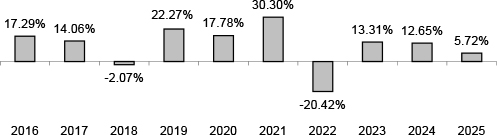
FOR THE PERIODS ENDED 12/31/25 |
1 Year | 5 Years | 10 Years |
| VALUE FUND | |||
| Return Before Taxes | |||
| Return After Taxes on Distributions | |||
| Return After Taxes on Distributions and Sale of Fund Shares | |||
| S&P 500 Index (does not reflect deductions for fees, expenses or taxes) | |||
| Russell 2000 Value Index (does not reflect deductions for fees, expenses or taxes) |
| Prospectus 3 |
Management
Investment Advisor
Paradigm Funds Advisor LLC
Portfolio Managers
Candace King Weir and Amelia Weir have served as co-portfolio managers since February 2013. Candace King Weir is the Chief Executive Officer and Chief Investment Officer of the Advisor. Amelia Weir is the Senior Vice President of the Advisor. Scott M. Bruce, CFA, a Portfolio Manager with the Advisor, has served as a co-portfolio manager since October 2013.
Purchase and Sale of Fund Shares
The minimum initial and subsequent investment amounts for various types of accounts offered by the Fund are shown below.
| Initial | Additional | |
| Regular Account | $2,500 | $100 |
| Automatic Investment Plan | $1,000 | $100 |
| IRA Account | $1,000 | $100 |
Investors may purchase or redeem Fund shares on any business day through a financial intermediary, by mail (Paradigm Funds, c/o Mutual Shareholder Services, 8000 Town Centre Drive, Suite 400, Broadview Heights, Ohio 44147), by wire, or by telephone at 1-800-595-3044. Purchases and redemptions by telephone are only permitted if you previously established this option on your account.
Tax Information
The Fund’s distributions are taxable, and will be taxed as ordinary income or capital gains, unless you are investing through a tax-deferred arrangement, such as a 401(k) plan or an individual retirement account. Such tax-deferred arrangements may be taxed later upon withdrawal of monies from those arrangements.
Payments to Broker-Dealers and Other Financial Intermediaries
If you purchase the Fund through a broker-dealer or other financial intermediary (such as a bank), the Fund and its related companies may pay the intermediary for the sale of Fund shares and related services. These payments may create a conflict of interest by influencing the broker-dealer or other intermediary and your salesperson to recommend the Fund over another investment. Ask your salesperson or visit your financial intermediary’s website for more information.
| Prospectus 4 |
| ● | The Paradigm Select Fund (the “Select Fund” or the “Fund”) seeks long-term capital appreciation. |
The following table describes the expenses and fees that you may pay if you buy and hold shares of the Fund. You may pay other fees, such as brokerage commissions and other fees to financial intermediaries, which are not reflected in the tables and examples below.
| Sales Charge (Load) Imposed on Purchases | |
| Deferred Sales Charge (Load) | |
| Sales Charge (Load) Imposed on Reinvested Dividends |
| Management Fees | |
| Distribution12b-1 Fees | |
| Other Expenses | |
| Acquired Fund Fees and Expenses(1) | |
| Total Annual Fund Operating Expenses(2) |
| (1) |
| (2) |
The following example is intended to help you compare the cost of investing in the Fund with the cost of investing in other mutual funds. The example assumes that you invest $10,000 in the Fund for the time periods indicated and then redeem all of your shares at the end of those periods. The example also assumes that your investment has a 5% annual return each year and that the Fund’s operating expenses remain the same each year. Although your actual costs may be higher or lower, based on these assumptions your costs would be:
| One Year | Three Years | Five Years | Ten Years | |
| Your costs: | ||||
| Select Fund | $ |
$ |
$ |
$ |
The Fund pays transaction costs, such as commissions, when it buys
and sells securities (or “turns over” its portfolio). A higher portfolio turnover may indicate higher transaction costs and
may result in higher taxes when Fund shares are held in a taxable account. These costs, which are not reflected in annual fund operating
expenses or in the example, affect the Fund’s performance. During the most recent fiscal year, the Fund’s portfolio turnover
rate was
| Prospectus 5 |
The Select Fund invests primarily in the common stocks of companies with market capitalizations between $500 million and $10 billion at the time of purchase that the Advisor believes have the potential for capital appreciation. The Fund may be overweight in certain sectors at various times. Securities are sold when they have realized their anticipated value or if new investment opportunities with higher expected returns are acquired.
The Principal Risks of Investing in the Fund
Risks of Small and Mid Capitalization Companies
The Fund invests in the stocks of small and mid capitalization companies, which may subject the Fund to additional risks. The earnings and prospects of these companies are generally more volatile than larger companies. Small and mid capitalization companies may experience higher failure rates than do larger companies. The trading volume of securities of small and mid capitalization companies is normally less than that of larger companies and, therefore, may disproportionately affect their market price, tending to make them fall more in response to selling pressure than is the case with larger companies.
Risks in General
Domestic economic growth and market conditions, interest rate levels,
and political events are among the factors affecting the securities markets in which the Fund invests. There is the risk that these and
other factors may adversely affect the Fund’s performance.
Risks of Investing in Common Stocks
Overall stock market risks may affect the value of the Fund. Factors such as domestic economic growth and market conditions, interest rate levels, and political events affect the securities markets. When the value of the Fund’s investments goes down, your investment in the Fund decreases in value and you could lose money.
Sector Risk
Sector risk is the possibility that all stocks within the same group of industries will decline in price due to sector-specific market or economic developments. The Fund may be overweight in certain sectors at various times.
Healthcare Sector Risk - Companies in the healthcare sector are subject to extensive government regulation and their profitability can be significantly affected by regulatory changes. Other factors impacting the healthcare sector include rising costs of medical products and services, pricing pressure and limited product lines, loss or impairment of intellectual property rights and litigation regarding product or service liability.
Industrials Sector Risk - The value of securities issued by companies in the industrial sector may be adversely affected by supply and demand related to their specific products or services and industrial sector products in general. Government regulations, world events, economic conditions and exchange rates may adversely affect the performance of companies in the industrials sector.
| Prospectus 6 |
Information Technology Sector Risk - Market or economic factors impacting information technology companies could have an effect on the value of the Fund’s investments. The value of stocks of information technology companies is particularly vulnerable to rapid changes in technology product cycles, rapid product obsolescence, government regulation and competition. Information technology companies face intense competition, which may have an adverse effect on profit margins. The products of information technology companies may face product obsolescence due to rapid technological developments and frequent new product introduction, unpredictable changes in growth rates and competition for the services of qualified personnel.
Investment Management Risk
The Advisor’s strategy may fail to produce the intended results.
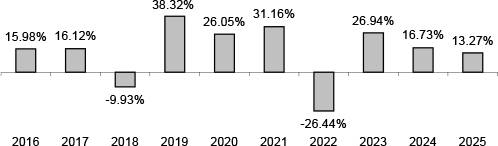
FOR THE PERIODS ENDED 12/31/25 |
1 Year | 5 Years | 10 Years |
| SELECT FUND | |||
| Return Before Taxes | |||
| Return After Taxes on Distributions | |||
| Return After Taxes on Distributions and Sale of Fund Shares | |||
| S&P 500 Index (does not reflect deductions for fees, expenses or taxes) | |||
| Russell 2500 Index (does not reflect deductions for fees, expenses or taxes) |
| Prospectus 7 |
Management
Investment Advisor
Paradigm Funds Advisor LLC
Portfolio Managers
Candace King Weir and Amelia Weir have served as co-portfolio managers since February 2013. Candace King Weir is the Chief Executive Officer and Chief Investment Officer of the Advisor. Amelia Weir is the Senior Vice President of the Advisor.
Purchase and Sale of Fund Shares
The minimum initial and subsequent investment amounts for various types of accounts offered by the Fund are shown below.
| Initial | Additional | |
| Regular Account | $2,500 | $100 |
| Automatic Investment Plan | $1,000 | $100 |
| IRA Account | $1,000 | $100 |
Investors may purchase or redeem Fund shares on any business day through a financial intermediary, by mail (Paradigm Funds, c/o Mutual Shareholder Services, 8000 Town Centre Drive, Suite 400, Broadview Heights, Ohio 44147), by wire, or by telephone at 1-800-595-3044. Purchases and redemptions by telephone are only permitted if you previously established this option on your account.
Tax Information
The Fund’s distributions are taxable, and will be taxed as ordinary income or capital gains, unless you are investing through a tax-deferred arrangement, such as a 401(k) plan or an individual retirement account. Such tax-deferred arrangements may be taxed later upon withdrawal of monies from those arrangements.
Payments to Broker-Dealers and Other Financial Intermediaries
If you purchase the Fund through a broker-dealer or other financial intermediary (such as a bank), the Fund and its related companies may pay the intermediary for the sale of Fund shares and related services. These payments may create a conflict of interest by influencing the broker-dealer or other intermediary and your salesperson to recommend the Fund over another investment. Ask your salesperson or visit your financial intermediary’s website for more information.
| Prospectus 8 |
| ● | The Paradigm Micro-Cap Fund (the “Micro-Cap Fund” or the “Fund”) seeks long-term capital appreciation. |
The following table describes the expenses and fees that you may pay if you buy and hold shares of the Fund. You may pay other fees, such as brokerage commissions and other fees to financial intermediaries, which are not reflected in the tables and examples below.
| Sales Charge (Load) Imposed on Purchases | |
| Deferred Sales Charge (Load) | |
| Sales Charge (Load) Imposed on Reinvested Dividends |
| Management Fees | |
| Distribution 12b-1 Fees | |
| Other Expenses | |
| Acquired Fund Fees and Expenses(1) | |
| Total Annual Fund Operating Expenses |
| (1) |
The following example is intended to help you compare the cost of investing in the Fund with the cost of investing in other mutual funds. The example assumes that you invest $10,000 in the Fund for the time periods indicated and then redeem all of your shares at the end of those periods. The example also assumes that your investment has a 5% annual return each year and that the Fund’s operating expenses remain the same each year. Although your actual costs may be higher or lower, based on these assumptions your costs would be:
| One Year | Three Years | Five Years | Ten Years | |
| Your costs: | ||||
| Micro-Cap Fund | $ |
$ |
$ |
$ |
The Fund pays transaction costs, such as commissions, when it buys
and sells securities (or “turns over” its portfolio). A higher portfolio turnover may indicate higher transaction costs and
may result in higher taxes when Fund shares are held in a taxable account. These costs, which are not reflected in annual fund operating
expenses or in the example, affect the Fund’s performance. During the most recent fiscal year, the Fund’s portfolio turnover
rate was
| Prospectus 9 |
Under normal circumstances, the Micro-Cap Fund invests at least 80% of its net assets in the common stocks of U.S. micro-cap companies. The Fund generally considers a company to be a micro-cap company if, at the time of purchase, its market capitalization is within the range of capitalizations of companies in the Russell Microcap® Index as of the most recent reconstitution date. As of March 31, 2026, the range of market capitalizations for the Russell Microcap® Index was $3 million to $8.937 billion. The capitalizations of companies within the Russell Microcap® Index may increase or decrease due to market conditions. The Fund may be overweight in certain sectors at various times. Stocks are sold when they have realized the value anticipated by the Advisor or if new investment opportunities with higher expected returns are acquired. The Fund may continue to hold stocks of companies whose capitalization has, since the time of purchase, grown to exceed the capitalization limits. Additional purchases of a company’s stock will not qualify, however, as a micro-cap stock, unless at the time of purchase, the company is able to satisfy the definition of a micro-cap. The Advisor primarily searches for companies within the market capitalization range of the Russell Microcap® Index that exhibit attractive valuations and solid growth prospects.
The Principal Risks of Investing in the Fund
Risks of Micro Capitalization Companies
The prices of micro-cap stocks are generally more volatile and their markets are less liquid relative to larger-cap securities. Therefore, the Fund may involve considerably more risk of loss and its returns may differ significantly from funds investing in larger-cap companies or other asset classes.
Risks of Small and Mid Capitalization Companies
The Fund may also invest up to 20% of its net assets in the common stocks of small and mid capitalization companies, which may subject the Fund to additional risks. The earnings and prospects of these companies are generally more volatile than larger companies. Small and mid capitalization companies may experience higher failure rates than do larger companies. The trading volume of stocks of small and mid capitalization companies is normally less than that of larger companies and, therefore, may disproportionately affect their market price, tending to make them fall more in response to selling pressure than is the case with larger companies.
Risks in General
Domestic economic growth and market conditions, interest rate levels,
and political events are among the factors affecting the securities markets in which the Fund invests. There is the risk that these and
other factors may adversely affect the Fund’s performance.
Risks of Investing in Common Stocks
Overall stock market risks may affect the value of the Fund. Factors such as domestic economic growth and market conditions, interest rate levels, and political events affect the securities markets. When the value of the Fund’s investments goes down, your investment in the Fund decreases in value and you could lose money.
Value Investing Risk
Value investing attempts to identify companies selling at a discount to their intrinsic value. Value investing is subject to the risk that a company’s intrinsic value may never be fully realized by the market or that a company judged by the Advisor to be undervalued may actually be appropriately priced.
| Prospectus 10 |
Growth Risk
Growth companies are those that the Advisor believes will have revenue and earnings that grow faster than the economy as a whole, offering above-average prospects for capital appreciation and little or no emphasis on dividend income. If the Advisor’s perceptions of a company’s growth potential are wrong, the securities purchased may not perform as expected, reducing the Fund’s return.
Sector Risk
Sector risk is the possibility that all stocks within the same group of industries will decline in price due to sector-specific market or economic developments. The Fund may be overweight in certain sectors at various times.
Healthcare Sector Risk - Companies in the healthcare sector are subject to extensive government regulation and their profitability can be significantly affected by regulatory changes. Other factors impacting the healthcare sector include rising costs of medical products and services, pricing pressure and limited product lines, loss or impairment of intellectual property rights and litigation regarding product or service liability.
Industrials Sector Risk - The value of securities issued by companies in the industrial sector may be adversely affected by supply and demand related to their specific products or services and industrial sector products in general. Government regulations, world events, economic conditions and exchange rates may adversely affect the performance of companies in the industrials sector.
Information Technology Sector Risk - Market or economic factors impacting information technology companies could have an effect on the value of the Fund’s investments. The value of stocks of information technology companies is particularly vulnerable to rapid changes in technology product cycles, rapid product obsolescence, government regulation and competition. Information technology companies face intense competition, which may have an adverse effect on profit margins. The products of information technology companies may face product obsolescence due to rapid technological developments and frequent new product introduction, unpredictable changes in growth rates and competition for the services of qualified personnel.
Investment Management Risk
The Advisor’s strategy may fail to produce the intended results.
| Prospectus 11 |
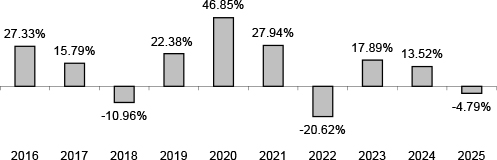
FOR THE PERIODS ENDED 12/31/25 |
1 Year | 5 Years | 10 Years |
| MICRO-CAP FUND (formerly the Paradigm Intrinsic Value Fund) | |||
| Return Before Taxes | - |
||
| Return After Taxes on Distributions | - |
||
| Return After Taxes on Distributions and Sale of Fund Shares | - |
||
| S&P 500 Index (does not reflect deductions for fees, expenses or taxes) | |||
| Russell Microcap Index (does not reflect deductions for fees, expenses or taxes) |
Management
Investment Advisor
Paradigm Funds Advisor LLC
Portfolio Manager
Candace King Weir and Amelia Weir, of the Advisor, have served as co-portfolio managers since December 2011. Candace King Weir is the Chief Executive Officer and Chief Investment Officer of the Advisor. Amelia Weir is the Senior Vice President of the Advisor.
| Prospectus 12 |
Purchase and Sale of Fund Shares
The minimum initial and subsequent investment amounts for various types of accounts offered by the Fund are shown below.
| Initial | Additional | |
| Regular Account | $2,500 | $100 |
| Automatic Investment Plan | $1,000 | $100 |
| IRA Account | $1,000 | $100 |
Investors may purchase or redeem Fund shares on any business day through a financial intermediary, by mail (Paradigm Funds, c/o Mutual Shareholder Services, 8000 Town Centre Drive, Suite 400, Broadview Heights, Ohio 44147), by wire, or by telephone at 1-800-595-3044.
Tax Information
The Fund’s distributions are taxable, and will be taxed as ordinary income or capital gains, unless you are investing through a tax-deferred arrangement, such as a 401(k) plan or an individual retirement account. Such tax-deferred arrangements may be taxed later upon withdrawal of monies from those arrangements.
Payments to Broker-Dealers and Other Financial Intermediaries
If you purchase the Fund through a broker-dealer or other financial intermediary (such as a bank), the Fund and its related companies may pay the intermediary for the sale of Fund shares and related services. These payments may create a conflict of interest by influencing the broker-dealer or other intermediary and your salesperson to recommend the Fund over another investment. Ask your salesperson or visit your financial intermediary’s website for more information.
Investment Objectives, Principal Investment Strategies, Related Risks, and Disclosure of Portfolio Holdings
Investment Objectives
| ● | Each of the Value Fund, Select Fund and Micro-Cap Fund seek long-term capital appreciation. |
The Principal Investment Strategy of the Value Fund
The Value Fund invests primarily in the common stocks of small capitalization companies ($2.5 billion or less at the time of purchase) that the Advisor believes have the potential for capital appreciation. The Fund may be overweight in certain sectors at various times. Securities are sold when they have realized their anticipated value or if new investment opportunities with higher expected returns are acquired.
The Advisor primarily searches for value stocks with market capitalizations of $2.5 billion or less that exhibit attractive valuations on several metrics, such as price to earnings, price to cash flow, price to book and price to revenue. The Advisor identifies potential investments using a proprietary valuation model to pinpoint companies that are trading at a discount to peers and/or historical valuations. Once investment ideas meet screening criteria, the Advisor studies public filings and trade journals, and generally interviews company management. The Advisor continues research by contacting vendors, competitors and customers to determine why the stock is trading at a discount and to identify catalysts that the Advisor believes will result in capital appreciation.
| Prospectus 13 |
The Advisor frequently contacts company management and also uses these communications to determine whether management’s goals are aligned with those of shareholders. Final investment decisions are based on the Advisor’s confidence in management’s ability to execute its strategy and the attractiveness of the stock’s price based on internally prepared models and valuation metrics. The Advisor generally sells a Fund position if the company no longer meets these criteria.
The Principal Investment Strategy of the Select Fund
The Select Fund invests primarily in the common stocks of companies with market capitalizations between $500 million and $10 billion at the time of purchase that the Advisor believes have the potential for capital appreciation. The Fund may be overweight in certain sectors at various times. Securities are sold when they have realized their anticipated value or if new investment opportunities with higher expected returns are acquired.
The Advisor concentrates the Select Fund’s portfolio in established companies with a market capitalization between $500 million to $10 billion. These companies generally have experienced management teams with a proven record of developing the business in a steady and profitable manner. The Advisor has found that conservatively managed companies, if purchased at a good price, can provide a more consistent return to investors than the more high potential / high risk alternatives. The Advisor identifies potential investments using a proprietary valuation model to pinpoint companies that the Advisor believes are trading at a discount to peers and/or historical valuations. The selection process includes an evaluation of near term and long term outlook for the industry and an evaluation of management and their incentive compensation agreements and stock ownership. After this research has been completed the Advisor selects what it believes to be the most promising investments.
The Advisor seeks a portfolio which is distributed among a variety of industries with holdings that are concentrated in companies it believes have solid long-term growth prospects. The Advisor believes this process provides long-term capital appreciation potential in a manner consistent with the preservation of capital. The Advisor regularly reviews each of the companies in the portfolio to confirm that each company is achieving the objectives which the Advisor believes are reasonable, and that each continues to hold promise of future appreciation. The Advisor generally sells a Fund position if the company no longer meets these criteria.
The Principal Investment Strategy of the Micro-Cap Fund
Under normal circumstances, the Micro-Cap Fund invests at least 80% of its net assets in the common stocks of U.S. micro-cap companies. The Fund generally considers a company to be a micro-cap company if, at the time of purchase, its market capitalization is within the range of capitalizations of companies in the Russell Microcap® Index as of the most recent reconstitution date. As of March 31, 2026, the range of market capitalizations for the Russell Microcap® Index was $3 million to $8.937 billion. The capitalizations of companies within the Russell Microcap® Index may increase or decrease due to market conditions. The Fund may be overweight in certain sectors at various times. Stocks are sold when they have realized the value anticipated by the Advisor or if new investment opportunities with higher expected returns are acquired. The Fund may continue to hold stocks of companies whose capitalization has, since the time of purchase, grown to exceed the capitalization limits. Additional purchases of a company’s stock do not qualify, however, as a micro-cap stock, unless at the time of purchase, the company is able to satisfy the definition of a micro-cap.
The Advisor primarily searches for companies within the market capitalization range of the Russell Microcap® Index that exhibit attractive valuations and solid growth prospects. The valuation metrics include price to earnings, price to cash flow, price to book and price to revenue. The Advisor identifies potential investments using a proprietary valuation model to pinpoint companies that are trading at a discount to peers and/or historical valuations. Once a potential investment meets these valuation criteria, the Advisor studies public filings and trade journals, and generally interviews company management. The Advisor continues research by contacting vendors, competitors and/or customers to determine why the stock is trading at a discount and to identify catalysts that the Advisor believes will result in capital appreciation.
| Prospectus 14 |
The Advisor frequently contacts company management and also uses these communications to determine whether, in the Advisor’s opinion, management’s goals are aligned with those of shareholders. Final investment decisions are based on the Advisor’s confidence in management’s ability to execute its strategy and the attractiveness of the stock’s price based on internally prepared models and valuation metrics. The Advisor generally sells a Fund position if the company no longer meets these criteria.
The Principal Risks of Investing in all Funds
Risks of Small and/or Mid Capitalization Companies
Each Fund invests in the stocks of small and/or mid capitalization companies, which may subject the Funds to additional risks. The earnings and prospects of these companies are generally more volatile than larger companies. Small and mid capitalization companies may experience higher failure rates than do larger companies. The trading volume of securities of small and mid capitalization companies is normally less than that of larger companies and, therefore, may disproportionately affect their market price, tending to make them fall more in response to selling pressure than is the case with larger companies. Small and mid capitalization companies may have limited markets, product lines or financial resources and may lack management experience. The Value Fund and the Micro-Cap Fund will generally invest in smaller companies than the Select Fund, and therefore may be subject to more risks.
Risks in General
Domestic economic growth and market conditions, interest rate levels, and political events are among the factors affecting the securities markets of each Fund’s investments. There is the risk that these and other factors may adversely affect each Fund’s performance. You could lose money investing in the Funds. You should consider your own investment goals, time horizon, and risk tolerance before investing in the Funds. An investment in a Fund may not be appropriate for all investors and is not intended to be a complete investment program.
Additionally, unexpected local, regional or global events, such as war; acts of terrorism; financial, political or social disruptions; natural, environmental or man-made disasters; climate change or climate related events; the spread of infectious illnesses or other public health issues; and recessions and depressions could have a significant impact on each Fund and its investments and may impair market liquidity. Such events can cause investor fear, which can adversely affect the economies of nations, regions and the market in general, in ways that cannot necessarily be foreseen. The increasing interconnectivity between global economies and financial markets increases the likelihood that events or conditions in one region or financial market may adversely impact issuers in a different country, region or financial market. These risks may be magnified if certain events or developments adversely interrupt the global supply chain; in these and other circumstances, such risks might affect companies worldwide. As a result such events as described above could have a significant negative impact on global economic and market conditions. It is not known how long such impacts, or any future impacts of other significant events described above, will or would last, but there could be a prolonged period of global economic slowdown, which may be expected to impact each Fund and its investments.
Risks of Investing in Common Stocks
Each Fund invests primarily in common stocks, which subjects each Fund and its shareholders to the risks associated with common stock investing. These risks include the financial risk of selecting individual companies that do not perform as anticipated, the risk that the stock markets in which the Funds invest may experience periods of turbulence and instability, and the general risk that domestic and global economies may go through periods of decline and cyclical change. Many factors affect the performance of companies that each Fund invests in, including the strength of its management or the demand for its product or services. You should be aware that the value of a company’s share price may decline as a result of poor decisions made by management or lower demand for the company’s products or services. In addition, a company’s share price may also decline if its earnings or revenues fall short of expectations.
| Prospectus 15 |
There are overall stock market risks that may also affect the value of the Funds. Over time, the stock market tends to move in cycles, with periods when stock prices rise generally and periods when stock prices decline generally. In general, the value of a Fund’s investments may increase or decrease more than the stock market.
Sector Risk
Sector risk is the possibility that stocks within the same group of industries will decline in price due to sector-specific market or economic developments. If the Advisor invests a significant portion of its assets in a particular sector, the Funds are subject to the risk that companies in the same sector are likely to react similarly to legislative or regulatory changes, adverse market conditions and/or increased competition affecting that market segment. The sectors in which a Fund may be overweighted will vary.
Healthcare Sector Risk - Companies in the healthcare sector are subject to extensive government regulation and their profitability can be significantly affected by restrictions on government reimbursement for medical expenses, rising costs of medical products and services, pricing pressure (including price discounting), limited product lines and an increased emphasis on the delivery of healthcare through outpatient services. Companies in the healthcare sector are heavily dependent on obtaining and defending patents, which may be time consuming and costly, and the expiration of patents may also adversely affect the profitability of these companies. Healthcare companies are also subject to extensive litigation based on product liability and similar claims. In addition, their products can become obsolete due to industry innovation, changes in technologies or other market developments. Many new products in the healthcare sector require significant research and development and may be subject to regulatory approvals, all of which may be time consuming and costly with no guarantee that any product will come to market.
Industrials Sector Risk - The value of securities issued by companies in the industrials sector may be adversely affected by supply and demand related to their specific products or services and industrials sector products in general. Government regulations, world events, economic conditions and exchange rates may adversely affect the performance of companies in the industrials sector. Companies in the industrials sector may be adversely affected by liability for environmental damage and product liability claims. Companies in the industrials sector may also be adversely affected by government spending policies because companies involved in this sector rely to a significant extent on government demand for their products and services.
Information Technology Sector Risk - Market or economic factors impacting information technology companies could have an effect on the value of each Fund’s investments. The value of stocks of information technology companies is particularly vulnerable to rapid changes in technology product cycles, rapid product obsolescence, government regulation and competition. Information technology companies face intense competition, both domestically and internationally, which may have an adverse effect on profit margins. The products of information technology companies may face product obsolescence due to rapid technological developments and frequent new product introduction, unpredictable changes in growth rates and competition for the services of qualified personnel. Information technology companies may have limited product lines, markets, financial resources or personnel. Companies in the information technology sector are heavily dependent on patent protection and the expiration of patents may adversely affect the profitability of these companies.
Investment Management Risk
The Advisor’s strategy may fail to produce the intended results.
| Prospectus 16 |
Additional Risks of Investing in the Value Fund
Value Investing Risk
Value investing attempts to identify companies selling at a discount to their intrinsic value. Value investing is subject to the risk that a company’s intrinsic value may never be fully realized by the market or that a company judged by the Advisor to be undervalued may actually be appropriately priced.
Additional Risks of Investing in the Micro-Cap Fund
Risks of Micro Capitalization Companies
Micro-cap companies have additional risks not associated with large capitalization companies. These companies may not be well known to the investing public, may not be significantly owned by institutional investors and may not have steady earnings growth. In addition, the securities of such companies may be more volatile in price, have wider spreads between their bid and ask prices and have significantly lower trading volumes than the securities of larger capitalization companies. The purchase or sale of more than a limited number of shares of the securities of a micro-cap company may affect its market price. Micro-cap companies are generally followed by few, if any, securities analysts, and there tends to be less publicly available information about them. Their securities generally have even more limited trading volumes and are subject to even more abrupt or erratic market price movements than small and mid capitalization companies. Such companies may also have limited markets, financial resources or product lines, may lack management depth and may be more vulnerable to adverse business or market developments.
Value Investing Risk
Value investing attempts to identify companies selling at a discount to their intrinsic value. Value investing is subject to the risk that a company’s intrinsic value may never be fully realized by the market or that a company judged by the Advisor to be undervalued may actually be appropriately priced.
Growth Risk
Growth companies are those that the advisor believes will have revenue and earnings that grow faster than the economy as a whole, offering above-average prospects for capital appreciation and little or no emphasis on dividend income. If the Advisor’s perceptions of a company’s growth potential are wrong, the securities purchased may not perform as expected, reducing the Fund’s return.
Portfolio Holdings Disclosure
A description of the Funds’ policies and procedures with respect to the disclosure of the Funds’ portfolio securities is available in the Funds’ Statement of Additional Information (“SAI”).
| Prospectus 17 |
Management
The Investment Advisor
Paradigm Funds Advisor LLC (the “Advisor”) is the investment advisor of the Funds and has responsibility for the management of the Funds’ affairs, under the supervision of the Funds’ Board of Trustees. On December 16, 2005, the Advisor was organized to assume the obligations of Paradigm Capital Management, Inc.’s mutual fund management business. The Advisor has been managing mutual funds since that time. Paradigm Capital Management, Inc. was organized in 1994 and has been managing investment accounts and money since that time. Paradigm Capital Management, Inc. serves as investment advisor to individuals, trusts, retirement plans, non-profit organizations, and limited partnerships. Paradigm Capital Management, Inc. was formed to assume the investment advisory business of C.L. King & Associates, Inc., a registered broker/dealer. C.L. King & Associates was founded in 1972 and became a registered investment advisor in 1984. The Advisor, Paradigm Capital Management, Inc. and C.L. King & Associates, Inc. are affiliated companies through common ownership and shared resources. The address of the Advisor is Nine Elk Street, Albany, NY 12207.
The Advisor manages the investment portfolios of the Funds pursuant to management agreements with Paradigm Funds (the “Trust”) on behalf of each Fund (the “Management Agreements”) and subject to policies adopted by the Funds’ Board of Trustees. Under the Management Agreements, the Advisor pays all operating expenses of the Funds, with the exception of taxes, borrowing expenses (such as (a) interest and (b) dividend expenses on securities sold short), brokerage commissions, extraordinary expenses and any indirect expenses, such as expenses incurred by other investment companies in which the Funds invest. For the fiscal year ended December 31, 2025, the Advisor received an investment management fee net of applicable waivers equal to 1.33% of the average daily net assets of the Value Fund, 1.15% of the average daily net assets of the Select Fund, and 1.25% of the average daily net assets of the Micro-Cap Fund. Effective May 1, 2025 the Advisor contractually reduced the investment management fee to 1.25% for the Value Fund and 1.15% for the Select Fund.
A discussion regarding the basis for the Board of Trustees’ continuance and approval of the Management Agreements between the Advisor and the Trust on behalf of the Value Fund, Select Fund and Micro-Cap Fund and the Advisor is available in the Funds’ semi-annual report dated June 30, 2025 and an updated discussion will be available in the Funds’ semi-annual report filed on Form N-CSR dated June 30, 2026.
The Advisor (not the Funds) may pay certain financial institutions (which may include banks, brokers, securities dealers and other industry professionals) a fee for providing distribution related services and/or for performing certain administrative servicing functions for Fund shareholders to the extent these institutions are allowed to do so by applicable statute, rule or regulation.
The Portfolio Managers
Candace King Weir, Chief Executive Officer and Chief Investment Officer of the Advisor, and Amelia Weir, Senior Vice President of the Advisor, serve as Co-Portfolio Managers of each of the Paradigm Funds. Scott M. Bruce, CFA, a Portfolio Manager with the Advisor, also serves as a Co-Portfolio Manager of the Value Fund. Candace King Weir has been Chairperson of the Board of Trustees of Paradigm Funds since the Trust’s inception in 2002; President, Chief Investment Officer, and a Portfolio Manager of Paradigm Capital Management, Inc. since 1994; and President and Director of C.L. King & Associations, Inc. since 1972. Amelia Weir has served as the Secretary to the Trust since 2009. Additionally, since 2008 she served as the Senior Vice President for Paradigm Capital Management, Inc., where she has also been a portfolio manager since 2009. From 2006 to 2008, she was a portfolio manager at William D. Witter. Mr. Bruce joined the Advisor in September 2013 as a Portfolio Manager. He previously served as the Vice President and Portfolio Manager with Senvest International LLC (1996 - April 2013). The Funds’ SAI provides information about each portfolio manager’s compensation, other accounts managed by the portfolio manager and the manager’s ownership of Fund shares.
| Prospectus 18 |
Shareholder Information
Pricing of Fund Shares
The price you pay for a share of a Fund, and the price you receive upon selling or redeeming a share of a Fund, is called a Fund’s net asset value (“NAV”). The NAV is calculated by taking the total value of the Fund’s assets, subtracting its liabilities, and then dividing by the total number of shares outstanding, rounded to the nearest cent: NAV = Total Assets - Liabilities / Number of Shares Outstanding
The NAV is generally calculated as of the close of trading on the New York Stock Exchange (normally 4:00 p.m. Eastern time) every day the Exchange is open. The New York Stock Exchange is generally open every day other than weekends and holidays. All purchases, redemptions or reinvestments of Fund shares will be priced at the next NAV calculated after your order is received in proper form by the Funds’ Transfer Agent, Mutual Shareholder Services. If you purchase shares directly from the Funds, your order must be placed with the Transfer Agent prior to the close of the trading of the New York Stock Exchange in order to be confirmed for that day’s NAV. Each Fund’s assets generally are valued at their market quotations. Equity securities generally are valued by using market quotations, but may be valued on the basis of prices furnished by a pricing service when the valuation committee (the “Valuation Committee”) believes such prices accurately reflect the fair value of such securities. Lacking a last sale price, an equity security is generally valued by the pricing service at its last bid price. When market quotations are not readily available, when the Valuation Committee determines that the market quotation or the price provided by the pricing service does not accurately reflect the current fair value, or when restricted securities are being valued, such securities are valued as determined in good faith by the Valuation Committee, subject to review of the Board. For example, if trading in a portfolio security is halted and does not resume before a Fund calculates its NAV, the Trust’s Valuation Committee may need to price the security using the fair value pricing guidelines. Without a fair value price, short term traders could take advantage of the arbitrage opportunity and dilute the NAV of long term investors. Fair valuation of a Fund’s portfolio securities can serve to reduce arbitrage opportunities available to short term traders, but there is no assurance that fair value pricing policies will prevent dilution of the Fund’s NAV by short-term traders. The Funds may use pricing services to determine market value.
Customer Identification Program
IMPORTANT INFORMATION ABOUT PROCEDURES FOR OPENING A NEW ACCOUNT
To help the government fight the funding of terrorism and money laundering activities, Federal law requires all financial institutions to obtain, verify, and record information that identifies each person who opens an account. This means that, when you open an account, we will ask for your name, address, date of birth, and other information that will allow us to identify you. We may also ask for identifying documents, and may take additional steps to verify your identity. We may not be able to open an account or complete a transaction for you until we are able to verify your identity.
| Prospectus 19 |
Investing in the Funds
You may purchase shares directly through the Funds’ transfer agent or through a brokerage firm or other financial institution that has agreed to sell the Funds’ shares. If you are investing directly in a Fund for the first time, you will need to establish an account by completing a Shareholder Account Application (To establish an IRA, complete an IRA Application). To request an application, call toll-free 1-800-595-3044. The Funds reserve the right to change the amount of these minimums from time to time or to waive them in whole or in part for certain accounts. Investment minimums may be higher or lower to investors purchasing shares through a brokerage firm or other financial institution.
Investments Made Through Brokerage Firms or Other Financial Institutions
If you invest through a brokerage firm or other financial institution, the policies and fees may be different than those described here. Financial advisors, financial supermarkets, brokerage firms, and other financial institutions may charge transaction and other fees and may set different minimum investments or limitations on buying or selling shares. Consult a representative of your financial institution if you have any questions. A Fund is deemed to have received your order when the brokerage firm or financial institution receives the order, and your purchase will be priced at the next calculated NAV. Your financial institution is responsible for transmitting your order to a Fund in a timely manner.
Minimum Investments
| Initial | Additional | |
| Regular Account | $2,500 | $100 |
| Automatic Investment Plan | $1,000 | $100 |
| IRA Account | $1,000 | $100 |
All purchases must be made in U.S. dollars and checks must be drawn on U.S. banks. No cash, money orders, travelers checks, credit cards, credit card checks, third party checks or other checks deemed to be high-risk checks will be accepted. A $20 fee will be charged against your account for any payment check returned to the Transfer Agent or for any incomplete electronic fund transfer, or for insufficient funds, stop payment, closed account or other reasons. If a check does not clear your bank or the Funds are unable to debit your predesignated bank account on the day of purchase, the Funds reserve the right to cancel the purchase. If your purchase is canceled, you will be responsible for any losses or fees imposed by your bank and losses that may be incurred as a result of a decline in the value of the canceled purchase. The Funds (or Funds’ agent) have the authority to redeem shares in your account(s) to cover any losses due to fluctuations in share price. Any profit on such cancellation will accrue to the Funds. Your investment in the Funds should be intended to serve as a long-term investment vehicle. The Funds are not designed to provide you with a means of speculating on the short-term fluctuations in the stock market. The Funds reserve the right to reject any purchase request that they regard as disruptive to the efficient management of the Funds, which includes investors with a history of excessive trading. The Funds also reserve the right to stop offering shares at any time.
| Prospectus 20 |
Market Timing
Each Fund discourages market timing. Market timing is an investment strategy using frequent purchases, redemptions and/or exchanges in an attempt to profit from short-term market movements. Market timing may result in dilution of the value of Fund shares held by long term shareholders, disrupt portfolio management and increase Fund expenses for all shareholders. The Board of Trustees has adopted a policy directing each Fund to reject any purchase order with respect to one investor, a related group of investors or their agent(s), where it detects a pattern of purchases and sales of the Fund that indicates market timing or trading that it determines is abusive. This policy generally applies to all Fund shareholders. While each Fund attempts to deter market timing, there is no assurance that it will be able to identify and eliminate all market timers. For example, certain accounts called “omnibus accounts” include multiple shareholders. Omnibus accounts typically provide a Fund with a net purchase or redemption request on any given day where purchasers of Fund shares and redeemers of Fund shares are netted against one another and the identity of individual purchasers and redeemers whose orders are aggregated are not known by the Fund. The netting effect often makes it more difficult for a Fund to detect market timing, and there can be no assurance that the Fund will be able to do so.
Types of Account Ownership
You can establish the following types of accounts by completing a Shareholder Account Application:
| ● | Individual or Joint Ownership |
Individual accounts are owned by one person. Joint accounts have two or more owners.
| ● | A Gift or Transfer to Minor (UGMA or UTMA) A UGMA/UTMA account is a custodial account managed for the benefit of a minor. To open an UGMA or UTMA account, you must include the minor’s social security number on the application. |
| ● | Trust |
An established trust can open an account. The names of each trustee, the name of the trust and the date of the trust agreement must be included on the application.
| ● | Business Accounts |
Corporation and partnerships may also open an account. The application must be signed by an authorized officer of the corporation or a general partner of a partnership.
| ● | IRA Accounts |
See “Tax-Deferred Plans”
| Prospectus 21 |
Instructions For Opening and Adding to an Account
| TO OPEN AN ACCOUNT | TO ADD TO AN ACCOUNT |
| By Mail | By Mail |
|
Complete and sign the Shareholder Application or an IRA Application.
Make your check payable to Paradigm Funds ● For IRA accounts, please specify the year for which the contribution is made. |
Complete the investment slip that is included with your account statement, and write your account number on your check. If you no longer have your investment slip, please reference your name, account number, and address on your check. |
| Mail the application and check to: | Mail the slip and the check to: |
|
Paradigm Funds c/o Mutual Shareholder Services 8000 Town Centre Drive, Suite 400 Broadview Heights, OH 44147 |
Paradigm Funds c/o Mutual Shareholder Services 8000 Town Centre Drive, Suite 400 Broadview Heights, OH 44147 |
| By overnight courier, send to: | |
|
Paradigm Funds c/o Mutual Shareholder Services 8000 Town Centre Drive, Suite 400 Broadview Heights, OH 44147 | |
| Prospectus 22 |
| TO OPEN AN ACCOUNT | TO ADD TO AN ACCOUNT |
| By Wire | By Wire |
| Call 1-800-595-3044 for instructions prior wiring funds. | Call 1-800-595-3044 for instructions prior to wiring funds. |
Telephone and Wire Transactions
With respect to all transactions made by telephone, the Funds and the Transfer Agent will employ reasonable procedures to confirm that instructions communicated by telephone are genuine. Such procedures may include, among others, requiring some form of personal identification prior to acting upon telephone instructions, providing written confirmation of all such transactions, and/or tape recording all telephone instructions. If reasonable procedures are followed, then neither the Funds nor the Transfer Agent will be liable for any loss, cost, or expense for acting upon an investor’s telephone instructions or for any unauthorized telephone redemption. In any instance where the Funds’ Transfer Agent is not reasonably satisfied that instructions received by telephone are genuine, neither the Funds nor the Transfer Agent shall be liable for any losses which may occur because of delay in implementing a transaction.
If you purchase your initial shares by wire, the Transfer Agent first must have received a completed account application and issued an account number to you. The account number must be included in the wiring instructions. The Transfer Agent must receive your account application to establish shareholder privileges and to verify your account information. Payment of redemption proceeds may be delayed and taxes may be withheld unless the Funds receive a properly completed and executed account application.
Shares purchased by wire will be purchased at the NAV next determined after the Transfer Agent receives your wired funds and all required information is provided in the wire instructions. If wired funds are received by the Transfer Agent no later than 4:00 p.m. Eastern time, then the shares purchased will be priced at the NAV determined on that business day. If the wire is not received by 4:00 p.m. Eastern time, the purchase will be effective at the NAV next calculated after receipt of the wire.
Tax-Deferred Plans
If you are eligible, you may set up one or more tax-deferred accounts. A tax-deferred account allows you to defer your investment income and capital gains from current income taxes. A contribution to certain of these plans may also be tax deductible. Tax-deferred accounts include retirement plans described below. Distributions from these plans are generally subject to an additional tax if withdrawn prior to age 59 1/2 or used for a nonqualifying purpose. Investors should consult their tax advisor or legal counsel before selecting a tax-deferred account.
Argent Institutional Trust Company serves as the custodian for the tax-deferred accounts offered by the Funds. You will be charged an annual account maintenance fee of $8 for each tax-deferred account you have with the Funds. You may pay the fee by check or have it automatically deducted from your account (usually in December). The custodian reserves the right to change the amount of the fee or to waive it in whole or part for certain types of accounts.
| Prospectus 23 |
Types of Tax-Deferred Accounts
| ● | Traditional IRA |
In an individual retirement account, your contribution may or may not be deductible depending on your circumstances. Assets can grow tax-deferred and distributions are taxable as income.
| ● | Roth IRA |
An IRA with non-deductible contributions, tax-free growth of assets, and tax-free distributions for qualified distributions.
| ● | Spousal IRA |
An IRA funded by a working spouse in the name of a non-earning spouse.
| ● | SEP-IRA |
An individual retirement account funded by employer contributions. Your assets grow tax-deferred and distributions are taxable as income.
| ● | Keogh or Profit Sharing Plans |
These plans allow corporations, partnerships and individuals who are self-employed to make tax-deductible contributions.
| ● | 403(b) Plans |
An arrangement that allows employers of charitable or educational organizations to make voluntary salary reduction contributions to a tax-deferred account.
| ● | 401(k) Plans |
Allows employees of corporations of all sizes to contribute a percentage of their wages on a tax-deferred basis. These accounts need to be established by the trustee of the plan.
Automatic Investment Plans
By completing the Automatic Investment Plan section of the account application, you may make automatic monthly or quarterly investments ($100 minimum per purchase) in the Funds from your bank or savings account. Your initial investment minimum is $1,000 if you select this option. Shares of the Funds may also be purchased through direct deposit plans offered by certain employers and government agencies. These plans enable a shareholder to have all or a portion of their payroll or Social Security checks transferred automatically to purchase shares of the Funds.
FOR INVESTING
| Automatic Investment Plan | Payroll Direct Deposit Plan |
| For making automatic investments from a designated bank account. | For making automatic investments from your payroll check. |
Dividend Reinvestment
All income dividends and capital gains distributions will be automatically reinvested in shares of the applicable Fund unless you indicate otherwise on the account application or in writing.
| Prospectus 24 |
Instructions For Selling Fund Shares
You may sell all or part of your shares on any day that the New York Stock Exchange is open for trading. Your shares will be sold at the next NAV per share calculated after your order is received in proper form by the Transfer Agent. The proceeds of your sale may be more or less than the purchase price of your shares, depending on the market value of a Fund’s securities at the time of your sale. The Funds will not mail any proceeds unless your investment check has cleared the bank, which may take up to fifteen calendar days. This procedure is intended to protect each Fund and its shareholders from loss. If the dollar or share amount requested is greater than the current value of your account, your entire account balance will be redeemed. If you choose to redeem your account in full, any automatic services currently in effect for the account will be terminated unless you indicate otherwise in writing. You will be charged $20 if you request payment by wire. The Funds typically expect that it will take up to seven days following the receipt of your redemption request to pay out redemption proceeds by check or electronic transfer. The Funds typically expect to pay redemptions from cash, cash equivalents, proceeds from the sale of fund shares, from the sale of portfolio securities, and then from borrowing from a bank line of credit. These the redemption payment methods will be used in regular and stressed market conditions.
TO SELL SHARES
By Mail
Write a letter of instruction that includes:
| ● | The names(s) and signature(s) of all account owners. |
| ● | Your account number. |
| ● | The dollar or share amount you want to sell. |
| ● | Where to send the proceeds. |
| ● | If redeeming from your IRA, please note applicable withholding requirements. |
| ● | Obtain a signature guarantee or other documentation, if required. |
| Mail your request to: | By overnight courier, send to: |
|
Paradigm Funds c/o Mutual Shareholder Services 8000 Town Centre Drive, Suite 400 Broadview Heights, OH 44147 |
Paradigm Funds c/o Mutual Shareholder Services 8000 Town Centre Drive, Suite 400 Broadview Heights, OH 44147 |
| By Telephone | |
|
● You will automatically be granted telephone redemption privileges unless you decline them in writing or indicate on the appropriate section of the account application that you decline this option. Otherwise, you may redeem Fund shares by calling 1-800-595-3044. Redemption proceeds will only be mailed to your address of record.
● You may only redeem a maximum of $25,000 per day by telephone. |
● You will not be able to redeem by telephone and have a check sent to your address of record for a period of 15 days following an address change.
● Unless you decline telephone privileges in writing or on your account application, as long as the Fund takes reasonable measures to verify the order, you may be responsible for any fraudulent telephone order. |
For specific information on how to redeem your account, and to determine if a signature guarantee or other documentation is required, please call toll-free in the U.S. 1-800-595-3044.
| Prospectus 25 |
Additional Redemption Information
Signature Guarantees
Signature guarantees are designed to protect both you and the Funds from fraud. A signature guarantee of each owner is required to redeem shares in the following situations:
| ● | If you change ownership on your account. |
| ● | If you request the redemption proceeds to be sent to a different address than that registered on the account. |
| ● | If a change of address request has been received by the Transfer Agent within the last 15 days. |
| ● | If you wish to redeem $25,000 or more from any shareholder account. |
Signature guarantees can be obtained from most banks, savings and loan associations, trust companies, credit unions, broker/dealers, and member firms of a national securities exchange. Call your financial institution to see if it has the ability to guarantee a signature. A notary public cannot provide signature guarantees. The Funds will not make redemption checks payable to anyone other than (1) the shareholder(s) of record, or (2) a financial intermediary for the benefit of the shareholder(s) of record.
The Funds reserve the right to require a signature guarantee under other circumstances or to delay a redemption when permitted by Federal Law. For more information pertaining to signature guarantees, please call 1-800-595-3044.
Corporate, Trust and Other Accounts
Redemption requests from corporate, trust, and other accounts may require documents in addition to those described above, evidencing the authority of the officers, trustees or others. In order to avoid delays in processing redemption requests for these accounts, you should call the Transfer Agent at 1-800-595-3044 to determine what additional documents are required.
Address Changes
To change the address on your account, call the Transfer Agent at 1-800-595-3044 or send a written request signed by all account owners. Include the account number(s) and name(s) on the account and both the old and new addresses. Certain options may be suspended for a period of 15 days following an address change.
Transfer of Ownership
In order to change the account registration or transfer ownership of an account, additional documents will be required. In order to avoid delays in processing these requests, you should call the Transfer Agent at 1-800-595-3044 to determine what additional documents are required.
Redemption Initiated by the Funds
Because there are certain fixed costs involved with maintaining your account, the Funds may require you to redeem all of your shares if your account balance in a Fund falls below $1,000. After your account balance falls below the minimum balance, you will receive a notification from the Funds indicating its intent to close your account along with instructions on how to increase the value of your account to the minimum amount within 60 days. If your account balance is still below $1,000 after 60 days, the Funds may close your account and send you the proceeds. This minimum balance requirement does not apply to IRAs and other tax-sheltered investment accounts. The right of redemption by the Funds will not apply if the value of your account balance falls below $1,000 because of market performance. All shares of a Fund are also subject to involuntary redemption if the Board of Trustees determines to liquidate the Fund. Any involuntary redemption will create a capital gain or loss, which may have tax consequences about which you should consult your tax advisor.
| Prospectus 26 |
Shareholder Communications
Account Statements
Every quarter, shareholders of the Funds will automatically receive account statements. You will also be sent a yearly statement detailing the tax characteristics of any dividends and distributions you have received.
Confirmations
Confirmation statements will be sent after each transaction that affects your account balance or account registration.
Regulatory Reports
Financial reports will be published semi-annually. The reports will remain available to you on the Funds’ website (www.paradigm-funds.com) and you will be notified by mail each time a report is posted and provided with a link to access the report. Annual reports will include audited financial statements.
Dividends and Distributions
Each Fund intends to pay income and capital gains distributions at least once a year and expects that distributions will consist primarily of capital gains. You may elect to reinvest income dividends and capital gain distributions in the form of additional shares of the Funds or receive these distributions in cash. Dividends and distributions from each Fund are automatically reinvested in the Fund, unless you elect to have dividends paid in cash. Reinvested dividends and distributions receive the same tax treatment as those paid in cash. If you are interested in changing your election, you may call the Transfer Agent at 1-800-595-3044 or send a written notification to:
Paradigm Funds
c/o Mutual Shareholder Services
8000 Town Centre Drive, Suite 400
Broadview Heights, OH 44147
Taxes
Fund dividends and distributions are taxable to most investors (unless your investment is in an IRA or other tax-deferred account). Dividends paid by a Fund out of net ordinary income and distributions of net short-term capital gains are taxable to the shareholders as ordinary income. Distributions by a Fund of net long-term capital gains to shareholders are generally taxable to the shareholders at the applicable long-term capital gains rate, regardless of how long the shareholder has held shares of the Fund.
If a shareholder purchases shares after the Fund has realized but not yet distributed income or capital gains, the purchase price may include the amount of the upcoming distribution, and the shareholder may pay full price for the shares and later receive a portion of the purchase price back as a taxable distribution. In such case, the shareholder will be taxed upon receipt of such distribution, even though the distribution effectively represents a return of a portion of the purchase price. This is known as “buying a dividend.”
Redemptions of shares of a Fund are taxable events which you may realize as a gain or loss. The amount of the gain or loss and the rate of tax will depend mainly upon the amount paid for the shares, the amount received from the sale, and how long the shares were held. A Fund’s distributions may be subject to federal income tax whether received in cash or reinvested in additional shares. In addition to federal taxes, you may be subject to state and local taxes on distributions. Because everyone’s tax situation is unique, always consult your tax professional about federal, state, and local tax consequences of an investment in the Funds.
| Prospectus 27 |
Cybersecurity Risk
The computer systems, networks and devices used by the Funds and their service providers to carry out routine business operations employ a variety of protections designed to prevent damage or interruption from computer viruses, network failures, computer and telecommunication failures, infiltration by unauthorized persons and security breaches. Despite the various protections utilized by the Funds and their service providers, systems, networks, or devices potentially can be breached. The Funds and their shareholders could be negatively impacted as a result of a cybersecurity breach.
Cybersecurity breaches can include unauthorized access to systems, networks, or devices; infection from computer viruses or other malicious software code; and attacks that shut down, disable, slow, or otherwise disrupt operations, business processes, or website access or functionality. Cybersecurity breaches may cause disruptions and impact the Funds’ business operations, potentially resulting in financial losses; interference with the Funds’ ability to calculate their NAVs; impediments to trading; the inability of the Funds, the Advisor, and other service providers to transact business; violations of applicable privacy and other laws; regulatory fines, penalties, reputational damage, reimbursement or other compensation costs, or additional compliance costs; as well as the inadvertent release of confidential information. Similar adverse consequences could result from cybersecurity breaches affecting issuers of securities in which the Funds invests; counterparties with which the Funds engage in transactions; governmental and other regulatory authorities; exchange and other financial market operators, banks, brokers, dealers, insurance companies, and other financial institutions (including financial intermediaries and service providers for the Fund’s shareholders); and other parties. In addition, substantial costs may be incurred by these entities in order to prevent any cybersecurity breaches in the future.
| Prospectus 28 |
PRIVACY POLICY
The following is a description of the Funds’ policies regarding disclosure of nonpublic personal information that you provide to the Funds or that the Funds collect from other sources. In the event that you hold shares of the Funds through a broker-dealer or other financial intermediary, the privacy policy of your financial intermediary would govern how your nonpublic personal information would be shared with unaffiliated third parties.
Categories of Information the Funds Collect. The Funds collect the following nonpublic personal information about you:
| ● | Information the Funds receive from you on or in applications or other forms, correspondence, or conversations (such as your name, address, phone number, social security number, assets, income and date of birth); and |
| ● | Information about your transactions with the Fund company, its affiliates, or others (such as your account number and balance, payment history, parties to transactions, cost basis information, and other financial information). |
Categories of Information the Funds Disclose. The Funds do not disclose any nonpublic personal information about their current or former shareholders to unaffiliated third parties, except as required or permitted by law. The Funds are permitted by law to disclose all of the information they collect, as described above, to their service providers (such as the Funds’ custodian, administrator and transfer agent) to process your transactions and otherwise provide services to you.
Confidentiality and Security. The Funds restrict access to your nonpublic personal information to those persons who require such information to provide products or services to you. The Funds maintain physical, electronic, and procedural safeguards that comply with federal standards to guard your nonpublic personal information.
Financial Highlights
The financial highlight tables on the following pages are intended to help you understand each Fund’s financial performance for the past five years. Certain information reflects financial results for a single Fund share. The total returns in the table represent the rate you would have earned (or lost) on an investment in each Fund (assuming reinvestment of all dividends and distributions). The financial information has been audited by Cohen & Company, Ltd., the Funds’ independent registered public accounting firm, whose report, along with each Fund’s financial statements, is included in the Funds’ annual report, which is available upon request.
| Prospectus 29 |
Paradigm Value Fund
Financial Highlights
| Selected data for a share outstanding throughout each year: | 1/1/2025 | 1/1/2024 | 1/1/2023 | 1/1/2022 | 1/1/2021 | |||||||||||||||
| to | to | to | to | to | ||||||||||||||||
| 12/31/2025 | 12/31/2024 | 12/31/2023 | 12/31/2022 | 12/31/2021 | ||||||||||||||||
| Net Asset Value - Beginning of Year | $ | 55.22 | $ | 55.72 | $ | 52.32 | $ | 71.43 | $ | 56.29 | ||||||||||
| Net Investment Loss (a) | (0.09 | ) | (0.28 | ) | (0.26 | ) | (0.29 | ) | (0.53 | ) | ||||||||||
| Net Gain (Loss) on Investments (Realized and Unrealized) | 3.36 | 7.32 | 7.27 | (14.28 | ) | 17.56 | ||||||||||||||
| Total from Investment Operations | 3.27 | 7.04 | 7.01 | (14.57 | ) | 17.03 | ||||||||||||||
| Distributions (From Net Investment Income) | - | - | - | - | - | |||||||||||||||
| Distributions (From Capital Gains) | (10.01 | ) | (7.54 | ) | (3.61 | ) | (4.55 | ) | (1.91 | ) | ||||||||||
| Total Distributions | (10.01 | ) | (7.54 | ) | (3.61 | ) | (4.55 | ) | (1.91 | ) | ||||||||||
| Proceeds from Redemption Fees | - | + | - | + | - | + | 0.01 | 0.02 | ||||||||||||
| Net Asset Value - End of Year | $ | 48.48 | $ | 55.22 | $ | 55.72 | $ | 52.32 | $ | 71.43 | ||||||||||
| Total Return (b) | 5.72 | % | 12.65 | % | 13.31 | % | (20.42 | )% | 30.30 | % | ||||||||||
| Ratios/Supplemental Data | ||||||||||||||||||||
| Net Assets - End of Year (Thousands) | $ | 46,598 | $ | 49,864 | $ | 50,571 | $ | 48,520 | $ | 76,200 | ||||||||||
| Ratio of Expenses to Average Net Assets | 1.33 | % | 1.50 | % | 1.50 | % | 1.50 | % | 1.50 | % | ||||||||||
| Ratio of Net Investment Loss to Average Net Assets | (0.17 | )% | (0.47 | )% | (0.48 | )% | (0.50 | )% | (0.78 | )% | ||||||||||
| Portfolio Turnover Rate | 26.94 | % | 25.56 | % | 12.04 | % | 1.87 | % | 10.61 | % | ||||||||||
Paradigm Select Fund
Financial Highlights
| Selected data for a share outstanding throughout each year: | 1/1/2025 | 1/1/2024 | 1/1/2023 | 1/1/2022 | 1/1/2021 | |||||||||||||||
| to | to | to | to | to | ||||||||||||||||
| 12/31/2025 | 12/31/2024 | 12/31/2023 | 12/31/2022 | 12/31/2021 | ||||||||||||||||
| Net Asset Value - Beginning of Year | $ | 80.66 | $ | 69.11 | $ | 54.61 | $ | 74.25 | $ | 56.71 | ||||||||||
| Net Investment Income (Loss) (a) | (0.18 | ) | 0.01 | 0.22 | (0.02 | ) | (0.19 | ) | ||||||||||||
| Net Gain (Loss) on Investments (Realized and Unrealized) | 10.89 | 11.54 | 14.49 | (19.64 | ) | 17.78 | ||||||||||||||
| Total from Investment Operations | 10.71 | 11.55 | 14.71 | (19.66 | ) | 17.59 | ||||||||||||||
| Distributions (From Net Investment Income) | - | + | (0.01 | ) | (0.21 | ) | - | - | ||||||||||||
| Distributions (From Capital Gains) | (0.13 | ) | - | - | (0.01 | ) | (0.13 | ) | ||||||||||||
| Total Distributions | (0.13 | ) | (0.01 | ) | (0.21 | ) | (0.01 | ) | (0.13 | ) | ||||||||||
| Proceeds from Redemption Fees | - | + | 0.01 | - | + | 0.03 | 0.08 | |||||||||||||
| Net Asset Value - End of Year | $ | 91.24 | $ | 80.66 | $ | 69.11 | $ | 54.61 | $ | 74.25 | ||||||||||
| Total Return (b) | 13.27 | % | 16.73 | % | 26.94 | % | (26.44 | )% | 31.16 | % | ||||||||||
| Ratios/Supplemental Data | ||||||||||||||||||||
| Net Assets - End of Year (Thousands) | $ | 124,191 | $ | 130,349 | $ | 114,323 | $ | 93,491 | $ | 148,527 | ||||||||||
| Before Waiver | ||||||||||||||||||||
| Ratio of Expenses to Average Net Assets | 1.27 | % | 1.50 | % | 1.50 | % | 1.50 | % | 1.50 | % | ||||||||||
| After Waiver | ||||||||||||||||||||
| Ratio of Expenses to Average Net Assets (c) | 1.15 | % | 1.15 | % | 1.15 | % | 1.15 | % | 1.15 | % | ||||||||||
| Ratio of Net Investment Income (Loss) to Average Net Assets (c) | (0.23 | )% | 0.01 | % | 0.36 | % | (0.04 | )% | (0.28 | )% | ||||||||||
| Portfolio Turnover Rate | 15.49 | % | 15.11 | % | 21.49 | % | 29.45 | % | 8.64 | % | ||||||||||
| (a) | Per share amount calculated using the average shares method. |
| (b) | Total return represents the rate that the investor would have earned or lost on an investment in the Fund assuming reinvestment of dividends. Returns do not reflect the deduction of taxes a shareholder would pay on Fund distributions or redemption of Fund shares. |
| (c) | Such percentages reflect an expense waiver by the Advisor. |
| + | Amount calculated is less than $0.005. |
| Prospectus 30 |
Paradigm Micro-Cap Fund
Financial Highlights
| Selected data for a share outstanding throughout each year: | 1/1/2025 | 1/1/2024 | 1/1/2023 | 1/1/2022 | 1/1/2021 | |||||||||||||||
| to | to | to | to | to | ||||||||||||||||
| 12/31/2025 | 12/31/2024 | 12/31/2023 | 12/31/2022 | 12/31/2021 | ||||||||||||||||
| Net Asset Value - Beginning of Year | $ | 54.48 | 51.07 | 43.32 | 54.57 | $ | 43.13 | |||||||||||||
| Net Investment Loss (a) | (0.36 | ) | (0.41 | ) | (0.39 | ) | (0.41 | ) | (0.47 | ) | ||||||||||
| Net Gain (Loss) on Investments (Realized and Unrealized) | (2.15 | ) | 7.31 | 8.14 | (10.85 | ) | 12.51 | |||||||||||||
| Total from Investment Operations | (2.51 | ) | 6.90 | 7.75 | (11.26 | ) | 12.04 | |||||||||||||
| Distributions (From Net Investment Income) | - | - | - | - | - | |||||||||||||||
| Distributions (From Capital Gains) | (7.14 | ) | (3.49 | ) | - | - | (0.61 | ) | ||||||||||||
| Total Distributions | (7.14 | ) | (3.49 | ) | - | - | (0.61 | ) | ||||||||||||
| Proceeds from Redemption Fees | - | + | - | + | - | + | 0.01 | 0.01 | ||||||||||||
| Net Asset Value - End of Year | $ | 44.83 | $ | 54.48 | $ | 51.07 | $ | 43.32 | $ | 54.57 | ||||||||||
| Total Return (b) | (4.79 | )% | 13.52 | % | 17.89 | % | (20.62 | )% | 27.94 | % | ||||||||||
| Ratios/Supplemental Data | ||||||||||||||||||||
| Net Assets - End of Year (Thousands) | $ | 134,273 | $ | 167,971 | $ | 153,071 | $ | 113,330 | $ | 160,046 | ||||||||||
| Ratio of Expenses to Average Net Assets | 1.25 | % | 1.25 | % | 1.25 | % | 1.25 | % | 1.25 | % | ||||||||||
| Ratio of Net Investment Loss to Average Net Assets | (0.72 | )% | (0.74 | )% | (0.82 | )% | (0.92 | )% | (0.91 | )% | ||||||||||
| Portfolio Turnover Rate | 86.64 | % | 47.87 | % | 38.31 | % | 34.91 | % | 46.02 | % | ||||||||||
| (a) | Per share amount calculated using the average shares method. |
| (b) | Total return represents the rate that the investor would have earned or lost on an investment in the Fund assuming reinvestment of dividends. Returns do not reflect the deduction of taxes a shareholder would pay on Fund distributions or redemption of Fund shares. |
| + | Amount calculated is less than $0.005. |
| Prospectus 31 |
Fund Service Providers
Custodian
Argent Institutional Trust Company
Fund Administrator
Premier Fund Solutions, Inc.
Independent Registered Public Accounting Firm
Cohen & Company, Ltd.
Investment Advisor
Paradigm Funds Advisor LLC
Legal Counsel
Thompson Hine LLP
Transfer Agent
Mutual Shareholder Services, LLC
| Prospectus 32 |
Where to go for Information
For shareholder inquiries, please call toll-free in the U.S. at 1-800-239-0732. You will also find more information about the Funds at www.paradigm-funds.com and in the following documents:
Statement of Additional Information
The Statement of Additional Information is on file with the Securities and Exchange Commission (“SEC”), contains additional and more detailed information about the Funds and is incorporated into this Prospectus by reference. Additional information about the Funds’ investments is available in the Funds’ annual and semi-annual reports to shareholders (“Shareholder Reports’) and in Form N-CSR. In the Fund’s annual report, you will find a discussion of the market conditions and investment strategies that significantly affected the Fund’s performance during its last fiscal year. In Form N-CSR, you will find the Funds’ annual and semi-annual financial statements.
You may obtain the SAI and Shareholder Reports without charge by contacting the Funds at 1-800-239-0732 or on our Internet site at: www.paradigm-funds.com. If you purchased shares through a Financial Intermediary, you may also obtain these documents, without charge, by contacting your Financial Intermediary.
Shareholder Reports and other information about the Funds are available on the EDGAR Database on the SEC’s Internet site at http://www.sec.gov, and copies of this information may be obtained, after paying a duplicating fee, by electronic request at the following e-mail address: publicinfo@sec.gov.
PARADIGM FUNDS SEC file number 811-21233
Paradigm Funds
NINE ELK STREET
ALBANY, NY 12207-1002
1-518-431-3500
www.paradigm-funds.com
PARADIGM FUNDS
Paradigm Value Fund (PVFAX)
Paradigm Select Fund (PFSLX)
Paradigm Micro-Cap Fund (PVIVX)
STATEMENT OF ADDITIONAL INFORMATION
May
1, 2026
This Statement of Additional Information ("SAI") is not a prospectus. It should be read in conjunction with the Prospectus of the Paradigm Funds dated May 1, 2026. The Funds’ Annual Report to Shareholders, dated December 31, 2025, has been incorporated by reference into this SAI. A free copy of the Prospectus and Annual Report can be obtained by writing the Transfer Agent at 8000 Town Centre Drive, Suite 400, Broadview Heights, OH 44147 or by calling 1-800-595-3044.
TABLE OF CONTENTS
| DESCRIPTION OF THE TRUST AND THE FUNDS | 1 |
| ADDITIONAL INFORMATION ABOUT FUND INVESTMENTS AND RISK CONSIDERATIONS | 1 |
| INVESTMENT LIMITATIONS | 6 |
| THE INVESTMENT ADVISOR | 7 |
| THE PORTFOLIO MANAGERS | 8 |
| PORTFOLIO MANAGER COMPENSATION | 9 |
| TRUSTEES AND OFFICERS | 9 |
| COMPENSATION | 13 |
| BOARD INTEREST IN THE TRUST | 13 |
| CONTROL PERSONS AND PRINCIPAL HOLDERS OF SECURITIES | 13 |
| AUDIT COMMITTEE | 14 |
| PORTFOLIO TRANSACTIONS AND BROKERAGE | 14 |
| PRICING OF FUND SHARES | 15 |
| ADDITIONAL TAX INFORMATION | 16 |
| PURCHASES AND SALES THROUGH BROKER-DEALERS | 17 |
| ANTI-MONEY LAUNDERING PROGRAM | 17 |
| CUSTODIAN | 17 |
| FUND SERVICES | 17 |
| INDEPENDENT REGISTERED PUBLIC ACCOUNTING FIRM | 18 |
| DISCLOSURE OF PORTFOLIO HOLDINGS | 18 |
| FINANCIAL STATEMENTS | 19 |
| PROXY VOTING POLICIES | 19 |
i
DESCRIPTION OF THE TRUST AND THE FUNDS
The Paradigm Value Fund was organized as a non-diversified series of Paradigm Funds (the "Trust") on September 13, 2002 and commenced operations on January 1, 2003. The Paradigm Select Fund was organized as non-diversified series of the Trust on December 10, 2004 and commenced operations on January 1, 2005. Paradigm Value Fund and Paradigm Select Fund changed to diversified Funds effective October 1, 2007. The Paradigm Micro-Cap Fund (formerly known as Paradigm Intrinsic Value Fund) was organized as a diversified series of the Trust on December 3, 2007 and commenced operations on January 1, 2008. The Trust is an open-end investment company established under the laws of Ohio by an Agreement and Declaration of Trust dated September 13, 2002 (the “Trust Agreement”). The Trust Agreement permits the Trustees to issue an unlimited number of shares of beneficial interest of separate series without par value. There are three fund series currently authorized by the Trustees (each a “Fund”, and collectively the “Funds”). The investment advisor to the Funds is Paradigm Funds Advisor LLC (the “Advisor”). Each of the Paradigm Value Fund and Paradigm Select Fund had an investment advisory agreement with Paradigm Capital Management, Inc. (the “Company”). On December 16, 2005 the Advisor assumed the obligations of the Company under those investment advisory agreements. The Advisor has a management agreement with the Trust on behalf of each Fund (the “Management Agreements”). The Company and the Advisor are controlled by the same shareholders. Both the Company and the Advisor are referred to as the “Advisor”.
The Funds do not issue share certificates. All shares are held in non-certificate form registered on the books of the Funds and the Funds’ transfer agent for the account of the shareholder. Each share of a series represents an equal proportionate interest in the assets and liabilities belonging to that series with each other share of that series and is entitled to such dividends and distributions out of income belonging to the series as are declared by the Trustees. The shares do not have cumulative voting rights or any preemptive or conversion rights, and the Trustees have the authority from time to time to divide or combine the shares of any series into a greater or lesser number of shares of that series so long as the proportionate beneficial interest in the assets belonging to that series and the rights of shares of any other series are in no way affected. In case of any liquidation of a series, the holders of shares of the series being liquidated will be entitled to receive as a Class A distribution out of the assets, net of the liabilities, belonging to that series. Expenses attributable to any series are borne by that series. Any general expenses of the Trust not readily identifiable as belonging to a particular series are allocated by or under the direction of the Trustees in such manner as the Trustees determine to be fair and equitable. No shareholder is liable to further calls or to assessment by the Trust without his or her express consent.
For information concerning the purchase and redemption of shares of the Funds, see “Purchase and Sale of Fund Shares” in the Funds’ Prospectus. For a description of the methods used to determine the share price and value of each Fund's assets, see “Pricing of Fund Shares” in the Funds’ Prospectus and “Pricing of Fund Shares” in this SAI.
ADDITIONAL INFORMATION ABOUT FUND INVESTMENTS AND RISK CONSIDERATIONS
This section contains a discussion of some of the investments the Funds may make and some of the techniques they may use.
A. Equity Securities. Each Fund may invest in equity securities such as common stock, convertible preferred stock, convertible bonds, rights and warrants. Common stocks, the most familiar type, represent an equity (ownership) interest in a corporation. Warrants are options to purchase equity securities at a specified price for a specific time period. Rights are similar to warrants, but normally have a short duration and are distributed by the issuer to its shareholders. Although equity securities have a history of long term growth in value, their prices fluctuate based on changes in a company's financial condition and on overall market and economic conditions.
Equity securities also include exchange traded funds (“ETFs”). To the extent a Fund invests in a sector product, the Fund is subject to the risks associated with that sector. Additionally, a Fund may invest in new exchange traded shares as they become available. When a Fund invests in ETFs or other investment companies, it will indirectly bear its proportionate share of any fees and expenses payable directly by the investment company.
Many ETFs are organized as investment companies under the Investment Company Act of 1940, as amended (the “1940 Act”). Investments in the securities of other investment companies may involve duplication of advisory fees and certain other expenses. By investing in another investment company, a Fund becomes a shareholder of that investment company. As a result, the Fund's shareholders indirectly will bear the Fund's proportionate share of the fees and expenses paid by shareholders of the other investment company, in addition to the fees and expenses the Fund's shareholders directly bear in connection with the Fund's own operations.
Section 12(d)(1)(A) of the 1940 Act provides that a fund may not purchase or otherwise acquire the securities of other investment companies if, as a result of such purchase or acquisition, it would own: (i) more than 3% of the total outstanding voting stock of the acquired investment company; (ii) securities issued by any one investment company having a value in excess of 5% of
| 1 |
the fund’s total assets; or (iii) securities issued by all investment companies having an aggregate value in excess of 10% of the fund’s total assets. These limitations are subject to certain statutory and regulatory exemptions including Rule 12d1-4 under the 1940 Act, which permits each Fund to invest in other investment companies beyond the statutory limits, subject to certain conditions. Among other conditions, Rule 12d1-4 prohibits a fund from acquiring control of another investment company (other than an investment company in the same group of investment companies), including by acquiring more than 25% of its voting securities. In addition, Rule 12d1-4 imposes certain voting requirements when a fund’s ownership of another investment company exceeds particular thresholds. If shares of a fund are acquired by another investment company, the “acquired” fund may not purchase or otherwise acquire the securities of an investment company or private fund if immediately after such purchase or acquisition, the securities of investment companies and private funds owned by that acquired fund have an aggregate value in excess of 10 percent of the value of the total assets of the fund, subject to certain exceptions. These restrictions may limit the Fund’s ability to invest in other investment companies to the extent desired. In addition, other unaffiliated investment companies may impose other investment limitations or redemption restrictions which may also limit the Fund’s flexibility with respect to making investments in those unaffiliated investment companies. Each Fund has adopted policies and procedures designed to comply with the requirements of Rule 12d1-4 and each Fund intends to follow such policies and procedures when investing in other investment companies.
B. Foreign Securities. Each Fund may invest in foreign equity securities including American Depositary Receipts (“ADRs”). ADRs are certificates evidencing ownership of shares of a foreign-based issuer held in trust by a bank or similar financial institution. They are alternatives to the direct purchase of the underlying securities in their national markets and currencies. ADRs are subject to risks similar to those associated with direct investment in foreign securities.
Foreign investments can involve significant risks in addition to the risks inherent in U.S. investments. The value of securities denominated in or indexed to foreign currencies, and of dividends and interest from such securities, can change significantly when foreign currencies strengthen or weaken relative to the U.S. dollar. Foreign securities markets generally have less trading volume and less liquidity than U.S. markets, and prices on some foreign markets can be highly volatile. Many foreign countries lack uniform accounting and disclosure standards comparable to those applicable to U.S. companies, and it may be more difficult to obtain reliable information regarding an issuer’s financial condition and operations. In addition, the costs of foreign investing, including withholding taxes, brokerage commissions, and custodial costs, generally are higher than for U.S. investments.
Foreign markets may offer less protection to investors than U.S. markets. Foreign issuers, brokers, and securities markets may be subject to less government supervision. Foreign security trading practices, including those involving the release of assets in advance of payment, may invoke increased risks in the event of a failed trade or the insolvency of a broker-dealer, and may involve substantial delays. It also may be difficult to enforce legal rights in foreign countries.
Investing abroad also involves different political and economic risks. Foreign investments may be affected by actions of foreign governments adverse to the interests of U.S. investors, including the possibility of expropriation or nationalization of assets, confiscatory taxation, restrictions on U.S. investment or on the ability to repatriate assets or convert currency into U.S. dollars, or other government intervention. There may be a greater possibility of default by foreign governments or foreign government-sponsored enterprises. Investments in foreign countries also involve a risk of local political, economic or social instability, military action or unrest, or adverse diplomatic developments. There is no assurance that an Advisor will be able to anticipate or counter these potential events and their impact on a Fund’s share price.
The considerations noted above generally are intensified for investments in developing countries. Developing countries may have relatively unstable governments, economies based on only a few industries and securities markets that trade a small number of securities.
C. Short Sales. Each Fund may sell a security short in anticipation of a decline in the market value of the security. When a Fund engages in a short sale it sells a security which it does not own. To complete the transaction, the broker must borrow the security in order to deliver it to the buyer. A Fund, through the broker, must replace the borrowed security by purchasing it at the market price at the time of replacement, which may be more or less than the price at which the Fund sold the security. A Fund will incur a loss as a result of the short sale if the price of the security increases between the date of the short sale and the date on which the Fund replaces the borrowed security. The Funds will realize a profit if the security declines in price between those dates. Any potential gain is limited to the price at which the Fund sold the security short, and any potential loss is unlimited in size.
In connection with its short sales, a Fund will provide collateral to the broker.
D. Securities Lending. Each Fund may make long and short-term loans of its portfolio securities to parties such as broker-dealers, banks, or institutional investors. Securities lending allows a Fund to retain ownership of the securities loaned and, at the same time, to earn additional income. Since there may be delays in the recovery of loaned securities, or even a loss of rights in collateral supplied, should the borrower fail financially, loans will be made only to parties whose creditworthiness has been
| 2 |
reviewed and deemed satisfactory by the Advisor. Furthermore, they will only be made if, in the judgment of the Advisor, the consideration to be earned from such loans would justify the risk.
The Advisor understands that it is the current view of the staff of the SEC that a Fund may engage in loan transactions only under the following conditions: (1) a Fund must receive 100% collateral in the form of cash, cash equivalents (e.g., U.S. Treasury bills or notes) or other high grade liquid debt instruments from the borrower; (2) the borrower must increase the collateral whenever the market value of the securities loaned (determined on a daily basis) rises above the value of the collateral; (3) after giving notice, the Fund must be able to terminate the loan at any time; (4) the Fund must receive reasonable interest on the loan or a flat fee from the borrower, as well as amounts equivalent to any dividends, interest, or other distributions on the securities loaned and to any increase in market value; (5) the Fund may pay only reasonable custodian fees in connection with the loan; and (6) the Board of Trustees (“Board”) must be able to vote proxies on the securities loaned, either by terminating the loan or by entering into an alternative arrangement with the borrower.
Cash received through loan transactions may be invested in any security in which a Fund is authorized to invest. Investing this cash subjects that investment, as well as the security loaned, to market forces (i.e., capital appreciation or depreciation).
E. Illiquid Investments. In accordance with Rule 22e-4 under the 1940 Act (the “Liquidity Rule”), a Fund may invest up to 15% of its net assets in “illiquid investments.” For these purposes, “illiquid investments” are investments that cannot reasonably be expected to be sold or disposed of in current market conditions in seven calendar days or less without the sale or disposition significantly changing the market value of the investment.
Each Fund must classify each portfolio investment at least monthly into one of four liquidity categories (highly liquid, moderately liquid, less liquid and illiquid), which are defined pursuant to the Liquidity Rule. Such classification is to be made using information obtained after reasonable inquiry and taking into account relevant market, trading and investment-specific considerations. Moreover, in making such classification determinations, a Fund determines whether trading varying portions of a position in a particular portfolio investment or asset class, in sizes that the Fund would reasonably anticipate trading, is reasonably expected to significantly affect its liquidity, and if so, the Fund takes this determination into account when classifying the liquidity of that investment. A Fund may be assisted in classification determinations by one or more third-party service providers. Investments classified according to this process as “illiquid investments” are those subject to the 15% limit on illiquid investments.
F. U.S. Government Securities. U.S. government securities are high-quality debt securities issued or guaranteed by the U.S. Treasury or by an agency or instrumentality of the U.S. government. Not all U.S. government securities are backed by the full faith and credit of the United States. For example, securities issued by the Farm Credit Banks or by the Federal National Mortgage Association are supported by the instrumentality's right to borrow money from the U.S. Treasury under certain circumstances. However, securities issued by other agencies or instrumentalities are supported only by the credit of the entity that issued them.
G. Corporate Debt Securities. Corporate debt securities are long and short-term debt obligations issued by companies (such as publicly issued and privately placed bonds, notes and commercial paper). The Advisor considers corporate debt securities to be of investment grade quality if they are rated BBB or higher by S&P or Baa or higher by Moody's, or if unrated, determined by the Advisor to be of comparable quality. Investment grade debt securities generally have adequate to strong protection of principal and interest payments. In the lower end of this category, adverse economic conditions or changing circumstances are more likely to lead to a weakened capacity to pay interest and repay principal than in higher rated categories.
H. Fixed Income Securities. Fixed income securities, include when-issued, delayed delivery, or forward commitment basis. Fixed income securities are subject to credit risk and interest rate risk. Credit risk is the risk that a Fund could lose money if an issuer of a fixed income security cannot meet its financial obligations or goes bankrupt. Interest rate risk is the risk that a Fund’s investments in fixed income securities may fall when interest rates rise.
Investments in high-yield bonds are considered to be more speculative than higher quality fixed income securities. They are more susceptible to credit risk than investment-grade securities, especially during periods of economic uncertainty or economic downturns. The value of lower quality securities is subject to greater volatility and is generally more dependent on the ability of the issuer to meet interest and principal payments than higher quality securities. Issuers of high-yield securities may not be as strong financially as those issuing bonds with higher credit ratings.
I. Financial Services Industry Obligations. Each Fund may invest in each of the following obligations of the financial services industry:
| 3 |
(1) Certificates of Deposit. Certificates of deposit are negotiable certificates evidencing the indebtedness of a commercial bank or a savings and loan association to repay funds deposited with it for a definite period of time (usually from fourteen days to one year) at a stated or variable interest rate.
(2) Time Deposits. Time deposits are non-negotiable deposits maintained in a banking institution or a savings and loan association for a specified period of time at a stated interest rate.
(3) Bankers' Acceptances. Bankers' acceptances are credit instruments evidencing the obligation of a bank to pay a draft which has been drawn on it by a customer, which instruments reflect the obligation both of the bank and of the drawer to pay the face amount of the instrument upon maturity.
J. Repurchase Agreements. Each Fund may invest in repurchase agreements fully collateralized by obligations issued by the U.S. government or agencies of the U.S. government ("U.S. Government Obligations"). A repurchase agreement is a short-term investment in which the purchaser (i.e., a Fund) acquires ownership of a U.S. Government Obligation (which may be of any maturity) and the seller agrees to repurchase the obligation at a future time at a set price, thereby determining the yield during the purchaser's holding period (usually not more than 7 days from the date of purchase). Any repurchase transaction in which a Fund engages will require full collateralization of the seller's obligation during the entire term of the repurchase agreement. In the event of a bankruptcy or other default of the seller, a Fund could experience both delays in liquidating the underlying security and losses in value. However, the Funds intend to enter into repurchase agreements only with the custodian, other banks with assets of $1 billion or more and registered securities dealers determined by the Advisor to be creditworthy. The Advisor monitors the creditworthiness of the banks and securities dealers with which a Fund engages in repurchase transactions.
K. Borrowing. Each Fund is permitted to borrow money up to one-third of the value of its total assets for the purpose of investment as well as for temporary or emergency purposes. Borrowing for the purpose of investment is a speculative technique that increases both investment opportunity and a Fund's ability to achieve greater diversification. However, it also increases investment risk. Because a Fund’s investments will fluctuate in value, whereas the interest obligations on borrowed funds may be fixed, during times of borrowing, the Fund’s net asset value may tend to increase more when its investments increase in value, and decrease more when its investments decrease in value. In addition, interest costs on borrowings may fluctuate with changing market interest rates and may partially offset or exceed the return earned on the borrowed funds. Also, during times of borrowing under adverse market conditions, a Fund might have to sell portfolio securities to meet interest or principal payments at a time when fundamental investment considerations would not favor such sales.
L. Options Transactions. Each Fund may engage in option transactions involving individual securities and stock indexes. An option involves either: (a) the right or the obligation to buy or sell a specific instrument at a specific price until the expiration date of the option; or (b) the right to receive payments or the obligation to make payments representing the difference between the closing price of a stock index and the exercise price of the option expressed in dollars times a specified multiple until the expiration date of the option. Options are sold (written) on securities and stock indexes. The purchaser of an option on a security pays the seller (the writer) a premium for the right granted but is not obligated to buy or sell the underlying security. The purchaser of an option on a stock index pays the seller a premium for the right granted, and in return the seller of such an option is obligated to make the payment. A writer of an option may terminate the obligation prior to expiration of the option by making an offsetting purchase of an identical option. Options are traded on organized exchanges and in the over-the-counter market.
The purchase and writing of options requires additional skills and techniques beyond normal portfolio management, and involves certain risks. The purchase of options limits a Fund's potential loss to the amount of the premium paid and can afford the Fund the opportunity to profit from favorable movements in the price of an underlying security to a greater extent than if transactions were effected in the security directly. However, the purchase of an option could result in a Fund losing a greater percentage of its investment than if the transaction were effected directly. When a Fund writes a call option, it will receive a premium, but it will give up the opportunity to profit from a price increase in the underlying security above the exercise price as long as its obligation as a writer continues, and it will retain the risk of loss should the price of the security decline. When a Fund writes a put option, it will assume the risk that the price of the underlying security or instrument will fall below the exercise price, in which case the Fund may be required to purchase the security or instrument at a higher price than the market price of the security or instrument. In addition, there can be no assurance that a Fund can effect a closing transaction on a particular option it has written. Further, the total premium paid for any option may be lost if the Fund does not exercise the option or, in the case of over-the-counter options, the writer does not perform its obligations.
M. Real Estate Investment Trusts. The Funds may invest in the securities of real estate investment trusts (“REITs”). REITs offer investors greater liquidity and diversification than direct ownership of properties. A REIT is a corporation or business trust that invests substantially all of its assets in interests in real estate. Equity REITs are those which purchase or lease land and buildings and generate income primarily from rental income. Equity REITs may also realize capital gains (or losses) when selling property that has appreciated (or depreciated) in value. Mortgage REITs are those that invest in real estate mortgages and generate
| 4 |
income primarily from interest payments on mortgage loans. Hybrid REITs generally invest in both real property and mortgages. Unlike corporations, REITs do not pay income taxes if they meet certain IRS requirements. Real estate related equity securities also include those insured by real estate developers, companies with substantial real estate holdings (for investment or as part of their operations), as well as companies whose products and services are directly related to the real estate industry, such as building supply manufacturers, mortgage lenders or mortgage servicing companies. Like any investment in real estate, though, a REIT’s performance depends on several factors, such as its ability to find tenants, renew leases and finance property purchases and renovations. Other risks associated with REIT investments include the fact that equity and mortgage REITs are dependent upon specialized management skills and are not fully diversified. These characteristics subject REITs to the risks associated with financing a limited number of projects. They are also subject to heavy cash flow dependency, defaults by borrowers, and self-liquidation. Additionally, equity REITs may be affected by any changes in the value of the underlying property owned by the trusts, and mortgage REITs may be affected by the quality of any credit extended. By investing in REITs indirectly through a Fund, a shareholder bears not only a proportionate share of the expenses of the Fund, but also may indirectly bear similar expenses of some of the REITs in which it invests.
N. Master Limited Partnerships. The Funds may invest in Master Limited Partnerships (“MLPs”) which are publicly traded partnerships engaged in the transportation, storage, processing, refining, marketing, exploration, production, and mining of minerals and natural resources. Their interests, or units, trade on public securities exchanges exactly like the shares of a corporation, without entity level taxation. MLPs generally have two classes of owners, the general partner and limited partners. The general partner typically controls the operations and management of the MLP through an equity interest in the MLP plus, in many cases, ownership of common units and subordinated units, and have a limited role in the partnership’s operations and management.
MLP common units, like other equity securities, can be affected by macroeconomic and other factors affecting the stock market in general, expectations of interest rates, investor sentiment towards an issuer or certain market sector, changes in a particular issuer’s financial condition, or unfavorable or unanticipated poor performance of a particular issuer (in the case of MLPs, generally measured in terms of distributable cash flow). Prices of common units of individual MLPs, like the prices of other equity securities, also can be affected by fundamentals unique to the partnership or company, including earnings power and coverage ratios.
O. Derivatives Transactions. Rule 18f-4 under the 1940 Act governs the Funds’ use of derivative instruments and certain other transactions that create future payment and/or delivery obligations by the Funds. Rule 18f-4 permits the Funds to enter into Derivatives Transactions (as defined below) and certain other transactions notwithstanding the restrictions on the issuance of “senior securities” under Section 18 of the 1940 Act. Section 18 of the 1940 Act, among other things, prohibits open-end funds, including the Funds, from issuing or selling any “senior security,” other than borrowing from a bank (subject to a requirement to maintain 300% “asset coverage”). In connection with the adoption of Rule 18f-4, the SEC eliminated the asset segregation framework arising from prior SEC guidance for covering Derivatives Transactions and certain financial instruments.
Under Rule 18f-4, “Derivatives Transactions” include the following: (i) any swap, security-based swap (including a contract for differences), futures contract, forward contract, option (excluding purchased options), any combination of the foregoing, or any similar instrument, under which a Fund is, or may be required to make any payment or delivery of cash or other assets during the life of the instrument or at maturity or early termination, whether as margin or settlement payment or otherwise; (ii) any short sale borrowing; (iii) reverse repurchase agreements and similar financing transactions, if the Funds elect to treat these transactions as Derivatives Transactions under Rule 18f-4; and (iv) when-issued or forward-settling securities (e.g., firm and standby commitments, including to-be-announced (“TBA”) commitments, and dollar rolls) and non-standard settlement cycle securities, unless the Funds intend to physically settle the transaction and the transaction will settle within 35 days of its trade date.
Unless the Funds are relying on the Limited Derivatives User Exception (as defined below), the Funds must comply with Rule 18f-4 with respect to its Derivatives Transactions. Rule 18f-4, among other things, requires the Funds to (i) appoint a Derivatives Risk Manager, (ii) maintain a Derivatives Risk Management Program designed to identify, assess, and reasonably manage the risks associated with Derivatives Transactions; (iii) comply with certain value-at-risk (VaR)-based leverage limits (VaR is an estimate of an instrument’s or portfolio’s potential losses over a given time horizon and at a specified confidence level); and (iv) comply with certain Board reporting and recordkeeping requirements.
Rule 18f-4 provides an exception from the requirements to appoint a Derivatives Risk Manager, adopt a Derivatives Risk Management Program, comply with certain VaR-based leverage limits, and comply with certain Board oversight and reporting requirements if the Funds’ “derivatives exposure” (as defined in Rule 18f-4) is limited to 10% of its net assets (as calculated in accordance with Rule 18f-4) and the Funds adopt and implement written policies and procedures reasonably designed to manage its derivatives risks (the “Limited Derivatives User Exception”).
Pursuant to Rule 18f-4, if the Funds enters into reverse repurchase agreements or similar financing transactions, the Funds will (i) aggregate the amount of indebtedness associated with all of its reverse repurchase agreements or similar financing
| 5 |
transactions with the amount of any other “senior securities” representing indebtedness (e.g., bank borrowings, if applicable) when calculating the Funds’ asset coverage ratio or (ii) treat all such transactions as Derivatives Transactions.
The requirements of Rule 18f-4 may limit the Funds’ ability to engage in Derivatives Transactions as part of its investment strategies. These requirements may also increase the cost of the Funds’ investments and cost of doing business, which could adversely affect the value of the Funds’ investments and/or the performance of the Funds.
INVESTMENT LIMITATIONS
Fundamental. The investment limitations described below have been adopted by the Trust with respect to each Fund and are fundamental ("Fundamental"), i.e, they may not be changed without the affirmative vote of a majority of the outstanding shares of a Fund. As used in the Prospectus and the SAI, the term "majority" of the outstanding shares of a Fund means the lesser of: (1) 67% or more of the outstanding shares of the Fund present at a meeting, if the holders of more than 50% of the outstanding shares of the Fund are present or represented at such meeting; or (2) more than 50% of the outstanding shares of the Fund. Other investment practices which may be changed by the Board without the approval of shareholders to the extent permitted by applicable law, regulation or regulatory policy are considered non-fundamental ("Non-Fundamental").
1. Borrowing Money. The Funds will not borrow money, except: (a) from a bank, provided that immediately after such borrowing there is an asset coverage of 300% for all borrowings of a Fund; or (b) from a bank or other persons for temporary purposes only, provided that such temporary borrowings are in an amount not exceeding 5% of the Fund's total assets at the time when the borrowing is made. This limitation does not preclude a Fund from entering into reverse repurchase transactions, provided that the Fund has an asset coverage of 300% for all borrowings and repurchase commitments of a Fund pursuant to reverse repurchase transactions.
2. Senior Securities. The Funds will not issue senior securities. This limitation is not applicable to activities that may be deemed to involve the issuance or sale of a senior security by a Fund, provided that the Fund's engagement in such activities is consistent with or permitted by the 1940 Act, the rules and regulations promulgated thereunder or interpretations of the SEC or its staff.
3. Underwriting. The Funds will not act as underwriter of securities issued by other persons. This limitation is not applicable to the extent that, in connection with the disposition of portfolio securities (including restricted securities), a Fund may be deemed an underwriter under certain federal securities laws.
4. Real Estate. The Funds will not purchase or sell real estate. This limitation is not applicable to investments in marketable securities which are secured by or represent interests in real estate. This limitation does not preclude a Fund from investing in mortgage-related securities or investing in companies engaged in the real estate business or that have a significant portion of their assets in real estate (including real estate investment trusts).
5. Commodities. The Funds will not purchase or sell commodities unless acquired as a result of ownership of securities or other investments. This limitation does not preclude a Fund from purchasing or selling options or futures contracts, from investing in securities or other instruments backed by commodities or from investing in companies which are engaged in a commodities business or have a significant portion of their assets in commodities.
6. Loans. The Funds will not make loans to other persons, except: (a) by loaning portfolio securities; (b) by engaging in repurchase agreements; or (c) by purchasing nonpublicly offered debt securities. For purposes of this limitation, the term "loans" shall not include the purchase of a portion of an issue of publicly distributed bonds, debentures or other securities.
7. Concentration. No Fund will invest 25% or more of its total assets in a particular industry or group of industries. This limitation is not applicable to investments in obligations issued or guaranteed by the U.S. government, its agencies and instrumentalities or repurchase agreements with respect thereto.
With respect to the percentages adopted by the Trust as maximum limitations on its investment policies and limitations, an excess above the fixed percentage will not be a violation of the policy or limitation unless the excess results immediately and directly from the acquisition of any security or the action taken. This paragraph does not apply to the borrowing policy set forth in paragraph 1 above.
Notwithstanding any of the foregoing limitations, any investment company, whether organized as a trust, association or corporation, or a personal holding company, may be merged or consolidated with or acquired by the Trust, provided that if such merger, consolidation or acquisition results in an investment in the securities of any issuer prohibited by said paragraphs, the Trust shall, within ninety days after the consummation of such merger, consolidation or acquisition, dispose of all of the securities of such
| 6 |
issuer so acquired or such portion thereof as shall bring the total investment therein within the limitations imposed by said paragraphs above as of the date of consummation.
Non-Fundamental. The following limitations have been adopted by the Trust with respect to each Fund and are Non-Fundamental (see "Investment Limitations - Fundamental" above).
1. Pledging. The Funds will not mortgage, pledge, hypothecate or in any manner transfer, as security for indebtedness, any assets of a Fund except as may be necessary in connection with borrowings described in limitation (1) above. Margin deposits, security interests, liens and collateral arrangements with respect to transactions involving options, futures contracts, short sales and other permitted investments and techniques are not deemed to be a mortgage, pledge or hypothecation of assets for purposes of this limitation.
2. Borrowing. No Fund will purchase any security while borrowings (including reverse repurchase agreements) representing more than one third of its total assets are outstanding.
3. Margin Purchases. No Fund will purchase securities or evidences of interest thereon on “margin.” This limitation is not applicable to short-term credit obtained by a Fund for the clearance of purchases and sales or redemption of securities, or to arrangements with respect to transactions involving options, futures contracts, short sales and other permitted investments and techniques.
4. Options. The Funds will not purchase or sell puts, calls, options or straddles, except as described in the SAI.
5. Illiquid Investments. No Fund will invest more than 15% of its net assets in securities for which there are legal or contractual restrictions on resale and other illiquid securities.
THE INVESTMENT ADVISOR
Pursuant to the Management Agreements, the investment advisor to the Funds is Paradigm Funds Advisor LLC located at 9 Elk Street, Albany, NY 12207. As sole shareholders of the Advisor, Candace King Weir, Amelia Farley Weir, and Katherine Broussard Weir are regarded to control the Advisor for purposes of the 1940 Act. Candace King Weir is President and a Trustee of the Trust and is an affiliated person of the Trust and the Advisor.
Under the terms of the Management Agreements, the Advisor manages the investment portfolios of the Funds, subject to policies adopted by the Trust’s Board. Under the Management Agreements, the Advisor, at its own expense and without reimbursement from the Trust, furnishes office space and all necessary office facilities, equipment and executive personnel necessary for managing the assets of the Funds. The Advisor also pays the salaries and fees of all of its officers and employees that serve as officers and trustees of the Trust. The Advisor pays all operating expenses of the Funds, with the exception of taxes, borrowing expenses (such as (a) interest and (b) dividend expenses on securities sold short), brokerage commissions and extraordinary expenses. For its services, the Advisor receives an annual investment management fee of 1.25% of the average daily net assets of the Paradigm Value Fund, 1.15% of the average daily net assets of the Paradigm Select Fund and 1.25% of the average daily net assets of the Paradigm Micro-Cap Fund. Effective May 1, 2025, the contractual annual investment management fee for the Paradigm Value Fund was reduced from 1.50% to 1.25% of the Fund’s average daily net assets, and the contractual annual investment management fee for the Paradigm Select Fund was reduced from 1.50% to 1.15% of the Fund’s average daily net assets. For the fiscal years ended December 31, 2023, 2024 and 2025, the Advisor received management fees before the waiver equal to $716,476, $770,560 and $612,629, respectively, from the Paradigm Value Fund. For the fiscal years ended December 31, 2023, 2024 and 2025, the Advisor received management fees equal to $1,480,240, $1,868,446 and $1,492,674, respectively, from the Paradigm Select Fund. For the fiscal years ended December 31, 2023, 2024 and 2025, the Advisor waived management fees of $345,389, $435,971 and $142,304, respectively, for the Paradigm Select Fund. For the fiscal years ended December 31, 2023, 2024 and 2025, the Advisor received management fees equal to $1,598,758, $2,037,790 and $1,802,626, respectively, from the Paradigm Micro-Cap Fund.
A discussion regarding the basis for the Board of Trustees’ continuance and approval of the Management Agreements between the Trust on behalf of the Value Fund, Select Fund and Micro-Cap Fund and the Advisor is available in the Funds’ semi-annual report on Form N-CSR dated June 30, 2025, and an updated discussion will be available in the Funds’ semi-annual report filed on Form N-CSR dated June 30, 2026.
The Advisor retains the right to use the names “Paradigm Value Fund”, “Paradigm Select Fund” and “Paradigm Micro-Cap Fund” or any derivative thereof in connection with another investment company or business enterprise with which the Advisor is or may become associated. The Trust's right to use these names or any derivative thereof automatically ceases ninety days after termination of the Management Agreements and may be withdrawn by the Advisor on ninety days’ written notice.
| 7 |
The Advisor may make payments to banks or other financial institutions that provide shareholder services and administer shareholder accounts. If a bank or other financial institution were prohibited from continuing to perform all or a part of such services, management of the Funds believe that there would be no material impact on the Funds or their shareholders. Financial institutions may charge their customers fees for offering these services to the extent permitted by applicable regulatory authorities, and the overall return to those shareholders availing themselves of the financial institution’s services will be lower than to those shareholders who do not. The Funds may from time to time purchase securities issued by financial institutions that provide such services; however, in selecting investments for the Funds, no preference will be shown for such securities.
THE PORTFOLIO MANAGERS
Ms. Candace King Weir, Ms. Amelia Weir and Mr. Scott M. Bruce (the “Portfolio Managers”) are the portfolio managers responsible for the day-to-day management of the Funds. The Paradigm Value Fund's investment portfolio is managed on a day-to-day basis by Ms. Candace King Weir, Ms. Amelia Weir and Mr. Bruce. The Paradigm Select Fund’s investment portfolio and the Paradigm Micro-Cap Fund's investment portfolio are managed on a day-to-day basis by Ms. Candace King Weir and Ms. Amelia Weir.
The following table lists the number and types of accounts (other than the Funds) managed by each of the Portfolio Managers:
Ms. Candace King Weir (As of December 31, 2025) | ||||
| Account Type | Number of Accounts by Account Type | Total Assets By Account Type | Number of Accounts by Type Subject to a Performance Fee | Total Assets By Account Type Subject to a Performance Fee |
| Other Registered Investment Companies | 0 | 0 | 0 | 0 |
| Other Pooled Investment Vehicles | 3 | $759.2 Million | 3 | $123.4 Million |
| Other Accounts | 68 | $1,389.0 Million | 0 | 0 |
Ms. Amelia F. Weir (As of December 31, 2025) | ||||
| Account Type | Number of Accounts by Account Type | Total Assets By Account Type | Number of Accounts by Type Subject to a Performance Fee | Total Assets By Account Type Subject to a Performance Fee |
| Other Registered Investment Companies | 0 | 0 | 0 | 0 |
| Other Pooled Investment Vehicles | 2 | $681.5 Million | 2 | $117.4 Million |
| Other Accounts | 2 | $13.1 Million | 0 | 0 |
|
Mr. Scott M. Bruce (As of December 31, 2025) | ||||
| Account Type | Number of Accounts by Account Type | Total Assets By Account Type | Number of Accounts by Type Subject to a Performance Fee | Total Assets By Account Type Subject to a Performance Fee |
| Other Registered Investment Companies | 0 | 0 | 0 | 0 |
| Other Pooled Investment Vehicles | 0 | 0 | 0 | 0 |
| Other Accounts | 0 | 0 | 0 | 0 |
As indicated in the table above, Ms. Candace Weir and Ms. Amelia Weir are managers of accounts for multiple clients. Ms. Candace Weir and Ms. Amelia Weir are also managers for Paradigm Capital Management, Inc. (an affiliated investment advisor) which also provides management services to private clients (separately managed accounts), and institutional accounts. These accounts may include portfolios of investments substantially identical to the Funds, which could create a certain conflict of interest. As the Funds and any separate accounts managed similarly to the Funds will be managed concurrently, all portfolio transactions are implemented according the Advisor’s trade allocation procedures and side-by-side policies. These procedures, among other things, insure that all trades allocated to advisory clients (including the Funds) fulfill the Advisor’s fiduciary duty to each client and otherwise allocate securities on a basis that is fair and nondiscriminatory. Such procedures are generally applied in numerous instances, including, among other things, block and bunched trades. In determining a fair allocation, the Advisor may take into account a number of factors, including among other things, the Advisor’s fiduciary duty to each client, any potential conflicts of interest, the size of the transaction, the relative size of a client’s portfolio, cash available for investment suitability, as well as each client’s investment objectives.
| 8 |
PORTFOLIO MANAGER COMPENSATION
Ms. Candace Weir’s and Ms. Amelia Weir’s compensation, which is paid by the Company, for managing accounts including the Paradigm Funds, other investment companies, institutional accounts and/or high net worth accounts consists of a base salary plus a bonus. The bonus is principally based on a combination of their performance versus the benchmark. In addition, Ms. Candace Weir receives a fixed percentage of the fees earned for the high net worth assets she manages. Ms. Candace Weir and Ms. Amelia Weir both hold significant ownership in the Advisor and Paradigm Capital Management, Inc.
Mr. Bruce’s compensation, which is paid by the Company, for managing the Funds, consists of a base salary plus a discretionary bonus. The discretionary bonus is principally based on a combination of his performance versus the benchmark, and his performance versus his peers.
The following table shows the dollar range of equity securities beneficially owned by Ms. Candace Weir and Ms. Amelia Weir, Portfolio Managers of the Funds; and Mr. Bruce, Portfolio Managers of Paradigm Value Fund, as of December 31, 2025.
| Name of Portfolio Manager |
Dollar Range of Equity Securities in the Paradigm Value Fund |
Dollar Range of Equity Securities in the Paradigm Select Fund |
Dollar Range of Equity Securities in the Paradigm Micro-Cap Fund |
| Ms. Candace King Weir | Over $1 Million | Over $1 Million | Over $1 Million |
| Ms. Amelia F. Weir | $50,001-$100,000 | $100,001–$500,000 | Over $1 Million |
| Mr. Scott M. Bruce | $100,001-$500,000 | None | None |
Ownership disclosure is made using the following ranges: none, $1–$10,000, $10,001–$50,000, $50,001–$100,000,
$100,001–$500,000, $500,001–$1,000,000, or over $1,000,000.
TRUSTEES AND OFFICERS
The Board supervises the business activities of the Trust. Each Trustee serves as a trustee until the termination of the Trust unless the Trustee dies, resigns, retires or is removed.
The Board has engaged the Advisor to manage and/or administer the Trust and is responsible for overseeing the Advisor and other service providers to the Trust and the Funds. The Board is currently composed of six Trustees, including four Trustees who are not "interested persons" of the Funds, as that term is defined in the 1940 Act (each an “Independent Trustee”). In addition to four regularly scheduled meetings per year, the Board holds special meetings or informal conference calls to discuss specific matters that may require action prior to the next regular meeting. The Board has established an Audit Committee comprised entirely of Trustees who are Independent Trustees. The Audit Committee is generally responsible for (i) overseeing and monitoring the Trust's internal accounting and control structure, its auditing function and its financial reporting process, (ii) selecting and recommending to the full Board the appointment of auditors for the Trust, (iii) reviewing audit plans, fees, and other material arrangements with respect to the engagement of auditors, including permissible non-audit services performed; (iv) reviewing the qualifications of the auditor's key personnel involved in the foregoing activities and (v) monitoring the auditor's independence.
The Chairperson of the Board is Candace King Weir, who is an “interested person” of the Trust, within the meaning of the 1940 Act, on the basis of her affiliation with the Funds and the Advisor. The Board has elected William P. Phelan to serve as Lead Independent Trustee. The Lead Independent Trustee is a spokesperson and principal point of contact for the Independent Trustees and is responsible for coordinating the activities of the Independent Trustees, including chairing the meetings of the Independent Trustees. The Lead Independent Trustee may also perform such other functions as may be delegated by the Board from time to time. The use of an interested Chairperson balanced by an independent Audit Committee and a Lead Independent Trustee allows the Board to access the expertise necessary to oversee the Trust, identify risks, recognize shareholder concerns and needs and highlight opportunities. The Audit Committee is able to focus Board time and attention to matters of interest to shareholders and, through its private sessions with the Trust’s auditor, Chief Compliance Officer and legal counsel, stay fully informed regarding management decisions. Considering the size of the Trust and its shareholder base, the Trustees have determined that an interested Chairperson balanced by an independent Audit Committee and a Lead Independent Trustee is the appropriate leadership structure for the Board.
Mutual funds face a number of risks, including investment risk, compliance risk and valuation risk. The Board oversees management of the Fund’s risks directly and through its officers. While day-to-day risk management responsibilities rest with the Trust’s Chief Compliance Officer, investment advisor and other service providers, the Board monitors and tracks risk by: (1) receiving and reviewing quarterly reports related to the performance and operations of the Funds; (2) reviewing and approving, as applicable, the compliance policies and procedures of the Trust, including the Trust’s valuation policies and transaction procedures; (3) periodically meeting with the portfolio manager to review investment strategies, techniques and related risks; (4) meeting with representatives of key service providers, including the Funds’ investment advisor, administrator, transfer agent, the custodian and the independent registered public accounting firm, to discuss the activities of the Funds; (5) engaging the services of the Chief Compliance Officer of the Trust to test the compliance procedures of the Trust and its service providers; (6) receiving and reviewing
| 9 |
reports from the Trust’s independent registered public accounting firm regarding each Fund’s financial condition and the Trust’s internal controls; and (7) receiving and reviewing an annual written report prepared by the Chief Compliance Officer reviewing the adequacy of the Trust’s compliance policies and procedures and the effectiveness of their implementation. The Board has concluded that its general oversight of the investment advisor and other service providers as implemented through the reporting and monitoring process outlined above allows the Board to effectively administer its risk oversight function.
Each Trustee was nominated to serve on the Board of Trustees based on their particular experiences, qualifications, attributes and skills. The characteristics that have led the Board to conclude that each of the Trustees should continue to serve as a Trustee of the Trust are discussed below.
Candace King Weir. Ms. C. Weir has served as a Chairperson of the Board of Trustee since the Trust’s inception in 2002. She is the Chief Executive Officer of the Trust's investment advisor, Paradigm Funds Advisor LLC. In addition, Ms. C. Weir has been the President and Chief Investment Officer of Paradigm Capital Management, Inc., an institutional money management firm, since 1994 and President and Director of CL King & Associates, Inc., an institutional fixed income, equity trading and research group, since 1972. Her financial background and organizational skills help the Board set long-term goals for the Funds and establish processes for overseeing Trust policies and procedures. Ms. C. Weir is also a General Partner of PCM Ventures LLC, and has worked in the investment management industry since 1969 providing investment management knowledge to the Board of Trustees. Additionally, Ms. C. Weir has served as a co-portfolio manager to the Paradigm Value Fund and Paradigm Select Fund since February 25, 2013. Ms. C. Weir served as a co-portfolio manager to Paradigm Opportunity Fund from February 25, 2013 to December 4, 2019. Ms. C. Weir has also served as a co-portfolio manager to the Paradigm Micro-Cap Fund since December 27, 2011.
Carl A. Florio. Mr. Florio has served as a Trustee since the Trust’s inception in 2002. He has been the Vice Chairman of Paradigm Capital Management, Inc., an institutional money management firm, since 2008 and Vice Chairman of CL King and Associates, an institutional fixed income, equity trading and research group, since 2008. Mr. Florio previously served as a director of First Niagara Financial Group, Inc. and served as a senior executive of the company from January 2005 until January 2008. Prior to that, he had been President and Chief Executive Officer of Hudson River Bancorp, Inc. beginning in 1995. He also served as a director of American Bio Medica Corporation, where he was a member of the Audit, Compensation and Executive Committees. As a former Certified Public Accountant and Audit Chair of the Federal Home Loan Bank of New York, Mr. Florio brings valuable risk management experience, budgeting and financial reporting skills to the Board of Trustees.
Gary Greenhouse. Mr. Greenhouse has served as a Trustee since 2016. He is the founder and CEO of Dr. Woods Products (2006 to present) and Managing Partner of Sylvia Woods Food Company (2000 to present), both nationally distributed consumer products brands. Mr. Greenhouse was previously CEO of A. Greenhouse Inc. (1974 to 1993), a third generation family-owned grocery distributor. Mr. Greenhouse was also the co-founder and subsequent board member of World Finer Foods from 1980 to 1994. Mr. Greenhouse’s broad business background across multiple industries as well as his problem solving and relationship building skills help the Board set long-term goals.
Peter H. Heerwagen. Mr. Heerwagen has served as a Trustee since 2009. He is an attorney specializing in tax matters. Mr. Heerwagen joined The Ayco Company, L.P. (“Ayco”), a Goldman Sachs Company, as a principal in 1972. He served in many capacities until his retirement in 2009. In 1986, he became Chief Investment Officer of Ayco, and in 1993 he founded Ayco Asset Management. In 2003, he became a member of the Ayco Executive Committee responsible for the management of the firm. Mr. Heerwagen previously served as a Director on the Boards of Albany Medical Center and The Ayco Charitable Foundation. He has worked in the investment management industry since 1972 providing investment management knowledge to the Board of Trustees. Mr. Heerwagen’s legal background and organizational skills also help the Board set long-term goals for the Funds and establish processes for overseeing Trust policies and procedures.
William P. Phelan. Mr. Phelan has served as a Trustee since 2007 and has served as the Lead Independent Trustee since September 2014. He is the co-founder and Chief Executive Officer of Bright Hub, Inc., a software company founded in 2006, which is an online media company. Mr. Phelan has served as a director, member of the Finance Committee, and Chairman of the Investment Committee of CDPHP, a not-for-profit individual practice association model health maintenance organization since 2009. Mr. Phelan has also served as a director and Chairman of the Audit Committee of Mechanical Technology, Inc., which is engaged in the design, manufacture, and sale of test and measurement instruments and systems, since 2004. Since May 2004, Mr. Phelan has acted as Chairman and CEO of Chatham Capital Management, Inc. In addition, Mr. Phelan has held numerous executive positions at Fleet Equity Partners, Cowen & Company, and UHY Advisors Inc., formerly Urbach Kahn & Werlin, PC. Mr. Phelan has a B.A. in Accounting and Finance and an M.S. in Studies in Taxation. As a Certified Public Accountant, Mr. Phelan brings budgeting and financial reporting skills to the Board of Trustees, and serves as Chairman of the Trust’s Audit Committee.
George M. Philip. Mr. Philip has served as a Trustee since 2016. He served as the 18th president of the University of Albany, State University of New York from 2007 to 2013. Prior to this, he served as the Executive Director and Chief Investment Officer of the New York State Teachers’ Retirement System. Mr. Philip is also a current or past member of numerous professional organizations
| 10 |
and governing bodies involved in financial, educational, and community activities including: First Niagara National Council on Teacher Retirement, Pension Managers Advisory Committee of the New York Stock Exchange, the Research Foundation of SUNY, St. Peter’s Health Partners, Saratoga Performing Arts Center, US Airways Group, Inc., the University at Albany Council, and the Council of Institutional Investors. Mr. Philip also earned a J.D. degree from Western New England University of School of Law. Mr. Philip’s experience as an executive in both an academic setting and within the investment management industry will be an asset to the Board.
Interested
Trustees and Officers
| Name, Address1 and Year of Birth | Position(s) Held with Paradigm Funds | Term of Office and Length of Time Served | Principal Occupation(s) During the Past 5 Years | Number of Funds in the Trust Overseen by Trustee | Other Directorships Held by the Trustee During the Past 5 Years |
|
Candace King Weir2 (1944)
|
President and Trustee | Indefinite Term, Since 2002 | Co-Portfolio Manager of Paradigm Micro-Cap Fund since 2011, Paradigm Value Fund and Paradigm Select Fund since February 2013; Co-Portfolio Manager of Paradigm Opportunity Fund from February 2013 to December 2019. Director, President, Chief Investment Officer, and Portfolio Manager of Paradigm Capital Management, Inc. since 1994; Director and President of C.L. King & Associates, Inc. since 1972; Managing Member of PCM Ventures, LLC since 1996, PCM Ventures International LLC since 2001, PCM Ventures II, LLC since 2003, and PCM Ventures III, LLC since 2010; Paradigm Funds Advisors LLC since 2005. | 3 | None |
|
Amelia F. Weir (1975) |
Secretary |
Indefinite Term, Since 2009 |
Co-Portfolio Manager of Paradigm Micro-Cap Fund since 2011, Paradigm Value Fund, Paradigm Select Fund and Paradigm Opportunity Fund since February 2013; Portfolio Manager and Director of Research Paradigm Capital Management (2008 – current). | N/A | N/A |
|
Carl A. Florio, CPA3 (1948)
|
Trustee |
Indefinite Term, Since 2005 |
Director and Vice Chairman of Paradigm Funds Advisor LLC and affiliated entities (2008 – current). | 3 | None |
|
Peter J. McMillen (1966)
|
Treasurer and Chief Financial Officer
|
Indefinite Term, Treasurer and Chief Financial Officer Since July 2025 | Controller of Paradigm Funds Advisor LLC and affiliated advisor (2006 – June 2025), SVP and CFO of Paradigm Funds Advisor LLC and affiliated advisor (July 2025 – current). Controller of C.L. King & Associates, Inc., a registered broker dealer (2006 - June 2025). SVP and CFO of C.L. King & Associates, Inc., a registered broker dealer (July 2025 – current). | N/A | N/A |
|
Richard J. Gimon (1974)
|
Chief Compliance Officer | Indefinite Term, Since March 2026 | CCO of Paradigm Funds Advisors and affiliated advisors (March 2026 – current); CCO of C.L. King & Associates, Inc. (September 2017 – current). | N/A | N/A |
| 11 |
Independent Trustees
| Name,
Address1 and Year of Birth |
Position(s) Held with Paradigm Funds | Term of Office and Length of Time Served | Principal Occupation(s) During the Past 5 Years | Number of Funds in the Trust Overseen by Trustee | Other
Directorships Held by the Trustee During the Past 5 Years |
|
Gary Greenhouse4 (1943) |
Trustee |
Indefinite Term, Since 2016 |
Founder and President, Dr. Woods Products (a consumer products company) (2006 – current); Founder and Managing Partner, Sylvia Woods Food Company (2000 – current). | 3 | None |
|
Peter H. Heerwagen (1945)
|
Trustee |
Indefinite Term, Since 2009 |
Peter H. Heerwagen, Attorney at Law (2009 – current). | 3 | None |
| William P. Phelan5, CPA (1956) | Trustee |
Indefinite Term, Since 2007 |
Chief Executive Officer of College Factual. (2012 - current).
Chief Executive Officer of Bright Hub, Inc. (2006 - current).
|
3 | Director, Soluna Holdings |
|
George M. Philip (1947) |
Trustee | Indefinite Term, Since 2016 | Retired (2013 – current); President, University of Albany, State University of New York (2007 – 2013). | 3 | None |
1 The address of each trustee and officer is c/o Paradigm Funds, Nine Elk Street, Albany, NY 12207.
2 Candace King Weir is considered an "interested person" as defined in Section 2(a)(19) of the 1940 Act by virtue of her affiliation with the Trust's investment advisor, Paradigm Funds Advisor LLC.
3 Carl A. Florio is considered an "interested person" as defined in Section 2(a)(19) of the 1940 Act because he is an officer of the Trust's investment advisor, Paradigm Funds Advisor LLC. Carl A. Florio is a member of the Board of Directors of a non-profit foundation that retains Paradigm Capital Management, Inc. to manage a portion of the foundation's assets. Candace King Weir is a Director and the President of Paradigm Capital Management, Inc. and an interested Trustee of the Trust and CEO of the Trust's investment advisor, Paradigm Funds Advisor LLC.
4 Gary Greenhouse is a limited partner in PCM Partners, LP II. As of April 2, 2026, he owned 0.19% of the PCM Partners, LP II partnership, the value of which was approximately $1.44 million. Candace King Weir is the general partner of PCM Partners, LP II an interested Trustee of the Trust and CEO of the Trust's investment advisor, Paradigm Funds Advisor LLC.
5 William P. Phelan is a limited partner in PCM Partners, LP II. As of April 2, 2026, he owned 0.89% of the PCM Partners, LP II partnership, the value of which was approximately $6.77 million. Candace King Weir is the general partner of PCM Partners, LP II an interested Trustee of the Trust and CEO of the Trust's investment advisor, Paradigm Funds Advisor LLC.
| 12 |
COMPENSATION
Trustee fees are paid by the Advisor. Officers and Trustees of the Trust who are deemed “interested persons” of the Trust receive no compensation from the Trust. The following table provides information regarding Trustee compensation for the fiscal year ended December 31, 2025.
| Trustee | Aggregate Compensation from Advisor | Total Compensation from Advisor |
| Candace King Weir | $0 | $0 |
| Carl A. Florio, CPA | $0 | $0 |
| Peter Heerwagen | $10,000 | $10,000 |
| William P. Phelan | $10,000 | $10,000 |
| Gary Greenhouse | $8,000 | $8,000 |
| George M. Philip | $10,000 | $10,000 |
BOARD INTEREST IN THE TRUST
The following table sets forth the aggregate dollar range of equity securities owned by each Trustee of the Trust as of December 31, 2025.
| Trustee |
Dollar Range of Equity Securities in the Funds Listed Below |
Aggregate Dollar Range of Equity Securities in the Trust | |
| Candace King Weir |
Paradigm Value Fund Paradigm Select Fund Paradigm Micro-Cap Fund |
Over $100,000 Over
$100,000 |
Over $100,000 |
| Carl A. Florio, CPA |
Paradigm Value Fund Paradigm Select Fund Paradigm Micro-Cap Fund |
Over $100,000 Over $100,000 $50,001 - $100,000 |
Over $100,000 |
| Gary Greenhouse |
Paradigm Value Fund Paradigm Select Fund Paradigm Micro-Cap Fund |
None None Over $100,000 |
Over $100,000 |
| Peter Heerwagen |
Paradigm Value Fund Paradigm Select Fund Paradigm Micro-Cap Fund |
$50,001 - $100,000 None $10,001 - $50,000 |
Over $100,000
|
| William P. Phelan | None | None | |
| George M. Philip | None | None | |
Ownership disclosure is made using the following ranges: None; $1 - $10,000; $10,001 - $50,000; $50,001 - $100,000 and over $100,000.
CONTROL PERSONS AND PRINCIPAL HOLDERS OF SECURITIES
A principal shareholder is any person who owns (either of record or beneficially) 5% or more of the outstanding shares of any of the Funds. A control person is one who owns, either directly or indirectly, more than 25% of the voting securities of a company or acknowledges the existence of such control. A controlling shareholder could control the outcome of any proposal submitted to the shareholders for approval, including changes to the Funds’ fundamental policies or the terms of the Management Agreements with the Advisor. As of April 2, 2026, each of the following shareholders was considered to be either a control person or principal shareholder of the Funds:
| 13 |
Paradigm Value Fund
| Name and Address | Shares | Percent Ownership | Type of Ownership |
|
National Financial Services FBO Customers 200 Liberty Street New York, NY 10281-1033 |
260,242.63 | 27.56% | Record |
|
Charles Schwab & Co., Inc. FBO Customers 101 Montgomery St. San Francisco, CA 94104-4122 |
198,287.70 | 21.00% | Record |
|
Candace King Weir 9 Elk Street Albany, NY 12207 |
107,115.17 | 11.34% | Beneficial |
|
LPL Financial Services FBO Customers 9785 Towne Centre Drive San Diego, CA 92121-1968 |
56,327.28 | 5.96% | Record |
As of April 2, 2026, the Trustees and officers as a group owned 12.04% of the outstanding shares of the Paradigm Value Fund.
Paradigm Select Fund
| Name and Address | Shares | Percent Ownership | Type of Ownership |
|
Candace King Weir 9 Elk Street Albany NY 12207 |
588,956.76 | 43.15% | Beneficial |
|
National Financial Services FBO Customers 200 Liberty Street New York, NY 10281-1033 |
190,774.61 | 13.98% | Record |
|
Charles Schwab & Co., Inc. FBO Customers 101 Montgomery St. San Francisco, CA 94104-4122 |
141,346.19 | 10.35% | Record |
|
LPL Financial Services FBO Customers 9785 Towne Centre Drive San Diego, CA 92121-1968 |
89,919.18 | 6.59% | Record |
As of April 2, 2026, the Trustees and officers as a group owned 43.57% of the outstanding shares of the Paradigm Select Fund.
Paradigm Micro-Cap Fund
| Name and Address | Shares | Percent Ownership | Type of Ownership |
|
Candace King Weir 9 Elk Street Albany NY 12207 |
2,374,693.59 | 81.10% | Beneficial |
As of April 2, 2026, the Trustees and officers as a group owned 82.66% of the outstanding shares of the Paradigm Micro-Cap Fund.
AUDIT COMMITTEE
The
Board has an Audit Committee, which is comprised of the independent members of the Board, Gary Greenhouse, Peter Heerwagen, William P.
Phelan, CPA, and George M. Philip. The Audit Committee meets at least once a year, or more often as required, in conjunction with meetings
of the Board. The Audit Committee oversees and monitors the Trust's internal accounting and control structure, its auditing function and
its financial reporting process. The Audit Committee selects and recommends to the full Board the appointment of auditors for the Trust.
The Audit Committee also reviews audit plans, fees, and other material arrangements with respect to the engagement of auditors, including
permissible non-audit services performed. It reviews the qualifications of the auditor's key personnel involved in the foregoing activities
and monitors the auditor's independence. During the fiscal year ended December 31, 2025, the Audit Committee met three times.
PORTFOLIO TRANSACTIONS AND BROKERAGE
Subject to policies established by the Board, the Advisor is responsible for each Fund's portfolio decisions and the placing of each Fund's portfolio transactions. In placing portfolio transactions, the Advisor seeks the best qualitative execution for the Funds, taking into account such factors as price (including the applicable brokerage commission or dealer spread), the execution capability, financial responsibility and responsiveness of the broker or dealer and the brokerage and research services provided by the broker or dealer. The Advisor generally seeks favorable prices and commission rates that are reasonable in relation to the benefits received. The Advisor may not give consideration to sales of shares of the Trust as a factor in the selection of brokers and dealers to execute portfolio transactions. However, the Advisor may place portfolio transactions with brokers or dealers that
| 14 |
promote or sell the Funds’ shares so long as such placements are made pursuant to policies approved by the Board that are designed to ensure that the selection is based on the quality of the broker’s execution and not on its sales efforts.
The Advisor is specifically authorized to select brokers or dealers who also provide brokerage and research services to the Funds and/or the other accounts over which the Advisor exercises investment discretion and to pay such brokers or dealers a commission in excess of the commission another broker or dealer would charge if the Advisor determines in good faith that the commission is reasonable in relation to the value of the brokerage and research services provided. The determination may be viewed in terms of a particular transaction or the Advisor's overall responsibilities with respect to the Trust and to other accounts over which it exercises investment discretion.
Research services include supplemental research, securities and economic analyses, statistical services and information with respect to the availability of securities or purchasers or sellers of securities and analyses of reports concerning performance of accounts. The research services and other information furnished by brokers through whom the Funds effect securities transactions may also be used by the Advisor in servicing all of its accounts. Similarly, research and information provided by brokers or dealers serving other clients may be useful to the Advisor in connection with its services to the Funds. Although research services and other information are useful to the Funds and the Advisor, it is not possible to place a dollar value on the research and other information received. It is the opinion of the Board and the Advisor that the review and study of the research and other information will not reduce the overall cost to the Advisor of performing its duties to the Funds under the Management Agreements. Due to research services provided by brokers, the Funds may direct trades to certain brokers.
Since the Funds’ inception through May 1, 2026, the Funds have not executed any brokerage transactions through C.L. King & Associates, nor have any brokerage commissions been paid by the Funds to C.L. King & Associates. No such transactions or commissions are anticipated. The Funds have no obligation to deal with any broker or dealer in the execution of its transactions. If, however, C.L. King & Associates, in its capacity as a registered broker-dealer, effects securities transactions for the Funds, such transactions, if any, will be executed at competitive commission rates, and C.L. King & Associates will receive brokerage commissions from the Funds. C.L. King & Associates and the Advisor are affiliated through common ownership and shared resources.
When a Fund and another of the Advisor's clients seek to purchase or sell the same security at or about the same time, the Advisor may execute the transaction on a combined ("blocked") basis. Blocked transactions can produce better execution for a Fund because of the increased volume of the transaction. If the entire blocked order is not filled, a Fund may not be able to acquire as large a position in such security as it desires or it may have to pay a higher price for the security. Similarly, a Fund may not be able to obtain as large an execution of an order to sell or as high a price for any particular portfolio security if the other client desires to sell the same portfolio security at the same time. In the event that the entire blocked order is not filled, the purchase or sale will normally be allocated on a pro rata basis. The allocation may be adjusted by the Advisor, taking into account such factors as the size of the individual orders and transaction costs, when the Advisor believes an adjustment is reasonable.
The Trust and the Advisor have each adopted a Code of Ethics (the "Code") under Rule 17j-1 of the 1940 Act. The personnel subject to the Code are permitted to invest in securities, including securities that may be purchased or held by the Funds, subject to certain limitations. You may obtain a copy of the Code from the SEC.
For the fiscal years ended December 31, 2023, 2024 and 2025, the Paradigm Value Fund paid brokerage commissions of $33,219, $45,546 and $41,987, respectively. For the fiscal years ended December 31, 2023, 2024 and 2025, the Paradigm Select Fund paid brokerage commissions of $39,153, $39,115 and $47,685, respectively. For the fiscal years ended December 31, 2023, 2024 and 2025, the Paradigm Micro-Cap Fund paid brokerage commissions of $235,521, $327,002 and $508,301, respectively.
PRICING OF FUND SHARES
The price (net asset value) of the shares of each Fund is normally determined as of 4:00 p.m., Eastern time on each day the Trust is open for business and on any other day on which there is sufficient trading in the Fund's securities to materially affect the net asset value. The Trust is normally open for business on every day except Saturdays, Sundays and the following holidays: New Year's Day, Martin Luther King Day, Presidents’ Day, Good Friday, Memorial Day, Juneteenth National Independence Day, Independence Day, Labor Day, Thanksgiving and Christmas. For a description of the methods used to determine the net asset value (share price), see "Determination of Net Asset Value" in the Prospectus. The Board maintains responsibility for fair value determinations under Rule 2a-5 of the 1940 Act, and oversees the Valuation Committee.
Equity securities generally are valued on the basis of prices furnished by a pricing service when the Valuation Committee believes such prices accurately reflect the fair value of such securities. Securities that are traded on an exchange or on the NASDAQ over-the-counter market are generally valued at the last quoted sale price. Lacking a last sale price an equity security is generally valued at the last bid price. If market prices are not available or, in the opinion of the Valuation Committee, market prices do not
| 15 |
reflect fair value, or if an event occurs after the close of trading (but prior to the time the NAV is calculated) that materially affects fair value, the Valuation Committee may value the Fund's assets at their fair value according to policies approved by the Board.
Fixed income securities generally are valued by using prices provided by a pricing service approved by the Board. A pricing service utilizes electronic data processing techniques based on yield spreads relating to securities with similar characteristics to determine prices for normal institutional-size trading units of debt securities without regard to sale or bid prices. If the Valuation Committee decides that a price provided by the pricing service does not accurately reflect the fair market value of the securities, or when prices are not readily available from a pricing service or when restricted or illiquid securities are being valued, securities are valued at fair value as determined in good faith by the Valuation Committee, in conformity with guidelines adopted by and subject to review of the Board.
ADDITIONAL TAX INFORMATION
Each Fund has qualified and intends to qualify as a regulated investment company, or "RIC", under the Internal Revenue Code of 1986, as amended (the "Code"). Qualification generally will relieve a Fund of liability for federal income taxes. Each Fund will distribute substantially all of its net investment income and its net realized capital gains, if any, at least annually. Below is a summary of some important tax issues that affect the Funds and their shareholders. This summary is based on current tax laws, which may change. The dividends and distributions that shareholders receive may be subject to federal, state and local taxation, depending upon your tax situation. Distributions received from a Fund may be taxable whether or not shareholders reinvest them.
Income and short-term capital gains that are distributed to you are taxable as ordinary income for federal income tax purposes regardless of how long you have held your Fund shares. To the extent that underlying income of a Fund consists of qualified dividend income, income distributions received by individual shareholders of the Fund may be subject to federal income tax at the individual shareholder's applicable tax rate for long-term capital gains. To the extent that income distributions received by corporate shareholders of a Fund consist of dividends, the corporate shareholders may qualify for a dividends received deduction. Each Fund's net realized capital gains from securities transactions will be distributed only after reducing such gains by the amount of any available capital loss carryforwards. Capital losses incurred after December 31, 2010 may now be carried forward indefinitely, and retain the character of the original loss. Under pre-enacted laws, capital losses could be carried forward for eight years, and carried forward as short-term capital, irrespective of the character of the original loss. Capital loss carry forwards are available to offset future realized capital gains. To the extent that these carry forwards are used to offset future capital gains it is probable that the amount, which is offset, will not be distributed to shareholders. Long-term capital gains distributed to you are taxable as long-term capital gains for federal income tax purposes regardless of how long you have held your Fund shares.
For taxable years beginning after December 31, 2012, an additional 3.8% Medicare tax generally will be imposed on certain net investment income (including ordinary dividends and capital gain distributions received from a Fund and net gains from redemptions or other taxable dispositions of Fund shares) of U.S. individuals, estates and trusts to the extent that any such person's "modified adjusted gross income" (in the case of an individual) or "adjusted gross income" (in the case of an estate or trust) exceeds certain threshold amounts. Shareholders with tax-advantaged or other retirement accounts generally will not be subject to federal taxation on income and capital gain distributions until distributions from the retirement account are received. Shareholders should consult their tax adviser regarding the rules governing their own retirement plan.
Payments to a shareholder that is either a foreign financial institution (“FFI”) or a non-financial foreign entity (“NFFE”) within the meaning of the Foreign Account Tax Compliance Act (“FATCA”) may be subject to a generally nonrefundable 30% withholding tax on: (a) income dividends paid by a Fund and (b) certain capital gain distributions and the proceeds arising from the sale of Fund shares paid by a Fund. FATCA withholding tax generally can be avoided: (a) by an FFI, subject to any applicable intergovernmental agreement or other exemption, if it enters into a valid agreement with the IRS to, among other requirements, report required information about certain direct and indirect ownership of foreign financial accounts held by U.S. persons with the FFI and (b) by an NFFE, if it: (i) certifies that it has no substantial U.S. persons as owners or (ii) if it does have such owners, reports information relating to them. A Fund may disclose the information that it receives from its shareholders to the IRS, non-U.S. taxing authorities or other parties as necessary to comply with FATCA. Withholding also may be required if a foreign entity that is a shareholder of a Fund fails to provide the Fund with appropriate certifications or other documentation concerning its status under FATCA.
If for any taxable year a Fund does not qualify for the special tax treatment afforded regulated investment companies, all of its taxable income will be subject to federal tax at regular corporate rates (without any deduction for distributions to its shareholders). In such event, dividend distributions would be taxable to shareholders to the extent of a Fund's earnings and profits, and would be eligible for the dividends-received deduction for corporations.
| 16 |
PURCHASES AND SALES THROUGH BROKER-DEALERS
The Funds may be purchased through broker dealers and other intermediaries. Each Fund has authorized one or more brokers to receive on its behalf purchase and redemption orders. Such brokers are authorized to designate other intermediaries to receive purchase and redemption orders on each Fund's behalf. A Fund will be deemed to have received a purchase or redemption order when an authorized broker or, if applicable, a broker's authorized designee, received the order. Customer orders will be priced at a Fund's net asset value next computed after they are received in proper form by an authorized broker or the broker's authorized designee.
The Advisor or its affiliates may pay additional compensation, out of profits derived from the Advisor’s management fee and not as an additional charge to the Funds, to certain financial institutions (which may include banks, securities dealers and other industry professionals) for the sale and/or distribution of Fund shares or the retention and/or servicing of Fund investors and Fund shares (“revenue sharing”). These payments are in addition to any record keeping or sub-transfer agency fees payable by the Funds, or other fees described in the fee table in the prospectus or elsewhere in the prospectus or statement of additional information. Examples of “revenue sharing” payments include, but are not limited to, payment to financial institutions for “shelf space” or access to a third party platform or fund offering list or other marketing programs, including, but not limited to, inclusion of the Funds on preferred or recommended sales lists, mutual fund "supermarket" platforms and other formal sales programs; granting the Advisor access to the financial institutions sales force; granting the Advisor access to the financial institution’s conferences and meetings; assistance in training and educating the financial institution's personnel; and obtaining other forms of marketing support. The level of revenue sharing payments made to financial institutions may be a fixed fee or based upon one or more of the following factors: gross sales, current assets and/or number of accounts of the fund attributable to the financial institution, or other factors as agreed to by the Advisor and the financial institution or any combination thereof. The amount of these revenue sharing payments is determined at the discretion of the Advisor from time to time, may be substantial, and may be different for different financial institutions depending upon the services provided by the financial institution. Such payments may provide an incentive for the financial institution to make shares of the Funds available to its customers and may allow the Funds greater access to the financial institution’s customers.
ANTI-MONEY LAUNDERING PROGRAM
The Trust has established an Anti-Money Laundering Compliance Program (the "Program") as required by the Uniting and Strengthening America by Providing Appropriate Tools Required to Intercept and Obstruct Terrorism Act of 2001 ("USA PATRIOT Act"). To ensure compliance with this law, the Trust's Program provides for the development of internal practices, procedures and controls, designation of anti-money laundering compliance officers, an ongoing training program and an independent audit function to determine the effectiveness of the Program.
Procedures to implement the Program include, but are not limited to, determining that the Funds’ transfer agent has established proper anti-money laundering procedures, reporting suspicious and/or fraudulent activity and a complete and thorough review of all new account applications. The Funds will not transact business with any person or entity whose identity cannot be adequately verified under the provisions of the USA PATRIOT Act.
CUSTODIAN
The Argent Institutional Trust Company, 4343 Easton Commons, Suite 120, Columbus, Ohio 43219, is custodian of each Fund’s investments. The custodian acts as each Fund’s depository, safekeeps its portfolio securities, collects all income and other payments with respect thereto, disburses funds on each Fund’s request and maintains records in connection with its duties.
FUND SERVICES
Mutual Shareholder Services, LLC. (“MSS”), 8000 Town Centre Drive, Suite 400, Broadview Heights, Ohio 44147 acts as the Funds’ transfer agent. MSS maintains the records of each shareholder's account, answers shareholders' inquiries concerning their accounts, processes purchases and redemptions of the Funds’ shares, acts as dividend and distribution disbursing agent and performs other transfer agent and shareholder service functions. MSS receives an annual fee from the Advisor of $11.50 per shareholder (subject to a minimum monthly fee of $775 per Fund) for these transfer agency services. For the Paradigm Value Fund only, the fee for FundServ accounts is $8.00 per year. If a Fund has less than 50 shareholders the entire transfer agent fee is waived.
In addition, MSS provides the Funds with fund accounting services, which includes certain monthly reports, record-keeping and other management-related services. For its services as fund accountant, MSS receives an annual fee from the Advisor based on the average value of each Fund. These fees are: from $0 to $25 million in assets the annual fee is $21,000, from $25 million to $50 million in assets the annual fee is $30,500, from $50 million to $75 million in assets the annual fee is $36,250, from $75 million to $100 million in assets the annual fee is $42,000, from $100 million to $125 million in assets the annual fee is $47,750, from $125 million to $150 million in assets the annual fee is $53,500, and for asset above $150 million the annual fee is
| 17 |
$59,250. For the fiscal years ended December 31, 2023, 2024 and 2025, the Advisor paid MSS $40,762, $45,073 and $40,284, respectively, for transfer agent and accounting services for the Paradigm Value Fund. For the fiscal years ended December 31, 2023, 2024 and 2025, the Advisor paid MSS $64,881, $78,675 and $75,542, respectively, for transfer agent and accounting services for the Paradigm Select Fund. For the fiscal year ended December 31, 2023, 2024 and 2025, the Advisor paid MSS $61,017, $70,338 and $63,775, respectively, for transfer agent and accounting services for the Paradigm Micro-Cap Fund.
Premier Fund Solutions, Inc. (“PFS”) provides the Funds with administrative services, including regulatory reporting and necessary office equipment, personnel and facilities. PFS receives a monthly fee from the Advisor equal to an annual rate of 0.07% of a Fund's assets under $200 million, 0.05% of the next $500 million of the Fund's average daily net assets, and 0.03% of the average daily net assets of the Fund thereafter (subject to a minimum monthly fee of $2,000 per Fund. The minimum monthly fee per Fund waived for a period of 12 months effective December 1, 2013). For the fiscal year ended December 31, 2023, the Advisor paid PFS $177,260 for the Paradigm Value Fund, Paradigm Select Fund and Paradigm Micro-Cap Fund. For the fiscal year ended December 31, 2024, the Advisor paid PFS $209,545 for the Paradigm Value Fund, Paradigm Select Fund and Paradigm Micro-Cap Fund. For the fiscal year ended December 31, 2025, the Advisor paid PFS $193,727 for the Paradigm Value Fund, Paradigm Select Fund and Paradigm Micro-Cap Fund.
INDEPENDENT REGISTERED PUBLIC ACCOUNTING FIRM
Cohen & Company, Ltd., 8101 East Prentice Ave., Suite 750, Greenwood Village, Colorado, has been selected as the independent registered public accounting firm for the Funds for the fiscal year ending December 31, 2026. Cohen & Company, Ltd., performs an annual audit of each Fund's financial statements. Cohen & Co Advisory, LLC, an affiliate of Cohen & Company, Ltd., provides tax services as requested.
DISCLOSURE OF PORTFOLIO HOLDINGS
The Funds are required to include a schedule of portfolio holdings in their annual and semi-annual financial statements, which are sent to shareholders within 60 days of the end of the second and fourth fiscal quarters and which are filed with the SEC on Form N-CSR within 70 days of the end of the second and fourth fiscal quarters. The Funds also are required to file a schedule of portfolio holdings with the SEC on Form N-PORT within 60 days of the end of the first and third fiscal quarters. The Funds must provide a copy of the complete schedule of portfolio holdings as filed with the SEC to any shareholder of the Funds, upon request, free of charge. A Fund may also release its portfolio holdings, sector weightings and other Fund characteristics on a quarterly or monthly basis, with the information as of a date 15 days or more prior to the release. Such information will be posted on the Fund's website. The same information may also be included in printed marketing materials. This policy is applied uniformly to all shareholders of the Funds without regard to the type of requesting shareholder (i.e., regardless of whether the shareholder is an individual or institutional investor).
The Funds release portfolio holdings to third party servicing agents on a daily basis in order for those parties to perform their duties on behalf of the Funds. These third party servicing agents include the Advisor, Transfer Agent, Fund Accounting Agent, Administrator and Custodian. The Funds also may disclose portfolio holdings, as needed, to auditors, legal counsel, proxy voting services, pricing services, parties to merger and reorganization agreements and their agents, and prospective or newly hired investment advisors or sub-advisors. This information is disclosed to third parties under conditions of confidentiality. “Conditions of confidentiality” include (i) confidentiality clauses in written agreements, (ii) confidentiality implied by the nature of the relationship (e.g., attorney-client relationship), (iii) confidentiality required by fiduciary or regulatory principles (e.g., custody relationships) or (iv) understandings or expectations between the parties that the information will be kept confidential. Additionally, the Funds may release portfolio holdings to third party rating agencies and data reporting platforms on a periodic basis. In these instances portfolio holdings will be supplied no more often than quarterly and on a delayed basis.
Except as described above, the Funds are prohibited from entering into any arrangements with any person to make available information about a Fund’s portfolio holdings without the specific approval of the Board. The Advisor must submit any proposed arrangement pursuant to which the Advisor intends to disclose a Fund’s portfolio holdings to the Board, which will review such arrangement to determine whether the arrangement is in the best interests of Fund shareholders. Additionally, the Advisor, and any affiliated persons of the Advisor, are prohibited from receiving compensation or other consideration, for themselves or on behalf of the Funds, as a result of disclosing a Fund’s portfolio holdings.
| 18 |
FINANCIAL STATEMENTS
The financial statements and the report of the independent registered public accounting firm required to be included in the SAI are incorporated herein by reference to the Trust's Annual Report to Shareholders for the year ended December 31, 2025. The Trust will provide the Annual Report without charge at written or telephone request. The Annual Report is also available on the Funds website at www.paradigm-funds.com.
PROXY VOTING POLICIES
The Board has delegated responsibilities for decisions regarding proxy voting for securities held by the Funds to the Advisor. The Advisor will vote such proxies in accordance with its proxy policies and procedures. In some instances, the Advisor may be asked to cast a proxy vote that presents a conflict between the interests of a Fund’s shareholders, and those of the Advisor or an affiliated person of the Advisor. In such a case, the Trust’s policy requires that the Advisor abstain from making a voting decision and to forward all necessary proxy voting materials to the Trust to enable the Board to make a voting decision. When the Board is required to make a proxy voting decision, only the Trustees without a conflict of interest with regard to the security in question or the matter to be voted upon shall be permitted to participate in the decision of how a Fund’s vote will be cast.
The Advisor’s proxy voting policies and procedures are attached as Appendix A to this Statement of Additional Information.
MORE INFORMATION
The actual voting records relating to portfolio securities during the 12-month period ending June 30 are available after August 31 without charge, upon request by (1) calling toll-free, 1-800-595-3044: (2) on or through the Fund’s website at www.paradigmcapital.com/paradigm-capital-products/fact-sheets-forms-filings/ or (3) by accessing the SEC’s website at https://www.sec.gov. In addition, a copy of the Funds' proxy voting policies and procedures are also available by calling 1-800-595-3044 and will be sent within three business days of receipt of a request.
| 19 |
APPENDIX A
Proxy Voting Policy
When Paradigm’s accounts hold stock which Paradigm will vote in a fiduciary capacity, its voting obligations must be exercised in accordance with (1) the direction and guidance, if any, provided by the document establishing the account relationship, and (2) the principles of fiduciary law which requires the fiduciary to act in the best interests of the account. Thus, in voting such stock, Paradigm will exercise the care, skill, prudence, and diligence under the circumstances that a prudent person would use considering the aims, objectives, and guidance provided by the client.
In general, this will call for the voting of stock consistent with the best interests of the account, including long-term and short-term economic interests. In considering the best interests of the account, Paradigm will take into account, among other things, the effect of the proposal on the underlying value of the securities. All conflicts of interest will be resolved in the interest of the client.
Where Paradigm has an obligation to vote, (1) all stock by proxy will be voted, (2) a written record of such voting will be kept. To assist it in analyzing proxies, Paradigm has subscribed to an unaffiliated third-party corporate governance research service (“Proxy Service Provider”) that provides in-depth analyses of shareholder meeting agendas, vote recommendations, recordkeeping and vote disclosure services. Please contact the Advisor if you would like a record of how proxies for your shares were voted.
Proxy Voting Procedure
The Portfolio Managers determine how proxies are to be voted. Operations through the Proxy Service Provider will maintain a record of proxy voting determinations, together with all proxy proposals, including shareholder proposals and proposals included in dissident proxy materials. Decisions will be made exclusively in accordance with the economic interests, both long-and short-term, of the account. Except where required by the client, social interests shall not be among the criteria employed by the Portfolio Managers.
Unless notified otherwise by the Portfolio Manager, Operations through the Proxy Service Provider will vote proxies approving the following proposals:
| 1. | Election of management’s nominees for Directors. |
| 2. | Appointment of Auditors. |
| 3. | Change in the date or location of annual meetings. |
| 4. | For investment companies, continuation of company management, investment advisor or distribution contracts. |
| 5. | Transaction of such other business as may properly come before the meeting. |
| 6. | Receiving and/or approving financial reports. |
| 7. | Indemnification of Directors. |
| 8. | Stock splits and stock dividends. |
| 9. | Authority to issue additional debt. |
| 10. | Change in the number of authorized common shares. |
| 11. | Corporate name change. |
| 12. | Change in investment company agreements with advisors. |
| 13. | Stock option plans, unless exercise price is less than the market price at the time of the grant or dilution under the plan would exceed 10%. |
| 14. | Removal of a Director only for cause. |
| 20 |
| 15. | Waiver of preemptive rights. |
| 16. | Fair pricing amendments unless accompanied by a super-majority provision in excess of two-thirds. |
| 17. | Equal access proposals. |
| 18. | Technical amendments to by-laws or charters. |
| 19. | Share repurchases. |
| 20. | Spin-offs. |
Unless notified otherwise by the Portfolio Manager, Operations through the Proxy Service Provider will vote proxies opposing the following proposals:
| 1. | Creation of a second class of stock with unequal voting rights. |
| 2. | Fair pricing provisions when accompanied by a super-majority provisions in excess of two-thirds. |
| 3. | Amendment to bylaws by Board of Directors without shareholder approval. |
| 4. | Elimination of shareholder right to call a special meeting or requiring more than 25% of shareholders to call a special meeting. |
| 5. | Elimination of shareholder action by written consent. |
| 6. | “Stakeholder” proposals. |
| 7. | Loans or guarantees of loans to Officers and Directors. |
| 8. | Super-majority provisions in excess of two-thirds. |
| 9. | A greater vote requirement to repeal a provision than to adopt it. |
| 10. | Change to cumulative voting. |
There is no general policy with respect to the following proposals which shall be evaluated on a case-by-case basis by the Portfolio Manager:
| 1. | Change in the state of incorporation. |
| 2. | Mergers or other combinations. |
| 3. | Authorization of “blank check” preferred stock. |
| 4. | Golden parachutes. |
| 5. | Proposals to opt out of state anti-takeover laws. |
| 6. | Prohibition of greenmail. |
| 7. | Change in the number of directors. |
| 8. | Approval of poison pill plan. |
| 9. | Confidential voting. |
| 10. | Shareholder proposal to de-classify Board of Directors. |
| 21 |
When the Portfolio Managers decide to vote against a proposal, which is generally approved or to vote in favor of a proposal, which is generally opposed, the reason for the exception will be recorded. When the Portfolio Managers do not provide voting instructions for the proposals which are evaluated on a case-by-case basis, the Proxy Service Provider will automatically vote those proposals consistent with the provider’s recommendation.
| 22 |
PART
C
OTHER INFORMATION
Item 28. Financial Statements and Exhibits.
(a) Articles of Incorporation.
(c) Instruments Defining Rights of Security Holder. None.
(d) Investment Advisory Contracts.
(e) Underwriting Contracts. None.
(f) Bonus or Profit Sharing Contracts. None.
(g) Custodial Agreement.
(h) Other Material Contracts.
(i) Legal Opinion.
(i.2) Legal Opinion. Consent of Thompson Hine LLP is included as Exhibit I.2.
(j) Other Opinions. Consent of Cohen & Company, Ltd. is included as Exhibit J.
(k) Omitted Financial Statements. None.
(m) Rule 12b-1 Plan. None.
(n) Rule 18f-3 Plan. None.
(o) Reserved.
(q) Powers of Attorney.
Item 29. Control Persons. None.
Item 30. Indemnification.
Reference is made to Article VI of the Registrant's Agreement and Declaration of Trust which is included. The application of these provisions is limited by the following undertaking set forth in the rules promulgated by the Securities and Exchange Commission:
Insofar as indemnification for liabilities arising under the Securities Act of 1933 may be permitted to trustees, officers and controlling persons of the registrant pursuant to the foregoing provisions, or otherwise, the registrant has been advised that in the opinion of the Securities and Exchange Commission such indemnification is against public policy as expressed in such Act and is, therefore, unenforceable. In the event that a claim for indemnification against such liabilities (other than the payment by the registrant of expenses incurred or paid by a trustee, officer or controlling person of the registrant in the successful defense of any action, suit or proceeding) is asserted by such trustee, officer or controlling person in connection with the securities being registered, the registrant will, unless in the opinion of its counsel the matter has been settled by controlling precedent, submit to a court of appropriate jurisdiction the question whether such indemnification by it is against public policy as expressed in such Act and will be governed by the final adjudication of such issue. The Registrant may maintain a standard mutual fund and investment advisory professional and directors and officers liability policy. The policy, if maintained, would provide coverage to the Registrant, its Trustees and officers, and could cover its advisers, among others. Coverage under the policy would include losses by reason of any act, error, omission, misstatement, misleading statement, neglect or breach of duty.
Pursuant to the Custody Agreement, between the Trust and Argent Institutional Trust Company (the “Custodian”), the Trust shall defend, indemnify and hold harmless the Custodian and its directors, officers, nominees, employees and agents with respect to any loss, claim, fine, penalty, damage, expense, liability or cost (including reasonable attorneys' fees) which the Custodian, its directors, officers, nominees, employees or agents may at any time sustain or incur as a result of this Agreement or arising or alleged to arise from or relating to the Company's duties hereunder or any other action or inaction of the Company or its Trustees, officers, employees or agents, except such as may directly arise from the negligent action, negligent omission, willful misconduct or any material breach of this Agreement by the Custodian, its directors, officers, nominees, employees or agents, provided, however, the Company shall not in any event be liable for any special, incidental, consequential, or punitive damages.
Pursuant to the Custody Agreement, between the Trust and the Custodian, the Custodian shall defend, indemnify and hold harmless the Company and its Trustees, officers, employees or agents with respect to any loss, claim, liability or cost (including reasonable attorneys' fees) arising or alleged to arise from actual losses, claims, damages, costs, expenses and liabilities asserted against, imposed upon or incurred by the Company directly resulting from any negligent action taken or omission or willful misconduct by the Custodian in accordance with the terms of this Agreement, or a material breach of any of the Custodian’s duties as specifically set forth in this Agreement, except such as may arise from the negligent action, omission or willful misconduct of the Company, its Trustees, officers, employees, or agents, provided, further, however, that the Custodian shall not in any event be liable for any special, incidental, consequential, or punitive damages.
Item 31. Activities of Investment Adviser.
(a) Paradigm Funds Advisor LLC, Nine Elk Street, Albany, New York 12207 is a registered investment adviser. It has engaged in no other business during the past two fiscal years.
(b) The following list sets forth other substantial business activities of the directors and officers of Paradigm Funds Advisor LLC during the past two years –
Candace King Weir is the President and Chief Investment Officer of Paradigm Capital Management, Inc.; President of C.L. King & Associates, Inc.; sole Manager of PCM Ventures LLC, PCM Ventures II LLC and PCM Ventures International LLC. Peter J. McMillen is the SVP and CFO of Paradigm Funds Advisor LLC and affiliated advisor, and SVP and CFO of C.L. King & Associates, Inc. Amelia F. Weir is a Portfolio Manager at Paradigm Capital Management, Inc.
Item 32. Principal Underwriter. None.
Item 33. Location of Accounts and Records.
All accounts, books and documents required to be maintained by the Registrant pursuant to Section 31(a) of the Investment Company Act of 1940 and Rules 31a-1 through 31a-3 thereunder are maintained at the office of the Registrant at 9 Elk Street, Albany, New York 12207 and the Transfer Agent at 8000 Town Centre Drive, Suite 400, Broadview Heights, OH 44147-4003, except that all records relating to the activities of the Fund's Custodian are maintained at the office of the Custodian, Argent Institutional Trust Company, 4343 Easton Commons, Suite 120, Columbus, Ohio 43219.
Item 34. Management Services. Not applicable.
Item 35. Undertakings. None.
SIGNATURES
Pursuant to the requirements of the Securities Act of 1933 and the Investment Company Act of 1940, the Fund certifies that it meets all of the requirements for effectiveness of this registration statement under Rule 485(b) under the Securities Act of 1933 and has duly caused this registration statement to be signed on its behalf by the undersigned, thereunto duly authorized, in the City of Albany, State of New York, on the 29th day of April, 2026.
PARADIGM FUNDS
By: /s/ Peter J. McMillen
Peter J. McMillen, Treasurer
Pursuant to the requirements of the Securities Act of 1933, this Registration Statement has been signed below by the following persons in the capacities and on the dates indicated.
| Signature | Title | Date |
| Candace King Weir* | Trustee | April 29, 2026 |
| President and | ||
| Principal Executive Officer | ||
| Carl A. Florio* | Trustee | April 29, 2026 |
| Gary Greenhouse* | Trustee | April 29, 2026 |
| Peter H. Heerwagen* | Trustee | April 29, 2026 |
| William P. Phelan* | Trustee | April 29, 2026 |
| George M. Philip* | Trustee | April 29, 2026 |
| /s/ Peter J. McMillen | ||
| Peter J. McMillen | Treasurer and | April 29, 2026 |
| Chief Financial Officer / | ||
| Principal Financial Officer |
* By: /s/ Peter J. McMillen
Peter J. McMillen, Attorney-In-Fact
Date: April 29, 2026
EXHIBIT INDEX
| 1. Consent of Thompson Hine LLP | EX-99.28.i.2 |
| 2. Consent of Independent Registered Public Accountants (Cohen & Company, Ltd.) | EX-99.28.j |
| 3. Powers of Attorney of the Registrant and the Officers and the Trustees of the Registrant | EX-99.28.q.7 |