0000894189-26-013194.txt : 20260427 0000894189-26-013194.hdr.sgml : 20260427 20260427164737 ACCESSION NUMBER: 0000894189-26-013194 CONFORMED SUBMISSION TYPE: 485BPOS PUBLIC DOCUMENT COUNT: 36 FILED AS OF DATE: 20260427 DATE AS OF CHANGE: 20260427 EFFECTIVENESS DATE: 20260427 FILER: COMPANY DATA: COMPANY CONFORMED NAME: Pacer Funds Trust CENTRAL INDEX KEY: 0001616668 ORGANIZATION NAME: EIN: 000000000 STATE OF INCORPORATION: DE FISCAL YEAR END: 0430 FILING VALUES: FORM TYPE: 485BPOS SEC ACT: 1940 Act SEC FILE NUMBER: 811-23024 FILM NUMBER: 26901723 BUSINESS ADDRESS: STREET 1: 500 CHESTERFIELD PARKWAY CITY: MALVERN STATE: PA ZIP: 19355 BUSINESS PHONE: 610-644-8100 MAIL ADDRESS: STREET 1: 500 CHESTERFIELD PARKWAY CITY: MALVERN STATE: PA ZIP: 19355 FILER: COMPANY DATA: COMPANY CONFORMED NAME: Pacer Funds Trust CENTRAL INDEX KEY: 0001616668 ORGANIZATION NAME: EIN: 000000000 STATE OF INCORPORATION: DE FISCAL YEAR END: 0430 FILING VALUES: FORM TYPE: 485BPOS SEC ACT: 1933 Act SEC FILE NUMBER: 333-201530 FILM NUMBER: 26901722 BUSINESS ADDRESS: STREET 1: 500 CHESTERFIELD PARKWAY CITY: MALVERN STATE: PA ZIP: 19355 BUSINESS PHONE: 610-644-8100 MAIL ADDRESS: STREET 1: 500 CHESTERFIELD PARKWAY CITY: MALVERN STATE: PA ZIP: 19355 0001616668 S000102845 Pacer Swan SOS Moderate (February) ETF C000273355 Pacer Swan SOS Moderate (February) ETF MFEB 0001616668 S000102846 Pacer Swan SOS Moderate (March) ETF C000273356 Pacer Swan SOS Moderate (March) ETF MMAR 0001616668 S000102847 Pacer Swan SOS Moderate (May) ETF C000273357 Pacer Swan SOS Moderate (May) ETF MMAY 0001616668 S000102848 Pacer Swan SOS Moderate (June) ETF C000273358 Pacer Swan SOS Moderate (June) ETF MJUN 0001616668 S000102849 Pacer Swan SOS Moderate (August) ETF C000273359 Pacer Swan SOS Moderate (August) ETF MAUG 0001616668 S000102850 Pacer Swan SOS Moderate (September) ETF C000273360 Pacer Swan SOS Moderate (September) ETF MSEP 0001616668 S000102851 Pacer Swan SOS Moderate (November) ETF C000273361 Pacer Swan SOS Moderate (November) ETF MNVR 0001616668 S000102852 Pacer Swan SOS Moderate (December) ETF C000273362 Pacer Swan SOS Moderate (December) ETF MDCR 0001616668 S000102853 Pacer Swan SOS Laddered Moderate ETF C000273363 Pacer Swan SOS Laddered Moderate ETF LADM 485BPOS 1 ck0001616668-20260427.htm 485BPOS ck0001616668-20260427
485BPOS0001616668FALSExbrli:pureiso4217:USD00016166682026-04-272026-04-270001616668ck0001616668:S000102845Member2026-04-272026-04-270001616668ck0001616668:S000102845Memberck0001616668:C000273355Member2026-04-272026-04-270001616668ck0001616668:S000102845Memberoef:RiskLoseMoneyMember2026-04-272026-04-270001616668ck0001616668:S000102845Memberck0001616668:BufferedLossRiskMember2026-04-272026-04-270001616668ck0001616668:S000102845Memberck0001616668:CapChangeRiskMember2026-04-272026-04-270001616668ck0001616668:S000102845Memberck0001616668:CappedUpsideRiskMember2026-04-272026-04-270001616668ck0001616668:S000102845Memberck0001616668:CounterpartyRiskMember2026-04-272026-04-270001616668ck0001616668:S000102845Memberck0001616668:ETFRisksMember2026-04-272026-04-270001616668ck0001616668:S000102845Memberck0001616668:ETFRisksAuthorizedParticipantsAPsMarketMakersAndLiquidityProvidersConcentrationRiskMember2026-04-272026-04-270001616668ck0001616668:S000102845Memberck0001616668:ETFRisksCashRedemptionRiskMember2026-04-272026-04-270001616668ck0001616668:S000102845Memberck0001616668:ETFRisksCostsOfBuyingOrSellingSharesOfTheFundRiskMember2026-04-272026-04-270001616668ck0001616668:S000102845Memberck0001616668:ETFRisksSharesOfTheFundMayTradeAtPricesOtherThanNAVRiskMember2026-04-272026-04-270001616668ck0001616668:S000102845Memberck0001616668:ETFRisksTradingRiskMember2026-04-272026-04-270001616668ck0001616668:S000102845Memberck0001616668:FLEXOptionsCorrelationRiskMember2026-04-272026-04-270001616668ck0001616668:S000102845Memberck0001616668:FLEXOptionsLiquidityRiskMember2026-04-272026-04-270001616668ck0001616668:S000102845Memberck0001616668:FLEXOptionsValuationRiskMember2026-04-272026-04-270001616668ck0001616668:S000102845Memberck0001616668:InvestmentPeriodRiskMember2026-04-272026-04-270001616668ck0001616668:S000102845Memberck0001616668:LargeCapitalizationInvestingRiskMember2026-04-272026-04-270001616668ck0001616668:S000102845Memberck0001616668:ManagementRiskMember2026-04-272026-04-270001616668ck0001616668:S000102845Memberck0001616668:MarketRiskMember2026-04-272026-04-270001616668ck0001616668:S000102845Memberck0001616668:NewFundRiskMember2026-04-272026-04-270001616668ck0001616668:S000102845Memberoef:RiskNondiversifiedStatusMember2026-04-272026-04-270001616668ck0001616668:S000102845Memberck0001616668:SpecialTaxRiskMember2026-04-272026-04-270001616668ck0001616668:S000102845Memberck0001616668:SuitabilityRiskMember2026-04-272026-04-270001616668ck0001616668:S000102845Memberck0001616668:UnderlyingETFRiskMember2026-04-272026-04-270001616668ck0001616668:S000102846Member2026-04-272026-04-270001616668ck0001616668:S000102846Memberck0001616668:C000273356Member2026-04-272026-04-270001616668ck0001616668:S000102846Memberoef:RiskLoseMoneyMember2026-04-272026-04-270001616668ck0001616668:S000102846Memberck0001616668:BufferedLossRiskMember2026-04-272026-04-270001616668ck0001616668:S000102846Memberck0001616668:CapChangeRiskMember2026-04-272026-04-270001616668ck0001616668:S000102846Memberck0001616668:CappedUpsideRiskMember2026-04-272026-04-270001616668ck0001616668:S000102846Memberck0001616668:CounterpartyRiskMember2026-04-272026-04-270001616668ck0001616668:S000102846Memberck0001616668:ETFRisksMember2026-04-272026-04-270001616668ck0001616668:S000102846Memberck0001616668:ETFRisksAuthorizedParticipantsAPsMarketMakersAndLiquidityProvidersConcentrationRiskMember2026-04-272026-04-270001616668ck0001616668:S000102846Memberck0001616668:ETFRisksCashRedemptionRiskMember2026-04-272026-04-270001616668ck0001616668:S000102846Memberck0001616668:ETFRisksCostsOfBuyingOrSellingSharesOfTheFundRiskMember2026-04-272026-04-270001616668ck0001616668:S000102846Memberck0001616668:ETFRisksSharesOfTheFundMayTradeAtPricesOtherThanNAVRiskMember2026-04-272026-04-270001616668ck0001616668:S000102846Memberck0001616668:ETFRisksTradingRiskMember2026-04-272026-04-270001616668ck0001616668:S000102846Memberck0001616668:FLEXOptionsCorrelationRiskMember2026-04-272026-04-270001616668ck0001616668:S000102846Memberck0001616668:FLEXOptionsLiquidityRiskMember2026-04-272026-04-270001616668ck0001616668:S000102846Memberck0001616668:FLEXOptionsValuationRiskMember2026-04-272026-04-270001616668ck0001616668:S000102846Memberck0001616668:InvestmentPeriodRiskMember2026-04-272026-04-270001616668ck0001616668:S000102846Memberck0001616668:LargeCapitalizationInvestingRiskMember2026-04-272026-04-270001616668ck0001616668:S000102846Memberck0001616668:ManagementRiskMember2026-04-272026-04-270001616668ck0001616668:S000102846Memberck0001616668:MarketRiskMember2026-04-272026-04-270001616668ck0001616668:S000102846Memberck0001616668:NewFundRiskMember2026-04-272026-04-270001616668ck0001616668:S000102846Memberoef:RiskNondiversifiedStatusMember2026-04-272026-04-270001616668ck0001616668:S000102846Memberck0001616668:SpecialTaxRiskMember2026-04-272026-04-270001616668ck0001616668:S000102846Memberck0001616668:SuitabilityRiskMember2026-04-272026-04-270001616668ck0001616668:S000102846Memberck0001616668:UnderlyingETFRiskMember2026-04-272026-04-270001616668ck0001616668:S000102847Member2026-04-272026-04-270001616668ck0001616668:S000102847Memberck0001616668:C000273357Member2026-04-272026-04-270001616668ck0001616668:S000102847Memberoef:RiskLoseMoneyMember2026-04-272026-04-270001616668ck0001616668:S000102847Memberck0001616668:BufferedLossRiskMember2026-04-272026-04-270001616668ck0001616668:S000102847Memberck0001616668:CapChangeRiskMember2026-04-272026-04-270001616668ck0001616668:S000102847Memberck0001616668:CappedUpsideRiskMember2026-04-272026-04-270001616668ck0001616668:S000102847Memberck0001616668:CounterpartyRiskMember2026-04-272026-04-270001616668ck0001616668:S000102847Memberck0001616668:ETFRisksMember2026-04-272026-04-270001616668ck0001616668:S000102847Memberck0001616668:ETFRisksAuthorizedParticipantsAPsMarketMakersAndLiquidityProvidersConcentrationRiskMember2026-04-272026-04-270001616668ck0001616668:S000102847Memberck0001616668:ETFRisksCashRedemptionRiskMember2026-04-272026-04-270001616668ck0001616668:S000102847Memberck0001616668:ETFRisksCostsOfBuyingOrSellingSharesOfTheFundRiskMember2026-04-272026-04-270001616668ck0001616668:S000102847Memberck0001616668:ETFRisksSharesOfTheFundMayTradeAtPricesOtherThanNAVRiskMember2026-04-272026-04-270001616668ck0001616668:S000102847Memberck0001616668:ETFRisksTradingRiskMember2026-04-272026-04-270001616668ck0001616668:S000102847Memberck0001616668:FLEXOptionsCorrelationRiskMember2026-04-272026-04-270001616668ck0001616668:S000102847Memberck0001616668:FLEXOptionsLiquidityRiskMember2026-04-272026-04-270001616668ck0001616668:S000102847Memberck0001616668:FLEXOptionsValuationRiskMember2026-04-272026-04-270001616668ck0001616668:S000102847Memberck0001616668:InvestmentPeriodRiskMember2026-04-272026-04-270001616668ck0001616668:S000102847Memberck0001616668:LargeCapitalizationInvestingRiskMember2026-04-272026-04-270001616668ck0001616668:S000102847Memberck0001616668:ManagementRiskMember2026-04-272026-04-270001616668ck0001616668:S000102847Memberck0001616668:MarketRiskMember2026-04-272026-04-270001616668ck0001616668:S000102847Memberck0001616668:NewFundRiskMember2026-04-272026-04-270001616668ck0001616668:S000102847Memberoef:RiskNondiversifiedStatusMember2026-04-272026-04-270001616668ck0001616668:S000102847Memberck0001616668:SpecialTaxRiskMember2026-04-272026-04-270001616668ck0001616668:S000102847Memberck0001616668:SuitabilityRiskMember2026-04-272026-04-270001616668ck0001616668:S000102847Memberck0001616668:UnderlyingETFRiskMember2026-04-272026-04-270001616668ck0001616668:S000102848Member2026-04-272026-04-270001616668ck0001616668:S000102848Memberck0001616668:C000273358Member2026-04-272026-04-270001616668ck0001616668:S000102848Memberoef:RiskLoseMoneyMember2026-04-272026-04-270001616668ck0001616668:S000102848Memberck0001616668:BufferedLossRiskMember2026-04-272026-04-270001616668ck0001616668:S000102848Memberck0001616668:CapChangeRiskMember2026-04-272026-04-270001616668ck0001616668:S000102848Memberck0001616668:CappedUpsideRiskMember2026-04-272026-04-270001616668ck0001616668:S000102848Memberck0001616668:CounterpartyRiskMember2026-04-272026-04-270001616668ck0001616668:S000102848Memberck0001616668:ETFRisksMember2026-04-272026-04-270001616668ck0001616668:S000102848Memberck0001616668:ETFRisksAuthorizedParticipantsAPsMarketMakersAndLiquidityProvidersConcentrationRiskMember2026-04-272026-04-270001616668ck0001616668:S000102848Memberck0001616668:ETFRisksCashRedemptionRiskMember2026-04-272026-04-270001616668ck0001616668:S000102848Memberck0001616668:ETFRisksCostsOfBuyingOrSellingSharesOfTheFundRiskMember2026-04-272026-04-270001616668ck0001616668:S000102848Memberck0001616668:ETFRisksSharesOfTheFundMayTradeAtPricesOtherThanNAVRiskMember2026-04-272026-04-270001616668ck0001616668:S000102848Memberck0001616668:ETFRisksTradingRiskMember2026-04-272026-04-270001616668ck0001616668:S000102848Memberck0001616668:FLEXOptionsCorrelationRiskMember2026-04-272026-04-270001616668ck0001616668:S000102848Memberck0001616668:FLEXOptionsLiquidityRiskMember2026-04-272026-04-270001616668ck0001616668:S000102848Memberck0001616668:FLEXOptionsValuationRiskMember2026-04-272026-04-270001616668ck0001616668:S000102848Memberck0001616668:InvestmentPeriodRiskMember2026-04-272026-04-270001616668ck0001616668:S000102848Memberck0001616668:LargeCapitalizationInvestingRiskMember2026-04-272026-04-270001616668ck0001616668:S000102848Memberck0001616668:ManagementRiskMember2026-04-272026-04-270001616668ck0001616668:S000102848Memberck0001616668:MarketRiskMember2026-04-272026-04-270001616668ck0001616668:S000102848Memberoef:RiskNondiversifiedStatusMember2026-04-272026-04-270001616668ck0001616668:S000102848Memberck0001616668:NewFundRiskMember2026-04-272026-04-270001616668ck0001616668:S000102848Memberck0001616668:SpecialTaxRiskMember2026-04-272026-04-270001616668ck0001616668:S000102848Memberck0001616668:SuitabilityRiskMember2026-04-272026-04-270001616668ck0001616668:S000102848Memberck0001616668:UnderlyingETFRiskMember2026-04-272026-04-270001616668ck0001616668:S000102849Member2026-04-272026-04-270001616668ck0001616668:S000102849Memberck0001616668:C000273359Member2026-04-272026-04-270001616668ck0001616668:S000102849Memberoef:RiskLoseMoneyMember2026-04-272026-04-270001616668ck0001616668:S000102849Memberck0001616668:BufferedLossRiskMember2026-04-272026-04-270001616668ck0001616668:S000102849Memberck0001616668:CapChangeRiskMember2026-04-272026-04-270001616668ck0001616668:S000102849Memberck0001616668:CappedUpsideRiskMember2026-04-272026-04-270001616668ck0001616668:S000102849Memberck0001616668:CounterpartyRiskMember2026-04-272026-04-270001616668ck0001616668:S000102849Memberck0001616668:ETFRisksMember2026-04-272026-04-270001616668ck0001616668:S000102849Memberck0001616668:ETFRisksAuthorizedParticipantsAPsMarketMakersAndLiquidityProvidersConcentrationRiskMember2026-04-272026-04-270001616668ck0001616668:S000102849Memberck0001616668:ETFRisksCashRedemptionRiskMember2026-04-272026-04-270001616668ck0001616668:S000102849Memberck0001616668:ETFRisksCostsOfBuyingOrSellingSharesOfTheFundRiskMember2026-04-272026-04-270001616668ck0001616668:S000102849Memberck0001616668:ETFRisksSharesOfTheFundMayTradeAtPricesOtherThanNAVRiskMember2026-04-272026-04-270001616668ck0001616668:S000102849Memberck0001616668:ETFRisksTradingRiskMember2026-04-272026-04-270001616668ck0001616668:S000102849Memberck0001616668:FLEXOptionsCorrelationRiskMember2026-04-272026-04-270001616668ck0001616668:S000102849Memberck0001616668:FLEXOptionsLiquidityRiskMember2026-04-272026-04-270001616668ck0001616668:S000102849Memberck0001616668:FLEXOptionsValuationRiskMember2026-04-272026-04-270001616668ck0001616668:S000102849Memberck0001616668:InvestmentPeriodRiskMember2026-04-272026-04-270001616668ck0001616668:S000102849Memberck0001616668:LargeCapitalizationInvestingRiskMember2026-04-272026-04-270001616668ck0001616668:S000102849Memberck0001616668:ManagementRiskMember2026-04-272026-04-270001616668ck0001616668:S000102849Memberck0001616668:MarketRiskMember2026-04-272026-04-270001616668ck0001616668:S000102849Memberck0001616668:NewFundRiskMember2026-04-272026-04-270001616668ck0001616668:S000102849Memberoef:RiskNondiversifiedStatusMember2026-04-272026-04-270001616668ck0001616668:S000102849Memberck0001616668:SpecialTaxRiskMember2026-04-272026-04-270001616668ck0001616668:S000102849Memberck0001616668:SuitabilityRiskMember2026-04-272026-04-270001616668ck0001616668:S000102849Memberck0001616668:UnderlyingETFRiskMember2026-04-272026-04-270001616668ck0001616668:S000102850Member2026-04-272026-04-270001616668ck0001616668:S000102850Memberck0001616668:C000273360Member2026-04-272026-04-270001616668ck0001616668:S000102850Memberoef:RiskLoseMoneyMember2026-04-272026-04-270001616668ck0001616668:S000102850Memberck0001616668:BufferedLossRiskMember2026-04-272026-04-270001616668ck0001616668:S000102850Memberck0001616668:CapChangeRiskMember2026-04-272026-04-270001616668ck0001616668:S000102850Memberck0001616668:CappedUpsideRiskMember2026-04-272026-04-270001616668ck0001616668:S000102850Memberck0001616668:CounterpartyRiskMember2026-04-272026-04-270001616668ck0001616668:S000102850Memberck0001616668:ETFRisksMember2026-04-272026-04-270001616668ck0001616668:S000102850Memberck0001616668:ETFRisksAuthorizedParticipantsAPsMarketMakersAndLiquidityProvidersConcentrationRiskMember2026-04-272026-04-270001616668ck0001616668:S000102850Memberck0001616668:ETFRisksCashRedemptionRiskMember2026-04-272026-04-270001616668ck0001616668:S000102850Memberck0001616668:ETFRisksCostsOfBuyingOrSellingSharesOfTheFundRiskMember2026-04-272026-04-270001616668ck0001616668:S000102850Memberck0001616668:ETFRisksSharesOfTheFundMayTradeAtPricesOtherThanNAVRiskMember2026-04-272026-04-270001616668ck0001616668:S000102850Memberck0001616668:ETFRisksTradingRiskMember2026-04-272026-04-270001616668ck0001616668:S000102850Memberck0001616668:FLEXOptionsCorrelationRiskMember2026-04-272026-04-270001616668ck0001616668:S000102850Memberck0001616668:FLEXOptionsLiquidityRiskMember2026-04-272026-04-270001616668ck0001616668:S000102850Memberck0001616668:FLEXOptionsValuationRiskMember2026-04-272026-04-270001616668ck0001616668:S000102850Memberck0001616668:InvestmentPeriodRiskMember2026-04-272026-04-270001616668ck0001616668:S000102850Memberck0001616668:LargeCapitalizationInvestingRiskMember2026-04-272026-04-270001616668ck0001616668:S000102850Memberck0001616668:ManagementRiskMember2026-04-272026-04-270001616668ck0001616668:S000102850Memberck0001616668:MarketRiskMember2026-04-272026-04-270001616668ck0001616668:S000102850Memberck0001616668:NewFundRiskMember2026-04-272026-04-270001616668ck0001616668:S000102850Memberoef:RiskNondiversifiedStatusMember2026-04-272026-04-270001616668ck0001616668:S000102850Memberck0001616668:SpecialTaxRiskMember2026-04-272026-04-270001616668ck0001616668:S000102850Memberck0001616668:SuitabilityRiskMember2026-04-272026-04-270001616668ck0001616668:S000102850Memberck0001616668:UnderlyingETFRiskMember2026-04-272026-04-270001616668ck0001616668:S000102851Member2026-04-272026-04-270001616668ck0001616668:S000102851Memberck0001616668:C000273361Member2026-04-272026-04-270001616668ck0001616668:S000102851Memberoef:RiskLoseMoneyMember2026-04-272026-04-270001616668ck0001616668:S000102851Memberck0001616668:BufferedLossRiskMember2026-04-272026-04-270001616668ck0001616668:S000102851Memberck0001616668:CapChangeRiskMember2026-04-272026-04-270001616668ck0001616668:S000102851Memberck0001616668:CappedUpsideRiskMember2026-04-272026-04-270001616668ck0001616668:S000102851Memberck0001616668:CounterpartyRiskMember2026-04-272026-04-270001616668ck0001616668:S000102851Memberck0001616668:ETFRisksMember2026-04-272026-04-270001616668ck0001616668:S000102851Memberck0001616668:ETFRisksAuthorizedParticipantsAPsMarketMakersAndLiquidityProvidersConcentrationRiskMember2026-04-272026-04-270001616668ck0001616668:S000102851Memberck0001616668:ETFRisksCashRedemptionRiskMember2026-04-272026-04-270001616668ck0001616668:S000102851Memberck0001616668:ETFRisksCostsOfBuyingOrSellingSharesOfTheFundRiskMember2026-04-272026-04-270001616668ck0001616668:S000102851Memberck0001616668:ETFRisksSharesOfTheFundMayTradeAtPricesOtherThanNAVRiskMember2026-04-272026-04-270001616668ck0001616668:S000102851Memberck0001616668:ETFRisksTradingRiskMember2026-04-272026-04-270001616668ck0001616668:S000102851Memberck0001616668:FLEXOptionsCorrelationRiskMember2026-04-272026-04-270001616668ck0001616668:S000102851Memberck0001616668:FLEXOptionsLiquidityRiskMember2026-04-272026-04-270001616668ck0001616668:S000102851Memberck0001616668:FLEXOptionsValuationRiskMember2026-04-272026-04-270001616668ck0001616668:S000102851Memberck0001616668:InvestmentPeriodRiskMember2026-04-272026-04-270001616668ck0001616668:S000102851Memberck0001616668:LargeCapitalizationInvestingRiskMember2026-04-272026-04-270001616668ck0001616668:S000102851Memberck0001616668:ManagementRiskMember2026-04-272026-04-270001616668ck0001616668:S000102851Memberck0001616668:MarketRiskMember2026-04-272026-04-270001616668ck0001616668:S000102851Memberck0001616668:NewFundRiskMember2026-04-272026-04-270001616668ck0001616668:S000102851Memberoef:RiskNondiversifiedStatusMember2026-04-272026-04-270001616668ck0001616668:S000102851Memberck0001616668:SpecialTaxRiskMember2026-04-272026-04-270001616668ck0001616668:S000102851Memberck0001616668:SuitabilityRiskMember2026-04-272026-04-270001616668ck0001616668:S000102851Memberck0001616668:UnderlyingETFRiskMember2026-04-272026-04-270001616668ck0001616668:S000102852Member2026-04-272026-04-270001616668ck0001616668:S000102852Memberck0001616668:C000273362Member2026-04-272026-04-270001616668ck0001616668:S000102852Memberoef:RiskLoseMoneyMember2026-04-272026-04-270001616668ck0001616668:S000102852Memberck0001616668:BufferedLossRiskMember2026-04-272026-04-270001616668ck0001616668:S000102852Memberck0001616668:CapChangeRiskMember2026-04-272026-04-270001616668ck0001616668:S000102852Memberck0001616668:CappedUpsideRiskMember2026-04-272026-04-270001616668ck0001616668:S000102852Memberck0001616668:CounterpartyRiskMember2026-04-272026-04-270001616668ck0001616668:S000102852Memberck0001616668:ETFRisksMember2026-04-272026-04-270001616668ck0001616668:S000102852Memberck0001616668:ETFRisksAuthorizedParticipantsAPsMarketMakersAndLiquidityProvidersConcentrationRiskMember2026-04-272026-04-270001616668ck0001616668:S000102852Memberck0001616668:ETFRisksCashRedemptionRiskMember2026-04-272026-04-270001616668ck0001616668:S000102852Memberck0001616668:ETFRisksCostsOfBuyingOrSellingSharesOfTheFundRiskMember2026-04-272026-04-270001616668ck0001616668:S000102852Memberck0001616668:ETFRisksSharesOfTheFundMayTradeAtPricesOtherThanNAVRiskMember2026-04-272026-04-270001616668ck0001616668:S000102852Memberck0001616668:ETFRisksTradingRiskMember2026-04-272026-04-270001616668ck0001616668:S000102852Memberck0001616668:FLEXOptionsCorrelationRiskMember2026-04-272026-04-270001616668ck0001616668:S000102852Memberck0001616668:FLEXOptionsLiquidityRiskMember2026-04-272026-04-270001616668ck0001616668:S000102852Memberck0001616668:FLEXOptionsValuationRiskMember2026-04-272026-04-270001616668ck0001616668:S000102852Memberck0001616668:InvestmentPeriodRiskMember2026-04-272026-04-270001616668ck0001616668:S000102852Memberck0001616668:LargeCapitalizationInvestingRiskMember2026-04-272026-04-270001616668ck0001616668:S000102852Memberck0001616668:ManagementRiskMember2026-04-272026-04-270001616668ck0001616668:S000102852Memberck0001616668:MarketRiskMember2026-04-272026-04-270001616668ck0001616668:S000102852Memberck0001616668:NewFundRiskMember2026-04-272026-04-270001616668ck0001616668:S000102852Memberoef:RiskNondiversifiedStatusMember2026-04-272026-04-270001616668ck0001616668:S000102852Memberck0001616668:SpecialTaxRiskMember2026-04-272026-04-270001616668ck0001616668:S000102852Memberck0001616668:SuitabilityRiskMember2026-04-272026-04-270001616668ck0001616668:S000102852Memberck0001616668:UnderlyingETFRiskMember2026-04-272026-04-270001616668ck0001616668:S000102853Member2026-04-272026-04-270001616668ck0001616668:S000102853Memberck0001616668:C000273363Member2026-04-272026-04-270001616668ck0001616668:S000102853Memberoef:RiskLoseMoneyMember2026-04-272026-04-270001616668ck0001616668:S000102853Memberck0001616668:ETFRisksMember2026-04-272026-04-270001616668ck0001616668:S000102853Memberck0001616668:ETFRisksAuthorizedParticipantsAPsMarketMakersAndLiquidityProvidersConcentrationRiskMember2026-04-272026-04-270001616668ck0001616668:S000102853Memberck0001616668:ETFRisksCostsOfBuyingOrSellingSharesOfTheFundRiskMember2026-04-272026-04-270001616668ck0001616668:S000102853Memberck0001616668:ETFRisksSharesOfTheFundMayTradeAtPricesOtherThanNAVRiskMember2026-04-272026-04-270001616668ck0001616668:S000102853Memberck0001616668:ETFRisksTradingRiskMember2026-04-272026-04-270001616668ck0001616668:S000102853Memberck0001616668:FixedIncomeRiskMember2026-04-272026-04-270001616668ck0001616668:S000102853Memberck0001616668:GovernmentObligationsRiskMember2026-04-272026-04-270001616668ck0001616668:S000102853Memberck0001616668:HighPortfolioTurnoverRateRiskMember2026-04-272026-04-270001616668ck0001616668:S000102853Memberck0001616668:LargeCapitalizationInvestingRiskMember2026-04-272026-04-270001616668ck0001616668:S000102853Memberck0001616668:ManagementRiskMember2026-04-272026-04-270001616668ck0001616668:S000102853Memberck0001616668:MarketRiskMember2026-04-272026-04-270001616668ck0001616668:S000102853Memberck0001616668:NewFundRiskMember2026-04-272026-04-270001616668ck0001616668:S000102853Memberoef:RiskNondiversifiedStatusMember2026-04-272026-04-270001616668ck0001616668:S000102853Memberck0001616668:OtherInvestmentCompaniesRiskMember2026-04-272026-04-270001616668ck0001616668:S000102853Memberck0001616668:BufferedLossRiskMember2026-04-272026-04-270001616668ck0001616668:S000102853Memberck0001616668:CapChangeRiskMember2026-04-272026-04-270001616668ck0001616668:S000102853Memberck0001616668:CappedUpsideRiskMember2026-04-272026-04-270001616668ck0001616668:S000102853Memberck0001616668:CounterpartyRiskMember2026-04-272026-04-270001616668ck0001616668:S000102853Memberck0001616668:FLEXOptionsRiskMember2026-04-272026-04-270001616668ck0001616668:S000102853Memberck0001616668:InvestmentPeriodRiskMember2026-04-272026-04-270001616668ck0001616668:S000102853Memberck0001616668:SuitabilityRiskMember2026-04-272026-04-27

Filed with the U.S. Securities and Exchange Commission on April 27, 2026
1933 Act Registration File No. 333-201530
1940 Act File No. 811-23024

U.S. SECURITIES AND EXCHANGE COMMISSION
Washington, D.C. 20549
FORM N-1A
REGISTRATION STATEMENT UNDER THE SECURITIES ACT OF 1933[X]
Pre-Effective Amendment No.[]
Post-Effective Amendment No.157[X]
and/or
REGISTRATION STATEMENT UNDER THE INVESTMENT COMPANY ACT OF 1940[X]
Amendment No.159[X]
(Check appropriate box or boxes.)

PACER FUNDS TRUST
(Exact Name of Registrant as Specified in Charter)
500 Chesterfield Parkway,
Malvern, Pennsylvania 19355
(Address of Principal Executive Offices, including Zip Code)
Registrant’s Telephone Number, including Area Code: (610) 644-8100
Joe M. Thomson, Chairman and President
Pacer Funds Trust
500 Chesterfield Parkway,
Malvern, Pennsylvania 19355
(Name and Address of Agent for Service)

With Copies to:

John F. Ramirez
Practus, LLP
11300 Tomahawk Creek Parkway, Suite 310
Leawood, Kansas 66211

It is proposed that this filing will become effective (check appropriate box)
[X]immediately upon filing pursuant to paragraph (b)
[]on (date) pursuant to paragraph (b)
[]60 days after filing pursuant to paragraph (a)(1)
[]on (date) pursuant to paragraph (a)(1)
[]75 days after filing pursuant to paragraph (a)(2)
[]on (date) pursuant to paragraph (a)(2) of Rule 485

If appropriate, check the following box:
[]This post-effective amendment designates a new effective date for a previously filed post-effective amendment.


image0b75.jpg

PROSPECTUS
April 27, 2026
MFEBPacer Swan SOS Moderate (February) ETF
MMARPacer Swan SOS Moderate (March) ETF
MMAYPacer Swan SOS Moderate (May) ETF
MJUNPacer Swan SOS Moderate (June) ETF
MAUGPacer Swan SOS Moderate (August) ETF
MSEPPacer Swan SOS Moderate (September) ETF
MNVRPacer Swan SOS Moderate (November) ETF
MDCRPacer Swan SOS Moderate (December) ETF
LADMPacer Swan SOS Laddered Moderate ETF

Listed on Cboe BZX Exchange, Inc.

The U.S. Securities and Exchange Commission (“SEC”) has not approved or disapproved of these securities or passed upon the accuracy or adequacy of this Prospectus. Any representation to the contrary is a criminal offense.


INVESTMENT PRODUCTS: *ARE NOT FDIC INSURED *MAY LOSE VALUE *ARE NOT BANK GUARANTEED


The following information describes some of the risks associated with each of the funds listed on the cover of this Prospectus other than the Pacer Swan SOS Laddered Moderate ETF (each an “SOS Fund,” and collectively, the “SOS Funds”). Additional information about these and other risks related to the SOS Funds and information pertaining to the Pacer Swan SOS Laddered Moderate ETF can be found below in this Prospectus.

Each SOS Fund uses a “structured outcome strategy” to seek to produce pre-determined target investment outcomes based upon the performance of the SPDR® S&P 500® ETF Trust (the “Underlying ETF”). The pre-determined structured outcomes sought by the SOS Funds, which include the buffer and cap discussed below, are based upon the performance of the Underlying ETF over a one year period referred to with respect to an SOS Fund as the initial “Investment Period.” Following an SOS Fund’s initial Investment Period, each subsequent Investment Period will be a one-year period.
An SOS Fund will not terminate after the conclusion of the Investment Period. After the conclusion of an Investment Period with respect to an SOS Fund, another will begin. There is no guarantee that the structured outcomes for an Investment Period will be realized, and investors may lose some or all of their money.
The structured outcomes may only be realized if you are holding shares on the first day of an Investment Period and continue to hold them on the last day of that Investment Period. If you purchase shares after an Investment Period has begun or sell shares prior to an Investment Period’s conclusion, you may experience investment returns very different from those that the SOS Fund seeks to provide. If the Investment Period has begun and the Fund has increased in value to a level near to the Cap (as defined below), an investor purchasing at that price has little or no ability to achieve gains but remains vulnerable to downside risks. Similarly, if the Investment Period has begun and the SOS Fund has decreased in value beyond the pre-determined buffer (as described below), an investor purchasing shares at that price may not benefit from the buffer. There is no guarantee that an SOS Fund will successfully achieve its investment objective.
SOS Fund shareholders are subject to an upside return cap (the “Cap”) that represents the maximum percentage return an investor can achieve from an investment in an SOS Fund for an Investment Period. The returns of an SOS Fund are capped at a specific percentage before Fund fees and expenses and a specific percentage after Fund fees and expenses. Therefore, even though the SOS Funds’ returns are based upon the Underlying ETF, if the Underlying ETF experiences returns for an Investment Period in excess of the Cap, you will not experience those excess gains. An SOS Fund’s Cap may rise or fall from one Investment Period to the next. There is no guarantee that an SOS Fund’s Cap will remain the same upon the conclusion of its Investment Period. The Cap will change from one Investment Period to the next based on prevailing market conditions at the beginning of the Investment Period.
Each SOS Fund only seeks to provide shareholders that hold shares for an entire Investment Period with a buffer against a pre-determined percentage of Underlying ETF losses. You will bear all Underlying ETF losses beyond that pre-determined percentage as described below. While each SOS Fund seeks to limit losses for shareholders who hold shares for the entire Investment Period, there is no guarantee it will successfully do so.
The SOS Funds’ website, www.paceretfs.com/products/structured-outcome-strategies, provides important information (including Investment Period start and end dates and each SOS Fund’s Cap and buffer), as well information relating to the potential outcomes of an investment in an SOS Fund on a daily basis. If you are contemplating purchasing shares, please visit the website. Investors considering purchasing shares after an Investment Period has begun or selling shares prior to the end of an Investment Period should visit the website to fully understand potential investment outcomes.
Although each SOS Fund seeks to achieve its investment objective, there is no guarantee that it will do so. The returns that an SOS Fund seeks to provide do not include the costs associated with purchasing shares of that SOS Fund and certain expenses incurred by the SOS Fund. The SOS Funds have characteristics unlike many other traditional investment products and may not be suitable for all investors. The INVESTOR SUITABILITY CONSIDERATIONS section found on page 91 of the Prospectus provides considerations for determining whether an investment in an SOS Fund is appropriate for you.


Table of Contents
2


SUMMARY SECTION
Pacer Swan SOS Moderate (February) ETF
Investment Objective
The Pacer Swan SOS Moderate (February) ETF (the “Fund”) seeks to provide investors with returns that, before fees and expenses of the Fund, match those of the SPDR® S&P 500® ETF Trust (“the Underlying ETF”) up to a predetermined upside cap of 9.43% (before fees and expenses of the Fund) and 8.98% (after fees and expenses of the Fund), while providing a buffer against the first 15% of Underlying ETF losses, over the period from May 1, 2026 to January 29, 2027.
Fees and Expenses of the Fund
The following table describes the fees and expenses you may pay if you buy, hold, and sell shares of the Fund (“Shares”). You may pay other fees, such as brokerage commissions and other fees to financial intermediaries, which are not reflected in the table and Example below.
Annual Fund Operating Expenses (expenses that you pay each year as a percentage of the value of your investment)
Management Fees0.49%
Distribution and/or Service (12b-1) FeesNone
Other Expenses*
0.00%
Total Annual Fund Operating Expenses
0.49%
* Estimated for the current fiscal year.
Example
The following example is intended to help retail investors compare the cost of investing in the Fund with the cost of investing in other funds. It illustrates the hypothetical expenses that such investors would incur over various periods if they were to invest $10,000 in the Fund for the time periods indicated and then redeem all of the Shares at the end of those periods. This example assumes that the Fund provides a return of 5% a year and that operating expenses remain the same. Although your actual costs may be higher or lower, based on these assumptions, your costs would be:
1 Year3 Years
$50$157
Portfolio Turnover
The Fund pays transaction costs, such as commissions, when it buys and sells securities (or “turns over” its portfolio). A higher portfolio turnover rate may indicate higher transaction costs and may result in higher taxes when Fund Shares are held in a taxable account. These costs, which are not reflected in annual fund operating expenses or in the example, affect the Fund’s performance. Because the Fund is newly organized, portfolio turnover information is not yet available.
Principal Investment Strategies of the Fund
The Fund is an actively managed exchange-traded fund (“ETF”) that, under normal market conditions, invests substantially all of its assets in FLexible EXchange® Options (“FLEX Options”) that reference the share price return of the SPDR® S&P 500® ETF Trust (the “Underlying ETF”). Due to the unique mechanics of the Fund’s strategy, the return an investor can expect to receive from an investment in the Fund has characteristics that are distinct from many other investment vehicles. It is important that an investor understand these characteristics before making an investment in the Fund.
3


The Fund uses FLEX Options to employ a “structured outcome strategy.” Structured outcome strategies seek to produce pre-determined target investment outcomes based upon the performance of an underlying security or index. The pre-determined outcomes sought by the Fund are intended to reflect the performance of the Underlying ETF over the period (the “Investment Period”), subject to a buffer (the “Buffer”) against certain Underlying ETF losses and a cap (the “Cap”) as set forth in the following table:
Investment
Period Start
Investment
Period End
Buffer
(before Fund
fees and expenses)
Buffer
(after Fund
fees and expenses)
Cap
(before Fund
fees and expenses)
Cap
(after Fund
fees and expenses)
May 1, 2026January 29, 202715%14.51%9.43%8.98%
The Current Investment Period
The current and first Investment Period of the Fund’s operation is less than a full calendar year, beginning on May 1, 2026 and ending on January 29, 2027. For the current Investment Period, the Cap is 9.43% before taking into account any fees or expenses charged to, or transaction costs incurred by, the Fund or Underlying ETF. When the Fund’s annualized management fee of 0.49% of its average daily net assets is taken into account, the Cap for the current Investment Period is reduced to 8.98%. The returns that the Fund seeks to provide do not take into account the costs associated with buying shares of the Underlying Fund and any other expenses incurred by the Fund. The Fund’s website, www.paceretfs.com/products/structured-outcome-strategie, provides more information about the potential outcomes of an investment in the Fund during the current Investment Period, including the remaining Cap.
The Underlying ETF
In general, the structured outcomes the Fund seeks for investors that hold Fund shares for an entire Investment Period are as follows, though there can be no guarantee these results will be achieved:
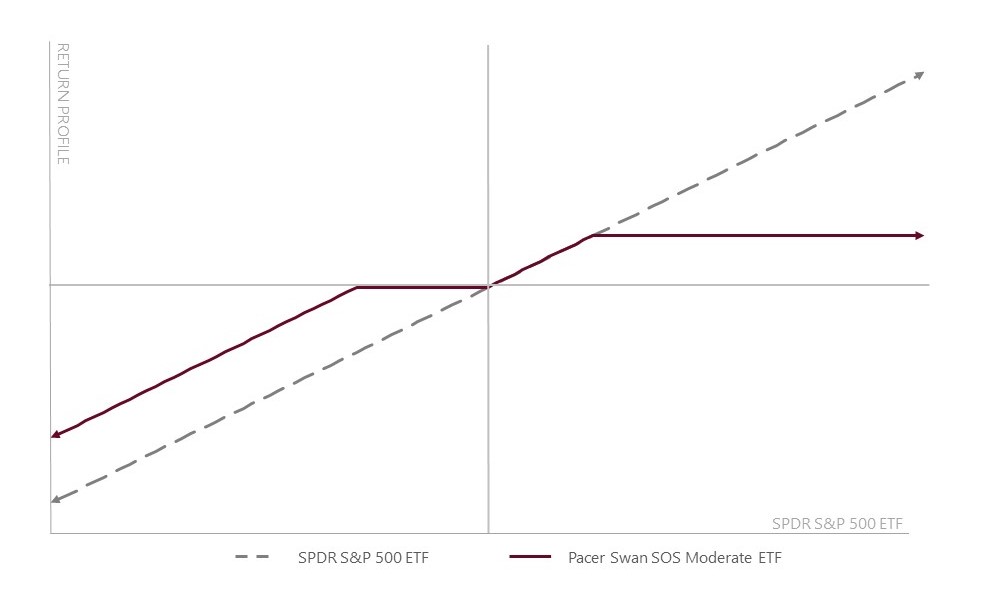
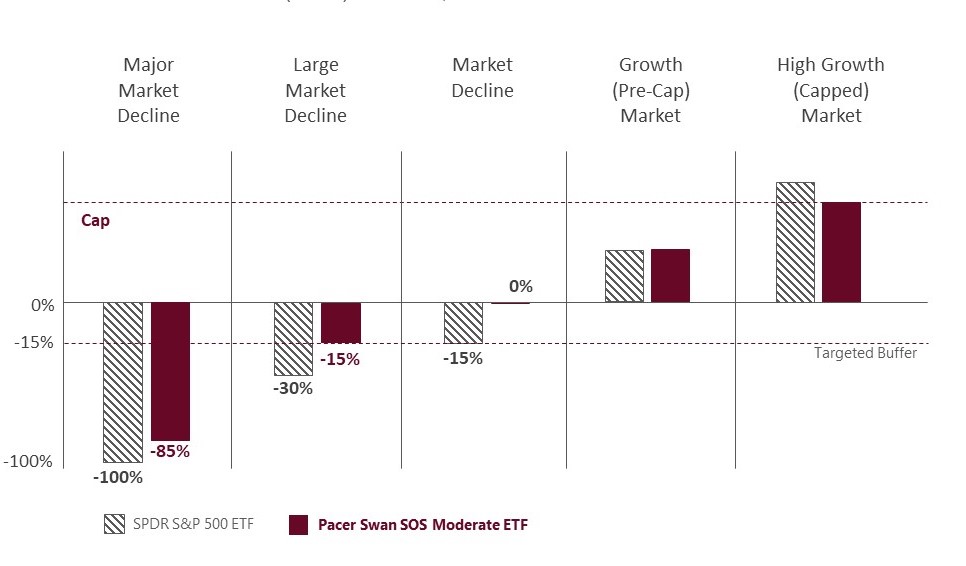
If the Underlying ETF appreciates over the Investment Period, the strategy is intended to provide upside participation that matches the returns of the Underlying ETF, up to the Cap that is determined at the start of the Investment Period.
If the Underlying ETF declines in value over the Investment Period by up to 15%, the strategy is designed to provide a flat return for the Fund (i.e., neither a gain nor a loss), before fees and expenses of the Fund. For example, if the Underlying ETF loses 10% over the Investment Period, the strategy is designed for the Fund to have a flat return of 0%, before fees and expenses of the Fund.
If the Underlying ETF declines in value over the Investment Period, the strategy is designed to protect the Fund from the first 15% of Underlying ETF losses, while experiencing losses greater than 15% on a one-to-one basis with the Underlying ETF, before fees and expenses of the Fund. For example, if the Underlying ETF loses 20% over the Investment Period, the strategy is designed for the Fund to have losses of 5% (20% less the Buffer of 15%), before Fund fees and expenses.
The following charts illustrate the hypothetical returns that the FLEX Options seek to provide with respect to the performance of the Underlying ETF in certain illustrative scenarios over the course of the Investment Period. These charts do not take into account payment by the Fund of fees and expenses. There is no guarantee that the Fund will be successful in providing these investment outcomes for any Investment Period.
4
Moderate - Line Chart.jpg
Moderate - Bar Chart.jpg
Investors purchasing Shares during an Investment Period will experience different results. The Fund’s website, www.paceretfs.com/products/structured-outcome-strategies, provides information relating to the possible outcomes for an investor of an investment in the Fund on a daily basis, including the Fund’s position relative to the Cap and Buffer. Before purchasing Shares, an investor should visit the Fund’s website to review this information and understand the possible outcomes of an investment in Shares on a particular day.
Subsequent Investment Periods will begin on the day the prior Investment Period ends and will end on the approximate one-year anniversary of that new Investment Period. On the first day of each new Investment Period, the Fund resets by investing in a new set of FLEX Options that will provide a new Cap for the new Investment Period. This means that the Cap will change for each Investment Period based upon prevailing market conditions at the beginning of each Investment
5


Period. The Cap and Buffer, and the Fund’s position relative to each, should be considered before investing in the Fund. The Fund will be perpetually offered and not terminate after the current or any subsequent Investment Period.
Purchases During an Investment Period
An investor that purchases Shares other than on the first day of an Investment Period and/or sells Shares prior to the end of an Investment Period may experience results that are very different from the outcomes sought by the Fund for that Investment Period.
Both the Cap and Buffer are fixed levels that are calculated in relation to the Underlying ETF’s share price return and the Fund’s net asset value (“NAV”) at the start of an Investment Period. While the Cap and Buffer reference the performance of the Underlying ETF over the Investment Period, the Fund expects its NAV to experience the same general price movement, Cap, and Buffer as a percentage gain or loss by the Underlying ETF over the Investment Period, before fees and expenses of the Fund.
Because the Underlying ETF’s share price return and the Fund’s NAV change over the Investment Period, an investor acquiring Shares after the start of the Investment Period will likely have a different return potential than an investor who purchased Shares at the start of the Investment Period. This is because, while the Cap and Buffer for the Investment Period are fixed levels that remain constant throughout the Investment Period, an investor purchasing Shares at market value during the Investment Period likely purchased Shares at a price that is different from the Fund’s NAV at the start of the Investment Period (i.e., the NAV that the Cap and Buffer reference). In addition, the price of the Underlying ETF during the Investment Period is likely to be different from the price of the Underlying ETF at the start of the Investment Period. To achieve the structured outcomes sought by the Fund for an Investment Period, an investor must hold Shares for the entire Investment Period. An investment in the Fund may not be appropriate for investors who do not intend to hold the Fund for the entire Investment Period.
Buffer
The Fund seeks to provide a Buffer on the first 15% loss of the Underlying ETF over each Investment Period. After the Underlying ETF has decreased in price by more than 15%, the Fund is expected to experience subsequent losses on a one-to-one basis (e.g., if the Underlying ETF loses 20%, the Fund loses 5%). The Buffer is before taking into account the fees and expenses of the Fund charged to shareholders.
If an investor is considering purchasing Shares during the Investment Period and the Fund has already decreased in value by at least 15% since the first day of the Investment Period (the “Initial Fund Value”), an investor purchasing Shares at that price will have increased gains available prior to reaching the Cap but may not benefit from the Buffer that the Fund seeks to offer for the remainder of the Investment Period. The Cap and Buffer relative to the Initial Fund Value will not change over the Investment Period.
Conversely, if an investor is considering purchasing Shares during the Investment Period and the Fund has already increased in value, then a shareholder may experience losses prior to gaining the protection offered by the Buffer, which is not guaranteed.
The Buffer only provides limited downside protection. Once losses on the Underlying ETF exceed the Buffer, investors will bear the risk of any further losses.
Cap
The returns of the Fund are subject to the Cap set forth in the above table for the Investment Period. Unlike other investment products, the potential returns an investor can receive from the Fund are subject to a pre-determined upside return Cap that represents the maximum percentage return an investor can achieve from an investment in the Fund for an entire Investment Period. In the event the Underlying ETF experiences gains over an Investment Period, the Fund seeks to provide investment returns that match the percentage increase of the Underlying ETF, but any percentage gains over the amount of the Cap will not be experienced by the Fund. This means that, if the Underlying ETF experiences gains for an Investment Period in excess of the Cap for that Investment Period, the Fund will not benefit from those excess gains. Therefore, regardless of the performance of the Underlying ETF, the Cap is the maximum return an investor can achieve from an investment in the Fund for that Investment Period.
6


An investor who sells Shares before the end of an Investment Period may not fully realize the maximum return during the Investment Period and may be exposed to greater risk of loss and less potential gain.
The Cap is set on the first day of each Investment Period. Following the close of business on the last day of the Investment Period, the Fund will supplement its prospectus by filing and mailing to shareholders a notice disclosing the Fund’s Cap for the next Investment Period if such Cap is lower than the Cap for the prior Investment Period. The information will also be available on the Fund’s website at www.paceretfs.com/products/structured-outcome-strategies.
The Cap is determined prior to taking into account annual operating expenses of the Fund, which are disclosed above under “Fees and Expenses of the Fund,” as well as brokerage commissions, trading fees, taxes, and any extraordinary expenses incurred by the Fund. Such extraordinary expenses (incurred outside of the ordinary operation of the Fund) may include, for example, unexpected litigation, regulatory, or tax expenses.
The Cap level is a result of the design of the Fund’s principal investment strategy. To provide the Buffer, the Fund purchases a series of put and call FLEX Options on the first day of an Investment Period. As the purchaser of these FLEX Options, the Fund is obligated to pay a premium to the seller of those FLEX Options. The portfolio manager will calculate the amount of premiums that the Fund will owe on the put options acquired and sold to provide the Buffer and will then go into the market and sell call options with terms that entitle the Fund to receive premiums such that the net amount of premiums paid per unit of the Underlying ETF is approximately equal to the price per unit of shares of the Underlying ETF. The Cap is the strike price of those sold FLEX Options. The defined Cap applicable to an Investment Period will vary based on prevailing market conditions at the time, including then-current interest rate levels, Underlying ETF volatility, and the relationship of puts and calls on the underlying FLEX Options.
The Cap, and the Fund’s position relative to it on any given day, should be considered before investing in the Fund. If an investor purchases Shares during an Investment Period, and the Fund has already increased in value above its Initial Fund Value for that Investment Period to a level near to the Cap, an investor purchasing Shares will have limited to no gain potential for the remainder of the Investment Period. However, the investor will remain vulnerable to significant downside risk because the investor will bear the losses between the price at which it purchased its Shares and the Initial Fund Value for the Investment Period before subsequent losses will be protected by the Buffer.
General Information about FLEX Options
FLEX Options are exchange-traded options contracts with uniquely customizable terms like exercise price, style, and expiration date. The Underlying ETF is an exchange-traded unit investment trust that seeks to provide investment results that, before expenses, correspond generally to the performance of the S&P 500® Index. The Underlying ETF uses a full replication strategy, meaning it invests in all of the component securities of the S&P 500® Index in the same approximate proportions as in the S&P 500® Index. See “Additional Information About the Funds—The Underlying ETF” below for more information.
The FLEX Options that the Fund will hold that reference the Underlying ETF will give the Fund the right to receive or deliver shares of the Underlying ETF on the option expiration date at a strike price, depending on whether the option is a put or call option and whether the Fund purchases or sells the option. The FLEX Options held by the Fund are European-style options, which are exercisable at the strike price only on the FLEX Option expiration date.
The Fund will generally, under normal conditions, hold four kinds of FLEX Options for each Investment Period. The Fund will purchase a call option (giving the Fund the right to receive shares of the Underlying ETF) and a put option (giving the Fund the right to deliver shares of the Underlying ETF), while simultaneously selling (i.e., writing) a call option (giving the Fund the obligation to deliver shares of the Underlying ETF) and a put option (giving the Fund the obligation to receive shares of the Underlying ETF). The Fund intends to structure the FLEX Options so that any amount owed by the Fund on the written FLEX Options will be covered by payouts at expiration from the purchased FLEX Options. As a result, the FLEX Options will be fully covered and no additional collateral will be necessary during the life of the Fund. The Fund receives premiums in exchange for the written FLEX Options and pays premiums in exchange for the purchased FLEX Options. Each of the FLEX Options purchased and sold throughout the Investment Period will have the same terms, such as strike price and expiration date, as the FLEX Options purchased and sold on the first day of the Investment Period.
7


On the FLEX Options’ expiration date, the Fund intends to sell the FLEX Options prior to their expiration and use the resulting proceeds to purchase new FLEX Options for the next Investment Period.
The Fund is classified as “non-diversified” under the Investment Company Act of 1940, as amended (the “1940 Act”).
Principal Risks of Investing in the Fund
You can lose money on your investment in the Fund. The Fund is subject to the risks summarized below. Some or all of these risks may adversely affect the Fund’s net asset value per share (“NAV”), trading price, yield, total return and/or ability to meet its objectives. The Fund has characteristics unlike many other traditional investment products and may not be suitable for all investors. For more information about the risks of investing in the Fund, see the section in the Fund’s prospectus entitled “Additional Information about the Principal Risks of Investing in the Funds.” The principal risks are presented in alphabetical order to facilitate finding particular risks and comparing them with other funds. Each risk summarized below is considered a “principal risk” of investing in the Fund, regardless of the order in which it appears.
Buffered Loss Risk. There can be no guarantee that the Fund will be successful in its strategy to buffer against Underlying ETF losses. Despite the intended Buffer, a shareholder could lose their entire investment. The Fund’s strategy seeks to deliver returns that match the share price return of the Underlying ETF (up to the Cap), while limiting downside losses, if Shares are bought on the day on which the Fund enters into the FLEX Options and held until those FLEX Options expire at the end of each Investment Period. In the event an investor purchases Shares after the date on which the FLEX Options were entered into or sells Shares prior to the expiration of the FLEX Options, the Buffer that the Fund seeks to provide may not be available and the investor may not get the full benefit of the Buffer. The Fund might not achieve its objective in certain circumstances. The Fund does not provide principal protection and an investor may experience significant losses on its investment, including loss of its entire investment.
Cap Change Risk. A new Cap is established at the beginning of each Investment Period and is dependent on prevailing market conditions. As a result, the Cap may rise or fall from one Investment Period to the next and is unlikely to remain the same for consecutive Investment Periods.
Capped Upside Risk. The Fund’s strategy seeks to provide returns that match those of the Underlying ETF for Shares purchased on the first day of an Investment Period and held for the entire Investment Period, subject to a pre-determined upside Cap. If an investor does not hold its Shares for an entire Investment Period, the returns realized by that investor may not match those the Fund seeks to achieve. If the Underlying ETF experiences gains during an Investment Period, the Fund will not participate in those gains beyond the Cap. In the event an investor purchases Shares after the first day of an Investment Period and the Fund has risen in value to a level near to the Cap, there may be little or no ability for that investor to experience an investment gain on their Shares.
Counterparty Risk. Fund transactions involving a counterparty are subject to the risk that the counterparty will not fulfill its obligation to the Fund. Counterparty risk may arise because of the counterparty’s financial condition (i.e., financial difficulties, bankruptcy, or insolvency), market activities and developments, or other reasons, whether foreseen or not. A counterparty’s inability to fulfill its obligation may result in significant financial loss to the Fund. The Fund may be unable to recover its investment from the counterparty or may obtain a limited recovery, and/or recovery may be delayed. The OCC acts as guarantor and central counterparty with respect to FLEX Options. As a result, the ability of the Fund to meet its objective depends on the OCC being able to meet its obligations. In the unlikely event that the OCC becomes insolvent or is otherwise unable to meet its settlement obligations, the Fund could suffer significant losses.
ETF Risks. The Fund is an ETF and, as a result of an ETF’s structure, is exposed to the following risks:
Authorized Participants (“APs”), Market Makers, and Liquidity Providers Concentration Risk. The Fund has a limited number of financial institutions that may act as APs. In addition, there may be a limited number of market makers and/or liquidity providers in the marketplace. To the extent either of the following events occur, shares of the Fund may trade at a material discount to NAV and possibly face delisting: (i) APs exit the business or otherwise become unable to process creation and/or redemption orders and no other APs step forward to perform these services, or (ii) market makers and/or liquidity providers exit the business or significantly reduce their business activities and no other entities step forward to perform their functions.
8


Cash Redemption Risk. The Fund’s investment strategy may require it to redeem Shares for cash or to otherwise include cash as part of its redemption proceeds. The Fund may be required to sell or unwind portfolio investments to obtain the cash needed to distribute redemption proceeds. This may cause the Fund to recognize a capital gain that it might not have recognized if it had made a redemption in-kind. As a result, the Fund may pay out higher annual capital gain distributions than if the in-kind redemption process was used. ETF shares can only be redeemed in creation units by APs. Individual shareholders may only purchase and sell ETF shares on a secondary market.
Costs of Buying or Selling Shares of the Fund. Due to the costs of buying or selling shares of the Fund, including brokerage commissions imposed by brokers and bid/ask spreads, frequent trading of shares of the Fund may significantly reduce investment results and an investment in shares of the Fund may not be advisable for investors who anticipate regularly making small investments.
Shares of the Fund May Trade at Prices Other Than NAV. As with all ETFs, shares of the Fund may be bought and sold in the secondary market at market prices. The price of shares of the Fund, like the price of all traded securities, will be subject to factors such as supply and demand, as well as the current value of the Fund’s portfolio holdings. Although it is expected that the market price of the shares of the Fund will approximate the Fund’s NAV, there may be times when the market price of the shares is more than the NAV intra-day (premium) or less than the NAV intra-day (discount). This risk is heightened in times of market volatility, periods of steep market declines, and periods when there is limited trading activity for shares in the secondary market, in which case such premiums or discounts may be significant. Shares of the Fund will be bought and sold in the secondary market at market prices.
Trading. Although shares of the Fund are listed for trading on a national securities exchange, such as Cboe BZX Exchange, Inc. (the “Exchange”), and may be traded on U.S. exchanges other than the Exchange, there can be no assurance that shares of the Fund will trade with any volume, or at all, on any stock exchange. In stressed market conditions, the liquidity of shares of the Fund may begin to mirror the liquidity of the Fund’s underlying portfolio holdings, which can be significantly less liquid than shares of the Fund.
FLEX Options Correlation Risk. The FLEX Options held by the Fund will be exercisable at the strike price only on their expiration date. Prior to the expiration date, the value of the FLEX Options will be determined based upon market quotations or using other recognized pricing methods. The value of the FLEX Options prior to the expiration date may vary because of related factors other than the value of the Underlying ETF. Factors that may influence the value of the FLEX Options, other than changes in the value of the Underlying ETF, may include interest rate changes, changing supply and demand, decreased liquidity of the FLEX Options, and changing volatility levels of the Underlying ETF.
FLEX Options Liquidity Risk. The FLEX Options are listed on an exchange; however, no one can guarantee that a liquid secondary trading market will exist for the FLEX Options. In the event that trading in the FLEX Options is limited or absent, the value of the Fund’s FLEX Options may decrease. In a less liquid market for the FLEX Options, liquidating the FLEX Options may require the payment of a premium (for written FLEX Options) or acceptance of a discounted price (for purchased FLEX Options) and may take longer to complete. A less liquid trading market may adversely impact the value of the FLEX Options and Fund shares and result in the Fund being unable to achieve its investment objective. The trading in FLEX Options may be less deep and liquid than the market for certain other securities. FLEX Options may be less liquid than certain non-customized options. In a less liquid market for the FLEX Options, the liquidation of a large number of options may more significantly impact the price. A less liquid trading market may adversely impact the value of the FLEX Options and the value of your investment.
FLEX Options Valuation Risk. The value of the FLEX Options will be determined based upon market quotations or using other recognized pricing methods. The value of the FLEX Options prior to the expiration date may vary because of related factors other than the value of the Underlying ETF. During periods of reduced market liquidity or in the absence of readily available market quotations for the holdings of the Fund, the ability of the Fund to value the FLEX Options becomes more difficult and the judgment of the Fund’s investment adviser or
9


sub-adviser (employing the fair value procedures adopted by the Board of Trustees of the Trust) may play a greater role in the valuation of the Fund’s holdings due to reduced availability of reliable objective pricing data.
Investment Period Risk. The Fund’s investment strategy is designed to deliver returns that match the share price return of the Underlying ETF if Shares are bought on the day on which the Fund enters into the FLEX Options (i.e., the first day of an Investment Period) and held until those FLEX Options expire at the end of the Investment Period. In the event an investor purchases Shares after the first day of an Investment Period or sells Shares prior to the expiration of the Investment Period, the value of that investor’s investment in Shares may not be buffered against a decline in the value of the Underlying ETF and may not participate in a gain in the value of the Underlying ETF up to the Cap for the investor’s investment period.
Large-Capitalization Investing Risk. The Fund may invest in the securities of large-capitalization companies. As a result, the Fund’s performance may be adversely affected if securities of large-capitalization companies underperform securities of smaller-capitalization companies or the market as a whole. The securities of large-capitalization companies may be relatively mature compared to smaller companies and therefore subject to slower growth during times of economic expansion.
Management Risk. The Fund is subject to management risk because it is an actively managed portfolio. In managing the Fund’s investment portfolio, the portfolio manager will apply investment techniques and risk analyses that may not produce the desired result. There can be no guarantee that the Fund will meet its investment objective.
Market Risk. Market risk is the risk that a particular security, or Shares in general, may fall in value. Securities are subject to market fluctuations caused by such factors as economic, political, regulatory or market developments, changes in interest rates, and perceived trends in securities prices. Shares could decline in value or underperform other investments. In addition, local, regional, or global events such as war, acts of terrorism, spread of infectious diseases or other public health issues, recessions, or other events could have a significant negative impact on the Fund and its investments. Such events may affect certain geographic regions, countries, sectors, and industries more significantly than others. Such events could adversely affect the prices and liquidity of the Fund’s portfolio securities or other instruments and could result in disruptions in the trading markets.
New Fund Risk. The Fund is new with no operating history. As a result, there can be no assurance that the Fund will grow to or maintain an economically viable size, in which case it could ultimately liquidate. The Fund’s distributor does not maintain a secondary market in Fund shares.
Non-Diversification Risk. The Fund is considered to be non-diversified, which means that it may invest more of its assets in the securities of a single issuer or a smaller number of issuers than if it were a diversified fund. As a result, the Fund may be more exposed to the risks associated with and developments affecting an individual issuer or a smaller number of issuers than a fund that invests more widely. This may increase the Fund’s volatility and cause the performance of a relatively smaller number of issuers to have a greater impact on the Fund’s performance.
Special Tax Risk. The Fund intends to qualify as a “regulated Investment company” (“RIC”), however, the federal income tax treatment of certain aspects of the proposed operations of the Fund are not entirely clear. This includes the tax aspects of the Fund’s options strategy, its hedging strategy, the possible application of the “straddle” rules, and various loss limitation provisions of the Internal Revenue Code of 1986, as amended. If, in any year, the Fund fails to qualify as a regulated investment company under the applicable tax laws, the Fund would be taxed as an ordinary corporation. Certain options on an ETF may not qualify as “Section 1256 contracts” under Section 1256 of the Code, and disposition of such options will likely result in short-term or long-term capital gains or losses depending on the holding period.
In the event that a shareholder purchases Shares shortly before a distribution by the Fund, the entire distribution may be taxable to the shareholder even though a portion of the distribution effectively represents a return of the purchase price.
10


Suitability Risk. The Fund’s unique characteristics (i.e., the imperative of holding Shares for the entire Investment Period, the Cap and Buffer) distinguish it from other investment products and may make it an unsuitable investment for some investors.
Underlying ETF Risk. The Fund invests in FLEX Options that reference an ETF, which subjects the Fund to certain of the risks of owning shares of an ETF, as well as the types of instruments in which the Underlying ETF invests. The value of an ETF will fluctuate over time based on fluctuations in the values of the securities held by the ETF, which may be affected by changes in general economic conditions, expectations for future growth and profits, interest rates and the supply and demand for those securities. In addition, ETFs are subject to authorized participant concentration risk, market maker risk, premium/discount risk, tracking error risk and trading issues risk. Brokerage, tax and other expenses may negatively impact the performance of the Underlying ETF and, in turn, the value of the Fund’s shares. An ETF that tracks an index may not exactly match the performance of the index due to cash drag, differences between the portfolio of the ETF and the components of the index, expenses, and other factors.
Fund Performance
Performance information for the Fund is not included because the Fund did not commence operations prior to the date of this Prospectus. In the future, performance for the Fund will be presented in this section. Updated performance information will be available on the Fund’s website at www.PacerETFs.com or by calling the Fund toll-free at 1-877-337-0500.
Management
Investment Adviser
Pacer Advisors, Inc. (the “Adviser”) serves as investment adviser to the Fund.
Investment Sub-Adviser
Swan Global Management, LLC (“Swan” or the “Sub-Adviser”) serves as investment sub-adviser to the Fund.
Portfolio Manager
Chris Hausman, CMT, CAIA, Senior Portfolio Manager and Managing Director-Risk of the Sub-Adviser, has served as the Fund’s portfolio manager since its inception. Mr. Hausman is responsible for the day-to-day management of the Fund.
Buying and Selling Fund Shares
The Fund is an ETF. This means that individual Shares of the Fund may only be purchased and sold in the secondary market through brokers at market prices, rather than NAV. Because Shares trade at market prices rather than NAV, Shares may trade at a price greater than NAV (premium) or less than NAV (discount).
The Fund generally issues and redeems shares at NAV only in large blocks of shares known as “Creation Units,” which only institutions or large investors may purchase or redeem. The Fund generally issues and redeems Creation Units in exchange for a portfolio of securities (the “Deposit Securities”) and/or a designated amount of U.S. cash that the Fund specifies each day.
Investors may incur costs attributable to the difference between the highest price a buyer is willing to pay to purchase Shares (bid) and the lowest price a seller is willing to accept for Shares (ask) when buying or selling Shares in the secondary market (the “bid-ask spread”). Recent information about the Fund, including its net asset value, market price, premiums and discounts, and bid-ask spreads is available on the Fund’s website at www.PacerETFs.com.
Tax Information
Fund distributions are generally taxable as ordinary income, qualified dividend income, or capital gains (or a combination), unless your investment is in an individual retirement account (“IRA”) or other tax-advantaged retirement account. Distributions may be taxable upon withdrawal from tax-deferred accounts.
11


Payments to Broker-Dealers and Other Financial Intermediaries
If you purchase the Fund through a broker or other financial intermediary (such as a bank), the Adviser, the Sub-Adviser, and their related companies may pay the intermediary for activities related to the marketing and promotion of the Fund. These payments may create a conflict of interest by influencing the broker-dealer or other intermediary and your sales person to recommend the Fund over another investment. Ask your salesperson or visit your financial intermediary’s website for more information.
12


Pacer Swan SOS Moderate (March) ETF
Investment Objective
The Pacer Swan SOS Moderate (March) ETF (the “Fund”) seeks to provide investors with returns that, before fees and expenses of the Fund, match those of the SPDR® S&P 500® ETF Trust (“the Underlying ETF”) up to a predetermined upside cap of 10.38% (before fees and expenses of the Fund) and 9.88% (after fees and expenses of the Fund), while providing a buffer against the first 15% of Underlying ETF losses, over the period from May 1, 2026 to February 26, 2027.
Fees and Expenses of the Fund
The following table describes the fees and expenses you may pay if you buy, hold, and sell shares of the Fund (“Shares”). You may pay other fees, such as brokerage commissions and other fees to financial intermediaries, which are not reflected in the table and Example below.
Annual Fund Operating Expenses (expenses that you pay each year as a percentage of the value of your investment)
Management Fees0.49%
Distribution and/or Service (12b-1) FeesNone
Other Expenses*
0.00%
Total Annual Fund Operating Expenses
0.49%
* Estimated for the current fiscal year.
Example
The following example is intended to help retail investors compare the cost of investing in the Fund with the cost of investing in other funds. It illustrates the hypothetical expenses that such investors would incur over various periods if they were to invest $10,000 in the Fund for the time periods indicated and then redeem all of the Shares at the end of those periods. This example assumes that the Fund provides a return of 5% a year and that operating expenses remain the same. Although your actual costs may be higher or lower, based on these assumptions, your costs would be:
1 Year3 Years
$50$157
Portfolio Turnover
The Fund pays transaction costs, such as commissions, when it buys and sells securities (or “turns over” its portfolio). A higher portfolio turnover rate may indicate higher transaction costs and may result in higher taxes when Fund Shares are held in a taxable account. These costs, which are not reflected in annual fund operating expenses or in the example, affect the Fund’s performance. Because the Fund is newly organized, portfolio turnover information is not yet available.
Principal Investment Strategies of the Fund
The Fund is an actively managed exchange-traded fund (“ETF”) that, under normal market conditions, invests substantially all of its assets in FLexible EXchange® Options (“FLEX Options”) that reference the share price return of the SPDR® S&P 500® ETF Trust (the “Underlying ETF”). Due to the unique mechanics of the Fund’s strategy, the return an investor can expect to receive from an investment in the Fund has characteristics that are distinct from many other investment vehicles. It is important that an investor understand these characteristics before making an investment in the Fund.
13


The Fund uses FLEX Options to employ a “structured outcome strategy.” Structured outcome strategies seek to produce pre-determined target investment outcomes based upon the performance of an underlying security or index. The pre-determined outcomes sought by the Fund are intended to reflect the performance of the Underlying ETF over the period (the “Investment Period”), subject to a buffer (the “Buffer”) against certain Underlying ETF losses and a cap (the “Cap”) as set forth in the following table:
Investment
Period Start
Investment
Period End
Buffer
(before Fund
fees and expenses)
Buffer
(after Fund
fees and expenses)
Cap
(before Fund
fees and expenses)
Cap
(after Fund
fees and expenses)
May 1, 2026February 26, 202715%14.51%10.38%9.88%
The Current Investment Period
The current and first Investment Period of the Fund’s operation is less than a full calendar year, beginning on May 1, 2026 and ending on February 26, 2027. For the current Investment Period, the Cap is 10.38% before taking into account any fees or expenses charged to, or transaction costs incurred by, the Fund or Underlying ETF. When the Fund’s annualized management fee of 0.49% of its average daily net assets is taken into account, the Cap for the current Investment Period is reduced to 9.88%. The returns that the Fund seeks to provide do not take into account the costs associated with buying shares of the Underlying Fund and any other expenses incurred by the Fund. The Fund’s website, www.paceretfs.com/products/structured-outcome-strategie, provides more information about the potential outcomes of an investment in the Fund during the current Investment Period, including the remaining Cap.
The Underlying ETF
In general, the structured outcomes the Fund seeks for investors that hold Fund shares for an entire Investment Period are as follows, though there can be no guarantee these results will be achieved:
If the Underlying ETF appreciates over the Investment Period, the strategy is intended to provide upside participation that matches the returns of the Underlying ETF, up to the Cap that is determined at the start of the Investment Period.
If the Underlying ETF declines in value over the Investment Period by up to 15%, the strategy is designed to provide a flat return for the Fund (i.e., neither a gain nor a loss), before fees and expenses of the Fund. For example, if the Underlying ETF loses 10% over the Investment Period, the strategy is designed for the Fund to have a flat return of 0%, before fees and expenses of the Fund.
If the Underlying ETF declines in value over the Investment Period, the strategy is designed to protect the Fund from the first 15% of Underlying ETF losses, while experiencing losses greater than 15% on a one-to-one basis with the Underlying ETF, before fees and expenses of the Fund. For example, if the Underlying ETF loses 20% over the Investment Period, the strategy is designed for the Fund to have losses of 5% (20% less the Buffer of 15%), before Fund fees and expenses.
The following charts illustrate the hypothetical returns that the FLEX Options seek to provide with respect to the performance of the Underlying ETF in certain illustrative scenarios over the course of the Investment Period. These charts do not take into account payment by the Fund of fees and expenses. There is no guarantee that the Fund will be successful in providing these investment outcomes for any Investment Period.
14


Moderate - Line Chart.jpg
Moderate - Bar Chart.jpg
Investors purchasing Shares during an Investment Period will experience different results. The Fund’s website, www.paceretfs.com/products/structured-outcome-strategies, provides information relating to the possible outcomes for an investor of an investment in the Fund on a daily basis, including the Fund’s position relative to the Cap and Buffer. Before purchasing Shares, an investor should visit the Fund’s website to review this information and understand the possible outcomes of an investment in Shares on a particular day.
Subsequent Investment Periods will begin on the day the prior Investment Period ends and will end on the approximate one-year anniversary of that new Investment Period. On the first day of each new Investment Period, the Fund resets by investing in a new set of FLEX Options that will provide a new Cap for the new Investment Period. This means that the Cap will change for each Investment Period based upon prevailing market conditions at the beginning of each Investment
15


Period. The Cap and Buffer, and the Fund’s position relative to each, should be considered before investing in the Fund. The Fund will be perpetually offered and not terminate after the current or any subsequent Investment Period.
Purchases During an Investment Period
An investor that purchases Shares other than on the first day of an Investment Period and/or sells Shares prior to the end of an Investment Period may experience results that are very different from the outcomes sought by the Fund for that Investment Period.
Both the Cap and Buffer are fixed levels that are calculated in relation to the Underlying ETF’s share price return and the Fund’s net asset value (“NAV”) at the start of an Investment Period. While the Cap and Buffer reference the performance of the Underlying ETF over the Investment Period, the Fund expects its NAV to experience the same general price movement, Cap, and Buffer as a percentage gain or loss by the Underlying ETF over the Investment Period, before fees and expenses of the Fund.
Because the Underlying ETF’s share price return and the Fund’s NAV change over the Investment Period, an investor acquiring Shares after the start of the Investment Period will likely have a different return potential than an investor who purchased Shares at the start of the Investment Period. This is because, while the Cap and Buffer for the Investment Period are fixed levels that remain constant throughout the Investment Period, an investor purchasing Shares at market value during the Investment Period likely purchased Shares at a price that is different from the Fund’s NAV at the start of the Investment Period (i.e., the NAV that the Cap and Buffer reference). In addition, the price of the Underlying ETF during the Investment Period is likely to be different from the price of the Underlying ETF at the start of the Investment Period. To achieve the structured outcomes sought by the Fund for an Investment Period, an investor must hold Shares for the entire Investment Period. An investment in the Fund may not be appropriate for investors who do not intend to hold the Fund for the entire Investment Period.
Buffer
The Fund seeks to provide a Buffer on the first 15% loss of the Underlying ETF over each Investment Period. After the Underlying ETF has decreased in price by more than 15%, the Fund is expected to experience subsequent losses on a one-to-one basis (e.g., if the Underlying ETF loses 20%, the Fund loses 5%). The Buffer is before taking into account the fees and expenses of the Fund charged to shareholders.
If an investor is considering purchasing Shares during the Investment Period and the Fund has already decreased in value by at least 15% since the first day of the Investment Period (the “Initial Fund Value”), an investor purchasing Shares at that price will have increased gains available prior to reaching the Cap but may not benefit from the Buffer that the Fund seeks to offer for the remainder of the Investment Period. The Cap and Buffer relative to the Initial Fund Value will not change over the Investment Period.
Conversely, if an investor is considering purchasing Shares during the Investment Period and the Fund has already increased in value, then a shareholder may experience losses prior to gaining the protection offered by the Buffer, which is not guaranteed.
The Buffer only provides limited downside protection. Once losses on the Underlying ETF exceed the Buffer, investors will bear the risk of any further losses.
Cap
The returns of the Fund are subject to the Cap set forth in the above table for the Investment Period. Unlike other investment products, the potential returns an investor can receive from the Fund are subject to a pre-determined upside return Cap that represents the maximum percentage return an investor can achieve from an investment in the Fund for an entire Investment Period. In the event the Underlying ETF experiences gains over an Investment Period, the Fund seeks to provide investment returns that match the percentage increase of the Underlying ETF, but any percentage gains over the amount of the Cap will not be experienced by the Fund. This means that, if the Underlying ETF experiences gains for an Investment Period in excess of the Cap for that Investment Period, the Fund will not benefit from those excess gains. Therefore, regardless of the performance of the Underlying ETF, the Cap is the maximum return an investor can achieve from an investment in the Fund for that Investment Period.
16


An investor who sells Shares before the end of an Investment Period may not fully realize the maximum return during the Investment Period and may be exposed to greater risk of loss and less potential gain.
The Cap is set on the first day of each Investment Period. Following the close of business on the last day of the Investment Period, the Fund will supplement its prospectus by filing and mailing to shareholders a notice disclosing the Fund’s Cap for the next Investment Period if such Cap is lower than the Cap for the prior Investment Period. The information will also be available on the Fund’s website at www.paceretfs.com/products/structured-outcome-strategies.
The Cap is determined prior to taking into account annual operating expenses of the Fund, which are disclosed above under “Fees and Expenses of the Fund,” as well as brokerage commissions, trading fees, taxes, and any extraordinary expenses incurred by the Fund. Such extraordinary expenses (incurred outside of the ordinary operation of the Fund) may include, for example, unexpected litigation, regulatory, or tax expenses.
The Cap level is a result of the design of the Fund’s principal investment strategy. To provide the Buffer, the Fund purchases a series of put and call FLEX Options on the first day of an Investment Period. As the purchaser of these FLEX Options, the Fund is obligated to pay a premium to the seller of those FLEX Options. The portfolio manager will calculate the amount of premiums that the Fund will owe on the put options acquired and sold to provide the Buffer and will then go into the market and sell call options with terms that entitle the Fund to receive premiums such that the net amount of premiums paid per unit of the Underlying ETF is approximately equal to the price per unit of shares of the Underlying ETF. The Cap is the strike price of those sold FLEX Options. The defined Cap applicable to an Investment Period will vary based on prevailing market conditions at the time, including then-current interest rate levels, Underlying ETF volatility, and the relationship of puts and calls on the underlying FLEX Options.
The Cap, and the Fund’s position relative to it on any given day, should be considered before investing in the Fund. If an investor purchases Shares during an Investment Period, and the Fund has already increased in value above its Initial Fund Value for that Investment Period to a level near to the Cap, an investor purchasing Shares will have limited to no gain potential for the remainder of the Investment Period. However, the investor will remain vulnerable to significant downside risk because the investor will bear the losses between the price at which it purchased its Shares and the Initial Fund Value for the Investment Period before subsequent losses will be protected by the Buffer.
General Information about FLEX Options
FLEX Options are exchange-traded options contracts with uniquely customizable terms like exercise price, style, and expiration date. The Underlying ETF is an exchange-traded unit investment trust that seeks to provide investment results that, before expenses, correspond generally to the performance of the S&P 500® Index. The Underlying ETF uses a full replication strategy, meaning it invests in all of the component securities of the S&P 500® Index in the same approximate proportions as in the S&P 500® Index. See “Additional Information About the Funds—The Underlying ETF” below for more information.
The FLEX Options that the Fund will hold that reference the Underlying ETF will give the Fund the right to receive or deliver shares of the Underlying ETF on the option expiration date at a strike price, depending on whether the option is a put or call option and whether the Fund purchases or sells the option. The FLEX Options held by the Fund are European-style options, which are exercisable at the strike price only on the FLEX Option expiration date.
The Fund will generally, under normal conditions, hold four kinds of FLEX Options for each Investment Period. The Fund will purchase a call option (giving the Fund the right to receive shares of the Underlying ETF) and a put option (giving the Fund the right to deliver shares of the Underlying ETF), while simultaneously selling (i.e., writing) a call option (giving the Fund the obligation to deliver shares of the Underlying ETF) and a put option (giving the Fund the obligation to receive shares of the Underlying ETF). The Fund intends to structure the FLEX Options so that any amount owed by the Fund on the written FLEX Options will be covered by payouts at expiration from the purchased FLEX Options. As a result, the FLEX Options will be fully covered and no additional collateral will be necessary during the life of the Fund. The Fund receives premiums in exchange for the written FLEX Options and pays premiums in exchange for the purchased FLEX Options. Each of the FLEX Options purchased and sold throughout the Investment Period will have the same terms, such as strike price and expiration date, as the FLEX Options purchased and sold on the first day of the Investment Period.
17


On the FLEX Options’ expiration date, the Fund intends to sell the FLEX Options prior to their expiration and use the resulting proceeds to purchase new FLEX Options for the next Investment Period.
The Fund is classified as “non-diversified” under the Investment Company Act of 1940, as amended (the “1940 Act”).
Principal Risks of Investing in the Fund
You can lose money on your investment in the Fund. The Fund is subject to the risks summarized below. Some or all of these risks may adversely affect the Fund’s net asset value per share (“NAV”), trading price, yield, total return and/or ability to meet its objectives. The Fund has characteristics unlike many other traditional investment products and may not be suitable for all investors. For more information about the risks of investing in the Fund, see the section in the Fund’s prospectus entitled “Additional Information about the Principal Risks of Investing in the Funds.” The principal risks are presented in alphabetical order to facilitate finding particular risks and comparing them with other funds. Each risk summarized below is considered a “principal risk” of investing in the Fund, regardless of the order in which it appears.
Buffered Loss Risk. There can be no guarantee that the Fund will be successful in its strategy to buffer against Underlying ETF losses. Despite the intended Buffer, a shareholder could lose their entire investment. The Fund’s strategy seeks to deliver returns that match the share price return of the Underlying ETF (up to the Cap), while limiting downside losses, if Shares are bought on the day on which the Fund enters into the FLEX Options and held until those FLEX Options expire at the end of each Investment Period. In the event an investor purchases Shares after the date on which the FLEX Options were entered into or sells Shares prior to the expiration of the FLEX Options, the Buffer that the Fund seeks to provide may not be available and the investor may not get the full benefit of the Buffer. The Fund might not achieve its objective in certain circumstances. The Fund does not provide principal protection and an investor may experience significant losses on its investment, including loss of its entire investment.
Cap Change Risk. A new Cap is established at the beginning of each Investment Period and is dependent on prevailing market conditions. As a result, the Cap may rise or fall from one Investment Period to the next and is unlikely to remain the same for consecutive Investment Periods.
Capped Upside Risk. The Fund’s strategy seeks to provide returns that match those of the Underlying ETF for Shares purchased on the first day of an Investment Period and held for the entire Investment Period, subject to a pre-determined upside Cap. If an investor does not hold its Shares for an entire Investment Period, the returns realized by that investor may not match those the Fund seeks to achieve. If the Underlying ETF experiences gains during an Investment Period, the Fund will not participate in those gains beyond the Cap. In the event an investor purchases Shares after the first day of an Investment Period and the Fund has risen in value to a level near to the Cap, there may be little or no ability for that investor to experience an investment gain on their Shares.
Counterparty Risk. Fund transactions involving a counterparty are subject to the risk that the counterparty will not fulfill its obligation to the Fund. Counterparty risk may arise because of the counterparty’s financial condition (i.e., financial difficulties, bankruptcy, or insolvency), market activities and developments, or other reasons, whether foreseen or not. A counterparty’s inability to fulfill its obligation may result in significant financial loss to the Fund. The Fund may be unable to recover its investment from the counterparty or may obtain a limited recovery, and/or recovery may be delayed. The OCC acts as guarantor and central counterparty with respect to FLEX Options. As a result, the ability of the Fund to meet its objective depends on the OCC being able to meet its obligations. In the unlikely event that the OCC becomes insolvent or is otherwise unable to meet its settlement obligations, the Fund could suffer significant losses.
ETF Risks. The Fund is an ETF and, as a result of an ETF’s structure, is exposed to the following risks:
Authorized Participants (“APs”), Market Makers, and Liquidity Providers Concentration Risk. The Fund has a limited number of financial institutions that may act as APs. In addition, there may be a limited number of market makers and/or liquidity providers in the marketplace. To the extent either of the following events occur, shares of the Fund may trade at a material discount to NAV and possibly face delisting: (i) APs exit the business or otherwise become unable to process creation and/or redemption orders and no other APs step forward to perform these services, or (ii) market makers and/or liquidity providers exit the business or significantly reduce their business activities and no other entities step forward to perform their functions.
18


Cash Redemption Risk. The Fund’s investment strategy may require it to redeem Shares for cash or to otherwise include cash as part of its redemption proceeds. The Fund may be required to sell or unwind portfolio investments to obtain the cash needed to distribute redemption proceeds. This may cause the Fund to recognize a capital gain that it might not have recognized if it had made a redemption in-kind. As a result, the Fund may pay out higher annual capital gain distributions than if the in-kind redemption process was used. ETF shares can only be redeemed in creation units by APs. Individual shareholders may only purchase and sell ETF shares on a secondary market.
Costs of Buying or Selling Shares of the Fund. Due to the costs of buying or selling shares of the Fund, including brokerage commissions imposed by brokers and bid/ask spreads, frequent trading of shares of the Fund may significantly reduce investment results and an investment in shares of the Fund may not be advisable for investors who anticipate regularly making small investments.
Shares of the Fund May Trade at Prices Other Than NAV. As with all ETFs, shares of the Fund may be bought and sold in the secondary market at market prices. The price of shares of the Fund, like the price of all traded securities, will be subject to factors such as supply and demand, as well as the current value of the Fund’s portfolio holdings. Although it is expected that the market price of the shares of the Fund will approximate the Fund’s NAV, there may be times when the market price of the shares is more than the NAV intra-day (premium) or less than the NAV intra-day (discount). This risk is heightened in times of market volatility, periods of steep market declines, and periods when there is limited trading activity for shares in the secondary market, in which case such premiums or discounts may be significant. Shares of the Fund will be bought and sold in the secondary market at market prices.
Trading. Although shares of the Fund are listed for trading on a national securities exchange, such as Cboe BZX Exchange, Inc. (the “Exchange”), and may be traded on U.S. exchanges other than the Exchange, there can be no assurance that shares of the Fund will trade with any volume, or at all, on any stock exchange. In stressed market conditions, the liquidity of shares of the Fund may begin to mirror the liquidity of the Fund’s underlying portfolio holdings, which can be significantly less liquid than shares of the Fund.
FLEX Options Correlation Risk. The FLEX Options held by the Fund will be exercisable at the strike price only on their expiration date. Prior to the expiration date, the value of the FLEX Options will be determined based upon market quotations or using other recognized pricing methods. The value of the FLEX Options prior to the expiration date may vary because of related factors other than the value of the Underlying ETF. Factors that may influence the value of the FLEX Options, other than changes in the value of the Underlying ETF, may include interest rate changes, changing supply and demand, decreased liquidity of the FLEX Options, and changing volatility levels of the Underlying ETF.
FLEX Options Liquidity Risk. The FLEX Options are listed on an exchange; however, no one can guarantee that a liquid secondary trading market will exist for the FLEX Options. In the event that trading in the FLEX Options is limited or absent, the value of the Fund’s FLEX Options may decrease. In a less liquid market for the FLEX Options, liquidating the FLEX Options may require the payment of a premium (for written FLEX Options) or acceptance of a discounted price (for purchased FLEX Options) and may take longer to complete. A less liquid trading market may adversely impact the value of the FLEX Options and Fund shares and result in the Fund being unable to achieve its investment objective. The trading in FLEX Options may be less deep and liquid than the market for certain other securities. FLEX Options may be less liquid than certain non-customized options. In a less liquid market for the FLEX Options, the liquidation of a large number of options may more significantly impact the price. A less liquid trading market may adversely impact the value of the FLEX Options and the value of your investment.
FLEX Options Valuation Risk. The value of the FLEX Options will be determined based upon market quotations or using other recognized pricing methods. The value of the FLEX Options prior to the expiration date may vary because of related factors other than the value of the Underlying ETF. During periods of reduced market liquidity or in the absence of readily available market quotations for the holdings of the Fund, the ability of the Fund to value the FLEX Options becomes more difficult and the judgment of the Fund’s investment adviser or
19


sub-adviser (employing the fair value procedures adopted by the Board of Trustees of the Trust) may play a greater role in the valuation of the Fund’s holdings due to reduced availability of reliable objective pricing data.
Investment Period Risk. The Fund’s investment strategy is designed to deliver returns that match the share price return of the Underlying ETF if Shares are bought on the day on which the Fund enters into the FLEX Options (i.e., the first day of an Investment Period) and held until those FLEX Options expire at the end of the Investment Period. In the event an investor purchases Shares after the first day of an Investment Period or sells Shares prior to the expiration of the Investment Period, the value of that investor’s investment in Shares may not be buffered against a decline in the value of the Underlying ETF and may not participate in a gain in the value of the Underlying ETF up to the Cap for the investor’s investment period.
Large-Capitalization Investing Risk. The Fund may invest in the securities of large-capitalization companies. As a result, the Fund’s performance may be adversely affected if securities of large-capitalization companies underperform securities of smaller-capitalization companies or the market as a whole. The securities of large-capitalization companies may be relatively mature compared to smaller companies and therefore subject to slower growth during times of economic expansion.
Management Risk. The Fund is subject to management risk because it is an actively managed portfolio. In managing the Fund’s investment portfolio, the portfolio manager will apply investment techniques and risk analyses that may not produce the desired result. There can be no guarantee that the Fund will meet its investment objective.
Market Risk. Market risk is the risk that a particular security, or Shares in general, may fall in value. Securities are subject to market fluctuations caused by such factors as economic, political, regulatory or market developments, changes in interest rates, and perceived trends in securities prices. Shares could decline in value or underperform other investments. In addition, local, regional, or global events such as war, acts of terrorism, spread of infectious diseases or other public health issues, recessions, or other events could have a significant negative impact on the Fund and its investments. Such events may affect certain geographic regions, countries, sectors, and industries more significantly than others. Such events could adversely affect the prices and liquidity of the Fund’s portfolio securities or other instruments and could result in disruptions in the trading markets.
New Fund Risk. The Fund is new with no operating history. As a result, there can be no assurance that the Fund will grow to or maintain an economically viable size, in which case it could ultimately liquidate. The Fund’s distributor does not maintain a secondary market in Fund shares.
Non-Diversification Risk. The Fund is considered to be non-diversified, which means that it may invest more of its assets in the securities of a single issuer or a smaller number of issuers than if it were a diversified fund. As a result, the Fund may be more exposed to the risks associated with and developments affecting an individual issuer or a smaller number of issuers than a fund that invests more widely. This may increase the Fund’s volatility and cause the performance of a relatively smaller number of issuers to have a greater impact on the Fund’s performance.
Special Tax Risk. The Fund intends to qualify as a “regulated Investment company” (“RIC”), however, the federal income tax treatment of certain aspects of the proposed operations of the Fund are not entirely clear. This includes the tax aspects of the Fund’s options strategy, its hedging strategy, the possible application of the “straddle” rules, and various loss limitation provisions of the Internal Revenue Code of 1986, as amended. If, in any year, the Fund fails to qualify as a regulated investment company under the applicable tax laws, the Fund would be taxed as an ordinary corporation. Certain options on an ETF may not qualify as “Section 1256 contracts” under Section 1256 of the Code, and disposition of such options will likely result in short-term or long-term capital gains or losses depending on the holding period.
In the event that a shareholder purchases Shares shortly before a distribution by the Fund, the entire distribution may be taxable to the shareholder even though a portion of the distribution effectively represents a return of the purchase price.
20


Suitability Risk. The Fund’s unique characteristics (i.e., the imperative of holding Shares for the entire Investment Period, the Cap and Buffer) distinguish it from other investment products and may make it an unsuitable investment for some investors.
Underlying ETF Risk. The Fund invests in FLEX Options that reference an ETF, which subjects the Fund to certain of the risks of owning shares of an ETF, as well as the types of instruments in which the Underlying ETF invests. The value of an ETF will fluctuate over time based on fluctuations in the values of the securities held by the ETF, which may be affected by changes in general economic conditions, expectations for future growth and profits, interest rates and the supply and demand for those securities. In addition, ETFs are subject to authorized participant concentration risk, market maker risk, premium/discount risk, tracking error risk and trading issues risk. Brokerage, tax and other expenses may negatively impact the performance of the Underlying ETF and, in turn, the value of the Fund’s shares. An ETF that tracks an index may not exactly match the performance of the index due to cash drag, differences between the portfolio of the ETF and the components of the index, expenses, and other factors.
Fund Performance
Performance information for the Fund is not included because the Fund did not commence operations prior to the date of this Prospectus. In the future, performance for the Fund will be presented in this section. Updated performance information will be available on the Fund’s website at www.PacerETFs.com or by calling the Fund toll-free at 1-877-337-0500.
Management
Investment Adviser
Pacer Advisors, Inc. (the “Adviser”) serves as investment adviser to the Fund.
Investment Sub-Adviser
Swan Global Management, LLC (“Swan” or the “Sub-Adviser”) serves as investment sub-adviser to the Fund.
Portfolio Manager
Chris Hausman, CMT, CAIA, Senior Portfolio Manager and Managing Director-Risk of the Sub-Adviser, has served as the Fund’s portfolio manager since its inception. Mr. Hausman is responsible for the day-to-day management of the Fund.
Buying and Selling Fund Shares
The Fund is an ETF. This means that individual Shares of the Fund may only be purchased and sold in the secondary market through brokers at market prices, rather than NAV. Because Shares trade at market prices rather than NAV, Shares may trade at a price greater than NAV (premium) or less than NAV (discount).
The Fund generally issues and redeems shares at NAV only in large blocks of shares known as “Creation Units,” which only institutions or large investors may purchase or redeem. The Fund generally issues and redeems Creation Units in exchange for a portfolio of securities (the “Deposit Securities”) and/or a designated amount of U.S. cash that the Fund specifies each day.
Investors may incur costs attributable to the difference between the highest price a buyer is willing to pay to purchase Shares (bid) and the lowest price a seller is willing to accept for Shares (ask) when buying or selling Shares in the secondary market (the “bid-ask spread”). Recent information about the Fund, including its net asset value, market price, premiums and discounts, and bid-ask spreads is available on the Fund’s website at www.PacerETFs.com.
Tax Information
Fund distributions are generally taxable as ordinary income, qualified dividend income, or capital gains (or a combination), unless your investment is in an individual retirement account (“IRA”) or other tax-advantaged retirement account. Distributions may be taxable upon withdrawal from tax-deferred accounts.
21


Payments to Broker-Dealers and Other Financial Intermediaries
If you purchase the Fund through a broker or other financial intermediary (such as a bank), the Adviser, the Sub-Adviser, and their related companies may pay the intermediary for activities related to the marketing and promotion of the Fund. These payments may create a conflict of interest by influencing the broker-dealer or other intermediary and your sales person to recommend the Fund over another investment. Ask your salesperson or visit your financial intermediary’s website for more information.
22


Pacer Swan SOS Moderate (May) ETF
Investment Objective
The Pacer Swan SOS Moderate (May) ETF (the “Fund”) seeks to provide investors with returns that, before fees and expenses of the Fund, match those of the SPDR® S&P 500® ETF Trust (“the Underlying ETF”) up to a predetermined upside cap of 12.76% (before fees and expenses of the Fund) and 12.16% (after fees and expenses of the Fund), while providing a buffer against the first 15% of Underlying ETF losses, over the period from May 1, 2026 to April 30, 2027.
Fees and Expenses of the Fund
The following table describes the fees and expenses you may pay if you buy, hold, and sell shares of the Fund (“Shares”). You may pay other fees, such as brokerage commissions and other fees to financial intermediaries, which are not reflected in the table and Example below.
Annual Fund Operating Expenses (expenses that you pay each year as a percentage of the value of your investment)
Management Fees0.49%
Distribution and/or Service (12b-1) FeesNone
Other Expenses*
0.00%
Total Annual Fund Operating Expenses
0.49%
* Estimated for the current fiscal year.
Example
The following example is intended to help retail investors compare the cost of investing in the Fund with the cost of investing in other funds. It illustrates the hypothetical expenses that such investors would incur over various periods if they were to invest $10,000 in the Fund for the time periods indicated and then redeem all of the Shares at the end of those periods. This example assumes that the Fund provides a return of 5% a year and that operating expenses remain the same. Although your actual costs may be higher or lower, based on these assumptions, your costs would be:
1 Year3 Years
$50$157
Portfolio Turnover
The Fund pays transaction costs, such as commissions, when it buys and sells securities (or “turns over” its portfolio). A higher portfolio turnover rate may indicate higher transaction costs and may result in higher taxes when Fund Shares are held in a taxable account. These costs, which are not reflected in annual fund operating expenses or in the example, affect the Fund’s performance. Because the Fund is newly organized, portfolio turnover information is not yet available.
Principal Investment Strategies of the Fund
The Fund is an actively managed exchange-traded fund (“ETF”) that, under normal market conditions, invests substantially all of its assets in FLexible EXchange® Options (“FLEX Options”) that reference the share price return of the SPDR® S&P 500® ETF Trust (the “Underlying ETF”). Due to the unique mechanics of the Fund’s strategy, the return an investor can expect to receive from an investment in the Fund has characteristics that are distinct from many other investment vehicles. It is important that an investor understand these characteristics before making an investment in the Fund.
23


The Fund uses FLEX Options to employ a “structured outcome strategy.” Structured outcome strategies seek to produce pre-determined target investment outcomes based upon the performance of an underlying security or index. The pre-determined outcomes sought by the Fund are intended to reflect the performance of the Underlying ETF over the period (the “Investment Period”), subject to a buffer (the “Buffer”) against certain Underlying ETF losses and a cap (the “Cap”) as set forth in the following table:
Investment
Period Start
Investment
Period End
Buffer
(before Fund
fees and expenses)
Buffer
(after Fund
fees and expenses)
Cap
(before Fund
fees and expenses)
Cap
(after Fund
fees and expenses)
May 1, 2026April 30, 202715%14.51%12.76%12.16%
The Current Investment Period
The current and first Investment Period of the Fund’s operation is less than a full calendar year, beginning on May 1, 2026 and ending on April 30, 2027. For the current Investment Period, the Cap is 12.76% before taking into account any fees or expenses charged to, or transaction costs incurred by, the Fund or Underlying ETF. When the Fund’s annualized management fee of 0.49% of its average daily net assets is taken into account, the Cap for the current Investment Period is reduced to 12.16%. The returns that the Fund seeks to provide do not take into account the costs associated with buying shares of the Underlying Fund and any other expenses incurred by the Fund. The Fund’s website, www.paceretfs.com/products/structured-outcome-strategie, provides more information about the potential outcomes of an investment in the Fund during the current Investment Period, including the remaining Cap.
The Underlying ETF
In general, the structured outcomes the Fund seeks for investors that hold Fund shares for an entire Investment Period are as follows, though there can be no guarantee these results will be achieved:
If the Underlying ETF appreciates over the Investment Period, the strategy is intended to provide upside participation that matches the returns of the Underlying ETF, up to the Cap that is determined at the start of the Investment Period.
If the Underlying ETF declines in value over the Investment Period by up to 15%, the strategy is designed to provide a flat return for the Fund (i.e., neither a gain nor a loss), before fees and expenses of the Fund. For example, if the Underlying ETF loses 10% over the Investment Period, the strategy is designed for the Fund to have a flat return of 0%, before fees and expenses of the Fund.
If the Underlying ETF declines in value over the Investment Period, the strategy is designed to protect the Fund from the first 15% of Underlying ETF losses, while experiencing losses greater than 15% on a one-to-one basis with the Underlying ETF, before fees and expenses of the Fund. For example, if the Underlying ETF loses 20% over the Investment Period, the strategy is designed for the Fund to have losses of 5% (20% less the Buffer of 15%), before Fund fees and expenses.
The following charts illustrate the hypothetical returns that the FLEX Options seek to provide with respect to the performance of the Underlying ETF in certain illustrative scenarios over the course of the Investment Period. These charts do not take into account payment by the Fund of fees and expenses. There is no guarantee that the Fund will be successful in providing these investment outcomes for any Investment Period.
24


Moderate - Line Chart.jpg
Moderate - Bar Chart.jpg
Investors purchasing Shares during an Investment Period will experience different results. The Fund’s website, www.paceretfs.com/products/structured-outcome-strategies, provides information relating to the possible outcomes for an investor of an investment in the Fund on a daily basis, including the Fund’s position relative to the Cap and Buffer. Before purchasing Shares, an investor should visit the Fund’s website to review this information and understand the possible outcomes of an investment in Shares on a particular day.
Subsequent Investment Periods will begin on the day the prior Investment Period ends and will end on the approximate one-year anniversary of that new Investment Period. On the first day of each new Investment Period, the Fund resets by investing in a new set of FLEX Options that will provide a new Cap for the new Investment Period. This means that the Cap will change for each Investment Period based upon prevailing market conditions at the beginning of each Investment
25


Period. The Cap and Buffer, and the Fund’s position relative to each, should be considered before investing in the Fund. The Fund will be perpetually offered and not terminate after the current or any subsequent Investment Period.
Purchases During an Investment Period
An investor that purchases Shares other than on the first day of an Investment Period and/or sells Shares prior to the end of an Investment Period may experience results that are very different from the outcomes sought by the Fund for that Investment Period.
Both the Cap and Buffer are fixed levels that are calculated in relation to the Underlying ETF’s share price return and the Fund’s net asset value (“NAV”) at the start of an Investment Period. While the Cap and Buffer reference the performance of the Underlying ETF over the Investment Period, the Fund expects its NAV to experience the same general price movement, Cap, and Buffer as a percentage gain or loss by the Underlying ETF over the Investment Period, before fees and expenses of the Fund.
Because the Underlying ETF’s share price return and the Fund’s NAV change over the Investment Period, an investor acquiring Shares after the start of the Investment Period will likely have a different return potential than an investor who purchased Shares at the start of the Investment Period. This is because, while the Cap and Buffer for the Investment Period are fixed levels that remain constant throughout the Investment Period, an investor purchasing Shares at market value during the Investment Period likely purchased Shares at a price that is different from the Fund’s NAV at the start of the Investment Period (i.e., the NAV that the Cap and Buffer reference). In addition, the price of the Underlying ETF during the Investment Period is likely to be different from the price of the Underlying ETF at the start of the Investment Period. To achieve the structured outcomes sought by the Fund for an Investment Period, an investor must hold Shares for the entire Investment Period. An investment in the Fund may not be appropriate for investors who do not intend to hold the Fund for the entire Investment Period.
Buffer
The Fund seeks to provide a Buffer on the first 15% loss of the Underlying ETF over each Investment Period. After the Underlying ETF has decreased in price by more than 15%, the Fund is expected to experience subsequent losses on a one-to-one basis (e.g., if the Underlying ETF loses 20%, the Fund loses 5%). The Buffer is before taking into account the fees and expenses of the Fund charged to shareholders.
If an investor is considering purchasing Shares during the Investment Period and the Fund has already decreased in value by at least 15% since the first day of the Investment Period (the “Initial Fund Value”), an investor purchasing Shares at that price will have increased gains available prior to reaching the Cap but may not benefit from the Buffer that the Fund seeks to offer for the remainder of the Investment Period. The Cap and Buffer relative to the Initial Fund Value will not change over the Investment Period.
Conversely, if an investor is considering purchasing Shares during the Investment Period and the Fund has already increased in value, then a shareholder may experience losses prior to gaining the protection offered by the Buffer, which is not guaranteed.
The Buffer only provides limited downside protection. Once losses on the Underlying ETF exceed the Buffer, investors will bear the risk of any further losses.
Cap
The returns of the Fund are subject to the Cap set forth in the above table for the Investment Period. Unlike other investment products, the potential returns an investor can receive from the Fund are subject to a pre-determined upside return Cap that represents the maximum percentage return an investor can achieve from an investment in the Fund for an entire Investment Period. In the event the Underlying ETF experiences gains over an Investment Period, the Fund seeks to provide investment returns that match the percentage increase of the Underlying ETF, but any percentage gains over the amount of the Cap will not be experienced by the Fund. This means that, if the Underlying ETF experiences gains for an Investment Period in excess of the Cap for that Investment Period, the Fund will not benefit from those excess gains. Therefore, regardless of the performance of the Underlying ETF, the Cap is the maximum return an investor can achieve from an investment in the Fund for that Investment Period.
26


An investor who sells Shares before the end of an Investment Period may not fully realize the maximum return during the Investment Period and may be exposed to greater risk of loss and less potential gain.
The Cap is set on the first day of each Investment Period. Following the close of business on the last day of the Investment Period, the Fund will supplement its prospectus by filing and mailing to shareholders a notice disclosing the Fund’s Cap for the next Investment Period if such Cap is lower than the Cap for the prior Investment Period. The information will also be available on the Fund’s website at www.paceretfs.com/products/structured-outcome-strategies.
The Cap is determined prior to taking into account annual operating expenses of the Fund, which are disclosed above under “Fees and Expenses of the Fund,” as well as brokerage commissions, trading fees, taxes, and any extraordinary expenses incurred by the Fund. Such extraordinary expenses (incurred outside of the ordinary operation of the Fund) may include, for example, unexpected litigation, regulatory, or tax expenses.
The Cap level is a result of the design of the Fund’s principal investment strategy. To provide the Buffer, the Fund purchases a series of put and call FLEX Options on the first day of an Investment Period. As the purchaser of these FLEX Options, the Fund is obligated to pay a premium to the seller of those FLEX Options. The portfolio manager will calculate the amount of premiums that the Fund will owe on the put options acquired and sold to provide the Buffer and will then go into the market and sell call options with terms that entitle the Fund to receive premiums such that the net amount of premiums paid per unit of the Underlying ETF is approximately equal to the price per unit of shares of the Underlying ETF. The Cap is the strike price of those sold FLEX Options. The defined Cap applicable to an Investment Period will vary based on prevailing market conditions at the time, including then-current interest rate levels, Underlying ETF volatility, and the relationship of puts and calls on the underlying FLEX Options.
The Cap, and the Fund’s position relative to it on any given day, should be considered before investing in the Fund. If an investor purchases Shares during an Investment Period, and the Fund has already increased in value above its Initial Fund Value for that Investment Period to a level near to the Cap, an investor purchasing Shares will have limited to no gain potential for the remainder of the Investment Period. However, the investor will remain vulnerable to significant downside risk because the investor will bear the losses between the price at which it purchased its Shares and the Initial Fund Value for the Investment Period before subsequent losses will be protected by the Buffer.
General Information about FLEX Options
FLEX Options are exchange-traded options contracts with uniquely customizable terms like exercise price, style, and expiration date. The Underlying ETF is an exchange-traded unit investment trust that seeks to provide investment results that, before expenses, correspond generally to the performance of the S&P 500® Index. The Underlying ETF uses a full replication strategy, meaning it invests in all of the component securities of the S&P 500® Index in the same approximate proportions as in the S&P 500® Index. See “Additional Information About the Funds—The Underlying ETF” below for more information.
The FLEX Options that the Fund will hold that reference the Underlying ETF will give the Fund the right to receive or deliver shares of the Underlying ETF on the option expiration date at a strike price, depending on whether the option is a put or call option and whether the Fund purchases or sells the option. The FLEX Options held by the Fund are European-style options, which are exercisable at the strike price only on the FLEX Option expiration date.
The Fund will generally, under normal conditions, hold four kinds of FLEX Options for each Investment Period. The Fund will purchase a call option (giving the Fund the right to receive shares of the Underlying ETF) and a put option (giving the Fund the right to deliver shares of the Underlying ETF), while simultaneously selling (i.e., writing) a call option (giving the Fund the obligation to deliver shares of the Underlying ETF) and a put option (giving the Fund the obligation to receive shares of the Underlying ETF). The Fund intends to structure the FLEX Options so that any amount owed by the Fund on the written FLEX Options will be covered by payouts at expiration from the purchased FLEX Options. As a result, the FLEX Options will be fully covered and no additional collateral will be necessary during the life of the Fund. The Fund receives premiums in exchange for the written FLEX Options and pays premiums in exchange for the purchased FLEX Options. Each of the FLEX Options purchased and sold throughout the Investment Period will have the same terms, such as strike price and expiration date, as the FLEX Options purchased and sold on the first day of the Investment Period.
27


On the FLEX Options’ expiration date, the Fund intends to sell the FLEX Options prior to their expiration and use the resulting proceeds to purchase new FLEX Options for the next Investment Period.
The Fund is classified as “non-diversified” under the Investment Company Act of 1940, as amended (the “1940 Act”).
Principal Risks of Investing in the Fund
You can lose money on your investment in the Fund. The Fund is subject to the risks summarized below. Some or all of these risks may adversely affect the Fund’s net asset value per share (“NAV”), trading price, yield, total return and/or ability to meet its objectives. The Fund has characteristics unlike many other traditional investment products and may not be suitable for all investors. For more information about the risks of investing in the Fund, see the section in the Fund’s prospectus entitled “Additional Information about the Principal Risks of Investing in the Funds.” The principal risks are presented in alphabetical order to facilitate finding particular risks and comparing them with other funds. Each risk summarized below is considered a “principal risk” of investing in the Fund, regardless of the order in which it appears.
Buffered Loss Risk. There can be no guarantee that the Fund will be successful in its strategy to buffer against Underlying ETF losses. Despite the intended Buffer, a shareholder could lose their entire investment. The Fund’s strategy seeks to deliver returns that match the share price return of the Underlying ETF (up to the Cap), while limiting downside losses, if Shares are bought on the day on which the Fund enters into the FLEX Options and held until those FLEX Options expire at the end of each Investment Period. In the event an investor purchases Shares after the date on which the FLEX Options were entered into or sells Shares prior to the expiration of the FLEX Options, the Buffer that the Fund seeks to provide may not be available and the investor may not get the full benefit of the Buffer. The Fund might not achieve its objective in certain circumstances. The Fund does not provide principal protection and an investor may experience significant losses on its investment, including loss of its entire investment.
Cap Change Risk. A new Cap is established at the beginning of each Investment Period and is dependent on prevailing market conditions. As a result, the Cap may rise or fall from one Investment Period to the next and is unlikely to remain the same for consecutive Investment Periods.
Capped Upside Risk. The Fund’s strategy seeks to provide returns that match those of the Underlying ETF for Shares purchased on the first day of an Investment Period and held for the entire Investment Period, subject to a pre-determined upside Cap. If an investor does not hold its Shares for an entire Investment Period, the returns realized by that investor may not match those the Fund seeks to achieve. If the Underlying ETF experiences gains during an Investment Period, the Fund will not participate in those gains beyond the Cap. In the event an investor purchases Shares after the first day of an Investment Period and the Fund has risen in value to a level near to the Cap, there may be little or no ability for that investor to experience an investment gain on their Shares.
Counterparty Risk. Fund transactions involving a counterparty are subject to the risk that the counterparty will not fulfill its obligation to the Fund. Counterparty risk may arise because of the counterparty’s financial condition (i.e., financial difficulties, bankruptcy, or insolvency), market activities and developments, or other reasons, whether foreseen or not. A counterparty’s inability to fulfill its obligation may result in significant financial loss to the Fund. The Fund may be unable to recover its investment from the counterparty or may obtain a limited recovery, and/or recovery may be delayed. The OCC acts as guarantor and central counterparty with respect to FLEX Options. As a result, the ability of the Fund to meet its objective depends on the OCC being able to meet its obligations. In the unlikely event that the OCC becomes insolvent or is otherwise unable to meet its settlement obligations, the Fund could suffer significant losses.
ETF Risks. The Fund is an ETF and, as a result of an ETF’s structure, is exposed to the following risks:
Authorized Participants (“APs”), Market Makers, and Liquidity Providers Concentration Risk. The Fund has a limited number of financial institutions that may act as APs. In addition, there may be a limited number of market makers and/or liquidity providers in the marketplace. To the extent either of the following events occur, shares of the Fund may trade at a material discount to NAV and possibly face delisting: (i) APs exit the business or otherwise become unable to process creation and/or redemption orders and no other APs step forward to perform these services, or (ii) market makers and/or liquidity providers exit the business or significantly reduce their business activities and no other entities step forward to perform their functions.
28


Cash Redemption Risk. The Fund’s investment strategy may require it to redeem Shares for cash or to otherwise include cash as part of its redemption proceeds. The Fund may be required to sell or unwind portfolio investments to obtain the cash needed to distribute redemption proceeds. This may cause the Fund to recognize a capital gain that it might not have recognized if it had made a redemption in-kind. As a result, the Fund may pay out higher annual capital gain distributions than if the in-kind redemption process was used. ETF shares can only be redeemed in creation units by APs. Individual shareholders may only purchase and sell ETF shares on a secondary market.
Costs of Buying or Selling Shares of the Fund. Due to the costs of buying or selling shares of the Fund, including brokerage commissions imposed by brokers and bid/ask spreads, frequent trading of shares of the Fund may significantly reduce investment results and an investment in shares of the Fund may not be advisable for investors who anticipate regularly making small investments.
Shares of the Fund May Trade at Prices Other Than NAV. As with all ETFs, shares of the Fund may be bought and sold in the secondary market at market prices. The price of shares of the Fund, like the price of all traded securities, will be subject to factors such as supply and demand, as well as the current value of the Fund’s portfolio holdings. Although it is expected that the market price of the shares of the Fund will approximate the Fund’s NAV, there may be times when the market price of the shares is more than the NAV intra-day (premium) or less than the NAV intra-day (discount). This risk is heightened in times of market volatility, periods of steep market declines, and periods when there is limited trading activity for shares in the secondary market, in which case such premiums or discounts may be significant. Shares of the Fund will be bought and sold in the secondary market at market prices.
Trading. Although shares of the Fund are listed for trading on a national securities exchange, such as Cboe BZX Exchange, Inc. (the “Exchange”), and may be traded on U.S. exchanges other than the Exchange, there can be no assurance that shares of the Fund will trade with any volume, or at all, on any stock exchange. In stressed market conditions, the liquidity of shares of the Fund may begin to mirror the liquidity of the Fund’s underlying portfolio holdings, which can be significantly less liquid than shares of the Fund.
FLEX Options Correlation Risk. The FLEX Options held by the Fund will be exercisable at the strike price only on their expiration date. Prior to the expiration date, the value of the FLEX Options will be determined based upon market quotations or using other recognized pricing methods. The value of the FLEX Options prior to the expiration date may vary because of related factors other than the value of the Underlying ETF. Factors that may influence the value of the FLEX Options, other than changes in the value of the Underlying ETF, may include interest rate changes, changing supply and demand, decreased liquidity of the FLEX Options, and changing volatility levels of the Underlying ETF.
FLEX Options Liquidity Risk. The FLEX Options are listed on an exchange; however, no one can guarantee that a liquid secondary trading market will exist for the FLEX Options. In the event that trading in the FLEX Options is limited or absent, the value of the Fund’s FLEX Options may decrease. In a less liquid market for the FLEX Options, liquidating the FLEX Options may require the payment of a premium (for written FLEX Options) or acceptance of a discounted price (for purchased FLEX Options) and may take longer to complete. A less liquid trading market may adversely impact the value of the FLEX Options and Fund shares and result in the Fund being unable to achieve its investment objective. The trading in FLEX Options may be less deep and liquid than the market for certain other securities. FLEX Options may be less liquid than certain non-customized options. In a less liquid market for the FLEX Options, the liquidation of a large number of options may more significantly impact the price. A less liquid trading market may adversely impact the value of the FLEX Options and the value of your investment.
FLEX Options Valuation Risk. The value of the FLEX Options will be determined based upon market quotations or using other recognized pricing methods. The value of the FLEX Options prior to the expiration date may vary because of related factors other than the value of the Underlying ETF. During periods of reduced market liquidity or in the absence of readily available market quotations for the holdings of the Fund, the ability of the Fund to value the FLEX Options becomes more difficult and the judgment of the Fund’s investment adviser or
29


sub-adviser (employing the fair value procedures adopted by the Board of Trustees of the Trust) may play a greater role in the valuation of the Fund’s holdings due to reduced availability of reliable objective pricing data.
Investment Period Risk. The Fund’s investment strategy is designed to deliver returns that match the share price return of the Underlying ETF if Shares are bought on the day on which the Fund enters into the FLEX Options (i.e., the first day of an Investment Period) and held until those FLEX Options expire at the end of the Investment Period. In the event an investor purchases Shares after the first day of an Investment Period or sells Shares prior to the expiration of the Investment Period, the value of that investor’s investment in Shares may not be buffered against a decline in the value of the Underlying ETF and may not participate in a gain in the value of the Underlying ETF up to the Cap for the investor’s investment period.
Large-Capitalization Investing Risk. The Fund may invest in the securities of large-capitalization companies. As a result, the Fund’s performance may be adversely affected if securities of large-capitalization companies underperform securities of smaller-capitalization companies or the market as a whole. The securities of large-capitalization companies may be relatively mature compared to smaller companies and therefore subject to slower growth during times of economic expansion.
Management Risk. The Fund is subject to management risk because it is an actively managed portfolio. In managing the Fund’s investment portfolio, the portfolio manager will apply investment techniques and risk analyses that may not produce the desired result. There can be no guarantee that the Fund will meet its investment objective.
Market Risk. Market risk is the risk that a particular security, or Shares in general, may fall in value. Securities are subject to market fluctuations caused by such factors as economic, political, regulatory or market developments, changes in interest rates, and perceived trends in securities prices. Shares could decline in value or underperform other investments. In addition, local, regional, or global events such as war, acts of terrorism, spread of infectious diseases or other public health issues, recessions, or other events could have a significant negative impact on the Fund and its investments. Such events may affect certain geographic regions, countries, sectors, and industries more significantly than others. Such events could adversely affect the prices and liquidity of the Fund’s portfolio securities or other instruments and could result in disruptions in the trading markets.
New Fund Risk. The Fund is new with no operating history. As a result, there can be no assurance that the Fund will grow to or maintain an economically viable size, in which case it could ultimately liquidate. The Fund’s distributor does not maintain a secondary market in Fund shares.
Non-Diversification Risk. The Fund is considered to be non-diversified, which means that it may invest more of its assets in the securities of a single issuer or a smaller number of issuers than if it were a diversified fund. As a result, the Fund may be more exposed to the risks associated with and developments affecting an individual issuer or a smaller number of issuers than a fund that invests more widely. This may increase the Fund’s volatility and cause the performance of a relatively smaller number of issuers to have a greater impact on the Fund’s performance.
Special Tax Risk. The Fund intends to qualify as a “regulated Investment company” (“RIC”), however, the federal income tax treatment of certain aspects of the proposed operations of the Fund are not entirely clear. This includes the tax aspects of the Fund’s options strategy, its hedging strategy, the possible application of the “straddle” rules, and various loss limitation provisions of the Internal Revenue Code of 1986, as amended. If, in any year, the Fund fails to qualify as a regulated investment company under the applicable tax laws, the Fund would be taxed as an ordinary corporation. Certain options on an ETF may not qualify as “Section 1256 contracts” under Section 1256 of the Code, and disposition of such options will likely result in short-term or long-term capital gains or losses depending on the holding period.
In the event that a shareholder purchases Shares shortly before a distribution by the Fund, the entire distribution may be taxable to the shareholder even though a portion of the distribution effectively represents a return of the purchase price.
30


Suitability Risk. The Fund’s unique characteristics (i.e., the imperative of holding Shares for the entire Investment Period, the Cap and Buffer) distinguish it from other investment products and may make it an unsuitable investment for some investors.
Underlying ETF Risk. The Fund invests in FLEX Options that reference an ETF, which subjects the Fund to certain of the risks of owning shares of an ETF, as well as the types of instruments in which the Underlying ETF invests. The value of an ETF will fluctuate over time based on fluctuations in the values of the securities held by the ETF, which may be affected by changes in general economic conditions, expectations for future growth and profits, interest rates and the supply and demand for those securities. In addition, ETFs are subject to authorized participant concentration risk, market maker risk, premium/discount risk, tracking error risk and trading issues risk. Brokerage, tax and other expenses may negatively impact the performance of the Underlying ETF and, in turn, the value of the Fund’s shares. An ETF that tracks an index may not exactly match the performance of the index due to cash drag, differences between the portfolio of the ETF and the components of the index, expenses, and other factors.
Fund Performance
Performance information for the Fund is not included because the Fund did not commence operations prior to the date of this Prospectus. In the future, performance for the Fund will be presented in this section. Updated performance information will be available on the Fund’s website at www.PacerETFs.com or by calling the Fund toll-free at 1-877-337-0500.
Management
Investment Adviser
Pacer Advisors, Inc. (the “Adviser”) serves as investment adviser to the Fund.
Investment Sub-Adviser
Swan Global Management, LLC (“Swan” or the “Sub-Adviser”) serves as investment sub-adviser to the Fund.
Portfolio Manager
Chris Hausman, CMT, CAIA, Senior Portfolio Manager and Managing Director-Risk of the Sub-Adviser, has served as the Fund’s portfolio manager since its inception. Mr. Hausman is responsible for the day-to-day management of the Fund.
Buying and Selling Fund Shares
The Fund is an ETF. This means that individual Shares of the Fund may only be purchased and sold in the secondary market through brokers at market prices, rather than NAV. Because Shares trade at market prices rather than NAV, Shares may trade at a price greater than NAV (premium) or less than NAV (discount).
The Fund generally issues and redeems shares at NAV only in large blocks of shares known as “Creation Units,” which only institutions or large investors may purchase or redeem. The Fund generally issues and redeems Creation Units in exchange for a portfolio of securities (the “Deposit Securities”) and/or a designated amount of U.S. cash that the Fund specifies each day.
Investors may incur costs attributable to the difference between the highest price a buyer is willing to pay to purchase Shares (bid) and the lowest price a seller is willing to accept for Shares (ask) when buying or selling Shares in the secondary market (the “bid-ask spread”). Recent information about the Fund, including its net asset value, market price, premiums and discounts, and bid-ask spreads is available on the Fund’s website at www.PacerETFs.com.
Tax Information
Fund distributions are generally taxable as ordinary income, qualified dividend income, or capital gains (or a combination), unless your investment is in an individual retirement account (“IRA”) or other tax-advantaged retirement account. Distributions may be taxable upon withdrawal from tax-deferred accounts.
31


Payments to Broker-Dealers and Other Financial Intermediaries
If you purchase the Fund through a broker or other financial intermediary (such as a bank), the Adviser, the Sub-Adviser, and their related companies may pay the intermediary for activities related to the marketing and promotion of the Fund. These payments may create a conflict of interest by influencing the broker-dealer or other intermediary and your sales person to recommend the Fund over another investment. Ask your salesperson or visit your financial intermediary’s website for more information.
32


Pacer Swan SOS Moderate (June) ETF
Investment Objective
The Pacer Swan SOS Moderate (June) ETF (the “Fund”) seeks to provide investors with returns that, before fees and expenses of the Fund, match those of the SPDR® S&P 500® ETF Trust (“the Underlying ETF”) up to a predetermined upside cap of 0.75% (before fees and expenses of the Fund) and 0.70% (after fees and expenses of the Fund), while providing a buffer against the first 15% of Underlying ETF losses, over the period from May 1, 2026 to May 29, 2026.
Fees and Expenses of the Fund
The following table describes the fees and expenses you may pay if you buy, hold, and sell shares of the Fund (“Shares”). You may pay other fees, such as brokerage commissions and other fees to financial intermediaries, which are not reflected in the table and Example below.
Annual Fund Operating Expenses (expenses that you pay each year as a percentage of the value of your investment)
Management Fees0.49%
Distribution and/or Service (12b-1) FeesNone
Other Expenses*
0.00%
Total Annual Fund Operating Expenses
0.49%
* Estimated for the current fiscal year.
Example
The following example is intended to help retail investors compare the cost of investing in the Fund with the cost of investing in other funds. It illustrates the hypothetical expenses that such investors would incur over various periods if they were to invest $10,000 in the Fund for the time periods indicated and then redeem all of the Shares at the end of those periods. This example assumes that the Fund provides a return of 5% a year and that operating expenses remain the same. Although your actual costs may be higher or lower, based on these assumptions, your costs would be:
1 Year3 Years
$50$157
Portfolio Turnover
The Fund pays transaction costs, such as commissions, when it buys and sells securities (or “turns over” its portfolio). A higher portfolio turnover rate may indicate higher transaction costs and may result in higher taxes when Fund Shares are held in a taxable account. These costs, which are not reflected in annual fund operating expenses or in the example, affect the Fund’s performance. Because the Fund is newly organized, portfolio turnover information is not yet available.
Principal Investment Strategies of the Fund
The Fund is an actively managed exchange-traded fund (“ETF”) that, under normal market conditions, invests substantially all of its assets in FLexible EXchange® Options (“FLEX Options”) that reference the share price return of the SPDR® S&P 500® ETF Trust (the “Underlying ETF”). Due to the unique mechanics of the Fund’s strategy, the return an investor can expect to receive from an investment in the Fund has characteristics that are distinct from many other investment vehicles. It is important that an investor understand these characteristics before making an investment in the Fund.
33


The Fund uses FLEX Options to employ a “structured outcome strategy.” Structured outcome strategies seek to produce pre-determined target investment outcomes based upon the performance of an underlying security or index. The pre-determined outcomes sought by the Fund are intended to reflect the performance of the Underlying ETF over the period (the “Investment Period”), subject to a buffer (the “Buffer”) against certain Underlying ETF losses and a cap (the “Cap”) as set forth in the following table:
Investment
Period Start
Investment
Period End
Buffer
(before Fund
fees and expenses)
Buffer
(after Fund
fees and expenses)
Cap
(before Fund
fees and expenses)
Cap
(after Fund
fees and expenses)
May 1, 2026May 29, 202615%14.51%0.75%0.70%
The Current Investment Period
The current and first Investment Period of the Fund’s operation is less than a full calendar year, beginning on May 1, 2026 and ending on May 29, 2026. For the current Investment Period, the Cap is 0.75% before taking into account any fees or expenses charged to, or transaction costs incurred by, the Fund or Underlying ETF. When the Fund’s annualized management fee of 0.49% of its average daily net assets is taken into account, the Cap for the current Investment Period is reduced to 0.70%. The returns that the Fund seeks to provide do not take into account the costs associated with buying shares of the Underlying Fund and any other expenses incurred by the Fund. The Fund’s website, www.paceretfs.com/products/structured-outcome-strategie, provides more information about the potential outcomes of an investment in the Fund during the current Investment Period, including the remaining Cap.
The Underlying ETF
In general, the structured outcomes the Fund seeks for investors that hold Fund shares for an entire Investment Period are as follows, though there can be no guarantee these results will be achieved:
If the Underlying ETF appreciates over the Investment Period, the strategy is intended to provide upside participation that matches the returns of the Underlying ETF, up to the Cap that is determined at the start of the Investment Period.
If the Underlying ETF declines in value over the Investment Period by up to 15%, the strategy is designed to provide a flat return for the Fund (i.e., neither a gain nor a loss), before fees and expenses of the Fund. For example, if the Underlying ETF loses 10% over the Investment Period, the strategy is designed for the Fund to have a flat return of 0%, before fees and expenses of the Fund.
If the Underlying ETF declines in value over the Investment Period, the strategy is designed to protect the Fund from the first 15% of Underlying ETF losses, while experiencing losses greater than 15% on a one-to-one basis with the Underlying ETF, before fees and expenses of the Fund. For example, if the Underlying ETF loses 20% over the Investment Period, the strategy is designed for the Fund to have losses of 5% (20% less the Buffer of 15%), before Fund fees and expenses.
The following charts illustrate the hypothetical returns that the FLEX Options seek to provide with respect to the performance of the Underlying ETF in certain illustrative scenarios over the course of the Investment Period. These charts do not take into account payment by the Fund of fees and expenses. There is no guarantee that the Fund will be successful in providing these investment outcomes for any Investment Period.
34


Moderate - Line Chart.jpg
Moderate - Bar Chart.jpg
Investors purchasing Shares during an Investment Period will experience different results. The Fund’s website, www.paceretfs.com/products/structured-outcome-strategies, provides information relating to the possible outcomes for an investor of an investment in the Fund on a daily basis, including the Fund’s position relative to the Cap and Buffer. Before purchasing Shares, an investor should visit the Fund’s website to review this information and understand the possible outcomes of an investment in Shares on a particular day.
Subsequent Investment Periods will begin on the day the prior Investment Period ends and will end on the approximate one-year anniversary of that new Investment Period. On the first day of each new Investment Period, the Fund resets by investing in a new set of FLEX Options that will provide a new Cap for the new Investment Period. This means that the Cap will change for each Investment Period based upon prevailing market conditions at the beginning of each Investment
35


Period. The Cap and Buffer, and the Fund’s position relative to each, should be considered before investing in the Fund. The Fund will be perpetually offered and not terminate after the current or any subsequent Investment Period.
Purchases During an Investment Period
An investor that purchases Shares other than on the first day of an Investment Period and/or sells Shares prior to the end of an Investment Period may experience results that are very different from the outcomes sought by the Fund for that Investment Period.
Both the Cap and Buffer are fixed levels that are calculated in relation to the Underlying ETF’s share price return and the Fund’s net asset value (“NAV”) at the start of an Investment Period. While the Cap and Buffer reference the performance of the Underlying ETF over the Investment Period, the Fund expects its NAV to experience the same general price movement, Cap, and Buffer as a percentage gain or loss by the Underlying ETF over the Investment Period, before fees and expenses of the Fund.
Because the Underlying ETF’s share price return and the Fund’s NAV change over the Investment Period, an investor acquiring Shares after the start of the Investment Period will likely have a different return potential than an investor who purchased Shares at the start of the Investment Period. This is because, while the Cap and Buffer for the Investment Period are fixed levels that remain constant throughout the Investment Period, an investor purchasing Shares at market value during the Investment Period likely purchased Shares at a price that is different from the Fund’s NAV at the start of the Investment Period (i.e., the NAV that the Cap and Buffer reference). In addition, the price of the Underlying ETF during the Investment Period is likely to be different from the price of the Underlying ETF at the start of the Investment Period. To achieve the structured outcomes sought by the Fund for an Investment Period, an investor must hold Shares for the entire Investment Period. An investment in the Fund may not be appropriate for investors who do not intend to hold the Fund for the entire Investment Period.
Buffer
The Fund seeks to provide a Buffer on the first 15% loss of the Underlying ETF over each Investment Period. After the Underlying ETF has decreased in price by more than 15%, the Fund is expected to experience subsequent losses on a one-to-one basis (e.g., if the Underlying ETF loses 20%, the Fund loses 5%). The Buffer is before taking into account the fees and expenses of the Fund charged to shareholders.
If an investor is considering purchasing Shares during the Investment Period and the Fund has already decreased in value by at least 15% since the first day of the Investment Period (the “Initial Fund Value”), an investor purchasing Shares at that price will have increased gains available prior to reaching the Cap but may not benefit from the Buffer that the Fund seeks to offer for the remainder of the Investment Period. The Cap and Buffer relative to the Initial Fund Value will not change over the Investment Period.
Conversely, if an investor is considering purchasing Shares during the Investment Period and the Fund has already increased in value, then a shareholder may experience losses prior to gaining the protection offered by the Buffer, which is not guaranteed.
The Buffer only provides limited downside protection. Once losses on the Underlying ETF exceed the Buffer, investors will bear the risk of any further losses.
Cap
The returns of the Fund are subject to the Cap set forth in the above table for the Investment Period. Unlike other investment products, the potential returns an investor can receive from the Fund are subject to a pre-determined upside return Cap that represents the maximum percentage return an investor can achieve from an investment in the Fund for an entire Investment Period. In the event the Underlying ETF experiences gains over an Investment Period, the Fund seeks to provide investment returns that match the percentage increase of the Underlying ETF, but any percentage gains over the amount of the Cap will not be experienced by the Fund. This means that, if the Underlying ETF experiences gains for an Investment Period in excess of the Cap for that Investment Period, the Fund will not benefit from those excess gains. Therefore, regardless of the performance of the Underlying ETF, the Cap is the maximum return an investor can achieve from an investment in the Fund for that Investment Period.
36


An investor who sells Shares before the end of an Investment Period may not fully realize the maximum return during the Investment Period and may be exposed to greater risk of loss and less potential gain.
The Cap is set on the first day of each Investment Period. Following the close of business on the last day of the Investment Period, the Fund will supplement its prospectus by filing and mailing to shareholders a notice disclosing the Fund’s Cap for the next Investment Period if such Cap is lower than the Cap for the prior Investment Period. The information will also be available on the Fund’s website at www.paceretfs.com/products/structured-outcome-strategies.
The Cap is determined prior to taking into account annual operating expenses of the Fund, which are disclosed above under “Fees and Expenses of the Fund,” as well as brokerage commissions, trading fees, taxes, and any extraordinary expenses incurred by the Fund. Such extraordinary expenses (incurred outside of the ordinary operation of the Fund) may include, for example, unexpected litigation, regulatory, or tax expenses.
The Cap level is a result of the design of the Fund’s principal investment strategy. To provide the Buffer, the Fund purchases a series of put and call FLEX Options on the first day of an Investment Period. As the purchaser of these FLEX Options, the Fund is obligated to pay a premium to the seller of those FLEX Options. The portfolio manager will calculate the amount of premiums that the Fund will owe on the put options acquired and sold to provide the Buffer and will then go into the market and sell call options with terms that entitle the Fund to receive premiums such that the net amount of premiums paid per unit of the Underlying ETF is approximately equal to the price per unit of shares of the Underlying ETF. The Cap is the strike price of those sold FLEX Options. The defined Cap applicable to an Investment Period will vary based on prevailing market conditions at the time, including then-current interest rate levels, Underlying ETF volatility, and the relationship of puts and calls on the underlying FLEX Options.
The Cap, and the Fund’s position relative to it on any given day, should be considered before investing in the Fund. If an investor purchases Shares during an Investment Period, and the Fund has already increased in value above its Initial Fund Value for that Investment Period to a level near to the Cap, an investor purchasing Shares will have limited to no gain potential for the remainder of the Investment Period. However, the investor will remain vulnerable to significant downside risk because the investor will bear the losses between the price at which it purchased its Shares and the Initial Fund Value for the Investment Period before subsequent losses will be protected by the Buffer.
General Information about FLEX Options
FLEX Options are exchange-traded options contracts with uniquely customizable terms like exercise price, style, and expiration date. The Underlying ETF is an exchange-traded unit investment trust that seeks to provide investment results that, before expenses, correspond generally to the performance of the S&P 500® Index. The Underlying ETF uses a full replication strategy, meaning it invests in all of the component securities of the S&P 500® Index in the same approximate proportions as in the S&P 500® Index. See “Additional Information About the Funds—The Underlying ETF” below for more information.
The FLEX Options that the Fund will hold that reference the Underlying ETF will give the Fund the right to receive or deliver shares of the Underlying ETF on the option expiration date at a strike price, depending on whether the option is a put or call option and whether the Fund purchases or sells the option. The FLEX Options held by the Fund are European-style options, which are exercisable at the strike price only on the FLEX Option expiration date.
The Fund will generally, under normal conditions, hold four kinds of FLEX Options for each Investment Period. The Fund will purchase a call option (giving the Fund the right to receive shares of the Underlying ETF) and a put option (giving the Fund the right to deliver shares of the Underlying ETF), while simultaneously selling (i.e., writing) a call option (giving the Fund the obligation to deliver shares of the Underlying ETF) and a put option (giving the Fund the obligation to receive shares of the Underlying ETF). The Fund intends to structure the FLEX Options so that any amount owed by the Fund on the written FLEX Options will be covered by payouts at expiration from the purchased FLEX Options. As a result, the FLEX Options will be fully covered and no additional collateral will be necessary during the life of the Fund. The Fund receives premiums in exchange for the written FLEX Options and pays premiums in exchange for the purchased FLEX Options. Each of the FLEX Options purchased and sold throughout the Investment Period will have the same terms, such as strike price and expiration date, as the FLEX Options purchased and sold on the first day of the Investment Period.
37


On the FLEX Options’ expiration date, the Fund intends to sell the FLEX Options prior to their expiration and use the resulting proceeds to purchase new FLEX Options for the next Investment Period.
The Fund is classified as “non-diversified” under the Investment Company Act of 1940, as amended (the “1940 Act”).
Principal Risks of Investing in the Fund
You can lose money on your investment in the Fund. The Fund is subject to the risks summarized below. Some or all of these risks may adversely affect the Fund’s net asset value per share (“NAV”), trading price, yield, total return and/or ability to meet its objectives. The Fund has characteristics unlike many other traditional investment products and may not be suitable for all investors. For more information about the risks of investing in the Fund, see the section in the Fund’s prospectus entitled “Additional Information about the Principal Risks of Investing in the Funds.” The principal risks are presented in alphabetical order to facilitate finding particular risks and comparing them with other funds. Each risk summarized below is considered a “principal risk” of investing in the Fund, regardless of the order in which it appears.
Buffered Loss Risk. There can be no guarantee that the Fund will be successful in its strategy to buffer against Underlying ETF losses. Despite the intended Buffer, a shareholder could lose their entire investment. The Fund’s strategy seeks to deliver returns that match the share price return of the Underlying ETF (up to the Cap), while limiting downside losses, if Shares are bought on the day on which the Fund enters into the FLEX Options and held until those FLEX Options expire at the end of each Investment Period. In the event an investor purchases Shares after the date on which the FLEX Options were entered into or sells Shares prior to the expiration of the FLEX Options, the Buffer that the Fund seeks to provide may not be available and the investor may not get the full benefit of the Buffer. The Fund might not achieve its objective in certain circumstances. The Fund does not provide principal protection and an investor may experience significant losses on its investment, including loss of its entire investment.
Cap Change Risk. A new Cap is established at the beginning of each Investment Period and is dependent on prevailing market conditions. As a result, the Cap may rise or fall from one Investment Period to the next and is unlikely to remain the same for consecutive Investment Periods.
Capped Upside Risk. The Fund’s strategy seeks to provide returns that match those of the Underlying ETF for Shares purchased on the first day of an Investment Period and held for the entire Investment Period, subject to a pre-determined upside Cap. If an investor does not hold its Shares for an entire Investment Period, the returns realized by that investor may not match those the Fund seeks to achieve. If the Underlying ETF experiences gains during an Investment Period, the Fund will not participate in those gains beyond the Cap. In the event an investor purchases Shares after the first day of an Investment Period and the Fund has risen in value to a level near to the Cap, there may be little or no ability for that investor to experience an investment gain on their Shares.
Counterparty Risk. Fund transactions involving a counterparty are subject to the risk that the counterparty will not fulfill its obligation to the Fund. Counterparty risk may arise because of the counterparty’s financial condition (i.e., financial difficulties, bankruptcy, or insolvency), market activities and developments, or other reasons, whether foreseen or not. A counterparty’s inability to fulfill its obligation may result in significant financial loss to the Fund. The Fund may be unable to recover its investment from the counterparty or may obtain a limited recovery, and/or recovery may be delayed. The OCC acts as guarantor and central counterparty with respect to FLEX Options. As a result, the ability of the Fund to meet its objective depends on the OCC being able to meet its obligations. In the unlikely event that the OCC becomes insolvent or is otherwise unable to meet its settlement obligations, the Fund could suffer significant losses.
ETF Risks. The Fund is an ETF and, as a result of an ETF’s structure, is exposed to the following risks:
Authorized Participants (“APs”), Market Makers, and Liquidity Providers Concentration Risk. The Fund has a limited number of financial institutions that may act as APs. In addition, there may be a limited number of market makers and/or liquidity providers in the marketplace. To the extent either of the following events occur, shares of the Fund may trade at a material discount to NAV and possibly face delisting: (i) APs exit the business or otherwise become unable to process creation and/or redemption orders and no other APs step forward to perform these services, or (ii) market makers and/or liquidity providers exit the business or significantly reduce their business activities and no other entities step forward to perform their functions.
38


Cash Redemption Risk. The Fund’s investment strategy may require it to redeem Shares for cash or to otherwise include cash as part of its redemption proceeds. The Fund may be required to sell or unwind portfolio investments to obtain the cash needed to distribute redemption proceeds. This may cause the Fund to recognize a capital gain that it might not have recognized if it had made a redemption in-kind. As a result, the Fund may pay out higher annual capital gain distributions than if the in-kind redemption process was used. ETF shares can only be redeemed in creation units by APs. Individual shareholders may only purchase and sell ETF shares on a secondary market.
Costs of Buying or Selling Shares of the Fund. Due to the costs of buying or selling shares of the Fund, including brokerage commissions imposed by brokers and bid/ask spreads, frequent trading of shares of the Fund may significantly reduce investment results and an investment in shares of the Fund may not be advisable for investors who anticipate regularly making small investments.
Shares of the Fund May Trade at Prices Other Than NAV. As with all ETFs, shares of the Fund may be bought and sold in the secondary market at market prices. The price of shares of the Fund, like the price of all traded securities, will be subject to factors such as supply and demand, as well as the current value of the Fund’s portfolio holdings. Although it is expected that the market price of the shares of the Fund will approximate the Fund’s NAV, there may be times when the market price of the shares is more than the NAV intra-day (premium) or less than the NAV intra-day (discount). This risk is heightened in times of market volatility, periods of steep market declines, and periods when there is limited trading activity for shares in the secondary market, in which case such premiums or discounts may be significant. Shares of the Fund will be bought and sold in the secondary market at market prices.
Trading. Although shares of the Fund are listed for trading on a national securities exchange, such as Cboe BZX Exchange, Inc. (the “Exchange”), and may be traded on U.S. exchanges other than the Exchange, there can be no assurance that shares of the Fund will trade with any volume, or at all, on any stock exchange. In stressed market conditions, the liquidity of shares of the Fund may begin to mirror the liquidity of the Fund’s underlying portfolio holdings, which can be significantly less liquid than shares of the Fund.
FLEX Options Correlation Risk. The FLEX Options held by the Fund will be exercisable at the strike price only on their expiration date. Prior to the expiration date, the value of the FLEX Options will be determined based upon market quotations or using other recognized pricing methods. The value of the FLEX Options prior to the expiration date may vary because of related factors other than the value of the Underlying ETF. Factors that may influence the value of the FLEX Options, other than changes in the value of the Underlying ETF, may include interest rate changes, changing supply and demand, decreased liquidity of the FLEX Options, and changing volatility levels of the Underlying ETF.
FLEX Options Liquidity Risk. The FLEX Options are listed on an exchange; however, no one can guarantee that a liquid secondary trading market will exist for the FLEX Options. In the event that trading in the FLEX Options is limited or absent, the value of the Fund’s FLEX Options may decrease. In a less liquid market for the FLEX Options, liquidating the FLEX Options may require the payment of a premium (for written FLEX Options) or acceptance of a discounted price (for purchased FLEX Options) and may take longer to complete. A less liquid trading market may adversely impact the value of the FLEX Options and Fund shares and result in the Fund being unable to achieve its investment objective. The trading in FLEX Options may be less deep and liquid than the market for certain other securities. FLEX Options may be less liquid than certain non-customized options. In a less liquid market for the FLEX Options, the liquidation of a large number of options may more significantly impact the price. A less liquid trading market may adversely impact the value of the FLEX Options and the value of your investment.
FLEX Options Valuation Risk. The value of the FLEX Options will be determined based upon market quotations or using other recognized pricing methods. The value of the FLEX Options prior to the expiration date may vary because of related factors other than the value of the Underlying ETF. During periods of reduced market liquidity or in the absence of readily available market quotations for the holdings of the Fund, the ability of the Fund to value the FLEX Options becomes more difficult and the judgment of the Fund’s investment adviser or
39


sub-adviser (employing the fair value procedures adopted by the Board of Trustees of the Trust) may play a greater role in the valuation of the Fund’s holdings due to reduced availability of reliable objective pricing data.
Investment Period Risk. The Fund’s investment strategy is designed to deliver returns that match the share price return of the Underlying ETF if Shares are bought on the day on which the Fund enters into the FLEX Options (i.e., the first day of an Investment Period) and held until those FLEX Options expire at the end of the Investment Period. In the event an investor purchases Shares after the first day of an Investment Period or sells Shares prior to the expiration of the Investment Period, the value of that investor’s investment in Shares may not be buffered against a decline in the value of the Underlying ETF and may not participate in a gain in the value of the Underlying ETF up to the Cap for the investor’s investment period.
Large-Capitalization Investing Risk. The Fund may invest in the securities of large-capitalization companies. As a result, the Fund’s performance may be adversely affected if securities of large-capitalization companies underperform securities of smaller-capitalization companies or the market as a whole. The securities of large-capitalization companies may be relatively mature compared to smaller companies and therefore subject to slower growth during times of economic expansion.
Management Risk. The Fund is subject to management risk because it is an actively managed portfolio. In managing the Fund’s investment portfolio, the portfolio manager will apply investment techniques and risk analyses that may not produce the desired result. There can be no guarantee that the Fund will meet its investment objective.
Market Risk. Market risk is the risk that a particular security, or Shares in general, may fall in value. Securities are subject to market fluctuations caused by such factors as economic, political, regulatory or market developments, changes in interest rates, and perceived trends in securities prices. Shares could decline in value or underperform other investments. In addition, local, regional, or global events such as war, acts of terrorism, spread of infectious diseases or other public health issues, recessions, or other events could have a significant negative impact on the Fund and its investments. Such events may affect certain geographic regions, countries, sectors, and industries more significantly than others. Such events could adversely affect the prices and liquidity of the Fund’s portfolio securities or other instruments and could result in disruptions in the trading markets.
Non-Diversification Risk. The Fund is considered to be non-diversified, which means that it may invest more of its assets in the securities of a single issuer or a smaller number of issuers than if it were a diversified fund. As a result, the Fund may be more exposed to the risks associated with and developments affecting an individual issuer or a smaller number of issuers than a fund that invests more widely. This may increase the Fund’s volatility and cause the performance of a relatively smaller number of issuers to have a greater impact on the Fund’s performance.
New Fund Risk. The Fund is new with no operating history. As a result, there can be no assurance that the Fund will grow to or maintain an economically viable size, in which case it could ultimately liquidate. The Fund’s distributor does not maintain a secondary market in Fund shares.
Special Tax Risk. The Fund intends to qualify as a “regulated Investment company” (“RIC”), however, the federal income tax treatment of certain aspects of the proposed operations of the Fund are not entirely clear. This includes the tax aspects of the Fund’s options strategy, its hedging strategy, the possible application of the “straddle” rules, and various loss limitation provisions of the Internal Revenue Code of 1986, as amended. If, in any year, the Fund fails to qualify as a regulated investment company under the applicable tax laws, the Fund would be taxed as an ordinary corporation. Certain options on an ETF may not qualify as “Section 1256 contracts” under Section 1256 of the Code, and disposition of such options will likely result in short-term or long-term capital gains or losses depending on the holding period.
In the event that a shareholder purchases Shares shortly before a distribution by the Fund, the entire distribution may be taxable to the shareholder even though a portion of the distribution effectively represents a return of the purchase price.
40


Suitability Risk. The Fund’s unique characteristics (i.e., the imperative of holding Shares for the entire Investment Period, the Cap and Buffer) distinguish it from other investment products and may make it an unsuitable investment for some investors.
Underlying ETF Risk. The Fund invests in FLEX Options that reference an ETF, which subjects the Fund to certain of the risks of owning shares of an ETF, as well as the types of instruments in which the Underlying ETF invests. The value of an ETF will fluctuate over time based on fluctuations in the values of the securities held by the ETF, which may be affected by changes in general economic conditions, expectations for future growth and profits, interest rates and the supply and demand for those securities. In addition, ETFs are subject to authorized participant concentration risk, market maker risk, premium/discount risk, tracking error risk and trading issues risk. Brokerage, tax and other expenses may negatively impact the performance of the Underlying ETF and, in turn, the value of the Fund’s shares. An ETF that tracks an index may not exactly match the performance of the index due to cash drag, differences between the portfolio of the ETF and the components of the index, expenses, and other factors.
Fund Performance
Performance information for the Fund is not included because the Fund did not commence operations prior to the date of this Prospectus. In the future, performance for the Fund will be presented in this section. Updated performance information will be available on the Fund’s website at www.PacerETFs.com or by calling the Fund toll-free at 1-877-337-0500.
Management
Investment Adviser
Pacer Advisors, Inc. (the “Adviser”) serves as investment adviser to the Fund.
Investment Sub-Adviser
Swan Global Management, LLC (“Swan” or the “Sub-Adviser”) serves as investment sub-adviser to the Fund.
Portfolio Manager
Chris Hausman, CMT, CAIA, Senior Portfolio Manager and Managing Director-Risk of the Sub-Adviser, has served as the Fund’s portfolio manager since its inception. Mr. Hausman is responsible for the day-to-day management of the Fund.
Buying and Selling Fund Shares
The Fund is an ETF. This means that individual Shares of the Fund may only be purchased and sold in the secondary market through brokers at market prices, rather than NAV. Because Shares trade at market prices rather than NAV, Shares may trade at a price greater than NAV (premium) or less than NAV (discount).
The Fund generally issues and redeems shares at NAV only in large blocks of shares known as “Creation Units,” which only institutions or large investors may purchase or redeem. The Fund generally issues and redeems Creation Units in exchange for a portfolio of securities (the “Deposit Securities”) and/or a designated amount of U.S. cash that the Fund specifies each day.
Investors may incur costs attributable to the difference between the highest price a buyer is willing to pay to purchase Shares (bid) and the lowest price a seller is willing to accept for Shares (ask) when buying or selling Shares in the secondary market (the “bid-ask spread”). Recent information about the Fund, including its net asset value, market price, premiums and discounts, and bid-ask spreads is available on the Fund’s website at www.PacerETFs.com.
Tax Information
Fund distributions are generally taxable as ordinary income, qualified dividend income, or capital gains (or a combination), unless your investment is in an individual retirement account (“IRA”) or other tax-advantaged retirement account. Distributions may be taxable upon withdrawal from tax-deferred accounts.
41


Payments to Broker-Dealers and Other Financial Intermediaries
If you purchase the Fund through a broker or other financial intermediary (such as a bank), the Adviser, the Sub-Adviser, and their related companies may pay the intermediary for activities related to the marketing and promotion of the Fund. These payments may create a conflict of interest by influencing the broker-dealer or other intermediary and your sales person to recommend the Fund over another investment. Ask your salesperson or visit your financial intermediary’s website for more information.
42


Pacer Swan SOS Moderate (August) ETF
Investment Objective
The Pacer Swan SOS Moderate (August) ETF (the “Fund”) seeks to provide investors with returns that, before fees and expenses of the Fund, match those of the SPDR® S&P 500® ETF Trust (“the Underlying ETF”) up to a predetermined upside cap of 2.71% (before fees and expenses of the Fund) and 2.56% (after fees and expenses of the Fund), while providing a buffer against the first 15% of Underlying ETF losses, over the period from May 1, 2026 to July 31, 2026.
Fees and Expenses of the Fund
The following table describes the fees and expenses you may pay if you buy, hold, and sell shares of the Fund (“Shares”). You may pay other fees, such as brokerage commissions and other fees to financial intermediaries, which are not reflected in the table and Example below.
Annual Fund Operating Expenses (expenses that you pay each year as a percentage of the value of your investment)
Management Fees0.49%
Distribution and/or Service (12b-1) FeesNone
Other Expenses*
0.00%
Total Annual Fund Operating Expenses
0.49%
* Estimated for the current fiscal year.
Example
The following example is intended to help retail investors compare the cost of investing in the Fund with the cost of investing in other funds. It illustrates the hypothetical expenses that such investors would incur over various periods if they were to invest $10,000 in the Fund for the time periods indicated and then redeem all of the Shares at the end of those periods. This example assumes that the Fund provides a return of 5% a year and that operating expenses remain the same. Although your actual costs may be higher or lower, based on these assumptions, your costs would be:
1 Year3 Years
$50$157
Portfolio Turnover
The Fund pays transaction costs, such as commissions, when it buys and sells securities (or “turns over” its portfolio). A higher portfolio turnover rate may indicate higher transaction costs and may result in higher taxes when Fund Shares are held in a taxable account. These costs, which are not reflected in annual fund operating expenses or in the example, affect the Fund’s performance. Because the Fund is newly organized, portfolio turnover information is not yet available.
Principal Investment Strategies of the Fund
The Fund is an actively managed exchange-traded fund (“ETF”) that, under normal market conditions, invests substantially all of its assets in FLexible EXchange® Options (“FLEX Options”) that reference the share price return of the SPDR® S&P 500® ETF Trust (the “Underlying ETF”). Due to the unique mechanics of the Fund’s strategy, the return an investor can expect to receive from an investment in the Fund has characteristics that are distinct from many other investment vehicles. It is important that an investor understand these characteristics before making an investment in the Fund.
43


The Fund uses FLEX Options to employ a “structured outcome strategy.” Structured outcome strategies seek to produce pre-determined target investment outcomes based upon the performance of an underlying security or index. The pre-determined outcomes sought by the Fund are intended to reflect the performance of the Underlying ETF over the period (the “Investment Period”), subject to a buffer (the “Buffer”) against certain Underlying ETF losses and a cap (the “Cap”) as set forth in the following table:
Investment
Period Start
Investment
Period End
Buffer
(before Fund
fees and expenses)
Buffer
(after Fund
fees and expenses)
Cap
(before Fund
fees and expenses)
Cap
(after Fund
fees and expenses)
May 1, 2026July 31, 202615%14.51%2.71%2.56%
The Current Investment Period
The current and first Investment Period of the Fund’s operation is less than a full calendar year, beginning on May 1, 2026 and ending on July 31, 2026. For the current Investment Period, the Cap is 2.71% before taking into account any fees or expenses charged to, or transaction costs incurred by, the Fund or Underlying ETF. When the Fund’s annualized management fee of 0.49% of its average daily net assets is taken into account, the Cap for the current Investment Period is reduced to 2.56%. The returns that the Fund seeks to provide do not take into account the costs associated with buying shares of the Underlying Fund and any other expenses incurred by the Fund. The Fund’s website, www.paceretfs.com/products/structured-outcome-strategie, provides more information about the potential outcomes of an investment in the Fund during the current Investment Period, including the remaining Cap.
The Underlying ETF
In general, the structured outcomes the Fund seeks for investors that hold Fund shares for an entire Investment Period are as follows, though there can be no guarantee these results will be achieved:
If the Underlying ETF appreciates over the Investment Period, the strategy is intended to provide upside participation that matches the returns of the Underlying ETF, up to the Cap that is determined at the start of the Investment Period.
If the Underlying ETF declines in value over the Investment Period by up to 15%, the strategy is designed to provide a flat return for the Fund (i.e., neither a gain nor a loss), before fees and expenses of the Fund. For example, if the Underlying ETF loses 10% over the Investment Period, the strategy is designed for the Fund to have a flat return of 0%, before fees and expenses of the Fund.
If the Underlying ETF declines in value over the Investment Period, the strategy is designed to protect the Fund from the first 15% of Underlying ETF losses, while experiencing losses greater than 15% on a one-to-one basis with the Underlying ETF, before fees and expenses of the Fund. For example, if the Underlying ETF loses 20% over the Investment Period, the strategy is designed for the Fund to have losses of 5% (20% less the Buffer of 15%), before Fund fees and expenses.
The following charts illustrate the hypothetical returns that the FLEX Options seek to provide with respect to the performance of the Underlying ETF in certain illustrative scenarios over the course of the Investment Period. These charts do not take into account payment by the Fund of fees and expenses. There is no guarantee that the Fund will be successful in providing these investment outcomes for any Investment Period.
44


Moderate - Line Chart.jpg
Moderate - Bar Chart.jpg
Investors purchasing Shares during an Investment Period will experience different results. The Fund’s website, www.paceretfs.com/products/structured-outcome-strategies, provides information relating to the possible outcomes for an investor of an investment in the Fund on a daily basis, including the Fund’s position relative to the Cap and Buffer. Before purchasing Shares, an investor should visit the Fund’s website to review this information and understand the possible outcomes of an investment in Shares on a particular day.
Subsequent Investment Periods will begin on the day the prior Investment Period ends and will end on the approximate one-year anniversary of that new Investment Period. On the first day of each new Investment Period, the Fund resets by investing in a new set of FLEX Options that will provide a new Cap for the new Investment Period. This means that the Cap will change for each Investment Period based upon prevailing market conditions at the beginning of each Investment
45


Period. The Cap and Buffer, and the Fund’s position relative to each, should be considered before investing in the Fund. The Fund will be perpetually offered and not terminate after the current or any subsequent Investment Period.
Purchases During an Investment Period
An investor that purchases Shares other than on the first day of an Investment Period and/or sells Shares prior to the end of an Investment Period may experience results that are very different from the outcomes sought by the Fund for that Investment Period.
Both the Cap and Buffer are fixed levels that are calculated in relation to the Underlying ETF’s share price return and the Fund’s net asset value (“NAV”) at the start of an Investment Period. While the Cap and Buffer reference the performance of the Underlying ETF over the Investment Period, the Fund expects its NAV to experience the same general price movement, Cap, and Buffer as a percentage gain or loss by the Underlying ETF over the Investment Period, before fees and expenses of the Fund.
Because the Underlying ETF’s share price return and the Fund’s NAV change over the Investment Period, an investor acquiring Shares after the start of the Investment Period will likely have a different return potential than an investor who purchased Shares at the start of the Investment Period. This is because, while the Cap and Buffer for the Investment Period are fixed levels that remain constant throughout the Investment Period, an investor purchasing Shares at market value during the Investment Period likely purchased Shares at a price that is different from the Fund’s NAV at the start of the Investment Period (i.e., the NAV that the Cap and Buffer reference). In addition, the price of the Underlying ETF during the Investment Period is likely to be different from the price of the Underlying ETF at the start of the Investment Period. To achieve the structured outcomes sought by the Fund for an Investment Period, an investor must hold Shares for the entire Investment Period. An investment in the Fund may not be appropriate for investors who do not intend to hold the Fund for the entire Investment Period.
Buffer
The Fund seeks to provide a Buffer on the first 15% loss of the Underlying ETF over each Investment Period. After the Underlying ETF has decreased in price by more than 15%, the Fund is expected to experience subsequent losses on a one-to-one basis (e.g., if the Underlying ETF loses 20%, the Fund loses 5%). The Buffer is before taking into account the fees and expenses of the Fund charged to shareholders.
If an investor is considering purchasing Shares during the Investment Period and the Fund has already decreased in value by at least 15% since the first day of the Investment Period (the “Initial Fund Value”), an investor purchasing Shares at that price will have increased gains available prior to reaching the Cap but may not benefit from the Buffer that the Fund seeks to offer for the remainder of the Investment Period. The Cap and Buffer relative to the Initial Fund Value will not change over the Investment Period.
Conversely, if an investor is considering purchasing Shares during the Investment Period and the Fund has already increased in value, then a shareholder may experience losses prior to gaining the protection offered by the Buffer, which is not guaranteed.
The Buffer only provides limited downside protection. Once losses on the Underlying ETF exceed the Buffer, investors will bear the risk of any further losses.
Cap
The returns of the Fund are subject to the Cap set forth in the above table for the Investment Period. Unlike other investment products, the potential returns an investor can receive from the Fund are subject to a pre-determined upside return Cap that represents the maximum percentage return an investor can achieve from an investment in the Fund for an entire Investment Period. In the event the Underlying ETF experiences gains over an Investment Period, the Fund seeks to provide investment returns that match the percentage increase of the Underlying ETF, but any percentage gains over the amount of the Cap will not be experienced by the Fund. This means that, if the Underlying ETF experiences gains for an Investment Period in excess of the Cap for that Investment Period, the Fund will not benefit from those excess gains. Therefore, regardless of the performance of the Underlying ETF, the Cap is the maximum return an investor can achieve from an investment in the Fund for that Investment Period.
46


An investor who sells Shares before the end of an Investment Period may not fully realize the maximum return during the Investment Period and may be exposed to greater risk of loss and less potential gain.
The Cap is set on the first day of each Investment Period. Following the close of business on the last day of the Investment Period, the Fund will supplement its prospectus by filing and mailing to shareholders a notice disclosing the Fund’s Cap for the next Investment Period if such Cap is lower than the Cap for the prior Investment Period. The information will also be available on the Fund’s website at www.paceretfs.com/products/structured-outcome-strategies.
The Cap is determined prior to taking into account annual operating expenses of the Fund, which are disclosed above under “Fees and Expenses of the Fund,” as well as brokerage commissions, trading fees, taxes, and any extraordinary expenses incurred by the Fund. Such extraordinary expenses (incurred outside of the ordinary operation of the Fund) may include, for example, unexpected litigation, regulatory, or tax expenses.
The Cap level is a result of the design of the Fund’s principal investment strategy. To provide the Buffer, the Fund purchases a series of put and call FLEX Options on the first day of an Investment Period. As the purchaser of these FLEX Options, the Fund is obligated to pay a premium to the seller of those FLEX Options. The portfolio manager will calculate the amount of premiums that the Fund will owe on the put options acquired and sold to provide the Buffer and will then go into the market and sell call options with terms that entitle the Fund to receive premiums such that the net amount of premiums paid per unit of the Underlying ETF is approximately equal to the price per unit of shares of the Underlying ETF. The Cap is the strike price of those sold FLEX Options. The defined Cap applicable to an Investment Period will vary based on prevailing market conditions at the time, including then-current interest rate levels, Underlying ETF volatility, and the relationship of puts and calls on the underlying FLEX Options.
The Cap, and the Fund’s position relative to it on any given day, should be considered before investing in the Fund. If an investor purchases Shares during an Investment Period, and the Fund has already increased in value above its Initial Fund Value for that Investment Period to a level near to the Cap, an investor purchasing Shares will have limited to no gain potential for the remainder of the Investment Period. However, the investor will remain vulnerable to significant downside risk because the investor will bear the losses between the price at which it purchased its Shares and the Initial Fund Value for the Investment Period before subsequent losses will be protected by the Buffer.
General Information about FLEX Options
FLEX Options are exchange-traded options contracts with uniquely customizable terms like exercise price, style, and expiration date. The Underlying ETF is an exchange-traded unit investment trust that seeks to provide investment results that, before expenses, correspond generally to the performance of the S&P 500® Index. The Underlying ETF uses a full replication strategy, meaning it invests in all of the component securities of the S&P 500® Index in the same approximate proportions as in the S&P 500® Index. See “Additional Information About the Funds—The Underlying ETF” below for more information.
The FLEX Options that the Fund will hold that reference the Underlying ETF will give the Fund the right to receive or deliver shares of the Underlying ETF on the option expiration date at a strike price, depending on whether the option is a put or call option and whether the Fund purchases or sells the option. The FLEX Options held by the Fund are European-style options, which are exercisable at the strike price only on the FLEX Option expiration date.
The Fund will generally, under normal conditions, hold four kinds of FLEX Options for each Investment Period. The Fund will purchase a call option (giving the Fund the right to receive shares of the Underlying ETF) and a put option (giving the Fund the right to deliver shares of the Underlying ETF), while simultaneously selling (i.e., writing) a call option (giving the Fund the obligation to deliver shares of the Underlying ETF) and a put option (giving the Fund the obligation to receive shares of the Underlying ETF). The Fund intends to structure the FLEX Options so that any amount owed by the Fund on the written FLEX Options will be covered by payouts at expiration from the purchased FLEX Options. As a result, the FLEX Options will be fully covered and no additional collateral will be necessary during the life of the Fund. The Fund receives premiums in exchange for the written FLEX Options and pays premiums in exchange for the purchased FLEX Options. Each of the FLEX Options purchased and sold throughout the Investment Period will have the same terms, such as strike price and expiration date, as the FLEX Options purchased and sold on the first day of the Investment Period.
47


On the FLEX Options’ expiration date, the Fund intends to sell the FLEX Options prior to their expiration and use the resulting proceeds to purchase new FLEX Options for the next Investment Period.
The Fund is classified as “non-diversified” under the Investment Company Act of 1940, as amended (the “1940 Act”).
Principal Risks of Investing in the Fund
You can lose money on your investment in the Fund. The Fund is subject to the risks summarized below. Some or all of these risks may adversely affect the Fund’s net asset value per share (“NAV”), trading price, yield, total return and/or ability to meet its objectives. The Fund has characteristics unlike many other traditional investment products and may not be suitable for all investors. For more information about the risks of investing in the Fund, see the section in the Fund’s prospectus entitled “Additional Information about the Principal Risks of Investing in the Funds.” The principal risks are presented in alphabetical order to facilitate finding particular risks and comparing them with other funds. Each risk summarized below is considered a “principal risk” of investing in the Fund, regardless of the order in which it appears.
Buffered Loss Risk. There can be no guarantee that the Fund will be successful in its strategy to buffer against Underlying ETF losses. Despite the intended Buffer, a shareholder could lose their entire investment. The Fund’s strategy seeks to deliver returns that match the share price return of the Underlying ETF (up to the Cap), while limiting downside losses, if Shares are bought on the day on which the Fund enters into the FLEX Options and held until those FLEX Options expire at the end of each Investment Period. In the event an investor purchases Shares after the date on which the FLEX Options were entered into or sells Shares prior to the expiration of the FLEX Options, the Buffer that the Fund seeks to provide may not be available and the investor may not get the full benefit of the Buffer. The Fund might not achieve its objective in certain circumstances. The Fund does not provide principal protection and an investor may experience significant losses on its investment, including loss of its entire investment.
Cap Change Risk. A new Cap is established at the beginning of each Investment Period and is dependent on prevailing market conditions. As a result, the Cap may rise or fall from one Investment Period to the next and is unlikely to remain the same for consecutive Investment Periods.
Capped Upside Risk. The Fund’s strategy seeks to provide returns that match those of the Underlying ETF for Shares purchased on the first day of an Investment Period and held for the entire Investment Period, subject to a pre-determined upside Cap. If an investor does not hold its Shares for an entire Investment Period, the returns realized by that investor may not match those the Fund seeks to achieve. If the Underlying ETF experiences gains during an Investment Period, the Fund will not participate in those gains beyond the Cap. In the event an investor purchases Shares after the first day of an Investment Period and the Fund has risen in value to a level near to the Cap, there may be little or no ability for that investor to experience an investment gain on their Shares.
Counterparty Risk. Fund transactions involving a counterparty are subject to the risk that the counterparty will not fulfill its obligation to the Fund. Counterparty risk may arise because of the counterparty’s financial condition (i.e., financial difficulties, bankruptcy, or insolvency), market activities and developments, or other reasons, whether foreseen or not. A counterparty’s inability to fulfill its obligation may result in significant financial loss to the Fund. The Fund may be unable to recover its investment from the counterparty or may obtain a limited recovery, and/or recovery may be delayed. The OCC acts as guarantor and central counterparty with respect to FLEX Options. As a result, the ability of the Fund to meet its objective depends on the OCC being able to meet its obligations. In the unlikely event that the OCC becomes insolvent or is otherwise unable to meet its settlement obligations, the Fund could suffer significant losses.
ETF Risks. The Fund is an ETF and, as a result of an ETF’s structure, is exposed to the following risks:
Authorized Participants (“APs”), Market Makers, and Liquidity Providers Concentration Risk. The Fund has a limited number of financial institutions that may act as APs. In addition, there may be a limited number of market makers and/or liquidity providers in the marketplace. To the extent either of the following events occur, shares of the Fund may trade at a material discount to NAV and possibly face delisting: (i) APs exit the business or otherwise become unable to process creation and/or redemption orders and no other APs step forward to perform these services, or (ii) market makers and/or liquidity providers exit the business or significantly reduce their business activities and no other entities step forward to perform their functions.
48


Cash Redemption Risk. The Fund’s investment strategy may require it to redeem Shares for cash or to otherwise include cash as part of its redemption proceeds. The Fund may be required to sell or unwind portfolio investments to obtain the cash needed to distribute redemption proceeds. This may cause the Fund to recognize a capital gain that it might not have recognized if it had made a redemption in-kind. As a result, the Fund may pay out higher annual capital gain distributions than if the in-kind redemption process was used. ETF shares can only be redeemed in creation units by APs. Individual shareholders may only purchase and sell ETF shares on a secondary market.
Costs of Buying or Selling Shares of the Fund. Due to the costs of buying or selling shares of the Fund, including brokerage commissions imposed by brokers and bid/ask spreads, frequent trading of shares of the Fund may significantly reduce investment results and an investment in shares of the Fund may not be advisable for investors who anticipate regularly making small investments.
Shares of the Fund May Trade at Prices Other Than NAV. As with all ETFs, shares of the Fund may be bought and sold in the secondary market at market prices. The price of shares of the Fund, like the price of all traded securities, will be subject to factors such as supply and demand, as well as the current value of the Fund’s portfolio holdings. Although it is expected that the market price of the shares of the Fund will approximate the Fund’s NAV, there may be times when the market price of the shares is more than the NAV intra-day (premium) or less than the NAV intra-day (discount). This risk is heightened in times of market volatility, periods of steep market declines, and periods when there is limited trading activity for shares in the secondary market, in which case such premiums or discounts may be significant. Shares of the Fund will be bought and sold in the secondary market at market prices.
Trading. Although shares of the Fund are listed for trading on a national securities exchange, such as Cboe BZX Exchange, Inc. (the “Exchange”), and may be traded on U.S. exchanges other than the Exchange, there can be no assurance that shares of the Fund will trade with any volume, or at all, on any stock exchange. In stressed market conditions, the liquidity of shares of the Fund may begin to mirror the liquidity of the Fund’s underlying portfolio holdings, which can be significantly less liquid than shares of the Fund.
FLEX Options Correlation Risk. The FLEX Options held by the Fund will be exercisable at the strike price only on their expiration date. Prior to the expiration date, the value of the FLEX Options will be determined based upon market quotations or using other recognized pricing methods. The value of the FLEX Options prior to the expiration date may vary because of related factors other than the value of the Underlying ETF. Factors that may influence the value of the FLEX Options, other than changes in the value of the Underlying ETF, may include interest rate changes, changing supply and demand, decreased liquidity of the FLEX Options, and changing volatility levels of the Underlying ETF.
FLEX Options Liquidity Risk. The FLEX Options are listed on an exchange; however, no one can guarantee that a liquid secondary trading market will exist for the FLEX Options. In the event that trading in the FLEX Options is limited or absent, the value of the Fund’s FLEX Options may decrease. In a less liquid market for the FLEX Options, liquidating the FLEX Options may require the payment of a premium (for written FLEX Options) or acceptance of a discounted price (for purchased FLEX Options) and may take longer to complete. A less liquid trading market may adversely impact the value of the FLEX Options and Fund shares and result in the Fund being unable to achieve its investment objective. The trading in FLEX Options may be less deep and liquid than the market for certain other securities. FLEX Options may be less liquid than certain non-customized options. In a less liquid market for the FLEX Options, the liquidation of a large number of options may more significantly impact the price. A less liquid trading market may adversely impact the value of the FLEX Options and the value of your investment.
FLEX Options Valuation Risk. The value of the FLEX Options will be determined based upon market quotations or using other recognized pricing methods. The value of the FLEX Options prior to the expiration date may vary because of related factors other than the value of the Underlying ETF. During periods of reduced market liquidity or in the absence of readily available market quotations for the holdings of the Fund, the ability of the Fund to value the FLEX Options becomes more difficult and the judgment of the Fund’s investment adviser or
49


sub-adviser (employing the fair value procedures adopted by the Board of Trustees of the Trust) may play a greater role in the valuation of the Fund’s holdings due to reduced availability of reliable objective pricing data.
Investment Period Risk. The Fund’s investment strategy is designed to deliver returns that match the share price return of the Underlying ETF if Shares are bought on the day on which the Fund enters into the FLEX Options (i.e., the first day of an Investment Period) and held until those FLEX Options expire at the end of the Investment Period. In the event an investor purchases Shares after the first day of an Investment Period or sells Shares prior to the expiration of the Investment Period, the value of that investor’s investment in Shares may not be buffered against a decline in the value of the Underlying ETF and may not participate in a gain in the value of the Underlying ETF up to the Cap for the investor’s investment period.
Large-Capitalization Investing Risk. The Fund may invest in the securities of large-capitalization companies. As a result, the Fund’s performance may be adversely affected if securities of large-capitalization companies underperform securities of smaller-capitalization companies or the market as a whole. The securities of large-capitalization companies may be relatively mature compared to smaller companies and therefore subject to slower growth during times of economic expansion.
Management Risk. The Fund is subject to management risk because it is an actively managed portfolio. In managing the Fund’s investment portfolio, the portfolio manager will apply investment techniques and risk analyses that may not produce the desired result. There can be no guarantee that the Fund will meet its investment objective.
Market Risk. Market risk is the risk that a particular security, or Shares in general, may fall in value. Securities are subject to market fluctuations caused by such factors as economic, political, regulatory or market developments, changes in interest rates, and perceived trends in securities prices. Shares could decline in value or underperform other investments. In addition, local, regional, or global events such as war, acts of terrorism, spread of infectious diseases or other public health issues, recessions, or other events could have a significant negative impact on the Fund and its investments. Such events may affect certain geographic regions, countries, sectors, and industries more significantly than others. Such events could adversely affect the prices and liquidity of the Fund’s portfolio securities or other instruments and could result in disruptions in the trading markets.
New Fund Risk. The Fund is new with no operating history. As a result, there can be no assurance that the Fund will grow to or maintain an economically viable size, in which case it could ultimately liquidate. The Fund’s distributor does not maintain a secondary market in Fund shares.
Non-Diversification Risk. The Fund is considered to be non-diversified, which means that it may invest more of its assets in the securities of a single issuer or a smaller number of issuers than if it were a diversified fund. As a result, the Fund may be more exposed to the risks associated with and developments affecting an individual issuer or a smaller number of issuers than a fund that invests more widely. This may increase the Fund’s volatility and cause the performance of a relatively smaller number of issuers to have a greater impact on the Fund’s performance.
Special Tax Risk. The Fund intends to qualify as a “regulated Investment company” (“RIC”), however, the federal income tax treatment of certain aspects of the proposed operations of the Fund are not entirely clear. This includes the tax aspects of the Fund’s options strategy, its hedging strategy, the possible application of the “straddle” rules, and various loss limitation provisions of the Internal Revenue Code of 1986, as amended. If, in any year, the Fund fails to qualify as a regulated investment company under the applicable tax laws, the Fund would be taxed as an ordinary corporation. Certain options on an ETF may not qualify as “Section 1256 contracts” under Section 1256 of the Code, and disposition of such options will likely result in short-term or long-term capital gains or losses depending on the holding period.
In the event that a shareholder purchases Shares shortly before a distribution by the Fund, the entire distribution may be taxable to the shareholder even though a portion of the distribution effectively represents a return of the purchase price.
50


Suitability Risk. The Fund’s unique characteristics (i.e., the imperative of holding Shares for the entire Investment Period, the Cap and Buffer) distinguish it from other investment products and may make it an unsuitable investment for some investors.
Underlying ETF Risk. The Fund invests in FLEX Options that reference an ETF, which subjects the Fund to certain of the risks of owning shares of an ETF, as well as the types of instruments in which the Underlying ETF invests. The value of an ETF will fluctuate over time based on fluctuations in the values of the securities held by the ETF, which may be affected by changes in general economic conditions, expectations for future growth and profits, interest rates and the supply and demand for those securities. In addition, ETFs are subject to authorized participant concentration risk, market maker risk, premium/discount risk, tracking error risk and trading issues risk. Brokerage, tax and other expenses may negatively impact the performance of the Underlying ETF and, in turn, the value of the Fund’s shares. An ETF that tracks an index may not exactly match the performance of the index due to cash drag, differences between the portfolio of the ETF and the components of the index, expenses, and other factors.
Fund Performance
Performance information for the Fund is not included because the Fund did not commence operations prior to the date of this Prospectus. In the future, performance for the Fund will be presented in this section. Updated performance information will be available on the Fund’s website at www.PacerETFs.com or by calling the Fund toll-free at 1-877-337-0500.
Management
Investment Adviser
Pacer Advisors, Inc. (the “Adviser”) serves as investment adviser to the Fund.
Investment Sub-Adviser
Swan Global Management, LLC (“Swan” or the “Sub-Adviser”) serves as investment sub-adviser to the Fund.
Portfolio Manager
Chris Hausman, CMT, CAIA, Senior Portfolio Manager and Managing Director-Risk of the Sub-Adviser, has served as the Fund’s portfolio manager since its inception. Mr. Hausman is responsible for the day-to-day management of the Fund.
Buying and Selling Fund Shares
The Fund is an ETF. This means that individual Shares of the Fund may only be purchased and sold in the secondary market through brokers at market prices, rather than NAV. Because Shares trade at market prices rather than NAV, Shares may trade at a price greater than NAV (premium) or less than NAV (discount).
The Fund generally issues and redeems shares at NAV only in large blocks of shares known as “Creation Units,” which only institutions or large investors may purchase or redeem. The Fund generally issues and redeems Creation Units in exchange for a portfolio of securities (the “Deposit Securities”) and/or a designated amount of U.S. cash that the Fund specifies each day.
Investors may incur costs attributable to the difference between the highest price a buyer is willing to pay to purchase Shares (bid) and the lowest price a seller is willing to accept for Shares (ask) when buying or selling Shares in the secondary market (the “bid-ask spread”). Recent information about the Fund, including its net asset value, market price, premiums and discounts, and bid-ask spreads is available on the Fund’s website at www.PacerETFs.com.
Tax Information
Fund distributions are generally taxable as ordinary income, qualified dividend income, or capital gains (or a combination), unless your investment is in an individual retirement account (“IRA”) or other tax-advantaged retirement account. Distributions may be taxable upon withdrawal from tax-deferred accounts.
51


Payments to Broker-Dealers and Other Financial Intermediaries
If you purchase the Fund through a broker or other financial intermediary (such as a bank), the Adviser, the Sub-Adviser, and their related companies may pay the intermediary for activities related to the marketing and promotion of the Fund. These payments may create a conflict of interest by influencing the broker-dealer or other intermediary and your sales person to recommend the Fund over another investment. Ask your salesperson or visit your financial intermediary’s website for more information.
52


Pacer Swan SOS Moderate (September) ETF
Investment Objective
The Pacer Swan SOS Moderate (September) ETF (the “Fund”) seeks to provide investors with returns that, before fees and expenses of the Fund, match those of the SPDR® S&P 500® ETF Trust (“the Underlying ETF”) up to a predetermined upside cap of 3.81% (before fees and expenses of the Fund) and 3.61% (after fees and expenses of the Fund), while providing a buffer against the first 15% of Underlying ETF losses, over the period from May 1, 2026 to August 31, 2026.
Fees and Expenses of the Fund
The following table describes the fees and expenses you may pay if you buy, hold, and sell shares of the Fund (“Shares”). You may pay other fees, such as brokerage commissions and other fees to financial intermediaries, which are not reflected in the table and Example below.
Annual Fund Operating Expenses (expenses that you pay each year as a percentage of the value of your investment)
Management Fees0.49%
Distribution and/or Service (12b-1) FeesNone
Other Expenses*
0.00%
Total Annual Fund Operating Expenses
0.49%
* Estimated for the current fiscal year.
Example
The following example is intended to help retail investors compare the cost of investing in the Fund with the cost of investing in other funds. It illustrates the hypothetical expenses that such investors would incur over various periods if they were to invest $10,000 in the Fund for the time periods indicated and then redeem all of the Shares at the end of those periods. This example assumes that the Fund provides a return of 5% a year and that operating expenses remain the same. Although your actual costs may be higher or lower, based on these assumptions, your costs would be:
1 Year3 Years
$50$157
Portfolio Turnover
The Fund pays transaction costs, such as commissions, when it buys and sells securities (or “turns over” its portfolio). A higher portfolio turnover rate may indicate higher transaction costs and may result in higher taxes when Fund Shares are held in a taxable account. These costs, which are not reflected in annual fund operating expenses or in the example, affect the Fund’s performance. Because the Fund is newly organized, portfolio turnover information is not yet available.
Principal Investment Strategies of the Fund
The Fund is an actively managed exchange-traded fund (“ETF”) that, under normal market conditions, invests substantially all of its assets in FLexible EXchange® Options (“FLEX Options”) that reference the share price return of the SPDR® S&P 500® ETF Trust (the “Underlying ETF”). Due to the unique mechanics of the Fund’s strategy, the return an investor can expect to receive from an investment in the Fund has characteristics that are distinct from many other investment vehicles. It is important that an investor understand these characteristics before making an investment in the Fund.
53


The Fund uses FLEX Options to employ a “structured outcome strategy.” Structured outcome strategies seek to produce pre-determined target investment outcomes based upon the performance of an underlying security or index. The pre-determined outcomes sought by the Fund are intended to reflect the performance of the Underlying ETF over the period (the “Investment Period”), subject to a buffer (the “Buffer”) against certain Underlying ETF losses and a cap (the “Cap”) as set forth in the following table:
Investment
Period Start
Investment
Period End
Buffer
(before Fund
fees and expenses)
Buffer
(after Fund
fees and expenses)
Cap
(before Fund
fees and expenses)
Cap
(after Fund
fees and expenses)
May 1, 2026August 31, 202615%14.51%3.81%3.61%
The Current Investment Period
The current and first Investment Period of the Fund’s operation is less than a full calendar year, beginning on May 1, 2026 and ending on August 31, 2026. For the current Investment Period, the Cap is 3.81% before taking into account any fees or expenses charged to, or transaction costs incurred by, the Fund or Underlying ETF. When the Fund’s annualized management fee of 0.49% of its average daily net assets is taken into account, the Cap for the current Investment Period is reduced to 3.61%. The returns that the Fund seeks to provide do not take into account the costs associated with buying shares of the Underlying Fund and any other expenses incurred by the Fund. The Fund’s website, www.paceretfs.com/products/structured-outcome-strategie, provides more information about the potential outcomes of an investment in the Fund during the current Investment Period, including the remaining Cap.
The Underlying ETF
In general, the structured outcomes the Fund seeks for investors that hold Fund shares for an entire Investment Period are as follows, though there can be no guarantee these results will be achieved:
If the Underlying ETF appreciates over the Investment Period, the strategy is intended to provide upside participation that matches the returns of the Underlying ETF, up to the Cap that is determined at the start of the Investment Period.
If the Underlying ETF declines in value over the Investment Period by up to 15%, the strategy is designed to provide a flat return for the Fund (i.e., neither a gain nor a loss), before fees and expenses of the Fund. For example, if the Underlying ETF loses 10% over the Investment Period, the strategy is designed for the Fund to have a flat return of 0%, before fees and expenses of the Fund.
If the Underlying ETF declines in value over the Investment Period, the strategy is designed to protect the Fund from the first 15% of Underlying ETF losses, while experiencing losses greater than 15% on a one-to-one basis with the Underlying ETF, before fees and expenses of the Fund. For example, if the Underlying ETF loses 20% over the Investment Period, the strategy is designed for the Fund to have losses of 5% (20% less the Buffer of 15%), before Fund fees and expenses.
The following charts illustrate the hypothetical returns that the FLEX Options seek to provide with respect to the performance of the Underlying ETF in certain illustrative scenarios over the course of the Investment Period. These charts do not take into account payment by the Fund of fees and expenses. There is no guarantee that the Fund will be successful in providing these investment outcomes for any Investment Period.
54


Moderate - Line Chart.jpg
Moderate - Bar Chart.jpg
Investors purchasing Shares during an Investment Period will experience different results. The Fund’s website, www.paceretfs.com/products/structured-outcome-strategies, provides information relating to the possible outcomes for an investor of an investment in the Fund on a daily basis, including the Fund’s position relative to the Cap and Buffer. Before purchasing Shares, an investor should visit the Fund’s website to review this information and understand the possible outcomes of an investment in Shares on a particular day.
Subsequent Investment Periods will begin on the day the prior Investment Period ends and will end on the approximate one-year anniversary of that new Investment Period. On the first day of each new Investment Period, the Fund resets by investing in a new set of FLEX Options that will provide a new Cap for the new Investment Period. This means that the Cap will change for each Investment Period based upon prevailing market conditions at the beginning of each Investment
55


Period. The Cap and Buffer, and the Fund’s position relative to each, should be considered before investing in the Fund. The Fund will be perpetually offered and not terminate after the current or any subsequent Investment Period.
Purchases During an Investment Period
An investor that purchases Shares other than on the first day of an Investment Period and/or sells Shares prior to the end of an Investment Period may experience results that are very different from the outcomes sought by the Fund for that Investment Period.
Both the Cap and Buffer are fixed levels that are calculated in relation to the Underlying ETF’s share price return and the Fund’s net asset value (“NAV”) at the start of an Investment Period. While the Cap and Buffer reference the performance of the Underlying ETF over the Investment Period, the Fund expects its NAV to experience the same general price movement, Cap, and Buffer as a percentage gain or loss by the Underlying ETF over the Investment Period, before fees and expenses of the Fund.
Because the Underlying ETF’s share price return and the Fund’s NAV change over the Investment Period, an investor acquiring Shares after the start of the Investment Period will likely have a different return potential than an investor who purchased Shares at the start of the Investment Period. This is because, while the Cap and Buffer for the Investment Period are fixed levels that remain constant throughout the Investment Period, an investor purchasing Shares at market value during the Investment Period likely purchased Shares at a price that is different from the Fund’s NAV at the start of the Investment Period (i.e., the NAV that the Cap and Buffer reference). In addition, the price of the Underlying ETF during the Investment Period is likely to be different from the price of the Underlying ETF at the start of the Investment Period. To achieve the structured outcomes sought by the Fund for an Investment Period, an investor must hold Shares for the entire Investment Period. An investment in the Fund may not be appropriate for investors who do not intend to hold the Fund for the entire Investment Period.
Buffer
The Fund seeks to provide a Buffer on the first 15% loss of the Underlying ETF over each Investment Period. After the Underlying ETF has decreased in price by more than 15%, the Fund is expected to experience subsequent losses on a one-to-one basis (e.g., if the Underlying ETF loses 20%, the Fund loses 5%). The Buffer is before taking into account the fees and expenses of the Fund charged to shareholders.
If an investor is considering purchasing Shares during the Investment Period and the Fund has already decreased in value by at least 15% since the first day of the Investment Period (the “Initial Fund Value”), an investor purchasing Shares at that price will have increased gains available prior to reaching the Cap but may not benefit from the Buffer that the Fund seeks to offer for the remainder of the Investment Period. The Cap and Buffer relative to the Initial Fund Value will not change over the Investment Period.
Conversely, if an investor is considering purchasing Shares during the Investment Period and the Fund has already increased in value, then a shareholder may experience losses prior to gaining the protection offered by the Buffer, which is not guaranteed.
The Buffer only provides limited downside protection. Once losses on the Underlying ETF exceed the Buffer, investors will bear the risk of any further losses.
Cap
The returns of the Fund are subject to the Cap set forth in the above table for the Investment Period. Unlike other investment products, the potential returns an investor can receive from the Fund are subject to a pre-determined upside return Cap that represents the maximum percentage return an investor can achieve from an investment in the Fund for an entire Investment Period. In the event the Underlying ETF experiences gains over an Investment Period, the Fund seeks to provide investment returns that match the percentage increase of the Underlying ETF, but any percentage gains over the amount of the Cap will not be experienced by the Fund. This means that, if the Underlying ETF experiences gains for an Investment Period in excess of the Cap for that Investment Period, the Fund will not benefit from those excess gains. Therefore, regardless of the performance of the Underlying ETF, the Cap is the maximum return an investor can achieve from an investment in the Fund for that Investment Period.
56


An investor who sells Shares before the end of an Investment Period may not fully realize the maximum return during the Investment Period and may be exposed to greater risk of loss and less potential gain.
The Cap is set on the first day of each Investment Period. Following the close of business on the last day of the Investment Period, the Fund will supplement its prospectus by filing and mailing to shareholders a notice disclosing the Fund’s Cap for the next Investment Period if such Cap is lower than the Cap for the prior Investment Period. The information will also be available on the Fund’s website at www.paceretfs.com/products/structured-outcome-strategies.
The Cap is determined prior to taking into account annual operating expenses of the Fund, which are disclosed above under “Fees and Expenses of the Fund,” as well as brokerage commissions, trading fees, taxes, and any extraordinary expenses incurred by the Fund. Such extraordinary expenses (incurred outside of the ordinary operation of the Fund) may include, for example, unexpected litigation, regulatory, or tax expenses.
The Cap level is a result of the design of the Fund’s principal investment strategy. To provide the Buffer, the Fund purchases a series of put and call FLEX Options on the first day of an Investment Period. As the purchaser of these FLEX Options, the Fund is obligated to pay a premium to the seller of those FLEX Options. The portfolio manager will calculate the amount of premiums that the Fund will owe on the put options acquired and sold to provide the Buffer and will then go into the market and sell call options with terms that entitle the Fund to receive premiums such that the net amount of premiums paid per unit of the Underlying ETF is approximately equal to the price per unit of shares of the Underlying ETF. The Cap is the strike price of those sold FLEX Options. The defined Cap applicable to an Investment Period will vary based on prevailing market conditions at the time, including then-current interest rate levels, Underlying ETF volatility, and the relationship of puts and calls on the underlying FLEX Options.
The Cap, and the Fund’s position relative to it on any given day, should be considered before investing in the Fund. If an investor purchases Shares during an Investment Period, and the Fund has already increased in value above its Initial Fund Value for that Investment Period to a level near to the Cap, an investor purchasing Shares will have limited to no gain potential for the remainder of the Investment Period. However, the investor will remain vulnerable to significant downside risk because the investor will bear the losses between the price at which it purchased its Shares and the Initial Fund Value for the Investment Period before subsequent losses will be protected by the Buffer.
General Information about FLEX Options
FLEX Options are exchange-traded options contracts with uniquely customizable terms like exercise price, style, and expiration date. The Underlying ETF is an exchange-traded unit investment trust that seeks to provide investment results that, before expenses, correspond generally to the performance of the S&P 500® Index. The Underlying ETF uses a full replication strategy, meaning it invests in all of the component securities of the S&P 500® Index in the same approximate proportions as in the S&P 500® Index. See “Additional Information About the Funds—The Underlying ETF” below for more information.
The FLEX Options that the Fund will hold that reference the Underlying ETF will give the Fund the right to receive or deliver shares of the Underlying ETF on the option expiration date at a strike price, depending on whether the option is a put or call option and whether the Fund purchases or sells the option. The FLEX Options held by the Fund are European-style options, which are exercisable at the strike price only on the FLEX Option expiration date.
The Fund will generally, under normal conditions, hold four kinds of FLEX Options for each Investment Period. The Fund will purchase a call option (giving the Fund the right to receive shares of the Underlying ETF) and a put option (giving the Fund the right to deliver shares of the Underlying ETF), while simultaneously selling (i.e., writing) a call option (giving the Fund the obligation to deliver shares of the Underlying ETF) and a put option (giving the Fund the obligation to receive shares of the Underlying ETF). The Fund intends to structure the FLEX Options so that any amount owed by the Fund on the written FLEX Options will be covered by payouts at expiration from the purchased FLEX Options. As a result, the FLEX Options will be fully covered and no additional collateral will be necessary during the life of the Fund. The Fund receives premiums in exchange for the written FLEX Options and pays premiums in exchange for the purchased FLEX Options. Each of the FLEX Options purchased and sold throughout the Investment Period will have the same terms, such as strike price and expiration date, as the FLEX Options purchased and sold on the first day of the Investment Period.
57


On the FLEX Options’ expiration date, the Fund intends to sell the FLEX Options prior to their expiration and use the resulting proceeds to purchase new FLEX Options for the next Investment Period.
The Fund is classified as “non-diversified” under the Investment Company Act of 1940, as amended (the “1940 Act”).
Principal Risks of Investing in the Fund
You can lose money on your investment in the Fund. The Fund is subject to the risks summarized below. Some or all of these risks may adversely affect the Fund’s net asset value per share (“NAV”), trading price, yield, total return and/or ability to meet its objectives. The Fund has characteristics unlike many other traditional investment products and may not be suitable for all investors. For more information about the risks of investing in the Fund, see the section in the Fund’s prospectus entitled “Additional Information about the Principal Risks of Investing in the Funds.” The principal risks are presented in alphabetical order to facilitate finding particular risks and comparing them with other funds. Each risk summarized below is considered a “principal risk” of investing in the Fund, regardless of the order in which it appears.
Buffered Loss Risk. There can be no guarantee that the Fund will be successful in its strategy to buffer against Underlying ETF losses. Despite the intended Buffer, a shareholder could lose their entire investment. The Fund’s strategy seeks to deliver returns that match the share price return of the Underlying ETF (up to the Cap), while limiting downside losses, if Shares are bought on the day on which the Fund enters into the FLEX Options and held until those FLEX Options expire at the end of each Investment Period. In the event an investor purchases Shares after the date on which the FLEX Options were entered into or sells Shares prior to the expiration of the FLEX Options, the Buffer that the Fund seeks to provide may not be available and the investor may not get the full benefit of the Buffer. The Fund might not achieve its objective in certain circumstances. The Fund does not provide principal protection and an investor may experience significant losses on its investment, including loss of its entire investment.
Cap Change Risk. A new Cap is established at the beginning of each Investment Period and is dependent on prevailing market conditions. As a result, the Cap may rise or fall from one Investment Period to the next and is unlikely to remain the same for consecutive Investment Periods.
Capped Upside Risk. The Fund’s strategy seeks to provide returns that match those of the Underlying ETF for Shares purchased on the first day of an Investment Period and held for the entire Investment Period, subject to a pre-determined upside Cap. If an investor does not hold its Shares for an entire Investment Period, the returns realized by that investor may not match those the Fund seeks to achieve. If the Underlying ETF experiences gains during an Investment Period, the Fund will not participate in those gains beyond the Cap. In the event an investor purchases Shares after the first day of an Investment Period and the Fund has risen in value to a level near to the Cap, there may be little or no ability for that investor to experience an investment gain on their Shares.
Counterparty Risk. Fund transactions involving a counterparty are subject to the risk that the counterparty will not fulfill its obligation to the Fund. Counterparty risk may arise because of the counterparty’s financial condition (i.e., financial difficulties, bankruptcy, or insolvency), market activities and developments, or other reasons, whether foreseen or not. A counterparty’s inability to fulfill its obligation may result in significant financial loss to the Fund. The Fund may be unable to recover its investment from the counterparty or may obtain a limited recovery, and/or recovery may be delayed. The OCC acts as guarantor and central counterparty with respect to FLEX Options. As a result, the ability of the Fund to meet its objective depends on the OCC being able to meet its obligations. In the unlikely event that the OCC becomes insolvent or is otherwise unable to meet its settlement obligations, the Fund could suffer significant losses.
ETF Risks. The Fund is an ETF and, as a result of an ETF’s structure, is exposed to the following risks:
Authorized Participants (“APs”), Market Makers, and Liquidity Providers Concentration Risk. The Fund has a limited number of financial institutions that may act as APs. In addition, there may be a limited number of market makers and/or liquidity providers in the marketplace. To the extent either of the following events occur, shares of the Fund may trade at a material discount to NAV and possibly face delisting: (i) APs exit the business or otherwise become unable to process creation and/or redemption orders and no other APs step forward to perform these services, or (ii) market makers and/or liquidity providers exit the business or significantly reduce their business activities and no other entities step forward to perform their functions.
58


Cash Redemption Risk. The Fund’s investment strategy may require it to redeem Shares for cash or to otherwise include cash as part of its redemption proceeds. The Fund may be required to sell or unwind portfolio investments to obtain the cash needed to distribute redemption proceeds. This may cause the Fund to recognize a capital gain that it might not have recognized if it had made a redemption in-kind. As a result, the Fund may pay out higher annual capital gain distributions than if the in-kind redemption process was used. ETF shares can only be redeemed in creation units by APs. Individual shareholders may only purchase and sell ETF shares on a secondary market.
Costs of Buying or Selling Shares of the Fund. Due to the costs of buying or selling shares of the Fund, including brokerage commissions imposed by brokers and bid/ask spreads, frequent trading of shares of the Fund may significantly reduce investment results and an investment in shares of the Fund may not be advisable for investors who anticipate regularly making small investments.
Shares of the Fund May Trade at Prices Other Than NAV. As with all ETFs, shares of the Fund may be bought and sold in the secondary market at market prices. The price of shares of the Fund, like the price of all traded securities, will be subject to factors such as supply and demand, as well as the current value of the Fund’s portfolio holdings. Although it is expected that the market price of the shares of the Fund will approximate the Fund’s NAV, there may be times when the market price of the shares is more than the NAV intra-day (premium) or less than the NAV intra-day (discount). This risk is heightened in times of market volatility, periods of steep market declines, and periods when there is limited trading activity for shares in the secondary market, in which case such premiums or discounts may be significant. Shares of the Fund will be bought and sold in the secondary market at market prices.
Trading. Although shares of the Fund are listed for trading on a national securities exchange, such as Cboe BZX Exchange, Inc. (the “Exchange”), and may be traded on U.S. exchanges other than the Exchange, there can be no assurance that shares of the Fund will trade with any volume, or at all, on any stock exchange. In stressed market conditions, the liquidity of shares of the Fund may begin to mirror the liquidity of the Fund’s underlying portfolio holdings, which can be significantly less liquid than shares of the Fund.
FLEX Options Correlation Risk. The FLEX Options held by the Fund will be exercisable at the strike price only on their expiration date. Prior to the expiration date, the value of the FLEX Options will be determined based upon market quotations or using other recognized pricing methods. The value of the FLEX Options prior to the expiration date may vary because of related factors other than the value of the Underlying ETF. Factors that may influence the value of the FLEX Options, other than changes in the value of the Underlying ETF, may include interest rate changes, changing supply and demand, decreased liquidity of the FLEX Options, and changing volatility levels of the Underlying ETF.
FLEX Options Liquidity Risk. The FLEX Options are listed on an exchange; however, no one can guarantee that a liquid secondary trading market will exist for the FLEX Options. In the event that trading in the FLEX Options is limited or absent, the value of the Fund’s FLEX Options may decrease. In a less liquid market for the FLEX Options, liquidating the FLEX Options may require the payment of a premium (for written FLEX Options) or acceptance of a discounted price (for purchased FLEX Options) and may take longer to complete. A less liquid trading market may adversely impact the value of the FLEX Options and Fund shares and result in the Fund being unable to achieve its investment objective. The trading in FLEX Options may be less deep and liquid than the market for certain other securities. FLEX Options may be less liquid than certain non-customized options. In a less liquid market for the FLEX Options, the liquidation of a large number of options may more significantly impact the price. A less liquid trading market may adversely impact the value of the FLEX Options and the value of your investment.
FLEX Options Valuation Risk. The value of the FLEX Options will be determined based upon market quotations or using other recognized pricing methods. The value of the FLEX Options prior to the expiration date may vary because of related factors other than the value of the Underlying ETF. During periods of reduced market liquidity or in the absence of readily available market quotations for the holdings of the Fund, the ability of the Fund to value the FLEX Options becomes more difficult and the judgment of the Fund’s investment adviser or
59


sub-adviser (employing the fair value procedures adopted by the Board of Trustees of the Trust) may play a greater role in the valuation of the Fund’s holdings due to reduced availability of reliable objective pricing data.
Investment Period Risk. The Fund’s investment strategy is designed to deliver returns that match the share price return of the Underlying ETF if Shares are bought on the day on which the Fund enters into the FLEX Options (i.e., the first day of an Investment Period) and held until those FLEX Options expire at the end of the Investment Period. In the event an investor purchases Shares after the first day of an Investment Period or sells Shares prior to the expiration of the Investment Period, the value of that investor’s investment in Shares may not be buffered against a decline in the value of the Underlying ETF and may not participate in a gain in the value of the Underlying ETF up to the Cap for the investor’s investment period.
Large-Capitalization Investing Risk. The Fund may invest in the securities of large-capitalization companies. As a result, the Fund’s performance may be adversely affected if securities of large-capitalization companies underperform securities of smaller-capitalization companies or the market as a whole. The securities of large-capitalization companies may be relatively mature compared to smaller companies and therefore subject to slower growth during times of economic expansion.
Management Risk. The Fund is subject to management risk because it is an actively managed portfolio. In managing the Fund’s investment portfolio, the portfolio manager will apply investment techniques and risk analyses that may not produce the desired result. There can be no guarantee that the Fund will meet its investment objective.
Market Risk. Market risk is the risk that a particular security, or Shares in general, may fall in value. Securities are subject to market fluctuations caused by such factors as economic, political, regulatory or market developments, changes in interest rates, and perceived trends in securities prices. Shares could decline in value or underperform other investments. In addition, local, regional, or global events such as war, acts of terrorism, spread of infectious diseases or other public health issues, recessions, or other events could have a significant negative impact on the Fund and its investments. Such events may affect certain geographic regions, countries, sectors, and industries more significantly than others. Such events could adversely affect the prices and liquidity of the Fund’s portfolio securities or other instruments and could result in disruptions in the trading markets.
New Fund Risk. The Fund is new with no operating history. As a result, there can be no assurance that the Fund will grow to or maintain an economically viable size, in which case it could ultimately liquidate. The Fund’s distributor does not maintain a secondary market in Fund shares.
Non-Diversification Risk. The Fund is considered to be non-diversified, which means that it may invest more of its assets in the securities of a single issuer or a smaller number of issuers than if it were a diversified fund. As a result, the Fund may be more exposed to the risks associated with and developments affecting an individual issuer or a smaller number of issuers than a fund that invests more widely. This may increase the Fund’s volatility and cause the performance of a relatively smaller number of issuers to have a greater impact on the Fund’s performance.
Special Tax Risk. The Fund intends to qualify as a “regulated Investment company” (“RIC”), however, the federal income tax treatment of certain aspects of the proposed operations of the Fund are not entirely clear. This includes the tax aspects of the Fund’s options strategy, its hedging strategy, the possible application of the “straddle” rules, and various loss limitation provisions of the Internal Revenue Code of 1986, as amended. If, in any year, the Fund fails to qualify as a regulated investment company under the applicable tax laws, the Fund would be taxed as an ordinary corporation. Certain options on an ETF may not qualify as “Section 1256 contracts” under Section 1256 of the Code, and disposition of such options will likely result in short-term or long-term capital gains or losses depending on the holding period.
In the event that a shareholder purchases Shares shortly before a distribution by the Fund, the entire distribution may be taxable to the shareholder even though a portion of the distribution effectively represents a return of the purchase price.
60


Suitability Risk. The Fund’s unique characteristics (i.e., the imperative of holding Shares for the entire Investment Period, the Cap and Buffer) distinguish it from other investment products and may make it an unsuitable investment for some investors.
Underlying ETF Risk. The Fund invests in FLEX Options that reference an ETF, which subjects the Fund to certain of the risks of owning shares of an ETF, as well as the types of instruments in which the Underlying ETF invests. The value of an ETF will fluctuate over time based on fluctuations in the values of the securities held by the ETF, which may be affected by changes in general economic conditions, expectations for future growth and profits, interest rates and the supply and demand for those securities. In addition, ETFs are subject to authorized participant concentration risk, market maker risk, premium/discount risk, tracking error risk and trading issues risk. Brokerage, tax and other expenses may negatively impact the performance of the Underlying ETF and, in turn, the value of the Fund’s shares. An ETF that tracks an index may not exactly match the performance of the index due to cash drag, differences between the portfolio of the ETF and the components of the index, expenses, and other factors.
Fund Performance
Performance information for the Fund is not included because the Fund did not commence operations prior to the date of this Prospectus. In the future, performance for the Fund will be presented in this section. Updated performance information will be available on the Fund’s website at www.PacerETFs.com or by calling the Fund toll-free at 1-877-337-0500.
Management
Investment Adviser
Pacer Advisors, Inc. (the “Adviser”) serves as investment adviser to the Fund.
Investment Sub-Adviser
Swan Global Management, LLC (“Swan” or the “Sub-Adviser”) serves as investment sub-adviser to the Fund.
Portfolio Manager
Chris Hausman, CMT, CAIA, Senior Portfolio Manager and Managing Director-Risk of the Sub-Adviser, has served as the Fund’s portfolio manager since its inception. Mr. Hausman is responsible for the day-to-day management of the Fund.
Buying and Selling Fund Shares
The Fund is an ETF. This means that individual Shares of the Fund may only be purchased and sold in the secondary market through brokers at market prices, rather than NAV. Because Shares trade at market prices rather than NAV, Shares may trade at a price greater than NAV (premium) or less than NAV (discount).
The Fund generally issues and redeems shares at NAV only in large blocks of shares known as “Creation Units,” which only institutions or large investors may purchase or redeem. The Fund generally issues and redeems Creation Units in exchange for a portfolio of securities (the “Deposit Securities”) and/or a designated amount of U.S. cash that the Fund specifies each day.
Investors may incur costs attributable to the difference between the highest price a buyer is willing to pay to purchase Shares (bid) and the lowest price a seller is willing to accept for Shares (ask) when buying or selling Shares in the secondary market (the “bid-ask spread”). Recent information about the Fund, including its net asset value, market price, premiums and discounts, and bid-ask spreads is available on the Fund’s website at www.PacerETFs.com.
Tax Information
Fund distributions are generally taxable as ordinary income, qualified dividend income, or capital gains (or a combination), unless your investment is in an individual retirement account (“IRA”) or other tax-advantaged retirement account. Distributions may be taxable upon withdrawal from tax-deferred accounts.
61


Payments to Broker-Dealers and Other Financial Intermediaries
If you purchase the Fund through a broker or other financial intermediary (such as a bank), the Adviser, the Sub-Adviser, and their related companies may pay the intermediary for activities related to the marketing and promotion of the Fund. These payments may create a conflict of interest by influencing the broker-dealer or other intermediary and your sales person to recommend the Fund over another investment. Ask your salesperson or visit your financial intermediary’s website for more information.
62


Pacer Swan SOS Moderate (November) ETF
Investment Objective
The Pacer Swan SOS Moderate (November) ETF (the “Fund”) seeks to provide investors with returns that, before fees and expenses of the Fund, match those of the SPDR® S&P 500® ETF Trust (“the Underlying ETF”) up to a predetermined upside cap of 6.00% (before fees and expenses of the Fund) and 5.70% (after fees and expenses of the Fund), while providing a buffer against the first 15% of Underlying ETF losses, over the period from May 1, 2026 to October 30, 2026.
Fees and Expenses of the Fund
The following table describes the fees and expenses you may pay if you buy, hold, and sell shares of the Fund (“Shares”). You may pay other fees, such as brokerage commissions and other fees to financial intermediaries, which are not reflected in the table and Example below.
Annual Fund Operating Expenses (expenses that you pay each year as a percentage of the value of your investment)
Management Fees0.49%
Distribution and/or Service (12b-1) FeesNone
Other Expenses*
0.00%
Total Annual Fund Operating Expenses
0.49%
* Estimated for the current fiscal year.
Example
The following example is intended to help retail investors compare the cost of investing in the Fund with the cost of investing in other funds. It illustrates the hypothetical expenses that such investors would incur over various periods if they were to invest $10,000 in the Fund for the time periods indicated and then redeem all of the Shares at the end of those periods. This example assumes that the Fund provides a return of 5% a year and that operating expenses remain the same. Although your actual costs may be higher or lower, based on these assumptions, your costs would be:
1 Year3 Years
$50$157
Portfolio Turnover
The Fund pays transaction costs, such as commissions, when it buys and sells securities (or “turns over” its portfolio). A higher portfolio turnover rate may indicate higher transaction costs and may result in higher taxes when Fund Shares are held in a taxable account. These costs, which are not reflected in annual fund operating expenses or in the example, affect the Fund’s performance. Because the Fund is newly organized, portfolio turnover information is not yet available.
Principal Investment Strategies of the Fund
The Fund is an actively managed exchange-traded fund (“ETF”) that, under normal market conditions, invests substantially all of its assets in FLexible EXchange® Options (“FLEX Options”) that reference the share price return of the SPDR® S&P 500® ETF Trust (the “Underlying ETF”). Due to the unique mechanics of the Fund’s strategy, the return an investor can expect to receive from an investment in the Fund has characteristics that are distinct from many other investment vehicles. It is important that an investor understand these characteristics before making an investment in the Fund.
63


The Fund uses FLEX Options to employ a “structured outcome strategy.” Structured outcome strategies seek to produce pre-determined target investment outcomes based upon the performance of an underlying security or index. The pre-determined outcomes sought by the Fund are intended to reflect the performance of the Underlying ETF over the period (the “Investment Period”), subject to a buffer (the “Buffer”) against certain Underlying ETF losses and a cap (the “Cap”) as set forth in the following table:
Investment
Period Start
Investment
Period End
Buffer
(before Fund
fees and expenses)
Buffer
(after Fund
fees and expenses)
Cap
(before Fund
fees and expenses)
Cap
(after Fund
fees and expenses)
May 1, 2026October 30, 202615%14.51%6.00%5.70%
The Current Investment Period
The current and first Investment Period of the Fund’s operation is less than a full calendar year, beginning on May 1, 2026 and ending on October 30, 2026. For the current Investment Period, the Cap is 6.00% before taking into account any fees or expenses charged to, or transaction costs incurred by, the Fund or Underlying ETF. When the Fund’s annualized management fee of 0.49% of its average daily net assets is taken into account, the Cap for the current Investment Period is reduced to 5.70%. The returns that the Fund seeks to provide do not take into account the costs associated with buying shares of the Underlying Fund and any other expenses incurred by the Fund. The Fund’s website, www.paceretfs.com/products/structured-outcome-strategie, provides more information about the potential outcomes of an investment in the Fund during the current Investment Period, including the remaining Cap.
The Underlying ETF
In general, the structured outcomes the Fund seeks for investors that hold Fund shares for an entire Investment Period are as follows, though there can be no guarantee these results will be achieved:
If the Underlying ETF appreciates over the Investment Period, the strategy is intended to provide upside participation that matches the returns of the Underlying ETF, up to the Cap that is determined at the start of the Investment Period.
If the Underlying ETF declines in value over the Investment Period by up to 15%, the strategy is designed to provide a flat return for the Fund (i.e., neither a gain nor a loss), before fees and expenses of the Fund. For example, if the Underlying ETF loses 10% over the Investment Period, the strategy is designed for the Fund to have a flat return of 0%, before fees and expenses of the Fund.
If the Underlying ETF declines in value over the Investment Period, the strategy is designed to protect the Fund from the first 15% of Underlying ETF losses, while experiencing losses greater than 15% on a one-to-one basis with the Underlying ETF, before fees and expenses of the Fund. For example, if the Underlying ETF loses 20% over the Investment Period, the strategy is designed for the Fund to have losses of 5% (20% less the Buffer of 15%), before Fund fees and expenses.
The following charts illustrate the hypothetical returns that the FLEX Options seek to provide with respect to the performance of the Underlying ETF in certain illustrative scenarios over the course of the Investment Period. These charts do not take into account payment by the Fund of fees and expenses. There is no guarantee that the Fund will be successful in providing these investment outcomes for any Investment Period.
64


Moderate - Line Chart.jpg
Moderate - Bar Chart.jpg
Investors purchasing Shares during an Investment Period will experience different results. The Fund’s website, www.paceretfs.com/products/structured-outcome-strategies, provides information relating to the possible outcomes for an investor of an investment in the Fund on a daily basis, including the Fund’s position relative to the Cap and Buffer. Before purchasing Shares, an investor should visit the Fund’s website to review this information and understand the possible outcomes of an investment in Shares on a particular day.
Subsequent Investment Periods will begin on the day the prior Investment Period ends and will end on the approximate one-year anniversary of that new Investment Period. On the first day of each new Investment Period, the Fund resets by investing in a new set of FLEX Options that will provide a new Cap for the new Investment Period. This means that the Cap will change for each Investment Period based upon prevailing market conditions at the beginning of each Investment
65


Period. The Cap and Buffer, and the Fund’s position relative to each, should be considered before investing in the Fund. The Fund will be perpetually offered and not terminate after the current or any subsequent Investment Period.
Purchases During an Investment Period
An investor that purchases Shares other than on the first day of an Investment Period and/or sells Shares prior to the end of an Investment Period may experience results that are very different from the outcomes sought by the Fund for that Investment Period.
Both the Cap and Buffer are fixed levels that are calculated in relation to the Underlying ETF’s share price return and the Fund’s net asset value (“NAV”) at the start of an Investment Period. While the Cap and Buffer reference the performance of the Underlying ETF over the Investment Period, the Fund expects its NAV to experience the same general price movement, Cap, and Buffer as a percentage gain or loss by the Underlying ETF over the Investment Period, before fees and expenses of the Fund.
Because the Underlying ETF’s share price return and the Fund’s NAV change over the Investment Period, an investor acquiring Shares after the start of the Investment Period will likely have a different return potential than an investor who purchased Shares at the start of the Investment Period. This is because, while the Cap and Buffer for the Investment Period are fixed levels that remain constant throughout the Investment Period, an investor purchasing Shares at market value during the Investment Period likely purchased Shares at a price that is different from the Fund’s NAV at the start of the Investment Period (i.e., the NAV that the Cap and Buffer reference). In addition, the price of the Underlying ETF during the Investment Period is likely to be different from the price of the Underlying ETF at the start of the Investment Period. To achieve the structured outcomes sought by the Fund for an Investment Period, an investor must hold Shares for the entire Investment Period. An investment in the Fund may not be appropriate for investors who do not intend to hold the Fund for the entire Investment Period.
Buffer
The Fund seeks to provide a Buffer on the first 15% loss of the Underlying ETF over each Investment Period. After the Underlying ETF has decreased in price by more than 15%, the Fund is expected to experience subsequent losses on a one-to-one basis (e.g., if the Underlying ETF loses 20%, the Fund loses 5%). The Buffer is before taking into account the fees and expenses of the Fund charged to shareholders.
If an investor is considering purchasing Shares during the Investment Period and the Fund has already decreased in value by at least 15% since the first day of the Investment Period (the “Initial Fund Value”), an investor purchasing Shares at that price will have increased gains available prior to reaching the Cap but may not benefit from the Buffer that the Fund seeks to offer for the remainder of the Investment Period. The Cap and Buffer relative to the Initial Fund Value will not change over the Investment Period.
Conversely, if an investor is considering purchasing Shares during the Investment Period and the Fund has already increased in value, then a shareholder may experience losses prior to gaining the protection offered by the Buffer, which is not guaranteed.
The Buffer only provides limited downside protection. Once losses on the Underlying ETF exceed the Buffer, investors will bear the risk of any further losses.
Cap
The returns of the Fund are subject to the Cap set forth in the above table for the Investment Period. Unlike other investment products, the potential returns an investor can receive from the Fund are subject to a pre-determined upside return Cap that represents the maximum percentage return an investor can achieve from an investment in the Fund for an entire Investment Period. In the event the Underlying ETF experiences gains over an Investment Period, the Fund seeks to provide investment returns that match the percentage increase of the Underlying ETF, but any percentage gains over the amount of the Cap will not be experienced by the Fund. This means that, if the Underlying ETF experiences gains for an Investment Period in excess of the Cap for that Investment Period, the Fund will not benefit from those excess gains. Therefore, regardless of the performance of the Underlying ETF, the Cap is the maximum return an investor can achieve from an investment in the Fund for that Investment Period.
66


An investor who sells Shares before the end of an Investment Period may not fully realize the maximum return during the Investment Period and may be exposed to greater risk of loss and less potential gain.
The Cap is set on the first day of each Investment Period. Following the close of business on the last day of the Investment Period, the Fund will supplement its prospectus by filing and mailing to shareholders a notice disclosing the Fund’s Cap for the next Investment Period if such Cap is lower than the Cap for the prior Investment Period. The information will also be available on the Fund’s website at www.paceretfs.com/products/structured-outcome-strategies.
The Cap is determined prior to taking into account annual operating expenses of the Fund, which are disclosed above under “Fees and Expenses of the Fund,” as well as brokerage commissions, trading fees, taxes, and any extraordinary expenses incurred by the Fund. Such extraordinary expenses (incurred outside of the ordinary operation of the Fund) may include, for example, unexpected litigation, regulatory, or tax expenses.
The Cap level is a result of the design of the Fund’s principal investment strategy. To provide the Buffer, the Fund purchases a series of put and call FLEX Options on the first day of an Investment Period. As the purchaser of these FLEX Options, the Fund is obligated to pay a premium to the seller of those FLEX Options. The portfolio manager will calculate the amount of premiums that the Fund will owe on the put options acquired and sold to provide the Buffer and will then go into the market and sell call options with terms that entitle the Fund to receive premiums such that the net amount of premiums paid per unit of the Underlying ETF is approximately equal to the price per unit of shares of the Underlying ETF. The Cap is the strike price of those sold FLEX Options. The defined Cap applicable to an Investment Period will vary based on prevailing market conditions at the time, including then-current interest rate levels, Underlying ETF volatility, and the relationship of puts and calls on the underlying FLEX Options.
The Cap, and the Fund’s position relative to it on any given day, should be considered before investing in the Fund. If an investor purchases Shares during an Investment Period, and the Fund has already increased in value above its Initial Fund Value for that Investment Period to a level near to the Cap, an investor purchasing Shares will have limited to no gain potential for the remainder of the Investment Period. However, the investor will remain vulnerable to significant downside risk because the investor will bear the losses between the price at which it purchased its Shares and the Initial Fund Value for the Investment Period before subsequent losses will be protected by the Buffer.
General Information about FLEX Options
FLEX Options are exchange-traded options contracts with uniquely customizable terms like exercise price, style, and expiration date. The Underlying ETF is an exchange-traded unit investment trust that seeks to provide investment results that, before expenses, correspond generally to the performance of the S&P 500® Index. The Underlying ETF uses a full replication strategy, meaning it invests in all of the component securities of the S&P 500® Index in the same approximate proportions as in the S&P 500® Index. See “Additional Information About the Funds—The Underlying ETF” below for more information.
The FLEX Options that the Fund will hold that reference the Underlying ETF will give the Fund the right to receive or deliver shares of the Underlying ETF on the option expiration date at a strike price, depending on whether the option is a put or call option and whether the Fund purchases or sells the option. The FLEX Options held by the Fund are European-style options, which are exercisable at the strike price only on the FLEX Option expiration date.
The Fund will generally, under normal conditions, hold four kinds of FLEX Options for each Investment Period. The Fund will purchase a call option (giving the Fund the right to receive shares of the Underlying ETF) and a put option (giving the Fund the right to deliver shares of the Underlying ETF), while simultaneously selling (i.e., writing) a call option (giving the Fund the obligation to deliver shares of the Underlying ETF) and a put option (giving the Fund the obligation to receive shares of the Underlying ETF). The Fund intends to structure the FLEX Options so that any amount owed by the Fund on the written FLEX Options will be covered by payouts at expiration from the purchased FLEX Options. As a result, the FLEX Options will be fully covered and no additional collateral will be necessary during the life of the Fund. The Fund receives premiums in exchange for the written FLEX Options and pays premiums in exchange for the purchased FLEX Options. Each of the FLEX Options purchased and sold throughout the Investment Period will have the same terms, such as strike price and expiration date, as the FLEX Options purchased and sold on the first day of the Investment Period.
67


On the FLEX Options’ expiration date, the Fund intends to sell the FLEX Options prior to their expiration and use the resulting proceeds to purchase new FLEX Options for the next Investment Period.
The Fund is classified as “non-diversified” under the Investment Company Act of 1940, as amended (the “1940 Act”).
Principal Risks of Investing in the Fund
You can lose money on your investment in the Fund. The Fund is subject to the risks summarized below. Some or all of these risks may adversely affect the Fund’s net asset value per share (“NAV”), trading price, yield, total return and/or ability to meet its objectives. The Fund has characteristics unlike many other traditional investment products and may not be suitable for all investors. For more information about the risks of investing in the Fund, see the section in the Fund’s prospectus entitled “Additional Information about the Principal Risks of Investing in the Funds.” The principal risks are presented in alphabetical order to facilitate finding particular risks and comparing them with other funds. Each risk summarized below is considered a “principal risk” of investing in the Fund, regardless of the order in which it appears.
Buffered Loss Risk. There can be no guarantee that the Fund will be successful in its strategy to buffer against Underlying ETF losses. Despite the intended Buffer, a shareholder could lose their entire investment. The Fund’s strategy seeks to deliver returns that match the share price return of the Underlying ETF (up to the Cap), while limiting downside losses, if Shares are bought on the day on which the Fund enters into the FLEX Options and held until those FLEX Options expire at the end of each Investment Period. In the event an investor purchases Shares after the date on which the FLEX Options were entered into or sells Shares prior to the expiration of the FLEX Options, the Buffer that the Fund seeks to provide may not be available and the investor may not get the full benefit of the Buffer. The Fund might not achieve its objective in certain circumstances. The Fund does not provide principal protection and an investor may experience significant losses on its investment, including loss of its entire investment.
Cap Change Risk. A new Cap is established at the beginning of each Investment Period and is dependent on prevailing market conditions. As a result, the Cap may rise or fall from one Investment Period to the next and is unlikely to remain the same for consecutive Investment Periods.
Capped Upside Risk. The Fund’s strategy seeks to provide returns that match those of the Underlying ETF for Shares purchased on the first day of an Investment Period and held for the entire Investment Period, subject to a pre-determined upside Cap. If an investor does not hold its Shares for an entire Investment Period, the returns realized by that investor may not match those the Fund seeks to achieve. If the Underlying ETF experiences gains during an Investment Period, the Fund will not participate in those gains beyond the Cap. In the event an investor purchases Shares after the first day of an Investment Period and the Fund has risen in value to a level near to the Cap, there may be little or no ability for that investor to experience an investment gain on their Shares.
Counterparty Risk. Fund transactions involving a counterparty are subject to the risk that the counterparty will not fulfill its obligation to the Fund. Counterparty risk may arise because of the counterparty’s financial condition (i.e., financial difficulties, bankruptcy, or insolvency), market activities and developments, or other reasons, whether foreseen or not. A counterparty’s inability to fulfill its obligation may result in significant financial loss to the Fund. The Fund may be unable to recover its investment from the counterparty or may obtain a limited recovery, and/or recovery may be delayed. The OCC acts as guarantor and central counterparty with respect to FLEX Options. As a result, the ability of the Fund to meet its objective depends on the OCC being able to meet its obligations. In the unlikely event that the OCC becomes insolvent or is otherwise unable to meet its settlement obligations, the Fund could suffer significant losses.
ETF Risks. The Fund is an ETF and, as a result of an ETF’s structure, is exposed to the following risks:
Authorized Participants (“APs”), Market Makers, and Liquidity Providers Concentration Risk. The Fund has a limited number of financial institutions that may act as APs. In addition, there may be a limited number of market makers and/or liquidity providers in the marketplace. To the extent either of the following events occur, shares of the Fund may trade at a material discount to NAV and possibly face delisting: (i) APs exit the business or otherwise become unable to process creation and/or redemption orders and no other APs step forward to perform these services, or (ii) market makers and/or liquidity providers exit the business or significantly reduce their business activities and no other entities step forward to perform their functions.
68


Cash Redemption Risk. The Fund’s investment strategy may require it to redeem Shares for cash or to otherwise include cash as part of its redemption proceeds. The Fund may be required to sell or unwind portfolio investments to obtain the cash needed to distribute redemption proceeds. This may cause the Fund to recognize a capital gain that it might not have recognized if it had made a redemption in-kind. As a result, the Fund may pay out higher annual capital gain distributions than if the in-kind redemption process was used. ETF shares can only be redeemed in creation units by APs. Individual shareholders may only purchase and sell ETF shares on a secondary market.
Costs of Buying or Selling Shares of the Fund. Due to the costs of buying or selling shares of the Fund, including brokerage commissions imposed by brokers and bid/ask spreads, frequent trading of shares of the Fund may significantly reduce investment results and an investment in shares of the Fund may not be advisable for investors who anticipate regularly making small investments.
Shares of the Fund May Trade at Prices Other Than NAV. As with all ETFs, shares of the Fund may be bought and sold in the secondary market at market prices. The price of shares of the Fund, like the price of all traded securities, will be subject to factors such as supply and demand, as well as the current value of the Fund’s portfolio holdings. Although it is expected that the market price of the shares of the Fund will approximate the Fund’s NAV, there may be times when the market price of the shares is more than the NAV intra-day (premium) or less than the NAV intra-day (discount). This risk is heightened in times of market volatility, periods of steep market declines, and periods when there is limited trading activity for shares in the secondary market, in which case such premiums or discounts may be significant. Shares of the Fund will be bought and sold in the secondary market at market prices.
Trading. Although shares of the Fund are listed for trading on a national securities exchange, such as Cboe BZX Exchange, Inc. (the “Exchange”), and may be traded on U.S. exchanges other than the Exchange, there can be no assurance that shares of the Fund will trade with any volume, or at all, on any stock exchange. In stressed market conditions, the liquidity of shares of the Fund may begin to mirror the liquidity of the Fund’s underlying portfolio holdings, which can be significantly less liquid than shares of the Fund.
FLEX Options Correlation Risk. The FLEX Options held by the Fund will be exercisable at the strike price only on their expiration date. Prior to the expiration date, the value of the FLEX Options will be determined based upon market quotations or using other recognized pricing methods. The value of the FLEX Options prior to the expiration date may vary because of related factors other than the value of the Underlying ETF. Factors that may influence the value of the FLEX Options, other than changes in the value of the Underlying ETF, may include interest rate changes, changing supply and demand, decreased liquidity of the FLEX Options, and changing volatility levels of the Underlying ETF.
FLEX Options Liquidity Risk. The FLEX Options are listed on an exchange; however, no one can guarantee that a liquid secondary trading market will exist for the FLEX Options. In the event that trading in the FLEX Options is limited or absent, the value of the Fund’s FLEX Options may decrease. In a less liquid market for the FLEX Options, liquidating the FLEX Options may require the payment of a premium (for written FLEX Options) or acceptance of a discounted price (for purchased FLEX Options) and may take longer to complete. A less liquid trading market may adversely impact the value of the FLEX Options and Fund shares and result in the Fund being unable to achieve its investment objective. The trading in FLEX Options may be less deep and liquid than the market for certain other securities. FLEX Options may be less liquid than certain non-customized options. In a less liquid market for the FLEX Options, the liquidation of a large number of options may more significantly impact the price. A less liquid trading market may adversely impact the value of the FLEX Options and the value of your investment.
FLEX Options Valuation Risk. The value of the FLEX Options will be determined based upon market quotations or using other recognized pricing methods. The value of the FLEX Options prior to the expiration date may vary because of related factors other than the value of the Underlying ETF. During periods of reduced market liquidity or in the absence of readily available market quotations for the holdings of the Fund, the ability of the Fund to value the FLEX Options becomes more difficult and the judgment of the Fund’s investment adviser or
69


sub-adviser (employing the fair value procedures adopted by the Board of Trustees of the Trust) may play a greater role in the valuation of the Fund’s holdings due to reduced availability of reliable objective pricing data.
Investment Period Risk. The Fund’s investment strategy is designed to deliver returns that match the share price return of the Underlying ETF if Shares are bought on the day on which the Fund enters into the FLEX Options (i.e., the first day of an Investment Period) and held until those FLEX Options expire at the end of the Investment Period. In the event an investor purchases Shares after the first day of an Investment Period or sells Shares prior to the expiration of the Investment Period, the value of that investor’s investment in Shares may not be buffered against a decline in the value of the Underlying ETF and may not participate in a gain in the value of the Underlying ETF up to the Cap for the investor’s investment period.
Large-Capitalization Investing Risk. The Fund may invest in the securities of large-capitalization companies. As a result, the Fund’s performance may be adversely affected if securities of large-capitalization companies underperform securities of smaller-capitalization companies or the market as a whole. The securities of large-capitalization companies may be relatively mature compared to smaller companies and therefore subject to slower growth during times of economic expansion.
Management Risk. The Fund is subject to management risk because it is an actively managed portfolio. In managing the Fund’s investment portfolio, the portfolio manager will apply investment techniques and risk analyses that may not produce the desired result. There can be no guarantee that the Fund will meet its investment objective.
Market Risk. Market risk is the risk that a particular security, or Shares in general, may fall in value. Securities are subject to market fluctuations caused by such factors as economic, political, regulatory or market developments, changes in interest rates, and perceived trends in securities prices. Shares could decline in value or underperform other investments. In addition, local, regional, or global events such as war, acts of terrorism, spread of infectious diseases or other public health issues, recessions, or other events could have a significant negative impact on the Fund and its investments. Such events may affect certain geographic regions, countries, sectors, and industries more significantly than others. Such events could adversely affect the prices and liquidity of the Fund’s portfolio securities or other instruments and could result in disruptions in the trading markets.
New Fund Risk. The Fund is new with no operating history. As a result, there can be no assurance that the Fund will grow to or maintain an economically viable size, in which case it could ultimately liquidate. The Fund’s distributor does not maintain a secondary market in Fund shares.
Non-Diversification Risk. The Fund is considered to be non-diversified, which means that it may invest more of its assets in the securities of a single issuer or a smaller number of issuers than if it were a diversified fund. As a result, the Fund may be more exposed to the risks associated with and developments affecting an individual issuer or a smaller number of issuers than a fund that invests more widely. This may increase the Fund’s volatility and cause the performance of a relatively smaller number of issuers to have a greater impact on the Fund’s performance.
Special Tax Risk. The Fund intends to qualify as a “regulated Investment company” (“RIC”), however, the federal income tax treatment of certain aspects of the proposed operations of the Fund are not entirely clear. This includes the tax aspects of the Fund’s options strategy, its hedging strategy, the possible application of the “straddle” rules, and various loss limitation provisions of the Internal Revenue Code of 1986, as amended. If, in any year, the Fund fails to qualify as a regulated investment company under the applicable tax laws, the Fund would be taxed as an ordinary corporation. Certain options on an ETF may not qualify as “Section 1256 contracts” under Section 1256 of the Code, and disposition of such options will likely result in short-term or long-term capital gains or losses depending on the holding period.
In the event that a shareholder purchases Shares shortly before a distribution by the Fund, the entire distribution may be taxable to the shareholder even though a portion of the distribution effectively represents a return of the purchase price.
70


Suitability Risk. The Fund’s unique characteristics (i.e., the imperative of holding Shares for the entire Investment Period, the Cap and Buffer) distinguish it from other investment products and may make it an unsuitable investment for some investors.
Underlying ETF Risk. The Fund invests in FLEX Options that reference an ETF, which subjects the Fund to certain of the risks of owning shares of an ETF, as well as the types of instruments in which the Underlying ETF invests. The value of an ETF will fluctuate over time based on fluctuations in the values of the securities held by the ETF, which may be affected by changes in general economic conditions, expectations for future growth and profits, interest rates and the supply and demand for those securities. In addition, ETFs are subject to authorized participant concentration risk, market maker risk, premium/discount risk, tracking error risk and trading issues risk. Brokerage, tax and other expenses may negatively impact the performance of the Underlying ETF and, in turn, the value of the Fund’s shares. An ETF that tracks an index may not exactly match the performance of the index due to cash drag, differences between the portfolio of the ETF and the components of the index, expenses, and other factors.
Fund Performance
Performance information for the Fund is not included because the Fund did not commence operations prior to the date of this Prospectus. In the future, performance for the Fund will be presented in this section. Updated performance information will be available on the Fund’s website at www.PacerETFs.com or by calling the Fund toll-free at 1-877-337-0500.
Management
Investment Adviser
Pacer Advisors, Inc. (the “Adviser”) serves as investment adviser to the Fund.
Investment Sub-Adviser
Swan Global Management, LLC (“Swan” or the “Sub-Adviser”) serves as investment sub-adviser to the Fund.
Portfolio Manager
Chris Hausman, CMT, CAIA, Senior Portfolio Manager and Managing Director-Risk of the Sub-Adviser, has served as the Fund’s portfolio manager since its inception. Mr. Hausman is responsible for the day-to-day management of the Fund.
Buying and Selling Fund Shares
The Fund is an ETF. This means that individual Shares of the Fund may only be purchased and sold in the secondary market through brokers at market prices, rather than NAV. Because Shares trade at market prices rather than NAV, Shares may trade at a price greater than NAV (premium) or less than NAV (discount).
The Fund generally issues and redeems shares at NAV only in large blocks of shares known as “Creation Units,” which only institutions or large investors may purchase or redeem. The Fund generally issues and redeems Creation Units in exchange for a portfolio of securities (the “Deposit Securities”) and/or a designated amount of U.S. cash that the Fund specifies each day.
Investors may incur costs attributable to the difference between the highest price a buyer is willing to pay to purchase Shares (bid) and the lowest price a seller is willing to accept for Shares (ask) when buying or selling Shares in the secondary market (the “bid-ask spread”). Recent information about the Fund, including its net asset value, market price, premiums and discounts, and bid-ask spreads is available on the Fund’s website at www.PacerETFs.com.
Tax Information
Fund distributions are generally taxable as ordinary income, qualified dividend income, or capital gains (or a combination), unless your investment is in an individual retirement account (“IRA”) or other tax-advantaged retirement account. Distributions may be taxable upon withdrawal from tax-deferred accounts.
71


Payments to Broker-Dealers and Other Financial Intermediaries
If you purchase the Fund through a broker or other financial intermediary (such as a bank), the Adviser, the Sub-Adviser, and their related companies may pay the intermediary for activities related to the marketing and promotion of the Fund. These payments may create a conflict of interest by influencing the broker-dealer or other intermediary and your sales person to recommend the Fund over another investment. Ask your salesperson or visit your financial intermediary’s website for more information.
72


Pacer Swan SOS Moderate (December) ETF
Investment Objective
The Pacer Swan SOS Moderate (December) ETF (the “Fund”) seeks to provide investors with returns that, before fees and expenses of the Fund, match those of the SPDR® S&P 500® ETF Trust (“the Underlying ETF”) up to a predetermined upside cap of 7.06% (before fees and expenses of the Fund) and 6.71% (after fees and expenses of the Fund), while providing a buffer against the first 15% of Underlying ETF losses, over the period from May 1, 2026 to November 30, 2026.
Fees and Expenses of the Fund
The following table describes the fees and expenses you may pay if you buy, hold, and sell shares of the Fund (“Shares”). You may pay other fees, such as brokerage commissions and other fees to financial intermediaries, which are not reflected in the table and Example below.
Annual Fund Operating Expenses (expenses that you pay each year as a percentage of the value of your investment)
Management Fees0.49%
Distribution and/or Service (12b-1) FeesNone
Other Expenses*
0.00%
Total Annual Fund Operating Expenses0.49%
* Estimated for the current fiscal year.
Example
The following example is intended to help retail investors compare the cost of investing in the Fund with the cost of investing in other funds. It illustrates the hypothetical expenses that such investors would incur over various periods if they were to invest $10,000 in the Fund for the time periods indicated and then redeem all of the Shares at the end of those periods. This example assumes that the Fund provides a return of 5% a year and that operating expenses remain the same. Although your actual costs may be higher or lower, based on these assumptions, your costs would be:
1 Year3 Years
$50$157
Portfolio Turnover
The Fund pays transaction costs, such as commissions, when it buys and sells securities (or “turns over” its portfolio). A higher portfolio turnover rate may indicate higher transaction costs and may result in higher taxes when Fund Shares are held in a taxable account. These costs, which are not reflected in annual fund operating expenses or in the example, affect the Fund’s performance. Because the Fund is newly organized, portfolio turnover information is not yet available.
Principal Investment Strategies of the Fund
The Fund is an actively managed exchange-traded fund (“ETF”) that, under normal market conditions, invests substantially all of its assets in FLexible EXchange® Options (“FLEX Options”) that reference the share price return of the SPDR® S&P 500® ETF Trust (the “Underlying ETF”). Due to the unique mechanics of the Fund’s strategy, the return an investor can expect to receive from an investment in the Fund has characteristics that are distinct from many other investment vehicles. It is important that an investor understand these characteristics before making an investment in the Fund.
73


The Fund uses FLEX Options to employ a “structured outcome strategy.” Structured outcome strategies seek to produce pre-determined target investment outcomes based upon the performance of an underlying security or index. The pre-determined outcomes sought by the Fund are intended to reflect the performance of the Underlying ETF over the period (the “Investment Period”), subject to a buffer (the “Buffer”) against certain Underlying ETF losses and a cap (the “Cap”) as set forth in the following table:
Investment
Period Start
Investment
Period End
Buffer
(before Fund
fees and expenses)
Buffer
(after Fund
fees and expenses)
Cap
(before Fund
fees and expenses)
Cap
(after Fund
fees and expenses)
May 1, 2026November 30, 202615%14.51%7.06%6.71%
The Current Investment Period
The current and first Investment Period of the Fund’s operation is less than a full calendar year, beginning on May 1, 2026 and ending on November 30, 2026. For the current Investment Period, the Cap is 7.06% before taking into account any fees or expenses charged to, or transaction costs incurred by, the Fund or Underlying ETF. When the Fund’s annualized management fee of 0.49% of its average daily net assets is taken into account, the Cap for the current Investment Period is reduced to 6.71%. The returns that the Fund seeks to provide do not take into account the costs associated with buying shares of the Underlying Fund and any other expenses incurred by the Fund. The Fund’s website, www.paceretfs.com/products/structured-outcome-strategie, provides more information about the potential outcomes of an investment in the Fund during the current Investment Period, including the remaining Cap.
The Underlying ETF
In general, the structured outcomes the Fund seeks for investors that hold Fund shares for an entire Investment Period are as follows, though there can be no guarantee these results will be achieved:
If the Underlying ETF appreciates over the Investment Period, the strategy is intended to provide upside participation that matches the returns of the Underlying ETF, up to the Cap that is determined at the start of the Investment Period.
If the Underlying ETF declines in value over the Investment Period by up to 15%, the strategy is designed to provide a flat return for the Fund (i.e., neither a gain nor a loss), before fees and expenses of the Fund. For example, if the Underlying ETF loses 10% over the Investment Period, the strategy is designed for the Fund to have a flat return of 0%, before fees and expenses of the Fund.
If the Underlying ETF declines in value over the Investment Period, the strategy is designed to protect the Fund from the first 15% of Underlying ETF losses, while experiencing losses greater than 15% on a one-to-one basis with the Underlying ETF, before fees and expenses of the Fund. For example, if the Underlying ETF loses 20% over the Investment Period, the strategy is designed for the Fund to have losses of 5% (20% less the Buffer of 15%), before Fund fees and expenses.
The following charts illustrate the hypothetical returns that the FLEX Options seek to provide with respect to the performance of the Underlying ETF in certain illustrative scenarios over the course of the Investment Period. These charts do not take into account payment by the Fund of fees and expenses. There is no guarantee that the Fund will be successful in providing these investment outcomes for any Investment Period.
74


Moderate - Line Chart.jpg
Moderate - Bar Chart.jpg
Investors purchasing Shares during an Investment Period will experience different results. The Fund’s website, www.paceretfs.com/products/structured-outcome-strategies, provides information relating to the possible outcomes for an investor of an investment in the Fund on a daily basis, including the Fund’s position relative to the Cap and Buffer. Before purchasing Shares, an investor should visit the Fund’s website to review this information and understand the possible outcomes of an investment in Shares on a particular day.
Subsequent Investment Periods will begin on the day the prior Investment Period ends and will end on the approximate one-year anniversary of that new Investment Period. On the first day of each new Investment Period, the Fund resets by investing in a new set of FLEX Options that will provide a new Cap for the new Investment Period. This means that the Cap will change for each Investment Period based upon prevailing market conditions at the beginning of each Investment
75


Period. The Cap and Buffer, and the Fund’s position relative to each, should be considered before investing in the Fund. The Fund will be perpetually offered and not terminate after the current or any subsequent Investment Period.
Purchases During an Investment Period
An investor that purchases Shares other than on the first day of an Investment Period and/or sells Shares prior to the end of an Investment Period may experience results that are very different from the outcomes sought by the Fund for that Investment Period.
Both the Cap and Buffer are fixed levels that are calculated in relation to the Underlying ETF’s share price return and the Fund’s net asset value (“NAV”) at the start of an Investment Period. While the Cap and Buffer reference the performance of the Underlying ETF over the Investment Period, the Fund expects its NAV to experience the same general price movement, Cap, and Buffer as a percentage gain or loss by the Underlying ETF over the Investment Period, before fees and expenses of the Fund.
Because the Underlying ETF’s share price return and the Fund’s NAV change over the Investment Period, an investor acquiring Shares after the start of the Investment Period will likely have a different return potential than an investor who purchased Shares at the start of the Investment Period. This is because, while the Cap and Buffer for the Investment Period are fixed levels that remain constant throughout the Investment Period, an investor purchasing Shares at market value during the Investment Period likely purchased Shares at a price that is different from the Fund’s NAV at the start of the Investment Period (i.e., the NAV that the Cap and Buffer reference). In addition, the price of the Underlying ETF during the Investment Period is likely to be different from the price of the Underlying ETF at the start of the Investment Period. To achieve the structured outcomes sought by the Fund for an Investment Period, an investor must hold Shares for the entire Investment Period. An investment in the Fund may not be appropriate for investors who do not intend to hold the Fund for the entire Investment Period.
Buffer
The Fund seeks to provide a Buffer on the first 15% loss of the Underlying ETF over each Investment Period. After the Underlying ETF has decreased in price by more than 15%, the Fund is expected to experience subsequent losses on a one-to-one basis (e.g., if the Underlying ETF loses 20%, the Fund loses 5%). The Buffer is before taking into account the fees and expenses of the Fund charged to shareholders.
If an investor is considering purchasing Shares during the Investment Period and the Fund has already decreased in value by at least 15% since the first day of the Investment Period (the “Initial Fund Value”), an investor purchasing Shares at that price will have increased gains available prior to reaching the Cap but may not benefit from the Buffer that the Fund seeks to offer for the remainder of the Investment Period. The Cap and Buffer relative to the Initial Fund Value will not change over the Investment Period.
Conversely, if an investor is considering purchasing Shares during the Investment Period and the Fund has already increased in value, then a shareholder may experience losses prior to gaining the protection offered by the Buffer, which is not guaranteed.
The Buffer only provides limited downside protection. Once losses on the Underlying ETF exceed the Buffer, investors will bear the risk of any further losses.
Cap
The returns of the Fund are subject to the Cap set forth in the above table for the Investment Period. Unlike other investment products, the potential returns an investor can receive from the Fund are subject to a pre-determined upside return Cap that represents the maximum percentage return an investor can achieve from an investment in the Fund for an entire Investment Period. In the event the Underlying ETF experiences gains over an Investment Period, the Fund seeks to provide investment returns that match the percentage increase of the Underlying ETF, but any percentage gains over the amount of the Cap will not be experienced by the Fund. This means that, if the Underlying ETF experiences gains for an Investment Period in excess of the Cap for that Investment Period, the Fund will not benefit from those excess gains. Therefore, regardless of the performance of the Underlying ETF, the Cap is the maximum return an investor can achieve from an investment in the Fund for that Investment Period.
76


An investor who sells Shares before the end of an Investment Period may not fully realize the maximum return during the Investment Period and may be exposed to greater risk of loss and less potential gain.
The Cap is set on the first day of each Investment Period. Following the close of business on the last day of the Investment Period, the Fund will supplement its prospectus by filing and mailing to shareholders a notice disclosing the Fund’s Cap for the next Investment Period if such Cap is lower than the Cap for the prior Investment Period. The information will also be available on the Fund’s website at www.paceretfs.com/products/structured-outcome-strategies.
The Cap is determined prior to taking into account annual operating expenses of the Fund, which are disclosed above under “Fees and Expenses of the Fund,” as well as brokerage commissions, trading fees, taxes, and any extraordinary expenses incurred by the Fund. Such extraordinary expenses (incurred outside of the ordinary operation of the Fund) may include, for example, unexpected litigation, regulatory, or tax expenses.
The Cap level is a result of the design of the Fund’s principal investment strategy. To provide the Buffer, the Fund purchases a series of put and call FLEX Options on the first day of an Investment Period. As the purchaser of these FLEX Options, the Fund is obligated to pay a premium to the seller of those FLEX Options. The portfolio manager will calculate the amount of premiums that the Fund will owe on the put options acquired and sold to provide the Buffer and will then go into the market and sell call options with terms that entitle the Fund to receive premiums such that the net amount of premiums paid per unit of the Underlying ETF is approximately equal to the price per unit of shares of the Underlying ETF. The Cap is the strike price of those sold FLEX Options. The defined Cap applicable to an Investment Period will vary based on prevailing market conditions at the time, including then-current interest rate levels, Underlying ETF volatility, and the relationship of puts and calls on the underlying FLEX Options.
The Cap, and the Fund’s position relative to it on any given day, should be considered before investing in the Fund. If an investor purchases Shares during an Investment Period, and the Fund has already increased in value above its Initial Fund Value for that Investment Period to a level near to the Cap, an investor purchasing Shares will have limited to no gain potential for the remainder of the Investment Period. However, the investor will remain vulnerable to significant downside risk because the investor will bear the losses between the price at which it purchased its Shares and the Initial Fund Value for the Investment Period before subsequent losses will be protected by the Buffer.
General Information about FLEX Options
FLEX Options are exchange-traded options contracts with uniquely customizable terms like exercise price, style, and expiration date. The Underlying ETF is an exchange-traded unit investment trust that seeks to provide investment results that, before expenses, correspond generally to the performance of the S&P 500® Index. The Underlying ETF uses a full replication strategy, meaning it invests in all of the component securities of the S&P 500® Index in the same approximate proportions as in the S&P 500® Index. See “Additional Information About the Funds—The Underlying ETF” below for more information.
The FLEX Options that the Fund will hold that reference the Underlying ETF will give the Fund the right to receive or deliver shares of the Underlying ETF on the option expiration date at a strike price, depending on whether the option is a put or call option and whether the Fund purchases or sells the option. The FLEX Options held by the Fund are European-style options, which are exercisable at the strike price only on the FLEX Option expiration date.
The Fund will generally, under normal conditions, hold four kinds of FLEX Options for each Investment Period. The Fund will purchase a call option (giving the Fund the right to receive shares of the Underlying ETF) and a put option (giving the Fund the right to deliver shares of the Underlying ETF), while simultaneously selling (i.e., writing) a call option (giving the Fund the obligation to deliver shares of the Underlying ETF) and a put option (giving the Fund the obligation to receive shares of the Underlying ETF). The Fund intends to structure the FLEX Options so that any amount owed by the Fund on the written FLEX Options will be covered by payouts at expiration from the purchased FLEX Options. As a result, the FLEX Options will be fully covered and no additional collateral will be necessary during the life of the Fund. The Fund receives premiums in exchange for the written FLEX Options and pays premiums in exchange for the purchased FLEX Options. Each of the FLEX Options purchased and sold throughout the Investment Period will have the same terms, such as strike price and expiration date, as the FLEX Options purchased and sold on the first day of the Investment Period.
77


On the FLEX Options’ expiration date, the Fund intends to sell the FLEX Options prior to their expiration and use the resulting proceeds to purchase new FLEX Options for the next Investment Period.
The Fund is classified as “non-diversified” under the Investment Company Act of 1940, as amended (the “1940 Act”).
Principal Risks of Investing in the Fund
You can lose money on your investment in the Fund. The Fund is subject to the risks summarized below. Some or all of these risks may adversely affect the Fund’s net asset value per share (“NAV”), trading price, yield, total return and/or ability to meet its objectives. The Fund has characteristics unlike many other traditional investment products and may not be suitable for all investors. For more information about the risks of investing in the Fund, see the section in the Fund’s prospectus entitled “Additional Information about the Principal Risks of Investing in the Funds.” The principal risks are presented in alphabetical order to facilitate finding particular risks and comparing them with other funds. Each risk summarized below is considered a “principal risk” of investing in the Fund, regardless of the order in which it appears.
Buffered Loss Risk. There can be no guarantee that the Fund will be successful in its strategy to buffer against Underlying ETF losses. Despite the intended Buffer, a shareholder could lose their entire investment. The Fund’s strategy seeks to deliver returns that match the share price return of the Underlying ETF (up to the Cap), while limiting downside losses, if Shares are bought on the day on which the Fund enters into the FLEX Options and held until those FLEX Options expire at the end of each Investment Period. In the event an investor purchases Shares after the date on which the FLEX Options were entered into or sells Shares prior to the expiration of the FLEX Options, the Buffer that the Fund seeks to provide may not be available and the investor may not get the full benefit of the Buffer. The Fund might not achieve its objective in certain circumstances. The Fund does not provide principal protection and an investor may experience significant losses on its investment, including loss of its entire investment.
Cap Change Risk. A new Cap is established at the beginning of each Investment Period and is dependent on prevailing market conditions. As a result, the Cap may rise or fall from one Investment Period to the next and is unlikely to remain the same for consecutive Investment Periods.
Capped Upside Risk. The Fund’s strategy seeks to provide returns that match those of the Underlying ETF for Shares purchased on the first day of an Investment Period and held for the entire Investment Period, subject to a pre-determined upside Cap. If an investor does not hold its Shares for an entire Investment Period, the returns realized by that investor may not match those the Fund seeks to achieve. If the Underlying ETF experiences gains during an Investment Period, the Fund will not participate in those gains beyond the Cap. In the event an investor purchases Shares after the first day of an Investment Period and the Fund has risen in value to a level near to the Cap, there may be little or no ability for that investor to experience an investment gain on their Shares.
Counterparty Risk. Fund transactions involving a counterparty are subject to the risk that the counterparty will not fulfill its obligation to the Fund. Counterparty risk may arise because of the counterparty’s financial condition (i.e., financial difficulties, bankruptcy, or insolvency), market activities and developments, or other reasons, whether foreseen or not. A counterparty’s inability to fulfill its obligation may result in significant financial loss to the Fund. The Fund may be unable to recover its investment from the counterparty or may obtain a limited recovery, and/or recovery may be delayed. The OCC acts as guarantor and central counterparty with respect to FLEX Options. As a result, the ability of the Fund to meet its objective depends on the OCC being able to meet its obligations. In the unlikely event that the OCC becomes insolvent or is otherwise unable to meet its settlement obligations, the Fund could suffer significant losses.
ETF Risks. The Fund is an ETF and, as a result of an ETF’s structure, is exposed to the following risks:
Authorized Participants (“APs”), Market Makers, and Liquidity Providers Concentration Risk. The Fund has a limited number of financial institutions that may act as APs. In addition, there may be a limited number of market makers and/or liquidity providers in the marketplace. To the extent either of the following events occur, shares of the Fund may trade at a material discount to NAV and possibly face delisting: (i) APs exit the business or otherwise become unable to process creation and/or redemption orders and no other APs step forward to perform these services, or (ii) market makers and/or liquidity providers exit the business or significantly reduce their business activities and no other entities step forward to perform their functions.
78


Cash Redemption Risk. The Fund’s investment strategy may require it to redeem Shares for cash or to otherwise include cash as part of its redemption proceeds. The Fund may be required to sell or unwind portfolio investments to obtain the cash needed to distribute redemption proceeds. This may cause the Fund to recognize a capital gain that it might not have recognized if it had made a redemption in-kind. As a result, the Fund may pay out higher annual capital gain distributions than if the in-kind redemption process was used. ETF shares can only be redeemed in creation units by APs. Individual shareholders may only purchase and sell ETF shares on a secondary market.
Costs of Buying or Selling Shares of the Fund. Due to the costs of buying or selling shares of the Fund, including brokerage commissions imposed by brokers and bid/ask spreads, frequent trading of shares of the Fund may significantly reduce investment results and an investment in shares of the Fund may not be advisable for investors who anticipate regularly making small investments.
Shares of the Fund May Trade at Prices Other Than NAV. As with all ETFs, shares of the Fund may be bought and sold in the secondary market at market prices. The price of shares of the Fund, like the price of all traded securities, will be subject to factors such as supply and demand, as well as the current value of the Fund’s portfolio holdings. Although it is expected that the market price of the shares of the Fund will approximate the Fund’s NAV, there may be times when the market price of the shares is more than the NAV intra-day (premium) or less than the NAV intra-day (discount). This risk is heightened in times of market volatility, periods of steep market declines, and periods when there is limited trading activity for shares in the secondary market, in which case such premiums or discounts may be significant. Shares of the Fund will be bought and sold in the secondary market at market prices.
Trading. Although shares of the Fund are listed for trading on a national securities exchange, such as Cboe BZX Exchange, Inc. (the “Exchange”), and may be traded on U.S. exchanges other than the Exchange, there can be no assurance that shares of the Fund will trade with any volume, or at all, on any stock exchange. In stressed market conditions, the liquidity of shares of the Fund may begin to mirror the liquidity of the Fund’s underlying portfolio holdings, which can be significantly less liquid than shares of the Fund.
FLEX Options Correlation Risk. The FLEX Options held by the Fund will be exercisable at the strike price only on their expiration date. Prior to the expiration date, the value of the FLEX Options will be determined based upon market quotations or using other recognized pricing methods. The value of the FLEX Options prior to the expiration date may vary because of related factors other than the value of the Underlying ETF. Factors that may influence the value of the FLEX Options, other than changes in the value of the Underlying ETF, may include interest rate changes, changing supply and demand, decreased liquidity of the FLEX Options, and changing volatility levels of the Underlying ETF.
FLEX Options Liquidity Risk. The FLEX Options are listed on an exchange; however, no one can guarantee that a liquid secondary trading market will exist for the FLEX Options. In the event that trading in the FLEX Options is limited or absent, the value of the Fund’s FLEX Options may decrease. In a less liquid market for the FLEX Options, liquidating the FLEX Options may require the payment of a premium (for written FLEX Options) or acceptance of a discounted price (for purchased FLEX Options) and may take longer to complete. A less liquid trading market may adversely impact the value of the FLEX Options and Fund shares and result in the Fund being unable to achieve its investment objective. The trading in FLEX Options may be less deep and liquid than the market for certain other securities. FLEX Options may be less liquid than certain non-customized options. In a less liquid market for the FLEX Options, the liquidation of a large number of options may more significantly impact the price. A less liquid trading market may adversely impact the value of the FLEX Options and the value of your investment.
FLEX Options Valuation Risk. The value of the FLEX Options will be determined based upon market quotations or using other recognized pricing methods. The value of the FLEX Options prior to the expiration date may vary because of related factors other than the value of the Underlying ETF. During periods of reduced market liquidity or in the absence of readily available market quotations for the holdings of the Fund, the ability of the Fund to value the FLEX Options becomes more difficult and the judgment of the Fund’s investment adviser or
79


sub-adviser (employing the fair value procedures adopted by the Board of Trustees of the Trust) may play a greater role in the valuation of the Fund’s holdings due to reduced availability of reliable objective pricing data.
Investment Period Risk. The Fund’s investment strategy is designed to deliver returns that match the share price return of the Underlying ETF if Shares are bought on the day on which the Fund enters into the FLEX Options (i.e., the first day of an Investment Period) and held until those FLEX Options expire at the end of the Investment Period. In the event an investor purchases Shares after the first day of an Investment Period or sells Shares prior to the expiration of the Investment Period, the value of that investor’s investment in Shares may not be buffered against a decline in the value of the Underlying ETF and may not participate in a gain in the value of the Underlying ETF up to the Cap for the investor’s investment period.
Large-Capitalization Investing Risk. The Fund may invest in the securities of large-capitalization companies. As a result, the Fund’s performance may be adversely affected if securities of large-capitalization companies underperform securities of smaller-capitalization companies or the market as a whole. The securities of large-capitalization companies may be relatively mature compared to smaller companies and therefore subject to slower growth during times of economic expansion.
Management Risk. The Fund is subject to management risk because it is an actively managed portfolio. In managing the Fund’s investment portfolio, the portfolio manager will apply investment techniques and risk analyses that may not produce the desired result. There can be no guarantee that the Fund will meet its investment objective.
Market Risk. Market risk is the risk that a particular security, or Shares in general, may fall in value. Securities are subject to market fluctuations caused by such factors as economic, political, regulatory or market developments, changes in interest rates, and perceived trends in securities prices. Shares could decline in value or underperform other investments. In addition, local, regional, or global events such as war, acts of terrorism, spread of infectious diseases or other public health issues, recessions, or other events could have a significant negative impact on the Fund and its investments. Such events may affect certain geographic regions, countries, sectors, and industries more significantly than others. Such events could adversely affect the prices and liquidity of the Fund’s portfolio securities or other instruments and could result in disruptions in the trading markets.
New Fund Risk. The Fund is new with no operating history. As a result, there can be no assurance that the Fund will grow to or maintain an economically viable size, in which case it could ultimately liquidate. The Fund’s distributor does not maintain a secondary market in Fund shares.
Non-Diversification Risk. The Fund is considered to be non-diversified, which means that it may invest more of its assets in the securities of a single issuer or a smaller number of issuers than if it were a diversified fund. As a result, the Fund may be more exposed to the risks associated with and developments affecting an individual issuer or a smaller number of issuers than a fund that invests more widely. This may increase the Fund’s volatility and cause the performance of a relatively smaller number of issuers to have a greater impact on the Fund’s performance.
Special Tax Risk. The Fund intends to qualify as a “regulated Investment company” (“RIC”), however, the federal income tax treatment of certain aspects of the proposed operations of the Fund are not entirely clear. This includes the tax aspects of the Fund’s options strategy, its hedging strategy, the possible application of the “straddle” rules, and various loss limitation provisions of the Internal Revenue Code of 1986, as amended. If, in any year, the Fund fails to qualify as a regulated investment company under the applicable tax laws, the Fund would be taxed as an ordinary corporation. Certain options on an ETF may not qualify as “Section 1256 contracts” under Section 1256 of the Code, and disposition of such options will likely result in short-term or long-term capital gains or losses depending on the holding period.
In the event that a shareholder purchases Shares shortly before a distribution by the Fund, the entire distribution may be taxable to the shareholder even though a portion of the distribution effectively represents a return of the purchase price.
80


Suitability Risk. The Fund’s unique characteristics (i.e., the imperative of holding Shares for the entire Investment Period, the Cap and Buffer) distinguish it from other investment products and may make it an unsuitable investment for some investors.
Underlying ETF Risk. The Fund invests in FLEX Options that reference an ETF, which subjects the Fund to certain of the risks of owning shares of an ETF, as well as the types of instruments in which the Underlying ETF invests. The value of an ETF will fluctuate over time based on fluctuations in the values of the securities held by the ETF, which may be affected by changes in general economic conditions, expectations for future growth and profits, interest rates and the supply and demand for those securities. In addition, ETFs are subject to authorized participant concentration risk, market maker risk, premium/discount risk, tracking error risk and trading issues risk. Brokerage, tax and other expenses may negatively impact the performance of the Underlying ETF and, in turn, the value of the Fund’s shares. An ETF that tracks an index may not exactly match the performance of the index due to cash drag, differences between the portfolio of the ETF and the components of the index, expenses, and other factors.
Fund Performance
Performance information for the Fund is not included because the Fund did not commence operations prior to the date of this Prospectus. In the future, performance for the Fund will be presented in this section. Updated performance information will be available on the Fund’s website at www.PacerETFs.com or by calling the Fund toll-free at 1-877-337-0500.
Management
Investment Adviser
Pacer Advisors, Inc. (the “Adviser”) serves as investment adviser to the Fund.
Investment Sub-Adviser
Swan Global Management, LLC (“Swan” or the “Sub-Adviser”) serves as investment sub-adviser to the Fund.
Portfolio Manager
Chris Hausman, CMT, CAIA, Senior Portfolio Manager and Managing Director-Risk of the Sub-Adviser, has served as the Fund’s portfolio manager since its inception. Mr. Hausman is responsible for the day-to-day management of the Fund.
Buying and Selling Fund Shares
The Fund is an ETF. This means that individual Shares of the Fund may only be purchased and sold in the secondary market through brokers at market prices, rather than NAV. Because Shares trade at market prices rather than NAV, Shares may trade at a price greater than NAV (premium) or less than NAV (discount).
The Fund generally issues and redeems shares at NAV only in large blocks of shares known as “Creation Units,” which only institutions or large investors may purchase or redeem. The Fund generally issues and redeems Creation Units in exchange for a portfolio of securities (the “Deposit Securities”) and/or a designated amount of U.S. cash that the Fund specifies each day.
Investors may incur costs attributable to the difference between the highest price a buyer is willing to pay to purchase Shares (bid) and the lowest price a seller is willing to accept for Shares (ask) when buying or selling Shares in the secondary market (the “bid-ask spread”). Recent information about the Fund, including its net asset value, market price, premiums and discounts, and bid-ask spreads is available on the Fund’s website at www.PacerETFs.com.
Tax Information
Fund distributions are generally taxable as ordinary income, qualified dividend income, or capital gains (or a combination), unless your investment is in an individual retirement account (“IRA”) or other tax-advantaged retirement account. Distributions may be taxable upon withdrawal from tax-deferred accounts.
81


Payments to Broker-Dealers and Other Financial Intermediaries
If you purchase the Fund through a broker or other financial intermediary (such as a bank), the Adviser, the Sub-Adviser, and their related companies may pay the intermediary for activities related to the marketing and promotion of the Fund. These payments may create a conflict of interest by influencing the broker-dealer or other intermediary and your sales person to recommend the Fund over another investment. Ask your salesperson or visit your financial intermediary’s website for more information.
82


Pacer Swan SOS Laddered Moderate ETF
Investment Objective
The Pacer Swan SOS Laddered Moderate ETF (the “Fund”) seeks capital appreciation.
Fees and Expenses of the Fund
The following table describes the fees and expenses you may pay if you buy, hold, and sell shares of the Fund (“Shares”). You may pay other fees, such as brokerage commissions and other fees to financial intermediaries, which are not reflected in the table and Example below.
Annual Fund Operating Expenses (expenses that you pay each year as a percentage of the value of your investment)
Management Fees0.10%
Distribution and/or Service (12b-1) FeesNone
Other Expenses1
0.00%
Acquired Fund Fees and Expenses1, 2
0.49%
Total Annual Fund Operating Expenses0.59%
1 Estimated for the current fiscal year.
2 Acquired Fund Fees and Expenses (“AFFE”) are the indirect costs of investing in other investment companies.
Example
The following example is intended to help retail investors compare the cost of investing in the Fund with the cost of investing in other funds. It illustrates the hypothetical expenses that such investors would incur over various periods if they were to invest $10,000 in the Fund for the time periods indicated and then redeem all of the Shares at the end of those periods. This example assumes that the Fund provides a return of 5% a year and that operating expenses remain the same. Although your actual costs may be higher or lower, based on these assumptions, your costs would be:
1 Year3 Years
$60$189
Portfolio Turnover
The Fund pays transaction costs, such as commissions, when it buys and sells securities (or “turns over” its portfolio). A higher portfolio turnover rate may indicate higher transaction costs and may result in higher taxes when Fund Shares are held in a taxable account. These costs, which are not reflected in annual fund operating expenses or in the example, affect the Fund’s performance. Because the Fund is newly organized, portfolio turnover information is not yet available.
Principal Investment Strategies of the Fund
The Fund seeks to achieve its investment objective by providing investors with U.S. equity market exposure while attempting to limit downside risk through a laddered portfolio of up to 12 Pacer Swan SOS Moderate ETFs (the “Underlying Swan Moderate ETFs”). The term “laddered portfolio” refers to the Fund’s investment in multiple Underlying Swan Moderate ETFs that have investment period expiration dates which occur on a rolling, or periodic, basis.
See below for a discussion of “structured outcome strategies” and their meaning within the strategies of the Underlying Swan Moderate ETFs. The rolling or “laddered” nature of the investments in the Underlying Swan Moderate ETFs creates diversification of investment time period compared to the risk of acquiring or disposing of any one Underlying Swan Moderate ETF at any one time. This diversification of investment time period is intended to mitigate the risk of failing to benefit from the buffer of a single Underlying Swan Moderate ETF due to the timing of investment in such Underlying Swan Moderate ETF and the relative price of the reference asset or having limited or no upside potential remaining because of the cap of a single Underlying Swan Moderate ETF.
83


The Fund’s laddered approach is intended to allow the Fund to continue to benefit from increases in the value of SPDR® S&P 500® ETF Trust and to provide a level of downside protection for at least a portion of the Fund’s portfolio at any given time. The Fund invests in the Underlying Swan Moderate ETFs in a laddered manner.
Unlike the Underlying Swan Moderate ETFs, the Fund itself does not pursue a structured outcome strategy. The buffer is only provided by the Underlying Swan Moderate ETFs and the Fund itself does not provide any stated buffer against losses. The Fund will likely not receive the full benefit of the Underlying Swan Moderate ETF buffers and could have limited upside potential. The Fund’s returns may be limited by the caps of the Underlying Swan Moderate ETFs.
Under normal market conditions, the Fund will invest substantially all of its assets in the Underlying Swan Moderate ETFs, which seek to provide investors with returns (before fees and expenses) that match the price return of SPDR® S&P 500® ETF TRUST, up to a predetermined upside cap, while providing a buffer (before fees and expenses) against the first 15% of SPDR® S&P 500® ETF TRUST losses, over a defined one-year period. The Fund intends only to acquire shares of Underlying Swan Moderate ETFs in the secondary market and will not engage in any principal transactions with the Underlying Swan Moderate ETFs. The Fund and each Underlying Swan Moderate ETF are advised by Pacer Advisors, Inc. (the “Adviser”) and sub-advised by Swan Global Management, LLC (“Swan” or the “Sub-Adviser”).
The investment objective of SPDR® S&P 500® ETF TRUST is to seek to provide investment results that, before expenses, correspond generally to the price and yield performance of the S&P 500® Index.
Structured Outcome Strategies
The Underlying Swan Moderate ETFs use a structured outcome strategy generally seek to produce pre-determined target investment outcomes for a specific period of time based upon the performance of an underlying security (such as an ETF) or index (a “reference asset”) through the use of a combination of call and put options on such reference asset. The pre-determined outcomes sought by such Underlying Swan Moderate ETFs may include a buffer against certain reference asset losses and a cap based on the performance of the reference asset over a fixed period of time (e.g., one year). Investments in such strategies reflect an investment in a portfolio of options linked to a reference asset that, when bought at inception of the strategy and held to the expiration of the options (an “Investment Period”), seeks to target returns that buffer against downside losses due to a decline in the reference asset, while providing participation up to a maximum capped gain in the reference asset.
The structure of the structured outcomes that such Underlying Swan Moderate ETFs seek for investors (such as the Fund) that hold Underlying Swan Moderate ETF shares for an entire Investment Period may vary significantly based on the amount, structure, and timing of their buffer and cap, though there can be no guarantee these results will be achieved. For example, such outcomes may be structured as follows:
If the reference asset appreciates over the Investment Period, the combination of options held by the Underlying Swan Moderate ETF provides upside participation that is intended to match that of the reference asset, up to the cap that is determined at the start of the Investment Period.
If the reference asset decreases over the Investment Period, the combination of options held by the Underlying Swan Moderate ETF provides a payoff at expiration that is intended to compensate for losses experienced by the reference asset (if any), in an amount not to exceed the Underlying Swan Moderate ETF’s buffer (e.g., 15%) before fees and expenses.
If the reference asset has decreased in value by more than the buffer amount over the Investment Period, the Underlying Swan Moderate ETF will experience all subsequent losses greater than the buffer amount on a one-to-one basis with the reference asset.
Importantly, if the Fund purchases shares of an Underlying Swan Moderate ETF other than on the first day of an Investment Period and/or sells such shares prior to the end of an Investment Period, the Fund may experience results that are very different from the outcomes sought by the Underlying Swan Moderate ETF for that Investment Period. This is because, while the cap and buffer for the Investment Period are fixed levels that remain constant throughout the Investment Period, an investor purchasing Underlying Swan Moderate ETF shares at market value during the Investment
84


Period likely purchased such shares at a price that is different from the Underlying Swan Moderate ETF’s net asset value at the start of the Investment Period (i.e., the net asset value that the cap and buffer reference).
Structured outcome strategy Underlying Swan Moderate ETFs generally invest substantially all of their assets in FLexible EXchange® Options (“FLEX Options”). FLEX Options are exchange-traded options contracts with uniquely customizable terms like reference asset, exercise price, style, and expiration date. FLEX Options are guaranteed for settlement by the Options Clearing Corporation (“OCC”). The OCC guarantees performance by each of the counterparties to the FLEX Options, becoming the “buyer for every seller and the seller for every buyer,” protecting clearing members and options traders from counterparty risk. Although guaranteed for settlement by the OCC, FLEX Options are still subject to counterparty risk with the OCC and subject to the risk that the OCC may fail to perform the settlement of the FLEX Options due to bankruptcy or other adverse reasons.
The FLEX Options that an Underlying Swan Moderate ETF will hold will give the Underlying Swan Moderate ETF the right to receive or deliver shares of the reference asset on the option expiration date at a strike price, depending on whether the option is a put or call option and whether the Underlying Swan Moderate ETF purchases or sells the option. The FLEX Options held by the Underlying Swan Moderate ETFs are European-style options, which are exercisable at the strike price only on the FLEX Option expiration date.
Each Underlying Swan Moderate ETF establishes a new cap annually at the beginning of each Investment Period. The buffer level for each Underlying Swan Moderate ETF will remain the same at the beginning of each Investment Period.
At the end of each Investment Period, an Underlying Swan Moderate ETF’s FLEX Options are generally allowed to expire or sold at or near their expiration, and the proceeds are used to purchase (or roll into) a new set of FLEX Options expiring in approximately one year. On the first day of each new Investment Period, the Underlying Swan Moderate ETF resets by investing in a new set of FLEX Options that will provide a new Cap for the new Investment Period. Each Underlying Swan Moderate ETF will undergo such reset in a different month of the calendar year.
The rolling or “laddered” nature of the investments in the Underlying Swan Moderate ETFs creates diversification of investment time period and market level (meaning the price of SPDR® S&P 500® ETF TRUST at any given time) compared to the risk of acquiring or disposing of any one Underlying Swan Moderate ETF at any one time. Because the Fund typically will not acquire shares of the Underlying Swan Moderate ETFs on the first day of an Investment Period and may dispose of shares of the Underlying Swan Moderate ETFs before the end of the Investment Period the Fund may experience investment returns that are very different from those that the Underlying Swan Moderate ETFs seek to provide. If an Underlying Swan Moderate ETF has experienced certain levels of either gains or losses since the beginning of its current Investment Period, there may be little to no ability for the Fund to achieve gains or benefit from the buffer for the remainder of the Investment Period. Further, an investor like the Fund that holds Underlying Swan Moderate ETF shares through multiple Investment Periods may fail to experience gains comparable to those of SPDR® S&P 500® ETF TRUST over time because at the end of each Investment Period, a new cap will be established based on the then current price of SPDR® S&P 500® ETF TRUST and any gains above the prior cap will be forfeit. Moreover, the annual imposition of a new cap on future gains may make it difficult to recoup any losses from prior Investment Periods such that, over multiple Investment Periods, the Underlying Swan Moderate ETFs may have losses that exceed those of SPDR® S&P 500® ETF TRUST.
When an investor purchases shares of a single Underlying Swan Moderate ETF, the potential outcomes are limited by the Underlying Swan Moderate ETF's stated cap and buffer over a defined time period (depending on when the shares were purchased). Alternatively, the Fund’s laddered approach provides a diversified exposure to all of the Underlying Swan Moderate ETFs in a single investment. By owning a laddered portfolio of Underlying Swan Moderate ETFs, the Fund has the ability to continue to benefit from increases in the value of SPDR® S&P 500® ETF TRUST and to provide a level of downside protection as each of the Underlying Swan Moderate ETFs will reset its cap annually based on the price of SPDR® S&P 500® ETF TRUST at the time of the reset. In other words, the continual and periodic refreshing of the Underlying Swan Moderate ETF caps at current SPDR® S&P 500® ETF TRUST prices is intended to allow the Fund to continue to benefit from increases in the value of SPDR® S&P 500® ETF TRUST and to provide a level of downside protection for at least a portion of the Fund's portfolio at any given time. This approach reduces the risk inherent in the Underlying Swan Moderate ETFs of having the upside potential for an entire Investment Period capped out in cases of rapid appreciation of SPDR® S&P 500® ETF TRUST. It also reduces the risk of failing to benefit from an individual
85


Underlying Swan Moderate ETF buffer in cases where SPDR® S&P 500® ETF TRUST has depreciated below that specific buffer level. Annually, each of the Underlying Swan Moderate ETFs will undergo a reset of its cap, meaning that investors may have the ability to benefit from any appreciation in SPDR® S&P 500® ETF TRUST for future periods up to the respective caps of the Underlying Swan Moderate ETFs and may have the benefit of the buffer for future periods. A laddered buffer portfolio can diversify timing risk, similar to how laddered bond portfolios seek to manage timing risks for fixed-income investors.
The Fund intends to generally rebalance its portfolio to equal weight among the Underlying Swan Moderate ETFs quarterly. The Fund also will acquire and dispose of Underlying Swan Moderate ETFs in connection with the creation and redemption of Creation Units between quarterly rebalances. In between such rebalances, market movements in the prices of the Underlying Swan Moderate ETFs may result in the Fund having temporary larger exposures to certain Underlying Swan Moderate ETFs compared to others. Under such circumstances, the Fund’s returns would be influenced to a greater degree by the returns of the Underlying Swan Moderate ETFs with the larger exposures. If an over-weighted Underlying Swan Moderate ETF underperforms the other Underlying Swan Moderate ETFs, the Fund will experience returns that are inferior to those that would have been achieved if the Underlying Swan Moderate ETFs were equally weighted.
The Fund’s website will provide, on a daily basis, the proportion of the Fund’s assets invested in each Underlying Swan Moderate ETF at any given time. Each Underlying Swan Moderate ETF’s website provides important information (including Investment Period start and end dates and the cap (both gross and net of fees) and buffer both at the start of the Underlying Swan Moderate ETF’s Investment Period and on any particular day relative to the end of the Investment Period).
Although this website information may be useful in understanding the investment strategies of the Underlying Swan Moderate ETFs, it is limited in providing an investor of the Fund with all of the risks and potential outcomes associated with an investment in the Underlying Swan Moderate ETFs. For example, it does not provide a direct example of your potential investment return in the Fund because of the Fund’s laddered exposure to the Underlying Swan Moderate ETFs in which each one of the Underlying Swan Moderate ETFs will reset its cap annually based on prevailing market conditions.
Under normal circumstances, at least 80% of the Fund’s net assets (plus borrowings for investment purposes) will be invested in the Underlying Swan Moderate ETFs. The Fund is considered to be non-diversified, which means that it may invest more of its assets in the securities of a single issuer or a smaller number of issuers than if it were a diversified fund.
The Fund’s investment strategy may include active and frequent trading. The Fund may not invest 25% or more of the value of its total assets in securities of issuers in any one industry or group of industries except to the extent that the Underlying Swan Moderate ETFs invests more than 25% of its assets in an industry or group of industries. The Fund considers the investments of the Underlying Swan Moderate ETFs when determining compliance with these limitations.
Principal Risks of Investing in the Fund
You can lose money on your investment in the Fund. The Fund is subject to the risks summarized below. Some or all of these risks may adversely affect the Fund’s net asset value per share (“NAV”), trading price, yield, total return and/or ability to meet its objectives. The Fund has characteristics unlike many other traditional investment products and may not be suitable for all investors. For more information about the risks of investing in the Fund, see the section in the Fund’s prospectus entitled “Additional Information about the Principal Risks of Investing in the Funds.” The principal risks are presented in alphabetical order to facilitate finding particular risks and comparing them with other funds. Each risk summarized below is considered a “principal risk” of investing in the Fund, regardless of the order in which it appears.
ETF Risks. The Fund is an ETF and, as a result of an ETF’s structure, is exposed to the following risks:
Authorized Participants (“APs”), Market Makers, and Liquidity Providers Concentration Risk. The Fund has a limited number of financial institutions that may act as APs. In addition, there may be a limited number of market makers and/or liquidity providers in the marketplace. To the extent either of the following events occur, shares of the Fund may trade at a material discount to NAV and possibly face delisting: (i) APs exit the business or otherwise become unable to process creation and/or redemption orders and no other APs step forward to perform these services, or (ii) market makers and/or liquidity providers exit the business or significantly reduce their business activities and no other entities step forward to perform their functions.
86


Costs of Buying or Selling Shares of the Fund. Due to the costs of buying or selling shares of the Fund, including brokerage commissions imposed by brokers and bid/ask spreads, frequent trading of shares of the Fund may significantly reduce investment results and an investment in shares of the Fund may not be advisable for investors who anticipate regularly making small investments.
Shares of the Fund May Trade at Prices Other Than NAV. As with all ETFs, shares of the Fund may be bought and sold in the secondary market at market prices. The price of shares of the Fund, like the price of all traded securities, will be subject to factors such as supply and demand, as well as the current value of the Fund’s portfolio holdings. Although it is expected that the market price of the shares of the Fund will approximate the Fund’s NAV, there may be times when the market price of the shares is more than the NAV intra-day (premium) or less than the NAV intra-day (discount). This risk is heightened in times of market volatility, periods of steep market declines, and periods when there is limited trading activity for shares in the secondary market, in which case such premiums or discounts may be significant. Shares of the Fund will be bought and sold in the secondary market at market prices.
Trading. Although shares of the Fund are listed for trading on a national securities exchange, such as Cboe BZX Exchange, Inc. (the “Exchange”), and may be traded on U.S. exchanges other than the Exchange, there can be no assurance that shares of the Fund will trade with any volume, or at all, on any stock exchange. In stressed market conditions, the liquidity of shares of the Fund may begin to mirror the liquidity of the Fund’s underlying portfolio holdings, which can be significantly less liquid than shares of the Fund.
Fixed Income Risk. The Fund’s investments may expose the Fund to risks related to fixed income securities. Fixed income securities will fluctuate with changes in interest rates. Typically, a rise in interest rates causes a decline in the value of fixed income securities owned by a fund. On the other hand, if rates fall, the value of the fixed income securities generally increases. The current period of historically low rates and the effect of potential government fiscal policy initiatives and resulting market reaction to those initiatives may increase the risk of rising interest rates. In general, the market price of fixed income securities with longer maturities will increase or decrease more in response to changes in interest rates than shorter-term securities. The value of direct or indirect investments in fixed income securities may be affected by the inability of issuers to repay principal and interest or illiquidity in debt securities markets.
Government Obligations Risk. The Fund may invest, directly or indirectly, in securities issued by the U.S. government. There can be no guarantee that the United States will be able to meet its payment obligations with respect to such securities. Additionally, market prices and yields of securities supported by the full faith and credit of the U.S. government may decline or be negative for short or long periods of time.
High Portfolio Turnover Risk. At times, the Fund may have a portfolio turnover rate substantially greater than 100%. A high portfolio turnover rate would result in correspondingly greater transaction expenses, including brokerage commissions, dealer mark ups and other transaction costs, on the sale of securities and on reinvestment in other securities and may result in reduced performance and the distribution to shareholders of additional capital gains for tax purposes. These factors may negatively affect the Fund’s performance.
Large-Capitalization Investing Risk. Large-capitalization companies may underperform securities of smaller-capitalization companies or the market as a whole. The securities of large-capitalization companies may be relatively mature compared to smaller companies and therefore subject to slower growth during times of economic expansion.
Management Risk. The Fund is subject to management risk because it is an actively managed portfolio. In managing the Fund’s investment portfolio, the portfolio manager will apply investment techniques and risk analyses that may not produce the desired result. There can be no guarantee that the Fund will meet its investment objective.
Market Risk. Market risk is the risk that a particular security, or shares of the Fund in general, may fall in value. Securities are subject to market fluctuations caused by such factors as economic, political, regulatory or market developments, changes in interest rates and perceived trends in securities prices. Shares of the Fund could decline in value or underperform other investments.
87


New Fund Risk. The Fund is new with no operating history. As a result, there can be no assurance that the Fund will grow to or maintain an economically viable size, in which case it could ultimately liquidate. The Fund’s distributor does not maintain a secondary market in Fund shares.
Non-Diversification Risk. Although the Fund intends to invest in a variety of securities and instruments, the Fund is considered to be non-diversified, which means that it may invest more of its assets in the securities of a single issuer or a smaller number of issuers than if it were a diversified fund. As a result, the Fund may be more exposed to the risks associated with and developments affecting an individual issuer or a smaller number of issuers than a fund that invests more widely. This may increase the Fund’s volatility and cause the performance of a relatively smaller number of issuers to have a greater impact on the Fund’s performance.
Other Investment Companies Risk. The Fund will incur higher and duplicative expenses when it invests in other investment companies such as ETFs. There is also the risk that the Fund may suffer losses due to the investment practices of the underlying funds. When the Fund invests in other investment companies, the Fund will be subject to substantially the same risks as those associated with the direct ownership of securities held by such investment companies. Investments in ETFs are also subject to the “ETF Risks” described above.
The following risks related to the Fund’s investment in structured outcome strategy Underlying Swan Moderate ETFs are also applicable to the Fund:
Buffered Loss Risk. There can be no guarantee that the Underlying Swan Moderate ETF will be successful in its strategy to buffer against reference asset losses. Despite the intended buffer, a shareholder (such as the Fund) could lose its entire investment. The Underlying Swan Moderate ETF’s strategy seeks to deliver returns that match the reference asset (up to the cap), while limiting downside losses, if shares are bought on the day on which the Underlying Swan Moderate ETF enters into the options and held until those options expire at the end of each Investment Period. In the event the Fund purchases Underlying Swam ETF shares after the date on which the options were entered into or sells shares prior to the expiration of the options, the buffer that the Underlying Swan Moderate ETF seeks to provide may not be available and the Fund may not get the full benefit of the buffer. The Underlying Swan Moderate ETF might not achieve its objective in certain circumstances. The Underlying Swan Moderate ETF does not provide principal protection and the Fund may experience significant losses on its investment, including loss of its entire investment.
Cap Change Risk. At the beginning of each Investment Period of the respective Underlying Swan Moderate ETF a new cap is established and is dependent on prevailing market conditions. As a result, the cap may rise or fall from one Investment Period to the next and is unlikely to remain the same for consecutive Investment Periods.
Capped Upside Risk. The Underlying Swan Moderate ETF’s strategy seeks to provide returns that match those of the reference asset for Underlying Swan Moderate ETF shares purchased on the first day of an Investment Period and held for the entire Investment Period, subject to a pre-determined upside cap. If an investor (such as the Fund) does not hold its shares for an entire Investment Period, the returns realized by that investor may not match those the Underlying Swan Moderate ETF seeks to achieve. If the Underlying Swan Moderate ETF experiences gains during an Investment Period, the Underlying Swan Moderate ETF will not participate in those gains beyond the cap. In the event the Fund purchases shares after the first day of an Investment Period and the Underlying Swan Moderate ETF has risen in value to a level near to the cap, there may be little or no ability for that investor to experience an investment gain on their shares.
Counterparty Risk. Underlying Swan Moderate ETF transactions involving a counterparty are subject to the risk that the counterparty will not fulfill its obligation to the Underlying Swan Moderate ETF. Counterparty risk may arise because of the counterparty’s financial condition (i.e., financial difficulties, bankruptcy, or insolvency), market activities and developments, or other reasons, whether foreseen or not. A counterparty’s inability to fulfill its obligation may result in significant financial loss to a Underlying Swan Moderate ETF and, in turn, the Fund. An Underlying Swan Moderate ETF may be unable to recover its investment from the counterparty or may obtain a limited recovery, and/or recovery may be delayed. The OCC acts as guarantor and central counterparty with respect to the FLEX Options. As a result, the ability of an Underlying Swan Moderate ETF to meet its objective depends on the OCC being able to meet its
88


obligations. In the unlikely event that the OCC becomes insolvent or is otherwise unable to meet its settlement obligations, an Underlying Swan Moderate ETF and, in turn, the Fund could suffer significant losses.
FLEX Options Risk. The FLEX Options held by Underlying Swan Moderate ETFs will be exercisable at the strike price only on their expiration date. Prior to the expiration date, the value of the FLEX Options will be determined based upon market quotations or using other recognized pricing methods. The value of the FLEX Options prior to the expiration date may vary because of related factors other than the value of the reference asset. Factors that may influence the value of the FLEX Options, other than gains or losses in the reference asset, may include interest rate changes, changing supply and demand, decreased liquidity of the FLEX Options and changing volatility levels of the reference asset.
FLEX Options are listed on an exchange; however, it is not guaranteed that a liquid secondary trading market will exist. In the event that trading in the FLEX Options is limited or absent, the value of the FLEX Options may decrease. A less liquid trading market may adversely impact the value of the FLEX Options and result in an Underlying Swan Moderate ETF being unable to achieve its investment objective.
Investment Period Risk. The Underlying Swan Moderate ETFs’ investment strategy is designed to deliver returns that match the reference asset if Underlying Swan Moderate ETF shares are bought on the day on which the Underlying Swan Moderate ETF enters into the FLEX Options (i.e., the first day of an Investment Period) and held until those FLEX Options expire at the end of the Investment Period. In the event an investor purchases Underlying Swan Moderate ETF shares after the first day of an Investment Period or sells shares prior to the expiration of the Investment Period, the value of that investor’s investment in Underlying Swan Moderate ETF shares may not be buffered against a decline in the value of the reference asset and may not participate in a gain in the value of the reference asset up to the cap for the investor’s investment period.
Suitability Risk. The Fund’s unique characteristics (i.e., the imperative of holding Shares for the entire Investment Period, the Cap and Buffer) distinguish it from other investment products and may make it an unsuitable investment for some investors.
Fund Performance
Performance information for the Fund is not included because the Fund did not commence operations prior to the date of this Prospectus. In the future, performance for the Fund will be presented in this section. Updated performance information will be available on the Fund’s website at www.PacerETFs.com or by calling the Fund toll-free at 1-877-337-0500.
Management
Investment Adviser
Pacer Advisors, Inc. serves as investment adviser to the Fund.
Investment Sub-Adviser
Swan Global Management, LLC serves as investment sub-adviser to the Fund.
Portfolio Manager
Chris Hausman, CMT, CAIA, Senior Portfolio Manager and Managing Director-Risk of the Sub-Adviser, has served as the Fund’s portfolio manager since its inception. Mr. Hausman is responsible for the day-to-day management of the Fund.
Buying and Selling Fund Shares
The Fund is an ETF. This means that individual Shares of the Fund may only be purchased and sold in the secondary market through brokers at market prices, rather than NAV. Because Shares trade at market prices rather than NAV, Shares may trade at a price greater than NAV (premium) or less than NAV (discount).
The Fund generally issues and redeems shares at NAV only in large blocks of shares known as “Creation Units,” which only institutions or large investors may purchase or redeem. The Fund generally issues and redeems Creation Units in
89


exchange for a portfolio of securities (the “Deposit Securities”) and/or a designated amount of U.S. cash that the Fund specifies each day.
Investors may incur costs attributable to the difference between the highest price a buyer is willing to pay to purchase Shares (bid) and the lowest price a seller is willing to accept for Shares (ask) when buying or selling Shares in the secondary market (the “bid-ask spread”). Recent information about the Fund, including its net asset value, market price, premiums and discounts, and bid-ask spreads is available on the Fund’s website at www.PacerETFs.com.
Tax Information
Fund distributions are generally taxable as ordinary income, qualified dividend income, or capital gains (or a combination), unless your investment is in an IRA or other tax-advantaged retirement account. Distributions may be taxable upon withdrawal from tax-deferred accounts.
Payments to Broker-Dealers and Other Financial Intermediaries
If you purchase the Fund through a broker or other financial intermediary (such as a bank), the Adviser, the Sub-Adviser, and their related companies may pay the intermediary for activities related to the marketing and promotion of the Fund. These payments may create a conflict of interest by influencing the broker-dealer or other intermediary and your salesperson to recommend the Fund over another investment. Ask your salesperson or visit your financial intermediary’s website for more information.
90


INVESTOR SUITABILITY CONSIDERATIONS
The following information pertains to each fund listed on the cover of this Prospectus, other than the Pacer Swan SOS Laddered Moderate ETF (each, an “SOS Fund,” and collectively, the “SOS Funds”). The SOS Funds have characteristics unlike many other traditional investment products and may not be suitable for all investors. The table below provides considerations for determining whether an investment in an SOS Fund is appropriate for you.
You should only consider this investment if:
you fully understand the risks inherent in an investment in an SOS Fund;
you desire to invest in a product with a return that depends upon the performance of the Underlying ETF over the Investment Period;
you are willing to hold shares for the duration of the Investment Period to achieve the structured outcomes that an SOS Fund seeks to provide;
you fully understand that investments made when an SOS Fund is at or near to its Cap may have limited to no upside;
you seek the protection of a specified buffer amount against Underlying ETF losses for an investment held for the duration of an entire Investment Period and understand that there is no guarantee that an SOS Fund will be successful in its attempt to provide protection through the buffer;
you are willing to forgo any gains in excess of a Cap;
you understand that an SOS Fund’s investments do not provide for dividends to the SOS Fund;
you fully understand that investments made after the Investment Period has begun may not fully benefit from the buffer;
you are willing to accept the risk of losing your entire investment; and
you have visited the SOS Funds’ website and understand the investment outcomes available to you based upon the time of your purchase.
ADDITIONAL INFORMATION ABOUT THE FUNDS
Additional Information About Each Fund
Investment Objective. Each Fund’s investment objective has been adopted as a non-fundamental investment policy and may be changed without a vote of shareholders upon written notice to shareholders.
SPDR® S&P 500® ETF Trust (the “Underlying Asset”)
Each Fund, other than the Pacer Swan SOS Laddered Moderate ETF, invests substantially all of its assets in FLEX Options that reference the SPDR® S&P 500® ETF Trust (for purposes of this section, the “Underlying Asset”). The Underlying Asset is an exchange-traded unit investment trust that uses a full replication strategy, meaning it invests entirely in the S&P 500® Index. According to its prospectus filed with the SEC, the investment objective of the Underlying Asset is to seek to provide investment results that, before expenses, correspond to the S&P 500® Index.
The Underlying Asset seeks to achieve its investment objective by holding a portfolio of the common stocks that are included in the S&P 500® Index with the weight of each stock in its portfolio substantially corresponding to the weight of such stock in the Index. Although the Underlying Asset may fail to own certain of the securities listed in S&P 500® Index at any particular time, it generally will be substantially invested in such securities, which should result in a close correspondence between the performance of the S&P 500® Index and the performance of Underlying Asset. The Underlying Asset does not hold or trade futures or swaps and is not a commodity pool.
You can find the Underlying Asset’s prospectus and other information about the Underlying Asset, including its principal risks, as well as, the statement of additional information and most recent reports to shareholders, online at https://
91


ssga.com/us/en/individual/etfs/spdr-sp-500-etf-trust-spy. You are encouraged to review the prospectus of the Underlying Asset before investing in the Fund.
General Information about FLEX Options
Each Fund, other than the Pacer Swan SOS Laddered Moderate ETF, invests substantially all of its assets in FLEX Options. For each Investment Period, the applicable Fund will invest in both purchased and written put and call FLEX Options that reference the Underlying Asset. FLEX Options are customizable exchange-traded option contracts guaranteed for settlement by the Options Clearing Corporation (“OCC”). The OCC guarantees performance by each of the counterparties to the FLEX Options, becoming the “buyer for every seller and the seller for every buyer,” protecting clearing members and options traders from counterparty risk. The OCC may make adjustments to FLEX Options for certain significant events, as more fully described in the Funds’ Statement of Additional Information. Although guaranteed for settlement by the OCC, FLEX Options are still subject to counterparty risk with the OCC and subject to the risk that the OCC may fail to perform the settlement of the FLEX Options due to bankruptcy or other adverse reasons.
The OCC and securities exchanges on which the FLEX Options are listed do not charge ongoing fees to writers or purchasers of the FLEX Options during their life for continuing to hold the option contracts, but may charge transaction fees.
Additional Information about the Principal Risks of Investing in the Funds
This section provides additional information regarding the principal risks described under “Principal Risks of Investing in the Fund” in each of the Fund Summaries. Unless otherwise indicated below, the following risks apply to the Funds’ direct investments, as well as to the Pacer Swan SOS Laddered Moderate ETF (the “Laddered Moderate ETF”) through its investments in the Underlying Swan Moderate ETFs. Each of the factors below could have a negative impact on a Fund’s performance and trading prices. As in each Fund Summary above, the principal risks below are presented in alphabetical order to facilitate finding particular risks and comparing them with other funds. Each risk described below is considered a “principal risk” of investing in the applicable Fund, regardless of the order in which it appears.
Buffered Loss Risk. There can be no guarantee that a strategy to buffer against Underlying Asset losses will be successful. Despite the intended Buffer, a shareholder could lose their entire investment. Each Fund’s strategy seeks to deliver returns that match the Underlying Asset (up to the Cap), while limiting downside losses, if Shares are bought on the day on which a Fund enters into the FLEX Options and held until those FLEX Options expire at the end of each Investment Period. In the event an investor purchases Shares after the date on which the FLEX Options were entered into or sells Shares prior to the expiration of the FLEX Options, the Buffer that the Fund seeks to provide may not be available and the investor may not get the full benefit of the Buffer. A Fund might not achieve its objective in certain circumstances. The Funds do not provide principal protection and an investor may experience significant losses on its investment, including loss of its entire investment.
Cap Change Risk. A new Cap is established at the beginning of each Investment Period and is dependent on prevailing market conditions. As a result, the cap may rise or fall from one Investment Period to the next and is unlikely to remain the same for consecutive Investment Periods.
Capped Upside Risk. Each Fund’s strategy seeks to provide returns that match those of the Underlying Asset for Shares purchased on the first day of an Investment Period and held for the entire Investment Period, subject to a pre-determined upside Cap. If an investor does not hold its Shares for an entire Investment Period, the returns realized by that investor may not match those the Fund seeks to achieve. If the Underlying Asset experiences gains during an Investment Period, the Fund will not participate in those gains beyond the Cap. A new Cap is established at the beginning of each Investment Period and is dependent on prevailing market conditions. The Cap may rise or fall from one Investment Period to the next. In the event an investor purchases Shares after the first day of an Investment Period and the Fund has risen in value to a level near to the Cap, there may be little or no ability for that investor to experience an investment gain on their Shares. The return of the Fund may represent a return that is worse than the performance of the Underlying Asset, including as a result of its’ returns being subject to a Cap.
Counterparty Risk (each Fund other than the Laddered Moderate ETF). If a Fund enters into an investment or transaction that depends on the performance of another party, the Fund becomes subject to the credit risk of that counterparty. The Fund's ability to profit from these types of investments and transactions depends on the willingness and
92


ability of the counterparty to perform its obligations. If a counterparty fails to meet its contractual obligations, a Fund may be unable to terminate or realize any gain on the investment or transaction, resulting in a loss to the Fund. A Fund may experience significant delays in obtaining any recovery in an insolvency, bankruptcy, or other reorganization proceeding involving a counterparty (including recovery of any collateral posted by it) and may obtain only a limited recovery or may obtain no recovery in such circumstances. If the Fund holds collateral posted by its counterparty, it may be delayed or prevented from realizing on the collateral in the event of a bankruptcy or insolvency proceeding relating to the counterparty. Under applicable law or contractual provisions, including if the Fund enters into an investment or transaction with a financial institution and such financial institution (or an affiliate of the financial institution) experiences financial difficulties, then the Fund may in certain situations be prevented or delayed from exercising its rights to terminate the investment or transaction, or to realize on any collateral and may result in the suspension of payment and delivery obligations of the parties under such investment or transactions or in another institution being substituted for that financial institution without the consent of the Fund. Further, the Fund may be subject to “bail-in” risk under applicable law whereby, if required by the financial institution's authority, the financial institution's liabilities could be written down, eliminated or converted into equity or an alternative instrument of ownership. A bail-in of a financial institution may result in a reduction in value of some or all of securities and, if the Fund holds such securities or has entered into a transaction with such a financial security when a bail-in occurs, the Fund may also be similarly impacted.
Downside Risk. Each Fund’s strategy seeks to provide returns that match those of an Underlying Asset for Shares purchased on the first day of an Investment Period and held for the entire Investment Period while limiting, or providing a Buffer against, downside losses. Despite the intended Buffer, a shareholder could lose their entire investment. In the event an investor purchases Fund shares after the first day of an Investment Period, the buffer such Fund seeks to provide may not be available. A Fund might not achieve its objective in certain circumstances.
ETF Risks. Each Fund is an ETF and, as a result of an ETF’s structure, is exposed to the following risks:
APs, Market Makers, and Liquidity Providers Concentration Risk. The Fund may have a limited number of financial institutions that may act as APs. In addition, there may be a limited number of market makers and/or liquidity providers in the marketplace. To the extent either of the following events occur, shares of a Fund may trade at a material discount to NAV and possibly face delisting: (i) APs exit the business or otherwise become unable to process creation and/or redemption orders and no other APs step forward to perform these services, or (ii) market makers and/or liquidity providers exit the business or significantly reduce their business activities and no other entities step forward to perform their functions.
Cash Redemption Risk (each Fund other than the Laddered Moderate ETF). To the extent the Fund’s investment strategy requires it to redeem Shares for cash or to otherwise include cash as part of its redemption proceeds, the Fund may be required to sell or unwind portfolio investments to obtain the cash needed to distribute redemption proceeds. This may cause the Fund to recognize a capital gain that it might not have recognized if it had made a redemption in-kind. As a result, the Fund may pay out higher annual capital gain distributions than if the in-kind redemption process was used.
Costs of Buying or Selling Shares of a Fund. Investors buying or selling shares of a Fund in the secondary market will pay brokerage commissions or other charges imposed by brokers, as determined by that broker. Brokerage commissions are often a fixed amount and may be a significant proportional cost for investors seeking to buy or sell relatively small amounts of shares of a Fund. In addition, secondary market investors will also incur the cost of the difference between the price at which an investor is willing to buy shares of a Fund (the “bid” price) and the price at which an investor is willing to sell shares of a Fund (the “ask” price). This difference in bid and ask prices is often referred to as the “spread” or “bid/ask spread.” The bid/ask spread varies over time for shares of a Fund based on trading volume and market liquidity, and is generally lower if shares of a Fund have more trading volume and market liquidity and higher if shares of a Fund have little trading volume and market liquidity. Further, a relatively small investor base in the Fund, asset swings in the Fund and/or increased market volatility may cause increased bid/ask spreads. Due to the costs of buying or selling shares of a Fund, including bid/ask spreads, frequent trading of shares of a Fund may significantly reduce investment results and an investment in shares of a Fund may not be advisable for investors who anticipate regularly making small investments.
93


Shares of a Fund May Trade at Prices Other Than NAV. As with all ETFs, shares of a Fund may be bought and sold in the secondary market at market prices. Although it is expected that the market price of the shares of a Fund will approximate a Fund’s NAV, there may be times when the market price and the NAV vary significantly, including due to supply and demand of a Fund’s Shares and/or during periods of market volatility. Thus, you may pay more (or less) than NAV intra-day when you buy Shares in the secondary market, and you may receive more (or less) than NAV when you sell those Shares in the secondary market. This risk is heightened in times of market volatility, periods of steep market declines, and periods when there is limited trading activity for Shares in the secondary market, in which case such premiums or discounts may be significant.
Trading. Although shares of a Fund are listed for trading on its applicable Exchange and may be listed or traded on U.S. and non-U.S. stock exchanges other than its applicable Exchange, there can be no assurance that an active trading market for such shares of the Fund will develop or be maintained. Trading in shares of a Fund may be halted due to market conditions or for reasons that, in the view of its applicable Exchange, make trading in shares of such Fund inadvisable. In addition, trading in shares of a Fund on its applicable Exchange is subject to trading halts caused by extraordinary market volatility pursuant each Exchange’s “circuit breaker” rules, which temporarily halt trading on such Exchange when a decline in the S&P 500 Index during a single day reaches certain thresholds (e.g., 7%, 13%, and 20%). Additional rules applicable to each Exchange may halt trading in shares of a Fund when extraordinary volatility causes sudden, significant swings in the market price of shares of such Fund. There can be no assurance that shares of a Fund will trade with any volume, or at all, on any stock exchange. In stressed market conditions, the liquidity of shares of a Fund may begin to mirror the liquidity of a Fund’s underlying portfolio holdings, which can be significantly less liquid than shares of such Fund.
FLEX Options Correlation Risk. The FLEX Options held by a Fund will be exercisable at the strike price only on their expiration date. Prior to the expiration date, the value of the FLEX Options will be determined based upon market quotations or using other recognized pricing methods. The value of the FLEX Options prior to the expiration date may vary because of related factors other than the value of the Underlying Asset. Factors that may influence the value of the FLEX Options include interest rate changes and implied volatility levels of the Underlying Asset, among others.
FLEX Options Liquidity Risk. The FLEX Options are listed on an exchange; however, there is no guarantee that a liquid secondary trading market will exist for the FLEX Options. In the event that trading in the FLEX Options is limited or absent, the value of the Fund’s FLEX Options may decrease. Trading in the FLEX Options may be less deep and liquid than certain other securities such as standardized options. The FLEX Options may be less liquid than certain non-customized options. In a less liquid market for the FLEX Options, liquidating the FLEX Options may require the payment of a premium (for written FLEX Options) or acceptance of a discounted price (for purchased FLEX Options) and may take longer to complete. In a less liquid market for the FLEX Options, the liquidation of a large number of options may more significantly impact the price. A less liquid trading market may adversely impact the value of the FLEX Options and a Fund’s shares and result in such Fund being unable to achieve its investment objective.
FLEX Options Risk. The OCC may be unable or unwilling to perform its obligations under the FLEX Options contracts. Additionally, FLEX Options may be less liquid than other exchange-traded options. The value of the FLEX Options prior to their expiration date may vary because of factors other than fluctuations in the value of the Underlying Asset, such as an increase in interest rates, a change in the actual and perceived volatility of the stock market and the Underlying Asset and the remaining time to expiration. Additionally, the value of the FLEX Options does not increase or decrease at the same rate as the Underlying Asset or its underlying securities.
FLEX Options Valuation Risk. The FLEX Options held by the Fund will be exercisable at the strike price only on their expiration date. Prior to the expiration date, the value of the FLEX Options will be determined based upon market quotations or using other recognized pricing methods. The value of the FLEX Options prior to the expiration date may vary because of related factors other than the value of the Underlying Asset. Factors that may influence the value of the FLEX Options include interest rate changes and implied volatility levels of the Underlying Asset, among others. During periods of reduced market liquidity or in the absence of readily available market quotations for the holdings of the Fund, the ability of that Fund to value the FLEX Options becomes more difficult and the judgment of the Fund’s investment adviser (employing the fair value procedures adopted by the Board of Trustees of the Trust) may play a greater role in the valuation of the Fund’s holdings due to reduced availability of reliable objective pricing data. Consequently, while such determinations may be made in good faith, it may nevertheless be more difficult for the Fund to accurately assign a daily
94


value. Under those circumstances, the value of the FLEX Options will require more reliance on the investment adviser’s or sub-adviser’s judgment than that required for securities for which there is an active trading market. This creates a risk of mispricing or improper valuation of the FLEX Options which could impact the value paid for shares of the Fund.
High Portfolio Turnover Risk (Laddered Moderate ETF only). The Fund has an investment strategy that may frequently involve buying and selling portfolio securities. High portfolio turnover may result in a Fund paying higher levels of transaction costs, including brokerage commissions, dealer mark-ups and other costs and may generate greater tax liabilities for shareholders. Portfolio turnover risk may cause the Fund’s performance to be less than expected.
Investment Period Risk. Each Fund’s investment strategy is designed to deliver returns that match the Underlying Asset if Shares are bought on the day on which the Fund enters into the FLEX Options (i.e., the first day of an Investment Period) and held until those FLEX Options expire at the end of the Investment Period. In the event an investor purchases Shares after the first day of an Investment Period or sells Shares prior to the expiration of the Investment Period, the value of that investor’s investment in such Shares may not be buffered against a decline in the value of the Underlying Asset and may not participate in a gain in the value of the Underlying Asset up to the cap for the investor’s investment period.
Large-Capitalization Investing Risk. The securities of large-capitalization companies may be relatively mature compared to smaller companies and therefore subject to slower growth during times of economic expansion. Large-capitalization companies may also be unable to respond quickly to new competitive challenges, such as changes in technology and consumer tastes.
Management Risk. The Funds are subject to management risk because they are actively managed portfolios. In managing a Fund’s investment portfolio, the portfolio manager will apply investment techniques and risk analyses that may not produce the desired result. There can be no guarantee that a Fund will meet its investment objective(s), meet relevant benchmarks or perform as well as other funds with similar objectives.
Market Risk. Market risk is the risk that a particular security, or Shares in general, may fall in value. Securities are subject to market fluctuations caused by such factors as economic, political, regulatory or market developments, changes in interest rates, and perceived trends in securities prices. Shares could decline in value or underperform other investments. In addition, local, regional, or global events such as war, acts of terrorism, spread of infectious diseases or other public health issues, recessions, or other events could have a significant negative impact on a Fund and its investments. Such events may affect certain geographic regions, countries, sectors, and industries more significantly than others. Such events could adversely affect the prices and liquidity of a Fund’s portfolio securities or other instruments and could result in disruptions in the trading markets.
Beginning in the first quarter of 2020, financial markets in the United States and around the world experienced extreme and in many cases unprecedented volatility and severe losses due to the global pandemic caused by COVID-19, a novel coronavirus. The pandemic has resulted in a wide range of social and economic disruptions, including closed borders, voluntary or compelled quarantines of large populations, stressed healthcare systems, reduced or prohibited domestic or international travel, supply chain disruptions, and so-called “stay-at-home” orders throughout much of the United States and many other countries. The fall-out from these disruptions has included the rapid closure of businesses deemed “non-essential” by federal, state, or local governments and rapidly increasing unemployment, as well as greatly reduced liquidity for certain instruments at times. Some sectors of the economy and individual issuers have experienced particularly large losses. Such disruptions may continue for an extended period of time or reoccur in the future to a similar or greater extent. It is unknown how long circumstances related to the pandemic will persist, whether they will reoccur in the future, whether efforts to support the economy and financial markets will be successful, and what additional implications may follow from the pandemic. The impact of these events and other epidemics or pandemics in the future could adversely affect Fund performance.
95


New Fund Risk. The Fund has not yet commenced investment operations. As a result, prospective investors have no track record or history on which to base their investment decisions. An investment in a Fund may therefore involve greater uncertainty than an investment in a fund with an established record of performance. In addition, there can be no assurance that a Fund will grow to or maintain an economically viable size, in which case it could ultimately liquidate. The Fund’s distributor does not maintain an active market in Fund Shares.
Non-Diversification Risk. Each Fund is considered to be non-diversified. This means that a Fund may invest more of its assets in the securities of a single issuer or a smaller number of issuers than if it was a diversified Fund. As a result, the Fund may be more exposed to the risks associated with and developments affecting an individual issuer or a smaller number of issuers than a fund that invests more widely. This may increase a Fund’s volatility and cause the performance of a relatively smaller number of issuers to have a greater impact on the Fund’s performance.
Options Risk. The Funds may utilize options. The use of options involves investment strategies and risks different from those associated with ordinary portfolio securities transactions and depends on the ability of the Fund’s portfolio manager to forecast market movements correctly. The prices of options are influenced by, among other things, actual and anticipated changes in the value of the underlying instrument, or in interest or currency exchange rates, including the anticipated volatility, which in turn are affected by fiscal and monetary policies and by national and international political and economic events. As a seller (writer) of a put option, the seller will tend to lose money if the value of the reference index or security falls below the strike price. As the seller (writer) of a call option, the seller will tend to lose money if the value of the reference index or security rises above the strike price. As the buyer of a put or call option, the buyer risks losing the entire premium invested in the option if the buyer does not exercise the option. The effective use of options also depends on the Fund’s ability to terminate option positions at times deemed desirable to do so. There is no assurance that the Fund will be able to effect closing transactions at any particular time or at an acceptable price. In addition, there may at times be an imperfect correlation between the movement in values of options and their underlying securities and there may at times not be a liquid secondary market for certain options. Options may also involve the use of leverage, which could result in greater price volatility than other markets.
Other Investment Companies Risk. A Fund will incur higher and duplicative expenses when it invests in other investment companies such as ETFs. There is also the risk that the Fund may suffer losses due to the investment practices of the underlying funds. When the Fund invests in other investment companies, the Fund will be subject to substantially the same risks as those associated with the direct ownership of securities held by such investment companies. Investments in ETFs are also subject to the ETF Risks listed above.
Special Tax Risk. Each Fund intends to qualify as a “regulated Investment company”; however, the federal income tax treatment of certain aspects of the proposed operations of the Funds are not entirely clear. This includes the tax aspects of the Funds’ options strategy, the hedging strategy, the possible application of the “straddle” rules, and various loss limitation provisions of the Internal Revenue Code of 1986, as amended. If, in any year, a Fund fails to qualify as a regulated investment company under the applicable tax laws, the Fund would be taxed as an ordinary corporation. Certain options on an ETF may not qualify as “Section 1256 contracts” under Section 1256 of the Code, and disposition of such options will likely result in short term or long term capital gains or losses depending on the holding period. In the event that a shareholder purchases shares of a Fund shortly before a distribution by such Fund, the entire distribution may be taxable to the shareholder even though a portion of the distribution effectively represents a return of the purchase price.
Suitability Risk. The Fund’s unique characteristics (i.e., the imperative of holding Shares for the entire Investment Period, the Cap and Buffer) distinguish it from other investment products and may make it an unsuitable investment for some investors.
Underlying ETF Risk. Each Fund invests, directly or indirectly, in FLEX Options that reference an ETF, which subjects the Fund to certain of the risks of owning shares of an ETFs, as well as the types of instruments in which the Underlying Asset invests. The value of an ETF will fluctuate over time based on fluctuations in the values of the securities held by the ETF, which may be affected by changes in general economic conditions, expectations for future growth and profits, interest rates and the supply and demand for those securities. In addition, ETFs are subject to authorized participant concentration risk, market maker risk, premium/discount risk, tracking error risk and trading issues risk. Brokerage, tax and other expenses may negatively impact the performance of the Underlying ETF and, in turn, the value of the Fund’s
96


shares. An ETF that tracks an index may not exactly match the performance of the index due to cash drag, differences between the portfolio of the ETF and the components of the index, expenses, and other factors.
ADDITIONAL NON-PRINCIPAL RISK INFORMATION
Cash Equivalents and Short-Term Investments. Normally, a Fund invests substantially all of its assets to meet its investment objective. A Fund may invest the remainder of its assets in securities with maturities of less than one year or cash equivalents, or each may hold cash. The percentage of a Fund invested in such holdings varies and depends on several factors, including market conditions. For more information on eligible short-term investments, see the SAI.
Absence of a Prior Active Market. Although the Funds’ Shares are approved for listing on a national securities exchange, there can be no assurance that an active trading market will develop and be maintained for Fund Shares. There can be no assurance that a Fund will grow to or maintain an economically viable size, in which case such Fund may experience greater tracking error to its Index (excluding the Pacer Swan SOS Laddered Moderate ETF) than it otherwise would at higher asset levels or the Fund may ultimately liquidate.
Risk of Investing in the United States. Certain changes in the U.S. economy, such as when the U.S. economy weakens or when its financial markets decline, may have an adverse effect on the securities to which the Funds have exposure. A decrease in imports or exports, changes in trade regulations, and/or an economic recession in the United States may have a material adverse effect on the U.S. economy and the securities listed on U.S. exchanges. Proposed and adopted policy and legislative changes in the United States are changing many aspects of financial and other regulation and may have a significant effect on the U.S. markets generally, as well as on the value of certain securities. In addition, a continued rise in the U.S. public debt level or the imposition of U.S. austerity measures may adversely affect U.S. economic growth and the securities to which the Fund has exposure. The United States has developed increasingly strained relations with a number of foreign countries. If relations with certain countries continue to worsen, it could adversely affect U.S. issuers as well as non-U.S. issuers that rely on the United States for trade. The United States has also experienced increased internal unrest and discord. If this trend were to continue, it may have an adverse impact on the U.S. economy and the issuers in which the Fund invests.
PORTFOLIO HOLDINGS INFORMATION
Information about each Fund’s daily portfolio holdings is available at www.PacerETFs.com. A summarized description of each Fund’s policies and procedures with respect to the disclosure of each Fund’s portfolio holdings is available in the Funds’ Statement of Additional Information (“SAI”).
MANAGEMENT
The Funds are series of Pacer Funds Trust (the “Trust”), a Delaware statutory trust, which is overseen by a board of trustees.
Investment Adviser
The Adviser has overall responsibility for the general management and administration of the Trust and each of its separate investment portfolios. The Adviser is a registered investment adviser with offices located at 500 Chesterfield Parkway, Malvern, Pennsylvania 19355. The Adviser has managed ETFs since 2015. The Adviser also arranges for sub-advisory, transfer agency, custody, fund administration, securities lending, and all other related services necessary for each Fund to operate. For its services, the Adviser receives a fee from each Fund, calculated daily and paid monthly, based on a percentage of each Fund’s average daily net assets, as shown in the following table:
97


Name of FundManagement Fee
Pacer Swan SOS Moderate (February) ETF0.49%
Pacer Swan SOS Moderate (March) ETF0.49%
Pacer Swan SOS Moderate (May) ETF0.49%
Pacer Swan SOS Moderate (June) ETF0.49%
Pacer Swan SOS Moderate (August) ETF0.49%
Pacer Swan SOS Moderate (September) ETF0.49%
Pacer Swan SOS Moderate (November) ETF0.49%
Pacer Swan SOS Moderate (December) ETF0.49%
Pacer Swan SOS Laddered Moderate ETF0.10%
Under the Investment Advisory Agreement between the Adviser and the Trust, on behalf of the Funds (the “Investment Advisory Agreement”), the Adviser has agreed to pay all expenses of each Fund, except for: the fee paid to the Adviser pursuant to the Investment Advisory Agreement, interest charges on any borrowings, taxes, brokerage commissions and other expenses incurred in placing orders for the purchase and sale of securities and other investment instruments, acquired fund fees and expenses, accrued deferred tax liability, extraordinary expenses, and any distribution (12b-1) fees and expenses. The Adviser, in turn, compensates the sub-adviser from the management fee it receives.
The basis for the Board of Trustees’ approval of the Investment Advisory Agreement for the Funds will be available in the Funds’ first Annual or Semi-Annual Report to shareholders.
Manager-of-Managers Arrangement
Section 15(a) of the 1940 Act requires that all contracts pursuant to which persons serve as investment advisers to investment companies be approved by shareholders. This requirement also applies to the appointment of sub-advisers to each Fund. The Trust and the Adviser have received exemptive relief from the SEC (the “Order”), which permits the Adviser, on behalf of the Fund and subject to the approval of the Board, including a majority of the independent members of the Board, to hire, and to modify any existing or future subadvisory agreement with, unaffiliated sub-advisers and affiliated sub-advisers, including sub-advisers that are wholly-owned subsidiaries (as defined in the 1940 Act) of the Adviser or its parent company and sub-advisers that are partially-owned by, or otherwise affiliated with, the Adviser or its parent company (the “Manager-of-Managers Structure”). The Adviser has the ultimate responsibility, subject to oversight by the Board, to oversee a sub-adviser and recommend their hiring, termination, and replacement. The Order also provides relief from certain disclosure obligations with regard to sub-advisory fees. With this relief, the Funds may elect to disclose the aggregate fees payable to the Adviser and wholly-owned sub-advisers and the aggregate fees payable to unaffiliated sub-advisers and sub-advisers affiliated with Adviser or its parent company, other than wholly-owned sub-advisers. The Order is subject to various conditions, including that the Fund will notify shareholders and provide them with certain information required by the Order within 90 days of hiring a new sub-adviser. The Funds may also rely on any other current or future laws, rules or regulatory guidance from the SEC or its staff applicable to the Manager-of-Managers Structure. The sole initial shareholder of each Fund has approved the operation of the Funds under a Manager-of-Managers Structure with respect to any affiliated or unaffiliated subadviser, including in the manner that is permitted by the Order.
The Manager-of-Managers Structure enables the Funds to operate with greater efficiency by not incurring the expense and delays associated with obtaining shareholder approvals for matters relating to sub-advisers or sub-advisory agreements. Operation of the Funds under the Manager-of-Managers Structure will not permit management fees paid by the Funds to the Adviser to be increased without shareholder approval. Shareholders will be notified of any changes made to the sub-advisers or material changes to sub-advisory agreements within 90 days of the change.
The Adviser and its affiliates may have other relationships, including significant financial relationships, with current or potential sub-advisers or their affiliates, which may create a conflict of interest. However, in making recommendations to the Board to appoint or to change a sub-adviser, or to change the terms of a sub-advisory agreement, the Adviser considers the sub-adviser’s investment process, risk management, and historical performance with the goal of retaining sub-advisers for the Fund that the Adviser believes are skilled and can deliver appropriate risk-adjusted returns over a full market cycle.
98


The Adviser does not consider any other relationship it or its affiliates may have with a sub-adviser or its affiliates, and the Adviser discloses to the Board the nature of any material relationships it has with a sub-adviser or its affiliates when making recommendations to the Board to appoint or to change a sub-adviser, or to change the terms of a sub-advisory agreement.
Sub-Adviser
The Adviser has retained Swan to serve as sub-adviser for the Funds. Swan is responsible for the day-to-day management of each Fund. Swan, a registered investment adviser, is located at 20 Ridge Top Palmas Del Mar, Humacao, PR 00791. Swan was established in 2014 for the purpose of managing mutual funds, and other funds or accounts. As of October 31, 2025, it had approximately $2.3 billion in assets under management.
For its services, the Adviser has agreed to pay an annual sub-advisory fee to Swan in an amount based, at least in part, on each Fund’s average daily net assets. The Adviser is responsible for paying the entirety of Swan’s sub-advisory fee. The Funds do not directly pay Swan.
The basis for the Board of Trustees’ approval of the Sub-Advisory Agreement for the Funds will be available in the Funds’ first Annual or Semi-Annual Report to shareholders.
Portfolio Manager
Each Fund is managed on a day to day basis by Chris Hausman as the Portfolio Manager of the Sub-Adviser (the “Portfolio Manager”).
Chris Hausman serves as a Portfolio Manager of the Sub-Adviser, with responsibility for risk management and assisting in the daily operations and trading for all Defined Risk Strategy investments and positions. Prior to joining the Sub-Adviser in 2015, Mr. Hausman served in various roles at Saliba Portfolio Management, including Senior Portfolio Manager, Chief Portfolio Strategist and Director of Trading Operations. Mr. Hausman is a graduate of University of Pennsylvania’s Wharton School of Business with a BS in Economics, and is also a Chartered Market Technician (CMT) and a Chartered Alternative Investment Analyst (CAIA).
The SAI provides additional information about the Portfolio Manager’s compensation structure, other accounts managed by the Portfolio Manager, and the Portfolio Manager’s ownership of Shares of each Fund.
ADDITIONAL INFORMATION ON BUYING AND SELLING FUND SHARES
Most investors will buy and sell Shares of the Funds through brokers. Shares of each Fund trade on the Exchange and elsewhere during the trading day and can be bought and sold throughout the trading day like other shares of publicly traded securities.
When buying or selling Shares through a broker, most investors will incur customary brokerage commissions and charges. Shares of each Fund trade under the trading symbol listed on the cover of this Prospectus. Only APs who have entered into agreements with the Funds’ distributor may acquire Shares directly from a Fund, and only APs may tender their Shares for redemption directly to each Fund, at NAV in Creation Units. Once created, Shares trade in the secondary market in amounts less than a Creation Unit.
Share Trading Prices
Transactions in each Fund’s Shares will be priced at NAV only if you purchase Shares directly from each Fund in Creation Units. As with other types of securities, the trading prices of Shares in the secondary market can be affected by market forces such as supply and demand, economic conditions and other factors. The price you pay or receive when you buy or sell your Shares in the secondary market may be more or less than the NAV of such Shares.
The approximate value of Shares of each Fund is disseminated every 15 seconds throughout the trading day by the Exchange or by other information providers. This approximate value should not be viewed as a real-time update of each Fund’s NAV, because (i) the approximate value may not be calculated in the same manner as the NAV, which is computed once a day, generally at the end of the business day; (ii) the calculation of NAV may be subject to fair valuation at different prices than those used in the calculations of the approximate value; (iii) unlike the calculation of NAV, the approximate value does not take into account Fund expenses; and (iv) the approximate value is based on the published basket of portfolio securities and/or a designated amount of U.S. cash and not on the Fund’s actual holdings. The
99


approximate value is not related to the price at which a Fund’s Shares are trading on the Exchange and is different from the Fund’s NAV. The approximate value calculations are based on local market prices and may not reflect events that occur subsequent to the local market’s close, which could affect premiums and discounts between the approximate value and the market price of a Fund’s Shares. The Funds, the Adviser, the Sub-Adviser, the Funds’ distributor, the Funds’ administrator and their affiliates are not involved in, or responsible for, the calculation or dissemination of the approximate value, and the Funds, the Adviser, the Sub-Adviser, the Funds’ distributor, the Funds’ administrator and their affiliates do not make any warranty as to the accuracy of the approximate value.
Determination of Net Asset Value
The NAV of each Fund’s Shares is calculated each day the New York Stock Exchange (“NYSE”) is open for trading as of the close of regular trading on the NYSE, generally 4:00 p.m. Eastern Time (the “NAV Calculation Time”). If the NYSE closes before 4:00 p.m. Eastern Time, as it occasionally does, the NAV Calculation Time will be the time the NYSE closes. Each Fund’s NAV per share is calculated by dividing the Fund’s net assets by the number of Fund Shares outstanding.
In calculating its NAV, each Fund generally values its assets on the basis of market quotations, last sale prices, or estimates of value furnished by a pricing service or brokers who make markets in such instruments. Debt obligations with maturities of 60 days or less are valued at amortized cost.
Fair Value Pricing
The Adviser has been designated by the Board as the valuation designee for each Fund pursuant to Rule 2a-5 under the 1940 Act. In its capacity as valuation designee, the Adviser has adopted procedures and methodologies to fair value Fund securities whose market prices are not “readily available” or are deemed to be unreliable. For example, such circumstances may arise when: (i) a security has been de-listed or has had its trading halted or suspended; (ii) a security’s primary pricing source is unable or unwilling to provide a price; (iii) a security’s primary trading market is closed during regular market hours; or (iv) a security’s value is materially affected by events occurring after the close of the security’s primary trading market. The Board has appointed the Adviser as the Fund’s valuation designee to perform all fair valuations of the Fund’s portfolio investments, subject to the Board’s oversight. Accordingly, the Adviser has established procedures for its fair valuation of the Fund’s portfolio investments. Generally, when fair valuing a security held by the Fund, the Adviser will take into account all reasonably available information that may be relevant to a particular valuation including, but not limited to, fundamental analytical data regarding the issuer, information relating to the issuer’s business, recent trades or offers of the security, general and/or specific market conditions and the specific facts giving rise to the need to fair value the security. Fair value determinations are made in good faith and in accordance with the fair value methodologies established by the Adviser and approved by the Board. Due to the subjective and variable nature of determining the fair value of a security or other investment, there can be no assurance that the Adviser’s fair value will match or closely correlate to any market quotation that subsequently becomes available or the price quoted or published by other sources. In addition, the Fund may not be able to obtain the fair value assigned to the security upon the sale of such security.
Dividends and Distributions
The Funds expect to pay out dividends, if any, at least annually. Nonetheless, each Fund may make more frequent dividend payments. Each Fund expects to distribute its net realized capital gains to investors annually. Each Fund occasionally may be required to make supplemental distributions at some other time during the year. Distributions in cash may be reinvested automatically in additional whole Shares only if the broker through whom you purchased Shares makes such option available. Your broker is responsible for distributing the income and capital gain distributions to you.
Book Entry
Shares of each Fund are held in book-entry form, which means that no stock certificates are issued. The Depository Trust Company (“DTC”) or its nominee is the record owner of all outstanding Shares of each Fund.
Investors owning Shares of each Fund are beneficial owners as shown on the records of DTC or its participants. DTC serves as the securities depository for all Shares of each Fund. Participants include DTC, securities brokers and dealers, banks, trust companies, clearing corporations, and other institutions that directly or indirectly maintain a custodial
100


relationship with DTC. As a beneficial owner of Shares, you are not entitled to receive physical delivery of stock certificates or to have Shares registered in your name, and you are not considered a registered owner of Shares. Therefore, to exercise any right as an owner of Shares, you must rely upon the procedures of DTC and its participants. These procedures are the same as those that apply to any securities that you hold in book-entry or “street name” form. Your broker will provide you with account statements, confirmations of your purchases and sales, and tax information.
Delivery of Shareholder Documents – Householding
Householding is an option available to certain investors of each Fund. Householding is a method of delivery, based on the preference of the individual investor, in which a single copy of certain shareholder documents can be delivered to investors who share the same address, even if their accounts are registered under different names. Householding for each Fund is available through certain broker-dealers. If you are interested in enrolling in householding and receiving a single copy of prospectuses and other shareholder documents, please contact your broker-dealer. If you are currently enrolled in householding and wish to change your householding status, please contact your broker-dealer.
Frequent Purchases and Redemptions of Fund Shares
Each Fund imposes no restrictions on the frequency of purchases and redemptions of Fund Shares. In determining not to impose such restrictions, the Board evaluated the risks of market timing activities by Fund shareholders. Purchases and redemptions by APs, who are the only parties that may purchase or redeem Shares directly with a Fund, are an essential part of the ETF process and help keep Fund Share trading prices in line with NAV. As such, each Fund accommodates frequent purchases and redemptions by APs. However, the Board has also determined that frequent purchases and redemptions for cash may increase tracking error and portfolio transaction costs and may lead to the realization of capital gains. To minimize these potential consequences of frequent purchases and redemptions, each Fund imposes transaction fees on purchases and redemptions of Creation Units to cover the custodial and other costs incurred by the Fund in effective trades. In addition, each Fund and the Adviser reserve the right to reject any purchase order at any time.
Investments by Registered Investment Companies
Section 12(d)(1) of the 1940 Act restricts investments by registered investment companies in the securities of other investment companies, including shares of each Fund. Registered investment companies are permitted to invest in each Fund beyond the limits set forth in section 12(d)(1), subject to certain terms and conditions set forth in Rule 12d1-4 under the 1940 Act, including that such investment companies enter into an agreement with the applicable Fund.
ADDITIONAL TAX INFORMATION
The following discussion is a summary of some important U.S. federal income tax considerations generally applicable to investments in the Funds. Your investment in the Funds may have other tax implications. Please consult your tax advisor about the tax consequences of an investment in Fund Shares, including the possible application of foreign, state, and local tax laws.
The Funds intend to qualify each year for treatment as a regulated investment company (“RIC”). If it meets certain minimum distribution requirements, a RIC is not subject to tax at the fund level on income and gains from investments that are timely distributed to shareholders. However, a Fund’s failure to qualify as a RIC or to meet minimum distribution requirements would result (if certain relief provisions were not available) in fund-level taxation and, consequently, a reduction in income available for distribution to shareholders.
Unless you are a tax-exempt entity or your investment in Fund Shares is made through a tax advantaged retirement account, such as an IRA, you need to be aware of the possible tax consequences when:
A Fund makes distributions;
You sell Fund Shares; and
You purchase or redeem Creation Units (institutional investors only).
Taxes on Distributions
Tax reform legislation commonly known as the Tax Cuts and Jobs Act (the “Tax Act”) was enacted on December 22, 2017. The Tax Act made significant changes to the U.S. federal income tax rules for individuals and corporations,
101


generally effective for taxable years beginning after December 31, 2017. The application of certain provisions of the Tax Act is uncertain, and the changes in the act may have indirect effects on the Funds, its investments and its shareholders that cannot be predicted. For federal income tax purposes, distributions of investment income are generally taxable as ordinary income or “qualified dividend income.” Taxes on distributions of capital gains (if any) depend on how long a Fund owned the assets that generated them, rather than how long a shareholder has owned his or her Fund Shares. Sales of assets held by a Fund for more than one year generally result in long-term capital gains and losses, and sales of assets held by a Fund for one year or less generally result in short-term capital gains and losses. Distributions of a Fund’s net capital gain (the excess of net long-term capital gains over net short-term capital losses) that are properly reported by the Fund as capital gain dividends (“Capital Gain Dividends”) are taxable as long-term capital gains. For noncorporate shareholders, long-term capital gains are generally subject to tax at reduced rates and currently set at a maximum rate of 20%. Distributions of short-term capital gain are generally taxable as ordinary income. Distributions of investment income reported by a Fund as derived from “qualified dividend income” will be taxed at long term capital gain rates for non-corporate shareholders.
U.S. individuals with income exceeding specified thresholds are subject to a 3.8% Medicare contribution tax on all or a portion of their “net investment income,” which includes interest, dividends, and certain capital gains (generally including capital gain distributions and capital gains realized on the sale or exchange of Fund Shares).
In general, your distributions are subject to federal income tax for the year in which they are paid. Certain distributions paid in January, however, may be treated as paid on December 31 of the prior year. Distributions are generally taxable even if they are paid from income or gains earned by the Funds before your investment (and thus were included in the Fund Shares’ NAV when you purchased your Fund Shares).
A Fund may include a payment of cash in addition to, or in place of, the delivery of a basket of securities upon the redemption of Creation Units. The Funds may sell portfolio securities to obtain the cash needed to distribute redemption proceeds. This may cause the Funds to recognize investment income and/or capital gains or losses that it might not have recognized if it had completely satisfied the redemption in-kind. As a result, the Funds may be less tax efficient if it includes such a cash payment in the proceeds paid upon the redemption of Creation Units.
Nonresident aliens, foreign corporations and other foreign shareholders in the Funds will generally be exempt from U.S. federal income tax on Capital Gain Dividends. The exemption may not apply, however, if the investment in a Fund is connected to a trade or business for the foreign shareholder in the United States or if the foreign shareholder is present in the United States for 183 days or more in a year and certain other conditions are met.
Distributions (other than Capital Gain Dividends) paid to individual shareholders that are neither citizens nor residents of the U.S. or to foreign entities will generally be subject to a U.S. withholding tax at the rate of 30%, unless a lower treaty rate applies. The Funds may, under certain circumstances, report all or a portion of a dividend as an “interest-related dividend” or a “short-term capital gain dividend,” which would generally be exempt from this 30% U.S. withholding tax, provided certain other requirements are met. Short-term capital gain dividends received by a nonresident alien individual who is present in the U.S. for a period or periods aggregating 183 days or more during the taxable year are not exempt from this 30% withholding tax. Gains realized by foreign shareholders from the sale or other disposition of Shares of a Fund generally are not subject to U.S. taxation, unless the recipient is an individual who is physically present in the U.S. for 183 days or more per year.
The Funds (or a financial intermediary, such as a broker, through which shareholders own Fund Shares) generally are required to withhold and to remit to the US Treasury a percentage of the taxable distributions and the sale or redemption proceeds paid to any shareholder who fails to properly furnish a correct taxpayer identification number, who has under-reported dividend or interest income, or who fails to certify that he, she or it is not subject to such withholding.
A U.S. withholding tax at a 30% rate will be imposed on dividends effective July 1, 2014 (and proceeds of sales in respect of Fund Shares (including certain capital gain dividends) received by Fund shareholders beginning after December 31, 2018) for shareholders who own their Shares through foreign accounts or foreign intermediaries if certain disclosure requirements related to U.S. accounts or ownership are not satisfied. The Funds will not pay any additional amounts in respect to any amounts withheld.
102


To the extent a Fund invests in foreign securities, it may be subject to foreign withholding taxes with respect to dividends or interest the Fund received from sources in foreign countries. If more than 50% of the total assets of a Fund consists of foreign securities, such Fund will be eligible to elect to treat some of those taxes as a distribution to shareholders, which would allow shareholders to offset some of their U.S. federal income tax. The Funds (or its administrative agent) will notify you if it makes such an election and provide you with the information necessary to reflect foreign taxes paid on your income tax return.
Taxes When Fund Shares Are Sold
Any capital gain or loss realized upon a sale of Fund Shares is generally treated as a long-term gain or loss if the Shares have been held for more than one year. Any capital gain or loss realized upon a sale of Fund Shares held for one year or less is generally treated as a short-term gain or loss, except that any capital loss on a sale of Shares held for six months or less is treated as long-term capital loss to the extent that Capital Gain Dividends were paid with respect to such Shares. The ability to deduct capital losses may be limited depending on your circumstances.
A foreign shareholder will generally not be subject to U.S. tax on gains realized on sales or exchange of Fund Shares unless the investment in a Fund is connected to a trade or business of the investor in the United States or if the shareholder is present in the United States for 183 days or more in a year and certain other conditions are met. All foreign shareholders should consult their own tax advisors regarding the tax consequences in their country of residence of an investment in a Fund.
Creation and Redemption Units
An Authorized Participant who exchanges securities for Creation Units generally will recognize a gain or a loss. The gain or loss will be equal to the difference between the market value of the Creation Units at the time and the sum of the exchanger’s aggregate basis in the securities surrendered plus the amount of cash paid for such Creation Units. A person who redeems Creation Units will generally recognize a gain or loss equal to the difference between the exchanger’s basis in the Creation Units and the sum of the aggregate market value of any securities received plus the amount of any cash received for such Creation Units. The Internal Revenue Service, however, may assert that a loss realized upon an exchange of securities for Creation Units cannot be deducted currently under the rules governing “wash sales,” or on the basis that there has been no significant change in economic position.
Any capital gain or loss realized upon the creation of Creation Units will generally be treated as long-term capital gain or loss if the securities exchanged for such Creation Units have been held for more than one year. Any capital gain or loss realized upon the redemption of Creation Units will generally be treated as long-term capital gain or loss if the Shares comprising the Creation Units have been held for more than one year. Otherwise, such capital gains or losses will be treated as short-term capital gains or losses. Persons purchasing or redeeming Creation Units should consult their own tax advisors with respect to the tax treatment of any creation or redemption transaction.
The Funds have the right to reject an order for Creation Units if the purchaser (or group of purchasers) would, upon obtaining the Shares so ordered, own 80% or more of the outstanding Shares of the Fund and if, pursuant to section 351 of the Internal Revenue Code, the Fund would have a basis in the deposit securities different from the market value of such securities on the date of deposit. The Funds also have the right to require information necessary to determine beneficial Share ownership for purposes of the 80% determination.
The foregoing discussion summarizes some of the possible consequences under current federal tax law of an investment in the Funds. It is not a substitute for personal tax advice. You also may be subject to state and local tax on Fund distributions and sales of Shares. Consult your personal tax advisor about the potential tax consequences of an investment in Shares under all applicable tax laws. For more information, please see the section entitled “Federal Income Taxes” in the SAI.
State and Local Taxes
Shareholders may also be subject to state and local taxes on income and gain attributable to your ownership of Fund Shares. State income taxes may not apply, however, to the portions of a Fund’s distributions, if any, that are attributable to interest earned by a Fund on U.S. government securities. You should consult your tax professional regarding the tax status of distributions in your state and locality.
103


DISTRIBUTION
The Distributor, Pacer Financial, Inc., is a broker-dealer registered with the U.S. Securities and Exchange Commission. The Distributor distributes Creation Units for each Fund on an agency basis and does not maintain a secondary market in Shares. The Distributor has no role in determining the policies of each Fund or the securities that are purchased or sold by each Fund. The Distributor’s principal address is 500 Chesterfield Parkway, Malvern, Pennsylvania 19355. The Distributor is an affiliate of the Adviser.
The Board has adopted a Distribution and Service Plan (the “Plan”) pursuant to Rule 12b-1 under the 1940 Act. In accordance with the Plan, each Fund is authorized to pay an amount up to 0.25% of its average daily net assets each year for certain distribution-related activities and shareholder services.
No Rule 12b-1 fees are currently paid by the Funds, and there are no plans to impose these fees. However, in the event Rule 12b-1 fees are charged in the future, because the fees are paid out of a Fund’s assets, over time these fees will increase the cost of your investment and may cost you more than certain other types of sales charges.
PREMIUM/DISCOUNT INFORMATION
Information regarding how often Shares of each Fund traded on the Exchange at a price above (i.e., at a premium) or below (i.e., at a discount) the NAV of the fund will be available in the future on the Funds’ website at www.PacerETFs.com.
ADDITIONAL NOTICES
Shares of each Fund are not sponsored, endorsed, or promoted by the Exchange. The Exchange makes no representation or warranty, express or implied, to the owners of the shares of the Funds or any member of the public regarding the ability of the Funds to track stock market performance. The Exchange is not responsible for, nor has it participated in, the determination of the timing of, prices of, or quantities of the shares of each Fund to be issued, nor in the determination or calculation of the equation by which the Shares are redeemable. The Exchange has no obligation or liability to owners of the shares of each Fund in connection with the administration, marketing, or trading of the shares of each Fund.
FINANCIAL HIGHLIGHTS
Financial information is not available because the Funds have not commenced operation prior to the date of this Prospectus.
104

image1a37.jpg
Adviser
Pacer Advisors, Inc.
500 Chesterfield Parkway
Malvern, Pennsylvania 19355
Distributor
Pacer Financial, Inc.
500 Chesterfield Parkway,
Malvern, Pennsylvania 19355
Sub-Adviser
Swan Global Management, LLC
20 Ridge Top Palmas Del Mar
Humacao, PR 00791
Fund Accountant, Administrator and Transfer Agent
U.S. Bank Global Fund Services
615 East Michigan Street Milwaukee, Wisconsin 53202
Custodian
U.S. Bank National Association
1555 N. Rivercenter Drive
Milwaukee, Wisconsin 53212
Legal Counsel
Practus LLP
11300 Tomahawk Creek Parkway
Suite 310
Leawood, Kansas 66211
Independent Registered Public Accounting Firm
Sanville & Company
2617 Huntingdon Pike
Huntingdon Valley, Pennsylvania 19006
The Trust’s current SAI provides additional detailed information about each Fund. A current SAI dated April 27, 2026, as supplemented from time to time, is on file with the SEC and is herein incorporated by reference into this Prospectus.
Additional information about each Fund’s investments is available in the Funds’ annual and semi-annual reports to shareholders and in Form N-CSR (when available). In the annual report you will find a discussion of the market conditions and investment strategies that significantly affected each Fund’s performance for the fiscal year. In Form N-CSR, you will find the Funds’ annual and semi-annual financial statements.
To make shareholder inquiries, for more detailed information on each Fund, or to request the SAI or annual or semi-annual shareholder reports (once available) free of charge, please:
Call:
1-800-617-0004
Monday through Friday
8:00 a.m. – 5:00 p.m. (Central time)
Visit:www.PacerETFs.com
Shareholder reports and other information about the Funds are also available:
Free of charge from the SEC’s EDGAR database on the SEC’s website at http://www.sec.gov; or
For a fee, by e-mail request to publicinfo@sec.gov.
No person is authorized to give any information or to make any representations about each Fund and its Shares not contained in this Prospectus and you should not rely on any other information. Read and keep this Prospectus for future reference.

(The Trust’s SEC Investment Company Act file number is 811-23024)
105

image0b76.jpg

PACER FUNDS TRUST
MFEBPacer Swan SOS Moderate (February) ETF
MMARPacer Swan SOS Moderate (March) ETF
MMAYPacer Swan SOS Moderate (May) ETF
MJUNPacer Swan SOS Moderate (June) ETF
MAUGPacer Swan SOS Moderate (August) ETF
MSEPPacer Swan SOS Moderate (September) ETF
MNVRPacer Swan SOS Moderate (November) ETF
MDCRPacer Swan SOS Moderate (December) ETF
LADMPacer Swan SOS Laddered Moderate ETF
Listed on Cboe BZX Exchange, Inc.

STATEMENT OF ADDITIONAL INFORMATION

April 27, 2026

This Statement of Additional Information (“SAI”) is not a Prospectus. It should be read in conjunction with the current Prospectus, as may be revised from time to time (“Prospectus”), for the exchange traded funds (“ETFs”) listed above (each a “Fund” and collectively the “Funds”), each a separate series of Pacer Funds Trust (the “Trust”). The current Prospectus for the Funds is dated April 27, 2026. Capitalized terms used herein that are not defined have the same meaning as in the Prospectus, unless otherwise noted. A copy of the Prospectus for the Funds may be obtained, without charge, by calling 1-800-617-0004 or visiting www.PacerETFs.com.
An investment in a Fund is not a deposit of any bank and is not insured or guaranteed by the Federal Deposit Insurance Corporation, or any other government agency or any bank. An investment in a Fund involves investment risks, including possible loss of principal.


TABLE OF CONTENTS


GENERAL DESCRIPTION OF THE TRUST AND THE FUNDS
The Trust was organized as a Delaware statutory trust on August 12, 2014 and is authorized to issue multiple series or portfolios. The Trust is an open-end, management investment company, registered under the Investment Company Act of 1940, as amended (the “1940 Act”). The offering of the Trust’s shares is registered under the Securities Act of 1933, as amended (the “Securities Act”). Each Fund’s ticker symbol appears on the cover of this SAI, and references to specific Funds in the sections below will refer to such Funds by their ticker symbol.
Pacer Advisors, Inc. (“Pacer” or the “Adviser”) is the investment adviser to the Funds, and Swan Global Management, LLC (“Swan” or the “Sub-Adviser”) serves as sub-adviser to the Funds. Pacer Financial, Inc. is the distributor (the “Distributor”) of the shares of the Funds and is an affiliate of the Adviser.
The Funds issue and redeem shares (“Shares”) at net asset value per share (“NAV”) only in large blocks of Shares (“Creation Units” or “Creation Unit Aggregations”). Currently, Creation Units generally consist of 25,000 Shares, though this may change from time to time. These transactions are usually in exchange for a basket of securities included in its portfolio and an amount of cash. As a practical matter, only institutions or large investors (authorized participants) who have entered into agreements with the Trust’s distributor, can purchase or redeem Creation Units. Except when aggregated in Creation Units, Shares of the Funds are not redeemable securities.
Shares of the Funds are listed on a national securities exchange, such as Cboe BZX Exchange, Inc. (the “Exchange”), and trade throughout the day on the Exchange and other secondary markets at market prices that may differ from NAV. As in the case of other publicly traded securities, brokers’ commissions on transactions will be based on negotiated commission rates at customary levels.
The Trust reserves the right to adjust the prices of Shares in the future to maintain convenient trading ranges for investors. Any adjustments would be accomplished through stock splits or reverse stock splits, which would have no effect on the net assets of the applicable Fund.
INVESTMENT STRATEGIES
Each Fund’s investment objective, principal investment strategies and associated risks are described in the Fund’s Prospectus. The sections below supplement these principal investment strategies and risks and describe each Fund’s additional investment policies and the different types of investments that may be made by a Fund as a part of its non-principal investment strategies. With respect to each Fund’s investments, unless otherwise noted, if a percentage limitation on investment is adhered to at the time of investment or contract, a subsequent increase or decrease as a result of market movement or redemption will not result in a violation of such investment limitation.
Flexible Exchange® Options (FLEX Options). The Funds’ portfolios (either directly or indirectly) include several types of FLEX Options, including both purchased and written put and call options (as further described below). The FLEX Options are all European style options, which means that they are exercisable at the strike price only on the FLEX Option expiration date. FLEX Options are customized option contracts available through national securities exchanges that are guaranteed for settlement by the Options Clearing Corporation (“OCC”), a market clearinghouse. FLEX Options provide investors with the ability to customize terms of an option, including exercise prices, exercise styles (European style versus American style options which are exercisable any time prior to the expiration date) and expiration dates, while achieving price discovery in competitive, transparent auctions markets and avoiding the counterparty exposure of the over-the-counter option positions.
Each FLEX Option contract entitles the holder thereof (i.e., the purchaser of the FLEX Option) the option to purchase (for the call options) or sell (for the put options) the cash value of the reference asset as of the close of the market on the FLEX Option expiration date at the strike price. The Fund intends to be structured so that any amount owed by the Fund on the written FLEX Options will be covered by payouts at expiration from the purchased FLEX Options. As a result, the FLEX Options will be fully covered and no additional collateral will be necessary during the life of the Fund. The Fund receives premiums in exchange for the written FLEX Options and pays premiums in exchange for the purchased FLEX Options. The OCC and securities exchange that the FLEX Options are listed on do not charge ongoing fees to writers or purchasers of the FLEX Options during their life for continuing to hold the option contracts.
The OCC guarantees performance by each of the counterparties to FLEX Options, becoming the “buyer for every seller and the seller for every buyer,” protecting clearing members and options traders from counterparty risk. Subject to determination by the Securities Committee of the OCC, adjustments may be made to the FLEX Options for certain events (collectively, “Corporate Actions”) specified in the OCC’s by-laws and rules: certain stock dividends or distributions, stock splits, reverse stock splits, rights offerings, distributions, reorganizations, recapitalizations, or reclassifications with respect to an underlying security, or a merger, consolidation, dissolution or liquidation of the issuer of the underlying security. According to the OCC’s by-laws, the nature and extent of any such adjustment is to be determined by the OCC’s Securities Committee, in light of the circumstances known to it at the time such determination is made, based on its judgment as to what is appropriate for the protection of investors and the public interest, taking
3


into account such factors as fairness to holders and writers (or purchasers and sellers) of the affected options, the maintenance of a fair and orderly market in the affected options, consistency of interpretation and practice, efficiency of exercise settlement procedures, and the coordination with other clearing agencies of the clearance and settlement of transactions in the underlying interest.
Certain Considerations Regarding Options. There is no assurance that a liquid secondary market on an options exchange will exist for any particular option, or at any particular time, and for some options no secondary market on an exchange or elsewhere may exist. If the Fund is unable to close out a call option on securities that it has written before the option is exercised, the Fund may be required to purchase the optioned securities in order to satisfy its obligation under the option to deliver such securities. If the Fund is unable to affect a closing sale transaction with respect to options on securities that it has purchased, it would have to exercise the option in order to realize any profit and would incur transaction costs upon the purchase and sale of the underlying securities.
The writing and purchasing of options is a highly specialized activity which involves investment techniques and risks different from those associated with ordinary portfolio securities transactions. Imperfect correlation between the options and securities markets may detract from the effectiveness of attempted hedging. Options transactions may result in significantly higher transaction costs and portfolio turnover for the Fund.
Borrowing. While the Funds do not intend to borrow for investment purposes, the Funds reserve the right to do so. Borrowing for investment purposes is a form of leverage. Leveraging investments, by purchasing securities with borrowed money, is a speculative technique that increases investment risk, but also increases investment opportunity. The Funds also may enter into certain transactions, including reverse repurchase agreements, which can be viewed as constituting a form of leveraging by the Funds. Leveraging will exaggerate the effect on the net asset value per share (“NAV”) of the Funds of any increase or decrease in the market value of the Funds’ portfolio. Because substantially all of the Funds’ assets will fluctuate in value, whereas the interest obligations on borrowings may be fixed, the NAV of the Funds will increase more when the Funds’ portfolio assets increase in value and decrease more when the Funds’ portfolio assets decrease in value than would otherwise be the case. Moreover, interest costs on borrowings may fluctuate with changing market rates of interest and may partially offset or exceed the returns on the borrowed funds. Under adverse conditions, the Funds might have to sell portfolio securities to meet interest or principal payments at a time when investment considerations would not favor such sales. Generally, the Funds would use this form of leverage during periods when the Adviser believes that the Funds’ investment objective would be furthered.
The Funds also may borrow money to facilitate management of the Funds’ portfolio by enabling the Funds to meet redemption requests when the liquidation of portfolio instruments would be inconvenient or disadvantageous. Such borrowing is not for investment purposes and will be repaid by the Funds promptly. As required by the 1940 Act, the Funds must maintain continuous asset coverage (total assets, including assets acquired with borrowed funds, less liabilities exclusive of borrowings) of 300% of all amounts borrowed. If, at any time, the value of the Funds’ assets should fail to meet this 300% coverage test, the Funds, within three days (not including Sundays and holidays), will reduce the amount of the Funds’ borrowings to the extent necessary to meet this 300% coverage requirement. Maintenance of this percentage limitation may result in the sale of portfolio securities at a time when investment considerations otherwise indicate that it would be disadvantageous to do so.
In addition to the foregoing, the Funds are authorized to borrow money as a temporary measure for extraordinary or emergency purposes in amounts not in excess of 5% of the value of the Funds’ total assets. Borrowings for extraordinary or emergency purposes are not subject to the foregoing 300% asset coverage requirement. While the Funds do not anticipate doing so, the Funds are authorized to pledge (i.e., transfer a security interest in) portfolio securities in an amount up to one-third of the value of the Funds’ total assets in connection with any borrowing.
Cash Equivalents and Short-Term Investments. Normally, each Fund invests substantially all of its assets to meet its investment objective. A Fund may invest the remainder of its assets in securities with maturities of less than one year or cash equivalents or may hold cash. The percentage of a Fund invested in such holdings varies and depends on several factors, including market conditions. For temporary defensive purposes and during periods of high cash inflows or outflows, a Fund may depart from its principal investment strategies and invest part or all of its assets in these securities, or it may hold cash. During such periods, a Fund may not be able to achieve its investment objective. PSFF may adopt a temporary defensive strategy when the portfolio manager believes securities in which the Fund normally invests have elevated risks due to political or economic factors and in other extraordinary circumstances.
Illiquid Investments. Each Fund may invest up to an aggregate amount of 15% of its net assets in illiquid investments, as such term is defined by Rule 22e-4 of the 1940 Act. The Funds may not invest in illiquid investments if, as a result of such investment, more than 15% of the Fund’s net assets would be invested in illiquid investments. Illiquid investments include securities subject to contractual or other restrictions on resale and other instruments that lack readily available markets. The inability of a Fund to dispose of illiquid investments readily or at a reasonable price could impair the Fund’s ability to raise cash for redemptions or other purposes. The liquidity of securities purchased by a Fund that are eligible for resale pursuant to Rule 144A, except for certain 144A bonds, will be monitored by the Funds on an ongoing basis. In the event that more than 15% of its net assets are invested in illiquid investments, the
4


Funds, in accordance with Rule 22e-4(b)(1)(iv), will report the occurrence to both the Board and the SEC and seek to reduce its holdings of illiquid investments within a reasonable period of time.
Investment Companies. The Funds may invest in the securities of other investment companies, including ETFs, subject to applicable limitations under Section 12(d)(1) of the 1940 Act and Rule 12d1-4 under the 1940 Act. Pursuant to Section 12(d)(1), the Fund may invest in the securities of another investment company (the “acquired company”) provided that the Fund, immediately after such purchase or acquisition, does not own in the aggregate: (i) more than 3% of the total outstanding voting stock of the acquired company; (ii) securities issued by the acquired company having an aggregate value in excess of 5% of the value of the total assets of the Fund; or (iii) securities issued by the acquired company and all other investment companies (other than treasury stock of the Fund) having an aggregate value in excess of 10% of the value of the total assets of the Fund. These limitations do not apply to money market funds subject to certain conditions.
If the Fund invests in and, thus, is a shareholder of, another investment company, the Fund’s shareholders will indirectly bear the Fund’s proportionate share of the fees and expenses paid by such other investment company, including advisory fees, in addition to both the management fees payable directly by the Fund to the Fund’s own investment adviser and the other expenses that the Fund bears directly in connection with the Fund’s own operations.
Section 12(d)(1) of the 1940 Act restricts investments by registered investment companies in securities of other registered investment companies, including the Fund. The acquisition of the Fund’s Shares by other registered investment companies is subject to the restrictions of Section 12(d)(1) of the 1940 Act and the rules thereunder. The SEC recently adopted Rule 12d1-4 under the 1940 Act to create a regulatory framework for funds’ investments in other funds. Rule 12d1-4 allows a fund to acquire the securities of another investment company in excess of the limitations imposed by Section 12 without obtaining an exemptive order from the SEC, subject to certain limitations and conditions. Among those conditions is the requirement that, prior to a fund relying on Rule 12d1-4 to acquire securities of another fund in excess of the limits of Section 12(d)(1), the acquiring fund must enter into a Fund of Funds Agreement with the acquired fund.
Rule 12d1-4 also is designed to limit the use of complex fund structures. Under Rule 12d1-4, an acquired fund is prohibited from purchasing or otherwise acquiring the securities of another investment company or private fund if, immediately after the purchase, the securities of investment companies and private funds owned by the acquired fund have an aggregate value in excess of 10% of the value of the acquired fund’s total assets, subject to certain limited exceptions.
Accordingly, to the extent a Fund’s shares are sold to other investment companies in reliance on Rule 12d1-4, the Fund will be limited in the amount it could invest in other investment companies and private funds. In addition to Rule 12d1-4, the 1940 Act and related rules provide other exemptions from these restrictions. For example, these limitations do not apply to investments by a Fund in investment companies that are money market funds.
Securities Lending. Each Fund may lend portfolio securities to certain creditworthy borrowers, including a Fund’s securities lending agent. Loans of portfolio securities provide a Fund with the opportunity to earn additional income on the Fund’s portfolio securities. All securities loans will be made pursuant to agreements requiring the loans to be continuously secured by collateral in cash, or money market instruments, or money market funds at least equal at all times to the market value of the loaned securities. The borrower pays to a Fund an amount equal to any dividends or interest received on loaned securities. A Fund retains all or a portion of the interest received on investment of cash collateral or receives a fee from the borrower. Lending portfolio securities involves risks of delay in recovery of the loaned securities or in some cases loss of rights in the collateral should the borrower fail financially. Furthermore, because of the risks of delay in recovery, a Fund may lose the opportunity to sell the securities at a desirable price. A Fund will generally not have the right to vote securities while they are being loaned.
Future Developments. The Trust’s Board of Trustees (the “Board”) may, in the future, authorize a Fund to invest in securities contracts and investments other than those listed in this SAI and in the Fund’s Prospectus, provided they are consistent with the Fund’s investment objective and do not violate any investment restrictions or policies.
INVESTMENT RISKS. The following risk disclosure supplements the discussion of the Funds’ investment risks that appears in the Prospectus.
FLEX Options Risk. The Funds (either directly or indirectly) hold purchased and written FLEX Options. The value of the FLEX Options prior to their expiration on the FLEX Option expiration date may vary because of factors other than fluctuations in value of the reference asset. The value of FLEX Options will be affected by changes in the value of the reference asset and its underlying securities, an increase in interest rates, a change in the actual and perceived volatility of the stock market and the reference asset and the remaining time to expiration. Additionally, the value of the FLEX Options does not increase or decrease at the same rate as the underlying asset or its underlying securities due to “tracking error” as described in the Funds’ prospectus (although they generally move in the same direction).
5


Derivatives Risk. The use of derivatives presents risks different from, and possibly greater than, the risks associated with investing directly in traditional securities. The use of derivatives can lead to losses because of adverse movements in the price or value of the underlying asset, index or rate, which may be magnified by certain features of the derivatives. In addition, when a Fund invests in certain derivative securities, the Fund is effectively leveraging its investments which could result in exaggerated changes in the net asset value of the Fund’s shares and can result in losses that exceed the amount originally invested. The success of the Sub-Adviser’s derivatives strategies will depend on its ability to assess and predict the impact of market or economic developments on the underlying asset, index or rate and the derivative itself, without the benefit of observing the performance of the derivative under all possible market conditions. Liquidity risk exists when a security cannot be purchased or sold at the time desired or cannot be purchased or sold without adversely affecting the price. Certain specific risks associated with an investment in derivatives may include market risk, credit risk, correlation risk, liquidity risk, legal risk and systemic or “interconnection” risk, as specified below.
Market Risk. Market risk is the risk that the value of the underlying assets may go up or down. Adverse movements in the value of an underlying asset can expose a Fund to losses. Derivative instruments may include elements of leverage and, accordingly, fluctuations in the value of the derivative instrument in relation to the underlying asset may be magnified. The successful use of derivative instruments depends upon a variety of factors, particularly the portfolio manager’s ability to predict movements of the securities, currencies and commodities markets, which may require different skills than predicting changes in the prices of individual securities. There can be no assurance that any particular strategy adopted will succeed. A decision to engage in a derivative transaction will reflect the portfolio manager’s judgment that the derivative transaction will provide value to a Fund and its shareholders and is consistent with such Fund’s objective, investment limitations and operating policies. In making such a judgment, the portfolio manager will analyze the benefits and risks of the derivative transactions and weigh them in the context of a Fund’s overall investments and investment objective.
Credit Risk/Counterparty Risk. Credit risk is the risk that a loss may be sustained as a result of the failure of a counterparty to comply with the terms of a derivative instrument. The counterparty risk for exchange-traded derivatives is generally less than for privately negotiated or over-the-counter (“OTC”) derivatives, since generally a clearing agency, which is the issuer or counterparty to each exchange-traded instrument, provides a guarantee of performance. For privately negotiated instruments, there is no similar clearing agency guarantee. In all transactions, the Fund will bear the risk that the counterparty will default, and this could result in a loss of the expected benefit of the derivative transactions and possibly other losses to a Fund. The Fund will enter into transactions in derivative instruments only with counterparties that the reasonably believes are capable of performing under the contract.
Correlation Risk. Correlation risk is the risk that there might be an imperfect correlation, or even no correlation, between price movements of a derivative instrument and price movements of investments being hedged. When a derivative transaction is used to completely hedge another position, changes in the market value of the combined position (the derivative instrument plus the position being hedged) result from an imperfect correlation between the price movements of the two instruments. With a perfect hedge, the value of the combined position remains unchanged with any change in the price of the underlying asset. With an imperfect hedge, the value of the derivative instrument and its hedge are not perfectly correlated. For example, if the value of a derivative instrument used in a short hedge (such as writing a call option, buying a put option or selling a futures contract) increased by less than the decline in value of the hedged investments, the hedge would not be perfectly correlated. This might occur due to factors unrelated to the value of the investments being hedged, such as speculative or other pressures on the markets in which these instruments are traded. The effectiveness of hedges using instruments on indices will depend, in part, on the degree of correlation between price movements in the index and the price movements in the investments being hedged.
Liquidity Risk. Liquidity risk is the risk that a derivative instrument cannot be sold, closed out or replaced quickly at or very close to its fundamental value. Generally, exchange contracts are very liquid because the exchange clearinghouse is the counterparty of every contract. OTC transactions are less liquid than exchange-traded derivatives since they often can only be closed out with the other party to the transaction. A Fund might be required by applicable regulatory requirements to maintain assets as “cover,” maintain segregated accounts and/or make margin payments when taking positions in derivative instruments involving obligations to third parties (i.e., instruments other than purchase options). If a Fund is unable to close out its positions in such instruments, it might be required to continue to maintain such assets or accounts or make such payments until the position expires, matures or is closed out. These requirements might impair a Fund’s ability to sell a security or make an investment at a time when it would otherwise be favorable to do so, or require that the Fund sell a portfolio security at a disadvantageous time. A Fund’s ability to sell or close out a position in an instrument prior to expiration or maturity depends upon the existence of a liquid secondary market or, in the absence of such a market, the ability and willingness of the counterparty to enter into a transaction closing out the position. Due to liquidity risk, there is no assurance that any derivatives position can be sold or closed out at a time and price that is favorable to a Fund.
6


Systemic or “Interconnection” Risk. Systemic or “interconnection” risk is the risk that a disruption in the financial markets will cause difficulties for all market participants. In other words, a disruption in one market will spill over into other markets, perhaps creating a chain reaction. Much of the OTC derivatives market takes place among the OTC dealers themselves, thus creating a large, interconnected web of financial obligations. This interconnectedness raises the possibility that a default by one large dealer could create losses for other dealers and destabilize the entire market for OTC derivative instruments.
General Risks. An investment in a Fund should be made with an understanding that the value of that Fund’s portfolio securities may fluctuate in accordance with changes in the financial condition of an issuer or counterparty, changes in specific economic, political, public health or cyber conditions that affect a particular security or issuer and changes in general economic, political, public health or cyber conditions. An investor in the Funds could lose money over short or long periods of time.
An investment in a Fund should also be made with an understanding of the risks inherent in an investment in equity securities, including the risk that the financial condition of issuers may become impaired or that the general condition of the stock market may deteriorate (either of which may cause a decrease in the value of a Fund’s portfolio securities and therefore a decrease in the value of Shares of that Fund). Common stocks are susceptible to general stock market fluctuations and to volatile increases and decreases in value as market confidence and perceptions change. These investor perceptions are based on various and unpredictable factors, including expectations regarding government, economic, monetary and fiscal policies; inflation and interest rates; economic expansion or contraction; and global or regional political, economic, public health, cyber, or banking crises.
Holders of common stocks incur more risk than holders of preferred stocks and debt obligations because common stockholders, as owners of the issuer, generally have inferior rights to receive payments from the issuer in comparison with the rights of creditors or holders of debt obligations or preferred stocks. Further, unlike debt securities, which typically have a stated principal amount payable at maturity (whose value, however, is subject to market fluctuations prior thereto), or preferred stocks, which typically have a liquidation preference and which may have stated optional or mandatory redemption provisions, common stocks have neither a fixed principal amount nor a maturity. Common stock values are subject to market fluctuations as long as the common stock remains outstanding.
Cyber Security Risk. As the use of technology has become more prevalent in the course of business, the Funds may be more susceptible to operational and financial risks associated with cyber security, including: theft, loss, misuse, improper release, corruption and destruction of, or unauthorized access to, confidential or highly restricted data relating to a Fund and its shareholders; and compromises or failures to systems, networks, devices and applications relating to the operations of a Fund and its service providers. Cyber security risks may result in financial losses to a Fund and its shareholders; the inability of a Fund to transact business with its shareholders; delays or mistakes in the calculation of a Fund’s NAV or other materials provided to shareholders; the inability to process transactions with shareholders or other parties; violations of privacy and other laws; regulatory fines, penalties and reputational damage; and compliance and remediation costs, legal fees and other expenses. A Fund’s service providers (including, but not limited to, its investment adviser, any sub-advisers, administrator, transfer agent, and custodian or their agents), financial intermediaries, companies in which a Fund invests and parties with which a Fund engages in portfolio or other transactions also may be adversely impacted by cyber security risks in their own businesses, which could result in losses to a Fund or its shareholders. While measures have been developed which are designed to reduce the risks associated with cyber security, there is no guarantee that those measures will be effective, particularly since the Funds do not directly control the cyber security defenses or plans of their service providers, financial intermediaries and companies in which they invest or with which they do business.
Geopolitical, Social and Economic Uncertainty Risk. Geopolitical, social, economic and other conditions and events (such as natural disasters, epidemics and pandemics, terrorism, conflicts and social unrest) that occur from time to time will create uncertainty and may have significant impacts on issuers, industries, governments and other systems, including the financial markets, to which the Funds and the issuers in which they invest are exposed. As global systems, economies and financial markets are increasingly interconnected, events that once had only local impact are now more likely to have regional or even global effects. Events that occur in one country, region or financial market will, more frequently, impact issuers in other countries, regions or markets, including in established markets such as the United States. These impacts can be exacerbated by failures of governments and societies to adequately respond to an emerging event or threat.
Uncertainty can result in or coincide with: increased volatility in the global financial markets, including those related to equity and debt securities, loans, credit, derivatives and currency; a decrease in the reliability of market prices and difficulty in valuing assets; greater fluctuations in currency exchange rates; increased risk of default (by both government and private issuers); further social, economic, and political instability; nationalization of private enterprises; greater governmental involvement in the economy or in social factors that impact the economy; greater, less or different governmental regulation and supervision of the securities markets and market participants and increased, decreased or different processes for and approaches to monitoring markets and enforcing rules and regulations by governments or self-regulatory organizations; limited, or limitations on the, activities of investors in such markets; controls or restrictions on foreign investment, capital controls and limitations on repatriation of invested capital; inability to purchase and sell assets or otherwise settle transactions (i.e., a market freeze); unavailability of currency hedging techniques; substantial, and in
7


some periods extremely high, rates of inflation, which can last many years and have substantial negative effects on markets as well as the economy as a whole; recessions; and difficulties in obtaining and/or enforcing legal judgments.
For example, in early 2020, a novel coronavirus and related respiratory disease (COVID-19) spread rapidly across the world, including to the United States. The coronavirus outbreak resulted in, among other consequences, the closing of borders, the imposition of travel restrictions, enhanced health screenings, the need for accelerated acute healthcare service preparation and delivery, disruptions and delays in healthcare services, quarantines and “shelter at home” orders, restrictions on gatherings of people, event and service cancellations, business closures, disruptions to supply chains and customer activity, lower consumer demand, as well as general heightened uncertainty. The impact of COVID-19, and other infectious illness outbreaks, epidemics or pandemics that may arise in the future, could adversely affect the economies of many nations or the entire global economy, the financial well-being and performance of individual issuers, borrowers and sectors and the health of the markets generally in potentially significant and unforeseen ways. In addition, the impact of infectious illnesses, such as COVID-19, in emerging market countries may be greater due to generally less established healthcare systems. This crisis or other public health crises may exacerbate other pre-existing political, social and economic risks in certain countries or globally. In addition, U.S. and global markets recently have experienced increased volatility, including as a result of the recent failures of certain U.S. and non-U.S. banks, which could be harmful to the Funds and issuers in which they invest. For example, if a bank in which the Funds or issuer have an account fail, any cash or other assets in bank accounts may be temporarily inaccessible or permanently lost by the Fund or issuer. If a bank that provides a subscription line credit facility, asset-based facility, other credit facility and/or other services to an issuer fails, the issuer could be unable to draw funds under its credit facilities or obtain replacement credit facilities or other services from other lending institutions with similar terms. Even if banks used by issuers in which the Funds invest remain solvent, continued volatility in the banking sector could cause or intensify an economic recession, increase the costs of banking services or result in the issuers being unable to obtain or refinance indebtedness at all or on as favorable terms as could otherwise have been obtained. Conditions in the banking sector are evolving, and the scope of any potential impacts to the Funds and issuers, both from market conditions and also potential legislative or regulatory responses, are uncertain. Continued market volatility and uncertainty and/or a downturn in market and economic and financial conditions, as a result of developments in the banking industry or otherwise (including as a result of delayed access to cash or credit facilities), could have an adverse impact on the Funds and issuers in which they invest.
Although it is impossible to predict the precise nature and consequences of these events, or of any political or policy decisions and regulatory changes occasioned by emerging events or uncertainty on applicable laws or regulations that impact a Fund’s investments, it is clear that these types of events will impact the Fund and the issuers in which each invests. The government response to these events, including emergency health measures, welfare benefit programs, fiscal stimulus, industry support programs, and measures that impact interest rates, among other responses, is also a factor that may impact the financial markets and the value of a Fund’s holdings. The issuers in which the Fund invests could be significantly impacted by emerging events and uncertainty of this type. The Funds will also be negatively affected if the operations and effectiveness of the Fund or its key service providers are compromised or if necessary or beneficial systems and processes are disrupted.
Foreign countries, companies, or individuals may become subject to economic sanctions or other government restrictions, which may negatively impact the value or liquidity of a fund’s investments, and could impair a Fund’s ability to meet its investment objective or invest in accordance with its investment strategy. In addition, sanctions and similar measures could result in downgrades in credit ratings of the sanctioned country or companies located in or economically exposed to the sanctioned country or company, devaluation of the sanctioned country’s currency, and increased market volatility and disruption in the sanctioned country and throughout the world. The Funds may be prohibited from investing in securities issued by companies subject to such restrictions, and sanctions or other similar measures could significantly delay or prevent the settlement of securities transactions. For example, in 2020, the U.S. government imposed sanctions generally prohibiting U.S. investors from directly or indirectly purchasing or otherwise gaining exposure to certain securities identified as having ties to China’s military and related industries. In 2022, because of ongoing regional armed conflict in Europe, many countries around the world, including the United States, imposed sanctions on Russia. Such sanctions have included, among others, freezing the assets of particular entities and persons, and banning Russia from global payment systems that facilitate cross-border payments. These sanctions and similar measures could result in Russia taking counter measures or retaliatory actions, which may further impair the value and liquidity of Russian securities. Moreover, disruptions caused by Russian military action or other actions (including cyberattacks and espionage) or resulting actual and threatened responses to such activity, including cyberattacks on the Russian government, Russian companies, or Russian individuals, including politicians, may impact Russia’s economy and Russian issuers of instruments in which the Funds invest. These and potential similar future sanctions may limit the potential universe of securities in which the Funds may invest, may require the Fund to freeze or divest its existing investments in a company that becomes subject to such restrictions, and may negatively impact investment performance of the Fund.
A discussion of some of the other risks associated with investments in the Funds is contained in the Funds’ Prospectus.
8


INVESTMENT LIMITATIONS
The Trust has adopted the following investment restrictions as fundamental policies with respect to the Funds. These restrictions cannot be changed with respect to a Fund without the approval of the holders of a majority of the Fund’s outstanding voting securities. For the purposes of the 1940 Act, a “majority of outstanding shares” means the vote of the lesser of: (1) 67% or more of the voting securities of the Fund present at the meeting if the holders of more than 50% of the Fund’s outstanding voting securities are present or represented by proxy; or (2) more than 50% of the outstanding voting securities of the Fund.
Except with the approval of a majority of the outstanding voting securities, each Fund may not:
1.Concentrate its investments (i.e., hold more than 25% of its total assets) in any industry or group of related industries. For purposes of this limitation, securities of the U.S. government (including its agencies and instrumentalities), repurchase agreements collateralized by U.S. government securities, registered investment companies, and tax-exempt securities of state or municipal governments and their political subdivisions are not considered to be issued by members of any industry.
2.Borrow money or issue senior securities (as defined under the 1940 Act), except to the extent permitted under the 1940 Act.
3.Make loans, except to the extent permitted under the 1940 Act.
4.Purchase or sell real estate unless acquired as a result of ownership of securities or other instruments, except to the extent permitted under the 1940 Act. This shall not prevent the Fund from investing in securities or other instruments backed by real estate, real estate investment trusts or securities of companies engaged in the real estate business.
5.Purchase or sell physical commodities unless acquired as a result of ownership of securities or other instruments, except to the extent permitted under the 1940 Act. This shall not prevent the Fund from purchasing or selling options and futures contracts or from investing in securities or other instruments backed by physical commodities.
6.Underwrite securities issued by other persons, except to the extent permitted under the 1940 Act.
In addition to the investment restrictions adopted as fundamental policies as set forth above, the Funds observe the following restrictions, which may be changed without a shareholder vote.
1.Each Fund will not hold illiquid investments in excess of 15% of its net assets. An illiquid investment is any investment that the Fund reasonably expects cannot be sold or disposed of in current market conditions in seven calendar days or less without the sale or disposition significantly changing the market value of the investment.
2.The Pacer Swan SOS Laddered Moderate ETF invests, under normal circumstances, at least 80% of its net assets (plus borrowings for investment purposes) in Underlying Swan Moderate ETFs (as defined in the Prospectus).
If a percentage limitation is adhered to at the time of investment or contract, a later increase or decrease in percentage resulting from any change in value or total or net assets will not result in a violation of such restriction, except with respect to the borrowing of money. With respect to the limitation on borrowing, in the event that a subsequent change in net assets or other circumstances cause a Fund to exceed its limitation, the Fund will take steps to bring the aggregate amount of borrowing back within the limitations within three days thereafter (not including Sundays and holidays).
PORTFOLIO HOLDINGS DISCLOSURE POLICIES AND PROCEDURES
The Trust’s Board of Trustees has adopted a policy regarding the disclosure of information about the Funds’ security holdings. As exchange-traded funds, information about each Fund’s portfolio holdings is made available on a daily basis in accordance with the provisions of an Order of the SEC applicable to the Funds, regulations of the Exchange and other applicable SEC regulations, orders and no-action relief. Such information typically reflects all or a portion of each Fund’s anticipated portfolio holdings as of the next Business Day. A “Business Day” is any day on which the Exchange is open for business. As of the date of this SAI, the Exchange observes the following holidays: New Year’s Day, Martin Luther King, Jr. Day, Presidents’ Day, Good Friday, Memorial Day (observed), Juneteenth National Independence Day, Independence Day, Labor Day, Thanksgiving Day, and Christmas Day. This information is used in connection with the creation and redemption process and is disseminated on a daily basis through the Exchange, the National Securities Clearing Corporation (“NSCC”) and/or third-party service providers.
The Funds will disclose on their website at the start of each Business Day the identities and quantities of the securities and other assets held by each Fund that will form the basis of the Fund’s calculation of its NAV on that Business Day. The portfolio holdings so disclosed will be based on information as of the close of business on the prior Business Day and/or trades that have been completed prior to the opening of business on that Business Day and that are expected to settle on that Business Day.
9


Each Fund may disclose its complete portfolio holdings or a portion of its portfolio holdings online at www.PacerETFs.com. Each Fund will disclose its complete portfolio holdings schedule in public filings with the SEC on a quarterly basis, based on the Fund’s fiscal year, within sixty (60) days of the end of the quarter, and will provide that information to shareholders, as required by federal securities laws and regulations thereunder.
The Trust’s portfolio holdings policy provides that neither the Funds nor their Adviser, Sub-Adviser, distributor or any agent, or any employee thereof (“Fund Representative”) will disclose a Fund’s portfolio holdings information to any person other than in accordance with the policy. For purposes of the policy, “portfolio holdings information” means a Fund’s non-public actual portfolio holdings, as well as non-public information about its trading strategies or pending transactions including the portfolio holdings, trading strategies or pending transactions of any commingled fund portfolio which contains identical holdings as the Fund. Under the policy, neither a Fund nor any Fund Representative may solicit or accept any compensation or other consideration in connection with the disclosure of portfolio holdings information. A Fund Representative may provide portfolio holdings information to third parties if such information has been included in a Fund’s public filings with the SEC or is disclosed on the Fund’s publicly accessible website. Information posted on a Fund’s website may be separately provided to any person commencing the day after it is first published on the Fund’s website.
Under the policy, each business day each Fund’s portfolio holdings information will be provided to the distributor or other agent for dissemination through the facilities of the NSCC and/or other fee based subscription services to NSCC members and/or subscribers to those other fee based subscription services, including Authorized Participants (defined below), and to entities that publish and/or analyze such information in connection with the process of purchasing or redeeming Creation Units or trading Shares of Funds in the secondary market. The distributor may also make available portfolio holdings information to other institutional market participants and entities that provide information services. This information typically reflects each Fund’s anticipated holdings on the following business day. “Authorized Participants” are generally large institutional investors that have been authorized by the distributor to purchase and redeem large blocks of Shares (known as Creation Units) pursuant to legal requirements, including the exemptive order granted by the SEC, to which the Funds offer and redeem Shares.
Other than portfolio holdings information made available in connection with the creation/redemption process, as discussed above, portfolio holdings information that is not filed with the SEC or posted on the publicly available website may be provided to third parties only in limited circumstances. Third-party recipients will be required to keep all portfolio holdings information confidential and prohibited from trading on the information they receive. Disclosure to such third parties must be approved in advance by the Trust’s President or one of the principal officers of the Adviser. Disclosure to providers of auditing, custody, proxy voting and other similar services for the Funds, as well as rating and ranking organizations, will generally be permitted; however, information may be disclosed to other parties (including, without limitation, individuals, institutional investors, and Authorized Participants that sell Shares of a Fund) only upon approval by the Trust’s President or one of the principal officers of the Adviser, who must first determine that the Fund has a legitimate business purpose for doing so. In general, each recipient of non-public portfolio holding information must sign a confidentiality and non-trading agreement, although this requirement will not apply when the recipient is otherwise subject to a duty of confidentiality as determined by the Trust’s President or one of the principal officers of the Adviser.
CONTINUOUS OFFERING
The method by which Creation Unit Aggregations of Shares are created and traded may raise certain issues under applicable securities laws. Because new Creation Unit Aggregations of Shares are issued and sold on an ongoing basis, at any point a “distribution,” as such term is used in the Securities Act, may occur. Broker-dealers and other persons are cautioned that some activities on their part may, depending on the circumstances, result in their being deemed participants in a distribution in a manner which could render them statutory underwriters and subject them to the prospectus delivery requirement and liability provisions of the Securities Act.
For example, a broker-dealer firm or its client may be deemed a statutory underwriter if it takes Creation Unit Aggregations after placing an order with the Trust’s Distributor, breaks them down into constituent Shares, and sells such Shares directly to customers, or if it chooses to couple the creation of a supply of new Shares with an active selling effort involving solicitation of secondary market demand for Shares. A determination of whether one is an underwriter for purposes of the Securities Act must take into account all the facts and circumstances pertaining to the activities of the broker-dealer or its client in the particular case, and the examples mentioned above should not be considered a complete description of all the activities that could lead to a categorization as an underwriter.
Broker-dealer firms should also note that dealers who are not “underwriters” but are affecting transactions in Shares, whether or not participating in the distribution of Shares, generally are required to deliver a prospectus. This is because the prospectus delivery exemption in Section 4(a)(3) of the Securities Act is not available in respect of such transactions as a result of Section 24(d) of the 1940 Act. Firms that incur a prospectus delivery obligation with respect to Shares of a Fund are reminded that, pursuant to Rule 153 under the Securities Act, a prospectus delivery obligation under Section 5(b)(2) of the Securities Act owed to an exchange member in connection with the sale on the Listing Exchange is satisfied by the fact that the prospectus is available at the Listing Exchange upon request. The prospectus delivery mechanism provided in Rule 153 is only available with respect to transactions on an exchange.
10


MANAGEMENT OF THE TRUST
Board Responsibilities. The management and affairs of the Trust and its series are overseen by a Board of Trustees. The Board elects the officers of the Trust who are responsible for administering the day-to-day operations of the Trust and the Funds. The Board has approved contracts, as described below, under which certain companies provide essential services to the Trust.
Like most ETFs, the day-to-day business of the Trust, including the management of risk, is performed by third party service providers, such as the Adviser, the Sub-Adviser, the Distributor and the Administrator. The Trustees are responsible for overseeing the Trust’s service providers and, thus, have oversight responsibility with respect to risk management performed by those service providers. Risk management seeks to identify and address risks, i.e., events or circumstances that could have material adverse effects on the business, operations, shareholder services, investment performance or reputation of the Funds. The Funds and their service providers employ a variety of processes, procedures and controls to identify various of those possible events or circumstances, in an attempt to lessen the probability of their occurrence and/or to mitigate the effects of such events or circumstances if they do occur. Each service provider is responsible for one or more discrete aspects of the Trust’s business (e.g., the Adviser, or the Sub-Adviser, is responsible for the day-to-day management of the Funds’ portfolio investments) and, consequently, for managing the risks associated with that business. The Board has emphasized to the Funds’ service providers the importance of maintaining vigorous risk management.
The Board’s role in risk oversight begins before the inception of a Fund, at which time certain of the Fund’s service providers present the Board with information concerning the investment objectives, strategies and risks of the Fund as well as proposed investment limitations for the Fund. Additionally, the Adviser and Sub-Adviser provide the Board with an overview of, among other things, its investment philosophy, brokerage practices and compliance infrastructure. Thereafter, the Board continues its oversight function as various personnel, including the Trust’s Chief Compliance Officer, as well as personnel of the Adviser and the Sub-Adviser, and other service providers such as the Fund’s independent accountants, make periodic reports to the Audit Committee or to the Board with respect to various aspects of risk management. The Board and the Audit Committee oversee efforts by management and service providers to manage risks to which a Fund may be exposed.
The Board is responsible for overseeing the nature, extent, and quality of the services provided to the Funds by the Adviser and Sub-Adviser and receives information about those services at its regular meetings. In addition, on an annual basis, (following the initial two-year period), in connection with its consideration of whether to renew the Investment Advisory Agreements with the Adviser, and Sub-Advisory Agreement with the Sub-Adviser, the Board meets with the Adviser and/or Sub-Adviser to review such services. Among other things, the Board regularly considers the Adviser’s and Sub-Adviser’s adherence to the Funds’ investment restrictions and compliance with various Fund policies and procedures and with applicable securities regulations. The Board also reviews information about each Fund’s performance and the Fund’s investments, including, for example, portfolio holdings schedules.
The Trust’s Chief Compliance Officer reports regularly to the Board to review and discuss compliance issues and Fund, Adviser, and Sub-Adviser risk assessments. At least annually, the Trust’s Chief Compliance Officer, as well as personnel of the Adviser, provides the Board with a report reviewing the adequacy and effectiveness of the Trust’s policies and procedures and those of its service providers, including the Adviser and Sub-Adviser. The report addresses the operation of the policies and procedures of the Trust and each service provider since the date of the last report; any material changes to the policies and procedures since the date of the last report; any recommendations for material changes to the policies and procedures; and any material compliance matters since the date of the last report.
The Board receives reports from the Funds’ service providers regarding operational risks and risks related to the valuation and liquidity of portfolio securities. Annually, the independent registered public accounting firm reviews with the Audit Committee its audit of each Fund’s financial statements, focusing on major areas of risk encountered by the Fund and noting any significant deficiencies or material weaknesses in the Fund’s internal controls. Additionally, in connection with its oversight function, the Board oversees Fund management’s implementation of disclosure controls and procedures, which are designed to ensure that information required to be disclosed by the Trust in its periodic reports with the SEC are recorded, processed, summarized, and reported within the required time periods. The Board also oversees the Trust’s internal controls over financial reporting, which comprise policies and procedures designed to provide reasonable assurance regarding the reliability of the Trust’s financial reporting and the preparation of the Trust’s financial statements.
From their review of these reports and discussions with the Adviser, the Sub-Adviser, the Chief Compliance Officer, the independent registered public accounting firm and other service providers, the Board and the Audit Committee learn in detail about the material risks of each Fund, thereby facilitating a dialogue about how management and service providers identify and mitigate those risks.
The Board recognizes that not all risks that may affect a Fund can be identified and/or quantified, that it may not be practical or cost-effective to eliminate or mitigate certain risks, that it may be necessary to bear certain risks (such as investment-related risks) to achieve a Fund’s goals, and that the processes, procedures and controls employed to address certain risks may be limited in their effectiveness. Moreover, reports received by the Trustees as to risk management matters are typically summaries of the relevant information. Most of the Funds’ investment management and business affairs are carried out by or through the Adviser, Sub-Adviser,
11


and other service providers, each of which has an independent interest in risk management but whose policies and the methods by which one or more risk management functions are carried out may differ from a Fund’s and each other’s in the setting of priorities, the resources available or the effectiveness of relevant controls. As a result of the foregoing and other factors, the Board’s ability to monitor and manage risk, as a practical matter, is subject to limitations.
Members of the Board and Officers of the Trust. There are four members of the Board of Trustees (each, a “Trustee”), three of whom are not interested persons of the Trust, as that term is defined in the 1940 Act (“Independent Trustees”). Joe M. Thomson serves as Chairman of the Board, and Deborah G. Wolk serves as the Trust’s Lead Independent Trustee. The Lead Independent Trustee may preside at meetings, participate in formulating agendas for meetings, and/or coordinate with management to serve as a liaison between the Independent Trustees and management on matters. The Board of Trustees is comprised of a super-majority (75 percent) of Independent Trustees. There is an Audit Committee of the Board that is chaired by an Independent Trustee and comprised solely of Independent Trustees. The Audit Committee chair presides at the Committee meetings, participates in formulating agendas for Committee meetings, and coordinates with management to serve as a liaison between the Independent Trustees and management on matters within the scope of responsibilities of the Committee as set forth in its Board-approved charter. The Trust has determined its leadership structure is appropriate given the specific characteristics and circumstances of the Trust. The Trust made this determination in consideration of, among other things, the number of Independent Trustees that constitute the Board, the amount of assets under management in the Trust, and the number of Funds overseen by the Board. The Board also believes that its leadership structure facilitates the orderly and efficient flow of information to the Independent Trustees from Fund management.
The Board of Trustees has two standing committees: the Audit Committee and Nominating Committee. Each Committee is chaired by an Independent Trustee and composed of Independent Trustees.
The Audit Committee is comprised of all of the Independent Trustees. The function of the Audit Committee is to review the scope and results of the annual audit of the Funds and any matters bearing on the audit or a Fund’s financial statements and to help ensure the integrity of the Funds’ financial reporting. The Audit Committee also recommends to the Board of Trustees the annual selection of the independent registered public accounting firm for the Funds and it reviews and pre-approves audit and certain non-audit services to be provided by the independent registered public accounting firm.
The Nominating Committee, comprised of all the Independent Trustees, is responsible for seeking and reviewing candidates for consideration as nominees for Trustees. The Committee meets on an as needed basis. The Nominating Committee will accept and review shareholder nominations for Trustees, which may be submitted to the Trust by sending the nomination to the Trust’s Secretary, c/o Pacer Advisors, Inc., 500 Chesterfield Parkway, Malvern, Pennsylvania 19355.
12


Additional information about each Trustee of the Trust is set forth below. The address of each Trustee of the Trust is c/o Pacer Advisors, Inc., 500 Chesterfield Parkway, Malvern, Pennsylvania 19355.


Name and Year of Birth
Position(s)
Held with the
Trust
Term of Office
and Length of
Time Served
Principal Occupation(s)
During Past 5 Years
Number of
Portfolios in Fund
Complex Overseen
By Trustee
Other
Directorships held
by Trustee During
Past Five Years
Interested Trustee
Joe M. Thomson
Born: 1944
Trustee, Chairman, President, and Principal
Executive Officer
Indefinite Term; since 2014Founder/President at Pacer Advisors, Inc. (since 2005)660
Independent Trustees
Deborah G. Wolk
Born: 1950
Lead Independent TrusteeIndefinite Term; since 2015Self-employed providing accounting services and computer modeling (since 1997)660
Jane K. Sagendorph
Born: 1951
TrusteeIndefinite Term; since 2021Retired. Accountant, BluFish Designs (2011-2023)660
Colin C. Lake
Born: 1971
TrusteeIndefinite Term; since 2021President and CEO, Delaware Life Marketing (distribution) (since 2023), Founder/President, Developing the Next Leaders, Inc. (consulting) (2016-2023)660
Individual Trustee Qualifications.
The Trust has concluded that each of the Trustees should serve on the Board because of their ability to review and understand information about the Funds provided to them by management, to identify and request other information they may deem relevant to the performance of their duties, to question management and other service providers regarding material factors bearing on the management and administration of the Funds, and to exercise their business judgment in a manner that serves the best interests of each Fund’s shareholders. The Trust has concluded that each of the Trustees should serve as a Trustee based on their own experience, qualifications, attributes and skills as described below.
The Trust has concluded that Mr. Thomson should serve as Trustee because of the experience he has gained as Founder and President of Pacer Advisors, Inc., Pacer Financial, Inc., and in his past roles with various registered broker-dealers and investment management firms. In addition, he holds the Certified Financial Planner® (CFP®), Chartered Life Underwriter® (CLU®), Chartered Financial Consultant® (ChFC®), and Chartered Mutual Fund Counselor (CMFC®) designations, the Financial Industry Regulatory Authority (“FINRA”) General Principal’s license, and the Pennsylvania Life & Annuity Insurance license.
The Trust has concluded that Ms. Wolk should serve as Trustee because of her experience in accounting services and computer modeling expertise to small business clients, as well as her prior positions in the corporate finance field. In addition, she holds the Chartered Financial Consultant® (ChFC®) designation. The Trust believes that Ms. Wolk’s extensive experience in accounting and finance provides an appropriate background in areas applicable to investment company oversight.
The Trust has concluded that Ms. Sagendorph should serve as Trustee because of her experience in the financial services industry as a comptroller of a financial marketing and wholesaling firm, as well as her experience providing accounting services to a small business client. The Trust believes that Ms. Sagendorph’s extensive experience in accounting and finance provides an appropriate background in areas applicable to investment company oversight.
The Trust has concluded that Mr. Lake should serve as Trustee because of his experience in the financial services industry. The Trust believes that Mr. Lake’s business acumen and understanding of financial issues provide an appropriate background in areas applicable to investment company oversight.
In its periodic assessment of the effectiveness of the Board, the Board considers the complementary individual skills and experience of the individual Trustees primarily in the broader context of the Board’s overall composition so that the Board, as a body, possesses the appropriate (and appropriately diverse) skills and experience to oversee the business of the Funds.
13


Principal Officers of the Trust
The officers of the Trust conduct and supervise its daily business. The address of each officer of the Trust, unless otherwise indicated below, is c/o Pacer Advisors, Inc., 500 Chesterfield Parkway, Malvern, Pennsylvania 19355.
Name and Year of BirthPosition(s) Held with
Funds
Term of Office
and Length of
Time Served
Principal Occupation(s) During
Past Five Years
Joe M. Thomson
Born: 1944
Trustee, Chairman, President, and Principal Executive Officer
Indefinite Term; since 2014
Founder/President, Pacer Advisors, Inc. (since 2005); President, Pacer Financial, Inc. (since 2004)
Sean E. O’Hara
Born: 1962
Treasurer and Principal Financial Officer
Indefinite Term; since 2014
Director, Index Design Group (since 2015); Director, Pacer Financial, Inc. (since 2007); Director, Pacer Advisors, Inc. (since 2007)
Bruce Kavanaugh
Born: 1964
Secretary and Portfolio Manager
Indefinite Term; since 2016
Executive Vice President, Pacer Advisors, Inc. (since 2005); Vice President, Pacer Financial, Inc. (since 2004)
Liam Clarke
Gateway Corporate Center
Suite 216
223 Wilmington West Chester Pike
Chadds Ford, PA 19317
Born: 1996
Chief Compliance Officer and AML Officer
Indefinite Term; since 2023Director, Vigilant, (since 2021); Financial Services Assurance Experienced Associate, PricewaterhouseCoopers, (2018-2021)
Fund Shares Owned by Board Members. The Funds are required to show the dollar amount ranges of each Trustee’s “beneficial ownership” of Shares of the Funds and each other series of the Trust as of the end of the most recently completed calendar year. Dollar amount ranges disclosed are established by the SEC. “Beneficial ownership” is determined in accordance with Rule 16a-1(a)(2) under the Exchange Act. Because the Funds are new, the Trustees and officers did not own any Shares of the Funds as of the date of this SAI.
Board Compensation. Independent Trustees are paid by the Adviser from the unified management fee paid to the Adviser and not by the Funds. The Independent Trustees each receive a per meeting trustee fee of $2,500, as well as reimbursement for travel and other out-of-pocket expenses incurred in connection with attendance at Board meetings, a $500 fee for any committee or special Board meeting attended, an annual retainer fee of $10,000 per year, and an additional retainer of $500 for each committee chair. The Trust has no pension or retirement plan. No officer, director or employee of the Adviser, including Mr. Thomson, receives any compensation from the Funds for acting as a Trustee or officer of the Trust. The following table shows the compensation earned by each Trustee for the Funds’ fiscal year ended October 31, 2025. Trustee compensation does not include reimbursed out-of-pocket expenses in connection with attendance at meetings.
NameAggregate Compensation
From Each Fund
Total Compensation From Fund
Complex Paid to Trustees
Interested Trustees
Joe M. Thomson$0$0
Independent Trustees
Deborah G. Wolk$0$23,500
Jane K. Sagendorph$0$23,000
Colin C. Lake$0$23,000
Control Persons and Principal Holders of Securities. Because the Funds are new, there are no beneficial owners as of the date of this SAI.
14


INVESTMENT ADVISER AND SUB-ADVISER
Pacer Advisors, Inc. serves as investment adviser to the Funds pursuant to an investment advisory agreement between the Trust, on behalf of the Funds, and the Adviser (the “Investment Advisory Agreement”). The Adviser is a Pennsylvania company located at 500 Chesterfield Parkway, Malvern, Pennsylvania 19355. The Adviser is majority owned by Joe M. Thomson.
Pursuant to the Investment Advisory Agreement, the Adviser provides investment advice to the Funds and oversees the day-to-day operations of the Funds, subject to the direction and control of the Board and the officers of the Trust. The Adviser also arranges for sub-advisory, transfer agency, custody, fund administration and all other non-distribution-related services necessary for the Funds to operate. Each Fund pays the Adviser a fee equal to a percentage of the Fund’s average daily net assets, as follows:
Name of FundManagement Fee
Pacer Swan SOS Moderate (February) ETF0.49%
Pacer Swan SOS Moderate (March) ETF0.49%
Pacer Swan SOS Moderate (May) ETF0.49%
Pacer Swan SOS Moderate (June) ETF0.49%
Pacer Swan SOS Moderate (August) ETF0.49%
Pacer Swan SOS Moderate (September) ETF0.49%
Pacer Swan SOS Moderate (November) ETF0.49%
Pacer Swan SOS Moderate (December) ETF0.49%
Pacer Swan SOS Laddered Moderate ETF0.10%
Under the Investment Advisory Agreement, the Adviser has agreed to pay all expenses of the Funds, except for: the fees paid to the Adviser pursuant to the Investment Advisory Agreement, interest charges on any borrowings, taxes, brokerage commissions and other expenses incurred in placing orders for the purchase and sale of securities and other investment instruments, acquired fund fees and expenses, accrued deferred tax liability, extraordinary expenses, and distribution (12b-1) fees and expenses, if any.
The Adviser, from its own resources, including profits from advisory fees received from the Funds, provided such fees are legitimate and not excessive, may make payments to broker-dealers and other financial institutions for their expenses in connection with the distribution of Fund Shares, and otherwise currently pays all distribution costs for Fund Shares.
The Investment Advisory Agreement, with respect to the Funds, continues in effect for two years from its effective date, and thereafter is subject to annual approval by (i) the Board of Trustees of the Trust or (ii) the vote of a majority of the outstanding voting securities (as defined in the 1940 Act) of the Funds, provided that in either event such continuance also is approved by a vote of a majority of the Trustees of the Trust who are not interested persons (as defined in the 1940 Act) of the Funds, by a vote cast in person at a meeting called for the purpose of voting on such approval. If the shareholders of a Fund fail to approve the Investment Advisory Agreement, the Adviser may continue to serve in the manner and to the extent permitted by the 1940 Act and rules and regulations thereunder.
The Investment Advisory Agreement with respect to the Funds is terminable without any penalty, by vote of the Board of Trustees of the Trust or by vote of a majority of the outstanding voting securities (as defined in the 1940 Act) of the Funds, or by the Adviser, in each case on not less than thirty (30) days’ nor more than sixty (60) days’ prior written notice to the other party; provided that a shorter notice period shall be permitted for the Funds in the event Shares are no longer listed on a national securities exchange. The Investment Advisory Agreement will terminate automatically and immediately in the event of its “assignment” (as defined in the 1940 Act).
The Funds are new and have not paid management fees to the Adviser as of the date of this SAI.
Manager-of-Managers Arrangement
Section 15(a) of the 1940 Act requires that all contracts pursuant to which persons serve as investment advisers to investment companies be approved by shareholders. This requirement also applies to the appointment of sub-advisers to each Fund. The Trust and the Adviser have received exemptive relief from the SEC (the “Order”), which permits the Adviser, on behalf of the Fund and subject to the approval of the Board, including a majority of the independent members of the Board, to hire, and to modify any existing or future subadvisory agreement with, unaffiliated sub-advisers and affiliated sub-advisers, including sub-advisers that are wholly-owned subsidiaries (as defined in the 1940 Act) of the Adviser or its parent company and sub-advisers that are partially-owned by, or otherwise affiliated with, the Adviser or its parent company (the “Manager-of-Managers Structure”). The Adviser has the ultimate responsibility, subject to oversight by the Board, to oversee a sub-adviser and recommend their hiring, termination, and replacement. The Order also provides relief from certain disclosure obligations with regard to sub-advisory fees. With this relief, the Funds may elect to disclose the aggregate fees payable to the Adviser and wholly-owned sub-advisers and the aggregate fees payable to
15


unaffiliated sub-advisers and sub-advisers affiliated with Adviser or its parent company, other than wholly-owned sub-advisers. The Order is subject to various conditions, including that the Fund will notify shareholders and provide them with certain information required by the Order within 90 days of hiring a new sub-adviser. The Funds may also rely on any other current or future laws, rules or regulatory guidance from the SEC or its staff applicable to the Manager-of-Managers Structure. The sole initial shareholder of each Fund has approved the operation of the Funds under a Manager-of-Managers Structure with respect to any affiliated or unaffiliated subadviser, including in the manner that is permitted by the Order.
The Manager-of-Managers Structure enables the Funds to operate with greater efficiency by not incurring the expense and delays associated with obtaining shareholder approvals for matters relating to sub-advisers or sub-advisory agreements. Operation of the Funds under the Manager-of-Managers Structure will not permit management fees paid by the Funds to the Adviser to be increased without shareholder approval. Shareholders will be notified of any changes made to the sub-advisers or material changes to sub-advisory agreements within 90 days of the change.
The Adviser and its affiliates may have other relationships, including significant financial relationships, with current or potential sub-advisers or their affiliates, which may create a conflict of interest. However, in making recommendations to the Board to appoint or to change a sub-adviser, or to change the terms of a sub-advisory agreement, the Adviser considers the sub-adviser’s investment process, risk management, and historical performance with the goal of retaining sub-advisers for the Fund that the Adviser believes are skilled and can deliver appropriate risk-adjusted returns over a full market cycle. The Adviser does not consider any other relationship it or its affiliates may have with a sub-adviser or its affiliates, and the Adviser discloses to the Board the nature of any material relationships it has with a sub-adviser or its affiliates when making recommendations to the Board to appoint or to change a sub-adviser, or to change the terms of a sub-advisory agreement.
Sub-Adviser
The Trust and the Adviser have retained Swan Global Management, LLC (“Swan”), located at 20 Ridge Top Palmas Del Mar, Humacao, PR 00791, to serve as sub-adviser for the Funds. The Sub-Adviser was established in 2014 for the purpose of managing mutual funds. The Sub-Adviser is controlled by Randy Swan.
Pursuant to a Sub-Advisory Agreement between the Adviser and Swan (the “Sub-Advisory Agreement”), Swan is responsible for selecting and trading portfolio securities on behalf of the Funds, including selecting broker-dealers to execute purchase and sale transactions, subject to the supervision of the Adviser and the Board. The Adviser has agreed to pay an annual sub-advisory fee to Swan in an amount based, at least in part, on each Fund’s average daily net assets. The Adviser is responsible for paying the entirety of Swan’s sub-advisory fee. The Funds do not directly pay Swan.
The Sub-Advisory Agreement was approved by the Trustees (including all the Independent Trustees) and the Adviser, as sole shareholder of the Funds, in compliance with the 1940 Act. The Sub-Advisory Agreement will continue in force for an initial period of two years. Thereafter, the Sub-Advisory Agreement is renewable from year to year with respect to the Funds, so long as its continuance is approved at least annually (1) by the vote, cast in person at a meeting called for that purpose, of a majority of those Trustees who are not “interested persons” of the Trust; and (2) by the majority vote of either the full Board or the vote of a majority of the outstanding Shares. The Sub-Advisory Agreement will terminate automatically in the event of its assignment, and is terminable at any time without penalty by the Board or, with respect to the Funds, by a majority of the outstanding Shares of the Funds, on not less than 30 days’ nor more than 60 days’ written notice to Swan, or by Swan on 60 days’ written notice to the Adviser and the Trust. The Sub-Advisory Agreement provides that Swan shall not be protected against any liability to the Trust or its shareholders by reason of willful misfeasance, bad faith or gross negligence on its part in the performance of its duties or from reckless disregard of its obligations or duties thereunder.
The Funds are new and the Adviser has not paid sub-advisory fees to the Sub-Adviser for sub-advisory services provided to the Funds as of the date of this SAI.
Portfolio Manager. The Fund is managed by Chris Hausman of the Sub-Adviser.
In addition to the Funds, the portfolio manager managed the following other accounts (collectively, the “Other Accounts”) as of March 31, 2026, none of which were subject to a performance-based management fee.
Portfolio ManagerRegistered Investment CompaniesOther Pooled Investment VehiclesOther Accounts
Number of AccountsTotal Assets in the AccountsNumber of AccountsTotal Assets in the AccountsNumber of AccountsTotal Assets in the Accounts
Chris Hausman17$1.9 billion0None702$411.9 million
16


Portfolio Manager Fund Ownership. The Funds are required to show the dollar range of each portfolio manager’s “beneficial ownership” of Shares as of the end of the most recently completed fiscal year. Dollar amount ranges disclosed are established by the SEC. “Beneficial ownership” is determined in accordance with Rule 16a-1(a)(2) under the 1934 Act. As of the date of this SAI, Mr. Hausman did not own any Shares of the Funds.
Portfolio Manager Compensation. For services as portfolio manager to the Funds, Mr. Hausman receives a fixed salary from the Sub-Adviser and also share in its profits due to his minority ownership of the Sub-Adviser.
Description of Material Conflicts of Interest. A potential conflict of interest may arise as a result of the portfolio manager’s management of a Fund and Other Accounts, which, in theory, may allow them to allocate investment opportunities in a way that favors Other Accounts over a Fund. This conflict of interest may be exacerbated to the extent that the Adviser, Sub-Adviser, or a portfolio manager receives, or expects to receive, greater compensation from their management of the Other Accounts (some of which may receive a base and incentive fee) than from a Fund. Notwithstanding this theoretical conflict of interest, it is the Adviser’s and Sub-Adviser’s policy to manage each account based on its investment objectives and related restrictions, and the Adviser and Sub-Adviser has adopted policies and procedures reasonably designed to allocate investment opportunities on a fair and equitable basis over time and in a manner consistent with each account’s investment objectives and related restrictions.
Codes of Ethics. The Trust, the Adviser, the Sub-Adviser, and the Distributor (as defined under “The Distributor”) have each adopted a code of ethics, including an insider trading policy, pursuant to Rule 17j-1 of the 1940 Act and Rule 204A-1 of the Investment Advisors Act of 1940, as applicable. These codes of ethics are designed to prevent affiliated persons of the Trust, the Adviser, the Sub-Adviser, and the Distributor from engaging in deceptive, manipulative or fraudulent activities in connection with securities held or to be acquired by the Funds (which may also be held by persons subject to the codes of ethics).
There can be no assurance that the codes of ethics will be effective in preventing such activities. Each code of ethics may be examined at the office of the SEC in Washington, D.C. or on the Internet at the SEC’s website at http://www.sec.gov.
Proxy Voting Policy. The Funds have delegated proxy voting responsibilities to the Adviser, subject to the Board’s oversight. In delegating proxy responsibilities, the Board has directed that proxies be voted consistent with a Fund’s and its shareholders’ best interests and in compliance with all applicable proxy voting rules and regulations. The Adviser has adopted proxy voting policies and guidelines for this purpose (“Proxy Voting Policies”) and has engaged a third-party proxy solicitation firm to assist with voting proxies in a timely manner. The Trust’s chief compliance officer is responsible for monitoring the effectiveness of the Proxy Voting Policies.
Under the Proxy Voting Policies, in the absence of specific voting guidelines from the client, the Adviser will vote proxies in the best interest of each particular client. The Adviser has adopted the Glass Lewis Investment Manager Guidelines attached as Appendix A. They are designed to vote in a manner consistent with the Adviser’s investment decision making. The Adviser’s policy is to vote all proxies from a specific issuer the same way for each client, absent qualifying restrictions from a client. Clients are permitted to place reasonable restrictions on our voting authority in the same manner that they may place such restrictions on the actual selection of account securities. Clients may direct the vote in a particular solicitation.
The Adviser will generally vote in favor of routine corporate housekeeping proposals such as the election of directors and selection of auditors absent conflicts of interest raised by an auditor’s non-audit services. The Adviser will generally vote against proposals that cause board members to become entrenched or cause unequal voting rights. In reviewing proposals, the Adviser will further consider the opinion of management, the effect on management, the effect on shareholder value and the issuer’s business practices.
When available, information on how a Fund voted proxies relating to portfolio securities during the most recent 12-month period ended June 30 will be available (1) without charge, upon request, by calling 1-800-617-0004 and (2) on the SEC’s website at www.sec.gov.
THE ADMINISTRATOR, TRANSFER AGENT, AND INDEX RECEIPT AGENT
U.S. Bancorp Fund Services, LLC, doing business as U.S. Bank Global Fund Services (“Fund Services” or the “Transfer Agent”), serves as administrator and transfer agent for the Funds. Fund Services’ principal address is 615 East Michigan Street, Milwaukee, Wisconsin 53202. Pursuant to a Fund Administration Servicing Agreement and a Fund Accounting Servicing Agreement between the Trust and Fund Services, Fund Services provides the Trust with administrative and management services (other than investment advisory services) and accounting services, including portfolio accounting services, tax accounting services and furnishing financial reports. In this capacity, Fund Services does not have any responsibility or authority for the management of the Funds, the determination of investment policy, or for any matter pertaining to the distribution of Fund Shares. As compensation for the administration, accounting and management services, the Adviser pays Fund Services a fee based on each Fund’s average daily net assets, subject to a minimum annual fee.
17


Fund Services also is entitled to certain out-of-pocket expenses for the services mentioned above, including pricing expenses. The Funds are new, and the Adviser has not paid Fund Services any fees for administrative services to the Funds as of the date of this SAI.
THE CUSTODIAN
Pursuant to a Custody Agreement, U.S. Bank National Association, 1555 North Rivercenter Drive, Suite 302, Milwaukee, Wisconsin 53212, serves as the custodian of each Fund’s assets. The custodian holds and administers the assets in a Fund’s portfolios. Pursuant to the Custody Agreement, the custodian receives an annual fee from the Adviser based on the Trust’s total average daily net assets, subject to a minimum annual fee and certain settlement charges. The custodian also is entitled to certain out-of-pocket expenses.
SECURITIES LENDING ACTIVITIES
U.S. Bank (the “Securities Lending Agent”) serves as securities lending agent to the Funds listed in the table below. The Securities Lending Agent is responsible for the implementation and administration of the applicable Funds’ securities lending program pursuant to an agreement between the Trust, on behalf of the applicable Funds, and the Securities Lending Agent (the “Securities Lending Agreement”). The Securities Lending Agent acts as agent to the applicable Funds to lend available securities with any person on the Securities Lending Agent’s list of approved borrowers and (i) determines whether a loan shall be made and negotiates and establishes the terms and conditions of the loan with the borrower; (ii) ensures that all substitute interest, dividends, and other distributions paid with respect to loan securities is credited to the applicable Fund’s relevant account on the date such amounts are delivered by the borrower to the Securities Lending Agent; (iii) receives and holds, on the applicable Fund’s behalf, collateral from borrowers to secure obligations of borrowers with respect to any loan of available securities; (iv) marks loaned securities and collateral to their market value each business day based upon the market value of the loaned securities and collateral at the close of business employing the most recently available pricing information and receives and delivers collateral to maintain the value of the collateral at no less than 100% of the market value of the loaned securities; (v) at the termination of a loan, returns the collateral to the borrower upon the return of the loaned securities to the Securities Lending Agent; (vi) invests cash collateral in accordance with the Securities Lending Agreement; and (viii) maintains such records as are reasonably necessary to account for loans that are made and the income derived therefrom and makes available to the applicable Fund a monthly statement describing the loans outstanding, including an accounting of all securities lending transactions.
Because the Funds are new, the Funds have not yet engaged in securities lending.
THE DISTRIBUTOR
The Trust and Pacer Financial, Inc. (the “Distributor”), an affiliate of the Adviser, are parties to a distribution agreement (“Distribution Agreement”), whereby the Distributor acts as principal underwriter for the Trust and distributes the Shares of the Funds. Shares are continuously offered for sale by the Distributor only in Creation Units. The principal business address of the Distributor is 500 Chesterfield Parkway, Malvern, Pennsylvania 19355.
Under the Distribution Agreement, the Distributor, as agent for the Trust, will solicit orders for the purchase of the Shares, provided that any subscriptions and orders will not be binding on the Trust until accepted by the Trust. The Distributor will deliver Prospectuses and, upon request, SAIs to persons purchasing Creation Units and will maintain records of orders placed with it. The Distributor is a broker-dealer registered under the Securities Exchange Act of 1934 (the “Exchange Act”) and a member of FINRA.
The Distributor may also enter into agreements with securities dealers (“Soliciting Dealers”) who will solicit purchases of Creation Units of Shares. Such Soliciting Dealers may also be Authorized Participants (as discussed in “Procedures for Purchase of Creation Units” below) or DTC participants (as defined below).
The Distribution Agreement will continue for two years from its effective date and is renewable thereafter. The continuance of the Distribution Agreement must be specifically approved at least annually (i) by the vote of the Trustees or by a vote of the shareholders of each Fund and (ii) by the vote of a majority of the Trustees who are not “interested persons” of the Trust and have no direct or indirect financial interest in the operations of the Distribution Agreement or any related agreement, cast in person at a meeting called for the purpose of voting on such approval. The Distribution Agreement is terminable without penalty by the Trust on sixty (60) days’ written notice when authorized either by majority vote of its outstanding voting Shares or by a vote of a majority of its Board (including a majority of the Independent Trustees), or by the Distributor on sixty (60) days’ written notice, and will automatically terminate in the event of its assignment. The Distribution Agreement provides that in the absence of willful misfeasance, bad faith or gross negligence on the part of the Distributor, or reckless disregard by it of its obligations thereunder, the Distributor shall not be liable for any action or failure to act in accordance with its duties thereunder.
Intermediary Compensation. The Adviser, Sub-Adviser, or their affiliates, out of their own resources and not out of the Funds’ assets (i.e., without additional cost to the Funds or their shareholders), may pay certain broker dealers, banks and other financial intermediaries (“Intermediaries”) for certain activities related to the Funds, including participation in activities that are designed to make Intermediaries more knowledgeable about exchange traded products, including the Funds, or for other activities, such as
18


marketing and educational training or support. These arrangements are not financed by the Funds and, thus, do not result in increased Fund expenses. They are not reflected in the fees and expenses listed in the fees and expenses sections of the Funds’ Prospectus and they do not change the price paid by investors for the purchase of Fund Shares or the amount received by a shareholder as proceeds from the redemption of Fund Shares.
Such compensation may be paid to Intermediaries that provide services to the Funds, including marketing and education support (such as through conferences, webinars and printed communications). The Adviser periodically assesses the advisability of continuing to make these payments. Payments to an Intermediary may be significant to the Intermediary, and amounts that Intermediaries pay to your adviser, broker or other investment professional, if any, may also be significant to such adviser, broker or investment professional. Because an Intermediary may make decisions about what investment options it will make available or recommend, and what services to provide in connection with various products, based on payments it receives or is eligible to receive, such payments create conflicts of interest between the Intermediary and its clients. For example, these financial incentives may cause the Intermediary to recommend the Funds over other investments. The same conflict of interest exists with respect to your financial adviser, broker or investment professionals if he or she receives similar payments from his or her Intermediary firm.
Intermediary information is current only as of the date of this SAI. Please contact your adviser, broker or other investment professional for more information regarding any payments his or her Intermediary firm may receive. Any payments made by the Adviser, Sub-Adviser, or their affiliates to an Intermediary may create the incentive for an Intermediary to encourage customers to buy Shares of the Funds.
Distribution and Service Plan. The Trust has adopted a Distribution and Service Plan (the “Plan”) for each Fund in accordance with the provisions of Rule 12b-1 under the 1940 Act, which regulates circumstances under which an investment company may directly or indirectly bear expenses relating to the distribution of its Shares. No payments pursuant to the Plan are expected to be made during the twelve (12) month period from the date of this SAI. Rule 12b-1 fees to be paid by a Fund under the Plan may only be imposed after approval by the Board.
Continuance of the Plan must be approved annually by a majority of the Trustees of the Trust and by a majority of the Trustees who are not interested persons (as defined in the 1940 Act) of the Trust and have no direct or indirect financial interest in the Plan or in any agreements related to the Plan (“Qualified Trustees”). The Plan requires that quarterly written reports of amounts spent under the Plan and the purposes of such expenditures be furnished to and reviewed by the Trustees. The Plan may not be amended to increase materially the amount that may be spent thereunder without approval by a majority of the outstanding Shares of the Fund. All material amendments of the Plan will require approval by a majority of the Trustees of the Trust and of the Qualified Trustees.
The Plan provides that each Fund pays the Distributor an annual fee of up to a maximum of 0.25% of the average daily net assets of the Shares. Under the Plan, the Distributor may make payments pursuant to written agreements to financial institutions and intermediaries such as banks, savings and loan associations and insurance companies including, without limit, investment counselors, broker-dealers and the Distributor’s affiliates and subsidiaries (collectively, “Agents”) as compensation for services and reimbursement of expenses incurred in connection with distribution assistance. The Plan is characterized as a compensation plan since the distribution fee will be paid to the Distributor without regard to the distribution expenses incurred by the Distributor or the amount of payments made to other financial institutions and intermediaries. The Trust intends to operate the Plan in accordance with its terms and with FINRA rules concerning sales charges.
Under the Plan, subject to the limitations of applicable law and regulations, each Fund is authorized to compensate the Distributor up to the maximum amount to finance any activity primarily intended to result in the sale of Creation Units of the Fund or for providing or arranging for others to provide shareholder services and for the maintenance of shareholder accounts. Such activities may include, but are not limited to: (i) delivering copies of a Fund’s then current reports, prospectuses, notices, and similar materials, to prospective purchasers of Creation Units; (ii) marketing and promotional services, including advertising; (iii) paying the costs of and compensating others, including Authorized Participants with whom the Distributor has entered into written Authorized Participant Agreements, for performing shareholder servicing on behalf of a Fund; (iv) compensating certain Authorized Participants for providing assistance in distributing the Creation Units of a Fund, including the travel and communication expenses and salaries and/or commissions of sales personnel in connection with the distribution of the Creation Units of a Fund; (v) payments to financial institutions and intermediaries such as banks, savings and loan associations, insurance companies and investment counselors, broker-dealers, mutual fund supermarkets and the affiliates and subsidiaries of the Trust’s service providers as compensation for services or reimbursement of expenses incurred in connection with distribution assistance; (vi) facilitating communications with beneficial owners of Shares, including the cost of providing (or paying others to provide) services to beneficial owners of Shares, including, but not limited to, assistance in answering inquiries related to Shareholder accounts; and (vii) such other services and obligations as are set forth in the Distribution Agreement.
19


LEGAL COUNSEL
Practus, LLP, 11300 Tomahawk Creek Parkway, Suite 310, Leawood, Kansas 66211, serves as legal counsel for the Trust. Duane Morris LLP, 30 South 17th Street, Philadelphia, Pennsylvania 19103, serves as legal counsel for the Independent Trustees.
INDEPENDENT REGISTERED PUBLIC ACCOUNTING FIRM
Sanville & Company, LLC, 2617 Huntingdon Pike, Huntingdon Valley, Pennsylvania 19006, serves as the independent registered public accounting firm for the Funds.
BROKERAGE TRANSACTIONS
The policy of the Trust regarding purchases and sales of securities for the Funds is that primary consideration will be given to obtaining the most favorable prices and efficient executions of transactions. Consistent with this policy, when securities transactions are effected on a stock exchange, the Trust’s policy is to pay commissions which are considered fair and reasonable without necessarily determining that the lowest possible commissions are paid in all circumstances. The Trust believes that a requirement always to seek the lowest possible commission cost could impede effective portfolio management and preclude the Funds from obtaining a high quality of brokerage and research services. In seeking to determine the reasonableness of brokerage commissions paid in any transaction, the Sub-Adviser will rely upon its experience and knowledge regarding commissions generally charged by various brokers and on its judgment in evaluating the brokerage services received from the broker effecting the transaction. Such determinations are necessarily subjective and imprecise, as in most cases, an exact dollar value for those services is not ascertainable. The Trust has adopted policies and procedures that prohibit the consideration of sales of Fund Shares as a factor in the selection of a broker or dealer to execute its portfolio transactions.
The Sub-Adviser owes a fiduciary duty to its clients to seek to provide best execution on trades effected. In selecting a broker/dealer for each specific transaction, the Sub-Adviser chooses the broker/dealer deemed most capable of providing the services necessary to obtain the most favorable execution. “Best execution” is generally understood to mean the most favorable cost or net proceeds reasonably obtainable under the circumstances. The full range of brokerage services applicable to a particular transaction may be considered when making this judgment, which may include, but is not limited to: liquidity, price, commission, timing, aggregated trades, capable floor brokers or traders, competent block trading coverage, ability to position, capital strength and stability, reliable and accurate communications and settlement processing, use of automation, knowledge of other buyers or sellers, arbitrage skills, administrative ability, underwriting and provision of information on a particular security or market in which the transaction is to occur. The specific criteria will vary depending upon the nature of the transaction, the market in which it is executed, and the extent to which it is possible to select from among multiple broker/dealers. The Sub-Adviser will also use electronic crossing networks (“ECNs”) when appropriate.
Subject to the foregoing policies, brokers or dealers selected to execute a Fund’s portfolio transactions may include the Fund’s Authorized Participants (as discussed in “Procedures for Purchase of Creation Units” below) or their affiliates. An Authorized Participant or its affiliates may be selected to execute a Fund’s portfolio transactions in conjunction with an all-cash creation unit order or an order including “cash-in-lieu” (as described below under “Purchase and Redemption of Shares in Creation Units”), so long as such selection is in keeping with the foregoing policies. As described below under “Purchase and Redemption of Shares in Creation Units—Creation Transaction Fee” and “—Redemption Transaction Fee,” a Fund may determine to not charge a variable fee on certain orders when the Sub-Adviser has determined that doing so is in the best interests of Fund shareholders, e.g., for creation orders that facilitate changes to a Fund’s portfolio in a more tax efficient manner than could be achieved without such order, even if the decision to not charge a variable fee could be viewed as benefiting the Authorized Participant or its affiliate selected to executed the Fund’s portfolio transactions in connection with such orders.
The Sub-Adviser may use a Fund’s assets for, or participate in, third party soft dollar arrangements, in addition to receiving proprietary research from various full-service brokers, the cost of which is bundled with the cost of the broker’s execution services. The Sub-Adviser does not “pay up” for the value of any such proprietary research. Section 28(e) of the Exchange Act permits the Sub-Adviser, under certain circumstances, to cause a Fund to pay a broker or dealer a commission for effecting a transaction in excess of the amount of commission another broker or dealer would have charged for effecting the transaction in recognition of the value of brokerage and research services provided by the broker or dealer. The Sub-Adviser may receive a variety of research services and information on many topics, which it can use in connection with its management responsibilities with respect to the various accounts over which it exercises investment discretion or otherwise provides investment advice. The research services may include qualifying order management systems, portfolio attribution and monitoring services and computer software and access charges which are directly related to investment research. Accordingly, a Fund may pay a broker commission higher than the lowest available commission in recognition of the broker’s provision of such services to the Sub-Adviser, but only if the Sub-Adviser determines the total commission (including the soft dollar benefit) is comparable to the best commission rate that could be expected to be received from other brokers. The amount of soft dollar benefits received depends on the amount of brokerage transactions effected with the brokers. A conflict of interest exists because there is an incentive to: 1) cause clients to pay a higher commission than the firm might otherwise be able to
20


negotiate; 2) cause clients to engage in more securities transactions than would otherwise be optimal; and 3) only recommend brokers that provide soft dollar benefits.
The Sub-Adviser faces a potential conflict of interest when it uses client trades to obtain brokerage or research services. This conflict exists because the Sub-Adviser is able to use the brokerage or research services to manage client accounts without paying cash for such services, which reduces the Sub-Adviser’s expenses to the extent that the Sub-Adviser would have purchased such products had they not been provided by brokers. Section 28(e) permits the Sub-Adviser to use brokerage or research services for the benefit of any account it manages. Certain accounts managed by the Sub-Adviser may generate soft dollars used to purchase brokerage or research services that ultimately benefit other accounts managed by the Sub-Adviser, effectively cross subsidizing the other accounts managed by the Sub-Adviser that benefit directly from the product. The Sub-Adviser may not necessarily use all of the brokerage or research services in connection with managing a Fund whose trades generated the soft dollars used to purchase such products.
The Sub-Adviser is responsible, subject to oversight by the Board, for placing orders on behalf of the Funds for the purchase or sale of portfolio securities. If purchases or sales of portfolio securities of a Fund and one or more other investment companies or clients supervised by the Sub-Adviser are considered at or about the same time, transactions in such securities are allocated among the several investment companies and clients in a manner deemed equitable and consistent with its fiduciary obligations to all by the Sub-Adviser. In some cases, this procedure could have a detrimental effect on the price or volume of the security so far as a Fund is concerned. However, in other cases, it is possible that the ability to participate in volume transactions and to negotiate lower brokerage commissions will be beneficial to the Funds. The primary consideration is prompt execution of orders at the most favorable net price.
A Fund may deal with affiliates in principal transactions to the extent permitted by exemptive order or applicable rule or regulation.
Brokerage with Fund Affiliates. The Funds may execute brokerage or other agency transactions through registered broker-dealer affiliates of the Funds, the Adviser, the Sub-Adviser, or the Distributor for a commission in conformity with the 1940 Act, the Exchange Act and rules promulgated by the SEC. These rules require that commissions paid to the affiliate by a Fund for exchange transactions not exceed “usual and customary” brokerage commissions. The rules define “usual and customary” commissions to include amounts which are “reasonable and fair compared to the commission, fee or other remuneration received or to be received by other brokers in connection with comparable transactions involving similar securities being purchased or sold on a securities exchange during a comparable period of time.” The Trustees, including those who are not “interested persons” of the Funds, have adopted procedures for evaluating the reasonableness of commissions paid to affiliates and review these procedures periodically. The Funds are new and have not paid any commissions to affiliated brokers.
Securities of “Regular Broker-Dealers.” Each Fund is required to identify any securities of its “regular brokers and dealers” (as such term is defined in the 1940 Act) which it may hold at the close of its most recent fiscal year. “Regular brokers and dealers” of the Trust are the ten brokers or dealers that, during the most recent fiscal year: (i) received the greatest dollar amounts of brokerage commissions from the Trust’s portfolio transactions; (ii) engaged as principal in the largest dollar amounts of portfolio transactions of the Trust; or (iii) sold the largest dollar amounts of the Trust’s Shares. Because the Funds are new, as of the date of this SAI, the Funds do not have securities of “regular broker and dealers” to report.
Brokerage Commissions. The Funds are new and have not paid any brokerage commissions.
Directed Brokerage. The Funds are new and did not pay any commissions on brokerage transactions directed to brokers pursuant to an agreement or understanding whereby the broker provides research or other brokerage services to the Adviser or Sub-Adviser.
Portfolio Turnover. Portfolio turnover may vary from year to year, as well as within a year. High turnover rates are likely to result in comparatively greater brokerage expenses. The overall reasonableness of brokerage commissions is evaluated by the Sub-Adviser based upon its knowledge of available information as to the general level of commissions paid by the other institutional investors for comparable services. The Funds are new and therefore do not have a portfolio turnover rate to report.
ADDITIONAL INFORMATION CONCERNING THE TRUST
The Declaration of Trust authorizes the issuance of an unlimited number of funds and Shares of each Fund. Each Share of each Fund represents an equal proportionate interest in any given Fund with any given Share. Shares are entitled upon liquidation to a pro rata share in the net assets of the Funds. Shareholders have no preemptive rights. The Declaration of Trust provides that the Trustees may create additional series or classes of shares. All consideration received by the Trust for shares of any additional funds and all assets in which such consideration is invested would belong to that fund and would be subject to the liabilities related thereto. Share certificates representing shares will not be issued. Each Fund’s Shares, when issued, are fully paid and non-assessable.
Each Share has one vote with respect to matters upon which a shareholder vote is required, consistent with the requirements of the 1940 Act and the rules promulgated thereunder. Shares of all funds of the Trust vote together as a single class, except that if the matter being voted on affects only a particular fund it will be voted on only by that fund and if a matter affects a particular fund differently from other funds, that fund will vote separately on such matter. As a Delaware statutory trust, the Trust is not required, and does not
21


intend, to hold annual meetings of shareholders. Approval of shareholders will be sought, however, for certain changes in the operation of the Trust and for the election of Trustees under certain circumstances. Upon the written request of shareholders owning at least 10% of the Trust’s shares, the Trust will call for a meeting of shareholders to consider the removal of one or more Trustees and other certain matters. In the event that such a meeting is requested, the Trust will provide appropriate assistance and information to the shareholders requesting the meeting.
Under the Declaration of Trust, the Trustees have the power to liquidate a Fund without shareholder approval. While the Trustees have no present intention of exercising this power, they may do so if a Fund fails to reach a viable size within a reasonable amount of time or for such other reasons as may be determined by the Board.
As described further in the Declaration of Trust, shareholders of the Trust or any Fund may not bring a derivative action to enforce the right of the Trust or an affected Fund, unless several conditions are met, including, among others, shareholders owning Shares representing no less than a majority of the then outstanding shares of the Trust or a Fund, as applicable, must join in bringing the derivative action, provided, however, the foregoing may not apply to the extent a claim arises under federal securities laws.
Role of the Depositary Trust Company (“DTC”). DTC acts as Securities Depository for the Shares of the Trust. Shares of the Funds are represented by securities registered in the name of DTC or its nominee and deposited with, or on behalf of, DTC.
DTC, a limited-purpose trust company, was created to hold securities of its participants (“DTC Participants”) and to facilitate the clearance and settlement of securities transactions among the DTC Participants in such securities through electronic book-entry changes in accounts of the DTC Participants, thereby eliminating the need for physical movement of securities’ certificates. DTC Participants include securities brokers and dealers, banks, trust companies, clearing corporations and certain other organizations, some of which (and/or their representatives) own DTC. More specifically, DTC is a subsidiary of the Depository Trust and Clearing Corporation, which is owned by its member firms, including international broker dealers, correspondent and clearing banks, mutual fund companies and investment banks. Access to the DTC system is also available to others such as banks, brokers, dealers and trust companies that clear through or maintain a custodial relationship with a DTC Participant, either directly or indirectly (“Indirect Participants”).
Beneficial ownership of Shares is limited to DTC Participants, Indirect Participants and persons holding interests through DTC Participants and Indirect Participants. Ownership of beneficial interests in Shares (owners of such beneficial interests are referred to herein as “Beneficial Owners”) is shown on, and the transfer of ownership is effected only through, records maintained by DTC (with respect to DTC Participants) and on the records of DTC Participants (with respect to Indirect Participants and Beneficial Owners that are not DTC Participants). Beneficial Owners will receive from or through the DTC Participant a written confirmation relating to their purchase of Shares. No Beneficial Owner shall have the right to receive a certificate representing such Shares.
Conveyance of all notices, statements and other communications to Beneficial Owners is effected as follows. Pursuant to the Depositary Agreement between the Trust and DTC, DTC is required to make available to the Trust upon request and for a fee to be charged to the Trust a listing of the Shares of the Funds held by each DTC Participant. The Trust shall inquire of each such DTC Participant as to the number of Beneficial Owners holding Shares, directly or indirectly, through such DTC Participant. The Trust shall provide each such DTC Participant with copies of such notice, statement or other communication, in such form and number and at such place as such DTC Participant may reasonably request, in order that such notice, statement or communication may be transmitted by such DTC Participant, directly or indirectly, to such Beneficial Owners. In addition, the Trust shall pay to each such DTC Participant a fair and reasonable amount as reimbursement for the expenses attendant to such transmittal, all subject to applicable statutory and regulatory requirements.
Share distributions shall be made to DTC or its nominee, Cede & Co., as the registered holder of all Shares of the Trust. DTC or its nominee, upon receipt of any such distributions, shall immediately credit DTC Participants’ accounts with payments in amounts proportionate to their respective beneficial interests in Shares of the Funds as shown on the records of DTC or its nominee. Payments by DTC Participants to Indirect Participants and Beneficial Owners of Shares held through such DTC Participants will be governed by standing instructions and customary practices, as is now the case with securities held for the accounts of customers in bearer form or registered in a “street name,” and will be the responsibility of such DTC Participants.
The Trust has no responsibility or liability for any aspect of the records relating to or notices to Beneficial Owners, or payments made on account of beneficial ownership interests in such Shares, or for maintaining, supervising or reviewing any records relating to such beneficial ownership interests, or for any other aspect of the relationship between DTC and the DTC Participants or the relationship between such DTC Participants and the Indirect Participants and Beneficial Owners owning through such DTC Participants. DTC may decide to discontinue its service with respect to Shares of the Trust at any time by giving reasonable notice to the Trust and discharging its responsibilities with respect thereto under applicable law. Under such circumstances, the Trust shall take action to find a replacement for DTC to perform its functions at a comparable cost.
22


LIMITATION OF TRUSTEES’ LIABILITY
The Declaration of Trust provides that a Trustee shall be liable only for his or her own willful misfeasance, bad faith, gross negligence or reckless disregard of the duties involved in the conduct of the office of Trustee, and shall not be liable for errors of judgment or mistakes of fact or law. The Declaration of Trust also provides that the Trust shall indemnify each person who is, or has been, a Trustee, officer, employee or agent of the Trust, any person who is serving or has served at the Trust’s request as a Trustee, officer, trustee, employee or agent of another organization in which the Trust has any interest as a shareholder, creditor or otherwise to the fullest extent provided by law and in the manner provided in the By-laws. However, nothing in the Declaration of Trust shall protect or indemnify a Trustee against any liability for his or her willful misfeasance, bad faith, gross negligence or reckless disregard of the duties involved in the conduct of the office of Trustee. Nothing contained in this section attempts to disclaim a Trustee’s individual liability in any manner inconsistent with the federal securities laws.
PURCHASE AND REDEMPTION OF SHARES IN CREATION UNITS
The Trust issues and sells Shares of the Funds only: (i) in Creation Units on a continuous basis through the Distributor, without a sales load (but subject to transaction fees, if applicable), at their NAV per Share next determined after receipt of an order, on any Business Day, in proper form pursuant to the terms of the Authorized Participant Agreement (“Participant Agreement”); or (ii) pursuant to the Dividend Reinvestment Service (defined below). The NAV of a Fund’s Shares is calculated each Business Day as of the close of regular trading on the New York Stock Exchange, generally 4:00 p.m., Eastern Time on each day that the New York Stock Exchange is open. The Funds will not issue fractional Creation Units. A “Business Day” is any day on which the New York Stock Exchange and Trust are open for business.
Fund Deposits. The consideration for purchase of a Creation Unit of a Fund generally consists of the in-kind deposit of a designated portfolio of securities (the “Deposit Securities”) per each Creation Unit and the Cash Component (defined below), computed as described below. Notwithstanding the foregoing, the Trust reserves the right to permit or require the substitution of a “cash in lieu” amount (“Deposit Cash”) to be added to the Cash Component to replace any Deposit Security. When accepting purchases of Creation Units for all or a portion of Deposit Cash, a Fund may incur additional costs associated with the acquisition of Deposit Securities that would otherwise be provided by an in-kind purchaser.
Together, the Deposit Securities or Deposit Cash, as applicable, and the Cash Component constitute the “Fund Deposit,” which represents the minimum initial and subsequent investment amount for a Creation Unit of a Fund. The “Cash Component” is an amount equal to the difference between the NAV of the Shares (per Creation Unit) and the market value of the Deposit Securities or Deposit Cash, as applicable. If the Cash Component is a positive number (i.e., the net asset value per Creation Unit exceeds the market value of the Deposit Securities or Deposit Cash, as applicable), the Cash Component shall be such positive amount. If the Cash Component is a negative number (i.e., the net asset value per Creation Unit is less than the market value of the Deposit Securities or Deposit Cash, as applicable), the Cash Component shall be such negative amount and the creator will be entitled to receive cash in an amount equal to the Cash Component. The Cash Component serves the function of compensating for any differences between the net asset value per Creation Unit and the market value of the Deposit Securities or Deposit Cash, as applicable. Computation of the Cash Component excludes any stamp duty or other similar fees and expenses payable upon transfer of beneficial ownership of the Deposit Securities, if applicable, which shall be the sole responsibility of the Authorized Participant (as defined below).
The Funds, through NSCC, will make available on each Business Day, prior to the opening of business on the Exchange (currently 9:30 a.m., Eastern Time), the list of the names and the required number of Shares of each Deposit Security or the required amount of Deposit Cash, as applicable, to be included in the current Fund Deposits (based on information at the end of the previous Business Day) for each Fund. Such Fund Deposits are subject to any applicable adjustments as described below, to effect purchases of Creation Units of a Fund until such time as the next-announced composition of the Deposit Securities or the required amount of Deposit Cash, as applicable, is made available.
The identity and number of Shares of the Deposit Securities or the amount of Deposit Cash, as applicable, required for a Fund Deposit for a Creation Unit changes as rebalancing adjustments and corporate action events are reflected from time to time by the Adviser with a view to the investment objective of a Fund. The composition of the Deposit Securities may also change in response to adjustments to the weighting or composition of the component securities of a Fund’s portfolio. However, there will be no intraday changes to Deposit Securities or Deposit Cash except to correct errors in the published list.
The Trust reserves the right to permit or require the substitution of an amount of cash (that is a “cash in lieu” amount) to be added to the Cash Component to replace any Deposit Security which may not be available in sufficient quantity for delivery or that may not be eligible for transfer through the systems of DTC, the Clearing Process (discussed below), the Federal Reserve System for U.S. Treasury Securities (discussed below) or for other similar reasons. The Trust also reserves the right to permit or require a “cash in lieu” amount where the delivery of Deposit Securities by the Authorized Participant (as described below) would be restricted under the securities laws or where delivery of Deposit Securities to the Authorized Participant would result in the disposition of Deposit Securities by the Authorized Participant becoming restricted under the securities laws, and in certain other situations. The adjustments
23


described above will reflect changes, known to the Adviser on the date of announcement to be in effect by the time of delivery of the Fund Deposit, resulting from certain corporate actions.
On a given Business Day, the Trust may require all Authorized Participants purchasing Creation Units on that day to deposit an amount of cash (that is a “cash in lieu” amount) to replace any Deposit Security that may not be eligible for transfer through the systems of DTC or the Clearing Process (discussed below). The Trust also reserves the right to permit a “cash in lieu” to replace any Deposit Security which may not be available in sufficient quantity or which may not be eligible for trading by an Authorized Participant or the investor on whose behalf the Authorized Participant is acting (“custom orders”). The Trust may in its discretion require an Authorized Participant to purchase Creation Units of the Fund in cash, rather than in-kind. On a given Business Day, the Trust may announce before the open of trading that all purchases of Creation Units of the Fund on that day will be made entirely in cash or, upon receiving a purchase order for Creation Units of the Fund from an Authorized Participant, the Trust may determine to require that purchase to be made entirely in cash.
Procedures for Purchase of Creation Units. To be eligible to place orders with the Distributor to purchase a Creation Unit of the Funds, an entity must be (i) a “Participating Party”, i.e., a broker-dealer or other participant in the clearing process through the Continuous Net Settlement System of the NSCC (the “Clearing Process”), a clearing agency that is registered with the SEC; or (ii) a DTC Participant (see “BOOK ENTRY ONLY SYSTEM”). In addition, each Participating Party or DTC Participant (each, an “Authorized Participant”) must execute a Participant Agreement that has been agreed to by the Distributor, and that has been accepted by the Transfer Agent and the Trust, with respect to purchases and redemptions of Creation Units. Each Authorized Participant will agree, pursuant to the terms of a Participant Agreement, on behalf of itself or any investor on whose behalf it will act, to certain conditions, including that it will pay to the Trust, an amount of cash sufficient to pay the Cash Component together with the creation transaction fee (described below) and any other applicable fees and taxes.
All orders to purchase Shares directly from the Funds must be placed for one or more Creation Units and in the manner and by the time set forth in the Participant Agreement. The date on which an order to purchase Creation Units (or an order to redeem Creation Units, as set forth below) of such Funds is received and accepted is referred to as the “Order Placement Date.”
The order cut-off time for orders to purchase Creation Units for each Fund is expected to be 3:00 p.m. Eastern Time, which time may be modified by a Fund from time-to-time by amendment to the Participant Agreement and/or applicable order form.
An Authorized Participant may require an investor to make certain representations or enter into agreements with respect to the order, (e.g., to provide for payments of cash, when required). Investors should be aware that their particular broker may not have executed a Participant Agreement and that, therefore, orders to purchase Shares directly from the Funds in Creation Units have to be placed by the investor’s broker through an Authorized Participant that has executed a Participant Agreement. In such cases there may be additional charges to such investor. At any given time, there may be only a limited number of broker-dealers that have executed a Participant Agreement and only a small number of such Authorized Participants may have international capabilities.
On days when the Exchange closes earlier than normal, the Funds may require orders to create Creation Units to be placed earlier in the day. In addition, if a market or markets on which the Funds’ investments are primarily traded is closed, the Funds will also generally not accept orders on such day(s). Orders must be transmitted by an Authorized Participant by telephone or other transmission method acceptable to the Distributor pursuant to procedures set forth in the Participant Agreement. On behalf of the Funds, the Distributor will notify the Custodian of such order. The Custodian will then provide such information to the appropriate local sub-custodian(s). Those placing orders through an Authorized Participant should allow sufficient time to permit proper submission of the purchase order to the Distributor by the cut-off time on such Business Day, as designated in the Participant Agreement. Economic or market disruptions or changes, or telephone or other communication failure may impede the ability to reach the Distributor or an Authorized Participant.
Fund Deposits must be delivered by an Authorized Participant through the Federal Reserve System (for cash) or through DTC (for corporate securities), through a sub-custody agent (for foreign securities) and/or through such other arrangements allowed by the Trust or its agents. With respect to foreign Deposit Securities, the Custodian shall cause the sub-custodian of the Funds to maintain an account into which the Authorized Participant shall deliver, on behalf of itself or the party on whose behalf it is acting, such Deposit Securities (or Deposit Cash for all or a part of such securities, as permitted or required), with any appropriate adjustments as advised by the Trust. Foreign Deposit Securities must be delivered to an account maintained at the applicable local sub-custodian. The Fund Deposit transfer must be ordered by the Authorized Participant in a timely fashion so as to ensure the delivery of the requisite number of Deposit Securities or Deposit Cash, as applicable, to the account of a Fund or its agents by no later than 12:00 p.m. Eastern Time (or such other time as specified by the Trust) on the Settlement Date. If a Fund or its agents do not receive all of the Deposit Securities, or the required Deposit Cash in lieu thereof, by such time, then the order may be deemed rejected and the Authorized Participant shall be liable to a Fund for losses, if any, resulting therefrom. The “Settlement Date” for a Fund is generally the second Business Day after the Order Placement Date. All questions as to the number of Deposit Securities or Deposit Cash to be delivered, as applicable, and the validity, form and eligibility (including time of receipt) for the deposit of any tendered securities or cash, as
24


applicable, will be determined by the Trust, whose determination shall be final and binding. The amount of cash represented by the Cash Component must be transferred directly to the Custodian through the Federal Reserve Bank wire transfer system in a timely manner so as to be received by the Custodian no later than the Settlement Date. If the Cash Component and the Deposit Securities or Deposit Cash, as applicable, are not received by the Custodian in a timely manner by the Settlement Date, the creation order may be cancelled. Upon written notice to the Distributor, such canceled order may be resubmitted the following Business Day using a Fund Deposit as newly constituted to reflect the then current NAV of a Fund.
The order shall be deemed to be received on the Order Placement Date provided that the order is placed in proper form prior to the applicable cut-off time and the Deposit Cash, as applicable, and the Cash Component in the appropriate amount are deposited with the Custodian on the Settlement Date. If the order is not placed in proper form as required, or Deposit Cash, as applicable, and the Cash Component in the appropriate amount are not received by the Custodian on the Settlement Date, then the order may be deemed to be rejected and the Authorized Participant shall be liable to the Funds for losses, if any, resulting there from. A creation request is considered to be in “proper form” if all procedures set forth in the Participant Agreement, order form and this SAI are properly followed.
Issuance of a Creation Unit. Except as provided in this SAI, Creation Units will not be issued until the transfer of good title to the Trust of the Deposit Securities or payment of Deposit Cash, as applicable, and the payment of the Cash Component have been completed. When the sub-custodian has confirmed to the Custodian that the required Deposit Securities (or the cash value thereof) have been delivered to the account of the relevant sub-custodian or sub-custodians, the Distributor and the Adviser shall be notified of such delivery, and the Trust will issue and cause the delivery of the Creation Units. The delivery of Creation Units so created generally will occur no later than the second Business Day following the day on which the purchase order is deemed received by the Distributor. The Authorized Participant shall be liable to a Fund for losses, if any, resulting from unsettled orders.
Creation Units may be issued in advance of receipt by the Trust of all or a portion of the applicable Deposit Securities as described below. In these circumstances, the initial deposit will have a value greater than the net asset value of the Shares on the date the order is placed in proper form since, in addition to available Deposit Securities, cash must be deposited in an amount equal to the sum of (i) the Cash Component, plus (ii) an additional amount of cash equal to a percentage of the market value as set forth in the Participant Agreement, of the undelivered Deposit Securities (the “Additional Cash Deposit”), which shall be maintained in a separate non-interest bearing collateral account. The Authorized Participant must deposit with the Custodian the Additional Cash Deposit, as applicable, by 12:00 p.m. Eastern Time (or such other time as specified by the Trust) on the Settlement Date. If a Fund or its agents do not receive the Additional Cash Deposit in the appropriate amount, by such time, then the order may be deemed rejected and the Authorized Participant shall be liable to the Fund for losses, if any, resulting therefrom. An additional amount of cash shall be required to be deposited with the Trust, pending delivery of the missing Deposit Securities to the extent necessary to maintain the Additional Cash Deposit with the Trust in an amount at least equal to the applicable percentage, as set forth in the Participant Agreement, of the daily marked to market value of the missing Deposit Securities. The Participant Agreement will permit the Trust to buy the missing Deposit Securities at any time. Authorized Participants will be liable to the Trust for the costs incurred by the Trust in connection with any such purchases. These costs will be deemed to include the amount by which the actual purchase price of the Deposit Securities exceeds the market value of such Deposit Securities on the day the purchase order was deemed received by the Distributor plus the brokerage and related transaction costs associated with such purchases. The Trust will return any unused portion of the Additional Cash Deposit once all of the missing Deposit Securities have been properly received by the Custodian or purchased by the Trust and deposited into the Trust. In addition, a transaction fee, as described below under “Creation Transaction Fee” may be charged. The delivery of Creation Units so created generally will occur no later than the Settlement Date.
Acceptance of Orders of Creation Units. The Trust reserves the right to reject an order for Creation Units transmitted to it by the Distributor with respect to a Fund including, without limitation, if (a) the order is not in proper form; (b) the Deposit Securities or Deposit Cash, as applicable, delivered by the Participant are not as disseminated through the facilities of the NSCC for that date by the Custodian; (c) the investor(s), upon obtaining the Shares ordered, would own 80% or more of the currently outstanding Shares of a Fund; (d) the acceptance of the Fund Deposit would, in the opinion of counsel, be unlawful; (e) the acceptance or receipt of the order for a Creation Unit would, in the opinion of counsel to the Trust, be unlawful; or (f) in the event that circumstances outside the control of the Trust, the Custodian, the Transfer Agent and/or the Adviser make it for all practical purposes not feasible to process orders for Creation Units.
25


Examples of such circumstances include acts of God or public service or utility problems such as fires, floods, extreme weather conditions and power outages resulting in telephone, telecopy and computer failures; market conditions or activities causing trading halts; systems failures involving computer or other information systems affecting the Trust, the Distributor, the Custodian, a sub-custodian, the Transfer Agent, DTC, NSCC, Federal Reserve System, or any other participant in the creation process, and other extraordinary events. The Distributor shall notify a prospective creator of a Creation Unit and/or the Authorized Participant acting on behalf of the creator of a Creation Unit of its rejection of the order of such person. The Trust, the Transfer Agent, the Custodian, any sub-custodian and the Distributor are under no duty, however, to give notification of any defects or irregularities in the delivery of Fund Deposits nor shall either of them incur any liability for the failure to give any such notification. The Trust, the Transfer Agent, the Custodian and the Distributor shall not be liable for the rejection of any purchase order for Creation Units.
All questions as to the number of Shares of each security in the Deposit Securities and the validity, form, eligibility and acceptance for deposit of any securities to be delivered shall be determined by the Trust, and the Trust’s determination shall be final and binding.
Creation Transaction Fee. A fixed purchase (i.e., creation) transaction fee, payable to the Funds’ custodian, may be imposed for the transfer and other transaction costs associated with the purchase of Creation Units (“Creation Order Costs”). The standard fixed creation transaction fee for each Fund, regardless of the number of Creation Units created in the transaction, are set forth in the table below. A Fund may adjust the standard fixed creation transaction fee from time to time. The fixed creation fee may be waived on certain orders if a Fund’s custodian has determined to waive some or all of the Creation Order Costs associated with the order or another party, such as the Adviser, has agreed to pay such fee.
Name of Fund
Fixed Creation
Transaction Fee
Pacer Swan SOS Moderate (February) ETF$300
Pacer Swan SOS Moderate (March) ETF$300
Pacer Swan SOS Moderate (May) ETF$300
Pacer Swan SOS Moderate (June) ETF$300
Pacer Swan SOS Moderate (August) ETF$300
Pacer Swan SOS Moderate (September) ETF$300
Pacer Swan SOS Moderate (November) ETF$300
Pacer Swan SOS Moderate (December) ETF$300
Pacer Swan SOS Laddered Moderate ETF$300
In addition, a variable fee, payable to a Fund, of up to a maximum of 2% of the value of the Creation Units subject to the transaction may be imposed for cash purchases, non-standard orders, or partial cash purchases of Creation Units. The variable charge is primarily designed to cover additional costs (e.g., brokerage, taxes) involved with buying the securities with cash. For orders comprised entirely of cash, a variable fee of 0.01% of the value of the order will be charged by a Fund. For orders partially comprised of cash in lieu of certain Deposit Securities, a variable fee of 0.01% of the value of such cash in lieu of Deposit Securities will be charged by a Fund. A Fund may determine to not charge a variable fee on certain orders when the Adviser has determined that doing so is in the best interests of Fund shareholders, e.g., for creation orders that facilitate changes to the Fund’s portfolio in a more tax efficient manner than could be achieved without such order. Investors who use the services of a broker or other such intermediary may be charged a fee for such services. Investors are responsible for the fixed costs of transferring the Fund Securities from the Fund to their account or on their order.
Risks of Purchasing Creation Units. There are certain legal risks unique to investors purchasing Creation Units directly from a Fund. Because Shares may be issued on an ongoing basis, a “distribution” of Shares could be occurring at any time. Certain activities that a shareholder performs as a dealer could, depending on the circumstances, result in the shareholder being deemed a participant in the distribution in a manner that could render the shareholder a statutory underwriter and subject to the prospectus delivery and liability provisions of the Securities Act. For example, a shareholder could be deemed a statutory underwriter if it purchases Creation Units from a Fund, breaks them down into the constituent Shares, and sells those Shares directly to customers, or if a shareholder chooses to couple the creation of a supply of new Shares with an active selling effort involving solicitation of secondary-market demand for Shares. Whether a person is an underwriter depends upon all of the facts and circumstances pertaining to that person’s activities, and the examples mentioned here should not be considered a complete description of all the activities that could cause you to be deemed an underwriter.
Dealers who are not “underwriters” but are participating in a distribution (as opposed to engaging in ordinary secondary-market transactions), and thus dealing with Shares as part of an “unsold allotment” within the meaning of Section 4(a)(3)(C) of the Securities Act, will be unable to take advantage of the prospectus delivery exemption provided by Section 4(a)(3) of the Securities Act.
26


Redemption. Shares may be redeemed only in Creation Units at their net asset value next determined after receipt of a redemption request in proper form by the Funds through the Transfer Agent and only on a Business Day. Redemption requests must be placed by or through an Authorized Participant. EXCEPT UPON LIQUIDATION OF A FUND, THE TRUST WILL NOT REDEEM SHARES IN AMOUNTS LESS THAN CREATION UNITS. Investors must accumulate enough Shares in the secondary market to constitute a Creation Unit to have such Shares redeemed by the Trust. There can be no assurance, however, that there will be sufficient liquidity in the public trading market at any time to permit assembly of a Creation Unit. Investors should expect to incur brokerage and other costs in connection with assembling a sufficient number of Shares to constitute a redeemable Creation Unit.
With respect to the Funds, the Custodian, through the NSCC, makes available prior to the opening of business on the Exchange (currently 9:30 a.m., Eastern Time) on each Business Day, the list of the names and Share quantities of each Fund’s portfolio securities that will be applicable (subject to possible amendment or correction) to redemption requests received in proper form (as defined below) on that day (“Fund Securities”). Fund Securities received on redemption may not be identical to Deposit Securities.
Redemption proceeds for a Creation Unit are paid either in-kind or in cash, or combination thereof, as determined by the Trust. With respect to in-kind redemptions of the Funds, redemption proceeds for a Creation Unit will consist of Fund Securities -- as announced by the Custodian on the Business Day of the request for redemption received in proper form plus cash in an amount equal to the difference between the net asset value of the Shares being redeemed, as next determined after a receipt of a request in proper form, and the value of the Fund Securities (the “Cash Redemption Amount”), less a fixed redemption transaction fee as set forth below. In the event that the Fund Securities have a value greater than the net asset value of the Shares, a compensating cash payment equal to the differential is required to be made by or through an Authorized Participant by the redeeming shareholder. Notwithstanding the foregoing, at the Trust’s discretion, an Authorized Participant may receive the corresponding cash value of the securities in lieu of the in-kind securities value representing one or more Fund Securities.
Redemption Transaction Fee. A fixed redemption transaction fee, payable to the Funds’ custodian, may be imposed for the transfer and other transaction costs associated with the redemption of Creation Units (“Redemption Order Costs”). The standard fixed redemption transaction fee for each Fund, regardless of the number of Creation Units redeemed in the transaction are set forth in the table below. A Fund may adjust the redemption transaction fee from time to time. The fixed redemption fee may be waived on certain orders if the Fund’s custodian has determined to waive some or all of the Redemption Order Costs associated with the order or another party, such as the Adviser, has agreed to pay such fee.
Name of FundFixed Redemption
Transaction Fee
Pacer Swan SOS Moderate (February) ETF$300
Pacer Swan SOS Moderate (March) ETF$300
Pacer Swan SOS Moderate (May) ETF$300
Pacer Swan SOS Moderate (June) ETF$300
Pacer Swan SOS Moderate (August) ETF$300
Pacer Swan SOS Moderate (September) ETF$300
Pacer Swan SOS Moderate (November) ETF$300
Pacer Swan SOS Moderate (December) ETF$300
Pacer Swan SOS Laddered Moderate ETF$300
In addition, a variable fee, payable to a Fund, of up to a maximum of 2% of the value of the Creation Units subject to the transaction may be imposed for cash redemptions, non-standard orders, or partial cash redemptions (when cash redemptions are available) of Creation Units. The variable charge is primarily designed to cover additional costs (e.g., brokerage, taxes) involved with selling portfolio securities to satisfy a cash redemption. The variable charge is primarily designed to cover additional costs (e.g., brokerage, taxes) involved with buying the securities with cash. For orders comprised entirely of cash, a variable fee of 0.01% of the value of the order will be charged by a Fund. For orders partially comprised of cash in lieu of certain Deposit Securities, a variable fee of 0.01% of the value of such cash in lieu of Deposit Securities will be charged by a Fund. A Fund may determine to not charge a variable fee on certain orders when the Adviser has determined that doing so is in the best interests of Fund shareholders, e.g., for redemption orders that facilitate changes to the Fund’s portfolio in a more tax efficient manner than could be achieved without such order.
Investors who use the services of a broker or other such intermediary may be charged a fee for such services. Investors are responsible for the fixed costs of transferring the Fund Securities from the Fund to their account or on their order.
Procedures for Redemption of Creation Units. Orders to redeem Creation Units of each Fund must be submitted in proper form to the Transfer Agent prior to 3:00 p.m. Eastern Time.
27


A redemption request is considered to be in “proper form” if (i) an Authorized Participant has transferred or caused to be transferred to the Trust’s Transfer Agent the Creation Unit(s) being redeemed through the book-entry system of DTC so as to be effective by the time as set forth in the Participant Agreement and (ii) a request in form satisfactory to the Trust is received by the Transfer Agent from the Authorized Participant on behalf of itself or another redeeming investor within the time periods specified in the Participant Agreement. If the Transfer Agent does not receive the investor’s Shares through DTC’s facilities by the times and pursuant to the other terms and conditions set forth in the Participant Agreement, the redemption request shall be rejected.
The Authorized Participant must transmit the request for redemption, in the form required by the Trust, to the Transfer Agent in accordance with procedures set forth in the Authorized Participant Agreement. Investors should be aware that their particular broker may not have executed an Authorized Participant Agreement, and that, therefore, requests to redeem Creation Units may have to be placed by the investor’s broker through an Authorized Participant who has executed an Authorized Participant Agreement. Investors making a redemption request should be aware that such request must be in the form specified by such Authorized Participant. Investors making a request to redeem Creation Units should allow sufficient time to permit proper submission of the request by an Authorized Participant and transfer of the Shares to the Trust’s Transfer Agent; such investors should allow for the additional time that may be required to effect redemptions through their banks, brokers or other financial intermediaries if such intermediaries are not Authorized Participants.
In connection with taking delivery of Shares of Fund Securities upon redemption of Creation Units, a redeeming shareholder or Authorized Participant acting on behalf of such Shareholder must maintain appropriate custody arrangements with a qualified broker- dealer, bank or other custody providers in each jurisdiction in which any of the Fund Securities are customarily traded, to which account such Fund Securities will be delivered. Deliveries of redemption proceeds generally will be made within one business day of the trade date.
Additional Redemption Procedures. In connection with taking delivery of Shares of Fund Securities upon redemption of Creation Units, a redeeming shareholder or Authorized Participant acting on behalf of such Shareholder must maintain appropriate custody arrangements with a qualified broker-dealer, bank or other custody providers in each jurisdiction in which any of the Fund Securities are customarily traded, to which account such Fund Securities will be delivered. Deliveries of redemption proceeds generally will be made within two business days of the trade date. The Trust may, in its discretion, exercise its option to redeem such Shares in cash, and the redeeming Shareholders will be required to receive its redemption proceeds in cash.
In addition, an investor may request a redemption in cash that a Fund may, in its sole discretion, permit. In either case, the investor will receive a cash payment equal to the NAV of its Shares based on the NAV of Shares of the Funds next determined after the redemption request is received in proper form (minus a redemption transaction fee and additional charge for requested cash redemptions specified above, to offset the Trust’s brokerage and other transaction costs associated with the disposition of Fund Securities). A Fund may also, in its sole discretion, upon request of a shareholder, provide such redeemer a portfolio of securities that differs from the exact composition of the Fund Securities but does not differ in net asset value.
Redemptions of Shares for Fund Securities will be subject to compliance with applicable federal and state securities laws and each Fund (whether or not it otherwise permits cash redemptions) reserves the right to redeem Creation Units for cash to the extent that the Trust could not lawfully deliver specific Fund Securities upon redemptions or could not do so without first registering the Fund Securities under such laws. An Authorized Participant or an investor for which it is acting subject to a legal restriction with respect to a particular security included in the Fund Securities applicable to the redemption of Creation Units may be paid an equivalent amount of cash. The Authorized Participant may request the redeeming investor of the Shares to enter into agreements with respect to such matters as compensating cash payment. Further, an Authorized Participant that is not a “qualified institutional buyer,” (“QIB”) as such term is defined under Rule 144A of the Securities Act, will not be able to receive Fund Securities that are restricted securities eligible for resale under Rule 144A. An Authorized Participant may be required by the Trust to provide a written confirmation with respect to QIB status to receive Fund Securities.
Because the portfolio securities of the Funds may trade on other exchanges on days that the Exchange is closed or are otherwise not Business Days for the Funds, shareholders may not be able to redeem their Shares of the Funds, or to purchase or sell Shares of the Funds on the Exchange, on days when the NAV of the Funds could be significantly affected by events in the relevant foreign markets.
The right of redemption may be suspended or the date of payment postponed with respect to each Fund (1) for any period during which the Exchange is closed (other than customary weekend and holiday closings); (2) for any period during which trading on the Exchange is suspended or restricted; (3) for any period during which an emergency exists as a result of which disposal of the Shares of the Funds or determination of the NAV of the Shares is not reasonably practicable; or (4) in such other circumstance as is permitted by the SEC.
Required Early Acceptance of Orders. Notwithstanding the foregoing, as described in the Participant Agreement, a Fund may require orders to be placed or notification of orders to be received prior to the trade date, as described in the Participant Agreement, to receive the trade date’s net asset value. Orders to purchase Shares of the Funds that are submitted on the Business Day immediately
28


preceding a holiday or a day (other than a weekend) that the equity markets in the relevant foreign market are closed will not be accepted. Authorized Participants may be notified that the cut-off time for an order may be earlier on a particular business day, as described in the Participant Agreement.
DETERMINATION OF NAV
Net asset value per Share for the Funds is computed by dividing the value of the net assets of a Fund (i.e., the value of its total assets less total liabilities) by the total number of Shares outstanding, rounded to the nearest cent. Expenses and fees, including the management fees, are accrued daily and taken into account for purposes of determining net asset value. The net asset value of a Fund is calculated by the Custodian and determined at the close of the regular trading session on the New York Stock Exchange (ordinarily 4:00 p.m., Eastern Time) on each day that such exchange is open, provided that fixed-income assets may be valued as of the announced closing time for trading in fixed-income instruments on any day that the Securities Industry and Financial Markets Association (“SIFMA”) announces an early closing time.
Pursuant to Rule 2a-5 under the 1940 Act, the Board has appointed the Adviser as the Funds’ valuation designee (the “Valuation Designee”) to perform all fair valuations of each Fund’s portfolio investments, subject to the Board’s oversight. As the Valuation Designee, the Adviser has established procedures for its fair valuation of each Fund’s portfolio investments. These procedures address, among other things, determining when market quotations are not readily available or reliable and the methodologies to be used for determining the fair value of investments, as well as the use and oversight of third-party pricing services for fair valuation. The Adviser’s fair value determinations will be carried out in compliance with Rule 2a-5 and based on fair value methodologies established and applied by the Adviser and periodically tested to ensure such methodologies are appropriate and accurate with respect to each Fund’s portfolio investments. The Adviser’s fair value methodologies may involve obtaining inputs and prices from third-party pricing services.
In calculating the Funds’ NAV per Share, each Fund’s investments are generally valued using market quotations to the extent such market quotations are readily available. If market quotations are not readily available or are deemed to be unreliable by the Adviser, the Adviser will fair value such investments and use the fair value to calculate the Funds’ NAV. When fair value pricing is employed, the prices of securities used by the Adviser to calculate the Funds’ NAV may differ from quoted or published prices for the same securities. Due to the subjective and variable nature of fair value pricing, it is possible that the fair value determined for a particular security may be materially different (higher or lower) from the price of the security quoted or published by others, or the value when trading resumes or is realized upon its sale. There may be multiple methods that can be used to value a portfolio investment when market quotations are not readily available. The value established for any portfolio investment at a point in time might differ from what would be produced using a different methodology or if it had been priced using market quotations.
DIVIDENDS AND DISTRIBUTIONS
The following information supplements and should be read in conjunction with the section in the Prospectus entitled “Dividends, Distributions and Taxes.”
General Policies. Dividends from net investment income, if any, are declared and paid annually by each Fund. Distributions of net realized securities gains, if any, generally are declared and paid once a year, but the Funds may make distributions on a more frequent basis to comply with the distribution requirements of the Code, in all events in a manner consistent with the provisions of the 1940 Act.
Dividends and other distributions on Shares are distributed, as described below, on a pro rata basis to Beneficial Owners of such Shares. Dividend payments are made through DTC Participants and Indirect Participants to Beneficial Owners then of record with proceeds received from the Trust.
The Trust makes additional distributions to the extent necessary (i) to distribute the entire annual taxable income of the Funds, plus any net capital gains and (ii) to avoid imposition of the excise tax imposed by Section 4982 of the Code. Management of the Funds reserves the right to declare special dividends if, in its reasonable discretion, such action is necessary or advisable to preserve the status of each Fund as a RIC or to avoid imposition of income or excise taxes on undistributed income.
Dividend Reinvestment Service. The Trust will not make the DTC book-entry dividend reinvestment service available for use by Beneficial Owners for reinvestment of their cash proceeds, but certain individual broker-dealers may make available the DTC book- entry Dividend Reinvestment Service for use by Beneficial Owners of the Funds through DTC Participants for reinvestment of their dividend distributions. Investors should contact their brokers to ascertain the availability and description of these services. Beneficial Owners should be aware that each broker may require investors to adhere to specific procedures and timetables to participate in the dividend reinvestment service and investors should ascertain from their brokers such necessary details. If this service is available and used, dividend distributions of both income and realized gains will be automatically reinvested in additional whole Shares issued by the Trust of the Funds at NAV per Share. Distributions reinvested in additional Shares of the Funds will nevertheless be taxable to Beneficial Owners acquiring such additional Shares to the same extent as if such distributions had been received in cash.
29


FEDERAL INCOME TAXES
The following discussion of certain U.S. federal income tax consequences of investing in the Funds are based on the Code, U.S. Treasury regulations, and other applicable authority, all as in effect as of the date of the filing of this SAI. These authorities are subject to change by legislative or administrative action, possibly with retroactive effect. Tax reform legislation commonly known as the Tax Cuts and Jobs Act (the “TCJA”) was enacted on December 22, 2017. The Tax Act made significant changes to the U.S. federal income tax rules for individuals and corporations, generally effective for taxable years beginning after December 31, 2017. The application of certain provisions of the TCJA is uncertain, and the changes in the act may have indirect effects on a Fund, its investments and its shareholders that cannot be predicted. The following discussion is only a summary of some of the important U.S. federal income tax considerations generally applicable to investments in a Fund. There may be other tax considerations applicable to particular shareholders. Shareholders should consult their own tax advisors regarding their particular situation and the possible application of foreign, state, and local tax laws.
Qualification as a Regulated Investment Company (RIC). Each Fund intends to elect to be treated and qualify each year as a RIC under Subchapter M of the Code. To qualify for the special tax treatment accorded RICs and their shareholders, a Fund must, among other things:
(a)derive at least 90% of its gross income each year from (i) dividends, interest, payments with respect to certain securities loans, gains from the sale or other disposition of stock or securities or foreign currencies, or other income (including but not limited to gains from options, futures or forward contracts) derived with respect to its business of investing in such stock, securities or currencies, and (ii) net income derived from interests in “qualified publicly traded partnerships” (as defined below);
(b)diversify its holdings so that, at the end of each quarter of its taxable year, (i) at least 50% of the market value of a Fund’s total assets consists of cash and cash items, U.S. government securities, securities of other RICs and other securities, with investments in such other securities limited with respect to any one issuer to an amount not greater than 5% of the value of a Fund’s total assets and not greater than 10% of the outstanding voting securities of such issuer, and (ii) not more than 25% of the value of a Fund’s total assets is invested in (1) the securities (other than those of the U.S. government or other RICs) of any one issuer or two or more issuers that are controlled by a Fund and that are engaged in the same, similar or related trades or businesses or (2) the securities of one or more qualified publicly traded partnerships; and
(c)distribute with respect to each taxable year an amount at least equal to the sum of 90% of its investment company taxable income (as that term is defined in the Code without regard to the deduction for dividends paid – generally taxable ordinary income and the excess, if any, of net short-term capital gains over net long-term capital losses) and 90% of its net tax-exempt interest income.
In general, for purposes of the 90% of gross income requirement described in (a) above, income derived from a partnership will be treated as qualifying income only to the extent such income is attributable to items of income of the partnership that would be qualifying income if realized directly by a Fund. However, 100% of the net income derived from an interest in a “qualified publicly traded partnership” (generally, a partnership (i) interests in which are traded on an established securities market or are readily tradable on a secondary market or the substantial equivalent thereof, and (ii) that derives less than 90% of its income from the qualifying income described in (a)(i) of the prior paragraph) will be treated as qualifying income. In addition, although in general the passive loss rules of the Code do not apply to RICs, such rules do apply to a RIC with respect to items attributable to an interest in a qualified publicly traded partnership.
The U.S. Treasury Department has authority to issue regulations that would exclude foreign currency gains from the 90% test described in (a) above if such gains are not directly related to a fund’s business of investing in stock or securities. Accordingly, regulations may be issued in the future that could treat some or all of a Fund’s non-U.S. currency gains as non-qualifying income, thereby potentially jeopardizing the Fund’s status as a RIC for all years to which the regulations are applicable.
Under the TCJA, “qualified REIT dividends” (i.e., ordinary REIT dividends other than capital gain dividends and portions of REIT dividends designated as qualified dividend income) are treated as eligible for a 20% deduction by noncorporate taxpayers. This deduction, if allowed in full, equates to a maximum effective tax rate of 29.6% (37% top rate applied to income after 20% deduction). The TCJA does not contain a provision permitting a RIC, such as the Fund, to pass the special character of this income through to its shareholders. Currently, direct investors in REITs will enjoy the deduction and, thus, the lower federal income tax rate, but investors in a RIC, such as certain of the Funds, that invest in such REITs will not. It is uncertain whether a future technical corrections bill or regulations issued by the IRS will address this issue to enable the Fund to pass through the special character of “qualified REIT dividends” to its shareholders.
30


Taxation of the Funds. If the Funds qualify for treatment as RICs, the Funds will not be subject to federal income tax on income and gains that are distributed in a timely manner to their shareholders in the form of dividends.
If, for any taxable year, a Fund was to fail to qualify as a RIC or was to fail to meet the distribution requirement, they would be taxed in the same manner as an ordinary corporation and distributions to its shareholders would not be deductible by the Fund in computing its taxable income. In addition, a Fund’s distributions, to the extent derived from the Fund’s current and accumulated earnings and profits, including any distributions of net long-term capital gains, would be taxable to shareholders as ordinary dividend income for federal income tax purposes. However, such dividends would be eligible, subject to any generally applicable limitations, (i) to be treated as qualified dividend income in the case of shareholders taxed as individuals and (ii) for the dividends-received deduction in the case of corporate shareholders. Moreover, a Fund would be required to pay out its earnings and profits accumulated in that year to qualify for treatment as a RIC in a subsequent year. Under certain circumstances, a Fund may be able to cure a failure to qualify as a RIC, but to do so that Fund may incur significant Fund-level taxes and may be forced to dispose of certain assets. If a Fund failed to qualify as a RIC for a period greater than two taxable years, the Fund would generally be required to recognize any net built-in gains with respect to certain of its assets upon a disposition of such assets within ten years of qualifying as a RIC in a subsequent year.
The Funds intend to distribute, at least annually, substantially all of their investment company taxable income and net capital gains. Investment company taxable income that is retained by a Fund will be subject to tax at regular corporate rates. If a Fund retains any net capital gain, that gain will be subject to tax at corporate rates, but the Fund may designate the retained amount as undistributed capital gains in a notice to its shareholders who (i) will be required to include in income for federal income tax purposes, as long-term capital gain, their Shares of such undistributed amount, (ii) will be deemed to have paid their proportionate Shares of the tax paid by the Fund on such undistributed amount against their federal income tax liabilities, if any, and (iii) will be entitled to claim refunds on a properly filed U.S. tax return to the extent the credit exceeds such liabilities. For federal income tax purposes, the tax basis of Shares owned by a shareholder of a Fund will be increased by an amount equal to the difference between the amount of undistributed capital gains included in the shareholder’s gross income and the tax deemed paid by the shareholder.
If a Fund fails to distribute in a calendar year an amount at least equal to the sum of 98% of its ordinary income for such year and 98.2% of its capital gain net income for the one-year period ending October 31 of such year, plus any retained amount from the prior year, the Fund will be subject to a non-deductible 4% excise tax on the undistributed amount. For these purposes, a Fund will be treated as having distributed any amount on which it has been subject to corporate income tax for the taxable year ending within the calendar year. The Funds intend to declare and pay dividends and distributions in the amounts and at the times necessary to avoid the application of the 4% excise tax, although there can be no assurance that they will be able to do so. The Funds may in certain circumstances be required to liquidate Fund investments to make sufficient distributions to avoid federal excise tax liability at a time when the investment adviser might not otherwise have chosen to do so, and liquidation of investments in such circumstances may affect the ability of the Funds to satisfy the requirement for qualification as a RIC.
A Fund may elect to treat part or all of any “qualified late year loss” as if it had been incurred in the succeeding taxable year in determining the Fund’s taxable income, net capital gain, net short-term capital gain, and earnings and profits. A “qualified late year loss” generally includes net capital loss, net long-term capital loss, or net short-term capital loss incurred after October 31 of the current taxable year, and certain other late-year losses.
The treatment of capital loss carryovers for the Funds is similar to the rules that apply to capital loss carryovers of individuals, which provide that such losses are carried over indefinitely. If a Fund has a “net capital loss” (that is, capital losses in excess of capital gains) the excess of the Fund’s net short-term capital losses over its net long-term capital gains is treated as a short-term capital loss arising on the first day of the Fund’s next taxable year, and the excess (if any) of the Fund’s net long-term capital losses over its net short-term capital gains is treated as a long-term capital loss arising on the first day of the Fund’s next taxable year. The carryover of capital losses may be limited under the general loss limitation rules if a Fund experiences an ownership change as defined in the Code.
Fund Distributions. Distributions are taxable whether shareholders receive them in cash or reinvest them in additional Shares. Moreover, distributions of a Fund’s Shares are generally subject to federal income tax as described herein to the extent they do not exceed the Fund’s realized income and gains, even though such distributions may economically represent a return of a particular shareholder’s investment. Investors may therefore wish to avoid purchasing Shares at a time when a Fund’s NAV reflects gains that are either unrealized, or realized but not distributed. Realized gains must generally be distributed even when a Fund’s NAV also reflects unrealized losses.
Dividends and other distributions are generally treated under the Code as received by the shareholders at the time the dividend or distribution is made. However, if any dividend or distribution is declared by a Fund in October, November or December of any calendar year and payable to its shareholders of record on a specified date in such a month but is actually paid during the following January, such dividend or distribution will be deemed to have been received by each shareholder on December 31 of the year in which the dividend was declared.
31


Distributions by a Fund of investment income is generally taxable as ordinary income. Taxes on distributions of capital gains are determined by how long a Fund owned the investments that generated those gains, rather than how long a shareholder has owned his or her Fund Shares. Sales of assets held by a Fund for more than one year generally result in long-term capital gains and losses, and sales of assets held by a Fund for one year or less generally result in short-term capital gains and losses. Distributions from a Fund’s net capital gain (the excess of a Fund’s net long-term capital gain over its net short-term capital loss) that are properly reported by a Fund as capital gain dividends (“Capital Gain Dividends”) will be taxable as long-term capital gains. For individuals, long-term capital gains are currently subject to a reduced maximum tax rate of 20%. Distributions of gains from the sale of investments that a Fund owned for one year or less will be taxable as ordinary income.
Distributions of investment income reported by a Fund as derived from “qualified dividend income” will be taxed in the hands of non- corporate shareholders at the rates applicable to long-term capital gains, provided holding period and other requirements are met at both the shareholder and Fund level. If the aggregate qualified dividends received by a Fund during any taxable year are 95% or more of its gross income (excluding net long-term capital gain over net short-term capital loss), then 100% of the Fund’s dividends (other than Capital Gain Dividends) will be eligible to be reported as qualified dividend income.
A dividend will not be treated as qualified dividend income (at either a Fund or shareholder level) (1) if the dividend is received with respect to any share of stock held for fewer than 61 days during the 121-day period beginning on the date that is 60 days before the date on which such share becomes ex-dividend with respect to such dividend (or, in the case of certain preferred stock, 91 days during the 181-day period beginning 90 days before the ex-dividend date), (2) to the extent that the recipient is under an obligation (whether pursuant to a short sale or otherwise) to make related payments with respect to positions in substantially similar or related property, (3) if the recipient elects to have the dividend income treated as investment income for purposes of the limitation on deductibility of investment interest, or (4) if the dividend is received from a foreign corporation that is (a) not eligible for the benefits of a comprehensive income tax treaty with the United States (with the exception of dividends paid on stock of such a foreign corporation that is readily tradable on an established securities market in the United States) or (b) treated as a passive foreign investment company. In addition, distributions that the Funds receive from an ETF or an underlying fund taxable as a RIC will be treated as qualified dividend income only to the extent so reported by such ETF or underlying fund.
Dividends of net investment income received by corporate shareholders of a Fund will qualify for the 70% dividends-received deduction generally available to corporations to the extent of the amount of qualifying dividends received by the Fund from domestic corporations for the taxable year. A dividend received by a Fund will not be treated as a qualifying dividend (1) if the stock on which the dividend is paid is considered to be “debt-financed” (generally, acquired with borrowed funds), (2) if it has been received with respect to any share of stock that a Fund has held for less than 46 days during the 91-day period beginning on the date that is 45 days before the date on which the share becomes ex-dividend with respect to such dividend (91 days during the 181-day period beginning 90 days before the ex-dividend date in the case of certain preferred stock) or (3) to the extent that a Fund is under an obligation (pursuant to a short sale or otherwise) to make related payments with respect to positions in substantially similar or related property. Moreover, the dividends-received deduction may be disallowed or reduced (1) if the corporate shareholder fails to satisfy the foregoing requirements with respect to its Shares of the Fund or (2) by application of the Code.
To the extent that a Fund makes a distribution of income received by the Fund in lieu of dividends (a “substitute payment”) with respect to securities on loan pursuant to a securities lending transaction, such income will not constitute qualified dividend income to individual shareholders and will not be eligible for the dividends-received deduction for corporate shareholders.
Dividends and distributions from a Fund will generally be taken into account in determining a shareholder’s “net investment income” for purposes of the Medicare contribution tax applicable to certain individuals, estates and trusts.
If a Fund makes distributions to a shareholder in excess of the Fund’s current and accumulated earnings and profits in any taxable year, the excess distribution will be treated as a return of capital to the extent of that shareholder’s tax basis in its Shares, and thereafter as capital gain, assuming the shareholder holds his or her Shares as capital assets. A return of capital is not taxable, but reduces a shareholder’s tax basis in its Shares, thus reducing any loss or increasing any gain on a subsequent taxable disposition by the shareholder of its Shares.
The Funds will inform you of the amount of your ordinary income dividends, qualified dividend income, and capital gain distributions shortly after the close of each calendar year.
Sale or Exchange of Shares. A sale or exchange of Shares in the Funds may give rise to a gain or loss. For tax purposes, an exchange of Shares of a Fund for shares of a different fund is the same as a sale. In general, any gain or loss realized upon a taxable disposition of Shares will be treated as long-term capital gain or loss if the Shares have been held for more than 12 months. Otherwise, the gain or loss on the taxable disposition of Shares will be treated as short-term capital gain or loss. However, any loss realized upon a taxable disposition of Shares held for six months or less will be treated as long-term, rather than short-term, to the extent of any long-term capital gain distributions received (or deemed received) by the shareholder with respect to the Shares. All or a portion of any loss realized upon a taxable disposition of Shares will be disallowed if other substantially identical Shares of the Funds are purchased
32


within 30 days before or after the disposition. In such a case, the basis of the newly purchased Shares will be adjusted to reflect the disallowed loss.
Tax Treatment of Complex Securities. The Funds may invest in complex securities and these investments may be subject to numerous special and complex tax rules. These rules could affect a Fund’s ability to qualify as a RIC, affect whether gains and losses recognized by the Funds are treated as ordinary income or capital gain, accelerate the recognition of income to the Funds and/or defer the Funds’ ability to recognize losses, and, in limited cases, subject the Funds to U.S. federal income tax on income from certain of their foreign securities. In turn, these rules may affect the amount, timing or character of the income distributed to you by the Funds.
Some debt obligations that are acquired by a Fund may be treated as having original issue discount (“OID”). Generally, a Fund will be required to include OID in taxable income over the term of the debt security, even though payment of the OID is not received until a later time, usually when the debt security matures. If a Fund holds such debt instruments, it may be required to pay out as distributions each year an amount that is greater than the total amount of cash interest the Fund actually received. Such distributions may be made from the cash assets of the Fund or by liquidation of portfolio securities, if necessary.
The Funds may invest in inflation-linked debt securities. Any increase in the principal amount of an inflation-linked debt security will be OID, which is taxable as ordinary income and is required to be distributed, even though a Fund will not receive the principal, including any increase thereto, until maturity. If a Fund invests in securities that have OID, it may be required to liquidate other investments, including at times when it is not advantageous to do so, to satisfy its distribution requirements and to eliminate any possible taxation at the Fund level. Moreover, the Funds may realize gains or losses from such liquidations. In the event a Fund realizes net gains from such transactions, its shareholders may receive larger distributions than they would have in the absence of such transactions.
Backup Withholding. A Fund (or a financial intermediary, such as a broker, through which a shareholder holds Fund Shares) generally is required to withhold and to remit to the U.S. Treasury a percentage of the taxable distributions and sale or redemption proceeds paid to any shareholder who fails to properly furnish a correct taxpayer identification number, who has under-reported dividend or interest income, or who fails to certify that he, she or it is not subject to such withholding.
Tax-Exempt Shareholders. Under current law, income of a RIC that would be treated as unrelated business taxable income (“UBTI”) if earned directly by a tax-exempt entity generally will not be attributed as UBTI to a tax-exempt entity that is a shareholder in the RIC. Notwithstanding this “blocking” effect, a tax-exempt shareholder could realize UBTI by virtue of its investment in a Fund if Shares in the Fund constitute debt-financed property in the hands of the tax-exempt shareholder within the meaning of Code Section 514(b).
Non-U.S. Shareholders. In general, dividends other than Capital Gain Dividends paid by a Fund to a shareholder that is not a “U.S. person” within the meaning of the Code (a “foreign person”) are subject to withholding of U.S. federal income tax at a rate of 30% (or lower applicable treaty rate) even if they are funded by income or gains (such as portfolio interest, short-term capital gains, or foreign-source dividend and interest income) that, if paid to a foreign person directly, would not be subject to withholding.
A beneficial holder of Shares who is a non-U.S. person is not, in general, subject to U.S. federal income tax on gains (and is not allowed a U.S. income tax deduction for losses) realized on a sale of Shares of the Funds or on Capital Gain Dividends unless (i) such gain or dividend is effectively connected with the conduct of a trade or business carried on by such holder within the United States or (ii) in the case of an individual holder, the holder is present in the United States for a period or periods aggregating 183 days or more during the year of the sale or the receipt of the Capital Gain Dividend and certain other conditions are met. A Fund may, under certain circumstances, report all or a portion of a dividend as an “interest-related dividend” or a “short-term capital gain dividend,” which would generally be exempt from this 30% U.S. withholding tax, provided certain other requirements are met. Short-term capital gain dividends received by a nonresident alien individual who is present in the U.S. for a period or periods aggregating 183 days or more during the taxable year are not exempt from this 30% withholding tax.
A U.S. withholding tax at a 30% rate will be imposed on dividends effective July 1, 2014 (and proceeds of sales in respect of Fund Shares (including certain capital gain dividends) received by Fund shareholders beginning after December 31, 2018) for shareholders who own their Shares through foreign accounts or foreign intermediaries if certain disclosure requirements related to U.S. accounts or ownership are not satisfied. A Fund will not pay any additional amounts in respect to any amounts withheld.
For a non-U.S. person to qualify for an exemption from backup withholding, the foreign investor must comply with special certification and filing requirements. Foreign investors in the Funds should consult their tax advisors in this regard. Backup withholding is not an additional tax. Any amounts withheld may be credited against the shareholder’s U.S. federal income tax liability, provided the appropriate information is furnished to the Internal Revenue Service (“IRS”).
33


A beneficial holder of Shares who is a non-U.S. person may be subject to the U.S. federal estate tax in addition to the federal income tax consequences referred to above. If a shareholder is eligible for the benefits of a tax treaty, any effectively connected income or gain will generally be subject to U.S. federal income tax on a net basis only if it is also attributable to a permanent establishment maintained by the shareholder in the United States.
An Authorized Participant who exchanges securities for Creation Units generally will recognize a gain or a loss. The gain or loss will be equal to the difference between the market value of the Creation Units at the time and the sum of the exchanger’s aggregate basis in the securities surrendered plus the amount of cash paid for such Creation Units. A person who redeems Creation Units will generally recognize a gain or loss equal to the difference between the exchanger’s basis in the Creation Units and the sum of the aggregate market value of any securities received plus the amount of any cash received for such Creation Units. The IRS, however, may assert that a loss realized upon an exchange of securities for Creation Units cannot be deducted currently under the rules governing “wash sales,” or on the basis that there has been no significant change in economic position.
Any capital gain or loss realized upon the creation of Creation Units will generally be treated as long-term capital gain or loss if the securities exchanged for such Creation Units have been held for more than one year. Any capital gain or loss realized upon the redemption of Creation Units will generally be treated as long-term capital gain or loss if the Shares comprising the Creation Units have been held for more than one year. Otherwise, such capital gains or losses will be treated as short-term capital gains or losses. Persons purchasing or redeeming Creation Units should consult their own tax advisors with respect to the tax treatment of any creation or redemption transaction.
Section 351. The Trust on behalf of the Funds has the right to reject an order for a purchase of Shares of the Trust if the purchaser (or any group of purchasers) would, upon obtaining the Shares so ordered, own 80% or more of the outstanding Shares of a given Fund and if, pursuant to Section 351 of the Code, that Fund would have a basis in the securities different from the market value of such securities on the date of deposit. The Trust also has the right to require information necessary to determine beneficial share ownership for purposes of the 80% determination.
Foreign Investments. Income received by the Funds from sources within foreign countries and U.S. possessions (including, for example, dividends or interest on stock or securities of non-U.S. issuers) may be subject to withholding and other taxes imposed by such countries and U.S. possessions that would reduce the yield on a Fund’s stock or securities. Tax treaties between certain countries and the U.S. may reduce or eliminate such taxes in some cases. Foreign countries generally do not impose taxes on capital gains with respect to investments by foreign investors.
If as of the end of the Funds’ taxable year more than 50% of the value of a Fund’s assets consist of the securities of foreign corporations, the Fund may elect to permit shareholders who are U.S. citizens, resident aliens, or U.S. corporations to claim a foreign tax credit or deduction (but not both) on their income tax returns for their pro rata portions of qualified taxes paid by the Fund during that taxable year to foreign countries in respect of foreign securities the Fund has held for at least the minimum period specified in the Code. In such a case, a Fund will treat those taxes as dividends paid to its shareholders who must include in gross income from foreign sources their pro rata shares of such taxes and must treat the amount so included as if the shareholder had paid the foreign tax directly. The shareholder may then either deduct the taxes deemed paid by him or her in computing his or her taxable income or, alternatively, use the foregoing information in calculating any foreign tax credit they may be entitled to use against the shareholders’ federal income tax. If the Fund makes the election, the Fund (or its administrative agent) will report annually to its shareholders the respective amounts per Share of the Fund’s income from sources within, and taxes paid to, foreign countries and U.S. possessions. A shareholder’s ability to claim a foreign tax credit or deduction in respect of foreign taxes paid by a Fund may be subject to certain limitations imposed by the Code, which may result in the shareholder not getting a full credit or deduction for the amount of such taxes. Shareholders who do not itemize on their federal income tax returns may claim a credit, but not a deduction, for such foreign taxes.
If a Fund owns shares in certain foreign investment entities, referred to as “passive foreign investment companies” or “PFICs,” the Fund will generally be subject to one of the following special tax regimes: (i) the Fund may be liable for U.S. federal income tax, and an additional interest charge, on a portion of any “excess distribution” from such foreign entity or any gain from the disposition of such shares, even if the entire distribution or gain is paid out by the Fund as a dividend to its shareholders; (ii) if the Fund were able and elected to treat a PFIC as a “qualified electing fund” or “QEF,” the Fund would be required each year to include in income, and distribute to shareholders in accordance with the distribution requirements set forth above, the Fund’s pro rata share of the ordinary earnings and net capital gains of the PFIC, whether or not such earnings or gains are distributed to the Fund; or (iii) the Fund may be entitled to mark-to-market annually shares of the PFIC, and in such event would be required to distribute to shareholders any such mark-to-market gains in accordance with the distribution requirements set forth above. In such instances, the Funds intend to make the appropriate tax elections, if possible, and take any additional steps that are necessary to mitigate the effect of these rules.
34


Certain Reporting Regulations. Under U.S. Treasury regulations, if a shareholder recognizes a loss of $2 million or more for an individual shareholder or $10 million or more for a corporate shareholder, the shareholder must file with the IRS a disclosure statement on Form 8886. Direct shareholders of portfolio securities are in many cases excepted from this reporting requirement, but under current guidance, shareholders of a RIC are not excepted. The fact that a loss is reportable under these regulations does not affect the legal determination of whether the taxpayer’s treatment of the loss is proper. Shareholders should consult their tax advisors to determine the applicability of these regulations in light of their individual circumstances.
Cost Basis. Legislation passed by Congress now requires the reporting of adjusted cost basis information for covered securities, which generally include Shares of a RIC acquired to the IRS and to taxpayers. Shareholders should contact their financial intermediaries with respect to reporting of cost basis and available elections for their accounts.
General Considerations. The federal income tax discussion set forth above is for general information only. Shares of the Fund held in a tax-qualified retirement account will generally not be subject to federal taxation on income and capital gains distributions from a Fund until a shareholder begins receiving payments from their retirement account. Because each shareholder’s tax situation is different, prospective investors should consult their tax advisors regarding the specific federal income tax consequences of purchasing, holding and disposing of Shares of the Funds, as well as the effect of state, local and foreign tax law and any proposed tax law changes.
State Taxes. Depending upon state and local law, distributions by a Fund to its shareholders and the ownership of Shares may be subject to state and local taxes. Rules of state and local taxation of dividend and capital gains distributions from RICs often differ from the rules for federal income taxation described above. It is expected that a Fund will not be liable for any corporate tax in Delaware if it qualifies as a RIC for federal income tax purposes.
FINANCIAL STATEMENTS
Financial Statements and Annual Reports will be available after the Funds have completed a fiscal year of operations. When available, you may request a copy of the Funds’ Annual Report at no charge by calling 1-800-617-0004 or through the Funds’ website at www.PacerETFs.com.
35


APPENDIX A
The Adviser has adopted the following guidelines with respect to the Adviser’s proxy voting responsibilities for the Funds.
GLASS LEWIS INVESTMENT MANAGER GUIDELINES

The Glass Lewis Investment Manager Guidelines are designed to maximize returns for investment managers by voting in a manner consistent with such managers’ active investment decision-making. The guidelines are designed to increase investor’s potential financial gain through the use of the shareholder vote while also allowing management and the board discretion to direct the operations, including governance and compensation, of the firm.

The guidelines will ensure that all issues brought to shareholders are analyzed in light of the fiduciary responsibilities unique to investment advisors and investment companies on behalf of individual investor clients including mutual fund shareholders. The guidelines will encourage the maximization of return for such clients through identifying and avoiding financial, audit and corporate governance risks.

MANAGEMENT PROPOSALS

ELECTION OF DIRECTORS
In analyzing directors and boards, Glass Lewis’ Investment Manager Guidelines generally support the election of incumbent directors except when a majority of the company’s directors are not independent or where directors fail to attend at least 75% of board and committee meetings. In a contested election, we will apply the standard Glass Lewis recommendation.

AUDITOR
The Glass Lewis Investment Manager Guidelines will generally support auditor ratification except when the non-audit fees exceed the audit fees paid to the auditor.

COMPENSATION
Glass Lewis recognizes the importance in designing appropriate executive compensation plans that truly reward pay for performance. We evaluate equity compensation plans based upon their specific features and will vote against plans than would result in total overhang greater than 20% or that allow the repricing of options without shareholder approval.

The Glass Lewis Investment Manager Guidelines will follow the general Glass Lewis recommendation when voting on management advisory votes on compensation (“say-on-pay”) and on executive compensation arrangements in connection with merger transactions (i.e., golden parachutes). Further, the Investment Manager Guidelines will follow the Glass Lewis recommendation when voting on the preferred frequency of advisory compensation votes.

AUTHORIZED SHARES
Having sufficient available authorized shares allows management to avail itself of rapidly developing opportunities as well as to effectively operate the business. However, we believe that for significant transactions management should seek shareholder approval to justify the use of additional shares. Therefore shareholders should not approve the creation of a large pool of unallocated shares without some rational of the purpose of such shares. Accordingly, where we find that the company has not provided an appropriate plan for use of the proposed shares, or where the number of shares far exceeds those needed to accomplish a detailed plan, we typically vote against the authorization of additional shares. We also vote against the creation of or increase in (i) blank check preferred shares and (ii) dual or multiple class capitalizations.

SHAREHOLDER RIGHTS
Glass Lewis Investment Manager Guidelines will generally support proposals increasing or enhancing shareholder rights such as declassifying the board, allowing shareholders to call a special meeting, eliminating supermajority voting and adopting majority voting for the election of directors. Similarly, the Investment Manager Guidelines will generally vote against proposals to eliminate or reduce shareholder rights.

MERGERS/ACQUISITIONS
Glass Lewis undertakes a thorough examination of the economic implications of a proposed merger or acquisition to determine the transaction’s likelihood of maximizing shareholder return. We examine the process used to negotiate the transaction as well as the terms of the transaction in making our voting recommendation.

A-1


SHAREHOLDER PROPOSALS
We review and vote on shareholder proposals on a case-by-case basis. We recommend supporting shareholder proposals if the requested action would increase shareholder value, mitigate risk or enhance shareholder rights but generally recommend voting against those that would not ultimately impact performance.

GOVERNANCE
The Glass Lewis Investment Manager Guidelines will support reasonable initiatives that seek to enhance shareholder rights, such as the introduction of majority voting to elect directors, elimination in/reduction of supermajority provisions, the declassification of the board and requiring the submission of shareholder rights’ plans to a shareholder vote. The guidelines generally support reasonable, well- targeted proposals to allow increased shareholder participation at shareholder meetings through the ability to call special meetings and ability for shareholders to nominate director candidates to a company’s board of directors. However, the Investment Manager Guidelines will vote against proposals to require separating the roles of CEO and chairman.

COMPENSATION
The Glass Lewis Investment Manager Guidelines will generally oppose any shareholder proposals seeking to limit compensation in amount or design. However, the guidelines will vote for reasonable and properly-targeted shareholder initiatives such as to require shareholder approval to reprice options, to link pay with performance, to eliminate or require shareholder approval of golden coffins, to allow a shareholder vote on excessive golden parachutes (i.e., greater than 2.99 times annual compensation) and to claw back unearned bonuses. The Investment Manager Guidelines will vote against requiring companies to allow shareholders an advisory compensation vote.

ENVIRONMENT
Glass Lewis’ Investment Manager Guidelines vote against proposals seeking to cease a certain practice or take certain action related to a company’s activities or operations with environmental. Further, the Glass Lewis’ Investment Manager Guidelines generally vote against proposals regarding enhanced environment disclosure and reporting, including those seeking sustainability reporting and disclosure about company’s greenhouse gas emissions, as well as advocating compliance with international environmental conventions and adherence to environmental principles like those promulgated by CERES.

SOCIAL
Glass Lewis’ Investment Manager Guidelines generally oppose proposals requesting companies adhere to labor or worker treatment codes of conduct, such as those espoused by the International Labor Organization, relating to labor standards, human rights conventions and corporate responsibility at large conventions and principles. The guidelines will also vote against proposals seeking disclosure concerning the rights of workers, impact on local stakeholders, workers’ rights and human rights in general. Furthermore, the Investment Manager Guidelines oppose increased reporting and review of a company’s political and charitable spending as well as its lobbying practices.
A-2


PACER FUNDS TRUST
PART C

OTHER INFORMATION

Item 28. Exhibits.
(a)(1)
(2)
(b)
(c)
(d)(1)
(2)
Amended Schedule A to Investment Advisory Agreement — filed herewith.
(3)
(4)(A)
(B)
Investment Sub-Advisory Agreement between Pacer Advisors, Inc. and Swan Global Management, LLC dated April 27, 2026 — filed herewith.
(5)
(6)
(7)
(e)(1)
(2)
Amended Appendix A to the Distribution Agreement — filed herewith.
(f)
Bonus, profit sharing contracts — None.
(g)(1)
(2)
(3)
(h)Other Material Contracts.
(1)(A)
1


(B)
(C)
(2)(A)
(B)
(C)
(3)(A)
(B)
(C)
(4)
(5)(A)
(B)
(C)
(6)(A)
(B)
(7)
(i)(1)
(2)
2


(3)
(4)
(5)
(6)
(7)
(8)
(9)
(10)
(11)
(12)
(13)
(14)
(15)
(16)
(17)
(18)
3


(19)
(20)
(21)
(22)
(23)
(24)
Opinion and Consent of Practus, LLP for the Pacer Swan SOS Moderate ETFs - filed herewith.
(j)(1)
(2)
(3)
Consent of Independent Registered Public Accounting Firm - filed herewith.
(k)
Financial statements omitted from prospectus — None.
(l)
(m)(1)
(2)
Amended Schedule A to Rule 12b-1 Plan dated April 27, 2026 — filed herewith.
(n)
Rule 18f-3 Plan — None.
(o)
Reserved.
(p)(1)
(2)
(3)
(4)
(5)
(6)
(7)
4


Item 29. Persons Controlled by or Under Common Control with Registrant

Not Applicable.

Item 30. Indemnification

Reference is made to Article VII, Section III of the Registrant’s Declaration of Trust, which was filed with the Registrant’s Registration Statement on April 6, 2022. The general effect of this provision is to indemnify the Trustees, officers, employees and other agents of the Trust who are parties pursuant to any proceeding by reason of their actions performed in their scope of service on behalf of the Trust.

Pursuant to Rule 484 under the Securities Act of 1933, as amended (the “Securities Act”), the Registrant furnishes the following undertaking: “Insofar as indemnification for liability arising under the Securities Act of 1933 may be permitted to trustees, officers and controlling persons of the Registrant pursuant to the foregoing provisions, or otherwise, the Registrant has been advised that, in the opinion of the Securities and Exchange Commission such indemnification is against public policy as expressed in the Securities Act and is, therefore, unenforceable. In the event that a claim for indemnification against such liabilities (other than the payment by the Registrant of expenses incurred or paid by a trustee, officer or controlling person of the Registrant in the successful defense of any action, suit or proceeding) is asserted by such trustee, officer or controlling person in connection with the securities being registered, the Registrant will, unless in the opinion of its counsel the matter has been settled by controlling precedent, submit to a court of appropriate jurisdiction the question whether such indemnification by it is against public policy as expressed in the Securities Act and will be governed by the final adjudication of such issue.”

Item 31. Business and Other Connections of Investment Adviser
This Item incorporated by reference each investment adviser’s Uniform Application for Investment Adviser Registration (“Form ADV”) on file with the SEC, as listed below. Each Form ADV may be obtained, free of charge, at the SEC’s website at www.adviserinfo.sec.gov. Additional information as to any other business, profession, vocation or employment of a substantial nature engaged in by each officer and director of the below-listed investment advisers is included in the Trust’s Statement of Additional Information.
Investment AdviserSEC File No.Investment AdviserSEC File No.
Pacer Advisors, Inc.801-79654Swan Global Management, LLC801-80552
Vident Investment Advisory, LLC801-80534Aristotle Pacific Capital, LLC801-117402
Metaurus Advisors LLC 801-121194 ActiveAlpha Investment Advisors Private Ltd.801-134749

Item 32. Principal Underwriter

(a)    Pacer Financial, Inc., the Registrant’s principal underwriter, does not act as principal underwriter for any other investment companies.

(b)To the best of Registrant’s knowledge, the directors and executive officers of Pacer Financial, Inc. are as follows:
Name and Principal
Business Address (1)
Position and Offices with Pacer Financial, Inc.Positions and Offices with Registrant
Joe M. ThomsonPresidentPresident, Chairman
Jeff JohnsonCCONone
Joann ThomsonSecretary, TreasurerNone
John MillerFINOPNone
(1)The principal business address for each of the above directors and executive officers is 500 Chesterfield Parkway, Malvern, Pennsylvania 19355.

(c)Not applicable.

5


Item 33. Location of Accounts and Records

The books, accounts and other documents required by Section 31(a) under the Investment Company Act of 1940, as amended, and the rules promulgated thereunder will be maintained at the offices of:
Records Relating to:Are located at:
Registrant’s Transfer Agent, Fund Administrator, and Fund AccountantU.S. Bancorp Fund Services, LLC
615 East Michigan Street
Milwaukee, WI 53202
Registrant’s CustodianU.S. Bank National Association
1555 North Rivercenter Drive, Suite 302
Milwaukee, WI 53212
Registrant’s Investment AdviserPacer Advisors, Inc.
500 Chesterfield Parkway
Malvern, Pennsylvania 19355
Sub-Adviser for the Pacer Trendpilot US Bond ETFVident Investment Advisory, LLC
1125 Sanctuary Parkway, Suite 515
Alpharetta, GA 30009
Sub-Adviser for the Pacer Swan SOS ETFsSwan Global Management, LLC
20 Ridge Top Palmas Del Mar
Humacao, PR 00791
Sub-Adviser for the Pacer Metaurus ETFs
Metaurus Advisors LLC
22 Hudson Place, Third Floor
Hoboken, New Jersey 07030
Sub-Adviser for the Pacer Pacific Asset Floating Rate High Income ETFAristotle Pacific Capital, LLC
840 Newport Center Drive, 7th Floor
Newport Beach, CA 92660
Sub-Adviser for the Pacer ActiveAlpha India Quality ETF
ActiveAlpha Investment Advisors Private Ltd.
1802 81 Aureate CTS No. 7, Bandra West, Mumbai, Maharashtra, 400 050, India
Registrant’s DistributorPacer Financial, Inc.
500 Chesterfield Parkway
Malvern, Pennsylvania 19355
Item 34. Management Services
Not applicable.
Item 35. Undertakings
Not applicable.
6


SIGNATURES

Pursuant to the requirements of the Securities Act of 1933 (the “Securities Act”) and the Investment Company Act of 1940, the Registrant certifies that it meets all of the requirements for effectiveness of this registration statement under rule 485(b) under the Securities Act and has duly caused this Post-Effective Amendment to its Registration Statement on Form N-1A to be signed below on its behalf by the undersigned, duly authorized, in the City of Malvern and the State of Pennsylvania on April 27, 2026.

Pacer Funds Trust

By:    /s/ Joe M. Thomson    
    Joe M. Thomson
    President

Pursuant to the requirements of the Securities Act of 1933, as amended, this Registration Statement has been signed below by the following persons in the capacities indicated as of April 27, 2026.
SignatureTitle
Deborah G. Wolk*Lead Independent Trustee
Deborah G. Wolk
Colin C. Lake*Trustee
Colin C. Lake
Jane K. Sagendorph*Trustee
Jane K. Sagendorph
/s/ Joe M. ThomsonTrustee, President, and Principal Executive Officer
Joe M. Thomson
/s/ Sean E. O’HaraTreasurer and Principal Financial Officer
Sean E. O’Hara

*By:/s/ Sean E. O’Hara
Sean E. O’Hara
Attorney-in-Fact pursuant to
Powers of Attorney previously filed


1


INDEX OF EXHIBITS


2
EX-99.(D)(2) 2 exhibitd2-pftiaascheduleas.htm EX-99.(D)(2) Document

SCHEDULE A
to the
INVESTMENT ADVISORY AGREEMENT
Dated May 26, 2015 between PACER FUNDS TRUST
and
PACER ADVISORS, INC.

As of April 27, 2026
The Trust will pay to the Adviser as compensation for the Adviser’s services rendered, a fee, computed daily at an annual rate based on the average daily net assets of the respective Fund in accordance with the following fee schedule:

FundRate
Pacer Trendpilot® US Large Cap ETF0.60%
Pacer Trendpilot® US Mid Cap ETF0.60%
Pacer Trendpilot® 100 ETF0.65%
Pacer Trendpilot® European Index ETF0.65%
Pacer Autopilot Hedged European Index ETF0.65%
Pacer US Export Leaders ETF0.60%
Pacer International Export Leaders ETF0.60%
Pacer Global Cash Cows Dividend ETF0.60%
Pacer US Cash Cows 100 ETF0.49%
Pacer Developed Markets International Cash Cows 100 ETF0.65%
Pacer US Small Cap Cash Cows ETF
0.59%*
Pacer WealthShield ETF0.60%
Pacer Hotel & Lodging Real Estate ETF
0.60%
Pacer Apartments & Residential Real Estate ETF
0.60%
Pacer Healthcare Real Estate ETF
0.60%
Pacer Industrial Real Estate ETF
0.60%
Pacer Data & Infrastructure Real Estate ETF
0.60%
Pacer CFRA-Stovall Equal Weight Seasonal Rotation ETF0.60%
Pacer CFRA-Stovall Global Seasonal Rotation ETF0.60%
Pacer Trendpilot® International ETF0.65%
Pacer Trendpilot® Fund of Funds ETF0.15%
Pacer US Cash Cows Growth ETF0.60%
Pacer Cash Cows Fund of Funds ETF0.15%
Pacer Emerging Markets Cash Cows 100 ETF0.70%
Pacer Trendpilot Bond ETF0.60%
Pacer American Energy Independence ETF0.75%
Pacer Lunt Large Cap Alternator ETF0.60%
Pacer Lunt Large Cap Multi-Factor Alternator ETF0.60%
Pacer Lunt Midcap Multi-Factor Alternator ETF0.60%
Pacer Swan SOS Conservative (January) ETF0.49%***
Pacer Swan SOS Conservative (April) ETF0.49%***
Pacer Swan SOS Conservative (July) ETF0.49%***
Pacer Swan SOS Conservative (October) ETF0.49%***
Pacer Swan SOS Moderate (January) ETF0.49%***
Pacer Swan SOS Moderate (April) ETF0.49%***
Pacer Swan SOS Moderate (July) ETF0.49%***
Pacer Swan SOS Moderate (October) ETF0.49%***


Pacer Swan SOS Flex (January) ETF0.49%***
Pacer Swan SOS Flex (April) ETF0.49%***
Pacer Swan SOS Flex (July) ETF0.49%***
Pacer Swan SOS Flex (October) ETF0.49%***
Pacer Swan SOS Fund of Funds ETF0.10%***
Pacer Metaurus US Large Cap Target Dividend 400 ETF0.60%
Pacer Pacific Asset Floating Rate High Income ETF0.60%
Pacer BlueStar Digital Entertainment ETF0.49%**
Pacer BlueStar Engineering the Future ETF0.49%**
Pacer Data and Digital Revolution ETF0.49%**
Pacer Industrials and Logistics ETF0.60%
Pacer US Large Cap Cash Cows Growth Leaders ETF0.49%
Pacer US Small Cap Cash Cows Growth Leaders ETF0.59%
Pacer Developed Markets Cash Cows Growth Leaders ETF0.65%
Pacer Metaurus International Developed Markets Dividend Multiplier 400 ETF
0.65%
Pacer Metaurus Nasdaq 100 Dividend Multiplier 600 ETF0.60%
Pacer MSCI World Industry Advantage ETF0.65%
Pacer Nasdaq 100 Top 50 Cash Cows Growth Leaders ETF0.49%
Pacer Nasdaq International Patent Leaders ETF0.65%
Pacer US Cash Cows Bond ETF0.49%
Pacer Solactive Whitney Future of Warfare ETF0.49%**
Pacer PE/VC ETF0.85%
Pacer Cash COWZ 100-Nasdaq 100 Rotator ETF
0.49%
Pacer S&P 500 Quality FCF Aristocrats ETF0.49%
Pacer S&P SmallCap 600 Quality FCF Aristocrats ETF0.59%
Pacer S&P MidCap 400 Quality FCF Aristocrats ETF0.49%
Pacer ActiveAlpha India Quality ETF0.88%
Pacer S&P 500 Quality FCF R&D Leaders ETF0.49%
Pacer S&P 500 Quality FCF High Dividend ETF0.49%
Pacer S&P 500 3AI Top 100 ETF0.60%
Pacer S&P World 3AI Top 300 ETF0.60%
Pacer Swan SOS Moderate (February) ETF0.49%
Pacer Swan SOS Moderate (March) ETF0.49%
Pacer Swan SOS Moderate (May) ETF0.49%
Pacer Swan SOS Moderate (June) ETF0.49%
Pacer Swan SOS Moderate (August) ETF0.49%
Pacer Swan SOS Moderate (September) ETF0.49%
Pacer Swan SOS Moderate (November) ETF0.49%
Pacer Swan SOS Moderate (December) ETF0.49%
Pacer Swan SOS Laddered Moderate ETF0.10%

* Effective since the Fund’s commencement.
** Effective August 1, 2025
*** Effective May 1, 2026


IN WITNESS WHEREOF, the parties hereto have caused this instrument to be signed on their behalf by their duly authorized officers as of the date set forth above.

PACER FUNDS TRUSTPACER ADVISORS, INC.

By: /s/ Joe M. Thomson    

By: /s/ Bruce Kavanaugh    
Name: Joe M. Thomson    
Name: Bruce Kavanaugh
Title: President and Chairman    
Title: Executive Vice President    


EX-99.(D)(4)(B) 3 pacer-swansubxadvisoryagre.htm EX-99.(D)(4)(B) Document

INVESTMENT SUB-ADVISORY AGREEMENT

This INVESTMENT SUB-ADVISORY AGREEMENT is made as of April 27, 2026, by and among PACER FUNDS TRUST (the “Trust”), PACER ADVISORS INC. (“Adviser”), and SWAN GLOBAL INVESTMENTS, LLC (“Sub-Adviser”).

WHEREAS, the Adviser has entered into an Investment Advisory Agreement as of April 27, 2026 with the Trust, an open-end management investment company registered under the Investment Company Act of 1940, as amended (the “1940 Act”), under which the Adviser provides advisory services to, among other series of the Trust, the funds listed on Schedule B hereto (as may be amended from time to time) (herein, the “Fund(s)”).

WHEREAS, the Trust’s Board of Trustees and the Adviser desire to retain the Sub­ Adviser to furnish investment advisory services to each Fund, and the Sub-Adviser has agreed to act in such capacity.

NOW, THEREFORE, in consideration of the mutual covenants herein contained, the parties hereto agree as follows:

1.Appointment. The Adviser hereby appoints the Sub-Adviser to provide investment sub-advisory services to each Fund for the period and on the terms set forth in this Agreement. The Sub-Adviser accepts such appointment and agrees to furnish the services herein set forth for the compensation herein provided.

2.Delivery of Documents. The Adviser has furnished the Sub-Adviser with copies properly certified or authenticated of each of the following:

(a)the Trust’s Declaration of Trust and all amendments thereto or restatements thereof (such Declaration of Trust, as presently in effect and as it shall from time to time be amended or restated, is herein called the “Declaration of Trust”);

(b)the Trust’s By-Laws and all amendments thereto;

(c)resolutions of the Trust’s Board of Trustees authorizing the appointment of the Sub-Adviser and approving this Agreement;

(d)the Trust’s Notification of Registration on Form N-8A under the 1940 Act as filed with the Securities and Exchange Commission (the “SEC”) and all amendments thereto;

(e)the Trust’s Registration Statement on Form N-1A under the Securities Act of 1933, as amended (the “1933 Act”) (File No. 333-201530) and under the 1940 Act (File No. 811-23024), as filed with the SEC and all amendments thereto insofar as such Registration Statement and such amendments relate to each Fund; and

(f)the Trust’s most recent prospectus and Statement of Additional Information relating to each Fund (such prospectus and Statement of Additional Information, as
1


presently in effect, and all amendments and supplements thereto, are herein collectively called the “Prospectus”).

The Adviser will furnish the Sub-Adviser from time to time with copies of all amendments of or supplements to the foregoing as soon as commercially practicable.

3.Management. Subject to the supervision of the Trust’s Board of Trustees and the Adviser, the Sub-Adviser will furnish an investment program in respect of, and make investment decisions for, all assets of each Fund and place all orders for the purchase and sale of securities, all on behalf of each Fund. In the performance of its duties, the Sub-Adviser will satisfy its fiduciary duties to each Fund, will monitor each Fund’s investments, and will comply with the provisions of the Trust’s Declaration of Trust and By-Laws, as amended from time to time, and the stated investment objectives, policies and restrictions of each Fund as contained in the Prospectus, each as applicable to its provision of services under this Agreement. The Sub-Adviser and the Adviser will make their officers and employees available to the other from time to time at reasonable times to review investment policies of each Fund and to consult with each other regarding the investment affairs of each Fund.

The Sub-Adviser further agrees that it:

(a)will use the same skill and care in providing such services as it uses in providing services to fiduciary accounts for which it has investment responsibilities;

(b)will conform and comply with all applicable U.S. rules and regulations pertaining to its investment advisory activities;

(c)will place orders pursuant to its investment determinations for each Fund either directly with the issuer, with any regulated broker, dealer or other counterparty, or through any regulated trading venue. The Sub-Adviser will place orders for the purchase or sale of securities at such prices and commission rates as are consistent with its obligation to seek best execution of such transactions as such term is reasonably understood under the Investment Advisers Act of 1940 (Advisers Act). Where the Sub-Adviser places orders for the purchase or sale of securities for a Fund, in selecting brokers or dealers to execute such orders, the Sub­ Adviser is expressly authorized to consider the fact that a broker or dealer has been or will be furnishing research or other information or services which assist the Sub-Adviser’s performance of its investment decision-making responsibilities generally, provided that the commission cost is reasonable in relation to the brokerage and research services provided. Compensation received by the Sub-Adviser pursuant to this Agreement shall not be reduced by any benefits received by the Sub-Adviser pursuant to this section. The Sub-Adviser may direct brokerage to whomever it deems appropriate consistent with the foregoing. In no instance will portfolio securities be purchased from or sold to the Adviser or any of its affiliated brokers or dealers, the Sub-Adviser or any affiliated person of either the Trust, the Adviser or the Sub-Adviser, except as may be permitted under the 1940 Act;

(d)will report regularly to the Adviser and to the Trust’s Board of Trustees and will make appropriate persons available for the purpose of reviewing with representatives of the Adviser and the Trust’s Board of Trustees on a regular basis at reasonable times the management of each Fund, including, without limitation, review of the general investment strategy of each Fund, the
2


performance of each Fund in relation to standard industry indices, interest rate considerations and general conditions affecting the marketplace and will provide various other reports from time to time as reasonably requested by the Adviser or the Trust’s Board of Trustees (including, without limitation, with respect to benefits obtained from brokerage);

(e)will maintain books and records with respect to each Fund’s securities transactions and will furnish the Adviser and the Trust’s Board of Trustees such periodic and/or special reports as the Adviser or the Trust’s Board of Trustees may request;

(f)will act upon instructions from the Adviser that are not inconsistent with its fiduciary duties hereunder;

(g)will treat confidentially and as proprietary information of the Trust all such records and other information relative to the Trust maintained by the Sub-Adviser, and will not use such records and information for any purpose other than performance of its responsibilities and duties hereunder, except after prior notification to and approval in writing by the Trust, which approval shall not be unreasonably withheld, delayed, or conditioned, and may not be withheld, delayed, or conditioned where the Sub-Adviser may be exposed to civil or criminal contempt proceedings for failure to comply, when requested to divulge such information by duly constituted authorities, or when so requested by the Trust;

(h)will receive the research and recommendations of the Adviser with respect to the investment and reinvestment of the assets of each Fund; and

(i)will vote proxies received by the Sub-Adviser in connection with securities held by each Fund consistent with its fiduciary duties hereunder.

(j)has all requisite power and authority to enter into and perform its obligations under this Agreement, and has taken all necessary corporate action to authorize its execution, delivery and performance of this Agreement;

(k)is registered as an investment adviser under the Advisers Act and has provided its current Form ADV, including the firm brochure and applicable brochure supplements to the Adviser. The Sub-Adviser shall promptly furnish to the Sub-Adviser copies of all material amendments or supplements to the foregoing documents;

(l)will maintain each such registration, license or membership in effect at all times during the term of this Agreement and will obtain and maintain such additional governmental, self-regulatory, exchange or other licenses, approvals and/or memberships and file and maintain effective such other registrations as may be required to enable the Sub-Adviser to perform its obligations under this Agreement;

(m)maintains errors and omissions insurance coverage in an appropriate amount and shall provide prior written notice to the Adviser and the Trust (i) of any material changes in its insurance policies or insurance coverage or (ii) if any material claims will be made on its insurance policies. Furthermore, the Sub-Adviser shall upon
3


reasonable request provide the Adviser and the Trust with any information it may reasonably require concerning the amount of or scope of such insurance;

(n)none of the Sub-Adviser, its affiliates, or any officer, director or employee of the Sub-Adviser or its affiliates is subject to any event set forth in Section 9 of the 1940 Act that would disqualify the Sub-Adviser from acting as an investment adviser to an investment company under the 1940 Act. The Sub-Adviser will promptly notify the Adviser and the Trust upon the Sub-Adviser’s discovery of the occurrence of any event that would disqualify the Sub-Adviser from serving as an investment adviser of an investment company pursuant to Section 9(a) of the 1940 Act or otherwise;

(o)has adopted, implemented and will maintain written policies and procedures, as required by Rule 206(4)‑7 under the Advisers Act, which are reasonably designed to prevent violations of the Advisers Act by the Sub-Adviser, its employees, officers, and agents;

(p)has adopted and implemented and will maintain written policies and procedures that are reasonably designed to prevent violation of the “federal securities laws” (as such term is defined in Rule 38a-1 under the 1940 Act) by the Funds and the Sub-Adviser (the policies and procedures referred to in this Section 3.7, along with the policies and procedures referred to in Section 3.6, are referred to herein as the Sub-Adviser’s “Compliance Program”);

(q)shall provide the Adviser and the Trust with access to the records relating to the Compliance Program as they relate to the Funds. The Sub-Adviser will also provide, at the reasonable request of the Adviser or the Trust, periodic certifications, in a form reasonably acceptable to the Adviser or the Trust, attesting to such written policies and procedures;

(r)shall promptly provide to the Trust’s CCO a report of any material violations of the Sub-Adviser’s Compliance Program or any “material compliance matters” (as such term is defined in Rule 38a-1 under the 1940 Act) that have occurred with respect to the Sub-Adviser’s Compliance Program;

(s)shall implement and maintain a business continuity plan and policies and procedures reasonably designed to prevent, detect and respond to cybersecurity threats and to implement such internal controls and other safeguards as the Sub-Adviser reasonably believes are necessary to protect each Fund’s confidential information and the nonpublic personal information of each Fund’s shareholders. The Sub-Adviser shall promptly notify the Adviser and the Trust of any material violations or breaches of such policies and procedures;

(t)acknowledges that, in compliance with the Bank Secrecy Act, as amended, the USA PATRIOT Act, and any implementing regulations thereunder (together, “AML Laws”), the Trust has adopted an Anti-Money Laundering Policy. The Sub-Adviser agrees to comply with the Trust’s Anti-Money Laundering Policy and the AML Laws, as the same may apply to the Sub-Adviser, now and in the future. The Sub-Adviser further
4


agrees to provide to the Trust, the Trust’s administrator, sub-administrator and/or the Trust’s anti-money laundering compliance officer such reports, certifications and contractual assurances as may be reasonably requested by the Trust. The Trust may disclose information regarding the Sub-Adviser to governmental and/or regulatory or self-regulatory authorities to the extent required by applicable law or regulation and may file reports with such authorities as may be required by applicable law or regulation;

(u)agrees to provide reasonable assistance with the liquidity classifications required under each Fund’s liquidity risk management program in accordance with Rule 22e‑4 under the 1940 Act;

(v)will notify the Adviser and the Trust of any assignment (as defined in the 1940 Act) of this Agreement prior to such assignment. Notwithstanding any other provision hereunder, the Sub-Adviser hereby agrees to bear any and all expenses of the Trust, including but not limited to any costs and expenses (including reasonable attorneys’ fees) related to any regulatory filings, shareholder notifications and solicitation of shareholder approval, if any, arising out of or related to any such assignment of this Agreement; and

(w)acknowledges and agrees that it has not received legal or regulatory advice from the Funds, the Trust, the Adviser or any of their respective employees or representatives, and is not entitled to rely on any statements or omissions by such employees or representatives regarding applicable law or regulation in satisfying its obligations hereunder, including its obligation to comply with all applicable laws and regulations.

The Trust and the Adviser agree that the Sub-Adviser shall not advise or act for the Trust or the Adviser in any legal proceedings, including bankruptcies or class actions, involving securities held or previously held by each Fund or the issuers of such securities.

4.The Adviser’s Duties. The Adviser shall continue to have responsibility for all other services to be provided to each Fund pursuant to its Investment Advisory Agreement and shall oversee and review the Sub-Adviser’s performance of its duties under this Agreement. The Adviser shall also retain direct portfolio management responsibility with respect to any assets of each Fund that are not allocated by the Adviser to the portfolio management of the Sub-Adviser.

5.References to the Sub-Adviser. During the term of this Agreement, the Adviser agrees to furnish to the Sub-Adviser at its principal office all prospectuses, proxy statements, reports to stockholders, sales literature or other material prepared for distribution to sales personnel, shareholders of each Fund or the public, which refer to the Sub-Adviser or its clients in any way, prior to use thereof and not to use such material if the Sub-Adviser reasonably objects in writing five business days (or such other time as may be mutually agreed upon) after receipt
5


thereof. Sales literature may be furnished to the Sub-Adviser hereunder by email, first-class or overnight mail, facsimile transmission equipment or hand delivery, Attn: Legal Department.

6.Books and Records. In compliance with the requirements of Rule 31a-3 under the 1940 Act, the Sub-Adviser hereby agrees that all records which it maintains for the Trust are the property of the Trust and further agrees to surrender promptly to the Trust any of such records upon the Trust’s request. The Sub-Adviser further agrees to maintain the records required to be maintained by subsections (b)(1), (b)(5), (b)(9), (b)(10), (b)(11), (e) and (f) of Rule 31a-1 under the 1940 Act and preserve them for the periods prescribed by Rule 31a-2 under the 1940 Act.

7.Expenses. During the term of this Agreement, the Sub-Adviser will pay all expenses incurred by it in connection with its activities under this Agreement other than the cost of securities (including brokerage commissions, custodial fees and expenses and stamp duties, if any) purchased for a Fund.

8.Compensation. For the services provided and the expenses assumed pursuant to this Agreement, the Adviser will pay the Sub-Adviser, and the Sub-Adviser agrees to accept as full compensation therefor, a sub-advisory fee, accrued daily and payable monthly, in accordance with Schedule A hereto (the “Sub-Advisory Fee”).

9.Services to Others. The Adviser understands, and has advised the Trust’s Board of Trustees, that the Sub-Adviser now acts, and may in the future act, as an investment adviser to fiduciary and other managed accounts, and as investment adviser, sub-investment adviser, and/or administrator to other investment companies. The Adviser has no objection to the Sub-Adviser’s acts in such capacities, provided that whenever a Fund and one or more other investment companies or accounts advised by the Sub-Adviser have available funds for investment, investments suitable and appropriate for each will be allocated in accordance with a manner believed by the Sub-Adviser to be equitable consistent with its fiduciary obligations to each Fund and such other investment entities. The Adviser recognizes, and has advised the Trust’s Board of Trustees, that in some cases this procedure may adversely affect the size of the position that a Fund may obtain in a particular security. In addition, the Adviser understands, and has advised the Trust’s Board of Trustees, that the persons employed by the Sub-Adviser to assist in the Sub­ Adviser’s duties under this Agreement will not devote their full time to such service and nothing contained in this Agreement will be deemed to limit or restrict the right of the Sub-Adviser or any of its affiliates to engage in and devote time and attention to other businesses or to render services of whatever kind or nature. The Adviser acknowledges that the Sub-Adviser may give advice and take action with respect to other clients that may be similar to, differ from, or conflict with, the advice given or action taken with respect to each Fund, provided that such Sub-Adviser advice or actions are consistent with its fiduciary obligations to each Fund.

10.Limitation of Liability. The Adviser will not take any action against the Sub- Adviser to hold the Sub-Adviser liable for any error of judgment or mistake of law or for any loss suffered by a Fund in connection with the performance of the Sub-Adviser’s duties under this Agreement, except a loss resulting from the Sub-Adviser’s willful misfeasance, bad faith or gross negligence in the performance of duties under this Agreement, or reckless disregard of the obligations and duties under this Agreement.

6


11.Indemnification. The Adviser and the Sub-Adviser each agree to indemnify the other against any claim against, loss or liability to such other party (including reasonable attorneysfees) arising out of any action on the part of the indemnifying party which constitutes willful misfeasance, bad faith, or gross negligence in the performance of duties under this Agreement, or reckless disregard of the obligations and duties under this Agreement.

12.Duration and Termination. This Agreement shall become effective as to each Fund as of the effective date of the Trust’s Registration Statement for such Fund, provided that this Agreement has been approved by (i) the vote of a majority of those members of the Trust’s Board of Trustees who are not parties to this Agreement nor “interested persons” of the Trust, the Sub-Adviser or the Adviser, cast in person, or virtually (if permitted by exemptive or other relief granted by the Securities and Exchange Commission or its staff), at a meeting called for the purpose of voting on such approval, and (ii) the vote of a majority of the outstanding voting securities of each Fund. This Agreement shall remain in effect with respect to each new Fund for a period of two (2) years from its effective date, unless sooner terminated as hereinafter provided. This Agreement shall continue in effect with respect to each Fund thereafter for successive periods of twelve (12) months so long as such continuation is specifically approved at least annually by (a) the vote of a majority of those members of the Trust’s Board of Trustees who are not parties to this Agreement nor “interested persons” of the Trust, the Sub-Adviser or the Adviser, cast in person at a meeting called for the purpose of voting on such approval, and (b) either (i) the Trust’s Board of Trustees or (ii) the vote of a majority of the outstanding voting securities of a Fund, and otherwise complies with the requirements of the 1940 Act.

Notwithstanding the foregoing, this Agreement may be terminated at any time, without the payment of any penalty, by the Trust’s Board of Trustees, by the vote of a majority of the outstanding voting securities of the Trust or by the vote of a majority of the outstanding voting securities of a Fund, or by the Adviser or the Sub-Adviser upon sixty (60) days’ prior written notice to the other parties. In the event that either the Adviser or the Sub-Adviser materially breaches this Agreement and Adviser or Sub-Adviser has been provided written notice by the other of such breach, and where such breach remains uncured for a period of sixty (60) days following such notice, this Agreement will terminate. In the event that the Trust terminates the Investment Advisory Agreement, this Agreement shall terminate concurrently with such termination. This Agreement will immediately terminate in the event of its assignment.

As used in this Agreement, the terms “majority of the outstanding voting securities”, “interested persons” and “assignment” have the same meaning of such terms in the 1940 Act.

13.Amendment of this Agreement. This Agreement may be amended by the parties only if such amendment is in writing executed by each party hereto and, to the extent required by the 1940 Act or the rules or regulations thereunder (unless an exemptive or other relief granted by the Securities and Exchange Commission or its staff apply), approved by (i) the vote of a majority of those members of the Trust’s Board of Trustees who are not parties to this Agreement nor “interested persons” of the Trust, the Sub-Adviser or the Adviser, cast in person, or virtually (if permitted by exemptive or other relief granted by the Securities and Exchange Commission or its staff), at a meeting called for the purpose of voting on such approval, and (ii) the vote of a majority of the outstanding voting securities of a Fund.

7


14.Entire Agreement. This Agreement sets forth the entire agreement of the parties with respect to the investment and management of each Fund and hereby supersedes any prior agreement by the parties hereto.

15.Miscellaneous.
(a)Captions. The captions in this Agreement are included for convenience of reference only and in no way define or delimit any of the provisions hereof or otherwise affect their construction or effect.
(b)This Agreement will be binding upon and shall inure to the benefit of the parties hereto and their respective successors and will be governed by the laws of the State of Delaware, without application of the principles of conflicts of laws, provided that nothing in this Agreement will be construed in any manner inconsistent with the Investment Company Act, Advisers Act or any rule or regulation of the SEC thereunder. Any action related to or arising out of or in connection with this Agreement shall be brought only in a federal or state court located in Kent County, Delaware, and each party hereby waives any defense of improper venue, inconvenient forum or other related defense in any such action brought in any such court.
(c)Survival. Notwithstanding any termination of this Agreement, any provisions of this Agreement which by their nature are intended to survive such termination shall remain in full force and effect in accordance with their respective terms. Without limiting the generality of the foregoing, Section 3(g), 6, 10, 11, 13, 15(b), 15(d)-(g), and 16 shall expressly survive the termination of this Agreement.
(d)Severability. The invalidity, illegality or unenforceability of any provision or provisions of this Agreement will not affect any other provision of this Agreement, which will remain in full force and effect, nor will the invalidity, illegality or unenforceability of a portion of any provision of this Agreement affect the balance of such provision. In the event that any one or more of the provisions contained in this Agreement or any portion thereof shall for any reason be held to be invalid, illegal or unenforceable in any respect, this Agreement shall be reformed, construed and enforced as if such invalid, illegal or unenforceable provision had never been contained herein.
(e)Cooperation. All parties agree to cooperate fully and in good faith with any reasonable request by the other party to respond to any regulatory audit, investigation or inquiry, or legal action related to any of the activities contemplated by this Agreement and shall make its books and records relevant to services under this Agreement available during normal business hours. If any party requires or reasonably believes it needs copies of any records of the other party to respond to any regulatory inquiry or claim or suit from any individual or entity, the party from whom the records are requested shall supply copies of such records in a timely manner. Each party shall make its records relating to services under this Agreement reasonably available to any regulatory authorities, or in any judicial or arbitration proceeding involving another party if said records are the subject of a formal, specific request by such other party. In the foregoing circumstances, the requesting party shall bear all reasonable costs involved with copying and delivering such records.
(f)If any provision of this Agreement is or should become inconsistent with any law or rule of any governmental or regulatory body having jurisdiction over the subject matter of this Agreement or the parties hereto, the provision will be deemed to be rescinded or modified to the extent required (but only to the extent required) to be consistent with any such law or rule. In all other respects, this Agreement will continue and remain in full force and effect.

8


16.Confidentiality. Each party agrees that all non-public confidential information concerning the other party which may become available to such party in connection with services, transactions or relationships contemplated in this Agreement shall at all times be treated in strictest confidence and shall not be disclosed to third persons except as (a) may be required by law or regulatory authority, including but not limited to any subpoena, administrative, regulatory or judicial demand or court order, (b) as otherwise set forth in this Agreement, or (c) upon the prior written approval of the other party to this Agreement.

The Adviser and Sub-Adviser, in an effort to protect each other's intellectual property and confidential information, have entered into a separate Confidentiality Agreement and that Confidentiality Agreement shall control each Party's obligation regarding the protection of confidential information, intellectual property, and trademarks. Should any section of this Investment Management Agreement as it relates to confidentiality be determined to be in conflict with the separate Confidentiality Agreement, the separate Confidentiality Agreement will control.

17.Waiver. Failure of either party to insist on strict compliance with any of the terms, covenants, and conditions of this agreement shall not be deemed a waiver of such terms, covenants, and conditions, or of any similar right or power hereunder at any subsequent time.

18.Applicable Law. To the extent not inconsistent with applicable law, this Agreement shall be governed by and construed in accordance with the laws of the State of Colorado. This Agreement contains all the understanding of the parties as to this engagement.

19.Dispute and Equitable Relief. If any dispute or controversy arises out of or relating to any interpretation, construction, performance, fulfillment of or obligation under this Agreement, the Parties agree to meet and to confer (either in person or telephonically) in a good faith effort to resolve the dispute or controversy. If, after thirty (30) days following the date upon which the notice is first given of the existence of the dispute or controversy by one to the other of the Parties, the dispute or controversy is not fully resolved in writing, then the Parties shall address the dispute or controversy through mediation by JAMS, an alternate dispute resolution provider, in Durango, Colorado or some other mutually agreed upon location pursuant to its mediation rules with a mutually agreed upon neutral mediation. The costs of such mediation shall be borne equally by both Parties. If, after sixty (60) days following the date upon which the notice is first given of the existence of the dispute by one to the other of the Parties, the dispute or controversy is not fully resolved through mediation, then the Parties shall settle the dispute or controversy through binding arbitration. The arbitration shall be held in Denver, Colorado or some other mutually agreed upon location. The arbitration shall be administered by JAMS pursuant to its Employment Arbitration Rules and Procedures and subject to JAMS Policy on Employment Arbitration Minimum Standards of Procedural Fairness; provided, however, that the arbitrators shall, when admitting evidence, apply the standard rules of evidence applicable in civil trials as applied by district courts in Colorado pursuant to the Colorado Rules of Civil Procedure. There shall be a panel of three (3) arbitrators, one of whom shall be a judge retired from the district courts of Colorado. The arbitrators shall issue their decision in writing within thirty (30) consecutive days after the admission of the final evidence into the arbitration record. Judgment may be entered on the arbitrators' decision in any court of competent jurisdiction. Each Party shall pay its respective counsel fees and expenses and the Parties shall each pay one half of the costs and expenses of JAMS; provided, however, that, the arbitrators in their decision may, but need not, determine that, in the interests of equity, in addition to any damages, costs or awards for which the non-prevailing Party is found liable, the non-prevailing Party shall pay or reimburse the other Party for all costs, fees and expenses (including but not limited to attorneys' fees and expenses and all the fees and expenses of JAMS including the costs of its arbitrators and its mediator) if actually paid by the prevailing
9


Party. The arbitration provisions contained in this Article shall not prevent either Party from seeking or obtaining injunctive relief from a court of competent jurisdiction to obtain provision relief from a court of competent jurisdiction to obtain provision relief pending a final decision by the arbitrators.

    Appeal the Arbitration Award. Either party may appeal the Arbitration Award in accordance with the JAMS optional arbitration appeal procedure (as it exists on the effective date of this agreement. Any arbitration award that (1) is not appealed under the JAMS option Arbitration Appeal Procedure, OR (2) is affirmed or modified by the appeal panel in accordance with the JAMS optional arbitration appeal procedure, shall be final, binding and conclusive upon the parties, subject only to judicial review provided by statutes governing arbitrations, and a judgment rendered on the arbitration award may be entered in any state or federal court having jurisdiction thereof.

    Punitive Damages and Jury Trials Not Available in Arbitration. You understand that, as provided by Colorado Law, punitive damages are not recoverable by any party subject to arbitration, nor are jury trials available in arbitration. Judgment upon the award rendered by the arbitrator(s) may be entered in any court having appropriate jurisdiction.

    Other Arbitration Service Providers. Nothing herein shall limit the right of the parties to stipulate and agree to conduct the arbitration before and pursuant to the then existing rules of an agreed upon arbitration services provider or the Colorado Bar Association Fee Arbitration Review Board.

20.Force Majeure. Neither party shall be held responsible for any delay or failure in performance of any part of this agreement to the extent such delay or failure is caused by fire, flood, wind, explosion, war, embargo, government requirement, civil or military authority, act of God, or other similar causes beyond its control and without the fault or negligence of the delayed or non-performing party. The affected party will notify the other party in writing within ten (10) days after the beginning of any such cause that would affect its performance. Notwithstanding, if a party's performance is delayed for a period exceeding thirty (30) days from the date the other party receives notice under this paragraph, the non-affected party will have the right, without any liability to the other party, to terminate this agreement.

21.Notices. All notices under this Agreement shall be given in writing and shall be deemed to have been given and received on the date on which the notice is personally delivered, or, if sent by email, on the date of an email acknowledgment, or, if mailed, on the next business day after which it is deposited with a nationally-recognized express delivery service for next day delivery or the third business day after the date on which it is deposited in the United States mail, if mailed to the attention of the person at the following address, or at such other address(es) as may be designated by notice from such party to all other parties listed below:

(a)If to Adviser:

Pacer Advisors, Inc.
500 Chesterfield Parkway
Malvern, PA 19355
With copies to:
10


Bruce Kavanaugh, Executive Vice President bruce.kavanaugh@pacerfinancial.com

John Ramirez, Counsel john.ramirez@practus.com

(b)If to Trust:

Pacer Funds Trust
500 Chesterfield Parkway
Malvern, PA 19355

    With copies to:
Bruce Kavanaugh bruce.kavanaugh@pacerfinancial.com

John Ramirez, Counsel john.ramirez@practus.com
(c)If to Sub-Adviser:

Swan Global Investments, LLC 1099 Main Avenue, Suite 206 Durango, CO 81301

With copies to:

Robert Swan, COO
rob.swan@swanglobalinvestments.com

Each party may rely upon any written notice from any person reasonably believed by it to be a genuine and authorized representative of the other party.

[SIGNATURE PAGE FOLLOWS]
11


IN WITNESS WHEREOF, the parties hereto have caused this instrument to be executed by their officers designated below as of the day and year first above written.

PACER FUNDS TRUST


/s/ Bruce Kavanaugh
Name: Bruce Kavanaugh Title: Secretary


PACER ADVISORS INC.


/s/ Sean E. O’Hara
Name: Sean E. O’Hara
Title: Director

SWAN GLOBAL INVESTMENTS, LLC


/s/ Robert Swan
Name: Robert Swan
Title: COO


12


SCHEDULE A

[ ]


13


SCHEDULE B
FUNDS

Pacer Swan SOS Moderate (February) ETF
Pacer Swan SOS Moderate (March) ETF
Pacer Swan SOS Moderate (May) ETF
Pacer Swan SOS Moderate (June) ETF
Pacer Swan SOS Moderate (August) ETF
Pacer Swan SOS Moderate (September) ETF
Pacer Swan SOS Moderate (November) ETF
Pacer Swan SOS Moderate (December) ETF
Pacer Swan SOS Laddered Moderate ETF


14
EX-99.(E)(2) 4 exhibite2-pftdaappendixasw.htm EX-99.(E)(2) Document

APPENDIX A
to the DISTRIBUTION AGREEMENT
Dated May 26, 2015 between PACER FUNDS TRUST
and
PACER FINANCIAL, INC.

As Amended April 27, 2026

LIST OF PORTFOLIOS

Pacer Trendpilot® US Large Cap ETF
Pacer Trendpilot® US Mid Cap ETF
Pacer Trendpilot® 100 ETF
Pacer Trendpilot® European Index ETF
Pacer Autopilot Hedged European Index ETF
Pacer US Export Leaders ETF
Pacer International Export Leaders ETF
Pacer Global Cash Cows Dividend ETF
Pacer US Cash Cows 100 ETF
Pacer Developed Markets International Cash Cows 100 ETF
Pacer US Small Cap Cash Cows ETF
Pacer WealthShield ETF
Pacer Hotel & Lodging Real Estate ETF
Pacer Apartments & Residential Real Estate ETF
Pacer Healthcare Real Estate ETF
Pacer Industrial Real Estate ETF
Pacer Data & Infrastructure Real Estate ETF
Pacer CFRA-Stovall Equal Weight Seasonal Rotation ETF
Pacer CFRA-Stovall Global Seasonal Rotation ETF
Pacer Trendpilot® International ETF
Pacer Trendpilot® Fund of Funds ETF
Pacer US Cash Cows Growth ETF
Pacer Cash Cows Fund of Funds ETF
Pacer Emerging Markets Cash Cows 100 ETF
Pacer Trendpilot Bond ETF
Pacer American Energy Independence ETF
Pacer Lunt Large Cap Alternator ETF
Pacer Lunt Large Cap Multi-Factor Alternator ETF
Pacer Lunt Midcap Multi-Factor Alternator ETF
Pacer Swan SOS Conservative (January) ETF
Pacer Swan SOS Conservative (April) ETF
Pacer Swan SOS Conservative (July) ETF
Pacer Swan SOS Conservative (October) ETF
Pacer Swan SOS Moderate (January) ETF
Pacer Swan SOS Moderate (April) ETF
Pacer Swan SOS Moderate (July) ETF
Pacer Swan SOS Moderate (October) ETF
Pacer Swan SOS Flex (January) ETF
Pacer Swan SOS Flex (April) ETF
Pacer Swan SOS Flex (July) ETF
Pacer Swan SOS Flex (October) ETF


Pacer Swan SOS Fund of Funds ETF
Pacer Metaurus US Large Cap Target Dividend 400 ETF
Pacer Pacific Asset Floating Rate High Income ETF
Pacer BlueStar Digital Entertainment ETF
Pacer BlueStar Engineering the Future ETF
Pacer Data and Digital Revolution ETF
Pacer Industrials and Logistics ETF
Pacer US Large Cap Cash Cows Growth Leaders ETF
Pacer US Small Cap Cash Cows Growth Leaders ETF
Pacer Developed Markets Cash Cows Growth Leaders ETF
Pacer Metaurus International Developed Markets Dividend Multiplier 400 ETF
Pacer Metaurus Nasdaq 100 Dividend Multiplier 600 ETF
Pacer MSCI World Industry Advantage ETF
Pacer Nasdaq 100 Top 50 Cash Cows Growth Leaders ETF
Pacer Nasdaq International Patent Leaders ETF
Pacer US Cash Cows Bond ETF
Pacer Solactive Whitney Future of Warfare ETF
Pacer PE/VC ETF
Pacer Cash COWZ 100-Nasdaq 100 Rotator ETF
Pacer S&P 500 Quality FCF Aristocrats ETF
Pacer S&P SmallCap 600 Quality FCF Aristocrats ETF
Pacer S&P MidCap 400 Quality FCF Aristocrats ETF
Pacer ActiveAlpha India Quality ETF
Pacer S&P 500 Quality FCF R&D Leaders ETF
Pacer S&P 500 Quality FCF High Dividend ETF
Pacer S&P 500 3AI Top 100 ETF
Pacer S&P World 3AI Top 300 ETF
Pacer Swan SOS Moderate (February) ETF
Pacer Swan SOS Moderate (March) ETF
Pacer Swan SOS Moderate (May) ETF
Pacer Swan SOS Moderate (June) ETF
Pacer Swan SOS Moderate (August) ETF
Pacer Swan SOS Moderate (September) ETF
Pacer Swan SOS Moderate (November) ETF
Pacer Swan SOS Moderate (December) ETF
Pacer Swan SOS Laddered Moderate ETF


IN WITNESS WHEREOF, the parties hereto have caused this instrument to be signed on their behalf by their duly authorized officers as of the date set forth above.

PACER FUNDS TRUSTPACER FINANCIAL, INC.

By: /s/ Joe M. Thomson    

By: /s/ Bruce Kavanaugh    
Name: Joe M. Thomson    
Name: Bruce Kavanaugh
Title: President and Chairman    
Title: Executive Vice President    

1
EX-99.(I)(24) 5 pacerpractusopinionforswan.htm EX-99.(I)(24) Document
practusheadera.jpg


April 27, 2026

Pacer Funds Trust
500 Chesterfield Parkway
Malvern, Pennsylvania 19355

Re:    Opinion of Counsel regarding Post-Effective Amendment No.157 to the Registration Statement filed on Form N-1A under the Securities Act of 1933 (File No. 333-201530)

Ladies and Gentlemen:

We have acted as counsel to Pacer Funds Trust (the “Trust”), a Delaware statutory trust, in connection with the above-referenced registration statement (the “Registration Statement”), which relates to the Trust’s units of beneficial interest, with no par value per share (collectively, the “Shares”), of the following portfolios of the Trust: Pacer Swan SOS Moderate (February) ETF, Pacer Swan SOS Moderate (March) ETF, Pacer Swan SOS Moderate (May) ETF, Pacer Swan SOS Moderate (June) ETF, Pacer Swan SOS Moderate (August) ETF, Pacer Swan SOS Moderate (September) ETF, Pacer Swan SOS Moderate (November) ETF, Pacer Swan SOS Moderate (December) ETF, and Pacer Swan SOS Laddered Moderate ETF (collectively, the “Funds”).  This opinion is being delivered to you in connection with the Trust’s filing of Post-Effective Amendment No. 157 to the Registration Statement (the “Amendment”) with the U.S. Securities and Exchange Commission under the Securities Act of 1933, as amended (the “1933 Act”), to be filed with the U.S. Securities and Exchange Commission (the “SEC”). With your permission, all assumptions and statements of reliance herein have been made without any independent investigation or verification on our part except to the extent otherwise expressly stated, and we express no opinion with respect to the subject matter or accuracy of such assumptions or items relied upon.

In connection with the furnishing of this opinion, we have examined the following documents:

    (a)    A certificate of the Secretary of State of the State of Delaware certifying that the Trust is validly existing and in good standing under the laws of the State of Delaware;

    (b)    A copy of the Trust’s Amended Declaration of Trust and By-laws;

    (c)    Copies of the resolutions approved by the Board authorizing the issuance of the Shares by the Funds; and

    (d)    A draft of the Registration Statement.

    practusfootera.jpg
JOHN F. RAMÍREZ ● PARTNER
11300 Tomahawk Creek Parkway, Suite 310 Leawood, KS 66211 p: 917.805.1818
Practus, LLP John.Ramirez@Practus.com Practus.com

        Pacer Funds Trust
April 27, 2026

In our capacity as counsel to the Trust, we have examined the originals, or certified, conformed or reproduced copies, of all records, agreements, instruments and documents as we have deemed relevant or necessary as the basis for the opinion hereinafter expressed. In all such examinations, we have assumed the legal capacity of all natural persons executing documents, the genuineness of all signatures, the authenticity of all original or certified copies, and the conformity to original or certified copies of all copies submitted to us as conformed or reproduced copies. As to various questions of fact relevant to such opinion, we have relied upon, and assume the accuracy of, certificates and oral or written statements of public officials and officers and representatives of the Trust. We have assumed that the Amendment, as filed with the SEC, will be in substantially the same form as the draft reviewed by us referred to in paragraph (d) above.

Based upon, and subject to, the limitations set forth herein, we are of the opinion that the Shares, when issued and sold in accordance with the terms of purchase described in the Registration Statement, will be legally issued, fully paid and non-assessable under the laws of the State of Delaware.

We hereby consent to the filing of this opinion as an exhibit to the Registration Statement and the use of our name and to the reference to our firm under the caption “Legal Counsel” in the Statement of Additional Information for the Trust, which is included in Registration Statement. In giving this consent, we do not concede that we are in the category of persons whose consent is required under Section 7 of the 1933 Act.

Very truly yours,

/s/ Practus, LLP

PRACTUS, LLP
        image_0a.jpg2
EX-99.(J)(3) 6 consentforswanmoderatefunds.htm EX-99.(J)(3) Document


CONSENT OF INDEPENDENT REGISTERED PUBLIC ACCOUNTING FIRM
 
As the independent registered public accounting firm, we hereby consent to the use of our name, for the Pacer Funds Trust, which includes Pacer Swan SOS Moderate (February) ETF, Pacer Swan SOS Moderate (March) ETF, Pacer Swan SOS Moderate (May) ETF, Pacer Swan SOS Moderate (June) ETF, Pacer Swan SOS Moderate (August) ETF, Pacer Swan SOS Moderate (September) ETF, Pacer Swan SOS Moderate (November) ETF, Pacer Swan SOS Moderate (December) ETF and Pacer Swan SOS Laddered Moderate ETF and to all references to our firm included in or made a part of this Post-Effective Amendment No. 157 under the Securities Act of 1933 and Post-Effective Amendment No. 159  the Investment Company Act of 1940 to Pacer Funds Trust Registration Statement on Form N-1A (File Nos. 333-201530 and 811-23024), including the reference to our firm under the heading “Independent Registered Public Accounting Firm”  in the Statement of Additional Information of the Funds. 
 
sanvillesignaturea.jpg
Huntingdon Valley, Pennsylvania
April 27, 2026                     

EX-99.(M)(2) 7 pft12b-1planscheduleaswanm.htm EX-99.(M)(2) Document

SCHEDULE A
to the
PACER FUNDS TRUST DISTRIBUTION PLAN
(12b-1 Plan)

As Amended April 27, 2026


Series of Pacer Funds TrustRule 12b-1 Fee
Pacer Trendpilot® US Large Cap ETF0.25%
Pacer Trendpilot® US Mid Cap ETF0.25%
Pacer Trendpilot® 100 ETF0.25%
Pacer Trendpilot® European Index ETF0.25%
Pacer Autopilot Hedged European Index ETF0.25%
Pacer US Export Leaders ETF0.25%
Pacer International Export Leaders ETF0.25%
Pacer Global Cash Cows Dividend ETF0.25%
Pacer US Cash Cows 100 ETF0.25%
Pacer Developed Markets International Cash Cows 100 ETF0.25%
Pacer US Small Cap Cash Cows ETF0.25%
Pacer WealthShield ETF0.25%
Pacer Hotel & Lodging Real Estate ETF
0.25%
Pacer Apartments & Residential Real Estate ETF
0.25%
Pacer Healthcare Real Estate ETF
0.25%
Pacer Industrial Real Estate ETF
0.25%
Pacer Data & Infrastructure Real Estate ETF
0.25%
Pacer CFRA-Stovall Equal Weight Seasonal Rotation ETF0.25%
Pacer CFRA-Stovall Global Seasonal Rotation ETF0.25%
Pacer Trendpilot® International ETF0.25%
Pacer Trendpilot® Fund of Funds ETF0.25%
Pacer US Cash Cows Growth ETF0.25%
Pacer Cash Cows Fund of Funds ETF0.25%
Pacer Emerging Markets Cash Cows 100 ETF0.25%
Pacer Trendpilot US Bond ETF0.25%
Pacer American Energy Independence ETF0.25%
Pacer Lunt Large Cap Alternator ETF0.25%
Pacer Lunt Large Cap Multi-Factor Alternator ETF0.25%
Pacer Lunt MidCap Multi-Factor Alternator ETF0.25%
Pacer Swan SOS Conservative (January) ETF0.25%
Pacer Swan SOS Conservative (April) ETF0.25%
Pacer Swan SOS Conservative (July) ETF0.25%
Pacer Swan SOS Conservative (October) ETF0.25%
Pacer Swan SOS Moderate (January) ETF0.25%
Pacer Swan SOS Moderate (April) ETF0.25%
Pacer Swan SOS Moderate (July) ETF0.25%
Pacer Swan SOS Moderate (October) ETF0.25%


Pacer Swan SOS Flex (January) ETF0.25%
Pacer Swan SOS Flex (April) ETF0.25%
Pacer Swan SOS Flex (July) ETF0.25%
Pacer Swan SOS Flex (October) ETF0.25%
Pacer Swan SOS Fund of Funds ETF0.25%
Pacer Metaurus US Large Cap Dividend Multiplier 400 ETF0.25%
Pacer Pacific Asset Floating Rate High Income ETF0.25%
Pacer BlueStar Digital Entertainment ETF0.25%
Pacer BlueStar Engineering the Future ETF0.25%
Pacer Data and Digital Revolution ETF0.25%
Pacer Industrials and Logistics ETF0.25%
Pacer US Large Cap Cash Cows Growth Leaders ETF0.25%
Pacer US Small Cap Cash Cows Growth Leaders ETF0.25%
Pacer Developed Markets Cash Cows Growth Leaders ETF0.25%
Pacer Metaurus International Developed Markets Dividend Multiplier 400 ETF
0.25%
Pacer Metaurus Nasdaq 100 Dividend Multiplier 600 ETF0.25%
Pacer MSCI World Industry Advantage ETF0.25%
Pacer Nasdaq 100 Top 50 Cash Cows Growth Leaders ETF0.25%
Pacer Nasdaq International Patent Leaders ETF0.25%
Pacer US Cash Cows Bond ETF0.25%
Pacer Solactive Whitney Future of Warfare ETF0.25%
Pacer PE/VC ETF0.25%
Pacer Cash COWZ 100-Nasdaq 100 Rotator ETF
0.25%
Pacer S&P 500 Quality FCF Aristocrats ETF0.25%
Pacer S&P SmallCap 600 Quality FCF Aristocrats ETF0.25%
Pacer S&P MidCap 400 Quality FCF Aristocrats ETF0.25%
Pacer ActiveAlpha India Quality ETF0.25%
Pacer S&P 500 Quality FCF R&D Leaders ETF0.25%
Pacer S&P 500 Quality FCF High Dividend ETF0.25%
Pacer S&P 500 3AI Top 100 ETF0.25%
Pacer S&P World 3AI Top 300 ETF0.25%
Pacer Swan SOS Moderate (February) ETF0.25%
Pacer Swan SOS Moderate (March) ETF0.25%
Pacer Swan SOS Moderate (May) ETF0.25%
Pacer Swan SOS Moderate (June) ETF0.25%
Pacer Swan SOS Moderate (August) ETF0.25%
Pacer Swan SOS Moderate (September) ETF0.25%
Pacer Swan SOS Moderate (November) ETF0.25%
Pacer Swan SOS Moderate (December) ETF0.25%
Pacer Swan SOS Laddered Moderate ETF0.25%


EX-101.SCH 8 ck0001616668-20260427.xsd XBRL TAXONOMY EXTENSION SCHEMA DOCUMENT EX-101.DEF 9 ck0001616668-20260427_def.xml XBRL TAXONOMY EXTENSION DEFINITION LINKBASE DOCUMENT EX-101.LAB 10 ck0001616668-20260427_lab.xml XBRL TAXONOMY EXTENSION LABEL LINKBASE DOCUMENT High Portfolio Turnover Rate Risk Member High Portfolio Turnover Rate Risk Member Debt Securities Risk. High-Yield Debt Securities Risk. Municipal Securities Risk. LIBOR Transition Risk. Asset-Backed and Mortgage-Backed Securities Risk. U.S. Government and U.S. Agency Obligations Risk. Interest Rate Risk. Call Risk. Prepayment and Extension Risk. Credit Risk. Liquidity Risk. Emerging Markets Risk. Cybersecurity Risk. Zero-Coupon Bond Risk. ETF Risks, Authorized Participants ("APs"), Market Makers, And Liquidity Providers Concentration Risk Member ETF Risks, Authorized Participants ("APs"), Market Makers, And Liquidity Providers Concentration Risk Member Pacer Swan SOS Moderate (September) ETF Pacer Swan SOS Moderate (September) ETF S000102850 C000273360 ETF Risks, Trading Risk Member ETF Risks, Trading Risk Member Pacer Swan SOS Moderate (May) ETF Class Pacer Swan SOS Moderate (May) ETF S000102847 C000273357 Pacer Swan SOS Moderate (March) ETF Pacer Swan SOS Moderate (March) ETF S000102846 C000273356 FLEX Options Risk Member FLEX Options Risk Member Pacer Swan SOS Laddered Moderate ETF Pacer Swan SOS Laddered Moderate ETF S000102853 C000273363 ETF Risks, Costs Of Buying Or Selling Shares Of The Fund Risk Member ETF Risks, Costs Of Buying Or Selling Shares Of The Fund Risk Member Special Tax Risk Member Special Tax Risk Member Fixed Income Risk Member Fixed Income Risk Member Pacer Swan SOS Moderate (August) ETF Pacer Swan SOS Moderate (August) ETF S000102849 C000273359 Pacer Swan SOS Moderate (November) ETF Class Pacer Swan SOS Moderate (November) ETF S000102851 C000273361 Pacer Swan SOS Moderate (March) ETF Class Pacer Swan SOS Moderate (March) ETF S000102846 C000273356 Suitability Risk Member Suitability Risk Member FLEX Options Liquidity Risk Member FLEX Options Liquidity Risk Member Counterparty Risk Member Counterparty Risk Member ETF Risks, Cash Redemption Risk Member ETF Risks, Cash Redemption Risk Member Pacer Swan SOS Moderate (February) ETF Class Pacer Swan SOS Moderate (February) ETF S000102845 C000273355 Investment Period Risk Member Investment Period Risk Member Other Investment Companies Risk Member Other Investment Companies Risk Member Cap Change Risk Member Cap Change Risk Member Pacer Swan SOS Moderate (February) ETF Pacer Swan SOS Moderate (February) ETF S000102845 C000273355 Large-Capitalization Investing Risk Member Large-Capitalization Investing Risk Member Underlying ETF Risk Member Underlying ETF Risk Member FLEX Options Correlation Risk Member FLEX Options Correlation Risk Member Buffered Loss Risk Member Buffered Loss Risk Member Pacer Swan SOS Moderate (December) ETF Class Pacer Swan SOS Moderate (December) ETF S000102852 C000273362 Pacer Swan SOS Moderate (November) ETF Pacer Swan SOS Moderate (November) ETF S000102851 C000273361 Pacer Swan SOS Moderate (June) ETF Pacer Swan SOS Moderate (June) ETF S000102848 C000273358 ETF Risks, Shares Of The Fund May Trade At Prices Other Than NAV Risk Member ETF Risks, Shares Of The Fund May Trade At Prices Other Than NAV Risk Member ETF Risks Member ETF Risks Member Pacer Swan SOS Moderate (August) ETF Class Pacer Swan SOS Moderate (August) ETF S000102849 C000273359 Market Risk Member Market Risk Member Capped Upside Risk Member Capped Upside Risk Member Government Obligations Risk Member Government Obligations Risk Member FLEX Options Valuation Risk Member FLEX Options Valuation Risk Member Management Risk Member Management Risk Member New Fund Risk Member New Fund Risk Member Pacer Swan SOS Laddered Moderate ETF Class Pacer Swan SOS Laddered Moderate ETF S000102853 C000273363 Pacer Swan SOS Moderate (September) ETF Class Pacer Swan SOS Moderate (September) ETF S000102850 C000273360 Pacer Swan SOS Moderate (December) ETF Pacer Swan SOS Moderate (December) ETF S000102852 C000273362 Pacer Swan SOS Moderate (June) ETF Class Pacer Swan SOS Moderate (June) ETF S000102848 C000273358 Pacer Swan SOS Moderate (May) ETF Pacer Swan SOS Moderate (May) ETF S000102847 C000273357 EX-101.PRE 11 ck0001616668-20260427_pre.xml XBRL TAXONOMY EXTENSION PRESENTATION LINKBASE DOCUMENT GRAPHIC 14 ck0001616668-20260427_g1.jpg begin 644 ck0001616668-20260427_g1.jpg M_]C_X 02D9)1@ ! 0$ 8 !@ #_VP!# ," @," @,# P,$ P,$!0@%!00$ M!0H'!P8(# H,# L*"PL-#A(0#0X1#@L+$!80$1,4%145# \7&!84&!(4%13_ MVP!# 0,$! 4$!0D%!0D4#0L-%!04%!04%!04%!04%!04%!04%!04%!04%!04 M%!04%!04%!04%!04%!04%!04%!04%!3_P 1" #< ^X# 2( A$! Q$!_\0 M'P 04! 0$! 0$ $" P0%!@<("0H+_\0 M1 @$# P($ P4% M! 0 %] 0(# 01!1(A,4$&$U%A!R)Q%#*!D:$((T*QP152T? D,V)R@@D* M%A<8&1HE)B7J#A(6&AXB)BI*3E)66EYB9FJ*CI*6FIZBIJK*SM+6VM[BYNL+#Q,7& MQ\C)RM+3U-76U]C9VN'BX^3EYN?HZ>KQ\O/T]?;W^/GZ_\0 'P$ P$! 0$! M 0$! 0 $" P0%!@<("0H+_\0 M1$ @$"! 0#! <%! 0 0)W $" M Q$$!2$Q!A)!40=A<1,B,H$(%$*1H;'!"2,S4O 58G+1"A8D-.$E\1<8&1HF M)R@I*C4V-S@Y.D-$149'2$E*4U155E=865IC9&5F9VAI:G-T=79W>'EZ@H.$ MA8:'B(F*DI.4E9:7F)F:HJ.DI::GJ*FJLK.TM;:WN+FZPL/$Q<;'R,G*TM/4 MU=;7V-G:XN/DY>;GZ.GJ\O/T]?;W^/GZ_]H # ,! (1 Q$ /P#]4Z*** "B MBB@ HHHH ***\7^+W[5_@?X3-/9/=G7M>CX_LO36#,C>DDGW8_IRW^S329.<=O+3+?I7P!\4/VN MOB#\29+B"+4CX;T>0D+8Z4Q1BOH\WWV_#:/:O%68O([L2[N=S.QR6/J3WKJC MAW]IG@5LX2THQOYO_(^Z/&?_ 4,T*QE:'POX9O-7 '%U?RBU3/LH#,1]<5Y M!X@_;P^)NKY6Q_LC1%/>VM#(P_&1F'Z5\ZT5NJ4%T/'J9AB:F\[>FAZ?JW[3 MOQ5UDYG\<:G"/2T*6_\ Z HKWO\ 85^(7BCQC\1O$<&O>(M3UF"/2A(D5]=/ M*JMYRC< 3@'!-?&M?57_ 3Q_P"2F^)_^P./_1R4JD4H.R+P56I/%0YI-Z]_ M(^F_C5KNHZ3K6FK97]Q:*UNQ989"H)W=3BN%M?B+XFM#\FLW+>TI#_\ H0-= M9\>O^0YI7_7LW_H5>85M1C%TU='T5:4E4=F=Y8_&KQ':\3&UO!_TUBVG\U(K MJM(^/-G,P34M-EMN.9(&\P?D<'^=>,T53H4Y="8UZD>I]0:)XTT7Q"!]AU&& M60X_=,VU_P#ODX-;=?(@X((X(Y!'45UOAOXH:]X=*)]I-_:+U@NCNX] W4?K M7+/"O[#.J&*7VD?1U%<=X4^*.C>)RD)D^P7IX^SW! W'_9;H?Y^U=A7%*+B[ M,[8R4E=,6BBBI*"BBB@ HHHH **** "BBB@ HHHH **** "BBB@ HHHH *** M* "BBB@ HHHH **** "BBB@ HHHH **** "BBB@ HHHH **** "BBB@ HHHH M **** "BBB@ HHHH **** "BBB@ HHHH **** "BBB@ HHHH **** "BBB@ MHHHH **** "BBB@ HHHH **** "BBB@ HHHH **** "BBB@ HHHH **** "B MBB@ HHHH **** "BBB@ HHHH **** "BBB@ HHHH **** "BBB@ HHHH *Q/ M&/C/1? .@7.M:_J$.FZ;;CYYICU/95'5F/8#DU@?%_XQ^'_@OX7?5]U?FC\7_C/XC^-/B-M4URXV6T9(M--A8^1:IZ*.[> MKGD^PP*VITG/7H>7C/VS]?\ B(]QI'A-I_#?APDJTZMM MO+M?]IA_JU/]U3GU/:OFW^O-%%>A&*BK(^,K5JE>7/4=V%%%%48A1110 5]5 M?\$\?^2F^)_^P./_ $]=V-PSZ9YKZS_ .">VGW4'Q&\33RVL\4#:2%6 M62)E4GSEX!(P3657X&>AE_\ O4/7]#Z&^/7_ "'-*_Z]F_\ 0J\PKU+X\0R2 M:UIC)$[J+=@6520/F]:\L+ '&1FMJ'\-'TE?^(Q:***W, HHHH *[[P5\6[[ MP[LM=1WZCI^0 2)]6Z/K5EKUC'>6%PEQ M _1E/0^A'8^QJ]7R[X7\6:AX1O\ [38R?*V/-@?[D@]"/7WZU]"^$O%]CXPT MT75HVV1<":!C\T3>A]O0]Z\NK1=/5;'J4JRJ:/7,Q!VQK]<' M)[ $UTVNZW9>&]&O=5U*Y2SL+.%IYYY#A411DDU^6GQ[^-FI?&_QM-JD[26^ MCVY,6FZ>S<0Q?WB.F]NK'Z#H*VIT^=^1YF.QBPL-/B>W^9@_$_XG:[\6_%MS MK^O7'F3R?+#;H3Y5K%GB.,=@/7J3R:Y.BBO12MHCX>4G-N4G=L***"0!DG ] M:9(5H^'O#FJ^+-6ATO1=.N=5U&8X2VM8R[GWP.@]SQ7T%\!/V,=;^),-MK?B MF2;P[X=?#QP;<7EVOJH(Q&I_O')/8=Z^Z? 7PT\,_#+2%TWPUI%OI=OCYVB7 M,DI]7<_,Y^IKGG64=%J>SA_L >*-;6&Y\6:O;^';=N3: M6H^TW.,=">$4_BU?0GA']BSX6^%T0W&C2Z_< #,VJW#2 GUV+M3]*]UHKDE5 MG+J?1TLOP]+:-WYZF!HW@#PQX>ACBTOP]I>GH@ 46UG&F,?05O!0H P!V%+ M161Z"2CHD(1FJ=UHFG7RE;BPMIP>#YD2M_,5=HIIVV"U]SB]4^$7AK4@2EFU MD^.&M7*_H2UN%ZQR+@U7KZJUKP_IWB&U-OJ%I':47O[$4-5JCSRB@'-%=9R! M6EX>\17WA?4TOK&79(O#(?NR+W5AZ?RK-HI-)JS&FT[H^H?"?BJT\7:1'>VI MVM]V6(GYHW[@_P!#W%;5?,?@SQ?<^#M76ZBS);/A;B#/#K[>X[&OI33[^#4[ M*"[MI!+;S('1U[@UY%:E[-Z;'KT:OM%KN6****YSH"BBB@ HHHH **** "BB MB@ HHHH **** "BBB@ HHHH **** "BBB@ HHHH **** "BBB@ HHHH **** M "BBB@ HHHH **** "BBB@ HHHH **** "BBB@ HHHH **** "BBB@ HHHH M**** "BBB@ HHHH **** "BBB@ HHHH **** "BBB@ HHHH **** "BBB@ H MHHH **** "BBB@ HHHH **** "BBB@ HHHH **** "BBB@ HHHH **** "BB MB@ HHKA_C5\2K?X2_#76O$DQ5IK>+9:1-_RUN&^6-??YCD^P--*[LB9R4(N4 MMD?*?[=?QR_M/4%^'6CW)^RVK+-J\D9X>3@QPY'9?O,/7:.QKY JQJ&H76KZ MA=7]].]S>W4K3SS2'+2.QRS'ZDFJ]>I"*@K(_/<37EB:KJ2_I!1103@9/2K. M85$:5U1%9W@L_%GCJS6XUIL2VFCS@-'9CJK MRC^*3_9/"^YZ4?V,?V:4L+:T^(7BBTW7LH\S1[*9?]2AZ7# _P 1_A'8<]2, M?8@XKBJU?LQ/J,NR])*M67HOU"EHHKD/I0HHHH **** "BBB@ HHHH **** M/+_B1\*DU-9-3T6)8[X9:6V7A9O4KZ-_/ZUXJRLC%64JRG!4C!!]#7UU7E7Q M<^'GVR.37=-B'VA!NNHD'^L4?Q@>H[^H^E=]"O;W)'!7H7]^)XS10#D45Z)Y MP5ZE\%O&)L[MM"NY,03$O:EC]U^Z?CU'O]:\MIT+=#TV\B($EO>:E#%(A(R 59@1P0>: .G MHK@9_P!H'X76H/G?$GPC%@9^?7;4?^U*R+W]JWX+Z>2+CXK^#8R#C_D.VQY_ M!Z /5:*\1E_;=^ 4.=WQ=\)'_?[/'#SCY+DO_ "!H M ][HKY__ .&_/V>?^BL>'_\ OZ__ ,35J#]NK]GZYQL^+?A@9_YZ7H3^>* / M=J*\QT']I_X/^* /[*^*'A"]). L>MV^X_@7S7H>F:M8ZW:+=:=>6]_:M]V> MVE61#]&4D4 6Z*** "BBB@ HHHH **^5?%O_ 4Y_9[\%>*=7\/ZGXONAJ6E M7\?"/XN>%OCGX"T[QEX-U(:IH%^9%A MG,;1L&1RCJR, RD%3P1Z'H10!V5%%% !1110 4444 %%%% !16+XH\:^'O!% MC]M\1:[IN@V?/^D:G=QVZ<=?F<@5X9XA_P""B7[.GAH2?:/BEI-RR?PZ?'-= MY^AB1@?SH ^C:*^0E_X*N_LVM(%_X3&^ )QN.B7F/K_JZ]#\'_MX? #QUH8 M<$?2K% !1110 44A.!DURQ^*_@A20?&.@ C@@ZI!Q_X]0!U5%GC+P^3_P!A2#_XNNJ!# $<@T +15/5]9L- M T^6_P!4OK;3;&+'F7-W,L4:9( RS$ 9) _&N<_X7%X"_P"AW\.?^#:W_P#B MZ .OHKD/^%Q> O\ H=_#G_@VM_\ XNC_ (7%X"_Z'?PY_P"#:W_^+H Z^BN0 M_P"%Q> O^AW\.?\ @VM__BZ:_P 9? $8RWCGPVH]3J]N/_9Z .QHKB_^%V?# MO_H??#'_ (.+?_XNIH?B_P" [D@0^-O#LI/39JUN<_D] '745GZ9XATK6P?[ M.U.SO\#/^BSI)_Z"36A0 4444 %%%% !1110 4444 %%%?,'[6_[>WA3]D#Q M'H&C^(O#FLZW-K%H]W%)IAAVHJOL(;>ZG.?2@#Z?HK\YO^'VWPQ_Z$'Q;_WU M:_\ QVC_ (?;?#'_ *$'Q;_WU:__ !V@#]&:*_.;_A]M\,?^A!\6_P#?5K_\ M=H_X?;?#'_H0?%O_ 'U:_P#QV@#]&:*_.;_A]M\,?^A!\6_]]6O_ ,=KU_\ M9;_X*0^#/VJ_B:_@K0/"VNZ/?)82Z@;C43#Y6R-D4K\CDY.\=NU 'UU125\& M_$W_ (*]?#WX7?$7Q-X/O_!/B>[O=!U*XTV:>W-OY=%?G-_P^V^&/_0@^+?^^K7_ ..T?\/MOAC_ -"#XM_[ZM?_ ([0!^C-%?G- M_P /MOAC_P!"#XM_[ZM?_CM'_#[;X8_]"#XM_P"^K7_X[0!^C-%?G-_P^V^& M/_0@^+?^^K7_ ..T?\/MOAC_ -"#XM_[ZM?_ ([0!^C-%?G5;_\ !:_X9W5Q M%"O@+Q8&D<(,M:]2M?'__ ^V^&/_ $(/BW_OJU_^.T ?HS17 MYS?\/MOAC_T(/BW_ +ZM?_CM'_#[;X8_]"#XM_[ZM?\ X[0!^C-%?G-_P^V^ M&/\ T(/BW_OJU_\ CM'_ ^V^&/_ $(/BW_OJU_^.T ?HS17R-^RS_P4?\&? MM6?$R7P7H'A?7='OH]/EU W&HF'RMD;(I7Y')R?,';L:^N: "BBB@ HHHH * M*** "O@S]OSXGG6?%VF>"+23-KI""[O-K<-<2+\BD?[*<_\ ;2ONR_O8M-L; MB[G;9!;QM+(Q[*HR3^0K\@/'?BRX\>>--<\17))EU.\DN<'^%2?D7\%VC\*Z M:$;ROV/"S>MR4E37VOR1A4445WGQX5[7^RC\$C\8?B+')J$)?PUHY6YORP^6 M9L_NX/\ @1!)_P!D'U%>*JK.P5%+NQPJKU)/0"OU5_9T^%:?"'X5:3HTB :G M*OVS4'[M<. 6'_ 1A1_NUA5GR1TW/4R[#?6*UY?#'5_HCTM$6-%15"JHP% P M *=117G'W(4444 %%%% !1110 445F>(?$^C^$K 7VN:K9:-9&18AC7%]8)')=6Z7T9>)'7,MNF-/O M"9(L=$;^)/ZCV/M7&5]->.O#*>*_#ES9X_?J/-@;^[(!Q^?3\:^92K(2K JP M)!!Z@UZ]"ISQL]T>17I\DKK9A111721^(R*^J[6Y2\MH9XSF.5 ZGU!& M17EXF%I#=?O-)FN+= MH[^WTN=X) +2$$K($VD @@D'M7[RT4 ?RMW-M-9S/#/$\$R'#1R*593[@U'7 M[U?\%*OV9O#WQD_9X\4>)4T>#_A-/"]D^J6&IPQA9VBB^>:%V RZ&,.0IZ, M1WS^"M !0 6( &2> **DM_\ CXB_WA_.@#T6?]F?XNVT(ED^%WC%8B,[_P"P M;HC'K]RN%UGP_JGAV[:UU;3;O3+E3AH;R!X7!]"K &OZD-,.=-M/^N2?R%8G MC[X;^%_BEX=N="\6Z!8>(=)N%VR6M_")%]B">5(Z@@@CL: /Y>ZZ?P+\4/%_ MPQU*/4/"7B;5O#EXC;Q+IEY)!D^X4@-]#FOIC_@HG^Q(G[)_C>PU3PTTUS\/ M_$#.+'SWWR6,ZC+VSL>6&#N1CR1D')4D_(% 'Z5?LN_\%A_$7ARYLM!^,UD/ M$6D$B/\ X233X@E] ,_>FB&$F [E0K8Y^<\5^L'@?QUH'Q*\*Z=XE\+ZK;:U MH6HQ":VO;5]R2+T/N"#D%3@@@@@$5_+K7W)_P2S_ &M[[X+?%^R^'NM7K-X' M\772VXCE;Y;*_?"PS+GH'.V-_JK?PT ?N)124M !7D/[6GQIA_9__9Z\:>-& MD5+ZSLFAT]6S\]Y+^[@''^VP)]E->O5^3O\ P6K^.'VK5/!OPGL)LI:K_;VI MJN?OL&CMT/T7SF(_VD- 'Y>3SR74\DTTC2S2,7>1V+,S$Y))/4DU^I/_ 16 M^.8AO/&'PFU"XP)A_;NDH[\;@%CN44>I'E/@=EE?LW?&&[^ ?QQ\'^ M.[4N5TF^1[F-#@RVS92>/_@4;./Q% ']+U%5-*U2TUS3+/4;"=+JQNX4N()X MSE9(W4,K#V((-6Z "BBB@ HHKF/B9\2/#_PA\!ZUXP\47RZ=H6D6YN+FU&1BSW6I73SR$DY/S.2:QJZKX6_#'Q#\9/'^B^#?"MB M=0UW5IQ!;PYVJ."6=V_A15!9CV -?N3^RE_P3A^&G[..GZ?J>HZ?!XR\=QJK MS:WJ,0>."7!S]FB;(C S@,S;[MQ9 M:/<2QM]&5"#57Q7\'?'G@6W%QXD\%>(= MR<";4M+GMT)_WG4"OZ> H P! MT ILT*7$31RHLD;##(XR"/0B@#^:CX+_ +2_Q*_9^UB"^\$>++_28XW#R:>9 M3)9SC.2LD#91@?7&>3@@U^O'[&W_ 5!\)?M"WMCX2\9V\'@OQY,!'!^\_T# M49/[L+LT;DYZ*S'BMC]IW_@E]\+/CK8WVI>&K&'X?^,GW2I?Z7%MM+B0 MY.)[<87!/5DVMSGYNA_%KXQ?!SQ;^S_\0K_PCXOT]]+UJQ8,&1LQS(?N31/_ M !(W4$?0X(( !]J?\%6/VH_%)_:5'A'P?XNUC0].\,:?%;72:1?S6JR7>A5O>OI+_@C?X]\1>._A3X_E\2>(-4\075OK<2Q2ZK>RW+QH8 M=JEV) R"<"OQMUK6M0\1ZM=ZIJM[/J.I723ZFOUG_X( M?7.[X?\ Q3M\GY-4LI,=OFBD'_LM 'Z83_ZF3O\ *?Y5_,=XO^%/C7PY=7ES MJO@[7]*MA,_[V]TN>%.I[L@%?TZTC*'4JP#*1@@C((H _E8HK]*/^"PW[,GA MGX=:EX8^)GA;2XM'_MZZEL-7MK2,1P/N2?S7H *FL M[&YU"80VL$MS,1D1PH7;'T%0U]F?\$C_ /D]#0O^P5J'_HDT ?)'_"):Y_T! MM0_\!9/\*#X3UL#)T?4,?]>K_P"%?U)T4 ?RPW>E7M@ ;JSGM@?^>T3+_,55 MK^IG6-!TSQ#92V>JZ=::E:3*4DM[R!98W4\$%6!!!]*_'O\ X*;_ /!/_3?@ MQ!_PM'X;Z?\ 8_!TTJQ:OI$1RFFRNP"2Q \B)V(4K_ Q&.&PH!^=:G:P.,X. M<5_4GX5N_M_AC2+G_GM9PR?F@/\ 6OY:Z_IW^#6HC6/A!X&OU.Y;K0K&<'UW M6Z'^M 'BG_!2CP_J?BG]C#X@:9HVF7FL:E/]@\JSL+=YYI-M];L=J("3@ DX M' !/:OP-\0^"/$?A)@NN:!JFC,PR!J%E) 2/^!J*_J.JCK>A:;XFTJYTS5[" MVU/3KE#'/:7D*RQ2J1@JRL"""#WH _EEHKZ-_P""@7P%TO\ 9W_:<\1>&] B M%MX=NXHM5TVV!)^SQ3 YBR>RNL@'^R%KYRH *EAM)[@$Q0R2 <$HI.*BK]?_ M /@B5:PW'PA^(IEACD(UV'!=0?\ EW% 'Y!RV\L! EC>,G^^I%,K^I/4_"FB M:U;/;:AH]A?6\@VO%5%O/(\RW_P!6ZYZX"MZ,* /P;T_5+S2;@3V-W/9SCI);R-&P_$$&OH7X M)?\ !0;XW_ V\M_[.\8W7B'2(\AM'\1NU[;,I/0%FWI[;&'X]*\E^,OPEU[X M%_$W7_ WB6%8M7T>X\F1HSF.52 R2H>ZNC*P[X/.#7%T ?O=^QY_P4<\#?M2 M20^'[Z$>#O'NW(T>ZF#PWF!R;:4XWGN4(##G&X FOKJOY7].U&ZTC4+6_L;B M6TO;659X+B!RCQ2*0596'(((!!'I7] 7_!/C]JA_VIO@7!J&K.G_ F.A2#3 MM:" 2N%S'< #H)%Y(Z;E<#@"@#Z>HHHH **** "BBB@ K\@/^"WO_)4_AI_ MV!KC_P!'BOU_K\@/^"WO_)4_AI_V!KC_ -'B@#\UXXVE=412[L0%51DD^@KK M/^%0>//^A)\1?^"F?_XBLKP;_P C?H?_ %_0?^C%K^I"@#^83_A4'CS_ *$G MQ%_X*9__ (BC_A4'CS_H2?$7_@IG_P#B*_I[HH _F$_X5!X\_P"A)\1?^"F? M_P"(K[8_X)%^ ?$_AK]JZ>[U?PYJ^E6A\.WB">]L988]QD@P-S*!G@\>U?M' M10 5_.U^UA\+O&>I_M._%>[L_".O75K-XHU&2*>'3)W213<.0RL%P01T(K^B M6B@#^83_ (5!X\_Z$GQ%_P""F?\ ^(H_X5!X\_Z$GQ%_X*9__B*_I[HH _EE MUK0=3\-WIL]6TZ[TN\"AC;WL#0R 'H=K '!J+3=,O-8OH;*PM9KZ\F;;%;VT M9DDD;T50"2?I7V9_P5Y/_&9.H_\ 8%L/_0&KRG]@/_D\GX3_ /893_T!Z /+ M?^%0>//^A)\1?^"F?_XBC_A4'CS_ *$GQ%_X*9__ (BOZ>Z* /YCM*^$?CJ/ M5+-F\%>(@HF0DG2I_P"\/]BOZ;H>(8_]T?RI]% 'Q5_P5Y_Y,VU+_L,V'_H; M5^%E?NG_ ,%>?^3-M2_[#-A_Z&U?A90!TNG?#'QCJ]C#>V'A/7+VSF7=%<6^ MFS21R#U5@N"/I5C_ (5!X\_Z$GQ%_P""F?\ ^(K]^_V!#G]C?X3_ /8%3_T- MZ^@* /YA/^%0>//^A)\1?^"F?_XBC_A4'CS_ *$GQ%_X*9__ (BOZ>Z* /Q> M_P""1'@'Q/X9_:KN[O6/#FKZ5:'PY>1B>]L988]QE@(&YE SP>/:OVAHHH * M*** "BBB@ HHHH \?_:T\5-X2^ 7BJ:,E9[R%=/C(..9F"-_XZ6K\O ,#%?> M'_!1#7#;> _"VD*^#>:D]PR ]5BC(_G(*^#Z]"@K0N?&9M/FQ'+V7_!"BBBN M@\4]?_9/^'Z_$+XWZ%;W$7FZ?II.IW(*[E*Q8* ^QD*#\Z_42OCG_@G=X1BC MT?Q7XH=";B:X338F[!$42/\ F77_ +YK[&KSJTKSMV/MSPZEUEJ%9/B[ MQ#'X2\*:UKDL+W$6F64UZ\,9PSB.-G*CW.W%:U<;\9_%./$D.P3:1 MH=[?Q^:H9=T4#NN0>",J.*P/8/C/]G#_ (*QZ9\>OC'I_@NY^'>HZ#;:A&RV MUW9S2:G+YV5VAXXX04CP6)DY"X&<#)'W]7\Z'[(/[5$W[*_Q8A\7?\(SI_B* M*4-!=B4&.Z2%\>9Y$@.$;CH5(.,<9R/UF\7?\%0/AG)H7AV#X:6U]\3?'7B, MI%IOA73XFAFCE;C;)="T:\\4>$7N4?2?%'@W6)%NM+N3&<0W=L&+(5DC",&"(055U.3FOV&^+M MKXON? &K'P+JFG:1XGBB,MK-JUFUU:N5Y,^ MLX %S& ?(GVC_GHH.3W=)*^P: "BBB@ KYR^*FAC0_&=V(UVPW0%R@ X&[[P M_P"^@?SKZ-KRCX]::'L=+U <-'(T#'V89'_H)_.NK#RY:ENYRXB/-3OV/&Z* M**]8\D*^C/A1JG]I^!]/W,6>WW6[%O\ 9/'Z8KYSKV?X"7C/I>JVI/RQ3)(H M]-RX/_H-J4445Y)ZH4444 <7\:U#_!KQZK ,IT"_!!Z' M_1Y*_F+K^G7XT_\ )'/'G_8!O_\ TGDK^8J@ J2W_P"/B+_>'\ZCJ2W_ ./B M+_>'\Z /ZFM,_P"0;:?]<4_]!%6JJZ9_R#;3_KBG_H(JU0!\J?\ !3WP-9^- MOV,?'$EPFZXT7[/J]H_]R2.558_C')(/^!5^ 5?T0?\ !0J]BT_]C#XK2RL% M5M*$(S_>>:-%'YL*_G?H *EM+J:QNH;FWD:&>%UDCD4X*L#D$?0BHJ* /Z;? M@/X]E^*?P4\"^+[A52ZUO1;2_G5>@EDB5G ]MQ-=W7D7[(>@W/AC]ESX4Z9> M1M#=P>&K'S8G&&1FA5BI'J,XKUV@"CKFM6?AO1=0U;49UMM/L+>2ZN9VZ1Q( MI9V/T )K^:G]H;XPW_Q[^-'BSQYJ.4DUB]:2&')Q# H"0QC/]V-4'U!-?L?_ M ,%9?C>?A7^S#<^';*X\G6?&EP-*C"DAA:J ]RPQV*[(S[35^%E !1110!^Y M_P#P2;^/4OQ;_9LC\-ZG=M$_"UP5U%HVPM]J*Y5L^J1N'<,1Z*:_F]NKJ:^NIKBXE::> M9S))(YRSL3DDGN230!%112QHTCJB L[' ZDT ?L)_P1O_9PB\,_#O5/B[J] MHIU;Q"[V&D.X!,5E&^)'7T,DJD'VB'8U^D=<%\!/ ,/PM^"?@;PG#;BV_LC1 MK6UDC'_/41KYI/N7+$^Y-=[0 4444 %?,G[>_P"R3I_[4_P=NX;.VB3QUHD; MW>A7I&&9P,M;,?[DH&/9MK=CGZ;HH _E:G@EM9Y(9HWAFC8H\U?JI_P0WOR8?C!9$C ;2Y@,<\_:@?Y"OF;_@J5\#XO@[^U/J]]I]J;;1/% ML(URWVIMC69V*W*#W\Q2Y';S17OG_!#R\V>,OBO:[O\ 66%A+MS_ '9)AT_X M%0!^MU%%% 'P-_P6AC5OV6- 8C++XKM2#Z?Z-=5^*%?MC_P6?_Y-6T/_ +&J MU_\ 2:ZK\3J "OLS_@DA_P GH:%_V"M0_P#1)KXSK[,_X)(?\GH:%_V"M0_] M$F@#]W**** "N>^(?@72OB=X%U[PGKD N-)UFREL;F,]=CJ5R/0C.0>Q -?! MWC/_ (+,^"_!WB_7= D^'FNW$]%UV&%[>+5+*"]2%R"R+)&KA21W&[% '\TGQ#^$/B;X=^//$7A>]TF^EN MM&U">PDE2U?;(8W*;UX^ZV,@^A%?T*_LA3R7'[+/PE:9'CE7POI\;I(I5@5M MT4@@\]J]=HH **** /Q+_P""S@ _:LT? QGPM:?^E%S7P77WI_P6<_Y.LT;_ M +%:T_\ 2BYKX+H *_83_@B+_P D@^(W_8=A_P#2<5^/=?L)_P $1?\ DD'Q M&_[#L/\ Z3B@#])**** /QV_X+9^";32OB_X!\401[+G6-(FM+@CHYMY05/U MQ/CZ**_."OU _P""XFH1OXG^$MB"/-BL]1F89Z*SP ?^@&OR_H *^_O^",?C MB\T3]I/7?#:O_P 2_7="E>6,]Y8)$:-OP5Y1_P "KX!K[I_X(X^'[G5/VLKG M48XG:VTSP_=RRR@?*I=XHU!/J=Q_(^E '[?T444 %%%% !1110 5^0'_ 6] M_P"2I_#3_L#7'_H\5^O]?D!_P6]_Y*G\-/\ L#7'_H\4 ?G=X-_Y&_0_^OZ# M_P!&+7]2%?RW^#?^1OT/_K^@_P#1BU_4A0 4444 %%%% !1110 4444 ?A7_ M ,%>?^3R=1_[ MA_Z U>5?L!_P#)Y/PG_P"PRG_H#UZK_P %>?\ D\G4?^P+ M8?\ H#5Y5^P'_P GD_"?_L,I_P"@/0!_131110 4444 ?%7_ 5Y_P"3-M2_ M[#-A_P"AM7X65^Z?_!7G_DS;4O\ L,V'_H;5^%E ']%'[ ?_ "9O\)_^P*G_ M *&]?0%?/_[ ?_)F_P )_P#L"I_Z&]?0% !1110 4444 %%?/_[7O[97@_\ M9%\&Q7^L ZOXEOPPTKP];R!)KDC@R.V#Y<2]W(// !-?D1\7?^"GOQ[^*=_, M;7Q4W@O2V9O+T_PV@M]BGH#,W)P UQ"ORLF>K(%(Z[37ZMV M=Y!J%I!=6L\=S:SHLL4T+ATD1AE65AP000010!\/_P#!1:^W^*/!5GGB.SN9 ML?[SH/\ V6OD*OU.^+G[-GA'XU:U8ZIXB?41;'[$NEC3OV>M$D" M[3>7%U<'CKF9E!_)!7N]8'@/P5IWPZ\(Z9X;TGS?[.T^/RH?/?>^,D_,<#)R M36_7#)\TFSZVA3=*E&#Z)!7SQ^T)^TY\,]"&J_#*]M-1^(OBC5[26RG\%^%+ M4WUZT4B%&$NWY81AN2[ @'.*H_M0?%OQ1J?BS1/@?\*[S['\1?$T!N[_ %L+ MN3P[I(.V6[;_ *:,T2*#3;K4Y2)M6U! MMUYJUT1N9YKAN7D8Y(4GUVC -2;GXO\ PZ_X)Z?'KQ!\2KV+2_AU<:7#H=VE MR&\4/%%;2 %)(XB_*3$HR[@FX#D''2OT%\)74/[./C4^-_%7[(1\(7RV[0S^ M*?AY+#JT%O$Q^=_LT>QH^GS,$W;2>2,BL[]M?]G7X:>&_$?B3XG^/?CUXQ\& M)J+++%X?TF_3=(ZQJ@BMH/O,3M!] 6)) YKX+\%_M/\ QW^(/C7P/X1^%NJ> M*=2TSPS>B71M(61II[A1,S^9?O'@2Y#E6W?(J\ 9) /V>\,?M<_!;Q;H>GZ MMI_Q0\*K:WRYA6[U6&VF![AHI&5T/LP%>JV-_;:G907EG<17=I.@DBG@\0WOC'X@^'="U?4? ^C:Q<:C<7NO Z7I-S:B<[=- M@=3)<(K_D3FM%6 M#*"IR",@CH:_E@+W>K7X)::\O9W !)+R2.3@>Y)-=7J'B3XA?#K4;WP]>ZMX MD\-7UG)Y5SIDMU<6LD+#G:\9((/0\B@#^G0D#K7\Z7[=X_:L^(-QX1U] M?$FDW&H-,UXD*(BSMS-&K( )%5]P$F/F ZM]X^43?$KQ?<1LDOBK6Y$8897U M&8@_4;JYR@ K]2_^":VD^"OVLOV9O%_P/^(-E'J3^'KLWVE3$XNK."XS^\MW M()0I,')QP?. (()!_+2OHO\ X)__ !SD^ G[4/A'5Y[MK;0]4F_L;5@/NM;S MD*&;/9)/+DS_ +!H _6#]@?]AK4?V.;CQW/J7B>U\0OK\T$=LMI;M&(H(3*4 M9RW\;>;RHX7;P3FOKVBB@ HHHH *XGXQ6WG^!+QL9,4D<@]OF _K7;51UO1X M-?TNXT^ZW?9YUVOL.&QG/!_"KA+EDF1-<>B%%%% '&?&G_DCGCS_L W_P#Z3R5_,57].OQI_P"2.>// M^P#?_P#I/)7\Q5 !4EO_ ,?$7^\/YU'3HW\N17 R5(.* /ZG-,_Y!MI_UQ3_ M -!%6J_&3_A]9\5HK9(8/!/@Z/8H4,T=TW08'_+:O,/B+_P55_:"^(.FSV$/ MB&Q\*6TV0Q\/60@FV^@E\0Q6'@[0Y6TU9 EWKMXK1V%H.Y>7&"V/X%RQ] M*_=3]DG]D[PM^R9\.$\/Z(!?ZS=[9=7UN2/;+?3 <<9.V-,D\DDD ]O MCC6*-410B* %51@ =@*=17EG[4'QCM_@%\!?&?CB9T6XTVP?[$CG'F7;_NX$ M_&1ES[9H _'7_@JS\;_^%L?M2:CHEG/YNC>#81HT('W3< [KEOKYAV9](A78 M?LW?L.GXH_L"?$[QP^EB;Q7?S"\\-NT>9?)L=QE6,G_GL3-'@=3&M?%/A#PS MK?Q<^(NDZ%9M)?\ B#Q%J4=LDDI+M)/-( 7<]3RQ8GZFOZ6OAC\/-)^%7PZ\ M/>#=&@6'2M&L8[*% /O!5PS'U+'+$]RQH _F HKZ(_;X^ +?L[_M+^)]"MH3 M%H.I2?VQI!";5%M,S-Y:^T;AX_\ @ />OG>@":QO;C3+VWO+29[:ZMY%EAFB M;:\;JOYKJ_4#_@BO\ ',6&O>+_ (3ZC 6N""?\ QP?E7YMT %=;\(=$/B7XL>"M M(50[7^MV5J%/0[YT7^M&+.^\13^&+K0;B:6*[@LUN3(DJJ'0@NN.4 M0YSVZ5SO[%__ 3_ +#]CKQ3XBUFS\:7/B@ZS9)9M#/IZVPBVOO# B1L^F.* M^M:* "BBB@#X(_X+/_\ )JVA_P#8U6O_ *375?B=7[8_\%G_ /DU;0_^QJM? M_2:ZK\3J "OLS_@D?_R>AH7_ &"M0_\ 1)KXSJ:SO;G3YA-:W$MM,!@20N4; M'U% ']4).*\:_:._:F\"?LZ> -9UK7/$.GKJ\%M)]AT>.X1[N[N-I\N-(@=V M"V,L1A1DDU_.BWBK6W4JVL7[*>H-TY_K6;+(\TC/([.[')9CDD^YH FU+4+C M5M1NKZ[E,]U=2M/-*W5W8DL3]237]-OP6_Y(YX#_ .P#8?\ I/'7\Q5?TZ_! M;_DCG@/_ + -A_Z3QT =G1110 4444 ?B7_P6<_Y.LT;_L5K3_THN:^"Z^]/ M^"SG_)UFC?\ 8K6G_I1Z^M?V,O^ M"@>H_L=^$/$6A6/@NU\3#5[U;TW%QJ#6_E%8PFW:(VR.,]10!^^=07U];Z99 M3W=W/%:VMO&TLT\[A(XT499F8\ DD]*_'S7O\ @MM\1+J!ET?X?>&M.D(P M)+N>XN<>^ T=?,?QZ_;P^,O[1>FMI/BCQ/\ 9=!?[^CZ/$+2VE_ZZ!3ND'L[ M$>U &E_P4'_:+M/VE/VD=8US1IS<>&-*A32-)EY EAC+%I0#V>1Y&'^SMSS7 MS717J'P5_9D^)W[0MZT'@+PC?ZW!')Y4U^%$5G V )K)K'Q9XP:*Y:VE4K+:V2 ^1&X/W68L[D=1N4'E M:P?V,_\ @E9X>^"=]:^+?B7-9>,O&$)26TL(D+:?ISCG<-P!FD!QAF4*I' ) MPU??M !1110 4444 %%%% !7Y ?\%O?^2I_#3_L#7'_H\5^O]?D!_P %O?\ MDJ?PT_[ UQ_Z/% 'YT^%KF*S\3Z1<3N(H8KR&1W;HJAP23^%?T*_\-^?L\_] M%8\/_P#?U_\ XFOYUZ* /Z*/^&_/V>?^BL>'_P#OZ_\ \31_PWY^SS_T5CP_ M_P!_7_\ B:_G7HH _HH_X;\_9Y_Z*QX?_P"_K_\ Q->K?#;XI>$_C!X;'B#P M9KMKXBT8S/;B]LR2GF+C3\)_^PRG_ * ] ']%-%%% !1110!\ M5?\ !7G_ ),VU+_L,V'_ *&U?A97[I_\%>?^3-M2_P"PS8?^AM7X64 ?N#^Q MG^V9\$O '[+GPW\/>(?B1HNE:UI^E)#=64\C"2%]S':V%Z\U[/\ \-^?L\_] M%8\/_P#?U_\ XFOYUZ* /Z*/^&_/V>?^BL>'_P#OZ_\ \31_PWY^SS_T5CP_ M_P!_7_\ B:_G7HH _IO^%?QO\"?&ZPOKWP)XGL?$]K8RK#.51%*EL8)WJ 1R1\1,I4D$$$<$'M7ZU_P#! M&G]H7PQ;^"M:^$6HW,6G>)CJ4FK:LB&+)7J5;(^ZV #[ET M?]DWX+:#IB6%E\*O""6R+L DT:"5B,8Y=U+$^Y)-?&__ 4!_P"";/@2X^%> MO?$'X8:!%X8\2:' U_=Z9I^5M+VV09EVQ?=C=5!8;, [2""2"/T@K+\5:#%X MJ\,:OHL[F.'4;.:S=P,E5D0H3COPU '\M=?MW_P2!^-5U\2/V<[WPIJ=V]UJ M/@V^%G"9#EA92KO@&>IVLLRCT55':O*O^''.C_\ 17K[_P $*?\ R17T]^Q/ M^PQ9_L9S>+WM/&%QXJ_X2%;4,)K!;7R/)\W&,2/NSYOMC;[T <;^W?\ &OQ] M\*/'/ABV\*>)+C1;"]TV226**&)P\BRXW9=&/0@5\R_\-A_&7_H?+W_P&MO_ M (U7T'_P4XT=Q-X U8+F/%W:,WHW[MU'Y!ORKX9K@J2DIO4^,Q]6K#$SC&32 M]7V/8_\ AL/XR_\ 0^7O_@-;?_&J/^&P_C+_ -#Y>_\ @-;?_&J\Z3JMQ 1_LOME4_^/D?A7U%7H0=XIGW.%G[2A"3[ M(^6/V*K.+Q[XG^,7QCN@L]_XH\4W.EZ?.P^>/2[ BW@C']W+([$#J<$Y(KZ( M\=^!-"^)GA'4_#'B73TU/0]2B,-U:NS+O7KPRD,I! (((((KY^_X)W_\2WX& MZWX;F(75/#?B_7-+OXL_-',+QY,'ZK*I'L17U!5G4?)FK?\ !+;]G;5[>WC? MPE?1/%.)GG76;MY9E (\MG>1CLYSA<'('-?0_P .OA1X-^$6AKH_@OPSIGAK M3EQF'3K98O,(_B=@,NW^TQ)]ZZROB7]H;_@JU\-?@1\0M:\%P:%K'BW6=(;R M;J;3WBCM$GQ\T/F,V=RGAL*0#D=0: /B[_@JE\?-?B_:=LO ]B]O;>%O K6= M[9Z3"FVWDNWC2=I94& Q^<*!V7.,%FS\F>+M,O/C3XN\<>,_"^DR"W,K:S?Z M4LJ//;"9B\[1(N&D@CD+?,JY1"A;')JO^T%\7+CX\?&CQ=X^N+0V#:Y>M* .;1VC=71BKJ"/&-Y%:?&&Q@^R^& M/%MW(%77%4?)IM^YZRGE89R>I"/U!KO/C?\ \$_/B-I7[/MY\8]?\/:?X2\0 M:>1+K/ARR=2)KTOK29[>>"48>.1&*LI'8@@C M\*K5^NGQ[_X(SVWC+Q'K7B/P'X_DL+W4;F6]?3?$%MYL7FR.78">/#*N6.,H MQ]S7QU\0/^"7G[0_@*2;I]Q*I!N+.0;X).0.2C -Z,&': M@#^B'X)>,H_B'\'? _B>)BR:OHMG>Y;J"\*L0?<$D5VE?@O\ ?VI/VLO%GAW M1?AM\)K_ %._L-(@2SMXM,T>VD-M%D[?-G>,A!UPSL.!UXK[.^''["W[3WB+ M3YM?\>?M)>(?#7B5XR]KI^F7T]Y'#)U F/F(F,\%4##T)H _1NBOA/X9_M:? M$G]FGQ3;?#_]JBT6*TO)O)T7XEV,8.G79[)<,B@(>^XJI ^^N/GK[GM;J&^M MHKBWE2>WF021RQ,&1U(R&4C@@CG(H EKA_C9XDN_"7PQUS4["X:TOHHT6"90 M"59G50<$$=Z[BO%OVLM76P^%ZVF?WE]>Q1 >RY<_^@C\Z\S,ZKH8*M43LU%V M];:?B>CEM)5L92IM73DK^E]?P/GC_A?_ ,0O^AGN?^_,/_Q%'_"__B%_T,]S M_P!^8?\ XBO/Z*_#_P"T,9_S^E_X$_\ ,_9OJ&$_Y\Q_\!7^1Z!_PO\ ^(7_ M $,]S_WYA_\ B*]@_9F^)7BGQOXOU6VUS6)=1M8+'S$CDC10KF10#\JCMFOE M^OH[]C73-VH^*-1/\$4%N/Q+,?Y"O=R/%XNOF-*$JLFKNZ//^P#?_ /I/)7\Q5 !3HD\R1%SC<0,TVI+?_CXB_P!X?SH _6&V M_P""(&AW%M%+_P +;U >8@;']AIQD9_Y[U9@_P""'GAU6_??%C4Y%](]&C4_ MK*:_3#3/^0;:?]<4_P#015J@#\Z="_X(F_#&TN8Y-6\=>*=2B4Y:*W6WMPWM MDHY%>W_#7_@F7^SY\-+U+V+P6/$5XF-LOB.X:]4>_E'$>?JE?4]% %/2=(L= M!TZWT_3;*WT^QMU"0VMI$L44:CH%50 !["KE%% !7Y6?\%J_CB-O@WX36%Q\ MV3KVJJC$AVQ^:3Z%D-?M17XE?L:?\%( M/"W[)/P?7PA%\-;S6M3N+V6_U#5(]62$7$C$*F$,3%0L:HN,GD$]Z]V_X?BZ M'_T234/_ >Q_P#QB@#N/^"QWP)/CCX)Z1\1=/M]^I^$+GR[QD4;FL9RJL2> MIV2B,@=@[FOQ>K]3/'G_ 60\'_$?P5KOA76_@]J$^DZS936%T@UR,GRY$*D MC,!P1G(/8@&ORTDV[VV9V9.W=UQ[T )7H'[/_P 6;SX&?&?PAXZLM[/HNH1S MS1(Q4S0$[9H^.S1LZ_C7G]% ']36AZU9>)-%T_5M-G6ZTZ_MX[JVG3[LD3J& M1A[$$&KU?#'_ 2-^/;_ !1_9VD\'ZE=&?6_!4XLAYCY=K&3+6Y^BXDC'H(U MK[GH _(/_@M[H\\7Q-^&>JE"+:XT>YM5?L7CF#,/RE7\Z_-.OV<_X+1_#B7Q M%\ _"WBZW4NWAO6/*G 7.V&Y3:6)[?O(XA_P*OQCH *]3_93ODTW]ISX37,A M 2/Q5IA8GL/M48KRRN@^'>L?\(]\0/#.J[_+^PZI:W6_^[LE5L_I0!_4112* MP90P.01D&EH **** "BBB@ HKX[_ ."GW[2FO?LZ? K39/!^LOHGB[7=5CM; M2YCB21XX(U,DS ."O:->1_RTKY&_X)U?MG?&CXR_M4^'/"WC+QW>:YH%S:7L MDUE+;6Z*[);NR$E(PW# '@]J /U]HHHH ^"/^"S_ /R:MH?_ &-5K_Z375?B M=7[8_P#!9_\ Y-6T/_L:K7_TFNJ_$Z@ KZY_X)9>&-&\7_M>:+INO:38ZWIS MZ9?.UGJ-LEQ"S"(D$HX(R#T.*^1J^S/^"2'_ ">AH7_8*U#_ -$F@#]G#^SU M\*R,'X:>#R/3^P;7_P"-UXO^TE_P3O\ A)\;/ VJ6^D^$-*\)>*T@D?3=6T2 MU2T*S[3L65(P%D0G (89 )P0>:^J** /Y7]1T^YTG4+JQO(6M[NVE:&:%QAD M=20RGW!!%?TV_!;_ )(YX#_[ -A_Z3QU^=/Q$_X(Q:OXX^('B;Q'#\4;"PAU MC4[K4$M3HKN85EE:0)N\X9P&QG SBOTM\#>'7\(>"?#^A/.+I]+T^WL6G5=H MD,<:IN R<9VYQGO0!N45E>*?%>C>!_#]]KOB#4[71M&L4\RYOKV41PPKD#+, M> ,D#\:\]\,?M7_!OQIK]CH>@_$WPQJ^L7T@AM;&SU*.269ST55!R3Q0!ZO1 M110!^)?_ 6<_P"3K-&_[%:T_P#2BYKX+K[T_P""SG_)UFC?]BM:?^E%S7P7 M0 5]9_L:?\$_=3_;#\(^(==L/&5IX972+Y+)H+FQ>X,I:,/NR'7'7&,&ODRO MV$_X(B_\D@^(W_8=A_\ 2<4 >!?$'_@C!\5?#6B7-]X;\3Z!XMN(5+#3U$EI M/* .B%P4)]BP^M? VNZ%J/A?6K[2-7LI]-U2QF:WN;.ZC*2PR*<,K*>0017] M35?F!_P5X_9!75M,7XW>%-/S?VBK;^)8(%YEA VQ7>!W3A'/]TH>BDT ?DM7 MMO[)W[5OBK]D_P"(\7B'0W:^TBXQ%JNB2RE8+V'/Y+(O57QD'(Y!(/B5% '] M/'PC^*_ASXW?#S1O&GA2^6_T75(1+&W1XFZ/%(O\+HP*L/4=QS785^&7_!,K M]M$?L[?$-O!OBN^:/X>^))U5Y)#E--O#A4N/9&X23V"M_!S^YBL'4,""",@C MH: %HHHH **** "BBB@ K\@/^"WO_)4_AI_V!KC_ -'BOU_K\@/^"WO_ "5/ MX:?]@:X_]'B@#\ZO"D$=SXIT>&9%EBDO(4='&0REP""/2OZ-/^&//@9_T2/P M9_X)+?\ ^)K^<_P;_P C?H?_ %_0?^C%K^I"@#Q__ACSX&?]$B\&?^"2W_\ MB:/^&//@9_T2+P9_X)+?_P")KV"B@#Q__ACSX&?]$B\&?^"2W_\ B:] \$?# M_P -?#31!HWA/0=.\.:2)&F%EIELL$(=L;FVJ ,G R?:N@HH **** "BBB@# M\*_^"O/_ ">3J/\ V!;#_P! :O*OV _^3R?A/_V&4_\ 0'KU7_@KS_R>3J/_ M &!;#_T!J\J_8#_Y/)^$_P#V&4_] >@#^BFBBB@ HHHH ^*O^"O/_)FVI?\ M89L/_0VK\+*_=/\ X*\_\F;:E_V&;#_T-J_"R@#]VOV)_P!F'X1>,?V4_AGK M6N?#3PKJ^KWFDI+.]>W?\,>? S_HD7@S_ ,$EO_\ M$US_ .P'_P F;_"?_L"I_P"AO7T!0!X__P ,>? S_HD7@S_P26__ ,31_P , M>? S_HD7@S_P26__ ,37L%% '*> /A3X-^%-I=VO@WPOI/A>VNY!+<0Z39I; MK*X& S! ,D#C-=7110!^#_\ P4;_ &+=8_9V^)VI^+-'L7N/AQX@O'N+2Z@4 ME=/FD.YK67^[ABVPG@K@=0:^/K&^N=+O8+RSN);2[MW66&>!RDD;@Y#*PY!! MY!%?U%>+?".B^//#>H:!XATNUUG1=0B,-U8WD8DBE0]BI]P"#U! (Y%?EI^T M[_P1NO+:>\UWX*ZHMW;DF3_A%M8FVR)WVP7!X8>BR8/JYH X/]F__@L%XY^' MD%EHOQ-TS_A/-%A58AJD+B+5$4=V8_),>GWMK'J6)K]./@1^U]\*/VCK:/\ MX0OQ9:W.IE-[Z+>?Z/?Q]3)_A?XBGT+Q;H.H>'= M7A^]::C;M$^/[PS]Y3V89![&L?2]5O=#U&VU#3;R?3[^VD$L%U:RM'+$X.0R MLI!4CU% ']3U%?D5^QI_P5KUC1-1TWPA\:YO[6T:1A!#XM5?]*M<\*;E1Q*G MJX <=3OK];[*]M]1LX+NTGCN;6>-98IX7#I(C#*LK#@@@@@B@#Y@_P""BOAD MZQ\"K;5$'SZ/JL$SQKBKJTKGR.;T^6LI]U^0M%%%S%Y!&1UGA.&Q]4'?%-N6 MSIEXDLJ*2/,A/RRI^*%A7[/:;J-MJ^G6M]9S+<6EU$D\,J='1@"K#V((-=M& M5XV/K\IJ\]%TWO'\F?)>IZI)^R9^UQ>ZEJ)%M\*/BY/$)+UB%ATKQ"J!!YA/ MW4N$7[QXW^@4U]4^)O%&C^#-"O=:U[4[31M(LHS+!Y?VG_ (,Z/.)M,4SD:_I2X*A9H-PCOU1>%)&[G^$<5T'N'KWQW_:L ML9M TGPA\'-9TOQA\3_&:B#0X].N4N(K&%QE]0N"N=D42;G&X$;;QEKRH9-1\17\DRW=]!CDG)/+? M#C]J7]DGX67]S>:7HEK\*=*[\'7&G793()1BD!R,@9 8\@5U>I_M]: M%XG26S^$?@/QC\6-:;Y8!8:1-8Z?G^]+=7"JJ+[X/]: /+OC;_P3\_90^!W@ M#6O'?B/PUJ-OIFFIY@LHM;N0;J4G]W;Q@ODN[84 'OZ FO6/V ?V<+?X%_!T M:EJ'A^TT+Q9XJNI=9OK.&,[M.BE(,%BKME]L484$$YW%\YZTWX>?LW^,?B9X MXTGXE?M :E::IKFERFXT+P-I1)T;0W_AE;)/VBX _P"6C<*>F<+CZBH \\_: M)\.3>+_@%\1]$MK&34KK4/#NH6T%G"I:2:1K=PB*!U8M@#WQ7XZ_LB_LH_M) M_"WXOZ+X]T;X-27=[I0F-O%XJF6P@1WC:/>0TB.2 [8P.N*_H#+E ?J:]#_ &:/VC;;]H'1_$D-SI(\.^*_ M"VI'2-%?# M%EH&M:^%_M.:PW1)30!X++^W1-\/OVG;WX1?%/P M[I?@VR*R7FG>,)M96&QN;3:3"Q695^=B/+*JYPX;L,UXK^V9XT_98^+OQ.T+ M4KS3];^,?CK2[0VT6A?#\F>*\3?N2.YGB&,*?,("/N 9L@\5]_>,_AOX3^(U MBMGXK\,Z1XDM5SMBU:QCN57/7 =3C\*3P)\-O"GPOT8:3X0\.:7X9TW>9#:Z M5:);H6/5B% R?FC5/#5EK,4F_37 M7#2VL$KDM+ 49G5N@V$#D,3]SUD7GA#0]1\1Z=X@NM'L;C7=.CDBL]3DMU:X MMT<8=4D(W*&'4 X- &O7RE^V%XD^U^)-%T.-CMLX&NI1VWR'"_B I_[ZKZHN M;B*TMY9YG$<,2%W=C@*H&237YZ?$'Q6_C?QKK&ML3LNIR8@?X8A\J#_OD"OB M>*\6J.#5!/6;_!:_G8^QX8PKJXMUWM!?B]/RN<_1117Y$?J@5]>_LBZ,++X> M7VH%2)+^^?!/=$4*/UW5\@G.#@9/H*_0;X5>'3X3^'7A_2V!$L-HAE!&"';Y MV'_?3&OM^$Z'M,;*KTBOQ>GY7/CN**_L\'&EUD_P6OYV.KHHHK]O(]0T#3;J%@T,]M%*C#NK("/T-:% !1110 444R65(8WDD=8XT!9F M8X ZDF@#X[_ ."J?QR/PA_9"[\&^&4;3-)DC;,=PV);?Q5I6LSRVK7-O9M;?9IE4,J,"[9WKO(.?X#7[_5X)^W M+\#Q^T!^S+XQ\,P0"?6(;?\ M+2NF[[7!ET4$]-X#1_1S0!_.E101@T4 ?6? M_!,;XZGX*_M3:#;W=QY.A>*A_85Z&?"!Y&'V>0CID2A!D] [5^^M?RMV]Q+: M7$4\$CPS1,'22-BK(P.001T(-?T4?L2?M'V?[3?P"T+Q(;A'\0V<:Z=KD X: M.\C4;FQG[L@(BD_X M!(J-_P !K^:GQ;X6U/P/XIU?P]K-L]GJVE7M?EY M_P %#]/WW-M&(O$]I;1\O$O"7F!R2HPCG^Z%;@*QH _)N@<' MTHHH _I6_9<^(L7Q8_9V^'GBJ*5IGO\ 1;?SWX^TZ!=7,F(X;ML![;).%$F R]!O##JXK]?Z "B MBB@ HHKX7_X*1?MX:?\ ;P7?>!/!>JPW'Q)U6,V\K6[[FT:!E^:5B.DI!PB M]1G>>@# 'P#_ ,%1/VBA\&/!ZMI-F$;,-?&>B_#S MPIJOB7Q%J$.E:)I<#7-W>3MA8T4?J3P !R20!R: /A'_ (+(?'3_ (0GX)Z1 M\.;"X":EXONO-NT'5;&W97/TW2^4!ZA'%?G1_P $]+87?[:'PI0[L#5&D^7_ M &89&_I7-?M;?M$:C^T]\<==\:W8>#3W;[)I5FY_X]K*,D1)_O')=O\ :=NU M=S_P32MQ<_MN_#%3GY;B[?CVLYS0!_091110!^)?_!9S_DZS1O\ L5K3_P!* M+FO@NONS_@LI?177[6=A#&P+VWAFSCD /1C-_LR?'?Q#X*G\R73(W^UZ3=2#_CXLI"3$V>Y'*-_M(U>-5^ZG_!4;]E5_ MC[\%#XGT&R-QXT\(+)=VZ1_?NK,\W$/N0%$BCKE"!]^OPKH *_;W_@E=^UV? MC?\ "X^ /$E[YOC3PG D<#?^1OT/\ MZ_H/_1BU_4A7\M_@W_D;]#_Z_H/_ $8M?U(4 %%%% !1110 4444 %%%% 'X M5_\ !7G_ )/)U'_L"V'_ * U>5?L!_\ )Y/PG_[#*?\ H#UZK_P5Y_Y/)U'_ M + MA_Z U>5?L!_\GD_"?_L,I_Z ] ']%-%%% !1110!\5?\%>?^3-M2_P"P MS8?^AM7X65^Z?_!7G_DS;4O^PS8?^AM7X64 ?T4?L!_\F;_"?_L"I_Z&]?0% M?/\ ^P'_ ,F;_"?_ + J?^AO7T!0 4444 %%%?+W_!2O4_$.@?L>>,M8\,:O MJ&AZKITME.+S3+E[>94^U1(X#H00,.<\T ?4-)7\T7_#3/Q>_P"BI>,__!_= M?_'*_:G_ ()=?$O4OB=^R/HEWK6KWFN:SI^HWMC=WNH7#3SNPE,J!G8ECA)4 M R>@% 'T!\4_@QX(^-GAY]$\<>&=/\1Z>0=JWD69(B?XHY!AXV]U(-?E/^V= M_P $G;WX6:#JOC?X47MUKWAZR0W%YX>NQOO;6(9+/$X'[Y%')4@, ,Y;FOV- MI" PP1D'L: /Y6*_:+_@CQ^T'?\ Q&^$&M?#W69I+F]\&21&QGD;)-C-NV1^ MO[MT<#T5D Z5^2'QK72%^,GCM?#Z+'H0UV^%@B?=%O\ :'\L#VVXK] O^"'U MK*WCOXJ7(4^3'IME&S=MS2RD#\E- 'ZYU^0O[5/PY/PQ^.OB?3(XC%874_\ M:5EZ&&8E\#V5]Z_\!K]>J^2/^"B'PE/BGX=67C2Q@#:AX=BG?4^\C)32E'9C)((Y@!)&L@'0,,TX 8 M' I:*904444 %%%% !1110 4444 %%%% !116'XS\7Z=X%\.WFLZG*([:W7( M4'YI&_A11W8FHG.-.+G-V2W+A"522A!7;V/)?VJ/B1_PCWAF/PW93;=0U4'S M]O5+;HWTW'Y?H&KY%K9\9>++WQQXFO\ 6]0;-Q=2;@@.1$@X5![ 8%8U?A.; MY@\RQ4JWV5HO3_@[G[7E6 67X:-+[3U?K_P-@HHHKQ3USM_@OX.'CCXD:1I\ MD9>SC?[5!?LE>!6TGPS>^)+F/;/JC>7;Y'(@0]?^ M!-G\%%>_5^S<,X+ZK@54DO>GK\NG^?S/R/B+&?6<8Z<7[L-/GU_R^04445]: M?+!7SI\=?V^_@_\ LZ>,Y_"?C'5M1@U^&WCN6M+/399OD<93#@;IH \L_;L_X* MAZ?\??AW<_#SXW?L>_P#!6S0OAY\,]%\$ M?%32-5N)-%MTLK+7=)19S+;H-L:S1LZD,J@+N4GOW'\!_V[?A%^TAXP M?PMX(UB^O-;2T>]:VNM.F@ B0J&.YAMX+KQFORN_X=#?M#?] WP__P"#A/\ M"OJ#_@G7^P1\6/V:OC_<>+?&MGI4&CR:+SU!9W\UY(F7Y0.F$;F@#]-* M*** .$^-GQI\,_L__#O4/&OB^>XM]"LGCCE>U@,TFZ1PB */5F K\F_VU_\ M@JG?_&WP]>>"/AE97WAKPI>Q^5J.J7NU+Z]0YW1*J,1%&1UY+,,C@9!_1O\ M;R^"WB;]H']FGQ!X)\(Q6TVNWMS:2PI=SB&,K'.CMECT^537Y7_\.AOVAO\ MH&^'_P#P<)_A0!\5U]J?\$]/V_K7]DE-<\,^*M(O-7\&ZO<+>B332IN;.Y"A M&948JKJZJ@(R"-@(SR*/^'0W[0W_ $#?#_\ X.$_PH_X=#?M#?\ 0-\/_P#@ MX3_"@#]6/V\U*34[&S^W7-MJ%BT!CCWJGWLE2W_ +*'[6WC#]DGQU-KOAL1:CIM]&(= M3T2[8B"\C!RIR.4=23M<9QD@@@D'V7_AT-^T-_T#?#__ (.$_P */^'0W[0W M_0-\/_\ @X3_ H _2S]E_\ X*+_ U_:D\36WA;1;+6M%\5RVSW+:?J%NK1 M[4&7VS(Q! ]PI/I7U'=6L-[;2V]Q$D\$J&.2*50R.I&"I!X((XQ7YA?\$_/^ M"?OQ=_9S_:+LO&/C&RTF'1(M.NK5GL]16:3?(H"_*![5^H5 'XW?M^_\$R-2 M^&U]J/Q ^$NF3:GX.D+7&H:!; O/I1ZLT2CEX/899/=1D?G01BOZJ*^0?VG? M^"97PK_:%>XU?3K<> O%TK&1]5T>!?)N&.>9[?(5B2Y- 'X+*Q1@RD MJP.01U%?>O[+/_!6CQU\(+2P\.?$.TD\?>%K=5ACO#(%U2VC&< 2-Q,!QQ)@ M\??KG?BG_P $DOCMX!EN)=#L=-\=:QCGN/&5SX>F9.I-9D525MM-TNZ>1SZ#?&J@_ M5@/>OPS3X1^.9'")X,\0LQX &E3DG_QRNW\(?L*)D)VB6XT MY[://^_*%7]: /KS]I3_ (+&>*/&=K=Z'\)=(?P?ILHV'7=0VR:BRD$'RT!* M0]>N7;N"IKX&\+^%/%?QB\<0:3HECJ'BGQ1J\Y*Q1[IIYY&.6=V/XEG8X')) M[U]U?!G_ ((R_$?Q/=P7/Q%U_3?!FF9!DM;%Q?7K#N!MQ$OIGL7/[V^N\=Y)3SC/.Q<*.RB@#\*_VJ?V.O&W M[)5]X9@\5&WNX-=;%CU:/$_\ MKQU'_P!)9*_5S]NK]EBX_:T^"\?A;3+RPTS7K/48;^QOM05C'&0&2124!8!D M=N@/(7/J/FG]BW_@F/X\_9H_:!T7Q]KOBKP[JFFV-O=0R6VGF@&37Q=XC_X*Z?L^Z%'-]FU#7]9GC8KY%EI#HQ(]Y2@_ M6OM"8%HG ZE2*_#6_P#^"1O[0MS?7$JZ;X?VR2,P_P")PG0DGTH \Y_;B_;2 MU;]L+QU870L'T/PEHRR1Z5I3N'D!!K^VU1 %>]\-NDL$W'+> M5*RM'SV#-]:]2'_!9;X#%03I_C('T_LR#_X_7PQ_PZ&_:&_Z!OA__P '"?X4 M?\.AOVAO^@;X?_\ !PG^% 'UWXT_X+8?#;3]/G/A;P1XEUG4 I\E=1,%G 6[ M;F5Y& ^BFOSV_:F_;D^)'[5UXD'B"[CT?PQ X>W\.Z662U5AT>0D[I7]VX'\ M(7)KT[_AT-^T-_T#?#__ (.$_P */^'0W[0W_0-\/_\ @X3_ H ^*Z^KO\ M@EM#YO[';+Q%XJU 1DPQ1V0M86?L'DD8,HSU(1OH:]\_;@^$/B+X[_ +,7C'P/X4BM MYM>U3[)]G2[F$,9\N[AE;+'I\J-^.*_*'_AT-^T-_P! WP__ .#A/\* /F7X MX_&'7/CY\5?$/CSQ"8UU/6+CS6AASY<$:J$CB3/.U455'37"U]J?\.AO MVAO^@;X?_P#!PG^%'_#H;]H;_H&^'_\ P<)_A0!\5U[[^QG^UQK7[(7Q-E\0 M6-BNLZ)J4*VFK:4\GE^?$&#*Z-@[9$.=I((^9@>N1ZO_ ,.AOVAO^@;X?_\ M!PG^%'_#H;]H;_H&^'__ <)_A0!]\>'/^"O_P"S_K-HDE_<^(M!F.-T-[I1 MD(]>86<$5]HZ3J=OK>E6>HVC%[6[A2XA8J5)1U#*<'D<$<5^&Q_X)#_M##_F M&^'_ /P<)_A7[=>"M+GT/P;H.G705;JSL(+>4(<@.D:JV#W&0: -D].*_!C_ M (*8_LJ']G7XXSZQHMB8/ _BMGOM/\L?N[:?.9[;VVLVY1_=< ?=-?O17D_[ M3_[/.A_M._!_5_ ^M$6[S@3V&H!-SV5TF?+E4=^I4CNK,.] '\U]%?:TO_!( M3]H5)75;#P](H8@.NKJ P]1E<_G3?^'0W[0W_0-\/_\ @X3_ H \?\ V4?V MP/&_[)'BZXU/PT\6HZ/?A5U+0KUF^S787[K<5PLR$J0%1L%@I/''-?G!_P . MAOVAO^@;X?\ _!PG^%>Z?L0_\$Y?C+\!_P!ISP=XX\56.CQ:#IGVO[2]KJ2R MR#S+2:)<(!S\SK^&: /U@HHHH **** "OR _X+>_\E3^&G_8&N/_ $>*_7^O MSU_X*:_L7_$W]J+QWX+U3P)8Z?=6>EZ;-;7+7E\EN0[2[@ &ZC'>@#\:=.OI M-,U"VO(<>=;RK,FX9&Y2",CZBOMC_A\/^T!Z^%O_ 4M_P#'*S_^'1?[1/\ MT!]"_P#!Q%1_PZ+_ &B?^@/H7_@XBH T/^'P_P"T!Z^%O_!2W_QRC_A\/^T! MZ^%O_!2W_P )CX?_L/5I+A;G['IQCE MPEM+(NUO,./F1>W3->"?\.B_VB?^@/H7_@XBKV[]BO\ X)Q_&GX'_M-^"O&W MBG3-)@T'2I;AKJ2WU..610]M+&N%')^9UH _6JBBB@ HHHH _"O_ (*\_P#) MY.H_]@6P_P#0&KRK]@/_ )/)^$__ &&4_P#0'K[G_P""@?\ P3]^+G[1G[1= MYXQ\'66DS:)+IMK;*]YJ*PR;XU(;Y2/>N$_93_X)G?&WX0_M%> O&7B&PT6/ M1='U);F[>WU-9'"!6!PH')Y'% 'Z^T444 %%%% 'Q5_P5Y_Y,VU+_L,V'_H; M5^%E?T*_\%!/@5XJ_:+_ &=;SP;X-AM9]:EU*UN52\N!"FR-B6.X]^>E?E]_ MPZ&_:&_Z!OA__P '"?X4 ?JI^P'_ ,F;_"?_ + J?^AO7T!7DW[*/PYUGX1_ MLZ^ _!WB*.&+6]'TU;6[2WE$D8<,QX8=>HKUF@ HHHH *XOXT_#2S^,?PG\6 M^";XJMOKFFS67F-G$3LI\N3C^Z^UO^ UVE% '\N?CKP3K/PW\8ZQX7\0V3Z? MK6DW3VEW;2#E'4X./4'J#T(((X->_?L/?MM:S^Q_XRO':SDUWP9K!0:KI*R; M7!7[L\)/ D )&#PPX)& 1^M/[9/[ 7@K]K2R74VD'A?QU;1[(/$%M"'\]0,+ M%8HXP@WB.67L3%(4 MD&1VVF@#])M&_P""LG[.6J:9%=7/B?4]*F9UG\3:G&(#!$PP3;1ABV\@G#OM*]0,X(^' MI?V(_CY%(4/PB\7%@<972Y&'Y@8KK_!7_!-?]HGQK>I GP\NM%B(RUUK5Q%: M1H/<,VX_@IH ^8R2Q)/)/>OWC_X)A"EGQU!E(/(KSS]D?\ X),>'?A!KEAXM^)>HVOC3Q%:,);728(C M_9MK*,$.V[YIV4@XW!5']TD C]!Z %JIJ^E6NNZ5>:;?0K<65Y"]O/"W1XV4 MJRGZ@FK=% ;GXU?'+X27WP3^)6K>&+L.]M"_FV-RPXN+9CF-_KCY3Z,IK@:_ M53]L3]GS_A=WP]^TZ5"&\6:*'N-//>="/WEN3_M KZ,!V)K\K'1HW975D=2 M59&&"I'4$=B*\ZI#D9\+CL*\-5LOA>W]>0E%%%9GG'L7[,_[1>I?L_>,#<%9 M;[PS?LJ:GIR'D@=)HP>/,7_QX<'L1^K'A#Q?I'CSPY8Z[H5]%J.E7L8DAN(C MD,/0CJ"#P0>000:_$6O7/V?/VD_$G[/^N%[$G4_#MS(&OM%E?"2=B\9_@DQW MZ'&"#QC>G4Y='L>U@,>\/^[J?#^1^N]%<-\)/C/X6^-?AM=8\,Z@+A5PMQ:2 M_+<6K_W9$[>QY![$UW-=J=]4?7QE&:4HNZ"BBBF4%%%% !1110 4444 %%%< MWXY^(.B?#S23?ZU=B!6R(H5^:69O[J+W/Z#N:SJ5(48.I4=DMVS2G3G5DH4U M=OHC5US7;#PWI5SJ6I74=G96Z%Y)I#@*/ZGT Y-?$/QG^+EU\5->5U5[;1;0 MD6=JW4YZR/\ [1_0<>N8OBS\8M6^*FI#SP;+1X'+6VGHV0#_ 'W/\38_ =JX M&OR//<^>/;P^'TIK_P F_P"!Y?>?J>2Y(L"O;U]:G_I/_!\PHHHKXP^N"NE^ M'/@:[^(OBZRT6URJR'?<3#I%"/OM]<<#W(KFN20 "2> !U-?:_[//PI/P[\+ MF\U"+;KNI!9)P>L*?PQ?AG)]S[5[^2Y:\RQ2@U[D=9>G;Y_YL\/.,Q6789S7 MQO2/KW^7^1Z?I>F6^C:;:V%I&(;6VB6&*->BJHP!^0JU117[FDHJRV/Q=MMW M84444Q!1110 4444 %%%% !1110 4444 %%%% !1110 4444 %%%% !1110 M4444 %%%% !1110 4444 %%%% !1110 4444 %%%% !1110 4444 %%%% !1 M110 4444 %%%% !1110 4444 %%%% !1110 4444 %%%% !1110 4444 %%% M% !1110 4444 %%%% !1110 4444 %%%% !1110 4444 %%%% !1110 4444 M %%%% !1110 4444 %%%% !1110 AYKX*_;G_99_L^6]^)GA.U)MY&\S6].A M3_5D];I .Q_C';[W]ZOO:F30QW$3Q2HLD;J59'&58'@@CN*B45-69RXG#PQ- M-PE_PQ^%]%?6G[7W['EQ\.KN\\9^"[-I_"'_P! ^G(^ M2PI:!JUGK%BX!$]G,LB\]C@\'V/ M-;%?A_X=\3ZQX0U%-0T+5;W1[Y2"+BQG:)_Q*D9^AKWOP7^WS\5O"BPQ7]WI M_B>WC&"-3MMLK#_KI&5.?<@UTJNNJ/H*6;TWI5C;TU/U%HKX>\,?\%-+-U"> M(_ ]S"W>72KQ91_WQ(%_F:]X^!?[5OA7X_:[J&D:%8:K9WEE:B[E^WQ(J%-X M7 *NV3DUJJD9;,].EC8:U^V3;*"-(\-S2G^_?7"H/^^5#?SKRL3G. PDG3K5$I+=:M_@ MCZ3#Y3C<5%3I4[I]=$OQ/I*J&LZ_IOAVS:[U2^M]/ME!)EN) @X^O6OCOQ%^ MU)XWUL2):36FBPL,8LX=SC_@;Y_0"O+]8UO4?$-V;K5+^XU&X)SYES*7(^F> MGX5\UBN+L/!6PT')]WHOU?Y'T.&X5KS=\1-17EJ_\OS/I;XA_M:VEH9[+PC: M?;91E?[1NU*Q#W1.K?4X'L:^;O$/B35/%FIR:CK%]-J%X_668YP/11T4>PXK M-HKX#'9IBLQE>O+3HEHE\O\ /4^YP6687+U:C'7N]6_G_EH%%%%>2>H%%%>X M? /X!R>-)HM?\0V[QZ A#06[?*;P@]3_ -,__0NW%=V#P=;'UE0HJ[?W)=WY M''B\72P5)UJSLE][\D;/[-'P5&IR0^+]*?AC:9+%I;OPW'@9/4M;?K^[_ .^?[M?==%1* M*DK,YL1AZ>)CRU%_P#\+YX);2XE@GB>">)BDD4JE71AP58'D$>AIE?K%\?OV M2O"'QTADO7C&A>)PO[O6;.,;I,#A9DX$B_DP['M7YX?&+]FGQY\$KB5]=TIK MG1U;$>LV ,MJX[;CUC/LX'MFN*=-Q/C\3@*N&=[7CW_S/+****R/-"BBB@ K MZ^_X)I?\E6\6?]@5?_1Z5\@U]??\$TO^2K>+/^P*O_H]*TI_&CT,!_O,/4]E M_;'_ .1N\._]>,G_ *,KY_KZ _;'_P"1N\._]>,G_HROG^OQS/O^1G6]5^2/ MZDR/_D74?1_FPHHHKP#W HHHH *5$:61416=W(5449+$] !W-=EX ^$7B;XC MS*=*L3'8YP^H7.4@7Z'JQ]ES7UA\*_@-H7PTC6Y*C5=:(^:_N$'R>T:_P#WZ M^]?19;D>*S%J27+#^9_IW_+S/ S'.L-EZ<6^:?9?KV_/R/+O@M^S*TK0ZWXS MMMJ##V^D.>3WW3?_ !'Y^E?3<420QK&BA$4;551@ =@!3Z*_7L!EU#+J7LZ" M]7U?J?E6.Q]?,*GM*S]%T7H%%%%>F><%%%% !1110 4444 %%%% !1110 44 M44 %%%% !1110 4444 %%%% !1110 4444 %%%% !1110 4444 %%%% !111 M0 4444 %%%% !1110 4444 %%%% !1110 4444 %%%% !1110 4444 %%%% M!1110 4444 %%%% !1110 4444 %%%% !1110 4444 %%%% !1110 4444 % M%%% !1110 4444 %%%% !1110 4444 %%%% !1110 4444 %%%% !1110 44 M44 %%%% !1110 5'/;Q74,D,T:2Q2*5>-U#*P/4$'J*DHH ^9/BI^P)\/?'3 M37F@";P;JDAW9L 'M&//6 \#G^X5KY,^(7["OQ4\#O))8Z9#XLL5/$^CR9D( M]X6PWY;J_4ZBL94HR/,K9=AZVMK/R/PWU;2+_0+MK35+&ZTRZ7@P7D+0N/P8 M U4K]O/$GA'0_%]F+77-'L-8MP>G^9^45?7W_!-+_DJWBS_L M"K_Z/2NV\>?L'_#[0$G>RU/Q''L4D!KN%A^L-2?L/> ;#P3\7O%:65Q=3J=) M"?Z2R'CSE_NJ/2HA%J:.?"4)4L3"_WJSYDJ:RL;G4YQ#9VTUW,?^6=O&9&_( M U]MZ5^S=\/]("-_8GVZ1.=UY.\F3[KG:?RKO]'\/Z9X?@,.F:?:Z?$>J6L* MQ@_7 YKT,-PE7J6E6JI+RN_SL<&(XIHT[QI4VWYV7Y7/C+PI^S5XW\3,CSV* M:);$\RZ@VUL>T8RWYXKW3P/^RSX6\-^7/JYD\0WJ\_Z2-L /M&#S_P ")KVF MBOKL'P[@,)[SCSR[RU_#;\#Y7%Y_CL4N52Y%VCI^.XR&&.WB2*)%CC0;51!@ M*/0#M3Z**^G/G HHHH **** "BBB@ HHHH **** "BBB@ HHHH **** "BBB M@ HHHH **** "BBB@ HHHH **** "BBB@ HHHH **** "BBB@ HHHH **** M"BBB@ HHHH **** "BBB@ HHHH **** "BBB@ HHHH **** "BBB@ HHHH * M*** "BBB@ HHHH **** "BBB@ HHHH **** "BBB@ HHHH **** "BBB@ HH IHH **** "BBB@ HHHH **** "BBB@ HHHH **** "BBB@ HHHH __]D! end GRAPHIC 15 ck0001616668-20260427_g2.jpg begin 644 ck0001616668-20260427_g2.jpg M_]C_X 02D9)1@ ! 0$ 8 !@ #_X2!X17AI9@ 34T *@ @ !@ + ( M F (8@$2 , ! $ $Q ( F (B $R ( 4 (KH=I M 0 ! (PNH< < @, 5@ $48'EZ@X2%AH>(B8J2DY25 MEI>8F9JBHZ2EIJ>HJ:JRL[2UMK>XN;K"P\3%QL?(R;GZ.GJ\?+S]/7V]_CY^O_$ !\! ,! 0$! 0$! 0$ ! @,$!08' M" D*"__$ +41 (! @0$ P0'!00$ $"=P ! @,1! 4A,08205$'87$3(C*! M"!1"D:&QP0DC,U+P%6)RT0H6)#3A)?$7&!D:)BH*#A(6&AXB)BI*3E)66EYB9FJ*C MI*6FIZBIJK*SM+6VM[BYNL+#Q,7&Q\C)RM+3U-76U]C9VN+CY.7FY^CIZO+S M]/7V]_CY^O_: P# 0 "$0,1 #\ ]_HH ** "B@ HH ** "B@ HH ** "B@ MHH ** "B@ HH ** "B@ HH *:[;5S_3/:@!D#N\>9,;N^ 1_.I: "B@ HH * M* "B@ HH *:[;5S[@?F<4 .HH ** "B@ HH ** "B@ HH ** "HY>%ZXZ\D= M.#0!'9N)+<,.Y/\ GH*L4 %% !10 44 %% !10 5'-]P?[R_S% $E% !10 4 M4 %% !10 44 17%S#:Q[YI BDX&>K'T ZD^PYJ$O?P- #+5MT (QC/88J:@ HH ** "B@ HH ** "H MYON#_>7^8H DHH ** "B@ HH ** &33)!$9)"0H] 2?R'6H!)/=0-Y:O:Y.% M9U!8CUQV_'\10!+! ((]H>1R3N+2,6)/]/H,"I: "B@ J.7& "< DY.>G!H M6)=JX]^U/H ** "B@ HH ** "B@ J.;[@_WE_F* )** "B@ HH ** &22+%& MSMN(4$D*I8_@!R?PJ!'N+E)/W;VR'B-R07/OMP0.V,\^H% #[>UCM@Q3YQ^AH <$[1R2!Z#O5>*2YN"^83;Q%2%9 MF!DSZXY _'/N!0 ^WLX;8LR*3(_WY')9F^I/\NE3T %% !10 44 %,?[T?\ MO?T- #Z* "B@ HH ** "B@ HH *9+]P?[R_S% #Z* "B@!C2QI(D;2*)'SL4 ML,MCK@=Z@ADNYI-SPK;PX^Z[;I#^7"_FV?:@!]O9P6S,\:?O&^](Q+.WU8\X M]JGH ** "B@ HH ** "F/]^/_>_H: 'T4 %% !10 44 %% !10 4R7[@_P!Y M?YB@!]% %*^U6STXHD\N9I/]5!&-TDG^ZHY/N>@[XJC]OUZ2=631DCM_[LMR MOF'ZXR%_,T%J*M=NPL#7]NS-%H:!W^\YNP6;ZDC)J;[;JW_0'7_P+7_"@?+' M^8/MNK?] =?_ +7_"C[;JW_ $!U_P# M?\ "@.6/\P?;=6_Z Z_^!:_X4?; M=6_Z Z_^!:_X4!RQ_F#[;JW_ $!U_P# M?\ "C[;JW_0'7_P+7_"@.6/\P?; M=6_Z Z_^!:_X4QK_ %D20A=$4JT@61OM:_(O=NG./2@.6'\QKT4&84Q_OQ_[ MW]#0 ^B@ HH ** "B@ HH ** "F2_<'^\O\ ,4 5+_5[/3V6*60OLG_?QO\:/(3UD_[^-_ MC0 >0GK)_P!_&_QH\A/63_OXW^- !Y">LG_?QO\ &CR4]9/^_C?XT 9<^J6W MG/;6*7%]=(=K1P.2J'CAW)VJ>D-CM*K]6D5BQ M]P%^E!I91WW'?V'=?]#%JW_D#_XU1_8=U_T,6K?^0/\ XU0'/'^5?C_F5Y[! M[=UC?Q)J[2L,K$@A9R/7 BSCWZ4IT34A=*[>(=0-LI'R$1$O]2(QMQ[9_"@. M=?RK\?\ ,TK32+&P\PVL'EM*VZ1P[;G/JQSDGW-6O(3UD_[^-_C00VV[L/(3 MUD_[^-_C1Y">LG_?QO\ &@0>0GK)_P!_&_QH\A/63_OXW^- !Y">LG_?QO\ M&CR$]9/^_C?XT 'D)ZR?]_&_QH\A/63_ +^-_C0 >0GK)_W\;_&CR$]9/^_C M?XT 'D)ZR?\ ?QO\:/(3UD_[^-_C0 \# ]/6EH *CD^_%_O_P!#0!)10 44 M %% &5+KD32/!IT,E_<*=I$/^K0]/GD/RC!Z@9;_ &33?[*NK_YM7N]T9Y^Q MVV4B^CG[TGHXO8; M=Q&=SS,,K%&-S'\.P]S@4V6*XN&7]^T$.T%D11O)[@MR /ISZ&@"RJ*I) ) MZGN:;+]P?[R_S% #Z* "B@ HH ** "B@ HH ** "B@ J.3[\/^__ .RF@"2B M@ HH RGUR*61H=,ADU"96VL8N(D(.#ND/RY!ZJ,L/[M-&E75\-VKW;.I_P"7 M2V8I$/8G[S_B0#_=%!I\'J:D4,<$*10QI'&@VJB# 4>@%/H,R"XNH[;:&#O( M_P!R.-=S-^'IR.3P,\FF213W21YE>W0C+HN-^?3=GC\/P- %A$6-%5&'63@X(8[3_=%!I\&^YJQQI%&L<:*B* JJHP !V IU!F0W%PMN@. MR21F.%2-D3\D=ANQQ^'X&@">*)(8Q'&,*.G.: M?0 44 %,D^Y_P(?S% #Z* "B@ HH ** "B@ HH ** "B@ J*9@K1,Q 6^.[6+G[2F>+6)2 MD'_ ADE_^!':?[HH-/@]?R-6.-(HUCC1411A548 'H!3J#,AGN5A3(225MVT M)$NXYQG![#ZD@^/P- $T,$5O$(H4"(.P_ MG[GWJ2@ HH ** "F2?<_X$/YB@!]% !10 44 %% !10 44 %% !10 53U&RM M=1@6UO;>.XMY'^>*1=RM@$C(^HH&FT[HMJH50J@!0, =*6@1#)<*HD$8,TB M8S%&1NYZ=2,?C48CGN8&6Y_<[CPL,A! ]"W'/TQ0!-#!%;Q".&-8T'15&!4E M !10 44 %% !3)/N?\"'\Q0 ^B@ HH ** "B@ HH ** "B@ HH *CD_UD/\ MO_\ LIH :US&&DCC(EFC7+0HPW>W4\9]ZC2.XGCD6[\M$<8"0NV1_P #X//' M0#'J: )H8(K>/RX8UC3.<*,<^OUJ2@ HH ** "B@ HH *;)]W\1_.@!U% !1 M0 44 %% !10 44 %% !10 55OK:.\B2"4OL=^=CE3T/<W_P"J@ ^U0[ ^_P"4C(.#ZX_G0+J$]'_B*_=/4=J $%W"=N&)W9QA3SCK M_.I8Y%EC#HAQ0 ZB@ I"H8J3_ G(H ,#W_.C ]_SH ,#W_.C ]_SH ,# MW_.FNR1KN=PJ^K-B@!/,BWA/,7?!_SV3D9^_0 //!'MWS(NXX&Y\9H$T)8*)D+-G W]<=?YT 28'O M^=!4$8.?SH CFG@MP#/.D0/3>^W/YU$M_8NP5;R!F8X $P))_.@I1DU=(F>2 M*-E5Y%5F.%!;!/TI/.AQD3)CUW_3_$?G02*98E^]*H[\O3?M%N/^6\?7;]_O MG&/SH 7SH=^SS4W9QMW\]O\ XI?S'K35NK9UW+.A&2,[^X./YB@!?/@V!_.3 M8>C;^#QG^7-*HAE7*;74'&0,;!C&,4>4A&"HQZ4 AC7[J 8]! M3E4* %& .@H 6B@ HH ** "B@ IK(KKM=0P]",T 'EQ[PVQ=P& <, MQR#+=0(AA!S\OT]_>E.FVC2^8T(9\YRQ)_P ]: '2V5O- M)YDD>6SD'<1@CI2I:01N&6, KG'MG&?Y"@">B@".6"&? FB23'3>H.*8MC:* MP9;6 ,#D$1C(H'=A<6=O=C$\2OQCGTH6T@2-T5,*_P![YCD_CUH$1'2K%G#F MW4L&+9R>M/-A;%I&\L[I#ER&/S?7G\O2@ >PM7+%H5)9=K=>1C&/RJ*/1M/B M,C);*&DY<[CEN0>3GU H D73[5(Q&L("ABX )ZD8)_(U82-(E*HH4$ECCU)R M?UH =10 44 %% !10 44 %% !10 44 %% !10 44 %% !10 44 %% !10 44 M %% !10!_]D _^$QY&AT=' Z+R]N&%P+S$N,"\ /#]X M<&%C:V5T(&)E9VEN/2?ON[\G(&ED/2=7-4TP37!#96AI2'IR95-Z3E1C>FMC M.60G/SX-"CQX.GAM<&UE=&$@>&UL;G,Z>#TB861O8F4Z;G,Z;65T82\B/CQR M9&8Z4D1&('AM;&YS.G)D9CTB:'1T<#HO+W=W=RYW,RYO'EZ@X2%AH>(B8J2DY25 MEI>8F9JBHZ2EIJ>HJ:JRL[2UMK>XN;K"P\3%QL?(R;GZ.GJ\?+S]/7V]_CY^O_$ !\! ,! 0$! 0$! 0$ ! @,$!08' M" D*"__$ +41 (! @0$ P0'!00$ $"=P ! @,1! 4A,08205$'87$3(C*! M"!1"D:&QP0DC,U+P%6)RT0H6)#3A)?$7&!D:)BH*#A(6&AXB)BI*3E)66EYB9FJ*C MI*6FIZBIJK*SM+6VM[BYNL+#Q,7&Q\C)RM+3U-76U]C9VN+CY.7FY^CIZO+S M]/7V]_CY^O_: P# 0 "$0,1 #\ _5.BBB@ HHHH **** "BBB@ HHHH *** M* "BBB@ HHHH **** "BBB@ HHHH **** "BBB@ HHHH **** "BBB@ HHHH M **** "BBB@ HHHH **** "BBB@ HHHH **** "BBB@ HHHH **** "BBB@ MHHHH **** "BBB@ HHHH **** "BBB@ HHHH **** "BBB@ HHHH **** "B MBB@ HHHH **** "BBB@ HHHH **** "BBB@ HHHH **** "BBB@ HHHH *** M* "BBB@ HHHH **** "BBB@ HHHH **** "BBB@ HHHH **** "BBB@ HHHH M **** "BBB@ HHHH **** "BBB@ HHHH **** "BBB@ HHHH **** "BBB@ MHHHH **** "BBB@ HHHH **** "BBB@ HHHH **** "BBB@ HHHH **** "B MBB@ HHHH **** "BBB@ HHHH **** "BBB@ HHHH **** "BBB@ HHHH *** M* "BBB@ HHHH **** "BBB@ HHHH **** "BBB@ HHHH **** "BBB@ HHHH M **** "BBB@ HHHH **** "BBB@ HHHH **** "BBB@ HHHH **** "BBB@ MHHHH **** "BBB@ HHHH **** "BBB@ HHHH **** "BBB@!FX_A3ZQ?"MQ+ M=:?=-,[2,M_=Q@MV5;B0*/P JIXDU_6-"AN[N/3;"XL8%#AI+]XY6'&1L$+ M#.>!\W/M0!TM%<_8ZWJAUJ/3]1L+2V,MO)/'):WC3?<9%((:)/\ GH.1GH:Z M"@ HHHH **** "BBB@ HHHH **** "BBB@ HHHH **** "BBB@ HHHH **** M "BBB@ HHHH **** "BBB@ HHHH **** "BBB@ HHHH **** "BBB@ HHHH M**** "BBB@ HHHH **K7]XNGV-Q=.&:.&-I&"]<*"2![\4W3;]=3T^VO(@RQ MSQK*JN/FP0#S[T 6Z*** "BBB@ HHHH **** "BBB@ HHHH **** "BBB@ H MHHH **** "BBB@ HHHH **** "BBB@ HHHH **** "BBB@ HHHH **** "BB MB@ HHHH **** "BBB@ HHHH **** "BBB@ HHHH **** "BBB@ HHHH **** M "BBB@ HHHH **** ,'P;_R#;S_L)7O_ *4R5A>(KS0IM2U ZW+?W]O9D VT M=AH_X1/1^/\ ETB_]!%2 M^)O^1;U;_KTF_P#0#4?@_P#Y%/1_^O2+_P!!% &Q1110 4444 %%%% !1110 M 4444 %%%% !1110 4444 %%%% !1110 4444 %%%% !1110 4444 %%%% ! M1110 4444 %%%% !1110 4444 %%%% !1110 4444 %%%% !1110 4444 %% M%% !1110 4444 %%%% !1110 4444 %%%% !1110!@^#?^0;>?\ 82O?_2F2 MLSQ!'X1CU<1:GI5IJ&J31^<8TTPWX1&('0 MC.,=JT_!O_ "#;S_L) M7O\ Z4R50COE\.:]K#W5I>.E[)'-%<6MG+<*5$:IL/EABI!4GD ?-QWH A\. MZ=H?_"0I=Z/ISZ7)':R0R1KH\EHLH9T(.]D4$C:>.3\Q]#GLZRM-\06NK3-% M#%>QNJ[B;FQG@7''\3H >HXS_*M6@ HHHH **** "BBB@ HHHH **** "BBB M@ HHHH **** "BBB@ HHHH **** "BBB@ HHHH **** "BBB@ HHHH **** M"BBB@ HHHH **** "BBB@ HHHH **** "BBB@ HHHH R_$W_ "+>K?\ 7I-_ MZ :C\'_\BGH__7I%_P"@BI/$W_(MZM_UZ3?^@&H_!_\ R*>C_P#7I%_Z"* - MBBBB@ HHHH **** "BBB@ HHHH **** "BBB@ HHHH **** "BBB@ HHHH * M*** "BBB@ HHHH **** "BBB@ HHHH **** "BBB@ HHHH **** "BBB@ HH MHH **** "BBB@ HIH)/3I1NH 3=NZ4Q;A&D:,2*SJ 653DKGU]*^4?VHM#\7 M^*?$EY=:;X=OH-'T6V'GZA'.3'=H<,&$>1DJ68'&3C)/ KU[]GCX4CX8^!8 MA=1!=DCW+!87]PBPC' M#LJR!$& < @;B#C)S6[X/'^AZC_V$KO_ -'-1J%KJUO/X59&=/+4B1V MVOA),C@COUKN:X[P?KFM:YJ%Q+*;.YT$)B"\AM7MWGDW,C MFNQH **** "BBB@ HHHH **** "BBB@ HHHH **** "BBB@ HHHH **** "B MBB@ HHHH **** "BBB@ HHHH **** "BBB@ HHHH **** "BBB@ HHHH *** M* "BBB@ HHHH **** ,OQ-_R+>K?]>DW_H!J/P?_ ,BGH_\ UZ1?^@BI/$W_ M "+>K?\ 7I-_Z :C\'_\BGH__7I%_P"@B@#8HHHH **** "BBB@ HHHH *** M* "BBB@ HHHH **** "BBB@ HHHH **** "BBB@ HHHH **** "BBB@ HHHH M **** "BBB@ HHHH **** "BBB@ HHHH **** "BF$D8Y^M5K75+6\FGCM[F M&>2W;9,D!CRV ../#'P_N%U&97U_7]WF'4]1&]E?.=R*>%/ORWO0!PT=Q\8?CSD_3RQ[FO=_"NAOX;\.Z?IZ>EN)(U6&:QD=U#.J$EQ, MH(!8GIT'XT :&F3ZO),5O[&QM8=N0UK>O,<^FUH4 'OFM>NK?\ M7I-_Z :C\'_\BGH__7I%_P"@BI/$W_(MZM_UZ3?^@&H_!_\ R*>C_P#7I%_Z M"* -BBBB@ HHHH **** "BBB@ HHHH **** "BBB@ HHHH **** "BBB@ HH MHH **** "BBB@ HHHH **** "BBB@ HHHH **** "BBB@ HHHH **** "BFY M.*YJ^^)/AK3_ !1:>&YM9MUUV[)6*R7+OD G#8&%) Z,1GM0!TN37!^/OCAX M0^'*R1ZIJT?'4/B?^T! M@:?&W@+P=)Q]J?/VFX3U!&"0?]G:I]37J_PM^#^A_"73[FWTD3S7%WL-S=74 MFYY2H(7@<*!N;H.]=WM%&!0 ;1]*-HZXYI:* "BBB@ HHHH **** "BBB@ H MHHH **** "BBB@ HHHH **** ,'P?_QYZC_V$KO_ -'-5'Q=J6HV&GZ@TFD: M=?:4L?SK-?.CR*0 04$+#KP/F_*KW@__ (\]1_["5W_Z.:LKQ,NB_P!J1IKM MW+?--G[+I,4,DF!MPS^5&"SG@X=AA>-N#R0!/#EK)H_B'[+D7_H(J3Q-_P BWJW_ %Z3?^@&H_!__(IZ/_UZ1?\ H(H V**** "BBB@ MHHHH **** "BBB@ HHHH **** "BBB@ HHHH **** "BBB@ HHHH **** "B MBB@ HHHH **** "BBB@ HHHH **** "BF[C^/TKR;Q_^TEX8\%WO]F6)D\3: MVS^6MCIGS@/_ '6< C.>-JAB#U H ];KS;XA?'_PA\.))+:^U#[;J:\?V=8 M2S ^C>AKO]/O'OK"VN&@DM7FB60P3##QD@':P]1G!KG-(^$_A#0_ M$%YKEGH-JFK74S7$MU)ND?S&.2R[B0G/]W% 'C\NO?%SXV+Y6E6"_#_PW,<- M>7);[5(GJO ;IR-JK_O=Z] ^&7P#\,?#5EO((7U/6SDOJE[\TNX]2HZ)G)Z< M^IKTS:*3:.F.* %Q1@>E+10 4444 %%%% !1110 4444 %%%% !1110 4444 M %%%% !1110 4444 %%%% &!X/\ ^//41W_M*[_]',:S5U:P\-^*-8.JW$6G MO>F*6WNKIA'')$J*OEASQE7W';G.'R!U-:?A+_4ZK_V$KC_T.J7C*WU"STG5 M-3M-=OK5H;>2:.W2.W:(%4_VHBQ&?]KO0 W2;ZUUSQA+J.ENMQ:0VAM[B[B. M8II"X9%5NC[!OY!./,QUR*ZVN8LX[[3?$UK:2ZO=ZE!/9S2E+I(!M='B (,< M:=G;J?ITKIZ "BBB@ HHHH **** "BBB@ HHHH **** "BBB@ HHHH **** M"BBB@ HHHH **** "BBB@ HHHH **** "BBB@ HHHH **** "BBB@ HHHH * M*** "BBB@ HHHH **** "BBB@#+\3?\ (MZM_P!>DW_H!J/P?_R*>C_]>D7_ M *"*D\3?\BWJW_7I-_Z :C\'_P#(IZ/_ ->D7_H(H V**** "BBB@ HHHH * M*** "BBB@ HHHH **** "BBB@ HHHH **** "BBB@ HHHH **** "BBB@ HH MHH **** "BBB@ HII)KR?XG?M#:/X&NSH^E0R>)?%#GRX]-L07V2'H)".0?] MD9/J!UH ]:KSKXJ?'#0_A2;>VOHKJ^U2Z0O;6-I'EG&<9+'@ GZGVK2^%^I> M,-4\-FZ\:6%GINIRS,T5M:9&R$@;0X+-AL[N_3&<'-=3-IEG<74%U+:PR7,& MX13-&"\>[[VUL9&>^* /GB32_BI\>FVZEGX?>$I/O6ZY^U3KGH>C'CUVK[&O M6?AU\'_"_P ,;7;HU@INV7$NH7&'GD^K=A[+@>U=O@48% !M'/'7K2T44 %% M%% !1110 4444 %%%% !1110 4444 %%%% !1110 4444 %%%% !1110 444 M4 %%%% _U.J_]A*X_P#0ZR=8U2/^V+J*/7-?@:-E62'3]*\^*,E%( ?[ M,^200?O=ZUO"7^IU7_L)7'_H=9P\2:5X;U#76N)KQ]UQY\[1:=YXKJ*QM-\3V.J M7WV2%;J.X\MI0MU936^Y00"09$7/++TSUK9H **** "BBB@ HHHH **** "B MBB@ HHHH **** "BBB@ HHHH **** "BBB@ HHHH **** "BBB@ HHHH *** M* "BBB@ HHHH **** "BBB@ HHHH **** "BBB@ HHHH **** ,OQ-_R+>K? M]>DW_H!J/P?_ ,BGH_\ UZ1?^@BI/$W_ "+>K?\ 7I-_Z :C\'_\BGH__7I% M_P"@B@#8HHHH **** "BBB@ HHHH **** "BBB@ HHHH **** "BBB@ HHHH M **** "BBB@ HHHH **** "BBB@ HIFX_05Y-\0_VD_#/@R8Z=IK-XGUYFV1 MZ?IIWC=Z,XR!Z84,<]J /6=Q]:P/'GBJX\&^%K[5K;2;K6Y[<+LL;,$R2$L% M[ D 9R2 > :\^^%D/Q1\0>)#XC\7W$.BZ,\3)#X?BC&>?NLV>5(/.2=Q/& * M]BVCTH ^=/[!^,/QDYU:]C^'WA^3_EUM@?M3K_M '=^#,G^[7IWPS^"_AGX6 MVQ_LNT\_4'7$NHW6'G?VS_"/88%=[BB@ VCKBEHHH **** "BBB@ HHHH ** M** "BBB@ HHHH **** "BBB@ HHHH **** "BBB@ HHHH **** "BBB@ HHH MH P?"7^IU7_L)7'_ *'3G\.QW%KKD$T[&'5'+/Y8VLBF%(R 3GGY,YQWZ4WP ME_J=5_["5Q_Z'6[M'- &?)IA?6K6_$FT06\L'E[>N]HVSGV\O]:T:3:*6@ H MHHH **** "BBB@ HHHH **** "BBB@ HHHH **** "BBB@ HHHH **** "BB MB@ HHHH **** "BBB@ HHHH **** "BBB@ HHHH **** "BBB@ HHHH **** M "BBB@ HHHH R_$W_(MZM_UZ3?\ H!J/P?\ \BGH_P#UZ1?^@BI/$W_(MZM_ MUZ3?^@&H_!__ "*>C_\ 7I%_Z"* -BBBB@ HHHH **** "BBB@ HHHH **** M "BBB@ HHHH **** "BBB@ HHHH **** "BBB@ HIC2!022 !U).!7DWCS]I M;PKX/D^PZ?(_B?6F.R.QTP[EW=@9,%?;"[C[4 >L[CVY-.S7SI;^#_BG\:KJ M&[\4ZA)X&\.A@Z:78$K<..V><@^I<\?W*^B(8Q#$J;BP48RQR: / =7^&GQ2 M^*NI74'BGQ!;^&?#0E*+I^DGU=MM%&* #:!VI:** "BBB@ HHHH **** "BBB@ M HHHH **** "BBB@ HHHH **** "BBB@ HHHH **** "BBB@ HHHH **** " MBBB@ HHHH P/"7^KU8'J-2N/U;/]:WZP/"G76?\ L)3?^RUOT %%%% !1110 M 4444 %%%% !1110 4444 %%%% !1110 4444 %%%% !1110 4444 %%%% ! M1110 4444 %%%% !1110 4444 %%%% !1110 4444 %%%% !1110 4444 %% M%% !1110!F>)O^1;U7_KTE_] -0^#_\ D4]'_P"O2+_T$58\1?\ (OZI_P!> MLO\ Z :J^"3_ ,4EI'_7K'_Z#0!MT444 %%%% !1110 4444 %%%% !1110 M4444 %%%% !1110 4444 %%%% !15>:Z2WC>2618XT&69B %'BRD$Z)I?WF7T;!(_%BY M'<"O:/ /@#1OAMX=31]$@:&T#M*YD?>[NV,LQ]>!TXX% '&?%#X-ZM\4M?MQ M=>+;O3?"ZPJLNDV2X:5\G+%LX.01]Y3TZ5TO@3X1^%/AS%_Q(])AANL;7O)/ MWEPWKESR/H,"NSVBC% !@44M% !1110 4444 %%%% !1110 4444 %%%% !1 M110 4444 %%%% !1110 4444 %%%% !1110 4444 %%%% !1110 4444 %%% M% !1110!@>%.NL_]A*;_ -EK?K \*==9_P"PE-_[+6_0 4444 %%%% !1110 M 4444 %%%% !1110 4444 %%%% !1110 4444 %%%% !1110 4444 %%%% ! M1110 4444 %%%% !1110 4444 %%%% !1110 4444 %%%% !1110 4444 %% M%% &=XB_Y%_4_P#KUE_] -5/!/\ R*6D?]>L?\JM^(O^1?U/_KUE_P#0#53P M3_R*6D?]>L?\J -RBBB@ HHHH **** "BBB@ HHHH **** "BBB@ HHHH ** M** "BHIKA((WDD=8XT4LS,< =23V KPSQ)^U!#?:DVB_#[1+CQ?JYR!,B,+ M=/\ :X&Y@/7Y5[[J /,5Q_A7XP>%_&_B>]T M+1-2_M"\LXC-))#&QA*A@IVR8VM@LO3KGC.#7E_%:07/Q'\3MI^G%M MW]A:2PVCV8CY ?<[S[U[3X-\!Z#\/]-%CH.FPZ?#U=D&9)#_ 'G6UGYZ3G[#*(V%.NL_]A*;_ M -EK?H **** "BBB@ HHHH **** "BBB@ HHHH **** "BBB@ HHHH **** M"BBB@ HHHH **** "BBB@ HHHH **** "BBB@ HHHH **** "BBB@ HHHH * M*** "BBB@ HHHH **** "BBB@#.\1?\ (OZG_P!>LO\ Z :J>"?^12TC_KUC M_E5OQ%_R+^I_]>LO_H!JIX)_Y%+2/^O6/^5 &Y1110 4444 %%%% !1110 4 M444 %%%% !1110 445XQ\1/C;XAT[Q3<^%/!OA&[UO6H0N^[N$9;:/P7-Y#8V\D]S-';P1C<\LK!%4#J23T%>3:M^TSX:C\26.A>'X; MOQ9?W$ZQ/_9:;HT&0&;?T? .?EX_VA7,6O[/_BOXC7$=]\3?%4\\08.NBZ8P M6&/ORW"D_P"U7LWA'X?^'? =G]ET+2;;3D889HUS(_\ O.+M;M="TJ,A?.NFY=C_"B@%G;_94$]:^1O$?[>'CGXQ7 MD^B?L]_#G4M>?>8'\2:K;[;6!B."%R$4\@@R..G*&@[*.$JU]8+3N]%]Y]LZ MEJUGH]E)>7]W!96L8R\]Q(J(OU).*\7\3?M2Z=+J!TCP-I-UXRUALJOV>-E@ M4]">FY@.IP ,=&KY<\3?LH?M;?$*6.]\0_$KPQ=3L XM[F=]L)(R5")9[%(_ MV>*Z/PW^S_\ MC^#[$6>B?$[P)IEOQE;>PA4MCNQ_L[+'W))IV-_J4?^?T?Q M_P C[3\"W^OZAX5L+GQ196^FZY(I-S:VK;HXSN.T#D\[<9&3S708S7Q'_P * MK_;@_P"BP>#/_ 2+_P"5U'_"K?VX?^BP^#?_ $B_P#E=187U./_ #^C^/\ MD?;F**^(_P#A5O[(P,%?]=KO_82 MD_\ 0$K?K \*_P"NUW_L)2?^@)6_0 4444 %%%% !1110 4444 %%%% !111 M0 4444 %%%% !1110 4444 %%%% !1110 4444 %%%% !1110 4444 %%%% M!1110 4444 %%%% !1110 4444 %%%% !1110 4444 %%%% &=XB_P"1?U/_ M *]9?_0#53P3_P BEI'_ %ZQ_P JM^(O^1?U/_KUE_\ 0#53P3_R*6D?]>L? M\J -RBBB@ HHHH **;GWHW4"'45Y]\5OCQX$^">FB\\9>);/1MREXK5V\RYF M X^2%W-OIC,8CXO\0(JQ1]BR GR@ MP/."TC$'[@/%!W4<'5KKF2M'N]$?8GC3QYX=^'FARZQXGUJQT'2XL[KF_G6) M,X)VC)Y;@X Y..,U\C>-/^"C#^+-7E\,_ KP/J?Q#UXY OY;:1+2/D /Y:CS M"G49?R@,9SBF>#O^"=<_C'6XO$OQW\=ZC\0-;R&_L^WN9$M(^22@D.)"F3T0 M1 5]>>"OA_X:^'.B1Z3X7T.QT+3H\$6]C L2DX W-@?,V ,LJL"@([JJRL/04[';1PE6LN?:/=[' MU[\0OBIX1^%&B_VKXO\ $5AH%ESM>\E"M*1R5C3[SMC^%037R%XR_;R\7?&? M5IO"/[.O@S4=:U%CY^\0- MXH^,7BS5/B=XBEPTD<\LD5L./ND[C(X4],,BX&-F.*^MO#?A/1?!^CP:5H6D MV>C:9!_JK.P@6")/HJ@ 4'0I87#_ _O)>?P_P";/D+X-_\ !/.#_A)5\;_& MG7G^(7BZ1UN)+2=FFM$8%_P#CYU]?[NI-^L<9_K6_7G^DZUKMOJGB%;/P[]MB M_M)OWGVZ./I'&!P1W !_&M7_ (2+Q1_T*/\ Y4XO\* .KHKE/^$B\4?]"C_Y M4XO\*/\ A(O%'_0H_P#E3B_PH ZNBN4_X2+Q1_T*/_E3B_PH_P"$B\4?]"C_ M .5.+_"@#JZ*Y3_A(O%'_0H_^5.+_"C_ (2+Q1_T*/\ Y4XO\* .KHKE/^$B M\4?]"C_Y4XO\*/\ A(O%'_0H_P#E3B_PH ZNBN4_X2+Q1_T*/_E3B_PH_P"$ MB\4?]"C_ .5.+_"@#JZ*Y3_A(O%'_0H_^5.+_"C_ (2+Q1_T*/\ Y4XO\* . MKHKE/^$B\4?]"C_Y4XO\*/\ A(O%'_0H_P#E3B_PH ZNBN4_X2+Q1_T*/_E3 MB_PH_P"$B\4?]"C_ .5.+_"@#JZ*Y3_A(O%'_0H_^5.+_"C_ (2+Q1_T*/\ MY4XO\* .KHKE/^$B\4?]"C_Y4XO\*/\ A(O%'_0H_P#E3B_PH ZNBN4_X2+Q M1_T*/_E3B_PH_P"$B\4?]"C_ .5.+_"@#JZ*Y3_A(O%'_0H_^5.+_"C_ (2+ MQ1_T*/\ Y4XO\* .KHKE/^$B\4?]"C_Y4XO\*/\ A(O%'_0H_P#E3B_PH ZN MBN4_X2+Q1_T*/_E3B_PH_P"$B\4?]"C_ .5.+_"@#JZ*Y3_A(O%'_0H_^5.+ M_"C_ (2+Q1_T*/\ Y4XO\* .KHKE/^$B\4?]"C_Y4XO\*/\ A(O%'_0H_P#E M3B_PH ZNBN3_ .$B\3_]"E_Y4HO\*/\ A(_$_P#T*/\ Y4HO\* .LHKD_P#A M(O$__0I?^5*+_"D/B3Q./^93_P#*E%_A0!UM%?-_Q%_;D\!_"K6#I7B6_P!/ MM-14E9+6TO3>R1$=5D$$;[&]FP:Y3_AYI\(_^@G_ .0+O_Y&H.R.#Q$US1IM MKT9]=T5\B_\ #S7X1?\ 02_\@7?_ ,CT?\/-?A%_T$O_ "!=_P#R/05]1Q7_ M #ZE]S/KJBOD7_AYK\(O^@E_Y N__D>C_AYK\(O^@E_Y N__ )'H#ZCBO^?4 MON9]=45\B_\ #S7X1?\ 02_\@7?_ ,CT?\/-?A%_T$O_ "!=_P#R/0'U'%?\ M^I?:_"+_H)?\ D"[_ /D>C_AYK\(O^@E_Y N__D>@/J.*_P"? M4ON9]=45\B_\/-?A%_T$O_(%W_\ (]'_ \U^$7_ $$O_(%W_P#(] ?4<5_S MZE]S/KJBOD7_ (>:_"+_ *"7_D"[_P#D>C_AYK\(O^@E_P"0+O\ ^1Z ^HXK M_GU+[F?75%?(O_#S7X1?]!+_ ,@7?_R/1_P\V^$1_P"8G_Y N_\ Y&H#ZCBO M^?3^YGU3XB_Y%_4_^O67_P! -4O!;'_A$M([?Z+'_*OF./\ X*+_ L\4R+H MMEJ.^[U$_9(%^SW8R\F$'6W ZL.I ]2*MW7Q&\8?&K1K[P;\*O$#>&KW10;' M5-6_L66X9)%PI2*>4QPAO4*789R",9H(>%JP:]K%Q7=IGNOQ.^-?@CX-:5_: M/C+Q)8:% 5+1QSR9FF Z^7$N7<_[JFODG5OVZ/B1\=-1N=#_ &?/AQ>7T8;R MI/$NM1@10DKUVY$49')!=VSC[F>*L> _^"?^G:?K)U[XB6.L?%#Q$TGF2W6K MZND<,F.FZ/;5O#NFVVG:5X#M]-T^W79#:6=[!%%&O7"JJ M@ ?2F=?-A,/I%>TEW>B7RZGR]X#_ & =5\<^)H_&/[0/C*X\>ZV.4T>VE9;. M$9SL+?*=N3]R-8USZ@FOLS1]%L/#^DVNFZ99PV&GVL:PP6MN@2.)%& JJ. ! M6#_PD'B;_H4/_*G%_A2_\)#XG_Z%'_RIQ?X4'%6Q%3$/WW\NGW'4@4ZN4_X2 M#Q/_ -"C_P"5.+_"E_X2+Q1_T*/_ )4XO\*1S'5T5RG_ D7BC_H4?\ RIQ? MX4?\)%XH_P"A1_\ *G%_A0!U=%*/\ H4?_ M "IQ?X4 =717*?\ "1>*/^A1_P#*G%_A1_PD7BC_ *%'_P J<7^% '5T5RG_ M D7BC_H4?\ RIQ?X4?\)%XH_P"A1_\ *G%_A0!U=%*/\ H4?_ "IQ?X4 =717*?\ "1>*/^A1_P#*G%_A1_PD7BC_ *%' M_P J<7^% '5T5RG_ D7BC_H4?\ RIQ?X4?\)%XH_P"A1_\ *G%_A0!U=%*/\ H4?_ "IQ?X4 =717*?\ "1>*/^A1_P#* MG%_A1_PD7BC_ *%'_P J<7^% '5T5RG_ D7BC_H4?\ RIQ?X4?\)%XH_P"A M1_\ *G%_A0!U=%*/\ H4?_ "IQ?X4 =717 M*?\ "1>*/^A1_P#*G%_A1_PD7BC_ *%'_P J<7^% '5T5RG_ D7BC_H4?\ MRIQ?X4?\)%XH_P"A1_\ *G%_A0!U=%*/\ MH4?_ "IQ?X4 =717*?\ "1>*/^A1_P#*G%_A1_PD7BC_ *%'_P J<7^% '5T M5RG_ D7BC_H4?\ RIQ?X4?\)%XH_P"A1_\ *G%_A0!U=%*/\ H4?_ "IQ?X4 =717*?\ "1>*/^A1_P#*G%_A1_PD7BC_ M *%'_P J<7^% '5T5RG_ D7BC_H4?\ RIQ?X4?\)%XH_P"A1_\ *G%_A0!U M=%*/\ H4?_ "IQ?X4 =717*?\ "1>*/^A1 M_P#*G%_A1_PD7BC_ *%'_P J<7^% '5T5RG_ D7BC_H4?\ RIQ?X4?\)%XH M_P"A1_\ *G%_A0!U=%*/\ H4?_ "IQ?X4 M=717*?\ "1>*/^A1_P#*G%_A1_PD7BC_ *%'_P J<7^% '5T56L9[BXLXI+F M#[).RY>'>'V'TW#@U9H **** "BBB@ HHHH **** "BBB@ HHHH P/"__'YX MA_["3?\ HF*M^L#PO_Q^>(?^PDW_ *)BK?H **** "BBB@ HHHH **** "BB MB@ HHHH **** "BBB@ HHHH **** "BBB@ HHHH **** "BBB@ HI/QI-U # MJ*;NIID"@$\#UH =[4QI-JY.%%?.7QD_;V^%WPEN)-,M]2D\8>) XB32/#X% MPWF'@*\H.Q>>H!+C^Z>E>/3>'_VCOVS)/+UL/\$OAI+]^QC+?VC>1D\JX.V0 MY'!W>6O/W7IGHT\#.24ZKY(]W^BW9ZO\;OV^OA]\)[Y]"T4S>/?%Y"HKRB'X8_M+_M9*+CQUXA_P"%/^!KCE=!TU"EW-&? MX74,'Y'!$K _P#+.OI+X&_LK_#K]G^R5?"^AQG5"FV76K[$U[-Q@_O"!M!_ MNH%7VKU_ Z4&KQ-'#Z8:.O\SU?R6R/G_P"&/["OP9^&.E?94\'6'B6Y90); M_P 20I?2R$=\.NQ/^ *M=L?V9_A"W_-+/!8^GA^T_P#C=>E[1Z48HN<4\37J M2YI3;?J>:?\ #,OP@_Z);X,_\)^T_P#C='_#,OP@_P"B6^#/_"?M/_C=>F44 M79'MJO\ ,_O/,_\ AF7X0?\ 1+?!G_A/VG_QNC_AF7X0?]$M\&?^$_:?_&Z] M,HHNP]M5_F?WGF?_ S+\(/^B6^#/_"?M/\ XW1_PS+\(/\ HEO@S_PG[3_X MW7IE%%V'MJO\S^\\S_X9E^$'_1+?!G_A/VG_ ,;H_P"&9?A!_P!$M\&?^$_: M?_&Z],HHNP]M5_F?WGF?_#,OP@_Z);X,_P#"?M/_ (W1_P ,R_"#_HEO@S_P MG[3_ .-UZ93=WO1=A[:K_,_O/-?^&9?A!_T2WP9_X3]I_P#&Z/\ AF7X0?\ M1+?!G_A/VG_QNND\:?$KPY\/;3S]>U:WL25W)"3NF;0;0*BCN3Y?_Z\@5X/JVA>!?B5J$VC?"KX M)>$+E5;9+KU]X;M%AB]P&CPOK\V2>?DK[%U?1K'7M-N-/U&UCO+*X79+!,NY M6'N/U]CS1I.BV&@Z?#8Z=9PV5G"NV."! J*/8"B['[:I_,_O/F/P;^PSX%\( MV\VO:]I>EZIKENC744=G8106T$R@LK*%4%BI&1T''W:^B/ MO%#X1TD11K&# M;JYV+C+-\S'ZDDD^I-:'B)1_PC^IG'_+K+_Z :J>"AGPEI'_ %ZQ_P J1$ZD MZGQRN;6!T(H/Y4N*,4&0M%%% PHHHH **** "BBB@ HHHH **** "BBB@ HH MHH **** "BBB@ HHHH **** "BBB@ HHHH **** "BBB@ HHHH **** "BBB M@ HHHH **** "BBB@ HHHH **** "BBB@ HHHH 2EHHH **** "BBB@ HHHH M **** "BBB@ HHHH P/"_P#Q^>(?^PDW_HF*M^L#PO\ \?GB'_L)-_Z)BK?H M **** "BBB@ HHHH **** "BBB@ HHHH **** "BBB@ HHHH **** "BBB@ MHHHH **;SCK2[J %HINZH;B[CM(7FGD2&*-2SO(0JJ!R22>F!0"UV)N]5KJ_ MAL;>2>XF2&")2TDDA"JH R23T &*^9/BY_P4*^&_@&\.C>&'N/B-XHD)CATW MP\!+$9.P:8 J1_US#D8Z5YE#\!?CE^V'<1ZC\8M;E^'?@)V$D/@_2?EN)EZC MS5.=IZ',I<@YPBTSTH8&2C[2N^2/GN_1;GH_Q6_X*(_#SP;J7]A>#8KOXG>* M9&,<.G^'E,D+28X7S@"&S_TR#^^*\[;X3_M&_M=2>9\1=;_X5+X!F_YEW2\_ M:[B,]I!G/(X/FM@'_EE7U5\)?@#X!^".FBT\'>&[/2G*!);S;YEU-_UTF;+M MSS@G [ 5Z)M'I0:?6J6'_P!VAK_,]7\ELCQ_X+?LI_#7X"V\1\,^'8/[45=K M:Q? 3WLG')\QA\N>ZH%7VKU_:/3I3MHZ8XHVT'FU*DZTG*I*[# %%&!2TC,* M*** "BBB@ HHHH ***;SCK0 ZBN-\=?%OPM\.82VN:M#!/C*VD9\R=O3"#GG MU.![UY2/C)\1_BM*%^'WAC^Q](W '6M8 P1GJ ?EQCJ%#GW% 'T17S[X@^(' MQ-^)&N7VA^"-"D\-Z=;3/!/K6J1E'X)!*Y!P#Z*&;ITKWNU\X6L0N&5Y]H#M M&,*6QSCVS4VT>E 'BG@G]F#P_H]T^J^)KB;QEKLC>9)/J)+1;O4(2=_USV]K#:PI##$D,,8"I'&H55 Z =!4F!2T %%%% &=XB_Y%_4_^O67_ - - M5/!/_(I:1_UZQ_RJWXB_Y%_4_P#KUE_] -5/!/\ R*6D?]>L?\J -RBBB@ H MHHH **** "BBB@ HHHH **** "BBB@ HHHH **** "BBB@ HHHH **** "BB MB@ HHHH **** "BBB@ HHHH **** "BBB@ HHHH **** "BBB@ HHHH **** M "BBB@ HHHH **** "BBB@ HHHH **** "BBB@ HHHH **** "BBB@# \,_\ MA#Q(.PU+C\;> _S)K?K!\,_\A+Q+_P!A(?\ I-!6]0 4444 %%%% !1110 4 M444 %%%% !1110 4444 %%%% !1110 4444 %%-S^%+^- "T4W=574=5M-'L M9[V_NH;*S@4O+<7$@CC11W9B< #U- TF]BU4;S"-2[L%4=2>*^4/B=_P44\% M:#JP\._#O3+_ .*?BJ5C'!:Z(C&V+^GFA27^L2N#ZBN(?X)?M&?M6*K_ !3\ M31?#+P1<$%O#&B &YFC_ +LF&/WA_P ]';!ZQCI3/1C@)I*==\D?/=^BW.]^ M,W_!0#PMX-UI?"GP\TVX^)_C:9S#%8Z-F2WCD]&D0,78?W8P>A!9:\\M?V8? MC=^U-<)J?QR\82>$O"[,)(_!V@,%.WJ ^"R+C@AG,KC)!"U]2_!G]G7P#\!- M'^Q>#]!ALII%"W&HS?O+NYYS^\E(R1GG:,*,\ 5Z9M'I0:/%TZ&F%CK_ #/5 M_P"2/-/A#^SO\/O@;8^1X.\-V>FS,NV6_8>;=2^NZ9LL1G^'.!V%>DA0#3MH MHQ0>;.I.K+GF[MABEHHI&84444 %%%% !1110 444W=TY_"@!U-S7%?$+XP> M&/AC:[]:U!1=,-T=A;@27$@]D!X!]6P/>O*?^%A?%;XR?N_!^AIX0T&3.-6U M+F1U]5R.A_V%;_>H ^BM^.]>5?&!?B3K6I6.A>"HK?3M-NH=UWKDDBAX3N(* M 9W+QM.0I)W<$8-=-\,?!M_X%\,C3M2U^\\1WLD[3R7EXQ)!8+\BY).T$=SW M)Z<5V.T4 >0?#_\ 9G\*>$&2]U&)O$NMDAY+S4!O0MW*QGY?Q;O75C5%" MJH4+P .,?2G8%+0 F*6BB@ HHHH **** *&O+OT+45];:0?^.FJ/@=MWA#2# M_P!.R#]*OZY_R!;_ /Z]Y/\ T$UG>!?^1/TC_KW6@#?HHHH **** "BBB@ H MHHH **** "BBB@ HHHH **** "BBB@ HHHH **** "BBB@ HHHH **** "BB MB@ HHHH **** "BBB@ HHHH **** "BBB@ HHHH **** "BBB@ HHHH **** M "BBB@ HHHH **** "BBB@ HHHH **** "BBB@ HHHH P?#/_(2\3?\ 82'_ M *305O5@^&?^0EXF_P"PD/\ TF@K>H **** "BBB@ HHHH **** "BBB@ HH MHH **** "BBB@ HINZ@T .HI,U0U?7=/\/Z;%_A#X8U/XI>)W M)6,V<+QVBGINSMWN!U)"A<<[\_P!IQ_M7QI\=-X,\,S')\(^& MRH+(>J2%2R>^7:8CT%,]*. E&*GB)N13L48H/-E*523E-W;$VCKCFG444B MHHHH **** "BBB@ HHI,T +3=Q'O7*^/?B?X=^&]B;G7-2CMF(S';+\\\OIM M0%]3AT?5I655NYE)"+N&_ M& <,1GG!_#J.6^%OP#TCX:ZE+K#W]YKGB"=&2;4+QR,[B"<+GV')+'WKU':. MXS0!Y#\._P!F[P]X/N?[6UIW\4^(6;S)+[4?G0/ZJC9Y_P!IB3[UZ_BC I: M$Q2T44 %%%% !1110 4444 %%%% %'6_^0+J'_7O)_Z":SO O_(GZ1_U[K6C MK?\ R!=0_P"O>3_T$UG>!?\ D3](_P"O=: -^BBB@ HHHH **** "BBB@ HH MHH **** "BBB@ HHHH **** "BBB@ HHHH **** "BBB@ HHHH **** "BBB M@ HHHH **** "BBB@ HHHH **** "BBB@ HHHH **** "BBB@ HHHH **** M"BBB@ HHHH **** "BBB@ HHHH **** "BBB@#!\,_\ (2\3?]A(?^DT%;U8 M/AG_ )"7B;_L)#_TF@K>H **** "BBB@ HHHH **** "BBB@ HHHH **3/X4 MA)H =24A)Q6'XN\;:%X!T275_$FLV6AZ9%P]U?SK%&#V&6QDGL!S0.*PMI)[J:.""-2\DDCA511U))Z >]?''BW_@H:?%VLS>&_@7X(U3 MXD:Z/E^WO;O%8PY. Y'#E<]W,:_[1K)M?V//B]^T-/%J7Q\^(EQ9Z4665?"' MAUU6),<@.P_=A@>,@2'TDIGIQP+IKFQ,E!=NK^7^9V?Q9_X*%>$O#NK#PQ\. M--N_BEXRF8Q0VFBHSVP?WE4-YF.N(PPX()%<-I/[*/Q;_:BU2W\0?M >)YM$ MT$/YUMX)T.0(J#J!(065.G4F23!(W*>*^J_A+\!_ OP0TG[!X-\.6FCJZ@37 M"*7N)\<_O)6)=N>0"<#/&*] V"@?UNG0TPL;>;U?_ .3^'?PI\(_"704T;PA MX?LM"T\ !H[6/#2$# ,CG+.W^TQ)]ZZO /%.VBC%!Y03?$KXB_'!C:>!=*D\+^'G.V37M0PLC*3SL/(!QV3<>GS"@#V# MQ=\6?"O@>\M[/6=:M[:\FD6-;9,R2C<< LJY*CW(_.NN8;E(SBO)_AS^SEX9 M\"W":E?!O$?B#?YC:EJ(W8D)SN1#D YYRNK&B@ * !P !T]J=M'I2T )M Z"EHHH ** M** "BBB@ HHHH **** "BBB@ HHHH HZW_R!=0_Z]Y/_ $$UG>!?^1/TC_KW M6M'6_P#D"ZA_U[R?^@FL[P+_ ,B?I'_7NM &_1110 4444 %%%% !1110 44 M44 %%%% !1110 4444 %%%% !1110 4444 %%%% !1110 4444 %%%% !111 M0 4444 %%%% !1110 4444 %%%% !1110 4444 %%%% !1110 4444 %%%% M!1110 4444 %%%% !1110 4444 %%%% !1110!@>&_\ D,>*1V&I)C_P$MS_ M %K?K \-_P#(8\5?]A)/_2.VK?H **** "BBB@ HHHH **** "BDS2$F@!U% M)FLGQ%XHTKPCH]SJVN:E:Z1IEJN^:[O)5BBC7U+,<#G_ H&DY.R-4]*H:QK MNG>'=+N-1U:_MM,L+9#)-=7/?C5J%OKG[07Q'OM:4. M)4\,Z))Y=I%SG:6"A1QP=B G^^:9Z:P/LUSXF?(NV[^[I\S7^(__ 4$AUS6 MG\'_ ,\,WGQ+\6295;Q('%A#SC?GAG4'JV40#G?67X-_89\3_%[7+?QA^T9 MXLN?$VH ^9!X8L)S'9VH/.PLF /0B(+R,[VKZT^'?PJ\(_"?0TTCPCH%EH-@ MN-T=I'AI"!@-(Y^:1L?Q,2?>NIV+G..Y/)K;*@YR*?24'ER;DVY.X8%+112 M$%%%% !1110 4444 %%%% !3"2,<_6N6^(GQ*T;X8:"-5UN:187D\F*.!-[R MR$$A0#@#@'DD >M>,'4/B?\ M 8&GQMX"\'2+MD4!BN?<'&0>X(KD_A_^SWX-^'K1W%OIPU'5$_YB&H 2R;O51]U M?P /J:]-VCTH Y/4_A/X1UKQ5_PD>H:%;7VL;53S[C3_P!!-9W@7_D3](_Z]UK1UO\ Y NH?]>\G_H)K.\" M_P#(GZ1_U[K0!OT444 %%%% !1110 4444 %%%% !1110 4444 %%%% !111 M0 4444 %%%% !1110 4444 %%%% !1110 4444 %%%% !1110 4444 %%%% M!1110 4444 %%%% !1110 4444 %%%% !1110 4444 %%%% !1110 4444 % M%%% !1110 4444 8'AO_ )#'BK_L))_Z1VU;]8'AO_D,>*O^PDG_ *1VU;] M!1110 4444 %%,W4O- #J*3-9NO>)=*\*Z5/J>M:C:Z3IUNN^:[O9EABC'JS ML0 /J:!I.3LC1;Z5@>,?'7A_X>Z'-K'B76;+0],A^_PKY2^(W[?%UXO\ $$G@OX >&+CXA^)V&UM5:)EL+;G&[G;N _O.43H0S"J' M@S]@C6OB9KD'B[]H7QG>>--7/SIH-G.T=E;@\["RA<#U6(1C(SN;-,]..#5- M<^)ERKMU?RZ?,F\3?\%!-6^(FM3^&_@#\/\ 4?'NJ*=IUB\A:*QBRBZ7 ,1VEC L48]3A1R3W)Y/>MCRUQC''I0-XV M-)HZBBBD(**** "BBB@ HHHH ***9N- #Z;DXJK MJE\=-TV[O!#-=?9XGE\BW7=))M4G:H[L<8 ]37S_ "ZU\7_C07@TW3O^%>^' MI#M:ZNMPNG7VX#?3:J_[U 'HGQ*^/7A;X9;K>\NSJ&K8^73;$!Y0>V\]$[?> M.<'@&HOA)XX\;>.)K^^\0>&H?#NB,%-@CEOM+'/.X,>1COM3VSU"?#3X ^%O MAOLNXK=M6UK[S:G? /)N)ZHO1/J.?4UZ;M% %>^TVTU*-([RUANXT<2*L\8< M*PZ, >A'K5C:*6B@!-H],TM%% !1110 4444 %%%% !1110 4444 %%%% !1 M110 4444 %%%% !1110!1UO_ ) NH?\ 7O)_Z":SO O_ ")^D?\ 7NM:.M_\ M@74/^O>3_P!!-9W@7_D3](_Z]UH WZ*** "BBB@ HHHH **** "BBB@ HHHH M **** "BBB@ HHHH **** "BBB@ HHHH **** "BBB@ HHHH **** "BBB@ MHHHH **** "BBB@ HHHH **** "BBB@ HHHH **** "BBB@ HHHH **** "B MBB@ HHHH **** "BBB@ HHHH **** ,#PW_R&/%7_823_P!([:M^L#P[_P A MCQ3_ -A)/_2.VK?H **;FB@!U%-R>U8?BSQQH/@'1I=6\2:Q8Z)ID7W[J^G6 M*/..@)ZDXX Y-!48N3LD;@K"\7>-M$\!Z%ST72K<;I;J]E6-%]!D] M2>@'4GIGI7R=XP_X*&'Q=K$WAGX%^"=4^)&O?=_M!K=XK&')P'(.&*Y!Y>+M24^7)X@U"!H[2WSP' MV,5VCT:9DY'W6H\._L%^)_BKJMOXB_:"^(>H>+;I6$J^'],F:*SA/7;N [ M%8D3&/O&OL/PGX+T'P)H=OHWAW2+/1=*@&([.QA6*,>IPHY)[D\GO6SM% WC ME27+A8\J[[R^_I\CE_ /PQ\*_"O0X]'\):#9:#IR\F&SC";SC&YVZNV/XF)/ MO738'.>:=BEH/,E*4G>3NPHHHI$A1110 4444 %%%% !113=QH =3=Q;D=* MQ[C%>,?$'PW\5O''BJ[TO3=8L_"WA)2H2]MFSE<+X);XJ_$CQ1I_B+5KD># M?#$-PLT>D*F9KA!_"^1G##@EL=/"OP^NEU$12:UK0.XZCJ)#LK M'J47HI]^6]Z]2VCKB@!-HI=HI:* &[1TQQ3J** "BBB@ HHHH **** "BBB@ M HHHH **** "BBB@ HHHH **** "BBB@ HHHH **** *.M_\@74/^O>3_P!! M-9W@7_D3](_Z]UK1UO\ Y NH?]>\G_H)K.\"_P#(GZ1_U[K0!OT444 %%%% M!1110 4444 %%%% !1110 4444 %%%% !1110 4444 %%%% !1110 4444 % M%%% !1110 4444 %%%% !1110 4444 %%%% !1110 4444 %%%% !1110 44 M44 %%%% !1110 4444 %%%% !1110 4444 %%%% !1110 4444 8'A__ )#G MB?\ Z_H__26"M^N:T>X2UU3Q5-+(L44=XC/([!0H%K 223T '-8>H_'KX?:3 MX%M/&=[XPTNT\,7B&2VU":<*DX!((C!^9VR"-H!.>,4%QA*?PJYWW2LKQ)XH MTKPAHUWJVMZC;:5IEJADFN[N58XXU]2QX_QKX^\0?M]>(?BCJUQX=_9^^'NH M^-+Y6\MM>U*!H;&$GHQ7*X![&5X^>QJ+1OV'O'7QIU6VU[]H7XAWFO(CB:/P MKHTIBLXO8L JKQ\K>6H8_P#/0TST5@?9)2Q,N5=MW]W^8>*/VT_'GQT\37/A M/]G'PLVJQP92[\7ZM"4M8,]&C5\*/4>9DM@XC.,U<\)?\$]Y?&^L0^)OCOXY MU3XC:W]X:=%R")?]FOK;P?X(T'X?Z#:Z+X5=_M??\ Y&%X/\#^'_A_HL6D^&M& MLM#TV+E;6P@6),^I"CDGN3R>];>!TIU%!YDI.3;D[L6BBBD(**** "BBB@ H MHHH ***BDG6&-GD=8U52S,Q ZGZ"@"6FDFL;P]XQT7Q8UX-&U6TU0VC^7/ M]DE601L1P"1ZX//?%C=&/'=MJ]/E->E_#KX!^$OAL4GLK#[;JB\_P!HWV)) M@?5>R?\ 0#7H^T4 9'A?P[;>$_#NG:-9O)):V4"P1O,^YV &,D^IK7V@4;1 M2T )BEHHH **** "BBB@ HHHH **** "BBB@ HHHH **** "BBB@ HHHH ** M** "BBB@ HHHH **** "BBB@"CK?_(%U#_KWD_\ 036=X%_Y$_2/^O=:T=;_ M .0+J'_7O)_Z":SO O\ R)^D?]>ZT ;]%%% !1110 4444 %%%% !1110 44 M44 %%%% !1110 4444 %%%% !1110 4444 %%%% !1110 4444 %%%% !111 M0 4444 %%%% !1110 4444 %%%% !1110 4444 %%%% !1110 4444 %%%% M!1110 4444 %%%% !1110 4444 %%%% 'Q[^V)X6^,WQ,TWQ!X,^&.C1OI&H M7*MK&I&_AMY94^S0@6JAF!VG&6.,$$#."P/CO[(O_!/>\.JZC<_''P=?*FFB M(:/:R:Q!-9NI9C(K)!(7&UL, 6"'><@FOT$\/*/[<\3FDEW6_WW,WP_X;TCPEI-OI>B:9::1IMNNR&TL8%ABC7T55 'T MK1VXZBG8HQ0>6VY.[>HM%%%(04444 %%%% !1110 445&THC0LY"J!DL3@#Z MT 24QGVJ3Z5Y]8_'?PGJWCRT\):;>R:KJ%QO'VBRC\RWC95+%6DSSP.J@CU- M=;XH\/6WBSP[J.CW;S16M["T$CV[[9 I&/E/0$>X(H \X^(/[2WAGP=.=.TQ MF\3Z\S;([#3CN&_T9QD=>,*&.>U<9!\+_B#\<)([SX@:FWAOP^6WQ:!8_*Y MZ;@<@'OE]S#^Z*]:^'_P?\*_#6W"Z+IB+=;?GOKC]YU=J% S M@4 3_T$UG>!?^1/TC_K MW6M'6_\ D"ZA_P!>\G_H)K.\"_\ (GZ1_P!>ZT ;]%%% !1110 4444 %%%% M !1110 4444 %%%% !1110 4444 %%%% !1110 4444 %%%% !1110 4444 M%%%% !1110 4444 %%%% !1110 4444 %%%% !1110 4444 %%%% !1110 4 M444 %%%% !1110 4444 %%%% !1110 4444 %%%% &#X?_Y#GB?_ *_H_P#T ME@K>K \/\:[XGSWO8R/_ %A']*WZ "BBB@ HHHH **** "BBF[OESTXS0 Z MBO(/B!^TIH'A._32=&@F\6:^[^6MCIIW -_=+@-SUX4,:%))+:0@M$Q4$H3Z@G% 'D_CS]IK0/"^J3:+HMI=>*O$"2-";.Q0[% MD!P5+X.2#GA0W3'%&VY.D6'^ND7T;D]?]L_\ *]X MTOPGHNBWUY>:?I-G97=XYDN+B"!4DE8G)+,!D\\_7FM7:* .4\"?#3PY\.-/ M^RZ%IL5J6&)+AOGGE_WG/)^G0=@*ZO:.M&*6@!,4M%% !1110 4444 %%%% M!1110 4444 %%%% !1110 4444 %%%% !1110 4444 %%%% !1110 4444 % M%%% !1110 4444 %%%% %'6_^0+J'_7O)_Z":SO O_(GZ1_U[K6CKG_(%O\ M_KWD_P#036=X%(_X0_2/^N"T ;]%%% !1110 4444 %%%% !1110 4444 %% M%% !1110 4444 %%%% !1110 4444 %%%% !1110 4444 %%%% !1110 444 M4 %%%% !1110 4444 %%%% !1110 4444 %%%% !1110 4444 %%%% !1110 M 4444 %%%% !1110 4444 %%%% &!H/_ ",/B7_KYA_])XZWZP-!_P"1A\2_ M]?,/_I/'6_0 4444 %%%1R3)#&SNZHJC*M8)VI:Z6-R;NP,N".?\ 9W&NI^%.O^,/$>@W%]XOT:WT.XDG)M+6 M'<'$.T8\P,3ALY]/H* ,KXM?&?\ X5Q=6&DV&AWOB#Q#J*,UK:6R'80#C)8 MDG_9 /OC()X!?A?\3OC WF^.O$'_ C6B2\_V+I9 =E]&P2/Q9F/L*^C-H/4 M9HP* .-^'_PE\+_#.UV:'IJ0SL-LEY*=\[CT+]A_LC ]J[+:/2C ]*6@ HHH MH **** "BBB@ HHHH **** "BBB@ HHHH **** "BBB@ HHHH **** "BBB@ M HHHH **** "BBB@ HHHH **** "BBB@ HHHH **** "BBB@"GJW_(+O/^N+ M_P#H)K*\ ?\ (FZ3_P!<1_,UJZM_R"[S_KB__H)K*\ ?\B;I7_7$?S- '0T4 M44 %%%% !1110 4444 %%%% !1110 4444 %%%% !1110 4444 %%%% !111 M0 4444 %%%% !1110 4444 %%%% !1110 4444 %%%% !1110 4444 %%%% M!1110 4444 %%%% !1110 4444 %%%% !1110 4444 %%%% !1110 4444 8 M&@_\C#XE_P"OF'_TGCK?K T+CQ!XD_Z^8O\ T1'6F=5M%L#?&[@^QA=YN/,' MEA?[V[IB@"Y3,]:8[(X=.1C"6]-X!W?\ 0?J M*G^&T?Q9U[Q3#K?BRYLM"T+:P70H8T9WRI R>2N#@\OGY<%1S0!W_P 0M:US M0?"MY>>'-)76]73:(;-GV@Y8 L?4 '. ?>OHG8,8QD4N* .4\$_"_PQ\.[<1Z%I$%G*1AKG;OF?US( M)/%]G_P )'HG@_1-0OKN_ MFC%S?V<#.+>+[/&"JD?QMZ]A[D$><_!KX)ZU\0[5M-\<3^)=*T;2-AM-)N() M((I Q8DJSC (/4!=WS#!%?5&A@?\)%XD4]#<0MC_ +8(/Z5O;0: .?\ "/@# MP]X#L_LVA:3;:-(_\ KK!_Z)6M^@ HHHH **** "BB MB@ HHHH **** "BBB@ HHHH **** "BBB@ HHHH **** "BBB@ HHHH **** M "BBB@ HHHH **** "BBB@ HHHH **** "BBB@ HHHH **** "BBB@ HHHH M**** *>K?\@N\_ZXO_Z":RO '_(FZ5_UQ'\S6KJW_(+O/^N+_P#H)K*\ ?\ M(FZ5_P!<1_,T =#1110 4444 %%%% !1110 4444 %%%% !1110 4444 %%% M% !1110 4444 %%%% !1110 4444 %%%% !1110 4444 4=2U:VT>U,]Y.L, M>0J\$L['HJJ.68G@*!D] *HKXPTW[%>7;O@- M.\2:3'K$-M&;M["[CF$MI.FTE90K8.UN&&TMD>F>G4 M2\L;=2;BURD4JR$[1M)8HP"\C+#D$'G .KLO%VFWTL\22RPS0Q^HR*AL_'FCWTELJS3P+=%5@DN[2:WCE8_=57D158GL <(I)P6,:,! M]UNOI6A;:I;7E@E[#<1R6;IY@N%8;-O7.?05QDT>N)XBU@Z5<6AN8M/M=\=U M"S-,V9ONL' 0]>2K*8W#[75<%9 YXVD'=GH!@X% M %VQ\7:=JEU#!;-Q6 M?]X!\KC: -P"X)''.:YE6F?0_P#A*GNXVTUKS[;+HNX(NX. !YA(/FJRYVGY M6;C:#\U 'H>L:Y:Z#:BYO'=8BZQCRXGD8LQP %4$DDGTIFD^(K+7'G2TE;S8 M"!+!-$\,J9Y4LC@, 1T)'8]:XJ]O+J]\(Z9J*,+J>\UB&ZACFG^5%:<&.,N MV "!G!S73Z/I-ZNM7FKZDMO#U2:EXDLM)\A;EYO-F!9(8 M+>2:4J.IV(I8 9&21@$@9Y%8WB2P:Q?5-WD2.3@@AW,BC_ '=Z9],B@#XH"". MO)&!GI3+7QQIE[>FTA74#<*RHZ-I=RNPM]W<3& H/J3CWK*^'D.IKI,;M=VI MT_[1<_Z/]E?S1^^D'^L\S'7_ &/\:O:'_P CMXGYYVVF?^^&H N6/C#3M3N! M#:_;)29&C$GV"X$6Y20P\PIMX(/?M6Y7$?#V'5/[)AA7U_!=/$TH_P#0K:M_W]L__DBM^B@# _X2 M/4?^A6U;_O[9_P#R11_PD>H_]"MJW_?VS_\ DBM^B@# _P"$CU'_ *%;5O\ MO[9__)%'_"1ZC_T*VK?]_;/_ .2*WZ* ,#_A(]1_Z%;5O^_MG_\ )%'_ D> MH_\ 0K:M_P!_;/\ ^2*WZ* ,#_A(]1_Z%;5O^_MG_P#)%'_"1ZC_ -"MJW_? MVS_^2*WZ* ,#_A(]1_Z%;5O^_MG_ /)%'_"1ZC_T*VK?]_;/_P"2*WZ* ,#_ M (2/4?\ H5M6_P"_MG_\D4?\)'J/_0K:M_W]L_\ Y(K?HH P/^$CU'_H5M6_ M[^V?_P D4?\ "1ZC_P!"MJW_ ']L_P#Y(K?HH P/^$CU'_H5M6_[^V?_ ,D4 M?\)'J/\ T*VK?]_;/_Y(K?HH P/^$CU'_H5M6_[^V?\ \D4?\)'J/_0K:M_W M]L__ )(K?HH P/\ A(]1_P"A6U;_ +^V?_R11_PD>H_]"MJW_?VS_P#DBM^B M@# _X2/4?^A6U;_O[9__ "11_P )'J/_ $*VK?\ ?VS_ /DBM^B@# _X2/4? M^A6U;_O[9_\ R11_PD>H_P#0K:M_W]L__DBM^B@# _X2/4?^A6U;_O[9_P#R M11_PD>H_]"MJW_?VS_\ DBM^B@# _P"$CU'_ *%;5O\ O[9__)%'_"1ZC_T* MVK?]_;/_ .2*WZ* ,#_A(]1_Z%;5O^_MG_\ )%'_ D>H_\ 0K:M_P!_;/\ M^2*WZ* ,#_A(]1_Z%;5O^_MG_P#)%'_"1ZC_ -"MJW_?VS_^2*WZ* ,#_A(] M1_Z%;5O^_MG_ /)%'_"1ZC_T*VK?]_;/_P"2*WZ* ,#_ (2/4?\ H5M6_P"_ MMG_\D4?\)'J/_0K:M_W]L_\ Y(K?HH P/^$CU'_H5M6_[^V?_P D4?\ "1ZC M_P!"MJW_ ']L_P#Y(K?HH P/^$CU'_H5M6_[^V?_ ,D4?\)'J/\ T*VK?]_; M/_Y(K?HH P/^$CU'_H5M6_[^V?\ \D4?\)'J/_0K:M_W]L__ )(K?HH P/\ MA(]1_P"A6U;_ +^V?_R11_PD>H_]"MJW_?VS_P#DBM^B@# _X2/4?^A6U;_O M[9__ "11_P )'J/_ $*VK?\ ?VS_ /DBM^B@# _X2/4?^A6U;_O[9_\ R11_ MPD>H_P#0K:M_W]L__DBM^B@# _X2/4?^A6U;_O[9_P#R11_PD>H_]"MJW_?V MS_\ DBM^B@#F;[7=2N;*XA7PMJP:2-D&9;/&2,?\_%4O#&H:MHOA^RLIO"^J M/-!'L;RYK0KGVS.*[*B@#!_X2/4?^A6U;_O[9_\ R11_PD>H_P#0K:M_W]L_ M_DBM^B@# _X2/4?^A6U;_O[9_P#R11_PD>H_]"MJW_?VS_\ DBM^B@# _P"$ MCU'_ *%;5O\ O[9__)%'_"1ZC_T*VK?]_;/_ .2*WZ* ,#_A(]1_Z%;5O^_M MG_\ )%'_ D>H_\ 0K:M_P!_;/\ ^2*WZ* ,#_A(]1_Z%;5O^_MG_P#)%'_" M1ZC_ -"MJW_?VS_^2*WZ* ,#_A(]1_Z%;5O^_MG_ /)%'_"1ZC_T*VK?]_;/ M_P"2*WZ* ,#_ (2/4?\ H5M6_P"_MG_\D4?\)'J/_0K:M_W]L_\ Y(K?HH P M/^$CU'_H5M6_[^V?_P D4?\ "1ZC_P!"MJW_ ']L_P#Y(K?HH P/^$CU'_H5 MM6_[^V?_ ,D4?\)'J/\ T*VK?]_;/_Y(K?HH P/^$CU'_H5M6_[^V?\ \D4? M\)'J/_0K:M_W]L__ )(K?HH P/\ A(]1_P"A6U;_ +^V?_R11_PD>H_]"MJW M_?VS_P#DBM^B@# _X2/4?^A6U;_O[9__ "11_P )'J/_ $*VK?\ ?VS_ /DB MM^B@# _X2/4?^A6U;_O[9_\ R11_PD>H_P#0K:M_W]L__DBM^B@# _X2/4?^ MA6U;_O[9_P#R11_PD>H_]"MJW_?VS_\ DBM^B@# _P"$CU'_ *%;5O\ O[9_ M_)%'_"1ZC_T*VK?]_;/_ .2*WZ* ,#_A(]1_Z%;5O^_MG_\ )%'_ D>H_\ M0K:M_P!_;/\ ^2*WZ* ,#_A(]1_Z%;5O^_MG_P#)%'_"1ZC_ -"MJW_?VS_^ M2*WZ* .5U*\;68!!J'@F^OH V\1W/V*10PZ'#3D9Y//O3+>9;73WL(? MY#8 MMG=:QBQ6(YZY43XYKK:* .>;7KZ12K>$]596!!#269!S_P!O%9VFPVVC3F;3 M_A_<6,Q!4R6T=A&V#U&5G'H/RKLJ* .<76KM)GF7PCJBRR *\BO9AF S@$_: M.0,G\S4*7SQPW$2^"K]8KAF:9!]B"REOO%AY_).><]:ZFB@#C],$.BR2/I_@ M*ZL'D&UVMDL8RPSG!*SC(H40KJ7]H#P%="_SN^U!+'SG%=A10!R4 M%=6'_;6S_^2*Z"B@#C MKA8;R^6]G\ W4]XI!6XD2Q:0$="&,^1BIM2NCK4*Q:AX(OKZ)6W!+D6,B@^H M!G/-=710!RUY?/J-F;2[\%7]U:G&89OL3H<=/E,^.,#\JDM=7N;&WC@MO!^I M6\,:A$CB>S554= )^!72T4 <5;VMG:WPO8?AY-#>!BXN(XK!9 QZG<)\YK1 MCUBZCGDF3PAJ:S28#R*]F&;'3)^T^)>DZA8IX%\/:;K M5H\3&YDOI%4H^> ,S)QCV- 'I-%>#:?XP^/LNH6\=WX(T&*U,JB:1)D)5"1N M(_TH\@>U>\T %%>#:AXP^/L6H7$=IX(T&6U$K"&1YD!9 3M)_P!*')'M78?" MS7OB7JVH7R>.O#VFZ+:)$IMI+&16+OGD'$S\8]A0!Z31110 4S>:?7D?Q2\( MW-YXMM-30&,"VU&^*:9#H\MXBMY$V4^R"-G4K+N^ M79\A7& %XH:EX2A_X1.6UET62Q\&ZGXVTUM+T#4K?:D=L9(ED'V=Q^ZBDD$C M")@,!LE5R10!]*;CZTFYLCT]Z\CUKPOIGPQ\?>!Y_"-A;:%'K&H2:;J&F:>@ MAM;F(V\THE,*X3S4:(?O -V"5)(P*\OTS1])GTZPCB\'+X?\1:AXHN8[3QU) M#;Q@R+J$K%1-$[3AWC1XPLBHCYV[L$9 /JT,6./Z4;CUKA?B]X8U7Q3X;MH= M*AAO_LM['=76CW,[01:I H;=:NX!PK$J<,"K;0K#:2:Y?1=<\$>%?"_C";2= M ?P!J=O$D&H:;;V$=O=1R.SI;LJ1$Q2,[,=CHQ#' +?*< 'L6XGISWHR>_\ M*OF+P_>R_!B6XOM7\/V'@O53X?:"SMK8K+#XBO@$96FD1ANN0YV>6&#XW\.QZ^/^$;N"UM#H-YZ9&:&;;@DXK@_@GHNHZ#X!M[348;JS7[3<265C>R>9-9V;3,UO YW-@I$ M5&W)VC"]JX+P[X5A^&'B33[OQ'X%\-SSZEK4Z0^*M.=9[Z.>YGD>'S5>W1E! M#^7N21\$*,8/ ![SN.?PZ4F\^M?.^K>'=,\0?#/X@^.[R"-_%EA>:K/8ZPW_ M !\V(LY9%MXXI.L<8$0RJX#;WR#N.=W1_"NC_%[7O&UUXHL8;Z>R:WL;'SOF M;34:RAF9X">8G+S,2ZX8[$Y^4 'M>XY'/Z4N[TKPCQ%K5YXH_8[FU+40UU> MW7AZ-YV;DSMM4%CGJ6QG\:ZSPE\/_".K:=?6=Q\)+#PU:R&,R6^H:=IK1W17 M=M.VWDE!VY/W\??XSS0!Z7N/3]<4*3ZY_"OEVS\#>&])_91U[5K'PYI=MJD] MA>PRW=M911SRQ_:G&QG"Y*X5>",VLLF=N!G?CJ,9YP =]1110 4444 %%%% !1110 44E>;_'G7/B/X?\ M $MW\+="T_Q'XL%Q&J6.INJ0F(GYV),L7('3YOP-,J,>:2B>DT5\1?\ "U/V MXO\ HC_@W_P*B_\ EC1_PM3]N+_HC_@W_P "HO\ Y8T6/0^HR_Y^1_\ D?; MM%?$7_"U/VXO^B/^#?\ P*B_^6-'_"U/VXO^B/\ @W_P+B_^6-%@^HR_Y^1_ M\"1]NT5\<^#?B9^V1>>,-#M_$7PK\)6'A^6^@34KJWNHC)#:F11*Z8OVRRIN M(^4Y(Z'I7V&K''/7O0S:W*FD:O9:3*);6;R(/*<:@$"0B-_G(,BX&0 =V"CG/J:EKQ#5OC#JGAOQ1 MI]I_:FFZ]I_]JVNCW=OI^BWCT7Q?XJ M\727FMZ7<:-8>%[/4)K06]W9RSW=U';S-%/*)5E18CE)-JF-_NJ21NPH!Z91 M7AW@7XW>(/&&I^'KQ=+G?1M;?_CS3PWJ,3V$3(S1S/?.OD3*2%!"JH_>95F" MY;K?A+XJ\4^.-/?6M6.DVNF-/=VL-E:6\AF8Q7+QK*TK2;0"J8,80\\[^=@ M/0=YHW'ZGTKR;XI>$;F\\6VFN:CX7C^(/AB&Q-O)H#&.22UF#._VF*WF(BF9 ME(C.6#J!\N[%_^$;BT&WL[7P!?6-_+ \,#PM;74+&5XBK8$:[1 M.>"_B]XB\1VOARPO=-L;#Q-=:K);:G:#>R6MJD'VC>O MS9W&.2W7). \G3M3-!^,U_=?$+0]*;4=/UW1]:GN;:"?2]&O(8862.25"M\[ MM!,:7\4?&8T'PWXGU*+1%T74=5BTR?3X() MA<(LMPT$8C&>"?GK?^+GA/4/$5WH%Y'I$/BO1;&27^T/#-Q,J) M>!]@20"3]U(\1#$1RE5.[.X,JT >D%C1N/;FO!KS4/#MYX=\-Z%X1M9/"&EZ MWXD6PUFPM8CI]S:.+=I9+8JA'E._DQJ3&<,')4G<&K6\>>"= ^%MEHOB#P?H M]GX=U*#5K&S=-)A2W6^AGN8H9(9D7"RY5B5+@E6 *X.<@'L6\[L?A[T[=V-> M!ZYX7T;PUKVNWOQ(\(6OB32KZ^DF@\821I=G3X'+;()0W[VV2/ >$-&-V]C M&2QKO/CY;Q7OP:\5PR+OAELBC@' (+ &@#T#=_G%)N->0VVM:G9_#=_""W,Q M\3PW0\-1W/63:5REUSC)%L?.)]5(YQ7.?"/Q!J^E>!_ G@WPREG!>W4&H7+: MAJ4#30V]O!=%.(D>,R.S2(,!U"C+6ZHTUNC@ MR1A\["R]5!VMC/7!ZUY5-\5O$45TWA80Z9)XR&N)HPO/*D6Q,;6WVLW/E;]^ M1"#^Z\SEP/GP*=)\)^,[V6Q&HW&DZ>E]9:A-X=U#1[:5R MQ5H'CN6))&%;(- L]8OKAVAM[?0[R_E,04 M$Q1VT4_FSLI.6E&T 8)C7/ !Z5N/+O'EU\+M1TS5;+1#?7NH6 M=W;3:=<&.::".X1W:+SXVV$QDK$_S(2"6)7%7XOCKKNIZQ/<:9IEQ=:5!JS: M;_9T7AK4IY9XTG\B6X6^0?9UP0[>65;B/!<$G: >Y%L_9VT#1K7PWX;O+?X9+X;OCHUN6\0M:Z> MANR8D#$/#,TQ+_>^=1QUYXH ]NHHHH **** "BBB@ HHHH **** "BBB@ HH MHH **** "BBB@ HHHH **** "BBB@ HHHH **** "BBB@ HHHH **** "BBB M@ HHHH **** "BBB@ HHHH **** "BBB@ HHHH **** "BBB@ I-H].*6B@! M"H/49I:** $"@=!BC:/3BEHH **** "N4\0>#[_6=6-]9>,-=\/AH5A:UTX6 MCPMM9COVSV\N&^;!*D9 7.<5U=)M% '&Z?\ "W1M)_X1H6AN8AH,]QH>$97N6TV]>XE:8.HGCDEF:;S$8+@,D MCY4X."JYSBNRQ1M'I0!SFM>%KO6-)T^UA\2:QI5U9,K?VC9?9_/G(C9")%>% MXF!W9(" ;E! &!6./A#I%UINM6^KWFH:]>ZPL*W>IWDJ1W)$+%H-GD)&L?EL M2R[%7DDG)YKN\#THP* /.;_X-PZ]&G]O>+?$FNRVY62QFGN(+-;>& M)'D!Q@RJX&" ,,P;>TOP3'9^(;#6[G5+_5-4M;"73OM-T(1YT;RI(6=8XT7= ME 5 &.H)YKJ H'04;1Z4 )Y:^E<-:_"]?[6T^[U;Q+KGB*#3I3<6=CJ3VXA MAEZ+(3%"CR,H)QYK/UW'+ $=W2;1QQTZ4 >?ZG\'=,U+4KYVU35;?2-1N%O+ M[08)(Q9W)/A;:^(-5OKZWUK5]".I0I;ZE# MIHH(7=OC=D8*2N^(H^#][Y5QW&T#H*-H]* .:\1^ ]-\1>!KKPFPDT_ M2I[068%F55H8P %V;E89 Z@BI/#7AO4-!DF-[XIU;Q"KJH1-2CM$$6.Z^1; MQ')S_%GI70[1Z4;0>M '%#X6:5_PK6X\$_:+O^RITEC:7>GGXDD:0X.W'!8X M^7H*[,*% &/:G;1Z44 +1110 4444 %%%% !1110 F*3 /:G4F* $XHXIU% M#>*.*=10 S:N>].HQ10 M87AWPM:^&KG69K62:1M6OVU"83,"%D:-$PN ,+B M,<')SGFMVDVCTH \RG^!>EW$R(VN:XNEPZPFMV^D+-"+:"Z$XG+ ^5YC*SE\ MH[LOSDJ%.TC6M/A?!I>M3W>F:[K&EZ;=79O[G1;9X?LDTS-N=B7B:5 Y +(D MBJ>>/F;/;;1Z4NT#/% '$^$_AC'X,N;>/3O$.LC0[5I&M=!DDA-I &+?*&$0 MF*+O.U&D91A<#Y5QM>$/"UKX,T*/2[)YI;=9II@UP0S$RRO*PRH QESCCIC/ M/-;FT4;1G..: .5\0>#[_6=6-]9>,-=\/AH5A:UTX6CPMM9COVSV\N&^;!*D M9 7.<5E:M\&/#NK>#],\-M]K@T^QO/MRR1S9EFD9G,WF,P.X2^;(&]?,;&., M=_M% 4#H,4 >+<3-?W5D;)X2X\C:=NYPNW.]A'&I.>B+Q6%H/ MP/TW0]0\,W']NZY?P>&W M/>C:/2@#C&^&&E-X1TGP[]HO/L.FWL%]#()$\PR0W G16.W&W>,$ XXSGFM M#Q/X7N_$%U93V?B;6/#KVZ2(?[,^SLDP&=0T>\-YJ#:A=C4+K4IIMEW)=C9LG$D841NOEQ[?+50NP8 IV MG_#4+JUC?ZUXCUGQ3+I[^;9QZHUO'%;R$;3)Y=O#$KO@\&0,5YVXR<]KM%&T M'K0!P&J?"-G+F$R" 3^6,XVB7[HVYQQ7 M3>*_#-KXN\-WVBW;RQ6EY'Y;M;E0X&0<@D$=AVK9VCTHQ0!S[>"M,;QJOB@I M(=46T%G]_P#=[0S$-M_O_.R[NN"17.Q_!G2K/2=$MM/U+4]+U#1FN#9:O;/$ M;F-9W+RH0\;1NC$]&C(^52,, :]"Q1M'I0!P$WP=TJ;2?(_M#4EU?^T%U7^W MEEC%]]K5-GF_<\O[G[OR_+\O:2-O-5U^!^B30^)1J>HZKK5SK\=N+V[O)T64 M/ 28I8S$B+$ZDJ1M * XSG/H^T48!H XBY^&7]L>%]9T36O$VMZ[#JD(@>: M\-LDD*#/$:Q0(@.3U*DG YX%6_%/P_B\2:SIFKP:OJ6A:K80S6\=WIIA+/#* M4,D3++'(I4M&AR ""HP176;1Z4;10!YS8_!72M)\/Z)IFFZMJ^G/H]_/J%G? M1S1RW*M,93(C&6-U=2)G'S*6P <[AFKUC\+XM'UNXO-+\0:QIFGW5[_:%QHU ML\'V66W/@>*SM8_%NMZMIEG;+:P6&H1V7EJJJ%4[HK9)"5"XY;OS MFNSVBC% '-Z3X)LM)L_$%K%+7!D92R/*JJP3"\#"@C.3S5_PSH<' MA?P[IFCVLDLEKI]M%:1-,079$4*I8@ $X S@"M7:/2C:#VH 6BBB@ HHHH * M*** "BBB@ HHHH **** "BBB@ HHHH **** "BBB@ HHHH **** "BBB@ HH MHH **** "BBB@ HHHH **** "BBB@ HHHH **** "BBB@ HHHH **** "BBB M@ HHHH **** "BBB@ HHHH **** "BBB@ HHHH **** "BBB@ HHHH **** M"BBB@ HHHH **** "BBB@ HHHH **** "BBB@ HHHH **** "BBB@ HHHH * M*** "BBB@ HHHH **** "BBB@ HHHH **** "BBB@ HHHH **** "BBB@ HH MHH **** "BBB@ HHHH **** "BBB@ HHHH **** "BBB@ HHHH **** "BBB 8@ HHHH **** "BBB@ HHHH **** /__9 end GRAPHIC 16 ck0001616668-20260427_g3.jpg begin 644 ck0001616668-20260427_g3.jpg M_]C_X 02D9)1@ ! 0$ 8 !@ #_X2:>17AI9@ 34T *@ @ !@ + ( M F (8@$2 , ! $ $Q ( F (B $R ( 4 (KH=I M 0 ! (PNH< < @, 5@ $48'EZ@X2%AH>(B8J2DY25 MEI>8F9JBHZ2EIJ>HJ:JRL[2UMK>XN;K"P\3%QL?(R;GZ.GJ\?+S]/7V]_CY^O_$ !\! ,! 0$! 0$! 0$ ! @,$!08' M" D*"__$ +41 (! @0$ P0'!00$ $"=P ! @,1! 4A,08205$'87$3(C*! M"!1"D:&QP0DC,U+P%6)RT0H6)#3A)?$7&!D:)BH*#A(6&AXB)BI*3E)66EYB9FJ*C MI*6FIZBIJK*SM+6VM[BYNL+#Q,7&Q\C)RM+3U-76U]C9VN+CY.7FY^CIZO+S M]/7V]_CY^O_: P# 0 "$0,1 #\ ]_HH ** "B@ HH *3 SG'([T +28&@!:* "B@ HH ** "B@ HH ** "B@ HH ** "B@ HH C2XAD;:DT;-EAA6! M.5.&_(\'TIX(/0YH 6B@ I&94&68 9 R3W/ H 6B@ HH *CCN()2!'-&Y*[@ M%8'(Z9^F: '&1 K,74!?O'/2G4 %% #)9HH0IED2,,=H+L!D^E/H :DB29V. MK;3@[3G!IU !2$@#DXH ;YT07<9$V[@N=PQD\ ?7D4>=$9C")$\T+N*;ANQZ MX]* '%@HR2 ,XYI$=)(UDC971@&5E.00>A% #J* "B@ HH YIK30KNWNW-Y) M''-'YDKL^S8LC$GEA\I. ".O R*M0#2Q=+[=0K MIY8=MA;.&5<, >3\V.Y)]: )S9:1Y[G[3Y;XV%#(!C*A1@'IP..W!]36Y0 4 M4 9NH7%DMPD5Q/+!(%W"100 I.#EL8'./3MZU5DT[3$M!'Y\GEM(J*(CEBZK M@ ;1DD;<^VW/ !H F@ATJRN_-BF02C*[0P) DD&!@=MPP/QK6H *:Z"1-K9Q MD'@XH PKG3-/&I8EFD.50F+:6^ZV02>PRHR3^?-69(M,FNF+7HW2,,Q"8 %B MHP<>NU01^= %:&QT9;U?)NB\SRLQ"R!AY@.23V!R0,?08K8L[2*QM8[>'=Y: M*JKN/8 #^E $]% !10 4A. 3Z4 8(M=&O0]I)8 D$,R<[23G!SG'K3;*\TBX MA%S';2*\ZF9E0,23G/0=6!R?Y4 =#10 5F:M]A5HI;ZV$JHI(8C)0;E!P/KM M_*@"B[:-'))$;+Y2[SR%E/WUVY..N<.,?I6II\MK('%J)-J84[LX_7O_ /6] MJ +M% !5%-(L(XPBP84!>C'/RXV\Y[8&/3'% #Y-,LI6+/ I8LK9R!EF""[P!\T0=@K M,&!XY8Y ///K0!/8V>F374HMX)4 2*3DD(<.74@=SGG/X>HK;H ** ,G5Y+" MS:.>]20K<'R&9">!M8\XY(.,=^WI6;]KT1;2"_,4JJL<=QL#$B-2 G.#CC/( M]J -*S6PN+UO(AD#1JDV]LX?=D \]3\@Y]AZ8K6H ** "B@ HH ,#THQ0 44 M %% !@44 %% !10 44 %% !1@4 %% !10 48'I0 44 %% !10!%;_P"J;_KH M_P#Z$:EH ** "HIO];;_ /70_P#H+4 2T4 %% !4IZ "B@ HH ** "B@"M!( MPC;]S(?WC]"O/S-[^WZCWJ3S7S_J)/KE?\:!AYKX_P"/>3Z97_'_ #BCS7_Y MX2?FOO[_ ._M^H]ZG\Q\_P"HDZ]\ MGYK[^_\ G- 6%\U\_P"HD_-?\:3S7_YX2?FOM[^_Z'VH"Q LK_;IO]'D_P!4 MG=?5_>JVNR?\2J426S/'D;@VT@C/?)Z?7 ]2.2 +'&R6\4Q.+,*3ZHO7]>^> MH/<$'+*^EK?Q1\.^'=5ETS4?M:742J75(0P&Y0PY!]#0:4J,JKY8EWPSX^T; MQ;/<0Z2MS(]NH9P\83@YQU/M71^:^?\ 42=?5?\ &@52E*G+EEN*LC$@&%U! M[DCCCZ_YQ4E!F%% &==VDM]IDD$%QY$IFWJY4L/EDW88 @E3C!&1D$U4TK2= M5LM3FGO-9-Y;,K;(C$5VDN6_O$8 P.F?<="%J246FC^+W_)2M2_W(?\ T4M!WY?_ !7Z'4? '_D+ZU_UPC_]"->[T&>. M_CL**#D"B@"*W_U3?]='_P#0C4M !10 5%-_K;?_ *Z'_P!!:@"6B@ HH *C MC_UDW^__ .RB@"2B@ HH AN?]4O_ %T3_P!"%34 <7+JFK"\E47\H0.0JB-. M!GI]S/?TSRO!POG87Q \4ZWH?@BWO]/U)TNGU%86E,<9RAB9L8VXP2 ?Y$C! MH-J$5*HHL\]\/_$[QC>^)-+M;C6F>">\BCD3R(AN5G (X7T-?2=!T8VE"G)* M*(%_X_YO^N2?S>J^L$#3V)_O+^>>/Q^G/I0<)QUQ]TF,@8&0<]/U'H.XZ#E< M!HO(?B]_R4O4O]R'_P!%+0=^7_Q7Z'3_ !_Y"^M?]<(_P#T(U[O09X[^.PH MH.0*A6ZMWE\I;B)I.?D#C/'7B@!;?_5-_P!='_\ 0C4M !29'J* %J*;_6P? M]=#_ .@M0!+10 49H *CC_UDW^__ .RB@"2B@"*X\TVTHMR@F*'RR_0-CC/M MFJ-A#JL5R?M=TEQ U M#2#SHMP8Y&X>_P#]EV_O4\;\47W_#BW(8-_Q.1R#G_EB_N?\ /=OOL&^& M_C1/*_"O_(X:)_U_P?\ HQ:^P*#JS%IRC8@7_C_F_P"N2?S:J7B'/]C2A>I* M@#UR1Q[_ $PW^Z_W2'G'+6YW8+$\\Y!^GN?4=SU')RK2>._%[_DI6I?[D/\ MZ*6@[LO:55W['4? '_D+ZU_UPC_]"->[T$8UWK,**#D"J(TBT6>.8*_F1ON5 M@Y&.,8]Q[4 2P6\+(Q,,9)D?)*C^\:P]>M;=KN-6BC"^7TVC'?\ #IG\,]1F M@"CI<,?]MVZ^4I!+DY7/\+>Q[G]>N3^]^7I?]<_^\:#T\N2;E\CZ*^"D,3^ M 7C1C]KDY*@^E>@2VT'FP?N8_P#6'^ ?W6H.+$?Q9>I+]F@_YX1_]\"N$F0? MVA,GE* )"!\ON/;W';N.#E3,&)S?Q.BBB^&H:)$5CJ4?*@ X\LXZ>V/7MCC% M>';V_O'\Z1[. BG2U[GVA]F@_P">$?\ WP*CCMH/,F_,5=7 MM;RMV;'5HE)_E2QZ?91$F.SMT)ZE8@/Z4!<;$?\ WP*/LT'_ #PC_P"^!0 ?9H/^>$?_ 'P*/LT' M_/"/_O@4#;;(%MH/MTO[F/\ U2?P#U:I_LT'_/"/_O@4"#[-!_SPC_[X%'V: M#_GA'_WP* 3:#[-!_P \(_\ O@4?9H/^>$?_ 'P* %6"%&#+$@(Z$**DH BN M(FFA9$E:-B.&';\N?UJK#I\T5T)FOIW5>!&Q.,<]>>3R>?IZ4 3P(QC;]ZX_ M>/V']X^U<[XH+Q7,+;V^X><#CG/7 ],_>'3/R@&1 =RMHD9;5;O_K/0?W3[?YS0<6(?[V7J2[&_P">K_D/\*XN[@'FR$-U=N@'J?8^ MI['J>#E@X8W(KCP_IWBCPO)8ZM=7"0+>>:OE2(&9@@('.[.02??KEOOMR2?# M'P,US' ;O7$9PNUG>, A@""3LX!YP3@':V.AP'90Q%2$>6"5CV;8W_/5_P A M_A_G%1QHWF3?O&^^.P]![4''<9>6:W5J\$D\JJW&Y=H(/XC'X'@YKD()M,GE M55CUD;TCD1F6,!MZEEPWM@ G. 0ISU- 7.U"''$KX^@_PI=C?\]7_(?X?YS0 M%R"YC;R5_?/_ *Q.P_O#VJ?8W_/5_P A_A_G% 7#8W_/5_R'^'^K_D/\/\ .*-C9_UK?D/\* N0*C?;I?WK_P"J3L/5O:I]C?\ M/5_R'^'^<4!<-C9_UK?D/\*SY[]K9I5D2Z81 $NL7RL2< #CD].GK^0%R!-6 MN'B9CI^H(<$J&B&>!WP#C)/;/3ZT]=1NGFFB^QW2LCN%9DPK!M7*!!10!%;_P"J;_KH_P#Z$:PO$$7F7L/8 MB/(/?K^!ZX[]<=#@@ H:3B/6K5. "6 Z#^!N.W]WI_L],+B+Y7R/HWX)?\D^'_ %]R?TKT*;_6V_\ UT/_ *"U!Q8G^-+U):XO5A#9Z@T, MLLY,K IMA5@<[L@9?)V@#(QT( SE0 Q-W04AETEL"1XI7)(F3!((&05R?H?4 MY/..!& .,8_D/R% [LL5''_K)O]_\ ]E% B2HU@A486) # MV"B@"2B@"&Y_U2_]=$_]"%34 %% !10! O\ Q_S?]2 ,DA' *FBGS-6MG M!R/FY!Z@I['D?=]1T/(VM7RW+_KG_P!XT'IY;O+Y'T;\$O\ DGP_Z^Y/Z5Z% M-_K;?_KH?_06H.+$_P :7J2TTHA.2JD^N*#$4 #H /I2T %1Q_ZR;_?_ /91 M0!)10 44 0W/^J7_ *Z)_P"A"IJ "B@ HH @7_C_ )O^N2?S>IZ "B@ HH * M* "B@"*W_P!4W_71_P#T(U@>)(O.NHD/("=.HYR.G(Z9'3D$CY@2K %/1LKK M%NO)R6)ZG^$G/?UZD_Q=Y^&,\=Y/$=>TXM&R[MBRL,LI90"$P20. * M#NP57V;EH>S?#'1'T'PE=;-_K;?_ *Z'_P!! M:@Y:TN:HY$M%!F%% !4@ HH ** "B@"A>:?)=G'VIE3!XV\Y_^MU'?(!S MQ3+32C:S"47!8Y!8%>O!'X=<_4M_>H OQIY:D9SEB?S)/]:Y_6[VR6]"3&Z$ MB1YQ'M&X9.>&&?X2!V)( YQ@ JZ%/I]Y?VT\27>\@M&9BC*>&!.5'7[W?JS^ MIST+Z5ITETUR]C;-<,0S2F)2Q(& 8@7.,,K?D0?Z M4^@ HH ** (Q'BX>7/WE5%U@CEV*1\V..<] M_H/RSVP0!\>F2_8K:$3/;"--I6)MN!G/&#C(Q].O'/"C2YU1@+Z;)C" &1B M0?M27 MBRMB;R_D".#SGU(XH-:,HQJ)RV)_#6@ZU9^!--TVZO9+34KP27&O>9;I@RQ+;QC?P>^W(&=O?LWJ H.!Z =*MR:3K#!,:R^\+&& M(_WDFXQ%;9,1G QP0>!CIGN>I(( YZ?8=#I&O?91%>:\\\G[LLR1+%R'W-C: M,C*_+UK2TS3YK%I_-NY;@.5V"1V;8 H!')/4Y/XX["@F4H6LD:%%!F%% !10 M 44 %% !10 44 %% !10 44 %% !10 44 %% !10 44 %% !10 44 %% !10 M 44 %% '_]G_X3'H:'1T<#HO+VYS+F%D;V)E+F-O;2]X87 O,2XP+P \/WAP M86-K970@8F5G:6X])^^[OR<@:60])UG)E4WI.5&-Z:V,Y M9"<_/@T*/'@Z>&UP;65T82!X;6QN&UL;G,Z'EZ@X2%AH>(B8J2 MDY25EI>8F9JBHZ2EIJ>HJ:JRL[2UMK>XN;K"P\3%QL?(R;GZ.GJ\?+S]/7V]_CY^O_$ !\! ,! 0$! 0$! 0$ ! @,$ M!08'" D*"__$ +41 (! @0$ P0'!00$ $"=P ! @,1! 4A,08205$'87$3 M(C*!"!1"D:&QP0DC,U+P%6)RT0H6)#3A)?$7&!D:)BH*#A(6&AXB)BI*3E)66EYB9 MFJ*CI*6FIZBIJK*SM+6VM[BYNL+#Q,7&Q\C)RM+3U-76U]C9VN+CY.7FY^CI MZO+S]/7V]_CY^O_: P# 0 "$0,1 #\ _5.BBB@ HHHH **** "BBB@ HHHH M **** "BBB@ HHHH **** "BBB@ HHHH **** "BBB@ HHHH **** "BBB@ MHHHH *CFA2XA>*5%EBD!5T<9# \$$=Q4E% &3X7\-Z?X1T.ST?2H&MM.M$*0 M0M*\OEKG.T,Y)P,\#. , < "M:BB@ HHHH **** (KB,30O&Q8*X*G8Q5N1C M@CD'W%4/#?AW3O"6BV>D:1:K9:;:1^7! I)VC.3DDDL2222222223FM2B@ H MHHH **** "BBB@ HHHH **** &MR*KC3[7^T!??9H3>"(PBXV#S!&2"4W=<9 M ./:K5% !1110 4444 %%%% !1110 4444 %%%% !1110 4444 %%%% !111 M0 4444 %%%% !1110 4444 %%%% !1110 4444 %%%% !1110 4444 %%%% M!1110 4444 %%%% !1110 4444 %%%% !1110 4444 %%%% !1110 4444 % M%%% !1110 4444 %%%% !1110 4444 %%%% !1110 4444 %%%% !1110 44 M44 %%%% !1110 4444 %%%% !1110 4444 %%%% !1110 4444 %%%% !111 M0 4444 %%%% !1110 4444 %%%% !1110 4444 %%%% !1110 4444 %%%% M!1110 4444 %%%% !1110 4444 %%%% !1110 4444 %%%% !1110 4444 % M%%% !1110 4444 %%%% !1110 4444 %%%% !1110 4444 %%%% !1110 44 M44 %%%% !1110 4444 %%%% !1110 4444 %%%% !1110 4444 %%%% !111 M0 4444 %%%% !1110 4444 %%%% !1110 4444 %%%% !1110 4444 %%%% M!1110 4444 %%%% !1110 4444 %%%% !1110 4444 %%%% !1110 4444 % M%%% !1110 4444 %%%% !1110 4444 %%%% !1110 4444 %%%% !1110 44 M44 %%%% !1110 4444 %%%% !1110 4444 %%%% !1110 4444 %%%% !111 M0 4444 %%%% !1110 4444 %%%% !1110 4444 %%%% !1110 4444 %%%% M!1110 4444 %%%% !1110 4444 %%%% !12&O"/VKO&'CCPSI/@ZP^'^K1Z/ MKFM:R;(326D5PL@%M-((R) 0 S(HR,'T- 'O%%>6V'QRTRX^ "_$V1-MNNEF M\EL^0ZW*C:UMZAO.!CY[]:Y+]G'X@>-+OPWXX?XBW\VLZQHFJK;M%I^G+OA# M6T$I@2.!,OL>5EW')(&20* /?Z*\^\-_%R'6?&P\)ZKX;USPGKDMDVH6L.KB MV9+N%7"2>7);SRIE"R95BK8<'&#FN7\$_%;POX9^'?B#7YM6\0WMC!XBO-/_ M .)VWVJ[EN_M!C%M;*F2T9<[8T'1>N "0 >TT5Y_X?\ BU!J/BZ#PQK'A[6O M".MWENUU8P:TMLZWJ(?WOE26TTR%DRI9&96PP(!&2*GPZ^-UC\4=0GBT+0-< MDL+6YGLKO59X[>.VMIXG=&C.9M[D[%8&-7 $J9*G( !Z713$^O;I3Z "BBB@ M HHHH **** "BBB@ HHHH **** "BN+^-/B"_P#"?PB\9ZUI<_V74M/TBZNK M:?8K^7(D3,K88$'! /(Q6GX8U::Z\%:1JEZTD\\FG17$[QQ%F9C$&8A$&222 M<*J\] .E '0T5YO;_&FVC\7:+H6K^&/$'AS^W'ECTO4=4BMQ;73HF_9^[F>2 M)V3BRU*XCC@2WM 51EE9W MF4LC!SA4#/\ NW^4#!(!Z717BFM?M0:5IEI!J-GX0\4ZYH-UJJ:-::W81V8M M;JY:0Q@)YMRCA/,#()&14)'#$$$]3XB^+D6CZ]-HFF>&=>\4ZQ:VBWM_9Z.E MMFQC;[@E>:>-"[8;"(S,0I.,8) /0J*P_!?C#3/'WAJPU_1K@W.FWT?F1.R% M&')4JRGE65@RD'D$&MR@ HHHH **** "BBB@ HHHH **** "BBB@ HKR7]J/ MQAX@\#_"&ZU#POJ8T?6I+^QLXKYK>.?R1+'WN-/\ $#% HBN+8D22%5& &4+( !T<8% 'JE%?-G[./Q:\ M:^./&GC*X\67;'1Y-,M-=TG28K-=]A:W$EQY:91=\K&*.-NEV_QI MMH_%VBZ%J_ACQ!X<_MQY8]+U'5(K<6UTZ)OV?NYGDB=DW,JS)&3L88##;0!Z M117FNC_&ZP\2>.M8\*:/X?US4[[1KT66I7$44"6]H"J,LK/),N48.<*@9_W; M_)@ GS[X7_&J/POX+*:W-JWB;7M6\7ZMIFEZ9;.+F]G5+R087S' 6**,9+%@ MJ*O4<"@#Z+HKR_Q'\=M/T*^UY;7P[X@U_3?#^%UC5=*@A:WL6QO=#YDJ/*R) MAW$"28# 'GBN6\??&?7]-^+GPVT[P]H^JZYX:UJROKM_[/:PVZHH@C>)HFFG M1E\O=N;/E@[AC?T ![S14-K,TT$3O"]N[H&,,A4LAQ]T[21D>Q(J:@ HHHH M**** "BBB@ HHHH **** "BD:O-/B[\1-5\,ZGX4\*^&DM3XI\4W;V]I/?QM M);VD$2>9<3LBLIF45P6C^"/%.D:E8W3_$;5]:@CDQ=V6K MZ?8&*>,J(O'6L>%-(\/ZYJ=_H]\++4[B M&.!+>T!2-EE9WF4LK!S@(&D_=O\ )C!(!Z717D]]^T-I-O8:IK%EX>\0:SX4 MTN=[>^\2Z;! ]G"8V"S.$:99Y(XCG.W\*VRW#7; M:3%K=O>;5-K=6KOL#1.&))!QG('WAC/- '945Y3I_P"T9X4U3X9>)/'=NFH- MH^A7$]M<1-"BW$KQ$ "-2P!$FY"F6&0XSCD5SJ_&/Q6W[13^&T\*:]-H)\-P MWHL%_LT.DK7+*;LL;D,$VX39NW91B(R/F(![Q17S?X'^+6J:'X^^,UM/I/B? MQBFEZVLD=KI^R5;*U%I&V$,\L:)M-\9^'].UW1[D7 MFEZC;I=6UPJE0\;C*G!Y!QV(!% &M1110 4444 %%%% !1110 4444 %%-8X MQ7E6D>--:NOVDO$7A26\W:!:^&[/4(;/RD&R>2>5'?>%W'(4#!...!UH ]7H MKQVU\:ZO>?'3X@>&+O4)QX>T_P .V=Y;PVZ(LD,DAG$CH^-V["KC+$ @8 J+ MP;\6-#\.?"?X?S6!\4>+;CQ! B:39WSPSZQ??*79IG=TC!1BOG#XD_'.X\9? [XN3Z+H_B3P?JGAFVGLY;N^DMX98;I4#$1M!<.V0K(P? MA2&&UC7<>$?C59W$WA+2M2T?7=,77K=4TS6-3@1;>_F6$2,F/,,T;LH=AYT< M>[8V">,@'J]%<=\5?B%:?"GX=:WXKO;>2ZATV#S!;1G#32$A(XQZ;G95R\2:M9/=6EOH]O$!<&-T611YDJA. M&+_.P4*C9?. 9=4^+D-IKRZ#I_AS6M?\2)9QWU[I&FFU\S3HI"0GGR2W"0AB M0P")(S':2 5^:@#T.BO+[7]H#PU>:7X9ODM]46+6M8_L!XY+<))IU_\ -F"Z M0L#&P92G&X$D8)4AJV]/^*NBZG\4M7\!0"Y_MS3;&/4)F>,>24<@;5;.2PW( M2-O1QR>0 #M:*^J>+5TF:X5+';?Q1O/&\,?F MSY'F-'N5_E&U>77(!L^,?B5K&C_M!> (VT[Q%'#J/AW4)&\+V[I+)+<"2+8) M!'*;<, &Q(\@1-#U+5_%_PAFL-/NKR*P\5)<7< MEO TBV\7V:==\A4?*N6 R>/F'J*]CHH ^5(_A;XIC^.4_@0:7,?A7)K0\;F^ MV-Y'F8!%@#]T?Z4!-M!^Z.F"<[]LOCCP7HOQZU?PUH,\^O2Z_P#:]+AN+1F^ MU1?9K97DB0E?.("R;54_,R;>3Q7T910!\O\ AG3M;5O$VA1Z;';S.(2(T5;6W&_BE>ZW/IL&T37,$5U()%C!(!92B M7EHL;2PG^\HD1T)_WE8>QK%^'/@'3?AKX9BT32WN;B%99;B6ZO) \]Q-*[22 MRR, 69F)^4 =@ !B@#S74C<_%WXP?#[5='TS6+#1/"CWE[?:AK&EW&F[Y)8 M#!'!%%<(DCD[F9F"[ %QNW-BM?\ 9DT74- ^&LUKJ=A=:;W.BW<,%M;1M)+*[1,%5%4$EB3@ "N?\ "GQ(>X^' M]KI.A:+KA\56NB[;:UUCP[J-C:MNU#= M6\=W;2P3(LL,BE'C<95E(P0?8YH ^(? MQK$/PC\.S>,-/U2W^%6GZL-:EN- M,TVT:-5%XTD8,_\ :#S26B2LK[EM=[(H(8CD^EZMX,M/#OQR\:Z[XDM/&=QH M7B:*RNM-U+PCXA_9LTA?#3Q6.HR.]PGF2-(S.7=V!8L7PS;ANPP!R!U MM%% !1110 4444 %%%% !1110 4444 %%%% 'CW[5FA:EXB^$OV/2M/NM3N_ M[8TR7[/9PO+)L2\B9VVJ"\/Z;<2^"?B6+ M;_A(KV%&V:?]F.+DD@85KB )'DD9(.,D5]4T4 >'6FC>(=$^-'Q1U31-%>1O M^$7T^+2/M$31VES._$WP>U.\?QQK%U9:W M!>ZY::IX;CTZPTJ1[>7(CS;1RLJL64.))4 WON:,M]?44 >2?!;1M1TGQE\ M6I[VQN;**]\3?:+62XA=$GB^R6Z^9&6 #+N5AD9Y!%>*?#WP%XF^$NKW'Q.L M?#VIZC)-KNJZ=KFB/9227C:;)?R/#1_&OPGK;>)_ WCWPYIDFMZAX6NI_M6DPR)'-=65 MQ%Y&J: MWJUYX6N-)E^SB%U;S+B>&/S6W.GR!F8XR!A6ES#"%OVG+7Q%=Z7JD^B:EX672(K[3]/FO$CNDO3(4F\E&,2E9 0[@)PW(P:]K MHH \5^#^@ZGI?C+XU3WFG75I%J&OB:SEN+=D6Y3[)$NZ,D?.NX$9&1D8K7_9 M@T>_\/\ P%\%Z=J=CRAM+O5],6YMA. MMQ,75&D4KO"D$@'.",]J]_HH ^>O!OPTA\%_'CXDMH/A2/0/#]UX:L8[1FO-[>Q\6>'?"?[-]AI.DW$/BW3=.NY#8R6<\0Z4L ML5KJVDO$9A#*,20LDT?_ !T^'=PD\T #EMI! ^HJ* /#-(\+ZQ8_&_X=7$^FW2 MVMAX+N;&ZN5B+PQ7'F6V(VD'RACM; SSM.,@4MO-??"OXX>/-:UC2-8OM \4 M6]A-9:AH^EW&HF*6WB,4D$D=NDDB9R'5F4(*]$TR=0]Q;O 87M5=%)"R2?9UW*"2!)M.""*Q]4@\7Z7X9 MM?BIIOA;69?%6IZGJWF:*ME)]LB@N;<06HDC"[E"M9V;$GH"3GU^M:* /GGX M@?#F\\#?"WX16&G6%YJ]OX-UW2[G4?[.MGGG,,:/'+,L,8+R'?)O*H&;!)P> M:V-0M;SQ!^TIX!\26>FZE_8G_"-:@CWEQI\T"PN\L)1)!(BM&Y )", QP>.M M>W44 >3?"?1=0TWXM_%^\N["ZM;.^U*Q>TN)H62.X5;*-6,;$8X*EQ#&TA4'&< G%>0_LX_M$1_'[1]2GN-!?POJ=GY, MOV&2[%R9;65-T,ZML7Y6PXQMX*D=>GJWB#/]@ZCCK]FD_P#0#7Q9X#UZ#X'_ M L^"_Q:E24:&VB2:!XA\A2[-"Q>6UDVCDE9E*9])2.] 'OWB#]HB/2?CSHW MPUL]!?4$NF6*^UC[6$2SG>&6=(1'L)D8QQ%CRH 85WNL?$CPCX=UZWT75?%. MBZ9K5QL\C3;S488;B7>=J;(V8,=S9 P.3Q7SEH?AJ^TG6/@GK>M(8_$7BCQ1 M?:]J2]TDFL)S'%](XA%'C_8//B$/$OP9^,EMHOA/0;3PWILUUIVHZAJ MFHK:W$VH($S+';+;NLC;O*V,\B,Y"XV_*: /I+Q!XW\/>$]_]MZ_I>B[83J&0[V'R[W19Z$_.V"<\G/!%<'^T)IVN7OQJ\:R64=SJ/AVU\/:1/XDT?36,5[J.G+(;KQ9H=MX?NG\NWU6;4H4M9G^; MY4E+;6/R-P#GY3Z5S'Q<^/7ASX7?#5/%Z7^FZQ!=-"+")-3CB6^5Y$5FADPP M<*C%SM!X4].M>5M>R:]^T)X+E\%ZOX=TSP]+X*9_#,M]I+W=LQ\[$\=JB3P; M)1$(@P#$A%QM')%+XJ>!V^'_ .S/\2;:7Q%IVN_:/$,&HSKIMH;2VT]WN[5Y M81&9I2@!!D(W?QGCGD ^F_#/BK1O&&FC4=!UBPUS3V8H+O3;E+B$L." Z$C( M^M:U,3'4'([>(_% M#6AOQI%C->_95D\LS;%+;-V#MSC&<''I73UY?^U!_P F[?$;_L!7?_HIJ +/ MP+^+J?&;P6^KRZ4V@ZI:W4EG?Z2]P)VMI5P0-X50P9&1@<#AJP/#'[1$?BSX M[ZK\/K/09/[.L(;C&OF[ 6:X@,*SPK#LSA&G5=^[D@@5Y)XE\:S_ +-VL6'B M6SLY+FR\=>&+:V@M8E+!]=@B1+8<#CS(W )/!\KK74^ / H^&GQL^&N@R2&> M[M_!NI27MSCF>ZDNK>2>3ZM(SG\10![C_P +*\)-XI_X1D>*=%/B3=L_L?\ MM"+[7NV[\>3NW_=^;ITYI=>^(WA3PK--%K7B;1])EA:))([[4(H&0R!O*#!V M&"X1]H[[&QT-?+/Q>^)4GB[X+>'-9T7POH?AWPDWBFR;19GU-8]12>._PS): M)!Y:.66;($^X*7)&TN.WF;DPB1[C?CL"0 MH&<9QGG!(H ZKP;\4Y-2\1?$RWUR;3],T?PIJ,=O'?.QA58#:Q3.\SNVW(+M M\WR@#'H370ZY\3_!WA?3]/OM9\6:'I%EJ4?FV5Q?ZC##'DZ'#XBU_P#:0^)L>F:WX;LY9M,TPZ>FLZ-)J!N-,:$[C;LEU"/)\XOO MQN4L5R1Q0!Z1\6?CUX=^$MQX4AOK[3"==U*&T/VG4H[?[/;.')N^0=T:E5!/ M RX^;L?0=%UBP\0:;;ZEI=];:GI]RGF0WEG,LL,JGNCKD,.O(-?-'B'PC#\/ M?AQ\#]%3Q#;>([73_'EJBZI;H(H I>ZVQJHD?:J%A$!N.-H''2OJ-: 'T444 M %%%% !1110 4444 %%%% !2$X&:6B@#@/BQ\2+_ .'_ /PB]OI>C6VM:AK^ MK)I,,=Y?M9PQLT4DF]G6*4X_=XP%[]:SK7XL:IHOC'1_#7CCPY#X?N-<+1Z7 MJ6F:@U_83S*I9K=Y'AA>.4J"5!CVL <-D8K)_:"_Y&;X._\ 8XP#_P E;BL[ M]H2XC\4>,?AAX.TR5+CQ"OB:SUZ:WC;=):6-MO:2>0#E%)Q&"< E\#O0!ZCK MWQ'\*>%]8M-)UGQ1HVDZK=A3;V%_?Q0SS;F*J4C9@S98$# .2/:KOB3Q;H?@ MS3?[0\0ZSI^A6&\1_:M2NH[>/<VVK6^L:#+=7:VC1@6SF07<($7DX\O*$#:2"><=%X8L8M$_:"^'.EZ MOJHUZ"S\!F+0]6D_U=[=B1%N9HAN8;V@$;<$G8QY/- 'H7C/XKG3M5^&H\/7 M&FZOI'BK6#8R7L;^]>+'9M M^T?9+LS;MO\ 'O)W9YW$YYKSGXA<> OVL2>!]K7GGC_B76_I0!].:7X^\,:Y MKUUH6F^(M)OM:M4+SZ9:WT4ES"HP"7B5BR@%EY(Q\P]:BU[XC>%/"^LVNDZS MXGT;2-5NPIM[&_OXH9Y]S%5*1NP9@6!48'4&O'O'6C6'AN']GL:790:=]EUV MWM8%MXU01Q26,XDC&!PK8Y'>N7\#^%?$?CI_C?H]SXA\,:<;SQ!>VNK6^L:! M+=78M#&!;2-)]LB C\GF,E"!M)!)S@ ^KEIU<]\/=,.B^!/#NGMJX\0&UTZW M@_M9>E[MC4>8Z9]LUS^N?$+Q3X-USP)X+ MM=-L?%/B35]-GFN=1U+43I\1DMTB\U]L5O+DN9"0 H QBL_]K+S5^'>ASCFT M@\4Z-+=KV,0O(^O_ (I6=\7K?6KK]HKX61Z#J%CINH'3-9(N-1L7O(0NVWW M#RTFB;/H=_'H: .P\&_&2VU6X\6Z=XHM;?PCK/A5X_[56:^6:SCBD4O#/'<% M8]T;H,G>J,I# CC)ZFS\?>&-0763:^(])N5T;(U-H;Z)_L.-V?/(;]WC:WWL M?=/I7AGQB^&+^"?@+\9==U35CKWBGQ#I[3:AJ MA;PA8UV0PPQ!F,<:*< ,S ML222Q)I_[0VDCP[\)/AMIFE?8-'\,P:_I<6H-J%J;BQ@M_FV-Z^$_''ASQU:S77AO7]+\06L+^7+-I5['OZOYSVT+)&EO:Q^9/'=8\23Z UE'H=G82:4ET$F5HYIG:>Y?"$E-RQG EZ=CS'Q_D M\62^#_#.O^)M$TS3K#PUXLTS6+U='U&74 +.-W6663?;0E1'O5^ W 8G&,T M>HZ#XB\=W6H67]M>"M/T_3+HX:2QU[[5*=%/B3=M_L?^T8OMF[;OQY.[?G;\V-O3FM)O$VCQVFG73: MK9+;:FR)8S?:$V7;.A9%B.<2%E!8!&/MIUCQ M'I.E"R$371OKZ*'R!*6$1DW,-HB-H;?MP>)QJ#6PUS_A&+(Z8D M[?.?GF\XQ ]6VXSCG;GL6K)\"W%FOP'^.]Q;2(WA0ZIKSZ6RC,'V;R<2>7C@ MQ^:)L8XY- 'TOIM]%JEE;WEN^^VN(EFB;^\K $'\C5JN$^!$<\/P3\ IL-5\7WUEX*^U M*8= 37FG[(,T>D?"<>$+R00>(O#-]=V>JV,AQ- M$[7,LDNM$;4O[9N]22U MMO[/$VPK'<1PS/(?,P=@7:.I(.,@'HO_ EFBMI-AJO]L:?_ &9?M$EI>?:D M\FX,A C"/G:Y2V;"X_P!F M7XSM?26!E^WZRNLB0@R@F646P<$Y'\)3 QN)V_-FM/PW#XTE^+OPRM[W5],T MS6/^%>0FTF\1:7)>^9>[E^V+$%G@(GV^66.XG9GY>20 ?3\/B;2+KP\-=AU6 MSET,P&Z_M-+A#;^2!DR>9G;MQD[LXKS_ /X75::U\4/!>B>&-3T;Q!H&M6NI M2W-]83KRU+Q#IWB'0;WX MCV=YK\.GVIM+&RAED0R6[Q&:78GG>4[*S8S)D@9Y['Q3'X>'[9G@9[%;7_A( MCH6HKJ30C]]Y>V+R!+CO@OC/./;% '<_!CQAJFN7'C+0=>NOMNM>&];FLFN3 M$L1GMG"S6SE4^4'RI IP!DH3WKTNO$?A63)^TM\;7C93"J:+&X5?^6OV9RW4 %%%% !1110 4444 %%%% !1110 4444 %%%% !1110 4444 %% M%% !1110 4444 %%%% $<\:S1-&ZAT<;65AD$'J#6,?!?A]O#:>'6T'36\/Q MA57239Q_9%"L&4"+&T , PXX(SUIWC;Q5:>!?!^L^(K^.::RTJTEO9X[< R, MD:EF"@D G .,D5P3_M V>E:98:QXE\)>(_"?AV]\H)KFI)9RVD9EQY1E^S7$ MSQ*Q8#?(JH"?F9\T73]1N;&YN["VN;FPD,EI-- KO;N5*EHR1E#M8C M(P2"1WK%U'X7^#M7UN?6K[PCH5[K%Q&T,NH7&FPR7$D;1^4RM(5+$&,E""<% M3@\5U$;!N5Y4\YS3Z ,J/P[I45]:7\>EV:7MK;_9;>X6W020PD@F)& RJ$JO MR@XX'' J2/1+"'5I]5CL;:/5)H5@EO5A43R1J251GQDJ"S$*3@$GUK'^*/C3 M_A7'PZ\1^*?L?]H?V/8S7OV7S?*\W8I;;OVMMSC&<''I4=MXGUN^UO0(K?PW MYF@ZA8-=76K_ &V,?8Y<*8X?)(W2;LGYEX&WWH ?=?#'P;?^'XM!NO"6AW6A M13&XCTV7386MDE.,$ M81E!(4C! -2MHMA)JT.JO8VSZI#$T$5XT*F>.)B"R*^-P4E5)&<$J/2N(C^- M5KIVN:5IGB?PWKO@F35IQ:Z?<:RMM);7-P>D(EMIYEC<@':)"F_!"[CQ7HL> M>: .3_X5-X(&H7VH#P;H']H7[!KNZ&EP>;<'S%ES(^W+?O%5^?XE!Z@5O0Z/ MI]OJUSJ<5A;1:E)"HFE1,E59\98+N. 3@9/K6C7&?%CXB?\*P\*PZS M_9_]I>9J-E8>3YWE8^T7"0[]VUON[\XQSC&1UH W!X:TA!JJC2;%5U4DZABV M3%YE G[[C]Y\@"_-GC Z"LK5OA9X+\0:=INGZKX/T'4K#3$,=C:7FF0316BD M %8E92L8PJ\+CH/2K=EK&N3>-=0TV?P]]G\/PVDPO=#,:1'3;BV22VV*1M7RBI7"[5P,=A5 MS1])L=!TZVT_3;*WTZPMHQ%#:VD2Q11*.BHJ@ =@!BKU% !1110 4444 %% M%% !1110 4444 %)2T4 8OBCP;X?\;6,=GXCT/3=?LXY!*EOJEI'%O!'ASP-:36_AS0-+\/VTSB66#2[..V1WQ@%E10"< #)K?H MH Y;Q%\,_"'C#5(=2U[PIHNMZA;J$AN]0TZ&>:-02P57=20 23P>I-7O$O@[ M0?&VG+8^(M$T[7K%9!*MMJEI'HZ=#/-$H8L%5W4E M0&). >IS7444 ,3U]J?110 4444 %%%% !1110 4444 %%%% '(?%SP##\4O MAKXA\*RR+ =3M&BBF89$4P^:*3'^RZJWX5=T/07FL="O_$%EIUQXHLK,1R7L M$8?RI'51-Y,C*K!&91V&0%R.*Z*N.^+7Q0TSX/>"+OQ/JUI?W]I;RPP_9M,B M66XD>618T"*S*"TVYT[4K*WU"PND, MQIUYIMIJ.GS:?=VD-S831-!+:S1AHGC*X*%2,,I&1@\8K)\!^-=-^(G@W2?$ MNCM(VFZE;K<0^:NV1<\%&&3A@05//4&N7^&/Q[\._%CQ=XIT'0[;4!)X?=4E MO;F%$MKH&22/= PB@X..>><"FCX3^"!J5]J0\':!_:%^VZ[N_[+M_-N&\Q9,R M/MRY,BJ_.?F4'J :B^%/Q$_X69H-_J?]G_V=]EU6]TSRO.\W=]GG>+S,[5QN MV9VXXSC)ZUV3=* /);CX(6VO?&+Q7XC\2:=HNO>&]6TRQM(=.U" 7!$T#2DN M\LB^='$B+C)B M4QA>!AO:MO7/B!I_A_QMX9\+7$%T^H>($NI+66-5,*BW17DWDL".'&, _A74 M)],"@!EM"EK#'#$@CBC4(J+P% & /RJ:BB@ HHHH **** "BBB@ HHHH *** M* $KS[7OA[>W'QF\->-]+EMHE@TZYTC5H9BRO-;.5EA,>%.625>A(&)&.<@ M^A4C9QQ0!ROBCX6^#?&U['>>(_"6A>(+V.,0I3BNC^*'Q+TGX1^ M#;KQ'K*74]K"\<,=K8QB2YN)78*D<2$C#+71_# M=OIFD2+K]GK%PKIY$ZDTVRBMVN&!8@N44%CEF/S9^\:=X#\76?C_ ,'Z+XET^*>&PU:TCO(( M[I5654=0P#A20",]B1[UOT >,_"7]G[2_">AH/%6BZ#K>NVNL7VI6-_]D2XD MM5FNGGC\N22,,C+N!^7'S#J>M>F>)O!^@>-M/2P\1:)INOV*2"5;;4[2.YB5 MP" P5P0#AB,^A/K6-\6/B)_PK'PM!K/]G_VEYFHV5AY/G>5CS[A(=^[:WW=^ M<8YQC(ZUV"4 9%MX1T.R\-GP];Z+I\.@M$UN=*CM8UM?+;.Y/* V[3DY&,'- M5=#^'_A?PRMF-(\-Z1I LC(;46-A%"(/,V^;LVJ-N_:N[&-VT9Z"NB8X'3-< MQX#^(&G?$!= +[P3; M^);S6;BWN]=\0:S<:K=R6S,T:*Q"01*S*"0D*1KT'.[ZUW]%% !1110 4444 M %%%% !1110 4444 %%%% !1110 4444 %%%% !1110 4444 %%%% !1110! MYW^T7_R0/XB?]@"]_P#1+UA?$*^T[3_V3]7FU;R_L'_")-&ZR 88M:[54>Y8 MJ![D5Z=XE\/Z?XL\/ZCHNJP?:=,U"![6YAWLGF1NI5EW*01D$\@@UQVF_ ?P M7ILVGRM8:AJBZ>R/96^MZS?:G;VSH $>.&YFD1'4#"LJ@@9P1DT >"6>E^)? M$GC;X=^"==\-:+XLBTGP#:ZE)HWB?47M[9KTL()9V1;>=9I$4!0&3Y/,8@@G MG0\3>&/%'PZ^&FC^$M.[73UL]%U":>.PTB8[OL?GO'$P0R*T? M4!) H./EKZ%\8?#?0/'DK?:+>%FN8[Z:6YEGR3R,9&E&U2)&8L"JX8 M;1@ \Y^.'PW\*^ _V?\ XHR^&M!L?#XN_#UPLT.FPBWADV1N0QB3";_F(+[= MQ& 20 !"PW?'_P"$0_ZD_4>GULZ] C^"_A,:+K>E7%I?:C::S:FQO6U35KR] MGD@P?W2S32O(B?,3M1E&23UYK:_X070QXATC6_L/_$STFTDL+*X\V3]U!)LW MIMSM;/EIRP)&.#R<@'R3X9^'N@ZA^S#\2/%-Q8+/XDTZ_P!=O-.U61BUQITL M-S+)$UL^

J^$[?3-F@:J;EKRT^ MT2MYIN"S3?.7W#<6;H1C/&*;X@^%/ACQ-:Z)#>V$ROHHV:==V-]<6MW:KLV% M4N(764*RX#+NPV!NR0* ,7X"^"/$/P_\-ZKI6N#3[>V.IS7&E:?IEY+=PV%F MX0I;B22*,D(_F8 7 4J!@#%>F5C^%_"VF^#]--CID,D<+.99))YY+B:9S@%Y M9I&9Y'( &YV)P ,X%;% !1110 4444 %%%% !1110 4444 %>-_M;?\ )%[G M_L+:5_Z7P5[)6#XW\$Z-\1/#L^AZ]:O>:;,\-=1&()_M @M]%-<1JFBZI\5/C MQ\1--U3P;X9\;6GA^VT^TLK3Q-JLD$=FD\'F220Q+;3KO=QS+\K 1JH)P<>V M:)\'?"NAZU;ZPEI>ZEJEJ"+6\UW5;O5);3<,,8&NI9/*+#ABA!( ![5/XJ^% M/AOQAK4.M7UK>6VL0P-:C4=)U.YTZY:$L&\IY+:6-G3< 0K$@$D@#)R >&77 MAG7M/D^"/PU\?W\6J6%Y<:DVIQ17$MQ;7XMT:2SMII)$1IE"LI*N,.8>0:Z' M]H'P/H/@/X1K:^'M*M]%LKCQ/HT[6=DOEVZO]MMU)2(?)'D*"0H&3DG))->J M:M\*?"VM^%['P_=Z2G]F6$R7-IY$TD,]M,K;A-'.C+*DNXDF0,')9LD[C5=? M@WX2?09=)GL+F]M)KV'497OM1NKBXEN(61HG>>21I6VE$PI8@ 8QCB@#SC4. M?VA/BC_V(]E_Z-O*\HT?P9H_A7]DWX<>.]-LU@\8VDFCSQ:\6+7BJ]S%$\/G M'YO),4CQ^5G9M.-M?62ZO%\^_><,BGDG..V?!;PSXC\'_#?1]&\5WL.HZS9K)$UQ;W#W"^5YK&%?,=%9RL912S M#)*D\]:F\5?"CPWXPUR#6;ZVO+?6(8#:KJ&DZG=:=4\EM)&SH",A6) M )) &370Z#H=EX3DDD\LQ))+$DDDDDDYH T:*** M"BBB@ HHHH **** "BBB@ HHHH **** "BBB@ HHHH **** "BBB@ HHHH * M*** "BBB@ HHHH **** "O$/VQ/^2,Y_ZCFD_P#I=#7M]87C/P7HWC[1?[)U MVS^WV'GPW/D^:\?[R*19(VRC \,JG&<'&#Q0!\R:MXVN_@->_$;X::8=FJZU M=QWG@F+D;GU!BDB*%YVP3^9(2.S=A70?#/P[H?PC^*'Q!TEYVL]!T+P;I*W% MTK,C"-!=F68E/FW'#.2O.2>]>X:U\._#?B+Q=H/B?4=*AO-=T(2_V=>.S!H/ M-4*_ .&R/[P.WJ,9J7_A ]!.NZSK+Z;')?ZQ:QV%^TK-(EQ;IOV1M&24Q^\< M'Y>0QSGB@#YFU"ZT33_B1\'?$?@_X>ZCX,CU?63:OKUQ':PG6+2>VD8B81SM M/*SE4ES<(&W#)(8D'M/@[X T'Q#\7OBQKNK:=#JM]I_BD+8?;4$T=D_V6V9I M858821B%RXYPBC/%=]H_[//@/1;G1;B#2;N:;0Y$ETMK[5;R[^P;$*JL FE8 M1IM;!1<*VU,@[%QUN@>#](\,7VM7FF6AMKG6+K[;?2&5W\Z;8J;L,QV_*BC" MX''2@#XV^&JCQ)XRTSPMXY7[/\/;KQ3K4^F00@M;ZOJT=_*RV]ZYP%"@;XX2 M"LK#+,2HCKI]+\&Z]\:+[XI7ESX1\+Z[JT.OWNC6.LZUK<\%[I"08%N+95M) MO)V;A*&C=2[-DX.*^A;SX*^#-0\)7GAF?1%DT6ZOI-2D@-Q,&%T\IE:5) V] M&WL2"C+C/&!3=:^"_A/7-;NM9EM+^SU&[BCBO)=+U:\L1>*@(3[0D$J"8@$K MF0,<<=.* /&/%OPQT[4?C%\"[7QOHNA^(=>N='U"'7+J:QCG2^FAM( &8R(" MZA]Q7<.-W09-?3MK;Q6<$=O!$D,$2A(XXU"JB@8"@#@ # Q[5R_B;X7>&?%U MKH\%]ISPC1VW:;-I=U-836>8S&5AEMW1T4H2I4$*0!D<"NI@C$*+&I8JBA07 M8L>..222?K0!+1110 4444 %%%% !1110 4444 %%%% !1136;;B@#Y0^+G@ M.?XB_'7XC:98-Y6MV_@W3=0TJ=1\T5[!=S2P,/JZA3[,>#TI]I\0+;]IS4-' MO+=1_8OA3P_)K6J0.*!NVZ%1.Y[@M'QUKZ.M_!>C6GC*[\516>-> MNK./3YKSS9#O@1V9$V%MHP78Y SSR3Q5'PQ\+_"_@VQUVTT71HM/@UR[FO=0 M6%W'G32C#M][*C'15( [ 4 >*>"=6\*_\*#^#6A^(?#MSXRU#5=&A&G^&X(T MECNS' C2-)'*Z6[+&-K9F; .TK\V*\_FN&M/@I^TQH-MHUSX8T?39S)9:#.\ M1.G^=:QR2(HBDDB52Y+A$8J-Y QT'T]>?!7P?>>'_#>C'3)K:S\.*$TF2RO[ MBVN;-1&8\)<1R+* 4)4C?AN,YP,0V?P(\#V.@^)-&@T0+I_B,*-6C^USL]X0 MH7>\ADWER!EG!W.268DDD@'DGQN\!:3X!^ MF_A_2K5=5N]9T.:ZO)CLGU&X M^W1'S+F<*7=BS$EF#8W' [5PM]XDO=/^"_Q2\)/!.C>+]"M](U>S-YIT$T%PD/FR+B2%U MDB.Y6#':R*>3@XP)+[7[K1K>XU34+ Z7>N[,8KNV)SY(B- M98VLXEE99 K>9(Q8AG&>3E/V5OA]X7TF;X@:G9>&])L]2M/&6K65O>6]A%'- M#;K(H6%7"@J@Y 48'M7J/A/X0^&/!%Q:W.EV^H.UG%Y-FFH:O>7L=HA7;B". M>5UB^7Y?D"_+D=.*MZ/\-?#_ (=\4ZEXATVVN;&_U.0S7D<%_<+:S2E54RM; M;_)\PA%R^S<<7,5E:S7%Q*D M$$*&2261@J(H&26)Z #O4U7,5E:S7%Q*D$$* M&2261@J(H&26)Z #O3UQ^E<5\<_^2)_$'_L7M0_])I*[<4 +1110 4444 %% M%% !1110 4444 %%%% !1110 4444 %%%% !36IU% %>TNH;M"\,J3*K-&61 M@PW*Q5ER.X8$$=B"*L5P_P '?^13O_\ L8=<_P#3M=UW% !1110 4444 %%% M% !1110 4444 %%%% !1110 4444 %%%% $%W<16L:O-*D*%UC#2,%&YF"J, MGN6( '7,5E:S7%Q*D$$*&2261@J(H&26)Z #O M4UU#_P!)I*[<4 +1110 4444 M %%%% !1110 4444 %%%% !1110 4444 %%%% !1110!P_P=_P"13O\ _L8= M<_\ 3M=UW%U#_TFDKMQ7$?'/\ Y(G\0?\ L7M0 M_P#2:2NW% "T444 %%%% !1110 4444 %%%% !1110 4444 %%%% !1110 4 M444 ^%_AKXTMI?!7Q" MT;2[74/"FM6YV236XB5H+JU<-\S!47S8@W/EEEV,A$(![Y/^T5X'M-?M=!N+ MG6H-=NH_-@TN3PWJ2W4J#=ETC^S[F "/D@8^4^E$_P"T5X'M-?M=!N+G6H-= MNH_-@TN3PWJ2W4J#=ETC^S[F "/D@8^4^E>35O;-AMSGRP9(@5SL++L:,B$X^-7_%K?BCCPO\7M!_TS0_$6G_ "?: M]O*WMFPVYSY8,D0*YV%EV-&1" >LS_M%>![37[70;BYUJ#7;J/S8-+D\-ZDM MU*@W9=(_L^Y@ CY(&/E/I2O^T9X"M?%&E^&[S4[_ $S7=2>*.TL-2T6^M))C M(Y1,>9"HP6&W=TR,5Y+Q\:O^+7?%''A?XO:#_IFA^(M/^3[7MY6]LW&W.?+! MDB!7.PLNQHR(:.I>.AX@N_#O@[XIZ7:V7Q7\,>(='GTO4$7;%JL#ZC;QO:XW4?!.MWWAZPTZ'Q_X@T^\MF)EU>VM].- MS==>)%DM&B Y_P"6<:=![Y?KW@W6-6?3C:^.M>T7[(@29;"#3V^V'(^:7SK6 M3!./^6>P?,<#I@#E7&R-I-C M.=S/;-.,]]LJ].,46OA/5K?Q5-J\GC/6KFP?(70I8+'[''D 95EMA/QUYE// M7CB@?*NYU/-'-@5O,[ M'FEYKC5\$ZVOA5]*/C_Q"U\9?,&N-;Z=]L5>/W87[)Y.W@]8MW)YZ8-1\$ZW M?>'K#3H?'_B#3[RV8F75[:WTXW-UUXD62T:(#D?ZN-.@]\@67<[+/M17(:[X M-UG5GTTVGCK7M%^R($F6P@T]OMAR/FE\ZUDP3C_EGL'S' Z8EU#PEJUYXGMM M5A\9ZU86,.W?H=O#9&TFQG.YGMFG&>^V5>G&*!\J[G5TAKE;7PGJUOXJFU:3 MQGK5S8/D+H4D%C]CCR ,JRVPGXZ\RGD\\<4W1?!^KZ3J&I7%SXWUS6(;I6$- MI>P6"Q69)R&B,5LCDCH/,9Q@<@GF@7+YG5^E'TKCM(\%:UINAZE8W'C[Q!JU MS=C$.I7=OIRSV?'6(16B1GU_>(]$?@G6E\*OI)\?^('OVE$@UUK?3OMBKQ^[ M"_9/(V\'K%NY//3 '*NYV/-+SWKC+[P3K=WX;L=,B\?>(+*\MWW2ZQ!;Z<;J MZ'/RR*]HT( R/]7&A^4<],M:TVQ@V;]%M8+$VE MQ@G.]I+9IAGH=LB].,41>%-6C\72:NWC/6I=.?[N@/!8_8D^7;PPMA/U^;F4 M\^W% U#_TFDKM^:\@^*7A/5M'^%WQ.OKSQGK6O6MQX M>U+R],U"&Q6WMLP2$>68;:.0X'RCS'?CKD\UU^B^"=:TO2-3M+GQ_P"(-7N; MQ=L.H7MMIRSV1P1NB$5HD9.2#^]1QP.,9! MYG8/\ MQ!+?R2"1==>WT[[9&N1F,*+00;>".8B?F//3"ZAX)UJ[\-V.FQ>/O$%G>V[[ MI=9M[?3C=70Y^617M&A Y'W(T/RCGKD#E7<['/M1D^E%-6OO$EKJD'C+6M-L8-N M_1;6"Q-I/@DG>TELTPST.V1>G&*!\J[G4\^E%,M:ET]_NZ M \%C]B3Y=O#"V$_7YN93S[<4W0_"6KZ3JVH7ESXUUO6K>Z#"'3[Z"P6"TRV0 M8C%;1R':/E'F._'7)YH%R^9U7I1]*X[1?!.M:3H^IV5SX_\ $.L7%XNR#4+Z MWTY9[(X(W1"*T2,GD']ZCCY1QURD/@G6H_">WTX7D: MY&8PHM/(*\$>F .5=SLN:.>]R:;3[?3F>]. M%&^7S[60 _*3^["#YFXZ8 Y5W.OH%N6T/PEJ^E:YJ&H77C36]8M;G?Y6EWT-BMO: M;F##RS%;)*=H^4>9(_!YW'FJ^A>"=;TG2=5M+OQ]X@UJXO(]D%]?6^G+-8G: MPWPB&TC0MR#^]1QE1QC((%EW.Q_"C\*XZW\%:U;^%;K27\?^(+B_EE$B:[); MZ<+R!1M^156T$!7Y3]Z)C\[<_=P7G@G6[KPK9Z5%\0/$-G?V\A>37(+?33>7 M(^;Y'5[1H0/F'W(E/R+SUR!RKN=EGVHS[5QVO>"];UBSTN*T\>Z_HDEG'LFN M-/M].9[XX4;Y?.M9%#?*3^Z$8R[<8VXGU;PKJNI>)+'4K?QEK6E65N$\S1K2 M&R-ITNM_E:7?0V*V]I MN8,/+:*V24[1\H\QWX/.3S0'*NY2^#W_ "*=_P#]C#KG_IVNZ[?Z5Y#\$O"F MJV_@;Q##)XQUJ[DN]7UB"&YFAL1)9NNHW:--$%MU4R.W[QA(KH&X553Y*ZZ' MP5K4'A6ZTE_'_B&XOY91(FNR6^G"\@4;?D55M! 5^4_>B8_.W/W< K+N=AS1 MSWKCK[P1K=UX6L]*B^('B&SOK>0O)KD%OIIO+D?-\CJ]HT 'S#[D2GY%YZY= MKW@S6M8L]*BL_'NOZ')9Q^7-<:?;Z9HMI#9-:W.&).]I+9YAN'RG9(G XP^S?:/O?/_ *[[W^S\M (-;GO(1'!>7UOIRRV#;6'F0B&TC0ME@?WJR+E!Q MC<"!9=SL?2CITKCK;P3K5OX5O=)D\?>(+J_N)1)'KLUOIPO+9"=;N/"EGI,?C_ ,06U_!,TDFN0V^G?;+A?O%@.5=SL_>DW&N-U[P5K>K:?I5M:^/_ !#HLUG%Y<]Y86^FM+?M MA1YDPFM)$#94M^Z6-K:IXBL-2MO&FM:-9VWE^9H]E#8M:W6U MRQ\PRVSS#<#M.R1. ,8/) Y5W.J]Z3K7*_\ "*:M_P )A_;/_"9:U_9W7_A' M?(L?L/\ J]GWOLWVC[W[S_7?>/\ =^6G:+X4U?2_$=_J5UXSUK6+.Y\SRM(O M8+%;6UW.&'EM%;),=H!0;Y'X)W;FPU E%<;X?\$ZUI.FZM:W?C[Q!K M<]["(X+R^M].26P;:P\R$0VD:%LL#^]61Z5)X^\075_ M/,)(]=FM].%Y;*"G[N-5M! 5^5OOQ,W[QN?N[0++N=C_ "HKC;KP3K=QX5L] M)C\?^(+6_@F,DFN0V^G&\N%)<^6ZM:& +\R_\%:WJVGZ5;6G MC_Q#HDUE%Y<]Y86^FM+?MM4>9,)K21 V5+?NEC7+M\N-H '*NYV- KEM:\*: MMJOB*PU*V\9ZUHME;>7YFC64-BUK=;7+'S&EMGF&X':=DB< 8P>2?\(KJS>, M/[9_X3+6AIO7_A'?(L?L/^KV?>^S?:/O?O/]=]X_W?EH#E7KZ7:C4KGQIK>L6=QXAT;R]'O(+!;6VW:Q9L/+:*V M28[1E1OD;@G=N.#78:#X+UG1[/5H;KQ[X@UN2\CV07%]!IRO8'#?/"(;6-2? MF!_>K(/E7CKE!9=SL/2@>U7UQ)OBUN:WTX7=L/E^ M2-5M!"5^4_?B8_.W/W<)<>"=;F\)VVDIX_\ $$&H0RF1]>CM].^V3*2W[MU: MT, 4;@/EB#?(O)^;+#E7<[+GTHY]*XS6_!.MZKI>EVEKX^\0Z+/9Q[)[ZR@T MYIKX[5&^836DB!OE)_=K&,L>,8 L:UX4U;5=MZ-:VVSS=+LH;%K> MZP^3YAEMGD&X?*=DB<#C!YH'RKN=7GVHR?2N5/A/5V\7#6!XRUI=.'_,O>18 M_8C\FW[WV;[1][Y_]=][_9^6ET?PGJVG>)+[4[CQIK6K65QO\K1KN"Q6TMMS M CRVBMDF.T J-\K<$YR<$ N5=SJ.:.:X_0?!6M:39ZK#=>/O$&MR7D>R"YOK M?3E>P.&^>'R;6-2?F!_>K(/E7C&N-N/!.N3^%+;24\?^(+?4(93( M^NQV^G&\F4EOD=6M# %&X#Y8@WR+R3NRFN>"=;U72]+M+7Q]XAT6>SCV3WUC M!IS37QVJ-\PFM)$#?*3^[6,98\8P !9=SLATZ4+TZ5RVM^%=6U77M/O[;QIK M6C6MML\W2[*&Q:WN\.23(9;9Y!N'RGRW3@<8/-*WA75F\7C65\9:TNG#_F7O M(L?L1^3;][[-]H^]\_\ KOO?[/RT!RKN=1S1SWKE]'\)ZMI_B2^U.X\9ZUJM ME<;_ "M&NX;%;6VW,"/+:*V28[0"HWRMP3G)P17T'P7K6D6>JPW7CSQ!KKWD M?EP7%_!IZO8G#?/#Y-K&I/S _O5D'RCCKD#E\SL/2CZ5QVG>"M;L_#=_IDWC M_P 0WU]$X=(7Q_X@BOX MY3(VO+;Z<;R5G &Z42VCQ@Y!/[M$'S'CIB?6_".KZKJFGW=KXUUO M1K>U"B6PLH+!H;O#9)D,UL\@R.#L=..F#S0/E7U#_ -)I*O3>$]6D\71ZPGC+6HM/7&?#Z0V/V)_E*\L;8W'7YN)1S[?+7$_% M[PKJUA\._B9JD_C'6=2L9O#VI;-%NH;%;2#-NY&QH[99CM P-\C<'G)Y '*N MYZ_S1S7(:'X+UG2(]46Z\>:_K9O$*0/?0:>ILBN-F\$:W)X4ATA?'_ (@BOXY3(VO+;Z<;R49)\ME:T,&WD#Y8@<*.>N36 M?!.MZII.F6=KX_\ $&D7-JFV;4+*WTYI[TX W2B6T>,'(/\ JT0?,>.F ++N M=A_#TKXW^&]QI7QT^'OA?X:^-+:7P5\0M&TNUU#PIK5N=DDUN(E:"ZM7#?,P M5%\V(,,^6678R'R?I_7/">K:MJVG7=KXUUO1K:UV"73[*"P:&[PV3YAEMGD& MX?*=CIQTP>:^._AYX?7X[:;X3\'>,O$VO>!_&&AZ3:W_ (5@M8;);:XMQ;+Y M%U;2^1]H+817EB$XRT98;?+*P@^5=T>D?\EI_P"+7?%''A?XO:#_ *9H?B+3 M_D^U[>4O;-QMSGRP9(@5SL++L:,B$_Y+3_Q:[XHX\+_%W0?],T/Q%I_R?:]O M*WMFPVYSY8,D0*YV%EV-&1#S6F^%-5^+/B:[\!?%?QEK6D_%#1]]YX?GAAL8 MK23!#1WMA)%;Q3-CR_GB:7G:S?*\?[A^A^&-2^*6I:K\-OBYXMU>Q^*^FL;[ MP[JXALX8D"L62[TYX+>%V'RC?%(Q)\G<-K1MY2#E7='0\?&G'PM^*./"_P 7 M=!_TS0_$6G_)]KV\I>V;C;G/E@R1 KG8678T9$-'4O'0\07?A[P?\4M+M;+X MK^&/$.CSZ7J"+MBU6!]1MXWN;5@!G?'NWQ8QE-P4&-EBI:/H&H?%2'4/A7\6 M?$FIZ=\7]+N&U/P]XFCCM8FV Y2?3WA@A#+^[R\3Y8["P96C(@S=8U?4?$UK MHG@/XH:K>:9\7_#?B73;O2?$,,-HK:A;3ZA%$9K0_9_+(",28C&23 K,"4D6 M-ARKN?:2T[^=?.?[8GB?QA\'?V:]4\4>&?&VJ6VO:$ML/MLUI8RF^\RYAA8S MH;?9PLC$>4(^<=1Q7YNK_P %#_V@U_YJ"W_@GT_\_P#CWH/7P64U\?!SI-67 M>_\ D?M=BC%?BE_P\1_:"_Z*"?\ P3Z?_P#(]'_#Q']H+_HH)_\ !/I__P C MU-ST?]6L9WC][_R/VMQ2\U^*!_X*(?M!GI\03_X)]/\ _D>OI+]A']IKXM?M M$?%+Q%X5\6>.[LV:^'IKV"XLM-L8I[:9;FV0.I-N5)VR.,.K#YNF0"&<^(R' M%8:E*M-JR\W_ )'Z./O$&E7-JN)M2L[?3FGO..LHEM'C!XS^[1.M,^ M>LNYV6?:C)]*Y+6O!^L:M?Z=<6OCC7=&BM0HFM+&"P:*\(.:?<>$]6F\50ZLGC+6K;3X]I.@QPV/V-\+@[F:V,_/WCB4<],#B@?*NYU M/-'/>N7T_P )ZM9>)KK59O&>M7UC*&V:)<06(M(,XQM:.V6<@K>9UWI1TKCM M-\%:U8^']1TZ;Q]X@U"\NFS%J]S;Z<+FTZ<1*EHL1''_ "TC?J?:I+?P?JT/ MAVWTY_'&O7%Y#<"9M6:#3Q=3*"3Y+!;41!#TRL:M_M4!;S.NZT4U?O?I3N]( MD6BBB@ HHHH **** "BBB@ HHHH *X?XY_\ )$_B#_V+VH?^DTE=Q7#_ !S_ M .2)_$'_ +%[4/\ TFDH [<4C=J44V0$XQZT ><_%K]H3X>_ V&U?QOXGM=# M:Z_U$#))--(,XW"*-6 M1D#G<6SC)YD_VJ7]KKQ9%_:WA'P1X!O/$9\1ZY?7Q.D^ =:M=&:YN(DB:4W- MXR/Y;JISMQELG<>!5'K/!Q#@&D%3+9 MTE*\E>-_PM_F?8#4HI%IU(\D**** "BBB@ HHHH **** "BBB@ HHHH X?XY M_P#)$_B#_P!B]J'_ *325VXKB/CG_P D3^(/_8O:A_Z325VXH 6BBB@ HHHH M **** "BBB@ HHHH **** "BBB@ HHHH **** "BBB@#A_@[_P BG?\ _8PZ MY_Z=KNNXKA_@[_R*=_\ ]C#KG_IVNZ[B@ HHHH **** "BBB@ HHHH **** M"BBB@ HHHH **** "BBB@#A_C%_R*5A_V,.A?^G:TKN*X?XQ?\BE8?\ 8PZ% M_P"G:TKN* "BBB@ HHHH **** "BBB@ HHHH **** "BBB@ HHHH **** "N M'^.?_)$_B#_V+VH?^DTE=Q7#_'/_ )(G\0?^Q>U#_P!)I* .W%+2"EH **** M $;ITS7QK\-[C2OCI\/?"_PU\:6TO@KXA:-I=KJ'A36K<[))K<1*T%U:N&^9 M@J+YL0;GRRR[&0B'[*;ITS7QK\-[C2OCI\/?"_PU\:6TO@KXA:-I=KJ'A36K M<[))K<1*T%U:N&^9@J+YL0;GRRR[&0B$ Z/CXU?\6M^*./"_Q>T'_3-#\1:? M\GVO;RM[9L-N<^6#)$"N=A9=C1D0G'QJ_P"+6_%''A?XO:#_ *9H?B+3_D^U M[>5O;-AMSGRP9(@5SL++L:,B$X^-7_%K?BCCPO\ %[0?],T/Q%I_R?:]O*WM MFPVYSY8,D0*YV%EV-&1"5O;-AMSGR MP9(@5SL++L:,B$ ./C5_Q:WXHX\+_%[0?],T/Q%I_P GVO;RM[9L-N<^6#)$ M"N=A9=C1D0T=2\=#Q!=^'?!WQ3TNULOBOX8\0Z/<:7J"+MBU6!]1MXWN;5@! MG?'N\R+&,IN"@QLL5[CXU?\ %K?BCCPO\7M!_P!,T/Q%I_R?:]O*WMFPVYSY M8,D0*YV%EV-&1#1U+QT/$%WX=\'?%/2[6R^*_ACQ#H]QI>H(NV+58'U&WC>Y MM6 &=\>[S(L8RFX*#&RQ '0_\%%/^3/?'OUT_P#].%M7XK5^U/\ P44_Y,]\ M>_73_P#TX6U?BM29^D<,_P"[3]?T04445)]@%?:W_!)G_DX[Q#_V*MS_ .E= MI7Q37VM_P29_Y..\0_\ 8JW/_I7:4T>/G'^X5?3]3]:****H_'PHHHH **** M "BBB@ HHHH **** "BBB@ HHHH **** "BBB@ KA_CG_P D3^(/_8O:A_Z3 M25W%VUN:U79#<[Y()T7.=HEB=6VY).W.,D^M8&K?L;_!O7/!.D>$[OP-9- MH>DS/<6<,,\\4J2. '8S)()'W;5SN8YV+G[HQ[92?C3-XXBK%*,9NR\SYE^+ M_P"QOHNJ_"VV\&?#G2M*T"QE\4VWB#4+2^FF-O*%^64*I$F,J% 0 )QVYSZE M\)_V=?AS\$=0U.\\$^%K70[O4O\ CYGCDDE=ESG8ID9MB9YV+A>!QP*](VTO M>@J6*K3AR2D[?GZCJ***1S!1110 4444 %%%% !1110 4444 %%%% '#_'/_ M )(G\0?^Q>U#_P!)I*[<5Q'QS_Y(G\0?^Q>U#_TFDKMQ0 M%%% !1110 444 M4 %%%% !1110 4444 %%%% !1110 4444 %%%% '#_!W_D4[_P#[&'7/_3M= MUW%U#_TFDKN*X?XY_\ )$_B#_V+VH?^DTE ';BEI!2T %%%% "- MTZ9KXU^&]QI7QT^'OA?X:^-+:7P5\0M&TNUU#PIK5N=DDUN(E:"ZM7#?,P5% M\V(-SY99=C(1#]E-TZ9KXU^&]QI7QT^'OA?X:^-+:7P5\0M&TNUU#PIK5N=D MDUN(E:"ZM7#?,P5%\V(-SY99=C(1" ='Q\:O^+6_%''A?XO:#_IFA^(M/^3[ M7MY6]LV&W.?+!DB!7.PLNQHR(3CXU?\ %K?BCCPO\7M!_P!,T/Q%I_R?:]O* MWMFPVYSY8,D0*YV%EV-&1"WE;VS8; M5O;-AMSGRP9(@5 MSL++L:,B&CJ7CH>(+OP[X.^*>EVME\5_#'B'1[C2]01=L6JP/J-O&]S:L ,[ MX]WF18QE-P4&-EBO5O;-AMSGRP9(@ M5SL++L:,B&CJ7CH>(+OP[X.^*>EVME\5_#'B'1[C2]01=L6JP/J-O&]S:L , M[X]WF18QE-P4&-EB .A_X**?\F>^/?KI_P#Z<+:OQ6K]J?\ @HI_R9[X]^NG M_P#IPMJ_%:DS](X9_P!VGZ_H@HHHJ3[ *^UO^"3/_)QWB'_L5;G_ -*[2OBF MOM;_ (),_P#)QWB'_L5;G_TKM*:/'SC_ '"KZ?J?K11115'X^%%%% !1110 M4444 %%%% !1110 4444 %%%% !1110 4444 %%OB9;1R2V#1V6FR:=J<)#%+BW#6@9U 'S1[PQ",< MJ0ZQ.^'?B;QQJWB#5OA[XU^(6M>%OB9;QR2V+)9:;)IVIPX8QW-NK6@9U 'S M1EPQ",05(D$0!]0TAKY?^'?B;QQJWB#5OA[XU^(6M>%OB9;QR2V+)9:;)IVI MPX8QW-NK6@9U 'S1EPQ",05(D$1\._$WCC5O$&K_ ]\:?$+6_"_Q,MHY);% MH[+39-.U2'YC'<6ZM:!G4 ?-'O#$(QRI$@B /I\T@8 XZ5X5^SGXC^)%QXF\ M:^'/B1/+,OV6/!6 MKZ]JE[K.JW O1-?:A.T\\FV]G1=SLU,^3JTW2J.F^@ZBBBD M9!7#_'/_ )(G\0?^Q>U#_P!)I*[BN'^.?_)$_B#_ -B]J'_I-)0!VXI:04M M!1110 C=.F:^-?AO<:5\=/A[X7^&OC2VE\%?$+1M+M=0\*:U;G9)-;B)6@NK M5PWS,%1?-B#<^6678R$0_93=.F:^-?AO<:5\=/A[X7^&OC2VE\%?$+1M+M=0 M\*:U;G9)-;B)6@NK5PWS,%1?-B#<^6678R$0@'1\?&K_ (M;\4<>%_B]H/\ MIFA^(M/^3[7MY6]LV&W.?+!DB!7.PLNQHR(3CXU?\6M^*./"_P 7M!_TS0_$ M6G_)]KV\K>V;#;G/E@R1 KG8678T9$)Q\:O^+6_%''A?XO:#_IFA^(M/^3[7 MMY6]LV&W.?+!DB!7.PLNQHR(3CXU?\6M^*./"_Q>T'_3-#\1:?\ )]KV\K>V M;#;G/E@R1 KG8678T9$( 5O;-AMSG MRP9(@5SL++L:,B&CJ7CH>(+OP[X.^*>EVME\5_#'B'1[C2]01=L6JP/J-O&] MS:L ,[X]WF18QE-P4&-EBOWE;VS8; MXTO4$7;%JL#ZC; MQO^/?KI__IPMJ_%:DS](X9_W:?K^B"BBBI/L K[6_P""3/\ R<=XA_[%6Y_] M*[2OBFOM;_@DS_R<=XA_[%6Y_P#2NTIH\?./]PJ^GZGZT44451^/A1110 44 M44 %%%% !1110 4444 %%%% !1110 4444 %%%% !7#_ !S_ .2)_$'_ +%[ M4/\ TFDKN*X?XY_\D3^(/_8O:A_Z324 =N*6D%+0 4444 %%%% !1110 444 M4 %%%% !1110 4444 %%%% !1110!P_QS_Y(G\0?^Q>U#_TFDKMQ7$?'/_DB M?Q!_[%[4/_2:2NW% "T444 %%%% !1110 4444 %%%% !1110 4444 %%%% M!1110 4444 Y\0F6WU*R.);6>+3KZ6&1>G22-#P5..C*<$ 'G/_):/^+6_%'_ M (I?XN:#_IFA^(K#"?:]O*7MHPVYSY>9(AMSL)4(T9$)Q\:O^+6_%''A?XO: M#_IFA^(M/^3[7MY6]LV&W.?+!DB!7.PLNQHR(3_DM'_%K?BC_P 4O\7-!_TS M0_$5AA/M>WE+VT8;%_B]H/^F:'XBT_Y/M>W ME;VS8;V M;C;G/E@R1#;G86&QD(A./C5_Q:WXHX\+_%[0?],T/Q%I_P GVO;RM[9L-N<^ M6#)$"N=A9=C1D0G'QHQ\+OBB/^$8^+N@?Z;H?B+3_D^V;?F2]LW&W.?+!DB& MW.PL-C(1" =A^S_K'C34/B%XULO'^G16GB/2=*TG3Y;RVSY&I(LU^Z7<8V@! M7$F#M'WD;(0YC3X._P""LO\ R<=X>_[%6V_]*[ROO']G_6/&NH?$+QK9^/\ M3HK3Q'I.E:3I\MY;9\C4D6:_=+N,;0 KB3!VC[R-PAS&GP=_P5E_Y..\/?\ M8JVW_I7>4=#Z3A__ '^/HSXJHHHJ#]4"BBB@#]J_^"='_)GG@/ZZA_Z<+FOI M*OFW_@G1_P F>> _KJ'_ *<+FOI*K/Q/&?[S4]7^8M%%%!QA7#_'/_DB?Q!_ M[%[4/_2:2NXKA_CG_P D3^(/_8O:A_Z324 =N*6D%+0 4444 (W3IFOC7X;W M&E?'3X>^%_AKXTMI?!7Q"T;2[74/"FM6YV236XB5H+JU<-\S!47S8@W/EEEV M,A$/V4W3IFOC7X;W&E?'3X>^%_AKXTMI?!7Q"T;2[74/"FM6YV236XB5H+JU M<-\S!47S8@W/EEEV,A$(!T?'QJ_XM;\4<>%_B]H/^F:'XBT_Y/M>WE;VS8;< MY\L&2(%<["R[&C(A./C5_P 6M^*./"_Q>T'_ $S0_$6G_)]KV\K>V;#;G/E@ MR1 KG8678T9$)Q\:O^+6_%''A?XO:#_IFA^(M/\ D^U[>5O;-AMSGRP9(@5S ML++L:,B$X^-7_%K?BCCPO\7M!_TS0_$6G_)]KV\K>V;#;G/E@R1 KG8678T9 M$( %_B]H/\ IFA^(M/^3[7MY6]LV&W.?+!DB!7.PLNQHR(: M.I>.AX@N_#O@[XIZ7:V7Q7\,>(='N-+U!%VQ:K ^HV\;W-JP SOCW>9%C&4W M!08V6*]Q\:O^+6_%''A?XO:#_IFA^(M/^3[7MY6]LV&W.?+!DB!7.PLNQHR( M:.I>.AX@N_#O@[XIZ7:V7Q7\,>(='N-+U!%VQ:K ^HV\;W-JP SOCW>9%C&4 MW!08V6( Z'_@HI_R9[X]^NG_ /IPMJ_%:OVI_P""BG_)GOCWZZ?_ .G"VK\5 MJ3/TCAG_ ':?K^B"BBBI/L K[6_X),_\G'>(?^Q5N?\ TKM*^*:^UO\ @DS_ M ,G'>(?^Q5N?_2NTIH\?./\ <*OI^I^M%%%%4?CX4444 %%%% !1110 4444 M %%%% !1110 4444 %%%% !1110 5P_QS_Y(G\0?^Q>U#_TFDKN*X?XY_P#) M$_B#_P!B]J'_ *324 =N*6D%+0 4444 %%%% !1110 4444 %%%% !1110 4 M444 %%%% !1110!P_P <_P#DB?Q!_P"Q>U#_ -)I*[<5Q'QS_P"2)_$'_L7M M0_\ 2:2NW% "T444 %%%% !1110 4444 %%%% !1110 4444 %%%% !1110 M4444 (?MH>-M6\ ?LZ^)]4T.\DT_4F,%JEW"Q6 M2(2S(C,A'(;:Q (Y!- 'M]%?%-U\*=,_9P^.'P9A\"S7E@_BV&[T[6P;N6=+ MYU@0K.X9C\P>3?\ +@#&0!S6?HUKXJ^ .L:'P MO#K-\)A*VJ7!B=F,$$0>1Y9@K_O F.0: /N:BO(/V<[_ ,&Q>'[W2?#FL3ZU MK2.NHZU?7UC-9W5]/<#=]K*2HI*/CY&7*;5"@G;7K] !1110!P_QB_Y%*P_[ M&'0O_3M:5W%._M)>!?^%D6/@7P\NJ M76B3W/B$RV^I61Q+:SQ:=?2PR+TZ21H>"IQT93@CV*O'?VDO O\ PLBQ\"^' MEU2ZT2>Y\0F6WU*R.);6>+3KZ6&1>G22-#P5..C*<$ 'G/\ R6C_ (M;\4?^ M*7^+F@_Z9H?B*PPGVO;RE[:,-N<^7F2(;<["5"-&1"WE;VS8; MV;C;G/E@R1#;G86&QD(A./C5_P 6M^*./"_Q>T'_ $S0_$6G_)]KV\K>V;#; MG/E@R1 KG8678T9$)Q\:,?"[XHC_ (1CXNZ!_INA^(M/^3[9M^9+VS<;_[%6V_P#2N\K[Q_9_UCQIJ'Q"\:V? MC_3XK3Q'I.E:3I\MY;9\C4D6:_=+N,;0 KB3!VC[R-D(^%_AKXTMI?!7Q"T;2[74/"FM6YV236XB5H+JU<-\S!47S8@W M/EEEV,A$/V4W3IFOC7X;W&E?'3X>^%_AKXTMI?!7Q"T;2[74/"FM6YV236XB M5H+JU<-\S!47S8@W/EEEV,A$(!T?'QJ_XM;\4<>%_B]H/^F:'XBT_P"3[7MY M6]LV&W.?+!DB!7.PLNQHR(3CXU?\6M^*./"_Q>T'_3-#\1:?\GVO;RM[9L-N M<^6#)$"N=A9=C1D0G'QJ_P"+6_%''A?XO:#_ *9H?B+3_D^U[>5O;-AMSGRP M9(@5SL++L:,B$X^-7_%K?BCCPO\ %[0?],T/Q%I_R?:]O*WMFPVYSY8,D0*Y MV%EV-&1" ''QJ_XM;\4<>%_B]H/^F:'XBT_Y/M>WE;VS8;XTO4$7;%JL#ZC;QO%_B]H/^F:'XBT_Y/M>WE;VS8;XTO4$7;%JL#ZC;QO\\?:IK%_8Q6X\'6\AL]/O,,TVH3(Q$TR'.T0!LQ MKP=Y1F!"[=S?CJYUJ'6[J,RV^FR>'-26ZE0;LLL9M]S M !'Y Q\K>AH ]/HKS"?]HKP/::_:Z#<7.M0:[=1^;!II1^)+'3[.%[FYN9_"FJI'%$@+,[,;8 $G/ M8&O-!_P44_9\4_\ (_'Z_P!BZA_\8IG13P]:M_"@WZ*Y])8HQ7S=_P /%?V? M/^A_/_@EU#_XQ1_P\5_9\_Z'\_\ @EU#_P",4C;ZCBO^?4ON9](XHQ7S=_P\ M5_9\_P"A_/\ X)=0_P#C%:OA?]NCX+>.M=M=$\/>++K6=7NMWD6-GH.HR32; M4+MM46^3A58G'8&@F6#Q,%S2IM+T9[YBEKA5^,6A=[#Q5G_L4=6_^1J7_A<& M@_\ /AXJ_P#"1U;_ .1J#C.YHKA_^%PZ#_SX>*O_ D=6_\ D:C_ (7#H/\ MSX>*O_"1U;_Y&H /CG_R1/X@_P#8O:A_Z325VXKQ?XS?%31=1^$/CBTBLO$B M27&AWT2M<>&-3AC!:W< O(]N%1>>68@#J377K\8=!_Y\/%1[_P#(HZM_\C4 M=U17#_\ "X=!_P"?#Q5_X2.K?_(U'_"X=!_Y\/%7_A(ZM_\ (U '<45P_P#P MN'0?^?#Q5_X2.K?_ "-2-\8-!(Q]@\4Y/'/A'5O_ )&H [FBO*?^&F?A]_PD MO_"-_P!HZM_PD'_0)_X1_4?M?W/,_P!5Y&_[GS=/N\]*GG_:*\#VFOVN@W%S MK4&NW4?FP:7)X;U);J5!NRZ1_9]S !'R0,?*?2@#T^BO,)_VBO ]IK]KH-Q< MZU!KMU'YL&ER>&]26ZE0;LND?V?

8S_M%>![3Q!:Z!<7.M0:[ M=1^;!IV4'B2\L[B-9H;B MW\*ZI)'+&P!5U86V&!!!!!((H ] HKPC4OVX?@EH6I76G:GXWCL-0M9&AN+6 MZT^[BEAD4D,KJT(*L"""#T(JO_PWM\!/^BB6?_@'=?\ QJF;K#U6KJ#^X^@, MTAKP#_AO;X"?]%%L_P#P#NO_ (U1_P -[? 3_HHMG_X!W7_QJD/ZO6_D?W'O M]+7S]_PWM\!/^BAV?_@'=?\ QJN_TOXX>&-6L;>^LH?$=Y97,:S07-OX5U22 M.6-AE71EMB&4@@@CJ#3,YTYT_C37R/0Z*X?_ (7#H/\ SX>*O_"1U;_Y&H_X M7#H/_/AXJ_\ "1U;_P"1J1F=Q17#_P#"X=!_Y\/%7_A(ZM_\C4UOC#H6,BP\ M5?\ A(ZM_P#(U #O@[_R*=__ -C#KG_IVNZ[BO%?A3\5-$L?#-]')9>)&9M= MUF3]QX7U.5&]26ZE0;LND?V? M

&]26ZE0;LND?V?

(+309[G6H-=N8_.@TN7PWJ2W,L8#998OL^Y@ C\@8^4^E M 'I]'2O/;7XX>&+R2ZBMX/$DTMJXBN(X_"FJLT3E%<(_^C?*VQT;!YPRG'(K MG/%G[77PK\ 7T5IXH\177AN[GC\Z*#5M%OK222/)&Y5DA!(R",^H-!48N3LD M>RYKD?BQ\-M*^+_P]UCPCK+31V&I1A&FMV DB96#HZY!&0RJ>1@XQWKRW_AO M;X"?]%%L_P#P#NO_ (U1_P -[? 3_HHMG_X!W7_QJ@T]C5_E?W$OPY_9IU;P M_P".-#\3>-/B%>>/+GPY:O9Z%!-I\=G'9HZA&9MC$ROM&-[<]SDXKIIO@3:Z MY+X]O/$6JRZMJ_BJSETK[9'%Y(T_3V5@EO A9P,%B[-GYWY( P!RG_#>WP$_ MZ*+9_P#@'=?_ !JD?]O;X"X_Y*)9G_MSNO\ XU0'L:O\K^X[#X4?!^^\"^(+ M_7-;\0Q^(-7GTVSTB-K6P-G#%;6P;9E#+(6D)=BS;L<@!1W]1[UYKX>_:"\& M^*M)M]5T5]>UC2[E2T-[8>&=3GAE )!*NEN589!''<&M/_A<.@_\^'BK_P ) M'5O_ )&H,=M#N**X?_A<.@_\^'BK_P )'5O_ )&H_P"%PZ#_ ,^'BK_PD=6_ M^1J #XQ?\BE8?]C#H7_IVM*[BO%?BM\5=%OO"]C''9>)%9==T:4^=X7U.)<) MJ=LY^9K<#.%.%SECA0"2 >O7XP:%WL/%7_A(ZM_\C4 =W17#_P#"X=!_Y\/% M7_A(ZM_\C4?\+AT'_GP\5?\ A(ZM_P#(U '<5X[^TEX%_P"%D6/@7P\NJ76B M3W/B$RV^I61Q+:SQ:=?2PR+TZ21H>"IQT93@CJO^%PZ#_P ^'BK_ ,)'5O\ MY&KQ_P#::URU^)/A3P_9:5IGCXSV6LK?^?HOA>_BN[9DM;E89D,T4:G;.\)( M#JVW=@@\@ S_ /DM'_%K?BC_ ,4O\7-!_P!,T/Q%883[7MY2]M&&W.?+S)$- MN=A*A&C(A./C5_Q:WXHX\+_%[0?],T/Q%I_R?:]O*WMFPVYSY8,D0*YV%EV- M&1#QVK>.M;^+/PQT_3?B+\+OB):>.M)D\W3?%'AWP\_F6\RA2EPH+1E6)4;X MU^4E0RE#L\LUCQUK7Q8^&.G:;\1?A;\1+/QWI,GFZ;XH\.>'W,EO,H4K6 =CQ\:O^+6_%''A?XO:#_IFA^(M/^3[7MY6]LV&W.?+ M!DB!7.PLNQHR(3CXT8^%WQ1'_",?%W0/]-T/Q%I_R?;-OS)>V;C;G/E@R1#; MG86&QD(AX[6/'6M?%CX8Z=IOQ%^%OQ$L_'>DR>;IOBCPYX?_[%6V_]*[ROL;X!_%K MQ7=:IK.K?$GPEXDT?56TK3]-6XA\-7\HOC!+>NTQ2*W81L1.@*]"P)4 $*OR MW_P4+^&?C3XY?&K1M>\#^"?%&N:7;^'X;&6?^PKNWVS+<7+LNV6)2?ED0Y ( MY]C1T/?R*K"CC8SJ2LK,^"**]8_X9-^,_P#T3#Q5_P""N7_XFC_ADWXS_P#1 M,/%7_@KE_P#B:D_2OK^$_P"?J^]?YGD]%>L?\,F_&?\ Z)AXJ_\ !7+_ /$T M?\,G?&^ _KJ'_ *<+FOI, M5\L?L8:Y+\)OVL/M9N+3_ (1?4IO+WWD\B_/';LIRKJ>& M/7UKV_\ X7#H7_/AXJ_\)'5O_D:J/R'%R4L14E%W5W^9W-%*O\ PD=6_P#D:N.^,WQ4T74?A#XXM(K+Q(DEQH=]$K7'AC4X M8P6MW +R/;A47GEF( ZDT >T"EKA5^,.@_\ /AXJ/?\ Y%'5O_D:G?\ "X=! M_P"?#Q5_X2.K?_(U '<45P__ N'0?\ GP\5?^$CJW_R-1_PN'0?^?#Q5_X2 M.K?_ "-0!V[=.F:^-?AO<:5\=/A[X7^&OC2VE\%?$+1M+M=0\*:U;G9)-;B) M6@NK5PWS,%1?-B#<^6678R$0_2+?�L<6'BG/\ V*.K?_(U?-WA0#XI?!?1 M_"WQ!\'>+O!/BGPK'##H/B'3O#FH2O$8U"Q31F.(LI C02(2%;"LA!QY0!T? M'QJ_XM;\4<>%_B]H/^F:'XBT_P"3[7MY6]LV&W.?+!DB!7.PLNQHR(3CXU?\ M6M^*./"_Q>T'_3-#\1:?\GVO;RM[9L-N<^6#)$"N=A9=C1D0T1J5Q\:_A_\ MV+\3O#OBKP_XUT"XW:1XQTCPQJ)\R4'Y+N$) 'CR44O$RH#\C+L8 1 U*X^- M?P__ +%^)WAWQ5X?\:Z!<;M(\8Z1X8U$^9*#\EW"$@#QY**7B94!^1EV, (@ M"]Q\:O\ BUOQ1QX7^+V@_P"F:'XBT_Y/M>WE;VS8;?2]01=L6JP/J-O&]S:L ,[X]V^+&,IN" M@QLL2C4KCXU_#_\ L7XG>'?%7A_QKH%QNTCQCI'AC43YDH/R7<(2 /'DHI>) ME0'Y&78P B2'QEJOQ"\+:"GQ \!:^WC;PGXATZXL==MO#5_Y5Y M[%]HN8@L M :/,*.SQ.J@D(RJ&PD8!T7_!13_DSWQZ.^=/_P#3A;5^*U?LK^V=K4GQ:_9O M\6^%?"N@^*=4UV_-F;:T_P"$8U*'S-EY!(WSR0*HPJ,>2.G%?F%_PR?\9L#_ M (MAXISU_P"07-_\3^G6DS[_ (>Q-&CAY1J32UZM=CR>BO6/^&3?C/\ ]$P\ M5?\ @KE_^)H_X9-^,_\ T3#Q5_X*Y?\ XFD?5?7\)_S]7WK_ #/)Z^UO^"3/ M_)QWB'_L5;G_ -*[2O ?^&3?C/\ ]$O\5?\ @KE_^)KZA_X)Y_#/QK\#?C3K M.O>-_!'BG1-)N- GLHKC^P;NXW3-<6SJNV*)F'RQNI* "B MBB@ HHHH **** "J]_;B\LYX&^[*C(?H1BK%% 'RG!;ZZO[-\OP9'AG6E\7_ M &-_#@D.F3_V=Y18H+O[;L\CR_)/F8W[\_)MW<5Z+XX^&]IX@\2:'H6GZ!#; MZC]A6/5/&0T\)%_B]H/^F:'X MBT_Y/M>WE;VS8;%_B]H/^F:'XBT_Y/M>WE;V MS8;T'_ $S0_$6G_)]KV\K>V;#; MG/E@R1 KG8678T9$( WE;VS8;(='N-+U!%VQ:K ^HV\; MW-JP SOCW>9%C&4W!08V6*_Q\:O^+6_%''A?XO:#_IFA^(M/^3[7MY6]LV&W M.?+!DB!7.PLNQHR(:&I^.O\ A(+OP[X/^*>EVME\5_#'B'1[C2]01=L6JP/J M-O&]S:L ,[X]WF18QE-P4&-EB /:OVEO^3N/I0!\O^)M(\%?%GXJ?$+X=:GJ,VA>.K?5+?7/#^K0X2>W? M^S;(9@<,"S*8 SQY!*X93E-T%_B]H/^F:'XBT_Y/M>WE;VS M8;']6APD]N_ M]FV0S X8%F4P!GCR"5PRG*;HX>/C5_Q:WXHX\+_%[0?],T/Q%I_R?:]O*WMF MPVYSY8,D0*YV%EV-&1" ''QJ_P"+6_%''A?XO:#_ *9H?B+3_D^U[>5O;-AM MSGRP9(@5SL++L:,B$X^-7_%K?BCCPO\ %[0?],T/Q%I_R?:]O*WMFPVYSY8, MD0*YV%EV-&1"5O;-AMSGRP9(@5SL+ M+L:,B$X^-7_%K?BCCPO\7M!_TS0_$6G_ "?:]O*WMFPVYSY8,D0*YV%EV-&1 M" '_ "6@?\*N^*/_ !2_Q>T#_3-#\1Z?\GVO'*WMHPVYSL!DA!7.PL-C1D0^ MV_ G_DBOP_/;_A'M/X_[=HZ\2_Y+0/\ A5WQ1_XI?XO:!_IFA^(]/^3[7CE; MVT8;WOXIM/>.2,;AO94$C%0<[0Q!4J&4 X[CXU?\6M^*./"_P 7M!_T MS0_$6G_)]KV\K>V;#;G/E@R1 KG8678T9$)Q\:O^+6_%''A?XO:#_IFA^(M/ M^3[7MY6]LV&W.?+!DB!7.PLNQHR(3CXU?\6M^*./"_Q>T'_3-#\1:?\ )]KV M\K>V;#;G/E@R1 KG8678T9$)Q\:O^+6_%''A?XO:#_IFA^(M/^3[7MY6]LV& MW.?+!DB!7.PLNQHR(0 X^-7_ !:WXHX\+_%[0?\ 3-#\1:?\GVO;RM[9L-N< M^6#)$"N=A9=C1D0F?^%T#_A5_P 4?^*7^+V@?Z9H?B/3_D^U[>5O;1QMSG9F M2(;<["R[&0B$X^-7_%K?BCCPO\7M!_TS0_$6G_)]KV\K>V;#;G/E@R1 KG86 M78T9$)G_ (70/^%7_%'_ (I?XO:!_IFA^(]/^3[7MY6]M'&W.=F9(AMSL++L M9"(0#T7]FW_A*UL_'47C?[*WBB'Q (;R6RQY,VS3K)(Y5 Z>9&J/C"X+D;%^ MZ/8L#TKQW]FW_A*UL_'47C?[*WBB'Q (;R6RQY,VS3K)(Y5 Z>9&J/C"X+D; M%^Z/8Z $VCTHVCTI:* $VCTHVCTI:* "BBB@ HHHH X?XQ?\BE8?]C#H7_IV MM*[BN'^,7_(I6'_8PZ%_Z=K2NXH **** "BBB@ HHHH **** "DI:* "BBB@ M HHHH 2EHHH **** "N'^.?_ "1/X@_]B]J'_I-)7<5P_P <_P#DB?Q!_P"Q M>U#_ -)I* .W%+2"EH **** "BBB@ HHHH **** "BBB@ HHHH **** "BBB M@ HHHH **** "BBB@ HHHH **** "BBB@ HHHH **** "BBB@ KA_CG_ ,D3 M^(/_ &+VH?\ I-)7<5P_QS_Y(G\0?^Q>U#_TFDH [<4M(*6@ HHHH X;XZ_\ MD2^(/_8O:@?_ "6DKQ#'_"Z/^+7?%'_BE_B[H/\ IFA^(M/^3[7MY6]M&&W= MG8#)$-N=A9=C(1#[?\=?^2)?$'_L7M0/_DM)7B&/^%T?\6N^*/\ Q2_Q=T'_ M $S0_$6G_)]KV\K>VC#;NSL!DB&W.PLNQD(A #CXU?\ %K?BCCPO\7M!_P!, MT/Q%I_R?:]O*WMFPVYSY8,D0*YV%EV-&1"WE;VS8;%_B]H/\ IFA^(M/^3[7MY2]L MV&W.?+!DB!7.PLNQHR(0 X^-7_%K?BCCPO\ %[0?],T/Q%I_R?:]O*WMFPVY MSY8,D0*YV%EV-&1#0U/QU_PD%WX=\'_%/2[6R^*_ACQ#H]QI>H(NV+58'U&W MC>YM6 &=\>[S(L8RFX*#&RQ7^/C3_P 6M^*./"_Q>T'_ $S0_$6G_)]KV\I> MV;#;G/E@R1 KG8678T9$-#4_'7_"07?AWP?\4]+M;+XK^&/$.CW&EZ@B[8M5 M@?4;>-[FU8 9WQ[O,BQC*;@H,;+$ >U?M+?\FX_%4?\ 4JZI_P"DDM?@=7[X M_M+?\FX_%4?]2KJG_I)+7X'4F?H7"_\ "J^J"BBBI/M@KZ,_X)X_\GA_#_ZW M_P#Z;[FOG.OHS_@GC_R>'\/_ *W_ /Z;[FJCNCSU#_TFDKMQ7$?'/_DB?Q!_[%[4/_2:2NW% "T444 % M-?E>N/I3J:_*]']6APD]N_ M]FV0S X8%F4P!GCR"5PRG*;HX>/C5_Q:WXHX\+_%[0?],T/Q%I_R?:]O*WMF MPVYSY8,D0*YV%EV-&1#-XFTCP5\6?BI\0OAUJ>HS:%XZM]4M]<\/ZM#A)[=_ M[-LAF!PP+,I@#/'D$KAE.4W1P\?&K_BUOQ1QX7^+V@_Z9H?B+3_D^U[>5O;- MAMSGRP9(@5SL++L:,B$ ./C5_P 6M^*./"_Q>T'_ $S0_$6G_)]KV\K>V;#; MG/E@R1 KG8678T9$)Q\:O^+6_%''A?XO:#_IFA^(M/\ D^U[>5O;-AMSGRP9 M(@5SL++L:,B$X^-7_%K?BCCPO\7M!_TS0_$6G_)]KV\K>V;#;G/E@R1 KG86 M78T9$)Q\:O\ BUOQ1QX7^+V@_P"F:'XBT_Y/M>WE;VS8;.5O;1AMSG8#)""N=A8;&C(A] MM^!/_)%?A^<\?\(]I_'_ &[1UXE_R6@?\*N^*/\ Q2_Q>T#_ $S0_$>G_)]K MQRM[:,-N<[ 9(05SL+#8T9$/MOP)_P"2*_#\]O\ A'M/X_[=HZ /Q"_:2_Y. M)^*7_8U:K_Z5RUYS7HW[27_)Q/Q2_P"QJU7_ -*Y:\YJ7N?N&&_@4_1?D%%% M%(Z K]]/V9_^35O;-AMSGRP9(@5SL++L:,B$X^-7_ !:WXHX\+_%[0?\ M3-#\1:?\GVO;RM[9L-N<^6#)$"N=A9=C1D0G'QJ_XM;\4<>%_B]H/^F:'XBT M_P"3[7MY6]LV&W.?+!DB!7.PLNQHR(3CXT_\6M^*./"_Q>T'_3-#\1:?\GVO M;RE[9L-N<^6#)$"N=A9=C1D0@!Q\:O\ BUOQ1QX7^+V@_P"F:'XBT_Y/M>WE M;VS8;G_ "?:]O*W MMHXVYSLS)$-N=A9=C(1"4O;-AMSGR MP9(@5SL++L:,B$S_ ,+H'_"K_BC_ ,4O\7M _P!,T/Q'I_R?:]O*WMHXVYSL MS)$-N=A9=C(1" >B_LV_\)6MGXZB\;_96\40^(!#>2V6/)FV:=9)'*H'3S(U M1\87!B7EG8:D2OE7%_:/=0KR,[HUEB)R,CAQC.>>E><_"?X5>)_AS MHNLZ3<^+M/O[2_N+R]2:QT1[:XM[FXE:5G#27,R,JESM0IV&21G(!YS\$=%\ M+_"6R^'VE>*_A0G@_P 8201Z;#XGFT_3I1>%#_ ,)!_;&J*VLPS0&3Q*+MI#962[&,V$'E%A*BI$EL MS X KUAOA;XE\5:OX>N?&_BK3]:L-"NEU&VL=(T9]/\ /NU4K'+,[W,VY4RS M!%" L03D +72'P&+[QY<>)=4NUU#R;;[)I5IY.U;!7'[]PQ8[Y)#@%\+A % MY8L %F*!K1ID42VL>T1QM$64* M%))9\MTOQVQ_PI+X@ ]_#^H#_P EI*Q?A?\ !J[\":MIUSJ&OQZU;Z+I)T/1 MHH[ V[P6AD1SYSF5_-DQ%"NY1&OR'Y.>-KXY_P#)$_B#_P!B]J'_ *324 6] M"^*W@OQ1?:A9Z-XOT+5KO3U:2\M['489I+55.&:158E #P2V,5%I/Q@\"^(- M%U+6-+\:>']2TC3!NO;^TU2"6WM1C/[V16*H,<_,>E=B*/PIE>[V..7XP>!' M\*2>)T\9^'V\-)+Y#:RNJ0?8UDX^0S;]@;D<9[CUI-0^,'@31O#UAKVH>-/# M]CH>H,5L]2N=4@CMKDC/$9DLH&W.2P]:\GG\1:5\7+@_"GXL M:E:^$?C'H,B3Z'KUG.D;W;DCRKJT.5R6(3="-N<;E",A$/T#\=!CX)_$ X_Y ME[4#_P"2TGM7B 7_ (71GX7?%'_BE_B[H/\ IFA^(M/^3[7MY6]M&&W=G8#) M$-N=A9=C(1"#]WL9=CXFT?X^7EY\(_B)JMEH?QI\*RF33-;TB=?,DE55<7-N M5*D-M"-)#\IP-P",F(:NB^//#?[1D-_\-?'/B#2]+^*_A&5YK#Q-H=[&ZF2+ M#?:8'1AAAL#2PG:?EW (T9$.]Q\:?^+6_%''A?XO:#_IFA^(M/\ D^U[>4O; M-QMSGRP9(@5SL++L:,B%./C3_P 6N^*./"_Q>T'_ $S0_$6G_)]KV\I>V;#; MG/E@R1 KG8678T9$('N]CE=)^*O@O]H;PW?^$/'WB_0M'\?^$BUWIWC;1=3@ M:U8H XO()T8*.%5I(B5R%W*$9"(:_P#PT%X1\<:'HUG\0M5\-GQIX0\0:5<6 M/BBTU"(Z=?P?;[=)KF"=2$ ,18R1$@#9OVJ498NRX^-./A;\4<>%_B[H/^F: M'XBT_P"3[7MY2]LV&W.?+!DB!7.PLNQHR(:.I>.AX@N_#O@_XI:7:V7Q7\,> M(-'GTO4$7;%JL#ZC;QO M_'BG139ZYX"=2U M2]M]-TZU34)9[N[F6**)!I]SEG=B H]S7S_7T;_P3Q_Y/#^'_P!;_P#]-]S5 M+<\[,;?4ZM^S/U]C^,'@6X\*S^)XO&?A^3PW#*()=935(#9I(2H"-,'V!LLH MP3_$/6EU#XP>!-)\-V'B&]\:>'[/0+]_+L]4GU2!+6X89RLQR&N?%OP/X7BTN36O&.@:0FJ1B6P:^U.&$7B';AHB[#S%^=> M5R/F'K4VI_$WP?HGB2T\.:CXJT:P\07FW[-I-UJ$4=W/N)"[(F;[V/'_C5\3?"%UX!^(OA2'Q3HLOB=/#^HA]%34(FO5Q:2.QQVB_&#P)XDT?4]6TGQGX?U32]+ M3S+^^L]4@F@M%()#2NKD(, G+8X!]*2/XO\ @6X\)S^*(O&GA^3PW#*+>76$ MU2 V<[V/E'QI-\./B)\6/'WPWU_Q! M'X7\>QZQ9ZQX=U3SEAN8IGT^QC3[.Q8%G\R$9BX+#:4^9-R5;/Q-I'QZO+OX M0_$;5+/0?C5X6E\[3-:TF=/-ED55D6ZMRI4ABJH\D'RD@;E"%<0[/B71_!7Q M9^*GQ"^'6I:C+H7CJWU2WUSP_JT.$GMW_LVR&8'# LRF ,\>02N&4Y3='#@? M&C_BUOQ1QX7^+N@_Z9H?B+3_ )/M>WE+VS8;4O;-QMSGRP9(@5 MSL++L:,B$X^-/_%K?BCCPO\ %[0?],T/Q%I_R?:]O*7MFXVYSY8,D0*YV%EV M-&1"@]WLSDH?BWX'^.7A.Y\+_$OQCH'AWQOX8D$VE>.]+U2!;.5P5V75MAKSGCXT#_A5WQ0QX7^+V@?Z9H?B/3_D^U[>5O;1AMSG M8#)""N=A8;&C(A]M^!('_"E/A^>W_".Z?Q_V[1T![O8_%3]IKPQK-C\;/&6L MW.DWMOI'B#Q!J5]H^H36[+;:E ]R[I-;R$;98V61&WID$.ISR*XG5OAQXLT' MQ%9:!J?A;6M.UZ^"&UTJ[T^6*[GWL53RXF7<^6# 8!R00.:_H9VKZ#\J3:OH MOY461]A3XDG3A&'L[V7?_@'\\Z_#CQ8_BYO"J^%]:;Q.N=VBII\WVT83S"?( MV>9]SYNG3!Z4:+\.?%GB37+_ $72?"^LZKK.G[_MFGV-A-+<6^QPC^9&JEDV MMA3D#!.#7]#&U/1:-J>BTIZEI&@ZGJVG M:5'YU_>6-E+-#9I@MOE=00@(5CEL#"GL#7[9?LZ_$KPCI_[+7@'5[KQ3HMMI M6E:#IMAJ%_+J$*P6ERMM"C0RN6VQR!F52K$'+ =Q7MN >, 'Z4]5V\46L>1F M.;/,8QC*%K>?_ ..OOB_X%TWPO9^)+OQIX?M/#U[(8K75Y]3@2TGD!8;$E+A M&.4?@$GY&]#2ZY\7O WA:STJZUGQGH&DV^K1>=I\U_JD$"7B84[XF9@)%PZG M*Y'S+ZBNQXI#3/"]WL'O$MCX=U3Q3HNF^(+[9]ETF[OXHKNXWL5 M3RXF8,V6! P#D@@3?!#X@>&-2M==\/V?B+2[O7['7-'YO#5M*()]9CU2!K.*0[0$:8/L5B708)S\R^HHOOB_X%TWPO9^)+OQIX?M/ M#U[(8;75Y]4@2TGD!8;$E+A6.4?@$_<;T-=C0!F@/=[''ZY\7/ WA>STJYUK MQGH&DVVK1>=I\U_J<$*7D>%.Z(LX$@PZG*Y'S+ZBO&/VFH? ?BKXC>$M!\4> M-]/\%ZK;Z/J%_I>H2ZG':SV=X;FQ%M,H9U+;C'. ,C=L?:0RAE^F-HI-HHT' M[O8^++?XM>!_CIH]QX#^)7C+0/#OQ*\+R"?2_%^E:G"L,KC:4NK:574 D!"\ M.5)X90C+B%;'XM>!_CWHM[X&^(OC'P_H7Q'\)R>?IWC#2-3@\AW0KMNK>575 M02?+\R'*]B C+B'[3Q[4F!2"\>WXGQ58_%_P+\?/#5[X1^(?C/P_H?C[PBXN M-.\<:3JD'V1W&TI=P3JZH"<(9(25SC!OCQX4O/"WQ'\:>'_#_ M (W\*3"73?'6EZI +.20%#'=6]PKJ@9CY>^$LI/#*$9<0_:OX44PO'L_O/FW M]GOXOV&F>"?%OB/X@^-/"D#7'B7[$=>M]4MUTV^DCT^TC1XIMX1F=(2Q48(( M<;4VE5]AU[XO>!?"VGZ5?ZSXT\/Z38ZO%Y^G75_JD$,5['M5M\+,X61<.ARN M1AE]178XHQ0*\>QRVM?$[P?X9\16'A[5_%6BZ5KU_P"7]CTN]OXHKJX\QRD? MEQ,P9]S@J,#D@@/8Y?1?B=X/\2>)-0\/:3XJT75=>T_?]LTNSU"&:ZMMCA' M\R)6+)MQQUM\7O NH>%+WQ/;>-/#\_ANRE$%UK,6J0- M9P2$H CS!]BL3)'P2#\Z^HHNOC!X#T_PG9^)[GQIX?M_#5Y*8+769M4@6SGD M!?*),7",V8WX!)^1O0UV/X4<=Z!^[V..U[XO^!?"^GZ5?ZSXT\/Z38ZM%Y^G M75_JD$$5['M5M\+,X$BX=#EBZ7KU_Y?V/2 M[V_BANKCS'*1^7$S!GW."HP.2"!S758]J3:*- ]WL>/_ !@^)W@\/8>$_P#A M*M%_X2H^(=#QH9U"'[=_R$K27_4;M_\ J_GZ?=YZ5V^C_$SPAK_B6^\/:7XJ MT74]>LO,^U:59ZA%+=0;&"/YD2L63:Q"G(X) /)JC\8E'_")6'_8PZ%_Z=K2 MNXP* ]TXW0?BYX&\46NJW6C>,] U>UTJ+SM0FL=3@F2SCPQWS,CD1KA'.6P, M*?0T6?Q>\":EX8OO$EIXT\/W/AZQD\FZU>'5('M+>3Y0%DE#[%;+H,$Y^9?4 M5V7%'%&@>Z<9[V.4UKXH>#_#>N:?HFK^*]%TK6M0"?8].OK^*&XN=[;$\N-F M#/EAM& (/$E]X>TSQ5HVIZ_8[_M6DVFH0RW5N$8*WF1*Q9=K M$*<@8) /-0:#\7/ WBBUU6ZT;QGH&KVNDQ>?J,UCJ<$R6<>&.^9E\":EX7OO$MIXS\/W7AZQD\FZUB'5('M+>3Y0%DE M#[%;+H,$Y^9?447'Q>\"VOA2V\33^-/#\/ANZE-O;ZS)JD"V&M+TO4]8\:^']*TW58_.T^\OM4@AAO(\* MVZ%V<"1<,IRI(PP/<5/K7Q/\'^&]$W\5:*OBEONZ(VH1"]/R>9_ MJ-V_[GS=/N\]*-(^)OA#Q!XCO_#VF>*M&U/7[+?]JTFSOX9;NWV,%?S(E8LN MUB <@8) -=5M%&!1H'N]CC?#_P 7/ OBRWU.?1?&>@:Q#ID7GWTMAJD$ZVD> M"=\I1R(UPK"?XAZBNRXHXH#W3C)?B_X$A\*Q>)Y/&GA^+PW-+Y$6LMJD LWD!(V M";?L+95AM!S\II=8^,'@3P[HVFZMJOC3P_I>E:HGF6%]>ZI!#!=K@'=%(SA7 M&"#E2>H]:[+BCBC0/=['*:U\4O!OAO5M.TO5_%FB:5JFI*ILK&]U"&&:Y#': MAB1F!?+<#:#D\5Q7QV^)O@^W\ ^//"LOBG18O%$GAZ_\O17OXA>MFTD<8AW; MS\H+=.G->O[:XCXY#'P3^(/_ &+VH?\ I-)0'N]B]I?Q.\(:UXFO/#>G>*=& MO_$-IO-QI-KJ$4MW#M(#;X@Q=<$@'(X)Q4&@_%KP/XICU631O&.@ZM'I4?G: M@]CJ<,PLT&XEY=KD1CY6Y;'W3Z5V Q0<4![O8XZP^+_@75?#=_XBLO&?A^\T M#3W\N[U6#5('M;9CC"R2A]J'YEX)_B'J*27XO>!(?"L7B>7QIX?B\-S2_9XM M9;5(!9O("1L$V_86RK#:#GY379?A0* O'L<;K'Q@\">'='TW5M5\:>'],TK5 M$\RPOKS5((8+M< [HI&<*XP0[V.5E^)W@ZW\6Q^%9?%.BQ^)Y,; M-%?4(A>L"N\8A+;S\H+=.G-&E_$[PAK?B:\\-Z=XIT6_\0VF\W&DVNH0RW<. MT@-OB#%UP2 VR\U2WU."2UMCQQ M)*&*H<,.">X]:['BJ>L1WTVFSIIEQ;VE^R_N9[JW:>)&SU:-70L/8.OUH#W> MQS+_ !@\"KX53Q,WC3P^OAN27R$U@ZI!]C:3D;!-OV%L@\9SP:35OB_X$T#1 M=-UC5/&GA_3=)U(;K'4+O5((K>[&,YBD9PKC!'W2>HK"^'/B3Q?KE]KUQKVK MZ"=,T74;C3I8K+29H))?+13YGF-=.%&6^Z4;IU[UO:;\5O#6K1ZDR75W:G3[ M0W\\6H:;4!&<#J: ]WL2ZU\5?!?AO4--L=8\6Z'I5] MJ2J]C:WNHPPR72L<*8E9@7R>!MSDT^X^)WA"R\50^%[CQ5HL'B6;!BT:34(E MO9,KN&V$MO.0"1@=!57_ (6WX8&FP7RW5[+!$-7\377AJR\5:+>>([4-Y^D6^H0O=Q;<;MT08NN,C.1 MQFH=!^+'@GQ0=4&C^+]!U4Z6AEOUL=3AF-HHSEI=K'RP,'EL=#6+XB^.6A:/ MH-IJEI;:CJ4 M'YTCOKNZA1PQ[CUH?XO^!5\*KXG;QIX?7PV\ MOV=-8.J0?8VDY&P3;]A;(/&<\5#XR^*VA>#QJ%M/=R-?VMJ;B00V<\\-L"I* M-<21J4A5L=9&7@$YQS576O'6I6'P4'BV".U756TF&\$!MSDUAZ;XYU M;P[XBU[3?%M[I=[::7I"ZS-J>DV4MNMO'N<,DL+2S-DB-F4@Y8*XV\<]/K'C M;2M&98YI)I;F2REU"*WMK6:>22&,H&951&8D&5/E S\W X. ?N]BO*H?"]QXJT6#Q+-@Q:-)J$2WLF5W#;"6WG(!(P.@I=/^)WA#5_$UUX:LO%6B MWGB.U#>?I%OJ$+W<6W&[=$&+KC(SD<9KRFR^/&MWG@_P?=A%BU+Q1=A8G'A; M4Y8;*#R&EVE =URV5P'5D5@2X7:C&O4;GXG>';'7ET>:]E^U_:$M'G6RG:T2 M=L;8GN AB21BR@(SALNHQEAD%[HW0OBSX)\4'5!H_B_0=6.EH9;];'4X9C:* M,Y:7:Q\L#!Y;'0TFF?%[P+K&@:CKUAXS\/WNA: M1PQ[CUJ_H?CS1?$6MWVEZ=<375U9-(ERRV7O!_@W;B/F V\U MT.* T[$5I=0WT,5Q;RI/;RH'CEC8,CJ0"&4C@@C!R*GI-M+2)"BBB@ HHHH M**** "BBB@ HHHH *X?XY_\ )$_B#_V+VH?^DTE=Q7#_ !S_ .2)_$'_ +%[ M4/\ TFDH [<4M(*6@ HHHH X;XZ_\D2^(/\ V+VH'_R6DKQ#'_"Z/^+7?%'_ M (I?XNZ#_IFA^(M/^3[7MY6]M&&W=G8#)$-N=A9=C(1#[?\ '7_DB7Q!_P"Q M>U _^2TE>(8_X71_Q:[XH_\ %+_%W0?],T/Q%I_R?:]O*WMHPV[L[ 9(AMSL M++L9"(0 X^-7_%K?BCCPO\7M!_TS0_$6G_)]KV\K>V;#;G/E@R1 KG8678T9 M$)Q\:O\ BUOQ1QX7^+V@_P"F:'XBT_Y/M>WE;VS8;T'_3-#\1:?\GVO;RM[9L-N<^6#)$"N=A9=C1D0G'QJ_XM M;\4<>%_B]H/^F:'XBT_Y/M>WE;VS8;T'_3-#\1:?\ )]KV\K>V;#;G/E@R1 KG8678T9$-#4_'7_"07?AWP?\ M%/2[6R^*_ACQ#H]QI>H(NV+58'U&WC>YM6 &=\>[S(L8RFX*#&RQ7^/C5_Q: MWXHX\+_%[0?],T/Q%I_R?:]O*WMFPVYSY8,D0*YV%EV-&1#0U/QU_P )!=^' M?!_Q3TNULOBOX8\0Z/<:7J"+MBU6!]1MXWN;5@!G?'N\R+&,IN"@QLL0![5^ MTM_R;C\5?^Q5U3_TDEK\#J_?']I;_DW'XJC_ *E75/\ TDEK\#J3/T+A?^%5 M]4%%%%2?;!7T9_P3Q_Y/#^'_ -;_ /\ 3?N/I0!\O^)M(\ M%?%GXJ?$+X=:GJ,VA>.K?5+?7/#^K0X2>W?^S;(9@<,"S*8 SQY!*X93E-T< M/'QJ_P"+6_%''A?XO:#_ *9H?B+3_D^U[>5O;-AMSGRP9(@5SL++L:,B&;Q- MI'@KXL_%3XA?#K4]1FT+QU;ZI;ZYX?U:'"3V[_V;9#,#A@693 &>/()7#*5O;-AMSGRP9(@5SL++L:,B$X^-7 M_%K?BCCPO\7M!_TS0_$6G_)]KV\K>V;#;G/E@R1 KG8678T9$)Q\:O\ BUOQ M1QX7^+V@_P"F:'XBT_Y/M>WE;VS8;T'_3-#\1:?\GVO;RM[9L-N<^6#)$"N=A9=C1D0@!_R6@?\*N^*/\ Q2_Q M>T#_ $S0_$>G_)]KQRM[:,-N<[ 9(05SL+#8T9$/MGP,_P"2)_#\@X'_ CV MG\?]NT=>)_\ ):!_PJ[XH_\ %+_%[0/],T/Q'I_R?:\VC#;G.P&2$%<[" MPV-&1#[9\#/^2)_#\_\ 4O:?Q_V[1T 6=,^*G@_Q5K%]X>T'QEH%_P")(!*C MZ?:ZA#<7$#(=K%X5?<-K$;@<8Z9%?.WP&OO&&C_ME_$+PGXC\Z^&CMK45KIVKV]E M+J!"V<;IO-NK+Q*57C>Q7)' %4>G0]ERU(WM=:7[GD/Q3\0:IX9^,7Q%O?B- MXA^/GA?PHNM"/3-5\)7$L&BP6K *"SR @?.<#RP<6EDO7CQ'M:+R2?M8$>W?CG-=%\9O@[\ M>_BM:Z]X(;Q7X+B^'NLS%9-4DL+A=8AM6DW^3Y:DP.5&$W;E+ 9)!KT#QC\$ M=0UOP5X.^'&DWZZ;\/;"WBL]98SN+^]M((U2.T7" !)<#S'W [5*A<.2"YU2 MKTOJU]*I7S#XN_9A\0ZIX]UD:.^@VGA+6-9T36'N7:2.]T MY=/6-1;P0K%L96$2@-YB; [C:U?3L>?I^%)GGXKV;:E3^[L24444CB"BBB@# MA_@[_P BG?\ _8PZY_Z=KNNXKA_@[_R*=_\ ]C#KG_IVNZ[B@ HHHH :W3%> M=?%;]H+P#\$YM/A\:Z\=&DU!9'ME^QW$_F*A&\_NHWQC\7+JNJ7)EUC3H+:R-TRV42,78R+" 7;YL6C:]X6NM5>Y%TJS*7B6XE?!62.&1.=J'W!),=OJD^ M@S>*OATT&M>\%Z7<>$'@/AV.+[/:1V\31+$L9V>68V 9"I4J5(!!'(KJ*XOX M2_#L?##PD-';4&U6[FNKB_N[PPB%99YY6ED*Q@G8NYSAU#_TFDH [<4M(*6@ HHHH **** " MBBB@ IK=OK3J* /,-%\-^)]'\,_$5-.6.QUO4-3OKS2)961UR\:"&0_> ^9> MC#MR*XJW^'GB34-0UF\&A:Y:I=>%;_32?$&NI>W$UY(T9 "":2*)&VG'E[5R M#E4 4'Z$IK?=QZ\4 >8:MH>NZ!KG@O7K#1I=;BTS2Y]+N]+LY8(YX_-$#"6/ MS71&"M!M(WCAN,\BN M/">K^.M#N]9ATV>3['XUN=1?2M-U9K66XB\@VSB.Y MC=!YJ%G)PX1FC="^#FO=/$G@SP_XRCABU_0M-UR*%BT4>I6<=PL9(P2H<$ D M5IZ?86VEV<%G9V\-I:6\:Q0P0($CC11A550, < #I0!X_<>![J/P9<76C^% M-8M-1_MRPU&;3]8UE;V^NXX)8BS>;)(S%ZB6[C0@;!\Z"7(8CG: ?>Z* /';S0? M$?A:X\<:;I7AN77K/Q %EL;Q+N".&U;[)';>3<>8XDVCR58,BR$A^@(YT?$G MA#5=0_9[;PVFG_:M6&AP6;6 DC^>58T#1[F(0\@C)./>O4:* /"8OAK>:TOB M.TT#PB/AQHU]H-WISZ?(UK%%>7 M.M%U34?"TV@6%CX>N]/<75Y;RR&YD>V8!5BD8&,B)MK$@DJVY4XW>N44 >3Z M#X)UJQ\-?!VUGL]EQX?,7]I)YJ'R,:=-">0?F^=U7Y<]WD?S*V^.24E&R">JXX.#QT%=A110 4444 %%%% ! M1110 4444 %%%% !1110 5P_QS_Y(G\0?^Q>U#_TFDKN*X?XY_\ )$_B#_V+ MVH?^DTE ';BEI!2T %%%% '#?'7_ )(E\0?^Q>U _P#DM)7B&/\ A='_ !:[ MXH_\4O\ %W0?],T/Q%I_R?:]O*WMHPV[L[ 9(AMSL++L9"(?;_CK_P D2^(/ M_8O:@?\ R6DKQ#'_ NC_BUWQ1_XI?XNZ#_IFA^(M/\ D^U[>5O;1AMW9V R M1#;G8678R$0@!Q\:O^+6_%''A?XO:#_IFA^(M/\ D^U[>5O;-AMSGRP9(@5S ML++L:,B$X^-7_%K?BCCPO\7M!_TS0_$6G_)]KV\K>V;#;G/E@R1 KG8678T9 M$)Q\:O\ BUOQ1QX7^+V@_P"F:'XBT_Y/M>WE;VS8;T'_3-#\1:?\GVO;RM[9L-N<^6#)$"N=A9=C1D0@!Q\:O^ M+6_%''A?XO:#_IFA^(M/^3[7MY6]LV&W.?+!DB!7.PLNQHR(:&I^.O\ A(+O MP[X/^*>EVME\5_#'B'1[C2]01=L6JP/J-O&]S:L ,[X]WF18QE-P4&-EBO\ M'QJ_XM;\4<>%_B]H/^F:'XBT_P"3[7MY6]LV&W.?+!DB!7.PLNQHR(:&I^.O M^$@N_#O@_P"*>EVME\5_#'B'1[C2]01=L6JP/J-O&]S:L ,[X]WF18QE-P4& M-EB /:OVEO\ DW'XJC_J5=4_])):_ ZOWQ_:6_Y-Q^*H_P"I5U3_ -)):_ Z MDS]"X7_A5?5!1114GVP5]&?\$\?^3P_A_P#6_P#_ $WW-?.=?1G_ 3Q_P"3 MP_A_];__ --]S51W1YN9?[G5]&?M@U+2-2TS\9%HHHH X?XY_P#)$_B#_P!B M]J'_ *325VXKB/CG_P D3^(/_8O:A_Z325VXH 6BBB@ IK_=_P *=10!\G_$ M&3X=>,OB#\2/!OBGQ!%X,\5V.J6NNZ'XBN)EMC:NVG6,8:*5G +!X5WQDKN& MUE.Y-T>);_$CPG\<_#]SX,^)/BC1?#OQ!\+R>=I7C73=0A%M,Z[3'=VTX95R M3L+PY4G 90C(1#]E-TKR'3OVLOA+J?C2/PG:^-K&77))OL\<7ERB%Y#T43E/ M*))XP&Y/'6@#Q.W^)'A/XY^'[GP9\2?%&B^'?B#X7D\[2O&NFZA"+:9UVF.[ MMIPRKDG87ARI. RA&0B$M_B1X3^.?A^Y\&?$GQ1HOAWX@^%Y/.TKQKINH0BV MF==ICN[:<,JY)V%X$_CGX?NO!GQ)\4:+X<^(/A:03Z5XUTW4(1 M;2NI4QW=M.K*N2=ADARI.-P",A$/TE\"_P#DBOP_'<>'M/'_ )+1U>U#XF>& M=.L?#MY+JJ2V_B*:*#23;1O.;QI%WJ45%8E=F6+8VJ.20*ZA#[YXH ?1110 M4444 %%%% !1110 4444 %_B]H/^F:'XBT_Y/M>WE;VS8;%_ MB]H/^F:'XBT_Y/M>WE;VS8;T'_ M $S0_$6G_)]KV\K>V;#;G/E@R1 KG8678T9$( WE;VS8;(='N-+U!%VQ:K ^HV\;W-JP SOCW>9%C&4W!08V6*_Q\:O^+6_%''A?XO:# M_IFA^(M/^3[7MY6]LV&W.?+!DB!7.PLNQHR(:&I^.O\ A(+OP[X/^*>EVME\ M5_#'B'1[C2]01=L6JP/J-O&]S:L ,[X]WF18QE-P4&-EB /:OVEO^3;F7^YU? M1G[8-2TC4M,_&1:*** .'^.?_)$_B#_V+VH?^DTE=N*XCXY_\D3^(/\ V+VH M?^DTE=N* %HHHH *1J6B@#S*3QY\0H_B(+8 1^7N+_9 M=OF<-\N,YXSTKY;_ &HIO$&B6_@[7_%%KX1O?@UI7B-+C2K?P5.T5^\7S&') MD!C/RCYEA(!YP1@$?=TBAUVL,JW!&.M>.Z7^R%\'M)\5+XCM/ EA%J@E\]=S MRO CYR"L#.8EP>1A<#C'2@#S?X5W6DW'[67Q^DUXQ>;_ &;IYB%[M&VP-N#, M.>B'_ !W=>*X/!T&AV^MVPO+^Q-Y"=/N)<.%C\R,B M0/'E,$@D@%6W8KZB^)G[.'PV^,&KVVJ>+?"UMJNHVZB-+I9IK>0J.0K-$ZEP M,G ;.,FM^^^&'AC4-%T/1YM'A_LC1)HI[#3X2T=O&\0_=YC5@KA>H5P0& ;J M 0 ?*/@;Q-J/PCF&M:EX5GU:\\->$XKJUT_4=1%L^BZ$'\M=BB-UDO9O+:64 M'RP J(&X*U]IZ=>1ZC8VUW%N,5Q$LJ;A@[6 (S[\UQ_C?X->$/B+J46H>(-) M:\ND@^R.R7<\"SP;Q)Y,RQNJS1[AG9(&7)/')KM(8UB 1%"JH "J, #L/RH MEHHHH **** "BBB@ HHHH **** .'^#O_(IW_P#V,.N?^G:[KN*X?X._\BG? M_P#8PZY_Z=KNNXH **** "BBB@ HHHH **** "BBB@ HHHH **** "BBB@ H MHHH X?XQ?\BE8?\ 8PZ%_P"G:TKN*X?XQ?\ (I6'_8PZ%_Z=K2NXH **** " MBBB@ HHHH **** "BBB@ HHHH **** "BBB@ HHHH *X?XY_\D3^(/\ V+VH M?^DTE=Q7#_'/_DB?Q!_[%[4/_2:2@#MQ2T@I: "BBB@ HHHH **** "BBB@ MHHHH **** "BBB@ HHHH **** "BBB@ HHHH **** "BBB@ HHHH **** "B MBB@ HHHH *X?XY_\D3^(/_8O:A_Z325W%5O;1AMW9V R1#;G8678R$0^W_'7_ )(E\0?^Q>U _P#DM)7B M&/\ A='_ !:[XH_\4O\ %W0?],T/Q%I_R?:]O*WMHPV[L[ 9(AMSL++L9"(0 M X^-7_%K?BCCPO\ %[0?],T/Q%I_R?:]O*WMFPVYSY8,D0*YV%EV-&1"5O;-AMSGRP9(@5SL++L:,B$X^-7_%K?BC MCPO\7M!_TS0_$6G_ "?:]O*WMFPVYSY8,D0*YV%EV-&1"5O;-AMSGRP9(@5SL++L:,B$ ./C5_P 6M^*./"_Q>T'_ M $S0_$6G_)]KV\K>V;#;G/E@R1 KG8678T9$-#4_'7_"07?AWP?\4]+M;+XK M^&/$.CW&EZ@B[8M5@?4;>-[FU8 9WQ[O,BQC*;@H,;+%?X^-7_%K?BCCPO\ M%[0?],T/Q%I_R?:]O*WMFPVYSY8,D0*YV%EV-&1#0U/QU_PD%WX=\'_%/2[6 MR^*_ACQ#H]QI>H(NV+58'U&WC>YM6 &=\>[S(L8RFX*#&RQ 'M7[2W_)N/Q5 M'_4JZI_Z22U^!U?OC^TM_P FX_%4?]2KJG_I)+7X'4F?H7"_\*KZH****D^V M"OHS_@GC_P GA_#_ .M__P"F^YKYSKZ,_P"">/\ R>'\/_K?_P#ION:J.Z/- MS+_U#_P!)I*[<4 +1110 4444 %%%% !1110 4444 %%%% !1110 M4444 %%%% !1110!P_P=_P"13O\ _L8=<_\ 3M=UW%VC#;NSL!DB&W.PLNQD(A]O\ CK_R1+X@_P#8O:@?_):2O$,?\+H_ MXM=\4?\ BE_B[H/^F:'XBT_Y/M>WE;VT8;=V=@,D0VYV%EV,A$( 5O;-AMSGRP9(@5SL++L:,B$X^-7_%K?BCCPO\ M7M!_TS0_$6G_ "?:]O*WMFPVYSY8,D0*YV%EV-&1"5O;-AMSGRP9(@5SL++L:,B$X^-7_ !:WXHX\+_%[0?\ 3-#\ M1:?\GVO;RM[9L-N<^6#)$"N=A9=C1D0@!Q\:O^+6_%''A?XO:#_IFA^(M/\ MD^U[>5O;-AMSGRP9(@5SL++L:,B&AJ?CK_A(+OP[X/\ BGI=K9?%?PQXAT>X MTO4$7;%JL#ZC;QO%_B]H/^F:'X MBT_Y/M>WE;VS8;( M='GTO4$7;%JL#ZC;QO(8_P"%T?\ %KOBC_Q2_P 7=!_TS0_$ M6G_)]KV\K>VC#;NSL!DB&W.PLNQD(A #CXU?\6M^*./"_P 7M!_TS0_$6G_) M]KV\K>V;#;G/E@R1 KG8678T9$)Q\:O^+6_%''A?XO:#_IFA^(M/^3[7MY6] MLV&W.?+!DB!7.PLNQHR(3CXU?\6M^*./"_Q>T'_3-#\1:?\ )]KV\K>V;#;G M/E@R1 KG8678T9$)Q\:O^+6_%''A?XO:#_IFA^(M/^3[7MY6]LV&W.?+!DB! M7.PLNQHR(0 X^-7_ !:WXHX\+_%[0?\ 3-#\1:?\GVO;RM[9L-N<^6#)$"N= MA9=C1D0T=2\=#Q!=^'?!WQ3TNULOBOX8\0Z//I>H(NV+58'U&WC>YM6 &=\> M[S(L8RFX*#&RQ7N/C5_Q:WXHX\+_ !>T'_3-#\1:?\GVO;RM[9L-N<^6#)$" MN=A9=C1D0T=2\=#Q!=^'?!WQ3TNULOBOX8\0Z/<:7J"+MBU6!]1MXWN;5@!G M?'N\R+&,IN"@QLL0![3^TM_R;G\5/7_A%=4_])):_ ZOZ,-4TVUUC3;O3[^V MAOK&ZB:"XM;F,2131L"K(ZMPRD$@J>"#[UX3\7? ?P ^"?A%_$7B3X9^$EM6 MF2UM[:T\,VLMQ=7#YV0Q((_F=N<#IP>(]/F^!=MX4UW0],;5YM%\3>#+.SNYK5>LL2X8$9PO+#)([,]]\)O#OPGU#QEKMSX)^'&BZ7=> M&[HV/_"2:?HMI;Q2W!0K-%;S1C>Q0$QR$ $E>VHSI^R:NN_ M<]JIU,7J!SZ]*=+:*2\N$A625^%C4L1ECV Y-9?BGQUIG@][:/4+;69SZB! M@C.XV\+A.O1L9YQT->0?M9>"]#OO#.C^*YM/%QKEOK.CVMM=7#.3;Q-J$!<1 M(QVQLV2&8*&8 D@# ![CKNOZ9X7TF?5-9U*TT?3(,&6\OITAACRP W.Y &2 M0.3U(]:9X>\4:/XNTM-3T+5K#6M-J:G%&Y&TW4:PQQOM/4JDTN/0MFO(/C=E 'TWX7^(GA3QQ<7,'ASQ/HVORVP! MFCTO4(KEH@20"PC8EV4*19R6,K.G'\*M M%$P'8H/6O.KK3/$OPCCTS3I[_2M-U31_",NE)J&D/)=-;:;#(KSZI<1O&FR0 M+&JQPCS-\LA^;:K4 ?5FG:K9ZK]H-G=078@E:WF,$JOYL>3]I,4P M9H[AFBDD5S(RR[F+;BZON -7_CG_ ,D3^(/_ &+VH?\ I-)0!VXI:04M !11 M10!PWQU_Y(E\0?\ L7M0/_DM)7B&/^%T?\6N^*/_ !2_Q=T'_3-#\1:?\GVO M;RM[:,-N[.P&2(;<["R[&0B'W?XS:?7.A7T,-O A>25VM MW"HJCDDD@ #N:^>AJ-Q\:OA]_8OQ.\/>*= \;>'[C=I'C'1_#&HMYLJGY+N$ M) 'CR40R1,J _*R[2 (@"]Q\:O\ BUOQ1QX7^+V@_P"F:'XBT_Y/M>WE;VS8 M;T'_3-#\1:?\GVO;RM[9L-N<^6 M#)$"N=A9=C1D0T1J5Q\:_A__ &+\3O#OBKP_XUT"XW:1XQTCPQJ)\R4'Y+N$ M) 'CR44O$RH#\C+L8 1 U*X^-?P__L7XG>'?%7A_QKH%QNTCQCI'AC43YDH/ MR7<(2 /'DHI>)E0'Y&78P B +W'QJ_XM;\4<>%_B]H/^F:'XBT_Y/M>WE;VS M8;(='GTO4$7;%JL M#ZC;QO'?%7A_P :Z!<;M(\8 MZ1X8U$^9*#\EW"$@#QY**7B94!^1EV, (IM*\2:S\5-#\,V'COP)K0\=>&_$ MFFR:?KZZ!>0VUW"+V$3W*NT*^2#"CLZ2A%.$8 '"1@'TIXN_M[_A&-4'AC^S M_P#A(?L[_8/[6\S[+Y^#L\W9\^S=C.WG'2OC7]J[6/'UE\!M/T[XO6WA&+6] M6\46=GHVN^&+J\M[30WV,RWTKR#?OC(?A<#:'],\4:7/IF MLZ=::KIMP-LUG>P)-%(,]&1@0?Q%,Z\/65&<9-7LSX#^"_B+2=#^.WQ%T[Q7 MX\T_XK6]WX+DGN?B-I3EGTVQC&V2U9(S)$O_ #T_=Y);!;<7P*>BS:9\%OC' M\'O#WP4^,NM_$/2]6U$6.I>&9M9AU6VMK$%2\BK$H2$*GF-C ;Y21@ BOO/P MG\.?"G@*UN+?PUX:TGP];W)S-%I=C%;+)UY8(HSU/7UJOX5^%?@WP/?75]X< M\):'H-]= K/$? 6M:XNO27-YXBN5,B/8^%X;L,ES=1[8PYN9MTJ0QN[A2SN%7:# M6O\ LK_%J^:X\ >$K?2-!TWPEKGANZU/2=/TE)!<:4EO.L7EW$C2,)R^\DRA M(R7#Y!/-?3.G>'=,TC4=1OK'3;.RO-1=9;VXMX%22Y=5"JTC 9)]+U MF2\\2S>)#G5M2U)U^U76T!8QNA2-8Q& -@C50I&1\Q)/HU% 'GOAOX0P:-X@ ML-/PMT:YM/% M]O?M=:F?% >/4)KJ0"0P%#&L",@7;&BLP4#D%F8DLQ8]I10!QW@'X<6_@6;4 M+IM8U3Q!J5\L,4M_JS0^:(85*Q1*(8HT"KN<_=W$N22>,7_B-X;F\8_#[Q/H M%O+'!<:KI=U8QRRYV(TL3(&..< MVKHJ* &KU]:=110 445S7Q$\:?\ "O\ MPK)/)=$_L[P_9_:KR3(M)AU/2M0M=3TR9=\5[:3++!(H)!*NI M((!!Z'M7C_Q"70OCM\ ]9UW6_!^L:8+&QOKJTTOQ1:M;7$$T<,BK*\ &OB+ MX4\:7EU:^'_$^CZ[=6H_?PZ;?PW#P\XRRHQ*\\<]Z2;XD>$[?Q,GAR7Q1HT7 MB%R ND/J$*W;$C( A+;B<>W2OECX@>!= ^$/QP^ 5SX"TBTTFXO+>_M;EM.B M6(WD*6J$-,%YD/S,Q8Y8D#G@5Y1'X'\.ZA^P#J?Q"GL+:;Q[)J3:@^OO&/MR M7)U!8\";[^-AS@$#)SC/- 'Z"7GCOPWI_B6V\/77B+2K;7[E0T&E2WL2W4JD M'!2(MO(X/0=C5YM?TR/6TT9M0M5UB2 W*Z>TRB=H0VTR!,Y*!B!NQC) [U\G M?$[P;K_AFRF\4:@^GWEEKNO:)KT< D,?A]XGT"WEC@N-5TNZL8Y9<[$:6)D#''. 6[5T5% #5Z^M.HHH **** M"BBB@ HHHH **** "BBB@ HHHH **** "BBB@ HHHH **** "BBB@ HHHH * M*** "BBB@ HHHH **** "BBB@ HHHH **** "D:EHH X/XO?">W^,'AQ-&NO M$GB+PW;>87ED\.7PM)+A"C(T4A*,&0ACE<X^W:->6TH5V*J4BDB5Y 2"/D4\UH>/O#NG^*_# M,NEZE>MIT4\T!ANHW1)(IUE5X60N"I;S%3 (.3Q@YKR/QQXH\0_\(CXU\)ZZ MVGZKK&E6UA>0ZC9*]O%DP_%SPO-I6L7Y MO;JU31XUFO;>]TZYMKJ&,_=?R)(Q*5;! 94()! Y!J31OBGX=UK6(-)2XO=/ MU*Y#-;6VL:9=:>]SM&6$(N(T\PJ,$A,D#D@5YY\2/#6N2>%_&_BGQ%%IUE>2 MZ1'IUO8:9/)5XX]S,S8P$ 4*.6SQU/QHEM[ZW\-:+!(C>(+G6[* MYL( ?W@$,Z23RXQD(L0D!;I\P7^( @&CQM:WBZ?<7;:5= MBSBG)50CW/E>2#EE'+XRP'>NA\1^)]-\)Z:+W5+DPPNZQ1K'&\LLTC'Y4CCC M!>1C_=4$G!XKP"[74XM+\?S7]U:OX$;Q9-'K-M%:E;V*W/D[Y?/,A3RP=N]? M*#",R%7# 5[/X\\-V_BZQTI;?5QH^L6MU]LTB^14DVSB-Q_JVP)4,;/N43*BR$D,NT!3N+ &KO MAOQ9IGBVUGFTZ28^1)Y,\%U:RVT\+X#!7BE573*LK#*C(8$9!S7DFO\ CS5? M$FA7/A+58M/M];/B.'09M8M?,:RBC7+O6TN8H9KBV2,JL$UNC#;)A(5VQH$=%=\ AA0!Z"_Q M@\+1:X^E2WEY!,MY_9[7$NF7:6@N,X$7VDQ"'<3@ ;^20!DD"MWQ-XHT_P ( M:2=0U2298#+' HM;66YD>1V"HBQQ*S,2Q &!WKR'2_#?B+QO_P )9H20:7:^ M&IO%,TMUJ$EU*]VRQRQR&)8!$$!)0*',IP"3M/2O4/''AFV\7:;96-QJEUHT MRWD-S:W-FT0F$\1+KM$J.I/RDD%3P#0 C?$318?#;:Y<-J%E8K,L 2\TNZ@N M))"0%1+=XQ*Y)(P%0D]LU%'\3_#DOAF37A?R?8([C[(R&TF%R)PP7R?LY3S? M,W$8CV;CD8'(KR^S\27NI>(O#<.MZ@FM6.B^-;C38M9:-(Q.382>49-H">8L MLK0DH -Z8P&.*AN&B_X7(=18+_8K>,HX6N"5,1NQH[1 @D]?,*Q\?QC;UH ] MJ\+^*],\8::U]I=P\\*RO!(LL,D,L4B'#))'(JO&P_NL >0>XK$TKXL^']1Y9P48##.?B3=VXS:2: MK!$)%^Z\T=G"LF.>QPI]"I':L?X&6GB9?#5G-)JNEOH/VJ^Q9+IO:VVD6::Y_:"/&DD4WAW481#OY3S6> + M&" <%B!^57_#'Q+T/QE="#2AJDZX8BYFT>\AMGVMM.V>2)8VYST8YP<=*Q/! M9_XO%\1^Y\K2^G_7&2J7P M?$$?@O39;O4]-N-%:.86]I!ITD5S&?/;!>9IV M5QC=P(UZCGCD ]37_.:=24M !36Z4ZD:@#\P?BU_P4X^*7@/XK>-/#6GZ'X2 MEL-%UJ]TZW>ZLKII6CAG>-"Y6Y +$*,X &>PZ5RG_#V3XO?]"_X+_P# &\_^ M2J^. M%\5:?HMC_8GV$VW]D0RQ[O.^T;]_F2OG'DKC&.IZU]7:A>V^FV4UW=S1VUI MC2S3S.$2-%&69F/ ))/I7YS?\ !'T_OOBQ]-)_]O:^[/C8N[X.^.3GC^P[ M[_TG>J/S_,L/"ECY48*RNOT#PK\:/ /CK5#IOAKQMX=\0:EY9E^R:7JMO>'_"*/JE[XUBO('NM M>CP/E:*)0X) 8'SJ?"'6/CWK/C?2[[PVUIJ,]IX M=-A5(6A601@W.?.9E,6YT/\)8@ M\ 5B_#?XP?M$R>"-6\8ZS?\ ]J^%M2\'W^LVNH7%II5M_9EW';M+%]F2"XED MG0,55C-&"/EW*OS9#'^S:EF^:.CM\^VQ]Y-]<=JX_6/C#X$\.>(DT#5O&GA_ M2]=9D1=,O=4@AN69\; (V8,2V1CCG(KSG]D34OB%XN^%>E^,/'GBVW\1R^(+ M&VN;2RMM-BM5LE"L&RZ?ZQY/E9N%56R%&*^8?$GA&']F+XH:GXJ\8>#O"WQ. M^'WC/Q8\UIXHAV-K&D7,LNX+N<$X0K+@1MUC)+H2%H)I8-2J3IRE[RVMU[[G MZ)*>3Z>O6G^U?GK\0OVIOBWX5TOQ+X9L]96?Q=X9\5:C=7MP]E;!W\/VT4)X\, &('WLYKJO$'[1GC'7_!'B77]*\;ZIHBZUXU70/!]OHWAZTU2X MFBB3;(L:2F-&$C[F+R.=NS ZXH+>65DE)M69]P T-VYK\\/^&H_C%'\)Y;5_ M$$47C+3/B7#X3DU*]TRU5KBW=')2XAA+QJ0PP?);.%&'/WF][_9H\??$"Z^, M'Q9^'OCKQ/!XQ?PRUA-9ZI%IL5@=MQ$SM'Y<9("CY<$DG[QR9##JVI0VKR*#@LHD89&>.*^%_$GA&#]F'XH: MIXI\9>#?"OQ/^'WC3Q6\UIXHB*-K&D7,LNX+N<$X0K+A8VZQDEU)"GI?V?\ MP+\/OBQJ7[06L_%;3M-U?Q3;>(;ZVOGUM5:73=-CCVPO$9.8% $F)%(XC7GY M1AG1]0IJ/M.9N-EM;6_Y6ZW/M'Q1XT\/>!=)75/$FNZ;H&FM((Q>:I=I;Q%C MG"[W8#)P2!GG!J;POXLT3QMI":IX>UBQUW3)&94O=-N4N(693@@.A()!!!YX MK\VOAO\ "#QM\8OV?_A5XCT?^Q/%M]X-N-6.G^%O&!+PZOIQ=40A&.#M90BA ML*/D^==H4_9W['OQ$\+_ !-^#,&L^%/"<'@BR%[/#<:):[/(@N%(+^7L"KM. M0W"KR3QGDKH88C!QH4^:+NT[/R^1Z9I'Q$\*^(/$6H>'],\2:3J&N:>&-YIE MI?Q2W5M@A3YD2L63!('(ZFG:;\0O"^K^*+[PU9>(])O/$5BADNM)M[V)[N!0 M5!9X0Q=1EEY(_B'J*_.[3?%*?!']I?QE\6K@R1:'%XWU/PWKC1J3^XGMTE@) MQV66+/XU6^$WB#5_@_\ &'Q?\1[ZT^U>)=2^%]YXRN+>13M,]Q?"6)& (.U4 M\E3@\!6%!VO*M&U+IIYOJC]._3UK)\0>+-$\*K9-K.K6.D+>W*6=J;ZY2$3S MOG9$FXC<[8.%')Q7QIX,^-_Q8\!>(/A+JOBOQQIWQ"T3XCV=Q,\UY5XD\;?$7XL>#O@Q\0O%GC32[[0_$'Q"LFL?"M MIIRQ/IACGE0;)P0T@P"&$@.,J0W4$,*>63>:>M?!>C_ M ![^/OQ.^)GB76?!"B?PQX?\4'1)O#,MMID5JUNCA&>:YFN$N4F;<2%2,J2 M W5:Z7P1\6OB3KFO?&[Q%K_Q)AT'P+X%UC5;%+6/0H+B?:L;B(EP!E83Y;*. M6=BP=L8IF,LNJ07O26ENO?Y'VAVI 17Y\_#7XU?&/Q+XDUGP9JWC75C%X@\$ MS>(-)UC6O#6GV%[9%7PKK;V\\BE74,/WI5LE2 7YOX9_%CQ]\%_P!C'X>/ MHGB5;RZ\9:X-*TJ3^S[;_B11F:82A6D=8YY&="P,S*HW$$@+F@T_LNIHE)7= MK;]?D?I2QVK^M7Y02_RB3=PH)/H M :XW]F/5/BU<:)XDT_XK1>?=6-TJZ=J"TFECB9(+CPE\-=0\'#6-3BN-3U#3I)/$7/F*%24J4V;F"\G[A846 M,8X6"51SE?EMMUN?8$/[2'PEN)HXHOBAX-DE=@B1KK]H69B< >9R>:N7OQW M^&^FZY+HMY\0/"]KK$4_V=]/GUBW2=)6NG_P!DV_V>"8R)F1(]FU7/]X &N,^%&D7VI?M)?%L0 M_ _1OB79+XT"3^(M2N[*.71UW#+1I.C.^T9DPA'*X'-&AM]3IM,C& #[>M/6D>..HHHI %%%% !1110 4444 %%%% !1110 4444 % M%%% !1110 4444 %%%% !1110 4444 %%%% !1110 4444 %%%% !1110 44 M44 %%%% !1110 4444 %%%% !1110 4444 %%%% !1110 4444 %%%% !111 M0 4444 %%%% !1110 UN@^M?*4/P^\5^,O@OX?\ "GC3X;ZUIGBKPS''#HGB M/PW?Z>\EH84189U+W<; D(N^,<,4#*5;;Y?U?10!\NZQX9\'M0^(GA?^Q]0TG1M0L+C48KNVDAO6EFL6B<1Q2,4TG3]+GD\Z6RM;***"23Y?G9%4*3E5Y(_A%=#10!2U+2[+6M/N+'4+."_LK MA"DUM=1B2.53U5E88(]C69X;\"^'/!OV@^'O#VEZ%]IVB;^S;*.V,NW.W=L4 M9QDXSTR:Z"B@#.70].CMKZW73[46]\SO=1"! MPSC#F08PQ8<$GKBJ6K>"?# MVO:+;Z1J>@Z9J.DVNW[/8W=I'+!%M4JI5&!484D# X&16]10!AP^"_#]MX=/ MA^+0M-BT%@0=+6SC%K@MN(\K&W!;GIUYJJOPY\)QZ'%HR>%]&31XIOM$>GKI M\(@27_GH(]NT-_M8S7344 5;+3[;3_.^S6T-MYTC32"% N^0_>+<,X;:X(R,GFM2B@#(;PKHLGA_^PCI% M@VA^4(/[,:V0VWECHGEXVX]L8IB^#]"3PZ= 71=.&A%#$=+^R1_92F<[?*QM MQGG&*VJ* ,_2-&L/#^FP6&F65OIUA -L5K:1+%%&,DX5% Y)Z"L2Q^%O@S2 M]:76+/PCH-IJRR-*+^'384G#L"&82!=V3D\Y[UU=% %.'3;2UO+F[BM88KNZ M"^?<)&HDEVY"[F RV 2!G.,FG:?8VNFVJ6UG;0VELF=D,"!$7)). .!R2?QJ MU10 4444 %-?/%.I#0!^(O[0'P!^*&L_'CXD7]A\-_%U[8W7B74KBWN;;0KJ M2*:-KJ1E=&5"&5@001U!S7!?\,X_%K_HEWC0_7P]>?\ QNOWVVCD]Z0H/0?E M19'UU/B2O3@H*"T2_ ^ O^"5GPV\7?#^3XFGQ3X6UKPV+O\ LS[/_;&G2VGG M;?M>_9YBKNQN7.!QN%?=^NZ-9^(M%O=*U"'[187T#VUQ%O9=\;J5894@C()Y M!!J]@#IQ2XZ4SYS%8F6*KNO+1LYSPEX%T'P+X/L?">BZ>+3P_9P?9H+)I'F" MQG.5+2$LPY/WB>M>;>#?V-_@]X!\1:9KN@>"K?3=7TVZEN[6[2[N&:.1U"-] MZ0[EP.$;*J22H!))]K_&EH,8UJL;\LFK[Z[GD7AO]E3X4>$?&VI^+=(\%V5E MK>I136]TRR2F!XI1B5/LY?R0&'!"J.I]3FGX-_8]^$/P]D\0/X?\'QZ>VO:? M-I>H;;ZZ?S+67_61#=*=@;C[F",<'BO:?K106\16=_?>OGV,/P?X1TGP%X9T MSP[H=J;'1],@6UM+;S'D$<:]%W.2QP.Y))KRVU_8U^#EI\07\;CP1;R>)'OI M-1-Q-=7$L1N'8LTGDO(8L[CN VX4XQC KVW'?K2^]!$:U2#;C)J_F>9X_8_LF_"C3=+;3+3PC%::>=/E SWKJ MZ6@F5>K+XY-_,\2MOV-/@[:?$%O'">"+9_$K7LFI&YFNKB6+[0[%FD\EY#%G M<=P&W"D C& 1:^)G[(_PC^+WB@>(O%?@RUU'6=JH]Y%<3VS2[>%\P0NHD( M!;)P .G%>Q#/>EXH+^LUD[\[NO-GD_Q(_9;^%WQTGFLDMHVV@HH@=!M^1<*<@8XQ7:^ _ /A[X8^%[+PYX6TNWT;1;-=L5K;@X M'2371B@T$2JU)0Y')V[7/+M:_9M^''B#0_%6D:CX<6ZT[Q1 MJ"ZMJT+7DX^T72E2)0?,S&?D7A"!QTK9_P"%->#6\:3^*Y-#ADUN?1_[ EFD M>1HGL-VXP&$L8RN>^W..,XXKN/UHZT#]M4_F?WGD'PY_9-^%'PD\4S^)/"G@ MVUTS6Y%=!=-/--Y88_-Y:R.RQYR1\@'!QTXK)L?V)O@GIOB+^W+/P):VNJ+J M,>J)-#=W*"*X1RZE%$FU$W,3Y:@(<*"IVC'NOXT4%?6*U[\[OZL\?U+]DWX4 M:O\ $Z+XA7'A"W;Q;'=QWRW\=S/&IG0@K*8D<1EL@$DJ:Y!--+*MW+,,2,=[G9G)X3 '48KONWO0*"76JRWD_O/(? MAU^RC\*OA/KD&L>%/",.E:E#9R6 N%NIY"T+N7=7#R,)"3_$V6 7. *]C^ MR#\']/\ !NN>$X/!=LOA_6KI;V\L6N;A@9ER%>-C)NB(!('EE>"1T->ST4%? M6*S?-SO[V<-\*?@UX/\ @CX:E\/^"M&71=(FN&NI(1/+,6D954L7D=F)PBCD M\8XKA?"O[%?P9\%^-K/Q=HOA!K+Q#9W)NX+O^U+R3;*"N.:]RI M102J]5-M2>N^N_J?VAJ GRAPHIC 17 ck0001616668-20260427_g4.jpg begin 644 ck0001616668-20260427_g4.jpg M_]C_X 02D9)1@ ! 0$ 8 !@ #_VP!# ," @," @,# P,$ P,$!0@%!00$ M!0H'!P8(# H,# L*"PL-#A(0#0X1#@L+$!80$1,4%145# \7&!84&!(4%13_ MVP!# 0,$! 4$!0D%!0D4#0L-%!04%!04%!04%!04%!04%!04%!04%!04%!04 M%!04%!04%!04%!04%!04%!04%!04%!3_P 1" "+ G@# 2( A$! Q$!_\0 M'P 04! 0$! 0$ $" P0%!@<("0H+_\0 M1 @$# P($ P4% M! 0 %] 0(# 01!1(A,4$&$U%A!R)Q%#*!D:$((T*QP152T? D,V)R@@D* M%A<8&1HE)B7J#A(6&AXB)BI*3E)66EYB9FJ*CI*6FIZBIJK*SM+6VM[BYNL+#Q,7& MQ\C)RM+3U-76U]C9VN'BX^3EYN?HZ>KQ\O/T]?;W^/GZ_\0 'P$ P$! 0$! M 0$! 0 $" P0%!@<("0H+_\0 M1$ @$"! 0#! <%! 0 0)W $" M Q$$!2$Q!A)!40=A<1,B,H$(%$*1H;'!"2,S4O 58G+1"A8D-.$E\1<8&1HF M)R@I*C4V-S@Y.D-$149'2$E*4U155E=865IC9&5F9VAI:G-T=79W>'EZ@H.$ MA8:'B(F*DI.4E9:7F)F:HJ.DI::GJ*FJLK.TM;:WN+FZPL/$Q<;'R,G*TM/4 MU=;7V-G:XN/DY>;GZ.GJ\O/T]?;W^/GZ_]H # ,! (1 Q$ /P#]4Z*** "B MBO,_C1^T#X6^".EB75YS=ZK,I-KI-J09YO<]D7_:;\,GBFDV[(BG3-#)^31[!BD..WF'K(?KQZ 5Y2 ,#@5UQH?S' MS6(SAWY:"^;_ ,CZF\7_ /!03QCJOFQ^'M$TW0H2?DEN"UU,!^.U<_@:\NUC M]J?XKZV3YWC2^MP?X;)([<#\44']:\JHKH5.*V1XL\9B*GQ3?Y?D??\ ^Q!X MRU_QA\/O&%WKNM7^L74-]MCFO;AI60>2#@$G@9YJ:V\>>([;!36KSCL\F\?D M-O\ L(?^T%H7[HHI13E*Z/HZ4Y?5Z;OT?YG=:=\9?$EBX\Z6 M"^3^[-$ ?S7%=GH?QTTZZ*QZI9RV+G@RQ?O(_J>X_(UXG16LJ%.70VC7J1ZG MU?I>KV6M6PN+&ZBNH3_'$VK7NB7:W-A4-8ZH[J>(C+26C/3Z*0$, 0 M<@]Q2UR'6%%%% !1110 4444 %%%% !1110 4444 %%%% !1110 4444 %%% M% !1110 4444 %%%% !1110 4444 %%%% !1110 4444 %%%% !1110 4444 M %%%% !1110 4444 %%%% !1110 4444 %%%% !1110 4444 %%%% !1110 M445YG^T#\:;+X(> I]7D5+C5;@FWTVS8_P"NF(ZG_94?,3^'4BFDV[(BKZQ>S:CJ5T^^:YG;ZQJUV]]J5[*9 MI[B3J['^0[ #@ 50KTJ=-07F?"8S&3Q4[O2*V045H:!X?U+Q5K-KI.CV,VI M:E=-LAMK==SN?Z =23P.]?;_ ,$_V$](T./B R:UJ1 <:3"Y^R0GT?YL-N8EC_=A,8+'/3.>*K7?P&U6)";;4K2X(_AD5H\_P Z]OHJ(UIQ M;:>YZRPU.,%!+1'S1K'PZ\1:&"UQILDL0Y,MM^]4?7'(_$5S>>OM7UW7+^*? MASHWBI&::W%M>$<74 "OGW[-^-=4,5TFC">%_D9\V4=:Z+QAX%U+P;<@72B: MTQ]#[?EFN=KO4E)71P.+B[,]%^&WQ0DT&2+3=5D:73&.V.9CEK? MZ^J_RKW2.1945T8.C %64Y!'J*^1J]7^#OCUH9DT"_D)C?\ X\Y&/W3_ ,\S M_3\O2N&O1O[\3NH5M>21[)1117G'HA1110 4444 %%%% !1110 4444 %%%% M !1110 4444 %%%% !1110 4444 %%%% !1110 4444 %%%% !1110 4444 M%%%% !1110 4444 %%%% !1110 4444 %%%% !1110 4444 %%%% !1110 4 M444 %%%% !1110 V1UB1G=@B*"69C@ >IK\L_P!I3XP2_&3XG7VH12,=$L2; M/3(SP/*4\R8]7;YOIM':OMG]LOXCOX ^"]_;VLHCU+7'&F0$-AE1@3*P^B C MZL*_-$ #@"NRA'[1\OG&(=U0CZO] K0\/>']1\5ZY8Z/I-J][J5[*(;>WC MZNQ]^P'4D\ FL^OO']A7X)1Z!X;;Q_JMOG5-50QZ-A,.\555-;=?0]3_9X_9XTCX'>'02L=]XFNT'V_4BO/KY4>>5C! M_$GD]@/7Z**\QMR=V?>TZ<:45""LD%%%%(T"BBB@ HHHH KW]A;ZI9RVMW"D M]O*NUXW&017SQ\0O DW@O4@8RTVFSD^1*>2I_N-[C]17T?6;XBT&V\2Z/<:? M=+F.5>&[HW9A[@UO2JNG+R,*M)5%YGRM2H[1NKHQ1U(964X((Z$59U73)]&U M*YL;I=L]NYC?'0^X]B.:JU["=]3Q]CZ6^'WBH>+?#<%TY'VN/]U<*.SCO^(P M?QKI:\"^#/B Z5XI^PNQ$%^NS&>!(.5/Y9'XU[[7CUHQ1GSPNPI"0!R M<4M?'/\ P4?_ &6?B'^U!X9\%6/P^O;"SN-(N[F:[^W7SVP=71 H7:K;N5/7 M&*P-SZ\EU2S@_P!;=P1_[\JC^M4IO%^A6_\ K=:TZ/\ W[N,?UK^QF6SNXKGS[:Z52 VR0'!*DC*G!&1DQ-_)J_GF_9;_9 \9_M; MZEXAL?!U[I%G/HD$4]Q_:T\D0<2,RJ%V(^3E#G..U=U\7?\ @F1\>/@]X:O- M?O?#]GX@TJS0R7,OA^[^TO$@&2YB*K(5 &20IP.3@4 ?OQ!<17,8DAD26,]' M1@P/XBI*_E^\'_%+QE\/;Q+OPQXKUKP]<*01)IE_+;GCUV,,_0U^@/[(O_!7 M/Q+H&MV'AKXT2+KN@3,L*^)HH@EY9GH&F51B9.F2 '')^;I0!^P%%06%];:I M8V][9W$5W:7$:S0SP.'CD1AE65AP00001US4] $5SI0W,B)D#<51B0,D M#/3D5\P_\%4?CE_PJ#]EO5-)LYFBUOQC+_8ML4;#) 1NN7^GE@I]917Y'?L4 M?'%OV>_VE/!WBN67R]):Y&GZIN;"_8Y_W#=6OO!OP6%IJFHV[&&[\5W"B:VB<'#+;)TE(_P">C97K@,.: M_,/QW\6OB#\;M=CD\5>)M;\7:C<2A88+NXDGR[' 6*+HN3@!4 [ "@#^C:X^ M//PSLYC%/\1?"<$HX*2:W;*WY%ZZ3P_XOT'Q9$TNAZWIVLQ+R7T^[CG4?BA- M?AK\./\ @D]\?OB!HUMJ=QI.E>$H+A=Z0^(+TQ7&WMNBC1V0^S 'VK2\1_\ M!,S]IGX&;O$OAA(]2NK,;Q/X.U5Q>(/54(CD;Z)D^U '[GT5^0O[)G_!5_Q3 MX"\00^"_CPMQJ6EQR?96U^2W*:CI[@D$7,8 ,J@\$X$@P2=YXKC?@+^V)\1/ MB]_P4$T"3_A-]>'@O6O%$PM]"^WRK:"T;S!#&8<[!_"FKS-KNHK*T O=0>&+$<;2-ENBT5^27[7 M?_!.WX__ ! ^-GC_ ,=>$YK"_P!%U.^>\L["#66BN3'M'R['"H&X/&ZOSAU7 M4O$NA:I>:;J-YJECJ%G,]O<6MQ-(DD,BDJR,I.00000?2@#^HNFEU!P2 ?K7 M\M?_ D^L?\ 06OO_ E_\:^J_!'_ 3J_:,^)'@?1/%VAP6UYI.LV45_9L^O M(DCQ2*&7*LPP<$<&@#]Z@01D'(]J6OYO_BU\#OCA^SE<1R>,]&\1^&H&?RXM M12X9[5V]%GB8IGOC=GVI?AK^V=\;/A/J<%WH/Q'UXI$1_H6HWCWMJX_NM%*6 M7'T /H10!_1_17Q)^PA_P4@TK]J"Y3P;XML[;PY\1(X3)$MNQ%IJBJ,N80QR MD@&28R3P"02 0OVW0 4444 %175U%96TUQ.XC@A0R2.>BJ!DG\JEK'\9?\BA MKG_7C/\ ^BVH \3_ .'@G[.__15]"_.7_P"(H_X>"?L[?]%7T+\Y?_B*_GIT M'1KCQ'KNG:3:;/M=_[!5R>PR17VL?^".GQ^!_UGA,_]Q5__C5 M'Z@?\/!/V=O^BKZ%^)/ M$NI0Z/H6GH)+J^N,[(E+!03@$]2!^->+_P##P3]G;_HJ^A?G+_\ $5TW[6_P MNUKXU?LY>./!/AW[,-:UFS2"V^V2F.+<)4<[F ..%/:OR8_X"?L[?]%7T+\Y?_ (BOR0^+?_!, M7XR?!7X<:[XV\1/X<.BZ-")[D6FHM)+M+JORJ8QDY8=Q7@?P2^#?B#X_?$W1 M_ GA"?L[?]%7T+\Y?_B* MWO G[9'P6^)OBRP\,^%_B'I.M:]?LRVMC;F3S)2J,[ 94#A58_A7Y0?\.=/C M]_?\*?\ @U?_ .-5[5^QI_P31^,/P(_:4\%^.?$K>'CH>DRW#7/V+4&DEP]M M+&NU3&,_,Z]QQF@#]0?&7C+1?A[X7U'Q'XBU"+2=$TZ+SKN]GSLA3.-QP">I M%>*_\/!/V=O^BKZ%^,M/\ $U]90BXN(+,ONCC+;0QW*.,D"O3: M_/K_ ()M?L.?$G]E3XA^+=9\;-HS66J:6EG!_9EXTS^8)E<[@47 P#S7Z"T M%%%% !1110!^?_\ P4"\8'5OB=H_AZ-CY.D6'FNO;S9FS_Z B?G7RY7J7[4. MMOK_ ,?_ !K.QW"&]^R+](D6/^:FO+:]2FK12/SW&3]IB)R\_P M#I?AIX*F M^(OQ T#PU"&_XF-VD,C+U2+.9&_! Q_"OUUTW3K?2-.M;&TB6"TM8EAAB7HB M* % ^@ K\^_V!?#2ZO\ &2^U5Q\ND:9(Z_[\K!!_X[OK]#:Y*\KRL?29/24: M+J=6_P $8'C[QII_PX\#Z_XKU5;A],T2PFU&Z6UC\R4Q1(78(N1EL*<#(K@O MV:OVFO"?[4_@B[\4>$;;5+6PMKQ[)X]5M?)?>H!R""R,"&!^5B1WQ3/VOFU4 M?LO_ !/30YXK?59= NXH))9UA'S1E6 =B &*E@,GJ0*_*K_@GS^TY\7_ 7X M3U_PAX2UGP+-I<31BPTWQMJ::<8)YB09K=SM\Y5QEXMV[E=O4YYCWC]M**Y/ MX6Z)KV@^"=/MO$WBIO&>MNIFN-7^S16\WU[4K8R":[M2[("WRRP/\ -&Q0J1)%*H)65"IZ MD?I7>KZAJGAW6;*2XTZ*^D:46A$?&,\?0=:_6O\ 8)^+ MEA\9OV7/!VLVCWCWEI"=-U(ZA<&XG:\B_P!=(\AY8R%A)G_IICM7X.? 7X6P M_&SXHZ1X&;5XM#OM;+VNGWMR"8%N]I,22X!.UR-F5!(+J<'!!_6G_@E)8_$O MX8Z?\1_A#X^\-W>D6WA>^CN;*YGB(C+S[O-CCD^Y(AV)(I4G_6'U% 'W]111 M0!XQ\==!$%]8ZO&N!.#!-@?Q#E3^61^%>5U]%?%NP%]X$U XRT&R=?P89_0F MOG6O6P\N:'H>3B(\L[]R:RO'T^\M[J,E9()%E4CU!S7U?:7*7EK#<1G,K1TE%%%><>B?F[_P % MNK*&3X._#J\9 ;B+7I8D?N%>W8L/Q*+^5?CS7[&_\%M_^2'^ /\ L8F_])I* M_'*@#]./^"'G_([_ !6_[!UA_P"C9J_6\C(P>17Y(?\ !#S_ )'?XK?]@ZP_ M]&S5^N% '\]?_!17X2Z7\&_VMO&FCZ' MII%ZT6JVUL@PL/VB,.Z*.RB0O@= MA@=J^:Z^L/\ @J+XYT[QU^V7XP?2YTNK?2HK;2GEC.5,T40$J_\ 7+*?=37 MR?0!^Z/_ 2/^*5]\0_V4(-+U*Y:YN?"NIS:/"S_ 'A;!(Y8ESZ*)2@]D [5 M]KU\+_\ !'GX=WO@W]E>YUF_MY+=O$NM3W]N)!@O;HD<*,!Z%HY"/48-?4?[ M0_Q=M/@/\%/&'CN[\MO['L))K>*5L":X/RPQ_P# I&1?QH _'#_@K)\Z)#W+^Q#%8S_UQKXKKMQX!\7^._!OB[XFM:2W MVCZ;J,,>K:DQY%Q=,[*3ZY93D]BZ?WA7$4 ?T"_\$W?CO_PO3]EGPW->7*S: M_P"'5_L+41NRQ,( A=O=XC&2>[;O2OJ.OQ(_X)!?'?\ X5Q^T%=>!]0NA#HW MC2W\B-7^Z+Z++PGVW*94]RR5^V] !7YP_P#!6G]L:Z^'/AZ+X0>$+\VVO:W; M^=KEW V'M;)N%@![-+SGN$'^WFOT7O[Z#3+&XO+J18;:WC::61NB(H)8GZ & MOYG/CY\5+WXV_&;QAXWOIGEDUG499XA)UC@SMAC^B1A%'^[0!P-?JS_P1U_9 M8TN[TF_^-?B&RCO+T7+Z?X>29-Q)\M3_#M?UK\IJ_I!_8Q\()X M&_92^%6DK$(67P_:W,J*,?O)D$TGX[I&H ]GHHHH ^$O^"F/[#NE_&KX?ZE\ M1?">FQ6OQ"T*V:YG%NH7^UK5!ET<#[TJJ"4;J<;3G*[?RT_8>N?LO[7OPC?I MGQ%:)_WT^W^M?T;D @@C(/:OQ7U+]D?QQ\(_^"C>D7&@>"-=O/ ]MXUL=2MM M5L]-E>SAM)9XY2/,5=H6(.R'GCRS0!^U-?/7_!073;?5/V,_BM%DF= M0PSAXY$=#]0R@U]"UX'^WK_R9S\6?^P'+_-: /YTZ^LO^"6'_)[_ ("_ZY:A M_P"D,]?)M?67_!+#_D]_P%_URU#_ -(9Z /WVHHK\P_B=_P4-^)FD?M\1_"O MP[J.D/X'_P"$IT[1'5K%9)MKM!'67BR.3^T[?3+5Y?+OH\;I6" X\U&4^[(YZFOTF_8O>[;]E#X4QW] MO-:WD'AZUMY8;B,QR(8T"8*GD'Y:]HHH *_G:_X*!V4-A^V9\5XH$"(VKF4@ M?WGC1V/XLQ/XU_1+7\\/_!0[_D]+XJ_]A-/_ $1%0!\ZU_2%^QC_ ,FF?"+_ M +%BP_\ 1"U_-[7](7[&/_)IGPB_[%BP_P#1"T =_P#$SX>:+\6/ .N^$/$% MI'>:3J]I):S1R(&V[A@.N>C*<,IZ@@$=*_F0\3Z%+X7\2ZMHUPP>?3KN6TD8 M="T;E"?S%?U"^(_$%AX4\/ZGK>J7"VFF:;;27=U.YXCBC4L['Z $U_,#XUU\ M>*_&6O:VJ&(:E?W%X$/5?,D9\?\ CU #_ WC+5/AWXRT7Q/HER]GJVD7<5[; M31L05=&##\#C!'<$BOZ=/!WB.'QCX1T/7[=2EOJMC!?1J3DA98U<#\FK^8CP M7X0U3Q_XNT;PUHEK)>ZMJUW'9VL$:EB\CL%'3MSDGL,FOZ=O!GAN+P=X/T+0 M('\R'2K""Q1\8W+%&J _DM &S1110 5C^,O^10US_KQG_P#1;5L5C^,O^10U MS_KQG_\ 1;4 ?S,_";_DJG@W_L-67_H]*_I^K^8+X3#/Q4\&_P#8:LO_ $>E M?T^T %%%% !1110!\Y_\%$O^3+/BK_V#8_\ THBK\C/^"7G_ "?'\./^XA_Z M07%?KG_P42_Y,L^*O_8-C_\ 2B*OR,_X)>?\GQ_#C_N(?^D%Q0!^_P#1110! M\_\ [?G_ "9M\6/^P*__ *&M?C3_ ,$XO^3V/A9_U_3_ /I+-7[+?M^?\F;? M%C_L"O\ ^AK7XT_\$X@3^VQ\+,<_Z=/_ .DLU ']"U%%% !117RC_P %!?VT ME_9'^'=E'HL%O?\ CK7V>+2X+GYHK:-,>9$B"XBG(Z^6X;'Y5^ GP\^&W[2/\ P4'\0ZAJ,.LZGXCM MK-PESJNM:@;?3[5FY$:*/E!QSLB0X!!( (J;XV?L*?'O]D[1!XSNW$FD6CJ9 M=:\+ZE(QLV)PK/PDB#.!N P"1R,B@#]_**_*G_@FM_P43\6^+?B#IWPH^)^I MR>(!JH:/1M=N>;I)U4L()G_Y:*P4[6/S!L D@C:4 ?4_B_\ 8H\&^*/%FM:S M=>.KRVN=1O9KN6%3!B-G>"<N[OZ5Z5\0_'>D_##P/KGB MS7)7BTG1[22[N#$N]V51G:B_Q.QPJKW) [U\)?\ !,[58;3XA^,=+)5)+O3( MKA%Z;O+EP?\ T8*^GOVKF:70?AU82QECB%7&;J M+F9])@9PG03A'E6NART/@#3]2TFW^)_[1(@N[AV$]OX?U#]]HGA:)O\ 5HT1 M&R2<9 >YD!^=MJ[% S\1_$'XU>*_"OB:X^&WP/\ $EM\=TO%N!)X=L_A]9)H M^F"9MRN&C3]\X))W-^[[L6Y6OUT(# @C(/4&N:\<>./"?PG\/7GB;Q3JNG>& MM(C,:7&HWKK$F2=J*6[G)P!5'H'Y*3ZA\4_V9OB'HWB3Q++XO\*^&;*Y%P_@ M32M4^R6EU<0VJSWAL;5'<26,%M5U;P3H&IW%[X=L#>:U:Q M1/-!Y$8&^XCDQ\IZLT3'/4H2,JH![IXJ_;X_:O\ A=>QZ%KOCJXMKDPQW<,T MMC8W N()%#1RQS+&RRQL.C*2#SSD&OGSXQ_'CQ[\?_$,&M^/O$EUXBU"WA^S MP-,$2.&/.=J1H%5^%]QX-\5^-/%MI=W*6%GH=O'*)8I)3(B@E]V=SN,!3@8H _7*BOF+P[^VG= MZ/JVC6OQ?^%OB#X.V.MN(]/UO5;B&[T[S#]R*XFCQ]FD;LLB@>I%?3:.KJ&4 MAE(R"#D$4 4]3RH9XFC:3CY01UYKS'_A3&A?]##)_WU'70_'/ M4UTGX2>)YB0"]HT SW,A" ?^/5\$"-1_"/RKY;-N(IY/5C1A#FNK[VZV[/L? M2Y7D$,VI2JSGRV=MK^?='VM_PIC0O^AAD_[ZCKT3PEHL'A[0+:PMKDW<$1;; M*2.4T56C.[;MM;HWW?8](HHHKZL^9/SD_X+;_\ )#_ M'_8Q-_Z325^.5?L;_P %M_\ DA_@#_L8F_\ 2:2OQRH ^DOV+?VT+W]C?6/% M.H67A6W\4/KMO! R7%ZUL(?+9VR,(V[._P!NE>R_%?\ X+'?%OQQHUSIGAC1 M]&\"I<1M&U[:[[J\0$8)21\*I]"$R.H(-;7_ 1U^&'@_P")OC#XF0^+O"^D M>)X;2PLGMTU:RCN1"S22ABH<'!.!G'I7ZDV?[+_P>L)/,M_A7X-C?U&@VI_] MDH _FR@M]2\2ZL4ABNM5U.[D+%45IIIG8Y)XR6))^IS7V]^Q_P#\$M?'?Q@U MZPUSXE:;>^"/ L3B26WO%,.HWX&#Y<<1^:)6[R.!Q]T'J/VAT#P-X;\*?\@3 MP_I6C<8_XE]E'!Q_P!16Y0!G^'] T[PKH>GZ-H]E#IVE:? EK:VENNV.&)%" MJBCL !7YC_\%J?CI]GTOP?\)=/N$+W+_P!NZLB-\RHNZ.V0^Q)E8C_80U^H M-[>P:;9SW=U,EO;01M+++(<*B*,LQ/8 FOP UOXF^&/VG_V\'\7_$#6[71O M 5WK@EFN+XL(UTRV_P!5#@ G,D<:KP/O2$\4 ?IQ^RG^QUIMC^P$?ASX@M/L MVI>-].EU'56;[\5Q.H: GT:)5@X[,A]:_#OQ;X6U+P/XIU?P[K-LUIJVE7Y:SU72[N*]M)TZQRQN'1OP(%?TO?!3XHZ?\:OA-X5\<:6?]$UNPCN MMG_/*0C$D9]T<,I]UK^8VOUR_P""+7QU.K^$?%?PGU"X9[G29/[9TM7/ MI" M%G1?99"K?68T ?=W[2=_)I?[.WQ0O(3ME@\+ZG(A'8BUD(K^9^OZ??BSX7D\ M;_"SQCX=A4--JVC7EA&#W:6%T'ZL*_F&N;:6RN9;>>-H9XG,:6; M3!#Y41F^ZAWR*<[=K'C&&% 'UM7@?[>O_)G/Q9_[ #@9-<)7UG_P $KR1^V_X"QQ^ZU#_TAGH U/%W[07[;AT*Z.MW MOQ&T[30A,]RFA/9[%[DRQP*5'OD5X7^S'<2W?[3_ ,+)YY7FGE\6Z8\DDC%F M=C=QDDD\DD]Z_I5K\B/B=^Q+\0]*_P""BUIXL\'_ ^O#\/%\7:7J_V^T6-+ M:)"\$MRP7<"%63S> .QP* /UWHI"0 23@"H+?4+6\8K!RZTT?G>4@3?L$)QG&<9/UK M\ZJ_=?\ 9I_8L^!WQ'_9?^&>I>(/AGH5]J6H^';*>[OEB:&>:1H5+.TB,K;B M23G- 'YN?M0?\%*OBA^TSX9+H Y"S3,]K*O,EJ[=RH(*L>64]RK&OE72]4 MO-#U*UU'3KJ:QO[259[>YMW*212*'/V6;E/%? MB"]A\5_$-HC&EXD16UTY6&&6W5N2Q&093@D$@!03G[-KY1_X)Z_MCP?M5_"K MR-9FBB^(&@*D&KP+A?M*]([M%'\+XPP'W7!Z K7U=0 4444 %8_C+_D4-<_Z M\9__ $6U;%8_C+_D4-<_Z\9__1;4 ?R[:>;I;^V-D9A>B1?(-OGS/,R-NW'. M[.,8YS7MYU+]IL'!NOBSG_KIJ?\ C7FGPF./BIX-_P"PU9?^CTK^GV@#^FV\W= M%M_UWR[L;L=^M?KO10 4444 ?.?_ 42_P"3+/BK_P!@V/\ ]*(J_(S_ ()> M?\GQ_#C_ +B'_I!<5^N?_!1+_DRSXJ_]@V/_ -*(J_(S_@EY_P GQ_#C_N(? M^D%Q0!^_]%%% 'S_ /M^?\F;?%C_ + K_P#H:U_/AX-D\0Q>)K!O"C:FGB$. M?LC:,9!=AMISY?E_/G;GIVS7]!_[?G_)FWQ8_P"P*_\ Z&M?C3_P3B)'[;'P MLQQ_IT__ *2S4 8?]I_M-_\ /W\6?^_FI_XT?VG^TW_S]_%G_OYJ?^-?T944 M ?!'_!(^Y^(=Q\._'Q^(6]&JP"U_X2=KDR"/R3GR_.YQGKCO7S%_P6SL M;^/X]>!KR57_ +-F\-^5 Q^Z9$N93(![@/'GZBOV4KQ']K7]E3PU^UI\,V\, MZY(VG:E:2&YTK6(4W264^,$XR-R,.&3/(P>" 0 ?*_\ P1]^/?@>X^"O_"KW MU&VTOQM9:A MN(K77=,N=->4IO\ +$L;)OVY&2N[.,CI7\^/[0/[(?Q6_94U_P SQ)HUQ'IL M4P^Q^)M*+26O8_P!G3_@JU\6O@VUIIGBF=?B-X9B" MQF#57VWT2 C_ %=R 68X_P">@?\ "@#ZM^%'_!'0?"WXG^$O&,/Q7ENY=!U6 MVU,6ZZ((_.\J57*;O/.W<%QG!Z]**^Q_V;_VIO /[4OA ZWX+U)FGM]HO](N MP([RQ3P_^T5J-X8O+M]8LK>]C8=&(7RG M_6/]:^=*_0O_ (*2?#MM6\#^'_&5NA:71[DV=SM7/[F;&UCZ .JC_@=?GI7G M5%:3/A1?#S]H'PIJ%R^RRNYFTRX8G "SC8I/L'V'\ M*_3SXT?#C_A;'PSUOPS%>G2K^YC2;3]25=S65Y$ZRVTX'?9*D;8[X([U^,@9 MD(9&*.IRK*<%3V(]Z_73]EKXRP_&KX1Z7JDDJMK=DHLM4BW999T &\CT<8M?$KX)^#OBS]CF\1:0)=3L<_8=8LII+3 M4+(GKY-S$RRQY[@-@]P:XD_LKVLZ""[^*'Q/O+#HUG)XJE0,/[IDC592/^!Y MKJ/I3Y>^,G[#/[/FK>+HOAW\./ T4GC_ %#;]ONK;4KJ6V\-6+'$EY.IE*"4 MKD0Q-R[D'&Q6-?=&A?#C0/"'@+_A$?#VDV6DZ+'9M:16=O"L<>TIMRP4#)/< M]3S3O 'PT\+_ MT0Z3X4T.TT2Q:0S2K;)\\\AZR2N![>76TAANI9]&NM09$C+D"/,L&,ESG.>@]*^I M? 'B;XGZ+\5KGP1XYL[?Q+HMSI9U&Q\9Z/I$EC:I*) CV6: M"]%>:^-KS& M4=KR54:20;&RQ!SYC 8& /M:B@"AKNA:;XGT>\TG6+"VU32[R(PW-E>1++#, MAZJZ,"&!]#7C/P$\&>*OA3\1O'?@LZ7=1?"FW2TO/"-S/?BZ%L'5EN;-,_O$ MC1U5D1L[0Q ;& /=:;)(L4;.[!$4$LS' '4T >"_M>^*%L/!^FZ&C#SM1N? M-<9Y$U?H MKX(T0^&O!VBZ4?OVEG%"W^\% /ZYKXB^"GA(^,_B9HMBT9DM8I?M=SZ"./YN M?J=H_&OOBOL.#\,U"KB7ULE\M7^A\GQ7B$Y4L.NEV_GHOU"BBO/_ (Q_'SP# M^S_HUEJOC_Q%#XW_!3[]MOP9^TW_P (GX7\ 275_HFBS37MUJEQ T"3S.H1 M%C1@&PJAB68#._@<9/P30!^G'_!#S_D=_BM_V#K#_P!&S5^N%?@=_P $WOVL M_#_[*GQ;UB[\7177_",:_8"SN;FSC\U[61'#QR%!RR_?4@T2QU'Q[JTUB=0\T6-I:VLD\UTT87>J!1M!&]>6*CGK0!XY_P5%^/ M*_!?]E[5]-LKL6_B'Q>3HMFJ_?\ )89NG'H!%E<]C(M?"G[!O_!-71?VHOA/ M?>./&.NZQH-I+?O::7'I1B'GI&,22-O1N-Y*C&/N-[5\\?MD?M7ZW^UO\5I/ M$E] VF:%8QFTT;2/,W"U@SDLQZ&1S@L1Z*.BBOT4_P""?_[?OP7\*? +P3\. MO$6KOX3\2Z6C630364KPW4CS,RR))&K#+EP2&P02>W- $_\ PY+^%G_0]>,/ M^^K7_P",UPOQT_X(Y^$_!'PA\6>(O!OBSQ'JGB/2;"2^M;'4/(,5QY8WNA"1 MJVXHK!<'[V*_4^O%_CE^V!\(_P!G?4X](\?^*DTG59[,7L6GK9SSR30EF0,- MB,.61A@D=* /YOZ]A_9%^-TG[//[0W@[QJ7==.M;L6^I(AQYEG*/+F!]<*VX M#U1:X#XD:EHNL_$/Q1J'ARU>R\/7>J74^G6TBA6BMFE9HD(' (0J,>U<[0!_ M5';7,-[;17%O*D\$J"2.6-@RNI&001U!'>OP2_X*8_LX7'P&_:/U?4K.U=/" MOBZ635]-F_@61VSEO;G):SU*)2UI? MQ#I)#)C#=1E?O*>"!71_LD?M<^+/V1O'TFN:"B:GH]^JPZMH=PY6*\C4DJ0P MSLD7)VN <9((()! /Z-:*^2OA/\ \%0O@%\3-,ADO?%7_"%ZH44RZ?XAB:'8 MV.0)@#&P![[@>G K4^(O_!2S]GKX>:>\Y\>6_B2YQE++P]$]Y)(<=-P C7_@ M3B@#W[XB^/\ 1/A7X&UOQ;XCO$L-%TBU>[N9G('RJ.%7U9CA57J20!UK^<7X MG?%?4?CC\?\ 5O'6J;A=:WK*W*Q,<^3%O"Q1 ^B1A$'^[7T!^TO^U_\ $[_@ MH/XYTOP'X/T"\L_#KW(-AX8L&,LMU(.D]TX !VCGG"1C)R?O5\W>*_AGXA^# MGQ@E\&^*K$Z?KVDZC%!5E96'#*RE6!'4$&@#^FQ/N+]*\%_;UX_8Y M^+/_ & Y?YK7K?CKQ[H'PP\&ZCXI\4:BFD:!IL0EN[V1&=8E+!02%!8\L!P# MUK\XO^"@?_!2'X8>//@1K_P]^&^KS>)=6U[R[:XO4LY8;:VMPZO(=TBJ69MH M0 CYB21@ @'Y*U]9?\ !+$@?MO^ LGK%J'_ *0SU\FUZ;^S3\:IOV=_CEX3 M^(,-C_:8T:Y9YK,/L,T,D;12J&P<'8[8..N* /Z6Z*^-_#7_ 5G_9UUVPBG MO/$6J:#<,H9[74-(G9T/<;HE=3^!JMXN_P""N/[/?AVPGETW5]8\2W2(2EKI M^E2QEVQP-TP11]B_M^_'FU^ /[,GBS5//1-;U>W?1M)A+X=[B=2A=>_[ MM"\G_ .]? 7_!$M7F^-GQ E=V;9X>1>6)ZW,9_]EKY;_;"_:_\ %'[7GQ B MUG5H1I&@:.U1B-SLV!OE? W-@=% KZO_ ."(4);XI?$N7LNC M6R_G.3_2@#]?J_GA_P""AW_)Z7Q5_P"PFG_HB*OV0^+/_!0CX%?!C6M8T3Q! MXP9O$&DRF"ZTBRL+B:=9 ,[ =@3/(YW8]Z_"3X_?%-OC;\:/&7CHVK62:[J4 MMW%;.VYH8B<1H3W(0*"?44 ^"17=Q%]HTR[;_EUO4!,,F?3/RMCJK,.]?SB^)O#> MI>#O$>J:#K%J]CJVF7,EG=VT@^:*6-BKJ?H0:_I]\'>,-'^('A;2_$GA^^34 MM$U2W6ZL[N-659HF&58!@",CU -?EA_P6%_91;3=5M?C=X$?=C0!\(_LS_'_ %S]FCXPZ'XYT0M*+5_*OK'=M6]M M&($L+?4#()Z,JGM7]&7PX^(6A?%?P-HOB[PU>K?Z'J]LMU:SC@[3U5A_"RG* MLIY!!':OY>Z^S_\ @GU_P4 N/V5=1N?"_BN*[U;X)? 6M#6](BN#:32_9Y(6BF"( MYC99%4Y"R(?3GK7H% !6/XR_Y%#7/^O&?_T6U;%8_C+_ )%#7/\ KQG_ /1; M4 ?S,_";_DJG@W_L-67_ */2OZ?J_EN\':XGACQ=H>LR1-/'IU]!=M$IP7$< MBN5![9QBOU>_X?@>%/\ HENL_P#@TB_^(H _3.BOS,_X?@^%/^B6ZS_X-(O_ M (BM#P[_ ,%J/"_B+Q!I>E1_#'5X7OKJ*U61M3B(4NX7.-G;- 'Z1T444 ?. M?_!1+_DRSXJ_]@V/_P!*(J_(S_@EY_R?'\./^XA_Z07%?KG_ ,%$O^3+/BK_ M -@V/_THBK\C/^"7G_)\?PX_[B'_ *07% '[_P!%%% 'S_\ M^?\F;?%C_L" MO_Z&M?C3_P $XO\ D]CX6?\ 7]/_ .DLU?LM^WY_R9M\6/\ L"O_ .AK7XT_ M\$XO^3V/A9_U_3_^DLU ']"U%%% !7A7Q$_;C^!WPG\9:EX4\6>/[71_$.G, MBW5C)9W3M$6177+)$5.5=3P>]>ZU^)G_ 6&^#&H>#?VC(O'D=K(VA>+;*$_ M:@AV)=P((GB)Z ^6D3CUR?0T ?L3X,\9^%/C5X!M-?T&ZMO$GA36(G\J9X#Y M5S&&9&!210<;E8$,.U?$7[7O_!*'P3\0="U3Q)\*+-/"'B^&)YUT>W.-.U!@ M"?+"'_4NW0%<)GJO.X>1?\$V/^"B'@/X4?"F#X8?$S4)M!73;F632M7:%YK= MH96,C12; 60J[.02""&QD8Y^A?VAO^"J_P (/ 7@75%\!Z^/&OB^>V=-/@LK M:06\,I&%DFD=5&U2<[5R3C'&<@ _*O\ 8K^+^L_ O]ISP3J]C+-##[T4 ?T >/O!EA\1/!6M>&=3!-CJEJ]M(0,E-PX8>ZG!'N! M7XR>,_".I> ?%FK>'-7B,.I:9<-;3+V)'1A[,,,/8BOVZKXU_;]_9XD\4:0O MQ'T"U,FJ:9"(]6@B7YI[8=)0!R6C[_[/^[7/6AS*Z/$S3#.M3]I'>/Y'Y[5Z MY^S/\?+WX _$&/4B)+GP_?!;?5;).2\>>)$']],DCU!8=Z\C!R,CI17&FT[H M^3IU)4I*<'JC]PO#WB'3?%FAV6L:1>1:AIE[$LUO:_37X=?$[PS\5_#T M6M>%]6AU.R< .$.)(6_N2(>4;V(_2N^%13]3[?"8R&*CII+JCJ:***U/0"BB MB@ HHILDB11L[L$1069F. !ZDT .KYT_:;^,R6%I/X.T6XW7DPVZC/&?]2A_ MY9 _WF[^@X[\+\9_VFK>PBN-%\'SKDI+\E^K_7;[_(\CES+%8I62U2? MYO\ 1?TTZ445W?P:^&,_Q0\716;*ZZ3;$2W\XXPF>$!_O-T'MD]J_.J%"IB: ML:-)7E+1'Z!7K0P].56H[16Y[W^R?\/VT3PQ<^);N/;=:MA;?/5;=3P?^!-D M_0+7O516UM%96T5O!&L4$2!$C48"J!@ ?A4M?OF PD,#AH8>'V5][ZO[S\.Q MN*EC<1.O/J_N71?<%>%?M9_LD>'/VO/"FB:#XDUG5-&MM*O3?12:48][N8RF M&WJPQACTKW6BN\X3\ZO^')?PL_Z'KQA_WU:__&:/^')?PL_Z'KQA_P!]6O\ M\9K]%:* /SJ_XO&'_?5K_P#&:]U_9,_8$\(?LA^*=;UWPWXBUS6; MC5K);*6+53"410X<%=B*OJ"B@ KYY_:Y_8M\,?MA6OAB#Q+KNKZ*F@O< M/ =*,69#,(PV[S$;IY8QC'4U]#44 ?G5_P .2_A9_P!#UXP_[ZM?_C-7M#_X M(P_##0=;T_4X?''BUYK*XCN45S:[2R,& /[GID5^@]% !7RK^U;_ ,$\_!G[ M6_CW3?%7B/Q+KVCWECIR:;'!I9@$;(LDDFX[XV.EP1;_%#1)8 M,\/+ILR-C_=#$?K7=^!/^"(6A6L\4OC'XF7^I1A@7MM%TY+;P\!^&+72'F4"XOWS-=W'_729\L1WV@A1V KSGX\_ M\$]_A5^T3\3H_'GBO&'_?5K_P#&:_16B@#\ZO\ AR7\+/\ H>O&'_?5K_\ &:/^')?PL_Z'KQA_ MWU:__&:_16B@#\ZO^')?PL_Z'KQA_P!]6O\ \9H_XO&'_?5K_P#& M:_16B@#\ZO\ AR7\+/\ H>O&'_?5K_\ &:]^_9(_81\(_L?ZSXBU+PUK^M:U M+K=O%;S+JIAVQK&S,"OEHO)+=Z^EZ* /A[XS?\$G?AY\:_BEXD\,/^^K7_ .,U^BM% '(_"3X<67P@ M^&7AGP3IMU<7MAH-C%807%WM\V1$& 6V@#/T K5\9>#]'^('A35O#7B"QCU+ M1=5MGM+NTE^[)&XP1Z@^A'(.".16S10!^=DG_!$WX5-(Q3QQXP1220NZU.!Z M9\FF_P##DOX6?]#UXP_[ZM?_ (S7Z*T4 >+?LI?LMZ!^R5\/M0\)>'=7U+6; M*]U)]3>?5/+\Q7:**,J-BJ-N(@>F%F7J M RD$C\ZM44 ?G/\ \.2OAA_T/OBW\K7_ .-4?\.2OAA_T/OB[\K7_P"-5^C% M% 'YS_\ #DKX8?\ 0^^+ORM?_C57] _X(Q?#3P]KNFZK#XZ\5R36-S'K7MUI^G:W MO-+/$FI:EI'G>5:WYM_)D\V& M2$[ML8/ D)&".0*^T** "BBB@#B_C/\ "VP^-GPM\2>!M4N[FPT_7+4VD]S9 M[?-C4D'*[@1GCN#7RS\#/^"5'P^^ WQ8\.^/='\7>)M0U+1)GFAMKTV_DR%H MVC(;;$#C#GH17VU10 4444 %T.[P7MK@'Y6' MW71@0R..S*01ZUUE% 'YK^-_^")/@G5-0N+CPK\0]8T&V=BT=GJ%E'>B/_9# MAHS@>^3[FL[PS_P0_P##=O=1OX@^*6J7]N&RT.G:7';,P] [R28_[YK].:* M/,_@1^SEX _9M\+-H7@/0H]*@F8/=74C&6YNW P&EE;EO8<*,G &:*],HH * M;)&LJ,CJ'1@0RL,@CT-.HH _-3]L?]DR?X6ZE=>,?"=HTO@VZDWW-K$N3I"".QKX%_ M:7_8,O-*FN_$OPRMFO+!B9+CPXIS+#ZFW)^\O7Y#R/X<]!QU*76)\MCLN<6Z MM!:=5_D?%=;O@OQUXA^'6MIJ_AG6+K1=07 ,UK)M#@?PNO1U]F!%8LT,EO-) M#-&\,T;%'CD4JR,.H(/(/L:97-L?/IN+NMS[9^&?_!2;4+**"T\>>'%U #AM M3T9A'(1ZM"QVD_[K#Z5]#>%OVV?@_P"*%4?\)6FD3'_EEJT$EN1_P(C;_P"/ M5^4%%;*M)'JTLTQ%-6;OZG[:^%_'OAOQO83WWA_7=/UJSMVVS3V-PLJ1G&<, M5/!QSS6+J7QN\":5&7G\4:>V/X8)/-;\DR:^8O\ @G0 /A#\0./^7\_^DRUY M$G"BOGL[SJMEBI^RBGS7WOTM_F?JG#>74\ZHRJUI.-K;>=^_H?6_B?\ :\\. MV"%-#TZ[U>;L\P^SQ#\\L?RKP7Q_\:_%7Q%#PZA??9=.8_\ 'A99CB(_VN:3Z(]2M7IX M>#J596BNK,/P1X(U7X@^((=(TB'S)G^:25A^[@3N[GL/YG@5]U?#KX?:;\-O M#4&DZ%\_1@*I5^X>M^'M+\26GV75]-L]4M3UAO8%F3\F!%>6>*?V4/A M%K-O-/<> ]*BE SNM%>VY_[9LM8.@^C/&GD\U\$U\_Z9X;_P3H_Y)#\0/^O\ M_P#I,M>1)]T5]L_!#X7>&/AOX?\ $.G>'-,_LZRN[@R31?:)9=S>6%SEV8CC MTQ4/A;X!^ 9$WR>'8I649'FSRN/R+FOEL\RBOF4J,:4DN6^]^MNR9^F<,9A2 MRC"SC73;=MOGW:[GQ^ M6Y/X U]NZ+X%\.^'&5M,T/3[%UZ/!;(K#_@6,UNUYV&X/BG?$U;^25OQ?^1[ MN(XKDU;#TK>;=_P7^9X)\/\ ]D[1M%>.[\37/]N72\_98P4M@??\ ' ]J M]VM;6&RMXX+>)(((U"I'&H55 [ #H*EHK[?"8##8&')AX)?F_5[GQN*QN(QL MN>O._P"2]%L%%%%=YPA1110 4444 %%%% !1110 4444 %%%% !1110 4444 M %%%% !1110 4444 %%%% !1110 4444 %%%% !1110 4444 %%%% !1110 M4444 %%%% !1110 4444 %%%% !1110 4444 %%%% !1110 4444 %%%% !1 )110 4444 ?_9 end GRAPHIC 18 ck0001616668-20260427_g5.jpg begin 644 ck0001616668-20260427_g5.jpg M_]C_X 02D9)1@ ! 0$ 8 !@ #_VP!# ," @," @,# P,$ P,$!0@%!00$ M!0H'!P8(# H,# L*"PL-#A(0#0X1#@L+$!80$1,4%145# \7&!84&!(4%13_ MVP!# 0,$! 4$!0D%!0D4#0L-%!04%!04%!04%!04%!04%!04%!04%!04%!04 M%!04%!04%!04%!04%!04%!04%!04%!3_P 1" !D <0# 2( A$! Q$!_\0 M'P 04! 0$! 0$ $" P0%!@<("0H+_\0 M1 @$# P($ P4% M! 0 %] 0(# 01!1(A,4$&$U%A!R)Q%#*!D:$((T*QP152T? D,V)R@@D* M%A<8&1HE)B7J#A(6&AXB)BI*3E)66EYB9FJ*CI*6FIZBIJK*SM+6VM[BYNL+#Q,7& MQ\C)RM+3U-76U]C9VN'BX^3EYN?HZ>KQ\O/T]?;W^/GZ_\0 'P$ P$! 0$! M 0$! 0 $" P0%!@<("0H+_\0 M1$ @$"! 0#! <%! 0 0)W $" M Q$$!2$Q!A)!40=A<1,B,H$(%$*1H;'!"2,S4O 58G+1"A8D-.$E\1<8&1HF M)R@I*C4V-S@Y.D-$149'2$E*4U155E=865IC9&5F9VAI:G-T=79W>'EZ@H.$ MA8:'B(F*DI.4E9:7F)F:HJ.DI::GJ*FJLK.TM;:WN+FZPL/$Q<;'R,G*TM/4 MU=;7V-G:XN/DY>;GZ.GJ\O/T]?;W^/GZ_]H # ,! (1 Q$ /P#]4Z**JZGJ M=IHVGW%]?W,5G96Z&6:XF<*D:@9))/04!L6J\7^+'[67@/X4RS6,MZVNZW&# MG3M+Q(4;TD?.U/H3GVKYB_:)_;+U7QW<7.@^";B?1_#8S')?H3'8:E^TE\4=8G#7'CG5TRPRMM*(%_) *\T+!1DD#ZUT>A?# MKQ7XC*-I7AC6-00D$/;V$KJ>?[P7%=*A"/0\*6)Q%9ZR;_KLC]'/BSXCU72- M3T@66HW-JKV0=Q%(0&;/4CO7-:?\6_$]@R[KY;M!U2XB4Y_$8-=#\8=$U&]O M])EM["YN(X[(([11,P4YZ' KR^6)X)"DJ/$X_A=2I_(U5*,)4U='U564XS=F M>S^'_CI9W++%K%FUDQ_Y;P9>/\1U'ZUZ58:A;:I:IC#^O6HJ89/6&AI3Q+6D]3ZDHKF_!/CBR\: M6!DA_NDKSFG%V9Z*:DKH****DH**** "BBB@ HHHH * M*** "BBB@ HHHH **** "BBB@ HHHH **** "BBB@ HHHH **** "BBB@ HH MHH **** "BBB@ HHHH **** "BBB@ HHHH **** "OSW_;(_:*D\?Z_/X,T" MZ*^&M-E*75/A_/_@'F?PR_9?^'_PNA@>RT6+4]4C&6U/4U$\Q;U7(VI_P$"O6 M !@#L*6BN%MO5GUU.G"DN6"L@JCJFB6&MP&&_LX;N/TE0''T/4?A5ZBA. MVQ;5]SQ[QC\%/*22[T!V;')L96SQ_L,?Y'\Z\GDC>&1XY$:.1"59'&"I]"*^ MN:\W^*_P]36K.75]/BQJ4*YE1!_KT'_LP'3UZ>E=U'$._+,X:V'5N:!XSHNL MW?A_4X;^RD,5Q$/,MT88>IR2Y7LSZ HHJ MGK&IQ:+I-[J,X9H+2![B0(,L552QQ[X%>2>L7**^ 9_^"T?P5C_U7AWQG+_V MY6R_^UZSIO\ @MA\)4)\OP5XRD]S%:#_ -KT ?H?17YV+_P6S^%1/S>!O&(' MJ%M#_P"UJ['P3_P6#^ _BG48;34QXC\*"5@OVK4]/62!,_WC"\C#Z[<4 ?<5 M%8O@_P ::#\0?#UIKOAG6++7M&NEW0WVGSK-$_KAE)&1W'4=ZVJ "BO /VP_ MVP_#O['OA#1=8UG2[C7KW5[PVMKIEI,L4C*J%I)26!^5?D!XZNM=S^SW\;M' M_:*^$/A_Q]H<+VMGJL;EK25P\EM*CLCQL1QD,I^HP>] 'HU%%% !16%XU\=> M'OAQX'] M)\1>,/+8J+NVMTMK=\=U,K!\>Y2@#[VHK\XO#_\ P6U^'-Y>K'K/@#Q+IEL3 M@SVLT%R5'J5+)^AK['^#G[4?PR^//A2[U_P;XIM-1MK&$SWUM)F*ZLD ))EA M;#*.#\V-IQP30!ZM17EGP"_:8\ ?M,Z-JFJ> -4GU6RTRX6VN7GLY;=%?!G_#YKX%_P#0)\9_^"ZW_P#DBO5_V;/^"@_PT_:F\?7/A#PC9:_: MZI!82:BS:K:111&-'1& *RL=V9%XQT!H ^G**^;_ -I[]O'X>_LG>*-(T'QC M8:[=WFIV9OH6TFVBE01AV3#%Y$(.5/8UXS_P^=^!W_0%\9_^"^W_ /DB@#[V MHKX(;_@L[\#P.-$\9G_N'V__ ,D5+;?\%F?@7,X$ND^,H!_>.G0,/TGH ^\J M*\.^!7[:?P?_ &BKA;+P=XOMY=98$_V-J"FUO" ,G;&^/,P.I0MBO<: "BBB M@ HK@_CO\37^#/P<\8>.8]/757T#3I;\632^4)B@SM+X.W/K@U^;7_#\?4/^ MB0VW_@_;_P"1Z /UAHK\GO\ A^/J'_1(;;_P?M_\CU]"?L2?\%'KK]KSXJZG MX.G\"0^&%L]'EU07<>J&Y+E)H8]FTQ)C_79SGMTYH ^W:*^ ?VM?^"I%Y^S' M\<=9^'T/P\@\0II\-M+]O?5C;E_-A63&P0MC&['7G%>.?\/Q]0_Z)#;?^#]O M_D>@#]8:*_)[_A^/J'_1(;;_ ,'[?_(]=[\!?^"O%[\:?C+X0\"R?#&WTE-> MU".Q:^76FE,(;^()Y(W?3(H _22BOFO]N3]K^?\ 8[\$>'?$$'A>/Q2=6U%K M P27IM1%B)GW;@CY^[C&!7QE_P /Q]0_Z)#;?^#]O_D>@#]8:*_)[_A^/J'_ M $2&V_\ !^W_ ,CU^@G[*/QXD_:6^!7A_P"(NT444 %%%% 'YU_MW^-3XC^,L>BQR%K70;-(=H.1YTG[QS] M=IC'X5\WDX' )/H.]=O\=-876/C1XXNS(#OUBY4'/97*#]%%1?!?08/%OQ=\ M':1-M>"ZU2 2KGJBMO8?DIKU(^[!'Y[7DZ^(EYO_ ("/TD_9Q^%\7PG^$VC: M2T:C4IXQ>7[@8+3R %@?]T80>RUM^,OC)X)^'OB?PYX=\2>)+'1];\12F#2K M*Y8W=W9]]3@J<%".R/THHKYM^"WQ M\L].O+FQ^*WQ,TZT\6%OJ%C>6[KI MEMJD9&HJ9%5H6B#'>1_K <9&P\@$U^1_[./PDT_X[?%&R\"76M#P_J.LP30Z M1>RIN@^W!"\,4V.0DA4IN7)#,IP>A /Z3=&U:TU[1['4["Y2\L;V".YM[B+[ MLL;J&5Q[$$'\:N5Y?^S%HGC7PS\ _!.B_$.WM;;Q=IFGK8WD=G(LD>V(F.([ ME^4DQ+&3CC)->H4 ?-_Q.\.+X;\6W$<2!+6Y'VB$#H 3\P_ @_I7*J[1,KHQ M5U(96'8CD&O8OCY8J;'2;[ #)*T)/LPR/_0:\;WK_>'YU[5&7-!-GBUH\DVD M?5?AW5!K6@Z?? @_:($*5%EBD4JZ.,JP/!!!ZBN+^#ET M;GP'9@G/E221CZ;B?ZUV]>1-_9Q^'.@?LTR>,-!\':+ MX=U_2]4M42\TBQCM6DBD8HT;B, ,/F#<@D%>.IS^-M?N[_P5M_Y,NU__ +"F MG_\ H\5^$506?T5_##]G7X6>-_@1X%CUWX=>%]3^U>';!II)M(@\QBUM&2V\ M+N!).<@YS7XM_MY_LY6/[,/[16K^%=&:4^'+NWBU32EG8N\=O+N'EECUV.DB M@GDA03SFOWF^!)"? WX>%B% \.:<23V_T:.OQ2_X*H?&'1/B_P#M67K>'[R' M4M-\/Z;!HOVVV,;@:==6#.?+CN6&()T7H'W!4)[JQSG"X_=JOY\O^"!WT^V M=]/\.WL>N:C=8.R"*!@RY/JSA$ [[O0&OW#_ &D/C#;? /X'>,?'=R$=](L' MDMHG/$MRV$@3Z&1D!]LT ?C=_P %6_CB/BU^U#?:'97(GT3P;#_9$&PY4W.= MURWUWXC/_7(5[W_P16^.OV;4O%WPDU"8[+E?[>TH,W&]0L=Q&/JOE. /[CFO M@?QS\&O%VG_"/PS\8=8W7&D^,M4OH$N&4[_.B8$NY/'[QC-C_KDU4?V?/BW> M_ GXT^$/'5B[AM'OXYIXX^LUN3MGC_X%&SK^- '],U8OC3QCI'P]\):QXFUZ M\33]&TFUDO+NYD/"1HI)^IXP!U)( ZU=T36;/Q%HUAJVG3K=:??V\=U;3I]V M2)U#(P]B"#7P'_P6<^*U[X1^ _AOP98S&'_A*]28W94X+VUL%] 'YN_MA?M?>*?VL_B)<:IJ,T]AX4LY671= $G[JUBZ!W X:9ARS^^!\H K M["_X)B?\$^_#7Q#\'P_%GXFZ4NLV-U,Z:%H=V/\ 1I8T)5KF9/XP7#*J'Y?E M)(.5Q^8%?TR_L[>$X? OP$^'>@0)L33] L82/5Q FX_4MD_C0 S4/V6Q1\[FMWW;&1B=I9>2#\OZ^UA^./!^G?$'P;KGAG5X%N=+U> MRFL;F)U# QR(5/![\Y'O0!^=?_!$"?=\.?BA#GE-6M'_ #AN/!NBP>)+'2KK6(-:MK&.&\%Q$AEW-*H#-N*D-N)R" ?#&LZI<1WAFOM0 MT>WGFEQ>SJ-SNA)P !R>@%?AC7[N_P#!.'XH^#/#7[%GP[L]7\7:#I5Y#%>F M6WO=3@ADCS>SD;E9@1P0>>Q% 'KWQ _8L^"?Q%\,7^BWWPV\.6"W431K>Z5I MD-I=6[$8$D?PRU7]G[_ (*/:]X U;*+#5/A=*_V2Y-K;0RI< MS+:2RR&.?!8J'"KE3CY#C@\_H1]CM_M/VCR(_/QCS=@W?GUH Y?QU\(O _Q. M3;XN\'Z'XE(B,"R:KI\5PZ1DY*JS*2HR2>"*_G-_:3\!:?\ "[X__$/PEI 9 M=*T?7+NTM%=BS+"LK!%)/7"X&>^*_I@K^<3]MS_D[OXN_P#8R7G_ *,- 'U+ M_P $=?A?X/\ B=XL^)L'B[PMI'B>&TL;%K=-6LH[D0EI)0Q4.#@G SCT%?3_ M .W3_P $[OA9KGP1\5>+?!'A6T\(^+?#]A-J<)T9/(@NTB7?)%)"/D)**V&4 M!MV.2,BO!_\ @AY_R.?Q8_[!^G_^C)J^\_VYOC%HGP:_9C\=WVJWL$%[J>E7 M.E:9:2.!)=7,\9C547JVW?N;'15)H _G6D9(/()([4 ?4=%%% 'AG[N? M_0:_.[_@C+\/O"WCW7/BHGB?PUH_B-+:VTXP+JUA%="(LUQN*^8IVYP,XZX' MI7Z(_MS?\F@?%S_L7KG_ -!K\V_^"0'QF\"?"#6OB?+XW\6Z1X5CO[?3UM6U M6[6 3E&N"X7<><;ES]10!^JG_#.GPH_Z)CX-_P#!!:?_ !NMGPM\*/!'@;4) M+_PWX.T#P_?21F%[G2M+@MI6C)!*%D4$KE5..F0/2O/O^&U_@)_T5[P?_P"# M:+_&NW^''QH\!_&!+]_!'B[2/%2V!071TJ[2?R"^[9OVDXSM;'T- $GB+X-^ M /&&JRZIKW@?PWK>IRA5DO=1TBWN)G"C"@NZ$G YZ"OCC_ (*C?![P%X-_ M9 \0:GH'@CPYH>I)J%@J7FFZ3;V\R@SJ" Z(" 1P>:^]Z^-_^"M7_)EGB/\ M["6G_P#I0M 'B'_!'GX6>"_'?P&\87GB7PAH/B&[B\2-%'<:KID%U(B?9H#M M#2*2!DDXZ+_ -CCP?JFO>!O#>MZG+@KC?^"V M_P#R1/X??]C"_P#Z325K?\$W/VF_A-\-OV1?"6@>*?B+XXOFFL-0U" M.*:,-=2LI*LQH ^Q/^&=/A1_T3'P;_ .""T_\ C==CX>\-Z1X2TF'2 M]"TJRT73(=QBLM/MT@ACR2S;40 #)))P.I->3?\ #:_P$_Z*]X/_ /!M%_C7 M;^(?BYX:T3X1ZI\2(-1@U;PM9:5-K"WEE('2X@CC+YC;H=VW ]S0!VE%?BY\ M-M=_:)_X*>_$_P 2&S\?W'@3PAI862>WLKB:*SLXY&810K'$5,\A"L2SGG:3 MD?**H_M&?!/]H#_@GA)H/B_1?B]JFM:#>W?V5;NVN)D1+C:7$<]M(SQLK*K8 M)+ [6R!QD _;&BO"_P!BS]HB;]I_]GW0?&U]:Q66LL\MCJ4%OGRA//VT-+\,>.?$6CS_!OPU>3:?J-Q:OM:WP9_;&TCQI\5O"^@I\*?#VA2:C>+;)J-K(AE@9@<,N(5YSQU'6O MGC]KGPS+X5_:,\;6\B[4N[P:A$>S),H?(_X$6'U!KS3PKXBG\(>*-'UVVS]H MTR\AO4QW,;AL?CC%<3JS4K-GQ4L96IUG&3T3[+OZ'Z[?'![S5-)\/^$[*]FT MUO%6K)I=Q=VSE)H[412W%P(V'*L\4#QAAROF9'(%AYQ72?$FWOO&?@;P_XK M\(1IJ6J:5195DA +M"$+' 4$;LCM/M$[ZGYU_MJ? M[P7^POX9^'L;OQ5;7.JZ+?*SO<:=,_#'_ B6ORV$=['J=HT<=Q:WT*,BW$$B!XW"L 5)5AE3T.1S MBI?"UWX@\%7NC^-])BN+7^S-3C:TU-4/EI=Q%957=TW 8;'I7[K6'P2UOP[\ M-O!'A'QY\*O ?C_PUI<-CH#P:7%)=WMO#\D7VH-/$N53[[@8;&X@D\'S+XH_ ML4>#M2TGQC\/M$^ FJ:1'J>H6MWI_B#POKL0L[B.'+*\ING/V9P))HF587)# M$KG@4 ?4VF_M2?"M]$\/7>J?$/PKI%YK%K!<16=WK-O'(#(@;:5+Y'7'->K1 MR++&KHP=& 964Y!!Z$&OEC]C?]B3P_\ 7X6RZ7XN\)^$M4\4WLLPN[^VMC= M^9;.?E@>2=,M@$J0 %.!Q7HO@/P'K/P9^(FG^&/#%G=W/PHOK"YF$-Q5&DQ'\RQL@VE5.V@#;^.?Q'B^&WAVPO)-(M]::XNA"MOU]-GV/O?X,^-!X_\$QZNNE0:.KW$L8MK=MR_*<;LX'7Z5W5>>_ '1'T+ MX1^'H9%*RS0FZ8'_ *:,7'Z,*]"K]&P,JD\+2G6=Y.*;]6CX#&QIPQ-2-%6B MFTO2Y\:?\%;?^3+M?_["FG_^CQ7X15^[O_!6W_DR[7_^PII__H\5^$5=QQ'Z M=>&/^":O[0'Q'^&^@3R_'DGP]JFF6UQ%I=SJ.H211PO$K)&8\[<*I QTXK6\ M%_\ !#^07T9=WL@Z/-)@9QDX M 49. ,FOA[_ (*V^/M4^(?BWX9?L^>%&:XUC7;V*_O+>,\%G5TB):.UA0!T*D0Q%F(/4]/FH _13]H? M]DC3/&G[%-U\(M MU$^A:5"VB$+\S7=LNY#_ +TI#JQ_Z:L:_GSD1HG9'4HZ MDAE88(/H:_74?\$D?B&#_P G(ZS_ . EQ_\ )=?GY^V+^RYK'[)OQ9'A35-5 M_P"$@@O+./4;35Q 81] 'ZL_\ !)?X[GXJ_LUQ^%]0 MNA-KG@J<::RL(?'&L2H#9P&.Q MMB?FN[M@1#"H[Y;D^BACT!H [31/'?AKQ+JU_I>D>(M*U74]/8K>65E>Q336 MQ#;2)$5B4(8$<@??M?\ _)JOQ=_[%74O_29Z_.G_ ((M:K=:]\:?BQJ= M_,UQ?7FF17$\S_>>1[DLS'ZDDU^BW[7YQ^RK\7<\?\4KJ7_I,] '\VM?IC^R M3_P2S\ _M#?L[^%/'^K>+O$FF:KK"7#2VUE]G,$9CN)8AM#1END8)R>I-?F= M7] G_!,4@_L/?#7!S^[OA_Y/7% 'Y[?!/]G.Z_98_P""I'@/P)/J8UFUAGDN M[+4/+\MIX)+*%OAU\,O%5QH%_91?:=?\ (Z?%?_L'V'_HR:OK_P#X*0?LLC]I M/X#7<^DV9N/&WA@/J.D>6/GG7 \ZV]]Z+D#^^B>] 'P-_P $EM=^#">)BDD4B,"K*1R"" 0?:OZ#_V$OVK+3]JSX*6>K7,L2>,=)VV M6O6D8"XG ^695[)*!N'8$.O\- 'T?1110!X9^W-_R:!\7/\ L7KG_P!!K\@? M^"?_ .Q7H?[8VH^-;;6O$>H>'AH,5I)$UA"DGF^:90=V[ICRQC'J:_7[]N;_ M )- ^+G_ &+US_Z#7P;_ ,$.?^1@^+O_ %ZZ9_Z'V>4W\,2) -NWKGS3G/H*^D** M "OC?_@K5_R99XC_ .PEI_\ Z4+7V17QO_P5J_Y,L\1_]A+3_P#TH6@#S?\ MX(G?\F]>-?\ L:'_ /26WK]$*_.__@B=_P F]>-?^QH?_P!);>OT0H _.+_@ MMO\ \D3^'W_8PO\ ^DTE>%?L>_\ !+SPK^TM\ M!^(&I^-M8T:]U&6YC>SM+ M:)XT\J=XQ@MSR$!_&O=?^"V__)$_A]_V,+_^DTE>Q?\ !*;_ ),C\%_]?6H_ M^EDM 'B/_#D/P-_T4KQ#_P" 4%?8C?LWV-O^RC^+/&.K1Z)X>LFC6XOI8WD6,NZHGR MHK,F.+5-'NV:..\CC9O+N+6 M8 CHS[7PRD,01DTFS\-:C#IT^KR2K,OA+Q=:QM(TR@ MX:$-F.4@%L;"6QG(%=G::O\ 3]O3P9JMC -*^(NBZ?(()Y)+26*6TD=<@QR M.J.C$#[R$=.M?FC^WQ_P3?C_ &8M /Q*^'VMW5QX3@NXH[BQO7_TO3G=\1O' M*N-Z;]J\@,I*\MR0 ?L9X,\!>&_ASHYTGPKH.G>'=+,K3?8]+MDMXM[8W-M0 M 9.!S[45\V?\$V/V@=;^.W[,.G:GXKNI+_7M'OYM%GOY!E[H1+&\2:* ."_P""E/PUD$WAGQ[;1YBVG2;XJO0Y+PL3^,B_]\U\-5^UGQ,^ M'^F_%+P)K/A;55_T/4H#$9 ,M$_5)%]U8!A]*_'3X@^ ]6^&7C+5?#.N0 M=/E,;'&%E7JDB^JLN&'UKBK1L[GR&:X=TZOM5M+\S[P_X)\?'.#Q'X.?X=ZI M2:?JMC*)K>XB/*L/7U!&00>""0: M_47]FG]K+0/CKID.G7LD.C^,X8_](TQVPMQCK) 3]Y3UV_>7OD81T+D#+'W.36[11 M72>\%%%% !63XI\36'@[P_>ZQJ4HAM+6,NQ[L>RCU). !ZFI/$/B/3?"FDS: MEJUY%8V4(RTLI_( =23Z#FOB[XU_&F[^*>IK;VZO9^'[5R;>V8X:5NGF2>_H M.V?6OG\WS>EEE)ZWJ/9?J_+\SW)[OQGXEU'6[ MWBXO93(4!X1>BJ/8* /PI_@KPO-XT\6:5HD .Z]G6-F SL3J[?@H)K%KZL_9 M4^%[Z/ILOB[48BEU?1^591N.4@SDO]7(&/8>]?D^68.IFN-4):IN\GY=?OV^ M9^H9CBX99@W*.EE:*\^GW'OUG:16%I!;0+LAA18T4=E P!^0I+ZX:TLKB=4, MK11LX0?Q$#.*GHK]W225D?B;=]6?B?\ MB_M@?&;]K#P-;>#5^#>L>$_#Z7: M7EPL=E=74]PZ A 7,2!5&XG 4DD#GC%?''_"F/B!_P!"+XE_\%%Q_P#$5_3O M13$?F#^Q3^W+\7K*7X;_ D\6?"/4[FQ6:VT1/$TEO>IK[FHH _+W]N[_@E; M>>+->U+X@_!BVMQ>7;-VRZ/?:1:W4@_M'PWXCLI8[:Y*\!P#M*O@8$B'D==P&*_H2JM?Z99ZK M#Y-[:07D/_/.XC#K^1% 'Y[U/3([73/@W)<>(9%"HBZR9(B_LBP; MR/;/XUSVF?LT_M'?\%&O&5KXD^,T]Q\._ EFC/8V+VI@*;AP+>T8[LGC=+*< MXZ$\ ?JYIOA;1=&E\S3](L+&3^_;6R1G\U K4H _+O\ X)+? [QQ\&/C5\5K M+Q;X8U71HH;)+**]N[*2*WNGCN6!,4C* X(&003P0:I_MR?MK?%WQ7#\1O@] MX;^$6I6FD-=W&C3^(DMKFZ:[M52J5 M%]/IUY?/%_M(IC1<_P"\&'L:^#(_AU\4?&'Q$AUK7O"OBO4-3U'4DN;R^NM+ MN&>5WD!=V)3W-?TIT4 ?(O[:?[9/CG]FKQ%H^A>#?A9=>.GU'3FN_P"T4$[0 MVL@D9 C)%&V[[H.-ZGG\:_%SQKX'^*GQ \8:WXGUKP7XDN-7UB]FO[N4:-<* M&EDW_ (@T3X9:UKEGJ5J+._TV M\TNZC$J!@RLKJF48$<'!&&/'I^U_[-'Q?U7X[?!O1?&>M>%KCP9J5^\Z2:-= M,[20^7,\8)+HA^8*&Y4=:]1HH _$K_@I;^Q)K?PV^-$OBWP+X;OM3\)>*Y'N MS;Z5:/-]@O.LT95 =JN3O7MRRC[M>'?LZ^)OCE^S#\1(/%W@[P?XA2XV&"[L M;K1KEK:]@)!,O/'-I$Y'IY^ M(BY3;P,?ZQL_A7]"5% 'XO\ _#Q_]K__ *%)?_"2GKZ&_84_;#_:"^-GQXA\ M-?$C01IWAIM-N;@S#09;/]ZFW8/,;CN>.]?HU10 5\B_\%4-!U/Q)^QWX@L= M(TZ[U6]?4;!EMK*!II"!.I)"J">!7UU10!\!_P#!&WPMK7A3X">,K;6](O\ M1KF3Q*TB0ZA;/ [+]E@&X!P"1D$9]J^_*** /SV_X+,>%-;\6?!SP';Z'H^H M:S/%K[O)%I]J\[(OV=QDA <#)ZUZW_P2^T34?#O[&?@^PU;3[K2[Z.YU O;7 ML#0RKF[E(RK $9!!KZNHH *\X_:,^#UO\??@CXP\ W$ZVIUJQ:*"Y<96&=2' MA<@V5V)$M;H MQ,WESVURJLN<,PSA@0V" 0,=)^T+^V'\8?\ @H5IEC\.O _PRO+'1'N4N;BS MTWS+R6YD7[AFG*(D<:GGD 9 );@"OVOEACN(S'*BR(>JN,@_A206\5K'LAB2 M%.NV-0H_(4 >#_L0_LY3_LP_L]:)X.U.:&ZUZ2674=4D@YC%S*1E%/<(JHF> M^S/>BO?** "OG[]K/]E^V^/7AU-1TKRK/QGIL9%G._RI=1]?(D/8$\JW\)/H M37T#12:4E9F56E"M!PFM&?AUKFAZCX9UB\TG5K*;3M3LY#%<6MPFUXV'8C^O M0]152">6UGBG@E>">)@\>;4M)?5-$1ODUG3%,L!7L7 M^:,_[PQZ$UP3IN/H?&XK 5<,[K6/?_,]"^%7_!0'Q]X'ABLO$<,'C33T 59+ MI_)NU _Z:@$/_P "4GWKZ(\-_P#!1KX;:I"@U73]9^R?C_ .-GAKX;W%I;ZLUV MT]U!]HBCMH"^4SCKD <^]>1^)_VQ2T_EK_\57._M:_\ MC1X8_P"P4/\ T,UX77YWG.?8ZCBJF&I248Q?1:[+J[G]"91DF"K86GB*L7)M M7U>F_D;OB_QUKOCR_%YKNHRWTB_ZM#A8XQZ*@X'\ZPJT-!\/:GXHOULM(L+C M4;IO^6=NA;'N3T ]SBOI#X6?LIQVDD.I>,V2YD'S)I,+9C4_]-''WO\ =''N M:^:PF7XW-JO-!-WWD]OF_P"F?18K'83*Z=IM*VT5O\E_2.&^ GP)G\>7D.N: MU"T/AR%MR1N,&]8'H/\ 8SU/?H.^/L>.-(8UCC5410%55& .@ I(88[>)(H MD6.) %5$& H'0 =A3Z_8,KRNCE='V=/63W??_@=D?D^99E5S*K[2>B6R[?\ M![L****]D\D**** "BBB@ HHHH **** "BBB@ HHHH **** "BBB@ HHHH * M*** "BBB@ HHHH **** "BBB@ HHHH **** "BBB@ HHHH **** "BBB@ HH MHH **** "BBB@ I&4,"" 0>"#WHHH \I\=_LL?"WXBW$EUJ_A"R2]D^]=V&Z MUE8^I,97//$NBMJ%S>P^18B)1;.BY&XGG*'FM#0?V8? 6F".2 M;3[C4WP#_IMRS#_OE=H_2BBODZ>&H5LSJ^UIJ6O5)]$?I,\16HY=2]G-K3HV MNIZ=I.B:?H-HMKIMC;V%LO2*VB"+^0J[117V48J*M%61\BVY.[=V%%%%4(** M** "BBB@ HHHH **** "BBB@ HHHH **** "BBB@ HHHH **** "BBB@ HHH MH **** "BBB@ HHHH **** "BBB@ HHHH **** "BBB@ HHHH **** "BBB@ ##__9 end GRAPHIC 19 image_0a.jpg begin 644 image_0a.jpg M_]C_X 02D9)1@ ! @$!] 'T #_VP!# (! 0$! 0(! 0$" @(" @0# @(" M @4$! ,$!@4&!@8%!@8&!PD(!@<)!P8&" L("0H*"@H*!@@+# L*# D*"@K_ MVP!# 0(" @(" @4# P4*!P8'"@H*"@H*"@H*"@H*"@H*"@H*"@H*"@H*"@H* M"@H*"@H*"@H*"@H*"@H*"@H*"@H*"@K_P 1" !R#+(# 2( A$! Q$!_\0 M'P 04! 0$! 0$ $" P0%!@<("0H+_\0 M1 @$# P($ P4% M! 0 %] 0(# 01!1(A,4$&$U%A!R)Q%#*!D:$((T*QP152T? D,V)R@@D* M%A<8&1HE)B7J#A(6&AXB)BI*3E)66EYB9FJ*CI*6FIZBIJK*SM+6VM[BYNL+#Q,7& MQ\C)RM+3U-76U]C9VN'BX^3EYN?HZ>KQ\O/T]?;W^/GZ_\0 'P$ P$! 0$! M 0$! 0 $" P0%!@<("0H+_\0 M1$ @$"! 0#! <%! 0 0)W $" M Q$$!2$Q!A)!40=A<1,B,H$(%$*1H;'!"2,S4O 58G+1"A8D-.$E\1<8&1HF M)R@I*C4V-S@Y.D-$149'2$E*4U155E=865IC9&5F9VAI:G-T=79W>'EZ@H.$ MA8:'B(F*DI.4E9:7F)F:HJ.DI::GJ*FJLK.TM;:WN+FZPL/$Q<;'R,G*TM/4 MU=;7V-G:XN/DY>;GZ.GJ\O/T]?;W^/GZ_]H # ,! (1 Q$ /P#]_**** "B MBB@ HHHH **** "BBB@ HHHH **** "BBB@ HHHH **** "BBB@ HHHH *** M* "BBB@ HHHH **** "BBB@ HHHH **** "BBB@ HHHH **** "BBB@ HHHH M **** "BBB@ HHHH **** "BBB@ HHHH **** "BBB@ HHHH **** "BBB@ MHHHH **** "BBB@ HHHH **** "BBB@ HHHH **** "BBB@ HHHH **** "B MBB@ HHHH **** "BBB@ HHHH **** "BBB@ HHHH **** "BBB@ HHHH *** M* "BBB@ HHHH **** "BBB@ HHHH **** "BBB@ HHHH **** "BBB@ HHHH M **** "BBB@ HHHH **** "BBB@ HHHH **** "BBB@ HHHH **** "BBB@ MHHHH **** "BBB@ HHHH **** "BBB@ HHHH **** "BBB@ HHHH **** "B MBB@ HHHH **** "BBB@ HHHH **** "D<_+]:6D?E2!0!5F,EI(9 /W8&2:^ M _\ @I[_ ,%QO@9^PYI,NB:-XNMF\02QLL%IE=!_P6E_X*.Z M%^PM^S?K6IZ9J$5WXAB0-;Z:DA$KJ5)R.0/3O7\FG[27[2_Q _:5^)>J>//' M6LW5R+R\::VMKEP?(!'W1C\?SH ^P/VUO^"]7QZ_:SOK[3=?T#2$LK@';);J M@)SGT05\"ZCJ%QJ%]/K#J-TLS.P'3).:J>;N.%3\*-SO^[0$ ]J):Q(4%S7) MMZRQLS\'%1B7$83WI&)8!!QCK3B0H"!4 M'9*N >] 1@OFA<8[THDRI+#-90E*#T+C0IQ5V]2(B$-@-QCBA06B)49YI)5+ M'=LP/6C+0':0>>U5-69E:P]?-E&4 .VOHC]DO_@I%\7/V/OLTOP_T:PN9(,; M1= =OJIKYU7SHV$@!P>H%$\@D.53;SVJH!9']%__ 2:_P"#F^S^*]Y:?#_] MK*^TO0KF681PI91QY,8. >B=L5^U'@#X@^%/BAX3L_&?@W4/M-A>0^;;38'S M+Z\$U_!IH>O:SX;U./5-%O9(;J/_ %H **** "B MBB@ HHHH **** "BBB@ HHHH **** "BBB@ HHHH **** "BBB@ HHHH *** M* "BBB@ HHHH **** "BBB@ HHHH **** "BBB@ HHHH **** "BBB@ HHHH M **** "BBB@ HHHH **** "BBB@ HHHH **** "BBB@ HHHH **** "BBB@ MHHHH **** "BBB@ HHHH **** "BBB@ HHHH **** "BBB@ HHHH **** "B MBB@ HHHH **** "BBB@ HHHH **** "BBB@ HHHH **** "BBB@ HHHH *** M* "BBB@ HHHH **** "BBB@ HHHH **** "BBB@ HHHH **** "BBB@ HHHH M **** "BBB@ HHHH **** "BBB@ HHHH **** "BBB@ HHHH **** "BBB@ MHHHH **** "BBB@ HHHH **** "BBB@ HHHH **** "BBB@ HHHH **** "B MBB@ HHHH **** "BBB@ HHHH **** "BBB@ HHHH **** "BBB@ HHHH *** M* "BBB@ HHHH **** "BBB@ HHHH **** "BBB@ HHHH **** "BBB@ HHHH M **** "BBB@ HHHH **** "BBB@ HHHH **** "BBB@ HHHH **** "BBB@ MHHHH **** "BBB@ HHHH **** "BBB@ HHHH **** "BBB@ HHHH **** "B MBB@ HHHH **** "BBB@ HHHH **** "BBB@ HHHH **** "BBB@ HHHH *** M* "BBB@ HHHH **** "BBB@ HHHH **** "BBB@ HHHH **** "BBB@ HHHH M **** "BBB@ HHHH **** "BBB@ HHHH **** "BBB@ HHHH **** "BBB@ MHHHH **** "BBB@ HHHH **** "BBB@ HHHH **** "BBB@ HHHH **** "B MBB@ HHHH **** "BBB@ HHHH **** "BBB@ HHHH **** "BBB@ HHHH *** M* "BBB@ HHHH *JZY?+I>C76HN<""W=R?H,U:K!^*;,OPVUYE)!&D7&"/^N9 MH _ET_X.@?VG=?\ B'^V0F@Z3J^[3UTLQR19SR @_P :_+*Z*-AU'S'EC7UU M_P %G[FXN?VNKQKB=Y"&F +L3_&/6OD%OOXH FBDM_+QL._N:!'*@,R.,9Z5 M&C[)",=:F95BP0QR><&G)6A<&[(9M)!?O3K6)YY25/('-(8+AAO"<&K.F6MQ M+<)%$F6=@H'U-507-.Q#E[+WI'7_ =^#?BOXR^)8/"GAVU_TKZ5_:S^"GA_XE?"#5V&GQFXAL&\@+".N:^[PW"_MLO\ M;O>US\*S?Q76%XJ_L^%N1.S??S/P;NE++C0+Z H\74$^YKED5?**DG=GBOB:])PJM/H?N&%Q%/$T(U(O1H0S3@;- MW I8D,K<$<6F5[9@79LG[B=Z^_J0D%%%% PHHHH **** "BBB@ HHHH **** "BBB@ HHHH * M*** "BBB@ HHHH **** "BBB@ HHHH **** "BBB@ HHHH **** "BBB@ HH MHH **** "BBB@ HHHH **** "BBB@ HHHH **** "BBB@ HHHH **** "BBB M@ HHHH **** "BBB@ HHHH **** "BBB@ HHHH **** "BBB@ HHHH **** M"BBB@ HHHH **** "BBB@ HHHH **** "BBB@ HHHH **** "BBB@ HHHH * M*** "BBB@ HHHH **** "BBB@ HHHH **** "BBB@ HHHH **** "BBB@ HH MHH **** "BBB@ HHHH **** "BBB@ HHHH **** "BBB@ HHHH **** "BBB M@ HHHH **** "BBB@ HHHH **** "BBB@ HHHH **** "BBB@ HHHH **** M"BBB@ HHHH **** "BBB@ HHHH **** "BBB@ HHHH **** "BBB@ HHHH * M*,CUHR/44"N@HI"ZCO1O'H:+,7-$6BDWCT-&]<9HLPYHBT4F]<]:-Z^M ^9" MT4F]<9HWKGK19AS(6BDW+ZT;UQF@.9"T4FY?6CN,T;E]:+,.9 M"T4FY?6C>N,T!S(6BDW+ZT;E]: YD+12;UQFCN,T;E]:+,.9"T4FY?6C>N,T!S(6BDWKZT;USUH#F0M M%)O7&:-Z^M%F',A:*3>N>M&]<9H#F0M%)O6C>N<9H#F0M%)O7&:-ZT68N,T!S(6BDWK1O7.,T!S(6BDWKBC>M%F',A:*3>N<9HWK0',A:*3> MM&]OK1O7UHLPYD+12;ESC-&]?6BS#F0M%)O7UHW+G&:+,.9"T M4F]?6C>OK19AS(6BDW+G&:-Z^M%F',A:*3>OK1N7.,T68M&]N<9HWK0',A:*3>N,T;USUHLPYD+12;U]:-ZXS0' M,A:*3>N>M&]?6@.9"T4F]<9HW+ZT68OK19AS(6BDWKGK1O7&: YD+12;UHWKG&: YD M+12;UQFC>M%F',A:*3>N<9HWKC- OK19AS(6BDWKZT;ESC-%F',A:*3>OK1O M7UHLPYD+12;ESC-&]: YD+12;UHWKG&:+,.9"T4F]:-ZXH#F0M%)O7.,T;UH M#F0M%)O7&:-ZYQFBS#F0M%)O6C>N,T!S(6BDWKG&:-ZT!S(6BDWKC-&]<]:+ M,.9"T4F]?6C>N,T!S(6BDWKGK1O7UH#F0M%)O7&:-R^M%F',A:*3HI"ZB@.9"U@?%3_DFFO\ _8(N/_19K=\U/6L'XINK?#77P#_S"+C_ M -%FG9BYXOJ?QO\ _!9G_D[F]_WYO_0Q7R(?O_C7UY_P69_Y.YO?]Z;_ -#% M?(A!WYQWI6:*$)P^<5,H>9=Y/2F($#$NN1BI(&Q$R=L\5<%SRY1Q2;%1IY#L M5C@=37I?[-WPKOOB7\0;'2K(-)Y=U$\@49^7<,Y_*O-[>.96V1-]\U^@/_!( M#]G34KCQD?B!KEL'L;BSQ%\O\05CU_$5Z^28)XC&QA;J?)\9YQ')\CJU^:S2 MT]3] /AKH7AKX'_#&TMXK:&*V%I"\[ 8&[9SG]:L?#[XF:#\5[G4=%LS$\$1 MV2[3D8XZ_G7CW_!2KXU6?PL^!FH^'="O5@OF@4Q#>,_*=5#OJDZI$-V,G"_X5^E2S:GAJ\<%WT/Y7CPABLRP-3B"^VMNK M//\ _@K%^SV_@;XOZGX[TV(C3KB4)%L7Y,[CT_,5\730[273D"OVT_X*'_ * MT^-7P3-OI]LK36SO.Q;!X4!OZ5^+OB;2+C0]:O=(GB9#!=21X*X^ZQ%?#<4X M%8/'OE6CU/Z#\,L^EG&01YW[T-/ET,B9 5!!YJ, LV'/-3&,HXR>#3)T#S'8 M.*^39^G0;8Q%RX .:DMY%B#(5R3TIB#RY!FGJHW&3TYIK4NSL?UO_P#!KD5' M_!)WP>IX;SWX_P"V:5^B]?G/_P &NVUO^"4/A"8@Y,[Y_P"_:5^B^]<4VM3- M22%HI-ZT;ESC-(KF0M%)O7UHWKZT68OK19AS(6BDWKZT;ESC M-%F',A:*3>OK1O7UHLPYD+12;ESC-&]?6BS#F0M%)O7UHW+G&:+,.9"T4F]? M6C>OK19AS(6BDW+G&:-Z^M%F',A:*3>OK1N7.,T68N<9HLPYD+12;UHWKC- M N M>M&]<9H#F0M%)O7UHWKGK0',A:*3>N,T;UHLPYD+12;USC-&]<9H#F0M%)O6 MC>N<9H#F0M%)O7&:-ZT68N,T!S(6BDWK1O7.,T!S(6BDWK1O M6BS#F0M%)O7.,T;UH#F0M%)O7UHW+G&:+,.9"T4F]?6C>OK19AS(6BDW+G&: M-Z^M%F',A:*3>OK1N7.,T68N<9HLPYD+12;UHWKC- M N,T;E]:+,.9" MT4FY?6C>N,T!S(6BDW+ZT;E]: YD+12;UQFCN,T;E]:+,.9"T4FY?6C>N,T!S(6BDW+ZT;E]: YD+12 M;UQFC>OK19AS(6BDWKGK1O7&: YD+12;U]:-ZYZT!S(6BDWKC-&]:+,.9"T4 MF]M%F',A:*3>N<9HWKB@.9"T4F M]:-ZYQF@.9"T4F]:-ZT68OK0',A:*3>OK1N7.,T68M M M&\>AHLQ)U M!*YY5?\ &LN+_@HE\$FY;Q2F#_LK_C47C3]AKPUXLO5F%U#&0F-NP_X5CM_P M3L\.*%0ZC"/^V?7]*^K5/A]*W,?DT\=Q[+_ETOZ^9N'_ (*(_ SS2#XL7_OE M?\:/^'B7P._Z&I/^^5_QK!?_ ()S^'2<_P!HQ G_ *9__6I1_P $Z_#O?4(? M^^/_ *U5R_X>)? [/\ R-:?]\K_ (T?\/$O@=_T-:?]\K_C6%_P[K\.?]!" M'_OV?\*/^'=?AS_H(0_]^S_A3]GP_P#S!]=X^_Y]?U]YN?\ #Q+X'8_Y&M/I MM7_&E_X>)? [_H:T_P"^5_QK"_X=U^'/^@A#_P!^S_A1_P .Z_#G_00A_P"_ M9_PH]GP__-_7W!]=X^_Y]?U]YN_\/$O@=_T-:?\ ?*_XTG_#Q+X'8_Y&M/IM M7_&L/_AW7X<_Z"$/_?L_X4?\.Z_#G_00A_[]G_"CV?#_ /-_7W!]=X^_Y]?U M]YN_\/$O@=_T-:?]\K_C1_P\2^!W_0UI_P!\K_C6%_P[K\.?]!"'_OV?\*/^ M'=?AS_H(0_\ ?L_X4>SX?_F_K[@^N\??\^OZ^\W/^'B7P.Q_R-:?3:O^-+_P M\2^!W_0UI_WRO^-87_#NOPY_T$(?^_9_PH_X=U^'/^@A#_W[/^%'L^'_ .;^ MON#Z[Q]_SZ_K[S=_X>)? [_H:T_[Y7_&D_X>)? ['_(UI]-J_P"-8?\ P[K\ M.?\ 00A_[]G_ H_X=U^'/\ H(0_]^S_ (4>SX>_F_K[@^N\??\ /K^OO-W_ M (>)? [_ *&M/^^5_P :/^'B7P._Z&M/^^5_QK"_X=U^'/\ H(0_]^S_ (4? M\.Z_#G_00A_[]G_"CV?#W\W]?<'UWC[_ )]?U]YN?\/$O@=C_D:T^FU?\:7_ M (>)? [_ *&M/^^5_P :PO\ AW7X<_Z"$/\ W[/^%'_#NOPY_P!!"'_OV?\ M"CV?#W\W]?<'UWC[_GU_7WF[_P /$O@=_P!#6G_?*_XTG_#Q+X'8_P"1K3Z; M5_QK#_X=U^'/^@A#_P!^S_A1_P .Z_#G_00A_P"_9_PH]GP]_-_7W!]=X^_Y M]?U]YN_\/$O@=_T-:?\ ?*_XT?\ #Q+X'?\ 0UI_WRO^-87_ [K\.?]!"'_ M +]G_"C_ (=U^'/^@A#_ -^S_A1[/A_^;^ON#Z[Q]_SZ_K[S<_X>)? ['_(U MI]-J_P"-+_P\2^!W_0UI_P!\K_C6%_P[K\.?]!"'_OV?\*/^'=?AS_H(0_\ M?L_X4>SX?_F_K[@^N\??\^OZ^\W?^'B7P._Z&M/^^5_QI/\ AXE\#L?\C6GT MVK_C6'_P[K\.?]!"'_OV?\*/^'=?AS_H(0_]^S_A1[/A_P#F_K[@^N\??\^O MZ^\W?^'B7P._Z&M/^^5_QH_X>)? [_H:T_[Y7_&L+_AW7X<_Z"$/_?L_X4?\ M.Z_#G_00A_[]G_"CV?#_ /-_7W!]=X^_Y]?U]YN?\/$O@=C_ )&M/IM7_&E_ MX>)? [_H:T_[Y7_&L+_AW7X<_P"@A#_W[/\ A1_P[K\.?]!"'_OV?\*/9\/_ M ,W]?<'UWC[_ )]?U]YN_P##Q+X'9_Y&M/\ OE?\:3_AXE\#L?\ (UI]-J_X MUA_\.Z_#G_00A_[]G_"C_AW7X<_Z"$/_ '[/^%'L^'_YOZ^X/KO'W_/K^OO- MW_AXE\#O^AK3_OE?\:/^'B7P.S_R-:?]\K_C6%_P[K\.?]!"'_OV?\*/^'=? MAS_H(0_]^S_A3]GP]_,'UWC[_GU_7WF[_P /$O@=C_D:T_[Y7_&C_AXE\#O^ MAK3_ +Y7_&L+_AW7X<_Z"$/_ '[/^%'_ [K\.?]!"'_ +]G_"E[/A[^;^ON M#Z[Q]_SZ_K[S=_X>)? [.?\ A+$_[Y7_ !H_X>)? ['_ "-:?]\K_C6%_P . MZ_#G_00A_P"_9_PH_P"'=?AS_H(0_P#?L_X4>SX>_F#Z[Q]_SZ_K[S=_X>)? M [_H:T_[Y7_&C_AXE\#L_P#(UI_WRO\ C6%_P[K\.?\ 00A_[]G_ H_X=U^ M'/\ H(0_]^S_ (4>SX>_F#Z[Q]_SZ_K[S=_X>)? [&/^$K3_ +Y7_&C_ (>) M? [_ *&M/^^5_P :PO\ AW7X<_Z"$/\ W[/^%'_#NOPY_P!!"'_OV?\ "CV? M#_\ ,'UWC[_GU_7WF[_P\2^!V?\ D:T^NU?\:3_AXE\#O^AK3_OE?\:P_P#A MW7X<_P"@A#_W[/\ A1_P[K\.?]!"'_OV?\*/9\/_ ,W]?<'UWC[_ )]?U]YN M?\/$O@=_T-:?]\K_ (TO_#Q+X'9_Y&M/KM7_ !K"_P"'=?AS_H(0_P#?L_X4 M?\.Z_#G_ $$(?^_9_P */9\/_P W]?<'UWC[_GU_7WFY_P /$O@=_P!#6G_? M*_XT?\/$O@=_T-:?]\K_ (UA_P##NOPY_P!!"'_OV?\ "C_AW7X<_P"@A#_W M[/\ A1[/A_\ F_K[@^N\??\ /K^OO-W_ (>)? [/_(UI]=J_XTG_ \2^!W_ M $-:?]\K_C6'_P .Z_#G_00A_P"_9_PH_P"'=?AS_H(0_P#?L_X4>SX?_F#Z M[Q]_SZ_K[S<_X>)? [_H:T_[Y7_&E_X>)? [/_(UI]=J_P"-87_#NOPY_P!! M"'_OV?\ "C_AW7X<_P"@A#_W[/\ A1[/A_\ F_K[@^N\??\ /K^OO-S_ (>) M? [_ *&M/^^5_P :/^'B7P._Z&M/^^5_QK#_ .'=?AS_ *"$/_?L_P"%'_#N MOPY_T$(?^_9_PH]GP_\ S?U]P?7>/O\ GU_7WF[_ ,/$O@=G_D:T^NU?\:3_ M (>)? [_ *&M/^^5_P :P_\ AW7X<_Z"$/\ W[/^%'_#NOPY_P!!"'_OV?\ M"CV?#_\ -_7W!]=X^_Y]?U]YN?\ #Q+X'?\ 0UI_WRO^-+_P\2^!V?\ D:T^ MNU?\:PO^'=?AS_H(0_\ ?L_X4?\ #NOPY_T$(?\ OV?\*/9\/_S?U]P?7>/O M^?7]?>;G_#Q+X'?]#6G_ 'RO^-'_ \2^!W_ $-:?]\K_C6'_P .Z_#G_00A M_P"_9_PH_P"'=?AS_H(0_P#?L_X4>SX?_F_K[@^N\??\^OZ^\W?^'B7P.S_R M-:?7:O\ C2?\/$O@=_T-:?\ ?*_XUA_\.Z_#G_00A_[]G_"C_AW7X<_Z"$/_ M '[/^%'L^'_YOZ^X/KO'W_/K^OO-S_AXE\#O^AK3_OE?\:7_ (>)? [/_(UI M]=J_XUA?\.Z_#G_00A_[]G_"C_AW7X<_Z"$/_?L_X4>SX?\ Y@^N\??\^OZ^ M\W/^'B7P._Z&M/\ OE?\:/\ AXE\#O\ H:T_[Y7_ !K#_P"'=?AS_H(0_P#? ML_X4?\.Z_#G_ $$(?^_9_P */9\/_P P?7>/O^?7]?>;O_#Q+X'9_P"1K3Z[ M5_QI/^'B7P._Z&M/^^5_QK#_ .'=?AS_ *"$/_?L_P"%'_#NOPY_T$(?^_9_ MPH]GP_\ S?U]P?7>/O\ GU_7WFY_P\2^!W_0UI_WRO\ C2_\/$O@=G_D:T^N MU?\ &L+_ (=U^'/^@A#_ -^S_A1_P[K\.?\ 00A_[]G_ H]GP__ #?U]P?7 M>/O^?7]?>;O_ \2^!W_ $-:?]\K_C1_P\2^!V,?\)6G_?*_XUA?\.Z_#G_0 M0A_[]G_"C_AW7X<_Z"$/_?L_X4>SX?\ YOZ^X/KO'W_/K^OO-W_AXE\#L_\ M(UI_WRO^-'_#Q+X'?]#6G_?*_P"-87_#NOPY_P!!"'_OV?\ "C_AW7X<_P"@ MA#_W[/\ A1[/A[^;^ON#Z[Q]_P ^OZ^\W?\ AXE\#L?\C6G_ 'RO^-'_ \2 M^!V<_P#"6)_WRO\ C6%_P[K\.?\ 00A_[]G_ H_X=U^'/\ H(0_]^S_ (4> MSX>_F#Z[Q]_SZ_K[S=_X>)? [_H:T_[Y7_&C_AXE\#L?\C6G_?*_XUA?\.Z_ M#G_00A_[]G_"C_AW7X<_Z"$/_?L_X4>SX?\ Y@^N\??\^OZ^\W?^'B7P.SG_ M (2Q/^^5_P :/^'B7P._Z&M/^^5_QK"_X=U^'/\ H(0_]^S_ (4?\.Z_#G_0 M0A_[]G_"G[/A[^;^ON#Z[Q]_SZ_K[S<_X>)? ['_ "-:?3:O^-+_ ,/$O@=G M_D:T_P"^5_QK"_X=U^'/^@A#_P!^S_A1_P .Z_#G_00A_P"_9_PI>SX>_F#Z M[Q]_SZ_K[S=_X>)? [_H:T_[Y7_&D_X>)? ['_(UI]-J_P"-8?\ P[K\.?\ M00A_[]G_ H_X=U^'/\ H(0_]^S_ (4>SX?_ )@^N\??\^OZ^\W?^'B7P._Z M&M/^^5_QH_X>)? [_H:T_P"^5_QK"_X=U^'/^@A#_P!^S_A1_P .Z_#G_00A M_P"_9_PH]GP__-_7W!]=X^_Y]?U]YN?\/$O@=C_D:T^FU?\ &E_X>)? [_H: MT_[Y7_&L+_AW7X<_Z"$/_?L_X4?\.Z_#G_00A_[]G_"CV?#_ /-_7W!]=X^_ MY]?U]YN_\/$O@=_T-:?]\K_C2?\ #Q+X'8_Y&M/IM7_&L/\ X=U^'/\ H(0_ M]^S_ (4?\.Z_#G_00A_[]G_"CV?#_P#,'UWC[_GU_7WF[_P\2^!W_0UI_P!\ MK_C1_P /$O@=_P!#6G_?*_XUA?\ #NOPY_T$(?\ OV?\*/\ AW7X<_Z"$/\ MW[/^%'L^'_YOZ^X/KO'W_/K^OO-S_AXE\#L?\C6GTVK_ (TO_#Q+X'?]#6G_ M 'RO^-87_#NOPY_T$(?^_9_PH_X=U^'/^@A#_P!^S_A1[/A_^;^ON#Z[Q]_S MZ_K[S=_X>)? [_H:T_[Y7_&D_P"'B7P.Q_R-:?3:O^-8?_#NOPY_T$(?^_9_ MPH_X=U^'/^@A#_W[/^%'L^'OYOZ^X/KO'W_/K^OO-W_AXE\#O^AK3_OE?\:/ M^'B7P._Z&M/^^5_QK"_X=U^'/^@A#_W[/^%'_#NOPY_T$(?^_9_PH]GP]_-_ M7W!]=X^_Y]?U]YN?\/$O@=C_ )&M/IM7_&E_X>)? [_H:T_[Y7_&L+_AW7X< M_P"@A#_W[/\ A1_P[K\.?]!"'_OV?\*/9\/?S?U]P?7>/O\ GU_7WF[_ ,/$ MO@=_T-:?]\K_ (TG_#Q+X'8_Y&M/IM7_ !K#_P"'=?AS_H(0_P#?L_X4?\.Z M_#G_ $$(?^_9_P */9\/?S?U]P?7>/O^?7]?>;O_ \2^!W_ $-:?]\K_C1_ MP\2^!W_0UI_WRO\ C6%_P[K\.?\ 00A_[]G_ H_X=U^'/\ H(0_]^S_ (4> MSX?_ )OZ^X/KO'W_ #Z_K[S<_P"'B7P.Q_R-:?3:O^-+_P /$O@=_P!#6G_? M*_XUA?\ #NOPY_T$(?\ OV?\*/\ AW7X<_Z"$/\ W[/^%'L^'_YOZ^X/KO'W M_/K^OO-W_AXE\#O^AK3_ +Y7_&D_X>)? ['_ "-:?3:O^-8?_#NOPY_T$(?^ M_9_PH_X=U^'/^@A#_P!^S_A1[/A_^;^ON#Z[Q]_SZ_K[S=_X>)? [_H:T_[Y M7_&C_AXE\#O^AK3_ +Y7_&L+_AW7X<_Z"$/_ '[/^%'_ [K\.?]!"'_ +]G M_"CV?#_\W]?<'UWC[_GU_7WFY_P\2^!V/^1K3Z;5_P :7_AXE\#O^AK3_OE? M\:PO^'=?AS_H(0_]^S_A1_P[K\.?]!"'_OV?\*/9\/\ \W]?<'UWC[_GU_7W MF[_P\2^!V?\ D:T_[Y7_ !I/^'B7P.Q_R-:?3:O^-8?_ [K\.?]!"'_ +]G M_"C_ (=U^'/^@A#_ -^S_A1[/A[^;^ON#Z[Q]_SZ_K[S=_X>)? [_H:T_P"^ M5_QH_P"'B7P.SG_A+$_[Y7_&L+_AW7X<_P"@A#_W[/\ A1_P[K\.?]!"'_OV M?\*?L^'OY@^N\??\^OZ^\W?^'B7P.Q_R-:?]\K_C1_P\2^!W_0UI_P!\K_C6 M%_P[K\.?]!"'_OV?\*/^'=?AS_H(0_\ ?L_X4O9\/?S?U]P?7>/O^?7]?>;O M_#Q+X'9S_P )8G_?*_XT?\/$O@=C_D:T_P"^5_QK"_X=U^'/^@A#_P!^S_A1 M_P .Z_#G_00A_P"_9_PH]GP]_,'UWC[_ )]?U]YN_P##Q+X'?]#6G_?*_P"- M'_#Q+X'9_P"1K3_OE?\ &L+_ (=U^'/^@A#_ -^S_A1_P[K\.?\ 00A_[]G_ M H]GP]_,'UWC[_GU_7WF[_P\2^!V,?\)6G_ 'RO^-'_ \2^!W_ $-:?]\K M_C6%_P .Z_#G_00A_P"_9_PH_P"'=?AS_H(0_P#?L_X4>SX?_F_K[@^N\??\ M^OZ^\W?^'B7P.S_R-:?7:O\ C2?\/$O@=_T-:?\ ?*_XUA_\.Z_#G_00A_[] MG_"C_AW7X<_Z"$/_ '[/^%'L^'_YOZ^X/KO'W_/K^OO-S_AXE\#O^AK3_OE? M\:7_ (>)? [/_(UI]=J_XUA?\.Z_#G_00A_[]G_"C_AW7X<_Z"$/_?L_X4>S MX?\ YOZ^X/KO'W_/K^OO-S_AXE\#O^AK3_OE?\:/^'B7P._Z&M/^^5_QK#_X M=U^'/^@A#_W[/^%'_#NOPY_T$(?^_9_PH]GP_P#S?U]P?7>/O^?7]?>;O_#Q M+X'9_P"1K3Z[5_QI/^'B7P._Z&M/^^5_QK#_ .'=?AS_ *"$/_?L_P"%'_#N MOPY_T$(?^_9_PH]GP_\ S!]=X^_Y]?U]YN?\/$O@=_T-:?\ ?*_XTO\ P\2^ M!V?^1K3Z[5_QK"_X=U^'/^@A#_W[/^%'_#NOPY_T$(?^_9_PH]GP_P#S?U]P M?7>/O^?7]?>;G_#Q+X'?]#6G_?*_XT?\/$O@=_T-:?\ ?*_XUA_\.Z_#G_00 MA_[]G_"C_AW7X<_Z"$/_ '[/^%'L^'_YOZ^X/KO'W_/K^OO-W_AXE\#L_P#( MUI]=J_XTG_#Q+X'?]#6G_?*_XUA_\.Z_#G_00A_[]G_"C_AW7X<_Z"$/_?L_ MX4>SX?\ YOZ^X/KO'W_/K^OO-S_AXE\#O^AK3_OE?\:7_AXE\#L_\C6GUVK_ M (UA?\.Z_#G_ $$(?^_9_P */^'=?AS_ *"$/_?L_P"%'L^'_P";^ON#Z[Q] M_P ^OZ^\W/\ AXE\#O\ H:T_[Y7_ !H_X>)? [_H:T_[Y7_&L/\ X=U^'/\ MH(0_]^S_ (4?\.Z_#G_00A_[]G_"CV?#_P#-_7W!]=X^_P"?7]?>;O\ P\2^ M!V?^1K3Z[5_QI/\ AXE\#O\ H:T_[Y7_ !K#_P"'=?AS_H(0_P#?L_X4?\.Z M_#G_ $$(?^_9_P */9\/_P W]?<'UWC[_GU_7WFY_P /$O@=_P!#6G_?*_XT MO_#Q+X'9_P"1K3Z[5_QK"_X=U^'/^@A#_P!^S_A1_P .Z_#G_00A_P"_9_PH M]GP__,'UWC[_ )]?U]YN?\/$O@=_T-:?]\K_ (T?\/$O@=_T-:?]\K_C6'_P M[K\.?]!"'_OV?\*/^'=?AS_H(0_]^S_A1[/A_P#F_K[@^N\??\^OZ^\W?^'B M7P.S_P C6GUVK_C2?\/$O@=_T-:?]\K_ (UA_P##NOPY_P!!"'_OV?\ "C_A MW7X<_P"@A#_W[/\ A1[/A_\ F_K[@^N\??\ /K^OO-S_ (>)? [_ *&M/^^5 M_P :7_AXE\#L_P#(UI]=J_XUA?\ #NOPY_T$(?\ OV?\*/\ AW7X<_Z"$/\ MW[/^%'L^'_YOZ^X/KO'W_/K^OO-W_AXE\#O^AK3_ +Y7_&C_ (>)? [&/^$K M3_OE?\:PO^'=?AS_ *"$/_?L_P"%'_#NOPY_T$(?^_9_PH]GP_\ S?U]P?7> M/O\ GU_7WF[_ ,/$O@=G_D:T_P"^5_QH_P"'B7P._P"AK3_OE?\ &L+_ (=U M^'/^@A#_ -^S_A1_P[K\.?\ 00A_[]G_ H]GP]_,'UWC[_GU_7WF[_P\2^! MV/\ D:T_[Y7_ !H_X>)? [.?^$L3_OE?\:PO^'=?AS_H(0_]^S_A1_P[K\.? M]!"'_OV?\*/9\/?S!]=X^_Y]?U]YN_\ #Q+X'?\ 0UI_WRO^-'_#Q+X'8_Y& MM/\ OE?\:PO^'=?AS_H(0_\ ?L_X4?\ #NOPY_T$(?\ OV?\*/9\/_S!]=X^ M_P"?7]?>;O\ P\2^!V<_\)8G_?*_XT?\/$O@=_T-:?\ ?*_XUA?\.Z_#G_00 MA_[]G_"C_AW7X<_Z"$/_ '[/^%/V?#W\W]?<'UWC[_GU_7WFY_P\2^!V/^1K M3Z;5_P :7_AXE\#L_P#(UI_WRO\ C6%_P[K\.?\ 00A_[]G_ H_X=U^'/\ MH(0_]^S_ (4O9\/?S?U]P?7>/O\ GU_7WF[_ ,/$O@=_T-:?]\K_ (TG_#Q+ MX'8_Y&M/IM7_ !K#_P"'=?AS_H(0_P#?L_X4?\.Z_#G_ $$(?^_9_P */9\/ M_P P?7>/O^?7]?>;O_#Q+X'?]#6G_?*_XT?\/$O@=_T-:?\ ?*_XUA?\.Z_# MG_00A_[]G_"C_AW7X<_Z"$/_ '[/^%'L^'_YOZ^X/KO'W_/K^OO-S_AXE\#L M?\C6GTVK_C2_\/$O@=_T-:?]\K_C6%_P[K\.?]!"'_OV?\*/^'=?AS_H(0_] M^S_A1[/A_P#F_K[@^N\??\^OZ^\W?^'B7P._Z&M/^^5_QI/^'B7P.Q_R-:?3 M:O\ C6'_ ,.Z_#G_ $$(?^_9_P */^'=?AS_ *"$/_?L_P"%'L^'_P"8/KO' MW_/K^OO-W_AXE\#O^AK3_OE?\:/^'B7P._Z&M/\ OE?\:PO^'=?AS_H(0_\ M?L_X4?\ #NOPY_T$(?\ OV?\*/9\/?S?U]P?7>/O^?7]?>;G_#Q+X'8_Y&M/ MIM7_ !I?^'B7P._Z&M/^^5_QK"_X=U^'/^@A#_W[/^%'_#NOPY_T$(?^_9_P MH]GP]_-_7W!]=X^_Y]?U]YN_\/$O@=_T-:?]\K_C2?\ #Q+X'8_Y&M/IM7_& ML/\ X=U^'/\ H(0_]^S_ (4?\.Z_#G_00A_[]G_"CV?#W\W]?<'UWC[_ )]? MU]YN_P##Q+X'?]#6G_?*_P"-'_#Q+X'?]#6G_?*_XUA?\.Z_#G_00A_[]G_" MC_AW7X<_Z"$/_?L_X4>SX>_F_K[@^N\??\^OZ^\W/^'B7P.Q_P C6GTVK_C2 M_P##Q+X'?]#6G_?*_P"-87_#NOPY_P!!"'_OV?\ "C_AW7X<_P"@A#_W[/\ MA1[/A[^;^ON#Z[Q]_P ^OZ^\W?\ AXE\#O\ H:T_[Y7_ !I/^'B7P.Q_R-:? M3:O^-8?_ [K\.?]!"'_ +]G_"C_ (=U^'/^@A#_ -^S_A1[/A_^;^ON#Z[Q M]_SZ_K[S=_X>)? [_H:T_P"^5_QH_P"'B7P._P"AK3_OE?\ &L+_ (=U^'/^ M@A#_ -^S_A1_P[K\.?\ 00A_[]G_ H]GP__ #?U]P?7>/O^?7]?>;G_ \2 M^!V/^1K3Z;5_QI?^'B7P._Z&M/\ OE?\:PO^'=?AS_H(0_\ ?L_X4?\ #NOP MY_T$(?\ OV?\*/9\/_S?U]P?7>/O^?7]?>;O_#Q/X'C_ )FM/^^5_P :1O\ M@HE\#V_YFM!_P%?\:P_^'=7ASOJ,/_?!_P *1O\ @G9X<'3483_P#_ZU:1I< M-VUG_7W$5,;XA\FE)?U\S;_X>&? X\CQ8O\ WRO^-8GQ)_X*"_!BZ^'VM6UE MXG1WDTR=0"J]T/O3?^'=_AS./[0A_P"^#_A61\0O^">WAVU\!:SO3R5+W)'7EN)XQ]JOK$+?UZG\MW_!5OQ9:?$#]IN[UG2)!)&6FP M0/\ ;%?,"A$5DD^]7U!_P50\&P_#_P#:3N]&M9A( \W*CT<5\P^4)"SL^#GO M7SV)E24FH'Z?@JU5T8NIO8B564!B.*) N[*'C%/+8C"E<@4J;9#@#'M7/1CS M35SMM!ZHZ7X3^$I/&WC33_#4"%VN[@1X'7I7[;_L>?"J/X(?L\V&F"T5;FS@ M=IBZ\A0@[]>QK\Z_^"6G[-\OQ#\>+XLO+8^7I=TLF67@C _QK]%_VR?C#H_P M%^$UQJ2W4:+=12P(F[&"5Q_[-7Z1D6'AE^%>+ET/YT\3\SEGF=4LFHR=GNEW M/SC_ ."K/Q_C^(OQ7%KHFIL\$5L8I45\#<-H/ ^AKYR^ OQ%G\!_$_1_$LEZ M\<=I>B23#D#&#UK'^)'B6Z\4^*K_ %:\O6E,MY*R%CG@N36-9W"HP"QX.>M? M'8O,IU\S=?NS]@R7A_#Y;PW# -77+9_-'[W? [XDZ-\??@=%XJLY4G74;:2/ M&T$E+-=VEL$BV+EB-O_P!: MOM\QC_:N1JLE[R/Q/))1X,XW>"NU2GM\]F?D,8X49M[''\-1^7(B>UN&6SNY-.N;,Q2P-M<'J#5'$K(,$[?2OS/EE.;@S^DJ4Y*FI=&,>,0L">N. M]6$@DF*@J,-UJ%R+B0(QVC&":EAE:WD +94'K2E'D=C1SFHOD/Z=_P#@W:_: M\^&7P?\ ^":GA;P;XCUU8)X)F+(54G[B>I]J^ZO^'B7P._Z&M/\ OE?\:^ O M^#?#]CG1OB__ ,$W_#'C6YU"-6GE8%"O^PGM7W#_ ,.Z_#G_ $$(?^_9_P * M^AP4)? [/_(U MI]=J_P"-)_P\2^!W_0UI_P!\K_C6'_P[K\.?]!"'_OV?\*/^'=?AS_H(0_\ M?L_X4>SX?_F_K[@^N\??\^OZ^\W/^'B7P._Z&M/^^5_QI?\ AXE\#L_\C6GU MVK_C6%_P[K\.?]!"'_OV?\*/^'=?AS_H(0_]^S_A1[/A_P#F_K[@^N\??\^O MZ^\W/^'B7P._Z&M/^^5_QH_X>)? [_H:T_[Y7_&L/_AW7X<_Z"$/_?L_X4?\ M.Z_#G_00A_[]G_"CV?#_ /-_7W!]=X^_Y]?U]YN_\/$O@=G_ )&M/KM7_&D_ MX>)? [_H:T_[Y7_&L/\ X=U^'/\ H(0_]^S_ (4?\.Z_#G_00A_[]G_"CV?# M_P#-_7W!]=X^_P"?7]?>;G_#Q+X'?]#6G_?*_P"-+_P\2^!V?^1K3Z[5_P : MPO\ AW7X<_Z"$/\ W[/^%'_#NOPY_P!!"'_OV?\ "CV?#_\ -_7W!]=X^_Y] M?U]YN?\ #Q+X'?\ 0UI_WRO^-'_#Q+X'?]#6G_?*_P"-8?\ P[K\.?\ 00A_ M[]G_ H_X=U^'/\ H(0_]^S_ (4>SX?_ )OZ^X/KO'W_ #Z_K[S=_P"'B7P. MS_R-:?7:O^-)_P /$O@=_P!#6G_?*_XUA_\ #NOPY_T$(?\ OV?\*/\ AW7X M<_Z"$/\ W[/^%'L^'_YOZ^X/KO'W_/K^OO-S_AXE\#O^AK3_ +Y7_&E_X>)? M [/_ "-:?7:O^-87_#NOPY_T$(?^_9_PH_X=U^'/^@A#_P!^S_A1[/A_^8/K MO'W_ #Z_K[S<_P"'B7P._P"AK3_OE?\ &C_AXE\#O^AK3_OE?\:P_P#AW7X< M_P"@A#_W[/\ A1_P[K\.?]!"'_OV?\*/9\/_ ,W]?<'UWC[_ )]?U]YN_P## MQ+X'9_Y&M/KM7_&D_P"'B7P._P"AK3_OE?\ &L/_ (=U^'/^@A#_ -^S_A1_ MP[K\.?\ 00A_[]G_ H]GP__ #?U]P?7>/O^?7]?>;G_ \2^!W_ $-:?]\K M_C2_\/$O@=G_ )&M/^^5_P :PO\ AW7X<_Z"$/\ W[/^%'_#NOPY_P!!"'_O MV?\ "CV?#_\ -_7W!]=X^_Y]?U]YN_\ #Q+X'?\ 0UI_WRO^-'_#Q+X'8Q_P ME:?]\K_C6%_P[K\.?]!"'_OV?\*/^'=?AS_H(0_]^S_A1[/A_P#F_K[@^N\? M?\^OZ^\W?^'B7P.S_P C6G_?*_XT?\/$O@=_T-:?]\K_ (UA?\.Z_#G_ $$( M?^_9_P */^'=?AS_ *"$/_?L_P"%/V?#W\P?7>/O^?7]?>;O_#Q+X'8_Y&M/ M^^5_QH_X>)? [.?^$L3_ +Y7_&L+_AW7X<_Z"$/_ '[/^%'_ [K\.?]!"'_ M +]G_"E[/A[^8/KO'W_/K^OO-W_AXE\#O^AK3_OE?\:/^'B7P.Q_R-:?]\K_ M (UA?\.Z_#G_ $$(?^_9_P */^'=?AS_ *"$/_?L_P"%'L^'_P"8/KO'W_/K M^OO-W_AXE\#L_P#(UI_WRO\ C1_P\2^!W_0UI_WRO^-87_#NOPY_T$(?^_9_ MPH_X=U^'/^@A#_W[/^%/V?#W\W]?<'UWC[_GU_7WFY_P\2^!V/\ D:T^FU?\ M:7_AXE\#L_\ (UI_WRO^-87_ [K\.?]!"'_ +]G_"C_ (=U^'/^@A#_ -^S M_A2]GP]_-_7W!]=X^_Y]?U]YN_\ #Q+X'?\ 0UI_WRO^-)_P\2^!V/\ D:T^ MFU?\:P_^'=?AS_H(0_\ ?L_X4?\ #NOPY_T$(?\ OV?\*/9\/_S?U]P?7>/O M^?7]?>;O_#Q+X'?]#6G_ 'RO^-'_ \2^!W_ $-:?]\K_C6%_P .Z_#G_00A M_P"_9_PH_P"'=?AS_H(0_P#?L_X4>SX?_F_K[@^N\??\^OZ^\W/^'B7P.Q_R M-:?3:O\ C2_\/$O@=_T-:?\ ?*_XUA?\.Z_#G_00A_[]G_"C_AW7X<_Z"$/_ M '[/^%'L^'_YOZ^X/KO'W_/K^OO-W_AXE\#O^AK3_OE?\:3_ (>)? ['_(UI M]-J_XUA_\.Z_#G_00A_[]G_"C_AW7X<_Z"$/_?L_X4>SX?\ Y@^N\??\^OZ^ M\W?^'B7P._Z&M/\ OE?\:/\ AXE\#O\ H:T_[Y7_ !K"_P"'=?AS_H(0_P#? ML_X4?\.Z_#G_ $$(?^_9_P */9\/?S?U]P?7>/O^?7]?>;G_ \2^!V/^1K3 MZ;5_QI?^'B7P._Z&M/\ OE?\:PO^'=?AS_H(0_\ ?L_X4?\ #NOPY_T$(?\ MOV?\*/9\/?S?U]P?7>/O^?7]?>;O_#Q+X'?]#6G_ 'RO^-)_P\2^!V/^1K3Z M;5_QK#_X=U^'/^@A#_W[/^%'_#NOPY_T$(?^_9_PH]GP]_-_7W!]=X^_Y]?U M]YN_\/$O@=_T-:?]\K_C1_P\2^!W_0UI_P!\K_C6%_P[K\.?]!"'_OV?\*/^ M'=?AS_H(0_\ ?L_X4>SX>_F_K[@^N\??\^OZ^\W/^'B7P.Q_R-:?3:O^-+_P M\2^!W_0UI_WRO^-87_#NOPY_T$(?^_9_PH_X=U^'/^@A#_W[/^%'L^'OYOZ^ MX/KO'W_/K^OO-W_AXE\#O^AK3_OE?\:3_AXE\#L?\C6GTVK_ (UA_P##NOPY M_P!!"'_OV?\ "C_AW7X<_P"@A#_W[/\ A1[/A_\ F_K[@^N\??\ /K^OO-W_ M (>)? [_ *&M/^^5_P :/^'B7P._Z&M/^^5_QK"_X=U^'/\ H(0_]^S_ (4? M\.Z_#G_00A_[]G_"CV?#_P#-_7W!]=X^_P"?7]?>;G_#Q+X'8_Y&M/IM7_&E M_P"'B7P._P"AK3_OE?\ &L+_ (=U^'/^@A#_ -^S_A1_P[K\.?\ 00A_[]G_ M H]GP__ #?U]P?7>/O^?7]?>;O_ \2^!W_ $-:?]\K_C2?\/$O@=C_ )&M M/IM7_&L/_AW7X<_Z"$/_ '[/^%'_ [K\.?]!"'_ +]G_"CV?#_\W]?<'UWC M[_GU_7WF[_P\2^!W_0UI_P!\K_C1_P /$O@=G_D:T_[Y7_&L+_AW7X<_Z"$/ M_?L_X4?\.Z_#G_00A_[]G_"CV?#_ /-_7W!]=X^_Y]?U]YN?\/$O@=C_ )&M M/IM7_&E_X>)? [_H:T_[Y7_&L+_AW7X<_P"@A#_W[/\ A1_P[K\.?]!"'_OV M?\*/9\/_ ,W]?<'UWC[_ )]?U]YN_P##Q+X'9_Y&M/\ OE?\:/\ AXE\#L?\ MC6GTVK_C6%_P[K\.?]!"'_OV?\*/^'=?AS_H(0_]^S_A1[/A[^8/KO'W_/K^ MOO-W_AXE\#O^AK3_ +Y7_&C_ (>)? [.?^$L3_OE?\:PO^'=?AS_ *"$/_?L M_P"%'_#NOPY_T$(?^_9_PI^SX>_F#Z[Q]_SZ_K[S=_X>)? ['_(UI_WRO^-' M_#Q+X'?]#6G_ 'RO^-87_#NOPY_T$(?^_9_PH_X=U^'/^@A#_P!^S_A2]GP] M_,'UWC[_ )]?U]YN_P##Q+X'9S_PEB?]\K_C1_P\2^!V,?\ "5I_WRO^-87_ M [K\.?]!"'_ +]G_"C_ (=U^'/^@A#_ -^S_A1[/A[^8/KO'W_/K^OO-W_A MXE\#O^AK3_OE?\:/^'B7P.S_ ,C6G_?*_P"-87_#NOPY_P!!"'_OV?\ "C_A MW7X<_P"@A#_W[/\ A1[/A_\ F_K[@^N\??\ /K^OO-S_ (>)? [_ *&M/^^5 M_P :/^'B7P._Z&M/^^5_QK#_ .'=?AS_ *"$/_?L_P"%'_#NOPY_T$(?^_9_ MPH]GP_\ S?U]P?7>/O\ GU_7WF[_ ,/$O@=G_D:T^NU?\:3_ (>)? [_ *&M M/^^5_P :P_\ AW7X<_Z"$/\ W[/^%'_#NOPY_P!!"'_OV?\ "CV?#_\ -_7W M!]=X^_Y]?U]YN?\ #Q+X'?\ 0UI_WRO^-+_P\2^!V?\ D:T^NU?\:PO^'=?A MS_H(0_\ ?L_X4?\ #NOPY_T$(?\ OV?\*/9\/_S?U]P?7>/O^?7]?>;G_#Q+ MX'?]#6G_ 'RO^-'_ \2^!W_ $-:?]\K_C6'_P .Z_#G_00A_P"_9_PH_P"' M=?AS_H(0_P#?L_X4>SX?_F#Z[Q]_SZ_K[S=_X>)? [/_ "-:?7:O^-)_P\2^ M!W_0UI_WRO\ C6'_ ,.Z_#G_ $$(?^_9_P */^'=?AS_ *"$/_?L_P"%'L^' M_P";^ON#Z[Q]_P ^OZ^\W/\ AXE\#O\ H:T_[Y7_ !I?^'B7P.S_ ,C6GUVK M_C6%_P .Z_#G_00A_P"_9_PH_P"'=?AS_H(0_P#?L_X4>SX?_F_K[@^N\??\ M^OZ^\W/^'B7P._Z&M/\ OE?\:/\ AXE\#O\ H:T_[Y7_ !K#_P"'=?AS_H(0 M_P#?L_X4?\.Z_#G_ $$(?^_9_P */9\/_P W]?<'UWC[_GU_7WF[_P /$O@= MG_D:T^NU?\:3_AXE\#O^AK3_ +Y7_&L/_AW7X<_Z"$/_ '[/^%'_ [K\.?] M!"'_ +]G_"CV?#_\W]?<'UWC[_GU_7WFY_P\2^!W_0UI_P!\K_C2_P##Q+X' M9_Y&M/KM7_&L+_AW7X<_Z"$/_?L_X4?\.Z_#G_00A_[]G_"CV?#_ /-_7W!] M=X^_Y]?U]YN?\/$O@=_T-:?]\K_C1_P\2^!W_0UI_P!\K_C6'_P[K\.?]!"' M_OV?\*/^'=?AS_H(0_\ ?L_X4>SX?_F_K[@^N\??\^OZ^\W?^'B7P.S_ ,C6 MGUVK_C2?\/$O@=_T-:?]\K_C6'_P[K\.?]!"'_OV?\*/^'=?AS_H(0_]^S_A M1[/A_P#F_K[@^N\??\^OZ^\W/^'B7P._Z&M/^^5_QI?^'B7P.S_R-:?7:O\ MC6%_P[K\.?\ 00A_[]G_ H_X=U^'/\ H(0_]^S_ (4>SX?_ )OZ^X/KO'W_ M #Z_K[S<_P"'B7P._P"AK3_OE?\ &C_AXE\#O^AK3_OE?\:P_P#AW7X<_P"@ MA#_W[/\ A1_P[K\.?]!"'_OV?\*/9\/_ ,W]?<'UWC[_ )]?U]YN_P##Q+X' M9_Y&M/KM7_&D_P"'B7P._P"AK3_OE?\ &L/_ (=U^'/^@A#_ -^S_A1_P[K\ M.?\ 00A_[]G_ H]GP__ #?U]P?7>/O^?7]?>;O_ \2^!V,?\)6G_?*_P"- M'_#Q+X'9_P"1K3_OE?\ &L+_ (=U^'/^@A#_ -^S_A1_P[K\.?\ 00A_[]G_ M H]GP__ #?U]P?7>/O^?7]?>;O_ \2^!W_ $-:?]\K_C1_P\2^!V,?\)6G M_?*_XUA?\.Z_#G_00A_[]G_"C_AW7X<_Z"$/_?L_X4>SX?\ Y@^N\??\^OZ^ M\W?^'B7P.SG_ (2Q/^^5_P :/^'B7P._Z&M/^^5_QK"_X=U^'/\ H(0_]^S_ M (4?\.Z_#G_00A_[]G_"G[/A[^8/KO'W_/K^OO-W_AXE\#L?\C6G_?*_XT?\ M/$O@=G/_ EB?]\K_C6%_P .Z_#G_00A_P"_9_PH_P"'=?AS_H(0_P#?L_X4 MO9\/?S!]=X^_Y]?U]YN_\/$O@=_T-:?]\K_C1_P\2^!V/^1K3Z;5_P :PO\ MAW7X<_Z"$/\ W[/^%'_#NOPY_P!!"'_OV?\ "CV?#_\ ,'UWC[_GU_7WF[_P M\2^!V?\ D:T_[Y7_ !H_X>)? [_H:T_[Y7_&L+_AW7X<_P"@A#_W[/\ A1_P M[K\.?]!"'_OV?\*?L^'OYOZ^X/KO'W_/K^OO-S_AXE\#L?\ (UI]-J_XTO\ MP\2^!W_0UI_WRO\ C6%_P[K\.?\ 00A_[]G_ H_X=U^'/\ H(0_]^S_ (4O M9\/?S?U]P?7>/O\ GU_7WF[_ ,/$O@=_T-:?]\K_ (TG_#Q+X'8_Y&M/IM7_ M !K#_P"'=?AS_H(0_P#?L_X4?\.Z_#G_ $$(?^_9_P */9\/_P W]?<'UWC[ M_GU_7WF[_P /$O@=_P!#6G_?*_XT?\/$O@=_T-:?]\K_ (UA?\.Z_#G_ $$( M?^_9_P */^'=?AS_ *"$/_?L_P"%'L^'_P";^ON#Z[Q]_P ^OZ^\W/\ AXE\ M#L?\C6GTVK_C2_\ #Q+X'?\ 0UI_WRO^-87_ [K\.?]!"'_ +]G_"C_ (=U M^'/^@A#_ -^S_A1[/A_^;^ON#Z[Q]_SZ_K[S=_X>)? [_H:T_P"^5_QI/^'B M7P.Q_P C6GTVK_C6'_P[K\.?]!"'_OV?\*/^'=?AS_H(0_\ ?L_X4>SX?_F_ MK[@^N\??\^OZ^\W?^'B7P._Z&M/^^5_QH_X>)? [_H:T_P"^5_QK"_X=U^'/ M^@A#_P!^S_A1_P .Z_#G_00A_P"_9_PH]GP]_-_7W!]=X^_Y]?U]YN?\/$O@ M=C_D:T^FU?\ &E_X>)? [_H:T_[Y7_&L+_AW7X<_Z"$/_?L_X4?\.Z_#G_00 MA_[]G_"CV?#W\W]?<'UWC[_GU_7WF[_P\2^!W_0UI_WRO^-)_P /$O@=C_D: MT^FU?\:P_P#AW7X<_P"@A#_W[/\ A1_P[K\.?]!"'_OV?\*/9\/?S?U]P?7> M/O\ GU_7WF[_ ,/$O@=_T-:?]\K_ (T?\/$O@=_T-:?]\K_C6%_P[K\.?]!" M'_OV?\*/^'=?AS_H(0_]^S_A1[/A[^;^ON#Z[Q]_SZ_K[S<_X>)? ['_ "-: M?3:O^-+_ ,/$O@=_T-:?]\K_ (UA?\.Z_#G_ $$(?^_9_P */^'=?AS_ *"$ M/_?L_P"%'L^'OYOZ^X/KO'W_ #Z_K[S=_P"'B7P._P"AK3_OE?\ &D_X>)? M['_(UI]-J_XUA_\ #NOPY_T$(?\ OV?\*/\ AW7X<_Z"$/\ W[/^%'L^'_YO MZ^X/KO'W_/K^OO-W_AXE\#O^AK3_ +Y7_&C_ (>)? [_ *&M/^^5_P :PO\ MAW7X<_Z"$/\ W[/^%'_#NOPY_P!!"'_OV?\ "CV?#_\ -_7W!]=X^_Y]?U]Y MN?\ #Q+X'8_Y&M/IM7_&E_X>)? [_H:T_P"^5_QK"_X=U^'/^@A#_P!^S_A1 M_P .Z_#G_00A_P"_9_PH]GP__-_7W!]=X^_Y]?U]YN_\/$O@=_T-:?\ ?*_X MTG_#Q+X'8_Y&M/IM7_&L/_AW7X<_Z"$/_?L_X4?\.Z_#G_00A_[]G_"CV?#_ M /-_7W!]=X^_Y]?U]YN_\/$O@=_T-:?]\K_C1_P\2^!V?^1K3_OE?\:PO^'= M?AS_ *"$/_?L_P"%'_#NOPY_T$(?^_9_PH]GP]_,'UWC[_GU_7WFY_P\2^!V M/^1K3Z;5_P :7_AXE\#O^AK3_OE?\:PO^'=?AS_H(0_]^S_A1_P[K\.?]!"' M_OV?\*/9\/\ \W]?<'UWC[_GU_7WF[_P\2^!V?\ D:T_[Y7_ !H_X>)? ['_ M "-:?]\K_C6%_P .Z_#G_00A_P"_9_PH_P"'=?AS_H(0_P#?L_X4>SX>_F#Z M[Q]_SZ_K[S=_X>)? [_H:T_[Y7_&C_AXE\#LY_X2Q/\ OE?\:PO^'=?AS_H( M0_\ ?L_X4?\ #NOPY_T$(?\ OV?\*?L^'OY@^N\??\^OZ^\W?^'B7P.Q_P C M6G_?*_XT?\/$O@=_T-:?]\K_ (UA?\.Z_#G_ $$(?^_9_P */^'=?AS_ *"$ M/_?L_P"%+V?#W\P?7>/O^?7]?>;O_#Q+X'9_Y&M/^^5_QH_X>)? [&/^$K3_ M +Y7_&L+_AW7X<_Z"$/_ '[/^%'_ [K\.?]!"'_ +]G_"CV?#W\P?7>/O\ MGU_7WF[_ ,/$O@=_T-:?]\K_ (T?\/$O@=G_ )&M/KM7_&L+_AW7X<_Z"$/_ M '[/^%'_ [K\.?]!"'_ +]G_"CV?#_\W]?<'UWC[_GU_7WFY_P\2^!W_0UI M_P!\K_C1_P /$O@=_P!#6G_?*_XUA_\ #NOPY_T$(?\ OV?\*/\ AW7X<_Z" M$/\ W[/^%'L^'_YOZ^X/KO'W_/K^OO-W_AXE\#L_\C6GUVK_ (TG_#Q+X'?] M#6G_ 'RO^-8?_#NOPY_T$(?^_9_PH_X=U^'/^@A#_P!^S_A1[/A_^;^ON#Z[ MQ]_SZ_K[S<_X>)? [_H:T_[Y7_&E_P"'B7P.S_R-:?7:O^-87_#NOPY_T$(? M^_9_PH_X=U^'/^@A#_W[/^%'L^'_ .8/KO'W_/K^OO-S_AXE\#O^AK3_ +Y7 M_&C_ (>)? [_ *&M/^^5_P :P_\ AW7X<_Z"$/\ W[/^%'_#NOPY_P!!"'_O MV?\ "CV?#_\ ,'UWC[_GU_7WF[_P\2^!V?\ D:T^NU?\:3_AXE\#O^AK3_OE M?\:P_P#AW7X<_P"@A#_W[/\ A1_P[K\.?]!"'_OV?\*/9\/_ ,W]?<'UWC[_ M )]?U]YN?\/$O@=_T-:?]\K_ (TO_#Q+X'9_Y&M/KM7_ !K"_P"'=?AS_H(0 M_P#?L_X4?\.Z_#G_ $$(?^_9_P */9\/_P W]?<'UWC[_GU_7WFY_P /$O@= M_P!#6G_?*_XT?\/$O@=_T-:?]\K_ (UA_P##NOPY_P!!"'_OV?\ "C_AW7X< M_P"@A#_W[/\ A1[/A_\ F_K[@^N\??\ /K^OO-W_ (>)? [/_(UI]=J_XTG_ M \2^!W_ $-:?]\K_C6'_P .Z_#G_00A_P"_9_PH_P"'=?AS_H(0_P#?L_X4 M>SX?_F_K[@^N\??\^OZ^\W/^'B7P._Z&M/\ OE?\:7_AXE\#L_\ (UI]=J_X MUA?\.Z_#G_00A_[]G_"C_AW7X<_Z"$/_ '[/^%'L^'_YOZ^X/KO'W_/K^OO- MS_AXE\#O^AK3_OE?\:/^'B7P._Z&M/\ OE?\:P_^'=?AS_H(0_\ ?L_X4?\ M#NOPY_T$(?\ OV?\*/9\/_S?U]P?7>/O^?7]?>;O_#Q+X'9_Y&M/KM7_ !I/ M^'B7P._Z&M/^^5_QK#_X=U^'/^@A#_W[/^%'_#NOPY_T$(?^_9_PH]GP_P#S M?U]P?7>/O^?7]?>;G_#Q+X'?]#6G_?*_XTO_ \2^!V?^1K3Z[5_QK"_X=U^ M'/\ H(0_]^S_ (4?\.Z_#G_00A_[]G_"CV?#_P#-_7W!]=X^_P"?7]?>;G_# MQ+X'?]#6G_?*_P"-'_#Q+X'?]#6G_?*_XUA_\.Z_#G_00A_[]G_"C_AW7X<_ MZ"$/_?L_X4>SX?\ YOZ^X/KO'W_/K^OO-W_AXE\#L_\ (UI]=J_XT?\ #Q+X M'?\ 0UI_WRO^-87_ [K\.?]!"'_ +]G_"C_ (=U^'/^@A#_ -^S_A1[/A_^ M;^ON#Z[Q]_SZ_K[S=_X>)? [&/\ A*T_[Y7_ !H_X>)? [/_ "-:?]\K_C6% M_P .Z_#G_00A_P"_9_PH_P"'=?AS_H(0_P#?L_X4>SX?_F_K[@^N\??\^OZ^ M\W?^'B7P._Z&M/\ OE?\:)/^"B/P-2,-_P )4F3_ +"_XUA?\.Z_#G_00A_[ M]G_"D;_@G9XSX?M\0GC>/^E+^OO-Z/_@HC\$"A;_A*TX_V M5_QI]C_P4.^"-Y/Y \5)UQPJ_P"-<^?^"=WAI$V?VC",_P#3,_X5)IW_ 3R M\-6,OG?;X3SG_5__ %J3AP__ #&D<;Q\O^72_KYG8_\ #..OM2D9''M1=##YU M%T ?+G&/THRN,X_2EP,YI-HQBBZ /EXXZ^U'RYQC]*-HX]J7 SFBZ 3*XSC] M*/EXXZ^U&T8Q1M''M1= 'RYQC]*/EYXZ>U+@9S2;1S[T70!E<9Q^E'RYQC]* M-HQBEP,YHN@$^7GCI[497&>.GM2X&U'RXSC]*-HY]Z-HQBBZ /ESC' MZ4?+SQT]J7 SFDP.?>BZ /EQG'Z4?+G&/THVC&*7 SFBZ 3Y>>.GM1\N,X_2 MC Y]Z-HQBBZ /ESC'Z4?+SQT]J7 SFDP.?>BZ /EQG'Z4?+G&/THVC&*7 SF MBZ 3Y>>.GM1\N,X_2C Y]Z-HQBBZ /ESC'Z4?+SQT]J7 SFDP.?>BZ /EQG' MZ4?+G&/THVC&*7 SFBZ 3Y>>.GM1\N,X_2C Y]Z-HQBBZ /ESC'Z4?+SQT]J M7 SFDVCGWHN@#*XSC]*/ESC'Z4;1C%+@9S1= )\O/'3VHRN,X_2C:.?>C:,8 MHN@#YU%T ?+G&/THRN,X_2EP,YI- MHQBBZ /EXXZ^U'RYQC]*-HX]J7 SFBZ 3*XSC]*#M SC]*-HQB@J",470!\N M<8_2CY>>.GM2X&U&5QG M'Z4;1S[T;1C%%T ?+G&/TH^7GCI[4N!G-)M'/O1= &5QG'Z4?+G&/THVC&*7 M SFBZ 3Y>>.GM1\N,X_2C Y]Z-HQBBZ /ESC'Z4?+SQT]J7 SFDP.?>BZ /E MQG'Z4?+G&/THVC&*7 SFBZ 3Y>>.GM1\N,X_2C Y]Z-HQBBZ /ESC'Z4?+SQ MT]J7 SFDP.?>BZ /EQG'Z4?+G&/THVC&*7 SFBZ 3Y>>.GM1\N,X_2C Y]Z- MHQBBZ /ESC'Z4?+SQT]J7 SFDP.?>BZ /EQG'Z4?+G&/THVC&*7 SFBZ 3Y> M>.GM1\N,X_2C Y]Z-HQBBZ /ESC'Z4?+SQT]J7 SFDVCGWHN@#*XSC]*/ESC M'Z4;1C%+@9S1= )\O/'3VHRN,X_2C:.?>C:,8HN@#YBZ 8XW=.*155>,<5)E5XS1E3P#UJ)1DW=%7TL1&-2%1"2?RJG%')*X,8SS7TU_P3D^"-S\3 M_CGI37NGB2SR5D)7(SN7M75@L-/$8B*BMSQLYS*ADV!J8FH]$F?H]_P3F^!U MA\(_@S#X@N;58I-6T]9&)P"#D=?RKY-_X*[?'A?$=[/\*X[T.EE=APJMD?>' M_P 37WG\7_%FF_"#X#WXB=83IFFGR0 !T-?B'^T/\5;[XK_$>^\6W%R7-P03 MALCJ?\:_0,_FL)E:PT7\2/Y]\-\KJ\1\25LWK7M"3<3AY3:[CYBDMGK31)"J MDA>?X:A&YSDBD<-G%?FT>5*SZ'])J/0]E_8Y^--[\'_BA:ZU:W+1FYEBAAE5QS MZ'-?KK_P2F_:'?XG_#)_#OB6Z"W:W BA53DE5W#_ K]!X7QT*L'A9;,_"O& M+(*WL(9KAU[\6D_3H?F]^V%\)]5^&_QAUN&X@*0R7S"([, C'8]Z\GC\P0A2 M?E]Z_3K_ (*W_LWP7]A9>*=#LB?*#27+AQS_(Z3YKRBDGY-$4_D&$E5.ZGH@2$%V&".U01B,\,U221. MJ[LDCM7A*7M)W9]M2J^PE9ZG];7_ :\E1_P2@\(*HX\]O\ T6E?HM\O QUK M\Y_^#70_\:G_ >N/E^T-S_VS2OT9P,YI2T8-J3ND)\O/'3VHRN,X_2C Y]Z M-HQBINA!\N<8_2CY>>.GM2X&U&5QG'Z4;1S[T;1C%%T ?+G&/TH^7GCI[4N!G-)M'/O1= &5QG'Z4': M#@CK[4;1C%*0"U%T ?+G&/THRN,X_2EP,YI-HQBB MZ /EXXZ^U'RYQC]*-HX]J7 SFBZ 3Y<9Q^E'R\<=?:C:,8HP./:BZ /ESC'Z M4?+C./TI<#.:3:,8HN@#Y>..OM1\N<8_2C X]J7 SFBZ 3Y<9Q^E'R\<=?:C M:,8HP./:BZ /ESC'Z4?+C./TI<#.:3:,8HN@#Y>..OM1\N<8_2C X]J7 SFB MZ 3Y<9Q^E'R\<=?:C:,8HP./:BZ /ESC'Z4?+C./TI<#.:3:,8HN@#Y>..OM M1\N<8_2C X]J7 SFBZ 3Y<9Q^E'R\<=?:C:,8H*CCVHN@#YC:,8HN@#YU'RXSC]*,#GWHVC&*+H ^7.,? MI1\O/'3VI<#.:3 Y]Z+H ^7&U'RXSC]* M,#GWHVC&*+H ^7.,?I1\O/'3VI<#.:3 Y]Z+H ^7&U'RXSC]*,#GWHVC&*+H ^7.,?I1\O/'3VI<#.:3 Y]Z+H ^7&U&5QG'Z4;1S[T;1C%%T ?+G&/TH^7GCI[4 MN!G-)M'/O1= &5QG'Z4?+G&/THVC&*7 SFBZ 3Y>>.GM1E<9Q^E&T<^]&T8Q M1= 'RYQC]*/EYXZ>U+@9S2;1S[T70!\N-V/TH^7CCK[4;1C;1M''M1= 'RYQ MC]*,KC./TI<#.:3:,8HN@#Y>..OM1\N<8_2C:./:EP,YHN@$RN,X_2CY>..O MM1M&,4;1Q[470!\N<8_2C*XSC]*7 SFDVC&*+H ^7CCK[4?+G&/THVCCVI<# M.:+H!/EQG'Z4?+QQU]J-HQBC X]J+H ^7.,?I1\N,X_2EP,YI-HQBBZ /EXX MZ^U'RYQC]*,#CVI<#.:+H!/EQG'Z4?+QQU]J-HQBC X]J+H ^7.,?I1\N,X_ M2EP,YI-HQBBZ /EXXZ^U'RYQC]*,#CVI<#.:+H!/EQG'Z4?+QQU]J-HQBC X M]J+H ^7.,?I1\N,X_2EP,YI-HQBBZ /EXXZ^U'RYQC]*,#CVI<#.:+H!/EQG M'Z4';QQU]J-HQBC:./:BZ /ESC'Z497&U+@9S1= )E<9Q^E'R\<=?:C:,8HVCCVHN@#YBZ ,KC./TH^7.,?I1M&,4N!G-%T GR\\=/:C*XSC M]*-HY]Z-HQBBZ /ESC'Z4?+SQT]J7 SFDVCGWHN@#Y<9Q^E'RYQC]*-HQBEP M,YHN@$^7GCI[4?+C./THP.?>C:,8HN@#YC:,8HN@#YC: M,8HN@#Y>.GM2X&U&5QG'Z4;1S[T;1C%%T ?+G&/TH&TG '3VI<#.: M #D=Z+H!,KC./TH^7CCK[4;1C%&T<>U%T ?+G&/THRN,X_2EP,YI-HQBBZ / MEXXZ^U'RYQC]*-HX]J7 SFBZ 3*XSC]*/EXXZ^U&T8Q1M''M1= 'RYQC]*,K MC./TI<#.:3:,8HN@#Y>..OM1\N<8_2C X]J7 SFBZ 3Y<9Q^E'R\<=?:C:,8 MHP./:BZ /ESC'Z4?+C./TI<#.:3:,8HN@#Y>..OM2$(K$[>:7 X]J,+N]Z+I M@1-&'.2*4X9=G8<5)A=I]*-JGM19#O8K_9$]!15FBERQ#F&AB3@T[ ]!2;57 MFD+^E.R)7-U'8'H*,#IBF;V]:-[>M%D4//2F!R.M =O6E)0\[:$D2^8<#FBF M;V]:-[>M+E10_GTH_"F;V]:-[>M'(@'\YZ49.,X_"F;V]:-[>M'*@'\YZ4WK1O;UHY4 _)QG'X4WK1O;UHY4 _G/2C)QG'X4S>WK1O;UHY4 M_G/2CG/2F;V]:-[>M'*@'Y.,X_"CG/2F;V]:-[>M'*@'\YZ49.,X_"F;V]:- M[>M'*@'\YZ4WK1O;UHY4 _)QG'X4WK1O;UHY4 _G/2C)QG'X M4S>WK1O;UHY4 ^BF;V]:-[>M'*@'\^E%,WMZT;V]:.1 /HY]*9O;UHWMZTM&]O6CD0#^?2BF;V]:-[>M'(@'T<^E,WMZT;V]:.1 /HIF]O6C>WK M1R(!_/I13-[>M&]O6CD0#Z.?2F;V]:-[>M'(@'T4S>WK1O;UHY$ _GTHY]*9 MO;UHWMZTWK1O;UHY$ _GTHYSTIF]O6C>WK1R(!_/I1SZ4S> MWK1O;UHY$ _G/2CGTIF]O6C>WK1R(!_/I1SGI3-[>M&]O6CD0#^?2CGTIF]O M6C>WK1R(!_.>E'/I3-[>M&]O6CD0#^?2CG/2F;V]:-[>M'(@'\^E'/I3-[>M M&]O6CD0#^<]**9O;UHWMZTWK1O;UHY$ ^CGTIF]O6C>WK1R(!] M%,WMZT;V]:.1 /Y]**9O;UHWMZTWK1O;UHY$ ^BF;V]:-[>M'( M@'\^E%,WMZT;V]:.1 /HY]*9O;UHWMZTM&]O6CD0#^<=*.<]*9O M;UHWMZTM&]O6CE0#\G&M&]O6CE0#^<]*,G&M&]O6CE0#^<]*.<]*9O;UHWMZTM& M]O6CE0#\G&M&]O6CE0#^<]*.<=*9O;UHWMZTM&]O M6CD0#^?2BF;V]:-[>M'(@'T<^E,WMZT;V]:.1 /HIF]O6C>WK1R(!_/I13-[ M>M&]O6CD0#Z.?2F;V]:-[>M'(@'T4S>WK1O;UHY$ _GTHIF]O6C>WK1R(!]' M/I3-[>M&]O6CD0#Z._2F;V]:-[>M'(@'\^E'/I3-[>M&]O6CD0#^<]*.?2F; MV]:-[>M'(@'\^E'.>E,WMZT;V]:.1 /Y]*.?2F;V]:-[>M'(@'\YZ4<^E,WM MZT;V]:.1 /Y]*.<]*9O;UHWMZTWK1O;UHY$ _GTHY]*9O;UHWMZTM&]O6CD M0#^?2BF;V]:-[>M'(@'T<^E,WMZT;V]:.1 /HIF]O6C>WK1R(!_/I13-[>M& M]O6CD0#Z.?2F;V]:-[>M'(@'T4S>WK1O;UHY$ _GTHIF]O6C>WK1R(!]'/I3 M-[>M&]O6CD0#Z*9O;UHWMZTM&]O6CE0#\G&M&]O6CE0#^<]* M,G&M&]O6CE0#^<]*.<]*9O;UHWMZTM&]O6CE0#\G& MM&]O6CE0"OCTIHY/6G::XRMQ;/&1]012NAV9_&C_P %G]/NK7]K:]6\C9&+ M3$!A_MBOD,J ?\*_2[_@YQ^!6I_"?]N>&&RT*X6RFTQIGN4@8Q GRSRP&.]? MFFL98,1VIWE<$GU+&BVLM[J4%E#G,LJH /V> M+P3AHV9?FPU M>X@CCA12,-U Q7TN18BC0G>9^?\ B#E&/SO*_JN'ZO4]M_X*W?M&3^&]'L_! MNDDC[9$T5R$;_>//Y"OR\O"A7=GYCVKT/]H#]HKQI\=?%4FK>*M4:X03EHMP M.1GZFO-[@HTYV]*Y.KWOHMCTN".':?#>61PZ7O/67J-@ )Y]:)5'4&D M(P+OX8_&32[>=V%F9 M"TJ%L*?F'_UZ^6HB=X.?K6UX?\7:CX:U&/4=&F\N5!PU=6#Q53 UE4BSR,^R MZ&;Y=/#25[I_>?O!\:/#FE?&WX#:A,+)))+W3&^S-C)4D]J_$+XW_#&^^$_C M^[\)ZD&:2'J''(Y-?4'P[_X*N^-?"_@NT\,:EK-PRVUOY>%5O6OFG]I'XR3? M&OXEWGCUI'8W0&2X.>I/?ZU]'F]>GF&%51/6Q^=^'G"^<<,8BO3K/W).Z.!5 MEB? CW5+8V=[J]XFGV-NSR2-M2->I-5O-V-OB./6O3_V-/!&K_$;]ICPAX5L M=-FN$OM:CBF,4)8*"#UQTKY""Y9'ZY.*<4^I_4W_ ,&R7AS5_"__ 2Q\(Z5 MK=E);S+.V8I!@C]VE?H7SZ5XC^P3\&&^ ?[/>D_#M85C6W0-M4=,JO\ A7M> M]O6KG&\ANX_\*.<]*9O;UHWMZU'(A#^?2CGTIF]O6C>WK1R(!_.>E'/I3-[> MM&]O6CD0#^?2CG/2F;V]:-[>M'(@'\^E'/I3-[>M&]O6CD0#^<]*.?2F;V]: M-[>M'(@'\^E'.>E,WMZT;V]:.1 /Y]*.?2F;V]:-[>M'(@'\YZ4<^E,WMZT; MV]:.1 /Y]*.<]*9O;UHWMZTWK1R(! M_/I13-[>M&]O6CD0#Z.?2F;V]:-[>M'(@'T4S>WK1O;UHY$ _GTHIF]O6C>W MK1R(!]'/I3-[>M&]O6CD0#Z*9O;UHWMZTWK1O;UHY$ ^CGTIF] MO6C>WK1R(!]'X4S>WK1O;UHY4 _)QG'X4WK1O;UHY4 _G/2C)QG'X4 MS>WK1O;UHY4 _G/2CG/2F;V]:-[>M'*@'Y.,X_"CG/2F;V]:-[>M'*@'\YZ4 M9.,X_"F;V]:-[>M'*@'\YZ4WK1O;UHY4 _)QG'X4WK1O;UHY M4 _G/2C)QG'X4S>WK1O;UHY4 _G/2CG/2F;V]:-[>M'*@'Y.,X_"CG/2F;V] M:-[>M'*@'T<^E,WMZT;V]:.1 /HIF]O6C>WK1R(!_/I13-[>M&]O6CD0#Z.? M2F;V]:-[>M'(@'T4S>WK1O;UHY$ _GTHIF]O6C>WK1R(!]'/I3-[>M&]O6CD M0#Z*9O;UHWMZTWK1O;UHY$ ^CGTIF]O6C>WK1R(!_/I1SGI3-[ M>M&]O6CD0#^?2CGTIF]O6C>WK1R(!_.>E'/I3-[>M&]O6CD0#^?2CG/2F;V] M:-[>M'(@'\^E'/I3-[>M&]O6CD0#^<]*.?2F;V]:-[>M'(@'\^E'.>E,WMZT M;V]:.1 /Y]*.?2F;V]:-[>M'(@'\YZ4<^E,WMZT;V]:.1 /Y]*.<]*9O;UHW MMZT,]Q1SZ4S>WK1O;UHY$ ^BF;V]:-[>M'(@'\^E%,WMZT;V]:.1 /HY M]*9O;UHWMZTM&]O6CD0#^?2BF;V]:-[>M'(@'T<^E,WMZT;V]:. M1 /HIF]O6C>WK1R(!_/I13-[>M&]O6CD0#Z.?2F;V]:-[>M'(@'_ (4WK1O;UHY4 _)QG'X4WK1O;UHY4 _G/2C)QG'X4S>WK1O;UHY4 _G/ M2CG/2F;V]:-[>M'*@'Y.,X_"CG/2F;V]:-[>M'*@'\YZ49.,X_"F;V]:-[>M M'*@'\YZ4WK1O;UHY4 _)QG'X4WK1O;UHY4 _G/2C)QG'X4S> MWK1O;UHY4 _G/2CG/2F;V]:-[>M'*@'Y.,X_"BF;V]:-[>M'*@'T<^E,WMZT M;V]:.1 /HIF]O6C>WK1R(!_/I13-[>M&]O6CD0#Z.?2F;V]:-[>M'(@'T4S> MWK1O;UHY$ _GTHIF]O6C>WK1R(!]'/I3-[>M&]O6CD0#Z*9O;UHWMZTWK1O;UHY$ ^CGTIF]O6C>WK1R(!_/I1SGI3-[>M&]O6CD0#^?2CGTIF M]O6C>WK1R(!_.>E'/I3-[>M&]O6CD0#^?2CG/2F;V]:-[>M'(@'\^E'/I3-[ M>M&]O6CD0#^<]*.?2F;V]:-[>M'(@'\^E'.>E,WMZT;V]:.1 /Y]*.?2F;V] M:-[>M'(@'\YZ4<^E,WMZT;V]:.1 /Y]*.<]*9O;UHWMZTWK1O; MUHY$ ^BF;V]:-[>M'(@'\^E%,WMZT;V]:.1 /HIF]O6E#GO3Y4A.XZ@]*3>/ M0TA?THL@]X3>WK11O;UHIZ"M(?01G@T44%";!ZFC8/4TM% !C@4444 ! (P M:3:/2EHH 3:,YQ1M&,8I:* $VCCVHVC.:6B@!-HQBC:./:EHH 3:,YHVC&*6 MB@!-HX]J-HSFEHH 3:,8H*@TM% ";1G-&T<^]+10 FT8Q1M&G6C:,8Q2T4 )M&E+10 FT9SB MC:,8Q2T4 )M'I1M&E&T9SBE MHH 3:,8Q1M'I2T4 )M&C:,8I:* $VC.:-HY]Z6B@!-HQBC:,YI:* $VCTHVC&,4M% ";1G.*- MH]*6B@!-HQC%&T9SBEHH 3:/2C:,8Q2T4 )M&G6C:,8I:* $VC.:-H].M+10 FT8Q05!.<4M% M ";1G-&T8Q2T4 )M'ITHVC.:6B@!-HQBC:/3I2T4 )M&G2C M:,YI:* $VC&*-H]*6B@!-HSG%&T8QBEHH 3:/2C:,YQ2T4 )M&,8HVCTI:* M$VC.<4;1C&*6B@!-H]*-HSG%+10 FT8QBC:/2EHH 3:,YQ1M&,8I:* $VCTH MVC.<4M% ";1C&*-H]*6B@!-HSFC:,8I:* $VCCVHVC.:6B@!-HQBC:./:EHH M 3:,YHVC&*6B@!-HX]J-HSFEHH 3:!1M&,4M% ";1G-&T<^]+10 FT8Q1M&< MTM% ";1S[T;1C%+10 FT9S1M'/O2T4 P**** #K45R\D48,:Y ^]GTJ6F M3QF1,!L>OO0!^?\ _P %O_\ @FUHG[;W[/FL:KX3T(77B01B.W,< WX"'^(< M]A7\H_[0?P,\4? 'XBZEX%\1V#0S6%VT+*Y.00/>O[L7L;.YMFMKBU4QMPRG MH:_-S_@J[_P0@^%?[8NF2^+/ \5EH.I11L\SVT)+W#G/)RK<\_I0!_)LZ2[! M<;?O4OG3C[OI7V?^UW_P1/\ VL?V=?$-SIOAWX=ZYKMC%)MBO(H$VOSVZ5X$ MW[#G[7,;D-\!]=X.#^Z3_P"*IJ4EL)Q3W/*W>5\$KTICNY'(KUF/]B#]K1U; M/P)US@?\\D_^*J,?L-_M;-R?@3KN/7RD_P#BJ3=P22V/*2S'O29)[UZO_P , M-?M:?]$*UW_ORG_Q5'_##7[6G_1"M=_[\I_\533:V&>51H[G"#FG8D0Y*UZH M/V'/VMEY3X%:[_WZ3_XJC_AA[]K3=TISI+)*= MHR/2O4U_8:_:W*;U^!6N_P#?I/\ XJMOP=_P3D_;3\9:K:Z?I7[/WB&3SYT2 M1DA0[%+ %OO=LYJN>5K7%9(\.D8(-J'KUK]R_P#@V8_X).^/M4UVX^._QE\& M"#37\N\\/W+(7\P?*,\@8_B]:[W_ ()3?\&TEGHM_I7Q4^/,ZW*1A))]#U.W M^]NP<'"]NG6OW"^%'PJ\%?![PC9^#? WAZWT^UM(1''%;*0H'IS4C.HLK2"R MMTM8$"A% QVJ7 SG%-CW*=A'XT^@!-H]*-HQBEHH 3:,YHVCTZTM% ";1C M%&T9S2T4 )M'IUHVC&*6B@!-HSFC:/3K2T4 )M&,4;1Z=*6B@!-HSFC:,8I: M* $VCTZ4;1G-+10 FT8Q1M'ITI:* $VC.:-HQBEHH 3:/3I1M&U&T9S2T4 )M'/O1M&,4M% ";1G-&T<^]+10 FT8Q1M&E M+10 FT8QBC:,YQ2T4 )M'I1M&,8I:* $VC.<4;1Z4M% ";1C&*-HSG%+10 F MT>E&T8QBEHH 3:,YQ1M'I2T4 )M&,8HVC.<4M% ";1Z=:-HQBEHH 3:,YHVC MTZTM% ";1C%&T9S2T4 )M'IUHVC&*6B@!-HSFC:/3K2T4 )M&,4;1Z=*6B@! M-HSFC:,8I:* $VCTZ4;1G-+10 FT8Q1M'ITI:* $VC.:-HQBEHH 3:/3I1M& ME&T9SBEHH 3:,8Q1M'I2T4 M)M&E+10 FT9SBC:,8Q2T4 )M'I1 MM&U+1 M0 FT9S1M&,4M% "%0:-HSFEHH 3:.?>C:,8I:* $VC.:-HY]Z6B@!-HQBC:, MYI:* $VCGWHVC&*6B@!-HSFC:/3K2T4 )M&,8HVC.<4M% ";1Z4;1C&*6B@! M-HSG%&T>E+10 FT8QBC:,YQ2T4 )M'I1M&,8I:* $VC.<4;1Z4M% ";1C&*- MHSG%+10 FT>E&T8QBEHH 3:,YQ1M'I2T4 )M&,8HVC.:6B@!-H].M&T8Q2T4 M )M&G2EHH 3:,YHVC&*6B@!-H].E&T9S2T4 )M&,4;1Z=*6B@!-HSFC:,8I:* M$VCTHVC.<4M% ";1C&*-H]*6B@!-HSG%&T8QBEHH 3:/2EHHH **** "BBB@ M HHHH **** "BBB@ HHHH **** "BBB@ HHHH **** "BBB@ HHHH **** " MBBB@ HHHH **** "BBB@ HHHH **** "BBB@ HHHH **** "BBB@ HHHH ** M** "BBB@ HHHH **** "BBB@ HHHH **** "BBB@ HHHH **** "BBB@ HHH MH **** "BBB@ HHHH **** "BBB@ HHHH **** "BBB@ HHHH **** "BBB@ M HHHH **** "BBB@ HHHH **** "BBB@ HHHH **** "BBB@ HHHH **** " MBBB@ HHHH **** "BBB@ HHHH **** "BBB@ HHHH **** "BBB@ HHHH ** M** "BBB@ HHHH **** "BBB@ HHHH **** "BBB@ HHHH **** "BBB@ HHH MH **** "BBB@ HHHH **** "BBB@ HHHH **** "BBB@ HHHH **** "BBB@ M HHHH **** "BBB@ HHHH **** "BBB@ HHHH **** (Y/\ 4GZT2?\ 'J?] MVBB@#R/]J\ _#:+(_P"6A_I7Q#J 'VB7C_EHW\S110!1MP,OQWJ1@/LXX'6B MB@"/ ]!1@>@HHH =$!D\=J60#[,W'>BB@"6W ^S].U?07[$X'_"1CC_EC_0T M44 ?7L?1/]T?TIJ_ZT_6BB@">BBB@ HHHH **** "BBB@ HHHH **** "BBB M@ HHHH **** "BBB@ HHHH **** "BBB@ HHHH **** "BBB@ HHHH **** M"BBB@ HHHH **** "BBB@ HHHH **** "BBB@ HHHH **** "BBB@ HHHH * M*** "BBB@ HHHH **** "BBB@ HHHH **** "BBB@ HHHH **** "BBB@ HH MHH **** "BBB@ HHHH **** "BBB@ HHHH **** "BBB@ HHHH **** "BBB M@ HHHH **** "BBB@ HHHH **** "BBB@ HHHH **** "BBB@ HHHH **** M"BBB@ HHHH **** "BBB@ HHHH **** "BBB@ HHHH **** "BBB@ HHHH * M*** "BBB@ HHHH **** "BBB@ HHHH **** "BBB@ HHHH **** "BBB@ HH MHH **** "BBB@ HHHH **** "BBB@ HHHH **** "BBB@ HHHH **** "BBB ,@ HHHH **** /__9 end GRAPHIC 20 practusfooter1.jpg begin 644 practusfooter1.jpg M_]C_X 02D9)1@ ! 0$ E@"6 #_VP!# ," @," @,# P,$ P,$!0@%!00$ M!0H'!P8(# H,# L*"PL-#A(0#0X1#@L+$!80$1,4%145# \7&!84&!(4%13_ MVP!# 0,$! 4$!0D%!0D4#0L-%!04%!04%!04%!04%!04%!04%!04%!04%!04 M%!04%!04%!04%!04%!04%!04%!04%!3_P 1" B \\# 2( A$! Q$!_\0 M'P 04! 0$! 0$ $" P0%!@<("0H+_\0 M1 @$# P($ P4% M! 0 %] 0(# 01!1(A,4$&$U%A!R)Q%#*!D:$((T*QP152T? D,V)R@@D* M%A<8&1HE)B7J#A(6&AXB)BI*3E)66EYB9FJ*CI*6FIZBIJK*SM+6VM[BYNL+#Q,7& MQ\C)RM+3U-76U]C9VN'BX^3EYN?HZ>KQ\O/T]?;W^/GZ_\0 'P$ P$! 0$! M 0$! 0 $" P0%!@<("0H+_\0 M1$ @$"! 0#! <%! 0 0)W $" M Q$$!2$Q!A)!40=A<1,B,H$(%$*1H;'!"2,S4O 58G+1"A8D-.$E\1<8&1HF M)R@I*C4V-S@Y.D-$149'2$E*4U155E=865IC9&5F9VAI:G-T=79W>'EZ@H.$ MA8:'B(F*DI.4E9:7F)F:HJ.DI::GJ*FJLK.TM;:WN+FZPL/$Q<;'R,G*TM/4 MU=;7V-G:XN/DY>;GZ.GJ\O/T]?;W^/GZ_]H # ,! (1 Q$ /P#]4Z*A-Y;@ MD&>,$=MXI/MMO_SWC_[[%5ROL1SQ[D]%0?;;?_GO'_WV*/MMO_SWC_[[%'*^ MP<\>Y/14'VVW_P">\?\ WV*/MMO_ ,]X_P#OL4Y/14'VVW_P">\?\ WV*/MMO_ ,]X_P#OL4Y/14'VVW_P">\?\ WV*/MMO_ M ,]X_P#OL4Y/14'VVW M_P">\?\ WV*/MMO_ ,]X_P#OL4Y/14'VVW_P">\?\ WV*/MMO_ ,]X_P#OL4Y/14'VVW_P">\?\ WV*/MMO_ ,]X_P#OL4Y/14'VVW_P">\?\ WV*/ MMMO_ ,]X_P#OL4Y/14 M'VVW_P">\?\ WV*/MMO_ ,]X_P#OL4Y/14'VVW_P">\?\ WV*/MMO_ ,]X_P#OL4Y/14'VVW_P">\?\ WV*/MMO_ ,]X_P#O ML4Y/14'VVW_P">\?\ MWV*/MMO_ ,]X_P#OL4 MY/14'VVW_P">\?\ WV*/MMO_ ,]X_P#OL4Y/14'VVW_P">\?\ WV*/MMO_ ,]X_P#OL4Y/14'VVW_P">\?\ WV*/MMO_ ,]X M_P#OL4]5=1T^YTG4+BSNXGM[J!S'+"XPR,#@@^]?0_[,UO;?#;P;XK^+ M&J6ZR+IT?V#3$/=(EMM:O+WP5).D6I:!<3L]LT!;#-&A.(W )(9<9Q@Y%?T):7J-OJ^F MVE_:2":TNHDGAD7HZ, RG\017\L94@FOZ:?@?=PK\%?A^&F0-_PCVGY!89_X M]HZ\[5['T3:CN=[14'VVW_Y[Q_\ ?8H^VV__ #WC_P"^Q3Y7V)YX]R>BH/MM MO_SWC_[[%'VVW_Y[Q_\ ?8HY7V#GCW)Z*@^VV_\ SWC_ .^Q1]MM_P#GO'_W MV*.5]@YX]R>BH/MMO_SWC_[[%'VVW_Y[Q_\ ?8HY7V#GCW)Z*@^VV_\ SWC_ M .^Q1]MM_P#GO'_WV*.5]@YX]R>BH/MMO_SWC_[[%'VVW_Y[Q_\ ?8HY7V#G MCW)Z*@^VV_\ SWC_ .^Q1]MM_P#GO'_WV*.5]@YX]R>BH/MMO_SWC_[[%'VV MW_Y[Q_\ ?8HY7V#GCW)Z*@^VV_\ SWC_ .^Q1]MM_P#GO'_WV*.5]@YX]R>B MH/MMO_SWC_[[%'VVW_Y[Q_\ ?8HY7V#GCW)Z*@^VV_\ SWC_ .^Q1]MM_P#G MO'_WV*.5]@YX]R>BH/MMO_SWC_[[%'VVW_Y[Q_\ ?8HY7V#GCW)Z*@^VV_\ MSWC_ .^Q1]MM_P#GO'_WV*.5]@YX]R>BH/MMO_SWC_[[%'VVW_Y[Q_\ ?8HY M7V#GCW)Z*@^VV_\ SWC_ .^Q1]MM_P#GO'_WV*.5]@YX]R>BH/MMO_SWC_[[ M%'VVW_Y[Q_\ ?8HY7V#GCW)Z*@^VV_\ SWC_ .^Q1]MM_P#GO'_WV*.5]@YX M]R>BH/MMO_SWC_[[%'VVW_Y[Q_\ ?8HY7V#GCW)Z*@^VV_\ SWC_ .^Q1]MM M_P#GO'_WV*.5]@YX]R>BH/MMO_SWC_[[%'VVW_Y[Q_\ ?8HY7V#GCW)Z*@^V MV_\ SWC_ .^Q1]MM_P#GO'_WV*.5]@YX]R>BH/MMO_SWC_[[%'VVW_Y[Q_\ M?8HY7V#GCW)Z*@^VV_\ SWC_ .^Q1]MM_P#GO'_WV*.5]@YX]R>BH/MMO_SW MC_[[%'VVW_Y[Q_\ ?8HY7V#GCW)Z*@^VV_\ SWC_ .^Q1]MM_P#GO'_WV*.5 M]@YX]R>BH/MMO_SWC_[[%'VVW_Y[Q_\ ?8HY7V#GCW)Z*@^VV_\ SWC_ .^Q M1]MM_P#GO'_WV*.5]@YX]R>BH/MMO_SWC_[[%'VVW_Y[Q_\ ?8HY7V#GCW)Z M*@^VV_\ SWC_ .^Q2B\@8X$T9/\ O"CE?8.>/30H6=R68[W& M2?QI/^%(^"?^@%#_ -]O_C7<.33]11@JR#(#=MP[@C@\&I4G4DO:R?J:^QCAJ4EA8). MVB6BOT/1OVG]2MO _A_PG\*=+E!@T2V6ZU(Q_P#+2Z<9Y^F2?^!#TJ;X+.GQ M=^"'BOX<3%7U;2P=9T7=UR/OH/Q)_P"^SZ5X-XM\57OC+Q+J.N:B_F7M].T\ MI'0$GH,]@.!6C\-?B)J7PO\ &%CXBTK8UU:L?W'+*ZD[^3=UZ'.2QM$S(ZE73(93V/<5_1O\ !KX/ M>#]1^#W@2ZGT2*2:;0+!W?>_S$VT>3UK\$_AW\//$'[37QMM="\,:+B]UV_\ MR6&T1C!9Q,V9)'/\,:C))/\ ,BOZ0?"OA^#PGX8T?0[0DVNF6<-E"6ZE(T"+ MG\%%<"G*G)\CMZ'O3H4\1"/MX)^35[,YK_A2/@G_ * 4/_?;_P"-'_"D?!/_ M $ 8?^^W_P :[GGVHY]JKZQ6_G?WLP_L[!_\^8_?:CGVH^L5OYW][#^SL'_SYC]R.&_X4 MCX)_Z 4/_?;_ .-'_"D?!/\ T H?^^W_ ,:[GGVHY]J/K%;^=_>P_L[!_P#/ MF/W(X;_A2/@G_H!0_P#?;_XT?\*1\$_] *'_ +[?_&NYY]J.?:CZQ6_G?WL/ M[.P?_/F/W(X;_A2/@G_H P_]]O\ XT?\*1\$_P#0"A_[[?\ QKN>?:CGVH^L M5OYW][#^SL'_ ,^8_P_L[!_\^8_?:CGVH^L5OYW][#^SL'_SYC]R.&_X4CX)_Z 4/_?;_ .-' M_"D?!/\ T H?^^W_ ,:[GGVHY]J/K%;^=_>P_L[!_P#/F/W(X;_A2/@G_H P M_P#?;_XT?\*1\$_] *'_ +[?_&NYY]J.?:CZQ6_G?WL/[.P?_/F/W(X;_A2/ M@G_H!0_]]O\ XT?\*1\$_P#0"A_[[?\ QKN>?:CGVH^L5OYW][#^SL'_ ,^8 M_P_L M[!_\^8_?: MCGVH^L5OYW][#^SL'_SYC]R.&_X4CX)_Z 4/_?;_ .-'_"D?!/\ T H?^^W_ M ,:[GGVHY]J/K%;^=_>P_L[!_P#/F/W(X;_A2/@G_H!0_P#?;_XT?\*1\$_] M *'_ +[?_&NYY]J.?:CZQ6_G?WL/[.P?_/F/W(X;_A2/@G_H P_]]O\ XT?\ M*1\$_P#0"A_[[?\ QKN>?:CGVH^L5OYW][#^SL'_ ,^8_P_L[!_\^8_?:CGVH^L5OYW][#^SL M'_SYC]R.&_X4CX)_Z 4/_?;_ .-'_"D?!/\ T 8?^^W_ ,:[GGVHY]J/K%;^ M=_>P_L[!_P#/F/W(X;_A2/@G_H!0_P#?;_XT?\*1\$_] &'_ +[?_&NYY]J. M?:CZQ6_G?WL/[.P?_/F/W(X;_A2/@G_H!0_]]O\ XT?\*1\$_P#0"A_[[?\ MQKN>?:CGVH^L5OYW][#^SL'_ ,^8_P_L[!_\^8_?:CGVH^L5OYW][#^SL'_SYC]R.&_X4CX)_ MZ 4/_?;_ .-'_"D?!/\ T H?^^W_ ,:[GGVHY]J/K%;^=_>P_L[!_P#/F/W( MX;_A2/@K_H!0_P#?;_XTZ/X+>#(G#IH4 8=#O?\ QKM^?:CFCZQ6_G?WL/[. MP:_YB%%%% !1110 4444 %%%% !1110 4444 %%%% !1110 4 M444 %%%% !1110 4444 %%%% !1110 4444 %%%% !1110 4444 %%%% !11 M10 4444 %%%% !1110 4444 %%%% !1110 4444 %%%% "&OG#]L/X:^$?%F MB:1?ZYX5T36;Y)_+6ZU#3H9Y0NT_*&=2<>U%% 'RD?@K\/-H_P"*#\,_^">W M_P#B*5?@I\//^A#\,]?^@/;_ /Q%%% 'V1^R;\/_ OX,^'TL_A_PWI&A374 M[">33;&*W:7!XWE%&['O7NE%% !1110 4444 %%%% !1110 4444 %%%% !1 M110 4444 %%%% !1110 4444 %%%% !1110 4444 %%%% !1110 4444 %%% M% !1110 4444 %%%% !1110 4444 %%%% !1110 4444 %%%% !1110 4444 # ?_9 end GRAPHIC 21 practusfootera.jpg begin 644 practusfootera.jpg M_]C_X 02D9)1@ ! 0$ E@"6 #_VP!# ," @," @,# P,$ P,$!0@%!00$ M!0H'!P8(# H,# L*"PL-#A(0#0X1#@L+$!80$1,4%145# \7&!84&!(4%13_ MVP!# 0,$! 4$!0D%!0D4#0L-%!04%!04%!04%!04%!04%!04%!04%!04%!04 M%!04%!04%!04%!04%!04%!04%!04%!3_P 1" B \\# 2( A$! Q$!_\0 M'P 04! 0$! 0$ $" P0%!@<("0H+_\0 M1 @$# P($ P4% M! 0 %] 0(# 01!1(A,4$&$U%A!R)Q%#*!D:$((T*QP152T? D,V)R@@D* M%A<8&1HE)B7J#A(6&AXB)BI*3E)66EYB9FJ*CI*6FIZBIJK*SM+6VM[BYNL+#Q,7& MQ\C)RM+3U-76U]C9VN'BX^3EYN?HZ>KQ\O/T]?;W^/GZ_\0 'P$ P$! 0$! M 0$! 0 $" P0%!@<("0H+_\0 M1$ @$"! 0#! <%! 0 0)W $" M Q$$!2$Q!A)!40=A<1,B,H$(%$*1H;'!"2,S4O 58G+1"A8D-.$E\1<8&1HF M)R@I*C4V-S@Y.D-$149'2$E*4U155E=865IC9&5F9VAI:G-T=79W>'EZ@H.$ MA8:'B(F*DI.4E9:7F)F:HJ.DI::GJ*FJLK.TM;:WN+FZPL/$Q<;'R,G*TM/4 MU=;7V-G:XN/DY>;GZ.GJ\O/T]?;W^/GZ_]H # ,! (1 Q$ /P#]4Z*A-Y;@ MD&>,$=MXI/MMO_SWC_[[%5ROL1SQ[D]%0?;;?_GO'_WV*/MMO_SWC_[[%'*^ MP<\>Y/14'VVW_P">\?\ WV*/MMO_ ,]X_P#OL4Y/14'VVW_P">\?\ WV*/MMO_ ,]X_P#OL4Y/14'VVW_P">\?\ WV*/MMO_ M ,]X_P#OL4Y/14'VVW M_P">\?\ WV*/MMO_ ,]X_P#OL4Y/14'VVW_P">\?\ WV*/MMO_ ,]X_P#OL4Y/14'VVW_P">\?\ WV*/MMO_ ,]X_P#OL4Y/14'VVW_P">\?\ WV*/ MMMO_ ,]X_P#OL4Y/14 M'VVW_P">\?\ WV*/MMO_ ,]X_P#OL4Y/14'VVW_P">\?\ WV*/MMO_ ,]X_P#OL4Y/14'VVW_P">\?\ WV*/MMO_ ,]X_P#O ML4Y/14'VVW_P">\?\ MWV*/MMO_ ,]X_P#OL4 MY/14'VVW_P">\?\ WV*/MMO_ ,]X_P#OL4Y/14'VVW_P">\?\ WV*/MMO_ ,]X_P#OL4Y/14'VVW_P">\?\ WV*/MMO_ ,]X M_P#OL4]5=1T^YTG4+BSNXGM[J!S'+"XPR,#@@^]?0_[,UO;?#;P;XK^+ M&J6ZR+IT?V#3$/=(EMM:O+WP5).D6I:!<3L]LT!;#-&A.(W )(9<9Q@Y%?T):7J-OJ^F MVE_:2":TNHDGAD7HZ, RG\017\L94@FOZ:?@?=PK\%?A^&F0-_PCVGY!89_X M]HZ\[5['T3:CN=[14'VVW_Y[Q_\ ?8H^VV__ #WC_P"^Q3Y7V)YX]R>BH/MM MO_SWC_[[%'VVW_Y[Q_\ ?8HY7V#GCW)Z*@^VV_\ SWC_ .^Q1]MM_P#GO'_W MV*.5]@YX]R>BH/MMO_SWC_[[%'VVW_Y[Q_\ ?8HY7V#GCW)Z*@^VV_\ SWC_ M .^Q1]MM_P#GO'_WV*.5]@YX]R>BH/MMO_SWC_[[%'VVW_Y[Q_\ ?8HY7V#G MCW)Z*@^VV_\ SWC_ .^Q1]MM_P#GO'_WV*.5]@YX]R>BH/MMO_SWC_[[%'VV MW_Y[Q_\ ?8HY7V#GCW)Z*@^VV_\ SWC_ .^Q1]MM_P#GO'_WV*.5]@YX]R>B MH/MMO_SWC_[[%'VVW_Y[Q_\ ?8HY7V#GCW)Z*@^VV_\ SWC_ .^Q1]MM_P#G MO'_WV*.5]@YX]R>BH/MMO_SWC_[[%'VVW_Y[Q_\ ?8HY7V#GCW)Z*@^VV_\ MSWC_ .^Q1]MM_P#GO'_WV*.5]@YX]R>BH/MMO_SWC_[[%'VVW_Y[Q_\ ?8HY M7V#GCW)Z*@^VV_\ SWC_ .^Q1]MM_P#GO'_WV*.5]@YX]R>BH/MMO_SWC_[[ M%'VVW_Y[Q_\ ?8HY7V#GCW)Z*@^VV_\ SWC_ .^Q1]MM_P#GO'_WV*.5]@YX M]R>BH/MMO_SWC_[[%'VVW_Y[Q_\ ?8HY7V#GCW)Z*@^VV_\ SWC_ .^Q1]MM M_P#GO'_WV*.5]@YX]R>BH/MMO_SWC_[[%'VVW_Y[Q_\ ?8HY7V#GCW)Z*@^V MV_\ SWC_ .^Q1]MM_P#GO'_WV*.5]@YX]R>BH/MMO_SWC_[[%'VVW_Y[Q_\ M?8HY7V#GCW)Z*@^VV_\ SWC_ .^Q1]MM_P#GO'_WV*.5]@YX]R>BH/MMO_SW MC_[[%'VVW_Y[Q_\ ?8HY7V#GCW)Z*@^VV_\ SWC_ .^Q1]MM_P#GO'_WV*.5 M]@YX]R>BH/MMO_SWC_[[%'VVW_Y[Q_\ ?8HY7V#GCW)Z*@^VV_\ SWC_ .^Q M1]MM_P#GO'_WV*.5]@YX]R>BH/MMO_SWC_[[%'VVW_Y[Q_\ ?8HY7V#GCW)Z M*@^VV_\ SWC_ .^Q2B\@8X$T9/\ O"CE?8.>/30H6=R68[W& M2?QI/^%(^"?^@%#_ -]O_C7<.33]11@JR#(#=MP[@C@\&I4G4DO:R?J:^QCAJ4EA8). MVB6BOT/1OVG]2MO _A_PG\*=+E!@T2V6ZU(Q_P#+2Z<9Y^F2?^!#TJ;X+.GQ M=^"'BOX<3%7U;2P=9T7=UR/OH/Q)_P"^SZ5X-XM\57OC+Q+J.N:B_F7M].T\ MI'0$GH,]@.!6C\-?B)J7PO\ &%CXBTK8UU:L?W'+*ZD[^3=UZ'.2QM$S(ZE73(93V/<5_1O\ !KX/ M>#]1^#W@2ZGT2*2:;0+!W?>_S$VT>3UK\$_AW\//$'[37QMM="\,:+B]UV_\ MR6&T1C!9Q,V9)'/\,:C))/\ ,BOZ0?"OA^#PGX8T?0[0DVNF6<-E"6ZE(T"+ MG\%%<"G*G)\CMZ'O3H4\1"/MX)^35[,YK_A2/@G_ * 4/_?;_P"-'_"D?!/_ M $ 8?^^W_P :[GGVHY]JKZQ6_G?WLP_L[!_\^8_?:CGVH^L5OYW][#^SL'_SYC]R.&_X4 MCX)_Z 4/_?;_ .-'_"D?!/\ T H?^^W_ ,:[GGVHY]J/K%;^=_>P_L[!_P#/ MF/W(X;_A2/@G_H!0_P#?;_XT?\*1\$_] *'_ +[?_&NYY]J.?:CZQ6_G?WL/ M[.P?_/F/W(X;_A2/@G_H P_]]O\ XT?\*1\$_P#0"A_[[?\ QKN>?:CGVH^L M5OYW][#^SL'_ ,^8_P_L[!_\^8_?:CGVH^L5OYW][#^SL'_SYC]R.&_X4CX)_Z 4/_?;_ .-' M_"D?!/\ T H?^^W_ ,:[GGVHY]J/K%;^=_>P_L[!_P#/F/W(X;_A2/@G_H P M_P#?;_XT?\*1\$_] *'_ +[?_&NYY]J.?:CZQ6_G?WL/[.P?_/F/W(X;_A2/ M@G_H!0_]]O\ XT?\*1\$_P#0"A_[[?\ QKN>?:CGVH^L5OYW][#^SL'_ ,^8 M_P_L M[!_\^8_?: MCGVH^L5OYW][#^SL'_SYC]R.&_X4CX)_Z 4/_?;_ .-'_"D?!/\ T H?^^W_ M ,:[GGVHY]J/K%;^=_>P_L[!_P#/F/W(X;_A2/@G_H!0_P#?;_XT?\*1\$_] M *'_ +[?_&NYY]J.?:CZQ6_G?WL/[.P?_/F/W(X;_A2/@G_H P_]]O\ XT?\ M*1\$_P#0"A_[[?\ QKN>?:CGVH^L5OYW][#^SL'_ ,^8_P_L[!_\^8_?:CGVH^L5OYW][#^SL M'_SYC]R.&_X4CX)_Z 4/_?;_ .-'_"D?!/\ T 8?^^W_ ,:[GGVHY]J/K%;^ M=_>P_L[!_P#/F/W(X;_A2/@G_H!0_P#?;_XT?\*1\$_] &'_ +[?_&NYY]J. M?:CZQ6_G?WL/[.P?_/F/W(X;_A2/@G_H!0_]]O\ XT?\*1\$_P#0"A_[[?\ MQKN>?:CGVH^L5OYW][#^SL'_ ,^8_P_L[!_\^8_?:CGVH^L5OYW][#^SL'_SYC]R.&_X4CX)_ MZ 4/_?;_ .-'_"D?!/\ T H?^^W_ ,:[GGVHY]J/K%;^=_>P_L[!_P#/F/W( MX;_A2/@K_H!0_P#?;_XTZ/X+>#(G#IH4 8=#O?\ QKM^?:CFCZQ6_G?WL/[. MP:_YB%%%% !1110 4444 %%%% !1110 4444 %%%% !1110 4 M444 %%%% !1110 4444 %%%% !1110 4444 %%%% !1110 4444 %%%% !11 M10 4444 %%%% !1110 4444 %%%% !1110 4444 %%%% "&OG#]L/X:^$?%F MB:1?ZYX5T36;Y)_+6ZU#3H9Y0NT_*&=2<>U%% 'RD?@K\/-H_P"*#\,_^">W M_P#B*5?@I\//^A#\,]?^@/;_ /Q%%% 'V1^R;\/_ OX,^'TL_A_PWI&A374 M[">33;&*W:7!XWE%&['O7NE%% !1110 4444 %%%% !1110 4444 %%%% !1 M110 4444 %%%% !1110 4444 %%%% !1110 4444 %%%% !1110 4444 %%% M% !1110 4444 %%%% !1110 4444 %%%% !1110 4444 %%%% !1110 4444 # ?_9 end GRAPHIC 22 practusheader1.jpg begin 644 practusheader1.jpg M_]C_X 02D9)1@ ! 0$ 8 !@ #_VP!# ," @," @,# P,$ P,$!0@%!00$ M!0H'!P8(# H,# L*"PL-#A(0#0X1#@L+$!80$1,4%145# \7&!84&!(4%13_ MVP!# 0,$! 4$!0D%!0D4#0L-%!04%!04%!04%!04%!04%!04%!04%!04%!04 M%!04%!04%!04%!04%!04%!04%!04%!3_P 1" E 0@# 2( A$! Q$!_\0 M'P 04! 0$! 0$ $" P0%!@<("0H+_\0 M1 @$# P($ P4% M! 0 %] 0(# 01!1(A,4$&$U%A!R)Q%#*!D:$((T*QP152T? D,V)R@@D* M%A<8&1HE)B7J#A(6&AXB)BI*3E)66EYB9FJ*CI*6FIZBIJK*SM+6VM[BYNL+#Q,7& MQ\C)RM+3U-76U]C9VN'BX^3EYN?HZ>KQ\O/T]?;W^/GZ_\0 'P$ P$! 0$! M 0$! 0 $" P0%!@<("0H+_\0 M1$ @$"! 0#! <%! 0 0)W $" M Q$$!2$Q!A)!40=A<1,B,H$(%$*1H;'!"2,S4O 58G+1"A8D-.$E\1<8&1HF M)R@I*C4V-S@Y.D-$149'2$E*4U155E=865IC9&5F9VAI:G-T=79W>'EZ@H.$ MA8:'B(F*DI.4E9:7F)F:HJ.DI::GJ*FJLK.TM;:WN+FZPL/$Q<;'R,G*TM/4 MU=;7V-G:XN/DY>;GZ.GJ\O/T]?;W^/GZ_]H # ,! (1 Q$ /P#]4ZY/XA?% MCP9\)K&UO?&GBG2?"UI=R&&"?5[Q+=)7 R54N1DXYP*ZROS^_P""KVD6?B#4 MOV>M+U&!;K3[[QDEM<0/G$D3F%74XYP02/QH ^HK+]L'X&ZC=Q6UO\7O!3SR MMM13KMLNX]ADN!FO5]/U&UU:Q@O;&YAO;.X020W%O()(Y$(R&5AP01W%?-VI M?\$V/V;M3LI;9_AC90"1<>;;7UW'(I]0PEX/Z5X-^S5I^K_L8?MQ7/[/,&MW MNM_#?Q=I+ZYX>M]0D,DE@ZB:1E7'RKGR+A6P!OVQL<'((!^B59?B;Q/I'@O0 M;W6]>U.UT;1[*/S;F^OIEBAA3.-S.Q R1U]:U*^=?\ @H=_R9;\5?\ L&)_ MZ/BH Z7_ (;-^ __ $6#P7_X.[?_ .*KN? GQ:\$?%"&27P?XPT+Q2D2AI/[ M'U&&Z,8Z?,$8E?QQ7RC^RG^Q)\#/''[-?PS\0:[\-M'U+6=2T"TN;N\E$F^: M5H@68X8#)->9?ML?L?>'/V6?!B?'SX%/<_#SQ/X3N[::\L[*ZE>UO8))TB(, M;LV/F= R9$;)O#*2H M7D@BM;:)I9'/90,FOEGP]J^M^'O$^D_%#4LIIFNZA+;7$>#^Z@. I)].&Q_U MS]Z]/"8-XJ,Y7M;;S>]ON3/F;F=Y?W8728?3!6'XP\<>'?A[HLNL>*-=T[P[I4?#7NJ726\0."<;G(& M>#QUK$^-?Q9T?X%_"KQ+X[UTDZ=HEHUPT2L%:=\A8XE)Z,[LB#W85\(_LY?L MO:O^W3<)\=?VB+N]U+2M1D=O#?@R&9X+*&S!(5V (8(3G: 07 #LS!@* /KC M1?VV?@-X@U<:99?%GPLUXS;%6;4$A1V[!7?"L3V //:O:;>XBO+>*>"5)X)5 M#QRQL&5U(R""."".]?/GBG_@GS^SWXLT"32I_A?HNGQF/RTNM+C:TN8SCAA+ M&0Q8=?FR#CD$<5-^R)^RO>_LI:-XE\/IX_U;Q?X8N[M)M&TW4XU TJ(*=ZJ0 M3DNS9.T*OR A06;(!] UY9XN_:G^#_@+Q%>:#XB^)?AC1M:LV"7-A>:G$DT+ M$!@&4G(."#@^M>IUY'XR_9(^#7Q"\2WWB'Q'\-O#VL:W?,'N;ZZLU:69@H4% MCW. !GVH H?\-K_ 3_HKW@__ ,&T7^->A_#WXH>$?BSHTVK^#/$NF>*-,AG- MM)=:5=)/&DH56*,5)PV&4X/9@>]?G/\ L'?LU?"WX@_&;]IS2_$G@71M:T_P M]XP>RTFWO+8.ME!]HO%\N/T7$:#'^R*_13X;?"?P=\'M#GT?P3X;T_PQI<]P M;J6UTZ$1(\I55+D#J=J*,^BB@#K*YRW^(WA:[\SZ(ET MANXH"0!(T6=P7YEYQ_$OJ*Z.O@KP;_RF*\=_]B-'_P"@V= 'WK7.:S\1O"WA M[Q7HWAC5/$.F:?XBUD.=.TNYND2XNP@RWEH3EL<]/2NCKX*_:N_Y22_LO_\ M7&[_ /:E 'WK116?X@OKC2]!U*]M+9KV[M[:6:&V7K*ZJ2J#ZD ?C0!QOQ0_ M:$^&OP6D@B\<>-]%\,W,Z>9#:WUVJSR)S\ZQ#+E<@C(-3\/+I4FGQ MQ2QSW$J7/F0/(51+::;*[67!)A"M M_M,?%/P[/X,633_[+\+>&[EOWUO;D%6=P5#* I?[P4LTSM@+MS]W44 %?.O_ M 4._P"3+?BK_P!@Q/\ T?%7T57SK_P4._Y,M^*O_8,3_P!'Q4 ;?[&+R1_L M?_"9XH_.E7PM9%(]VW>?)&!GMGUKXN\:?%OXC_\ !435+GX3^$O"3_#WX?:- MJ<)\9:IJMY'+>Q%'8I%Y/!4[HGPH#9=!N90IS]J_L4?\FC_"'_L6;'_T4M?) M/Q[N7_81_;PT'XMVJFV^&?Q.SI_B5$'[JVNMR^;,0!@'/ESYY9O]) ZT ?H; MX7\.6'@[PSI&@:7$8-,TJSAL;6(G.R*) B+GOA5 K4IL2? M;(S_ ,!-=AXM^'EEKGPXG\+P1K'$EJL5KP/D=!\A_,#/U-<)\(XW^(7Q%\1> M/;A2;2)CI^F!NBH.K#\/_0VKVNO7Q,Y87V="#LX:O_$]?P5E]Y\?EM"&:K$8 MZNKQK7A'_KVKI?\ @3O+YH\V^ GBZ7Q+X'CL[PD:II#FQN4?[PV\*3^''U4U MZ37B%[_Q:SX]17?^JT/Q8GER]D2Y!')/KN.?^VC5[?6..A%5%5A\,U=?JOD[ MG;D5>;P[PE=WJ47R/S2^&7_;T;/UN?#W_!8>6\C_ &0"MJ6$#^(;%;H*2 8M MLI&?4;Q'U]J^N?A9#86WPQ\(1:7L_LR/1[-;7R_N^2(4"8]MN*Q?V@?@WIG[ M0/P;\5?#_5I6M[76K3RDN5&3;S*PDAEQD9V2(C;OB']D[]KV?]DS9^ MS[^T8ESX7U30',&A^)IE:6PNK$G]TID SL'(23&T+A&\LQG/G'T9^D%%>,>* M/VS?@7X1T";6+WXL>$;FTB4D)INKP7LTF,\)%"S.QX["LW]E7]K&R_:ML_$^ MJZ+X.U[0/#FF7:V^GZQJL:K#JJ$'.C*5^9?F #)\V254 ]YHHHH ^"O\ M@F[_ ,E]_:]_['E__2J_K[UKX*_X)N_\E]_:]_['E_\ TJOZ^]: "O@KP:<_ M\%BO'?\ V(T?_H-E7WK7Y\_M@Q:E^RQ^V-X'_:473[G4_ U[9#P]XF6TB+R6 MN0ZK+QQ@KY9&>-T6,Y<8 /T&KX*_:N_Y22_LO_\ 7&[_ /:E?1FF?MI? K5O M"L?B&+XK^$X;!HUD,=SJL,5PF1D*T#,) _\ L[<\'BOE/X,ZS/\ MR?MY6GQ MFT>RN;;X6_#G3SIVEWMU"\7]HW+K,,J&'4&9F(_A$<0/+<@'Z*T453UG43H^ MD7U^+6XO3:P23_9K2/S)IMJEMB+_ !,<8 [DB@#X6^(7[#OQ,^!OQ#USXD?L MM^+8=#EU61KK4O 6J;1I]T^2Q6'/[L EFVJ^W9N;;(H(4=;^SK_P4"E\8_$N M+X2_&/P9MJ>ARQW":?:@HY#S*=O!3S=N?E$9)QN&0#]+:** M* "BBB@ KD?'WPE\'_%*;09O%?A^TUR70KY-2TU[I23;7"D%77!'H.#D' R# MBBB@#KJ*** "L3QIX+T/XB^%M2\-^)--AU?0]1B\F[LKC.R5,@X."#U /'I1 M10!-X5\+:5X(\-:9X?T*QBTW1M,MTM+.SASLAB0!549YX [UC?%#X2^#_C3X M8_X1[QOX?M/$FC"=+E;2\4D+*N0KJ0058!F&01PQ'0FBB@#HM'TFTT#2;+3- M/@%M864"6UO"I)$<:*%51GG@ #FIKRTAO[2>VN(Q+!,C1R(W1E(P1^1HHIIV MU0FE)696T/0M/\-:9%I^EVD=E919V0Q#@9.3^IJ_110VY.[=V3"$:<5""LEH MDMD96O\ A?2?%,-O%JMC%?);RB:(2C[CCH1BM6BBFY-I1;T0E3A&3G&*3>[Z MNVU_0*Y/XC_";P9\7]%72?&OAC2_$^GHVZ.'4K99?*;C+(2,H>!RI!HHJ30\ M8TC_ ()P_LWZ)J@U"W^%FG23AP^R\N[JYAS_ -G6 MVGZ;9P:?86T8B@M;6)8HHD P%55 "@>@%%% %JBBB@#D/ _PD\'_ UU;Q)J M?AC0+31;_P 27AU#5I[8$&[N"6)D;)/.7<\8'S&NOHHH *K:EIMIK%A/97]K M!?64Z&.:VN8Q)'(IZJRD$$>QHHH ^=;G_@G#^S?=:V=5?X6::MT7W^7'=W26 M^'-*\):-:Z3HFFVFD:7:H(X+*QA6&&)?154 "BB@ M#1HHHH \=^+'['_P:^.&IMJ?C7X?:5J^J/@2:A&'M;F3 P-\L+([X'3<3BMO MX1?LZ?#7X#074?@'P=IOAMKK'GSVZ%YY0.@:5RSD#T+8SD]Z** /1Z*** "B %BB@#_]D! end GRAPHIC 23 practusheadera.jpg begin 644 practusheadera.jpg M_]C_X 02D9)1@ ! 0$ 8 !@ #_VP!# ," @," @,# P,$ P,$!0@%!00$ M!0H'!P8(# H,# L*"PL-#A(0#0X1#@L+$!80$1,4%145# \7&!84&!(4%13_ MVP!# 0,$! 4$!0D%!0D4#0L-%!04%!04%!04%!04%!04%!04%!04%!04%!04 M%!04%!04%!04%!04%!04%!04%!04%!3_P 1" E 0@# 2( A$! Q$!_\0 M'P 04! 0$! 0$ $" P0%!@<("0H+_\0 M1 @$# P($ P4% M! 0 %] 0(# 01!1(A,4$&$U%A!R)Q%#*!D:$((T*QP152T? D,V)R@@D* M%A<8&1HE)B7J#A(6&AXB)BI*3E)66EYB9FJ*CI*6FIZBIJK*SM+6VM[BYNL+#Q,7& MQ\C)RM+3U-76U]C9VN'BX^3EYN?HZ>KQ\O/T]?;W^/GZ_\0 'P$ P$! 0$! M 0$! 0 $" P0%!@<("0H+_\0 M1$ @$"! 0#! <%! 0 0)W $" M Q$$!2$Q!A)!40=A<1,B,H$(%$*1H;'!"2,S4O 58G+1"A8D-.$E\1<8&1HF M)R@I*C4V-S@Y.D-$149'2$E*4U155E=865IC9&5F9VAI:G-T=79W>'EZ@H.$ MA8:'B(F*DI.4E9:7F)F:HJ.DI::GJ*FJLK.TM;:WN+FZPL/$Q<;'R,G*TM/4 MU=;7V-G:XN/DY>;GZ.GJ\O/T]?;W^/GZ_]H # ,! (1 Q$ /P#]4ZY/XA?% MCP9\)K&UO?&GBG2?"UI=R&&"?5[Q+=)7 R54N1DXYP*ZROS^_P""KVD6?B#4 MOV>M+U&!;K3[[QDEM<0/G$D3F%74XYP02/QH ^HK+]L'X&ZC=Q6UO\7O!3SR MMM13KMLNX]ADN!FO5]/U&UU:Q@O;&YAO;.X020W%O()(Y$(R&5AP01W%?-VI M?\$V/V;M3LI;9_AC90"1<>;;7UW'(I]0PEX/Z5X-^S5I^K_L8?MQ7/[/,&MW MNM_#?Q=I+ZYX>M]0D,DE@ZB:1E7'RKGR+A6P!OVQL<'((!^B59?B;Q/I'@O0 M;W6]>U.UT;1[*/S;F^OIEBAA3.-S.Q R1U]:U*^=?\ @H=_R9;\5?\ L&)_ MZ/BH Z7_ (;-^ __ $6#P7_X.[?_ .*KN? GQ:\$?%"&27P?XPT+Q2D2AI/[ M'U&&Z,8Z?,$8E?QQ7RC^RG^Q)\#/''[-?PS\0:[\-M'U+6=2T"TN;N\E$F^: M5H@68X8#)->9?ML?L?>'/V6?!B?'SX%/<_#SQ/X3N[::\L[*ZE>UO8))TB(, M;LV/F= R9$;)O#*2H M7D@BM;:)I9'/90,FOEGP]J^M^'O$^D_%#4LIIFNZA+;7$>#^Z@. I)].&Q_U MS]Z]/"8-XJ,Y7M;;S>]ON3/F;F=Y?W8728?3!6'XP\<>'?A[HLNL>*-=T[P[I4?#7NJ726\0."<;G(& M>#QUK$^-?Q9T?X%_"KQ+X[UTDZ=HEHUPT2L%:=\A8XE)Z,[LB#W85\(_LY?L MO:O^W3<)\=?VB+N]U+2M1D=O#?@R&9X+*&S!(5V (8(3G: 07 #LS!@* /KC M1?VV?@-X@U<:99?%GPLUXS;%6;4$A1V[!7?"L3V //:O:;>XBO+>*>"5)X)5 M#QRQL&5U(R""."".]?/GBG_@GS^SWXLT"32I_A?HNGQF/RTNM+C:TN8SCAA+ M&0Q8=?FR#CD$<5-^R)^RO>_LI:-XE\/IX_U;Q?X8N[M)M&TW4XU TJ(*=ZJ0 M3DNS9.T*OR A06;(!] UY9XN_:G^#_@+Q%>:#XB^)?AC1M:LV"7-A>:G$DT+ M$!@&4G(."#@^M>IUY'XR_9(^#7Q"\2WWB'Q'\-O#VL:W?,'N;ZZLU:69@H4% MCW. !GVH H?\-K_ 3_HKW@__ ,&T7^->A_#WXH>$?BSHTVK^#/$NF>*-,AG- MM)=:5=)/&DH56*,5)PV&4X/9@>]?G/\ L'?LU?"WX@_&;]IS2_$G@71M:T_P M]XP>RTFWO+8.ME!]HO%\N/T7$:#'^R*_13X;?"?P=\'M#GT?P3X;T_PQI<]P M;J6UTZ$1(\I55+D#J=J*,^BB@#K*YRW^(WA:[\SZ(ET MANXH"0!(T6=P7YEYQ_$OJ*Z.O@KP;_RF*\=_]B-'_P"@V= 'WK7.:S\1O"WA M[Q7HWAC5/$.F:?XBUD.=.TNYND2XNP@RWEH3EL<]/2NCKX*_:N_Y22_LO_\ M7&[_ /:E 'WK116?X@OKC2]!U*]M+9KV[M[:6:&V7K*ZJ2J#ZD ?C0!QOQ0_ M:$^&OP6D@B\<>-]%\,W,Z>9#:WUVJSR)S\ZQ#+E<@C(-3\/+I4FGQ MQ2QSW$J7/F0/(51+::;*[67!)A"M M_M,?%/P[/X,633_[+\+>&[EOWUO;D%6=P5#* I?[P4LTSM@+MS]W44 %?.O_ M 4._P"3+?BK_P!@Q/\ T?%7T57SK_P4._Y,M^*O_8,3_P!'Q4 ;?[&+R1_L M?_"9XH_.E7PM9%(]VW>?)&!GMGUKXN\:?%OXC_\ !435+GX3^$O"3_#WX?:- MJ<)\9:IJMY'+>Q%'8I%Y/!4[HGPH#9=!N90IS]J_L4?\FC_"'_L6;'_T4M?) M/Q[N7_81_;PT'XMVJFV^&?Q.SI_B5$'[JVNMR^;,0!@'/ESYY9O]) ZT ?H; MX7\.6'@[PSI&@:7$8-,TJSAL;6(G.R*) B+GOA5 K4IL2? M;(S_ ,!-=AXM^'EEKGPXG\+P1K'$EJL5KP/D=!\A_,#/U-<)\(XW^(7Q%\1> M/;A2;2)CI^F!NBH.K#\/_0VKVNO7Q,Y87V="#LX:O_$]?P5E]Y\?EM"&:K$8 MZNKQK7A'_KVKI?\ @3O+YH\V^ GBZ7Q+X'CL[PD:II#FQN4?[PV\*3^''U4U MZ37B%[_Q:SX]17?^JT/Q8GER]D2Y!')/KN.?^VC5[?6..A%5%5A\,U=?JOD[ MG;D5>;P[PE=WJ47R/S2^&7_;T;/UN?#W_!8>6\C_ &0"MJ6$#^(;%;H*2 8M MLI&?4;Q'U]J^N?A9#86WPQ\(1:7L_LR/1[-;7R_N^2(4"8]MN*Q?V@?@WIG[ M0/P;\5?#_5I6M[76K3RDN5&3;S*PDAEQD9V2(C;OB']D[]KV?]DS9^ MS[^T8ESX7U30',&A^)IE:6PNK$G]TID SL'(23&T+A&\LQG/G'T9^D%%>,>* M/VS?@7X1T";6+WXL>$;FTB4D)INKP7LTF,\)%"S.QX["LW]E7]K&R_:ML_$^ MJZ+X.U[0/#FF7:V^GZQJL:K#JJ$'.C*5^9?F #)\V254 ]YHHHH ^"O\ M@F[_ ,E]_:]_['E__2J_K[UKX*_X)N_\E]_:]_['E_\ TJOZ^]: "O@KP:<_ M\%BO'?\ V(T?_H-E7WK7Y\_M@Q:E^RQ^V-X'_:473[G4_ U[9#P]XF6TB+R6 MN0ZK+QQ@KY9&>-T6,Y<8 /T&KX*_:N_Y22_LO_\ 7&[_ /:E?1FF?MI? K5O M"L?B&+XK^$X;!HUD,=SJL,5PF1D*T#,) _\ L[<\'BOE/X,ZS/\ MR?MY6GQ MFT>RN;;X6_#G3SIVEWMU"\7]HW+K,,J&'4&9F(_A$<0/+<@'Z*T453UG43H^ MD7U^+6XO3:P23_9K2/S)IMJEMB+_ !,<8 [DB@#X6^(7[#OQ,^!OQ#USXD?L MM^+8=#EU61KK4O 6J;1I]T^2Q6'/[L EFVJ^W9N;;(H(4=;^SK_P4"E\8_$N M+X2_&/P9MJ>ARQW":?:@HY#S*=O!3S=N?E$9)QN&0#]+:** M* "BBB@ KD?'WPE\'_%*;09O%?A^TUR70KY-2TU[I23;7"D%77!'H.#D' R# MBBB@#KJ*** "L3QIX+T/XB^%M2\-^)--AU?0]1B\F[LKC.R5,@X."#U /'I1 M10!-X5\+:5X(\-:9X?T*QBTW1M,MTM+.SASLAB0!549YX [UC?%#X2^#_C3X M8_X1[QOX?M/$FC"=+E;2\4D+*N0KJ0058!F&01PQ'0FBB@#HM'TFTT#2;+3- M/@%M864"6UO"I)$<:*%51GG@ #FIKRTAO[2>VN(Q+!,C1R(W1E(P1^1HHIIV MU0FE)696T/0M/\-:9%I^EVD=E919V0Q#@9.3^IJ_110VY.[=V3"$:<5""LEH MDMD96O\ A?2?%,-O%JMC%?);RB:(2C[CCH1BM6BBFY-I1;T0E3A&3G&*3>[Z MNVU_0*Y/XC_";P9\7]%72?&OAC2_$^GHVZ.'4K99?*;C+(2,H>!RI!HHJ30\ M8TC_ ()P_LWZ)J@U"W^%FG23AP^R\N[JYAS_ -G6 MVGZ;9P:?86T8B@M;6)8HHD P%55 "@>@%%% %JBBB@#D/ _PD\'_ UU;Q)J M?AC0+31;_P 27AU#5I[8$&[N"6)D;)/.7<\8'S&NOHHH *K:EIMIK%A/97]K M!?64Z&.:VN8Q)'(IZJRD$$>QHHH ^=;G_@G#^S?=:V=5?X6::MT7W^7'=W26 M^'-*\):-:Z3HFFVFD:7:H(X+*QA6&&)?154 "BB@ M#1HHHH \=^+'['_P:^.&IMJ?C7X?:5J^J/@2:A&'M;F3 P-\L+([X'3<3BMO MX1?LZ?#7X#074?@'P=IOAMKK'GSVZ%YY0.@:5RSD#T+8SD]Z** /1Z*** "B %BB@#_]D! end GRAPHIC 24 sanvillesignaturea.jpg begin 644 sanvillesignaturea.jpg M_]C_X 02D9)1@ ! 0$!] 'T #_VP!# ," @," @,# P,$ P,$!0@%!00$ M!0H'!P8(# H,# L*"PL-#A(0#0X1#@L+$!80$1,4%145# \7&!84&!(4%13_ MVP!# 0,$! 4$!0D%!0D4#0L-%!04%!04%!04%!04%!04%!04%!04%!04%!04 M%!04%!04%!04%!04%!04%!04%!04%!3_P 1" $T!% # 2( A$! Q$!_\0 M'P 04! 0$! 0$ $" P0%!@<("0H+_\0 M1 @$# P($ P4% M! 0 %] 0(# 01!1(A,4$&$U%A!R)Q%#*!D:$((T*QP152T? D,V)R@@D* M%A<8&1HE)B7J#A(6&AXB)BI*3E)66EYB9FJ*CI*6FIZBIJK*SM+6VM[BYNL+#Q,7& MQ\C)RM+3U-76U]C9VN'BX^3EYN?HZ>KQ\O/T]?;W^/GZ_\0 'P$ P$! 0$! M 0$! 0 $" P0%!@<("0H+_\0 M1$ @$"! 0#! <%! 0 0)W $" M Q$$!2$Q!A)!40=A<1,B,H$(%$*1H;'!"2,S4O 58G+1"A8D-.$E\1<8&1HF M)R@I*C4V-S@Y.D-$149'2$E*4U155E=865IC9&5F9VAI:G-T=79W>'EZ@H.$ MA8:'B(F*DI.4E9:7F)F:HJ.DI::GJ*FJLK.TM;:WN+FZPL/$Q<;'R,G*TM/4 MU=;7V-G:XN/DY>;GZ.GJ\O/T]?;W^/GZ_]H # ,! (1 Q$ /P#]4Z*** "B MBB@ HHHH **** "BBB@ HHHH **** "BBB@ HHHH **** "BBB@ HHHH *** M* "BBB@ HHHH **** "BBB@ HHHH **** "BBB@ HHHH **** "BBB@ HHHH M **** "BBB@ HHHH **** "BBB@ HHHH **** "BBB@ HHHH **** "BBB@ MHHHH **** "BBB@ HHHH **** "BBB@ HHHH **** "BBB@ HHHH **** "B MBB@ HHHH **** "BBB@ HHHH **** "BBB@ HHHH **** "BBB@ HHHH *** M* "BBB@ HHHH **** "BBB@ HHHH **** "BBB@ HHHH **** "BBB@ HHHH M **** "BBB@ HHHH **** "BBB@ HHHH **** "BBB@ HHHH **** "BBB@ MHHHH **** "BBB@ HHHH **** "BBB@ HHHH **** "BBB@ HHHH **** "B MBB@ HHHH **** "BBB@ HHHH **** "BBB@ HHHH **** "BBB@ HHHH *** M* "BBB@ HHHH **** "BBB@ HHHH **** "BBB@ HHHH **** "BBB@ HHHH M **** "BBB@ HHHH **** "BBB@ HHHH **** "BBB@ HHHH **** "BBB@ MHHHH **** "BBB@ HHHH **** "BBB@ HHHH **** "BBB@ HHHH **** "B MBB@ HHHH **** "BBB@ HHHH **** "BBB@ HHHH **** "BBB@ HHHH *** M* "BBB@ HHHH **** "BBB@ HHHH **** "BBB@ HHHH **** "BBB@ HHHH M **** "BBB@ HHHH **** "BBB@ HHHH **** "BBB@ HHHH **** "BBB@ MHHHH **** "BBB@ HHHH **** "BBB@ HHHH **** "BBB@ HHHH **** "B MBB@ HHHH **** "BBB@ HHHH **** "BBB@ HHHH **** "BBB@ HHHH *** M* "BBB@ HHHH **** "BBB@ HHHH **** "BBB@ HHHH **** "BBB@ HHHH M **** "BBB@ HHHH **** "BBB@ HHHH **** "BBB@ HHHH **** "BBB@ MHHHH **** "BBB@ HHHH **** "BBB@ HHHH **** "BBB@ HHHH **** "B MBB@ HHHH **** "BBB@ HHHH **** "BBB@ HHHH **** "BBB@ HHHH *** M* "BBB@ HHHH **** "BBB@ HHHH **** "BBB@ HHHH **** "BBB@ HHHH M **** "BBB@ HHHH **** "BBB@ HHHH **** "BBB@ HHHH **** "BBB@ MHHHH **** "BBB@ HHHH **** "BBB@ HHHH **** "BBB@ HHHH **** "B MBB@ HHHH **** "BBB@ HHHH **** "BBB@ HHHH **** "BBB@ HHHH *** M* "BBB@ HHHH **** "BBB@ HHHH **** "BBB@ HHHH **** "BBB@ HHHH M **** "BBB@ HHHH **** "BBB@ HHHH **** "BBB@ HHHH **** "BBB@ MHHHH **** "BBB@ HHHH **** "BBB@ HHHH **** "BBB@ HHHH **** "B MBB@ HHHH **** "BBB@ HHHH **** "BBB@ HHHH **** "BBB@ HHHH *** M* "BBB@ HHHH **** "BBB@ HHHH **** "BBB@ HHHH **** "BBB@ HHHH M **** "BBB@ HHHH **** "BBB@ HHHH **** "BBB@ HHHH **** "BBB@ MHHHH **** "BBB@ HHHH **** "BBB@ HHHH **** "BBB@ HHHH **** "B MBB@ HHHH **** "BBB@ HHHH **** "BBB@ HHHH **** "BBB@ HHHH *** M* "BBB@ HHHH **** "BBB@ HHHH **** "BBB@ HHHH **1F"*68X4#))[5 MXG\=/VO?AY\ ].BNM5!R* /;:*_(;QE_P4D^)?Q6\ M>65IX%\/W$_A]K^)!-':2;PGF#[Q ],U^K7@74+_ %3PK87.I1B*\DC4R*!C M!P* -^BBB@ HHHH **** "BBB@ HHHH **** "BBB@ HHHH **** "BBB@ H MHHH **** "BBB@ HHHH **** "BBB@ HHHH **** "BBB@ HHHH **** "BB MB@ HHHH **** "BBB@ HHHH **** "BBB@ HHHH **** "BBB@ HHHH **** M "BBB@ HHHH **** "BBB@ HHHH **** "BBB@ HHHH **** "BBB@ HHHH M**** "BBB@ HHHH **** "BBB@ HHHH **** "BBB@ HHHH ***S]0\0:9I+ M*M[?V]HS=!-*%)_.@#0HJ*UNH;V$2V\J31-T=#D'\:EH **** "BL^\U_3=. MG2&ZO[>WE7293]G,D,9\P MYR#DCW% '??MJ_\ !346TG_"'_"F^^TWMP=DFJ6KY\ML[3'CWS7E7[,W[ 'C M?]HSQ,OC/XG2W%III*S%+I"1>#/*CTZYKW[]C'_@FQI/A>UL/&7C=6O=9F02 MQV\C;T /]Y3WR!7Z&Z?I]MI=I';6D*001C"QQJ !^% 'G?PA_9T\"_!/35M? M"^B0:?GEV49W-CK7IG3IQ2T4 %%%% !1110 4444 %%%<[XL^(&@>"K&:ZU? M5;6R2,9*S3*I_4T =%6-XH\8:1X-T][[6+V.RM4&6DD/ KX1^-/_ 5$LH)+ MG2?AOH]]J^JHQC#_ &4RQDCC@@>M?-/AKX ?M _M:^+)]=UW4KS1+#4'\V6S M>>2!$R.@4D8H _1;6/V__@1H=T]M=_$#3HKA.L;, M*+35I(R%983T)KXEL/\ @COHUYI=U)J^JW+2C()!+I\S< ''SD'VH _>Y6#*".0>12U\Y_L(_&"?XP_ C3 M-3O[A9=0CD:!QNRV$ &37T90 4444 %%%% !1110 4444 %%%% !1110 444 M4 %%%% !1110 4444 %%%% !1110 4444 %%%% !1110 4444 %%%% !1110 M 4444 %%%% !1110 4444 %%%% !1110 4444 %%-DD6%"[L%5>2QZ"O%OBY M^UY\.?@_I=Q=ZCK=K?20-L>ULYU>4'TVT >UTUG5>I ^IK\P/BY_P6&M9H G MPXTN?[3D@_VA;;@?3M7@WCK]K[]I/X]6,-M'X=O+2UE90MQIME)&.O!W** / MVTEO((8V=Y4"KU.X5X[XA_;#^$GA74)K+4_%UI;7,+%71NQ'6OS/\)?L._M- M_$S25OT\93Z5=:A+&P_#=6]X0_X)&_$Z^UU9?&7B.WN;-CF1H+QC(?Q MS0!]D>/O^"EOP8\+:;++IGBBSU>]49%LI()/I7BEU_P6+\-Q;O)\/QS8/&)C MS^M=#8_\$=?A-)"AOK[67GQ\Q6Z./YUUWA3_ ()3_!WPF^Z#^TKDYS_I$N_^ M= 'E:_\ !8[0&@WGPU&K_P!WSC_C4%O_ ,%E-#D8B7PO'$N?O&<_XU]"ZE_P M3I^$^I6CV[V4L:L,;H\ UR/B+_@E7\(]9\/OIT?]H0G=YBR++AL^F?2@#IO@ M?_P42^&?Q<\JVN-5MM)U63 6T+;B3Z5]3VMS'>6\<\+;XI%#JP[@C(-?@3^V M!^QWXE_9$\66^H:?)-.\*:5-J.JW<5E9PC+RS.%4?B: M -.BN%^&GQF\,_%:&>30+^*Z\EV1E20,?E.">.U=U0 4A..:6OE+]N3]L.P_ M9Y\&RV.G2I/XEO8SY$8PP4E?L_Z;_8FB2I?^*[CY/L\; MX>$$95_YU^;7QH\;?M-:WX;B\?\ B5]3M_#$FU[:XD(VJK'Y0/Q%>J_L._LW M^(?VC_BK-\0_'D=S/IT4@N+<76XAV#GY2&ZC!'%>H_\ !4;Q]I<(\,_#?1=K M?:C&&M[7&U,2@8('3K0!],_\$W_&FL^//V7=$U77;J2\OVN9D:63J0-N*^HZ M\D_99^'*?"WX*Z%H<:! $$Y ]7537K5 #9)%AC9W.U5Y)-?!/[7?_!2;3/AK MJ,OA/P2%U;76;R6E@DPT,F=NW'U(K3_X*0?M6M\,?!H\)>&[GSM>U;=;21VY MW2Q@C((QR.E>&_L"_L*WWB36$^(_Q!1YV8^9%%]N-.BDE M9NI8CFOAK]N+Q%HOQ'^.WPL^%NF(-UKJNRXCB V!6B8#I]*_0GP7H:^&?"FE M:4@PEI L0_ 4 ;5%%% !1110 4444 %%%% !1110 4444 %%%% !13))4A4L M[!% R237%ZS\;/ F@RRPWWBS2;>>,9:&2[0,/PS0!V]5=3U*WT?3Y[V[D$-M M"N^20] /6OCWXE?\%3_A+\-]:7X)T[RK&Z0QN;ZW^;:?0XH G_:6_;.\>_'3XL3_#'X9&X@C\YK:62U?/F1 MA@&;'T8U]?\ [*O["W@_X*Z#8ZEJ-A#J?BQ_WTVHNF'W'G'X$FOR>_9?_:HM M_@K\3KKQ;K.FI=S7,K.[" .0&P#C(XZ5^T?[//[5W@G]H;PQ;:EHE\EM/(-I MLKEPLP(P/N]: /:%41J%48 Z4ZDI: "BBB@ HHHH **** "FR2+&I9B%4+-4^%GPT=KU#(;>:\L M%+._H8G7^E 'O?[6?_!2+P[\&Y+G0?#?EZUK;+Y?[J3:T3'C/X&OE;P+\#?C MI^V]=0ZWXNU*_L/".H$20R2KN0QFO1/V2O\ @F;>ZEJ%CXQ^*-S)>SMMN8H? M-+-D_, X)_.OTXT;1;+P_I\-CI]M%:6L(VI%"@55'L!0!XG\%?V-/AU\&]+L MUL-#MFU*$*7NPN"S8Y/YU[PL:QC"J /84ZB@ KP?]MK3;+4OV>?$<=]&LD.U M?O?C7O%?FQ_P5(_:N_L31A\-]#(EN=0!6XVC)5U8@#/;K0!0_P""0^HWWF^( M=/\ ,;^S(FF:*/L#YAK]-J^%/^"5GPEU/P;\(_[W-?== !1110 4444 %%%% !1110 4444 %%%% !1110 4444 %%%% !1110 M 4444 %%%% !1110 4444 %%%% !1110 4444 %%%% !1110 4444 %%%% ! M1110 4444 %%%% !1110!C>,-'N/$'AG4=.M+IK&YN8C&EPHR8SZU^*G[07_ M 3@^+%IXJU_7K'3KG6X)KAYC<8 W#KNK]Q*9+"D\921%D0\%6&0: /YS?AI MXFL/@3KDP\;_ ]C\2E3M6&Z)4(0>>E?JG^RU_P4)^$WB31;31)!:^$+OY8X MM.1BP]!SFOI#XH?LU^ _BQI+6.K:':0JV&095E(.:NU^*6B^+OVC? MV,MT>A.:^K?@G_P5@\(>*I;72/%5G=66LR.L;R; M!'$K$X.>/6@#] **S/#_ (CT[Q1IT5]IEW#>6TB[EDA<,#^(K3H *X+XT?&; MPY\#?!L_B'Q)>+:6RY2+<#\\F.%_&N]KCOB=\*]#^+6AQZ3K\/GV< M% 'YA:II_P 5O^"BGQ"G2"YO-)^&DDO#+\\4<1]C7Z6_ _X+Z#\"? =GX:T" MUCMK>,!I3&,>9)CYG/N3S70>!_ >C?#W0K?2=%LXK2UA7:/+0*2/? YKH: " MBBB@ HHHH **** "BBB@ HHHH **** "BBB@ HHHH **** "BBB@ HHHH ** M** "OFC]OOX=^+?BA\!]9T'PC927]_<(,0QG!.":^EZ1E##!&10!^9?_ 2U M^!_Q/^$OCC6QXLT.?3-%:V98Y)&X,NXY%?IK44-M%;Y\J)(\\G:H%9?B[Q9I MO@GP_=ZOJUU%9V5NI9I9F"J..F30!XG^V5^T]8?LW_#>6_:51J=WNAM5W88/ M@$$5\+?LO_LV^)_VR/'0^)/Q1>:\T1)-]K:72[D=&P<@_45A>,I=4_X*-?M/ M7>F:'<^5X7T@1R21S,0"%9E8KCCG%?JW\)_AW8_"SP#H_ANQC5(;" 0[AU;! M/)/?K0!A>*[S0/V=_@_J,^FV\6G:?IELTL<*< L ,U^;G[&_P_\ ^&LOVCO$ M'Q%\20?VIH=G>N(H9AE4W ,N#]17T#_P4\^('V[PEH'@70KP2:WJ=XUO+;1/ ME@K*,9 [<&O:_P!B;X$V_P $?@WIEJ8?+U&^A2:[R.?, (H ]_MK=+2WB@B7 M9'&H15'8 8 KY7_;8_;4T3]G7PO+I]E<)<^*[M,6UFK8;:5_^$=@O MBZFO==09H]/N67EEB8C'K@U_/;^V-XF MU+Q1^T-?IXA>\CM%D"&&9F&%#,,@'VH ](O'_BVYT[6;CF6.:$,3W'./C\2O(^O+:(+UI/O&7OFNKHHH M **** "BBB@ K!\:^-M(^'_AV[UO7+M++3[5-\LK]A6O?7D6GV,6\\=H?E?)VL3^M?87['W["GA#X/^$O#^L:[X=MW\<6 M\8:6]D7$B2>M;/[&O[&V@?L^^$+:>XM8[O7;A1++-,!(59AD@$\CFOJ2@!%4 M(H4# P*6BB@ HHKYQ_:P_; \-?L_P#A#4&34(+G750A+6-U9U;D8*T +^U] M^UEX>_9]\$Z@CZC'%K\T++;1AOF5R,J17Y_?L5? G5_VNOBU>?$7X@P/JNE0 MW/F/'&[2-!-;0+'-(H'SL">2>] 'H.DZ3:Z'I\%C9Q+#;0HJ(B] M, ?D*N444 %%%% !1110 4444 %%%% !1110 4444 %%%% !1110 4444 %% M%% !1110 4444 %%%% !1110 4444 %%%% !1110 4444 %%%% !1110 444 M4 %%%% !1110 4444 %%%% !1110 4444 9OB#P[IWBC2Y].U2U2\LYEVR12 M=&'I7S9XV_X)W_![7K34I['PAI]GJ4T4C13)&=PD(.UNO7.*^I:* /QXOY/V MD?V);]YF.H:EX!TUBZHT@"21^F *^Y/V2?VYO"_[1VGI8S2PZ;XD1+M*GT[5+2&[M9EVLLL8;C\17Y6_MC?L0W?[.^I+\1OA4VH M1A+E;B>WCF=B&W;FX!^Y[4 ?K.#GDVJW4)\36\0%Y M%'A<-V^7M7TU0 4444 %%(S!023@5Y?\4?VD/ OPFL;J76=D$LH^VV:R M.0>F#BOCGXA>.OC/K%\WBS6IO$.FP7#DB6.::* GK@ -CO0!_1VCK(H9&#*> MA4Y%.KYB_P""?/Q*U'XA?L_Z NI2///96J1F:0DL^FT53TG5+;6]-M[^SE6:UN%WQR M(6<4X!42 M+NP:GH ***Q[GQ?HEGJD6G3ZI:Q7\K;8[=I '8^@% &Q124=* %HJO#J%M<2 M&.*9)''55.35B@ HHHH **;)(L:EG(51R2:XNU^,G@^^\7-X9@UZQEUI7V&S M68&3/IB@#MJ*** ([BXCM8'FE8)&@RS'L*_)'_@H!^TQK_QV^(R_"3P5+*]A M%,;:^AMVRLS!@0S?0-7V'_P4/^/T_P &O@[+;:7.O]IZN6LO+7F10RC!'^TJ 0HEQX@OK=6N;XIM^/OM47AW[3YPAD+Q[LX(\L9P%R.@H ]3_8.^#'BGX]?$*[^+_Q*6;4X MGQ_9\EX,['1CC'T#"OTYNKF'2[&6>1A'!"C.Q/0 #)JCX6\,Z?X/T.TTK3;: M.UM;>-45(T"C@ 9X[\5\6?\ !23]K"+X9^#3X-T"?S?$6J*"K0G.P9*LIQSG MD4 ?.G[4WQDOOVQ?VAM&^&'ANZD?PK#>JDUW%RJ[@5;CV*U^D/[//[/WAS]G M?P2F@Z!:QPF3:]U,B[3/( 1N/O@U\K?\$P?V?)?#/@63QSXBT\1ZMJ;/Q=Q_ MO$^;<&&>G6O;_P!KO]K70OV>_!%RZ7,=SKLZ[+>TC8,YW9&=OL<4 >;_ /!0 MK]K2?X/^&8/#OA.]8>*-09H/W#8>$[@7U]J^ MJ037=M&7^PPRCSFQV"^M?EYXP_X*W?&BZUK4FT"UTZ+0WD86PGL%+K&>F3ZT M ?M&LBMD!@3[&G5^;G_!-/\ :N\>?';QOXGA\3-'<1)'&088MJIEN:_2.@ H MHHH **** "BBB@ HK%\3^,=&\&Z;-?ZQJ%O86T0W-).X4#\Z^!?CY_P5H\/> M&#>:1X(LYKK68BRI:ZN(X8U&278#BOFCXB?\ M%%_@UX%6\MO^$FAN-4M]R_9MIY8<8SGUK\T-4^(W[1?[;^O:;:2K=:; 4%U MI\3V\(!.?F*$9KZ$^$7_ 1\>ZN!<_$O5FU!)%#_ .A7+J^3SR$]$(4! M1G3H2>/^ T ?S.OA1JBZEX4OM0T:]7I-;QD'^5>PZ7^W%^T=>7D5O M%XYUZ621MJJ1U/Y5^]/_ K#P=_T*>A_^"Z'_P")I8_AGX0C8,GA71$8VALX5B M@B2&)1A8XU"J![ 5+0 4444 %%%% !1110 445ROQ0\>6?PU\#ZKXBOG"6]C M%YK$GM0!\7_\%&OVO+KX?VD/P_\ "ERR^(-3V(6@;YMCG:1^M==^P#^RUI?@ M3X?Z3XQUW3TD\7WJ"66>1?WB-GKFOCW]D7PS=_M1_M@Q:5X4T>WTN! M1\_D+CE?F7X@_X*Z?&:_UFZDT:'3%T<2_NA)8J7">A/K0!^UU%?(_["?[ M;"?M/:+<:=JL7E>);&/S;ED0)&RDX '?K7UQ0 5XI^U;^TE9_LS_#6;Q-+; M1:A<)-'$MI(^W<&)&:]KK\2?^"L'CKQ+KWQBT_2[X7%M80P,D4'*)* PPV.A M/O0!^IG[*W[2>G_M+?#NV\0P01V-\VXS6<;%A& 0 JZE;6%O&,M)/(% %>9 M_#_]JSP-\2O'TGA/0[^.[OEC>3S(Y0RD+UZ4 >RT45PWQ.^,WA;X2Z/<7_B# M5;:T,49D$,DH5WP,X /K0!W-%?E%XJ_X*Z:]J7Q6M++PG:PQ>%VGVR)=6RM* M5]FQ7ZB^#]:;Q%X5TG5'&&O+6.] '0=*\]^+'Q]\#_!/2HM1\7:W#IMK(_EJV0WS>F M:^#/VAO^"HNJ:IKDWA7X0:;)?:DI:%I)(!,LA]4X]#7FWP/_ &"OB'^TI]N\ M2_$_5;^"PN2[0Z?-W YY'(K\"?VD/V9@PC#@$,<]>* M_;?X$^,)O''POT+4YXWCE:VC1O,&"2$7G\: /0**** "BBL[7?$.F^&=/EOM M4O(;&TB7<\TS!5 '?- &C4K,!7Q/^T9_P4W\%_"UCI?APMKFJ MR(6BN+0K+"N.,']*_/\ ^+'[;WQZ_:/LVT6"SF6TC9BG]D6QBEP>.63!H _= M:&\M[AL13QR'T1P:FK\*_P!@OXZ>._ 'Q_L](UB_U*YCD5XY;;4)GE96.!T8 MG&,U^Y]K*9[6&0]70-^8H EHHK)\4>)M/\'Z#>:QJEPEK8VB>9++(VU5'J30 M!K45Y_\ #/XX^%/BQYP\/ZE!>-$Q4K'(&/'?BO0* "BLC7O%FD>%[-[K5-0M M[&%!DO,X45\-?M!?\%7O!OP]O-8T'PS;SZCK-M\D-\@62V9O7IR* /ORBOGO M]BO]I"Z_:7^&,OB.\@\F>.Y: XC"#CV%?0E !1110 4444 %%%4]2UBRTB+S M+VZBM8_[TK8% %RBFQR+-&KHP9&&0PZ$4Z@ HHHH ***Q/%GC31? ^DS:CK> MHV^G6L:Y,EPX4=.GZ4 ;=%?..B_MZ?"O5]1%H=:M[7YRGF2SJ%^M>Q^$/BKX M1\>MM\/^(+'5G[K:RAR* .KHHHH **** "L_7]$M?$6CW>G7D2S6]Q$T3JW0 M@C!_G6A10!^-/CRZU;]AO]KR>ZT&'[-X8U"\RMHIV1RJ!T-?K[X.UP^)?"ND MZJ5"&\MHYRHYQN4'^M?EM_P66LHK/6/!U[$0EPTDA)'!/!K]&?V=;Y[[X-^$ MW?.X:;;CG_KF* /2:K:EJ-OI-E-=W4BQ01*7=F., 4:CJ5MI-G+=726,;BS$[2 1S0!:_;<_X*%>(=0\4 MS^"OA=>36MQ"[0/?6+'<3V/<5G_ 7_@GKXW^/&KV'C3XP:O>2LVV3R;I5?SH MQR >!U%?0'[#7[#?AOP?X+T3QEXEL)[KQ7=Q":X6^;S 'Z"](M8H1DR,".G?K7@'[1?P9 MN?VEKS1?#7@*X6'P9:W*FX6U8%4 &U_EY]*^1_\ @H5^W%JOQ(\6WGA/PW>R MV>D6+M"\L#E3)W!#*1ZUZA_P1VT?Q?>>*-:\07MS>7/AZ:U:&-YY'=/-#'/) M.,T ?I'\%?@_H_P3\!Z;X;TB-=EK"(WG5<&4C/)%=[110!7U"X^RV%S/T\N) MG_($U^!G[5OC.7XU?MA&2VD,AEEBM$QSRI85^O\ ^TG^U-X/^#>@7UG?:C"^ MI36\BK D@W D$=*_"#PC\1+;1/CE;^,KU&N+>SU-KSRQR67>QQS]: /WE\-? M%#PU^S_^S_X9F\6:E'8I9V"HV[!;=S@8K\U?VNO^"FWBCQWK9TGX<:C/HVFP M/G[=9.=TPZ;2#FO%_'WC#XB_ML?$QUT."^?2%E,=O#"&$42$@X< XS7TQ_PP M]X1_99^#-YXQ\?W"7GBC[.TEG''+B,R#!"E#G/!- 'YT^+O&GB/XC:TEUK^H M7&JZBQV"2?[V2>E?II_P31_8A7_1OB#XMTX%EQ)8K,N=CJ>H_ U\P_L5_ 5_ MVE?C^=2N[%E\/K,T\K1KM17&UE7C@=#Q7[O^']#M?#FCVNGV4*06\"*BI&H MX ';Z4 7XXUAC5$&U5& *=3)IDMXGED8)&BEF8] !R37QY^T_P#\%&O!7P3M M+O3M)F&L:V04B>U=72-_5ACIUH WOV]/VI$_9[^&(/$&H7&FZ7<+=!I2"&!R,=/>OFKQY\6?&W[;G MQGT=-2W7)\Q(4M[5"H$)=@:;"$,<0+OU9L@ M'D]Z /48(S#"B%MY48W'O7AG[:'Q?D^#OP%\3:O8WGV36$M6:S*MABP/:O8_ M$WB*R\*:)>:I?S+#;6T32L6.,[03C]*_#C]O#]J[6/VG_B)'X<\/+-+HUG,R MVEK /GER""#C[U 'LG_!-7XX?$[XP?M 74>M>)[Z^TIK6:8V\K J",GTK]=A MT%?@]_P3C^-MC\ _CICQ-&UK:S0O;-OPI1VXY)[#-?NAH'B33/%&G17^E7L- M_:2C(?L1?LTZU^ MU!\6?[=U^*XFTF&4W3W4Q8H[ALE,G^5?N;X7\+Z;X/T:WTO2K:.UM(%VHD:A M>/PH U5&U0.N!BN=^('C;3OA[X3O]TMD)9V]<'%+XV^(&@?#S2FU#7 M]4MM,MAT:XD"ACZ#WK\K_P#@H5^W]HOQ&\/W?@;PDTWV=OW=Q=*X*N0>"I'; M!H J?"7Q%/\ MT_M6:J_B2Y9_#.B 3Q6LGS1-L=ESD^H KW/]KW]O;0?@=HX M^'_PV2.74[=3;_Z,Q!M6!^ZN#SU!KX7^!?Q.U&S\#KX+^&>DWX9O-2'>Q89Q]\,3DY% ' MGG[,?[/_ ,6OVKO$]GXA^+-_?:EX/MY_M-O#>X9';/*8P"!C%?J]X7\)Z3X+ MT>#2]%L8]/L(%"1P1#Y5 ["K>DZ19Z'8Q6EC;16MO&H54A0*.!CH*DOKZ#3; M5[BYE6&%!EG^,UI\$?A7JNN3S"*[,+BU!.-T@ ./UK\U?V,?AA M-^UM\6-7^)WC^0W^CZ=DVD=E8P MC"0QCY17R%^WM^VU:? ?PS+HVA7"R^);A?D5&PR \$_AD5])?'3XGVWPC^&> MN>))Y%5[*W:6-6Q\Q!' _.OPIT+3_$/[97[21"O)/'W% ' MKO[*?[.'CC]L/XD6WC/QY)<:IH"3":22Z 83+D@J>.@S7OG_ 4-\.?!K]GW MX6QZ!X?\*Z;!XLN#&8A$"&,9.&;.?>OMS3+/PS^RO\$9)EA2WT_2;7SI N [ M],C./6OQ/^)/C[7/VNOVE+;E[FT^WJD$2@\6_F+G/X4 ?HA_P23^%(\,_"^X M\6O;")]:BV[LZ=\+_ (?Z3X?TN/RK2WB!"GKD@9KLZ "B MBB@ HHHH 1F"C).!7QO^V5^W]H?[/]G+I&C^3JGB&1<>3O(,8(^]D'J*]_\ MVB_B _PP^#_B'Q(GWK*'<*_%?]F/X.WW[77[0^I'69+FXT]9Y+MI))&(V[R= MH.?2@#L?"=C^T+^W-JMVCZGJ7_"(73CSHF<%(E/0 $5 "!Q71T44 %%(&!Z&EH **** "BBB M@ HHHH **** "BBB@ K\]?\ @K!\8+O0_!VE>"].G8?VYYEO<(AYQ@D-8T7 MT &!5N@ HHHH **** "BBB@ HHHH K:EJ$.EV,]W@%?E5^V1_P5 M!U?3];U;P?X'3[%):RF$ZI;RD.,>W3G-?9W[<_Q\L?@G\&]1:23_ $W4HY+6 M%01D-@$&OR1_9?\ V2?$7[7WBC6-9DD6"R60^?)(",N5R"#F@#S_ ,,77C;] MK3XH:7HWB'Q!/0[>-93,&*>82V& ;UK]F_@#^SAX1_9U\.2Z3X7M9(X MYF$DCSMOJ5^,W[6&K2_M2?MGZ+X\07$Z136MLTD*L>78$<#UK\E_V'?&6@WW[3GB#XK>)]8L MK"R"W3^3=.%9V9<@#/TH _8GP;X?T?X=^#+#3K&WATO3[:%3Y:G"J=HR>?>O MA_\ ;&_X*2VGPZO)O"O@:)-6U613&UQ$Q#1.>.,=<9KYO_;(_P""CVK_ !:D MG\'^ !-::=,6@=@/WCK_ +#+@YR*]3_8!_8'^V)!X\^($_!*ZUG5=*BSK=^DT7VB1 P"R*0?QYH _7W]KC]O+ MPQ^SQI-S964L.J>(U4A+,L1\P[9!K\MO%?\ PL_]K33-8\<>)=0NU\-6[2&/ MSF!5&4%E09'3BN@_92_96\5_MD?$+_A(?%4MR?#BRB6YEF=QYR$](VSUYKV7 M_@I)K&E?"OPYH?P:\'PFW6003YM\!G((&"1@DF@#Y:_8;^!\WQD^..C65JFL1*[1RK\\9!'8]*^YZ "DIDTT=O&TDKA$7DLW05\*?M;?\ !1[2OAEJ MLGA'P8/[7\02KL2: ++&'/&W'J#0![Y^TE^UIX0_9UT&2?5;V%]3=";>T)SO M(]<'BOQ4_::_;$\:_M)^*)(I;V>VT,OM@TQ'W1Y!P&]Y07,&F+*\3)G@@(3@?A7BO[%/P#D^.?QOM[2V3_B7:?,+IM_ M.8PYX_(4 ?HW_P $V_V0_#_A;X=Z3XWUK1X;C6[Z%9[>:9?GA[$#\J^^U41J M%4851@"L_P .:!:>%]%M=+L(Q%:6R;(T Q@5I4 ?E-_P6><#QM\- !E_L[X/ MI^^K[S_9':\?X'Z$;UF:7RUP6Z[=BXK\P/\ @JA\6;/QU\=O#VC12#.@S&UF MY''[P-_(U]Y:Q^V9\,/V??A!X*I)+'3UTK1+?HX->7Q& MN]"TC4]1L/"TR)'=6<39B2,D@MR.<\5YK^QW^RGJ7[2'CZW@FM9X?"\+'S9N M5'&" 6'XU^WOP5_9_P#"7P+\.PZ9X=T](MJX>:10TC'C.6QG&: /!/V??^": MOPR^&?ADP^)]'M?%>IRE7^T7L6&BP.5&"*[KQU\,_AO\*_#>IVW@[2-.T/Q5 M>P^38FW;#F3J.IX[U+^UK^UQX?\ V:?#DGV\/-JES"QMX8R,\Y .#V!Q7XP? M\+B^(/[0GQ\TZ_AU&[:_NKP+##!(ZQK][;\H..E 'ZA?LJ_L+_\ "-^,[[Q_ MX[_XF.NW$S21I<*&P&'4$>X%?<2((T55&%48 KE/A+9ZAI_PW\.VVJ,6U"*T M19B6+HJ^O(KZ.U[Q!IWAG3I+[5+R M*QM(_O33-M4?C7Y8_P#!53]I[0?&7AC1- \*ZM!J"/)(ETUO(&&W:<=/>@"W M_P $OA3X'^'=1T_2K^.]\3["L5NI MZ/\ 4&ORV^'_ .U_?_";X)7?@?PI$UOJ&H3AY+C8"<,"I (Y!YKIOV6/V*/& M/[2WBB+5O%AO8?#ZN))YKUW#2J>NQB: /'OB9^UE\5/B;)>#6/%&HRZ9<2,R MVLA!10?X1Q6'^SS\(;OXX?%?0_"L <"_G\MY57.VO6OVTH?!_A7Q9;^!? 5K MNLK55CF9L22-.I (#8SU[5]_?\$M/V7(/ ?@*#QQJUELU75(UDC69?GA((]> MGX4 ?7_P'^#.B? _P#9>']%LH[-%16G\L8WR8^9C[DUZ-17(?$[XI:%\)_#- MSK6NW<=O;PINVLX4M]* .MDD6-2S':HY)-?"W[>?[?&G_![1;KPUX3OED\2R M HTL38:!@>QKYI_:/_X*U>(M6OK[2OA]''9::P:!WNX5=CV)5J^6/@+\)?%/ M[7GQABCN6FNDN)P;NZ8L4CZ'DYXH _4O_@F;\?/'/QD^']T_BYY]2(N9F34; MELOC<<)C'05]NUP?P9^$FC?!OP18:#H]LL*11J9& &6?:-QS]:Z7Q3XITWP; MHMSJNK7<=G90+N>65MJC\: *GCWQOIWP^\,7VM:G.D-O:Q-(2YQG K\6?CU^ MVA\0/V@OC*-#\(ZK=6FB"["00VSY65-P.<$'UK6_;T_;DU'X[^(CX/\ "+S1 MZ+'+L58S\\S_ '3R.H..E>]?\$W_ -A/^P([/X@^+[8F_D ELX) 1L4CD,IZ MG(H _0GX3:;J&D_#_1(=3NY+V\^RQ,\DO7E%XKKZ;'&L4:HHPJ@ #V%.H ** M** "OR?_ ."KWC+Q';_%[P/X8&IW$7A[4 AN+($>7)^^09/'H37ZP5\;?\%" M_P!DV3X[>%X?$FCG9XDT= ;=CDC8IWG@=_E% '9^!_V'?@A<^#M*DG\ Z/>S MR6\;O<,C$L2H)Z-7J'PW_9]\!?"6X:?PKX;LM&D;.6ME(Z_4U^:W[*W_ 4@ MUGX2ZE%X%^)MK-)!$_D0S*@0Q$'&YB<\8%?HWX'_ &F_AQX^6%=-\4Z<]U*, MBV\\%_RH ]4HID,R3QAXV#HW(84^@ HHHH *KZA?0Z99S75PXCAA0N[,>@ R M:X7XG?'CP9\)K":?7]:M+66,9%O)*%=_85^8?[4'_!3#7OBQ/<^$OAK9S6\$ M[&V=I$#M)GY25(QUS0!QW[6GC";]JK]L"S\$:?:7%>F*U*G(P0$KZ2WNY2T%X8&PRGG'%= M9^P1^P5IGAOPY:^,_B!I4.HZ_=/]K@6Y7<5#?,LF1CGFOFKQAX?TSQ]_P5#U M:R\13;-(;52)5F?"J,?I7Z@^)OVB/AI\*?#T<%SXFT]!96X6.V\\!RJK@ ?E M0!ZVJI!&%&$05\"_\%1OVFIOA[X!B\-^&]8-KJUU(%N/LSC)B91P:\4^/'_! M4'QCXT\1/HGPFT^3:&,9\R 3%\]-N,5\4?'+X>_%&.$>*_'5GJ$:WLF0URK! M#;3P[X;TZ#3+"%0S1PC >3 W.>>I/-?EI^S9_P4^\&? WX.:!X3D\+7CZE M86RPS75NJ*)6!/).,G\:H?%;_@K-XZ\:3+9?#NR^Q^80ICNK=9'.?3&* /U$ M^+?[0W@7X)Z0^H^*M:BLX%&3L(=OR!K\V_VIO^"G&M_$'58?#7PCDF@AW@IJ MMH661R1]T@Y KQ?P%^R3\;?VN?$USJ^OW5UI45])YKG4!((#D#[J[L 5[MX MV^"GP^_8!^%\]]JB)K7C[4%:VC='#QQ\ HVQ@<=30!^>7Q=\1>,?$/B(S^,] M4N-3U7)W/<,&8'OT%>A_LI?LD^)/VE?&$-E:036^DQE7NKP+]Q"2"1D8-2_! M'X"^,?VM_B=+=V\!2WGN1)=71C/E)T)''3(K]W/@/\$]!^!W@.PT'1K..(QH M&EFV@NS$#=\V,XR.E '/?"'X!^ OV7? 2+IMC:VTMG!NNM2V['G9026;G&<5 M^2W[:?[0^K_M6_&^/PKX7O9[W0%G$-M"GW!+RK<=NE?;O_!5SX[?\(%\+1X2 MM+IK;5-559XV1]IVJQ#=.>]?E1\ _C@OP4UC5M=01+BZ:4A"K@$$9[UJ_&3]M_P"%GP5: M:UUO7D&H@?NX8UWAF],@U^./CW]L[XV_M#V*Z)/=>:K$!8](A,#\'_9/O7J7 M[.__ 3?^(?QPN[75O&-W<6.F!@\L&I-)YSKZ*2>O- &W\8_VZ/B[^T[X\.B M_"\7>B6.QK=18.=ERIXW,2#@D'%>:_&/]DF\^!?PIC\4?$N]EA\5ZX'2WLY M' D'S?> '49K]A_V?_V5_ W[/?ALZ;H.EQO+*PDEGN@LK[@,?*Q&0*^&?^"V M%X)/#_@&W5Q^[OI3M';]V: (O^"0/P#T75M'U/X@WL:S:A9W#6D:NO\ "RGG M/X5^G^M:Y8>'--EO+^XCMK:% /V5?V?YK9H)M2U*ZE M21H+61=P8J1D@CL:\(^.7[;?Q3_:LUB3P]X>BG&D3'9#:VD16;GL2I&: /7? MV_OVT[_XK>,(/ ?PRU6YFLY66WN&M@1F4L%*XYX.>M?0G[!/_!/S2/AKH-MX MM\Y42)!-84O-:F0F.*=< M[ P_B#9^8'O7Z'QQK&H5%"J. ,4 ?$7[47_ 3-\'_%YKC6/#&WPQJJH9%C MLH@?.D'/);/4U\BZ/^SK^VG\,[9=)\-ZEJ5II$/RPQQ72!=OTVU^S--905.0 M#]10!^"OQK^+W[4WP7NAIGC/QKJ^GS3(#Y0N$;*G_@-8G[,/[,_C3]L;XC"Z MU:YNY-,$H-_JD@!8 ]P",&M3]O+XD2^./VE%EUQ7;3[*4021)\I:-7P<>^!7 MT-H__!2;P!\%?A':^&?AMX9NK'5X8?+BNIU209'=SM!- 'Z6?##X:^$_@+X' MM-%TB"TTFSMXQYK A/-<#YG.3U/6OG/]I+_@IAX"^#<6J:;H,T.O^)[,E#8R M95"WIN!K\]/%?QV_:0_; C@T=K:Z.G-.&2?2[9H=HSQN96Z5]&_ #_@DM_:$ MEMK/Q.U%M32?#O##,Z3#ZDD\T ?('QJ_:"^*/[7UY>SO]H@T*SC-RUAYA,,8 M7JP)')_&L']E?]C_ ,4?M->(S'ID3Q:%;2!;N^4C='D C (YK]%/VUOV?/"O M[/'[-OV+P1I[VZR7#B220AY"I'(+8SBL+_@D7XV\+Z#X%UZUN]3M;.^D>/,< MK@,Q"B@#ZK_9>_8Q\%_LVZ'']BLX;_7F'[W59(]LK \[#CC -?0U<'XD^.G@ M/PG9FXU/Q1IUHG;S)@,^PKXQ_:+_ ."KGA?P7#=:3X.@DO\ 5>5BO499(<^N M,4 ?6WQ\_:-\(?L]^%SJWB348X&D)2WA^\7<#." ;GK7R9_P $H?'?A32?@);V-SJMK;:LEQ,TL4C@.%+#!-?8 MOB;]H3X>^$K=Y-2\5Z;;E1G8\X!- 'H><OVJ/ WP!T>:XU_58DNO M++10+AMS.<5\>_M/?\ !5C3-%CNO#_P]MY)]6P56^.V6%L],#\*^:/@ MC^QS\4OVOO$TOBSQA>W%EIEU.)I([PR*L@."3&-V .#0!R/[37[87Q&_:;DU M2>T2XTGPM""6M87)A9,XSR._'>O3O^"<_P ;O@[^S]X=U;7/&>H+;>)O,;[( MQA+-L*'Y'/ 6E&2YL[9VV[1)-,Q"Y ;&3S7XL M>*/!FN>"=0-EKNG7.GRJV#'.I4\=: /MC]I_]M+QG^V!XDMO 7@*TDATVZE, M*BV9MMT&!^5\YP.,U]O?L*_L'Z'\#O"L.K^)-.BU#Q5<8E\^=/GMP1RBD=LU M\7_L _M&?!7X,\:IH%U_PDDX"RZA=2(T*X.05!7Y:^LOB)_P5N^&_@YC;6.D MWVHR[?EDMI%*#]* /NV:XALX2\LB0Q*.6=@ !]37QU^U#_P4D\&_ VWEL-", M'B#Q$K[?L;DA<9P3N4]J^#OC%_P4!^+7[2UUJ'A/P9;3)HVHCR5M[>#%R ?1 MU((-=[^S%_P2YU_QU>6_B'XDW&K+Q?H=UI.H)YEI<+M=1WK\>?VH/\ M@GQXY^$OC>X\5?#YKBXM'E,XALBYE#$[N2"./:@#]FHY$F4,C*ZGHRG(IU?B MC\/?^"C7QL^#RQZ)XLLC]CLOW9CEM )0/=B>M>\:%_P6<\,PQH-5\.:E,X'S M>44'/?M0!^F4\\=K"\LKA(U&2S' %?G%^W7_ ,%$/^$3N#X0^'EXTFL!MKW5 MNQ#KD8XZC@BO-?VEO^"L%K\0_ LFC> ],O=*O+N/#27.&(.3Z8KXW^ [367Q M*7Q-XK\,:OXE2.07*QV_)W[BH-?H[7SI^RU^T0_P 7K)[6'P3JGAFRMB$B-W$J(1C/ M& *^C* "BBB@ HHHH **** "BBB@ HHHH S?$C&/P[JC#JMK*?\ QPU^:_[% M_@B#Q?\ M?>/=?NE5I]+FBEB9NH.<5^E?B"%KC0=1B7[TEM(H^I4BORA_9W^ M([_"']N[7_#5])Y"ZQ>1PR,W '/]* /UMHID,R3QK)&P=&&0PZ$4^@ HHHH M **** "BFLPC4LQPHY)KQ7XN_M>?#KX/V]S_ &EK=K=7MOD/90S 2@^F,4 > MU,ZQJ69@JCJ2<"ODS]K;]O[PG^SWI%W9:?+#JWB?:5BLF8[<\@G<#VKY@^,/ M_!1;Q]\<]-FT?X-^%]21)':&>>2 393H2",8KRKPK_P3M\>>/M#U'QOX]OG7 M"&9[2X+B7)7MDGTH \.U3XC?$;]MCXFV.B:AJ=U=6EQ= I:LX98 Q/(X]./P MK]NOV8/@+I?[/_PQTW0[.WCBO?)7[;,!AI9!GYF]\5^)?[(WQR\*_LQ_&+6] M6\3:3=:M;0LUO;QVK ,C)(PR<@]J^N_C3_P6,@U[P[):_#W1KO2M3D&T2:@J MR+S[8% 'W5^TE^UAX/\ V'[1(S>+$HNYHQQ)(,C(H W/A M)\'?#/P<\,6ND>'=+@TZ*.,*_DJ1N.!DGGN17;R2+#&\CG"J"Q/L*?7EO[1W MQ:TWX/\ PMUC6;^=8CY30HI;!W,K ?K0!^7?_!5#]J"\\4>.7\":/?,FFV+; MY3&W$@8$%2/J*^)OA#\+O$7QB\76?AG0+>2>2XD!DVCA4! 9LXZ@&HO$E[JW MQ<^)%S)$LE]J%_AH A_9E_X)H^ /@_;QW^OV\7BO4FC5D:^A ,#\$D;<>XK[ G:S\*^' MY6B1+:RL;=F5!PJJJDX_2M&OBC_@I1^U$?@S\/9= TUBFLZ@@ ;J/+;*MQ^- M 'YS?\%!_P!I[4OC5\4[W3;:\=O#]C*?L\2ME>00>*C_ &&?V*]4_:/\707^ MI126?A6U?=+<;<^8RG.S!'0XQFO,/V<_@3K?[1GQ.M-+MH99;::?_2K@@D1J MV>2>U?T#_!?X3Z5\'_ NFZ%IMM'$T,*K*Z*!O8#!/2@"I;Z7X/\ V:_A?/+9 M64&C:#I,&YUA4A57UQFOR<_9M\/3?M>_MGZK>^(;Z75-.LI9KBSDF 8*B/N1 M1[<"OTC_ ."@4[P?LC_$4H65O[.;YE.,);W4M?TVZO9 M7BE :!@#R#QR* /W=L;[..WMXUAAC&%5>@KC?B;\;/"'PDT.35?$6K0VM MLG'RL&;/TS7Y?_&S_@KYXB\2O';_ TL&TM6R'74(5E)],8Q7Q!\2O%7Q"\< M73ZQXEN[\-=R<0M(ZQL6/9,IM*^&NL7>FZ)&[)%-9 M$[KE3T)4@U[%^P;^Q3:6.FW7Q9^+-L+N=0]TMK>+N5>KB;/!W=ZXK_@FG^Q' M=Z_X@L/B#XHL@MA:LLUM!<)Q(#UX/!KVK_@I5^ULWPP\/K\.O!9ABU.Z14F, M: KY+#!4 8P: /DO]M[]IK7?VC/BC=>!?!C2/X;M96@MHH&.VZ0\@D&M+FGU#=';NEFOW$51S@=* /T/G M^+GA.W\.C6WUFV&GE-^_S%SCZ9KXT_:?_P""I'@/POX+O+'P!?C6?$,K/;N& M4Q_9^V]2#R4;B3;],;J]?^ O[!_Q)^-VNI'/IUQH MEGQ(UUJ$3;7!/8YZT >&^)M?U[XI>,;W6+LW&HZKJ$_F22;2S,YP,G K[B_9 M1_X)D^*?BGJ%MK?Q DGT?1D1985PK^?_ +!!' QBOOC]FO\ X)__ _^ ]G8 M7KV"ZCX@1 ;B6WBM8Q'#$D,:]$C4*!^ H ^>+/\ 9=^# M_P !_#4FOVOA#2XM0T^!BM]L*N6P3Z^U?F_X5OO$W_!0#]I:;3-1FE3PKHDZ MNVF [X0BLR$\C/( [U]N_P#!4;QQJ?A7]GW48-.D:$SE-SKD'J1UKQ7_ ()5 M:;X/\!_#V]\=:UK-G8ZC?^9#,;B3!"JV<_K0!^@7PK^#_A?X.^'TTKPSI5OI ML.!YI@4CS&'<\UJ^/O&NG_#[PGJ>O:E-'%:V,)F?>P' KY:_:!_X*5?#OX2V MK0:5<#Q%>2*=CZ?*K*IZ#(Q7Y\_%']HCXZ_MA1W=CIFG73^'(\NJVEL5.T\8 M8J>>U 'BO[2OQ9\2?M%?&S591J%UK=JUVT6F0L-PCB8C"K@=,U^B_P#P3=_8 M7N_AJQ\8^-]+3^TY8U>TCEY\A@+/^"RFA/HLT/AKP[?6-[LQ"TP0HI^@% 'Z=WFI M6NGQ-)8K'!V.W8;@? MK7YF^-OVC?VA/VL"VG6]O=S6$D@*-I<#1,!GC)4UZ]\%_P#@F'K.HV]MXU^* M>LJFAQ'S;RWN)'6=4'7+$GUH \"^*G[2/QG^+V@ZQX@U7Q!J-AX-FNMOV(N/ M+1F^ZH!&2/>OF_2-)O\ Q5J\&G6,;7-W! M;#[+X=TG%DD:JI:=U8!6R ,_4U]-?\$V?V&=17Q'9>/_ !=9&%+5EGL[:=,' M<.N0>#P: /1?V(_^":>B:)I%IXG^(FGQZIJ?\ !._]EF;X_P#CJY\> M^,86O--29W8W2'[.;3_AO$GB2\D'E&1PT;1L>" M1@\XKX-^)'C#XZ?'SPAK'B7Q!J&H/X0LEWW$5R^%C4]@"N37Z _LQ?\ !*_P MUX!CM=7\=-_:^MQN)D,$A$8[@,ISFN:_X*V>)H_ /P_TGPUHUA;V%GJL3I.+ M:!8P<$XSM H _,7X)_!G6OC5X\L=!T>VDF1YE$TJC[D><%J_?#]FW]F_P=^S M'X%MK&SAM8-1$8^V:@^$>=A_$W.,U^.?[*/[8&G_ +-?AO4%@TC[3KTHD$-T MT2NJDYVYR,TWQY^V=\E0F*3GW4T ?I[^T1_P4H^'7PCL M[JQT>]CUGQ%%N7[&P(7_ +Z!]:_)WXW_ +:_Q.^-VI:O'=Z_>V>@ZA)N&C1R M!H8QV49&<5[9\%_^":/C3QQ;Q>*O&U\+'1H3YUW;WN]9VC'+88GTKS)?@SX; M\8_M5R>#_ UA=3:#!>E$+2>82HP1S0!]%?\ !,7]C.+QI>'Q]XMTQ;G3E9A; M)<)P)5;[PZ&OUWL[.#3K6.VMHUA@C&U(UZ 5A?#SPK9>#?!VDZ996L=K'#;1 M*R(@7Y@@!/'?-=)0 4444 %%%% !39(UFC>-UW(P*LI[@]J=10!\_?%C]B#X M7?%17EG\.6-CJ$A)>\CB)=OS-?)'Q$_X)2W_ (.G?7/AKXJU"'58P3'#&B1@ M=^N#Z5^G%% 'XSR:I^UW\'&DAU:\U'4((>!NN=W ^BUS]]_P4%^.'AZ;[->: M7?M*O!(\P_\ LM?M=<:797F?/LX)O^ND2M_,5G2^"/#LQS)H&EN?5K.,G_T& M@#\9=+_X*&?&_6+CRK;2+XO_ +7F#_V6NTC^*/[6'Q06--%MKK3_ # &2Y* M_P UK]9H_ _AR'F/0-+0^JV<8_\ 9:OV^CV%KCR;&WAQT\N)5_D* /RV\-_\ M$X?BC\<+ZWU#XO\ BO4HI,[C&628#/7L*^Q/@_\ L&_##X3I;R#0[35K^'!6 M[GBP^1WX/K7TA2T ,AA2WC6.-0B*,!1VIQ&X8/2EHH _-G]J7_@G;XM\ZM]0U&H32)@F*14<''; MH*_4"B@#PWX5_L;_ P^%<,#6/AFQFOX@,7C1D.3Z]:]!^(7PD\*?%'05T?Q M)HMKJEDG^KCN%)"'& 1S78T4 ?+2_P#!.GX1+*S_ /".V)!/W?)Z?K74^"_V M(?A'X-OA=P>#]-FG7[KM$05/KUKWRB@"KINFVND6<5I9P+;V\8VI&G11Z5X+ M\?/V-_#7[07B&/4]=NGQ&%Q!Y89>!BOH2B@#SOX-_ KPI\#]!_LWPUID%D'P M9I(DVF5AQD\]:]$HHH ^8_VN/V&M _:SOM,O-5UFXT>YL(3#');Q*YP6R>M> M(>#?^".O@;PQ?13WGB>\UA$;)BN+9 &]N*_0NB@#Q?X>_L@_"SX$=. M%Y'@BZ\LA\^O6O9884MXUCC4(BC 4=J?10 5\I_MS?L=1_M1Z!I26]R]I?:? M(\JF-02Y*XPST4 (JA5 P!2T44 %%%% 'S5\5/V#/ MAS\5/$SZU?:=!#GGPXQ^1KZ@ MHH Y?P7\,?"_P[MA!X#;SP]JR P M3HRK)MR8R1COS)\:?\$L?'OP[U2>X^&OB"^G#MD'*1_TK]:Z* /R0\/\ M_!,GXJ?$6:&#X@>)=0@M V3\Z28]^E?2_P ._P#@EA\-?!CV;Z@PU\PC#"[@ M W^YQ7VQ10!SO@CX?>'OASHT>E>'-*M])L8^1#;@AW,% MQ?P1^(7CP?\ 3( .1]#7UOHNB6/AW38-/TVUCL[*!0D4,8PJJ.PJ]10 5Y5\ M0_V8/AI\3I))]=\)Z??7K?\ +S+&2W\Z]5HH ^/-<_X)C_"S5I&:"RAL0?X8 MH!Q^M1:)_P $P?A=I:#X1 MTZRU"$Y6[BC(?([]:]8HHH **** "BBB@ IKJ)%*L,J1@BG5!>WL&G6DUU%-+N1@R3W%PAR3COS7XG_ +3G MB+PA\4/B2?#7PP\%V.G1+<^0DUBC@NX;:0>3QD=:^P/V^_VO]4^)FMQ_"OX8 MW']I+>LT%RUG\[2G/!4C!%>X?L-_L#Z/\&M#@\2^*((]2\67B^:TC#*(K?, M5;/S#/)H \G_ &-?^"7NFZ3:Z5XK\?@W=TZ"1])N$#19],\&OO71_@'\/= 4 M"P\*:?:_+M_=H>GYUWR1K&H5%"J.BJ, 4Z@"CI.B6.AVX@L+6.UA'\$8XJ]1 M10 4444 %%%% !1110 4444 %%%% ",H92",@\&ORT_X*;?LV:MX7\21_%KP M9')#?1NUQ>36XP\8 (!'!S7ZF5E^)/#>G^+-(N-,U.V2YLYUVNCJ#D?C0!^= MO[$7_!233=>L[3PIX^G^Q:@F(8[A\LS$<#.<8R:_1*U\4:1>0K+#J=HZ,,@B M=/\ &OS@_:._X),IX@\02ZQ\-=3CT'S#YDB7#.[;R*.$CBW _B#7R? M\6_^"KFH>(;EM(^'6AKJ/FG:ETOF*_L>,UH?"O\ X) 0P'?\1]<77W)SNM9I M$..W4FOK+X2_L+?"CX.7,-UHFC2-" ?9EKV?X9_\ !,;3-0CAUWXC:U<^(?$%SB2ZCO8U;#]QD8S7WE:V M-O8QA+>".!0, 1H%'Z5/0!Y[\,/@-X)^$5DL'AK0+/36Q\TD"$%OUKN-3TV# M5K&:TN4$D,JE65NA!&*M44 ?(/BC_@F?\,/$6H7%V+2*T>:1I&\N =2H([U]LQ1)#&L:*%11@*.U M/HH *^?/CY^QOX8_:"\86&NZ_<,PM8/)%J8PR-R#G]*^@Z* /+?@Y^SAX(^" M$$@\-Z-:V5Q*H62>)-K/CIGFO4J** ,+QMX-TOX@>%[_ $#6K6.]TV]C\N:" M495E]#7RQ=?\$QOA;<:HUTMG#'&6SY"P#:/;K7V)4-Y=16-K-^(M<\)Z3-!91^8TLT1W<>@W5\P?L[_ ;TO]L# MXF7?BFXT]-+\&:9_9A^"RVT1CLEM[7S[B20_>E"98_G0!R/ M[5GQV\/_ +)_P9GATE(+6^6 C3[&,X7CMUR*^"_V'?@%J/[77Q(O?B1XZEDU M'2$FD$7VC#C?AG9>'-*C920)KAF;=NE(^8CVSF@#TW0]#L/#6EV^FZ9:QV5 MC;KMB@B&%0>@IVJZ/9:Y:M;7]LEU W!CD'!J[10!Y^?@#\.VDWGPEIY?.<[# M_C7;:;I=II%JEM9P+;P(,+&G05:HH **** /)OVE/@/IW[0/PVOO#5ZQA:;! M295!92,XZ_6OSFTS_@E[\3+74)]#C\17UGX8=C_JV3!!//&/I7ZY44 ?#OPG M_P""5_P]\$V\$FMR?\)%/PSK>0+U_"OK+P/\(_"'PWL3:>'-!M-)A9=K+;J0 M&'YUV%% 'SW\0/V&?A3\0-:FU2Y\,6$-[.Q>:58B3(Q[GFL2S_X)X?""UD5G M\,6$P'9H>OZU]/T4 <5X#^#7@WX:6\<7ASP_9Z5M&-UNI&?UK3^(?@V#XA>" M=7\.7,K06^HP&!Y%&2H)!S^E=%10!\I_#G_@G3\,? NO)JMWI\&N3*=X%U"! M\W4-P>H-?4>GZ?;:7:1VMI"L$$8PL:] *LT4 5=3L5U/3;NSUO';H5^G-?H)10!\B_#7_ ()H_"KP M+"BZAIMOXC9?XKR G\C7T9X)^$O@_X<1&/PSX?L]&0\%;92/YFNNHH *\[^ M+GP'\'_&JQBM_%&CVVI&$$1/.FXIGKCFO1** /EB/_@G-\(XYPY\/63+G[IA MX_G7IO@3]E?X7_#N:&YT;P=IMI>Q\BYCC(;/KUKUJJVH7D>GV,]Q*X1(T+%F MZ<"@#X4_X*A_M*3_ K^'\/A;P]>M;:S=L$FCC;!\EE%^\0ZS#!$JYQ$RN?R!K\R?BQ_P4T^(WQHUBYT7X1Z M-/Q@^/%Q;>(/&OB"33K:X(DGT^[,JN,] M1C=@4 >T_$__ (+ V&DWDMOX*T"#Q"H)4-)YBG\@:\.OOV_OCG\9-6$/ASP_ M<:.[9 C@:0+^96ONSX5_\$V?A!\-9(+Z+2KBYU,(HD>:X\Q"PZG:1ZYKZ-T? MX>^&]!A2.RT2PB"C 86T>[\\4 ?&_P"P[I?Q^U'Q7J.J_$R^NUT22W7[-%). M'&_<<\;1V(K[JJ.*".!=L4:QKZ*H J2@ HHHH **** "BBB@ HHHH **** " MBBB@ HHHH **** "BBB@ HHHH **** "BBB@ HHHH **** "BBB@ HHHH ** M** "BBB@ HHHH **** "BBB@ HHHH **** "BBB@ HHHH **** "BBB@ HHH MH **** $)P"37YN_\%#/VL-8O-9M_A;X FG_ +4O&1)I;<$,5?@J<9XK]'[C M<89 OWMIQ^5?%G[-O[,M_#\9O$/CCQA8^;='T3>2A .>V* '_ +#/ M[#VC_"7PYIWBOQ-:)?\ C*X197>X0%K9^A"L*^TU4*H & .!0JA%"J H'8#% M+0 4444 %%%% !1110 4444 %%%% !1110 4444 %%%% !1110 4444 %%%% M !1110 4444 %%%% !1110 4444 %%%% !1110 4444 %?(?_!1[XXZE\*_A M"+/0) =8U*X2S\M7PVR3Y2>/K7UV2!R>!7YJ:L=/_;&_;:BT\RL=%\/P,7A9 M\J9H6SGCCJM 'JG_ 3L_9=T_P"'G@&T\<:R&NO$VK()9#L M7$)6SBCP,,/]FOBK_@G+\"9OCM\0]1^*/BG==V@N)/*23.5D#%@@!% 'LVK:Y8:%:M<7]W#:Q*,EI9 O\S7P M)^W!_P %$/"7A[PGK?A#PCJ+7/B(@Q.ZK@(WLP)!KY,\7?$SX]?MQ7D]K;?: M;+PI',TD=S#"4$8!XW,K(KX:VSB1X?DF64]\G K[Q^!/P#\)?!WP-I6G:/I$,4H@CDEDF17?S" MHW')&1SFO5: /*/AC^R_\./A.L,NA>&+"VU"-%1KV.+;(^!WYKU:EHH **** M "BBB@ HHHH **** "BBB@ HHHH **** "BBB@ HHHH **** "BBB@ HHHH M**** "BBB@ HHHH **** "BBB@ HHHH **** "BBB@ HHHH **** "BBB@ H MHHH **** "BBB@ HHHH **** "BBB@ HHHH **** "BBB@ HHHH **** "BB MB@ HHHH **** "BBB@ HHHH **** "BBB@ HHHH **** "BBB@ HHHH **** M "BBB@ HHHH **** "BBB@ HHHH ***0G')Z4 ?*7_!0[]HH_ OX/W45E=O: M:WJD+I921\,''/7M7C/_ 3]TO2_A9\$/$GQ/\2;(];N)9KC[5<\,^Y6;&3C M.:\'_P""F'C2Z^,W[0>E_#6*\2V33[HQI*XRJ[E/7%-_;<^+MNW@3P/\%/"4 MOVJ:2VM&GNK)L*91M4J<8.E?6= !1110 4444 %%%% !1110 4444 %%%% !1110 M4444 %%%% !1110 57O]0M]+M9+FZF2WMXQEI)&"J/J34LTR6\+RRL$C0%F8 M] !U-?F_^W[^U3>^/+L?!SX;ROJ6JZL6M+@63;G)ZC'0B@#)_:A_X*5:S>^. M)? WPITY=6W'[.U\-ZR)+G:<;01@'O4OP3_X)\^)/C+>V_C/XQZU>2WCD2I8 MNRS(<]0R?L2_L#Z-\#=&@\1>)HX]5\7W2>8TS D1*PSL*L#\PSUKZ_UG M5+7PYI$]Y.5AMX%R>P% 'QO^U]\1/"O['OP1DT7PG8VMAJ%XAMO+A&UL,N-_ M!Z\UX;_P2X_9UO/$>K7'Q5\4QF>ZF=;BQFD^9G! !)]*^>_CEXRUS]M;]JB' M2]+L[FYTZUN5M9H4.X"-'VE^#TP*_9;X+_#*Q^$?P[T?PQ8(J06$(B!'>@#N M% 4 #@#BEHHH **** "BBB@ HHHH **** "BBB@ HHHH **** "BBB@ HHHH M **** "BBB@ HHHH **** "BBB@ HHHH **** "BBB@ HHHH **** "BBB@ MHHHH **** "BBB@ HHHH **** "BBB@ HHHH **** "BBB@ HHHH **** "B MBB@ HHHH **** "BBB@ HHHH **** "BBB@ HHHH **** "BBB@ HHHH *** M* "BBB@ HHHH **** "BBB@ HHHH **** "BBB@ HHHH **** "L3QO>2:=X M+UZ[B.V6"PGE0CL5C8C^5;=9WB+2_P"V_#^IZ=G;]KM98,GMN0K_ %H _FM^ M+WQ UKQ5\6-4\0RW4W]J-.2)E;+ @D<&OT._X)F?LJS>,KK_ (6/XYMY-0>% MFBMXKY,C/57&<'TKL/A__P $F[*#XKW.O>)]2M]1T/SO,6RC5E8C/(SBOT2\ M-^'-/\)Z-:Z7IENEM9VT:QQHH X P,XZT :2J$4*!@#@4M%% !1110 4444 M%%%% !1110 4444 %%%% !1110 4444 %%%% !24M?/O[:GQ\?X#_!_5=1L+ MA8==E@;["#R2X]!WH ^=OVX?VT=6T_7X_AIX!A-[J]^5A>6'=N3<=IY4'&,U MZ)^QA^Q/9?"NRL?&GBW.I^.[C$TLEP Y@?U1O_K5R7[ _P"S9+>"?XH^-X/M M?B/4G:6%IEZ1O\PP#FOO-5"J !@"@!:^+O\ @I3^T0GPP^%L_AO3YO\ B=:Q M$R0^6%_$FK_MT M?MA65U-!+)X7CO21&W*PJ1W(H ^QO^";'[+J_#[PFWC77K<'Q#J3-(&89/EO M\P.?QK[LK.\/Z1%H.AV.GP*J1VT*1 *,<* /Z5HT %%%% !1110 4444 %%% M% !1110 4444 %%%% !1110 4444 %%%% !1110 4444 %%%% !1110 4444 M %%%% !1110 4444 %%%% !1110 4444 %%%% !1110 4444 %%%% !1110 M4444 %%%% !1110 4444 %%%% !1110 4444 %%%% !1110 4444 %%%% !1 M110 4444 %%%% !1110 4444 %%%% !1110 4444 %%%% !1110 4444 %%% M% !1110 4444 %%%% !1110 4444 %%%% !1110 4444 %%%% !1110 4444 M %%%% !1110 4444 %%%% !1110!G^(-8@\/Z+?:C<.J0VL#S,6..%4G^E?E M[HWB6]_;C_:M2&4/-X)T*[#&,YV.C9!!!KW'_@IC^T7/\-? :>%=(C6WA_2; M73[.-8K:WC6-%48 &!5J::.WB:25UC11DLQP!^-25\:?\%"/VK-.^%_PUU? MPKH5^C^,+^)HH$C;YX''J* /D#]NS]KK6?CYXX3X7^#038+=+#)/&2K&0-M( M_P!WWK[<_8/_ &1[']GOX>VEYJ$2OXEO8U:ZR 1&P_NFOEG_ ()P?L>ZM?>* M)?B!\0M$GADG+30BY&"S$[E<=>*_5-5"J !@4 +1110 4444 %%%% !1110 M4444 %%%% !1110 4444 %%%% !1110 4444 %%%% !1110 4444 %%%% !1 M110 4444 %%%% !1110 4444 %%%% !1110 4444 %%%% !1110 4444 %%% M% !1110 4444 %%%% !1110 4444 %%%% !1110 4444 %%%% !1110 4444 M %%%% !1110 4444 %%%% !1110 4444 %%%% !1110 4444 %%%% !1110 M4444 %%%% !1110 4444 %%%% !1110 4444 %%%% !1110 4444 %%%% !1 M110 4444 %%%% !1110 4444 %)2T4 ?A[^V!XYOOBY^V!HECJ#>5;6-_%;+ M&#PRK,O/-?M)X.TJU\-^%;"T@V16\42XZ #@5^(G_!0S0[KX2_M.66JQ(59G M6_&!C.) W]*W_'G_ 56\<^)/!D.B:%%/I-WY?EO<,58-QQQF@#[W_;(_;\T M#]G^S?2-&DCU/Q+*N4C4;XP#Q]Y XML 34 report.css IDEA: XBRL DOCUMENT /* Updated 2009-11-04 */ /* v2.2.0.24 */ /* DefRef Styles */ .report table.authRefData{ background-color: #def; border: 2px solid #2F4497; font-size: 1em; position: absolute; } .report table.authRefData a { display: block; font-weight: bold; } .report table.authRefData p { margin-top: 0px; } .report table.authRefData .hide { background-color: #2F4497; padding: 1px 3px 0px 0px; text-align: right; } .report table.authRefData .hide a:hover { background-color: #2F4497; } .report table.authRefData .body { height: 150px; overflow: auto; width: 400px; } .report table.authRefData table{ font-size: 1em; } /* Report Styles */ .pl a, .pl a:visited { color: black; text-decoration: none; } /* table */ .report { background-color: white; border: 2px solid #acf; clear: both; color: black; font: normal 8pt Helvetica, Arial, san-serif; margin-bottom: 2em; } .report hr { border: 1px solid #acf; } /* Top labels */ .report th { background-color: #acf; color: black; font-weight: bold; text-align: center; } .report th.void { background-color: transparent; color: #000000; font: bold 10pt Helvetica, Arial, san-serif; text-align: left; } .report .pl { text-align: left; vertical-align: top; white-space: normal; width: 200px; white-space: normal; /* word-wrap: break-word; */ } .report td.pl a.a { cursor: pointer; display: block; width: 200px; overflow: hidden; } .report td.pl div.a { width: 200px; } .report td.pl a:hover { background-color: #ffc; } /* Header rows... */ .report tr.rh { background-color: #acf; color: black; font-weight: bold; } /* Calendars... */ .report .rc { background-color: #f0f0f0; } /* Even rows... */ .report .re, .report .reu { background-color: #def; } .report .reu td { border-bottom: 1px solid black; } /* Odd rows... */ .report .ro, .report .rou { background-color: white; } .report .rou td { border-bottom: 1px solid black; } .report .rou table td, .report .reu table td { border-bottom: 0px solid black; } /* styles for footnote marker */ .report .fn { white-space: nowrap; } /* styles for numeric types */ .report .num, .report .nump { text-align: right; white-space: nowrap; } .report .nump { padding-left: 2em; } .report .nump { padding: 0px 0.4em 0px 2em; } /* styles for text types */ .report .text { text-align: left; white-space: normal; } .report .text .big { margin-bottom: 1em; width: 17em; } .report .text .more { display: none; } .report .text .note { font-style: italic; font-weight: bold; } .report .text .small { width: 10em; } .report sup { font-style: italic; } .report .outerFootnotes { font-size: 1em; } XML 35 Show.js IDEA: XBRL DOCUMENT // Edgar(tm) Renderer was created by staff of the U.S. Securities and Exchange Commission. Data and content created by government employees within the scope of their employment are not subject to domestic copyright protection. 17 U.S.C. 105. var Show={};Show.LastAR=null,Show.showAR=function(a,r,w){if(Show.LastAR)Show.hideAR();var e=a;while(e&&e.nodeName!='TABLE')e=e.nextSibling;if(!e||e.nodeName!='TABLE'){var ref=((window)?w.document:document).getElementById(r);if(ref){e=ref.cloneNode(!0); e.removeAttribute('id');a.parentNode.appendChild(e)}} if(e)e.style.display='block';Show.LastAR=e};Show.hideAR=function(){Show.LastAR.style.display='none'};Show.toggleNext=function(a){var e=a;while(e.nodeName!='DIV')e=e.nextSibling;if(!e.style){}else if(!e.style.display){}else{var d,p_;if(e.style.display=='none'){d='block';p='-'}else{d='none';p='+'} e.style.display=d;if(a.textContent){a.textContent=p+a.textContent.substring(1)}else{a.innerText=p+a.innerText.substring(1)}}} ZIP 40 0000894189-26-013194-xbrl.zip IDEA: XBRL DOCUMENT begin 644 0000894189-26-013194-xbrl.zip M4$L#!!0 ( /&%FUP;>L+V(F # &F & 9 8VLP,# Q-C$V-C8X+3(P M,C8P-#(W+FAT;>R]Z7+C2)(N^G^> E9I.SN M.M>NC8%$4$0+!%A8)+&?_KI[+ AL7%(;06)ZJDH2P4!$>(0OGV^__I_'F6/< M,S^P/?>W_VPUFO]I,'?L6;9[^]M_GEZ?75S\Y_\Y^;=?_Y]Z_1\?K[X8G[QQ M-&-N:)SYS R993S8X=0(I\SXN^??V?>F<>F8X<3S9_4Z_]J9-U_X]NTT--K- M=E\^)C_UCYNMH]'14:]3;_6ZP_J@U^S41Z/.H-Z9M+N=?F=@C9O#VNWQ8'@T MZDQ&K#X:M$?U+FM-ZJ-NIUEGYJ#/>IW^D=7MU*QCLS\'7WJ!CL0&]=QK"FF'=;O#;P30,Y\>'AP\/#XV'3L/S;P];1T='AX_X MS %_Z-A^#.L!&R<>AM\;M][]H>TZMLMP;PY#WW0#7+H9PF8>MINM7KTYK'=: M\3B)(1Y'OD-OA"<[VD#::_.?7_;.=K/>;-=;;3G(8V#G+;+=;+8.__'UR_5X MRF9FW7:#T'3'3'[+8O&WZ+5RN? !OJ2GAH$Y?=;_7Y_J+X5!2/3O6N,O1G.H]_L MMM7SL-MW2T;'CT=FH-;XF'D^<;+P4WKTV#'ADATPM_[C^N#DURDSK9-?9RPT M#?QJG?T9V?>_'9QY;@@7KGZSF,,;QORWWPY"]A@>TB$]//FW?_NW7T,[=-B) MOK*Z7,:OA_S#7P_Y*T:>M3CYU;+OC2!<..RW \L.YHZY.'8]E\%$[,=C?)#Y M_$?;LIA+/\+GW^#V^_:8S^,QO$)RCNMPPEUSAB,Q^UBR"#YAV_KM8%+O'9QT MA[V/E]^O?SU,#+3!N.D$:E6#@Y//IU^NSS/O.TSNF\\FS >NRH(< MLN-Q. [H&L*,##H>QR'LW6\'@3V;.WBLZ&]3GR:<1^'&8V#!.:#WQB\3[PZ\ MR*??Z*X>1ZX=TOS=:#9B_H'\^XR90>2S$_[;''[\]3#YB?P=1\B,%L$,TD.) M:W?\X_K3.F,)NM!P2!?Y=T:$E[_9%OX^L9EOT*ZQ7+9\=O$_R1.1_K*:07+T M.1#0L^1OP+O\\!/(N1/%1^(G^7+SE,K#M_&]HOO0UB M->P6CSW_U8*7/VR'7QD>$L.RX5-2$>B:?&&WIL/OX^FC'1PD^,[Q-?[< M; ^[/?[M7P]S!U7K5^\N!T4Z.TR1E>\",7U\YIA!D/.6,_BY/>AT>KM)]^Z^ MT_W*#N[X2^1O7[R ?06E8;&3!.]5!)<$3[SD8S1!%<,"Z@?XR$X2OU\1/Y?X M9^;\; H*+-M9R@\JRA=1?LZL'_, UK*SQ!]6Q,\GOA?!-OES(,)B9XE_5!$_ ME_CG-Y_QDV GB=YJ5E1?2O73*)QZOOTO9ET"06"8N>F&P>EE\-7T[UCXU;QC M?G#J6E_L/R/;@@E?^MX]K-\/SCQW3' =8M,[RS5:+XY4E?P G9G!](I9;#;? M[7.PRU#=LYP#+PB#[Y./T<)V;[_[U\QQX(?KJ>DS^//-E'V.7&MWC\?>XX8K MCD?J('PU%S>^:;'3\-*WQ_!!.&7^#9B>WT[_MKN'I (9EQ\2/!+ -';W %2@ M8_X!^/SE_!_?28$ .>+[S-EQI;+"'U>> V5P[.XIJ+#(E:?@;Z83[3@OJ$#) M_%-PX=ZS(,0Y7])V[NX)J)#)_!/PQ?1OV9DYMT/3L?]%;( ?BEW6$=L58IE_ M&KZ:KGG+<,Z[2_L*;"RB/8+1NTOW"ES,I_LW]K#3L&&[@@TS86??/->R*6<% M5F!=AV88[:9OLEW!@?FW_GK.QK;IW)B/NWOQ*R2P@/81:/LCV]EEX*==P7_Y MQ/_A6LQWT($H/ *[2?XRXW[]W21)F4&X5219ZT:N3/O84<*7&7M[%L+O6]Y' MI\SXVC-3?/\2/SIE1MA>DOJ[G_G1*3/(]L*DW_W4CTZ9D;87I?X^Y'YTR@RU MO23U=SKYHU-FD.TUJ%XE?ZPX0&4&ZE[C .U)\D=GEQ&[9SD'>YW\T=E[]+!* M_EA]2"JD<;^3/[H5\%@E?^ YJ"#(*OFCWJW0R"KYH]ZM4,D]3_[H5LADE?P1 MGX8*L=S;Y(]N!3;N9?)'MP(7]S/YHUO!AON;_-&MX,"]3?[H54C@_B9_]"KX M;Y^3/WIEQOT&NTF2,H-PJTBRUHUF^/XE M?_3*C+"])/5W/_FC5V:0[85)O_O)'[TR(VTO2OU]2/[HE1EJ>TGJ[W3R1[_, M(-MK4+U*_EAQ@,H,U+W& =J3Y(_^+B-VSW(.]CKYH[_WZ&&5_+'ZD%1(XWXG M?_0KX+%*_L!S4$&05?)'O5^AD57R1[U?H9)[GOS1KY#)*ODC;DU?(99[F_PQ MJ,#&O4S^&%3@XGXF?PPJV'!_DS\&%1RXM\D?@PH)W-_DCT$%_^US\L>@S+C? M<#=)4F80;A5)UKJ1*Y,_=I3P9<;>GH7P^Y;\,2PSOO;,%-^_Y(]AF1&VEZ3^ M[B=_#,L,LKTPZ7<_^6-89J3M1:F_#\D?PS)#;2])_9U._AB6&61[#:I7R1\K M#E"9@;K7.$![DOPQW&7$[EG.P5XG?PSW'CVLDC]6'Y(*:=SOY(^C"GBLDC_P M'%009)7\43^JT,@J^:-^5*&2>Y[\<50ADU7R1WP:*L1R;Y,_CBJP<2^3/XXJ M<'%_A_+YE@+2:94;9GIGD^Y<"TFJ6&6A[2?+O?@Y( MJUEFL.V%:;_[22"M9IGAMA2"K M3E"9(;O7.$%[D@C2:NTR=OY@5TBDQUO:B MY-^#K)!.B>&VEZ;]'F2%=$J,N;TL^?@PB?W/2ND6V&455:(=APJ[')_LT*Z%>RXGUDA MW0IFW-.LD&X%(.YQ5DBW @;W-RND5V&">YP5TJN P+W."NF5&0%L[2A-R@S' MK:+)6G=R95;(KE*^S"CF5&VIZ9Y'N8%=(K,];VDN3?@ZR07IGA MMA>F_1YDA?3*C+F]*/GW(BND5V;0[27)O]M9(?TRPVVO0?8J*V35"2HS9/<: M)VA?LD+ZNXS=/XXA55L@:IZ3"'/<\*Z1?09!55@@=A J,K+)" MX!A4N&25%0+'H,(G]STKI%]AE%562'P%#,J, +9WE"9EAN-6T62M.[DR M*V17*5]F%.Y9*+]W62'#,B-MSTSR/Y45LNH$E1FR>XT3M"]9(<-= MQNZ>Y2#L=U;(<.]QQ"HK9(U34F&.>YX5@PB?W/2ODJ,(HJZP0[3A4V.7^9H4<5;#C?F:%'%4PXYYFA1Q5 .(>9X4< M5<#@WF:%M)L5)KB_62'M9@4$[G-6"(Q68OIW=I0F98;C5M%DK3NY,BMD5RE? M9A3N62B_;UDA[6:9D;9G)OG^!(>VFV7&V%Z#[%5PZ*H35&:P[C5.T'['!+:; M98;T7N-\5#&!>$K*#/V]QBG9]9C =JO,^-]+GH#/]B.S+MRQ-]O=U,1VJ\SX MWTM2_Z_>/?-=G//WD6/?DC*YN]GI[=8NXX!/.0>_V[?32\\/)YYC>S>1[^*Y MN()]WN&SL/?X8Q4+IA^'"I3%ZQKMRL <&5:^ Y3O\+[]CP;O-VN4+_]R FQ'X]EL9M@:L\-TQ_[GI.D M*GZEX?FWA^UFLW,HGCB3>JM_8#BV>W>U M?"0:!I\[,$)/?->MMPX,S[>8_]M!Z^#PA2;8[SUA@FTUP?:+3;#5ZCYAAATU MP\[+S;#?><(,NVJ&W1>;(;JT?WZ&/37#WLO-L-]ZP@S[:H;]%YMAI]5\P@P' M:H:#EYMA[^@),QRJ&0Y?;(;=YM# ?S]EGD=JGDJ&;?:'@U'7:IIFL]]ES>9HV+*&O2'\VAMT M+#;X7\0BXN\$X0+G-[/=^I39M]/PN-.?AQ\>;"N<'K>:S5\.Z+F37X.YZ9[\ M.O)Q,OQG/DAF*!2%==.Q;]UC'P<\X-^5'X\]Q_./_[U)__=A J*S/C%GMK,X M_L\;4!H"XQM[,*Z\F>G^9RT .3OASP3VOQC,!Z9&OS[PN79A"-@\)N?>:N.$ M/]L.LXP'.YP:X909/QK7#>.:C2/?#FUX@>E:QOGCF# GX\R;S>P -14#_A_/ M@NNYWZ(9O'EL",$.9*'$[@/#-5%'0^WIDS>.8MWUG"L(< 0\?V:&0(;'\-B" MO]1G,,04OU:WS$5]P4R_SMP#(A6P_8.3T[EO.T9[4#-0[2#"QA-(;?56;7+K MJ-,Q3L>A<<5N[4#D!QBX]<8WKV%T.AU,A^UUFEN]AFZ3UJ"F/6RUZNU.L]U= M9]:8%\'\@^*[L<;77F2U@]S5\GMP?O;CZN+FXOS:./WVR3C_Q]GOI]_^>FZ< M??_Z]>+Z^N+[M\(ES$S_%MC$R M#;W9\!.]\U47ED_#O)O!L]S;TW)KQJ7'6 M,. >];I'V[J(?,I\_G[U=0/>PXTVL)^YUVQQLY@SR5+:!R??ZJW3-",QUMR0 M'LQ7_"7TYO3KW+0P9+ONL D2H=$KV#.PY. 2B5%')+WJL'>..0_8L?SA@V4' M<\=<'-LN;0-]Z<,]PYPDTQ%#PIN% #IJ-HXZ/91!(4BZT)+#"_'4@,T[S/Z] M,VRTAT>Y'S4;K=R_%PW5&C0ZP^&S#-7I-%K=[D9#%?V]W>@,VL\RJ7:C/>@_ MRYQ:C4%G^3<.B8:\#RB!B8?%N?LN#U_-%K),X9'+^>0O"JW(57HZORO M%]-ZYO3F_.OY]]NC!_?/IU?&3>_GR?8Z]F-\?VS@7)27;[02JZ^ ML\[J23ANQ?+_WZ@F%#E<;>(YM&7+.XG-4[[(?;LR]9[9E.>SU-ZG5&[S*>2_G_:Z$[QNQH$,R M:%::6?VDF=7?#EO:=*U#SZ\LQFW/V*+ ML=NL+,9*:%5Z\V8K>VY%N42Z\%&E"U=L9=O8RBI=>(LTWW=G4S:^,\SYW/?F MOFV&S!AYCX;GXW]8T'B?48K+X?3C>VNQL&%IPY.-O4W23^O&WZ# M3Z2_J7-P!,C7K9A M!@:5,,>D1<-VC;.IZ<,4LX?C3>B?OYI>LPGS9 &\'*;M6,:EZ=\]F(O:-D_Z MJ^E@N9B:<VZ<>18K/E7)E;;:V['4^)[\Y=^'[=;@0V#<,(?- MIY[+#. $(^;KRSSUF4GK/#:,=_U6\[W1[W;K0Q FVWPP_]MCQM>&<3/U9@%& M' 'L'T8D&**+H'2%)2]S2NX-,?,-S#E'NCC1\%63[9B7F_*O$@$XLG6N-CI M+1I8$]",KIE_#\QK<^FW34I305 1A@Z>>7.,%@R]XQU]*' 6J"0PJW"\QAH\5JY=K\4"X]D4 MO,6KU-RS3'66F)>1FZ$9?\40#M"$^R*CTS&G?,_F#0ZPQ:W6[7' TGH\%PU!^-NKW1I#68K"P],^A3SL@3 MBL^LYTBW9[=&X(_AB&G5Z+![>[_9;0_^][;5^.?\]L P':SD,H.5-T>#'O]; MDCZM;G/^^"'KY$F?;9P#_U@LKM_MS1]Y#)U=I])LFT46:EZD[EO7L&AWR$M[ M]?WZ\OSLYL?U-OLWUPMZQ)*%E[X7S!DZGG^FLD_WIRO[+$T4>X&,JI\XO-U! M8]CJ;NQ+'#;@=CV+7C$X:@QZRW.M?EZOR).S;^#M:F$RV]?/YQ_7SV0@'W(R MCR&=Q$ 9'*W.ZA6_52X#CT^[?H"77G^_-KYZL#"4M>\^LY$?F?[BO7%^\_F9 M3.VM(O77TZL7('6[T>Z5D-I?37\\W6%2_U&1.B;U[M[I__[QK2*T)/1_1R[; M64J?_OAK16E)Z=/H%HS\G:7U]?EE16M)ZVLV#ZE ^\Z2^]O?*L5,D?N;=[_; MU/YT5E%;4?L3&^\TM;^'QZ9FP$F7%"D,+IK MS3%\:HX7^)EIL3\C^GG"DS%B%+9AG+H+PV=S'X9T0UYN//1H"(1Q?=-?8$:' M:8Q]>V:[I@.#3)@;L"S15M)E!3V3A:X:>AZ'SS>\L/;52A?ZSWSX&G=JN!9# MU:H:75Y]__3C[.;Z6.5LK3F5O\,^XEX&1ANF8;I!_2>Y^W]M^.)GVH/3JW/C MV_<;X_.GBS/CXMOUCZOS3_NV!U]/_S"^?+\^-_YV^N7'^;ZM7IZ CZ??_L?X MZX_3J]-O-^?GGPKOK?QRA[.2$OA[7\)W^ZS9A*_K$3LZ:O2.?BKX9]/2>06! M-K#Y_>4Q.[D*>S^MXF:KPBXK@U4K$86&VRYVYJ$%8+ !]801O M"3Q>\ 45"M\.[D"5" )OC-%EHID,,\=3^<2$*B@X2E_D:@CL18[J8GC8[!Q3 M3/ESZRC@QCMZ&SPB-2]X$LLVU(3^1:H:'F0>9N(L:C1VZNE :FL-3.(G'@&* MD;X!YLB+0J&HX9!\KGP#B %ACF&=OF=%8X:!2'6+ :\&KHQ$ S;&0MA0V693CA48(S.A@0/UB)3N M6%V Z\M/5\\M.[F 6+4S.>(/F5*=R\8T;@ +X=6L_O+OK4'WPW-/>4U:&M=_ M,6?S#Y=&+RY?4^W:REU#%D U:(QW&NOZ027*%LA+X(&8?R$/3QWQ[#U!-A[! M*XS1(LFR:L;#U(8;QRL0,?IP%(&!Z'-&:L[1=AU'9)L2*ZH9IL_6N"K)^1HD M TP#JQYA3)#!>X4"*X57^9R7DC !,Q;Y&_XN>"0Q K"I<5#@I:$-G%KL2=PK MU^ -QQJ2#WQ64DT;155@DL-DOE_CPBR(1@%8W/CWS".R @)?3%U;3,J@UO' ME$8[Y/4,GK5%P_,BCV\2=DK$ZW]8 WDLE_*5*4'(Z[)JQYO.%()&_ ZC(L#S M:P2, Y>3]^+C=RM[[@WCM.!Y6%/>&2Z\:G"_7:[LB(,.2C\,_^+,,&^3EM5I M!+X'?,A&K,VXC4RLL,:8K%?"_TF#7.3 YV@-+J B>'Q@S-H\UUGH)]*P M)\;"BTCV3CV':@4&4_@MD%;6Q/9!8[#,1>&EYY:1&]INQ/#2XSCXU9D@BY?"9K>,#%WQCYI$_GIIX1?FN@1J%6157B?&\&^XO\1+$K M)0G0>@F$^7)O6S%*_\J'T[@H$#7:]N&!PF=HXOAGT"+AP :\#.R]Z?!S9AH. M TO<<%%5$G;P&2B6[^ ;%IN0RDJJY7ODNXKM2I*2$A?RK0(*P1;CJQP[#!WB MQ<#_S9$-OR_H9>.I#6\S;L'NAGE&2(49_7P?.2[8V(A_P7.6]^!B64INTC>, M:QOVS_01+[#77[DBVY36DEG]B"T\\6A*1Q=*-M\#CK6LW 5YM!.;@<F2:CP9"$6"TDRK($$T'K,@F$0.L!^YE788),SET3\YME*)O*T0>06) M8R\?.Y#/.&).AJ<590P##0KE%EA5_XSUS6C.KQ_Q2#(T=6L7^(-RJ-)151Y. M;@C.S$=[%LW0\D*7GGFK1M+O#@)I\A33O5 ?TDFVW<0-*%(/N8TMF3F7KK%A M"@N#R<_A]N*%,@)>"7NLSVS$8&C!)B=,N)-19+B!^"7_>UR&Y7]-W&L<&(S6 M>X82'$W\I'DOA)::?([IGK33%?=+F>^Q@ O48(7J-.PK>QR+RJB"VW-9J>P< M36!R22B^0&P;?=I9HQU%!C([8-C$]R>HA!-5$53(SD)(&A=NRKI,,/$NFBL7 M'MRBP+*O:MN21A:RR()SHX82T0/KS5A0"3%DG]V;O,K"S/3O6(BOYI"U$ 6, M&VD$,Q<:B'E12A67?G,N_<(+RF?128R=3(VTVIGDWG1/R%P0*HBX^G"^;#_O M)!.^8"HDD6YUR)."=25(XW5P<%,L!PQNXG-_2+XQ0OT1+WWN@[&N1:I1T7NR M^E;#^/L4^]RSQ*ZH#7% ,0SE.W#=B9UYF'J9C<$+6+0SY(W*X43PBJP"9GE& MX&WKS94^8A=X6?&HZ:>J02MNN'TZZTV>SO3 1H&-)50>'AX:<_3;LG 2-,;> M[)"[%L/@,(9OZ@*^J0N/I(WM*P0S!?-I-O?\$.O-)/S#[^+&#UD>&H2F'W*= M#_ZQ>+T%_$WG4PF-!3_E+!=M2&!.B&WH[^-.L-@;/?="9%08$RC!)Z[>%BO) MZ!J'R=@(3X%5"OSY(D:F*&]\-AP%09! MR\#/'6(C7$?[FH)V.'.V"D&R +1H8.>9&>)W.5,Y@U?0@M9 M]\B/O2#,QEUEF:/$[6-T B%_'H04 PXP.W?%.+H%([)64DS2$&*4'#M7D0XD3XT92;C;^?ATI_ MOS*N?US\0@I-))1M?_5?#N'!/$) M8^ICQ91_7Z/B3Z=Y<'+4^O70/)$FNQ87I]0&*0I-;NWCCDFKAGHQ3!E18*G MQMA_K2T#C@'BNA"[72>?Y7F"RG;O>YOD^6Q-;//Z9:H&JDS5$^*ANT?/5,L* MX[A2!5N>/;FCO4XS23 ?B)_!/3Y#_=<-@XT.R^N&9*\HR%@82=UI=(>=9PG* M[C8ZK>45&5\HB?)YRW&VUBNL]3PR:9V7/5DF@4BZ_H'U=OXPKL_/4-*B?,H1 M%*\1E4$)8\^I%J[ 0L][@U1&;E&N7ZM%F;T5N9:J?)D4 M8R)>N58@\Q1*.'7C70DG+#A"DIJ,.'42R<]<-)8C[N$TZ[$1QFHU*G$ M1WGH=;2D!'#9. 2LA9>?+^'$*]96!BIU*]96&GKUAKO#VG MJMM"">=><;3*8 MN[E&EFHE&+;YRL4)N*]ZY2J:+*-)Y^#D]-.G"[P^IU^,BV^?OU]]IFT533!6X/O5S>?O7RZ^&[]___+IXMM?KZL[52;Z57=JNVC2 MQ>RETV^G?SW'QJG5_=EV6E7W9\MHTBLTI^#_/_[X T2465@;3UECXZJV[95-!DF;MO-Z3\J[:],M&LU*\1BJXC2:QV;2]M.LNDA;1I1^\^#D\\6WTV]G%W"/?K_XZ^]?X)^;ZBIM M/=567*7""N)B'KWN_(4*7N>0]-E+0J]NMD#Q3.WG*+B-%5ZWJ.*VH,11\IX] M_PZW4SN<7W0[4ZI87T+AY/L%DR]'$>YAXZB9_]&:I;.7=?9 2OTL/WTQCIE/ M^U_M1^1;M_2[;H:1V]^C@1&NMI)Y* M[Z61O+6;O_;2MV&_%C?PW$?'&]_)]P/G-%@P-N:]4)@ ML?G)>DBBZM MXH/KRT]7S]V7?-# 9E@K]RE'<\!.$/5.8YC#>K&+*HZ W8]:@^Z'YY[TFJ0U MKO]BSN8?+HU>LUGMVP;[AH?]QH<;:;P3QSW;FU@=_FC.N\W/?:;U_A1]IK'! M-)S>HT:W\XOQ;IV3_YX^ 9$[A"_PMG/+GZ\9#]1(E-\]:EN?[H"*STYL'WYJ M]7XI['E:,[Q[QON(SGE7.FH:_-5< #7ZS0^MFM%NMOL&+M?X;]-%QL _:1_1 M1X-T>Y^4""NKN#GGVYX2-JT6UDD7E#G/H@.Q,P$%UWN@QI"D!\L.N;S7>O;48[]';.DUAW]LWOYQ%"UJU FW1H]B^\5$ M5S+1_EQ>XVOZ2%[=AO'B#";_Z/VA+81W,\/%UK -[Q0[:(Y\[PXD\"VV8)O- M["#@7;>QZ9AZFCI#VJ[ICGDC2.0\S+)-GUJ DO H8#98/\SL+,=T%P8]4C' M3>'[S0\NB B'B9[$ZH2F;NYK,^!2F55'O<:PT]G4JAKV&[UA?@NC35L;8?YR MZ^A)!IHYOKOUL:U=79#7&N'_/HC-XVG2&;M-?(H2O876_C.9=85YVKQK&0UC M@P1SP^,Z3QM;7X6?4UL[]U8R[#-SCNJ)8HR=UQ5$7>P)Z8(H=3BC4O-3$N4- M=""1"MU9"WWIA/1+_ -7VL0^+Z(MZQ$ M6]/Z+I=;)_AHJRZ)CSC]V@;8)!\[OS5=('>9&*C_K-^9]>G4W 3 M%L.EP;9LFF!1G[&K*?80C5R;,R@WPC($!RFF!7MGL;$],YW@MX.NSL'BWM=JC>NM]=1=>_R[H9#EU+4$1H$WEWIH>%CUR6N3-;=F6>KDP-WR+A_CO9+R^EV[PP*/5?:SN( MJTO^?)>:'KA8P3QZVW4-OA?[KR* F#.?'AXKBWO9'U,L 2^! &[IET*1[!7_)-G=QZ\C?C?>$>*?1;MC',] MZ4-@ LFV T+#70N.6^@94^;,T0%MVH[FEAY[LSFBXW06O2!$P(I_BD,)E)Q$ M%CFP"Q\3>#P\,B]"P'0=V')WGW(DQ7[-WW;BP+ABPO0XP$C+8P'AO/VQ%>-_V@U:T#%Q)SE+8-;Q^+ONQ;, B\A MXO[PL6N@QY+-#--QE(N=^TY,[C-DZ'&8"">\&*=AW$QAB^5NFT$0S>22U 1$ M' BA-SWC\/T?H%?.71($X O>$H?4'OCLYDIUA+ & M+(%VZL "H]LI1RQ!E*&Z@M0.R$DS BK"P0:*P*["66-^S4#6#UM#TPS$)M"X M08V/PK_.:3IBQ\]TF]_(P='I-#J;.SBZJ\/&GG&HY[?(=T$O;!EXYM=!I7Y^ M?_+4ZEW8NP[M7;"1Z;@BSO$GC<1MW+-\J?\?A89(%%A+K9!F,>-&,C1;R@YI M*M[=/CCI98W]]3'8I]%I)\S)UR9C)X>,'>!3O<$:@.OZMN0V6P"7GA^"UFI[ M-Z 7H::7,@+:F#TIGS'D0\\5PYIY>U;/[I4SB)4KGN8"=%'?= -Q=+"T-H_C7#G$S@ MVTKIQVUI#3Z0P4+N%G?,&L9'-C:C@,6F =@.+GMP%C#BK>D"C:U:WH;9+G?9 MX+[@5V"Z"Q8:YCW8<;C '0TUO";;\7:1Y@E8?=\'X]"> XVT&'?QO+U1Y.'& MLUEBE ^X.+#=B%FG(?\30E!/YB ;3U)QMC//17'*4\W41(?9B0YAHF_'JFR\ MZFANPK["=9B17Q^C'<=3T[T%<\TW$<*8Z/&+>MPQ#Z:/,)(7K@?<%0?&\._@ MDL Z+5M8HQPE *86C8+0A/6#L;^0%C]R,)-07KS,O']-9X-GD]K\BU>FZ$E@Z4GQO!P3M]K!/C4T3H)7X7K(H_X;<90W9C MCQ,B3&D3@6#O-?I(W!#8#XF<&F/X!=445$4\>&#,8-MYZH)ZC&2ECI!.41>$ MFP?L%S8)9,Y80)AX&2W\@POCT2"PE3)*6QOLGH$JY;"@\48AY 0V ]N>H>X$ M?%W,7ML7D@S(\RV!4J;7*[)19N8=)8T4[=7ZFM8^95IWBC.M7S]INN#"DB*6 MU<[:I;+H(K0^=&&*MYR!!>*!&B/9#S"): R< 4'Y* 0CCRF^T9#FVG7A,Z@] M8PJCR&"THC$*9%;7TKE"V"06ZC=$C!$(7T TY]X W?I!?F:Z_")RWBA,RP4W MIRSV2/99^F5JZ #=$F"?+F+&A?Q)=V\)&R[OU=FP,L*;/1!AVQO8O6;3QC192 MCN*>%[O)K"H78!;.;NYG=EA 0#"ZTB>1XQ@8K.):ID^!JUB["E;O(OP SV#2)U32,OV.X06;/>+ .N^%WY*F M#]/ '<;4D%^4>_&>%S*Q3""XX:(+7S@< UP.!F!HJXF7GDX4R-+2QEAAQ.H( M!Z,[R=$TO=I8O+9,C3++HZ@"G$1R1V6P-_E&O;%-,=,4!CZ*.(J7*#"C[1A' MZ.@?Z3)0)-%V/(;6C9OTSCZP46"'K&9@NL8R MY(,\D!M_ WHVMI:A%#/'Y%78V@7D<\0+U[AE+MP]A]^I+$(>I._&Q/.-.!^! M;@]65A*/\#./SZ"_#0X/'*[LI41XV@P$2AO@JRFR'J\"(T_="$./C%M@C":( M="9<4SS6":L% LL=8?32U&;WS-H$WDUD/';RZ9"L'?,V*= $;_??QDF>W"10 M;%N4&'J1ZRPPYW.?$?L+8L=!@;22WI9T]HUDMJ(\#A"WE()D)-S9)OJ@.U3,?*HN-\?L4<"1* M!14>+125G.9@B&;/&<@XH$+RG('6YE"(#84)2"6"UX![N UB MV0WV\F$#^:^N@0IFDV)B&NBEP\@Q^!%=OLW< M,7XL_-"W/C-#FA+L(0V"QI^'?EZO#O]!![\=Q'F@::GTS)>F_:R71JR19U^^ MP[&%A7G6YM>S/;J[^N4%T5S&$U.E9R;S0P)A9\KY5)=0;,@PHP#]A%.B6NS0*@F@\AL,[B3"16RMWS$V(O- < M;JTLPMW>PIZU^J]_O M#^N(Y36[[<'_WK8;_YS?'ABF V]15?'KQA?8..,,[Q[_/'E2.KWF_/%GPH-Z MP_[\D2$$*16,@\\H'3!LAL M1-*5 ,1@/EFKA?B5TC0PG'A" ?^AA#E> /8+--Q/A_PXGT(F*804Z .4XY'B MD7'8\%(F5VN)2863*F: MPKT-HV9?)C:0AT3>VT#\<&HG]P)?F0R*SMF.O.4+FM/B.8(1.7!5+'-1-K7H M.AH%[,\H%[]5Z-LMUC7A1((Q7](55: ME/UPX13X 7K92;,!*>_"FG+4F^^NIMGC+.!Y*CV<^[SFP@!"H7=AM$C6:3'I MBQA-"@,EHXEQ%C3]&$/ 9W4G1,$DJ1#*C)FZVHA?H]%X"A4-01//03?BP.$Y MG%FX53C93 Z71+4TU],D,V2ES^2>]UXI])E.GC[3+4.4?AI1?0L7=D*8U&1Q MHS5$$=ZAFA0K([2Y7 2IR4?')5)N1:A76.V*E AI$(&&,6=8K0BSJ4G'X-Y' ML@4)$T?VRV/B=->=L(J")<)@"P7;AB#K)=G(4[ET(.\7 MF@:L,+ME.2X3N;PR',NE!/OH"= PR:5H9Z@,M>&P>^9H^P66%&J7HB@#9U=( M22\'4(IS)+,YQ+EL4(5?""A6YBI_._U;G'23\J'E41W#0A!.S5E9,KEY@XRD M94H=3^\,** $YDK,.SYSH2@5)QW>8B-F,#0.5\,IUA*[G^I<08X0*NX6!/(@ M;C#-]0#@K3VY^:)5K]OQQ%.'%!/:\+)MU&T]<_QG9/N:O1T+L>7.72X;'?L. M2RH(MY%N?],LX^@7'NFEO?AAZBFF:J6J(:[K5GYUM<"F:*H1IYAT=>3<36G. MY(=M9/F1*,6(>I%(,?:16EEM:5 M=!C45AF,5:$)Y CAYTV98C8%"M:[C*"VNN.6':34, MX[00XT.-#BV(D4!Q8,_1C$A&AR&?%%XG'NY#'D><0DJ+6S*)[9.(&]Y1?ANV M;QGK69&9@%A3N81URP$]XJ08+='?\@&NAG&JI';J6UA^PV)CGQ%G)V\>7FPX M^A2T*EWQF@I()8?GO%I94OW3S%CI[-VS=B[8V5L0?:EO._]7YY MS_T5XG#8P;)H=#HWRQ1A+32=*Y#(-)B_Q0$&^?S\8I)@P7:@X"/$:XTP1T!2>? 7_G=A)<(&RAAZ1?H-_AG5>_!)AV87OHW M'#LN^+!2C^/H UU:TKA)U8:9B-E2 8BX6%\,)_C(*N1&@%;Q5J6BWD@+&$7A MV[R:WQDX3A[/=3GF14FH^%0L\%TVL35M*RG?7KO 44'ZAI".(Y + M8Q+YA&SSL;?PQFVH FJB;WO6L-)N2.5GJ()46GTHB19D"C>9(^]>-AXO!*(: M<%P0 \C6VY-1, )C4 B>G%*Z(F"B#F#19,UTY2V1IB)P0I5EXK,YQA6X(8^< MG9F/]BR:Z1!R05U":?*OJ$:X(JN*0!8RI>^9T+$SMTIRS4#H7B2N\J&#K$R5 M%J VO40\+.7H2$!?+EDR]:)L'=1U\.JF@'8MR-6XMP M8C1.:W" ;TW?F,2B1>ZQ?]Z;=[+7=F%;8CR-@O1=A.-R]LI[==83OY MU^0TY?%*N/XENK.&XQ\Y$%9)P&8%5 X@[]:L-!E$DRU@G%[ @2&9DB,U0,(? M\5&ZSK'P1QZWA;K@2CU*L!@*1RP*=,S1 C['M2\QF@?Q.7Q\% 688:4T;L=< M 0.E!4D0S><.+^% /2U\CQ);(G*&3WA8(B<4_SD%W6' I!?:%.DZK7&L>"D<"R,1^6VOA[S2^LSG8 <2C$>Y>74M) 1Q!@. M^I-!V"4^BYH2',?^Y)8;H38A>1U"8J- ;S0BS@2&II$%P!L6R"+Y$BH^SQM% M5NXUD3A(1SB0OG?'"XHD.KE@KP2<#$+/-=XHI:8*<+RB(,C6O):.MX+QJ_8* \*"83/1,P)IENIRL[&36RZ MZ(""XFYQ>)QIX.SY^9I'O$C0&+M@)&+!UPV9:QBG7$&4+Y#P8Y#,&TSZK[R1 M@P06V:SF@IN?,QM$I3"<40[+L;S46*)2M.J4P^ON^"+87$:-I>PJ,7ZZ%@Y] M![BK7##NB"?V@(?>B$C2@#RZ>;L<1_T3D'?K<3;!Y3_%>,B&2GR?Y? \C198 MC9@32O+0T?H#:37\U>Q)*J@E4!1;=HEST[90QZ=F9449F(&>F0!Z"_L3N9E, MCB%_ACY$8:4?JHVDL4_ATT?H0HM10!K2%F8):8'9ALR6@&D0O_:8!!-RVL*< MHGMD,:KUZ#HY ]@ -I6CX]9E&# Z[GUL(4OI7SSPIY;>L7L/+0S@38LXM%I& M)093>RXN5*!NE+I%6MGSQ/++R;XV"2RW2:U#T7,+?W&1DVQGG/E:KLU,C/&2 MW+?:)CX H1"@RIGC?RFVFCERQ\6)2V"Q@AU7>2YC7Z6$L4./4H\QSBVV*S;Q M+OT.?/1>2IW8JL(7B?BY^\C!N%1QO5'6V1.X[C"&PM#)T!EI(9?)@10D+J#U M$0L?F*C+QMD-*JW8%-((:V"K&"&N>9\>D)9CF+DW ML__%SS()<4+KV2/SQW8@#F.-+ZDF8T!LH1);(&:X\,N1RFYF,B2#-;4OI*9# MO'7Z4N ZSD!0L=E2>:[!TGRLVP"24H:+\WC# H!P5UI*O3;^>Q$W-TD1.^+J M.!77]!DI/G0ZXCY/B+&3+)3DI^(Q6I-Z,/V @&0*Q*TZ*X(]G6!2_:!L"CV% M%\- P?+@C".0CU5[_:3+L37QB-=,!86=BE#NE.@[595#46^@?H:M]H?L[9:( MS8@YW@,I%NDBI&\5^%A&U"2;IYZTX$6\=::E9(KCTK.W]KUN9%-X!4:;:^8V M4,N"^X'>V65VK[3ON+*0%O \/T,WA6LPZCRNBOPP9>%4.(#%$(0)$0;AZV ! MAQBTQU.8CLI9C(<2E37T?:/6R.D.6N<1,#00,_RF2+U'ARV%2L-[*(""'$9%%%_ M05"6NH+%I^ ='%W=HY!_>)>=V/>BUU@,%,"9 MP".)CVQ/N+G=>/9.ONN'FS^@>N;>OE^'J (@%?FN:Q%A3X MD,&AW#_IBX_I.X;HP;E0\.1#TKT@&09N2HAMW/7O2YMZC/$Q_'MS<^$1MA;J M?"7.AE*&?A)?/(TQ]EIVGO(]W'$KW\;K!JA4+KKD#B+*: 7+K[@,0TL0A=2< MNHX]83IXKVV%H/L>!@QSM$V(CEPBDE>9Z;MVB4EKTB;2ZN(Z6XA=GWFR.(NET M3!ZMUE&W2>P(V!@5:==3@O!#?%#KW[TVEWGKK9WD(Q[$KG6.IQ<+Q2HGJEW% MP8G8YR"RXTAYW!R5(\$K22]I[>++?U86^D?.J@O=8&43$'XDF\[GU_M\L=N(3"^9V*'WX MH@^.*DV8R'8<4SP(R5NA"_/TGU@\Q.I74M*^A;*18\C0T3_)UC)6Q%)N6@GE M%"05Y122RD>>WR4Z "D$CF(Y\!D53R&[/M@3%?\ ;QCQ BM:;5M/,E]U!LEN M#>)@M@PH07AR!)OAY 3I<7M&(<8B?KX(_DQD=2T-N8G+7UF\HJX^[02X@S>- MUD!B$_.EEU;VB\VO'+2DIL?[K>BFIU>-46'6,N@DKE0CGKIEHE1$1#>>YS") M&VY^.VO%K^MK/AM;:GXQ;C. M,PY6)F3OEK+R%K'R4U7Y&LOM!&B"V,$T;JRVM 2UEM%#^03H\Z-JL\M#57/@ M:IP WCT?0XK@'D[0 B+4&ZOYY,8#*O!'O)Y;8#RT1X3A*? 6;2K4Z-DX(OZ1 MK81>7<[TY1RLOIS9KAR=]O9>SCFH-/95L:,;G/FXSU8$%]^LW Q'CH0]TTG)=]S M*+3 -,;Z/',JH!"2J"RFQ-/JLH/M,\&?N3&CQR?$GO3$?M"@!(N38B33!510 M;/RHD@\3VP53R-9#=K8K,&7;Y2Y>E).:MH]8E!;AY9!Z+HU,]\Z/YN&8YVD" MHX8C KQL\;ZFTN#02.4ARLA=+62>WAPY7$#?X3 TIL:("#0>[X9AZP'F>! + M#4%+SJBF2KP1@_"T,O2XR#_(]UG,,1=,3.3[V9E!"0D@DP1\Z/$< M1(PT\.F )RY9LC_CBO@8N85Z7:-'![SP,0'42P*&8I8W/8S?IZD6'&0,.(23!3 J M>9J6IT>KY6FV[D>GNZ7R%+52XP,YD'SC_2[1H>9E<3 MA7]E91!28U49#'+P'1M%,F19% XG69:.[56A.8F-[@TI,&A;3_W1H-E>Z]2W MFJN/?2^[7;U7.?8;:179B]#"O3^-P)CB7MU+:61A.3<9)7!Z&<11 E^YY/YJ MWC%?U)'X8O\9V1;*B$MN8/L!*&!I JVW4@MCSS1A:JV(P(*O4-1Y%TKD@J M8$+^_-PQQXR*3'!7"68'&\PF]4QH"C$K(HD.TGH\COQ:*K)8:5&4V<@S)#"M MRN<*92!*9WN\404&OO*VE N,;R!%R*: @F/CG?W^+__>ZM-YA1F)1IAQ 2!? M4Q>X0J%I#11*!T]A'K;T=W#%RV(S'CQ-(0F!# ;FJBF^*@@9%=]Y,'U>#X)G M2HJ '3@M]_:8<7WVG2WGN/:NYRY$4U:HOI05C:6C5#V6TJW5E"EH!?^Z9-XV MQ7Z,94V"%6I0%6 KKOAP^P-LRRK%\WG[)E*\M5J*][-2O%\:*7YF!E/C*F97 M)'.W7?CU=>&GV>V9>D;"3J?R.Q@-1I:VQ=A,Q[K'N 4<.8U9O:@MQ3\T \*1 MI>=9X^XRECIKVXNW6BINV\,:."#8+*WB4#QE7HB=6_1D\.-[71B:CP B+?3M M$7"RHK?;/+XSKG>AE?[Q@.__BR>!S?&X<""8X\:A%@Q &1GJ>:H>9^-?<5'4 MS41[-UQ^S$[+2XV1NX %F3"&<0HOH/)&5.U+JF7N+(&K!@_LUR040] M#U@EO!MM'Z$8C*D_HR/V'FG,HQR5:,;B!U1^3V@[P,QL"R>4*+Q'P(JK= 7%\G-:_EO"/Y]N!;57\\]!EG\.RL,_/2RF (SA8T1. M*W3ZB73%ZXS&NNW0[(!69NF&*Q^3JM#FU2Q*!2#+POF!,&71E MW8MLY6RC+GB=]"KRPH*^@VR BCL&LSB\G%A[Q1AR&$-G-6,89AG#L#2,(7O[ MC:]PMFZDO7J)L9F!\9VLJQL4?&"J;CN#&/*8)E'$R.1",2@TSD,3BT$DO2#BG(>+$'VGW<1T5*#8%E\"@)N=3\\U>+DT;&J/31N5!YTA@M(U86R-W5 M!$\C1]2K0_?3%V"'A,:&3NQ-Q,CJQ+Q.)C'OK5=8(#%N^+%],[^2XE4Y_ <# M,A R92(@3>IE: >YILA>TTJ'R;("<4+_V M-4])$EE0SS5^-*X;Z@V!3 >4+"D>/TPER9A!$/FF*]L<%[%9#BES">,ABIB:+$4*ZN#X3DV$$'2P9H$_,BL;E,MMXQBK+59I*228?-*V[XOH MO\3W,KQ?JPN;%4(UQ=?<%-\"@4?B8I8$&B:;92E^9BE52.F]0DRI96H%7WKPL MR/R)2S@DU<6\HC%:M"XO1!W-*<"(^,>?D1>:HI*Z;T14>%>&-RF8#J=*B0 , M&+C$(HM?7)2N1'E0R(!X4>PX%HY. ')^H32G&&[B3>F"WI_%=Y3+T78G\+BL MJU8XRYK^%LGI[94OK.F- 5+EN,4H-?X#6>I9K3]N#YMEN8GIF;SQ+A\HUF!% MT>^"[:AB@]*<>W6*4C<;5-+=UA2EQ#V+ QQ*D [1;<7I$.F:QD+Q(ZU'J3L? M0,$09;K12>QR12N5AVQ*W2(V=Z3J*!@<<4'V"&]0F0[)R,)4GSXS!@5E+0!] MNIH52!4G DH@S'(:77M*#(#L0_( 'A.1T)'$K/.F6A//\!XNF9GIGB@"+<6[R/0VQV,V#V4M95/9I$($,/[U_ )>[Y4J'9IWF,WKWO)Z M#UC'P6$HS$Z3VF"23LG:(?9L;HK:(<5R!E_(DSWB>NEQS*P2Q3S8,XZIT#-2 M-;A6!8QR\:8=@LPV8[($KL1"_(!Z7&D*K@:%D/-/I+ER:1-;,(WB8?71Y->Q M?) LY1U7_=[T ,6:ODH@AF]COF\WUZVYKKE_B-&##@]<,UUL2%+OONO8GGAJG0:C<'Z:XCJ;2^G$3 MX8 )B8+>-QOU855M(+LSDG%)="$)R2^)_!?9;ND-DC'ZQ,E4)HCB,?^,K%LI M)C."6Y,.Y*M#_NBO"%W>TQBSHVV*,7LR^W^;XG!Y6C,E$0?1J"X/X#L&ZI2W MD"K@Q+1]64<-HU>LB#0A"X2XUN'%PUA*..$WV(^#Q? ;_:#9S^JO"))[III(SUSBJ,H.W8"ABNS0<)W<^O<_ M6ST*?WRFXE&K"P!L6"VJH*J!IOAIV?YYMP.D@GB3%LLTDJ7K9(TW4WK4UP!5 M$Z4T4P453!['N<8@B4)C2H]0VNK19A.?9Q<,554=0E[RHVIC@.- MM*9J,D4K5=:7!V]O\E+N1);9/,EO4D0C\XN_*RZS#&7!V3^ XBFPNHVFH<+G MN1U&8974'8(7G!4!]7Q"VM>$P>BK]HHRTBO@/<]O?>\AG*HF"S(""6%I;P87 M#!BQZ6*4ZNZQFZ(DF+7937MU*FLWF\K:?9U4ULW9S5=J\TP2IA2L)9GJF:P$ M/HO7DFAXRL,-8?H4 \=O$3ZI)9^0OD-_U7N[Y,IA^17.BPH:9IOD2]6[2[+Q ME-I<"N@?YP=?W M=;/9;=W7R6[[F8M-XJ<4EYI2V,2$990LGN6XS)&IUUT7(I37Q+E6H:RBFQB/ M>ICPM .NA#>,ZUCJILHI21^4@P4A!*Y+;(,0*0K8D_ SB'(I(FMP\1V;JL77 M1-(#/"*JT8@87;T0CQ:TD8C#B$-XJ9,1>J2H_@OF8\13EE'@8JV\Z(IFL@A+ MPT^J+1PMUU,ODFGM<++%["EBD7;SUO%&IB.SS66XXH.)U:7'//L%9N][0)E9 M3>2H\*+T$RIR&P7HB&6R?QZ?PCP:@4D.MJGI@-9A!T&$Z_:IV9,(;Y&/BA?S M%5(&GIDH*^.R6]X&73CG/,UW2J4Y$^P.MPR7($8E]QYO]"!=E;?,N_7-^12F MQ_>!6OB" >U3L#PV,?!DC0;@9%% '^2Y&LDK08M(O96O);?5!*>KYI4MBFF, MI8RN/OJ*Q%C/A"=.FJHH3^Q=!HI@$2E198Q&3SH^JSH]66FP.E>O.]A*QH_# MTGU(LOY7WFI=1<.BOQ1!C+$QP)UX4,C41JACD;7OEH4I)S4_N> _DX]W1>@QV*JX+EUC"1!&. 1<0!:V115Y6?JQ<,C5^<36/ M>(PXYF-%['#);MC3#:G526_=;-);]W62WG[BVGEN_9/LF34N49#P,&U1:=UH ML!T&,U+MP&0,/?91%[:+'>HH#TE'41Z FB<%^< /BG;W%GUWJ!*0O]I4:$8< MX\,_C1/BX674A@!COM2DJ-'.LOS[$>/S2A7[$CU\@L ;VQ1K(%(=DI44A= 6 MM7;M.%U^@YF;-$4=LA9ZQ -LMK/0RA;8+@^YR^H!6F@M"7I5WT!'P6AG-,RK0=6,^ M;H?'56\X^2=<>#@A'-$525K"] .^H;FJ.!"[D#V[9 VXJXNS.)=+Q0N3WXQ9 MU <7+CZ6U IA]2%>2!GL(ZT5DPJ.JHB(N>]Q7B:4*@K62N6IH8K"BY=C,UZ' MF;Y@-"(M@!O:^,;4X(F[+\,LI;.Y1KQ]RBR>.:#^RA$Q*B[&" .3DE ,*G8" MOV!9CDQM,_S(D9;PO>F3%4GU8BEZV93E3N[M0%_B!=K1F&EWA886V+]GGL5X M"\IA7V]!B>742?7#-+4%,WU-,DQ,V\D2-Z:JG:&JU@53+)!"=6$#'?-!+XWZ M0*KEB#[CW35-*H!FNZ@ACCT?C#I:6\,XDW&W8IMY<#GZ"24HJ$U/[.&U:"K3 M:O?Z=+^Q0Z L,B@FF7A&;!ON$M]J4&=EV!;Y-=!F]?0805%,5BOM.P4[M(Y1 M@Y3\[,']I5_T*C8!_XC:U_!JMB(W4@N4BYV9FQ?6)-Y5RK"I;/!^LF%7QK%. MVTU%?,B/8R8*!.D97#7ASZ<>!8F'9+JH^2@CRE7PAW@K3L<0N:XF 0W:?4V, MQ;@.=,_/A.B>R*^+'C^B:@7QB.NJSEWN86@U=RH(L6QJT^H//T" MK4Y5[&53%7O;FJJ8BLXJ08IBKY7HV*00A70*&.D9/L-X-]$"AQ*#.8(CW&!! M(C=!)8%--( $4ZT>W&2I,SE6JC90N)@ST2 Z=DO8>I1H.L*43SV5/2(48%)$ MI7,./L"05@Q8$2DKL!\)SYT>>JT#QVPK$8Q\?H MA2QX%2,M(602482.B+$A[Y[O36ST B9=?RJO(Y-Y+9BA%[!$$E[">X>UIM*^ M3#.N0CZ/JY#C=+5"XDA0U3V$BB>+/XF\RT-5,9K_&0T+*N5&?C\9N1#GSG%_ M'OV]87R4I>YJW*;$$%/NV(-M<@,9ARF\>*D,O22&E1]Z288"?_S4X.Q7M<&RH?KE@L57:9\ M-/TS(&%XZEJ7,3%N4%+_SNCD*4'3/C@AYJ4]E^;:V[M/Q5Q_O7W2%OW-]+EZ ME97%W8S8_9D7?'?9'\STO_M?6!"HL3L')]HS& J /Q*O49F]TA/HA1)XLE1X MEGK LBUZ JMD\C2\&-=*!(KS)L5X;V#,2]\CY"H2%T2GNC"Y.4NN)6YU8FHR M)5(8M:(R&XX>< BE8?R86X0(S0N6*H>(\P7S0/0'-@JP?S7AX:%R:(,A12#1@.S,; XM'&6?R\J6:^'><^L1GSS/! MRRFP.#6O/AB]]>%@4.]T!O5FK]E,3RI+OO4O[>MS,BUP=3Y[B=3+5U,2Z) !//248A73E),XF^I1MWT[\/'6OHU&]I!2^ M?H#7_96'I\5WKV9\^7*F/"SXC$3 !7N7G\0+7WX$]/35W3HÐ?_2HBE;=O M24L7<#8%&\/X'70&&*5FG'V]@7^=7IS6C&OFHG:07:%)A89%5/A1(M)J Y0 MB>^EOU;3DR*UIE$\'5C&@LBGBTH>TT=QD>.R$EF@.XA%<"3#%(TVV"Q0U9I" M6BV1%(C'JQ"-T,(*M-JE=Z[WX&HNVC/9;>,'=MNH27!HZK MZU.Q ^E/$ZVTV$SKK[)T\LGWX\1EO3+>UCP)46@HF:XX?6+D5],BZ)4 %2VW M3)%W3N:1.2/H",:CPK2$DR0C-]%8PY"MP& F[ /PP&T4KFMH5)) P/HC7W2' M,$/N+]6]K3% E,"'J!%,(&N0F]A5@E%'5K0DR2KSJ&D,_D<> 7%MWXULD>^- M V%.GS8.YE=G!N+5THCL<@PSN'O/:X9G^UE<+ZT/GC@?,)5ZW*]"GHV&<<7& M/ $[-I'-$3; B9W6<8<,/)XN)4L&3%25KR586"VN/RY"%W@!\IKLF:'-@0K? MK6V&9VSE+3Z-^;(7@Z4NM&W>VNGG7R8!_>BMCQ#6CCF;#%XP@SA\AD=*U41< M#,9_DCAFY GA'U$S*STNY1WQ*OAP9/,JW>]KV#$9Y5FJ:)M!\5&I4$^?H6.2 MVXEC#I!+N^/BZE0Q1965 =-&2\)T0THUS'Z] 1JIONI4K 95X\)H5,LW'^#] MO/TU#&JA-X?*%_!Q@F+1NU<1%:VR1%2\/HNXY/4U*=*-NVCJGYCIR)Y#O._* M9]4?E4+K9LRR3&5:M?&&\D_EO\ W3 MO7O/74[*6LR8CT(@V[XJ7)?,Y"=I/F7)EY F%O<9E=\4N@.7@=*TF@,+\-+% MK4@;#%0-5='YCG1X8G?NQ+''O%V?=#^.XLK3$O[E6P*\!4^%GEJF316G0)PR M@(3("&_<.0J@ MUW2,BA42*VP7LT*<*2+R]FC<,?N#0:\S:'6[77,TG(P&PU%_-.KV1I/68/*_ M@_;P8#L9Z(>\/>8ZMZ(;=AJNPUX[YCQ@Q_*'#QCTZIB+8]NE;:,O?4B^ &<+ MIY>2>\5+Z'W\XW@AC29?3.C#/Y9\L_BX 1\=9O]^-&P<-?,_:C9:]/=#&H^/ M"=/&G?GMH'.06IF8*[!$A!1LRY '2@2X'+?GCT8KN548\Y)>&1]GVQS!F1*Q M5Q1BFG;\#B3P3^#P]?=KXZN'D?3 '-Y]-8'_OT?P)ANR)4Y;:(G=/J1CL/D- M:;;["[WV5%B/3F#A.> _78"B?=3[SXTK=ARQ99IW6V5]'6*Q\(S*QQ M)!,6M+1,A5."W06BFSH:-'JK1$O MQKMUCC['R(X:0_P"+U.X_'F*!W28N'RD=HMJ@:I68*CJ'+9ZOQ#.F8Q1XZDO M-1&IR$/)L/(AF>]?35!C6_WFAU;-:#?;?5SN9S;R(])O\8-VGSX9Y.1-Z"*L MM.+FG&][2MCTFPR)PC1=B" M*?GV2"3X98\]VLC2*+6YR3R*%C4*RZ_%?;YSVK(I;SM]%".^;Y0!_(>V$&'. M,ZK=(HSW_.[+6G0E;@UV0SJ5DU[#=ZP]92LVK=H5JM1KMU]"0+S1S?W?H> M7)6Z(*\UPO]]$)O'4P\RAIOX%&5Z"RWF9[+K-'HG.)6:GY(I;Z &X:2,=XKODC.4 $K@ M5^0!Q91DCC)2&3#R%TB&6]16YOV*/I1HVB[%#Y8?0I_/_6?/:!-/Z.O(#E\NR9Z02_'21*9L3;C[O_'=9W2A5K8+=AF? 01CH+;M8Y.&DVND?R MSLFWG_R2192J,[^,?+K?4T:17#/_GMJVM=JC>NM]=1G>X#+H=#EU+4$2($@K M?3FXP^6W _LQ/)[8C\RJ_XOY7MZEZ5)I+):Y-%MV9YZN3[U)RB[WW+Z4=O/" MR-1_I3".ZI:_RBVG,R./S'*)UT.)%V?JO(S$RW5EO?'53EJN[702?[?1>PN< M[<;#:*;U+)QU[]03=G_C"[>-MVTIHOD,MVV]B]9?7[7,.BO?QB/6;SQ--JPG M&F _)IX7NAYVV,&]$A1G(^CGRGX?FWA^UFLW.(C>$. MY;.O'X:Q(H-R4,B4X=5XNS]BUL!W]SS@U6E5BF=_<' B_VBIG))QY/M4N\3& MXT6H0B:C4D<-Y+Z4WH,M=DV KVG/PA#VBG^RVSGA2[9DB>LBXV)/NA*8 +0I M'C:D:GI4-)0Y<_1$F[:C^:=%3QI1WR 0(6>R<9'>Y9H\V86/"5@>'L2:%Z%A M.T[$2PQR7\9T,<='B'$825R-,'_-8TXE^'A\/OGC9'5!V176)I1MP>O)PL)$ M =O_:#5K0,;$G.4UH^(CZONNA14.16Y/B,'T//G"P/8#TM>N4(N#2Q0HLCA;WKT-X%&YF/*P(>7\90W"[C_S\*[9$HL)8;(\UBYHVD:+:4 M.=)4_+MU<-++&OWKH[%/H]5NXS@O2,I.#BG;P*]Z@S70U_7-RJTV!E0-@!O0 MD%#G2]D#@XY>"4$^]&Q!K9G79U3N0;84T]9;'BK=>&XN*,?<#<3A)94LCK71 M(FQJ/+?4#C&L*% !14$BSQB4/QD52%&MN&,R31IS0E6"\ON&<2HUQCAK.12; M3/7T1"XN5\CELYFYJAJ@<55K^:CY"%.B26NE"RCLAZH&4HL7E8LH4_AX[HW8 MAB6!0B8'[:@%1(Z&[OG2V!!&0$WO$U78AT&E_R>*;+$'!SN1W9HNE@*LY6V8 MGI8KZG(M,/]69LWN:OCAM2A5G^8*/> */AB*]IS2W^*".?QY>Z-HQ,VG4VRA M#[(M!P=Y+0=?,@)2SE(QMS.]H*2:Z2 [TP'5:G_;\AV9II^R"$*=*E_PSC$J MJ%$/1^8Q]KR4OHO7Q9$YZ7H!4%EY-8A&06C"^BEI6=C_R18XG[^P1ZH#<_X/ M/H62.>QX*/E;M123)6TEJ?0ZMPF::?5N5;5[41XA6:J^RH+8TRR([:SIS-FE MGC*A90GEITSDU83]%*G2(Z(F^XPAN\%J[+F5E;GR\S+%( M]L56I3RA03W&RR9H>"G6TDK7@N=-+T2/"I"VHF#[#-NJ9*JVWS/0IARM;=XK M:Q4$/0=8H!C$GJE:=FC[0I(!>;XE(,OT>D6.RLR\4YW#\O9J?65KKY*8.]M4 MSZ'@QI(JEM7/VJ6RZB*T0))5XSV#@17B+>).5UC+?8QE=,%^B4+J4R491T.: M;->%SZ "C:F-(K.1&IS/?5;7TKQ"K'T5ZE=$C!$(SP 51,DISDU='!1SE,VA MN4EEL4=>+2OU,C5T@$Z*4&^F0PQ*]W8).V[-&N7IO"^=AV>:6L3]P/0J[C+E M3/\J;W@1E]X2V6BR6']N$AK9NB8ESNE#G9GS>!PD"]6%PL[,HEIR,I/HN%1N ME:/>SZ3EMP:-06]YTL?:0PT;S5[[>8;J-CI'@UT?:O@4%]06PKX9;:*9*L)+ M,H;??^"8IA^N :R7?9WG")KLSBHY-^8KE)G()#OH+YEDR_<[NW:>5+TO2\?N M4WM)\WCA&Q+\";[=K]4 MNW "BF"O56T$M@7%ZB;51IQ0T9;M#7Y?-V$#6U:*N.R,\5^R\.,;+<:<>M11 M$9S,J@KZAXM&3HBHQA7D36,2.0ZV(6)87UHTYQXQ6+TKND9G*N:0KJ&:2A<4 MSS$^IX+BE[03A1F)FD)"J0LY7&N[O&XV5?I%A)I4'4]K98=P[RUA1%1M.!MK M0)''/O43U!J#PZ-)N*9A_'W*G=8F :> >8[K(+\K%>,\KG%@F MD#RNI$V5L&$Y&(>AK29>>SIW($M-:F"!UE_*IO+V@R?)'?TW0^]QFQOR#V'12( M*^EP2>?C2&8K*N6IWJ_$C^B(40E(<1@EY\[U7]1$$3XI(7BSF\#0?">"WP<( M7J(M"=:B>^5!9;(S?IZ C44*H\&BAJ.0T!ULT>\YX;Y?D.0.]S:$P M&PH52'32?/=RFT.#K=_O#/O.OU&<3 U4,)L4$Y-Z3V#T&/R(7KGWZQ5MY1JL MB@6U*B''8NV M(VL6/>754_%X^+9H+B!NGJ].OP'??QV$&>&IJ72,U^:]K-> M&K%&GH_Y#L<6-BXSA+<$"]?V?HDO/]_:]&*V5W]?I^XHFL-H=^J1.H-&084YY\P"G3+71H%030>P^&=1)C:K15" MYB9$7G0.MU86.?N7C6M+1"KN;61;MQ21;>V\R+;.!I%M:G_MV:T1^&/8W#O8 MU%:_U>_WAW6$\YK=]N!_;]N-?\YO#PS3@;>H=>9:7)/@9]Z553((//(>J1 0Z=*B M$H@+I\ /T--.J@V(>1?6E*/??'+B())IELOR[--HVG];&GB.?!&'#P\AS,+MPHG MFTGDDK"6YGV:9(:L%)I\A:97"H6FDZ?0=,L0JI_&5-_"C9V0)JK9X1JR""]1 M3B:5T$0XW")+Q0V41HL]\M8LD!3=J4K3V74@BG:'RU(;#[IFC[1>84JA>BNH,G%WQ9J992"G. ME,QF$N>RP50K_XS(6B?)QT>8N-F,'0.%P-IUA+['ZJIP6Y0JC>6Q#(@[C!-->#@+?V MY.:+5KV QQ-/'5),J,/+ME$W]LSQGY'M:P9W+,26NW>Y;'3L.RRL(!Q'N@%. MLXSC7WBTE_;BAZFGF*J5JI"XKF/YU=4"F^*I1IQBTMF1E/9,?N)'E1Z(\ M(^I%(M&8&E7+,*(5-,RB)N3O)_.&LQ\MKB@[)4'#/&*8XM"I&("L>,D0(X>=-F6).!@K6NXS@MKKCE!VHUC--"C \5.C0@ M1@+%@2TW15-SK8 ML$GA=N+Q/N1RQ!FDE+@E<]@^@;CA%>678?N6L9X1F8F( M-95/6#<M$2]2T?X()#IH1VZEM8@\-B8Y\18R=W'MYK./D4M2I]\9H& M2%6(Y[QJ65+[TZQ8Z>[.]>!O#VMGC=LWXNR-E<$'VI;SO_5^><_]%>)PV,&R M<'0Z-\OT8"TVG>N/R#28O\41!OGL_&*2X,!VH- CW)-"AU&!]J5IS70W3 >N MAK5(WA&N,\$= 4'GP%_YW827"!,H8>@7J#?X9U7SP285F%[Z-QP[+OJP4HWC MX -=6E*X2=.&F8C94A&(N&A?C";XR"KD1H!2\5;UHMY("1A%X=N\FM\9.$X> M3WRL:XSST4O'.C9) U>@8W%C$&R,1(S**8U&9"&$H4T5[SC5N23 M<#N H@$1&9/ MU";I1N ESP5)415;)'U5C95V> ?3>)[+IKA,KK L6;XOC7+:/B5T-FS=(X:D=[^YM'N+>&(T3FMP@&]- MWW*TW5WIBTJD7NL7_>FW>RUO9A6V(\-V^J4(V^GFA>WTMBML)_^>G*8\7@G7 MOX1WUG#\(PO"2@G8M8 * N1=FY4V@^B[!9S3"S@R))-RI I( "0^2O0_&(19&..6K Y[@ )D;S($"'CX^B '.LE,KMF"MPH+0D":+Y MW.%%'*BYA>]1:DM$SO )CTODA.(_I[ [C)CT0IM"G0.<56XX<#*@\C&WIL.$ M-^P0VT/MUS@8G)2.A0&IW-C7@WYI?:83D$,I!J2\G*H6,H08XT%_,@J[Q&=1 MTX+CV)_<@B/4+R2O54AL%>@=1\29P- T,@%XVP)9*E]BQ>=YH\CRO282!^D( M!]+W[GA)D41+%^R8@)-![+G&.Z;45"D.V&C?]'QX "./5Y3DN,8#6/"-=^HK M0'JR%,1LU:-Q/1EM'>]%!QB,E ?-9*+G D:NY'!>T%@X \?\$K MN)B/.V;B);1<=45#<+0Z/ M,PV6-W*0P"*?U5QP M^W-F@Z@4EC/*83F6EQI+E(M6+7-XY1U?1)O+J+&4827&3U?#H>\ =Y4+QAWQ MQ![PT!L121J02S=OE^.P?T+R;CW.)KC\IQ@/V5F)[[,+7'I-@0DY;F%1TCRQ&=2-= M)VD F\*FDG3RLE#AVZ%'R,<:YQ7;%)NZEWX&/WDNI M$UM5^"(1/WV1 +E8' P?^T^V4+[_B& /U?12CQ M1:: FL[+MF^92Q>5T'50-T]W')-"&F$-;!@CQ#7OU@/2<@PS]V;VO_A9)B%. M<#U[9/[8#L1AK/$EU600B"U48@O$#!=^.5+9S4R&9+"F]H74>HBW4U^*7,<9 M""HV6RK/-5B:CY4;0%+*<'$>;UB $.Y*8ZG7!H OX@XG*6)'7!VG IL^(\6' M3D?<[0E!=I*%DOQ4/D9K7 ^F'Q"03(&X9V=%L*<33*H?E$VAY_!B'"A8'IQQ M!/*Q:J^?=#FV)B#QFJFHL%,1RIT2?:>J=BCJ#=35L-7^D+W=$K$9,<=[(,4B M78;TK2(?RXB:9!/5DQ:\"+C.-)9,<5QZ]M:^UXULBJ_ :'/-W 9J67 _T#V[ MS.Z5]AU7%M("GN=GZ*9P#4:=QY61'Z8LG H/L!B","'"('P=+. 0@_9X"M-1 M.8OQ4**TAKYOU",YW4;K/ *&!F*&WQ2I]^BPI5!I>%-EF5F@V_<8%2-AY/A] M&7VGC,=.'3"E(:6ZS>IM9ND03KS(-^YL+ >1+K!07 $AKH,B"C (RE)KL/@4 MO(.CJWL4\@_OLA/[7C0RT2KP)Z!PFFZS(L".!-X)/&1[8DW MMQO/WL]W_7CS!U3/W-OWZQ!5 *0BWW4M(JQ)V>3(:YT9[73R%!?$BZ%R3#P$T)L9^[_GUI4X\Q0(9_;VXN/,+60IVOQ-E0RM!/ MXHNG,<9>R\Y3OH<[;N7;>-T E0IWR-T-G \L?\57BW;@'!F.G),^;/R%&-Y>D=6H@49*-R;; MM\9Q:3-(2H8&#ZTSESP'1#[N5(6.Y(>.#$H1.K)E42(%?"7CWJ'4J=;(XRZ71,+JW64;=) M_ CX&-5IUY."\$-\4&OCO3:;>>NMS'=F7"H/\I4=W)&PO\CSMI3-/OPUT8R; M$%N8U16;P-OK[:,#PP7Z_G;@L..[ \F$A@<&"\;F'/FV'[&# MDS^\B,(:*:QHYKF,[)L%:O:%[<&3'<$-_=RF@L)]VOT@FL%V4N<8@@@:QC4V M8\8(607O!?)AC)HP+9&K8IB3B5[_N;"FR5RJC'G53>)($6&:+FPP#^&O7JB" MR64]''-$;D]W& MOCMS/F>FOUF03TFKUB]C8)WF:@9VE V_/<*N]TFN]LIYEOG%\;E7%,[.%PQD MQ>6\663^_\_>FS:WC63IPG^%H9GJL&Y0M/;%==L1LEPU[3?*;8?EGIF^7R9 M,BEA3 (L )3,_O5OGBWS))#@XD4B;<6-N>T222#7LS[G.1\7].)93KL-,M#1 MSP-+!V.!N.M[E'W_T7 ,KTTY32O)IW-7&D<3&)0>#A";@9J/S5*JQ?&"VEM" MHMA!H 5N&LX!%1@4+R]DV?.>4"1RT=78NR6][32%BX,\ M"P#$L\;PMVX,\S;,\,9301&/0"B:G:TSP1 I_$RJ7P*S2#[S?T[_G^ANI? %E>4>0P4+Z;*ALN MZ,&JQI:HN*BQE;<53^.E$!/!)0G6X?,ERV@9!5MWE6)X:-_:J4&"G0K'Y*]" MF2ZI9.]R;)<6@VL&.4.65$W31*]4T]QA"P1'%UG$9B7V0N!RZ/F@?>+:51IR MY&$8]*2^F>=L3]'Z?('UN-I&NF%!E ED<.;QTXMPT!7Z>5Q:.4XKJ+'("TSQ M<5S+ :P]I71 K!96-!-';L;N$4WF23(W)//1=@1YGA)$$PWK.:0J^[6Z[=7]&\&_R9S1V M@_7 AV*,&DTC0>\[C*K_JE,0HS2SWE"J$32;A1/9=,4+%^5E5ZTC<,1"K+?" M'DC])/M4S*;5@,HFK:2V1\0*L_ENUU6E@9]*B&$0KT.0GOD41%R)OZ&8,%2J M,"",X&> (B^AY )E:&7MY/@.VX'YM$'+D4)KFBH@K4S5GJR?%_JKP=GS+CC) M]%DF%26%01!'S?OU,)'@O+-VS?OHHR>N#H8?0E5>D/Z0/\C[AF:;X![26E SU(70O\^95M0 MG+&D*$XSAK%Q,4*MBEF!1[S/B_2]':-R-Q M-B2GDK NFS[2G@W!WKK,Q"M,'6C(.EH*3+>]^&(;\.0<43:;>IHNSO8/5[," M3Y9?Q"9YS/GQ@UB!:QD%S6-\ &M_.;/.$&5(WXN3!.QHDG&_?%_ZC/M;4KQO MDT^F8%:&/](_9^D01/Q[D.U)$/DR-KH1[=<",(SHF'"&&-K5/C MV6S2IW)5;TM :BZM9JJ, *W6 > F.G:KFAS^WG.,/9DMJ0ENJ)@+8[>E4[>E M'.>C[T_'R< @90,E.Z#6ML/=Z%G1>T&""MDJV\%@5G1K.%UG!&&=(-4;0)%2 M0?9@R4S4.;5] !@I=7F< U8 [9@4D_,O.L_2W;_\V\$IGE<[(NXKZ>ET"J7M MR1Y02A]Q:?9;4-4L&0NRFX9F0E!D3.^7 JTERQ)>558&J6SNDX+8%:CND,$O M]K3LF$B'0GVS?E:TZOGFHU7)/FP:C8=KF8D;HMKC G\=U7ZZ7+6?-)?K9&M4 M^U52WG8^>!F&BGC3->*)UHC*%V]0!K'OC0PW +="[WEHS$0'L >P!!0.]?*? MZ9OHPZ3$X+ DE)7(%[1RTU_GMPX=,CH'FAFK[8:*U,F]E' MTQ.LGJN*M&_E6]O;4P)0>DH)Q:Z36V7P+ZJSFL)QH>@N!8,KE>/'H@?W?21H M2^&O,"GL&*+>;2\_%(#%JD]D%8#S"$""M_8%R""$5&+!&-R\Q%C)A&>5G]^8 MKE5<]W8_["SMN\&=86MA@"T0Q[SVL,<$(W3Z&O@%D.&.32 KS-(A#"C@ML-@ M2:8:47E>(_4R;#E2&HCJ)1@R 5W]+^1G#GP% M5C"\FF$F"C)Y7!%XW3!C-SW<>HIYSM= M4"#!7D+Z EF>_73X/ $@[A2H@ZPA/"J8?D;0VPUJ+B=CHH9NA!XDP!<)LKWE MF8*E&MYQ07"S&99]G:0*B;NO&(,80/[$\!M+RU,AJ$K&MHFAIO-V>GEHPI\+#<']KLF5O N/1=6*#OT,L)87HW!X %IYQ M4>XN=LT%$ZSMBQ*/V663%).F*; RP.$R&=ED-# ?6M*D@U-"@>&>5\9,Y3M# M,X!CRA%%^99,#LQ[WZQ$U 9'. C[(%.-G[^N+\L8@-6'Y\+5(@,&AF=6RNHJ MS=.+Z'IWZ+[X BPU)]^P9MBB8CW3* M'RVUY$1;1%P!* /BKH91:6+'@=^4)5Q.IMB\I-+?U]A?]7/3>?7__KOSF_OH M33;H!>6K\I'N9.<4CW#<99U_]*Y[[@VEU.>)!///KVJU,DE9SHHDD\[#;5*9 MXM*D$+,Y"+,9L+!"@KP"C=05=E!K/@X^N8%@&-YZOU:CBM8'-,K29,4UP]](G] MN<%JQ\N+[,Z;17;GFUID%]3>7 '-XSC9GA#FA0MA+B2O$B-B#7JJD&2!2#C? MMQ0>>3*'T*J-\<TF?^[ M93F>@+YUV;F\0.JB62!UL:D%4L$]\^B,+:C%N-CWM1AU>F,V.-':KG)6 MD7JBQ/K%IJ315EOP ! ?(@,(T!'89CSJV%"[_!UJY](8F*ITSU>UZEB IIZ0(@NB%5A90=6)?6F M#D%CF:%2 V8RA# 'MKM2AK6*V&"2DJML2=MXSZG7_EC]-/DY$ D)J[.V>=)R#2VWO-#PH@D. MN=C40L/@-$#O@X?$&B[ X_[LMO9KJLM3D5[*VSFIHTS:PC<4+@UK%,@2IF / M.[*#YLJ(X)*H1I@Y6%!UP*5V]062^@"49*X*QG,!GQMI3^5QLP%&2%L*H M!C";X0Q-H:'5XJK;2PY(4'O$/T)O#N/C?OC?U/=N.L9.9ZZE9SXVVA]N=,MS MM\3=U.&,RYQ()O M=Y?5GOR4FCJZLB 1=E9:)4]:O:'5EQ>I7C2+5"\VM4BU M63?]Z I]*0P1.3G _F4TWS?B9/K&%$M/I:EK"%0N3:U6J>S?_5+V*OCG-R*O M6DX_L"9;50NG@K+\%-= ['98KC- 1,0 %35(\MC.KL#<(9([EJAM&G*/K;(Z)4AS6I,*LQ M_!+,?)V74OI:BI'"7R+VTA3MO^7;+)@;&/V]M3PY6K?6,!S0GSPQ!(!BJPCB MGF7H/PU(_8Q=QL+U6A1(6DD-T&^*_+ZZ=1T7!"H%@>E\8B^8E<1)!GC:'U#> MM-7KK"YOEI?B7C1+<2\>IA1W?7GS%IL^HX[9"MD2EJJ&K. 3/Y>@_2D!(^WP M$:U'UPB^J>IDT.+!O^I.+U%-+#\A8=32/CO!=*KN-6D&M]CTDJ/_,#[[@_$< M3"F7$F822ZFE1).^,)(LZ*W'M>M()**Y@RIA#O2RXV MZI^MN-18;<<#%CPOG&7/LI1H#G;6H43)<^U M]Q;C( /(ZJ0(#.\U[GV:K?& MYB1IJ#'047!H%\4&QJ00*R@1:*O+14=V[<4?I\@/ M8$EFN'1^N #7VM"UT@K!\:&N3",6$E MV:S$#V+91DQ,X"1J;Z6Y1-M.T+ZJQ&P;G-)K&6T_%FZ+@4V%:CP3QPGD$\QV M1X##BDG.\.EA[O.)=Z^I#9:7%5XTRPHO'J:L<'UM (_%2[(5^N"T;N0!;S'" MGP%@8^4;(4MN4PB7S)LNXB*,=6@C@2O4(1YU8!$F"K/,B7GLY7U'R0"86+V& M(ZWXL@%?'!3- ("980NFUXS._'#7].N]L>4U?A?- M&K^+AZGQ^X)KFF=[KZ4+UV![P,:XH&&3,=_>!KIZF$ZMP9C4 $!K=G: TDK' MBE#%,AT"=F,JX^$CL ^R&T@!@EV!>>_$Q40\5H@^]00 ]F7830&P8VY0V+EG M$=] W]"X:GQEW!2H+/-!BI@%+M4(V2!9\S-A<.KI =88>8)#U)%O-D;N[6*/ MYXJF(@8VFXLBKPM&!=G'SZAA9X(T<&D&5N(@+ZQKB'/K M=:X$P,O+3"AUR#=*:%$-C]?PFIOC'!R>G.+]AIZ#0K7(@PR^P\L&JT1+;4U: MP7]A>@0\WUR##9D15_$3WUIO=@_@AUCLG=O[B_^A:7M*^@C;\! E+Q=W*L2= M)$67X-Q:+!807EN)OVJ6 82=QQH9>EQOI"W"?% 24"+I6K N P.PU4+P)2EX M33X+-MVA2/BM,)P.5^LF&*]0%S9XEB$KZ(X.!3=DI/NB@2B.'8FPVT_=J:.' MX7#_AT(S;IG==+*\WO7B8C--)&P&2T[ 1IA(JG(%F6@Z/:4%&N!$ 'L!I07=:/;10%E'S)+2Z11H694M?!YL[$N,*=BBU6@ M?G/M=35A/@">P!;SK78WQ(__R1V>D^7%EE;J-3P>^[<-=7EJ +,M*+.DM0Q\ M) IGU.O8T,0I#&#VN(D05C=3^(@3>6508.$JV48J.@/U8O=9R"LGSZKQ,%7S MJ>%VUSZQDFJD:QTE2T.OE<"P\8U&L*07[0< RP7,#=?=V 4)N M.*51/LYR."]-4$D8Y!^!UZN>C4T\#_S4\\##?>XX MN^G/X-0@;QYF+@5[X0L *2.)?^]U7@FO8)?\68#)4FK2+E-6"I:4\Y"U,L,P M@!:'CZ(3"9;NLFIG?ELQT#X,#ZBD;'03[CX M >E?AW:B72PVHML%54C5O6$Z+Y]UY <( !;^#8YLGA&INGI\UZU35ZT=9]"_ MEJ;P8=VO>*QPH5XY#+*&KY+BRNYA=9D-W_O=^ A6PM\,'CVO;*PH1/&EOE@7 MW)N[4NV"?\654K/^>U*0<1?1R$<-W?M%KWB7F7^:I'A7_&'*TC_]<.>E^A) M&N"?*'%^\3J]!!6?3L@C:6 MQDX?=%U"G+'*#!B/]T:%^49#?']K99T?VWR47(F[>G!;. ,\[#1ZQ1PU2.IZ7I &POX=! M>%JD#CAH^;9Y*_'ENWL]Z^]MZ0Y?W]O7_0=![?S=ZW;^^./*Y7G@.Q*'9Q$O MG_B)+SX"NACWQSH&[YUE^I91UYLWI843N+JUWD;G;]9NL$_I=J[>?K3_W^6; MRV[GVF1@(31GF""],R/47Z<%0A/WP-,7 UP=C"YV<<)3,12WM@51*+CU,D53 M %U=8-=!:^%MT9-1@MT#'1?5AO M(=I'DX(BC!L[F?A!TY@<"D@(1D0!;SP4)<(R[/I5](UB5%I*-ES=%I@,6KI M;=UDCO- 5()B&@GW-S&3TI%/53A;W%*[>42JU ='JU04L)^R_#Y3B>(K:7+R M#VARTA7-1,$G?I9J"@>+BP_V30V0ND&2>MS6S$Q46YN%@P_?#P,7^C5J$1\& M*U2\3!M.KPTF]U0U@%.@W/XLX2IZ=)&2"0:1[/.0WQ*@D@1]M\IA?D]@68>!IO;@C>) M?EF.O7K@?^0(\+5]UD^Y>AT>! 6*ZCE0+=YX$)&_X;;+,Y+RTRXQM3?;B%PO M9&4/SH<=RIYO$R)GH]?Y8 943N[=Y*0/?8=\YMPW)H'CF6'E9VF8R[\;B+"N M9WUG 71OG>E58D: _+XK>R*-[SE#3Z-<=T+D*TW:IDW=OCQR\3A']UQ"@+< M7K()@B(I/8B'\%I=1N< #!75L<&<"'V$/<0T.N89RBK[83\ELO/=+C2?!GU6 MXZ#K($JKAC@M#&1'R4\<4*A<_(XW'RZ=4'05)G;8X$DD685ED\V?]ZQ%JF== M XP@N1B 8H=%G\J6,?!ML Z'EY$O">Z4,3; M4;)F[[5)QM+JB;K=_.YZU2+ ;V*&:0*56ULF3]X@I:37F3Z\R=9UPO:UOZJZ M2Z^;^;SS3&KY["^2[-,N)9^40QZ]LC"=1B*+PL%T4PD@A))_V!T?)Z=G9R='9P?'Q<=(_'_7/ MSONG_?[Q27]T<#;ZG[.CTYV-%:!D8;M=@A[/>W9EQ\FT-"_D'[\"T':.#R-;7AQ./W<.0@$, M8)?ZS.@Y&Y8 /FGPVWY 5&LCWWLJ<7Z,!5^_N^Z\S0&^;V7!L[?)?!A@9S.5^QJ+^TZH+!IK>Q;D"=SWEJ3DON#-[XO4KMD\ MDJEN=GC:>%L#XC!+CV3@+HL;RAD(\ZGD-O;@O>AVEE -IYD(NX)%'QD.\SAP M34"B*VB6O'08ENOWKS_\Y=\.SHY_[5S_)9E,?WW?.=G?Y[_ )$HU'DS30B. M&S"1L"'CO")#GDVA;!&\+2P".>R=G?[2>;;*<"F(87]Q +\@6KS%/T#LUMCP MBJ%AQ.QTCINN_8"0JQ!-1B427464$^P&F/72P[*;9A3G=__6@VSG< M/SR%^78NIT4ZIC\?[>/?SR+@>BUUME9"_$:+WI /%]91EXWY+;(QWQQXL_:0 M%X!@#O8?#H#:+BA&UBK)[]'@1N-E:(=DO7\N!&L>>_!BQ&U(R:GIS^9=1&]W M?0/L2/\QEP_%CWQ,[I%*1?^I)L(.ET&F$':OXFV)%1(.E@:Z@\;\ FHEBB%U MJ;HKS&C,'';,W$'Q(SRZ"32LL++4;L6FH'V_\*XX[^)A;>&+D][YT=&ZIO#Y M:>_D_&"A*;SJHPX.>H<'%U]E52>#3S=%;J_*'F_OL __[U=>/,*)-XQM_K3* MIW9L)]_,%E?['0+5CWPS4*D2N)#&GZN:74+\(3+[*L$LM1>-!P^KCH[MP;G, M,@BHHJAR W1:Y1&J:F!0G6=.\&*^"F-(5F!AD@IJ5RD0A*Q3&-(5B=O6R&1W M<8DE.B0+G;[%I["@L7_I(=V'(_HP5V791>G@_UYL@O<:E\\*Z@_0B[/#G9?[O>,+N73R^I>_- ,!3X=^T?[IW)1D^J]- M<8>=P@X.^WL'NT^WX1%N@]Z7RVS(6V(WY*!^.R@H_M>=U*Y):08O[*ON[6*6 M)HO>G".D4C*-F[-A%^?KS:I'*;2D%-OWLG'.L*1QZ3 BB0]8\[VCWGG$](=: M.WC"SLO_4PMV/%WU![GJ>&;DR"S1>\>@]WQ-Q??1>]$TQ"/?[="#/:S77A_W M3AXCXO8Q!]S):H[.JI?J*U9_[1NWB==M86SS&URW%6_:R>H69C/5]#C9C-/> MUVF'U93# R>YL4)ME.=5ED,O&=B=;.\(S![ZTX<'^[O'SV'%FC/Y;OKQ52T6+;S@.O]"@#>[[+?2J(T]05Y!Z<[+^6O0X?_ M'\R* LDN4CA@&%Z(5;^I";Y8I&.58>1^*%R87C)"2)KFZ![+F(ML_1K' MZ.T7@:R@ZJ3C\8QXZ2BQ<3N?PE=0>'3"&!LF %3.$WG;"$Z-R3FAI).>I"E& MW.;$0FHGQK2G_WZPW[7[&(Q9;AJR1KC?9T.@Q>-2C JPSX25[P#SO61+'>2? M.'&XY1?D4_DY7 TBJPUDR1.9DAL IW1#DJZ37^Q_4C!1&$D]-;-;F\( O3%! MK^TAB4B&+SU;K^90Q-V( 5_LO+P<,Q$91C$3X-88,Z:=<:F(5R^(8^X>X&Z. MBZ-"_!DN@_2BQJ?0SX6-[\4WNM&/E/8X.NH=K9_V.%Z. /J&C_KVWOF/8"$> M=.#0KQ*G^O+UB1G8/\+:'>':E6LYD4L@:]_'7=RL&,"_MWHELW*XV"79;Y?> ML!7[!\XIV7<"_'!_Y^5)T_=?/33[=9OU8\=SON->'L7V\L!*K).S%<*PJWN7 M&^T1N*KMC]9( K.O[A0<'NKB=?G6-T,F-M[?M+L/FR0Z&^]_N!+1:3+'NN"L MY/.+9IE'WRC,39?J =,*@$:E@QB506VH-0 %*(C@1%@R*6V%.CY75+K;ZUR* MU>@K32M>961#X_I)LLKENXVQ.O)(SX4,N'%NY4%AW,9UBS9)G.:$?I&LA%-M[ M2%E G4<#U?SQQI!%-Z3PS(&R#SCK*=!NT_^(I@ MU3J%5+&C&U'5<=8;R2?^UY)P,@] !I4 MZ\?,*NQT)**C)Z[;=>MWP(Z&2C4N5,-&V]/"[*D*L IXBRI]2?@9)6<)D,PB M0K&,;0"<>)0FQ>1:#-HGKU(1R/5J>ACYO@C5U^E%7R=0_![8%.7V@0S"S MW88U1B^V*L5R<=P[.SQ<-\5R<-8[/SC^-I4EW_!1Q[WCX\,?_5&G7Y..VL ( M<,.>V*\1J**6H?MO)6925"O$V+=]GK]![.3'F25)8YJA%"FC[L"_-,HP=W_8 MN5.Y]<\R=6A?]%/NN9_XFAO^%7G>[4I]-TSL?:KZFG>8!. K$ZD_PFH@!4)' MV ^>%N3EPZZB6&V:$=TQ$K1">!JMG%SU(H-8 M[PV&AY DM@DW0 1R@0WA5%=I^]4P4M/K_->MB9 +$VP ^[$IAE!2@FF:4TJ1 M9J(8Y @PJ;->IEU1PX)@>S0'4DH?$ MEE'>YBZR-D^!>,M4(V1M?BZ=1I_[8.<>1PKW7""SZV'9=>9(Q4X]S2N#Z6 ? M:J1094O"9#@KA$9SP<'U;->4K &,-_R7W=#-Y/6TD<7H]-)R4%:[%B/D'NX"@9S=7U M(75N9HF5294QG)PBV%/IVXP-;E-S9X;K1'>WM"'M@[Z]I4_LFWA7RNFT,"C^ M2I\W:-%7DFRI%^:(L&4"/=>]$^41'C%D\^/#*)([FKOH,C>?J AJ4E)V5-Z$ MY7T)84MY2&/ :['?/QVJ;WRHAF8 OT?,$?,*M1XM4)6TY]85;9XSZLD1GC-K MM8T198- @: +XK/OMSCXL-7[5$'3\D>"R72M#9:B89)@SP C]E_0D9N=S7^ M33)A'1XTC>ZR?9[]U<'^+VL)#K>AP;Y!>9\U(VM;"X;F+RN.^.F^;\=]7WK% M*PT]YG81*U*A$J#\Y9#FS??L_T!^/RU]B6A=*WWC M2W/X32\-SY$*,Y_!L]G#-1W.E "?[7@CM;#7QAKX @(MQ0 *U6#DP&=<#*S+*>:.'IC2,V MS$<'ZK(3:W5EN6-" ""QSVQN[V,1IWY$QP"Q_H%3H#UW<0K*V6!@#^]H!C7> MBAZ97(@8,H>\E7ED_9JHM@"G^-/BVHZW ]=V&,6U':V!:W,KG$YN.F4QL,O[ MR2[KP>G!Z>GI^1Z$\_:/#\_^Y^:P][_3FYU.,K:O<YT_[-IUL(\[?1X> MEJ.3_>GG+P$(G9R?3C]3X4*Z=XH0DR_#-2V;UE%\6J^2XGO,ZN+,S^IL_5EM M0!L\;K:C6L=Q3,R.I^FXH,ARQH9OD%=)I.,[1/Y*%?K343\25=0DCV)_);5J MK8E)CQU>& I$ZXC"N6@8U<-^M7ZR)/PZ(B^U P\*B(P0J!A#XZ.QRMU@8.4M M,BU0(YW&RZ1K#H(B[U*[^=CC/HB IXT0$9'EB,V?>F "I.G(,9L;*\*M';< M,LOH>M8OS9^S: C7!>!N@/6$-GW(+9VF!30@;AYUDPW)EJ SGPE?!H:/\L]( M"X36-)."9/84%"4T6T+CQBKZS,XI8N&\RY1Q#Z.PWT>JXNCW51K#;A1D&+ % ME&)Q2?"'@">U#PKQQ# *'+X/(\!W=2*B99#UIKERMO%IJA,I#CP2X/#0X:D] ML_96P6 ;E5P2V%+9IU'CD4\F3=RD.=D.D^8H:M(<;P-4OQY7?8Q$=J!/7*.Z M%;017*.N:)8^>%X9A*HQ4T=**4H9]0"S75(7(6Z1-3*F!LB,H+P:S0S*0:)' MB)%Q[),WJDR84F7?J%R@#S90MZT9:GW//1++SNMV>YFCJK\N?*"':1 MNT6%+B.9WC8U_'YLZ,U7I99PH,3&9I('%%C2B; M825?*]DL)HZ*P5H;:E>T_/?+__25-[5,6FS7 1T"0=7(S,(JYS7*DA;9=53F M62*N!'K5@_#V9ZYB+CE)>_-"3.RCX7%=&&(W6/U:LPM,AR#W6UG*05QCF*N% M@3?VY,95JR;R^,I3!SO&!O&B9=3N7C+X MO2FWM(TT7:!-K:"L%DLHIH##FS8!5@8$;%U[K!89;G&P5J]SV1KE X,.'(@^ MQW'LDB?4+L/F36,U)[*!BDU< M7E@[#I 61[MH@?D6#W'90^:4=NU7P,(Q--#'O20[E^ZU/?F(7)5\O+( D9)X M2NQEH?6GO%A)>4>S^)LCVDWOYI$D>V\I $$M.?WMY)==RECPX4C+19AT/#>+ M[& %4"?[$82&*38891 7YV]&@01.2Q<]@C5I31FU6%_*:L:[D8SMU1C.PSM" M-I.](U;1C>U?Z6[:E[ +%#CZ+>8-_-EQ/J1H N-+_Q.>[4D?EIIQ%'S 2XL& M-UK:=B0\6B2!\.1]/II0@*B0A;!&Q6-11CV2$="?58_S:KHS]CCE5/#R@HA) MD(3**_S,C%)E;(7Z[:%YCEIJ./+ DR$/94A@IG:\3--^#7.2S;M QQJ69:GG MNFVBZRK/( ]G[6S4!@\@QKQ@$#&&:@;4M-(!]5 B:W,G.VZXIH3\ $0$0F1, M M]L-DL:@*A/F4K4X8N&C^53;5OX1VG\/ ,W7/ %XW22@A$VS.\S O:[K8#$ MK=\WMB)KAH;Y/#!F&.R4\BHHKY'PW4[+3Q2 G'=&LP(#V_3L#;QQ:YJ 2O5M MSAR6^@VU(@U'2J4XHB18T"!O2OKYG30K;XU#]>QQ@1! DW9/<# <8G !/!E2 MG1@PH -L&VQ29]_B6A4.$[I2D\), 5F0502?G22?T\ELHB/(+?2$XO$O(25< M4EJ%,19TI>\,V]B-6R52LV3;"]55/'+0U*GB :KA!:!8+-21>+Y,681Z6\D. MV#IP=6MQ=H5T32;H,_#O'7:"@P]^3K7"R4?+-0=XCS9/JKD5;3$<. (@#KUO M[5$GL=R7VCFU3H'-!GU\^)'X[D?7=H^!*0;GM&L/\$U2#,=J=9?FHH+Z:WW1 MO_YVKY3-? +N"'#G=#N .\=1X,[)9@%WXC?ELI;S"I+_$N!9(?4/0@C8$J!_ M ?("Q"[.4J^!NW!9V9F7%!N2TAPQ C$$"5_%&^WU/XBY#30'EYI2+&40D]B& M=HP8 K]["DS \T"(#K[>GY50:>6,[G&R)!)4UR7E;#H=$Y<#MKDH@>HR;Q*$>Y@$4.\"X2%_0*@CY<0,FL.Q^]]Z)C"DZZ>8!8%$(,NP?C!,8>7],6PP5[4F<_) )ZE5E>P[@QZ69^6U9S%AM&N> M0P0\!2/.!3=6 P#>,)2TQJ1M;90_]QUC>34YB M@O0_HCRDQQ*MLSR>RFFMJ.$Q@2:OQJIED&+S=Z-'K>"F@#BVYA2G23H$,Q^[ MF+558I:Z/,':+>9/D&92(8,I#?V(5L8?)$E2XI.S^A"]4"@%V$-I*L4#D"/V%JA3K8G0&#(W1?0919KP CZ MTZVOV%T.3H:537,/KA9<8GF;3OE"E>Y&N5NDV,^#Z6^G^%H'6IZB60>JY\;^ M)0-)LIE(\Y6RFPV4\8("N.XZ:0 V",#DC*1@VAUG"MZ1.LDP7NPBC\N2ESY= M*9'L*L<29$"Z>;]BG033WZP!$CZ.YF8T"F\O4&79>.['6WSW!A M='1T^@IT&3[(1<4YNMXWU;UA@C82-V"T4LZC4J Y6%I)V_*^M*YTE(>%CF<3 M9.%J$"C\7T_ ;. =7S-$_Q\,)G[3H%'3LFSSIKEP4H&M [9YO>V8*&F(:T#3 M&%;7U+'':LN!'7D^2?]%9QF5. ;LS6=3#-*2#V.7IM05&$C*)O'0JAE2?A&M MG#4&@SI8F7T5MA^B[NH+8]>^!L&AL\5X[MJI%<#?8#6E ,8)<=@2(_Q1NDL] M= CXC>]Q4MOL&9GC2+)9\\'3XCD\09D==*-N/)#*JC[UU_>P&HBO@NW<^ M;=C7;YB8'UA/H>MX 0EJ/0\2'*5\[6FMO^IR; PD\=HX7-@E@[EKJN_2,8B" MW8"M#0\.?VW>;HG8],TXOT?#HDY&^EC8QVV,FC2+U4,/GB'7C>Z2-8F+W[U) M[[23C0@+P)LK=]ONUM#>#TC0+O)[Q;\C8Z&NX*E"0[O"7?O4J6='OK\UU2WG M@/D1&!/"&$2A@P448E!?K\5T7-6B?Q33:^AUPV[)]49:O\VL0+-JAFZ*V#TZ M;,DF#;57EMH"[=\#+D;"R/Y]#7MG&X^=.V#.0JJUG-6]9O$0CO)9T?F4 B5$ MG62AG07!Z)# 4^'NW'.77CR/DPOB," 1:F@L[O^O?C4 X#( MT.^FR3S'V%JEY8JOAW*.?AA?O/0Q]FYSG/(>2MS*VX@YP!5SX24?0T09O&#Y M268 70)12)74':+U=^-(J8XDE(.)QIR?P2!P\$!FU\!/QN\A*JTF, MJWPR!:5T.<"Z61V?_^ZDYO1"YCX1_OAJW$^ M^+3CI-#93L>4@V0*DKN8F9V7_\QG"&U$8-$DSPQZ.'.P[5N;A(=]P3OZX-: MX04N?SF;V/7$%C(8).AUKJ$A,Z!D78"OE"\#;B(9FW*: M5I)3Y_XTCBPP*$ <(#X#=1];IE21XT6U-X9"K?<8JC_J5\#9?]ED&':[Y?*F M$EMI*?2)<#O%0\'/@M8\+B2&X KXC@,X2#N&=.0 "?8-?>(\48RSN4A"=PC1 MD2P]NJP1)< [\RNQCB"FB/WPH5P&=#>%H\,*JT68F \(]60>&[UL(-H"UPU MG /J,*AA7DBVY[VA2/BBJP%X2]K<:287AWL6%(@GC^%OW1BF;YCAE:>Z(AZ! M<#4["<5+XF13!!):1[GE:KJ7D+PAJ/5 MY!\*2N/K3E/,%\O>:O2;,)G -V*7N^[<_.PJ^'0%%7P14<$7&ZJ" 6MY10'$ M0/]NJCB_0'%^Z3BI@0:G!)\@+6]]U[.%Y-"JS 9!_I"(0Q+8Q?C12 P9!@#W MKP"Y>CO+087#[(R;*D:AHH M>J6:1@_;(3BZR"(VR[(78IA#!PBM%->_TI!'#\.@)_7-/&>KBM;G"VS(U3;2 M#0O"32"&,P^E7@2)KM#=XRK+<5I!N45>8+:/ UP.:^WYI0.6M;"\F0AS,_:2 M:#)/PKDAG,]7$,X'$>%\L*G"&5+:IH"K,$?9_&A0+DKK^^;F:._G8TS[)YV! M'F>$H 0C?,YY"K[M[KMU@T;P;_)K-'; 9[F#]<"'8K@:[2.!\CO JO^J4Q&C M-+->4:KA-)L%&MEXW0LWY657+21PQD+# LX+- M^^BL)ZXJAA]"-5^0"I$_R/N&9IS,#0_DW=55!ZL%K%[B6&).!8( RCPA >W M+&RBN 2\(DNH>8>B&1EV;UP!&@RK;U H\-JHW\CZETYC.^]$B'980M!CB*17 MSA!"%5-NN' /-]YO@'M):4#54F="_SYE7E#$L:1P3C.8\:13&SKU8@6=&ND1 M>'2XH3H5C%-,D3UF+L E;.V;D4H;4E5)6*=-'VGWAF!P7>;F%>8.M&8=304F MWUYTVO3(0I ,[5ED)P^706>"I3XY1^3.IA[]B[/]PY6._NG^"D<_TDOJZ.A! MCOY:UD7S,AS ZE_.K%]%6=?WXF\!ZYID\2_?ESZ+_Y84^-ODDRF8Z^&/],]9 M.@15\9Y\[:*T1EI&.@B/UL-DW5HH33?=FH*#XH%'6+KK[(%L-NE3%:PW2B#; MEU8S59V ]N\ P!@=NU?-Y@#>"XT]F4VR">ZHV!UCMZ=3MZ<<-J3O3\?)P" 3 M!*5/H(2WPZWNV6+P\@@UN]7:@\&LZ-;@O\Z:PO)#*F. VJ>"#,N2*:YSZB M/-9Z4;GV#3XB=N61/@>07.B,#XV9Z)#X -: JQ>"S W%'V8E!ANED2U$OR" MA&ZZ__S6H4-=Y\!A8W7>4#$&^2$3ESHY_1@3@/=F]M'T!*OMJB+M6R'7]O:4 ML)F>KT)1]^16)?R+BKBF<%XH7DSAY4IA!["BPGT?V=]2^"M,"AN2J'?;^P_5 M9;'2%ED%(%0"_.&M?0'2$R%/63 &-R\Q63*A<>7G-Z9KU=>]W0\[2_MN\(W8 M9AA@A\4QKSWL,2$4G=8&\@*DSV-#R,JS= @#"HCS,/:2J3Y7GC1)O0P[FI0& MHH0)1F! 8W_+X,"&B-"O]Y$.5Q"A)Q$1>K(](C0'.@0K&E[-,+L%V4$N.+QN MF+,;'\ ]P>3IZYEKQ3"0Z?7=]*2>LFFM:VA/E!>PDTXH,&'O(7V!3-!^.GR> M ,QW"M1$UB(>%4QO(]CP!O67$S-1BS="/Q) EP0WW_),@6D-[[C@N-ENR[Y. M\H_$#5B,01(@/V,Y\>APE.Y/LB$B&XY6D VG$=EPNC6RH2D .F_MZ?HH_NQ[ MP'.6G7?H?7T$[6==V8V7$:<$@F(JHH148]GJO?<=JM0550K,J*9!54-*1+H* MPZ+0]\4$#I9T5/I;," F+/)D-%T%G7:YQY%UA.$ZNZ)18-V=<]YI(D%7(3I% M:X.\05DDA4K<'.(AG7/:[BYUYP0YK^Z*$9G;9 M+L5,; J\#W"Z3$:&&0W,1YDTK>&4\&6XYY4Q4_G.T S@G')T4;XEDP,;WS=$ M$<7!P0Z"5,A4X^>OZ\L^!F#ZX;EPU&9E;*Z2O?T(NK>';HOO@!?%V'Y MIIJD/6AP]/@">#W-LT(MWE&C%N^QI]BB8S[2.7^T=)43;A&!!5@/",(:AKN) M+0?N4Y9PP9IB#!,V 5_'?]7/3>?5__OOSF_NHS?9H!=4R,I'NE^>4SW"HY=U M_M&[[KDWE%(!*#+,/[^JU>(D93DKDDSZ&[?)90I2DTK,YB#.9L#T"FGW"G12 M5QA(K0DY^.0&@C%YZP1;@6J&3=@ON=0^^MMN!B/H&+/=:5$PMC#X74-9*#K8 MIM;J.D&8U02=U9 H_NGAM(+-,;5:,4V!]= G]N?.V)^N4,9W%"GC.]K4,KZ@ MN.<*R"3'R18%,\]=,',A1Y98$FNP8(54#L3U^;ZEM,E31H2F;8RF1L&0B?IZ M-D74%(JN/V=YE3!W>]&9(=6O8+9<8!&&BE4.QNH.B9ZVO[BM'@L+O4#V$0VW M1_CA$0"EPP9^3=8';ZI3B/_.OW'YTS0;V:\+DUOK*+OZ+:)DTJ4O[.I6!#4" M<'Y*E_Z!@86FA^)[TC:E?3"\A+K]TH.\M; M6H(5W#0/V-B*4H\+7^I1)U)FLQ-M+F=L_6K-&^8&AZ1W1F9>K=@Z$V=B MN+*,0T%H/MLWN"J.$#%9ZP^8^#"FD _HX2JG%2DN2BR2; H;;;L%#P )(F* M,!Z!A<:CC@VUR]^AQC&-D>GT&<98DCF!)T>J4\8S>'",,0PC!VJ M!EY(A2R>I-UC@9TV)A"KQXCHJEL58'9 6-)PZA TEAD*06 F0PAW8&,M95ZK MR UF++F4EQ2.]Y]Z[8_53Y.? V.1\(=[JO%U#Y#W,UR1M/TU-)572*)<#0F# M3*$_H;8&#\7WV=?@&S4.G2=%UU!T*Y0R'D=*&8\WM90Q. _09^$A$8@+L+X_ MN\']F@K_5,R7!#[1G_ M"(U C \ XG]3D[WI&-NJN?ZA^=AHK[C1FL]=$W=5AS.NHB*AP-?$C J>:,R44SF0K)<4/Y='YV M];-"Q>AQI SA>%,K1O^ 6,?>%<&:TW_1C?#DJEN1A<+%]:5FE)* &2BDBFKK MA>&=O4$X961SS3 ,%<6$>XB4:NHFU6/TRA M[OH2YRTVFD8]LQW2)2QD#8G()WXR0<]5PDK:\2. CRX2?%/5SZ#9@W_5[66B MZEA^0N*HI6=W@LE5W>#2#&ZQTR8G F!\]@?C.=A3+D',I)E2:8F&?6$D;]!; MC]S7<55$TP@_W.7^:G/B;(4BO>-(D=[QPQ3I?;FA$48D2E$V2/]SK77OG6F*,D*S4&W@N.\Z+HP/@4 M @@E'&TUNFC*KKW\XQ0)Z[MBEU'>"SL=16B]4/1.SHB]SNS*3+=3;$BS]":M]9":E9(VW\: C36=^ZY]9-3<;6^$C+ M<@;S+K#G%&->Y*O\8IHA%A(F 8%.9FZH&SNGZW*5344RTD#DP9+!%/BIF/"C M7A.2O+PQ^4V13&_M\&@=L).P]:4+1/M#'X5<:"BL,)N5^$$L^8A9"IQ$[:TT MEVBW"]I7E:=MPUAZ3:.MR,)M,="V4/UGXNB'?+[9[@C093&A&CX]3(4^,1(U M%<(*)8?'D9+#XXQV:2N 3=8B^'9B+B3 M^XC?46X 9E:O[D@KOF_ 3@?E- !L9B"# MZ37#N*Y667.L^AI .)LD]W:QQW-%Y)!FA.=KFA0*NHLV M@V-\T'$U7%D5A%HPKES,-8*-/8CK>10*3 *[LZE!YEPYGUX M<^4+U1P<&?-Q9HB]?>W5!P:RRLZ^@BLI2")Q?1+D:75@BVF1DS1CXPJ18+4B M/#!5B/<=&@R/35*PJ.'" _+:X8VUAP>W7U"FK?&BHJ>;YJ6ZJ"4ST: )"#=[<)(72#:,D'33)XA( M8+N X^1>,\K>HXG9Q\^H7VB"?'%I!I;B("^LAXASZW6N!-;+RTS8=<@_2I11 M#8_7\)K[\AP.AT+*R(,,OL/+!JM$2VW-6L&$8:X$'.!< Q"9@U! MC?(?B2%,,FGP6Q[F E_%883H1,, M6Z@+&SS+D!ET1X>"VT'2?='(%$>@1(CN)U[ Z&$XVO^A$([;9CFM4 M[?+Z9 M-A+VHB4W8"-L)%56#AFS1O?=9P#A(@EE'0RT5.Y048LV4)1\2HRU8(H AP/: MBSKA[:*$L@^9I26RK% 7K%H8O=G7%SA6L<,KT,.Y[KZ:HQ\04&",^4Z_&^+* M_^P^SPIEF,>1,LSC32W#K"'.MJ'\\EB57Y*31 &->GD;VCB% 1 ?MR["NF<* M('%"KPRJ+ER!VTC%9Z",[#X+B>?D636:IFH^-=QMVR=84HU]K>-F:>BUNABV MOM$*EC2C_0" NH# X6(NK1?+80@H03_9+^A[))#"[A92E':98/MSB"":S\ZU,Y_M& @MQDUO^*1PL7]S,)LH>ODN+* M[F%UF0W?^]WX"%;"WPP>/:=L3O9W7J+X4E^L"^[-7:EVP;_B2JE9_STIR+AK M:F3X34WW?M$KWF7FGR8IWA5_F++T3[?:2'T)H WP3Y0XKG99DI)Y);&OH8.< MN2\,TR%^ YA+J#;C:Z)WGIU^$LS=X&X'0Y.2 M3W:KF2H/GEY2%*?7^<=TB$&I:_LG^?GU8S2U<_?(^O$Q3B-#-DS%KEOHH MC^^2BQ,W;TX+9X#GG0:/&*0&8QW/2_( V G$($PM4AP<=)G;O)7X\MV]GO7W MMG2'K^_MZ_Z#('?^[G4[?_QQY1(]\!T)Q+.(ET_\Q!^#IBP&N#D87^SWAJ1B*6]N"+!0,>YFB*8"N+I#NH+7PMNC)*,'N@2:/ M .T03G,N#-VKC!(A(78]+?I&$2TMY2*N;@O,!CF>_AHW<1=""([F XC+.Z_8D.9! MN+Y=P>_J/^OJFD_5ZHO*G064(M]NXZ'&CSSS]+9N,L=Y("I!,8V$>Z"82>DX MJ2J<+6ZIW3SB6NJ#HU4J?MA/67Z?J4SQE31"^0!"RL;-:8/@Q4J7J8-I]<&LWNJ*L I4&Z4 MEG!=/;I(R02#2/9Y2/Z+$9,02 H.&V#'RHY)[#I8&;B)RG4%BTHVR(K^6<%= M.Y**LK8ZY^M#14&D"'OTE$(,GT"W#X/]=,&;1+\LQWX^\#]R!/C:/NNG7,X. M#X)R1?4<*!]O/(@XX7#;Y1E)^6F7B-R;?4:N%Y*V!^?##F7/]Q&1L]'K?# # MJB_W;G+2A]Y$/G7N.Y? \\@:?QKCN!>28U??872?9IEY)/ MSEMLN(^LD-/"D?.%) 6HS6]-^!*TQ'QW6/DEVPZD \6UFEH1D-?IN] :+!U3 M+#Q5TV&J<#ZJ0HB-@N"F&D$))/^X.CY/3L[.3H[.#X^#CIGX_Z9^?]TW[_^*0_.C@;_<_9,729 MV5 !2A:VVR7H!KUG5W:<3$OS0O[Q*R!MQ\G\19KA(N&/?@T?!V.S9Q7+DWG; M< ?I8S_LWCX-O2KL_PWES?QQSW[TO/GWB_/>Q7[\H_W> ?[].3Z/GFF'#>OP MUYVCG=K,>*Q6 $( (1UVY/@PLN7%X?1SYR 4P !VJ<^,GK-A">"S!NWM!X2U M-O*])Q+GQUCP];OKSML<\/M6%CS[_V:9V85031/3S&>K&O)J/\=CL/Y].-[? MV4SMOL;JOA->B\;BG@:) O>])3FY+WCS^R*U:S:/I*J;_9\VWMB 0,SR,QDX MS.*(<@["?"JYY3WX+[KC)53$:7;"KL#11X8#/0Y>$W#K"IXE+QV*Y?K]ZP_? M&JUZAC"ZI6L44;95/GVQ=]0[CXA>P'?!$P"9>'!V_.MC06RO_Y),IK^^[V": M^FG=5EXW..Q(1>M\XR:@RQU^XOC#M@:*;WLVA3)8\-WA].[WSDY^Z3Q;Y>13 M1,S^8-_^@#@7%W\?<8!CPW JS=7\[O* _1LHTM/;:6DWS&ZUX0\^<[[S\ M77;EM\BN?',$U]I#7H2FNG@X)'.[PAE9\S:_1\\-K>"A'5*1]KFDL'GFP1T6 M_S,E[[@_FW>Q#*#KNZU'NMRYQ#I^Y(.[CU1U_$\U$?;<#5+/L)\>;X"M()6P M--"%-N9@4LM:S,U(_69A1F.F1F0J& I$XM%-H"&*5R?G!PM]JE4?=7#0.SRX^"KW+!E\NBER>U7V>'N'??A_ MO_+B4<%!PVOC3T&?'X!S_(V<.K7?8<7#D6\Z*^4F%])@=E7S76AD1&9?)0AW M<*+Q=/]AU=&Q/3B760:1>115;H!.JSR"#02#ZCQS@A<3GQB,M (+LYU0!4T1 M1:0QP]R 2-RV1CF[BZMUT;%=&#U8? H+&ON7'M)].*(/92F)*")6V:F+K?,=H/M+ M)\FX_.M.P-/AEQ]6_YV=WR72Y-C5MM.T7]H[].+L8.?E?N_X0BZ=O/[E+\V MTM.A7[1_.LDID)%K4]QA)[J#P_[>P>[3;7B$VZ#WY3(;\I;8#3FHWP[*KOQU M)[5K4IK!"_NJ>[N8IK/J42IV*5?[O6R<[QR<^C^U M8,?357^0JXYG1H[,$KUW!'K/%^=\'[T7S6<]\MT./=C#>A'_<>_D,2)N'W, M,*WFZ*QZJ;YB]=>^<9MXW1;&-K_!=5OQIAVO;F$V4Y:/DQ4[[7V==EA-.3PP M6@)+'4=Y7F4Y="F"WE_'7H"DD&LZ) UI04 M#AB&%QIEE/C?,L"7JX<(MR&]P&'8>I;A]-0N%GWT0U>$+UJ3!6F,TT:F/4PK M& YN(PRV0BX_)"TUXREDI)-TK/+4W&6'"0Y*1II)+R;=PALSVJU?XQ"]_2*0 M7E2==#R>$<$AY35NYU/X"LJ.3AABP_B_RIPC 2#!\C$Q)]R&TO VQ8#;G/AL M[<280/??#_:[=A^#,:BXZT$E!68&>TPB)D 1\N8:R,8WXQU#P61%=X#;-)QNE2( M8\1ED%;G^!3ZN= ZOOA&-_J1LAY'1[VC];,>Q\N19-_P4=_>.?\1#,2##ASZ M5<)47[X^,?OZ1UB[(UR[R3[[=(;MF+_ MP/DD^UZ 7^R\/&FZ_JM'9K]NLW[L<,YWW,NCR%Z>[5N)=7*V0A1V=>=RHST" M5_W_T1I)8/;5G8*S TV"(-_Z9@#7QON;=O=9DXQIX_T/5VH\3>987YZ5?'[1 M+//@&P6YZ5)=:5H!SJAT"*,RJ#&V!J! !!'B"DLF)=)0#^J*DW=[G4NQ&GW% MU1W MP\NP #F44/0.^U!$S/2\$(^#/8&N[GO5V@S"E?X')%OF?@R=U6Z2# @!N[$% MTR6YS,LUA]I;J9C]41&)U\R6WY +1U8N%-9=3*=8^^;9:6=*/-=+AZPQ;4STR?T>CFZFP(.PA]07UL'%0 M1PU0)M0]4?IG<&?&4I2NN4"%A+6<]D"B/N=P7 M&K!2D8/[&A$GJ- IL&G5*>FI^0;WRK JEWGC)]#?I4$>?V>L334VY?K&=A)./$K3:W*M MAN8S,6;57N8>74+"HM)M?5!$Z=07^W,K,I;7J\&T%&]TU_"MR32GNQ2BZ9]2 MYPU/O\4U:D+='RU-0Y\WP6HZ_:BK9.J? ]N"W%#0<9I9D\,2HQ=;E6*Y..Z= M'1ZNFV(Y..N='QQ_F\*2;_BHX][Q\>&/_JC3KTE';6 $N&%/[->(>%'+T/VW M$C,IJA5B[-L^S]\@=O+CS)*D,9.K3!^BGW MW$]\S0W_BCSO=J6^&R;V/A5]S3M, /"5B=0?936$^N!I.5X>G/SRM HOK0UX MP@R'N#<2%D&6[B#!!Z7&!'0=67 MW'XU#-'T.O]U:R+LU(07P(9^JCN$'081(AU?_.(RBW=$=S),[&9[!FUDP+;3 M 0R&FHV?>KU\H+F/V+@"0G08_L+[2$$TS4BF2-WK/&;#'($%%;9[U2LJ^&], MB^:#%&'4B QG&O*0AD:M& 7F\/_F]?Z":L5#8M0H[W<76;^GP-MFJA&R?C^7 M3K7/?9!SCR.$>RZ V?5P[#KSJ&(WG^:5P32P#S%2B+(E43*<%4+#NN#8>K9T M2M( MAO^R^[GYO9>:!>,X578V FT-I1G?G*Z4\W >%F_&Z.\Z/@2!;P]P+_$ M7_&-F"'3UM*'&:/22C5![N H&&ZT1UM[2A\8.^O:7/\)MX5]/IM# H_DJ?+VC15I)DJ1?DB+!ERCS7 M_17E$1XQY(+DPRB2.YJSZ#(;GV@(:G)3=E2^A.5]">%*>4ACP&MU3W@Z5-_X M4 W- 'Z/6".F$VH]6J J:<^M$]H\9]33)3QGUF(;([H& 0)!%\UGWV]Q\&&K M]SF#IO>/!(_I6A,L1<,DP9X3 !JS_X1,W.YJ[*UDP#H<:!K=9?L\^ZN#_5_6 M$AQN0X-]@[(^:T76MA;LS%]6'/'3?=^.^[[TBE<:53@>1 XY=#>C??L_\#>?VT]*6A=:WTC2_-X3>]-#Q'*LA\!L]F[]9T M.$-B/[*3]I>?EK8^FP4$">&& BBU=6*LKRQTW N"(?69S M>Q^++_4C.@:(\0^< NVYBU-0S@8#>WA',ZCM5I3(Y$+$$#GDK[6@-/)M;X71RTRF+@5W>3W99#TX/3D]/S_<@5+=_?'CV M/S>'O?^=WNQTDK%]C2/.W^O\8=>N?J6 A MW3M':,F7X9F63>LH/JU72?$]9G5QYF=UL?ZL-J"-(C=K4JT'.29FQ]-T7%!D M.6/#-UBL)-+Q'2)_I0K]Z:@?B2IJLDBQOY):_=;$I,<,+PP%HG5$T5PTC.IA MOUH_8A)^'9&7VH$'!41&"%2*H?'16.5N,+#R%AD6J!%3XV72=0G!D'>IW?SJ M-@W7 EX9(J(CRQ&;OG30AN7YL]9-(3K G WP'9" MFS[DEF#3 AI8-X^ZR89D2]"9SX0G \-'^6=D T)KFLE ,GL*BA*:=:%Q8Q5] M9N<4L7#>9"[.@_1,LAZTV4YV_@TU67NK8+"-"BX);*G,TZCQR">3 M)F[2G&R'27,4-6F.MP&B7X^K/D82.] GKM'A"MH(KE%7-$L?/*\,0M68J2.E M%*6*>H#9+JF'$+?(&AE3 R1&4%:-9@;E(-$CQ,@X]ED<52;,J+)O5"[0!QNH MV]8,M;[G'IMEYW6[N;9YLUPXITME$:'2F;I)BIF"$5X,:.41+1HU69GWFE@0 M^#FD\]ED8WZPZ(^!LD"9NY+.<[5T5N7/E1'L(G>+"EQ&,KUM.)8+-^Q5SJ'# M4$KARHS2S_:^CLV=&:OULLX4&)C,SD#BBAJ9-L-*OD:R640<%8.U-N:N6/GO ME__I*VYJF;38K@,X!(*JD9F%UZL7WM[D3JL,: M3>*JR>4'-PM2Q%3U:<Q 4A"T5%?"!:W2?N&. P"3-MW*][Z);>NB9V_*+6WC2A=H4RLHJ\42BBG@ M\*9-@(T! 5O7'JM%AELBSW$=-8S8ELH&(3EQ?6C@.DQ=$N6F"^Q4-<]I Y MI5W[%;!O#,V@,"C8,:4']]J>?$2N2CY>68!(13PEUK+0^E->K*2\HUG\S1'M MIG?S2)*]MQ2 H):<_G;RRRYE+/API.4B2#J>FT5VL,*GD_T(0L,4&XPRB(OS M-Z- J>EBQ[!FK2FC%JL+V4UX]U(QO9J#.?A'2&;R=X1J^C&]J]T-^U+V 4* M'/T6\P;^[+@>4C2!\:7_"<_V9 ]+S3@*/N"E18,;+6T[$AXMDC]XTCX?32A M5,A"6*/BL:BB'LD(Z,^JQWDUW1E[G'(J=GE!A"1(/N45?F9&J3*V0OWVT/Q& M+34<>>#)D(0A[-V-FJ#!Q!C M7C"(&$,U VI:Z8!Z*)&UN9,=-UQ30GX (@(A,B:!;S:;)0U E*=,(>KP1@1LN^()Q.DG!"!OF]QD!^]U60.+6[QM;D35#PWP>&#,,=DIY M%9372/ANI^4G"D#..Z-9@8%M>O8&WK@U34"E^C9G#DO]AEJ1AB.C4MQ0$BQH MD#8E_?Q.>I2WQJ%Z]KA "*!)MR#*E."!C0 +8--JFS;G&M"H<) M7:E)8:: +,@J@L].DL_I9#;1$>066D+Q^)>0$2XIK<(8"[K2=X9M[,:M$JE9 MLNV%ZBH>.6CJ5/$ U? "4"P6ZD@\7Z8L0KVM9 =L';BZM3B[0KHF$_09^/<. M.\'!!S^G6N'DH^6: [Q'FR?5W(JV& X< 1"'WK?VJ)-8[DOMG%JGP&:#_CW\ M2'SWHVN[Q\ 4@W/:M0?X)BF&8[6Z2W-10?6UONA??[M7RF8^ 7<$N'.Z'<"= M. 'ZR68!=^(WY;*6\PJ2_Q+@62'U#T((F!*@;P'2 L0NSE*O@;MO6=F9EQ0; MDM(<,0(Q! E?Q1OM]3^(N0TT!Y>:4BQE$)/8AG:,& *_>^I+P/- B Z^WI^5 M4&GEC.YQLB025-D\@BW MA<"( 1/ZA4CL+3Z+R@[VZ)\H[0AV#(DU"_%^@>XYPF<"P&GH!%#/ N')EVCQ M;[&G"'%O IL#^V@/9)%_(F*1H*D+M$N P4#TN4L]4[J.D,,N=)'DA?T"H(^7 M$'-@K\&C=5SV?C)K'+O> ;2\M4U&NB)PEKG$QMBJZ)N$ M,JG6?@$84%[,B<(VHDC'*SS-US4^4>>6(G3L? MO?>B8PI.NGF 7-*!T=/YFLZ(*&@ C3 "0/BJH+E>YY)L1'F!1"#+L'XP3&'E M_3%L,%>U)G/R0">I597L.X,>EF?EM6C1ZW@IH XMN84ITDZ!#,?NY>U56*6NCS!VBWF3Y!F4B&# M*0W]B%;&'^1(4N*3L_H0O5 H!=A#7,+F1@ZMYP;"%F/35OVF U1,(&E;"XON M0,2XGJ2K% Y ;]A:H4ZV)T!@R-T7T%T6:\ (^M.MK]A=#DZ&E4US#ZX67&)Y MFT[Y0I7N1KE;I%C/@^EOI_A:!UJ>HED'JN?&_B4#2;*92/.5LIL-E/&" KCN M.FD -@C Y(RD8-H=9PK>D3K),%[L(H_+DI<^72F1["K'$F1 NGF_8IT$T]^L M'+T3K>.]*G@1(^CN9F- IO+U!EV7CNQUM\]P871T=/H*=!D^R$7%.;K>-]6] M87XV$C=@M%+.HU*@.5A:2=OROK2N=)2'A8YG$V3A:A H_%]/P&S@'5\S1/\? M#"9^TZ!1T[)L\Z:Y<%*!K0.V>;W=F"AIB&M LQA6U]2IQVK+@1UY/DG_16<9 ME3@&[,UG4PS2D@]CEZ;4%1A(RB;QT*H94GX1K9PU!H,Z6)E]%;8=HJ[J"V/7 MO@;!H;/%>.[:J17 WV UI0#&"7'8$B/\4;I*/70(^(WO;5+;[!F9XTBP61@T M?/!T^$Y/$&9'72C;CR0RJG^]=?WL!J(KX+MV/FW8UV^8F!]83Z'K> $):CT/ M$ARE?.UIK;_J^TDXT("\";*W?;[M;0W@]( MT"[R>\6_(V.AKN"I0D.[PEW[U*EG1KZ_-=4MYX#Y$1@3PAA$H8,%%&)07Z_% M=%S5HG\4TVOH=<,NR?4&6K_-K$"S:H9NBM@].FS))@VU59;: NW? RY&PLC^ M?0U[9QN/G3M@SD*JM9K5/6;Q$([R6='YE (E1)UDH9T%P7.A, D#[RPV!?.G MX)D]NCJC$#^\BT[L+K<:\V&N)0]=Y1KL2JE5F4ZLP9ED)I^5]DS D82O; [B M/.U]\V:^JR/.[\$\RVYV5]E4#I!RQ>M*F[#BSH9/7NG,J--)12[H<+CT3_WB M0P%/A[MPSEUX\CY,+XC @$6IH*.[_KWXU . R-#OILD\Q]A:I>6*KX=RCGX8 M7[ST,?9N*%+'Z1-O9_GX@[1U8#QV.DO^6G;"OP& D?&I!_K?^##VTOJ&E70R-G&Z/MV M*2Z=E*%FB'B]7?C2*F.))2#B<:"1#8.)M'0U;Y@W)0>^FP>\ MB@E+0^FAVK%7Y!)IH9^44+=7#KV"^$(<>I$#:ICB/6(B "U3P\QHAQ9LK1D& MF/QQ4I;I* 4Y48J?EN79WA 9M? 3\;O(2JM)C*M\,@6E=#G G-;!Q?$^"B0K MR)"N7=<%P8?P1=7#>V4Y\]A+&<]FO'CASL.U;FX.'_< [^N#6@.$%+G\YF]CUQ XR&"3H=:ZA M$3.@9%V KY0O VXB&7*]2B<9C30/="NOR52,QAC#B<>*L',Z3ZV#:/^:5PY0 M+IPX21\3GS"!B3$$CLIQ3F#4*#LGUD]^1EAVU3\>7\S&503<[K!P#($N9ZD' MS,/BN%()8I5>T.:ED),>32QV(7[.> .JHDDC<"B% N,<_7!)D,B_?]4[5[K> MW!\ID\6_HO$3OPA"[REKF(RGMTF?B9NQE1ALS2@9P#9AF7I*80;%U,B/@N0T MB$&Q6B>4V:"-&>%0R&C$3%S]D.K2*!##LA#AB&4N[>O>A"73+-+,9^^2Z=0D MQ7HPGRUEKU\DP<[W5Y!@9Q$([ADTO0_EV@-76\9I\BDS:D_/'P!FA0D]&C[_ MXX*N/,L)N$$*.B)ZX.I@/!#W?(_R\#\:EN&U*:=I)3EU[D_CR *# L0!XC-0 M][%E2A4Y7E1[8RC4>H^A^J-^!9S]ETV&8;=;+F\JL9660I\(MU,\%/PL:,WC M0F((KH#O.("#M&-(1PZ08-_0)\X3Q3B;BR1TAQ =R=*CRQI1 @SPSNQJC".H M.7(O7 B7 >UM\>:HKXA$(5[,S=R88)X6?21%,8!GI M?@>#M!C,)D @-0@LIF%NJ#A7ANM5J:KN)01O.%I-_J&@-+[N-,5\L>RM1K\) MDPE\(W:YZ\[-SZZ"#U90P><1%7R^H2H8L)97%$ ,].^FBO-S%.>7CI,::'!* M\ G2\M9W/5M(#JW*;!#D#XDX)(%=C!^-Q)!A '#_"L#YV+LX I<$0]' LA,% MZ;EX#+^>7"+"VS VSD54PT<4$/5[B@%Y$+>K&Y%W1J M#_8_J!![*^[HQ:HFERBZJ,F5MU52X[T00\'E"]8A]R7[:!D?6W>5RGCHY]JI MH8.=(L<\L *<+BEK[W*4EQ:#RP9).#>$\]%RX0Q!CKIP/M_? M5.$,*6U3P%68HVQ^-"@7I?5];W.T]_,QIOV3SD"/,T)0@A$^YSP%WW;WW;I! M(_@W^34:.^"SW,%ZX$,Q7(WVD4#Y'6#5?]6IB%&:6:\HU7":S0*-;+KNQ9OR MLJL6$CAC(>Y;85>D?I)]*F;3:D!%E%98VS-BY=E\M^MJU,!A)?PP2-@A"-!\ M"E*NQ-]0?!CJ5A@>1F TP)274("!8K2RUG)\B^W ? JAY4RA34WUD%:L:I?6 MSPL=U^#P>5^]!(<.!9P>9]=-835Q7##Z&:+TB%R!_D M?4,S3N:&!_+NZJJ#U0)6+W$L,:<"08 !%'C"@UL6-E%< EZ1)=2\0]&,#+LW MK@ -AM4W*!1X;=1O9/U+I[&==R)$.RPAZ#%$TBMG"*&**3=DP-\FGTS!7 ]_I'_.TB&HBO?D:Q>E-=(RTD%XM!XF MZ]9":;KIUA0<% \\PM)=9P]DLTF?JF"]40+9OK2:J>H$M'\' ,;HV+UJ-@?P M7FCLR6R237!'Q>X8NSV=NCWEL"%]?SI.!@:9("A] B6\'6YUSQ:#ET>HV:W6 M'@QF1;<&_W76%)8?4AD#U#X59%B63'&=4S\)0*=2 \DY !#0($HQX_^B\RS= M_D"TF_T6%$M+#H0,L*&9$,(9,0.E(';) M1(57E95!AIS[I"#2!BIG9$2-/2YWZ<"07?LLE3&NO.K1B2BC!4F@AK.!9$_= MUVHVMALRHDK@KPO&G2(X8R#$ 0USZ*GY80L,]GP+8+"HRV,:?FD_YTW4\'&I MOXZ&/UU!PT>Z19X?;8V&OTK*V\X'+\E0'V^\8CS2BE'Y]@U"(O;ED3\'H%SH MC0^-F>B8^ #6@"*L7@TP.11]F)08;Y9,M9+\ H5N^O_\UJ>= 8F.5WE!1 M!ODA$YDZ>?T8%(#W9O;1] 2K[JHB[5LAU_;VE,"9GK!" M*&!,\>5*@0>PI,)]'^G?4O@K3 H[DJAWV_L/Y66QVA99!6!4 @#BK7T!\A,A M45DP!CF:_77O=T/.TO[;G".V&@88(O%,:\][#%!%)W:!O8" MY,]C2\C*LW0( PJ8\S#XDJE&5YXU2;T,6YJ4!L*$"89@0&5_R^C AHC0KW>2 MSE80H1'>SO/C[1&A.? A6-'P:H;I+4@/W?@([C%F3U_/7"^&@4RO M[Z8G!95-Z+$@)UT0I$)>P_I"V2#]M/A\P1POE/@)K(F\:A@?AL!AS>X MOYR8B9J\$?Z1 +LDP/F69PI.:WC'%AOM;DRU[$YB0 MKM\;_!T"*RG$ZO8 "?&,"W]WL3'' M &P_/!>NWAG -3RS4E97*9]>1-^[0_?%%V"I4;EF!>!7:)+VJ,'1XPO@]33/ M"M5XYXUJO,>>8HN.^4CG_-$25DZX1006H#T@#&L8\";&'/A/6<(E:XHS3/@$ M?"7_53\WG5?_[[\[O[F/WF2#7E C*Q_ICGE.]0B37M;Y1^^ZY]Y02@V@R##_ M_*I6C9.4Y:Q(,NEPW":7*4Q-*C&;@SB; =G1<'HPN!W#66A"&&;6JOK!&%6$W160Z+X MIX?3"C;'U&K%- 760Y_8GSMG?[%"(=]YI)#O?%,+^8+RGBN@DQPG6Q3-/'/1 MS(4L66))K,&#%9(Y$-OG^Y;B)D\:$9JV,:(:!40F\NO9%'%3*+K^G.55PNSM M16>&9+^"VG*111@JUCD8JSLD?-K^XK:*+"SU ME'1-P>XX=' )0.&_@U61^\ MJ4XB_CO_QF50TVQDORY<;JVC[.JWB)))E[ZPJYL1U"C ^2E=^@=&%IH>BN]* MVY3VP? 2ZO=+#_+6-A.-MRS'$^2I+CY7*,(ZCQ1AG6]J$59PTSQD8QN*/<[/ M?;%'G4J9S4ZTN9RQ]:LU;Y@='-+>&9EYM7+K1"P;[YV)X8$GQRI7AG/X,$QSC",%"2#@9E60N&<.!>:M8"AG\=YPW:= M(5\EGZ!F.;LAB@F@CA@;T&>7H2T:[E-(5Y).I@G3E;2K&G@AE;)XFG:/!G;: MF&"L'B6BZVY5A-E!84G#J4/06&8H!8&9#"'<@:VUE'FM(C>8LN1B7E(XWG_J MM3]6/TU^#IQ%PB#NR<;7/4#>SW!ETO;7T%9>88ER-20,,H7^A-H:/!3?9U^# M;]18=)X474/1K5#,>!XI9CS?U&+&X#Q IX6'Q" N0/O^[ ;W:RK]4S%?2N(Y MN:/LVL(W,"X-ZQ1(&:9@%#M6A>;*B.B2Z$:80UA0U<#5?/4%DOH#E&6NRL5) MF?^=#6]$4394M](/F& $"5DLP63_K+"YBTV"S7VU!G@<4KJHY8QETN6LOR=' M\)FQ)E4^%S-PE*2%T+UV9N. ML;&:ZR":CXWVBAO-^=PU<5=U..,Z*A(*?,W=;;5'/Z4>DJ[N2*2=%5?)DV)O M*/85"F$O(H6P%YM:"-NLSGYTG;X4F8CD'V $,\#O&_$_?6,ZIZ?RUS5DZ@67 MOU:K$ CL?BE5%OSS&S%E+6UR: MP2TVV^1, (S/_F \!X/*98B9-U.*+=&R+XPD#GKK\?LZNHIH'N%; LDWXG)_ MO3VQ0IG>1:1,[^)ARO2^Y'*C%MJ.BXVU>#QBP?G">?:D3HEF?V=52@1 UPZ, MRWW-" LQHN(),LA[G6NO?6OD49*6&@/U!0=Z471@@ H1A!*/MBI=5&777OYQ MBISU72[=L%]AZAU&&6O6(07E"- 9'H2,/94@285D-U!5XH*S',*/>% MO8XB-%\H?*X+2,+:?7NX>?0(H<35O!GG_60L)?6"G[Q/@%=[0#4\=O1%;G=F MTN5*&Z+&'R&[[ZR$W*R13GXTA.FL;_USZZWIC\IDBFMW9X MM [83-@ZTP7"_:&50BY,%%:8S4K\()9]Q#0%3J+V5II+M.$%[:M*U+:!++VF MT69DX;88F%NH C1Q#$0^X6QW!!BSF%,-GQ[F0G\\4J*OM_96*#J\B!0=7CQ, MT>'Z"N'O>;;W6GH+#;8(VX@K&O9.\DT[H%.!Z=3Z)@GJ&%I.LX&55MH=Q>O+ MA=C88Z:,>Z@@>[(;R#6 S,(,6^+<+H]+H$]]Z;%]&1+$ T[%#0K[D2RJ=.X; M&E>-=XE;G91E/D@Q.\K@\)#7CJ4*LY^FOC!YC9$G.$0=7V-!=V\7>SQ7!>)I M1C"AIJ!2B$"41*Z2O-:%/=&^[8)QY:($)/73E/NQB, B>?9H#$$_IQQ=H3[S M(E*?>?$P]9E?($>A1QW[P"O4LX&;W+BIIQMZ4Z^G!BG-/B:?-R.7 MJ[MH_FF5LSTC%";F$C3V(ZV.5SDPBN[.I0V9T.9]>'/E*]4<'AD3TTJ>X^BL8^? M4(<^MUK@37R\M,X'5(0$J440V/U_":6_,<')Z8*S\5#,]G2;^ CQ2%UU:"LIK5 6'CLT;*'M<;N8TP.Y0$ MO$FZ2JS+2 %L\1!\2:IAD\\"67>X$GXK#*?#I;P)ABW4A0V>9VBB+(/F:4E\JQ0 M)ZQ:'+W9VQ=X5K'+*S#$N0Z_FJ12LR+ M3:W$K('.MJ$"\T)58)*;1,''>H4;6CF% 1P?]R_"TF<*(G!*KPP*+UR-VTC% M4J&2[#X+R>?D636FIFH^-=QRVZ=84@U_K4-G:>BUTABVO]$.ED2C_0"PN@#" MX7H.&,%-9Y*,4,IIA&M,5K31JRUD0YZ4):@R#3"0P?]7SLHGGC9]ZWG@8KJ)^ MAPUU;5^0[9K_Q&6ESQW%-_T9_!HDU\,8 ]TB/:;S\ZY M,Y_M& @PQDU@.+1\$7*I:S('_X*BFN[!Y6E]GPO=^-CV F M_,W@T?/*YF+G)8HO]<6ZX-[+WK%N\S\ MTR3%N^(/4Y;^Z?L[+]67 -P _T2)X\J7)9R>5Q+]&CK0F?O",!WB-X"]E"H- M?7 M@,%3OVFX/?:9[XLYV,#2I^F3'FMGRX.DEQ7%Z MG7],AQB6FK9,51[A2R)C6;=[TR^A%[L525^V!Y>J%.N_3/_:/NQR."R"#3G< M>7E_?]][GUB%#LJB9Q>TL31V^J#K$B*656; >+PW*LPW&N+[6ROK_,B.=EX> M[)V?G>T='9WM[9_L[]>'U=S"U2_OP\LTA0G=/!FS9K6/-9.G"?P6A MVYZP)BA:%+6Z;CM"EEW3?J/<=ECNF>G[90(DDQ)&), "0"W]Z]\\6RY @@1M M621MQ41/58DDD.M9G_.A2I6 AU&<8(P,TX]7?)3F"%/? TQ<#W#D8'6SZA*=B)&YM [904.Q%@J8 MNKK NX/6PL>\*Z,$NP!XP?I'#=M;\+:D-GX8;V% MCA]-"@HQ;NQDP@?-!8%00$(070Y,S@+' CS$IJ_%0#E<2TOIB,OK'/-!AJN_ M0D_<@1""8?H [O+H+1O2/ C3O,O[7?5G';?LT^GW117/ B"3;S=14>-'EGQZ M6S>9XSP0E:"81LQ]4-2T,+14)+BP^VG0^0T4'R>MP%34V=]C<+!^^_'P8NQ&S4G=X/ M5CCQ,M=P>J4MW6SOC94Y$6*L$]/(=SP,73\4-A4%[Q) M],LR[.D#_Y CP-?VY2#ABG9X$%0L.L^!"O+:@X@6#K==GA$7-[O$Y5[O-7*Y MD+?=.Q]Z*'NVEXBV.&'+Q.'?]S.5!#@ MMI)-0!1Q87$\!-GJ,$ '0..HCA7F1.@C[#7F F1>HJS2'PX2(D/?[4#3:]!G M%7:Z"(%:%7QXKB ]2G[BD$+EXG=\^')NA**I-='#!D\B3DLLHJS_O*LM4G?6 M%70G;TM@79\?0BXC,1B2+D MCI(U>^]4/)%^4-00YW?3VA8Q?E,U2F*HX=HR>?(!R2:MSK3A3;:N8[:O[55U MF_J:F3]$+Z6J3_\B3F]V*?EDO,6:^\@*.- L"F&D$))/!L-^?'QR'L:#T_'@ MY'1P/!@<'@W&O9/Q_YP<[>]LK E"]OL$K2$WM,K.XEGA7HM__(;8&TG\O_C>3-_'%7?_2J_O>ST^[9 M?OBC_6X/__X*GT?/U,.&=?CK3G^G,C,>JQ: $$!(1I$<'T:VO#Z8W4<]7P # MV*4Z,WI.$,9;9K/7O77HIB6HHQHM[A=$O5:2P0?[AY($P$#QY:?+Z&,&\'XM M*%Z>SZ^0(%&;^'70LW?TRA%OR2L\*ZM?FL.SGM4> AGM>J>HC;=)(%[3YG1ZGK5XK)RL4#=HOG%'>K<])M2H MN4R&'4&NCQ5'A P.Q^/A%>!+5ABXR^7G=U\>&]=Z@GB[I:L4T,H@D_;ZW=. MC 8@&#P!,(R]D\/?U@7&O?RW>#K[[7.$^>SG=6N];G#8D;;6.-%UY)MCGY%#H[Z!X=ZQ\0/^/B[R-@<*+X[J$U MSC2)AB2Q- 2/O:,7&/[T06Q4FM-A*"-AS8#R$;WZC[&V;GO'^[_U.M'!_L$Q MS/;_FT_XCWW^:Z"DPU5DVZMNWM.:UY3-R1'RZO3I M4,_-6F>L3>'L#KT\M)A'>DAY,N "Q/JQ!]=9?-6$/.G!_*&#-0,=VYT]T!3/ M).'Q(QL(7A.;P#^=B;"7KY"HAGWZ<,-L!WX)2P--:T/.*'6XQ3R.5'OF:CQA M)D4FCJ&@)9[=&/JG:*VLMV)3(.;?>%F,2_NT#MC94?>TWU_5_SH][AZ=]A;Z M7VT?U>MU#WIGW^7*Q<.;JSS35V6/MW/BA-J'AY_BNX9.-*/[P#Z MU1%]VZ-6:E/.I!]M:R->V!)$:E_$B(VPLO'L:372H3XYYVD*87R456: 1J^L MP0Z"044OC>3%+"E&+K7$PM0H%$U3^!%9SS"1("*WJ;'.[N+B7G1P%X8:%A_# MG,;^K:=T'\[HT]R593K7!EGEA .P!3L(+,OC[!#JXB94@A;,JBL93Z M'0HA(4X^3Q.24<28M%.36WKU1FJ83.-)\=<=CRK;KC\L_R<]P7,DP-++K>>I MO[1W8.19;W_GS7[W\$QNG;S_S0MOVYY/_=(-=%.B C"Y5/DMMJ[K'0SV>KO/ MUV$=U\'=F/-TQ'NB=Z17O1Z4C/GK3J(7I5##U_I==WHU"Y4&KTX/&?=4[>IL MV,WY?LMJ+16^E-K]45;.#PY1_7L@.O]\UW_\7<=#(V=FB>8[ ,UGBWE^C.8+ MYK_6?+E]+_:@6O5_V#U:1]SM:P: IW:^3MM;]1VKO_*5V\3[MC#"^1CWK>55 MZ['>SO]U]!3[Y7\MT5 RNN8-83@0O^%FH+/J7O"R*# MM+6@O<.=-_+7D2D]&<[S'(E6$CAA&&.H%5[B?\L(W[0/%&Y%FH&CL=5L0^]( MKQ9]]%,7D2]ZG%Q0'N1$Z6R(#()(2J\D,DM-Q,G%2UMROU%(,HHHV0RF1,M(N4WKA]F\!44'Y$?:<,\@)-$ M1]I @O)CCDX8$:5/;H)QMP?BJ]838X+LO_3V.WHCO3'+54/&$O/[= 2LC%P& M5 +NGNHT(NB_(.EW4VY"A$S<@@X2]/PV:E,R0R ,0(^1]S1"_V? M%%(4[FK+:FO6)E? #$NP?WU( C79WWRXWCX @T U%-P[V7ES/F$B/ QFQD#L M,N&""@9%8[%$3AR'=X"U-$0P)8(?<1VD13H^A7XN;)"O'^E.KRG]T>]W^ZNG M/PZ7P\\>\5&/[Z+_#%9B+X)#WR9:]>WK$S*R?X:UZ^/:%2LYDDOPDC_&9=RL M0,!?&CV3>3%:XI;L-XMOV M@DV''9-]*\-.=-T?U $#[".WW[=;/'=7YD9O9 M#VWFF9991R-]T),C?(L?L#"]+3@(XRFF47B./B;#A6D)B6 C@H#-RJ\XF1M! ID$"&O ML&126PV%I*:J>;<;G8OE:$N=2UYEI./C EXRS>6[M;$:^E++R2U?C>_UD'#0 M#M\!@H*0=! ;+)@"1JG[HX(=7H8%,**8PGC8;"9@JV>YN!WL#G3H&A72FU_6H#B)3/MUR3#@98,N78: MDQE6S5F>'?I!LA)>\1L&M,!?/ZCW8-1_"U"Q_E"8I S4R+@+EY72#K;>'TS_ M#0GGU\O]4>N%*@P*>TB;0;VJ#/31Q2P3$)\: J1P;292T.[RB J!:S$?%&6L M%P KGCDBX#?=^OT/=8\D,N__FX:P9#AH0QZ4F7%EJURZ7&_/'-I< M0]G/W H^W_YSJ<0O6BJQF=S0+"_=P@JGEBA<6!'BEGTW-\0ES"L_52!O@%$^ MR+CK=:'A*X+,"11:Q:981)?,I<+0OI7J'LS7B'3!":$"$U>5SYY:=W"G#:UT MF71^"MUA:LSSMTJ;51-5_'B6_H9F=A^(16(*=E1L&H\XZX*J 83^B&.8U?ER M*#-P1GQ^>>S2&F')'NP M+;N %7X(5+S:E9F7V'!+1$=7O+?+QN^ )0TED%P!B:W?9[G:<\K!2N#.*MU+ MPL\H.%F A"H!FF_L16'$H[3,)N]JI.Z);:OR,O/H O(6I=L4"$64FP)CEZXE MVWFU0,R5XK76'+:QFE[N*R-:']#U:KH=L;8X&=^ZB+>&:? M ]N"O%+0KYH9E_V2H]=;E6DY.^R>'!RLFFGIG71/>X>/4VCRB(\Z[!X>'OSL MCSK^GJS4!L:!:_;$?H7$%[4,W7\M,>.\;!%IW_9YOH?HR<\S2Y+&-$,I64;= M@7^I567N_K1SI^KK7V7JT$/KE]QS._$5-_P[TKW;E0&OF=C[5 /V$''U_W>F M4W^&U0!*A*C_O!ZR'KVC%\^K\$8;@4>]YX78>8,,*,_K\ :)7387$M^VD -Z M;C)6N^;W;QD@^:N#.\=&=TB44YM50P]T[@,%X51+/A]'X_ED CV,%%!3ON?ZJ'Z3I1O]UK0+6%RB[=$@#**]6Y;_FWDS];3 2"&,QL[]6HI07TCL>T%!.DP (87 MDL)H+DV90PE?)3<;98@N*+%;K+NB@@3'Q&@V3!!0C1AQ)C'WB6F<%:/0'/[O MH=J=T%EQGU8UR!K>0<[P&="YJ7*,G.&OI-'M*QOFW.,8X9X)878L,+O*6^IP MH\^R4F$BV 89*4C9D"H9S7,A<5UP;"W7.J5I .4-_Z7WV6 %O#S R\5=L'V?(M36T<<:X=%QP>+: 5R/F M'JZ"PBS= "!(T=4\UB*I5(K34H1Y*FR3N^%UHF[5:)6X[I;V0W[2MS=T*?X0 M[HDZF^4*Q5]A,P8-VDK2+-72'!&VS*-G>L>B/,(CA@21?!A%<@>S%AVFZ!,- M02URBLC)F+"\+R!@*0^I#7BEW@O/A^J1#]5(#>'WB#9B?J'&HP6JDO9<>Z'U M)K$"+@]>!\^>,6!Q_6ODM:TE4_'C(0?G5'FV )&B8Q=JP MV)C^5\C%[;:C="4#UH!!D^ NZ^?I7_7V7ZPD.,R&>OL&!7[:BJQL+=B9+UJ. M^/F^;\=]7WK%2Q=WS,U*6G*B$KDJ'(\\X98$G(#V6I'A0\#SRR#!F^WI?T!F M/RELD6A5*SWRI3EXU$O#AI84 MW&%P.4WE;KUPM^XTNE@3!Q:":H;IL M!G+6#7>@K(%@(,Q3 J15#E4(EL&-F M:4\TMXS9 1OFJX%SZ8DUNK+,-K+A&L@5JY%1[F71M0D#D;:(WO[Q._+6 5_JHZ,!RA*8O'7AA\A3& MF$_T78'6HEMF&UW.!X7Z0+,O-&^TJD_UG (VSJ?4,>]A%/K[2%H<_+Z3 MQ] ;!2D&;$'F,+G$^$/ DNH'^5AB& 4.WP82X+MN)J)AD-6FS7*V\6E.)UP< M>"#$86'#,WUF]:V"P=:JN"2TY22?QK5'/ALU8:/F:#N,FG QY>$VP/2KD=5U MY+$]?6(:);;01G"-.J)9!N![I1"LQEP=*:4@;=03S'9)380X1MK(F"G@,X+J M:C0S* N)/B'&QK%/X[A4?DZ5O:-B@3[80-VV8K#U,_?H+*)WS>;:YLURX9S. M'8L(E<[,3%+,%(SQ8D@K"VC1H,G*3-A$AL#/(9W/)AMSA05_#,P%CKDK"3U3 M3Z=5_H-C!)O8W:(BE[%,;QN.Y<(->YMQ\-"74K@RX^1>W]>)NE439[VT-P4& M)I,TD+BB1JCUP)*MDZP7$@?%8*4-NBE8_OOY?]JJFTHN+;3K ^!L&I@9GZ% M\PHE28OL.BKQ+!!8HL>*PMN>N9+YY"3QS0LQU8^&QW5@B!UO]2MM+S A@O1O M12$'<85AM@L$;^S)#:M6E\?C.T\=[!@;Q(N6T77WXN&?\R1W7&ZKQ!8G>4DW M3I(;X%7@])'K@N,H+0J&X%[.B^^N,R-41Q7*Q+;IY2<1\C6 7<9DQ-KD6,-&2/:S'33#KCPX.B1\'750?$N]A:#-B/G0& M"5!7+[4#V&H/GW/%E"N&Q4$YZSJV(2&_V]6+&$%:$+141\(%C=)^X8X#!I,V M7).%W!3(RRKP1(**6#_IDV!D0$A6Y<6K46&6QBNU8W. M&Z-\8-"! S'@.(Y>\I@;HCN,MEI,(015(RX!6/8/(6XXA6ER[!Y MTVCG1-9PL;')#+N. R3&T2Y:8+Z%0USZD!FE7?D5,'",U#!7*-@QJ0?W6I]\ MQ*Y*1MZQ )&6>$;D9;[UYWBQDO0.YO$W1[2K[M6:)'MW*03!67+ZV]&+7@1KTI@R:K"^'*L9 M[T8\T5=C].#?$;*9]!W1BFZB_TIW4[^$72#/T6\P;^#/AN\A01,87_J?\&Q+ M^+#4C*/@ UY:-+C1TM8CX=$B 83E[K/1A!Q$A2R$-BK611>U)B-@,"_7\VJZ M,_HX953O\II(29" RBK\5(T3Q]CR]=M3KG M).MW@8XU+,M2SW7;1-=%ED(>3MO9J V>0(Q9P2!B#-4,J&E'!U1#B:S-C>RX MXJH2\@,0$PB1,0E\L]DL:0!B/F4F48,P&JW+I]JV\(^C\;,4W'#!%TR2:0)& MV"B[2PG:;[8"$K=VW]B*K!@:ZGZHU,C;*<>KH+Q&S'<[*6XH /D0C>X*#X1"#">#)D*JD@!X58--@XRKS%E>K<)C0%)OD:@;(@K0D .TTOD^F\ZD; M06Z@)A2/?PDAX9+B*HRQH"M]J]C&KMTJD9H%VUZHKL*1@[I.%0_0&9X'B\52 M'8GGRY1%J#<5[8"M U>W$F=WL*[Q%'T&_KW!3G#PPWSO:+.!.^*:<5W)>7O)? M CPM4O\@A( L =H7(#% Z.(L]1JX$9>6G5E!L2$ISA$C$$.0\%6\T5;_@YC; M0'-PJ2G%4@8QB4UHQX A\+NEOP0\#X3HX.N#>0&U5L;HGL1+(D%575+,9[,) MD3E@EXL\PQ*7.:;#QX1-I(VB?Z]$[P UF94)PIT+&%40$NR#*N^#W YCZMS! MRX/]V"@<[.O'1E JN?LN\!?G%T\*3"G9D%068+<0&#%@0K\1B;W%9]&Q@RWZ M)T@\@HU#0CU#K%_@MA[A,P'@-'0"J&^!<.5+M/A]Z"E"WAO#YL ^Z@.99S=$ M+>+U=H&6"3 8B#YWJ'5*QU!RZ(7.XRS77P#T\1)JCDLX@ V_>&E^HK<>?04> MK?FJI91QYK'+K6 +:]MD[%;$SA/36)CHE7T54R95&V_ PHRQ^(R26^#Q1M M;=DA0VP!-K^09C>\1E3+&*3HF9D6*(YY9W%C"D:Z68!<','HZ7S- MYL05-(1F&!X@O"UHKAN=DXTH+Y (9.%7$/HIK&PP@0WFNM;X@3S0::)5)?O. MH(?E65GE64P6;7KG$ -/SHASP8U57"M^?I45!W^CI:M,&%8DXS4@\ UC20M, MZH96V4+_,99WE9&8(/V/* ]IL43K+(^G@EHM:GA,H,G+B=,QR&'R-Z-'K6"F M@#BV^A1G<3(",Q_[F#758A9N>8*V6]2?(,VD0@93&NXC&CE_D"7)$9^6G3E1+)+C,L0@:DF_4K5DDP_4W+T5O1.M:K@A-9!UF8&@0*_U<3,!MXQU<,T?\'@XD_U(C47%FV>=-<."G/ MU@';O-IR3)0TQ#6@80RK:^K6H[7E4(\\FR;_HK.,2AP#]NI>Y<.DX,/8H2EU M! :2L$D\TFJ&E%] *Z>UP: .=LR^$EL/48?UA;%K6X-@T-EB/'?TU')@<-": M4@#CA#ALB!'^+)VEGCH$_,'V-ZEL]IS,<>38S!4:/G@Z;+]=OWT!J(K8)MW/F_8]V^8F!]83^'6\0(25'L>)#@*^=KS6G_7Y=@82.*E M,KBP$0!;L!VQKV#GZKWVZ)V S4)+M#PZ)*1[HN[.,V1DWJQ>J^ M!\^0ZUIGR8K$Q>]>);>NDXT("\";.^ZVWJV1OA^0H%WD]XI_1\9"5<%3A8;K M"G?T4V>6'/GN6I77G /F1V!,"&,0N1LLH!"#\_5*3,=4+=I',;V&NV[8++G: M1.O]7 LTK6;HIHC=XX8MV:2A[LI26^#Z]X"+D3"R?5_-WMG&8V<.F+&0*NUF MW3ZS> C'V3R/;A*@A*B2+#2S(%@N%"9AX)W%QF#V%+S41]?-*(0/[Z(3N\OM MQFR8:\E#VUR#72FU*I*I-CCC5&7S0I\).)+PE*'#&-KI2M7;#V4@2B$(Z2=U),E9N\-Y9.%[HP@9I$^OGF;A#<#5@ M/'KZ2W[:M +O0>#(F-S'VA_8\/:2ND8G:&1L8_1].Q27C@M?,P2\W@Y\J? M%%/'5PZ]@OA"''J> 6J8XCUB(@ M4\W,:(86;*T9!IC\25P4R3@!.5&(GY9F MZ=X(&;7P$_&[R$JK2(R+;#H#I70^Q)Q6[^QP'P62%F1(V.[6!<&'\$6GCW=K M.;/NI0QG,SZ;%/*7I+A!;?\AE&[9-@?Q_WK=N#%DJT?U18WUV_=Z^X<[4:HW M^*\[F1J_AIE_U9^^G63#FQTCAHYV(E4,XQF([GRN=M[\,YLCMA&11=,L5>CB M/(!QW]@AW&\*'KDGMX(,SW']B_E4+R@VD<$H03>ZA&[, ),U$;Y"O@S B7C$ M!2M1/!Z[5-"-Q"8SL1I#%"<6+,+>Z4.B/43]UZPTB'(AQ8D'F/F$"4R5(G14 MAG,"J\8Q=$)-Y><$9G>:R..+V;H*H-L-&(XQT,4\L8AY6!Q3*T'$T@LZO>1R MU(.9Q0X$T!EP0&4T20 /Y<# .$D_6A(ELN]O>^D*TZ#[*Z6R^%P] MI0WCR>PZ'C!W,[83@ZT9QT/8)JQ33RC.X% U\J,@.PUR4,S6*:4V:&/&.!2R M&C$55SVD;FT4R&%9"'_$,I?F=:_CDFD626K3=_%LIN)\-9S/EA+8+Q9A1RU$ MV'$ A'N\UZL*MB>NMPQ3Y5-N5!^?/P#."A-:&T+_ZX+./,M)N$$,&C)Z8.M@ M1!!W?@]R\:\-S?!.%;.DE*PZ]Z@Q=(%>">(0$1JH_-@VI9H<*ZNM.>2KO74H M_Z!G 6?_39UCV.R6R9Q*=*6AU"? [A0.!K_TVO.8H!C"*^ [!N(@+1F2L8$D MZ#<,B/7$X9S-1!2:0XBN9&'Q9;4X 89XYWHU)@'<'#D8)HC+D/:FB*17:[40 M!6,YJ4;$=.L.VXNWP%7#.: 2@RKFA71[UA\*!# Z+@1O2:L[E\O%()\%!V+I M8_A;5XH)'.9XY:FRB$<@;,W&WIEBI!1^)F4PGFGD]CP8)OEP/@4*J:%G,HTR M1>6Y,ERK2YWZ7L+P^J-UZ3\<,(VM/$TP8RQ[Z^+?A,L$OA&ZW%7WYI?7P<4+1PK:KVW%!* XM- 19]4ES;MF4+N9V=*AG$Z$,>#3E<%\,_ M R%@& !&X#(,;3,!47!1P$!6PSD* M@#K%>*/J_%6OUDF+JW4:,&]/-]2\O0#'913]@ZJHO3NWJ=;2:5MK2714T%K* MFLJ@\5:(CC?!_E68>4[T0@.S[+FA@F/:3BKQQ& 8]:: >,C:( M:'V^P?QKMY%F6! J B&<6AST(CQSB9X:ETA.DA)J);(<4W4S397.D)!6.=R%!Q3.:P-B45+>]B9' M6SV;8-(^CH;N. /T(AB>,XZ/]VUSX;4+,X9_)Y_$S?S;'+6W'OA0C#6C>21 M? ,WM5\U.F*^<)->=-Q%A(87R%H6V)/HT&(OUP&S\O^%,H4E-U8Q:KKKNJ)T7.IW>X;-^-,GU>2K5(;E"0$;% MA;60#^_ LX;-!NAHQZ:FA1]"%5N0QY _R/M&:A(_*![(IXN+"+'^6C%Q'#"C M\CY(XN=XPKU;YC=!7 (]D25T68."Z13V;DSY& QKH% H\-HXOY'U+XS*-LZ) MT.2PA*#'$,6NG"$$&B;<+N$.;KS= /.20H&NIQ)C<"7;H'Z2>[#\YW/M%E'"\[.X2\!X)@GT\\^%3:!_)/7[,;Y1.?,L_)'\ M.4]&(.@_DZN<%]K$2DF#H*9\FB!< YWHAMM">% LZ ?+9HTV3^?3 56@6I," M\FQ).7=ZI0&^-+82E?U1" '5'.9F%!=-+9]3+ M 9"AU+SQ 7+_:,XDF&Q_';U,=O_M__2.\<#J$7&[2,N0DSM*G\P"1_ MK5\5@'JZ!0!4,A(#IN/!2L;BABCXL,Q?2<'W6BCX@RU1Y1=Q<1U]L2(+%>^Z MNQ8Z3G6-QX>=:*2= 0 4NL$CI:9N-'H(LZ+8II7@S*E$'\8%1GHEO>L(;4$0 MUQUO?NO(H)4SX'[1^FKD,.W8(1,'.;G;Z(W#>U/]:'J"UE1EG@RTA&IZ>T*0 M1LOSX%#>9%J<_XN*GV9P BA42Y'=TLFX8R6"^3ZRIB7P5Y@4-O)PWJTO+U1E MA4I"9!6 B A@>]?Z!4CK@_Q>WAC,O,3<2(7^E)]?FZY6/7=Z/_0L];O!*6%] M/\3.A!->>]AC O89C0M%_T@[QT:,%D;)" ;D$=,"B. ZAIAEA$R05LU0-KAP7T$;-[P3($VC6ZY3+?>I$J_ M3A)_Q*B73T .(*MA,;60:I3MCYD%^WF$0[^%< @PX?8/MT8XU"5 ]%$?KZ_B MBGX&$&01?4+'Z2LH/^V%;KR0.$0A<A>2.%@(4;K?@@$QSX_E<.DX>&.3]-,>/MYG4VL)9+4/G/"92K!3 M^$%1'#*_'277@[22QK8#BT(?"0[(S6$<\J!0?F63 Y, M?-M'1#0'QRD(S"!3#9^_CBV6&(+EA^?"% D#J(5G5LCJ.LJG&]#WYM!]\P5H M%QQ9H6[N.W1)L\=_L'X)O*+N:5'#UJ_5L*U[C@U:YBN=]/7!4$6\!406P"P@ M@JH8:B;F'/A/:WA6?;Y9:6$)2Z*>1ZGTABX23)3A)F48OH FT.%*F0 M\2Y!*W6$NE-;D<,;,Q ,J&LO6(M4-:H#;LFGMJ';9DL8X;Z8:$[RG'%]WN]J MZL+A4:WKK8X1A6E%U&D=B0J 'DXK6!]3LSM?P( 8+C\WE/-8H@3?,@V1LSCX72)\GL\0 M;81RY\]Y5L;,6)Y'\U/ MZ="_8&"@[F#83JQU4>T-+Z8>M_0@:RPSN7;#LN]8UJQ+]L[:&I8VR]0HY/:R-RT%08WX@>""XZ=S@XOX<$AABMTT>/A4,U*(1R.C>_*\EO1S\,L M5[O&?B[C&ZBO3:^(#P%X#B8*--&Y;P+Z^^1S:R336)=BFQ56X-:).:-= /TDW.8>@MLQ0^P S&4&< 1M!.5:M$S+!3"$7GI*J ML&Y+M_FQ[M/DY\"P(WS7EAI[U0-DS7M3TJM_#4W0'?1-Y@P)HSN^&>]L#1Z* M'[.OWC L7UJQO*[ZC2S0FU M4N[,2!W''LUML]U"L4:!3%T"QJRI_Z^OC @N"2GXH?L%&'XN7JLND*#M49*9 MF@XC8_YW/KH2-5E3W(YVP+P>R,>\$;U9DSZ_%-#L;!N 9EAA^_T*XNG503$? M[,D1?*FT094]B!$XCK77STQC '89S=$6&FDU[C1"R0!1J<_X5VA;H6S4#?^; M6L+-)M@$S'2[S";*]69KC>3,-3%7=33GJB$2"GS-S6W51S^A?H>FRD:DG197 M\?>1^_V4BKU%V6<_4/;9W]2RSWHQ\MIU^E(X(#)=@ G,J+I'8BIZ9.*AYV+/ M5> (7.Q9MJF7W_U64B?XUT?B=%I>U+\BB5,#4X%C_3D5_*'KH14#O\D!/PV$ M4DZXUV))O[<(BWI\DQ62A)B0GRT>XO%_&6-RT4QF0LF[+&O^ZZF?%D6?AX&B MS\-0T>Y!RTJ&T]W$SA\A$[(*-*67]B MN4YY/;7#\]I[$KY0CQ!!;W0+X)M.R0G:+/A7MY-)4)?*3TB6-+2'CC&CZ?92 M5,-K;.K(,7P8G_[!Y &,(9.5979&*2Q$JSQ7$O+OKL8B:X@5@AF YP"S?RM; M%*0='@0,@8,--02X9'P[%#XLHHQ8<+%PF"WW4.PRC+,.))Z:2P->Y>99!#X8 M4[$!6=+=Z-*JS0K'D623)D#0P!%:E!L864*\G022M2X6'=?1-W^2("]ZATL= M]%>8(891N2XYCH.=\. 0%K2+C7L@MX2<+%"%88*Q&A.'X'NPNY;W=0 MW-LMN/"+U/7AYM$CX!!7\VJ2#>*)U(X+VO N!NKF(=6\Z-'GF=Z9:8[(=.J'O.8%)@:R^"",&K(R6<002N4X@ZO%0=_,6895]0PGHBDY L'1&I0@ ) 8$8@J&X] FN*>UT^4/OB>OD#X#,L M!F1=5W7Q96E1M788J%H[?)JJM560T4X# 1V0GH%"3VP+S"-'9O8AH7^ MT*>VJ%Z_#/L% !3,# K[TRRJX1\H&E>%R8M;WQ1%-DP0@L!E#SY5(EL S*B; MV)+[%48>XQ#=(#8;)7=ZL2TR2&),IJD1MI'5 M=Q\(MTH]^Q+NI," Q/N)D534("5F>4;BC,TKA'%5RM; 6"&64QA4$VW(#^65@!^,1A.I M=(OR^40\Z]LX1Z\4.6$1UQP+:\IM4KA3_ !^.13>?0''3?O3%]E(4?_&TV.W M?R/PIJ,1"%5K#RK.'>4PCI-)?7/MKB:U775:2/($$<2K%W 2W[GTIW=H9 [P M,VI-&2,]6I*"K3C,-E@E6BIM6$K@"Y,=( /G+GH02:,=>A[K[5?NP=X0BR?SO3] MQ?]PR7 *^@A;S7A][1T(G\%;&XP(?Q6&$[$M:\Q1BZ<"^L]2Y$==$N'@AL/ MTGUQ826&TI.0(;820YE=B0 M,JLU>GT) "P24=K%0%/E%C6UJ .'QLZ18PV(($#1@/JBGFN[**+T0^9)@=0D MU+*I$DJOMY %3E%L)@J4:J:1K,LH#_@EL,9L4]GG')Q_A5K4(1Z>!+R/DPWU M/BK K6WHT(1KZ;DK%%NHUHBAM9$KP,)QRQLL^Z58#F?7"J]XP52)C9U0"=1B MW:4^;YH\JT(R5#[,%'=8MMF.Q(605N&G-/1*>0G;P6B/2LY/?P!X5P"R<$V+ M7A O(>C"\HS#X,2?W,IV9R$$4"0P(OT-)Q'(^4J+FW'I+8@.R:D8&<\1N2BGU$TA1^UNFH6B%FAO"H]+RD(I%75%&ELN&5IK^#/X%\L)A.E$0$;:XCM*$^/=N]%9X\SKD6@+\E/*% M>IG20C":G!RLE/#YT:PP+!/].3 ZEU6Z M;^?Q';-.'6?M.*W]O2"MI_6$PH&[):T]O%3>VSB_T)M8GJ>CSW8[OH*^_IO" MLV>US>G.&Y1?SA>KDGMSEZI9\K==*F?:?X]SLK/J.OEHOZ9]O^T=GU+U3Q7G MG_(_5%'833C;>>-\": &\*\H=$P-L.0(LU("42.#_S)?&"4C_ 9P;U+!GHUS M>6AR:C ,%T@_\W.>821KSC?%W7OVP$DV=[SK[0U-BB?9QV6N-WAZ02&5;O2/ MV0@C1+.&J.M(EP M=W?7_1QKI0X*HZM7M+8V>OZ@[V+B175,@]/9. M3T[V^OV3O?VC_?WJN.J;V/X"/[U@A;/-6XMMW]W(^V-O2';Z\TZ_[#P+!V;O7 MB?[XX\+D7> [$A=G(2^?V(DO/@)NL>O/=0P^&_/T(P.B-V]*"R=P<:U=CNAO MVG+03^E$%Q^_ZO]W_N&\$UVJ%&R$^@QC9#!F\/B[)$?0X!ZX^V*%.P>C@]V& M\%2,Q+=MP/H)I+Q(T!A ?Q?H:]!>^)AW991@^4"#0(!:""\W%UGNE1G2SSK8 M^" 9X:;M35@;,IL\K+?0R:--0?&^C9W,\BH&BDH(:L.!PEAP2(!'UW1E&"B' MLF@IG6YYG6-RQG#-5^AU.Q!',)09P+T=O653F@=AND9YOZO^K./63SJ-IJAT M6$ B\NTF*F7\R)(G;^LF<[ '0A,4V(BYBX>:%H;=J<39XI;JS2/6H@'X6H5# M<'J39G>ID[B]D%8>_X!6'AW13!2!XFAVT#-Q$Y=K"HI(-TJ)_GG/GB;BD)*J;@K7Q(B]K.!/HF.684<:^(<< ;ZV+P<)EX;#@Z#TSWD.E&+7'D3L:KCM M\HRXN-DE+O)ZKXS+A;SCWOG00]FSO3#D;'2C+VI(M=K648X'T%W'9K)M]PTX MGBG65!:*V>H[G@CK6%YS!C00L7E'^G$X8T"BO-;.>,U=WN#3&-:] *'ZX"SS MQ@X_?)DX .3V58(HMY5L@FB("PNJ(?Q4A]$R Q%=:PP,4(?8:-G@2 M<5IB16/]YUUMD;JSK@ XD+T+8*JC/+[3[Z?&U_JA(TCN(-,!/:=H5KV_%,RB MMRTPBZ<7$9^)CQ/Q;Y2QV7NGXHGT,Z*&+K^;GJH(N)NJ41)#3=66R9,/R-EH M=::-;[)U';-];:^JVTW6S/PA>BE5=OH7<7JS2QDHXRW6W$=6R$ENB.[\@G_4 MYM?*?PE:8K8WJ?R2;0?2@>):S;0(R*I46&@-%H9SE=OJH0V/XBX=3Y(A]0*4 M;.3 TDQ+!)B61,L6.!5N 9LS5!@"2LI"?PF1XD662LL^"-R/[&)CWC9.J_ , M@.[?. _A9^CW >:SI$_"VU%3WK!RB*QW;(QG48BB\*!9%,)((22?#(;]^/CD MY*A_TCL\/(P'I^/!R>G@># X/!J,>R?C_SDY.MG96 %*%K;9)>A%O*=7=A+/ M"O5:_N4W +Y.XH?728J+A#_ZS7\.N_NA5_>]GI]VS_?!'^]T>_OT5/H^>J8<-Z_#7G?Y.968\5BT (8"0C"(Y M/@QO>7TPNX]ZO@ &Q$MU9O2<3'FI_1L%E2^[$+"I([?XA)4C7O-7>!A6OQ5'ISN;J>-76>-/PC916^)# M+U]@OKMZS>*6$(Y6HN[5]'H.)CQ5$? [CQ2&L%X9(5!M=R^?G=E\<&DIX@L&[I0@4T;YG- M7N_UNZMGFY%-XK-\]AA\0F>'B[R,R M<*+X[J'%S9R"AE&P-&R(O:,7&.+TT6I4"]-AS"*!RH ?$3WWC[&V8'O'^[_U M.M'!_L$QS/9\?J57A_['=:U M^I@70:R>L/U*L^H9:X,WNT-?#NWBD1Y2G@RXYJ]^\,%!%H\T(7]Y,'_H($R_ M8SN(!QJWF50[?F3#O6NJ"_ZG,Q'VY172P[#G'F[K[" M86F@M6K(Y:0^K)BM MD0++7(TG3#S(="T4FL2S&T.S$:V7]59L"IK\&R^+<5R?ULTZ.^J>]ONK>EFG MQ]VCT]Y"+ZOMHWJ][D'O[+L9949H-$K:["$8%#12R-Y,1>*\4DML3 !"G7*%&1$KC%,%XC(;>I"L[NX M0 F]W(4!A<7',*>Q?^LIW8H/81H^#Q-2$81]\E.36Z=[@ I7S*-)\5?=SPJ#;O^L/R? M] 3/D>I_[2WH&59V<[;_:[T&W$?_^;%_7PTO.I7[2!;N)38"27*K_% M/F^]@\%>;_?Y.JSC.K@;$_TCO2JUX-2+G_=2?2B%&KX6K_K3J]FH=+0 MU3G>1^XL5;LZ&W9SOM^R6DLQ+R5P?Y25\X.#5/]>B7@\W_6GN>MX:.3,+-9\ MQSW0?+9DY\=HOF"6:\V7V_=B#ZH%_H?=HW7$W;YF &MJY^NTO57?L?HK7[E- MO&\+(YR/<=]:7K6#]D9F/8>YGB3993E[_>H5@#KO!_FDF^57KP[V]_NOH*/<*_GNTR,REM135@(KKF#6 M[X8+_A8J"#ZE[PMBLK4EG\?]G3?RUY$I,!G.\QRY31(X81ACJ)57NC$$69GM M3VWSNG$TMIIM.#[4JT4?_=SEXHL694$ZX[B6>_?3"XJ#W B0+9%T#^E%U60& MZ>DXF3A):^YEP_P'!6/0I..1VR8;T]N-7^-0O?XB<&*443*9S(F)D/(;UP\S M^ J*C\B/M&$>P$FC(U,? ?8Q2RGX.UQO):@-)]E2F M9 ; * &?ENWHA?Y/"BD*"ZVEY#9KDRN@M29POSXD@]W^ZNG/PZ7@\P>\5&/[Z+_#%9B+X)#WR9:]>WK$S*R?X:UZ^/: M%2LYDDM0D3_&9=RL0,!?&CV3>3%:XI;L-XMOV(O]GG%,]JT$/R$FRT7QNQ^X M6S]W5.=';F8_M)FG6F8=G;2(QK9W,3?;+3#< %^UH02F7\TS.',I$N1;CX=[ MK0V@;GR?U.F:-MX+,97(L_@!R\_3@H\PFF86B>/@;SI4=IJ4 #HJ#-RH\$J0 MM1$HH$$$O<*2204UE(N:VN7=;G0NEJ,M:"YYE9%YC\MTR327[];&:AA#+0VV M?#6^UT/"03NL!@@*0GY![ YCRA2ENH_*Y>)VL#O0 M<1M5-?9N,,P '@N7NIM *[2K. 72P$YHP=R*72;N>H#27"FH_6D!BI=,;E^5 M#"<]+1ER[30F,ZR-LVPZ](-D);SB-PQH@;]^$NAS=1+J<_5#89(R4"/C+EP" M2CO80)O&$^PPN&:&CUK[4>%)V$-R#.HZ8Z"/+FJ9H/C$P9_"M9E(V;I+&2I< MK<5\4)2Q7@"L:^:(@-\^Y_<_U#U2Q;S_;QK"EB7S"'&^KOZS0H(K6^4RXWI[ MYC#D&I9\9E#P*>Z?BR5^T6*)#:6!)GGIEE8XU43ATHH0C>R[N:$G82KWJ0)Y M R3N07)=K_$+7Q'D1Z#0*G;T(V9D+@B&IJE4^6"^1M0*3@@5^+:J%/+4+8.; M6VBERSSO4VC(4B-[OU7:K)JHXL<3XS>TI?I 7!%3L*-BT^O#61=4#2#T1QS# MK,Z7BUFF\8UI.Q9:J_96UR]5Z-S?),Z'IBN+]EC 2CO8*@=O#LZ(3S6?14H[ M)-F#[9(%!/!#H-S5KLR\Q!Y7(CJZXKU=-GX'+&DH@N0:2.RV/LO5GE,05@)# M5NE>$GY&P#=W>&$OLW$== MQ#/['-@69(^"+M',K.R7'+W>JDS+V6'WY.!@U4Q+[Z1[VCM\G$*31WS48??P M\.!G?]3Q]V2E-C .7+,G]BM4O:AEZ/YKB1GG98M(^[;/\SU$3WZ>69(TIAE* MT3+J#OQ+K2IS]Z>=.]5?_RI3A[95O^2>VXFON.'?D>[=K@QXS<3>IQJPAXBK M_[\SG?HSK :1(D3]YQ61%>D=O7A>A3?:##SJ/2_$SAMD07E>AS=([K*YH/BV MI1S0Z)+1VC7/?\L@R5\=Y#EVM4.RG-JL&AJ/<\?8G.NI%!MDA*O-C(! M0W0:C9S,Z7P'H=XKC XA&W$=<(! Y!S;#SKMQ/57_4!--_JO:Q5@L2;@ ';_ M<[I(Z&' D,-R0N37[PE$I11K/?;,FTC4[:>#H QG-G8J5?+">I;B0TN(%"' M03"\DA1*<\G*'/+W*L79*$.$08E-6MT5%30X)D>S88*@:L2),UVY3T[CK!B% MY_!_#]5FA,Z*^P2J07[P#K*#SX#7395C9 =_)?UE7]E0YQ['"?=,&+-CP=E5 MAE*'!7V6E0J3P3;02('*AG3):)X+7>N"8VM9U2E5 TAO^"^]GYO;HZ%9-OI7 M86,GT-@'GGG,Z4[5P^-%]6Z,LSRR!0MX>X"5B;]BVR=#OJVA>S+&IN."0[0% MO!IQ]W 5%&;J!@!#BJ[FL19)I5*T_?&3OKVA M*?&'< O4V2Q7*/X*FS5HT%:2:JF6YXBP938]TRH6Y1$>,:2)Y,,HDCN8N>@P M49]H"&J&4T1.UH3E?0%!2WE(;< K=5EX/E2/?*A&:@B_1\01*?,VVT31!C@S !K]_FRQ^W./BP]OW0H%7]FD R'6V")6B8Q-B; M J!C^E\A'[?;CMB5#%@#"$V"NZR?IW_5VW^QDN P&^KM&Q3Y:2NRLK5@9[YH M.>+G^[X=]WWI%2]=[#&W)6G)C$H4JW \\H2;#W 2VFLZA@\!WR^#)&^VI_\! MV?VDL(6B5:WTR)?FX%$O#<^1RC-?PK/9P541YTGT1WK2]O+3TE8GL[GV>QMJ M4G"'P>4TU;OUXMVZT^CB31QH"*H9)L4N!'76#GJAKX#@(Z.7M7?<.SX^/MV#4-W^X<')_UP==/]W=K43Q1/]&D.LOQ?] MH=R>RA:2O=X!(DR^#=:T;%[]\+S>QOF/ MF-;9B3.M_NK3VH"&B]S6R6E2R%$Q/9ZZZX)"RY@;MA5C*;&.'Q#[*YS@GQOW M(V%%[1@I^E=04^"*H+38X87!0+2/*)Z+IE$U\%?I7$SB+Q*)Z;KPH(+(#(&B M,30_:JO<\0967"/A K5LJKU,^C,A*/(VT9M?7B?^6L K?61T8#E"TY=>NS!Y M"F/,)_JN0!/1+;.-+N>#0OTY#P9Q30CN"MA/:--'W#QLED.KZ_I15^F(K DZ M\ZG09F *;M'?B"TIYD<)-6G("^@K1>:-UK5IWI. 1OG4^J8]S *_7TD+@Y^ MW\ECZ(V"% ,V&W/87&+\(>!)]8-\/#&, H=O PGP73<3T3#(:GMF.=OX-*?G M+0X\$.*PT.&9/K/Z5L%@:Y5<$MIRTD_CVB.?C9JP47.T'49-N*#R4;% 'VR@;ELQV/J9NW$6T;MF.181*9V8F*68*QG@QI)4%M&C09&4V;")$X.>0SF>3C?G"@C\&]@+'W)6$ MGJFITRK_P3&"3>QN4:'+6*:W#<=RX8:]S3AXZ$LI7)EQ5-)9<6VG6 AT!8-3 S MO\IYA;*D178=E7D6""S18T7A;<]9$:JC"FUBV_3RDYL%":*J!K1CDO(( MW$WQ:,+PC;H\8LY&L(NXU!C;60N8:,D>UN,FF/5'!X?$CX,NJ@^)]S"T&3$? M.H,$J*N7V@%LM8?/N6+*%-43XPZ,"!&' <1R]YS*W/'59;+28Y^42H'TP\P@@J1MR",6R>0ESQBM)E MV+QIM',B:[C8V&2&7<@?S^)LCVE7W:DV2O;L4@N L.?WMZ,4N M92SX<"3%(E ZGIM%=K"#4"?[$82&RC<89Q 6YQ_&G@1."A,]@C5I3!DU6%^. MU8QW(Y[HJS%Z\.\(V4SZCFA%-]%_I;NI7\(ND.?H-Y@W\&?#^9"@"8PO_4]X MMB5]6&K&4? !+RT:W&AIZY'P:)$$PO+WV6A"#J)"%D(;%>NBC%J3$3"8E^MY M-=T9?9PRJGAY3<0D2$)E%7ZJQHEC;/GZ[:EYCAJJ.#+/DR$/941PIF;$3-U^ M]7.2];M QQJ69:GGNFVBZR)+(0^G[6S4!D\@QJQ@$#&&:@;4M*,#JJ%$UN9& M=EQQ50GY 8@)A,B8!+[9;)8T +&?,INH01B-UN53;5OXQ]'X60INN. +)LDT M 2-LE-VE!.TW6P&)6[MO;$56# UU/U1JY.V4XU507B/FNYT4-Q2 ?(C&\QP# MV_3L#;QQ*YJ CNK;G#DL]1LJ91J&E,KAB))@08V\*1YDM]*[O#$.U=7'!4( M==H]P<%PB,$$\&1(56) CPZP:;!QE7V+JU4X3&B*37(U V1!6A* =AK?)]/Y MU(T@-] 3BL>_A)1P27$5QEC0E;Y5;&/7;I5(S8)M+U17X*!^@,SX/% M8JF.Q/-ERB+4FXIVP-:!JUN)LSM8UWB*/@/_WF G./A@YU0IG5Q;KMG#>S1Y M4O6M:(KAP!$ <6A]:XLZ">6^G)USULFSV:"?#S\2W[UV;;<.5#$XIQU]@*_B M?#1Q5G=I+LJKOW8O^O??[E;9S&?@C@!WCK<#N',8!.X<;19P)WQ3SBLY+R_Y M+P&>%JE_$$) EP M#) 8('1QEGH-W(Q+R\ZLH-B0%.>($8@A2/@JWFBK_T', M;: YN-248BF#F,0FM&/ $/C=4F "G@="=/#UP;R 6BMC=$_B)9&@JBXIYK/9 MA,@ FLS*!.'.!8PJ" GV097W06Z',77O MX.7!GFP4#O;U8R,HE=Q]%_B+\XLG!::4;$@J"[!;"(P8,*'?B,3>XK/HV,$6 M_1,D'L'F(:&^(=8O<-N/\)D * MMK;LD"&V !M@2,,;7B.J90R2],Q,&Q3'O#($S]%7Z[VX,04CW2Q +HY@]'2^ M9G-B"QI"0PP/$-X6-->-SLE&E!=(!++P*PC]%%8VF, &Z#31JI)] M9]##\JRL\BPFC#;]#&*JX5/[_*BH._T=)5)@PKDO$:$/B&L:0% M)G5#JVRA_QC+N\I(3)#^1Y2'M%FB=9;'4T&M%C4\)M#DY<3I&N2P^9O1HU8P M4T <6WV*LS@9@9F/OXA+6-W*D/3<0MAB;UNHW&:)B DG;6%AT"R+&M"AM4S@ O6(KA3KI MG@"!(7>?0[=9+ (CZ$^GNF*W&3@96C8]6'"UX!*+ZV3&%ZHP-\K<(H?]W)O^ M=HJO5:#E"9IUH'JN]%]2D"2;B31OE=VLH8P7%,!U5DD#L$$ )F<@!=/L.%/P MCM1)BO%B$WEBM:!WK5<&+&$%W.Y\ M,I6O-^BZ9*RONWZ&":.CHS-P0)?^@TQ4G*/K U7>*69H(W$#1BOE/$H'- =+ M*VE;WI?&E0XRL=#QK(,L3 T"A?^K"9@-O.,KANC_@\'$'VI$:JXLV[QI+IR4 M9^N ;5YM.R9*&N(:T#2&U35U[-':FHY,#AH M32F <4(<-L0(?Y;N4D\= OY@>YQ4-GM.YCBR;.8*#1\\';;C$X3941?*]B.- MC-//7KM^>@/1%; -/)\W[/LW3,P/K*=PZW@!":H]#Q(:V_ZW)L#"3Q M4AEP>_U6^W1&P&:I+=H6%1I2-=%_9Q&Z,F]6)U MWX-GR'6MNV1%XN)WKY);U\E&A 7@S1UW6^_62-\/2- N\GO%OR-CH:K@J4+# M=84[^JDS2X]\=ZW*:\X!\R,P)H0QB-P-%E"(P?EZ):9CJA;MHYA>PUTW;)A< M;:3U?JX%FE8S=%/$[G'#EFS24(=EJ2UP_7O Q4@8V;ZO9N]LX[$S!\Q82)66 MLVZO63R$XVR>1S<)4$)421::61 L%PJ3,/#.8G,P>PI>ZJ/K9A3"AW?1B=WE MEF,VS+7DH6VNP:Z46A7)5!N<<:JR>:'/!!Q)^,KF(,Z3[J,W]6V/.+\#\RR] MVFVSJ1P@Y8K75IO0RCCZ?GSQW,;8._5QRGLH<2MO M(^8 4\R%EWP"$67P@N4GJ0)T"40AG:3N)!DK-WCO+!PO=&&#M(GU\TS<(;@: M,!X]_24_;5J!]R!P9$SN8^T/;'A[25VC$S0RMC'ZOAV*2\>%KQD"7F\'OM1F M+*$$1#CN] P>"8-'3K8#/+)A,)&&[N8U\Z;@P'?]@),1& EJEF9C1#"[;6# -,_B0NBF2<@)PHQ$]+ MLW1OA(Q:^(GX762E523&13:=@5(Z'V).JW=VN(\"20LR)&QWZX+@0_BBT\N[ MM9Q9]U*&LQF?30KY2U+X_L5\JA<4F\A@E* ;74)'9H#)F@A?(5\&X$0\ MXH*5*!Z/72KH1F*3F5B-(8H3"Q9A[_0AT1ZB_FM6&D2YD.+$ \Q\P@2F2A$Z M*L,Y@57C&#JAQO)S K,[C>3QQ6Q=!=#M!@S'&.ABGEC$/"R.J94@8ND%G5YR M.>K!S&(' N@,.* RFB2 AW)@8)RD'RV)$MGWM[UTA6G2_9526?PK&C\1C"#V MGM*&\61V'0^8NQD;BL'6C.,A;!/6J2<49W"H&OE1D)T&.2AFZY12&[0Q8QP* M68V8BJL>4K*L/Y^ M"Q%V% #A'NWUJH+MB>LMPU3YE!O5Q^".$2$!BH_MDVI)L?*:FL.^6IO M'80HBM96'Q9+4Z (=ZY7HU) #='#H8)XC*DO2DBZ=5: M+43!6$ZJ$3'=NL/VXBUPU7 .J,2@BGDAW9[UAP(!C(X+P5O2ZL[E:X,U^I2I[Z7,+S^:%WZ#P=,8RM/$\P8R]ZZ^#?A,H%OA"YWU;WYY75P MKX4./MY(;0O R@N*%JY5U9X;2FE@L2G HD^*:]NV;"&WLU,E@QA]R*,AA^MB M^&<@! P#@,N3 TQ'7Z0Q.!0820:2G"#&SH13^/7DT!!:-'/ M)E"_"JLNF27+B- Z;4K2H95J5('E&OV)"5@'Z;FDGKS#X55:#*[;XRQ57-;M M G>EZK8&JW\<76 1Z_70"\'#OM^!QH%I':G(DX9AT),&ZB%C8X;6YQM,MW8; M:88%81X0H*G%,"_"(I?H97%YXR0IHO9E?5TQ,M2D[ M)S299[%:$:O]%F+U=#/%*N2,50Y'_@&EZMJP4I0WM^W#T9S.)IA7CZ.A.\X M PA&T(QOXGW;W&OM98SAW\EM<)/S-HWLK0<^%,/!:,$(5MX@0NU7C2H8)ZEV M.A(7K[)9J(SU4;S:I0&:58B4EMA(:!"G-_E\5@ZI[E"+6;WK6A(]:,=>RKK MPR/(+-/TP&S0O>&4 MH!U+)81:(+H^H)T7>GK><;+.*PGD>2HE&;E"%$3%;[0X"^\(LVK,!NC=QJ:0 MA!]"95*0/) _R/M&:A(_*![(IXN+" 'V6J-P\"VCFCK(G.=X9KU[XW<>7(+W MD"5TJ7J".0QV*4S-%@QKH/":\]HXOY'U+XRN-1Z!<-/PG:?'$*^MG"%$]R7< MH^ .[K#= /.20H&2I'9^]GV.84 ANH+B'W7O_UD;5K3A80MM>!:(H9]M: P= MC$I,*:W=X^"J%>2>AM1.[!N6T*XL0Z3V0K5!5JAAM_SSX5->W\D_?TQOE$YLR/\D?PY3T:@*3Z3DYP7 MVNI*207AV7H:Y[Z!!'3#DRUX4"Q4!XM=C3F0SJ<#JANU-@EDQY)R[N#YT: = M GHATGM5I].W[F/HR6R137%'Q>R8F#V=F3WE2!U]?S:)APJY$RC= $6O$;>' M9X/!"B14[%II#X?SO%,!S!IC"@OV"/@/U4(YV94%DT)GU($!\)S4K!B3@V M"](FC>9#R3::KU5,;#-DA&' 7Q>,.T$TPU!*[9*35U ]%#F!6%-:T(9RHD^C N,,@K65E':@OPM^ZZ\UM'!F2< 66+5E@C MAR#'#IFHP\EA1W\>WIOJ1],3M*HJ\V2@)533VQ-"(EIZ!H>I)M/R_%]4LS2# M$T!16@KJEDZB' L(S/>1["R!O\*DL/^&\VY]>:&8*E3)(:L _$& MKO6+T V M'J3E\L9@YB7V1BJLI?S\VG2U[KG3^Z%GJ=\-G@TK_"$V%)SPVL,>$Q[/J%RH MU4>V.+9BM#!*1C @CR<.XR:IT];)<@0Y+\,&'H6"F%V,T1-0MX_FV&^(\'L$ M]^:DA? +J(O3@ZUQ;RXRJ/W7@N'M'#-*D)'CZKK+FB6ZZ= L7/+!N:+LHEB )7I1,*:B@;R%]@:S'03)Z%0.D=08\/-J8'>?,Y2(X MZ!K/E1$R06,UP+7AH70$(][P3$$DC6ZYNK;>6TJ_3G)^1(273T .(!EA,;5( M:)3MCXG:^7F$PVD+X=#?$C%0O^O11WV0OHK7^1E0BD7T"7VDKZ#FM,.Y/KP/ MD^;$I-6*1J]Y8-"/IOQ/$#45Y>>T3D1$IG !"M%<2%I@[4'I?@L&Q-0ZEC:E MXT!\31)/N^=X%TUY(_##/G"Z9RK13J'D1%'&E'*4$P\R.1J[#*P!O!\6?ZDL'? M(9R10(1L#X #+[E =1=[R(()U?1%"8GLLDF)*;0??,%6&P.KEBF]ATZH-E3[Z]?GJZH,UJ4C)W6 M2L;6/<<&G?&53OGZM("(MH"X L@$A#X5H\/$# ._)XVYKLIAMI*J=UMO?C'( M5/3V__UW]-Y\]"$==KU*3OG([>MF%(_PO:71/[J77?,&KX,\/,L^OZQ4C,1% M,<_C5/KP-DEE"@V30DP?0)C-@9$4MC M:I9;-8GUU"?V%T>Z'[:H-CL]VLB(ADB6OK#C\MU76*;Y*1WZ%W3HZ\Z%;7Q:%]7>\&)J*4L/LH:R MM+$/+\VCJ&!OG-VU5,'4T9'A3 MLJXJE;BQ&!36)1)[D:43BC!UK]]@:@U\=&"E?5QL W]2FNX.U_$4D0"AP JZ MNIAP32;O 7#WY0(3H,$SC'C4H:%V^#O45Z0V,C?=A(&-^(& @F.GD<)+>'"( M4 K=\W@X5+-2^'UCX[>R_%;T\S"IU*ZQG\OX!LI9TRNB'P!:@8D"373NFX#^ M/OE4%LET%C.51;.2@!=2N87E\+:X5Z-'";!I 1%N2:83DC6@3])-SB&H+3.4 M*\!,1A!CP+Y+CE7KA$LPP\=UGJ0JK-O2;7ZL^S3Y.1#:"+VT9:)>]0!9\]Y4 MT.I?0\]Q!S:3.4/"R(YOQCM;@X?BQ^RK]XT*P\JSBJJHJ!:EHECS]#2@V$\W5+'7ZX?7KM.7 MPOB06 ),8$;#/1(QT"/S_&QFX>:F8HW@?KPA:V)IB?ONMW(HP;\^$H72\CK\ M%3F3&L@%'.O/*;H/70^M&/A-#FAI( QN0G462^J]15C4HW>L\!K$A-AL\1"/ M;LL8DXMF,A,&W!I,ZI?/^;2HCCP-5$>>;FIUY!\0Z=B[(!!P\B^Z$99XT\\' M;:KL.O.JJBB5 #-PP"%.SR<,[NP-_2DCTV>*0:@@@MJBDIR.7U)H5:&;):CV M*B^E%++4Y/B_1/BBRIM_RQ=:<"\P^CMM?W+0;J5A&+ \.62(H<36!42$RO!Y M&I#S,_8<<]/[3V!A!37DOLJSN_+:= 0N!+$I[.IOF1:&, ,:G?S!Y (/* M9':94%&J"M&RSY6D#;JK$;\:6H9@%N&9+;%VN5O4HYT%:O3/>AM[N5$+;+16Z:(J._KR3Q)D,^]PI8/^"E/,,+#79==Q(!@>JL+B M?K'=#J2HD-0%BC#LD 4ZSG,E)A7'?6&O(_?-%PJ?N_46?I&Z/MP\>L0MXFI> M3;)!/)':<0$MWL5 N#RDDA<]^CS3.S/M<&$*D::/D?9U7D!F5DF3-QK";#[0 M_KGV4^.)MCZ2HIC#O'/L2,1@%?DJOYAFB'5WL<<5DZHKZM7-V;K,2:8BUZ4G M\F#)8 K\5,SW42,"R5U>J>PJCV?7>GBT#MAG5CO3.2+L@60_$\H%+\(,$,Q M&Q@^W<^$/FHESL^B$5H4Z9T%BO3.GJ9(;W6- (_%>[(=.N&@:NP!%R^BD0%R MHV4<84VN$PB>/-2]Q4609]]6 J\H(FYO8,8EEPG4OKA>00$P#PLE^>FNZB-X9BU*YL[Z@:O: MW]2KFJ5[[Z1%U#"$"-[46]NOWEJG]0JTFU!1I?V5P/*ALV6BAZMTB@K8VV:AL%Z2/8 M/"WJR,X. X+T<$,%Z>5,(7W7U_A^,]*Y;H_%/_6=UX>$(L5<^L6NI!8=3AJ, M KP/TJ-**.*^?+BP%6(&D(PY.37"YJ_Z[@/A5JEG7\*=%#21>#\QLI(:P,4L MSTBCT40*YJ)\/A'/^C;.T2M%4EF$1\="FG*; M%.X4/X!?#O5[7\!QT_[T1392U'7Q]-CMN@B,Z6@$0O';@XIS1SF,XV12WUR[ MJTEM5YW&CSQ!Q +K!9S$=RY_ZAT:F0/\C!I*QDB/EJ1@*PZS7#N).+=N="' M7EYF0J]##E("C<[P> TON6U+[^#H&"\X=,03#D(>I/<=7C98)5IJ;=@*+@SS M)> #9RX(D1EG'?[?:^W7[@$L$2NP,WU_\3]<+IR"/L(&,5XW>@>)9Q.E/Q1\ MNYY.D4$["P3NFWIY@-\4JY:UQ_5&+B!,$,4>SY!;X-5AL #V(?"^)%6H\;U@ MU@VTA-\*PXFXA#;&R(5S8;UG*;*#;NE0<+M NB\N.L50#A&F>Q7_YU>".1[O M;Q+,\9>SG8Y:5*&>;685ZB5V*R5/8".L)*>B&])FM?ZL+P'(13)*^QAHJ]RB MJA9]X-#8.8*L 5D$:!S07]0J;1=EE'[(/"F0WH0Z+55BZ?7.KT JBCU @5+- M]']U.>D!!P7FF.T%NR'>_*_N]ARUJ*,\.PZX/<<;ZO94@&?>G=[4R-&QU_[2 M!#6J-6YHYN0*L'S<90?+EBF(Q&F]PBN^,%5N8R=& [5D=ZG/UR;/JA DE0\S MQ0V9;9HE<2&P5?@L#;U2'L,&.!K"DFS4'P!>%X X7).C%\3+1+JP0N.I.($O MMS+?60@!1 D,2G_#R4!RHM3B?EQZ#J)RQG-$'C%V"+.5>39.(*OIIS)- MX4JM+IP%<58HK\K0RT8"X58U-QM;DO29)4F'X3H\Y["AIL4)4COSG[BP])7A MLZ8_@V.#?'28QQ0TABT.I/PD_KT;O16^O@[YM "?I42E7J:T$(PI9R4K)8A^ M&"T,*T5'$JS=996Z'/V/SND<237P$#MD0Q11W1OO3MWK,1!HC(]H8"ST$ZZ+ M0%[5D9YH!PN1Z'9!A5)YIYAGR^8@^0$"C(5_!V9Z./MO=^ IFPM\4'CVK;$YVWJ#X.%\" MB /\*\H<4\(LN&)[:$^-6>'IHV7WM[IROW^RMW^TOU\= M5WT3VU_@IQ=L#C9T\^3,BE4_CMMWSG6*FS>GA3/ T^#1S12C3&.YR7I .Q_ MH1"P%J@3]EJK;=Y*?/ON7LX'>UNZPY=W^G7_0> [>_6'^12W+2]"6M#)K&' M]186>[0I*,RXL9-9W"#$=L$3M(@#P;&@E %L&D&,5 .X])2)N#R.L>DD*&X MKS #=R",8!@_@ @\>LNF- _"=*OR?E?]6<5] MWM9-YE@/1"8HKA%S\Q U+0PY58FSQ2W5FT>D2P/PM0J'G_4FS>Y2)V%\(1U$ M_@$=1#JBF2@ Q<]RFJ;!XN*#;<, 9':0Y!ZW_5)3IV?,PL'[[X>!"ST;]5'W M Q9.S,PUG-XIS/$Y]0%&@7)[L)A+[-%)BJ<82-+/0_)=C)KXB%)PV0!#5D0J MUNN@9> F*M<6%I5LD!;]\YP;7L0E)6_=U*\-%WG1(FQN4P@M>PR-,A0VD05_ M$AVS#!OAP#_D"/"U?3E(N+(='@25B\YSH)*\]B BA\-MEV?$Q;<$A9Z,;?5%#*C6WCG(\@*8^-H-NFW[ \4RQ)+103+3?\418 MQU*R,Y"".-D[T@;$&0/R_+5VQFON\@:?QK#N!>C6!V>9-W;XX1'Z"!MTN2B9ERBK](>#A)C(=SO0Y!GT M686C+D*T5@5[FBM(D9*?.*1PN?@='[Z<&Z%H:D[TL,&3B-,2BRGK/^]JB]2= M=04X@N1C (\=Y?&=?C]U[-8/'4%N!XD:Z#E%L^K]I= =O6U!=SR]B/A,=**( MNZ.$S=X[%4^DC1)UE_G=]')%H-]4C9(8:KFV3)Y\0,I)JS-M?).MZYCM:WM5 MW2ZV9N8/T4NI[M._B-.;74I &6^QYCZR0DYRP]/G\Q6@-K]6_DO0$K,]4>67 M;#N0#A37:J9%0%9E\D)KL#"4L=S-#VUX%'?I>)(,J06A)",'EB5;(L"T)%JV MP*EP"^> MG)P.C@>#PZ/!N'R'MZ92?QK%"OY5]^ \#M)'YX MG:2X2/BCW_S'P=CT6<5"9=XVW$'ZV Z[NT]#+W/]OY&\F3_NZH]>U?]^=MH] MVP]_M-_MX=]?X?/HF7K8L Y_W>GO5&;&8]4"$ ((R2B2X\/HEM<'L_NHYPM@ M +Q49T;/";(HEMGL=6\=NFD)\JA&C_L%H:^5A'!__T"2 !@HOOQT&7W, ..O M!<7+OVMI!,4XNQ#+J6.?O<-7CGA37N%I6?W:')_L;*81L,I"?Q(FC-HZ][V$ M@OG>DMS=M[SZ_WN:4!. R ,G@!8QM[)X6_K N5>_EL\G?WV.<*<]O.ZM5XW..Q(86L8 C4![-1C4Z'(8V$.0/Z1_3L/\;:PNT=[__6ZT0' M^P?',-M/PS(;0,82_M[?IP\"3+NN-MM>G?.>EKVF<8YVWOPN6_,^L#6/COM: M?-#BLB;D4 _F#QTL M'^C8SN:!QG0F%X\?V7CPF@J6_^E,A)U]A;PU[-J'VTT[2$Q8&F@;&_))J<S&T$Q%*V:]%9N"-O_&RV(\VZ?UP\Z.NJ?]_JIN MV.EQ]^BTM] -:_NH7J][T#O[+H\N'MYF4-IA ,*GII)"\F2S& J2469DBA@)JBD$B"AOD$$;E-779VE_00 M!B]W8<1A\3',:>S?>DKWX8P^S5U9=E,B_.?9"E?FB06T@S,%*\CLZQ/LX"I2 MAA3"IBP:2ZG?H282PN7S-"$91:0L.S6YI5=OI(;)-)X4?]WQF+/M^L/R?](3 M/$>.';W<>I[Z2WL'5IZ=[KS9[QZ>R:V3][]YX6W;\ZE?NH%N9E1P)I'^4E?.#HU3_'@C1/]_U'W_7\=#(F5FL^7K[ MH/EL3<^/T7S!--B:+[?OQ1Y4"0 .NT?KB+M]S0#WU,[7:7NKOF/U5[YRFWC? M%D8X'^.^M;QJO?9&9CV'N9XDV7'W^_1#._7PQ"@+K)$<9UF99M#H"'8GW3L! MPX?^]"5#W$E9SEZ_>@4PT_M!/NEF^=6K@_W]_BMHT?=*OKMB8,45S'HB<,'? M0HG!I_1]012[MB:T=[#S1OXZ,A4HPWF>(^=* B<,8PRU^DO\;QGAF_:!PJU( M,W TMIIMZ/7U:M%'/W<]^:)%69#.Z-5R[WYZ07&0&Q&T);(!(N^IFLP@/QTG M$R=KS;UZF!^A8)":='1RVX!C?KOQ:QRJUU\$SHPR2B:3.5$D4G[C^F$&7T'Q M$?F1-LP#.'ETI! D1#^FZ80=4=KF)AAW>R!*7#TQYN#]2V^_HS?2&[-<-20O M,;]/1\#0R-5 )<#OJ5PC@G8,DH$W52?$S<0=Z2!'S\_A@B19;6#OGLJ4S 8 M)N#SQ1V]T/])(46AQ[5-3Z.?"#/GZD>[T MFM(?_7ZWOWKZXW Y"NT1'_7X+OK/8"7V(CCT;:)5W[X^(2/[9UB[/JY=L9(C MN00V^6-:)EEE')RVBL>U=S,UV"PQYP%=M*('I5_,,3ET.!?G6X^%> M:P,(&-]GVPE\)6LT?L#Z]+3@(XRFF47B./B;#M6E)B6 C@H#-RJ\&F5M! IJ M$%&OL&128@WUI*:X>;<;G8OE:"N>2UYE9.;C.EXRS>6[M;$:)E/+SRU?C>_U MD'#0#NT!@H*0?Q#;UI@Z1BG_H[H=7H8%,**8PGC8SR)@JV>YN!WL#G3<#EJ- M324,=8!'TZ7N)M"C[2I.@52P$UHPMZ27F;T>H'97*FY_6H#B);/N5R7#P;Z6 M#+EV&I,9%L]9NAWZ0;(27O$;!K3 7S^H-^#2?PNPLOY0F*0,U,BX"Y>@T@ZV MWC]2_PUH3]=, 5)KC2I$"GO(GD'M< STT84M$Q:?F@.D<&TF4M?N4HH*EVLQ M'Q1EK!< "Y\Y(N#W]?G]#W6/7#+O_YN&L&7)/(*<_W@X:$,>E$ER9:MVGAP MUPVM=)E_?@J=8FHD]+=*FU435?QXPOZ&?ED?B$QB"G94;)J0..N"J@&$_HAC MF-7YZOJE*J'[FT0*T71ET1X+6&D'6^7@S<$9\:GHLTAI MAR1[L.V[@"!^")R\VI69E]A\2T1'5[RWR\;O@"4-59!YVG,JPDJ@ MT"K=2\+/*#A9@+PJ <9O;$MAQ*-TT";O:J3NB72K\C+SZ +R%J7;( A%E)L" M8Y>N)?%YM4;,E>*U+AVVR9E+#2_E:>Y/J8.'9?#BRC7I ! L6$.W-\8:._=1 M%_',/@>V!>FEH'TU4R_[)4>OMRK3=DBTK[M\WP/T9.?9Y8DC6F& M4K6,N@/_4JO*W/UIYTX%V+_*U*&=UB^YYW;B*V[X=Z1[MRL#7C.Q]ZD&["%B M6H#O3*?^#*O!K B1$"(\+\F;WM&+YU5XH^W H][S0NR\01Z4YW5X@_0NFXN* M;UO+ 1TX&:Y=<_VW#)/\U8&>8]L[I,NIS:JA)3KWA(*(JJ6ACZ/Q?#*!=D8* M2*JYW_A Z=FGW B[QJV#EH;IDQVFV8E^KT#E%S1'U0,B[B$VZ$H*UB8I46\C M63#$I]',R9S>>!#LO<+X$!(6UR$'"$7.L4&AT^E!JPP5)&\,!G&6Z)!&<5ZPRT9-Y)IZ^D ',.9C9UZM:"@OI?8 P-" M=1@&PSM)P327K\SAAZ^RG(TRQ!B4V#[675'!@V-Z-!LF"*M&I#@SFOOT-,Z* M48 .__=0;5?HK+C/L1JD$.\@@?@,F-U4.48"\5?2^?:5#7;N<:1PSP0R.Q:> M724Q=8C29UFI,!UL0XT4JFQ(F(SFN3"Z+CBVEGB=DC6 ]8;_TONYN6T)GX*[:Q,V3<&OHZ8W0Z+CA( M6\"K$7D/5T%AKFX 0*3H:AYKD50JQX1%#ID@^C"*Y@[F+ M#G/UB8:@?CE%Y.1-6-X7$+:4A]0&O%(CAN=#]ZX=T?HYH_8P_CG35ML$438(%/!:MIR745PF WU]@W*_+056=E: ML#-?M!SQ\WW?CON^](J7+OJ8.Y>T)$WU)<.'@/.709HW MV]/_@/Q^4MA2T:I6>N1+<_"HEX;G2 6:+^'9[.&JB#,E^B,]:7OY:6FKD]E< M^[T-.2FXP^!RFOK=>OENW6ET$2<.. 35#/-B%X([:P>^T%= $!%F*(!6*X8J MA7I@Q\S2GFANJ;,#-LQ7 ^K2$VMT9;EYAP<@T<^L;^^Z>%2_HF. <'_/*7 ] M=W$*BOEPJ _O> ZUW@YA,KD0(60.>2L/@?6KH]H\G.(OBVL[W Y<6[CZH+\" MKLVL<#*]BHI\J)?W1B]K[[AW?'Q\N@>ANOW#@Y/_N3KH_N_L:B>*)_HUAEI_ M+_I#KUUT =>//O;V- M\Q\QK;,39UI'JT]K WHR.JN"PHM8V[8;HVEQ#I^0.RO<()_ M;MR/A!5U;*3H7T%]@RN"TJ*'%P8#T3ZB>"Z:1M7 7Z6Y,8F_2"2FZ\*#"B(S M!,K&T/RHK7+'&UAQC90+U-6I]C)IX82PR-M$;WYYG?AK :_TL=&!Y0A-7]KQ MPN0IC#&?Z+L"?4:WS#:ZG \*]><\&,0U(;@KX#^A31]Q?[%9#MVPZT==I2.R M)NC,IT*<@0&D[!X9@M">9GJ05)^"O(#.7VC>:%6?ZCD%;)Q/J6/>PRCT]Y&Z M./A])X^A-PI2#-B/S.%SB?&'@"C5#_(1Q3 *'+X-),!WW4Q$PR"K'9SE;./3 MG+:X./! B,."AV?ZS.I;!8.MU7)):,O)/XUKCWPV:L)&S=%V]H%%SN U@ M_6ID=1VI;$^?F*Z)+;017*..:)8!^%XI!*LQ5T=**4@>]02S75(9(8Z1-C)F M"EB-H,8:S0S*0J)/B+%Q;-HX+I6?4V7OJ%B@#S90MZT8;/W,#3N+Z%VSN;9Y MLUPXIW/'(D*E,S.3%#,%8[P8TLH"6C1HLC(?-E$B\'-(Y[/)QHQAP1\#?X%C M[DI"SU35:97_X!C!)G:WJ-1E+-/;AF.Y<,/>9AP\]*44KLPXN=?W=:)NU<19 M+^U-@8')5 TDKJ@K:CVP9*LEZ^7$03%8Z8ENRI;_?OZ?MO:FDDL+[3K 0R"L M&IB97^>\0F'2(KN."CT+!);HL:+PMF>N9%8Y27SS0DRA"YX";(D>8L=;_4KS M"TR(( E<4/CG/,D=E]LJ ML<5)7M*-D^0&V!4X?>2ZX#A*BX(AQ)?SXKOKS C5484XL6UZ^#1A^$9='C%K(]A%7&R,':\%3+1D#^MQ$\SZHX-#XL=!%]6'Q'L8 MVHR8#YU! M352^T MMK#YUPQY8IA<5#.NHYM2,CO=O4B1I 6!"W5D7!!H[1? MN., PZ1-U_)]H$+;NNC9FW)+FQC4!=S4",MJL(1""MB_:5/@94#(UJ5%:Y'A M%H9K=:/SQB@?&'3@0 PXCJ.7/.;NZ ZOK1:3G'PBU \F'F$$%2-NP1@V3R&N M>$7I,FS>--HYD35<;&PRPZ[C (EQM(L6F&_A$)<^9$9I5WX%/!PC-?S-$>VJ>_7_L_?MSVT;6;K_ M"LN[F6O=HAB])3MW7*4HSHZKDK$KWTNSW*6/#A2,M5H'0\-ZOL M8(50)_L1A(8IMAAG$!?G;R:!!$Y+%SV"-6E-&;587\IJQKN13.W5&"_#.T(V MD[TC5M%-[5_I;MJ7L L4./HMY@W\V;$^I&@"XTO_$Y[M:1_6FG$4?,!+BP8W M6MIV)#Q:I('P#'X^FE" J)"%L$;%8Y%&/9(1,%Q4C_-JNC/V..54\O*2J$F0 MALHK_,Q,4F5LA?KMH9F.6JHX\L"3(0]E3'"F=L1,TWX->Z M:Z+K*L\@#V?M;-0&#R#&O& 0,89J!M2TT@'U4")KV(FN&AODT,F8<[)3R*BBOD?#=3LL/%(!<]B:+ @/;].PMO'$;FH!*]6W/ M'-;Z#;4R#4=+I5BB)%C0H&]*AOE'Z5[>&H<:V.,"(8 F\9[@8#C$X )X,J0Z M-6! "-@VV*3.O\75*APF=,4FA9D#LB"K"$ [2SZEL\5,1Y!;" K%XU]#2[BF MN IC+.A*?S1L8S=NE4C-DFTO5%?QR$%3IXH'J(87P&*Q5$?B^3)E$>IM13M@ MZ\#5K<79%=8UF:'/P+]WV D./O@YU4HG'RW7'. ]VCRIYE:TQ7#@"( X]+ZU M1YW$<5)/\EP-,A]0]""/@2H(D! M$@/$+LY:KX';<5G9F9<4&Y+B'#$",00)7\4;[?4_B+DM- ?7FE(L91"3V(9V MC!@"/WL23,#S0(@.OCY5B/I\2F0/VNBAR+'%98#I\ M0MA$VBCZ=RUZ!ZC)O$H1[ES"J**0X!!4^2G*[3"A_AV\/-B5C<+!H7YL!:62 MNZ^!OSB_9%IB2LF'I/((NX7 B $3^IE([!T^B\H.]NB?*/$(M@^)=0[Q?H%N M0,)G L!IZ 10]P)AS)=H\>O84X3"-X'-@7VT![+(/Q"U2-#A!1HGP& @^MRG M!BI]1\EA%[I(\L)^ =#':Z@YKN$ MOSBN?N)W7KT%7BT[JN>54;-8X\;P@!: MWMHF$UT3N,A<8F-J5?1-0IE4:[\ #"@OEL3DDGR*%&WMV"%#; &VP)"6-[Q& M5,L89>F9NT8HRKQR%,^]]]Y[T3$%)]T\0"[IP>CI?,T71!(!'(,JP@#%-8^7 *&\QUK>U93!GM.N@0 M T_!B'/!C=5<*WY^G14'?V.EJTP85B3G-2#P#6-)2TSJQE;90_\QEG>3DY@@ M_8\H#VFT1.LLCZ>"6BMJ>$R@R:NIZAND^/S=Z%$KN"D@CJTYQ7F2CL',QVYF M;;68I2Y/L':+^0.DF53(8$I#/Z*5\P=9DI3XY*P^1"\42@'V$)>PN9%CZ[F! ML,78M%6_Z0@5$TC:UL*BCR!B7)/2+H4#T"VV5JB3[0L0&'+W!?2;Q2(P@O[T MZROV,0K]@DP?0W*T<_BM;Q7A6\B!%T'Q=30*;R]09=ET[L=;?/<&%T M='2&"G09/LA%Q3FZ/C35G6&&-A(W8+12SJ-2H#E86DG;\KZTKG24B86.9Q-D MX6H0*/Q?3\!LX1W?,$3_'PPF?M,@4M.R;/NFN7)2@:T#MGF]\9@H:8AK0-L8 M5M?4L\=JRY$=>3Y+_T5G&94X!NS-)U.,TI(/8Y^FU!<82,HF\=BJ&5)^$:V< M-0:#.EB9?14V(*(^ZRMCU[X&P:&SQ7CNVZD5P.!@-:4 Q@EQV!(C_%KZ2SUT M"/B-[W)2V^P%F>-(LUD8-'SP=/B>3Q!F1UTHVX\T,JJCO77][ :B*^!;>#YM MV)=OF)@?6$^AZW@!"6H]#Q((=>-_I(UB8O?O4D_ M:B<;$1: -U?NMMVML;T?D*!=Y?>*?T?&0EW!4X6&=H7[]JESSX]\=VNJ6\X! M\R,P)H0QB$('"RC$H+Y>B^FXJD7_**;7T.N&+9/KK;1>+ZQ LVJ&;HK8/3IL MR28-]5B6V@+MWP,N1L+(_GT->V<7CYT[8,Y"JC6=U=UF\1!.\D71^Y ")42= M9*&=!<%SH3 ) ^\LM@?SI^"Y/;HZHQ _O*M.[!XW'?-AKC4/[7(-]J34JDQG MUN!,,I,O2GLFX$C"5[8'<9X.[KVM;W?$^1V89]G-7I=-Y0 I5[QVVH2..QL^ MN=.94:>3BES0X7#IG_K%AP*>'O?C7+KPY%V87A"! 8M207MW_7OQJ4< D:'? MS9-ECK&U2LL57P_E'/TPOGCI8^S]YCCE/92XE;<1C_/Q1VBJP'CL=-?\].V%7@- D?&I!_K M?^##VVOJ&E70R-G&Z/OV*2Z=E*%FB'B]??A2E['$$A#QN-,3>"0.'CG?#?#( MEL%$6OJ;-\R;D@/?S0->Q82EH?10[=@K>REC&O*LE]D-_NNSW$Q>PLS?VT]_G.:C M#\^<&#I^UC/E*)F#Z"X6YMFK?^8+Q#8BLFB69P9=G"48]ZU]PL/6X#U]+U"/F87%TIE\:]H_$0P@MA[2ALFT_EM,F3N9NPH!ELS M24:P35BGGE*<05$U\J,@.PUR4,S6&:4V:&,F.!2R&C$55S^DNC8*Y+ L1#AB MF4O[NC=QR32+-//INV0^-TFQ&5 M9-6Y1XVC"PQ*$$>(T$#EQ[8IU>1X6>W-H5#M/8;RCWH6#FR,%P05R&M+=%)(-:JY4H&,])-2:F6SWL(-X"5PWG M@$H,JIA7TNUY?R@2P.AK"-Z:5G>:R\4AGP4'XNEC^%LWA@D<%GCEJ;*(1R!L MS<[>F6&D%'XF93"!::1['HS28K28 874*#"9QKFA\EP9KM>EJKZ7,+SA:#7] MAP+3^,K3%#/&LK<:_R9<)O"-V.6NNS??O X^ZZ"#3[=2VP*P\HJBA8^J:B\= MI32PV)1@T:?EK6];MI+;657)($8?\FC(X;H:_AD) <, X/(4 -.Q%VD"#@5& MDH$D)XJQ<^$4?CTY- 2786B;"XB"BP(&LADM4 T*<9;5>>W>K7..URMLVV] M6G-[@'^G>NG'-F3763JB7Z*63MY6PHPG6O2S"]1OPJI+9LDZ(K1^EY)T:*7: MJ\%RG?[$!*Q">JZI)^]S>)46@^OV.$N55$V[0*]4T]9@]8^CBRQBLQYZ)7@X M]#O0.'"M(PUYTC ,>M+0+',V9FA]/L-TZ[:1;E@0Y@$!FGD,\RHL

%I;Z=8A9RQ M*>#(+U&J/AI6BO+FOGTXFM/Y%//J26^DQQEA ,$(FO--@F^[>VV]C G\F]P& MG9SW:>1@/?"A& Y&"T:P\@X1ZK_J5,$DS:S3D6J\RG:A,AZ/XM4O#="L0J2T MPD9"PR3[4"SFU8CJ#JV8M;MN)='2.O92U@4>'D%N03:.0?3E,L@B/,JC$?HG>;N$(2?@B524'R0/X@[QN;:;(T/)"W M5U<]!-A;C<+!MYQJZB!S7N"9#>Y-V'EP#=Y#EE!3]41S&.Q2N)HM&-;0X#7G MM5&_D?4OG:YU'H%PT_"=I\<0KZV<(43WI=RCX [NL-\ ]Y+2@)*D=G[^?(-1E6\_^ MB_.#HVYG_^R@P]E_$5FQ%P]R]C'9>ACGOH4$=-N3+7!0 M/%0'BUV=.9 M9D.J&_4V"63'TFJA\/QHT(X O="S>]6DT_?N8^S);)'-<$?% M[)BZ/9V[/>5('7U_/DU&!KD3*-T 1:\];@_/!H,72*C8K=(>C19%OP:8=<84 M%NP1\!^JA0JR*TLFA9J'F?>QF@\HM;]#OL!N.;#& 6T)'>FS,3 >B1S K"FMZ$TI(1$]/8-BJLFM//\7U2S-X010E):"NI5*E&,!@?L^DIVE M\%>8%/;?4.^VEQ>*J6*5'+(*P!\$:+M;^P)DXT%:KF ,;EYB;V3"6LK/;TS7 MZIX[NQ]VEO;=X-FPPA]A0\$IKSWL,>'QG,J%6GUDBV,KQ@JC= P#"GCB,&Z2 MJ;9.GB-(O0P;>)0&8G8)1D] W=Z;8[\EPN\>W)NC#L(OXA >'^Z,>W.50^V_ M%0P_+C"C!!DYKJZ[;EBBVP[-PG5_U?MIX?H.C&1Z0S<]*1YL&MH:Q1(EP>NE M,PHJV%M(7R#K<9B.OT\ TCH''AYKS$X*YG(1''2#Y\H)F:BQ&N':"% Z@A%O M>:8@DL8?N;JVV5O*ODYR?D2$5TQ!#B 983GS2&B4[?>)VOEZA,-Q!^$0L26/ MCW9&.#0E0.]7>[S>BR_Z#K"+9>\M>D[O0?E9-W3KA<01"HE+)MY)2#.6K9[W MT"$H70FAH')J"E2U7T14I_ )"EE=3.)@_4*EOP4#8GH>3[W25S!AEPBT+C[> M9U* Z9EH[RZE$V2&?;@45ACP3D/J;5+:P LL7H-F&2 MB]"3EJ=&5I.(8A7E2>/M]OC48C(5GH:[6Y.M>Q,8D*ZW&?P=0B(I1-GV 7SP MG(M<][ /+9AA;5^4L,H>FZ68%DV!Y0!.E\G(+J.!^0B1)O&;$QP+][PR9B[? M&9L1G%..#,JW9')@XOOV'Z(Y.%!!. :9:OS\]7V-PP@L/SP7KK87\"P\LU)6 M5RF?043?NT/WV1?@RZ(C]ZI*VAW^X\<7P!NJG@Z59\>-RK/'GF.+DGE/!_WQ MP*,BW2(2"Y 7$$$U##(3:P[)9_?E4K/$G*&&Q+KH4_L-PZ8 M/^M0M'9\LI6I]:!HY0IH$J?)ED0B5_(YB1VP 6-32#M O)3O6HIP/+U!:)C& M*%44(ADC7 MOK"O:?-K9-7\E#[] ^,"3?_"]T]MBNI@> EUIJ4'>5N9*;%;EN,):10*O@Z5 M0L?;62D4W"@/B7C\NH8Z72];>VCJ.!OG!VM5, ,U)(HSLJYJ!;V)&!3>*Q)[ MD:43BC#SR;[!E2R$(,-:%[K$QP^EPET/5SF+R*-08B%>4TQHDREX -Q]N<"$ MBP@,(QYU;*A]_@ZU)VF,3&>M,+:1+ EO.%']&)[#@V.\5.BA)Z.1F5="$YPX MUY7EMZ&?Q[FI]IS]7"4?H"HVNR$6 V GF!K01)>A"1CN4\B(D<[F"3-BM"L) M>"%5;7@J< ^?=7J4<)\>5Z$K.U5DUV%'23>I0]!89JAZ@)F,(;1FT/U8_37X.O#C"4NT)K3<]0-Z\=X6X]M?0NERA;W(U) SN MA&:\VAH\%'_.O@;?J!&U/*FHFHKJ4'%W?!8)BI]M*1@V. W Y?^0F+T5BNM; M-Y1_HAHW%6FEU)F3.LH>+7R+W-*P1H%$70K&K*O:;ZZ,""X)*821^Q5% %RV M5E\@@>NC)'-%(4[&_.]B?"-JLJ&XE7; M![(QV(-B/E;Q9F]V &<&0J\>U 0 M#Z\.RL5P7X[@TG?6?VXI&@/OQBJR)M97R>Y]+Q03_O"1-/_F MBNE1^0K*DI:ES M@AE-W0'1C&ZQ%2/'\&%\]@?3)1A#+BO+G(I26(A6>6$DY#_8C/O5,3-$,P!/ M >;P5G:H1SLY:!H")P=;:@APR?A.*'Q<1!FQP&+A,'LZHD3S@K,.)**;:X== MY997!#Z84*T!6=*#WK57FS7:(\DF38'D@2.T*#LRD'>P9# %?BHFZJ@1@20=;TQ^4R3S6SL\ M6@?L,VN]X +1\4"RGPOE@I5FBQ(_B"4-,;^ DZB]E>82;85 ^ZKRJVV01*]F MM/U7N"T&CA(JETPR<,4 MZ6VN$>"Q>$]V0R<*JQR:"B!.],C M;F]@QB5RL,R)>FPS_9'"^C"S>CE$6O&% R8VJ#\!(# C$,R@&8%UM;V:"=2_ MN%G] /@,CP%Y\JDB=[5#S=Q)I&;NY&%JYC[CKN;9_D_2(VH4P_)NZ[4]JE]; MU7L%^DV87JW_E0#JH74XNT)II8,^J&N98@!;!97Q.! 8"MD-9/3 P, \=N*" M&Q[[0Y_ZHGK[,J3Y!RR8&Q2VE5E5PS\T-*X:'1AWK"G+?)0B!H'K'D*R138! MF$PW]27W&XP\P2'J*#9;)7=VL:=+17V09@3%:UH5"B^+9H/C2-!!,5Q9%4%: M,:Y<+#9)L#:-M%C<;97Q\6B\5;LH2._!Z.E0 79R'!&DQULJ2*_G!OF[WB>? MMB,1JYLL_F'OO#TD%./EHBWV):WH4 DL"LTNI4F5<,3]]N;*UW8Y*#%FT\P8 MN[_:NP^,6Y6=?05W4G! XOXD2$OJH!+S(B=QQO85XKAJ=6M@K1!!.;2@G9JD M8%G#<'_RW.&-M8<'UU\0F)*#[J-XOS5CJ@AP?Z48&W*/&8RJB3;DA_)*P _& MXZF4NO6*Q519/ =7C98)5IJ:]D*H@LS'> $YQH^R)2SB@#XUCJV^P HQ/+I MW-Y?_ ]-AE/21]@A)FA'KS!T/L7YIT8U'Z=59-3. H'[J@GL#[MB-?+MN-Y( M!H2IG20@&M*E67U.\V,C@N!+4C^:?!*TN0.%\%MA.#TN?DTP=*$N;/ L0W;0 M1SH4W"^0[HO&E3C.(4)C;Q*K^)8 BN<'VP10_/9LIP[UHR?;63]ZC>U*R1/8 M"BM)U6)#TJS1H/4Y0+!(1ED? VV5CZBJ11\H'CLER%HP08"C ?U%O=+V4$;9 MARS2$KE)J-52+9C>;/T*K*+8!!0XU5P#6$U*#P@F,,=\,]@M\>:_>;>G0P7D MR6G$[3G=4K>G!AD+[O2V1HY.@_Z7+JA1KTY#,Z K#;U6V,(&.!K"DFVT M'P#2%B T7$UC%R1(16I H/-45.!+U]2KA1 HDP"8[#=4"I(SI1ZQHXDUB(=) MU:I,%H@98M0/IBN+?))"6C/,9;J2DT9%-POBO#1!?6"0C@2VK'IR-O$LZ7// MD@[#543GL*&NQPER._.?N"3T>T=H37\&QP8)Z3"1*5@,7]9'"4K\^Z#WHQ#V M] K92KM,F6EH$,Y+5DK'@S#:'% *#J28.VNJ['E\'_ODLZ1U/&.L$4V M1!'-)^?=F4]V# 3WXB,:&0O]A"L:D%AU;"?:QQ(BNEU06U3=&2;)\DE(?H! M6N'?X,SF&3&.J\?WW3KUU=IQ0OU+4QD/ZZ#%(X9KFG@$2<0?D^+*;F)UF8W? M^>UX#W;"WPR>/:]MSIZ]0OFEOEB7W-N[5.V2O^M2J6G_/2G(OHOHY&8WL,][ MQ]O,_-,DQ=OB%U.6_O$7SUZI+P'( ?Z)0L=5'TMV,J\D C9VR#/WA7$ZQF\ MZ2>5"OH 6X!CIX;$<('L,]\5.8;0%GQ3]-ZSZT^RN1]<[V!H4K;)SC63S,'3 M2XKE#'J_S\<8FIJW3%4>X6L:8P'].S,LH5FWE4J?N0F7JICJO\SPVC[MS5W=W=X%UBE3HHC(%=T<;:V/F#ODN(D%69 M/I_J0P]S7&=[=6X+FA MG1X\>W6X?W%^CL47!Z<'!_5Q-3>Q^P5^>,&FP)[;)V\4@-LC>>E^0#L .&0_\W>OW?OGERB5\X#L2D&?HK0[&W;THK)W!U M:UV.WM^LY6"?TN]=_?K>_G^7;R[[O6N3@8W0G&&"U,D,6_\I+1"NN _NOECA MZF#TL<\1GHJQ^+8M*$,!LY0@C.Y9W[ M58Z\MPJ5'Z5!W+:]B6M#IK&']18>>[0I*,ZXM9-97S]!40F!BR@,CD>E1 A\ M73N(H5%D26MY?*O; K-"CN2^QNO;ASB"(^L TN_>CVQ*\R!9@ST0FJ# 1L+M0\RL=+Q2%HC\#CU$^J*9* +%SU)MTV!Q\<&^90"2,DAVCQM_ MF9GJ&K-R\.'[8>#"K$:=U,.(A0J::G:1DAI$D M^SSDS<6P28@I!9<-0&1ESR1V':P,W$;EVL&BD@VRHG]1<,N+I*+LK<[]^GA1 M$"["]C:ED*HGT"K#8!M9\"?1,*P!L/ M(EXWW'9Y1E)^V",2]&:3CNN5A.?!^;!#V?=-..1L#'J_F1%5B7M'.1E"6Q^? M0O=M/^!X9EC-61JFR>\'(JSO"=4924&,ZGUI!*+&@!1]G9WQAKN\Q:& MR3Q'664_'*9$(K[7AS;/H,]J]'(]A&O5P*>%@1PI^8DCBI>+W_'FMTLG%%W5 MB1TV>!))5F$M9?/G VN1ZEG7D"/(&P;XV'&1W-GW4\]N^] Q)'>08X&>4[:K MWF\*WG&X*_".AQ<1[X@)%(%WE+'9_\DD4VFD1)UD?G;=7!'I-S/C-(%JKAV3 M)V^0+=+K3!_?9.LZ8?O:7U7=Q];-?-E[+O5]]A=)]F&/,E#.6VRXCZR0T\)1 M[(54 ZC-;TWX$K3$?%=4^27;#J0#Q;6:6Q&0UTFXT!HL'=LK]_-#&Q[%73:9 MIB-J0BC9R*$GN)8(,"V)E2UP*G3IG!HJ# $E96F_A!#U,L^D5R $[L=^L3%O MFV1U6 C4#'Q0#^%GV/L'((Z53(;G%\.SX?#D=#@Y/)_\S_DY4.5MJ0 E"]OM$G1! MWK M%?;_QO)F_GA@/_J^^?<7%X,7!_&/#@:'^/?O\7GT3#ML6(>_/CM^5IL9C]4* M0 @@I..>'!^&M[P\FG_J'88"&! O]9G1_7'$#^5E \_\GZ(E"-LP>QG";X.3A\U9@WY7L\+9]Q M;;:<1L,E"OQ4BC,8Z'P4)!?>]-;F[SWGUNR*UJ[9LIK5/FSV6MMXJ@8A- MM_,9>-?BM7+"PGPHN2\\.#NZMR34T6E"PKY@V">&HT(.D!/0Z0H")B\=[N7Z MW4^_W3? ]1R!=VO7*:*902[M'P\N(G(:$&'P! S'IZ?_/!8J-SKOR2S^0_O M>IC3?EJWSNL&AQW99YTCW82 N<-/M'[8QT!1;"_F4#P+CCZ== M3CZ%S\X&YX?V!T2SN/K[B!R<&KY[:)$SVZ'C.JP<3^/AZ7<8 @W1;%2DTV=, M(X'.@+D1/?M?$VOA'IX=_'#8[QT=')W!;/]NOPER@3XX/J!/(BRY6IWMKM)Y M3>O>4#DGSU[]+'OS.K(W]P[\VGS,*T!8IP_8&J9=]TRL29S?H;>'EO/8#JE( MAUR.V#SZX$*+SYJ21SU<+/M80-#WS5<,AX_\@'A1RI9_J>:"'O[!JEK MV+>/=YQ66$Q8&NCZ&G-*J44LYG.D]K,PDRF3(C*5# 4O\>PFT C%:F:[%=N" M-__,R^)U7V>7O-*?R_'WCQJ%*AX>GQI^BF@4-]_XY@6"IQ[)N\2J'*"VGHVMF4%QH: MD=I7"6(DO&P\>UB-=&)/SF6603@?994;H-,KCV +P:!ZSYWDQ6PI1C"MQ,(4 M*9104Q@2>= PH2 BMZU#SM[J4E]T&'%8?PX+&_KFG] #.Z,/HBH1X^2)+2481+ :$@>DLF99_?1:P?/CUA^5_:R=XB2P[=KGM/.V7]H^\/#M_]NI@[H.CW$=],9<9F/>$[LCA_7K M04F9OSY+[:*49O32ONO.KF9ILNC5N4!:+].X.EMV<[[;![UHRGWOEY3-78@O?* M =/4S8U9?U6B2]IM/3>^1]MXB5:&+>_C$G6[/V<'W2W'9F;R<5)?9X,O$_JK M9;X+3-D%F>1YE>70"0A6*]N_ .N"_O1;CNB.JIJ__/Y[ '-^&A;305[9J]+HL[UE9YGA\]>R5_'KJYD MM"@*I%))X81AX*!15:D# [(PNY^PYG7C$&L]A7!V9%>+/OJZJ\17+Y@P,1ZX1%ULAR1_2F9KI'++.23I5N6ANGL.T!R5#SZ3%DN[+C5GKUJ]Q M_-U^$:@PJEXZG2Z(^9"2%K?+.7P%Q4; M,/WVD$0*KC_[GSW[.39J\LI<]UAA#(!ZI8I5TLPXADK(0JB,;P# M(*6C>JD0V8CK( W,\2GTW#HN]C:G[\^,2/[:UB[8UR[X)0?MXAOVXN#0.28'7H*?/GMUVO3JO]"__/-;A-0I4TZ=JT[0")%'I,$1E4'ELC4#! B*6%99,"J>A2M25+.\->I=B M.?HZYHI7&0GWN#J73'/Y;F.LCJ#4TV[+5Y-/=D@X:$5F@$@?I!7$=C2N.E&* M^J@:AY=A!38HH0 >MJF(V.IY(6X'NP-]W1FKM5>$(P0(R+?,W11ZK]TD&7 % M]F,+I@MUF:]K"16Y4D?[U:(.KYE,OR$97EC)4%BG,9UC29PGT:$?I!N!$#]C M0"O\]?-(8ZWS6&.M/Q7[* -U,NY*\T[ZP4;Z0IYC2\-')O9H]#L5>H1]Y,2@ M+C<.SZC!R(2P)\[_#*[-5*K5-5.H4+26BV%9)78!L)R9(P)ANYZ??S&?D"'F M]3]H"#N6H2,@^6,UO!7N6]DJ38@;[)DBQG6L_$R<$%+J/]5 ?*,U$%O*_DSR M4E=,J"*A>,5$C#WVIX5C)6'F^)D!>0.<\5%.W:#1#%\1I$6@T"JV$"1"9*X# MABZM5-#@OD:,"BJ$"C1;=<9ZZL[!S32LTF5:^1DT@&EPRW\TUJR:FO+/Y^%O M:8/UAB@B9F!'):ZWB%H75 T@],<)NH M'MJN+-IC$2OM:*<Y MYW[B&V[X%Z1[=RL#WC"Q#ZBP:]GC8O][@NON\FH(UT%/: Z>UN35X>EW3ZOP MRAJ"IX=/"_'L%=*;/*W#*V1MV5Y8?- MSS6P_(JNIW9$Q"G$)EU%X=HT(TIM) &&"#4:.KEJ>@?AWAN,$"$1<1-T@&#D M CL/JA;F]JMAL&;0^Z];$R&P)O -OY3#23L,&")H8[D.Y=C_$CL)N/$[K@G MV4:2;#L= &2HV?BIUTL*FIN)O2T@6(>!,+R4%$[3/&2*][W.7C;.$65085]8 MO:*"",<$:3Y*$5B-6'%F*@]99]2*48@._V]9[T.H5CSD3HU2@_>1&'P.C&VF MFB Q^/?2TO9['^[T9VJ5C>!6V=@)M/0*$PISN5#-$7M;OQB0O>KYH M 6\/T"WQ5WS'9LBYM31LQOAT4G*8MH17(_8>KH+!;-T0H$B]FT5B15)E#*>G M"/M4^EYVH]O4?#3C3>*[.]KY^$'?WM*/^$V\^^E\7A@4?Z7/'+1H*TFWU$MT M1-@R49[K$HOR"(\8,D#R813)'])F#3S0$]<$I>RISPO*^A,"E/*0QX(T: M+#P=JGL^5&,S@M\CZHC)@UJ/%JA*VG/KB3;/&;5]"<^9-=NFB+-!J$#0:O/Y MG[M"9:B89)@6PJ C]E_0DYNKQMG*QFP#A2:1G?9 M/L_^ZO#@NXT$A]O08-^@T,]:D;6M!3OSNXXC?KKONW'?UU[Q2N./N2-)1])3 M8D^%XU&DW'> $]%!OS%\"'A_.21Z\WW[/Y#A3TM?+%K72O=\:8[N]=+P'*E$ M\SD\FUU9$P4-0 MS3#?=2G(LV[P"WL%!!/AA@)XM7)D,J@(5F:6]40+3XD=L6'>.UB7G5BK*\M- M.0((B7UF\*KA]]'AZ6X].#^:?/@0B= M7IS-/U'I0KI_>(8HD\^#-JV;UW%\7C\FQ9\QK1?G:EKGFT]K"WHM(ND"=6MJO$Q: M,R$P\F-J-[^Z3<.U@%>&Z.C(*Z$-P-,*#0IH^Y;]B\@"[7S:-NLC%9$W3F,Z'.P !2_@DY@M">9H*0S)Z" MHH2.7FC>6%6?V3E%;)RWF3+O813V^\A('/V^RF/8C8(4 _894XPN"?X0,*7V M02&F&$:!P_>!!/BNSD2T#++>F5G.-CY-M;O%@4="'!X^/+=GUMXJ&&RCFDM" M6RH!-6D\\LFHB1LUI[MAU!Q'C9J378#KUR.KCY'+#O2)ZX;801O!->J+9AF" M[Y5!L!IS=:24HO11#S#;-;41XAA9(V-N@-<(JJS1S* L)/J$&!O'9HR3RH0Y M5?:.RA7Z8 MUVX;!UG?)3&\7 MCN7*#?LQY^!A**5P92;I)WM?I^:CF:KULMX4&)A,UD#BBKJ=-@-+OEZR65 < M%8.U7N>N31R^T91'S-L(=A&7&V,G M:P$3K=G#9MP$L_[HX)#X4>BBYI!X#V.;D?"A_B4*Z9<,2P. MREGMV,:$_-[ +F(/TH*@I?H2+FB5]BMW''"8M.E6O@]-;%M7/7M;;FD;>[J MFUIA62V64$P!AS=M!LP,"-FZ]F@M,MSB<*U![[(UR@<&'3@00X[CV"5/N.NY M8K:U8I*33X3ZP<0CC*!FQ*T8P_8IQ VO*%V&[9M&-R>R@8M-7&98.PZ0&$>[ M:(7Y%@]QV4/FE';M5\#$,3:CPJ!@QZ0>W&M[\A&[*AEY90$B/?&<2,Q"ZT]Y ML9+TCN;QMT>TF\'-(TGVP5H(@EIR^MOI=WN4L>##D9:K0.EX;E;9P0JA3O8C M" U3;#'.("[.WTP""9R6+GH$:]*:,FJQOI35C',H^("7%@UNM+3M2'BT M2 3A.?Q\-*$ 42$+88V*QZ*->B0C8+BH'N?5=&?L<<$@8@S5#*AII0/JH436YDYVW'!5"?D!B F$R)@$OMELEC0 M,: RHZA#&(T?RZ?:M?"/TOAY!FZXX NFZ2P%(VR(^&[G98?* "Y[$T6!0:VZ=E;>.,V- &5ZMN>.:SU&VIE M&HZ82O%$2;"@0>"4#/./TI2\-0XUL,<%0@!-ZCW!P7"(P07P9$AUJ*[BD8.F3A4/4 TO@,5BJ8[$\V7*(M3;BG; UH&K6XNS M*ZQK,D.?@7_OL!,PQ4,3BG?7N ;Y)B/%6KNS87%=1?ZXO^Y;>[4S;S M";@CP)VSW0#NG$2!.Z?;!=R)WY3+6LXK2/Y+@*=#ZA^$$! F0!L#) :(79RU M7@,WY+*R,R\I-B3%.6($8@@2OHHWVNM_$'-;: ZN-:58RB FL0WM&#$$?O8T MF(#G@1 =?'VX**'6RAG=TV1-)*BN2\K%?#XE,@?L=E'D6.*RP'3XA+")M%'T M[UKT#E"3>94BW+F$444AP2&H\E.4VV%"'3QX>; O&X6#0_W8"DHE=U\#?W%^ MR;3$E)(/2>41=@N!$0,F]#.1V#M\%I4=[-$_4>(1;" 2ZQWB_0+=@H3/!(#3 MT F@_@7"F2_1XM>QIPB);P*; _MH#V21?R!JD:#'"[1.@,% ]+E/+53ZCI+# M+G21Y(7] J"/UU!S7,,!;/G%<_<3N_7H*_!HW5<]K8R:QQZWA &TO+5-)KHF M<)&YQ,;4JNB;A#*IUGX!&%!>+(G))?D4*=K:L4.&V )L@B%-;WB-J)8Q2M,S M=ZU0E'GE2)Y[[[WWHF,*3KIY@%S2@]'3^9HOB"]H!$TQ D!X5]#:"SU*I*]IU!#\NS\MJSF#3:]= A!IZ"$>>" M&ZNY5OS\.BL._L9*5YDPK$C.:T#@&\:2EIC4C:VRA_YC+.\F)S%!^A]1'M)J MB=99'D\%M5;4\)A DU=3U3E(,?J[T:-6<%- '%MSBO,D'8.9C_W,VFHQ2UV> M8.T6\P=(,ZF0P92&?D0KYP^R)"GQR5E]B%XHE +L(2YA9O.^4*5[D:Y6Z08T(/I[Z;XV@1:GJ)9!ZKGQOXE TFRG4CS M3MG-!LIX10%@R M?)"+BG-T?6BJ.\,,;21NP&BEG$>E0'.PM)*VY7UI7>DH$PL=SR;(PM4@4/B_ MGH#9PCN^88C^/QA,_*9!I*9EV?9-<^6D EL';/-ZZS%1TA#7@,8QK*ZI:X_5 MEB,[\GR6_HO.,BIQ#-B;3Z88I24?QCY-J2\PD)1-XK%5,Z3\(EHY:PP&=; R M^RIL042=UE?&KGT-@D-GB_'D MMMD+,L>19[,P:/C@Z?!=GR#,CKI0MA]I9%1/>^OZV0U$5\ W\7S:L"_?,#$_ ML)Y"U_$"$M1Z'B0X2OG:TUI_T>78&DCBM7&XL$L&<]=4WZ7C$ 6[ =L;'A[] MT+S=$K$9FFE^AX9%G8[TL;"/NQ@U:1:KAQX\0ZX;'29K$A>_>Y-^U$XV(BP M;Z[<;;M;8WL_($&[RN\5_XZ,A;J"IPH-[0KW[5/GGB#Y[M94MYP#YD=@3 AC M$(4.%E"(07V]%M-Q58O^44ROH=<-FR;7FVF]7EB!9M4,W12Q>W38DDT:ZK(L MM07:OP=W1U1B%^>%>=V#UN.^;#7&L>VN4:[$FI59G.K,&99"9? ME/9,P)&$KVP/XCP=W'MCW^Z(\SLPS[*;O2Z;R@%2KGCMM D==S9\[(N73AR;LPO2 " Q:E@@;O^O?B4X\ (D._FR?+'&-K ME98KOA[*.?IA?/'2Q]C[S7'*>RAQ*V\CY@!7S(67? H19?""Y2>9 70)1"%5 M4G>:3HP.WJN%XX4N?9 V]7Z>BSM$5P/&8Z>_YJ=M*_ :!(Z,23_6_\"'M]?4 M-:J@D;.-T??M4UPZ*4/-$/%Z^_"E+F.))2#B<:^FP>\B@E+0^FAVK%7Y!)IH9^44.=7#KV"^$(<>I$#:ICB/6(B "U3 MP\QHAQ;LK!D&F/QI4I;I) 4Y48J?EN79_A@9M? 3\;O(2JM)C*M\-@>E=#G" MG-;ABY,#%$A6D"%ANZX+@@_ABZJ?=VQ=,NN M.8C_+^C*C2%;.ZK?S,2^??_P_,6S7F8W^*_/O_IDO$-N(R*)9GAET<99@W+=V"@^;@_?TR:TAPPM<_W(Q MLPN*360P2C#H74-79H#)N@A?*5\&X$0RYH*57C*9:"KH5F*3N5B-,8H3#Q9A M[W296@_1_C6O'*)<2'&2(68^80(S8P@=E>.$8 UTN4H^8A\5QM1)$++VBTTLA1SV:6>Q# )T!!U1&DT;P4 H&QDGZ M\9HHD7]_UTM7ND;=[RF5Q;^B\1/!"&+O*6V83.>WR9"YF[&E&&S-)!G!-F&= M>DIQ!D75R(^"[#3(03%;9Y3:H(V9X%#(:L147/V0ZMHHD,.R$.&(92[MZ][$ M)=,LTLRG[Y+YW"3%9CB?'26P7RG"+@XZB+#CN@A[X,K*."D^94'M0?D%@*LP M]$?#XK]?T8-G/=TV"#Q'.P^\'(S]X5[O4=;]1\,M_&3*>5I)_IR[T3ABP*#8 M<(18#%1S;(52]8V7RH^Y8:$<=NOOLIX2&6DITXDP,\4#N<^#UCHNH(70"/B. M@R=(.X5TXN $]@U#8BQ1?+&YB#%WK- -+#TVK.'C8WAV85=_&L&\D7/@ K , M1V^+)@9U4BL1+)Y/:DPLM7K80:P$+@_. 1405""OI,KSODPD^-#7\+DU;>HT M#XM#+0N&PU._\+=N#),O+/ 24U40CT"8EIVM,L,H)_Q,2E@"LT;W*QBEQ6@Q M _JG46#NC'-#I;4R7*\'56TNX6_#T6KJ#@6$\56C*69[96\U=DUX2. ;[=>U M9H]^L\KSL(/R/-E*Y0F(R"L*\SVJYKQT7-! /U."*9Z6M[[?V$I29E7>@N!Z M2( A^>IJW&8D=@L#@)M3 +[&WJ()> (8 @9VFR@XSL5!^/7DB1#.A3%I+I() MO@58MF:TP-O?Y 9_NEJUJW74X6J=1HK#3OVQ_IW*GX,[5]_R1XAQ M1 .HL)2=3"514%%3*6^K7\9;(0K>1>DWH=0ENV8="UJ_2STZ]%'MU3"Y3@%C M]E7!/-<4D_J::RP_8"CBRQBLQAZ)7(X=$70NG!] M(PVYT3 ,>M+0+'.VAFA]/L/VZ[:1;E@0XP$AG'D \RH@S;97.D$DV M!=R%)0KG1T-043;=-Q5'0SV?8K8]Z8WT.".\(!A7=CIBDF75G4HUBV2ZLQM8K7[@IK_IJ(8&J M%:*M%38C&B;9AV(QKT94NVBEM3TC5J M]_JN- P\38+M@H@=@P3-YR#F2OP- M166A7(11680! RAW"74/*$B2:XO,BGK* PB*6K^J\=J! >>-6P^1"\[<<4H_! JM8($A/Q!WC"!OKZYZ"-*WBHG#>CG5Y4'VO< 3'MRRL'OA&LR(+*&F^XGF0=B[<75?,*RA M0:' :Z-^(^M?.I7MG!/AMV$)08\A;EPY0X@03+G/P1W<>+\![B6E 5U++0'] M^Y1]0<&_DN(PS2C$>J6Z6@&==%! YQ$%=!Y10%^C^MX&I0KF*6:F'CW,R\4O M2&$-&:(DK(^FC[2#0_"S/G/B"F,&VK..'@)S7B\_VQ0\O4"TR[:>IA?G!T<= MC<'3#G?Q(G(7+Q[$&-S(-FB>Y$-8_LN%=8LH4_E.W"6@*I/,]^6[TF>^?R7U M^VORP11,D/!+^LNAT!@*%G]ZK)J.^=R-B3V:":X8Z*U3!U>SIW M>\HQ/_K^?)J,#-(G4-8"ZEY[W"&>];T7)JB7KO128*QF8\*JR,D@K HV@C1BS'HXULQ2W1[W&1OY%^/^N@WU_LB":_2LK; MWF]>8J'>?>QN@\JG;O#OL ^-=#$ 7$(O>&S,3 >C1S K"FUZ TI01$]/X.BJLFM-/\7%2W-X010I)8"NY7*MF,%@?L^LIVE\%>8%#;@ M4.^VEQ>JJ6*E'+(*0" $<+M;^P*DXT%>KF ,;EYB;61"6\K/;TS7:IX[NQ]V MEO;=X).PNA]A1\$IKSWL,0'RG,*%8GVDBV,;Q@JC= P#"HCB,.B1J;Y.GB1( MO0P[>)0&PG,)ACY V=Y;%G)+A-\].#?GZX4?8.CJZN+B8&>=UUPP[=]K@IKONKWD\+UWA@)-,;NNE)]6#3S-90F"@+7B^=43C MWD+Z MF.PW3\?0*8UCD0\5A3=E(PF8L H1M$5T[(1$W5"-E& /41D'C+,P76 M-/[(Y;7-YE+V=9+W(R:\8@IR -D(RYF'0J-LO\\DV-U!SUMU\/-P0L^8DI-7*5I]YZ""4KOY/D#DUY:=Z M)R*L4\@ A6DN)BVP^*#2WX(!,;>.YTWI*^2OR]=9YQSOHJMO!(+8)>=J9A*G M%$Y.%&7,*4=Y\2B5H[/+P!JPFPQ)AVEU"RN 5"^ZQY>8"'H5G5LKJ*L4QB.AJ=^@^^P*L M-@?<'YU3 WO1__^Q^]U^ZC-]EH$)1RRD>ZL9M3 M/$+XEO5^'UP/W!N"%O+P+/_\JE9(DI3EHD@R:<3;)I4I,$P*,5N",%L )2DD MJBO02'VARK36W^B#&PC&P:WW:L6I&3=QLN0+^XAKNP6+*%W,#Z=%P7"\X'<- M5:%X2YLZJ^_$8%83S!$D MA'+GCT5>)]\VA35P? 2ZBE+#_*&LO2QCR_'4SU#*/@ZE I=;&>I4'"C/)+A ML0MN>PVB7;;VT-1Q-LX/UJI@[FC([V9D7=4*=!,Q*+Q+)/8B2R<48>:3?8.K M-PBA?;7^<8D/_$EMNAZN\A21 :'$,KRFF- F4_ N/MR@0G.$!A&/.K84/O\ M'6HLTAB93C=A8"-9$LIOHCHI/(<'QQBET#U/1B,SKX3@-W%^*\MO0S^/LTKM M.?NY2CY 36QV0_P#P"LP-:")+D,3,-RGD,LBG'K3J M]"BA+3T<0M=UJI"L0VR2;E*'H+',4+( ,QE#C $;+RFK5H5+,,/'Q:*D*KS; M,FA_K'Z:_!P8;81?VE-1;WJ O'GORG#MKZ'IN +-Y&I(&-D)S7BU-7@H_IQ] M#;Y1HUAY4E$U%=6AY.XB4G)WL:TE=\%I !;^AX3:K5!HUKR(5&M>;&NU9K.&^-%U^EH8'Q)4@ G,:+A[8A>Z9[*@IQK-3;!& M7*-9=2ESW_M<(B;XYSWQ,*VOQ=^0>*F%8$!9?ZKP/G8]K&+@-RG0TE"(W80! M+9'4>X>P:,#O6.,V2 BQV>$A 6>7,R97S60N%+@-F-0WG_/I4*MY$:G5O(C5 M:FZ#^OD%(AW[5P0"3O]%-\(S;X;YH&V57>=!316E$F &"ARBFCYA<&=_%$X9 MJ3XS#$)%$=0>E:1:?DF958UOEJ#:F[R44LA2D1/^$N&+IFC_+5]HP;W Z.^L M_\FL,$XR@*1^?2*GK61E Y'3H205P)M;*%Q^Q8[#J%(>/[' M^>$%[30)6VA'B( WN@7P354J@C8+_C7:NE[K4OD)R9*6=LP)9C1U[T(SNL4F MBAS#A_'9'TR78 RYK"PS*DH](%KEA9&0_V S+E?'AQ#- #P%F,-;V:&0#.!Q M#4/@Q98: ESIO1L*'Q911BR86#C,GC(HT8S>K .)7N;: 5>Y616!#R94)$"6 M]*!W[=5FC9I(LDE3X%7@""W*#8PL(=Y. LE6%XN.Z]N;/TV1A[S/)0KV*TSL MPHA/'@&'N)HWTWR83*7D6]"&=PD0*(^H5L6.OLCMSLSZ7%%"=.<3)'U= ME)!2-=*>C88P7PRM8VT=S&1JS8:T+! CXD9N_#I80KSZ^.1NP<[K4-U'4 &MU#VPV/Q1FR-E09$N@@! M!IR+E4\$\+A-(6*Q;+IHJW#&H9$#KDB/6+F!UI;HM#(GIK&Y\T<*R'6VKN_3W/]G^2=E"C&/AW2VT_7-&PW95OLP(-)TROUNI*$/C0)9Q]I[32 M42)4SDPF@%V!RGC@""R+[ 92@&"18.([<=$0#Q:B3WWYO'T9=@4 \)@;%':0 M656M/S0TKAIE%S>G*JP-YLQ=W:Q MITM%W@@=@0J*LGR M/JJ56S.FT@7W5PH&(K>9P?"?:&%^**\$_& \GDI-7J]83"4&\#$IT']&TEE$ M8"?"R_(Q+?44WT $ 4H$?P,7TWK^5_G84&?'BS/=V1&(V='DA?JZI4D*I90F M23IM;J[?U;2QJZJY)$\0X<9V :?)G>97O4.3>HB?4=/*!/G7T@PLXU%>6'<6 MYS;H70EVF)>9 /*0YI1XJ!H>K^$UMY$Y) '&7R'EPU6B9;: MFO$"/<.4#'CKN<8Y,B.MX@>^M1[X/B ?L<@[M_<7_T/3[93T$3:R"3K>*["? MS\7^J>'7Q^E&&;7O0."^:E8@A.VX&L 7&^D&\(<5!)0&>D:LC[C$;#=0? E M*71-/@DLWJ%7^*TPG!Y7Z2888U$7-GB6(?OK(QT*;DE(]T4#8!RK$<'&-PFJ M?$M(RHN#;4)2?FNVT]%!AT+7%]M9Z'J-'5') ]D**TD5C4-VK]$#]CE@Q4A& M6=\&;96/J*I%'RBF/"7(6L!+ /@!_44MW?901MF'+-(2&52H*50MZM_L+@NL MI=AG%%C;7(]9S5D/4"LPQWR_V2V)(GSC;L_108=23< T-=R>DRUU>VK8MEWH M/85K&?A)%$RIE]&AF5,8@ MR,Q^LC*;@%2<@RZ"^PQ72351L",K5[K*0$DZ> M5>-@JI9SPTV??4(HU2C;.D*7AEZKP&$#' UA28O:#P 2#%@?+ONQ"Q+D3#5R MT7DJ*N"FB__50@CF2I!6]ALJ5\HI70\MT@P@Q!:EBFHF"P0W,3P)\ZI%/DDA M_QHF75UM3*/TG 5Q7IJ@D#'(FP*G5SV+G'@6]KEG88?A*B)UV%#7 @6YH_E/ M7+OZO2/,IC^#8X.4=YAQ%="(KS^D3"K^?=#[42@!^^33 D*74JIVF;)28*R< M/ZU5.8;ANSAR%1U)L';7%0-SKJ-W2>=("HY'V(4;HI?FD_/NS"<[!L*E\1&- MC(5^PJ472-TZMA/M8ZT3W2XH@JKN#%-Y^6PI/T"PM_!O<&;SC!C-U>/[;IWZ M:NTX\_^%Z=&']<_B@5S>FS M5RB^U!?K@GM[EZI=\'==*C7MOR<%F7<1E7S64+Z?]XZWF?FG28JWQ2^F+/WC MSY^]4E\", ;\$V6.JY*63&Q>20!L[!!R[@OC=(S? %91*FGT\;4 ;T]MD^'^ MV&>^*W*,H"WXHNB]9\^?1',_N-W!T*2\E'UK9L*#IY<4RAGT?I^/,3(U;YFJ M/,+77L;R"'=F6$*3<"N4/G,3+E71UW^9X;5]VN5X7 0[!=8G4Z MZ(N!7='&VMCY@[I+B/%560+3Z?ZD,/W5M[YH;UX]NIP_^+\?/_X^'S_ MX/3@H#ZNYB9VO\ /+]@4*'7[Y,R&A47*[;OD4LCMF]/*&>"!I\$C;JI!2L?S MDG0 -M@P"*V+E"('K=>V;R4^?W>O%\/]'=WAZSO[NO\@F*"_>_W>+[]Y#'6_RI&<5U4/1.D:MVUO MXMJ0>?)AO84H'VT*"C-N[636(P@I*"$H%07]\6"8",NPZSC7R(?[$$9PI"+ -=[[D4UI'H1KAQ7\KOZSOJXP51VTJ+A:0#'R[3:B M:?S(4TOOZB9SK QBP4#$S;3C]9##'IRH9G +E_F,)5_&CDY3,,)!DGX?\OA@U"?&SX+(! M=JWLF<2N@Y6!VZA<.UA4LD%6]"\*[JF15)2\U:E?'RX*HD78/Z<4YO<$>G$8 M;#(+_B0Z9CGVVH'_D2/ U_;Y,.7B>7@0%$>JYT"Q>N-!Q#^'VR[/2,H/>\34 MWNP"\W,Z)J=N\H)T/H&^0SZ+ZO"!S/#*M.2\-< M_OU A/4]ZSL#*8CVO2^=1M08D$JPLS/><)>W^#3&=2] M]ZH9=[:X< M=,L:< 3YS0"6.RZ2._M^ZNAM'SJ&W YR0=!SRG;5^TVA.PYW!=WQ\"+B M'3&6(NZ.$C;[/YED*IV:J('-SZY9+ +]9F:<)E!UMF/RY VR6GJ=Z>.;;%TG M;%_[JZK;Y+J9+WO/I0[1_B+)/NQ1 LIYBPWWD15R6C@JP) 2 ;7YK0E?@I:8 M;[HJOV3;@72@N%9S*P+R.ED86H.E8Z7EAH%HPZ.XRR;3=$1=#B49.?1$W!(! MIB6QL@5.A2[Q4T.%(:"D+.V7$!E?YIDT(X3 _=@O-J9MDZR."H%2A0_J(?P, M^S[ FE;T27P[&LH;5@XK"92-\20*410>M8M"&"F$Y-/AZ#@Y.S\_/3X_/#DY M2887D^'YQ?!L.#PY'4X.SR?_71 M_%/O,!3 'BISXR>$R5JK/+YR\/'T$UKD$<-!M[?$/I:2PC;>R!) P47[^] M[OUBUP;+N7[- >Q?83Z^B7P.CEXUYBWY'L_*YI?F\.CPV7;: )NL\UOAZV@L M\V&03W#?6[VLG_/F=T5J%VW92&J?'#0[06V]30+QFBZG,_"LQ6/E9(7Y4#J' M!EK.0=U.1.6M:*N^8X?P-0%C&D?PV/J,AD-=KP5DI RB>\>!;#[F=DS&R<$# M=K1H/XP3JR'S.S3^4)&.[9"L)\K%21-97H?A HM:3-B4#.SA8ME'.''?-U.. M],)RN3G\R,>''JEP\I]J(FS\&V3<8%,_WN%6(;-@::!39,GHPXUU3+/Q/F^O.87_]P,O'N&6 \-//F*337]R M#_9@")@^]CTI!:[^0OI/=M;IPKPATOHJP52IEXFG#ZN)3NR)N:2^]2BCW "= M/GF$^@X85.^YD[B8-,% AI54F"F!0DJ*1B!M$\851=2V-?386].N%.S=E9[' MBN-7T, W/9H'<# ?^V+T\']?;'!#'E@.*W@9&#MN&Q]APR*RA,3]MJP5RZ*? MH0(*@F.++"5)1-0/SQK2R2[:V)K/LV1:_O590,7KEQU6_:V=X"4R>=A5MO.T M7]H_\E+K[-DK*^0=CE'>_^J[8+>>COF*K=,9$,DG7YOB([;$.CP:[A_N??GY M7W,%5J[HMWH1],9<9F/>$[LCA_6+0;'7OSY+[:*49O32ONO.KF9ILNBE.4?2 M(-.X-%MS9[[<9GJ4 MNGNZY0]SR_'0R)E9H^TN0-L=;+.VV]&;>SG"UI+<<;$1VMJUJ]SOU;-/3S;K MGWJ)Y?S \8'38]5UQRO] J[TR8L_]TI'^@#%8YJW+="L'*+UW4(- MZZ_)YZ[D[M^AE93DT-H+]RO9?@'="?_HM1Q!(5HV1 MZ=)TES___-H#_+GA.:!@"Z2O1Y [0LFDM9-KP-T@[D,&B\\]0CN1FN8,7CU# M?7AL+R!]M!H7L?6XA<]?DQ49\,-&!CS,2!O.BR((NT)"2:3L-=,YH*B3=*HJ M9+BC%%-LE%7C<*I*_^JV_6N\1J6MTA4M$[\5]$X%@AI_#-6VRVD!W/Y,IN0$@"2APEFK* MP=/O[']2-DJ8G3VYOEN;P@!!/160V$,2J>[_[,/UXQ+8*.I9Q,-3*^:FS*N( M>; $:(*F++487H]E-P519MX!:M?1"E4(H\5UF#/5#SZ%?B[DHB_O"5[R2!GS MX^/!\>89\Y/U0,9[?-2VQ)"VR]LY[,&A[^(M?O[Z?*V>XC&N7;E16&,-\K93 M('K'(\W_WNIA+\KQ&O?ZH%U\PUX HR [V =>@I\]>W76C#!_882D\VY]W6F# M/W,SCV.;>6YEUD4S5O(EH9+M]@H<_\1[:RB!Z==P#"XT#8=\Z]ZPTXWW1VSO M%[L)GB9C-%DBPT%6\@E&R\QC-Q5BLT^5S6D%,-72 53+H,K=VH#L]5+#>5@R M*=*'BF17'K\WZ%V*X>AKYBM>9>1VY$IPLLSENXVQ.BY%,S?<$JJ_I6;["R#M6U&1O96#G59<00% M+85U(],Y5F1Z#B?Z0;H:]/[90D3&L\*!/VIVJ+)_BS#];M%&K1$M5%Z!1 FW MJ?EH6AO80NTD.<44.'!>/T07D/+"_+$ FG!F+\"^2\ .:V\GW-RJ,N!=$BL# M=MOHC?,[[#PE;4>E2G4J%2(!3<=B#K\\/*K7D^@RDI#!0U&JXK>#;WI /JP% M]I;@GS5?[YJ'0 %ZJ>FQ8AV+K42907L[""ZL' )%$+ CDZ8/QR@%K%_*-+9C M#,8P>\H(PRL@%(L<.2NPX)]^!&U2K5>?EEM,Y=!" M]W(!_F/8FGQ18?^:TLD$V2-?BPRD1;#P<$(E'M,0(2LWB,X&KW//:TTY(?+. MC)J\.WI;UPY5M,OJ8T URZ5O;^8[V>B.UCX4%K23%^9J9)+&8#"7(A\??@;1PHZSZL6N#2WO'T!IZMAPAM<%@*#$UF)D*CC[782+,? MM(I;.5YF*.9 (<\TO(EH(JV>-%=O2W*$^62$$]SSB2-%BUU7>V'A22C#X"@6 MT#1S,4=)-L\KZ"B K!D0!80O"NDK/]$JBLXSK-_C%0;!-U7F?;Q-C!=QVGHV M#"+FPM$N&0A.P3FM""68.91EU&Y[ FF,D%Z?Y]ZXZ]+P,"2QAUMQ_>ZGW_[R M;X?G)S_TKO]B+?(?WO5.#P[X+W!;WQ=V1>C.YA*D!Y,!FC?" YQ-83^KN"<5 MJI3*?BK58TO:8U9#:0E<<7Q+KMF!JN76\1Y? QR M8.S.EA6FDOAE"5(E5=Q.3.VU;D]&[B4VCF>2;23 II/=P:#@E^FFX6C]B2JI M*Y%(0V1*1KFDCOR2E\;JEHZ6S=:>O[@XPLG8];?.\U0\#-V:(J0UY\1BN1C: M3<:5A)X3E"-L-JE=R,R3"Z:?^9K-+O.'H?B),0Q52KY6J48:^1,X =:.\ M29!6$B_\W 455'BJ].GQ#JX ];J$E4O6FI7010\)DO!V;LS3C9$[Q\F,S[AW M)NA=DP+O ^]*Q2:Z']04W??X;<:'4H"2?/.^M$/TK4I&>4&\QIJ"E'T0)J($ MLJ@40I>1SBK-H;V!9BC;: _@P[JS;%][K?Z6M;H/V&W?[-:>L]7B!_RYE9:, M.AWJL(T7(^RXL:]$=P74MU5PKNE9)<="F#=V)%XV'"7?%@K9$JMF'Q]L-N>F MP-%_3>V&_,Y[% *'=C_/5:?AP.=U(DDB=/ V=F@#6DGL'PQJ%BG;%I5N,HNO MK3V89&IM.=SD2W@74K:M]>$='2UT6?'Z3I2:M/FJ^_+<.A9&FZ!;KA$QL=O; M" :0MINDGZA+BMZ=YV9P,^AC+ 4TX-Y A;)+%YE0 2G.6Q#YI@YAU.B*95'M ML?W GE=C8"2\B..6EA&9NYFIW34+D[,**X#)%A9D*O;(7Y67/K>C$^[/>LM$ MWW':!97Y;(MUA"90;7.&DB_A1N%?.%;A68 8S M'@[@C6 89^ N97GO9I%8ZZ\RAF%OHN]=,R/*@UA;]>>\\&E!:EDM2\K>EUKM MI&0@9_GRZV^9^:!O;VED^28NDAU!F"FY@^)M:W?7FNH2&:<;)ZX\XPXC*GY[ M((&H6T(M(L[N7U*UJ!3Q[R10+ ]1"I)1JM:S+=Q3&A/<1)@]'<+[/H16=7%\ M\\&.8 (@D7PR@>.AU'?L$$+RR'HS"3/)LMX%%Z=(81+NS?5I/4\QC[379XYP M;GD GK9]K/DT,F:\=L@NDB5!";*3#D^_V^NUQ2>>3O-CGF9H#B0G&D$U%*VW MAP1)B+$EBLK>22.,-2=_Y;%&9>Q/),;N()IG_EC <_C(!OU:(B, TQDB4%6^ M#V8X9L9]N&?'S;\W,_ *T%SJO7&\F[H=U9*.+@H#0IXE^ MWC3=F+2&T67HS-#[@KZ57( 1>X**VH(]I;9;QV PD&;/TM*U$U$)XXBSN/9L M46F)?7!3:5*^.RTE92M.AFAC;+E!9TP*5"+K A(,/4),2KF^U%@4,K+2'39- M?&GI"Q)9'.<' KR#]A0FU,7J]FV0Z*J.%X70G:L7-5/+06C M:'+Y>!>2RWQ3.*OF^X1I*:+ZL2>_BO*6VGOM8\]W<;.CH8+ O![5ON+++4&A!W5R*YS/DO_1=VJ MK&=5XF%L>F/FDRE&:6FD&1/N2%^,4PW0BXS*A1JHGM$^L)H2LR'K*?GRU=0D M**&O\L)J=7JH+,';JZL0JVC_X!\= )/AN9B9$J@1V$&F0+_4>-RB&B=D..QN MBW:0UE;8D0O&;%#S58C&O1DO?:209 [P.SEY2VJ_NFN1X M7Y\J&6UK#$XT\#&*B/^Z$43%RA_1CH"=1ZU7$(I\86H9^5+>&;63WB!2][D5%#;= SLV%S3'X^FH'WEGK MSI;VK^"DLU[=KI$!N@*O%T4^-TE&R3RY>;IB@@4<55>(7O2K0/EYZ23G!]*0 M?CMV:E^OS=];5687)2UO,;B2V3>2LH=Z$M!KM%9#8R>7<1P:16_4JW"N*>'4 M4'*N'0'>C%HQ^4;OW;$]N0Q*]N.3ZJ^3+,[H:VIC9Z@@4I%B87B,48A@?]H$ M+W,&B!6R6/PQ=UVN0+]!I(N>NBCI0:[K%A17 6(<0F[Y'A\=E#^3<$SX:"9A M0$SE)R2NF2Y=SG#0>QMQQG%AX*&?$UBQ\A$LL*%8:_+^UE&B-,>3Z,&6\-TK M>QG$!XX.9M!;?\?PN9BEOLDE0UP:3GIZ:W]FCXZW:9*I <0/K]".G?'WVUE/ M0-5Y&#$@"?5M9Q#";*]50X5UH2:K5_23:)B M:"/27(QJDMSI/1P!5W(P[IRV1-37HO5D?683@ ML4XM"!:#8V,@SU*TE*A5J<]'4(?YAJX#^*8P>L4%8&$\.!9L283H% M (P(+0&I2]V;>W];58K\D#3RF.I4XLDW^_ "1A(&\1R"FILRV8^G!VO-$7S$77$-RSIIJV=Y23Y=6]7C<,T?P5H M%=G:C44.XC*7/-=DF+,_0;%H_7Z[C1-[Y 9VE0L#TR*MR87"Z4QBE81NDM%# M%<$"A3*] 99ZEGR @37P35>L;_K MU3N-BR#E]'(\92XSM]&>[YI)_U]P?B)!\S 1TJ7JBA;:EW*Y+ -(T1KB?M5S M_D\I10:U.&$-):TU\?.ZU\FV/\T F;-;MD([C1=4MSK]T>K'NXRPY_%BWJY%)+>,/1+I_6=5%3DATKVJ M"!2;BK6M7BGVY="XKOI3H.VBIN MH"& +S"9EGES:BL*?9.@N?Q3$C*>A#S=C23D3J0;.Y3D^3MQAQY$1X%"T!A! M'(Z9PH MX+:UY&_ 5.B@Z[>4'E(F"1A-2*^$$!=O;.>5 J]ZXS!F@:M7<=E M>/WM2G2^U5"0 M.G5;L&LV]/O;6GF>G;&/FQ9FF$PQSQB01*&[^0<(;?N;HH+/ M=7$=J!,\\!*F@3.AHBEK+5(KJ3+6X)[Y%B)BDIN!PLF9*X2XDH]^SV!60U/= M&:O W=C\K$NTJ>0+'*Z4S_H2/YM9XSZ(U;'9T^G\APQ9R@HFO6\ \P5H^2G4 M513.:,=]DLC*FMB@"L2A>6AG1<6U.*%16HP6,\C?XYP:_H0$E804%ABMK V& MH1VLMQ!,WMC8?QF/)&6BL6[BCG>M/DL).('[Q.?8K"E#0*G)>5K.K*%-W-7_ MJ ,1&T$U.W_C\6XNF';GB[N'<%JDJD"0>FM6 %007BF(6_)$MU>6M+0 J9^= M.S.T%I@)L@E]0FF.K:VX)(!F7W(LJV@:') $Y"R!4CM4Y#8-]+4IBL;@G?N< M"OXR('5[3D5H\*RF"4Z (\2.@$S#&+TDE< C?&YW\-;>H+RDOV>DY@$.O:?# M!_BU&(BITTSB,>N<:Z2QA&$!&G&,LH@Y<4(T9S3JN<68I_@!=?B2"MPTV6"] MFQQ'7I1FLH"$'HD3D(YC\<-4P'U#.L58$A9QM=2J-'K=($#YUZ<7K!]1(2@3*K4:/ M% ]?Z?!4I[@4(1S(QL[,/09IK*7\D3W;!@]%/1WY&>R#CLKT*L_ ^:3DLV<@ MW GRH("MHV92N(C*Q<%WT3UW8,NR]WP^75B3+"\*;)!0JNI$HLI;%& 66NDH MT7VM$3J<;F_O(E800BIL&V&Q8+:O0J2"F@%GBPV M.+"8P0^8C5$E&%$<:_J M&'1:E@MBY+=_LDL%H#KJX(2/P4_Q31F8#?9E:!>$<5M@-AWT=C$-WD:?Z'"G M04TW>9(@Z"8%5X$ ?M NI-I%^ 7()MZ0(Z P*=R^!!%#V*0*FY3YK0JW2=:? MV4-R+$4>0V\,!.\!T?R<4NKXQQ1KJ*#"VE=15SC,;LE5X93R-35'Q, 2'B>* MGJT:A5H/.=)E T?031Y"]D$J#Q'.:9V':8H>H!CI)6=$$A* J^GJ5H;WVDNY MB)[\:'!TNB66@Z>G_0WUKUW--['6*Y]1MO:(<_VL3CA!,SE8C0AK[G&='_>? M^0)C,E/PEV;V9B'$$*V&IH$""]GLH:(E=P2T"W^APW80UU"I MV-S,L/7AR&WTA89XX\B^T8I#NPSV1(Q*:Y,BL&"&0JIB]FTR2$+;B_A'%!VP,%)H M-3W8B]74[ICC1'+S>!-]?]>+6 X$6O6>(C+\*S:?"V0A*2'63ZSAT_EM,N2> M1]@# ;9FDHQ@F[!N-LT4YP2Z2]X2IQ +.P@SDI1!ER7T.C%-4C^D-3O$,;*$ M(W;\3JWK7IB;I!A/3>DD/]Z M1=12Q@NQ#KP.@TVYP+3W@$&?9-'T+AR45X'MD;AHE?=3K2ZT'@'%>>Q%JA8* M.(YV%7!:E3V[5Y@_25BGU[":L2=+1@5W5&REJ=O3N=M3UGWT_?DT@18=[P,G MC$&FK Q5R\6/Y X!JWZ_AM1U+B46JE&%$"#T"Y@K$-0CRX"53];JXQ!<6:;# M*8 PK8<$54FHFE_VGJ=[?_FWPS,\L'9$*==P+$J[%V7I2L'NH- 0Z_&,M>H$ MJHGE!F49Y+!@(70:JQA+<5W&:1U8;WN&#*+T[ZPQ4"M8*\$H*SZF&).Q3WN> MRA@[KWIT(B&/$^%"X$M(T,1?0V>>_.Q@R&C^P5]7C#M%*VHDWF;=H7SB2X^B M2]DJ?7U"G]GD\2#HO7H1")XPQ?8$$Y3 =?Y^ MUVB=U00@G?50:+/:Q.FPJ%R.T-X2D+[>1"/^3(X?($.Q"R H8NS;O <\ ,B( M!JGS&W"4IPBHL5;TK+&N\9F/\I>)3[ )EX;H7S+%W,D%D9(W!M7Q07 M8H^!XH0)AQ)_!/QDG,7$@7EOZ&,.)BJ$B_L.=0E[7AEK,_-WF#J7O6#YEDRN M,!IV(*J#C7(JD).IQL]?W\<1 3-+YX*G77(A)\[,$Z5Z[3.(*'QWZ#[[ JSU M!'9'<6S(N[Z1*GG1095<[(C2>,_IW\<*NX\:+2/D(Q\#2[PN$2:DC)LS\G=+S?4'S_+/ MKVI,R4E9+HHD$P*N-D%+T1$&&"U!/MG#AS$%B)A,IWW!EEFKI&+1(=()Z?DK*XC*"MM+@VTK% Y03EY C+3QI1Y"",MFUP!G@+8,$NI4 MR=%.&$K%E"LD)6_1N$TG_)8)BK/@N1A.;GFVIL;CRD6RU'V9N^L980U :V,S M505D@HL 'FP(DF"_Z&&5-X"#S]!'GZ30A=Y^9O4IO,V^'^.8)1<\@&^O$(MV M+)2/=Z!U_1/&7>& @XH^^[^4:0[WQ\IQGFD_:CNW+0_N^S3/ .,_ \83=3K< M^Y'>B__-0(0>-> I,?K2>FY$/N=0QK&/_7WUV7RO-Y$1K-0*A?Y=(UUIFX-D M+W![?%5XF@FD0P/YH$YRGNA&5 F7VN"PX?53K[E2P%X-J_!ML++W:NU^/3KE M<+U..3YHZI3C@RW5*?_AK_?;X10:Z6)LT"Z[IJQ"721>JSW=MNM2W#2FL M _PEWAE/L@ 6K!=W>'M;FWHXM"6ZM]<5-<^6[AZ<5',P*WL?N9>87V+NZ(>H M).P6AK2T2GAX7!*,//!$??LOL2N:&6.60<#AH"@!)22@- MOH6U:?L]U>KYLDO?X@]@^NJ)OFND:@BX)I<#-*+)%"V TW0,Q M@]07%I RH4(:)3ZX2*LP86J&GE3[7EA&2LF>L!VAV)7C%$#CPX58@^C/@BL, M!@L$B3T"TQYX"-@P 1*&-9)/K@0#9;(UR216C/DAEE K(+5J3$]2*B:ECCM( MJ0@3_/'1EDJI7Z"F=_^*SE+Z+Y("'K.[$\+J"(45S604S@2QOYEX!KKZN%9= MPO4^[;_G2)8$O,&WO;,7D]N0AP^;KA_*T+AB3LS (GF"+@:7 B3_,Y81!5$2 MJGQ0"?2I6'MR9VT7:2XA>0J(U>Y2MC+3R#6B,O[Z;'4?T;72S.U1.'#PW1?>X\4@F^I 9GYX6'D0@I,*:N89%Q,AM< OJEX/C"8@7^5^MZV M*C7W$R&+$]N"GEFX)*1KC$"DJV9TBTT(.#(#X[,_F"X=69\ *Z1;+&II4Z9P M34FG=W)_?'S>N3JQSLEKHM4[=R_O0>-V*'$X/MG2>XFZXE'O)(]!DS5LE^!<,4+JMNA48^QYA@?T7@D7/NV)X \NM(I!.&-P2V M$4F%C] ;46%LCE(6H35!=G\(GGI@JVD=JKTN0;XIQ.WY-B%N=TZ,WX-YU:$Z MYCA2'7/\,-4QFPMW>"P*B%"\;ZN/%-:.I"4R*6-@%>#^ MU0!3K$9-+C\FQL"#^C$I4L/(FC!\"'5#0VD<&((:R*# [Q>T5QXOY%-7(1^-R3 3<3KUL M<&D?%='Q85M!D#J&*\)[([%JZ(Z'!4),4TQ](\:^MBE@$('0F6(S54A*YK;X M+T'0L^KI,.(ZW698?!!F]R@Y-O/2F?%+=3%-N2U"]=QE5J+=IO.:II-.>KA> ML7$-U&'#*;BV>KB6-=89P>0*^8*0=(SM5;+V(K!Y0%>2;]7^>]!;V")!WC=Y M)#2.<56X-\T\/<7&+7+=D8%PL+W=K@_EKE8JK-G_[G4)AQWJ$HX?HBYA M(ZV$50@_HMBT9^(78&U]&#J)=M:5]:"H==WX4/B.@'" *4_!5'?G'*Q^TA,) MP@"J1I=5TA\/X/W$3]U/IIRG7/'ENHS0D $]K. -O>>B*.4>[G$@ %G)8-K< M2T-UMGE,0IU.Y+YNIX"O'LUX:8X;,%?/DFI$2K*^?\\]@[^]:WOHT4V9XP]> M[1JET$8C.%HZMA>N@(N]!&R4)]&6M>+WVBP2Y"9;VP^S%EA9_K M+IK=NI%A<@^_]9%X&=GH\'VBPN'-=/\UC,_RI"H3SDK&0K3=F P8TS1<3U]^ MRMQ3A1O=0E=(NJ0_+[%JX$7K=G?==@LMKZ[/!KY::O";U3H'PC=N3.7AB-%^ M"X.UYZ\W@]/*W16IGU[ 88>P*N:G#_A@.SRZP3CLX=.Z&U-]:HJT7=7PB'V; M9[64J 9RP780$[".V[H108.G(M0PI4(-S-!B4QD@ MRXTT+26YE]G3(:\G\LKIDHHCPE;7 #&$B*-UV7">S8Z(3W>Q<1<[5$&<'&SK M780&9;]38[/'MJ0_U]P2)14UMW)/]Z*7M;B6QD8(366^7.DNB9/ S0QYCJ]VA![MK1#T73L.*ZQ5A M$O2&H5GFOC/(>LNU8:5V.Q9KQPJD?R#>,X]$P;-!C1,SDQ3*6XBW7\Z+9OME MO9-AL^*0>P@6@P]Z6O@,ZI/0#X5^AU*6DT@IR\D6EK(P6]@"O"BX'TO4!(^D M" :K+X>JWT!7(I]BFZZD-]+CKZ'3FB'XX-M..%AW;((I O2CI#BM2_^302]8 M/WP9$G$6S"^IVZWHESNUYBD]G?W7>_[G[<&&C"?IP#R69=!72^/:?F,*8YAD M'XK%O!H1GM'*<'L:K$1;[KD"P1KM90@G% Y04'DEQ@#N;@W^ =#W)?000T%: M03E3=--\S3'4Y,=/3U@8I/UB/R_T?E'(KW8LB,@.:ZE\!@<:7*Z)%'!/)<=O M"AW3(4!5@RBC']&X'JSY\R&C;83%B!^R['MV5/J#O&]LILG2C"G>\/;J"G8# M\T<<)QG4D2679$/HO7RU3_>6< ME##IWV]BL7Q_^\3KE[;6J77FU4P5!%\2W?6@8,/PFJ]%ZOGKF)8+]!_N-_0?[B]A_R&9EK[<7H+N M)7\U6I"PP)"Z'F8/3-$7W%4["[) E$S,E$X+<-$#?! M0G4)7G" Q^--QV1CD+7S^S27H5#4NT#(,6KA]'/@/73K<:D4;013AZ8X7S_X MX'GI$TK)H**_P[I;S\+5[+[V>U2PSX(G52(R[>B]_,BV9=E9MP_O3\M_#+OS MN2VLD0!GY6&M8-A9T$^BC2;2<4+ N77\3<7(&31 G_D[2#:.WL>K&21_OIR[ M%7^ZR_T\!-CT)8)RK M#%<\0&$5&3(,3Z@%>F*'[:P#?OR5>3B>-$:JI$S6P]PK2")$+C0VW<>T"Q<6 MCL62"M"'[^[PIF1:W8.*FDU:I_G]Y.&<=L6_#,[GM]/1"W02[R]=)S%IXWI4 M$("X(G%*7-2'9XJ\*+Z57$O,J85%[A(41-D;T%=L MHM[S%@X_H?7@BB9DLJ7\[ JJ F6,8!*UF: ;*$"9/\%JHV;+.R)P03G6QO/' M,\+X[3$-0A]$7.NZ22V0<)-I4A)4/U=\5,O[:]-&<: 4S9W,8-5VYJ@?\46! MA&75;O[HPM.Z_VB7_>,\\S\9N+BO/@ CI*[_=&+ MM]Y%D3\?5[G*MC[32'+R[0#!A:>HI.">%W9J M;GTVLM@2PRD/T_0[ (.E:1PGF'U+=Y=YO>WHTWA 93QG%>UN)JVQK2I0?#> M]$JLR@8#X2L/HW]^W+^*^*:CY"7:TMC>( MG3F+L"O<1_B!+4[3K6%AOM4:+V[SS+BEO7[Q=F?KU='1UM[>T=;VP?9V=5WU M0UR<@;^_7/, H)9/SCS1U?!T7@<'68$66[YW>O -B.!Y\3E./J4Y$3CUMK>@IDC_T_@)Z'N[2BXX_7\%^=;J<579D,-7K]#6.: M>2; "O(^'Z]%VB^KRB"H&?MEEPW0MA:,K$U+=%%?MFS%K]X]% M6U>)=HK@ZB;AZC?-.ENULFG67#*#$_=8)E&0!L$>TM"_S M. )BG''Q%X-%> @<#I.B 6Z,JFDP58AVH*TM?G0 U^2V() 1.YZR,I"KA;DK MFP3#:7W1.S%\91%VJ'((GU[Y64LOK\QAYAQG@/6,T]7F#%^CK]RXM54]9&^> M",)T:+)E8,S(50!/Z&WI2.'P"!DVZJ%G5'HSE#YG^7V&DD.ZUH]UMC2BYI'%A\_'A:]1Y+"*Z?4R53$M M/:-H6I9[##PE& (_^"/43@P1A(F=P;@?\@ M3)-2IP#%.!C94,$71@S(]H^X_+S)P"GUD\G M19&6$8@WYA,HV1!.#6FYZ9E4U*'C,ULZ]ME; R7]%PZWU (B2TR-S?;:=?P% M/%JWS4N[_&9FDA"?F[+ .5RG#2?Q%Z[A0K4*Y(*$R'.F6M'O8+0QAAF9<"8; MV*^P-S(8R+!!L@J^["4\87*SA069: /-\FD0FD]*JJOF/G2'2!M. +MP MJ)CWL1CXCDI.AO^[L[?]8CGM\N\O/[MGOYY>79]?1E>? MNM>==]T/W>O?HN/SLZONR>EEY[H+_UHQ*8DNK(,-\TV^,4.:D*X@%#<-LU^C[D*D\ACN"E1V+ M' 2Y^90 D!:$%$00K^>1)+^!%87% $?[P"G$X]*\T7_\!';@.(UG;Y*,J(Q^ M]%/X3!0 0# TAT">0@_DKT4VO-YO'^WNHGB8%/"?@3Y8)$<;J/9E_?/]]N'. MJ\9OMML[3_I\IWUP\/J)OVA>T^N=]O[NWF.W@@W$ _OO%WLO]!K=R@SSK M? M]9+VJYAWN1SVF^T(JU/GWO6)E^V.O^"%/]747?6@^8R_J\@F)?,;V(#E+35' M4:Q/.8]%EL]=0X=5.!G\*4=3,4)V]DF'?<_C>N2R92"\!HK"@K6:X,C'WU5; M;C>4[SU )P^\C98C+L,+H8>$V&@RS@V!RP:VBQ_9 S$OK.J9JXL6V9%OR3F' M:\99,\ZS,PY/+JN.'A [41#UI46" ^G:]T[1).2R"GY]I<,!;6(RL!LKU-<\ MM^:Y'X_G8IH<89,C!,!5AO7>@^DCO1U^,YZT%E? KZ6ZP/>VJB!H:_9;L]^/ MQWX-MJ)MC-*H\\!P;K(:JR!4#$55P[3AL4!L4EQ&6WWANRP7/+XUCZUY[,?C M,=0T;!TZ!&@>&R7E%P.+4\\5&]I 6#$=!91!,"D]WRW R_2UY0/0E13UK/+] M1.>OU 'Y?>:?C[T?3R9F-)[XV*+>2VNBCO)2],9K@; 6"#^>0*C8O,"Y-V# M9C,ICD@(L\.4,EP.M.J:3=9L\N.Q254[>2JHH9&]C 9Y,'F!GKF99C9ESC?562P6"75MX*WY[$?ELXJ!)Q7? MFH9#LPY\.?R2ZN)J4WNH+F;-.&O&^>$8AR*'5#)J!H&]9L',;+M -7P1H+/8 ML+_K/0 ^Q"=XV)_XFPDL'OF1&%%+B]M_-N]]VYM^_ZOH-5Y21=C7U)_NO7B[ ME-6@G9.3+M9\=CY$W;/WYY!I8Z-B+AK.IO6N6MZNXF:ZO+DXNO_7Y'A%>VJ,/;^@J /7X9FNO_:JA M_!75"]X!]?/.T?[S ,,!45[]/1Z-?[J("+UGO6\+[QOF6:X+(/.@L=)+Q'2P M+5(+TI>6BYI%E9547U7.WQ+A5%:FW&.)O,P?I9Y1"F 'T*(497!(E637?1^& M;IZWOM2$.4?+?%^&_NOLF\?00P:HA==06!$''A85R8,:AY-M,4G;E%B"COJ99Z6*M#H MHMR_RX9[MV#@>9:.+3#O<'06#1?,:%0Y+(\ACFS/Z*J?^'.) #GQ%5/6C:*F M.A-T[NP!; 56^-P*N CW^8U&)' (:H>S:Q2"%-S/OXB,>5:*P&JZ@RBSPM M0;N21CAOADG43Q':WY%/#>RFH4=AU8_X66T)"_Y3V=@J\\VQ'L/9TWDAP'&, MATSH9>5]/"YU!CU>&;/\IKE)XSQ/ES>:T[QMV,+9AR<.D_I49VMP,S2D,\KP M_15VH@G'J'J/*J;1N("_DW&<QP& MXW(<=L602F"]@_PNJ^&U%K:FXN 'X/[;R61 MQ(B#]7):OC392P>.^=),AB6\T:#8*L=;(+:WX(,M@^*BJS;.6,YXC'%.3 3ZVK(79LE;.-M!=)5,QCC*0_'01C\1^.*=:5;&X[7 MA[/)1\E_:"W5J$U.%Q**?D%#E[T!>33RPPUY[3'HD][Z.#5Q@<\]S@M0"DQ/ M&Q)1.C\^#H-(.&76WKH,3 >X+VUD?>8YVN4-H[!:/*]6$9\4#) P#''-AD9+ M"Q:A&BORI_N>KK? +%JU#_?LZXN-S*BGR&*Y'@%N&WQ&95_]ZB1W]ZYVIDH\ M0-ZPH&7!Z>!BU"/Q)][2G"G6V 0,Q15G U/VBZ3GO-6@3N#*U^;-:5'/67K\ ME(^/6W52 B8'F@1>^;<,VZ[M@',":8PW]AVZJVU!4#!\V/?1A"[DQ-Q\X899 MAH,I9?G<:'<']B53$75:^ZJ9B]?^[CD/55FW#"?*S1N&*=7!"!=T@TB4-SG2 M]- P3Z&P03KV9I@5Y9Q]+H33D@+N/>1"8YGRZ'>QXB^KX@18=N*P#/L[* MF-MC<"W+J%>_IN+ V>47UNZ^) @*V--NDT6Q:IKVVLL>.!RH.7Y#86YBB3:3 M[16X(IXDHXHFE>"+[IS*;.P;\10' \5/1R,">VR#:B1\33?#',W)/H$2$IB5 MS!*TV&&\MIBF]WHC&ZR$'1#NOU\][/M4^I/%@,(\O=5XA<4YUA:R,.YIX7$? MG(?9YE(-V1Z=LLQ 7CQMG)@->! BN87,:9/;CA[Q\_DGM:.3",WNFJ8_39AG) M6I"^TWK#*;N TG):;_AL1R>F'&,AI@*?9F@^\SZT\"DN'"+,17%)5INUBN=V M0Q657:=->CPRI;:V^@TW#?,X'F]2T#25SG2\:I#?$X'+:[9PKNW50J-K61P\ M/*#V*T>N-CM1"\U4A;'.MHWM#$8()42Z]A)VR>K70E-70"\%/F "B M"LQ\!6K#1UMT!;IA&2^"P,I5-X;O1?ER[3.1%?#S<#(X#PBA_ C%2+T$FOR=,"E!EL)= 9$EYB[J,R:EG8/.H MRF(NUVG0G7&>R/-"6\\@S29N\CQ"\B<2!^F4A!&%^1CFB+Z 8A0)SQH98AB# MIY!F<[!L\&<9G*0^GB%-V0PKS"C660#QR#H?Z!<1A==NN'*Z]!AM@$'TB1!# MGI>$%E%**B<:E1**_'GA56\ A M\B;)Y?!ZVU2Z/3\7U(@Z(9F:V%)F6&B%H MEV'/0<,, YD6)J90-'ES>!] EF"RU^TH#)#3?]"JG$7!T&TKWOV]JJL,D>.T MNL9M=&*WE/YY\=";MJWEGD V3<.P;5X(WZEG9KEH)=JAYQ$IU_SXKY4B7VQNAW71E/*>4(YD5L*#TTM2)!L9$N 1J2L'1R924IO!>:J3JYFLO;I M!6&KG8H-$5!H/CKS3J)_/D]%/3.QL.+^[D@-IC"UL_NG*I7D' MGTVKH9RO^R\A0W$=@@U-!FB7S5B7.A2"*,*3LY2;,&4U[MV'8P SOK S(^-) M$#UW%OG_4UJAP.K6;S-'3IV-N9[7CP=)4$9?H*PN7KIS,PQ&X+7K[#QFYW?7 MV?DG\)%293U1-_-S-^R!PE)CT>?$?\'5F.XA:V=DL')X4MJ, 0["]'[<4LX5 MU3G-['0SLNC(WR_4Z+*80DKUZ3!H-Z.>_ <3W< 7#&CP&?> M0Q>;C; 9C9&A%*."3@,G@"G2!RGALE4MEZXJ3%[M065XEDM#U3 TTGGRQ9F#JQP]X[ M\/[2/)=2I_D 95,GE[-E;<-"^L9 MP5CV)P7929Z2/<7!)8U?;[!;$@^'P);QQ%IKC5=O!GZ#NP0'!&(4G8LL)[;J59)J=("-C MVD3)]^B']&84^2W,[].D4$]U#MV@,3*%A1:)&CGS+@,:)/V0T'08#(##4K6F M!2//K:B?A+A+OB M[-FB79443XM5*"Z9K89W0<*K54T!??.TU@*A%XYW/3G^PKP@"3SBH\5S+=\@ M7[)B#(95!E1%\?S,)?VBN"(2II6($7_E*]2K/'F"8>B MH\(0S^C-7O,Q\4<)A2G?;.V\^G,139JW[>__]?IH>_=/;.)Y4G IW+:=_3;> MY\7;S@6HIH\5(KJ(FDEZ++WB<_+:&:ES?@@6[R?L(6P'H2 M20A,P>ZG@I?"*[SBD)CGO),[!E?1=%=Q=5Z2'S] .&TRX8N!UMZ"#\KV-CX* MW,DQ:L7[N!A4*D9+K!DM[K BB?3@1J)K7'C/&U_$\_G3&1N0J@'M9=[DVV#) MJ"+ITP?6G5!U$GL87S/]< E$VERATJR=5D+('WP^%DB M,%67IF><'TKP >B %2 J[A.2/MHL[,>Z\?$)Z WAN!K?F.]AI[J;IZ1AE M3V2R=#P-AFISH LX_3\T;MH;WRZ9LHEG/9+>L-%Z32/9P'O.63W,-5 MD"HK;#H=Y]AN!/SQ;DK>(KJ)AI%3KRJ*^GGMI*Y. <9.&5EI*2NMF10:@C.8 MQ\?"7]&X5'2 U,UCV>,;AF)(RE+#:2Q%N3N@Q'@&V?L]_0776'L%'%I6P5^W MHW>--\9RQGPXH9#*,/F"%0LR:L3)G3@(YN,<8I V7,K>QY;785Y8][4D/U.B MQK ?NAF19L; ,"A'&#WBYY06I,X_S]!2K&V6>QAM&T5[0+I."XD1EC9 B%%; M:0(+.MVQ&AN-.BG:]-SOI/0!>O$-:F?H%Z7WDH'KC(*;;KJF[T6?0=OSX$-B M5T_-#Q'I[+T==LHE' Z!JZ7<'!_$ATN]<*(ZL 3?W;L<@VEIWR$OO!=[B7?B M[]MZ 3H%X5?1';41R/S"1"K/:N_3LW$=J8B_R]/IR B=T;%:.[.EM3 ." $, M=HPCUVF%-0QU?RUP9XX7L?*8>S,I.UG@=E[L.:Y3N#UO?'>_+Z/%S9)1B4Y( MZ7^C)C=0,_9D&?M(6 3[J\(CP6@5U]DH/] [/BZ>_#1-Y9:M:(CV M!P-6\<8T<"XMKM$-:, W"FIE==9LXQTU3#6X2TH[@=V3 K>8/;*U6H6YF7+4 M%_P8>DWO.,@RFJ_F?ZBL_M[*9/67R-9:?(2-5EL"DR!O/H2X*1HFIG&.QB)>@UH4VZUU1R\!2U(C"\=(>K M#X2J+Z>EO;><4C\>9W%',;>,5):@M9RL8Z0:=LS%X%[$S>D:M#.FL.>(CZ[N M%ZE:3*ECO]8F.UBXR@1#EUN8EZ W(DAUL)[DF7-.@S6]WAZQ4Q+5Y@V/L#]*.3%FK-<,3!^I5,*X>I6>(<_( MLP,N14]*R&OFI[KF[H?M>>NCT4#I&U# HV0Z(B] 0X^ES7$[NEA1YW7U!>HU M'W2;_<'GZFI1*5:33%ZO^U!@I*1.B' [7.'#J33.^\Z?_%#AI\B$_]2^:DOT M-MNB/QAPSFN\=R&_.<]06>CZ$<$FGA8QXW7P4*^8G33)KYE8S)@^L_H'#3,(26[D)OF?)?@3%"H#5BYB M3SU=Z7D=XVE13@ES ^.Z>G.K6L1KI%QP@D$'@RD$6V"SS;8/AT)'YM,35A[Y1R]I0>_\FNB2CC"D M+8^HB/R0/ >@8UI!F"GTC:L66 /C4%WX0P*EV6+C_![;F-E,G'W*BJ$,2M.6 MEM6%(HY8LYS #3TGW8D)#EN[L,,\5YGZ@DC0)$4A%2S!KRH6W-15S[B0O\"Y M6@:3'0C=<.JNYUNS7&[:PA6KW0AZEH\1V#+UDN?/V&6WCU(^.#$&^3L]P?"L? M$'B@DV?YV:JTNH3!%A'7&!:MU0='($ MDA$6YDDS:FF;BYK7PHBW;N'*]=X&N^.J5Y:+T3Q#EX2VE=8_@8R\1S2SEO/2 MFA P1#XZKZQB>A+?F"^))#VJ9%.IZN/X@5..=2ISOB+JFUY)W?]URO0U0' # M)&FPCB@('%BWM4>I-8]:8(#^+-*PKPXLX#,QF%>PRY6X6)<1XYX,B.US?>': M&?@/:KH_N@P*M.??J$O-)=ZO/&N_^C8MN4;:$YJ6(+ERJ5R?6?16=:9YZ(-6 M7?L_WZ2SH,&,MH/-NMTB\8R=&2'UJN$-U'V:H+F? M,S-@]B[J1F8I[ZLLXH ML!@;\&M""7/54KGW\A0_"=6_ !;9Q!06>@9G%!(Z56XQ.%SXX_DBDZ+YE2)A M&V_R*LN=I\.= *[8Z3'H^I66F<\N*15!T#6'2?F(343.Z4N3!HG:@5OL.M]O MP-CD0O) JKX:43:?9$;4;:-&0Z+!@ !3H&\[=9(%#(J6%8:4MF*YB[\,S 3J MQ5/?6Q"ON!]*0H84Y PL!XTIDXNA<>HY$-CV"P;\H+/#K"MWP;+>EE7;_G@YN1I76OZ8B30J>PCEN&-C%?*8&XC &0NY-38"F:1M$-%F0CO>:I\75'B(+F MK]%NE(26]4ADD^U> 5DFK)YMLXUR I!RW,8^@9(K,5"R44^RM33K$,( G$C-I'SKG8W$=%3^2(PKR,E22AJ8?#4&FS8)N,DE)9&^7P"$LK M3=$@1X+WYA@OM1C6'+-QG PJ]7?*P:MF@?T"_XXN;)#[>EID5&*X9)!"S;C% M:&#]NN$-9>TFI#'62'\A-8G,IH[>Z7>$#3G2D1$&NZKB9)& MM86=%C..Z:Y2].D94E[+.95(!L6/3<72+="P<4K/*3YO3M M BVHF3")OP1]_Y9%=>RV1^GV=4A,U#LP&K&F)[GULDEV:1'3JG%]O6][R1K? MFXB:4/O0()+.FB>B$2\,+FR-L0?AA9+],IO?BT8,_[S&V$Q M/PYR\$3PY3F( )XIY:$G-A&V1FGE<5X%=D_AS!48O%:=\:#;; 5D [QFS.U; M"]W&P7GCV:)2/ZS+DE,16/UPM M#1K($F/]4:]- F3BM# RBT#Z&K%4G_2I_DP" 7/'/,JF4KN";DI\OO)K9V^ MHC6=F,++1TD?^2,FL*-V].'Q!2IRC,M*Z*QE< /ZGQEJ&;%>\6<&6Y;O*'@# MB\;XC8L0:T 'Z=GT;S,XD)N9C%[(RNF(C()RLH*(&1_C# PCXJIG)T &9H]# MPABY!9()I3$_H*(97&A%@1A/PK"W)B4CZF"O*YNE^^PN9V6&M-[YE86V?)^.B,)I$JQ>"09(6]ZBS3&;6T_9'P98V.J@7J6]5!X(Q>!:R"WA26.10$,0A3K#*%:\FR0;3DKYH*BYP"=W*4_E-7"&!K,!6(91> M&4ISP6-3 ,!MF$.\TZE&X=!K. U$N?03O&%H;HEE5;.<>&>!Y!,?(NUWT 3 M+@39W=[=;GFP//*B>OVGC.J-: JB%&T4^522+/=Y ?OG # '5+IKI/LU(8 M/2?_16!RM,IRRPL4$4(/4JO@8JA1UH:5<7"-"0FEO2Y[:%LT_A M3MK,/8EG6_%DZQ9N[%JZ";!'YJ,A>,9HZH:=U/M1JVSA#3R, M;9_#\%0DNRD5"F!I#VB'IP0S8%& #!6AC=S"L2H,/Z>YLKIR((JA&;!6HQG< M)"I)<$0+66"ML:)*!;T [3GBBS.:*>S*9O'&+(^IA<%O)^%^6BNU;,)6K;AT*A8LJ Y2&E[.% M++\M*[L]1_-Q1-K%;=>-Z)0Y/5AG3I_@K^ =B)"6POTFL8\>ZXPZ8$8C%G*^ MOSDVA4+ 445S8'D94:=:OW/5!!4D.*\34KV,FPX/&=D#:YB\AX( MS@'#CL/SJO@2/K2?C2II!DIEXC03+3 1X[8&4Q&3"ZQ]0\'('UWQ,&#T)O## M^;V/G@>/\:V()_!I*R,]4>P:0D>YXXH1/+YJ!W$R$5F$T.4CKM[08F+C9FE8 M@]O"9_F#GOP'2XK;0O'('%.>K+.TUO0<3@*SXP1S-24Y,\]?XA=@P7I35CF] MAU;20)=+_:R$T69B33)YQ,WDRMZ:MJ1B[-QO/?=BM[9WDJT6JH&WP5A79:XV MC<*J 77=$TRMMRP="S$7Q$TKC2J8M3*5J[NO$LAY^ ^E?5>- MWY:F&)[CQGC"4SS&_YBP\EPJ1',;.B#UT)3\3;Q(K@/DLBX2)A.K%&T;81MC M&\$4!2;^8#Y19;;,G&")1J%Q(C00-F@"BWHR L]I)-&9 @=UIS)222(RWGO' MI!JEK!6=]*#0%)[/7:=>=;M#81H$&9!J1L^K$7=^5DNJ46V,$+VQ:5'08!+M M%-# H?/@:5>\Y_HP'C(^.J.B"H[]D_C@D,,P*?LZ)2//S(0/!9P%/56XQKKD M[-WY3KH-@H:!!G881 !BWA:K4;'3R!2;TH,TG<@>MT04TT7#&W&@L%E O,Z-"[AS5QI&3>>%3*A%K:O:R"Q@X4>(/:W_!.'&$RHD>ZW5C M^\B+*GULX#X4.!R'3(KF)A*7"PX?KO!P]?Y-KZ_.-CBJH/<[E 1"DKV B=, M6"Z&96"MH.S2!9A577-;A6<5>#U.2Q]IGJ.K:?%>+J0F+L09D[P"6PCXR,K= MZ18Z4%?5B19H\KIOS8"*.L)/96Z#4:@;OY#.9E4*T'VIJ: 9H;Q![%M,^])4 M1.KEMZ,)9?*=*\HCTS&-+M$^!/%PG ](Q>R\?G7(LUY&%-#'.8$4Q$$-/3.4 M?.:3M,,@@W-T!UACPIG7NNLC^6 Q]1_;9U5$"9(V(3VT3' MH1X5I 5D7RU=\98G.WAEN,YZ9_?@T/4-ZW[R(H-K9--PCWBC!TFI)I.%K,G] M3I 4#,G4+_\N;RF-8+ 6H.!M"1: *XL$!"Z.!*3; M(6%[][(V;>H-O"[=Q&ME67DC,0)7319/X9S%!%^*@(.'XH0E8(3ECD/I"AP5 MTR^C#:R79@(@0YK-&#@+I41OPH1')7/*?7$P/'(.CRC;) * FTR3DH!.>41\ MU:C@JC.ODX$0ZQ)R"J9923N:!C8-=3*@'K !_%6C$Z^Z6(V0I5#;9/JUQ Q+ MI557_R(-$92I2[>:.M\LD]5O$6.K=!(?\4A4D@^]^&M.DR,KX."98.]Z2732 MPV[ MLN5)WZW0KW7@5^K'87=W*)!2))K,9KQ(.4M>OQQ."EFK3F2TPRV'5Q-=!O(F"D9)S1 MM*4!,$?+&]-1AE-(;+A>;B!4SXTM8,'GF:GG\)C6Z3:T$R>"_ M7R2]_EY\>'1TL'>TL[^_'_=>#7M'KWJ'O=[^06^X+'-SWU\Z= MDY/N=??\K/,A.CL_V[JX[)X==R_@K\ONU?]$W;/WYY3;P_3,D<,(/BL-X5!A4DEG07HH9*\L?:CQP8V9= MIIIS!UAI,)#D:)"R]M0Z1:BH=\BU'MG&5^ 9\IHC'<-FW!Y3@HE ; F[%J<$ MX"62_L(J]&P2WQC/%(A:.,EKSJ7Y#G>"!B$C/KD,WV8%/4(U?QCK/, SIXRD#VA.J_#+;QZ# M0/Z&=44.Q@]YR96WNI;WT)*$)R%#,V#W!NR,E[V]B/L8 +J'QU^=7\T9$"DU M)Q-OHB)'K6(W#I!<#&WQ]\!K*-'?5/^T8LQS*< AK@6TJ:K_V;Q7#0U6,O\T M(4!J>5V#I)U[XG\-[B7X*!R7D[1-V5#Z*]T_K4>WHPO: M0BY@"97-_"B\.R5GE[K-L0&EAK:FAO?4@[8#X(+80UZI*-% QESW.;;E\U2I M8P+*E :M@>F)[%#103,6;(TFJ MIG4$>5T[@UN:\D@*@Y[@-<,!@VB-9O*TN;WUYKV[QSL^-"O&H\ZCV=V<,/WE6GEHOF6:49!&$DB8&DNO?($LTK4;PC+X_8(?4F+CU:5+&%17B-#ZILE-DE=M(OSR^OWYQ^ZY]$OYQ].NF<_7ZV$7]:LP[J>*1[WL-O)U#!@ M&/2N/H"!Z@0L9B*._KR_;Y-Q0\4$X-*CBBFG(WAUBML-3-DODK&*F/J3@FHT M#[B0V!21";P,.E*W:[5JNM?#Z_7&4#K3%WE-$[O>=!!_ES8TR=?I2D9O\^N) M?']W28G\8^>L\_/IQ].SZQ4C:%?N2O%C4XC+S$8W?T/XEL'(6?I$CQ,5Z FH MB'NZ Y#$E!HQ)GB-K;'D"; E!K=HUD5/P30G J:Y:L:VEU?K,$[@TK[ _).7 ME9.VS"DVD0JB29E(;E33B9KX\. SV& <)5E23D*,(:88JGN-N9L4+?72C.." M\7SJ2!E26ZTK2J1X 4 Q7+I=&.%*T;_,^53F 6,7)3\>W&)@IA@GF M>"[ 7+R/P4C\&*?8%]J*+DR6E;/T+LZ2.-IYO7=P$#X=]T/1/RBY C84.*^[ MVSN5"\G$B(N"S>*A#QP)/-#BNDJL_();97WX@(8;#. ?U&,0[EXK,-BYW(#C MN!1#$YN9JSG@X7?TXAEY$%B',=3PE6;PN)3&<"2)#X!_Q/D2?0>9JX@;/C2& M4[_V/BTLK^U+"0EK-E(VB"0Y AJ[1>/;YM_B2IRLKF9BKIB46V4(^D1!/++@ MRUML+M562>K#I" *J WZR0.)G&.5C&)8W>+ZP/L"6#O^1;L6AJ/2_-&__$3 M5O.D\>Q-DM$&T(]^"A^ JT5T8HQ$R4/H>?RUO,BKP_;AX2&^RZ2 _PSTP?*: M;7C-E_7/CW;;^P='C5]MMW<:/Y]WJ]V#]M[^WH.W>DE+X^7!!N >__>+O1?N M)&FBY)O=\9=H)]Q4'#)9W8-1@I5H?R99UI0A$+0XE! MHN*;_+1T9UX31;0QE;"LC<9NO#>]8@H*:1-5YP+4\&VWZ+FHIWF3MMO[K__V MQ^AE2/^W\E3Q,2[ZMU]/$H_OPE_NX(4+5O_@_[@D^)&._2_"[_^89F;-[C\> MNW>F-S0-94<\"LQ_O)$69!EU M):EOO>EX6I13+"F2SQ]A@YUXF-[)N>NVEQ<%)29*:FS!=$KC0*"FCA>" M).!\%LX*E.%>!,&JB3;;5DD8KG%J*IWU[JX!YIQML4+$'1U*1GW!1G[DM0;T M^\64"@R&AE;C#R":M0C6-[;]O6%+ >Y T"VZL;/;V]K9K#\GR)1YO3H$FYN5 M5*;#+4]VU)I#W?32C'B6D86C4/9T\M[78_-'^BV,J'6_+/ M,NIP@A9W;6G?IIEX;-O[P4:\J62Q\WI_&\OB=?J@PONEJ>N>#X0=UV @ "_A M'ICBCL8TUW/J5'+8B'O2\ZK;L2,]F$Y&& RR&+X=I<414X"K& 5B( >1JN5" M'M?3)5:>L]AP%02A6K@S*@A0T)C1F.I2<;:C&3KI<75Z'&B@31)#.N0)_V<9MMU5JM0@3OH'T# ME;*9ED\N5/F$3!U,$F[9KPR5/'M:D" ##:/E*N05T 65@WA#?%MR(1H2=/:\ M1")V9D$"&ADP,K=E$*W?]2L">R#F_!K?PMR@CF*$(%O/0CJ^'?V3,8 2O6W+ M4T/4[I'*B\L3N!LIOKG!NTX,6PI@T_E(%;YU626RD'8?OM?#=!]^$!+-P_32 M\@> SUV@?P!)Z=. 0L'X[>(^2&$-JRW+4>,$@E;+//%(\>I16(_MMXG9N;1" M<;PDO!PN?+V-\^1(]C!580TXJ"KO31STKX> IJ78W@@ PE^<>#*)D6,( X?! MYNWXEQMLJL$JJD!*:V72!$XC0*%ALGB0,WF1)<_83E!"!( GOI/ #H4J,+RS MQ1D*_19&FXD??G"MP);$ER,GFC83TF'LS& ]=)&28!YD3%@$L<]::5(YNN6U MPN8;O0]OH:$1:J6W]:YBC??7CB# $K^$8#Y[W&_-7I3%=61_0YHM4Z3L&JAJ M#SG$PE8(@:@*9\L<.(?&9G+E&-X[#^5%I;C/J5Q""WR FAXE9,OQG%N=AB!D)PS,PA&.=O2+0KC1%!]JS+0& MB-@%0@+LO$YRM>P>(8W.=ORA;&BPM]>W]EVZEK7V4,[Z$YZX,K/ M"4W=8>COS [\)?X;%PE9B[!$N#D2,'5D\2A@0K1!^/%4FQFC_JR?F@>&0/Y0 MQ:^O5K'X=2F$E 4R5H[RC#A?WE '=3%7GDG#H.^KU*YNU;QV=0.J,@3^E?&, M5U$Y5IT$(A#7A.;;(@_GMN!GE6#+J\OF >'UMOX:'2PLNK$'%/-4:(IHI"L( M,?MATS9?2ZZL^.^IL9> H;(UR;<&\JQ7I85/\%I4=K>CRV0 M%'6=CZ.+.!W!&D],BB 7K>B7Z2CNQWDKNKB,MK>/7N_((G&4AC])!E3U[O;. MOI\XP$9N7)\=43N:$O@^P0<'D$!D1&(S>I_:>!F0'GYYWI_D/=2O6.N\M]/" M@8$'+6;! :NP+PJ4\']VVWM1#Y2=]*\+' L;O6[#EGB$<3-=/=PNTY":0I>8 M0NC58 E>P03&PW%&A*5&[3(MI(/4X.@%S 7%!>?2%N^8J?5+52D8EA9"WW,D M$M=C;UY=L._W#W+2&!9A$%\5?[R\ NZ;)V"L;%QG7A9H]+8=Q.+A+NWZ%YBN MI-U_U-2&"@##F8@,282$ TEOP8:/?HFGY0@YFSV4VA;4" F':GB1Y]H/'NB1 M7NK-"[>#%&_)"-2+[$G+1=0JK:<57XZS%V69!/@V+!H]Y' ?DY(F8@*'GDAR M@E!RK@3EVP?.XO"J3MYH"_P4G/N_B';[Z@ =8<,BWR#'. M!=+^"LZH5]\0K3;0J,"5R?#!M7UK $ MY"_()CH=6I X8E@_S2'&NB'V;J]IX'T_@05M''^\WN3C]:[KI#)2YR[,AF=Q M.L.>].-.M[-RO((*Z:K3==D9?QQI#6"B4:[8,['%%/B#4@.*FJU0Z\Z*,XDA M-M"6.FWS'Q6,>KBR\+_.%OYZ6(>#A6 =ED++>8B3'HQ)!/__W:??NF<_1YVS MD^CJ],,'_/?[3_C'+YW+TZL5H]&/>:EPS+D-$D]U?#?\X0C "TKS%&DIARK; M350BP%B"DG.J<[NH<"@MS3U!U VF-KJO8GP0SVQ$#8RM'CYH(G.NTT'D#;"N M_@JQ_X4?'&@UPSKAS!-N9Q'(JK6C4<+0\ M*H? "498\S6_H$V*X1XZ6Y?UT&,H9Z->GGH@9!3ZIW!G+F!+%S+M%:>YGV=P M,)T+C.;(Z$.*.#)N4UY-*M1M;7]**64ON2!.EVP]&LI$QE)%2,ZQ/I@&P!I] MCZ3PP?5A'51WDF?N3GX!"WEV9YU?414>8]@=KT1T*GJSOI%8/%RG1T2[Y@9O MAM.I$O4;2P_'- [OO+P:<$[,"5_=-&L%?.B&.,JCYA&=2%D? M!-\-2\-;*$YC#:^^U02-WP1&C580#T:C/8AG7"] M5T>(4,._B\<6 M[D^011!6RS%X-6V\C(=9]I'$\TU'+PCG0 Z;I'%"\YI+P[,%!S@!!C9JYT!V MK7Q(:>I]F:T[=C:JV+"V"K"^N/*68 !E"M]=8NYEA! <=IQNT0"' MZ7@@;DB=C>#06O!+'J*[D6RZZKO@,8K%WC,^8HV2">)32*&%N.IT6PM.A6;T ME'53W[#'WW+PDI&D^[ :*]?YD.+YP)4_P;)D7?IHJ01 @A.*]&J!AC$H%%RU MF/D3;S*L<*B0+(9SIZ5[#^_VUO2J;04M!]8SS* MLTG(W?A\7&CC;$V>.:M(=BQLUCE4S*&^7N=0GR!O&^D:J4YQN"2GR(H,,1U) MHL2-E@#:/"ICF_R?I&%$M*D)0R;F^L("V8"/LNR'B2=;4" "1@%W^5V&5+') MHXFYNB'OHT. %;[F]ZEQ/3/^O5P0 K.[X1!4P7J5.3*E U@E0];O*ZJ_B88B M_!4[U/W*KGH9BR!/TZK'&!_R$QJ^]<#9V5AM,UQ@YIE>4;) -.D+<_3WA'8WH?E]6@J/M!+W9W-?8GFMK&;W MY,1X5=:D,($,>4+5K_@^2_LZ\XU&,7WG>BEH SFSB2ZCK ?^%!;P6UY@T#SO M?W8B2Y%=SWZ[.M6T!0%]@H5@P9FINMA5^Z62H.:ZX*(J#O%6OMVU_V9[.QJW M1^WH-,;D>A;AG@09%'RQ8X^S\ )7LM\=VOM&4H,B4Q:;;TTPA F)O[BDB"RL M FVBEG4@J@^S#AZ9T/A!Y8GXA :C%LO0."!5V?P>-MB!4:T1L."'+O^K)KI# M[_9F/41@T^,,%KS)\G+?/(QE)RHQQS,1'\ Y-HY 9+B;-PQ&*(GS=%0*04KD M]VD^41S^%)/NU%G)RI 'OY38]^#PE0"OG 7B[M"RQ6<-1#&\9S4_SV'O4SG9_'%QI3 6KU&_4NIT"4N_'6 M@1=#U2XJ&EJ A-Z/QW$_80UJ(NI_2]!@&IS5?XM$X M-3+^HY\4?; 9)S'-1*, +HUEP*#0&PH!Q+JXF7\.6QI?YO?&@B7J[Q,=N[N=@T,O$@J$6Z;/IT6?)/64&A>XQP-%O[0*:%\.RPGKA#]P MZ\HPGT3LZ(%F/U1'RO>WL(*2MI.\[H8;6P=%ZRCMS 6F3;'OR;3GMI_A1(C, M*F8)JBVR8K:\F=BEO0;+*4U8_!F7=276P!.X@UR63\-)W>1G72*9'/4(#<-WQV6.)#H+"I):.Y$]L!'$\33)G'B98:QQ-/F$)KO$Z8Q .D"'36)I(E0SAF=?M"IM:J[7 MQEUC]U"#;"V*"V<3SI20B'SH<"15652Z^<)2/^A(,+<%P/?=6 A.9+LSDV>TY1VF?6">1TBP; /P7M( M**%]DA3"\%M0_.YL2_=@'TQ-QN!IL7;P>F;<6+GA6ZM3F6X^V M'YUBYBW8'K#W ")I'J")L_E0'J4T6YXC+=IE5S7G^-XN3D%CU/LYZGM'_EH@ M2X$$_"FK 2\DJ:%M%O/5 4'*A'Z06;L4N;6LNEU8HG23N?B0W;GI6"=/*;(' M:CQ+2DMK$,UQE-%/H>F&7'_D8$%6+IUGBQAXB+/6]F)N9*!OV<*,'34#V]I= M+OQ-00B";@=@F>>7,.SLFG5)2PT+":7I/?(BH!E=_R$LHI86:]]20XD'W M#],F[ /$XP3E[@T0H(?J8*-1 M[I)K1$_7J]/ J9KMD 10Q%&HWC[,#LR,IUAH,)%!@DGFET!A=[7-A6J>E'PZ M\K9L10-<-PKRI];YQ3>1%&7.B7HK"]K1;YA%E%LU5$V[=U:]E:$XD=H3M^&5 MS8']@Z6L&O^^R_//T6DV*69+N_ YN"@-Z4[4M60VP>'TX,6V<,XY59&.;">D MB3,)<(."*BF>A>WSU(2I 5TR0@2&Y,10=@?+OQF1Y%CA(\3M.;D^MK$O,0XQ M^8TF;<*6+W8A8;4Y5L^1&L59'BXZLV EW5*?1M?*'7C+.>_$*0FPSK"9&TO@ MJ9K03?T0MRI5S23!N[$M/*W:8=Q*(R]I1BY M!N\<#&'1^ Z7-X#&1HR47IQ]QG@@T8-%R&F!S0(B$-\>W@"L?V_JHS66X'PF M*C!N8Z^W M\SLW^YB:LR+P8W;)V^A.7 HM;YRR=P9M#;23X&D#B5#<4U9G1E M)"U2JQK@P>:A2>,OOL^^O+II7B[/$:B'>Q&=Y'V.R],N[\">_I)/2R,E(TO[DLUL[B^= M^BVRFN%+;S8#JO=S8#>S8239"'LPSR2I=OI6/.X[O!H& /[ [G0P\U MH:V-$'BQ)TPXS.ZJ+I#'RLI&A.'Z8"BFNB+Z$LR+6V(J4/I119IB;;#<,UF1 M<^@8_KCUGR;87X;#4+7M&MLRZ0 *M''W6M$XI6G5B J(HVEG3E[(&H,E"L@( M2"I>'B^UMKK[!%PZUQ1/-PTNHAF0"SU]:=EL3@)+O?>+0%A>VH+PLI*&7=KW M>[0#$H=;4R4@.LC@YTJALW"]A#&XY"/4',7OU>86L8I,:DX^BS,6-O MWZK%V\"2>'+\%*H'ZW"LPX\ZH;P;C?(!#\I6LIU_4OS^'@Z0VWH[25N/S@@ MS@*W1=%I(T"*3H4OU"> #E,44G;DLB435U=/26Y7J@;2Q,93.09FLR]!) Q, MLSQ"$AL!Z>/5:*99T"0T*YEXVV'W+IW.]_I(C]5[7]J7>Q 6F%$Z=G8W!IL;.TWP MP"Q,?90LVHQFK!(']NN:*[S*E!KFN!?Z\"#-FF(MEX\\CS!>+>ZA-?&"MAHP M V>Y4#,E(!&?@]I1)K=4;J-(R;(;02)8[3,&[Z%0KDL$!K>A"HR=W<'.UGY# M#48-LU.*?!K>B0(DDI[-*O"\6B6I8)=_L'OVU4IVSUYW_N5WT*X8!V)PV$TH MQLKF*35)LMM43D=4,(%!$4P>H-H "H3CI_Z%H1E0DEI2"^AA:[1#O'*O]23 M1/49V4<9D5A ,!' ?5L%)"27?D3W5:P#:ZJ7TU1,=;Q*L&&\5G1=K*]#XZSR M9,_J"UD&-7')R19Y,57A&,"!$VUQJ()##UQL3L,)XOO5:\QU.45T_AC1^W?P MBQ'7E^0:YLRD4A:L \:WD+GGMG^I(EIQS4N2)LJ,':0Q5V9 )-1^&T M!@^E'>,[$=Q%6QK\PAD\>CYOFB&1@E&81EP-HLDPSCI2FX)/E1:T&XV&U)L5 MP9(]-,BMN5DI[1^"@XTU"=Z&T<;@:CFDB*_Z^!M&]]2, &2(5+V1N'"# &)3 MP(R;F^^-!!ZM>[^)I(SOO\7O#[LB'5LT%UV98(+%/'AH@VE?2F;L/ME(09A: MS+/Z7JP8<7_*J#Y58P$XKI;H8&'&?5S88)25-C6QQ<6$3]AT&5&TA6.9WNP? M-!X#?Y00Q/^;K9U7X\GW/Q@2"H<_Z9M]UZ>'F[2SW]XYP"WH:"G$9W*3O;SY M3^L#^!X' ,8!MU![S,<=G.O]_U[[WQ XJ@0%-KP$L1<]YR*8S276$,VV_C7. MQD*C8:7KPD!O4'9Q!$80>+'2^$/1-8P/?LZP>$'*$/#BXZF$K/Z1]TIRP_UN M);P"/K,E(X3IF<5]@47128K1[BXB;^XFBV&G+$$-&7*9ZY55OA G..Y/G NL=3:RW-('$$!OM1(N MT^1_,(B%G!S@0*D%'H,\3Y"'N9NE@0,%FQ?N'Y8-$@B_9QVSUP#VJ]M5W4?L MHM21?'*A*Q%@+PFG-]C"4KZFK14#5AK7%A"6D6YPB>MFQ+.J\!>W^3VXXI2- MY$+2^TP2,=)S1]O!*Y84S:@5P;_MP!SO#GZF$E,+?#.$#L&V'?@PR!A=Q:F$ M&/A)VA8A*Z&Y'3GE:S#EG3&U>9LGGA_F3.#Q6QC_J[POQQE*.]^P?/R)]CG: MI-?TO/(V+R8//[!:+EMO<<\(BLP L:5L+/WW3. M.DXF, 6] $:J*AF'N*R6OFK9MP8CCN7KG_%K6Q5NU1S% QP=SUDR'6<$!SCG5A MGFVX95T ^(<0VR. /:"Q=Q1R>8SOE>UM\DT>"K[+)B,7&3A*"F.]MJO_A9]1$%/M1+P MS[LY37""3_\19],8JZAN-?0IS1$3!@5$1J=K M/6] P?AM4(N B9L:+IJED%<*Y1:JD5LU))@&X)Z9J8R:$L"$:BAO@XVMJ41. MA6XM5)5'*8HV@J '%MC--6W0C5>:L&Q\2WF/VH"YL84Y":) /%R:R>D;&^+)_F131@#YM-3J9\F0R<9[9CDRJP/:F;:+&JGYJ( M;8DGJ/>,^^9)]PMF<>%@_U05-+R@OA\>,O:D3;027I[9^!-LLC>E1U#AK_%Q M.Z_V+#8(.3VT8M)%OEF@]4.NT;F@5N*5([=0M6UX\U>;CWZ3>8^RY+8$N>ZV M4W^!27B7$D13R3#_2;511-LVQD#$Q^E&/3/*;!$B1HUL V.1?HK6IM;$>AE5 M=3#VMO^&F1EI1L<3FY55I5F/ME@'6@#3Y(TXGT%FLZYBYS^5=J9Q+CZ&JOZ@.9>7,SU MV#1M2F4_VD3OGIW>FS7+5PL=J!8\;QMHE60C+:>=L:&W#$!R++=P5DUJ.63>(4-Q<3^*SD<&!Z3,O MBVUQV5U?,W).<**88_ MY,I9^5W<2C0Z0AX!&"T8RJ>KZ!IK<*?%C&D8@^SQ MC4V7*VW6746?G!IL02MZJ<')4VQ( EC-40I&#D>9!%F+QI$6%(R%)X-%A9H0 M&9+[Q_ !C&[6$B1X&2ZV90,D5J*1-FS5@-W"+:T*WA#M.& M$A@Z'X\#5XX0.W.54$S2108M>GB^?^8PJ%QH'Z?'3][\.B= M4,B4BFIX(G8%BV[#"T@TQ"[<$S<#$5TKX'\TB?!JDX1)\!ND &2?B0_CKZRF MXM.V!^7.9/78E6IB739"YEE.'>>Q*O(P86GK_;NZX2E6N*J[XBMX-PB:QEW, M?%P$G0+@;;2.'I=OZ*Q-.EC/BY5,WNXZD_<4U<5* E9"-I%V&Z"'1%1GC0UO MND!BL:3\T)E<6)$]IG1CON1*)VQ\ 6[C1U8JC#1P.HG4X9I4,PQHL LNRE!;?NE5 M2;<_5/+7"FSD&&N)*^Y*CC!7F*!P]T:@@U+J134B[0/^XK9=W9 7N L@SU(&'&YQ9/6;>7]T*BFQ!%= M<0(-OUYB]?I0=0O-WO%U70?'S,#Y+>W;S#$6LEFHDR4:YYP-"FG%%K:J4L7I M!9U='#OV$G;!3240(C^GX!Y!.%*NM3FGVX[^T!+MG6NYV_F+]UQ=_WDMRAR- M)Q)-\%9%JPF64'UZF7R!=\LFMZ7_?.^I]0PGW7022&9Z<',,A&/QQ&I54>M/ M/>%:"QFSB&*8:I ) MXR[4$V=2/C W:^9[SE\=?,S]X&7^:,#QNP<:.XC@V129D%DPVF;"ZHRL<]=K M4E9P(VN5VXD:\ZS\9XPG3I$)I0]M:0FT6<78=$'89,[9@Z5]EWD* M)NI,P3PJB%$\\"5RT)192C\UA:18J9!U?$ELZG),L171,4DOEG"!FK!F'-9, MJ$15Y(>^"6922%^YA;[$SRI+D6 NP>#9 ,ETI%?K&SFL2XT/*C9YO>NY"_,V"*FBF]%,61R[?6-H5 [I7 M4 M#Z#N%6,50? 4$ALQ[FK5PM15JR/:U)]?8MGXAPQ62FKK2=3;\.M9G =ML28C MUCMVI8:Y]/>-3=W'$LS?XO7$:L$T>Y&4JI._[K7.D3SOD]+BO,_)_]N:-;?8 MN=64]E?MZ()$7ZF5)3(.E:4@_E%9]&*V2-6*5HO$=6RJ +)4%@3(/:"(E>,Q M%TZ@ V[&C!"DB :1)Q2DA3X%!25NBGPZ]E%CBG*3(R M)FJN1K'CUIG\RIP? M@T-3\8A>87A'B$PT23.DIBMA1=-ZV JF+2ADP-Z!+:VJZ8;C?& \ &B.U=!V MQ*&N$]S) (JR/LRKJN5\].?$V%ITG88H-_4C.P3%TG0>/.)V;E#&HK?XN'\, M,.-BTT-"Q>92==T2W.L U7P9Z9AN]@;E0M)?N'L?+(^\TKW/C?MP[]*/N;DV MTL 1D40\JW$;D)-V]49'Q.O7[]JD4TSPY=3XQ9T3;,/)K5 2]1FVF,^^'FZE MCOE*PWPN8:EZ)L\6N&LLX-AO^J\].^S^=S@Z"^$ 6)^7P&1 JOMH!K:M_[WS M,RWQ6O2PTEBT?2)JBT8IIM%[V?8N1Q0I+*[:N@U5_9(/]"19[Z=$.[Q$)QC(M\ M:$H&<&\(D3#H'BF-*@8[W:*RT32W8ITEI"SAWOPLX1-@> YV7JQSB_-A6+M7 MUY?==Y]6%.K'UB(BF.E%W,<^-2WL::'N:;<8^2? M_2!MFS:C/C_*IAW[&8J M'N>C44),+OCS[KE>-78MIA-"E')L G-]_9D8J01@KJ.=/7CQVOQTJ[3KS\>P M N)!YC10J#8L9IRG6#5=07V7,MDJYC%U(=@. /26P5=_Y@>SLZOD5\U6*8H!-Z >]SC^62'^,492TQ5D21SNO]PX. MZN_()6QV_*G:?P*?M[Q6Q'S*]4 <90Y<'#2-$&E(!"RZ2.,LZ%?'#VP77VU2 MW+M6!4S7185EY H> ,?VP%.$S[;;NP>4S:<8(IPE%JP- M8APVYTW## &5^@U-.+:^U<,)C<,2(YWM6*[:29\%)T*(E"&B+\6-_;8>VRQ= M&"E)PEX4F2/#B*P3@L[$FWE(36)3TRRYYF?"=MZX/J#A%*=+M7 JDVT2L==R M3XY(0H>2M\3XKL-3(5YK,EL M;+QJ-GZ+)CI8U!S87QU4OHO+TX_=3Q]?@I(^/O]T=KW"N'S=8+J<&LG8?YZ# M_95YH2$GA2C!:ML>W4CVB0YS1 ?XSD0;?QZDS!/C%TG;X;%^YPUNZ;[08'<: M>M,S6+JTWAVW.SKI?I,H2F9OLS3T"LK\^8R>K P *;1W\M[TP*H(*0\Z].S\NGM\>K5BHFG>4"0J!L899#G%MTTVR(N2 M(MT%.OVCW(-C4.'$EJL555RZ1V#M4MUA*JA;AW _-3/)HNV )Q MM]R\<,IU)5[5UKQ3\^SK3(N)\/<.>MBK"L50*Q\'S7@E,%+&FY]_WZ\7.(?; MJR-PWG?/.F?'79 WOW1__N4#_.?Z"2+G^\N7]UZGD3."-,E@=8UOB'O9/1ZY M-!IA,!]LH;% $0O8@):!6)\8;GMA1Y',]Y9^K$#B_C<))![NK4 @T6YR,KJ) MRJ(/._P9=G;G<.?P\/#5UN[V[N'V_N[1_][LM_\]OGD1Q>D$7GX$;[$3[QWQ M9R&-O'HU_O)3^$Q\@3MLV@+!*L^E)?#7\F[[VP?C+R]X<[=V7N&.?.6K MTB FG+> ;M)X7)HW^H^?L(TRC6=ODHQ(@'[T->N&,VEO\[E,"OC/0)\L7[?A MJY<-GQ^T7[_::_QJN[W3_),YM]I]W=XY.OHFM]HY;!_LO?HFM]K;:[_>WGWP M5B]IPWC3X%R0BO_[Q9XEJ!X8&EAGD VVA.W- ?Z_G^1,&9MSC&T5:3*(4"CH M5Y-\7/U&$#W?[(Z_1#LAY>"-:@>=CT/)I(B@!;-ENP*<2A]_5^5&-"<1S8H( MF SF[NGWW+KOJNH/, !"$?V.%/UP0+^FT[ZG0J]9,L=^[FF?:VZHJW!]1U=)>W,/C?D[S'OBI'^,,' +,T[2B#Q^.%^2"UTL2 MS]O=CBZ3P8V)KO,QL'(ZBLOHQ.!;%<^JH7DB['04]^,<6/8RVMX^>EW%M%X" MO;P\_$FQL@ZC-<1(C!T7(),!A==8QSU$(Q%;J+\)%W\GU3R7B;[K/N^\5CS6 M=W'V604 E^Q)SGUQ]O^NO$XK/]PYB$[CB)9=*,*^RW'LNLS&SMN598ZBP6G)A.6>9@$^-?SZJ' M:'T[!P<'T5D;-.4=HTTA; _B6-=MWN^^MGF\N]/$NZO LL_/GA_,#5#@,6Q( M:=*U&_OH?ET4,290P/J]>/ZHSL[.'GBHUW"/V_C^,]:8FL_JHSXONVZS%X4% M$'L[V\^_E \FOL_S02OZ'^SN*Z/#P]V=)@O[#RI\22W#;V:._ EDOHU$+LFZ M;\]?7ZGW[:)( +^D'.V39APN5Z0)ZX*N"WBZK8[6IM.K3E?!V4H?*W)@)G&2 M4F&4*P7A-DZOPZ(3W&= E52=<9&DT>X1 FKN'K:H^7XZ'J<4IE,D/J['SNE_ MJ?$%[CZ$Y[D2HZO38^ZY1O2KPLA(7)DJ,^ A](HH0D/2%RXI>>YBH3EX%&[O M']AR>W[!'.^R7@D:U'[&6890+-2K8$;)EOS-(+AE%5:0MSW#KMI1=+9U?'49 M;=#4#3?7F/HSJ!#,OY.@^R%V4X*EB7Y?M-2"2=V>C_F4!4.J*60®[?#SX M$<0J)D!9./[ZAGBE@ Y;'YX/JV/PB*[_1JW*6A?=,@?&3.V0M/]/:F=?4OF0 M4P5H90@! @(0E*7%XVB4"MA3K=U^M?=M*FR.CMJO M#Q^N^_E:;V-EO.5CL)#>_'%CZ*O>]SO;WSM;K[:WM\">W8)'[%.YWD?LU)Q9 M[.KW10)_TC>OWH#?'K=';6K;V]GY*3K 3\;XR<8Q, SA4L#*-H/$Q7>BEU$R M&*3F^V_AKTF93-XLDJI9\1>M-8343_DK3&"RRJV&TY'>WSO[4@62L%K&S1BJ MVUNNM)G0&1!UPJJCIZB=<)CWJ^I>?.OQYHN5&2_5>'/RF=\'^MV!'8$/8.V[ MTY.?.Y?H8L0]FH&>U:[P.IQN)Y/QFY(=[<^N&]^<#RA!!,@ MV'J_-0(><;9?+OT]R%__KYS#JKEE9[DB8M9:S6\($#V;A<8PF;]D3.-783M5 M677G['!HZ>?A'@K"5M &Z,"II>MG#N.%6YS ,:(V_%E=GK6C2Q/S8SX;,Z[= M#RU[:1JT[O13CN@)[DQ3R\"BQ_^M(\:O%SK[C7K8!*,27>>M2E23!HE3^(*G MS2"MO-K9V=K=V][=WYS[RC]6;TNUTL_[[X6[5*A'(]Z%?3TZ'/3V#N/]_@$P MT][.T>'![M'NJ]>[VZ]>_Z_#T6GN;-D[7(:^EH-J7\MV[^BPJ:_E-?2WS*&,Q9L4 ZOZGJ^H^\U7>.&;QN[VT?/#5FL+O??K5S\&UB!KOMUZ\>OM4C M/N 3/2!^_>\JGG"KWGY\?_KNC]7D55XTHO_=>PZ?[]$WYL(!JG^G8MJK\ZOH M8XXHB& ];[PWO0(G3&]&X T^Q=U?E:/^V+G\$XYZM[U[L(*G_3$N^K=_X:/^ M;7W4[JC_NCS]CT]GZX/6@_['-#-_V9/N?/IY?=)ZTIWI#7BG?]FSOCJ]6)^U MGO65&4\(/.]QGOZX-,WO<9_G=7_NT3X[7IVU/6P<1_U5/^T/GY../?MH? MX VHXM@>>^-9/Y9IQ?#4T9\==+,O2#=;'#GQ U95$Q+F<2\WT;O_[U\6CRSL ML/]F*]W]RI7.+]KZRICHGWH>"]9<7W>N3S^>GEU'Y^\C#^[00V-=K==>++<0 M5IPNLM)OEYGZ$Q*3B[WT-6;RKK0($;/G7@6I#V*[(4C<5YVN!>*V@V.\>ED< M*"-IQ1YF V-%__OW-*O _VG1K_LUE?G*8)G"(%!!0Z&O78K[G:ZH96LV[40\ M =4=\CAJ^246J-BW2%G8"+8N)55C.]5%:D-QB@O-',U3FD=]A]E2#Y_<%GWR M*N0FI1G')*'Q!0VBJF&[K9%[. M,YMB5$93W$\I@[;P]WB" S.D5+&=YU3&(YRA&A.J?FR'2_DG)0-D4BLXRT=Z"7SW7K88QN["Y*LG!8\N^!F&B/$JG$PK3J4Z$3NT<6+J;;Y M6&K@"7=30%4Y[>^-A)'1#?(U/AEG LY9;W:7I_"Y_VV1E)]Q3DW63Z<$Y6GG M5_&(ZJ&;H?!-CFUQ';/0[[ZU6'_D3D(61[M_5A[_L=QT!2'RT02Y0Y;_ _B0 MWR>+_JY_BC%V]_/CT[O01GX.3T MZOBR>T'. !#Z]2^G7!81='OQ7/,V] M.0>T9J_G.)"=[1=ONV>_GEY=D_=]=7T)COC/W=,U&RW[J?T ?.0(_4_:Q9:]F,Z^.NST"J=R&&@BCYT/W:O*?*[9J1E/[;7:T9:IA-Y_>+M MQ?GE]?OS#]WSZ)?S#R?=LY^O(AQQ]^'\ZM/E:70!WQR#D4>>T\7E^?'I"7R\ MYK-E/]4UGRW3B>SNOGB+T;;NV:?S3U?1^?OWIY? :6LN6O(S0QB]-1LMSY$< M8''L6>=G6P!@(WMK5EKRL2R'R\\L6:*C.V168?!%HKK/K%G%8 M]^SD]%_1Y>GQ:??BFK]8Z[ E/]J=HS6W+=.1[#.W'8/]=W[2[9RM&6C)3VOG MU9J!ENE(CEZ\O3H]_G39O<80WX?3,XS_19WCZ^ZO]-&:H9;\]-8,M51'LK_- M&ND$;;_NNT]@_:U9:,G/:\U"RW4D>R_>?CC]N?,A.C[_='9U^F'-0$M^6KOK M(/E2'0D51YR<7H UAZ&]R].?01N=7IZ>1!>?WGWH'H-]AZQUC:;>^^[EQS6# M+?EIKAELN8[D]8NW[R[/_^?TLO/S*79ZBCUCG>53G+W76.=ZF.Y !<*5L;2^42R$:GIUA#M_.N^Z%[ M_=N:M9;\''=_@":.53J25R_>7GRZ//ZE?NR>65/A MK//KFH^6_-!VUU7^2W4D^\!'W5^[)Z'5N#LUNRT7$=R].+M M>[!1+RDT='S^\32Z[OQK792R](>VMXZR+M.1'&T#'X%E=W;8I^[^*^K\6*38V5HE8MQ[\?;!T'X-S_FOB2EXM/28@M\!*;09 M5/"IR&MS2.*Y7VX>#K',R(SNXS+*BYLX(^!:^"..3H!@[Q&KMIS$D^DD+V;1 MA*[-LXAGET0[NPA[N[.OT*CAC-6D+*$,YV&>)GG):+N\ M!/Q]%N5CDVV9;-"*X,6 ! 7PU**;]GEJ9RLJS U""",**PT,).C5.>,]\V&T M\WI_FX".8_@6L8E]!&#\$B\,08#SX1"6G-THJFXX3;3DJ:^PZL:57)G^M V MADOL"O;VYJX@O-RMXU2GS=KG@@KX#,\H9Z->GD;Q>&SBHM21RGV$D>7U(L)T MI]NBH['C84L\%X0&3H9)7Z&,^:>EZ?.8VYY)\_OH/DE3_AW]9"K+* 7D-BG" MA;3G8Y,O)^DS)'1G<)>4>5$ROKW#N,8O%8%: )3E*_J%_9+0N/%;CT)COH* MLQ5XF8^!I@G\G.:].(T^6NIN11\^'#ND;[BF^GP;T3_!:(JX=NF M)[<5_#K)XJR?Q*F\JJQ[ )1;)#UD[X >3]SG]F'"!D+X\I=,6A?^SZ)X.$S2 M!.&WY0)9\JHA1%][4-\HQIB-!L:,= /LB=&?=I?B2909H(*RA/^^BU/X[1C9 M!*^ROSGK_.JV-4MQ#'64TOST7IKW/]/N7H6/.0953$CNG[)D4GHDTO1]U+FY M ;'$@ZN=-#EF6/,4Q&=XN^C&9(A9#2OIPR^2DB36[D$+]E<6THH0*?SFED4+ M HD+UGL-*IZD9TD@\%D9BU3!MY^64WH$O*Q%BA_2%/)>7'XV],S2"4)&L.99 MVKA&JS;H,)#61OF4X?/[<7G;CCJHML8%/A+,9%CC!*1R2S<8" G4&"T&GLF[ MS6P+ B#:\'37.$9#.P&"FY2;T?UMSA#MA M,RX$7C6%_B7U+!ZT?*@B/M5JP MP"P:3PMX:=@8>+R04G@*;9RW8<:@C6\-O)T<(6] >&5+J2/D0@&6YYLS>K'= MSE5CP'DOF-HI)7&4Q3(SP:,:8T>6D-("T3AGFDD@[_0K-TT :8S&&,#S"R1\ MA,DGD1G/5-WJK^AB!G*'E>39( 9C";85:+I$@<#_1-QU4L&W]-$,* 0M#&8@ MD A$P**-^T0G0[GI>-I+DSX./^"Y"NYU6U&OR$$-EUKY O;1""06DWD6\B#I M])Y!;N,=S,Q-/DF(Q-SO(AR>0,ONP]G#&<*[I.;.I"M'0LZV!$IB38E[2YXQ M"JMX@$NCS^1HG-B5:K&GS;+Y;PZ)O=MD9 WU6S4>O& MOV=FYKU_\TR4EIOGX'\/R@?X^ 9%(JG+LLS[S.HT(()DZ<"4?5!1K&%4S-J' M^?-EKNL>0CD%NF+_;$+Z?I%ER+/A7_IL'ML2/#AVPW"\.XU!]??U/FR[#LFM M@>?/QLR\[G)/S,(S1BC'P7.1L1GDWZ*6I]],<*9'MO7(\MO1/U'/@VS /4&) M4%^X]_AYHUI:43+$AYL"YPR "P *;91,6+?GX9@/W(E;,CE06+&@(D,K>%,4 M%B"3)FCWM'#^S;17FM^G[#?WP6Q@BV-@Y-_T\O :X)?CC40WC7!DH=P-[8?1 M6,8&@/'V[_^U<[3_TS,3Y;I)P(+#:<&+L"*8I*J$GOPG MD:3&GY].BWQL="/U;FH3X-PH$7IPXQG]RGP!,9.4I/I%?J!/\EGL'?:,Q&[P M'@F_&R<<4:M@T)&^)UV%%$'Q_%R6N5XT&DK>WJ<&V72U*5ON SHW./[*0:*=-RVCS@B(O5\]7CG= MVFF";4FJ !Z2VXA/Y=PVB?0J'S+!X"WZMXFYHP%11 S@KU+X<,:CXT9C PXS MV1?D1("ZI.C65(P Z]Z@/KW+$WIWCD%.T5%&]3K#A^9FTPSO+% XS:"LJ%C[7RYNAF1T( /[-HP2V M[KVA;HJET"(J7-//,R_&\>S?,H1"&^1'*_S=GX0W$C":&SOM:IOZYXS MG'*TD)^&4B#+?9 7E88CQA,"U47*3)T/A1'F^O0"&;!+WV M<6%&R714UB*'?5:PN7C5IJAMO M+8$2/26:AXH<"C1-3I,-Q3#0HPO'#X-Y.<*FV*T\%GQ&N!0D0'N!U=3.O 8 W- X)9)8']:05S)]W$U]>-3$-$+N T8O(*7PI]L M]+V1JBV;0A!KRF .TL\<:,K0!0K$R"*OMS?;2N-[\>^GH/'>V,=Q\ K(#LPK ME'KHAVI8G,\H#&\U![TH8%?:?"Q\4KD)Z%3.7XHMNXF,#T:EP>%N2Q>4X2,EHQ3F ME(E_\R92:U$^BL*DRFI)T03("Y!2P@)FG)% YPLJT%G MC+?\>SJXX60I2T.4IQCN& .#@<9$$K0R6EB.M].9Z,JQ'!LGO0H'B1HK_HS[ M^'S5.0W%6-]\).;KA<3IWOSBH!^XT&>.(4Q9O3X):R;D(6A0HC00H7%29!C- M$V6K\E[5^$:HQ]EN0$U2VK1Y3%%ZZR\+-U-6P62DW9"/Z4FL2@H2$VIXBMRM MWT7RM3PS>,A\ $:/1!3)#N*,*/"@&0XQA"J7.K_4.=K ;7T#)H>1D@56LR2: M8@D(@L3DK)35@#2Q.#&>X6QB'GC,&V'OCM_["2EY*4\B*ALOK^'2' [%H5W MC*>!XY_Y!2_-3.KT=&1@=3L<8C.JN4N*[I M7=#LH46THZYS'_ 5IQE'GW)UX3 (Y[N*>%_/KJ== %4&W&N]B9Z!!1K?J$Y* MRS&#EGN>6%^%@2V44+UU4]VO@Z0MTCVQ-Y56 :F4PQFIQ1Q4&1=M>)5DSOT= MF#3!^BZ23EYF?_[[L[C EX>-((LC3H/"C)H%I*LT]3"3[Q4)*9$5*3X M^^:]+&B9%"-H1!5%/DPX.LHW23)X7K"X?E["KDS'XO?:?26Q@F\RUZ1:P8*' M:_%E2:*BV.:WE0)$/1>TDJ);^!FH!K+*:4/! 4=C'B.5'"]L&@P/9M1M!IP> MI.)<$DWB CFEB&RRD.4]R7]@2U>"XQ.')]*!%D?HL2$U@47+9A7Z-69R;TSF MT459]:XUH$B5$89C:#96P3ENH'[2PJ@I@4M'8USAK1G :=ZTK;\3J!B\F\M= ME7#"9/YC$11MHVFB.-I^^ZI@;V=45ZDFZ9PL^I)05[.">@>'D=_C/CU73N:? M%'5VQ3P2(.& &+DJM$2OBH(MDBDXI:4I6]Y/I9PCK.: ^Y5Y.[(O.N]&S$(8 M4T Z2BG)J5A8KF?2+PL3];L%ABK%5*'\16W\C>8;P7$G8D>=Q4//6.+V=K11[@_BM&6 MVPB6MO4M<#M)/$;6'X7:^!RY0$V=';Q1+(8869IT8/EPB-2$%N.7OC$#B?6C M++?5\I9WATRQG\CFB@?,'6B*)IZKQML_(G&C]@YE&YJ5(G"E,1/OT NO0&8< MSSAV1^8WQ4YHYX-&A\"3X*U%@3F,[W*U <$&@G7_K,6[_D+Y!U.RQ9*R)N\T MK@R,EN1XN1Z\U&MC.CHQ=\:EE$.2:*I$B\J!4H< U&N4:C.9'*(UX]3;H1AAD"GL>E7BBNR=6-!?32FDA M$)@K3^1H*]!S3)5&.19R72'=6'9CAW R5U62<2[9&] 6<1+DHRAS#@M/9Y0T MLBZ07*)=-0'[8,&E7TJ)60Q8F A_2B) (K[\JQ0"0^Y MV8(*K]*$D_>2N4FG)9(H;*$3-J1)]K:W_T9*!%Z3$V^EO2&Z5BUU8]EWQ7>9 MKTAD>>4M'<@P3E)[RL2&]##[EA,.6.I-6O0VI+- &V.A<1EML(VDKW\%U^'' M>#"W%(2>E9LM[=893/LL<5UE?&V%GJBU50,41G;9N0=6+&>,5 (2/0Q>T>7- MA6VA%4Z)%G'?&H7GPE+1J1HLX/G_V7O;YK:1)%OXKR!Z=R>D"(HMR9;=;L=. MA%J6>[SCMVNY9Y[GTPV0!"6,08 +D)(YO_Y6GLRLR@) 2G*[6Z*M.W=G9 DO MA:JLK'PY>7+,M@6[JGY+M+9 ,!6W3#6]*GUZ55>.0A3(*]HM!KA05(@7:3# M_\AWJFH$6MPQ3OD$9+P^.XO1^WKT"Z0\*%P8C.?2;Q*63)RO[),=_9=*W/H- M8O>U,=:;&P] BQR:D$*+IH(%MJ5.(K%=XXB0K4>GLY.A"1[45)NG=5XXSS-[ MP'((EH.<#2IG2'U:*Q@_>;G;O]/STA3R+.>(0+EG.U523VXG3(Q:*LO,Q+5( M:X\ZCN^]V^]K0LH$53EU9A>'HP MM&CKIM^!HBBGK)>WD!?]N'9G4X0(*U\@1CS9#Q-.J)KGY67'.9]1KI3_#=.W M:=A/<2*6K#**5=>,",K,-+O?T1N!J>"Z,KC;YF!#HL9\*Z?%89'375!GEVFM M6/5)-N?D=^DAI9):LH:-XA2]US%,7E*\R6OJ23;-2M@PD7G6LN/=V"BLQ9^5 ME].BNL(G5)3,,J\W^,RZS5U.(7DENZ#MO+U-%:E\*&3FGI+8ST?L$F#$I%05T7UJ/I= M4:@0==@D(:2?9ND^ /&3>;Q=CGRD<;0.>1K=G!+$=E#09_'DS%S!G M[X3J4R5G2?]N*LZB,3AZS!FJV9S2\YV9-"CQ.B5O!-IW&I72-.'357_SD'DX M,F0S@0&<& J7/%3>Z:=SU*KP2S!U[H9FF9:8/'QP/8Y_-%A *C/SC# M2%Q.=N^==Y [792U/'Q) 0M\<90V.??GQ)L-1P>IGRZ1#1:@2@<2;N MYL'ASH1DK'VX0VI8&1].#MSA'W =X?Q_;Q1W^X$MI,FF[TO+-5^XBJ@.?.A4 M_NBS:E(&-8DC_FYN9K-L0F@ .G9)TXC%;N@L\$S6KX-D4F4<'"*0J.+6U+CZ M.=G)=\UQ\TK3_%VM>3 MCF7W6P?[O/4BH7*_@:+G/;@D/%""N*^XH ?&3[B.D\74%1 MAK&;ZB5#2^6_@E5$ASM+SUUUB.4S(L6$>6G"JWKB?[VOJ^::/M@V2;SVL%&? M*F(BH#4P%'6]:B:.G?FS\IK;K,!$&L.>![VNIY"LN)'=Z$6TPUKQ_MA]G-[L M(,:-2ZG)K#.6DJ? <7I0GINT09^NM^]!\;N):1Z[X^)<8(;A]TI'9_(T MV.R#4-\LD^$;8,HT3"R5!TRBH12A*3H%A_AB"R]$5$!MEGWFZ?'6K MQ]:8YPU@K-C9H8>[4^TB'^6T^R!F%@1;FW1O6)A;;0D&X5RBO@AOG/:9MPN# M-1[TO*!717&E17@V#IL>XP_O1:#X2XVUZ%&!%S0"3*S;E=E$XD%Q,<*6B*.O MD@/4*4(OI#T&%8>=&A3'5INL[)S"CT7.0(8REE)O;FB@3.=1/1L.%N<+C1%Z M#VW#"SO",DR25GZ_,XCH)$/<*Y-Z2T]@H>:2#SFJJF[B Y-32]GGE#;K0"[8 M9..WS F?_>K_.A^E[+H&]]?DZ@]UF.K(UQF\TCO#3\?9BR*+,.HQ\M [74Y+ MY MGBRPN-!&>Q5G']K8)CRGX=ZH IKI5Y/0SH&5FS*K+ MF-UKC J@'O*QOM>S"&T"J@&+?G/<=*OD BU'" @E =XFWZ MHN:^Q]FT++.RVGGD$FRF=$C)80RFI'[84+?9.KB(E+5P;M6]8^(4X8H5N+#7 MK)M!G@.N.1L#75]4?-!*?;E2;X8!"XS/#I Q?5-E4R;HXTL&NU),"YP#Z3+0 MAJP?9Y3I1IE:SX8!OKAE@"!!1498'?)3?M6P%P*9+REQQBI?F$J)RVH1/?%* M 5',&C7*:/YY_K9-7[]DOLX7Q%=:S>\VW4P;-J8$YJ2"DP;\F@(F-C"+O_IH MK!.+@8HDLY . O[,I#:#O6%6U)!QE7$VPL83X80)8PG>Q)SQBD;HZ.1 "#FP MP6(1&U^(O%@3?.F%C /"PM8&TPIF4LT1BF,B3[_V/)!?SF/Z:"MY3#^\.OO[ MV9T*LU/'!IIY<=+9A/NP^VU2I_48I1>!B)ZAG[T_BFA M6R(S(SZ6#T0!>I;N.?1'XL'XRQ2Y)4PP-C3G] B]>7EO^JQM0>-&1 M?$G@*W.:*U3+*% M4U(N@TV\8JWQ]E)J>7*'D9+K^\VPF;*,]/6BZ2^#1IS% MEGX%PXW9 %,E\E>'EH$Z<%$)\PC;[A*,KPJL@46"))38KCZXVC.RA<=LPOR6 M1@%ARIWMXCT"+6%:OZX^N=C/;2O<:ZE["2H-I?3.S P/#'C$-3.FD#TYEND@ M!:-,YBQ WQ4D;?K9DT/QCU=?R4Y:^-X)[K ,YAF1[H:"B)GF38CY;KW.^XYP M,$B\R!!A@KOUO9XYHKPG9BKF5#V.F$ / <) :O^=[3)R&_0<^1U6 M]P/CT+4)$MB@(25ATY%H#]!AON63H&=@5'%=9"D'UMT(*$$6SA\M2U6B;G\T M")5O'2O-ML8C7V*2?88/[L;M68.5.PZ\"'+T2/1HFH%JS"=+S%B'-EHYD'XE MG12Y/BC<&)U+(:O>!'Z'8F4KRO-6*E-*T^&5AWJR4%D^:9^;[;KROF2DQHI! MTUR:Y\HBP#@U5<0*#W;^=%X:_'CL>-LDH_YL"-0ZMA2N5N ^<0XPFKY7",:@5\_+)L;259,!SX_B(B( M.\:(P(6RQ2/B8]#HFF5L[(B.)%)3U$UCEV5]I0^O/2@6K@9X?AJ5,U]?Y)9+ M:@2"P0A:(2<>EI<.T1+^VZ9;].MDJR$?-!6Z1[_3AHER/?D^:OTZ(8W)_,MH MT1G+Q:!IK6H'"02';/4?AD&%?U-$\T*5KN=.N6".@$]<.3&D=0]]H6#N!6"$ MVB]\.P'6/;4C",AOXVM)P](]ZD[*I^I='X3]!] ;GF"<@7=U&+T)B^R3W?2S MA[1LU-XL,.<552N0O5M=P6Q>P.^M MM&;JYULR 8"A4IN=:_M&G4^<]+U*,G&I+7+M?$'[S(JT[G19=,_6Z&.T' NT M4BD7:K%;XZNR F%9P=G;3H50'_1?E7)8#W65S*$G8&-- E+;I6H2$2#9HUGP M$,9(:3ZY,T+*V.2%8*.-C[W0SHAUT&U%AHM=/;Z$2Y?X$K0^I"(I1D)#J<\(E+I\./)Y:J^4[/BY-@!W3/BY135Z((&S>7*>K,6C5A2!VD>2'] M%]*8B1J%63-*\/MP?6ALT:\\6=-V^*RE=I]UT)[TJ+/63FX;3(8RW&F XU"N M*C2C(ZA/NU&$;^_QT;?WL.\8)$U.ZBN\)VT1E*Y4L6K+5F%EKCO3@EKF]O>$ M6?#)#YIMSU2.W'BP?!EBT?MU4=9X87@Y&Z=12-VVQAW>P6X7I00C9J\V1$7@ MPK%]$7VD.!K3%!S_;/!#%<:.5>I3I(RTF4MX,EC^URDB[TESV%0]*E7,ANR? M.<("MJY-%+OF-$<+&V:):K'!ZX?[LIM5*.M%OBJ=(X$:UHVF/. \-8?V3>H\ MXUC\.:&A?BWG=O+!LZ/G)RT_I]=")CP1,M@C0.?R/IY)H#"H+)&V4_1[):#D M:$EDHJU1=@K2:E\>8:&0*B<&2K*#_LGNZ1H#A8A9&X9-,DH2>@'W>LBB!F<' M;8.N#R/BGC*"VM>[.)O<_S'S8MF(S2$7V['OZJ8'(&/=[$8LGCTS@R/D*F*F MDJYY:'B'Q^%]/4'^[L=PSH!B]#P7D\#I$2C% H1^O ME-#/R+/0 J46-%X+5I>WL)OKY Q2 6W;$+N'O&A'V]=Z3EC+8$QLD?R1IL>- M]K\1@L8E1^]4C^WZE FB?.$8YD\?T^[L9+%8/+I5NCS&0$HWRM;,R$=TB^96 M E1IJS^)<'-HSC<[ M6'?1&I7T#1Y=(3)XEP=7.T#98Z+W;_80?Z20XX 9RB>@* <\;EZD8_=O]_#Q M)S)B\6O@VIC+'$TW&H +4WJ@\^NQ8R(62$^8;G! =<:/D0IES2RP8:>7VR9Y M^DV1X>B$E_OB>.LH<09YM]6[,/#A55 RF]P#MMR1&ZVFE.@?@W( !IN=H K MY5VN]CK.G3""0!RDYH)E)C3EO*9HQQ2>-%&W9^4O:#2>"O2>;PCDKVLRWZU= MFDC /X1;$*?H('.H1!6FLF@*+*4JOW7I&1 MW='>' YB]1P &Z%D61N4$G5^ZK-0?8T#P(MD%TB85HP/1\Q&'5$3WI.\7,;M MP^7@XDK;.@B+"@K75JN8N#_E16RW 3E!#N],TW,UPEA^GVC1;B33/$ A,&E% M@$P,$X!3DV'14<7)C#8_XZ*/^1<\M3J?8%R4)DQ:RF9K.>6]'=#O2N"N;0Y' M8DV0;;[V,\BS-_T?_ 0RYYRUC14K9%%"M;*'K>*(,2M,[K@B9MW:]AFU1W"F MHT:OET@@7R-E9C)RI5MUV[PT&<1.?,)6H$7L]=+E05-T^LE$M95QO5:^PPI"O5J4X-T=N"-LYU$&B;(YL!*F0MPG M>HHS/;F;@@7G+/C(O*IJ)N2+7T7DB7(CIX'F]-]HD &5Q#?[9)9S"R_2><.E MTN+'7J3(\ZFY]F89>CJ2-1DGRO$F9RF1#B+CF/ 7DI#GBU/JLX5DAU/[EXPL M648O+*@'I_#.RPQ3."$;(>OGI\U85N*XQG= )X/@RX=2FEP/'37Z$5-%9;N; M)[Q8ABC152D9ETCHU/NL^AW,&-DL<"9($LBIIKSVLT[WQ-,415RV'BPMC@PV M:/.]@=:.VZ@1L4ZE%$G+W!1A@G"7)\SI Q.XWUQ;6-=JNM##I=4*1X8]XT$[ M@C?HSZI$\4R/FU&4TB"P8PZTG^-%1J!9/&WBU9(>^\,W.XM35X5HR#_J5O0UKDXL H0\YGD=-0:N8HO5^LWY]D62"'F"S M>$8U<7EYP8@&-TJ%='- MBS;&7?I2T2(")J>%#.[: -C@PS;M=* Q0>#K=Z-$^VIN0;?A84*C8O>YE!'[9H.9?S&_]WNCS(L!.RK @0?UG2>A(9%O&F**'U)_4;A*G5'0J MW1]10B#8?=Z(ZI[ZC60O0?VA=HHE: YZ0[CG+$M!N\"'Z.%/YNRDC+_V?1?/ M:2.6G+8-NY[VZ((\-70BS!OBY574!I4G38O0/C.NEW@>L)7NC<[U$F=1XV'N MG\]QVWE1C;3F]9PQP$;7& 5DM*V21J^M,^6AP#52-P;H:$Z*X*! 0>@ M*-:M,W:S%@"#V!$%+R$ XRN4Y4 !RY13(F[LEF7*MZ@6 &?%O=W-=W4^ ?" M^%M]+?' R7N1?\KX+JL&)7VQFI,D[GZ$'@.!MX"4E9"+*%HUG+%SA<)/ MZ5!U45UEW)4IXECJTPH2)R'-M*AV!WU?L': MHW-W)0)4<3#:T]<*Y_"(3K> M04X0)QJG]:UR ,)H&2+V M(KUR5UF&.YH!BNRX/> -5FHFN="-,4EGZ7D6!$:XE?@ZIMO*M=NJ%C%XULJ8 M]+$3YN\(0[+C]Q0WT:0$J[(TT39H-8P0DLD!0MQ.N^_)+\ARF,SR,@?0.!B-^-":8=^6:XH/O%:]%(QER>)A MU:*K&%2-NX/+X)$=I!ZI(R/?WIH+7$%$";QK':D=KVT^%W3$A@DR(7N MHZJMD. O;IRZ;-MO9/R:5<9;.JLP330OI^I]_59*>>%=VR#Q4"&EQL$S&LV$ ML$#.>PD'P^.\2K)$27?F34IJ M%WX]4%7-8I?EGW%7[,A(]3WG;I$=X'#TTLRF-E-E:SQTS!8=PH G#JV@='!) MU@1IBN!K6T7NK8(X@M/)5H#1+^ZPXT,A/I33NQG0$ ,E31,THA37V[]8UD)V M5C=-PLTI$-- ]5(K[#_0I>+9).UPD4X8H%)4%#J0$DS&!EZQV4CN&Y/G81Y] M$$ !JC)(UD).59[:=V#%)->"."KQ1?$C8'2U/@%+*2U?IF@A2CRV QV7F3R5 M1'HDUHP?*O #68>P4!2*HU1$D3<7U.-:)DQ%EE;FMQ+G[!EY;8V/[8BD2*XX M^YPZ\1JE\"2H-(,1K4G&VCL"/A>YT@!B*'1\[FONVQ6$^LH M5Y. 7)@7!)00:^$LW,YHQ5SE0W3Q'(T10DA48WE).G)$DM@5.9]X$5@$K]?7!+- M.+,/6%?I^(+WM_0<"NWOY&0LW>5C\$R!WI3=!AT]&$BMVF#4\W3/>"A5?>Z, M)UX6MP#B#,!7MF5[#.>ARE4GV2UZWZH.:"\9W'.U_1H.Z\8-K"A8[W2)\30& M5&-")D^XCSZE-0+JJ^P>Y$7(MTF2FY^WW#S%L*4>-N7!9 %_Y7ZS*%KU.#O4 M'W3@H4=T4F3_SISP+TOIIN7WK-]KA".&[J#02DZ]J9_;QHX#Y8I[@/+\\->G M6P+EN0_G'E@X-2%*#0^=(J1@L;MDP'J=M\)4ZW?$"R6*E!0MQ)WOO@)=7*I\ MVD8NJ=R.D1%B7R5H0BTJQOF O&\BK8OBR2OGNF;/D08 ?9T$O2+T#!W.AA\? M&-^@LCB8H76^V\>Q'9>PE,39ZQ;F;U4Y2QLU,Y( MRVM6P[!T\VTV:.?79<\OKW!K"MH_KJN$UN*KJ8A+9*M4: MXS)Z=[5<8"N)V81"E8'@@[S/U< >'BOCC,=(HA$\>^(+IE&I3,>*.J4/M3K> M&07E!86Q)@H1:-RAEY$4R"-*8HB9,J@W*X20)AT[K25WC)%/\)$ ZKZ:FKAN MD3,Q;,!;:?8+,46W&-W'N%?_+X<[R//'Y8(G;S2ZTE*WS8.(J(2M'Q=I\,4:MB$D!=56&Q)\! M=:D?R%IHT/*-Z>OWN*1'LNF66L>0.WB'W--\RZJ%!K-<\AD#\4XUCJ@4M MQ6.M8G+KHMH=POZ_0/DHC9Y'33@MVH>3['A=<%9#-=D>$-_*[1"%>MABU6B/ MCZ6&OE?Z*>[-O-;$&1W-VV_#LZ'%#.BR^(8TW%?X,YV7&110GRL8T;IWB0#X M89'OK6/T[R^K<@__(.Q!*_0[HJA'/2-^%=/(25DTUD=GND61*1X?7:S-1CUN MRS?(X/((#)L#]B 5]ZL8.O+BF;Z:0N1&^S_G$&W.C"&1Q[ 3MY%X@IWN6D2] MJOQ(I$($3X'4',HGA;W)^6RR)!C?'B-:PF_E;(HO5E-"HF:B MWB7@(=-"TZ#G%?_&+TZH79G4Z96PSW,U.\7EXY>)/+(9HU5G7)_6>UT\)(02 M)3+I4TZ"9D!."4XO$6+#\GBDE*E_/KI]$:6QL MDM5T6 >975S/&IW+.4<*)99F #3!5&AF:R1 Q)$JKC#X=2&#PD^GB.>)::/4 M.Q&(CTKYV, ?!Q6[VSMK52]L-YN5]PJLL]-VU9[PRD\(OO1,+6^E=K?,[SA6 MCMP<]4(PQQL%75B^0_?SF.8<^9),DF7!RI?SKI'VU-R8PTNYQO&41W[EJ:NB M,!-)I\*&J[%;,72N T&/!FDGI20#)CZW"ZVN59_(QUQY;/YOMCV5C0K2Q\ M6Y+:>@UR3(4_;L4#3XZLN**M-<[A?0\R#J=M1 W48)O/(+)UW/L_9:L>; 5W M=E#(#U\\=:\E;9:R&N0%QW2*R2U!=@W^(KG/3N%][BBR-AZ"L*[)F9D&F$)> MSTY8A#0WL$%_ C5.ZKP/R*(;[S\3; BH2+/&1H9%4FM3TPFQG:[5**PIT:/L MNC+@698MVK"9T+.CTJYF?94BK;N4.K#E\H29@)34]: =/FYM['Z_OO M\+.JH70-E:OCUF_8=*OZ>@;#RJJFTU(K?1% LUI"'*!V/\5 5!TWC F=JL.$ M&0F&UQ[+)]:M*\]KEC)6@]P,B>'#ETSNJ"D+[1UE&YJ9)$;;FRPE,HE@(7FN M9C]IB],PRA WT'FAFF#>>KO3K&V'>6Y1(,A2&25F"9L=I:!Q039;MIH MSVY-=I]DZ M71*Z=, 1J1"<2)TTR1'8C<6V [&#GJE%VT1GL*7#Y(R$)?Q%H/9@CYU$YS:9 M!I2#TI>$_N.FJ(MFS(,,W9'6>.ES)CDFG=_+ZR81%('O^_,(1H!8VA380>1Y MC^._'NNOX(5;ZB9YO7!Y*%VAOQSF'\&>V*I,N_I=<\^BE8-RYV2AT>[\*BM2 MP^2-.Y] 21+%72$2V,]Z3Q"HL1(<2 C%IP?]B@/6EBX6J=9?4%R_(H;2W>#^ MPMD)O4(8@(&XK#?'O.H(@=XU+Q'?1@=KJW;T=_&IJ[\UIZ]]N%CZ.4 ,QOKC MV_PN\[F?*,8=0IB6@&5-B$+%AH$"ZO6JV'"DV,@4VKWYMKGAAF69L[<7 M*[^>US(;,[UZ$)$$>X..Z+60V^5L/)_4BR;Q0I M]9_6I]9OT??MR0_W,1]_ITWE7K]Z\^KC\<=7[]Z>;=F>)%,7;111ZZ/$Y/#N M?9NZ=5T$TYA 32L_>=/2Z25JSV_+0*EDGA*HW"*"2G._:8>KACH 4)<4@1*" MQ5 A2,"2&;:OL4_E M1BB>VBQ#DURR1JA?J+95)9>> FH_)SL'N\F3I__%C6]K?T5G;%&P0;KO:'L. M_X.M(K<(GU>4#$]V#G?[W[7Y\5M\ MFIVB 7RH7;4BV97!C=,PX(BB[V/K]L//7YESDG]%>9-R\?/>P4]_K,+LG[&# MNRDNB.?G8']X1!]_0@CT$F&53G^D>T7_=U<5&0/N(1DV]>$1-G6.K!8I?'8T M=V'[HMELR.F<.T=X3E?W^=R@=(_T:]X8..>@1T&T@Q+&RT)7AW/3#"2X&ZG/ M"%%9G0(^0SOST*,:)9].H;7?8_]IF*JUM?@7IL M*'GGHG %=1NTOT")4\BN.,^!O++&4SK0.8D^&Y-,N!%'F8DYS;+92 ]!LQY? MF[[V/JB2P_ND2GX!5D@9:P3RX):_S*O:2L$.NEU.Q.CAZ&W,9'0 M-XIDE(X_L:8WWSF(/MH<3 ORZJ2LPQY$(3/!U= ^"DQ]\3OV0=]D?8LB^^0^B>QO)"#43B/K M3WT*W%=S3'_HL7D? @$F(Z]?N39B)O&U=9$SZL3!U*1$_#>J+C-+I\/]8;-6 M=&X=WJ$54&/V;L,K@7C4M[A9[E68X=0'=@ X(NT)MYKHR4%WWDINT&YA8-%! M<+=]^V7ASNS>"\!6N8K._X@9WK3O8HJ_IM5#@Y-<#2>DD;03S,6B!Y\*)7V) M%A,$74[=K4+74RBICT9JF[3(PK-YE\0P!DBI)J_[.C2%C_H6Q?5>N;*4#GA/ MA1O)V94;S-F[L^2UNP[AAC?5!,58R>G'EXK0&XC^+BD]Z8[AO!XO9Q3H1$F5 M$T BWUHD/^WWR'*R@VY:7&D#"-+40Z(X[2DQ(D28?@L=J3 T.YK8M19S-N3^ M=K?N1)ERJR\*4%(3V! ;PSZ?7&CXQW;GCGJJ62[- :B[N=>!0/-I/QJZ ?.J M $J0'F:V39@'RW'\S_U@5M/K-]OXT)-B^98-YKCRMD%?PLB+!6I=O&:&6*GC%J=2$>3W,5YEO\.9F),B>CE9A =+%GL39ABV]LL54 M+-"&9)'-@=\8U1Z>4'_Z-L'-\SY/OOA?N9@W[_[\/'EN]>OWB5_>_?ZQ:NW MOYXE+UZ=G;Q^=_;;A]/DO?O+R:O3L^3X[8OD_8=W)Z0'^EZ2),)><'&IE!62RN:RV9$>UA%XPO-Q!=3V<=/I0(4* MJ4'/\WQ*JX>E69](Z@Q,U\*<0*8">C^F5&HV2IN\Z0/'C!4O\XQ["_M8$"V_]GA,-9?MKCP[?C6(;Q=/I6FY*JJ( M?L:N^/^S-#0H=X,;)&\(KU@FKY=8@+]#C?]//>0_OG>*'\A/+Z#X]:]5-4E> MUO1<]X!L5A'C(_TIV9%13';=4Y9.RV?NYHODK;(KOBJY(Q$8=/&L[F]>.UFN M^<>/%U1S=YX#;8K?T/*?7-2Y.W)3F75I=Q'67MN5HH95FY($*>;N&E*Z'K/R MP@_@^B3:NTTVRTNF]&WO$ $Q1TO "^*_]2PXZB?:%OFDJJFJ$^_3MM!OSTY" M7V@I"4-KM#UNF]2E$-U"96H*0$0I9H*8M=D M$@%K_W>9ZC^[9$!&M;"U<9$57,+B?428*1@829!4S*'>N@>XT6)")6L$]*D/KHR1GFGKF.J[;0=\RT/;TS\0#$/"'OSY[X-BY.DAAHK648GIFE!3;KJ/3;,(M-X)617%HF]H, M?A$B$]MX/L7&?L_ZBGWO.10PC\K4'^+%I:=6/E:NYK/E:,__8T(4S?EH2?6= M()9;*4.S_,M9(T6U @&PFT^WG&HF0"8_*!80"M);#;&HKFW4$ER >/U18(S< M@6TYNLX)P$3T(8KT;P,U@S>_.49KM@9-?!ZRC:12H_NPB&3'W-#UBX"?9KKFP0$1T=-_AN&=@JJ*N%]BX E56H860&(98L3USBW-S5O[/N[ENC M*-3#)BT1 1?("Z<)=0ZR.N=4MLF$8Z)J0\ ML^IZ I,O9XC)T/DS_NI08]SR)TWW%B&ALE/?)GWE=98WC JT/ K-X'8^E=3! M@2C6(BG8I8"L*?$VX[,=NJ P&F-074A"UO+ $3WU/)#6JI$*2;L0Q]E(VJ>>1Z(:499\(+< MFXZPT7B MCLN"3> J;;&Q5;/"LNZPCY1AA!ZDV\=7E+CY5OHM)$;,P1#2XREX7*\N M,D7=ZO HS+OPS..A:CQ-)DOA$V\/I G3-OG:^^Q+<\6'A__?;6?+NY_KIEQ^E'E'HZ"<-BL\T0F2?)L8 +U-N7G0WZ*1!+"*L9 MYVY!>T"-V#W+"E"<2GAI,J"M@-LP^47H4DKW43<>@F!$N4%)P4YHZ>E6)/R8 M+H1D+J?Z5K4:O25'RL_;BM)#A;: S;3A_ XC1MDN?2L:PKBQU]6GK-ZSK>(C MS"I/5[H4OB#6D\158!L<:+Z(]#4]G B--.8BYVD+#1717>:U$%V2=9=-8AL> MX0'[Q?P;)SI.L;4ZB:DK.D.%V1+L*$N/T%7^8M4F=)WXE7./C_*^W@6]L(7M$ MMJ'G8**[A$!<"-@P]O%%50GEC).P>9'%:6J8"$)%3L>I6P=YL/8J3YG<3.'_ MV93 S FW:>$S&A&_ IK^Y-@?<_XV=WYBR]*1!C1#M [3GGAP M+*]\P .CA1E4AF0RJR5X(LYT# 6;LZ+, [E^W/4$*=M(F&(Y$NUDF)G&Z$ZJ MS(DBD\ZBIF,>^@>NC/:'5ZJ$4 6:AE30) L!%UHI^18S0N@R5AT%-1& >4&$ M;N=D(?I,;SR=V[:W?^ELYD:G#[&7DH@8,!-Z!) MJ@6VZY2[ MA"+X-#ECU_HO_W'P9/_YXYUT=^?1[IJ=(OYQY)PK"%-1G7'KS+@Z*7K5X>.= MB7]1*#!ZB462?"!U;4M[/R$T_NY@1ML^C$S>C,#=?(8/HM#-!\J/'AP],@4H M;9/AVC'PK='W'>V,=HD+HW\JG2OH>Z\I5HI#J^LB'@R?9X%Y+;Q3%J5%29(& M5'AB_D^9V3)=M.6 M*1?0OESYXEP^=#Z3ABY>J=@EM'E>3,+X0XPN,F,YA+L M,$&2-G W2DJ5=CX>B)JHA&7_:S U'1X],#5A.M\]>)A__=II\ M_/#;V#V[:YV7@D-"VH0Z\\C[2;K: M6U1[0+U&?=+CL?HHH!T&PE :W/3UJQQTSC@7)ODJ+8D1-\TW,-&J:TW'$ .4 MD!R:;)L?RK897:]S9TK/J $(X9<&[0D/2#XSW>UDB9$FHH[)FT]@(A?Z0SWC M-.[<@T8=1#U5?:@1)[%%OM OC%OEE_W8-B[GY?<0^SX9$SG6\<=^6P\+.#5C M6EP0=SNR5KB=YC \F+WM]GF)CIQF=EHS4C59#S(7_9SM76ZDGR!D0J#+D^%ND"XZ)J+&J,SJ%D3RL_X!\G*,R7+A#<9-,* M"MU)+:CP>A(WWU9BS4P-F!7*&9H+D"$A64H:3\W2D>F3R0-'=*X&]EYAPU4R MQ;I68!@^]W"7D!R1E>V82A.A;.[K,/!,?96=J\JO39J[O M[6YSK]GN#VM8-CP?#N[*+(@TKR35(N7;,^NMPR(^![R\:]U'R-R8XNE=UJZ^ MAPDZ=T\!N7 /4PW=3S#+?+V^S"4^]9WX$CCDWP&1TZJ2:F\WI%*I8=9""7NI M]Y)&C2[S\ZJFK=32Z5O7:<;/DM\)3FMP< #]H_W9-LK."4LXRJ:5T"N[4S\+ M42K,)^+^@H*@:E:UF_H*'[I3K@R5"[]R0AP<)-'EA]WJNEC?/LN6:-J,\=%N"B^5$UU?QB-9"@))7XSLET]5W$$3S,I:O6M$Z)9F5, M-"W8!U)=.C"#T=9A#=X6EGFZ9&YNFAH]+CBA4F9%V]*+5>C)19Y-DY,PDG=L MZ4=I>/^L5J+2&V^1DC&9_HZT6!NQU3E(Z[\6&A!.@>D!6HO[[*+9&6UN;ZX? M$^B 1H^,O]1'MU?/&',Z.>94Z>B"H(*\:=I^"YN>$F!'-^^6,]:CF2JY1@3; M X_24. PRK2/Q[9Y(&'.^L[UV%+GKE<#H:,9:/&6,4B"5]8&9++!)>&V=9N8 MH5N S\2@'"VV-38[6MCEZ%1YON0F":#S;3<&Y4!96I8$09=LZ4Y V[%:R^%2 M+JZJ/2K3$*'='?3%%[F,Q(*J36*%O(Z,\COTV%=!I^ #*>]U''@T?;0RVGY^ M.J*K#<*J[9'QXM''=Q^I)J&=8PP1^A [.F :CWM48WB!S#(QC\C'1^ZBP3A& M2QI^#_X%4E-]]L!:ZI]8U^+[5!,PI;,G =*N3\$FYP.@-QUOREXBM4&)#IZ= M/OGK02<;E\-&0=:T50O@I*G-I&XH1G+#VT83YV8GE3\3@G!%9T 056E/1##% MZ.QEX 7]E&C%5"'O(UWC./*H=Z!M.) M%&:]7F630S=[WO%R@WO%010)R]3N]0*"FV+$/H M@]9I513TJ6U2-D(] G4]Q0N38-MZXY+[N@4$I6^Q6:IV-RX4?H$W1"%U]L*\566 M?N(^Z+;GBSFGW'4EMZ9%(*OM>ZVQA+J>C#4:Q'YLU%!62SN\E@[ &=>0L2HQ MI6@^IA9O-*7K0V?'C#X^DT(71C>WRV,M%B!"#UOH)WT?BHW;[DH$;>=H-E54 M4C*98'0>YZORBKO7AIZRK[CMKA(N-;/%; M&?PL<+?9G)K+KU6/=O[4@_:D=VB*MJRAOV)6'")MB2.1K:'VC,G;1_.:B^3, MV;'NYK!9MLVM>BFJ+Z_5A*FT-;!*EK%I/%'5#3(PZTV2VZNU#?Z^W<;KO&GB M1 $N9I(MTKPPE$A>[?A8D->)>'"=45VZ]L2#=+BY2(OJG%K/X3$71 Y_G6\> MY61,U)ML'[QZV^0F.DTKI]?_[2O5*\;921!".PLSJDIC$>X,0'<#T^N1/4#F M6*'?#$1#+K1I"A?@(+K%]'34?G[/FY]0K12A*[45@TZS1ALE!V8?B^[ VJ87 M>I

_;Z9$<#2L%%VM,C'E?L O,S=N)^V:F(/Z]0P>&Y3"0]-#X,+ ^,G/E4R9J?MR46J/4@G2J@=E&,D6,UN0K++ MM(P.-'I[TQ_C-VYT:^OX?(N"#1BM7=@T0]_/3AX M8(*YL4;;>,;@5$#\C,R5"P;1VC/,=U[7#(F1:P*67DE>U9@W.']0[]&$@@^; MH6P_1RW7[J9@[AI4E3*Q9[N>5[Q9?)^QTR04NE@((Q.8FJ0A#F_KIEK6B&$& M"K_:9&N-V^]5@+',8Z@HW499(BX("?/-3>CM2=[;;KLJ^RYK@&XAU[5=D'"W# M:KE#(FDZ[LD?E&J&Q(&H4+'K2*8%P:T[+?.=CENHHU2L#JT;:C$'*RS9T]V\ M,MM8!Z>#&";_4V7)&_)^JEDCI?5\6)YB[6S-.<9F*4+:XR07ST3:'9J)R(+=68L+ZD M%8B\\8[@Q->B9/6>[[:W\_1(V8R!P>Y[K20VI6RDDU>SPJCUX6-:2;:(W"U] MLZWA?1Z:._9RZD,T?OI(V;-", MJWG&!T$,8=5)#P..&B%(0 -+LA= F!>@%3,H/9RZIB 6_,QN>TAO%)_9QLK3 M8]QJD32?TQG%(YQG8XH_X>'NN,B(W#,?]Q4"Q0HUC %$!JC^C6N6..H4Y=KZ M<_A(3RY1$[!&?A)!H4G1=V:5"X+OGE=:B"89D&K61Q9$U:&8&N&M0D)A4+K^ M%9TPSXAH;R]U5&OG/+2-EZA[#3YW31 @U.<6O*BNVO3$$B7MG0G8,JV0W/8Z MRFU&Y\55E?BNH6/=',W/O2$,FLBW%V^@S;0?1J\>V<*([ MT>[VB5+XW-=ZU>VA+IHEZSXT)/R"YN-P*MFZ7GU(,M_'VP.^P*1@H$='PMHK MP%*YHVX;\GT11^5/NLB*>8@MH_ Q.V\W2O8>>$_@L__@DE2SI)V:./%I1=I\ M< -8OYG"VT7[(K(.*3#PF0T.#&=Z4F@V Q(M$1)B;^#?6NR]I6\1E7>K8=UC MMV']ANA3&8/NGEBW(7KAG 0T]Y0I/B\\)D4VP0$PK=IT?F!-I&-;_AION-B2 MT9(QNB?+L%H$AN%+^[Z'R3<\P: .*L)AEY4>U?$ 6BV5G,,HC:MLL0:)2Z.$ MBW225H&1S5SF=^D9-=]8I/7*S?2/E71<$:Q,0SSDX^$@.=K?=RX$^3'U-">J MZ/=I_>F*>=(+ZAP[2-YG9=FL"N=4YZES6QX='3WP&R.L=?@0UKJQ%@C9T75 M(34*(@!$;DUT5#[Q!M1HM&9*UMW\M07_]^K>!2.K5.K)/-U#@^AYD_VL/Q / MR;Q(5S_GX&W>PTW/XS<X42+6)&_!"_G/07Z&^RQ#B]K]WT3?+'\>NC_] MV//[9\-GCX]Z_[0_/.B_9=VC]H<_/7GR=1YU,'SR[/"K/.KP\?#)X==YU,'A M\,G15YJK1VY4_7_21_V(9>2E=-)"LOC?/SSZP0M4.OY$3='+R9YLZ>PI_>>Y M2)K(S@'U#:?D[=^E:]]=%->_YHW3X^OEP_CDYB,6>]7);3'D0+0WT MM0.6!TIC.VRJD5"2FH7W*GS+PB64R^O=7\$V;UO1@* M.\UN@M7]&^EPCPG KW *?(6)_J8G\B.%IYU49C0:R33D]Z]&X^7\S22TA=+^-?O"*5410 MFEQS_!KXGNQS\DZBB?CE+RNU"__P.:YYP-_H$H!AE^47S%X5XJ[<6PB_'OF9 M3EC">:U(RE\2)J8KZ+V6S),?6J;QFDG?,'%TQSV8MGWNV>Q3A+>0PYM(S#Y] MMAB*]_\9OVMS^%=<9_O>B5'4)V[N(7^J?XTMVLH/L_ZKZO)G2C0_OKG_HY&R^!^!/\P\TG^=N=1(K>3JD^,$O(L'PN M!1R'^P>WD,%O=WI>5LB2_A@(D]-%;WPJV=&)VS_:_QA2M0P(^S,TFX^?H87I^ M^.M95DSW?$D)@R"0P \ A\!5(IV'"B'3Y(BIN>#]F"$*[# MY-CS> V27XKE2VH9^0*UXDVRX\[_@STW98\>SJR',^N/.[.^U\CWB1MQF9P, MD]?IIRPZSI[>0DE]]W'OAZGZDX[#[W?Z3-3;N7R]AQCN_@+P5[X;K$=[_!^B,R4N+2YIW\+2 ME%#42>3-Q5(;.7FNA8B=1#I\7?0Z:\@W91\ _=6CV40,U"';\^.H.1\M@> CGRR%.J%*L%3N9=P MQ(^RCO4X\%YY2B.A56C7EK6;NH2F&.T.! ,M+" M*^I%19QF1/$Z8%9@OXV(IIP//XF$-I]R:K'8;0/S36VX-[7A-VC-I)_':)>9 M.4SD3]-6_4A$JMYV"=K HM:%=B M75.R-^HV?>WG&$*_P!;S,GV!DST6UQ,ZL4O"\@VE\;Q_YD>'2#Q>NI MYJ+3>._1L*<4A<2='O##7__R'P=/'S^_JS81.RIO(7D7;P\>9BO6X@>(A%>_-XL M%^3=@.OCQ-D/;I15[6;US<.LWF)6A297C5D8\GY?.R?2F7+U*OG /070MV&Y MN!!J)2'#>OGJ[8=C9;]*?N5FQ0& ZRWVPKD?I6UM'=7LX@S[2SJ;/P>;-;W@ M5:D4O7+KMV5"-TKU=;W]3 Z"*54DS(^X&[XUQ#_(FHOR_ M0,>AG!JFBSQ[VK]Q5<\KZH"#+Q-3\#<&!AJ5U%P5"QQOFD:B?RR8:RHU=\Q\E!E=3R[(HTL+Y5?I MR*UY^6;,$MK<]VZ&S2(7YN-!\/[0X (E"&\D MB@D*_VEXE71L4:[Y[WI]7[5:#H3V-#X-!QW M25,%FF[E\R2E-JHFJP&ZHH;&,E8>=A!)#;\HB(X7%;&[:SYGX3LH\(A;#92Y M ^P#V<\/?SUXM!UD/W]^5LC4N_?Q &^9DB%%WM\"WNWBR7(LG16($)88WJ&1 M)BEM^KBU:YN@2)[9X@A>E@4NHFS*%1[G],H8G/[2YOV!P^C+.(P.?QH^.WCT M=7AYG@[W'S_^.H]Z/'QT\'7HD!X=#1\=/OW*;$%/Z#\;,O7K\_!;068 ,?J: M?#S?PWQ9IAU/LH.S"=;!P\2MF[@_B5GGIE/9!ZWY%J9Y'=^.4.U\&1/)3:#( M7S9YZW&SWO*[0]J(MFGPIP^HA[."+=\O 8O_ 2OT9W@D7Y^P(EE/5O$PNU_. M9/'[Y^[K*>5[@\?O0>=>RW#Q/.E23SI;VF= MWB,M_J1-D?R@9[I:/$N)++]N:>R0V7K0V-^;QKZ++:O,?@.P.WR6\L7D5^=L MS(/R/2!='2Z]3E4_[;EZ[3%@:OK#,GW7VOV7>NFFYN_I95JFU&;R'BGV!_/\ M^J-9VB^P8O<]UM\ !?R@SK]'CY* M_ID7,_>5BZI,_DEU+)+T2=[G4O)\*%?\_I@R/0=/8_ZJ9[^WB.]/ M7*#[I8G6M9"'8C]^\_I++?0_9Y;O1PGD-?73C_YXV?P&-7TPK?^1G^<%Z$=" MJ?2!4^?!BSQ3T-)QHPC84X\#F=!OJS%A1BB(Z*Z[HO*]BVK99"=5-4<9-15- M_[2'!V]]*2L0WF=4[MS_UVBBR(! M;2\J[O0WH21[K2TXW6*>9YU62!Y@)(CJ459FU #3B4+E/A@,[@*PIEME+CK= M 4._;H*]F3:J#(I(_;^SK+*V'R8N^ MKYCDS;A /TCZ>G?*.;'*FXO0+._L]&2HW_3+AF_*XRZMC)VL)Q!\E.]]6!99 ME@2F]X_3S^(*&0_V9A\DO@@Q<1 M39E>#N/H3=;$*'9DX M/4)MHJG2DU!WO?/K_TT-Z_AG-^RSXU?W%YK7OYUXY] )F96-H*SO:/_T=PYV M"S9/_-J_"E; -I7-H"FCI=US9(_KLI2&F%"\JG99\D[(5V(UC/-FY/_)%P1#6J* M/O>KT!66>H&B?;';<=%]\LP,G<>U_R:YOSG58NL''NP/W+IC#D@%#*3_J,?Y MVWOH>HS#O1)S.(Z;6+?KL\LJH4]'\7A-CW%:$[,V=^?B,'E;Z=X,JFR1CK= T@=A'&R7NBND365LB_4;]X!^',A:#\=#)\1 .QV"+1' M!\/'C[]2O[J?AH=?J5_=HZ?#_4>;$6A?'S:VT=+^ F/[+J%C7P&D"S/T%A)/2_3X=/C^[#7/9;]C%6 M;=M4,(V8 M*Y2\J*B8'2-=?"'Y1?L]L_1?S#Q8*0HH#C/>7R3&&@$Q*[P )F'#[ ^B1?,L M8BVQ8)J@&!8DI$&-:/*5,R+VW/\D!!5CWL>6A#3+T;^RL1\6I^#!? ^"03[Z M+$&2EZE>-I9X'=.BFR MRST/4$)1"+ZBK,H]VXQD#P=/-@DL8&7F_KLAH'^4@ >W$J8C&X:L5C)W.C?& MDP >D1$%/%/(N7OH]'%CM7/H\5PI$4:=9\(Z4V8+$&$)X2(#")J?NZ4B]SK! M_N1+$NQ/]X>/]H^^3H+]Z?#QL\V/NG56?(K_]_40IG<0YPU\*4X0OS@G^WLF MXJY./187_YCX,G^\]?MMIFW5I&)B/ZSS;)2.?4V0]FR=F5>^G9N[/D M336!WDMV7F:C>NE4XVYR^O'E%TG/[YFB>^.H8I+VG8[YK]\G+[*5METJWJ3U M^.++1>+Z6?CF%EYVP?8O_._7!-_3LG\C^_U_EF7VL-V_O^U^O#QWCM;#CO_^ M=OQ9-E^@CNIAVW]_V_YM=?D[U_YAXV_KVK_(Q@_[_O>% ?H+G+=3,%Z[47-G M)960KQ,'N/49.=COD9E[F['NSS7\Y@MF;Y%EH%H]Y)A05#!/5XBU^Q*R M.&N0?1X[0X+BZC]S#P[T6>@IRIS?+NVA?6"IE+!&\317Z3KIJE%_1VVKTL_4 M!)=;>E+ '06(39-K8%W"C="QNFGV[2 G'5QJ?S MS5--"B8OFT5-O4(0XA]+.3@2%U,M.]9!T 7C>NG^/LFF&4;C/B,I+NI_IL)PF5 M6QE\FJ_ZG-?5E"[ E3X[BMF0&M!)J^1S$+HV-\OQAF,Q)F?>S")+ M6%^JTP?A/6A& 'E^25K1/H[O'%752IE>;AVRC6%RC+3!W[M/F)H$I*TZ9 MR[Q<\G1S^QE>BZL*);=-D#3?G ;(%Y\SKS.@,2@7;7*D4D&-7BZ7[H?1*MG) M=TUVU*V<+S&/&!FH7V$NEUY6#+%)39J;KZV6"]]PR%W%?:R\'MI!I^FI,B?0 M#0?/'N\3'<)N2T.'1N74L(8F(6>U>$FSB7T@<\0UP)2IS1OY,$ZXIQO&V?^- M5Q>5((Q"2V_WK+D@IVXQ_/#Z<8K^X/(0 ABDOKC=&0P%;?>@QN<5MXJ2N:.> M/?2INE[#Y!6_QG84YR_$5IFF.2=[>1IN>X:2RE#) S$(FEGEOK%Z*30%(JOH M)K:@+T,!O6=!T$GA#O++0A1]S8T9H5<@H"#&^.;V]?IM30+*S"'(@M-U;K_ M0'"Z-2WH''53J%)[LTUI;O@#MR._J$5D(/P)9'@X0:5-@ZXS;L?2P_*:^FX^ MVM\E'(>G#2@K:O=89WQ5DW^FBYZT+N*6CM0?V@D8/=A@1?BXFJ?NZ<];6B(E M7@-JX*BW<$LOVBS4.R\SDAHC*N3C6;<(HXH@#8NJ/'A\%[Z1XQN2G7G#'%6;M#8I6XPT MTXJZ_3JQP[&7?79ZE1U:YWDN MEFZGNQ'U8$;IK*2V9NETZAQ.QLG9N0:VKO]O=OCQ^D"^W"NI56NQVF.DIKND MR9WVK6]Z0NHRND] &\FTMETQ99)[WDI'6)Z&%X]6.&:#FV2^AS__^K=9\>C3 M&6?.XQ_3-/?C8RF& M:J0MQ*LF*HJZ5Z^49 ,XI]+)A5N6@3\-T9.9+Z10!]:>APAAYRWH\:1V@XRSF@B>E.>-)*D:.34G M]J;89.=D39%A:V"<.#J&R3_9DM"B OG6T_8\2U M)[D4%<5#HLO=A<_VX7-P8^::#SF5^S)V?<$:!\^7E,WY,F?6LNA8E\EVOMITVNJT3)=L5.4\2+=_Z2S.%V@D M':;+TW=B3B]2$R*!-Z6X^IA!DBDKT\TO[CBZ..^".+F/:LMAVF7!BZ,+'.UI MNC$%+-W]-=O7^S";IS!#**#I1??S_+HS@2AS*;I.E:0?8[7E:_X]Y9IDT_6?:6R4NX]P4>P1RJZU&FQ9 MAG&H9X3@)C930G5?Y=0I60ZI2*1WF/RMNLHN);8U2S_1X+S%JH'+RL3E.-)* M#B!>7,DZQH;O(/X;W4WFKH1M^^4DMO7CQO+FT;YVQWBW3KHI!>1.G[SY9+80 MV]7.OG7'$,6::)/AI/3$Q?3P\XJ=/Z9+[;A,-FP6CFL=YX@,YTN)G:$O?,9> MIEM:TDG4,C[J*T]#= \G <[(YG=:H.3.]52]M'0[RK>!I1 MG1US(%O9<5*IQVN?;#*9:.2H=*[NUB&J#]"6!_>3\V+@?+#Z\*HA$F<:$QW% M-WFYD][LCJ7Q%GKISP^-G;DAR[)LH?K<&!$"8_&$02^_%M7(B=$;LY]?OSY) M=L39IVM"*,A4LQ[N)Q_RB5OIC]4\>9\6,R=V+S)ZD!.%ORUGZ3BM!LG[#\G^ M_M-G!X.0]4F;2"ZC@#GO1#/SR96[W)*J.P5*_='Z4EM0223,,VNH)GI\15W"!@1*;B@/9*D6FN-JVY M*-U[3M=6R78*P-O3[X;F3?622,0YA*H;%P]O#]CZGY,*IQT7.#-T8BLW0[3/ M6XFQ-$[@1XGZ'1.$IOS913\O_FY;F:)\&=YQRRN.Y)J[2>2Q,:2AWI9RZLGF M^:2Y>Y);[+%2W'N/7#*1]%I%<."I@M)@>V_-&R!,97:%B #"!B!=7_!S-J%( M&LY?(BVR:"+ A,5*>-'G?>.$:^=@5Q> DLN#FZ,8W%]$UP_Z4M)T!O@EM7 + M46Y=U(7I)>+EX3D6F7IKR"#]2S05+F@1^AOL2,FCU[> KPCLZ-JU7Y?)[U4_SM%/ZC_0V9^R?Q M'[NY>M)-BAN TJUN<%.?TC>\#&N6P2<$('YX&:?\T4XCH[\OW"R1I)^G!&_# M-'OPHK[80RH0BK/! ?<)%%'@@XD6W1#=DXH4(>Y.Q!SN[)Q-V!G/T)I^S]EL'?T?_A M!MWHKR$RA,>1],RD!$_NNOT\IC**#_W.9@:_?\KNB6'7/U4'3Q_F9]/\_.?! M\%DRRHLB_]V=_;[QF?J]74.^\>EY6Y6_MP'--SY#3_<$.=GK*W0(=WA177$& MEA)%=8+R9E^_TDFC>=24I,4Z/8'<5QKPB);U^SPO52'*C[.J6: "%Z0T@ )E M8 G(&T)*$\QFF+S@40EJ3'I"*!!X@J^Q"$@!;)R=G@QUA+]L&&%.A::,!6'X M)"4"ZTD )'U8%EER\"3=.]A)=PGZ$JHJ#IX]>LPXI>.U6>Q!\L9]@^9<)SG3 M!1%+$6$A>@ A]S<)>U.!MSW([TS<7P)Y*= #)WS=;'"<,;:K)#7AU+1FFG_. M *)$.Q!?.F8 #]Q=I*D8N4(2!,B)L$U-F-"%A,%)6.A, QGL<10.LQN5"[R&1@I13XLK1G3^G.P054 M&3=F^C/Y_@D:*>\Y+.%/KE M-,MV&3G'Q&\R,V^K!6EWC\R#NL;:9#!+>V=M0/4C><3Q$/#)!!D/,^1_/W?S M,P;4C3^-#U5!FS &6F%J=MV!%&$=A*I\;E%$@ZASQ7&WP5JM(3!$>U+- >JD M82@E(4J5)LL:I?P$KW.'Y\H=@X219$&X7A;!R#--!R]V>Z%:CU4 @.^"LQ)^J2 M\4AA=-K],J\9;FRJKI4@Q^*GOV2BH;:R\IQK=XAI(R,.5:&:+//YDGU.QJ^F MRXG[9AH);1I_;+2)(TW-R06UVJNTAM?SD4;EOCM!V<+4<1?BMM$J\ #%126M M"=M&%JPZ0_TD:I,)0+ZLX13X@[$M$UK)''@A";?/@L$%G=!TNBS20R[> N9< M9H=$WL4]\[R]>'I"S_YGZHS(\GQ!W"TOAL[=(1:;4J37_7:8WW45>?5\D_F&+O/33$/?"PH>LF M60%6&9RWGU?* QA1^QA&*Z\$6CL)E0=^\3S[S]"ML;Y"Z&T_KSH/'YCB!3(' MN(I)>?OH'J'CHM*,2>=P3ELU6%)K;C'Z6E,PRIK W=GHL=^N[J'B $.S$4], M'V%E3]&96C3VWLB\(:J/C-9'ZZ;SQM=!:MUF5V[!KH*5 M"?7BQT7>*?F'$D>=DEDWNB"2[Q <(RZQ\9+B4_RT]?)*#_FU< *2O,ZNW&H: M0T0#)[^&0::+A7L^B9XS3^94;)=_3H[Q]%7'^L!X-QG9?0Z+L;&=1<'EGUSM M'GU#VY')&_]&VLPZ2^)<^6G/W7DI:]90OTGR6DEFF;E4)A[KM4BH4ZJ3*U&. MWJS79^K$GN!_V?8*-#5D?!%C6?!DLO@I%)A8UBH'Z7)QP5$865>,SI+@+&B& MZ1CFQ^+4;C\0PC9&%;44Y'+X0]VZQG1TUV'3(UG]AEHXK)F1(:M3MFV3?FSO MHG.GB&I4Y.FW(F(!EHMJZ5:#3"BGE4&YR4EZM: V< \%_8>D:VTB4W\!UFC?"5EWJ+5[4J44P?NY?]Q=;P7N9%LO,>RJ\S_W,C99- MCN-G3KRAF+DM$^-_$NM'>IGF!:F2041KYOX_I4HDSL.+RZT4IG*JB<)-=BC.E#U*?R 4"&L-:K<[&*0+.?"N888E9-I M*H2EEQWL_;2_O_?DX.F>FZ_'OGA7--@:IV"S-Y!/_ON'/#T\?+3_],ED].A) M^GA\Y)3ZHX.G3XX.GQ[^].QP_Z=G__?1P0_WD[7DX]].D^,7;UZ]?77V\_GK[].$B.W[Y(7KU]#9,?G$FI%.QTLY!=!D(3 ;)I *+A&Y8IV3UED]*>A+=YDWGZ+<^T5?;2KF/ MVI_]^#RBR ##"=YE6K17M1)CA)[NBS;O2>>E0E=>CO,Y]5683&KZ"F>=/#DX M0#^6R=&CP_W#81)3A>!M MQW$7>7XYS5DH@$;N1Z[FHQ]5WCU76I:1P#W36I=XODUUM>^3 !_*C.N2-;&) MFON!(\VQ1<:DJ9QM2X2$1XFTZ%IIM%,'6AFN[UA'F6Q$MB MC%4M1!(K(>8C]:S,7.*8;VB\@H1PG.*0D:614 WLK*U9R/B(1^.6>(I24*SX M3,+-J5,&<44J#6RVG"F)R\8:U.\)_?+T ?URXU.G)9G2'(8"H(N"G36EBW7V M"[%1SJLQ\Z3[P*H;W@)(4\X5%UF<4=G5C+ZLW#%L:ES*ZZ2;*(T: U MW%)H#;#U8RWKQW-3\H(OMIP>WV/+Z>2WLX_O7KPZ?KMEQE!\NI^X8523J!E/ M,'W>:I.18R%QA9H^.#HZ2MZZ(^LB^4!LBJR+DAOIX6\6_?X'ZC"\^@YC'4I2&N\/I$6XFP8W^VA-T>Y7SY3OU MZ3W=JUQ>51U2$@(PDIFS\V?T: M\S2;7 @&HIY-SZB=.W!>I[,H_4T"O][%Z.D_TGY?.!_7?N*U\]XB0KQFQM!. M!MR!9A':PZ+?TW>;N(>9$?:"2LT]^W#&!J& )J)%1H304]VA.ZA2VU,_/@\% M!?TK$\,D1>6)K489$U*C[6-V7BV8*A80&(]!987,[*[07IYT7Y1W& M;KHP_)DP5^5YUYL87 M$&"MU?#SY^S[[#+%&G*86R8>M@]':F<,TN($!7B' Y1 /].S1JU9+TR#FP=S M]DSXX!OXV/N:$;*P4Q?'@F!"-1TA=%2%A5Y(3"[N4N*6)5S2QZZ/62/1Z9%' M&N_E+AB3&UQ(@-&X!ZP9#W\\D&Y@6.9P*LY_'XN9$ @ )RHB>^S1FJN-%&U\ MEP(5"F& ]2_(G'ZJ5CWA2&J$YC]1[6L; I5F,F%A9)F;UC?.W(&+0Q>Y#COJ M>'S4ZUT<04/8L5:IU9-%^9$1LYH987 M/FB#\XF^R'1#\NH,YU:)M,0DJW-I5%%GG(5#;.(3K;D7CWYM048J^(KTF5HF%6JIM&O(*0+827:IA8@_A>S\,,?GZJGEL6U/A :Z6#74R MFDYA'8$PDTBZ>P94ET*H>?J8W\I<@P)AD"&'(UD0&8!]DC/SCO;WDY,+ MXOBMISFA-]^[(_8J70V2-VGACG!W5K[/RK)9%<[(RU.J;CHZVC;-&J!"_4(P M:,_,(#@CT0(/./=C!-I.QTDC$[ @L[";&[Z,1E67KN^>)JV^GA?5[!>EPT;:>T,\=GQ*VPD MQ>[*U] (8DGC!GHY^H&(/:<6A_MP^1#@9,31R'N&1HS7,5L] ?R4L2U4TQD; MZ%2Z^@9D]J/'D0ZQ%T2HO510%DC(O'K[X7C;!+@]>QYSS1%'MPI5NZU1A#*0 M=@"^/P7++RWM"_Z3GRYB 8]D7(4:B]L2!%_(Z10:&9[=YT;H\&-.R?T[@Y99 MY*2H4+V3"":;T9P9I?R="\^G@B$RKY#*A/X MLJV6@4A]M5COH8Z4UYY=75JL@$"':RZ$YX'+?N'Y[R5\6@5^^O;9$;]^1HK) MK:_B_+AU]@8^^SSBLX^*(=!4O6;2=/O'B $\ZJ+'49KN([NDZ[^?ZMYVO5;< M'BFS4GX.N6R/*1-OU[?VZQ[$\61*@EE+FDP3JANS_D<-7@0Q1G@M!&-\P[4- M\A03X:\AOQ>"]K5MXUM\\FB^"F[^,"1_20DSX M7?-PP,TR.[SW;H9R/W@;,%MXSON.016W ""R_R+S8(I48)HU#;6@,!RB$XN^ MN(BAYE]L <5^OQN&0IQ91GVM5U%A_!_GGN%A/^<+]^7C&XSP#RR763N2-04T M=^2R&FAOM\IYT>EJ2 J2MY#[ Q$Y.%55.8-% J*@=UC&P"-5(I*DW;DW4YX/ ML[LJEQKXTT8Y_%%UW;0RR MNG('_GG&K6I&-&.9NC]4&\L@Y,ERO&@U=0X=9CAXH8T.=" ##Z]_P'G]\-># MGQYP7C?>O)R=4=2B\]S&"IMQ$LDH2?2! 66 %E&G-?6V;3@4D>QGX#L2LT-K:1_]^]--H[, M^$B5AQB+9D]6.E33XI-2:)GOG\Q)H6I-',G@1Q5.K9Q'G'#CF^MIWXQ0Z@APM%*?31FU&G-EL+4JE:TJ.^%[%D-N4:( M56R3G5!]5%?+\PN4$F54L(/FQMG(B6ZMC!ITJE#R=39;ECD_J-F-RX:XPD.= M9F<*-(T$C@'*UJY8U50=<@$;XVA88 NY$T]:?K^7GP0&$MF9,DFVO[/,@;V, M?1A-V6/J6M-)YRMUNZ/Z.=_&5@Y:?Y[$+9"G[J.@"-Q$HQ/O((H+M8;$$]Q] M\IIG#A--G/5],:9)2QD;.2FOV(,R)":\I?.%QC4_V>H:=H.XU:_X>/0 *THJ M7CVL"I=NVJIE8XYCCXO3A:,7^_PY!TB:/D2?(6FD4=F[+@R0J4&'9 M2T*4?H\W;2ZB=]>W6WE/PCJ.!Y))_T;:7PG00H851<#B! M->TJ+,.F%;#,3L/DV-X&R(*8"S?VV];I2=E:@GY0TBAN(MJ6?*?YW9P0C!6 MTYD6JD$CAJ[7WM@J;9MZ"?F." MP)T)EC9V0A7>:&I5W=E27%+9Z>%N$A6J>G.SHTA84FC"^">>-;*O^=_\(C6* MI7XN3"JO%%U(DP*M-0*DEND^R>ORL>VH/>NV*>V3;MH%JZ))EI!7T71*;X/9 MD$QIIR\V7VY3(]V<2)1&$Q=)Q7WW*V5*\+6XE(/#(:W9"J_P;I:=_'] %Y&[ MO^JGQ-!C7"S\MF+7_N\RK=VKW0QJ&%\*$)%5$ O8V1_EHB6''ADG:1;< -L, M&W*2+Y"S'&5:YBCT>4!)4K5^MZ&V&23)M\3)TQD7?KN;U;^ERD.0:18KZPSB M@]3"GS-5HT;'0TC-[(_;MB1VIRT,8V'RQ,AX5:R0PGJ66;[F=>L%5'[17=%M MV\I^2>/433AC4+?9P1M%135N,I9S*8-)/Z,,QOUJ?WAXY$&QZZIH8AC*,/DM M$N)NBL:[2[W'@^X1LQ_=;^TV9CBZ1[2T(JKJ-B,$ZUR9]-()&E\)''4:*JOT M?B57&VO3ON"FASAQX]NWF.2P?P(RP0"WB_2J3;PVL 9R8]/Y5%&G I=UEIU5 M&/U6E9B>6ZI",I\)OLS!II:[VP$)(7QD+RA)#RW-<;#^E?@S M!YS!/*!^:Q3"L9'4F+/ \PA@3&JA19%7(206/)1)[Y!R9>U%6?GEPAM9F']\ MWL]2; 2X'D =U3SG [)5O;D@+(5Z\&*T &;H 7X#@21((9#&.O3\)OZ RM] MSJW&G.L>G)>4(,6147?SK)+P?A\Y1#I!,P_"#VKMCMOKZD!02H^_#,4IJJFT M\7;TI'6P,>Q89Z_..N+&+'T,)00V3@^O_D<%D(5[+^2%VW!CZW>D0= TH82. M%T<*?J)OT13ANB^(93/H=A"Z>MTJ4]85G:K6#=[1J;M1K/QFKV$M&6O(06N/I&5S MQ:HR+\GG:.7@SWHT\W,.(FCQU"Z+%AL=D;:WP"8II')&-2T4F0[E!@C? T$* M)+EJP]OMDQ"S]+RTCG 6?*7=#9_#D0FDM2@Q#M\ MH(S_[^DS:[2VY$Q52[S)?NK!G; E?D MNF*RNR\6J&?W5*!^^?#N[Z_ X+?UKR;6SEIA H3AC:D;A&J\231@F\8)D;P8%TAB!K)):"UC>)TU-*6U[3FZUC#DGN=%J "*ZHK2 M#,Z*8EX6^S8N)LTY[4?%-#939V-,(^>>9Y<>KZG!;F91A!W";!+N4-O\3C:A MW8XO)I3&RB:V1T2[AY+GE9S7&6((1F"0<@MBD"873CZ9/INC[>S?4(289Z[) M4B>2AL7X58D!2_[0LYT(;$PG6@GDP^/L!/K)*U=6,#KM3#1%X!8)Y8>H3/I, MV<.,@T"3@&TUN\B^*G L!<'2)R$>6V08=(A2>A):!],FZ'YZ5\FVD;/K8$G'8\>@1. MEF-@1";+!8 B!G45=$2(.XX8_"3*&;4YA.-NO%J5C5J(%.K\_BB3Z^$+GFY_ MXSX<7U25(@WC!TW(C9VH0,X9 F==?5YJ$<&(4H354-]1Y#_,]-^TWVLZ;X;] MC?2E.T^C.191(_/E<:^&](0'A4M#'K='P4^7I)FTS6F/:C"Q<23D M#$>_F6I-PYIC"RGY>2X,9%I^!7\-I45%]FRC(BGMH(>*%4!1._5%!A[8VUQI7G%JDI@P, M0P6/.4,4H\L14_9[!#PO8 M-/B6)4.@M9:.7AG.!BHU1]1FM%S)][B]P1&\M':JC-?NDSMNZ#F0=HJ=R M,&%MQO8^[,K A!%R.T!(YR>?E;!T08N%4- ."?M0M.@:+A/,7N,4( MU 5)81==YVP0ZJ0 X ^P^ MLXK@T,MBD<^+EHZ0'=,YUX'HI67#<^JJQ"=66$_:GU<5T6$I9N/TY*TM/*?D M,D$&G'0[.=FV8^ L3JLYP<(Y7*E'XSJJSMC@-BK#&X/^ MGMM6VM\)@(^7;4+4$=AB/V,STE7HX'6STO\[@AYV&0?:T%*"IZ[+-Y'%M(@0 M!PK=^6)QX&S OY:E20> ^;388[8QG35JU_3JASV)4<2)68X>WQO0!(!Y"Y,$X*!^LR1SW:2,8GWWJ M[C%0K/\1(SPX?.Y_^=%H]I=9II-##Y27R!WF\:U[!OXF-JD!] Q^EZ\8JLEI M@V_#)WB&FFU/72N<,1>"\V^W>34MS&'D?ZY@L*CE"*R4=ZON^&.[=NIDZX>WKA9X]Z;_KNV MW@$B848Y3A]W-8D1H/BA%I;BHF3(Y/4DX5YZ337UOJ^M#T1/-RT,#I4QVORH MSK,%65 ^Q $[1B,#9-[O:296CN)!E,P4JX@:%I630MF+[!7!6?*?%3RVN"V4 MG1'?KT+T \6ZEG/5 1K_\ZR6S!!%I3X]'S4D2B2\[_"GGDI5CR M[?=<8;L"1:RAGOAM'4.;J:C.R]PB$OS$7A,)"T1=2D[;&E!W9>-.XR1J&0?= MN@]G!$+D4,P0+:OF:'/L;7+J+TO+T*,E\D747K[3-;1=-,5?S_*?1LW@_=N< M_-84AXI[_SD;D7J>,RL'5NKK9EJ6OJQT6$;FZR:138C M%%-H*K.(JSA,9\MH4LE[71+^G]3&%<7=Q-\DN1/0G@DG^Q(*@Q0PGQ/VV3'P M@NYU!/DT!W6T*8P84]Q5#S 3^PUUA.;:?D%MJ9;(%Q63**Y>C38WQ0V8&W#: M,0<,A37V#.CWS7AV8GB'5Y)-/WD@LJ4AZEA;LZ#S:9543RGXUN!%7V_=LX&TW M;YV[@P#_O*)H6@X]VJ,[X)6Y\Q5TF[P*&M /@?*@J8#YZV3F/J(+FCZ^JXZB M@9%B$M6A?][\?*81*)'*XP%Z&\%SOC&B#R$$8!3M*10*'"?+<=8Q-XV)+-A% M.3,T#JF)V2B,&$P^S9Q/O#&,^GGW1V'6X"JIK(SL-J_38S-YC4FLDW7-1*F) M+C*L1KHRJ.<+F4=*H7M:()E*_HNW*=O6(V<[%M%>:6A,;(!KN.*ZE:2YI% M M(;Q1&RD#75P8\..&L0Q"]ID2JV"*$V#KO]4JN/'#>#@Z!F]P^8RJ+&6_.4VK M:A.G\$B*(K:1UDY$C]&,<;)O AON"CE4V8LZ_9.VW=.S!I$8;KL:BYO41&4A MY" TL$ML(:U XXMT[ WXIMM+1C )'2:;VI=K]/7!'2:OII9IM@XIY]ZVN1Y4 M+GE^O "G6H>'($# J]J?AH!U7VJSY[;TMD G*9-R@CF$ZTYF&>7;"-/2BNJ( M>@RM-VK(;C5F+D]D5#A[>BF-'WK&"9]&!FK[MTM>E@ G"Y]6:S=U)QT74L\1 M.V.%;=3]7LXK4XL'@1\PZD+&>! MN%7S9$WECLZ:80-:0"0U5I3;_IOSEBY)#U%@$XLHHVEGJ?34L"G)*):D XCQ M21S0\"82O+-Z#9A%458&J6[I@CS5>@] BV=N-H]2^9X56X;>2F!SXIJNTFB;,.(:M!9+6>D#XV,B-+@ ]GX3-W\T9!\\O,9"E"XIUJ\UCS:U': M_9VT-;A'+W)<%%$;VPY&12E;HMHNL+"T0BED(5.]EM,&WK7H$8+\J;];GQB()!7(%1I.!G#=)&)0W'1S&>,E@V5'$&A M@T3&*1:?8NQ341)NPP"9C^$&3[*#9TH!A.64ZB"$R.11!F2)^D<"7W($*) P M6 P*TE,J)G4V6Y:J%7W,IJK;42 W7U$,J,^"LV&G^,1UJA[A?RUP-&?O*+/P M6[RZJ0H%IX;K_!()OTEJ7R>T)B2S;J,-=28]PBYKET:1:?DE].*R'?B45<1> MG 1O81>[R,P^X6S5JC'_!-W/T5Q]OF6AZ^F8:]D\I$LN^3\M@?+O\M& ;=/- M9Y&)*6OW 4=-G;#BWI/.!BH+=Z6O3VTAMN@HCF53>8&;/4XC11]$QJ'?V_Q1 M%B\[B7I!(-L/@Y9"Q_26M<0O/IE 1P>EC3M-YOX?>V_;U4:2K(O^E5I]]YP# M:PD9B??NN_LN&N-NYMC8 WAZS_DRJY!*4&.ATE1)QLROOQEOF9%964+0=B-, MG7WV[FXD565&9D;&RQ-/8.+"=90S)FIE]AJV*.B&#9 W9B'ZVGFT(<(^E?VU'1VK>Y;468M&. M,6D1>W]#1ED+YB>0 E5D;ZUGY I;1F%'K^F% M$)[9%OE@M>C%O)Q O.O)_"XWE!D/!6]1A +CM0)W%!*@FG^BYKW- &E+,7J, M#]$M^AN4_=AGE&3RE4#P\@E"NAY]"ENX'.VEZTZOND>?C?' %*MVEJL% O Q MV:KQ^)KJ8@MV@8?I=MERK\&LW7]<')",,R"YB!F]_$()!%IB"1MN$ZIM9>;[ MT)WZB<7,+\ -O3LMU;>Q%OS":VNYLLV=_HJ6;1Z^?GT"E9J';Y.3TS?OS]X= MPG\E1^]/CX[/3J$ &-IT7IQ]/+]86:6PH,%6-ABGKO")#4W!!'(5;U59>D: MZDRD2F,RER9S(^&K5TQZECFI2[8[?N*WLC)[!G0Q,N%/(-!K]BQ@P,Q&@@VL M6GU+J1W5@5):0QJ@T]_P\5ZC27 +9F,Y>51.D@J2+H47P>9E*GFQ1.MTTBF *F&\"V*845L!-E9R M%/)IG7XKM>@M"T@";3,K6,8(UT-Z]!E^A[>()2?RFT;"YLQDBWGX2V%8H<0T M?HV:J (P\DYL0+!,)AO$0X_5A,_L$*NC!1!H2 UAH[ 0&66_]H"(7VSK;NJQQIEK7:4T!&PZVH*>GXLCF157&85? M(7\"]30 *(-ST,%0XI3SZ;DT2I_AC9YQ_S0NRL:$3<6DW[J:"?>IT-]?9NXG MQ+1[%^SFG-JNX3ODH?7G#7/L9CNQN5_F]I/(KSR1:I\*1%6C60)&B32LH[<@ ML#\UBF2<(L(/NHA#.!CBT-B7U8F+2^?2<9D1;0-"+2C03!FR,&+(^ B#J&*)H^\B_P%7[:DZJ^?,/.^5 MSHWF)3O0"[9"V)37'2GN[&GA 6B=QZ; M&MSC"ZI9L#.I@&F,'B%+GMR=FVSFT0D2^D;H16-ZCBTQS\0V^Q!?@JC8.HOY M#(QIS9SN? M_\#SD5+,(=(C4_U\%]B\C^8CRJ G)M9%7-P=\TU5!BJ#A#7M3 M@FC!4+BX<5* #LLX#8-#X6()!&)HJ%\'?K>ZVR0N=C-DJ./A:,V&],A&!T): MKACW.)7.6D-K\]6SJ'YO>;>UO')[QPQ/X#-5*$O)T2PMK7&A.#!\>C ?QF8A MA.'+8O!#@>4H-H;+HOBT85Y2WFE3T]6&C:(/[Y#'"N@L$-_$H1 F&1?E3:_O M*L /&'OMNU0XH%E"E1EYC5E8[KB(:1 MHFF\UHKRROSB/\(8C.A'6P&ZQIS(,RSIMZ<*M7&UCMU]8?L#NZ3?]!Z/!>+P M'2GP7:"9"JN98%1',MXC-]Z.*T0%?EQNN&VLC0S#BU VY(%.,"8XD5:;8[AI('\P\7OAD(W#0&:24ZZ6KE5U#FX MLG"^X11*^ X5\(@"^TZ0>:7Y#K$;#\Z]@S51)>(H:;/2"0:1K(51R%!.Z\); M1ZXP/8=O:9_()7Q2\VK59IO85M-@+-:&T(W\@DG[J,Z90GGN7$8N#',");8 MV,S$0P*XV0[#N)KD(KCBCR@^FWV'@70)/$L]*$4-*"%&I^/=^E6)_9@XDU0UD MLH6OLS$AR<'C#W:F9D>D/474\2X3A]NEMI_MG>>2?'71BD*45$O\MNG8DQ-[ M57V $IEJ'AV#9*5;"'Z'-HK:)P[=X>V2CC4<(;A%&2":(N;!.(@&93^99>8) MWT\L")9PCU>52CG*H=2#-0_+[U/!4154NZXL(/;B!1+F-L*U-<(PH:3\=!"0 M94W-C1=LA"@'+0>-TBIHW&!CM+;U!NC$H6YT;*<)W9%A""I!J.H>7,)#M>0I MRCLO _7ZB=Y CH*!YX4Q,5,2+E)U+BEP!>(9-)1M, M _1..5<57+:DP4@+7&)J<,0\N+?D58,Q091*SH?$@FB=)^XPH8L J=!V>?ZA"@3L",A M?3'/,3@L!:'<(XS*)*0U=6S,H?L1>;%]$SR#:Z<"62C'52PKC U*F\+PM!1E M\P_CYTL>]: #?,O$Z0L.+JE/JOP;Y*2I@36HP.ZUQ.\L9%NAKQ+1QF!H(!D2 MY%PN$<,$0U!7+.V0P!I$D$&%EB+JBUGE;\DZ)Q)!:SC^[3>[DPZ9A/,)N+$" M.V&&EJW-7HQRL)7 [0 [R5[]("(H3Z5V8E2;RPR-6 OJE1H!QUC;.@C@"?VO MT3IH9Z=M'42M@T[>G5P02//]&P)F'A^?BUWR]N3PEY.W)Q?_>(97T1*PPE32 MRLZN9$YJC-G (84L,OP#J=NIP\9H/DYN\FIDM ^5D/NC$!@^JZ+MG\I?H((1S4"<"? )OU4%A MX2_<]GC#EO^U-S6 M,28)#_1\/"8JL1G3FUNF&NFO*H3YQ/)@O\%__N5N W.RCB !1D[6<6-JWD4. M9J[Q.B^D.Q+I50H6-L[/M]O4F5B)\P Q09HT&!BIJT+$'4/7,+C6-U-R5\ H MH'2W/,'N&H@2& %#QL/-F='4O 3Y) ;U7#Y9ON0%M;^B"/\/'\^.?CL\/TX. M3U\G9\>OC]]]D-OC_+?#L^/SY.0T.3H[ICOEX^G)Q7/LVB1@T6J>21."\;B* M^M)P55"5:(T;FJK)V>K%_C-IE;L\")Y/1U[@NI:G3' S+LQ)6KM$8F.'"U>, MIB.J,->-F=<[K _S,CD]_#LH4$8\3XQL-1H);1P_G"'NUEK^&49DC2K=*0Y^Q2 MK$DM,A&PTR4'PBAJS9)=NFN0C@&=# %%O,WTY%5)JRU:EO)4:8?!H138?_\H MRD_).7:X.K8=KESCDNT?-S>3:?>FVTF.4X@A3)(+1)--Z,W#],[=MPW/P_SO M-)OHFB2+],=]FXQ*VB5&*_G;$A@M)=FE)JF:K,#BPR@*?>4UC02.AZNYAD'A M+7')CU[=,$93((Q"Y<-2?U45ZY5J@44WE=V\1MJ?<@?@ MH=\8\\X(/*4N4%*QYJ-,UN#'@F/AWYY[Z U,D()NP!WLCTRB#$? $PB(JV*" M*L _I1VAZL7$4T#3CU<\J$<;_?/ ;=H%A]1>^9FKL6PFD$B$R/P0QA8LM[$5 M@"0,U=\ %)[N;\!A_+5 #C K*P%*3J7#H4M-!;.FXC]*F)A3%DCS#C"O&<:O MLNG,[Q!8U)K98_@(R.]*KC;D:>BA>>3$V!Y:US11IW5ID*W9;].!$5.5AX\\ MU_@AHZ(B5*#:BD4N7-ISMH?\ZBJ$!GN BVLZ.O&I!0&Q'%_B/HZS8?_#X<3- M1WN1MY56/S:"+$R:M@ 078)\DM_,;XR $CJ2I7%:KO+4W/W2_))/"YQ1:V'MF86A2MM#W[,X0'>"Y32-E" $8+[! MYWB^B.1N=J?Q:MZ&72RS)45E13NR)5SV!S%36RHJ$ =VF8[3"7)E>YL(0?:$ M];<99"Q9M06';30<.P'*; M"WQ)S ]),&HB:IR:WZHI\;MIS3AW$WG)0-W(=2+O.F>>RGA@UMZ:"1.@+H68 M7'JG&\[=?\M:HH2"JB*@I0*ETE@%3>>71C]>&^&#FGR.Y^(K!$@FNDD72&V- MB"6J96(G7R$^HEHB<^I3+&DK(;9V&SVDB^E=*8?8#ZZRB5[ M:@T>':3G]E,,CV.;5NID/E!/XF3-M4Z5@!8F"3@Q=$923\ZI(@;>];%[;@X= MH%CF9F1J9]8>)5@AWW;C6F.-"<9#N>P"+Q/M0F8X\O&M"*/1(%$_B^PV[WI< M=ZPWD#HM<]1KK@=WD$F#@=-@[AF(4-'%!T+O=%QG%+VHM#IZ\.0NH"F!!&WKF4]*B-9/*10W<:3!=+/A)8 M.RN<+HK+^CVD>(E4S??27$:""B!8YYJ5:.J_S4X"%GS6\LC4HY<*$"1]\Q5N MXX5W[1^]*<6@OO^N?-@=MG!R7]^ *,KZCT)18$Z*$A[-38*=$4X5\]1KB.OF M%UPPL)[4TE223X1,Y\8AM@15"9&R/0@J5>TZ[2YL'*7N:%3W4^VQAI.+/I$Y MNK:M)6=ZNLF29T*4BY$ LF=*. /?Q"(EG!Z@E19[T'9D^JB(3X >+;B$)=1B M\-@30%RXBH[/1#^B>A(-">FPZ&6HRAJ%&<[7Z^'M-8ZP;R45&QWOZBK&!J"0 MWY_@@TI=^Q)]HLBX.2V%=Y)AZZ/:D,[ID@K5#4;T^8CDTBPLJ(,U"&\MT31=I PAS^3CC=\\:JZ(+N!SH^/')2I1C^0 MK%69?>4O[]__G^3X].+L'\G[T[?_2,[_<7YQ_,YI>*\^$6.7D8V4<'6!]Q+X M,NY*?E-<9UDD VY::?23-J"X<-("\B6"<6(@OZN#VRB2['T?00Z:@Y4MBL.K M3"6"& T,SQ M \>\P=D-5D?O\;T?;(74:S.!L(O.RED^S:%6$J-1GAO%B,D"]_)VD5_%%7")_4PSS4D:>%S]QREV8+$2):T8HO(W*!$-FD)8H7!..L/20 ML[F$OU[+NE==O!J$WF&DJUQ9T3-;M^2AT#J0%@;5M017T]LGLN!2\6YFQ.7B M^)^9A4K<:>1M85-CV&AKB/W "1_P&#N/4,IUD#[1QA1*4[/2E26VV2<>M]B6 M"[QHL7/NFQ5U5\624C1E*)?%!UCC-)'NI+*UQ3*T;G(X4[3^W'=6/X39O.M= M"#SCNI(A+[L2_-CJ!HO0[$-Q<$WQ+>S_!6_P.FQC,VSJR N3&NH)D!T+$3N'.D>64;ST M52-HXLE([]: 0^H]_5D,I(#,I?E1_M:=VJOD8(,**Q#$YQ9Z2;VJ*!\&)AF/\2?S:Y=ZWHY M\S6":4U'#7VDD1]F0\CO)BCK"_0\@L[<]ZLPOD"@/_6MYU$PYH!#L5P19%XK M"R"0&S^0%ED$UK*>C20;Q0\;4O)0BA06K\VQ<:**FWS@-CW6&-=>FJBCP\F1,1V7[7-3>2]6>O^,27OP=6 A&;OI78L1Z MY!7LQ)8E; O6?[#KP^8PS(J#;ZBZR>^!^2:OBT$A_<-/&$C7/M$[LWYQ(1J7 MPFKI:$W0E'1ZO/$(PWMXG1HC%7A8*6I4#U/8S$.'B3[JN?&U$$?C5Z68)UMM M5RF1I)5J[.U "-:Q#9MMP5CT6J^!BEA;SB M_ZCK5E=X9]]F,V+R+E1];I!-V1W(EH#V V/5"!#43E4PJ5PVJ>81 (:%]@$- ML[*_'E&=(E>)8\QA9]';[S '8#O'5G!HS/3Z44\4]X,Z5P)D9";<8,G6)>&L M@K+H^0/0/SH.;K%FF1W'XT48Y! %Z6U43AR2O0RTU4(D9\WHB7/*')V_&27$ M&__%)(D'4Y@90DY:D B.; M.D.,X2<%\/AXU:RC&8-3HE$7;)=%S2JXE4&-W7 ).!V9J_:X-59%?3:WFS%: M[SJ.8I!2,G3#KJE * ,-N&1YW7)VZ7)&H G*)G3N*F]T ]G]+9[FAY_[VRV> M9OE(ABYCX)QRO:V'Y"GP"I6/R8JT6F"43[A2[S+'.E9&>_D!_("J/Q*]]SPG M#JG:B(< *ZU)L<@&^R6=?#*3*A63L9!VJWN)(]+V6D+0GM]!S[W.OR>:M'MD M5I;9[!$UEDQ8W#RJR'2D^Z@_NHZ?#?&T_P 83L9CZ*&'?9*$Q]CG'_/R7AS= M@=^AI:.>!NK^DDT@^!VQ[8*J\]3UO")L@F=L ,5>=LLUWE1&RJ51!//"K '< M8%(YX?$?/#<7Q(74[5'BBSC8C&Q.Q.XU5YALR17HD= HB*(J(<6%+K11YJ#G MLH:;]B$EP.S*>G8N5\&56=!F(XP@+#Y9=F;82CHZNU2W+WQD#?/B"2P^D/$9 MW&-WR7(_VOIROM42!EA"%MBATP9"*P7!,*9GL*/*;6Y=B=D63Q/7[(.C31V5 M9N'IFG>?'YYPD Y>A%QEY+*N[L&.HX1.=+M%859/BAB]8DJ%Q8D<=+GWFHD.0GJ^Y'SBN%W!%] P>",TAO& MV6<\SWZDI/3_$(G 6OW \&:K$# J"]ZHQ";$NW:25.W_B% 'J[-LU"9TQT/( MR47PG6#75(5M).0<-GQ9,0"2CKH1%?/DG,7 60 _P!\$8?/*N:^^5E8RHY%_ M97<6DW#S";4Q8BOHV25[@A7DBXF//)B7P\^BRH15RP\@CJ)L+8%Q$3E%,3X< MZF=IEC;"12N,(.(7X[;BIO1T"*]PZZG-%=:P!PT45%7 $G:3V:# YB[?!1N M%(NSCD5J4$.X()U8/LW%_=4<@7MK^?K_^G]ZNYL_U;5=QPQO7C'J;J+3J8&_ M99^;0DP2/'+C]XH(O)K]] '7-OT<"H%$N\44Y,Q%=P[= '$B_'6'.@Q*Z%7( M$IT;Z8^,3;HM)>6E[7DU1H4"TR?UNO"DXU*X#52S/TFK1@=;LG]67% LT^4C@X>+-K5]@^ZY7&S'_*63 M#%"R0,"O\Q:+A.X/P3_MMK&P=^R5IG1GM?.(@SE,S M$\='$%"3\J-N;B#]^=U] E5,Y]U&((7$H/R]0Z^1F"@Q>R'A5QD^DN9N[CP.Z/+L&Q8-LX6]IZA L<;T@95MQ27W,/&,>V)'KN9B:H0G=%OB&XPX<__EDG-Z.YF/SZ&P] M"9_J$1:[Q8SQK=SWMJ".PGLU%.N,UN6WR,!"2^!Y6RB:G.] H'DN"ZNL^:G> M4DE!8%CFPNUD;90"\<3"(H-!0VQG1+?I%'&%L)6 <=U6KG'=$^.[ZF>K;1X" M6<^=-NNYM$(__I)"B- U#?3WOMA_V*K(6PJASL/#6<,J)!([T)\#_4EUQ\;)VIF?B9U[?(@ M[E% ?C6_Q"((-5!3?I@B98)H8J4]%"+A=\% "M[&UH:QLNBAD+U-?$66KQX4;+@AZ23H&;;-_.NA<9FSX M&A,4:!<[R;4EJRH0JL_QYX'E<$1^R0SV".[(O&1Z^9P[8M1"SCXH '/QLB2V M0F9IV,O*+F+<]6IR79\L1WEH9/HE#T\(L:T& 4CQB[IC M):T#%(69ZPMJ$[GN:KP_,N0'I6H1C+4P,$*PE2-XED_J@@X8=$JB56\LU?:J M1R%J#.V5D-A96%VMU@G&(J$45CKJP02NJD57J;@&PSS??+7CA[+[#8DR%JMT MUU&!8.F4D%IVC4+J3EKBX%?P3=Z*MZE FRQG''EY>8T?T\_>*^4-]0+PF*0J M;JC7F8LKQK9?="NS"57:_FA8-]"Q!KWR83O4&\TR0@ + ?41SQX;=[,^XXQ[ M7K,?"H/:P.S6M,I^E'_Y"5C]QNG=C_D$%Q!_])/_@AWS G/?H6O-+\'WTWO=@^VM\&IFY7F?X?R8O;WNF9#O*K_?6^SN[6Y$_UHL]N+_KWI4?V][O;! MXD>]PJ'1\(P 0+K__%=@8RMA];[++Z1$ MFZ7Q,/S)=_-_;6UN>E)X\(YALHGGOB_>I<;N7'93O*#E987P_)?WCY_X%[3J MW\FA_NM\DK5G^GL]TX?S*T2YM[:_U[-]6GQ^T JWI_N[ M.=VOLT%[N)?QSCDL]UTXZ&^AR0VDTNP^^#KN^8-E]!RVS"N,SJY@-C ^B0 ( M^SDMYCS$.7JNL\%>9E8I@J1 M_Q:*W,%*$)N7H*Q!AZH*2ZP0\K\?8TZ^P/'Q! F:BX4_EAV.F+DHRC\PEURD MO_3JY":!5_/)N1U1A%)BN5R?B< (96:QX^P 0#0&TGJ!U!')3(@ MV3X!EA74WY'P]\WN9B^^VQ@IS^A^AEX[QECOG;QID'- WB[5)L*E __-2:I8 ME=>R0Q-*3._!$2#$@H&K))W7> %P*+R/P]'4$FR6UE&0F6%6#5&YT($>T.BY M!>I<8HDX5V!5%JY3 =#CNAC3,5RE0_%4.(8.:2V/:X.Y2!D,#3>GZN,GF?MZ M1T"J@4,(LSE=T*.(&0N9[ .K :6%7=PG6=R\@ KKND8'8WN[7616)HV@C0R M^IFY8%U3-J)HA*V1#7/ ROGE#.8GDJ!G+C1ZFGX;M7CD=K@*),6IX8+WDB5] M$6V!FTN="H_REJ66EZZJ6MH\Y7RTGQL:YRRO/J$D/C1U3'HR:, %TD; 0HHJ M&6=7YB(L<4;54[+HS5V?? ICT6N_9%2#SJ@QOPJYP *Z8G*%.NG2 M/!:5+N-,A@+*,^^0HAN'/[-G \MGJ+>%KD8[X@DIM"QUY]%Z#8"5@$4CDKZ$ M6W<,"(H_S*3$D NW@MIEORV??NIE1H6)6,R5QC"L>FZL"NRYG_'%'/)NOX#5D:6?*D*##J'8PY9U"7,0=D+!/4"P MOBH;C^$'181-&XP\[#TEEB1B4+PY7!=8H8#FX'PZSGR(,2K/:CZ=DL4R,2>. MW\%UB+2_,AP%++I1Y$;%*\ UN#V#W+4_)UX$HW$WA.\UNTFYC)8>C107J*53 M!OXBL>7$DREMSHH*9Q0Z9H0 =X23>_CW*1T'U,$%[3)ZMKV:W$%Q<,E,0/50 MA68F8!89-0;3[3)(5E'+I):I@XOKIE:,Q!)<.X^TB4A)W!5SB^VD'>5->G45 M?UR[OF:R^U7:8\,:BWH@5&O9#BOL7MS%L[K2P1JFO ,Y^8G4P,R\AK*J.&'THCD"R5 MYN[G#)/>7DO7U[;6UX[6X_K%,=3-)Q;NB%WE@9U"$QO$=%GVA;OH..J;R[OP MW0V*K2TP^N'G_FY;8+2\&6=[-CT9C-HWHJCE3<;=#>J=(FPOBY M96*DJ?U" M(EA5E8JI:E#E.,1\UA3&US/QLRH+C?3%P@'"/>71 763L]I;:FV(+N\TRW8S M27ER_#]'QQ\NDH\?WI\F;T_^]O'D]>'%B?GW]V_ M_YX^KJ37/QVG%R?LV.7U_D9P=OSX^?I><_W9X=GR>G)PFA^_>?SR].$_>'I^?FQ\9!(@^+-'&A2!!K]4#F4ZR. M1Z^+GV07VJ>/)N-]D$ZXD;Q9XGF9(I>-*^!AVBO5X%PV1,)1)WN@5Y%O))J_+6B ME%"V)#F\6/P!/C-+(F1OMR7\F$N88A*N6Q11\Y>TK=:E95BH?2P-1:#MJ"/\B"J+N(V8 M:MTJI1%!:,-5180Q#\T JL:A6O8::V9"5=1FJ!%&EV>V@Y6JQ[+-C"DM:T66 M: #G0ZD,Y"Z]Z+M)%U],6Q%= M(-KHX5)O;&!P@;L'-S.+>DQYBC0_8YH<;[O&=RERPT@F_K<)U]H(!M#IAFUAPYQ9HYK#(N& M4@X]*DF%U2SU?H#"3:=I$V*C^0.$=!UVBS,S%/3I*(_%U)?1U<%T5^XH;W6K MY25-(MEHM&H8BG!QCVYR6LS@;K5<&1@\*,H,8W$=Z2H1U$O:WMR=!>^E+E&. MP@S5+H2)AW;NGI"4;E?IDQE2A- A5=^@7UK*<8K.N2Z5P:JMKI:\S\<(2S>? ML'KLOD/U9+6*:DC-U8I*I,O6*R[0'X^O6+1&?+UD\=Z*12\]J&KX%@UT4=F> M^MV2A7NU1-:C2O?B:]$6[[W0XKT$_MG?P0*\I:O5_F2-'"W3^_H%>D\%>XI/ MFFKPU&G%J%U3N5M;Z-86NK7PVK;0K07.MX5N+_10MX5NW_.9;@O=7NBQ;@O= MOONSW1:ZO=C3W1:ZM85N;:%;6^CV9Q6ZJ53SDJ5N.CF]AM4]M3]#ZL!B.]9? M1$G%>6[C7%NY%"_=TOG@E M2O=6%IW0=+^VA8:KL3[QM-T'UZT91'2V ![Q9&V7N \4PR^SF]"NTCA0BP5W M?><#P)OMB>-!SBW"=2O:Q;$M_8#2C[VV].,!&*A8/<0C>JJO46_7!N >@YK:L&5O0AW)Z>/'+HOBT87X(]6/8BP6MH8LC M,#I2Z;J046N8S[:UEVV"NE1#2P1Y48];C0ZE1KQH'ALOJJ">G':"A(3T&P0& M<[6ZO4&V7D\6HV@R^#>'+G(@22EUUH5M.$6SG'DQU,U>%\T3F[Q&QCDLN!V6 M1DC*.^U"2CD#+XY9 _N1ZKJF%H";#LU+Z$]OO5(&TV58X(P=AFP?H67;CP8P M,UDRU:Z5.LBN[EW96/F^L)>P]/9; ,.VS=IP\UJDKM]X)'Y#85WZP!@9V.P$ M7:^IN[QK:],P4+W9PGH;L#QOP7 20',NO92@3X^8:5)O@.#F[(LQE:@9\+UO M% AW2ENDS ZW'%U%(WW.[P1WT;:Q%5Y1<\!#_-^K#,8I* ^'S('KY0K_435 M1=&]'I$H&JOR#;%3]'[P>D+CMYLJUZ*CH J M4NVEY 7@R#9*"I=8-JY?$+#$]?.3V/[!SJ0QBPVO@A@T=A"N+7!TX'>Z=KS0 ME[JZS.:^3">?*@E^5,X!@68^DP'"Z9T7@ECS4FYDWHU MW8QVF6[/Y7HZA3X3\@LL EIW;)E=4&( 2_" /FFNX)%_CH?*MN76CVQV M;EF"NWZ349=I*!2$DK(Q'SO<"1M,ZM'!#>*VA3R#"\=+C*F@Y_$O,_5JF ^$ MFH-Z1&-'NGB="M*G(,L$1>J@>A**9 )3;]E!Q.G&/[:M:KF;E;=Y#7]*Y?% MQ>J0@@["4AG")@L41-AJOJ&K)L*!85O6U=W%#;V$G9907JWS=Y^L.N+%'Z^7 M=[IFMX5WNJK(\5+=I6^@$-;\C"B27/V4L53*05YE^$'!11SVNM?EW[;N4:KF MW'Y0"^KFJJ]-\3*D B6<*C][=?7!,IF^B7/:J/:,;!O/F..))LP!)3%[NS15 M,'8JB5QDG"ZHZSL]_+NT^I222NQGS[6?_+'3$XY: M(5YGV>"6Y0LJF,W/YY4OE%IU)#1A5%DE2E^0UX,O@'!KF(%TAFYZ67S.\&06 MHQ$X,743,5;VOURQ%]38<'PMHDC7_1*I<54TKRSK7))8$1!"=41GB86/<1*D M8K+Q?V)Q\NK1J6Y3A9BS+V9&F,!2@X[I-V#]L4$!>@R,/"@H?6X']$QM$+>Q M82AVR#="2F,K,2IA7LRMF\_M\U(WTO4)BN@8&EC"+FK9C1A[150Z![J8,"/7YQ9T-PC*'IM'YP^"8 MTW0P2[IO&'E M)WN/R")@I@"WH3E#&'ND>GA.)M,MO;"(F;UP[\ZU(JEYQ!C))\*Z5((,54T& M*/V;= ;47Q W;:P,!]:($C;KHF)KW&8Y:0_+G.BLM)S)4$BA7\[OS-,D'BT5 MLG\[^47*83&."^.#ZP8>*YP7M''.YF8)>MO;APO)O)C 0M9+KL=P5>DFIM0> M;IC,*_2FYL!CN7XJLX+A*!9MWS"$H*-R&"!A+9\FP,(VR]".-X>(&Z&'BV9D M1.2&U8(I/3-'5U]]:);P7:K&/N M)3&^/G(5XCW4L,O6V*A$$ ;[C<:1R[)/&5BWYG^O 9]I!@H_,(^KUHTJ[-_S M+B;$"JF1\LJ?JU-EYIE;BY\)5Y.Q+(VS.0 FPYP,7S30D5?6B(N^2)9O.@XN M''_SED$S<_Y4;5GQ)B7]E%8%4"Z"DPZ7.=ZO/\&#UK8!,<8X%?)\%)4HC#&O MV'::.?YB+>3QH3.H.]9]B'<70_U' $:O-8P?! M6A4.,Q+C5\IO,.(_ T!C"P?YX>?^?@L'6?IP3F'O#BE3)Y<)$H,A%9RZ?U*Y M=]:=801'<"9DD/<9!A3]I(O-LZU154$TLR%-)3W-O=VAY=;N^GV8,?< M^UN]O=V=_EY__Z"_N7_PS]W>#\OLB#__VGA]?'%\]N[DU/*+FDMV96^^^ X^ M#>C*($I(E(R>!4X8IYOIG.]Y,Z_OMNJ:X:!D@6W,M#CO)L]72,=3U@Y M@B-F$,(B<2%Y%/U%:/DAGFG!/?A)C>BTF,_$-.@D6);D,&&3#+XR2P880SC^ M M$%!@B-,D#'4[Q%UM%,+J4L#W^,)26#00D=&H8IY%PP\9 :1<;!#SD/\HRD_)^:P8?%+DIDR9#M/<%KAH$[LIZ'>'_LB4%P \JAW' M0DZXDCV2IQ^E@D!2DX_$4([Y9QB3-A( MX\Z-+XC-G$R&1I3<_.&-!42\XSOHD,/M2"[/0:'SDS?O#EU8B(>';0@RM);U M.%?7\(^?R0\*)X?1I'ZZLPP"10KMO)/#K+O]N/7_/'5M0$WL&4#4#L1FE>NJ?=RY-+P4G<%)VP M1@WG87\#)405R,38$#2!^J ZWCP17U5!26!>7:,CX,'-,1;NC?8!@T7]4&7Z MF>EP:/X!^NBF ->;S2KPV#N>JL'X#-M+_YX7L]15QK&G.T0E9AF0T5$?4T&. MY%1O,F-'#YZ^*E=*R!-,/T@-(JNUG5=S& MAP':=*1ZKB\3O?28*(2HO%/6]C0 #A7#'5#6"@E[RAMB?+R:EYQ8\Y^-5XZ" M(.#SH:\/_$=CB&B)+;5(;/X00#-SG5Q27$JOE'QBC!\&UY:T/I3A:U[!YZ8, M <+"5Z].&UE5!B$D:Q]V(M)7,L>%=/ )ON;FE2*35R?43YAQ7B1VC&M'&-'5 M#SSR\*& WNEX3ZP6\/>PK_;P.*EMHU"-/.?)T!9#J>]!(E-,FJA4L<^/=^!D M*QF#(C.'M;A#H,MU)GO/3SRC>@I.W[TOI4)%2C/C5@;Q4?@'R?]9LUM5!,^H M@ /1O;B;O)[;3!S?,8A_,'*PA8Y&&<%9-R.NSZ_#.43+TFYMEHA28Q4_"M)R7&\$BMRFV(.O82Q,J@S8,^/IBD-WB+Z1UTBX3\D@HQ2GPX']A3 MGZH5<0KWCGMQY0 ]AY]E$UJ41F7Q^##"]JJ&$4[^?O+Z^/3U>7)X^CIY?7)^ M<7;RRT>(*9P_LQOD F/3 .NF*Q.,5S( L7-:YM2D@]+#_N16'_\RGH6"3]*1 M%- 6QI5H0I^-S39A0_HU1"0R3/6]5CVRZ&T74/W>9YZ_ E.S!*FJU$1F%,YJB=(2$J]D,W M6#%LKS=SZE/==%?&&JO<2YR!$7]=@6FJY,XXJAW$5_E);&B(XG54(_^9*KI' M"/H ]GSH1FG12'<>$,WU8N.,"GOAS!12##-$GX'_YO*_ML4C]XI )2X/K?=A M%!_TN9F3;K\XA%]-V-)HKE3BY+X2+JJ,U.<=CD.716*<@=0MRR]F$T#5BSDC M[V\G6/*A4V-0$;!?3#()U"V)=T@JLFA;#DY\(<_KR&N,R^(,X:N!J$ MDT=W"3S8[^N3VTW>N8"HEUJ,@P)9_1"*#V4B^S\?60RJS;;[2%0BL^>[KE(B M YL,+'H!NDSYW70[$@[)JY1'X,#9R1$#7F*B$-&62B"$W#$/<(>0O[>ZN[3! MFI+#?I:IZ^F(!![G[ M!JWIAS:4[ T0V_4RJ!.&H5"('C,/31*DY,F4=O"ZV,XQ2.I*2 M^HRBU:)X4%7-K0 Q7'$DC&2('B) 1 41K,.A$*@T^Q(IV0@'8?O$VLK3>S81 M)%IJY9AV_G)-*?F@@G)JR?CD1CP5U[8#^(F?G.L&X!/;YN9]?!B6J$A MVOB:&-Z$SC4T6S1_PUS>969OLZC-D Y@[0D\#>J_]GR)K$#4A2_3U)6K^J*T MWK,N^UAR=I MF5E9I!3_I;%U(>R2("'$C7LDEG;=W& CX$^3XG8B"3+X\I&D6/Y:7&(A@9 M&0"!P(T+"7G\CJL,E?F)-3.8.<*-7-Q:&BL'/8@)-9]5M90&T4PH +Z$J!F# M9GR2(4*=N;-8[% !,@*6'+KVWB 0&YQTY>&!BV+F8)9FT:'+D:H79:!B/UY5 MD!Y]+A,+@NZ<0JX_U'^43C2H^7?]:EMG5R):F^PFV-CP?'3>P,BB!G&<5_,I M6,PURFER63W7M=;?"HP)[%#%&ZWVN!B0VTR%7"NKA>,WR=^H0(FG2,XK*<1L MR+8[6JY'Q<9P3 M%(#SS0E@@!^:8D3I> ME#-S[:7&Z3C8_(L@_JY*<[1%J[F=@1X7A,>&+HTA=*X=%[8, 1!R->C2UR+% M"PF])QMOQ*(Y2\H05%!7"(0K2J_@J[0 9&KZ/4 Z7?L(GL&:0Q!"( &K6O.; MG&$>:A"%T%V/YC/T8ND%MP"H H\<*D\J,WV47+T8"$3GVI('!A?1A<(D.L$4 M]-!M@) 2%SA\>1T.T='G.O(^5S^)F>"!I9U _0U>W'4^K6P=9:TW^$.232MZ MM"Y7Y&AM;>/1RA$_910C; G0<*#!H/Z9*,@$6S\9VK"H6<-R1IA9Q-PJDZQ# M/(QR3G93<5&_Q7@/R:1S077CWOP)4H,CTR<6HJ4%A= F2?^!@\K%HJ68"%03 M*K0']A=7E1K&/7)0XG#AK/J#%4*._4":<%G?%K8)-?U5U2*AJC/VL68.MP1Z M^(ULN4H*B/V836+6$BQ%PBNBA8%J")673 M6HW@3!9NIU9N ?+DB7OVI<(D^#5:QEX6CIZ8)91J36!#\-:WJ<0Y(?N+DHG@ MW$=@G%*B ,%VVOK63X>[4:HO$*#06J$MK =H#T FD"(:&9V%R[7>9R>/0__<0>4J'LSW" MZ%7!],$OZ93!@,W7"V@C^SU(,-'R)4!U0=,2WOE?63&%".-_-';? MOH.A(C8"->+14&#:4BC.KOV%XW(,CHD^MVW[T=9Q0:2\4]?H9\0(5@OL;+\0KC)#DM\SI?#E8W>D1( M:6*FJ(RR2^#$F4A6 B/FT_0.H]47UVCH\3?)Y((0/>U;H"#KH&4YHWR(ZX'F M+ZJO-@HT!1"1JBTF2])'PA!=%%+9G23(SQU M,SC@G!=QT @S,%@\SNYGDW\5=X$QG.)@KN<5U6=@@4$TDX0!^\MY\/1@?K8= ME =[(VHO_)GU]]6PC!C-+3GS,D&)T-VE5BEE@^L)X"<@=542YLUH0W@ NI7N MT/NXB9.S%]=.(KH^2Q[&V)*UB(8??M[:;'DZ MELXR71AG-*3>?#H@_8FEY'I?7J=A$#?%%A;1!DJQ]1-5@O81UMLF6L/$E M'^!IU - R<9WMF69],+R$KZZG0&4]\LA?6X&P5O M+2/HI;VA5$TCYRV9QP/-214.CWM;OA'I#:$3N/N>,UVS/\FTG=EZWAM.\1KA M3S""3X6UQ0B9SEU6"YA%%*^ 07H!D3 \/N801\Q#V4*#E.+5/D(#-QDBA7S8 M"OKYDE.VP]^PH$%GV 2/=Y:E;SV],WY<@1*1(^0*NQS[^!2(D<#V,3LNMN3> MGL W&W6%4=!9T:PBZ4RB%H,8!]?KP,^Z"=G^8@UIWKK*8T)3))(#,)-2/-ES M@M^&YY^+B JFW,51VB>999F7'L@(/MH8F_TR9HA]ZEYJ)C,@V5 V-M-0'\I< M(+J6APJ#HJ_7=!(7Q1*QH)=Y@52$AT!R]PDOD]N4=;KXPDSD/YDMM[B$2S^;L"]J/E<>[^)5?F;7SX6]S D^ MXA?#=%R<7\KD.CIV!YIC+-R/>;E$M!_3<6&E3%?#:AI^*%S")<"\)UZR*L+2 MC3BGF>7=<9H"_H^WB^EY\1(>=G/0E6Y^2?!POZJ/>^^R=\W!#)Z!I%*JH,C% MSS+@+@.JM$$6OV*O"U33L0X+3%Z-E3Y+W298Y1:_QSJ\Q@YHCF?&'SI-J4,Z MW?6W$&(#Q/IA=H819V7!00D0C@]AQV'!5[6M4$R:WYJD*#"!NT5FJ3BL5%4H M74%JO+:.%W3(.,VA?]I(:'A3;EQ@MOX(]1^&R="=SHQ3.ZDQK9O["L"(,TPO M0>D=,9R[H5!_Z86+(O*@ D/%M'5K3X+7?644'@WS5 B3\I=M%L]+WDDM_ !Z M-\]N,R86=KSDBW>I3Y.NAF,-+B\1)$DWF!9O$+W:ZO?/3:7Z-V05E!?B<1Y MNF-H%-.#LJK[-N<19C!MAV)^WM!\N=NW7_=B@BK9)$978:: O^0;.R,XQ/O! MK" HL#WMY)G8FL=0E6D2BZ+D;[O[O:Y"4PPG*\=@^R^Z))(QZK'33J>&2IZ4 M]O+?I(Q6HWH8_^L>9&8@NWOB&@A \@#+5KRN#Z+CU?D4\7DIG)D?L:MW?":&N?FW[%8@!U"AR4"=Q:*_%0; MP9K729,4!:JVCRC9.^(*08H02YBNF428H(;H0\!;=3SP>&4- ($SL?-DE#./ MVI:PUA%0_JRQ^PO52."*\-C\,L.".\W>L:W@TN6PW?X=P2:?K#"W=5/+8FL: M6:0R9:4@@Z>S4N:$UH*R2!^$9PTRJQ*4I2HTS=F"SD^IKJ3Y "Y@S$7I$PMY MDH!#S4=N>89H)V(E+D")=+CG2]V_A*9 2\[-N41\S5;>(."KG05 %,3(-HQQ MS%1Q7&H9(@0 680O&Q,+(/P]^PPW]^=&.@OIP[C]A))2;@K+M# MLKPZ$ZW X:0'#&;P*<(I.?RF9Z'NL"&1#E]$T@/$47J22 FS)^QYGQ'WC(BI M'/C"M6>#27#98N%^L8E%]JLZ 70)Z[D0#Z7%@+;>N@)+:>7ET:,W;+6,45," MAFH(F8%$U=V=-N[N-TVI">OFS:D2, MA=.*/^X/SHIN8;O!PFV<6:" P'$=MZC 5W 4+A#(VSFW6RO[ I9B)J2KQ:U MBKA@+XVB^%97&S24E,)4O?+K)R0Z\OBC2F=T2E+5BPFH_@4W4G2=*)X"^T&M MP%M'3VM![B#VKHARW VU. _D<>B F9E''.8[P4:1QUS?\A9A%^:4.DAIE+ = M&RE)1Y-C4$R*&UNVC_0E$^K(B X\3C1>9Q>AE?1;9-^1\0Q((F,B4]\U,D^Y M,81MC%F%-FD@7& !, \:8S5DD##CGH_ $4F"Z-#BLE2D[$7Y.MWDS"T8HQ:9100-#-S0WB&=ZY]_/">5O<%'@3FLBG"]5G$KU&$:E?30OT8'= M<72>+J^P-%CE=>A26O@+RS/FHJ+F9+$AUTE.S8$FDG95X$+<%^?$2QAA$>;C0T\^IR_YI.YL9G#9)8 MM:DVA!1]E@DAG$"A42O%RFDM2A?ES@CL?5;>#,'Q&.E1U%K7G]=W**Q:<>!@6,_#,(7# V% M>.0A!\@7J_F3Q1BJI^DS!@X'/1C@6.;HP@^H#2';%N%'3S+Q'RSFCM\:B^ M^;WC$=T9F) M5X84 *NL$E#H\K@B4*E3P8-+7S[>-XM00\_MO!PJ(U$!()<"2*T!WU[.*&A2 M-9Z#21MK'2N"\Y%OD>9J*\4JJ/$QCCP!;SI*]]_*\NWVJ&NL,L%[_=X&A);X M8#@^( X^#0FV0."+W4WZ_25YN/9SFSXCW@,W7UN''\NW,2HX9BUY0R&!ELH0/B$S$Q[4..T"$FKD+^./;?P M&.2")>'C[M! "A$9MW4L[@,WT! N@UD^\-\1@U! 8E1QQ=:,IX9+-XV-2%^D M?%"CT9Z6?JU3%KQL&4[S"[-;L#^=-DP6EP]8$0#:H[+HBRQG@V18WR] M2(:Z"B)62USGVCV!!]CKW15%;^_6KL2#!USNVSOW7.[6&G[,W?Z5[^LE[032 MDUO1B]UU=XS>Z*MQD^M\S+WX>,[K&:TNQ93X1'*6U4F(*A6'5M, %-O6VW>4 M8F18=09B(7^YO(O!CU8[)=@ $&C<1MQ_P ]7.RJ)J&*$.%:>S7V[8LWF['&3 MY#- #?*N4A&7X+ I:IT)$JZ%EJAB86*(FC%")I4PIVIF#*M@017R )JO;X09 M2SPG\-@#;5VSU!;N9OA20XG',]LU?HIIV!0E)%EY2;E(8]L KI1&\Y,*]5&S M+^3NBEGS[X VU;)"R3;&S*T7<*G3\T/NM2+3&4$50&W^[!;*@6?H.->AAI[& M]# RM0C*0^K+,!=?JP!4L>%H%LRS?ESV6N(\$0,.L$21[>*PY=P3A'2YQ<>8 M]R R+(@4=Q :>B/WN9<+,/^H=!Y DM[N"5)1=!@9>DZ5^"P.*JF@BZQJV/&- M4X!">/JMA-P0W8)A: 3%RY\I;A;4],B"Z'*A>GI7 G6RACY7!*&-UP2C!?TT@SY<:&"!/S*:<5K==M#&9*Z/HEY9"<>1 M1.=L-]K.WK:$X\D018?6F,UJ@Q+CVB&YKR 04"*N&I0@'15">3(0WR\BFL2> MZIS6D40]^8^N#>.(3?*95"(3_ ^;5&J^,7=@2R98\CI;IM&#ZX82T:!-@71^ M/IO._'N'.K!^F$M<]OH$?S"B>2^. BES[XGL@SUXH VI2+<>%CABE=W#A&.G M5.5?>";U]%=$<'Z2V TS+,MFX$F#P'VU8.W"-6QUC:@/^=MZ3!.'EK%;-'/3 M$+%(*DPX;B2/WD#*U\J%*]5W[D +8I.8:(L6S,T2-,P\HL69_/#S5K_%F2RM MQKG,:,L/F, >M]>HVK^H0CE,#8$34DJVJ!#^8Y+= D[+[LA@NZ=#F*K48X_& M4LNBC@'JH&=V/T-/C@N-^P=N_W'V!1KQ">_:4[9ITR550KDTX"$JSYZM]XQ(?Q8"?Q-W')I MP\M,2Q/6E7$-]BQ'SPP$Y9.09*; MGZ)]'305_.F1A\1)Q8_)J[J6?J7V#O;&]&,"[OQS.8S.>?I M\+/Q,8P9#!>YJTQ6^1N(2#4W!$^I]#R#*PSI-V#JMLO33.CI%"1 4&]^1LIM M(?:@A!U=BD#IP#'KA3U3?)F!5_B9RF^8C@6?0;!6A=K$GZN,1=6IUR;0&&B! MQ^;(U0HY1+<(]1FW'J-;\[)"Z@L![)CINSOZ2#3_-I\KMQ#ACW^(1A M)ES6-72[*7N>HQD$]UPVS%W-!UJ,U-L5-A91=3(C>22TK'#EZ[I VM<-MRP" MV>UF\^2R/^V8>"B> X M/S1.;VW/ XR& H+*[S.@#%2HMZ,\DF4-#QMJL(WZ\9>+$YLPSD>8=\K"K@2J M&P72'FE20)VZ%9)Y&@0\FB+!]=^+05=+E<&! K**Y+28P6:R;7>0O9<'?3DN M!I_,'R5)27S/'?]-^L'DE\K5@P,S$_NBW3KE[0%^+""C M!EEG/1$;FR*!N=%W XBGM1 MZY9O*K4TT?Z>E9V,UI9L4)RVV0E5,7$E#;%E%HB+ G2(1^_]?#UL>JL4+3RG M*7R T!.I>MG:_ O>L<3UK7/U!'*%[ZV394R)C#M\*V1;R"%V414RNM;D3G9^ MC\/O-A5#=52/OHVJF)OKU-U*U.#=NY:H/@F]*'MG)KZ0K+KJ^%RR<7FM[CEJ M*B6X="W872I9@J[7!2E2VXV!94)[$@-0=N,K@2P(./'BLA>%&YO#MBG]3'W= M1^)(1R.;)J%,.1=2Q5(;6#W5=/;FDS$1;JR[GAF):N($P[-<_V/ P4Z,HVV; MQQ&*;0(#I#L3&YKHUF..(V5B(<1UM>QCO@&NEF-3' ];F&J<"S^$?!^YW*I$ M6 2BS_7H4 NA6:MLW1"<]-[^%L7P)96H@))4@,8H5C8\.<:9Y5,;!(J*.L+2 M X++76G[33;KBIUN7*@.PR$;>&K)W"2"IC"5I@X[\H*PVI-3OR&6BWQ-%"@^ M2$!O#=E-^4W':EUT#2*G/6.K2A0/8A"%53\N"N6XB?YV;S4,MS[=)/UIW#B("6$6<3VQBV?Q-.:"ZYZP] M-M$MLN[M$7R$%\*XKQW[_KK#3F@"6.SMK>E9Q8&6VY31@UX77>6$YT3O(X.' M>+=1^/,R\\^":F&$HM=/=21 LNT ! )<+IN^X MFLDV-T$GW[(% O F'X=8;L3O> \,\#_19O)>(WG\>BX-Y;O)+[616VO#HQP" MG8/!Y'"%)5Q*S+E@G3AJWRCZK\GDL0R02M=CM&\*_ER94R4!X-U2H5+A>$QF MNTR>P#&!X9Z!_3P'WZW\#&S,XFB?G)W;9%"+X/CAYZVM%L'QK5V >E+?V0]" MA(IP;#P&BNE+OAHY+'#"$?8ZP+0\U]& $H;V=ISU\((ZU7W%EZ[.DM!H<9/> M=SXC,/CEG)N4F@(0G 6*"JG<"N0'E%6U/HG8U"N=8&6L5&!BD.C&C,*QS(<( MLYB)_]RNI,-)!&B'RUCP!(4Y&'GBTA=63>;$;1XXS$X&RQJ''_C M)EQA?)8J 9'QVH="8_88PQ:6?=L?$U@]?%I!J) I@':=P<"#S1Z3(I%F'S0E@,^/\UQ%P=(^TN$\1-9" AZ+]SUCT%B MJU67S="XTQ;CM87CAVS1)2>G$G_?9'IL "![ ;'!1H[PDM-2*'2B)??;F-M$ M_?)@<_6K;O(!E5RE*2XY,YHA BT8=-2?0 =6^Q0Q'+>U)FX4C-SM,B\;J_+W MJWO$&JI%.#>TM=-[4M3I!=3P8?PTNT['(S^Z>\VM3TODS,?4.IIHU"\N*R6, MQ4CB>I"8GLZ[7;Y6$E( BCO*PKB0 +R2CX!F"'9.APYA<0DFFAP,?K8Q\_#M M2(EJMM3^ID>F!-\LYC.;>=2%*5#B,F%,&:8'.UX)K5H4G=WA%D&J?Q6>R;31 MJE"E+H)#"^]:(M'Q*GIGMAA_9*XQO#NZ:HW0OHVL"'KYGH/K=8>P'(':!V'> M 1O-B96)[F,/7?IQ^AR/F(0\7-^IITQ?-E:("_@)4VFV,9ECF)E#D2X#O\D[ M1)5<86S?!26IPV3V)06$MYIMOY'Q/!,/".:Q[GSK6X\C5J,6< MA%XE#7//N!7T@4H^*0>2PPU7U!B)HRW2+^2BR+'9"%G(-C+KO=ZZS80>P_>! ML"PLCM!@-)$)M4U'M+>+F[D'NBN?&:QIZOSS8A+G9<) M 0.K,S*B/ZWA[+UTA;->=APOG7-"@K(#@NXB84MELV#^WHVP,>F6@UX+$NKQ M70^N@S[$+3(PC_U/AFRH7F*'$M_TE8!!A_J'N:PVQEFH'QB6'DB*=4U(NX%W M<)U5/G;4<^VZL4K:9W=7@DN[KM9#S::*4K]O %*VU[:TG_2H MUR2XYWJL-+:3%5YPYIX&GD[.:3G2:-TO90+JN4E7I NR;"4^6H5D7N+)8_R%WI0DC2-"B1KK@ M>3M#P YTM^N?,+7\1-@#:>>(50QVA=]#[=KL.JZ\SW5_7561'U8@E-@""D+= M%*"#:H',#I%(8+Q8.:BS\0![M#-R.K++$6O"]X5NK ?/;HCJ6]50#_-U=:=J M)FE Y3+.F,C$?KA6$#]N.H3M5\U*G)9YIQG%N@2L*)?-K2VC.XA\/3P ^'/. M5$R%TB!*_: WEW]Y,Z6".YD +U_N0H=X4BSWH0J5EM4V\4/MZPN_1$;W0N-[ M5#4*UE>\LXPI0T_WJO HAT'QS H&HY(#%;MY+/VA^JX)H_*L/;Z"KO/S='M^%20 (;?"Y;#9Y1!PW=)IPBW'91D:3L@K31B)Z+[?F(TE-*X MMQ#EI-H<: ,TIOR-;=^6)K":B6X\Y<$A2B'V,_08LF:RV2,B0DK9;Z'6;!.7=G[=H(-,TCADD?W4VM] M+%\'N75LD6Q1,@3?S-7^WF(ST[)6NBF#^HDQ;)%=KR]?B#ALS(H-CCS8"[#R M(C0T)L)M\EBP5"?:3GV!S#%W,,>KP'NMZV_\1U;$&8Y@2S!*S3G0KLDFTO2% MR7]0%F(\4#V?E$#)3?TI"Y$JU2R;JKI2+Z1BKL3\2FJ0*=O)XI1RW18B !"! M[18BL'2PZHBOY#,T5T&#GF%?\Z=M249%+'X-5>G&16V+/%O/YC8K2>N9D_%? M?7-FQF.^L-#_9SA4G%40OO5?O,FI)E56J. MC,^Y5RAT!;631K]U(ES 4#/DL)[T#O(B1^G SZ7:5^(];C.@H)_<\AD3.F/( MEF,6&&=79C&\P"^\76XM=D:Q=LWQLNE\#3Z$QT %-8'Q?C_6S M;LS;'8@?= M3#>8"SHK$!2WW IJ;WGXYM4UXQM40V$V\B^0:G@R/?#6F-H521H)R,D+/"HF M5R78P)/B5O:U.-.RW6'C"I_, "8B.1,78R .T,^(P=!U]^1:UOKB>@D=/!(# M9Z'84T[F@.S4T']T6W!&)P<=QUCE:I[50[C>[-2DT)^P5-O6XE#!/,'2/K#;G%G*1SZT-Y)4YWGMDS=4$3S2>*9\;%_$A'!KU M[0GW/;W--= 5_Q[L[_;W^_D%_<__@ MGWN;/RQS3)X )G!R>GAZ='+X-CF_.+PX?G=\>G'^-8\UE'@ T&4RW.#9C/#_ M_?1G5*58D^9O%<0L*%.ASQO1QB!HSUE(%YT/*%L'. M%\Z7W[&IL#RJ@YQCE"$PZAR0+.9!4Z_1N>."!..DX%@L-DHQMRM6QFWL M;VYN[/;V-HSDMJE2DDJA:@^\S2[-%0;4L$H%?[+K)BN3#H) MK.Y#L..X#6PZ+*:S3!+G?C\\OX(I) MWAV>'OYZ?);\^O'D]?';D]/C92^=1;LZ=DKBDAI?T"/09N1-A1Z<^?N$JN(!1H0) M#BRBI(P%_<:2@FJO!I]J%C8'MW+C)@7>&JYT:1ZEXLTCS\AM]P)>#A>RBS9@ M D]?8//*9IBTHV?FDT%0!&YGK'62(T<3N)$^%%BU4!@O"QUB\/RH(HR )V0K MV]M:L]!1802F:(0L-IM4*:7$)16;EPONS<8-]DPVIJ>\C$EDIC\ON7L6L"$@ M.+("!K,YXV]]5P02IY-T?/>?;!@&)(WDH#U%BA'T0,W-)[FQC'QTH'.94TM! MZ*?9?=2VBG;:HN$! ->PW%J6^&8.3)K$P.]UVPFW-$]_4,Q+X$HC"#.>/>L. M<47VFXK M="N0^L>;X,/9^P_OSP_?GM>IX5=I-C_\?/SV^.CBY/UI\OY-\OKDS/S'^[/F M6VL5SC0TPL3S2/T"0?_)B4(-:=2?NHOD EA\);DP7S6?HINBP6G,0PTL?G!Q MV%=2OH;X/>$Z^E=1NE2&=.Y4C9GM4#G?8XXWQDTPR0(\?QD"!.1KP/F'0)T9 M9L(M,G-O!Q&V=!VP4K_)S9> [R2#^Y$X.E.,A6<8IGU"+56JN"/T M%H6UAI( TL^CC+.:PJS@_BJH7/OG8D'CGI7? $?OWQE?[?P0M-Q*[X+P^''* M'58!8)HE9CH3;".'-:IP!2M$3/8E&\S1RM5&7C(=I[9%<#G'2N5;..S Y#(B MEB+,FYAG=Y/?@=4W'<_Q>?^>@S:+/.P2.TQ(165>ZI _$9&[#H)HX I>V(YE M8NM$++X46A2C)LV;53[J#_2XDL'"."5FSZ)5QF8S>+$*S4J5W&T;MF WG MF!,G6!+4L&73LH1,S W;N4(X01WTC(=WDR%'M&9Z3M;R;M;M&#O3+#GDL\MT M<#V'AMO=Y,V\!)@#H4D>)I[EQ8+%D!9>.RHIRW5'N7(6DS=)E-DS5JN''R]^ M>W]V\G^/7R?GOQV>+0AUK,(I^8W:0U3S$51+XN9U87%'J,$X2E0RE=[J8(;! M#R!5E9%S5J;3? @58T"N7DQQ'^!-/)\PB$BE* N/085<=?+ A/=0M?^ZA;I. MXWA]9B^56GHY5@)OXZM!3T"8 RQ+KZ0G$>MHK)Y,^=6%+2B><-Y,6=P8R$2R,F&. D"XNBGA&D*AJJ",S08+2ML: MY&@V(8,W#HKF,$I+-IXJKFZ:F']G8/T SI1(SWAU97E]1]FN/P<[[$QR(X+4_HE5P5F\P#+ MPB4=[(]V;%DN*6'D;V)OF:]0#"9!\H&"G_Z'DC+0#KGUD[O).;5A!\VPY!7O MY.3;IU987H.-0IJQ1V3UC(_"N^.S7X_/SE\='OWMX\GY"?A'S^!)*Y17 %?>,$/?D-[:3/0,-KNC>J,\T]F MHUP7!19)%J*=8%".PUY] M#S'+G_"(STN7@?LVH9P@L;ZSW]UYSJGU97F4-GHK50*Q0O%O?;?: /A*:Y3? M(8SP.<\(%8AW <#7U-%U5P*6#4(QP,;EW092C"-"&$^U/6)R[X8:0%W#(XY> M(&XFPT9HZ$^B:6VM-B])"#P*'5>B!!D4=X?';B4L0O#)Z6AX%5]*K, MU.]]JP]=L\J1>EA+4P+7?+FY) ?5(EB0\?SR)B=8N#AEWEPD[<,1Q[!#")ST M6GJT;CP[>7;P_MU(9N#['8.40^*T2CGIY/^J*NHA#-X1,]0 MBVTG:]\.[X\/^Q&#/H,EMA-$WY^H^* 3)(NZ!P?<>)/*X[V]MRY59 .H^ 8 MM_$DN<':93&95YFPVSY0X;GKR6%Y[,H&M0T+,@+/6/4=G_[]Y.S]*HI':S7Q\12T>[XQ1'OP+3[W?7EE7O@?1N52X(RM)_Q<$%IFHU_/C<3$RP_W MK,-;>G#4.\2.85HN_(7;RG&T:#W55%> ZMB:QP^8AQTM?!HF4 V@V "93!$% MHP2I%J\"_^)JO)OX>!>O-V_?.L!@0NB65<%5YXYZOY*HBC01@>#K7/ MM !HKY250@533E0,E10_*BT$)8WCXO(2,R=R']S/(?-B@JC]KQ!$Q3*FT6AS M?YCM7V:7^_WM@\'F_J"_V]L;[N_O;FUEV<[@G[UHC:(+O&[WNWL[?ZQ&::/* M!AM&JK#,/U;SFYNTO%N%*J4/A^862MY\/'U]GER721'#Q[A M\A"MIYK8^XO?S"J:8[O]U-.L.STOSO4)[/'W?-1Z_J?S].3MKI;O9VO\J2O M-Z;]W>[>P=;"1[U":9'$C.AA4?_[AZT?G"8>P@WW8W_Z)>G%BM4B*_+G7RMK MZ;K=C[/A,Y]+[R%SV829\/H^;,KC;#2+3WC9:L5[[?_1Z%N(:%$F\O]-HU=S M1EKKIZ<<6W)=9B-C[\UFT^K'5Z^@@-T,L7M5?'YU6 ZN(5CY*AL:M_O5,)VE MKWJ[O=W=W?U7,-;]@^W>_D%OQ_QK;V_W%005_CF#/A+=Z]D-T;Z._M=G? MIFA<3KS+[+H 1T^9Y=C\&6%J&64=T] (@T.QI-9Z_.E8)8707UF%L-TJA"=4 M"/W^YF9_9W/GU12(,%+(\V=#>-5(*8=#^G."!^FE"^,U9)M+FVC6FK*5#\F' MNE?W-T&9]WNM5(Q4VKT!4F@V'3X4U6SCF,H<6E$947W.$E2[:"(=]*2DTIE7 MK92,E-C&;&5A9%$M,+ /IV4^;G40B&D7;Z6^N!BM3(Q,0C^K%8H1RN.2/ M>9LK[D9>?@,W\J5YFYLK[&TN'MO7"S]=WHW3VXK.V2]W&V_-?S1%FR")OC+A M)N+V_Z;QIA77 (-6 [3QIJ^@ 88NC$)JX&1B#NN<>!M>9R/J\GQF02#GU C@ M+OE-M0OL_W2B#Z,^A> P'<*^ *35RB_DZ%&SU(:!%\4_2 M2-HW-E Y('>T_*;J0$_O+ELQ[]*[I+]+UD5G0<;L0YE)U,L+^)P6W:1?C_E8 M&Z?9ML$W[[5IM.\WC?9GSAK!,)+^.1]<9\.YV5"'L#,7'QN^GI-[ZCK^@")I M+#*IP8]6P>'Z6J-E1Z?7ZKP:?P"&AS\T%:?Z^O;5)APC[_QEW M0&FZ\_GEQ@(C(6H1H+.!W,=.4;Y]>[3(*E#),,\LV(GD@?[W(FO@_6!60"ZV MUT.+X& IB^#Y1G^__AZ(6D>M613HUNWOR(,\_(-S:2^ E78$^^;?#O9V^J^, MX53-+Z6:-A5=OE'=UMS"QVK]\UNSH+^.B\MTS.5$U.45M+\7[6:HS.9C[H2] MA]X)#J#3X[<^/S?Q^U";OWQ+5?.GNXE_SH%!( ,%./J[K9OY;=U,3(\;C9A. MC*K\HG5EZV8VG.F=ULULK8R#OCE?V_V=30*8W&2S=%[.*\_>^&I6QCM^NOWL ML=[EWMX#+8F_0DL ,B)Z7]>(^(,HFN]#E>RVJJ15)0?FY&SN]G=V&AV6M/QJ MJN3Y1GZ^LBP/RU84+ JC^XN9T>RM0%@@YO1@OYHCXK4G[Z253OF0$H]:LKNW M60MCM")ED4Y:2; DOO^BEV4E\5(*7Y:5Q\+B%PZR(MJWO]7*C&7V>)>M%2&+ ML,5)Q5W7O=9U;5W7@_[.9F]OZZ#/959H]Z7CZ75J#U(=@OE8U_40GWX(3X] MTZKD0YE_!G*3M[-A]S'!L=[VX_"8+MN&%2W]I4"9WSC9)JQ8D\*L0@@-("Y[][ M@W 5@/./,0B_&8DM8^H/I\C_^X4P]5B+%C]/JX1T6 5U^+5&ZP/J,P34#].4 MER45--@"I,/7WSD/FAMR"WVGE8FCEU9L_*TD^0NT)^D __HHIRY21%8_P:-9 M6>UR:NSS[G>[G:Y:>WT%]WQKKW\3>WU@Y%X,O4K7(_K3O\TE& MD,/>WD*%LQ!L\#B5(WG$?7I]JW7:$MU6QWR#K-'NYN;>[O[6JZLM9.;K;6VP MMOG2Z^_U=YVVF1E-,KO^[I/12\G#5[R@V^K*EU2HU 3W#UX(/_-R\GOL7;(3 MN4Q:D;XDC-)2PF@V+%KY(,C1>'3F<4EODTO[5LBZ6G&SZ7JEHJ1L+:V$:-Y# M=T>SL#,'&!C\55VS6?DY'T"NXT$A"+A-$GP>/2"K= WZ2PMZOL*VB]K]"+5C3-5^TKV_;0_!Y[:+;\*.W]_AW?[Y)>B-[O!71K]^-< M?]J=W^8=6G5TU#+#?<_*Q\:IKGL#"E3M;XSFK(ATJ.H8AO.R4@_WB:2>?5A6 M,\=<*J-=TY?2BEI6KND\?B(,RJYBF^#S/K0=BS M%9]+&Z%^84:DC5#/4@\;9VZ;:@25RU=8Y-R&I5=('WX?:K,-EKTT52/!LD#5 MU&&X@?9IPV*MXFG#8JV:>:C/U&>?:6]CQ@HE!7WRI4>*YSS[#+OR9<7%[I%) M/2[6J(O;0-AR(FUQNM] J"\N_G.//):-_[0"8X&U@; G+H=:\;FT@; 79C9Z M4,W!8%9':@X&Q7PR@R!8&PY;):WX?2C/-ASVTA2.QHZ%"J<1.O:-E5 ;'VLU M41L?^Z[UCG.1MGQ,@54M7UXN;.P>D33!QA9KY392MIQTVTC9-Q#JBXN4W2./ MB 72RH9ED[628$G\"=BY5M8LZS9V:HSN[16BDFJC!"MTBLR_[?5Z/6I) N?' M7%UF"39&17F33B5<4-XDQIN;NWN;>V3E3$$/%*.4E8!2#IYN>+A: MJ+7LG:/Z%U=;K1VTZP)'0ZH_YH/3)K>C5-L;._?["STF;-XGM3"W&=L+^SN24Z(:T P#4TQ^>:-<)W'T&Y3P*A2GSQ GFL@[N_]0(S M"/<)\Z5D#NZ3PU+=4IN,@0?&.%Z\L-L@3VCF['X709[-/R_(TYIL3W:Z^YN; M6WO;.Z_F8S,K&%Y6003N A?Y2\R;+D=_Q0F5%K)Z>OSY/_E=Y, M?TK.S_Y^MO[=:ZYEY?;]7V[+2F*QA=F*B<44-;5[F]LO,#6SK,A>2HIF67DL MLK7?9)U%JOK3EX,::Q1>86TWQB MGDWG_#W]!^K#HV)2H5H=)>^*\BJ==)*WV:W1DF0(_U(,/N7S*GG[]D-BO-KD M ZB0Y,*HA^$T'Q<0&=G>[_^4[.UL)L<7;SJ-7]B^[PMF)\,7<%#TG8_GR?$7 MHZ=G9D3I$/#$\/D2OC&8&<>T?(DYYO"?7Q]B+%C"0ZP 5I8@/.G\^.A1,.36 MJW\H"WNKS%Z4,ML^V-X19?9/J#ZLLO$W4VK'\[*89F9E3\PDOFCU=3@W.P6^ MFOQFAFQ.?O-7?QT7E] .*VNS;ANJ^1U_CD?FE>A-EN#4*$1T%WR:5+<3D"5 M@/[P?OJ;D:[WJW6E)$_@W$Y0UN:K7T]?+L+8?3N%Z3#9_9VOI3;;'J(+E&V_ M[2':]A!=N1ZB*VZ@/(@=LS507HZ!LKO9V]K>VOO*WI;Q@YSUP&Z26!>OL\_9 MV%@>0$I4?LIF56 01'[H.5CG-^D8OC6M?W.Q;7)L/KD"W1/$-2,T5HW%VE8[1 M37.Z\'L/MR\M#+D46H&P0-3M^ &F/T="T[B/#I?7+P5[T8^\9W8B5<1+7#3O M![,"[QEB5SUHV5"^]CWS(#:4]IYY4??,?G]_DS*9\RK--UB'H.+8WM^YK-O< M+T&]+B64^]6K48^E.0N3Y'ABK/L[#&9.@=H4K.0_HF@?5Z?B+/I6TZY"26*K M:5^,I@6RNNU]J>Z]S(OQW&S:V:ARNF5A=*-!P;PU3TG>FG7.,.9P.*98A?E< MQ33P2^_R(7SCW7P\RS?>F(>9[S1\W3YNX9==V..7O+@P\DEGCU5INQ$@6S/[ MC/D/Y.+O]UORO!8&WJJL;ZFR#O9V^J^FHQG;/M5M.D&B33""S,E^C,HZ-\]( MSM^?@[*H'J,M]A[$5:7-GGZOU1C?1F/LKY#&:,V>%=(A9G]L]W?8E[K)9MJ3 M>GFNY1+B:%"@K61>0-7,_3)PU^B[;);.RSEBDJI6,NWN>$B]_M[>@QTN\[S> MUR'R:JVGT'HZ6"'KJ;65GO* [VWM;KV:TKW/V3VC\D?C\H4:2_?)XZ@5P@\_ M1RW&5C __/RA/2.>S6C^;S[*!ZU4@+N@JK(70/6TA"3>C(L4&S2>&2.M%<@+ M<27N$P(6R9P8Z_VFW1.P)XR;W22\F*$B/G9T9O?%>PK-[,9_/R^_=6'K![ M6EF\%*]E24$\AM'[<44]A],R'R_9%>&!;DO2^BW&;UDEBK+6;WGR;BC342U@ M 3\Q9^HQ(,V7H"^7$MMK\Q^M-$0:L'G$=3G+/@-%C_E6*YYAU&!OY<)R.9D, MYZTP6!C&7,K3\?Z^&M9W!IK0E,_/\SF:"7,$B;C*U)RU$JH>EG-BI:5QW(D1@9#5L4J\\*W5 M\:1]1O?V#QI./ORUQ?;\ ;'5>WVTHF'1-)H>K8180LB!^DCZYEXK19;BYFXK M"A;%HPRQ5GHL/:/!!]?&'&T%P@)9JI%[BU=XV,J";;Y*O31:V_PIS^'6P3X' MVK'0AD_AOX?3B%G^$O32??)XJ2B%)42CW+-WK3Q^^%G(3?WFBW6'S79QQE8% MTW%N!&@>WXKPA>!FEY!#I]6]CPL.HZ?:B[3F6,(O0;[8G=8&_4;QX57J,M3: MH$]Y[K?W>]MT[GV4QX,):P)6\=.T&J;_Q@11[([=];LFJV]?%--D9W-A[E)^ M]>[\Z"3YO2C'0VB,9O9.>9<<#C\;#9->94$M';_!MP<^&"T!_8_THQ^MZ"+X MM&4R8?,K,_"DM]WJNF^DZ]IF1*VN(UVWU]]MTG6]?F^K6=^]! -P*>$T*_Z/ MYTIE2Q]@4=3GQ3@EI?G[=3Z;9'=,M0,7R>]I.4K+4%U_.'[U]Z,_TN'2B.P/ MMKC<:C7R-]+(J]3LJ=7(3Z9T=I!RJ->@=/[][]O_/,P"A;-.VH,TT?O?_R]8 ME!O*N#PK9M* \M&*9>N/0)YZ5 BZ\^=IE5>S]'*]EZJB&-OG-LDON#LWG];@S2 UD+B9J0X?/OKGI'$ M2V# @+&8W2K'!CUF>KI__9CNGAJPPB@4GEQBSGR*\[Y\]-QHD CM](W)P6CF MY!;:%=C*8_DM,]PKXN&0\O$B/!T>BRIS5)OZ.> 3B.FS_=+UU^/K]<\XLS>P8=/BSY! ,_X0'RG6=K D' MP2P#R7PZ$NPB_>72]<3(I^,++Y"SES?E@.)DK(:IQIMHH^3YR=<&?'6^^#G, MMUK/_<8TK-S/ESVI8E2LVDZ>M+LQ->M&HU59^:C3TM_ZN"&MOQ/]7:_7ENCO MGM.CV^KOSM_I<'1Y1^ -Y#\QK&X$'L/5#6ES4*ZA W/9IIYR2H5OUTQ=J7"[ M=F@5?BK 8NM6ZAI8%+#4+"NW!A%P0CCAXW.!1=;(8(E,_0F$F40DTEL_>R[> M6-T7-#UCO\RN:&3:$S+I9JD:F20R68U*RUZ"3!CCW!:9VA(-VOYH0'$SRZ,9 MNFR))E9U.R-G?UJ7$ M&JBJ:<6RFG!-BZPT!K2@I@:;/E)I68SEF_S\PTGU"EB;CQ!Y@)KM&]E;K2E,J=34V3N2I4-G5Y;2:[= M!EIJVX6/5!VU92;(\N+H?BR+KR%VUQ![##V.#C[M+3#D$0;8^=HAGT/@>F I M1 1!RB2EWNZ5A'S8!1[RY#DS'^,&WUL!!87*G5IJ-UQ!N-F0@"$W\"P_R%(VW'".(CPC.(; MCP^WL>5J.>?6_&.](@@+[3BKI3W$G9LO&DXTG+1LX(9&I5XY=YD?>H @/9]' M":*4+1 \VUP!)_#3ZWD.:0O!(G+CAU3"Q#%EU_!RU/&G?,=R/GXLT[ M[97MR2M+D]*5)S9,7.$>7"=.SRU[V ,X[-E$F:V'JLX^X4FC95_-_&Z\@ :. M1WUX9Z+>! F'J,A=TN/A$/1I*$8,8P%$ZD7[$K1<@#JJH+SEGQIO:8-XI_ZU M+"JJF.R-\P9^TSX=).YK.U.>DW>=,&96NM ;QI%5+EN?@SQ7V+&=+ M,_"WW?88$[NAWGQ,UNR1H\50!P@UI)T*I/'89W]:=C>)$'Z#/PG\6;;(G0_K MH.&J*,[W,<7V%I#@\/20# OLTG$&S$6F;R//SK._TN!)B6TC21](;6;M%>]G MK[(7R148P0*(9'6H=)#GG>*#Y7$<>(;%=_:#4W/(]N7L*\!J]LH5!5BGX<^' MFGUVQ#X,;OS!W.*RRD@[ MW*+%K59![O%"[>!I!T^C0['1H84M+6MU1(?5N-!V?W@BY**$.1I&ZORJ7N"R MBXO5V+:%3#4GVVOMYE854R=\%34G[ JTLL2^-"615%0 MXAB*6C1*'!]*V+9LEET[ER7DD0/ $/:8A 4)&OY/[F5[MBS;LTWMG^T:&O3!F1H:5-E>%8R"\V%RW.4Z MZ) =C9G&?C?#A4;.^9(KT4"V!+=T@=U^@$"?*JF!0!U54+<:U7,JV_]'/ANI MFMP)("R#@W9Z1U;&>T5'F/=V$N[ENG0KOGNY+B6VZ>%5V:X]8+(/:3?U675' M=%9=59]5I\^JTV?5;6:FZ:-FM9DV=6Z+.H6:XBDK.2[;"=@::Y A=#4=D YS M]KHF"A)E]IBBF=U2&=*XX]X/;#_T6Z2Y2!+,T&0X%3]N#3*<^#E>J8$?A$#R MI7;6/J_*=S/W:)@.A0TZ^(V_" MQ\,A+&;RK6*5"1O,KL ZIF:>0[>EB;JO0JDO(>B3T<@'4QI6R5@8Z\J)O,Q* M5DQ826PY-@PP=".EL9!K\RT% 2)(7490E,;W1Y EM]O;TND@P &''M[>YLV M*\R!K?W5@763%4O3(']@1BN11]": M [D]-J4EGY3E[N?S0NGQ;FF,XTHMYX(D!7(5?]$!?AX^X;O*]$7W \%#ZR-M MA#W*\8W>K&J0'?I]CW8]>4 41OZSAZP8/ #N&-87.2%I,8=VX0)C2FYT$G," MGSM*3(P%.)[A1#4ASOJAO">5!GPP5\S]Z FV0)$!3*_+6$ HNH XI@&-2@F/ MDJ0!?OKJJ7GA(*]_.@,:])FTIY(SJ6,-0=SQ,-R '#9H%@TM2..?8FA5>-J"?- M/YHN:[:J^.WBFN8L:4($&!PV^^W%/G%!9\.;\%I$&X4G);C"B^0[,_1Y*^D, MI.21LD+E#-<<";P7/@T2[9^!M9@L1I?AY3QKQKK 2H^>[^/B^##P' ;R %>Q M;:M@OOQJ2+'C^H0!!8NBQ'R>&1\'1\B5>5@B[H+@2-C%)W&Y$'0$% M@5&+ MOV"LPO74'/ =_XN94!,:,+FXN>P);X3'/I=)O+,HOD.[ 7:/G6$,JVQ2)E9X^:#$T#M*,FDMFYOI+:T$=QA-$Q4&4&N<9QI3>G"B?L1L#7*+$] MSB20 &[S/F "C=)G92-_9%WA@2S!5VBJ)A/S '!3L]6 H;MR,Q;X&K_@PP19 M16H2*23M)HQ20I#J,:D@2N1'F$H!3TRP8=+TF:*$BPBP!%NR!C2*P>IB01^, M,BEXL *2[BF2(?^Y'N!#A"I.0:FD0SDARN("B20ZXL?N1)BEE9418,K^[$W/ M]'8RT^46V0OMI;9,P[2;&V^EM@S+SM^?W'3?TK*,JIG_U::/JEJ&M:/=5*MB M@-VUB]W4G#W#!)^.8)]TE6.\ HJW:O+R.F8-@$:2:*EQ"O/5JSPSWR((=7HD M\6RGB:(LZYMW3=,J-UKU6K4X4UI1/U*<2>*Z-*&,,P@C' _@= EE\F0Y22>-Q5. M<\(AT,-C8I/-R65D?97KTWW[(EOKEPD\EC%E_<*N&A5Y)L!]F$0_A0Q;YO#! M0Q ^^LSM)UN :=Q41?'93^;$,G$MVX5U%2NP224)N'G@]S_P\NEF+Q6GG))>N898F,(L0D<^8'!8.Q53BYO(U?MW3O0/8D8&JTYEIB5P-J,?A63L* M>AS-%#^Q7H]\"@?!>IS[&J9T=?6U(#/!HV$*QW A#8(-L/(US*G#',XBBF'Z M>\R_C?ES-T"/9FJ;LF "^(G7]3S,5P]Y"18=!.2SY_MKK6(19GQS^^7KW8'G M>D3LO+1OR$R(H%K+CP9/!X/*5G.GT:":T9SWQO*C,LN\,6M==VQ7(VYM'$2R M+,.6,23,><["@-TLRS/Q8+43!/L-X9IPSV/^>#. M4_[P2 &M/U,?DV5+Y(X%@1C[/VC@44R6K]6>""QN'$6O*L=6U^@%]KNJ1B$_!9.,N3;#E8+1 I8OF$" MF"L*60F%N-L-PP=1(G1ZSFK3Q0V=>"B+TCC[7^QQE8F>EFE6K#/Z=JKR:&K_ M]4INT8PG%4A5<[I\JB3?@??@N=:R?FX8^WV9ZBYK;=1#TZJ&(?4"E46>)HV' M2=@I[.UJ#R#1W7O9 !-7+&?_#!G(O0@_*@-@CZ)PHMUC.3M"<75VXM$Q#9GQ$=8 ME9)[L9$ON4#(GORO"!R7KXMS]DWOX2_1PT3RHKKA0Q.ZHJ6J@$/E3C=:M&KJF(R&?/&7A] MBL7BG+%(?OG9 Y,H?L!2QS]N2:UB;Y8A5V1X79O9K\ &"EV/KK6)#?.#P1XET8JRZJP#3YC*S M]4QF/D'DWJHH1H/RDR4HR)_+0CJ*>9='=30BK]S'B+OEM"P8PVWH9JDEN.?@ MM(T\/XS(]PYY'V+WA?L;C=(;$OBI @\)TY9=(QTP1**8\O$D5JD N@8FB+Q, MYCMS%D6T1'YM W";YD:9P*<'T%!NE-Z;JB[ PYU3;!WG#[ MC-R'(R"X/Z2"?&!X+9???XR'U*$AP/4W8IJ-EJ5!>CLVSJI7MF;CH\+F_8:" M-R@ .F329_ZP;)M\C%WLDW/GPU*7R/W X^#S^V&X6(UP\-%]#+OA P-["Q_U MB7'!QL1LF!5S\PZ?6BM-Q#FM(P0_CD6XUBH(^0UKF3["$] :#H=L:T/LE'76 M$]6:J)::51-?- *'F5S-N,H-\*"5Z.%UZ37O<7.Z1*[:I&77ZZ968MMQ_6PU MGPN.VW]B*OO<%<+A> E\WJI \L6TB=4T;=*T2#OF#$=U==_!!AND4<+XELLI M^0-F4"*?XV&7>IC# 7X0%8.(@R<$CR1FS2PIUCE4A^EG*K7\=*K"RGY.J.P# M?N!UXRC<18QL6WH64,_E5Z'L-H*V-'MN=O>]/KO[;MG[S6Y:E>I1-KVE;+XH=6Y__=*^__[MNG.BE>]W]A!7=_S9&-O&F$[WR%CF$?G^^F89L8IDYG3TUIDFG/:1YY/MV,562]0E0W' M5:/RVEGW[?)VWS@%[&KLX@'.#HU55VUX]-(S8K!=?;2J#;[LZ/JE;+7QTBXC M E@B;?J*W^/=2>?XI.NP')VZK*1&0N-H$')8:#=K[WV%;AT>;:W,C8SX\MVR M \"T^9&VXU==*.R&;,I?7X[#LPG%5J9&GI>Z+1]T>+%/##D@JT@/5]ATM$.JN7&]R MU-RXC%A+ZKU?TQ06:[BU$;&>$3&;PR[UZA*].3E98%I;IEWYL[,_TN,U$IWH M4#S 6[X5*.0EB;/JR/=-M-_K.E6YVC(:YFY:@5>;AMEJ';P_S8'3JCOP9MF@ M_M75&>?/Y]Z+_-Q"XSFOVJHJUMW%0K8Y3\:?W&J"O/RALQJ4#2H[5VTF[FM81UY]9VFS/*MQ"OM[VRMKB:6N .T#%F0YE;'OTJALB5R%0[N)FFH.0Z:SNB>B'RTQ+/;1>] MX*)Y)+H0Y;+#8!#7!OF:9-Q\I)P61CJ3AFMS,IGEO)RD3#YSP6>Z/CL\C_WS_7B==AA'(B[[ M0,TUU_$)-51(L$F*%$'V><#&91#[&SSI8?K$<'G%7?B8=/M/K\43EW]X82S\ ML3QRUMT@XW#G;9A6GDBR_D-GDH6*<-MT/M5>$]R.()?-FJ7"EKEL9DTGL*E< MT"\?KO]+OMZ0Z_]^O'U_>[]6'MLFO)F7[WI$6YV6:=1:NSF*H]DP;-,NU/G" MN6=-K$AHN?XY\+I>]%H/VMUTNA^8<+@W2GL4)K,OX$E\9^[;,_OMOLS+575- MO=X^9K1J47^AQS ,,N"L]Z\W3+&4:Y='O==6J2^D MDWQ.9$YHVL:"M/N 8=829L63S20,3=GS1A M/ I\IQAT*G,[JS*=X4S29=$CYF7E=1>24:05'2U*Q)4963(7BZ1I6,5F=J:A M^"6AF$DH=BD=8;,O]Z>531C'IXQ'<5L M"3,.0_@:]'8/ZV<49TYQXW0VHY%E=\O6R >S-O.XD'-7>5W?\#=Y'_:%"E:QYG9[>*<4YK67AWG/NZ$[ MAG]@*?QW_P=02P,$% @ \86;7+PGN=@H!0 ARP !D !C:S P,#$V M,38V-C@M,C R-C T,C'-DW9I=<]HX%(;O\RN\OEZ#P7Q/2">E3;X=MMXCG><]EBP$Y^\V:6(] ..8 MDJG=:;FV!22@(2:KJ7V_O')&]KN+L[/SWQSGV_O;N?6!!GD*1%@S!DA :#UB M$5LB!NM/RM;X 5F+!(F(LM1Q+HJP&&%[%PNJZW4$I*UO9Q.V,_?&X[SF= M?F_D#/NNY_B^-W2\J-OS!MXP#-S1[ZO)<#3VO<@'QQ]V?:<'GY[K !H. MH.\-QF'/*SK=\ D/8DB1)=$(GVSXU(Z%R";M]N/C8^O1:U&V:G==M]/^=CV_ M*Z3VLS;!9+VCWO@L*?5>6S7[B$,I#]:N[&;0&0P&HRHLYSXBZU9 T[8"=GO= M8:E7O>$C_6/"!2)!U7\HF".>,N#[8V1S6S6K<7J.VW&\CFTA(1CV8T0*)X^@Z&J"NGC'/4+:?3E;2M#0_M]B_D\%+(TW(HX_YF#GL+ MMR\3KA%97'/--(J.. 2M%7UH4X@ M3A-I$:;ALL@TS%F1A%P<YU$$#,(YY?P6\_5QED-JDXAF*)O%B*R@ M&6>OU#"6#,+[C.-0#V>OVB@BFA,!+$-,/&D0'5";1/1Q>:52X\=)WJI,)+C, M14P9_@GA0AJ. YPA(OCE@E\CM@9QC=;R.]?X1XY#+)X6C#[(9XWQ&96; M7"*V"3>7]1\I\_R>_A-^P.$KF!6-W% M2.XS;Z)E#%EHR%,*E6# 7,4@T%\3F.$,IJY7Y),:]4882?D5) M?GH5]T:91/B9/ 7JFU1C-],=RS")+*Y.@J46V$L4()_%H-N4]=::'2C32*^ M1@2MBK9FOOU:LVC4WD^'Y*W.)(HO\*BWW]DC-(GC+H, HV2)-LTH^[5&T>1R M7OLXT7IA'1";Q'-/Y)>A1.V0GS=(QXD.RDUBJD[]!IJG@P,3*:I3OP:*NLXD MBLKCH68MAB925!XW4-1U)E%4'H\T:S$RD:+RN(&BKC.)HO)XK%F+L8D4E<<- M%'6=212EQWU7KQ8O.I,H2H\'#11UG4D4E<<=S5IT3*2H/&Z@J.M,HJ@\[FK6 MHFLB1>5Q T5=9Q)%Y;&G60O/1(K*XP:*NLXDBBN\@? S"6BJ\9/J ;%)/)_H M S"BVF[\!*^*435^RF\,,XGQ#[R*%Y2)B":8+G-&5/*W2&A44"O4)-;B]YN7 MP]8933-$,&B45"?2)-)7Y^4G':[_:SS%'YVV?SJ\./L+4$L#!!0 ( /&% MFUP?1+B%NPD )-7 = 8VLP,# Q-C$V-C8X+3(P,C8P-#(W7V1E9BYX M;6S5G%USV[@5AN_S*U3WMHA @,1'9I,=KW?39L;>>!)GNW<9?!Q8G%"D2]*) MO;^^H&PIM@4I*0BETHV'IBB<%^33Y#VY5-_?(H>XZ/)E"; MQI;UYOD3CZ^=6S9S_]#:$_?WEW.OFU,==SJ/O)20NJ!SOY4O:S23^# MR;^;]E/Y64W.*]6[IITC]&KQM9/FZK8M+V?]A&#"EH8(JTI1]21G#+*K<'B'Y(,"LJDS>FBT:JL M/[T8_FC5P<1WK^X6_[X\FO7]U8OI],N7+\]O=%L];]K+*<&83I='']T??K-V M_!>Z.#J34DX7GZX.[E[,X.Y0F7=]:HV7P/X\+9???&AFF)Z M]Z$_M"M?=(OOGS9&]0M W^S"9.,1PW]H>1@:=J&,()H]O^GLT:MGD\E=YE1K MVJ:"=^ F]YL?WKU95UK6_=26\^G],5-555[QHH7^]@I>'G7E_*J"Y;Y9"VZC M^F67!U'%(.?O0VO3T9IF7DAKKGW-^+U0#R6>4&.H]?&:5VTA"TY=5WU"Q>MM M)]7;S%69,L%K32=0NV@(S6&NH4TI]5&[#W0N1085=F">7S:?IPVXZ4+>>VA+ MZ-[6U>WW:>M"+?E1MA@VT+"Q4/>@V0?2? V4=3D,*Z?^W_NV!QF1(N&FA]K" MW5BR#%(UYM%!U3"2-:O45TI#M=C[T4+Y\;>Z+_O;7Q\5TI;>^J_<]=9O?.WM M6D/3.$'F$_:#.,L88^+C^V$;$Y$79PO&'_U5RQ:YROUE*L.( [=(Z1P0MI9G M!EL%CC_NPL/V!K4,YX0O%&^-]%C^5VC'[;(C]\4=6?VN;>;;"?1-ZH3X7Y ),#@SQC@A\"A*RTA[3BDJ(>N46%I*65@4 M8#^E 98AG&4*,TD*Z^@X2MEA4(I)R#HEGI82"8M2!"-I!4&@+3=&*I+#N-G# M,M*^4XI)R#HED982W2"*@S_!C4695?Y:F[#2:6Z].;#UU83> \;)(ZT'GSS']_/5 N+YK_;?@CW-]A8BE/JQ&\33FFQ MMN*6W)_=W(_!2!.G$*$\5ZH K5S<).)II!]W2FTC$3RM1B5E5S;$2M3:JEOB M7'E1?@ZJA63(>(V%< )+/9+4#[2YG'6WM-( MAT J)BF[LB16HC:LP)412#FID)722JU!6&7&D?KAED0\J9BD[,J66(IBZZMP MGW'$=0%(*,B0Y8[G8)FDS(XBQ7ZX+1%-*BHIN[(F5J(VK,2YSI$:)CR8N8Q3 M TH4<6;LTTB'0"HF*;NR)U:B-JS&+:9(:9(C8UT!PFM45HPC]\0ZRI]XTE2*L^F7:^>@!7O:=-W0=OCBB0U#PA% ME#&J,P(*,(LZI\+Q?NR9%282/*\2I&?CV35V'%17)S-57\)F73DE2&B6H4PK M;E4AE*19W%"X'FQOF8U-3,!>PJF(78']<-65=HLV7F"D#=$("DFMS0KC2#2T M0+Q]YC8V/0%TB:S!YKKNH;U2;7\;U';W#/3@6N;.#P:@F*"YQ5Q%&H3!>/N+ M;GQZ NC2>(6_7;Q^T(VU>Z%6^&4AR?R6T3KG1AJ31R%['&=O48U(1P!1&I-P MJ>GXNI\U;?D7V'-?2:4IKU3==\?GW9EJ/T%_ICY!VQW7]K3\SW5IR_[VO&T^ M^]&B[4Z:VD#=MXO'[3=7(%<:R%\_^%%*C!-/;G MLGLGJIN] POSJ^TJM2)(Y9BAG#%@T@FF)(PJI4V1][XBDJ0L #:-6[I2V71] M]];]/!S?$F=09ICJ20C&0[-D8\B]YSPN20&&:1SDUZ>__?EV<:WR8U;;0K5Y0G+G%FB&E)8:4:9S M,QBH4L8]3?"MR'M+-&G* F#36&(/5*YFGYLU&FW]!2?WDTWL_&RDR"63>BS6 M0-Q#@#HV78$'?=)X9@\T_J&JZV\L'8@$I"D01)RS@LG,21LW*=\>]Q"0CDU7 M &D:+^U-_1FZ?O@Q@G-HRR8\);R_9Y\AP?U08BS3BG,*TL0]XMW M!^D+H$[CSYVI6EW"4(I;IN/.(9WY%;Z@"@0KA&$0=ZZ&HNTMQM&I"4!+8VC= MV7&;1XWA_1*=08;\-,W/UTSNU]UQ]YF>1MIC6"-2$@"5QJ#Z';YL=T8<94@7 MS")JAHDU6))'CIEKH?86U;BD!%@E>M?P"DRIJ@MULZ6*,HJT808I[ R S0R7 M<3<90M'VEMCHU 2@)7KU\-I?9'59K2UO;%$4"@%9#-)"( %:($:(+ROIN+^V MQE$+A=M?;*.3$^"6QJ?Y4/O6JL%-OC>4PD4E,N:OK,8@X=^:JFPNKMMZ$/U.]1O*3Q:(8S^YDADN4&%\LW<=H">--X, ^X^[&@ !QV < M 8VLP,# Q-C$V-C8X+3(P,C8P-#(W7V^0^9"U)K.>9^8IO]_,+!@_&3/ T=LZ>CH M$Q,3\ #\ Q@3P V A9GYSPX2+ZZC@4=YC_ (" MP0H>."_,?Y^ 7X_W3"Q +^YA K!RLK!S\/%P__ M_W9AM "\[,!OE@T6)G& F9>)A9>)T0% 8")E>EO!?A'86(&93S,QL[!R04V MJ#H*,#.QL# ?8ODC-7@W%+P/'.)EY3LMIWGXF,E#-G$O?OFGR=GL$EIEK0*F M P1)A4?>X1R<@D+'3YP\TOO]IV[9N86]RRM M[.P='CLZ.;OX^/KY!R "@R*>149%/X^)34E]^>IUVINWZ3FY>1\^YG\J^%Q> M45E575-;5]_6WM'9U=WSY>O@T/#(Z-C/7^,X_.S<_,+BTO(*<6M[9W=OGW1 M_J,7$\#"]!_E?]2+%]2+^= AED-L?_1B8@[XTX#W$.MIN<-\FB9L#[V.B?72LXN:^604# E"#SR'N 4E%3$G2'^4>UOFOVO*1;^?TNS?RKVGWJ- ]PL M3.#DL? ",(!V)R=6&OC/2D3%35>AGM*/*>X9^?NM!ZG#RG=&N7NF4O3V[ MTVM#>E]^G;A;R"FW\&DMR;$$VHTZU?UOS MOD=.G:K/C48Y9[(^P5V4[J)[4)/J51T9 "OWCR('IQ!97,;W^TR=(]2<$86U M+ 7>W%=;VRYJEQ5O;A1KMR& M)(U)W=7[%6W8TKY/C]+&=0>&+41P1K'75&*^:ME36)=GU_8/\7337B^AT%7^ M IW2M0T*U?*F%G]92>?D9?UW6_D_HQ89'2?U:Q..//4I=B4_N^:>X:X>^%'- MR,%DY,T>2^H]J!!=CH2:P49.6XQ)34K,7[P@+M%7GTKYI*9VC\!F.W*02T3- MPI[3%4D)50;>LPZ5]G$&RH+JVI^#I#>F2@+5VYFK\_7Z;:/3$KK;.>O,R]?I MCH54!*UBEP$\3_+*0QCD$Z:C.^+&/N50L9&16MF): M]-EI7\4I)W;AFE:L=!;S_RFU%AN'$JCTB&CFKB<>+I]_!0OP<#U!F__6(5*& M&6.3*CTT9E"RZF][:@#C9W-[_L+:!9SS8N:-R)LF*09(JY!@TJ^"$ ]BY7C> M^IGF)/>_K-PSOW?(H1")&1.%T*PE&1??@^GD!;NR."X>=:F:@S>P8W0I5ZP@ MU=H'LSHF:K\54CJ1K6Y69(F_TOU +2CU2XEAK,S [7$)W+R4\KR4?UNLM"13 MBJ>:ZZW;;UE2ZQ?8$6HQ^MEM34KE MJ:[!OSU+V(R&0X1/>07Z-W]F[W!!-7H;/9QJ7B8(M1MQ4^4'A0P(H\D>'R9F M%YW2Y&^'VO1_6UQQS?1[Z6N5V2=TH7G /S6EEUONG^8$XRS@,ML M#_6U[8,XI)=>/'M<,.F4[K?UJK:T^ITHY"U?S;: ?ZSSQ(.J_2M-=W!"455B MMRVK4F>CJKRQV3TTF6=CS8=7E!_F#6[,8C7[7TEOS5')T,&FYMAQI<^Z!?&? MVFP@J;([J\7GUXLQ;G-5M;9E/;5*MLV?1QMA^8BHX8D5P>3?W3]K#](FC4Q( M%O&(:1S/0A@F\(,0MDRX$O&M#$)[$YP86EB?*:XP:*40]5'4>,0E234GS$?; M[]U3*UM1HL!^Y*YB:IV3+,!T4* M2>FZ]*7U/+Z);T\'QFJ5YLP_K$UEB#:=;!YPK7L4*UWBDR6=$PO\_[_6HA+@ M?,5T/JK2:*.>G'GZU,77R2K4JEJ/UTK[!XE&I8J##>5GO8WC7E;K?D75P+ME MU]4TD2).^U)KU445+ELZB, K'*Q.X+W2MZGW=7M,YS]E#WC]G>2R_)P^;QFVA>.:%VON^AR4F+N]J. M :?-^.W+5 $V'[@?_1NT;+/1??QM<*OL%BC/2.N MC2 36CSJ\A3;_E.2K%ED.SP.:><.LB'O\7P?ZFJ6+QN6][PJ(&1=HQ=\PEGM[3(C&%, M+@I6C"B4D1!P./_5\V[\T5">4#];,Z(/;G%"(M5FZ!'42;-^11*ZRH\Z+IJ+ M_42V".7J MZ6)'&ZO?"V,.%5QPMTM1YBYININH6;2B:7CIPN"[WY)Y225.1;*LB 35.[A> M?8)N>F^Y [1=#!>]2W7U;]1)]W>L3D^I!R5_T18K\V:$+HU0:=\?_.62>?'' MSD3/2;S![J'1)U8\G-J3S )VCD:-;!-%^(A.!A9*C_,&K] M=D\3K1#)M3P7EQ1+YXF/2#HX,B&*8LN"F.4TZL G F;XKTX2 ]IT:=\-E>DZ M!0:40'J_)S0#/Q8-N7)P29\!B#FQ3"UAT P AX4YHLDRHE &@,4P@(Z13S!W MS"_RXBGUBZ0'CO0@VV=T1!;$/Z>Q6Y.63X>0LB!KF%C1HTV2,Q>")IMG24+? M@T3?%MY;]8_SR[>UGAZOFD)-C9AB\80"5(=SB,1R3S4Z# S M>&[KH%2>^_$HGB6="PY9/O?_LO=\/?]@C@,D\S@/ 89%_F2;[07/SK5.\OU&LA/C:+2X]T MV+:S(+E.F!=I=,X&BG+E4Q1.KAEXYW[MS((Z=F7U!Q5*080 Q)%O@N/PSHL< M[H];;F'F7<]*#>U_C5!DVKQK%BRB-7:W(G:C;^%4@V6:KT^KF*_7RG%/W<&B M?TAV^LH)I5YH+)W=5).8&,8^$_%9LYNNIB%B)O 5U?:+ *,=L06GH34/2K6! M$JI#0/Q](RV: 1"3 ME&L8 'Z)!0/Z\K]=90"1G3.R9!'J5080X8JB7PJ[1I9Y\6]7TQG B1"FX[V( MQ787-4.,.VPO"%AS*I&E"SFV8\G0$#FP71S8[F,TG@&$;=PZ2IIH+T\=>ESL M[G.@!O@-FR/?XD5DK-DHU^]48%OZR1>6I>CA!D[_8D!_JL VV[H')1AQ9T^# M*/HTEQ37GMY7HUSFM.^E]_&X?T[AVNF:^G>+@V'JZ!SL52QN;YH;M:1)]*#M MNC* ;B<&$#WQ1YALMD[L_@CH5B)9D(%TF>T,.M2-T$U_!A5D -/F6*I_$BFT MIAU*/OK'-4*M& !Q'*"=^!]Z=!UC Y8TCE(!,P%&X.9*69I&]]("GG-MW)X MUN3R@;6$O2E6(C6UT7]= VICH@<_3#4 S;PI1(UD0Q3JF()@"48Q&YN^(K=G M#=*#?3SF>XBW>BQ]Q*Z<\997T( &#L#?31,H'E&P'3%2#9T,O-Q M!O C C]-60$?G_B#;>F[P,%W!@"I)MF!Z!L2A]HLA-.OZU+5)W!)-';UBPR@ MN1A%6@>0\?\;'8YX@%$!0W+T\^*7F9$5/)S@_DTZ M#6BNHL6BRK_*"/U7Z9C("MI(GW^3<>!_[K!GNKR?RH]J15;E7K]'Q ZDI)?1-I.$E>^.])BZ2P1R5E^J&%G#/9*U.5Z[6X M&KX7M]^_A15/IG_U80!N,AN]E)^5$Z?BZB;L!8F5Y7)KG^6-YF2V6+J1%VJ) MBPE*_;SW4QR&-R7K6ND"4G/P5O^DMGHGG2VL7=OW56_3NV/CU.1(;7Z+0"+. M=HPB3>6#'4>*=Y_-YD#Q.,V[>_1"7C_NWP"QU-.C>@S 'FIB>_YS7ZN)?H/P M>8RID8;,KL6>+\DEP'$3G&/^%VG71OJ#%+J MW W7/3-2#]>QE?3[G:BS6:^KL]RZ&''?HTMV/*(%RQ:BD.]B895W;9)>YEN/ MC,M;EL\;6@EXHI5G\N+VI]Y+-L^YT/>9F59?FIX[HRG!)IQTVPHXQW[HP=8Y MIRS(>_HYQ'4ZKQNBU_W-T"9'R@5?';HD/?($W "QVGX.CSUR_]?L_HKJ MSU.4QU Q!NK^Y/]=[BN=Z>57>0WN>_XP&)FC,IOA]-- MJ$)-<.'-RQ[.3"*W]=+QD[G8FL%%A"3SX-';/<><@7 .MBKDUH &].OD]\I1 M'U6%#L)?T3S"L68O*1$F8YL65/["O<>$_2ZC7[.=HF<,1"$D U59>_*'J'SN MAXY..0<+D3^YZX^WO\C/!71#Z)P_F#18GP/VF4!.'AB-5$XTR<\;GCS5(RK$]J,0 M<"6_&#KB.V%$GD/WF$LE-9\BP?%IT>Z^LH)+@J*G!]V%GKRN(<0(_0P/-+T6 MSBY1E@69WZA',5.-B:AVD=MJ-]ILSXXT7D4D-.I_M-4[;%1KRA)ZQ'4YB22- M7KN%+D MODD5A';8"M>5_T J6$)XG0\]!U&/Y!">(Q3HGTH__>S-D7FMZJL'_0+DUAF4 MB!.4KU$F'Y'61BZNKLIVD>, Z0_<^U83I%9L3N"*6#C[(8NM5;@WJO4" W - MW@R?%EIK%EVU*)IB(_H-3CR?]WC]E48H_5:W)+R>0/\\W:X!K7UI:OJ#R?8& MQ2K$.7H/17&SU&G]!TVH[Q%L_(8&-"VU_\SPEH%BPH5!N8#DGQ4* MQU+TU/24R&!^/F1.6CC=2(QN<].:97Y(:\C+Q9X*N[=AHEL@>F?&WT+IP-'V M%44EY&$#B8W8W4J_7G7)0J]9MR[A"'?U]Y>9,!+_DUDB/Q--UL1,L=ATZ/[0 MA=U3'(,K71O\M>&(/O-;DS=D((_8E=S_$<]*[/".'4D0ZFF":-4LA!]^Z7VV ML^ "?L%;WO,*9R[I_9M(,^$4C4T-M@Y4#/(X21?'MRRX\R8C'L>'\WX>HM M3=&&C,S/K@NR$\?VNHCP=8_9"E1!Q7(F?VER5T*6!'+C%^347/?TV[!3&36: M3^$PX\/]<:JN>(BHR^!*IN3H+D^P27*O:LPA137D_682"QWR UB M:C=9-B)$YI$?3X#Y.TV/(_Z?9EX'>."TC2V3'O @Y^A?X01#:!2Z(A&=OQ*4 MB&:+;PPX6?B]>$6.+9'#TV?/*4/\LD)8]R6O=XEA+$2A=BRSNB2I^8N'(BR: M+C6R-K'QV])IGZ]K6N>NV A<@"I"7'SJUMD=HRJ %V'^_8ZCZN*E8%\IVJ*Q M#!D!2 /<3#\XG_SXT&$@_*E3I;E?@%;&QU>XU-S"A:A+2UKF"[7"R)R9:9["B M?QWR1&[36$Q2*:4-PEV+E>Z&03)R^&J8\S3IS'Y;?V*URGA:5-%#$FI6:O(\ M?-G+K;+VQ1P^V"NR5;J03VT$Q,/9U.UIL"H6EA"4MS._N!NH2#WB5-R MWZ(W#(XQ #X58]T?,^$ VSB:8)8TGM0IM?=*E)> BJM*@!@2NM "58/.0MM6 M16G>]#VMB>/NIT^>6*@R^ MV-L5!?@7^$MRAWO*$&NL1JL@O"MC01\+@]5S"VQZ'&H;ZE]\N5 25"$WE[KB MNHNFLX?Z-. 80.?U$'3JW?)4D6:G/"CE(H!\8T3_"'K6.;H9M1N!Q1DEA%SU M"_3Y3+H.'RQ^UD^9F+R$N%.PT<.*,JR,SQXN!+[JL$N(Q0)TIKS+;5'O#!]B?@7K18S48/OME+[33# MK#C>^^';?_27ON/GY='T5WE?3?6#>P3O31H=$GB@R3:(%64 ,Q]!^&Y$4YGI M@!(JD:>6&8 =P7>PR*HYF?>KLBSF[/$,#K+/I ME4QX-,$T";*"/$>+5Q=S3E=^&UCDN[GQ)ILY^:S@R6^WVW;)NX, ME1AWJWV8D[E@6G#\_->6<':U)98#AYSF!!#1/@UA'60 CJAQGP[;4S_$!:=$ M&F(O6AA4'T)7=%Z^&B=57M_#1CGMNG@>.'_/3:KV4"=W"E.K=!X^!P.".9*X M69$*E!TI_O9AHI;23T\;30:0YJ4!?>$]T&G#I,/9?C:M[O M]LEI3VATBP:F-=(-53KY6;.$+O!$O2M'^($R/.WEMG#5/7, MN];]$M_ ;&F^FEG+.14OS4+P,!J15\\G,<6Z9Z"4JGFX.9)T!O3. MPZ1I@O+6-.5ZEXKMZ4&)'C=HA_M8];>\'=:,H. G#TD[F#.D7D*:+4F(J (G MJ,0\O%<5*CK[)3GW:J*9F/SMZ/IZ^=+-B#X>+U\FRB1%%-6JJ\I#,=6#1&]F MBQXA;OQ.$%UY0)AZX.WVX*2F'<2?ZRFN;DPF-AXE^$_A*C'9O<^H<8S9NZ?C"H"38RXQXU7+#"= #OJO:\%8,=A,#7;K+OTDZN?)/^O[L304I@="NKA) M?06+0N\=KF4 _@PF-)LP@>_FZ8;':QF)R3)G*LPG#%BF_X,S8N:^8BBBYIALTD(YF(L"BLR_+&+NJ("]DLF[".Y]A\XA"EUG7KLHK\ MTTR(Z A%5QL0H*XC1Z%#VBI';LBP MMA[R%8:+0KX.ER4>6OQE'9[/+2JG3RUN,)@:;*QWJ2'MK&'%++ M\,>H5ELCZF/#7 ;PP!I"8RK\BGH .U!%@\_=.V%$8UIBZ47]]^3J(-4 MVC-DZX00+](&" MFSZ]71E*/F6!Y@ZQ*_S9'OP0I^:] MU^OX\)C4)[>@1EA_HC-JL1C6=UB1.@/X3]KTA. MM04[N8E@ZZ"?H'W>V-A-^OOLS<\]"IXX\3#)ZS7SX05CA=;9<:R3T[\L"J+V M*HEW$/HS0K$?XU]E;@D,S8K-OGTC@9K]4+A%X.:VF((23'@\)Q"0MG&M9IZ% MO'WNL-U[N1('/3(SY!UI&:W%KL=#"QW>>W""5JQT242G&FK/B(3$'FU663+? MYPVL1Z8;YGMS;IB6/](JW)R]M1T]\(GATG^(ZLO$!+G MKQ1!'I#Z]SS!02I;1HLVRRW3N>I( 9^6E,>?/:D>\_?1*^A==/"/3KRB>8MP M[^U5KJ?ON)/W=U'7H.60=1.5-0SQ$50(U::03XH]=T/3_\SAZWF1Q(5 /I9G M[M<$Q&:%'25V,SJG"7'YKL_$2-;^;R$M6W\EL]+ MOB.GA+UE/OPM8AQZQ,]G"&S"8Z $X^EQ#]L&4C'>ADNGD:C[S'8>JD?4C?"+ M$5S5KY-[=R/@R?%R@93+\/L673W>FRI$%*-P,X6A7J:#JTTW2);!G;ZYHC M<2:]5/(8GT)UIY24RXM<*<"8[92-5#OJN55_&UIDR5:60"WM+%H:TP]T&CM: M-! C]-&D%M9?*Q;FFE'LAFI+KXD<^BOU3OGKT8NW!V2+YA]NW=?XQ310S_OB MJ]? JZ>MA\-@']!/&0#_&E(Y1(* 3O2=YYUP30^Q>"SF,]>C(QF/ONO9RP"8 M2A::U<'YLPD)'*3+TK]978KD]]\+6HR02-)MK@AC_?8 *AZ:2P^2OJHV*8DI M=?K;WB_F7?-Y)[L;Q/<_$_S;?5F_ E=.-1- "WM*75T:WTI*LG(*%I$U%E;T M5N0.?6./6I+:+BE2K7.QKNM]GJ1T?4_5/58:9/(9Y4R"&OWNS)SV M:Q!D /9$\J-F'XPCB0/1_V&E.H]:]E>*],[O6AB9QQMOMCQ=-A;E_[XALT"; MWR(E*%N;WYA-B%A\@WJ2N%+*G:^!/20:31.]37^T2O8C#3$ 29]N]!X3E@$, M!LH5S"VXR !F\;+[T=M9D!77OQC "[=\FI<1[9#9Y\*/J![E(7IM M/CW\_ @0 H8J5C6"$CH!:P<5UO/,*%&$5ZSL)=&^2+PR2YH53H&0!)!,%CM@ M'F?E;(HS G&(C+X,J_G@,PG85&"N-C2#DQX XC&W2Q_+ZJ,6IG2B$#;VB=I7 MSK?,\>Z(YX YX^-T&%TM#8]N-6(F->/,+E4U"0[2_6S#+<7-/=5JCME,!@JM M16?])MGMW2?=^6BK\V.R%5<(598Z;O\X\EZ!:.X5C$T6Y[6%*D=%;']XG_6!V/2B@93=?GJ8&DP;P_:(N5_64XD93CGM[<7,R MWSC>OV]W%VIL@ 0MM-42J8*.1%7P]$<_*5%][]B5QG([_MSIR,]A^Q?D?I;T M]%>.D"S_MJ("K0/AG1XVR91J3H0S] M?9T&>0'5>@_E6H \'W(+%9DIW.B%@W'=%QBV4FZ;=I%Y]82<=_\3 W"J6^1T MW3VU5T\:8 #<#(!RC336578KYM.O7\=]9^9XQKR3A:^PE8BT\RY]Q&9,%!9@ M2C[6UK[ZF.DHKR?QKJ+LJF3F7*H&KXGV!:?!:SG,?=W D;P?;&M25%[LGF=< M.^S(KE%^N.2WLG;X SN$47A=^0_*SYMYS?R6R[GVA%B.@G5 S@W[: M*,536TWO&2AVLX]']9N>R['Y5U]BA/RYE0>9=$&>J,F\]3L"E*TL3>SY8 MWA,^JKFDN0[_C";<"-YZ2&JUO]7B=NF!7#_,A>V \R"#SOF*H"X;@:U2QX3F MCV>X'>LL3?">=G%+>.POXQTQ_G1KVS&^669\@P%8/GQXZ3<# M\->+-B() ,@:$VU^)H(*53!*R>.7G<8C^5Y\@RDDGZPT@I2V6$^B"J+H!M8W M&$#99Q"ZZI44$J^%<5(4Z!RG&8!4=C;JIXPQB*C.-BM@*F S*="MH)-"M/ J M"(W/B67?^P\BJ]M\CF0=;)9""-D2,NN VD&_C'-/W.W4_*^]ZMF1N,I6!HRU M3BF X><;2;9U2G;,ET-=U+7&V]EB^VWF;\5O6K11@YQ3SEGSNHV M<$ML>[S)_^\;151]4*8^ .;R'R M((.W060 $\'.5",Y*@>;94ELG4=URQ?O#9ZMK)7(S0C4O+/;02)+8_HX:1J@ M '@77FP,G>]GN.K/HMT3;QQS*EK8Z&&N6W1P$BAT]N[9N._']E+'0I0Q(/6E M!6B]FH_??\W!F^O1:FO" )@Q8:X;:))$4O2&G]'XUT631"E7-X7V?>]>:>CY M-$2NL5'!;Y3$L@:T9L=$&^#_1Q4X8 (#61,H>#YAB-XR!B6K6JS2D!JH5@_4 M7 %5D0&4*G73D_B9#B9GI@].[<#(] @&H',192I K2&IT'5H$#HV"[2*./AP MY#][_8^*%/@[HMOR@U*8043'8VM& 9_W98XJ!7;\%;4$L06))VL@ TC],HQ: MXP)',TLIT&*-#;2W5 *:WGX.O* &H+05_]%AB-D_FBL/8]<4P.;954A!BPTT M56"1_M>$*=CI]VAZU)^H!1W0_=/-60^PFQ8PIFDV]/-BHYB&F5W)KIF<]8KZC MZ7=$/W ,G@S"F)E\K"C]W/0WMY"[4UR#OS)ZAZC*X=./,L.^^<@(!_QF*\V" M3 ?)',0TD8:(;*8O>P-FL7R3MP-EE /<^"+)O'4C-I+V$SI59%Z?3W.&R"_VC*\OZETZ(72N.^ M!'M[LMS7PLJ<#2IGE2@9@A?Z![QP$7QA8]4O\KUHJ;Q3\9*(I,X)D&(=U3S$ MJP&%@-.@C:DAY;::!^*O7W];1M\&Y^R7Z]QYFB&ICJ*,T)TUK[+[C(C9Y?5Q M='?+$0P0/_/S7HV$\Z)4L2>6T KEAF%+0)*/^$-\R@7LCN?UO^Z<'UD=>W5K MO+^_A[J:@]6&X<+5CZ-0-@R@A<@ .D"+Y.8EM%/(FW2V)+IXY1[A*JS<2QT> M6$;A6[8SI&56ZC&OJZ0)6; EUKU]"?W"&MST %IM0IHQ[ O9YX:#)E>6U>' MG8>J[3?+&WWSE/MY$=76U0S@8[QW>&*_NYIV)\W4[;.^?7FBC WB*),_HOYJT#>@I; /L7D%^; MW,@Q&&NC=?8RN1I-O-%6Z!I2%^F^>\_M(UNM4YZ#K_HWUJ#B!%IUO@/K_/L. M"__4K)1S,Y[$GF?V\J4SX==CZ<@JCPA142+/9CQ2C!2@-;(+95D:[^S*]0K& ML'Q85E'.\:DQ>#HF_\7GM+WV^;N)WN_<0?3GG#1AW8F4'S.*I N3H MGPZY-NP1HA96- O95_)(%749.>F- ML)W=*R)%>.%$0D/T\GZ[\"C82DH_KZA1T"D*XQ" >_+9+; 4AL[.'PNY30SM M>))"*K1./O[PU>Z)YS"3^KJO@,RN+)VC.(\DLU=.>]L()\#P/"^#4DE!:]/. M=X[%%5ZYI$#I#1![>>ZRMU?K=IA8N":U$I,#NA?(0X7G2!P48Y*N1>9Z<:6: MJ<>:VSU(_>CVB^P,M12C2R!N+75BV8W88Z-%54%_+LQV^ZS82E41N5:W-47* MQZTK'TF?EG_I>)'JMK"5&SG1>A6#^0^>BD?*60?2#S4^L>^4](9XO(&LVE29 MC.X@E&B79HWJ)_<"QUS7KCQQ5(6VE?#-I]@;^&CGSI__<_H7=POA0QG#[C, M!E"L2ST'.8(*VJ?_^;9;.$C^KO"=7-E_"&-$XI*S\;D;!Y.Q+IS]K0PK]D,3 M\E2OTE:G*7^:CA:CN4*N#S:>#KTX^;16_@OTY=23C"AY2'Z5HVFC%!N_L^$S MG-)9WYT_6WDY?P*]%_HD:BX19.PM*@R ;'0&)6=&NT9U!O/4U=E^"C -)EC5 M5]1.8R93:]#6.^";D$63H5S4)6U/^;L1L0 ]7['_X/ X:HR? ?S0ML)T&9%" M'3N=BE..JQZ;6=J3-OXN,N1['+HUWMB.EZ4*6.R%DR(^]C^$/'\26)=D.L8GU/]K)NG- MPQ!HX\:-==6G)]%X@0,)G57SYLP]\H)K;V^TO(&7U^D4/>%WKQ^KIH0: M6&0Q-PWM7:)ERH+V#T^B"Q.^^9?K9T]\2R-/MB6]/B7]\X2\IR?\^=AD]Y/1 M@+5ERMF06[3\QAL"T1&55ZT-+)EM5FMB!WY:'9F?[^*R(PE=")79O[.G1TMM MO @VO6($60J#KZH$.XSLUDE,7-QI\>HR_#DF>=XQ/O6+Y N(1Z)2K-)-X^=9 MK&;' 7_F]]J!CNN:Q,3I&:$6^ D2WE&[=N@)=.W6HJC#!'WC$-7>H;_:B84X M1N>L(&+I@MWK>I^67OLJ"L74^Z2XO"5S MMS,,X+FJ=H'NDY3;^I6IW\58?^^JECU"?L1^P$3!((KH2/B11K69R9.LT;<' MBNS*(P%*JP5W]W!9[['?95F0!>98LL0>B<0\78%=E\6'[(CQ*:>Y^N;RF\,2\8M?&C7+?=7?>-[:$]O'+-1C MC6$SL:"G=D8U@7'_&3GA"R\\:W3GTR3IF!B'9ZR:I6HU^>8P$WG@#UU=Z*<* MCG7[.*,YZ:(DG1-:W84K%=-]$9OR$QT"ND,J)\A/X4E59#T0U=0W)M-E0ZY4 M7OC+Q.G.[<),)M=P$*9TL\W#,WP!"VM"]$WU,Z2RF>+3=Z_#5_W-LXUN-/O" M5^^_"AI;2^#[3KD3(J%[ DZZO=.>].';XS!8WH"^]C_!#=.VXWH^1< 95FV8 M@(N[OLEKA(LK/HQW?M00_MW]KYCSGWS%ZF=?WGBWMWQ_W@UC&#) Z4W"#TKD(X[6P]IF,%D%GK)TFBJ)E1D0S@03'(,VZF MD_H^5C35#2TS,B^3K]BGXUK0 M"L%:;T]$]/JSX(:&A/S>!'$V?RZ["SK\]JGPOCA$H;7?^?%.RKD5GB'TJF5Y MS_:M?HF*!N'7=BE&=5D<51>U9LV'W3$E\PJ3-K>'OLOX!3S2/[8K.;8S0;"F MWUH, R$A"P@H\XACVP+P(4RKQX%$)@LX#CS1]-1N#9'W_SA; (U!$2S[#ZY] M/T7O=#6B2==APE)*H,&S,MOE> M,S34XZ.E44" JGEU-;&RPNCZLT1%D]>/[5H 9CTU&>+VG\7*B9";]4_3=$FA MN.)K6I!O-0;@=HVS_@FTMD5:W!<3AYB7_C M1?!UWG6-DW"",6K\TM#>2UJ>7X*/SKO?"+O;D8H)9VTU7A_O%7S)\FLN\#BJ MHD9U[+NOQ:<0 =I;=2GDCYIBMK!&"51QJW#FW3'<37-/9:;VOCGQ=T?]%Z^L M:XC"X74PPFWL+Q!GSZBT%O;S(]*_%(58SAZ.G2_^8%H^_DM,_:8[9/+QA0U= MDSK->5>VO3^,T!P1//-^%Q.'///=85;VN):IM3[[BVIT_I5%S]],Z1I>40Z< M>9X<[1;3E?^)V,%J,<=&%=RGWT:W&U%8[J.6B'#,[K]3&F.V1:/(DD<51/5D MK^O/LV.W3HA,Y'SRU(-%HK2PA&ET13]-( D$R=,@[<6['HR!K"TGB>31_VN1 M'ML=S0 V5QD 41'5CD3VPW;,54%[1X%>$H-9M 5332SL7\\SCA6&*),^X&#Q MHJ=$Q0B/&USQ%X]_V\/O?4O)?#3KO<4F(;&-63B,]08'* F]Y?@"])P@,$TZ M_V";J/S_ '.JA96AU]\2]%N@Y8OM* @B&J\3]\'5"OGRQ:2ED03'Z=!O_M5" M&*4U!O#_=.@RZ )4#X)4URK7ZC0S(K.[8Z]:ODA%_F>9N-3#%_EB?L)C#J'! MAS,Z>9S2OU#B^2E67D\]C 6>@2;$(IQ ## M^A$Z/V*P[:MR^M[JS:9P]J%-Q026ST\W]/B9J$O(0?C)*J-QKEF+V!"O@F]; M/%KKG>\N=,0%:Y]Y$*/[X!/;\-SNV>9DT!Q=Z6U[T*HC39\1A5T%7@R _7#T M^8D,)TDYY0_^&AXRB'D3_H(G#]ZO, DG$X^=,P595BM;%;(*G+23*"EW9S[BS8JIR[AW'TZ;ZB'LLO1V5?QXN46!>0^E. Q2YXOZI3)3'?'Q M3&1:&X;]3/FE%LF!K%?/NZX&F'904@Q"_AQ3 V<]_ F);Q9GVT1DPT4]%8I2 MUHQ^5=E4K?G6OW/?SL_XWI.6Z[?$4MAI8D58 2:XZV]P MPT\6*@)8SIC?E#:\3AAFHE:-K4]3^=AFS<8ZDG[U[;>EOY^8=%'G:1;T?'OD MGN7MAID3*_[EWW('S'1=MC DK[XD!J#]QS@/@0;U16!G?\V(PFU)[_)!-*VK M/O3"8TBWS(ZA21)?>^2D]CHSUA/:-YAZJ)/,H"3U%!";K?Z\6I"?LPE M16NN266],['2CSRW+M1.INFHL0MLRU*5H5UP,E0613@YP0 2+'Z@"'<21#JF M@)'P!56;<84@E8U)W;E36Y@HU_"\O(^[Z@I0\R(YA7C[P=W0)#L&$-5.ZF4 M-^8WZ2S6*.)G&*Z4+@]"OH-@,.F/3E-=&KUC^]-M^F&K MCWM#5:*.UUHT=! MB#8)@C,(OM<8>L.\-NIF?5VRF94>GX76+6. DIN%,<>DH6;>-TL8P&3@,TF*Q'S2S\]]LJ(D]*Q0U_6L MBFE2;J?*-5OT=4BFVJ66.(0$=+)7HHREH/6J>/-SXO131=F83-YAJAS>1DU) M#6+ZO-W/9:VW*8CP]<:Y0\SL8N$RBYLD*115'WEX%7GJ3>2(J@J>YJ./C8,I M^G!UI[*ME!>(=E@,"SB:;#TN!F>EFO:^*C@8,=UF,:!Z)R;3;]1]RO(ELVIU M0')BGT]D:X_PV \&<*29'Z&"$XRJAX53%3XB7 WO/Q:Y]NO1-CM=ZH'\.GV( M+W2U"!.#'/6-VG+_.#0EO\L;/DACA)%_A (VPFK\6JQ4RI5DR=)TF;8X7 M%O0X7!$CCPVK"Q/-\M?34&2C5*T#Q,S&!'2_?)RN6STW M__!=9I[$[N&&_H0_)QKZGX];K%$"B4EPPAX:)WO4>4Z_B.3]93BF^(O)7F7]:CMZK0DG@Q&F#V!Y%/45IR^./7]2$ZQ3(=,S'2X#;0M3 M7;P[=&G'P'#3$%L3K+^JESF%.',<,:=S_JON(W8)PN<1\C)QD\[>[S8KR[MJ M*T& )LV5-@V[.S2%JG0(3CVQ?9)H$Y:I*E]R;U:Z^_=8-_PH;"8-70D+RWO7 M/=-!5,J[ 7/Y(6M7>P3V*_[52YKRXS!UXRR^O*.>ND%D_1E8&SP&?KA9$1%L M2;1HA?&[!G'?42HI_#A),%KXX.W@M+._S%1S&]VDV?9" M>G.<8_#K%:ZV(LW]0\DV'Y!<5"9: N(RN^B MXS?.1L&TUG"/*.?H(^B^5"/T?P3(3#:YXN",OI?&M\+ MX6WB'RR/.9;?EY=F#]XXGP=IKCU8W0BV_N11G%-;\TJJYNVAY-YCAW5-Y4_< MF@F_VI/%X1I-^H77QW*$R(TI7>>*JFR.5;QWUIC#W-&,[1#O5$,LT6.\U\(: M$KGJC)Z"VW8>%>U-@Y'9J:O?OJW4'S\_3>;JS)D M.+SE8)8N! ("6?*)#=3F-QA5&TK TD^C?O3[, #DPS^K:?U+&! <5LJAM\EP MTC$&H+#G\>DA;/$;BB! U\U"M3$ $HB6;ZCUTPZB_VQ3/Z"];3Z#R.^BRXZX M57U_9*,SR@65DTA1-"ZQ-X9\S:UVG2>3K^\I#:FXJ$L/&Q&T66NI^G)TK:;? M24)QF#>#SSY_*6S(EW([%MHO=*T-YS1SOD\1__Y5NGZA?MFN +\)O *:_ ?F M"CMVH4$ K/H' #, >NH7^#!.CI'\S?NS7BR*XRG3='5Q!H! M70-H#ZO!M"7F%" XH,\ N#R,11\=[MX[Z96,/M@T?P#>$D7X6>]/"RI=%1I4 M.ZD$*_J(_>N_,?8L2-][+CI[!J%K<.&JDH<((M\TQM!*QJ^FAF<])5$[&-4. M)YV%KQT0!G=E'Q'N$07P=D^:)6I=1T3I)AV!Y ^A1MK G4'?.!$VPYJAG0F9 M4/6N2:T;KLY\G?PNUUC- *:U\_-_-FQ>H0E6V$0)CPCDL7OW0WY=V_O\J<-K M6_?),U_8UJ_GZL]==Z7N#J_[VLAO&C>_O_BD^'3@G]<)$Y5,OW60 0[,0O=> M.FDDD*(5XD/T2-R(T!7-]T=^89%3-_@,O,A7?UZ(]C8* LCM=/9E@E*C#W'Z M#BDBU .K3PC-%MQ8\:_:P25?#A(I.\@C"]Z 5PF07E%.HEIOJ5ZD2%*A<'9M MPNBVU?"&K -V6.G6KOVS^[X^$Q-M=5)+(Y4#Z7Q&8!4BJT, MQ%FQP 9LIFR:V2A1G6,9RNM+"26CGUT*:>C2/I7>Y?VY(S/?/D>>[<&&*S$( M>T<5='/6%P14!XK5M5E@E YQ.;9\[?O+4:%;2CU?MN:T\N);/'6\(8^8,+UZ MRIMN;W^EU@3<#_[!;)&%[&< @A[JAT,<"=&)13452_7/?+[SR=U1/+2>KGY= M\M$=&18(3MGWRA OII15[<-L8ZPF4K4D3-$H188%Z)^4K\F:C?I MO*?0]8=U!A]BUBD]>"CA/-4NB[G):.].LX'*WCN2@<]I)@FB^9M[F>WK)K%; M7Y?415:AA*00#4)?(;:7D;@C^8TEO"G75I=:B4G& MSH"T.* K*1Y;912M>G%65F3*-9WU^X>U5$M]-_?8M=<;/7JWVCU;1"$N "TT M)U::92:)=($!4-.K0<^W,\/04VTL\'[(GR#(=&0 6U[?* 13K%UJG=ORONY&N2SG-8W&I10?E_KF[@D7R)[C]H1F3F7?]_0 M"X,Y0M9V"47QT*A,B,00Y3"(Y1/&XNB#<((A WB&/J7*\]EZ6?WH8.,9?&6X M[I"?&]_(1<[^RC5+T\N"-Z6 J!/ NZ.!F,_269!YE,G0AN][K96N+<&:ANI7 MV>E"Q^W]).71GIH"-&6JX)\%O!D8!?B)6E;U.Q@B'J.S=Q:29O%L,8VZD,Y3 M7.Q^"8:KQOIWF%M::60TXMX=[O)4B*5=)*A$P]M$.0CT9]MQ^8,[E&#! M]Q9.+[I/?IR1]WI?UQ7\X_"\P"L\6F!IBHU VVO \QB.Z0P4W?E6U]ST4I=; MYH7\-P2+)*2K<;\=6H5JQ9YTW;LF&D%4 6%R6:A8U&A7OVFBWF.? 3/-+R!= M+!S0YFO$/5EU&EZ3\8*M:S]/41( M@S74\8_GPOQ@$Y V]=-C3U0=G'&O!F53OF35E05'G'-JW^CQZ[YO=[CY+\Q/ M(Y*X+#4%\GQZ3P2<6+U. "'4 25)L'7">9S25*9.$=6?XB>>WRT=&M9S5LTZ M\OP^O]3/4O)8R_A&Y"<2W*IY4"GXW,ZD:=?CFKJ*^OB\TIY\[J+\%^#X&E@L ML%$%9OL5A[,*L0$=$W_)L'+\D)%N;HG[LG^[!_KES6+,1>.%%3C/2*GXFF&B)! MPN#Z$Z8ABAXG$:8''CLVIKP7W ;P[DG\<=1+\9RENR+=2C\M<&G48S)[ ]"* MF@YE@D?L9CHLNEGRO=GEL!V$&!VP'!JBO3'^B(>:[\^)WM:5_<$ M]X<6L:3;] 08+DG],&I @N!(Y[@(9L]TN@_UWP[XJ:+HQ[=G'&E\LH=1,RG3 M("'-_=<+F ]K6^7*O8G]=\^/' MIGJS3<$!5+G%EGZRI"TW&%K.8!G L?L@J?[7W5,-49"\Y?]FAAAK2"3#7Z,K-ZF\]5OCP=\# M9DH^U?C/O87A!$?/3H@'3+"VXJ)SOD2L+(1=@?W"TKE89]'1+RR=L,=\^TE& MBO?,'IW,NR0^PJOK;[?U5U#H>E'0Z[-80_5#R+%I3IC3JA,#P'$1'8K[/MX) M7JI!+^T3=_L>NM_C#IW[W;Q+W21MX\9BZ$*DV%"NSOHCV;A)6VB3\Z>)2J.D M36[:O-H;>]&NLITF\_T;PVY5/,I;H>KT<)Q9+L5Z',Q54WH>I)GUL5 MO*A\AY_32["OD$[_5W??&=1DU[4;I41I$6D"0E $5!00:=*B(OW1@""A1T1 M0(H*2 D)@H#4" HH"E&*%)5(5T BO0FA1VKH2$\H(9#"">_W?G/F]7GG?.?, MG)DSW_FQ?^1.9L]][WNM=5W7WFNM$)8)+6 .5'TC56]JC>\I2)62<;;^$'[- MTCM^#T#T**>V*@-&N2I]0\2FBC[+8Z3?],U^RAM#7NW1%^H*-/P%(5W'26;( M38&?(6141KRV0BX$L=_USQ2(:ADXCJ%R(&-@4RWU:+ ]0H&:-$D4'$GM>AV8 MW!YKM'$"WU<6&P=\PK-*;)(@DB5:E9^I7UZ+@7C:>^WQ&6D&\\^P3X"CIF^A1> M$TC\+4@8T)4E&Z G.KFV;0GE6M?%C4KB.QZ%ABHW\9AHE5X 6#UN9)G?<6KE MQ&=8/5*^=W)01<)$6JCI4P/6M]WP;/OE$]%28?H(!S+;!+$1'%DQ#(U&N$\$ MH=SW !&:VE->%_Z:\=R].9%O\VY4&F?I*)A4C9D\#KNR*OF=3*1\*GYSN1=Q M@O3(II?N1(8T>TAU3_<5W9R2/V;OLL4=_FU(T/A;\V0;X/9&_!H'RS'4= ^Y MZ[+W^:$% PU&FFW7W[\P)PO17YP?V^I([FWO*CK4(? DD_.2W*EU(A_$ SXD M-^G"Z)Q+R[*EGR'(Q+5FRN. ]NX$%^7#!F<.M+:*'D!+P6 %3**M2$RO'>0I MDHV,;DIPK[7FB$I23<1@UDS]?0OS:ZF0P3#MZFD?NL &Q8PJ,<'KV8*4)@UF M^WQP+YCC/EU>_=P[5VX[@!R^H[ 2"9!DAJ5OH7\!*;Z55!&2GX=M=/2*"DOL M%2XZN.YV'>M:T3QCI&3]L0)^WSR272"C:2.SC!B-*47%(V4#IXU9=/>RAU7Z MAV^Y[=XJBFSNUS+$]5"3*270807 'B UH3[S=?WTXEG !GY8KN%%(&Y"I#'T MZ'#S=9,E,]+J>R^.MV=MC7,\'Q^*!5J=#],APQ-Q)8K+V31C^GDJ+HNZ;4!5 ME1E;?2FK1@XL=/GR1&+ZWO;S7NEDM@HES2G""C-Q<'F>P=5*Z MAAL7'_4#.N:DSRMY7Z3!="S%8X(.(LG]@/,BG*9 @H&P!F%;SG)L)+,OO<'/ M^.&M.,Y[3]8;7%ZM MV%C?]_92>\$M]!HV?T>[I'">3_Q+9R!VY?4T=,AY:JUQA?MF3=\6+AZIV;O" M6V8KTK#N%DM67S5:=7OFS(6H/Z@[(5H"$MK>CF>*4Z%3JK%#5&R#IF',>9C6 MG8%/SM]NX>V!%NCZ%S\PO#5G2#@#,>A3[4NY5+?KXW?5JFYEV;UW'GAFIAS: M"4 ^8!FAIBX;LMOQ,'46'$\WG6RCRY'65]L7ZZ^?9-[[G*Z!7CLQY!IV^U-L MQ*.SR=R2C_"+'()FG'+Q"*%W]*NDE;F(*0=)O$,/]D@.!4;Z5/Q56@*D]]M0 MNASA1KL0N( \Q/Q5>Y'Q]KRJCM7\#_)"MB5I(+54\,TFP5ZEXHO)3-D705=_ M[P@GMN>-#+R-2.:1[BTP_\*X5%7/LK?JF.:EDZ7],Y567RL-C_D;'QI]'VW& MQPOP)+3#*T1B= E3UT7T$A)'-,06S4<0T=S4L#SF+K90P?MD665JT%M#'B.' ML<2#^:*G"/-YC6 A7 +=\Y/G_1L=!6W/P)//$/F0M>?R4X%8X?R) ?:M-W1A M7 :Z>#)>_F.<_W@W/*YO_1N>%>9V^'??P0BX$H7X<[62< \.HV3F#@GJI\\% M<1A8/]S%QPE]A^WVB724T!6@^D\RSC\YVG ORLS@4,#.+Q3Q+\\5ZHWHLN9V MK!&V:6''GKIZ&KM,>I [""79,@,TJTYGX>PA\ON']QKX!,BZX;Y>N\UB,@RY M9-RK0N9KU+V,@+X&"( IO9C6^^RS5XT6\JQ31Y> ,HBW8T>X059BD7]/OG9"A6-E>Y7X55;%.;EH?28Q&M]E)+> M5'W_ST):"YF4$PDS28,:W<*NSF& 1>-WH'W54X@ZCJX'#SVZV7O.&Y'@TWP1 M=:>N^)E_I;1_1WS >DLJ:BD?V[PV]'%"]C/-E.[<33^0X]"2=ST_J,04I>)Z MK2)*8VBL/?QB_01/?"J;ZC*8=!,^C 0-FTYOU?]."U^KJQ4UZ%-Y+7V_Q7?H MYS9;,=\$P-#RFNH6G,XO-WD-?)L:09:=.TJ0M=[D/G-#J?!@IZ[63&HE/9^- MFWGW!R"Q> 4=B:8^&/RV!]#W@;)LF;5XY%V&1U881 8UV6([SQ#Z MSJ(T["S:TK(TAQLQI; 1<,X9<@VVY808+_JM7,^+'1X$-8J7%\4]1>^LDL+0 M>'7K)28;'#V+U^IZC7Y]E&9[?D7BD"I#$-F(*0O%K*B3N*^2 M3WPU)/.^]=4 MM;,-&YRX LGRG?W=@0>,!,RM"I^$<5#?]NB(P4FR3FX9HL:TWO'V0Y-X:@MBH@L)=%37>M&&FZ)YO(^UPN:"H_USV3M?"5&V-=T,QGTJ_ .<^F MOIOLU^PD8\<[-N>35;?!U:T:9C+LBE>J5%: M9%'_W_^DT50XDTN?%LB"V0,U(J$34([%+Z,(XP%GM?7RZE4O,4YXNI5T3L[Q MDUNBX\& 'V 6>M290^Z])W=0GM?V^G4T/)A$ S^ZJSF)7VCS%6?(.FWY"N@T MFH3THNKD(#,4;;D]@*,FFIG7BMSY:7SGH?$:_/:?7UX&U^RG3B+X62N# M8==<[$]]S MS6Q!7 -:]@O_:_XC6],Z4Y6<&4?:J$_'QB#T\_5R[Z7;\SYZ'*3EY*P/+M & M $\]!\J&Z;)N+;P5P=(#3^4F,I-(<_43LKE3-*S:"O!6<:7+H\TQQ9? ?$.A M'19O9]^L$$%51->_U/JB:O!BE@5VHN*[,%6:';)'#+VB0VYQ('_^%:BR[5/B M;N6-FAYN5[YFS"2W!>P!W$?*'[/(G?R#1S1O^@4+3.K4"I52^K8;N"FZG_(P M!?\W:;.T4B;WF5 APHJ;$\]][I% UZY+ )UCG;Y4^BND/RD#(/1O$FBQ+56, M@/UMQ"7A7KH6-2/W7,3*4S3<63^Q$C0]28*Z&U^K<25 MX.O]$4S=.I<6L F M5I5JC^JM7C8_F?CM*I"(K=_/!-YF'G:@.6!83L6-#M,V#IFC]M7[GGK0<7'. M=$7;R?E%IJEAXWW4Z*G9!.0)F"?)09(EBZ00B/BC[#"\PT_6#H3#Y'4UJ(9TL_TU/A,?GLY,FYP=+'[B[*-?9AV M*WC,>&E4R*E.:,'R__P<_'$$:L:'9;A+NR#&L7*&$6R=^$=BK^"_'+#O9X]0 M8?_U47,P=O\D&2IGSK+L\]',L(%9^!

![>D1I7KL;V*^2 M0N]!-?RU7^V5E3L-H8/'4.1V1L$_RF),^VOED*V[,N/E'\<]T[LP^>._QL87 M17BU5^LMSG(&R"0>M623>R=X8!/8!(F0/$0=FISOT7XPF0%I# X">HSKOSXI M1\U^[C3MXR]%F(6L9+"L.N,[U>;=8JTZU3S$'QL8W,;;-!]=U$P;L8XRU;X! M7$LRE#'B 739I3,22I&:!AS=5?P08B> M,F@.$C_UJ[/Z+A)7[>>K(_2<+V7G!/FS7R2U;;J.<]F>>?EGLOI_#&OD13(R8P+.-^ZI^39+R]._U0SI+DXU-PR0 MS7J4H/&M<^A\QU.9FR9'8#[.;2@/= R8A YTA? .7:\T&[BR0=DR]4[8'$7" MWWGL"%<@7*8ZB,<#T_< =OWBZB(WO0_Q73/2L)3\<=M*%2GP9@ZDW&12.62K M"*5J8.QIK.!6%W$"%Q&=J'O*70R1E%::P!QX%($> MR]. 6)0A5;>;+SART&0"ASL-VY.W0\:W4.-&MM\YY(JL-4 Q\?8=%\N"VB"^P+HP$R@?'"@"E M>?'S)$R\OYIV8*/B(3V6ORXS]ENQ<0CJO.+U >.@AOXD5(F5W0>/93Z^!%I8[(+G;^0 MSI?3QOA8Z-&>A-?VJ&N\T!P_8EE2X"HG=^P'^XN=$;@'JN$][I[/+B<5M0< M'F8*_OGY -E!B))'UQ2G1+%"CL]^QRA?S*3AGQB&(WAV82S M(RQ[5>UB5.S\2DH(?B]M?E;\5FLN->C*4<[G_F8\"I22Q#V@ QG52'YDKZ02 MBCM0VKJV9K"W9\UV>.E&.N#DU?>)<^*!"C6N.'G<9#>Q3)W!AF#QQHBG>P"N MW0CF80*-'6'-2*^%C 96-E<$6XIIIY_O?!:B<\4-I3H3DS;+]H'_VSM0WWXQ MB 8T 2.&N$B#T+7ZM3VG=E;/;\K+)5YR'&13>9/C^^P@VNJV_+H/A< *105$ MNA=I:SY<5]0&'NA9GU:\8YM8$%*NB#6;]S/);]07E0@ZUR#]Y#F*A;,^BN'C MLHQW*%?,D4"Y^@MVUXO&1X=-N1RZ3L1_>I1=8;VY8TF81?UMGJ&WC9KV=+#IN[T+0KJ06LINX MR4O: S#Y!.BGV:;/7Z5<-V'.K9IEV<78P@Y56PJ?>LO7D)G"$?WT/3:O",!O59]1ZHF M_GA!ZZR$L9:]FZA4^&'@$.I/0' .,=(8RU]UAZ %^4!%; +M-,O&2R# M"W7$Y MDH>DXV%S(G2!#>9A&ODQY1$C:[G&>5K\O*S$T?.:BP.9>'.;'.+),-QIR8'= MR,O@!&+E&EU ^B;5*S2??IEJ^N%Z 57S*D$LZLE];GRNY*>>T[,3%-&[V^9) M.]T&\KOYV.RF#FL?"V63JRH2HMTSWLA]1PKT5:>P74I[XL/:#:,5; MVAF/G?E&8BFP:0UH?\P?$^5XKL2I:ZYG_B[$X)84T^\ S7!2D7H6O3P[%7)L M_BLY!1_]P:7#=G'8H;XUNOM53S>3QP-UE!52;D+<0"#K-FU'S1!ZAQ-T\(=V-8G'9B.R M6>U7@!V73?0(10[5X1]J.4FX2&T8.:[EB+NF3.+[*8R@QT9RL6&5^WQ2HLT8 M>LKFU\2^;O%'B+(F5*8;DG5&12#\_@SUNG37*\F#34U;2WP37HVF"QF=FZJ[ MCVFZS'8<+\[5"TB#U$F"8WO7K1L?!S?AUWR*R./&4 V\E@B7UNEW(-9KRZ-H MDBN74T(G7VE;>JU.$,[I-SY.O73/^:M]T& 3V@K]<*,GXJ#6="]NX@5F/412 M8 ^ E3#< QC?Q0[@1SY2K+\R/NMRMTQZ*:\W_$7XM'7,9]FGG,/Y^%U.8\&7 M'&%W WZ#3CQ:U'5GQ*$F7C&U&>F0>Q(B+<-KL35:A>X5:MMF;5YYKW_^=(G, MOJG>G!W^(S/8#/B;]D7_7/"!%W"10#23:X&F^]N\D^*E!Q]T2XC=$;;5RSZJ M,WL:8DN[>MM6CJW@ICQID.7"A\5I5T>)]B95/M&4-FFE/4!,O=\IC E@ S,2 M1^D=P-U7E+!VX 9VTV6RSR4MV%I\#3KP4+U3GH\G7H@3R"5X(--XI["V_V]1 MX>]A8JJ*2 (E;N&C)"_VT&&3U?-]_IVRD]Z?%3BJACCQBL+?_? MF&L!_A1#LI/@T!APN?_4E2GNKYLHGLN3*W2MW%336TX],Z=64Q@C3^@G M'GKV_0T;_QZLJ$6U12S;M-.;8XY"0#<>%/MS[K( J0ORV8](^NTS+,Y\4KO? M&+(>%1FROS+U 82D/**A$^HL7/)T7MOK1?P0N=#5JD13^JZP5>S2SNO MS( +BDWX.%UQJ@2)9DG&QA7-%I.8;V9#/TP=DW2%*^O'*#WC/EZ:/_'@+:%E M7/,? ODHZP=:@0$=C8YG^]GO-@@&7!T41M;-)$6^H. M&=:HJTT^G."OZ\YX3/HW=X[UTS,6N ?U;$EW*0:KU^^#[KP\-_N,S %S MI-%$F00QPG(D60U^Q/I746F6A]GG#Y]SM3/AF".WVW__TKJKEY$3KNL*+#+\ MN ?XKU[Y=DLT9 ++>C!FZ;UD^"@U[LJK:3_U*O/G:$8,B0\H.,6TZ:6DJ -D"%L[.)D0ZF5[^[TE1_P:M&'R8KW#CNU\9^Y %\ M?V4>TP6K)]U63DQUBM2+^7^H?$_%6<#6-Y>6S,C"1IDP;N6C.1P&=;=SR"VJ M.W5_8CRL"MD((=V Q^-82M4=#PR<;K+2U+;E>TW!E7TORBEIU>XPSK*7.D[O MPD7=8]L*_U\VL\'#J6>PRW"R.B6+3 S?@AZT7MBV"G9\HUK>X0B7^<;7NPK@ M7+PP'@81\UM:4.F\.KQ^/&AP_5/;U[O>-P^U[L;2G)E@$.UR,'6_"^[Y/4"+ M/(0I(4*[M@?H!E]EF5BC):J!Q1SN87;9?L.I&K%A*I!)5MPI V(C<:2;1/I# M-!4!63FP-.E#%ZS< QS_M >@^L%76/']+; 5U04#625/.F-;,D[-EMO M9WIRQ4=I>DY_I4]U@N4.N&$Y9MBN")/O)-:;$+D1_W MD.=Y,WU3?%9Z_"MT",H\G$&NG 2M"$THB@9&->BC]7NV9+Y5AX1>O^O[Q/KX MZ>.9AH('=FG_[.+Z;]K:[)<8F$&?.)YEL);:S0[/2543M]DJ\)>W2S'M>,)U M/R'&^>OV?"X2_C=?W2WXVW8'[ 6R'<+GCWF**L6&T26F3D_&V?5L#I17FP9= M2XKF:8F2"([=2O_'4LC'4?M(O?AI<#U*F"I++1Q92K\_Z.CLQJ]U9GUFFH8M MQTVH#IM?!G=@$FL$/M'5R8G%DZ@C0[J8S^[J4/?'7E*S$C?X=*XL@JX>DHYP M9-! R!%;_#)J6K[%\Y(JD=.3@_-CSJ,W]8@8O2B-R0\'; 3G]SXHDUG:1O-//R MINE /\3(.-GOWR'@/(46[E*UR\^Y*1-%]#Z?Y1M\)!5E1"M6FY'$LN$7 MDA+4*T76@953CMF>TU!^6Z54@G&X-..-Y^DZOI%:]R$CC5$APVUC +H[&&!; M\''!JFHU)>@#\6JE,.SY]QI2I6'"RX]G=L,]Q@0YYZ=A+8I/TXCL3!F/\6/5 M?)1NW!OGAPUQ<:Z7$IA?=Z#99XHX<;<@]Z%#&TR1QPW$L@6S*+)KK.0T5&?^ M*B3(&TJ[?+ V'GC'<[VX)SL 9F5X\U92%%=2/_^OV(U"O20,=V)]C:J=8N0* M(^BPOJ"5V]L0D64\37\17KH=SUMGXU-S$=F>GODV.AEHG U$7T"1)^N6#1=; MGFK#I=M/P*((UJ>N=@I!OI7 RO5(8RQ@2J"R>D6PD/'(H(%J&(EQ$\)];?5<^T7;E/Z *O?CL8Y&ER0@DVV%_ C=#?J-W^R MA2/L5HB7<'>2F\?8C>#6/< *N/O!TJO:<_0[ [5G/?3PG!V&3SKLW'\/ ?8 MH7BR&N3 \%9PJMC:E&/>IS,Z^L/7QZ%^:^H=H*ULM;*.Q<]]. 0[+A0$MX)Y, M/(0+VH#C?M-Y]7S5:HZP<=T2%XH''O4P%%\>LJ-@NW'N9H3CC']:G@]FI[2A MZZ)0FM-;0O,F&HM*VY'$Y"ZD[JJ]\71R/Q8U."P3=9J051A_8(>K7%^(EFYR MML.9'##RV$E?T.+(']O!_RU'=#I5GC+/2$65SGZGOI[4NNDUXW/1KN\]=.ON M5M5E+?"T1.WV]L2ZI*N?L@Y7:@5.)4EKF%E9N"'(CGNOIA M5 ,XZT^5.*(];ZZ>&JL;,OGPZID#I MV(U9$1%7Q'D/@8;.>D^SK-BS?_%B#@7B'4BLY@T'I&B5POAP0W^G MGI?;5NQBM)")%KJ@8_NF[0**?W-MF19^S9+$2+I"SUX M$]7BP'/+_B)CI*]2C[)6/WZAF^Z3VU)P3ZP\L_C.!+_.VXZ3&[\F2*%HU6)X M-%."K%L\R:NORLM]ZWO/VLMPA7-N]S#DLP;(J.]K=:A*?),/U[D+\+$%IEQE M_.V$&R/W/T&6Q)1Q+#6D DRQ,UMG3X'E:;^H9<>8UJ@W)S*[1S'+WNSY\.*6G^I,1W M229:=4Z,L/+B_KL$Z89')BAX(Y6)$:%:)X:#BTPCR% MV5-]LQCD=^/SEH9D.BAV;0Y'#F]E>K\%J0O(1C")Z\62^4) M<(_]Z1*\WI=E*[.^!]"!?JMS>67_W3;>?W7+9YYIRR%H[FB\R"$(^XI@HP+E M$F3CX&3>ZI9W)W@YJA$?2!$L%=H'87!7"HU%U VV#%J>_EBY+3.V$A4ZZE8T1R\PBQF$1_[AFX4J&"^MS;O@S[7 ME:.&8N<>9$5:FH>]\P,$6RQM'Z]4S$WMMG1?&]@.W0.TTIV56OI_RE<-Z)J6 M<)W.^J[7^>_^%N._ZQ _Y:[B=3RV*)ZKY$NKU!8[K)Y8#EP^U2E#B$4>&[Y; M[.Y-5Y?DA-X<)&)7]P!KF%7"F)^ER5F3GW.-3@M3SAWFJ!\0[OEP.].8VYER MX8&OEZ M@SUN1VDY!#8?W:PXE->"82^2"7ULXIDA8<>_I ;H\)BNF!Z\N#P1XOHU[WHC ME7[C8)'H. &-VM NB3W]":WR#XJWM$:53:.G^ BC?@FA-H-AK:I;VW0!4Z9) M91QDF0NWJR-O@A+3X0'2?NI 71C%>X 9;](:([!M#Y M/[^[RT9IV0,D53?@ MMJ;EF/%8S!+Y)XUIX/\=-H->_ O-U.\/!<_5QY[& K;_H5%2^'.3S(4R1EFF MDMRX"7BL.A3(-BD24RO],\^D^,*O>5"^_:P4_/UBR] CN#5"GLK['J&2X&V2 M +.5GL-]O;(>8H#[H;-+(_2X?).4O^!A_+!A![- 7-_0YFG1;'!9:*IUI\"Q M/OC6];5P8JF\2?<2\F+%< 3()^?2S/:8^AZ ?V<7UO?@VO/FXJRG^N*W+&\? M^'4 FH5S_.'2K[SHV!6^%0HOV+'2 L.5"E;D(?H]P?M.]'J>XU]:P_]_,@QU M:F!F;3P].<5&N8[J9NT_MM@ELW*RPG3O4@MH!Q$ZY+[K0>\.UX@7&CUV_0$L M<\9;@]@PJT+8%[HGD/4X(6V^=6/G#WI3'4+:T.RVUX>V([\04Q<9-[**4TZW M;LB[_ H>'L:WTM4'RN(8!U<^JYJ*?U9>"%1RO-K]E7Z,[98\9:,QD[^;#G<] M[]\IV6!="3PI3[O[VK!;20,K1199-B0];O0ZAR'%\BJX*YLNI-W\(;@;R5L6 M>@'MT=3MZ1JXI1S38FVL.I^W@WEYZT^3K2#/+X-)M,O&XQT6Y.,A@L_%5H7! MGU3EEG4FQ$'L=$>RK8V]PXT\X\/,Y-; C31:H<[9$\(?$A$RAV\VUC.ZL'\: M]2)TV+E!;?P$&1.=.F63?;!+G]%C3D=.#/AP,7^."PUD1:[ZJ+HJ'#CA%H\Z MO;3^=@1H(?!Z<,;3'Y>U#LE>K[%7VO$24:&$!)?.F:2W-\];O-5S\U(=;6': MC#3?]6EE@WLMP$L?-S"DI%%W0JNNS?O/K,E"J^;=Z1]Q/73(AT D&]_KO.$% MLF2!)UQ0UFLMH/4-GMC3W M0=GO'V)WE\%\$TJ9&VCMZ@YX@\^/'7M'5&*3PBT%_6%-I%9\U+&5*:,L_405 M\5M';I_>9"O7C95?P+_]?QU^_V\/R-[0_P!02P,$% @ \86;7&PI'E@H M7@ O] !P !C:S P,#$V,38V-C@M,C R-C T,C=?9S(N:G!G[+P'0%-9 MVCY^Z=(%03I1.M)[)Z "(D(0I @(4A00 >FAAB(@O:DH*B!%0!1$Z2UT1*17 MZ0&D"B34 "'YQ]F9V9W9G=GY=K]OOM__6][DW)Q[<^YY3GW?YY1[<:.X&>#D M94UM38" @ "XB?\ .,09J ;4\38 Z.H"YP . &0 I0 (=['AS^Q(: 'B/!^ M OP'()#X^?H# LD?_ QX?U&D(T#\0QC@1-,*.T"&_Z7"GQL# )TF^\H/<1[+ ML1S+L1S+L1S+?ZB8.+K8N?IXG-%W^@^&DA27%%>4$%<4ES@C(:$H):LH+@\ I(E$/[$2.O9$XI_]XLE)/_B) MQ,4!(#GYK_Y,@K^RF[\R%_*3WU-[S%R.Y5B.Y5B.Y5C^L^5OV8:XHHPL_OL/ MK^&%E(#H1TY!BC^P B0_^ &ZAP1L/_N?$PC\& ;/1 @)?IH]H04IYF865AY^?@%!,])R\C*R2LH7KBHH:EU2?NR MX34C8Q/3ZV:V=K=NVSLXWO'P]/+V@?KZA=T/CXA\$!6=G/+PT>/4)T_3LK)S M\?O^AM*R\HK*JNJFYI;6M_6/'I_Z!P:'AD=$O8XC9N?FO"XM+RRNH MS:WMG=T]]/[!]WQ]S^=/\@_S18?/%R$Q,1$QV?=\$1#Z? ] 1TQR5H*47OTJ MF;7;*2[)D!,,YY->EC22"T:UM'$\,4'_\R MT*L:9XO#D/WG^D3YF831@, O#^<4H):5JQT<\M($',^B1)IIYG% >N@;?0(- M@.'G R/[]#U8+?RS/O'#7_ZAX>9!_<9_(9$K)23]32"P GFW\%+,PX.BE,(Y MX8G4XAG>E'I ^=2X\D$T4(&_I4.1QJUC$2D-=!I/ MS,/=;1:;],:_["8=C1 M5ZQ-,,_?9I)%NH-84YN<0H6 ?Y/C#@'/GK[\_)[:[NL5%!3#/:HYJI3[2V9EM.9>BAM+FI M=.O9"BQ/?2SOQU)]>J9#S?]Y4$0P^VN&F_1!>=*EP%4U$H:?#UIR$Z -L2T& M MX?KPTG&18L$J^Q)Y-E;AC-)B_,U%O+HAC/7G_"(K4:KX;Q6"ZV6P^ M1U])V)MWO_YL!;*Y;-C[@:75R_-G8E'E*UI#2;?P2W3/:RZTM6@JUWNM=;'\R=A4FIWSDWXM+4,++[ MK>MT1,CTAD(-R;.52QT%]>.%L%X.&%($UA2RV;X?ME9=<40P@@,(1S "ARYO M<8":%PYH*,,!%$2/P9]!SD/P)1HX^C0::+!F_/7&=;<]H4\U[N5A&@,85)%&N06E^!P4&' MT[V]1$N_[$2"R4>-V$T<(*'&*+;CKZ+R6-!.S'U.8ORB7"=_GY;\WI)2DE% MG:W!K2U3Q\=5'?&RM$KQ\B)[AI5G?4":#*>3+W^KLLW]XO@2VTF87:_<8?HX M^8JG\*)P^T2*B0!O^>3H5;707_19P8=2%VF"<("-ENVR&N4\_YN,/12\+>&L MBAT.@,=AI0%?\E7^(XPK*OLCY#IX8PX6!W">]^O 3 VC,/FJ6'((7IZ3HTL M,?T];+H-![ J/]Q)P6+ET+VD%@>Y%<]WAP7= CTCG;2(DO.AB(D7KWV[R;L5 MB:[<$+M6=?1U^*U,-F?BZ-HYN'&2:0=!#UNM:@>TPZTE8;VLA;)X6*Z.U MRS%R1&56@57# 7/7R)1ACX+ "R;IC6N3MC#Z.VM"5&\NG;7G'B$4GIO.%>R3 M.>M9-'5VD/I]TB8=G=@.ET0%YQ>, (T7IA"% Z0N#UPJ>;=%_8;3_/)XSKVU MJIY"]OD,#^/:^S\F^8)SS;N?LJ3UU"JHNI+^TG<+^0Q#K ;@+TO*L8Z M6VYXVF>4C-_B.E X[/=C1UQ:*64-8%MW;"26[>4YC>+1;WMI(#]X+I\CF(-$ M6_VIY>PNFP_=BQXIJC=7XS[#:)HG9@QO1<\B4O?6B)74[338.M8IW8$#CR4' MPD]9!3P ^8I_VEWX7S3VKYOJCTI?%0/&I_K;J[\H/B+!G8^Y22\'SJ;H/S5W M8JZ,.B&OE ,655_)%@;7Z+(:#2$G"R<_%." 5)W;@B=W^3? LVK@20;6 ,Y7 M.?KMQ((,$CENF6/Y801:F0P'5!]%1;/+QYB5/N( =_D1#SG$\L=YI%3'*VV& M/6W.6_Z>W*(QDOL:<8PF\OH 3_(]E1Z^%VHDDI J? <'_6;* MP<,7L#@ ^\F!\+( T3E=Y]M)+_LSY;8$FQ5E1VU5X_BY53\Q)UQVW54>^>)L ML]0=AP-$DVZ=(4IG]DH)"V5>^R'9;.MWVEDU6-M9SW$%OWXM#G $Y^G?ON!V MKWR)IH/GMORU.'=M[(65>^=DHYTJ3U[><$[VR8%T<$1\8._U]'6-7[-97!-,%[$Q2(0U1&C#T'1CL&H!:;0* MC-M8OE]@6+[O*H.UD2; &6R8+W4V_:OUE?O)QI.E/#J5BRR-WU1S0CXN9&\N M5E<0V@RWE%]NV><-)&_G1&.H 5TJ.O,6KG#",]_ &55[!3]IS*>'=Z>48GQ!B]$:$V^#+WT\B"9]IK=4_IKQ?#Z!6@/@ MF9MY4=+B7!3QS2XN6PE-S74_+VY0G"9W^@*I><;$NK*PY$FU;9%V\!5]XMY& MQMKS\K:FO9Y&S(R\/QN.WR^^>,A.(KY?XH#W:8"311OKI3FNZ]D6I0+-/A6& M;8$KTO&ST'ESN A=&^'YM20<0#2SU:XFL>) Z' S>@HLRCPLW7TOF_W@Z,[E MO]76[P.G6V"*@-<_RK51?7G\)D^HP2''_NA7R(4)#[53%XB-42<0<=SJ?5?O MG;O\RQ;YC'\2H[652?;7.*[QK9Q4$W;WP/!7X(#7P;1E%]ZIXH"'L6%AJPF+ M:M7WMV&S0GN0JV/!)V\T>2.B)I];0^17,2NF\]=M:2+/^;'_0-,2\VUR< #Y MQTPBHNFM;+S[I>=5#8]3U<2Y@P\VP:<^QT A$C[B'V],).G9Y$MVA3QW'R0X M65VF).%&-R59F1@PK>>;YXN$]=C-VV_T EN-G)-;7.OR;!DLF;KD-[/LA+\T M3(]PP%X VB$;^[W7Z,(RNH.YTZ B#5+=240#_FL]BU=%CF+>&=6&/(T'3A%J M8Y8$-75O<-DG"WPQFC>Z+:]O3GPDJ+SDEB1I.P(;P&@MJG,]M;&J.Q>/J9-; M.SV'-6\?<9W>>&Z[E4FR]7+Z0Y?NE[9)S"X.F$W=XBP=JB[WFOCPDH5;Z3 L M84& ( M2[:58KTTCE:VW_>XG,5B(E@VR&[''ALO0#!U#=K6&&O+X'M)DR+6 M3Q\X&Q>T0I"@KF=$ 5P-5J0 S/Z&%'-5KWE1J9SH C@M_)OOWFBXR>XNR!O% M']M^9B(RO\<,*)(>E_@Z.ZGVP)H,+#8P/?5PN3Q.[$EO1,"BL#8.4'$@Z/]B MWL7_E,?W[CQ'R\WXAP6.Q"XLMD"1V]IS^WT*(#T:B#<]FT'H@+?34YFS3\IE MHQL?#P,-\W3,'S-]K-WL7;TEE"]C;#,NG^XGCNLSI, !_@L*X 0SXHN>A:?O M+4SJD(H\3R_=LKYKIKG9O4QC$0&6&\GH[ \F>U?FWOK2X+IWA:6F1,*GK 3- M@5E)27,!1P6/RJ]59"D9^@*$&@-K!A*L3801H@!_ 3/_IHPU]Z6'KP7TM6T3 M#-QA9O^X6?_V@0#W!< A).8=/#WO*8J)N7B(6MNYVMP2M75U%H-:WQ.3$!47 M Y3!T'O6MDZW/,_8W+)W=%'AWZB!\Y]QM%/A-Y'1%=>]=^&6@^,E/_=;AGYZ MUVS]G&P5[/C!JM04RE!%J/,]YUN>UF>@SG==/!2A*EP_Q*Z(]W^_+,:EJNQN M=UO1X*+FCR'P9RI=BZ.][S='1U.?/]W-K&U[JZ7W-UO:OZAU9)E,5^?=M?X[EU$>]4OT]BB$B(BXA+7/MI$N-O;OI+&&6Q M7V7VQROX\L/[?BYM?-&?^1/D&.08Y!CD&.08Y!CD&.08Y!CD&.08Y!CD&.08 MY!CD&.08Y!CD&.08Y!CD&.08Y!CD&.08Y!CD&.08Y!CD&.08Y!CD&.08Y!CD M&.08Y!CD&.08Y!CD&.08Y!CD&.08Y-^3OSZQ<@IJ1F^"_+#^\K((0031(1)2 @;ZPH)G2\\B:EN_LEIR?;*+V-*A,%, #A:VB* MU;"T@,OZW,!=4>&;^H@<./2K=9MF(R758LB6QYH:APACS^BJW\OA[($=-DH= M6Y':E';>MW.Z>RP,H:P\." ]+"D]HIH"$,B*_I]WKT?V8O)&)V[(WXYG'M.D M'*$@/^./TAUP'3$<6"OFHBKI8?WT>FZA$=C:4#N]]&_Y)(7>K-1.OD^F0H1B*.HL:ZPL7&&Q670^\3 MP(8#SHSW'));XH#E*P^7E>4X6LMKG)4_VPRQ?]B_PYAM2*\5K.<>=&61 S46 M+%E[[L!AF,.V=FC#-:Y^% >4.=O%V)UK/DMY,:3J5B?]YR"+E!MQUA/",&2J M8\L'WVF;*HJ:( /ECW+T'HE:G2%ASW>8%]V#*02R_L>=)$:/#,/M5W'DIXL# M,EEC&E? B%-]:!R0>@F^36> ?H;5J#/'UO'A@%YJK1DDM&&P>39?'& M-'TDF/Q!61UTWW:HQ2S]D6/^G12M1>:!*W(> M#YEOK-,QA_02CG9+C)5B?E&?C\XK?44NU+U1&[DGMX/C36('Z]*FF?#+%R>4OC#0RZ8K M@"6V%;ZM"NFB2(K>2FE0F914%\VZW+4/<6M'*0)^\5*80N,_J4[Q=2VI MJ6:ND:Z9?=OFUHLK=-U7?!SN-=[W93EW/:1-3Q("4.QL?)E#7$+;SIB&#ZI[ M=6DY=ZV*[R?.?(L!?R-4WQ,9[24KO*K! /R&(PB9F=XGG8*-7M[# 9?M9,+G M'JQ-%LT,3!M5C>0DN#=:P^[%G&BG^?2>6#WXW@FV!_(=72YH9=C+%? N?0T. MZ.O2?.E4:-[CX>:4[V@L:[>?L!NG\B*"@;![UHLLS^*>N-+M8(D ";>\2>A3 MO9A\2\LQWA29CVF[_N'7608Z#7B\Q]#:DO+<<+-UIWAD4-5;I[3PEO?/E%X0 M\YVIC1A:F_*5<[]JIO7Y)HRN37N..^V;PY]AEXC$?KME%"C_3HL"1O]'4_9$ MFWEQU>BMEXYY1U[\U ++?(5S"H^[$//X^W=D7_E5J &S'K\95=Z >TAX$_J& MC-)TZ1W33X[#3WP37FE=)!MZL-LEUEI, ^UI90U\E'#?:]R5-KN&(Z,:PFS==2M [BA=60*)17BQ/-HY@OD\\5*YZ'HK8-%=$ &!BVRH ML4O[@)B#Y&@E3T,B@U@?8HK#=O/TVC^D;&^V5Q7[((LBL&S(]8S < "G7\+1_2(XKKSQA&O'VJ_TUMSD(A2',!@!G5QOCWI-?[>6(BWLUZ-GSHD MG(Q O?7A%1T$U7&OBH(JP.H'!P;ZE MGG-0.K>V3P*X)6^X$AR) SX4AP60&B"$864[,DKUDP4$0J0[ M1H>%:*K#7K(,C@NSL#6"D+RV*4*DY_/ @JW=9_=WB&\FPKZ,Y0V.%&)$T."7 M&-Z!=>?M).41)G_JKJ'!9^D&F>$S]S)=7,+J?/PUF!D 9]!EV?C*A<=_E"G! M,+X_:[QK 3<*[LBR!F7V.[)Z[3XLP:S*;&5_S '4U2EI:FF?;19.T>* !!4M M;),)[$"A4*BE,PL'W-%,6YNHZ)(-ZLQII4J^Z=P,?L0LO!@6:1T^YT++0Z"L MX,27, MZ/[&070M?6>W;4GV]C5BJHYT&OEYSZ+^*C"9^?*(9 _, MJ?#&G0&NH\2C=\&[C:8+DC5&CSZ$ZH2VD'0HLZ[^*=3]_Q45^:P2"[Z\Z0K" M]ELR(V]L[-Z*2FD9&P<_+E>T[R;" 5[/":729?-M:/4%B(97N^K/!L"0D&:*/*>/3Y'!_U//WY0=IV5U:*PW*\ (&;)EFNR&\:[-\PXC@ O36H!5O[KOC: M/I@8OT-.1\N$O9[0R*M;CC;W+WQ%U\YS.;K>U*/-:(^CJAMTQDLF#R&VHUB, M5Z_@;<7<.:' \SW:0S)*NMX'0R\KDAW6^I6\'S!"=K.$-6%C&VK4_:YOO7J8 M=?*772I.)XZQ^<=4QMNDG4WTL*J^*D=\HG3YE-J93.+FB M#[&7SA5-)BCKFP7"V!V_C!<<>!:E_R=H3<&JLX.H-=&AS.-S5V(%2X9K!,.6XZIO78 M[;E=R0QA4-Y8:3W3BJ7XD+*L2ZVCM?VK%??/78QEKS0_7F*[$-H5T;U^)/&< M?<10]JF]FQ?)8/F[#@]2!$,7LQCG1EU925(Z.I,VG:R[ S[GZ<1 (>AE2 MYU)U>&TU/3*;4\6[N*3X.MH+"6O" 53.WDO#%"Y?W$1?ND6F0PJ].3M#UF[4 MDWS7E.RHD;SY6U6$OIYKK#]=/_2V M]-E;%_][-<)W&R4OZ9!\(P?L>8*AI+6'"#LP0X#Z[(59,-/$A:REGE,\JJ!H MB?2@55E? UH%?C?EFQ2[(MG]P:J>V$9T,RKEA=DN.'(*E(*]X1QR:%A\J,8Q M'28)J[%\@>R9@4<$G1X'?:N!@/6]6JKCACE]=GN0"=8A-]8%,HD<5J/-OK\@ MZU]W5"!R6,$0[!NO&PYX.9#17#)AMIJHJ\3LI26,-1W[^(HA-EC/=U_JN<^R M+C+UX(4)WD:##CA:C7*VQPAA5Z*%OSR[!7J3YJ;$E')BW!$)8UP !=6'!#?3;CI#G:OOF\04S>,K\' MA%G9GBQ1:^\)#JBR3$7NX!#+>$B68WZJAAOO-@ZHK4Q9.:J/P6NA\CY- M 6",[,Z_V3)^;B&TY+#"H9 5&:&$H0]'3D'OE 5'KN. =P^G#T5<>_^TB1K[ M*/B\^1!LM=_J"!A4Q1/&)(@6#BC^/M5DK(Q7 5S8 GSUOLZM80>#Q 53DI.M>@U()MH%[0I^L=+UI<>MUN6)N4=Z)M.X%MDIW MD\\AS47J;9)*(SUP9&$0'^8F%X1C=:[93SCG5)8CS#>U[]TEC&D51T.Q Y(V M6-HU8HI#%W0QY&4I37]5TEY-C:UP^TC(0#P)X);!H$J],LU0=NCF-3M>)]>T M2O&F6C<9D1OPO.3NS#S=WL/MY1MB(:IT:$/$9RL4=[]UQ"J;Y29DRD*NR&)3 M-8RP1B4K5I\@1.._QI+^.8M"Z%7W'-U_A0.^_*^U"Y\'\'FK01RP.HQO&$,0 M8KS%R/VAYC^]1<=@-8X@V+I;WV<@KR$AF&@SK2._=DP^D?L?:OO13O=#Y9*U M3.7K43(>@+J5TB#O"=^/KD,$6-494[0&F@GA_MZ3"6 MV_JU+",])>/=)VY[H>>"'\\4])Q7G-DAS$6:-"?0!*B4R([1/"()38I\2-W? ML=[MWHZ2&7!FN*E/$"VN(NCPWZ(W_EZ/4'@-XPV-'+;3?.<7+>=/8;C?G53M M#XHB[V=% >7':HAP8^MLL4:N+5:;8BNPG54Q//'("X7-&_2#5X?!7]78'E[5 M !A^TUE*H$[-N3[PW&"80!LVUM/5#._DG]^HJ=0T=]@3. =MTY+OE(P]Z"5[ M9S%UP=:59T]*RY78UJ-3B-B(J(!GFW%^K&)-"I&/T;9]"0UB@Y^VFM K >^: MN<21JMV>[D/2!%F"QQ@_FV%[L$+H.#>.O99I1HBR>EA1S"MQ4]N-C@9]_WLY M.*#,L@L!BL1R(#DROGB*\(WK:3+?CO/@QEN%1>'I*&F"&I%:C_,H;=:.4Z%O MXB69Z4)/J&CA[+%:"/;&]RI=$MAM:8E_66YG^T4ERN M\@8W11/8N^Y>.S5O;$54VF)?@ WT!-J MQ>@>&BSWKY!=0LJF>,V)6+\OW(5^N6G8F_[L"4T>0.5Y9]^C9?I]Y)HSBL)T M(^ "2JB9R? =C"[9,EK7->_&8"_S%:#J;$].* <'/9-(ST*I=20=@O. M8NY_XEHYWKIU=X+7Z:C594$ZV M_&VU?/=<*0U$R2TII'E7"EMZA MY7 1<.^.IUFFEP#@> L]%X@[Z[(%#\ <@C+$3X&W3[^MFP4FPS>H$M!&\ M@O;H-(@4!\SP6&&*\FX>/(U9AR@$=D(1Y,SX0"A_'>!>N"M W#"/LBESXKN[Z,$(0MA+J #855J M'-!P";Y_0R-L!<_N,_HPL(^'WM%XJ_AW4?Z#(A0&&29@L ES6*WQ4I,6JU_' MJ?7K CRND_]S=1)S1[83*MSU^?RJ_;/=P.;/7YZ[C(^PS*F<\W*?/,&X+W:H MCA$YRK='U\VL!MK?<&5&#SG;I5ZI0T;[DK:)23E*7DY4XR:!1U7N<0AM2^TZ M]P6). 211(-BTA92WCH1BZ4<99#R1HF[\ST\F2RGOIG91OMY_Z/&K+A$ M$KU-E)#,V/FNAX6(*#9M_\[A;@?ZP^$%"YU7 0#:W\/UE11S0@Q&+;I$:_0] M84!FPU9HOP39.E$KF1<[A]GJ4R&MFCZ0#72@/9T#[?NR\PTTPZRDU[/R0_4" MUBM**M0[-MT\+%A!?DYF4RX./)--.]ME:46%H4"JYJ%H+14(L>:.]/VJ:K1? M\[) GTG2F.Q+*B/;*T0&G6QE/0IP7*R9)]'B83=(1Y7EG& M+;[=#W0$]N$ .33H#$;JZ 'F*NI"JP1Z:S=AQ*KEH!HS7,\2 =LV5T_T5DB@ MC WVUMI\?NOIIM.W(Z8+ [5*N>/+8T9QY<_RQHL^OG4^:YH5%\AX#2#K-<(! M(A[//734VZU.F9P\VLM:*KVD"W\D)GWUTE<:AX5H 6 AWB$K^'_42Y#K,1:7 ME?'[#.0FU.3(NP8'6 N"MXG?'C0@BP_6?+!-!K EO5>6Q ZFGK@=0(LW0KLV6MN<#K&?/5#;(3[UNR.2N?OVIN=>P M9%R+W/C]XIC*5/L(_&3].:@60C/FJ' 6!]"9.IRV6//O.%^:XVXL?=@]BF4D M'OEH*7E46WL#E6'\K G\H3A,AL/IJNW7CED5S5'ATY^T.6VR U[3$BNW>+8_ M=O)O@"/U.#@/6ZAG$V(MA8=4^:'1%M))/<))YC2JRTJQ\0S;S5PSMK?EB]_6 MRB%4F!H/E%F-PW.^+(W9@5;>?#MCR@7)R@?T/06M\:J4=H-W$8D#GJF>_Z[J MB;?"L/1&*'C;"U_L66BUEGF4"/_MM#YF=\;.+0$.V1E14G&-P*?VMJYYXQJN MSL3>NRB!B]$\%-'9P0 [0&(Z1GM'D-T+)>-&LP/:IV;.HY"=C=7WH/S?V!5# M%HX#YA:MK-97= _:6;!E<$M8SJK96GW!+.,'Y,:X#;;?=2JP6OY BYF=;@* ML0[A@/LQK:!M ;RMTQ-#9M(417\%([A06D<4X'W#&(S \?__:?_/XXD\%PI\ M1&&U;_"7 DM.."'$)>_AWC_JQ""M%'*>N %O);Y]- *H<;AS+@%:[$:3VF M492%Y4(?XP!(Z>"U1\G#_=M3'70$8S4S MO\73TLETL3H7:P;Z: 3@&1ZM#!K/==3%,"$^^ '<-JRY*X@.UJN# \[@!YN; M*B2!6HPX0#5W3VKUM="\%=JWN$GL@!SV/3*M;"RG$S(&&VJU3[B!5X%+M/FS M\,7!^H5 KS\2,\$.NPGF('6BIRB_. F&6("?@"_QXH!$41RPSYGP"Z!,U>QH M/!LT.'RZ,\2X*891'D$P'1'#-TFF\1RT[^^0R ;=K+96K#Q4J[/J\=4L]DX0!*94.N MI7*S^,.ZBT?))(,FM2KND>[E^Q&#GKNYS=V[=/KID!HSFQ[[(6^6W1$?9O@G01YW27M#Q M*EQ99I>T?;6T)U4.'DL*V2XN+/4M. FQPF[:I\"6W@4MK8(F7_M_&&6N6/ M'G?3/?\FLOFB"NPN$^>Q0E[\03KP='/S@6[1LU?7FZWSQMK>-3JYA'!',=P\ MES]#8 I&)D*?8<-I,06M6 8X,A&=@0T'_7#";E3"*$$[#1/-[W.U$AH8.3 O9FAM-]<_&M MPC%!T$ALDRX.R++YSM%_>?ZOKV/F8!SE](GR7ZV_>DH8#"$:#N98N^(H6Z3' M8-)MQ0)V=0V?)G?A&1#9$52VGE6;Y>E75B5I]HT,+A908DK/I)\[S,N%;D^! MCK+A=SN4Z^Z"&\4BDH\.F3MA#E.:D',S:XGS]WQ\G7HF_>RS(40*O(K%R2K3 M2Q7VA1B7H_IZ4 !_?2"EAA1TK_7K9XFE ] &@\[SN\DW*<+2*3*]R4*S:K- M$>!2^)I=UER[Y5D<$ Z><8HW41_0SYWHRT!X48&2&NG? 3B@4_% 9\;U6S%R M=1?VW@A9'\DR1.&<:E;?,O+!+>RPB;075AUB,E8' V@>LM;JLJL^<5C%])AL MFG,OXH (\+OBQHP(19,OAHW#G+Q5MPC-<0#]^=3^CUH!BM\@:,*WWNV[]NCS MTULZRJ=5TT&E>&KJM>ROEM+O%L.-I+77.$#JL$<*#WP+K8X#+E8T9J A8S!4 M-1CQ-.@DK$\$:8\]M9N!<:F3C!9M'C?"VN^EV__!V"/+"S$]&\H]6)94!-D1 M_30I# '&IZQMZ>_1MC\)U- ZF^QG3/EF8*3$FF@/>.NI<$!3T .B.O[.SRO MY8>34]L_ 8S\ 8!E94>44',&K;/RD;]Q10FO#P_/^M/V0XG8DH,YT&4$%H3Q MJT$_FUUZ*PTAM\(#2Q-%E76^HGN=F!/,Q,SSG,JE1Z&AE1&4 MCXR_B-8%(FHT(L3NL2J+%7![Y:%K_Y">&M0]Q99>J? M,#*ZI9F2->J@&""KZ/5T>A,"&%6PDV!&E!Y 3[+JK9(UV]2,U8GQKN* MG<8L4U\[/5X:N:IE;\UPNO=*YOOWX?JF!2P<9"#O^@=(D5I]M)8VG69)F$N1 MMZADUY;$0;*V:LYPY(.'L"9PP7-8YQOX <'K= H6Y,_#V(MZ.2L![E5E(;W1 MM%]UHB74$TNO:A#]&8M2](]_9SL,41,.0.W/@@[)Y;!1T16KOSI?^AT36FO\UVZ M&:6CS7/_7#X13THO0?1^RNPBAD$( 0]VI8E#1%:BXV:CR.,YY)H;=.A2WCD& MG],Z\J#15#1Y>@')-)>Z%NG&F8V*,4]%3 >_N)^(!FOON_!99G<9OLA[^3GW MHT*3B%1_!.EEU?Z:^83TC3X7/W"K*UH@H;F'=,5JU)(Z>F/6)]K.EET1%OFP M@U([GJD;B.@YDJ3=B-XJ1T,.-;$C!KX9=%YP]+5Z@F?86Y-B8*?*V-U$>^5X MVK11,NQUDR$K\B 3383GR:BS(&H41'\1/QXR_6IE]R1Y]/W:SWR_$3O&)>> M:>629ICE1N( [PCXYQT8[WMEV$S%MSSDR(Q(K5:S*D?8X543)R>F!H@_/WN& M1&1G^LH/JLQA>UEO3-$V6K;7M^R<7NGSUY>_B9,PW#3HE_IE!;_:BB\%5H3B M4".M<,H A?OE5847B-&?QC0#.L8'3B@L#L[XCSQ,B,V@PPI=9D+L18!+MN,: M.)Q,B8CM\\F^MBF&TP2V H%T5JKHL%FRENDHUJ^[D3-Q%!#JY>$!Y5.K9CFW M0*'J0HGW:+,B7%X(3:T%()Q.5M[RW0U>8VYZW"Z_VZ5;ZJ=/%@WEW[V)Q"9X M'A1'%?&A'M=P^R9#\I/[7'9.:$_ON*MO,W[;W7TWUI383'^!ZN8Y+=9P(Z), MP).1CT3DOW.1['_)-2![,/>5+RE1ZR2T31%A.MX>-'Z_4HL?JEGCK5I.K_'. M'U\R-/1 &V"E@5)#'Z,;6D:E?=_LZ^#5$9^Z2<1$6EM"Y?NTO&WN 3O2U'R[ M(M=-T:DBN#J8+?:6-FD9>A9 X*+Y#;C372>* V8SH7%OVT]5<$N5BRPOA MO-@2H; 5H0>P4*M2^S53O-9EP.@R-8L16YPT;V8]0[K@@ -J^)B/$#A A>.= M7YNBH0KS#%_R"Y\.D,ITUL1&D!2L44U99&;2,4 0N:5;BS!@?]U1D M+J4O1ZUU%.8M[G?RNE./".PV*&ZZ3*;I#HR]UIK_?JWH9YZ$QC$B$B6_8+1P M3/P)>\G*#F*10!VD_:X7DK9!%_3-DK;7^GV:!J5;?M=A9TVZQV''I0Z618>F M6"2)W^V^9?7LUH&7KTXKXBW%$ Y(5AY T'[;0![.."F^J%M9';1Y'"[*$_V)RW=#', *O:">(C]4)FKGM6,1'WD4[KJ73[3T%KUA:80*">)9-7L4'SZ3_W9[37:% M8\1O/ED JC=+0?"BLVT@,>?%!%W8#;EF$.DTFJF96V^P[+"';JI#"<+[=8Y> M_2:<:SZEE&YBCS^/<72-@6 >1(L#;L,HH.K)>U>C:G7>)G/J=*FYGI_\U!9D MU5H!\ML9BKMZ_G4X90-1;*#@*$,I\"3W;YKDRV+1(\JK5N:.9%C%.PDAXS[W MI<-P@-Y'\&5X$>SC:1R K9O'=S5=>R@3]N(1-[9N.%ANZ?^!KO3=_:7SZ/ZU M\]Q$VV//6_+A@'>).*#?0[7>T7XNW9/K9 ;GP]N54%T>$MC/.( 3!SBV'YJT97#( MA2E+270@$R(^A7[TRPG7X:^_\8J[UU!%8(:7N6"6]V/MWF&%"MMDSOP92G-O\5;2ZBE)'Y*^6:-!,+M>,7CA*P_$']/GWH MU-TP5.#7\)A/_.5(RRB!>#:W45E*+G:WMD7NPH7Z-+3,H31&$4WI8-C$R1': MO7GQBVBNZNV:)S[40G;!L.I*JSL[(F']H>FBZ1SN".[B+14KY3F&[!L63@\Z/WF[9'KV3&'ZTFZ;4R9V[=$KR6\G!R M_)3#:KSCX-5+P;\T^E=Z"0=\Z#8LBA."^-$^B+JHJA$9@;4GL>UWXF25Q6R-FH EY\LHKQ)-A6KP^^ M<93:$[.FI-S##YVND)^,KRSRF>5+G17Q:$KUMF0:1/3M.%XWWMIBP_X-;7+*-NYE1[P4V98=P@'K@YZQ\]) M$\R#:?!=:H,6JKIX:&[F@X(\N%[;(58&>D%T\%K6%U^/4:H[J^ALPL?!IQA* M_WXECL$+OD^X MK9X,>&.BDUP#?YET$[ZV79;[_/=>GC@&)?\/:IZU,D." ) M? E_ZI5)?? G;3SZ9TX\ #\>.2MV"C9Z";8LS5AGJLJ" Q)3H^#?>,#;:113 MO[.QZ@J6X7X:X,5[EI\Q'F+LM=N_0& M#[79YR^2!R>L2DKSC,A,J(\23+&VEP:/-G,.9I/Z-$.QE!%AMR=COYZ7([X7+1W2L/F5R*OV+M[5'V6 I& MA!C-2G,SB$9Z'!YM*?DT5G_,(;_G+FC*B'K!MHB;2OY,DH5LRJ$ QOPHOTP' M=C*HEY/_V<7>"_O#4^2]\R?R%4/.DCQ2].+3%K\TD1=]4(P0:X 18D[V!S7. M3-.8.:RL$(^V]HF( I3 M6H2@0U9BZ*^+'L^D1\[.%<>H,J%=3SC[&$6/(5+\KK^R>]%N0Z?IEJBI1\8! ME9D_%7 9'8-JC,L+\2Q0%D,L*MF-E%$)Q^9LO=LD:+>;\ MH"E8):YT^'2 T MX]_IKV)O5E%>FZ81YYPB>5F.G?!3U3F5CYC5(NNJ2]U"'5AV;+LD2H9!=>V1ZV!N=PCO.7K,OKN9* MDN]$$;_4\UMK8ZD;5QU:+605 2 >P"'2L&X5JX(P->K2/$[FX4I%*]S[OFPD=J, _(W&X3X;I:!9W[5O:1'?]+: M^S]SS)QL^&[4'JUE7< '1M)/X "SZ3>TU/B$VK9:[=)#CKC+_]'434[76;Y@ M#@T^)_X62X'^6N[LB96QA5RG',?'A?5.-1W& ME6!I_O*> "M*4E/*[J- MLEP:7@C54K*O=Y+'B]S0>+K^A_6"!?KHI.@ZOR?L\@D[ 23$ MD1;#&8TX@$A9RA!Z&;4G6%JY!(&$4M-S+C@BYWDR+) MX[";E9,<.5#'$\S4W!EIFNTH"?ZIZA>+X34VCD460C[!F!',+1)D3/X M!*!A#8K"9I"(4B<.RBLQZV.CYF^T,PR ^?3Y3:>[^0H?\_KU?=U==*N4(DA$ M& Q._GHUVI">VORH?E9-GBC8EX=@ MU5+6Z!\JE(*&':J@Y1"K6FZN>=1:UR#[#^X .GP;1B O&$!;4*P[IB) E#*( M/876,D.98'C\(L*= ]\X7]M:EU-$!"UO=GQ):I?O(:PNTS"BR :H /E6Q6C@ MRN]UM?\[70YON3(.M)R_[_2%[U-!"[%-VGBNZ#WTMQMSN@9K>XGR<[INKT[Q M]M<*Y4(*5LWBBE+RS(OVBS9NF]K$^GTHP9=SIJ."$K=&_:.0.1 '%(98CY0M MF;UQN_/"P-G#/;D!8KB*+@3M8L4Q!!TS B@ZR M'J7>QC-;[]Z'-^R8WK?E5GHFW:,G+Z/K,7OK4XT73#1#TO44K%%=QO5!VB"6 M#4V$Q %74>OY>8[#8F<=WMAT--A4D;G6QC%QUYGTP6RL0 'WAD4"U \OHM>= M[S";?XYL2A..$#+UP A_8A #"8[6)&"V97;%[F.8,M%,&F&7D.M)]EG+]ZBT M'&T)6YEWY*]VJ'3,[[U-$'&+=5M6FY*53A4]S5[O>CWP2%63-A1#AIB.-*-B M%8OP=%*AO7(_X''YU1,C*J-SA9S?W"$>YK4NW0H[>38I#IF;7P6UM^3R5P1^ M;<4$G\4!JL]2H@M?6W'(Z=;4GNSRVH6F6W%-^FCS#?'?B?_F%JRB&X #1,M0 ML#EUJ/2D$I9Q(S)'R6QE]5ZUU^Z,W,"=XL-!@J4,^GH5J#GB\:I_YX?\.Z/[ MGN,G.?7]755.54PI-,ZPQB#XXY6=YZ**-VK5$?D!2EGBAC?CS=>$/;IGVI/B M#PW'5E MXS>'V2K[6J(_M+$+T<02+&F]-1T3=,@D'E.1TODO;';1,O^^.OH2!UANPI;X M/M12X@"NH.]S@:MFO]'U@.E_ZP&S_\9'Y(B:89O,*).C^_@47EHK#'JGK(0G MCPD,.&!4&[P=/_9]5O!9F@#!H*&[OS$H1MDM$TVFF6J,XBNQS7),"CPL7!X6 MV(H/3L^9"U:09F2N4N)QH6A"^<250@B63!1''I3YJS!=KF#+K:Y[9*NQS:*B MO41FX&>?&_!BCA8M8(WR+I&+"")!\U]#)Q4'3J^15D#?6'B0#MH\IU?G.KLQ)M>:RKK6]&(7>VJ ?W--1!WL]E2 MR_*@VP]1DE]O5,-3]^-1]FNKLY#HZJ_MX6#[!&)+:(V!X=>.6>KSI/']T\ID MHZW>"9I/4Y+VS!)HL(WXH4SAZW%TS&XH.C(?6KYL>KD>-,#G\ :AXKT. $J, M4:>8#]OJFY$9H=L@0@?O [E(SQA\MH)ME)28C07:"YKBM=8$U#I KQ IU3EH$X(YP_4FJMK9L]H M)QW+U@A"D8K6F690NQ4//9XI8$!D7LJ>=Z2D7-E@P$*1^G*0LB#92\ZAK3A4IJY_!4>)2'.7*:LC"#SJ3H=A]5H M0#6__AS'_Y]M$PC?ZQ?QG&'U 'S$&UJQFM:W3C]R#76M M_V.)!L>LU,=O# *GW]%KJP#LPYS9J%7$;LJ,.81E"MVL4XILG641*2//HT@) MOL0E'F1_-U0V6 _:2M)&G]%4Y#,I)-22CN>*9[-OK(Q-93OG.C[.MTM;7S>* MEQ\9+)G#.,UMG R:MCR+SBZT@/KL!J']\]']^^:=SOX&(2]+[J?'F@@%^[-8 MJOJSQF@>1=9ZH?*,RD?PANF!3]HF=U0VLBA.,+I;S*;A7#%(R/<.,P[HN7!E MVYCL"Z_PE2H3Y^E)K/5LPCBD/8-#6=<# ?[2WM3UNIW48*/UH)17Y&:/9IP5 MA8K6T^11^=@Y&8\F*R3$-\#US859UWBLPI JMQ,,ZMAGH6PL'NJNS\EVB7]9466C]X>W?V1-@@:C ])UU[/FT<3W_(XG:= M4B@YC:;7 O&U;PT%-V!!:%A6:P[:2?-][_9HE;GYB=,\/044"OQ5RND[%2'] M+S3(G@HJR,ZOMV9%"Y[X)??.2O:*D/7EL#4R^/Q9#:#)6Q(@-'/D*ZE5F>-@ M:HV#2CL;#UR33?C:LZMMK,Y&U\#C-[,US?@YP Q) T<1=D)*^FJOBD6\):H8 M#WC0J;SD%GSB%C>SBU183?I# K(6UX0I>K3K@OGD-,SA3F?#P%TWGIH:TF\9 MYSV^.77!W@<)8'NI0(:/,$0(\?=WM1VND78R/;Y M\$4PZJM/RKJXGG80F=4YQZRS MV6,=;]1EGA7B0N#IS/NPQ M3K]E%L^!6,Y)]8)/>\@U8]GZE7ESQI?]^)XZYCB6K[YGTV$^S9QMI6$$$&R_ MY:A<$1S-9N T=]%;6Q%AN'KIE[O-&=DN1KTPIER(?/_/G*\RW< 4YO$_X7!'W2(?14:J'Z'6HBJY7O0!RIR)&62E_ M:<]5VKCB72F]2LU:HB#S/D1-JY(K6'ENEG9-!)%!IN>Y)O&LY6!+]N,WZ;E* MUVU[%@YH4X3"FH4=B!)[!G,O6:GG >LSJ&OSUXK63%-,D=IR)7NP_]<]<>Q2 ML1D:AH0UP:F=FY:J;42&I],/YO92:?$#,!75[P\"Y^M+A:BQCX1@.= P1'?: ML!G-\\<2']4?;9IIG^@1;DGV>TXU8S?WUG-GL@1689LD M@^#5*<@1\;!/"&P>T@]>G73Z;<*EQK;])SWI]<_<330,>R&='P<4+^& [<<4 M4V]H:5%%Z R5#5MN?#^W!O7_W8*KRT:JBGP7H!B]2?L 5/HJ!*&TW>_IP(>Z M7;_Q]6U\F@\P/2E*Y#$23N6N0%@'T:E).]0MK:PL=Q)<".=)'CM/>;%570"2 MS\] ,(]5/GI52DNYDN)0+9([$EVKEBS-U]U*TYK(SB@6EDP#U9^4:'5_.P.* M!K%S0&)W2)"1$>,I.::PHJ1 MI21HP\X "B&]F/XLY8J1E+3@E+L;_E %W1B M'IRYEFS,S_.!(*4';.EDXI!)8]B00:VL@)R#'(J&OVJ]8VJC$[&_F'JTJ)R1 MISY*L;(;7VKS&Q.L_ZK[K8G97RUT,"2@+^!UVDPI ?Q_8<_S/]P'31J& [AI MHV"K"Z C_OB*52)U') 4V0+?V:+%IK3_O#E?BZ>#ZN[Z2G2VA]1)@#-O+)@G MJ]:G#0>4XH!P9:E[=Z7#Y*++0KUSBQ[+\:TW=(8JX ![MZ(\A!Y\CI9N28YI M2JSO[;92%#]?_S!'8XN2IG)#"^)#!B0SDZHXQHH%!R L;I@ZRK)R;#Q0OI"? M+?,V]SW'?:+8QT R[ MP.'+3Z.L&70#;B MA-:G">^*LV7#!F_'4@!S02 ,+Q+>K'0CC3,ML;OY;FKRBZW*;;%1V'MQE<+W M>(/>L)W[/_+T+X5?!29T [P:@P.6^-[7$OQ_[7Q75%1=M^5!%)2,")*1(#GG M'"4)"(@@1510HD5)+H(6($&RB"""!"7G6!1"24Y2DG,!!11)<@&2"VC\^G_H M<6]WWW''#>/K'O_#>CCGX>QU]MIKSIW6O$Q_MTLJL]+>DRHNAG4+[YW7-5V. M#H%FMEWN5=O]=IB$*@OYWX"]_IHW,E+B8Y3O7N)""NQWAOQL"3EI/!4T\;S1 M[@(8I![[- JF:YYEJE/NO.U7MT>TQ<= G4$Q"K*;UC_/^_RHS&6U:O.UW&7?;/].8 MI#G*8QJO\A.LRJ=2:\MS-=_,_8Y+Y*4!V0"7>29S_P(HXSQ.!7XY_0T./?_8 M\>F";Z2BK>,%<(,UB5#LB^?M$KRNI6L^*MM#N:X43X[ELN$P& MIM4G+H#:ZRJY$#!1T"4^7#\B;,,05I]*A^5,.7=K,2Q8=5\ VW(H&:R!%Y-V M[JV:_Y::($.S2]:V7CESAUV2^>,@E46#H:;UM^<.<&_(\34,;/SV'^1^#B4\ MOS),Y(P\^!G-)XV45L%]) M_Y$+F_].R__?HYM%_;_&PZ2_\%"28.#?)5CR?]KA>CA:6A-@HK2X3N9'@KS9 MU_6U* X4.(,%*9<.7U;Q M)QNOB?,SJ; Z'0Y9\O0*7;(_-+6Y9VH7 '@$F+WJ^U@P:Z5; MM.:.MF328_@20BJ7"NY4S4U/3Y!MY25D18Z]SI8DGB?/K4X?GG&NM$2W4O9S M;=+OCA*7:;T*X@DB![S0\=$U9\+[F]PR#PV9[1Y;NO*M7,_Y3">637!H69[K M9.F2/)Y\(X"\W0-4[QIA/YD MVE;%2ZK]Q6)/"_15"\V5H"_!K(8;>370/!E*^.A+,]65V!R6R5]$%-< Z\H= MG_0B:XUKU5:(]$Q^LZI/[(G YY*28'JJ&_2*<5K.SW8:*K1T\":(.$5'V:5JQ?D85(>F M[%5EC2AQ3:XG+_B&]#6/+K%'12[:_7P)F%Y]K_L[SUF9HVJ]5/?HIKC%I($[7/?.37LMPJV,?+AN(?0]2G>7;FEYS^':>WJAQ=2' MV8434>8$">^U".XX)IACN"I<;X]*H90\K)67!;QO=J)(FWV(GM\DLFY3Z)[_ M\#DJ6K-1AE7X5'/1]GGJNC8B@3,QY+JO..\%X.OO.,P1),.]HY5&D0E^=5 N MC5YQ"IKJ'*KYQM!:%/+SY8VYEP12]KJCI? T-4]GF316; 2O:5)PB]E#@H>4 M1JK*HRU04-#8;U#FE4ZLM=$D0E-AV

GU$[5#XN^ 9?5./H?"N_>U_8@UZE0>_$(1." M,SZ@;)F=/R+RAFA'R%NKLK.=?04J$#/3^D]XE7,6,%6-K!J%98E,\)G"X?-! MS_/X@\=[VMLY;.N*/[TO 'N\RT'$Y604$7F\ LZ#;8=GD28KBP[#%8+)RZ?N M@^E:N!*9QY??;+ M<)._ "J']\HP_^9:3DZS;L0KD\IE3_N+K6V+UXZDI^4/-V(4O"[R. IK_E(L9 M7P!?+"\)J*D6AD_0_A=MS7X-$E69YQR!_3(;;=K>S+P N(S_T'+V!:!>6WH! MP%Y< ,<3=3Z6G0*FG%F?#-6EBNK MC0)6TFP:$^XC0O?-S*Y2#8'>>5X $-KTO#9P]@.'X7.V:?.?:B9W:WRH:RF- MDS[[4_8T\/,2?K9VV>3V^]@J_Q5UAV178#+\B420(5J.D&=/BL16\>7TO4:2 M)O,RAM1G;':D?!"DN1\^,<-SK#Z5ES!^^*J\X'OES#F!8N)W8)]:/7H4V(GL-FVJ"@=,+##,K*_FT$\:JS!\\2L3U.*!T.US)QHIQ MQ7:DW10:B2N[S8>*HX-8IOW5>6MSV)3E93^4A40!"V5T3*BE[YG-,B88OFMN M7'IT[Z@'PB46[?)&RN+@)!T%4(Z3D[O@%F'-F"C* B+/7F\O(V(AO\"3V$\U M#3C3L]'"SJ=I&P\B6)1-E&6;\45ZUC;+G1A9(21;H64;8Z@.-D#*U'@ X)E[ MK*<)N)L=U/H@6@_8(A(UH/1U=7$"U]Z)K?G>V$L=C#>OC_/C-KSNXBJ90LGQ M/<6A2S^SQC-F7%<3\/0YZ1C-4>=59"_4H+\;HG7@\HV':\YP7'%T4\:\H;%. MK/_KK#,*X9OF@:/EX5QJ]_C6KYQR6.JB;W3E/V')\[^8'Z)#*0!KDUA@GA\< MJ)2W;A9/P_1)),>4]WB.[.=G^XD!XIQ!&_+\H[:%C?HPI._KZP-VOW%A%3TZI?OBSI(?(LD OE?"GK"L"B)0T+T [C,G M;%I'M/9>-E-:8,L3AU3*^U4;>3/-6?"9F?#Q(K,^WG["Z+*9/_>99%)?^;%U MB%R?QD!KAZU& D78VMG(-.S BP/T75S)U42^I_IF>]2W?O;< M10GZL=_+O=>IK9RT-QO+U"Q3$2@H72\HGQ\R9=S(EZ>1C8)&8>Y-&E9=GQPI M:6BTSF2W>G(-&YX[SPN;ITD>LZ;38R-:>RT];*DW("7PJI"E\OW==Z_2N[:^ MOE?CO)Y"1O3#],$YGX*_:)>XW'2N M#_^4GQ4^MLP)D?QJ0C*O..(4L0W,A#QZ+RJ ^MW+IIOYH").A%@D J]9 /VZ MK&#(HDN.?-)='UKRR("F9AXC"6WM+HA/;ZC04E4N)3-?.#&NVR^[C3T,E[*] M=>2&9N&GAYRC EA&Q^(]%=3H"J^$S[AL$;16\K]L+@:3M#ES?WMUVPJG'18H MLG"C)IT 3U XU?[.A1'\/=3GT+A[8]6M)X'F5LQ&EWTV51> Z'E)L&$9N=KO M+QYP ? ?1[<=5N'ID[&GCW%G$2'[)O,'(7WHB9**HZBCJ\^=<[28RC32,T H M-FGUJFYQ;;T=$I8KZ]CQ<,I8O )KH\H\4YT0F")"N"A2)9/H?F="MQ%EVC)G M'4,6)13C_\PA'%S'A:U3"?$7SLXZ(L(,&X>O];X>=K^;%+N1\6S,!RPAA:3P ME2:Y]PC\ RWZO3@$MQWV].@IUD!YN_WU-=STWIK%R"IE5,T*:#L[8]F/E4W* M9H9!C7)I2Y?M*F\G)<"Z5[>"6]5%GHSWG2 BO/JI B6.WBPT='/"Z,QM7*HG MULDO #9ICCX0'48V9YWYR3WQXJ"IV3M;(%LO,TX$NR-C::'Y%>Y!C"Q M*2R#I1A[&#[-\:1\1O[4*Z/?>/#:"""&;\DQGW]H^"[0JJA9:@/-/E!(>SBB M86TS _6724]+5 ;F:\4OG#<*:MNM:7$SWV&:[%Z*I-)1[N'![U2Q*L!L0;CM_B4_Z&%UB:4B&$0G3//GAO6G2UI5K7 M%BJ%;8C/3($TF7>[#O*9&%H7RVBA/&R\O\L=CYYGK3*:V.KFX:5M"71ZHK; M+SAD-#(D7 4_306G'ZV)9;PDF/U7.:YK ]E9L3J*G[\ #U?'$)]&*^-;7%G MS(W+6WN7$GD\D2AH%3R\C"<7SV9UYLU(_$O\B]3D 'L!?%69F\631%\ R9*P MUI&SNJ9?\7_D6ZY\O0"68NF4* M0YZ^U+Y__H;(%5W$3.>$\_Z.R5=!T;*^- M%S*P&\@>&$1<[-!Y^* @IAWZ$^W[J]&'Z#XW3B7Y#B_K-H^+6;V'/].+.0B'*W[0^' METU_.F!X?2G67F/ >[T_RBRYD;9^)#! &L'OS/@].9$W>0S"0C82[.]0>99\6NV3-3JR="T^$,7-ZA M'T=H>^MUJF3M23G>44POAO@KW>XXY]_Q^IB*^>B>;0ZUZ3=*';"\RI'1X[)24"NC67"E\0Z_1KW \ 2@1^V6[GV3>WX5$V5!_0^Z \[X5'-FH MO%6F#V^?^I$E%J#=K6G4@T$D["O4]IRZKH8I M0,$6L#6?11&V$;:.C1M5)F'Y)ZC+!MUW::]9<,BNJK+"-:$K(>.'ME0U2GQP M%A7KP?W"+7!6IMY@.7LXG..=E(% &>RK^T+47M;:IM'ZF88A-\):!1'D5SU+.M6SML66.1GF,C,0Y\)0 M0Z,=6DRP'VL"9=1O2X:[YP.XWO:>2"C;$UT@\?"AXCTQZA[3!QM;9,6JK._, M!^L.EI&,>T:XS96(0)DO4*TQP^O._K.1=&V@"OC;U4/I."$T2"CJ"ZM)4R)C M(D,;\5W=:48XTF\NG7 >G!R-I23^=?":921KM.3%C&3*PQG(EXQEWF?ASZP$ MOYG=U0LQ#1)X\SDH@&ZO@2WBNX*OO0UQ&=16"S?VO0R#U\&%E4=*%J^OZT.#H!J:,E [!D$79%'QQ#:[99RVC:.[7!+CCB"YCL5 M1$%*A+[''=P+-AK@4AF'H MJ%;?0[M=([-)^_DU*\7@"'1O?U+3ZWMWSM=_+C4?XSRM9OICX;#P1L&CZ**U M'8NUDZJ6KZ"6LS2PN/;+/5U)I\"$Y>XZD1Z^A+>V'Y/1@'+85Z3XPH),E%?F MC:.^ TOJ@FEG>7];D L-U-=H<#/7H\.".&XIDNNII4<3^_FOJ3VO1MX=W[=X MD=R)O"]8\BO]YHUU/N&860UDTX?V6S2W? 8-E_MZ'E@8UQ"$V%OA"%8MXSVC MWC<&('8.HY%^WK@&XV$I2R&J69LU.E^?8>=Q(KF\$(507R?DT=13L?>5*C]# M0\R3.FRC%\H:"M=IIIU3GW>,)1&5H"$'7C:,(_G)T"$8AV58H]J!=PL%!F2& M5;Q]-3V+==&2>25X[)V$>X<#M/I<$VR/[K-3V9YZ_ Y_ V<;#A>Y\JMR&L\' M'PH;BW1#R.7"-Y*-Y\[(&,80ZZ )!JPQE.A-.(O0M@+-N]J\D%!XF M403RY#HWW90B%2%S&O,]D&_,O98[VIAY4P]"'PSH3 @;O_PI*BIJ6&ISEEY# MSCC>]IH)B3AZULC4*"_U#4(%+\L(WTAY)T9)UBLFR]$@4U;K)NM?L'Q'Z/"!Y&&*#-4N1CUQX#TJ%B-$+ M$W+%)\G*\G_K$ZCJ8-+.!3Q3Q\/*]F-Y#.$1[:F=2=[/>F;1TK:.>RLMG"#0XHQ+HS[6Q45I9A\/WYMCWN"%N09ZEJ5 MQR_TA#ML='EX4K=P2KS-691R34U+7+J!C7^!M=\7-=M9(J;]T_'QO>VH?<7,_@>//@PS1H8LW0 MC3W<)II=3#V>DY>'U57%NDN0@&6&>["+1=Z(.',-1NS5J_>PT6=4RO(5IW&= M)6J3Z 8GG:]'"*F$@P1_.+LOAT[1T7'P]&0EUC"LMO'.**2\=+_45EW^ Q^D M4",7Q9B[QLON"XF=I.<3:.2(?W/8:-KE7D,1$IL]%"173GU$:;!S.[@,R=UJ MH'(_8P 4[&!J0=],X.-FQ@!09$4EMMDPC4@R<,LT\HTBU,-@IE. M]MB?9*,U#+!'I]?X&ZO^2YVX*W:)P$'^0[L@FBC9?&-5S<[T MS-%,9LQ&=#Q0F9$VK-1KW@E7.V;?].)@=[[QQ&S[W+$H1U>LO=3.,_7]C'^)YJ$JC^$E-ECH&1__;> MF5F)=I>PG0$Q\836[4JG-WP6GMY^RNSRP)]CQ]R"LOE,1F-$4<+]K*',MF4> MX9DS.6- F?@BEK1M:9[#+$$=<0TERRLZ(<@T=!"P:N6^'Z(>3:]XPC7O^N!S *UEEEZO .W$+BDXD;$2ZUAY5"XT$[^O4!Q[7N M:[$09K-=ZIH?2U-M-QOF<,_('J?7_>AWK3&N8:TA:';)O-&'1-2FEDNE5Y@?&V";R-!'#6V^:*$I%&WNXFM+ M^#>CN6?,(6HL$2Z3ES_? 7ANSI6*(5T:>?G81^D&0&<7P,PF6;OT[#9^HZ%^ M+L%J T;D5:S$%_(4&]$TJ%.VN)[=;N;/6@:6:#1.5@OIL0HKFS*2490 MKOX7E+VD"609RAL*C-\DU_6&;5X;A2&2S3L.T:/2?DV>J-/,AEU\DX@S)T3* M^C7QKT0-K''AFGP9W+.\RTW$;9M'\X/BU93#.!4WQ?4NJY^ZQ(B#,'&DD(MKC'M\?"E3YZISJ5EJ\VI\]VU\ FM66])@NUG\NSLE@[^W-X<@FGMQ,K!#N MLA_?>E3SR@V[I[=#5)GG?/BX"7V;4:JZY0#DR"51:\')3_P?[JZJTW@)2(R7"+Q8%*_MI[G7XSP'Q'/:8T#S0E M5$+'&.IC8U%48*KPM5;WAE'=4L->ZL9!U.70QR3.I0EQ][?35>J]W%E_[&EC MQ<"@Q]E35$)#VMP:(I'8:XOKBR .PROD.1U4Z=TMRP33YAB(79ND5B^T Z[. MD 'SE;H8BR-X& -35@7L & "Z .@(S(W44<6" 1 RB(/!+B!2#Q_[,\ M DG@=YX4D2\+MP=0?]?CX^?GX=?1%!,Z-^L)< G MP"?!SR?!Q\_(SR\A*"HAQ \ Z/$H?T8E1+3QJ/_,\R4F_,ZCB(D"0&+B7_DL MI+^BF[\B%RS"7ZV]C5QNZ99NZ99NZ9;^SZ9_C3;X)(1%)(1%_[8,0>A(*/^( M*= 1"36 ]CL/$+U!HOEG_@,2^S_J("(19*0_GYX0Y2$C_YDG/?H']+,_CO_X MA$_#YP % !,='0,=#1,# P,+"Q,;EQ0/%P<'EXJ8A("4CIJ!GHZ:EI:1A8>- MD8F+F9:6792#BX]?2$B(@4U<6DQ BD=02."7$"0L+"Q<'%Q*/#Q*@3NT=P3^ MQP1O X@P@61$!(5T!T F0D(A0H)W 0R(5J(A_:8_.P\)&045#1T#$PL;!U&A MAA"A,0H*,BH*&AHJ0EFD ,1Y )4(C?@.OSPZR6-S#"8W4H'@A&Q,YOL5[63: M(Q 600OW$"QL<@I**FK6NVSL'/>$A$5$Q<0E%!XH*BFKJ#[4>?)45T_?P-#2 MRMK&UL[>PO4_-RXJ%_#_2[)^*_:77+("+@C!"(A0B M0!8XOV '/<+=H8T^ ZG=4@^+2VTAV6MW2/$"FAYM66B_I1>MU8=HHWHHK9AL(Q4SJ:;'EE8O M'XBW%VHAJ:B@)$4"+NF$)CT/YNIY?'"M(!A3"%;3PO;]UD:# M:/79^QEQUU(?>"8*)XKH*2&]?;-.Z$BAO/MR_ M%.&*5MT('] F,M1F$KEA"H\Z^X>F'JF?>UQNQS4H?$[EW[A,1HDLIV%7.3@ MXZV5T^DC'O%6L!A;MN+6]MEOZY(7#\8Y"Y/I:LD' MJ?1PD=:OIG^HGF9A?4].V&JXU$R&36OUH0MD*R'MM*W588Q/;@"D6NC.V6Y6 M=5AD74?MC"8=BJA WO)&1?"@M*3?A('0 3\W:J!_AI%*40YS,L^G(/211*7Y M2Z,ZU[;;/ ]%)/X]UK:(>I>Y$F<:,\GV[_PS)(A>#OND) MT<]A-+OGGM9?S.YN-P]Q\N,PFF^B)&H^RB2'__0UYCFK5IT:?YN0$9=8$"7"\)A,3#3/Z@G)OLX27<; M82N"PJ)555Z-34I>;WQ1S^04:->6@G\^Q?)2I^8.7;9^Q]C4QB D/\W)]PRT M$2LG=;PG1S(]LY-D\I![^2V@DK<>'XYOHD(WZ#NTLLOIC+ ^%#:]Q([ON1FG M+)RN_F%6;,$U<6+K+Z-]#G8,6AU'R$=QCDD_?J+UH4$A9M9&]G@9*]AWEH7' M*?RY_HL+$Q6*4K'(V2"#MYS4J2SCUK2?14W1GVZ+2_"0_Y<#/99#_YW^,PG^ M1Y:2_LV?Q41&<."CR\4V'+@@*K;[)2'2Y;06T3_#<&";6XYXY%>U)VYPH"3M M&@YM[E\O7&$.[K0LRB+/99UE<:ILMLFN+F@5Z M5^!!>_^IH8O7,@UFT"PNME0X<-RA^3W@"Z*Y"@=)")GG2<>_SM [PH$A+(F+ M\M;6NKW'W]@%1_ MEM>UMFX'%.$0[M4UL5P_SB8T$>Q/J148QA_PS,HT) MM,49<6B?)T,?:7!U).U&39T>9F2=H])6MB37094[6^@FK,>$&6KRQQ_F3]S! M1=_ %<<8'K9_&/VQ13_%7W#M@*:[:EXAK_1;G'/V!RES,?%>G0,3AC^T-'L* M!ZC1M-\4?TTVBJSD9Z0TD?^ALA97_K-;5?[=8SFJ*>_$)?M$>;3>!(XTOP;M MSHTD;TID+)UHHH1X]2>CU>FZ7W527WRW6C02J.V+5O1.W&AM5@+:=C+=AD.+ M6"U&Y>+][U-T?7RT@#G1$I M^.C EAAE[S*&Y;2G%#N:!?0P:NE(NX;W_ X<&%&37TJ! V07=,IM##]Q]LQ. M.V2O,:>:AFUC;R2QV<41$)%+USK@*64X,!RC]MON=<"E=0BC#H<#\@Y \F^K MSHV[MEHZA /[.4$LO_P-F2;S5 VA"PD)6-$O^160/= M+^#;^->0O"Y7L$6UA&3UP%BX L35'BI/T13CKNF*N!. %L,F/Q.1CNS]D M_ZL_6C[+C4UG'O)N9<@R%,J\H66CU1?("^Y7 M&V^=1^BBR(T1:':EM^T)!P#P.F\I> H3#IPPFQ[*9TC"]MFSUK%#G4L7S3B< MF>S%?Z)$0ZI=]]/4$+U;P(#77'/\36?^ER:BQG#O%!G:;-QL*ZAI5#[KJ619.W;_< M\!5GMAH\QN.<>QU&S7X'8XD$O>TI:U^\W0/2;BG^/2;#$H7'9Z-'3W89"T MNS)"ZB/1R_)S%=]>;F>?9Q52Q_&!&5OC/M+*;/=&08?=AS\Y#%,NXQ'*Y6?] M^#K[U.3R/YN-DO!BU2^S*8IA&K&-?5:^J73Y]F5"+'^??V>G0#33KY&@]+:7O@G,YCU\V" DT$C>[OEXD\W:;>$Y^L_WR M'1R89%AF6'# YU*&6N^JG=G);KT"G[>5$5LQS)*POVXE_2AMU(0TC0 ]"Y+$#P>^QC<2(B_OC,I8)XQL)!&9\C*]E.[MW#F@6KL MX +6KBZC;#Z26YW(L*_:;R78( 2'V&G[P^ AA!4>!LMA_-6 N"IY."#%# =: MT &FYX@L3=P$CQ:OO(9PGJ?HN90(C1+;[Y\Q3F/RL%I!+\ M7&&XAK"CSA+\)>XO:<#3$-)G7XF1)0AS\K(PRYCLLZU4#468P^A:><"&G_ S MA?3NV[2D3X"(*L1ZI7W7CWPO_+10(7H0/5/^DP!2QO,#:;-/P%O.C[:4,E^'T(,H9D5;SJ^5[RY4$_6R<#BO W5YHO;E0=![:@MCM!C$E5 M0;[M8AB.EMEMWEI=3U[Y/GL;9S.]=#P!!^[<,&R1T=HM6BTUN[1($L@?R/>Z MI20[>CE 5*4^EO9LS&+*1O0N@\3+[F-5]V\\U3]-^,*<0)7,1^.7;"Q:"[") MH7(,Z<@9']RG=>-'R,""XW.R\[9PK\0 M2=$Z_UEOI*)UZ].-PA4[3MB?NO^*%"QMKQT#?Y7&WQ.=R[_>0\0P&IT37SX& MQ" &!+,CAA7$[&PL(@*>K%N7[:C::G6T>6NE5D $J)68<1*[ FM)8X7EZVA] M)+KUH/>QF45WVN]1W\G \$>)3IJ3EJD^'7?.L,^YI!NME RU><2)-HCO?7[P M]I8>OZN;N0FKHB(1K#JLD?OSST]=L+_&$25\!(J;IIV3D<<$02V!N_% M7KL-+P=A4VLP3Y;J!&$]DR!8=I8$^Q1>2O/51VWT@Z=D+WM>CGWU03BZZ'+* M5=(*'#!S!S\\X6B=G(,#4PIP(*L&@YP--GK*6L:K2SBSBX=;.?BH!-LI5)_V M1Q^5?WH6;K0G(^Z&'*[Z MJ=%-7G6/0 MX+WVU+S&?#+^.TQ$0H8#O5=+I_VR:>,G?\632&2M%XB9O"P.$=U0;UVI\;[U MQ2?@2L?0&<2@\XN7H%=!87GEBIW*<2SL:(O!O+E.GU58L1ZP]'CX2*3&OX[W M8@L.@(;]?)V/?C(H71'#@41_V;T?FCNFH:(7<^"+;? )>=9J%R(8,%@L4Y_5I05L Q?:PTC_TGKBWVW!&[I ^%39:T1;L%/_"(,9S1#19=I- ]NQ M7\8_UK._$B;$C/YDZ73DUY2G3\\2-=CXFH"132/W0^R'V/=TXJAQ[XA+D#25 M!O;(]_K[+?PR5]BDK_V2KDS<9U*Z?P12#M&M0^E>:'#3\!Q$<>)6)FMA/B*6 M6\;&WR]J=-+O7"&_RYJ)C(V$;H*L&'49?O5?4OL02^X>AF MT;J:(KJY(D!&"]Z["P? <,":%(GU5]<2SB/,R>QB._."L/B/H!X9#1$G_VS= M2P2+%F__J0B[J?V1R8> XK=\H+E!\,6"LG^01[? V$.1*BS%=LMX?;*]=H9P MXVLUL%\0;T^&8<*'C==7_;*3#=?.9_TN]Q\YOWI-[T8_4F^U%49U0XQAH8+R MX1ER6:A,IB_824K5ISEDY'VD0 8ER5NZP// DIM":9P=0\\4=?^N78(/ M+;2[@H,\HJ&SP063W6]BQ8*)DZ(T5N@=L9I]V#H.;-ZOH53/=40 MI5A?[U@Y+217+?UQ4$O:7;X@*LH@^4&/#\=+&1_?GKM>0> M@-9VWA9:IK8:^+(4%-ZI.YE*'SB>$L5IX<*[CKE\G*DMEC49G4O]^JL%&,]. M8B(S6&A!9/=,3?WA?)-4Y*I"XN 38G?,#8\/-P%"W-5#A*S[Q,:.B]:-B/EI MKD<4\N*@CVINJ\LF9NI3GP;KG3D);5WVJB\ MMUX=Q$>0/'3>]#+QHQ\NI9X*].Y5WQ*XC,/GIV<%!%IY#4?'A'Z6&()%?A@%;7ACT:4] MPT:B31I?OQ';9[^K'5J2D/W;VDE_K_G_9PD&? :^PK]MY^GI*L'+Z^S!8V[E M8F'-8^GBQ LR=^7EY^'C!:1D0:[FEH[6GHP6UK;VSM)LATVM;(SV5M)L>L+J M?.JN"M9V]BI^[M8Z?AI/+/T<+<6MV&1E\+"E0!(@)U)ADI=RL;">T'2O^H@3B29OI'6WQ\?'A\!'EU=/>Q9GQU[&YA8N7IS23EY>] ME82-N8VPA965,+>%N: 5-S^_E3FWN94@/[>5H*"5J#"_F( -OP73GPUT_WS97W*L'R!8YM>C;FY^/FX^ M_B=_/NKF$1/]UPO_J"?%^Y\4_D<)H@\1N7_V.*+[&?]?H%N06Y!;D%N06Y!; MD%N06Y!;D%N06Y!;D%N06Y!;D%N06Y!;D%N06Y!;D%N06Y!;D%N06Y!;D%N0 M6Y!;D%N06Y!;D%N06Y!;D%N06Y!;D%N06Y!;D%N06Y!;D%N06Y#_/?KK7QO6 MSE;2;#YLLC*_=[9!04;^]480*N*-AOEKCQ@T; P,=$Q<;%Q<'&P<'#Q\8D(\ M?")\'!Q"E"0F&YWMOG_PS _RX7;8;RW 'E*R9S(.DI4^$2H!+- M/WFCA:X9>B5:"%-6J!HY*:*>TZB^'W]_M+G%<$M209P-10IW&1>I#;FFZ-?_ MU/Y@IOIH=9R>[I#Z>][\NNN6(>(8\T\)\& ^&I#D*-L\>_)/U@6SRAOMR(G> MT>OKB6K$JBR)B+>&HW8DP)[S7]G1_5[]V &X&NU\)ELTA!FS?EJJG8KQS<(4 M%; V6_KK+Y*W?,O_7^"P9N:S,FAXK)1@'DRB<^6FE#ZNS-&POY)$U9ZLHP^M M>A2S+YX018"]K_U$".F05"]YVM]]C$<&X.V:(7%JW+$Y,I)1*!V(*77:I1E$ MEWEQ6J9VY@8+7E-KQ8.MW# M?2_9H[[[L?: /+.0!Z9@),\1S!PL<$FO:]++ M$IPHET4 SFF^[ 13W)GT?R[%]A'F8@S):.!.@0-16@XR/"\[J7O#:\HQ]WR2#[PLT:MK!^N* MPL];GB2//0I-NF= ]?9S6Y"22C%D;\TKKION/JB:&\4XL6-R\P7G%UW0P5IM M;0:;I]V@S>+ZOBZZL"MJ<6(A(^!G0MIU<;:CF84MJ;>5_+T5,Z M;4XW)\_MM+/ '[:);%;S U4L5OOF09U.@LJP!M*19NDR!Y]9[NW* M\3+F6-2Z:K3'R;H^[]68,<2>X,*!)O ;7&*D'4^]2$>S&O2W!8;R13,PA6Z) MS9=>'PMB[$NGE6VXG1V2[I'71KT V^;FUSZW=*EG]2V,P:FEP8S^=C\I^ED\P?V%Y5Z_O^B-X_,9N-ZZ!DALATTI0H= M%^]&3HMY]Y^OMCB"MHX>U/'W]%J&%&Y83DW5&:8M9W;M-*M#RDR4NP5[G M>_H*?57W41VUJ#(Y(Z\C-O:U?V-R5!$I-O?A0P6 JY?_/[L-@)\BV6:C;,\> M 3%H3Q]2$+=R[:'3,E*NF)SO1JK%^B7K7G1E5;_ !J5X1Y;M]=S5.R!3!F8& M_2B+ ^,JJ!,I775ZH0L-+"VP][.NBDJ;F>!EH33C;]//B;:J>%;T:=R5'66[ MD?/KE3)T3G.XO&:C!G(8(7PMV@DSL7PZFA5:NF]$LT#P_IY4R>MP-V35H#9Z M4)E1[Q+5Z;7HZE:GDV3GK,RG,I"C865+$WC_[//<1_80T=FT/) M^"LQUP!&\XC6[+9)F7N#0D@ORL MR=KM;C"A&@G%^@NR74YFAB'B_#[6GW;.T#G6[KD3SK7C]/QL1ZT"!+!KY4D] MP3')]$S0R8H5=>;.B\U"<.X2#K?&*N6RV@LY;1$#@T5KKA+:949[66\X<)=/ M!2-_Q%0SX%+!7N2,NJ#">N60T%&&='3KQ8M#XIW/N[Z:Y!HD*#-9CF=._ MDVK(Z/;L4^]4ET=*R%2LU4%**^>%Y^SY';W/TY[,+A@V[>.1A+'$NWT(/@\3 M_ YX/]%[LP,'JFU#A37#3%F@"XT.>+G;>B1SQ@^&<^8?0@F!@05I\@;Z5 MV* XV6!YCRQ9W0'I#8TFMN.8'5NGZV(4VLUW_,2:KQQ-7,X*J'.O9IJ\'T=$ MQ[T+>M%-=@P.ON%V2&6(:Q$TTLR#9?9PY.\YLG@W!O;K#HP;*DTK2%444I@[-##\Y\%%NH$@US75.T9W"SE?H6;OGZHM!%X&JA5[S MMU/!I%BWKV["FKK#WEDBE"*4M7DARQ#F/*05-C0@7^G+]I;N/'3>G127)%:, MS@YE8KNH-KX8#^#.+1IW.$94*+&%NS+EKWOOWUKCD M&)]A1[6WD@O)XONSP<#"P5#E*&>2[2;;^D*$2,__\F0(?SVA2XQ1O+RVQ M0154E)GM\@\R+%<>]="4ML.HI.U&V==2#!]!-K,OQ)T/\^K"])W?HA#1R+L> MQ)=$,X3>"9L4G@S(F'*.!:O3B9S(1\UVI3B'G M ;KP=-H7M2)8:XSTY8IN2V2!=PS].6!>I;"RLT6U(D]$A.9$U:E^YPYSM)^S M]]/^0<$ERC(7-8ARE[J14KC61 N+Z?;-G?I7:G*;V@50M:@&/+29KXO8Q8M5<$^VG MX(#(L\;[;3WM;PII@EF>O;WSR443]BEG%TQ: T:2XP'7"A=<8R*@Z+1PQC#;_18(9>KW.%=E,+R+K8!^0X2ZG/Z#A*F M>1%UY$E "5FM9"ZZDK*NLO6=<&FY/;O_Z2H "0]TV!M#H#UQ908)<\23V3WB M)"!C[9Y/A@A%N5#,%)H&(6WMS@TIMW+MB MG#H,;6B97E1^'Z08).L)SD<2&0[(@8QC8+NZ4$F7TI=G#3"@=F3 M>F=NJI8)BIG2M^NOLAM>Y4@1E >4] M&E#Q>=C+IF2?V>>Q^+O8H8T9U<:'-N2G_XP9SRK:MX'!;,Q6!2ADS] MHUTR\>XQR&7U[8\ZF33T$>%O1"8J+/KMC!1(7]&DTM_1KK8T3G(5C%=_C3)Z M<1G#X_LFQ]20RXF+[7* 1?D^>%&7OJ M%+>"PT1]7*)V4CW,1'')]^]#]I'K%RPW_6E7]'8O)QAEZ+59 -'N]1XZ_(2DBN&$M40^A?W!%W%(BC!!UV+6'4J$U!>RI\;$O;7Y3.[&;0 MJ,MT/DPHW>B+3K-;]]+ERNY*S$+9=/J6]B5J>3(I( ?6M'HPF&WM9N[BLVI6 M/:?N1=--.WR=N.#?94-I/5^"106\-&W26C#J]7'B(F'ZBAOY>,WMK34S*H-E M*@ +;ZNC[I+%O)(4C1:ZUEY:T]$K%^8EBY_U<2_6-:VJ:5+-VYG>C1S84Q]O9O;X)( 11D0:/T3^ M82[XLB2&Z2UC+;X\1GWXV?-1BDXWF*X+"2QQKVVDEJ)C3-WI3)-=W"NX0!_M MJU(A+56E'%(4[LN]^)R>CT5-3Y4 % "_(T@<')I!-RK%N1P@J3E<';6 \_!Z M':J_*R YS_:>6>7;QL(T.9<9[ES8/A\&HU?U?[]&H)>^U+4S3(EH(;Z.>SCV MHT:R]2!&P*QJIN.HOX*7R=;I(U:;EJHT0"6\"0E4JQC46O0DA+8QP0[O%.R,R0OZ/)X34 MR=9=8(HGL.JXZ@JF[ M)Y+KT'XTV'\$.4M+(.[PP49?G,C(P$")@<)K5CE@\3)58,D,T795B)'2N&D.7NG5#_M^?B5QO2&.PL75K;6-(IC]ENMBJWK-- ^_)3Y MME(O80HVU@D'("&PJ>6R"O.5!4->;)CWZ*5ZZF3'I)/2FJ:!DZ4^V2B!\(SR M&ZW&'\ :E_SW%Z>D2'C-(7:CBKA$XWSX^2H8&?)4&-,G)\5%?^]B1(U>W;X, M/:U8>TZK8!30>6>J5>IB]HIC\3LO#$VRY3XPZF=8X$OK*/7>BS2NZ* M?@>D2,<,45*RV?[RL'+(H1'$)YCWN5>4-,@A=;'4=\4QYJY9582)T;?Z#,JK MR?F=(W0;L3Y*XZDL?\H1+SK>'@;RC2^5C95AYUV+ 25)'7UU1->Q""=B,9]R M9>;LD3\1WGNCA?$M$+-YLH7N"F<\D-H,I&/: @TMT6OT2C782?IJ6^0[JF)> M?_E,!]6N0\[H>X*!]V=F,?36+@8D4-6*:' @I8,,744CE+QU98'!Y,.6>DAR.4]4 MD9G#X[DFP\[K3!HLRP1HM5#!Y#>TPZ2V'DUP&?=4:*O]5S,BDQV_O(N[^2O6 MHTPM8R<_RXDE\[X(D*;U*_%S&"#A+[/A];67.^8$2>DMW[PLW@D4@$U(;Z9[ MV9-GE[\NV:BOLS)Z<\FBUBB@/-@43$5%15D*GGFIW J! VUF:#NSZ3&#:6 7 M\TI'M;Y4#DNG?=>!-D+?8 MYUX#7G2RVUT;80S#B-+=9GTOAS5T)CF_(< MH0Z&F>'-"OE<%8:[LVI=-H0#_"Q<2_#"':8)'980FL1 MW\8R+UWP5QMG=E+0'7/FLE3-M\]Y6G4(9K[C5X3?6-7\K;"6TDHHC-K1JIOFM_I5"@0"K@*R)4=M[7B(F)-U%W# MEM*SO6N/+NJ&N(.+GJ+ML6\5(PDCLT6Y07]T[VL?Y[>H2D$B#OE$8]2>^QX *5\+CQ,N MM529Y*TF(#6:5K9[HC1Q2)S M1?.UQ-0[GJZA>21^D*\T;-Z!0U>HHL7(D!Z3[L+,%WQT(P M2P*T"2AV JEJ8,4%,".#E&[#C,)/OJGW9E3/^K(:Z@@-7S/C--RO24\C]D/6 M" BL02#XPH(AF\=M2SB!1/KVDQ2I7UI?>BWP;#V^&:SUW>+KB:.MXN(/.:([ M _+_A\B(3'!JJ']@IA#VC9!A4;6QDZ[)5<0=$#+T'#-H9 M:_)@G%WOP$>MYHG[QN^=K-6'!TLK G4[HYV6B^G\_.HB!*]?%JV5S^3!@6$\ M?X-E:3^"8#B (X-S9?B6E9K&+M&._LX1:9,0EZF1@4BLJL&;@@!6YB_ B_,( M6;N(D\PX"=%.(VFT4]1&Z\A+_4O]!U7I*\F>KY0_OZ?L);(<"*+4>U'BKP*) M"_?:"Z!X"M6(*G#4HY&*$3E^'$;SVB>]N%+D6:^'%2Z^)MEQU+2QGEEQU_:'YTZ&F<(2H1O1ZY?B4+O6_BL7K6M#*=]SFM ML[:%H7+2J?Q@NDIUJY^/[1O>YX+I\1 ,=WXKU4MY?^;&B3M&<^^D M*#Q>T"990V4N'V_ZD1S78@VQ21$9,QQ@%3JFM%(W.[*^\9&("W?RE\[37%5G M4+4LCZ3''[L2=5JE*2>W\UYD: 3S M+#U-TP[EM@&G;:BJ.5D>B0);&S)OO_D;PTY7AD*7\'2Z=\ %>X0F0DP=+.-K MKUW>KBO:A#WB <;\&Y'U9 MJ&*0).EU>"U%PTJ$^1+H>F7L1)N@MEH8/+<"!_:'H'=GS8CL9P]GI130Y[,CH=\7!5.M9%Y:-JP\YS, MO:E_]7DY:%NE[V*RAI]_G#9V?C/S[R,K#P:29KM6_$!Z4%PWGIU+3X*E\.&, MKB;7]PJUYPLOZ\1Z7-UV3*1]P0?R<.#N 93FIDT/?,%1A#S4UAI5#$UK=_GT M-5_DY4?#!55;<-Z7MO32?&-"T5"M]H2$X+:53RB=#-4/ KE@AQ^O9*J&K6X& M/X>M4?]L0K*I#^JHZOB\/TA4^'2I*1&3;#V#%5H"!ZJ\*\Q7C23%>9XW>ZU$ M.=IQ6VBWGTXS/:BEQ9?JFT?6Q!C8,]$,DL*6H?9_#G/,ZK^3\6.IO?%-2IW8 MYHMBGM+U#,U/*H-@(CGZ-80+<7:HKV;"E)0C/756U>=D*^! -=.EZ4$3=/W' MTGF@<[IX_E0+,TBGHTJ=O&;5B4$UF?PU2^RE5B2Z J,+.Y\W)0_16>PE#1V> M?Q7TQ>J3#!X8]\IW6T5(2_C*$I9HY/,TQ?>GPG&/5==:.P4,6>@-Q:W3K M.=R5W&MV;RA&]IU;'ED/,L.KZP\VG1\Q*=;^XZC#G@TN/18W.?H$ MJ.W:5'@@\3Q(FV;O@"_=1SML^+I0.W9I_VR0-JU%?H'ZK98F"H^,<^^PIXE% M9Q>U4TM^_I*1@U_ @&_\HL&WRLY[&=M[\9WEC%/?Z>] HF4) FG]"49TND06 MF6O&KGP=HCX:944"^3]J>SZR!'P,?27G+#:+0<>Y*YR%,:)("CS^3ZQ-$IQJ MR(X2!*N ,L$!A.-<,9U=F,8XE3I0WY2D/N)?-*OYP%^ER)(V,\FA(>L3C78X M654:R.60RAOM"<8#K77&PP+7C+GI4XKM4U^:36L*%-O4^=)3FHH_#'E">?89 M R\ALO\ZJW7=!B8)!RRC4> JS.GY-FK^KAN>GZ8^?*!P)-Z*#8L=<@T=5%D M@34_IO8LT1?8(/V@A-7&"I$2FB3\B'KW+VJ84%ZAR^_%WT4J%+8C S6]^%Z/J3=F/LHG0O"\_Y M'7=7T)##S\RV&S(H6RS-6F""URH!KGW8<1=%[6Q-2T765R_OVAA*\D$K"M=@ MBJ0X7G:Y616V#YZFE!51#ZZS6FAW_%H^"F]S7:%;#)_:RTXL+KPF[2LUC)$-&EIM&*LQ"\OMG*)V+L\#?=(7$3#MN7&G#/PNE+WBZ93W M(P+WB#]U?.3*W,TQ8$WU2K$,9(%'H=+X-$1-LK)R1F'CT^<6 ;J*_N2^'O31 MPB^N#.2ME1BQ,@1E,6=W,*'YO1EM=6ZG%FA#$( MYZR"+?BL9BM#=M7$94>.0<,^4 ;2TU!N8F?H$E&==N P@3-48+BDR/KM'A\6 MZ&T4.UI*(O\Q@6&4*2QF11-G3Z11HVHU@$9EPKDC[07-)2P[(^#;TX=*^U3! MSYX\\T)O?M%K*!P>MG*=T9-BC9Y^9N*].(E6%Z.E3)HL^)J9DI;3,F&Q 8P" MT^L*E #'7$@/1?CS%](,$9K.[DY>] 1S3TQ7\P<[,2,"F*"X_DT!K>#J>-5! M0*;,T,MCB<"S,P=&TMGXPF&M"WU*H^[EI8&?Z4&,\@<9FTO8PGF<:6&II]!_ ML5L$(W5#2DLRJQ2GB&@OD[!9 M9WG!HRT#IV;LN3]B*#-3SW!,5]8>U\@D2EQ@.C9[KGNTWA ?CQS$'SET7=(\ M ?/)'A2O?MDM(53G.-W%R[P'!Y Y#)8H2D\_E<]RKECYX6=;%NQB/)I4J1]_ M;GI$V.1T3L!]]W75M@]TVP[E,\2E1\U)=ZV[T2>2V^F*N03V=.UFPJ \V5%L M-4&M4\H'S7*!)JM_L6A 5FL?_?Y5$Y\G$[%?5C,)=PY$LHMPS%TP]:>L^#H) M;?A[(EU1!"M8$KM2P0=X>7'X5RPPIP)[LV;M(O_Q='AO?2W\K:F<.$^N9_?"-%EMM* M!.[6XS&TM;",RG":@2H1:TBZ22E5F:#)Q]O>WL3VJI[$UG:;[V=?I'00Z[CW MN++N3!\S,*Q#K5H(((.MJTXDC\9*I(17OPOJ?S%A>)RBA3PHZI5L(#IW_XGR M%[.@>70VRN^ 7^S+55ZZ!0=RLSE3[+&3:X'ME;R*J98)#_NC1-P1(:*"19&Z M%*Y7Y)2X#>:%OZY\(\Z=''UW5&2:Z2-F:0+GZ=FH7QKA M>=P013$7L!P<9V:XB'41Z,Y%KZ4W[!M6^N.XV;0BW4C.&ZG$K"A\=!S*KXQN M/W-A(_8%+?=NOJZ(%1=".FE)"R OMG;Q=;X\*&,RR'$YY 3DKV(,RTB6'WAT M0C3;.-P])+9%[L!Z96T?G9$M#",I_MHQ]C\R,O6QM&./X9?SWG("D.S#!O(+ MZXPDMU)'N9X26UUSO)([$:R!8.'!>8:%HD$LC#&:'R??09FOKK;!C@01KUW= M;2$_DEB+G[L1][N6QL*6/ES;H3CTKK:TKB&6EO0HD.]A-7GV/IKF/*6E#D.% MW6YN5%U1SL5.@BI%@=H'G\DQG)=%]73 4!PE2&MXB; 9Q9(!B/- CB/<>)Q[ M989#NX=7,+#G&=)E"0AU*C6P3U YSY^-GK Y7GZ5%W?)9&:W5H!6G:3F6Z4R M)Z]))3.&[CK1!Y(01S-]6*%C )1&?;29*L>NY>Y46;72>&NM\RE+3>W-$,ES M3KHNUV]'#((8STQRBQG7&.FCX "63>2L>MBGZPJ$K=F85:O:^Y[E'3GCOL+L MD/%N<)Z_2M/D$K,?Q> M)P9M\8DP5+HGV]SKDMZ$3K%D>3@;]NI)?O2B=9Y(Z^R+&8N$ISY**#*4['WB M@"OGTI7QK%'@,!@M%S*>W/%D[)3\O>=U$WZBT[AB8BZ]7MK&\QO:E[%V*&-E M,AP@@4$G&:HKHVQYX:OO:!_<';0XC?LJ?9\G%(/37V7>06$1)SQW;5%^)$L2PPIH@ XOG>F-"WRUOR-;O MCKH0V;N;_DQI2CF((C189@IH,;"L3W__TY<%") E>%T=54Z YTVG.VB"V^;< M6CVZ@M>:B/XHP\;[H$=C?[49#MQ0/"VH@2JT^[&%"4O3=%&CUS@6JWD$F$O, MOTF>OO^46&4^"PX8^B!C[8RUQL/.V^ )-A?IJYRO%FA$!0N_P469^M;WEDX MFZ9&PVZ=@)M\2)1J\GK+5V/@>W1_(KKOOK\.0WCXP?MEVPHC,YA*;&A16=YP MW)+O"XLCU/K#$-B0V%DWX".++F7^T3&%7F#8:Z^\=L^49G*STC&)N,NVUK7* M2/S)3_FC/&Q7](V;*QT5[E2T[5 M_1=O^G<8U:.GZL%(8[@RC8&^%:'?2_W>]D &%[S"<"/Y,:-.:.C34?4/8"NM M$BJY*!HY7!1\,69I^T41Z-/"8'^&$ECDC7A!Y6@IZY<,25?_,24$J'*3,D,]S%/RMU,R_9?5;)NO>-]:5PUQ!QQ3/1OH]! MF>]3F(*DZ8\5QTYITFC2FG I-;D^7-S-FF>Q1$U0*[%-3/!8Q5:90W!*I#U0@M63'9T#0(R,:5VAM, MGQQ_&-M&N2>+O_/8S-"L-W\F_Z"T=<;I!_D":GR'REV69P)%#\L'\,5H7>^I MG*AA>MF?ZN\[Y4[<#7V6?&K^6"JAF/5Q)M4]''YL#22VR8H;=MC8#5EO9SD1 MK' ?/,LP?29H>IWR_:AY(=+(^;KTCQ79XSE0IE'+Y EFZ97HIIU$Z$L3$P%T(\[E$GE/^7#O<7!"TXSK'9/CS.?[Z4=!< M]?JZ)89PV1?[<:2W*ZVXVS=$8R3JP]5I="0:,>\3AS1JU4!ODI+O$ )8T@&. MNO_-%V0?_5I2K,OLZR0"<^W1KD._.9&>U?%C6;S%;->]C_E,V5*/\PTL'8K= MNP)^^4-*OFC6U&Q.08@P(%-3_]O@T4 %HQG_2.!QN2ZM%GKI5EAU^D,Z&9PO M]P8V\63TMRICC3R]:A/0B=90S:GD[ZBT ^.E.=.JGQ0^?HFIVHWO&E8$#1=G MB+T+Z2N/:5=]RF*+6G12QB0;H]OHW9!OG\$&66Q:?B]LWUV6Z5926IT\)8J1 MQV1DOZD_'^3]&MNE':<>:AI%[YN%KWE#)AJ"GAU01("^S3!+L4_]8]O>U;<. MXYN!!_/!UT#HTY\WK!A%9%_PXPKG=J?I+++V"BA1S$VT7M MG5:XVT(P[,6)QX_K+9*2:D6B:)<'Z+)::N9(^ M Q-TVM/67FS-/6X9$>0G((A'WY@%)%^W#Z)Y"B%%%8%T%">E9#QIKND[SA7X M\Y35ZVM5N6LY:/0&[NGAU+CR3S_]SJ!:,>RYYR2K7EDW5L*=2Z3@:$_<3?I0 MXMZ](( NB/+3^-\/!:IJBH %++>]A0%:$^T=R#Q\LA X*(Y:[/+14-F#NAX5 M'7LYJ(U8<"II[S'(J)V>%B*<-WE#.RS42C#W:-7@V>C^6JVR_S/R)UI8;2AW MZ[:S\(VZS'"O[JSA:=.IF4(*HDIWR7>):;XH:(3YYFJIH>EYL0"J4O1Y$X?$ M,$EY:.V'6AFF$:$#OVXKXM+:8GNZ;_)MC'QZJ+:XG3+1 8[.D4!G'<0YV-8^ MW[ ]>^?SG#WOICVDUYXZ/VDEQ9,S;N&#(&Z9F.6>8N_+$YJO 1:+:PIC-B_U MQ,6Q0 R$'V#+/(<"!T1LM=)/-X *S*"2/0D/CZY"G&4.#P4;[ MH\!34ZFXA" 69#XY%EVSB!8JF&R/1!YU\I<5$PJC<:=Q%E&_V'3I@@5@Q=IV>%(XH Z>/_RNX,%%(H!-V\82UW("657!@ZU78Y[\,> MZ!"D7S$)XKS4^&9DNS1E]Q96W&F R<67RM](>9JMC9N"0C M@>V:@+N]IF/.G@+R^P=35*JLPZYSO7$?[\5*LX MA$9IM1*,IBDM7V:V$M?;BG^E#_6)]*3#G],B!@5,L'YI""6>W:9BB?/$I4W1 M@HK-/T%6ILK"+^\P18$,!5LV1'6:THWZ2Y.UZ[X7^D19^BK/"KE#F*I'0W#L M;MU['Q[,/BDBC3P'8/U*'%+8+D,T0:,]W$R7M=T8=2=Z8>?"BD^]HC%F.VMY M+<.WK2#NU0TF]=NS/"FZ++"=6>U>4^M^$UADI;D[24!FOD'@7JOXSS?T6=11 M*YI=FC"#5+R;0H0?(Y:6NN>/CIH/17UFMD#-WPZ,G6?2Z]?$^O=,DCRS"%CK M87>%7 M3BN9.,;RGA?A$<2[:@:63_F*ZA1]11/;8FDM@1NR<;8QY" J)VS#3EI^QECV M<:8<""E2D.R]U/_FIPR<0S6'X75U#%3-PFL!/$9VR7@26RH3V>\JFR<'=?4? M@7225?6R&2V4Q/N "S)F6UHM#,[5N- 6/&C-OD\&,R0Y=!5G>HTP?_!30;L' M4Q9+*.ZN"A7+LENB@PNQOP2D/'JU*KR+GG*DIJ\DF+QBU]!?%,<97X!0(KUA MMJ%'@N#A>K/BY7V02Z]8?'_61';6']N!DN*;2)+O-TT3RD M3NNKC;*1#,0GF:\"\1JA])4I.K,=T$ZZTF@+M;37)B%Y;G>8/8C]K%RQMME1 M4F'MD-?-]LM?31@ZO2]L$ICVSORZ.QI]B08LZPUL+"OPK9Z3)(J+]=,Y5D&V M@J5$EV?*"X?])?/MDI;X7A0+S;&7SJX$6^"\T=+?>'8/][J/E76:A/3EF.6?DU_VBI'+PA).0L0_4J/C]FEWP"W6+= MHF-KIED!*R.0LD(E9 9RVA)5V)E5K>[L671@:63&7=4@E25R("Y.V?[]Z? - M \RLD]-&* YOAUJN4H#FL:4Y*1.!H$M:E4-,TUG9OJ7W2$9(XUTQ.D'CWJ ; M1OLE0@KC F:=TH)GXRWCZ_SR7S44="\'_$/$(/8,,:Q@7Z8XC+.(>H<+/G8 MH+ZN:H<[=2%#(KN2^/'$5.PL+!_4)[8^+*?#?/-3[-QAI"UQM=A4O M&Y%Y!GR! R.\^F:$Y=4'LF>:$YL3S:V?P1TL(XU]Z)0U91./?^@7T:_K%8)2 M.B_ 45*R1=N-)0SV8\*8]).;=/L95L[Y!CX @]>1SB,$,^:)7Z@,M4G3-I&\6F&SI!"0@RVX& M_!9JNQOB*9Z#ZE*<+GK)FK')(<7QNQF2>$R63?N!+WI)4 4XE=NTB.6RUC;* ML_W-(4MRT/E&SXONO*& 0LE^6["EC_#;B0:O>RMLP:.*NABX39_;<%\&:WV% ME'>,P43..Z;\'B[9U86F;DKNY#'"+J-TH@2.,V,9 M\*XXEV5GX,!J= OU\'-_&9XK:=4 .$Y"[TVW?O3]WG\.US]CWWQ_F1Y_')D[58\YWC'6.\<[YS67?O M^"70E5J71A+HJ3PQ=57DX2\[BF XN/5VP(3K:W$J @*YLOTPIT-QDNE# MB]9;EBT'%2_*QGLAGJ.3_$MI7^^<)RCC;M1[MV-N2)- !N5=A3K,A0T) I*B MS2?TH X@VM?AT5KVS=939>#C^O-&)SS/X]4N5V*7_,H>_.7J]/]DJ?3)/$-K! M[Y8^]O'&:LR0)*/M4Q/9^W$8L"^4&2>>&TBS^/3S-E]_AL&W47W=X8'<-E\- M#)/.E?PQT:7:>[;-![U$/ _BN>M@8(+DNUG=L:[%Q; ,\8:HC-F8R.%:XP=H M2KU GB#1*[!77DP'KCWQ$C%\I4UDPA;%C>V*?9M]ULPN,*7#D^@F=.;5EP-N M#R)>33P"L24$?B*[R/#A]YLUKJ.+-B00C^$TL69 BQA3;=BL#97$W@S%G:C] M./-X/6O$\J/L(UG[(54RV]#>J_=P^>]/1JD= G1'>#=?HAT+UGX?/-532%7& M9G!.G 32W@QU.A; NW/)>U1!O,XJ5B@3=WN\L>Z&Y!VLG1_"QA*]8P/M_-Q5 M-Y#]3.G!\^HI%1X1P8+YBB$'X<^?%-\=K6XLLDBB0/"_GM?WNJ M=]6@QW9=Q4:26N1);MKSSP(7[S\]#J(H5,/D^4+9<'Z%M(4><#>;;'DRW5 E ME>XEQ_GHI^_MSDX414LX#AV@K/-2X:*.]W(UZ_-S6H2J><-H$$@D8Z:QFWVF M1 :]UO$A/:-@1TN!Q?3(JXJOKN1'YIZ?XKR;I>VJN$&5/.-N M,_=%Q3D,1B] AY77;2(BS2;M!*6VUV&1,#ZR+^*T2 NU(-@&=S]R9O#S2BBD M.A;FBS0=]>>4Z;+N!3,/J*2T,Y9K%V*RANI/U$Y#XII%E'%;.OT%XS8>YKQ> M:V?++[^#A]Y'%HK+,*\-EA!F86ZVOI\;46N0E"BO;%E& MQW+\@[I+@@N>7<+-$Z7E1M#=:>H@-]Z+TZ>\9"5U.YQ@04D0*+=E:8P/XL(X MG.;@2,V7FO;O\VA.CW6+5*%6A4LO1U2WIL#!@EJ\=IS]6+U:*#<66>L!4<09 M+$B'?7R0?[6/<1/\L%(KMH%AE8,A/MN,_B-U9.IJ;SI.JR:IMD9;\L6*G@J;]$%1AD!0Y"46\:\STAPQ_F)E'C(W4'IZ M;$YU]D(J$Q.1:@)U?QQ>DDJF8?T/NO3V]<&!!T\0E;\@YZ122:!91_'%==]Q M&/G,"+0#F>\T"$-]<\,.;4'AC3M-J3K?BS2F896]1M,:B0G.)9(8$ M1;QE.D=L;J$+Q[3W_0E;C\M!RD%,">_5II25%X9]'2'4!)G7!&[\:QR%BMM M^^6OY6RI.?6='[F/?#5X]> TU*:1>B)/BK?"W:\0NUSK>0KG[(/Q4+KFMVKP M]6E5?U]8*RM8_$H5")T/*Z<=26')1*+)OMXLRYX73F\\3?P Y_#=N=9V2E\O M?3>BP/1%XS([).99HQ3&"_J@6ZC@!@RC5#UZ# ]#+Z6,-:U[F Y45MAS9/-J M%R0.*)XR9E^4S9[4T!_BLJGE\>/A[!I;]A*#T!$,\1]RYP8Y=]T%);,4Z/G(ER\#;7@KY3*87/6CBU$5PKUNQU44FO4.6@Q\FHT2]Q M]],7+G!4G>.K&;/O]()*X*U2ZA)%NV0%QZ-V8+6#>?3SMV>?7:'2F]LN<%G) M'QPI^70KV2[L..7G6H&ZMV&E'L+5I9L-P M0]>9#633-:-X:"K8W(]3BH[+WKOME H#9T^/ -#QFX'4/\L<'JX_*'KAV_.'[K7=#A@UX7 M0=34[EK"&#O?$1:<4VXX^48\-I0#9?G1TN6V]@WSEZUFQM'#'1W7CJ==IKS$ MPDXY=R_D2C!K]+D@>J;[C6%2/)&>!0<$_^GQJ-LZ10 >;N%+QJ2(IPA.^-!T M;YLQM)=()5EFWR2N4H]5V@/@$W MYU@]>Z0I=]_"\&*R[>!K=9G$L0*$4UY*#H$I1=?U\W*]NLZX8>G'<+78U;9G MRT\X7ITPMDDA_S9!O=HL>Q="C1#&5OE8.PW>8%(,5O/1+XO=O*5MT)@@ED([ MZGY.I...E\R!2YQGQQ+T:JJPR40:"\^3V,7VD$(:+<6GED0V;[%HF8_L1SK% M(C[/VK8P#_2_>D_;627!WSY5#%?S3BIH\+%)T<>;*'69B^I87"B_.DMTRGZD M''0J4CE*-1)]+"AT@MH1HF:(8,!Z3/L3)%,X1.%P&"W?C3.J_#O!\#CQ8R^Q M,<>:\KUN17%[LH5,D]'U$XY@Y<)\,#=8:>B$DC#G4S3#%QT^CM"]=BGWNS'9 MQ&).X1"I$\@3>6 BB:V*S307-;Y.E5:_G(A2;UXQU&IM23^ MK,O]5I4'-*&-9(4/42,\%5U$*H(&KK5/ZQC!A$G$8IOP_(3U@)C@HX"BC9<" M)JAC4DY1C_2?<[.'"/>.\ #"C-FE'%7N66B;2CCT59\':AT<>-(IDKM$6V2@ M*>.Y3PA[4(8'MK%F.R90N' GAW5D_$ZW &W,XZ76^V5%O%#]#G/3Q">O5,BX MV.TO<:J@(=ZLO3[C[;16TG8^Y6QC>;2U<'NSG(&9V((^@*0J40Q+$DD#_B=J:K_XVBD@]5W1,7#)7(=VL&VL[>O"J#GV M:$>2_9&;%&@N9IG525S+KC?A_X-3AO^??N3='!BBLON8CJ?27?%3.1WA_8:/ MY73@#&CYMA88UTY43JJ#[# 5@G?/1'K)W&V<54NE+]A7B40SV:JI^5%?_]JS MRY0L/-&*E ')IM&\R605AP2ZO_&:!$KMO$5A>]:27/"WZWD_?X"@LI- $X&$ MRT!8W6^10)V6_"B&.H0#"13)BZ,@UB_*DT JJ;E#MP[^KD?F=^&N)7"00!$W M22!B P=PFYM]3D-:8*P+44&&!-IA=FK?E3'HVU^4V6$-PEOTV; %XZ]5:XN6 M!GL08*Z:T'B_!X$K>Q!(VQ\$_MO#]I]]&&H)/T<04XP,0ZY<)7*10-\JWB)G MQ5X<& S2O:RZST@TPK9.(>F0"X;=L+78:XOU]I!?YXT>5+#/Y_M-+C'\9M[V MM?]& ?XI@_1_GK9_2\B.C%[OBVK<445 DS2[UIK6!35LE-113)J:$1:LP:I. M!ZBO?N#S$3UYI$YTPECE"_GC%,?96'P?NJ(A"M>%7O8ELN([!XS($5TKZ>7HQIRV$7CFP_)S884A1T+?HR!:<8$7C M/ >3H!%2HYE3=3I'T^\8OK#S$A0>>1AZ>_8J"52@]611?,?@,&9:U\>@-+S- M1_5Y[>/(X6L^S@;<.] I$/?$D_ 7VUK/[7%91$&[>G97(\R&#_'5:WRPVA:T M#Q55\=$8);52'$4Q$,OR*[Q&#'+$D@WH&-%521 MM<0T5%OT*N6TL=FWCH@C%-GM.PJNG%U&A5]MA9S>B@^^)7P3*Y&5S!3L?BMI MU@G[N'3O(%29>4LMC9_8D7BP$*<8@RYK V;[>I\3;Y",*HVJ0F5!I GWB^MN MS]Y6&Z-+V'M/E=X]I_Z?'M)@SE.;D*L,N^U2>G74N,F(@B& X.#V$ M;RD,,F:1S4G@*MJR0![:[?DX!^M>K,C11&OFG MS 4@Q]OH*XB5QQRAL"/<'O"';2R>!KEPOJBZ-EZ )(?KV@9G?AO"[]2QYK1U M8CBN+8W>U N^$/;AR.)Q475JJ6'M[TSQ:; 7Y. UWI#XS1*D)UA;;U M&?+H"+)R ;P2;9]Q>3EF?H2F5]R\*S0OK'"1:2'@N-E['S6[(O;P6"/IWNLG MPK?,WR,:R=)!DP9?JJ#=IMM:_&]=U33+<7)%6>"0]2RJ(\[+7Q?1^1+/3:2& MVJV[0C8'SZV-T^OBU311N#L#Y8D7>G.M(2<=S][[L,/N!C+3L7E*<)JZW0X8 M<4162?>JDOAGBTIPSUJ.O$9Q":ZR)%O>,?MD085W]?V//!-BBORFCY0N3UT( MH;TLVRVMYNV4(R/?G9TK"XQ(< MR,GS-;H&A>&HC%@0U;GBE0D;]88P9Z:%Q)LC8&W4([=9'W7L390'>IY&&@+! M^ZB5%]TWZUG,61MW<.H+9%15#*!5VB[N2MYL8C3XT@+MUCJ9BY?4Z4FZ(9$H MW5=@E,^E$EU#(U?Y[1'4$C&O<_XF;#*Q>I6=]F7,+6QTCAO&W483PC*OR7A^ M?B-)\W/.YI\YD0 M\N5AA)F$_*-B!YWI#18)/[>HZ-33QYM)1BE00 DA>\AR3]3>\@50%)AV[DPQO%#V0KN%7/8_VQM3DI29!\$^6!]2Y^G1';^[G#C"%=^.S MS#@W55RL/^9Z6S.\OM-J<5S.RD"*N.2%U=X-A!J4GR\ZL;Y5\F)UL?[ Y[(7 M4*EI(OT_**OS8Y$N; ME&=CB)16E_%<-?&^FUS](.UK=YL,@0VE0[8!"A81 MSR/!R^J-9"&F=()3SNR=J_K6AD=[Q['9 ZJN)%#=\=%FK@BG/E1793_KQ(/S M;[Y>1GE+!22]7.VB>NO*JUN&'0Z+8PHOOVSN;KN3UFNSN#;NY"BU9:I58'%I MPJ/I*R$EL80LRD6&?4?]^:R^9]E8&UP[7%75B-/5YZJ$_=-856:Q*LZ,6=(WY-7K@)_=WE<$'[C@X_M+F,OU0E+Z%%>=Q7K+NHU M&5/#^/M/5G*G;[>G,;3(H^5TA9E4LE AA9F.FSNE9-4F&SQ;SMB:;VI]4T!. MHNB'P36ZE<^SK)ABH.*]ZUGNR340M M4TZ&+SSXPSJ 3+.4AF:8.8R30'3S3$S!^317MD=OZBR$'1FF"^K@YGV&?!P& M56_43X4>[4W!Q@_([T7K@M7Q:SP&;HMK:+?OT>IJXJ]FKU-K=9OUDM)RR)\* M<^^# &'3 \+F%P<.)UPV<[>=_%O8H';1"NZ*3VF5AD+!GZ7FHW 4/DXY]T>O M![4WQA)]3Z>ZGXE30W6]6KY);Q?37OB,;.7YSGN?*5OI>[1WA^9G&%JL1AA[ MG(2/:\\Y$T5["^+X'R8^"+:DB2@HJ3V.:(CLGV+S_^RL7'X@A#V6J28613C= MEIW$ K^1 =F*B66#? _MQMA'$$:)>VZC+1C"0440#++=K0_GBR ';7:UBQY M:\5D*-:['JR70-2,\: )&ARPO5?;(J+'DV&QI?2*&^LVY/9NF\G;J8)7I<=& MB."!H;'"K,@],S+2FVT1#QRH19QB4_Z*XB*NLYLI,3=QZ;C(0&K":XKG 870 M)#*4=AHU$KF*JZ+53\'S]69K5LC9/!7N%M Q;*F-!(9_&=H=8DH\VKM4SF^> MIH CJY-PV5AA>J[O/7I#,H9[:HO#L.,UV13DT6G8J=4^KD>YTV9)5A<6]9TK MQBKLM#]V8@IP2U5O5,PYFW/%=CRD$O%HQ2V W>@E/ZLM/341&C*QY>TIYW\W M9\CSH3N'8)9CJ:F)EFUC[63CMG3PX]D*/?VQ51+\8B'"E8Q92@PJ$W3@VV*BPF ;L/X3(J%RPG5L&VERN2T%N68D9 Z Q+WAH- MX;OT>A:%4%NZ!FL2_':6)3Y@P3=%*C<[5L)%1GV^J(D!T=; RY% IQ)(H-T0 MZ6EB0NX\:EOK&>$X-CW+;LR.KI8WQ"FK1&C=X_X1VP=^=2H/YM\.I]R@TW.Z MS8U:9E;.?5)\]\X6?ZY_M6XWYX]HGOR/HGDP?\F9'9C=\;SR8SG#KKKMUX(Q M% '6RSD3PF=*R"MC[824VE:D*U(N4;1")ZYY*DSG&N2Y7M#M%5A[FTUPSYMY MI-,XV6:?,3C;NME(*=DRK=OTNE(#Z>*1?1 MSJ]BPPVA\@];V]B'NR..VPZI_5Y.Y6%4^K,BN ! M F#LPU[O5,F5M\OPR$<_FFYQ@LN#C%YY3EP;+3/TQ-T#2.#C9NH0/+2OG"%G M;L SR@:^QR\S'W7J)]O=C.W2"U"+OIRF-7 5.HD[J*5H\184\P!Y@GG-XZ), M##_-M<&&V-Y0 ?A1Q9H-#A8]1I-JH2< 7M94^$PK4BPZ" @%"INV%,4+ M"(434K9&>;T_!Z!(Z^2,I?'OL-1;KFO;:9A>6CS84O*-!#K''UH*N!A[M)[< M&1@$[]U+/!H2"7\V.-NP@E9QF"PM?.TEW%KUZ+1=A-M.?8PA5A.59;E]MS C MG"#_YH894XS$UL4=:/B#[N#3;;BZCX MWR(JDE;DYC?FG!#)"S*AB$36\&=)AL"*D&C17K^X/N*QT5.-"["Y#8_ECQXI MRYZK %W"AK^<((R-C$O;2#TVG1#[,@' MST]FX'ZN.\D$-81Q39A>W2X>*S/.!DOK-.QL&YA6^Z.H;%5 M;=JX;.]Q.#[OWL-1V5-LVMU)+R$CV3Z3AM*3@-MXOY;LK@4Q'TNPZJO9'+A3 M"<613Z[7Q6%ZIU!=OL/OMSR5>VP.G=X#JLDJ"N9RU'XLP=;NZ*#EV3W$77XK M?S9B?69Q;;GH>BIJ:5CWZR=Z6[+) ,FF\J0X@3VMFNX,\^ /Z06F>:[4,,82 M#DSSS,?^QGSW>3ZQJ5C\HGJEL7AJ -LD[R:I8QF>M.S(/?C[%8I-X^6_I'DL!S(&AQ]OFM=P[>#4M.R::>P _&%Q$ MME9,:.\&$.(\-_LK.S8KD>NC[KM)T3%*V,2<#-?(G=O%N/3"+!U]NY4">+& M9N>@PT'9HJ#^,S*7SDE^'CH1'T]'!5!SF,54\2Y%M6[O<_-WM4Y[V'QDJ)1/ M%3?O(67X"5WIBHC[>QA%XJ,!RYB#$/%(4P5^:6BDKU(I9POWN&@P*-RRHIAE M\3YJ2VWT!V'N <=?K'PS5V*\6GJ"2%_4>1L0+%3WR1=-VPO.V_;EKU3L(GIR MJ \HCD&U?1#!S3+YL=. &FJI=BX*(CPP'(SN%S?4/$P.QW<9<;R3;#U3$$&& M2"4NFK"8-)P' 6:\R7'VRMJL?A$*;:!WMZ]@9\>.%:XKGE/4+JF:[U>?LX2= M>'XRNG\"$'$$ZB8%LVPGRM?I =V9JAC4(^;RN M0F(635^X[.7 M\%! 0OZI%:].=>/YKR)RMUM/0./S2\/8U]6XLM&\^KUR.6 M(/JE#XAWIY#-">L!WZC*^*Z1^ .EZH(I#;278657(2+CZ;R]!.ZLN=+T)!?X MN(&=(JJ0\O3[?._JUV6UIJ^H>]NYFL86',?3P=\%O'Q'"XQK3<)K(.D "GSU M8PGGW-K(B9Y4G./C&@"/P6KZYK6S-.'?DB;Y6]A,[/NF,.KMJ!9]M?IERKE> M""WQC-5S?*-.=_8#[$;:1X52())<;641'U**=,*^GI=L&N)\Y 8"1I$'E()- M%IY4O8X!ZPJEN*FJG+BZLV2CES,R\WFY$88W4N]%1!!1K7O1O*T&<)XYNFQ7 M="\XVQOHS?KL(3W+FKEN4\2'=[H"/ \]"=:>)NW7OXMWY^I(<3\@WLUH94?? M/6M_JBKL-C>\Q2Z#K5E19:5?]VLUZAE4^TE-V..)7L#-SL7>?&7^76TLF20R MBVRN?!Z]:;E\$S3,%]TQ3L$%Z,+W*(* >T-J.RLE\7;V:0A'O#L:Z5'*A+E:5%LWK^CI$$5RU4Q^Q;$R(I8[T= %E13H;! M +Y/KR,GQ_FHXPZ? "M;N83:2[,BM\/HE82P>,?JJ4H9O!MZ';^8CE>K'A'% M252,(9DM'M\ ],KW7J%?LTVN8'W^%I-FYQ;$0O"I5O3)BRV*VC8KGVN J5-* M139;DD#!!C@E3B9\13()E&[A>:J+J%:X."EL/63S!?'>-(#A2TW+AY13)XBJ M:@3=Y:"+V*KZ88K="_(XQJ05CSP[?O<'M;8.DSX\EW*=&0U"6>A6=>U\Q8V" MH6?*L$SU2!:XKEH]#<1CVG_:CXTYAZ>:AF/Q:81>_063EBV,I=M VTHYLMC3 M'QVJBHE.>T>0P)=@A@T;,96Q#3NUI<5^7YB?\3.J5DB-H7R_(5(0&B*\S4,2 M!3:37),&'5]QN P(E2??> T)Q.0(66L#U^DBFSN;^^VDI,ZS^]OVDP@H"50-32*!FM:0 MM75("^%M/EX2Z- VD@3B[AY:0_9DF[ON+A/"!X8T5HV"*(B4)WLU/%/:\P"76.AAPF<3>[J.\50G]3B;KHQ9_'C1 MK%Z>U%M'V.%Y:56K!\N-CS<*-XH_7T%]M9S?..7@%_RY()S'%)D];CV1)@[+Y*M_:Y(8?8<\#N0NZ\ M@KCGYNS-9>4(B]^\<8'?'S]- O&H8<"[P0/^Q.FB)QHOFOZ?.EF,FZ^JM-,6[GWXQBE57 M"_2IJS3::-4]'8NW6WQ) H7;"5*/*%Z:MK<>YWT%&TC;S2W78=I /44<&V-K M/Y9T;#ZFKVX6>J WQ_%!27'@*/<6[;O'% LU@F-3^X\;J=@XM,(W8HM M\X#EO=H &2?5YESTC-IZ#L>58623\J^BF!+%>\0,[!3P$9Q^L=T#WD/M=M;O MLC7<&GI*[IK;U%=J4W6\B++O#>?[9ZRY^ MW9/1LN4/^'E"BI/)]_G6-#+_O:/5_UC0%N="QI8)02XDT,;Y^:1MY[)AB2+(IC1C$LB$UI<$RH!?6]K?N]QR(>-)A A8 &Q#V JR M?>.TRZ_;'LFT0QJ=E+K?(Z(XVR6.RZMU#^4?SZ@=I2*(X](**BGQOBF6SJ7^ MON)9#ODJ.777OAKH%MN]\GZS]>'P=(M &7)@7>KEA'I;,%5^LO(I0Y:_J-CJJ0;1.&\?-@&M8GP/"<2( MPH3)"N/<@9R__I6@D$%(@@]^'NE_/QB_=:^9CC_!-\9$\:J8DS 'F,X [U(] M2K]6IB<<1&3&T8;;I\T=*;O?<\]#<42RI/#>89?&LM9@YL^VE-36'T".,""U MMRZ,%*?3L!E1& 3;1CG!?[R*!UM V1D'=K[:5]EY8J]:W=EF! M_D[2/88-%.&X.?&F3!ULX]P0"31KD(:X;01'5I]!3HR7 [BYG]-.C!JXK10> MCRR^N[:KUAO$]^8M ;&?M\SLG_,BV2G5E6LO)H-%\84[4@AI_.R&%J[*=[&P M)$?+5%)FPMM1?]HBFE=S,/+FT#C/=N_AG!TV EN?[(E4UYO+GWIOO)Z](%VR!D"9K\8C50QBI+ZE*]H$)CH+,3UI/%C!;2/\F#+Z7 &Z M^:R,IV?*VS=!2N?_^5;V+_O@6L?^M>Z&[QNE/^^"Z\.J1[?HETF@!>,^V-JB MRSZW2G^S#0[0R'W ,%RK)39P4)% -WNC]K=Y>T#_IYWEI5_0<(FC..UO[0NA M7>GP<2._35:M1C7_2B8\?%S5$L& HU+L7'0"4\(UITV?ZP5$)9<6/AR]0*ZP M>I^F/5K'6?08N/_&OW;A$0JEQH8\?&$5O3T:&3P WG[@CQ&$3>P8CFANM/D- M3;<<5GZBOR!0QBIZ\N*^TY87PEJ%Z26H-_H2A2U@L[&0@ (2Z/FBNYO>H 2; M0Y( RRERA_?Y"Q9-3_?+A5[L^R9#5NF8,/\ (8+,V'+08X.G%$+,),D/2VCG[9<5?[\+.Z[:?K3]3+X2ZO_N;803/(L3=)*^:5JO=3!+(.PC9G(C?G,\ MB*9FH(HA\\):& L)Y)R4-^,=Q)<)_<2_:(?G:2?$NP0@%^Z6 /10=@V?7MD+ M7'D=4/!&5W]BO5[2+G]!>CCD(@GT,&MV.RD'0*XZ'O^_32[_A2:7AS#&W,(& M(RI+Z<,EO/["XJ$:JA+=IXJ"T"E4QB[2A,A,#=DF[J:Q9T>H4Z>\9.;X)]O] MH6=P7W(P-'KHY5#/DW!#1OPK&_;(;V+.NM:QSAE'J34P0^+)YK7V6:X^FGCW<:, W3[?RC-ZC3Q% M'?KZ!E;G2PS;%@Z3ZPJJ@O M_]!P?O"E*/1:_!N"$U#Z7<27C"<=(+A]=1REQK?4 M<7)TC=8^U)?+?9[9!F=3MLU]4:+][>##(%&E2V<3\.SL'WJBF,LNK*VZ=*VF M )^\3^%X2W PC01J/&L 42)F8V ) MGKS+E6#6VL9EZ>54SIEZR'PE?[!IXNRJ[8 M5"0P.7QH,;XC+.>5EWQY\?J6=,'PN;"X&>D@OE33O]Q&,RS]H%+\+RRU#&V9 MQ9BZ.6(^!]TCOMOJ#FP7^%)R72=KJVDQ6>D#?0CM+"- 8[N MH?^\^25H<[\"Y!>6-OX:0U5%BY?!),; S7!&M9PG.Y;$*BXS6>MF@]\.-FQ* M9(.^X#?=(DQ8;E1?#HWFHO4G4IXE@,\+K,$+)L2MS,;H\F]"3HH-SFDK'!]H9$SP$ M1(5O1BKZ>V=PL-P\LG$.-SJ@^JD*FR^ H$)/]@@5J"PAKIBANK/#3AJ/D4!'&NN'R78E?WBPCW:M,46V/Q(6^./&'Y[M/[.!<8<@A/!O M8&AF?%DR,GWF._L4V6Q%;K0U?!^XW]""@,2>^33>@$Q8/Y4*A=("293_/8G<@22RV^4O MSRM'FN^:-)3ZUPFS]N,!4 1UU3V^&94ZNS*B9][4'?&@RK$LQ ;$'WC>.;P\ MM(:](8D"6:VS5]/)[=5T*&+4B/K7[9L0$@@9G@(]]R;H'+AG[W\) 0]4X7F5 M"*^FO8BE_L1X(?CLN2T4\6@'D/EN8[#X<3W=']-2!=:?U6)BTGI?+MV&?7EM M(*TZL#^$[BJG4O2]O)U/+R=803NQ02O@_B\D4/4'5\]-%>S4!VAA#G=N2HZ1 MD7:;N9.'W*?AC?S(-Y'AX1$Q9PNO>#OWY7W]"RW>#.-5!3%/D&A3;3Q3;YOV4U(BV%#Y) -4T?L,+^ M,7=*.WA+<$>C1S7R+T;WNA;,SQI'/':,%)-EN#CS^>$EBG@ $Q8_\HYX%AD< M^YT>^*GW&#ZF* 1@>$/3 )LO-7>X_TK. YCH^$XDX00-0+/$OFN6)O/WK3P; M9B"7RYOI!A.>OE7\MSC'B_B.<-]1>B4"-X3)$;PV_$,NVZI$#?N+?Y#88(*O M7\.5OT9W(M@R3 )]-0$L_2$&/>#0/I14ZJ#DC_&#LC_^V]-5[DX_!=(H&S7 MOEMXWW$]&&2V0] M7QB@ ?^JA;M%>S3P>:=Q ]DK:_D6<067DQ2^AL^154J=U;V9)#A9A A5881O MJA8W?#U8_)S"8J>I_X@#*P+((W(S8"["L)N[046CVUIN2O*S%Y&[1&@(_ET0 MWUO8G;W5=AC KV,)D!5S3[+M.L_U MU"):&9C: B2_[S%?A9G]BQ=R<4#^V[7HW[$(OV]O]M%:] :"6N@/**ZP:>PY;L1\Y">!&$W!#UQ;Y,;$[>L2C M%X#\YL! =AALD6NYG;&RB/'=FKR,.<\"=04&I7'T?URD-.NH4XD,I$2.O !M M\T_OM(>,B)% OG:P>E5W&X;R8VQL50L2A7$["FL]'CD/A7CA"B">O M66YOT\JKE( G86/UV2 +&=CZI !K69G3\=$KXKLM^M7TWI.G5Z^<(I,VIKZN M8^)0\4C"RSWJ-^ _BS@P[MX.L8JMWPW1'*_N76&3@ZY2=UF=X#XFUN10<(E- M)(_"3?'>E<6AT; ,R*%*+E-39(W'UI, 'OFD4"'>70 X3S+5GQFW(2 MZ!9^%)T@VN!>UB2K8FEIQZ8J7D>D[]&X&'%9H+5A\,"E0Y'N=ZG"!_@_;21R M%7[E+>E]W;N4(CHXF^_JH*&7>#!J /HV!89A/\Q*VAMF[^5=_=-.=@R M;V!&DDFZFW6QV].:53^1K3MZ[@Y;_BRD?_/\ 0@/-2*C,Y $LL@C&X!OE-+4 M?RD\7.8$B3LZNJPW MT43?[/Z9@;"4=[/;]=,Q&S;0^=J!$*T32X\"\R_8LN1_>OMI(N0619:&5OP\ MA*/\;/*L5FEB&B10P''GHN'4U!22TBJ379U+X$NKC1<(I-)^#]Y&0:"_O8&X M30)QX[8!"S0'(=Q_U:$&UD5ADT??E*Q%\]4CADD@,,-N$FP&"<.?[H;AZR%8 MG%'_*M%_%<@" \#@A&A(;(?Q$SU4E\P[+Z8PK+H09+4V$"30:P) K3$ 0,89 MLM#(P90Q5%CAH,&)VA&!TEXG]YP1A=!$G[?-8G&WRFS4[9[[:O)R/$E^=0]W M7K\SO7/-O/)^=/%=?/UKE_2"^MYLQQ"9#@-&# M%"-_0<&O\ '_>5DJ:C (APP991 S4$*#PP1/Y>-.J=B_'KV:8X\.O5.> M060U1V\2>*JPH0"$YD:QSY!?>8G'=I46D0ZM)-#=";N=)$FULO9KB<@]W,;N MYOK8.^10OP)9Y^^!_'#CQ-ZO<_L1MMB&3!/RQ1>A$S\B S-E5Y%/TSOO%I9D+:IACQ_ MUA7*]US>X"OGJ@B2J$]JVWS12#R%$PG4D!F7+:>9FTP]?YQ*M)9+]57\0KW4G4LK$.,K1K.CD"^\CW&_%6J=O.A+% M^IK6I/=#29DL"?4,M0!BT5^1T[7U1GCE/8:[81T]U&WW4I+7#F\,5) MFR8*Z@/ZD\KG+G$%+52A'\[ 5M&8/ */DQU1,9D6$X0F@?[\90J1B?:G] $M M\>6R5)ZW &JI<# ]<,%W')L/(SRPOF&9QNG#$#H]*VD_$BA?]P8Z5/U,\;?7 M22WR=M$#J8R#7YV2P2IORFOV"\?](O$OT6WD^-Y=,P($Q5B6]DXBOB3,B)4@ M)#,%6S]X]9L%?R?0IKV3B*#''AS\[3:>%UWOKZB^S1G#\70.% =A+A+.OOMX M=9*A!K8M^7F0@XTB7C3^$7\\SGS1"9OWB0GPJ2EU6H9L98DP:3YQ&\;M3A7N M9K8HTZ?'18^TOQ5C8"Z1X7$7@D?@/V 'K^&KL)O:V+#\+B7C3,5CZ:A[/(%1 M/BFYEUFHW[DQ7VQ\O#+ZGX*31B[4:!)I+UR;U)^AB26!PL1@)UR[, S3X4(( M*:N-Q_0G+'']C0_"7K/$F9S@7V0>&=J4NI@;:_=$HG2B4JX]*4LR8%\(Q7(Y%89JUT$/1^W)U3/=9;T6,-#[ MJ;^6H?"]S2MY =_4T]\^VC9RD7/L*E6XY?E760@?QF>IH'H7= MC=$)-UW-0,^NE>I%&3]3XJC.@?U"UB*#\L7[)/&?.F-P1D&C#(YZRU3?&CEB M AEB##K2H"Z^ZQ=CCF8.2FW%#E&C;S))F?B"(@_,]XT?]AWYO]EWB6/XUY14 M(@A]I_F_I^2!(:TP8J_Z9!*H7QCG\48,9/P7,J\9&QYYY M;8V@*?EV[>E?,.^X 4!\JX)AU(Z[DACAFN6 Z$3I3M-5QU%Z5Y?:]BF]UM?7 M]/D$631/*^+[)D_+GY7_V"(>S@$W8H0RSP[8U1GY5AT3(+BD-D_-5O)AI_V' MFNU$??D?E5A\_G!.LJ'J+!\+Y;-$;0J3__9J=+SPKSZ%3K;KO!Z0CXTWNSQ/ M(83P_N;C%6?4)&_@E/P1T"GE,[?2;)D$633JM1#PE837SUX?G?1RI_A>G7;= MPOO_49WB_U:=WM^K+?7^7ELV3-C238GA843*ECW'CE[>8;"I6LM=J6S 4^#@ M]2ZZZ1^S$"K8F$ QC[L%.; ;>@$(<21?Y7G5QXLBRCG?%.MN>N5=^10%HLM: M&270"Z.30J%2"*N.PF4R/&\]ZU2,'1IO;9:T0[DT:MUB_VBAS"Q09QD$ S+_?2C/P1"8030];R(LPA MJ]=E;_]Q%[)YO-K6=N7JNNJ/-5[WOZ_Q7M=J@7SP*Q&NL>NOK8$RX#1],*'" MAN]W=(J!XO*ID49\,'O&F3T=PUZ!SM9WZQZ3$/= M10OY:JA#'_9+SB'_G)27FW[3MO8;)1NOO("XT^$$>0J]6!#44A=XNL'?XWAA MHY_X11/RG*&#*W+%=PS='G#1IGZE* J#JWQ/VX@!US\W5PF_&+G0"[T^S)Y MMO_JMN:I468Q 7MC3#R@^=]M)6(8?0EZ%L'401#$452/"&'5@A#\[.=GH">[ MRJ7>7L,Q=PO<5C0)R'_&??G4<8;WV4_9W2[]&RK]#M:HQH8JP-I\JSI1+H/) M ^/[+A4/I[HV*F,;WB":+V\)H8^"7%?45>L^>Q%"RI@/T(GSAX/"(M"A5[/ )" 0 @G42Z)G^*$%MMO$ MW%TG\!)VC1Z30!>:YW]=2<="_KB)*N%O-]GV)QZ=QK8W5)%YBLU+;X82CF$2 M3J@4?^7-#QK?.;PT[MAF;SU7=C_P)>)#23/S>-ZIIVXZZ1=H;I-KT+V-@Y=L M!_^FP%'_)6?4MW2&U/_S7+_$\1NC_#M5_MV],G'N5R(5%#[@+@E<"1TYT7/' M8>Y&$47W5PH[!25.CVV7S)_>X[ZY@5GYXLJV]#G$?T;Q7#W]@95XQNTY8ML* M@863I3>FG@0R0=(>I7T%VW!YH9U*([$<;\EZRHP^V8H[T7Q4:.OYJXS$?V33, M7]>S*I5PO6O!V*>NR,[F[=RMN5OZ@E\[3BC?JJFV\4&F'"9;2':#E6,,"$L, ML2,V=^X]Z*]@E&XVV3AE]WVX#$U55#$^&XPT %U'Y MPT6X_'DE=^#\8)G,@0BV%(;I0_S8 MVUWZT]I<@3'*V9F,1]X6H(N0IW]E@W7_VZ;_W7MS7!3[;H3PRQC/PROO[:0! M8]_G5AINO^N85I[2 &3WEAO!^UYN'*BRM-N2A 15;9R;2]I6$?2DT%H.7Q0$ MM'D<=P?9G?4.."3#L M3NS6ETH@_;U=2:!F- &V#=2:LY53F;;ADJ(DD$/63/L@F:IR=T%[@\*/AO:? MF^%SN?^\PNV,\6(,XDL^&$O(T_BZ0$%-97H2S)9MT.Y+#=O.S[<;_ >X"0BQO*" M80S0DPCI[G66 F$.O;GH[6G_=8N'SP>K-FR>M=(R,YJ=/^RZ75U)Z>\T5"5[-1_CW7'=( M@ =J3(T08>0_C2)P#R A&XL<(,^3GIU&*_8P^JH%JQ[D6J[N:NR:W8 J\28O M)F8W5#>/&-5BZ*"Q";.K/;UP=ENXB>]-D)+",ZWEC(7V/9QB\XCU!L* =SN5 M]ZET=VWW%6"[ACP9 +[)2@-0R'-7U013G(2_4V$T\?@NO?IUPMJ/0QJT +5G M(/>./I3L'7THW>LB^/F<1?)>D\+!D%%Z)"8&@#X20#[W'\BW8;?YXOS@>XO*WGF-_283,+>^7V%HK3_Z M@C:>[(T]_&_:88^2ZO_>%Y2_8'J*#JRP&X=$\^O!.!3&D?FHH),XD-^*GH#; M!>NN[$BI.[2)IE;A(4)4$1\\9S8$P-=PH_THXO'"C[AN0\D=?MN"_OY#JEW-+]C^W MVH 6ZP6YTGZ,E&T\CQ A_)VR*0#V2,VC:R0(A>,+1[_/=]F?J_UX7[VQ@8_GR^1QS&@:RY[((>I2#<[ERTKN3'F]1)RS7$O#VU&'SWR3J; MZ\A4CQ?+*.>RJ(#)V6(^D?RZ XM&!2A"7'@]D&<:N9D %B+[QIP\\<3.T15; M&(/2[K72#&*DJM&3[E?;3%0D$&7>N^_;D/?R4F!CB; 55R28"/CU;;N2O/CY MF78\;S@A$0+X;\!.$^.6K%)*98=:=K\ /[9FC8[(M$P*"?Y+_9#B6X;%V[H17&\'SWU%\Z*0"X,G M7[*?%_A\CQHW<;S83.I&1^V_@4;_'1#>KR.A(_OKPBZ+K)'+P)% MAU]@\-LY'>W ![J/U M<>)P2C*X3OAG'V 8NJ.";*[;ZW/YD 5H2V<)_(N5X?02L]W8[36C9^H*]&%> M>:-J_4G$&XUHH]V@4B-BI(+1$Z>=V1V@HFTN)O #%VJI AJ7!T<<$@RLM^D.>Y!@FG$YV3' M5>X["..'^J'!FTH??FG]_A]ZL>@__VC<.MBA$JO[VT.4Y])SWNE8Q-I\>?UV MN-K8V,K/.,_G:+99+CI,7?W1A7)TS M9.Q^XW:?R\^B+K/,A.$BC[&7=2;%(3?4PL>41A.L41VKPM.KEVDK<@8NGRB3 MHA2:O*O1JB)K$JE6\@4^4"Y_.,<^M8TST,W<./-XY=WZW93A*^4A2Z%F ?$A M8>PF4M-I;NTU2%]#7KS#FWGI&^W!!3L[JCO!+=VQC5?=X<'N<8&ZF@\[]5M# MWNDO7DGP4V%IHH@G'.M "&.C6] ;49@JWZ- ODA]=%F4(<-6 ]O,AZ,/#;B"IBKFLN['][QP\^W'7A>]V8Q M54)3]4/(M\N3C,??I*I8M]*"\K3M?"M/XS3ST/-);/@LM=YL,?ZT;IMLQU"6 M-1((NG@G^U'KLH/$Y/6/AVYY?3@T 2KLA!P(7N;4=XVY4V8@WURTSE2WLN(ZNF!2Y/!H$5: MOB^3X8JOZ%7AG!WL-L?,*.DC=5:&A1NMD361>"\P$CRW][]OIV8;^9) AW,) M1[,L^Z3]JC@+[=[,\LIWO G[-%C.Z'?585HJBM O0L]?*%'Y2Y\J M>045!N5-4/=XJS,S(ORU$%XAIZO:XLZAR)):>/?B@XB[@9? AXI$U"UAS+)4 M&!HFC5ZQ*E97I$:G6'7I!K'KCK>>NWH(<>/_L/?>@7"OW=KPB(@>O9^_G^9ZR MOW/V<[YSWO:=/^[_DI_;LNZUKFO=:UVWRM/W(L-?_(V?WL+>3MT]DE[%="RI MH0IR>$%,F, 6\>03\O+*$L*9*1T%9R@(-]IPR,;Q M/:;JP8>F*8A\X'D&^50^+2BP:3[TA/.U7X; 6]>O6A1F/_RP*H40BT9%DB ! M)R,8%:;O;7_*AO]A]B;+_">N@:;:NQ9IG%)*DNLLOW!Q4I[CHT=LEG*[\1-/ MTNMPADT>"S!^^?.^;C0WXL] W+#C *87"C='+Q2LK"!(3T MKW"Q^4_ 18Z U@1C#4S94ANX-&Y>,WZO?(5.*2J '?VIQ^L8W]N+RLHT#_Z_:%-OY^^_]O$T2*R+3? M)X@X1M?_N6P&PR'89@<<@HT"OY"G.4K%I".XSD0P"UAPL8JD_WJ4!+^KT(H3 MY8GQOD1YGDU(PU,CWN!2#=X8K,0YE&+_0B7H^&+L$O 3XQ+^%>,>9!QC[TQ_ M++.=^#EDM*,$"SX//J-.:#932J=-6,MW=73-Y%WTMURO-]^F5 M1"]KQ>G1-A0(>"*G&'4),+\$G$O-30H.RXHT3&PMUBA:V^ .@WDBR3 2W&*/ M.)&3(GM'[//+)(>D(R??%?&.HVN#MSH4N^4=?2CBV*^.0:2>(%D6F<%!P_?: MH$+#!KD&(8)NC/;\K(6=U2?FP:!YA=09M"I?8F_K0A]G)<0N[$X6\(G'O(R795$L6KD#=G/2ATU8#6T77;KE M[_&B]>/'B2>9SKKQ=7'ORS5=W7_9Q2<,,[BX^_,N_F^3VD+P<0#KBUAT6'L. M]^BAO+D&.C?J4%M8"R1Z<3IL$.H@2!NJK+FUPM'.*YB =U"0B+P$A+C)\2K& MW$ 71ZV@YD1C_7S"<7;T[%?'8WX\BV^;'NJU3V'VO8V$ ]\)+U]"?C-H#9_ M:U##QDF.A*G5R.?5 Q;\N:F-5\_'-W6F%00QP$ZTXW-G*Y$1\?!)+NH9^:-B MLAL["OI-U%_D.O:%^9-^?EFZJ'$ ?:K+OF>S"F361BTC>7L2@1"I:>Q]8 0V M@+W:OASL:["?QO*Z*%"A5_Q,EIX@]TNXG1 I>:'"L[E4%ZQV <2_I1FCC&8Q MJ!D)D@";6I WPOACXRA71=^5($&&:_SQ^I_\L\JS206?'W M&/%O'[)PX*=OK\V$X[&R9ZJ"QUU -F>X6Q;:O5-?+A/Z\H"_<=&[^G'6:R9< M!)H4;?\] I'+ Y'IH9< AT3R18Q4'TQPY"#W)3O5O-^395>*1R$5T?$/0H^( M1T.K!DI_/-!\=OLQ91[EH=R_0:'G_K$BJOB'#/H?99Z4PN:_?]4$Q@818E81 MLKFD6"UT0@ABD07S]+YDZG*KL$&(RZJ'L>UDW<#'(@UB&&N)-(&2*!+HA3%% MRW9&<#C\9_/$8U$EDI]37/DW@*X8:D+L;="O9+M' MBG2*CE5DSI**+'*VY7.;4O6G:B_E[I=8.YR&3WVOA_]"\7PWQ;Q?]9N-;1*+ M_S/*+:_^2EXCC"=RB+#;R.Q:,<+566>Z*I3%DF\/E,;_Z;C:X ?2=N[D@C-<;#GWS?LUV\P,/N5W4ETBO&9G66(0(= M6W0^S;\KRI6:5:7YPMO_;2UP.*OX(?LO#FW7(:9([>>7 )4QB'#Y5M/7W+:= MS,#X\+$Y\^\>B6NJI::2];0K9#1AUB.]$P=FDL7O1@>L3X?UX'K64"S^R>*H M'!U2F'K3/Z>PP$$FIZ+8\=')]'&:I-X0>>;C^A/+^T1$1G==R&Y_)P_Z%O2U MC;J%J_ABT IO!VPDV0X6P/??6*W=V:+S:, _0-N5C\!!BF;!P1HG+"-CV[D,+>0(9WF^;5-T3DC![-:H'QPR M?5I R8-\HH/)>$W,<+T8=Z"%WU?VQ2@_1.$BJ6 91!L5%=6B98.8U^^1$O:SB7 :VWSV&_34K'PUEMA]KX4""4F!!&O.6V).L]]6=O<&M1G,#E-M"X8$J$0^0XCFXAY\#S/R*HJ>Q@C#A#$,VJC6W&@AK"/B M#$1AU?^D;G)]DD-+8X4@LON71J.[:DLTQRPCTS;WF-[*+_0!*R$6**F([P=E M;YQ[_:^EN):IK#ON6V]Y**4G(70V8J6IR62R*]6^P-ZUV!QE1K4'\6'B$8*$ M/>Q2XUB&TMF-TXB+]/=:)7W.\F\0GZKIQV_9Z\W&>06+2KD$%HA&6A=)QFB_ MBR?%MS0!_"* MLN6N'MB6:/"E41]R.N1"?J,!=@T3NPRDV+"FPO+RYA:#N]0GEGZPC53.EOD9 M3M[G'=SG'#CBX!+B/ .Q3[RF#47O8'+I3+#6*.&^87(KC!H2&(=5S,.<=0H) MB>^Q.LH4 )_YLFA:=L@TO>4E>A:>^E7J9T%2,$@8S++<%R$L)XC^^4="70+B ML;?OI&NCI])+[PFLO*(5F3>?XR^]9K.Z%_XQI>N6JH7R415"Y4Y+@&++2<-1 M *;M21&8MP?&A0E;!I'LV)W#/2$G7X I4YGTV5&$SHHWRRLQ55;42ZOMWS 2 MR+*(N(M_-=BO= &(:5T"T3K"Z_/>8::[3GMS"U36MZ2,9 IH5&S9IUSW13]1 M55)]-<U-41'"$)#K,HAB&-%\^P&#V1>S G+[J^%O MB?8)9\H?)J'4%65.8X1@=\ 4(-2;W.A=' 0]@Y);:3ZNF[*;Y#"_NT+P(UK$ M(^Y;/.9J;E(K^0O%"%;?MT%[-@G3/_V^\_3_,6;%[\:\_[LQE]0;O>]:Q.&. M2'4%!(2"1F)5;!#GYCW^0NE5UB=0F[$]=V3DUO*7YTDGGF+7 K^2Q%U7Y_"R M-)(OD8P1_TE3<.Q3@1LDB9]>NUPI M.X$8\,,IL9<'^+=*N7$D^//2\X3(]9"61\ZE\PX+8B,2 99\PK*ZF7WZH<]J M$LE\O_2OJ#:J_8S$!^*F6"O4S4)$[!ZU&8YL'2NP5Z=\;II$3'($:/DIZ-)K M*'\W&GS;0QBC?2NU58?TK.&7'.KSUILU][-KBC1_2D)=&I M?L,RFYB!K)A/O0M_[N?'?\*G7Z9@M\"*7?YKN>^<+OA'O2N<=8F/Y&5.+VZY M"?G6=_]8MB,[>5+[F#6'4'P-\P9!A+60NWG!-VK<(WCLK3IQX\SQ1&X89\ES M7$*;7R_T87'HO36"BU*"^5A<&'\IIQ&(V!'KP26NJIF],Z,4Q_?*@I.-JB0+ MSS1[TITIBSD>OZ*0N!:&]FI?N%4WZ5;KSK3!W%J9PI#[?LBFI$/4M"]2=LWV M.9<%5W;]-=I3YN_@ NF?,9#-'F>1S/2(O18MQV5%BGFP?R_HYK9)E$'(CN#* MR3U3'HIJQ_D9"N.VI>_N7OZY]%Z]ESKIE6B1 MP+AOOQG/,A%Q[V>F8/O-B+5_;$22V;P7'MP6HMDE7&04GOK;UC18(*+5"S0J M :7;:#*J>7_UC/U-()16BD%V]JF?9TTDY /\SG40?N;648QD#/[\]^<5./"# MQC2"M7'QH"K&?'C[^;9=R+S"GORM,86;&.5N=JXVU%$&LH)% M?_I[PWF91DU;I'ES8!P=MC\U5FB*@S4D])[$I"OM8YR+M"9(=>' FAPIVN=5H$6<[U]?+I-QY1WDGZ:'0E_XQWQOS<3N6_APDC*$&DO0@_>0< M$9@6*7'8 [-!IU>D4J^H)8D;O@NF/JEEQ1:EF^"X%>CZ!MRMHO3G@;9*+>7- M>!(84'J?C,$YV%>%2]J8D6-58TO>^2,RX5<7N5T!T4.Y1QZZRFI-8DW?.9H5 M%92ZE+O[$#W)7!&!1W+;$?R8(W^[@K8P[G./AE$TH"@2Y?B%8[Q-6A[Q1E5A M6^GVD P561JL3]EFAP=(O3>'_"_@2(6[9)"_*ZNP[ST]2D?+=C)/1U?)216# MBU7;T.1%^YX%\"TJ+=_K8_CN+T5\.CA8$XA[[K_%FJ$48VPFGXWB2-S6Z.:C M$WC8S);'%X$1-YY5^(JJ@M%J]3&H\ 4^[:]')^'#3QQDC./K-S[B"-.>.+G\ M3TN2ZQ'6U=O$"21'P:/6K(@O.+=N\^"BKSJ$GR%Z%8>7D*BYL?,<0=LZ=8*L M?F*6J[-'] ,?X->#]"W3?_- EO*?'ACE'2AE-(F+I^=BFI,T7S[ 6B8Y(DGK MVF7?)67SQU$^+SADK[,QPQ0N+9)OP5^DEX%K'HS5:6L8?#-9V*+LDNBWPYG0 M_G<36EKAZ.0]G)L864)=GSQZ4??P%R]PN9!/@C3O.1JT]44]5) SO:MU89,@$O+I."A-'== MO9PG=UY,7M=UXEUYYVIDR3;5HG;1UTS;GM;",^%=^Z8&1Z3JL%&\)2G%X^W# MG^=?%!?;Y4A@=" :J7@Y!1A+LC6G1%CI_2/)E*0/VFU/7,)ZO3H*)G$9AN;> MJ/>\C0'.Z@?SO'HLY3ZDK7I$%;N]8J\+[$F6KP:.^<=T8KR0((;M=/AA;VO9 M!N_#41^6>!F3\MJ,M\G6@K0G.3:6TH_2S@I9BJT.6XNP1JBI"O:"SSZ^3MYG MRE YL\@L+\=;#4Q?2EA'R]3S'5?QF-JW?A;)A.K0QAU!+!/BLVPV/4WLJ8$E M?*WQ%;OY9**6_*RWHTU#(#G7YE;&=W$92FFP1Q=CM=QC)L#.DW5-D%E;B:47,R$9@B"/K#8B0H@Y(@_''#B]9TC.#&*#JCJ-VZ\H"04/C.VY!/9ST8R=MCB=0CVJ7?>:'394]>M]X M/%^IX&@1[_@%+UC9&"TQ'5G>8OAN 9PP(95;8+Y%V3IG[MGL?3^V4E0LJ=>) MC1#9%PK1];F?CVF[/ZF3%FE^6#V!> V_]=7,LASRX8Z?B[=$+%(XP8P^\2W< M*2T-GE#(BMN>Q11Z,]U9OJ;YW8X6%WH56S5#X4]*ZQY?875HZRXKX!LN M6'-3Q!>1N8>#Q19-9JK+JP%I)OWUK,##'I&ZFI%7U]Z$:>,.C:5-UVE"6S%F MN.NXB3USUEU"-E"/6+ BD56+P_6]'ZO(KKP#-/:"P)JD*GH6AP&MR5O:[+4? M;[T*C"]8<:%QGS'G0&>C=3&#R/J()?1[\NM5RKN+T2R>W[&.:[=E D#^'2/ M-0'&67?1WL%?^ZB@]$BRH2GNSF?O.??EV0]*68S6T<;9/7J%ZV95?U3;! M\6;:FM9M'Z**G0J[' W.N+=VA@_LN)GT5_$5I?##@H/VGK;V=>\1F8)+@:1S MX#*5L.Z:QSWY&N\?-'RT]27_D+;P'(\+_VWAGW("YP$7F)RS;PX%*G!&)58/ MK3)CD@TVUT]CN247F>YXS]>BWAAO,LF$&O$BG_F0)3=Z@:UZ.ETM\\BZ[CQ/ MD-WGXYL*ZA>],SE+G-'<3P>NB$4.ON\U><;0)*6$J5G*I673=;@0'O&Q*@ !F[.1OYS8R?&+0WY/WV%+L8ZGPWHEAR<$AGT2!4R]FF MCWJ Q8E=C2P@T:PM#[.O@J9O""SCS=^4#N?(0))C.B,J^(;+E"B3KZ2S8EQ\;^4&'V M7V\,D7;_CW=@*N/8*QMT)1KRVZ<53P1YP)&*"&]HSU\ZQ?Y>#]RAR^W[]VM_ M[>L!_%\FPTH.ZK-&O?HIE8K[W?^<5JKUGS7!R,1/>3=B@L4H"! -^JM4^3&S MU=O8>D$CP@G7Y8 L(X ])*"EOSJN:.EM[R E85W0;QT9T.^&DXH'R6;8ZU6+ M0+CYA78?\OTEH,38 .<,&LXHF11%)00487CXJPRK"]V!/9:F[P)$@;@$3%T" M+@':QQ+[;P*9+@%7T9> E"X,]+#M$C >.&3@JY:5 ?TT>6"_$Z8W)B$HAOY5 M;OI?4C@N:N.?!FKZ_-JSH4LX>'%S3.ZO]B:&'TF0\1 O1R[4F*SX=I,T^+^@ MR?=_K>K!O])Q 2'[>:&,PH:%7 *(CG+[SIO5K'C_A3[0;RBQ"_7O?=P3 X%VJ@:1[4(>\T(+@'1'-3YFT=-X5(,E*)LY59T@5W.5(VL-D4J MD!T4\UDOL^)..IJT,X@+_;4:>>:L>-UL'EIT)V;>+NF=P*AY$5<9> ROS[Z^,K=O+8'! M7\K=H7I[,2J52UT74!69 )\P:GI1Y6XK]%;I6^]FRVR9,'6JE52U15([G5JQ M\K?G$_$[/H5G.;2O)BQFB4KL_.'PP^T!" M*A<874=XUFP6)F%.NIWC=L5 MWG/EB->35>D$4%M0B!SCUVE&="63OM&KTII+J3N==38?]TK$!*"=9I$-/:Y2 M9A.0)ZYO-RA[CRX81Q@,Z<&4O#B\+M[^P13[*EQ]SWMU?$J"'J54[6+[A#IXX:G+]65GX_'J M]4V,GGUNS)%KB?Y9,_7/UAN.?TFNG'E>Q,H';7X4BJ+HN%N+@3A7L3%KWW\6 M8'O&UGWQ-(]E>#0_:4HN\$!7@ %C"+&IV.6[ALTX;G]E">*9AMY67Q HP8A3"C](" MU=0N)K05OT;GDQ!F?RU\'E"IWN,2-&I=4Q4#D[?)IZ-[*3"3^] M"_2@-J7Y(!I<6GG=L[ER"X!JBVQ235P&A4$I(52H8\3Y= @$5+A-'U\%-MLV M#$CR+A--CW;C@= E2S_3>9%W?#6%#5:B$"85 V,3?PYFZ#PM@KD=LO#S2(EM MINGWALH+P67UEG>,>;BA?.1(Z6\SSW+D]Q"@]KM!U!L*?&G3W35.%S)H[@J? M]^!:!]4"]O9I-H^92%+Y#(+OL\9L\<=BM%#?(7=0KT9G=5V-=IW+8L^:NX@B M;'/\S$Q)>HEGFK,1SSUD,W?^2-6^!^%/QJ\K-W[?._I>TK?YU M9<[#:K=NX7\1MR;'Y*JAAKL-QM-DV=QU)_:JQ*-MG_D,]H8R42S@KUG%R3[G MCVG ^"&UE76GW*]%5)H53D>X'XQ![E<6[G1/)XL_ X0ZWHAF<>Q+KWM^W1"@ M&Q1>U##?5T6+M\9<'U6YP;P>>KA-SFSI)BBFE:O5//9]-?3N\OX#,I[$(6]5 MDA%7+C"B.M"9F3W\+7WMY4S8+R;#\-8[;QIA6UC;+_D5ZY/\2-^ M[TT_=X7;Q8_ KCO/RVDL#5-@!J2?3A\(2EG$T O2^J=F^Y(R<5U][W&/VR@G M]XEKX;<.>WMW\L+"%F?:._="N.)IGQ@:D $( ==_P5L^9B=L2NQ(9S!3C)"( MU58[>][U* LT)9':"FM.('XJL."2+LKA&M-A,'"-\EFEAYA/5>3Q1W!-#T/Z M!3U:J,T6*48WH%:$R2BW"<[RCMC9?6?>.!+R ;+!T__T+ASON.D6?I^[.) * M8[;5'N486)@X=I77"R8HYA/+[:IY?*_5SX SV] GOS^)REE?D@YZ>DG=<$)@6/;6[':M:OZDCYK]+BK9Q2 MA/J4 3]$BK6)5X!9ZS[6Z?)><<92^=C;C>,^L3O" MQJCIEQ*# ?%NEDJ">K/=8SU%KU<:]R>+ZJ0T?7MU2,H%&-]E8_O83U0 GI< M\@.6^6O3%N8S5RE\RA<6U/;YW1,T-%3[>4N7P\+Z[EM&_&3--1^8_M(\#W3';..^K?7KMW'H MX+,C?[?()8 T_^<[RD!,X3_<)/_L!?6U?_RKB.6O&E'_AX"E/RT1]:^/5L5< M OXKI\*"Y#^@W4P*;.!!)$5WXC5,<3<5 M6*SGA4QA97,>)@9I6R]9"?>)>_(N-?M*!\(2G=P<.:7_24HMVAW-U0EEQ2IZ M+0U'*]P:A9K$:G/=3I1JQKMMD2_BIII_F"3 M/?J(T2K!C"D2PS'P7LOG&K!A5BN+=PRO#A[=!=U*!K>[@=@<\+MW+KC!H.7< MJ%T($YJWAUDX*H@#8P62U4179KU7$BSR@=LTUV>+5FK,6+&62)/EX=AL R8) MH9@0!/R$LN_.I76 L6'"$'YR._R]36YY1/49TXX)NW"/@4^\3\#/"Y9$PW'' MZ*W"+1R\N XC7S0WP71U'YUJ'P[X)<%?VC:FVWE^2N9^6JKCYX(?MN'I98%9 M7'J#KSQ6%Q#O8NEX6M<\;ZI1!!^"C'/?W=+OPE^CB[;/W<1S)NYW-71*DHQJROX() #%:1K2^J%OU3 M+G!R1QEI'^F]#;R^H%5:4']Q(_.6>(HKRU=W9I6%0CJZ:,N,IS/P_.1[E7D4 M,/!;PC_0F/Q?)![_/U>&\S^[*_>_9VG_[Y^ES;\HM-3'N0)/5?O6.?J\L&UE M+H@O\335!W3.G=:&7R)V(,1P06=M@/,?C:,.:U5HAQQT!74!/'>_!!PL>EG? MG1[-_A_&S;[AZG9QL1_$B,#F/U$R:J% M[X+E!D#L$*5$I)=#+JK<:ZE#: IM PZ=P0.F-[9]>W&2+348MQYW4(7+*TZW M6^Z_,\?(6J-5JL+=@\@=K;BTXOD6._1KC?<8OCSY_(IQ>$#!-CS8KX/Q:N#\ MC2C+PV@N-8YRLG6>#I6GGA( M]VD"]J$1OF;:?3NVZ%-M<,_:)9M[^+8[34W%FZ%7U?3X8V6N594#)>V\(# &]A6+KAB9UW(^M* MP$:!9OM=5C0Q6].@"1\JEU.A<."@90R73_*1NV#A+T !P/N01GYKQ\WII"U) MR6E/-Q&+!Q^+$&%UP5P*V&G@,C3,BA(36Z+R'ARFX3Q8$/8]X;.O'*D<2W?. MPT&6TB%VQ)OD:Q8I?3>;U6U,@A_HEKX%E-X!?%?D Z3]+6'YZX3A/Y+I1N@_ MRGO]NX\E_38"^X^/?_'_$R?[IY_^A^L?(]ZOBO%_%X>#93VUU&\[_*G'Q?Z3 M'Q]#P'!'^3/U;PG@+?2'F2::#-JY\=O3ES^GFIK^+G2-1LY_FR'[RZ (10/V M_Q.0_O,S@/]GS/3^Z[.$/=#_PBG(>^R39UK0SXU80^#A?X6 0:EL_M"7MKFM M4[&CCA)'YK0,3'_M_W[BW/\-IOX;3/V? :;^5@?9[^#?>/^%PNF?<%/9<=\_ M4]Z"X9%&:XQAH.XC%3K>68(_X+&0]7]"6(9LHVMKUKL^@4QGCR=J)6C_9562 M/['^.TO_=Y;^7Y>E__!%3X5_(TD'_.DD_9?WM"%L?_J2NO97V0 HG3P40?>7 M4M5&E\&XJT^\Y!ZHK3[RM'?K9BAR:DV$6U^UO8RKS&/@/D?)4MB>%0W:MQT* M4"#&J&!5D*#((&ISHPQ!UYT*.3%GP9[)KO5G(AR):R_6\8L)N9$ZOUIK&K#HUZ^[SH;; M EJ15^U)!\F299^+7=!AFI>B>H:<']2.0>W(C<9!DVT3VPT7>!^U)1@<.1=\ M[/"NBR3EZ/"Y! K4G/ WJ.0F&_XLIO7;'W6B",^[%7]RM[>GW-8 B44V.-@- M&";#:C1]&K&6:%.IA7@C;6)I"8\4ZPRGX>"O;K>/-XRYHP<>#D1E=;41'U(P M.3?@?DO/=YN^5BQ-DHJH9,=3P<(6O3E:?G&C?56IZGL/GU,"KJ9^[GI:X:K# M:N>W\_YK[D>G[38O>,E$SQ:A0NOMP?LHKO?O8I2E__&4S\8@%?ZY9G<+[X_> MC?[C /3GE7+^W:#X+XNC_.>TP/R'UM T1*40[+9 ?.BJ,ZP5Z3<&ORTL1$V7 M;(RPT>NV37Q\5R(=F]!A!S MD $"$IJK-G,8QNPG)=YHCJN-@?1*Q!L/!#-_4,1/"^=AMI'UB3:OQ=\\G^Z*+U5C@C=7 M"F?"?17VKI2*;-U;+P0$2B&@+W-HT3T]7]A9T0KQ58,N>)GRPKHQJ^^NOB(E MFDG]2L&[.%;NH"").HZIDF#19K$:EXAME03Q'9&2]J\'V']F>6;P5'?5Y$GU M0*[FCZJX4XB9<7=5F-=F3+W41R=CF3L!MB0JV6FB-<7 S@K:AX1/PZ9:MK8? MHH4[I0^&9 )^-CV+0XD&"V_F%27@5-TI-_2C/\BU M= +OT.Y-Z;>M-@=)7UW+ESS.?G'492?/2[I49^1$<(QF MJ:=TPE^$E&#,EI5#KYQ:5:^<%_3D7-%G,7#U>*\H61.@FL#Q2O-X=QXRY\?B#X8",:6-ZO_ M2S*8?_K&1/F!DS&0^0*(,P)6![47TZ*X;'EE^472,AM7%W/T/@_A[]M0$:;A MP_\A^OWQU7L3E0H26,6+'LP;Q"(=&-K;1-"[P]4KHQ8I0;.F2?'9ET@=OR\Y MQNJF >&*[4P[4;#PGW^VXP]+='^ *MW_THJ%K]>(F<8QOC,&I&\4Q!!Q"6#> M8&"I363<9&>< &7<4N29X^2@8->\#<[0!2:EVP!N9&FB;]:@]9510U$)6.(* M"C:P>W>F2V80K(E@17+:(W;FP3'?#LD)1V?"U^1P_?#'>)VJ> ?%L6T-;0C& M2<)(Q9I+ (+S3/8\[,S\RYEP;EC-T+?][_-Q.^ML_,O6\&83]&%ZNZNB#J;5 M%<%8UVK>0__"7[(9$5LV&*!-?B0F>%#%L0@3!4:TP[UR^'WP?JR)616'Z*/O9Y/?AX M23*S&R(4L M1&6\Q7AY2!%9U[H8NI*SCI3\9357NSK.-7DR68Q;ZQ(@K^B;;$[0P-!>_&ZH M"$*/Z4,%="T2*(AN0RD/6LT?T#KSN/DR3'Q@8/IJ<* MN ';1^5VY9* 2::0BUU6S&,0>??G7N)FEG%&@[Q6)C?B#N4#G=HB@N@P4NW' MT\8+K*BTJ+>+EE=JYC;]723'-(F_,B7=?Y+CM_?P@.>UDMYSIU,SN.DF' Y) MS+C@P7+66L=,65&AZ.LJA5IYAM9?5AKT)]H@P&Y=/$,3 3;7W>SF^919FB,$ M=NE>A)E= CZV]92M-:((PRL.X@FU46F?$,T5((WQ@U]>63AJN,OTK,ZIC]W) MAOUXF,?%T[5",Q0H5@SV?3@FP:9ZVJ==\[%EPM*VM;$A1$\KW9"D@@LOG?,> M("4;P)<>><$.-N_TK\\O=/O(PO 6+OK,U\: UR//[[[>T_>([O/[*^W37;'XZQ)B+L<7A2!T.[ MM18X5FL0M%>/$[Q^.43VSF154+ VL?&.CI2K;-">Q:D@+5[[]B6 &(D6RLHC M7:3.!5(K'SE4Y=L--/)].!$HCWJB3S\FTHMH*IN%4.*B I8KAW?L M,$-83DLJ^KJ/JY:>SYGAU B]2!-MO U5L"31I%)2TCXU*/_1/?8 1%OX'8<% MC@_3$M;4SD'"$[6S=O7C1=/,,^?Q%GA<'*%$8;+!M,V[+E?P6+*D$COGF=?& M>XZ.=WQ*S0; M]#_Z"'K+"N=-^@0^S<0+/ Q)N-LN"&_BNX57-CWUYE<;>EE3R>$(",DEH+-! M9OJ(O@X)XAE5K&E1M#\J^RQUQZ(@()W#GC<'<#-82D)0:5JC.N?'T1H+O[I! M2P,#-=%RO)J1G1Q 7MMP3.Y^$3A6(TI_K([4$O0PP[7O+*2RPW#&TM_=T:UP+K5)F;G%?W*._C+^=M!27OZOHJ.A"GN=\GOWD3DX20A=+P1O&@5>,97EH$ M-REO45;,4HL"PNN1GCMC,!-,R)(E/H*BCR+86.'*F*!X5NQ@P)EYVO@[D_B5 MVT[AXAU^K[!?>A),7MU=,OY%;0EZ?0OXX7HQFB2 U+$EX&8!/&Q[C_'LN<6; M^S;M67O+3[[BX?-*#XOCG1+[+;>1;U[PU*,.IU_6EKD&K2K?+]0*H)[7+&"E M?5G_0UJ>T,8XRWJ<:VI:0XJ_N': UT'95?3J5\UK'&Z]HO?VK'DA M.BBW-D36[99'[Q5R_6PKM^$W6UFOJ,FT-(53=L<^<25*M*E-!)X.WW'1Y[QU MK[)F*3&Q=H>_9YH<*1NH>0GHM;HU>7-<"/O@1MSF9S^WN$O M[3OP"]4G7D3 M(G%<'_L[HJ4!0"U!00GH,.W6KQ!:T^QO4+GOO^M*!-O;.G\2-3N?C^/^Z=W% M*Y@7[J0.QT;Z@ZQC6B5;#!WY7R7GK(8\RH8]/@8']G@;_,EW;?<2Y62%8[RU MG&_9JEL)ZNO !&]Z&"T0<,;[J% MQJL"G-*C0#_Y-@&_R!D>G,FOHFIW[=LCR@=:DLL-3;=WK&95 ."V+HIO]CCH M1@9YY(HDF)+30+KJ]$Y_-W/)N3$1--'D??5QGUN>P8WE.*^0;!LYI-H9-58Q MRER*. #)C3J!,:> 57Q4+WJE "OJCV=3^H$]"?/256\WWEY7UL6X%SDM4GKO M,5@/>@;Z%9E+P-XXRMZNK[%7;,F@%8),,>I]Z0,\QOOJ5R%\%("Z2%]VP-[+ M3*CBECPM[*US?3P<.0S*[#]LKO@E?FJ(TGH3@03XZ$F+C#I_$GV^?_? ME1Q,'Z/YNTI7P5]Z%V_C>'O!WS8R:OYY(O\_D63O25?9"EOI91]3A[GVY=FABW?GO1M!!M(*;E"S8^DL!"[;#,>S,3,XUH M[4U%CR/V(BZ8,6-P:P*(TFAMLZ5R9^;DIV_<4T@>!Z$*"ZDO'8\@,V%>JVD_ MR_%XDQ!9M%2"!)32:9$"XH@F-4

DFRG])48]=>5JJ(**W%148HML,::J2W33/W7;<10D M?HWE_3RU>K&I(>*9$$G:/MT=HKMRC]=:$OO8;Z$IL#<4)% Y3?"@LG)'HRF& M5UN2FD=HBS[!=D,:5:T34;?HSQV/[Y,!5N\1%G2AO3KW'*FO'NM8!1V&^-K-L4QIH<\!DU4*DO4U5<7 M63KN>=7:AM] BN^3Q%'3<%]7IUO/I9:3J-1 0%DPQ=V/'*>,DS>I-J>.F)_] ML'BGE)S!M&"<(/_ERTS[/=I;JS5]^NAWY@';4'*'#^KQ2-(W;@-KG0 H^*I8 M0/F>Z)3.M*:*H?#T].JZ"N3F,8-KH66L=#&/ =?< MB97Z75M6F&B[;V54=Q#O.(2W*'9>;Z6+M*F'N8]E4&!,Y$1/>IE@Q>9\\FHV M.W^[T+1^K!8:.WUL5+6DBGXVNBTY:I;:&C-W(KNZ_R5"[L.+/>M;=^+Z#;OP MK(:7A\EG,4U]FN:!%@ZG/173L^*Q*P8I+D@IX-;L%0.1FMU'GRU>&2""";*@ M+YG%+UA@T\S.@]H*W1_G6'84D'"'?EW/E8%83F[1'3P=9#O :2\2:UH$KI_R MJ]V\J? @YR'*TFS054XXN,/JMJ&E:'FY:#YG"!.AQ$KF)2 1AT,=C!6H)Y^. M[QS6(*6]F>IBK47*WWDQSZMXE)J(?CZF?6 1 M:_CPSW_L$WC.F(9'>4_C7MZ78D!*[4&5+KHOTK7%LNB;R9Q3NIGXH!_Y4,50 MUH.;--U:E:-\,BD_DN_KMXL#XM$T*E%=KI46DGFV3VL$\(3%F]\+<;]Z14<] MOTS]B3N.0 GD,O$("T*MP)A2K!A^!(;*)GX49=&(Z,^^8\W[?55N493B0+PF\+&6^RV^ MOPU> A]+9.P% ^>$B? 1/WA VFPI582E.K_V7BC(^DXY!,HX.Q4L7]9YP3\N M]Z2H[BC=8[_S8PNUP(?/9-7J463):C?*>KO.RO%6V)'5XE6Q"L!IH8>25-O& M'.+OA6BZCB\!]C=O=*"EDE:S:1_?F7L%^,QA2!'E5 ->1VK/-PX59)93$3/L MMHQ^Z_QHD]-'$DB2!*^^N&8&SH!(V(MG5J:=4L"KJI\U693Y7 * ^C:X[SGR M'[=MOEI.D!DAO%^ ?8I::*VH3[++7#\*E7/DU@?[/@I7;OMEWW2)E)&#E9XC MR!#:!:0^4&2R)!+/*]5I?"ID-[K'61]84;N3HYXFN2[/N$[(QD_387\AS- = MM#XP=@J=9N)+;R>UIE1;:I4T;P5I-XZ:W8UH+6#V3K+HA1QU^&6^,&:<;X_W M3P"OX$],8]?>:&C=(Y!HTB]A#E:\$R0([=!1N VF0#;$RTD4;P11IW6I3%5Y M;_LV?6QR-).V!X]\,G]%2IDO#;#_L&E1C)5/01Z?DU[@B&H[R_"%9E4VU!%X M(IT88WTDX91[:BSH-\2?6_[D1S99R?VO.15<1RQ'Q.?E+=9GH(8$AAZSH%B; M\^@C&M?S)++JW7W8:!LT@W^=77.9<A(>L0/+LI68GQN=-;L7+S#^!4$M M_BC-SJ8=<$5#(?5DZ!)P-5 1AJD^&(,>'<&^8V::8=Q M@Q0D)B>/0C\VG>-WMC'+X2]7Z&["F-$-49#[)7YVUA\=_2M:OS1?$YVE^MS> MOSYG_+35>=_\R DCAH2RF&/IT2Y "F_WJ!P@*D:A) I(HCH,)?CB+U7;1R MZ+W'D#F$UN/$IGE0ES4\"FG8UI-X=T_7UN J38>B9[I<_0^/0D&C[>&ZR=%3PK'(JTC838PGN@N94X** M,L$D7!G!D.UIDV3&!ZV3G)$ MKF:@/Q!]"Z/^QKB<';.?^XU&#Q.!W(OPMXZ3\T/.0JD&D:0LSEE:_*Z2_(8? M=/NZ2?.J25/BZISMMP-U'3ASH^GBC5R2[<$ZR8AJUO).> BJO,H'5! M_EBE\Q*8(,98"RT^$ZI8-1^2 [OE@_W&#QLQ;*2ZQS)HVJM0* M:\)<;YKOR"!#%TQ->6Y.9AP#Q*7[+I@3EVFAQ*MU4$H5AKC:X6@/C(ZV MYO'#.J/&!N_G>DA&K=Z".QT_S*4?12GZM>X=.:"/NTFKXH#T0>R8[6X4N &,S/3.;RQV7>E7I]1N%:-\>* %$L2ETNOM" M>*3EKM?SG&=WMN"_2%;=" L=X'Z2E"-=%8'%&5S1#AC#7!P#L5U:),&"< 8' MT;7@#/XR_V\-CK!QJTZVU"#QM_Z&.[1M%# !)^M:^AJTN_/3*G"WK._-$9DZ!!=#P^]?Y4=7#54%8E+6G*NZ-@C*,80*0\\H^EI6"!O MG$S(1;@S4J.V3CU]'G R+NW8$N5]R%\YF7;0/_+]'H"FP?$MFB"RCG*,?J<' M^$:_U3!Y;[1S37\H0EUX]3M)LXZR1]EG.?OD)L:G=SSS0)E".[**PDF;F6K= M(!),6+=95-3!,+6C3.2GXDBI3-M"K-Z\^>,(A6>:/2E70_JW'.'NW<*D6Q>W M8*C)])<'6<-4)GG)VQH-K=&[2[H&]&!EAD=I5NH7G%O\^\W::$T(U7DAUA;M MM/29/HHA_E"1?#N>.>4L>F?,A+C/-DW@0L(<(?52 AIV"6"$6*/93\=WK'@F M8 P+X 'D@HKLPV.&3I.D8(X=@Q\&2RBZ"$+G@5I7K:(<]U)%G7-Y9]YN=H%1 M.;YZ[?*M*1FEA;G"-R6P3^H/]F$O'F2]G-L)BV#--N[-(<,LHFW:K3@P6J68 MJCYFWVY!&J3\FYZ^(\&B%(*RS8C'IM.?T\0RE'9GM(X(X_:M#)$@%H@*IGII M+PQ(V6*ZK"UTIHPF[.:_68VJ*,JN5GAMDV/ PGM5/ P028T?5T(^0=F98RK% MKZ.5W@2[!'B>VD7E.&Y;$VQ< M@O%+ ZF RDI7T'"2^J+PJKZZW1(B98GT%7 M9IX?;I^YYAS^22/+DU-/M" 8W\=L$T*%=D;J?*J"N*'IV] WV0C;8013$N:T M=8E*HAJ-;ZX4:G*T$C^YD'S6] M;-RK2(U),47952Q;FO0@*:X.(KU.5W4M9MB@S V)4YJ.C68:(1YV27@ M=6 :N=.WU9/[PC^BI3S>IFS@54H=V4PJ"%HXY'"/7_"KK,^;S/-MPK,W;J3[K MI!I8\E*-7-0O'("G?5:(]3I@(MJZ6UPA*A),T5 A[\@NO77KW:L_4W/ZKUSD M;F';UK>546<]0:(881R=(P&/(V!U1>"R+I&^Z]%(1?+%S3V>O BJ)V^TYGO; M7\7"1+IHR0K-W=,/ VGQ?NQ6(W)9(288F^+--JH@=N<7.;*_OK5)@W$[UMY_ MG/'BET:+^;[J:,-%QA.=D0'=G1]GPF%MJ!J)86IP@"[.;:#? Y4U1NM(2>-5 M^9L=.5L=[:H=LM5HXQ[UAUIVL> !2ECJJQH?W:.5&*+00=],E\PJ,S%W\H=@ MJ.$+2A][;A)Q/;_#L10<]-;(+7W)FFS#[,&IU1O$#B]H;#WE:]K U,"MM\F@ M]/5GAB0ZAGY<&!5O<5T"02VMCU.U9[%L2E])S_C#;TO433Q57]6?-#5YG&AC MFL."$HZ28SD*0^Q1./HSP%]$M]6XY->+[GR=GZ6U9Y(>?IBY<>LMV>K(P<9. M5<4TJ([^^,N>#V7(E3FQN+NO;,A,/#2V8PK+P+Q=\*-8]P(G_^L9[S**!CQ^29#ZA>XU5@11UWA %BD*.U,[4TE]E$W19IF\4 M;$SD9_$PSWGC5UJ&6N_TW/!T^(P(9!('%YT]\/??1+VDMC[9X)JME3HS&?*> MT"4P%U28!>W#AES)&]YP:7-$7-E[=;XNO05BS7&J>HD5R\?4Z)Q=_U0PLRUI MWIUK-R&8#&X@0]0W=,JHA#D$Z8:=B52\FO6S>><' MGDUT>?H:1C&2TE5\SY)!AYE*F6KLXC/PFZ:]+*3OE]\I!C \)NY,0;'Y MP<0QS>C4)QS?Q:@^2>"1JJ@.'2W@+N_;OOFF> :^65_B:N]*7OC1_MD=C@<6R3J I><:6*?)WRYE]*WE]$O( 4$W M+D: @*!;SHKL"MS6,Q IM,]._'2T#W]L0)8KR99Z47QE@:VWK1*3">5]MOM# M'M:HKXKT;1OIX)%SB+S?):!W^WC68>6XX)8\X:I*TN$$)KE5^M8M06HL17#; M4FHN>8LEZ@(47=RC0#_5(BET":A1&#ZO+M9R7'<]LSK/>5KYW/YT M-]X>*4A_K#G!>:82<4#AZDE_9(EN2GV2RA$7ZG>5N358QE,KX9?A[)ZGMC&5 MVX.J7[TZK0A&(*1+9T#BC29P+>H\&V@7^KG +[37*U604Z KY3AZV\IU:7%F M<>DX&*)2Y-Q$&%IQ,&^MW92V.[4CM,N4GS3!%;AY?;4=P<)7D/R66N.HK381 LCB%"0X)L=@:UNQ]4C;W7N0NX@PYE&T_O=5 M["M&#Z7W6X$ZCABI(WF,,NH(1*D8A06RY\"/1C;T(: MSUYSL;+SPX-J=R7WXG[@S?\Q:STPOK19W,Z ;42HM.=P!FQ(TGA*3W=4L44^'>)-_,-8T M[N*[T2XSME>Y]@75P@ZHF"-#:?5&<69;HFYEP MU3)O^_3SFY.IC_)OMSFMW+@R@ _)S^R=5'QV"8B0F>ZR%$:<[X6_R^KTM]CQ MLG_J5DF7EQ2;]N1.RI>[0M\&65?LZ_S/&0_$::OI4BNDBC.6CQ0_NG?&2VFY MBHYWBI@YKEO$=BO!%W:1TE,7=Y0T\Y[A*85U.X=? NR:M0D1B9$0L640%:9& M>SQH"$E!)S6_UN80EH[*2)W;G^O_8T5G^JD\,TPOOL-W19.A)$,Q^E/ZF M_T/_H^]=[!U[PA^,:&!@753 ;[WK<_KD/QY_I_T3KXFYO$76_L@_@6V[-UU(RBBY7>WY;)-WQNT, MC47LCMN?Q&B>D'@L>NL'_P$[N1_)#ZOU^2JBO;=?W!)M>EMT[0X+V=.&*M.2 MKVP6\GPR.59BP06755>F6,K,W1WSZ6WVM]P?A8]X^8]&N2U^>'37Y3V!*_36 MKG:Z/KE_2ZQFD"K[F3/I3^($&H][ 5O6K:8/KGU<\D][LG.;;UZM_&^FR"65 M4NH;[NXXD*B3K#WO=W&?<9_VCK\9KQW^;O5_5E_Y1)ZO/N5^JSRG3;!]IXWF M@]NQQM$38UDO^YO]]-6._Y-[8?ZLA_=OXO.'YBV M;=>B5X:O.DW,RS64=KCK+17QW"I<+/QT!4?!@I6W#-_M[Q41_=IU?;_U_M4V M]4%_)]>)9 &;S(M^M!8^Y"[[F%->>%_W3[GQL64E"FN6J11*YC1X:A6Y^64O MW/A#^D&NN??'OME\S8(;/K:>N3[KB;"OSNIRG<-"AO>>IQ55^#!>2=K][MX7 M+L[25:_-,XM$'R>K MO>A@:7PZ]<'$"]FNE]1V M9*]4%#YMF"D9ZBT^\6;G(8TG'_NT6S^L?Q/^(?U@G=GFCV7=#]DV?>2=>W)W MT_O?09]\-\UY\B:S2WY/A79?]IV5KBRKO@;G>K[>M_O7G*7]A^5Y,^<+?-67 MN9VY+[[+5-MDPZ[]GY_F&[$HK*I,W<8C8,G%+YM9(_[A].$ZIJM[7%=F1)7? M6%_C6/EWXQ.2H'1(*"&0 M=O/M??>^SR[/<\X]Y\>>R?J3K#77'&.\8XSW73.ASE"7 1X30V-#@(Z.#GA$ M>P'4>4 ?8*"G_^=-&XRT-Q,K$Q,C(Q,["PLS*R<[)R<'.P<'%S>D8>.FHG0 8 .B8Z/YE /_OH*.GK9&9A96-G8-V0AT/0$_' MP$#/R/#/JFG?AM&^!QAYF?A.7[S&S'_G,8NTKX!J1.IG5IGK56V"EJ-8V4M/ M_%ZQL0L)BXB*G3DK)W_NO)JZAN;E*U?U;Q@8&MTT-KE[[[Z5ML?&Y^8G)J>F9U#H3$K?_ZNKJUOX/;V#P[Q1X3CDW_LH@,8 MZ/YM_+=V\=+LHF=D9&!D^<^_-*J$:P"UU,_ M5[6QR5RRQ H^\1ME%Y)50YW!_6/:OUCVOV?8J_\CR_[=L/_/KCF DX&.%CP& M7@ "D._FQ\L#^?'[D"1P+2BJA77]B;V#?^#77U_FUC6^B/X]TDF%S_ETR,6[ M:6S%?L#<5K[[PJA0J]QU:$OPGE.-!*#CT=$B0YD%<\/ IDKE5U_GRDX4G#'[ MGLP87ZZE]N4U.$)NKN4,H8UH&C2.D=WK@ <_'^3,2S?Z]N0-IOY=<"^L.9C. MP1)@8(BP]_U,ZAE\ MA6>MA%$!(D_0 !07T[$K8K_9.$FI"N#"S_S]^M,!_/VB MVY)HJ/$3S% FQPIE:Q2 JW>]" ;WF%U=*P\N_/!=.4BUB]A+*?Y!2@KZ*%A> M!_]GB9M\V *QI8C@DOGERY]V/2FZU^W'.& M"E2^2RXF9X O0F(LSWV9KY;V3[K<,#@KDTXNH@)N32JO&J%XJXP_4$+[CL[( M?%6_[>EE4WDJ,&)-J%J'?LBF K'J*H(>FL$M52$:!:7VNL>5+EZ_5D_H1NA: M)=C-X-")T/L5OS?%ZN:7W*VKWQ?_2"^KHNA_8P@'!*__//]\0O@]]MTO)]S= MIC$%)P&KZ @4V;3+=K RO6!FL-3=VJQ:W"-@80?^2=)8F_L03P7:(#/F-T=0 MD?<(X7T5[C=8Q&XIP_K8#OPN.$/2B%*UJY<[_+5U^2K/S66/(_4Q$&:2)LZ\ M4RM%H2.8B5*MS^2F]/FL+&3[YK,R0C9M-FY*&YBW[I&X9>/H@9IV1B:JV)<@ MG4H%4JS7##\6/5C#^]K:V'8XN_',O;'KEKDA%6%$7SXM@Y"K.GA>'7P'VNR% M_('+FQU8%IQN76+;##:8JN%&*!?ZKAY_FW^7"5E\WJ MW[T7YMM+,O!_N;D-M9]60>?%7-6,3\WV\/4*,A*V !!YL$'"]+V+]F<3Y:(H MAJ&S1K9KS8^7[4W;ZD_9RV>/#DDW)H8F;86!ZO]DKWK\-#:VE^!65OYU (U> M$I =<4HPFW1R>]ZMY?@^V79I

4X%AB^1(2HF*(0AA71[0[!N)77K+0U9/?D"=PR _ZE# MP\@F]>.,M/R9]\F 5!%2D09;\T0^DA/A8UB)@8PD7V>.CNJEUKVW^V=U[%M\ MBD;G6F;)U1099+@NQ]+\7+_,1%V/F!.CANB="-5O)Z=D-MJ1:GH <)F^2=YH M&ZSRX8GD).L)"+4NM)F[<2L[/>&=76LUS9F8RN,2#>1W@ID#R.: MX8^AK^ZL28G[@#>^'T^JW[NX/B"]SU3Y[&%(KQ%T)X*,L>?/D_4.FKFEU77_ MWM1B&.@N.1?BDB2S'!AS34'R**YR) QIJ3",R)!Z:=-&,E[!,TROY3=W+WR< M/:I=[WY[[U3Y&UHJ)]''RW_ZYV _P@N=T&I:_;,O^+W*Z:3N:X+[/9TJ]&;+ M/V^*#)@5#9FGGELII6!"4B:L1P]ST$K,\YV-.MUYSQN2[Z.:"EX\WN'R,2DK M5I%AK\TP^!M:89(\VMAXT+4F"?N!E MLLL5,-TRG6(KD>XFU26ZW[YUC@WP\S6%2M 2VH@*..?%PNM8 MHD,%';$G^/8AS,VFANS=[>EA3TE['GG[K_,-=Z=%RKF&$6I@%T@(WRW MO^!D\EPS]+,=%:B8JEVC DM-B7!;BA_-;O\H\8A?##SR)6<_!VY#?:+D2[#8?35=B G507W3C&NPMP#W/9 M:YV)_9]?R*S\X?9/GEP,M:<"KYQ"@P@ZJ+)!V%$''G9JK'RDSU\E9HA0)O!.--N*,B';[=# M2F&J6>?9%]ZS[^%*#9AI1TXR%RRKP>ZFC3XB+K^!B8:>'VJ56%"95Q/F! MS;-KC#Q&#R<.Z 0'?VF\V%MX:/+F&I^H;*8A>\DGIS1S@&[(XR,6V05F#D+C M[2#<04W7<4PK=XZK[=:#WVJJ2CMQ==V)8Y#E/%BQ_@7!W@?=XUK MWN=/D1Q5\$I5AAVRC-X-\.),]C!GP6-)HD"HK\_L+OXM-C#^3]; F.V*VTG1 MWW9R,GRQMX?\*TZW*AZ@))44]4@/B#5>>/Z(AL%KDK%J&X!\?NH[>=DWP$KZ M7+A0V=*&1O;]LH7?B_HNWGG!'G'TTF1C-%(-Z;E+4'CHP#6):!;'VMBZ9R[A^D%"=ES.^205RDS(VPSNR21VXI2Y$+$2\;F8%9QU7AQ1VU^2+ MBN9HBI,;J&JUR5]KN$QGP=W*3EM-I:XVZ5+-NRY()Y2M37[Y2_9B=?V*0Z,Y MB("\AG,R4XZI6)_[9=H7IKMS90(F;P83(UVF1=\\%$:(*+!S#Q2[G8&25Q8. MUD=SC MV_Y[/3Y)\0[S ,E?;3(,\XR]R$8S9&Z<2S:=CLO'+AY^@==\W*'+2 M(G;%)]^):,&R$R9XS$$\"V^S)MU=5N'17T:FA&W\0&5I M+V>T:;M<_@1:TXVGV$%0BM.0M4LE\.6[5" I$,K8S('9G6- &[Y?AK.[[VLT ME917 #\GI$2J)+QDG!MZ^F,D CZ!UI_&DVA!BKD/&U\ZX!U#8C_#*6>_D6CI MS3A"+B&=*WBXH>"J7ENO+V.W?G4U1XMNVM/S7@/^8?H,S54?S_I#!Y*&8TD& MSOY*/[M+2]M\.=ZMQ-O%"8Y&M%FR]9["14+'K+V-&)*TML0I1WUU<&M,^EOJ6/+@%_Y(J)[_9IJ^=%IYXI<5 MGFN,8!. DK]>."'!1WO\KPO/C)C#(<$1C$X2*>ZV%!^*4B@W 46\ M\M!(+O' AY?@S@Q75C)0%MVV_RD4]*XH!/,BK!0F1IE=$M?EWWAFOP;A/42G M\E*B2G[K;)>E[-1:9CX, W1?6[

XML 45 R2.htm IDEA: XBRL DOCUMENT v3.26.1
Investment Objectives and Goals
Apr. 27, 2026
Pacer Swan SOS Moderate (February) ETF  
Prospectus [Line Items]  
Risk/Return [Heading] Pacer Swan SOS Moderate (February) ETF
Objective [Heading] Investment Objective
Objective, Primary [Text Block]
The Pacer Swan SOS Moderate (February) ETF (the “Fund”) seeks to provide investors with returns that, before fees and expenses of the Fund, match those of the SPDR® S&P 500® ETF Trust (“the Underlying ETF”) up to a predetermined upside cap of 9.43% (before fees and expenses of the Fund) and 8.98% (after fees and expenses of the Fund), while providing a buffer against the first 15% of Underlying ETF losses, over the period from May 1, 2026 to January 29, 2027.
Pacer Swan SOS Moderate (March) ETF  
Prospectus [Line Items]  
Risk/Return [Heading] Pacer Swan SOS Moderate (March) ETF
Objective [Heading] Investment Objective
Objective, Primary [Text Block]
The Pacer Swan SOS Moderate (March) ETF (the “Fund”) seeks to provide investors with returns that, before fees and expenses of the Fund, match those of the SPDR® S&P 500® ETF Trust (“the Underlying ETF”) up to a predetermined upside cap of 10.38% (before fees and expenses of the Fund) and 9.88% (after fees and expenses of the Fund), while providing a buffer against the first 15% of Underlying ETF losses, over the period from May 1, 2026 to February 26, 2027.
Pacer Swan SOS Moderate (May) ETF  
Prospectus [Line Items]  
Risk/Return [Heading] Pacer Swan SOS Moderate (May) ETF
Objective [Heading] Investment Objective
Objective, Primary [Text Block]
The Pacer Swan SOS Moderate (May) ETF (the “Fund”) seeks to provide investors with returns that, before fees and expenses of the Fund, match those of the SPDR® S&P 500® ETF Trust (“the Underlying ETF”) up to a predetermined upside cap of 12.76% (before fees and expenses of the Fund) and 12.16% (after fees and expenses of the Fund), while providing a buffer against the first 15% of Underlying ETF losses, over the period from May 1, 2026 to April 30, 2027.
Pacer Swan SOS Moderate (June) ETF  
Prospectus [Line Items]  
Risk/Return [Heading] Pacer Swan SOS Moderate (June) ETF
Objective [Heading] Investment Objective
Objective, Primary [Text Block]
The Pacer Swan SOS Moderate (June) ETF (the “Fund”) seeks to provide investors with returns that, before fees and expenses of the Fund, match those of the SPDR® S&P 500® ETF Trust (“the Underlying ETF”) up to a predetermined upside cap of 0.75% (before fees and expenses of the Fund) and 0.70% (after fees and expenses of the Fund), while providing a buffer against the first 15% of Underlying ETF losses, over the period from May 1, 2026 to May 29, 2026.
Pacer Swan SOS Moderate (August) ETF  
Prospectus [Line Items]  
Risk/Return [Heading] Pacer Swan SOS Moderate (August) ETF
Objective [Heading] Investment Objective
Objective, Primary [Text Block]
The Pacer Swan SOS Moderate (August) ETF (the “Fund”) seeks to provide investors with returns that, before fees and expenses of the Fund, match those of the SPDR® S&P 500® ETF Trust (“the Underlying ETF”) up to a predetermined upside cap of 2.71% (before fees and expenses of the Fund) and 2.56% (after fees and expenses of the Fund), while providing a buffer against the first 15% of Underlying ETF losses, over the period from May 1, 2026 to July 31, 2026.
Pacer Swan SOS Moderate (September) ETF  
Prospectus [Line Items]  
Risk/Return [Heading] Pacer Swan SOS Moderate (September) ETF
Objective [Heading] Investment Objective
Objective, Primary [Text Block]
The Pacer Swan SOS Moderate (September) ETF (the “Fund”) seeks to provide investors with returns that, before fees and expenses of the Fund, match those of the SPDR® S&P 500® ETF Trust (“the Underlying ETF”) up to a predetermined upside cap of 3.81% (before fees and expenses of the Fund) and 3.61% (after fees and expenses of the Fund), while providing a buffer against the first 15% of Underlying ETF losses, over the period from May 1, 2026 to August 31, 2026.
Pacer Swan SOS Moderate (November) ETF  
Prospectus [Line Items]  
Risk/Return [Heading] Pacer Swan SOS Moderate (November) ETF
Objective [Heading] Investment Objective
Objective, Primary [Text Block]
The Pacer Swan SOS Moderate (November) ETF (the “Fund”) seeks to provide investors with returns that, before fees and expenses of the Fund, match those of the SPDR® S&P 500® ETF Trust (“the Underlying ETF”) up to a predetermined upside cap of 6.00% (before fees and expenses of the Fund) and 5.70% (after fees and expenses of the Fund), while providing a buffer against the first 15% of Underlying ETF losses, over the period from May 1, 2026 to October 30, 2026.
Pacer Swan SOS Moderate (December) ETF  
Prospectus [Line Items]  
Risk/Return [Heading] Pacer Swan SOS Moderate (December) ETF
Objective [Heading] Investment Objective
Objective, Primary [Text Block]
The Pacer Swan SOS Moderate (December) ETF (the “Fund”) seeks to provide investors with returns that, before fees and expenses of the Fund, match those of the SPDR® S&P 500® ETF Trust (“the Underlying ETF”) up to a predetermined upside cap of 7.06% (before fees and expenses of the Fund) and 6.71% (after fees and expenses of the Fund), while providing a buffer against the first 15% of Underlying ETF losses, over the period from May 1, 2026 to November 30, 2026.
Pacer Swan SOS Laddered Moderate ETF  
Prospectus [Line Items]  
Risk/Return [Heading] Pacer Swan SOS Laddered Moderate ETF
Objective [Heading] Investment Objective
Objective, Primary [Text Block]
The Pacer Swan SOS Laddered Moderate ETF (the “Fund”) seeks capital appreciation.
XML 46 R3.htm IDEA: XBRL DOCUMENT v3.26.1
Fees and Expenses
Apr. 27, 2026
Pacer Swan SOS Moderate (February) ETF  
Prospectus [Line Items]  
Expense Heading [Optional Text] Fees and Expenses of the Fund
Expense Narrative [Text Block] The following table describes the fees and expenses you may pay if you buy, hold, and sell shares of the Fund (“Shares”). You may pay other fees, such as brokerage commissions and other fees to financial intermediaries, which are not reflected in the table and Example below.
Other Expenses, New Fund, Based on Estimates [Text] Estimated for the current fiscal year.
Operating Expenses Caption [Optional Text] Annual Fund Operating Expenses (expenses that you pay each year as a percentage of the value of your investment)
Expense Example [Heading] Example
Expense Example Narrative [Text Block] The following example is intended to help retail investors compare the cost of investing in the Fund with the cost of investing in other funds. It illustrates the hypothetical expenses that such investors would incur over various periods if they were to invest $10,000 in the Fund for the time periods indicated and then redeem all of the Shares at the end of those periods. This example assumes that the Fund provides a return of 5% a year and that operating expenses remain the same.
Expense Example by, Year, Caption [Text] Although your actual costs may be higher or lower, based on these assumptions, your costs would be:
Portfolio Turnover [Heading] Portfolio Turnover
Portfolio Turnover [Text Block]
The Fund pays transaction costs, such as commissions, when it buys and sells securities (or “turns over” its portfolio). A higher portfolio turnover rate may indicate higher transaction costs and may result in higher taxes when Fund Shares are held in a taxable account. These costs, which are not reflected in annual fund operating expenses or in the example, affect the Fund’s performance. Because the Fund is newly organized, portfolio turnover information is not yet available.
Pacer Swan SOS Moderate (March) ETF  
Prospectus [Line Items]  
Expense Heading [Optional Text] Fees and Expenses of the Fund
Expense Narrative [Text Block] The following table describes the fees and expenses you may pay if you buy, hold, and sell shares of the Fund (“Shares”). You may pay other fees, such as brokerage commissions and other fees to financial intermediaries, which are not reflected in the table and Example below.
Other Expenses, New Fund, Based on Estimates [Text] Estimated for the current fiscal year.
Operating Expenses Caption [Optional Text] Annual Fund Operating Expenses (expenses that you pay each year as a percentage of the value of your investment)
Expense Example [Heading] Example
Expense Example Narrative [Text Block] The following example is intended to help retail investors compare the cost of investing in the Fund with the cost of investing in other funds. It illustrates the hypothetical expenses that such investors would incur over various periods if they were to invest $10,000 in the Fund for the time periods indicated and then redeem all of the Shares at the end of those periods. This example assumes that the Fund provides a return of 5% a year and that operating expenses remain the same.
Expense Example by, Year, Caption [Text] Although your actual costs may be higher or lower, based on these assumptions, your costs would be:
Portfolio Turnover [Heading] Portfolio Turnover
Portfolio Turnover [Text Block]
The Fund pays transaction costs, such as commissions, when it buys and sells securities (or “turns over” its portfolio). A higher portfolio turnover rate may indicate higher transaction costs and may result in higher taxes when Fund Shares are held in a taxable account. These costs, which are not reflected in annual fund operating expenses or in the example, affect the Fund’s performance. Because the Fund is newly organized, portfolio turnover information is not yet available.
Pacer Swan SOS Moderate (May) ETF  
Prospectus [Line Items]  
Expense Heading [Optional Text] Fees and Expenses of the Fund
Expense Narrative [Text Block] The following table describes the fees and expenses you may pay if you buy, hold, and sell shares of the Fund (“Shares”). You may pay other fees, such as brokerage commissions and other fees to financial intermediaries, which are not reflected in the table and Example below.
Other Expenses, New Fund, Based on Estimates [Text] Estimated for the current fiscal year.
Operating Expenses Caption [Optional Text] Annual Fund Operating Expenses (expenses that you pay each year as a percentage of the value of your investment)
Expense Example [Heading] Example
Expense Example Narrative [Text Block] The following example is intended to help retail investors compare the cost of investing in the Fund with the cost of investing in other funds. It illustrates the hypothetical expenses that such investors would incur over various periods if they were to invest $10,000 in the Fund for the time periods indicated and then redeem all of the Shares at the end of those periods. This example assumes that the Fund provides a return of 5% a year and that operating expenses remain the same.
Expense Example by, Year, Caption [Text] Although your actual costs may be higher or lower, based on these assumptions, your costs would be:
Portfolio Turnover [Heading] Portfolio Turnover
Portfolio Turnover [Text Block]
The Fund pays transaction costs, such as commissions, when it buys and sells securities (or “turns over” its portfolio). A higher portfolio turnover rate may indicate higher transaction costs and may result in higher taxes when Fund Shares are held in a taxable account. These costs, which are not reflected in annual fund operating expenses or in the example, affect the Fund’s performance. Because the Fund is newly organized, portfolio turnover information is not yet available.
Pacer Swan SOS Moderate (June) ETF  
Prospectus [Line Items]  
Expense Heading [Optional Text] Fees and Expenses of the Fund
Expense Narrative [Text Block] The following table describes the fees and expenses you may pay if you buy, hold, and sell shares of the Fund (“Shares”). You may pay other fees, such as brokerage commissions and other fees to financial intermediaries, which are not reflected in the table and Example below.
Other Expenses, New Fund, Based on Estimates [Text] Estimated for the current fiscal year.
Operating Expenses Caption [Optional Text] Annual Fund Operating Expenses (expenses that you pay each year as a percentage of the value of your investment)
Expense Example [Heading] Example
Expense Example Narrative [Text Block] The following example is intended to help retail investors compare the cost of investing in the Fund with the cost of investing in other funds. It illustrates the hypothetical expenses that such investors would incur over various periods if they were to invest $10,000 in the Fund for the time periods indicated and then redeem all of the Shares at the end of those periods. This example assumes that the Fund provides a return of 5% a year and that operating expenses remain the same.
Expense Example by, Year, Caption [Text] Although your actual costs may be higher or lower, based on these assumptions, your costs would be:
Portfolio Turnover [Heading] Portfolio Turnover
Portfolio Turnover [Text Block]
The Fund pays transaction costs, such as commissions, when it buys and sells securities (or “turns over” its portfolio). A higher portfolio turnover rate may indicate higher transaction costs and may result in higher taxes when Fund Shares are held in a taxable account. These costs, which are not reflected in annual fund operating expenses or in the example, affect the Fund’s performance. Because the Fund is newly organized, portfolio turnover information is not yet available.
Pacer Swan SOS Moderate (August) ETF  
Prospectus [Line Items]  
Expense Heading [Optional Text] Fees and Expenses of the Fund
Expense Narrative [Text Block] The following table describes the fees and expenses you may pay if you buy, hold, and sell shares of the Fund (“Shares”). You may pay other fees, such as brokerage commissions and other fees to financial intermediaries, which are not reflected in the table and Example below.
Other Expenses, New Fund, Based on Estimates [Text] Estimated for the current fiscal year.
Operating Expenses Caption [Optional Text] Annual Fund Operating Expenses (expenses that you pay each year as a percentage of the value of your investment)
Expense Example [Heading] Example
Expense Example Narrative [Text Block] The following example is intended to help retail investors compare the cost of investing in the Fund with the cost of investing in other funds. It illustrates the hypothetical expenses that such investors would incur over various periods if they were to invest $10,000 in the Fund for the time periods indicated and then redeem all of the Shares at the end of those periods. This example assumes that the Fund provides a return of 5% a year and that operating expenses remain the same.
Expense Example by, Year, Caption [Text] Although your actual costs may be higher or lower, based on these assumptions, your costs would be:
Portfolio Turnover [Heading] Portfolio Turnover
Portfolio Turnover [Text Block]
The Fund pays transaction costs, such as commissions, when it buys and sells securities (or “turns over” its portfolio). A higher portfolio turnover rate may indicate higher transaction costs and may result in higher taxes when Fund Shares are held in a taxable account. These costs, which are not reflected in annual fund operating expenses or in the example, affect the Fund’s performance. Because the Fund is newly organized, portfolio turnover information is not yet available.
Pacer Swan SOS Moderate (September) ETF  
Prospectus [Line Items]  
Expense Heading [Optional Text] Fees and Expenses of the Fund
Expense Narrative [Text Block] The following table describes the fees and expenses you may pay if you buy, hold, and sell shares of the Fund (“Shares”). You may pay other fees, such as brokerage commissions and other fees to financial intermediaries, which are not reflected in the table and Example below.
Other Expenses, New Fund, Based on Estimates [Text] Estimated for the current fiscal year.
Operating Expenses Caption [Optional Text] Annual Fund Operating Expenses (expenses that you pay each year as a percentage of the value of your investment)
Expense Example [Heading] Example
Expense Example Narrative [Text Block] The following example is intended to help retail investors compare the cost of investing in the Fund with the cost of investing in other funds. It illustrates the hypothetical expenses that such investors would incur over various periods if they were to invest $10,000 in the Fund for the time periods indicated and then redeem all of the Shares at the end of those periods. This example assumes that the Fund provides a return of 5% a year and that operating expenses remain the same.
Expense Example by, Year, Caption [Text] Although your actual costs may be higher or lower, based on these assumptions, your costs would be:
Portfolio Turnover [Heading] Portfolio Turnover
Portfolio Turnover [Text Block]
The Fund pays transaction costs, such as commissions, when it buys and sells securities (or “turns over” its portfolio). A higher portfolio turnover rate may indicate higher transaction costs and may result in higher taxes when Fund Shares are held in a taxable account. These costs, which are not reflected in annual fund operating expenses or in the example, affect the Fund’s performance. Because the Fund is newly organized, portfolio turnover information is not yet available.
Pacer Swan SOS Moderate (November) ETF  
Prospectus [Line Items]  
Expense Heading [Optional Text] Fees and Expenses of the Fund
Expense Narrative [Text Block] The following table describes the fees and expenses you may pay if you buy, hold, and sell shares of the Fund (“Shares”). You may pay other fees, such as brokerage commissions and other fees to financial intermediaries, which are not reflected in the table and Example below.
Other Expenses, New Fund, Based on Estimates [Text] Estimated for the current fiscal year.
Operating Expenses Caption [Optional Text] Annual Fund Operating Expenses (expenses that you pay each year as a percentage of the value of your investment)
Expense Example [Heading] Example
Expense Example Narrative [Text Block] The following example is intended to help retail investors compare the cost of investing in the Fund with the cost of investing in other funds. It illustrates the hypothetical expenses that such investors would incur over various periods if they were to invest $10,000 in the Fund for the time periods indicated and then redeem all of the Shares at the end of those periods. This example assumes that the Fund provides a return of 5% a year and that operating expenses remain the same.
Expense Example by, Year, Caption [Text] Although your actual costs may be higher or lower, based on these assumptions, your costs would be:
Portfolio Turnover [Heading] Portfolio Turnover
Portfolio Turnover [Text Block]
The Fund pays transaction costs, such as commissions, when it buys and sells securities (or “turns over” its portfolio). A higher portfolio turnover rate may indicate higher transaction costs and may result in higher taxes when Fund Shares are held in a taxable account. These costs, which are not reflected in annual fund operating expenses or in the example, affect the Fund’s performance. Because the Fund is newly organized, portfolio turnover information is not yet available.
Pacer Swan SOS Moderate (December) ETF  
Prospectus [Line Items]  
Expense Heading [Optional Text] Fees and Expenses of the Fund
Expense Narrative [Text Block] The following table describes the fees and expenses you may pay if you buy, hold, and sell shares of the Fund (“Shares”). You may pay other fees, such as brokerage commissions and other fees to financial intermediaries, which are not reflected in the table and Example below.
Other Expenses, New Fund, Based on Estimates [Text] Estimated for the current fiscal year.
Operating Expenses Caption [Optional Text] Annual Fund Operating Expenses (expenses that you pay each year as a percentage of the value of your investment)
Expense Example [Heading] Example
Expense Example Narrative [Text Block] The following example is intended to help retail investors compare the cost of investing in the Fund with the cost of investing in other funds. It illustrates the hypothetical expenses that such investors would incur over various periods if they were to invest $10,000 in the Fund for the time periods indicated and then redeem all of the Shares at the end of those periods. This example assumes that the Fund provides a return of 5% a year and that operating expenses remain the same.
Expense Example by, Year, Caption [Text] Although your actual costs may be higher or lower, based on these assumptions, your costs would be:
Portfolio Turnover [Heading] Portfolio Turnover
Portfolio Turnover [Text Block]
The Fund pays transaction costs, such as commissions, when it buys and sells securities (or “turns over” its portfolio). A higher portfolio turnover rate may indicate higher transaction costs and may result in higher taxes when Fund Shares are held in a taxable account. These costs, which are not reflected in annual fund operating expenses or in the example, affect the Fund’s performance. Because the Fund is newly organized, portfolio turnover information is not yet available.
Pacer Swan SOS Laddered Moderate ETF  
Prospectus [Line Items]  
Expense Heading [Optional Text] Fees and Expenses of the Fund
Expense Narrative [Text Block] The following table describes the fees and expenses you may pay if you buy, hold, and sell shares of the Fund (“Shares”). You may pay other fees, such as brokerage commissions and other fees to financial intermediaries, which are not reflected in the table and Example below.
Other Expenses, New Fund, Based on Estimates [Text] Estimated for the current fiscal year.
Acquired Fund Fees and Expenses, Based on Estimates [Text] Estimated for the current fiscal year.
Operating Expenses Caption [Optional Text] Annual Fund Operating Expenses (expenses that you pay each year as a percentage of the value of your investment)
Expense Example [Heading] Example
Expense Example Narrative [Text Block] The following example is intended to help retail investors compare the cost of investing in the Fund with the cost of investing in other funds. It illustrates the hypothetical expenses that such investors would incur over various periods if they were to invest $10,000 in the Fund for the time periods indicated and then redeem all of the Shares at the end of those periods. This example assumes that the Fund provides a return of 5% a year and that operating expenses remain the same.
Expense Example by, Year, Caption [Text] Although your actual costs may be higher or lower, based on these assumptions, your costs would be:
Portfolio Turnover [Heading] Portfolio Turnover
Portfolio Turnover [Text Block]
The Fund pays transaction costs, such as commissions, when it buys and sells securities (or “turns over” its portfolio). A higher portfolio turnover rate may indicate higher transaction costs and may result in higher taxes when Fund Shares are held in a taxable account. These costs, which are not reflected in annual fund operating expenses or in the example, affect the Fund’s performance. Because the Fund is newly organized, portfolio turnover information is not yet available.
XML 47 R4.htm IDEA: XBRL DOCUMENT v3.26.1
Investment Strategy
Apr. 27, 2026
Pacer Swan SOS Moderate (February) ETF  
Prospectus [Line Items]  
Strategy [Heading] Principal Investment Strategies of the Fund
Strategy Narrative [Text Block]
The Fund is an actively managed exchange-traded fund (“ETF”) that, under normal market conditions, invests substantially all of its assets in FLexible EXchange® Options (“FLEX Options”) that reference the share price return of the SPDR® S&P 500® ETF Trust (the “Underlying ETF”). Due to the unique mechanics of the Fund’s strategy, the return an investor can expect to receive from an investment in the Fund has characteristics that are distinct from many other investment vehicles. It is important that an investor understand these characteristics before making an investment in the Fund.
The Fund uses FLEX Options to employ a “structured outcome strategy.” Structured outcome strategies seek to produce pre-determined target investment outcomes based upon the performance of an underlying security or index. The pre-determined outcomes sought by the Fund are intended to reflect the performance of the Underlying ETF over the period (the “Investment Period”), subject to a buffer (the “Buffer”) against certain Underlying ETF losses and a cap (the “Cap”) as set forth in the following table:
Investment
Period Start
Investment
Period End
Buffer
(before Fund
fees and expenses)
Buffer
(after Fund
fees and expenses)
Cap
(before Fund
fees and expenses)
Cap
(after Fund
fees and expenses)
May 1, 2026January 29, 202715%14.51%9.43%8.98%
The Current Investment Period
The current and first Investment Period of the Fund’s operation is less than a full calendar year, beginning on May 1, 2026 and ending on January 29, 2027. For the current Investment Period, the Cap is 9.43% before taking into account any fees or expenses charged to, or transaction costs incurred by, the Fund or Underlying ETF. When the Fund’s annualized management fee of 0.49% of its average daily net assets is taken into account, the Cap for the current Investment Period is reduced to 8.98%. The returns that the Fund seeks to provide do not take into account the costs associated with buying shares of the Underlying Fund and any other expenses incurred by the Fund. The Fund’s website, www.paceretfs.com/products/structured-outcome-strategie, provides more information about the potential outcomes of an investment in the Fund during the current Investment Period, including the remaining Cap.
The Underlying ETF
In general, the structured outcomes the Fund seeks for investors that hold Fund shares for an entire Investment Period are as follows, though there can be no guarantee these results will be achieved:
If the Underlying ETF appreciates over the Investment Period, the strategy is intended to provide upside participation that matches the returns of the Underlying ETF, up to the Cap that is determined at the start of the Investment Period.
If the Underlying ETF declines in value over the Investment Period by up to 15%, the strategy is designed to provide a flat return for the Fund (i.e., neither a gain nor a loss), before fees and expenses of the Fund. For example, if the Underlying ETF loses 10% over the Investment Period, the strategy is designed for the Fund to have a flat return of 0%, before fees and expenses of the Fund.
If the Underlying ETF declines in value over the Investment Period, the strategy is designed to protect the Fund from the first 15% of Underlying ETF losses, while experiencing losses greater than 15% on a one-to-one basis with the Underlying ETF, before fees and expenses of the Fund. For example, if the Underlying ETF loses 20% over the Investment Period, the strategy is designed for the Fund to have losses of 5% (20% less the Buffer of 15%), before Fund fees and expenses.
The following charts illustrate the hypothetical returns that the FLEX Options seek to provide with respect to the performance of the Underlying ETF in certain illustrative scenarios over the course of the Investment Period. These charts do not take into account payment by the Fund of fees and expenses. There is no guarantee that the Fund will be successful in providing these investment outcomes for any Investment Period.
Moderate - Line Chart.jpg
Moderate - Bar Chart.jpg
Investors purchasing Shares during an Investment Period will experience different results. The Fund’s website, www.paceretfs.com/products/structured-outcome-strategies, provides information relating to the possible outcomes for an investor of an investment in the Fund on a daily basis, including the Fund’s position relative to the Cap and Buffer. Before purchasing Shares, an investor should visit the Fund’s website to review this information and understand the possible outcomes of an investment in Shares on a particular day.
Subsequent Investment Periods will begin on the day the prior Investment Period ends and will end on the approximate one-year anniversary of that new Investment Period. On the first day of each new Investment Period, the Fund resets by investing in a new set of FLEX Options that will provide a new Cap for the new Investment Period. This means that the Cap will change for each Investment Period based upon prevailing market conditions at the beginning of each Investment
Period. The Cap and Buffer, and the Fund’s position relative to each, should be considered before investing in the Fund. The Fund will be perpetually offered and not terminate after the current or any subsequent Investment Period.
Purchases During an Investment Period
An investor that purchases Shares other than on the first day of an Investment Period and/or sells Shares prior to the end of an Investment Period may experience results that are very different from the outcomes sought by the Fund for that Investment Period.
Both the Cap and Buffer are fixed levels that are calculated in relation to the Underlying ETF’s share price return and the Fund’s net asset value (“NAV”) at the start of an Investment Period. While the Cap and Buffer reference the performance of the Underlying ETF over the Investment Period, the Fund expects its NAV to experience the same general price movement, Cap, and Buffer as a percentage gain or loss by the Underlying ETF over the Investment Period, before fees and expenses of the Fund.
Because the Underlying ETF’s share price return and the Fund’s NAV change over the Investment Period, an investor acquiring Shares after the start of the Investment Period will likely have a different return potential than an investor who purchased Shares at the start of the Investment Period. This is because, while the Cap and Buffer for the Investment Period are fixed levels that remain constant throughout the Investment Period, an investor purchasing Shares at market value during the Investment Period likely purchased Shares at a price that is different from the Fund’s NAV at the start of the Investment Period (i.e., the NAV that the Cap and Buffer reference). In addition, the price of the Underlying ETF during the Investment Period is likely to be different from the price of the Underlying ETF at the start of the Investment Period. To achieve the structured outcomes sought by the Fund for an Investment Period, an investor must hold Shares for the entire Investment Period. An investment in the Fund may not be appropriate for investors who do not intend to hold the Fund for the entire Investment Period.
Buffer
The Fund seeks to provide a Buffer on the first 15% loss of the Underlying ETF over each Investment Period. After the Underlying ETF has decreased in price by more than 15%, the Fund is expected to experience subsequent losses on a one-to-one basis (e.g., if the Underlying ETF loses 20%, the Fund loses 5%). The Buffer is before taking into account the fees and expenses of the Fund charged to shareholders.
If an investor is considering purchasing Shares during the Investment Period and the Fund has already decreased in value by at least 15% since the first day of the Investment Period (the “Initial Fund Value”), an investor purchasing Shares at that price will have increased gains available prior to reaching the Cap but may not benefit from the Buffer that the Fund seeks to offer for the remainder of the Investment Period. The Cap and Buffer relative to the Initial Fund Value will not change over the Investment Period.
Conversely, if an investor is considering purchasing Shares during the Investment Period and the Fund has already increased in value, then a shareholder may experience losses prior to gaining the protection offered by the Buffer, which is not guaranteed.
The Buffer only provides limited downside protection. Once losses on the Underlying ETF exceed the Buffer, investors will bear the risk of any further losses.
Cap
The returns of the Fund are subject to the Cap set forth in the above table for the Investment Period. Unlike other investment products, the potential returns an investor can receive from the Fund are subject to a pre-determined upside return Cap that represents the maximum percentage return an investor can achieve from an investment in the Fund for an entire Investment Period. In the event the Underlying ETF experiences gains over an Investment Period, the Fund seeks to provide investment returns that match the percentage increase of the Underlying ETF, but any percentage gains over the amount of the Cap will not be experienced by the Fund. This means that, if the Underlying ETF experiences gains for an Investment Period in excess of the Cap for that Investment Period, the Fund will not benefit from those excess gains. Therefore, regardless of the performance of the Underlying ETF, the Cap is the maximum return an investor can achieve from an investment in the Fund for that Investment Period.
An investor who sells Shares before the end of an Investment Period may not fully realize the maximum return during the Investment Period and may be exposed to greater risk of loss and less potential gain.
The Cap is set on the first day of each Investment Period. Following the close of business on the last day of the Investment Period, the Fund will supplement its prospectus by filing and mailing to shareholders a notice disclosing the Fund’s Cap for the next Investment Period if such Cap is lower than the Cap for the prior Investment Period. The information will also be available on the Fund’s website at www.paceretfs.com/products/structured-outcome-strategies.
The Cap is determined prior to taking into account annual operating expenses of the Fund, which are disclosed above under “Fees and Expenses of the Fund,” as well as brokerage commissions, trading fees, taxes, and any extraordinary expenses incurred by the Fund. Such extraordinary expenses (incurred outside of the ordinary operation of the Fund) may include, for example, unexpected litigation, regulatory, or tax expenses.
The Cap level is a result of the design of the Fund’s principal investment strategy. To provide the Buffer, the Fund purchases a series of put and call FLEX Options on the first day of an Investment Period. As the purchaser of these FLEX Options, the Fund is obligated to pay a premium to the seller of those FLEX Options. The portfolio manager will calculate the amount of premiums that the Fund will owe on the put options acquired and sold to provide the Buffer and will then go into the market and sell call options with terms that entitle the Fund to receive premiums such that the net amount of premiums paid per unit of the Underlying ETF is approximately equal to the price per unit of shares of the Underlying ETF. The Cap is the strike price of those sold FLEX Options. The defined Cap applicable to an Investment Period will vary based on prevailing market conditions at the time, including then-current interest rate levels, Underlying ETF volatility, and the relationship of puts and calls on the underlying FLEX Options.
The Cap, and the Fund’s position relative to it on any given day, should be considered before investing in the Fund. If an investor purchases Shares during an Investment Period, and the Fund has already increased in value above its Initial Fund Value for that Investment Period to a level near to the Cap, an investor purchasing Shares will have limited to no gain potential for the remainder of the Investment Period. However, the investor will remain vulnerable to significant downside risk because the investor will bear the losses between the price at which it purchased its Shares and the Initial Fund Value for the Investment Period before subsequent losses will be protected by the Buffer.
General Information about FLEX Options
FLEX Options are exchange-traded options contracts with uniquely customizable terms like exercise price, style, and expiration date. The Underlying ETF is an exchange-traded unit investment trust that seeks to provide investment results that, before expenses, correspond generally to the performance of the S&P 500® Index. The Underlying ETF uses a full replication strategy, meaning it invests in all of the component securities of the S&P 500® Index in the same approximate proportions as in the S&P 500® Index. See “Additional Information About the Funds—The Underlying ETF” below for more information.
The FLEX Options that the Fund will hold that reference the Underlying ETF will give the Fund the right to receive or deliver shares of the Underlying ETF on the option expiration date at a strike price, depending on whether the option is a put or call option and whether the Fund purchases or sells the option. The FLEX Options held by the Fund are European-style options, which are exercisable at the strike price only on the FLEX Option expiration date.
The Fund will generally, under normal conditions, hold four kinds of FLEX Options for each Investment Period. The Fund will purchase a call option (giving the Fund the right to receive shares of the Underlying ETF) and a put option (giving the Fund the right to deliver shares of the Underlying ETF), while simultaneously selling (i.e., writing) a call option (giving the Fund the obligation to deliver shares of the Underlying ETF) and a put option (giving the Fund the obligation to receive shares of the Underlying ETF). The Fund intends to structure the FLEX Options so that any amount owed by the Fund on the written FLEX Options will be covered by payouts at expiration from the purchased FLEX Options. As a result, the FLEX Options will be fully covered and no additional collateral will be necessary during the life of the Fund. The Fund receives premiums in exchange for the written FLEX Options and pays premiums in exchange for the purchased FLEX Options. Each of the FLEX Options purchased and sold throughout the Investment Period will have the same terms, such as strike price and expiration date, as the FLEX Options purchased and sold on the first day of the Investment Period.
On the FLEX Options’ expiration date, the Fund intends to sell the FLEX Options prior to their expiration and use the resulting proceeds to purchase new FLEX Options for the next Investment Period.
The Fund is classified as “non-diversified” under the Investment Company Act of 1940, as amended (the “1940 Act”).
Strategy Portfolio Concentration [Text] The Fund is an actively managed exchange-traded fund (“ETF”) that, under normal market conditions, invests substantially all of its assets in FLexible EXchange® Options (“FLEX Options”) that reference the share price return of the SPDR® S&P 500® ETF Trust (the “Underlying ETF”).
Pacer Swan SOS Moderate (March) ETF  
Prospectus [Line Items]  
Strategy [Heading] Principal Investment Strategies of the Fund
Strategy Narrative [Text Block]
The Fund is an actively managed exchange-traded fund (“ETF”) that, under normal market conditions, invests substantially all of its assets in FLexible EXchange® Options (“FLEX Options”) that reference the share price return of the SPDR® S&P 500® ETF Trust (the “Underlying ETF”). Due to the unique mechanics of the Fund’s strategy, the return an investor can expect to receive from an investment in the Fund has characteristics that are distinct from many other investment vehicles. It is important that an investor understand these characteristics before making an investment in the Fund.
The Fund uses FLEX Options to employ a “structured outcome strategy.” Structured outcome strategies seek to produce pre-determined target investment outcomes based upon the performance of an underlying security or index. The pre-determined outcomes sought by the Fund are intended to reflect the performance of the Underlying ETF over the period (the “Investment Period”), subject to a buffer (the “Buffer”) against certain Underlying ETF losses and a cap (the “Cap”) as set forth in the following table:
Investment
Period Start
Investment
Period End
Buffer
(before Fund
fees and expenses)
Buffer
(after Fund
fees and expenses)
Cap
(before Fund
fees and expenses)
Cap
(after Fund
fees and expenses)
May 1, 2026February 26, 202715%14.51%10.38%9.88%
The Current Investment Period
The current and first Investment Period of the Fund’s operation is less than a full calendar year, beginning on May 1, 2026 and ending on February 26, 2027. For the current Investment Period, the Cap is 10.38% before taking into account any fees or expenses charged to, or transaction costs incurred by, the Fund or Underlying ETF. When the Fund’s annualized management fee of 0.49% of its average daily net assets is taken into account, the Cap for the current Investment Period is reduced to 9.88%. The returns that the Fund seeks to provide do not take into account the costs associated with buying shares of the Underlying Fund and any other expenses incurred by the Fund. The Fund’s website, www.paceretfs.com/products/structured-outcome-strategie, provides more information about the potential outcomes of an investment in the Fund during the current Investment Period, including the remaining Cap.
The Underlying ETF
In general, the structured outcomes the Fund seeks for investors that hold Fund shares for an entire Investment Period are as follows, though there can be no guarantee these results will be achieved:
If the Underlying ETF appreciates over the Investment Period, the strategy is intended to provide upside participation that matches the returns of the Underlying ETF, up to the Cap that is determined at the start of the Investment Period.
If the Underlying ETF declines in value over the Investment Period by up to 15%, the strategy is designed to provide a flat return for the Fund (i.e., neither a gain nor a loss), before fees and expenses of the Fund. For example, if the Underlying ETF loses 10% over the Investment Period, the strategy is designed for the Fund to have a flat return of 0%, before fees and expenses of the Fund.
If the Underlying ETF declines in value over the Investment Period, the strategy is designed to protect the Fund from the first 15% of Underlying ETF losses, while experiencing losses greater than 15% on a one-to-one basis with the Underlying ETF, before fees and expenses of the Fund. For example, if the Underlying ETF loses 20% over the Investment Period, the strategy is designed for the Fund to have losses of 5% (20% less the Buffer of 15%), before Fund fees and expenses.
The following charts illustrate the hypothetical returns that the FLEX Options seek to provide with respect to the performance of the Underlying ETF in certain illustrative scenarios over the course of the Investment Period. These charts do not take into account payment by the Fund of fees and expenses. There is no guarantee that the Fund will be successful in providing these investment outcomes for any Investment Period.
Moderate - Line Chart.jpg
Moderate - Bar Chart.jpg
Investors purchasing Shares during an Investment Period will experience different results. The Fund’s website, www.paceretfs.com/products/structured-outcome-strategies, provides information relating to the possible outcomes for an investor of an investment in the Fund on a daily basis, including the Fund’s position relative to the Cap and Buffer. Before purchasing Shares, an investor should visit the Fund’s website to review this information and understand the possible outcomes of an investment in Shares on a particular day.
Subsequent Investment Periods will begin on the day the prior Investment Period ends and will end on the approximate one-year anniversary of that new Investment Period. On the first day of each new Investment Period, the Fund resets by investing in a new set of FLEX Options that will provide a new Cap for the new Investment Period. This means that the Cap will change for each Investment Period based upon prevailing market conditions at the beginning of each Investment
Period. The Cap and Buffer, and the Fund’s position relative to each, should be considered before investing in the Fund. The Fund will be perpetually offered and not terminate after the current or any subsequent Investment Period.
Purchases During an Investment Period
An investor that purchases Shares other than on the first day of an Investment Period and/or sells Shares prior to the end of an Investment Period may experience results that are very different from the outcomes sought by the Fund for that Investment Period.
Both the Cap and Buffer are fixed levels that are calculated in relation to the Underlying ETF’s share price return and the Fund’s net asset value (“NAV”) at the start of an Investment Period. While the Cap and Buffer reference the performance of the Underlying ETF over the Investment Period, the Fund expects its NAV to experience the same general price movement, Cap, and Buffer as a percentage gain or loss by the Underlying ETF over the Investment Period, before fees and expenses of the Fund.
Because the Underlying ETF’s share price return and the Fund’s NAV change over the Investment Period, an investor acquiring Shares after the start of the Investment Period will likely have a different return potential than an investor who purchased Shares at the start of the Investment Period. This is because, while the Cap and Buffer for the Investment Period are fixed levels that remain constant throughout the Investment Period, an investor purchasing Shares at market value during the Investment Period likely purchased Shares at a price that is different from the Fund’s NAV at the start of the Investment Period (i.e., the NAV that the Cap and Buffer reference). In addition, the price of the Underlying ETF during the Investment Period is likely to be different from the price of the Underlying ETF at the start of the Investment Period. To achieve the structured outcomes sought by the Fund for an Investment Period, an investor must hold Shares for the entire Investment Period. An investment in the Fund may not be appropriate for investors who do not intend to hold the Fund for the entire Investment Period.
Buffer
The Fund seeks to provide a Buffer on the first 15% loss of the Underlying ETF over each Investment Period. After the Underlying ETF has decreased in price by more than 15%, the Fund is expected to experience subsequent losses on a one-to-one basis (e.g., if the Underlying ETF loses 20%, the Fund loses 5%). The Buffer is before taking into account the fees and expenses of the Fund charged to shareholders.
If an investor is considering purchasing Shares during the Investment Period and the Fund has already decreased in value by at least 15% since the first day of the Investment Period (the “Initial Fund Value”), an investor purchasing Shares at that price will have increased gains available prior to reaching the Cap but may not benefit from the Buffer that the Fund seeks to offer for the remainder of the Investment Period. The Cap and Buffer relative to the Initial Fund Value will not change over the Investment Period.
Conversely, if an investor is considering purchasing Shares during the Investment Period and the Fund has already increased in value, then a shareholder may experience losses prior to gaining the protection offered by the Buffer, which is not guaranteed.
The Buffer only provides limited downside protection. Once losses on the Underlying ETF exceed the Buffer, investors will bear the risk of any further losses.
Cap
The returns of the Fund are subject to the Cap set forth in the above table for the Investment Period. Unlike other investment products, the potential returns an investor can receive from the Fund are subject to a pre-determined upside return Cap that represents the maximum percentage return an investor can achieve from an investment in the Fund for an entire Investment Period. In the event the Underlying ETF experiences gains over an Investment Period, the Fund seeks to provide investment returns that match the percentage increase of the Underlying ETF, but any percentage gains over the amount of the Cap will not be experienced by the Fund. This means that, if the Underlying ETF experiences gains for an Investment Period in excess of the Cap for that Investment Period, the Fund will not benefit from those excess gains. Therefore, regardless of the performance of the Underlying ETF, the Cap is the maximum return an investor can achieve from an investment in the Fund for that Investment Period.
An investor who sells Shares before the end of an Investment Period may not fully realize the maximum return during the Investment Period and may be exposed to greater risk of loss and less potential gain.
The Cap is set on the first day of each Investment Period. Following the close of business on the last day of the Investment Period, the Fund will supplement its prospectus by filing and mailing to shareholders a notice disclosing the Fund’s Cap for the next Investment Period if such Cap is lower than the Cap for the prior Investment Period. The information will also be available on the Fund’s website at www.paceretfs.com/products/structured-outcome-strategies.
The Cap is determined prior to taking into account annual operating expenses of the Fund, which are disclosed above under “Fees and Expenses of the Fund,” as well as brokerage commissions, trading fees, taxes, and any extraordinary expenses incurred by the Fund. Such extraordinary expenses (incurred outside of the ordinary operation of the Fund) may include, for example, unexpected litigation, regulatory, or tax expenses.
The Cap level is a result of the design of the Fund’s principal investment strategy. To provide the Buffer, the Fund purchases a series of put and call FLEX Options on the first day of an Investment Period. As the purchaser of these FLEX Options, the Fund is obligated to pay a premium to the seller of those FLEX Options. The portfolio manager will calculate the amount of premiums that the Fund will owe on the put options acquired and sold to provide the Buffer and will then go into the market and sell call options with terms that entitle the Fund to receive premiums such that the net amount of premiums paid per unit of the Underlying ETF is approximately equal to the price per unit of shares of the Underlying ETF. The Cap is the strike price of those sold FLEX Options. The defined Cap applicable to an Investment Period will vary based on prevailing market conditions at the time, including then-current interest rate levels, Underlying ETF volatility, and the relationship of puts and calls on the underlying FLEX Options.
The Cap, and the Fund’s position relative to it on any given day, should be considered before investing in the Fund. If an investor purchases Shares during an Investment Period, and the Fund has already increased in value above its Initial Fund Value for that Investment Period to a level near to the Cap, an investor purchasing Shares will have limited to no gain potential for the remainder of the Investment Period. However, the investor will remain vulnerable to significant downside risk because the investor will bear the losses between the price at which it purchased its Shares and the Initial Fund Value for the Investment Period before subsequent losses will be protected by the Buffer.
General Information about FLEX Options
FLEX Options are exchange-traded options contracts with uniquely customizable terms like exercise price, style, and expiration date. The Underlying ETF is an exchange-traded unit investment trust that seeks to provide investment results that, before expenses, correspond generally to the performance of the S&P 500® Index. The Underlying ETF uses a full replication strategy, meaning it invests in all of the component securities of the S&P 500® Index in the same approximate proportions as in the S&P 500® Index. See “Additional Information About the Funds—The Underlying ETF” below for more information.
The FLEX Options that the Fund will hold that reference the Underlying ETF will give the Fund the right to receive or deliver shares of the Underlying ETF on the option expiration date at a strike price, depending on whether the option is a put or call option and whether the Fund purchases or sells the option. The FLEX Options held by the Fund are European-style options, which are exercisable at the strike price only on the FLEX Option expiration date.
The Fund will generally, under normal conditions, hold four kinds of FLEX Options for each Investment Period. The Fund will purchase a call option (giving the Fund the right to receive shares of the Underlying ETF) and a put option (giving the Fund the right to deliver shares of the Underlying ETF), while simultaneously selling (i.e., writing) a call option (giving the Fund the obligation to deliver shares of the Underlying ETF) and a put option (giving the Fund the obligation to receive shares of the Underlying ETF). The Fund intends to structure the FLEX Options so that any amount owed by the Fund on the written FLEX Options will be covered by payouts at expiration from the purchased FLEX Options. As a result, the FLEX Options will be fully covered and no additional collateral will be necessary during the life of the Fund. The Fund receives premiums in exchange for the written FLEX Options and pays premiums in exchange for the purchased FLEX Options. Each of the FLEX Options purchased and sold throughout the Investment Period will have the same terms, such as strike price and expiration date, as the FLEX Options purchased and sold on the first day of the Investment Period.
On the FLEX Options’ expiration date, the Fund intends to sell the FLEX Options prior to their expiration and use the resulting proceeds to purchase new FLEX Options for the next Investment Period.
The Fund is classified as “non-diversified” under the Investment Company Act of 1940, as amended (the “1940 Act”).
Strategy Portfolio Concentration [Text] The Fund is an actively managed exchange-traded fund (“ETF”) that, under normal market conditions, invests substantially all of its assets in FLexible EXchange® Options (“FLEX Options”) that reference the share price return of the SPDR® S&P 500® ETF Trust (the “Underlying ETF”).
Pacer Swan SOS Moderate (May) ETF  
Prospectus [Line Items]  
Strategy [Heading] Principal Investment Strategies of the Fund
Strategy Narrative [Text Block]
The Fund is an actively managed exchange-traded fund (“ETF”) that, under normal market conditions, invests substantially all of its assets in FLexible EXchange® Options (“FLEX Options”) that reference the share price return of the SPDR® S&P 500® ETF Trust (the “Underlying ETF”). Due to the unique mechanics of the Fund’s strategy, the return an investor can expect to receive from an investment in the Fund has characteristics that are distinct from many other investment vehicles. It is important that an investor understand these characteristics before making an investment in the Fund.
The Fund uses FLEX Options to employ a “structured outcome strategy.” Structured outcome strategies seek to produce pre-determined target investment outcomes based upon the performance of an underlying security or index. The pre-determined outcomes sought by the Fund are intended to reflect the performance of the Underlying ETF over the period (the “Investment Period”), subject to a buffer (the “Buffer”) against certain Underlying ETF losses and a cap (the “Cap”) as set forth in the following table:
Investment
Period Start
Investment
Period End
Buffer
(before Fund
fees and expenses)
Buffer
(after Fund
fees and expenses)
Cap
(before Fund
fees and expenses)
Cap
(after Fund
fees and expenses)
May 1, 2026April 30, 202715%14.51%12.76%12.16%
The Current Investment Period
The current and first Investment Period of the Fund’s operation is less than a full calendar year, beginning on May 1, 2026 and ending on April 30, 2027. For the current Investment Period, the Cap is 12.76% before taking into account any fees or expenses charged to, or transaction costs incurred by, the Fund or Underlying ETF. When the Fund’s annualized management fee of 0.49% of its average daily net assets is taken into account, the Cap for the current Investment Period is reduced to 12.16%. The returns that the Fund seeks to provide do not take into account the costs associated with buying shares of the Underlying Fund and any other expenses incurred by the Fund. The Fund’s website, www.paceretfs.com/products/structured-outcome-strategie, provides more information about the potential outcomes of an investment in the Fund during the current Investment Period, including the remaining Cap.
The Underlying ETF
In general, the structured outcomes the Fund seeks for investors that hold Fund shares for an entire Investment Period are as follows, though there can be no guarantee these results will be achieved:
If the Underlying ETF appreciates over the Investment Period, the strategy is intended to provide upside participation that matches the returns of the Underlying ETF, up to the Cap that is determined at the start of the Investment Period.
If the Underlying ETF declines in value over the Investment Period by up to 15%, the strategy is designed to provide a flat return for the Fund (i.e., neither a gain nor a loss), before fees and expenses of the Fund. For example, if the Underlying ETF loses 10% over the Investment Period, the strategy is designed for the Fund to have a flat return of 0%, before fees and expenses of the Fund.
If the Underlying ETF declines in value over the Investment Period, the strategy is designed to protect the Fund from the first 15% of Underlying ETF losses, while experiencing losses greater than 15% on a one-to-one basis with the Underlying ETF, before fees and expenses of the Fund. For example, if the Underlying ETF loses 20% over the Investment Period, the strategy is designed for the Fund to have losses of 5% (20% less the Buffer of 15%), before Fund fees and expenses.
The following charts illustrate the hypothetical returns that the FLEX Options seek to provide with respect to the performance of the Underlying ETF in certain illustrative scenarios over the course of the Investment Period. These charts do not take into account payment by the Fund of fees and expenses. There is no guarantee that the Fund will be successful in providing these investment outcomes for any Investment Period.
Moderate - Line Chart.jpg
Moderate - Bar Chart.jpg
Investors purchasing Shares during an Investment Period will experience different results. The Fund’s website, www.paceretfs.com/products/structured-outcome-strategies, provides information relating to the possible outcomes for an investor of an investment in the Fund on a daily basis, including the Fund’s position relative to the Cap and Buffer. Before purchasing Shares, an investor should visit the Fund’s website to review this information and understand the possible outcomes of an investment in Shares on a particular day.
Subsequent Investment Periods will begin on the day the prior Investment Period ends and will end on the approximate one-year anniversary of that new Investment Period. On the first day of each new Investment Period, the Fund resets by investing in a new set of FLEX Options that will provide a new Cap for the new Investment Period. This means that the Cap will change for each Investment Period based upon prevailing market conditions at the beginning of each Investment
Period. The Cap and Buffer, and the Fund’s position relative to each, should be considered before investing in the Fund. The Fund will be perpetually offered and not terminate after the current or any subsequent Investment Period.
Purchases During an Investment Period
An investor that purchases Shares other than on the first day of an Investment Period and/or sells Shares prior to the end of an Investment Period may experience results that are very different from the outcomes sought by the Fund for that Investment Period.
Both the Cap and Buffer are fixed levels that are calculated in relation to the Underlying ETF’s share price return and the Fund’s net asset value (“NAV”) at the start of an Investment Period. While the Cap and Buffer reference the performance of the Underlying ETF over the Investment Period, the Fund expects its NAV to experience the same general price movement, Cap, and Buffer as a percentage gain or loss by the Underlying ETF over the Investment Period, before fees and expenses of the Fund.
Because the Underlying ETF’s share price return and the Fund’s NAV change over the Investment Period, an investor acquiring Shares after the start of the Investment Period will likely have a different return potential than an investor who purchased Shares at the start of the Investment Period. This is because, while the Cap and Buffer for the Investment Period are fixed levels that remain constant throughout the Investment Period, an investor purchasing Shares at market value during the Investment Period likely purchased Shares at a price that is different from the Fund’s NAV at the start of the Investment Period (i.e., the NAV that the Cap and Buffer reference). In addition, the price of the Underlying ETF during the Investment Period is likely to be different from the price of the Underlying ETF at the start of the Investment Period. To achieve the structured outcomes sought by the Fund for an Investment Period, an investor must hold Shares for the entire Investment Period. An investment in the Fund may not be appropriate for investors who do not intend to hold the Fund for the entire Investment Period.
Buffer
The Fund seeks to provide a Buffer on the first 15% loss of the Underlying ETF over each Investment Period. After the Underlying ETF has decreased in price by more than 15%, the Fund is expected to experience subsequent losses on a one-to-one basis (e.g., if the Underlying ETF loses 20%, the Fund loses 5%). The Buffer is before taking into account the fees and expenses of the Fund charged to shareholders.
If an investor is considering purchasing Shares during the Investment Period and the Fund has already decreased in value by at least 15% since the first day of the Investment Period (the “Initial Fund Value”), an investor purchasing Shares at that price will have increased gains available prior to reaching the Cap but may not benefit from the Buffer that the Fund seeks to offer for the remainder of the Investment Period. The Cap and Buffer relative to the Initial Fund Value will not change over the Investment Period.
Conversely, if an investor is considering purchasing Shares during the Investment Period and the Fund has already increased in value, then a shareholder may experience losses prior to gaining the protection offered by the Buffer, which is not guaranteed.
The Buffer only provides limited downside protection. Once losses on the Underlying ETF exceed the Buffer, investors will bear the risk of any further losses.
Cap
The returns of the Fund are subject to the Cap set forth in the above table for the Investment Period. Unlike other investment products, the potential returns an investor can receive from the Fund are subject to a pre-determined upside return Cap that represents the maximum percentage return an investor can achieve from an investment in the Fund for an entire Investment Period. In the event the Underlying ETF experiences gains over an Investment Period, the Fund seeks to provide investment returns that match the percentage increase of the Underlying ETF, but any percentage gains over the amount of the Cap will not be experienced by the Fund. This means that, if the Underlying ETF experiences gains for an Investment Period in excess of the Cap for that Investment Period, the Fund will not benefit from those excess gains. Therefore, regardless of the performance of the Underlying ETF, the Cap is the maximum return an investor can achieve from an investment in the Fund for that Investment Period.
An investor who sells Shares before the end of an Investment Period may not fully realize the maximum return during the Investment Period and may be exposed to greater risk of loss and less potential gain.
The Cap is set on the first day of each Investment Period. Following the close of business on the last day of the Investment Period, the Fund will supplement its prospectus by filing and mailing to shareholders a notice disclosing the Fund’s Cap for the next Investment Period if such Cap is lower than the Cap for the prior Investment Period. The information will also be available on the Fund’s website at www.paceretfs.com/products/structured-outcome-strategies.
The Cap is determined prior to taking into account annual operating expenses of the Fund, which are disclosed above under “Fees and Expenses of the Fund,” as well as brokerage commissions, trading fees, taxes, and any extraordinary expenses incurred by the Fund. Such extraordinary expenses (incurred outside of the ordinary operation of the Fund) may include, for example, unexpected litigation, regulatory, or tax expenses.
The Cap level is a result of the design of the Fund’s principal investment strategy. To provide the Buffer, the Fund purchases a series of put and call FLEX Options on the first day of an Investment Period. As the purchaser of these FLEX Options, the Fund is obligated to pay a premium to the seller of those FLEX Options. The portfolio manager will calculate the amount of premiums that the Fund will owe on the put options acquired and sold to provide the Buffer and will then go into the market and sell call options with terms that entitle the Fund to receive premiums such that the net amount of premiums paid per unit of the Underlying ETF is approximately equal to the price per unit of shares of the Underlying ETF. The Cap is the strike price of those sold FLEX Options. The defined Cap applicable to an Investment Period will vary based on prevailing market conditions at the time, including then-current interest rate levels, Underlying ETF volatility, and the relationship of puts and calls on the underlying FLEX Options.
The Cap, and the Fund’s position relative to it on any given day, should be considered before investing in the Fund. If an investor purchases Shares during an Investment Period, and the Fund has already increased in value above its Initial Fund Value for that Investment Period to a level near to the Cap, an investor purchasing Shares will have limited to no gain potential for the remainder of the Investment Period. However, the investor will remain vulnerable to significant downside risk because the investor will bear the losses between the price at which it purchased its Shares and the Initial Fund Value for the Investment Period before subsequent losses will be protected by the Buffer.
General Information about FLEX Options
FLEX Options are exchange-traded options contracts with uniquely customizable terms like exercise price, style, and expiration date. The Underlying ETF is an exchange-traded unit investment trust that seeks to provide investment results that, before expenses, correspond generally to the performance of the S&P 500® Index. The Underlying ETF uses a full replication strategy, meaning it invests in all of the component securities of the S&P 500® Index in the same approximate proportions as in the S&P 500® Index. See “Additional Information About the Funds—The Underlying ETF” below for more information.
The FLEX Options that the Fund will hold that reference the Underlying ETF will give the Fund the right to receive or deliver shares of the Underlying ETF on the option expiration date at a strike price, depending on whether the option is a put or call option and whether the Fund purchases or sells the option. The FLEX Options held by the Fund are European-style options, which are exercisable at the strike price only on the FLEX Option expiration date.
The Fund will generally, under normal conditions, hold four kinds of FLEX Options for each Investment Period. The Fund will purchase a call option (giving the Fund the right to receive shares of the Underlying ETF) and a put option (giving the Fund the right to deliver shares of the Underlying ETF), while simultaneously selling (i.e., writing) a call option (giving the Fund the obligation to deliver shares of the Underlying ETF) and a put option (giving the Fund the obligation to receive shares of the Underlying ETF). The Fund intends to structure the FLEX Options so that any amount owed by the Fund on the written FLEX Options will be covered by payouts at expiration from the purchased FLEX Options. As a result, the FLEX Options will be fully covered and no additional collateral will be necessary during the life of the Fund. The Fund receives premiums in exchange for the written FLEX Options and pays premiums in exchange for the purchased FLEX Options. Each of the FLEX Options purchased and sold throughout the Investment Period will have the same terms, such as strike price and expiration date, as the FLEX Options purchased and sold on the first day of the Investment Period.
On the FLEX Options’ expiration date, the Fund intends to sell the FLEX Options prior to their expiration and use the resulting proceeds to purchase new FLEX Options for the next Investment Period.
The Fund is classified as “non-diversified” under the Investment Company Act of 1940, as amended (the “1940 Act”).
Strategy Portfolio Concentration [Text] The Fund is an actively managed exchange-traded fund (“ETF”) that, under normal market conditions, invests substantially all of its assets in FLexible EXchange® Options (“FLEX Options”) that reference the share price return of the SPDR® S&P 500® ETF Trust (the “Underlying ETF”).
Pacer Swan SOS Moderate (June) ETF  
Prospectus [Line Items]  
Strategy [Heading] Principal Investment Strategies of the Fund
Strategy Narrative [Text Block]
The Fund is an actively managed exchange-traded fund (“ETF”) that, under normal market conditions, invests substantially all of its assets in FLexible EXchange® Options (“FLEX Options”) that reference the share price return of the SPDR® S&P 500® ETF Trust (the “Underlying ETF”). Due to the unique mechanics of the Fund’s strategy, the return an investor can expect to receive from an investment in the Fund has characteristics that are distinct from many other investment vehicles. It is important that an investor understand these characteristics before making an investment in the Fund.
The Fund uses FLEX Options to employ a “structured outcome strategy.” Structured outcome strategies seek to produce pre-determined target investment outcomes based upon the performance of an underlying security or index. The pre-determined outcomes sought by the Fund are intended to reflect the performance of the Underlying ETF over the period (the “Investment Period”), subject to a buffer (the “Buffer”) against certain Underlying ETF losses and a cap (the “Cap”) as set forth in the following table:
Investment
Period Start
Investment
Period End
Buffer
(before Fund
fees and expenses)
Buffer
(after Fund
fees and expenses)
Cap
(before Fund
fees and expenses)
Cap
(after Fund
fees and expenses)
May 1, 2026May 29, 202615%14.51%0.75%0.70%
The Current Investment Period
The current and first Investment Period of the Fund’s operation is less than a full calendar year, beginning on May 1, 2026 and ending on May 29, 2026. For the current Investment Period, the Cap is 0.75% before taking into account any fees or expenses charged to, or transaction costs incurred by, the Fund or Underlying ETF. When the Fund’s annualized management fee of 0.49% of its average daily net assets is taken into account, the Cap for the current Investment Period is reduced to 0.70%. The returns that the Fund seeks to provide do not take into account the costs associated with buying shares of the Underlying Fund and any other expenses incurred by the Fund. The Fund’s website, www.paceretfs.com/products/structured-outcome-strategie, provides more information about the potential outcomes of an investment in the Fund during the current Investment Period, including the remaining Cap.
The Underlying ETF
In general, the structured outcomes the Fund seeks for investors that hold Fund shares for an entire Investment Period are as follows, though there can be no guarantee these results will be achieved:
If the Underlying ETF appreciates over the Investment Period, the strategy is intended to provide upside participation that matches the returns of the Underlying ETF, up to the Cap that is determined at the start of the Investment Period.
If the Underlying ETF declines in value over the Investment Period by up to 15%, the strategy is designed to provide a flat return for the Fund (i.e., neither a gain nor a loss), before fees and expenses of the Fund. For example, if the Underlying ETF loses 10% over the Investment Period, the strategy is designed for the Fund to have a flat return of 0%, before fees and expenses of the Fund.
If the Underlying ETF declines in value over the Investment Period, the strategy is designed to protect the Fund from the first 15% of Underlying ETF losses, while experiencing losses greater than 15% on a one-to-one basis with the Underlying ETF, before fees and expenses of the Fund. For example, if the Underlying ETF loses 20% over the Investment Period, the strategy is designed for the Fund to have losses of 5% (20% less the Buffer of 15%), before Fund fees and expenses.
The following charts illustrate the hypothetical returns that the FLEX Options seek to provide with respect to the performance of the Underlying ETF in certain illustrative scenarios over the course of the Investment Period. These charts do not take into account payment by the Fund of fees and expenses. There is no guarantee that the Fund will be successful in providing these investment outcomes for any Investment Period.
Moderate - Line Chart.jpg
Moderate - Bar Chart.jpg
Investors purchasing Shares during an Investment Period will experience different results. The Fund’s website, www.paceretfs.com/products/structured-outcome-strategies, provides information relating to the possible outcomes for an investor of an investment in the Fund on a daily basis, including the Fund’s position relative to the Cap and Buffer. Before purchasing Shares, an investor should visit the Fund’s website to review this information and understand the possible outcomes of an investment in Shares on a particular day.
Subsequent Investment Periods will begin on the day the prior Investment Period ends and will end on the approximate one-year anniversary of that new Investment Period. On the first day of each new Investment Period, the Fund resets by investing in a new set of FLEX Options that will provide a new Cap for the new Investment Period. This means that the Cap will change for each Investment Period based upon prevailing market conditions at the beginning of each Investment
Period. The Cap and Buffer, and the Fund’s position relative to each, should be considered before investing in the Fund. The Fund will be perpetually offered and not terminate after the current or any subsequent Investment Period.
Purchases During an Investment Period
An investor that purchases Shares other than on the first day of an Investment Period and/or sells Shares prior to the end of an Investment Period may experience results that are very different from the outcomes sought by the Fund for that Investment Period.
Both the Cap and Buffer are fixed levels that are calculated in relation to the Underlying ETF’s share price return and the Fund’s net asset value (“NAV”) at the start of an Investment Period. While the Cap and Buffer reference the performance of the Underlying ETF over the Investment Period, the Fund expects its NAV to experience the same general price movement, Cap, and Buffer as a percentage gain or loss by the Underlying ETF over the Investment Period, before fees and expenses of the Fund.
Because the Underlying ETF’s share price return and the Fund’s NAV change over the Investment Period, an investor acquiring Shares after the start of the Investment Period will likely have a different return potential than an investor who purchased Shares at the start of the Investment Period. This is because, while the Cap and Buffer for the Investment Period are fixed levels that remain constant throughout the Investment Period, an investor purchasing Shares at market value during the Investment Period likely purchased Shares at a price that is different from the Fund’s NAV at the start of the Investment Period (i.e., the NAV that the Cap and Buffer reference). In addition, the price of the Underlying ETF during the Investment Period is likely to be different from the price of the Underlying ETF at the start of the Investment Period. To achieve the structured outcomes sought by the Fund for an Investment Period, an investor must hold Shares for the entire Investment Period. An investment in the Fund may not be appropriate for investors who do not intend to hold the Fund for the entire Investment Period.
Buffer
The Fund seeks to provide a Buffer on the first 15% loss of the Underlying ETF over each Investment Period. After the Underlying ETF has decreased in price by more than 15%, the Fund is expected to experience subsequent losses on a one-to-one basis (e.g., if the Underlying ETF loses 20%, the Fund loses 5%). The Buffer is before taking into account the fees and expenses of the Fund charged to shareholders.
If an investor is considering purchasing Shares during the Investment Period and the Fund has already decreased in value by at least 15% since the first day of the Investment Period (the “Initial Fund Value”), an investor purchasing Shares at that price will have increased gains available prior to reaching the Cap but may not benefit from the Buffer that the Fund seeks to offer for the remainder of the Investment Period. The Cap and Buffer relative to the Initial Fund Value will not change over the Investment Period.
Conversely, if an investor is considering purchasing Shares during the Investment Period and the Fund has already increased in value, then a shareholder may experience losses prior to gaining the protection offered by the Buffer, which is not guaranteed.
The Buffer only provides limited downside protection. Once losses on the Underlying ETF exceed the Buffer, investors will bear the risk of any further losses.
Cap
The returns of the Fund are subject to the Cap set forth in the above table for the Investment Period. Unlike other investment products, the potential returns an investor can receive from the Fund are subject to a pre-determined upside return Cap that represents the maximum percentage return an investor can achieve from an investment in the Fund for an entire Investment Period. In the event the Underlying ETF experiences gains over an Investment Period, the Fund seeks to provide investment returns that match the percentage increase of the Underlying ETF, but any percentage gains over the amount of the Cap will not be experienced by the Fund. This means that, if the Underlying ETF experiences gains for an Investment Period in excess of the Cap for that Investment Period, the Fund will not benefit from those excess gains. Therefore, regardless of the performance of the Underlying ETF, the Cap is the maximum return an investor can achieve from an investment in the Fund for that Investment Period.
An investor who sells Shares before the end of an Investment Period may not fully realize the maximum return during the Investment Period and may be exposed to greater risk of loss and less potential gain.
The Cap is set on the first day of each Investment Period. Following the close of business on the last day of the Investment Period, the Fund will supplement its prospectus by filing and mailing to shareholders a notice disclosing the Fund’s Cap for the next Investment Period if such Cap is lower than the Cap for the prior Investment Period. The information will also be available on the Fund’s website at www.paceretfs.com/products/structured-outcome-strategies.
The Cap is determined prior to taking into account annual operating expenses of the Fund, which are disclosed above under “Fees and Expenses of the Fund,” as well as brokerage commissions, trading fees, taxes, and any extraordinary expenses incurred by the Fund. Such extraordinary expenses (incurred outside of the ordinary operation of the Fund) may include, for example, unexpected litigation, regulatory, or tax expenses.
The Cap level is a result of the design of the Fund’s principal investment strategy. To provide the Buffer, the Fund purchases a series of put and call FLEX Options on the first day of an Investment Period. As the purchaser of these FLEX Options, the Fund is obligated to pay a premium to the seller of those FLEX Options. The portfolio manager will calculate the amount of premiums that the Fund will owe on the put options acquired and sold to provide the Buffer and will then go into the market and sell call options with terms that entitle the Fund to receive premiums such that the net amount of premiums paid per unit of the Underlying ETF is approximately equal to the price per unit of shares of the Underlying ETF. The Cap is the strike price of those sold FLEX Options. The defined Cap applicable to an Investment Period will vary based on prevailing market conditions at the time, including then-current interest rate levels, Underlying ETF volatility, and the relationship of puts and calls on the underlying FLEX Options.
The Cap, and the Fund’s position relative to it on any given day, should be considered before investing in the Fund. If an investor purchases Shares during an Investment Period, and the Fund has already increased in value above its Initial Fund Value for that Investment Period to a level near to the Cap, an investor purchasing Shares will have limited to no gain potential for the remainder of the Investment Period. However, the investor will remain vulnerable to significant downside risk because the investor will bear the losses between the price at which it purchased its Shares and the Initial Fund Value for the Investment Period before subsequent losses will be protected by the Buffer.
General Information about FLEX Options
FLEX Options are exchange-traded options contracts with uniquely customizable terms like exercise price, style, and expiration date. The Underlying ETF is an exchange-traded unit investment trust that seeks to provide investment results that, before expenses, correspond generally to the performance of the S&P 500® Index. The Underlying ETF uses a full replication strategy, meaning it invests in all of the component securities of the S&P 500® Index in the same approximate proportions as in the S&P 500® Index. See “Additional Information About the Funds—The Underlying ETF” below for more information.
The FLEX Options that the Fund will hold that reference the Underlying ETF will give the Fund the right to receive or deliver shares of the Underlying ETF on the option expiration date at a strike price, depending on whether the option is a put or call option and whether the Fund purchases or sells the option. The FLEX Options held by the Fund are European-style options, which are exercisable at the strike price only on the FLEX Option expiration date.
The Fund will generally, under normal conditions, hold four kinds of FLEX Options for each Investment Period. The Fund will purchase a call option (giving the Fund the right to receive shares of the Underlying ETF) and a put option (giving the Fund the right to deliver shares of the Underlying ETF), while simultaneously selling (i.e., writing) a call option (giving the Fund the obligation to deliver shares of the Underlying ETF) and a put option (giving the Fund the obligation to receive shares of the Underlying ETF). The Fund intends to structure the FLEX Options so that any amount owed by the Fund on the written FLEX Options will be covered by payouts at expiration from the purchased FLEX Options. As a result, the FLEX Options will be fully covered and no additional collateral will be necessary during the life of the Fund. The Fund receives premiums in exchange for the written FLEX Options and pays premiums in exchange for the purchased FLEX Options. Each of the FLEX Options purchased and sold throughout the Investment Period will have the same terms, such as strike price and expiration date, as the FLEX Options purchased and sold on the first day of the Investment Period.
On the FLEX Options’ expiration date, the Fund intends to sell the FLEX Options prior to their expiration and use the resulting proceeds to purchase new FLEX Options for the next Investment Period.
The Fund is classified as “non-diversified” under the Investment Company Act of 1940, as amended (the “1940 Act”).
Strategy Portfolio Concentration [Text] The Fund is an actively managed exchange-traded fund (“ETF”) that, under normal market conditions, invests substantially all of its assets in FLexible EXchange® Options (“FLEX Options”) that reference the share price return of the SPDR® S&P 500® ETF Trust (the “Underlying ETF”).
Pacer Swan SOS Moderate (August) ETF  
Prospectus [Line Items]  
Strategy [Heading] Principal Investment Strategies of the Fund
Strategy Narrative [Text Block]
The Fund is an actively managed exchange-traded fund (“ETF”) that, under normal market conditions, invests substantially all of its assets in FLexible EXchange® Options (“FLEX Options”) that reference the share price return of the SPDR® S&P 500® ETF Trust (the “Underlying ETF”). Due to the unique mechanics of the Fund’s strategy, the return an investor can expect to receive from an investment in the Fund has characteristics that are distinct from many other investment vehicles. It is important that an investor understand these characteristics before making an investment in the Fund.
The Fund uses FLEX Options to employ a “structured outcome strategy.” Structured outcome strategies seek to produce pre-determined target investment outcomes based upon the performance of an underlying security or index. The pre-determined outcomes sought by the Fund are intended to reflect the performance of the Underlying ETF over the period (the “Investment Period”), subject to a buffer (the “Buffer”) against certain Underlying ETF losses and a cap (the “Cap”) as set forth in the following table:
Investment
Period Start
Investment
Period End
Buffer
(before Fund
fees and expenses)
Buffer
(after Fund
fees and expenses)
Cap
(before Fund
fees and expenses)
Cap
(after Fund
fees and expenses)
May 1, 2026July 31, 202615%14.51%2.71%2.56%
The Current Investment Period
The current and first Investment Period of the Fund’s operation is less than a full calendar year, beginning on May 1, 2026 and ending on July 31, 2026. For the current Investment Period, the Cap is 2.71% before taking into account any fees or expenses charged to, or transaction costs incurred by, the Fund or Underlying ETF. When the Fund’s annualized management fee of 0.49% of its average daily net assets is taken into account, the Cap for the current Investment Period is reduced to 2.56%. The returns that the Fund seeks to provide do not take into account the costs associated with buying shares of the Underlying Fund and any other expenses incurred by the Fund. The Fund’s website, www.paceretfs.com/products/structured-outcome-strategie, provides more information about the potential outcomes of an investment in the Fund during the current Investment Period, including the remaining Cap.
The Underlying ETF
In general, the structured outcomes the Fund seeks for investors that hold Fund shares for an entire Investment Period are as follows, though there can be no guarantee these results will be achieved:
If the Underlying ETF appreciates over the Investment Period, the strategy is intended to provide upside participation that matches the returns of the Underlying ETF, up to the Cap that is determined at the start of the Investment Period.
If the Underlying ETF declines in value over the Investment Period by up to 15%, the strategy is designed to provide a flat return for the Fund (i.e., neither a gain nor a loss), before fees and expenses of the Fund. For example, if the Underlying ETF loses 10% over the Investment Period, the strategy is designed for the Fund to have a flat return of 0%, before fees and expenses of the Fund.
If the Underlying ETF declines in value over the Investment Period, the strategy is designed to protect the Fund from the first 15% of Underlying ETF losses, while experiencing losses greater than 15% on a one-to-one basis with the Underlying ETF, before fees and expenses of the Fund. For example, if the Underlying ETF loses 20% over the Investment Period, the strategy is designed for the Fund to have losses of 5% (20% less the Buffer of 15%), before Fund fees and expenses.
The following charts illustrate the hypothetical returns that the FLEX Options seek to provide with respect to the performance of the Underlying ETF in certain illustrative scenarios over the course of the Investment Period. These charts do not take into account payment by the Fund of fees and expenses. There is no guarantee that the Fund will be successful in providing these investment outcomes for any Investment Period.
Moderate - Line Chart.jpg
Moderate - Bar Chart.jpg
Investors purchasing Shares during an Investment Period will experience different results. The Fund’s website, www.paceretfs.com/products/structured-outcome-strategies, provides information relating to the possible outcomes for an investor of an investment in the Fund on a daily basis, including the Fund’s position relative to the Cap and Buffer. Before purchasing Shares, an investor should visit the Fund’s website to review this information and understand the possible outcomes of an investment in Shares on a particular day.
Subsequent Investment Periods will begin on the day the prior Investment Period ends and will end on the approximate one-year anniversary of that new Investment Period. On the first day of each new Investment Period, the Fund resets by investing in a new set of FLEX Options that will provide a new Cap for the new Investment Period. This means that the Cap will change for each Investment Period based upon prevailing market conditions at the beginning of each Investment
Period. The Cap and Buffer, and the Fund’s position relative to each, should be considered before investing in the Fund. The Fund will be perpetually offered and not terminate after the current or any subsequent Investment Period.
Purchases During an Investment Period
An investor that purchases Shares other than on the first day of an Investment Period and/or sells Shares prior to the end of an Investment Period may experience results that are very different from the outcomes sought by the Fund for that Investment Period.
Both the Cap and Buffer are fixed levels that are calculated in relation to the Underlying ETF’s share price return and the Fund’s net asset value (“NAV”) at the start of an Investment Period. While the Cap and Buffer reference the performance of the Underlying ETF over the Investment Period, the Fund expects its NAV to experience the same general price movement, Cap, and Buffer as a percentage gain or loss by the Underlying ETF over the Investment Period, before fees and expenses of the Fund.
Because the Underlying ETF’s share price return and the Fund’s NAV change over the Investment Period, an investor acquiring Shares after the start of the Investment Period will likely have a different return potential than an investor who purchased Shares at the start of the Investment Period. This is because, while the Cap and Buffer for the Investment Period are fixed levels that remain constant throughout the Investment Period, an investor purchasing Shares at market value during the Investment Period likely purchased Shares at a price that is different from the Fund’s NAV at the start of the Investment Period (i.e., the NAV that the Cap and Buffer reference). In addition, the price of the Underlying ETF during the Investment Period is likely to be different from the price of the Underlying ETF at the start of the Investment Period. To achieve the structured outcomes sought by the Fund for an Investment Period, an investor must hold Shares for the entire Investment Period. An investment in the Fund may not be appropriate for investors who do not intend to hold the Fund for the entire Investment Period.
Buffer
The Fund seeks to provide a Buffer on the first 15% loss of the Underlying ETF over each Investment Period. After the Underlying ETF has decreased in price by more than 15%, the Fund is expected to experience subsequent losses on a one-to-one basis (e.g., if the Underlying ETF loses 20%, the Fund loses 5%). The Buffer is before taking into account the fees and expenses of the Fund charged to shareholders.
If an investor is considering purchasing Shares during the Investment Period and the Fund has already decreased in value by at least 15% since the first day of the Investment Period (the “Initial Fund Value”), an investor purchasing Shares at that price will have increased gains available prior to reaching the Cap but may not benefit from the Buffer that the Fund seeks to offer for the remainder of the Investment Period. The Cap and Buffer relative to the Initial Fund Value will not change over the Investment Period.
Conversely, if an investor is considering purchasing Shares during the Investment Period and the Fund has already increased in value, then a shareholder may experience losses prior to gaining the protection offered by the Buffer, which is not guaranteed.
The Buffer only provides limited downside protection. Once losses on the Underlying ETF exceed the Buffer, investors will bear the risk of any further losses.
Cap
The returns of the Fund are subject to the Cap set forth in the above table for the Investment Period. Unlike other investment products, the potential returns an investor can receive from the Fund are subject to a pre-determined upside return Cap that represents the maximum percentage return an investor can achieve from an investment in the Fund for an entire Investment Period. In the event the Underlying ETF experiences gains over an Investment Period, the Fund seeks to provide investment returns that match the percentage increase of the Underlying ETF, but any percentage gains over the amount of the Cap will not be experienced by the Fund. This means that, if the Underlying ETF experiences gains for an Investment Period in excess of the Cap for that Investment Period, the Fund will not benefit from those excess gains. Therefore, regardless of the performance of the Underlying ETF, the Cap is the maximum return an investor can achieve from an investment in the Fund for that Investment Period.
An investor who sells Shares before the end of an Investment Period may not fully realize the maximum return during the Investment Period and may be exposed to greater risk of loss and less potential gain.
The Cap is set on the first day of each Investment Period. Following the close of business on the last day of the Investment Period, the Fund will supplement its prospectus by filing and mailing to shareholders a notice disclosing the Fund’s Cap for the next Investment Period if such Cap is lower than the Cap for the prior Investment Period. The information will also be available on the Fund’s website at www.paceretfs.com/products/structured-outcome-strategies.
The Cap is determined prior to taking into account annual operating expenses of the Fund, which are disclosed above under “Fees and Expenses of the Fund,” as well as brokerage commissions, trading fees, taxes, and any extraordinary expenses incurred by the Fund. Such extraordinary expenses (incurred outside of the ordinary operation of the Fund) may include, for example, unexpected litigation, regulatory, or tax expenses.
The Cap level is a result of the design of the Fund’s principal investment strategy. To provide the Buffer, the Fund purchases a series of put and call FLEX Options on the first day of an Investment Period. As the purchaser of these FLEX Options, the Fund is obligated to pay a premium to the seller of those FLEX Options. The portfolio manager will calculate the amount of premiums that the Fund will owe on the put options acquired and sold to provide the Buffer and will then go into the market and sell call options with terms that entitle the Fund to receive premiums such that the net amount of premiums paid per unit of the Underlying ETF is approximately equal to the price per unit of shares of the Underlying ETF. The Cap is the strike price of those sold FLEX Options. The defined Cap applicable to an Investment Period will vary based on prevailing market conditions at the time, including then-current interest rate levels, Underlying ETF volatility, and the relationship of puts and calls on the underlying FLEX Options.
The Cap, and the Fund’s position relative to it on any given day, should be considered before investing in the Fund. If an investor purchases Shares during an Investment Period, and the Fund has already increased in value above its Initial Fund Value for that Investment Period to a level near to the Cap, an investor purchasing Shares will have limited to no gain potential for the remainder of the Investment Period. However, the investor will remain vulnerable to significant downside risk because the investor will bear the losses between the price at which it purchased its Shares and the Initial Fund Value for the Investment Period before subsequent losses will be protected by the Buffer.
General Information about FLEX Options
FLEX Options are exchange-traded options contracts with uniquely customizable terms like exercise price, style, and expiration date. The Underlying ETF is an exchange-traded unit investment trust that seeks to provide investment results that, before expenses, correspond generally to the performance of the S&P 500® Index. The Underlying ETF uses a full replication strategy, meaning it invests in all of the component securities of the S&P 500® Index in the same approximate proportions as in the S&P 500® Index. See “Additional Information About the Funds—The Underlying ETF” below for more information.
The FLEX Options that the Fund will hold that reference the Underlying ETF will give the Fund the right to receive or deliver shares of the Underlying ETF on the option expiration date at a strike price, depending on whether the option is a put or call option and whether the Fund purchases or sells the option. The FLEX Options held by the Fund are European-style options, which are exercisable at the strike price only on the FLEX Option expiration date.
The Fund will generally, under normal conditions, hold four kinds of FLEX Options for each Investment Period. The Fund will purchase a call option (giving the Fund the right to receive shares of the Underlying ETF) and a put option (giving the Fund the right to deliver shares of the Underlying ETF), while simultaneously selling (i.e., writing) a call option (giving the Fund the obligation to deliver shares of the Underlying ETF) and a put option (giving the Fund the obligation to receive shares of the Underlying ETF). The Fund intends to structure the FLEX Options so that any amount owed by the Fund on the written FLEX Options will be covered by payouts at expiration from the purchased FLEX Options. As a result, the FLEX Options will be fully covered and no additional collateral will be necessary during the life of the Fund. The Fund receives premiums in exchange for the written FLEX Options and pays premiums in exchange for the purchased FLEX Options. Each of the FLEX Options purchased and sold throughout the Investment Period will have the same terms, such as strike price and expiration date, as the FLEX Options purchased and sold on the first day of the Investment Period.
On the FLEX Options’ expiration date, the Fund intends to sell the FLEX Options prior to their expiration and use the resulting proceeds to purchase new FLEX Options for the next Investment Period.
The Fund is classified as “non-diversified” under the Investment Company Act of 1940, as amended (the “1940 Act”).
Strategy Portfolio Concentration [Text] The Fund is an actively managed exchange-traded fund (“ETF”) that, under normal market conditions, invests substantially all of its assets in FLexible EXchange® Options (“FLEX Options”) that reference the share price return of the SPDR® S&P 500® ETF Trust (the “Underlying ETF”).
Pacer Swan SOS Moderate (September) ETF  
Prospectus [Line Items]  
Strategy [Heading] Principal Investment Strategies of the Fund
Strategy Narrative [Text Block]
The Fund is an actively managed exchange-traded fund (“ETF”) that, under normal market conditions, invests substantially all of its assets in FLexible EXchange® Options (“FLEX Options”) that reference the share price return of the SPDR® S&P 500® ETF Trust (the “Underlying ETF”). Due to the unique mechanics of the Fund’s strategy, the return an investor can expect to receive from an investment in the Fund has characteristics that are distinct from many other investment vehicles. It is important that an investor understand these characteristics before making an investment in the Fund.
The Fund uses FLEX Options to employ a “structured outcome strategy.” Structured outcome strategies seek to produce pre-determined target investment outcomes based upon the performance of an underlying security or index. The pre-determined outcomes sought by the Fund are intended to reflect the performance of the Underlying ETF over the period (the “Investment Period”), subject to a buffer (the “Buffer”) against certain Underlying ETF losses and a cap (the “Cap”) as set forth in the following table:
Investment
Period Start
Investment
Period End
Buffer
(before Fund
fees and expenses)
Buffer
(after Fund
fees and expenses)
Cap
(before Fund
fees and expenses)
Cap
(after Fund
fees and expenses)
May 1, 2026August 31, 202615%14.51%3.81%3.61%
The Current Investment Period
The current and first Investment Period of the Fund’s operation is less than a full calendar year, beginning on May 1, 2026 and ending on August 31, 2026. For the current Investment Period, the Cap is 3.81% before taking into account any fees or expenses charged to, or transaction costs incurred by, the Fund or Underlying ETF. When the Fund’s annualized management fee of 0.49% of its average daily net assets is taken into account, the Cap for the current Investment Period is reduced to 3.61%. The returns that the Fund seeks to provide do not take into account the costs associated with buying shares of the Underlying Fund and any other expenses incurred by the Fund. The Fund’s website, www.paceretfs.com/products/structured-outcome-strategie, provides more information about the potential outcomes of an investment in the Fund during the current Investment Period, including the remaining Cap.
The Underlying ETF
In general, the structured outcomes the Fund seeks for investors that hold Fund shares for an entire Investment Period are as follows, though there can be no guarantee these results will be achieved:
If the Underlying ETF appreciates over the Investment Period, the strategy is intended to provide upside participation that matches the returns of the Underlying ETF, up to the Cap that is determined at the start of the Investment Period.
If the Underlying ETF declines in value over the Investment Period by up to 15%, the strategy is designed to provide a flat return for the Fund (i.e., neither a gain nor a loss), before fees and expenses of the Fund. For example, if the Underlying ETF loses 10% over the Investment Period, the strategy is designed for the Fund to have a flat return of 0%, before fees and expenses of the Fund.
If the Underlying ETF declines in value over the Investment Period, the strategy is designed to protect the Fund from the first 15% of Underlying ETF losses, while experiencing losses greater than 15% on a one-to-one basis with the Underlying ETF, before fees and expenses of the Fund. For example, if the Underlying ETF loses 20% over the Investment Period, the strategy is designed for the Fund to have losses of 5% (20% less the Buffer of 15%), before Fund fees and expenses.
The following charts illustrate the hypothetical returns that the FLEX Options seek to provide with respect to the performance of the Underlying ETF in certain illustrative scenarios over the course of the Investment Period. These charts do not take into account payment by the Fund of fees and expenses. There is no guarantee that the Fund will be successful in providing these investment outcomes for any Investment Period.
Moderate - Line Chart.jpg
Moderate - Bar Chart.jpg
Investors purchasing Shares during an Investment Period will experience different results. The Fund’s website, www.paceretfs.com/products/structured-outcome-strategies, provides information relating to the possible outcomes for an investor of an investment in the Fund on a daily basis, including the Fund’s position relative to the Cap and Buffer. Before purchasing Shares, an investor should visit the Fund’s website to review this information and understand the possible outcomes of an investment in Shares on a particular day.
Subsequent Investment Periods will begin on the day the prior Investment Period ends and will end on the approximate one-year anniversary of that new Investment Period. On the first day of each new Investment Period, the Fund resets by investing in a new set of FLEX Options that will provide a new Cap for the new Investment Period. This means that the Cap will change for each Investment Period based upon prevailing market conditions at the beginning of each Investment
Period. The Cap and Buffer, and the Fund’s position relative to each, should be considered before investing in the Fund. The Fund will be perpetually offered and not terminate after the current or any subsequent Investment Period.
Purchases During an Investment Period
An investor that purchases Shares other than on the first day of an Investment Period and/or sells Shares prior to the end of an Investment Period may experience results that are very different from the outcomes sought by the Fund for that Investment Period.
Both the Cap and Buffer are fixed levels that are calculated in relation to the Underlying ETF’s share price return and the Fund’s net asset value (“NAV”) at the start of an Investment Period. While the Cap and Buffer reference the performance of the Underlying ETF over the Investment Period, the Fund expects its NAV to experience the same general price movement, Cap, and Buffer as a percentage gain or loss by the Underlying ETF over the Investment Period, before fees and expenses of the Fund.
Because the Underlying ETF’s share price return and the Fund’s NAV change over the Investment Period, an investor acquiring Shares after the start of the Investment Period will likely have a different return potential than an investor who purchased Shares at the start of the Investment Period. This is because, while the Cap and Buffer for the Investment Period are fixed levels that remain constant throughout the Investment Period, an investor purchasing Shares at market value during the Investment Period likely purchased Shares at a price that is different from the Fund’s NAV at the start of the Investment Period (i.e., the NAV that the Cap and Buffer reference). In addition, the price of the Underlying ETF during the Investment Period is likely to be different from the price of the Underlying ETF at the start of the Investment Period. To achieve the structured outcomes sought by the Fund for an Investment Period, an investor must hold Shares for the entire Investment Period. An investment in the Fund may not be appropriate for investors who do not intend to hold the Fund for the entire Investment Period.
Buffer
The Fund seeks to provide a Buffer on the first 15% loss of the Underlying ETF over each Investment Period. After the Underlying ETF has decreased in price by more than 15%, the Fund is expected to experience subsequent losses on a one-to-one basis (e.g., if the Underlying ETF loses 20%, the Fund loses 5%). The Buffer is before taking into account the fees and expenses of the Fund charged to shareholders.
If an investor is considering purchasing Shares during the Investment Period and the Fund has already decreased in value by at least 15% since the first day of the Investment Period (the “Initial Fund Value”), an investor purchasing Shares at that price will have increased gains available prior to reaching the Cap but may not benefit from the Buffer that the Fund seeks to offer for the remainder of the Investment Period. The Cap and Buffer relative to the Initial Fund Value will not change over the Investment Period.
Conversely, if an investor is considering purchasing Shares during the Investment Period and the Fund has already increased in value, then a shareholder may experience losses prior to gaining the protection offered by the Buffer, which is not guaranteed.
The Buffer only provides limited downside protection. Once losses on the Underlying ETF exceed the Buffer, investors will bear the risk of any further losses.
Cap
The returns of the Fund are subject to the Cap set forth in the above table for the Investment Period. Unlike other investment products, the potential returns an investor can receive from the Fund are subject to a pre-determined upside return Cap that represents the maximum percentage return an investor can achieve from an investment in the Fund for an entire Investment Period. In the event the Underlying ETF experiences gains over an Investment Period, the Fund seeks to provide investment returns that match the percentage increase of the Underlying ETF, but any percentage gains over the amount of the Cap will not be experienced by the Fund. This means that, if the Underlying ETF experiences gains for an Investment Period in excess of the Cap for that Investment Period, the Fund will not benefit from those excess gains. Therefore, regardless of the performance of the Underlying ETF, the Cap is the maximum return an investor can achieve from an investment in the Fund for that Investment Period.
An investor who sells Shares before the end of an Investment Period may not fully realize the maximum return during the Investment Period and may be exposed to greater risk of loss and less potential gain.
The Cap is set on the first day of each Investment Period. Following the close of business on the last day of the Investment Period, the Fund will supplement its prospectus by filing and mailing to shareholders a notice disclosing the Fund’s Cap for the next Investment Period if such Cap is lower than the Cap for the prior Investment Period. The information will also be available on the Fund’s website at www.paceretfs.com/products/structured-outcome-strategies.
The Cap is determined prior to taking into account annual operating expenses of the Fund, which are disclosed above under “Fees and Expenses of the Fund,” as well as brokerage commissions, trading fees, taxes, and any extraordinary expenses incurred by the Fund. Such extraordinary expenses (incurred outside of the ordinary operation of the Fund) may include, for example, unexpected litigation, regulatory, or tax expenses.
The Cap level is a result of the design of the Fund’s principal investment strategy. To provide the Buffer, the Fund purchases a series of put and call FLEX Options on the first day of an Investment Period. As the purchaser of these FLEX Options, the Fund is obligated to pay a premium to the seller of those FLEX Options. The portfolio manager will calculate the amount of premiums that the Fund will owe on the put options acquired and sold to provide the Buffer and will then go into the market and sell call options with terms that entitle the Fund to receive premiums such that the net amount of premiums paid per unit of the Underlying ETF is approximately equal to the price per unit of shares of the Underlying ETF. The Cap is the strike price of those sold FLEX Options. The defined Cap applicable to an Investment Period will vary based on prevailing market conditions at the time, including then-current interest rate levels, Underlying ETF volatility, and the relationship of puts and calls on the underlying FLEX Options.
The Cap, and the Fund’s position relative to it on any given day, should be considered before investing in the Fund. If an investor purchases Shares during an Investment Period, and the Fund has already increased in value above its Initial Fund Value for that Investment Period to a level near to the Cap, an investor purchasing Shares will have limited to no gain potential for the remainder of the Investment Period. However, the investor will remain vulnerable to significant downside risk because the investor will bear the losses between the price at which it purchased its Shares and the Initial Fund Value for the Investment Period before subsequent losses will be protected by the Buffer.
General Information about FLEX Options
FLEX Options are exchange-traded options contracts with uniquely customizable terms like exercise price, style, and expiration date. The Underlying ETF is an exchange-traded unit investment trust that seeks to provide investment results that, before expenses, correspond generally to the performance of the S&P 500® Index. The Underlying ETF uses a full replication strategy, meaning it invests in all of the component securities of the S&P 500® Index in the same approximate proportions as in the S&P 500® Index. See “Additional Information About the Funds—The Underlying ETF” below for more information.
The FLEX Options that the Fund will hold that reference the Underlying ETF will give the Fund the right to receive or deliver shares of the Underlying ETF on the option expiration date at a strike price, depending on whether the option is a put or call option and whether the Fund purchases or sells the option. The FLEX Options held by the Fund are European-style options, which are exercisable at the strike price only on the FLEX Option expiration date.
The Fund will generally, under normal conditions, hold four kinds of FLEX Options for each Investment Period. The Fund will purchase a call option (giving the Fund the right to receive shares of the Underlying ETF) and a put option (giving the Fund the right to deliver shares of the Underlying ETF), while simultaneously selling (i.e., writing) a call option (giving the Fund the obligation to deliver shares of the Underlying ETF) and a put option (giving the Fund the obligation to receive shares of the Underlying ETF). The Fund intends to structure the FLEX Options so that any amount owed by the Fund on the written FLEX Options will be covered by payouts at expiration from the purchased FLEX Options. As a result, the FLEX Options will be fully covered and no additional collateral will be necessary during the life of the Fund. The Fund receives premiums in exchange for the written FLEX Options and pays premiums in exchange for the purchased FLEX Options. Each of the FLEX Options purchased and sold throughout the Investment Period will have the same terms, such as strike price and expiration date, as the FLEX Options purchased and sold on the first day of the Investment Period.
On the FLEX Options’ expiration date, the Fund intends to sell the FLEX Options prior to their expiration and use the resulting proceeds to purchase new FLEX Options for the next Investment Period.
The Fund is classified as “non-diversified” under the Investment Company Act of 1940, as amended (the “1940 Act”).
Strategy Portfolio Concentration [Text] The Fund is an actively managed exchange-traded fund (“ETF”) that, under normal market conditions, invests substantially all of its assets in FLexible EXchange® Options (“FLEX Options”) that reference the share price return of the SPDR® S&P 500® ETF Trust (the “Underlying ETF”).
Pacer Swan SOS Moderate (November) ETF  
Prospectus [Line Items]  
Strategy [Heading] Principal Investment Strategies of the Fund
Strategy Narrative [Text Block]
The Fund is an actively managed exchange-traded fund (“ETF”) that, under normal market conditions, invests substantially all of its assets in FLexible EXchange® Options (“FLEX Options”) that reference the share price return of the SPDR® S&P 500® ETF Trust (the “Underlying ETF”). Due to the unique mechanics of the Fund’s strategy, the return an investor can expect to receive from an investment in the Fund has characteristics that are distinct from many other investment vehicles. It is important that an investor understand these characteristics before making an investment in the Fund.
The Fund uses FLEX Options to employ a “structured outcome strategy.” Structured outcome strategies seek to produce pre-determined target investment outcomes based upon the performance of an underlying security or index. The pre-determined outcomes sought by the Fund are intended to reflect the performance of the Underlying ETF over the period (the “Investment Period”), subject to a buffer (the “Buffer”) against certain Underlying ETF losses and a cap (the “Cap”) as set forth in the following table:
Investment
Period Start
Investment
Period End
Buffer
(before Fund
fees and expenses)
Buffer
(after Fund
fees and expenses)
Cap
(before Fund
fees and expenses)
Cap
(after Fund
fees and expenses)
May 1, 2026October 30, 202615%14.51%6.00%5.70%
The Current Investment Period
The current and first Investment Period of the Fund’s operation is less than a full calendar year, beginning on May 1, 2026 and ending on October 30, 2026. For the current Investment Period, the Cap is 6.00% before taking into account any fees or expenses charged to, or transaction costs incurred by, the Fund or Underlying ETF. When the Fund’s annualized management fee of 0.49% of its average daily net assets is taken into account, the Cap for the current Investment Period is reduced to 5.70%. The returns that the Fund seeks to provide do not take into account the costs associated with buying shares of the Underlying Fund and any other expenses incurred by the Fund. The Fund’s website, www.paceretfs.com/products/structured-outcome-strategie, provides more information about the potential outcomes of an investment in the Fund during the current Investment Period, including the remaining Cap.
The Underlying ETF
In general, the structured outcomes the Fund seeks for investors that hold Fund shares for an entire Investment Period are as follows, though there can be no guarantee these results will be achieved:
If the Underlying ETF appreciates over the Investment Period, the strategy is intended to provide upside participation that matches the returns of the Underlying ETF, up to the Cap that is determined at the start of the Investment Period.
If the Underlying ETF declines in value over the Investment Period by up to 15%, the strategy is designed to provide a flat return for the Fund (i.e., neither a gain nor a loss), before fees and expenses of the Fund. For example, if the Underlying ETF loses 10% over the Investment Period, the strategy is designed for the Fund to have a flat return of 0%, before fees and expenses of the Fund.
If the Underlying ETF declines in value over the Investment Period, the strategy is designed to protect the Fund from the first 15% of Underlying ETF losses, while experiencing losses greater than 15% on a one-to-one basis with the Underlying ETF, before fees and expenses of the Fund. For example, if the Underlying ETF loses 20% over the Investment Period, the strategy is designed for the Fund to have losses of 5% (20% less the Buffer of 15%), before Fund fees and expenses.
The following charts illustrate the hypothetical returns that the FLEX Options seek to provide with respect to the performance of the Underlying ETF in certain illustrative scenarios over the course of the Investment Period. These charts do not take into account payment by the Fund of fees and expenses. There is no guarantee that the Fund will be successful in providing these investment outcomes for any Investment Period.
Moderate - Line Chart.jpg
Moderate - Bar Chart.jpg
Investors purchasing Shares during an Investment Period will experience different results. The Fund’s website, www.paceretfs.com/products/structured-outcome-strategies, provides information relating to the possible outcomes for an investor of an investment in the Fund on a daily basis, including the Fund’s position relative to the Cap and Buffer. Before purchasing Shares, an investor should visit the Fund’s website to review this information and understand the possible outcomes of an investment in Shares on a particular day.
Subsequent Investment Periods will begin on the day the prior Investment Period ends and will end on the approximate one-year anniversary of that new Investment Period. On the first day of each new Investment Period, the Fund resets by investing in a new set of FLEX Options that will provide a new Cap for the new Investment Period. This means that the Cap will change for each Investment Period based upon prevailing market conditions at the beginning of each Investment
Period. The Cap and Buffer, and the Fund’s position relative to each, should be considered before investing in the Fund. The Fund will be perpetually offered and not terminate after the current or any subsequent Investment Period.
Purchases During an Investment Period
An investor that purchases Shares other than on the first day of an Investment Period and/or sells Shares prior to the end of an Investment Period may experience results that are very different from the outcomes sought by the Fund for that Investment Period.
Both the Cap and Buffer are fixed levels that are calculated in relation to the Underlying ETF’s share price return and the Fund’s net asset value (“NAV”) at the start of an Investment Period. While the Cap and Buffer reference the performance of the Underlying ETF over the Investment Period, the Fund expects its NAV to experience the same general price movement, Cap, and Buffer as a percentage gain or loss by the Underlying ETF over the Investment Period, before fees and expenses of the Fund.
Because the Underlying ETF’s share price return and the Fund’s NAV change over the Investment Period, an investor acquiring Shares after the start of the Investment Period will likely have a different return potential than an investor who purchased Shares at the start of the Investment Period. This is because, while the Cap and Buffer for the Investment Period are fixed levels that remain constant throughout the Investment Period, an investor purchasing Shares at market value during the Investment Period likely purchased Shares at a price that is different from the Fund’s NAV at the start of the Investment Period (i.e., the NAV that the Cap and Buffer reference). In addition, the price of the Underlying ETF during the Investment Period is likely to be different from the price of the Underlying ETF at the start of the Investment Period. To achieve the structured outcomes sought by the Fund for an Investment Period, an investor must hold Shares for the entire Investment Period. An investment in the Fund may not be appropriate for investors who do not intend to hold the Fund for the entire Investment Period.
Buffer
The Fund seeks to provide a Buffer on the first 15% loss of the Underlying ETF over each Investment Period. After the Underlying ETF has decreased in price by more than 15%, the Fund is expected to experience subsequent losses on a one-to-one basis (e.g., if the Underlying ETF loses 20%, the Fund loses 5%). The Buffer is before taking into account the fees and expenses of the Fund charged to shareholders.
If an investor is considering purchasing Shares during the Investment Period and the Fund has already decreased in value by at least 15% since the first day of the Investment Period (the “Initial Fund Value”), an investor purchasing Shares at that price will have increased gains available prior to reaching the Cap but may not benefit from the Buffer that the Fund seeks to offer for the remainder of the Investment Period. The Cap and Buffer relative to the Initial Fund Value will not change over the Investment Period.
Conversely, if an investor is considering purchasing Shares during the Investment Period and the Fund has already increased in value, then a shareholder may experience losses prior to gaining the protection offered by the Buffer, which is not guaranteed.
The Buffer only provides limited downside protection. Once losses on the Underlying ETF exceed the Buffer, investors will bear the risk of any further losses.
Cap
The returns of the Fund are subject to the Cap set forth in the above table for the Investment Period. Unlike other investment products, the potential returns an investor can receive from the Fund are subject to a pre-determined upside return Cap that represents the maximum percentage return an investor can achieve from an investment in the Fund for an entire Investment Period. In the event the Underlying ETF experiences gains over an Investment Period, the Fund seeks to provide investment returns that match the percentage increase of the Underlying ETF, but any percentage gains over the amount of the Cap will not be experienced by the Fund. This means that, if the Underlying ETF experiences gains for an Investment Period in excess of the Cap for that Investment Period, the Fund will not benefit from those excess gains. Therefore, regardless of the performance of the Underlying ETF, the Cap is the maximum return an investor can achieve from an investment in the Fund for that Investment Period.
An investor who sells Shares before the end of an Investment Period may not fully realize the maximum return during the Investment Period and may be exposed to greater risk of loss and less potential gain.
The Cap is set on the first day of each Investment Period. Following the close of business on the last day of the Investment Period, the Fund will supplement its prospectus by filing and mailing to shareholders a notice disclosing the Fund’s Cap for the next Investment Period if such Cap is lower than the Cap for the prior Investment Period. The information will also be available on the Fund’s website at www.paceretfs.com/products/structured-outcome-strategies.
The Cap is determined prior to taking into account annual operating expenses of the Fund, which are disclosed above under “Fees and Expenses of the Fund,” as well as brokerage commissions, trading fees, taxes, and any extraordinary expenses incurred by the Fund. Such extraordinary expenses (incurred outside of the ordinary operation of the Fund) may include, for example, unexpected litigation, regulatory, or tax expenses.
The Cap level is a result of the design of the Fund’s principal investment strategy. To provide the Buffer, the Fund purchases a series of put and call FLEX Options on the first day of an Investment Period. As the purchaser of these FLEX Options, the Fund is obligated to pay a premium to the seller of those FLEX Options. The portfolio manager will calculate the amount of premiums that the Fund will owe on the put options acquired and sold to provide the Buffer and will then go into the market and sell call options with terms that entitle the Fund to receive premiums such that the net amount of premiums paid per unit of the Underlying ETF is approximately equal to the price per unit of shares of the Underlying ETF. The Cap is the strike price of those sold FLEX Options. The defined Cap applicable to an Investment Period will vary based on prevailing market conditions at the time, including then-current interest rate levels, Underlying ETF volatility, and the relationship of puts and calls on the underlying FLEX Options.
The Cap, and the Fund’s position relative to it on any given day, should be considered before investing in the Fund. If an investor purchases Shares during an Investment Period, and the Fund has already increased in value above its Initial Fund Value for that Investment Period to a level near to the Cap, an investor purchasing Shares will have limited to no gain potential for the remainder of the Investment Period. However, the investor will remain vulnerable to significant downside risk because the investor will bear the losses between the price at which it purchased its Shares and the Initial Fund Value for the Investment Period before subsequent losses will be protected by the Buffer.
General Information about FLEX Options
FLEX Options are exchange-traded options contracts with uniquely customizable terms like exercise price, style, and expiration date. The Underlying ETF is an exchange-traded unit investment trust that seeks to provide investment results that, before expenses, correspond generally to the performance of the S&P 500® Index. The Underlying ETF uses a full replication strategy, meaning it invests in all of the component securities of the S&P 500® Index in the same approximate proportions as in the S&P 500® Index. See “Additional Information About the Funds—The Underlying ETF” below for more information.
The FLEX Options that the Fund will hold that reference the Underlying ETF will give the Fund the right to receive or deliver shares of the Underlying ETF on the option expiration date at a strike price, depending on whether the option is a put or call option and whether the Fund purchases or sells the option. The FLEX Options held by the Fund are European-style options, which are exercisable at the strike price only on the FLEX Option expiration date.
The Fund will generally, under normal conditions, hold four kinds of FLEX Options for each Investment Period. The Fund will purchase a call option (giving the Fund the right to receive shares of the Underlying ETF) and a put option (giving the Fund the right to deliver shares of the Underlying ETF), while simultaneously selling (i.e., writing) a call option (giving the Fund the obligation to deliver shares of the Underlying ETF) and a put option (giving the Fund the obligation to receive shares of the Underlying ETF). The Fund intends to structure the FLEX Options so that any amount owed by the Fund on the written FLEX Options will be covered by payouts at expiration from the purchased FLEX Options. As a result, the FLEX Options will be fully covered and no additional collateral will be necessary during the life of the Fund. The Fund receives premiums in exchange for the written FLEX Options and pays premiums in exchange for the purchased FLEX Options. Each of the FLEX Options purchased and sold throughout the Investment Period will have the same terms, such as strike price and expiration date, as the FLEX Options purchased and sold on the first day of the Investment Period.
On the FLEX Options’ expiration date, the Fund intends to sell the FLEX Options prior to their expiration and use the resulting proceeds to purchase new FLEX Options for the next Investment Period.
The Fund is classified as “non-diversified” under the Investment Company Act of 1940, as amended (the “1940 Act”).
Strategy Portfolio Concentration [Text] The Fund is an actively managed exchange-traded fund (“ETF”) that, under normal market conditions, invests substantially all of its assets in FLexible EXchange® Options (“FLEX Options”) that reference the share price return of the SPDR® S&P 500® ETF Trust (the “Underlying ETF”).
Pacer Swan SOS Moderate (December) ETF  
Prospectus [Line Items]  
Strategy [Heading] Principal Investment Strategies of the Fund
Strategy Narrative [Text Block]
The Fund is an actively managed exchange-traded fund (“ETF”) that, under normal market conditions, invests substantially all of its assets in FLexible EXchange® Options (“FLEX Options”) that reference the share price return of the SPDR® S&P 500® ETF Trust (the “Underlying ETF”). Due to the unique mechanics of the Fund’s strategy, the return an investor can expect to receive from an investment in the Fund has characteristics that are distinct from many other investment vehicles. It is important that an investor understand these characteristics before making an investment in the Fund.
The Fund uses FLEX Options to employ a “structured outcome strategy.” Structured outcome strategies seek to produce pre-determined target investment outcomes based upon the performance of an underlying security or index. The pre-determined outcomes sought by the Fund are intended to reflect the performance of the Underlying ETF over the period (the “Investment Period”), subject to a buffer (the “Buffer”) against certain Underlying ETF losses and a cap (the “Cap”) as set forth in the following table:
Investment
Period Start
Investment
Period End
Buffer
(before Fund
fees and expenses)
Buffer
(after Fund
fees and expenses)
Cap
(before Fund
fees and expenses)
Cap
(after Fund
fees and expenses)
May 1, 2026November 30, 202615%14.51%7.06%6.71%
The Current Investment Period
The current and first Investment Period of the Fund’s operation is less than a full calendar year, beginning on May 1, 2026 and ending on November 30, 2026. For the current Investment Period, the Cap is 7.06% before taking into account any fees or expenses charged to, or transaction costs incurred by, the Fund or Underlying ETF. When the Fund’s annualized management fee of 0.49% of its average daily net assets is taken into account, the Cap for the current Investment Period is reduced to 6.71%. The returns that the Fund seeks to provide do not take into account the costs associated with buying shares of the Underlying Fund and any other expenses incurred by the Fund. The Fund’s website, www.paceretfs.com/products/structured-outcome-strategie, provides more information about the potential outcomes of an investment in the Fund during the current Investment Period, including the remaining Cap.
The Underlying ETF
In general, the structured outcomes the Fund seeks for investors that hold Fund shares for an entire Investment Period are as follows, though there can be no guarantee these results will be achieved:
If the Underlying ETF appreciates over the Investment Period, the strategy is intended to provide upside participation that matches the returns of the Underlying ETF, up to the Cap that is determined at the start of the Investment Period.
If the Underlying ETF declines in value over the Investment Period by up to 15%, the strategy is designed to provide a flat return for the Fund (i.e., neither a gain nor a loss), before fees and expenses of the Fund. For example, if the Underlying ETF loses 10% over the Investment Period, the strategy is designed for the Fund to have a flat return of 0%, before fees and expenses of the Fund.
If the Underlying ETF declines in value over the Investment Period, the strategy is designed to protect the Fund from the first 15% of Underlying ETF losses, while experiencing losses greater than 15% on a one-to-one basis with the Underlying ETF, before fees and expenses of the Fund. For example, if the Underlying ETF loses 20% over the Investment Period, the strategy is designed for the Fund to have losses of 5% (20% less the Buffer of 15%), before Fund fees and expenses.
The following charts illustrate the hypothetical returns that the FLEX Options seek to provide with respect to the performance of the Underlying ETF in certain illustrative scenarios over the course of the Investment Period. These charts do not take into account payment by the Fund of fees and expenses. There is no guarantee that the Fund will be successful in providing these investment outcomes for any Investment Period.
Moderate - Line Chart.jpg
Moderate - Bar Chart.jpg
Investors purchasing Shares during an Investment Period will experience different results. The Fund’s website, www.paceretfs.com/products/structured-outcome-strategies, provides information relating to the possible outcomes for an investor of an investment in the Fund on a daily basis, including the Fund’s position relative to the Cap and Buffer. Before purchasing Shares, an investor should visit the Fund’s website to review this information and understand the possible outcomes of an investment in Shares on a particular day.
Subsequent Investment Periods will begin on the day the prior Investment Period ends and will end on the approximate one-year anniversary of that new Investment Period. On the first day of each new Investment Period, the Fund resets by investing in a new set of FLEX Options that will provide a new Cap for the new Investment Period. This means that the Cap will change for each Investment Period based upon prevailing market conditions at the beginning of each Investment
Period. The Cap and Buffer, and the Fund’s position relative to each, should be considered before investing in the Fund. The Fund will be perpetually offered and not terminate after the current or any subsequent Investment Period.
Purchases During an Investment Period
An investor that purchases Shares other than on the first day of an Investment Period and/or sells Shares prior to the end of an Investment Period may experience results that are very different from the outcomes sought by the Fund for that Investment Period.
Both the Cap and Buffer are fixed levels that are calculated in relation to the Underlying ETF’s share price return and the Fund’s net asset value (“NAV”) at the start of an Investment Period. While the Cap and Buffer reference the performance of the Underlying ETF over the Investment Period, the Fund expects its NAV to experience the same general price movement, Cap, and Buffer as a percentage gain or loss by the Underlying ETF over the Investment Period, before fees and expenses of the Fund.
Because the Underlying ETF’s share price return and the Fund’s NAV change over the Investment Period, an investor acquiring Shares after the start of the Investment Period will likely have a different return potential than an investor who purchased Shares at the start of the Investment Period. This is because, while the Cap and Buffer for the Investment Period are fixed levels that remain constant throughout the Investment Period, an investor purchasing Shares at market value during the Investment Period likely purchased Shares at a price that is different from the Fund’s NAV at the start of the Investment Period (i.e., the NAV that the Cap and Buffer reference). In addition, the price of the Underlying ETF during the Investment Period is likely to be different from the price of the Underlying ETF at the start of the Investment Period. To achieve the structured outcomes sought by the Fund for an Investment Period, an investor must hold Shares for the entire Investment Period. An investment in the Fund may not be appropriate for investors who do not intend to hold the Fund for the entire Investment Period.
Buffer
The Fund seeks to provide a Buffer on the first 15% loss of the Underlying ETF over each Investment Period. After the Underlying ETF has decreased in price by more than 15%, the Fund is expected to experience subsequent losses on a one-to-one basis (e.g., if the Underlying ETF loses 20%, the Fund loses 5%). The Buffer is before taking into account the fees and expenses of the Fund charged to shareholders.
If an investor is considering purchasing Shares during the Investment Period and the Fund has already decreased in value by at least 15% since the first day of the Investment Period (the “Initial Fund Value”), an investor purchasing Shares at that price will have increased gains available prior to reaching the Cap but may not benefit from the Buffer that the Fund seeks to offer for the remainder of the Investment Period. The Cap and Buffer relative to the Initial Fund Value will not change over the Investment Period.
Conversely, if an investor is considering purchasing Shares during the Investment Period and the Fund has already increased in value, then a shareholder may experience losses prior to gaining the protection offered by the Buffer, which is not guaranteed.
The Buffer only provides limited downside protection. Once losses on the Underlying ETF exceed the Buffer, investors will bear the risk of any further losses.
Cap
The returns of the Fund are subject to the Cap set forth in the above table for the Investment Period. Unlike other investment products, the potential returns an investor can receive from the Fund are subject to a pre-determined upside return Cap that represents the maximum percentage return an investor can achieve from an investment in the Fund for an entire Investment Period. In the event the Underlying ETF experiences gains over an Investment Period, the Fund seeks to provide investment returns that match the percentage increase of the Underlying ETF, but any percentage gains over the amount of the Cap will not be experienced by the Fund. This means that, if the Underlying ETF experiences gains for an Investment Period in excess of the Cap for that Investment Period, the Fund will not benefit from those excess gains. Therefore, regardless of the performance of the Underlying ETF, the Cap is the maximum return an investor can achieve from an investment in the Fund for that Investment Period.
An investor who sells Shares before the end of an Investment Period may not fully realize the maximum return during the Investment Period and may be exposed to greater risk of loss and less potential gain.
The Cap is set on the first day of each Investment Period. Following the close of business on the last day of the Investment Period, the Fund will supplement its prospectus by filing and mailing to shareholders a notice disclosing the Fund’s Cap for the next Investment Period if such Cap is lower than the Cap for the prior Investment Period. The information will also be available on the Fund’s website at www.paceretfs.com/products/structured-outcome-strategies.
The Cap is determined prior to taking into account annual operating expenses of the Fund, which are disclosed above under “Fees and Expenses of the Fund,” as well as brokerage commissions, trading fees, taxes, and any extraordinary expenses incurred by the Fund. Such extraordinary expenses (incurred outside of the ordinary operation of the Fund) may include, for example, unexpected litigation, regulatory, or tax expenses.
The Cap level is a result of the design of the Fund’s principal investment strategy. To provide the Buffer, the Fund purchases a series of put and call FLEX Options on the first day of an Investment Period. As the purchaser of these FLEX Options, the Fund is obligated to pay a premium to the seller of those FLEX Options. The portfolio manager will calculate the amount of premiums that the Fund will owe on the put options acquired and sold to provide the Buffer and will then go into the market and sell call options with terms that entitle the Fund to receive premiums such that the net amount of premiums paid per unit of the Underlying ETF is approximately equal to the price per unit of shares of the Underlying ETF. The Cap is the strike price of those sold FLEX Options. The defined Cap applicable to an Investment Period will vary based on prevailing market conditions at the time, including then-current interest rate levels, Underlying ETF volatility, and the relationship of puts and calls on the underlying FLEX Options.
The Cap, and the Fund’s position relative to it on any given day, should be considered before investing in the Fund. If an investor purchases Shares during an Investment Period, and the Fund has already increased in value above its Initial Fund Value for that Investment Period to a level near to the Cap, an investor purchasing Shares will have limited to no gain potential for the remainder of the Investment Period. However, the investor will remain vulnerable to significant downside risk because the investor will bear the losses between the price at which it purchased its Shares and the Initial Fund Value for the Investment Period before subsequent losses will be protected by the Buffer.
General Information about FLEX Options
FLEX Options are exchange-traded options contracts with uniquely customizable terms like exercise price, style, and expiration date. The Underlying ETF is an exchange-traded unit investment trust that seeks to provide investment results that, before expenses, correspond generally to the performance of the S&P 500® Index. The Underlying ETF uses a full replication strategy, meaning it invests in all of the component securities of the S&P 500® Index in the same approximate proportions as in the S&P 500® Index. See “Additional Information About the Funds—The Underlying ETF” below for more information.
The FLEX Options that the Fund will hold that reference the Underlying ETF will give the Fund the right to receive or deliver shares of the Underlying ETF on the option expiration date at a strike price, depending on whether the option is a put or call option and whether the Fund purchases or sells the option. The FLEX Options held by the Fund are European-style options, which are exercisable at the strike price only on the FLEX Option expiration date.
The Fund will generally, under normal conditions, hold four kinds of FLEX Options for each Investment Period. The Fund will purchase a call option (giving the Fund the right to receive shares of the Underlying ETF) and a put option (giving the Fund the right to deliver shares of the Underlying ETF), while simultaneously selling (i.e., writing) a call option (giving the Fund the obligation to deliver shares of the Underlying ETF) and a put option (giving the Fund the obligation to receive shares of the Underlying ETF). The Fund intends to structure the FLEX Options so that any amount owed by the Fund on the written FLEX Options will be covered by payouts at expiration from the purchased FLEX Options. As a result, the FLEX Options will be fully covered and no additional collateral will be necessary during the life of the Fund. The Fund receives premiums in exchange for the written FLEX Options and pays premiums in exchange for the purchased FLEX Options. Each of the FLEX Options purchased and sold throughout the Investment Period will have the same terms, such as strike price and expiration date, as the FLEX Options purchased and sold on the first day of the Investment Period.
On the FLEX Options’ expiration date, the Fund intends to sell the FLEX Options prior to their expiration and use the resulting proceeds to purchase new FLEX Options for the next Investment Period.
The Fund is classified as “non-diversified” under the Investment Company Act of 1940, as amended (the “1940 Act”).
Strategy Portfolio Concentration [Text] The Fund is an actively managed exchange-traded fund (“ETF”) that, under normal market conditions, invests substantially all of its assets in FLexible EXchange® Options (“FLEX Options”) that reference the share price return of the SPDR® S&P 500® ETF Trust (the “Underlying ETF”).
Pacer Swan SOS Laddered Moderate ETF  
Prospectus [Line Items]  
Strategy [Heading] Principal Investment Strategies of the Fund
Strategy Narrative [Text Block]
The Fund seeks to achieve its investment objective by providing investors with U.S. equity market exposure while attempting to limit downside risk through a laddered portfolio of up to 12 Pacer Swan SOS Moderate ETFs (the “Underlying Swan Moderate ETFs”). The term “laddered portfolio” refers to the Fund’s investment in multiple Underlying Swan Moderate ETFs that have investment period expiration dates which occur on a rolling, or periodic, basis.
See below for a discussion of “structured outcome strategies” and their meaning within the strategies of the Underlying Swan Moderate ETFs. The rolling or “laddered” nature of the investments in the Underlying Swan Moderate ETFs creates diversification of investment time period compared to the risk of acquiring or disposing of any one Underlying Swan Moderate ETF at any one time. This diversification of investment time period is intended to mitigate the risk of failing to benefit from the buffer of a single Underlying Swan Moderate ETF due to the timing of investment in such Underlying Swan Moderate ETF and the relative price of the reference asset or having limited or no upside potential remaining because of the cap of a single Underlying Swan Moderate ETF.
The Fund’s laddered approach is intended to allow the Fund to continue to benefit from increases in the value of SPDR® S&P 500® ETF Trust and to provide a level of downside protection for at least a portion of the Fund’s portfolio at any given time. The Fund invests in the Underlying Swan Moderate ETFs in a laddered manner.
Unlike the Underlying Swan Moderate ETFs, the Fund itself does not pursue a structured outcome strategy. The buffer is only provided by the Underlying Swan Moderate ETFs and the Fund itself does not provide any stated buffer against losses. The Fund will likely not receive the full benefit of the Underlying Swan Moderate ETF buffers and could have limited upside potential. The Fund’s returns may be limited by the caps of the Underlying Swan Moderate ETFs.
Under normal market conditions, the Fund will invest substantially all of its assets in the Underlying Swan Moderate ETFs, which seek to provide investors with returns (before fees and expenses) that match the price return of SPDR® S&P 500® ETF TRUST, up to a predetermined upside cap, while providing a buffer (before fees and expenses) against the first 15% of SPDR® S&P 500® ETF TRUST losses, over a defined one-year period. The Fund intends only to acquire shares of Underlying Swan Moderate ETFs in the secondary market and will not engage in any principal transactions with the Underlying Swan Moderate ETFs. The Fund and each Underlying Swan Moderate ETF are advised by Pacer Advisors, Inc. (the “Adviser”) and sub-advised by Swan Global Management, LLC (“Swan” or the “Sub-Adviser”).
The investment objective of SPDR® S&P 500® ETF TRUST is to seek to provide investment results that, before expenses, correspond generally to the price and yield performance of the S&P 500® Index.
Structured Outcome Strategies
The Underlying Swan Moderate ETFs use a structured outcome strategy generally seek to produce pre-determined target investment outcomes for a specific period of time based upon the performance of an underlying security (such as an ETF) or index (a “reference asset”) through the use of a combination of call and put options on such reference asset. The pre-determined outcomes sought by such Underlying Swan Moderate ETFs may include a buffer against certain reference asset losses and a cap based on the performance of the reference asset over a fixed period of time (e.g., one year). Investments in such strategies reflect an investment in a portfolio of options linked to a reference asset that, when bought at inception of the strategy and held to the expiration of the options (an “Investment Period”), seeks to target returns that buffer against downside losses due to a decline in the reference asset, while providing participation up to a maximum capped gain in the reference asset.
The structure of the structured outcomes that such Underlying Swan Moderate ETFs seek for investors (such as the Fund) that hold Underlying Swan Moderate ETF shares for an entire Investment Period may vary significantly based on the amount, structure, and timing of their buffer and cap, though there can be no guarantee these results will be achieved. For example, such outcomes may be structured as follows:
If the reference asset appreciates over the Investment Period, the combination of options held by the Underlying Swan Moderate ETF provides upside participation that is intended to match that of the reference asset, up to the cap that is determined at the start of the Investment Period.
If the reference asset decreases over the Investment Period, the combination of options held by the Underlying Swan Moderate ETF provides a payoff at expiration that is intended to compensate for losses experienced by the reference asset (if any), in an amount not to exceed the Underlying Swan Moderate ETF’s buffer (e.g., 15%) before fees and expenses.
If the reference asset has decreased in value by more than the buffer amount over the Investment Period, the Underlying Swan Moderate ETF will experience all subsequent losses greater than the buffer amount on a one-to-one basis with the reference asset.
Importantly, if the Fund purchases shares of an Underlying Swan Moderate ETF other than on the first day of an Investment Period and/or sells such shares prior to the end of an Investment Period, the Fund may experience results that are very different from the outcomes sought by the Underlying Swan Moderate ETF for that Investment Period. This is because, while the cap and buffer for the Investment Period are fixed levels that remain constant throughout the Investment Period, an investor purchasing Underlying Swan Moderate ETF shares at market value during the Investment
Period likely purchased such shares at a price that is different from the Underlying Swan Moderate ETF’s net asset value at the start of the Investment Period (i.e., the net asset value that the cap and buffer reference).
Structured outcome strategy Underlying Swan Moderate ETFs generally invest substantially all of their assets in FLexible EXchange® Options (“FLEX Options”). FLEX Options are exchange-traded options contracts with uniquely customizable terms like reference asset, exercise price, style, and expiration date. FLEX Options are guaranteed for settlement by the Options Clearing Corporation (“OCC”). The OCC guarantees performance by each of the counterparties to the FLEX Options, becoming the “buyer for every seller and the seller for every buyer,” protecting clearing members and options traders from counterparty risk. Although guaranteed for settlement by the OCC, FLEX Options are still subject to counterparty risk with the OCC and subject to the risk that the OCC may fail to perform the settlement of the FLEX Options due to bankruptcy or other adverse reasons.
The FLEX Options that an Underlying Swan Moderate ETF will hold will give the Underlying Swan Moderate ETF the right to receive or deliver shares of the reference asset on the option expiration date at a strike price, depending on whether the option is a put or call option and whether the Underlying Swan Moderate ETF purchases or sells the option. The FLEX Options held by the Underlying Swan Moderate ETFs are European-style options, which are exercisable at the strike price only on the FLEX Option expiration date.
Each Underlying Swan Moderate ETF establishes a new cap annually at the beginning of each Investment Period. The buffer level for each Underlying Swan Moderate ETF will remain the same at the beginning of each Investment Period.
At the end of each Investment Period, an Underlying Swan Moderate ETF’s FLEX Options are generally allowed to expire or sold at or near their expiration, and the proceeds are used to purchase (or roll into) a new set of FLEX Options expiring in approximately one year. On the first day of each new Investment Period, the Underlying Swan Moderate ETF resets by investing in a new set of FLEX Options that will provide a new Cap for the new Investment Period. Each Underlying Swan Moderate ETF will undergo such reset in a different month of the calendar year.
The rolling or “laddered” nature of the investments in the Underlying Swan Moderate ETFs creates diversification of investment time period and market level (meaning the price of SPDR® S&P 500® ETF TRUST at any given time) compared to the risk of acquiring or disposing of any one Underlying Swan Moderate ETF at any one time. Because the Fund typically will not acquire shares of the Underlying Swan Moderate ETFs on the first day of an Investment Period and may dispose of shares of the Underlying Swan Moderate ETFs before the end of the Investment Period the Fund may experience investment returns that are very different from those that the Underlying Swan Moderate ETFs seek to provide. If an Underlying Swan Moderate ETF has experienced certain levels of either gains or losses since the beginning of its current Investment Period, there may be little to no ability for the Fund to achieve gains or benefit from the buffer for the remainder of the Investment Period. Further, an investor like the Fund that holds Underlying Swan Moderate ETF shares through multiple Investment Periods may fail to experience gains comparable to those of SPDR® S&P 500® ETF TRUST over time because at the end of each Investment Period, a new cap will be established based on the then current price of SPDR® S&P 500® ETF TRUST and any gains above the prior cap will be forfeit. Moreover, the annual imposition of a new cap on future gains may make it difficult to recoup any losses from prior Investment Periods such that, over multiple Investment Periods, the Underlying Swan Moderate ETFs may have losses that exceed those of SPDR® S&P 500® ETF TRUST.
When an investor purchases shares of a single Underlying Swan Moderate ETF, the potential outcomes are limited by the Underlying Swan Moderate ETF's stated cap and buffer over a defined time period (depending on when the shares were purchased). Alternatively, the Fund’s laddered approach provides a diversified exposure to all of the Underlying Swan Moderate ETFs in a single investment. By owning a laddered portfolio of Underlying Swan Moderate ETFs, the Fund has the ability to continue to benefit from increases in the value of SPDR® S&P 500® ETF TRUST and to provide a level of downside protection as each of the Underlying Swan Moderate ETFs will reset its cap annually based on the price of SPDR® S&P 500® ETF TRUST at the time of the reset. In other words, the continual and periodic refreshing of the Underlying Swan Moderate ETF caps at current SPDR® S&P 500® ETF TRUST prices is intended to allow the Fund to continue to benefit from increases in the value of SPDR® S&P 500® ETF TRUST and to provide a level of downside protection for at least a portion of the Fund's portfolio at any given time. This approach reduces the risk inherent in the Underlying Swan Moderate ETFs of having the upside potential for an entire Investment Period capped out in cases of rapid appreciation of SPDR® S&P 500® ETF TRUST. It also reduces the risk of failing to benefit from an individual
Underlying Swan Moderate ETF buffer in cases where SPDR® S&P 500® ETF TRUST has depreciated below that specific buffer level. Annually, each of the Underlying Swan Moderate ETFs will undergo a reset of its cap, meaning that investors may have the ability to benefit from any appreciation in SPDR® S&P 500® ETF TRUST for future periods up to the respective caps of the Underlying Swan Moderate ETFs and may have the benefit of the buffer for future periods. A laddered buffer portfolio can diversify timing risk, similar to how laddered bond portfolios seek to manage timing risks for fixed-income investors.
The Fund intends to generally rebalance its portfolio to equal weight among the Underlying Swan Moderate ETFs quarterly. The Fund also will acquire and dispose of Underlying Swan Moderate ETFs in connection with the creation and redemption of Creation Units between quarterly rebalances. In between such rebalances, market movements in the prices of the Underlying Swan Moderate ETFs may result in the Fund having temporary larger exposures to certain Underlying Swan Moderate ETFs compared to others. Under such circumstances, the Fund’s returns would be influenced to a greater degree by the returns of the Underlying Swan Moderate ETFs with the larger exposures. If an over-weighted Underlying Swan Moderate ETF underperforms the other Underlying Swan Moderate ETFs, the Fund will experience returns that are inferior to those that would have been achieved if the Underlying Swan Moderate ETFs were equally weighted.
The Fund’s website will provide, on a daily basis, the proportion of the Fund’s assets invested in each Underlying Swan Moderate ETF at any given time. Each Underlying Swan Moderate ETF’s website provides important information (including Investment Period start and end dates and the cap (both gross and net of fees) and buffer both at the start of the Underlying Swan Moderate ETF’s Investment Period and on any particular day relative to the end of the Investment Period).
Although this website information may be useful in understanding the investment strategies of the Underlying Swan Moderate ETFs, it is limited in providing an investor of the Fund with all of the risks and potential outcomes associated with an investment in the Underlying Swan Moderate ETFs. For example, it does not provide a direct example of your potential investment return in the Fund because of the Fund’s laddered exposure to the Underlying Swan Moderate ETFs in which each one of the Underlying Swan Moderate ETFs will reset its cap annually based on prevailing market conditions.
Under normal circumstances, at least 80% of the Fund’s net assets (plus borrowings for investment purposes) will be invested in the Underlying Swan Moderate ETFs. The Fund is considered to be non-diversified, which means that it may invest more of its assets in the securities of a single issuer or a smaller number of issuers than if it were a diversified fund.
The Fund’s investment strategy may include active and frequent trading. The Fund may not invest 25% or more of the value of its total assets in securities of issuers in any one industry or group of industries except to the extent that the Underlying Swan Moderate ETFs invests more than 25% of its assets in an industry or group of industries. The Fund considers the investments of the Underlying Swan Moderate ETFs when determining compliance with these limitations.
Strategy Portfolio Concentration [Text] Under normal circumstances, at least 80% of the Fund’s net assets (plus borrowings for investment purposes) will be invested in the Underlying Swan Moderate ETFs. The Fund is considered to be non-diversified, which means that it may invest more of its assets in the securities of a single issuer or a smaller number of issuers than if it were a diversified fund. The Fund’s investment strategy may include active and frequent trading. The Fund may not invest 25% or more of the value of its total assets in securities of issuers in any one industry or group of industries except to the extent that the Underlying Swan Moderate ETFs invests more than 25% of its assets in an industry or group of industries. The Fund considers the investments of the Underlying Swan Moderate ETFs when determining compliance with these limitations.
XML 48 R5.htm IDEA: XBRL DOCUMENT v3.26.1
Investment Risks
Apr. 27, 2026
Pacer Swan SOS Moderate (February) ETF | Buffered Loss Risk Member  
Prospectus [Line Items]  
Risk [Text Block] Buffered Loss Risk. There can be no guarantee that the Fund will be successful in its strategy to buffer against Underlying ETF losses. Despite the intended Buffer, a shareholder could lose their entire investment. The Fund’s strategy seeks to deliver returns that match the share price return of the Underlying ETF (up to the Cap), while limiting downside losses, if Shares are bought on the day on which the Fund enters into the FLEX Options and held until those FLEX Options expire at the end of each Investment Period. In the event an investor purchases Shares after the date on which the FLEX Options were entered into or sells Shares prior to the expiration of the FLEX Options, the Buffer that the Fund seeks to provide may not be available and the investor may not get the full benefit of the Buffer. The Fund might not achieve its objective in certain circumstances. The Fund does not provide principal protection and an investor may experience significant losses on its investment, including loss of its entire investment.
Pacer Swan SOS Moderate (February) ETF | Cap Change Risk Member  
Prospectus [Line Items]  
Risk [Text Block] Cap Change Risk. A new Cap is established at the beginning of each Investment Period and is dependent on prevailing market conditions. As a result, the Cap may rise or fall from one Investment Period to the next and is unlikely to remain the same for consecutive Investment Periods.
Pacer Swan SOS Moderate (February) ETF | Capped Upside Risk Member  
Prospectus [Line Items]  
Risk [Text Block] Capped Upside Risk. The Fund’s strategy seeks to provide returns that match those of the Underlying ETF for Shares purchased on the first day of an Investment Period and held for the entire Investment Period, subject to a pre-determined upside Cap. If an investor does not hold its Shares for an entire Investment Period, the returns realized by that investor may not match those the Fund seeks to achieve. If the Underlying ETF experiences gains during an Investment Period, the Fund will not participate in those gains beyond the Cap. In the event an investor purchases Shares after the first day of an Investment Period and the Fund has risen in value to a level near to the Cap, there may be little or no ability for that investor to experience an investment gain on their Shares.
Pacer Swan SOS Moderate (February) ETF | Counterparty Risk Member  
Prospectus [Line Items]  
Risk [Text Block] Counterparty Risk. Fund transactions involving a counterparty are subject to the risk that the counterparty will not fulfill its obligation to the Fund. Counterparty risk may arise because of the counterparty’s financial condition (i.e., financial difficulties, bankruptcy, or insolvency), market activities and developments, or other reasons, whether foreseen or not. A counterparty’s inability to fulfill its obligation may result in significant financial loss to the Fund. The Fund may be unable to recover its investment from the counterparty or may obtain a limited recovery, and/or recovery may be delayed. The OCC acts as guarantor and central counterparty with respect to FLEX Options. As a result, the ability of the Fund to meet its objective depends on the OCC being able to meet its obligations. In the unlikely event that the OCC becomes insolvent or is otherwise unable to meet its settlement obligations, the Fund could suffer significant losses.
Pacer Swan SOS Moderate (February) ETF | ETF Risks Member  
Prospectus [Line Items]  
Risk [Text Block] ETF Risks. The Fund is an ETF and, as a result of an ETF’s structure, is exposed to the following risks:
Authorized Participants (“APs”), Market Makers, and Liquidity Providers Concentration Risk. The Fund has a limited number of financial institutions that may act as APs. In addition, there may be a limited number of market makers and/or liquidity providers in the marketplace. To the extent either of the following events occur, shares of the Fund may trade at a material discount to NAV and possibly face delisting: (i) APs exit the business or otherwise become unable to process creation and/or redemption orders and no other APs step forward to perform these services, or (ii) market makers and/or liquidity providers exit the business or significantly reduce their business activities and no other entities step forward to perform their functions.
Cash Redemption Risk. The Fund’s investment strategy may require it to redeem Shares for cash or to otherwise include cash as part of its redemption proceeds. The Fund may be required to sell or unwind portfolio investments to obtain the cash needed to distribute redemption proceeds. This may cause the Fund to recognize a capital gain that it might not have recognized if it had made a redemption in-kind. As a result, the Fund may pay out higher annual capital gain distributions than if the in-kind redemption process was used. ETF shares can only be redeemed in creation units by APs. Individual shareholders may only purchase and sell ETF shares on a secondary market.
Costs of Buying or Selling Shares of the Fund. Due to the costs of buying or selling shares of the Fund, including brokerage commissions imposed by brokers and bid/ask spreads, frequent trading of shares of the Fund may significantly reduce investment results and an investment in shares of the Fund may not be advisable for investors who anticipate regularly making small investments.
Shares of the Fund May Trade at Prices Other Than NAV. As with all ETFs, shares of the Fund may be bought and sold in the secondary market at market prices. The price of shares of the Fund, like the price of all traded securities, will be subject to factors such as supply and demand, as well as the current value of the Fund’s portfolio holdings. Although it is expected that the market price of the shares of the Fund will approximate the Fund’s NAV, there may be times when the market price of the shares is more than the NAV intra-day (premium) or less than the NAV intra-day (discount). This risk is heightened in times of market volatility, periods of steep market declines, and periods when there is limited trading activity for shares in the secondary market, in which case such premiums or discounts may be significant. Shares of the Fund will be bought and sold in the secondary market at market prices.
Trading. Although shares of the Fund are listed for trading on a national securities exchange, such as Cboe BZX Exchange, Inc. (the “Exchange”), and may be traded on U.S. exchanges other than the Exchange, there can be no assurance that shares of the Fund will trade with any volume, or at all, on any stock exchange. In stressed market conditions, the liquidity of shares of the Fund may begin to mirror the liquidity of the Fund’s underlying portfolio holdings, which can be significantly less liquid than shares of the Fund.
Pacer Swan SOS Moderate (February) ETF | ETF Risks, Authorized Participants ("APs"), Market Makers, And Liquidity Providers Concentration Risk Member  
Prospectus [Line Items]  
Risk [Text Block] Authorized Participants (“APs”), Market Makers, and Liquidity Providers Concentration Risk. The Fund has a limited number of financial institutions that may act as APs. In addition, there may be a limited number of market makers and/or liquidity providers in the marketplace. To the extent either of the following events occur, shares of the Fund may trade at a material discount to NAV and possibly face delisting: (i) APs exit the business or otherwise become unable to process creation and/or redemption orders and no other APs step forward to perform these services, or (ii) market makers and/or liquidity providers exit the business or significantly reduce their business activities and no other entities step forward to perform their functions.
Pacer Swan SOS Moderate (February) ETF | ETF Risks, Cash Redemption Risk Member  
Prospectus [Line Items]  
Risk [Text Block] Cash Redemption Risk. The Fund’s investment strategy may require it to redeem Shares for cash or to otherwise include cash as part of its redemption proceeds. The Fund may be required to sell or unwind portfolio investments to obtain the cash needed to distribute redemption proceeds. This may cause the Fund to recognize a capital gain that it might not have recognized if it had made a redemption in-kind. As a result, the Fund may pay out higher annual capital gain distributions than if the in-kind redemption process was used. ETF shares can only be redeemed in creation units by APs. Individual shareholders may only purchase and sell ETF shares on a secondary market.
Pacer Swan SOS Moderate (February) ETF | ETF Risks, Costs Of Buying Or Selling Shares Of The Fund Risk Member  
Prospectus [Line Items]  
Risk [Text Block] Costs of Buying or Selling Shares of the Fund. Due to the costs of buying or selling shares of the Fund, including brokerage commissions imposed by brokers and bid/ask spreads, frequent trading of shares of the Fund may significantly reduce investment results and an investment in shares of the Fund may not be advisable for investors who anticipate regularly making small investments.
Pacer Swan SOS Moderate (February) ETF | ETF Risks, Shares Of The Fund May Trade At Prices Other Than NAV Risk Member  
Prospectus [Line Items]  
Risk [Text Block] Shares of the Fund May Trade at Prices Other Than NAV. As with all ETFs, shares of the Fund may be bought and sold in the secondary market at market prices. The price of shares of the Fund, like the price of all traded securities, will be subject to factors such as supply and demand, as well as the current value of the Fund’s portfolio holdings. Although it is expected that the market price of the shares of the Fund will approximate the Fund’s NAV, there may be times when the market price of the shares is more than the NAV intra-day (premium) or less than the NAV intra-day (discount). This risk is heightened in times of market volatility, periods of steep market declines, and periods when there is limited trading activity for shares in the secondary market, in which case such premiums or discounts may be significant. Shares of the Fund will be bought and sold in the secondary market at market prices.
Pacer Swan SOS Moderate (February) ETF | ETF Risks, Trading Risk Member  
Prospectus [Line Items]  
Risk [Text Block] Trading. Although shares of the Fund are listed for trading on a national securities exchange, such as Cboe BZX Exchange, Inc. (the “Exchange”), and may be traded on U.S. exchanges other than the Exchange, there can be no assurance that shares of the Fund will trade with any volume, or at all, on any stock exchange. In stressed market conditions, the liquidity of shares of the Fund may begin to mirror the liquidity of the Fund’s underlying portfolio holdings, which can be significantly less liquid than shares of the Fund.
Pacer Swan SOS Moderate (February) ETF | FLEX Options Correlation Risk Member  
Prospectus [Line Items]  
Risk [Text Block] FLEX Options Correlation Risk. The FLEX Options held by the Fund will be exercisable at the strike price only on their expiration date. Prior to the expiration date, the value of the FLEX Options will be determined based upon market quotations or using other recognized pricing methods. The value of the FLEX Options prior to the expiration date may vary because of related factors other than the value of the Underlying ETF. Factors that may influence the value of the FLEX Options, other than changes in the value of the Underlying ETF, may include interest rate changes, changing supply and demand, decreased liquidity of the FLEX Options, and changing volatility levels of the Underlying ETF.
Pacer Swan SOS Moderate (February) ETF | FLEX Options Liquidity Risk Member  
Prospectus [Line Items]  
Risk [Text Block] FLEX Options Liquidity Risk. The FLEX Options are listed on an exchange; however, no one can guarantee that a liquid secondary trading market will exist for the FLEX Options. In the event that trading in the FLEX Options is limited or absent, the value of the Fund’s FLEX Options may decrease. In a less liquid market for the FLEX Options, liquidating the FLEX Options may require the payment of a premium (for written FLEX Options) or acceptance of a discounted price (for purchased FLEX Options) and may take longer to complete. A less liquid trading market may adversely impact the value of the FLEX Options and Fund shares and result in the Fund being unable to achieve its investment objective. The trading in FLEX Options may be less deep and liquid than the market for certain other securities. FLEX Options may be less liquid than certain non-customized options. In a less liquid market for the FLEX Options, the liquidation of a large number of options may more significantly impact the price. A less liquid trading market may adversely impact the value of the FLEX Options and the value of your investment.
Pacer Swan SOS Moderate (February) ETF | FLEX Options Valuation Risk Member  
Prospectus [Line Items]  
Risk [Text Block] FLEX Options Valuation Risk. The value of the FLEX Options will be determined based upon market quotations or using other recognized pricing methods. The value of the FLEX Options prior to the expiration date may vary because of related factors other than the value of the Underlying ETF. During periods of reduced market liquidity or in the absence of readily available market quotations for the holdings of the Fund, the ability of the Fund to value the FLEX Options becomes more difficult and the judgment of the Fund’s investment adviser or sub-adviser (employing the fair value procedures adopted by the Board of Trustees of the Trust) may play a greater role in the valuation of the Fund’s holdings due to reduced availability of reliable objective pricing data.
Pacer Swan SOS Moderate (February) ETF | Investment Period Risk Member  
Prospectus [Line Items]  
Risk [Text Block] Investment Period Risk. The Fund’s investment strategy is designed to deliver returns that match the share price return of the Underlying ETF if Shares are bought on the day on which the Fund enters into the FLEX Options (i.e., the first day of an Investment Period) and held until those FLEX Options expire at the end of the Investment Period. In the event an investor purchases Shares after the first day of an Investment Period or sells Shares prior to the expiration of the Investment Period, the value of that investor’s investment in Shares may not be buffered against a decline in the value of the Underlying ETF and may not participate in a gain in the value of the Underlying ETF up to the Cap for the investor’s investment period.
Pacer Swan SOS Moderate (February) ETF | Large-Capitalization Investing Risk Member  
Prospectus [Line Items]  
Risk [Text Block] Large-Capitalization Investing Risk. The Fund may invest in the securities of large-capitalization companies. As a result, the Fund’s performance may be adversely affected if securities of large-capitalization companies underperform securities of smaller-capitalization companies or the market as a whole. The securities of large-capitalization companies may be relatively mature compared to smaller companies and therefore subject to slower growth during times of economic expansion.
Pacer Swan SOS Moderate (February) ETF | Management Risk Member  
Prospectus [Line Items]  
Risk [Text Block] Management Risk. The Fund is subject to management risk because it is an actively managed portfolio. In managing the Fund’s investment portfolio, the portfolio manager will apply investment techniques and risk analyses that may not produce the desired result. There can be no guarantee that the Fund will meet its investment objective.
Pacer Swan SOS Moderate (February) ETF | Market Risk Member  
Prospectus [Line Items]  
Risk [Text Block] Market Risk. Market risk is the risk that a particular security, or Shares in general, may fall in value. Securities are subject to market fluctuations caused by such factors as economic, political, regulatory or market developments, changes in interest rates, and perceived trends in securities prices. Shares could decline in value or underperform other investments. In addition, local, regional, or global events such as war, acts of terrorism, spread of infectious diseases or other public health issues, recessions, or other events could have a significant negative impact on the Fund and its investments. Such events may affect certain geographic regions, countries, sectors, and industries more significantly than others. Such events could adversely affect the prices and liquidity of the Fund’s portfolio securities or other instruments and could result in disruptions in the trading markets.
Pacer Swan SOS Moderate (February) ETF | New Fund Risk Member  
Prospectus [Line Items]  
Risk [Text Block] New Fund Risk. The Fund is new with no operating history. As a result, there can be no assurance that the Fund will grow to or maintain an economically viable size, in which case it could ultimately liquidate. The Fund’s distributor does not maintain a secondary market in Fund shares.
Pacer Swan SOS Moderate (February) ETF | Special Tax Risk Member  
Prospectus [Line Items]  
Risk [Text Block] Special Tax Risk. The Fund intends to qualify as a “regulated Investment company” (“RIC”), however, the federal income tax treatment of certain aspects of the proposed operations of the Fund are not entirely clear. This includes the tax aspects of the Fund’s options strategy, its hedging strategy, the possible application of the “straddle” rules, and various loss limitation provisions of the Internal Revenue Code of 1986, as amended. If, in any year, the Fund fails to qualify as a regulated investment company under the applicable tax laws, the Fund would be taxed as an ordinary corporation. Certain options on an ETF may not qualify as “Section 1256 contracts” under Section 1256 of the Code, and disposition of such options will likely result in short-term or long-term capital gains or losses depending on the holding period.
In the event that a shareholder purchases Shares shortly before a distribution by the Fund, the entire distribution may be taxable to the shareholder even though a portion of the distribution effectively represents a return of the purchase price.
Pacer Swan SOS Moderate (February) ETF | Suitability Risk Member  
Prospectus [Line Items]  
Risk [Text Block] Suitability Risk. The Fund’s unique characteristics (i.e., the imperative of holding Shares for the entire Investment Period, the Cap and Buffer) distinguish it from other investment products and may make it an unsuitable investment for some investors.
Pacer Swan SOS Moderate (February) ETF | Underlying ETF Risk Member  
Prospectus [Line Items]  
Risk [Text Block] Underlying ETF Risk. The Fund invests in FLEX Options that reference an ETF, which subjects the Fund to certain of the risks of owning shares of an ETF, as well as the types of instruments in which the Underlying ETF invests. The value of an ETF will fluctuate over time based on fluctuations in the values of the securities held by the ETF, which may be affected by changes in general economic conditions, expectations for future growth and profits, interest rates and the supply and demand for those securities. In addition, ETFs are subject to authorized participant concentration risk, market maker risk, premium/discount risk, tracking error risk and trading issues risk. Brokerage, tax and other expenses may negatively impact the performance of the Underlying ETF and, in turn, the value of the Fund’s shares. An ETF that tracks an index may not exactly match the performance of the index due to cash drag, differences between the portfolio of the ETF and the components of the index, expenses, and other factors.
Pacer Swan SOS Moderate (February) ETF | Risk Lose Money [Member]  
Prospectus [Line Items]  
Risk [Text Block] You can lose money on your investment in the Fund.
Pacer Swan SOS Moderate (February) ETF | Risk Nondiversified Status [Member]  
Prospectus [Line Items]  
Risk [Text Block] Non-Diversification Risk. The Fund is considered to be non-diversified, which means that it may invest more of its assets in the securities of a single issuer or a smaller number of issuers than if it were a diversified fund. As a result, the Fund may be more exposed to the risks associated with and developments affecting an individual issuer or a smaller number of issuers than a fund that invests more widely. This may increase the Fund’s volatility and cause the performance of a relatively smaller number of issuers to have a greater impact on the Fund’s performance.
Pacer Swan SOS Moderate (March) ETF | Buffered Loss Risk Member  
Prospectus [Line Items]  
Risk [Text Block] Buffered Loss Risk. There can be no guarantee that the Fund will be successful in its strategy to buffer against Underlying ETF losses. Despite the intended Buffer, a shareholder could lose their entire investment. The Fund’s strategy seeks to deliver returns that match the share price return of the Underlying ETF (up to the Cap), while limiting downside losses, if Shares are bought on the day on which the Fund enters into the FLEX Options and held until those FLEX Options expire at the end of each Investment Period. In the event an investor purchases Shares after the date on which the FLEX Options were entered into or sells Shares prior to the expiration of the FLEX Options, the Buffer that the Fund seeks to provide may not be available and the investor may not get the full benefit of the Buffer. The Fund might not achieve its objective in certain circumstances. The Fund does not provide principal protection and an investor may experience significant losses on its investment, including loss of its entire investment.
Pacer Swan SOS Moderate (March) ETF | Cap Change Risk Member  
Prospectus [Line Items]  
Risk [Text Block] Cap Change Risk. A new Cap is established at the beginning of each Investment Period and is dependent on prevailing market conditions. As a result, the Cap may rise or fall from one Investment Period to the next and is unlikely to remain the same for consecutive Investment Periods.
Pacer Swan SOS Moderate (March) ETF | Capped Upside Risk Member  
Prospectus [Line Items]  
Risk [Text Block] Capped Upside Risk. The Fund’s strategy seeks to provide returns that match those of the Underlying ETF for Shares purchased on the first day of an Investment Period and held for the entire Investment Period, subject to a pre-determined upside Cap. If an investor does not hold its Shares for an entire Investment Period, the returns realized by that investor may not match those the Fund seeks to achieve. If the Underlying ETF experiences gains during an Investment Period, the Fund will not participate in those gains beyond the Cap. In the event an investor purchases Shares after the first day of an Investment Period and the Fund has risen in value to a level near to the Cap, there may be little or no ability for that investor to experience an investment gain on their Shares.
Pacer Swan SOS Moderate (March) ETF | Counterparty Risk Member  
Prospectus [Line Items]  
Risk [Text Block] Counterparty Risk. Fund transactions involving a counterparty are subject to the risk that the counterparty will not fulfill its obligation to the Fund. Counterparty risk may arise because of the counterparty’s financial condition (i.e., financial difficulties, bankruptcy, or insolvency), market activities and developments, or other reasons, whether foreseen or not. A counterparty’s inability to fulfill its obligation may result in significant financial loss to the Fund. The Fund may be unable to recover its investment from the counterparty or may obtain a limited recovery, and/or recovery may be delayed. The OCC acts as guarantor and central counterparty with respect to FLEX Options. As a result, the ability of the Fund to meet its objective depends on the OCC being able to meet its obligations. In the unlikely event that the OCC becomes insolvent or is otherwise unable to meet its settlement obligations, the Fund could suffer significant losses.
Pacer Swan SOS Moderate (March) ETF | ETF Risks Member  
Prospectus [Line Items]  
Risk [Text Block]
ETF Risks. The Fund is an ETF and, as a result of an ETF’s structure, is exposed to the following risks:
Authorized Participants (“APs”), Market Makers, and Liquidity Providers Concentration Risk. The Fund has a limited number of financial institutions that may act as APs. In addition, there may be a limited number of market makers and/or liquidity providers in the marketplace. To the extent either of the following events occur, shares of the Fund may trade at a material discount to NAV and possibly face delisting: (i) APs exit the business or otherwise become unable to process creation and/or redemption orders and no other APs step forward to perform these services, or (ii) market makers and/or liquidity providers exit the business or significantly reduce their business activities and no other entities step forward to perform their functions.
Cash Redemption Risk. The Fund’s investment strategy may require it to redeem Shares for cash or to otherwise include cash as part of its redemption proceeds. The Fund may be required to sell or unwind portfolio investments to obtain the cash needed to distribute redemption proceeds. This may cause the Fund to recognize a capital gain that it might not have recognized if it had made a redemption in-kind. As a result, the Fund may pay out higher annual capital gain distributions than if the in-kind redemption process was used. ETF shares can only be redeemed in creation units by APs. Individual shareholders may only purchase and sell ETF shares on a secondary market.
Costs of Buying or Selling Shares of the Fund. Due to the costs of buying or selling shares of the Fund, including brokerage commissions imposed by brokers and bid/ask spreads, frequent trading of shares of the Fund may significantly reduce investment results and an investment in shares of the Fund may not be advisable for investors who anticipate regularly making small investments.
Shares of the Fund May Trade at Prices Other Than NAV. As with all ETFs, shares of the Fund may be bought and sold in the secondary market at market prices. The price of shares of the Fund, like the price of all traded securities, will be subject to factors such as supply and demand, as well as the current value of the Fund’s portfolio holdings. Although it is expected that the market price of the shares of the Fund will approximate the Fund’s NAV, there may be times when the market price of the shares is more than the NAV intra-day (premium) or less than the NAV intra-day (discount). This risk is heightened in times of market volatility, periods of steep market declines, and periods when there is limited trading activity for shares in the secondary market, in which case such premiums or discounts may be significant. Shares of the Fund will be bought and sold in the secondary market at market prices.
Trading. Although shares of the Fund are listed for trading on a national securities exchange, such as Cboe BZX Exchange, Inc. (the “Exchange”), and may be traded on U.S. exchanges other than the Exchange, there can be no assurance that shares of the Fund will trade with any volume, or at all, on any stock exchange. In stressed market conditions, the liquidity of shares of the Fund may begin to mirror the liquidity of the Fund’s underlying portfolio holdings, which can be significantly less liquid than shares of the Fund.
Pacer Swan SOS Moderate (March) ETF | ETF Risks, Authorized Participants ("APs"), Market Makers, And Liquidity Providers Concentration Risk Member  
Prospectus [Line Items]  
Risk [Text Block] Authorized Participants (“APs”), Market Makers, and Liquidity Providers Concentration Risk. The Fund has a limited number of financial institutions that may act as APs. In addition, there may be a limited number of market makers and/or liquidity providers in the marketplace. To the extent either of the following events occur, shares of the Fund may trade at a material discount to NAV and possibly face delisting: (i) APs exit the business or otherwise become unable to process creation and/or redemption orders and no other APs step forward to perform these services, or (ii) market makers and/or liquidity providers exit the business or significantly reduce their business activities and no other entities step forward to perform their functions.
Pacer Swan SOS Moderate (March) ETF | ETF Risks, Cash Redemption Risk Member  
Prospectus [Line Items]  
Risk [Text Block] Cash Redemption Risk. The Fund’s investment strategy may require it to redeem Shares for cash or to otherwise include cash as part of its redemption proceeds. The Fund may be required to sell or unwind portfolio investments to obtain the cash needed to distribute redemption proceeds. This may cause the Fund to recognize a capital gain that it might not have recognized if it had made a redemption in-kind. As a result, the Fund may pay out higher annual capital gain distributions than if the in-kind redemption process was used. ETF shares can only be redeemed in creation units by APs. Individual shareholders may only purchase and sell ETF shares on a secondary market.
Pacer Swan SOS Moderate (March) ETF | ETF Risks, Costs Of Buying Or Selling Shares Of The Fund Risk Member  
Prospectus [Line Items]  
Risk [Text Block] Costs of Buying or Selling Shares of the Fund. Due to the costs of buying or selling shares of the Fund, including brokerage commissions imposed by brokers and bid/ask spreads, frequent trading of shares of the Fund may significantly reduce investment results and an investment in shares of the Fund may not be advisable for investors who anticipate regularly making small investments.
Pacer Swan SOS Moderate (March) ETF | ETF Risks, Shares Of The Fund May Trade At Prices Other Than NAV Risk Member  
Prospectus [Line Items]  
Risk [Text Block] Shares of the Fund May Trade at Prices Other Than NAV. As with all ETFs, shares of the Fund may be bought and sold in the secondary market at market prices. The price of shares of the Fund, like the price of all traded securities, will be subject to factors such as supply and demand, as well as the current value of the Fund’s portfolio holdings. Although it is expected that the market price of the shares of the Fund will approximate the Fund’s NAV, there may be times when the market price of the shares is more than the NAV intra-day (premium) or less than the NAV intra-day (discount). This risk is heightened in times of market volatility, periods of steep market declines, and periods when there is limited trading activity for shares in the secondary market, in which case such premiums or discounts may be significant. Shares of the Fund will be bought and sold in the secondary market at market prices.
Pacer Swan SOS Moderate (March) ETF | ETF Risks, Trading Risk Member  
Prospectus [Line Items]  
Risk [Text Block] Trading. Although shares of the Fund are listed for trading on a national securities exchange, such as Cboe BZX Exchange, Inc. (the “Exchange”), and may be traded on U.S. exchanges other than the Exchange, there can be no assurance that shares of the Fund will trade with any volume, or at all, on any stock exchange. In stressed market conditions, the liquidity of shares of the Fund may begin to mirror the liquidity of the Fund’s underlying portfolio holdings, which can be significantly less liquid than shares of the Fund.
Pacer Swan SOS Moderate (March) ETF | FLEX Options Correlation Risk Member  
Prospectus [Line Items]  
Risk [Text Block] FLEX Options Correlation Risk. The FLEX Options held by the Fund will be exercisable at the strike price only on their expiration date. Prior to the expiration date, the value of the FLEX Options will be determined based upon market quotations or using other recognized pricing methods. The value of the FLEX Options prior to the expiration date may vary because of related factors other than the value of the Underlying ETF. Factors that may influence the value of the FLEX Options, other than changes in the value of the Underlying ETF, may include interest rate changes, changing supply and demand, decreased liquidity of the FLEX Options, and changing volatility levels of the Underlying ETF.
Pacer Swan SOS Moderate (March) ETF | FLEX Options Liquidity Risk Member  
Prospectus [Line Items]  
Risk [Text Block] FLEX Options Liquidity Risk. The FLEX Options are listed on an exchange; however, no one can guarantee that a liquid secondary trading market will exist for the FLEX Options. In the event that trading in the FLEX Options is limited or absent, the value of the Fund’s FLEX Options may decrease. In a less liquid market for the FLEX Options, liquidating the FLEX Options may require the payment of a premium (for written FLEX Options) or acceptance of a discounted price (for purchased FLEX Options) and may take longer to complete. A less liquid trading market may adversely impact the value of the FLEX Options and Fund shares and result in the Fund being unable to achieve its investment objective. The trading in FLEX Options may be less deep and liquid than the market for certain other securities. FLEX Options may be less liquid than certain non-customized options. In a less liquid market for the FLEX Options, the liquidation of a large number of options may more significantly impact the price. A less liquid trading market may adversely impact the value of the FLEX Options and the value of your investment.
Pacer Swan SOS Moderate (March) ETF | FLEX Options Valuation Risk Member  
Prospectus [Line Items]  
Risk [Text Block] FLEX Options Valuation Risk. The value of the FLEX Options will be determined based upon market quotations or using other recognized pricing methods. The value of the FLEX Options prior to the expiration date may vary because of related factors other than the value of the Underlying ETF. During periods of reduced market liquidity or in the absence of readily available market quotations for the holdings of the Fund, the ability of the Fund to value the FLEX Options becomes more difficult and the judgment of the Fund’s investment adviser or sub-adviser (employing the fair value procedures adopted by the Board of Trustees of the Trust) may play a greater role in the valuation of the Fund’s holdings due to reduced availability of reliable objective pricing data.
Pacer Swan SOS Moderate (March) ETF | Investment Period Risk Member  
Prospectus [Line Items]  
Risk [Text Block] Investment Period Risk. The Fund’s investment strategy is designed to deliver returns that match the share price return of the Underlying ETF if Shares are bought on the day on which the Fund enters into the FLEX Options (i.e., the first day of an Investment Period) and held until those FLEX Options expire at the end of the Investment Period. In the event an investor purchases Shares after the first day of an Investment Period or sells Shares prior to the expiration of the Investment Period, the value of that investor’s investment in Shares may not be buffered against a decline in the value of the Underlying ETF and may not participate in a gain in the value of the Underlying ETF up to the Cap for the investor’s investment period.
Pacer Swan SOS Moderate (March) ETF | Large-Capitalization Investing Risk Member  
Prospectus [Line Items]  
Risk [Text Block] Large-Capitalization Investing Risk. The Fund may invest in the securities of large-capitalization companies. As a result, the Fund’s performance may be adversely affected if securities of large-capitalization companies underperform securities of smaller-capitalization companies or the market as a whole. The securities of large-capitalization companies may be relatively mature compared to smaller companies and therefore subject to slower growth during times of economic expansion.
Pacer Swan SOS Moderate (March) ETF | Management Risk Member  
Prospectus [Line Items]  
Risk [Text Block] Management Risk. The Fund is subject to management risk because it is an actively managed portfolio. In managing the Fund’s investment portfolio, the portfolio manager will apply investment techniques and risk analyses that may not produce the desired result. There can be no guarantee that the Fund will meet its investment objective.
Pacer Swan SOS Moderate (March) ETF | Market Risk Member  
Prospectus [Line Items]  
Risk [Text Block] Market Risk. Market risk is the risk that a particular security, or Shares in general, may fall in value. Securities are subject to market fluctuations caused by such factors as economic, political, regulatory or market developments, changes in interest rates, and perceived trends in securities prices. Shares could decline in value or underperform other investments. In addition, local, regional, or global events such as war, acts of terrorism, spread of infectious diseases or other public health issues, recessions, or other events could have a significant negative impact on the Fund and its investments. Such events may affect certain geographic regions, countries, sectors, and industries more significantly than others. Such events could adversely affect the prices and liquidity of the Fund’s portfolio securities or other instruments and could result in disruptions in the trading markets.
Pacer Swan SOS Moderate (March) ETF | New Fund Risk Member  
Prospectus [Line Items]  
Risk [Text Block] New Fund Risk. The Fund is new with no operating history. As a result, there can be no assurance that the Fund will grow to or maintain an economically viable size, in which case it could ultimately liquidate. The Fund’s distributor does not maintain a secondary market in Fund shares.
Pacer Swan SOS Moderate (March) ETF | Special Tax Risk Member  
Prospectus [Line Items]  
Risk [Text Block] Special Tax Risk. The Fund intends to qualify as a “regulated Investment company” (“RIC”), however, the federal income tax treatment of certain aspects of the proposed operations of the Fund are not entirely clear. This includes the tax aspects of the Fund’s options strategy, its hedging strategy, the possible application of the “straddle” rules, and various loss limitation provisions of the Internal Revenue Code of 1986, as amended. If, in any year, the Fund fails to qualify as a regulated investment company under the applicable tax laws, the Fund would be taxed as an ordinary corporation. Certain options on an ETF may not qualify as “Section 1256 contracts” under Section 1256 of the Code, and disposition of such options will likely result in short-term or long-term capital gains or losses depending on the holding period.
In the event that a shareholder purchases Shares shortly before a distribution by the Fund, the entire distribution may be taxable to the shareholder even though a portion of the distribution effectively represents a return of the purchase price.
Pacer Swan SOS Moderate (March) ETF | Suitability Risk Member  
Prospectus [Line Items]  
Risk [Text Block] Suitability Risk. The Fund’s unique characteristics (i.e., the imperative of holding Shares for the entire Investment Period, the Cap and Buffer) distinguish it from other investment products and may make it an unsuitable investment for some investors.
Pacer Swan SOS Moderate (March) ETF | Underlying ETF Risk Member  
Prospectus [Line Items]  
Risk [Text Block] Underlying ETF Risk. The Fund invests in FLEX Options that reference an ETF, which subjects the Fund to certain of the risks of owning shares of an ETF, as well as the types of instruments in which the Underlying ETF invests. The value of an ETF will fluctuate over time based on fluctuations in the values of the securities held by the ETF, which may be affected by changes in general economic conditions, expectations for future growth and profits, interest rates and the supply and demand for those securities. In addition, ETFs are subject to authorized participant concentration risk, market maker risk, premium/discount risk, tracking error risk and trading issues risk. Brokerage, tax and other expenses may negatively impact the performance of the Underlying ETF and, in turn, the value of the Fund’s shares. An ETF that tracks an index may not exactly match the performance of the index due to cash drag, differences between the portfolio of the ETF and the components of the index, expenses, and other factors.
Pacer Swan SOS Moderate (March) ETF | Risk Lose Money [Member]  
Prospectus [Line Items]  
Risk [Text Block] You can lose money on your investment in the Fund.
Pacer Swan SOS Moderate (March) ETF | Risk Nondiversified Status [Member]  
Prospectus [Line Items]  
Risk [Text Block] Non-Diversification Risk. The Fund is considered to be non-diversified, which means that it may invest more of its assets in the securities of a single issuer or a smaller number of issuers than if it were a diversified fund. As a result, the Fund may be more exposed to the risks associated with and developments affecting an individual issuer or a smaller number of issuers than a fund that invests more widely. This may increase the Fund’s volatility and cause the performance of a relatively smaller number of issuers to have a greater impact on the Fund’s performance.
Pacer Swan SOS Moderate (May) ETF | Buffered Loss Risk Member  
Prospectus [Line Items]  
Risk [Text Block] Buffered Loss Risk. There can be no guarantee that the Fund will be successful in its strategy to buffer against Underlying ETF losses. Despite the intended Buffer, a shareholder could lose their entire investment. The Fund’s strategy seeks to deliver returns that match the share price return of the Underlying ETF (up to the Cap), while limiting downside losses, if Shares are bought on the day on which the Fund enters into the FLEX Options and held until those FLEX Options expire at the end of each Investment Period. In the event an investor purchases Shares after the date on which the FLEX Options were entered into or sells Shares prior to the expiration of the FLEX Options, the Buffer that the Fund seeks to provide may not be available and the investor may not get the full benefit of the Buffer. The Fund might not achieve its objective in certain circumstances. The Fund does not provide principal protection and an investor may experience significant losses on its investment, including loss of its entire investment.
Pacer Swan SOS Moderate (May) ETF | Cap Change Risk Member  
Prospectus [Line Items]  
Risk [Text Block] Cap Change Risk. A new Cap is established at the beginning of each Investment Period and is dependent on prevailing market conditions. As a result, the Cap may rise or fall from one Investment Period to the next and is unlikely to remain the same for consecutive Investment Periods.
Pacer Swan SOS Moderate (May) ETF | Capped Upside Risk Member  
Prospectus [Line Items]  
Risk [Text Block] Capped Upside Risk. The Fund’s strategy seeks to provide returns that match those of the Underlying ETF for Shares purchased on the first day of an Investment Period and held for the entire Investment Period, subject to a pre-determined upside Cap. If an investor does not hold its Shares for an entire Investment Period, the returns realized by that investor may not match those the Fund seeks to achieve. If the Underlying ETF experiences gains during an Investment Period, the Fund will not participate in those gains beyond the Cap. In the event an investor purchases Shares after the first day of an Investment Period and the Fund has risen in value to a level near to the Cap, there may be little or no ability for that investor to experience an investment gain on their Shares.
Pacer Swan SOS Moderate (May) ETF | Counterparty Risk Member  
Prospectus [Line Items]  
Risk [Text Block] Counterparty Risk. Fund transactions involving a counterparty are subject to the risk that the counterparty will not fulfill its obligation to the Fund. Counterparty risk may arise because of the counterparty’s financial condition (i.e., financial difficulties, bankruptcy, or insolvency), market activities and developments, or other reasons, whether foreseen or not. A counterparty’s inability to fulfill its obligation may result in significant financial loss to the Fund. The Fund may be unable to recover its investment from the counterparty or may obtain a limited recovery, and/or recovery may be delayed. The OCC acts as guarantor and central counterparty with respect to FLEX Options. As a result, the ability of the Fund to meet its objective depends on the OCC being able to meet its obligations. In the unlikely event that the OCC becomes insolvent or is otherwise unable to meet its settlement obligations, the Fund could suffer significant losses.
Pacer Swan SOS Moderate (May) ETF | ETF Risks Member  
Prospectus [Line Items]  
Risk [Text Block] ETF Risks. The Fund is an ETF and, as a result of an ETF’s structure, is exposed to the following risks:
Authorized Participants (“APs”), Market Makers, and Liquidity Providers Concentration Risk. The Fund has a limited number of financial institutions that may act as APs. In addition, there may be a limited number of market makers and/or liquidity providers in the marketplace. To the extent either of the following events occur, shares of the Fund may trade at a material discount to NAV and possibly face delisting: (i) APs exit the business or otherwise become unable to process creation and/or redemption orders and no other APs step forward to perform these services, or (ii) market makers and/or liquidity providers exit the business or significantly reduce their business activities and no other entities step forward to perform their functions.
Cash Redemption Risk. The Fund’s investment strategy may require it to redeem Shares for cash or to otherwise include cash as part of its redemption proceeds. The Fund may be required to sell or unwind portfolio investments to obtain the cash needed to distribute redemption proceeds. This may cause the Fund to recognize a capital gain that it might not have recognized if it had made a redemption in-kind. As a result, the Fund may pay out higher annual capital gain distributions than if the in-kind redemption process was used. ETF shares can only be redeemed in creation units by APs. Individual shareholders may only purchase and sell ETF shares on a secondary market.
Costs of Buying or Selling Shares of the Fund. Due to the costs of buying or selling shares of the Fund, including brokerage commissions imposed by brokers and bid/ask spreads, frequent trading of shares of the Fund may significantly reduce investment results and an investment in shares of the Fund may not be advisable for investors who anticipate regularly making small investments.
Shares of the Fund May Trade at Prices Other Than NAV. As with all ETFs, shares of the Fund may be bought and sold in the secondary market at market prices. The price of shares of the Fund, like the price of all traded securities, will be subject to factors such as supply and demand, as well as the current value of the Fund’s portfolio holdings. Although it is expected that the market price of the shares of the Fund will approximate the Fund’s NAV, there may be times when the market price of the shares is more than the NAV intra-day (premium) or less than the NAV intra-day (discount). This risk is heightened in times of market volatility, periods of steep market declines, and periods when there is limited trading activity for shares in the secondary market, in which case such premiums or discounts may be significant. Shares of the Fund will be bought and sold in the secondary market at market prices.
Trading. Although shares of the Fund are listed for trading on a national securities exchange, such as Cboe BZX Exchange, Inc. (the “Exchange”), and may be traded on U.S. exchanges other than the Exchange, there can be no assurance that shares of the Fund will trade with any volume, or at all, on any stock exchange. In stressed market conditions, the liquidity of shares of the Fund may begin to mirror the liquidity of the Fund’s underlying portfolio holdings, which can be significantly less liquid than shares of the Fund.
Pacer Swan SOS Moderate (May) ETF | ETF Risks, Authorized Participants ("APs"), Market Makers, And Liquidity Providers Concentration Risk Member  
Prospectus [Line Items]  
Risk [Text Block] Authorized Participants (“APs”), Market Makers, and Liquidity Providers Concentration Risk. The Fund has a limited number of financial institutions that may act as APs. In addition, there may be a limited number of market makers and/or liquidity providers in the marketplace. To the extent either of the following events occur, shares of the Fund may trade at a material discount to NAV and possibly face delisting: (i) APs exit the business or otherwise become unable to process creation and/or redemption orders and no other APs step forward to perform these services, or (ii) market makers and/or liquidity providers exit the business or significantly reduce their business activities and no other entities step forward to perform their functions.
Pacer Swan SOS Moderate (May) ETF | ETF Risks, Cash Redemption Risk Member  
Prospectus [Line Items]  
Risk [Text Block] Cash Redemption Risk. The Fund’s investment strategy may require it to redeem Shares for cash or to otherwise include cash as part of its redemption proceeds. The Fund may be required to sell or unwind portfolio investments to obtain the cash needed to distribute redemption proceeds. This may cause the Fund to recognize a capital gain that it might not have recognized if it had made a redemption in-kind. As a result, the Fund may pay out higher annual capital gain distributions than if the in-kind redemption process was used. ETF shares can only be redeemed in creation units by APs. Individual shareholders may only purchase and sell ETF shares on a secondary market.
Pacer Swan SOS Moderate (May) ETF | ETF Risks, Costs Of Buying Or Selling Shares Of The Fund Risk Member  
Prospectus [Line Items]  
Risk [Text Block] Costs of Buying or Selling Shares of the Fund. Due to the costs of buying or selling shares of the Fund, including brokerage commissions imposed by brokers and bid/ask spreads, frequent trading of shares of the Fund may significantly reduce investment results and an investment in shares of the Fund may not be advisable for investors who anticipate regularly making small investments.
Pacer Swan SOS Moderate (May) ETF | ETF Risks, Shares Of The Fund May Trade At Prices Other Than NAV Risk Member  
Prospectus [Line Items]  
Risk [Text Block] Shares of the Fund May Trade at Prices Other Than NAV. As with all ETFs, shares of the Fund may be bought and sold in the secondary market at market prices. The price of shares of the Fund, like the price of all traded securities, will be subject to factors such as supply and demand, as well as the current value of the Fund’s portfolio holdings. Although it is expected that the market price of the shares of the Fund will approximate the Fund’s NAV, there may be times when the market price of the shares is more than the NAV intra-day (premium) or less than the NAV intra-day (discount). This risk is heightened in times of market volatility, periods of steep market declines, and periods when there is limited trading activity for shares in the secondary market, in which case such premiums or discounts may be significant. Shares of the Fund will be bought and sold in the secondary market at market prices.
Pacer Swan SOS Moderate (May) ETF | ETF Risks, Trading Risk Member  
Prospectus [Line Items]  
Risk [Text Block] Trading. Although shares of the Fund are listed for trading on a national securities exchange, such as Cboe BZX Exchange, Inc. (the “Exchange”), and may be traded on U.S. exchanges other than the Exchange, there can be no assurance that shares of the Fund will trade with any volume, or at all, on any stock exchange. In stressed market conditions, the liquidity of shares of the Fund may begin to mirror the liquidity of the Fund’s underlying portfolio holdings, which can be significantly less liquid than shares of the Fund.
Pacer Swan SOS Moderate (May) ETF | FLEX Options Correlation Risk Member  
Prospectus [Line Items]  
Risk [Text Block] FLEX Options Correlation Risk. The FLEX Options held by the Fund will be exercisable at the strike price only on their expiration date. Prior to the expiration date, the value of the FLEX Options will be determined based upon market quotations or using other recognized pricing methods. The value of the FLEX Options prior to the expiration date may vary because of related factors other than the value of the Underlying ETF. Factors that may influence the value of the FLEX Options, other than changes in the value of the Underlying ETF, may include interest rate changes, changing supply and demand, decreased liquidity of the FLEX Options, and changing volatility levels of the Underlying ETF.
Pacer Swan SOS Moderate (May) ETF | FLEX Options Liquidity Risk Member  
Prospectus [Line Items]  
Risk [Text Block] FLEX Options Liquidity Risk. The FLEX Options are listed on an exchange; however, no one can guarantee that a liquid secondary trading market will exist for the FLEX Options. In the event that trading in the FLEX Options is limited or absent, the value of the Fund’s FLEX Options may decrease. In a less liquid market for the FLEX Options, liquidating the FLEX Options may require the payment of a premium (for written FLEX Options) or acceptance of a discounted price (for purchased FLEX Options) and may take longer to complete. A less liquid trading market may adversely impact the value of the FLEX Options and Fund shares and result in the Fund being unable to achieve its investment objective. The trading in FLEX Options may be less deep and liquid than the market for certain other securities. FLEX Options may be less liquid than certain non-customized options. In a less liquid market for the FLEX Options, the liquidation of a large number of options may more significantly impact the price. A less liquid trading market may adversely impact the value of the FLEX Options and the value of your investment.
Pacer Swan SOS Moderate (May) ETF | FLEX Options Valuation Risk Member  
Prospectus [Line Items]  
Risk [Text Block] FLEX Options Valuation Risk. The value of the FLEX Options will be determined based upon market quotations or using other recognized pricing methods. The value of the FLEX Options prior to the expiration date may vary because of related factors other than the value of the Underlying ETF. During periods of reduced market liquidity or in the absence of readily available market quotations for the holdings of the Fund, the ability of the Fund to value the FLEX Options becomes more difficult and the judgment of the Fund’s investment adviser or sub-adviser (employing the fair value procedures adopted by the Board of Trustees of the Trust) may play a greater role in the valuation of the Fund’s holdings due to reduced availability of reliable objective pricing data.
Pacer Swan SOS Moderate (May) ETF | Investment Period Risk Member  
Prospectus [Line Items]  
Risk [Text Block] Investment Period Risk. The Fund’s investment strategy is designed to deliver returns that match the share price return of the Underlying ETF if Shares are bought on the day on which the Fund enters into the FLEX Options (i.e., the first day of an Investment Period) and held until those FLEX Options expire at the end of the Investment Period. In the event an investor purchases Shares after the first day of an Investment Period or sells Shares prior to the expiration of the Investment Period, the value of that investor’s investment in Shares may not be buffered against a decline in the value of the Underlying ETF and may not participate in a gain in the value of the Underlying ETF up to the Cap for the investor’s investment period.
Pacer Swan SOS Moderate (May) ETF | Large-Capitalization Investing Risk Member  
Prospectus [Line Items]  
Risk [Text Block] Large-Capitalization Investing Risk. The Fund may invest in the securities of large-capitalization companies. As a result, the Fund’s performance may be adversely affected if securities of large-capitalization companies underperform securities of smaller-capitalization companies or the market as a whole. The securities of large-capitalization companies may be relatively mature compared to smaller companies and therefore subject to slower growth during times of economic expansion.
Pacer Swan SOS Moderate (May) ETF | Management Risk Member  
Prospectus [Line Items]  
Risk [Text Block] Management Risk. The Fund is subject to management risk because it is an actively managed portfolio. In managing the Fund’s investment portfolio, the portfolio manager will apply investment techniques and risk analyses that may not produce the desired result. There can be no guarantee that the Fund will meet its investment objective.
Pacer Swan SOS Moderate (May) ETF | Market Risk Member  
Prospectus [Line Items]  
Risk [Text Block] Market Risk. Market risk is the risk that a particular security, or Shares in general, may fall in value. Securities are subject to market fluctuations caused by such factors as economic, political, regulatory or market developments, changes in interest rates, and perceived trends in securities prices. Shares could decline in value or underperform other investments. In addition, local, regional, or global events such as war, acts of terrorism, spread of infectious diseases or other public health issues, recessions, or other events could have a significant negative impact on the Fund and its investments. Such events may affect certain geographic regions, countries, sectors, and industries more significantly than others. Such events could adversely affect the prices and liquidity of the Fund’s portfolio securities or other instruments and could result in disruptions in the trading markets.
Pacer Swan SOS Moderate (May) ETF | New Fund Risk Member  
Prospectus [Line Items]  
Risk [Text Block] New Fund Risk. The Fund is new with no operating history. As a result, there can be no assurance that the Fund will grow to or maintain an economically viable size, in which case it could ultimately liquidate. The Fund’s distributor does not maintain a secondary market in Fund shares.
Pacer Swan SOS Moderate (May) ETF | Special Tax Risk Member  
Prospectus [Line Items]  
Risk [Text Block] Special Tax Risk. The Fund intends to qualify as a “regulated Investment company” (“RIC”), however, the federal income tax treatment of certain aspects of the proposed operations of the Fund are not entirely clear. This includes the tax aspects of the Fund’s options strategy, its hedging strategy, the possible application of the “straddle” rules, and various loss limitation provisions of the Internal Revenue Code of 1986, as amended. If, in any year, the Fund fails to qualify as a regulated investment company under the applicable tax laws, the Fund would be taxed as an ordinary corporation. Certain options on an ETF may not qualify as “Section 1256 contracts” under Section 1256 of the Code, and disposition of such options will likely result in short-term or long-term capital gains or losses depending on the holding period.
In the event that a shareholder purchases Shares shortly before a distribution by the Fund, the entire distribution may be taxable to the shareholder even though a portion of the distribution effectively represents a return of the purchase price.
Pacer Swan SOS Moderate (May) ETF | Suitability Risk Member  
Prospectus [Line Items]  
Risk [Text Block] Suitability Risk. The Fund’s unique characteristics (i.e., the imperative of holding Shares for the entire Investment Period, the Cap and Buffer) distinguish it from other investment products and may make it an unsuitable investment for some investors.
Pacer Swan SOS Moderate (May) ETF | Underlying ETF Risk Member  
Prospectus [Line Items]  
Risk [Text Block] Underlying ETF Risk. The Fund invests in FLEX Options that reference an ETF, which subjects the Fund to certain of the risks of owning shares of an ETF, as well as the types of instruments in which the Underlying ETF invests. The value of an ETF will fluctuate over time based on fluctuations in the values of the securities held by the ETF, which may be affected by changes in general economic conditions, expectations for future growth and profits, interest rates and the supply and demand for those securities. In addition, ETFs are subject to authorized participant concentration risk, market maker risk, premium/discount risk, tracking error risk and trading issues risk. Brokerage, tax and other expenses may negatively impact the performance of the Underlying ETF and, in turn, the value of the Fund’s shares. An ETF that tracks an index may not exactly match the performance of the index due to cash drag, differences between the portfolio of the ETF and the components of the index, expenses, and other factors.
Pacer Swan SOS Moderate (May) ETF | Risk Lose Money [Member]  
Prospectus [Line Items]  
Risk [Text Block] You can lose money on your investment in the Fund.
Pacer Swan SOS Moderate (May) ETF | Risk Nondiversified Status [Member]  
Prospectus [Line Items]  
Risk [Text Block] Non-Diversification Risk. The Fund is considered to be non-diversified, which means that it may invest more of its assets in the securities of a single issuer or a smaller number of issuers than if it were a diversified fund. As a result, the Fund may be more exposed to the risks associated with and developments affecting an individual issuer or a smaller number of issuers than a fund that invests more widely. This may increase the Fund’s volatility and cause the performance of a relatively smaller number of issuers to have a greater impact on the Fund’s performance.
Pacer Swan SOS Moderate (June) ETF | Buffered Loss Risk Member  
Prospectus [Line Items]  
Risk [Text Block] Buffered Loss Risk. There can be no guarantee that the Fund will be successful in its strategy to buffer against Underlying ETF losses. Despite the intended Buffer, a shareholder could lose their entire investment. The Fund’s strategy seeks to deliver returns that match the share price return of the Underlying ETF (up to the Cap), while limiting downside losses, if Shares are bought on the day on which the Fund enters into the FLEX Options and held until those FLEX Options expire at the end of each Investment Period. In the event an investor purchases Shares after the date on which the FLEX Options were entered into or sells Shares prior to the expiration of the FLEX Options, the Buffer that the Fund seeks to provide may not be available and the investor may not get the full benefit of the Buffer. The Fund might not achieve its objective in certain circumstances. The Fund does not provide principal protection and an investor may experience significant losses on its investment, including loss of its entire investment.
Pacer Swan SOS Moderate (June) ETF | Cap Change Risk Member  
Prospectus [Line Items]  
Risk [Text Block] Cap Change Risk. A new Cap is established at the beginning of each Investment Period and is dependent on prevailing market conditions. As a result, the Cap may rise or fall from one Investment Period to the next and is unlikely to remain the same for consecutive Investment Periods.
Pacer Swan SOS Moderate (June) ETF | Capped Upside Risk Member  
Prospectus [Line Items]  
Risk [Text Block] Capped Upside Risk. The Fund’s strategy seeks to provide returns that match those of the Underlying ETF for Shares purchased on the first day of an Investment Period and held for the entire Investment Period, subject to a pre-determined upside Cap. If an investor does not hold its Shares for an entire Investment Period, the returns realized by that investor may not match those the Fund seeks to achieve. If the Underlying ETF experiences gains during an Investment Period, the Fund will not participate in those gains beyond the Cap. In the event an investor purchases Shares after the first day of an Investment Period and the Fund has risen in value to a level near to the Cap, there may be little or no ability for that investor to experience an investment gain on their Shares.
Pacer Swan SOS Moderate (June) ETF | Counterparty Risk Member  
Prospectus [Line Items]  
Risk [Text Block] Counterparty Risk. Fund transactions involving a counterparty are subject to the risk that the counterparty will not fulfill its obligation to the Fund. Counterparty risk may arise because of the counterparty’s financial condition (i.e., financial difficulties, bankruptcy, or insolvency), market activities and developments, or other reasons, whether foreseen or not. A counterparty’s inability to fulfill its obligation may result in significant financial loss to the Fund. The Fund may be unable to recover its investment from the counterparty or may obtain a limited recovery, and/or recovery may be delayed. The OCC acts as guarantor and central counterparty with respect to FLEX Options. As a result, the ability of the Fund to meet its objective depends on the OCC being able to meet its obligations. In the unlikely event that the OCC becomes insolvent or is otherwise unable to meet its settlement obligations, the Fund could suffer significant losses.
Pacer Swan SOS Moderate (June) ETF | ETF Risks Member  
Prospectus [Line Items]  
Risk [Text Block] ETF Risks. The Fund is an ETF and, as a result of an ETF’s structure, is exposed to the following risks:
Authorized Participants (“APs”), Market Makers, and Liquidity Providers Concentration Risk. The Fund has a limited number of financial institutions that may act as APs. In addition, there may be a limited number of market makers and/or liquidity providers in the marketplace. To the extent either of the following events occur, shares of the Fund may trade at a material discount to NAV and possibly face delisting: (i) APs exit the business or otherwise become unable to process creation and/or redemption orders and no other APs step forward to perform these services, or (ii) market makers and/or liquidity providers exit the business or significantly reduce their business activities and no other entities step forward to perform their functions.
Cash Redemption Risk. The Fund’s investment strategy may require it to redeem Shares for cash or to otherwise include cash as part of its redemption proceeds. The Fund may be required to sell or unwind portfolio investments to obtain the cash needed to distribute redemption proceeds. This may cause the Fund to recognize a capital gain that it might not have recognized if it had made a redemption in-kind. As a result, the Fund may pay out higher annual capital gain distributions than if the in-kind redemption process was used. ETF shares can only be redeemed in creation units by APs. Individual shareholders may only purchase and sell ETF shares on a secondary market.
Costs of Buying or Selling Shares of the Fund. Due to the costs of buying or selling shares of the Fund, including brokerage commissions imposed by brokers and bid/ask spreads, frequent trading of shares of the Fund may significantly reduce investment results and an investment in shares of the Fund may not be advisable for investors who anticipate regularly making small investments.
Shares of the Fund May Trade at Prices Other Than NAV. As with all ETFs, shares of the Fund may be bought and sold in the secondary market at market prices. The price of shares of the Fund, like the price of all traded securities, will be subject to factors such as supply and demand, as well as the current value of the Fund’s portfolio holdings. Although it is expected that the market price of the shares of the Fund will approximate the Fund’s NAV, there may be times when the market price of the shares is more than the NAV intra-day (premium) or less than the NAV intra-day (discount). This risk is heightened in times of market volatility, periods of steep market declines, and periods when there is limited trading activity for shares in the secondary market, in which case such premiums or discounts may be significant. Shares of the Fund will be bought and sold in the secondary market at market prices.
Trading. Although shares of the Fund are listed for trading on a national securities exchange, such as Cboe BZX Exchange, Inc. (the “Exchange”), and may be traded on U.S. exchanges other than the Exchange, there can be no assurance that shares of the Fund will trade with any volume, or at all, on any stock exchange. In stressed market conditions, the liquidity of shares of the Fund may begin to mirror the liquidity of the Fund’s underlying portfolio holdings, which can be significantly less liquid than shares of the Fund.
Pacer Swan SOS Moderate (June) ETF | ETF Risks, Authorized Participants ("APs"), Market Makers, And Liquidity Providers Concentration Risk Member  
Prospectus [Line Items]  
Risk [Text Block] Authorized Participants (“APs”), Market Makers, and Liquidity Providers Concentration Risk. The Fund has a limited number of financial institutions that may act as APs. In addition, there may be a limited number of market makers and/or liquidity providers in the marketplace. To the extent either of the following events occur, shares of the Fund may trade at a material discount to NAV and possibly face delisting: (i) APs exit the business or otherwise become unable to process creation and/or redemption orders and no other APs step forward to perform these services, or (ii) market makers and/or liquidity providers exit the business or significantly reduce their business activities and no other entities step forward to perform their functions.
Pacer Swan SOS Moderate (June) ETF | ETF Risks, Cash Redemption Risk Member  
Prospectus [Line Items]  
Risk [Text Block] Cash Redemption Risk. The Fund’s investment strategy may require it to redeem Shares for cash or to otherwise include cash as part of its redemption proceeds. The Fund may be required to sell or unwind portfolio investments to obtain the cash needed to distribute redemption proceeds. This may cause the Fund to recognize a capital gain that it might not have recognized if it had made a redemption in-kind. As a result, the Fund may pay out higher annual capital gain distributions than if the in-kind redemption process was used. ETF shares can only be redeemed in creation units by APs. Individual shareholders may only purchase and sell ETF shares on a secondary market.
Pacer Swan SOS Moderate (June) ETF | ETF Risks, Costs Of Buying Or Selling Shares Of The Fund Risk Member  
Prospectus [Line Items]  
Risk [Text Block] Costs of Buying or Selling Shares of the Fund. Due to the costs of buying or selling shares of the Fund, including brokerage commissions imposed by brokers and bid/ask spreads, frequent trading of shares of the Fund may significantly reduce investment results and an investment in shares of the Fund may not be advisable for investors who anticipate regularly making small investments.
Pacer Swan SOS Moderate (June) ETF | ETF Risks, Shares Of The Fund May Trade At Prices Other Than NAV Risk Member  
Prospectus [Line Items]  
Risk [Text Block] Shares of the Fund May Trade at Prices Other Than NAV. As with all ETFs, shares of the Fund may be bought and sold in the secondary market at market prices. The price of shares of the Fund, like the price of all traded securities, will be subject to factors such as supply and demand, as well as the current value of the Fund’s portfolio holdings. Although it is expected that the market price of the shares of the Fund will approximate the Fund’s NAV, there may be times when the market price of the shares is more than the NAV intra-day (premium) or less than the NAV intra-day (discount). This risk is heightened in times of market volatility, periods of steep market declines, and periods when there is limited trading activity for shares in the secondary market, in which case such premiums or discounts may be significant. Shares of the Fund will be bought and sold in the secondary market at market prices.
Pacer Swan SOS Moderate (June) ETF | ETF Risks, Trading Risk Member  
Prospectus [Line Items]  
Risk [Text Block] Trading. Although shares of the Fund are listed for trading on a national securities exchange, such as Cboe BZX Exchange, Inc. (the “Exchange”), and may be traded on U.S. exchanges other than the Exchange, there can be no assurance that shares of the Fund will trade with any volume, or at all, on any stock exchange. In stressed market conditions, the liquidity of shares of the Fund may begin to mirror the liquidity of the Fund’s underlying portfolio holdings, which can be significantly less liquid than shares of the Fund.
Pacer Swan SOS Moderate (June) ETF | FLEX Options Correlation Risk Member  
Prospectus [Line Items]  
Risk [Text Block] FLEX Options Correlation Risk. The FLEX Options held by the Fund will be exercisable at the strike price only on their expiration date. Prior to the expiration date, the value of the FLEX Options will be determined based upon market quotations or using other recognized pricing methods. The value of the FLEX Options prior to the expiration date may vary because of related factors other than the value of the Underlying ETF. Factors that may influence the value of the FLEX Options, other than changes in the value of the Underlying ETF, may include interest rate changes, changing supply and demand, decreased liquidity of the FLEX Options, and changing volatility levels of the Underlying ETF.
Pacer Swan SOS Moderate (June) ETF | FLEX Options Liquidity Risk Member  
Prospectus [Line Items]  
Risk [Text Block] FLEX Options Liquidity Risk. The FLEX Options are listed on an exchange; however, no one can guarantee that a liquid secondary trading market will exist for the FLEX Options. In the event that trading in the FLEX Options is limited or absent, the value of the Fund’s FLEX Options may decrease. In a less liquid market for the FLEX Options, liquidating the FLEX Options may require the payment of a premium (for written FLEX Options) or acceptance of a discounted price (for purchased FLEX Options) and may take longer to complete. A less liquid trading market may adversely impact the value of the FLEX Options and Fund shares and result in the Fund being unable to achieve its investment objective. The trading in FLEX Options may be less deep and liquid than the market for certain other securities. FLEX Options may be less liquid than certain non-customized options. In a less liquid market for the FLEX Options, the liquidation of a large number of options may more significantly impact the price. A less liquid trading market may adversely impact the value of the FLEX Options and the value of your investment.
Pacer Swan SOS Moderate (June) ETF | FLEX Options Valuation Risk Member  
Prospectus [Line Items]  
Risk [Text Block] FLEX Options Valuation Risk. The value of the FLEX Options will be determined based upon market quotations or using other recognized pricing methods. The value of the FLEX Options prior to the expiration date may vary because of related factors other than the value of the Underlying ETF. During periods of reduced market liquidity or in the absence of readily available market quotations for the holdings of the Fund, the ability of the Fund to value the FLEX Options becomes more difficult and the judgment of the Fund’s investment adviser or sub-adviser (employing the fair value procedures adopted by the Board of Trustees of the Trust) may play a greater role in the valuation of the Fund’s holdings due to reduced availability of reliable objective pricing data.
Pacer Swan SOS Moderate (June) ETF | Investment Period Risk Member  
Prospectus [Line Items]  
Risk [Text Block] Investment Period Risk. The Fund’s investment strategy is designed to deliver returns that match the share price return of the Underlying ETF if Shares are bought on the day on which the Fund enters into the FLEX Options (i.e., the first day of an Investment Period) and held until those FLEX Options expire at the end of the Investment Period. In the event an investor purchases Shares after the first day of an Investment Period or sells Shares prior to the expiration of the Investment Period, the value of that investor’s investment in Shares may not be buffered against a decline in the value of the Underlying ETF and may not participate in a gain in the value of the Underlying ETF up to the Cap for the investor’s investment period.
Pacer Swan SOS Moderate (June) ETF | Large-Capitalization Investing Risk Member  
Prospectus [Line Items]  
Risk [Text Block] Large-Capitalization Investing Risk. The Fund may invest in the securities of large-capitalization companies. As a result, the Fund’s performance may be adversely affected if securities of large-capitalization companies underperform securities of smaller-capitalization companies or the market as a whole. The securities of large-capitalization companies may be relatively mature compared to smaller companies and therefore subject to slower growth during times of economic expansion.
Pacer Swan SOS Moderate (June) ETF | Management Risk Member  
Prospectus [Line Items]  
Risk [Text Block] Management Risk. The Fund is subject to management risk because it is an actively managed portfolio. In managing the Fund’s investment portfolio, the portfolio manager will apply investment techniques and risk analyses that may not produce the desired result. There can be no guarantee that the Fund will meet its investment objective.
Pacer Swan SOS Moderate (June) ETF | Market Risk Member  
Prospectus [Line Items]  
Risk [Text Block] Market Risk. Market risk is the risk that a particular security, or Shares in general, may fall in value. Securities are subject to market fluctuations caused by such factors as economic, political, regulatory or market developments, changes in interest rates, and perceived trends in securities prices. Shares could decline in value or underperform other investments. In addition, local, regional, or global events such as war, acts of terrorism, spread of infectious diseases or other public health issues, recessions, or other events could have a significant negative impact on the Fund and its investments. Such events may affect certain geographic regions, countries, sectors, and industries more significantly than others. Such events could adversely affect the prices and liquidity of the Fund’s portfolio securities or other instruments and could result in disruptions in the trading markets.
Pacer Swan SOS Moderate (June) ETF | New Fund Risk Member  
Prospectus [Line Items]  
Risk [Text Block] New Fund Risk. The Fund is new with no operating history. As a result, there can be no assurance that the Fund will grow to or maintain an economically viable size, in which case it could ultimately liquidate. The Fund’s distributor does not maintain a secondary market in Fund shares.
Pacer Swan SOS Moderate (June) ETF | Special Tax Risk Member  
Prospectus [Line Items]  
Risk [Text Block] Special Tax Risk. The Fund intends to qualify as a “regulated Investment company” (“RIC”), however, the federal income tax treatment of certain aspects of the proposed operations of the Fund are not entirely clear. This includes the tax aspects of the Fund’s options strategy, its hedging strategy, the possible application of the “straddle” rules, and various loss limitation provisions of the Internal Revenue Code of 1986, as amended. If, in any year, the Fund fails to qualify as a regulated investment company under the applicable tax laws, the Fund would be taxed as an ordinary corporation. Certain options on an ETF may not qualify as “Section 1256 contracts” under Section 1256 of the Code, and disposition of such options will likely result in short-term or long-term capital gains or losses depending on the holding period.
In the event that a shareholder purchases Shares shortly before a distribution by the Fund, the entire distribution may be taxable to the shareholder even though a portion of the distribution effectively represents a return of the purchase price.
Pacer Swan SOS Moderate (June) ETF | Suitability Risk Member  
Prospectus [Line Items]  
Risk [Text Block] Suitability Risk. The Fund’s unique characteristics (i.e., the imperative of holding Shares for the entire Investment Period, the Cap and Buffer) distinguish it from other investment products and may make it an unsuitable investment for some investors.
Pacer Swan SOS Moderate (June) ETF | Underlying ETF Risk Member  
Prospectus [Line Items]  
Risk [Text Block] Underlying ETF Risk. The Fund invests in FLEX Options that reference an ETF, which subjects the Fund to certain of the risks of owning shares of an ETF, as well as the types of instruments in which the Underlying ETF invests. The value of an ETF will fluctuate over time based on fluctuations in the values of the securities held by the ETF, which may be affected by changes in general economic conditions, expectations for future growth and profits, interest rates and the supply and demand for those securities. In addition, ETFs are subject to authorized participant concentration risk, market maker risk, premium/discount risk, tracking error risk and trading issues risk. Brokerage, tax and other expenses may negatively impact the performance of the Underlying ETF and, in turn, the value of the Fund’s shares. An ETF that tracks an index may not exactly match the performance of the index due to cash drag, differences between the portfolio of the ETF and the components of the index, expenses, and other factors.
Pacer Swan SOS Moderate (June) ETF | Risk Lose Money [Member]  
Prospectus [Line Items]  
Risk [Text Block] You can lose money on your investment in the Fund.
Pacer Swan SOS Moderate (June) ETF | Risk Nondiversified Status [Member]  
Prospectus [Line Items]  
Risk [Text Block] Non-Diversification Risk. The Fund is considered to be non-diversified, which means that it may invest more of its assets in the securities of a single issuer or a smaller number of issuers than if it were a diversified fund. As a result, the Fund may be more exposed to the risks associated with and developments affecting an individual issuer or a smaller number of issuers than a fund that invests more widely. This may increase the Fund’s volatility and cause the performance of a relatively smaller number of issuers to have a greater impact on the Fund’s performance.
Pacer Swan SOS Moderate (August) ETF | Buffered Loss Risk Member  
Prospectus [Line Items]  
Risk [Text Block] Buffered Loss Risk. There can be no guarantee that the Fund will be successful in its strategy to buffer against Underlying ETF losses. Despite the intended Buffer, a shareholder could lose their entire investment. The Fund’s strategy seeks to deliver returns that match the share price return of the Underlying ETF (up to the Cap), while limiting downside losses, if Shares are bought on the day on which the Fund enters into the FLEX Options and held until those FLEX Options expire at the end of each Investment Period. In the event an investor purchases Shares after the date on which the FLEX Options were entered into or sells Shares prior to the expiration of the FLEX Options, the Buffer that the Fund seeks to provide may not be available and the investor may not get the full benefit of the Buffer. The Fund might not achieve its objective in certain circumstances. The Fund does not provide principal protection and an investor may experience significant losses on its investment, including loss of its entire investment.
Pacer Swan SOS Moderate (August) ETF | Cap Change Risk Member  
Prospectus [Line Items]  
Risk [Text Block] Cap Change Risk. A new Cap is established at the beginning of each Investment Period and is dependent on prevailing market conditions. As a result, the Cap may rise or fall from one Investment Period to the next and is unlikely to remain the same for consecutive Investment Periods.
Pacer Swan SOS Moderate (August) ETF | Capped Upside Risk Member  
Prospectus [Line Items]  
Risk [Text Block] Capped Upside Risk. The Fund’s strategy seeks to provide returns that match those of the Underlying ETF for Shares purchased on the first day of an Investment Period and held for the entire Investment Period, subject to a pre-determined upside Cap. If an investor does not hold its Shares for an entire Investment Period, the returns realized by that investor may not match those the Fund seeks to achieve. If the Underlying ETF experiences gains during an Investment Period, the Fund will not participate in those gains beyond the Cap. In the event an investor purchases Shares after the first day of an Investment Period and the Fund has risen in value to a level near to the Cap, there may be little or no ability for that investor to experience an investment gain on their Shares.
Pacer Swan SOS Moderate (August) ETF | Counterparty Risk Member  
Prospectus [Line Items]  
Risk [Text Block] Counterparty Risk. Fund transactions involving a counterparty are subject to the risk that the counterparty will not fulfill its obligation to the Fund. Counterparty risk may arise because of the counterparty’s financial condition (i.e., financial difficulties, bankruptcy, or insolvency), market activities and developments, or other reasons, whether foreseen or not. A counterparty’s inability to fulfill its obligation may result in significant financial loss to the Fund. The Fund may be unable to recover its investment from the counterparty or may obtain a limited recovery, and/or recovery may be delayed. The OCC acts as guarantor and central counterparty with respect to FLEX Options. As a result, the ability of the Fund to meet its objective depends on the OCC being able to meet its obligations. In the unlikely event that the OCC becomes insolvent or is otherwise unable to meet its settlement obligations, the Fund could suffer significant losses.
Pacer Swan SOS Moderate (August) ETF | ETF Risks Member  
Prospectus [Line Items]  
Risk [Text Block]
ETF Risks. The Fund is an ETF and, as a result of an ETF’s structure, is exposed to the following risks:
Authorized Participants (“APs”), Market Makers, and Liquidity Providers Concentration Risk. The Fund has a limited number of financial institutions that may act as APs. In addition, there may be a limited number of market makers and/or liquidity providers in the marketplace. To the extent either of the following events occur, shares of the Fund may trade at a material discount to NAV and possibly face delisting: (i) APs exit the business or otherwise become unable to process creation and/or redemption orders and no other APs step forward to perform these services, or (ii) market makers and/or liquidity providers exit the business or significantly reduce their business activities and no other entities step forward to perform their functions.
Cash Redemption Risk. The Fund’s investment strategy may require it to redeem Shares for cash or to otherwise include cash as part of its redemption proceeds. The Fund may be required to sell or unwind portfolio investments to obtain the cash needed to distribute redemption proceeds. This may cause the Fund to recognize a capital gain that it might not have recognized if it had made a redemption in-kind. As a result, the Fund may pay out higher annual capital gain distributions than if the in-kind redemption process was used. ETF shares can only be redeemed in creation units by APs. Individual shareholders may only purchase and sell ETF shares on a secondary market.
Costs of Buying or Selling Shares of the Fund. Due to the costs of buying or selling shares of the Fund, including brokerage commissions imposed by brokers and bid/ask spreads, frequent trading of shares of the Fund may significantly reduce investment results and an investment in shares of the Fund may not be advisable for investors who anticipate regularly making small investments.
Shares of the Fund May Trade at Prices Other Than NAV. As with all ETFs, shares of the Fund may be bought and sold in the secondary market at market prices. The price of shares of the Fund, like the price of all traded securities, will be subject to factors such as supply and demand, as well as the current value of the Fund’s portfolio holdings. Although it is expected that the market price of the shares of the Fund will approximate the Fund’s NAV, there may be times when the market price of the shares is more than the NAV intra-day (premium) or less than the NAV intra-day (discount). This risk is heightened in times of market volatility, periods of steep market declines, and periods when there is limited trading activity for shares in the secondary market, in which case such premiums or discounts may be significant. Shares of the Fund will be bought and sold in the secondary market at market prices.
Trading. Although shares of the Fund are listed for trading on a national securities exchange, such as Cboe BZX Exchange, Inc. (the “Exchange”), and may be traded on U.S. exchanges other than the Exchange, there can be no assurance that shares of the Fund will trade with any volume, or at all, on any stock exchange. In stressed market conditions, the liquidity of shares of the Fund may begin to mirror the liquidity of the Fund’s underlying portfolio holdings, which can be significantly less liquid than shares of the Fund.
Pacer Swan SOS Moderate (August) ETF | ETF Risks, Authorized Participants ("APs"), Market Makers, And Liquidity Providers Concentration Risk Member  
Prospectus [Line Items]  
Risk [Text Block] Authorized Participants (“APs”), Market Makers, and Liquidity Providers Concentration Risk. The Fund has a limited number of financial institutions that may act as APs. In addition, there may be a limited number of market makers and/or liquidity providers in the marketplace. To the extent either of the following events occur, shares of the Fund may trade at a material discount to NAV and possibly face delisting: (i) APs exit the business or otherwise become unable to process creation and/or redemption orders and no other APs step forward to perform these services, or (ii) market makers and/or liquidity providers exit the business or significantly reduce their business activities and no other entities step forward to perform their functions.
Pacer Swan SOS Moderate (August) ETF | ETF Risks, Cash Redemption Risk Member  
Prospectus [Line Items]  
Risk [Text Block] Cash Redemption Risk. The Fund’s investment strategy may require it to redeem Shares for cash or to otherwise include cash as part of its redemption proceeds. The Fund may be required to sell or unwind portfolio investments to obtain the cash needed to distribute redemption proceeds. This may cause the Fund to recognize a capital gain that it might not have recognized if it had made a redemption in-kind. As a result, the Fund may pay out higher annual capital gain distributions than if the in-kind redemption process was used. ETF shares can only be redeemed in creation units by APs. Individual shareholders may only purchase and sell ETF shares on a secondary market.
Pacer Swan SOS Moderate (August) ETF | ETF Risks, Costs Of Buying Or Selling Shares Of The Fund Risk Member  
Prospectus [Line Items]  
Risk [Text Block] Costs of Buying or Selling Shares of the Fund. Due to the costs of buying or selling shares of the Fund, including brokerage commissions imposed by brokers and bid/ask spreads, frequent trading of shares of the Fund may significantly reduce investment results and an investment in shares of the Fund may not be advisable for investors who anticipate regularly making small investments.
Pacer Swan SOS Moderate (August) ETF | ETF Risks, Shares Of The Fund May Trade At Prices Other Than NAV Risk Member  
Prospectus [Line Items]  
Risk [Text Block] Shares of the Fund May Trade at Prices Other Than NAV. As with all ETFs, shares of the Fund may be bought and sold in the secondary market at market prices. The price of shares of the Fund, like the price of all traded securities, will be subject to factors such as supply and demand, as well as the current value of the Fund’s portfolio holdings. Although it is expected that the market price of the shares of the Fund will approximate the Fund’s NAV, there may be times when the market price of the shares is more than the NAV intra-day (premium) or less than the NAV intra-day (discount). This risk is heightened in times of market volatility, periods of steep market declines, and periods when there is limited trading activity for shares in the secondary market, in which case such premiums or discounts may be significant. Shares of the Fund will be bought and sold in the secondary market at market prices.
Pacer Swan SOS Moderate (August) ETF | ETF Risks, Trading Risk Member  
Prospectus [Line Items]  
Risk [Text Block] Trading. Although shares of the Fund are listed for trading on a national securities exchange, such as Cboe BZX Exchange, Inc. (the “Exchange”), and may be traded on U.S. exchanges other than the Exchange, there can be no assurance that shares of the Fund will trade with any volume, or at all, on any stock exchange. In stressed market conditions, the liquidity of shares of the Fund may begin to mirror the liquidity of the Fund’s underlying portfolio holdings, which can be significantly less liquid than shares of the Fund.
Pacer Swan SOS Moderate (August) ETF | FLEX Options Correlation Risk Member  
Prospectus [Line Items]  
Risk [Text Block] FLEX Options Correlation Risk. The FLEX Options held by the Fund will be exercisable at the strike price only on their expiration date. Prior to the expiration date, the value of the FLEX Options will be determined based upon market quotations or using other recognized pricing methods. The value of the FLEX Options prior to the expiration date may vary because of related factors other than the value of the Underlying ETF. Factors that may influence the value of the FLEX Options, other than changes in the value of the Underlying ETF, may include interest rate changes, changing supply and demand, decreased liquidity of the FLEX Options, and changing volatility levels of the Underlying ETF.
Pacer Swan SOS Moderate (August) ETF | FLEX Options Liquidity Risk Member  
Prospectus [Line Items]  
Risk [Text Block] FLEX Options Liquidity Risk. The FLEX Options are listed on an exchange; however, no one can guarantee that a liquid secondary trading market will exist for the FLEX Options. In the event that trading in the FLEX Options is limited or absent, the value of the Fund’s FLEX Options may decrease. In a less liquid market for the FLEX Options, liquidating the FLEX Options may require the payment of a premium (for written FLEX Options) or acceptance of a discounted price (for purchased FLEX Options) and may take longer to complete. A less liquid trading market may adversely impact the value of the FLEX Options and Fund shares and result in the Fund being unable to achieve its investment objective. The trading in FLEX Options may be less deep and liquid than the market for certain other securities. FLEX Options may be less liquid than certain non-customized options. In a less liquid market for the FLEX Options, the liquidation of a large number of options may more significantly impact the price. A less liquid trading market may adversely impact the value of the FLEX Options and the value of your investment.
Pacer Swan SOS Moderate (August) ETF | FLEX Options Valuation Risk Member  
Prospectus [Line Items]  
Risk [Text Block] FLEX Options Valuation Risk. The value of the FLEX Options will be determined based upon market quotations or using other recognized pricing methods. The value of the FLEX Options prior to the expiration date may vary because of related factors other than the value of the Underlying ETF. During periods of reduced market liquidity or in the absence of readily available market quotations for the holdings of the Fund, the ability of the Fund to value the FLEX Options becomes more difficult and the judgment of the Fund’s investment adviser or
sub-adviser (employing the fair value procedures adopted by the Board of Trustees of the Trust) may play a greater role in the valuation of the Fund’s holdings due to reduced availability of reliable objective pricing data.
Pacer Swan SOS Moderate (August) ETF | Investment Period Risk Member  
Prospectus [Line Items]  
Risk [Text Block] Investment Period Risk. The Fund’s investment strategy is designed to deliver returns that match the share price return of the Underlying ETF if Shares are bought on the day on which the Fund enters into the FLEX Options (i.e., the first day of an Investment Period) and held until those FLEX Options expire at the end of the Investment Period. In the event an investor purchases Shares after the first day of an Investment Period or sells Shares prior to the expiration of the Investment Period, the value of that investor’s investment in Shares may not be buffered against a decline in the value of the Underlying ETF and may not participate in a gain in the value of the Underlying ETF up to the Cap for the investor’s investment period.
Pacer Swan SOS Moderate (August) ETF | Large-Capitalization Investing Risk Member  
Prospectus [Line Items]  
Risk [Text Block] Large-Capitalization Investing Risk. The Fund may invest in the securities of large-capitalization companies. As a result, the Fund’s performance may be adversely affected if securities of large-capitalization companies underperform securities of smaller-capitalization companies or the market as a whole. The securities of large-capitalization companies may be relatively mature compared to smaller companies and therefore subject to slower growth during times of economic expansion.
Pacer Swan SOS Moderate (August) ETF | Management Risk Member  
Prospectus [Line Items]  
Risk [Text Block] Management Risk. The Fund is subject to management risk because it is an actively managed portfolio. In managing the Fund’s investment portfolio, the portfolio manager will apply investment techniques and risk analyses that may not produce the desired result. There can be no guarantee that the Fund will meet its investment objective.
Pacer Swan SOS Moderate (August) ETF | Market Risk Member  
Prospectus [Line Items]  
Risk [Text Block] Market Risk. Market risk is the risk that a particular security, or Shares in general, may fall in value. Securities are subject to market fluctuations caused by such factors as economic, political, regulatory or market developments, changes in interest rates, and perceived trends in securities prices. Shares could decline in value or underperform other investments. In addition, local, regional, or global events such as war, acts of terrorism, spread of infectious diseases or other public health issues, recessions, or other events could have a significant negative impact on the Fund and its investments. Such events may affect certain geographic regions, countries, sectors, and industries more significantly than others. Such events could adversely affect the prices and liquidity of the Fund’s portfolio securities or other instruments and could result in disruptions in the trading markets.
Pacer Swan SOS Moderate (August) ETF | New Fund Risk Member  
Prospectus [Line Items]  
Risk [Text Block] New Fund Risk. The Fund is new with no operating history. As a result, there can be no assurance that the Fund will grow to or maintain an economically viable size, in which case it could ultimately liquidate. The Fund’s distributor does not maintain a secondary market in Fund shares.
Pacer Swan SOS Moderate (August) ETF | Special Tax Risk Member  
Prospectus [Line Items]  
Risk [Text Block] Special Tax Risk. The Fund intends to qualify as a “regulated Investment company” (“RIC”), however, the federal income tax treatment of certain aspects of the proposed operations of the Fund are not entirely clear. This includes the tax aspects of the Fund’s options strategy, its hedging strategy, the possible application of the “straddle” rules, and various loss limitation provisions of the Internal Revenue Code of 1986, as amended. If, in any year, the Fund fails to qualify as a regulated investment company under the applicable tax laws, the Fund would be taxed as an ordinary corporation. Certain options on an ETF may not qualify as “Section 1256 contracts” under Section 1256 of the Code, and disposition of such options will likely result in short-term or long-term capital gains or losses depending on the holding period.
In the event that a shareholder purchases Shares shortly before a distribution by the Fund, the entire distribution may be taxable to the shareholder even though a portion of the distribution effectively represents a return of the purchase price.
Pacer Swan SOS Moderate (August) ETF | Suitability Risk Member  
Prospectus [Line Items]  
Risk [Text Block] Suitability Risk. The Fund’s unique characteristics (i.e., the imperative of holding Shares for the entire Investment Period, the Cap and Buffer) distinguish it from other investment products and may make it an unsuitable investment for some investors.
Pacer Swan SOS Moderate (August) ETF | Underlying ETF Risk Member  
Prospectus [Line Items]  
Risk [Text Block] Underlying ETF Risk. The Fund invests in FLEX Options that reference an ETF, which subjects the Fund to certain of the risks of owning shares of an ETF, as well as the types of instruments in which the Underlying ETF invests. The value of an ETF will fluctuate over time based on fluctuations in the values of the securities held by the ETF, which may be affected by changes in general economic conditions, expectations for future growth and profits, interest rates and the supply and demand for those securities. In addition, ETFs are subject to authorized participant concentration risk, market maker risk, premium/discount risk, tracking error risk and trading issues risk. Brokerage, tax and other expenses may negatively impact the performance of the Underlying ETF and, in turn, the value of the Fund’s shares. An ETF that tracks an index may not exactly match the performance of the index due to cash drag, differences between the portfolio of the ETF and the components of the index, expenses, and other factors.
Pacer Swan SOS Moderate (August) ETF | Risk Lose Money [Member]  
Prospectus [Line Items]  
Risk [Text Block] You can lose money on your investment in the Fund.
Pacer Swan SOS Moderate (August) ETF | Risk Nondiversified Status [Member]  
Prospectus [Line Items]  
Risk [Text Block] Non-Diversification Risk. The Fund is considered to be non-diversified, which means that it may invest more of its assets in the securities of a single issuer or a smaller number of issuers than if it were a diversified fund. As a result, the Fund may be more exposed to the risks associated with and developments affecting an individual issuer or a smaller number of issuers than a fund that invests more widely. This may increase the Fund’s volatility and cause the performance of a relatively smaller number of issuers to have a greater impact on the Fund’s performance.
Pacer Swan SOS Moderate (September) ETF | Buffered Loss Risk Member  
Prospectus [Line Items]  
Risk [Text Block] Buffered Loss Risk. There can be no guarantee that the Fund will be successful in its strategy to buffer against Underlying ETF losses. Despite the intended Buffer, a shareholder could lose their entire investment. The Fund’s strategy seeks to deliver returns that match the share price return of the Underlying ETF (up to the Cap), while limiting downside losses, if Shares are bought on the day on which the Fund enters into the FLEX Options and held until those FLEX Options expire at the end of each Investment Period. In the event an investor purchases Shares after the date on which the FLEX Options were entered into or sells Shares prior to the expiration of the FLEX Options, the Buffer that the Fund seeks to provide may not be available and the investor may not get the full benefit of the Buffer. The Fund might not achieve its objective in certain circumstances. The Fund does not provide principal protection and an investor may experience significant losses on its investment, including loss of its entire investment.
Pacer Swan SOS Moderate (September) ETF | Cap Change Risk Member  
Prospectus [Line Items]  
Risk [Text Block] Cap Change Risk. A new Cap is established at the beginning of each Investment Period and is dependent on prevailing market conditions. As a result, the Cap may rise or fall from one Investment Period to the next and is unlikely to remain the same for consecutive Investment Periods.
Pacer Swan SOS Moderate (September) ETF | Capped Upside Risk Member  
Prospectus [Line Items]  
Risk [Text Block] Capped Upside Risk. The Fund’s strategy seeks to provide returns that match those of the Underlying ETF for Shares purchased on the first day of an Investment Period and held for the entire Investment Period, subject to a pre-determined upside Cap. If an investor does not hold its Shares for an entire Investment Period, the returns realized by that investor may not match those the Fund seeks to achieve. If the Underlying ETF experiences gains during an Investment Period, the Fund will not participate in those gains beyond the Cap. In the event an investor purchases Shares after the first day of an Investment Period and the Fund has risen in value to a level near to the Cap, there may be little or no ability for that investor to experience an investment gain on their Shares.
Pacer Swan SOS Moderate (September) ETF | Counterparty Risk Member  
Prospectus [Line Items]  
Risk [Text Block] Counterparty Risk. Fund transactions involving a counterparty are subject to the risk that the counterparty will not fulfill its obligation to the Fund. Counterparty risk may arise because of the counterparty’s financial condition (i.e., financial difficulties, bankruptcy, or insolvency), market activities and developments, or other reasons, whether foreseen or not. A counterparty’s inability to fulfill its obligation may result in significant financial loss to the Fund. The Fund may be unable to recover its investment from the counterparty or may obtain a limited recovery, and/or recovery may be delayed. The OCC acts as guarantor and central counterparty with respect to FLEX Options. As a result, the ability of the Fund to meet its objective depends on the OCC being able to meet its obligations. In the unlikely event that the OCC becomes insolvent or is otherwise unable to meet its settlement obligations, the Fund could suffer significant losses.
Pacer Swan SOS Moderate (September) ETF | ETF Risks Member  
Prospectus [Line Items]  
Risk [Text Block] ETF Risks. The Fund is an ETF and, as a result of an ETF’s structure, is exposed to the following risks:
Authorized Participants (“APs”), Market Makers, and Liquidity Providers Concentration Risk. The Fund has a limited number of financial institutions that may act as APs. In addition, there may be a limited number of market makers and/or liquidity providers in the marketplace. To the extent either of the following events occur, shares of the Fund may trade at a material discount to NAV and possibly face delisting: (i) APs exit the business or otherwise become unable to process creation and/or redemption orders and no other APs step forward to perform these services, or (ii) market makers and/or liquidity providers exit the business or significantly reduce their business activities and no other entities step forward to perform their functions.
Cash Redemption Risk. The Fund’s investment strategy may require it to redeem Shares for cash or to otherwise include cash as part of its redemption proceeds. The Fund may be required to sell or unwind portfolio investments to obtain the cash needed to distribute redemption proceeds. This may cause the Fund to recognize a capital gain that it might not have recognized if it had made a redemption in-kind. As a result, the Fund may pay out higher annual capital gain distributions than if the in-kind redemption process was used. ETF shares can only be redeemed in creation units by APs. Individual shareholders may only purchase and sell ETF shares on a secondary market.
Costs of Buying or Selling Shares of the Fund. Due to the costs of buying or selling shares of the Fund, including brokerage commissions imposed by brokers and bid/ask spreads, frequent trading of shares of the Fund may significantly reduce investment results and an investment in shares of the Fund may not be advisable for investors who anticipate regularly making small investments.
Shares of the Fund May Trade at Prices Other Than NAV. As with all ETFs, shares of the Fund may be bought and sold in the secondary market at market prices. The price of shares of the Fund, like the price of all traded securities, will be subject to factors such as supply and demand, as well as the current value of the Fund’s portfolio holdings. Although it is expected that the market price of the shares of the Fund will approximate the Fund’s NAV, there may be times when the market price of the shares is more than the NAV intra-day (premium) or less than the NAV intra-day (discount). This risk is heightened in times of market volatility, periods of steep market declines, and periods when there is limited trading activity for shares in the secondary market, in which case such premiums or discounts may be significant. Shares of the Fund will be bought and sold in the secondary market at market prices.
Trading. Although shares of the Fund are listed for trading on a national securities exchange, such as Cboe BZX Exchange, Inc. (the “Exchange”), and may be traded on U.S. exchanges other than the Exchange, there can be no assurance that shares of the Fund will trade with any volume, or at all, on any stock exchange. In stressed market conditions, the liquidity of shares of the Fund may begin to mirror the liquidity of the Fund’s underlying portfolio holdings, which can be significantly less liquid than shares of the Fund.
Pacer Swan SOS Moderate (September) ETF | ETF Risks, Authorized Participants ("APs"), Market Makers, And Liquidity Providers Concentration Risk Member  
Prospectus [Line Items]  
Risk [Text Block] Authorized Participants (“APs”), Market Makers, and Liquidity Providers Concentration Risk. The Fund has a limited number of financial institutions that may act as APs. In addition, there may be a limited number of market makers and/or liquidity providers in the marketplace. To the extent either of the following events occur, shares of the Fund may trade at a material discount to NAV and possibly face delisting: (i) APs exit the business or otherwise become unable to process creation and/or redemption orders and no other APs step forward to perform these services, or (ii) market makers and/or liquidity providers exit the business or significantly reduce their business activities and no other entities step forward to perform their functions.
Pacer Swan SOS Moderate (September) ETF | ETF Risks, Cash Redemption Risk Member  
Prospectus [Line Items]  
Risk [Text Block] Cash Redemption Risk. The Fund’s investment strategy may require it to redeem Shares for cash or to otherwise include cash as part of its redemption proceeds. The Fund may be required to sell or unwind portfolio investments to obtain the cash needed to distribute redemption proceeds. This may cause the Fund to recognize a capital gain that it might not have recognized if it had made a redemption in-kind. As a result, the Fund may pay out higher annual capital gain distributions than if the in-kind redemption process was used. ETF shares can only be redeemed in creation units by APs. Individual shareholders may only purchase and sell ETF shares on a secondary market.
Pacer Swan SOS Moderate (September) ETF | ETF Risks, Costs Of Buying Or Selling Shares Of The Fund Risk Member  
Prospectus [Line Items]  
Risk [Text Block] Costs of Buying or Selling Shares of the Fund. Due to the costs of buying or selling shares of the Fund, including brokerage commissions imposed by brokers and bid/ask spreads, frequent trading of shares of the Fund may significantly reduce investment results and an investment in shares of the Fund may not be advisable for investors who anticipate regularly making small investments.
Pacer Swan SOS Moderate (September) ETF | ETF Risks, Shares Of The Fund May Trade At Prices Other Than NAV Risk Member  
Prospectus [Line Items]  
Risk [Text Block] Shares of the Fund May Trade at Prices Other Than NAV. As with all ETFs, shares of the Fund may be bought and sold in the secondary market at market prices. The price of shares of the Fund, like the price of all traded securities, will be subject to factors such as supply and demand, as well as the current value of the Fund’s portfolio holdings. Although it is expected that the market price of the shares of the Fund will approximate the Fund’s NAV, there may be times when the market price of the shares is more than the NAV intra-day (premium) or less than the NAV intra-day (discount). This risk is heightened in times of market volatility, periods of steep market declines, and periods when there is limited trading activity for shares in the secondary market, in which case such premiums or discounts may be significant. Shares of the Fund will be bought and sold in the secondary market at market prices.
Pacer Swan SOS Moderate (September) ETF | ETF Risks, Trading Risk Member  
Prospectus [Line Items]  
Risk [Text Block] Trading. Although shares of the Fund are listed for trading on a national securities exchange, such as Cboe BZX Exchange, Inc. (the “Exchange”), and may be traded on U.S. exchanges other than the Exchange, there can be no assurance that shares of the Fund will trade with any volume, or at all, on any stock exchange. In stressed market conditions, the liquidity of shares of the Fund may begin to mirror the liquidity of the Fund’s underlying portfolio holdings, which can be significantly less liquid than shares of the Fund.
Pacer Swan SOS Moderate (September) ETF | FLEX Options Correlation Risk Member  
Prospectus [Line Items]  
Risk [Text Block] FLEX Options Correlation Risk. The FLEX Options held by the Fund will be exercisable at the strike price only on their expiration date. Prior to the expiration date, the value of the FLEX Options will be determined based upon market quotations or using other recognized pricing methods. The value of the FLEX Options prior to the expiration date may vary because of related factors other than the value of the Underlying ETF. Factors that may influence the value of the FLEX Options, other than changes in the value of the Underlying ETF, may include interest rate changes, changing supply and demand, decreased liquidity of the FLEX Options, and changing volatility levels of the Underlying ETF.
Pacer Swan SOS Moderate (September) ETF | FLEX Options Liquidity Risk Member  
Prospectus [Line Items]  
Risk [Text Block] FLEX Options Liquidity Risk. The FLEX Options are listed on an exchange; however, no one can guarantee that a liquid secondary trading market will exist for the FLEX Options. In the event that trading in the FLEX Options is limited or absent, the value of the Fund’s FLEX Options may decrease. In a less liquid market for the FLEX Options, liquidating the FLEX Options may require the payment of a premium (for written FLEX Options) or acceptance of a discounted price (for purchased FLEX Options) and may take longer to complete. A less liquid trading market may adversely impact the value of the FLEX Options and Fund shares and result in the Fund being unable to achieve its investment objective. The trading in FLEX Options may be less deep and liquid than the market for certain other securities. FLEX Options may be less liquid than certain non-customized options. In a less liquid market for the FLEX Options, the liquidation of a large number of options may more significantly impact the price. A less liquid trading market may adversely impact the value of the FLEX Options and the value of your investment.
Pacer Swan SOS Moderate (September) ETF | FLEX Options Valuation Risk Member  
Prospectus [Line Items]  
Risk [Text Block] FLEX Options Valuation Risk. The value of the FLEX Options will be determined based upon market quotations or using other recognized pricing methods. The value of the FLEX Options prior to the expiration date may vary because of related factors other than the value of the Underlying ETF. During periods of reduced market liquidity or in the absence of readily available market quotations for the holdings of the Fund, the ability of the Fund to value the FLEX Options becomes more difficult and the judgment of the Fund’s investment adviser or
sub-adviser (employing the fair value procedures adopted by the Board of Trustees of the Trust) may play a greater role in the valuation of the Fund’s holdings due to reduced availability of reliable objective pricing data.
Pacer Swan SOS Moderate (September) ETF | Investment Period Risk Member  
Prospectus [Line Items]  
Risk [Text Block] Investment Period Risk. The Fund’s investment strategy is designed to deliver returns that match the share price return of the Underlying ETF if Shares are bought on the day on which the Fund enters into the FLEX Options (i.e., the first day of an Investment Period) and held until those FLEX Options expire at the end of the Investment Period. In the event an investor purchases Shares after the first day of an Investment Period or sells Shares prior to the expiration of the Investment Period, the value of that investor’s investment in Shares may not be buffered against a decline in the value of the Underlying ETF and may not participate in a gain in the value of the Underlying ETF up to the Cap for the investor’s investment period.
Pacer Swan SOS Moderate (September) ETF | Large-Capitalization Investing Risk Member  
Prospectus [Line Items]  
Risk [Text Block] Large-Capitalization Investing Risk. The Fund may invest in the securities of large-capitalization companies. As a result, the Fund’s performance may be adversely affected if securities of large-capitalization companies underperform securities of smaller-capitalization companies or the market as a whole. The securities of large-capitalization companies may be relatively mature compared to smaller companies and therefore subject to slower growth during times of economic expansion.
Pacer Swan SOS Moderate (September) ETF | Management Risk Member  
Prospectus [Line Items]  
Risk [Text Block] Management Risk. The Fund is subject to management risk because it is an actively managed portfolio. In managing the Fund’s investment portfolio, the portfolio manager will apply investment techniques and risk analyses that may not produce the desired result. There can be no guarantee that the Fund will meet its investment objective.
Pacer Swan SOS Moderate (September) ETF | Market Risk Member  
Prospectus [Line Items]  
Risk [Text Block] Market Risk. Market risk is the risk that a particular security, or Shares in general, may fall in value. Securities are subject to market fluctuations caused by such factors as economic, political, regulatory or market developments, changes in interest rates, and perceived trends in securities prices. Shares could decline in value or underperform other investments. In addition, local, regional, or global events such as war, acts of terrorism, spread of infectious diseases or other public health issues, recessions, or other events could have a significant negative impact on the Fund and its investments. Such events may affect certain geographic regions, countries, sectors, and industries more significantly than others. Such events could adversely affect the prices and liquidity of the Fund’s portfolio securities or other instruments and could result in disruptions in the trading markets.
Pacer Swan SOS Moderate (September) ETF | New Fund Risk Member  
Prospectus [Line Items]  
Risk [Text Block] New Fund Risk. The Fund is new with no operating history. As a result, there can be no assurance that the Fund will grow to or maintain an economically viable size, in which case it could ultimately liquidate. The Fund’s distributor does not maintain a secondary market in Fund shares.
Pacer Swan SOS Moderate (September) ETF | Special Tax Risk Member  
Prospectus [Line Items]  
Risk [Text Block] Special Tax Risk. The Fund intends to qualify as a “regulated Investment company” (“RIC”), however, the federal income tax treatment of certain aspects of the proposed operations of the Fund are not entirely clear. This includes the tax aspects of the Fund’s options strategy, its hedging strategy, the possible application of the “straddle” rules, and various loss limitation provisions of the Internal Revenue Code of 1986, as amended. If, in any year, the Fund fails to qualify as a regulated investment company under the applicable tax laws, the Fund would be taxed as an ordinary corporation. Certain options on an ETF may not qualify as “Section 1256 contracts” under Section 1256 of the Code, and disposition of such options will likely result in short-term or long-term capital gains or losses depending on the holding period.In the event that a shareholder purchases Shares shortly before a distribution by the Fund, the entire distribution may be taxable to the shareholder even though a portion of the distribution effectively represents a return of the purchase price.
Pacer Swan SOS Moderate (September) ETF | Suitability Risk Member  
Prospectus [Line Items]  
Risk [Text Block] Suitability Risk. The Fund’s unique characteristics (i.e., the imperative of holding Shares for the entire Investment Period, the Cap and Buffer) distinguish it from other investment products and may make it an unsuitable investment for some investors.
Pacer Swan SOS Moderate (September) ETF | Underlying ETF Risk Member  
Prospectus [Line Items]  
Risk [Text Block] Underlying ETF Risk. The Fund invests in FLEX Options that reference an ETF, which subjects the Fund to certain of the risks of owning shares of an ETF, as well as the types of instruments in which the Underlying ETF invests. The value of an ETF will fluctuate over time based on fluctuations in the values of the securities held by the ETF, which may be affected by changes in general economic conditions, expectations for future growth and profits, interest rates and the supply and demand for those securities. In addition, ETFs are subject to authorized participant concentration risk, market maker risk, premium/discount risk, tracking error risk and trading issues risk. Brokerage, tax and other expenses may negatively impact the performance of the Underlying ETF and, in turn, the value of the Fund’s shares. An ETF that tracks an index may not exactly match the performance of the index due to cash drag, differences between the portfolio of the ETF and the components of the index, expenses, and other factors.
Pacer Swan SOS Moderate (September) ETF | Risk Lose Money [Member]  
Prospectus [Line Items]  
Risk [Text Block] You can lose money on your investment in the Fund.
Pacer Swan SOS Moderate (September) ETF | Risk Nondiversified Status [Member]  
Prospectus [Line Items]  
Risk [Text Block] Non-Diversification Risk. The Fund is considered to be non-diversified, which means that it may invest more of its assets in the securities of a single issuer or a smaller number of issuers than if it were a diversified fund. As a result, the Fund may be more exposed to the risks associated with and developments affecting an individual issuer or a smaller number of issuers than a fund that invests more widely. This may increase the Fund’s volatility and cause the performance of a relatively smaller number of issuers to have a greater impact on the Fund’s performance.
Pacer Swan SOS Moderate (November) ETF | Buffered Loss Risk Member  
Prospectus [Line Items]  
Risk [Text Block] Buffered Loss Risk. There can be no guarantee that the Fund will be successful in its strategy to buffer against Underlying ETF losses. Despite the intended Buffer, a shareholder could lose their entire investment. The Fund’s strategy seeks to deliver returns that match the share price return of the Underlying ETF (up to the Cap), while limiting downside losses, if Shares are bought on the day on which the Fund enters into the FLEX Options and held until those FLEX Options expire at the end of each Investment Period. In the event an investor purchases Shares after the date on which the FLEX Options were entered into or sells Shares prior to the expiration of the FLEX Options, the Buffer that the Fund seeks to provide may not be available and the investor may not get the full benefit of the Buffer. The Fund might not achieve its objective in certain circumstances. The Fund does not provide principal protection and an investor may experience significant losses on its investment, including loss of its entire investment.
Pacer Swan SOS Moderate (November) ETF | Cap Change Risk Member  
Prospectus [Line Items]  
Risk [Text Block] Cap Change Risk. A new Cap is established at the beginning of each Investment Period and is dependent on prevailing market conditions. As a result, the Cap may rise or fall from one Investment Period to the next and is unlikely to remain the same for consecutive Investment Periods.
Pacer Swan SOS Moderate (November) ETF | Capped Upside Risk Member  
Prospectus [Line Items]  
Risk [Text Block] Capped Upside Risk. The Fund’s strategy seeks to provide returns that match those of the Underlying ETF for Shares purchased on the first day of an Investment Period and held for the entire Investment Period, subject to a pre-determined upside Cap. If an investor does not hold its Shares for an entire Investment Period, the returns realized by that investor may not match those the Fund seeks to achieve. If the Underlying ETF experiences gains during an Investment Period, the Fund will not participate in those gains beyond the Cap. In the event an investor purchases Shares after the first day of an Investment Period and the Fund has risen in value to a level near to the Cap, there may be little or no ability for that investor to experience an investment gain on their Shares.
Pacer Swan SOS Moderate (November) ETF | Counterparty Risk Member  
Prospectus [Line Items]  
Risk [Text Block] Counterparty Risk. Fund transactions involving a counterparty are subject to the risk that the counterparty will not fulfill its obligation to the Fund. Counterparty risk may arise because of the counterparty’s financial condition (i.e., financial difficulties, bankruptcy, or insolvency), market activities and developments, or other reasons, whether foreseen or not. A counterparty’s inability to fulfill its obligation may result in significant financial loss to the Fund. The Fund may be unable to recover its investment from the counterparty or may obtain a limited recovery, and/or recovery may be delayed. The OCC acts as guarantor and central counterparty with respect to FLEX Options. As a result, the ability of the Fund to meet its objective depends on the OCC being able to meet its obligations. In the unlikely event that the OCC becomes insolvent or is otherwise unable to meet its settlement obligations, the Fund could suffer significant losses.
Pacer Swan SOS Moderate (November) ETF | ETF Risks Member  
Prospectus [Line Items]  
Risk [Text Block] ETF Risks. The Fund is an ETF and, as a result of an ETF’s structure, is exposed to the following risks:
Authorized Participants (“APs”), Market Makers, and Liquidity Providers Concentration Risk. The Fund has a limited number of financial institutions that may act as APs. In addition, there may be a limited number of market makers and/or liquidity providers in the marketplace. To the extent either of the following events occur, shares of the Fund may trade at a material discount to NAV and possibly face delisting: (i) APs exit the business or otherwise become unable to process creation and/or redemption orders and no other APs step forward to perform these services, or (ii) market makers and/or liquidity providers exit the business or significantly reduce their business activities and no other entities step forward to perform their functions.
Cash Redemption Risk. The Fund’s investment strategy may require it to redeem Shares for cash or to otherwise include cash as part of its redemption proceeds. The Fund may be required to sell or unwind portfolio investments to obtain the cash needed to distribute redemption proceeds. This may cause the Fund to recognize a capital gain that it might not have recognized if it had made a redemption in-kind. As a result, the Fund may pay out higher annual capital gain distributions than if the in-kind redemption process was used. ETF shares can only be redeemed in creation units by APs. Individual shareholders may only purchase and sell ETF shares on a secondary market.
Costs of Buying or Selling Shares of the Fund. Due to the costs of buying or selling shares of the Fund, including brokerage commissions imposed by brokers and bid/ask spreads, frequent trading of shares of the Fund may significantly reduce investment results and an investment in shares of the Fund may not be advisable for investors who anticipate regularly making small investments.
Shares of the Fund May Trade at Prices Other Than NAV. As with all ETFs, shares of the Fund may be bought and sold in the secondary market at market prices. The price of shares of the Fund, like the price of all traded securities, will be subject to factors such as supply and demand, as well as the current value of the Fund’s portfolio holdings. Although it is expected that the market price of the shares of the Fund will approximate the Fund’s NAV, there may be times when the market price of the shares is more than the NAV intra-day (premium) or less than the NAV intra-day (discount). This risk is heightened in times of market volatility, periods of steep market declines, and periods when there is limited trading activity for shares in the secondary market, in which case such premiums or discounts may be significant. Shares of the Fund will be bought and sold in the secondary market at market prices.
Trading. Although shares of the Fund are listed for trading on a national securities exchange, such as Cboe BZX Exchange, Inc. (the “Exchange”), and may be traded on U.S. exchanges other than the Exchange, there can be no assurance that shares of the Fund will trade with any volume, or at all, on any stock exchange. In stressed market conditions, the liquidity of shares of the Fund may begin to mirror the liquidity of the Fund’s underlying portfolio holdings, which can be significantly less liquid than shares of the Fund.
Pacer Swan SOS Moderate (November) ETF | ETF Risks, Authorized Participants ("APs"), Market Makers, And Liquidity Providers Concentration Risk Member  
Prospectus [Line Items]  
Risk [Text Block] Authorized Participants (“APs”), Market Makers, and Liquidity Providers Concentration Risk. The Fund has a limited number of financial institutions that may act as APs. In addition, there may be a limited number of market makers and/or liquidity providers in the marketplace. To the extent either of the following events occur, shares of the Fund may trade at a material discount to NAV and possibly face delisting: (i) APs exit the business or otherwise become unable to process creation and/or redemption orders and no other APs step forward to perform these services, or (ii) market makers and/or liquidity providers exit the business or significantly reduce their business activities and no other entities step forward to perform their functions.
Pacer Swan SOS Moderate (November) ETF | ETF Risks, Cash Redemption Risk Member  
Prospectus [Line Items]  
Risk [Text Block] Cash Redemption Risk. The Fund’s investment strategy may require it to redeem Shares for cash or to otherwise include cash as part of its redemption proceeds. The Fund may be required to sell or unwind portfolio investments to obtain the cash needed to distribute redemption proceeds. This may cause the Fund to recognize a capital gain that it might not have recognized if it had made a redemption in-kind. As a result, the Fund may pay out higher annual capital gain distributions than if the in-kind redemption process was used. ETF shares can only be redeemed in creation units by APs. Individual shareholders may only purchase and sell ETF shares on a secondary market.
Pacer Swan SOS Moderate (November) ETF | ETF Risks, Costs Of Buying Or Selling Shares Of The Fund Risk Member  
Prospectus [Line Items]  
Risk [Text Block] Costs of Buying or Selling Shares of the Fund. Due to the costs of buying or selling shares of the Fund, including brokerage commissions imposed by brokers and bid/ask spreads, frequent trading of shares of the Fund may significantly reduce investment results and an investment in shares of the Fund may not be advisable for investors who anticipate regularly making small investments.
Pacer Swan SOS Moderate (November) ETF | ETF Risks, Shares Of The Fund May Trade At Prices Other Than NAV Risk Member  
Prospectus [Line Items]  
Risk [Text Block] Shares of the Fund May Trade at Prices Other Than NAV. As with all ETFs, shares of the Fund may be bought and sold in the secondary market at market prices. The price of shares of the Fund, like the price of all traded securities, will be subject to factors such as supply and demand, as well as the current value of the Fund’s portfolio holdings. Although it is expected that the market price of the shares of the Fund will approximate the Fund’s NAV, there may be times when the market price of the shares is more than the NAV intra-day (premium) or less than the NAV intra-day (discount). This risk is heightened in times of market volatility, periods of steep market declines, and periods when there is limited trading activity for shares in the secondary market, in which case such premiums or discounts may be significant. Shares of the Fund will be bought and sold in the secondary market at market prices.
Pacer Swan SOS Moderate (November) ETF | ETF Risks, Trading Risk Member  
Prospectus [Line Items]  
Risk [Text Block] Trading. Although shares of the Fund are listed for trading on a national securities exchange, such as Cboe BZX Exchange, Inc. (the “Exchange”), and may be traded on U.S. exchanges other than the Exchange, there can be no assurance that shares of the Fund will trade with any volume, or at all, on any stock exchange. In stressed market conditions, the liquidity of shares of the Fund may begin to mirror the liquidity of the Fund’s underlying portfolio holdings, which can be significantly less liquid than shares of the Fund.
Pacer Swan SOS Moderate (November) ETF | FLEX Options Correlation Risk Member  
Prospectus [Line Items]  
Risk [Text Block] FLEX Options Correlation Risk. The FLEX Options held by the Fund will be exercisable at the strike price only on their expiration date. Prior to the expiration date, the value of the FLEX Options will be determined based upon market quotations or using other recognized pricing methods. The value of the FLEX Options prior to the expiration date may vary because of related factors other than the value of the Underlying ETF. Factors that may influence the value of the FLEX Options, other than changes in the value of the Underlying ETF, may include interest rate changes, changing supply and demand, decreased liquidity of the FLEX Options, and changing volatility levels of the Underlying ETF.
Pacer Swan SOS Moderate (November) ETF | FLEX Options Liquidity Risk Member  
Prospectus [Line Items]  
Risk [Text Block] FLEX Options Liquidity Risk. The FLEX Options are listed on an exchange; however, no one can guarantee that a liquid secondary trading market will exist for the FLEX Options. In the event that trading in the FLEX Options is limited or absent, the value of the Fund’s FLEX Options may decrease. In a less liquid market for the FLEX Options, liquidating the FLEX Options may require the payment of a premium (for written FLEX Options) or acceptance of a discounted price (for purchased FLEX Options) and may take longer to complete. A less liquid trading market may adversely impact the value of the FLEX Options and Fund shares and result in the Fund being unable to achieve its investment objective. The trading in FLEX Options may be less deep and liquid than the market for certain other securities. FLEX Options may be less liquid than certain non-customized options. In a less liquid market for the FLEX Options, the liquidation of a large number of options may more significantly impact the price. A less liquid trading market may adversely impact the value of the FLEX Options and the value of your investment.
Pacer Swan SOS Moderate (November) ETF | FLEX Options Valuation Risk Member  
Prospectus [Line Items]  
Risk [Text Block] FLEX Options Valuation Risk. The value of the FLEX Options will be determined based upon market quotations or using other recognized pricing methods. The value of the FLEX Options prior to the expiration date may vary because of related factors other than the value of the Underlying ETF. During periods of reduced market liquidity or in the absence of readily available market quotations for the holdings of the Fund, the ability of the Fund to value the FLEX Options becomes more difficult and the judgment of the Fund’s investment adviser or
sub-adviser (employing the fair value procedures adopted by the Board of Trustees of the Trust) may play a greater role in the valuation of the Fund’s holdings due to reduced availability of reliable objective pricing data.
Pacer Swan SOS Moderate (November) ETF | Investment Period Risk Member  
Prospectus [Line Items]  
Risk [Text Block] Investment Period Risk. The Fund’s investment strategy is designed to deliver returns that match the share price return of the Underlying ETF if Shares are bought on the day on which the Fund enters into the FLEX Options (i.e., the first day of an Investment Period) and held until those FLEX Options expire at the end of the Investment Period. In the event an investor purchases Shares after the first day of an Investment Period or sells Shares prior to the expiration of the Investment Period, the value of that investor’s investment in Shares may not be buffered against a decline in the value of the Underlying ETF and may not participate in a gain in the value of the Underlying ETF up to the Cap for the investor’s investment period.
Pacer Swan SOS Moderate (November) ETF | Large-Capitalization Investing Risk Member  
Prospectus [Line Items]  
Risk [Text Block] Large-Capitalization Investing Risk. The Fund may invest in the securities of large-capitalization companies. As a result, the Fund’s performance may be adversely affected if securities of large-capitalization companies underperform securities of smaller-capitalization companies or the market as a whole. The securities of large-capitalization companies may be relatively mature compared to smaller companies and therefore subject to slower growth during times of economic expansion.
Pacer Swan SOS Moderate (November) ETF | Management Risk Member  
Prospectus [Line Items]  
Risk [Text Block] Management Risk. The Fund is subject to management risk because it is an actively managed portfolio. In managing the Fund’s investment portfolio, the portfolio manager will apply investment techniques and risk analyses that may not produce the desired result. There can be no guarantee that the Fund will meet its investment objective.
Pacer Swan SOS Moderate (November) ETF | Market Risk Member  
Prospectus [Line Items]  
Risk [Text Block] Market Risk. Market risk is the risk that a particular security, or Shares in general, may fall in value. Securities are subject to market fluctuations caused by such factors as economic, political, regulatory or market developments, changes in interest rates, and perceived trends in securities prices. Shares could decline in value or underperform other investments. In addition, local, regional, or global events such as war, acts of terrorism, spread of infectious diseases or other public health issues, recessions, or other events could have a significant negative impact on the Fund and its investments. Such events may affect certain geographic regions, countries, sectors, and industries more significantly than others. Such events could adversely affect the prices and liquidity of the Fund’s portfolio securities or other instruments and could result in disruptions in the trading markets.
Pacer Swan SOS Moderate (November) ETF | New Fund Risk Member  
Prospectus [Line Items]  
Risk [Text Block] New Fund Risk. The Fund is new with no operating history. As a result, there can be no assurance that the Fund will grow to or maintain an economically viable size, in which case it could ultimately liquidate. The Fund’s distributor does not maintain a secondary market in Fund shares.
Pacer Swan SOS Moderate (November) ETF | Special Tax Risk Member  
Prospectus [Line Items]  
Risk [Text Block] Special Tax Risk. The Fund intends to qualify as a “regulated Investment company” (“RIC”), however, the federal income tax treatment of certain aspects of the proposed operations of the Fund are not entirely clear. This includes the tax aspects of the Fund’s options strategy, its hedging strategy, the possible application of the “straddle” rules, and various loss limitation provisions of the Internal Revenue Code of 1986, as amended. If, in any year, the Fund fails to qualify as a regulated investment company under the applicable tax laws, the Fund would be taxed as an ordinary corporation. Certain options on an ETF may not qualify as “Section 1256 contracts” under Section 1256 of the Code, and disposition of such options will likely result in short-term or long-term capital gains or losses depending on the holding period.In the event that a shareholder purchases Shares shortly before a distribution by the Fund, the entire distribution may be taxable to the shareholder even though a portion of the distribution effectively represents a return of the purchase price.
Pacer Swan SOS Moderate (November) ETF | Suitability Risk Member  
Prospectus [Line Items]  
Risk [Text Block] Suitability Risk. The Fund’s unique characteristics (i.e., the imperative of holding Shares for the entire Investment Period, the Cap and Buffer) distinguish it from other investment products and may make it an unsuitable investment for some investors.
Pacer Swan SOS Moderate (November) ETF | Underlying ETF Risk Member  
Prospectus [Line Items]  
Risk [Text Block] Underlying ETF Risk. The Fund invests in FLEX Options that reference an ETF, which subjects the Fund to certain of the risks of owning shares of an ETF, as well as the types of instruments in which the Underlying ETF invests. The value of an ETF will fluctuate over time based on fluctuations in the values of the securities held by the ETF, which may be affected by changes in general economic conditions, expectations for future growth and profits, interest rates and the supply and demand for those securities. In addition, ETFs are subject to authorized participant concentration risk, market maker risk, premium/discount risk, tracking error risk and trading issues risk. Brokerage, tax and other expenses may negatively impact the performance of the Underlying ETF and, in turn, the value of the Fund’s shares. An ETF that tracks an index may not exactly match the performance of the index due to cash drag, differences between the portfolio of the ETF and the components of the index, expenses, and other factors.
Pacer Swan SOS Moderate (November) ETF | Risk Lose Money [Member]  
Prospectus [Line Items]  
Risk [Text Block] You can lose money on your investment in the Fund.
Pacer Swan SOS Moderate (November) ETF | Risk Nondiversified Status [Member]  
Prospectus [Line Items]  
Risk [Text Block] Non-Diversification Risk. The Fund is considered to be non-diversified, which means that it may invest more of its assets in the securities of a single issuer or a smaller number of issuers than if it were a diversified fund. As a result, the Fund may be more exposed to the risks associated with and developments affecting an individual issuer or a smaller number of issuers than a fund that invests more widely. This may increase the Fund’s volatility and cause the performance of a relatively smaller number of issuers to have a greater impact on the Fund’s performance.
Pacer Swan SOS Moderate (December) ETF | Buffered Loss Risk Member  
Prospectus [Line Items]  
Risk [Text Block] Buffered Loss Risk. There can be no guarantee that the Fund will be successful in its strategy to buffer against Underlying ETF losses. Despite the intended Buffer, a shareholder could lose their entire investment. The Fund’s strategy seeks to deliver returns that match the share price return of the Underlying ETF (up to the Cap), while limiting downside losses, if Shares are bought on the day on which the Fund enters into the FLEX Options and held until those FLEX Options expire at the end of each Investment Period. In the event an investor purchases Shares after the date on which the FLEX Options were entered into or sells Shares prior to the expiration of the FLEX Options, the Buffer that the Fund seeks to provide may not be available and the investor may not get the full benefit of the Buffer. The Fund might not achieve its objective in certain circumstances. The Fund does not provide principal protection and an investor may experience significant losses on its investment, including loss of its entire investment.
Pacer Swan SOS Moderate (December) ETF | Cap Change Risk Member  
Prospectus [Line Items]  
Risk [Text Block] Cap Change Risk. A new Cap is established at the beginning of each Investment Period and is dependent on prevailing market conditions. As a result, the Cap may rise or fall from one Investment Period to the next and is unlikely to remain the same for consecutive Investment Periods.
Pacer Swan SOS Moderate (December) ETF | Capped Upside Risk Member  
Prospectus [Line Items]  
Risk [Text Block] Capped Upside Risk. The Fund’s strategy seeks to provide returns that match those of the Underlying ETF for Shares purchased on the first day of an Investment Period and held for the entire Investment Period, subject to a pre-determined upside Cap. If an investor does not hold its Shares for an entire Investment Period, the returns realized by that investor may not match those the Fund seeks to achieve. If the Underlying ETF experiences gains during an Investment Period, the Fund will not participate in those gains beyond the Cap. In the event an investor purchases Shares after the first day of an Investment Period and the Fund has risen in value to a level near to the Cap, there may be little or no ability for that investor to experience an investment gain on their Shares.
Pacer Swan SOS Moderate (December) ETF | Counterparty Risk Member  
Prospectus [Line Items]  
Risk [Text Block] Counterparty Risk. Fund transactions involving a counterparty are subject to the risk that the counterparty will not fulfill its obligation to the Fund. Counterparty risk may arise because of the counterparty’s financial condition (i.e., financial difficulties, bankruptcy, or insolvency), market activities and developments, or other reasons, whether foreseen or not. A counterparty’s inability to fulfill its obligation may result in significant financial loss to the Fund. The Fund may be unable to recover its investment from the counterparty or may obtain a limited recovery, and/or recovery may be delayed. The OCC acts as guarantor and central counterparty with respect to FLEX Options. As a result, the ability of the Fund to meet its objective depends on the OCC being able to meet its obligations. In the unlikely event that the OCC becomes insolvent or is otherwise unable to meet its settlement obligations, the Fund could suffer significant losses.
Pacer Swan SOS Moderate (December) ETF | ETF Risks Member  
Prospectus [Line Items]  
Risk [Text Block]
ETF Risks. The Fund is an ETF and, as a result of an ETF’s structure, is exposed to the following risks:
Authorized Participants (“APs”), Market Makers, and Liquidity Providers Concentration Risk. The Fund has a limited number of financial institutions that may act as APs. In addition, there may be a limited number of market makers and/or liquidity providers in the marketplace. To the extent either of the following events occur, shares of the Fund may trade at a material discount to NAV and possibly face delisting: (i) APs exit the business or otherwise become unable to process creation and/or redemption orders and no other APs step forward to perform these services, or (ii) market makers and/or liquidity providers exit the business or significantly reduce their business activities and no other entities step forward to perform their functions.
Cash Redemption Risk. The Fund’s investment strategy may require it to redeem Shares for cash or to otherwise include cash as part of its redemption proceeds. The Fund may be required to sell or unwind portfolio investments to obtain the cash needed to distribute redemption proceeds. This may cause the Fund to recognize a capital gain that it might not have recognized if it had made a redemption in-kind. As a result, the Fund may pay out higher annual capital gain distributions than if the in-kind redemption process was used. ETF shares can only be redeemed in creation units by APs. Individual shareholders may only purchase and sell ETF shares on a secondary market.
Costs of Buying or Selling Shares of the Fund. Due to the costs of buying or selling shares of the Fund, including brokerage commissions imposed by brokers and bid/ask spreads, frequent trading of shares of the Fund may significantly reduce investment results and an investment in shares of the Fund may not be advisable for investors who anticipate regularly making small investments.
Shares of the Fund May Trade at Prices Other Than NAV. As with all ETFs, shares of the Fund may be bought and sold in the secondary market at market prices. The price of shares of the Fund, like the price of all traded securities, will be subject to factors such as supply and demand, as well as the current value of the Fund’s portfolio holdings. Although it is expected that the market price of the shares of the Fund will approximate the Fund’s NAV, there may be times when the market price of the shares is more than the NAV intra-day (premium) or less than the NAV intra-day (discount). This risk is heightened in times of market volatility, periods of steep market declines, and periods when there is limited trading activity for shares in the secondary market, in which case such premiums or discounts may be significant. Shares of the Fund will be bought and sold in the secondary market at market prices.
Trading. Although shares of the Fund are listed for trading on a national securities exchange, such as Cboe BZX Exchange, Inc. (the “Exchange”), and may be traded on U.S. exchanges other than the Exchange, there can be no assurance that shares of the Fund will trade with any volume, or at all, on any stock exchange. In stressed market conditions, the liquidity of shares of the Fund may begin to mirror the liquidity of the Fund’s underlying portfolio holdings, which can be significantly less liquid than shares of the Fund.
Pacer Swan SOS Moderate (December) ETF | ETF Risks, Authorized Participants ("APs"), Market Makers, And Liquidity Providers Concentration Risk Member  
Prospectus [Line Items]  
Risk [Text Block] Authorized Participants (“APs”), Market Makers, and Liquidity Providers Concentration Risk. The Fund has a limited number of financial institutions that may act as APs. In addition, there may be a limited number of market makers and/or liquidity providers in the marketplace. To the extent either of the following events occur, shares of the Fund may trade at a material discount to NAV and possibly face delisting: (i) APs exit the business or otherwise become unable to process creation and/or redemption orders and no other APs step forward to perform these services, or (ii) market makers and/or liquidity providers exit the business or significantly reduce their business activities and no other entities step forward to perform their functions.
Pacer Swan SOS Moderate (December) ETF | ETF Risks, Cash Redemption Risk Member  
Prospectus [Line Items]  
Risk [Text Block] Cash Redemption Risk. The Fund’s investment strategy may require it to redeem Shares for cash or to otherwise include cash as part of its redemption proceeds. The Fund may be required to sell or unwind portfolio investments to obtain the cash needed to distribute redemption proceeds. This may cause the Fund to recognize a capital gain that it might not have recognized if it had made a redemption in-kind. As a result, the Fund may pay out higher annual capital gain distributions than if the in-kind redemption process was used. ETF shares can only be redeemed in creation units by APs. Individual shareholders may only purchase and sell ETF shares on a secondary market.
Pacer Swan SOS Moderate (December) ETF | ETF Risks, Costs Of Buying Or Selling Shares Of The Fund Risk Member  
Prospectus [Line Items]  
Risk [Text Block] Costs of Buying or Selling Shares of the Fund. Due to the costs of buying or selling shares of the Fund, including brokerage commissions imposed by brokers and bid/ask spreads, frequent trading of shares of the Fund may significantly reduce investment results and an investment in shares of the Fund may not be advisable for investors who anticipate regularly making small investments.
Pacer Swan SOS Moderate (December) ETF | ETF Risks, Shares Of The Fund May Trade At Prices Other Than NAV Risk Member  
Prospectus [Line Items]  
Risk [Text Block] Shares of the Fund May Trade at Prices Other Than NAV. As with all ETFs, shares of the Fund may be bought and sold in the secondary market at market prices. The price of shares of the Fund, like the price of all traded securities, will be subject to factors such as supply and demand, as well as the current value of the Fund’s portfolio holdings. Although it is expected that the market price of the shares of the Fund will approximate the Fund’s NAV, there may be times when the market price of the shares is more than the NAV intra-day (premium) or less than the NAV intra-day (discount). This risk is heightened in times of market volatility, periods of steep market declines, and periods when there is limited trading activity for shares in the secondary market, in which case such premiums or discounts may be significant. Shares of the Fund will be bought and sold in the secondary market at market prices.
Pacer Swan SOS Moderate (December) ETF | ETF Risks, Trading Risk Member  
Prospectus [Line Items]  
Risk [Text Block] Trading. Although shares of the Fund are listed for trading on a national securities exchange, such as Cboe BZX Exchange, Inc. (the “Exchange”), and may be traded on U.S. exchanges other than the Exchange, there can be no assurance that shares of the Fund will trade with any volume, or at all, on any stock exchange. In stressed market conditions, the liquidity of shares of the Fund may begin to mirror the liquidity of the Fund’s underlying portfolio holdings, which can be significantly less liquid than shares of the Fund.
Pacer Swan SOS Moderate (December) ETF | FLEX Options Correlation Risk Member  
Prospectus [Line Items]  
Risk [Text Block] FLEX Options Correlation Risk. The FLEX Options held by the Fund will be exercisable at the strike price only on their expiration date. Prior to the expiration date, the value of the FLEX Options will be determined based upon market quotations or using other recognized pricing methods. The value of the FLEX Options prior to the expiration date may vary because of related factors other than the value of the Underlying ETF. Factors that may influence the value of the FLEX Options, other than changes in the value of the Underlying ETF, may include interest rate changes, changing supply and demand, decreased liquidity of the FLEX Options, and changing volatility levels of the Underlying ETF.
Pacer Swan SOS Moderate (December) ETF | FLEX Options Liquidity Risk Member  
Prospectus [Line Items]  
Risk [Text Block] FLEX Options Liquidity Risk. The FLEX Options are listed on an exchange; however, no one can guarantee that a liquid secondary trading market will exist for the FLEX Options. In the event that trading in the FLEX Options is limited or absent, the value of the Fund’s FLEX Options may decrease. In a less liquid market for the FLEX Options, liquidating the FLEX Options may require the payment of a premium (for written FLEX Options) or acceptance of a discounted price (for purchased FLEX Options) and may take longer to complete. A less liquid trading market may adversely impact the value of the FLEX Options and Fund shares and result in the Fund being unable to achieve its investment objective. The trading in FLEX Options may be less deep and liquid than the market for certain other securities. FLEX Options may be less liquid than certain non-customized options. In a less liquid market for the FLEX Options, the liquidation of a large number of options may more significantly impact the price. A less liquid trading market may adversely impact the value of the FLEX Options and the value of your investment.
Pacer Swan SOS Moderate (December) ETF | FLEX Options Valuation Risk Member  
Prospectus [Line Items]  
Risk [Text Block] FLEX Options Valuation Risk. The value of the FLEX Options will be determined based upon market quotations or using other recognized pricing methods. The value of the FLEX Options prior to the expiration date may vary because of related factors other than the value of the Underlying ETF. During periods of reduced market liquidity or in the absence of readily available market quotations for the holdings of the Fund, the ability of the Fund to value the FLEX Options becomes more difficult and the judgment of the Fund’s investment adviser or
sub-adviser (employing the fair value procedures adopted by the Board of Trustees of the Trust) may play a greater role in the valuation of the Fund’s holdings due to reduced availability of reliable objective pricing data.
Pacer Swan SOS Moderate (December) ETF | Investment Period Risk Member  
Prospectus [Line Items]  
Risk [Text Block] Investment Period Risk. The Fund’s investment strategy is designed to deliver returns that match the share price return of the Underlying ETF if Shares are bought on the day on which the Fund enters into the FLEX Options (i.e., the first day of an Investment Period) and held until those FLEX Options expire at the end of the Investment Period. In the event an investor purchases Shares after the first day of an Investment Period or sells Shares prior to the expiration of the Investment Period, the value of that investor’s investment in Shares may not be buffered against a decline in the value of the Underlying ETF and may not participate in a gain in the value of the Underlying ETF up to the Cap for the investor’s investment period.
Pacer Swan SOS Moderate (December) ETF | Large-Capitalization Investing Risk Member  
Prospectus [Line Items]  
Risk [Text Block] Large-Capitalization Investing Risk. The Fund may invest in the securities of large-capitalization companies. As a result, the Fund’s performance may be adversely affected if securities of large-capitalization companies underperform securities of smaller-capitalization companies or the market as a whole. The securities of large-capitalization companies may be relatively mature compared to smaller companies and therefore subject to slower growth during times of economic expansion.
Pacer Swan SOS Moderate (December) ETF | Management Risk Member  
Prospectus [Line Items]  
Risk [Text Block] Management Risk. The Fund is subject to management risk because it is an actively managed portfolio. In managing the Fund’s investment portfolio, the portfolio manager will apply investment techniques and risk analyses that may not produce the desired result. There can be no guarantee that the Fund will meet its investment objective.
Pacer Swan SOS Moderate (December) ETF | Market Risk Member  
Prospectus [Line Items]  
Risk [Text Block] Market Risk. Market risk is the risk that a particular security, or Shares in general, may fall in value. Securities are subject to market fluctuations caused by such factors as economic, political, regulatory or market developments, changes in interest rates, and perceived trends in securities prices. Shares could decline in value or underperform other investments. In addition, local, regional, or global events such as war, acts of terrorism, spread of infectious diseases or other public health issues, recessions, or other events could have a significant negative impact on the Fund and its investments. Such events may affect certain geographic regions, countries, sectors, and industries more significantly than others. Such events could adversely affect the prices and liquidity of the Fund’s portfolio securities or other instruments and could result in disruptions in the trading markets.
Pacer Swan SOS Moderate (December) ETF | New Fund Risk Member  
Prospectus [Line Items]  
Risk [Text Block] New Fund Risk. The Fund is new with no operating history. As a result, there can be no assurance that the Fund will grow to or maintain an economically viable size, in which case it could ultimately liquidate. The Fund’s distributor does not maintain a secondary market in Fund shares.
Pacer Swan SOS Moderate (December) ETF | Special Tax Risk Member  
Prospectus [Line Items]  
Risk [Text Block] Special Tax Risk. The Fund intends to qualify as a “regulated Investment company” (“RIC”), however, the federal income tax treatment of certain aspects of the proposed operations of the Fund are not entirely clear. This includes the tax aspects of the Fund’s options strategy, its hedging strategy, the possible application of the “straddle” rules, and various loss limitation provisions of the Internal Revenue Code of 1986, as amended. If, in any year, the Fund fails to qualify as a regulated investment company under the applicable tax laws, the Fund would be taxed as an ordinary corporation. Certain options on an ETF may not qualify as “Section 1256 contracts” under Section 1256 of the Code, and disposition of such options will likely result in short-term or long-term capital gains or losses depending on the holding period.In the event that a shareholder purchases Shares shortly before a distribution by the Fund, the entire distribution may be taxable to the shareholder even though a portion of the distribution effectively represents a return of the purchase price.
Pacer Swan SOS Moderate (December) ETF | Suitability Risk Member  
Prospectus [Line Items]  
Risk [Text Block] Suitability Risk. The Fund’s unique characteristics (i.e., the imperative of holding Shares for the entire Investment Period, the Cap and Buffer) distinguish it from other investment products and may make it an unsuitable investment for some investors.
Pacer Swan SOS Moderate (December) ETF | Underlying ETF Risk Member  
Prospectus [Line Items]  
Risk [Text Block] Underlying ETF Risk. The Fund invests in FLEX Options that reference an ETF, which subjects the Fund to certain of the risks of owning shares of an ETF, as well as the types of instruments in which the Underlying ETF invests. The value of an ETF will fluctuate over time based on fluctuations in the values of the securities held by the ETF, which may be affected by changes in general economic conditions, expectations for future growth and profits, interest rates and the supply and demand for those securities. In addition, ETFs are subject to authorized participant concentration risk, market maker risk, premium/discount risk, tracking error risk and trading issues risk. Brokerage, tax and other expenses may negatively impact the performance of the Underlying ETF and, in turn, the value of the Fund’s shares. An ETF that tracks an index may not exactly match the performance of the index due to cash drag, differences between the portfolio of the ETF and the components of the index, expenses, and other factors.
Pacer Swan SOS Moderate (December) ETF | Risk Lose Money [Member]  
Prospectus [Line Items]  
Risk [Text Block] You can lose money on your investment in the Fund.
Pacer Swan SOS Moderate (December) ETF | Risk Nondiversified Status [Member]  
Prospectus [Line Items]  
Risk [Text Block] Non-Diversification Risk. The Fund is considered to be non-diversified, which means that it may invest more of its assets in the securities of a single issuer or a smaller number of issuers than if it were a diversified fund. As a result, the Fund may be more exposed to the risks associated with and developments affecting an individual issuer or a smaller number of issuers than a fund that invests more widely. This may increase the Fund’s volatility and cause the performance of a relatively smaller number of issuers to have a greater impact on the Fund’s performance.
Pacer Swan SOS Laddered Moderate ETF | Buffered Loss Risk Member  
Prospectus [Line Items]  
Risk [Text Block] Buffered Loss Risk. There can be no guarantee that the Underlying Swan Moderate ETF will be successful in its strategy to buffer against reference asset losses. Despite the intended buffer, a shareholder (such as the Fund) could lose its entire investment. The Underlying Swan Moderate ETF’s strategy seeks to deliver returns that match the reference asset (up to the cap), while limiting downside losses, if shares are bought on the day on which the Underlying Swan Moderate ETF enters into the options and held until those options expire at the end of each Investment Period. In the event the Fund purchases Underlying Swam ETF shares after the date on which the options were entered into or sells shares prior to the expiration of the options, the buffer that the Underlying Swan Moderate ETF seeks to provide may not be available and the Fund may not get the full benefit of the buffer. The Underlying Swan Moderate ETF might not achieve its objective in certain circumstances. The Underlying Swan Moderate ETF does not provide principal protection and the Fund may experience significant losses on its investment, including loss of its entire investment.
Pacer Swan SOS Laddered Moderate ETF | Cap Change Risk Member  
Prospectus [Line Items]  
Risk [Text Block] Cap Change Risk. At the beginning of each Investment Period of the respective Underlying Swan Moderate ETF a new cap is established and is dependent on prevailing market conditions. As a result, the cap may rise or fall from one Investment Period to the next and is unlikely to remain the same for consecutive Investment Periods.
Pacer Swan SOS Laddered Moderate ETF | Capped Upside Risk Member  
Prospectus [Line Items]  
Risk [Text Block] Capped Upside Risk. The Underlying Swan Moderate ETF’s strategy seeks to provide returns that match those of the reference asset for Underlying Swan Moderate ETF shares purchased on the first day of an Investment Period and held for the entire Investment Period, subject to a pre-determined upside cap. If an investor (such as the Fund) does not hold its shares for an entire Investment Period, the returns realized by that investor may not match those the Underlying Swan Moderate ETF seeks to achieve. If the Underlying Swan Moderate ETF experiences gains during an Investment Period, the Underlying Swan Moderate ETF will not participate in those gains beyond the cap. In the event the Fund purchases shares after the first day of an Investment Period and the Underlying Swan Moderate ETF has risen in value to a level near to the cap, there may be little or no ability for that investor to experience an investment gain on their shares.
Pacer Swan SOS Laddered Moderate ETF | Counterparty Risk Member  
Prospectus [Line Items]  
Risk [Text Block] Counterparty Risk. Underlying Swan Moderate ETF transactions involving a counterparty are subject to the risk that the counterparty will not fulfill its obligation to the Underlying Swan Moderate ETF. Counterparty risk may arise because of the counterparty’s financial condition (i.e., financial difficulties, bankruptcy, or insolvency), market activities and developments, or other reasons, whether foreseen or not. A counterparty’s inability to fulfill its obligation may result in significant financial loss to a Underlying Swan Moderate ETF and, in turn, the Fund. An Underlying Swan Moderate ETF may be unable to recover its investment from the counterparty or may obtain a limited recovery, and/or recovery may be delayed. The OCC acts as guarantor and central counterparty with respect to the FLEX Options. As a result, the ability of an Underlying Swan Moderate ETF to meet its objective depends on the OCC being able to meet its
obligations. In the unlikely event that the OCC becomes insolvent or is otherwise unable to meet its settlement obligations, an Underlying Swan Moderate ETF and, in turn, the Fund could suffer significant losses.
Pacer Swan SOS Laddered Moderate ETF | ETF Risks Member  
Prospectus [Line Items]  
Risk [Text Block]
ETF Risks. The Fund is an ETF and, as a result of an ETF’s structure, is exposed to the following risks:
Authorized Participants (“APs”), Market Makers, and Liquidity Providers Concentration Risk. The Fund has a limited number of financial institutions that may act as APs. In addition, there may be a limited number of market makers and/or liquidity providers in the marketplace. To the extent either of the following events occur, shares of the Fund may trade at a material discount to NAV and possibly face delisting: (i) APs exit the business or otherwise become unable to process creation and/or redemption orders and no other APs step forward to perform these services, or (ii) market makers and/or liquidity providers exit the business or significantly reduce their business activities and no other entities step forward to perform their functions.
Costs of Buying or Selling Shares of the Fund. Due to the costs of buying or selling shares of the Fund, including brokerage commissions imposed by brokers and bid/ask spreads, frequent trading of shares of the Fund may significantly reduce investment results and an investment in shares of the Fund may not be advisable for investors who anticipate regularly making small investments.
Shares of the Fund May Trade at Prices Other Than NAV. As with all ETFs, shares of the Fund may be bought and sold in the secondary market at market prices. The price of shares of the Fund, like the price of all traded securities, will be subject to factors such as supply and demand, as well as the current value of the Fund’s portfolio holdings. Although it is expected that the market price of the shares of the Fund will approximate the Fund’s NAV, there may be times when the market price of the shares is more than the NAV intra-day (premium) or less than the NAV intra-day (discount). This risk is heightened in times of market volatility, periods of steep market declines, and periods when there is limited trading activity for shares in the secondary market, in which case such premiums or discounts may be significant. Shares of the Fund will be bought and sold in the secondary market at market prices.
Trading. Although shares of the Fund are listed for trading on a national securities exchange, such as Cboe BZX Exchange, Inc. (the “Exchange”), and may be traded on U.S. exchanges other than the Exchange, there can be no assurance that shares of the Fund will trade with any volume, or at all, on any stock exchange. In stressed market conditions, the liquidity of shares of the Fund may begin to mirror the liquidity of the Fund’s underlying portfolio holdings, which can be significantly less liquid than shares of the Fund.
Pacer Swan SOS Laddered Moderate ETF | ETF Risks, Authorized Participants ("APs"), Market Makers, And Liquidity Providers Concentration Risk Member  
Prospectus [Line Items]  
Risk [Text Block] Authorized Participants (“APs”), Market Makers, and Liquidity Providers Concentration Risk. The Fund has a limited number of financial institutions that may act as APs. In addition, there may be a limited number of market makers and/or liquidity providers in the marketplace. To the extent either of the following events occur, shares of the Fund may trade at a material discount to NAV and possibly face delisting: (i) APs exit the business or otherwise become unable to process creation and/or redemption orders and no other APs step forward to perform these services, or (ii) market makers and/or liquidity providers exit the business or significantly reduce their business activities and no other entities step forward to perform their functions.
Pacer Swan SOS Laddered Moderate ETF | ETF Risks, Costs Of Buying Or Selling Shares Of The Fund Risk Member  
Prospectus [Line Items]  
Risk [Text Block] Costs of Buying or Selling Shares of the Fund. Due to the costs of buying or selling shares of the Fund, including brokerage commissions imposed by brokers and bid/ask spreads, frequent trading of shares of the Fund may significantly reduce investment results and an investment in shares of the Fund may not be advisable for investors who anticipate regularly making small investments.
Pacer Swan SOS Laddered Moderate ETF | ETF Risks, Shares Of The Fund May Trade At Prices Other Than NAV Risk Member  
Prospectus [Line Items]  
Risk [Text Block] Shares of the Fund May Trade at Prices Other Than NAV. As with all ETFs, shares of the Fund may be bought and sold in the secondary market at market prices. The price of shares of the Fund, like the price of all traded securities, will be subject to factors such as supply and demand, as well as the current value of the Fund’s portfolio holdings. Although it is expected that the market price of the shares of the Fund will approximate the Fund’s NAV, there may be times when the market price of the shares is more than the NAV intra-day (premium) or less than the NAV intra-day (discount). This risk is heightened in times of market volatility, periods of steep market declines, and periods when there is limited trading activity for shares in the secondary market, in which case such premiums or discounts may be significant. Shares of the Fund will be bought and sold in the secondary market at market prices.
Pacer Swan SOS Laddered Moderate ETF | ETF Risks, Trading Risk Member  
Prospectus [Line Items]  
Risk [Text Block] Trading. Although shares of the Fund are listed for trading on a national securities exchange, such as Cboe BZX Exchange, Inc. (the “Exchange”), and may be traded on U.S. exchanges other than the Exchange, there can be no assurance that shares of the Fund will trade with any volume, or at all, on any stock exchange. In stressed market conditions, the liquidity of shares of the Fund may begin to mirror the liquidity of the Fund’s underlying portfolio holdings, which can be significantly less liquid than shares of the Fund.
Pacer Swan SOS Laddered Moderate ETF | Investment Period Risk Member  
Prospectus [Line Items]  
Risk [Text Block] Investment Period Risk. The Underlying Swan Moderate ETFs’ investment strategy is designed to deliver returns that match the reference asset if Underlying Swan Moderate ETF shares are bought on the day on which the Underlying Swan Moderate ETF enters into the FLEX Options (i.e., the first day of an Investment Period) and held until those FLEX Options expire at the end of the Investment Period. In the event an investor purchases Underlying Swan Moderate ETF shares after the first day of an Investment Period or sells shares prior to the expiration of the Investment Period, the value of that investor’s investment in Underlying Swan Moderate ETF shares may not be buffered against a decline in the value of the reference asset and may not participate in a gain in the value of the reference asset up to the cap for the investor’s investment period.
Pacer Swan SOS Laddered Moderate ETF | Large-Capitalization Investing Risk Member  
Prospectus [Line Items]  
Risk [Text Block] Large-Capitalization Investing Risk. Large-capitalization companies may underperform securities of smaller-capitalization companies or the market as a whole. The securities of large-capitalization companies may be relatively mature compared to smaller companies and therefore subject to slower growth during times of economic expansion.
Pacer Swan SOS Laddered Moderate ETF | Management Risk Member  
Prospectus [Line Items]  
Risk [Text Block] Management Risk. The Fund is subject to management risk because it is an actively managed portfolio. In managing the Fund’s investment portfolio, the portfolio manager will apply investment techniques and risk analyses that may not produce the desired result. There can be no guarantee that the Fund will meet its investment objective.
Pacer Swan SOS Laddered Moderate ETF | Market Risk Member  
Prospectus [Line Items]  
Risk [Text Block] Market Risk. Market risk is the risk that a particular security, or shares of the Fund in general, may fall in value. Securities are subject to market fluctuations caused by such factors as economic, political, regulatory or market developments, changes in interest rates and perceived trends in securities prices. Shares of the Fund could decline in value or underperform other investments.
Pacer Swan SOS Laddered Moderate ETF | New Fund Risk Member  
Prospectus [Line Items]  
Risk [Text Block] New Fund Risk. The Fund is new with no operating history. As a result, there can be no assurance that the Fund will grow to or maintain an economically viable size, in which case it could ultimately liquidate. The Fund’s distributor does not maintain a secondary market in Fund shares.
Pacer Swan SOS Laddered Moderate ETF | Suitability Risk Member  
Prospectus [Line Items]  
Risk [Text Block]
Suitability Risk. The Fund’s unique characteristics (i.e., the imperative of holding Shares for the entire Investment Period, the Cap and Buffer) distinguish it from other investment products and may make it an unsuitable investment for some investors.
Pacer Swan SOS Laddered Moderate ETF | Fixed Income Risk Member  
Prospectus [Line Items]  
Risk [Text Block] Fixed Income Risk. The Fund’s investments may expose the Fund to risks related to fixed income securities. Fixed income securities will fluctuate with changes in interest rates. Typically, a rise in interest rates causes a decline in the value of fixed income securities owned by a fund. On the other hand, if rates fall, the value of the fixed income securities generally increases. The current period of historically low rates and the effect of potential government fiscal policy initiatives and resulting market reaction to those initiatives may increase the risk of rising interest rates. In general, the market price of fixed income securities with longer maturities will increase or decrease more in response to changes in interest rates than shorter-term securities. The value of direct or indirect investments in fixed income securities may be affected by the inability of issuers to repay principal and interest or illiquidity in debt securities markets.
Pacer Swan SOS Laddered Moderate ETF | Government Obligations Risk Member  
Prospectus [Line Items]  
Risk [Text Block] Government Obligations Risk. The Fund may invest, directly or indirectly, in securities issued by the U.S. government. There can be no guarantee that the United States will be able to meet its payment obligations with respect to such securities. Additionally, market prices and yields of securities supported by the full faith and credit of the U.S. government may decline or be negative for short or long periods of time.
Pacer Swan SOS Laddered Moderate ETF | High Portfolio Turnover Rate Risk Member  
Prospectus [Line Items]  
Risk [Text Block] High Portfolio Turnover Risk. At times, the Fund may have a portfolio turnover rate substantially greater than 100%. A high portfolio turnover rate would result in correspondingly greater transaction expenses, including brokerage commissions, dealer mark ups and other transaction costs, on the sale of securities and on reinvestment in other securities and may result in reduced performance and the distribution to shareholders of additional capital gains for tax purposes. These factors may negatively affect the Fund’s performance.
Pacer Swan SOS Laddered Moderate ETF | Other Investment Companies Risk Member  
Prospectus [Line Items]  
Risk [Text Block] Other Investment Companies Risk. The Fund will incur higher and duplicative expenses when it invests in other investment companies such as ETFs. There is also the risk that the Fund may suffer losses due to the investment practices of the underlying funds. When the Fund invests in other investment companies, the Fund will be subject to substantially the same risks as those associated with the direct ownership of securities held by such investment companies. Investments in ETFs are also subject to the “ETF Risks” described above.
Pacer Swan SOS Laddered Moderate ETF | FLEX Options Risk Member  
Prospectus [Line Items]  
Risk [Text Block] FLEX Options Risk. The FLEX Options held by Underlying Swan Moderate ETFs will be exercisable at the strike price only on their expiration date. Prior to the expiration date, the value of the FLEX Options will be determined based upon market quotations or using other recognized pricing methods. The value of the FLEX Options prior to the expiration date may vary because of related factors other than the value of the reference asset. Factors that may influence the value of the FLEX Options, other than gains or losses in the reference asset, may include interest rate changes, changing supply and demand, decreased liquidity of the FLEX Options and changing volatility levels of the reference asset. FLEX Options are listed on an exchange; however, it is not guaranteed that a liquid secondary trading market will exist. In the event that trading in the FLEX Options is limited or absent, the value of the FLEX Options may decrease. A less liquid trading market may adversely impact the value of the FLEX Options and result in an Underlying Swan Moderate ETF being unable to achieve its investment objective.
Pacer Swan SOS Laddered Moderate ETF | Risk Lose Money [Member]  
Prospectus [Line Items]  
Risk [Text Block] You can lose money on your investment in the Fund.
Pacer Swan SOS Laddered Moderate ETF | Risk Nondiversified Status [Member]  
Prospectus [Line Items]  
Risk [Text Block] Non-Diversification Risk. Although the Fund intends to invest in a variety of securities and instruments, the Fund is considered to be non-diversified, which means that it may invest more of its assets in the securities of a single issuer or a smaller number of issuers than if it were a diversified fund. As a result, the Fund may be more exposed to the risks associated with and developments affecting an individual issuer or a smaller number of issuers than a fund that invests more widely. This may increase the Fund’s volatility and cause the performance of a relatively smaller number of issuers to have a greater impact on the Fund’s performance.
XML 49 R6.htm IDEA: XBRL DOCUMENT v3.26.1
Performance Management
Apr. 27, 2026
Pacer Swan SOS Moderate (February) ETF  
Prospectus [Line Items]  
Bar Chart and Performance Table [Heading] Fund Performance
Performance Narrative [Text Block] Performance information for the Fund is not included because the Fund did not commence operations prior to the date of this Prospectus. In the future, performance for the Fund will be presented in this section. Updated performance information will be available on the Fund’s website at www.PacerETFs.com or by calling the Fund toll-free at 1-877-337-0500.
Performance One Year or Less [Text] Performance information for the Fund is not included because the Fund did not commence operations prior to the date of this Prospectus.
Performance Availability Website Address [Text] www.PacerETFs.com
Performance Availability Phone [Text] 1-877-337-0500
Pacer Swan SOS Moderate (March) ETF  
Prospectus [Line Items]  
Bar Chart and Performance Table [Heading] Fund Performance
Performance Narrative [Text Block] Performance information for the Fund is not included because the Fund did not commence operations prior to the date of this Prospectus. In the future, performance for the Fund will be presented in this section. Updated performance information will be available on the Fund’s website at www.PacerETFs.com or by calling the Fund toll-free at 1-877-337-0500.
Performance One Year or Less [Text] Performance information for the Fund is not included because the Fund did not commence operations prior to the date of this Prospectus.
Performance Availability Website Address [Text] www.PacerETFs.com
Performance Availability Phone [Text] 1-877-337-0500
Pacer Swan SOS Moderate (May) ETF  
Prospectus [Line Items]  
Bar Chart and Performance Table [Heading] Fund Performance
Performance Narrative [Text Block] Performance information for the Fund is not included because the Fund did not commence operations prior to the date of this Prospectus. In the future, performance for the Fund will be presented in this section. Updated performance information will be available on the Fund’s website at www.PacerETFs.com or by calling the Fund toll-free at 1-877-337-0500.
Performance One Year or Less [Text] Performance information for the Fund is not included because the Fund did not commence operations prior to the date of this Prospectus.
Performance Availability Website Address [Text] www.PacerETFs.com
Performance Availability Phone [Text] 1-877-337-0500
Pacer Swan SOS Moderate (June) ETF  
Prospectus [Line Items]  
Bar Chart and Performance Table [Heading] Fund Performance
Performance Narrative [Text Block] Performance information for the Fund is not included because the Fund did not commence operations prior to the date of this Prospectus. In the future, performance for the Fund will be presented in this section. Updated performance information will be available on the Fund’s website at www.PacerETFs.com or by calling the Fund toll-free at 1-877-337-0500.
Performance One Year or Less [Text] Performance information for the Fund is not included because the Fund did not commence operations prior to the date of this Prospectus.
Performance Availability Website Address [Text] www.PacerETFs.com
Performance Availability Phone [Text] 1-877-337-0500
Pacer Swan SOS Moderate (August) ETF  
Prospectus [Line Items]  
Bar Chart and Performance Table [Heading] Fund Performance
Performance Narrative [Text Block] Performance information for the Fund is not included because the Fund did not commence operations prior to the date of this Prospectus. In the future, performance for the Fund will be presented in this section. Updated performance information will be available on the Fund’s website at www.PacerETFs.com or by calling the Fund toll-free at 1-877-337-0500.
Performance One Year or Less [Text] Performance information for the Fund is not included because the Fund did not commence operations prior to the date of this Prospectus.
Performance Availability Website Address [Text] www.PacerETFs.com
Performance Availability Phone [Text] 1-877-337-0500
Pacer Swan SOS Moderate (September) ETF  
Prospectus [Line Items]  
Bar Chart and Performance Table [Heading] Fund Performance
Performance Narrative [Text Block] Performance information for the Fund is not included because the Fund did not commence operations prior to the date of this Prospectus. In the future, performance for the Fund will be presented in this section. Updated performance information will be available on the Fund’s website at www.PacerETFs.com or by calling the Fund toll-free at 1-877-337-0500.
Performance One Year or Less [Text] Performance information for the Fund is not included because the Fund did not commence operations prior to the date of this Prospectus.
Performance Availability Website Address [Text] www.PacerETFs.com
Performance Availability Phone [Text] 1-877-337-0500
Pacer Swan SOS Moderate (November) ETF  
Prospectus [Line Items]  
Bar Chart and Performance Table [Heading] Fund Performance
Performance Narrative [Text Block] Performance information for the Fund is not included because the Fund did not commence operations prior to the date of this Prospectus. In the future, performance for the Fund will be presented in this section. Updated performance information will be available on the Fund’s website at www.PacerETFs.com or by calling the Fund toll-free at 1-877-337-0500.
Performance One Year or Less [Text] Performance information for the Fund is not included because the Fund did not commence operations prior to the date of this Prospectus.
Performance Availability Website Address [Text] www.PacerETFs.com
Performance Availability Phone [Text] 1-877-337-0500
Pacer Swan SOS Moderate (December) ETF  
Prospectus [Line Items]  
Bar Chart and Performance Table [Heading] Fund Performance
Performance Narrative [Text Block] Performance information for the Fund is not included because the Fund did not commence operations prior to the date of this Prospectus. In the future, performance for the Fund will be presented in this section. Updated performance information will be available on the Fund’s website at www.PacerETFs.com or by calling the Fund toll-free at 1-877-337-0500.
Performance One Year or Less [Text] Performance information for the Fund is not included because the Fund did not commence operations prior to the date of this Prospectus.
Performance Availability Website Address [Text] www.PacerETFs.com
Performance Availability Phone [Text] 1-877-337-0500
Pacer Swan SOS Laddered Moderate ETF  
Prospectus [Line Items]  
Bar Chart and Performance Table [Heading] Fund Performance
Performance Narrative [Text Block] Performance information for the Fund is not included because the Fund did not commence operations prior to the date of this Prospectus. In the future, performance for the Fund will be presented in this section. Updated performance information will be available on the Fund’s website at www.PacerETFs.com or by calling the Fund toll-free at 1-877-337-0500.
Performance One Year or Less [Text] Performance information for the Fund is not included because the Fund did not commence operations prior to the date of this Prospectus.
Performance Availability Website Address [Text] www.PacerETFs.com
Performance Availability Phone [Text] 1-877-337-0500
XML 50 R7.htm IDEA: XBRL DOCUMENT v3.26.1
Annual Fund Operating Expenses
Apr. 27, 2026
Pacer Swan SOS Moderate (February) ETF | Pacer Swan SOS Moderate (February) ETF Class  
Prospectus [Line Items]  
Management Fees (as a percentage of Assets) 0.49%
Distribution and Service (12b-1) Fees 0.00%
Other Expenses (as a percentage of Assets): 0.00% [1]
Expenses (as a percentage of Assets) 0.49%
Pacer Swan SOS Moderate (March) ETF | Pacer Swan SOS Moderate (March) ETF Class  
Prospectus [Line Items]  
Management Fees (as a percentage of Assets) 0.49%
Distribution and Service (12b-1) Fees 0.00%
Other Expenses (as a percentage of Assets): 0.00% [2]
Expenses (as a percentage of Assets) 0.49%
Pacer Swan SOS Moderate (May) ETF | Pacer Swan SOS Moderate (May) ETF Class  
Prospectus [Line Items]  
Management Fees (as a percentage of Assets) 0.49%
Distribution and Service (12b-1) Fees 0.00%
Other Expenses (as a percentage of Assets): 0.00% [3]
Expenses (as a percentage of Assets) 0.49%
Pacer Swan SOS Moderate (June) ETF | Pacer Swan SOS Moderate (June) ETF Class  
Prospectus [Line Items]  
Management Fees (as a percentage of Assets) 0.49%
Distribution and Service (12b-1) Fees 0.00%
Other Expenses (as a percentage of Assets): 0.00% [4]
Expenses (as a percentage of Assets) 0.49%
Pacer Swan SOS Moderate (August) ETF | Pacer Swan SOS Moderate (August) ETF Class  
Prospectus [Line Items]  
Management Fees (as a percentage of Assets) 0.49%
Distribution and Service (12b-1) Fees 0.00%
Other Expenses (as a percentage of Assets): 0.00% [5]
Expenses (as a percentage of Assets) 0.49%
Pacer Swan SOS Moderate (September) ETF | Pacer Swan SOS Moderate (September) ETF Class  
Prospectus [Line Items]  
Management Fees (as a percentage of Assets) 0.49%
Distribution and Service (12b-1) Fees 0.00%
Other Expenses (as a percentage of Assets): 0.00% [6]
Expenses (as a percentage of Assets) 0.49%
Pacer Swan SOS Moderate (November) ETF | Pacer Swan SOS Moderate (November) ETF Class  
Prospectus [Line Items]  
Management Fees (as a percentage of Assets) 0.49%
Distribution and Service (12b-1) Fees 0.00%
Other Expenses (as a percentage of Assets): 0.00% [7]
Expenses (as a percentage of Assets) 0.49%
Pacer Swan SOS Moderate (December) ETF | Pacer Swan SOS Moderate (December) ETF Class  
Prospectus [Line Items]  
Management Fees (as a percentage of Assets) 0.49%
Distribution and Service (12b-1) Fees 0.00%
Other Expenses (as a percentage of Assets): 0.00% [8]
Expenses (as a percentage of Assets) 0.49%
Pacer Swan SOS Laddered Moderate ETF | Pacer Swan SOS Laddered Moderate ETF Class  
Prospectus [Line Items]  
Management Fees (as a percentage of Assets) 0.10%
Distribution and Service (12b-1) Fees 0.00%
Other Expenses (as a percentage of Assets): 0.00% [9]
Acquired Fund Fees and Expenses 0.49% [9],[10]
Expenses (as a percentage of Assets) 0.59%
[1] Estimated for the current fiscal year.
[2] Estimated for the current fiscal year.
[3] Estimated for the current fiscal year.
[4] Estimated for the current fiscal year.
[5] Estimated for the current fiscal year.
[6] Estimated for the current fiscal year.
[7] Estimated for the current fiscal year.
[8] Estimated for the current fiscal year.
[9] Estimated for the current fiscal year.
[10] Acquired Fund Fees and Expenses (“AFFE”) are the indirect costs of investing in other investment companies.
XML 51 R8.htm IDEA: XBRL DOCUMENT v3.26.1
Expense Example
Apr. 27, 2026
USD ($)
Pacer Swan SOS Moderate (February) ETF | Pacer Swan SOS Moderate (February) ETF Class  
Prospectus [Line Items]  
Expense Example, with Redemption, 1 Year $ 50
Expense Example, with Redemption, 3 Years 157
Pacer Swan SOS Moderate (March) ETF | Pacer Swan SOS Moderate (March) ETF Class  
Prospectus [Line Items]  
Expense Example, with Redemption, 1 Year 50
Expense Example, with Redemption, 3 Years 157
Pacer Swan SOS Moderate (May) ETF | Pacer Swan SOS Moderate (May) ETF Class  
Prospectus [Line Items]  
Expense Example, with Redemption, 1 Year 50
Expense Example, with Redemption, 3 Years 157
Pacer Swan SOS Moderate (June) ETF | Pacer Swan SOS Moderate (June) ETF Class  
Prospectus [Line Items]  
Expense Example, with Redemption, 1 Year 50
Expense Example, with Redemption, 3 Years 157
Pacer Swan SOS Moderate (August) ETF | Pacer Swan SOS Moderate (August) ETF Class  
Prospectus [Line Items]  
Expense Example, with Redemption, 1 Year 50
Expense Example, with Redemption, 3 Years 157
Pacer Swan SOS Moderate (September) ETF | Pacer Swan SOS Moderate (September) ETF Class  
Prospectus [Line Items]  
Expense Example, with Redemption, 1 Year 50
Expense Example, with Redemption, 3 Years 157
Pacer Swan SOS Moderate (November) ETF | Pacer Swan SOS Moderate (November) ETF Class  
Prospectus [Line Items]  
Expense Example, with Redemption, 1 Year 50
Expense Example, with Redemption, 3 Years 157
Pacer Swan SOS Moderate (December) ETF | Pacer Swan SOS Moderate (December) ETF Class  
Prospectus [Line Items]  
Expense Example, with Redemption, 1 Year 50
Expense Example, with Redemption, 3 Years 157
Pacer Swan SOS Laddered Moderate ETF | Pacer Swan SOS Laddered Moderate ETF Class  
Prospectus [Line Items]  
Expense Example, with Redemption, 1 Year 60
Expense Example, with Redemption, 3 Years $ 189
XML 52 FilingSummary.xml IDEA: XBRL DOCUMENT 3.26.1 html 225 36 1 true 46 0 false 2 false false R1.htm 010000 - Disclosure - Form N-1A Cover Sheet http://xbrl.sec.gov/rr/role/N1aCover Form N-1A Cover Risk/Return 1 false false R2.htm 010002 - Disclosure - Investment Objectives and Goals Sheet http://xbrl.sec.gov/rr/role/RiskReturn Investment Objectives and Goals Risk/Return 2 false false R3.htm 010003 - Disclosure - Fees and Expenses Sheet http://xbrl.sec.gov/rr/role/FeesAndExpenses Fees and Expenses Risk/Return 3 false false R4.htm 010004 - Disclosure - Investment Strategy Sheet http://xbrl.sec.gov/rr/role/InvestmentStrategy Investment Strategy Risk/Return 4 false false R5.htm 010005 - Disclosure - Investment Risks Sheet http://xbrl.sec.gov/rr/role/InvestmentRisks Investment Risks Risk/Return 5 false false R6.htm 010006 - Disclosure - Performance Management Sheet http://xbrl.sec.gov/rr/role/PerformanceManagement Performance Management Risk/Return 6 false false R7.htm 020020 - Disclosure - Annual Fund Operating Expenses Sheet http://xbrl.sec.gov/rr/role/OperatingExpensesData Annual Fund Operating Expenses Risk/Return 7 false false R8.htm 020030 - Disclosure - Expense Example Sheet http://xbrl.sec.gov/rr/role/ExpenseExample Expense Example Risk/Return 8 false false All Reports Book All Reports ck0001616668-20260427.htm ck0001616668-20260427.xsd ck0001616668-20260427_def.xml ck0001616668-20260427_lab.xml ck0001616668-20260427_pre.xml ck0001616668-20260427_g1.jpg ck0001616668-20260427_g2.jpg ck0001616668-20260427_g3.jpg ck0001616668-20260427_g4.jpg ck0001616668-20260427_g5.jpg http://xbrl.sec.gov/dei/2025 http://xbrl.sec.gov/oef/2025 true false JSON 54 MetaLinks.json IDEA: XBRL DOCUMENT { "version": "2.2", "instance": { "ck0001616668-20260427.htm": { "nsprefix": "ck0001616668", "nsuri": "http://usbank.com/20260427", "dts": { "inline": { "local": [ "ck0001616668-20260427.htm" ] }, "schema": { "local": [ "ck0001616668-20260427.xsd" ], "remote": [ "http://www.xbrl.org/2003/xbrl-instance-2003-12-31.xsd", "http://www.xbrl.org/2003/xbrl-linkbase-2003-12-31.xsd", "http://www.xbrl.org/2003/xl-2003-12-31.xsd", "http://www.xbrl.org/2003/xlink-2003-12-31.xsd", "http://www.xbrl.org/2005/xbrldt-2005.xsd", "http://www.xbrl.org/2006/ref-2006-02-27.xsd", "http://www.xbrl.org/lrr/arcrole/deprecated-2009-12-16.xsd", "http://www.xbrl.org/lrr/role/negated-2009-12-16.xsd", "http://www.xbrl.org/lrr/role/net-2009-12-16.xsd", "https://www.xbrl.org/2020/extensible-enumerations-2.0.xsd", "https://www.xbrl.org/dtr/type/2020-01-21/types.xsd", "https://www.xbrl.org/dtr/type/2024-01-31/types.xsd", "https://xbrl.fasb.org/srt/2025/elts/srt-2025.xsd", "https://xbrl.fasb.org/srt/2025/elts/srt-roles-2025.xsd", "https://xbrl.fasb.org/srt/2025/elts/srt-types-2025.xsd", "https://xbrl.fasb.org/us-gaap/2025/elts/us-gaap-2025.xsd", "https://xbrl.fasb.org/us-gaap/2025/elts/us-roles-2025.xsd", "https://xbrl.fasb.org/us-gaap/2025/elts/us-types-2025.xsd", "https://xbrl.sec.gov/country/2025/country-2025.xsd", "https://xbrl.sec.gov/country/2025/country-2025_def.xsd", "https://xbrl.sec.gov/dei/2025/dei-2025.xsd", "https://xbrl.sec.gov/oef/2025/oef-2025.xsd", "https://xbrl.sec.gov/oef/2025/oef-2025_cal.xsd", "https://xbrl.sec.gov/oef/2025/oef-2025_lab.xsd", "https://xbrl.sec.gov/oef/2025/oef-rr-2025.xsd", "https://xbrl.sec.gov/stpr/2025/stpr-2025.xsd" ] }, "definitionLink": { "local": [ "ck0001616668-20260427_def.xml" ] }, "labelLink": { "local": [ "ck0001616668-20260427_lab.xml" ] }, "presentationLink": { "local": [ "ck0001616668-20260427_pre.xml" ] } }, "keyStandard": 36, "keyCustom": 0, "axisStandard": 3, "axisCustom": 0, "memberStandard": 2, "memberCustom": 44, "hidden": { "total": 3, "http://xbrl.sec.gov/dei/2025": 3 }, "contextCount": 225, "entityCount": 1, "segmentCount": 46, "elementCount": 217, "unitCount": 2, "baseTaxonomies": { "http://xbrl.sec.gov/oef/2025": 443, "http://xbrl.sec.gov/dei/2025": 6 }, "report": { "R1": { "role": "http://xbrl.sec.gov/rr/role/N1aCover", "longName": "010000 - Disclosure - Form N-1A Cover", "shortName": "Form N-1A Cover", "isDefault": "true", "groupType": "disclosure", "subGroupType": "", "menuCat": "Risk/Return", "order": "1", "firstAnchor": { "contextRef": "c-1", "name": "dei:EntityRegistrantName", "unitRef": null, "xsiNil": "false", "lang": "en-US", "decimals": null, "ancestors": [ "span", "div", "body", "html" ], "reportCount": 1, "baseRef": "ck0001616668-20260427.htm", "first": true, "unique": true }, "uniqueAnchor": { "contextRef": "c-1", "name": "dei:EntityRegistrantName", "unitRef": null, "xsiNil": "false", "lang": "en-US", "decimals": null, "ancestors": [ "span", "div", "body", "html" ], "reportCount": 1, "baseRef": "ck0001616668-20260427.htm", "first": true, "unique": true } }, "R2": { "role": "http://xbrl.sec.gov/rr/role/RiskReturn", "longName": "010002 - Disclosure - Investment Objectives and Goals", "shortName": "Investment Objectives and Goals", "isDefault": "false", "groupType": "disclosure", "subGroupType": "", "menuCat": "Risk/Return", "order": "2", "firstAnchor": { "contextRef": "c-2", "name": "oef:RiskReturnHeading", "unitRef": null, "xsiNil": "false", "lang": "en-US", "decimals": null, "ancestors": [ "span", "td", "tr", "table", "div", "body", "html" ], "reportCount": 1, "baseRef": "ck0001616668-20260427.htm", "first": true, "unique": true }, "uniqueAnchor": { "contextRef": "c-2", "name": "oef:RiskReturnHeading", "unitRef": null, "xsiNil": "false", "lang": "en-US", "decimals": null, "ancestors": [ "span", "td", "tr", "table", "div", "body", "html" ], "reportCount": 1, "baseRef": "ck0001616668-20260427.htm", "first": true, "unique": true } }, "R3": { "role": "http://xbrl.sec.gov/rr/role/FeesAndExpenses", "longName": "010003 - Disclosure - Fees and Expenses", "shortName": "Fees and Expenses", "isDefault": "false", "groupType": "disclosure", "subGroupType": "", "menuCat": "Risk/Return", "order": "3", "firstAnchor": { "contextRef": "c-2", "name": "oef:ExpenseHeading", "unitRef": null, "xsiNil": "false", "lang": "en-US", "decimals": null, "ancestors": [ "span", "div", "body", "html" ], "reportCount": 1, "baseRef": "ck0001616668-20260427.htm", "first": true, "unique": true }, "uniqueAnchor": { "contextRef": "c-2", "name": "oef:ExpenseHeading", "unitRef": null, "xsiNil": "false", "lang": "en-US", "decimals": null, "ancestors": [ "span", "div", "body", "html" ], "reportCount": 1, "baseRef": "ck0001616668-20260427.htm", "first": true, "unique": true } }, "R4": { "role": "http://xbrl.sec.gov/rr/role/InvestmentStrategy", "longName": "010004 - Disclosure - Investment Strategy", "shortName": "Investment Strategy", "isDefault": "false", "groupType": "disclosure", "subGroupType": "", "menuCat": "Risk/Return", "order": "4", "firstAnchor": { "contextRef": "c-2", "name": "oef:StrategyHeading", "unitRef": null, "xsiNil": "false", "lang": "en-US", "decimals": null, "ancestors": [ "span", "div", "body", "html" ], "reportCount": 1, "baseRef": "ck0001616668-20260427.htm", "first": true, "unique": true }, "uniqueAnchor": { "contextRef": "c-2", "name": "oef:StrategyHeading", "unitRef": null, "xsiNil": "false", "lang": "en-US", "decimals": null, "ancestors": [ "span", "div", "body", "html" ], "reportCount": 1, "baseRef": "ck0001616668-20260427.htm", "first": true, "unique": true } }, "R5": { "role": "http://xbrl.sec.gov/rr/role/InvestmentRisks", "longName": "010005 - Disclosure - Investment Risks", "shortName": "Investment Risks", "isDefault": "false", "groupType": "disclosure", "subGroupType": "", "menuCat": "Risk/Return", "order": "5", "firstAnchor": { "contextRef": "c-5", "name": "oef:RiskTextBlock", "unitRef": null, "xsiNil": "false", "lang": "en-US", "decimals": null, "ancestors": [ "div", "body", "html" ], "reportCount": 1, "baseRef": "ck0001616668-20260427.htm", "first": true, "unique": true }, "uniqueAnchor": { "contextRef": "c-5", "name": "oef:RiskTextBlock", "unitRef": null, "xsiNil": "false", "lang": "en-US", "decimals": null, "ancestors": [ "div", "body", "html" ], "reportCount": 1, "baseRef": "ck0001616668-20260427.htm", "first": true, "unique": true } }, "R6": { "role": "http://xbrl.sec.gov/rr/role/PerformanceManagement", "longName": "010006 - Disclosure - Performance Management", "shortName": "Performance Management", "isDefault": "false", "groupType": "disclosure", "subGroupType": "", "menuCat": "Risk/Return", "order": "6", "firstAnchor": { "contextRef": "c-2", "name": "oef:BarChartAndPerformanceTableHeading", "unitRef": null, "xsiNil": "false", "lang": "en-US", "decimals": null, "ancestors": [ "span", "div", "body", "html" ], "reportCount": 1, "baseRef": "ck0001616668-20260427.htm", "first": true, "unique": true }, "uniqueAnchor": { "contextRef": "c-2", "name": "oef:BarChartAndPerformanceTableHeading", "unitRef": null, "xsiNil": "false", "lang": "en-US", "decimals": null, "ancestors": [ "span", "div", "body", "html" ], "reportCount": 1, "baseRef": "ck0001616668-20260427.htm", "first": true, "unique": true } }, "R7": { "role": "http://xbrl.sec.gov/rr/role/OperatingExpensesData", "longName": "020020 - Disclosure - Annual Fund Operating Expenses", "shortName": "Annual Fund Operating Expenses", "isDefault": "false", "groupType": "disclosure", "subGroupType": "", "menuCat": "Risk/Return", "order": "7", "firstAnchor": { "contextRef": "c-3", "name": "oef:ManagementFeesOverAssets", "unitRef": "number", "xsiNil": "false", "lang": "en-US", "decimals": "4", "ancestors": [ "span", "td", "tr", "table", "div", "body", "html" ], "reportCount": 1, "baseRef": "ck0001616668-20260427.htm", "first": true, "unique": true }, "uniqueAnchor": { "contextRef": "c-3", "name": "oef:ManagementFeesOverAssets", "unitRef": "number", "xsiNil": "false", "lang": "en-US", "decimals": "4", "ancestors": [ "span", "td", "tr", "table", "div", "body", "html" ], "reportCount": 1, "baseRef": "ck0001616668-20260427.htm", "first": true, "unique": true } }, "R8": { "role": "http://xbrl.sec.gov/rr/role/ExpenseExample", "longName": "020030 - Disclosure - Expense Example", "shortName": "Expense Example", "isDefault": "false", "groupType": "disclosure", "subGroupType": "", "menuCat": "Risk/Return", "order": "8", "firstAnchor": { "contextRef": "c-3", "name": "oef:ExpenseExampleYear01", "unitRef": "usd", "xsiNil": "false", "lang": "en-US", "decimals": "0", "ancestors": [ "span", "td", "tr", "table", "div", "body", "html" ], "reportCount": 1, "baseRef": "ck0001616668-20260427.htm", "first": true, "unique": true }, "uniqueAnchor": { "contextRef": "c-3", "name": "oef:ExpenseExampleYear01", "unitRef": "usd", "xsiNil": "false", "lang": "en-US", "decimals": "0", "ancestors": [ "span", "td", "tr", "table", "div", "body", "html" ], "reportCount": 1, "baseRef": "ck0001616668-20260427.htm", "first": true, "unique": true } } }, "tag": { "oef_AcquiredFundFeesAndExpensesBasedOnEstimates": { "xbrltype": "stringItemType", "nsuri": "http://xbrl.sec.gov/oef/2025", "localname": "AcquiredFundFeesAndExpensesBasedOnEstimates", "presentation": [ "http://xbrl.sec.gov/rr/role/FeesAndExpenses" ], "lang": { "en-us": { "role": { "label": "Acquired Fund Fees and Expenses, Based on Estimates [Text]" } } }, "auth_ref": [ "r28" ] }, "oef_AcquiredFundFeesAndExpensesOverAssets": { "xbrltype": "nonNegativePure4ItemType", "nsuri": "http://xbrl.sec.gov/oef/2025", "localname": "AcquiredFundFeesAndExpensesOverAssets", "calculation": { "http://xbrl.sec.gov/rr/role/OperatingExpensesData": { "parentTag": "oef_ExpensesOverAssets", "weight": 1.0, "order": 5.0 } }, "presentation": [ "http://xbrl.sec.gov/rr/role/OperatingExpensesData" ], "lang": { "en-us": { "role": { "label": "Acquired Fund Fees and Expenses" } } }, "auth_ref": [ "r27" ] }, "oef_AfterTaxesOnDistributionsAndSalesMember": { "xbrltype": "domainItemType", "nsuri": "http://xbrl.sec.gov/oef/2025", "localname": "AfterTaxesOnDistributionsAndSalesMember", "presentation": [ "http://xbrl.sec.gov/rr/role/PerformanceTableData" ], "lang": { "en-us": { "role": { "label": "After Taxes on Distributions and Sales" } } }, "auth_ref": [ "r48" ] }, "oef_AfterTaxesOnDistributionsMember": { "xbrltype": "domainItemType", "nsuri": "http://xbrl.sec.gov/oef/2025", "localname": "AfterTaxesOnDistributionsMember", "presentation": [ "http://xbrl.sec.gov/rr/role/PerformanceTableData" ], "lang": { "en-us": { "role": { "label": "After Taxes on Distributions" } } }, "auth_ref": [ "r48" ] }, "oef_AllCoregistrantsMember": { "xbrltype": "domainItemType", "nsuri": "http://xbrl.sec.gov/oef/2025", "localname": "AllCoregistrantsMember", "presentation": [ "http://xbrl.sec.gov/rr/role/BarChartData", "http://xbrl.sec.gov/rr/role/ExpenseExample", "http://xbrl.sec.gov/rr/role/ExpenseExampleNoRedemption", "http://xbrl.sec.gov/rr/role/FeesAndExpenses", "http://xbrl.sec.gov/rr/role/InvestmentRisks", "http://xbrl.sec.gov/rr/role/InvestmentStrategy", "http://xbrl.sec.gov/rr/role/N1aCover", "http://xbrl.sec.gov/rr/role/N1aSupplement", "http://xbrl.sec.gov/rr/role/OperatingExpensesData", "http://xbrl.sec.gov/rr/role/PerformanceManagement", "http://xbrl.sec.gov/rr/role/PerformanceTableData", "http://xbrl.sec.gov/rr/role/RiskReturn", "http://xbrl.sec.gov/rr/role/ShareholderFeesData" ], "lang": { "en-us": { "role": { "label": "All Coregistrants [Member]" } } }, "auth_ref": [ "r1" ] }, "oef_AllRisksMember": { "xbrltype": "domainItemType", "nsuri": "http://xbrl.sec.gov/oef/2025", "localname": "AllRisksMember", "presentation": [ "http://xbrl.sec.gov/rr/role/InvestmentRisks" ], "lang": { "en-us": { "role": { "label": "All Risks [Member]" } } }, "auth_ref": [ "r37" ] }, "dei_AmendmentDescription": { "xbrltype": "stringItemType", "nsuri": "http://xbrl.sec.gov/dei/2025", "localname": "AmendmentDescription", "presentation": [ "http://xbrl.sec.gov/rr/role/N1aCover" ], "lang": { "en-us": { "role": { "label": "Amendment Description", "documentation": "Description of changes contained within amended document." } } }, "auth_ref": [] }, "dei_AmendmentFlag": { "xbrltype": "booleanItemType", "nsuri": "http://xbrl.sec.gov/dei/2025", "localname": "AmendmentFlag", "presentation": [ "http://xbrl.sec.gov/rr/role/N1aCover" ], "lang": { "en-us": { "role": { "label": "Amendment Flag", "documentation": "Boolean flag that is true when the XBRL content amends previously-filed or accepted submission." } } }, "auth_ref": [] }, "oef_AnnlRtrPct": { "xbrltype": "pureItemType", "nsuri": "http://xbrl.sec.gov/oef/2025", "localname": "AnnlRtrPct", "presentation": [ "http://xbrl.sec.gov/rr/role/BarChartData" ], "lang": { "en-us": { "role": { "label": "Annual Return [Percent]" } } }, "auth_ref": [ "r44" ] }, "oef_AnnualFundOperatingExpensesTableTextBlock": { "xbrltype": "textBlockItemType", "nsuri": "http://xbrl.sec.gov/oef/2025", "localname": "AnnualFundOperatingExpensesTableTextBlock", "presentation": [ "http://xbrl.sec.gov/rr/role/FeesAndExpenses" ], "lang": { "en-us": { "role": { "label": "Annual Fund Operating Expenses [Table]" } } }, "auth_ref": [ "r34" ] }, "oef_AnnualReturnCaption": { "xbrltype": "stringItemType", "nsuri": "http://xbrl.sec.gov/oef/2025", "localname": "AnnualReturnCaption", "presentation": [ "http://xbrl.sec.gov/rr/role/BarChartData" ], "lang": { "en-us": { "role": { "label": "Annual Return Caption [Text]" } } }, "auth_ref": [ "r46" ] }, "oef_AnnualReturnColumnName": { "xbrltype": "textBlockItemType", "nsuri": "http://xbrl.sec.gov/oef/2025", "localname": "AnnualReturnColumnName", "presentation": [ "http://xbrl.sec.gov/rr/role/BarChartData" ], "lang": { "en-us": { "role": { "label": "Annual Return, Column [Optional Text]" } } }, "auth_ref": [ "r45" ] }, "oef_AnnualReturnInceptionDate": { "xbrltype": "dateItemType", "nsuri": "http://xbrl.sec.gov/oef/2025", "localname": "AnnualReturnInceptionDate", "presentation": [ "http://xbrl.sec.gov/rr/role/BarChartData" ], "lang": { "en-us": { "role": { "label": "Annual Return, Inception Date" } } }, "auth_ref": [ "r44" ] }, "oef_AverageAnnualReturnAbstract": { "xbrltype": "stringItemType", "nsuri": "http://xbrl.sec.gov/oef/2025", "localname": "AverageAnnualReturnAbstract", "lang": { "en-us": { "role": { "label": "Average Annual Return:" } } }, "auth_ref": [ "r48" ] }, "oef_AverageAnnualReturnCaption": { "xbrltype": "stringItemType", "nsuri": "http://xbrl.sec.gov/oef/2025", "localname": "AverageAnnualReturnCaption", "presentation": [ "http://xbrl.sec.gov/rr/role/PerformanceManagement" ], "lang": { "en-us": { "role": { "label": "Average Annual Return, Caption [Optional Text]" } } }, "auth_ref": [ "r48" ] }, "oef_AverageAnnualReturnColumnName": { "xbrltype": "textBlockItemType", "nsuri": "http://xbrl.sec.gov/oef/2025", "localname": "AverageAnnualReturnColumnName", "presentation": [ "http://xbrl.sec.gov/rr/role/PerformanceManagement" ], "lang": { "en-us": { "role": { "label": "Average Annual Return, Column Name [Optional Text]" } } }, "auth_ref": [ "r48" ] }, "oef_AverageAnnualReturnLabel": { "xbrltype": "stringItemType", "nsuri": "http://xbrl.sec.gov/oef/2025", "localname": "AverageAnnualReturnLabel", "presentation": [ "http://xbrl.sec.gov/rr/role/PerformanceTableData" ], "lang": { "en-us": { "role": { "label": "Average Annual Return, Label [Optional Text]" } } }, "auth_ref": [ "r48" ] }, "oef_AvgAnnlRtrPct": { "xbrltype": "percentItemType", "nsuri": "http://xbrl.sec.gov/oef/2025", "localname": "AvgAnnlRtrPct", "presentation": [ "http://xbrl.sec.gov/rr/role/PerformanceTableData" ], "lang": { "en-us": { "role": { "label": "Average Annual Return, Percent" } } }, "auth_ref": [ "r9" ] }, "oef_BarChartAndPerformanceTableHeading": { "xbrltype": "stringItemType", "nsuri": "http://xbrl.sec.gov/oef/2025", "localname": "BarChartAndPerformanceTableHeading", "presentation": [ "http://xbrl.sec.gov/rr/role/PerformanceManagement" ], "lang": { "en-us": { "role": { "label": "Bar Chart and Performance Table [Heading]" } } }, "auth_ref": [ "r42" ] }, "oef_BarChartClosingTextBlock": { "xbrltype": "textBlockItemType", "nsuri": "http://xbrl.sec.gov/oef/2025", "localname": "BarChartClosingTextBlock", "presentation": [ "http://xbrl.sec.gov/rr/role/PerformanceManagement" ], "lang": { "en-us": { "role": { "label": "Bar Chart Closing [Text Block]" } } }, "auth_ref": [ "r44" ] }, "oef_BarChartDoesNotReflectSalesLoads": { "xbrltype": "stringItemType", "nsuri": "http://xbrl.sec.gov/oef/2025", "localname": "BarChartDoesNotReflectSalesLoads", "presentation": [ "http://xbrl.sec.gov/rr/role/PerformanceManagement" ], "lang": { "en-us": { "role": { "label": "Bar Chart Does Not Reflect Sales Loads [Text]" } } }, "auth_ref": [ "r44" ] }, "oef_BarChartFootnotesTextBlock": { "xbrltype": "textBlockItemType", "nsuri": "http://xbrl.sec.gov/oef/2025", "localname": "BarChartFootnotesTextBlock", "presentation": [ "http://xbrl.sec.gov/rr/role/PerformanceManagement" ], "lang": { "en-us": { "role": { "label": "Bar Chart Footnotes [Text Block]" } } }, "auth_ref": [ "r49" ] }, "oef_BarChartHeading": { "xbrltype": "stringItemType", "nsuri": "http://xbrl.sec.gov/oef/2025", "localname": "BarChartHeading", "presentation": [ "http://xbrl.sec.gov/rr/role/PerformanceManagement" ], "lang": { "en-us": { "role": { "label": "Bar Chart [Heading]" } } }, "auth_ref": [ "r44" ] }, "oef_BarChartHighestQuarterlyReturn": { "xbrltype": "pureItemType", "nsuri": "http://xbrl.sec.gov/oef/2025", "localname": "BarChartHighestQuarterlyReturn", "presentation": [ "http://xbrl.sec.gov/rr/role/PerformanceManagement" ], "lang": { "en-us": { "role": { "label": "Highest Quarterly Return" } } }, "auth_ref": [ "r44" ] }, "oef_BarChartHighestQuarterlyReturnDate": { "xbrltype": "dateItemType", "nsuri": "http://xbrl.sec.gov/oef/2025", "localname": "BarChartHighestQuarterlyReturnDate", "presentation": [ "http://xbrl.sec.gov/rr/role/PerformanceManagement" ], "lang": { "en-us": { "role": { "label": "Highest Quarterly Return, Date" } } }, "auth_ref": [ "r44" ] }, "oef_BarChartLowestQuarterlyReturn": { "xbrltype": "pureItemType", "nsuri": "http://xbrl.sec.gov/oef/2025", "localname": "BarChartLowestQuarterlyReturn", "presentation": [ "http://xbrl.sec.gov/rr/role/PerformanceManagement" ], "lang": { "en-us": { "role": { "label": "Lowest Quarterly Return" } } }, "auth_ref": [ "r44" ] }, "oef_BarChartLowestQuarterlyReturnDate": { "xbrltype": "dateItemType", "nsuri": "http://xbrl.sec.gov/oef/2025", "localname": "BarChartLowestQuarterlyReturnDate", "presentation": [ "http://xbrl.sec.gov/rr/role/PerformanceManagement" ], "lang": { "en-us": { "role": { "label": "Lowest Quarterly Return, Date" } } }, "auth_ref": [ "r44" ] }, "oef_BarChartNarrativeTextBlock": { "xbrltype": "textBlockItemType", "nsuri": "http://xbrl.sec.gov/oef/2025", "localname": "BarChartNarrativeTextBlock", "presentation": [ "http://xbrl.sec.gov/rr/role/PerformanceManagement" ], "lang": { "en-us": { "role": { "label": "Bar Chart Narrative [Text Block]" } } }, "auth_ref": [ "r44" ] }, "oef_BarChartReasonSelectedClassDifferentFromImmediatelyPrecedingPeriod": { "xbrltype": "stringItemType", "nsuri": "http://xbrl.sec.gov/oef/2025", "localname": "BarChartReasonSelectedClassDifferentFromImmediatelyPrecedingPeriod", "presentation": [ "http://xbrl.sec.gov/rr/role/PerformanceManagement" ], "lang": { "en-us": { "role": { "label": "Bar Chart, Reason Selected Class Different from Immediately Preceding Period [Text]" } } }, "auth_ref": [ "r47" ] }, "oef_BarChartReturnsForClassNotOfferedInProspectus": { "xbrltype": "stringItemType", "nsuri": "http://xbrl.sec.gov/oef/2025", "localname": "BarChartReturnsForClassNotOfferedInProspectus", "presentation": [ "http://xbrl.sec.gov/rr/role/PerformanceManagement" ], "lang": { "en-us": { "role": { "label": "Bar Chart, Returns for Class Not Offered in Prospectus [Text]" } } }, "auth_ref": [ "r46" ] }, "oef_BarChartTableAbstract": { "xbrltype": "stringItemType", "nsuri": "http://xbrl.sec.gov/oef/2025", "localname": "BarChartTableAbstract", "lang": { "en-us": { "role": { "label": "Bar Chart Table:" } } }, "auth_ref": [ "r44" ] }, "oef_BarChartTableTextBlock": { "xbrltype": "textBlockItemType", "nsuri": "http://xbrl.sec.gov/oef/2025", "localname": "BarChartTableTextBlock", "presentation": [ "http://xbrl.sec.gov/rr/role/PerformanceManagement" ], "lang": { "en-us": { "role": { "label": "Bar Chart [Table]" } } }, "auth_ref": [ "r44" ] }, "oef_BarChartYearToDateReturn": { "xbrltype": "pureItemType", "nsuri": "http://xbrl.sec.gov/oef/2025", "localname": "BarChartYearToDateReturn", "presentation": [ "http://xbrl.sec.gov/rr/role/PerformanceManagement" ], "lang": { "en-us": { "role": { "label": "Bar Chart, Year to Date Return" } } }, "auth_ref": [ "r44" ] }, "oef_BarChartYearToDateReturnDate": { "xbrltype": "dateItemType", "nsuri": "http://xbrl.sec.gov/oef/2025", "localname": "BarChartYearToDateReturnDate", "presentation": [ "http://xbrl.sec.gov/rr/role/PerformanceManagement" ], "lang": { "en-us": { "role": { "label": "Bar Chart, Year to Date Return, Date" } } }, "auth_ref": [ "r44" ] }, "ck0001616668_BufferedLossRiskMember": { "xbrltype": "domainItemType", "nsuri": "http://usbank.com/20260427", "localname": "BufferedLossRiskMember", "presentation": [ "http://xbrl.sec.gov/rr/role/InvestmentRisks" ], "lang": { "en-us": { "role": { "label": "Buffered Loss Risk Member", "documentation": "Buffered Loss Risk Member" } } }, "auth_ref": [] }, "ck0001616668_C000273355Member": { "xbrltype": "domainItemType", "nsuri": "http://usbank.com/20260427", "localname": "C000273355Member", "presentation": [ "http://xbrl.sec.gov/rr/role/ExpenseExample", "http://xbrl.sec.gov/rr/role/OperatingExpensesData" ], "lang": { "en-us": { "role": { "label": "Pacer Swan SOS Moderate (February) ETF Class", "documentation": "Pacer Swan SOS Moderate (February) ETF S000102845 C000273355" } } }, "auth_ref": [] }, "ck0001616668_C000273356Member": { "xbrltype": "domainItemType", "nsuri": "http://usbank.com/20260427", "localname": "C000273356Member", "presentation": [ "http://xbrl.sec.gov/rr/role/ExpenseExample", "http://xbrl.sec.gov/rr/role/OperatingExpensesData" ], "lang": { "en-us": { "role": { "label": "Pacer Swan SOS Moderate (March) ETF Class", "documentation": "Pacer Swan SOS Moderate (March) ETF S000102846 C000273356" } } }, "auth_ref": [] }, "ck0001616668_C000273357Member": { "xbrltype": "domainItemType", "nsuri": "http://usbank.com/20260427", "localname": "C000273357Member", "presentation": [ "http://xbrl.sec.gov/rr/role/ExpenseExample", "http://xbrl.sec.gov/rr/role/OperatingExpensesData" ], "lang": { "en-us": { "role": { "label": "Pacer Swan SOS Moderate (May) ETF Class", "documentation": "Pacer Swan SOS Moderate (May) ETF S000102847 C000273357" } } }, "auth_ref": [] }, "ck0001616668_C000273358Member": { "xbrltype": "domainItemType", "nsuri": "http://usbank.com/20260427", "localname": "C000273358Member", "presentation": [ "http://xbrl.sec.gov/rr/role/ExpenseExample", "http://xbrl.sec.gov/rr/role/OperatingExpensesData" ], "lang": { "en-us": { "role": { "label": "Pacer Swan SOS Moderate (June) ETF Class", "documentation": "Pacer Swan SOS Moderate (June) ETF S000102848 C000273358" } } }, "auth_ref": [] }, "ck0001616668_C000273359Member": { "xbrltype": "domainItemType", "nsuri": "http://usbank.com/20260427", "localname": "C000273359Member", "presentation": [ "http://xbrl.sec.gov/rr/role/ExpenseExample", "http://xbrl.sec.gov/rr/role/OperatingExpensesData" ], "lang": { "en-us": { "role": { "label": "Pacer Swan SOS Moderate (August) ETF Class", "documentation": "Pacer Swan SOS Moderate (August) ETF S000102849 C000273359" } } }, "auth_ref": [] }, "ck0001616668_C000273360Member": { "xbrltype": "domainItemType", "nsuri": "http://usbank.com/20260427", "localname": "C000273360Member", "presentation": [ "http://xbrl.sec.gov/rr/role/ExpenseExample", "http://xbrl.sec.gov/rr/role/OperatingExpensesData" ], "lang": { "en-us": { "role": { "label": "Pacer Swan SOS Moderate (September) ETF Class", "documentation": "Pacer Swan SOS Moderate (September) ETF S000102850 C000273360" } } }, "auth_ref": [] }, "ck0001616668_C000273361Member": { "xbrltype": "domainItemType", "nsuri": "http://usbank.com/20260427", "localname": "C000273361Member", "presentation": [ "http://xbrl.sec.gov/rr/role/ExpenseExample", "http://xbrl.sec.gov/rr/role/OperatingExpensesData" ], "lang": { "en-us": { "role": { "label": "Pacer Swan SOS Moderate (November) ETF Class", "documentation": "Pacer Swan SOS Moderate (November) ETF S000102851 C000273361" } } }, "auth_ref": [] }, "ck0001616668_C000273362Member": { "xbrltype": "domainItemType", "nsuri": "http://usbank.com/20260427", "localname": "C000273362Member", "presentation": [ "http://xbrl.sec.gov/rr/role/ExpenseExample", "http://xbrl.sec.gov/rr/role/OperatingExpensesData" ], "lang": { "en-us": { "role": { "label": "Pacer Swan SOS Moderate (December) ETF Class", "documentation": "Pacer Swan SOS Moderate (December) ETF S000102852 C000273362" } } }, "auth_ref": [] }, "ck0001616668_C000273363Member": { "xbrltype": "domainItemType", "nsuri": "http://usbank.com/20260427", "localname": "C000273363Member", "presentation": [ "http://xbrl.sec.gov/rr/role/ExpenseExample", "http://xbrl.sec.gov/rr/role/OperatingExpensesData" ], "lang": { "en-us": { "role": { "label": "Pacer Swan SOS Laddered Moderate ETF Class", "documentation": "Pacer Swan SOS Laddered Moderate ETF S000102853 C000273363" } } }, "auth_ref": [] }, "ck0001616668_CapChangeRiskMember": { "xbrltype": "domainItemType", "nsuri": "http://usbank.com/20260427", "localname": "CapChangeRiskMember", "presentation": [ "http://xbrl.sec.gov/rr/role/InvestmentRisks" ], "lang": { "en-us": { "role": { "label": "Cap Change Risk Member", "documentation": "Cap Change Risk Member" } } }, "auth_ref": [] }, "ck0001616668_CappedUpsideRiskMember": { "xbrltype": "domainItemType", "nsuri": "http://usbank.com/20260427", "localname": "CappedUpsideRiskMember", "presentation": [ "http://xbrl.sec.gov/rr/role/InvestmentRisks" ], "lang": { "en-us": { "role": { "label": "Capped Upside Risk Member", "documentation": "Capped Upside Risk Member" } } }, "auth_ref": [] }, "oef_ClassAxis": { "xbrltype": "stringItemType", "nsuri": "http://xbrl.sec.gov/oef/2025", "localname": "ClassAxis", "presentation": [ "http://xbrl.sec.gov/rr/role/BarChartData", "http://xbrl.sec.gov/rr/role/ExpenseExample", "http://xbrl.sec.gov/rr/role/ExpenseExampleNoRedemption", "http://xbrl.sec.gov/rr/role/FeesAndExpenses", "http://xbrl.sec.gov/rr/role/N1aSupplement", "http://xbrl.sec.gov/rr/role/OperatingExpensesData", "http://xbrl.sec.gov/rr/role/PerformanceManagement", "http://xbrl.sec.gov/rr/role/PerformanceTableData", "http://xbrl.sec.gov/rr/role/ShareholderFeesData" ], "lang": { "en-us": { "role": { "label": "Class [Axis]" } } }, "auth_ref": [ "r4" ] }, "oef_Component1OtherExpensesOverAssets": { "xbrltype": "nonNegativePure4ItemType", "nsuri": "http://xbrl.sec.gov/oef/2025", "localname": "Component1OtherExpensesOverAssets", "calculation": { "http://xbrl.sec.gov/rr/role/OperatingExpensesData": { "parentTag": "oef_OtherExpensesOverAssets", "weight": 1.0, "order": 1.0 } }, "presentation": [ "http://xbrl.sec.gov/rr/role/OperatingExpensesData" ], "lang": { "en-us": { "role": { "label": "Component1 Other Expenses" } } }, "auth_ref": [ "r22" ] }, "oef_Component2OtherExpensesOverAssets": { "xbrltype": "nonNegativePure4ItemType", "nsuri": "http://xbrl.sec.gov/oef/2025", "localname": "Component2OtherExpensesOverAssets", "calculation": { "http://xbrl.sec.gov/rr/role/OperatingExpensesData": { "parentTag": "oef_OtherExpensesOverAssets", "weight": 1.0, "order": 2.0 } }, "presentation": [ "http://xbrl.sec.gov/rr/role/OperatingExpensesData" ], "lang": { "en-us": { "role": { "label": "Component2 Other Expenses" } } }, "auth_ref": [ "r22" ] }, "oef_Component3OtherExpensesOverAssets": { "xbrltype": "nonNegativePure4ItemType", "nsuri": "http://xbrl.sec.gov/oef/2025", "localname": "Component3OtherExpensesOverAssets", "calculation": { "http://xbrl.sec.gov/rr/role/OperatingExpensesData": { "parentTag": "oef_OtherExpensesOverAssets", "weight": 1.0, "order": 3.0 } }, "presentation": [ "http://xbrl.sec.gov/rr/role/OperatingExpensesData" ], "lang": { "en-us": { "role": { "label": "Component3 Other Expenses" } } }, "auth_ref": [ "r22" ] }, "oef_CoregistrantAxis": { "xbrltype": "stringItemType", "nsuri": "http://xbrl.sec.gov/oef/2025", "localname": "CoregistrantAxis", "presentation": [ "http://xbrl.sec.gov/rr/role/BarChartData", "http://xbrl.sec.gov/rr/role/ExpenseExample", "http://xbrl.sec.gov/rr/role/ExpenseExampleNoRedemption", "http://xbrl.sec.gov/rr/role/FeesAndExpenses", "http://xbrl.sec.gov/rr/role/InvestmentRisks", "http://xbrl.sec.gov/rr/role/InvestmentStrategy", "http://xbrl.sec.gov/rr/role/N1aCover", "http://xbrl.sec.gov/rr/role/N1aSupplement", "http://xbrl.sec.gov/rr/role/OperatingExpensesData", "http://xbrl.sec.gov/rr/role/PerformanceManagement", "http://xbrl.sec.gov/rr/role/PerformanceTableData", "http://xbrl.sec.gov/rr/role/RiskReturn", "http://xbrl.sec.gov/rr/role/ShareholderFeesData" ], "lang": { "en-us": { "role": { "label": "Coregistrant [Axis]" } } }, "auth_ref": [ "r1" ] }, "ck0001616668_CounterpartyRiskMember": { "xbrltype": "domainItemType", "nsuri": "http://usbank.com/20260427", "localname": "CounterpartyRiskMember", "presentation": [ "http://xbrl.sec.gov/rr/role/InvestmentRisks" ], "lang": { "en-us": { "role": { "label": "Counterparty Risk Member", "documentation": "Counterparty Risk Member" } } }, "auth_ref": [] }, "oef_DistributionAndService12b1FeesOverAssets": { "xbrltype": "nonNegativePure4ItemType", "nsuri": "http://xbrl.sec.gov/oef/2025", "localname": "DistributionAndService12b1FeesOverAssets", "calculation": { "http://xbrl.sec.gov/rr/role/OperatingExpensesData": { "parentTag": "oef_ExpensesOverAssets", "weight": 1.0, "order": 2.0 } }, "presentation": [ "http://xbrl.sec.gov/rr/role/OperatingExpensesData" ], "lang": { "en-us": { "role": { "label": "Distribution and Service (12b-1) Fees" } } }, "auth_ref": [ "r19" ] }, "oef_DistributionOrSimilarNon12b1FeesOverAssets": { "xbrltype": "nonNegativePure4ItemType", "nsuri": "http://xbrl.sec.gov/oef/2025", "localname": "DistributionOrSimilarNon12b1FeesOverAssets", "calculation": { "http://xbrl.sec.gov/rr/role/OperatingExpensesData": { "parentTag": "oef_ExpensesOverAssets", "weight": 1.0, "order": 3.0 } }, "presentation": [ "http://xbrl.sec.gov/rr/role/OperatingExpensesData" ], "lang": { "en-us": { "role": { "label": "Distribution or Similar (Non 12b-1) Fees" } } }, "auth_ref": [ "r19" ] }, "dei_DocumentDomain": { "xbrltype": "domainItemType", "nsuri": "http://xbrl.sec.gov/dei/2025", "localname": "DocumentDomain", "presentation": [ "http://xbrl.sec.gov/rr/role/BarChartData", "http://xbrl.sec.gov/rr/role/ExpenseExample", "http://xbrl.sec.gov/rr/role/ExpenseExampleNoRedemption", "http://xbrl.sec.gov/rr/role/FeesAndExpenses", "http://xbrl.sec.gov/rr/role/InvestmentRisks", "http://xbrl.sec.gov/rr/role/InvestmentStrategy", "http://xbrl.sec.gov/rr/role/N1aCover", "http://xbrl.sec.gov/rr/role/N1aSupplement", "http://xbrl.sec.gov/rr/role/OperatingExpensesData", "http://xbrl.sec.gov/rr/role/PerformanceManagement", "http://xbrl.sec.gov/rr/role/PerformanceTableData", "http://xbrl.sec.gov/rr/role/RiskReturn", "http://xbrl.sec.gov/rr/role/ShareholderFeesData" ], "lang": { "en-us": { "role": { "label": "Prospectus", "documentation": "Type of the document as assigned by the filer, corresponding to SEC document naming convention standards." } } }, "auth_ref": [] }, "dei_DocumentInformationDocumentAxis": { "xbrltype": "stringItemType", "nsuri": "http://xbrl.sec.gov/dei/2025", "localname": "DocumentInformationDocumentAxis", "presentation": [ "http://xbrl.sec.gov/rr/role/BarChartData", "http://xbrl.sec.gov/rr/role/ExpenseExample", "http://xbrl.sec.gov/rr/role/ExpenseExampleNoRedemption", "http://xbrl.sec.gov/rr/role/FeesAndExpenses", "http://xbrl.sec.gov/rr/role/InvestmentRisks", "http://xbrl.sec.gov/rr/role/InvestmentStrategy", "http://xbrl.sec.gov/rr/role/N1aCover", "http://xbrl.sec.gov/rr/role/N1aSupplement", "http://xbrl.sec.gov/rr/role/OperatingExpensesData", "http://xbrl.sec.gov/rr/role/PerformanceManagement", "http://xbrl.sec.gov/rr/role/PerformanceTableData", "http://xbrl.sec.gov/rr/role/RiskReturn", "http://xbrl.sec.gov/rr/role/ShareholderFeesData" ], "lang": { "en-us": { "role": { "label": "Document [Axis]", "documentation": "The axis of a table defines the relationship between the domain members or categories in the table and the line items or concepts that complete the table." } } }, "auth_ref": [] }, "dei_DocumentPeriodEndDate": { "xbrltype": "dateItemType", "nsuri": "http://xbrl.sec.gov/dei/2025", "localname": "DocumentPeriodEndDate", "presentation": [ "http://xbrl.sec.gov/rr/role/N1aCover" ], "lang": { "en-us": { "role": { "label": "Document Period End Date", "documentation": "For the EDGAR submission types of Form 8-K: the date of the report, the date of the earliest event reported; for the EDGAR submission types of Form N-1A: the filing date; for all other submission types: the end of the reporting or transition period. The format of the date is YYYY-MM-DD." } } }, "auth_ref": [] }, "dei_DocumentType": { "xbrltype": "submissionTypeItemType", "nsuri": "http://xbrl.sec.gov/dei/2025", "localname": "DocumentType", "presentation": [ "http://xbrl.sec.gov/rr/role/N1aCover" ], "lang": { "en-us": { "role": { "label": "Document Type", "documentation": "The type of document being provided (such as 10-K, 10-Q, 485BPOS, etc). The document type is limited to the same value as the supporting SEC submission type, or the word 'Other'." } } }, "auth_ref": [] }, "ck0001616668_ETFRisksAuthorizedParticipantsAPsMarketMakersAndLiquidityProvidersConcentrationRiskMember": { "xbrltype": "domainItemType", "nsuri": "http://usbank.com/20260427", "localname": "ETFRisksAuthorizedParticipantsAPsMarketMakersAndLiquidityProvidersConcentrationRiskMember", "presentation": [ "http://xbrl.sec.gov/rr/role/InvestmentRisks" ], "lang": { "en-us": { "role": { "label": "ETF Risks, Authorized Participants (\"APs\"), Market Makers, And Liquidity Providers Concentration Risk Member", "documentation": "ETF Risks, Authorized Participants (\"APs\"), Market Makers, And Liquidity Providers Concentration Risk Member" } } }, "auth_ref": [] }, "ck0001616668_ETFRisksCashRedemptionRiskMember": { "xbrltype": "domainItemType", "nsuri": "http://usbank.com/20260427", "localname": "ETFRisksCashRedemptionRiskMember", "presentation": [ "http://xbrl.sec.gov/rr/role/InvestmentRisks" ], "lang": { "en-us": { "role": { "label": "ETF Risks, Cash Redemption Risk Member", "documentation": "ETF Risks, Cash Redemption Risk Member" } } }, "auth_ref": [] }, "ck0001616668_ETFRisksCostsOfBuyingOrSellingSharesOfTheFundRiskMember": { "xbrltype": "domainItemType", "nsuri": "http://usbank.com/20260427", "localname": "ETFRisksCostsOfBuyingOrSellingSharesOfTheFundRiskMember", "presentation": [ "http://xbrl.sec.gov/rr/role/InvestmentRisks" ], "lang": { "en-us": { "role": { "label": "ETF Risks, Costs Of Buying Or Selling Shares Of The Fund Risk Member", "documentation": "ETF Risks, Costs Of Buying Or Selling Shares Of The Fund Risk Member" } } }, "auth_ref": [] }, "ck0001616668_ETFRisksMember": { "xbrltype": "domainItemType", "nsuri": "http://usbank.com/20260427", "localname": "ETFRisksMember", "presentation": [ "http://xbrl.sec.gov/rr/role/InvestmentRisks" ], "lang": { "en-us": { "role": { "label": "ETF Risks Member", "documentation": "ETF Risks Member" } } }, "auth_ref": [] }, "ck0001616668_ETFRisksSharesOfTheFundMayTradeAtPricesOtherThanNAVRiskMember": { "xbrltype": "domainItemType", "nsuri": "http://usbank.com/20260427", "localname": "ETFRisksSharesOfTheFundMayTradeAtPricesOtherThanNAVRiskMember", "presentation": [ "http://xbrl.sec.gov/rr/role/InvestmentRisks" ], "lang": { "en-us": { "role": { "label": "ETF Risks, Shares Of The Fund May Trade At Prices Other Than NAV Risk Member", "documentation": "ETF Risks, Shares Of The Fund May Trade At Prices Other Than NAV Risk Member" } } }, "auth_ref": [] }, "ck0001616668_ETFRisksTradingRiskMember": { "xbrltype": "domainItemType", "nsuri": "http://usbank.com/20260427", "localname": "ETFRisksTradingRiskMember", "presentation": [ "http://xbrl.sec.gov/rr/role/InvestmentRisks" ], "lang": { "en-us": { "role": { "label": "ETF Risks, Trading Risk Member", "documentation": "ETF Risks, Trading Risk Member" } } }, "auth_ref": [] }, "dei_EntityCentralIndexKey": { "xbrltype": "centralIndexKeyItemType", "nsuri": "http://xbrl.sec.gov/dei/2025", "localname": "EntityCentralIndexKey", "presentation": [ "http://xbrl.sec.gov/rr/role/N1aCover" ], "lang": { "en-us": { "role": { "label": "Entity Central Index Key", "documentation": "A unique 10-digit SEC-issued value to identify entities that have filed disclosures with the SEC. It is commonly abbreviated as CIK." } } }, "auth_ref": [ "r0" ] }, "dei_EntityDomain": { "xbrltype": "domainItemType", "nsuri": "http://xbrl.sec.gov/dei/2025", "localname": "EntityDomain", "presentation": [ "http://xbrl.sec.gov/rr/role/BarChartData", "http://xbrl.sec.gov/rr/role/ExpenseExample", "http://xbrl.sec.gov/rr/role/ExpenseExampleNoRedemption", "http://xbrl.sec.gov/rr/role/FeesAndExpenses", "http://xbrl.sec.gov/rr/role/InvestmentRisks", "http://xbrl.sec.gov/rr/role/InvestmentStrategy", "http://xbrl.sec.gov/rr/role/N1aSupplement", "http://xbrl.sec.gov/rr/role/OperatingExpensesData", "http://xbrl.sec.gov/rr/role/PerformanceManagement", "http://xbrl.sec.gov/rr/role/RiskReturn", "http://xbrl.sec.gov/rr/role/ShareholderFeesData" ], "lang": { "en-us": { "role": { "label": "Series", "documentation": "All the names of the entities being reported upon in a document. Any legal structure used to conduct activities or to hold assets. Some examples of such structures are corporations, partnerships, limited liability companies, grantor trusts, and other trusts. This item does not include business and geographical segments which are included in the geographical or business segments domains." } } }, "auth_ref": [] }, "dei_EntityInvCompanyType": { "xbrltype": "invCompanyType", "nsuri": "http://xbrl.sec.gov/dei/2025", "localname": "EntityInvCompanyType", "presentation": [ "http://xbrl.sec.gov/rr/role/N1aCover" ], "lang": { "en-us": { "role": { "label": "Entity Investment Company Type", "documentation": "One of: N-1A (Mutual Fund), N-1 (Open-End Separate Account with No Variable Annuities), N-2 (Closed-End Investment Company), N-3 (Separate Account Registered as Open-End Management Investment Company), N-4 (Variable Annuity UIT Separate Account), N-5 (Small Business Investment Company), N-6 (Variable Life UIT Separate Account), S-1 or S-3 (Face Amount Certificate Company), S-6 (UIT, Non-Insurance Product)." } } }, "auth_ref": [ "r59" ] }, "dei_EntityRegistrantName": { "xbrltype": "normalizedStringItemType", "nsuri": "http://xbrl.sec.gov/dei/2025", "localname": "EntityRegistrantName", "presentation": [ "http://xbrl.sec.gov/rr/role/N1aCover" ], "lang": { "en-us": { "role": { "label": "Registrant Name", "documentation": "The exact name of the entity filing the report as specified in its charter, which is required by forms filed with the SEC." } } }, "auth_ref": [ "r0" ] }, "oef_ExchangeFee": { "xbrltype": "nonNegativeMonetaryItemType", "nsuri": "http://xbrl.sec.gov/oef/2025", "localname": "ExchangeFee", "presentation": [ "http://xbrl.sec.gov/rr/role/ShareholderFeesData" ], "lang": { "en-us": { "role": { "label": "Exchange Fee" } } }, "auth_ref": [ "r13" ] }, "oef_ExchangeFeeOverRedemption": { "xbrltype": "nonNegativePure4ItemType", "nsuri": "http://xbrl.sec.gov/oef/2025", "localname": "ExchangeFeeOverRedemption", "presentation": [ "http://xbrl.sec.gov/rr/role/ShareholderFeesData" ], "lang": { "en-us": { "role": { "label": "Exchange Fee (as a percentage of Amount Redeemed)" } } }, "auth_ref": [ "r13" ] }, "oef_ExpenseBreakpointDiscounts": { "xbrltype": "stringItemType", "nsuri": "http://xbrl.sec.gov/oef/2025", "localname": "ExpenseBreakpointDiscounts", "presentation": [ "http://xbrl.sec.gov/rr/role/FeesAndExpenses" ], "lang": { "en-us": { "role": { "label": "Expense Breakpoint Discounts [Text]" } } }, "auth_ref": [ "r25" ] }, "oef_ExpenseBreakpointMinimumInvestmentRequiredAmount": { "xbrltype": "monetaryItemType", "nsuri": "http://xbrl.sec.gov/oef/2025", "localname": "ExpenseBreakpointMinimumInvestmentRequiredAmount", "presentation": [ "http://xbrl.sec.gov/rr/role/FeesAndExpenses" ], "lang": { "en-us": { "role": { "label": "Expense Breakpoint, Minimum Investment Required [Amount]" } } }, "auth_ref": [ "r12" ] }, "oef_ExpenseExampleAbstract": { "xbrltype": "stringItemType", "nsuri": "http://xbrl.sec.gov/oef/2025", "localname": "ExpenseExampleAbstract", "lang": { "en-us": { "role": { "label": "Expense Example:" } } }, "auth_ref": [ "r30" ] }, "oef_ExpenseExampleByYearCaption": { "xbrltype": "stringItemType", "nsuri": "http://xbrl.sec.gov/oef/2025", "localname": "ExpenseExampleByYearCaption", "presentation": [ "http://xbrl.sec.gov/rr/role/FeesAndExpenses" ], "lang": { "en-us": { "role": { "label": "Expense Example by, Year, Caption [Text]" } } }, "auth_ref": [ "r30" ] }, "oef_ExpenseExampleByYearColumnName": { "xbrltype": "textBlockItemType", "nsuri": "http://xbrl.sec.gov/oef/2025", "localname": "ExpenseExampleByYearColumnName", "presentation": [ "http://xbrl.sec.gov/rr/role/ExpenseExample" ], "lang": { "en-us": { "role": { "label": "Expense Example, By Year, Column [Optional Text]" } } }, "auth_ref": [ "r30" ] }, "oef_ExpenseExampleByYearHeading": { "xbrltype": "stringItemType", "nsuri": "http://xbrl.sec.gov/oef/2025", "localname": "ExpenseExampleByYearHeading", "presentation": [ "http://xbrl.sec.gov/rr/role/FeesAndExpenses" ], "lang": { "en-us": { "role": { "label": "Expense Example by Year [Heading]" } } }, "auth_ref": [ "r30" ] }, "oef_ExpenseExampleClosingTextBlock": { "xbrltype": "textBlockItemType", "nsuri": "http://xbrl.sec.gov/oef/2025", "localname": "ExpenseExampleClosingTextBlock", "presentation": [ "http://xbrl.sec.gov/rr/role/FeesAndExpenses" ], "lang": { "en-us": { "role": { "label": "Expense Example Closing [Text Block]" } } }, "auth_ref": [ "r30" ] }, "oef_ExpenseExampleFootnotesTextBlock": { "xbrltype": "textBlockItemType", "nsuri": "http://xbrl.sec.gov/oef/2025", "localname": "ExpenseExampleFootnotesTextBlock", "presentation": [ "http://xbrl.sec.gov/rr/role/FeesAndExpenses" ], "lang": { "en-us": { "role": { "label": "Expense Example Footnotes [Text Block]" } } }, "auth_ref": [ "r30" ] }, "oef_ExpenseExampleHeading": { "xbrltype": "stringItemType", "nsuri": "http://xbrl.sec.gov/oef/2025", "localname": "ExpenseExampleHeading", "presentation": [ "http://xbrl.sec.gov/rr/role/FeesAndExpenses" ], "lang": { "en-us": { "role": { "label": "Expense Example [Heading]" } } }, "auth_ref": [ "r30" ] }, "oef_ExpenseExampleNarrativeTextBlock": { "xbrltype": "textBlockItemType", "nsuri": "http://xbrl.sec.gov/oef/2025", "localname": "ExpenseExampleNarrativeTextBlock", "presentation": [ "http://xbrl.sec.gov/rr/role/FeesAndExpenses" ], "lang": { "en-us": { "role": { "label": "Expense Example Narrative [Text Block]" } } }, "auth_ref": [ "r30" ] }, "oef_ExpenseExampleNoRedemptionAbstract": { "xbrltype": "stringItemType", "nsuri": "http://xbrl.sec.gov/oef/2025", "localname": "ExpenseExampleNoRedemptionAbstract", "lang": { "en-us": { "role": { "label": "Expense Example, No Redemption:" } } }, "auth_ref": [ "r31" ] }, "oef_ExpenseExampleNoRedemptionByYearCaption": { "xbrltype": "stringItemType", "nsuri": "http://xbrl.sec.gov/oef/2025", "localname": "ExpenseExampleNoRedemptionByYearCaption", "presentation": [ "http://xbrl.sec.gov/rr/role/FeesAndExpenses" ], "lang": { "en-us": { "role": { "label": "Expense Example, No Redemption, By Year, Caption [Text]" } } }, "auth_ref": [ "r31" ] }, "oef_ExpenseExampleNoRedemptionByYearColumnName": { "xbrltype": "textBlockItemType", "nsuri": "http://xbrl.sec.gov/oef/2025", "localname": "ExpenseExampleNoRedemptionByYearColumnName", "presentation": [ "http://xbrl.sec.gov/rr/role/ExpenseExampleNoRedemption" ], "lang": { "en-us": { "role": { "label": "Expense Example, No Redemption, By Year, Column [Optional Text]" } } }, "auth_ref": [ "r31" ] }, "oef_ExpenseExampleNoRedemptionNarrativeTextBlock": { "xbrltype": "textBlockItemType", "nsuri": "http://xbrl.sec.gov/oef/2025", "localname": "ExpenseExampleNoRedemptionNarrativeTextBlock", "presentation": [ "http://xbrl.sec.gov/rr/role/FeesAndExpenses" ], "lang": { "en-us": { "role": { "label": "Expense Example, No Redemption Narrative [Text Block]" } } }, "auth_ref": [ "r31" ] }, "oef_ExpenseExampleNoRedemptionTableTextBlock": { "xbrltype": "textBlockItemType", "nsuri": "http://xbrl.sec.gov/oef/2025", "localname": "ExpenseExampleNoRedemptionTableTextBlock", "presentation": [ "http://xbrl.sec.gov/rr/role/FeesAndExpenses" ], "lang": { "en-us": { "role": { "label": "Expense Example, No Redemption [Table]" } } }, "auth_ref": [ "r31" ] }, "oef_ExpenseExampleNoRedemptionYear01": { "xbrltype": "nonNegativeMonetaryItemType", "nsuri": "http://xbrl.sec.gov/oef/2025", "localname": "ExpenseExampleNoRedemptionYear01", "presentation": [ "http://xbrl.sec.gov/rr/role/ExpenseExampleNoRedemption" ], "lang": { "en-us": { "role": { "label": "Expense Example, No Redemption, 1 Year" } } }, "auth_ref": [ "r31" ] }, "oef_ExpenseExampleNoRedemptionYear03": { "xbrltype": "nonNegativeMonetaryItemType", "nsuri": "http://xbrl.sec.gov/oef/2025", "localname": "ExpenseExampleNoRedemptionYear03", "presentation": [ "http://xbrl.sec.gov/rr/role/ExpenseExampleNoRedemption" ], "lang": { "en-us": { "role": { "label": "Expense Example, No Redemption, 3 Years" } } }, "auth_ref": [ "r31" ] }, "oef_ExpenseExampleNoRedemptionYear05": { "xbrltype": "nonNegativeMonetaryItemType", "nsuri": "http://xbrl.sec.gov/oef/2025", "localname": "ExpenseExampleNoRedemptionYear05", "presentation": [ "http://xbrl.sec.gov/rr/role/ExpenseExampleNoRedemption" ], "lang": { "en-us": { "role": { "label": "Expense Example, No Redemption, 5 Years" } } }, "auth_ref": [ "r31" ] }, "oef_ExpenseExampleNoRedemptionYear10": { "xbrltype": "nonNegativeMonetaryItemType", "nsuri": "http://xbrl.sec.gov/oef/2025", "localname": "ExpenseExampleNoRedemptionYear10", "presentation": [ "http://xbrl.sec.gov/rr/role/ExpenseExampleNoRedemption" ], "lang": { "en-us": { "role": { "label": "Expense Example, No Redemption, 10 Years" } } }, "auth_ref": [ "r31" ] }, "oef_ExpenseExampleWithRedemptionTableTextBlock": { "xbrltype": "textBlockItemType", "nsuri": "http://xbrl.sec.gov/oef/2025", "localname": "ExpenseExampleWithRedemptionTableTextBlock", "presentation": [ "http://xbrl.sec.gov/rr/role/FeesAndExpenses" ], "lang": { "en-us": { "role": { "label": "Expense Example, With Redemption [Table]" } } }, "auth_ref": [ "r30" ] }, "oef_ExpenseExampleYear01": { "xbrltype": "nonNegativeMonetaryItemType", "nsuri": "http://xbrl.sec.gov/oef/2025", "localname": "ExpenseExampleYear01", "presentation": [ "http://xbrl.sec.gov/rr/role/ExpenseExample" ], "lang": { "en-us": { "role": { "label": "Expense Example, with Redemption, 1 Year" } } }, "auth_ref": [ "r30" ] }, "oef_ExpenseExampleYear03": { "xbrltype": "nonNegativeMonetaryItemType", "nsuri": "http://xbrl.sec.gov/oef/2025", "localname": "ExpenseExampleYear03", "presentation": [ "http://xbrl.sec.gov/rr/role/ExpenseExample" ], "lang": { "en-us": { "role": { "label": "Expense Example, with Redemption, 3 Years" } } }, "auth_ref": [ "r30" ] }, "oef_ExpenseExampleYear05": { "xbrltype": "nonNegativeMonetaryItemType", "nsuri": "http://xbrl.sec.gov/oef/2025", "localname": "ExpenseExampleYear05", "presentation": [ "http://xbrl.sec.gov/rr/role/ExpenseExample" ], "lang": { "en-us": { "role": { "label": "Expense Example, with Redemption, 5 Years" } } }, "auth_ref": [ "r30" ] }, "oef_ExpenseExampleYear10": { "xbrltype": "nonNegativeMonetaryItemType", "nsuri": "http://xbrl.sec.gov/oef/2025", "localname": "ExpenseExampleYear10", "presentation": [ "http://xbrl.sec.gov/rr/role/ExpenseExample" ], "lang": { "en-us": { "role": { "label": "Expense Example, with Redemption, 10 Years" } } }, "auth_ref": [ "r30" ] }, "oef_ExpenseFootnotesTextBlock": { "xbrltype": "textBlockItemType", "nsuri": "http://xbrl.sec.gov/oef/2025", "localname": "ExpenseFootnotesTextBlock", "presentation": [ "http://xbrl.sec.gov/rr/role/FeesAndExpenses" ], "lang": { "en-us": { "role": { "label": "Expense Footnotes [Text Block]" } } }, "auth_ref": [ "r17" ] }, "oef_ExpenseHeading": { "xbrltype": "stringItemType", "nsuri": "http://xbrl.sec.gov/oef/2025", "localname": "ExpenseHeading", "presentation": [ "http://xbrl.sec.gov/rr/role/FeesAndExpenses" ], "lang": { "en-us": { "role": { "label": "Expense Heading [Optional Text]" } } }, "auth_ref": [ "r11" ] }, "oef_ExpenseNarrativeTextBlock": { "xbrltype": "textBlockItemType", "nsuri": "http://xbrl.sec.gov/oef/2025", "localname": "ExpenseNarrativeTextBlock", "presentation": [ "http://xbrl.sec.gov/rr/role/FeesAndExpenses" ], "lang": { "en-us": { "role": { "label": "Expense Narrative [Text Block]" } } }, "auth_ref": [ "r12" ] }, "oef_ExpensesDeferredChargesTextBlock": { "xbrltype": "textBlockItemType", "nsuri": "http://xbrl.sec.gov/oef/2025", "localname": "ExpensesDeferredChargesTextBlock", "presentation": [ "http://xbrl.sec.gov/rr/role/FeesAndExpenses" ], "lang": { "en-us": { "role": { "label": "Expenses Deferred Charges [Text Block]" } } }, "auth_ref": [ "r14" ] }, "oef_ExpensesExplanationOfNonrecurringAccountFee": { "xbrltype": "stringItemType", "nsuri": "http://xbrl.sec.gov/oef/2025", "localname": "ExpensesExplanationOfNonrecurringAccountFee", "presentation": [ "http://xbrl.sec.gov/rr/role/FeesAndExpenses" ], "lang": { "en-us": { "role": { "label": "Expenses Explanation of Nonrecurring Account Fee [Text]" } } }, "auth_ref": [ "r16" ] }, "oef_ExpensesNotCorrelatedToRatioDueToAcquiredFundFees": { "xbrltype": "stringItemType", "nsuri": "http://xbrl.sec.gov/oef/2025", "localname": "ExpensesNotCorrelatedToRatioDueToAcquiredFundFees", "presentation": [ "http://xbrl.sec.gov/rr/role/FeesAndExpenses" ], "lang": { "en-us": { "role": { "label": "Expenses Not Correlated to Ratio Due to Acquired Fund Fees [Text]" } } }, "auth_ref": [ "r29" ] }, "oef_ExpensesOtherExpensesHadExtraordinaryExpensesBeenIncluded": { "xbrltype": "stringItemType", "nsuri": "http://xbrl.sec.gov/oef/2025", "localname": "ExpensesOtherExpensesHadExtraordinaryExpensesBeenIncluded", "presentation": [ "http://xbrl.sec.gov/rr/role/FeesAndExpenses" ], "lang": { "en-us": { "role": { "label": "Expenses Other Expenses Had Extraordinary Expenses Been Included [Text]" } } }, "auth_ref": [ "r21" ] }, "oef_ExpensesOverAssets": { "xbrltype": "nonNegativePure4ItemType", "nsuri": "http://xbrl.sec.gov/oef/2025", "localname": "ExpensesOverAssets", "calculation": { "http://xbrl.sec.gov/rr/role/OperatingExpensesData": { "parentTag": "oef_NetExpensesOverAssets", "weight": 1.0, "order": 1.0 } }, "presentation": [ "http://xbrl.sec.gov/rr/role/OperatingExpensesData" ], "lang": { "en-us": { "role": { "label": "Expenses (as a percentage of Assets)", "totalLabel": "Total Expenses" } } }, "auth_ref": [ "r23" ] }, "oef_ExpensesRangeOfExchangeFeesTextBlock": { "xbrltype": "textBlockItemType", "nsuri": "http://xbrl.sec.gov/oef/2025", "localname": "ExpensesRangeOfExchangeFeesTextBlock", "presentation": [ "http://xbrl.sec.gov/rr/role/FeesAndExpenses" ], "lang": { "en-us": { "role": { "label": "Expenses Range of Exchange Fees [Text Block]" } } }, "auth_ref": [ "r15" ] }, "oef_ExpensesRestatedToReflectCurrent": { "xbrltype": "stringItemType", "nsuri": "http://xbrl.sec.gov/oef/2025", "localname": "ExpensesRestatedToReflectCurrent", "presentation": [ "http://xbrl.sec.gov/rr/role/FeesAndExpenses" ], "lang": { "en-us": { "role": { "label": "Expenses Restated to Reflect Current [Text]" } } }, "auth_ref": [ "r24" ] }, "ck0001616668_FLEXOptionsCorrelationRiskMember": { "xbrltype": "domainItemType", "nsuri": "http://usbank.com/20260427", "localname": "FLEXOptionsCorrelationRiskMember", "presentation": [ "http://xbrl.sec.gov/rr/role/InvestmentRisks" ], "lang": { "en-us": { "role": { "label": "FLEX Options Correlation Risk Member", "documentation": "FLEX Options Correlation Risk Member" } } }, "auth_ref": [] }, "ck0001616668_FLEXOptionsLiquidityRiskMember": { "xbrltype": "domainItemType", "nsuri": "http://usbank.com/20260427", "localname": "FLEXOptionsLiquidityRiskMember", "presentation": [ "http://xbrl.sec.gov/rr/role/InvestmentRisks" ], "lang": { "en-us": { "role": { "label": "FLEX Options Liquidity Risk Member", "documentation": "FLEX Options Liquidity Risk Member" } } }, "auth_ref": [] }, "ck0001616668_FLEXOptionsRiskMember": { "xbrltype": "domainItemType", "nsuri": "http://usbank.com/20260427", "localname": "FLEXOptionsRiskMember", "presentation": [ "http://xbrl.sec.gov/rr/role/InvestmentRisks" ], "lang": { "en-us": { "role": { "label": "FLEX Options Risk Member", "documentation": "FLEX Options Risk Member" } } }, "auth_ref": [] }, "ck0001616668_FLEXOptionsValuationRiskMember": { "xbrltype": "domainItemType", "nsuri": "http://usbank.com/20260427", "localname": "FLEXOptionsValuationRiskMember", "presentation": [ "http://xbrl.sec.gov/rr/role/InvestmentRisks" ], "lang": { "en-us": { "role": { "label": "FLEX Options Valuation Risk Member", "documentation": "FLEX Options Valuation Risk Member" } } }, "auth_ref": [] }, "oef_FeeWaiverOrReimbursementOverAssets": { "xbrltype": "percentItemType", "nsuri": "http://xbrl.sec.gov/oef/2025", "localname": "FeeWaiverOrReimbursementOverAssets", "calculation": { "http://xbrl.sec.gov/rr/role/OperatingExpensesData": { "parentTag": "oef_NetExpensesOverAssets", "weight": 1.0, "order": 2.0 } }, "presentation": [ "http://xbrl.sec.gov/rr/role/OperatingExpensesData" ], "lang": { "en-us": { "role": { "label": "Fee Waiver or Reimbursement", "negatedLabel": "Fee Waiver or Reimbursement" } } }, "auth_ref": [ "r26" ] }, "oef_FeeWaiverOrReimbursementOverAssetsDateOfTermination": { "xbrltype": "stringItemType", "nsuri": "http://xbrl.sec.gov/oef/2025", "localname": "FeeWaiverOrReimbursementOverAssetsDateOfTermination", "presentation": [ "http://xbrl.sec.gov/rr/role/OperatingExpensesData" ], "lang": { "en-us": { "role": { "label": "Fee Waiver or Reimbursement over Assets, Date of Termination" } } }, "auth_ref": [ "r26" ] }, "ck0001616668_FixedIncomeRiskMember": { "xbrltype": "domainItemType", "nsuri": "http://usbank.com/20260427", "localname": "FixedIncomeRiskMember", "presentation": [ "http://xbrl.sec.gov/rr/role/InvestmentRisks" ], "lang": { "en-us": { "role": { "label": "Fixed Income Risk Member", "documentation": "Fixed Income Risk Member" } } }, "auth_ref": [] }, "oef_FormN1aAbstract": { "xbrltype": "stringItemType", "nsuri": "http://xbrl.sec.gov/oef/2025", "localname": "FormN1aAbstract", "lang": { "en-us": { "role": { "label": "Form N-1A:" } } }, "auth_ref": [ "r2" ] }, "ck0001616668_GovernmentObligationsRiskMember": { "xbrltype": "domainItemType", "nsuri": "http://usbank.com/20260427", "localname": "GovernmentObligationsRiskMember", "presentation": [ "http://xbrl.sec.gov/rr/role/InvestmentRisks" ], "lang": { "en-us": { "role": { "label": "Government Obligations Risk Member", "documentation": "Government Obligations Risk Member" } } }, "auth_ref": [] }, "ck0001616668_HighPortfolioTurnoverRateRiskMember": { "xbrltype": "domainItemType", "nsuri": "http://usbank.com/20260427", "localname": "HighPortfolioTurnoverRateRiskMember", "presentation": [ "http://xbrl.sec.gov/rr/role/InvestmentRisks" ], "lang": { "en-us": { "role": { "label": "High Portfolio Turnover Rate Risk Member", "documentation": "High Portfolio Turnover Rate Risk Member Debt Securities Risk. High-Yield Debt Securities Risk. Municipal Securities Risk. LIBOR Transition Risk. Asset-Backed and Mortgage-Backed Securities Risk. U.S. Government and U.S. Agency Obligations Risk. Interest Rate Risk. Call Risk. Prepayment and Extension Risk. Credit Risk. Liquidity Risk. Emerging Markets Risk. Cybersecurity Risk. Zero-Coupon Bond Risk." } } }, "auth_ref": [] }, "oef_HighestQuarterlyReturnLabel": { "xbrltype": "stringItemType", "nsuri": "http://xbrl.sec.gov/oef/2025", "localname": "HighestQuarterlyReturnLabel", "presentation": [ "http://xbrl.sec.gov/rr/role/PerformanceManagement" ], "lang": { "en-us": { "role": { "label": "Highest Quarterly Return, Label [Optional Text]" } } }, "auth_ref": [ "r44" ] }, "oef_IndexNoDeductionForFeesExpensesTaxes": { "xbrltype": "stringItemType", "nsuri": "http://xbrl.sec.gov/oef/2025", "localname": "IndexNoDeductionForFeesExpensesTaxes", "presentation": [ "http://xbrl.sec.gov/rr/role/PerformanceManagement" ], "lang": { "en-us": { "role": { "label": "Index No Deduction for Fees, Expenses, or Taxes [Text]" } } }, "auth_ref": [ "r48" ] }, "ck0001616668_InvestmentPeriodRiskMember": { "xbrltype": "domainItemType", "nsuri": "http://usbank.com/20260427", "localname": "InvestmentPeriodRiskMember", "presentation": [ "http://xbrl.sec.gov/rr/role/InvestmentRisks" ], "lang": { "en-us": { "role": { "label": "Investment Period Risk Member", "documentation": "Investment Period Risk Member" } } }, "auth_ref": [] }, "ck0001616668_LargeCapitalizationInvestingRiskMember": { "xbrltype": "domainItemType", "nsuri": "http://usbank.com/20260427", "localname": "LargeCapitalizationInvestingRiskMember", "presentation": [ "http://xbrl.sec.gov/rr/role/InvestmentRisks" ], "lang": { "en-us": { "role": { "label": "Large-Capitalization Investing Risk Member", "documentation": "Large-Capitalization Investing Risk Member" } } }, "auth_ref": [] }, "dei_LegalEntityAxis": { "xbrltype": "stringItemType", "nsuri": "http://xbrl.sec.gov/dei/2025", "localname": "LegalEntityAxis", "presentation": [ "http://xbrl.sec.gov/rr/role/BarChartData", "http://xbrl.sec.gov/rr/role/ExpenseExample", "http://xbrl.sec.gov/rr/role/ExpenseExampleNoRedemption", "http://xbrl.sec.gov/rr/role/FeesAndExpenses", "http://xbrl.sec.gov/rr/role/InvestmentRisks", "http://xbrl.sec.gov/rr/role/InvestmentStrategy", "http://xbrl.sec.gov/rr/role/N1aSupplement", "http://xbrl.sec.gov/rr/role/OperatingExpensesData", "http://xbrl.sec.gov/rr/role/PerformanceManagement", "http://xbrl.sec.gov/rr/role/RiskReturn", "http://xbrl.sec.gov/rr/role/ShareholderFeesData" ], "lang": { "en-us": { "role": { "label": "Series [Axis]", "documentation": "The set of legal entities associated with a report." } } }, "auth_ref": [] }, "oef_LowestQuarterlyReturnLabel": { "xbrltype": "stringItemType", "nsuri": "http://xbrl.sec.gov/oef/2025", "localname": "LowestQuarterlyReturnLabel", "presentation": [ "http://xbrl.sec.gov/rr/role/PerformanceManagement" ], "lang": { "en-us": { "role": { "label": "Lowest Quarterly Return, Label [Optional Text]" } } }, "auth_ref": [ "r44" ] }, "oef_ManagementFeesOverAssets": { "xbrltype": "nonNegativePure4ItemType", "nsuri": "http://xbrl.sec.gov/oef/2025", "localname": "ManagementFeesOverAssets", "calculation": { "http://xbrl.sec.gov/rr/role/OperatingExpensesData": { "parentTag": "oef_ExpensesOverAssets", "weight": 1.0, "order": 1.0 } }, "presentation": [ "http://xbrl.sec.gov/rr/role/OperatingExpensesData" ], "lang": { "en-us": { "role": { "label": "Management Fees (as a percentage of Assets)" } } }, "auth_ref": [ "r18" ] }, "ck0001616668_ManagementRiskMember": { "xbrltype": "domainItemType", "nsuri": "http://usbank.com/20260427", "localname": "ManagementRiskMember", "presentation": [ "http://xbrl.sec.gov/rr/role/InvestmentRisks" ], "lang": { "en-us": { "role": { "label": "Management Risk Member", "documentation": "Management Risk Member" } } }, "auth_ref": [] }, "oef_MarketIndexPerformanceTableTextBlock": { "xbrltype": "textBlockItemType", "nsuri": "http://xbrl.sec.gov/oef/2025", "localname": "MarketIndexPerformanceTableTextBlock", "presentation": [ "http://xbrl.sec.gov/rr/role/PerformanceManagement" ], "lang": { "en-us": { "role": { "label": "Market Index Performance [Table]" } } }, "auth_ref": [ "r48" ] }, "ck0001616668_MarketRiskMember": { "xbrltype": "domainItemType", "nsuri": "http://usbank.com/20260427", "localname": "MarketRiskMember", "presentation": [ "http://xbrl.sec.gov/rr/role/InvestmentRisks" ], "lang": { "en-us": { "role": { "label": "Market Risk Member", "documentation": "Market Risk Member" } } }, "auth_ref": [] }, "oef_MaximumAccountFee": { "xbrltype": "nonNegativeMonetaryItemType", "nsuri": "http://xbrl.sec.gov/oef/2025", "localname": "MaximumAccountFee", "presentation": [ "http://xbrl.sec.gov/rr/role/ShareholderFeesData" ], "lang": { "en-us": { "role": { "label": "Maximum Account Fee" } } }, "auth_ref": [ "r13" ] }, "oef_MaximumAccountFeeOverAssets": { "xbrltype": "nonNegativePure4ItemType", "nsuri": "http://xbrl.sec.gov/oef/2025", "localname": "MaximumAccountFeeOverAssets", "presentation": [ "http://xbrl.sec.gov/rr/role/ShareholderFeesData" ], "lang": { "en-us": { "role": { "label": "Maximum Account Fee (as a percentage of Assets)" } } }, "auth_ref": [ "r13" ] }, "oef_MaximumCumulativeSalesChargeOverOfferingPrice": { "xbrltype": "nonNegativePure4ItemType", "nsuri": "http://xbrl.sec.gov/oef/2025", "localname": "MaximumCumulativeSalesChargeOverOfferingPrice", "presentation": [ "http://xbrl.sec.gov/rr/role/ShareholderFeesData" ], "lang": { "en-us": { "role": { "label": "Maximum Cumulative Sales Charge (as a percentage of Offering Price)" } } }, "auth_ref": [ "r13" ] }, "oef_MaximumCumulativeSalesChargeOverOther": { "xbrltype": "nonNegativePure4ItemType", "nsuri": "http://xbrl.sec.gov/oef/2025", "localname": "MaximumCumulativeSalesChargeOverOther", "presentation": [ "http://xbrl.sec.gov/rr/role/ShareholderFeesData" ], "lang": { "en-us": { "role": { "label": "Maximum Cumulative Sales Charge (as a percentage)" } } }, "auth_ref": [ "r13" ] }, "oef_MaximumDeferredSalesChargeOverOfferingPrice": { "xbrltype": "nonNegativePure4ItemType", "nsuri": "http://xbrl.sec.gov/oef/2025", "localname": "MaximumDeferredSalesChargeOverOfferingPrice", "presentation": [ "http://xbrl.sec.gov/rr/role/ShareholderFeesData" ], "lang": { "en-us": { "role": { "label": "Maximum Deferred Sales Charge (as a percentage of Offering Price)" } } }, "auth_ref": [ "r13" ] }, "oef_MaximumDeferredSalesChargeOverOther": { "xbrltype": "nonNegativePure4ItemType", "nsuri": "http://xbrl.sec.gov/oef/2025", "localname": "MaximumDeferredSalesChargeOverOther", "presentation": [ "http://xbrl.sec.gov/rr/role/ShareholderFeesData" ], "lang": { "en-us": { "role": { "label": "Maximum Deferred Sales Charge (as a percentage)" } } }, "auth_ref": [ "r13" ] }, "oef_MaximumSalesChargeImposedOnPurchasesOverOfferingPrice": { "xbrltype": "nonNegativePure4ItemType", "nsuri": "http://xbrl.sec.gov/oef/2025", "localname": "MaximumSalesChargeImposedOnPurchasesOverOfferingPrice", "presentation": [ "http://xbrl.sec.gov/rr/role/ShareholderFeesData" ], "lang": { "en-us": { "role": { "label": "Maximum Sales Charge Imposed on Purchases (as a percentage of Offering Price)" } } }, "auth_ref": [ "r13" ] }, "oef_MaximumSalesChargeOnReinvestedDividendsAndDistributionsOverOther": { "xbrltype": "nonNegativePure4ItemType", "nsuri": "http://xbrl.sec.gov/oef/2025", "localname": "MaximumSalesChargeOnReinvestedDividendsAndDistributionsOverOther", "presentation": [ "http://xbrl.sec.gov/rr/role/ShareholderFeesData" ], "lang": { "en-us": { "role": { "label": "Maximum Sales Charge on Reinvested Dividends and Distributions (as a percentage)" } } }, "auth_ref": [ "r13" ] }, "oef_MoneyMarketSevenDayTaxEquivalentYield": { "xbrltype": "pureItemType", "nsuri": "http://xbrl.sec.gov/oef/2025", "localname": "MoneyMarketSevenDayTaxEquivalentYield", "presentation": [ "http://xbrl.sec.gov/rr/role/PerformanceManagement" ], "lang": { "en-us": { "role": { "label": "Money Market Seven Day Tax Equivalent Yield" } } }, "auth_ref": [ "r51" ] }, "oef_MoneyMarketSevenDayYield": { "xbrltype": "pureItemType", "nsuri": "http://xbrl.sec.gov/oef/2025", "localname": "MoneyMarketSevenDayYield", "presentation": [ "http://xbrl.sec.gov/rr/role/PerformanceManagement" ], "lang": { "en-us": { "role": { "label": "Money Market Seven Day Yield" } } }, "auth_ref": [ "r51" ] }, "oef_MoneyMarketSevenDayYieldCaption": { "xbrltype": "stringItemType", "nsuri": "http://xbrl.sec.gov/oef/2025", "localname": "MoneyMarketSevenDayYieldCaption", "presentation": [ "http://xbrl.sec.gov/rr/role/PerformanceManagement" ], "lang": { "en-us": { "role": { "label": "Money Market Seven Day Yield, Caption [Optional Text]" } } }, "auth_ref": [ "r51" ] }, "oef_MoneyMarketSevenDayYieldColumnName": { "xbrltype": "textBlockItemType", "nsuri": "http://xbrl.sec.gov/oef/2025", "localname": "MoneyMarketSevenDayYieldColumnName", "presentation": [ "http://xbrl.sec.gov/rr/role/PerformanceManagement" ], "lang": { "en-us": { "role": { "label": "Money Market Seven Day Yield Column [Optional Text]" } } }, "auth_ref": [ "r51" ] }, "oef_MoneyMarketSevenDayYieldPhone": { "xbrltype": "stringItemType", "nsuri": "http://xbrl.sec.gov/oef/2025", "localname": "MoneyMarketSevenDayYieldPhone", "presentation": [ "http://xbrl.sec.gov/rr/role/PerformanceManagement" ], "lang": { "en-us": { "role": { "label": "Money Market Seven Day Yield Phone" } } }, "auth_ref": [ "r52" ] }, "oef_NetExpensesOverAssets": { "xbrltype": "nonNegativePure4ItemType", "nsuri": "http://xbrl.sec.gov/oef/2025", "localname": "NetExpensesOverAssets", "calculation": { "http://xbrl.sec.gov/rr/role/OperatingExpensesData": { "parentTag": null, "weight": null, "order": null, "root": true } }, "presentation": [ "http://xbrl.sec.gov/rr/role/OperatingExpensesData" ], "lang": { "en-us": { "role": { "label": "Net Expenses (as a percentage of Assets)", "totalLabel": "Net Expenses" } } }, "auth_ref": [ "r17" ] }, "ck0001616668_NewFundRiskMember": { "xbrltype": "domainItemType", "nsuri": "http://usbank.com/20260427", "localname": "NewFundRiskMember", "presentation": [ "http://xbrl.sec.gov/rr/role/InvestmentRisks" ], "lang": { "en-us": { "role": { "label": "New Fund Risk Member", "documentation": "New Fund Risk Member" } } }, "auth_ref": [] }, "oef_ObjectiveHeading": { "xbrltype": "stringItemType", "nsuri": "http://xbrl.sec.gov/oef/2025", "localname": "ObjectiveHeading", "presentation": [ "http://xbrl.sec.gov/rr/role/RiskReturn" ], "lang": { "en-us": { "role": { "label": "Objective [Heading]" } } }, "auth_ref": [ "r6" ] }, "oef_ObjectivePrimaryTextBlock": { "xbrltype": "textBlockItemType", "nsuri": "http://xbrl.sec.gov/oef/2025", "localname": "ObjectivePrimaryTextBlock", "presentation": [ "http://xbrl.sec.gov/rr/role/RiskReturn" ], "lang": { "en-us": { "role": { "label": "Objective, Primary [Text Block]" } } }, "auth_ref": [ "r6" ] }, "oef_ObjectiveSecondaryTextBlock": { "xbrltype": "textBlockItemType", "nsuri": "http://xbrl.sec.gov/oef/2025", "localname": "ObjectiveSecondaryTextBlock", "presentation": [ "http://xbrl.sec.gov/rr/role/RiskReturn" ], "lang": { "en-us": { "role": { "label": "Objective, Secondary [Text Block]" } } }, "auth_ref": [ "r6" ] }, "oef_OperatingExpensesCaption": { "xbrltype": "stringItemType", "nsuri": "http://xbrl.sec.gov/oef/2025", "localname": "OperatingExpensesCaption", "presentation": [ "http://xbrl.sec.gov/rr/role/FeesAndExpenses" ], "lang": { "en-us": { "role": { "label": "Operating Expenses Caption [Optional Text]" } } }, "auth_ref": [ "r17" ] }, "oef_OperatingExpensesColumnName": { "xbrltype": "textBlockItemType", "nsuri": "http://xbrl.sec.gov/oef/2025", "localname": "OperatingExpensesColumnName", "presentation": [ "http://xbrl.sec.gov/rr/role/OperatingExpensesData" ], "lang": { "en-us": { "role": { "label": "Operating Expenses Column [Optional Text]" } } }, "auth_ref": [ "r17" ] }, "oef_OtherExpensesNewFundBasedOnEstimates": { "xbrltype": "stringItemType", "nsuri": "http://xbrl.sec.gov/oef/2025", "localname": "OtherExpensesNewFundBasedOnEstimates", "presentation": [ "http://xbrl.sec.gov/rr/role/FeesAndExpenses" ], "lang": { "en-us": { "role": { "label": "Other Expenses, New Fund, Based on Estimates [Text]" } } }, "auth_ref": [ "r33" ] }, "oef_OtherExpensesOverAssets": { "xbrltype": "nonNegativePure4ItemType", "nsuri": "http://xbrl.sec.gov/oef/2025", "localname": "OtherExpensesOverAssets", "calculation": { "http://xbrl.sec.gov/rr/role/OperatingExpensesData": { "parentTag": "oef_ExpensesOverAssets", "weight": 1.0, "order": 4.0 } }, "presentation": [ "http://xbrl.sec.gov/rr/role/OperatingExpensesData" ], "lang": { "en-us": { "role": { "label": "Other Expenses (as a percentage of Assets):", "totalLabel": "Other Expenses" } } }, "auth_ref": [ "r20" ] }, "ck0001616668_OtherInvestmentCompaniesRiskMember": { "xbrltype": "domainItemType", "nsuri": "http://usbank.com/20260427", "localname": "OtherInvestmentCompaniesRiskMember", "presentation": [ "http://xbrl.sec.gov/rr/role/InvestmentRisks" ], "lang": { "en-us": { "role": { "label": "Other Investment Companies Risk Member", "documentation": "Other Investment Companies Risk Member" } } }, "auth_ref": [] }, "oef_PerfInceptionDate": { "xbrltype": "dateItemType", "nsuri": "http://xbrl.sec.gov/oef/2025", "localname": "PerfInceptionDate", "presentation": [ "http://xbrl.sec.gov/rr/role/PerformanceTableData" ], "lang": { "en-us": { "role": { "label": "Performance Inception Date" } } }, "auth_ref": [ "r7" ] }, "oef_PerformanceAdditionalMarketIndex": { "xbrltype": "stringItemType", "nsuri": "http://xbrl.sec.gov/oef/2025", "localname": "PerformanceAdditionalMarketIndex", "presentation": [ "http://xbrl.sec.gov/rr/role/PerformanceManagement" ], "lang": { "en-us": { "role": { "label": "Performance Additional Market Index [Text]" } } }, "auth_ref": [ "r43" ] }, "oef_PerformanceAvailabilityPhone": { "xbrltype": "stringItemType", "nsuri": "http://xbrl.sec.gov/oef/2025", "localname": "PerformanceAvailabilityPhone", "presentation": [ "http://xbrl.sec.gov/rr/role/PerformanceManagement" ], "lang": { "en-us": { "role": { "label": "Performance Availability Phone [Text]" } } }, "auth_ref": [ "r43" ] }, "oef_PerformanceAvailabilityWebSiteAddress": { "xbrltype": "stringItemType", "nsuri": "http://xbrl.sec.gov/oef/2025", "localname": "PerformanceAvailabilityWebSiteAddress", "presentation": [ "http://xbrl.sec.gov/rr/role/PerformanceManagement" ], "lang": { "en-us": { "role": { "label": "Performance Availability Website Address [Text]" } } }, "auth_ref": [ "r43" ] }, "oef_PerformanceInformationIllustratesVariabilityOfReturns": { "xbrltype": "stringItemType", "nsuri": "http://xbrl.sec.gov/oef/2025", "localname": "PerformanceInformationIllustratesVariabilityOfReturns", "presentation": [ "http://xbrl.sec.gov/rr/role/PerformanceManagement" ], "lang": { "en-us": { "role": { "label": "Performance Information Illustrates Variability of Returns [Text]" } } }, "auth_ref": [ "r43" ] }, "oef_PerformanceMeasureAxis": { "xbrltype": "stringItemType", "nsuri": "http://xbrl.sec.gov/oef/2025", "localname": "PerformanceMeasureAxis", "presentation": [ "http://xbrl.sec.gov/rr/role/PerformanceTableData" ], "lang": { "en-us": { "role": { "label": "Performance Measure [Axis]" } } }, "auth_ref": [ "r48" ] }, "oef_PerformanceMeasureDomain": { "xbrltype": "domainItemType", "nsuri": "http://xbrl.sec.gov/oef/2025", "localname": "PerformanceMeasureDomain", "presentation": [ "http://xbrl.sec.gov/rr/role/PerformanceTableData" ], "lang": { "en-us": { "role": { "label": "Before Taxes" } } }, "auth_ref": [ "r48" ] }, "oef_PerformanceNarrativeTextBlock": { "xbrltype": "textBlockItemType", "nsuri": "http://xbrl.sec.gov/oef/2025", "localname": "PerformanceNarrativeTextBlock", "presentation": [ "http://xbrl.sec.gov/rr/role/PerformanceManagement" ], "lang": { "en-us": { "role": { "label": "Performance Narrative [Text Block]" } } }, "auth_ref": [ "r43" ] }, "oef_PerformanceOneYearOrLess": { "xbrltype": "stringItemType", "nsuri": "http://xbrl.sec.gov/oef/2025", "localname": "PerformanceOneYearOrLess", "presentation": [ "http://xbrl.sec.gov/rr/role/PerformanceManagement" ], "lang": { "en-us": { "role": { "label": "Performance One Year or Less [Text]" } } }, "auth_ref": [ "r43" ] }, "oef_PerformancePastDoesNotIndicateFuture": { "xbrltype": "stringItemType", "nsuri": "http://xbrl.sec.gov/oef/2025", "localname": "PerformancePastDoesNotIndicateFuture", "presentation": [ "http://xbrl.sec.gov/rr/role/PerformanceManagement" ], "lang": { "en-us": { "role": { "label": "Performance Past Does Not Indicate Future [Text]" } } }, "auth_ref": [ "r8", "r43" ] }, "oef_PerformanceTableClosingTextBlock": { "xbrltype": "textBlockItemType", "nsuri": "http://xbrl.sec.gov/oef/2025", "localname": "PerformanceTableClosingTextBlock", "presentation": [ "http://xbrl.sec.gov/rr/role/PerformanceManagement" ], "lang": { "en-us": { "role": { "label": "Performance Table Closing [Text Block]" } } }, "auth_ref": [ "r48" ] }, "oef_PerformanceTableDoesReflectSalesLoads": { "xbrltype": "stringItemType", "nsuri": "http://xbrl.sec.gov/oef/2025", "localname": "PerformanceTableDoesReflectSalesLoads", "presentation": [ "http://xbrl.sec.gov/rr/role/PerformanceManagement" ], "lang": { "en-us": { "role": { "label": "Performance Table Does Reflect Sales Loads" } } }, "auth_ref": [ "r53" ] }, "oef_PerformanceTableExplanationAfterTaxHigher": { "xbrltype": "stringItemType", "nsuri": "http://xbrl.sec.gov/oef/2025", "localname": "PerformanceTableExplanationAfterTaxHigher", "presentation": [ "http://xbrl.sec.gov/rr/role/PerformanceManagement" ], "lang": { "en-us": { "role": { "label": "Performance Table Explanation after Tax Higher" } } }, "auth_ref": [ "r58" ] }, "oef_PerformanceTableFootnotesReasonPerformanceInformationForClassDifferentFromImmediatelyPrecedingPeriod": { "xbrltype": "stringItemType", "nsuri": "http://xbrl.sec.gov/oef/2025", "localname": "PerformanceTableFootnotesReasonPerformanceInformationForClassDifferentFromImmediatelyPrecedingPeriod", "presentation": [ "http://xbrl.sec.gov/rr/role/PerformanceManagement" ], "lang": { "en-us": { "role": { "label": "Performance Table Footnotes, Reason Performance Information for Class Different from Immediately Preceding Period [Text]" } } }, "auth_ref": [ "r50" ] }, "oef_PerformanceTableFootnotesTextBlock": { "xbrltype": "textBlockItemType", "nsuri": "http://xbrl.sec.gov/oef/2025", "localname": "PerformanceTableFootnotesTextBlock", "presentation": [ "http://xbrl.sec.gov/rr/role/PerformanceManagement" ], "lang": { "en-us": { "role": { "label": "Performance Table Footnotes" } } }, "auth_ref": [ "r48" ] }, "oef_PerformanceTableHeading": { "xbrltype": "stringItemType", "nsuri": "http://xbrl.sec.gov/oef/2025", "localname": "PerformanceTableHeading", "presentation": [ "http://xbrl.sec.gov/rr/role/PerformanceManagement" ], "lang": { "en-us": { "role": { "label": "Performance Table Heading" } } }, "auth_ref": [ "r48" ] }, "oef_PerformanceTableMarketIndexChanged": { "xbrltype": "stringItemType", "nsuri": "http://xbrl.sec.gov/oef/2025", "localname": "PerformanceTableMarketIndexChanged", "presentation": [ "http://xbrl.sec.gov/rr/role/PerformanceManagement" ], "lang": { "en-us": { "role": { "label": "Performance Table Market Index Changed" } } }, "auth_ref": [ "r55" ] }, "oef_PerformanceTableNarrativeTextBlock": { "xbrltype": "textBlockItemType", "nsuri": "http://xbrl.sec.gov/oef/2025", "localname": "PerformanceTableNarrativeTextBlock", "presentation": [ "http://xbrl.sec.gov/rr/role/PerformanceManagement" ], "lang": { "en-us": { "role": { "label": "Performance Table Narrative" } } }, "auth_ref": [ "r53" ] }, "oef_PerformanceTableNotRelevantToTaxDeferred": { "xbrltype": "stringItemType", "nsuri": "http://xbrl.sec.gov/oef/2025", "localname": "PerformanceTableNotRelevantToTaxDeferred", "presentation": [ "http://xbrl.sec.gov/rr/role/PerformanceManagement" ], "lang": { "en-us": { "role": { "label": "Performance Table Not Relevant to Tax Deferred" } } }, "auth_ref": [ "r57" ] }, "oef_PerformanceTableOneClassOfAfterTaxShown": { "xbrltype": "stringItemType", "nsuri": "http://xbrl.sec.gov/oef/2025", "localname": "PerformanceTableOneClassOfAfterTaxShown", "presentation": [ "http://xbrl.sec.gov/rr/role/PerformanceManagement" ], "lang": { "en-us": { "role": { "label": "Performance Table One Class of after Tax Shown [Text]" } } }, "auth_ref": [ "r48", "r54" ] }, "oef_PerformanceTableTextBlock": { "xbrltype": "textBlockItemType", "nsuri": "http://xbrl.sec.gov/oef/2025", "localname": "PerformanceTableTextBlock", "presentation": [ "http://xbrl.sec.gov/rr/role/PerformanceManagement" ], "lang": { "en-us": { "role": { "label": "Performance [Table]" } } }, "auth_ref": [ "r48" ] }, "oef_PerformanceTableUsesHighestFederalRate": { "xbrltype": "stringItemType", "nsuri": "http://xbrl.sec.gov/oef/2025", "localname": "PerformanceTableUsesHighestFederalRate", "presentation": [ "http://xbrl.sec.gov/rr/role/PerformanceManagement" ], "lang": { "en-us": { "role": { "label": "Performance Table Uses Highest Federal Rate" } } }, "auth_ref": [ "r56" ] }, "oef_PortfolioTurnoverHeading": { "xbrltype": "stringItemType", "nsuri": "http://xbrl.sec.gov/oef/2025", "localname": "PortfolioTurnoverHeading", "presentation": [ "http://xbrl.sec.gov/rr/role/FeesAndExpenses" ], "lang": { "en-us": { "role": { "label": "Portfolio Turnover [Heading]" } } }, "auth_ref": [ "r32" ] }, "oef_PortfolioTurnoverRate": { "xbrltype": "pureItemType", "nsuri": "http://xbrl.sec.gov/oef/2025", "localname": "PortfolioTurnoverRate", "presentation": [ "http://xbrl.sec.gov/rr/role/FeesAndExpenses" ], "lang": { "en-us": { "role": { "label": "Portfolio Turnover, Rate" } } }, "auth_ref": [ "r10", "r32" ] }, "oef_PortfolioTurnoverTextBlock": { "xbrltype": "textBlockItemType", "nsuri": "http://xbrl.sec.gov/oef/2025", "localname": "PortfolioTurnoverTextBlock", "presentation": [ "http://xbrl.sec.gov/rr/role/FeesAndExpenses" ], "lang": { "en-us": { "role": { "label": "Portfolio Turnover [Text Block]" } } }, "auth_ref": [ "r32" ] }, "oef_ProspectusDate": { "xbrltype": "dateItemType", "nsuri": "http://xbrl.sec.gov/oef/2025", "localname": "ProspectusDate", "presentation": [ "http://xbrl.sec.gov/rr/role/N1aCover" ], "lang": { "en-us": { "role": { "label": "Prospectus Date" } } }, "auth_ref": [ "r5" ] }, "oef_ProspectusLineItems": { "xbrltype": "stringItemType", "nsuri": "http://xbrl.sec.gov/oef/2025", "localname": "ProspectusLineItems", "presentation": [ "http://xbrl.sec.gov/rr/role/BarChartData", "http://xbrl.sec.gov/rr/role/ExpenseExample", "http://xbrl.sec.gov/rr/role/ExpenseExampleNoRedemption", "http://xbrl.sec.gov/rr/role/FeesAndExpenses", "http://xbrl.sec.gov/rr/role/InvestmentRisks", "http://xbrl.sec.gov/rr/role/InvestmentStrategy", "http://xbrl.sec.gov/rr/role/N1aCover", "http://xbrl.sec.gov/rr/role/N1aSupplement", "http://xbrl.sec.gov/rr/role/OperatingExpensesData", "http://xbrl.sec.gov/rr/role/PerformanceManagement", "http://xbrl.sec.gov/rr/role/PerformanceTableData", "http://xbrl.sec.gov/rr/role/RiskReturn", "http://xbrl.sec.gov/rr/role/ShareholderFeesData" ], "lang": { "en-us": { "role": { "label": "Prospectus [Line Items]" } } }, "auth_ref": [ "r3" ] }, "oef_ProspectusTable": { "xbrltype": "stringItemType", "nsuri": "http://xbrl.sec.gov/oef/2025", "localname": "ProspectusTable", "presentation": [ "http://xbrl.sec.gov/rr/role/BarChartData", "http://xbrl.sec.gov/rr/role/ExpenseExample", "http://xbrl.sec.gov/rr/role/ExpenseExampleNoRedemption", "http://xbrl.sec.gov/rr/role/FeesAndExpenses", "http://xbrl.sec.gov/rr/role/InvestmentRisks", "http://xbrl.sec.gov/rr/role/InvestmentStrategy", "http://xbrl.sec.gov/rr/role/N1aCover", "http://xbrl.sec.gov/rr/role/N1aSupplement", "http://xbrl.sec.gov/rr/role/OperatingExpensesData", "http://xbrl.sec.gov/rr/role/PerformanceManagement", "http://xbrl.sec.gov/rr/role/PerformanceTableData", "http://xbrl.sec.gov/rr/role/RiskReturn", "http://xbrl.sec.gov/rr/role/ShareholderFeesData" ], "lang": { "en-us": { "role": { "label": "Prospectus [Table]" } } }, "auth_ref": [ "r3" ] }, "oef_RedemptionFee": { "xbrltype": "nonPositiveMonetaryItemType", "nsuri": "http://xbrl.sec.gov/oef/2025", "localname": "RedemptionFee", "presentation": [ "http://xbrl.sec.gov/rr/role/ShareholderFeesData" ], "lang": { "en-us": { "role": { "label": "Redemption Fee", "negatedLabel": "Redemption Fee" } } }, "auth_ref": [ "r13" ] }, "oef_RedemptionFeeOverRedemption": { "xbrltype": "nonPositivePure4ItemType", "nsuri": "http://xbrl.sec.gov/oef/2025", "localname": "RedemptionFeeOverRedemption", "presentation": [ "http://xbrl.sec.gov/rr/role/ShareholderFeesData" ], "lang": { "en-us": { "role": { "label": "Redemption Fee (as a percentage of Amount Redeemed)", "negatedLabel": "Redemption Fee (as a percentage of Amount Redeemed)" } } }, "auth_ref": [ "r13" ] }, "oef_RiskAxis": { "xbrltype": "stringItemType", "nsuri": "http://xbrl.sec.gov/oef/2025", "localname": "RiskAxis", "presentation": [ "http://xbrl.sec.gov/rr/role/InvestmentRisks" ], "lang": { "en-us": { "role": { "label": "Risk [Axis]" } } }, "auth_ref": [ "r37" ] }, "oef_RiskLoseMoneyMember": { "xbrltype": "domainItemType", "nsuri": "http://xbrl.sec.gov/oef/2025", "localname": "RiskLoseMoneyMember", "presentation": [ "http://xbrl.sec.gov/rr/role/InvestmentRisks" ], "lang": { "en-us": { "role": { "label": "Risk Lose Money [Member]" } } }, "auth_ref": [ "r36" ] }, "oef_RiskMoneyMarketFundMayImposeFeesOrSuspendSalesMember": { "xbrltype": "domainItemType", "nsuri": "http://xbrl.sec.gov/oef/2025", "localname": "RiskMoneyMarketFundMayImposeFeesOrSuspendSalesMember", "presentation": [ "http://xbrl.sec.gov/rr/role/InvestmentRisks" ], "lang": { "en-us": { "role": { "label": "Risk Money Market Fund May Impose Fees or Suspend Sales [Member]" } } }, "auth_ref": [ "r38" ] }, "oef_RiskMoneyMarketFundMayNotPreserveDollarMember": { "xbrltype": "domainItemType", "nsuri": "http://xbrl.sec.gov/oef/2025", "localname": "RiskMoneyMarketFundMayNotPreserveDollarMember", "presentation": [ "http://xbrl.sec.gov/rr/role/InvestmentRisks" ], "lang": { "en-us": { "role": { "label": "Risk Money Market Fund May Not Preserve Dollar [Member]" } } }, "auth_ref": [ "r38" ] }, "oef_RiskMoneyMarketFundPriceFluctuatesMember": { "xbrltype": "domainItemType", "nsuri": "http://xbrl.sec.gov/oef/2025", "localname": "RiskMoneyMarketFundPriceFluctuatesMember", "presentation": [ "http://xbrl.sec.gov/rr/role/InvestmentRisks" ], "lang": { "en-us": { "role": { "label": "Risk Money Market Fund Price Fluctuates [Member]" } } }, "auth_ref": [ "r39" ] }, "oef_RiskMoneyMarketFundSponsorMayNotProvideSupportMember": { "xbrltype": "domainItemType", "nsuri": "http://xbrl.sec.gov/oef/2025", "localname": "RiskMoneyMarketFundSponsorMayNotProvideSupportMember", "presentation": [ "http://xbrl.sec.gov/rr/role/InvestmentRisks" ], "lang": { "en-us": { "role": { "label": "Risk Money Market Fund Sponsor May Not Provide Support [Member]" } } }, "auth_ref": [ "r38" ] }, "oef_RiskNondiversifiedStatusMember": { "xbrltype": "domainItemType", "nsuri": "http://xbrl.sec.gov/oef/2025", "localname": "RiskNondiversifiedStatusMember", "presentation": [ "http://xbrl.sec.gov/rr/role/InvestmentRisks" ], "lang": { "en-us": { "role": { "label": "Risk Nondiversified Status [Member]" } } }, "auth_ref": [ "r41" ] }, "oef_RiskNotInsuredDepositoryInstitutionMember": { "xbrltype": "domainItemType", "nsuri": "http://xbrl.sec.gov/oef/2025", "localname": "RiskNotInsuredDepositoryInstitutionMember", "presentation": [ "http://xbrl.sec.gov/rr/role/InvestmentRisks" ], "lang": { "en-us": { "role": { "label": "Risk Not Insured Depository Institution [Member]" } } }, "auth_ref": [ "r40" ] }, "oef_RiskNotInsuredMember": { "xbrltype": "domainItemType", "nsuri": "http://xbrl.sec.gov/oef/2025", "localname": "RiskNotInsuredMember", "presentation": [ "http://xbrl.sec.gov/rr/role/InvestmentRisks" ], "lang": { "en-us": { "role": { "label": "Risk Not Insured [Member]" } } }, "auth_ref": [ "r38" ] }, "oef_RiskReturnHeading": { "xbrltype": "stringItemType", "nsuri": "http://xbrl.sec.gov/oef/2025", "localname": "RiskReturnHeading", "presentation": [ "http://xbrl.sec.gov/rr/role/RiskReturn" ], "lang": { "en-us": { "role": { "label": "Risk/Return [Heading]" } } }, "auth_ref": [ "r60" ] }, "oef_RiskTextBlock": { "xbrltype": "textBlockItemType", "nsuri": "http://xbrl.sec.gov/oef/2025", "localname": "RiskTextBlock", "presentation": [ "http://xbrl.sec.gov/rr/role/InvestmentRisks" ], "lang": { "en-us": { "role": { "label": "Risk [Text Block]" } } }, "auth_ref": [ "r37" ] }, "oef_RisksAbstract": { "xbrltype": "stringItemType", "nsuri": "http://xbrl.sec.gov/oef/2025", "localname": "RisksAbstract", "lang": { "en-us": { "role": { "label": "Risks [Abstract]" } } }, "auth_ref": [ "r36" ] }, "ck0001616668_S000102845Member": { "xbrltype": "domainItemType", "nsuri": "http://usbank.com/20260427", "localname": "S000102845Member", "presentation": [ "http://xbrl.sec.gov/rr/role/ExpenseExample", "http://xbrl.sec.gov/rr/role/FeesAndExpenses", "http://xbrl.sec.gov/rr/role/InvestmentRisks", "http://xbrl.sec.gov/rr/role/InvestmentStrategy", "http://xbrl.sec.gov/rr/role/OperatingExpensesData", "http://xbrl.sec.gov/rr/role/PerformanceManagement", "http://xbrl.sec.gov/rr/role/RiskReturn" ], "lang": { "en-us": { "role": { "label": "Pacer Swan SOS Moderate (February) ETF", "documentation": "Pacer Swan SOS Moderate (February) ETF S000102845 C000273355" } } }, "auth_ref": [] }, "ck0001616668_S000102846Member": { "xbrltype": "domainItemType", "nsuri": "http://usbank.com/20260427", "localname": "S000102846Member", "presentation": [ "http://xbrl.sec.gov/rr/role/ExpenseExample", "http://xbrl.sec.gov/rr/role/FeesAndExpenses", "http://xbrl.sec.gov/rr/role/InvestmentRisks", "http://xbrl.sec.gov/rr/role/InvestmentStrategy", "http://xbrl.sec.gov/rr/role/OperatingExpensesData", "http://xbrl.sec.gov/rr/role/PerformanceManagement", "http://xbrl.sec.gov/rr/role/RiskReturn" ], "lang": { "en-us": { "role": { "label": "Pacer Swan SOS Moderate (March) ETF", "documentation": "Pacer Swan SOS Moderate (March) ETF S000102846 C000273356" } } }, "auth_ref": [] }, "ck0001616668_S000102847Member": { "xbrltype": "domainItemType", "nsuri": "http://usbank.com/20260427", "localname": "S000102847Member", "presentation": [ "http://xbrl.sec.gov/rr/role/ExpenseExample", "http://xbrl.sec.gov/rr/role/FeesAndExpenses", "http://xbrl.sec.gov/rr/role/InvestmentRisks", "http://xbrl.sec.gov/rr/role/InvestmentStrategy", "http://xbrl.sec.gov/rr/role/OperatingExpensesData", "http://xbrl.sec.gov/rr/role/PerformanceManagement", "http://xbrl.sec.gov/rr/role/RiskReturn" ], "lang": { "en-us": { "role": { "label": "Pacer Swan SOS Moderate (May) ETF", "documentation": "Pacer Swan SOS Moderate (May) ETF S000102847 C000273357" } } }, "auth_ref": [] }, "ck0001616668_S000102848Member": { "xbrltype": "domainItemType", "nsuri": "http://usbank.com/20260427", "localname": "S000102848Member", "presentation": [ "http://xbrl.sec.gov/rr/role/ExpenseExample", "http://xbrl.sec.gov/rr/role/FeesAndExpenses", "http://xbrl.sec.gov/rr/role/InvestmentRisks", "http://xbrl.sec.gov/rr/role/InvestmentStrategy", "http://xbrl.sec.gov/rr/role/OperatingExpensesData", "http://xbrl.sec.gov/rr/role/PerformanceManagement", "http://xbrl.sec.gov/rr/role/RiskReturn" ], "lang": { "en-us": { "role": { "label": "Pacer Swan SOS Moderate (June) ETF", "documentation": "Pacer Swan SOS Moderate (June) ETF S000102848 C000273358" } } }, "auth_ref": [] }, "ck0001616668_S000102849Member": { "xbrltype": "domainItemType", "nsuri": "http://usbank.com/20260427", "localname": "S000102849Member", "presentation": [ "http://xbrl.sec.gov/rr/role/ExpenseExample", "http://xbrl.sec.gov/rr/role/FeesAndExpenses", "http://xbrl.sec.gov/rr/role/InvestmentRisks", "http://xbrl.sec.gov/rr/role/InvestmentStrategy", "http://xbrl.sec.gov/rr/role/OperatingExpensesData", "http://xbrl.sec.gov/rr/role/PerformanceManagement", "http://xbrl.sec.gov/rr/role/RiskReturn" ], "lang": { "en-us": { "role": { "label": "Pacer Swan SOS Moderate (August) ETF", "documentation": "Pacer Swan SOS Moderate (August) ETF S000102849 C000273359" } } }, "auth_ref": [] }, "ck0001616668_S000102850Member": { "xbrltype": "domainItemType", "nsuri": "http://usbank.com/20260427", "localname": "S000102850Member", "presentation": [ "http://xbrl.sec.gov/rr/role/ExpenseExample", "http://xbrl.sec.gov/rr/role/FeesAndExpenses", "http://xbrl.sec.gov/rr/role/InvestmentRisks", "http://xbrl.sec.gov/rr/role/InvestmentStrategy", "http://xbrl.sec.gov/rr/role/OperatingExpensesData", "http://xbrl.sec.gov/rr/role/PerformanceManagement", "http://xbrl.sec.gov/rr/role/RiskReturn" ], "lang": { "en-us": { "role": { "label": "Pacer Swan SOS Moderate (September) ETF", "documentation": "Pacer Swan SOS Moderate (September) ETF S000102850 C000273360" } } }, "auth_ref": [] }, "ck0001616668_S000102851Member": { "xbrltype": "domainItemType", "nsuri": "http://usbank.com/20260427", "localname": "S000102851Member", "presentation": [ "http://xbrl.sec.gov/rr/role/ExpenseExample", "http://xbrl.sec.gov/rr/role/FeesAndExpenses", "http://xbrl.sec.gov/rr/role/InvestmentRisks", "http://xbrl.sec.gov/rr/role/InvestmentStrategy", "http://xbrl.sec.gov/rr/role/OperatingExpensesData", "http://xbrl.sec.gov/rr/role/PerformanceManagement", "http://xbrl.sec.gov/rr/role/RiskReturn" ], "lang": { "en-us": { "role": { "label": "Pacer Swan SOS Moderate (November) ETF", "documentation": "Pacer Swan SOS Moderate (November) ETF S000102851 C000273361" } } }, "auth_ref": [] }, "ck0001616668_S000102852Member": { "xbrltype": "domainItemType", "nsuri": "http://usbank.com/20260427", "localname": "S000102852Member", "presentation": [ "http://xbrl.sec.gov/rr/role/ExpenseExample", "http://xbrl.sec.gov/rr/role/FeesAndExpenses", "http://xbrl.sec.gov/rr/role/InvestmentRisks", "http://xbrl.sec.gov/rr/role/InvestmentStrategy", "http://xbrl.sec.gov/rr/role/OperatingExpensesData", "http://xbrl.sec.gov/rr/role/PerformanceManagement", "http://xbrl.sec.gov/rr/role/RiskReturn" ], "lang": { "en-us": { "role": { "label": "Pacer Swan SOS Moderate (December) ETF", "documentation": "Pacer Swan SOS Moderate (December) ETF S000102852 C000273362" } } }, "auth_ref": [] }, "ck0001616668_S000102853Member": { "xbrltype": "domainItemType", "nsuri": "http://usbank.com/20260427", "localname": "S000102853Member", "presentation": [ "http://xbrl.sec.gov/rr/role/ExpenseExample", "http://xbrl.sec.gov/rr/role/FeesAndExpenses", "http://xbrl.sec.gov/rr/role/InvestmentRisks", "http://xbrl.sec.gov/rr/role/InvestmentStrategy", "http://xbrl.sec.gov/rr/role/OperatingExpensesData", "http://xbrl.sec.gov/rr/role/PerformanceManagement", "http://xbrl.sec.gov/rr/role/RiskReturn" ], "lang": { "en-us": { "role": { "label": "Pacer Swan SOS Laddered Moderate ETF", "documentation": "Pacer Swan SOS Laddered Moderate ETF S000102853 C000273363" } } }, "auth_ref": [] }, "oef_ShareClassDomain": { "xbrltype": "domainItemType", "nsuri": "http://xbrl.sec.gov/oef/2025", "localname": "ShareClassDomain", "presentation": [ "http://xbrl.sec.gov/rr/role/BarChartData", "http://xbrl.sec.gov/rr/role/ExpenseExample", "http://xbrl.sec.gov/rr/role/ExpenseExampleNoRedemption", "http://xbrl.sec.gov/rr/role/FeesAndExpenses", "http://xbrl.sec.gov/rr/role/N1aSupplement", "http://xbrl.sec.gov/rr/role/OperatingExpensesData", "http://xbrl.sec.gov/rr/role/PerformanceManagement", "http://xbrl.sec.gov/rr/role/PerformanceTableData", "http://xbrl.sec.gov/rr/role/ShareholderFeesData" ], "lang": { "en-us": { "role": { "label": "Share Classes" } } }, "auth_ref": [ "r4" ] }, "oef_ShareholderFeeOther": { "xbrltype": "nonNegativeMonetaryItemType", "nsuri": "http://xbrl.sec.gov/oef/2025", "localname": "ShareholderFeeOther", "presentation": [ "http://xbrl.sec.gov/rr/role/ShareholderFeesData" ], "lang": { "en-us": { "role": { "label": "Shareholder Fee, Other" } } }, "auth_ref": [ "r13" ] }, "oef_ShareholderFeesAbstract": { "xbrltype": "stringItemType", "nsuri": "http://xbrl.sec.gov/oef/2025", "localname": "ShareholderFeesAbstract", "lang": { "en-us": { "role": { "label": "Shareholder Fees:" } } }, "auth_ref": [ "r13" ] }, "oef_ShareholderFeesCaption": { "xbrltype": "stringItemType", "nsuri": "http://xbrl.sec.gov/oef/2025", "localname": "ShareholderFeesCaption", "presentation": [ "http://xbrl.sec.gov/rr/role/FeesAndExpenses" ], "lang": { "en-us": { "role": { "label": "Shareholder Fees Caption [Optional Text]" } } }, "auth_ref": [ "r13" ] }, "oef_ShareholderFeesColumnName": { "xbrltype": "textBlockItemType", "nsuri": "http://xbrl.sec.gov/oef/2025", "localname": "ShareholderFeesColumnName", "presentation": [ "http://xbrl.sec.gov/rr/role/ShareholderFeesData" ], "lang": { "en-us": { "role": { "label": "Shareholder Fees Column [Optional Text]" } } }, "auth_ref": [ "r13" ] }, "oef_ShareholderFeesTableTextBlock": { "xbrltype": "textBlockItemType", "nsuri": "http://xbrl.sec.gov/oef/2025", "localname": "ShareholderFeesTableTextBlock", "presentation": [ "http://xbrl.sec.gov/rr/role/FeesAndExpenses" ], "lang": { "en-us": { "role": { "label": "Shareholder Fees [Table]" } } }, "auth_ref": [ "r13" ] }, "ck0001616668_SpecialTaxRiskMember": { "xbrltype": "domainItemType", "nsuri": "http://usbank.com/20260427", "localname": "SpecialTaxRiskMember", "presentation": [ "http://xbrl.sec.gov/rr/role/InvestmentRisks" ], "lang": { "en-us": { "role": { "label": "Special Tax Risk Member", "documentation": "Special Tax Risk Member" } } }, "auth_ref": [] }, "oef_StrategyHeading": { "xbrltype": "stringItemType", "nsuri": "http://xbrl.sec.gov/oef/2025", "localname": "StrategyHeading", "presentation": [ "http://xbrl.sec.gov/rr/role/InvestmentStrategy" ], "lang": { "en-us": { "role": { "label": "Strategy [Heading]" } } }, "auth_ref": [ "r35" ] }, "oef_StrategyNarrativeTextBlock": { "xbrltype": "textBlockItemType", "nsuri": "http://xbrl.sec.gov/oef/2025", "localname": "StrategyNarrativeTextBlock", "presentation": [ "http://xbrl.sec.gov/rr/role/InvestmentStrategy" ], "lang": { "en-us": { "role": { "label": "Strategy Narrative [Text Block]" } } }, "auth_ref": [ "r35" ] }, "oef_StrategyPortfolioConcentration": { "xbrltype": "stringItemType", "nsuri": "http://xbrl.sec.gov/oef/2025", "localname": "StrategyPortfolioConcentration", "presentation": [ "http://xbrl.sec.gov/rr/role/InvestmentStrategy" ], "lang": { "en-us": { "role": { "label": "Strategy Portfolio Concentration [Text]" } } }, "auth_ref": [ "r35" ] }, "ck0001616668_SuitabilityRiskMember": { "xbrltype": "domainItemType", "nsuri": "http://usbank.com/20260427", "localname": "SuitabilityRiskMember", "presentation": [ "http://xbrl.sec.gov/rr/role/InvestmentRisks" ], "lang": { "en-us": { "role": { "label": "Suitability Risk Member", "documentation": "Suitability Risk Member" } } }, "auth_ref": [] }, "oef_SupplementToProspectusTextBlock": { "xbrltype": "textBlockItemType", "nsuri": "http://xbrl.sec.gov/oef/2025", "localname": "SupplementToProspectusTextBlock", "presentation": [ "http://xbrl.sec.gov/rr/role/N1aSupplement" ], "lang": { "en-us": { "role": { "label": "Supplement to Prospectus [Text Block]" } } }, "auth_ref": [ "r2" ] }, "oef_ThirtyDayTaxEquivalentYield": { "xbrltype": "pureItemType", "nsuri": "http://xbrl.sec.gov/oef/2025", "localname": "ThirtyDayTaxEquivalentYield", "presentation": [ "http://xbrl.sec.gov/rr/role/PerformanceManagement" ], "lang": { "en-us": { "role": { "label": "Thirty Day Tax Equivalent Yield" } } }, "auth_ref": [ "r52" ] }, "oef_ThirtyDayYield": { "xbrltype": "pureItemType", "nsuri": "http://xbrl.sec.gov/oef/2025", "localname": "ThirtyDayYield", "presentation": [ "http://xbrl.sec.gov/rr/role/PerformanceManagement" ], "lang": { "en-us": { "role": { "label": "Thirty Day Yield" } } }, "auth_ref": [ "r52" ] }, "oef_ThirtyDayYieldCaption": { "xbrltype": "stringItemType", "nsuri": "http://xbrl.sec.gov/oef/2025", "localname": "ThirtyDayYieldCaption", "presentation": [ "http://xbrl.sec.gov/rr/role/PerformanceManagement" ], "lang": { "en-us": { "role": { "label": "Thirty Day Yield Caption [Optional Text]" } } }, "auth_ref": [ "r52" ] }, "oef_ThirtyDayYieldColumnName": { "xbrltype": "textBlockItemType", "nsuri": "http://xbrl.sec.gov/oef/2025", "localname": "ThirtyDayYieldColumnName", "presentation": [ "http://xbrl.sec.gov/rr/role/PerformanceManagement" ], "lang": { "en-us": { "role": { "label": "Thirty Day Yield Column [Optional Text]" } } }, "auth_ref": [ "r52" ] }, "oef_ThirtyDayYieldPhone": { "xbrltype": "stringItemType", "nsuri": "http://xbrl.sec.gov/oef/2025", "localname": "ThirtyDayYieldPhone", "presentation": [ "http://xbrl.sec.gov/rr/role/PerformanceManagement" ], "lang": { "en-us": { "role": { "label": "Thirty Day Yield Phone" } } }, "auth_ref": [ "r52" ] }, "ck0001616668_UnderlyingETFRiskMember": { "xbrltype": "domainItemType", "nsuri": "http://usbank.com/20260427", "localname": "UnderlyingETFRiskMember", "presentation": [ "http://xbrl.sec.gov/rr/role/InvestmentRisks" ], "lang": { "en-us": { "role": { "label": "Underlying ETF Risk Member", "documentation": "Underlying ETF Risk Member" } } }, "auth_ref": [] }, "oef_YearToDateReturnLabel": { "xbrltype": "stringItemType", "nsuri": "http://xbrl.sec.gov/oef/2025", "localname": "YearToDateReturnLabel", "presentation": [ "http://xbrl.sec.gov/rr/role/PerformanceManagement" ], "lang": { "en-us": { "role": { "label": "Year to Date Return, Label [Optional Text]" } } }, "auth_ref": [ "r44" ] } } } }, "std_ref": { "r0": { "role": "http://www.xbrl.org/2003/role/presentationRef", "Publisher": "SEC", "Name": "Exchange Act", "Number": "240", "Section": "12", "Subsection": "b-2" }, "r1": { "role": "http://www.xbrl.org/2003/role/presentationRef", "Publisher": "SEC", "Name": "Form N-1A" }, "r2": { "role": "http://www.xbrl.org/2003/role/presentationRef", "Publisher": "SEC", "Name": "Form N-1A", "Section": "1" }, "r3": { "role": "http://www.xbrl.org/2003/role/presentationRef", "Publisher": "SEC", "Name": "Form N-1A", "Section": "1", "Subsection": "a" }, "r4": { "role": "http://www.xbrl.org/2003/role/presentationRef", "Publisher": "SEC", "Name": "Form N-1A", "Section": "1", "Subsection": "a", "Paragraph": "1" }, "r5": { "role": "http://www.xbrl.org/2003/role/presentationRef", "Publisher": "SEC", "Name": "Form N-1A", "Section": "1", "Subsection": "a", "Paragraph": "3" }, "r6": { "role": "http://www.xbrl.org/2003/role/presentationRef", "Publisher": "SEC", "Name": "Form N-1A", "Section": "2", "Subsection": "a" }, "r7": { "role": "http://www.xbrl.org/2003/role/presentationRef", "Publisher": "SEC", "Name": "Form N-1A", "Section": "27A", "Subsection": "d", "Paragraph": "2", "Subparagraph": "i" }, "r8": { "role": "http://www.xbrl.org/2003/role/presentationRef", "Publisher": "SEC", "Name": "Form N-1A", "Section": "27A", "Subsection": "d", "Paragraph": "2", "Subparagraph": "iiii", "Clause": "A" }, "r9": { "role": "http://www.xbrl.org/2003/role/presentationRef", "Publisher": "SEC", "Name": "Form N-1A", "Section": "27A", "Subsection": "d", "Paragraph": "2", "Subparagraph": "instruction", "Clause": "7" }, "r10": { "role": "http://www.xbrl.org/2003/role/presentationRef", "Publisher": "SEC", "Name": "Form N-1A", "Section": "27A", "Subsection": "e" }, "r11": { "role": "http://www.xbrl.org/2003/role/presentationRef", "Publisher": "SEC", "Name": "Form N-1A", "Section": "3", "Subsection": "instruction", "Paragraph": "1" }, "r12": { "role": "http://www.xbrl.org/2003/role/presentationRef", "Publisher": "SEC", "Name": "Form N-1A", "Section": "3", "Subsection": "instruction", "Paragraph": "1", "Subparagraph": "b" }, "r13": { "role": "http://www.xbrl.org/2003/role/presentationRef", "Publisher": "SEC", "Name": "Form N-1A", "Section": "3", "Subsection": "instruction", "Paragraph": "2" }, "r14": { "role": "http://www.xbrl.org/2003/role/presentationRef", "Publisher": "SEC", "Name": "Form N-1A", "Section": "3", "Subsection": "instruction", "Paragraph": "2", "Subparagraph": "a", "Sentence": "i" }, "r15": { "role": "http://www.xbrl.org/2003/role/presentationRef", "Publisher": "SEC", "Name": "Form N-1A", "Section": "3", "Subsection": "instruction", "Paragraph": "2", "Subparagraph": "c" }, "r16": { "role": "http://www.xbrl.org/2003/role/presentationRef", "Publisher": "SEC", "Name": "Form N-1A", "Section": "3", "Subsection": "instruction", "Paragraph": "2", "Subparagraph": "d" }, "r17": { "role": "http://www.xbrl.org/2003/role/presentationRef", "Publisher": "SEC", "Name": "Form N-1A", "Section": "3", "Subsection": "instruction", "Paragraph": "3" }, "r18": { "role": "http://www.xbrl.org/2003/role/presentationRef", "Publisher": "SEC", "Name": "Form N-1A", "Section": "3", "Subsection": "instruction", "Paragraph": "3", "Subparagraph": "a" }, "r19": { "role": "http://www.xbrl.org/2003/role/presentationRef", "Publisher": "SEC", "Name": "Form N-1A", "Section": "3", "Subsection": "instruction", "Paragraph": "3", "Subparagraph": "b" }, "r20": { "role": "http://www.xbrl.org/2003/role/presentationRef", "Publisher": "SEC", "Name": "Form N-1A", "Section": "3", "Subsection": "instruction", "Paragraph": "3", "Subparagraph": "c", "Sentence": "i" }, "r21": { "role": "http://www.xbrl.org/2003/role/presentationRef", "Publisher": "SEC", "Name": "Form N-1A", "Section": "3", "Subsection": "instruction", "Paragraph": "3", "Subparagraph": "c", "Sentence": "ii" }, "r22": { "role": "http://www.xbrl.org/2003/role/presentationRef", "Publisher": "SEC", "Name": "Form N-1A", "Section": "3", "Subsection": "instruction", "Paragraph": "3", "Subparagraph": "c", "Sentence": "iii" }, "r23": { "role": "http://www.xbrl.org/2003/role/presentationRef", "Publisher": "SEC", "Name": "Form N-1A", "Section": "3", "Subsection": "instruction", "Paragraph": "3", "Subparagraph": "d" }, "r24": { "role": "http://www.xbrl.org/2003/role/presentationRef", "Publisher": "SEC", "Name": "Form N-1A", "Section": "3", "Subsection": "instruction", "Paragraph": "3", "Subparagraph": "d", "Clause": "B", "Sentence": "ii" }, "r25": { "role": "http://www.xbrl.org/2003/role/presentationRef", "Publisher": "SEC", "Name": "Form N-1A", "Section": "3", "Subsection": "instruction", "Paragraph": "3", "Subparagraph": "d", "Sentence": "iii" }, "r26": { "role": "http://www.xbrl.org/2003/role/presentationRef", "Publisher": "SEC", "Name": "Form N-1A", "Section": "3", "Subsection": "instruction", "Paragraph": "3", "Subparagraph": "e" }, "r27": { "role": "http://www.xbrl.org/2003/role/presentationRef", "Publisher": "SEC", "Name": "Form N-1A", "Section": "3", "Subsection": "instruction", "Paragraph": "3", "Subparagraph": "f", "Sentence": "i" }, "r28": { "role": "http://www.xbrl.org/2003/role/presentationRef", "Publisher": "SEC", "Name": "Form N-1A", "Section": "3", "Subsection": "instruction", "Paragraph": "3", "Subparagraph": "f", "Sentence": "vi" }, "r29": { "role": "http://www.xbrl.org/2003/role/presentationRef", "Publisher": "SEC", "Name": "Form N-1A", "Section": "3", "Subsection": "instruction", "Paragraph": "3", "Subparagraph": "f", "Sentence": "vii" }, "r30": { "role": "http://www.xbrl.org/2003/role/presentationRef", "Publisher": "SEC", "Name": "Form N-1A", "Section": "3", "Subsection": "instruction", "Paragraph": "4" }, "r31": { "role": "http://www.xbrl.org/2003/role/presentationRef", "Publisher": "SEC", "Name": "Form N-1A", "Section": "3", "Subsection": "instruction", "Paragraph": "4", "Subparagraph": "f" }, "r32": { "role": "http://www.xbrl.org/2003/role/presentationRef", "Publisher": "SEC", "Name": "Form N-1A", "Section": "3", "Subsection": "instruction", "Paragraph": "5" }, "r33": { "role": "http://www.xbrl.org/2003/role/presentationRef", "Publisher": "SEC", "Name": "Form N-1A", "Section": "3", "Subsection": "instruction", "Paragraph": "6", "Subparagraph": "a" }, "r34": { "role": "http://www.xbrl.org/2003/role/presentationRef", "Publisher": "SEC", "Name": "Form N-1A", "Section": "3", "Subsection": "instrution", "Paragraph": "3" }, "r35": { "role": "http://www.xbrl.org/2003/role/presentationRef", "Publisher": "SEC", "Name": "Form N-1A", "Section": "4", "Subsection": "a" }, "r36": { "role": "http://www.xbrl.org/2003/role/presentationRef", "Publisher": "SEC", "Name": "Form N-1A", "Section": "4", "Subsection": "b", "Paragraph": "1" }, "r37": { "role": "http://www.xbrl.org/2003/role/presentationRef", "Publisher": "SEC", "Name": "Form N-1A", "Section": "4", "Subsection": "b", "Paragraph": "1", "Subparagraph": "i", "Clause": "instruction" }, "r38": { "role": "http://www.xbrl.org/2003/role/presentationRef", "Publisher": "SEC", "Name": "Form N-1A", "Section": "4", "Subsection": "b", "Paragraph": "1", "Subparagraph": "ii" }, "r39": { "role": "http://www.xbrl.org/2003/role/presentationRef", "Publisher": "SEC", "Name": "Form N-1A", "Section": "4", "Subsection": "b", "Paragraph": "1", "Subparagraph": "ii", "Clause": "A" }, "r40": { "role": "http://www.xbrl.org/2003/role/presentationRef", "Publisher": "SEC", "Name": "Form N-1A", "Section": "4", "Subsection": "b", "Paragraph": "1", "Subparagraph": "iii" }, "r41": { "role": "http://www.xbrl.org/2003/role/presentationRef", "Publisher": "SEC", "Name": "Form N-1A", "Section": "4", "Subsection": "b", "Paragraph": "1", "Subparagraph": "iv" }, "r42": { "role": "http://www.xbrl.org/2003/role/presentationRef", "Publisher": "SEC", "Name": "Form N-1A", "Section": "4", "Subsection": "b", "Paragraph": "2" }, "r43": { "role": "http://www.xbrl.org/2003/role/presentationRef", "Publisher": "SEC", "Name": "Form N-1A", "Section": "4", "Subsection": "b", "Paragraph": "2", "Subparagraph": "i" }, "r44": { "role": "http://www.xbrl.org/2003/role/presentationRef", "Publisher": "SEC", "Name": "Form N-1A", "Section": "4", "Subsection": "b", "Paragraph": "2", "Subparagraph": "ii" }, "r45": { "role": "http://www.xbrl.org/2003/role/presentationRef", "Publisher": "SEC", "Name": "Form N-1A", "Section": "4", "Subsection": "b", "Paragraph": "2", "Subparagraph": "ii", "Sentence": "instruction", "Clause": "1", "Subclause": "a" }, "r46": { "role": "http://www.xbrl.org/2003/role/presentationRef", "Publisher": "SEC", "Name": "Form N-1A", "Section": "4", "Subsection": "b", "Paragraph": "2", "Subparagraph": "ii", "Sentence": "instruction", "Clause": "3", "Subclause": "b" }, "r47": { "role": "http://www.xbrl.org/2003/role/presentationRef", "Publisher": "SEC", "Name": "Form N-1A", "Section": "4", "Subsection": "b", "Paragraph": "2", "Subparagraph": "ii", "Sentence": "instruction", "Clause": "3", "Subclause": "c" }, "r48": { "role": "http://www.xbrl.org/2003/role/presentationRef", "Publisher": "SEC", "Name": "Form N-1A", "Section": "4", "Subsection": "b", "Paragraph": "2", "Subparagraph": "iii" }, "r49": { "role": "http://www.xbrl.org/2003/role/presentationRef", "Publisher": "SEC", "Name": "Form N-1A", "Section": "4", "Subsection": "b", "Paragraph": "2", "Subparagraph": "instruction", "Clause": "3" }, "r50": { "role": "http://www.xbrl.org/2003/role/presentationRef", "Publisher": "SEC", "Name": "Form N-1A", "Section": "4", "Subsection": "b", "Paragraph": "2", "Subparagraph": "instruction", "Clause": "3", "Subclause": "c" }, "r51": { "role": "http://www.xbrl.org/2003/role/presentationRef", "Publisher": "SEC", "Name": "Form N-1A", "Section": "4", "Subsection": "b", "Paragraph": "2", "Subparagraph": "instruction", "Clause": "a", "Sentence": "2" }, "r52": { "role": "http://www.xbrl.org/2003/role/presentationRef", "Publisher": "SEC", "Name": "Form N-1A", "Section": "4", "Subsection": "b", "Paragraph": "2", "Subparagraph": "instruction", "Clause": "d", "Sentence": "2" }, "r53": { "role": "http://www.xbrl.org/2003/role/presentationRef", "Publisher": "SEC", "Name": "Form N-1A", "Section": "4", "Subsection": "b", "Paragraph": "2", "Subparagraph": "iv" }, "r54": { "role": "http://www.xbrl.org/2003/role/presentationRef", "Publisher": "SEC", "Name": "Form N-1A", "Section": "4", "Subsection": "b", "Paragraph": "2", "Subparagraph": "iv", "Clause": "C" }, "r55": { "role": "http://www.xbrl.org/2003/role/presentationRef", "Publisher": "SEC", "Name": "Form N-1A", "Section": "4", "Subsection": "b", "Paragraph": "2", "Subparagraph": "iv", "Clause": "c", "Sentence": "2" }, "r56": { "role": "http://www.xbrl.org/2003/role/presentationRef", "Publisher": "SEC", "Name": "Form N-1A", "Section": "4", "Subsection": "b", "Paragraph": "2", "Subparagraph": "iv", "Sentence": "A" }, "r57": { "role": "http://www.xbrl.org/2003/role/presentationRef", "Publisher": "SEC", "Name": "Form N-1A", "Section": "4", "Subsection": "b", "Paragraph": "2", "Subparagraph": "iv", "Sentence": "B" }, "r58": { "role": "http://www.xbrl.org/2003/role/presentationRef", "Publisher": "SEC", "Name": "Form N-1A", "Section": "4", "Subsection": "b", "Paragraph": "2", "Subparagraph": "iv", "Sentence": "D" }, "r59": { "role": "http://www.xbrl.org/2003/role/presentationRef", "Publisher": "SEC", "Name": "Regulation S-T", "Number": "232", "Section": "313" }, "r60": { "role": "http://www.xbrl.org/2003/role/presentationRef", "Publisher": "SEC", "Section": "2", "Name": "Form N-1A", "Subsection": "a" } } }

ZZ&PKN,( MX,-UL0G MZ1_FIQ[$T76UC."TGGWVIV/)(JNZIIMV2;$QV'4O^O;D95&)$9;-E"22S^?0 MR]C*SVASO@V+M1.AW%>F99N)6W&F3(S+_!,1A.D$*M#1!G'Q.3E_(KRJ0@5X M[36W?;!-MH1)XI4@3)NN)/'"5%V.VJOY[;1WZ(4S1EKO&)(%\(B^%()_<<_N M+H&6(\RT=7:7,!RR_$<_0?[Q8OV_>Q'1!TJ 8V]!$_.88!(>+1HX?L*SM48U MZ9!4MY+:M&WELKW21*<_,;X.+%C3Y:5874BHV2B)#>7OJCYH/42\TO*N"[2# M?FGG#_CN=<]@*N49CA#_\7Z_L7+;J5@[M$^"HO8E%#PV^'8= EJC5)'4D/[K M[==+WT0M+M]W)%C_82%=&<<<'9'.48%(:QHOO+\-K2HF\1MA0*TIPR1(?^ IC7.DD [/@_A\6(I,V/?T$%\A&?87Y4 M "=X3).?W,\)9#(58(LK2$+:9P06FERX)ELZ<];\X.%=/# M97EDAI5+K*4"_- 'UY653]6H-%X>\.(,E,?(LA_,D4YH==\+UI''!W%QQ],#&1O0.N[OM)E[J(#84,^SZ*.MA(,X(-,[,"D]Y.33Q@!N M1]H_7[RZ='.\PM-+VD9)Z8G-X[A@:7DZO1- 87\7SX0=VZ "HBIUUF#EU**; MFQ12.0\YXR8;H8MPN=\WGOZ8I P*-OO5 MD&;B9.AN.%YV*'85E=VW=P8$L=,D 7_\(@ZT-<"<]SGHVO;VX;;)3._9ICKE M7H[0ZE8JH.9I4:'-5$JPQE3&E]ALGT:6HQ:?] MIDE7%=;%[KA(?^/O$,] J=YYY>W51*1G EZBX6WWD6Z"]4$I24H2&E3@8ZV' M6<>+8%ZPR##XVA32E@H\RDO(!(LBG8=9/#12@HXRWWS4M+P:U?;C(T*:"MC+ M]+YT//WX+'R]2,MZ>;45&O6-Y$DH^!(D6A=4J[7M^;,R+\2/+<(;G\YG&GY[ M6N;I/3Z.TK8VEL-B"INQ(TX%E9R' Z- *.D,^3(CP\%Z(X.:95>ZB)N^AH/U&8#5\FXW*;!@N.^1WD CGII'R:( M\VZ%!O%;7!ZX5AU $G$Y.-L2@+ #*;L&2]V6UJY!^GDH](SO*NT4G'%Z99!Q M\Y!%_3"LL-_!ML-7])??IP#=3B?KOOL'R(Z<@I?+86+7_6[0@4B,&92,3"77 M]Y6"&Z-C=PP$5Z7BCIMH\6ZLCC:/1'(C1.E^)#ADRL)0#HL)H,Y\RGW"/K0* MB;6#'Y^F %2@*@YYD&U"\OL$&D\AG%XE)5,!0>26Y&,J4/ 4,;6G>N&EX/%I M&GQILCMU"5U/CBR'''A.GJ#TP,-0DH U2CD+ZX/_CBM*^=SZ/=M@T^#KO-VI M]@Y\;$>C_%;^=8)D-(O[<67+-UJ*YQ-6;^.FM[,P+&.KIF5AYQ6\SOU)_'-K M] 9C&16@\^L/FYCN.Z C%M!NED(H#,.!\!:1IA.5MG]7VQL_S&G3A&F0'6.R M399N_!EYG3?_-$J7;C"G3&M[,_((H7J4#K%R=H=SA$ M K)!1+E3QNMU):IS8$G+/R#5!7.SUHVR.@-$GBY'R&%WBT+E0A!+%TWF M^"2TG*W[4C^GFU/2(551>G'EH?VEZO3-S+OI,XWP(&M>/?"("HD_$(,DJ9C/ MNG3X.SPLGZ/U5&LBQQWQZLYV(&I^$7TQ+>3[KLE),I(/LOP&*DEK_@]A(]8. M+!/*KZ]J)BF18BHJ+2=HM>NDT%2#J$FL\=?G2=Q%*G(@!>&>$A0%: M!L$:06<=39O&?"CJA.A^K8%1OQ-X3)IS;_W,1?5>EJ3./"5S[#;3'RS.@5 CG4K:T"DGN M!'AIJ $V-T<0T:G$/EOI(K0A3+2=9+:7 /T\7W)&O+1[_$/ETH#Y3/#J%K)N MMUUS/8_75HY\0(17P U7Z%EE3N$176&F>"-<3SN$(/\[U?=3D(Q],U:G/LDS M0,'+:M@L8PM5FQGT1^;7_3FA4ULQN=HU>N Z]7U:K1(VJY^$.$+B1Q]V5G\) M-OZHSTG3=9*@"=5(Z/7I",IOY)X+1 B^Q:*R;PM0GF]NJA#.Q)!RJ4 X%!4/452.WVP8!UUD!+BGCAHW#,H.'=G=[54L28S\S/G7F\!>&N)+EY MJOY-4/#4;QMOF8N]T6ILKXK?P&SQ\?( 8M6#PL[BS!6S_1[G(,\CK5'I? K^ M$F/D2*CA)TP?F$*'020!+8JY*1I!?CU.!6X8Z(&O3A]$$46H0%]1**U85CWI MH'VL!->L(Y^&=4/VW/)8D5LVM P>Y="C(;1S."9;I2L%V&SAP3%]",W.-THE2B2:9GK-*=4V-4=.V.1YTKB;^7V M!\E%;$GTYU!$E"8+66V:>5"0*CY9>.>V<]!#45W8UP\&-UMFI/;C&XOK.1VG$46^S '>:NP!$&NCYR"JTJ>;^<0 M"'7TZQ+[!$D;81[\A\L[$@8H!ES^E&87FEN\[ 13,"K' NK#)[@\FN:I ^"7 M(&S(E:]!FI0.*^B)CL()#/&7 W5AN,N1)I< M;;M&TB]QO[!Y-2]VNWSAS%!9A3OSDGG=TQ7#>%T+WZ'>-\L\-X'X'(S+UCG< M+O[V*$OBSH+Q%]NK[P,0'!N6%VN>/"LGR<9>BOC!26\D(QT.@4)>:1^:[FMTBN&T]\M&XTE3UK/P8]=R@6W'?>96V5<:;^D. M(301\B2%F5#0E3U5$X I&_#X:(CW:'A\EUG&Q:_+\.7R!_\'8&P;C!:Y_,B0 MXWF:'@IU(1JL88P)1SCF68RHV.*O2(79A5Z(H> J[!9\?Q!^O@_]MU97N4@& M)-IWE?UH9W@*.;N/#\;23-8BNZ\:XCA/MK)?^QJ=RAD@CUAV.KI4[E RUJ$\ MI, OI M8W0;TH)]U@O'HMFS3CXO*1\YW/I8@.[>>??W9Q_ S] RMY0U-/JXE MQ& D%3.,E0]Z*WF#O??^M-%B_ZHEEUSVOG $)FEC//01CEED_WW,VM_'T\!W MOKXJ\W+4PZ<;RD_#SC(_^\B(DKI?&:,$"E@D2.AR6J#F#K'*VPIIS\I)*]2'S T(B2!,.YR-I/,2 M[2.PT1@871O[R\VWY'=CYWLY]W/>JW+ ?:F(XW.ZGW'F^*>$F(*@],YJ K*] M1;2Z01BT;*9PCWBF<+)3HTP'555GY'LFT4]!NYBWIZK_])!">[,_#9L7R/G: M_J7D8@K_>BWKM?X':R]&;3L_' R-;5,!>D<["/8.7ECZ^D[^'1,^U:]T.[GGR2T0FCR.FJY:L]U-KE2J MO'5QL4/MNX8F/9I-0,VO1[5[0-'SJFH:2'M%['@? ^Y)D2+!<9QB2RG-Q@%H MI>N_P36MXXPW42E7YE(_W7^8>YO9/'2ZA#($YB!Y$.\2+G7!N0Z4SBYU:LXQ MA4_57JG%X4X?LC6#V>2PG'/>(O81T>4 M8;1@TO$W3[ :W55<3>^/#LK62$]YRSN=O0\FW!43)G.JPI?N M3.OCAN_:RZ'DXO[*TN.3@&'_TZPL%!TH(^L$G)54]J?&6SK7W$KM,;='V:[W M]RTBV#1CA6>PU*1\=<#%"[&Z"/: M[\;0:X]3J><)/_D;[=5E)(:42I7JC1; MX!6:/R?SH4KGQR[T0Y,PL6 /T8AT\5#Y1A+'SJ5&REJ:48&PFUN0Z^?]/K^E_#A]/YW"X4,% M9"&M8/Q%34JZ,33Y/E&".88Y= M5Z.RHKQ(%B?;S3RJ#QWJOL4,N'@FRG@/40'OC"VD(!58KEH2(OD6/%S/%1D] M\*$O[/02=YC;;6S6,V0S!K,7C[SNW6!5KZ.5F #"XV4J$-=R@? >E-"L\B4H M5]R40Z[>S+9?*Y5#+2WZO(0$?\2'8.L-L[PM)#:XW5QU"06-=(3?^3271TX+ MA^3(*QVJ\&UTG8[?O#^QLZ)X7[ HV\4Q+:COB?')A^GYI2HJ0.*;[H&+J&]R M^:.MNP(=)4L1D7]Z>(_SK79E(GH664K(GT>TN5!(=G@O?\>) M55(W! UUEI" MPI8_0%<"'"]\6:%S^LG&BG.W!\+W;!G*BH*&[>315*O?Y7? M @#KOQ"24#&F>/8 R4(Z,[[#\Y/6?;TW>I/VSRNO;;\A\CD_@CL-U\] MJ%1)8)V^]9T*W.<&Y%2-Q! ,NS?-!>A.?(GG*#VV7BE;C# )PJOQK;FLI(/U M ,G[.;M=OE>CP_,,XZRXM53!MB0MG$]4G0H#H=@:NU/C.97]/2-0*6F!:^J* MHU\RY(+'";LY05YS:U7L/*++GNN^(7W46P"R&T]*I>55AGL>E[8+44\SB2)" MR#/#<>>A%0QR+),[@BXX].QI77"6N'KLE3H923D%OD"P[IQ+>44R^T*(-&KP MT+$V;8K'CSW?E*CZ\=RG-0(Z=M1F'G\5WHUX_5L0UYT)'U5O8MWY#A\^Q]J9 MFO?\67_8%/+='-F/=E.ET("KR->AUM@\BQ\N#6-.E-FQR6'ZN>M"SZ'.;\K" MGJK1'05NR\'/9A&U0BV:7V]G@C@V_$Y+QM:]B:>X;)Z$$6I0+[5]L#7=NI)1 M^F8T8IC)&[E8"*U?(8:SG)M59D(,2$:6@*+> MG$%T@%BO1[))I3R-UP$B ,0?"K)H*;RQ$W::((G=OQM7W_,2M:W[['=310%D M*ERK43X_G%T>D09W'2:< X MN:'%\J!N$0N6J#V"]'ZX*X](-T":^KDE$1[FT0;Q@1Y?RDN X!FRCBL M^-6 11((!^X$L9%,Q@XA451@#HK-;J_A4-G*,:][^#C?.=TSQ"YP9V U,B+] MX9DP&C]D1,C"YBGT/>#&"6NWU4Y?6BAZC0\1 M;E#MH<^0.A9$P6LD.^OAM52@O6\UXV\N5&@]13;MXM,7FKYIQMIIYL&4#(\] M&73@EBD.9$*+2X)M4 VM_8,0H(XNW(NL,G++J*.IZYMFOH5O]JU1#[1_ UO/ MY!D.?\=?UV-,#S_/$79]"A??YL^YQ7PS6:\3U!ZN:+U/H_Q,W%0@?8Q $^./ M:71QE-?Z0.>_%PMKB'85@B)-"K2;O_[-A[V/;"=ZF1(93.O'#;8:QXU67][D MA[6Q=?M^<")[[']%!M#:4MY,S7)@)WP6CLHM1(.B@P7QA26$%_TA37_B/N>Z MB0DJ;DNK?D<;7QD$8-ZP"3#6$A$/KAV.4=964;.2XL5FM#%CS,8TWRN'7^%0 M^^4W\$'RJX $9Z0#!]9ZN2>6HANJ]PWK$P5K#2@;&>3;$*Z:Z[Z^]^PAJ4=B MV\(F_!DW5\@P24 %KP2I]NGTL/O(,MR 94:VF*FZS8?,]3?WN6\OE)PJDWI@ M[E?N\<=>Y5[SR*&"O='MQNQNRMC]W-]_%_N-!>+]RLNO,/*PTFCF<^03,$&. M)0;BG/,6!XU5>8R#=FK$=F?%\=K97[%YG+EHE];I)'J;C3%<@#^OQN,/[63$ M=@K+MC6VK'?J:;Q*K!C]%[%FCBBBR4'RM@"< \/)LO@LF+[N,.!?GFS^)RWA M:05)1*Y83$,VN^%DH0DZ4I/;WW6?[:34=PYQPKT:Q_O:OY*:?(>V,"*KZMNK MEN2BMK9&0DW>R7HI%4AZ6=SNF!*?RT4%ODUF45),*'FN#,>#E/%_?IRRNHL> M)I,FJ$!W2Q,-1/8.))<\_$=GW I%*UV?TM%T.O3&4='\X*+0TN&2\I9W#ZSN M9/=?G[V&KM+ PD<#B^(_8'DT0P4.\L^3$FF3.,#[F#DP3\S4@$B#-Z7$VI#6RF-6JQY0(=C(IUPG YGO_FP:Q3EGN:&]?_YQBN^V*UV'/Z /R?KTF"8&]+&VU786LDX,7F-*5>8\$,QN=M:U(!"%P( MOONWF*(&=Z.,P_>/<"X4BCL< QW-$*##&I'X=%?1DCT=2# XUH^0:S?ZM54) MCI+S2#^5TG=EC[3CFTOK[1?A;9Y;/AC"X;)'WWTJ4/,4NY3! &YT,GU_*SPD M'+>ZH8"W;#;"UY$SM-6)MJ&7?#@WTS0^EMK>]'Y>\41@\H4X%+G=GJG<&>=T%5A!P3I3,?ODB4*7YB$(=7$^V2/V[2XN9B M3C@_W86(]'(K"BH*("2AWKWJ?C0)]3JXR4H%K/WHGM)BF1M!!=B!DWJ4$8EW M)%2)D(=2$>G .=@U/)>TFK\KM)G/2MH]?]\OIWF__ME#%Q:$B<(6?!:)+\*" MMDU1#!4$%T_1/(_8/J3U! C1P%TS M6D5YR::Z_F=2C.'IT&*R(]ECU83,00-56JB6EUTK!8S+:!3*,FK0"-2RAC3D MB-N< !L%%!9H;L;J/:MT7>$+Q5M5JO:'Q.%'Y#3ME\(=PW,L[=E1 UO53>]K M!Z+E $7,D_0M\&.2PL$^QJ@CA6 'YCQ$7YBR3KTZX'59 M$F^2^EUK.?F0T"OZ)MI0?L.OO)C)_(G.YN$XWI8P *)URF"'4MFO4^*KM*ODJF4I,UG-F=%SIW>JTOX&BJ9CJ_"79N$*019[MXB MA!7XQ.ACGU9(E]=G*5X\^_G%Z=3P]CQED2.^3[W; _)2=3B%Y;S(%D5RL@^O M&[W][1[(XRG%HK1QBVHY1+H_OV+5Z@^NR 4QM/D6PN,JJS)%/M2\^=O:E%_0 MUWN+#[=^5+7)JI), M[LY*U8Y'T2?0L,JL.(6-"N#*\/W!N@D>';6'D M@Z[EGX)_6S2:N^_,[=TW3+M65=TI<9S(S P0;>.!SY5KMCYQ!R&#*:^GSB(LP++I5WZPR'-KB%>#[U0/038RPO*),M\C; M@5C6&\4N[->)YZEWO^3M&39_H7 L=JS(-*W8E>>S&$[E!'>KL/[*F^D+KX)_W0JUC;]_[MEDX?[R&M,B/ MWZ<"B7"P-@,1LC9EBT@A&8!B%%5<-*;VS3BKC].8%.^QCJ;HF4LC#74!PG^C M@([J20)$_#S6Y9^*SIH71:([,TF)RQ]4WYXJ]6702_^UP2ND]DB<_7/<4P8M M@H03B5\/7 S&Z@\?2U(4X#-7:23'/_N53 7.1'M_"*83LM9)3("RP]J06#-[87P^P3P,DR*RV=@=Z:9$G'/S M73<\O?K%D>_F_.B/WR:)CCN:=:$XHA-L\F1IVP=G:\X'U9M[&N4H6CM:FW+I M65WD%<6>SZE#'+QK!?GQ9 %:;853EI!,I'-8CC8(=[-!&?(UR;2PX($:_P,3 M[.+-_4N*<;+N'F:;&7055SQ8;]/[+S3;LJGU)IB9>9?BG*C\*>5?P W;-=UI5UMU6NP8&ZQ&)B ME!P&.J:#"R=. FKC!?._NSW(O\X"O#Y_D]S$FE+8'8F7'X8RDPL.PTR&)L?;6Y0SS:!F.00A(\^%CBU+ M0UG03J/U./*;.4D0U YC)[@5AFH3F@(#BP8*I.?<M M0A*HP0<37A8WK_9D4F0;NBT'.D9U5M(DGB\ 2?#EV_(,2RW2!)I<(%@O>_ET MM<@TFW()WZP+:7K_(6*O!&4]^0YU/SA-3]+CN(OP$0>]0\#@J( 5;JKTA[U' MO!WPH$%S0X,D_D#-8GOOQV'L+M:J+%P[8F M/_(?9^?''0KGK!@#&,4 2@[_CLI8LS#^$(._0JBA,=DK\.SI"L)F3R-+!XAY M0_<(/-7-C6J3OVC M!OLVA?YM*VD=66/>78IT@2<[\!,BN5+P[T8K'_RM 7T;Y$RMM2SQE)!,GKF\ M&0]0,M<0220:K6-R(7\,F&_^?$CR+?Q3 DXNMO95I> M_Z ,PR2_Y=IK6D]IFSZ/-;%=/[E7E>7Y3/,6K]&T&MT:LGZW)P<:#JF12U W MU^&WF]Q>,AQ[K!(3$C?Q.6"76*LB1P*X#['")%XE!Y^D/)XS@4]G42L.-KGU M%_/(F2UVY&](#RH@ )O.XY&>"G U3/WDUC^R+B9@F94\*9(T-!C18MVZ,",I M (FD18CK7()!3BE!T&"NQ45J] QL(AT+)C6AU]%0/O6P^ED>EOV?"UV#*\ M/IHFU&26K=N2/&Q&M:]AF'UXW%3?*=;L^D>/]K-.K]RGOCIX$$_PFM"J%E.W2KD(4 M4H0<7)_>#X$BEKX5DP2*49I1NO0$ZU8D3UT<2:&2$+PPH]2)3QOV\F=/_W.U MUJ3KIJ5 &5W_"A\7$/:1>)\R?.*S?1$+Z=1E:6$37.R$NHXKSU/L?2SX.=\? M#/?/;)1W_(1?;CF+_5VXO,N[D;MX<-)S' P]3'4 #*.9!3XA1H=-F5KF)8Y#\G9NA?68%=& M.4R4H/TM58MU/EXB$8I*APRGXWQ!>+/3LLP+21A\#8]98BSO>%J.T4A?M>*X%\RN*KV M8N9E;=\PL^O;U 8;N@;5J\P2*Q=8=@8%:5*0D:)- .-CL(FY9[!"M>H_I14B MW=20+FE"\8]B_VH\$+Q]O3=F/+=N30#X#U)VLLJ&HDH%4O4?4@&$*$U#VEFP M[%_"YE!,BB/A6^JT5"D80Q9O4.R:)2OEHK7M/V^JWACO*89>>S%ZKLU7(O[/ MM>T/3Y#62!1!BM;)\NW*:3@;4Z'0!/JM-<2O80(,% 59R]R$$-02J$!L!8B; M)K?S0C0ECK6.^,U=@2AI^WB7\V/IBM-,C2P,6\8P(3BWK3FC=+HDOI@W"\USI M;F<>N^)XNY1*M-S'YR'^25H6C]CVVL&'RHMT#\\&([1B4N%M&I#E?"D&PAUL M$2@:S*_.5BLX[NV<;C(Y)YR]^#DC,4D@A\[I_-8*'^OIJM1D6!3Y,W+Y*XW: M:3,MV]\)94&DB!%:0ES,=#D4W)B:55.CTMPD[WE9^M?YW;[8[0= :.Y_@DPX M&6Y%SOFW7?V96*//-53(G5$ZI\ C]SW;(/G&XR51[DNCJ>;N"G?QW 3UKZ1 M>+2F<8_43?5[NTM#LD,=C%BQG"G8IP\2Z M85N)_C7V$Y'';H&:,D!E_7C3OOLW(QYZ_,$8K(;90"Y MNXU]U_NDH"AM([DH7K["7$^>IJOD\W-DXP0\=]IXKSU]>AD(3M?C1GR$N"$3 M^QZ[02)K[9*FT[D:$W%YA_+P/V\@O[TIDX:55=C6)]BR>^&-W8ZD'4L:27U+[GKZXHFAN:>X/_;!Z3+IRYG6[R?;Z M.94^&.)P?G=/._GA@&"\E>F]O+^T3".KK1L(+I+$"(Z0+I"PP=/^S2_SO$HD M3.+9(#UX\R++=W-WTD84^[OLJ@)C!\M1\"?K"DZ=*_=+M@4;=N'5\ [\J/9% M?[3=#_RB^XQ=Z*%=@#:8P.]$II_^><]J:O2!G8$/HX< [ZD;28;T)2( 3% ) M=AS>KL\0'2T%=@[;+2,.=U3]*'7TY4?H(G;LA1<$4="ZO*U4U/#P[*2$-B47BP=^Z10X0 ?E-0_S[912)+&P-)08A E^R0I*> MIA#\H.W#)U+-CZE F"U-%V>3!?/#(5>1J#XX!V0M&!=#/J2UWVZ/1;C3\ Q_ M.[@:'!_P,[ #)CVMGI-DV^=9F'#_PEL#;@G!F7C_U-\MG_+#V8]7\0WDA-"+ MQ,>VA"<@OLW&EOALC@5M%I.+3_4O)&KL7A0OSKR8&*!^H"Y =SQ)!;A-_ZE/ M^M.)D-TR*.62=2V$( /JX&*Q&S^\'.J+GL[N1VN]M=9H,I5A!BBK10:PR%$] MIM RHA6M-FJ31(EVA",SG'4LR13A>I1YU<^MJJWP':-G@FR:MQ;&\4.OT<-' M["=?XP$2377&G"'1NMSGS6[PT22""H@6_"=W( U5$P18([IH-R<40QU*!@ M^&C;)Y_[$]Y9YT[,4TO6+0^4>=P2U@ 9W7*F)7>W+5=Q*E3\KU-%4J='B=WG M _LN)X:-;6B^F@7+BLXPB9>A:_V9 ;*+B\_F4L= T:^DE"-]WI/IP&5S@K10 ME(>V):$'[4PI%'GD,&\PGC;_[&!?U@UR($;6R0_7KE]VV>K#SN/]1G]WM,)$ MZL:DG.G1Y'WUQ1[R\_=[G8%SK'=FV/?S4B!8\QP'CA MRM@NGT@A+W_5^UN>IH^B>F6BI#(.N@3HVDD^!./BT #"';0*G?MTO2TLIZ+U M^_[#6:_] HN-8_O6Q#]Z*X&(.,A_1LZ!U?^=[_^W)T3 R&F0QV!62L_)<&R= M"I?'R52=F*"LJ%#'*X M0 5:*N"$03!V!1F5=Z 3U$$YJ:,"&/43!0/ #\*F*_$@]!3!&97'N%YO+?Q= MC"O1BN>A_?:^TPT1IN_AEP[HZT*=E\E@-$N4N@]7T*MN'5.#2:_:>??V2%TOXN7[D^(+O*59BOS,0LP$ M+.CN!]CKJ'LI[W4;.IF^31Z MEX&2FZUEIS0O+N1?_C[W*U&$@5CY7O"$_U\?\S]#2NCRK2])M@@0$EJ#Z[:G M\HH]GBDU3VO8A:ZU!H16+AOZ??+3FAZ$U*R2^)9:(36(KD46-'<<>IC/W38S M=?6E5?W?I;[TP>B;M[>K(EO?I+ZZ0M\R\L_&7'[X960B%>#PU-4(5<+)1=29 M-N5P01[6::0OS&[O.UI>Z]]A=$E>GAZ ,$"6,\"@%H90&^QNRG.X<%".Q42M M<:ZK%\(,F7[:=4Y5W%,/PQW,"_6Z\Z]_LO"#"^@*!MW%0")]M!4P.GSS#B,[ M6(>Y97!&S.+S1_HRR;^^\&[:.],\@\# "=+FKP+,KJ,Q[4B>PR3FV9G:%\%1 M;P/S(7C]Z,3ED!5B]A!VF,1#"^6+HSO(6-US[EEX5/7(^MS#%[\Z1K3ZSD)V ML\E7:*D]O&RT]6<9-%O?/O@Y"'0]Q>354U! @(RHM_<")W.FU9^?,>RJSYA= M$;=HUGNFEI?T;DB*\/1WG$K1OTVKZ^H03_BL*CRJ,6,Z,53.=8R@L6%VI%&E M?#M+!GR-"B@::X-1VE(7H0K3.P&3Y9I38_,+'9)=S;V.:>?NJ5Y-??5%BE6F M"A$!=X//J.Z;9.]V(CDKLO?:XM(P'?'^BKI%"WG-/V'ZO12) XF S-; M#5V-M4(?K8_!@E.[KT@!:'",[9P[171*N=;^VC/.J6HO;A9LXT$ _I'!DT'. MS'UCSM'F2X9=4E<$RF2X/T7VZG:_?S@/ULU):%P@NJ#R2 (Y%M7Q'.920;X! MP&4O<\/'$J^#:Q5?I%,V085A7"B?>9=E*A O:$0ZX_;E%OQ/9@5CY@J\-7;^ MG[\*_V$2K*Z0#:ZMN66@_G1W S9'@/:TB.-^OC[Z#9Y^3G8?6OP^J)/4WI_Z MP87S'M9W6#VA--0;>S9#]"7I3O%W2#2;]A0I_6S+$YIR>0[H\I#T,!3H,"5= MZ27?L_R6$*VA,N?XO.KXT.G?9"6*R\8'S:R[0R7]%6Z7Y^9?+B$_'R+CJ(#' M,/?,:3/0[:;)OUO[H)I.B'85J:PM%(Y#=$%Y]3M*H&%9MQVI@)30@V1IR-RJ M"B&O_8>)POZ'IX')/7)BZ;4A2L+'R!R(:;O3C"*_93''0!.M?Z8=G[YJ.6H_ MW0&.S#[JXNC2\!77.6?'[WZW=&]ZXA1% R\1G.IPGUW05UWP_,6_Z6LIEG7! M04%7,YQ=*\L[L$:OU*&QNJ=B;HZ=WC\+SS:V@>TP[NR$@/X&"1Y9=R!BYGPZ M?+BN?5D?^)&2&Y()UMZ3JEP:>2$B$*I+""@(U1B9OCWVJ,U3[4C57W&7_!?2 M^URRK 0QXW\577Z5]9 MW?_L0=.T29!J9#A%LVQAXSN+V;0)*N"C)N^"[PA$W F\2Q_&BHBER%%:\WA) MO+(U:VPLB0== \Q5T@H9X.WK/>D4C.88TER^O/"VJO8)@5TDR:F<6(!=M1TY M5.%:K*M$%-NO6Y]_]K@E A5*%F$OA/X(7HJI1?+9AF59CWL>FMZ=$I\1ZD]W::^3WF/0F)O MIQS+0G@@FR2:G%.=3I5;%,0/MX&B?HL0?%!4@&?]M\0XI*:\7-?V8/66//S6_\ENY:8BA)"=MF&RI:$)+M)9)LDR3YF+-EW0BD&R]YSG?MYSKF?^[[>H8Q3 MY@&VNSKZ.@ -#0WPF/H#*%/ ;8#VS)E_%[7142]Z1GIZ.CKZLR 0 R/+6186 MYK/,S*SG.-A8S[&?8V9FXV%CY^3BYN9F 9_GY>'BY>#BYOHW"0TM]1TZ>B9Z M>B8N5F96KO_G1FD%V!D!1YH.6IK+P!EV&EIV&DH' $ &GJ:_]R _]IHSE#7 MR !B9#K+3!U0RP:OLO,^YC_ MJ:"PJ+BDJKJFMJZ^H?'+M_:.SJ[NGN^]@T/#(Z-CXQ.3"XM+RW]6_JZNK>-W M]_8/"(?$H^-_N&@ 6IK_UOZ/N-BIN,[0T='2@?[AHCGC^V\ .QW])1D&#BT3 MD+TGYV79$$:N6\FYE6U,PG(/<-Q/7@Z/P7)GIV81(4)GG"?AM0L,:[$8PZ.Y&./.&\ K>LE[B12X& M?02Y1_Q!.,)O-VQGLB:\7VA"9)5Q;IDZS*"9*4#"V%LW6$U&I^"3%V-"-T>& MKLO6#4:=W]64Z&.FYQ,!E[\*.-^.X2;&?72UXQU5H!-A(Q XOF2CFL]S#^8R M[JN)/?'DSJ[R.-Y,'.B/U1 >>15OI,=C%=]7\C7)EUU/TZG_@>J80B')&J\> M)K7QITEK1.JR*;KC\=AM?.2=80^/_7?NFU+/A1-ZA&M,Y.AOKKZ0^/$G>CXI MOPBO3#[_H'!7X>%')E-SW1&S-TM*3H'02+**Y7159YEE;2KDR(/!#MKA#2D/ M,(O(=2^Q^M27CY]NI0 ^>F]O*.P^A1,].JTR7N]H=Z%O:MYW#&],T%IM/SXH M*HXPLG!Q->(831T^3HE9(7$NQ4KS6_!=.NV;?NP_^A/IJ/%Q)&@C'W.S\+Q3 M@%BQ1$Y>C/C=L]?R@O]#.NGPM KJ4JR&PO3/]YU9Q4343-RU_<'I&?2B,"G( MX9;RP6,C>]@]\AB*9YEHCLM;>'95!AXP),"L9!H1Q?TS)?'0//?@*>;GYQLR MMJ\NH?S1"N^?3*,FYD]1/1)C&O3(/KNKQ 5?0JS]:>I"3_Z$!N;%NP>Z9M%^ M>P+[@OUN&00G(C.T&\+_=KNY1TVN8"O#I"%N 0WUX8+./KN0W-9#S,>B;1.#:)4>JQ9@ VQ5PJ>*9&T+;W/XA) M64A<+%$IB+8O;[7'5D=L0_6-+P2!38AFZ]?N3_&,'*H%=D'IU?)3=C1]GKU\ M]O09GMP.64:I[/H+^SGZ+>LDW+EB>>%Q\?[EED:,$A&#.U HO>D=I''=S;CB MZ1W(QF_49NNK@[4UVV'/"#26R-G M;'"6"R^)C9774V!&9?A-B3CN"224H/KOF?\(7G9JPK[6N.;.W%'Z5 )=N4ZG MH^-G"0W'%BY*(+0U_/8D!R*$"D4:[7X>GXD1SZXL[LQ;4_H2MY#)K">TJ!EV MW>QA97<+O;]HF4U>"PV:S*R+>P0]L!/$?\ 2_CS#GMA5%U" T''$E5L(++U? MKY$7=PX%F-RG.89H(WVD23S]"R90I9#F)Z BZ]L4H+:T$F=$X@'/0V.\>=T5 M9!:A9YDLI"=KU=4=0^1.EYA[VC?JN6@.N;ECYRD OPN4#:'N6D%TMJ@:JX%_ MFF$EH%7Z.(\7WB0G3WL+;K@%GY5HA3Z#3H';L94[K^5M'2P'MQ4V9NQPDY-K MZ:G7'\B6\*0\L("D(37]UC=L^S?\BLO=JWO M)O3@*R\XRJ*+VG8TA>*UN8QIM.W]QKKMA(B>"S_*49TJ(^DA>9-Q?4%%]RMU M6L)$B]6#EPG<>*4.,/%Z85LB\UR_Z\*I:(?=C=WQHJ:Z>@.X;[>W[&=$X)L< M\-F+4K"^@/5C,HL.8,4R_[;9,F],E =!6^B0I#UT+:I1,U MN)K&2 *+[PUU)KLXU0]JWL6L?P=$WMD_DTT ]\477N#4%"K7]G=NE9YT:(74 M_(HO<>=&BP MC>SW<_\H'-E3NCH]5VT1@TR67>AL8=84)0^TQX:H[+ M*<#1Y40B8JP5>TQ'[*< ]*,4@)2L"?$?@#&@VE=:Z"G ;]$N%%&JG@(LQQR@ M)JK)9\&X(4(!_J#_M9KP4\SD>I*%?E&U6UVR-GN\('NPA(3@1+)?MZ8+[5JO MQ IUAP02\,3 $U&_CWJ_$0[V%3.S;CY.QSR#[GEI=/83-SJ7;YU[2%!8@N*. MYD+F]NG_+6KKWZ*"-0AY+8P>Q.L[K3CE 34GU#;$@P)\YY:L)_$XS]O\HOMB M%)<#F55YQ0+57Z7=$9=H;Z%'3J) %,"E-+P*YQN[]6?4@O,TODBLMODB2U9E MB]K/9G!^7* MLC:!T])E% QK1[T[?,YX=-+018]X2@' WHY.&8ZN4;R2R6D$[D7*$#4R]6UG):20_%G'$O][$>FW\_/ M33;V9V2'\74" 5M<)IKTU [)0M6CXHVBR++=>=V7X+8,?9Y<./5Y MV[T 4TH-:14Y/GMZ".+ 46WU1]2 V#:2>U@L>T-;&P;3".K'G$8+Y MAK7S7T8N#M_*E$AF7 MMJ?9&.UD1MXXSCN&S#:ID,:HQ!?JAI3!SW5#P\AB1"W4U0*$J+^7NV*AZS., MLX//S[CY?AD#?VO'YP4R5[5NG6/B7E'R]0DZ4!9_89S0YPW2L5R4\Z5N\?=6( Z_#L69V<+;L\5/W]3Z##7[VWL46)T?K1E6OW'DCV5M\BK:F\5? MP/5TTBRF#DDIW&*-+V_+?A!Z37ML.% +-PS4K1S>E'JPVT5@W';?OGQ2U;7. M9Q/(ID5R^^./VNS,\QMKAP(DSCS2[?K:.KS/N\+R^&6?E]>3MZ+>+JIF_!'I MJ$Q-D#4," <0;>L]/*?Q M$M;)H/)X.U;)3^4!6'-O>(7'7D^\UP2C YP(T!?C8 MB61_R(/21K% G6'AV4I$]GF+@[E(N_/#Y)&%*89,_9HHM2Y)=S[)9JEY_9L] M-_N0DN195'5:XF;[B;8;F7L@TW3A1Y-?K:&8\Y,=P>:FR'2+@_&URZ'^E[34 M5K#^+71):%JD$,\E3=S*!WUU[,!'3*:=U$^V=\D6[!I<>76##R-Q+6'4Y4-?V84HE3 7U7_Z MDGL'A=/V2, Z#3?;XE*-WVXVPK:VKLEY?KW5[>'@G9.H M;U 6DOVHDHVKANR(=(Y!A"GV5W2(U#+^I$O.@=RH8'**UI"<)3$1AQ; @A9- M$0,[2YE^2QL*C:K.B61Z 16R/,VIW"/I>#6'?(0Z+KURT3T +W\JH%^;LKN] M8VD)7JTISZ]F7_3LANL,2F-/&J*(ESIQW& M1H* .]'17QYL*"J9JKA8"8Y3 )UT^2M6*X[D&S:R)1#JH0I+ZUZA1]W#5M>_ M7L!)MQI%!M Q5TI,DR#'4&A_,7O)ET'VLW8C)\;.Z1 M],K@<4Z@O3))8D^8<'+Z^NKIVUDRM)&>[ET@Z_THJ_.5)66Z#D#47 M8AON.U.9'#UIZ7^1A,741BXE@M;FV! "%7[.YB'/7WVUZX4+O,VZ37LAZB$N M<"]YYU^1P-UA.D3<).:>\S>T&J RC:HS=I]Z:V9$R6$,AZUN8!7LFO /8\% M47F[M/P)J]MDE[('?8?>T^G!(I:IF*2IZ!Y1A5Y4FP+4$2M$[E7QZ) \\?+ M=Y?.6!DX7$5[__6P&'WZI-UEZG (DO@IL'L+10&NEN)]R9VV!A1 /SL8^M[J M]!>5]E\A6(E>BSOC4PLKY15^H';^7\6>@@N9)\8#6W\S;>Q^??3ZPO$"N) = M;+X0C]RFEF1EY#6B7#NLTKF]21W6.7DNS9_%O, Z<.8^HV.B4G5RHV7(!3;_ M36T@X+ #/%X]C^Z L1AP=^!D7J%OO"(CX]%)Q_:W#ECP/5Q8L"D>[0E/):P M/T;RI1X67MQA.Y3.+Z_](=%6XC1E>7+JMKC-S[J4'Y<2$#SB%\3_W->XG0"& MYD(F^88L4#AFY^.#RC>N9%6CN]GS' MY9)J,7%9_?D8LA?*%4KC2@&86Z"DV[CT)+Y7Y1";IIH:\R<_/Y>5L>NKOVC@ MVXDAOY4XZCBMARYODZ4HP/AW?RK'L0)!U #3>1-A5-T?/7N=^!X4VRR9[Y6ALK(HK?(^]SZ5F8:HX[>)EA4(=KQY+()]P=J(D5C? M3N!T>Y'%IQ8E-7AE3N3!+8U;=R7LWS#,).CU8*@:,%0(U?,7[T!N.T:1XS); M]DX;6V1$?>5F?*>&B[H+*E-MDI=&7R]H5DE0^E$N>TZ!S98;_[-[GQ! I 2#C- M5+NY&/^TH^52O:M\WP,SXSSK*#TA)]"M50>O!-GN"^9[S5&#*GEBS@[!);+Z M^YA53C)3-<[(@LAW(K[*#XMR=_P\I@"/KGU?*I8!GWKG$S40LJR4GIP"OIBB M:@P:?F6B#?@Y;_51]V8(WHO3.$ H2Y8+N:4)$0?C40/D1ZKDU(:E#M81T]_T)JW-:S(%9 ?U$Z# G@(TJEBC%^D/: V<)K9BF')H.2VU=??#S+_.^< MT6:'MBA3L_L1(80['X9R!+.Y!8!"U6[FKNL768C;N7XQ_-K"Z*D>Z% M/^;KQA***&%.>N<<10$VKU QK-WZ#8I"M0DA>?RDNU$TS?;^BS!&%XU+3;$= M\5R^_!7OZ(>CT$[!6ZR74QCTE=>^8WZS"L][M*/ ZSZ3Z1FXDV^3SS\^6]23 MVMRW=OD4':EC_I#>J$$!KT1B5R4;;G1A"?)0$5.*I-">J*?3W'BG6$,;D(B1%C%_IH MK>L;6ES+%%AO*1?$*0R7Y9=>B"NF"^0'3CC)?$,+NJ><$ :J" REGJ+X,8>% M'=8U(8Y!^\%]2?$?VD.7II]4#6T-,CI\OSYE M"*I+Q02;4SI "L&!PG.>8P MC +@W,\3QSP6(;'9_ ,:[.MHCHO#CT>:)9]^,BR3_/,F9'"1<4GZ[53N3#WM M]&^0JS92"J$XAG)!$\5V.B@ AP 4,NW'^8W?PE*TOJHA4T)5>=F)_59EQ\/^ M2V<[JK-]4I-W8SZ>Z" X3W.@\]D<+AK2 TAIM\S1L$!?@EE37<,[=BG%#/9^ M=V&U9V4EXR*?5:TO>B:!I_@EJ %YTC]YV6,210CZC7 /@G.G5_5+)GRB;T'D M>K&WRY[1/]M:&ASPO.N^G#: 6%CJG[IM@.M.0&A_[,=YM)NGNA['=Y9._[@, M2DO1>;!U$O:]RTBT'([@.ZVL2>1'/,*UA*+/(M1S]8MF):O<%*LNI3,\?O$C MROP#?M@;DPV%HUE^+, FY;I&=Z6&FYKY7^M6B_1"A,ET%D%:&'D<)JH0%QDC M'^0S!749DK[T]9ZO3,,SI'*GITKU@VKG3@,^JRQG/G7.S:9C2,7@#H'8J-; M:&/;6B!8'#82 :5C8OU4]VE!SUNKL"HT^VE)NQ6Z99GW8*/FI)PO:FTCKZY\9U"3TZ0;S4EN='O@Q?*X@:TS[ MK?3:*BU4A!1OJ'3@8U%;!F^%8[IU&I^8I1_9::C2XE1EKC[Q<&>HO#5<)_/C!P%H&SIZ]SC6N\O"?. M5:F9VW#]-KB_5%UC3&>L[#G)S-VK9+6^]]#LX#NCYY6WASG1=\XD@P%8$S'2K[VK5SWB;_@RU/_^^/E::W+H/AOG^GU M'_&9_E[VBLGX-H:\B#/;3EP*NBH1"]OLNZ]8,SP"3L_PY$XS]S5LM:]<@WT9 MA=#58L^1%'&ZKQ'^N-)6)!0WFL&:$(QS]=3W#?0 ?S\_&6;$\<=TIX'WV?.+ MJ6U[TC'02MVP6DG1+BBXQB@XLR!9J+#(:F:-?!'7TL16W9!PH:JY8*U_X@/3 MU>@T^Y>W.1KGJ15ATF-+'U>^;P2V74>SD23R[> \GVVTG7W+IKHOREYT_V2P M[-VML#[04]55$2?(R_#(-$EK50N3#G5 C:>V4P :),^/3\2F;TB.$373P.O? MMLF3XS-'Z;^0%D+Z0Y+!=Y, TY#. .E@$JB,Q$>,+B0ZM//X^D+/2I=).;%- MVY25YLP*YR;P,BN](_B;Y'>@9+MZ%--,ZX(5R3=)NK$+]9'/I$4&)0\*&KZP ME7_]X6ZR*W-=P[2G2\47PT4!(HK#R*\%)<@4 $Q6,B6/VUVQ[F=?S>1ZSFNI M.29;M+E[X1H4QRU*IH>I[V-Z]\H.!6X+JBB[U<4]J[.>LAWSVO_Y4:1MK.U6 MQ>6L/Q)?9\>&G,=/YN;[XT&))$ZABB\/^56^=E3&PGVFL6)=F_/>Q^;>=H$X MT)T@Y@5(9&[RW1_R5]="*$!!G TR3N)WZ?XSEA(CYKO>6L\4M.O\;2]?^5@;#KP2OR/#\P1L.K22 QXPFH00](;47$^X9A"7?TL. M&^6Z&M=%W2+U^3YK2J( 7\7.E:'62OG)B&6=Z G!NRHI?!:/PU;A!\.H-A'D M)6JE$14NH]:I*]T4X,K8W[];L2=2<$B51V?R@J&I&15Z*/,/Y0,!0QM-^_/7 M_J3M?GK/4E$!_ADHM$]S7$T-; 9Q&RE.[O,DPHR_<,*SSWYP+2M[N=(7 G?2 M: 7%!=Z1:*-.WD#@1!,?GL_A=(/67A+][$5X +T!_@.[014X-\AJX%!8K5 L M/$@Y4@O_A +8VV4\$U>+8VV.5/.\9M;_U >.ITL]U&%6Y9;?3 M,\;:7X!.2CS45#Y(0-&[4?#6ZT(@4RY=XN#[EGZ>W+ MB'&3FLSW74_ ).,J8OV)!$EEU/UYRLKBU-VP>RUGD2[;[K^U+W_>U#>>TP%] M!0(_<9EG( ?G!&L\)KKGQZ(0GF5W@R=:'2KK1%>:FA[?N5&TD[Y\?,WA-S^P M)6\D2(1W?*DE9^3[Q=X=\597CYFUM+3KE!_M4!P4T7YB'$'W$B3,_7>NE@*0 M,C&=0;Y%VA[JO4?9NLV7O^)S$^% MY'%4"KC$@<_:W0&J7-G04CR/JL%/[JNY(- MIA>#4Y9!']KX$A8M(GX/I*_QBHH6*QQEP7Y332E7V D8H=#6O[T323:R,0;] MK6^#3OS:(%A0%Y'O!VY-77>PK(WPE]JL!4O_<)U/Z7WY*4.4A?&ILG+OLC=F M2H5DQVD,&Q3@B=3PO?#Z![KZ&)$9J?9( MN+ 3=0(:1ZU^+]V@ $0QT&85U!4:/.:UINBTU#7+"RY:$[(X^FL#5IF:"Y#2 M)!^+?@405&*@2Q]#LO[ FY_0=F5SU[Q?Y-KU)PN.>?.Q?$XW23W3,7?9L,T1 MP>$/A#+L3&:2+5[-Z.S='I'TV'Q^I0I;_W-FJY)Z+P5H$S"J4 MP'%:*@EUZP]-#ZC]62D:]RJKSNH@_[&4*.V?=^95=QD6QMDV2/(T^T%<)II" M?"=>J.\Y"!LJ<07\I0!:F!X(490JN,USR>.3B?'NM1CV=2$A?I9'*7=&V?*S M/3*?@GRVW^YVR:S##TX(*]3X:Q*I]N3)03\Y#$85JVWG4,N/_V7$[HLS.=)+ M4_ OZ2:X=6[_0?-M"A!L;#X$K>S>-,U#=BNVB(?IX*_F+G*/S4[\4<)U0]*6 MHX&I^@K$T(?CL\>W8@")_]T C$UPX[$D[E+RO>H.%(&#JHOWYGOAE( M34,S#K,EB6/6(H84$Z?,\= E4-7++E=PO]NIB]>C11_(TZJ2\64(,@C(.=!KE!CRTE ;_$_QGQ>/R)TO@4N5<)0C<_YA=Z(N"[!*L_+5<11KCNMCF&66)UETI-@&AD6:9" M0TNZ$O6XK$?OYE5?J+XV[YL#;N\/A0IHB*':9#7D-X[!40B9OU:S;Q='Y /K M7)::$Q0]I!9''S.N]M?B>F^SZ>A""K&,% !. 29."+.#ST@*1>V%1J7?Q7^V M<."]R]R%[^4LY+*^_7.1I^N;-5\/]\0D58/10#V,&-SJ;K!*+$K%%O9/;!J[[$/E2!?R' 1G2*0 3I( Z2XQJ'S&QN\^<\/'ALJO MJ/VO-V?P MWB2P$>D\W!O7=WIY-H3OCF^VG\/!9^);Q"GUU5\8U\52UA2%"7 MFI!>P",&N]4[ ME\01+XH45P\(%'A)WL M"$*N0O/Q\*NC>\\\P],"\F/7RQKL#RK$!ZH;=_DJ!(=*MQX-DOJ;H?-HR(5Y M/"0,O3!;_+*T=+4M?^AU?%]G[DUQ]7N.2Y 9B57X&H0'(8C33? @SU0088;# M"BST2AC LN<"X&@C0_O[@_E29(2:88F?7 KULR]?-@A\F/LSV;MBIEJ#U3,"*:[K5\K,/S2O_7KZ0T M?T"\4JUK3&Q%F[E,M 'NU$4TIX6?:OOAEZY/UR(&1V4W RLW/PZG!H.*B]5N M+ZHK?[L\=_T98\GKA+N M_HFN[Z( "O=)?7[BO>6."D\2@^=(7('1PI&$95IRY]/!* MR?-=I"WRM,5YG2]!BL^)M5?%TDJBOW Z\" K_Q%/DK5FTZ5P'GF3" M>/9'UW+.3&5<\O][%6M4E!<,%:.R63ZZ%M2%XO2+[)QC0(C.VS[J_F;LL]E?@FX6.H+/SP3 P0L>W@[BK?F^V@$_=? D 2 M/:U#WB3=/ZWRAK'T>^-@YK@:?CI?]O9E"UL;0Z5,XZQ=WHP_0A;?0MHDO_KNK5=FDIRM_T$IKNO;[YI%?'!YU1C&DLR@'_F)MJ(C-9 M^R_V!3X@AN&>3$[;V5;;K-MQ7O]WZ^A'BLB=CZ#*MZK M"73XK*VJU<-)[?+AL!/==J1P5;HJ/*49!&R)$WDY+BU[3S-(''.4C!T_S2X% MIP:ZTB]#]WXMWM@X8M>$9,C\^^:_?: NJVHK-S^=(70I^5:>5)5C%+;JND / MH7_)AO#N1)X\,(+>_+[VJ^K"4 MJT9SW%A M-8>^+0G?WKY6Y?1SI2UB/.>L<2#8*@4-:FE#&;3H<%HEJ'K1K7*\;^<+D@Y1?0'[ MVBJM(&G,EU^>?-D _KZ@J=9, M+5>HF+2I.6"'/4'VPNH\NOLG EN3B&(:G&X:$KC.FBH#5_K9#%\Z0N=X4TE/ MD=:#G]8L^:%&RHO89ZLYX.\4X )U A.L2Y"';N98.X1V6TW.7SSM_-#:6$;_ M^1.] GFJ6&CF#>0GRD(C85P(>SR'(-P.AXDY8#4R&4Y9V3W>,&AP3IO5M!U_ M:&)3?"%[ M'^1&SG#) 5,U"^$6\1,^EJ"%WZ( 4?)&$5:CC<[%5K&JIXI[!E_B[H:$24B4 M/.5E;VOC=>@NW$)M#N!19L0MG([FM)<]D+"MTK&TC3 M]"E-_1KXLE=CR\]W[04[.=WP$1PZ44>:4VG]? T^N^!B?=>UED MK-=#QZ9%Y\A/CJ;N]VNG&>0;&S!!,HM+BRP>%%Z >UX>L->MF'SSY8#_RQK[ M%N]'[?0LLJH'ZO"1U;Q@-2/"V-!V+6Q":;$\*ZUF+,-K];P8]]=F)WV1)\WT M)BE&GS&=Z(GZ16PW=N+!7SMT:POKL$.JM=Z#3:J$RT9>EC+UH(5L"$##4;<> M&H,6J6Y"#47 4H!>G=54A!4DA M*BFWBD1#8+94BJ#:XC8!A&2YG^F\:%QY[=?+%$"G,;6C_/+M(FNUQ)6IC2HIPS MS4M44E3WP!_.)\:IT7JJ3&:Y=>:%_NEZQ#<<&=YS(:GJ,@?H,7R NNN_H4-A M7!H*J#89Y&5B:'N'!DUCT\"!8>7LA&TTQ^AJ1]^??O>7)3\^R+$LA+"&TM * MBFXQG]B3[*GZ(]PU'7JN&8SKW>V^$_BFL:%Z"/'C^W-'6(/3ASP1S^*_20R: M5QK.8.%_(E2C?K[,ZXDL:>B!AHOPX*VZJWA3N#;J%,Y"+VD*@4_8R+],R3^A MU:/1\UOW79[7KEW),!D1"7O;^3/_*=92*-]:9;*S*JG8&P*[?'NE[IJ&$2K??5-VKLT*^-R$%,Y']&[ MPB4@,<([MD_T4=7[^\.;RS(V5M-7Q^(CGT QMX?-]$331_T*0\VIAD+M94>G M+>\K<=V+B2:P<@H 03F!F4A!0QV9<!:QJC&K6I.5G,V*KR)&#D.5W$=C M^$B"!3$$]\1_9;@F8T3^CD>JY1#7#QJ[SM:CC] =E@!.&\Z"I57$5 M!KHB=D*_[]Y<>.[-QP#"IF-)9E[86@PI7HB7 GPVI@"_^_QLD;X?_HZO*Y>\ M=7M@$@?3KOA1VGC*],;QK?BXE5],Y4MWF'D!66RHK5W-97920&Z/] ]2P%>>6[#5SZ_0RHIEO;1S1RF3E&]5D$0CX3@ MZ]ZU27<)=V[L=Y3>0LL9!!.Z.R-I(W-8$AQYR?V[0)S *"B':HC5C9!A+1K= M"?(1"@D*#[5IS!X^!E0 L4L1JGXIUY(=H@&S.[QG09H@>R/,N&QS18*Y[L30 MJ)'O'!GDB#1ZYV3F)=XR&'"EBLJIH*:SU_*^IG[_#_M[ZK^N8]P:2@,*!0=< MRP&+X>V_C#[2R.\R]SR\BPZZ?^GHQJX&%G?WAF>:):@9Y=;E> M@>#D)Y=-GJTV"D3_O>9?S@HBV.-XW@JGN&LLF2)HR>]?_H3NI$U"[U[#I!9& MY%K+E6ZY%L-'1 <@^?WL5@FV!A-]Y2J*7[*S\E&ULU5W;S:[+RE*@B26:5)# M4K[,UR](BJ0D I#0#0KQ2R)+0%\.>8!&HT%^_.WET25/- @=W_M4:YXT:H1Z M$W_J>/-/M?N[+U:_]MO9NW?S!NS\;4&O=:8^N4-F?6^+3= ML*C=Z]).NSN8GK83H:[C/7R(_QG;(27,/2],_OQ46T31\D.]_OS\?/(R#MP3 M/YC76XU&NYZUKJV;OY3:/[>3ULW!8%!/?LV;A@ZO(1/;K'^_&HXF"_IH6XX7 M1K8WB16$SH7QM;VC@^--19 ?1T!Y3EUF?2(M>E_13+70> MER[-OEL$=,87ZP;!EM38RD%L9;,;6_E/D;(ZPGQ-]D9E6S48E[C[39>-,DR_ M:3/WCHT0M'J#-]2@34YOJ,_>]%CW;JX*;7KU%NNZ+?S(=H]P6Q1J-DQVXR^& M[--:32Q(,I@F>M9#]X:I]"6BWI2FH^66:.),/]78IQ^3AP8;SKO-;K?;__$O M-I7=^ &;XES'OUL%GL]FSUMFY:T3/ES1QS$-?B3=?U#/NA]ERI*O8.)J*OZ5 MKT5 0W\53-+)C=D13^RI:6>Q!CO?!!(TS3=2R13(-& MX-JR0#MLY'"!EG%] M2^X"VPN=V.;UU^=AR":K"WORP"(RVYN2*V;=W)[3[+N2H/N3T0GY(S;;2\*Y MN%/RW?F;=EFLF!#%B\+SFS"]>:[L!W;3G+.Y.+O);@+_ MR6'*PLL8%"\*DML:-EQ79D1U@SPS.2%)^)X45I--L\DO-69Y[=?W:_Z1U'S6 MGO&KX&KN MGR 3E15'=9 =/+3W%Y89/23W&98<-MY:@K#=+567/\H;UR9+D3 M0O5:$=/(*/[<:/4[#?71?[=O=8/VC3UA\>/HV?;(Z'K$PCGF91QV_3)BES[1 M_2MA, /&VY+_@&$2@P-L=#L0#U)81B[9QU:OW>XV- ]7(N^51IF2D.,/#B(_ MN)P6-M80T;'E3)QOQD5D)2%'B:C66C7%0&4@$#$,"A!T#*("#"YJ$/H)FO7+ MTLS-VD+/I+.NN!>"JME@VNFI,W2WKX%9\\I^3>>'2]<.0P!#2_X#B(G!0?.L MF>.1#>NG/5*8IYFH(K^5^%D2MJ%AZY97R,D#"8+;-B: M^XX(6R$8:"=@AD5!P6Y!P6Y%(>NNYZ"0-1=B+F3=]4,:LI8:(RCX9?CY^_4R M28O#PE6N@.K(&*LC:WW(()7O.H"&: A@7%2& D8UJ7=*?.-+.C[II!YQF2?O MH2-YTT8D;]I'G@&']I2Y2:?%\(_,W+3Q4R $!"U3(!>,(FW3+M(V[:K2-FT- MG=I'4L/@W9AJ);=.4&%*%&I$VJA!R=%)) M/_2XU!,0*U!B2E67N;05$!5I4@LJ$Q-K+.G$L=T[^P4VAO'Z5S= K;41I@XY MYG#]AH0:2/]AHX4J#L!80N*;6CS!$V0@II#XPX\K9!TPZVOGA4Z_>A/_$5A/ MR150X?HZ5D=2?=CU-==UR/H:"P%P?:T*!7!]+?-.;7W-E61@?2WSB+^^EO;0 MD6$>(#+, V,9YO/5?!5&Z!3S #'I(4#0G&+> */(,0^*'/.@JASS #,?[@HQ MF&,>'#(/BAIKV&OM-N%[K5E? R3\YC]M%.1@-UQS$! ;KA P-)-Q&Y0\*],L MTEW-BG9==YT'[;KF0LSMNN[Z(=UU+3764?H V'7=[6MTUQ5?_(#8>\4@\;;W M7D6>P\H?S.V]BOR0ES]HW'L=K9S('CNN$[T",S(\ 16F9 IUV)0,UW-(>(I% M )B4440"&(#*G%.+0KF2#(2B,H_X\:BTAY["A[Q<'UT!P9%TI%*([1.(6HHB M>+#@JB.0\&@HDU"#"5TP(7$86CG!$VFTA$+BX[Y:"EE73(#KK^*CO4L[@%*: M+Z$Z*F_J0Q)8X#PDPD6# ".L,AC ,%;JGEHPRQ=E(*25^L0/;.5==)15V.'B MED[IXQ)_3%DDZSB%$DPY*;3K*H40P8.I>= $[ZX 0 7LGQAC]NP.@614(,% M"7O\E%<>[.NL([740:26.L922U_H.%C9@:ZC-1W$W(L 0W-V:1N4/,'4*1), MG:H23!W,G+PKQ&""J7/(/"QJC*#C5^^)AE%\+Z0/](+-O6(IU5&TT$E2I.@2' MO$!0XSIU: =SRDCN1+;K_)W<#^D\"WZ(TF$2JR-MHM_:-H#D%B!GRP/A M!9 M/VPPDFN #T9I-0"4B'Z@Z./37\UG[J"@* (Q5-Q[K(,;'YI;Y[/5QP:!B.H& M@T(AR;9'X.07 0!@NP8@8/0& *C\QX/E?@KDG5\PN[QBLO0?7WT5%)=^D% M7<3CJ/?)JHZD6V5"&[KUU5/QP<%55*%!TE!3I0H6NJI*ZC2TKHHOU&AEE=3/ M?;55\LX(NE^L9K/X@2=#/P3FI?D2JJ-VIH_$"I%\%G@/8#$>!1AWU=& $5;N MGQ)-!:*.3TZY3UQ*[NFBXUA="UYLD?4UD+[ZG4X2U9J.U;7@3,2 H3F)M0U* M?JRN51RK:U5UK*Z%(&A)B,%C=:T#2"ELK.-1;H!3KKM]#=!QZT GYF%NB/.M M&!C>_/E6D?.PQ[F9.]\J\D/^.#>-YUOS#'4?L:W3-T;$?Z\\BM[2Z>-)"(% M,PES*(KMG'ZQG=.O:CNGKX& N1"#VSE]!0*6&FLH_-]YFMF5_1H_RI^>1S>! M,V$_Q/44=PO;^W;^)^Y4 $A1==3>J('G/,6/69>\3(*2\XBD!I*T]"C#1;64U\!AXZ148)G^M%<'\$BWW;X&POO-IYBA3Q@A'NR&@>*- M/]A-Y#KL?)&Y![N)_)"?+]+X8+?TM9>PV'VW;W547+\<%A=4EUP%4 [C,HQR M"J[#J"1R28E*)2''IY+(#RZ5A(UQ9?]+.KU?ALX47OG/D5 =K5)])%6(K__G M>0\[ H!$ 7P*0!$-\$$ B7^J9P%XHHP0R M^]"^>@H6_[3=E9YR18ZDZ@B^57^7:]97JLB#!5>HB(1'0YFB&DSH(D6)P] 2 M19Y(HP6*$A_WE2?*NJ)6I)X]I_&= EV5EOM7N3+-M*%7IQRW02M4G/O05:H2 M#-"5JM@UQ=4J1Y")%:O8'\&J5=(!0;EO]!G^7KQ2Y^K(QE3I>(-=V5T SU!N MPTBFY#Z,8D*OE/A5EG)\<@D]X3)+W%I'=2_@S;"[?8^VS<%_&2JZMA?Q?E@, M%&_\_; BUV&5O>;>#ROR0U[9J_']L+G,!H**#6,[CB,&M,Y*^X8&-@+0T+SI MN(-*3LA&0/-G7D3.PTKMS9UY$?DA+[77>.:EJ,5&U.+\!*7V^$H<1,$]!H@W77 OH@3+SUC-+RR\<\PZ^&G0@@"VM_DMOOXLEY!OUY5 MYUUZ&F;!7(C!\RX]A5FPU%A$OTW0A^S3V;OL&_;/V [IV;O_ U!+ P04 M" #QA9M<=EA,1B(( !BP '0 &-K,# P,38Q-C8V."TR,#(V,#0R-U]P M&UL[9U=4^)(%(;OYU=DV=N-?(1/:W3*871WJG"D_)B=.ZM)&N@RI+.= MH#"_?CM14"% )VFKS\6Y483PYO1Y.ICSGK;]_&4Q\ZU'*B+&@Y-*_:A6L6C@ MV%W:U\.?WTZ?,?MOWKZ_7 ^L;=^8P&L=47E,34LYY8/+7B*;7^ MY>*!/1)KZ)-XS,7,MD_3M_5YN!1L,HVM1JW17AVV>E4#A.OHQ(1"TYO"!*?SRI3.,X/*Y6GYZ>CA8CX1]Q,:DV:C6G MNCJZ\G+X8NOX)R<]NM[K]:KIJ^M#(Y9UH)2M5W]=#F[<*9T1FP513 (W.4'$ MCJ/TR0%W29QF_6!9733Y;UG [!?7I-QU;R M_>[Z^_J4J5A$W:,)?ZP*44U>KUZSZ.&:QG,1R'#3M\?+D)Y4(C8+?;IZ;BKH M^%DGVA3B="RC:[22!W;R((GFSS>RU=?(0D$C.9W23 SD$R_J22#%HJ2+F 8> M?1[]ZBP^=]\=Y">YYV+U3I^,J)\^>^]1=G\>Q"Q>?N,SP@*%XU1K?9NJ2S$17OHWM[:!)(N]9L=-)@]HN\ MB^PMD#/A6EQX5,A/AM6IB'#?P=F>DR]'5$,BI)#M3IGOK=X]%GRV/]$QSS'N MY^3)$U8L&?>8"D&]P7/N=H:7QI8F6"^2M@XD[1Q(&C"0M.$BZ>A TLF!Q(&! MI ,725<'DFX.)$T82+IPD?1T(.GE0-*"@:0'%DFKI@')6D0%21L$DLUQ0T)2 MUX&DG@-)!P:2.EPD#1U(&CF0=&$@:='W210I5_[9B<@4TW&5]>7C1L=Q6F6J_RT1(]7_OH1G7FF[Q@[@PV\= M6AD'8$O$B -0' L\%V =6AD78$O$B M0' L\)V =6ADG8$O$B!-0' L\-V = M6ADW8$O$B!M0' L\1V 56KN,([ E8L01*(QE<^R0L)1Q!;9$C+@"Q;' QNXW=;4A(L+L-#@EVM[4AT=O=?FD,GR_(VQ:VEK;VAK2.?O:^ M:+&1C8ULTSX=-K)A8L%&-D@LV,@&B04;V1"Q8",;)A9L9(/$@HULD%BPD8V- M; 7#"!O98"Y=;&3#18*-;'!(L)$-#@DVLJ$AP48V/"38R :'!!O9X)!@(UL; M$KV-[._!(XWB9!/]FUB0F$Z66IO9&?(Z&MJ'HL8]V;#8QV(?BWTL]D$BP6(? M'!(L]J$AP6(?'A(L]L$AP6(?'!(L]L$7^\D_+-.[[_JFMMXR/R->#0O7SWP_ M%$J5$9L C>LD#NM0069:>L97KV1E?758'A@_@,^[K?"S/ M*T_+HRB)M,0GW0XI8ZO7]Z/)D04 F/HD[$]),*$E&67I&%O'G@/0GO'#H!-2 M[RZ,F*Q%3(01.CB&=#PM@B]QQ8LD<-",?9/)YRP7Y3;RBG#G-92((X.AM&ET0\T/B2/%"1 M_%.A ?MOSCQ9:0P%?Y0?!2+J\\"5B1)IRDM>>!\7C;$E]P4FR8>Q #3?^B2: M7E./SD*-TV:GJ+&5_07H'\H,)(@\BJ.K\=?YD@63*W%#??FV2;IL7CY].Z47 M\\#3Q3;GN8S]U4 1Y,7R"&@F;,1Z29:W@GCT+!X*YLH7XBD5M_(6_\?93TWS MH=@9E9R$&I!I42JI@"9'$K6DFAI8%-=WB/H89DDJ$31M,JFE!1:_G\2?:[X&LR25^)DV MH-32 H#?:QMH2 7C96^ ]\@I<3/M2!U.!P!F R(FM$]"%A.?_4YS^!QW^?L6 M16DEEJ9MK'QI L#UD@1D0E>.R1BHB-&?5N9-[F.I:"')!6 M:O ;<$S4LP+@]\#EL[)K9K*5 ME# 9MRSV)0$ I+^Y_,49)*7!U&M3[[/B\QTQ['WB3@WHB[_SP'MTL !V">"0X'8) MX)#@=@G0D.!V"?"0X'8)X)#@=@G@D.!V"=J0Z-TN84C%F(L9"5SZNN;C?;@E M-TW(/H..K1,48L=-$K'JQZH?JWZL^D$BP:H?'!*L^J$AP:H?'A*L^L$AP:H? M'!*L^C^^ZG]Y(?DR(A$]_?0_4$L#!!0 ( /&%FUQB+M('K , &H+ ? M 8V]NV^8X7"YTS,\L>?A2?W(,)1Q>3F,V8:P^*+% MJ'<>A*=!V.NZ9YV@YU&WUZ%Q0KTP@5X8>7]Z+11%N)71IN1PT6?N8#%Y-UNN)HO)E3W??OK]XVQ,1N/QS:?Y:C9_1Z:SQ?7S_?TOO>O\HW?6 M[I^+R)="&Y:4+V_T2!.3 F$BAAQPP<<5K)G&_, JS(N0LXC0*)*%,%5%)DQE M;>OI%DB*J+ DD12ZDC2R5E9HL B9$%DHNQ;,DUS(&A8V"O)E"J JJRK=DLIJV#^.NJ8K2 M!O0CU).*/A0"GL*,BC5Z\A1J";F!+ 3U%' N-\_"74&TQQ$JXF^A'VD'?!=&&+<$ Q>1F,@E.14&8(Q-BG# $EMG$F2 M0&38IHGM"%MQ7+?UN3RV?WFGYW:# 8(5M5W/<_S ]3MOVPV152%5GM^S_8CL/3/5 MMZO"OCKJ^G[ER;Y(%_LBO;5%.MH7Z135U#)>0T85MYKJO0,)&<4QJ]RBG,P$ MUF1FG:P#"I:)X_]E3VN,?O!Y9-D:T]M,O^;I%M(I^ M<&DM;][HNOG=X+'CIVC6!I1A$>6-\S4/]KJ9$_QN-[][.%:\."_O;7K$&.0_ ML-BAQ%8"0NB2;ZA@]+LHO_S'*%>,$_^\7<]W#ZOYY=>#.?]P LREKDNHKX#3 MJCL=G F;3''W(C34DA?FL,B_'B.;U&AI8FET9#(M<&9T:6%A(EL62T_:K6D5NO4$2/W[-0AV#[[V^G?,QETSJQP1#R! M+$ZP(#8* ^H-T9U-@N\HDYE>U6#^A-.A(U A5RBB.\:_TS&.T@45+CF;Y7-Z M'/U]>JP?[1HEXDYL$O8L 9&'YM]4LF;Q8)5*!B5@FE8 MO^?WY*WR\NB>0$Q<\FEO1+V,0]3SJT;>%[5[:@NGFL_E?MG3UYV=#I@GY,.X MO#GZ-*&;+A:5/MI^3G_55$IF@$?4G51_[=$1"5";W*,.&V'OUZ. M<#J(K@GH_T@UKP33?]Y'DI9D%B[UR$SR?-Z4XG8;7YOGMY=-5%^5=$G&39', M[2*9Z1!),"0<\J@X2Z\LE\UO?67IEJ_5_M;L]JZ:[1ZJGW]K=:\[_T'U+YUF M4WT4\RV6S:RY!$ _=U!O-#KJX M;9]W4:]SVXTK=+I?K2&%QIX=7Y;2=EE**9!%81J]I2FAW2/4:C>R&\(]JFD? M:[ Y\V,I6ZCT@XUEV1$6"'OROQ=B%W&I M.% ?!S)5YJWRQ6/"\9!,+_:(O#H(B- O1:5S$OC$$G1,T$7HV8C*O"R+<1M[ M%I%2"$=?-F"NR^Z5-2/+@ ++(7;HDH-]LUQ[#==])@0;58N^D.]*X+Y+9A?T M91$(S\AWYF(_(-79+S6;!KZ+)U7JZ>K7-]56LU.(2+$%M; [)4+#$25/+9Y* M)5O,*;US*F0YA3U[\-0>RFI[Z%C8FVDEV;A*Q4>39R-Z\[;'T?6,FULU8+_@%22^GF2+956FYS*<[W21]2V79)D*\S%4#E1J6PB(=9-K!JJ M!J2NVCM3B,^9G-9RLA4X5< OK-Q-A9W^.NU(G;-2IT_1^;80RLQV65O;^X$; M;$E=WU.ZVZD861+A91694ZJ MZ5^ K[A\74F)@"Z@:P=TY7,YP"HV5B9@%0^K9LB93^08IB5MBH>4$59,:V4" M88\25@_EPQ5@Z"NQAW(H#(0!88D2)NVLYH//N$"7!$O! F *S*U7,M52HWU/ MCZZQ"W@!7LGB]<5E?.)K#]X+L M*Q/$10?[)^4:NF3V4/FE=(@:-@=">< L<[=HHT ?T)?(_+*/N5#^V<$4P0X) MU%!:4$D@8 @8OI$2U#VMA3D!Z "Z-YNEML- <-!T -T;3@9A@:==;O:QPT3DO0\#7* M M0=JFBW3 &7"V<[>[-7\# Q64)(%3&\G8P/],RTK*1\ L#P %L/+X MG]\(! MJJ!??*W]-4<*]!7HJR3):HX(URM3,P^65/NLI!>P$JBNIRPN])FESY$SO41! M9_C8RJ946;(D'FIZ4G=-]'X97\6?4+$@ *^X"@MZQ.UX78;RH8L-\'4WFH%@ M'-@"U94L6U>A*VCF EN*+@ -0$L6M"MJ6T 94+8SRKKWT@KK7G?E>-%3H<"T M=S+ZQV_8"S&?_!,(>\8.F\/#0X#L&9#I6'V &""V0ST6NJ#$@+ =$G8M;;(^ MX0 90)8D9%=,BJ6\#<$4 \!V"QB888#7+O47F&!O0M> K^^#9\VK6Y':LMWP)33Q]2#8 ]QRH#Q'Z(6-,;RDMD5E*5J?-"+T(= MGP<8 \82B?Z$I?TU4V,=,E;+#A 7!?A*-J1=H#&[9$,:R++!V!),L 1B5BS& MDQO1*U)ZND]Z.8/C,IYW? %P]NH3"8"S%5MLXU@6@.T#1A1[Z8$B4Q^7BK]V MH,C[AH>=S]ZNAK3;9'4^DZOW;?HNE3>O3^I"Y-@T OLQM.,R]>2$NLQ'YDYL/5@ M +MCV%8MN!LLU$(54 8J;0?\SJ'"(Y/9VB<;H#O, M!QB606&9*@F_H>;!OE&J?6L 37%I*G^XF;7E8WE3,+,6=9;7=_]5HX#,TH! M'TRR%N@,9LZ@$WUQ)ZI/][J1@\P<^GX75%;P68 ;*#;=@9;78]!ZZ[O8+4<0/&<-6 K[G"A#&P] MRSKKZ,_/4S9!NUR1%E$3RNM5.:*V[1)07Q\ ,;TC:KZ&#H !8 D =E)OZ27- M]!S#E&:DP 'C":0B'XP95"< %4"5:+B\"]+G:0HME6:NH/^+S]45YI8#4 %4 MR4(%>@J02CA2L4> *6 JT>#JX3 ,!% %5"5)59?X@HQ2%/,.P/IK@-5F8^ * MN$J5H2 MA3:S93-&L;><-J'>0>8DF]]R;D(?!T3EL'3$M6W"C9FF>T B27->=.T-M1GMV4CJ--5-;4_K1'BW:9F .[A UK8/2Q MV2>5O%DL6(6"42F8AO6[L7?VZN-0M+"O/@Y%U?.T':YXH,NFO?315)UF*V:R M7NGY-8A*6R%JM=%=J]=N=KOH[FNST[R^2%HQ;!1D.\U'6A7X6.HKF9\C^S7! MD(,EV18. ]G)"8<&B'J!X*$.MBF3^TJ+##V9R#QU.^7R(P>[ X3ZD^D'=NA. M$ Z%P[@LC0IS/:"6K8V(N.I5O0. MY^ 8Q=Q+SL$Q3(EJO -KGI.M6<@6C7C'ZSQA_KUH7\@;4WQ3;S0[Z.*V?=Y% MO%>[\_=]P$BCG8*%C]S8<3+G,^^?A8+DRF@_$ M"O7X^IL<-2RJYKDJXM�Y_8K%S4P\&AI8FET93(M<&9T M9&%A<'!E;F1I>&%S=RYH=&WMG6USXC@2@+_?K] E=;.W58$ 1)>)E6$EQEV M V2!6;;NRY6P!=:-L+RR3,+^^FW)O(:$228VA!OQ@1#;DEN/VNV6U&V7'3EA MUV6'8/OZ'^5_)A*HQJU@0ER)+$&P)#8*?.J.T< F_E>42,R/JG)O)NC8D2B3 MRN31@(NO=(K#_9)*1JX7]93/P__+Y_HDY2&W9]=EFTX1M3^>T$*N8&?3EW9F M='&5O1H.AYFA9:7L?#9WE'97PY8^3CR82Z"8>H\Q>S:4^6 M[JDMG6(ZE?K7B3[NNCSBKH23"2@<_@SKV*X)BS%4)KE7O$@6H"I)'F0",SIV MBQ:(3\1)6-FB@,49%\73E/Z4U)[$"$\HFQ5_ZM,)\5&;W*,NGV#WIS.?"#H* MC_'I7Z285K+J?^]#X2^A"D9=LFA,.IV#%E3N[NKM6O,/5-D4?DWLPTJ949PE M1](AJ-;L];O-FR_]9J>-*I^Z]7JKWNZ_9\%K6JU;>(8R^3/0WW0.#8F\)\1% M=Y5JO8L:7]JU'NIWO_3>:SO266@'=NWW*I[2XCG+9KO2KC8KMV>HV:XF7RWP M$]?PNVFFUB8$GXJ/*F#K;%"KBBRDDAE/OJBU'K9ML,4) M1D9P]GPJF8>2I<56$0JUV'QP-*$$-K&XP))RMQ@ (*&..KF^!:.!.@UTU^GV M&YW;9J?W,E+9W M1S4L-N91\4LSK4A(/&5D<,.0"I$D !88]GQ07/THV]3V& M9T7JZ@;I0J7-ZD"(TI0(22W,YHAU6\/=\YM1H9 L9-5U4)8@I[07)Y[?JI+Z M5G4N[>U]A:MD(?7\[E0RO=QWKNL.ZX<6^!YV/YY P*M0.KO1?+RFA6^AB@JK80_5^8ZE7!G*DD%O0*(,X/L3@ M 1NV,;&M!X)[!+NH"?>Q!X,Y&LR5 $ZN**//Q!Z# V4PQX$9;&_]P>-"HEL8 MA1/A&[#1@&TJU]K5#BYFAG$LC#\Q/@2X5>P[J,KO?52C4VJ#>3: ([,.*[C& MAXB,:XU,"8.[F9IM$E^)]!^9"P,]'F7N33!C>J"Q(FSH1D)W0#"33L^AA!V! M^7T9R.>FV#*Z,PY%^C.7A*$/IQ=7)73+[;%:A>D2Y63X$DNR 3](KQT-2Z ;3%_N]'+3AL; @AOR^ASAVX$MA='[__B.6>&YY MFNY(8.B%P)+!<5X"Q^'?5!O=2J(G^51YD/4_ \ \T$>A'L&^]MJ[7&H'_OV[ M/T>(?#[6-[#W-:W]: ++4(Z%0E5Z.Y M,>"M3XC0 _K%O*"9"8S5"J,;;E8+(IL5 >4%2< E\>+'.O ZXQ M=Z&B*8SLI@3]^Q?L!EC,?C:88\6LP[\-Y)AU.6!&D6-FW 'S/"3"8(X:8W3MU]@^F=)S+N8F?P M[\:_VS*?Z[S1)Q)3YQ5?Y%7F+O>ISHP5A&FW>^LY!JMN"_MK500/ 6D@MXM\ MX]$'X;Q %T>4ZF"F51HD\34U<\S,I2CI5QWX=9+H"I0:?4@H$:@(U,- MYNA"?S'8XX4R=\E4.7PF%#*&N'9?D[[E8^J#;,;AB"X^;^5G;$7JF23I?:0] M&MC[2>P]7N*O3I#9''07UAY!]@Y29I:#G,VX]NT.6PYX=#R*QR@4?CSV,=DT M4?5&&_LV_E,'MSX%/F\&G9$A[U6;ZGFLS%XX.#-4L:?8E7ALO/.((*^I0%WX).DT&\!B"/!S%0;J"*H+[DEL#0WRHA1ZWD7->V2 M-\SWQ;Q%;44\NR?BW\"]D_5Q@JYH3Z7"/ >K@23%2\Z&:QSVN:NWUV(9S!C* M"\IZV3V6QX?^V(PO*DT]$Q)U]OJ/2S6"!7TLNB#8TQ6>OF[8K/+=\5^?X*3;FQ$[Y--YQXO MSN22N?5MH4YFUMX &8FRO.S-EZ?AQ M]:QU"O4YH+&2(P=/";)PX(/Z2H?ZB+KJ\<::G.99#Z;CR*][KL66/>L M\\^_:7C>^.-NUS-O_8VK\W:9Z.6^O5'8]>;;F]F'T]Q5":'X;*VNK*B21JCU M)EEU"(6OO]$OG*!6$O4=/O&Y>Y ;Q6Y1T_E4:?O[B;@"HW9'I'8W(K (^A5/ ML8N#L7/,>A>KW=NCA6_C"9DKTR.K<."+\# ,'FDHTI__X^[O4\F6_7\GYB]$ MT@ET50=3 77_.'JP#J/^0*Q 1W?^#J.,%9K7FHBMT?A+!AG+P6LR?Q7?8'V_ M(Y1T,I\N'/9!':]4Q%#\)Z,UPS'CUGQ ^A"94NF7J=[&]Y#;,_CCR F[_AM0 M2P,$% @ \86;7+1Y_/H48 ()4& !X !P86-E&%D M=FES;W)Y86=R92YH=&WMO6MS&T>2-OK]_(HZ=AP/%0%B<"$!DO),!"W)L]I7 MEAVB/([WTT:ANP"4U>C&5'63PO[Z4UG55]Q)LYE)L=:SMD0"7=W965F93V8^ M^>,\743__'$N>/C/_^?'__?TE+U-@FPAXI0%2O!4A"S3,IZQ/T*AO[#3T_Q3 M;Y+E2LG9/&6#WF#$_DC4%WG+W>]3F4;BG\5U?OR[^_N/?[>+_#A)PM4_?PSE M+9/A/[Z3 1]/!H/A:'09!F?#:9]?COETW O'YZ-I<'G>^Y_^=^:KYN/N.SI= M1>(?WRUD?#H7L/[5^65W/%JFK^]DF,ZO^KW>__>=_>@_?YPF<6K64^;[[H_N M,IL7XVIFKIKBAZGXFI[R2,[B MJ\ \JU#?N66+2P=)E*BK[P?#07]P\1I^ZH8V5;W[_Z?3Z[;_?W_SZZ?^^ M6*DT;^BTU^WU+K;>T?6_/KU[5U>@?7NDWSTSJWVW:5;N)/;$2G6U3HMYX\Y4-GDB) MMDNI5!9FI+7@H< 1#:CSV9B8;+C&$\;HG)@PDBF>,,Y'Q(1QO50R8H-Q!T\F M@U&O\7\#8B("3[+#)BO&XY#Q16*\SM^NW[S[Q'[^_>/;&_;YT^\WG]E).A?L MA^\O!H/>Z\\JTZG]<__UJT[^X=Q@WQA#_J:+)^S>&3'IGN1"NPYOI;E()3:0 M]LT?UQ_9OS[\^M/UA]H!>--A'SZ\8<4W;[+)Z=JWN\?7IW?>.W]$X)FN9$L)A;=ZR4(C$J!D6S$B,WBF,'XF1 MVRT6Q+^3Z9RA>FS]8=.=W<1/<<5D TZ(F'Q<6=F6I8A/A8DAS67XS!Y#QH$I M#ZD@62QYO&)*S*1V[DUFXC8%BL:JPPP+7NV3VXIOG,#P!')&>@M>!RE+IJQ_ M>=;#-.#4=B&FNT,=A.#&P(3&[M2A0] ?9G2I@L&<5;J;RP#Y$!R0VW(.MF!+ ME=S*T%R4%X&'^>FM#,Q/TJ23([:)D9V"7TCS8TR_D[HO %KN]YY"$?7@PG;3WRD6CQN.7T,E)VN4"+6?GFX87TQZ\U M^RGA*D3=+>2,CA60 &-C7$N06&&%C &2RBJ\V15@-"8U$,+DD3JV2@N&F0(D)AD,F"W'?D,-UC)O+ P!4F?5LD==Z]Q(FD/O[Z!^))0RX__AD"RY]__?2N8_3$^_KERD$2:QD* MQ5.9Q*C1-3G1X-9E$?=D%UF:\<@C"+6-="MB'J>:.7 1TY,,,M:/"%.;RW% \C MX<'])ZM.7UNZV=XX&';/+PJIA")(W'EY9?-A\%6HF%DF,K9H&5)%?:_;'S=/ M#6H![N<:1 U*#VT,3FRZ0*C+D,]LB#R75L/ZI/# -C\PP/90* M9C/#-#C;BLX,GAZ< 4:< 0XXT]L$9\X.@#-O121OA4)J&-CN3IC'V'/'.#MA M_ST1XRIY?@(LZ-XT9NR,Q[>UW8K@!LL'TVRXPL&OU#T(7^(*B!HY JXT\CA MA+C=.5N--:9Q:D, M+,EI,G5I%O-?VXUCTY3FP5I(5#:^U*NG*7/?^&(S"+?^.@( MYX3O:RUZNHQF_[([L"]CL]'FK0@B7A8$N5\ZNK$HB6_ MJ'6^Q&0AIE,1(!8U4*^"L>Z-SZ[5-@^BLE"O?=9SXPG[G'V5?53)PJ>2JERC MN9+7CEJ>WK%OU"@YJH@Q[ !!?IY6"\RV8/7^X?OSRZ?% M7_K] ?!)-["6TR?CF#[*!@"V=3+! 5NV9"A[_1QL(=7ABYSYJ<-./B-6KOS3 MZO0#O\,,;K=O)SR)X%8"DI,&,>\361HE(DT*4K5"R2'RHP_H?NT$O5>IT)9T MB/OA6C;DB?JXCC^A QHG=/\R/Z&-7YI$&3B*=]0HA:@D<-( MIA)J07";=78$22_4H%#W5&Y$D"D)C(I>8VADSLE)X]W78,[CF6!ODL5":@T! MX@GN-$]JL%I>>7?S[LT1H[!>FG#\;B)3AT)/-RC4H5!3D?L6P#P8<(<^WTW( MO;\%V2Z]N&+?O]T,.P-SE[A"IUZ_WT%T;GJBW=O M]M&$R%@G4ZY0)4JNC\L.+-MQ>((L[>]KPE0B,K]FF-RWY Z2&I<:F?RXUJ0;+%TW01DX>E3WVYK6*0/V6J8,6Q1GM-:1<&;7TF/B)L]V- M0R0[)!?65CC)1D2:?VYTYOJ^$VU%>>5\X%OQ^DZ&Z?RJWX,,7/U[DR1-D\55 MK_H*G]AVY]U?L3$MC^0LOH*80*CM(:U3LGN+XH @+FR=8%,,]7_#?Z^?P+&1=W,^K;)..ZI'9""/O0AZ%+338"XQ&,BC\\4KYGOXHQ M[P.98_(YM.AA7EZ<=]6/K$_!.VM?Z^X^]15WX&/1U1\U?[-<2L?=(](ZVC%_<&HTA#%]$GS%. MKAP(?4X:.1;J.XGJ75,O77*#TG K#\GMHCI_#BZI.W7]224FQSNYXA7,4@-R M];NXND$N"X;;PDTN4>KF+?I#AT26E-S8'5QJ;VK"J.J>?2I]SP92K ;],9BW M8J>S*C%+@/N0:Z:3),8MO"<^_RM(%@NA FGV']H$O3ZYHLFEX@$,_YU$XBBH MY8'S92ZVI,*']9_EZ$MOL\P>9L[LS(:W4Y3@1#/L(KV5M_9SLX#@_$C M_2I7EO&MT(ZS?ZF2F>)^<&Q=.!X6+%=6PB;[]_M[[97N#)!+ M=XB]#5SB.VHNP()_\=F_K48]%(&-96E5(")[2,D^[_G;-6'4T$QJ=)78[65: M$*.J?+EY2'+:@4N70!UG [H$B[$M(QX(Y@U+,QT9"D5K>#GE\_^%;R54_)6Z M<):9"N9<"T<%QR,?=- XKJE7A.AC)F'XP.,) P^6Q&PBYCR:HB8PJ6/E)97C MGCLX'\$_;=W!OAJ)1UUYH_IG/"3]:M['-J.\%,JRM<3&[_6:O <3PXRMR;G M8?92#R-R%<:X'4_$A%%O>(*\OG&R4ZFG*X:[?:GEXJ8RS +)U8JYC0QE?,<< MU=_LKB;89&.4=Y'$,DT4JQ%BYZ5S58;F11IA:F8'PGG[QH)DL8Q6%87^4B6N M%E2C%X.2"_B;Q:!O11!Q58QX9_:7%B;Y:77Z@=^]2#6G#F=QS8JQ'=!=S*!1 MTE:$[V^8].\+T4SAVB#B09X&TMNP=KJRQ+8Y2//W#ELFD0QD7HVMS">4#-+< MMOO^8"*I1NHJYE*-I"GAL#OWXI2;G\(V]"5J-,)\J:$ZZ1CGV'@50T]P#\KJ?GK#5P%*B9! M/E(9V4Z-7)4[%H6)?Y*5;5FZY3+*WX8'J$AL8W*N0@)DCE7LX+T&BGP\Y&4# M42=/C4?.=1([BV,O;DX!)6ZE6:+>I5(X\;X\D(S/3LU(E^6 J-N.FHX8QUQG M4>K 3>MT.?.MQ(PK8#"PB&=MJ_'IE$MED4_\Y$*W%-Q]N2O.!FXJQS;NB@?, MFQQTQSL)+MI[@4#'2HUA%)>5RA3#,%>YI4I(E,<0TA(JW2#VS^ M=8XY$XS60(.C2;CE/ID]?7(;;NF'[\\O7A]S*/9KE-CW(MS>G*P\'&R=K#QX MFA/Q^-'*G,AHY5'WS)*=6\PET[ZTGB:P0JY"67-,-(4Z#8[^XBE?UO+"'E[: M&?;B#CDA)@W,G!QULV+332'JS'IRB3K)8G=S&EL*)4(TIPPP)<:TRCF("<-J76&.O.)')*+NUW(B8/'*Y9'"R)D M$Y5\P1T11FT#A8)'F$7-U$M<, ]I:AY+0J[^';OK)XO-32ZY2O<-TOUF.5W( ME79Z\O%]?J-*LMF<-0_$5'&;%;\5<28V.OVQFG_ZY([)S=@?TN.6QJS@+8?1 MY+BTY=2/4B":*,BZ&6:G##DO%4H!V5(AU[M1.U_S'/C"!'E 5**,Q=*H_$#D MR$I1ZZ^IVQMHRI8Z%3&2I8%SC)H+;QO4<0E_B4DDF41RYK@U,9-FY(HFM1!? MV$3HE(FOYM3.R4?]Z=0\LXW_'&N>4QVB'DTD71K(_##I!V16*Y=,//L0@W8/ M)7([R;+.Z31)PI* SKLU.Z7UODJMYF&Z9M>![X;8$W=ZV>R23?_RK,=.T,!+ MH#@?]%ZC/7ZQ@;R"[)307LOR!-K1Q]..??5'+3-RX8'ZY#"./^9""5R7@'IW M-07(GIA(+%:O&?: 7NKF'7=>+S6E\0S$C2VTEMEBS00.),#XBYV*12Z(EK%Y M.1$,Y(AG>9T3F#_F"GS<&#,+Y EFH1EG&3N>R'W])/WA^_YX^+J(K5'1*W(F M07Q=*J%UM&(\2^>),E_&90*FYHG9G!,ZA$7>Z^!!RH LTQP@SE0Q7PQ?6]G9 M;$NZ,!$B!C-N"U F@DTS%4L]!R-O=J+@RIIR;\$KM,]V#TC;UI^/S,-4+7)I MF8+^Q%%[< TITML/.53A?\"RKO MW8B:D-;)@RBS:.!*:B9BH7@4K3HY@15XVZ@@>H)A3M M<^6[#S!=GQ4E8_.W"+\X[AE8G3R.Y3-1C,!UL5GI;Q<&'(GRI]?MCX>DA?@F M62Q%K)VV*1$(>0L=FTAU4B1MEP>5]D=M:(F(4^P*%H_ UK)6!2>+WRN[#4E] MPB_3WV$U--JV3MC&8Q]>'*-,"[[*J9%J$8=1K+MYLA"WD/D Z%$L[,QW ME2R5Y*E@52L<,IV2=ZE)2V.:*#%+S.UUV7L/&E4KQPF3L4YM]L=1 20JG2:1 M3.H549.*#0")JY5B=P^,L/>J5.6G?<%E[?Q/(MSZ(7+JX5O?#H,=OJ)C/2!# M;KRM0].-#LFE:O*7J'B:^!6*:H3"KD M FB _ !: !;]%#9_29+!;/L^;HOVT?,KSA\ROV+<'<*-K$W^&W8OX:?KH__. MB0VP"(D,L#CK7I2S_Y@2@%WE%* J6KFLA"__WHPRH8X'73@D3]:R*OZGA*L0 M-?HD!VE9 0ES,=2!7>?4:E&M[5GP+Y[%87>H7DO8.?_>MY[6I'/+980[4))< MKQLJ>P/U[>098_8(9YFI9:)]JF%WF@[1IZ&F+$K<2G$'+<>6/MA$$%#>'J<\ ME;>8[5MC:I'#OD1FNW'XM(6'OC>@8P.F-JPNM5CI+T1*K(P/VNC*.M+V7B!5 M)Q_GZ!78!)MP+6%01+TE*;6K@-:9-?C,U2^W8:R/C+,NFZ*DI8(P5!%+,L,1 M91<;F=3\2Z-1=W &2=1$2SBNKEQ/_ZUX?2?#='[5[_7,1>M?G"1I MFBRN>M57^$0G49;N_HK-Q?)(SN*K0,!4S.V96*=KCRV6"[B;05,.]7_/595< MGHG3B8DGOISRJ;G+*Q[=\95N/LM"QL651_WNP"R^_M0[\]@/SV8_:N;Z. RP M94JKY[VW6B>_.#(/0\LN0P],"$B&C,/,6.85_ 'X+2"8,O<.\Z)4V7$6F@/. MCD;R$<3VRNV0Y5X R"N4^1BIZ32G\74PA_HB4C=Z%+[@VH\@A@"IH:%$Q$2!9N>I"0)1)V@Y!&V4HCY'.;0YN.Z8 M-I+>>$#8ABKQG\SX/FUTV1PEG"?K8#BNP09%1ZR[_&0E.M31+F*!0YNMF\_S MA,53#5H'RU-5%#];V4"QP$F5JF1Y5H[5$E!%88Y> C%,FE0,3:R(8/X MIZ*,>76/QHV+AS1NG-MVC#6H:]#KCC;[-D;4^C8$D;Z-<;<_*OLV%N8UPJMD MDR3YHG.2T2!1H5Y_^;ZH[R"X5YJ;&GM+?92W[X9I@%2@@+XE.0*S.8%< QU,_40\ MIJD9WJ7Y8A+*P!N4^LG\P_=GX]YID7;A:R)>;< M+6IA,= GJPP=7:/FA>"2(U-3$C^]CQ201(WN G?TY1DU<7#E"2YV"B=.O*K4 M3]^U"2 ,HA21ZE#+:T1@PV8Y1+ M8B'*C$B(,NJ>50DVY><5&;A)F"-N4,2JQ)C7GR]%MB=3L !RI]+I] MK&IT:CO><>AM/A].RLK7O82WS^F"L_OWBD;-V#*:N9 M%O8H9;43HV$A48D=J6LZC$+(^0OSQL=TSF/6=COSLSU8W*!6O80(<"(C6^V( M"+-1&[:!ZJU1WVL.&/";J5RYA$B*617>TZ]V$C!J>+RZAB](S'.<\QB+XJGMX\#RI4G?G;"3MED<9MD(<@+-$:E,,S"P/$OGB:,$0TRGD&./ M0)TT3&W[X#HKU&N&-&9FGUJ 5'EN+H/MFBG0*G3OT=AU]D"VB2V\G_U!=_P, MV";F9%JYSOOX;!,$MU(@Y*V',1LPIH\&:_JA!5>H#6K4O#9?V[S?GB2+A8C# MMF94/=N2>,SV">I0'"Y'"35-029<:P&#"Z:LI&NG$2ZUO?KS*SJNN1?[8\GA V/)S5#R?&RGI9*/)2616/+2 M^&'XL22Y6.$V23$#26K'^%(E7U'[_)Y!K #80XB:1J)^''C7N+YRO;X,LZ6+ MG&"")(Z%90+UW16-L*$^C0CJ.2%E4,TCW\+@YNWUSEJKG=1VW6-]S_Y^-_.% M^+%_$O-CYUQ;)C+(JTDM4\&6R9VQL+:#-D_=KR#:%#".'H;2)_9W.3L(*R+@-:E6_AYRA9&W1_9DYKYM;=/,+$=TLJ!X6I5':J8S"'RM*\C3R2 9]$HOJYSLP/K9;I HC)E^ZRSVNE\+;M$6YB ML4RC%RA\14?XZP% -J;1N2TYQ!3M"Y7-*C6J*&'B;%%N(Q<3H_EPN&7QA M.@68D#N>R=3>:VBFIN+HMXFJB5I7.9\WAF[\W12N4WJSLE-X-EZBIFI%0/X B\IC(2 MS3MP#P5,A_9>W%7K H'!*GGSB3O1E"WQ-8>7W<#K.\[\YC[GF-U5S&^K^VRK M!9%M->P.QB":0I>,5Z%4HIRF)0NIM7WMYA>9L@Y% -K-9P"QP[EC-79I##+X M*8LDRS=+:=WAB&&6H(8!Q88)*X"9SBC\V@%AOU61P)[(5];@QZO*X+MM _=B MM;*ZI65B=I ](M2V&S4_/9'F>G+]>A&7"^WVM=D7"V[N--EU[:X)CA3LJX4Y M53H;.\8]+XSBV+T/\ITS$N!VL>8B.C3KO#(/L\O5?0"L8 MW% 5'Q7+;D8I]G H@Q1+++;:LQOM ;!VE^5X-O,@]DQ:%4^;!"[LI[<7WO;TRTSIC,?V]93OX82_VG@5A9MZ9Z[G;<&];4%"S!988"M, MEBFT[\M%'C0#CE#$.&5843ALI7]EP27HNS41DPU7=!5-3%;L4V:.KD%O='+V M"I2^=_EZO .$@#Y,"5&3$O53*A3:>"PN-%DJMQEN91+EL4>NF0TT8[*Q,9Q5 M*ZP5GS;2#VXS'X8& ARCRDJXB.U[KOZ++SN;>1QT+;01-'Q@76A@]-T%% M+;42\3MM?]M_S4ZX=FZ5!1C,X1B*J81+FUNSVV9XP4_[6XZD5X6&0VY&E\=- M_2 X@1_L>BXEIB:@<\\@8Q>X%^9^V!V;/1$EYORP;N0]KE-=8M3)Q5;]'G(@ M$!WJG4=A+K0WT)0M;9SUFTIFBB]R>;WR^_/>^_,_Q/9G$P(X%,$$D/8H,(&" MKMY%QA"KN)]OZDNN9"OWT1)4L)MEAS?'(YT4M]4!(-"MN!%[-4^;QL3=#BNF M.C-SL%1DL[IC41%FD;.:(8&G6Z8.:DOV7)6;EZV+![;FXH#9\MODWMM$$=DF MQ:C?M3Q(N5^2+0.>W[SYU6B7FY6] 8]M.DK;+.^6+90'?;E-KN"QZI,+4$SU M&(>9/6;G_+8,?D*W_]?*=X^[O63&MP-LFTN8XY M&(#V1\89Y-R7$7<)F-VNRCX/#G+EJ0B*NG 85V%_':P@R>*\-_"X8+)=[F\E MM1O,L3$C[X*-2"51CI;;M(OF4S'+N)VVLN$ U>]M(B)I[DA;]ZE*^]L[3>P= MEC4YY1ZH3]IK('[%D1HG\3*;&+G ":5M.FIMT-KF11&:W;CDSU^S3 M00ADGUE2#+#>8.ZRN5:4_F![K*V=$MG:1:*6!U_BY"X2X2P/KZQS5#M5RICC M)QY_@8C"N'TKAPY : ?I?< HX!._WURSWZX_?WK_Z^?\ Q#) ^I=;$QPFO(L MJ]6UM"S$,O%1,A/P]TYQQEW_\H%]J**S5YV:_C;#2G9M+GWZ2Q(;%_,#M]># ME7X#K5UM;A8.*5'KQCJ^J>H9FP?YOJN6^ZFXRTYA2+21B07VH?9BM>6L[)CM M>97(E$%EJ=M/F?4Y=+LOGJERNZLSGJN[;D5,J^C:'M;-%Y7EH9.,*$A*C MJ-IH8^-']8J'+=^&#;.P&R:J-DS-F.0@7U$+ AZRV3C-Z,SN#'MD\R#-H(1( MYSFN9GU$(VNV2:KAME,Q.'!EN M[L_L>Y_9&9$SN\!L-K=U#1@QN\5LUN;1'4FC&R%XS$$$OZ_V6JDU[A#>=#NK MKRJIOQAEBXV!M3[V,@],(00( FJUG0IAH'(\PMG6X),KX;W5L-;8FI8#+ \ M*M( M9M98VJ!B1H6T80>-JOZ7%E2 ;55U^FRCTD*Z@;:;FVX38I;C\GN"ZB) M8K4);>LF'GX%QK+<31/!'&;.S%HXR.J3 MM-RRVL9K:1E.UC]=5"]V\E(KR P869D;2[*BR&3M!M8DOZ-G"+M#WL@$R,@Y4Q)I.$10UF)/ 5CZ4,']GW>^L M8>NNF 5^*E6!,4*9;)D==@LL@=(G3FUDDZ>)I;L=B"S3R.FK4=T5LTZ4T5OS M85$6GU=UDI-B%NS?Q4!J#YH?4X% Q/YRE]V1IM?9UCKB/"(K#,V1L[^9'G@Q(CN,)=305]6%XKN#7 M=^I3)!8G9V5XX$^@:F74\4'D_%I<=AUJ7$,YU*AP77UR1W%%.&3A$ ?6U$9R MH3$I[INET3*+(KF=7$.3>?Q%9?5B09F08YT?%OW5),3TL/$),TT]8QNSG%K'6'O+M:LC_1* MLQLJ+([U)PN-GI]S6 O=$%T>:OL*V04D!Q7ZK2VY&U> M(.7*T.XT32*9U)M-FI 88N:3F+!PY\M1/[#S6G(OH)T^,>9P=FK8#8\1#0OU M<]O-8?1N;X7T.9(.'V"7*]LL0\G0AUH&2DXV)D1* E[K4:_ZS#U 7 >(V5;W MS]E,#49_[+:X1KV!*[A8+\T8;B_-P*G,."=3F=$?[J_,^ 0\I"(. M2HX,8@J][]ZQ5'W?/6W;!$^N?NSMH0D]S<[?LO'>QV<[:]X;\[9\='),/Y;M M5/=5'#5 S>S*0"ZA3]_2+[&<*M!B(YF=: 43G^OM\IV2=@AU=U+SO'2:!%]R M#L8.TSP20)!C;IL#@5LU*JRD55P:,7*@UX$:OA!(M.0D*YK^W?<= V0LH@:G M!VX)+CEH!C?2II:KS2NV/1A#(R0B)PW'+9M/[_ @3"T=,,7,W%-W-GTR@(I% M.1\T-85:NZ5QM]%:!T^QNRF]'T*A69^Z,44-02?<=7 M'<=PZ6534$H)"O-#OQ3#UK9CG'A5-S46^AJZ*8-@SIMR6!_/(L-_?"<#/IX, M!L/1Z#(,SH;3/K\<\^FX%X[/1]/@\KSW/^/O'F6$S.5?FR%3*T\9-LM,Z7(S:*D>.FNX%4GL] E"M725%OQ&L!"9QUB+TKU%"AO+H% MF;*%')FAIRL_+D3#$1+(B%J(44U1G""VL%!7';'@,MK'//G"Y3.52J>GGFOQ M0,Z+V;& \".&K%#D/)PI#[1'(C+QJ%IU MV'6:PDC"B]?L@V6G?0L%F0]BF**9[F"&'O=):<>6IL'/+6NHTMY(M$)]FRI;8>5*) M@T+3F5+"1E-&L1;+-$+*&5(<-H9-M$$M@B@VV,I3<#6W4#!G1< Q:H$.8S0 MU::<:@&(J-!IU\Z^JL>D&T:;%?ZU!7H* >>(:I@/>BH^(T(TNS4>DK;P)L[7 MV40+-Q>0G4Q>G?1?=>Q_S_/_7N;_[?>*/YA/H,F37$7-B7AEW8J3*5(9.AR. MU-3*N)^ V3- JOM^[QV#4[/KP/FG2R7,)6]M5^/"T@%9S]ZLDA@+![\-E)PX M?E#(!Q$U2-AS;3:/98T[GH)<5Z<6QKFU!Y /I';" MBR8"B#((D=E$)5^$XC/!@F21=\SH#@LRG28AT!=-!:8DJ1<1\Q@I"T#1-!)QD],1JZFIGUL2V!A7K]@R4\&8(0Q%IU2V MQGPE_ I+>%>E274,XX4HN-)'9SF/HBK M@CACC#D8XT2M !W"I#2B)AMCB%6&Y0R1/,]#+K$*_)^#[<7%#ZGY,<8=YA// MRE!;>6$^,8]6'899BT*.#L>8V42%%0/,33 7(90&7]L^6-4P,8ZOK_-P$^"N$KB^2H6Y,K;CMLR=AJZU<@)565W5JO'SMT,PY M]SS]-3_.BBG$A<#)E= VNE=]Z+Q+3#\E7"$&S^22 ,F46JB0MUFY&(Q MS-.*>L7IIL'V VKV)KXK@?DJFV84CZDY]#SD./SA^[/Q:ZA.#AI'?UNXFUWJ07FJ.P^XSD&$2OI.34X$"L"*%-%FMP]UHI3[D6(7G_%8P?LME!-5U M;&IL$Z('14Z7H(>PVG&=VI^UL?@RM4(#6\Z70(6N)$\%[OP%ZG9=<'-.V@8G MS('CY!2-1U$2&.4)4:LYR64-UJHYO60JR3#S_1CF:HM(&L^R..80TV_4Z%[J M^6W+S^U3DZ45_D]Q> 5)K*5.T5!+(YQ+:M WLJFA=C:ALAA21R:K#'8RB>2, M.UY[U"$OU* VZ_*5J < )5XX5%+[](Q-A6^8_[=8VI/U/CP#?!:UEIJ<$UQX M=S".91:;KU(HI:;7>4RBE)J84)IS@&S!,*N5R:(UCNQ+E;?<.$+=U;*)%$BU M) L3MW!@&+(L.DN5!"*$8ERH6S;:+I06D?G3="H"5^H,"^'."2,.R_DA8?65 MEXF6+C=LAU$[YQ64*YG8$6#F?YPMN4IED$5 M!35W"SN?0"[V;N83/"2ZNZH>,@JHB4QRN2C8M>[4J?IJE6]HF9IC@< MD9$-2HV5F<-$E"#)QWOC5NE0R]DT#3,:!M([(QUSH1>]D3._(2@,7L1%KNXD M35@D%S)E":2T=*ID#E];3CJ/7U/UK\F!&?5(%?H,XY6?C=PH,L"L:"(G#3Z= MR@@JUZ%NB8EX!B/?,!T<<@<5^(!%E&DNZBK^4RB:Q&X@)*=,KDMIDFGS&ZUM M;Q)HE1(VA-?%T)ADRN[F1N6@)>Z+A&8XQ6(.C$K[W,'5!&G(FH6LG+..3E'^Q3%3%"&[P'I8V]YVXD;DLB*1M M6K&7A$M,("ENGH3#Z^FP4$ZGYF-3E2PZ\"Y,I#.-P/V R[F47;X>K!W;4R5O MGS5K;ZY:UORM-T+:/LG&T!9WV?*"FG'ERY)]63+M0YP\VN?+D@^)J#111Y*+ M Q_X_=G%1]W!ZG%/T!L;'\*[L,'R2?& M;7W"HIM-W?V\/K0-TA'N,#8A5WY \AF7L<8N2*"V^\ %8+7NK'D2;0YT,U&) M[4K.8UBAE/F3>?=_9N',YH" )<"X"2!QU "7VMD8\3N/%>VFEO":4CD*^=Z* M$HU)W4HM7Z\SB(=<5RWBA#=RX;VMA$6M[" F$!.HQJ**O#UH1@.2IZ8F2Z&, MI5U8)@/4HEUJYX_7DNUYF]TE4#Z(*%>NS<\67]V<8P\)[8P)O(=77UD)G46I MN3T?#%3!@$H6ONOFH$D&J&>:10 ]3 77<*B_Q'Y1:J?GA(=LRGV2I(EUL)E" M-?SDXI)8S"(Y$^")8P:RU"GM/9<8Q?B-W/E(*#RAMH-JT0DFY$S=T"@1?(D$ MYA%%#F4-I59BAMW@37U"#60+Z]4-MDIO=\/8D6G^X;%I_OQ>1J/NX Q2_#EG MQ)42D;FA6_'Z3H;I_*K?ZYE[K7]QDJ1ILKCJ55_A$YU$6;K[*S8KSLVCQE>! M>12AMI<*M%,?=P%W,VK*H?[ON:HJ'V;B=*($_W+*I^8NKWATQU>Z^2P+(^I" M=OWN)91'K#_V3O$?JK48G6\46PS.NV5=037(O7>.5&[1)U)N<=:]/%!N\=[\ M<1'+J0SLK]"V.2+]VXB:&XI*_T9N&C(JF_]SJ'3 G?9'7#@>Y]R!T2K[ $0N7CI;BX/87@M'B^7CP!9M28M(-E(99H!\\_]:EK;C.GV5;0^XKKD M?8%CREF_R?= S+H6);3L'H6C+S6\ [#W/J62+\:QWU.7]-*V-W>DZ3LP6) MK%Z&Q]JI-KL\LMBL\:5>OI' M\CH?4O4T[HY+XIWM54]O,_^[ILU +&=L? M8[U^R]%SJ":]U1?Y9-;MOD7I3,^Y):0.8)R>L+/R+*T@HK0>UIW>HK0.92+; M%,;#,&7"-NGH=UY[,46W5YWU0CTG; A*0$I@C>K_4-Q60E /;JYT"+0Y3 M*[]D6:V=_['QFF ##GJO)?0R"J-N(YK,.?Q3+ WR6(AM;8LV8K) M5)N'Y=/IJP[C+=21/%OW\0!1W(MRB19"I':\H5%)HV#3W(@L,[4$']N88A., MP ?:*$][MJ&M#?Q=",NCCMV$)[(6O/G-5D."O-YXR[/-\E30ADNP9JDYK6+; MW9+;'%V=<^9#Y= .--=F7RJK9==F3 WS_MQT[&U&"0O,ZXVI;70E%MSX?>9_ M#F)V0[+0%/= 7W>;B:/F6+#87-)F2^SL 7!_98*+P9 [(]([1#B!G/MP,FBA MR>[92F,EN-)V4I\72KGRP6%P+\JM:J8T/0I$X)5DL2TIU$D20ZU@7AJ%F/LD M)A^NV5PH880"Q'''I-);=O-QO6I?@U6N?$RA]$OS#Q$C+9(Z$IA/R#BC7VR$ MYR A0K?G(V+"E)SH+ A,2RUN?*:U6=F X;CTK.:&D=R*Z%>RD/WC% M%N;3<\!1O'S*E:,DGN'V;1$3B"W-R&-"U[.!BJA0DXYQ9BVM/Q2@%3T8C*+ZHPBYH^Q(>(R6$6ZWF^Q9GM=VM-?D2WO?C@>$WTNSV;>5EMMO07TYNT?/*=O6:3E!0XAI M2U9(VS->L @U8E,??]EUL2/TT9,EA.X7H>.=M<3P0&CC]I Z,2=U0 M%Q\P_ MT=()/X8%.]]$+'XCD& B=L0BFDU:6V23W\%[\5M+=.JD%_Z8<2&C(]F%Z,_R M8MU)$R<&R6(9@9@LMP)$/$K\)Y/*I@QT02O2OSSKL>O@V*$,,"/@J*D,:S,8 MSNMS&=P0ADLWK*$QA&'4'9[OFL+0;N77QR0%.15;$+$DCAKI)6C)-%%BENR7 MR[?;,$WNA32H919\Q2:"0M_T@%K[B:?UJPLC7K'47*UC#P3C;CA4D:^L%GF6 MZ/V26XJ81^FJDW-,>F%AE_Q\*QV4!<:(=[*B V@7:WFVTK"&%XB@J5@AZB<5%2M$39&.8F?EN-2LB.$SN?=5;?DV2ZF> M\Z'JI5&N7*^XRY90<2._&@-X,NJ]8B%?Z3S284LEC5[=*9A6$,/X$QD(5ZDM M\ED%>?EVE[V/[4_%+<3=, 4,\!^LKKTTPJ:OD@IN[E]"3C(;Z M]:GAHQ,%M#/0*-$$2E''%I/;:13./G)D>?6M-4>=6$H1F+#$U@\[@XF( ](;*(_*. @$89Z3I<%8XU24N;D1FF6Q MB:U=;;P_TJMMY#=199$%^N@,CJ%:5<&8)X#V:6*T^3*$KN+'X)=M?Y M,9WU4.I.1E%5<0*0AH?-2>)IY"*L"O5"'F)+[?!VZ:AR3VGKI[^/;X5.[9:S M86FB5D?1/GRSR83S9H?KT]5PWZ,VSQ^N%#Q7FNUI7*=D4G<9;@#8,[64#EJFM-TT+Q76ZXL%PL12F-WC+$I;9!W/BKY M(/KO(WIG.*)JD).&==C]<515CWA$J68W,&=+CJA)@VLM9S&=@?K&.'(PHL7=]W3TTD$$LAC&P^;Z/.\J6+ M.Q,:L"-$6'2-% .(DABKW9!B'"$1C<4Y-<8U7[NTN8&LJ4$M"Z3F%?EP8K=L MH(,0%:V$\_65S=,M12VP)'>PY2SU9=19,-3CLG11E&M*C M\D"3[DU%; @3)]Y]#>8\G@GV)EDLI-9&V"!+U-)@ZL":3OET"G,;H]6^7OQO MUC^CYR?;$9J(LQ/('OO6SEC2% &4Q<2$KE>/$#PYK MIE;DW@%%+\V&H*+YY(2!2LE"S714Q64Q*C07##@>O@ M8O+4H\,ZC[VG2*:REM57^$0G49;N_HIMM>.1G,57@8 0>GMGIWM']Y;U 4E?P-V,FW*H_WNNJD[5 MF3B%R2U?3OG4W.45C^[X2C>?96%$7G$C5AL,T^/[>NV*=O MB'T& 3HNP3>Y!.XQ](DO#;70PK/.UE8VD1?F] 1R6\9SHNT1CL ^N(G)@Y?I M.LRPBEP;/VYRA9I%*7@O8$P-4T(O19#FL]T]1%&N+*M950#PF8N9\"_?6@RW M6YDZF@IX!%H2YBD9>C<7AZ:LR8KI#.!^$5IT?L662B:*<5SGM]?MCX>D]6:- ME\=UO^\&MAI1_KG#1^K QWA@P9"CX*X#2,OXHCL^"FPY'8ZZYTAXR_F!P/OQ MUCXRJFK*<##H]@_@,+]('8@HXK%(,GTDHCG>>%GGVT9-#,Z[%\L-&KG^T[RK MHX^[$WX@B]2:_JQA9N-N?[3_7;WA2]N(^F1*MVFH/AMC$>2WP62\/M65*V%^ M&D19F"?T@L2DI,C86)#\VU;U,-'N4D;U'$AZG16I7.@SSG%L5Q MT+5H4QJ/DJQJ43B'JCW:E,W#JHA;%$9\H*2Z546A9D7N.*(1>1C>VZ(T0C$U M/T/<*\3D<:B@LTU9/ R;:54Y(KF0 #GX<_?XVIDVA?$H$'B+LCF(VK6Z?QZC M<+Q%X4")GM0V/@ T 5./J(D&T^Q2WU.V\/9.:L'X=&K1[H8K->!PCO2:$2$R*HQ*@[ML5,:[SG,!V<302;2%5])R;ER/C3 EVJ,^4V%MI_=PV.AN;8.!PLO8E0U"; M&0$?63>VMCV;O/[L$E&>X(:6&IT%@= Z4:YG)C\VO#J5*\^26Z'B0[1Q;8G$ M2&1,S4L^Q-'^HI KU%"3',0;\;L#=9LO.H3"A&P>5'_VK6X<'Z%I>5 % G*1SR.Q@UIC1"RH/M1:_*,NRD0[T7MV>0QORV,;,H.XG:I$ M:LT5N?RD^78L%!30&VV1.G4[ZU!K]DN.N''A<6+">%^U3[Y)%DOH@KL.4D37 MC]Z!Y=@J-2J,?>81JBDF!W9IR(\;BY.IE$5)8(\K MS U$[JSZ/RZJR.)TU6%52AAJ^H"8Q9:+K@HJCCLN;W,:CE!,1:P/C[A\R0BT M7"Q5LC2!_ZV(,R-4&_^[KOD4FNBS18.9W"IG(5=S3H*8'3VV.RR+4P!3?\EM M\%)(=H\?R7.Q24IROIV3Y#G07 1$&DK&W;/^?IJ+FTS=REL>(7*K4(>3/R8I M^,0E2S6H=PI##>(B4%]CYNCDI$AE;][&)]C=7)K]X0B!I&+F2M! XA@]4A&' M+H+3]N4(MYGJ2SHO5(D%-S;)_&^:F;\:ZQ4(=TJXKBZP5X%YZ2$'1A!+A^:6 MJ]6,PU5UE_WARHV8[RO!D]JK# M1AW6[YG_[R,B8.3.\?[02.3\9/+*_B=\=6I%!2^H/\I?H?BZ-"]#1ZOR78.8 M]VK77^K'&UB&=.K]>"$1\^GZ\?::3W%KMLA$PB9!9@J2L3'C,I3@-,HH$K-\ MYRJ6Q2*VQB&_4\[C,XE\"*\<#!WH%AE>Z3Z;TVON]N(5&U1@[CY&R9*/2D$[E&CK4S$K,N MEEHM">XQ2 [RKI$R6@OM_2>2B5QR/L"$1]P3=!(]IJGC4H *>\1 MP7ER3@VJ 2;7N2QN#_+5ORA'QO=E$"J9IA8F)K'PE0SUE1?)H>%,+]D_\;X; MT5.8W#ZJY1X"\V%N/H!;$D2NF!ZY&8Z8-"JX!95*+65\\1TF95> M2TE' K?LFUIX[?:6K:&4*S>.@+8@Y9?P7"[G'].NX!9$Z[L-M,&\2: JS/T8LX[XVKDPQ"\).T_8C M1>HK!_E+$K8L=F6=&AFS69*$;,JAO<7VN%0QJHTQE/A/)G3*,*GNR7D]N%4 MQ"ES;=FZ#TRK$PWZC?WFJ38/YH@>XGQ& & D,+4'44;4/$)?1=+4$$MQE2AS M@&>A])QI3<34N"IREK=^^LG!=='\)Y-JU<&M0"*.BSJ48H,*S)_=-&PQN5PO M*G<[M99 /\6HL5& 'T("%.$1B!H"$:=BL;1V%0OQ[%U2LZFHR KQ> @YCTO- MJM0:)6.D'?0<_#B7U5[P+SZO78L 4LTF2?+%3;=5@..'&KQ<<)@I8'N*$[4P@<,DT^9*6K-YDBG=9>]]762S M/,)6=TJQX3]!> MI@*Y&U[B 9YC4X'X^:O>Q8BT=E7)4DRUHMXSX[(TM DYYY#MA&0J08+,V3=2""&Q3X]YS6*W5*1!3'2.8"*Z8 M&PE:\AX$B4YU?C"*T%$C!,ERY0Y)F&HWZ^ MSDIRWKT\)T9+,B5"2W+1/;L$T6"6V8ZH52[[!KT&$%B0"?FCED3NA3H,@\P3 M3LV8E#@G&KA)#@[&U ]RAPTJLD)-&'J>9%%H?,D@6?CP=P^ "[2J4J=NZG&* MF,8DIT*0!8CXG;H;?%6V$KXR CCV<@U[8;@A'&;4(D9V:\@M165D('D#T) M?=_+'BDMDE!.)?)&HBXD2!F*KZDK]+2D)2$[F62>EF-W=!IC5<*2C$]1297( M"0/3QZ-F6M;,RBL_JH*,0T-,%F3@>#;H]LYW%0CFQ8#__'&B_KGSSDP MJZ\_]D[Q'WBGW2UOM+>EY'.TL]ZS_R!U/TK9^Z.]@]M:6WECU-RXE,>N47/Q M5(*@I-&X_61U+8K+=6#G1<1VUIPVMH&GMHHX3N+393:)9 "VH;Q;8Q1LD;O- M0)I?!$+%MMUV+NK%[>QN+LVE%WR5UY*P>@NE*S;.NW/L96+ANPC)H7 M-)%,/N<*=5.>JFZ/2_K'V@,!'G _%T2#Q8.U!8;\+(S:S MW=P^G(C<0DV-)73!JWVFP]+L'/FYRO\R$B6W8YJG^KC;1]E%YDA]'@?['QSZ M:=#.\Y_-&9LI ?M!R*9EEA: 84EQ[!F-,T>GA :K:F1J;M1A V@8'7]K3I\8 M0H;5C?2YX35\F:@UALEO^ *%;=J_+R-L+KHRLMK^YQ#F.N[V8*9\T%Y !UW MU2Z$52KW,4A>YO#.Q1VI5\A,,8-A; M_]CJ!GKOK'B8WYL-2<##,5M!FVV@C -L=#R##O(JL+.T3?9[X JJI1)I[AKF M>R9P?S..H74;S:[I $0U-1Z4*VJT%ZLYHMOXCIQC]MO:C'6V$"+W@)U;:+YW MDA^B9I^ZD ^N;GQ4L9PGL=GZ4;1Z93=Q??YXYZ]8R%?:1&A1E-P53G0(=L &92ZTAI\9NV3B9&8>;BK-CFVE@TB1G/S M]LMQ0^1Y8!Z&"N;,[+EV.E=)-IN;5Q-*]S[-S?[W]2\WX#@8>V?$%H-8BJ_; MY;."%^16AGF0]393/)XEG=*(PD(:4 GWN(L,0HXH!T%")^8H"7**D4SIS$T7 M @ZVVMT WJSSPV#[16*1F= EJKX#YKOHRR[BR-U\W5[OM\2X(?!Z=EWI%W,/BVP!OD0<7 MKXN=$W;8W'C<5BH6$TAK#YFH_,5TC&(!*F2>,[7V6]PZ'*UCW:.5BX'S=?/] M L');8&V53X4A-GR5AH?1ID0V7HJ]K=.!0%$$&D*#;_,5! MXA1/ZQ(:$6:OQ^9-EW*WF%"ZIK:._:'+_ML\E%6B'-$L@*0<$*S=^]\:MPH' M=PX\3FUX*:RS7&]:R2'GWVJ\%4NS"&R#/#\%#V,N8IXL8E.1J[SXNA2QSO^R M:1V$@[&=B3(_F19/[>QLXPKF-[!K]NIZ9T/9K>0;K\;(IN. 6S (QKAU*N0H MOXC[DO-E1&[P 1QVX"\<@#;L+7R>D"^,/V[C8_MA$^+>V=TZ!?RU9K_C4^,9 M 9P.>N%$"=;<""UD)J(WFZFS^Y.5T*W;)1<3LWM$S:J[C\&:#NG3$*=OOHF3 M_?!UFL()MC(:LOTE%L'*YF_S%U2#Q]/ZB0FJ4G\S\-WJ5$Z4<LE MT%U-5CD,68K"9QQMQO'R&60<:<'YOSGFIO4#O^QUT$4X7L](&5,51*(&D8$F M@F7,PXO?*D)V+<07&[5#% /7<<1V?V:QLXS*1G7NL_R0L86-Z*Y2W>#C7<%L M5^=HY6=+:1GS[5;;I.10[584QU[LRH3?QJ,Y0I5^^+X_ZKW>_/?UBJ!RM=SYOSAL-\MMT#"O) MKSF0N8^H'::IS.%OOL^CW IMZW$&K1/)U!N0>QB0W[)8VEWRUCF4]K7]=Z96 M[+.+K#Z:/7!=EF/(AL:C69C_FV0UY#KWH(T5J"MH&=A] +Q]63QG6#RGLNB& MC6., MNGLYA[,;2W%CG7=+4#HX_ME_\$(17A9UU #3"A#(_*W>:4O=P.&P?@ MB7ZU8RLT--_65BS-\JEH!DU>^X_7_E_M056WX3>NG B,N(4$]Y(?M:KC9N/- MX46#49,%3&2C)C>$QZ4ZFPD;J)9*Y1+*?1S$7P+6D#?-@G3#]$X$\&C:SZXC M(Q9=LXZ6:=0Q-'%;-\M52S#2%J\ M$,4$ZA;:F.:E$"YW4Z2+BNH"N-R6*H:TD?:UX/SF!4V,QS/M[+SQ "$%%25) MV#&>76S^+;XNHT3;<\4<"^;OBPE7D'RH.%Z*&D&7C7*H)SB1,C+FKUDDR"W) M,OL77!^"0BN,HC;"W@=4-:Z2' 4I"K-@\X.C"1DV"[/P++)5%+&817+60/CA M 9T7:P$C)ZR2738/=JWK;3Z55W=*%\G*Z6JC"G +9FF,SDF_R%!4(.5$S&0< MYTEJ5\MA!&X?ROGL=Z[0RZYM'Z_V)JTUA06*3'?' C_N)O[6^"B\LN(IK9[ M+V42VOI-D4-,Z\FW$LH%N[O^C,;#$!*FV^?)E%J:$UZ3R7:3^]%JD\:ZW^_^R:[S?;US5E!A@1&)3H@/,''YU)H5K"K*J](X MLXFM!9@(\UGW#==X8^T*1-2^"Y!F"S:UGCV1"0NB=C3H%)EYD*KB?B5NM M;$5D0MLO<7(7"8>F(O(*4J>C-#O/GV+ERB;*!_6Q)LGML=A$5&R2:0E%;!"^ M.XS!FZK]CH#T%&"[E0QS@@8U;UQV.GY+%3:OR5-F+R!F9GN(082E)3%=3A>M2@ MJRITE)C6A%HP@#LIA/BY\WML%<8R7Q",EQR\+Z=[!=1B/8L#/P]0;3_>^EL$ M\P WKD5Y'-A+;4KB 6:E14' S+,XIT/SNH&M&X,'F-46)9'SE_"]CEJ;\A@^ MP&?]-C7C[ %.6HN2J!A#HNB7C(!N*S3:99R:/7?<"^"? M=N[XA^_/+U[O;)Y9<#63\6F:+*^&W7&M=2;OIJG_J!R9,5QKIK%E:T=VZ]06 M-&]W8\&+[F"S&VAXGG=2-A8=G'?/'KMI\B\4?P"SS EOP:H> 53UUKM[!MUQ M'T3SOH78^R_*J(6=>Y2$#HT.;$\8!&1Q5#$!W%$^#>!HH]';-!J#L^[%[CU\ M?R/QL 6>5+-^XT$;#N=?F .&N].L%@%3H=]PAS;<^SC8W2C;W ?G6S;"&$GC MSWL]/%%N*=W U?/^ N/@%X!R?[9!Q^MR=[=&,8><2O_=HTGC(U* M!&QA]"^'Y^>[B3^_@1WP!Q#+!YO(V*C;)P:,33PP M=@_$_V7B9#N*(VD&,9]5IM._").-=F_HQX')#B_PDF RZOONYRP.6Z #_0LE MIH2WGL?,/&;F,;/M6G^V[A$B*GV!A#%,_ <[07+T:[:XT#$ON5_/??]%+^$Q MP*0'XB5'@DF[Z+71\+O[H%M-<9\WBA[V1.)&W .D/;L&M=#;)H\)J#PL'+\/ MHO+81+-'OL5G *CT'@%0&72W^7C;L)*A>]F-M],?UQ6@/1#X"*1D,.Z.>G K M)P$&6)(OO\[,[L 2J&Z[R2:G]?*0W>F+YLL8;-DIPV&_.WC0OMMZM=[HJ<\E MI[LW=SQF_XJ2"8_8^_C6.+1 'J<[[,.'-XSU>Y>7[!<85W5]*^),=(P(92K8 MH#=BM2FPO[(+$YGVZ4BS<;4GJJWL_:5#%5DH[2K9IV0B5,I UT!;?OT+3S$8 MGN$\@THF76T>P!IX^,/,;AI9[9F]YOZ1WNS85JXV+W:VC1L>)P,"PTA)'<\M M%5H?2_P*9=6DRE=QY;'@B-)X"/=4J])0(D(4QT/HRUH5!XQ*(H6OX(J#QYB6 M@YHEA=D/J4#4#W+6P_7P(&X88O* 9B8O#1+6@]Q><60-7B UUX/#1())!&VC MD12W=OJ:%U"Y\GX"MB?/<^(*(TU@TA)G,Q%GYI=N:J8;J7> D[C-S&=_/#Q0 M"X&]QX"@V$3CM@#8^W+EROF:F]K(%YYWAX,-$"7_X9&U MU?VP'PS.VH*:?OC^LO_ZYOV_/EY__OW3NSWOZ5%OX^A^KWV:TZY@?KO^%Z(X M'E#8U_(=[]_]]3:'\5GWXN(OM3DT& \:/0ZY?=O2 M]["%\V#H*B3VX,2CMC;R^X^'3I_'6OHATXF.*JQI339_O/_\\=W-#?OCO]Y] M>O?KSYU#'./M2FL+ RZN>')>$CR)'*9[Q160\:K$X?KW%RP??M@;;T\Z#RUB M;4T<;O8ZGD!V^#!X H$!S8BGTWK3,[8X9*Q3E4&"V^M(I2.(]O6AE<"M">,P M\5R+[@DU80C;TFOA5'#PRK0G.H4+>QI0K MVR%#<B=4=7)=?A.A//XI1W_7;] MYMVG/2)]U-7;<)K;%<_/OW]\>X,GGK_>]]CV#6YWZS]_^OWF\X;B[]L4AW_W MQ(JY3=0.1@I%D"@[I?(JBT.AX%, 7I^-7VO[;[;6A7%L<>3Y6;?_Y&TZ[H5] MY O1*-M]6HGWNL.S<4/3-PL+< V!?:5X^^P!SF^[\JA:C#[+-'*ZPVY$H$3* MU6:S(]VM3^U$I*;XUV___?[FUT^(A^ #/%2<4^_]QS>;/N)#-1_]C'CD,Q%) M@??=WHW@^Z*)EJ6Y#?#:=[<4)?BNZ^7W5^3WZP_?7PSZX]?_Q16G9P&H>8F[ MWCKF\4C/AF!*@YH]P)1%?6\?;KC%W]PU/_ZM5")(JT%5][OK^Q2I[>%):&TV MJ-VV?UQ_9/_Z\.M/UQ_8^X__?G?S^9=W'S_?V/;?YQN\'.N+U?I2GX%B^E-G M7V/Q,WB!-/4G X?(2"P[_.J]PH.*QS M+>4]Z>/-&4OY#X]\$8-^?_H8VCJ^%W)R\^:_WKW]_<.^DN(6;^R12J5:%=S9 M6MYE.RAW?923TSV[)^%!7K@ZKE'>.$WZ,].IG*XP3+@MS6?[*ZOO>?^/*@Q_ M,7\Q?S%_,7\Q?S%_,7\Q?S%_,7\Q?[$7>;$"_SB#HM)O'G :[@:<*,SD>E3U M<,RNFZS?]D?MOHOMT$D#(1T>ART]Z@T\H&;6WN=38/X.+)G'CZFYFS0L%L[M M1-?:B;^GX>;O+LT;Z.W^=:_;+W_W=WMM=WWS!$9WXG]\-_QN[2'MR^Z!S)DQ MTC)DQ6O+?^]>_)X/N':%S5_GFG,U6'YE_:;2P)H;0DJ6WVW3SURL<(4&'-K? MT-C!-B =8.(G3U<9_VHU8IF(Q M$"H!M]XOQ;_9IWNP'Z]\M M7+ ?B1G=O_SY;%UDF[#-/LS&8\ 5!GRV&P/^^R0)5^8_\W01_?/_!U!+ P04 M " #QA9M<_T/I02<* /+@ '@ '!A8V5R<')A8W1UU:;6_;.!+^?K^"E^"R+6"[DIW$B9T6<-/D;GMM&L39"W!? M%I0TLMC(HI:D[+B__F9(R6^QXZ;-NBGVBB*PQ+?AO#Q#/J.3Q S3-R<)\.C- MWT[^7J^S=S(LAI 9%BK@!B)6:)$-V$T$^I;5ZV6O4YE/E!@DAC6]YB&[D>I6 MC+AK-\*D\*::Y^25>SYY917,2B1$3T>L=$1WN!UX3]EO-(]B/CX#O MQ]%^,_ !8)]#L_F[OX-#L;L;H\TDA=<[0Y'5$Z#U.^UF;KIC$9FDXWO>/W86 M^AFX,W6>BD'6"5$64-@LA@/&4_-Z)U<\-(4FL4#QQN=\L,.T"M@F+G119I=JT* M;7Z\2 >>QTX3T&CS6$ :L4NN;L=\\N,E^\A3=.NLQBXAR_0D'?%,<.8?MPX. M'F7E2N2<1Q$"2CV%&./H$&68\_K/: P13]PKD448!)TZ==K9^KZO8&_WX*B[ MM^L?>BO^?LI%)F3&9(Q86&0:4J9@P!7MC5U*;>IG<0RA$2-@/<3!R&+JA6SX M!VUF)#,)L"L8"&T4-S11WR#:VDZQ2!%V\=6Y5$-V4?=[#%T5/9;&]"$LE# " M]]@+#2V/IFBQ%^#8_I "W+-PM(UT.#W0(>]('ON[1XUFU[7OK&__>[+&N/L M':1\S!6@]-P41JH),]2GQD2&TV89^1;ZR%B8Q#H&#^0(Z@IB4)"%N+R:]RX] M]:[Y55<[X$R,<2+"!"=*L4577CL5U6]W-7JF,)K<,( ,8A$*GJ*$"&- LEKI M,LERKMB(IP6P')6@$]K8"S1(ZB(DG=38G%A]:M0E.[L^KZWO]Y&K,-G<:>,\ M[XL,-O7I%0.4?%.O/N1HFP#4IHX7Z 1?T^\=A//]* :7.V-X8F]TI.DH[/J MU:QK5T9K.)1DUXE &Y58B3\#(/M%D.)XFAM]:B*+=3Z]Z&J(BS08+?X0OKJ% M-Z/L?!Q,)ZC$GXGP6Z/?F ==TM3979CP; "(_,.AT)HFWH30-8(#3NO@KN?7 MMO"-'6?NCG('4&:!1\LQ/W7_['1J#W9#,Z&N%85@V1N%2E,43!?#G-3CIIUB MA8TNC'[!$5!8@@9#.UF "P R-L3CL150%@8'3A@E[!QLUL;?(T0 ,7!JEQC^ M!*EX.';/^)\DXI$C&.ATXN2*G+..IPT$+Y6# M66WARQP=HYI0%\%G>AQR@ZA$DO 0MU.%PAP\PK =H&[UW;?=/O)9=;X M:1/2KZOC*BY4)G121I.9B]$::=::&.Y0EHQ"= %ZH_):IU=GZHV;?_XZ6W?B M>\%?KFOJL9!N?M:]H4I)&*P*#*8;>F%Q9]I2/4R3O!L^(06;A)L9^!%F8N(4 M$?H_W"&.41<* (S$@90V6#-[YIP!$,ZIURZ%9CO^:YDM>,AL,I\L'2'*9-,K MH1H39PZ?;>2ZUH+$=>PW X]9:LJW4G3<;P@/K M NN'+&J].;WG/\96S?7L0.#%2W8Y17L&2J ]>*;K]XSB+QFE348!.CC4=5AC_0(/LZSE>U,JZ&EL]ST2EV9Z0* MJY!] #[&LU2- M_;O/#@^;OO]_;3V@K=S1+,=^NW'D'33\(__H$:'VE7BRY4U=.N2ML0\?+G\R MXS\ZQWV7\9^/'[Z72=:XPG44?-G;/=SOEC9LA'+XDYEPN_$[IZ?%N)W_FZA9 MO68 ]4 !OZWCJ1)4AZ>86O3.]]9C;:Y]LN!?/DP\[C2]Z>CV5(?^XV\K3]ZO MXWR_/I](U@UEWV^YE#W^-ASP\':@)"JL7NXXMO^ZVV'8B,D,.<6=F2P5?::\ MPAI>#6^_F!]YBIE'JHI$(HXSE%DLU9#J@ IOTGA[C@HJZH3VBFU+(D3=*@BE MBO"9#_#@9WDY*A#A?<^1=):IF%)V)%PE1D3=J4B4PH@3X:I8!B%H3805]B/I M JZ%9BB'D[4D61T/;+&@XF A:C!4!$ED"56W1WOEU+.=6YJUW'@* Y[.M%9N M!X<4"M_GH#31!G '86$6:$=7L$3JM*'D2XD4H'NZ:*2:3"D152[BV?K4$1% MEU:LHGUJ-D?&44T8,LO4486;%I&I9:/1UQ"*+'TWM29"Q+!T)A4F*!W"C@Z5 M", .64]/S7S @6:WJU88W%!3SD7;O5,9G7T,,*M((6O)<'7LU]_%F'[(]WB MQM7N,# 0C2A>J\PT*ZC.EX!LH3)#[$U$(,R&*FJ%F86V"J94F%& VO>RY('+ M3Q(LFF*'6&#PSBR%29K8MK]:+(LHS8^U<+LDZV M*EU5:==^PH"[$UF8%I%SO#6<**,D-A CQT<+7>G+QD8DT=D,O4+\!A<79U_^[_:27NRDO+X9XU?W=FV?DEUXMQ*2215#8(>M)),# MW+H9Z)"XO MAHSZES]<_)C)D"OIQ2,6:.(I1C7S21SQ8$ >?!8]DDQFFJLNPXGB@Z$FA5RA M0AZD>N1CFJ1KK@6[G)5S<9Q\OSBVE5STI#^YO/#YF'#_TQ'WZ$G/[^=*%:_" M2I4B[5'&_()W2MD9*U3RA;_R1W J9$_.B?1$L$]'(QYDALS47ZVP9%!52WP>!,X+U=35_ MFLN>G;PX:F5>'-;L66>HX(.@ZH&L3!TE-<]*]Z20JOHA9W_.34JF3T=<3*H_ M=_F(1>26/9&V'-'@Y]\BIG@_R1/Q_[!J/@\5V*]/B:0G4(3@ 9M)GL^70=Q. M_4OCZOZZ06K+DKZ0\95(^37RY-,AC)9$#]F;@KRX6;EL?NW-*J^_6>7O+E_! ML'E7JS?:I'E_>]4AW?9]ITNN6IUNN_7YOMOZ>DONKFNWFPF?*Z^5?KWPZ9#] MEWRAE\F3.TS=#]:RP[N&;'7U+I#5/_9L5%+/EU:=A=G2E@N0(#WSX!O>@ M6 GUMU=C+2(UL*L^6.9:J+@@A9/?K!%>$7D3=2Q!52C/!=KHK)[46HZJB1HT M[0DVR]"3RFQIH?QF,AB6-]/^5[$%@^5FQ1[; M2TXN&S03A33X=%0\FBN/>H\#)>/ STQY\L_,[_E4J\GC'@)T4G"?&-IF2>8^ MODJ9LETMA,_$))G/LVS^U1-DRGRM]1'W?<&^->')5?G,DXIJ+H,JZ($IDPO: M.B@0JI!]]6KU-CNJ7.UUB2U*NZ';$ I%.92;[E7>BNM;\%/"%/SGAJQ$J&C :D M!8[$,Z*%:&V+5BV&R@U9Y OS!]#71;00+3=H@2_5> ZETN2:41 L0I@0IFUA M:IG[%-C>,Q7(%7+EB*O?A>P!4'4:#4E=/D7DBH^Y#^X60H50[=#R+8#"OA^R MM -+5VS,!'CD/KFAZI'IZ%53B* A:*Z,5F=$A;"#GPNJD"@D:DNB'A@5>M@9 M;&G8S1UAP+?8?1+Z\UV+=/10'$O Z2 MO B"9"%9V\\R+>:6?E?R20\1)\1I:Q]KSA):*$3*"5*-$5-V,FFVW@)76"!9 MCKTJTPQ^EN]ZD>%FBD.:WIZ(!#L%5Q*01@ &:V+?UPA-O(+ 8P?#U7?1'T+U M)E37,52Z>+6Z)I(!!:D.ABBT5&F'ZB86FF>:U#-8'2!ACC6);I4+O&ZXCVPA M6Z[9ZCR!@]7YVH'^7P %C:GF8T9^^8,&,5637Y$KY,HE5S;0&%*%5+FU5K% M4X50N87J*[A8/::0*^1J1ZYN)(AE%O:A6X5,.6<*72HDRK&50G=J7T!-(Q.O MU\;[I&T[/VM;1;XG&H]M4.PU4;>G)Y=L2'09<1NR5S%A/=^5+1 6FK$-CP#(]Q>ACAO9!J54JGN@D.MKO3@T8=/Q%FL.@ MX^_/F#4%>T;G'ETQMSRA8X\T.;1.Z-0C3*Y@PK%1Y,D13P>YJAUQ2A=.-TS3 M6,71\KXI\TBG=M%,*#CD+!W0"G>D+%V4P5_>YQZI11'3T!)*JFU,+C.,]05R MDU;@R=&[79N,?.W(UV<1LXZF"@S7@&OS@K.Y:YKRP&ZCBE@A5CMAU0@&D 6* M J.EAPQ\+AMZ!KE"KK8.9D3!O9J9JS8;F^F 0PKZ@4REBZE%.+;(HG4M!SR" M:\.N(1*U'5%+/<*5R R'ML$*TI4ZNM;%E$>ZD*Z];(V!B!T,8O]WG-+E=21G M9FU.>B*7SD=8ET.PK1*ZR:!K^H.:OA],#\,2SO&[I9%/_[:!:M:15L'A?61L M6\8Z]19YD$KXLV[HA-3\,0TT'> H&5*U'54O#%97AJ2<0Q\.$=L+8LN>V1W5 M9M((V4*VG(4S/:B(;DA2NDCJ2$$]^VKUPY#K@$UF\X^R3QZHZE./29%\Z]W>_B52 N'.=*#X:' M8<@Z=G.H.^@FYLB_8K@<#HIJ=.61K=W8LA.69KZR@I A9'N" M;!JNLH2((6*NXX+;7F1-A$-J!NHYG1.&1"%1+KVNMCU^A8.HR-=>^+(O#B0N_PM02P$"% ,4 " #Q MA9M<&WK"]B)@ P!I@!@ &0 @ $ 8VLP,# Q-C$V-C8X M+3(P,C8P-#(W+FAT;5!+ 0(4 Q0 ( /&%FUR\)[G8* 4 ('-D4$L! A0# M% @ \86;7!]$N(6["0 DU< !T ( !N&4# &-K,# P M,38Q-C8V."TR,#(V,#0R-U]D968N>&UL4$L! A0#% @ \86;7$ZA[C[L M: ''8 !P ( !KF\# &-K,# P,38Q-C8V."TR,#(V,#0R M-U]G,2YJ<&=02P$"% ,4 " #QA9M<;"D>6"A> "_T ' M @ '4V , 8VLP,# Q-C$V-C8X+3(P,C8P-#(W7V " ;R:!0!E>&AI8FET93(M<&9T9&%A<'!E;F1I M>&%S=RYH=&U02P$"% ,4 " #QA9M6%G " 9 .!@!P9G0Q,F(M,7!L86YS8VAE9'5L A96%S=V%N;2YH=&U02P4& ! $ "J! (1<& end XML 43 ck0001616668-20260427_htm.xml IDEA: XBRL DOCUMENT 0001616668 2026-04-27 2026-04-27 0001616668 ck0001616668:S000102845Member 2026-04-27 2026-04-27 0001616668 ck0001616668:S000102845Member ck0001616668:C000273355Member 2026-04-27 2026-04-27 0001616668 ck0001616668:S000102845Member oef:RiskLoseMoneyMember 2026-04-27 2026-04-27 0001616668 ck0001616668:S000102845Member ck0001616668:BufferedLossRiskMember 2026-04-27 2026-04-27 0001616668 ck0001616668:S000102845Member ck0001616668:CapChangeRiskMember 2026-04-27 2026-04-27 0001616668 ck0001616668:S000102845Member ck0001616668:CappedUpsideRiskMember 2026-04-27 2026-04-27 0001616668 ck0001616668:S000102845Member ck0001616668:CounterpartyRiskMember 2026-04-27 2026-04-27 0001616668 ck0001616668:S000102845Member ck0001616668:ETFRisksMember 2026-04-27 2026-04-27 0001616668 ck0001616668:S000102845Member ck0001616668:ETFRisksAuthorizedParticipantsAPsMarketMakersAndLiquidityProvidersConcentrationRiskMember 2026-04-27 2026-04-27 0001616668 ck0001616668:S000102845Member ck0001616668:ETFRisksCashRedemptionRiskMember 2026-04-27 2026-04-27 0001616668 ck0001616668:S000102845Member ck0001616668:ETFRisksCostsOfBuyingOrSellingSharesOfTheFundRiskMember 2026-04-27 2026-04-27 0001616668 ck0001616668:S000102845Member ck0001616668:ETFRisksSharesOfTheFundMayTradeAtPricesOtherThanNAVRiskMember 2026-04-27 2026-04-27 0001616668 ck0001616668:S000102845Member ck0001616668:ETFRisksTradingRiskMember 2026-04-27 2026-04-27 0001616668 ck0001616668:S000102845Member ck0001616668:FLEXOptionsCorrelationRiskMember 2026-04-27 2026-04-27 0001616668 ck0001616668:S000102845Member ck0001616668:FLEXOptionsLiquidityRiskMember 2026-04-27 2026-04-27 0001616668 ck0001616668:S000102845Member ck0001616668:FLEXOptionsValuationRiskMember 2026-04-27 2026-04-27 0001616668 ck0001616668:S000102845Member ck0001616668:InvestmentPeriodRiskMember 2026-04-27 2026-04-27 0001616668 ck0001616668:S000102845Member ck0001616668:LargeCapitalizationInvestingRiskMember 2026-04-27 2026-04-27 0001616668 ck0001616668:S000102845Member ck0001616668:ManagementRiskMember 2026-04-27 2026-04-27 0001616668 ck0001616668:S000102845Member ck0001616668:MarketRiskMember 2026-04-27 2026-04-27 0001616668 ck0001616668:S000102845Member ck0001616668:NewFundRiskMember 2026-04-27 2026-04-27 0001616668 ck0001616668:S000102845Member oef:RiskNondiversifiedStatusMember 2026-04-27 2026-04-27 0001616668 ck0001616668:S000102845Member ck0001616668:SpecialTaxRiskMember 2026-04-27 2026-04-27 0001616668 ck0001616668:S000102845Member ck0001616668:SuitabilityRiskMember 2026-04-27 2026-04-27 0001616668 ck0001616668:S000102845Member ck0001616668:UnderlyingETFRiskMember 2026-04-27 2026-04-27 0001616668 ck0001616668:S000102846Member 2026-04-27 2026-04-27 0001616668 ck0001616668:S000102846Member ck0001616668:C000273356Member 2026-04-27 2026-04-27 0001616668 ck0001616668:S000102846Member oef:RiskLoseMoneyMember 2026-04-27 2026-04-27 0001616668 ck0001616668:S000102846Member ck0001616668:BufferedLossRiskMember 2026-04-27 2026-04-27 0001616668 ck0001616668:S000102846Member ck0001616668:CapChangeRiskMember 2026-04-27 2026-04-27 0001616668 ck0001616668:S000102846Member ck0001616668:CappedUpsideRiskMember 2026-04-27 2026-04-27 0001616668 ck0001616668:S000102846Member ck0001616668:CounterpartyRiskMember 2026-04-27 2026-04-27 0001616668 ck0001616668:S000102846Member ck0001616668:ETFRisksMember 2026-04-27 2026-04-27 0001616668 ck0001616668:S000102846Member ck0001616668:ETFRisksAuthorizedParticipantsAPsMarketMakersAndLiquidityProvidersConcentrationRiskMember 2026-04-27 2026-04-27 0001616668 ck0001616668:S000102846Member ck0001616668:ETFRisksCashRedemptionRiskMember 2026-04-27 2026-04-27 0001616668 ck0001616668:S000102846Member ck0001616668:ETFRisksCostsOfBuyingOrSellingSharesOfTheFundRiskMember 2026-04-27 2026-04-27 0001616668 ck0001616668:S000102846Member ck0001616668:ETFRisksSharesOfTheFundMayTradeAtPricesOtherThanNAVRiskMember 2026-04-27 2026-04-27 0001616668 ck0001616668:S000102846Member ck0001616668:ETFRisksTradingRiskMember 2026-04-27 2026-04-27 0001616668 ck0001616668:S000102846Member ck0001616668:FLEXOptionsCorrelationRiskMember 2026-04-27 2026-04-27 0001616668 ck0001616668:S000102846Member ck0001616668:FLEXOptionsLiquidityRiskMember 2026-04-27 2026-04-27 0001616668 ck0001616668:S000102846Member ck0001616668:FLEXOptionsValuationRiskMember 2026-04-27 2026-04-27 0001616668 ck0001616668:S000102846Member ck0001616668:InvestmentPeriodRiskMember 2026-04-27 2026-04-27 0001616668 ck0001616668:S000102846Member ck0001616668:LargeCapitalizationInvestingRiskMember 2026-04-27 2026-04-27 0001616668 ck0001616668:S000102846Member ck0001616668:ManagementRiskMember 2026-04-27 2026-04-27 0001616668 ck0001616668:S000102846Member ck0001616668:MarketRiskMember 2026-04-27 2026-04-27 0001616668 ck0001616668:S000102846Member ck0001616668:NewFundRiskMember 2026-04-27 2026-04-27 0001616668 ck0001616668:S000102846Member oef:RiskNondiversifiedStatusMember 2026-04-27 2026-04-27 0001616668 ck0001616668:S000102846Member ck0001616668:SpecialTaxRiskMember 2026-04-27 2026-04-27 0001616668 ck0001616668:S000102846Member ck0001616668:SuitabilityRiskMember 2026-04-27 2026-04-27 0001616668 ck0001616668:S000102846Member ck0001616668:UnderlyingETFRiskMember 2026-04-27 2026-04-27 0001616668 ck0001616668:S000102847Member 2026-04-27 2026-04-27 0001616668 ck0001616668:S000102847Member ck0001616668:C000273357Member 2026-04-27 2026-04-27 0001616668 ck0001616668:S000102847Member oef:RiskLoseMoneyMember 2026-04-27 2026-04-27 0001616668 ck0001616668:S000102847Member ck0001616668:BufferedLossRiskMember 2026-04-27 2026-04-27 0001616668 ck0001616668:S000102847Member ck0001616668:CapChangeRiskMember 2026-04-27 2026-04-27 0001616668 ck0001616668:S000102847Member ck0001616668:CappedUpsideRiskMember 2026-04-27 2026-04-27 0001616668 ck0001616668:S000102847Member ck0001616668:CounterpartyRiskMember 2026-04-27 2026-04-27 0001616668 ck0001616668:S000102847Member ck0001616668:ETFRisksMember 2026-04-27 2026-04-27 0001616668 ck0001616668:S000102847Member ck0001616668:ETFRisksAuthorizedParticipantsAPsMarketMakersAndLiquidityProvidersConcentrationRiskMember 2026-04-27 2026-04-27 0001616668 ck0001616668:S000102847Member ck0001616668:ETFRisksCashRedemptionRiskMember 2026-04-27 2026-04-27 0001616668 ck0001616668:S000102847Member ck0001616668:ETFRisksCostsOfBuyingOrSellingSharesOfTheFundRiskMember 2026-04-27 2026-04-27 0001616668 ck0001616668:S000102847Member ck0001616668:ETFRisksSharesOfTheFundMayTradeAtPricesOtherThanNAVRiskMember 2026-04-27 2026-04-27 0001616668 ck0001616668:S000102847Member ck0001616668:ETFRisksTradingRiskMember 2026-04-27 2026-04-27 0001616668 ck0001616668:S000102847Member ck0001616668:FLEXOptionsCorrelationRiskMember 2026-04-27 2026-04-27 0001616668 ck0001616668:S000102847Member ck0001616668:FLEXOptionsLiquidityRiskMember 2026-04-27 2026-04-27 0001616668 ck0001616668:S000102847Member ck0001616668:FLEXOptionsValuationRiskMember 2026-04-27 2026-04-27 0001616668 ck0001616668:S000102847Member ck0001616668:InvestmentPeriodRiskMember 2026-04-27 2026-04-27 0001616668 ck0001616668:S000102847Member ck0001616668:LargeCapitalizationInvestingRiskMember 2026-04-27 2026-04-27 0001616668 ck0001616668:S000102847Member ck0001616668:ManagementRiskMember 2026-04-27 2026-04-27 0001616668 ck0001616668:S000102847Member ck0001616668:MarketRiskMember 2026-04-27 2026-04-27 0001616668 ck0001616668:S000102847Member ck0001616668:NewFundRiskMember 2026-04-27 2026-04-27 0001616668 ck0001616668:S000102847Member oef:RiskNondiversifiedStatusMember 2026-04-27 2026-04-27 0001616668 ck0001616668:S000102847Member ck0001616668:SpecialTaxRiskMember 2026-04-27 2026-04-27 0001616668 ck0001616668:S000102847Member ck0001616668:SuitabilityRiskMember 2026-04-27 2026-04-27 0001616668 ck0001616668:S000102847Member ck0001616668:UnderlyingETFRiskMember 2026-04-27 2026-04-27 0001616668 ck0001616668:S000102848Member 2026-04-27 2026-04-27 0001616668 ck0001616668:S000102848Member ck0001616668:C000273358Member 2026-04-27 2026-04-27 0001616668 ck0001616668:S000102848Member oef:RiskLoseMoneyMember 2026-04-27 2026-04-27 0001616668 ck0001616668:S000102848Member ck0001616668:BufferedLossRiskMember 2026-04-27 2026-04-27 0001616668 ck0001616668:S000102848Member ck0001616668:CapChangeRiskMember 2026-04-27 2026-04-27 0001616668 ck0001616668:S000102848Member ck0001616668:CappedUpsideRiskMember 2026-04-27 2026-04-27 0001616668 ck0001616668:S000102848Member ck0001616668:CounterpartyRiskMember 2026-04-27 2026-04-27 0001616668 ck0001616668:S000102848Member ck0001616668:ETFRisksMember 2026-04-27 2026-04-27 0001616668 ck0001616668:S000102848Member ck0001616668:ETFRisksAuthorizedParticipantsAPsMarketMakersAndLiquidityProvidersConcentrationRiskMember 2026-04-27 2026-04-27 0001616668 ck0001616668:S000102848Member ck0001616668:ETFRisksCashRedemptionRiskMember 2026-04-27 2026-04-27 0001616668 ck0001616668:S000102848Member ck0001616668:ETFRisksCostsOfBuyingOrSellingSharesOfTheFundRiskMember 2026-04-27 2026-04-27 0001616668 ck0001616668:S000102848Member ck0001616668:ETFRisksSharesOfTheFundMayTradeAtPricesOtherThanNAVRiskMember 2026-04-27 2026-04-27 0001616668 ck0001616668:S000102848Member ck0001616668:ETFRisksTradingRiskMember 2026-04-27 2026-04-27 0001616668 ck0001616668:S000102848Member ck0001616668:FLEXOptionsCorrelationRiskMember 2026-04-27 2026-04-27 0001616668 ck0001616668:S000102848Member ck0001616668:FLEXOptionsLiquidityRiskMember 2026-04-27 2026-04-27 0001616668 ck0001616668:S000102848Member ck0001616668:FLEXOptionsValuationRiskMember 2026-04-27 2026-04-27 0001616668 ck0001616668:S000102848Member ck0001616668:InvestmentPeriodRiskMember 2026-04-27 2026-04-27 0001616668 ck0001616668:S000102848Member ck0001616668:LargeCapitalizationInvestingRiskMember 2026-04-27 2026-04-27 0001616668 ck0001616668:S000102848Member ck0001616668:ManagementRiskMember 2026-04-27 2026-04-27 0001616668 ck0001616668:S000102848Member ck0001616668:MarketRiskMember 2026-04-27 2026-04-27 0001616668 ck0001616668:S000102848Member oef:RiskNondiversifiedStatusMember 2026-04-27 2026-04-27 0001616668 ck0001616668:S000102848Member ck0001616668:NewFundRiskMember 2026-04-27 2026-04-27 0001616668 ck0001616668:S000102848Member ck0001616668:SpecialTaxRiskMember 2026-04-27 2026-04-27 0001616668 ck0001616668:S000102848Member ck0001616668:SuitabilityRiskMember 2026-04-27 2026-04-27 0001616668 ck0001616668:S000102848Member ck0001616668:UnderlyingETFRiskMember 2026-04-27 2026-04-27 0001616668 ck0001616668:S000102849Member 2026-04-27 2026-04-27 0001616668 ck0001616668:S000102849Member ck0001616668:C000273359Member 2026-04-27 2026-04-27 0001616668 ck0001616668:S000102849Member oef:RiskLoseMoneyMember 2026-04-27 2026-04-27 0001616668 ck0001616668:S000102849Member ck0001616668:BufferedLossRiskMember 2026-04-27 2026-04-27 0001616668 ck0001616668:S000102849Member ck0001616668:CapChangeRiskMember 2026-04-27 2026-04-27 0001616668 ck0001616668:S000102849Member ck0001616668:CappedUpsideRiskMember 2026-04-27 2026-04-27 0001616668 ck0001616668:S000102849Member ck0001616668:CounterpartyRiskMember 2026-04-27 2026-04-27 0001616668 ck0001616668:S000102849Member ck0001616668:ETFRisksMember 2026-04-27 2026-04-27 0001616668 ck0001616668:S000102849Member ck0001616668:ETFRisksAuthorizedParticipantsAPsMarketMakersAndLiquidityProvidersConcentrationRiskMember 2026-04-27 2026-04-27 0001616668 ck0001616668:S000102849Member ck0001616668:ETFRisksCashRedemptionRiskMember 2026-04-27 2026-04-27 0001616668 ck0001616668:S000102849Member ck0001616668:ETFRisksCostsOfBuyingOrSellingSharesOfTheFundRiskMember 2026-04-27 2026-04-27 0001616668 ck0001616668:S000102849Member ck0001616668:ETFRisksSharesOfTheFundMayTradeAtPricesOtherThanNAVRiskMember 2026-04-27 2026-04-27 0001616668 ck0001616668:S000102849Member ck0001616668:ETFRisksTradingRiskMember 2026-04-27 2026-04-27 0001616668 ck0001616668:S000102849Member ck0001616668:FLEXOptionsCorrelationRiskMember 2026-04-27 2026-04-27 0001616668 ck0001616668:S000102849Member ck0001616668:FLEXOptionsLiquidityRiskMember 2026-04-27 2026-04-27 0001616668 ck0001616668:S000102849Member ck0001616668:FLEXOptionsValuationRiskMember 2026-04-27 2026-04-27 0001616668 ck0001616668:S000102849Member ck0001616668:InvestmentPeriodRiskMember 2026-04-27 2026-04-27 0001616668 ck0001616668:S000102849Member ck0001616668:LargeCapitalizationInvestingRiskMember 2026-04-27 2026-04-27 0001616668 ck0001616668:S000102849Member ck0001616668:ManagementRiskMember 2026-04-27 2026-04-27 0001616668 ck0001616668:S000102849Member ck0001616668:MarketRiskMember 2026-04-27 2026-04-27 0001616668 ck0001616668:S000102849Member ck0001616668:NewFundRiskMember 2026-04-27 2026-04-27 0001616668 ck0001616668:S000102849Member oef:RiskNondiversifiedStatusMember 2026-04-27 2026-04-27 0001616668 ck0001616668:S000102849Member ck0001616668:SpecialTaxRiskMember 2026-04-27 2026-04-27 0001616668 ck0001616668:S000102849Member ck0001616668:SuitabilityRiskMember 2026-04-27 2026-04-27 0001616668 ck0001616668:S000102849Member ck0001616668:UnderlyingETFRiskMember 2026-04-27 2026-04-27 0001616668 ck0001616668:S000102850Member 2026-04-27 2026-04-27 0001616668 ck0001616668:S000102850Member ck0001616668:C000273360Member 2026-04-27 2026-04-27 0001616668 ck0001616668:S000102850Member oef:RiskLoseMoneyMember 2026-04-27 2026-04-27 0001616668 ck0001616668:S000102850Member ck0001616668:BufferedLossRiskMember 2026-04-27 2026-04-27 0001616668 ck0001616668:S000102850Member ck0001616668:CapChangeRiskMember 2026-04-27 2026-04-27 0001616668 ck0001616668:S000102850Member ck0001616668:CappedUpsideRiskMember 2026-04-27 2026-04-27 0001616668 ck0001616668:S000102850Member ck0001616668:CounterpartyRiskMember 2026-04-27 2026-04-27 0001616668 ck0001616668:S000102850Member ck0001616668:ETFRisksMember 2026-04-27 2026-04-27 0001616668 ck0001616668:S000102850Member ck0001616668:ETFRisksAuthorizedParticipantsAPsMarketMakersAndLiquidityProvidersConcentrationRiskMember 2026-04-27 2026-04-27 0001616668 ck0001616668:S000102850Member ck0001616668:ETFRisksCashRedemptionRiskMember 2026-04-27 2026-04-27 0001616668 ck0001616668:S000102850Member ck0001616668:ETFRisksCostsOfBuyingOrSellingSharesOfTheFundRiskMember 2026-04-27 2026-04-27 0001616668 ck0001616668:S000102850Member ck0001616668:ETFRisksSharesOfTheFundMayTradeAtPricesOtherThanNAVRiskMember 2026-04-27 2026-04-27 0001616668 ck0001616668:S000102850Member ck0001616668:ETFRisksTradingRiskMember 2026-04-27 2026-04-27 0001616668 ck0001616668:S000102850Member ck0001616668:FLEXOptionsCorrelationRiskMember 2026-04-27 2026-04-27 0001616668 ck0001616668:S000102850Member ck0001616668:FLEXOptionsLiquidityRiskMember 2026-04-27 2026-04-27 0001616668 ck0001616668:S000102850Member ck0001616668:FLEXOptionsValuationRiskMember 2026-04-27 2026-04-27 0001616668 ck0001616668:S000102850Member ck0001616668:InvestmentPeriodRiskMember 2026-04-27 2026-04-27 0001616668 ck0001616668:S000102850Member ck0001616668:LargeCapitalizationInvestingRiskMember 2026-04-27 2026-04-27 0001616668 ck0001616668:S000102850Member ck0001616668:ManagementRiskMember 2026-04-27 2026-04-27 0001616668 ck0001616668:S000102850Member ck0001616668:MarketRiskMember 2026-04-27 2026-04-27 0001616668 ck0001616668:S000102850Member ck0001616668:NewFundRiskMember 2026-04-27 2026-04-27 0001616668 ck0001616668:S000102850Member oef:RiskNondiversifiedStatusMember 2026-04-27 2026-04-27 0001616668 ck0001616668:S000102850Member ck0001616668:SpecialTaxRiskMember 2026-04-27 2026-04-27 0001616668 ck0001616668:S000102850Member ck0001616668:SuitabilityRiskMember 2026-04-27 2026-04-27 0001616668 ck0001616668:S000102850Member ck0001616668:UnderlyingETFRiskMember 2026-04-27 2026-04-27 0001616668 ck0001616668:S000102851Member 2026-04-27 2026-04-27 0001616668 ck0001616668:S000102851Member ck0001616668:C000273361Member 2026-04-27 2026-04-27 0001616668 ck0001616668:S000102851Member oef:RiskLoseMoneyMember 2026-04-27 2026-04-27 0001616668 ck0001616668:S000102851Member ck0001616668:BufferedLossRiskMember 2026-04-27 2026-04-27 0001616668 ck0001616668:S000102851Member ck0001616668:CapChangeRiskMember 2026-04-27 2026-04-27 0001616668 ck0001616668:S000102851Member ck0001616668:CappedUpsideRiskMember 2026-04-27 2026-04-27 0001616668 ck0001616668:S000102851Member ck0001616668:CounterpartyRiskMember 2026-04-27 2026-04-27 0001616668 ck0001616668:S000102851Member ck0001616668:ETFRisksMember 2026-04-27 2026-04-27 0001616668 ck0001616668:S000102851Member ck0001616668:ETFRisksAuthorizedParticipantsAPsMarketMakersAndLiquidityProvidersConcentrationRiskMember 2026-04-27 2026-04-27 0001616668 ck0001616668:S000102851Member ck0001616668:ETFRisksCashRedemptionRiskMember 2026-04-27 2026-04-27 0001616668 ck0001616668:S000102851Member ck0001616668:ETFRisksCostsOfBuyingOrSellingSharesOfTheFundRiskMember 2026-04-27 2026-04-27 0001616668 ck0001616668:S000102851Member ck0001616668:ETFRisksSharesOfTheFundMayTradeAtPricesOtherThanNAVRiskMember 2026-04-27 2026-04-27 0001616668 ck0001616668:S000102851Member ck0001616668:ETFRisksTradingRiskMember 2026-04-27 2026-04-27 0001616668 ck0001616668:S000102851Member ck0001616668:FLEXOptionsCorrelationRiskMember 2026-04-27 2026-04-27 0001616668 ck0001616668:S000102851Member ck0001616668:FLEXOptionsLiquidityRiskMember 2026-04-27 2026-04-27 0001616668 ck0001616668:S000102851Member ck0001616668:FLEXOptionsValuationRiskMember 2026-04-27 2026-04-27 0001616668 ck0001616668:S000102851Member ck0001616668:InvestmentPeriodRiskMember 2026-04-27 2026-04-27 0001616668 ck0001616668:S000102851Member ck0001616668:LargeCapitalizationInvestingRiskMember 2026-04-27 2026-04-27 0001616668 ck0001616668:S000102851Member ck0001616668:ManagementRiskMember 2026-04-27 2026-04-27 0001616668 ck0001616668:S000102851Member ck0001616668:MarketRiskMember 2026-04-27 2026-04-27 0001616668 ck0001616668:S000102851Member ck0001616668:NewFundRiskMember 2026-04-27 2026-04-27 0001616668 ck0001616668:S000102851Member oef:RiskNondiversifiedStatusMember 2026-04-27 2026-04-27 0001616668 ck0001616668:S000102851Member ck0001616668:SpecialTaxRiskMember 2026-04-27 2026-04-27 0001616668 ck0001616668:S000102851Member ck0001616668:SuitabilityRiskMember 2026-04-27 2026-04-27 0001616668 ck0001616668:S000102851Member ck0001616668:UnderlyingETFRiskMember 2026-04-27 2026-04-27 0001616668 ck0001616668:S000102852Member 2026-04-27 2026-04-27 0001616668 ck0001616668:S000102852Member ck0001616668:C000273362Member 2026-04-27 2026-04-27 0001616668 ck0001616668:S000102852Member oef:RiskLoseMoneyMember 2026-04-27 2026-04-27 0001616668 ck0001616668:S000102852Member ck0001616668:BufferedLossRiskMember 2026-04-27 2026-04-27 0001616668 ck0001616668:S000102852Member ck0001616668:CapChangeRiskMember 2026-04-27 2026-04-27 0001616668 ck0001616668:S000102852Member ck0001616668:CappedUpsideRiskMember 2026-04-27 2026-04-27 0001616668 ck0001616668:S000102852Member ck0001616668:CounterpartyRiskMember 2026-04-27 2026-04-27 0001616668 ck0001616668:S000102852Member ck0001616668:ETFRisksMember 2026-04-27 2026-04-27 0001616668 ck0001616668:S000102852Member ck0001616668:ETFRisksAuthorizedParticipantsAPsMarketMakersAndLiquidityProvidersConcentrationRiskMember 2026-04-27 2026-04-27 0001616668 ck0001616668:S000102852Member ck0001616668:ETFRisksCashRedemptionRiskMember 2026-04-27 2026-04-27 0001616668 ck0001616668:S000102852Member ck0001616668:ETFRisksCostsOfBuyingOrSellingSharesOfTheFundRiskMember 2026-04-27 2026-04-27 0001616668 ck0001616668:S000102852Member ck0001616668:ETFRisksSharesOfTheFundMayTradeAtPricesOtherThanNAVRiskMember 2026-04-27 2026-04-27 0001616668 ck0001616668:S000102852Member ck0001616668:ETFRisksTradingRiskMember 2026-04-27 2026-04-27 0001616668 ck0001616668:S000102852Member ck0001616668:FLEXOptionsCorrelationRiskMember 2026-04-27 2026-04-27 0001616668 ck0001616668:S000102852Member ck0001616668:FLEXOptionsLiquidityRiskMember 2026-04-27 2026-04-27 0001616668 ck0001616668:S000102852Member ck0001616668:FLEXOptionsValuationRiskMember 2026-04-27 2026-04-27 0001616668 ck0001616668:S000102852Member ck0001616668:InvestmentPeriodRiskMember 2026-04-27 2026-04-27 0001616668 ck0001616668:S000102852Member ck0001616668:LargeCapitalizationInvestingRiskMember 2026-04-27 2026-04-27 0001616668 ck0001616668:S000102852Member ck0001616668:ManagementRiskMember 2026-04-27 2026-04-27 0001616668 ck0001616668:S000102852Member ck0001616668:MarketRiskMember 2026-04-27 2026-04-27 0001616668 ck0001616668:S000102852Member ck0001616668:NewFundRiskMember 2026-04-27 2026-04-27 0001616668 ck0001616668:S000102852Member oef:RiskNondiversifiedStatusMember 2026-04-27 2026-04-27 0001616668 ck0001616668:S000102852Member ck0001616668:SpecialTaxRiskMember 2026-04-27 2026-04-27 0001616668 ck0001616668:S000102852Member ck0001616668:SuitabilityRiskMember 2026-04-27 2026-04-27 0001616668 ck0001616668:S000102852Member ck0001616668:UnderlyingETFRiskMember 2026-04-27 2026-04-27 0001616668 ck0001616668:S000102853Member 2026-04-27 2026-04-27 0001616668 ck0001616668:S000102853Member ck0001616668:C000273363Member 2026-04-27 2026-04-27 0001616668 ck0001616668:S000102853Member oef:RiskLoseMoneyMember 2026-04-27 2026-04-27 0001616668 ck0001616668:S000102853Member ck0001616668:ETFRisksMember 2026-04-27 2026-04-27 0001616668 ck0001616668:S000102853Member ck0001616668:ETFRisksAuthorizedParticipantsAPsMarketMakersAndLiquidityProvidersConcentrationRiskMember 2026-04-27 2026-04-27 0001616668 ck0001616668:S000102853Member ck0001616668:ETFRisksCostsOfBuyingOrSellingSharesOfTheFundRiskMember 2026-04-27 2026-04-27 0001616668 ck0001616668:S000102853Member ck0001616668:ETFRisksSharesOfTheFundMayTradeAtPricesOtherThanNAVRiskMember 2026-04-27 2026-04-27 0001616668 ck0001616668:S000102853Member ck0001616668:ETFRisksTradingRiskMember 2026-04-27 2026-04-27 0001616668 ck0001616668:S000102853Member ck0001616668:FixedIncomeRiskMember 2026-04-27 2026-04-27 0001616668 ck0001616668:S000102853Member ck0001616668:GovernmentObligationsRiskMember 2026-04-27 2026-04-27 0001616668 ck0001616668:S000102853Member ck0001616668:HighPortfolioTurnoverRateRiskMember 2026-04-27 2026-04-27 0001616668 ck0001616668:S000102853Member ck0001616668:LargeCapitalizationInvestingRiskMember 2026-04-27 2026-04-27 0001616668 ck0001616668:S000102853Member ck0001616668:ManagementRiskMember 2026-04-27 2026-04-27 0001616668 ck0001616668:S000102853Member ck0001616668:MarketRiskMember 2026-04-27 2026-04-27 0001616668 ck0001616668:S000102853Member ck0001616668:NewFundRiskMember 2026-04-27 2026-04-27 0001616668 ck0001616668:S000102853Member oef:RiskNondiversifiedStatusMember 2026-04-27 2026-04-27 0001616668 ck0001616668:S000102853Member ck0001616668:OtherInvestmentCompaniesRiskMember 2026-04-27 2026-04-27 0001616668 ck0001616668:S000102853Member ck0001616668:BufferedLossRiskMember 2026-04-27 2026-04-27 0001616668 ck0001616668:S000102853Member ck0001616668:CapChangeRiskMember 2026-04-27 2026-04-27 0001616668 ck0001616668:S000102853Member ck0001616668:CappedUpsideRiskMember 2026-04-27 2026-04-27 0001616668 ck0001616668:S000102853Member ck0001616668:CounterpartyRiskMember 2026-04-27 2026-04-27 0001616668 ck0001616668:S000102853Member ck0001616668:FLEXOptionsRiskMember 2026-04-27 2026-04-27 0001616668 ck0001616668:S000102853Member ck0001616668:InvestmentPeriodRiskMember 2026-04-27 2026-04-27 0001616668 ck0001616668:S000102853Member ck0001616668:SuitabilityRiskMember 2026-04-27 2026-04-27 pure iso4217:USD 485BPOS 0001616668 false 2026-04-27 N-1A PACER FUNDS TRUST 2026-04-27 Pacer Swan SOS Moderate (February) ETF Investment Objective <div style="margin-bottom:6pt;text-align:justify"><span style="color:#000000;font-family:'Times New Roman',serif;font-size:11pt;font-weight:400;line-height:120%">The Pacer Swan SOS Moderate (February) ETF (the “Fund”) seeks to provide investors with returns that, before fees and expenses of the Fund, match those of the SPDR</span><span style="color:#000000;font-family:'Times New Roman',serif;font-size:7.15pt;font-weight:400;line-height:120%;position:relative;top:-3.85pt;vertical-align:baseline">®</span><span style="color:#000000;font-family:'Times New Roman',serif;font-size:11pt;font-weight:400;line-height:120%"> S&amp;P 500</span><span style="color:#000000;font-family:'Times New Roman',serif;font-size:7.15pt;font-weight:400;line-height:120%;position:relative;top:-3.85pt;vertical-align:baseline">®</span><span style="color:#000000;font-family:'Times New Roman',serif;font-size:11pt;font-weight:400;line-height:120%"> ETF Trust (“the Underlying ETF”) up to a predetermined upside cap of 9.43% (before fees and expenses of the Fund) and 8.98% (after fees and expenses of the Fund), while providing a buffer against the first 15% of Underlying ETF losses, over the period from May 1, 2026 to January 29, 2027.</span></div> Fees and Expenses of the Fund <span style="color:#000000;font-family:'Times New Roman',serif;font-size:11pt;font-weight:400;line-height:120%">The following table describes the fees and expenses you may pay if you buy, hold, and sell shares of the Fund (“Shares”). </span><span style="color:#000000;font-family:'Times New Roman',serif;font-size:11pt;font-weight:700;line-height:120%">You may pay other fees, such as brokerage commissions and other fees to financial intermediaries, which are not reflected in the table and Example below.</span> Annual Fund Operating Expenses (expenses that you pay each year as a percentage of the value of your investment) 0.0049 0 0.0000 0.0049 Estimated for the current fiscal year. Example The following example is intended to help retail investors compare the cost of investing in the Fund with the cost of investing in other funds. It illustrates the hypothetical expenses that such investors would incur over various periods if they were to invest $10,000 in the Fund for the time periods indicated and then redeem all of the Shares at the end of those periods. This example assumes that the Fund provides a return of 5% a year and that operating expenses remain the same. Although your actual costs may be higher or lower, based on these assumptions, your costs would be: 50 157 Portfolio Turnover <div style="margin-bottom:6pt;text-align:justify"><span style="color:#000000;font-family:'Times New Roman',serif;font-size:11pt;font-weight:400;line-height:120%">The Fund pays transaction costs, such as commissions, when it buys and sells securities (or “turns over” its portfolio). A higher portfolio turnover rate may indicate higher transaction costs and may result in higher taxes when Fund Shares are held in a taxable account. These costs, which are not reflected in annual fund operating expenses or in the example, affect the Fund’s performance. Because the Fund is newly organized, portfolio turnover information is not yet available.</span></div> Principal Investment Strategies of the Fund <div style="margin-bottom:6pt;text-align:justify"><span style="color:#000000;font-family:'Times New Roman',serif;font-size:11pt;font-weight:400;line-height:120%">The Fund is an actively managed exchange-traded fund (“ETF”) that, under normal market conditions, invests substantially all of its assets in FLexible EXchange</span><span style="color:#000000;font-family:'Times New Roman',serif;font-size:7.15pt;font-weight:400;line-height:120%;position:relative;top:-3.85pt;vertical-align:baseline">® </span><span style="color:#000000;font-family:'Times New Roman',serif;font-size:11pt;font-weight:400;line-height:120%">Options (“FLEX Options”) that reference the share price return of the SPDR</span><span style="color:#000000;font-family:'Times New Roman',serif;font-size:7.15pt;font-weight:400;line-height:120%;position:relative;top:-3.85pt;vertical-align:baseline">®</span><span style="color:#000000;font-family:'Times New Roman',serif;font-size:11pt;font-weight:400;line-height:120%"> S&amp;P 500</span><span style="color:#000000;font-family:'Times New Roman',serif;font-size:7.15pt;font-weight:400;line-height:120%;position:relative;top:-3.85pt;vertical-align:baseline">®</span><span style="color:#000000;font-family:'Times New Roman',serif;font-size:11pt;font-weight:400;line-height:120%"> ETF Trust (the “Underlying ETF”). Due to the unique mechanics of the Fund’s strategy, the return an investor can expect to receive from an investment in the Fund has characteristics that are distinct from many other investment vehicles.</span><span style="color:#000000;font-family:'Times New Roman',serif;font-size:11pt;font-weight:700;line-height:120%"> It is important that an investor understand these characteristics before making an investment in the Fund.</span></div><div style="margin-bottom:6pt;text-align:justify"><span style="color:#000000;font-family:'Times New Roman',serif;font-size:11pt;font-weight:400;line-height:120%">The Fund uses FLEX Options to employ a “structured outcome strategy.” Structured outcome strategies seek to produce pre-determined target investment outcomes based upon the performance of an underlying security or index. The pre-determined outcomes sought by the Fund are intended to reflect the performance of the Underlying ETF over the period (the “Investment Period”), subject to a buffer (the “Buffer”) against certain Underlying ETF losses and a cap (the “Cap”) as set forth in the following table:</span></div><div style="margin-bottom:6pt;text-align:center"><table style="border-collapse:collapse;display:inline-table;margin-bottom:5pt;vertical-align:text-bottom;width:100.000%"><tr><td style="width:1.0%"></td><td style="width:16.816%"></td><td style="width:0.1%"></td><td style="width:1.0%"></td><td style="width:17.094%"></td><td style="width:0.1%"></td><td style="width:1.0%"></td><td style="width:14.872%"></td><td style="width:0.1%"></td><td style="width:1.0%"></td><td style="width:14.872%"></td><td style="width:0.1%"></td><td style="width:1.0%"></td><td style="width:14.872%"></td><td style="width:0.1%"></td><td style="width:1.0%"></td><td style="width:14.874%"></td><td style="width:0.1%"></td></tr><tr><td colspan="3" style="padding:2px 1pt;text-align:center;vertical-align:bottom"><span style="color:#000000;font-family:'Times New Roman',serif;font-size:11pt;font-weight:700;line-height:100%">Investment <br/>Period Start</span></td><td colspan="3" style="padding:2px 1pt;text-align:center;vertical-align:bottom"><span style="color:#000000;font-family:'Times New Roman',serif;font-size:11pt;font-weight:700;line-height:100%">Investment <br/>Period End</span></td><td colspan="3" style="padding:2px 1pt;text-align:center;vertical-align:bottom"><span style="color:#000000;font-family:'Times New Roman',serif;font-size:11pt;font-weight:700;line-height:100%">Buffer <br/>(before Fund <br/>fees and expenses)</span></td><td colspan="3" style="padding:2px 1pt;text-align:center;vertical-align:bottom"><span style="color:#000000;font-family:'Times New Roman',serif;font-size:11pt;font-weight:700;line-height:100%">Buffer <br/>(after Fund <br/>fees and expenses)</span></td><td colspan="3" style="padding:2px 1pt;text-align:center;vertical-align:bottom"><span style="color:#000000;font-family:'Times New Roman',serif;font-size:11pt;font-weight:700;line-height:100%">Cap <br/>(before Fund <br/>fees and expenses)</span></td><td colspan="3" style="padding:2px 1pt;text-align:center;vertical-align:bottom"><span style="color:#000000;font-family:'Times New Roman',serif;font-size:11pt;font-weight:700;line-height:100%">Cap <br/>(after Fund <br/>fees and expenses)</span></td></tr><tr><td colspan="3" style="border-bottom:1pt solid #000;border-top:1pt solid #000;padding:2px 1pt;text-align:center;vertical-align:bottom"><span style="color:#000000;font-family:'Times New Roman',serif;font-size:11pt;font-weight:400;line-height:100%">May 1, 2026</span></td><td colspan="3" style="border-bottom:1pt solid #000;border-top:1pt solid #000;padding:2px 1pt;text-align:center;vertical-align:bottom"><span style="color:#000000;font-family:'Times New Roman',serif;font-size:11pt;font-weight:400;line-height:100%">January 29, 2027</span></td><td colspan="3" style="border-bottom:1pt solid #000;border-top:1pt solid #000;padding:2px 1pt;text-align:center;vertical-align:bottom"><span style="color:#000000;font-family:'Times New Roman',serif;font-size:11pt;font-weight:400;line-height:100%">15%</span></td><td colspan="3" style="border-bottom:1pt solid #000;border-top:1pt solid #000;padding:2px 1pt;text-align:center;vertical-align:bottom"><span style="color:#000000;font-family:'Times New Roman',serif;font-size:11pt;font-weight:400;line-height:100%">14.51%</span></td><td colspan="3" style="border-bottom:1pt solid #000;border-top:1pt solid #000;padding:2px 1pt;text-align:center;vertical-align:bottom"><span style="color:#000000;font-family:'Times New Roman',serif;font-size:11pt;font-weight:400;line-height:100%">9.43%</span></td><td colspan="3" style="border-bottom:1pt solid #000;border-top:1pt solid #000;padding:2px 1pt;text-align:center;vertical-align:bottom"><span style="color:#000000;font-family:'Times New Roman',serif;font-size:11pt;font-weight:400;line-height:100%">8.98%</span></td></tr></table></div><div style="margin-bottom:6pt;text-align:justify"><span style="color:#000000;font-family:'Times New Roman',serif;font-size:11pt;font-weight:700;line-height:120%">The Current Investment Period</span></div><div style="margin-bottom:6pt;text-align:justify"><span style="color:#000000;font-family:'Times New Roman',serif;font-size:11pt;font-weight:400;line-height:120%">The current and first Investment Period of the Fund’s operation is less than a full calendar year, beginning on May 1, 2026 and ending on January 29, 2027. For the current Investment Period, the Cap is 9.43% before taking into account any fees or expenses charged to, or transaction costs incurred by, the Fund or Underlying ETF. When the Fund’s annualized management fee of 0.49% of its average daily net assets is taken into account, the Cap for the current Investment Period is reduced to 8.98%. The returns that the Fund seeks to provide do not take into account the costs associated with buying shares of the Underlying Fund and any other expenses incurred by the Fund. The Fund’s website, www.paceretfs.com/products/structured-outcome-strategie, provides more information about the potential outcomes of an investment in the Fund during the current Investment Period, including the remaining Cap.</span></div><div style="margin-bottom:6pt;text-align:justify"><span style="color:#000000;font-family:'Times New Roman',serif;font-size:11pt;font-weight:700;line-height:120%">The Underlying ETF</span></div><div style="margin-bottom:6pt;text-align:justify"><span style="color:#000000;font-family:'Times New Roman',serif;font-size:11pt;font-weight:400;line-height:120%">In general, the structured outcomes the Fund seeks for investors that hold Fund shares for an entire Investment Period are as follows, though there can be no guarantee these results will be achieved:</span></div><div style="margin-bottom:6pt;padding-left:36pt;text-align:justify;text-indent:-18pt"><span style="color:#000000;font-family:'Times New Roman',serif;font-size:11pt;font-weight:400;line-height:120%">•</span><span style="color:#000000;font-family:'Times New Roman',serif;font-size:11pt;font-weight:400;line-height:120%;padding-left:14.15pt">If the Underlying ETF appreciates over the Investment Period, the strategy is intended to provide upside participation that matches the returns of the Underlying ETF, up to the Cap that is determined at the start of the Investment Period. </span></div><div style="margin-bottom:6pt;padding-left:36pt;text-align:justify;text-indent:-18pt"><span style="color:#000000;font-family:'Times New Roman',serif;font-size:11pt;font-weight:400;line-height:120%">•</span><span style="color:#000000;font-family:'Times New Roman',serif;font-size:11pt;font-weight:400;line-height:120%;padding-left:14.15pt">If the Underlying ETF declines in value over the Investment Period by up to 15%, the strategy is designed to provide a flat return for the Fund (</span><span style="color:#000000;font-family:'Times New Roman',serif;font-size:11pt;font-style:italic;font-weight:400;line-height:120%">i.e.</span><span style="color:#000000;font-family:'Times New Roman',serif;font-size:11pt;font-weight:400;line-height:120%">, neither a gain nor a loss), before fees and expenses of the Fund. For example, if the Underlying ETF loses 10% over the Investment Period, the strategy is designed for the Fund to have a flat return of 0%, before fees and expenses of the Fund.</span></div><div style="margin-bottom:6pt;padding-left:36pt;text-align:justify;text-indent:-18pt"><span style="color:#000000;font-family:'Times New Roman',serif;font-size:11pt;font-weight:400;line-height:120%">•</span><span style="color:#000000;font-family:'Times New Roman',serif;font-size:11pt;font-weight:400;line-height:120%;padding-left:14.15pt">If the Underlying ETF declines in value over the Investment Period, the strategy is designed to protect the Fund from the first 15% of Underlying ETF losses, while experiencing losses greater than 15% on a one-to-one basis with the Underlying ETF, before fees and expenses of the Fund. For example, if the Underlying ETF loses 20% over the Investment Period, the strategy is designed for the Fund to have losses of 5% (20% less the Buffer of 15%), before Fund fees and expenses.</span></div><div style="margin-bottom:6pt;text-align:justify"><span style="color:#000000;font-family:'Times New Roman',serif;font-size:11pt;font-weight:400;line-height:120%">The following charts illustrate the hypothetical returns that the FLEX Options seek to provide with respect to the performance of the Underlying ETF in certain illustrative scenarios over the course of the Investment Period. These charts do not take into account payment by the Fund of fees and expenses. </span><span style="color:#000000;font-family:'Times New Roman',serif;font-size:11pt;font-weight:700;line-height:120%">There is no guarantee that the Fund will be successful in providing these investment outcomes for any Investment Period.</span></div><div style="margin-bottom:6pt;text-align:center"><img alt="Moderate - Line Chart.jpg" id="i-2" src="ck0001616668-20260427_g2.jpg" style="height:350px;margin-bottom:5pt;vertical-align:text-bottom;width:586px"/></div><div style="margin-bottom:6pt;text-align:center"><img alt="Moderate - Bar Chart.jpg" id="i-3" src="ck0001616668-20260427_g3.jpg" style="height:350px;margin-bottom:5pt;vertical-align:text-bottom;width:597px"/></div><div style="margin-bottom:6pt;text-align:justify"><span style="color:#000000;font-family:'Times New Roman',serif;font-size:11pt;font-weight:400;line-height:120%">Investors purchasing Shares during an Investment Period will experience different results. The Fund’s website, www.paceretfs.com/products/structured-outcome-strategies, provides information relating to the possible outcomes for an investor of an investment in the Fund on a daily basis, including the Fund’s position relative to the Cap and Buffer. Before purchasing Shares, an investor should visit the Fund’s website to review this information and understand the possible outcomes of an investment in Shares on a particular day.</span></div><div style="margin-bottom:6pt;text-align:justify"><span style="color:#000000;font-family:'Times New Roman',serif;font-size:11pt;font-weight:400;line-height:120%">Subsequent Investment Periods will begin on the day the prior Investment Period ends and will end on the approximate one-year anniversary of that new Investment Period. On the first day of each new Investment Period, the Fund resets by investing in a new set of FLEX Options that will provide a new Cap for the new Investment Period. This means that the Cap will change for each Investment Period based upon prevailing market conditions at the beginning of each Investment </span></div><div style="margin-bottom:6pt;text-align:justify"><span style="color:#000000;font-family:'Times New Roman',serif;font-size:11pt;font-weight:400;line-height:120%">Period. </span><span style="color:#000000;font-family:'Times New Roman',serif;font-size:11pt;font-weight:700;line-height:120%">The Cap and Buffer, and the Fund’s position relative to each, should be considered before investing in the Fund. </span><span style="color:#000000;font-family:'Times New Roman',serif;font-size:11pt;font-weight:400;line-height:120%">The Fund will be perpetually offered and not terminate after the current or any subsequent Investment Period.</span></div><div style="margin-bottom:6pt;text-align:justify"><span style="color:#000000;font-family:'Times New Roman',serif;font-size:11pt;font-style:italic;font-weight:400;line-height:120%">Purchases During an Investment Period</span></div><div style="margin-bottom:6pt;text-align:justify"><span style="color:#000000;font-family:'Times New Roman',serif;font-size:11pt;font-weight:400;line-height:120%">An investor that purchases Shares other than on the first day of an Investment Period and/or sells Shares prior to the end of an Investment Period may experience results that are very different from the outcomes sought by the Fund for that Investment Period.</span></div><div style="margin-bottom:6pt;text-align:justify"><span style="color:#000000;font-family:'Times New Roman',serif;font-size:11pt;font-weight:400;line-height:120%">Both the Cap and Buffer are fixed levels that are calculated in relation to the Underlying ETF’s share price return and the Fund’s net asset value (“NAV”) at the start of an Investment Period. While the Cap and Buffer reference the performance of the Underlying ETF over the Investment Period, the Fund expects its NAV to experience the same general price movement, Cap, and Buffer as a percentage gain or loss by the Underlying ETF over the Investment Period, before fees and expenses of the Fund. </span></div><div style="margin-bottom:6pt;text-align:justify"><span style="color:#000000;font-family:'Times New Roman',serif;font-size:11pt;font-weight:700;line-height:120%">Because the Underlying ETF’s share price return and the Fund’s NAV change over the Investment Period, an investor acquiring Shares after the start of the Investment Period will likely have a different return potential than an investor who purchased Shares at the start of the Investment Period. </span><span style="color:#000000;font-family:'Times New Roman',serif;font-size:11pt;font-weight:400;line-height:120%">This is because, while the Cap and Buffer for the Investment Period are fixed levels that remain constant throughout the Investment Period, an investor purchasing Shares at market value during the Investment Period likely purchased Shares at a price that is different from the Fund’s NAV at the start of the Investment Period (</span><span style="color:#000000;font-family:'Times New Roman',serif;font-size:11pt;font-style:italic;font-weight:400;line-height:120%">i.e.</span><span style="color:#000000;font-family:'Times New Roman',serif;font-size:11pt;font-weight:400;line-height:120%">, the NAV that the Cap and Buffer reference). In addition, the price of the Underlying ETF during the Investment Period is likely to be different from the price of the Underlying ETF at the start of the Investment Period. </span><span style="color:#000000;font-family:'Times New Roman',serif;font-size:11pt;font-weight:700;line-height:120%">To achieve the structured outcomes sought by the Fund for an Investment Period, an investor must hold Shares for the entire Investment Period. An investment in the Fund may not be appropriate for investors who do not intend to hold the Fund for the entire Investment Period.</span></div><div style="margin-bottom:6pt;text-align:justify"><span style="color:#000000;font-family:'Times New Roman',serif;font-size:11pt;font-style:italic;font-weight:400;line-height:120%">Buffer</span></div><div style="margin-bottom:6pt;text-align:justify"><span style="color:#000000;font-family:'Times New Roman',serif;font-size:11pt;font-weight:400;line-height:120%">The Fund seeks to provide a Buffer on the first 15% loss of the Underlying ETF over each Investment Period. After the Underlying ETF has decreased in price by more than 15%, the Fund is expected to experience subsequent losses on a one-to-one basis (</span><span style="color:#000000;font-family:'Times New Roman',serif;font-size:11pt;font-style:italic;font-weight:400;line-height:120%">e.g</span><span style="color:#000000;font-family:'Times New Roman',serif;font-size:11pt;font-weight:400;line-height:120%">., if the Underlying ETF loses 20%, the Fund loses 5%). The Buffer is before taking into account the fees and expenses of the Fund charged to shareholders.</span></div><div style="margin-bottom:6pt;text-align:justify"><span style="color:#000000;font-family:'Times New Roman',serif;font-size:11pt;font-weight:700;line-height:120%">If an investor is considering purchasing Shares during the Investment Period and the Fund has already decreased in value by at least 15% since the first day of the Investment Period (the “Initial Fund Value”), an investor purchasing Shares at that price will have increased gains available prior to reaching the Cap</span><span style="color:#000000;font-family:'Times New Roman',serif;font-size:11pt;font-weight:400;line-height:120%"> </span><span style="color:#000000;font-family:'Times New Roman',serif;font-size:11pt;font-weight:700;line-height:120%">but </span><span style="color:#000000;font-family:'Times New Roman',serif;font-size:11pt;font-weight:700;line-height:120%;text-decoration:underline">may not benefit from the Buffer</span><span style="color:#000000;font-family:'Times New Roman',serif;font-size:11pt;font-weight:700;line-height:120%"> that the Fund seeks to offer for the remainder of the Investment Period. The Cap and Buffer relative to the Initial Fund Value will not change over the Investment Period.</span></div><div style="margin-bottom:6pt;text-align:justify"><span style="color:#000000;font-family:'Times New Roman',serif;font-size:11pt;font-weight:700;line-height:120%">Conversely, if an investor is considering purchasing Shares during the Investment Period and the Fund has already increased in value, then a shareholder may experience losses prior to gaining the protection offered by the Buffer, which is not guaranteed.</span><span style="color:#000000;font-family:'Times New Roman',serif;font-size:11pt;font-weight:400;line-height:120%"> </span></div><div style="margin-bottom:6pt;text-align:justify"><span style="color:#000000;font-family:'Times New Roman',serif;font-size:11pt;font-weight:700;line-height:120%">The Buffer only provides limited downside protection. Once losses on the Underlying ETF exceed the Buffer, investors will bear the risk of any further losses.</span></div><div style="margin-bottom:6pt;text-align:justify"><span style="color:#000000;font-family:'Times New Roman',serif;font-size:11pt;font-style:italic;font-weight:400;line-height:120%">Cap</span></div><div style="margin-bottom:6pt;text-align:justify"><span style="color:#000000;font-family:'Times New Roman',serif;font-size:11pt;font-weight:400;line-height:120%">The returns of the Fund are subject to the Cap set forth in the above table for the Investment Period. Unlike other investment products, the potential returns an investor can receive from the Fund are subject to a pre-determined upside return Cap that represents the maximum percentage return an investor can achieve from an investment in the Fund for an entire Investment Period. In the event the Underlying ETF experiences gains over an Investment Period, the Fund seeks to provide investment returns that match the percentage increase of the Underlying ETF, but any percentage gains over the amount of the Cap will not be experienced by the Fund. </span><span style="color:#000000;font-family:'Times New Roman',serif;font-size:11pt;font-weight:700;line-height:120%">This means that, if the Underlying ETF experiences gains for an Investment Period in excess of the Cap for that Investment Period, the Fund will not benefit from those excess gains.</span><span style="color:#000000;font-family:'Times New Roman',serif;font-size:11pt;font-weight:400;line-height:120%"> </span><span style="color:#000000;font-family:'Times New Roman',serif;font-size:11pt;font-weight:700;line-height:120%">Therefore, regardless of the performance of the Underlying ETF, the Cap is the maximum return an investor can achieve from an investment in the Fund for that Investment Period.</span></div><div style="margin-bottom:6pt;text-align:justify"><span style="color:#000000;font-family:'Times New Roman',serif;font-size:11pt;font-weight:700;line-height:120%">An investor who sells Shares before the end of an Investment Period may not fully realize the maximum return during the Investment Period and may be exposed to greater risk of loss and less potential gain.</span></div><div style="margin-bottom:6pt;text-align:justify"><span style="color:#000000;font-family:'Times New Roman',serif;font-size:11pt;font-weight:400;line-height:120%">The Cap is set on the first day of each Investment Period. Following the close of business on the last day of the Investment Period, the Fund will supplement its prospectus by filing and mailing to shareholders a notice disclosing the Fund’s Cap for the next Investment Period if such Cap is lower than the Cap for the prior Investment Period. The information will also be available on the Fund’s website at www.paceretfs.com/products/structured-outcome-strategies.</span></div><div style="margin-bottom:6pt;text-align:justify"><span style="color:#000000;font-family:'Times New Roman',serif;font-size:11pt;font-weight:400;line-height:120%">The Cap is determined prior to taking into account annual operating expenses of the Fund, which are disclosed above under “Fees and Expenses of the Fund,” as well as brokerage commissions, trading fees, taxes, and any extraordinary expenses incurred by the Fund. Such extraordinary expenses (incurred outside of the ordinary operation of the Fund) may include, for example, unexpected litigation, regulatory, or tax expenses. </span></div><div style="margin-bottom:6pt;text-align:justify"><span style="color:#000000;font-family:'Times New Roman',serif;font-size:11pt;font-weight:400;line-height:120%">The Cap level is a result of the design of the Fund’s principal investment strategy. To provide the Buffer, the Fund purchases a series of put and call FLEX Options on the first day of an Investment Period. As the purchaser of these FLEX Options, the Fund is obligated to pay a premium to the seller of those FLEX Options. The portfolio manager will calculate the amount of premiums that the Fund will owe on the put options acquired and sold to provide the Buffer and will then go into the market and sell call options with terms that entitle the Fund to receive premiums such that the net amount of premiums paid per unit of the Underlying ETF is approximately equal to the price per unit of shares of the Underlying ETF. The Cap is the strike price of those sold FLEX Options. The defined Cap applicable to an Investment Period will vary based on prevailing market conditions at the time, including then-current interest rate levels, Underlying ETF volatility, and the relationship of puts and calls on the underlying FLEX Options.</span></div><div style="margin-bottom:6pt;text-align:justify"><span style="color:#000000;font-family:'Times New Roman',serif;font-size:11pt;font-weight:400;line-height:120%">The Cap, and the Fund’s position relative to it on any given day, should be considered before investing in the Fund. </span><span style="color:#000000;font-family:'Times New Roman',serif;font-size:11pt;font-weight:700;line-height:120%">If an investor purchases Shares during an Investment Period, and the Fund has already increased in value above its Initial Fund Value for that Investment Period to a level near to the Cap, an investor purchasing Shares will have limited to no gain potential for the remainder of the Investment Period. However, the investor will remain vulnerable to significant downside risk because the investor will bear the losses between the price at which it purchased its Shares and the Initial Fund Value for the Investment Period before subsequent losses will be protected by the Buffer.</span></div><div style="margin-bottom:6pt;text-align:justify"><span style="color:#000000;font-family:'Times New Roman',serif;font-size:11pt;font-style:italic;font-weight:400;line-height:120%">General Information about FLEX Options</span></div><div style="margin-bottom:6pt;text-align:justify"><span style="color:#000000;font-family:'Times New Roman',serif;font-size:11pt;font-weight:400;line-height:120%">FLEX Options are exchange-traded options contracts with uniquely customizable terms like exercise price, style, and expiration date. The Underlying ETF is an exchange-traded unit investment trust that seeks to provide investment results that, before expenses, correspond generally to the performance of the S&amp;P 500</span><span style="color:#000000;font-family:'Times New Roman',serif;font-size:7.15pt;font-weight:400;line-height:120%;position:relative;top:-3.85pt;vertical-align:baseline">®</span><span style="color:#000000;font-family:'Times New Roman',serif;font-size:11pt;font-weight:400;line-height:120%"> Index. The Underlying ETF uses a full replication strategy, meaning it invests in all of the component securities of the S&amp;P 500</span><span style="color:#000000;font-family:'Times New Roman',serif;font-size:7.15pt;font-weight:400;line-height:120%;position:relative;top:-3.85pt;vertical-align:baseline">®</span><span style="color:#000000;font-family:'Times New Roman',serif;font-size:11pt;font-weight:400;line-height:120%"> Index in the same approximate proportions as in the S&amp;P 500</span><span style="color:#000000;font-family:'Times New Roman',serif;font-size:7.15pt;font-weight:400;line-height:120%;position:relative;top:-3.85pt;vertical-align:baseline">®</span><span style="color:#000000;font-family:'Times New Roman',serif;font-size:11pt;font-weight:400;line-height:120%"> Index. </span><span style="color:#000000;font-family:'Times New Roman',serif;font-size:11pt;font-style:italic;font-weight:400;line-height:120%">See “Additional Information About the Funds—The Underlying ETF” below for more information</span><span style="color:#000000;font-family:'Times New Roman',serif;font-size:11pt;font-weight:400;line-height:120%">. </span></div><div style="margin-bottom:6pt;text-align:justify"><span style="color:#000000;font-family:'Times New Roman',serif;font-size:11pt;font-weight:400;line-height:120%">The FLEX Options that the Fund will hold that reference the Underlying ETF will give the Fund the right to receive or deliver shares of the Underlying ETF on the option expiration date at a strike price, depending on whether the option is a put or call option and whether the Fund purchases or sells the option. The FLEX Options held by the Fund are European-style options, which are exercisable at the strike price only on the FLEX Option expiration date.</span></div><div style="margin-bottom:6pt;text-align:justify"><span style="color:#000000;font-family:'Times New Roman',serif;font-size:11pt;font-weight:400;line-height:120%">The Fund will generally, under normal conditions, hold four kinds of FLEX Options for each Investment Period. The Fund will purchase a call option (giving the Fund the right to receive shares of the Underlying ETF) and a put option (giving the Fund the right to deliver shares of the Underlying ETF), while simultaneously selling (</span><span style="color:#000000;font-family:'Times New Roman',serif;font-size:11pt;font-style:italic;font-weight:400;line-height:120%">i.e</span><span style="color:#000000;font-family:'Times New Roman',serif;font-size:11pt;font-weight:400;line-height:120%">., writing) a call option (giving the Fund the obligation to deliver shares of the Underlying ETF) and a put option (giving the Fund the obligation to receive shares of the Underlying ETF). The Fund intends to structure the FLEX Options so that any amount owed by the Fund on the written FLEX Options will be covered by payouts at expiration from the purchased FLEX Options. As a result, the FLEX Options will be fully covered and no additional collateral will be necessary during the life of the Fund. The Fund receives premiums in exchange for the written FLEX Options and pays premiums in exchange for the purchased FLEX Options. Each of the FLEX Options purchased and sold throughout the Investment Period will have the same terms, such as strike price and expiration date, as the FLEX Options purchased and sold on the first day of the Investment Period.</span></div><div style="margin-bottom:6pt;text-align:justify"><span style="color:#000000;font-family:'Times New Roman',serif;font-size:11pt;font-weight:400;line-height:120%">On the FLEX Options’ expiration date, the Fund intends to sell the FLEX Options prior to their expiration and use the resulting proceeds to purchase new FLEX Options for the next Investment Period.</span></div><div style="margin-bottom:6pt;text-align:justify"><span style="color:#000000;font-family:'Times New Roman',serif;font-size:11pt;font-weight:400;line-height:120%">The Fund is classified as “non-diversified” under the Investment Company Act of 1940, as amended (the “1940 Act”).</span></div> The Fund is an actively managed exchange-traded fund (“ETF”) that, under normal market conditions, invests substantially all of its assets in FLexible EXchange® Options (“FLEX Options”) that reference the share price return of the SPDR® S&P 500® ETF Trust (the “Underlying ETF”). You can lose money on your investment in the Fund. <span style="color:#000000;font-family:'Times New Roman',serif;font-size:11pt;font-weight:700;line-height:120%;padding-left:14.15pt">Buffered Loss Risk.</span><span style="color:#000000;font-family:'Times New Roman',serif;font-size:11pt;font-weight:400;line-height:120%"> There can be no guarantee that the Fund will be successful in its strategy to buffer against Underlying ETF losses. </span><span style="color:#000000;font-family:'Times New Roman',serif;font-size:11pt;font-weight:700;line-height:120%">Despite the intended Buffer, a shareholder could lose their entire investment.</span> The Fund’s strategy seeks to deliver returns that match the share price return of the Underlying ETF (up to the Cap), while limiting downside losses, if Shares are bought on the day on which the Fund enters into the FLEX Options and held until those FLEX Options expire at the end of each Investment Period. In the event an investor purchases Shares after the date on which the FLEX Options were entered into or sells Shares prior to the expiration of the FLEX Options, the Buffer that the Fund seeks to provide may not be available and the investor may not get the full benefit of the Buffer. The Fund might not achieve its objective in certain circumstances. The Fund does not provide principal protection and an investor may experience significant losses on its investment, including loss of its entire investment. <span style="color:#000000;font-family:'Times New Roman',serif;font-size:11pt;font-weight:700;line-height:120%;padding-left:14.15pt">Cap Change Risk.</span> A new Cap is established at the beginning of each Investment Period and is dependent on prevailing market conditions. As a result, the Cap may rise or fall from one Investment Period to the next and is unlikely to remain the same for consecutive Investment Periods. <span style="color:#000000;font-family:'Times New Roman',serif;font-size:11pt;font-weight:700;line-height:120%;padding-left:14.15pt">Capped Upside Risk.</span> The Fund’s strategy seeks to provide returns that match those of the Underlying ETF for Shares purchased on the first day of an Investment Period and held for the entire Investment Period, subject to a pre-determined upside Cap. If an investor does not hold its Shares for an entire Investment Period, the returns realized by that investor may not match those the Fund seeks to achieve. If the Underlying ETF experiences gains during an Investment Period, the Fund will not participate in those gains beyond the Cap. In the event an investor purchases Shares after the first day of an Investment Period and the Fund has risen in value to a level near to the Cap, there may be little or no ability for that investor to experience an investment gain on their Shares. <span style="color:#000000;font-family:'Times New Roman',serif;font-size:11pt;font-weight:700;line-height:120%;padding-left:14.15pt">Counterparty Risk</span><span style="color:#000000;font-family:'Times New Roman',serif;font-size:11pt;font-weight:400;line-height:120%">. Fund transactions involving a counterparty are subject to the risk that the counterparty will not fulfill its obligation to the Fund. Counterparty risk may arise because of the counterparty’s financial condition (</span><span style="color:#000000;font-family:'Times New Roman',serif;font-size:11pt;font-style:italic;font-weight:400;line-height:120%">i.e.</span>, financial difficulties, bankruptcy, or insolvency), market activities and developments, or other reasons, whether foreseen or not. A counterparty’s inability to fulfill its obligation may result in significant financial loss to the Fund. The Fund may be unable to recover its investment from the counterparty or may obtain a limited recovery, and/or recovery may be delayed. The OCC acts as guarantor and central counterparty with respect to FLEX Options. As a result, the ability of the Fund to meet its objective depends on the OCC being able to meet its obligations. In the unlikely event that the OCC becomes insolvent or is otherwise unable to meet its settlement obligations, the Fund could suffer significant losses. <span style="color:#000000;font-family:'Times New Roman',serif;font-size:11pt;font-weight:700;line-height:120%;padding-left:14.15pt">ETF Risks.</span><span style="color:#000000;font-family:'Times New Roman',serif;font-size:11pt;font-weight:400;line-height:120%"> The Fund is an ETF and, as a result of an ETF’s structure, is exposed to the following risks: </span><div style="margin-bottom:6pt;padding-left:58.5pt;text-align:justify;text-indent:-18pt"><span style="color:#000000;font-family:'Times New Roman',serif;font-size:11pt;font-weight:400;line-height:120%">◦</span><span style="color:#000000;font-family:'Times New Roman',serif;font-size:11pt;font-style:italic;font-weight:400;line-height:120%;padding-left:14.11pt">Authorized Participants (“APs”), Market Makers, and Liquidity Providers Concentration Risk.</span><span style="color:#000000;font-family:'Times New Roman',serif;font-size:11pt;font-weight:700;line-height:120%"> </span><span style="color:#000000;font-family:'Times New Roman',serif;font-size:11pt;font-weight:400;line-height:120%">The Fund has a limited number of financial institutions that may act as APs. In addition, there may be a limited number of market makers and/or liquidity providers in the marketplace. To the extent either of the following events occur, shares of the Fund may trade at a material discount to NAV and possibly face delisting: (i) APs exit the business or otherwise become unable to process creation and/or redemption orders and no other APs step forward to perform these services, or (ii) market makers and/or liquidity providers exit the business or significantly reduce their business activities and no other entities step forward to perform their functions. </span></div><div style="margin-bottom:6pt;padding-left:58.5pt;text-align:justify;text-indent:-18pt"><span style="color:#000000;font-family:'Times New Roman',serif;font-size:11pt;font-weight:700;line-height:120%">◦</span><span style="color:#000000;font-family:'Times New Roman',serif;font-size:11pt;font-style:italic;font-weight:400;line-height:120%;padding-left:14.11pt">Cash Redemption Risk. </span><span style="color:#000000;font-family:'Times New Roman',serif;font-size:11pt;font-weight:400;line-height:120%">The Fund’s investment strategy may require it to redeem Shares for cash or to otherwise include cash as part of its redemption proceeds. The Fund may be required to sell or unwind portfolio investments to obtain the cash needed to distribute redemption proceeds. This may cause the Fund to recognize a capital gain that it might not have recognized if it had made a redemption in-kind. As a result, the Fund may pay out higher annual capital gain distributions than if the in-kind redemption process was used. ETF shares can only be redeemed in creation units by APs. Individual shareholders may only purchase and sell ETF shares on a secondary market. </span></div><div style="margin-bottom:6pt;padding-left:58.5pt;text-align:justify;text-indent:-18pt"><span style="color:#000000;font-family:'Times New Roman',serif;font-size:11pt;font-weight:400;line-height:120%">◦</span><span style="color:#000000;font-family:'Times New Roman',serif;font-size:11pt;font-style:italic;font-weight:400;line-height:120%;padding-left:14.11pt">Costs of Buying or Selling Shares of the Fund.</span><span style="color:#000000;font-family:'Times New Roman',serif;font-size:11pt;font-weight:400;line-height:120%"> Due to the costs of buying or selling shares of the Fund, including brokerage commissions imposed by brokers and bid/ask spreads, frequent trading of shares of the Fund may significantly reduce investment results and an investment in shares of the Fund may not be advisable for investors who anticipate regularly making small investments. </span></div><div style="margin-bottom:6pt;padding-left:58.5pt;text-align:justify;text-indent:-18pt"><span style="color:#000000;font-family:'Times New Roman',serif;font-size:11pt;font-weight:400;line-height:120%">◦</span><span style="color:#000000;font-family:'Times New Roman',serif;font-size:11pt;font-style:italic;font-weight:400;line-height:120%;padding-left:14.11pt">Shares of the Fund May Trade at Prices Other Than NAV.</span><span style="color:#000000;font-family:'Times New Roman',serif;font-size:11pt;font-weight:400;line-height:120%"> As with all ETFs, shares of the Fund may be bought and sold in the secondary market at market prices. The price of shares of the Fund, like the price of all traded securities, will be subject to factors such as supply and demand, as well as the current value of the Fund’s portfolio holdings. Although it is expected that the market price of the shares of the Fund will approximate the Fund’s NAV, there may be times when the market price of the shares is more than the NAV intra-day (premium) or less than the NAV intra-day (discount). This risk is heightened in times of market volatility, periods of steep market declines, and periods when there is limited trading activity for shares in the secondary market, in which case such premiums or discounts may be significant. Shares of the Fund will be bought and sold in the secondary market at market prices. </span></div><div style="margin-bottom:6pt;padding-left:58.5pt;text-align:justify;text-indent:-18pt"><span style="color:#000000;font-family:'Times New Roman',serif;font-size:11pt;font-style:italic;font-weight:400;line-height:120%">◦</span><span style="color:#000000;font-family:'Times New Roman',serif;font-size:11pt;font-style:italic;font-weight:400;line-height:120%;padding-left:14.11pt">Trading.</span><span style="color:#000000;font-family:'Times New Roman',serif;font-size:11pt;font-weight:400;line-height:120%"> Although shares of the Fund are listed for trading on a national securities exchange, such as Cboe BZX Exchange, Inc. (the “Exchange”), and may be traded on U.S. exchanges other than the Exchange, there can be no assurance that shares of the Fund will trade with any volume, or at all, on any stock exchange. In stressed market conditions, the liquidity of shares of the Fund may begin to mirror the liquidity of the Fund’s underlying portfolio holdings, which can be significantly less liquid than shares of the Fund.</span></div> <span style="color:#000000;font-family:'Times New Roman',serif;font-size:11pt;font-style:italic;font-weight:400;line-height:120%;padding-left:14.11pt">Authorized Participants (“APs”), Market Makers, and Liquidity Providers Concentration Risk.</span><span style="color:#000000;font-family:'Times New Roman',serif;font-size:11pt;font-weight:700;line-height:120%"> </span>The Fund has a limited number of financial institutions that may act as APs. In addition, there may be a limited number of market makers and/or liquidity providers in the marketplace. To the extent either of the following events occur, shares of the Fund may trade at a material discount to NAV and possibly face delisting: (i) APs exit the business or otherwise become unable to process creation and/or redemption orders and no other APs step forward to perform these services, or (ii) market makers and/or liquidity providers exit the business or significantly reduce their business activities and no other entities step forward to perform their functions. <span style="color:#000000;font-family:'Times New Roman',serif;font-size:11pt;font-style:italic;font-weight:400;line-height:120%;padding-left:14.11pt">Cash Redemption Risk. </span>The Fund’s investment strategy may require it to redeem Shares for cash or to otherwise include cash as part of its redemption proceeds. The Fund may be required to sell or unwind portfolio investments to obtain the cash needed to distribute redemption proceeds. This may cause the Fund to recognize a capital gain that it might not have recognized if it had made a redemption in-kind. As a result, the Fund may pay out higher annual capital gain distributions than if the in-kind redemption process was used. ETF shares can only be redeemed in creation units by APs. Individual shareholders may only purchase and sell ETF shares on a secondary market. <span style="color:#000000;font-family:'Times New Roman',serif;font-size:11pt;font-style:italic;font-weight:400;line-height:120%;padding-left:14.11pt">Costs of Buying or Selling Shares of the Fund.</span> Due to the costs of buying or selling shares of the Fund, including brokerage commissions imposed by brokers and bid/ask spreads, frequent trading of shares of the Fund may significantly reduce investment results and an investment in shares of the Fund may not be advisable for investors who anticipate regularly making small investments. <span style="color:#000000;font-family:'Times New Roman',serif;font-size:11pt;font-style:italic;font-weight:400;line-height:120%;padding-left:14.11pt">Shares of the Fund May Trade at Prices Other Than NAV.</span> As with all ETFs, shares of the Fund may be bought and sold in the secondary market at market prices. The price of shares of the Fund, like the price of all traded securities, will be subject to factors such as supply and demand, as well as the current value of the Fund’s portfolio holdings. Although it is expected that the market price of the shares of the Fund will approximate the Fund’s NAV, there may be times when the market price of the shares is more than the NAV intra-day (premium) or less than the NAV intra-day (discount). This risk is heightened in times of market volatility, periods of steep market declines, and periods when there is limited trading activity for shares in the secondary market, in which case such premiums or discounts may be significant. Shares of the Fund will be bought and sold in the secondary market at market prices. <span style="color:#000000;font-family:'Times New Roman',serif;font-size:11pt;font-style:italic;font-weight:400;line-height:120%;padding-left:14.11pt">Trading.</span><span style="color:#000000;font-family:'Times New Roman',serif;font-size:11pt;font-weight:400;line-height:120%"> Although shares of the Fund are listed for trading on a national securities exchange, such as Cboe BZX Exchange, Inc. (the “Exchange”), and may be traded on U.S. exchanges other than the Exchange, there can be no assurance that shares of the Fund will trade with any volume, or at all, on any stock exchange. In stressed market conditions, the liquidity of shares of the Fund may begin to mirror the liquidity of the Fund’s underlying portfolio holdings, which can be significantly less liquid than shares of the Fund.</span> <span style="color:#000000;font-family:'Times New Roman',serif;font-size:11pt;font-weight:400;line-height:120%">•</span><span style="color:#000000;font-family:'Times New Roman',serif;font-size:11pt;font-weight:700;line-height:120%;padding-left:14.15pt">FLEX Options Correlation Risk. </span>The FLEX Options held by the Fund will be exercisable at the strike price only on their expiration date. Prior to the expiration date, the value of the FLEX Options will be determined based upon market quotations or using other recognized pricing methods. The value of the FLEX Options prior to the expiration date may vary because of related factors other than the value of the Underlying ETF. Factors that may influence the value of the FLEX Options, other than changes in the value of the Underlying ETF, may include interest rate changes, changing supply and demand, decreased liquidity of the FLEX Options, and changing volatility levels of the Underlying ETF. <span style="color:#000000;font-family:'Times New Roman',serif;font-size:11pt;font-weight:700;line-height:120%;padding-left:14.15pt">FLEX Options Liquidity Risk.</span> The FLEX Options are listed on an exchange; however, no one can guarantee that a liquid secondary trading market will exist for the FLEX Options. In the event that trading in the FLEX Options is limited or absent, the value of the Fund’s FLEX Options may decrease. In a less liquid market for the FLEX Options, liquidating the FLEX Options may require the payment of a premium (for written FLEX Options) or acceptance of a discounted price (for purchased FLEX Options) and may take longer to complete. A less liquid trading market may adversely impact the value of the FLEX Options and Fund shares and result in the Fund being unable to achieve its investment objective. The trading in FLEX Options may be less deep and liquid than the market for certain other securities. FLEX Options may be less liquid than certain non-customized options. In a less liquid market for the FLEX Options, the liquidation of a large number of options may more significantly impact the price. A less liquid trading market may adversely impact the value of the FLEX Options and the value of your investment. <span style="color:#000000;font-family:'Times New Roman',serif;font-size:11pt;font-weight:700;line-height:120%;padding-left:14.15pt">FLEX Options Valuation Risk.</span><span style="color:#000000;font-family:'Times New Roman',serif;font-size:11pt;font-weight:400;line-height:120%"> The value of the FLEX Options will be determined based upon market quotations or using other recognized pricing methods. The value of the FLEX Options prior to the expiration date may vary because of related factors other than the value of the Underlying ETF. During periods of reduced market liquidity or in the absence of readily available market quotations for the holdings of the Fund, the ability of the Fund to value the FLEX Options becomes more difficult and the judgment of the Fund’s investment adviser or </span>sub-adviser (employing the fair value procedures adopted by the Board of Trustees of the Trust) may play a greater role in the valuation of the Fund’s holdings due to reduced availability of reliable objective pricing data. <span style="color:#000000;font-family:'Times New Roman',serif;font-size:11pt;font-weight:700;line-height:120%;padding-left:14.15pt">Investment Period Risk.</span><span style="color:#000000;font-family:'Times New Roman',serif;font-size:11pt;font-weight:400;line-height:120%"> The Fund’s investment strategy is designed to deliver returns that match the share price return of the Underlying ETF if Shares are bought on the day on which the Fund enters into the FLEX Options (</span><span style="color:#000000;font-family:'Times New Roman',serif;font-size:11pt;font-style:italic;font-weight:400;line-height:120%">i.e.</span>, the first day of an Investment Period) and held until those FLEX Options expire at the end of the Investment Period. In the event an investor purchases Shares after the first day of an Investment Period or sells Shares prior to the expiration of the Investment Period, the value of that investor’s investment in Shares may not be buffered against a decline in the value of the Underlying ETF and may not participate in a gain in the value of the Underlying ETF up to the Cap for the investor’s investment period. <span style="color:#000000;font-family:'Times New Roman',serif;font-size:11pt;font-weight:700;line-height:120%;padding-left:14.15pt">Large-Capitalization Investing Risk. </span>The Fund may invest in the securities of large-capitalization companies. As a result, the Fund’s performance may be adversely affected if securities of large-capitalization companies underperform securities of smaller-capitalization companies or the market as a whole. The securities of large-capitalization companies may be relatively mature compared to smaller companies and therefore subject to slower growth during times of economic expansion. <span style="color:#000000;font-family:'Times New Roman',serif;font-size:11pt;font-weight:700;line-height:120%;padding-left:14.15pt">Management Risk. </span>The Fund is subject to management risk because it is an actively managed portfolio. In managing the Fund’s investment portfolio, the portfolio manager will apply investment techniques and risk analyses that may not produce the desired result. There can be no guarantee that the Fund will meet its investment objective. <span style="color:#000000;font-family:'Times New Roman',serif;font-size:11pt;font-weight:700;line-height:120%;padding-left:14.15pt">Market Risk. </span>Market risk is the risk that a particular security, or Shares in general, may fall in value. Securities are subject to market fluctuations caused by such factors as economic, political, regulatory or market developments, changes in interest rates, and perceived trends in securities prices. Shares could decline in value or underperform other investments. In addition, local, regional, or global events such as war, acts of terrorism, spread of infectious diseases or other public health issues, recessions, or other events could have a significant negative impact on the Fund and its investments. Such events may affect certain geographic regions, countries, sectors, and industries more significantly than others. Such events could adversely affect the prices and liquidity of the Fund’s portfolio securities or other instruments and could result in disruptions in the trading markets. <span style="color:#000000;font-family:'Times New Roman',serif;font-size:11pt;font-weight:700;line-height:120%;padding-left:14.15pt">New Fund Risk. </span><span style="color:#000000;font-family:'Times New Roman',serif;font-size:11pt;font-weight:400;line-height:120%">The Fund is new with no operating history. As a result, there can be no assurance that the Fund will grow to or maintain an economically viable size, in which case it could ultimately liquidate. The Fund’s distributor does not maintain a secondary market in Fund shares.</span> <span style="color:#000000;font-family:'Times New Roman',serif;font-size:11pt;font-weight:700;line-height:120%;padding-left:14.15pt">Non-Diversification Risk. </span>The Fund is considered to be non-diversified, which means that it may invest more of its assets in the securities of a single issuer or a smaller number of issuers than if it were a diversified fund. As a result, the Fund may be more exposed to the risks associated with and developments affecting an individual issuer or a smaller number of issuers than a fund that invests more widely. This may increase the Fund’s volatility and cause the performance of a relatively smaller number of issuers to have a greater impact on the Fund’s performance. <span style="color:#000000;font-family:'Times New Roman',serif;font-size:11pt;font-weight:700;line-height:120%;padding-left:14.15pt">Special Tax Risk.</span><span style="color:#000000;font-family:'Times New Roman',serif;font-size:11pt;font-weight:400;line-height:120%"> The Fund intends to qualify as a “regulated Investment company” (“RIC”), however, the federal income tax treatment of certain aspects of the proposed operations of the Fund are not entirely clear. This includes the tax aspects of the Fund’s options strategy, its hedging strategy, the possible application of the “straddle” rules, and various loss limitation provisions of the Internal Revenue Code of 1986, as amended. If, in any year, the Fund fails to qualify as a regulated investment company under the applicable tax laws, the Fund would be taxed as an ordinary corporation. Certain options on an ETF may not qualify as “Section 1256 contracts” under Section 1256 of the Code, and disposition of such options will likely result in short-term or long-term capital gains or losses depending on the holding period.</span><div style="margin-bottom:6pt;padding-left:36pt;text-align:justify"><span style="color:#000000;font-family:'Times New Roman',serif;font-size:11pt;font-weight:400;line-height:120%">In the event that a shareholder purchases Shares shortly before a distribution by the Fund, the entire distribution may be taxable to the shareholder even though a portion of the distribution effectively represents a return of the purchase price.</span></div> <span style="color:#000000;font-family:'Times New Roman',serif;font-size:11pt;font-weight:700;line-height:120%;padding-left:14.15pt">Suitability Risk.</span><span style="color:#000000;font-family:'Times New Roman',serif;font-size:11pt;font-weight:400;line-height:120%"> The Fund’s unique characteristics (i.e., the imperative of holding Shares for the entire Investment Period, the Cap and Buffer) distinguish it from other investment products and may make it an unsuitable investment for some investors.</span> <span style="color:#000000;font-family:'Times New Roman',serif;font-size:11pt;font-weight:700;line-height:120%;padding-left:14.15pt">Underlying ETF Risk.</span> The Fund invests in FLEX Options that reference an ETF, which subjects the Fund to certain of the risks of owning shares of an ETF, as well as the types of instruments in which the Underlying ETF invests. The value of an ETF will fluctuate over time based on fluctuations in the values of the securities held by the ETF, which may be affected by changes in general economic conditions, expectations for future growth and profits, interest rates and the supply and demand for those securities. In addition, ETFs are subject to authorized participant concentration risk, market maker risk, premium/discount risk, tracking error risk and trading issues risk. Brokerage, tax and other expenses may negatively impact the performance of the Underlying ETF and, in turn, the value of the Fund’s shares. An ETF that tracks an index may not exactly match the performance of the index due to cash drag, differences between the portfolio of the ETF and the components of the index, expenses, and other factors. Fund Performance Performance information for the Fund is not included because the Fund did not commence operations prior to the date of this Prospectus. In the future, performance for the Fund will be presented in this section. Updated performance information will be available on the Fund’s website at www.PacerETFs.com or by calling the Fund toll-free at 1-877-337-0500. Performance information for the Fund is not included because the Fund did not commence operations prior to the date of this Prospectus. www.PacerETFs.com 1-877-337-0500 Pacer Swan SOS Moderate (March) ETF Investment Objective <div style="margin-bottom:6pt;text-align:justify"><span style="color:#000000;font-family:'Times New Roman',serif;font-size:11pt;font-weight:400;line-height:120%">The Pacer Swan SOS Moderate (March) ETF (the “Fund”) seeks to provide investors with returns that, before fees and expenses of the Fund, match those of the SPDR</span><span style="color:#000000;font-family:'Times New Roman',serif;font-size:7.15pt;font-weight:400;line-height:120%;position:relative;top:-3.85pt;vertical-align:baseline">®</span><span style="color:#000000;font-family:'Times New Roman',serif;font-size:11pt;font-weight:400;line-height:120%"> S&amp;P 500</span><span style="color:#000000;font-family:'Times New Roman',serif;font-size:7.15pt;font-weight:400;line-height:120%;position:relative;top:-3.85pt;vertical-align:baseline">®</span><span style="color:#000000;font-family:'Times New Roman',serif;font-size:11pt;font-weight:400;line-height:120%"> ETF Trust (“the Underlying ETF”) up to a predetermined upside cap of 10.38% (before fees and expenses of the Fund) and 9.88% (after fees and expenses of the Fund), while providing a buffer against the first 15% of Underlying ETF losses, over the period from May 1, 2026 to February 26, 2027.</span></div> Fees and Expenses of the Fund <span style="color:#000000;font-family:'Times New Roman',serif;font-size:11pt;font-weight:400;line-height:120%">The following table describes the fees and expenses you may pay if you buy, hold, and sell shares of the Fund (“Shares”). </span><span style="color:#000000;font-family:'Times New Roman',serif;font-size:11pt;font-weight:700;line-height:120%">You may pay other fees, such as brokerage commissions and other fees to financial intermediaries, which are not reflected in the table and Example below.</span> Annual Fund Operating Expenses (expenses that you pay each year as a percentage of the value of your investment) 0.0049 0 0.0000 0.0049 Estimated for the current fiscal year. Example The following example is intended to help retail investors compare the cost of investing in the Fund with the cost of investing in other funds. It illustrates the hypothetical expenses that such investors would incur over various periods if they were to invest $10,000 in the Fund for the time periods indicated and then redeem all of the Shares at the end of those periods. This example assumes that the Fund provides a return of 5% a year and that operating expenses remain the same. Although your actual costs may be higher or lower, based on these assumptions, your costs would be: 50 157 Portfolio Turnover <div style="margin-bottom:6pt;text-align:justify"><span style="color:#000000;font-family:'Times New Roman',serif;font-size:11pt;font-weight:400;line-height:120%">The Fund pays transaction costs, such as commissions, when it buys and sells securities (or “turns over” its portfolio). A higher portfolio turnover rate may indicate higher transaction costs and may result in higher taxes when Fund Shares are held in a taxable account. These costs, which are not reflected in annual fund operating expenses or in the example, affect the Fund’s performance. Because the Fund is newly organized, portfolio turnover information is not yet available.</span></div> Principal Investment Strategies of the Fund <div style="margin-bottom:6pt;text-align:justify"><span style="color:#000000;font-family:'Times New Roman',serif;font-size:11pt;font-weight:400;line-height:120%">The Fund is an actively managed exchange-traded fund (“ETF”) that, under normal market conditions, invests substantially all of its assets in FLexible EXchange</span><span style="color:#000000;font-family:'Times New Roman',serif;font-size:7.15pt;font-weight:400;line-height:120%;position:relative;top:-3.85pt;vertical-align:baseline">® </span><span style="color:#000000;font-family:'Times New Roman',serif;font-size:11pt;font-weight:400;line-height:120%">Options (“FLEX Options”) that reference the share price return of the SPDR</span><span style="color:#000000;font-family:'Times New Roman',serif;font-size:7.15pt;font-weight:400;line-height:120%;position:relative;top:-3.85pt;vertical-align:baseline">®</span><span style="color:#000000;font-family:'Times New Roman',serif;font-size:11pt;font-weight:400;line-height:120%"> S&amp;P 500</span><span style="color:#000000;font-family:'Times New Roman',serif;font-size:7.15pt;font-weight:400;line-height:120%;position:relative;top:-3.85pt;vertical-align:baseline">®</span><span style="color:#000000;font-family:'Times New Roman',serif;font-size:11pt;font-weight:400;line-height:120%"> ETF Trust (the “Underlying ETF”). Due to the unique mechanics of the Fund’s strategy, the return an investor can expect to receive from an investment in the Fund has characteristics that are distinct from many other investment vehicles.</span><span style="color:#000000;font-family:'Times New Roman',serif;font-size:11pt;font-weight:700;line-height:120%"> It is important that an investor understand these characteristics before making an investment in the Fund.</span></div><div style="margin-bottom:6pt;text-align:justify"><span style="color:#000000;font-family:'Times New Roman',serif;font-size:11pt;font-weight:400;line-height:120%">The Fund uses FLEX Options to employ a “structured outcome strategy.” Structured outcome strategies seek to produce pre-determined target investment outcomes based upon the performance of an underlying security or index. The pre-determined outcomes sought by the Fund are intended to reflect the performance of the Underlying ETF over the period (the “Investment Period”), subject to a buffer (the “Buffer”) against certain Underlying ETF losses and a cap (the “Cap”) as set forth in the following table:</span></div><div style="margin-bottom:6pt;text-align:center"><table style="border-collapse:collapse;display:inline-table;margin-bottom:5pt;vertical-align:text-bottom;width:95.000%"><tr><td style="width:1.0%"></td><td style="width:17.759%"></td><td style="width:0.1%"></td><td style="width:1.0%"></td><td style="width:18.052%"></td><td style="width:0.1%"></td><td style="width:1.0%"></td><td style="width:14.397%"></td><td style="width:0.1%"></td><td style="width:1.0%"></td><td style="width:14.397%"></td><td style="width:0.1%"></td><td style="width:1.0%"></td><td style="width:14.397%"></td><td style="width:0.1%"></td><td style="width:1.0%"></td><td style="width:14.398%"></td><td style="width:0.1%"></td></tr><tr><td colspan="3" style="padding:2px 1pt;text-align:center;vertical-align:bottom"><span style="color:#000000;font-family:'Times New Roman',serif;font-size:11pt;font-weight:700;line-height:100%">Investment <br/>Period Start</span></td><td colspan="3" style="padding:2px 1pt;text-align:center;vertical-align:bottom"><span style="color:#000000;font-family:'Times New Roman',serif;font-size:11pt;font-weight:700;line-height:100%">Investment <br/>Period End</span></td><td colspan="3" style="padding:2px 1pt;text-align:center;vertical-align:bottom"><span style="color:#000000;font-family:'Times New Roman',serif;font-size:11pt;font-weight:700;line-height:100%">Buffer <br/>(before Fund <br/>fees and expenses)</span></td><td colspan="3" style="padding:2px 1pt;text-align:center;vertical-align:bottom"><span style="color:#000000;font-family:'Times New Roman',serif;font-size:11pt;font-weight:700;line-height:100%">Buffer <br/>(after Fund <br/>fees and expenses)</span></td><td colspan="3" style="padding:2px 1pt;text-align:center;vertical-align:bottom"><span style="color:#000000;font-family:'Times New Roman',serif;font-size:11pt;font-weight:700;line-height:100%">Cap <br/>(before Fund <br/>fees and expenses)</span></td><td colspan="3" style="padding:2px 1pt;text-align:center;vertical-align:bottom"><span style="color:#000000;font-family:'Times New Roman',serif;font-size:11pt;font-weight:700;line-height:100%">Cap <br/>(after Fund <br/>fees and expenses)</span></td></tr><tr><td colspan="3" style="border-bottom:1pt solid #000;border-top:1pt solid #000;padding:2px 1pt;text-align:center;vertical-align:bottom"><span style="color:#000000;font-family:'Times New Roman',serif;font-size:11pt;font-weight:400;line-height:100%">May 1, 2026</span></td><td colspan="3" style="border-bottom:1pt solid #000;border-top:1pt solid #000;padding:2px 1pt;text-align:center;vertical-align:bottom"><span style="color:#000000;font-family:'Times New Roman',serif;font-size:11pt;font-weight:400;line-height:100%">February 26, 2027</span></td><td colspan="3" style="border-bottom:1pt solid #000;border-top:1pt solid #000;padding:2px 1pt;text-align:center;vertical-align:bottom"><span style="color:#000000;font-family:'Times New Roman',serif;font-size:11pt;font-weight:400;line-height:100%">15%</span></td><td colspan="3" style="border-bottom:1pt solid #000;border-top:1pt solid #000;padding:2px 1pt;text-align:center;vertical-align:bottom"><span style="color:#000000;font-family:'Times New Roman',serif;font-size:11pt;font-weight:400;line-height:100%">14.51%</span></td><td colspan="3" style="border-bottom:1pt solid #000;border-top:1pt solid #000;padding:2px 1pt;text-align:center;vertical-align:bottom"><span style="color:#000000;font-family:'Times New Roman',serif;font-size:11pt;font-weight:400;line-height:100%">10.38%</span></td><td colspan="3" style="border-bottom:1pt solid #000;border-top:1pt solid #000;padding:2px 1pt;text-align:center;vertical-align:bottom"><span style="color:#000000;font-family:'Times New Roman',serif;font-size:11pt;font-weight:400;line-height:100%">9.88%</span></td></tr></table></div><div style="margin-bottom:6pt;text-align:justify"><span style="color:#000000;font-family:'Times New Roman',serif;font-size:11pt;font-weight:700;line-height:120%">The Current Investment Period</span></div><div style="margin-bottom:6pt;text-align:justify"><span style="color:#000000;font-family:'Times New Roman',serif;font-size:11pt;font-weight:400;line-height:120%">The current and first Investment Period of the Fund’s operation is less than a full calendar year, beginning on May 1, 2026 and ending on February 26, 2027. For the current Investment Period, the Cap is 10.38% before taking into account any fees or expenses charged to, or transaction costs incurred by, the Fund or Underlying ETF. When the Fund’s annualized management fee of 0.49% of its average daily net assets is taken into account, the Cap for the current Investment Period is reduced to 9.88%. The returns that the Fund seeks to provide do not take into account the costs associated with buying shares of the Underlying Fund and any other expenses incurred by the Fund. The Fund’s website, www.paceretfs.com/products/structured-outcome-strategie, provides more information about the potential outcomes of an investment in the Fund during the current Investment Period, including the remaining Cap.</span></div><div style="margin-bottom:6pt;text-align:justify"><span style="color:#000000;font-family:'Times New Roman',serif;font-size:11pt;font-weight:700;line-height:120%">The Underlying ETF</span></div><div style="margin-bottom:6pt;text-align:justify"><span style="color:#000000;font-family:'Times New Roman',serif;font-size:11pt;font-weight:400;line-height:120%">In general, the structured outcomes the Fund seeks for investors that hold Fund shares for an entire Investment Period are as follows, though there can be no guarantee these results will be achieved:</span></div><div style="margin-bottom:6pt;padding-left:36pt;text-align:justify;text-indent:-18pt"><span style="color:#000000;font-family:'Times New Roman',serif;font-size:11pt;font-weight:400;line-height:120%">•</span><span style="color:#000000;font-family:'Times New Roman',serif;font-size:11pt;font-weight:400;line-height:120%;padding-left:14.15pt">If the Underlying ETF appreciates over the Investment Period, the strategy is intended to provide upside participation that matches the returns of the Underlying ETF, up to the Cap that is determined at the start of the Investment Period. </span></div><div style="margin-bottom:6pt;padding-left:36pt;text-align:justify;text-indent:-18pt"><span style="color:#000000;font-family:'Times New Roman',serif;font-size:11pt;font-weight:400;line-height:120%">•</span><span style="color:#000000;font-family:'Times New Roman',serif;font-size:11pt;font-weight:400;line-height:120%;padding-left:14.15pt">If the Underlying ETF declines in value over the Investment Period by up to 15%, the strategy is designed to provide a flat return for the Fund (</span><span style="color:#000000;font-family:'Times New Roman',serif;font-size:11pt;font-style:italic;font-weight:400;line-height:120%">i.e.</span><span style="color:#000000;font-family:'Times New Roman',serif;font-size:11pt;font-weight:400;line-height:120%">, neither a gain nor a loss), before fees and expenses of the Fund. For example, if the Underlying ETF loses 10% over the Investment Period, the strategy is designed for the Fund to have a flat return of 0%, before fees and expenses of the Fund.</span></div><div style="margin-bottom:6pt;padding-left:36pt;text-align:justify;text-indent:-18pt"><span style="color:#000000;font-family:'Times New Roman',serif;font-size:11pt;font-weight:400;line-height:120%">•</span><span style="color:#000000;font-family:'Times New Roman',serif;font-size:11pt;font-weight:400;line-height:120%;padding-left:14.15pt">If the Underlying ETF declines in value over the Investment Period, the strategy is designed to protect the Fund from the first 15% of Underlying ETF losses, while experiencing losses greater than 15% on a one-to-one basis with the Underlying ETF, before fees and expenses of the Fund. For example, if the Underlying ETF loses 20% over the Investment Period, the strategy is designed for the Fund to have losses of 5% (20% less the Buffer of 15%), before Fund fees and expenses.</span></div><div style="margin-bottom:6pt;text-align:justify"><span style="color:#000000;font-family:'Times New Roman',serif;font-size:11pt;font-weight:400;line-height:120%">The following charts illustrate the hypothetical returns that the FLEX Options seek to provide with respect to the performance of the Underlying ETF in certain illustrative scenarios over the course of the Investment Period. These charts do not take into account payment by the Fund of fees and expenses. </span><span style="color:#000000;font-family:'Times New Roman',serif;font-size:11pt;font-weight:700;line-height:120%">There is no guarantee that the Fund will be successful in providing these investment outcomes for any Investment Period.</span></div><div style="margin-bottom:6pt;text-align:center"><img alt="Moderate - Line Chart.jpg" id="i-4" src="ck0001616668-20260427_g2.jpg" style="height:350px;margin-bottom:5pt;vertical-align:text-bottom;width:586px"/></div><div style="margin-bottom:6pt;text-align:center"><img alt="Moderate - Bar Chart.jpg" id="i-5" src="ck0001616668-20260427_g3.jpg" style="height:350px;margin-bottom:5pt;vertical-align:text-bottom;width:597px"/></div><div style="margin-bottom:6pt;text-align:justify"><span style="color:#000000;font-family:'Times New Roman',serif;font-size:11pt;font-weight:400;line-height:120%">Investors purchasing Shares during an Investment Period will experience different results. The Fund’s website, www.paceretfs.com/products/structured-outcome-strategies, provides information relating to the possible outcomes for an investor of an investment in the Fund on a daily basis, including the Fund’s position relative to the Cap and Buffer. Before purchasing Shares, an investor should visit the Fund’s website to review this information and understand the possible outcomes of an investment in Shares on a particular day.</span></div><div style="margin-bottom:6pt;text-align:justify"><span style="color:#000000;font-family:'Times New Roman',serif;font-size:11pt;font-weight:400;line-height:120%">Subsequent Investment Periods will begin on the day the prior Investment Period ends and will end on the approximate one-year anniversary of that new Investment Period. On the first day of each new Investment Period, the Fund resets by investing in a new set of FLEX Options that will provide a new Cap for the new Investment Period. This means that the Cap will change for each Investment Period based upon prevailing market conditions at the beginning of each Investment </span></div><div style="margin-bottom:6pt;text-align:justify"><span style="color:#000000;font-family:'Times New Roman',serif;font-size:11pt;font-weight:400;line-height:120%">Period. </span><span style="color:#000000;font-family:'Times New Roman',serif;font-size:11pt;font-weight:700;line-height:120%">The Cap and Buffer, and the Fund’s position relative to each, should be considered before investing in the Fund. </span><span style="color:#000000;font-family:'Times New Roman',serif;font-size:11pt;font-weight:400;line-height:120%">The Fund will be perpetually offered and not terminate after the current or any subsequent Investment Period.</span></div><div style="margin-bottom:6pt;text-align:justify"><span style="color:#000000;font-family:'Times New Roman',serif;font-size:11pt;font-style:italic;font-weight:400;line-height:120%">Purchases During an Investment Period</span></div><div style="margin-bottom:6pt;text-align:justify"><span style="color:#000000;font-family:'Times New Roman',serif;font-size:11pt;font-weight:400;line-height:120%">An investor that purchases Shares other than on the first day of an Investment Period and/or sells Shares prior to the end of an Investment Period may experience results that are very different from the outcomes sought by the Fund for that Investment Period.</span></div><div style="margin-bottom:6pt;text-align:justify"><span style="color:#000000;font-family:'Times New Roman',serif;font-size:11pt;font-weight:400;line-height:120%">Both the Cap and Buffer are fixed levels that are calculated in relation to the Underlying ETF’s share price return and the Fund’s net asset value (“NAV”) at the start of an Investment Period. While the Cap and Buffer reference the performance of the Underlying ETF over the Investment Period, the Fund expects its NAV to experience the same general price movement, Cap, and Buffer as a percentage gain or loss by the Underlying ETF over the Investment Period, before fees and expenses of the Fund. </span></div><div style="margin-bottom:6pt;text-align:justify"><span style="color:#000000;font-family:'Times New Roman',serif;font-size:11pt;font-weight:700;line-height:120%">Because the Underlying ETF’s share price return and the Fund’s NAV change over the Investment Period, an investor acquiring Shares after the start of the Investment Period will likely have a different return potential than an investor who purchased Shares at the start of the Investment Period. </span><span style="color:#000000;font-family:'Times New Roman',serif;font-size:11pt;font-weight:400;line-height:120%">This is because, while the Cap and Buffer for the Investment Period are fixed levels that remain constant throughout the Investment Period, an investor purchasing Shares at market value during the Investment Period likely purchased Shares at a price that is different from the Fund’s NAV at the start of the Investment Period (</span><span style="color:#000000;font-family:'Times New Roman',serif;font-size:11pt;font-style:italic;font-weight:400;line-height:120%">i.e.</span><span style="color:#000000;font-family:'Times New Roman',serif;font-size:11pt;font-weight:400;line-height:120%">, the NAV that the Cap and Buffer reference). In addition, the price of the Underlying ETF during the Investment Period is likely to be different from the price of the Underlying ETF at the start of the Investment Period. </span><span style="color:#000000;font-family:'Times New Roman',serif;font-size:11pt;font-weight:700;line-height:120%">To achieve the structured outcomes sought by the Fund for an Investment Period, an investor must hold Shares for the entire Investment Period. An investment in the Fund may not be appropriate for investors who do not intend to hold the Fund for the entire Investment Period.</span></div><div style="margin-bottom:6pt;text-align:justify"><span style="color:#000000;font-family:'Times New Roman',serif;font-size:11pt;font-style:italic;font-weight:400;line-height:120%">Buffer</span></div><div style="margin-bottom:6pt;text-align:justify"><span style="color:#000000;font-family:'Times New Roman',serif;font-size:11pt;font-weight:400;line-height:120%">The Fund seeks to provide a Buffer on the first 15% loss of the Underlying ETF over each Investment Period. After the Underlying ETF has decreased in price by more than 15%, the Fund is expected to experience subsequent losses on a one-to-one basis (</span><span style="color:#000000;font-family:'Times New Roman',serif;font-size:11pt;font-style:italic;font-weight:400;line-height:120%">e.g</span><span style="color:#000000;font-family:'Times New Roman',serif;font-size:11pt;font-weight:400;line-height:120%">., if the Underlying ETF loses 20%, the Fund loses 5%). The Buffer is before taking into account the fees and expenses of the Fund charged to shareholders.</span></div><div style="margin-bottom:6pt;text-align:justify"><span style="color:#000000;font-family:'Times New Roman',serif;font-size:11pt;font-weight:700;line-height:120%">If an investor is considering purchasing Shares during the Investment Period and the Fund has already decreased in value by at least 15% since the first day of the Investment Period (the “Initial Fund Value”), an investor purchasing Shares at that price will have increased gains available prior to reaching the Cap</span><span style="color:#000000;font-family:'Times New Roman',serif;font-size:11pt;font-weight:400;line-height:120%"> </span><span style="color:#000000;font-family:'Times New Roman',serif;font-size:11pt;font-weight:700;line-height:120%">but </span><span style="color:#000000;font-family:'Times New Roman',serif;font-size:11pt;font-weight:700;line-height:120%;text-decoration:underline">may not benefit from the Buffer</span><span style="color:#000000;font-family:'Times New Roman',serif;font-size:11pt;font-weight:700;line-height:120%"> that the Fund seeks to offer for the remainder of the Investment Period. The Cap and Buffer relative to the Initial Fund Value will not change over the Investment Period.</span></div><div style="margin-bottom:6pt;text-align:justify"><span style="color:#000000;font-family:'Times New Roman',serif;font-size:11pt;font-weight:700;line-height:120%">Conversely, if an investor is considering purchasing Shares during the Investment Period and the Fund has already increased in value, then a shareholder may experience losses prior to gaining the protection offered by the Buffer, which is not guaranteed.</span><span style="color:#000000;font-family:'Times New Roman',serif;font-size:11pt;font-weight:400;line-height:120%"> </span></div><div style="margin-bottom:6pt;text-align:justify"><span style="color:#000000;font-family:'Times New Roman',serif;font-size:11pt;font-weight:700;line-height:120%">The Buffer only provides limited downside protection. Once losses on the Underlying ETF exceed the Buffer, investors will bear the risk of any further losses.</span></div><div style="margin-bottom:6pt;text-align:justify"><span style="color:#000000;font-family:'Times New Roman',serif;font-size:11pt;font-style:italic;font-weight:400;line-height:120%">Cap</span></div><div style="margin-bottom:6pt;text-align:justify"><span style="color:#000000;font-family:'Times New Roman',serif;font-size:11pt;font-weight:400;line-height:120%">The returns of the Fund are subject to the Cap set forth in the above table for the Investment Period. Unlike other investment products, the potential returns an investor can receive from the Fund are subject to a pre-determined upside return Cap that represents the maximum percentage return an investor can achieve from an investment in the Fund for an entire Investment Period. In the event the Underlying ETF experiences gains over an Investment Period, the Fund seeks to provide investment returns that match the percentage increase of the Underlying ETF, but any percentage gains over the amount of the Cap will not be experienced by the Fund. </span><span style="color:#000000;font-family:'Times New Roman',serif;font-size:11pt;font-weight:700;line-height:120%">This means that, if the Underlying ETF experiences gains for an Investment Period in excess of the Cap for that Investment Period, the Fund will not benefit from those excess gains.</span><span style="color:#000000;font-family:'Times New Roman',serif;font-size:11pt;font-weight:400;line-height:120%"> </span><span style="color:#000000;font-family:'Times New Roman',serif;font-size:11pt;font-weight:700;line-height:120%">Therefore, regardless of the performance of the Underlying ETF, the Cap is the maximum return an investor can achieve from an investment in the Fund for that Investment Period.</span></div><div style="margin-bottom:6pt;text-align:justify"><span style="color:#000000;font-family:'Times New Roman',serif;font-size:11pt;font-weight:700;line-height:120%">An investor who sells Shares before the end of an Investment Period may not fully realize the maximum return during the Investment Period and may be exposed to greater risk of loss and less potential gain.</span></div><div style="margin-bottom:6pt;text-align:justify"><span style="color:#000000;font-family:'Times New Roman',serif;font-size:11pt;font-weight:400;line-height:120%">The Cap is set on the first day of each Investment Period. Following the close of business on the last day of the Investment Period, the Fund will supplement its prospectus by filing and mailing to shareholders a notice disclosing the Fund’s Cap for the next Investment Period if such Cap is lower than the Cap for the prior Investment Period. The information will also be available on the Fund’s website at www.paceretfs.com/products/structured-outcome-strategies.</span></div><div style="margin-bottom:6pt;text-align:justify"><span style="color:#000000;font-family:'Times New Roman',serif;font-size:11pt;font-weight:400;line-height:120%">The Cap is determined prior to taking into account annual operating expenses of the Fund, which are disclosed above under “Fees and Expenses of the Fund,” as well as brokerage commissions, trading fees, taxes, and any extraordinary expenses incurred by the Fund. Such extraordinary expenses (incurred outside of the ordinary operation of the Fund) may include, for example, unexpected litigation, regulatory, or tax expenses. </span></div><div style="margin-bottom:6pt;text-align:justify"><span style="color:#000000;font-family:'Times New Roman',serif;font-size:11pt;font-weight:400;line-height:120%">The Cap level is a result of the design of the Fund’s principal investment strategy. To provide the Buffer, the Fund purchases a series of put and call FLEX Options on the first day of an Investment Period. As the purchaser of these FLEX Options, the Fund is obligated to pay a premium to the seller of those FLEX Options. The portfolio manager will calculate the amount of premiums that the Fund will owe on the put options acquired and sold to provide the Buffer and will then go into the market and sell call options with terms that entitle the Fund to receive premiums such that the net amount of premiums paid per unit of the Underlying ETF is approximately equal to the price per unit of shares of the Underlying ETF. The Cap is the strike price of those sold FLEX Options. The defined Cap applicable to an Investment Period will vary based on prevailing market conditions at the time, including then-current interest rate levels, Underlying ETF volatility, and the relationship of puts and calls on the underlying FLEX Options.</span></div><div style="margin-bottom:6pt;text-align:justify"><span style="color:#000000;font-family:'Times New Roman',serif;font-size:11pt;font-weight:400;line-height:120%">The Cap, and the Fund’s position relative to it on any given day, should be considered before investing in the Fund. </span><span style="color:#000000;font-family:'Times New Roman',serif;font-size:11pt;font-weight:700;line-height:120%">If an investor purchases Shares during an Investment Period, and the Fund has already increased in value above its Initial Fund Value for that Investment Period to a level near to the Cap, an investor purchasing Shares will have limited to no gain potential for the remainder of the Investment Period. However, the investor will remain vulnerable to significant downside risk because the investor will bear the losses between the price at which it purchased its Shares and the Initial Fund Value for the Investment Period before subsequent losses will be protected by the Buffer.</span></div><div style="margin-bottom:6pt;text-align:justify"><span style="color:#000000;font-family:'Times New Roman',serif;font-size:11pt;font-style:italic;font-weight:400;line-height:120%">General Information about FLEX Options</span></div><div style="margin-bottom:6pt;text-align:justify"><span style="color:#000000;font-family:'Times New Roman',serif;font-size:11pt;font-weight:400;line-height:120%">FLEX Options are exchange-traded options contracts with uniquely customizable terms like exercise price, style, and expiration date. The Underlying ETF is an exchange-traded unit investment trust that seeks to provide investment results that, before expenses, correspond generally to the performance of the S&amp;P 500</span><span style="color:#000000;font-family:'Times New Roman',serif;font-size:7.15pt;font-weight:400;line-height:120%;position:relative;top:-3.85pt;vertical-align:baseline">®</span><span style="color:#000000;font-family:'Times New Roman',serif;font-size:11pt;font-weight:400;line-height:120%"> Index. The Underlying ETF uses a full replication strategy, meaning it invests in all of the component securities of the S&amp;P 500</span><span style="color:#000000;font-family:'Times New Roman',serif;font-size:7.15pt;font-weight:400;line-height:120%;position:relative;top:-3.85pt;vertical-align:baseline">®</span><span style="color:#000000;font-family:'Times New Roman',serif;font-size:11pt;font-weight:400;line-height:120%"> Index in the same approximate proportions as in the S&amp;P 500</span><span style="color:#000000;font-family:'Times New Roman',serif;font-size:7.15pt;font-weight:400;line-height:120%;position:relative;top:-3.85pt;vertical-align:baseline">®</span><span style="color:#000000;font-family:'Times New Roman',serif;font-size:11pt;font-weight:400;line-height:120%"> Index. </span><span style="color:#000000;font-family:'Times New Roman',serif;font-size:11pt;font-style:italic;font-weight:400;line-height:120%">See “Additional Information About the Funds—The Underlying ETF” below for more information</span><span style="color:#000000;font-family:'Times New Roman',serif;font-size:11pt;font-weight:400;line-height:120%">. </span></div><div style="margin-bottom:6pt;text-align:justify"><span style="color:#000000;font-family:'Times New Roman',serif;font-size:11pt;font-weight:400;line-height:120%">The FLEX Options that the Fund will hold that reference the Underlying ETF will give the Fund the right to receive or deliver shares of the Underlying ETF on the option expiration date at a strike price, depending on whether the option is a put or call option and whether the Fund purchases or sells the option. The FLEX Options held by the Fund are European-style options, which are exercisable at the strike price only on the FLEX Option expiration date.</span></div><div style="margin-bottom:6pt;text-align:justify"><span style="color:#000000;font-family:'Times New Roman',serif;font-size:11pt;font-weight:400;line-height:120%">The Fund will generally, under normal conditions, hold four kinds of FLEX Options for each Investment Period. The Fund will purchase a call option (giving the Fund the right to receive shares of the Underlying ETF) and a put option (giving the Fund the right to deliver shares of the Underlying ETF), while simultaneously selling (</span><span style="color:#000000;font-family:'Times New Roman',serif;font-size:11pt;font-style:italic;font-weight:400;line-height:120%">i.e</span><span style="color:#000000;font-family:'Times New Roman',serif;font-size:11pt;font-weight:400;line-height:120%">., writing) a call option (giving the Fund the obligation to deliver shares of the Underlying ETF) and a put option (giving the Fund the obligation to receive shares of the Underlying ETF). The Fund intends to structure the FLEX Options so that any amount owed by the Fund on the written FLEX Options will be covered by payouts at expiration from the purchased FLEX Options. As a result, the FLEX Options will be fully covered and no additional collateral will be necessary during the life of the Fund. The Fund receives premiums in exchange for the written FLEX Options and pays premiums in exchange for the purchased FLEX Options. Each of the FLEX Options purchased and sold throughout the Investment Period will have the same terms, such as strike price and expiration date, as the FLEX Options purchased and sold on the first day of the Investment Period.</span></div><div style="margin-bottom:6pt;text-align:justify"><span style="color:#000000;font-family:'Times New Roman',serif;font-size:11pt;font-weight:400;line-height:120%">On the FLEX Options’ expiration date, the Fund intends to sell the FLEX Options prior to their expiration and use the resulting proceeds to purchase new FLEX Options for the next Investment Period.</span></div><div style="margin-bottom:6pt;text-align:justify"><span style="color:#000000;font-family:'Times New Roman',serif;font-size:11pt;font-weight:400;line-height:120%">The Fund is classified as “non-diversified” under the Investment Company Act of 1940, as amended (the “1940 Act”).</span></div> The Fund is an actively managed exchange-traded fund (“ETF”) that, under normal market conditions, invests substantially all of its assets in FLexible EXchange® Options (“FLEX Options”) that reference the share price return of the SPDR® S&P 500® ETF Trust (the “Underlying ETF”). You can lose money on your investment in the Fund. <span style="color:#000000;font-family:'Times New Roman',serif;font-size:11pt;font-weight:700;line-height:120%;padding-left:14.15pt">Buffered Loss Risk.</span><span style="color:#000000;font-family:'Times New Roman',serif;font-size:11pt;font-weight:400;line-height:120%"> There can be no guarantee that the Fund will be successful in its strategy to buffer against Underlying ETF losses. </span><span style="color:#000000;font-family:'Times New Roman',serif;font-size:11pt;font-weight:700;line-height:120%">Despite the intended Buffer, a shareholder could lose their entire investment.</span> The Fund’s strategy seeks to deliver returns that match the share price return of the Underlying ETF (up to the Cap), while limiting downside losses, if Shares are bought on the day on which the Fund enters into the FLEX Options and held until those FLEX Options expire at the end of each Investment Period. In the event an investor purchases Shares after the date on which the FLEX Options were entered into or sells Shares prior to the expiration of the FLEX Options, the Buffer that the Fund seeks to provide may not be available and the investor may not get the full benefit of the Buffer. The Fund might not achieve its objective in certain circumstances. The Fund does not provide principal protection and an investor may experience significant losses on its investment, including loss of its entire investment. <span style="color:#000000;font-family:'Times New Roman',serif;font-size:11pt;font-weight:700;line-height:120%;padding-left:14.15pt">Cap Change Risk.</span> A new Cap is established at the beginning of each Investment Period and is dependent on prevailing market conditions. As a result, the Cap may rise or fall from one Investment Period to the next and is unlikely to remain the same for consecutive Investment Periods. <span style="color:#000000;font-family:'Times New Roman',serif;font-size:11pt;font-weight:700;line-height:120%;padding-left:14.15pt">Capped Upside Risk.</span> The Fund’s strategy seeks to provide returns that match those of the Underlying ETF for Shares purchased on the first day of an Investment Period and held for the entire Investment Period, subject to a pre-determined upside Cap. If an investor does not hold its Shares for an entire Investment Period, the returns realized by that investor may not match those the Fund seeks to achieve. If the Underlying ETF experiences gains during an Investment Period, the Fund will not participate in those gains beyond the Cap. In the event an investor purchases Shares after the first day of an Investment Period and the Fund has risen in value to a level near to the Cap, there may be little or no ability for that investor to experience an investment gain on their Shares. <span style="color:#000000;font-family:'Times New Roman',serif;font-size:11pt;font-weight:700;line-height:120%;padding-left:14.15pt">Counterparty Risk</span><span style="color:#000000;font-family:'Times New Roman',serif;font-size:11pt;font-weight:400;line-height:120%">. Fund transactions involving a counterparty are subject to the risk that the counterparty will not fulfill its obligation to the Fund. Counterparty risk may arise because of the counterparty’s financial condition (</span><span style="color:#000000;font-family:'Times New Roman',serif;font-size:11pt;font-style:italic;font-weight:400;line-height:120%">i.e.</span>, financial difficulties, bankruptcy, or insolvency), market activities and developments, or other reasons, whether foreseen or not. A counterparty’s inability to fulfill its obligation may result in significant financial loss to the Fund. The Fund may be unable to recover its investment from the counterparty or may obtain a limited recovery, and/or recovery may be delayed. The OCC acts as guarantor and central counterparty with respect to FLEX Options. As a result, the ability of the Fund to meet its objective depends on the OCC being able to meet its obligations. In the unlikely event that the OCC becomes insolvent or is otherwise unable to meet its settlement obligations, the Fund could suffer significant losses. <div style="margin-bottom:6pt;padding-left:36pt;text-align:justify;text-indent:-18pt"><span style="color:#000000;font-family:'Times New Roman',serif;font-size:11pt;font-weight:400;line-height:120%">•</span><span style="color:#000000;font-family:'Times New Roman',serif;font-size:11pt;font-weight:700;line-height:120%;padding-left:14.15pt">ETF Risks.</span><span style="color:#000000;font-family:'Times New Roman',serif;font-size:11pt;font-weight:400;line-height:120%"> The Fund is an ETF and, as a result of an ETF’s structure, is exposed to the following risks: </span></div><div style="margin-bottom:6pt;padding-left:58.5pt;text-align:justify;text-indent:-18pt"><span style="color:#000000;font-family:'Times New Roman',serif;font-size:11pt;font-weight:400;line-height:120%">◦</span><span style="color:#000000;font-family:'Times New Roman',serif;font-size:11pt;font-style:italic;font-weight:400;line-height:120%;padding-left:14.11pt">Authorized Participants (“APs”), Market Makers, and Liquidity Providers Concentration Risk.</span><span style="color:#000000;font-family:'Times New Roman',serif;font-size:11pt;font-weight:700;line-height:120%"> </span><span style="color:#000000;font-family:'Times New Roman',serif;font-size:11pt;font-weight:400;line-height:120%">The Fund has a limited number of financial institutions that may act as APs. In addition, there may be a limited number of market makers and/or liquidity providers in the marketplace. To the extent either of the following events occur, shares of the Fund may trade at a material discount to NAV and possibly face delisting: (i) APs exit the business or otherwise become unable to process creation and/or redemption orders and no other APs step forward to perform these services, or (ii) market makers and/or liquidity providers exit the business or significantly reduce their business activities and no other entities step forward to perform their functions. </span></div><div style="margin-bottom:6pt;padding-left:58.5pt;text-align:justify;text-indent:-18pt"><span style="color:#000000;font-family:'Times New Roman',serif;font-size:11pt;font-weight:700;line-height:120%">◦</span><span style="color:#000000;font-family:'Times New Roman',serif;font-size:11pt;font-style:italic;font-weight:400;line-height:120%;padding-left:14.11pt">Cash Redemption Risk. </span><span style="color:#000000;font-family:'Times New Roman',serif;font-size:11pt;font-weight:400;line-height:120%">The Fund’s investment strategy may require it to redeem Shares for cash or to otherwise include cash as part of its redemption proceeds. The Fund may be required to sell or unwind portfolio investments to obtain the cash needed to distribute redemption proceeds. This may cause the Fund to recognize a capital gain that it might not have recognized if it had made a redemption in-kind. As a result, the Fund may pay out higher annual capital gain distributions than if the in-kind redemption process was used. ETF shares can only be redeemed in creation units by APs. Individual shareholders may only purchase and sell ETF shares on a secondary market. </span></div><div style="margin-bottom:6pt;padding-left:58.5pt;text-align:justify;text-indent:-18pt"><span style="color:#000000;font-family:'Times New Roman',serif;font-size:11pt;font-weight:400;line-height:120%">◦</span><span style="color:#000000;font-family:'Times New Roman',serif;font-size:11pt;font-style:italic;font-weight:400;line-height:120%;padding-left:14.11pt">Costs of Buying or Selling Shares of the Fund.</span><span style="color:#000000;font-family:'Times New Roman',serif;font-size:11pt;font-weight:400;line-height:120%"> Due to the costs of buying or selling shares of the Fund, including brokerage commissions imposed by brokers and bid/ask spreads, frequent trading of shares of the Fund may significantly reduce investment results and an investment in shares of the Fund may not be advisable for investors who anticipate regularly making small investments. </span></div><div style="margin-bottom:6pt;padding-left:58.5pt;text-align:justify;text-indent:-18pt"><span style="color:#000000;font-family:'Times New Roman',serif;font-size:11pt;font-weight:400;line-height:120%">◦</span><span style="color:#000000;font-family:'Times New Roman',serif;font-size:11pt;font-style:italic;font-weight:400;line-height:120%;padding-left:14.11pt">Shares of the Fund May Trade at Prices Other Than NAV.</span><span style="color:#000000;font-family:'Times New Roman',serif;font-size:11pt;font-weight:400;line-height:120%"> As with all ETFs, shares of the Fund may be bought and sold in the secondary market at market prices. The price of shares of the Fund, like the price of all traded securities, will be subject to factors such as supply and demand, as well as the current value of the Fund’s portfolio holdings. Although it is expected that the market price of the shares of the Fund will approximate the Fund’s NAV, there may be times when the market price of the shares is more than the NAV intra-day (premium) or less than the NAV intra-day (discount). This risk is heightened in times of market volatility, periods of steep market declines, and periods when there is limited trading activity for shares in the secondary market, in which case such premiums or discounts may be significant. Shares of the Fund will be bought and sold in the secondary market at market prices. </span></div><span style="color:#000000;font-family:'Times New Roman',serif;font-size:11pt;font-style:italic;font-weight:400;line-height:120%">◦</span><span style="color:#000000;font-family:'Times New Roman',serif;font-size:11pt;font-style:italic;font-weight:400;line-height:120%;padding-left:14.11pt">Trading.</span><span style="color:#000000;font-family:'Times New Roman',serif;font-size:11pt;font-weight:400;line-height:120%"> Although shares of the Fund are listed for trading on a national securities exchange, such as Cboe BZX Exchange, Inc. (the “Exchange”), and may be traded on U.S. exchanges other than the Exchange, there can be no assurance that shares of the Fund will trade with any volume, or at all, on any stock exchange. In stressed market conditions, the liquidity of shares of the Fund may begin to mirror the liquidity of the Fund’s underlying portfolio holdings, which can be significantly less liquid than shares of the Fund.</span> <span style="color:#000000;font-family:'Times New Roman',serif;font-size:11pt;font-style:italic;font-weight:400;line-height:120%;padding-left:14.11pt">Authorized Participants (“APs”), Market Makers, and Liquidity Providers Concentration Risk.</span><span style="color:#000000;font-family:'Times New Roman',serif;font-size:11pt;font-weight:700;line-height:120%"> </span>The Fund has a limited number of financial institutions that may act as APs. In addition, there may be a limited number of market makers and/or liquidity providers in the marketplace. To the extent either of the following events occur, shares of the Fund may trade at a material discount to NAV and possibly face delisting: (i) APs exit the business or otherwise become unable to process creation and/or redemption orders and no other APs step forward to perform these services, or (ii) market makers and/or liquidity providers exit the business or significantly reduce their business activities and no other entities step forward to perform their functions. <span style="color:#000000;font-family:'Times New Roman',serif;font-size:11pt;font-style:italic;font-weight:400;line-height:120%;padding-left:14.11pt">Cash Redemption Risk. </span>The Fund’s investment strategy may require it to redeem Shares for cash or to otherwise include cash as part of its redemption proceeds. The Fund may be required to sell or unwind portfolio investments to obtain the cash needed to distribute redemption proceeds. This may cause the Fund to recognize a capital gain that it might not have recognized if it had made a redemption in-kind. As a result, the Fund may pay out higher annual capital gain distributions than if the in-kind redemption process was used. ETF shares can only be redeemed in creation units by APs. Individual shareholders may only purchase and sell ETF shares on a secondary market. <span style="color:#000000;font-family:'Times New Roman',serif;font-size:11pt;font-style:italic;font-weight:400;line-height:120%;padding-left:14.11pt">Costs of Buying or Selling Shares of the Fund.</span> Due to the costs of buying or selling shares of the Fund, including brokerage commissions imposed by brokers and bid/ask spreads, frequent trading of shares of the Fund may significantly reduce investment results and an investment in shares of the Fund may not be advisable for investors who anticipate regularly making small investments. <span style="color:#000000;font-family:'Times New Roman',serif;font-size:11pt;font-style:italic;font-weight:400;line-height:120%;padding-left:14.11pt">Shares of the Fund May Trade at Prices Other Than NAV.</span> As with all ETFs, shares of the Fund may be bought and sold in the secondary market at market prices. The price of shares of the Fund, like the price of all traded securities, will be subject to factors such as supply and demand, as well as the current value of the Fund’s portfolio holdings. Although it is expected that the market price of the shares of the Fund will approximate the Fund’s NAV, there may be times when the market price of the shares is more than the NAV intra-day (premium) or less than the NAV intra-day (discount). This risk is heightened in times of market volatility, periods of steep market declines, and periods when there is limited trading activity for shares in the secondary market, in which case such premiums or discounts may be significant. Shares of the Fund will be bought and sold in the secondary market at market prices. <span style="color:#000000;font-family:'Times New Roman',serif;font-size:11pt;font-style:italic;font-weight:400;line-height:120%;padding-left:14.11pt">Trading.</span><span style="color:#000000;font-family:'Times New Roman',serif;font-size:11pt;font-weight:400;line-height:120%"> Although shares of the Fund are listed for trading on a national securities exchange, such as Cboe BZX Exchange, Inc. (the “Exchange”), and may be traded on U.S. exchanges other than the Exchange, there can be no assurance that shares of the Fund will trade with any volume, or at all, on any stock exchange. In stressed market conditions, the liquidity of shares of the Fund may begin to mirror the liquidity of the Fund’s underlying portfolio holdings, which can be significantly less liquid than shares of the Fund.</span> <span style="color:#000000;font-family:'Times New Roman',serif;font-size:11pt;font-weight:700;line-height:120%;padding-left:14.15pt">FLEX Options Correlation Risk. </span>The FLEX Options held by the Fund will be exercisable at the strike price only on their expiration date. Prior to the expiration date, the value of the FLEX Options will be determined based upon market quotations or using other recognized pricing methods. The value of the FLEX Options prior to the expiration date may vary because of related factors other than the value of the Underlying ETF. Factors that may influence the value of the FLEX Options, other than changes in the value of the Underlying ETF, may include interest rate changes, changing supply and demand, decreased liquidity of the FLEX Options, and changing volatility levels of the Underlying ETF. <span style="color:#000000;font-family:'Times New Roman',serif;font-size:11pt;font-weight:700;line-height:120%;padding-left:14.15pt">FLEX Options Liquidity Risk.</span> The FLEX Options are listed on an exchange; however, no one can guarantee that a liquid secondary trading market will exist for the FLEX Options. In the event that trading in the FLEX Options is limited or absent, the value of the Fund’s FLEX Options may decrease. In a less liquid market for the FLEX Options, liquidating the FLEX Options may require the payment of a premium (for written FLEX Options) or acceptance of a discounted price (for purchased FLEX Options) and may take longer to complete. A less liquid trading market may adversely impact the value of the FLEX Options and Fund shares and result in the Fund being unable to achieve its investment objective. The trading in FLEX Options may be less deep and liquid than the market for certain other securities. FLEX Options may be less liquid than certain non-customized options. In a less liquid market for the FLEX Options, the liquidation of a large number of options may more significantly impact the price. A less liquid trading market may adversely impact the value of the FLEX Options and the value of your investment. <span style="color:#000000;font-family:'Times New Roman',serif;font-size:11pt;font-weight:700;line-height:120%;padding-left:14.15pt">FLEX Options Valuation Risk.</span><span style="color:#000000;font-family:'Times New Roman',serif;font-size:11pt;font-weight:400;line-height:120%"> The value of the FLEX Options will be determined based upon market quotations or using other recognized pricing methods. The value of the FLEX Options prior to the expiration date may vary because of related factors other than the value of the Underlying ETF. During periods of reduced market liquidity or in the absence of readily available market quotations for the holdings of the Fund, the ability of the Fund to value the FLEX Options becomes more difficult and the judgment of the Fund’s investment adviser or </span>sub-adviser (employing the fair value procedures adopted by the Board of Trustees of the Trust) may play a greater role in the valuation of the Fund’s holdings due to reduced availability of reliable objective pricing data. <span style="color:#000000;font-family:'Times New Roman',serif;font-size:11pt;font-weight:700;line-height:120%;padding-left:14.15pt">Investment Period Risk.</span><span style="color:#000000;font-family:'Times New Roman',serif;font-size:11pt;font-weight:400;line-height:120%"> The Fund’s investment strategy is designed to deliver returns that match the share price return of the Underlying ETF if Shares are bought on the day on which the Fund enters into the FLEX Options (</span><span style="color:#000000;font-family:'Times New Roman',serif;font-size:11pt;font-style:italic;font-weight:400;line-height:120%">i.e.</span>, the first day of an Investment Period) and held until those FLEX Options expire at the end of the Investment Period. In the event an investor purchases Shares after the first day of an Investment Period or sells Shares prior to the expiration of the Investment Period, the value of that investor’s investment in Shares may not be buffered against a decline in the value of the Underlying ETF and may not participate in a gain in the value of the Underlying ETF up to the Cap for the investor’s investment period. <span style="color:#000000;font-family:'Times New Roman',serif;font-size:11pt;font-weight:700;line-height:120%;padding-left:14.15pt">Large-Capitalization Investing Risk. </span>The Fund may invest in the securities of large-capitalization companies. As a result, the Fund’s performance may be adversely affected if securities of large-capitalization companies underperform securities of smaller-capitalization companies or the market as a whole. The securities of large-capitalization companies may be relatively mature compared to smaller companies and therefore subject to slower growth during times of economic expansion. <span style="color:#000000;font-family:'Times New Roman',serif;font-size:11pt;font-weight:700;line-height:120%;padding-left:14.15pt">Management Risk. </span>The Fund is subject to management risk because it is an actively managed portfolio. In managing the Fund’s investment portfolio, the portfolio manager will apply investment techniques and risk analyses that may not produce the desired result. There can be no guarantee that the Fund will meet its investment objective. <span style="color:#000000;font-family:'Times New Roman',serif;font-size:11pt;font-weight:700;line-height:120%;padding-left:14.15pt">Market Risk. </span>Market risk is the risk that a particular security, or Shares in general, may fall in value. Securities are subject to market fluctuations caused by such factors as economic, political, regulatory or market developments, changes in interest rates, and perceived trends in securities prices. Shares could decline in value or underperform other investments. In addition, local, regional, or global events such as war, acts of terrorism, spread of infectious diseases or other public health issues, recessions, or other events could have a significant negative impact on the Fund and its investments. Such events may affect certain geographic regions, countries, sectors, and industries more significantly than others. Such events could adversely affect the prices and liquidity of the Fund’s portfolio securities or other instruments and could result in disruptions in the trading markets. <span style="color:#000000;font-family:'Times New Roman',serif;font-size:11pt;font-weight:700;line-height:120%;padding-left:14.15pt">New Fund Risk. </span>The Fund is new with no operating history. As a result, there can be no assurance that the Fund will grow to or maintain an economically viable size, in which case it could ultimately liquidate. The Fund’s distributor does not maintain a secondary market in Fund shares. <span style="color:#000000;font-family:'Times New Roman',serif;font-size:11pt;font-weight:700;line-height:120%;padding-left:14.15pt">Non-Diversification Risk. </span>The Fund is considered to be non-diversified, which means that it may invest more of its assets in the securities of a single issuer or a smaller number of issuers than if it were a diversified fund. As a result, the Fund may be more exposed to the risks associated with and developments affecting an individual issuer or a smaller number of issuers than a fund that invests more widely. This may increase the Fund’s volatility and cause the performance of a relatively smaller number of issuers to have a greater impact on the Fund’s performance. <span style="color:#000000;font-family:'Times New Roman',serif;font-size:11pt;font-weight:700;line-height:120%;padding-left:14.15pt">Special Tax Risk.</span><span style="color:#000000;font-family:'Times New Roman',serif;font-size:11pt;font-weight:400;line-height:120%"> The Fund intends to qualify as a “regulated Investment company” (“RIC”), however, the federal income tax treatment of certain aspects of the proposed operations of the Fund are not entirely clear. This includes the tax aspects of the Fund’s options strategy, its hedging strategy, the possible application of the “straddle” rules, and various loss limitation provisions of the Internal Revenue Code of 1986, as amended. If, in any year, the Fund fails to qualify as a regulated investment company under the applicable tax laws, the Fund would be taxed as an ordinary corporation. Certain options on an ETF may not qualify as “Section 1256 contracts” under Section 1256 of the Code, and disposition of such options will likely result in short-term or long-term capital gains or losses depending on the holding period. </span><div style="margin-bottom:6pt;padding-left:36pt;text-align:justify"><span style="color:#000000;font-family:'Times New Roman',serif;font-size:11pt;font-weight:400;line-height:120%">In the event that a shareholder purchases Shares shortly before a distribution by the Fund, the entire distribution may be taxable to the shareholder even though a portion of the distribution effectively represents a return of the purchase price.</span></div> <span style="color:#000000;font-family:'Times New Roman',serif;font-size:11pt;font-weight:700;line-height:120%;padding-left:14.15pt">Suitability Risk.</span><span style="color:#000000;font-family:'Times New Roman',serif;font-size:11pt;font-weight:400;line-height:120%"> The Fund’s unique characteristics (i.e., the imperative of holding Shares for the entire Investment Period, the Cap and Buffer) distinguish it from other investment products and may make it an unsuitable investment for some investors.</span> <span style="color:#000000;font-family:'Times New Roman',serif;font-size:11pt;font-weight:700;line-height:120%;padding-left:14.15pt">Underlying ETF Risk.</span> The Fund invests in FLEX Options that reference an ETF, which subjects the Fund to certain of the risks of owning shares of an ETF, as well as the types of instruments in which the Underlying ETF invests. The value of an ETF will fluctuate over time based on fluctuations in the values of the securities held by the ETF, which may be affected by changes in general economic conditions, expectations for future growth and profits, interest rates and the supply and demand for those securities. In addition, ETFs are subject to authorized participant concentration risk, market maker risk, premium/discount risk, tracking error risk and trading issues risk. Brokerage, tax and other expenses may negatively impact the performance of the Underlying ETF and, in turn, the value of the Fund’s shares. An ETF that tracks an index may not exactly match the performance of the index due to cash drag, differences between the portfolio of the ETF and the components of the index, expenses, and other factors. Fund Performance Performance information for the Fund is not included because the Fund did not commence operations prior to the date of this Prospectus. In the future, performance for the Fund will be presented in this section. Updated performance information will be available on the Fund’s website at www.PacerETFs.com or by calling the Fund toll-free at 1-877-337-0500. Performance information for the Fund is not included because the Fund did not commence operations prior to the date of this Prospectus. www.PacerETFs.com 1-877-337-0500 Pacer Swan SOS Moderate (May) ETF Investment Objective <div style="margin-bottom:6pt;text-align:justify"><span style="color:#000000;font-family:'Times New Roman',serif;font-size:11pt;font-weight:400;line-height:120%">The Pacer Swan SOS Moderate (May) ETF (the “Fund”) seeks to provide investors with returns that, before fees and expenses of the Fund, match those of the SPDR® S&amp;P 500® ETF Trust (“the Underlying ETF”) up to a predetermined upside cap of 12.76% (before fees and expenses of the Fund) and 12.16% (after fees and expenses of the Fund), while providing a buffer against the first 15% of Underlying ETF losses, over the period from May 1, 2026 to April 30, 2027.</span></div> Fees and Expenses of the Fund <span style="color:#000000;font-family:'Times New Roman',serif;font-size:11pt;font-weight:400;line-height:120%">The following table describes the fees and expenses you may pay if you buy, hold, and sell shares of the Fund (“Shares”). </span><span style="color:#000000;font-family:'Times New Roman',serif;font-size:11pt;font-weight:700;line-height:120%">You may pay other fees, such as brokerage commissions and other fees to financial intermediaries, which are not reflected in the table and Example below.</span> Annual Fund Operating Expenses (expenses that you pay each year as a percentage of the value of your investment) 0.0049 0 0.0000 0.0049 Estimated for the current fiscal year. Example The following example is intended to help retail investors compare the cost of investing in the Fund with the cost of investing in other funds. It illustrates the hypothetical expenses that such investors would incur over various periods if they were to invest $10,000 in the Fund for the time periods indicated and then redeem all of the Shares at the end of those periods. This example assumes that the Fund provides a return of 5% a year and that operating expenses remain the same. Although your actual costs may be higher or lower, based on these assumptions, your costs would be: 50 157 Portfolio Turnover <div style="margin-bottom:6pt;text-align:justify"><span style="color:#000000;font-family:'Times New Roman',serif;font-size:11pt;font-weight:400;line-height:120%">The Fund pays transaction costs, such as commissions, when it buys and sells securities (or “turns over” its portfolio). A higher portfolio turnover rate may indicate higher transaction costs and may result in higher taxes when Fund Shares are held in a taxable account. These costs, which are not reflected in annual fund operating expenses or in the example, affect the Fund’s performance. Because the Fund is newly organized, portfolio turnover information is not yet available.</span></div> Principal Investment Strategies of the Fund <div style="margin-bottom:6pt;text-align:justify"><span style="color:#000000;font-family:'Times New Roman',serif;font-size:11pt;font-weight:400;line-height:120%">The Fund is an actively managed exchange-traded fund (“ETF”) that, under normal market conditions, invests substantially all of its assets in FLexible EXchange</span><span style="color:#000000;font-family:'Times New Roman',serif;font-size:7.15pt;font-weight:400;line-height:120%;position:relative;top:-3.85pt;vertical-align:baseline">® </span><span style="color:#000000;font-family:'Times New Roman',serif;font-size:11pt;font-weight:400;line-height:120%">Options (“FLEX Options”) that reference the share price return of the SPDR</span><span style="color:#000000;font-family:'Times New Roman',serif;font-size:7.15pt;font-weight:400;line-height:120%;position:relative;top:-3.85pt;vertical-align:baseline">®</span><span style="color:#000000;font-family:'Times New Roman',serif;font-size:11pt;font-weight:400;line-height:120%"> S&amp;P 500</span><span style="color:#000000;font-family:'Times New Roman',serif;font-size:7.15pt;font-weight:400;line-height:120%;position:relative;top:-3.85pt;vertical-align:baseline">®</span><span style="color:#000000;font-family:'Times New Roman',serif;font-size:11pt;font-weight:400;line-height:120%"> ETF Trust (the “Underlying ETF”). Due to the unique mechanics of the Fund’s strategy, the return an investor can expect to receive from an investment in the Fund has characteristics that are distinct from many other investment vehicles.</span><span style="color:#000000;font-family:'Times New Roman',serif;font-size:11pt;font-weight:700;line-height:120%"> It is important that an investor understand these characteristics before making an investment in the Fund.</span></div><div style="margin-bottom:6pt;text-align:justify"><span style="color:#000000;font-family:'Times New Roman',serif;font-size:11pt;font-weight:400;line-height:120%">The Fund uses FLEX Options to employ a “structured outcome strategy.” Structured outcome strategies seek to produce pre-determined target investment outcomes based upon the performance of an underlying security or index. The pre-determined outcomes sought by the Fund are intended to reflect the performance of the Underlying ETF over the period (the “Investment Period”), subject to a buffer (the “Buffer”) against certain Underlying ETF losses and a cap (the “Cap”) as set forth in the following table:</span></div><div style="margin-bottom:6pt;text-align:center"><table style="border-collapse:collapse;display:inline-table;margin-bottom:5pt;vertical-align:text-bottom;width:94.722%"><tr><td style="width:1.0%"></td><td style="width:17.814%"></td><td style="width:0.1%"></td><td style="width:1.0%"></td><td style="width:17.814%"></td><td style="width:0.1%"></td><td style="width:1.0%"></td><td style="width:14.442%"></td><td style="width:0.1%"></td><td style="width:1.0%"></td><td style="width:14.442%"></td><td style="width:0.1%"></td><td style="width:1.0%"></td><td style="width:14.442%"></td><td style="width:0.1%"></td><td style="width:1.0%"></td><td style="width:14.446%"></td><td style="width:0.1%"></td></tr><tr><td colspan="3" style="padding:2px 1pt;text-align:center;vertical-align:bottom"><span style="color:#000000;font-family:'Times New Roman',serif;font-size:11pt;font-weight:700;line-height:100%">Investment <br/>Period Start</span></td><td colspan="3" style="padding:2px 1pt;text-align:center;vertical-align:bottom"><span style="color:#000000;font-family:'Times New Roman',serif;font-size:11pt;font-weight:700;line-height:100%">Investment <br/>Period End</span></td><td colspan="3" style="padding:2px 1pt;text-align:center;vertical-align:bottom"><span style="color:#000000;font-family:'Times New Roman',serif;font-size:11pt;font-weight:700;line-height:100%">Buffer <br/>(before Fund <br/>fees and expenses)</span></td><td colspan="3" style="padding:2px 1pt;text-align:center;vertical-align:bottom"><span style="color:#000000;font-family:'Times New Roman',serif;font-size:11pt;font-weight:700;line-height:100%">Buffer <br/>(after Fund <br/>fees and expenses)</span></td><td colspan="3" style="padding:2px 1pt;text-align:center;vertical-align:bottom"><span style="color:#000000;font-family:'Times New Roman',serif;font-size:11pt;font-weight:700;line-height:100%">Cap <br/>(before Fund <br/>fees and expenses)</span></td><td colspan="3" style="padding:2px 1pt;text-align:center;vertical-align:bottom"><span style="color:#000000;font-family:'Times New Roman',serif;font-size:11pt;font-weight:700;line-height:100%">Cap <br/>(after Fund <br/>fees and expenses)</span></td></tr><tr><td colspan="3" style="border-bottom:1pt solid #000;border-top:1pt solid #000;padding:2px 1pt;text-align:center;vertical-align:bottom"><span style="color:#000000;font-family:'Times New Roman',serif;font-size:11pt;font-weight:400;line-height:100%">May 1, 2026</span></td><td colspan="3" style="border-bottom:1pt solid #000;border-top:1pt solid #000;padding:2px 1pt;text-align:center;vertical-align:bottom"><span style="color:#000000;font-family:'Times New Roman',serif;font-size:11pt;font-weight:400;line-height:100%">April 30, 2027</span></td><td colspan="3" style="border-bottom:1pt solid #000;border-top:1pt solid #000;padding:2px 1pt;text-align:center;vertical-align:bottom"><span style="color:#000000;font-family:'Times New Roman',serif;font-size:11pt;font-weight:400;line-height:100%">15%</span></td><td colspan="3" style="border-bottom:1pt solid #000;border-top:1pt solid #000;padding:2px 1pt;text-align:center;vertical-align:bottom"><span style="color:#000000;font-family:'Times New Roman',serif;font-size:11pt;font-weight:400;line-height:100%">14.51%</span></td><td colspan="3" style="border-bottom:1pt solid #000;border-top:1pt solid #000;padding:2px 1pt;text-align:center;vertical-align:bottom"><span style="color:#000000;font-family:'Times New Roman',serif;font-size:11pt;font-weight:400;line-height:100%">12.76%</span></td><td colspan="3" style="border-bottom:1pt solid #000;border-top:1pt solid #000;padding:2px 1pt;text-align:center;vertical-align:bottom"><span style="color:#000000;font-family:'Times New Roman',serif;font-size:11pt;font-weight:400;line-height:100%">12.16%</span></td></tr></table></div><div style="margin-bottom:6pt;text-align:justify"><span style="color:#000000;font-family:'Times New Roman',serif;font-size:11pt;font-weight:700;line-height:120%">The Current Investment Period</span></div><div style="margin-bottom:6pt;text-align:justify"><span style="color:#000000;font-family:'Times New Roman',serif;font-size:11pt;font-weight:400;line-height:120%">The current and first Investment Period of the Fund’s operation is less than a full calendar year, beginning on May 1, 2026 and ending on April 30, 2027. For the current Investment Period, the Cap is 12.76% before taking into account any fees or expenses charged to, or transaction costs incurred by, the Fund or Underlying ETF. When the Fund’s annualized management fee of 0.49% of its average daily net assets is taken into account, the Cap for the current Investment Period is reduced to 12.16%. The returns that the Fund seeks to provide do not take into account the costs associated with buying shares of the Underlying Fund and any other expenses incurred by the Fund. The Fund’s website, www.paceretfs.com/products/structured-outcome-strategie, provides more information about the potential outcomes of an investment in the Fund during the current Investment Period, including the remaining Cap.</span></div><div style="margin-bottom:6pt;text-align:justify"><span style="color:#000000;font-family:'Times New Roman',serif;font-size:11pt;font-weight:700;line-height:120%">The Underlying ETF</span></div><div style="margin-bottom:6pt;text-align:justify"><span style="color:#000000;font-family:'Times New Roman',serif;font-size:11pt;font-weight:400;line-height:120%">In general, the structured outcomes the Fund seeks for investors that hold Fund shares for an entire Investment Period are as follows, though there can be no guarantee these results will be achieved:</span></div><div style="margin-bottom:6pt;padding-left:36pt;text-align:justify;text-indent:-18pt"><span style="color:#000000;font-family:'Times New Roman',serif;font-size:11pt;font-weight:400;line-height:120%">•</span><span style="color:#000000;font-family:'Times New Roman',serif;font-size:11pt;font-weight:400;line-height:120%;padding-left:14.15pt">If the Underlying ETF appreciates over the Investment Period, the strategy is intended to provide upside participation that matches the returns of the Underlying ETF, up to the Cap that is determined at the start of the Investment Period. </span></div><div style="margin-bottom:6pt;padding-left:36pt;text-align:justify;text-indent:-18pt"><span style="color:#000000;font-family:'Times New Roman',serif;font-size:11pt;font-weight:400;line-height:120%">•</span><span style="color:#000000;font-family:'Times New Roman',serif;font-size:11pt;font-weight:400;line-height:120%;padding-left:14.15pt">If the Underlying ETF declines in value over the Investment Period by up to 15%, the strategy is designed to provide a flat return for the Fund (</span><span style="color:#000000;font-family:'Times New Roman',serif;font-size:11pt;font-style:italic;font-weight:400;line-height:120%">i.e.</span><span style="color:#000000;font-family:'Times New Roman',serif;font-size:11pt;font-weight:400;line-height:120%">, neither a gain nor a loss), before fees and expenses of the Fund. For example, if the Underlying ETF loses 10% over the Investment Period, the strategy is designed for the Fund to have a flat return of 0%, before fees and expenses of the Fund.</span></div><div style="margin-bottom:6pt;padding-left:36pt;text-align:justify;text-indent:-18pt"><span style="color:#000000;font-family:'Times New Roman',serif;font-size:11pt;font-weight:400;line-height:120%">•</span><span style="color:#000000;font-family:'Times New Roman',serif;font-size:11pt;font-weight:400;line-height:120%;padding-left:14.15pt">If the Underlying ETF declines in value over the Investment Period, the strategy is designed to protect the Fund from the first 15% of Underlying ETF losses, while experiencing losses greater than 15% on a one-to-one basis with the Underlying ETF, before fees and expenses of the Fund. For example, if the Underlying ETF loses 20% over the Investment Period, the strategy is designed for the Fund to have losses of 5% (20% less the Buffer of 15%), before Fund fees and expenses.</span></div><div style="margin-bottom:6pt;text-align:justify"><span style="color:#000000;font-family:'Times New Roman',serif;font-size:11pt;font-weight:400;line-height:120%">The following charts illustrate the hypothetical returns that the FLEX Options seek to provide with respect to the performance of the Underlying ETF in certain illustrative scenarios over the course of the Investment Period. These charts do not take into account payment by the Fund of fees and expenses. </span><span style="color:#000000;font-family:'Times New Roman',serif;font-size:11pt;font-weight:700;line-height:120%">There is no guarantee that the Fund will be successful in providing these investment outcomes for any Investment Period.</span></div><div style="margin-bottom:6pt;text-align:center"><img alt="Moderate - Line Chart.jpg" id="i-6" src="ck0001616668-20260427_g2.jpg" style="height:350px;margin-bottom:5pt;vertical-align:text-bottom;width:586px"/></div><div style="margin-bottom:6pt;text-align:center"><img alt="Moderate - Bar Chart.jpg" id="i-7" src="ck0001616668-20260427_g3.jpg" style="height:350px;margin-bottom:5pt;vertical-align:text-bottom;width:597px"/></div><div style="margin-bottom:6pt;text-align:justify"><span style="color:#000000;font-family:'Times New Roman',serif;font-size:11pt;font-weight:400;line-height:120%">Investors purchasing Shares during an Investment Period will experience different results. The Fund’s website, www.paceretfs.com/products/structured-outcome-strategies, provides information relating to the possible outcomes for an investor of an investment in the Fund on a daily basis, including the Fund’s position relative to the Cap and Buffer. Before purchasing Shares, an investor should visit the Fund’s website to review this information and understand the possible outcomes of an investment in Shares on a particular day.</span></div><div style="margin-bottom:6pt;text-align:justify"><span style="color:#000000;font-family:'Times New Roman',serif;font-size:11pt;font-weight:400;line-height:120%">Subsequent Investment Periods will begin on the day the prior Investment Period ends and will end on the approximate one-year anniversary of that new Investment Period. On the first day of each new Investment Period, the Fund resets by investing in a new set of FLEX Options that will provide a new Cap for the new Investment Period. This means that the Cap will change for each Investment Period based upon prevailing market conditions at the beginning of each Investment </span></div><div style="margin-bottom:6pt;text-align:justify"><span style="color:#000000;font-family:'Times New Roman',serif;font-size:11pt;font-weight:400;line-height:120%">Period. </span><span style="color:#000000;font-family:'Times New Roman',serif;font-size:11pt;font-weight:700;line-height:120%">The Cap and Buffer, and the Fund’s position relative to each, should be considered before investing in the Fund. </span><span style="color:#000000;font-family:'Times New Roman',serif;font-size:11pt;font-weight:400;line-height:120%">The Fund will be perpetually offered and not terminate after the current or any subsequent Investment Period.</span></div><div style="margin-bottom:6pt;text-align:justify"><span style="color:#000000;font-family:'Times New Roman',serif;font-size:11pt;font-style:italic;font-weight:400;line-height:120%">Purchases During an Investment Period</span></div><div style="margin-bottom:6pt;text-align:justify"><span style="color:#000000;font-family:'Times New Roman',serif;font-size:11pt;font-weight:400;line-height:120%">An investor that purchases Shares other than on the first day of an Investment Period and/or sells Shares prior to the end of an Investment Period may experience results that are very different from the outcomes sought by the Fund for that Investment Period.</span></div><div style="margin-bottom:6pt;text-align:justify"><span style="color:#000000;font-family:'Times New Roman',serif;font-size:11pt;font-weight:400;line-height:120%">Both the Cap and Buffer are fixed levels that are calculated in relation to the Underlying ETF’s share price return and the Fund’s net asset value (“NAV”) at the start of an Investment Period. While the Cap and Buffer reference the performance of the Underlying ETF over the Investment Period, the Fund expects its NAV to experience the same general price movement, Cap, and Buffer as a percentage gain or loss by the Underlying ETF over the Investment Period, before fees and expenses of the Fund. </span></div><div style="margin-bottom:6pt;text-align:justify"><span style="color:#000000;font-family:'Times New Roman',serif;font-size:11pt;font-weight:700;line-height:120%">Because the Underlying ETF’s share price return and the Fund’s NAV change over the Investment Period, an investor acquiring Shares after the start of the Investment Period will likely have a different return potential than an investor who purchased Shares at the start of the Investment Period. </span><span style="color:#000000;font-family:'Times New Roman',serif;font-size:11pt;font-weight:400;line-height:120%">This is because, while the Cap and Buffer for the Investment Period are fixed levels that remain constant throughout the Investment Period, an investor purchasing Shares at market value during the Investment Period likely purchased Shares at a price that is different from the Fund’s NAV at the start of the Investment Period (</span><span style="color:#000000;font-family:'Times New Roman',serif;font-size:11pt;font-style:italic;font-weight:400;line-height:120%">i.e.</span><span style="color:#000000;font-family:'Times New Roman',serif;font-size:11pt;font-weight:400;line-height:120%">, the NAV that the Cap and Buffer reference). In addition, the price of the Underlying ETF during the Investment Period is likely to be different from the price of the Underlying ETF at the start of the Investment Period. </span><span style="color:#000000;font-family:'Times New Roman',serif;font-size:11pt;font-weight:700;line-height:120%">To achieve the structured outcomes sought by the Fund for an Investment Period, an investor must hold Shares for the entire Investment Period. An investment in the Fund may not be appropriate for investors who do not intend to hold the Fund for the entire Investment Period.</span></div><div style="margin-bottom:6pt;text-align:justify"><span style="color:#000000;font-family:'Times New Roman',serif;font-size:11pt;font-style:italic;font-weight:400;line-height:120%">Buffer</span></div><div style="margin-bottom:6pt;text-align:justify"><span style="color:#000000;font-family:'Times New Roman',serif;font-size:11pt;font-weight:400;line-height:120%">The Fund seeks to provide a Buffer on the first 15% loss of the Underlying ETF over each Investment Period. After the Underlying ETF has decreased in price by more than 15%, the Fund is expected to experience subsequent losses on a one-to-one basis (</span><span style="color:#000000;font-family:'Times New Roman',serif;font-size:11pt;font-style:italic;font-weight:400;line-height:120%">e.g</span><span style="color:#000000;font-family:'Times New Roman',serif;font-size:11pt;font-weight:400;line-height:120%">., if the Underlying ETF loses 20%, the Fund loses 5%). The Buffer is before taking into account the fees and expenses of the Fund charged to shareholders.</span></div><div style="margin-bottom:6pt;text-align:justify"><span style="color:#000000;font-family:'Times New Roman',serif;font-size:11pt;font-weight:700;line-height:120%">If an investor is considering purchasing Shares during the Investment Period and the Fund has already decreased in value by at least 15% since the first day of the Investment Period (the “Initial Fund Value”), an investor purchasing Shares at that price will have increased gains available prior to reaching the Cap</span><span style="color:#000000;font-family:'Times New Roman',serif;font-size:11pt;font-weight:400;line-height:120%"> </span><span style="color:#000000;font-family:'Times New Roman',serif;font-size:11pt;font-weight:700;line-height:120%">but </span><span style="color:#000000;font-family:'Times New Roman',serif;font-size:11pt;font-weight:700;line-height:120%;text-decoration:underline">may not benefit from the Buffer</span><span style="color:#000000;font-family:'Times New Roman',serif;font-size:11pt;font-weight:700;line-height:120%"> that the Fund seeks to offer for the remainder of the Investment Period. The Cap and Buffer relative to the Initial Fund Value will not change over the Investment Period.</span></div><div style="margin-bottom:6pt;text-align:justify"><span style="color:#000000;font-family:'Times New Roman',serif;font-size:11pt;font-weight:700;line-height:120%">Conversely, if an investor is considering purchasing Shares during the Investment Period and the Fund has already increased in value, then a shareholder may experience losses prior to gaining the protection offered by the Buffer, which is not guaranteed.</span><span style="color:#000000;font-family:'Times New Roman',serif;font-size:11pt;font-weight:400;line-height:120%"> </span></div><div style="margin-bottom:6pt;text-align:justify"><span style="color:#000000;font-family:'Times New Roman',serif;font-size:11pt;font-weight:700;line-height:120%">The Buffer only provides limited downside protection. Once losses on the Underlying ETF exceed the Buffer, investors will bear the risk of any further losses.</span></div><div style="margin-bottom:6pt;text-align:justify"><span style="color:#000000;font-family:'Times New Roman',serif;font-size:11pt;font-style:italic;font-weight:400;line-height:120%">Cap</span></div><div style="margin-bottom:6pt;text-align:justify"><span style="color:#000000;font-family:'Times New Roman',serif;font-size:11pt;font-weight:400;line-height:120%">The returns of the Fund are subject to the Cap set forth in the above table for the Investment Period. Unlike other investment products, the potential returns an investor can receive from the Fund are subject to a pre-determined upside return Cap that represents the maximum percentage return an investor can achieve from an investment in the Fund for an entire Investment Period. In the event the Underlying ETF experiences gains over an Investment Period, the Fund seeks to provide investment returns that match the percentage increase of the Underlying ETF, but any percentage gains over the amount of the Cap will not be experienced by the Fund. </span><span style="color:#000000;font-family:'Times New Roman',serif;font-size:11pt;font-weight:700;line-height:120%">This means that, if the Underlying ETF experiences gains for an Investment Period in excess of the Cap for that Investment Period, the Fund will not benefit from those excess gains.</span><span style="color:#000000;font-family:'Times New Roman',serif;font-size:11pt;font-weight:400;line-height:120%"> </span><span style="color:#000000;font-family:'Times New Roman',serif;font-size:11pt;font-weight:700;line-height:120%">Therefore, regardless of the performance of the Underlying ETF, the Cap is the maximum return an investor can achieve from an investment in the Fund for that Investment Period.</span></div><div style="margin-bottom:6pt;text-align:justify"><span style="color:#000000;font-family:'Times New Roman',serif;font-size:11pt;font-weight:700;line-height:120%">An investor who sells Shares before the end of an Investment Period may not fully realize the maximum return during the Investment Period and may be exposed to greater risk of loss and less potential gain.</span></div><div style="margin-bottom:6pt;text-align:justify"><span style="color:#000000;font-family:'Times New Roman',serif;font-size:11pt;font-weight:400;line-height:120%">The Cap is set on the first day of each Investment Period. Following the close of business on the last day of the Investment Period, the Fund will supplement its prospectus by filing and mailing to shareholders a notice disclosing the Fund’s Cap for the next Investment Period if such Cap is lower than the Cap for the prior Investment Period. The information will also be available on the Fund’s website at www.paceretfs.com/products/structured-outcome-strategies.</span></div><div style="margin-bottom:6pt;text-align:justify"><span style="color:#000000;font-family:'Times New Roman',serif;font-size:11pt;font-weight:400;line-height:120%">The Cap is determined prior to taking into account annual operating expenses of the Fund, which are disclosed above under “Fees and Expenses of the Fund,” as well as brokerage commissions, trading fees, taxes, and any extraordinary expenses incurred by the Fund. Such extraordinary expenses (incurred outside of the ordinary operation of the Fund) may include, for example, unexpected litigation, regulatory, or tax expenses. </span></div><div style="margin-bottom:6pt;text-align:justify"><span style="color:#000000;font-family:'Times New Roman',serif;font-size:11pt;font-weight:400;line-height:120%">The Cap level is a result of the design of the Fund’s principal investment strategy. To provide the Buffer, the Fund purchases a series of put and call FLEX Options on the first day of an Investment Period. As the purchaser of these FLEX Options, the Fund is obligated to pay a premium to the seller of those FLEX Options. The portfolio manager will calculate the amount of premiums that the Fund will owe on the put options acquired and sold to provide the Buffer and will then go into the market and sell call options with terms that entitle the Fund to receive premiums such that the net amount of premiums paid per unit of the Underlying ETF is approximately equal to the price per unit of shares of the Underlying ETF. The Cap is the strike price of those sold FLEX Options. The defined Cap applicable to an Investment Period will vary based on prevailing market conditions at the time, including then-current interest rate levels, Underlying ETF volatility, and the relationship of puts and calls on the underlying FLEX Options.</span></div><div style="margin-bottom:6pt;text-align:justify"><span style="color:#000000;font-family:'Times New Roman',serif;font-size:11pt;font-weight:400;line-height:120%">The Cap, and the Fund’s position relative to it on any given day, should be considered before investing in the Fund. </span><span style="color:#000000;font-family:'Times New Roman',serif;font-size:11pt;font-weight:700;line-height:120%">If an investor purchases Shares during an Investment Period, and the Fund has already increased in value above its Initial Fund Value for that Investment Period to a level near to the Cap, an investor purchasing Shares will have limited to no gain potential for the remainder of the Investment Period. However, the investor will remain vulnerable to significant downside risk because the investor will bear the losses between the price at which it purchased its Shares and the Initial Fund Value for the Investment Period before subsequent losses will be protected by the Buffer.</span></div><div style="margin-bottom:6pt;text-align:justify"><span style="color:#000000;font-family:'Times New Roman',serif;font-size:11pt;font-style:italic;font-weight:400;line-height:120%">General Information about FLEX Options</span></div><div style="margin-bottom:6pt;text-align:justify"><span style="color:#000000;font-family:'Times New Roman',serif;font-size:11pt;font-weight:400;line-height:120%">FLEX Options are exchange-traded options contracts with uniquely customizable terms like exercise price, style, and expiration date. The Underlying ETF is an exchange-traded unit investment trust that seeks to provide investment results that, before expenses, correspond generally to the performance of the S&amp;P 500</span><span style="color:#000000;font-family:'Times New Roman',serif;font-size:7.15pt;font-weight:400;line-height:120%;position:relative;top:-3.85pt;vertical-align:baseline">®</span><span style="color:#000000;font-family:'Times New Roman',serif;font-size:11pt;font-weight:400;line-height:120%"> Index. The Underlying ETF uses a full replication strategy, meaning it invests in all of the component securities of the S&amp;P 500</span><span style="color:#000000;font-family:'Times New Roman',serif;font-size:7.15pt;font-weight:400;line-height:120%;position:relative;top:-3.85pt;vertical-align:baseline">®</span><span style="color:#000000;font-family:'Times New Roman',serif;font-size:11pt;font-weight:400;line-height:120%"> Index in the same approximate proportions as in the S&amp;P 500</span><span style="color:#000000;font-family:'Times New Roman',serif;font-size:7.15pt;font-weight:400;line-height:120%;position:relative;top:-3.85pt;vertical-align:baseline">®</span><span style="color:#000000;font-family:'Times New Roman',serif;font-size:11pt;font-weight:400;line-height:120%"> Index. </span><span style="color:#000000;font-family:'Times New Roman',serif;font-size:11pt;font-style:italic;font-weight:400;line-height:120%">See “Additional Information About the Funds—The Underlying ETF” below for more information</span><span style="color:#000000;font-family:'Times New Roman',serif;font-size:11pt;font-weight:400;line-height:120%">. </span></div><div style="margin-bottom:6pt;text-align:justify"><span style="color:#000000;font-family:'Times New Roman',serif;font-size:11pt;font-weight:400;line-height:120%">The FLEX Options that the Fund will hold that reference the Underlying ETF will give the Fund the right to receive or deliver shares of the Underlying ETF on the option expiration date at a strike price, depending on whether the option is a put or call option and whether the Fund purchases or sells the option. The FLEX Options held by the Fund are European-style options, which are exercisable at the strike price only on the FLEX Option expiration date.</span></div><div style="margin-bottom:6pt;text-align:justify"><span style="color:#000000;font-family:'Times New Roman',serif;font-size:11pt;font-weight:400;line-height:120%">The Fund will generally, under normal conditions, hold four kinds of FLEX Options for each Investment Period. The Fund will purchase a call option (giving the Fund the right to receive shares of the Underlying ETF) and a put option (giving the Fund the right to deliver shares of the Underlying ETF), while simultaneously selling (</span><span style="color:#000000;font-family:'Times New Roman',serif;font-size:11pt;font-style:italic;font-weight:400;line-height:120%">i.e</span><span style="color:#000000;font-family:'Times New Roman',serif;font-size:11pt;font-weight:400;line-height:120%">., writing) a call option (giving the Fund the obligation to deliver shares of the Underlying ETF) and a put option (giving the Fund the obligation to receive shares of the Underlying ETF). The Fund intends to structure the FLEX Options so that any amount owed by the Fund on the written FLEX Options will be covered by payouts at expiration from the purchased FLEX Options. As a result, the FLEX Options will be fully covered and no additional collateral will be necessary during the life of the Fund. The Fund receives premiums in exchange for the written FLEX Options and pays premiums in exchange for the purchased FLEX Options. Each of the FLEX Options purchased and sold throughout the Investment Period will have the same terms, such as strike price and expiration date, as the FLEX Options purchased and sold on the first day of the Investment Period.</span></div><div style="margin-bottom:6pt;text-align:justify"><span style="color:#000000;font-family:'Times New Roman',serif;font-size:11pt;font-weight:400;line-height:120%">On the FLEX Options’ expiration date, the Fund intends to sell the FLEX Options prior to their expiration and use the resulting proceeds to purchase new FLEX Options for the next Investment Period.</span></div><div style="margin-bottom:6pt;text-align:justify"><span style="color:#000000;font-family:'Times New Roman',serif;font-size:11pt;font-weight:400;line-height:120%">The Fund is classified as “non-diversified” under the Investment Company Act of 1940, as amended (the “1940 Act”).</span></div> The Fund is an actively managed exchange-traded fund (“ETF”) that, under normal market conditions, invests substantially all of its assets in FLexible EXchange® Options (“FLEX Options”) that reference the share price return of the SPDR® S&P 500® ETF Trust (the “Underlying ETF”). You can lose money on your investment in the Fund. <span style="color:#000000;font-family:'Times New Roman',serif;font-size:11pt;font-weight:700;line-height:120%;padding-left:14.15pt">Buffered Loss Risk.</span><span style="color:#000000;font-family:'Times New Roman',serif;font-size:11pt;font-weight:400;line-height:120%"> There can be no guarantee that the Fund will be successful in its strategy to buffer against Underlying ETF losses. </span><span style="color:#000000;font-family:'Times New Roman',serif;font-size:11pt;font-weight:700;line-height:120%">Despite the intended Buffer, a shareholder could lose their entire investment.</span> The Fund’s strategy seeks to deliver returns that match the share price return of the Underlying ETF (up to the Cap), while limiting downside losses, if Shares are bought on the day on which the Fund enters into the FLEX Options and held until those FLEX Options expire at the end of each Investment Period. In the event an investor purchases Shares after the date on which the FLEX Options were entered into or sells Shares prior to the expiration of the FLEX Options, the Buffer that the Fund seeks to provide may not be available and the investor may not get the full benefit of the Buffer. The Fund might not achieve its objective in certain circumstances. The Fund does not provide principal protection and an investor may experience significant losses on its investment, including loss of its entire investment. <span style="color:#000000;font-family:'Times New Roman',serif;font-size:11pt;font-weight:700;line-height:120%;padding-left:14.15pt">Cap Change Risk.</span> A new Cap is established at the beginning of each Investment Period and is dependent on prevailing market conditions. As a result, the Cap may rise or fall from one Investment Period to the next and is unlikely to remain the same for consecutive Investment Periods. <span style="color:#000000;font-family:'Times New Roman',serif;font-size:11pt;font-weight:700;line-height:120%;padding-left:14.15pt">Capped Upside Risk.</span> The Fund’s strategy seeks to provide returns that match those of the Underlying ETF for Shares purchased on the first day of an Investment Period and held for the entire Investment Period, subject to a pre-determined upside Cap. If an investor does not hold its Shares for an entire Investment Period, the returns realized by that investor may not match those the Fund seeks to achieve. If the Underlying ETF experiences gains during an Investment Period, the Fund will not participate in those gains beyond the Cap. In the event an investor purchases Shares after the first day of an Investment Period and the Fund has risen in value to a level near to the Cap, there may be little or no ability for that investor to experience an investment gain on their Shares. <span style="color:#000000;font-family:'Times New Roman',serif;font-size:11pt;font-weight:700;line-height:120%;padding-left:14.15pt">Counterparty Risk</span><span style="color:#000000;font-family:'Times New Roman',serif;font-size:11pt;font-weight:400;line-height:120%">. Fund transactions involving a counterparty are subject to the risk that the counterparty will not fulfill its obligation to the Fund. Counterparty risk may arise because of the counterparty’s financial condition (</span><span style="color:#000000;font-family:'Times New Roman',serif;font-size:11pt;font-style:italic;font-weight:400;line-height:120%">i.e.</span>, financial difficulties, bankruptcy, or insolvency), market activities and developments, or other reasons, whether foreseen or not. A counterparty’s inability to fulfill its obligation may result in significant financial loss to the Fund. The Fund may be unable to recover its investment from the counterparty or may obtain a limited recovery, and/or recovery may be delayed. The OCC acts as guarantor and central counterparty with respect to FLEX Options. As a result, the ability of the Fund to meet its objective depends on the OCC being able to meet its obligations. In the unlikely event that the OCC becomes insolvent or is otherwise unable to meet its settlement obligations, the Fund could suffer significant losses. <span style="color:#000000;font-family:'Times New Roman',serif;font-size:11pt;font-weight:700;line-height:120%;padding-left:14.15pt">ETF Risks.</span><span style="color:#000000;font-family:'Times New Roman',serif;font-size:11pt;font-weight:400;line-height:120%"> The Fund is an ETF and, as a result of an ETF’s structure, is exposed to the following risks: </span><div style="margin-bottom:6pt;padding-left:58.5pt;text-align:justify;text-indent:-18pt"><span style="color:#000000;font-family:'Times New Roman',serif;font-size:11pt;font-weight:400;line-height:120%">◦</span><span style="color:#000000;font-family:'Times New Roman',serif;font-size:11pt;font-style:italic;font-weight:400;line-height:120%;padding-left:14.11pt">Authorized Participants (“APs”), Market Makers, and Liquidity Providers Concentration Risk.</span><span style="color:#000000;font-family:'Times New Roman',serif;font-size:11pt;font-weight:700;line-height:120%"> </span><span style="color:#000000;font-family:'Times New Roman',serif;font-size:11pt;font-weight:400;line-height:120%">The Fund has a limited number of financial institutions that may act as APs. In addition, there may be a limited number of market makers and/or liquidity providers in the marketplace. To the extent either of the following events occur, shares of the Fund may trade at a material discount to NAV and possibly face delisting: (i) APs exit the business or otherwise become unable to process creation and/or redemption orders and no other APs step forward to perform these services, or (ii) market makers and/or liquidity providers exit the business or significantly reduce their business activities and no other entities step forward to perform their functions. </span></div><div style="margin-bottom:6pt;padding-left:58.5pt;text-align:justify;text-indent:-18pt"><span style="color:#000000;font-family:'Times New Roman',serif;font-size:11pt;font-weight:700;line-height:120%">◦</span><span style="color:#000000;font-family:'Times New Roman',serif;font-size:11pt;font-style:italic;font-weight:400;line-height:120%;padding-left:14.11pt">Cash Redemption Risk. </span><span style="color:#000000;font-family:'Times New Roman',serif;font-size:11pt;font-weight:400;line-height:120%">The Fund’s investment strategy may require it to redeem Shares for cash or to otherwise include cash as part of its redemption proceeds. The Fund may be required to sell or unwind portfolio investments to obtain the cash needed to distribute redemption proceeds. This may cause the Fund to recognize a capital gain that it might not have recognized if it had made a redemption in-kind. As a result, the Fund may pay out higher annual capital gain distributions than if the in-kind redemption process was used. ETF shares can only be redeemed in creation units by APs. Individual shareholders may only purchase and sell ETF shares on a secondary market. </span></div><div style="margin-bottom:6pt;padding-left:58.5pt;text-align:justify;text-indent:-18pt"><span style="color:#000000;font-family:'Times New Roman',serif;font-size:11pt;font-weight:400;line-height:120%">◦</span><span style="color:#000000;font-family:'Times New Roman',serif;font-size:11pt;font-style:italic;font-weight:400;line-height:120%;padding-left:14.11pt">Costs of Buying or Selling Shares of the Fund.</span><span style="color:#000000;font-family:'Times New Roman',serif;font-size:11pt;font-weight:400;line-height:120%"> Due to the costs of buying or selling shares of the Fund, including brokerage commissions imposed by brokers and bid/ask spreads, frequent trading of shares of the Fund may significantly reduce investment results and an investment in shares of the Fund may not be advisable for investors who anticipate regularly making small investments. </span></div><div style="margin-bottom:6pt;padding-left:58.5pt;text-align:justify;text-indent:-18pt"><span style="color:#000000;font-family:'Times New Roman',serif;font-size:11pt;font-weight:400;line-height:120%">◦</span><span style="color:#000000;font-family:'Times New Roman',serif;font-size:11pt;font-style:italic;font-weight:400;line-height:120%;padding-left:14.11pt">Shares of the Fund May Trade at Prices Other Than NAV.</span><span style="color:#000000;font-family:'Times New Roman',serif;font-size:11pt;font-weight:400;line-height:120%"> As with all ETFs, shares of the Fund may be bought and sold in the secondary market at market prices. The price of shares of the Fund, like the price of all traded securities, will be subject to factors such as supply and demand, as well as the current value of the Fund’s portfolio holdings. Although it is expected that the market price of the shares of the Fund will approximate the Fund’s NAV, there may be times when the market price of the shares is more than the NAV intra-day (premium) or less than the NAV intra-day (discount). This risk is heightened in times of market volatility, periods of steep market declines, and periods when there is limited trading activity for shares in the secondary market, in which case such premiums or discounts may be significant. Shares of the Fund will be bought and sold in the secondary market at market prices. </span></div><span style="color:#000000;font-family:'Times New Roman',serif;font-size:11pt;font-style:italic;font-weight:400;line-height:120%">◦</span><span style="color:#000000;font-family:'Times New Roman',serif;font-size:11pt;font-style:italic;font-weight:400;line-height:120%;padding-left:14.11pt">Trading.</span><span style="color:#000000;font-family:'Times New Roman',serif;font-size:11pt;font-weight:400;line-height:120%"> Although shares of the Fund are listed for trading on a national securities exchange, such as Cboe BZX Exchange, Inc. (the “Exchange”), and may be traded on U.S. exchanges other than the Exchange, there can be no assurance that shares of the Fund will trade with any volume, or at all, on any stock exchange. In stressed market conditions, the liquidity of shares of the Fund may begin to mirror the liquidity of the Fund’s underlying portfolio holdings, which can be significantly less liquid than shares of the Fund.</span> <span style="color:#000000;font-family:'Times New Roman',serif;font-size:11pt;font-style:italic;font-weight:400;line-height:120%;padding-left:14.11pt">Authorized Participants (“APs”), Market Makers, and Liquidity Providers Concentration Risk.</span><span style="color:#000000;font-family:'Times New Roman',serif;font-size:11pt;font-weight:700;line-height:120%"> </span>The Fund has a limited number of financial institutions that may act as APs. In addition, there may be a limited number of market makers and/or liquidity providers in the marketplace. To the extent either of the following events occur, shares of the Fund may trade at a material discount to NAV and possibly face delisting: (i) APs exit the business or otherwise become unable to process creation and/or redemption orders and no other APs step forward to perform these services, or (ii) market makers and/or liquidity providers exit the business or significantly reduce their business activities and no other entities step forward to perform their functions. <span style="color:#000000;font-family:'Times New Roman',serif;font-size:11pt;font-style:italic;font-weight:400;line-height:120%;padding-left:14.11pt">Cash Redemption Risk. </span>The Fund’s investment strategy may require it to redeem Shares for cash or to otherwise include cash as part of its redemption proceeds. The Fund may be required to sell or unwind portfolio investments to obtain the cash needed to distribute redemption proceeds. This may cause the Fund to recognize a capital gain that it might not have recognized if it had made a redemption in-kind. As a result, the Fund may pay out higher annual capital gain distributions than if the in-kind redemption process was used. ETF shares can only be redeemed in creation units by APs. Individual shareholders may only purchase and sell ETF shares on a secondary market. <span style="color:#000000;font-family:'Times New Roman',serif;font-size:11pt;font-style:italic;font-weight:400;line-height:120%;padding-left:14.11pt">Costs of Buying or Selling Shares of the Fund.</span> Due to the costs of buying or selling shares of the Fund, including brokerage commissions imposed by brokers and bid/ask spreads, frequent trading of shares of the Fund may significantly reduce investment results and an investment in shares of the Fund may not be advisable for investors who anticipate regularly making small investments. <span style="color:#000000;font-family:'Times New Roman',serif;font-size:11pt;font-style:italic;font-weight:400;line-height:120%;padding-left:14.11pt">Shares of the Fund May Trade at Prices Other Than NAV.</span> As with all ETFs, shares of the Fund may be bought and sold in the secondary market at market prices. The price of shares of the Fund, like the price of all traded securities, will be subject to factors such as supply and demand, as well as the current value of the Fund’s portfolio holdings. Although it is expected that the market price of the shares of the Fund will approximate the Fund’s NAV, there may be times when the market price of the shares is more than the NAV intra-day (premium) or less than the NAV intra-day (discount). This risk is heightened in times of market volatility, periods of steep market declines, and periods when there is limited trading activity for shares in the secondary market, in which case such premiums or discounts may be significant. Shares of the Fund will be bought and sold in the secondary market at market prices. <span style="color:#000000;font-family:'Times New Roman',serif;font-size:11pt;font-style:italic;font-weight:400;line-height:120%;padding-left:14.11pt">Trading.</span><span style="color:#000000;font-family:'Times New Roman',serif;font-size:11pt;font-weight:400;line-height:120%"> Although shares of the Fund are listed for trading on a national securities exchange, such as Cboe BZX Exchange, Inc. (the “Exchange”), and may be traded on U.S. exchanges other than the Exchange, there can be no assurance that shares of the Fund will trade with any volume, or at all, on any stock exchange. In stressed market conditions, the liquidity of shares of the Fund may begin to mirror the liquidity of the Fund’s underlying portfolio holdings, which can be significantly less liquid than shares of the Fund.</span> <span style="color:#000000;font-family:'Times New Roman',serif;font-size:11pt;font-weight:700;line-height:120%;padding-left:14.15pt">FLEX Options Correlation Risk. </span>The FLEX Options held by the Fund will be exercisable at the strike price only on their expiration date. Prior to the expiration date, the value of the FLEX Options will be determined based upon market quotations or using other recognized pricing methods. The value of the FLEX Options prior to the expiration date may vary because of related factors other than the value of the Underlying ETF. Factors that may influence the value of the FLEX Options, other than changes in the value of the Underlying ETF, may include interest rate changes, changing supply and demand, decreased liquidity of the FLEX Options, and changing volatility levels of the Underlying ETF. <span style="color:#000000;font-family:'Times New Roman',serif;font-size:11pt;font-weight:700;line-height:120%;padding-left:14.15pt">FLEX Options Liquidity Risk.</span> The FLEX Options are listed on an exchange; however, no one can guarantee that a liquid secondary trading market will exist for the FLEX Options. In the event that trading in the FLEX Options is limited or absent, the value of the Fund’s FLEX Options may decrease. In a less liquid market for the FLEX Options, liquidating the FLEX Options may require the payment of a premium (for written FLEX Options) or acceptance of a discounted price (for purchased FLEX Options) and may take longer to complete. A less liquid trading market may adversely impact the value of the FLEX Options and Fund shares and result in the Fund being unable to achieve its investment objective. The trading in FLEX Options may be less deep and liquid than the market for certain other securities. FLEX Options may be less liquid than certain non-customized options. In a less liquid market for the FLEX Options, the liquidation of a large number of options may more significantly impact the price. A less liquid trading market may adversely impact the value of the FLEX Options and the value of your investment. <span style="color:#000000;font-family:'Times New Roman',serif;font-size:11pt;font-weight:700;line-height:120%;padding-left:14.15pt">FLEX Options Valuation Risk.</span><span style="color:#000000;font-family:'Times New Roman',serif;font-size:11pt;font-weight:400;line-height:120%"> The value of the FLEX Options will be determined based upon market quotations or using other recognized pricing methods. The value of the FLEX Options prior to the expiration date may vary because of related factors other than the value of the Underlying ETF. During periods of reduced market liquidity or in the absence of readily available market quotations for the holdings of the Fund, the ability of the Fund to value the FLEX Options becomes more difficult and the judgment of the Fund’s investment adviser or </span>sub-adviser (employing the fair value procedures adopted by the Board of Trustees of the Trust) may play a greater role in the valuation of the Fund’s holdings due to reduced availability of reliable objective pricing data. <span style="color:#000000;font-family:'Times New Roman',serif;font-size:11pt;font-weight:700;line-height:120%;padding-left:14.15pt">Investment Period Risk.</span><span style="color:#000000;font-family:'Times New Roman',serif;font-size:11pt;font-weight:400;line-height:120%"> The Fund’s investment strategy is designed to deliver returns that match the share price return of the Underlying ETF if Shares are bought on the day on which the Fund enters into the FLEX Options (</span><span style="color:#000000;font-family:'Times New Roman',serif;font-size:11pt;font-style:italic;font-weight:400;line-height:120%">i.e.</span>, the first day of an Investment Period) and held until those FLEX Options expire at the end of the Investment Period. In the event an investor purchases Shares after the first day of an Investment Period or sells Shares prior to the expiration of the Investment Period, the value of that investor’s investment in Shares may not be buffered against a decline in the value of the Underlying ETF and may not participate in a gain in the value of the Underlying ETF up to the Cap for the investor’s investment period. <span style="color:#000000;font-family:'Times New Roman',serif;font-size:11pt;font-weight:700;line-height:120%;padding-left:14.15pt">Large-Capitalization Investing Risk. </span>The Fund may invest in the securities of large-capitalization companies. As a result, the Fund’s performance may be adversely affected if securities of large-capitalization companies underperform securities of smaller-capitalization companies or the market as a whole. The securities of large-capitalization companies may be relatively mature compared to smaller companies and therefore subject to slower growth during times of economic expansion. <span style="color:#000000;font-family:'Times New Roman',serif;font-size:11pt;font-weight:700;line-height:120%;padding-left:14.15pt">Management Risk. </span>The Fund is subject to management risk because it is an actively managed portfolio. In managing the Fund’s investment portfolio, the portfolio manager will apply investment techniques and risk analyses that may not produce the desired result. There can be no guarantee that the Fund will meet its investment objective. <span style="color:#000000;font-family:'Times New Roman',serif;font-size:11pt;font-weight:700;line-height:120%;padding-left:14.15pt">Market Risk. </span>Market risk is the risk that a particular security, or Shares in general, may fall in value. Securities are subject to market fluctuations caused by such factors as economic, political, regulatory or market developments, changes in interest rates, and perceived trends in securities prices. Shares could decline in value or underperform other investments. In addition, local, regional, or global events such as war, acts of terrorism, spread of infectious diseases or other public health issues, recessions, or other events could have a significant negative impact on the Fund and its investments. Such events may affect certain geographic regions, countries, sectors, and industries more significantly than others. Such events could adversely affect the prices and liquidity of the Fund’s portfolio securities or other instruments and could result in disruptions in the trading markets. <span style="color:#000000;font-family:'Times New Roman',serif;font-size:11pt;font-weight:700;line-height:120%;padding-left:14.15pt">New Fund Risk. </span>The Fund is new with no operating history. As a result, there can be no assurance that the Fund will grow to or maintain an economically viable size, in which case it could ultimately liquidate. The Fund’s distributor does not maintain a secondary market in Fund shares. <span style="color:#000000;font-family:'Times New Roman',serif;font-size:11pt;font-weight:700;line-height:120%;padding-left:14.15pt">Non-Diversification Risk. </span>The Fund is considered to be non-diversified, which means that it may invest more of its assets in the securities of a single issuer or a smaller number of issuers than if it were a diversified fund. As a result, the Fund may be more exposed to the risks associated with and developments affecting an individual issuer or a smaller number of issuers than a fund that invests more widely. This may increase the Fund’s volatility and cause the performance of a relatively smaller number of issuers to have a greater impact on the Fund’s performance. <span style="color:#000000;font-family:'Times New Roman',serif;font-size:11pt;font-weight:700;line-height:120%;padding-left:14.15pt">Special Tax Risk.</span><span style="color:#000000;font-family:'Times New Roman',serif;font-size:11pt;font-weight:400;line-height:120%"> The Fund intends to qualify as a “regulated Investment company” (“RIC”), however, the federal income tax treatment of certain aspects of the proposed operations of the Fund are not entirely clear. This includes the tax aspects of the Fund’s options strategy, its hedging strategy, the possible application of the “straddle” rules, and various loss limitation provisions of the Internal Revenue Code of 1986, as amended. If, in any year, the Fund fails to qualify as a regulated investment company under the applicable tax laws, the Fund would be taxed as an ordinary corporation. Certain options on an ETF may not qualify as “Section 1256 contracts” under Section 1256 of the Code, and disposition of such options will likely result in short-term or long-term capital gains or losses depending on the holding period.</span><div style="margin-bottom:6pt;padding-left:36pt;text-align:justify"><span style="color:#000000;font-family:'Times New Roman',serif;font-size:11pt;font-weight:400;line-height:120%">In the event that a shareholder purchases Shares shortly before a distribution by the Fund, the entire distribution may be taxable to the shareholder even though a portion of the distribution effectively represents a return of the purchase price.</span></div> <span style="color:#000000;font-family:'Times New Roman',serif;font-size:11pt;font-weight:700;line-height:120%;padding-left:14.15pt">Suitability Risk.</span><span style="color:#000000;font-family:'Times New Roman',serif;font-size:11pt;font-weight:400;line-height:120%"> The Fund’s unique characteristics (i.e., the imperative of holding Shares for the entire Investment Period, the Cap and Buffer) distinguish it from other investment products and may make it an unsuitable investment for some investors.</span> <span style="color:#000000;font-family:'Times New Roman',serif;font-size:11pt;font-weight:700;line-height:120%;padding-left:14.15pt">Underlying ETF Risk.</span> The Fund invests in FLEX Options that reference an ETF, which subjects the Fund to certain of the risks of owning shares of an ETF, as well as the types of instruments in which the Underlying ETF invests. The value of an ETF will fluctuate over time based on fluctuations in the values of the securities held by the ETF, which may be affected by changes in general economic conditions, expectations for future growth and profits, interest rates and the supply and demand for those securities. In addition, ETFs are subject to authorized participant concentration risk, market maker risk, premium/discount risk, tracking error risk and trading issues risk. Brokerage, tax and other expenses may negatively impact the performance of the Underlying ETF and, in turn, the value of the Fund’s shares. An ETF that tracks an index may not exactly match the performance of the index due to cash drag, differences between the portfolio of the ETF and the components of the index, expenses, and other factors. Fund Performance Performance information for the Fund is not included because the Fund did not commence operations prior to the date of this Prospectus. In the future, performance for the Fund will be presented in this section. Updated performance information will be available on the Fund’s website at www.PacerETFs.com or by calling the Fund toll-free at 1-877-337-0500. Performance information for the Fund is not included because the Fund did not commence operations prior to the date of this Prospectus. www.PacerETFs.com 1-877-337-0500 Pacer Swan SOS Moderate (June) ETF Investment Objective <div style="margin-bottom:6pt;text-align:justify"><span style="color:#000000;font-family:'Times New Roman',serif;font-size:11pt;font-weight:400;line-height:120%">The Pacer Swan SOS Moderate (June) ETF (the “Fund”) seeks to provide investors with returns that, before fees and expenses of the Fund, match those of the SPDR</span><span style="color:#000000;font-family:'Times New Roman',serif;font-size:7.15pt;font-weight:400;line-height:120%;position:relative;top:-3.85pt;vertical-align:baseline">®</span><span style="color:#000000;font-family:'Times New Roman',serif;font-size:11pt;font-weight:400;line-height:120%"> S&amp;P 500</span><span style="color:#000000;font-family:'Times New Roman',serif;font-size:7.15pt;font-weight:400;line-height:120%;position:relative;top:-3.85pt;vertical-align:baseline">®</span><span style="color:#000000;font-family:'Times New Roman',serif;font-size:11pt;font-weight:400;line-height:120%"> ETF Trust (“the Underlying ETF”) up to a predetermined upside cap of 0.75% (before fees and expenses of the Fund) and 0.70% (after fees and expenses of the Fund), while providing a buffer against the first 15% of Underlying ETF losses, over the period from May 1, 2026 to May 29, 2026.</span></div> Fees and Expenses of the Fund <span style="color:#000000;font-family:'Times New Roman',serif;font-size:11pt;font-weight:400;line-height:120%">The following table describes the fees and expenses you may pay if you buy, hold, and sell shares of the Fund (“Shares”). </span><span style="color:#000000;font-family:'Times New Roman',serif;font-size:11pt;font-weight:700;line-height:120%">You may pay other fees, such as brokerage commissions and other fees to financial intermediaries, which are not reflected in the table and Example below.</span> Annual Fund Operating Expenses (expenses that you pay each year as a percentage of the value of your investment) 0.0049 0 0.0000 0.0049 Estimated for the current fiscal year. Example The following example is intended to help retail investors compare the cost of investing in the Fund with the cost of investing in other funds. It illustrates the hypothetical expenses that such investors would incur over various periods if they were to invest $10,000 in the Fund for the time periods indicated and then redeem all of the Shares at the end of those periods. This example assumes that the Fund provides a return of 5% a year and that operating expenses remain the same. Although your actual costs may be higher or lower, based on these assumptions, your costs would be: 50 157 Portfolio Turnover <div style="margin-bottom:6pt;text-align:justify"><span style="color:#000000;font-family:'Times New Roman',serif;font-size:11pt;font-weight:400;line-height:120%">The Fund pays transaction costs, such as commissions, when it buys and sells securities (or “turns over” its portfolio). A higher portfolio turnover rate may indicate higher transaction costs and may result in higher taxes when Fund Shares are held in a taxable account. These costs, which are not reflected in annual fund operating expenses or in the example, affect the Fund’s performance. Because the Fund is newly organized, portfolio turnover information is not yet available.</span></div> Principal Investment Strategies of the Fund <div style="margin-bottom:6pt;text-align:justify"><span style="color:#000000;font-family:'Times New Roman',serif;font-size:11pt;font-weight:400;line-height:120%">The Fund is an actively managed exchange-traded fund (“ETF”) that, under normal market conditions, invests substantially all of its assets in FLexible EXchange</span><span style="color:#000000;font-family:'Times New Roman',serif;font-size:7.15pt;font-weight:400;line-height:120%;position:relative;top:-3.85pt;vertical-align:baseline">® </span><span style="color:#000000;font-family:'Times New Roman',serif;font-size:11pt;font-weight:400;line-height:120%">Options (“FLEX Options”) that reference the share price return of the SPDR</span><span style="color:#000000;font-family:'Times New Roman',serif;font-size:7.15pt;font-weight:400;line-height:120%;position:relative;top:-3.85pt;vertical-align:baseline">®</span><span style="color:#000000;font-family:'Times New Roman',serif;font-size:11pt;font-weight:400;line-height:120%"> S&amp;P 500</span><span style="color:#000000;font-family:'Times New Roman',serif;font-size:7.15pt;font-weight:400;line-height:120%;position:relative;top:-3.85pt;vertical-align:baseline">®</span><span style="color:#000000;font-family:'Times New Roman',serif;font-size:11pt;font-weight:400;line-height:120%"> ETF Trust (the “Underlying ETF”). Due to the unique mechanics of the Fund’s strategy, the return an investor can expect to receive from an investment in the Fund has characteristics that are distinct from many other investment vehicles.</span><span style="color:#000000;font-family:'Times New Roman',serif;font-size:11pt;font-weight:700;line-height:120%"> It is important that an investor understand these characteristics before making an investment in the Fund.</span></div><div style="margin-bottom:6pt;text-align:justify"><span style="color:#000000;font-family:'Times New Roman',serif;font-size:11pt;font-weight:400;line-height:120%">The Fund uses FLEX Options to employ a “structured outcome strategy.” Structured outcome strategies seek to produce pre-determined target investment outcomes based upon the performance of an underlying security or index. The pre-determined outcomes sought by the Fund are intended to reflect the performance of the Underlying ETF over the period (the “Investment Period”), subject to a buffer (the “Buffer”) against certain Underlying ETF losses and a cap (the “Cap”) as set forth in the following table:</span></div><div style="margin-bottom:6pt;text-align:center"><table style="border-collapse:collapse;display:inline-table;margin-bottom:5pt;vertical-align:text-bottom;width:94.722%"><tr><td style="width:1.0%"></td><td style="width:17.814%"></td><td style="width:0.1%"></td><td style="width:1.0%"></td><td style="width:17.814%"></td><td style="width:0.1%"></td><td style="width:1.0%"></td><td style="width:14.442%"></td><td style="width:0.1%"></td><td style="width:1.0%"></td><td style="width:14.442%"></td><td style="width:0.1%"></td><td style="width:1.0%"></td><td style="width:14.442%"></td><td style="width:0.1%"></td><td style="width:1.0%"></td><td style="width:14.446%"></td><td style="width:0.1%"></td></tr><tr><td colspan="3" style="padding:2px 1pt;text-align:center;vertical-align:bottom"><span style="color:#000000;font-family:'Times New Roman',serif;font-size:11pt;font-weight:700;line-height:100%">Investment <br/>Period Start</span></td><td colspan="3" style="padding:2px 1pt;text-align:center;vertical-align:bottom"><span style="color:#000000;font-family:'Times New Roman',serif;font-size:11pt;font-weight:700;line-height:100%">Investment <br/>Period End</span></td><td colspan="3" style="padding:2px 1pt;text-align:center;vertical-align:bottom"><span style="color:#000000;font-family:'Times New Roman',serif;font-size:11pt;font-weight:700;line-height:100%">Buffer <br/>(before Fund <br/>fees and expenses)</span></td><td colspan="3" style="padding:2px 1pt;text-align:center;vertical-align:bottom"><span style="color:#000000;font-family:'Times New Roman',serif;font-size:11pt;font-weight:700;line-height:100%">Buffer <br/>(after Fund <br/>fees and expenses)</span></td><td colspan="3" style="padding:2px 1pt;text-align:center;vertical-align:bottom"><span style="color:#000000;font-family:'Times New Roman',serif;font-size:11pt;font-weight:700;line-height:100%">Cap <br/>(before Fund <br/>fees and expenses)</span></td><td colspan="3" style="padding:2px 1pt;text-align:center;vertical-align:bottom"><span style="color:#000000;font-family:'Times New Roman',serif;font-size:11pt;font-weight:700;line-height:100%">Cap <br/>(after Fund <br/>fees and expenses)</span></td></tr><tr><td colspan="3" style="border-bottom:1pt solid #000;border-top:1pt solid #000;padding:2px 1pt;text-align:center;vertical-align:bottom"><span style="color:#000000;font-family:'Times New Roman',serif;font-size:11pt;font-weight:400;line-height:100%">May 1, 2026</span></td><td colspan="3" style="border-bottom:1pt solid #000;border-top:1pt solid #000;padding:2px 1pt;text-align:center;vertical-align:bottom"><span style="color:#000000;font-family:'Times New Roman',serif;font-size:11pt;font-weight:400;line-height:100%">May 29, 2026</span></td><td colspan="3" style="border-bottom:1pt solid #000;border-top:1pt solid #000;padding:2px 1pt;text-align:center;vertical-align:bottom"><span style="color:#000000;font-family:'Times New Roman',serif;font-size:11pt;font-weight:400;line-height:100%">15%</span></td><td colspan="3" style="border-bottom:1pt solid #000;border-top:1pt solid #000;padding:2px 1pt;text-align:center;vertical-align:bottom"><span style="color:#000000;font-family:'Times New Roman',serif;font-size:11pt;font-weight:400;line-height:100%">14.51%</span></td><td colspan="3" style="border-bottom:1pt solid #000;border-top:1pt solid #000;padding:2px 1pt;text-align:center;vertical-align:bottom"><span style="color:#000000;font-family:'Times New Roman',serif;font-size:11pt;font-weight:400;line-height:100%">0.75%</span></td><td colspan="3" style="border-bottom:1pt solid #000;border-top:1pt solid #000;padding:2px 1pt;text-align:center;vertical-align:bottom"><span style="color:#000000;font-family:'Times New Roman',serif;font-size:11pt;font-weight:400;line-height:100%">0.70%</span></td></tr></table></div><div style="margin-bottom:6pt;text-align:justify"><span style="color:#000000;font-family:'Times New Roman',serif;font-size:11pt;font-weight:700;line-height:120%">The Current Investment Period</span></div><div style="margin-bottom:6pt;text-align:justify"><span style="color:#000000;font-family:'Times New Roman',serif;font-size:11pt;font-weight:400;line-height:120%">The current and first Investment Period of the Fund’s operation is less than a full calendar year, beginning on May 1, 2026 and ending on May 29, 2026. For the current Investment Period, the Cap is 0.75% before taking into account any fees or expenses charged to, or transaction costs incurred by, the Fund or Underlying ETF. When the Fund’s annualized management fee of 0.49% of its average daily net assets is taken into account, the Cap for the current Investment Period is reduced to 0.70%. The returns that the Fund seeks to provide do not take into account the costs associated with buying shares of the Underlying Fund and any other expenses incurred by the Fund. The Fund’s website, www.paceretfs.com/products/structured-outcome-strategie, provides more information about the potential outcomes of an investment in the Fund during the current Investment Period, including the remaining Cap.</span></div><div style="margin-bottom:6pt;text-align:justify"><span style="color:#000000;font-family:'Times New Roman',serif;font-size:11pt;font-weight:700;line-height:120%">The Underlying ETF</span></div><div style="margin-bottom:6pt;text-align:justify"><span style="color:#000000;font-family:'Times New Roman',serif;font-size:11pt;font-weight:400;line-height:120%">In general, the structured outcomes the Fund seeks for investors that hold Fund shares for an entire Investment Period are as follows, though there can be no guarantee these results will be achieved:</span></div><div style="margin-bottom:6pt;padding-left:36pt;text-align:justify;text-indent:-18pt"><span style="color:#000000;font-family:'Times New Roman',serif;font-size:11pt;font-weight:400;line-height:120%">•</span><span style="color:#000000;font-family:'Times New Roman',serif;font-size:11pt;font-weight:400;line-height:120%;padding-left:14.15pt">If the Underlying ETF appreciates over the Investment Period, the strategy is intended to provide upside participation that matches the returns of the Underlying ETF, up to the Cap that is determined at the start of the Investment Period. </span></div><div style="margin-bottom:6pt;padding-left:36pt;text-align:justify;text-indent:-18pt"><span style="color:#000000;font-family:'Times New Roman',serif;font-size:11pt;font-weight:400;line-height:120%">•</span><span style="color:#000000;font-family:'Times New Roman',serif;font-size:11pt;font-weight:400;line-height:120%;padding-left:14.15pt">If the Underlying ETF declines in value over the Investment Period by up to 15%, the strategy is designed to provide a flat return for the Fund (</span><span style="color:#000000;font-family:'Times New Roman',serif;font-size:11pt;font-style:italic;font-weight:400;line-height:120%">i.e.</span><span style="color:#000000;font-family:'Times New Roman',serif;font-size:11pt;font-weight:400;line-height:120%">, neither a gain nor a loss), before fees and expenses of the Fund. For example, if the Underlying ETF loses 10% over the Investment Period, the strategy is designed for the Fund to have a flat return of 0%, before fees and expenses of the Fund.</span></div><div style="margin-bottom:6pt;padding-left:36pt;text-align:justify;text-indent:-18pt"><span style="color:#000000;font-family:'Times New Roman',serif;font-size:11pt;font-weight:400;line-height:120%">•</span><span style="color:#000000;font-family:'Times New Roman',serif;font-size:11pt;font-weight:400;line-height:120%;padding-left:14.15pt">If the Underlying ETF declines in value over the Investment Period, the strategy is designed to protect the Fund from the first 15% of Underlying ETF losses, while experiencing losses greater than 15% on a one-to-one basis with the Underlying ETF, before fees and expenses of the Fund. For example, if the Underlying ETF loses 20% over the Investment Period, the strategy is designed for the Fund to have losses of 5% (20% less the Buffer of 15%), before Fund fees and expenses.</span></div><div style="margin-bottom:6pt;text-align:justify"><span style="color:#000000;font-family:'Times New Roman',serif;font-size:11pt;font-weight:400;line-height:120%">The following charts illustrate the hypothetical returns that the FLEX Options seek to provide with respect to the performance of the Underlying ETF in certain illustrative scenarios over the course of the Investment Period. These charts do not take into account payment by the Fund of fees and expenses. </span><span style="color:#000000;font-family:'Times New Roman',serif;font-size:11pt;font-weight:700;line-height:120%">There is no guarantee that the Fund will be successful in providing these investment outcomes for any Investment Period.</span></div><div style="margin-bottom:6pt;text-align:center"><img alt="Moderate - Line Chart.jpg" id="i-8" src="ck0001616668-20260427_g2.jpg" style="height:350px;margin-bottom:5pt;vertical-align:text-bottom;width:586px"/></div><div style="margin-bottom:6pt;text-align:center"><img alt="Moderate - Bar Chart.jpg" id="i-9" src="ck0001616668-20260427_g3.jpg" style="height:350px;margin-bottom:5pt;vertical-align:text-bottom;width:597px"/></div><div style="margin-bottom:6pt;text-align:justify"><span style="color:#000000;font-family:'Times New Roman',serif;font-size:11pt;font-weight:400;line-height:120%">Investors purchasing Shares during an Investment Period will experience different results. The Fund’s website, www.paceretfs.com/products/structured-outcome-strategies, provides information relating to the possible outcomes for an investor of an investment in the Fund on a daily basis, including the Fund’s position relative to the Cap and Buffer. Before purchasing Shares, an investor should visit the Fund’s website to review this information and understand the possible outcomes of an investment in Shares on a particular day.</span></div><div style="margin-bottom:6pt;text-align:justify"><span style="color:#000000;font-family:'Times New Roman',serif;font-size:11pt;font-weight:400;line-height:120%">Subsequent Investment Periods will begin on the day the prior Investment Period ends and will end on the approximate one-year anniversary of that new Investment Period. On the first day of each new Investment Period, the Fund resets by investing in a new set of FLEX Options that will provide a new Cap for the new Investment Period. This means that the Cap will change for each Investment Period based upon prevailing market conditions at the beginning of each Investment </span></div><div style="margin-bottom:6pt;text-align:justify"><span style="color:#000000;font-family:'Times New Roman',serif;font-size:11pt;font-weight:400;line-height:120%">Period. </span><span style="color:#000000;font-family:'Times New Roman',serif;font-size:11pt;font-weight:700;line-height:120%">The Cap and Buffer, and the Fund’s position relative to each, should be considered before investing in the Fund. </span><span style="color:#000000;font-family:'Times New Roman',serif;font-size:11pt;font-weight:400;line-height:120%">The Fund will be perpetually offered and not terminate after the current or any subsequent Investment Period.</span></div><div style="margin-bottom:6pt;text-align:justify"><span style="color:#000000;font-family:'Times New Roman',serif;font-size:11pt;font-style:italic;font-weight:400;line-height:120%">Purchases During an Investment Period</span></div><div style="margin-bottom:6pt;text-align:justify"><span style="color:#000000;font-family:'Times New Roman',serif;font-size:11pt;font-weight:400;line-height:120%">An investor that purchases Shares other than on the first day of an Investment Period and/or sells Shares prior to the end of an Investment Period may experience results that are very different from the outcomes sought by the Fund for that Investment Period.</span></div><div style="margin-bottom:6pt;text-align:justify"><span style="color:#000000;font-family:'Times New Roman',serif;font-size:11pt;font-weight:400;line-height:120%">Both the Cap and Buffer are fixed levels that are calculated in relation to the Underlying ETF’s share price return and the Fund’s net asset value (“NAV”) at the start of an Investment Period. While the Cap and Buffer reference the performance of the Underlying ETF over the Investment Period, the Fund expects its NAV to experience the same general price movement, Cap, and Buffer as a percentage gain or loss by the Underlying ETF over the Investment Period, before fees and expenses of the Fund. </span></div><div style="margin-bottom:6pt;text-align:justify"><span style="color:#000000;font-family:'Times New Roman',serif;font-size:11pt;font-weight:700;line-height:120%">Because the Underlying ETF’s share price return and the Fund’s NAV change over the Investment Period, an investor acquiring Shares after the start of the Investment Period will likely have a different return potential than an investor who purchased Shares at the start of the Investment Period. </span><span style="color:#000000;font-family:'Times New Roman',serif;font-size:11pt;font-weight:400;line-height:120%">This is because, while the Cap and Buffer for the Investment Period are fixed levels that remain constant throughout the Investment Period, an investor purchasing Shares at market value during the Investment Period likely purchased Shares at a price that is different from the Fund’s NAV at the start of the Investment Period (</span><span style="color:#000000;font-family:'Times New Roman',serif;font-size:11pt;font-style:italic;font-weight:400;line-height:120%">i.e.</span><span style="color:#000000;font-family:'Times New Roman',serif;font-size:11pt;font-weight:400;line-height:120%">, the NAV that the Cap and Buffer reference). In addition, the price of the Underlying ETF during the Investment Period is likely to be different from the price of the Underlying ETF at the start of the Investment Period. </span><span style="color:#000000;font-family:'Times New Roman',serif;font-size:11pt;font-weight:700;line-height:120%">To achieve the structured outcomes sought by the Fund for an Investment Period, an investor must hold Shares for the entire Investment Period. An investment in the Fund may not be appropriate for investors who do not intend to hold the Fund for the entire Investment Period.</span></div><div style="margin-bottom:6pt;text-align:justify"><span style="color:#000000;font-family:'Times New Roman',serif;font-size:11pt;font-style:italic;font-weight:400;line-height:120%">Buffer</span></div><div style="margin-bottom:6pt;text-align:justify"><span style="color:#000000;font-family:'Times New Roman',serif;font-size:11pt;font-weight:400;line-height:120%">The Fund seeks to provide a Buffer on the first 15% loss of the Underlying ETF over each Investment Period. After the Underlying ETF has decreased in price by more than 15%, the Fund is expected to experience subsequent losses on a one-to-one basis (</span><span style="color:#000000;font-family:'Times New Roman',serif;font-size:11pt;font-style:italic;font-weight:400;line-height:120%">e.g</span><span style="color:#000000;font-family:'Times New Roman',serif;font-size:11pt;font-weight:400;line-height:120%">., if the Underlying ETF loses 20%, the Fund loses 5%). The Buffer is before taking into account the fees and expenses of the Fund charged to shareholders.</span></div><div style="margin-bottom:6pt;text-align:justify"><span style="color:#000000;font-family:'Times New Roman',serif;font-size:11pt;font-weight:700;line-height:120%">If an investor is considering purchasing Shares during the Investment Period and the Fund has already decreased in value by at least 15% since the first day of the Investment Period (the “Initial Fund Value”), an investor purchasing Shares at that price will have increased gains available prior to reaching the Cap</span><span style="color:#000000;font-family:'Times New Roman',serif;font-size:11pt;font-weight:400;line-height:120%"> </span><span style="color:#000000;font-family:'Times New Roman',serif;font-size:11pt;font-weight:700;line-height:120%">but </span><span style="color:#000000;font-family:'Times New Roman',serif;font-size:11pt;font-weight:700;line-height:120%;text-decoration:underline">may not benefit from the Buffer</span><span style="color:#000000;font-family:'Times New Roman',serif;font-size:11pt;font-weight:700;line-height:120%"> that the Fund seeks to offer for the remainder of the Investment Period. The Cap and Buffer relative to the Initial Fund Value will not change over the Investment Period.</span></div><div style="margin-bottom:6pt;text-align:justify"><span style="color:#000000;font-family:'Times New Roman',serif;font-size:11pt;font-weight:700;line-height:120%">Conversely, if an investor is considering purchasing Shares during the Investment Period and the Fund has already increased in value, then a shareholder may experience losses prior to gaining the protection offered by the Buffer, which is not guaranteed.</span><span style="color:#000000;font-family:'Times New Roman',serif;font-size:11pt;font-weight:400;line-height:120%"> </span></div><div style="margin-bottom:6pt;text-align:justify"><span style="color:#000000;font-family:'Times New Roman',serif;font-size:11pt;font-weight:700;line-height:120%">The Buffer only provides limited downside protection. Once losses on the Underlying ETF exceed the Buffer, investors will bear the risk of any further losses.</span></div><div style="margin-bottom:6pt;text-align:justify"><span style="color:#000000;font-family:'Times New Roman',serif;font-size:11pt;font-style:italic;font-weight:400;line-height:120%">Cap</span></div><div style="margin-bottom:6pt;text-align:justify"><span style="color:#000000;font-family:'Times New Roman',serif;font-size:11pt;font-weight:400;line-height:120%">The returns of the Fund are subject to the Cap set forth in the above table for the Investment Period. Unlike other investment products, the potential returns an investor can receive from the Fund are subject to a pre-determined upside return Cap that represents the maximum percentage return an investor can achieve from an investment in the Fund for an entire Investment Period. In the event the Underlying ETF experiences gains over an Investment Period, the Fund seeks to provide investment returns that match the percentage increase of the Underlying ETF, but any percentage gains over the amount of the Cap will not be experienced by the Fund. </span><span style="color:#000000;font-family:'Times New Roman',serif;font-size:11pt;font-weight:700;line-height:120%">This means that, if the Underlying ETF experiences gains for an Investment Period in excess of the Cap for that Investment Period, the Fund will not benefit from those excess gains.</span><span style="color:#000000;font-family:'Times New Roman',serif;font-size:11pt;font-weight:400;line-height:120%"> </span><span style="color:#000000;font-family:'Times New Roman',serif;font-size:11pt;font-weight:700;line-height:120%">Therefore, regardless of the performance of the Underlying ETF, the Cap is the maximum return an investor can achieve from an investment in the Fund for that Investment Period.</span></div><div style="margin-bottom:6pt;text-align:justify"><span style="color:#000000;font-family:'Times New Roman',serif;font-size:11pt;font-weight:700;line-height:120%">An investor who sells Shares before the end of an Investment Period may not fully realize the maximum return during the Investment Period and may be exposed to greater risk of loss and less potential gain.</span></div><div style="margin-bottom:6pt;text-align:justify"><span style="color:#000000;font-family:'Times New Roman',serif;font-size:11pt;font-weight:400;line-height:120%">The Cap is set on the first day of each Investment Period. Following the close of business on the last day of the Investment Period, the Fund will supplement its prospectus by filing and mailing to shareholders a notice disclosing the Fund’s Cap for the next Investment Period if such Cap is lower than the Cap for the prior Investment Period. The information will also be available on the Fund’s website at www.paceretfs.com/products/structured-outcome-strategies.</span></div><div style="margin-bottom:6pt;text-align:justify"><span style="color:#000000;font-family:'Times New Roman',serif;font-size:11pt;font-weight:400;line-height:120%">The Cap is determined prior to taking into account annual operating expenses of the Fund, which are disclosed above under “Fees and Expenses of the Fund,” as well as brokerage commissions, trading fees, taxes, and any extraordinary expenses incurred by the Fund. Such extraordinary expenses (incurred outside of the ordinary operation of the Fund) may include, for example, unexpected litigation, regulatory, or tax expenses. </span></div><div style="margin-bottom:6pt;text-align:justify"><span style="color:#000000;font-family:'Times New Roman',serif;font-size:11pt;font-weight:400;line-height:120%">The Cap level is a result of the design of the Fund’s principal investment strategy. To provide the Buffer, the Fund purchases a series of put and call FLEX Options on the first day of an Investment Period. As the purchaser of these FLEX Options, the Fund is obligated to pay a premium to the seller of those FLEX Options. The portfolio manager will calculate the amount of premiums that the Fund will owe on the put options acquired and sold to provide the Buffer and will then go into the market and sell call options with terms that entitle the Fund to receive premiums such that the net amount of premiums paid per unit of the Underlying ETF is approximately equal to the price per unit of shares of the Underlying ETF. The Cap is the strike price of those sold FLEX Options. The defined Cap applicable to an Investment Period will vary based on prevailing market conditions at the time, including then-current interest rate levels, Underlying ETF volatility, and the relationship of puts and calls on the underlying FLEX Options.</span></div><div style="margin-bottom:6pt;text-align:justify"><span style="color:#000000;font-family:'Times New Roman',serif;font-size:11pt;font-weight:400;line-height:120%">The Cap, and the Fund’s position relative to it on any given day, should be considered before investing in the Fund. </span><span style="color:#000000;font-family:'Times New Roman',serif;font-size:11pt;font-weight:700;line-height:120%">If an investor purchases Shares during an Investment Period, and the Fund has already increased in value above its Initial Fund Value for that Investment Period to a level near to the Cap, an investor purchasing Shares will have limited to no gain potential for the remainder of the Investment Period. However, the investor will remain vulnerable to significant downside risk because the investor will bear the losses between the price at which it purchased its Shares and the Initial Fund Value for the Investment Period before subsequent losses will be protected by the Buffer.</span></div><div style="margin-bottom:6pt;text-align:justify"><span style="color:#000000;font-family:'Times New Roman',serif;font-size:11pt;font-style:italic;font-weight:400;line-height:120%">General Information about FLEX Options</span></div><div style="margin-bottom:6pt;text-align:justify"><span style="color:#000000;font-family:'Times New Roman',serif;font-size:11pt;font-weight:400;line-height:120%">FLEX Options are exchange-traded options contracts with uniquely customizable terms like exercise price, style, and expiration date. The Underlying ETF is an exchange-traded unit investment trust that seeks to provide investment results that, before expenses, correspond generally to the performance of the S&amp;P 500</span><span style="color:#000000;font-family:'Times New Roman',serif;font-size:7.15pt;font-weight:400;line-height:120%;position:relative;top:-3.85pt;vertical-align:baseline">®</span><span style="color:#000000;font-family:'Times New Roman',serif;font-size:11pt;font-weight:400;line-height:120%"> Index. The Underlying ETF uses a full replication strategy, meaning it invests in all of the component securities of the S&amp;P 500</span><span style="color:#000000;font-family:'Times New Roman',serif;font-size:7.15pt;font-weight:400;line-height:120%;position:relative;top:-3.85pt;vertical-align:baseline">®</span><span style="color:#000000;font-family:'Times New Roman',serif;font-size:11pt;font-weight:400;line-height:120%"> Index in the same approximate proportions as in the S&amp;P 500</span><span style="color:#000000;font-family:'Times New Roman',serif;font-size:7.15pt;font-weight:400;line-height:120%;position:relative;top:-3.85pt;vertical-align:baseline">®</span><span style="color:#000000;font-family:'Times New Roman',serif;font-size:11pt;font-weight:400;line-height:120%"> Index. </span><span style="color:#000000;font-family:'Times New Roman',serif;font-size:11pt;font-style:italic;font-weight:400;line-height:120%">See “Additional Information About the Funds—The Underlying ETF” below for more information</span><span style="color:#000000;font-family:'Times New Roman',serif;font-size:11pt;font-weight:400;line-height:120%">. </span></div><div style="margin-bottom:6pt;text-align:justify"><span style="color:#000000;font-family:'Times New Roman',serif;font-size:11pt;font-weight:400;line-height:120%">The FLEX Options that the Fund will hold that reference the Underlying ETF will give the Fund the right to receive or deliver shares of the Underlying ETF on the option expiration date at a strike price, depending on whether the option is a put or call option and whether the Fund purchases or sells the option. The FLEX Options held by the Fund are European-style options, which are exercisable at the strike price only on the FLEX Option expiration date.</span></div><div style="margin-bottom:6pt;text-align:justify"><span style="color:#000000;font-family:'Times New Roman',serif;font-size:11pt;font-weight:400;line-height:120%">The Fund will generally, under normal conditions, hold four kinds of FLEX Options for each Investment Period. The Fund will purchase a call option (giving the Fund the right to receive shares of the Underlying ETF) and a put option (giving the Fund the right to deliver shares of the Underlying ETF), while simultaneously selling (</span><span style="color:#000000;font-family:'Times New Roman',serif;font-size:11pt;font-style:italic;font-weight:400;line-height:120%">i.e</span><span style="color:#000000;font-family:'Times New Roman',serif;font-size:11pt;font-weight:400;line-height:120%">., writing) a call option (giving the Fund the obligation to deliver shares of the Underlying ETF) and a put option (giving the Fund the obligation to receive shares of the Underlying ETF). The Fund intends to structure the FLEX Options so that any amount owed by the Fund on the written FLEX Options will be covered by payouts at expiration from the purchased FLEX Options. As a result, the FLEX Options will be fully covered and no additional collateral will be necessary during the life of the Fund. The Fund receives premiums in exchange for the written FLEX Options and pays premiums in exchange for the purchased FLEX Options. Each of the FLEX Options purchased and sold throughout the Investment Period will have the same terms, such as strike price and expiration date, as the FLEX Options purchased and sold on the first day of the Investment Period.</span></div><div style="margin-bottom:6pt;text-align:justify"><span style="color:#000000;font-family:'Times New Roman',serif;font-size:11pt;font-weight:400;line-height:120%">On the FLEX Options’ expiration date, the Fund intends to sell the FLEX Options prior to their expiration and use the resulting proceeds to purchase new FLEX Options for the next Investment Period.</span></div><div style="margin-bottom:6pt;text-align:justify"><span style="color:#000000;font-family:'Times New Roman',serif;font-size:11pt;font-weight:400;line-height:120%">The Fund is classified as “non-diversified” under the Investment Company Act of 1940, as amended (the “1940 Act”).</span></div> The Fund is an actively managed exchange-traded fund (“ETF”) that, under normal market conditions, invests substantially all of its assets in FLexible EXchange® Options (“FLEX Options”) that reference the share price return of the SPDR® S&P 500® ETF Trust (the “Underlying ETF”). You can lose money on your investment in the Fund. <span style="color:#000000;font-family:'Times New Roman',serif;font-size:11pt;font-weight:700;line-height:120%;padding-left:14.15pt">Buffered Loss Risk.</span><span style="color:#000000;font-family:'Times New Roman',serif;font-size:11pt;font-weight:400;line-height:120%"> There can be no guarantee that the Fund will be successful in its strategy to buffer against Underlying ETF losses. </span><span style="color:#000000;font-family:'Times New Roman',serif;font-size:11pt;font-weight:700;line-height:120%">Despite the intended Buffer, a shareholder could lose their entire investment.</span> The Fund’s strategy seeks to deliver returns that match the share price return of the Underlying ETF (up to the Cap), while limiting downside losses, if Shares are bought on the day on which the Fund enters into the FLEX Options and held until those FLEX Options expire at the end of each Investment Period. In the event an investor purchases Shares after the date on which the FLEX Options were entered into or sells Shares prior to the expiration of the FLEX Options, the Buffer that the Fund seeks to provide may not be available and the investor may not get the full benefit of the Buffer. The Fund might not achieve its objective in certain circumstances. The Fund does not provide principal protection and an investor may experience significant losses on its investment, including loss of its entire investment. <span style="color:#000000;font-family:'Times New Roman',serif;font-size:11pt;font-weight:700;line-height:120%;padding-left:14.15pt">Cap Change Risk.</span> A new Cap is established at the beginning of each Investment Period and is dependent on prevailing market conditions. As a result, the Cap may rise or fall from one Investment Period to the next and is unlikely to remain the same for consecutive Investment Periods. <span style="color:#000000;font-family:'Times New Roman',serif;font-size:11pt;font-weight:700;line-height:120%;padding-left:14.15pt">Capped Upside Risk.</span> The Fund’s strategy seeks to provide returns that match those of the Underlying ETF for Shares purchased on the first day of an Investment Period and held for the entire Investment Period, subject to a pre-determined upside Cap. If an investor does not hold its Shares for an entire Investment Period, the returns realized by that investor may not match those the Fund seeks to achieve. If the Underlying ETF experiences gains during an Investment Period, the Fund will not participate in those gains beyond the Cap. In the event an investor purchases Shares after the first day of an Investment Period and the Fund has risen in value to a level near to the Cap, there may be little or no ability for that investor to experience an investment gain on their Shares. <span style="color:#000000;font-family:'Times New Roman',serif;font-size:11pt;font-weight:700;line-height:120%;padding-left:14.15pt">Counterparty Risk</span><span style="color:#000000;font-family:'Times New Roman',serif;font-size:11pt;font-weight:400;line-height:120%">. Fund transactions involving a counterparty are subject to the risk that the counterparty will not fulfill its obligation to the Fund. Counterparty risk may arise because of the counterparty’s financial condition (</span><span style="color:#000000;font-family:'Times New Roman',serif;font-size:11pt;font-style:italic;font-weight:400;line-height:120%">i.e.</span>, financial difficulties, bankruptcy, or insolvency), market activities and developments, or other reasons, whether foreseen or not. A counterparty’s inability to fulfill its obligation may result in significant financial loss to the Fund. The Fund may be unable to recover its investment from the counterparty or may obtain a limited recovery, and/or recovery may be delayed. The OCC acts as guarantor and central counterparty with respect to FLEX Options. As a result, the ability of the Fund to meet its objective depends on the OCC being able to meet its obligations. In the unlikely event that the OCC becomes insolvent or is otherwise unable to meet its settlement obligations, the Fund could suffer significant losses. <span style="color:#000000;font-family:'Times New Roman',serif;font-size:11pt;font-weight:700;line-height:120%;padding-left:14.15pt">ETF Risks.</span><span style="color:#000000;font-family:'Times New Roman',serif;font-size:11pt;font-weight:400;line-height:120%"> The Fund is an ETF and, as a result of an ETF’s structure, is exposed to the following risks: </span><div style="margin-bottom:6pt;padding-left:58.5pt;text-align:justify;text-indent:-18pt"><span style="color:#000000;font-family:'Times New Roman',serif;font-size:11pt;font-weight:400;line-height:120%">◦</span><span style="color:#000000;font-family:'Times New Roman',serif;font-size:11pt;font-style:italic;font-weight:400;line-height:120%;padding-left:14.11pt">Authorized Participants (“APs”), Market Makers, and Liquidity Providers Concentration Risk.</span><span style="color:#000000;font-family:'Times New Roman',serif;font-size:11pt;font-weight:700;line-height:120%"> </span><span style="color:#000000;font-family:'Times New Roman',serif;font-size:11pt;font-weight:400;line-height:120%">The Fund has a limited number of financial institutions that may act as APs. In addition, there may be a limited number of market makers and/or liquidity providers in the marketplace. To the extent either of the following events occur, shares of the Fund may trade at a material discount to NAV and possibly face delisting: (i) APs exit the business or otherwise become unable to process creation and/or redemption orders and no other APs step forward to perform these services, or (ii) market makers and/or liquidity providers exit the business or significantly reduce their business activities and no other entities step forward to perform their functions. </span></div><div style="margin-bottom:6pt;padding-left:58.5pt;text-align:justify;text-indent:-18pt"><span style="color:#000000;font-family:'Times New Roman',serif;font-size:11pt;font-weight:700;line-height:120%">◦</span><span style="color:#000000;font-family:'Times New Roman',serif;font-size:11pt;font-style:italic;font-weight:400;line-height:120%;padding-left:14.11pt">Cash Redemption Risk. </span><span style="color:#000000;font-family:'Times New Roman',serif;font-size:11pt;font-weight:400;line-height:120%">The Fund’s investment strategy may require it to redeem Shares for cash or to otherwise include cash as part of its redemption proceeds. The Fund may be required to sell or unwind portfolio investments to obtain the cash needed to distribute redemption proceeds. This may cause the Fund to recognize a capital gain that it might not have recognized if it had made a redemption in-kind. As a result, the Fund may pay out higher annual capital gain distributions than if the in-kind redemption process was used. ETF shares can only be redeemed in creation units by APs. Individual shareholders may only purchase and sell ETF shares on a secondary market. </span></div><div style="margin-bottom:6pt;padding-left:58.5pt;text-align:justify;text-indent:-18pt"><span style="color:#000000;font-family:'Times New Roman',serif;font-size:11pt;font-weight:400;line-height:120%">◦</span><span style="color:#000000;font-family:'Times New Roman',serif;font-size:11pt;font-style:italic;font-weight:400;line-height:120%;padding-left:14.11pt">Costs of Buying or Selling Shares of the Fund.</span><span style="color:#000000;font-family:'Times New Roman',serif;font-size:11pt;font-weight:400;line-height:120%"> Due to the costs of buying or selling shares of the Fund, including brokerage commissions imposed by brokers and bid/ask spreads, frequent trading of shares of the Fund may significantly reduce investment results and an investment in shares of the Fund may not be advisable for investors who anticipate regularly making small investments. </span></div><div style="margin-bottom:6pt;padding-left:58.5pt;text-align:justify;text-indent:-18pt"><span style="color:#000000;font-family:'Times New Roman',serif;font-size:11pt;font-weight:400;line-height:120%">◦</span><span style="color:#000000;font-family:'Times New Roman',serif;font-size:11pt;font-style:italic;font-weight:400;line-height:120%;padding-left:14.11pt">Shares of the Fund May Trade at Prices Other Than NAV.</span><span style="color:#000000;font-family:'Times New Roman',serif;font-size:11pt;font-weight:400;line-height:120%"> As with all ETFs, shares of the Fund may be bought and sold in the secondary market at market prices. The price of shares of the Fund, like the price of all traded securities, will be subject to factors such as supply and demand, as well as the current value of the Fund’s portfolio holdings. Although it is expected that the market price of the shares of the Fund will approximate the Fund’s NAV, there may be times when the market price of the shares is more than the NAV intra-day (premium) or less than the NAV intra-day (discount). This risk is heightened in times of market volatility, periods of steep market declines, and periods when there is limited trading activity for shares in the secondary market, in which case such premiums or discounts may be significant. Shares of the Fund will be bought and sold in the secondary market at market prices. </span></div><span style="color:#000000;font-family:'Times New Roman',serif;font-size:11pt;font-style:italic;font-weight:400;line-height:120%">◦</span><span style="color:#000000;font-family:'Times New Roman',serif;font-size:11pt;font-style:italic;font-weight:400;line-height:120%;padding-left:14.11pt">Trading.</span><span style="color:#000000;font-family:'Times New Roman',serif;font-size:11pt;font-weight:400;line-height:120%"> Although shares of the Fund are listed for trading on a national securities exchange, such as Cboe BZX Exchange, Inc. (the “Exchange”), and may be traded on U.S. exchanges other than the Exchange, there can be no assurance that shares of the Fund will trade with any volume, or at all, on any stock exchange. In stressed market conditions, the liquidity of shares of the Fund may begin to mirror the liquidity of the Fund’s underlying portfolio holdings, which can be significantly less liquid than shares of the Fund.</span> <span style="color:#000000;font-family:'Times New Roman',serif;font-size:11pt;font-style:italic;font-weight:400;line-height:120%;padding-left:14.11pt">Authorized Participants (“APs”), Market Makers, and Liquidity Providers Concentration Risk.</span><span style="color:#000000;font-family:'Times New Roman',serif;font-size:11pt;font-weight:700;line-height:120%"> </span>The Fund has a limited number of financial institutions that may act as APs. In addition, there may be a limited number of market makers and/or liquidity providers in the marketplace. To the extent either of the following events occur, shares of the Fund may trade at a material discount to NAV and possibly face delisting: (i) APs exit the business or otherwise become unable to process creation and/or redemption orders and no other APs step forward to perform these services, or (ii) market makers and/or liquidity providers exit the business or significantly reduce their business activities and no other entities step forward to perform their functions. <span style="color:#000000;font-family:'Times New Roman',serif;font-size:11pt;font-style:italic;font-weight:400;line-height:120%;padding-left:14.11pt">Cash Redemption Risk. </span>The Fund’s investment strategy may require it to redeem Shares for cash or to otherwise include cash as part of its redemption proceeds. The Fund may be required to sell or unwind portfolio investments to obtain the cash needed to distribute redemption proceeds. This may cause the Fund to recognize a capital gain that it might not have recognized if it had made a redemption in-kind. As a result, the Fund may pay out higher annual capital gain distributions than if the in-kind redemption process was used. ETF shares can only be redeemed in creation units by APs. Individual shareholders may only purchase and sell ETF shares on a secondary market. <span style="color:#000000;font-family:'Times New Roman',serif;font-size:11pt;font-style:italic;font-weight:400;line-height:120%;padding-left:14.11pt">Costs of Buying or Selling Shares of the Fund.</span> Due to the costs of buying or selling shares of the Fund, including brokerage commissions imposed by brokers and bid/ask spreads, frequent trading of shares of the Fund may significantly reduce investment results and an investment in shares of the Fund may not be advisable for investors who anticipate regularly making small investments. <span style="color:#000000;font-family:'Times New Roman',serif;font-size:11pt;font-style:italic;font-weight:400;line-height:120%;padding-left:14.11pt">Shares of the Fund May Trade at Prices Other Than NAV.</span> As with all ETFs, shares of the Fund may be bought and sold in the secondary market at market prices. The price of shares of the Fund, like the price of all traded securities, will be subject to factors such as supply and demand, as well as the current value of the Fund’s portfolio holdings. Although it is expected that the market price of the shares of the Fund will approximate the Fund’s NAV, there may be times when the market price of the shares is more than the NAV intra-day (premium) or less than the NAV intra-day (discount). This risk is heightened in times of market volatility, periods of steep market declines, and periods when there is limited trading activity for shares in the secondary market, in which case such premiums or discounts may be significant. Shares of the Fund will be bought and sold in the secondary market at market prices. <span style="color:#000000;font-family:'Times New Roman',serif;font-size:11pt;font-style:italic;font-weight:400;line-height:120%;padding-left:14.11pt">Trading.</span><span style="color:#000000;font-family:'Times New Roman',serif;font-size:11pt;font-weight:400;line-height:120%"> Although shares of the Fund are listed for trading on a national securities exchange, such as Cboe BZX Exchange, Inc. (the “Exchange”), and may be traded on U.S. exchanges other than the Exchange, there can be no assurance that shares of the Fund will trade with any volume, or at all, on any stock exchange. In stressed market conditions, the liquidity of shares of the Fund may begin to mirror the liquidity of the Fund’s underlying portfolio holdings, which can be significantly less liquid than shares of the Fund.</span> <span style="color:#000000;font-family:'Times New Roman',serif;font-size:11pt;font-weight:700;line-height:120%;padding-left:14.15pt">FLEX Options Correlation Risk. </span>The FLEX Options held by the Fund will be exercisable at the strike price only on their expiration date. Prior to the expiration date, the value of the FLEX Options will be determined based upon market quotations or using other recognized pricing methods. The value of the FLEX Options prior to the expiration date may vary because of related factors other than the value of the Underlying ETF. Factors that may influence the value of the FLEX Options, other than changes in the value of the Underlying ETF, may include interest rate changes, changing supply and demand, decreased liquidity of the FLEX Options, and changing volatility levels of the Underlying ETF. <span style="color:#000000;font-family:'Times New Roman',serif;font-size:11pt;font-weight:700;line-height:120%;padding-left:14.15pt">FLEX Options Liquidity Risk.</span> The FLEX Options are listed on an exchange; however, no one can guarantee that a liquid secondary trading market will exist for the FLEX Options. In the event that trading in the FLEX Options is limited or absent, the value of the Fund’s FLEX Options may decrease. In a less liquid market for the FLEX Options, liquidating the FLEX Options may require the payment of a premium (for written FLEX Options) or acceptance of a discounted price (for purchased FLEX Options) and may take longer to complete. A less liquid trading market may adversely impact the value of the FLEX Options and Fund shares and result in the Fund being unable to achieve its investment objective. The trading in FLEX Options may be less deep and liquid than the market for certain other securities. FLEX Options may be less liquid than certain non-customized options. In a less liquid market for the FLEX Options, the liquidation of a large number of options may more significantly impact the price. A less liquid trading market may adversely impact the value of the FLEX Options and the value of your investment. <span style="color:#000000;font-family:'Times New Roman',serif;font-size:11pt;font-weight:700;line-height:120%;padding-left:14.15pt">FLEX Options Valuation Risk.</span><span style="color:#000000;font-family:'Times New Roman',serif;font-size:11pt;font-weight:400;line-height:120%"> The value of the FLEX Options will be determined based upon market quotations or using other recognized pricing methods. The value of the FLEX Options prior to the expiration date may vary because of related factors other than the value of the Underlying ETF. During periods of reduced market liquidity or in the absence of readily available market quotations for the holdings of the Fund, the ability of the Fund to value the FLEX Options becomes more difficult and the judgment of the Fund’s investment adviser or </span>sub-adviser (employing the fair value procedures adopted by the Board of Trustees of the Trust) may play a greater role in the valuation of the Fund’s holdings due to reduced availability of reliable objective pricing data. <span style="color:#000000;font-family:'Times New Roman',serif;font-size:11pt;font-weight:700;line-height:120%;padding-left:14.15pt">Investment Period Risk.</span><span style="color:#000000;font-family:'Times New Roman',serif;font-size:11pt;font-weight:400;line-height:120%"> The Fund’s investment strategy is designed to deliver returns that match the share price return of the Underlying ETF if Shares are bought on the day on which the Fund enters into the FLEX Options (</span><span style="color:#000000;font-family:'Times New Roman',serif;font-size:11pt;font-style:italic;font-weight:400;line-height:120%">i.e.</span>, the first day of an Investment Period) and held until those FLEX Options expire at the end of the Investment Period. In the event an investor purchases Shares after the first day of an Investment Period or sells Shares prior to the expiration of the Investment Period, the value of that investor’s investment in Shares may not be buffered against a decline in the value of the Underlying ETF and may not participate in a gain in the value of the Underlying ETF up to the Cap for the investor’s investment period. <span style="color:#000000;font-family:'Times New Roman',serif;font-size:11pt;font-weight:700;line-height:120%;padding-left:14.15pt">Large-Capitalization Investing Risk. </span>The Fund may invest in the securities of large-capitalization companies. As a result, the Fund’s performance may be adversely affected if securities of large-capitalization companies underperform securities of smaller-capitalization companies or the market as a whole. The securities of large-capitalization companies may be relatively mature compared to smaller companies and therefore subject to slower growth during times of economic expansion. <span style="color:#000000;font-family:'Times New Roman',serif;font-size:11pt;font-weight:700;line-height:120%;padding-left:14.15pt">Management Risk. </span>The Fund is subject to management risk because it is an actively managed portfolio. In managing the Fund’s investment portfolio, the portfolio manager will apply investment techniques and risk analyses that may not produce the desired result. There can be no guarantee that the Fund will meet its investment objective. <span style="color:#000000;font-family:'Times New Roman',serif;font-size:11pt;font-weight:700;line-height:120%;padding-left:14.15pt">Market Risk. </span>Market risk is the risk that a particular security, or Shares in general, may fall in value. Securities are subject to market fluctuations caused by such factors as economic, political, regulatory or market developments, changes in interest rates, and perceived trends in securities prices. Shares could decline in value or underperform other investments. In addition, local, regional, or global events such as war, acts of terrorism, spread of infectious diseases or other public health issues, recessions, or other events could have a significant negative impact on the Fund and its investments. Such events may affect certain geographic regions, countries, sectors, and industries more significantly than others. Such events could adversely affect the prices and liquidity of the Fund’s portfolio securities or other instruments and could result in disruptions in the trading markets. <span style="color:#000000;font-family:'Times New Roman',serif;font-size:11pt;font-weight:700;line-height:120%;padding-left:14.15pt">Non-Diversification Risk. </span>The Fund is considered to be non-diversified, which means that it may invest more of its assets in the securities of a single issuer or a smaller number of issuers than if it were a diversified fund. As a result, the Fund may be more exposed to the risks associated with and developments affecting an individual issuer or a smaller number of issuers than a fund that invests more widely. This may increase the Fund’s volatility and cause the performance of a relatively smaller number of issuers to have a greater impact on the Fund’s performance. <span style="color:#000000;font-family:'Times New Roman',serif;font-size:11pt;font-weight:700;line-height:120%;padding-left:14.15pt">New Fund Risk. </span>The Fund is new with no operating history. As a result, there can be no assurance that the Fund will grow to or maintain an economically viable size, in which case it could ultimately liquidate. The Fund’s distributor does not maintain a secondary market in Fund shares. <span style="color:#000000;font-family:'Times New Roman',serif;font-size:11pt;font-weight:700;line-height:120%;padding-left:14.15pt">Special Tax Risk.</span><span style="color:#000000;font-family:'Times New Roman',serif;font-size:11pt;font-weight:400;line-height:120%"> The Fund intends to qualify as a “regulated Investment company” (“RIC”), however, the federal income tax treatment of certain aspects of the proposed operations of the Fund are not entirely clear. This includes the tax aspects of the Fund’s options strategy, its hedging strategy, the possible application of the “straddle” rules, and various loss limitation provisions of the Internal Revenue Code of 1986, as amended. If, in any year, the Fund fails to qualify as a regulated investment company under the applicable tax laws, the Fund would be taxed as an ordinary corporation. Certain options on an ETF may not qualify as “Section 1256 contracts” under Section 1256 of the Code, and disposition of such options will likely result in short-term or long-term capital gains or losses depending on the holding period.</span><div style="margin-bottom:6pt;padding-left:36pt;text-align:justify"><span style="color:#000000;font-family:'Times New Roman',serif;font-size:11pt;font-weight:400;line-height:120%">In the event that a shareholder purchases Shares shortly before a distribution by the Fund, the entire distribution may be taxable to the shareholder even though a portion of the distribution effectively represents a return of the purchase price.</span></div> <span style="color:#000000;font-family:'Times New Roman',serif;font-size:11pt;font-weight:700;line-height:120%;padding-left:14.15pt">Suitability Risk.</span><span style="color:#000000;font-family:'Times New Roman',serif;font-size:11pt;font-weight:400;line-height:120%"> The Fund’s unique characteristics (i.e., the imperative of holding Shares for the entire Investment Period, the Cap and Buffer) distinguish it from other investment products and may make it an unsuitable investment for some investors.</span> <span style="color:#000000;font-family:'Times New Roman',serif;font-size:11pt;font-weight:700;line-height:120%;padding-left:14.15pt">Underlying ETF Risk.</span> The Fund invests in FLEX Options that reference an ETF, which subjects the Fund to certain of the risks of owning shares of an ETF, as well as the types of instruments in which the Underlying ETF invests. The value of an ETF will fluctuate over time based on fluctuations in the values of the securities held by the ETF, which may be affected by changes in general economic conditions, expectations for future growth and profits, interest rates and the supply and demand for those securities. In addition, ETFs are subject to authorized participant concentration risk, market maker risk, premium/discount risk, tracking error risk and trading issues risk. Brokerage, tax and other expenses may negatively impact the performance of the Underlying ETF and, in turn, the value of the Fund’s shares. An ETF that tracks an index may not exactly match the performance of the index due to cash drag, differences between the portfolio of the ETF and the components of the index, expenses, and other factors. Fund Performance Performance information for the Fund is not included because the Fund did not commence operations prior to the date of this Prospectus. In the future, performance for the Fund will be presented in this section. Updated performance information will be available on the Fund’s website at www.PacerETFs.com or by calling the Fund toll-free at 1-877-337-0500. Performance information for the Fund is not included because the Fund did not commence operations prior to the date of this Prospectus. www.PacerETFs.com 1-877-337-0500 Pacer Swan SOS Moderate (August) ETF Investment Objective <div style="margin-bottom:6pt;text-align:justify"><span style="color:#000000;font-family:'Times New Roman',serif;font-size:11pt;font-weight:400;line-height:120%">The Pacer Swan SOS Moderate (August) ETF (the “Fund”) seeks to provide investors with returns that, before fees and expenses of the Fund, match those of the SPDR</span><span style="color:#000000;font-family:'Times New Roman',serif;font-size:7.15pt;font-weight:400;line-height:120%;position:relative;top:-3.85pt;vertical-align:baseline">®</span><span style="color:#000000;font-family:'Times New Roman',serif;font-size:11pt;font-weight:400;line-height:120%"> S&amp;P 500</span><span style="color:#000000;font-family:'Times New Roman',serif;font-size:7.15pt;font-weight:400;line-height:120%;position:relative;top:-3.85pt;vertical-align:baseline">®</span><span style="color:#000000;font-family:'Times New Roman',serif;font-size:11pt;font-weight:400;line-height:120%"> ETF Trust (“the Underlying ETF”) up to a predetermined upside cap of 2.71% (before fees and expenses of the Fund) and 2.56% (after fees and expenses of the Fund), while providing a buffer against the first 15% of Underlying ETF losses, over the period from May 1, 2026 to July 31, 2026.</span></div> Fees and Expenses of the Fund <span style="color:#000000;font-family:'Times New Roman',serif;font-size:11pt;font-weight:400;line-height:120%">The following table describes the fees and expenses you may pay if you buy, hold, and sell shares of the Fund (“Shares”). </span><span style="color:#000000;font-family:'Times New Roman',serif;font-size:11pt;font-weight:700;line-height:120%">You may pay other fees, such as brokerage commissions and other fees to financial intermediaries, which are not reflected in the table and Example below.</span> Annual Fund Operating Expenses (expenses that you pay each year as a percentage of the value of your investment) 0.0049 0 0.0000 0.0049 Estimated for the current fiscal year. Example The following example is intended to help retail investors compare the cost of investing in the Fund with the cost of investing in other funds. It illustrates the hypothetical expenses that such investors would incur over various periods if they were to invest $10,000 in the Fund for the time periods indicated and then redeem all of the Shares at the end of those periods. This example assumes that the Fund provides a return of 5% a year and that operating expenses remain the same. Although your actual costs may be higher or lower, based on these assumptions, your costs would be: 50 157 Portfolio Turnover <div style="margin-bottom:6pt;text-align:justify"><span style="color:#000000;font-family:'Times New Roman',serif;font-size:11pt;font-weight:400;line-height:120%">The Fund pays transaction costs, such as commissions, when it buys and sells securities (or “turns over” its portfolio). A higher portfolio turnover rate may indicate higher transaction costs and may result in higher taxes when Fund Shares are held in a taxable account. These costs, which are not reflected in annual fund operating expenses or in the example, affect the Fund’s performance. Because the Fund is newly organized, portfolio turnover information is not yet available.</span></div> Principal Investment Strategies of the Fund <div style="margin-bottom:6pt;text-align:justify"><span style="color:#000000;font-family:'Times New Roman',serif;font-size:11pt;font-weight:400;line-height:120%">The Fund is an actively managed exchange-traded fund (“ETF”) that, under normal market conditions, invests substantially all of its assets in FLexible EXchange</span><span style="color:#000000;font-family:'Times New Roman',serif;font-size:7.15pt;font-weight:400;line-height:120%;position:relative;top:-3.85pt;vertical-align:baseline">® </span><span style="color:#000000;font-family:'Times New Roman',serif;font-size:11pt;font-weight:400;line-height:120%">Options (“FLEX Options”) that reference the share price return of the SPDR</span><span style="color:#000000;font-family:'Times New Roman',serif;font-size:7.15pt;font-weight:400;line-height:120%;position:relative;top:-3.85pt;vertical-align:baseline">®</span><span style="color:#000000;font-family:'Times New Roman',serif;font-size:11pt;font-weight:400;line-height:120%"> S&amp;P 500</span><span style="color:#000000;font-family:'Times New Roman',serif;font-size:7.15pt;font-weight:400;line-height:120%;position:relative;top:-3.85pt;vertical-align:baseline">®</span><span style="color:#000000;font-family:'Times New Roman',serif;font-size:11pt;font-weight:400;line-height:120%"> ETF Trust (the “Underlying ETF”). Due to the unique mechanics of the Fund’s strategy, the return an investor can expect to receive from an investment in the Fund has characteristics that are distinct from many other investment vehicles.</span><span style="color:#000000;font-family:'Times New Roman',serif;font-size:11pt;font-weight:700;line-height:120%"> It is important that an investor understand these characteristics before making an investment in the Fund.</span></div><div style="margin-bottom:6pt;text-align:justify"><span style="color:#000000;font-family:'Times New Roman',serif;font-size:11pt;font-weight:400;line-height:120%">The Fund uses FLEX Options to employ a “structured outcome strategy.” Structured outcome strategies seek to produce pre-determined target investment outcomes based upon the performance of an underlying security or index. The pre-determined outcomes sought by the Fund are intended to reflect the performance of the Underlying ETF over the period (the “Investment Period”), subject to a buffer (the “Buffer”) against certain Underlying ETF losses and a cap (the “Cap”) as set forth in the following table:</span></div><div style="margin-bottom:6pt;text-align:center"><table style="border-collapse:collapse;display:inline-table;margin-bottom:5pt;vertical-align:text-bottom;width:94.722%"><tr><td style="width:1.0%"></td><td style="width:17.814%"></td><td style="width:0.1%"></td><td style="width:1.0%"></td><td style="width:17.814%"></td><td style="width:0.1%"></td><td style="width:1.0%"></td><td style="width:14.442%"></td><td style="width:0.1%"></td><td style="width:1.0%"></td><td style="width:14.442%"></td><td style="width:0.1%"></td><td style="width:1.0%"></td><td style="width:14.442%"></td><td style="width:0.1%"></td><td style="width:1.0%"></td><td style="width:14.446%"></td><td style="width:0.1%"></td></tr><tr><td colspan="3" style="padding:2px 1pt;text-align:center;vertical-align:bottom"><span style="color:#000000;font-family:'Times New Roman',serif;font-size:11pt;font-weight:700;line-height:100%">Investment <br/>Period Start</span></td><td colspan="3" style="padding:2px 1pt;text-align:center;vertical-align:bottom"><span style="color:#000000;font-family:'Times New Roman',serif;font-size:11pt;font-weight:700;line-height:100%">Investment <br/>Period End</span></td><td colspan="3" style="padding:2px 1pt;text-align:center;vertical-align:bottom"><span style="color:#000000;font-family:'Times New Roman',serif;font-size:11pt;font-weight:700;line-height:100%">Buffer <br/>(before Fund <br/>fees and expenses)</span></td><td colspan="3" style="padding:2px 1pt;text-align:center;vertical-align:bottom"><span style="color:#000000;font-family:'Times New Roman',serif;font-size:11pt;font-weight:700;line-height:100%">Buffer <br/>(after Fund <br/>fees and expenses)</span></td><td colspan="3" style="padding:2px 1pt;text-align:center;vertical-align:bottom"><span style="color:#000000;font-family:'Times New Roman',serif;font-size:11pt;font-weight:700;line-height:100%">Cap <br/>(before Fund <br/>fees and expenses)</span></td><td colspan="3" style="padding:2px 1pt;text-align:center;vertical-align:bottom"><span style="color:#000000;font-family:'Times New Roman',serif;font-size:11pt;font-weight:700;line-height:100%">Cap <br/>(after Fund <br/>fees and expenses)</span></td></tr><tr><td colspan="3" style="border-bottom:1pt solid #000;border-top:1pt solid #000;padding:2px 1pt;text-align:center;vertical-align:bottom"><span style="color:#000000;font-family:'Times New Roman',serif;font-size:11pt;font-weight:400;line-height:100%">May 1, 2026</span></td><td colspan="3" style="border-bottom:1pt solid #000;border-top:1pt solid #000;padding:2px 1pt;text-align:center;vertical-align:bottom"><span style="color:#000000;font-family:'Times New Roman',serif;font-size:11pt;font-weight:400;line-height:100%">July 31, 2026</span></td><td colspan="3" style="border-bottom:1pt solid #000;border-top:1pt solid #000;padding:2px 1pt;text-align:center;vertical-align:bottom"><span style="color:#000000;font-family:'Times New Roman',serif;font-size:11pt;font-weight:400;line-height:100%">15%</span></td><td colspan="3" style="border-bottom:1pt solid #000;border-top:1pt solid #000;padding:2px 1pt;text-align:center;vertical-align:bottom"><span style="color:#000000;font-family:'Times New Roman',serif;font-size:11pt;font-weight:400;line-height:100%">14.51%</span></td><td colspan="3" style="border-bottom:1pt solid #000;border-top:1pt solid #000;padding:2px 1pt;text-align:center;vertical-align:bottom"><span style="color:#000000;font-family:'Times New Roman',serif;font-size:11pt;font-weight:400;line-height:100%">2.71%</span></td><td colspan="3" style="border-bottom:1pt solid #000;border-top:1pt solid #000;padding:2px 1pt;text-align:center;vertical-align:bottom"><span style="color:#000000;font-family:'Times New Roman',serif;font-size:11pt;font-weight:400;line-height:100%">2.56%</span></td></tr></table></div><div style="margin-bottom:6pt;text-align:justify"><span style="color:#000000;font-family:'Times New Roman',serif;font-size:11pt;font-weight:700;line-height:120%">The Current Investment Period</span></div><div style="margin-bottom:6pt;text-align:justify"><span style="color:#000000;font-family:'Times New Roman',serif;font-size:11pt;font-weight:400;line-height:120%">The current and first Investment Period of the Fund’s operation is less than a full calendar year, beginning on May 1, 2026 and ending on July 31, 2026. For the current Investment Period, the Cap is 2.71% before taking into account any fees or expenses charged to, or transaction costs incurred by, the Fund or Underlying ETF. When the Fund’s annualized management fee of 0.49% of its average daily net assets is taken into account, the Cap for the current Investment Period is reduced to 2.56%. The returns that the Fund seeks to provide do not take into account the costs associated with buying shares of the Underlying Fund and any other expenses incurred by the Fund. The Fund’s website, www.paceretfs.com/products/structured-outcome-strategie, provides more information about the potential outcomes of an investment in the Fund during the current Investment Period, including the remaining Cap.</span></div><div style="margin-bottom:6pt;text-align:justify"><span style="color:#000000;font-family:'Times New Roman',serif;font-size:11pt;font-weight:700;line-height:120%">The Underlying ETF</span></div><div style="margin-bottom:6pt;text-align:justify"><span style="color:#000000;font-family:'Times New Roman',serif;font-size:11pt;font-weight:400;line-height:120%">In general, the structured outcomes the Fund seeks for investors that hold Fund shares for an entire Investment Period are as follows, though there can be no guarantee these results will be achieved:</span></div><div style="margin-bottom:6pt;padding-left:36pt;text-align:justify;text-indent:-18pt"><span style="color:#000000;font-family:'Times New Roman',serif;font-size:11pt;font-weight:400;line-height:120%">•</span><span style="color:#000000;font-family:'Times New Roman',serif;font-size:11pt;font-weight:400;line-height:120%;padding-left:14.15pt">If the Underlying ETF appreciates over the Investment Period, the strategy is intended to provide upside participation that matches the returns of the Underlying ETF, up to the Cap that is determined at the start of the Investment Period. </span></div><div style="margin-bottom:6pt;padding-left:36pt;text-align:justify;text-indent:-18pt"><span style="color:#000000;font-family:'Times New Roman',serif;font-size:11pt;font-weight:400;line-height:120%">•</span><span style="color:#000000;font-family:'Times New Roman',serif;font-size:11pt;font-weight:400;line-height:120%;padding-left:14.15pt">If the Underlying ETF declines in value over the Investment Period by up to 15%, the strategy is designed to provide a flat return for the Fund (</span><span style="color:#000000;font-family:'Times New Roman',serif;font-size:11pt;font-style:italic;font-weight:400;line-height:120%">i.e.</span><span style="color:#000000;font-family:'Times New Roman',serif;font-size:11pt;font-weight:400;line-height:120%">, neither a gain nor a loss), before fees and expenses of the Fund. For example, if the Underlying ETF loses 10% over the Investment Period, the strategy is designed for the Fund to have a flat return of 0%, before fees and expenses of the Fund.</span></div><div style="margin-bottom:6pt;padding-left:36pt;text-align:justify;text-indent:-18pt"><span style="color:#000000;font-family:'Times New Roman',serif;font-size:11pt;font-weight:400;line-height:120%">•</span><span style="color:#000000;font-family:'Times New Roman',serif;font-size:11pt;font-weight:400;line-height:120%;padding-left:14.15pt">If the Underlying ETF declines in value over the Investment Period, the strategy is designed to protect the Fund from the first 15% of Underlying ETF losses, while experiencing losses greater than 15% on a one-to-one basis with the Underlying ETF, before fees and expenses of the Fund. For example, if the Underlying ETF loses 20% over the Investment Period, the strategy is designed for the Fund to have losses of 5% (20% less the Buffer of 15%), before Fund fees and expenses.</span></div><div style="margin-bottom:6pt;text-align:justify"><span style="color:#000000;font-family:'Times New Roman',serif;font-size:11pt;font-weight:400;line-height:120%">The following charts illustrate the hypothetical returns that the FLEX Options seek to provide with respect to the performance of the Underlying ETF in certain illustrative scenarios over the course of the Investment Period. These charts do not take into account payment by the Fund of fees and expenses. </span><span style="color:#000000;font-family:'Times New Roman',serif;font-size:11pt;font-weight:700;line-height:120%">There is no guarantee that the Fund will be successful in providing these investment outcomes for any Investment Period.</span></div><div style="margin-bottom:6pt;text-align:center"><img alt="Moderate - Line Chart.jpg" id="i-10" src="ck0001616668-20260427_g2.jpg" style="height:350px;margin-bottom:5pt;vertical-align:text-bottom;width:586px"/></div><div style="margin-bottom:6pt;text-align:center"><img alt="Moderate - Bar Chart.jpg" id="i-11" src="ck0001616668-20260427_g3.jpg" style="height:350px;margin-bottom:5pt;vertical-align:text-bottom;width:597px"/></div><div style="margin-bottom:6pt;text-align:justify"><span style="color:#000000;font-family:'Times New Roman',serif;font-size:11pt;font-weight:400;line-height:120%">Investors purchasing Shares during an Investment Period will experience different results. The Fund’s website, www.paceretfs.com/products/structured-outcome-strategies, provides information relating to the possible outcomes for an investor of an investment in the Fund on a daily basis, including the Fund’s position relative to the Cap and Buffer. Before purchasing Shares, an investor should visit the Fund’s website to review this information and understand the possible outcomes of an investment in Shares on a particular day.</span></div><div style="margin-bottom:6pt;text-align:justify"><span style="color:#000000;font-family:'Times New Roman',serif;font-size:11pt;font-weight:400;line-height:120%">Subsequent Investment Periods will begin on the day the prior Investment Period ends and will end on the approximate one-year anniversary of that new Investment Period. On the first day of each new Investment Period, the Fund resets by investing in a new set of FLEX Options that will provide a new Cap for the new Investment Period. This means that the Cap will change for each Investment Period based upon prevailing market conditions at the beginning of each Investment </span></div><div style="margin-bottom:6pt;text-align:justify"><span style="color:#000000;font-family:'Times New Roman',serif;font-size:11pt;font-weight:400;line-height:120%">Period. </span><span style="color:#000000;font-family:'Times New Roman',serif;font-size:11pt;font-weight:700;line-height:120%">The Cap and Buffer, and the Fund’s position relative to each, should be considered before investing in the Fund. </span><span style="color:#000000;font-family:'Times New Roman',serif;font-size:11pt;font-weight:400;line-height:120%">The Fund will be perpetually offered and not terminate after the current or any subsequent Investment Period.</span></div><div style="margin-bottom:6pt;text-align:justify"><span style="color:#000000;font-family:'Times New Roman',serif;font-size:11pt;font-style:italic;font-weight:400;line-height:120%">Purchases During an Investment Period</span></div><div style="margin-bottom:6pt;text-align:justify"><span style="color:#000000;font-family:'Times New Roman',serif;font-size:11pt;font-weight:400;line-height:120%">An investor that purchases Shares other than on the first day of an Investment Period and/or sells Shares prior to the end of an Investment Period may experience results that are very different from the outcomes sought by the Fund for that Investment Period.</span></div><div style="margin-bottom:6pt;text-align:justify"><span style="color:#000000;font-family:'Times New Roman',serif;font-size:11pt;font-weight:400;line-height:120%">Both the Cap and Buffer are fixed levels that are calculated in relation to the Underlying ETF’s share price return and the Fund’s net asset value (“NAV”) at the start of an Investment Period. While the Cap and Buffer reference the performance of the Underlying ETF over the Investment Period, the Fund expects its NAV to experience the same general price movement, Cap, and Buffer as a percentage gain or loss by the Underlying ETF over the Investment Period, before fees and expenses of the Fund. </span></div><div style="margin-bottom:6pt;text-align:justify"><span style="color:#000000;font-family:'Times New Roman',serif;font-size:11pt;font-weight:700;line-height:120%">Because the Underlying ETF’s share price return and the Fund’s NAV change over the Investment Period, an investor acquiring Shares after the start of the Investment Period will likely have a different return potential than an investor who purchased Shares at the start of the Investment Period. </span><span style="color:#000000;font-family:'Times New Roman',serif;font-size:11pt;font-weight:400;line-height:120%">This is because, while the Cap and Buffer for the Investment Period are fixed levels that remain constant throughout the Investment Period, an investor purchasing Shares at market value during the Investment Period likely purchased Shares at a price that is different from the Fund’s NAV at the start of the Investment Period (</span><span style="color:#000000;font-family:'Times New Roman',serif;font-size:11pt;font-style:italic;font-weight:400;line-height:120%">i.e.</span><span style="color:#000000;font-family:'Times New Roman',serif;font-size:11pt;font-weight:400;line-height:120%">, the NAV that the Cap and Buffer reference). In addition, the price of the Underlying ETF during the Investment Period is likely to be different from the price of the Underlying ETF at the start of the Investment Period. </span><span style="color:#000000;font-family:'Times New Roman',serif;font-size:11pt;font-weight:700;line-height:120%">To achieve the structured outcomes sought by the Fund for an Investment Period, an investor must hold Shares for the entire Investment Period. An investment in the Fund may not be appropriate for investors who do not intend to hold the Fund for the entire Investment Period.</span></div><div style="margin-bottom:6pt;text-align:justify"><span style="color:#000000;font-family:'Times New Roman',serif;font-size:11pt;font-style:italic;font-weight:400;line-height:120%">Buffer</span></div><div style="margin-bottom:6pt;text-align:justify"><span style="color:#000000;font-family:'Times New Roman',serif;font-size:11pt;font-weight:400;line-height:120%">The Fund seeks to provide a Buffer on the first 15% loss of the Underlying ETF over each Investment Period. After the Underlying ETF has decreased in price by more than 15%, the Fund is expected to experience subsequent losses on a one-to-one basis (</span><span style="color:#000000;font-family:'Times New Roman',serif;font-size:11pt;font-style:italic;font-weight:400;line-height:120%">e.g</span><span style="color:#000000;font-family:'Times New Roman',serif;font-size:11pt;font-weight:400;line-height:120%">., if the Underlying ETF loses 20%, the Fund loses 5%). The Buffer is before taking into account the fees and expenses of the Fund charged to shareholders.</span></div><div style="margin-bottom:6pt;text-align:justify"><span style="color:#000000;font-family:'Times New Roman',serif;font-size:11pt;font-weight:700;line-height:120%">If an investor is considering purchasing Shares during the Investment Period and the Fund has already decreased in value by at least 15% since the first day of the Investment Period (the “Initial Fund Value”), an investor purchasing Shares at that price will have increased gains available prior to reaching the Cap</span><span style="color:#000000;font-family:'Times New Roman',serif;font-size:11pt;font-weight:400;line-height:120%"> </span><span style="color:#000000;font-family:'Times New Roman',serif;font-size:11pt;font-weight:700;line-height:120%">but </span><span style="color:#000000;font-family:'Times New Roman',serif;font-size:11pt;font-weight:700;line-height:120%;text-decoration:underline">may not benefit from the Buffer</span><span style="color:#000000;font-family:'Times New Roman',serif;font-size:11pt;font-weight:700;line-height:120%"> that the Fund seeks to offer for the remainder of the Investment Period. The Cap and Buffer relative to the Initial Fund Value will not change over the Investment Period.</span></div><div style="margin-bottom:6pt;text-align:justify"><span style="color:#000000;font-family:'Times New Roman',serif;font-size:11pt;font-weight:700;line-height:120%">Conversely, if an investor is considering purchasing Shares during the Investment Period and the Fund has already increased in value, then a shareholder may experience losses prior to gaining the protection offered by the Buffer, which is not guaranteed.</span><span style="color:#000000;font-family:'Times New Roman',serif;font-size:11pt;font-weight:400;line-height:120%"> </span></div><div style="margin-bottom:6pt;text-align:justify"><span style="color:#000000;font-family:'Times New Roman',serif;font-size:11pt;font-weight:700;line-height:120%">The Buffer only provides limited downside protection. Once losses on the Underlying ETF exceed the Buffer, investors will bear the risk of any further losses.</span></div><div style="margin-bottom:6pt;text-align:justify"><span style="color:#000000;font-family:'Times New Roman',serif;font-size:11pt;font-style:italic;font-weight:400;line-height:120%">Cap</span></div><div style="margin-bottom:6pt;text-align:justify"><span style="color:#000000;font-family:'Times New Roman',serif;font-size:11pt;font-weight:400;line-height:120%">The returns of the Fund are subject to the Cap set forth in the above table for the Investment Period. Unlike other investment products, the potential returns an investor can receive from the Fund are subject to a pre-determined upside return Cap that represents the maximum percentage return an investor can achieve from an investment in the Fund for an entire Investment Period. In the event the Underlying ETF experiences gains over an Investment Period, the Fund seeks to provide investment returns that match the percentage increase of the Underlying ETF, but any percentage gains over the amount of the Cap will not be experienced by the Fund. </span><span style="color:#000000;font-family:'Times New Roman',serif;font-size:11pt;font-weight:700;line-height:120%">This means that, if the Underlying ETF experiences gains for an Investment Period in excess of the Cap for that Investment Period, the Fund will not benefit from those excess gains.</span><span style="color:#000000;font-family:'Times New Roman',serif;font-size:11pt;font-weight:400;line-height:120%"> </span><span style="color:#000000;font-family:'Times New Roman',serif;font-size:11pt;font-weight:700;line-height:120%">Therefore, regardless of the performance of the Underlying ETF, the Cap is the maximum return an investor can achieve from an investment in the Fund for that Investment Period.</span></div><div style="margin-bottom:6pt;text-align:justify"><span style="color:#000000;font-family:'Times New Roman',serif;font-size:11pt;font-weight:700;line-height:120%">An investor who sells Shares before the end of an Investment Period may not fully realize the maximum return during the Investment Period and may be exposed to greater risk of loss and less potential gain.</span></div><div style="margin-bottom:6pt;text-align:justify"><span style="color:#000000;font-family:'Times New Roman',serif;font-size:11pt;font-weight:400;line-height:120%">The Cap is set on the first day of each Investment Period. Following the close of business on the last day of the Investment Period, the Fund will supplement its prospectus by filing and mailing to shareholders a notice disclosing the Fund’s Cap for the next Investment Period if such Cap is lower than the Cap for the prior Investment Period. The information will also be available on the Fund’s website at www.paceretfs.com/products/structured-outcome-strategies.</span></div><div style="margin-bottom:6pt;text-align:justify"><span style="color:#000000;font-family:'Times New Roman',serif;font-size:11pt;font-weight:400;line-height:120%">The Cap is determined prior to taking into account annual operating expenses of the Fund, which are disclosed above under “Fees and Expenses of the Fund,” as well as brokerage commissions, trading fees, taxes, and any extraordinary expenses incurred by the Fund. Such extraordinary expenses (incurred outside of the ordinary operation of the Fund) may include, for example, unexpected litigation, regulatory, or tax expenses. </span></div><div style="margin-bottom:6pt;text-align:justify"><span style="color:#000000;font-family:'Times New Roman',serif;font-size:11pt;font-weight:400;line-height:120%">The Cap level is a result of the design of the Fund’s principal investment strategy. To provide the Buffer, the Fund purchases a series of put and call FLEX Options on the first day of an Investment Period. As the purchaser of these FLEX Options, the Fund is obligated to pay a premium to the seller of those FLEX Options. The portfolio manager will calculate the amount of premiums that the Fund will owe on the put options acquired and sold to provide the Buffer and will then go into the market and sell call options with terms that entitle the Fund to receive premiums such that the net amount of premiums paid per unit of the Underlying ETF is approximately equal to the price per unit of shares of the Underlying ETF. The Cap is the strike price of those sold FLEX Options. The defined Cap applicable to an Investment Period will vary based on prevailing market conditions at the time, including then-current interest rate levels, Underlying ETF volatility, and the relationship of puts and calls on the underlying FLEX Options.</span></div><div style="margin-bottom:6pt;text-align:justify"><span style="color:#000000;font-family:'Times New Roman',serif;font-size:11pt;font-weight:400;line-height:120%">The Cap, and the Fund’s position relative to it on any given day, should be considered before investing in the Fund. </span><span style="color:#000000;font-family:'Times New Roman',serif;font-size:11pt;font-weight:700;line-height:120%">If an investor purchases Shares during an Investment Period, and the Fund has already increased in value above its Initial Fund Value for that Investment Period to a level near to the Cap, an investor purchasing Shares will have limited to no gain potential for the remainder of the Investment Period. However, the investor will remain vulnerable to significant downside risk because the investor will bear the losses between the price at which it purchased its Shares and the Initial Fund Value for the Investment Period before subsequent losses will be protected by the Buffer.</span></div><div style="margin-bottom:6pt;text-align:justify"><span style="color:#000000;font-family:'Times New Roman',serif;font-size:11pt;font-style:italic;font-weight:400;line-height:120%">General Information about FLEX Options</span></div><div style="margin-bottom:6pt;text-align:justify"><span style="color:#000000;font-family:'Times New Roman',serif;font-size:11pt;font-weight:400;line-height:120%">FLEX Options are exchange-traded options contracts with uniquely customizable terms like exercise price, style, and expiration date. The Underlying ETF is an exchange-traded unit investment trust that seeks to provide investment results that, before expenses, correspond generally to the performance of the S&amp;P 500</span><span style="color:#000000;font-family:'Times New Roman',serif;font-size:7.15pt;font-weight:400;line-height:120%;position:relative;top:-3.85pt;vertical-align:baseline">®</span><span style="color:#000000;font-family:'Times New Roman',serif;font-size:11pt;font-weight:400;line-height:120%"> Index. The Underlying ETF uses a full replication strategy, meaning it invests in all of the component securities of the S&amp;P 500</span><span style="color:#000000;font-family:'Times New Roman',serif;font-size:7.15pt;font-weight:400;line-height:120%;position:relative;top:-3.85pt;vertical-align:baseline">®</span><span style="color:#000000;font-family:'Times New Roman',serif;font-size:11pt;font-weight:400;line-height:120%"> Index in the same approximate proportions as in the S&amp;P 500</span><span style="color:#000000;font-family:'Times New Roman',serif;font-size:7.15pt;font-weight:400;line-height:120%;position:relative;top:-3.85pt;vertical-align:baseline">®</span><span style="color:#000000;font-family:'Times New Roman',serif;font-size:11pt;font-weight:400;line-height:120%"> Index. </span><span style="color:#000000;font-family:'Times New Roman',serif;font-size:11pt;font-style:italic;font-weight:400;line-height:120%">See “Additional Information About the Funds—The Underlying ETF” below for more information</span><span style="color:#000000;font-family:'Times New Roman',serif;font-size:11pt;font-weight:400;line-height:120%">. </span></div><div style="margin-bottom:6pt;text-align:justify"><span style="color:#000000;font-family:'Times New Roman',serif;font-size:11pt;font-weight:400;line-height:120%">The FLEX Options that the Fund will hold that reference the Underlying ETF will give the Fund the right to receive or deliver shares of the Underlying ETF on the option expiration date at a strike price, depending on whether the option is a put or call option and whether the Fund purchases or sells the option. The FLEX Options held by the Fund are European-style options, which are exercisable at the strike price only on the FLEX Option expiration date.</span></div><div style="margin-bottom:6pt;text-align:justify"><span style="color:#000000;font-family:'Times New Roman',serif;font-size:11pt;font-weight:400;line-height:120%">The Fund will generally, under normal conditions, hold four kinds of FLEX Options for each Investment Period. The Fund will purchase a call option (giving the Fund the right to receive shares of the Underlying ETF) and a put option (giving the Fund the right to deliver shares of the Underlying ETF), while simultaneously selling (</span><span style="color:#000000;font-family:'Times New Roman',serif;font-size:11pt;font-style:italic;font-weight:400;line-height:120%">i.e</span><span style="color:#000000;font-family:'Times New Roman',serif;font-size:11pt;font-weight:400;line-height:120%">., writing) a call option (giving the Fund the obligation to deliver shares of the Underlying ETF) and a put option (giving the Fund the obligation to receive shares of the Underlying ETF). The Fund intends to structure the FLEX Options so that any amount owed by the Fund on the written FLEX Options will be covered by payouts at expiration from the purchased FLEX Options. As a result, the FLEX Options will be fully covered and no additional collateral will be necessary during the life of the Fund. The Fund receives premiums in exchange for the written FLEX Options and pays premiums in exchange for the purchased FLEX Options. Each of the FLEX Options purchased and sold throughout the Investment Period will have the same terms, such as strike price and expiration date, as the FLEX Options purchased and sold on the first day of the Investment Period.</span></div><div style="margin-bottom:6pt;text-align:justify"><span style="color:#000000;font-family:'Times New Roman',serif;font-size:11pt;font-weight:400;line-height:120%">On the FLEX Options’ expiration date, the Fund intends to sell the FLEX Options prior to their expiration and use the resulting proceeds to purchase new FLEX Options for the next Investment Period.</span></div><div style="margin-bottom:6pt;text-align:justify"><span style="color:#000000;font-family:'Times New Roman',serif;font-size:11pt;font-weight:400;line-height:120%">The Fund is classified as “non-diversified” under the Investment Company Act of 1940, as amended (the “1940 Act”).</span></div> The Fund is an actively managed exchange-traded fund (“ETF”) that, under normal market conditions, invests substantially all of its assets in FLexible EXchange® Options (“FLEX Options”) that reference the share price return of the SPDR® S&P 500® ETF Trust (the “Underlying ETF”). You can lose money on your investment in the Fund. <span style="color:#000000;font-family:'Times New Roman',serif;font-size:11pt;font-weight:700;line-height:120%;padding-left:14.15pt">Buffered Loss Risk.</span><span style="color:#000000;font-family:'Times New Roman',serif;font-size:11pt;font-weight:400;line-height:120%"> There can be no guarantee that the Fund will be successful in its strategy to buffer against Underlying ETF losses. </span><span style="color:#000000;font-family:'Times New Roman',serif;font-size:11pt;font-weight:700;line-height:120%">Despite the intended Buffer, a shareholder could lose their entire investment.</span> The Fund’s strategy seeks to deliver returns that match the share price return of the Underlying ETF (up to the Cap), while limiting downside losses, if Shares are bought on the day on which the Fund enters into the FLEX Options and held until those FLEX Options expire at the end of each Investment Period. In the event an investor purchases Shares after the date on which the FLEX Options were entered into or sells Shares prior to the expiration of the FLEX Options, the Buffer that the Fund seeks to provide may not be available and the investor may not get the full benefit of the Buffer. The Fund might not achieve its objective in certain circumstances. The Fund does not provide principal protection and an investor may experience significant losses on its investment, including loss of its entire investment. <span style="color:#000000;font-family:'Times New Roman',serif;font-size:11pt;font-weight:700;line-height:120%;padding-left:14.15pt">Cap Change Risk.</span><span style="color:#000000;font-family:'Times New Roman',serif;font-size:11pt;font-weight:400;line-height:120%"> A new Cap is established at the beginning of each Investment Period and is dependent on prevailing market conditions. As a result, the Cap may rise or fall from one Investment Period to the next and is unlikely to remain the same for consecutive Investment Periods.</span> <span style="color:#000000;font-family:'Times New Roman',serif;font-size:11pt;font-weight:700;line-height:120%;padding-left:14.15pt">Capped Upside Risk.</span> The Fund’s strategy seeks to provide returns that match those of the Underlying ETF for Shares purchased on the first day of an Investment Period and held for the entire Investment Period, subject to a pre-determined upside Cap. If an investor does not hold its Shares for an entire Investment Period, the returns realized by that investor may not match those the Fund seeks to achieve. If the Underlying ETF experiences gains during an Investment Period, the Fund will not participate in those gains beyond the Cap. In the event an investor purchases Shares after the first day of an Investment Period and the Fund has risen in value to a level near to the Cap, there may be little or no ability for that investor to experience an investment gain on their Shares. <span style="color:#000000;font-family:'Times New Roman',serif;font-size:11pt;font-weight:700;line-height:120%;padding-left:14.15pt">Counterparty Risk</span><span style="color:#000000;font-family:'Times New Roman',serif;font-size:11pt;font-weight:400;line-height:120%">. Fund transactions involving a counterparty are subject to the risk that the counterparty will not fulfill its obligation to the Fund. Counterparty risk may arise because of the counterparty’s financial condition (</span><span style="color:#000000;font-family:'Times New Roman',serif;font-size:11pt;font-style:italic;font-weight:400;line-height:120%">i.e.</span>, financial difficulties, bankruptcy, or insolvency), market activities and developments, or other reasons, whether foreseen or not. A counterparty’s inability to fulfill its obligation may result in significant financial loss to the Fund. The Fund may be unable to recover its investment from the counterparty or may obtain a limited recovery, and/or recovery may be delayed. The OCC acts as guarantor and central counterparty with respect to FLEX Options. As a result, the ability of the Fund to meet its objective depends on the OCC being able to meet its obligations. In the unlikely event that the OCC becomes insolvent or is otherwise unable to meet its settlement obligations, the Fund could suffer significant losses. <div style="margin-bottom:6pt;padding-left:36pt;text-align:justify;text-indent:-18pt"><span style="color:#000000;font-family:'Times New Roman',serif;font-size:11pt;font-weight:400;line-height:120%">•</span><span style="color:#000000;font-family:'Times New Roman',serif;font-size:11pt;font-weight:700;line-height:120%;padding-left:14.15pt">ETF Risks.</span><span style="color:#000000;font-family:'Times New Roman',serif;font-size:11pt;font-weight:400;line-height:120%"> The Fund is an ETF and, as a result of an ETF’s structure, is exposed to the following risks: </span></div><div style="margin-bottom:6pt;padding-left:58.5pt;text-align:justify;text-indent:-18pt"><span style="color:#000000;font-family:'Times New Roman',serif;font-size:11pt;font-weight:400;line-height:120%">◦</span><span style="color:#000000;font-family:'Times New Roman',serif;font-size:11pt;font-style:italic;font-weight:400;line-height:120%;padding-left:14.11pt">Authorized Participants (“APs”), Market Makers, and Liquidity Providers Concentration Risk.</span><span style="color:#000000;font-family:'Times New Roman',serif;font-size:11pt;font-weight:700;line-height:120%"> </span><span style="color:#000000;font-family:'Times New Roman',serif;font-size:11pt;font-weight:400;line-height:120%">The Fund has a limited number of financial institutions that may act as APs. In addition, there may be a limited number of market makers and/or liquidity providers in the marketplace. To the extent either of the following events occur, shares of the Fund may trade at a material discount to NAV and possibly face delisting: (i) APs exit the business or otherwise become unable to process creation and/or redemption orders and no other APs step forward to perform these services, or (ii) market makers and/or liquidity providers exit the business or significantly reduce their business activities and no other entities step forward to perform their functions. </span></div><div style="margin-bottom:6pt;padding-left:58.5pt;text-align:justify;text-indent:-18pt"><span style="color:#000000;font-family:'Times New Roman',serif;font-size:11pt;font-weight:700;line-height:120%">◦</span><span style="color:#000000;font-family:'Times New Roman',serif;font-size:11pt;font-style:italic;font-weight:400;line-height:120%;padding-left:14.11pt">Cash Redemption Risk. </span><span style="color:#000000;font-family:'Times New Roman',serif;font-size:11pt;font-weight:400;line-height:120%">The Fund’s investment strategy may require it to redeem Shares for cash or to otherwise include cash as part of its redemption proceeds. The Fund may be required to sell or unwind portfolio investments to obtain the cash needed to distribute redemption proceeds. This may cause the Fund to recognize a capital gain that it might not have recognized if it had made a redemption in-kind. As a result, the Fund may pay out higher annual capital gain distributions than if the in-kind redemption process was used. ETF shares can only be redeemed in creation units by APs. Individual shareholders may only purchase and sell ETF shares on a secondary market.</span></div><div style="margin-bottom:6pt;padding-left:58.5pt;text-align:justify;text-indent:-18pt"><span style="color:#000000;font-family:'Times New Roman',serif;font-size:11pt;font-weight:400;line-height:120%">◦</span><span style="color:#000000;font-family:'Times New Roman',serif;font-size:11pt;font-style:italic;font-weight:400;line-height:120%;padding-left:14.11pt">Costs of Buying or Selling Shares of the Fund.</span><span style="color:#000000;font-family:'Times New Roman',serif;font-size:11pt;font-weight:400;line-height:120%"> Due to the costs of buying or selling shares of the Fund, including brokerage commissions imposed by brokers and bid/ask spreads, frequent trading of shares of the Fund may significantly reduce investment results and an investment in shares of the Fund may not be advisable for investors who anticipate regularly making small investments. </span></div><div style="margin-bottom:6pt;padding-left:58.5pt;text-align:justify;text-indent:-18pt"><span style="color:#000000;font-family:'Times New Roman',serif;font-size:11pt;font-weight:400;line-height:120%">◦</span><span style="color:#000000;font-family:'Times New Roman',serif;font-size:11pt;font-style:italic;font-weight:400;line-height:120%;padding-left:14.11pt">Shares of the Fund May Trade at Prices Other Than NAV.</span><span style="color:#000000;font-family:'Times New Roman',serif;font-size:11pt;font-weight:400;line-height:120%"> As with all ETFs, shares of the Fund may be bought and sold in the secondary market at market prices. The price of shares of the Fund, like the price of all traded securities, will be subject to factors such as supply and demand, as well as the current value of the Fund’s portfolio holdings. Although it is expected that the market price of the shares of the Fund will approximate the Fund’s NAV, there may be times when the market price of the shares is more than the NAV intra-day (premium) or less than the NAV intra-day (discount). This risk is heightened in times of market volatility, periods of steep market declines, and periods when there is limited trading activity for shares in the secondary market, in which case such premiums or discounts may be significant. Shares of the Fund will be bought and sold in the secondary market at market prices. </span></div><span style="color:#000000;font-family:'Times New Roman',serif;font-size:11pt;font-style:italic;font-weight:400;line-height:120%">◦</span><span style="color:#000000;font-family:'Times New Roman',serif;font-size:11pt;font-style:italic;font-weight:400;line-height:120%;padding-left:14.11pt">Trading.</span><span style="color:#000000;font-family:'Times New Roman',serif;font-size:11pt;font-weight:400;line-height:120%"> Although shares of the Fund are listed for trading on a national securities exchange, such as Cboe BZX Exchange, Inc. (the “Exchange”), and may be traded on U.S. exchanges other than the Exchange, there can be no assurance that shares of the Fund will trade with any volume, or at all, on any stock exchange. In stressed market conditions, the liquidity of shares of the Fund may begin to mirror the liquidity of the Fund’s underlying portfolio holdings, which can be significantly less liquid than shares of the Fund.</span> <span style="color:#000000;font-family:'Times New Roman',serif;font-size:11pt;font-style:italic;font-weight:400;line-height:120%;padding-left:14.11pt">Authorized Participants (“APs”), Market Makers, and Liquidity Providers Concentration Risk.</span><span style="color:#000000;font-family:'Times New Roman',serif;font-size:11pt;font-weight:700;line-height:120%"> </span>The Fund has a limited number of financial institutions that may act as APs. In addition, there may be a limited number of market makers and/or liquidity providers in the marketplace. To the extent either of the following events occur, shares of the Fund may trade at a material discount to NAV and possibly face delisting: (i) APs exit the business or otherwise become unable to process creation and/or redemption orders and no other APs step forward to perform these services, or (ii) market makers and/or liquidity providers exit the business or significantly reduce their business activities and no other entities step forward to perform their functions. <span style="color:#000000;font-family:'Times New Roman',serif;font-size:11pt;font-style:italic;font-weight:400;line-height:120%;padding-left:14.11pt">Cash Redemption Risk. </span><span style="color:#000000;font-family:'Times New Roman',serif;font-size:11pt;font-weight:400;line-height:120%">The Fund’s investment strategy may require it to redeem Shares for cash or to otherwise include cash as part of its redemption proceeds. The Fund may be required to sell or unwind portfolio investments to obtain the cash needed to distribute redemption proceeds. This may cause the Fund to recognize a capital gain that it might not have recognized if it had made a redemption in-kind. As a result, the Fund may pay out higher annual capital gain distributions than if the in-kind redemption process was used. ETF shares can only be redeemed in creation units by APs. Individual shareholders may only purchase and sell ETF shares on a secondary market.</span> <span style="color:#000000;font-family:'Times New Roman',serif;font-size:11pt;font-style:italic;font-weight:400;line-height:120%;padding-left:14.11pt">Costs of Buying or Selling Shares of the Fund.</span> Due to the costs of buying or selling shares of the Fund, including brokerage commissions imposed by brokers and bid/ask spreads, frequent trading of shares of the Fund may significantly reduce investment results and an investment in shares of the Fund may not be advisable for investors who anticipate regularly making small investments. <span style="color:#000000;font-family:'Times New Roman',serif;font-size:11pt;font-style:italic;font-weight:400;line-height:120%;padding-left:14.11pt">Shares of the Fund May Trade at Prices Other Than NAV.</span> As with all ETFs, shares of the Fund may be bought and sold in the secondary market at market prices. The price of shares of the Fund, like the price of all traded securities, will be subject to factors such as supply and demand, as well as the current value of the Fund’s portfolio holdings. Although it is expected that the market price of the shares of the Fund will approximate the Fund’s NAV, there may be times when the market price of the shares is more than the NAV intra-day (premium) or less than the NAV intra-day (discount). This risk is heightened in times of market volatility, periods of steep market declines, and periods when there is limited trading activity for shares in the secondary market, in which case such premiums or discounts may be significant. Shares of the Fund will be bought and sold in the secondary market at market prices. <span style="color:#000000;font-family:'Times New Roman',serif;font-size:11pt;font-style:italic;font-weight:400;line-height:120%;padding-left:14.11pt">Trading.</span><span style="color:#000000;font-family:'Times New Roman',serif;font-size:11pt;font-weight:400;line-height:120%"> Although shares of the Fund are listed for trading on a national securities exchange, such as Cboe BZX Exchange, Inc. (the “Exchange”), and may be traded on U.S. exchanges other than the Exchange, there can be no assurance that shares of the Fund will trade with any volume, or at all, on any stock exchange. In stressed market conditions, the liquidity of shares of the Fund may begin to mirror the liquidity of the Fund’s underlying portfolio holdings, which can be significantly less liquid than shares of the Fund.</span> <span style="color:#000000;font-family:'Times New Roman',serif;font-size:11pt;font-weight:700;line-height:120%;padding-left:14.15pt">FLEX Options Correlation Risk. </span><span style="color:#000000;font-family:'Times New Roman',serif;font-size:11pt;font-weight:400;line-height:120%">The FLEX Options held by the Fund will be exercisable at the strike price only on their expiration date. Prior to the expiration date, the value of the FLEX Options will be determined based upon market quotations or using other recognized pricing methods. The value of the FLEX Options prior to the expiration date may vary because of related factors other than the value of the Underlying ETF. Factors that may influence the value of the FLEX Options, other than changes in the value of the Underlying ETF, may include interest rate changes, changing supply and demand, decreased liquidity of the FLEX Options, and changing volatility levels of the Underlying ETF.</span> <span style="color:#000000;font-family:'Times New Roman',serif;font-size:11pt;font-weight:700;line-height:120%;padding-left:14.15pt">FLEX Options Liquidity Risk.</span><span style="color:#000000;font-family:'Times New Roman',serif;font-size:11pt;font-weight:400;line-height:120%"> The FLEX Options are listed on an exchange; however, no one can guarantee that a liquid secondary trading market will exist for the FLEX Options. In the event that trading in the FLEX Options is limited or absent, the value of the Fund’s FLEX Options may decrease. In a less liquid market for the FLEX Options, liquidating the FLEX Options may require the payment of a premium (for written FLEX Options) or acceptance of a discounted price (for purchased FLEX Options) and may take longer to complete. A less liquid trading market may adversely impact the value of the FLEX Options and Fund shares and result in the Fund being unable to achieve its investment objective. The trading in FLEX Options may be less deep and liquid than the market for certain other securities. FLEX Options may be less liquid than certain non-customized options. In a less liquid market for the FLEX Options, the liquidation of a large number of options may more significantly impact the price. A less liquid trading market may adversely impact the value of the FLEX Options and the value of your investment.</span> <span style="color:#000000;font-family:'Times New Roman',serif;font-size:11pt;font-weight:700;line-height:120%;padding-left:14.15pt">FLEX Options Valuation Risk.</span><span style="color:#000000;font-family:'Times New Roman',serif;font-size:11pt;font-weight:400;line-height:120%"> The value of the FLEX Options will be determined based upon market quotations or using other recognized pricing methods. The value of the FLEX Options prior to the expiration date may vary because of related factors other than the value of the Underlying ETF. During periods of reduced market liquidity or in the absence of readily available market quotations for the holdings of the Fund, the ability of the Fund to value the FLEX Options becomes more difficult and the judgment of the Fund’s investment adviser or </span><div style="margin-bottom:6pt;padding-left:36pt;text-align:justify"><span style="color:#000000;font-family:'Times New Roman',serif;font-size:11pt;font-weight:400;line-height:120%">sub-adviser (employing the fair value procedures adopted by the Board of Trustees of the Trust) may play a greater role in the valuation of the Fund’s holdings due to reduced availability of reliable objective pricing data.</span></div> <span style="color:#000000;font-family:'Times New Roman',serif;font-size:11pt;font-weight:700;line-height:120%;padding-left:14.15pt">Investment Period Risk.</span><span style="color:#000000;font-family:'Times New Roman',serif;font-size:11pt;font-weight:400;line-height:120%"> The Fund’s investment strategy is designed to deliver returns that match the share price return of the Underlying ETF if Shares are bought on the day on which the Fund enters into the FLEX Options (</span><span style="color:#000000;font-family:'Times New Roman',serif;font-size:11pt;font-style:italic;font-weight:400;line-height:120%">i.e.</span>, the first day of an Investment Period) and held until those FLEX Options expire at the end of the Investment Period. In the event an investor purchases Shares after the first day of an Investment Period or sells Shares prior to the expiration of the Investment Period, the value of that investor’s investment in Shares may not be buffered against a decline in the value of the Underlying ETF and may not participate in a gain in the value of the Underlying ETF up to the Cap for the investor’s investment period. <span style="color:#000000;font-family:'Times New Roman',serif;font-size:11pt;font-weight:700;line-height:120%;padding-left:14.15pt">Large-Capitalization Investing Risk. </span>The Fund may invest in the securities of large-capitalization companies. As a result, the Fund’s performance may be adversely affected if securities of large-capitalization companies underperform securities of smaller-capitalization companies or the market as a whole. The securities of large-capitalization companies may be relatively mature compared to smaller companies and therefore subject to slower growth during times of economic expansion. <span style="color:#000000;font-family:'Times New Roman',serif;font-size:11pt;font-weight:700;line-height:120%;padding-left:14.15pt">Management Risk. </span><span style="color:#000000;font-family:'Times New Roman',serif;font-size:11pt;font-weight:400;line-height:120%">The Fund is subject to management risk because it is an actively managed portfolio. In managing the Fund’s investment portfolio, the portfolio manager will apply investment techniques and risk analyses that may not produce the desired result. There can be no guarantee that the Fund will meet its investment objective.</span> <span style="color:#000000;font-family:'Times New Roman',serif;font-size:11pt;font-weight:700;line-height:120%;padding-left:14.15pt">Market Risk. </span>Market risk is the risk that a particular security, or Shares in general, may fall in value. Securities are subject to market fluctuations caused by such factors as economic, political, regulatory or market developments, changes in interest rates, and perceived trends in securities prices. Shares could decline in value or underperform other investments. In addition, local, regional, or global events such as war, acts of terrorism, spread of infectious diseases or other public health issues, recessions, or other events could have a significant negative impact on the Fund and its investments. Such events may affect certain geographic regions, countries, sectors, and industries more significantly than others. Such events could adversely affect the prices and liquidity of the Fund’s portfolio securities or other instruments and could result in disruptions in the trading markets. <span style="color:#000000;font-family:'Times New Roman',serif;font-size:11pt;font-weight:700;line-height:120%;padding-left:14.15pt">New Fund Risk. </span>The Fund is new with no operating history. As a result, there can be no assurance that the Fund will grow to or maintain an economically viable size, in which case it could ultimately liquidate. The Fund’s distributor does not maintain a secondary market in Fund shares. <span style="color:#000000;font-family:'Times New Roman',serif;font-size:11pt;font-weight:700;line-height:120%">•</span><span style="color:#000000;font-family:'Times New Roman',serif;font-size:11pt;font-weight:700;line-height:120%;padding-left:14.15pt">Non-Diversification Risk. </span>The Fund is considered to be non-diversified, which means that it may invest more of its assets in the securities of a single issuer or a smaller number of issuers than if it were a diversified fund. As a result, the Fund may be more exposed to the risks associated with and developments affecting an individual issuer or a smaller number of issuers than a fund that invests more widely. This may increase the Fund’s volatility and cause the performance of a relatively smaller number of issuers to have a greater impact on the Fund’s performance. <span style="color:#000000;font-family:'Times New Roman',serif;font-size:11pt;font-weight:700;line-height:120%;padding-left:14.15pt">Special Tax Risk.</span><span style="color:#000000;font-family:'Times New Roman',serif;font-size:11pt;font-weight:400;line-height:120%"> The Fund intends to qualify as a “regulated Investment company” (“RIC”), however, the federal income tax treatment of certain aspects of the proposed operations of the Fund are not entirely clear. This includes the tax aspects of the Fund’s options strategy, its hedging strategy, the possible application of the “straddle” rules, and various loss limitation provisions of the Internal Revenue Code of 1986, as amended. If, in any year, the Fund fails to qualify as a regulated investment company under the applicable tax laws, the Fund would be taxed as an ordinary corporation. Certain options on an ETF may not qualify as “Section 1256 contracts” under Section 1256 of the Code, and disposition of such options will likely result in short-term or long-term capital gains or losses depending on the holding period.</span><div style="margin-bottom:6pt;padding-left:36pt;text-align:justify"><span style="color:#000000;font-family:'Times New Roman',serif;font-size:11pt;font-weight:400;line-height:120%">In the event that a shareholder purchases Shares shortly before a distribution by the Fund, the entire distribution may be taxable to the shareholder even though a portion of the distribution effectively represents a return of the purchase price.</span></div> <span style="color:#000000;font-family:'Times New Roman',serif;font-size:11pt;font-weight:700;line-height:120%;padding-left:14.15pt">Suitability Risk.</span><span style="color:#000000;font-family:'Times New Roman',serif;font-size:11pt;font-weight:400;line-height:120%"> The Fund’s unique characteristics (i.e., the imperative of holding Shares for the entire Investment Period, the Cap and Buffer) distinguish it from other investment products and may make it an unsuitable investment for some investors.</span> <span style="color:#000000;font-family:'Times New Roman',serif;font-size:11pt;font-weight:700;line-height:120%;padding-left:14.15pt">Underlying ETF Risk.</span> The Fund invests in FLEX Options that reference an ETF, which subjects the Fund to certain of the risks of owning shares of an ETF, as well as the types of instruments in which the Underlying ETF invests. The value of an ETF will fluctuate over time based on fluctuations in the values of the securities held by the ETF, which may be affected by changes in general economic conditions, expectations for future growth and profits, interest rates and the supply and demand for those securities. In addition, ETFs are subject to authorized participant concentration risk, market maker risk, premium/discount risk, tracking error risk and trading issues risk. Brokerage, tax and other expenses may negatively impact the performance of the Underlying ETF and, in turn, the value of the Fund’s shares. An ETF that tracks an index may not exactly match the performance of the index due to cash drag, differences between the portfolio of the ETF and the components of the index, expenses, and other factors. Fund Performance Performance information for the Fund is not included because the Fund did not commence operations prior to the date of this Prospectus. In the future, performance for the Fund will be presented in this section. Updated performance information will be available on the Fund’s website at www.PacerETFs.com or by calling the Fund toll-free at 1-877-337-0500. Performance information for the Fund is not included because the Fund did not commence operations prior to the date of this Prospectus. www.PacerETFs.com 1-877-337-0500 Pacer Swan SOS Moderate (September) ETF Investment Objective <div style="margin-bottom:6pt;text-align:justify"><span style="color:#000000;font-family:'Times New Roman',serif;font-size:11pt;font-weight:400;line-height:120%">The Pacer Swan SOS Moderate (September) ETF (the “Fund”) seeks to provide investors with returns that, before fees and expenses of the Fund, match those of the SPDR</span><span style="color:#000000;font-family:'Times New Roman',serif;font-size:7.15pt;font-weight:400;line-height:120%;position:relative;top:-3.85pt;vertical-align:baseline">®</span><span style="color:#000000;font-family:'Times New Roman',serif;font-size:11pt;font-weight:400;line-height:120%"> S&amp;P 500</span><span style="color:#000000;font-family:'Times New Roman',serif;font-size:7.15pt;font-weight:400;line-height:120%;position:relative;top:-3.85pt;vertical-align:baseline">®</span><span style="color:#000000;font-family:'Times New Roman',serif;font-size:11pt;font-weight:400;line-height:120%"> ETF Trust (“the Underlying ETF”) up to a predetermined upside cap of 3.81% (before fees and expenses of the Fund) and 3.61% (after fees and expenses of the Fund), while providing a buffer against the first 15% of Underlying ETF losses, over the period from May 1, 2026 to August 31, 2026.</span></div> Fees and Expenses of the Fund <span style="color:#000000;font-family:'Times New Roman',serif;font-size:11pt;font-weight:400;line-height:120%">The following table describes the fees and expenses you may pay if you buy, hold, and sell shares of the Fund (“Shares”). </span><span style="color:#000000;font-family:'Times New Roman',serif;font-size:11pt;font-weight:700;line-height:120%">You may pay other fees, such as brokerage commissions and other fees to financial intermediaries, which are not reflected in the table and Example below.</span> Annual Fund Operating Expenses (expenses that you pay each year as a percentage of the value of your investment) 0.0049 0 0.0000 0.0049 Estimated for the current fiscal year. Example The following example is intended to help retail investors compare the cost of investing in the Fund with the cost of investing in other funds. It illustrates the hypothetical expenses that such investors would incur over various periods if they were to invest $10,000 in the Fund for the time periods indicated and then redeem all of the Shares at the end of those periods. This example assumes that the Fund provides a return of 5% a year and that operating expenses remain the same. Although your actual costs may be higher or lower, based on these assumptions, your costs would be: 50 157 Portfolio Turnover <div style="margin-bottom:6pt;text-align:justify"><span style="color:#000000;font-family:'Times New Roman',serif;font-size:11pt;font-weight:400;line-height:120%">The Fund pays transaction costs, such as commissions, when it buys and sells securities (or “turns over” its portfolio). A higher portfolio turnover rate may indicate higher transaction costs and may result in higher taxes when Fund Shares are held in a taxable account. These costs, which are not reflected in annual fund operating expenses or in the example, affect the Fund’s performance. Because the Fund is newly organized, portfolio turnover information is not yet available.</span></div> Principal Investment Strategies of the Fund <div style="margin-bottom:6pt;text-align:justify"><span style="color:#000000;font-family:'Times New Roman',serif;font-size:11pt;font-weight:400;line-height:120%">The Fund is an actively managed exchange-traded fund (“ETF”) that, under normal market conditions, invests substantially all of its assets in FLexible EXchange</span><span style="color:#000000;font-family:'Times New Roman',serif;font-size:7.15pt;font-weight:400;line-height:120%;position:relative;top:-3.85pt;vertical-align:baseline">® </span><span style="color:#000000;font-family:'Times New Roman',serif;font-size:11pt;font-weight:400;line-height:120%">Options (“FLEX Options”) that reference the share price return of the SPDR</span><span style="color:#000000;font-family:'Times New Roman',serif;font-size:7.15pt;font-weight:400;line-height:120%;position:relative;top:-3.85pt;vertical-align:baseline">®</span><span style="color:#000000;font-family:'Times New Roman',serif;font-size:11pt;font-weight:400;line-height:120%"> S&amp;P 500</span><span style="color:#000000;font-family:'Times New Roman',serif;font-size:7.15pt;font-weight:400;line-height:120%;position:relative;top:-3.85pt;vertical-align:baseline">®</span><span style="color:#000000;font-family:'Times New Roman',serif;font-size:11pt;font-weight:400;line-height:120%"> ETF Trust (the “Underlying ETF”). Due to the unique mechanics of the Fund’s strategy, the return an investor can expect to receive from an investment in the Fund has characteristics that are distinct from many other investment vehicles.</span><span style="color:#000000;font-family:'Times New Roman',serif;font-size:11pt;font-weight:700;line-height:120%"> It is important that an investor understand these characteristics before making an investment in the Fund.</span></div><div style="margin-bottom:6pt;text-align:justify"><span style="color:#000000;font-family:'Times New Roman',serif;font-size:11pt;font-weight:400;line-height:120%">The Fund uses FLEX Options to employ a “structured outcome strategy.” Structured outcome strategies seek to produce pre-determined target investment outcomes based upon the performance of an underlying security or index. The pre-determined outcomes sought by the Fund are intended to reflect the performance of the Underlying ETF over the period (the “Investment Period”), subject to a buffer (the “Buffer”) against certain Underlying ETF losses and a cap (the “Cap”) as set forth in the following table:</span></div><div style="margin-bottom:6pt;text-align:center"><table style="border-collapse:collapse;display:inline-table;margin-bottom:5pt;vertical-align:text-bottom;width:94.722%"><tr><td style="width:1.0%"></td><td style="width:17.814%"></td><td style="width:0.1%"></td><td style="width:1.0%"></td><td style="width:17.814%"></td><td style="width:0.1%"></td><td style="width:1.0%"></td><td style="width:14.442%"></td><td style="width:0.1%"></td><td style="width:1.0%"></td><td style="width:14.442%"></td><td style="width:0.1%"></td><td style="width:1.0%"></td><td style="width:14.442%"></td><td style="width:0.1%"></td><td style="width:1.0%"></td><td style="width:14.446%"></td><td style="width:0.1%"></td></tr><tr><td colspan="3" style="padding:2px 1pt;text-align:center;vertical-align:bottom"><span style="color:#000000;font-family:'Times New Roman',serif;font-size:11pt;font-weight:700;line-height:100%">Investment <br/>Period Start</span></td><td colspan="3" style="padding:2px 1pt;text-align:center;vertical-align:bottom"><span style="color:#000000;font-family:'Times New Roman',serif;font-size:11pt;font-weight:700;line-height:100%">Investment <br/>Period End</span></td><td colspan="3" style="padding:2px 1pt;text-align:center;vertical-align:bottom"><span style="color:#000000;font-family:'Times New Roman',serif;font-size:11pt;font-weight:700;line-height:100%">Buffer <br/>(before Fund <br/>fees and expenses)</span></td><td colspan="3" style="padding:2px 1pt;text-align:center;vertical-align:bottom"><span style="color:#000000;font-family:'Times New Roman',serif;font-size:11pt;font-weight:700;line-height:100%">Buffer <br/>(after Fund <br/>fees and expenses)</span></td><td colspan="3" style="padding:2px 1pt;text-align:center;vertical-align:bottom"><span style="color:#000000;font-family:'Times New Roman',serif;font-size:11pt;font-weight:700;line-height:100%">Cap <br/>(before Fund <br/>fees and expenses)</span></td><td colspan="3" style="padding:2px 1pt;text-align:center;vertical-align:bottom"><span style="color:#000000;font-family:'Times New Roman',serif;font-size:11pt;font-weight:700;line-height:100%">Cap <br/>(after Fund <br/>fees and expenses)</span></td></tr><tr><td colspan="3" style="border-bottom:1pt solid #000;border-top:1pt solid #000;padding:2px 1pt;text-align:center;vertical-align:bottom"><span style="color:#000000;font-family:'Times New Roman',serif;font-size:11pt;font-weight:400;line-height:100%">May 1, 2026</span></td><td colspan="3" style="border-bottom:1pt solid #000;border-top:1pt solid #000;padding:2px 1pt;text-align:center;vertical-align:bottom"><span style="color:#000000;font-family:'Times New Roman',serif;font-size:11pt;font-weight:400;line-height:100%">August 31, 2026</span></td><td colspan="3" style="border-bottom:1pt solid #000;border-top:1pt solid #000;padding:2px 1pt;text-align:center;vertical-align:bottom"><span style="color:#000000;font-family:'Times New Roman',serif;font-size:11pt;font-weight:400;line-height:100%">15%</span></td><td colspan="3" style="border-bottom:1pt solid #000;border-top:1pt solid #000;padding:2px 1pt;text-align:center;vertical-align:bottom"><span style="color:#000000;font-family:'Times New Roman',serif;font-size:11pt;font-weight:400;line-height:100%">14.51%</span></td><td colspan="3" style="border-bottom:1pt solid #000;border-top:1pt solid #000;padding:2px 1pt;text-align:center;vertical-align:bottom"><span style="color:#000000;font-family:'Times New Roman',serif;font-size:11pt;font-weight:400;line-height:100%">3.81%</span></td><td colspan="3" style="border-bottom:1pt solid #000;border-top:1pt solid #000;padding:2px 1pt;text-align:center;vertical-align:bottom"><span style="color:#000000;font-family:'Times New Roman',serif;font-size:11pt;font-weight:400;line-height:100%">3.61%</span></td></tr></table></div><div style="margin-bottom:6pt;text-align:justify"><span style="color:#000000;font-family:'Times New Roman',serif;font-size:11pt;font-weight:700;line-height:120%">The Current Investment Period</span></div><div style="margin-bottom:6pt;text-align:justify"><span style="color:#000000;font-family:'Times New Roman',serif;font-size:11pt;font-weight:400;line-height:120%">The current and first Investment Period of the Fund’s operation is less than a full calendar year, beginning on May 1, 2026 and ending on August 31, 2026. For the current Investment Period, the Cap is 3.81% before taking into account any fees or expenses charged to, or transaction costs incurred by, the Fund or Underlying ETF. When the Fund’s annualized management fee of 0.49% of its average daily net assets is taken into account, the Cap for the current Investment Period is reduced to 3.61%. The returns that the Fund seeks to provide do not take into account the costs associated with buying shares of the Underlying Fund and any other expenses incurred by the Fund. The Fund’s website, www.paceretfs.com/products/structured-outcome-strategie, provides more information about the potential outcomes of an investment in the Fund during the current Investment Period, including the remaining Cap.</span></div><div style="margin-bottom:6pt;text-align:justify"><span style="color:#000000;font-family:'Times New Roman',serif;font-size:11pt;font-weight:700;line-height:120%">The Underlying ETF</span></div><div style="margin-bottom:6pt;text-align:justify"><span style="color:#000000;font-family:'Times New Roman',serif;font-size:11pt;font-weight:400;line-height:120%">In general, the structured outcomes the Fund seeks for investors that hold Fund shares for an entire Investment Period are as follows, though there can be no guarantee these results will be achieved:</span></div><div style="margin-bottom:6pt;padding-left:36pt;text-align:justify;text-indent:-18pt"><span style="color:#000000;font-family:'Times New Roman',serif;font-size:11pt;font-weight:400;line-height:120%">•</span><span style="color:#000000;font-family:'Times New Roman',serif;font-size:11pt;font-weight:400;line-height:120%;padding-left:14.15pt">If the Underlying ETF appreciates over the Investment Period, the strategy is intended to provide upside participation that matches the returns of the Underlying ETF, up to the Cap that is determined at the start of the Investment Period. </span></div><div style="margin-bottom:6pt;padding-left:36pt;text-align:justify;text-indent:-18pt"><span style="color:#000000;font-family:'Times New Roman',serif;font-size:11pt;font-weight:400;line-height:120%">•</span><span style="color:#000000;font-family:'Times New Roman',serif;font-size:11pt;font-weight:400;line-height:120%;padding-left:14.15pt">If the Underlying ETF declines in value over the Investment Period by up to 15%, the strategy is designed to provide a flat return for the Fund (</span><span style="color:#000000;font-family:'Times New Roman',serif;font-size:11pt;font-style:italic;font-weight:400;line-height:120%">i.e.</span><span style="color:#000000;font-family:'Times New Roman',serif;font-size:11pt;font-weight:400;line-height:120%">, neither a gain nor a loss), before fees and expenses of the Fund. For example, if the Underlying ETF loses 10% over the Investment Period, the strategy is designed for the Fund to have a flat return of 0%, before fees and expenses of the Fund.</span></div><div style="margin-bottom:6pt;padding-left:36pt;text-align:justify;text-indent:-18pt"><span style="color:#000000;font-family:'Times New Roman',serif;font-size:11pt;font-weight:400;line-height:120%">•</span><span style="color:#000000;font-family:'Times New Roman',serif;font-size:11pt;font-weight:400;line-height:120%;padding-left:14.15pt">If the Underlying ETF declines in value over the Investment Period, the strategy is designed to protect the Fund from the first 15% of Underlying ETF losses, while experiencing losses greater than 15% on a one-to-one basis with the Underlying ETF, before fees and expenses of the Fund. For example, if the Underlying ETF loses 20% over the Investment Period, the strategy is designed for the Fund to have losses of 5% (20% less the Buffer of 15%), before Fund fees and expenses.</span></div><div style="margin-bottom:6pt;text-align:justify"><span style="color:#000000;font-family:'Times New Roman',serif;font-size:11pt;font-weight:400;line-height:120%">The following charts illustrate the hypothetical returns that the FLEX Options seek to provide with respect to the performance of the Underlying ETF in certain illustrative scenarios over the course of the Investment Period. These charts do not take into account payment by the Fund of fees and expenses. </span><span style="color:#000000;font-family:'Times New Roman',serif;font-size:11pt;font-weight:700;line-height:120%">There is no guarantee that the Fund will be successful in providing these investment outcomes for any Investment Period.</span></div><div style="margin-bottom:6pt;text-align:center"><img alt="Moderate - Line Chart.jpg" id="i-12" src="ck0001616668-20260427_g2.jpg" style="height:350px;margin-bottom:5pt;vertical-align:text-bottom;width:586px"/></div><div style="margin-bottom:6pt;text-align:center"><img alt="Moderate - Bar Chart.jpg" id="i-13" src="ck0001616668-20260427_g3.jpg" style="height:350px;margin-bottom:5pt;vertical-align:text-bottom;width:597px"/></div><div style="margin-bottom:6pt;text-align:justify"><span style="color:#000000;font-family:'Times New Roman',serif;font-size:11pt;font-weight:400;line-height:120%">Investors purchasing Shares during an Investment Period will experience different results. The Fund’s website, www.paceretfs.com/products/structured-outcome-strategies, provides information relating to the possible outcomes for an investor of an investment in the Fund on a daily basis, including the Fund’s position relative to the Cap and Buffer. Before purchasing Shares, an investor should visit the Fund’s website to review this information and understand the possible outcomes of an investment in Shares on a particular day.</span></div><div style="margin-bottom:6pt;text-align:justify"><span style="color:#000000;font-family:'Times New Roman',serif;font-size:11pt;font-weight:400;line-height:120%">Subsequent Investment Periods will begin on the day the prior Investment Period ends and will end on the approximate one-year anniversary of that new Investment Period. On the first day of each new Investment Period, the Fund resets by investing in a new set of FLEX Options that will provide a new Cap for the new Investment Period. This means that the Cap will change for each Investment Period based upon prevailing market conditions at the beginning of each Investment </span></div><div style="margin-bottom:6pt;text-align:justify"><span style="color:#000000;font-family:'Times New Roman',serif;font-size:11pt;font-weight:400;line-height:120%">Period. </span><span style="color:#000000;font-family:'Times New Roman',serif;font-size:11pt;font-weight:700;line-height:120%">The Cap and Buffer, and the Fund’s position relative to each, should be considered before investing in the Fund. </span><span style="color:#000000;font-family:'Times New Roman',serif;font-size:11pt;font-weight:400;line-height:120%">The Fund will be perpetually offered and not terminate after the current or any subsequent Investment Period.</span></div><div style="margin-bottom:6pt;text-align:justify"><span style="color:#000000;font-family:'Times New Roman',serif;font-size:11pt;font-style:italic;font-weight:400;line-height:120%">Purchases During an Investment Period</span></div><div style="margin-bottom:6pt;text-align:justify"><span style="color:#000000;font-family:'Times New Roman',serif;font-size:11pt;font-weight:400;line-height:120%">An investor that purchases Shares other than on the first day of an Investment Period and/or sells Shares prior to the end of an Investment Period may experience results that are very different from the outcomes sought by the Fund for that Investment Period.</span></div><div style="margin-bottom:6pt;text-align:justify"><span style="color:#000000;font-family:'Times New Roman',serif;font-size:11pt;font-weight:400;line-height:120%">Both the Cap and Buffer are fixed levels that are calculated in relation to the Underlying ETF’s share price return and the Fund’s net asset value (“NAV”) at the start of an Investment Period. While the Cap and Buffer reference the performance of the Underlying ETF over the Investment Period, the Fund expects its NAV to experience the same general price movement, Cap, and Buffer as a percentage gain or loss by the Underlying ETF over the Investment Period, before fees and expenses of the Fund. </span></div><div style="margin-bottom:6pt;text-align:justify"><span style="color:#000000;font-family:'Times New Roman',serif;font-size:11pt;font-weight:700;line-height:120%">Because the Underlying ETF’s share price return and the Fund’s NAV change over the Investment Period, an investor acquiring Shares after the start of the Investment Period will likely have a different return potential than an investor who purchased Shares at the start of the Investment Period. </span><span style="color:#000000;font-family:'Times New Roman',serif;font-size:11pt;font-weight:400;line-height:120%">This is because, while the Cap and Buffer for the Investment Period are fixed levels that remain constant throughout the Investment Period, an investor purchasing Shares at market value during the Investment Period likely purchased Shares at a price that is different from the Fund’s NAV at the start of the Investment Period (</span><span style="color:#000000;font-family:'Times New Roman',serif;font-size:11pt;font-style:italic;font-weight:400;line-height:120%">i.e.</span><span style="color:#000000;font-family:'Times New Roman',serif;font-size:11pt;font-weight:400;line-height:120%">, the NAV that the Cap and Buffer reference). In addition, the price of the Underlying ETF during the Investment Period is likely to be different from the price of the Underlying ETF at the start of the Investment Period. </span><span style="color:#000000;font-family:'Times New Roman',serif;font-size:11pt;font-weight:700;line-height:120%">To achieve the structured outcomes sought by the Fund for an Investment Period, an investor must hold Shares for the entire Investment Period. An investment in the Fund may not be appropriate for investors who do not intend to hold the Fund for the entire Investment Period.</span></div><div style="margin-bottom:6pt;text-align:justify"><span style="color:#000000;font-family:'Times New Roman',serif;font-size:11pt;font-style:italic;font-weight:400;line-height:120%">Buffer</span></div><div style="margin-bottom:6pt;text-align:justify"><span style="color:#000000;font-family:'Times New Roman',serif;font-size:11pt;font-weight:400;line-height:120%">The Fund seeks to provide a Buffer on the first 15% loss of the Underlying ETF over each Investment Period. After the Underlying ETF has decreased in price by more than 15%, the Fund is expected to experience subsequent losses on a one-to-one basis (</span><span style="color:#000000;font-family:'Times New Roman',serif;font-size:11pt;font-style:italic;font-weight:400;line-height:120%">e.g</span><span style="color:#000000;font-family:'Times New Roman',serif;font-size:11pt;font-weight:400;line-height:120%">., if the Underlying ETF loses 20%, the Fund loses 5%). The Buffer is before taking into account the fees and expenses of the Fund charged to shareholders.</span></div><div style="margin-bottom:6pt;text-align:justify"><span style="color:#000000;font-family:'Times New Roman',serif;font-size:11pt;font-weight:700;line-height:120%">If an investor is considering purchasing Shares during the Investment Period and the Fund has already decreased in value by at least 15% since the first day of the Investment Period (the “Initial Fund Value”), an investor purchasing Shares at that price will have increased gains available prior to reaching the Cap</span><span style="color:#000000;font-family:'Times New Roman',serif;font-size:11pt;font-weight:400;line-height:120%"> </span><span style="color:#000000;font-family:'Times New Roman',serif;font-size:11pt;font-weight:700;line-height:120%">but </span><span style="color:#000000;font-family:'Times New Roman',serif;font-size:11pt;font-weight:700;line-height:120%;text-decoration:underline">may not benefit from the Buffer</span><span style="color:#000000;font-family:'Times New Roman',serif;font-size:11pt;font-weight:700;line-height:120%"> that the Fund seeks to offer for the remainder of the Investment Period. The Cap and Buffer relative to the Initial Fund Value will not change over the Investment Period.</span></div><div style="margin-bottom:6pt;text-align:justify"><span style="color:#000000;font-family:'Times New Roman',serif;font-size:11pt;font-weight:700;line-height:120%">Conversely, if an investor is considering purchasing Shares during the Investment Period and the Fund has already increased in value, then a shareholder may experience losses prior to gaining the protection offered by the Buffer, which is not guaranteed.</span><span style="color:#000000;font-family:'Times New Roman',serif;font-size:11pt;font-weight:400;line-height:120%"> </span></div><div style="margin-bottom:6pt;text-align:justify"><span style="color:#000000;font-family:'Times New Roman',serif;font-size:11pt;font-weight:700;line-height:120%">The Buffer only provides limited downside protection. Once losses on the Underlying ETF exceed the Buffer, investors will bear the risk of any further losses.</span></div><div style="margin-bottom:6pt;text-align:justify"><span style="color:#000000;font-family:'Times New Roman',serif;font-size:11pt;font-style:italic;font-weight:400;line-height:120%">Cap</span></div><div style="margin-bottom:6pt;text-align:justify"><span style="color:#000000;font-family:'Times New Roman',serif;font-size:11pt;font-weight:400;line-height:120%">The returns of the Fund are subject to the Cap set forth in the above table for the Investment Period. Unlike other investment products, the potential returns an investor can receive from the Fund are subject to a pre-determined upside return Cap that represents the maximum percentage return an investor can achieve from an investment in the Fund for an entire Investment Period. In the event the Underlying ETF experiences gains over an Investment Period, the Fund seeks to provide investment returns that match the percentage increase of the Underlying ETF, but any percentage gains over the amount of the Cap will not be experienced by the Fund. </span><span style="color:#000000;font-family:'Times New Roman',serif;font-size:11pt;font-weight:700;line-height:120%">This means that, if the Underlying ETF experiences gains for an Investment Period in excess of the Cap for that Investment Period, the Fund will not benefit from those excess gains.</span><span style="color:#000000;font-family:'Times New Roman',serif;font-size:11pt;font-weight:400;line-height:120%"> </span><span style="color:#000000;font-family:'Times New Roman',serif;font-size:11pt;font-weight:700;line-height:120%">Therefore, regardless of the performance of the Underlying ETF, the Cap is the maximum return an investor can achieve from an investment in the Fund for that Investment Period.</span></div><div style="margin-bottom:6pt;text-align:justify"><span style="color:#000000;font-family:'Times New Roman',serif;font-size:11pt;font-weight:700;line-height:120%">An investor who sells Shares before the end of an Investment Period may not fully realize the maximum return during the Investment Period and may be exposed to greater risk of loss and less potential gain.</span></div><div style="margin-bottom:6pt;text-align:justify"><span style="color:#000000;font-family:'Times New Roman',serif;font-size:11pt;font-weight:400;line-height:120%">The Cap is set on the first day of each Investment Period. Following the close of business on the last day of the Investment Period, the Fund will supplement its prospectus by filing and mailing to shareholders a notice disclosing the Fund’s Cap for the next Investment Period if such Cap is lower than the Cap for the prior Investment Period. The information will also be available on the Fund’s website at www.paceretfs.com/products/structured-outcome-strategies.</span></div><div style="margin-bottom:6pt;text-align:justify"><span style="color:#000000;font-family:'Times New Roman',serif;font-size:11pt;font-weight:400;line-height:120%">The Cap is determined prior to taking into account annual operating expenses of the Fund, which are disclosed above under “Fees and Expenses of the Fund,” as well as brokerage commissions, trading fees, taxes, and any extraordinary expenses incurred by the Fund. Such extraordinary expenses (incurred outside of the ordinary operation of the Fund) may include, for example, unexpected litigation, regulatory, or tax expenses. </span></div><div style="margin-bottom:6pt;text-align:justify"><span style="color:#000000;font-family:'Times New Roman',serif;font-size:11pt;font-weight:400;line-height:120%">The Cap level is a result of the design of the Fund’s principal investment strategy. To provide the Buffer, the Fund purchases a series of put and call FLEX Options on the first day of an Investment Period. As the purchaser of these FLEX Options, the Fund is obligated to pay a premium to the seller of those FLEX Options. The portfolio manager will calculate the amount of premiums that the Fund will owe on the put options acquired and sold to provide the Buffer and will then go into the market and sell call options with terms that entitle the Fund to receive premiums such that the net amount of premiums paid per unit of the Underlying ETF is approximately equal to the price per unit of shares of the Underlying ETF. The Cap is the strike price of those sold FLEX Options. The defined Cap applicable to an Investment Period will vary based on prevailing market conditions at the time, including then-current interest rate levels, Underlying ETF volatility, and the relationship of puts and calls on the underlying FLEX Options.</span></div><div style="margin-bottom:6pt;text-align:justify"><span style="color:#000000;font-family:'Times New Roman',serif;font-size:11pt;font-weight:400;line-height:120%">The Cap, and the Fund’s position relative to it on any given day, should be considered before investing in the Fund. </span><span style="color:#000000;font-family:'Times New Roman',serif;font-size:11pt;font-weight:700;line-height:120%">If an investor purchases Shares during an Investment Period, and the Fund has already increased in value above its Initial Fund Value for that Investment Period to a level near to the Cap, an investor purchasing Shares will have limited to no gain potential for the remainder of the Investment Period. However, the investor will remain vulnerable to significant downside risk because the investor will bear the losses between the price at which it purchased its Shares and the Initial Fund Value for the Investment Period before subsequent losses will be protected by the Buffer.</span></div><div style="margin-bottom:6pt;text-align:justify"><span style="color:#000000;font-family:'Times New Roman',serif;font-size:11pt;font-style:italic;font-weight:400;line-height:120%">General Information about FLEX Options</span></div><div style="margin-bottom:6pt;text-align:justify"><span style="color:#000000;font-family:'Times New Roman',serif;font-size:11pt;font-weight:400;line-height:120%">FLEX Options are exchange-traded options contracts with uniquely customizable terms like exercise price, style, and expiration date. The Underlying ETF is an exchange-traded unit investment trust that seeks to provide investment results that, before expenses, correspond generally to the performance of the S&amp;P 500</span><span style="color:#000000;font-family:'Times New Roman',serif;font-size:7.15pt;font-weight:400;line-height:120%;position:relative;top:-3.85pt;vertical-align:baseline">®</span><span style="color:#000000;font-family:'Times New Roman',serif;font-size:11pt;font-weight:400;line-height:120%"> Index. The Underlying ETF uses a full replication strategy, meaning it invests in all of the component securities of the S&amp;P 500</span><span style="color:#000000;font-family:'Times New Roman',serif;font-size:7.15pt;font-weight:400;line-height:120%;position:relative;top:-3.85pt;vertical-align:baseline">®</span><span style="color:#000000;font-family:'Times New Roman',serif;font-size:11pt;font-weight:400;line-height:120%"> Index in the same approximate proportions as in the S&amp;P 500</span><span style="color:#000000;font-family:'Times New Roman',serif;font-size:7.15pt;font-weight:400;line-height:120%;position:relative;top:-3.85pt;vertical-align:baseline">®</span><span style="color:#000000;font-family:'Times New Roman',serif;font-size:11pt;font-weight:400;line-height:120%"> Index. </span><span style="color:#000000;font-family:'Times New Roman',serif;font-size:11pt;font-style:italic;font-weight:400;line-height:120%">See “Additional Information About the Funds—The Underlying ETF” below for more information</span><span style="color:#000000;font-family:'Times New Roman',serif;font-size:11pt;font-weight:400;line-height:120%">. </span></div><div style="margin-bottom:6pt;text-align:justify"><span style="color:#000000;font-family:'Times New Roman',serif;font-size:11pt;font-weight:400;line-height:120%">The FLEX Options that the Fund will hold that reference the Underlying ETF will give the Fund the right to receive or deliver shares of the Underlying ETF on the option expiration date at a strike price, depending on whether the option is a put or call option and whether the Fund purchases or sells the option. The FLEX Options held by the Fund are European-style options, which are exercisable at the strike price only on the FLEX Option expiration date.</span></div><div style="margin-bottom:6pt;text-align:justify"><span style="color:#000000;font-family:'Times New Roman',serif;font-size:11pt;font-weight:400;line-height:120%">The Fund will generally, under normal conditions, hold four kinds of FLEX Options for each Investment Period. The Fund will purchase a call option (giving the Fund the right to receive shares of the Underlying ETF) and a put option (giving the Fund the right to deliver shares of the Underlying ETF), while simultaneously selling (</span><span style="color:#000000;font-family:'Times New Roman',serif;font-size:11pt;font-style:italic;font-weight:400;line-height:120%">i.e</span><span style="color:#000000;font-family:'Times New Roman',serif;font-size:11pt;font-weight:400;line-height:120%">., writing) a call option (giving the Fund the obligation to deliver shares of the Underlying ETF) and a put option (giving the Fund the obligation to receive shares of the Underlying ETF). The Fund intends to structure the FLEX Options so that any amount owed by the Fund on the written FLEX Options will be covered by payouts at expiration from the purchased FLEX Options. As a result, the FLEX Options will be fully covered and no additional collateral will be necessary during the life of the Fund. The Fund receives premiums in exchange for the written FLEX Options and pays premiums in exchange for the purchased FLEX Options. Each of the FLEX Options purchased and sold throughout the Investment Period will have the same terms, such as strike price and expiration date, as the FLEX Options purchased and sold on the first day of the Investment Period.</span></div><div style="margin-bottom:6pt;text-align:justify"><span style="color:#000000;font-family:'Times New Roman',serif;font-size:11pt;font-weight:400;line-height:120%">On the FLEX Options’ expiration date, the Fund intends to sell the FLEX Options prior to their expiration and use the resulting proceeds to purchase new FLEX Options for the next Investment Period.</span></div><div style="margin-bottom:6pt;text-align:justify"><span style="color:#000000;font-family:'Times New Roman',serif;font-size:11pt;font-weight:400;line-height:120%">The Fund is classified as “non-diversified” under the Investment Company Act of 1940, as amended (the “1940 Act”).</span></div> The Fund is an actively managed exchange-traded fund (“ETF”) that, under normal market conditions, invests substantially all of its assets in FLexible EXchange® Options (“FLEX Options”) that reference the share price return of the SPDR® S&P 500® ETF Trust (the “Underlying ETF”). You can lose money on your investment in the Fund. <span style="color:#000000;font-family:'Times New Roman',serif;font-size:11pt;font-weight:700;line-height:120%;padding-left:14.15pt">Buffered Loss Risk.</span><span style="color:#000000;font-family:'Times New Roman',serif;font-size:11pt;font-weight:400;line-height:120%"> There can be no guarantee that the Fund will be successful in its strategy to buffer against Underlying ETF losses. </span><span style="color:#000000;font-family:'Times New Roman',serif;font-size:11pt;font-weight:700;line-height:120%">Despite the intended Buffer, a shareholder could lose their entire investment.</span> The Fund’s strategy seeks to deliver returns that match the share price return of the Underlying ETF (up to the Cap), while limiting downside losses, if Shares are bought on the day on which the Fund enters into the FLEX Options and held until those FLEX Options expire at the end of each Investment Period. In the event an investor purchases Shares after the date on which the FLEX Options were entered into or sells Shares prior to the expiration of the FLEX Options, the Buffer that the Fund seeks to provide may not be available and the investor may not get the full benefit of the Buffer. The Fund might not achieve its objective in certain circumstances. The Fund does not provide principal protection and an investor may experience significant losses on its investment, including loss of its entire investment. <span style="color:#000000;font-family:'Times New Roman',serif;font-size:11pt;font-weight:700;line-height:120%;padding-left:14.15pt">Cap Change Risk.</span><span style="color:#000000;font-family:'Times New Roman',serif;font-size:11pt;font-weight:400;line-height:120%"> A new Cap is established at the beginning of each Investment Period and is dependent on prevailing market conditions. As a result, the Cap may rise or fall from one Investment Period to the next and is unlikely to remain the same for consecutive Investment Periods.</span> <span style="color:#000000;font-family:'Times New Roman',serif;font-size:11pt;font-weight:700;line-height:120%;padding-left:14.15pt">Capped Upside Risk.</span><span style="color:#000000;font-family:'Times New Roman',serif;font-size:11pt;font-weight:400;line-height:120%"> The Fund’s strategy seeks to provide returns that match those of the Underlying ETF for Shares purchased on the first day of an Investment Period and held for the entire Investment Period, subject to a pre-determined upside Cap. If an investor does not hold its Shares for an entire Investment Period, the returns realized by that investor may not match those the Fund seeks to achieve. If the Underlying ETF experiences gains during an Investment Period, the Fund will not participate in those gains beyond the Cap. In the event an investor purchases Shares after the first day of an Investment Period and the Fund has risen in value to a level near to the Cap, there may be little or no ability for that investor to experience an investment gain on their Shares.</span> <span style="color:#000000;font-family:'Times New Roman',serif;font-size:11pt;font-weight:700;line-height:120%;padding-left:14.15pt">Counterparty Risk</span><span style="color:#000000;font-family:'Times New Roman',serif;font-size:11pt;font-weight:400;line-height:120%">. Fund transactions involving a counterparty are subject to the risk that the counterparty will not fulfill its obligation to the Fund. Counterparty risk may arise because of the counterparty’s financial condition (</span><span style="color:#000000;font-family:'Times New Roman',serif;font-size:11pt;font-style:italic;font-weight:400;line-height:120%">i.e.</span><span style="color:#000000;font-family:'Times New Roman',serif;font-size:11pt;font-weight:400;line-height:120%">, financial difficulties, bankruptcy, or insolvency), market activities and developments, or other reasons, whether foreseen or not. A counterparty’s inability to fulfill its obligation may result in significant financial loss to the Fund. The Fund may be unable to recover its investment from the counterparty or may obtain a limited recovery, and/or recovery may be delayed. The OCC acts as guarantor and central counterparty with respect to FLEX Options. As a result, the ability of the Fund to meet its objective depends on the OCC being able to meet its obligations. In the unlikely event that the OCC becomes insolvent or is otherwise unable to meet its settlement obligations, the Fund could suffer significant losses.</span> <span style="color:#000000;font-family:'Times New Roman',serif;font-size:11pt;font-weight:700;line-height:120%;padding-left:14.15pt">ETF Risks.</span><span style="color:#000000;font-family:'Times New Roman',serif;font-size:11pt;font-weight:400;line-height:120%"> The Fund is an ETF and, as a result of an ETF’s structure, is exposed to the following risks: </span><div style="margin-bottom:6pt;padding-left:58.5pt;text-align:justify;text-indent:-18pt"><span style="color:#000000;font-family:'Times New Roman',serif;font-size:11pt;font-weight:400;line-height:120%">◦</span><span style="color:#000000;font-family:'Times New Roman',serif;font-size:11pt;font-style:italic;font-weight:400;line-height:120%;padding-left:14.11pt">Authorized Participants (“APs”), Market Makers, and Liquidity Providers Concentration Risk.</span><span style="color:#000000;font-family:'Times New Roman',serif;font-size:11pt;font-weight:700;line-height:120%"> </span><span style="color:#000000;font-family:'Times New Roman',serif;font-size:11pt;font-weight:400;line-height:120%">The Fund has a limited number of financial institutions that may act as APs. In addition, there may be a limited number of market makers and/or liquidity providers in the marketplace. To the extent either of the following events occur, shares of the Fund may trade at a material discount to NAV and possibly face delisting: (i) APs exit the business or otherwise become unable to process creation and/or redemption orders and no other APs step forward to perform these services, or (ii) market makers and/or liquidity providers exit the business or significantly reduce their business activities and no other entities step forward to perform their functions. </span></div><div style="margin-bottom:6pt;padding-left:58.5pt;text-align:justify;text-indent:-18pt"><span style="color:#000000;font-family:'Times New Roman',serif;font-size:11pt;font-weight:700;line-height:120%">◦</span><span style="color:#000000;font-family:'Times New Roman',serif;font-size:11pt;font-style:italic;font-weight:400;line-height:120%;padding-left:14.11pt">Cash Redemption Risk. </span><span style="color:#000000;font-family:'Times New Roman',serif;font-size:11pt;font-weight:400;line-height:120%">The Fund’s investment strategy may require it to redeem Shares for cash or to otherwise include cash as part of its redemption proceeds. The Fund may be required to sell or unwind portfolio investments to obtain the cash needed to distribute redemption proceeds. This may cause the Fund to recognize a capital gain that it might not have recognized if it had made a redemption in-kind. As a result, the Fund may pay out higher annual capital gain distributions than if the in-kind redemption process was used. ETF shares can only be redeemed in creation units by APs. Individual shareholders may only purchase and sell ETF shares on a secondary market.</span></div><div style="margin-bottom:6pt;padding-left:58.5pt;text-align:justify;text-indent:-18pt"><span style="color:#000000;font-family:'Times New Roman',serif;font-size:11pt;font-weight:400;line-height:120%">◦</span><span style="color:#000000;font-family:'Times New Roman',serif;font-size:11pt;font-style:italic;font-weight:400;line-height:120%;padding-left:14.11pt">Costs of Buying or Selling Shares of the Fund.</span><span style="color:#000000;font-family:'Times New Roman',serif;font-size:11pt;font-weight:400;line-height:120%"> Due to the costs of buying or selling shares of the Fund, including brokerage commissions imposed by brokers and bid/ask spreads, frequent trading of shares of the Fund may significantly reduce investment results and an investment in shares of the Fund may not be advisable for investors who anticipate regularly making small investments. </span></div><div style="margin-bottom:6pt;padding-left:58.5pt;text-align:justify;text-indent:-18pt"><span style="color:#000000;font-family:'Times New Roman',serif;font-size:11pt;font-weight:400;line-height:120%">◦</span><span style="color:#000000;font-family:'Times New Roman',serif;font-size:11pt;font-style:italic;font-weight:400;line-height:120%;padding-left:14.11pt">Shares of the Fund May Trade at Prices Other Than NAV.</span><span style="color:#000000;font-family:'Times New Roman',serif;font-size:11pt;font-weight:400;line-height:120%"> As with all ETFs, shares of the Fund may be bought and sold in the secondary market at market prices. The price of shares of the Fund, like the price of all traded securities, will be subject to factors such as supply and demand, as well as the current value of the Fund’s portfolio holdings. Although it is expected that the market price of the shares of the Fund will approximate the Fund’s NAV, there may be times when the market price of the shares is more than the NAV intra-day (premium) or less than the NAV intra-day (discount). This risk is heightened in times of market volatility, periods of steep market declines, and periods when there is limited trading activity for shares in the secondary market, in which case such premiums or discounts may be significant. Shares of the Fund will be bought and sold in the secondary market at market prices.</span></div><span style="color:#000000;font-family:'Times New Roman',serif;font-size:11pt;font-style:italic;font-weight:400;line-height:120%">◦</span><span style="color:#000000;font-family:'Times New Roman',serif;font-size:11pt;font-style:italic;font-weight:400;line-height:120%;padding-left:14.11pt">Trading.</span><span style="color:#000000;font-family:'Times New Roman',serif;font-size:11pt;font-weight:400;line-height:120%"> Although shares of the Fund are listed for trading on a national securities exchange, such as Cboe BZX Exchange, Inc. (the “Exchange”), and may be traded on U.S. exchanges other than the Exchange, there can be no assurance that shares of the Fund will trade with any volume, or at all, on any stock exchange. In stressed market conditions, the liquidity of shares of the Fund may begin to mirror the liquidity of the Fund’s underlying portfolio holdings, which can be significantly less liquid than shares of the Fund.</span> <span style="color:#000000;font-family:'Times New Roman',serif;font-size:11pt;font-style:italic;font-weight:400;line-height:120%;padding-left:14.11pt">Authorized Participants (“APs”), Market Makers, and Liquidity Providers Concentration Risk.</span><span style="color:#000000;font-family:'Times New Roman',serif;font-size:11pt;font-weight:700;line-height:120%"> </span>The Fund has a limited number of financial institutions that may act as APs. In addition, there may be a limited number of market makers and/or liquidity providers in the marketplace. To the extent either of the following events occur, shares of the Fund may trade at a material discount to NAV and possibly face delisting: (i) APs exit the business or otherwise become unable to process creation and/or redemption orders and no other APs step forward to perform these services, or (ii) market makers and/or liquidity providers exit the business or significantly reduce their business activities and no other entities step forward to perform their functions. <span style="color:#000000;font-family:'Times New Roman',serif;font-size:11pt;font-style:italic;font-weight:400;line-height:120%;padding-left:14.11pt">Cash Redemption Risk. </span><span style="color:#000000;font-family:'Times New Roman',serif;font-size:11pt;font-weight:400;line-height:120%">The Fund’s investment strategy may require it to redeem Shares for cash or to otherwise include cash as part of its redemption proceeds. The Fund may be required to sell or unwind portfolio investments to obtain the cash needed to distribute redemption proceeds. This may cause the Fund to recognize a capital gain that it might not have recognized if it had made a redemption in-kind. As a result, the Fund may pay out higher annual capital gain distributions than if the in-kind redemption process was used. ETF shares can only be redeemed in creation units by APs. Individual shareholders may only purchase and sell ETF shares on a secondary market.</span> <span style="color:#000000;font-family:'Times New Roman',serif;font-size:11pt;font-style:italic;font-weight:400;line-height:120%;padding-left:14.11pt">Costs of Buying or Selling Shares of the Fund.</span> Due to the costs of buying or selling shares of the Fund, including brokerage commissions imposed by brokers and bid/ask spreads, frequent trading of shares of the Fund may significantly reduce investment results and an investment in shares of the Fund may not be advisable for investors who anticipate regularly making small investments. <span style="color:#000000;font-family:'Times New Roman',serif;font-size:11pt;font-style:italic;font-weight:400;line-height:120%;padding-left:14.11pt">Shares of the Fund May Trade at Prices Other Than NAV.</span><span style="color:#000000;font-family:'Times New Roman',serif;font-size:11pt;font-weight:400;line-height:120%"> As with all ETFs, shares of the Fund may be bought and sold in the secondary market at market prices. The price of shares of the Fund, like the price of all traded securities, will be subject to factors such as supply and demand, as well as the current value of the Fund’s portfolio holdings. Although it is expected that the market price of the shares of the Fund will approximate the Fund’s NAV, there may be times when the market price of the shares is more than the NAV intra-day (premium) or less than the NAV intra-day (discount). This risk is heightened in times of market volatility, periods of steep market declines, and periods when there is limited trading activity for shares in the secondary market, in which case such premiums or discounts may be significant. Shares of the Fund will be bought and sold in the secondary market at market prices.</span> <span style="color:#000000;font-family:'Times New Roman',serif;font-size:11pt;font-style:italic;font-weight:400;line-height:120%;padding-left:14.11pt">Trading.</span><span style="color:#000000;font-family:'Times New Roman',serif;font-size:11pt;font-weight:400;line-height:120%"> Although shares of the Fund are listed for trading on a national securities exchange, such as Cboe BZX Exchange, Inc. (the “Exchange”), and may be traded on U.S. exchanges other than the Exchange, there can be no assurance that shares of the Fund will trade with any volume, or at all, on any stock exchange. In stressed market conditions, the liquidity of shares of the Fund may begin to mirror the liquidity of the Fund’s underlying portfolio holdings, which can be significantly less liquid than shares of the Fund.</span> <span style="color:#000000;font-family:'Times New Roman',serif;font-size:11pt;font-weight:700;line-height:120%;padding-left:14.15pt">FLEX Options Correlation Risk. </span><span style="color:#000000;font-family:'Times New Roman',serif;font-size:11pt;font-weight:400;line-height:120%">The FLEX Options held by the Fund will be exercisable at the strike price only on their expiration date. Prior to the expiration date, the value of the FLEX Options will be determined based upon market quotations or using other recognized pricing methods. The value of the FLEX Options prior to the expiration date may vary because of related factors other than the value of the Underlying ETF. Factors that may influence the value of the FLEX Options, other than changes in the value of the Underlying ETF, may include interest rate changes, changing supply and demand, decreased liquidity of the FLEX Options, and changing volatility levels of the Underlying ETF.</span> <span style="color:#000000;font-family:'Times New Roman',serif;font-size:11pt;font-weight:700;line-height:120%;padding-left:14.15pt">FLEX Options Liquidity Risk.</span><span style="color:#000000;font-family:'Times New Roman',serif;font-size:11pt;font-weight:400;line-height:120%"> The FLEX Options are listed on an exchange; however, no one can guarantee that a liquid secondary trading market will exist for the FLEX Options. In the event that trading in the FLEX Options is limited or absent, the value of the Fund’s FLEX Options may decrease. In a less liquid market for the FLEX Options, liquidating the FLEX Options may require the payment of a premium (for written FLEX Options) or acceptance of a discounted price (for purchased FLEX Options) and may take longer to complete. A less liquid trading market may adversely impact the value of the FLEX Options and Fund shares and result in the Fund being unable to achieve its investment objective. The trading in FLEX Options may be less deep and liquid than the market for certain other securities. FLEX Options may be less liquid than certain non-customized options. In a less liquid market for the FLEX Options, the liquidation of a large number of options may more significantly impact the price. A less liquid trading market may adversely impact the value of the FLEX Options and the value of your investment.</span> <span style="color:#000000;font-family:'Times New Roman',serif;font-size:11pt;font-weight:700;line-height:120%;padding-left:14.15pt">FLEX Options Valuation Risk.</span><span style="color:#000000;font-family:'Times New Roman',serif;font-size:11pt;font-weight:400;line-height:120%"> The value of the FLEX Options will be determined based upon market quotations or using other recognized pricing methods. The value of the FLEX Options prior to the expiration date may vary because of related factors other than the value of the Underlying ETF. During periods of reduced market liquidity or in the absence of readily available market quotations for the holdings of the Fund, the ability of the Fund to value the FLEX Options becomes more difficult and the judgment of the Fund’s investment adviser or </span><div style="margin-bottom:6pt;padding-left:36pt;text-align:justify"><span style="color:#000000;font-family:'Times New Roman',serif;font-size:11pt;font-weight:400;line-height:120%">sub-adviser (employing the fair value procedures adopted by the Board of Trustees of the Trust) may play a greater role in the valuation of the Fund’s holdings due to reduced availability of reliable objective pricing data.</span></div> <span style="color:#000000;font-family:'Times New Roman',serif;font-size:11pt;font-weight:700;line-height:120%;padding-left:14.15pt">Investment Period Risk.</span><span style="color:#000000;font-family:'Times New Roman',serif;font-size:11pt;font-weight:400;line-height:120%"> The Fund’s investment strategy is designed to deliver returns that match the share price return of the Underlying ETF if Shares are bought on the day on which the Fund enters into the FLEX Options (</span><span style="color:#000000;font-family:'Times New Roman',serif;font-size:11pt;font-style:italic;font-weight:400;line-height:120%">i.e.</span>, the first day of an Investment Period) and held until those FLEX Options expire at the end of the Investment Period. In the event an investor purchases Shares after the first day of an Investment Period or sells Shares prior to the expiration of the Investment Period, the value of that investor’s investment in Shares may not be buffered against a decline in the value of the Underlying ETF and may not participate in a gain in the value of the Underlying ETF up to the Cap for the investor’s investment period. <span style="color:#000000;font-family:'Times New Roman',serif;font-size:11pt;font-weight:700;line-height:120%;padding-left:14.15pt">Large-Capitalization Investing Risk. </span>The Fund may invest in the securities of large-capitalization companies. As a result, the Fund’s performance may be adversely affected if securities of large-capitalization companies underperform securities of smaller-capitalization companies or the market as a whole. The securities of large-capitalization companies may be relatively mature compared to smaller companies and therefore subject to slower growth during times of economic expansion. <span style="color:#000000;font-family:'Times New Roman',serif;font-size:11pt;font-weight:700;line-height:120%;padding-left:14.15pt">Management Risk. </span>The Fund is subject to management risk because it is an actively managed portfolio. In managing the Fund’s investment portfolio, the portfolio manager will apply investment techniques and risk analyses that may not produce the desired result. There can be no guarantee that the Fund will meet its investment objective. <span style="color:#000000;font-family:'Times New Roman',serif;font-size:11pt;font-weight:700;line-height:120%;padding-left:14.15pt">Market Risk. </span>Market risk is the risk that a particular security, or Shares in general, may fall in value. Securities are subject to market fluctuations caused by such factors as economic, political, regulatory or market developments, changes in interest rates, and perceived trends in securities prices. Shares could decline in value or underperform other investments. In addition, local, regional, or global events such as war, acts of terrorism, spread of infectious diseases or other public health issues, recessions, or other events could have a significant negative impact on the Fund and its investments. Such events may affect certain geographic regions, countries, sectors, and industries more significantly than others. Such events could adversely affect the prices and liquidity of the Fund’s portfolio securities or other instruments and could result in disruptions in the trading markets. <span style="color:#000000;font-family:'Times New Roman',serif;font-size:11pt;font-weight:700;line-height:120%;padding-left:14.15pt">New Fund Risk. </span>The Fund is new with no operating history. As a result, there can be no assurance that the Fund will grow to or maintain an economically viable size, in which case it could ultimately liquidate. The Fund’s distributor does not maintain a secondary market in Fund shares. <span style="color:#000000;font-family:'Times New Roman',serif;font-size:11pt;font-weight:700;line-height:120%;padding-left:14.15pt">Non-Diversification Risk. </span>The Fund is considered to be non-diversified, which means that it may invest more of its assets in the securities of a single issuer or a smaller number of issuers than if it were a diversified fund. As a result, the Fund may be more exposed to the risks associated with and developments affecting an individual issuer or a smaller number of issuers than a fund that invests more widely. This may increase the Fund’s volatility and cause the performance of a relatively smaller number of issuers to have a greater impact on the Fund’s performance. <span style="color:#000000;font-family:'Times New Roman',serif;font-size:11pt;font-weight:700;line-height:120%;padding-left:14.15pt">Special Tax Risk.</span><span style="color:#000000;font-family:'Times New Roman',serif;font-size:11pt;font-weight:400;line-height:120%"> The Fund intends to qualify as a “regulated Investment company” (“RIC”), however, the federal income tax treatment of certain aspects of the proposed operations of the Fund are not entirely clear. This includes the tax aspects of the Fund’s options strategy, its hedging strategy, the possible application of the “straddle” rules, and various loss limitation provisions of the Internal Revenue Code of 1986, as amended. If, in any year, the Fund fails to qualify as a regulated investment company under the applicable tax laws, the Fund would be taxed as an ordinary corporation. Certain options on an ETF may not qualify as “Section 1256 contracts” under Section 1256 of the Code, and disposition of such options will likely result in short-term or long-term capital gains or losses depending on the holding period.</span>In the event that a shareholder purchases Shares shortly before a distribution by the Fund, the entire distribution may be taxable to the shareholder even though a portion of the distribution effectively represents a return of the purchase price. <span style="color:#000000;font-family:'Times New Roman',serif;font-size:11pt;font-weight:700;line-height:120%;padding-left:14.15pt">Suitability Risk.</span><span style="color:#000000;font-family:'Times New Roman',serif;font-size:11pt;font-weight:400;line-height:120%"> The Fund’s unique characteristics (i.e., the imperative of holding Shares for the entire Investment Period, the Cap and Buffer) distinguish it from other investment products and may make it an unsuitable investment for some investors.</span> <span style="color:#000000;font-family:'Times New Roman',serif;font-size:11pt;font-weight:700;line-height:120%;padding-left:14.15pt">Underlying ETF Risk.</span> The Fund invests in FLEX Options that reference an ETF, which subjects the Fund to certain of the risks of owning shares of an ETF, as well as the types of instruments in which the Underlying ETF invests. The value of an ETF will fluctuate over time based on fluctuations in the values of the securities held by the ETF, which may be affected by changes in general economic conditions, expectations for future growth and profits, interest rates and the supply and demand for those securities. In addition, ETFs are subject to authorized participant concentration risk, market maker risk, premium/discount risk, tracking error risk and trading issues risk. Brokerage, tax and other expenses may negatively impact the performance of the Underlying ETF and, in turn, the value of the Fund’s shares. An ETF that tracks an index may not exactly match the performance of the index due to cash drag, differences between the portfolio of the ETF and the components of the index, expenses, and other factors. Fund Performance Performance information for the Fund is not included because the Fund did not commence operations prior to the date of this Prospectus. In the future, performance for the Fund will be presented in this section. Updated performance information will be available on the Fund’s website at www.PacerETFs.com or by calling the Fund toll-free at 1-877-337-0500. Performance information for the Fund is not included because the Fund did not commence operations prior to the date of this Prospectus. www.PacerETFs.com 1-877-337-0500 Pacer Swan SOS Moderate (November) ETF Investment Objective <div style="margin-bottom:6pt;text-align:justify"><span style="color:#000000;font-family:'Times New Roman',serif;font-size:11pt;font-weight:400;line-height:120%">The Pacer Swan SOS Moderate (November) ETF (the “Fund”) seeks to provide investors with returns that, before fees and expenses of the Fund, match those of the SPDR</span><span style="color:#000000;font-family:'Times New Roman',serif;font-size:7.15pt;font-weight:400;line-height:120%;position:relative;top:-3.85pt;vertical-align:baseline">®</span><span style="color:#000000;font-family:'Times New Roman',serif;font-size:11pt;font-weight:400;line-height:120%"> S&amp;P 500</span><span style="color:#000000;font-family:'Times New Roman',serif;font-size:7.15pt;font-weight:400;line-height:120%;position:relative;top:-3.85pt;vertical-align:baseline">®</span><span style="color:#000000;font-family:'Times New Roman',serif;font-size:11pt;font-weight:400;line-height:120%"> ETF Trust (“the Underlying ETF”) up to a predetermined upside cap of 6.00% (before fees and expenses of the Fund) and 5.70% (after fees and expenses of the Fund), while providing a buffer against the first 15% of Underlying ETF losses, over the period from May 1, 2026 to October 30, 2026.</span></div> Fees and Expenses of the Fund <span style="color:#000000;font-family:'Times New Roman',serif;font-size:11pt;font-weight:400;line-height:120%">The following table describes the fees and expenses you may pay if you buy, hold, and sell shares of the Fund (“Shares”). </span><span style="color:#000000;font-family:'Times New Roman',serif;font-size:11pt;font-weight:700;line-height:120%">You may pay other fees, such as brokerage commissions and other fees to financial intermediaries, which are not reflected in the table and Example below.</span> Annual Fund Operating Expenses (expenses that you pay each year as a percentage of the value of your investment) 0.0049 0 0.0000 0.0049 Estimated for the current fiscal year. Example The following example is intended to help retail investors compare the cost of investing in the Fund with the cost of investing in other funds. It illustrates the hypothetical expenses that such investors would incur over various periods if they were to invest $10,000 in the Fund for the time periods indicated and then redeem all of the Shares at the end of those periods. This example assumes that the Fund provides a return of 5% a year and that operating expenses remain the same. Although your actual costs may be higher or lower, based on these assumptions, your costs would be: 50 157 Portfolio Turnover <div style="margin-bottom:6pt;text-align:justify"><span style="color:#000000;font-family:'Times New Roman',serif;font-size:11pt;font-weight:400;line-height:120%">The Fund pays transaction costs, such as commissions, when it buys and sells securities (or “turns over” its portfolio). A higher portfolio turnover rate may indicate higher transaction costs and may result in higher taxes when Fund Shares are held in a taxable account. These costs, which are not reflected in annual fund operating expenses or in the example, affect the Fund’s performance. Because the Fund is newly organized, portfolio turnover information is not yet available.</span></div> Principal Investment Strategies of the Fund <div style="margin-bottom:6pt;text-align:justify"><span style="color:#000000;font-family:'Times New Roman',serif;font-size:11pt;font-weight:400;line-height:120%">The Fund is an actively managed exchange-traded fund (“ETF”) that, under normal market conditions, invests substantially all of its assets in FLexible EXchange</span><span style="color:#000000;font-family:'Times New Roman',serif;font-size:7.15pt;font-weight:400;line-height:120%;position:relative;top:-3.85pt;vertical-align:baseline">® </span><span style="color:#000000;font-family:'Times New Roman',serif;font-size:11pt;font-weight:400;line-height:120%">Options (“FLEX Options”) that reference the share price return of the SPDR</span><span style="color:#000000;font-family:'Times New Roman',serif;font-size:7.15pt;font-weight:400;line-height:120%;position:relative;top:-3.85pt;vertical-align:baseline">®</span><span style="color:#000000;font-family:'Times New Roman',serif;font-size:11pt;font-weight:400;line-height:120%"> S&amp;P 500</span><span style="color:#000000;font-family:'Times New Roman',serif;font-size:7.15pt;font-weight:400;line-height:120%;position:relative;top:-3.85pt;vertical-align:baseline">®</span><span style="color:#000000;font-family:'Times New Roman',serif;font-size:11pt;font-weight:400;line-height:120%"> ETF Trust (the “Underlying ETF”). Due to the unique mechanics of the Fund’s strategy, the return an investor can expect to receive from an investment in the Fund has characteristics that are distinct from many other investment vehicles.</span><span style="color:#000000;font-family:'Times New Roman',serif;font-size:11pt;font-weight:700;line-height:120%"> It is important that an investor understand these characteristics before making an investment in the Fund.</span></div><div style="margin-bottom:6pt;text-align:justify"><span style="color:#000000;font-family:'Times New Roman',serif;font-size:11pt;font-weight:400;line-height:120%">The Fund uses FLEX Options to employ a “structured outcome strategy.” Structured outcome strategies seek to produce pre-determined target investment outcomes based upon the performance of an underlying security or index. The pre-determined outcomes sought by the Fund are intended to reflect the performance of the Underlying ETF over the period (the “Investment Period”), subject to a buffer (the “Buffer”) against certain Underlying ETF losses and a cap (the “Cap”) as set forth in the following table:</span></div><div style="margin-bottom:6pt;text-align:center"><table style="border-collapse:collapse;display:inline-table;margin-bottom:5pt;vertical-align:text-bottom;width:94.722%"><tr><td style="width:1.0%"></td><td style="width:17.814%"></td><td style="width:0.1%"></td><td style="width:1.0%"></td><td style="width:17.814%"></td><td style="width:0.1%"></td><td style="width:1.0%"></td><td style="width:14.442%"></td><td style="width:0.1%"></td><td style="width:1.0%"></td><td style="width:14.442%"></td><td style="width:0.1%"></td><td style="width:1.0%"></td><td style="width:14.442%"></td><td style="width:0.1%"></td><td style="width:1.0%"></td><td style="width:14.446%"></td><td style="width:0.1%"></td></tr><tr><td colspan="3" style="padding:2px 1pt;text-align:center;vertical-align:bottom"><span style="color:#000000;font-family:'Times New Roman',serif;font-size:11pt;font-weight:700;line-height:100%">Investment <br/>Period Start</span></td><td colspan="3" style="padding:2px 1pt;text-align:center;vertical-align:bottom"><span style="color:#000000;font-family:'Times New Roman',serif;font-size:11pt;font-weight:700;line-height:100%">Investment <br/>Period End</span></td><td colspan="3" style="padding:2px 1pt;text-align:center;vertical-align:bottom"><span style="color:#000000;font-family:'Times New Roman',serif;font-size:11pt;font-weight:700;line-height:100%">Buffer <br/>(before Fund <br/>fees and expenses)</span></td><td colspan="3" style="padding:2px 1pt;text-align:center;vertical-align:bottom"><span style="color:#000000;font-family:'Times New Roman',serif;font-size:11pt;font-weight:700;line-height:100%">Buffer <br/>(after Fund <br/>fees and expenses)</span></td><td colspan="3" style="padding:2px 1pt;text-align:center;vertical-align:bottom"><span style="color:#000000;font-family:'Times New Roman',serif;font-size:11pt;font-weight:700;line-height:100%">Cap <br/>(before Fund <br/>fees and expenses)</span></td><td colspan="3" style="padding:2px 1pt;text-align:center;vertical-align:bottom"><span style="color:#000000;font-family:'Times New Roman',serif;font-size:11pt;font-weight:700;line-height:100%">Cap <br/>(after Fund <br/>fees and expenses)</span></td></tr><tr><td colspan="3" style="border-bottom:1pt solid #000;border-top:1pt solid #000;padding:2px 1pt;text-align:center;vertical-align:bottom"><span style="color:#000000;font-family:'Times New Roman',serif;font-size:11pt;font-weight:400;line-height:100%">May 1, 2026</span></td><td colspan="3" style="border-bottom:1pt solid #000;border-top:1pt solid #000;padding:2px 1pt;text-align:center;vertical-align:bottom"><span style="color:#000000;font-family:'Times New Roman',serif;font-size:11pt;font-weight:400;line-height:100%">October 30, 2026</span></td><td colspan="3" style="border-bottom:1pt solid #000;border-top:1pt solid #000;padding:2px 1pt;text-align:center;vertical-align:bottom"><span style="color:#000000;font-family:'Times New Roman',serif;font-size:11pt;font-weight:400;line-height:100%">15%</span></td><td colspan="3" style="border-bottom:1pt solid #000;border-top:1pt solid #000;padding:2px 1pt;text-align:center;vertical-align:bottom"><span style="color:#000000;font-family:'Times New Roman',serif;font-size:11pt;font-weight:400;line-height:100%">14.51%</span></td><td colspan="3" style="border-bottom:1pt solid #000;border-top:1pt solid #000;padding:2px 1pt;text-align:center;vertical-align:bottom"><span style="color:#000000;font-family:'Times New Roman',serif;font-size:11pt;font-weight:400;line-height:100%">6.00%</span></td><td colspan="3" style="border-bottom:1pt solid #000;border-top:1pt solid #000;padding:2px 1pt;text-align:center;vertical-align:bottom"><span style="color:#000000;font-family:'Times New Roman',serif;font-size:11pt;font-weight:400;line-height:100%">5.70%</span></td></tr></table></div><div style="margin-bottom:6pt;text-align:justify"><span style="color:#000000;font-family:'Times New Roman',serif;font-size:11pt;font-weight:700;line-height:120%">The Current Investment Period</span></div><div style="margin-bottom:6pt;text-align:justify"><span style="color:#000000;font-family:'Times New Roman',serif;font-size:11pt;font-weight:400;line-height:120%">The current and first Investment Period of the Fund’s operation is less than a full calendar year, beginning on May 1, 2026 and ending on October 30, 2026. For the current Investment Period, the Cap is 6.00% before taking into account any fees or expenses charged to, or transaction costs incurred by, the Fund or Underlying ETF. When the Fund’s annualized management fee of 0.49% of its average daily net assets is taken into account, the Cap for the current Investment Period is reduced to 5.70%. The returns that the Fund seeks to provide do not take into account the costs associated with buying shares of the Underlying Fund and any other expenses incurred by the Fund. The Fund’s website, www.paceretfs.com/products/structured-outcome-strategie, provides more information about the potential outcomes of an investment in the Fund during the current Investment Period, including the remaining Cap.</span></div><div style="margin-bottom:6pt;text-align:justify"><span style="color:#000000;font-family:'Times New Roman',serif;font-size:11pt;font-weight:700;line-height:120%">The Underlying ETF</span></div><div style="margin-bottom:6pt;text-align:justify"><span style="color:#000000;font-family:'Times New Roman',serif;font-size:11pt;font-weight:400;line-height:120%">In general, the structured outcomes the Fund seeks for investors that hold Fund shares for an entire Investment Period are as follows, though there can be no guarantee these results will be achieved:</span></div><div style="margin-bottom:6pt;padding-left:36pt;text-align:justify;text-indent:-18pt"><span style="color:#000000;font-family:'Times New Roman',serif;font-size:11pt;font-weight:400;line-height:120%">•</span><span style="color:#000000;font-family:'Times New Roman',serif;font-size:11pt;font-weight:400;line-height:120%;padding-left:14.15pt">If the Underlying ETF appreciates over the Investment Period, the strategy is intended to provide upside participation that matches the returns of the Underlying ETF, up to the Cap that is determined at the start of the Investment Period. </span></div><div style="margin-bottom:6pt;padding-left:36pt;text-align:justify;text-indent:-18pt"><span style="color:#000000;font-family:'Times New Roman',serif;font-size:11pt;font-weight:400;line-height:120%">•</span><span style="color:#000000;font-family:'Times New Roman',serif;font-size:11pt;font-weight:400;line-height:120%;padding-left:14.15pt">If the Underlying ETF declines in value over the Investment Period by up to 15%, the strategy is designed to provide a flat return for the Fund (</span><span style="color:#000000;font-family:'Times New Roman',serif;font-size:11pt;font-style:italic;font-weight:400;line-height:120%">i.e.</span><span style="color:#000000;font-family:'Times New Roman',serif;font-size:11pt;font-weight:400;line-height:120%">, neither a gain nor a loss), before fees and expenses of the Fund. For example, if the Underlying ETF loses 10% over the Investment Period, the strategy is designed for the Fund to have a flat return of 0%, before fees and expenses of the Fund.</span></div><div style="margin-bottom:6pt;padding-left:36pt;text-align:justify;text-indent:-18pt"><span style="color:#000000;font-family:'Times New Roman',serif;font-size:11pt;font-weight:400;line-height:120%">•</span><span style="color:#000000;font-family:'Times New Roman',serif;font-size:11pt;font-weight:400;line-height:120%;padding-left:14.15pt">If the Underlying ETF declines in value over the Investment Period, the strategy is designed to protect the Fund from the first 15% of Underlying ETF losses, while experiencing losses greater than 15% on a one-to-one basis with the Underlying ETF, before fees and expenses of the Fund. For example, if the Underlying ETF loses 20% over the Investment Period, the strategy is designed for the Fund to have losses of 5% (20% less the Buffer of 15%), before Fund fees and expenses.</span></div><div style="margin-bottom:6pt;text-align:justify"><span style="color:#000000;font-family:'Times New Roman',serif;font-size:11pt;font-weight:400;line-height:120%">The following charts illustrate the hypothetical returns that the FLEX Options seek to provide with respect to the performance of the Underlying ETF in certain illustrative scenarios over the course of the Investment Period. These charts do not take into account payment by the Fund of fees and expenses. </span><span style="color:#000000;font-family:'Times New Roman',serif;font-size:11pt;font-weight:700;line-height:120%">There is no guarantee that the Fund will be successful in providing these investment outcomes for any Investment Period.</span></div><div style="margin-bottom:6pt;text-align:center"><img alt="Moderate - Line Chart.jpg" id="i-14" src="ck0001616668-20260427_g2.jpg" style="height:350px;margin-bottom:5pt;vertical-align:text-bottom;width:586px"/></div><div style="margin-bottom:6pt;text-align:center"><img alt="Moderate - Bar Chart.jpg" id="i-15" src="ck0001616668-20260427_g3.jpg" style="height:350px;margin-bottom:5pt;vertical-align:text-bottom;width:597px"/></div><div style="margin-bottom:6pt;text-align:justify"><span style="color:#000000;font-family:'Times New Roman',serif;font-size:11pt;font-weight:400;line-height:120%">Investors purchasing Shares during an Investment Period will experience different results. The Fund’s website, www.paceretfs.com/products/structured-outcome-strategies, provides information relating to the possible outcomes for an investor of an investment in the Fund on a daily basis, including the Fund’s position relative to the Cap and Buffer. Before purchasing Shares, an investor should visit the Fund’s website to review this information and understand the possible outcomes of an investment in Shares on a particular day.</span></div><div style="margin-bottom:6pt;text-align:justify"><span style="color:#000000;font-family:'Times New Roman',serif;font-size:11pt;font-weight:400;line-height:120%">Subsequent Investment Periods will begin on the day the prior Investment Period ends and will end on the approximate one-year anniversary of that new Investment Period. On the first day of each new Investment Period, the Fund resets by investing in a new set of FLEX Options that will provide a new Cap for the new Investment Period. This means that the Cap will change for each Investment Period based upon prevailing market conditions at the beginning of each Investment </span></div><div style="margin-bottom:6pt;text-align:justify"><span style="color:#000000;font-family:'Times New Roman',serif;font-size:11pt;font-weight:400;line-height:120%">Period. </span><span style="color:#000000;font-family:'Times New Roman',serif;font-size:11pt;font-weight:700;line-height:120%">The Cap and Buffer, and the Fund’s position relative to each, should be considered before investing in the Fund. </span><span style="color:#000000;font-family:'Times New Roman',serif;font-size:11pt;font-weight:400;line-height:120%">The Fund will be perpetually offered and not terminate after the current or any subsequent Investment Period.</span></div><div style="margin-bottom:6pt;text-align:justify"><span style="color:#000000;font-family:'Times New Roman',serif;font-size:11pt;font-style:italic;font-weight:400;line-height:120%">Purchases During an Investment Period</span></div><div style="margin-bottom:6pt;text-align:justify"><span style="color:#000000;font-family:'Times New Roman',serif;font-size:11pt;font-weight:400;line-height:120%">An investor that purchases Shares other than on the first day of an Investment Period and/or sells Shares prior to the end of an Investment Period may experience results that are very different from the outcomes sought by the Fund for that Investment Period.</span></div><div style="margin-bottom:6pt;text-align:justify"><span style="color:#000000;font-family:'Times New Roman',serif;font-size:11pt;font-weight:400;line-height:120%">Both the Cap and Buffer are fixed levels that are calculated in relation to the Underlying ETF’s share price return and the Fund’s net asset value (“NAV”) at the start of an Investment Period. While the Cap and Buffer reference the performance of the Underlying ETF over the Investment Period, the Fund expects its NAV to experience the same general price movement, Cap, and Buffer as a percentage gain or loss by the Underlying ETF over the Investment Period, before fees and expenses of the Fund. </span></div><div style="margin-bottom:6pt;text-align:justify"><span style="color:#000000;font-family:'Times New Roman',serif;font-size:11pt;font-weight:700;line-height:120%">Because the Underlying ETF’s share price return and the Fund’s NAV change over the Investment Period, an investor acquiring Shares after the start of the Investment Period will likely have a different return potential than an investor who purchased Shares at the start of the Investment Period. </span><span style="color:#000000;font-family:'Times New Roman',serif;font-size:11pt;font-weight:400;line-height:120%">This is because, while the Cap and Buffer for the Investment Period are fixed levels that remain constant throughout the Investment Period, an investor purchasing Shares at market value during the Investment Period likely purchased Shares at a price that is different from the Fund’s NAV at the start of the Investment Period (</span><span style="color:#000000;font-family:'Times New Roman',serif;font-size:11pt;font-style:italic;font-weight:400;line-height:120%">i.e.</span><span style="color:#000000;font-family:'Times New Roman',serif;font-size:11pt;font-weight:400;line-height:120%">, the NAV that the Cap and Buffer reference). In addition, the price of the Underlying ETF during the Investment Period is likely to be different from the price of the Underlying ETF at the start of the Investment Period. </span><span style="color:#000000;font-family:'Times New Roman',serif;font-size:11pt;font-weight:700;line-height:120%">To achieve the structured outcomes sought by the Fund for an Investment Period, an investor must hold Shares for the entire Investment Period. An investment in the Fund may not be appropriate for investors who do not intend to hold the Fund for the entire Investment Period.</span></div><div style="margin-bottom:6pt;text-align:justify"><span style="color:#000000;font-family:'Times New Roman',serif;font-size:11pt;font-style:italic;font-weight:400;line-height:120%">Buffer</span></div><div style="margin-bottom:6pt;text-align:justify"><span style="color:#000000;font-family:'Times New Roman',serif;font-size:11pt;font-weight:400;line-height:120%">The Fund seeks to provide a Buffer on the first 15% loss of the Underlying ETF over each Investment Period. After the Underlying ETF has decreased in price by more than 15%, the Fund is expected to experience subsequent losses on a one-to-one basis (</span><span style="color:#000000;font-family:'Times New Roman',serif;font-size:11pt;font-style:italic;font-weight:400;line-height:120%">e.g</span><span style="color:#000000;font-family:'Times New Roman',serif;font-size:11pt;font-weight:400;line-height:120%">., if the Underlying ETF loses 20%, the Fund loses 5%). The Buffer is before taking into account the fees and expenses of the Fund charged to shareholders.</span></div><div style="margin-bottom:6pt;text-align:justify"><span style="color:#000000;font-family:'Times New Roman',serif;font-size:11pt;font-weight:700;line-height:120%">If an investor is considering purchasing Shares during the Investment Period and the Fund has already decreased in value by at least 15% since the first day of the Investment Period (the “Initial Fund Value”), an investor purchasing Shares at that price will have increased gains available prior to reaching the Cap</span><span style="color:#000000;font-family:'Times New Roman',serif;font-size:11pt;font-weight:400;line-height:120%"> </span><span style="color:#000000;font-family:'Times New Roman',serif;font-size:11pt;font-weight:700;line-height:120%">but </span><span style="color:#000000;font-family:'Times New Roman',serif;font-size:11pt;font-weight:700;line-height:120%;text-decoration:underline">may not benefit from the Buffer</span><span style="color:#000000;font-family:'Times New Roman',serif;font-size:11pt;font-weight:700;line-height:120%"> that the Fund seeks to offer for the remainder of the Investment Period. The Cap and Buffer relative to the Initial Fund Value will not change over the Investment Period.</span></div><div style="margin-bottom:6pt;text-align:justify"><span style="color:#000000;font-family:'Times New Roman',serif;font-size:11pt;font-weight:700;line-height:120%">Conversely, if an investor is considering purchasing Shares during the Investment Period and the Fund has already increased in value, then a shareholder may experience losses prior to gaining the protection offered by the Buffer, which is not guaranteed.</span><span style="color:#000000;font-family:'Times New Roman',serif;font-size:11pt;font-weight:400;line-height:120%"> </span></div><div style="margin-bottom:6pt;text-align:justify"><span style="color:#000000;font-family:'Times New Roman',serif;font-size:11pt;font-weight:700;line-height:120%">The Buffer only provides limited downside protection. Once losses on the Underlying ETF exceed the Buffer, investors will bear the risk of any further losses.</span></div><div style="margin-bottom:6pt;text-align:justify"><span style="color:#000000;font-family:'Times New Roman',serif;font-size:11pt;font-style:italic;font-weight:400;line-height:120%">Cap</span></div><div style="margin-bottom:6pt;text-align:justify"><span style="color:#000000;font-family:'Times New Roman',serif;font-size:11pt;font-weight:400;line-height:120%">The returns of the Fund are subject to the Cap set forth in the above table for the Investment Period. Unlike other investment products, the potential returns an investor can receive from the Fund are subject to a pre-determined upside return Cap that represents the maximum percentage return an investor can achieve from an investment in the Fund for an entire Investment Period. In the event the Underlying ETF experiences gains over an Investment Period, the Fund seeks to provide investment returns that match the percentage increase of the Underlying ETF, but any percentage gains over the amount of the Cap will not be experienced by the Fund. </span><span style="color:#000000;font-family:'Times New Roman',serif;font-size:11pt;font-weight:700;line-height:120%">This means that, if the Underlying ETF experiences gains for an Investment Period in excess of the Cap for that Investment Period, the Fund will not benefit from those excess gains.</span><span style="color:#000000;font-family:'Times New Roman',serif;font-size:11pt;font-weight:400;line-height:120%"> </span><span style="color:#000000;font-family:'Times New Roman',serif;font-size:11pt;font-weight:700;line-height:120%">Therefore, regardless of the performance of the Underlying ETF, the Cap is the maximum return an investor can achieve from an investment in the Fund for that Investment Period.</span></div><div style="margin-bottom:6pt;text-align:justify"><span style="color:#000000;font-family:'Times New Roman',serif;font-size:11pt;font-weight:700;line-height:120%">An investor who sells Shares before the end of an Investment Period may not fully realize the maximum return during the Investment Period and may be exposed to greater risk of loss and less potential gain.</span></div><div style="margin-bottom:6pt;text-align:justify"><span style="color:#000000;font-family:'Times New Roman',serif;font-size:11pt;font-weight:400;line-height:120%">The Cap is set on the first day of each Investment Period. Following the close of business on the last day of the Investment Period, the Fund will supplement its prospectus by filing and mailing to shareholders a notice disclosing the Fund’s Cap for the next Investment Period if such Cap is lower than the Cap for the prior Investment Period. The information will also be available on the Fund’s website at www.paceretfs.com/products/structured-outcome-strategies.</span></div><div style="margin-bottom:6pt;text-align:justify"><span style="color:#000000;font-family:'Times New Roman',serif;font-size:11pt;font-weight:400;line-height:120%">The Cap is determined prior to taking into account annual operating expenses of the Fund, which are disclosed above under “Fees and Expenses of the Fund,” as well as brokerage commissions, trading fees, taxes, and any extraordinary expenses incurred by the Fund. Such extraordinary expenses (incurred outside of the ordinary operation of the Fund) may include, for example, unexpected litigation, regulatory, or tax expenses. </span></div><div style="margin-bottom:6pt;text-align:justify"><span style="color:#000000;font-family:'Times New Roman',serif;font-size:11pt;font-weight:400;line-height:120%">The Cap level is a result of the design of the Fund’s principal investment strategy. To provide the Buffer, the Fund purchases a series of put and call FLEX Options on the first day of an Investment Period. As the purchaser of these FLEX Options, the Fund is obligated to pay a premium to the seller of those FLEX Options. The portfolio manager will calculate the amount of premiums that the Fund will owe on the put options acquired and sold to provide the Buffer and will then go into the market and sell call options with terms that entitle the Fund to receive premiums such that the net amount of premiums paid per unit of the Underlying ETF is approximately equal to the price per unit of shares of the Underlying ETF. The Cap is the strike price of those sold FLEX Options. The defined Cap applicable to an Investment Period will vary based on prevailing market conditions at the time, including then-current interest rate levels, Underlying ETF volatility, and the relationship of puts and calls on the underlying FLEX Options.</span></div><div style="margin-bottom:6pt;text-align:justify"><span style="color:#000000;font-family:'Times New Roman',serif;font-size:11pt;font-weight:400;line-height:120%">The Cap, and the Fund’s position relative to it on any given day, should be considered before investing in the Fund. </span><span style="color:#000000;font-family:'Times New Roman',serif;font-size:11pt;font-weight:700;line-height:120%">If an investor purchases Shares during an Investment Period, and the Fund has already increased in value above its Initial Fund Value for that Investment Period to a level near to the Cap, an investor purchasing Shares will have limited to no gain potential for the remainder of the Investment Period. However, the investor will remain vulnerable to significant downside risk because the investor will bear the losses between the price at which it purchased its Shares and the Initial Fund Value for the Investment Period before subsequent losses will be protected by the Buffer.</span></div><div style="margin-bottom:6pt;text-align:justify"><span style="color:#000000;font-family:'Times New Roman',serif;font-size:11pt;font-style:italic;font-weight:400;line-height:120%">General Information about FLEX Options</span></div><div style="margin-bottom:6pt;text-align:justify"><span style="color:#000000;font-family:'Times New Roman',serif;font-size:11pt;font-weight:400;line-height:120%">FLEX Options are exchange-traded options contracts with uniquely customizable terms like exercise price, style, and expiration date. The Underlying ETF is an exchange-traded unit investment trust that seeks to provide investment results that, before expenses, correspond generally to the performance of the S&amp;P 500</span><span style="color:#000000;font-family:'Times New Roman',serif;font-size:7.15pt;font-weight:400;line-height:120%;position:relative;top:-3.85pt;vertical-align:baseline">®</span><span style="color:#000000;font-family:'Times New Roman',serif;font-size:11pt;font-weight:400;line-height:120%"> Index. The Underlying ETF uses a full replication strategy, meaning it invests in all of the component securities of the S&amp;P 500</span><span style="color:#000000;font-family:'Times New Roman',serif;font-size:7.15pt;font-weight:400;line-height:120%;position:relative;top:-3.85pt;vertical-align:baseline">®</span><span style="color:#000000;font-family:'Times New Roman',serif;font-size:11pt;font-weight:400;line-height:120%"> Index in the same approximate proportions as in the S&amp;P 500</span><span style="color:#000000;font-family:'Times New Roman',serif;font-size:7.15pt;font-weight:400;line-height:120%;position:relative;top:-3.85pt;vertical-align:baseline">®</span><span style="color:#000000;font-family:'Times New Roman',serif;font-size:11pt;font-weight:400;line-height:120%"> Index. </span><span style="color:#000000;font-family:'Times New Roman',serif;font-size:11pt;font-style:italic;font-weight:400;line-height:120%">See “Additional Information About the Funds—The Underlying ETF” below for more information</span><span style="color:#000000;font-family:'Times New Roman',serif;font-size:11pt;font-weight:400;line-height:120%">. </span></div><div style="margin-bottom:6pt;text-align:justify"><span style="color:#000000;font-family:'Times New Roman',serif;font-size:11pt;font-weight:400;line-height:120%">The FLEX Options that the Fund will hold that reference the Underlying ETF will give the Fund the right to receive or deliver shares of the Underlying ETF on the option expiration date at a strike price, depending on whether the option is a put or call option and whether the Fund purchases or sells the option. The FLEX Options held by the Fund are European-style options, which are exercisable at the strike price only on the FLEX Option expiration date.</span></div><div style="margin-bottom:6pt;text-align:justify"><span style="color:#000000;font-family:'Times New Roman',serif;font-size:11pt;font-weight:400;line-height:120%">The Fund will generally, under normal conditions, hold four kinds of FLEX Options for each Investment Period. The Fund will purchase a call option (giving the Fund the right to receive shares of the Underlying ETF) and a put option (giving the Fund the right to deliver shares of the Underlying ETF), while simultaneously selling (</span><span style="color:#000000;font-family:'Times New Roman',serif;font-size:11pt;font-style:italic;font-weight:400;line-height:120%">i.e</span><span style="color:#000000;font-family:'Times New Roman',serif;font-size:11pt;font-weight:400;line-height:120%">., writing) a call option (giving the Fund the obligation to deliver shares of the Underlying ETF) and a put option (giving the Fund the obligation to receive shares of the Underlying ETF). The Fund intends to structure the FLEX Options so that any amount owed by the Fund on the written FLEX Options will be covered by payouts at expiration from the purchased FLEX Options. As a result, the FLEX Options will be fully covered and no additional collateral will be necessary during the life of the Fund. The Fund receives premiums in exchange for the written FLEX Options and pays premiums in exchange for the purchased FLEX Options. Each of the FLEX Options purchased and sold throughout the Investment Period will have the same terms, such as strike price and expiration date, as the FLEX Options purchased and sold on the first day of the Investment Period.</span></div><div style="margin-bottom:6pt;text-align:justify"><span style="color:#000000;font-family:'Times New Roman',serif;font-size:11pt;font-weight:400;line-height:120%">On the FLEX Options’ expiration date, the Fund intends to sell the FLEX Options prior to their expiration and use the resulting proceeds to purchase new FLEX Options for the next Investment Period.</span></div><div style="margin-bottom:6pt;text-align:justify"><span style="color:#000000;font-family:'Times New Roman',serif;font-size:11pt;font-weight:400;line-height:120%">The Fund is classified as “non-diversified” under the Investment Company Act of 1940, as amended (the “1940 Act”).</span></div> The Fund is an actively managed exchange-traded fund (“ETF”) that, under normal market conditions, invests substantially all of its assets in FLexible EXchange® Options (“FLEX Options”) that reference the share price return of the SPDR® S&P 500® ETF Trust (the “Underlying ETF”). You can lose money on your investment in the Fund. <span style="color:#000000;font-family:'Times New Roman',serif;font-size:11pt;font-weight:700;line-height:120%;padding-left:14.15pt">Buffered Loss Risk.</span><span style="color:#000000;font-family:'Times New Roman',serif;font-size:11pt;font-weight:400;line-height:120%"> There can be no guarantee that the Fund will be successful in its strategy to buffer against Underlying ETF losses. </span><span style="color:#000000;font-family:'Times New Roman',serif;font-size:11pt;font-weight:700;line-height:120%">Despite the intended Buffer, a shareholder could lose their entire investment.</span> The Fund’s strategy seeks to deliver returns that match the share price return of the Underlying ETF (up to the Cap), while limiting downside losses, if Shares are bought on the day on which the Fund enters into the FLEX Options and held until those FLEX Options expire at the end of each Investment Period. In the event an investor purchases Shares after the date on which the FLEX Options were entered into or sells Shares prior to the expiration of the FLEX Options, the Buffer that the Fund seeks to provide may not be available and the investor may not get the full benefit of the Buffer. The Fund might not achieve its objective in certain circumstances. The Fund does not provide principal protection and an investor may experience significant losses on its investment, including loss of its entire investment. <span style="color:#000000;font-family:'Times New Roman',serif;font-size:11pt;font-weight:700;line-height:120%;padding-left:14.15pt">Cap Change Risk.</span><span style="color:#000000;font-family:'Times New Roman',serif;font-size:11pt;font-weight:400;line-height:120%"> A new Cap is established at the beginning of each Investment Period and is dependent on prevailing market conditions. As a result, the Cap may rise or fall from one Investment Period to the next and is unlikely to remain the same for consecutive Investment Periods.</span> <span style="color:#000000;font-family:'Times New Roman',serif;font-size:11pt;font-weight:700;line-height:120%;padding-left:14.15pt">Capped Upside Risk.</span><span style="color:#000000;font-family:'Times New Roman',serif;font-size:11pt;font-weight:400;line-height:120%"> The Fund’s strategy seeks to provide returns that match those of the Underlying ETF for Shares purchased on the first day of an Investment Period and held for the entire Investment Period, subject to a pre-determined upside Cap. If an investor does not hold its Shares for an entire Investment Period, the returns realized by that investor may not match those the Fund seeks to achieve. If the Underlying ETF experiences gains during an Investment Period, the Fund will not participate in those gains beyond the Cap. In the event an investor purchases Shares after the first day of an Investment Period and the Fund has risen in value to a level near to the Cap, there may be little or no ability for that investor to experience an investment gain on their Shares.</span> <span style="color:#000000;font-family:'Times New Roman',serif;font-size:11pt;font-weight:700;line-height:120%;padding-left:14.15pt">Counterparty Risk</span><span style="color:#000000;font-family:'Times New Roman',serif;font-size:11pt;font-weight:400;line-height:120%">. Fund transactions involving a counterparty are subject to the risk that the counterparty will not fulfill its obligation to the Fund. Counterparty risk may arise because of the counterparty’s financial condition (</span><span style="color:#000000;font-family:'Times New Roman',serif;font-size:11pt;font-style:italic;font-weight:400;line-height:120%">i.e.</span><span style="color:#000000;font-family:'Times New Roman',serif;font-size:11pt;font-weight:400;line-height:120%">, financial difficulties, bankruptcy, or insolvency), market activities and developments, or other reasons, whether foreseen or not. A counterparty’s inability to fulfill its obligation may result in significant financial loss to the Fund. The Fund may be unable to recover its investment from the counterparty or may obtain a limited recovery, and/or recovery may be delayed. The OCC acts as guarantor and central counterparty with respect to FLEX Options. As a result, the ability of the Fund to meet its objective depends on the OCC being able to meet its obligations. In the unlikely event that the OCC becomes insolvent or is otherwise unable to meet its settlement obligations, the Fund could suffer significant losses.</span> <span style="color:#000000;font-family:'Times New Roman',serif;font-size:11pt;font-weight:700;line-height:120%;padding-left:14.15pt">ETF Risks.</span><span style="color:#000000;font-family:'Times New Roman',serif;font-size:11pt;font-weight:400;line-height:120%"> The Fund is an ETF and, as a result of an ETF’s structure, is exposed to the following risks: </span><div style="margin-bottom:6pt;padding-left:58.5pt;text-align:justify;text-indent:-18pt"><span style="color:#000000;font-family:'Times New Roman',serif;font-size:11pt;font-weight:400;line-height:120%">◦</span><span style="color:#000000;font-family:'Times New Roman',serif;font-size:11pt;font-style:italic;font-weight:400;line-height:120%;padding-left:14.11pt">Authorized Participants (“APs”), Market Makers, and Liquidity Providers Concentration Risk.</span><span style="color:#000000;font-family:'Times New Roman',serif;font-size:11pt;font-weight:700;line-height:120%"> </span><span style="color:#000000;font-family:'Times New Roman',serif;font-size:11pt;font-weight:400;line-height:120%">The Fund has a limited number of financial institutions that may act as APs. In addition, there may be a limited number of market makers and/or liquidity providers in the marketplace. To the extent either of the following events occur, shares of the Fund may trade at a material discount to NAV and possibly face delisting: (i) APs exit the business or otherwise become unable to process creation and/or redemption orders and no other APs step forward to perform these services, or (ii) market makers and/or liquidity providers exit the business or significantly reduce their business activities and no other entities step forward to perform their functions. </span></div><div style="margin-bottom:6pt;padding-left:58.5pt;text-align:justify;text-indent:-18pt"><span style="color:#000000;font-family:'Times New Roman',serif;font-size:11pt;font-weight:700;line-height:120%">◦</span><span style="color:#000000;font-family:'Times New Roman',serif;font-size:11pt;font-style:italic;font-weight:400;line-height:120%;padding-left:14.11pt">Cash Redemption Risk. </span><span style="color:#000000;font-family:'Times New Roman',serif;font-size:11pt;font-weight:400;line-height:120%">The Fund’s investment strategy may require it to redeem Shares for cash or to otherwise include cash as part of its redemption proceeds. The Fund may be required to sell or unwind portfolio investments to obtain the cash needed to distribute redemption proceeds. This may cause the Fund to recognize a capital gain that it might not have recognized if it had made a redemption in-kind. As a result, the Fund may pay out higher annual capital gain distributions than if the in-kind redemption process was used. ETF shares can only be redeemed in creation units by APs. Individual shareholders may only purchase and sell ETF shares on a secondary market.</span></div><div style="margin-bottom:6pt;padding-left:58.5pt;text-align:justify;text-indent:-18pt"><span style="color:#000000;font-family:'Times New Roman',serif;font-size:11pt;font-weight:400;line-height:120%">◦</span><span style="color:#000000;font-family:'Times New Roman',serif;font-size:11pt;font-style:italic;font-weight:400;line-height:120%;padding-left:14.11pt">Costs of Buying or Selling Shares of the Fund.</span><span style="color:#000000;font-family:'Times New Roman',serif;font-size:11pt;font-weight:400;line-height:120%"> Due to the costs of buying or selling shares of the Fund, including brokerage commissions imposed by brokers and bid/ask spreads, frequent trading of shares of the Fund may significantly reduce investment results and an investment in shares of the Fund may not be advisable for investors who anticipate regularly making small investments. </span></div><div style="margin-bottom:6pt;padding-left:58.5pt;text-align:justify;text-indent:-18pt"><span style="color:#000000;font-family:'Times New Roman',serif;font-size:11pt;font-weight:400;line-height:120%">◦</span><span style="color:#000000;font-family:'Times New Roman',serif;font-size:11pt;font-style:italic;font-weight:400;line-height:120%;padding-left:14.11pt">Shares of the Fund May Trade at Prices Other Than NAV.</span><span style="color:#000000;font-family:'Times New Roman',serif;font-size:11pt;font-weight:400;line-height:120%"> As with all ETFs, shares of the Fund may be bought and sold in the secondary market at market prices. The price of shares of the Fund, like the price of all traded securities, will be subject to factors such as supply and demand, as well as the current value of the Fund’s portfolio holdings. Although it is expected that the market price of the shares of the Fund will approximate the Fund’s NAV, there may be times when the market price of the shares is more than the NAV intra-day (premium) or less than the NAV intra-day (discount). This risk is heightened in times of market volatility, periods of steep market declines, and periods when there is limited trading activity for shares in the secondary market, in which case such premiums or discounts may be significant. Shares of the Fund will be bought and sold in the secondary market at market prices. </span></div><span style="color:#000000;font-family:'Times New Roman',serif;font-size:11pt;font-style:italic;font-weight:400;line-height:120%">◦</span><span style="color:#000000;font-family:'Times New Roman',serif;font-size:11pt;font-style:italic;font-weight:400;line-height:120%;padding-left:14.11pt">Trading.</span><span style="color:#000000;font-family:'Times New Roman',serif;font-size:11pt;font-weight:400;line-height:120%"> Although shares of the Fund are listed for trading on a national securities exchange, such as Cboe BZX Exchange, Inc. (the “Exchange”), and may be traded on U.S. exchanges other than the Exchange, there can be no assurance that shares of the Fund will trade with any volume, or at all, on any stock exchange. In stressed market conditions, the liquidity of shares of the Fund may begin to mirror the liquidity of the Fund’s underlying portfolio holdings, which can be significantly less liquid than shares of the Fund.</span> <span style="color:#000000;font-family:'Times New Roman',serif;font-size:11pt;font-style:italic;font-weight:400;line-height:120%;padding-left:14.11pt">Authorized Participants (“APs”), Market Makers, and Liquidity Providers Concentration Risk.</span><span style="color:#000000;font-family:'Times New Roman',serif;font-size:11pt;font-weight:700;line-height:120%"> </span>The Fund has a limited number of financial institutions that may act as APs. In addition, there may be a limited number of market makers and/or liquidity providers in the marketplace. To the extent either of the following events occur, shares of the Fund may trade at a material discount to NAV and possibly face delisting: (i) APs exit the business or otherwise become unable to process creation and/or redemption orders and no other APs step forward to perform these services, or (ii) market makers and/or liquidity providers exit the business or significantly reduce their business activities and no other entities step forward to perform their functions. <span style="color:#000000;font-family:'Times New Roman',serif;font-size:11pt;font-style:italic;font-weight:400;line-height:120%;padding-left:14.11pt">Cash Redemption Risk. </span><span style="color:#000000;font-family:'Times New Roman',serif;font-size:11pt;font-weight:400;line-height:120%">The Fund’s investment strategy may require it to redeem Shares for cash or to otherwise include cash as part of its redemption proceeds. The Fund may be required to sell or unwind portfolio investments to obtain the cash needed to distribute redemption proceeds. This may cause the Fund to recognize a capital gain that it might not have recognized if it had made a redemption in-kind. As a result, the Fund may pay out higher annual capital gain distributions than if the in-kind redemption process was used. ETF shares can only be redeemed in creation units by APs. Individual shareholders may only purchase and sell ETF shares on a secondary market.</span> <span style="color:#000000;font-family:'Times New Roman',serif;font-size:11pt;font-style:italic;font-weight:400;line-height:120%;padding-left:14.11pt">Costs of Buying or Selling Shares of the Fund.</span> Due to the costs of buying or selling shares of the Fund, including brokerage commissions imposed by brokers and bid/ask spreads, frequent trading of shares of the Fund may significantly reduce investment results and an investment in shares of the Fund may not be advisable for investors who anticipate regularly making small investments. <span style="color:#000000;font-family:'Times New Roman',serif;font-size:11pt;font-style:italic;font-weight:400;line-height:120%;padding-left:14.11pt">Shares of the Fund May Trade at Prices Other Than NAV.</span> As with all ETFs, shares of the Fund may be bought and sold in the secondary market at market prices. The price of shares of the Fund, like the price of all traded securities, will be subject to factors such as supply and demand, as well as the current value of the Fund’s portfolio holdings. Although it is expected that the market price of the shares of the Fund will approximate the Fund’s NAV, there may be times when the market price of the shares is more than the NAV intra-day (premium) or less than the NAV intra-day (discount). This risk is heightened in times of market volatility, periods of steep market declines, and periods when there is limited trading activity for shares in the secondary market, in which case such premiums or discounts may be significant. Shares of the Fund will be bought and sold in the secondary market at market prices. <span style="color:#000000;font-family:'Times New Roman',serif;font-size:11pt;font-style:italic;font-weight:400;line-height:120%;padding-left:14.11pt">Trading.</span><span style="color:#000000;font-family:'Times New Roman',serif;font-size:11pt;font-weight:400;line-height:120%"> Although shares of the Fund are listed for trading on a national securities exchange, such as Cboe BZX Exchange, Inc. (the “Exchange”), and may be traded on U.S. exchanges other than the Exchange, there can be no assurance that shares of the Fund will trade with any volume, or at all, on any stock exchange. In stressed market conditions, the liquidity of shares of the Fund may begin to mirror the liquidity of the Fund’s underlying portfolio holdings, which can be significantly less liquid than shares of the Fund.</span> <span style="color:#000000;font-family:'Times New Roman',serif;font-size:11pt;font-weight:700;line-height:120%;padding-left:14.15pt">FLEX Options Correlation Risk. </span><span style="color:#000000;font-family:'Times New Roman',serif;font-size:11pt;font-weight:400;line-height:120%">The FLEX Options held by the Fund will be exercisable at the strike price only on their expiration date. Prior to the expiration date, the value of the FLEX Options will be determined based upon market quotations or using other recognized pricing methods. The value of the FLEX Options prior to the expiration date may vary because of related factors other than the value of the Underlying ETF. Factors that may influence the value of the FLEX Options, other than changes in the value of the Underlying ETF, may include interest rate changes, changing supply and demand, decreased liquidity of the FLEX Options, and changing volatility levels of the Underlying ETF.</span> <span style="color:#000000;font-family:'Times New Roman',serif;font-size:11pt;font-weight:700;line-height:120%;padding-left:14.15pt">FLEX Options Liquidity Risk.</span><span style="color:#000000;font-family:'Times New Roman',serif;font-size:11pt;font-weight:400;line-height:120%"> The FLEX Options are listed on an exchange; however, no one can guarantee that a liquid secondary trading market will exist for the FLEX Options. In the event that trading in the FLEX Options is limited or absent, the value of the Fund’s FLEX Options may decrease. In a less liquid market for the FLEX Options, liquidating the FLEX Options may require the payment of a premium (for written FLEX Options) or acceptance of a discounted price (for purchased FLEX Options) and may take longer to complete. A less liquid trading market may adversely impact the value of the FLEX Options and Fund shares and result in the Fund being unable to achieve its investment objective. The trading in FLEX Options may be less deep and liquid than the market for certain other securities. FLEX Options may be less liquid than certain non-customized options. In a less liquid market for the FLEX Options, the liquidation of a large number of options may more significantly impact the price. A less liquid trading market may adversely impact the value of the FLEX Options and the value of your investment.</span> <span style="color:#000000;font-family:'Times New Roman',serif;font-size:11pt;font-weight:700;line-height:120%;padding-left:14.15pt">FLEX Options Valuation Risk.</span><span style="color:#000000;font-family:'Times New Roman',serif;font-size:11pt;font-weight:400;line-height:120%"> The value of the FLEX Options will be determined based upon market quotations or using other recognized pricing methods. The value of the FLEX Options prior to the expiration date may vary because of related factors other than the value of the Underlying ETF. During periods of reduced market liquidity or in the absence of readily available market quotations for the holdings of the Fund, the ability of the Fund to value the FLEX Options becomes more difficult and the judgment of the Fund’s investment adviser or </span><div style="margin-bottom:6pt;padding-left:36pt;text-align:justify"><span style="color:#000000;font-family:'Times New Roman',serif;font-size:11pt;font-weight:400;line-height:120%">sub-adviser (employing the fair value procedures adopted by the Board of Trustees of the Trust) may play a greater role in the valuation of the Fund’s holdings due to reduced availability of reliable objective pricing data.</span></div> <span style="color:#000000;font-family:'Times New Roman',serif;font-size:11pt;font-weight:700;line-height:120%;padding-left:14.15pt">Investment Period Risk.</span><span style="color:#000000;font-family:'Times New Roman',serif;font-size:11pt;font-weight:400;line-height:120%"> The Fund’s investment strategy is designed to deliver returns that match the share price return of the Underlying ETF if Shares are bought on the day on which the Fund enters into the FLEX Options (</span><span style="color:#000000;font-family:'Times New Roman',serif;font-size:11pt;font-style:italic;font-weight:400;line-height:120%">i.e.</span>, the first day of an Investment Period) and held until those FLEX Options expire at the end of the Investment Period. In the event an investor purchases Shares after the first day of an Investment Period or sells Shares prior to the expiration of the Investment Period, the value of that investor’s investment in Shares may not be buffered against a decline in the value of the Underlying ETF and may not participate in a gain in the value of the Underlying ETF up to the Cap for the investor’s investment period. <span style="color:#000000;font-family:'Times New Roman',serif;font-size:11pt;font-weight:700;line-height:120%;padding-left:14.15pt">Large-Capitalization Investing Risk. </span>The Fund may invest in the securities of large-capitalization companies. As a result, the Fund’s performance may be adversely affected if securities of large-capitalization companies underperform securities of smaller-capitalization companies or the market as a whole. The securities of large-capitalization companies may be relatively mature compared to smaller companies and therefore subject to slower growth during times of economic expansion. <span style="color:#000000;font-family:'Times New Roman',serif;font-size:11pt;font-weight:700;line-height:120%;padding-left:14.15pt">Management Risk. </span><span style="color:#000000;font-family:'Times New Roman',serif;font-size:11pt;font-weight:400;line-height:120%">The Fund is subject to management risk because it is an actively managed portfolio. In managing the Fund’s investment portfolio, the portfolio manager will apply investment techniques and risk analyses that may not produce the desired result. There can be no guarantee that the Fund will meet its investment objective.</span> <span style="color:#000000;font-family:'Times New Roman',serif;font-size:11pt;font-weight:700;line-height:120%;padding-left:14.15pt">Market Risk. </span>Market risk is the risk that a particular security, or Shares in general, may fall in value. Securities are subject to market fluctuations caused by such factors as economic, political, regulatory or market developments, changes in interest rates, and perceived trends in securities prices. Shares could decline in value or underperform other investments. In addition, local, regional, or global events such as war, acts of terrorism, spread of infectious diseases or other public health issues, recessions, or other events could have a significant negative impact on the Fund and its investments. Such events may affect certain geographic regions, countries, sectors, and industries more significantly than others. Such events could adversely affect the prices and liquidity of the Fund’s portfolio securities or other instruments and could result in disruptions in the trading markets. <span style="color:#000000;font-family:'Times New Roman',serif;font-size:11pt;font-weight:700;line-height:120%;padding-left:14.15pt">New Fund Risk. </span>The Fund is new with no operating history. As a result, there can be no assurance that the Fund will grow to or maintain an economically viable size, in which case it could ultimately liquidate. The Fund’s distributor does not maintain a secondary market in Fund shares. <span style="color:#000000;font-family:'Times New Roman',serif;font-size:11pt;font-weight:700;line-height:120%;padding-left:14.15pt">Non-Diversification Risk. </span>The Fund is considered to be non-diversified, which means that it may invest more of its assets in the securities of a single issuer or a smaller number of issuers than if it were a diversified fund. As a result, the Fund may be more exposed to the risks associated with and developments affecting an individual issuer or a smaller number of issuers than a fund that invests more widely. This may increase the Fund’s volatility and cause the performance of a relatively smaller number of issuers to have a greater impact on the Fund’s performance. <span style="color:#000000;font-family:'Times New Roman',serif;font-size:11pt;font-weight:700;line-height:120%;padding-left:14.15pt">Special Tax Risk.</span><span style="color:#000000;font-family:'Times New Roman',serif;font-size:11pt;font-weight:400;line-height:120%"> The Fund intends to qualify as a “regulated Investment company” (“RIC”), however, the federal income tax treatment of certain aspects of the proposed operations of the Fund are not entirely clear. This includes the tax aspects of the Fund’s options strategy, its hedging strategy, the possible application of the “straddle” rules, and various loss limitation provisions of the Internal Revenue Code of 1986, as amended. If, in any year, the Fund fails to qualify as a regulated investment company under the applicable tax laws, the Fund would be taxed as an ordinary corporation. Certain options on an ETF may not qualify as “Section 1256 contracts” under Section 1256 of the Code, and disposition of such options will likely result in short-term or long-term capital gains or losses depending on the holding period.</span>In the event that a shareholder purchases Shares shortly before a distribution by the Fund, the entire distribution may be taxable to the shareholder even though a portion of the distribution effectively represents a return of the purchase price. <span style="color:#000000;font-family:'Times New Roman',serif;font-size:11pt;font-weight:700;line-height:120%;padding-left:14.15pt">Suitability Risk.</span><span style="color:#000000;font-family:'Times New Roman',serif;font-size:11pt;font-weight:400;line-height:120%"> The Fund’s unique characteristics (i.e., the imperative of holding Shares for the entire Investment Period, the Cap and Buffer) distinguish it from other investment products and may make it an unsuitable investment for some investors.</span> <span style="color:#000000;font-family:'Times New Roman',serif;font-size:11pt;font-weight:700;line-height:120%;padding-left:14.15pt">Underlying ETF Risk.</span> The Fund invests in FLEX Options that reference an ETF, which subjects the Fund to certain of the risks of owning shares of an ETF, as well as the types of instruments in which the Underlying ETF invests. The value of an ETF will fluctuate over time based on fluctuations in the values of the securities held by the ETF, which may be affected by changes in general economic conditions, expectations for future growth and profits, interest rates and the supply and demand for those securities. In addition, ETFs are subject to authorized participant concentration risk, market maker risk, premium/discount risk, tracking error risk and trading issues risk. Brokerage, tax and other expenses may negatively impact the performance of the Underlying ETF and, in turn, the value of the Fund’s shares. An ETF that tracks an index may not exactly match the performance of the index due to cash drag, differences between the portfolio of the ETF and the components of the index, expenses, and other factors. Fund Performance Performance information for the Fund is not included because the Fund did not commence operations prior to the date of this Prospectus. In the future, performance for the Fund will be presented in this section. Updated performance information will be available on the Fund’s website at www.PacerETFs.com or by calling the Fund toll-free at 1-877-337-0500. Performance information for the Fund is not included because the Fund did not commence operations prior to the date of this Prospectus. www.PacerETFs.com 1-877-337-0500 Pacer Swan SOS Moderate (December) ETF Investment Objective <div style="margin-bottom:6pt;text-align:justify"><span style="color:#000000;font-family:'Times New Roman',serif;font-size:11pt;font-weight:400;line-height:120%">The Pacer Swan SOS Moderate (December) ETF (the “Fund”) seeks to provide investors with returns that, before fees and expenses of the Fund, match those of the SPDR</span><span style="color:#000000;font-family:'Times New Roman',serif;font-size:7.15pt;font-weight:400;line-height:120%;position:relative;top:-3.85pt;vertical-align:baseline">®</span><span style="color:#000000;font-family:'Times New Roman',serif;font-size:11pt;font-weight:400;line-height:120%"> S&amp;P 500</span><span style="color:#000000;font-family:'Times New Roman',serif;font-size:7.15pt;font-weight:400;line-height:120%;position:relative;top:-3.85pt;vertical-align:baseline">®</span><span style="color:#000000;font-family:'Times New Roman',serif;font-size:11pt;font-weight:400;line-height:120%"> ETF Trust (“the Underlying ETF”) up to a predetermined upside cap of 7.06% (before fees and expenses of the Fund) and 6.71% (after fees and expenses of the Fund), while providing a buffer against the first 15% of Underlying ETF losses, over the period from May 1, 2026 to November 30, 2026.</span></div> Fees and Expenses of the Fund <span style="color:#000000;font-family:'Times New Roman',serif;font-size:11pt;font-weight:400;line-height:120%">The following table describes the fees and expenses you may pay if you buy, hold, and sell shares of the Fund (“Shares”). </span><span style="color:#000000;font-family:'Times New Roman',serif;font-size:11pt;font-weight:700;line-height:120%">You may pay other fees, such as brokerage commissions and other fees to financial intermediaries, which are not reflected in the table and Example below.</span> Annual Fund Operating Expenses (expenses that you pay each year as a percentage of the value of your investment) 0.0049 0 0.0000 0.0049 Estimated for the current fiscal year. Example The following example is intended to help retail investors compare the cost of investing in the Fund with the cost of investing in other funds. It illustrates the hypothetical expenses that such investors would incur over various periods if they were to invest $10,000 in the Fund for the time periods indicated and then redeem all of the Shares at the end of those periods. This example assumes that the Fund provides a return of 5% a year and that operating expenses remain the same. Although your actual costs may be higher or lower, based on these assumptions, your costs would be: 50 157 Portfolio Turnover <div style="margin-bottom:6pt;text-align:justify"><span style="color:#000000;font-family:'Times New Roman',serif;font-size:11pt;font-weight:400;line-height:120%">The Fund pays transaction costs, such as commissions, when it buys and sells securities (or “turns over” its portfolio). A higher portfolio turnover rate may indicate higher transaction costs and may result in higher taxes when Fund Shares are held in a taxable account. These costs, which are not reflected in annual fund operating expenses or in the example, affect the Fund’s performance. Because the Fund is newly organized, portfolio turnover information is not yet available.</span></div> Principal Investment Strategies of the Fund <div style="margin-bottom:6pt;text-align:justify"><span style="color:#000000;font-family:'Times New Roman',serif;font-size:11pt;font-weight:400;line-height:120%">The Fund is an actively managed exchange-traded fund (“ETF”) that, under normal market conditions, invests substantially all of its assets in FLexible EXchange</span><span style="color:#000000;font-family:'Times New Roman',serif;font-size:7.15pt;font-weight:400;line-height:120%;position:relative;top:-3.85pt;vertical-align:baseline">® </span><span style="color:#000000;font-family:'Times New Roman',serif;font-size:11pt;font-weight:400;line-height:120%">Options (“FLEX Options”) that reference the share price return of the SPDR</span><span style="color:#000000;font-family:'Times New Roman',serif;font-size:7.15pt;font-weight:400;line-height:120%;position:relative;top:-3.85pt;vertical-align:baseline">®</span><span style="color:#000000;font-family:'Times New Roman',serif;font-size:11pt;font-weight:400;line-height:120%"> S&amp;P 500</span><span style="color:#000000;font-family:'Times New Roman',serif;font-size:7.15pt;font-weight:400;line-height:120%;position:relative;top:-3.85pt;vertical-align:baseline">®</span><span style="color:#000000;font-family:'Times New Roman',serif;font-size:11pt;font-weight:400;line-height:120%"> ETF Trust (the “Underlying ETF”). Due to the unique mechanics of the Fund’s strategy, the return an investor can expect to receive from an investment in the Fund has characteristics that are distinct from many other investment vehicles.</span><span style="color:#000000;font-family:'Times New Roman',serif;font-size:11pt;font-weight:700;line-height:120%"> It is important that an investor understand these characteristics before making an investment in the Fund.</span></div><div style="margin-bottom:6pt;text-align:justify"><span style="color:#000000;font-family:'Times New Roman',serif;font-size:11pt;font-weight:400;line-height:120%">The Fund uses FLEX Options to employ a “structured outcome strategy.” Structured outcome strategies seek to produce pre-determined target investment outcomes based upon the performance of an underlying security or index. The pre-determined outcomes sought by the Fund are intended to reflect the performance of the Underlying ETF over the period (the “Investment Period”), subject to a buffer (the “Buffer”) against certain Underlying ETF losses and a cap (the “Cap”) as set forth in the following table:</span></div><div style="margin-bottom:6pt;text-align:center"><table style="border-collapse:collapse;display:inline-table;margin-bottom:5pt;vertical-align:text-bottom;width:94.722%"><tr><td style="width:1.0%"></td><td style="width:17.814%"></td><td style="width:0.1%"></td><td style="width:1.0%"></td><td style="width:17.814%"></td><td style="width:0.1%"></td><td style="width:1.0%"></td><td style="width:14.442%"></td><td style="width:0.1%"></td><td style="width:1.0%"></td><td style="width:14.442%"></td><td style="width:0.1%"></td><td style="width:1.0%"></td><td style="width:14.442%"></td><td style="width:0.1%"></td><td style="width:1.0%"></td><td style="width:14.446%"></td><td style="width:0.1%"></td></tr><tr><td colspan="3" style="padding:2px 1pt;text-align:center;vertical-align:bottom"><span style="color:#000000;font-family:'Times New Roman',serif;font-size:11pt;font-weight:700;line-height:100%">Investment <br/>Period Start</span></td><td colspan="3" style="padding:2px 1pt;text-align:center;vertical-align:bottom"><span style="color:#000000;font-family:'Times New Roman',serif;font-size:11pt;font-weight:700;line-height:100%">Investment <br/>Period End</span></td><td colspan="3" style="padding:2px 1pt;text-align:center;vertical-align:bottom"><span style="color:#000000;font-family:'Times New Roman',serif;font-size:11pt;font-weight:700;line-height:100%">Buffer <br/>(before Fund <br/>fees and expenses)</span></td><td colspan="3" style="padding:2px 1pt;text-align:center;vertical-align:bottom"><span style="color:#000000;font-family:'Times New Roman',serif;font-size:11pt;font-weight:700;line-height:100%">Buffer <br/>(after Fund <br/>fees and expenses)</span></td><td colspan="3" style="padding:2px 1pt;text-align:center;vertical-align:bottom"><span style="color:#000000;font-family:'Times New Roman',serif;font-size:11pt;font-weight:700;line-height:100%">Cap <br/>(before Fund <br/>fees and expenses)</span></td><td colspan="3" style="padding:2px 1pt;text-align:center;vertical-align:bottom"><span style="color:#000000;font-family:'Times New Roman',serif;font-size:11pt;font-weight:700;line-height:100%">Cap <br/>(after Fund <br/>fees and expenses)</span></td></tr><tr><td colspan="3" style="border-bottom:1pt solid #000;border-top:1pt solid #000;padding:2px 1pt;text-align:center;vertical-align:bottom"><span style="color:#000000;font-family:'Times New Roman',serif;font-size:11pt;font-weight:400;line-height:100%">May 1, 2026</span></td><td colspan="3" style="border-bottom:1pt solid #000;border-top:1pt solid #000;padding:2px 1pt;text-align:center;vertical-align:bottom"><span style="color:#000000;font-family:'Times New Roman',serif;font-size:11pt;font-weight:400;line-height:100%">November 30, 2026</span></td><td colspan="3" style="border-bottom:1pt solid #000;border-top:1pt solid #000;padding:2px 1pt;text-align:center;vertical-align:bottom"><span style="color:#000000;font-family:'Times New Roman',serif;font-size:11pt;font-weight:400;line-height:100%">15%</span></td><td colspan="3" style="border-bottom:1pt solid #000;border-top:1pt solid #000;padding:2px 1pt;text-align:center;vertical-align:bottom"><span style="color:#000000;font-family:'Times New Roman',serif;font-size:11pt;font-weight:400;line-height:100%">14.51%</span></td><td colspan="3" style="border-bottom:1pt solid #000;border-top:1pt solid #000;padding:2px 1pt;text-align:center;vertical-align:bottom"><span style="color:#000000;font-family:'Times New Roman',serif;font-size:11pt;font-weight:400;line-height:100%">7.06%</span></td><td colspan="3" style="border-bottom:1pt solid #000;border-top:1pt solid #000;padding:2px 1pt;text-align:center;vertical-align:bottom"><span style="color:#000000;font-family:'Times New Roman',serif;font-size:11pt;font-weight:400;line-height:100%">6.71%</span></td></tr></table></div><div style="margin-bottom:6pt;text-align:justify"><span style="color:#000000;font-family:'Times New Roman',serif;font-size:11pt;font-weight:700;line-height:120%">The Current Investment Period</span></div><div style="margin-bottom:6pt;text-align:justify"><span style="color:#000000;font-family:'Times New Roman',serif;font-size:11pt;font-weight:400;line-height:120%">The current and first Investment Period of the Fund’s operation is less than a full calendar year, beginning on May 1, 2026 and ending on November 30, 2026. For the current Investment Period, the Cap is 7.06% before taking into account any fees or expenses charged to, or transaction costs incurred by, the Fund or Underlying ETF. When the Fund’s annualized management fee of 0.49% of its average daily net assets is taken into account, the Cap for the current Investment Period is reduced to 6.71%. The returns that the Fund seeks to provide do not take into account the costs associated with buying shares of the Underlying Fund and any other expenses incurred by the Fund. The Fund’s website, www.paceretfs.com/products/structured-outcome-strategie, provides more information about the potential outcomes of an investment in the Fund during the current Investment Period, including the remaining Cap.</span></div><div style="margin-bottom:6pt;text-align:justify"><span style="color:#000000;font-family:'Times New Roman',serif;font-size:11pt;font-weight:700;line-height:120%">The Underlying ETF</span></div><div style="margin-bottom:6pt;text-align:justify"><span style="color:#000000;font-family:'Times New Roman',serif;font-size:11pt;font-weight:400;line-height:120%">In general, the structured outcomes the Fund seeks for investors that hold Fund shares for an entire Investment Period are as follows, though there can be no guarantee these results will be achieved:</span></div><div style="margin-bottom:6pt;padding-left:36pt;text-align:justify;text-indent:-18pt"><span style="color:#000000;font-family:'Times New Roman',serif;font-size:11pt;font-weight:400;line-height:120%">•</span><span style="color:#000000;font-family:'Times New Roman',serif;font-size:11pt;font-weight:400;line-height:120%;padding-left:14.15pt">If the Underlying ETF appreciates over the Investment Period, the strategy is intended to provide upside participation that matches the returns of the Underlying ETF, up to the Cap that is determined at the start of the Investment Period. </span></div><div style="margin-bottom:6pt;padding-left:36pt;text-align:justify;text-indent:-18pt"><span style="color:#000000;font-family:'Times New Roman',serif;font-size:11pt;font-weight:400;line-height:120%">•</span><span style="color:#000000;font-family:'Times New Roman',serif;font-size:11pt;font-weight:400;line-height:120%;padding-left:14.15pt">If the Underlying ETF declines in value over the Investment Period by up to 15%, the strategy is designed to provide a flat return for the Fund (</span><span style="color:#000000;font-family:'Times New Roman',serif;font-size:11pt;font-style:italic;font-weight:400;line-height:120%">i.e.</span><span style="color:#000000;font-family:'Times New Roman',serif;font-size:11pt;font-weight:400;line-height:120%">, neither a gain nor a loss), before fees and expenses of the Fund. For example, if the Underlying ETF loses 10% over the Investment Period, the strategy is designed for the Fund to have a flat return of 0%, before fees and expenses of the Fund.</span></div><div style="margin-bottom:6pt;padding-left:36pt;text-align:justify;text-indent:-18pt"><span style="color:#000000;font-family:'Times New Roman',serif;font-size:11pt;font-weight:400;line-height:120%">•</span><span style="color:#000000;font-family:'Times New Roman',serif;font-size:11pt;font-weight:400;line-height:120%;padding-left:14.15pt">If the Underlying ETF declines in value over the Investment Period, the strategy is designed to protect the Fund from the first 15% of Underlying ETF losses, while experiencing losses greater than 15% on a one-to-one basis with the Underlying ETF, before fees and expenses of the Fund. For example, if the Underlying ETF loses 20% over the Investment Period, the strategy is designed for the Fund to have losses of 5% (20% less the Buffer of 15%), before Fund fees and expenses.</span></div><div style="margin-bottom:6pt;text-align:justify"><span style="color:#000000;font-family:'Times New Roman',serif;font-size:11pt;font-weight:400;line-height:120%">The following charts illustrate the hypothetical returns that the FLEX Options seek to provide with respect to the performance of the Underlying ETF in certain illustrative scenarios over the course of the Investment Period. These charts do not take into account payment by the Fund of fees and expenses. </span><span style="color:#000000;font-family:'Times New Roman',serif;font-size:11pt;font-weight:700;line-height:120%">There is no guarantee that the Fund will be successful in providing these investment outcomes for any Investment Period.</span></div><div style="margin-bottom:6pt;text-align:center"><img alt="Moderate - Line Chart.jpg" id="i-16" src="ck0001616668-20260427_g2.jpg" style="height:350px;margin-bottom:5pt;vertical-align:text-bottom;width:586px"/></div><div style="margin-bottom:6pt;text-align:center"><img alt="Moderate - Bar Chart.jpg" id="i-17" src="ck0001616668-20260427_g3.jpg" style="height:350px;margin-bottom:5pt;vertical-align:text-bottom;width:597px"/></div><div style="margin-bottom:6pt;text-align:justify"><span style="color:#000000;font-family:'Times New Roman',serif;font-size:11pt;font-weight:400;line-height:120%">Investors purchasing Shares during an Investment Period will experience different results. The Fund’s website, www.paceretfs.com/products/structured-outcome-strategies, provides information relating to the possible outcomes for an investor of an investment in the Fund on a daily basis, including the Fund’s position relative to the Cap and Buffer. Before purchasing Shares, an investor should visit the Fund’s website to review this information and understand the possible outcomes of an investment in Shares on a particular day.</span></div><div style="margin-bottom:6pt;text-align:justify"><span style="color:#000000;font-family:'Times New Roman',serif;font-size:11pt;font-weight:400;line-height:120%">Subsequent Investment Periods will begin on the day the prior Investment Period ends and will end on the approximate one-year anniversary of that new Investment Period. On the first day of each new Investment Period, the Fund resets by investing in a new set of FLEX Options that will provide a new Cap for the new Investment Period. This means that the Cap will change for each Investment Period based upon prevailing market conditions at the beginning of each Investment </span></div><div style="margin-bottom:6pt;text-align:justify"><span style="color:#000000;font-family:'Times New Roman',serif;font-size:11pt;font-weight:400;line-height:120%">Period. </span><span style="color:#000000;font-family:'Times New Roman',serif;font-size:11pt;font-weight:700;line-height:120%">The Cap and Buffer, and the Fund’s position relative to each, should be considered before investing in the Fund. </span><span style="color:#000000;font-family:'Times New Roman',serif;font-size:11pt;font-weight:400;line-height:120%">The Fund will be perpetually offered and not terminate after the current or any subsequent Investment Period.</span></div><div style="margin-bottom:6pt;text-align:justify"><span style="color:#000000;font-family:'Times New Roman',serif;font-size:11pt;font-style:italic;font-weight:400;line-height:120%">Purchases During an Investment Period</span></div><div style="margin-bottom:6pt;text-align:justify"><span style="color:#000000;font-family:'Times New Roman',serif;font-size:11pt;font-weight:400;line-height:120%">An investor that purchases Shares other than on the first day of an Investment Period and/or sells Shares prior to the end of an Investment Period may experience results that are very different from the outcomes sought by the Fund for that Investment Period.</span></div><div style="margin-bottom:6pt;text-align:justify"><span style="color:#000000;font-family:'Times New Roman',serif;font-size:11pt;font-weight:400;line-height:120%">Both the Cap and Buffer are fixed levels that are calculated in relation to the Underlying ETF’s share price return and the Fund’s net asset value (“NAV”) at the start of an Investment Period. While the Cap and Buffer reference the performance of the Underlying ETF over the Investment Period, the Fund expects its NAV to experience the same general price movement, Cap, and Buffer as a percentage gain or loss by the Underlying ETF over the Investment Period, before fees and expenses of the Fund. </span></div><div style="margin-bottom:6pt;text-align:justify"><span style="color:#000000;font-family:'Times New Roman',serif;font-size:11pt;font-weight:700;line-height:120%">Because the Underlying ETF’s share price return and the Fund’s NAV change over the Investment Period, an investor acquiring Shares after the start of the Investment Period will likely have a different return potential than an investor who purchased Shares at the start of the Investment Period. </span><span style="color:#000000;font-family:'Times New Roman',serif;font-size:11pt;font-weight:400;line-height:120%">This is because, while the Cap and Buffer for the Investment Period are fixed levels that remain constant throughout the Investment Period, an investor purchasing Shares at market value during the Investment Period likely purchased Shares at a price that is different from the Fund’s NAV at the start of the Investment Period (</span><span style="color:#000000;font-family:'Times New Roman',serif;font-size:11pt;font-style:italic;font-weight:400;line-height:120%">i.e.</span><span style="color:#000000;font-family:'Times New Roman',serif;font-size:11pt;font-weight:400;line-height:120%">, the NAV that the Cap and Buffer reference). In addition, the price of the Underlying ETF during the Investment Period is likely to be different from the price of the Underlying ETF at the start of the Investment Period. </span><span style="color:#000000;font-family:'Times New Roman',serif;font-size:11pt;font-weight:700;line-height:120%">To achieve the structured outcomes sought by the Fund for an Investment Period, an investor must hold Shares for the entire Investment Period. An investment in the Fund may not be appropriate for investors who do not intend to hold the Fund for the entire Investment Period.</span></div><div style="margin-bottom:6pt;text-align:justify"><span style="color:#000000;font-family:'Times New Roman',serif;font-size:11pt;font-style:italic;font-weight:400;line-height:120%">Buffer</span></div><div style="margin-bottom:6pt;text-align:justify"><span style="color:#000000;font-family:'Times New Roman',serif;font-size:11pt;font-weight:400;line-height:120%">The Fund seeks to provide a Buffer on the first 15% loss of the Underlying ETF over each Investment Period. After the Underlying ETF has decreased in price by more than 15%, the Fund is expected to experience subsequent losses on a one-to-one basis (</span><span style="color:#000000;font-family:'Times New Roman',serif;font-size:11pt;font-style:italic;font-weight:400;line-height:120%">e.g</span><span style="color:#000000;font-family:'Times New Roman',serif;font-size:11pt;font-weight:400;line-height:120%">., if the Underlying ETF loses 20%, the Fund loses 5%). The Buffer is before taking into account the fees and expenses of the Fund charged to shareholders.</span></div><div style="margin-bottom:6pt;text-align:justify"><span style="color:#000000;font-family:'Times New Roman',serif;font-size:11pt;font-weight:700;line-height:120%">If an investor is considering purchasing Shares during the Investment Period and the Fund has already decreased in value by at least 15% since the first day of the Investment Period (the “Initial Fund Value”), an investor purchasing Shares at that price will have increased gains available prior to reaching the Cap</span><span style="color:#000000;font-family:'Times New Roman',serif;font-size:11pt;font-weight:400;line-height:120%"> </span><span style="color:#000000;font-family:'Times New Roman',serif;font-size:11pt;font-weight:700;line-height:120%">but </span><span style="color:#000000;font-family:'Times New Roman',serif;font-size:11pt;font-weight:700;line-height:120%;text-decoration:underline">may not benefit from the Buffer</span><span style="color:#000000;font-family:'Times New Roman',serif;font-size:11pt;font-weight:700;line-height:120%"> that the Fund seeks to offer for the remainder of the Investment Period. The Cap and Buffer relative to the Initial Fund Value will not change over the Investment Period.</span></div><div style="margin-bottom:6pt;text-align:justify"><span style="color:#000000;font-family:'Times New Roman',serif;font-size:11pt;font-weight:700;line-height:120%">Conversely, if an investor is considering purchasing Shares during the Investment Period and the Fund has already increased in value, then a shareholder may experience losses prior to gaining the protection offered by the Buffer, which is not guaranteed.</span><span style="color:#000000;font-family:'Times New Roman',serif;font-size:11pt;font-weight:400;line-height:120%"> </span></div><div style="margin-bottom:6pt;text-align:justify"><span style="color:#000000;font-family:'Times New Roman',serif;font-size:11pt;font-weight:700;line-height:120%">The Buffer only provides limited downside protection. Once losses on the Underlying ETF exceed the Buffer, investors will bear the risk of any further losses.</span></div><div style="margin-bottom:6pt;text-align:justify"><span style="color:#000000;font-family:'Times New Roman',serif;font-size:11pt;font-style:italic;font-weight:400;line-height:120%">Cap</span></div><div style="margin-bottom:6pt;text-align:justify"><span style="color:#000000;font-family:'Times New Roman',serif;font-size:11pt;font-weight:400;line-height:120%">The returns of the Fund are subject to the Cap set forth in the above table for the Investment Period. Unlike other investment products, the potential returns an investor can receive from the Fund are subject to a pre-determined upside return Cap that represents the maximum percentage return an investor can achieve from an investment in the Fund for an entire Investment Period. In the event the Underlying ETF experiences gains over an Investment Period, the Fund seeks to provide investment returns that match the percentage increase of the Underlying ETF, but any percentage gains over the amount of the Cap will not be experienced by the Fund. </span><span style="color:#000000;font-family:'Times New Roman',serif;font-size:11pt;font-weight:700;line-height:120%">This means that, if the Underlying ETF experiences gains for an Investment Period in excess of the Cap for that Investment Period, the Fund will not benefit from those excess gains.</span><span style="color:#000000;font-family:'Times New Roman',serif;font-size:11pt;font-weight:400;line-height:120%"> </span><span style="color:#000000;font-family:'Times New Roman',serif;font-size:11pt;font-weight:700;line-height:120%">Therefore, regardless of the performance of the Underlying ETF, the Cap is the maximum return an investor can achieve from an investment in the Fund for that Investment Period.</span></div><div style="margin-bottom:6pt;text-align:justify"><span style="color:#000000;font-family:'Times New Roman',serif;font-size:11pt;font-weight:700;line-height:120%">An investor who sells Shares before the end of an Investment Period may not fully realize the maximum return during the Investment Period and may be exposed to greater risk of loss and less potential gain.</span></div><div style="margin-bottom:6pt;text-align:justify"><span style="color:#000000;font-family:'Times New Roman',serif;font-size:11pt;font-weight:400;line-height:120%">The Cap is set on the first day of each Investment Period. Following the close of business on the last day of the Investment Period, the Fund will supplement its prospectus by filing and mailing to shareholders a notice disclosing the Fund’s Cap for the next Investment Period if such Cap is lower than the Cap for the prior Investment Period. The information will also be available on the Fund’s website at www.paceretfs.com/products/structured-outcome-strategies.</span></div><div style="margin-bottom:6pt;text-align:justify"><span style="color:#000000;font-family:'Times New Roman',serif;font-size:11pt;font-weight:400;line-height:120%">The Cap is determined prior to taking into account annual operating expenses of the Fund, which are disclosed above under “Fees and Expenses of the Fund,” as well as brokerage commissions, trading fees, taxes, and any extraordinary expenses incurred by the Fund. Such extraordinary expenses (incurred outside of the ordinary operation of the Fund) may include, for example, unexpected litigation, regulatory, or tax expenses. </span></div><div style="margin-bottom:6pt;text-align:justify"><span style="color:#000000;font-family:'Times New Roman',serif;font-size:11pt;font-weight:400;line-height:120%">The Cap level is a result of the design of the Fund’s principal investment strategy. To provide the Buffer, the Fund purchases a series of put and call FLEX Options on the first day of an Investment Period. As the purchaser of these FLEX Options, the Fund is obligated to pay a premium to the seller of those FLEX Options. The portfolio manager will calculate the amount of premiums that the Fund will owe on the put options acquired and sold to provide the Buffer and will then go into the market and sell call options with terms that entitle the Fund to receive premiums such that the net amount of premiums paid per unit of the Underlying ETF is approximately equal to the price per unit of shares of the Underlying ETF. The Cap is the strike price of those sold FLEX Options. The defined Cap applicable to an Investment Period will vary based on prevailing market conditions at the time, including then-current interest rate levels, Underlying ETF volatility, and the relationship of puts and calls on the underlying FLEX Options.</span></div><div style="margin-bottom:6pt;text-align:justify"><span style="color:#000000;font-family:'Times New Roman',serif;font-size:11pt;font-weight:400;line-height:120%">The Cap, and the Fund’s position relative to it on any given day, should be considered before investing in the Fund. </span><span style="color:#000000;font-family:'Times New Roman',serif;font-size:11pt;font-weight:700;line-height:120%">If an investor purchases Shares during an Investment Period, and the Fund has already increased in value above its Initial Fund Value for that Investment Period to a level near to the Cap, an investor purchasing Shares will have limited to no gain potential for the remainder of the Investment Period. However, the investor will remain vulnerable to significant downside risk because the investor will bear the losses between the price at which it purchased its Shares and the Initial Fund Value for the Investment Period before subsequent losses will be protected by the Buffer.</span></div><div style="margin-bottom:6pt;text-align:justify"><span style="color:#000000;font-family:'Times New Roman',serif;font-size:11pt;font-style:italic;font-weight:400;line-height:120%">General Information about FLEX Options</span></div><div style="margin-bottom:6pt;text-align:justify"><span style="color:#000000;font-family:'Times New Roman',serif;font-size:11pt;font-weight:400;line-height:120%">FLEX Options are exchange-traded options contracts with uniquely customizable terms like exercise price, style, and expiration date. The Underlying ETF is an exchange-traded unit investment trust that seeks to provide investment results that, before expenses, correspond generally to the performance of the S&amp;P 500</span><span style="color:#000000;font-family:'Times New Roman',serif;font-size:7.15pt;font-weight:400;line-height:120%;position:relative;top:-3.85pt;vertical-align:baseline">®</span><span style="color:#000000;font-family:'Times New Roman',serif;font-size:11pt;font-weight:400;line-height:120%"> Index. The Underlying ETF uses a full replication strategy, meaning it invests in all of the component securities of the S&amp;P 500</span><span style="color:#000000;font-family:'Times New Roman',serif;font-size:7.15pt;font-weight:400;line-height:120%;position:relative;top:-3.85pt;vertical-align:baseline">®</span><span style="color:#000000;font-family:'Times New Roman',serif;font-size:11pt;font-weight:400;line-height:120%"> Index in the same approximate proportions as in the S&amp;P 500</span><span style="color:#000000;font-family:'Times New Roman',serif;font-size:7.15pt;font-weight:400;line-height:120%;position:relative;top:-3.85pt;vertical-align:baseline">®</span><span style="color:#000000;font-family:'Times New Roman',serif;font-size:11pt;font-weight:400;line-height:120%"> Index. </span><span style="color:#000000;font-family:'Times New Roman',serif;font-size:11pt;font-style:italic;font-weight:400;line-height:120%">See “Additional Information About the Funds—The Underlying ETF” below for more information</span><span style="color:#000000;font-family:'Times New Roman',serif;font-size:11pt;font-weight:400;line-height:120%">. </span></div><div style="margin-bottom:6pt;text-align:justify"><span style="color:#000000;font-family:'Times New Roman',serif;font-size:11pt;font-weight:400;line-height:120%">The FLEX Options that the Fund will hold that reference the Underlying ETF will give the Fund the right to receive or deliver shares of the Underlying ETF on the option expiration date at a strike price, depending on whether the option is a put or call option and whether the Fund purchases or sells the option. The FLEX Options held by the Fund are European-style options, which are exercisable at the strike price only on the FLEX Option expiration date.</span></div><div style="margin-bottom:6pt;text-align:justify"><span style="color:#000000;font-family:'Times New Roman',serif;font-size:11pt;font-weight:400;line-height:120%">The Fund will generally, under normal conditions, hold four kinds of FLEX Options for each Investment Period. The Fund will purchase a call option (giving the Fund the right to receive shares of the Underlying ETF) and a put option (giving the Fund the right to deliver shares of the Underlying ETF), while simultaneously selling (</span><span style="color:#000000;font-family:'Times New Roman',serif;font-size:11pt;font-style:italic;font-weight:400;line-height:120%">i.e</span><span style="color:#000000;font-family:'Times New Roman',serif;font-size:11pt;font-weight:400;line-height:120%">., writing) a call option (giving the Fund the obligation to deliver shares of the Underlying ETF) and a put option (giving the Fund the obligation to receive shares of the Underlying ETF). The Fund intends to structure the FLEX Options so that any amount owed by the Fund on the written FLEX Options will be covered by payouts at expiration from the purchased FLEX Options. As a result, the FLEX Options will be fully covered and no additional collateral will be necessary during the life of the Fund. The Fund receives premiums in exchange for the written FLEX Options and pays premiums in exchange for the purchased FLEX Options. Each of the FLEX Options purchased and sold throughout the Investment Period will have the same terms, such as strike price and expiration date, as the FLEX Options purchased and sold on the first day of the Investment Period.</span></div><div style="margin-bottom:6pt;text-align:justify"><span style="color:#000000;font-family:'Times New Roman',serif;font-size:11pt;font-weight:400;line-height:120%">On the FLEX Options’ expiration date, the Fund intends to sell the FLEX Options prior to their expiration and use the resulting proceeds to purchase new FLEX Options for the next Investment Period.</span></div><div style="margin-bottom:6pt;text-align:justify"><span style="color:#000000;font-family:'Times New Roman',serif;font-size:11pt;font-weight:400;line-height:120%">The Fund is classified as “non-diversified” under the Investment Company Act of 1940, as amended (the “1940 Act”).</span></div> The Fund is an actively managed exchange-traded fund (“ETF”) that, under normal market conditions, invests substantially all of its assets in FLexible EXchange® Options (“FLEX Options”) that reference the share price return of the SPDR® S&P 500® ETF Trust (the “Underlying ETF”). You can lose money on your investment in the Fund. <span style="color:#000000;font-family:'Times New Roman',serif;font-size:11pt;font-weight:700;line-height:120%;padding-left:14.15pt">Buffered Loss Risk.</span><span style="color:#000000;font-family:'Times New Roman',serif;font-size:11pt;font-weight:400;line-height:120%"> There can be no guarantee that the Fund will be successful in its strategy to buffer against Underlying ETF losses. </span><span style="color:#000000;font-family:'Times New Roman',serif;font-size:11pt;font-weight:700;line-height:120%">Despite the intended Buffer, a shareholder could lose their entire investment.</span><span style="color:#000000;font-family:'Times New Roman',serif;font-size:11pt;font-weight:400;line-height:120%"> The Fund’s strategy seeks to deliver returns that match the share price return of the Underlying ETF (up to the Cap), while limiting downside losses, if Shares are bought on the day on which the Fund enters into the FLEX Options and held until those FLEX Options expire at the end of each Investment Period. In the event an investor purchases Shares after the date on which the FLEX Options were entered into or sells Shares prior to the expiration of the FLEX Options, the Buffer that the Fund seeks to provide may not be available and the investor may not get the full benefit of the Buffer. The Fund might not achieve its objective in certain circumstances. The Fund does not provide principal protection and an investor may experience significant losses on its investment, including loss of its entire investment.</span> <span style="color:#000000;font-family:'Times New Roman',serif;font-size:11pt;font-weight:700;line-height:120%;padding-left:14.15pt">Cap Change Risk.</span><span style="color:#000000;font-family:'Times New Roman',serif;font-size:11pt;font-weight:400;line-height:120%"> A new Cap is established at the beginning of each Investment Period and is dependent on prevailing market conditions. As a result, the Cap may rise or fall from one Investment Period to the next and is unlikely to remain the same for consecutive Investment Periods.</span> <span style="color:#000000;font-family:'Times New Roman',serif;font-size:11pt;font-weight:700;line-height:120%;padding-left:14.15pt">Capped Upside Risk.</span> The Fund’s strategy seeks to provide returns that match those of the Underlying ETF for Shares purchased on the first day of an Investment Period and held for the entire Investment Period, subject to a pre-determined upside Cap. If an investor does not hold its Shares for an entire Investment Period, the returns realized by that investor may not match those the Fund seeks to achieve. If the Underlying ETF experiences gains during an Investment Period, the Fund will not participate in those gains beyond the Cap. In the event an investor purchases Shares after the first day of an Investment Period and the Fund has risen in value to a level near to the Cap, there may be little or no ability for that investor to experience an investment gain on their Shares. <span style="color:#000000;font-family:'Times New Roman',serif;font-size:11pt;font-weight:700;line-height:120%;padding-left:14.15pt">Counterparty Risk</span><span style="color:#000000;font-family:'Times New Roman',serif;font-size:11pt;font-weight:400;line-height:120%">. Fund transactions involving a counterparty are subject to the risk that the counterparty will not fulfill its obligation to the Fund. Counterparty risk may arise because of the counterparty’s financial condition (</span><span style="color:#000000;font-family:'Times New Roman',serif;font-size:11pt;font-style:italic;font-weight:400;line-height:120%">i.e.</span>, financial difficulties, bankruptcy, or insolvency), market activities and developments, or other reasons, whether foreseen or not. A counterparty’s inability to fulfill its obligation may result in significant financial loss to the Fund. The Fund may be unable to recover its investment from the counterparty or may obtain a limited recovery, and/or recovery may be delayed. The OCC acts as guarantor and central counterparty with respect to FLEX Options. As a result, the ability of the Fund to meet its objective depends on the OCC being able to meet its obligations. In the unlikely event that the OCC becomes insolvent or is otherwise unable to meet its settlement obligations, the Fund could suffer significant losses. <div style="margin-bottom:6pt;padding-left:36pt;text-align:justify;text-indent:-18pt"><span style="color:#000000;font-family:'Times New Roman',serif;font-size:11pt;font-weight:400;line-height:120%">•</span><span style="color:#000000;font-family:'Times New Roman',serif;font-size:11pt;font-weight:700;line-height:120%;padding-left:14.15pt">ETF Risks.</span><span style="color:#000000;font-family:'Times New Roman',serif;font-size:11pt;font-weight:400;line-height:120%"> The Fund is an ETF and, as a result of an ETF’s structure, is exposed to the following risks: </span></div><div style="margin-bottom:6pt;padding-left:58.5pt;text-align:justify;text-indent:-18pt"><span style="color:#000000;font-family:'Times New Roman',serif;font-size:11pt;font-weight:400;line-height:120%">◦</span><span style="color:#000000;font-family:'Times New Roman',serif;font-size:11pt;font-style:italic;font-weight:400;line-height:120%;padding-left:14.11pt">Authorized Participants (“APs”), Market Makers, and Liquidity Providers Concentration Risk.</span><span style="color:#000000;font-family:'Times New Roman',serif;font-size:11pt;font-weight:700;line-height:120%"> </span><span style="color:#000000;font-family:'Times New Roman',serif;font-size:11pt;font-weight:400;line-height:120%">The Fund has a limited number of financial institutions that may act as APs. In addition, there may be a limited number of market makers and/or liquidity providers in the marketplace. To the extent either of the following events occur, shares of the Fund may trade at a material discount to NAV and possibly face delisting: (i) APs exit the business or otherwise become unable to process creation and/or redemption orders and no other APs step forward to perform these services, or (ii) market makers and/or liquidity providers exit the business or significantly reduce their business activities and no other entities step forward to perform their functions. </span></div><div style="margin-bottom:6pt;padding-left:58.5pt;text-align:justify;text-indent:-18pt"><span style="color:#000000;font-family:'Times New Roman',serif;font-size:11pt;font-weight:700;line-height:120%">◦</span><span style="color:#000000;font-family:'Times New Roman',serif;font-size:11pt;font-style:italic;font-weight:400;line-height:120%;padding-left:14.11pt">Cash Redemption Risk. </span><span style="color:#000000;font-family:'Times New Roman',serif;font-size:11pt;font-weight:400;line-height:120%">The Fund’s investment strategy may require it to redeem Shares for cash or to otherwise include cash as part of its redemption proceeds. The Fund may be required to sell or unwind portfolio investments to obtain the cash needed to distribute redemption proceeds. This may cause the Fund to recognize a capital gain that it might not have recognized if it had made a redemption in-kind. As a result, the Fund may pay out higher annual capital gain distributions than if the in-kind redemption process was used. ETF shares can only be redeemed in creation units by APs. Individual shareholders may only purchase and sell ETF shares on a secondary market.</span></div><div style="margin-bottom:6pt;padding-left:58.5pt;text-align:justify;text-indent:-18pt"><span style="color:#000000;font-family:'Times New Roman',serif;font-size:11pt;font-weight:400;line-height:120%">◦</span><span style="color:#000000;font-family:'Times New Roman',serif;font-size:11pt;font-style:italic;font-weight:400;line-height:120%;padding-left:14.11pt">Costs of Buying or Selling Shares of the Fund.</span><span style="color:#000000;font-family:'Times New Roman',serif;font-size:11pt;font-weight:400;line-height:120%"> Due to the costs of buying or selling shares of the Fund, including brokerage commissions imposed by brokers and bid/ask spreads, frequent trading of shares of the Fund may significantly reduce investment results and an investment in shares of the Fund may not be advisable for investors who anticipate regularly making small investments. </span></div><div style="margin-bottom:6pt;padding-left:58.5pt;text-align:justify;text-indent:-18pt"><span style="color:#000000;font-family:'Times New Roman',serif;font-size:11pt;font-weight:400;line-height:120%">◦</span><span style="color:#000000;font-family:'Times New Roman',serif;font-size:11pt;font-style:italic;font-weight:400;line-height:120%;padding-left:14.11pt">Shares of the Fund May Trade at Prices Other Than NAV.</span><span style="color:#000000;font-family:'Times New Roman',serif;font-size:11pt;font-weight:400;line-height:120%"> As with all ETFs, shares of the Fund may be bought and sold in the secondary market at market prices. The price of shares of the Fund, like the price of all traded securities, will be subject to factors such as supply and demand, as well as the current value of the Fund’s portfolio holdings. Although it is expected that the market price of the shares of the Fund will approximate the Fund’s NAV, there may be times when the market price of the shares is more than the NAV intra-day (premium) or less than the NAV intra-day (discount). This risk is heightened in times of market volatility, periods of steep market declines, and periods when there is limited trading activity for shares in the secondary market, in which case such premiums or discounts may be significant. Shares of the Fund will be bought and sold in the secondary market at market prices.</span></div><span style="color:#000000;font-family:'Times New Roman',serif;font-size:11pt;font-style:italic;font-weight:400;line-height:120%">◦</span><span style="color:#000000;font-family:'Times New Roman',serif;font-size:11pt;font-style:italic;font-weight:400;line-height:120%;padding-left:14.11pt">Trading.</span><span style="color:#000000;font-family:'Times New Roman',serif;font-size:11pt;font-weight:400;line-height:120%"> Although shares of the Fund are listed for trading on a national securities exchange, such as Cboe BZX Exchange, Inc. (the “Exchange”), and may be traded on U.S. exchanges other than the Exchange, there can be no assurance that shares of the Fund will trade with any volume, or at all, on any stock exchange. In stressed market conditions, the liquidity of shares of the Fund may begin to mirror the liquidity of the Fund’s underlying portfolio holdings, which can be significantly less liquid than shares of the Fund.</span> <span style="color:#000000;font-family:'Times New Roman',serif;font-size:11pt;font-style:italic;font-weight:400;line-height:120%;padding-left:14.11pt">Authorized Participants (“APs”), Market Makers, and Liquidity Providers Concentration Risk.</span><span style="color:#000000;font-family:'Times New Roman',serif;font-size:11pt;font-weight:700;line-height:120%"> </span>The Fund has a limited number of financial institutions that may act as APs. In addition, there may be a limited number of market makers and/or liquidity providers in the marketplace. To the extent either of the following events occur, shares of the Fund may trade at a material discount to NAV and possibly face delisting: (i) APs exit the business or otherwise become unable to process creation and/or redemption orders and no other APs step forward to perform these services, or (ii) market makers and/or liquidity providers exit the business or significantly reduce their business activities and no other entities step forward to perform their functions. <span style="color:#000000;font-family:'Times New Roman',serif;font-size:11pt;font-style:italic;font-weight:400;line-height:120%;padding-left:14.11pt">Cash Redemption Risk. </span><span style="color:#000000;font-family:'Times New Roman',serif;font-size:11pt;font-weight:400;line-height:120%">The Fund’s investment strategy may require it to redeem Shares for cash or to otherwise include cash as part of its redemption proceeds. The Fund may be required to sell or unwind portfolio investments to obtain the cash needed to distribute redemption proceeds. This may cause the Fund to recognize a capital gain that it might not have recognized if it had made a redemption in-kind. As a result, the Fund may pay out higher annual capital gain distributions than if the in-kind redemption process was used. ETF shares can only be redeemed in creation units by APs. Individual shareholders may only purchase and sell ETF shares on a secondary market.</span> <span style="color:#000000;font-family:'Times New Roman',serif;font-size:11pt;font-style:italic;font-weight:400;line-height:120%;padding-left:14.11pt">Costs of Buying or Selling Shares of the Fund.</span> Due to the costs of buying or selling shares of the Fund, including brokerage commissions imposed by brokers and bid/ask spreads, frequent trading of shares of the Fund may significantly reduce investment results and an investment in shares of the Fund may not be advisable for investors who anticipate regularly making small investments. <span style="color:#000000;font-family:'Times New Roman',serif;font-size:11pt;font-style:italic;font-weight:400;line-height:120%;padding-left:14.11pt">Shares of the Fund May Trade at Prices Other Than NAV.</span><span style="color:#000000;font-family:'Times New Roman',serif;font-size:11pt;font-weight:400;line-height:120%"> As with all ETFs, shares of the Fund may be bought and sold in the secondary market at market prices. The price of shares of the Fund, like the price of all traded securities, will be subject to factors such as supply and demand, as well as the current value of the Fund’s portfolio holdings. Although it is expected that the market price of the shares of the Fund will approximate the Fund’s NAV, there may be times when the market price of the shares is more than the NAV intra-day (premium) or less than the NAV intra-day (discount). This risk is heightened in times of market volatility, periods of steep market declines, and periods when there is limited trading activity for shares in the secondary market, in which case such premiums or discounts may be significant. Shares of the Fund will be bought and sold in the secondary market at market prices.</span> <span style="color:#000000;font-family:'Times New Roman',serif;font-size:11pt;font-style:italic;font-weight:400;line-height:120%;padding-left:14.11pt">Trading.</span><span style="color:#000000;font-family:'Times New Roman',serif;font-size:11pt;font-weight:400;line-height:120%"> Although shares of the Fund are listed for trading on a national securities exchange, such as Cboe BZX Exchange, Inc. (the “Exchange”), and may be traded on U.S. exchanges other than the Exchange, there can be no assurance that shares of the Fund will trade with any volume, or at all, on any stock exchange. In stressed market conditions, the liquidity of shares of the Fund may begin to mirror the liquidity of the Fund’s underlying portfolio holdings, which can be significantly less liquid than shares of the Fund.</span> <span style="color:#000000;font-family:'Times New Roman',serif;font-size:11pt;font-weight:700;line-height:120%;padding-left:14.15pt">FLEX Options Correlation Risk. </span><span style="color:#000000;font-family:'Times New Roman',serif;font-size:11pt;font-weight:400;line-height:120%">The FLEX Options held by the Fund will be exercisable at the strike price only on their expiration date. Prior to the expiration date, the value of the FLEX Options will be determined based upon market quotations or using other recognized pricing methods. The value of the FLEX Options prior to the expiration date may vary because of related factors other than the value of the Underlying ETF. Factors that may influence the value of the FLEX Options, other than changes in the value of the Underlying ETF, may include interest rate changes, changing supply and demand, decreased liquidity of the FLEX Options, and changing volatility levels of the Underlying ETF.</span> <span style="color:#000000;font-family:'Times New Roman',serif;font-size:11pt;font-weight:700;line-height:120%;padding-left:14.15pt">FLEX Options Liquidity Risk.</span><span style="color:#000000;font-family:'Times New Roman',serif;font-size:11pt;font-weight:400;line-height:120%"> The FLEX Options are listed on an exchange; however, no one can guarantee that a liquid secondary trading market will exist for the FLEX Options. In the event that trading in the FLEX Options is limited or absent, the value of the Fund’s FLEX Options may decrease. In a less liquid market for the FLEX Options, liquidating the FLEX Options may require the payment of a premium (for written FLEX Options) or acceptance of a discounted price (for purchased FLEX Options) and may take longer to complete. A less liquid trading market may adversely impact the value of the FLEX Options and Fund shares and result in the Fund being unable to achieve its investment objective. The trading in FLEX Options may be less deep and liquid than the market for certain other securities. FLEX Options may be less liquid than certain non-customized options. In a less liquid market for the FLEX Options, the liquidation of a large number of options may more significantly impact the price. A less liquid trading market may adversely impact the value of the FLEX Options and the value of your investment.</span> <span style="color:#000000;font-family:'Times New Roman',serif;font-size:11pt;font-weight:700;line-height:120%;padding-left:14.15pt">FLEX Options Valuation Risk.</span><span style="color:#000000;font-family:'Times New Roman',serif;font-size:11pt;font-weight:400;line-height:120%"> The value of the FLEX Options will be determined based upon market quotations or using other recognized pricing methods. The value of the FLEX Options prior to the expiration date may vary because of related factors other than the value of the Underlying ETF. During periods of reduced market liquidity or in the absence of readily available market quotations for the holdings of the Fund, the ability of the Fund to value the FLEX Options becomes more difficult and the judgment of the Fund’s investment adviser or </span><div style="margin-bottom:6pt;padding-left:36pt;text-align:justify"><span style="color:#000000;font-family:'Times New Roman',serif;font-size:11pt;font-weight:400;line-height:120%">sub-adviser (employing the fair value procedures adopted by the Board of Trustees of the Trust) may play a greater role in the valuation of the Fund’s holdings due to reduced availability of reliable objective pricing data.</span></div> <span style="color:#000000;font-family:'Times New Roman',serif;font-size:11pt;font-weight:700;line-height:120%;padding-left:14.15pt">Investment Period Risk.</span><span style="color:#000000;font-family:'Times New Roman',serif;font-size:11pt;font-weight:400;line-height:120%"> The Fund’s investment strategy is designed to deliver returns that match the share price return of the Underlying ETF if Shares are bought on the day on which the Fund enters into the FLEX Options (</span><span style="color:#000000;font-family:'Times New Roman',serif;font-size:11pt;font-style:italic;font-weight:400;line-height:120%">i.e.</span>, the first day of an Investment Period) and held until those FLEX Options expire at the end of the Investment Period. In the event an investor purchases Shares after the first day of an Investment Period or sells Shares prior to the expiration of the Investment Period, the value of that investor’s investment in Shares may not be buffered against a decline in the value of the Underlying ETF and may not participate in a gain in the value of the Underlying ETF up to the Cap for the investor’s investment period. <span style="color:#000000;font-family:'Times New Roman',serif;font-size:11pt;font-weight:700;line-height:120%;padding-left:14.15pt">Large-Capitalization Investing Risk. </span>The Fund may invest in the securities of large-capitalization companies. As a result, the Fund’s performance may be adversely affected if securities of large-capitalization companies underperform securities of smaller-capitalization companies or the market as a whole. The securities of large-capitalization companies may be relatively mature compared to smaller companies and therefore subject to slower growth during times of economic expansion. <span style="color:#000000;font-family:'Times New Roman',serif;font-size:11pt;font-weight:700;line-height:120%;padding-left:14.15pt">Management Risk. </span><span style="color:#000000;font-family:'Times New Roman',serif;font-size:11pt;font-weight:400;line-height:120%">The Fund is subject to management risk because it is an actively managed portfolio. In managing the Fund’s investment portfolio, the portfolio manager will apply investment techniques and risk analyses that may not produce the desired result. There can be no guarantee that the Fund will meet its investment objective.</span> <span style="color:#000000;font-family:'Times New Roman',serif;font-size:11pt;font-weight:700;line-height:120%;padding-left:14.15pt">Market Risk. </span>Market risk is the risk that a particular security, or Shares in general, may fall in value. Securities are subject to market fluctuations caused by such factors as economic, political, regulatory or market developments, changes in interest rates, and perceived trends in securities prices. Shares could decline in value or underperform other investments. In addition, local, regional, or global events such as war, acts of terrorism, spread of infectious diseases or other public health issues, recessions, or other events could have a significant negative impact on the Fund and its investments. Such events may affect certain geographic regions, countries, sectors, and industries more significantly than others. Such events could adversely affect the prices and liquidity of the Fund’s portfolio securities or other instruments and could result in disruptions in the trading markets. <span style="color:#000000;font-family:'Times New Roman',serif;font-size:11pt;font-weight:700;line-height:120%;padding-left:14.15pt">New Fund Risk. </span><span style="color:#000000;font-family:'Times New Roman',serif;font-size:11pt;font-weight:400;line-height:120%">The Fund is new with no operating history. As a result, there can be no assurance that the Fund will grow to or maintain an economically viable size, in which case it could ultimately liquidate. The Fund’s distributor does not maintain a secondary market in Fund shares.</span> <span style="color:#000000;font-family:'Times New Roman',serif;font-size:11pt;font-weight:700;line-height:120%;padding-left:14.15pt">Non-Diversification Risk. </span>The Fund is considered to be non-diversified, which means that it may invest more of its assets in the securities of a single issuer or a smaller number of issuers than if it were a diversified fund. As a result, the Fund may be more exposed to the risks associated with and developments affecting an individual issuer or a smaller number of issuers than a fund that invests more widely. This may increase the Fund’s volatility and cause the performance of a relatively smaller number of issuers to have a greater impact on the Fund’s performance. <span style="color:#000000;font-family:'Times New Roman',serif;font-size:11pt;font-weight:700;line-height:120%;padding-left:14.15pt">Special Tax Risk.</span><span style="color:#000000;font-family:'Times New Roman',serif;font-size:11pt;font-weight:400;line-height:120%"> The Fund intends to qualify as a “regulated Investment company” (“RIC”), however, the federal income tax treatment of certain aspects of the proposed operations of the Fund are not entirely clear. This includes the tax aspects of the Fund’s options strategy, its hedging strategy, the possible application of the “straddle” rules, and various loss limitation provisions of the Internal Revenue Code of 1986, as amended. If, in any year, the Fund fails to qualify as a regulated investment company under the applicable tax laws, the Fund would be taxed as an ordinary corporation. Certain options on an ETF may not qualify as “Section 1256 contracts” under Section 1256 of the Code, and disposition of such options will likely result in short-term or long-term capital gains or losses depending on the holding period.</span>In the event that a shareholder purchases Shares shortly before a distribution by the Fund, the entire distribution may be taxable to the shareholder even though a portion of the distribution effectively represents a return of the purchase price. <span style="color:#000000;font-family:'Times New Roman',serif;font-size:11pt;font-weight:700;line-height:120%;padding-left:14.15pt">Suitability Risk.</span><span style="color:#000000;font-family:'Times New Roman',serif;font-size:11pt;font-weight:400;line-height:120%"> The Fund’s unique characteristics (i.e., the imperative of holding Shares for the entire Investment Period, the Cap and Buffer) distinguish it from other investment products and may make it an unsuitable investment for some investors.</span> <span style="color:#000000;font-family:'Times New Roman',serif;font-size:11pt;font-weight:700;line-height:120%;padding-left:14.15pt">Underlying ETF Risk.</span> The Fund invests in FLEX Options that reference an ETF, which subjects the Fund to certain of the risks of owning shares of an ETF, as well as the types of instruments in which the Underlying ETF invests. The value of an ETF will fluctuate over time based on fluctuations in the values of the securities held by the ETF, which may be affected by changes in general economic conditions, expectations for future growth and profits, interest rates and the supply and demand for those securities. In addition, ETFs are subject to authorized participant concentration risk, market maker risk, premium/discount risk, tracking error risk and trading issues risk. Brokerage, tax and other expenses may negatively impact the performance of the Underlying ETF and, in turn, the value of the Fund’s shares. An ETF that tracks an index may not exactly match the performance of the index due to cash drag, differences between the portfolio of the ETF and the components of the index, expenses, and other factors. Fund Performance Performance information for the Fund is not included because the Fund did not commence operations prior to the date of this Prospectus. In the future, performance for the Fund will be presented in this section. Updated performance information will be available on the Fund’s website at www.PacerETFs.com or by calling the Fund toll-free at 1-877-337-0500. Performance information for the Fund is not included because the Fund did not commence operations prior to the date of this Prospectus. www.PacerETFs.com 1-877-337-0500 Pacer Swan SOS Laddered Moderate ETF Investment Objective <div style="margin-bottom:6pt;text-align:justify"><span style="color:#000000;font-family:'Times New Roman',serif;font-size:11pt;font-weight:400;line-height:120%">The Pacer Swan SOS Laddered Moderate ETF (the “Fund”) seeks capital appreciation.</span></div> Fees and Expenses of the Fund <span style="color:#000000;font-family:'Times New Roman',serif;font-size:11pt;font-weight:400;line-height:120%">The following table describes the fees and expenses you may pay if you buy, hold, and sell shares of the Fund (“Shares”). </span><span style="color:#000000;font-family:'Times New Roman',serif;font-size:11pt;font-weight:700;line-height:120%">You may pay other fees, such as brokerage commissions and other fees to financial intermediaries, which are not reflected in the table and Example below.</span> Annual Fund Operating Expenses (expenses that you pay each year as a percentage of the value of your investment) 0.0010 0 0.0000 0.0049 0.0059 Estimated for the current fiscal year. Estimated for the current fiscal year. Example The following example is intended to help retail investors compare the cost of investing in the Fund with the cost of investing in other funds. It illustrates the hypothetical expenses that such investors would incur over various periods if they were to invest $10,000 in the Fund for the time periods indicated and then redeem all of the Shares at the end of those periods. This example assumes that the Fund provides a return of 5% a year and that operating expenses remain the same. Although your actual costs may be higher or lower, based on these assumptions, your costs would be: 60 189 Portfolio Turnover <div style="margin-bottom:6pt;text-align:justify"><span style="color:#000000;font-family:'Times New Roman',serif;font-size:11pt;font-weight:400;line-height:120%">The Fund pays transaction costs, such as commissions, when it buys and sells securities (or “turns over” its portfolio). A higher portfolio turnover rate may indicate higher transaction costs and may result in higher taxes when Fund Shares are held in a taxable account. These costs, which are not reflected in annual fund operating expenses or in the example, affect the Fund’s performance. Because the Fund is newly organized, portfolio turnover information is not yet available.</span></div> Principal Investment Strategies of the Fund <div style="margin-bottom:6pt;text-align:justify"><span style="color:#000000;font-family:'Times New Roman',serif;font-size:11pt;font-weight:400;line-height:120%">The Fund seeks to achieve its investment objective by providing investors with U.S. equity market exposure while attempting to limit downside risk through a laddered portfolio of up to 12 Pacer Swan SOS Moderate ETFs (the “Underlying Swan Moderate ETFs”). The term “laddered portfolio” refers to the Fund’s investment in multiple Underlying Swan Moderate ETFs that have investment period expiration dates which occur on a rolling, or periodic, basis. </span></div><div style="margin-bottom:6pt;text-align:justify"><span style="color:#000000;font-family:'Times New Roman',serif;font-size:11pt;font-weight:400;line-height:120%">See below for a discussion of “structured outcome strategies” and their meaning within the strategies of the Underlying Swan Moderate ETFs. The rolling or “laddered” nature of the investments in the Underlying Swan Moderate ETFs creates diversification of investment time period compared to the risk of acquiring or disposing of any one Underlying Swan Moderate ETF at any one time. This diversification of investment time period is intended to mitigate the risk of failing to benefit from the buffer of a single Underlying Swan Moderate ETF due to the timing of investment in such Underlying Swan Moderate ETF and the relative price of the reference asset or having limited or no upside potential remaining because of the cap of a single Underlying Swan Moderate ETF. </span></div><div style="margin-bottom:6pt;text-align:justify"><span style="color:#000000;font-family:'Times New Roman',serif;font-size:11pt;font-weight:400;line-height:120%">The Fund’s laddered approach is intended to allow the Fund to continue to benefit from increases in the value of SPDR® S&amp;P 500® ETF Trust and to provide a level of downside protection for at least a portion of the Fund’s portfolio at any given time. The Fund invests in the Underlying Swan Moderate ETFs in a laddered manner. </span></div><div style="margin-bottom:6pt;text-align:justify"><span style="color:#000000;font-family:'Times New Roman',serif;font-size:11pt;font-weight:700;line-height:120%">Unlike the Underlying Swan Moderate ETFs, the Fund itself does not pursue a structured outcome strategy. The buffer is only provided by the Underlying Swan Moderate ETFs and the Fund itself does not provide any stated buffer against losses. The Fund will likely not receive the full benefit of the Underlying Swan Moderate ETF buffers and could have limited upside potential. The Fund’s returns may be limited by the caps of the Underlying Swan Moderate ETFs.</span></div><div style="margin-bottom:6pt;text-align:justify"><span style="color:#000000;font-family:'Times New Roman',serif;font-size:11pt;font-weight:400;line-height:120%">Under normal market conditions, the Fund will invest substantially all of its assets in the Underlying Swan Moderate ETFs, which seek to provide investors with returns (before fees and expenses) that match the price return of SPDR® S&amp;P 500® ETF TRUST, up to a predetermined upside cap, while providing a buffer (before fees and expenses) against the first 15% of SPDR® S&amp;P 500® ETF TRUST losses, over a defined one-year period. The Fund intends only to acquire shares of Underlying Swan Moderate ETFs in the secondary market and will not engage in any principal transactions with the Underlying Swan Moderate ETFs. The Fund and each Underlying Swan Moderate ETF are advised by Pacer Advisors, Inc. (the “Adviser”) and sub-advised by Swan Global Management, LLC (“Swan” or the “Sub-Adviser”).</span></div><div style="margin-bottom:6pt;text-align:justify"><span style="color:#000000;font-family:'Times New Roman',serif;font-size:11pt;font-weight:400;line-height:120%">The investment objective of SPDR® S&amp;P 500® ETF TRUST is to seek to provide investment results that, before expenses, correspond generally to the price and yield performance of the S&amp;P 500® Index. </span></div><div style="margin-bottom:6pt;text-align:justify"><span style="color:#000000;font-family:'Times New Roman',serif;font-size:11pt;font-style:italic;font-weight:400;line-height:120%">Structured Outcome Strategies</span></div><div style="margin-bottom:6pt;text-align:justify"><span style="color:#000000;font-family:'Times New Roman',serif;font-size:11pt;font-weight:400;line-height:120%">The Underlying Swan Moderate ETFs use a structured outcome strategy generally seek to produce pre-determined target investment outcomes for a specific period of time based upon the performance of an underlying security (such as an ETF) or index (a “reference asset”) through the use of a combination of call and put options on such reference asset. The pre-determined outcomes sought by such Underlying Swan Moderate ETFs may include a buffer against certain reference asset losses and a cap based on the performance of the reference asset over a fixed period of time (e.g., one year). Investments in such strategies reflect an investment in a portfolio of options linked to a reference asset that, when bought at inception of the strategy and held to the expiration of the options (an “Investment Period”), seeks to target returns that buffer against downside losses due to a decline in the reference asset, while providing participation up to a maximum capped gain in the reference asset.</span></div><div style="margin-bottom:6pt;text-align:justify"><span style="color:#000000;font-family:'Times New Roman',serif;font-size:11pt;font-weight:400;line-height:120%">The structure of the structured outcomes that such Underlying Swan Moderate ETFs seek for investors (such as the Fund) that hold Underlying Swan Moderate ETF shares for an entire Investment Period may vary significantly based on the amount, structure, and timing of their buffer and cap, though there can be no guarantee these results will be achieved. For example, such outcomes may be structured as follows:</span></div><div style="margin-bottom:6pt;padding-left:36pt;text-align:justify;text-indent:-18pt"><span style="color:#000000;font-family:'Times New Roman',serif;font-size:11pt;font-weight:400;line-height:120%">•</span><span style="color:#000000;font-family:'Times New Roman',serif;font-size:11pt;font-weight:400;line-height:120%;padding-left:14.15pt">If the reference asset appreciates over the Investment Period, the combination of options held by the Underlying Swan Moderate ETF provides upside participation that is intended to match that of the reference asset, up to the cap that is determined at the start of the Investment Period.</span></div><div style="margin-bottom:6pt;padding-left:36pt;text-align:justify;text-indent:-18pt"><span style="color:#000000;font-family:'Times New Roman',serif;font-size:11pt;font-weight:400;line-height:120%">•</span><span style="color:#000000;font-family:'Times New Roman',serif;font-size:11pt;font-weight:400;line-height:120%;padding-left:14.15pt">If the reference asset decreases over the Investment Period, the combination of options held by the Underlying Swan Moderate ETF provides a payoff at expiration that is intended to compensate for losses experienced by the reference asset (if any), in an amount not to exceed the Underlying Swan Moderate ETF’s buffer (e.g., 15%) before fees and expenses.</span></div><div style="margin-bottom:6pt;padding-left:36pt;text-align:justify;text-indent:-18pt"><span style="color:#000000;font-family:'Times New Roman',serif;font-size:11pt;font-weight:400;line-height:120%">•</span><span style="color:#000000;font-family:'Times New Roman',serif;font-size:11pt;font-weight:400;line-height:120%;padding-left:14.15pt">If the reference asset has decreased in value by more than the buffer amount over the Investment Period, the Underlying Swan Moderate ETF will experience all subsequent losses greater than the buffer amount on a one-to-one basis with the reference asset.</span></div><div style="margin-bottom:6pt;text-align:justify"><span style="color:#000000;font-family:'Times New Roman',serif;font-size:11pt;font-weight:400;line-height:120%">Importantly, if the Fund purchases shares of an Underlying Swan Moderate ETF other than on the first day of an Investment Period and/or sells such shares prior to the end of an Investment Period, the Fund may experience results that are very different from the outcomes sought by the Underlying Swan Moderate ETF for that Investment Period. This is because, while the cap and buffer for the Investment Period are fixed levels that remain constant throughout the Investment Period, an investor purchasing Underlying Swan Moderate ETF shares at market value during the Investment </span></div><div style="margin-bottom:6pt;text-align:justify"><span style="color:#000000;font-family:'Times New Roman',serif;font-size:11pt;font-weight:400;line-height:120%">Period likely purchased such shares at a price that is different from the Underlying Swan Moderate ETF’s net asset value at the start of the Investment Period (i.e., the net asset value that the cap and buffer reference).</span></div><div style="margin-bottom:6pt;text-align:justify"><span style="color:#000000;font-family:'Times New Roman',serif;font-size:11pt;font-weight:400;line-height:120%">Structured outcome strategy Underlying Swan Moderate ETFs generally invest substantially all of their assets in FLexible EXchange® Options (“FLEX Options”). FLEX Options are exchange-traded options contracts with uniquely customizable terms like reference asset, exercise price, style, and expiration date. FLEX Options are guaranteed for settlement by the Options Clearing Corporation (“OCC”). The OCC guarantees performance by each of the counterparties to the FLEX Options, becoming the “buyer for every seller and the seller for every buyer,” protecting clearing members and options traders from counterparty risk. Although guaranteed for settlement by the OCC, FLEX Options are still subject to counterparty risk with the OCC and subject to the risk that the OCC may fail to perform the settlement of the FLEX Options due to bankruptcy or other adverse reasons.</span></div><div style="margin-bottom:6pt;text-align:justify"><span style="color:#000000;font-family:'Times New Roman',serif;font-size:11pt;font-weight:400;line-height:120%">The FLEX Options that an Underlying Swan Moderate ETF will hold will give the Underlying Swan Moderate ETF the right to receive or deliver shares of the reference asset on the option expiration date at a strike price, depending on whether the option is a put or call option and whether the Underlying Swan Moderate ETF purchases or sells the option. The FLEX Options held by the Underlying Swan Moderate ETFs are European-style options, which are exercisable at the strike price only on the FLEX Option expiration date.</span></div><div style="margin-bottom:6pt;text-align:justify"><span style="color:#000000;font-family:'Times New Roman',serif;font-size:11pt;font-weight:400;line-height:120%">Each Underlying Swan Moderate ETF establishes a new cap annually at the beginning of each Investment Period. The buffer level for each Underlying Swan Moderate ETF will remain the same at the beginning of each Investment Period. </span></div><div style="margin-bottom:6pt;text-align:justify"><span style="color:#000000;font-family:'Times New Roman',serif;font-size:11pt;font-weight:400;line-height:120%">At the end of each Investment Period, an Underlying Swan Moderate ETF’s FLEX Options are generally allowed to expire or sold at or near their expiration, and the proceeds are used to purchase (or roll into) a new set of FLEX Options expiring in approximately one year. On the first day of each new Investment Period, the Underlying Swan Moderate ETF resets by investing in a new set of FLEX Options that will provide a new Cap for the new Investment Period. Each Underlying Swan Moderate ETF will undergo such reset in a different month of the calendar year. </span></div><div style="margin-bottom:6pt;text-align:justify"><span style="color:#000000;font-family:'Times New Roman',serif;font-size:11pt;font-weight:400;line-height:120%">The rolling or “laddered” nature of the investments in the Underlying Swan Moderate ETFs creates diversification of investment time period and market level (meaning the price of SPDR® S&amp;P 500® ETF TRUST at any given time) compared to the risk of acquiring or disposing of any one Underlying Swan Moderate ETF at any one time. Because the Fund typically will not acquire shares of the Underlying Swan Moderate ETFs on the first day of an Investment Period and may dispose of shares of the Underlying Swan Moderate ETFs before the end of the Investment Period the Fund may experience investment returns that are very different from those that the Underlying Swan Moderate ETFs seek to provide. If an Underlying Swan Moderate ETF has experienced certain levels of either gains or losses since the beginning of its current Investment Period, there may be little to no ability for the Fund to achieve gains or benefit from the buffer for the remainder of the Investment Period. Further, an investor like the Fund that holds Underlying Swan Moderate ETF shares through multiple Investment Periods may fail to experience gains comparable to those of SPDR® S&amp;P 500® ETF TRUST over time because at the end of each Investment Period, a new cap will be established based on the then current price of SPDR® S&amp;P 500® ETF TRUST and any gains above the prior cap will be forfeit. Moreover, the annual imposition of a new cap on future gains may make it difficult to recoup any losses from prior Investment Periods such that, over multiple Investment Periods, the Underlying Swan Moderate ETFs may have losses that exceed those of SPDR® S&amp;P 500® ETF TRUST.</span></div><div style="margin-bottom:6pt;text-align:justify"><span style="color:#000000;font-family:'Times New Roman',serif;font-size:11pt;font-weight:400;line-height:120%">When an investor purchases shares of a single Underlying Swan Moderate ETF, the potential outcomes are limited by the Underlying Swan Moderate ETF's stated cap and buffer over a defined time period (depending on when the shares were purchased). Alternatively, the Fund’s laddered approach provides a diversified exposure to all of the Underlying Swan Moderate ETFs in a single investment. By owning a laddered portfolio of Underlying Swan Moderate ETFs, the Fund has the ability to continue to benefit from increases in the value of SPDR® S&amp;P 500® ETF TRUST and to provide a level of downside protection as each of the Underlying Swan Moderate ETFs will reset its cap annually based on the price of SPDR® S&amp;P 500® ETF TRUST at the time of the reset. In other words, the continual and periodic refreshing of the Underlying Swan Moderate ETF caps at current SPDR® S&amp;P 500® ETF TRUST prices is intended to allow the Fund to continue to benefit from increases in the value of SPDR® S&amp;P 500® ETF TRUST and to provide a level of downside protection for at least a portion of the Fund's portfolio at any given time. This approach reduces the risk inherent in the Underlying Swan Moderate ETFs of having the upside potential for an entire Investment Period capped out in cases of rapid appreciation of SPDR® S&amp;P 500® ETF TRUST. It also reduces the risk of failing to benefit from an individual </span></div><div style="margin-bottom:6pt;text-align:justify"><span style="color:#000000;font-family:'Times New Roman',serif;font-size:11pt;font-weight:400;line-height:120%">Underlying Swan Moderate ETF buffer in cases where SPDR® S&amp;P 500® ETF TRUST has depreciated below that specific buffer level. Annually, each of the Underlying Swan Moderate ETFs will undergo a reset of its cap, meaning that investors may have the ability to benefit from any appreciation in SPDR® S&amp;P 500® ETF TRUST for future periods up to the respective caps of the Underlying Swan Moderate ETFs and may have the benefit of the buffer for future periods. A laddered buffer portfolio can diversify timing risk, similar to how laddered bond portfolios seek to manage timing risks for fixed-income investors.</span></div><div style="margin-bottom:6pt;text-align:justify"><span style="color:#000000;font-family:'Times New Roman',serif;font-size:11pt;font-weight:400;line-height:120%">The Fund intends to generally rebalance its portfolio to equal weight among the Underlying Swan Moderate ETFs quarterly. The Fund also will acquire and dispose of Underlying Swan Moderate ETFs in connection with the creation and redemption of Creation Units between quarterly rebalances. In between such rebalances, market movements in the prices of the Underlying Swan Moderate ETFs may result in the Fund having temporary larger exposures to certain Underlying Swan Moderate ETFs compared to others. Under such circumstances, the Fund’s returns would be influenced to a greater degree by the returns of the Underlying Swan Moderate ETFs with the larger exposures. If an over-weighted Underlying Swan Moderate ETF underperforms the other Underlying Swan Moderate ETFs, the Fund will experience returns that are inferior to those that would have been achieved if the Underlying Swan Moderate ETFs were equally weighted.</span></div><div style="margin-bottom:6pt;text-align:justify"><span style="color:#000000;font-family:'Times New Roman',serif;font-size:11pt;font-weight:700;line-height:120%">The Fund’s website will provide, on a daily basis, the proportion of the Fund’s assets invested in each Underlying Swan Moderate ETF at any given time. Each Underlying Swan Moderate ETF’s website provides important information (including Investment Period start and end dates and the cap (both gross and net of fees) and buffer both at the start of the Underlying Swan Moderate ETF’s Investment Period and on any particular day relative to the end of the Investment Period).</span></div><div style="margin-bottom:6pt;text-align:justify"><span style="color:#000000;font-family:'Times New Roman',serif;font-size:11pt;font-weight:700;line-height:120%">Although this website information may be useful in understanding the investment strategies of the Underlying Swan Moderate ETFs, it is limited in providing an investor of the Fund with all of the risks and potential outcomes associated with an investment in the Underlying Swan Moderate ETFs. For example, it does not provide a direct example of your potential investment return in the Fund because of the Fund’s laddered exposure to the Underlying Swan Moderate ETFs in which each one of the Underlying Swan Moderate ETFs will reset its cap annually based on prevailing market conditions. </span></div><div style="margin-bottom:6pt;text-align:justify"><span style="color:#000000;font-family:'Times New Roman',serif;font-size:11pt;font-weight:400;line-height:120%">Under normal circumstances, at least 80% of the Fund’s net assets (plus borrowings for investment purposes) will be invested in the Underlying Swan Moderate ETFs. The Fund is considered to be non-diversified, which means that it may invest more of its assets in the securities of a single issuer or a smaller number of issuers than if it were a diversified fund. </span></div><div style="margin-bottom:6pt;text-align:justify"><span style="color:#000000;font-family:'Times New Roman',serif;font-size:11pt;font-weight:400;line-height:120%">The Fund’s investment strategy may include active and frequent trading. The Fund may not invest 25% or more of the value of its total assets in securities of issuers in any one industry or group of industries except to the extent that the Underlying Swan Moderate ETFs invests more than 25% of its assets in an industry or group of industries. The Fund considers the investments of the Underlying Swan Moderate ETFs when determining compliance with these limitations.</span></div> Under normal circumstances, at least 80% of the Fund’s net assets (plus borrowings for investment purposes) will be invested in the Underlying Swan Moderate ETFs. The Fund is considered to be non-diversified, which means that it may invest more of its assets in the securities of a single issuer or a smaller number of issuers than if it were a diversified fund. The Fund’s investment strategy may include active and frequent trading. The Fund may not invest 25% or more of the value of its total assets in securities of issuers in any one industry or group of industries except to the extent that the Underlying Swan Moderate ETFs invests more than 25% of its assets in an industry or group of industries. The Fund considers the investments of the Underlying Swan Moderate ETFs when determining compliance with these limitations. You can lose money on your investment in the Fund. <div style="margin-bottom:6pt;padding-left:36pt;text-align:justify;text-indent:-18pt"><span style="color:#000000;font-family:'Times New Roman',serif;font-size:11pt;font-weight:400;line-height:120%">•</span><span style="color:#000000;font-family:'Times New Roman',serif;font-size:11pt;font-weight:700;line-height:120%;padding-left:14.15pt">ETF Risks.</span><span style="color:#000000;font-family:'Times New Roman',serif;font-size:11pt;font-weight:400;line-height:120%"> The Fund is an ETF and, as a result of an ETF’s structure, is exposed to the following risks: </span></div><div style="margin-bottom:6pt;padding-left:58.5pt;text-align:justify;text-indent:-18pt"><span style="color:#000000;font-family:'Times New Roman',serif;font-size:11pt;font-weight:400;line-height:120%">◦</span><span style="color:#000000;font-family:'Times New Roman',serif;font-size:11pt;font-style:italic;font-weight:400;line-height:120%;padding-left:14.11pt">Authorized Participants (“APs”), Market Makers, and Liquidity Providers Concentration Risk.</span><span style="color:#000000;font-family:'Times New Roman',serif;font-size:11pt;font-weight:700;line-height:120%"> </span><span style="color:#000000;font-family:'Times New Roman',serif;font-size:11pt;font-weight:400;line-height:120%">The Fund has a limited number of financial institutions that may act as APs. In addition, there may be a limited number of market makers and/or liquidity providers in the marketplace. To the extent either of the following events occur, shares of the Fund may trade at a material discount to NAV and possibly face delisting: (i) APs exit the business or otherwise become unable to process creation and/or redemption orders and no other APs step forward to perform these services, or (ii) market makers and/or liquidity providers exit the business or significantly reduce their business activities and no other entities step forward to perform their functions. </span></div><div style="margin-bottom:6pt;padding-left:58.5pt;text-align:justify;text-indent:-18pt"><span style="color:#000000;font-family:'Times New Roman',serif;font-size:11pt;font-weight:400;line-height:120%">◦</span><span style="color:#000000;font-family:'Times New Roman',serif;font-size:11pt;font-style:italic;font-weight:400;line-height:120%;padding-left:14.11pt">Costs of Buying or Selling Shares of the Fund.</span><span style="color:#000000;font-family:'Times New Roman',serif;font-size:11pt;font-weight:400;line-height:120%"> Due to the costs of buying or selling shares of the Fund, including brokerage commissions imposed by brokers and bid/ask spreads, frequent trading of shares of the Fund may significantly reduce investment results and an investment in shares of the Fund may not be advisable for investors who anticipate regularly making small investments. </span></div><div style="margin-bottom:6pt;padding-left:58.5pt;text-align:justify;text-indent:-18pt"><span style="color:#000000;font-family:'Times New Roman',serif;font-size:11pt;font-weight:400;line-height:120%">◦</span><span style="color:#000000;font-family:'Times New Roman',serif;font-size:11pt;font-style:italic;font-weight:400;line-height:120%;padding-left:14.11pt">Shares of the Fund May Trade at Prices Other Than NAV.</span><span style="color:#000000;font-family:'Times New Roman',serif;font-size:11pt;font-weight:400;line-height:120%"> As with all ETFs, shares of the Fund may be bought and sold in the secondary market at market prices. The price of shares of the Fund, like the price of all traded securities, will be subject to factors such as supply and demand, as well as the current value of the Fund’s portfolio holdings. Although it is expected that the market price of the shares of the Fund will approximate the Fund’s NAV, there may be times when the market price of the shares is more than the NAV intra-day (premium) or less than the NAV intra-day (discount). This risk is heightened in times of market volatility, periods of steep market declines, and periods when there is limited trading activity for shares in the secondary market, in which case such premiums or discounts may be significant. Shares of the Fund will be bought and sold in the secondary market at market prices. </span></div><div style="margin-bottom:6pt;padding-left:58.5pt;text-align:justify;text-indent:-18pt"><span style="color:#000000;font-family:'Times New Roman',serif;font-size:11pt;font-style:italic;font-weight:400;line-height:120%">◦</span><span style="color:#000000;font-family:'Times New Roman',serif;font-size:11pt;font-style:italic;font-weight:400;line-height:120%;padding-left:14.11pt">Trading.</span><span style="color:#000000;font-family:'Times New Roman',serif;font-size:11pt;font-weight:400;line-height:120%"> Although shares of the Fund are listed for trading on a national securities exchange, such as Cboe BZX Exchange, Inc. (the “Exchange”), and may be traded on U.S. exchanges other than the Exchange, there can be no assurance that shares of the Fund will trade with any volume, or at all, on any stock exchange. In stressed market conditions, the liquidity of shares of the Fund may begin to mirror the liquidity of the Fund’s underlying portfolio holdings, which can be significantly less liquid than shares of the Fund.</span></div> <span style="color:#000000;font-family:'Times New Roman',serif;font-size:11pt;font-style:italic;font-weight:400;line-height:120%;padding-left:14.11pt">Authorized Participants (“APs”), Market Makers, and Liquidity Providers Concentration Risk.</span><span style="color:#000000;font-family:'Times New Roman',serif;font-size:11pt;font-weight:700;line-height:120%"> </span>The Fund has a limited number of financial institutions that may act as APs. In addition, there may be a limited number of market makers and/or liquidity providers in the marketplace. To the extent either of the following events occur, shares of the Fund may trade at a material discount to NAV and possibly face delisting: (i) APs exit the business or otherwise become unable to process creation and/or redemption orders and no other APs step forward to perform these services, or (ii) market makers and/or liquidity providers exit the business or significantly reduce their business activities and no other entities step forward to perform their functions. <span style="color:#000000;font-family:'Times New Roman',serif;font-size:11pt;font-style:italic;font-weight:400;line-height:120%;padding-left:14.11pt">Costs of Buying or Selling Shares of the Fund.</span> Due to the costs of buying or selling shares of the Fund, including brokerage commissions imposed by brokers and bid/ask spreads, frequent trading of shares of the Fund may significantly reduce investment results and an investment in shares of the Fund may not be advisable for investors who anticipate regularly making small investments. <span style="color:#000000;font-family:'Times New Roman',serif;font-size:11pt;font-style:italic;font-weight:400;line-height:120%;padding-left:14.11pt">Shares of the Fund May Trade at Prices Other Than NAV.</span> As with all ETFs, shares of the Fund may be bought and sold in the secondary market at market prices. The price of shares of the Fund, like the price of all traded securities, will be subject to factors such as supply and demand, as well as the current value of the Fund’s portfolio holdings. Although it is expected that the market price of the shares of the Fund will approximate the Fund’s NAV, there may be times when the market price of the shares is more than the NAV intra-day (premium) or less than the NAV intra-day (discount). This risk is heightened in times of market volatility, periods of steep market declines, and periods when there is limited trading activity for shares in the secondary market, in which case such premiums or discounts may be significant. Shares of the Fund will be bought and sold in the secondary market at market prices. <span style="color:#000000;font-family:'Times New Roman',serif;font-size:11pt;font-style:italic;font-weight:400;line-height:120%;padding-left:14.11pt">Trading.</span><span style="color:#000000;font-family:'Times New Roman',serif;font-size:11pt;font-weight:400;line-height:120%"> Although shares of the Fund are listed for trading on a national securities exchange, such as Cboe BZX Exchange, Inc. (the “Exchange”), and may be traded on U.S. exchanges other than the Exchange, there can be no assurance that shares of the Fund will trade with any volume, or at all, on any stock exchange. In stressed market conditions, the liquidity of shares of the Fund may begin to mirror the liquidity of the Fund’s underlying portfolio holdings, which can be significantly less liquid than shares of the Fund.</span> <span style="color:#000000;font-family:'Times New Roman',serif;font-size:11pt;font-weight:700;line-height:120%;padding-left:14.15pt">Fixed Income Risk.</span> The Fund’s investments may expose the Fund to risks related to fixed income securities. Fixed income securities will fluctuate with changes in interest rates. Typically, a rise in interest rates causes a decline in the value of fixed income securities owned by a fund. On the other hand, if rates fall, the value of the fixed income securities generally increases. The current period of historically low rates and the effect of potential government fiscal policy initiatives and resulting market reaction to those initiatives may increase the risk of rising interest rates. In general, the market price of fixed income securities with longer maturities will increase or decrease more in response to changes in interest rates than shorter-term securities. The value of direct or indirect investments in fixed income securities may be affected by the inability of issuers to repay principal and interest or illiquidity in debt securities markets. <span style="color:#000000;font-family:'Times New Roman',serif;font-size:11pt;font-weight:700;line-height:120%;padding-left:14.15pt">Government Obligations Risk.</span> The Fund may invest, directly or indirectly, in securities issued by the U.S. government. There can be no guarantee that the United States will be able to meet its payment obligations with respect to such securities. Additionally, market prices and yields of securities supported by the full faith and credit of the U.S. government may decline or be negative for short or long periods of time. <span style="color:#000000;font-family:'Times New Roman',serif;font-size:11pt;font-weight:700;line-height:120%;padding-left:14.15pt">High Portfolio Turnover Risk.</span> At times, the Fund may have a portfolio turnover rate substantially greater than 100%. A high portfolio turnover rate would result in correspondingly greater transaction expenses, including brokerage commissions, dealer mark ups and other transaction costs, on the sale of securities and on reinvestment in other securities and may result in reduced performance and the distribution to shareholders of additional capital gains for tax purposes. These factors may negatively affect the Fund’s performance. <span style="color:#000000;font-family:'Times New Roman',serif;font-size:11pt;font-weight:700;line-height:120%;padding-left:14.15pt">Large-Capitalization Investing Risk.</span> Large-capitalization companies may underperform securities of smaller-capitalization companies or the market as a whole. The securities of large-capitalization companies may be relatively mature compared to smaller companies and therefore subject to slower growth during times of economic expansion. <span style="color:#000000;font-family:'Times New Roman',serif;font-size:11pt;font-weight:700;line-height:120%;padding-left:14.15pt">Management Risk. </span><span style="color:#000000;font-family:'Times New Roman',serif;font-size:11pt;font-weight:400;line-height:120%">The Fund is subject to management risk because it is an actively managed portfolio. In managing the Fund’s investment portfolio, the portfolio manager will apply investment techniques and risk analyses that may not produce the desired result. There can be no guarantee that the Fund will meet its investment objective.</span> <span style="color:#000000;font-family:'Times New Roman',serif;font-size:11pt;font-weight:700;line-height:120%;padding-left:14.15pt">Market Risk. </span><span style="color:#000000;font-family:'Times New Roman',serif;font-size:11pt;font-weight:400;line-height:120%">Market risk is the risk that a particular security, or shares of the Fund in general, may fall in value. Securities are subject to market fluctuations caused by such factors as economic, political, regulatory or market developments, changes in interest rates and perceived trends in securities prices. Shares of the Fund could decline in value or underperform other investments.</span> <span style="color:#000000;font-family:'Times New Roman',serif;font-size:11pt;font-weight:700;line-height:120%;padding-left:14.15pt">New Fund Risk. </span>The Fund is new with no operating history. As a result, there can be no assurance that the Fund will grow to or maintain an economically viable size, in which case it could ultimately liquidate. The Fund’s distributor does not maintain a secondary market in Fund shares. <span style="color:#000000;font-family:'Times New Roman',serif;font-size:11pt;font-weight:700;line-height:120%;padding-left:14.15pt">Non-Diversification Risk. </span><span style="color:#000000;font-family:'Times New Roman',serif;font-size:11pt;font-weight:400;line-height:120%">Although the Fund intends to invest in a variety of securities and instruments, the Fund is considered to be non-diversified, which means that it may invest more of its assets in the securities of a single issuer or a smaller number of issuers than if it were a diversified fund. As a result, the Fund may be more exposed to the risks associated with and developments affecting an individual issuer or a smaller number of issuers than a fund that invests more widely. This may increase the Fund’s volatility and cause the performance of a relatively smaller number of issuers to have a greater impact on the Fund’s performance.</span> <span style="color:#000000;font-family:'Times New Roman',serif;font-size:11pt;font-weight:700;line-height:120%;padding-left:14.15pt">Other Investment Companies Risk.</span> The Fund will incur higher and duplicative expenses when it invests in other investment companies such as ETFs. There is also the risk that the Fund may suffer losses due to the investment practices of the underlying funds. When the Fund invests in other investment companies, the Fund will be subject to substantially the same risks as those associated with the direct ownership of securities held by such investment companies. Investments in ETFs are also subject to the “ETF Risks” described above. <span style="color:#000000;font-family:'Times New Roman',serif;font-size:11pt;font-weight:700;line-height:120%;padding-left:14.11pt">Buffered Loss Risk.</span><span style="color:#000000;font-family:'Times New Roman',serif;font-size:11pt;font-weight:400;line-height:120%"> There can be no guarantee that the Underlying Swan Moderate ETF will be successful in its strategy to buffer against reference asset losses. </span><span style="color:#000000;font-family:'Times New Roman',serif;font-size:11pt;font-weight:700;line-height:120%">Despite the intended buffer, a shareholder (such as the Fund) could lose its entire investment.</span><span style="color:#000000;font-family:'Times New Roman',serif;font-size:11pt;font-weight:400;line-height:120%"> The Underlying Swan Moderate ETF’s strategy seeks to deliver returns that match the reference asset (up to the cap), while limiting downside losses, if shares are bought on the day on which the Underlying Swan Moderate ETF enters into the options and held until those options expire at the end of each Investment Period. In the event the Fund purchases Underlying Swam ETF shares after the date on which the options were entered into or sells shares prior to the expiration of the options, the buffer that the Underlying Swan Moderate ETF seeks to provide may not be available and the Fund may not get the full benefit of the buffer. The Underlying Swan Moderate ETF might not achieve its objective in certain circumstances. The Underlying Swan Moderate ETF does not provide principal protection and the Fund may experience significant losses on its investment, including loss of its entire investment.</span> <span style="color:#000000;font-family:'Times New Roman',serif;font-size:11pt;font-weight:700;line-height:120%;padding-left:14.11pt">Cap Change Risk.</span><span style="color:#000000;font-family:'Times New Roman',serif;font-size:11pt;font-weight:400;line-height:120%"> At the beginning of each Investment Period of the respective Underlying Swan Moderate ETF a new cap is established and is dependent on prevailing market conditions. As a result, the cap may rise or fall from one Investment Period to the next and is unlikely to remain the same for consecutive Investment Periods.</span> <span style="color:#000000;font-family:'Times New Roman',serif;font-size:11pt;font-weight:700;line-height:120%;padding-left:14.11pt">Capped Upside Risk.</span><span style="color:#000000;font-family:'Times New Roman',serif;font-size:11pt;font-weight:400;line-height:120%"> The Underlying Swan Moderate ETF’s strategy seeks to provide returns that match those of the reference asset for Underlying Swan Moderate ETF shares purchased on the first day of an Investment Period and held for the entire Investment Period, subject to a pre-determined upside cap. If an investor (such as the Fund) does not hold its shares for an entire Investment Period, the returns realized by that investor may not match those the Underlying Swan Moderate ETF seeks to achieve. If the Underlying Swan Moderate ETF experiences gains during an Investment Period, the Underlying Swan Moderate ETF will not participate in those gains beyond the cap. In the event the Fund purchases shares after the first day of an Investment Period and the Underlying Swan Moderate ETF has risen in value to a level near to the cap, there may be little or no ability for that investor to experience an investment gain on their shares.</span> <span style="color:#000000;font-family:'Times New Roman',serif;font-size:11pt;font-weight:700;line-height:120%;padding-left:14.11pt">Counterparty Risk</span><span style="color:#000000;font-family:'Times New Roman',serif;font-size:11pt;font-weight:400;line-height:120%">. Underlying Swan Moderate ETF transactions involving a counterparty are subject to the risk that the counterparty will not fulfill its obligation to the Underlying Swan Moderate ETF. Counterparty risk may arise because of the counterparty’s financial condition (</span><span style="color:#000000;font-family:'Times New Roman',serif;font-size:11pt;font-style:italic;font-weight:400;line-height:120%">i.e.</span><span style="color:#000000;font-family:'Times New Roman',serif;font-size:11pt;font-weight:400;line-height:120%">, financial difficulties, bankruptcy, or insolvency), market activities and developments, or other reasons, whether foreseen or not. A counterparty’s inability to fulfill its obligation may result in significant financial loss to a Underlying Swan Moderate ETF and, in turn, the Fund. An Underlying Swan Moderate ETF may be unable to recover its investment from the counterparty or may obtain a limited recovery, and/or recovery may be delayed. The OCC acts as guarantor and central counterparty with respect to the FLEX Options. As a result, the ability of an Underlying Swan Moderate ETF to meet its objective depends on the OCC being able to meet its </span><div style="margin-bottom:6pt;padding-left:58.5pt;text-align:justify"><span style="color:#000000;font-family:'Times New Roman',serif;font-size:11pt;font-weight:400;line-height:120%">obligations. In the unlikely event that the OCC becomes insolvent or is otherwise unable to meet its settlement obligations, an Underlying Swan Moderate ETF and, in turn, the Fund could suffer significant losses.</span></div> <span style="color:#000000;font-family:'Times New Roman',serif;font-size:11pt;font-weight:700;line-height:120%;padding-left:14.11pt">FLEX Options Risk. </span><span style="color:#000000;font-family:'Times New Roman',serif;font-size:11pt;font-weight:400;line-height:120%">The FLEX Options held by Underlying Swan Moderate ETFs will be exercisable at the strike price only on their expiration date. Prior to the expiration date, the value of the FLEX Options will be determined based upon market quotations or using other recognized pricing methods. The value of the FLEX Options prior to the expiration date may vary because of related factors other than the value of the reference asset. Factors that may influence the value of the FLEX Options, other than gains or losses in the reference asset, may include interest rate changes, changing supply and demand, decreased liquidity of the FLEX Options and changing volatility levels of the reference asset. </span>FLEX Options are listed on an exchange; however, it is not guaranteed that a liquid secondary trading market will exist. In the event that trading in the FLEX Options is limited or absent, the value of the FLEX Options may decrease. A less liquid trading market may adversely impact the value of the FLEX Options and result in an Underlying Swan Moderate ETF being unable to achieve its investment objective. <span style="color:#000000;font-family:'Times New Roman',serif;font-size:11pt;font-weight:700;line-height:120%;padding-left:14.11pt">Investment Period Risk.</span><span style="color:#000000;font-family:'Times New Roman',serif;font-size:11pt;font-weight:400;line-height:120%"> The Underlying Swan Moderate ETFs’ investment strategy is designed to deliver returns that match the reference asset if Underlying Swan Moderate ETF shares are bought on the day on which the Underlying Swan Moderate ETF enters into the FLEX Options (</span><span style="color:#000000;font-family:'Times New Roman',serif;font-size:11pt;font-style:italic;font-weight:400;line-height:120%">i.e.</span><span style="color:#000000;font-family:'Times New Roman',serif;font-size:11pt;font-weight:400;line-height:120%">, the first day of an Investment Period) and held until those FLEX Options expire at the end of the Investment Period. In the event an investor purchases Underlying Swan Moderate ETF shares after the first day of an Investment Period or sells shares prior to the expiration of the Investment Period, the value of that investor’s investment in Underlying Swan Moderate ETF shares may not be buffered against a decline in the value of the reference asset and may not participate in a gain in the value of the reference asset up to the cap for the investor’s investment period.</span> <div style="margin-bottom:6pt;padding-left:36pt;text-align:justify;text-indent:-18pt"><span style="color:#000000;font-family:'Times New Roman',serif;font-size:11pt;font-weight:700;line-height:120%">•</span><span style="color:#000000;font-family:'Times New Roman',serif;font-size:11pt;font-weight:700;line-height:120%;padding-left:14.15pt">Suitability Risk.</span><span style="color:#000000;font-family:'Times New Roman',serif;font-size:11pt;font-weight:400;line-height:120%"> The Fund’s unique characteristics (i.e., the imperative of holding Shares for the entire Investment Period, the Cap and Buffer) distinguish it from other investment products and may make it an unsuitable investment for some investors.</span></div> Fund Performance Performance information for the Fund is not included because the Fund did not commence operations prior to the date of this Prospectus. In the future, performance for the Fund will be presented in this section. Updated performance information will be available on the Fund’s website at www.PacerETFs.com or by calling the Fund toll-free at 1-877-337-0500. Performance information for the Fund is not included because the Fund did not commence operations prior to the date of this Prospectus. www.PacerETFs.com 1-877-337-0500 Estimated for the current fiscal year. Estimated for the current fiscal year. Estimated for the current fiscal year. Estimated for the current fiscal year. Estimated for the current fiscal year. Estimated for the current fiscal year. Estimated for the current fiscal year. Estimated for the current fiscal year. Estimated for the current fiscal year. Acquired Fund Fees and Expenses (“AFFE”) are the indirect costs of investing in other investment companies. XML 44 R1.htm IDEA: XBRL DOCUMENT v3.26.1
Form N-1A Cover
Apr. 27, 2026
Prospectus [Line Items]  
Document Type 485BPOS
Amendment Flag false
Registrant Name PACER FUNDS TRUST
Entity Central Index Key 0001616668
Entity Investment Company Type N-1A
Document Period End Date Apr. 27, 2026
Prospectus Date Apr. 27, 2026