As
filed with the Securities and Exchange Commission on
Securities Act Registration No. 333-206491
Investment Company Act Reg. No. 811-23089
UNITED STATES
SECURITIES AND EXCHANGE COMMISSION
WASHINGTON, DC 20549
FORM
| REGISTRATION STATEMENT UNDER THE SECURITIES ACT OF 1933 | ☒ | |
| Pre-Effective Amendment No. | ☐ | |
| Post-Effective Amendment No. 56 | ☒ | |
| and/or | ||
| REGISTRATION STATEMENT UNDER THE INVESTMENT COMPANY ACT OF 1940 | ☒ | |
| Amendment No. 61 | ☒ | |
(Check appropriate box or boxes.)
(Exact Name of Registrant as Specified in Charter)
3000 Auburn Drive, Suite 410
Beachwood, OH 44122
(Address of Principal Executive Offices) (Zip Code)
Registrant's Telephone Number, including Area Code: (216) 329-4271
| Andrew Davalla |
| Thompson Hine, LLP |
| 3900 Key Center, 127 Public Square |
| Cleveland, OH 44114 |
Approximate Date of Proposed Public Offering: As soon as practicable after this Registration Statement becomes effective.
It is proposed that this filing will become effective (check appropriate box)
| ☐ | immediately upon filing pursuant to paragraph (b) |
| ☒ | on April 30, 2026 pursuant to paragraph (b) |
| ☐ | 60 days after filing pursuant to paragraph (a)(1) |
| ☐ | on (date) pursuant to paragraph (a)(1) |
| ☐ | 75 days after filing pursuant to paragraph (a)(2) |
| ☐ | on (date) pursuant to paragraph (a)(2) of rule 485 |
If appropriate, check the following box:
| ☐ | This post-effective amendment designates a new effective date for a previously filed post-effective amendment.
|
IDX Adaptive Opportunities Fund Institutional Class Shares (Ticker Symbol: COIDX)
series of Trailmark Series Trust
9311 E Via De Ventura, Suite 105 Scottsdale, AZ 85258
|
PROSPECTUS
|
These securities have not been approved or disapproved by the Securities and Exchange Commission or any state securities commission, nor has the Securities and Exchange Commission or any state securities commission passed upon the accuracy or adequacy of this prospectus. Any representation to the contrary is a criminal offense.
Table of Contents
The IDX Adaptive Opportunities Fund (the “Fund”) seeks total return, which includes long-term capital appreciation. There can be no assurance that the Fund will achieve its investment objective.
This table describes the fees and expenses that you may pay if you buy, hold, and sell shares of the Fund. You may pay other fees, such as brokerage commissions and other fees to financial intermediaries, which are not reflected in the tables and examples below.
Institutional Class shares | |
| Management Fees | |
| Distribution and Service (12b-1) Fees | |
| Shareholder Services Fees | |
| Other Expenses | |
| Acquired Fund Fees and Expenses(1) | |
| Total Annual Fund Operating Expenses | |
| Fee Waivers and Expense Reimbursement(2) | |
| Total Annual Fund Operating Expenses After Waivers and/or Expense Reimbursements |
| (1) |
| (2) |
This Example is intended to help you compare the cost of investing in the Fund with the cost of investing in other mutual funds.
The Example assumes that you invest $10,000 in the Fund for the periods indicated and then redeem all your shares at the end of those periods. The expense example also assumes that your investment has a 5% return each year and the Fund’s operating expenses remain the same. Although your actual costs may be higher or lower, based on these assumptions, your cost would be:
| Period Invested | 1 Year | 3 Years | 5 Years | 10 Years | ||||
| Institutional Class | $ |
$ |
$ |
$ |
1
The Fund pays transaction costs, such as commissions, when it buys and sells securities (or “turns over”
its portfolio). A higher portfolio turnover rate may indicate higher transaction costs and may result in higher taxes when Fund
shares are held in a taxable account. These costs, which are not reflected in annual fund operating expenses or in the example,
affect the Fund’s performance. During the most recent fiscal year, the Fund’s portfolio turnover rate was
The Fund is actively managed and has flexibility to over- or underweight sectors, at the Adviser’s discretion. There is no stated limit on the percentage of assets the Fund can invest in any one sector, and at times the Fund may focus on a small number of sectors.
The Fund invests in commodities (through futures contracts) as well as in the equity and fixed-income securities of commodity-related companies whose operations relate to commodities, natural resources, energy, real estate, or other “hard assets,” and companies that provide services or have exposure to such businesses, and commodity-related derivatives and Instruments. The Fund can shift its allocation across asset classes and markets worldwide by assessing their relative attractiveness, as determined by the Adviser. This means the Fund may concentrate its investments in any one asset class or geographic region, subject to any limitations imposed by the federal securities and tax laws, including the Investment Company Act of 1940 (the “1940 Act”).
Digital assets include indirect (e.g., futures or operating companies) exposure to bitcoin, ether, or other digital assets (collectively, “Digital Assets”). The Fund defines “other digital assets” as cryptocurrencies and blockchain-based or decentralized assets that are traded on a digital exchange. These assets include, but are not limited to, digital currencies such as bitcoin and ethereum, as well as other tokens and digital representations of value created, stored, and exchanged on blockchain networks. These assets are characterized by their decentralized nature, meaning any single entity does not control them, and their transactions are recorded on a distributed ledger technology known as blockchain. The Fund does not directly invest in bitcoin, ether, or other digital assets or in any digital assets traded OTC, such as pooled investment vehicles or other OTC trusts.
Portfolio Construction
The Adviser uses a bottom-up analysis process that considers quantitative and qualitative investment factors, including price and volume data (e.g., momentum and/or mean-reversion), macroeconomic data, fundamental valuation, term structure (e.g., carry), and other factors. The statutory prospectus describes each of these factors in more detail.
The Adviser uses a proprietary, systematic, and quantitative investment process that seeks to benefit from price trends in commodity, currency, equity, volatility, and fixed-income Instruments. As part of this process, the Fund will take either a long or short position in each Instrument. The owner of a long position in an Instrument will benefit from an increase in the underlying instrument’s price. The owner of a short position in an Instrument will benefit from a decrease in the underlying instrument’s price. The Adviser will generally seek to allocate among instruments and asset classes to enhance the risk-adjusted return relative to a long-only allocation. The Adviser expects this approach will reduce volatility and drawdowns while capturing the majority of the upside of the underlying markets.
2
The Fund will invest across sectors. In allocating assets among sectors, the Adviser will largely employ a trend-following approach that seeks to balance the allocation of risk (as measured by proprietary and established risk measures such as annualized standard deviation) over time. The Adviser uses its proprietary quantitative model to statistically gauge the strength of price trends. The model uses publicly available daily price information to evaluate momentum measures and determine appropriate allocations. The Adviser will also use its models to manage the allocation of investments across sectors based on the Adviser’s assessment of a sector’s risk and prevailing market conditions. Shifts in allocations among sectors will be determined following various quantitative signals based upon the Adviser’s research, that rely on the evaluation of technical and fundamental indicators, such as trends in historical prices, spreads between futures’ prices of differing expiration dates, supply/demand data, momentum, and macroeconomic data of commodity consuming countries.
During stressed or abnormal market conditions, including periods when the Adviser believes it is prudent to take a temporary defensive position, the Fund will reduce its exposure to certain asset classes significantly, including eliminating the asset class from the portfolio. The Fund defines stressed or abnormal market conditions as a significant drop in the price of the underlying assets over a short trading period. The targeted risk at any given time can vary based on several factors, including the Adviser’s systematic tactical views. The desired overall risk level of the Fund may be increased or decreased by the Adviser, subject to the Adviser’s risk controls which may result in the Adviser’s targeted risk level not being achieved in certain circumstances.
Derivatives and Instruments
In seeking to achieve its investment objective, the Fund will enter into both long and short positions using derivative instruments such as futures, forwards, options, and swaps, including equity index futures, swaps on equity index futures, equity swaps, and options on equity indices, fixed income futures, bond and interest rate futures, and credit default index swaps (collectively, “Derivatives”).
The Fund may also invest in fixed-income securities, including U.S. Government securities, U.S. Government agency securities (including inflation-linked bonds, such as Treasury Inflation-Protected Securities (“TIPS”)), short-term fixed-income securities, overnight or fixed-term repurchase agreements, money market fund shares corporate bonds, exchange-traded funds (“ETFs”) and exchange-traded notes (“ETNs”), foreign government bonds, and repurchase (“repo”) and reverse repo agreements. (collectively with Derivatives, the “Instruments”). Leverage may be created when the Fund enters into reverse repo agreements, as noted in the Principal Risks below. The Fund will primarily invest in Derivatives for investment purposes, although it may do so for tax purposes.
The Fund may invest in Instruments listed on U.S. or non-U.S. exchanges, some of which could be denominated in currencies other than the U.S. dollar. Although the Fund is not required to hedge against currency value changes, it expects to hedge its non-U.S. currency exposure. The Fund may invest in or have exposure to issuers of any size. The Fund may invest in or have exposure to U.S. or non-U.S. issuers. The Fund will either invest directly in the Instruments or indirectly by investing in the Subsidiary (as described below) that invests in the Instruments.
The Fund’s use of Derivatives will have the economic effect of financial leverage. Leverage will magnify exposure to the price movements of an asset class underlying a Derivative, which will result in increased volatility. This means the Fund will have the potential for greater gains, as well as the potential for greater losses, than if the Fund did not use Derivatives that have a leveraging effect. While the Fund normally does not engage in any direct borrowing, leverage is implicit in the futures and other derivatives it trades. There is no assurance that the Fund’s use of Derivatives providing enhanced exposure will enable it to achieve its investment objective.
3
The Fund intends to make investments through a wholly-owned and controlled subsidiary of the Fund (the “Subsidiary”), and may invest up to 25% of its total assets in the Subsidiary, which is organized under the laws of the Cayman Islands as an exempted company. Generally, the Subsidiary will invest primarily in Derivatives and other investments intended to serve as margin or collateral for the Subsidiary’s Derivative positions. The Fund will invest in the Subsidiary to gain exposure to the commodities, digital assets, and derivatives markets within the limitations of the federal tax laws, rules, and regulations that apply to registered investment companies. Unlike the Fund, the Subsidiary may invest without limitation in derivatives; however, the Subsidiary will comply with the same 1940 Act asset coverage requirements for its investments in derivatives that apply to the Fund’s transactions in derivatives. In addition, the Fund and the Subsidiary will be subject to the same fundamental investment restrictions on a consolidated basis, and to the extent applicable to the investment activities of the Subsidiary, it will follow the same compliance policies and procedures as the Fund. Unlike the Fund, the Subsidiary will not seek to qualify as a RIC under Subchapter M of the Internal Revenue Code (the “Code”). The Fund is the sole shareholder of the Subsidiary and does not expect shares of it to be offered or sold to other investors.
Commodity Investments
The Fund (including its Subsidiary) pursues its investment objective by allocating assets among various commodity sectors (including agricultural, energy, livestock, softs (e.g., non-grain agricultural products such as coffee, sugar, cocoa, etc.), and precious and base metals). The Fund will obtain exposure to commodity sectors by investing in commodity-linked Derivatives, directly or through the Subsidiary, not through direct investments in physical commodities. The Fund may also invest in ETFs, ETPs, ETNs, and commodity pools that provide exposure to commodities or affiliated sectors. The Fund will limit its investments in other pooled investment vehicles so that no single pool represents more than 25% of the Fund’s total assets to satisfy asset diversification requirements under the Code.
Equity Investments
The Fund may invest directly or indirectly in equity securities of issuers in any sector, including the commodity, financial, and technology sectors. While the Fund can hold equity securities such as common stocks, preferred stocks, convertible securities, warrants, depositary receipts, and other instruments whose price is linked to the value of common stock, the Fund will gain most of its equity exposure through ETFs.
For commodities, the Fund will invest in commodity-related companies whose operations relate to commodities, natural resources, energy, real estate, or other “hard assets,” and companies that provide services or have exposure to such businesses. These companies include companies engaged in the exploration, ownership, production, refinement, processing, transportation, distribution, or marketing of commodities and use them extensively in their products and companies that provide technology and services to commodity-related companies. This includes companies that are engaged in businesses such as integrated oil, oil, and gas exploration and production, energy services and technology, chemicals and oil products, coal, and other consumable fuels, gold and precious metals, metals and minerals, forest products, agricultural chemicals and services, farmland, alternative energy sources, environmental services, and agricultural products (including crop growers, owners of plantations, and companies that produce and process foods), as well as related transportation companies, equipment manufacturers, service providers and engineering, procurement and construction. companies. This may also include companies engaged in photonics and optical technologies, which the Adviser believes are integral to the infrastructure buildout required to support increasing demand for commodities and natural resources driven by artificial intelligence and data center expansion.
4
Fixed Income Investments
A significant portion of the assets of the Fund may be invested directly or indirectly in investment-grade fixed-income securities, cash, and cash equivalents with one year or less term to maturity and an average portfolio duration of one year or less. The Fund defines “investment grade” as fixed-income securities being rated no lower than the A category by Standard & Poor’s Ratings Group, Moody’s Investors Service, or Fitch Ratings, Inc. The fixed income portion of the Fund is intended to provide liquidity, preserve capital, and serve as margin or collateral for the Fund’s or Subsidiary’s derivative positions. These cash or cash equivalent holdings also serve as collateral for the positions the Fund takes and earn income for the Fund. The Adviser seeks to develop an appropriate fixed-income portfolio by considering the differences in yields among securities of different maturities, market sectors, and issuers.
Additional Portfolio Information
The Fund generally does not intend to close out, sell, or redeem its Instruments except (i) to meet redemptions or (ii) when an Instrument is nearing expiration, at which point the Fund will generally sell it and use the proceeds to buy another Instrument with a later expiration date to maintain its commodities exposure. This is commonly referred to as “rolling.”
The Fund’s strategy involves frequent portfolio trading, which may result in a higher portfolio turnover rate than a fund with less frequent trading and correspondingly greater transactional expenses. These expenses are borne by the Fund and its shareholders and may have adverse tax consequences on them. The Adviser considers the transaction costs associated with trading each Instrument and takes this into consideration when determining the appropriate frequency for trading. The Fund also employs sophisticated proprietary trading techniques to mitigate trading costs and the execution impact on the Fund.
Principal
Risks of Investing in the Fund.
Generally, the Fund will be subject to the following additional risks:
Commodities Risk – Exposure to the commodities markets may subject the Fund to greater volatility than investments in traditional securities. The value of commodity-linked derivative investments may be affected by changes in overall market movements, commodity index volatility, changes in interest rates, or factors affecting a particular industry or commodity, such as drought, floods, weather, embargoes, tariffs, and international economic, political, and regulatory developments. Additionally, the Fund may gain exposure to the commodities markets through investments in ETPs, the value of which may be influenced by, among other things, time to maturity, level of supply and demand for the product, volatility, and lack of liquidity in underlying markets, the performance of the reference instrument, changes in the issuer’s credit rating and economic, legal, political or geographic events that affect the reference instrument.
5
Derivatives Risk – In general, a derivative instrument typically involves leverage (i.e., it provides exposure to potential gain or loss from a change in the level of the market price of the underlying commodity, security, currency, or a basket or index of such investments) in a notional amount that exceeds the amount of cash or assets required to establish or maintain the derivative instrument. Adverse changes in the value or level of the underlying asset or index, which the Fund may not directly own, can result in a loss to the Fund substantially greater than the amount invested in the derivative itself. The use of derivative instruments also exposes the Fund to additional risks and transaction costs. These instruments come in many varieties and have a wide range of potential risks and rewards, and may include futures contracts, forward contracts, options, and swaps. A risk of the Fund’s use of derivatives is that the fluctuations in their values may not correlate perfectly with the overall commodities markets. Additionally, to the extent the Fund is required to segregate or “set aside” liquid assets or otherwise cover open positions with respect to certain derivative instruments, the Fund may be required to sell portfolio instruments to meet these asset segregation requirements. There is a possibility that segregation involving a large percentage of the Fund’s assets could impede portfolio management or the Fund’s ability to meet redemption requests or other current obligations.
| ● | Forward and Futures Contract Risk. The successful use of forward and futures contracts draws upon the Adviser’s skill and experience with respect to such instruments and is subject to special risk considerations. The primary risks associated with the use of forward and futures contracts, which may adversely affect the Fund’s NAV and total return, are (a) the imperfect correlation between the change in market value of the instruments held by the Fund and the price of the forward or futures contract; (b) possible lack of a liquid secondary market for a forward or futures contract and the resulting inability to close a forward or futures contract when desired; (c) losses caused by unanticipated market movements, which are potentially unlimited; (d) the Adviser’s inability to predict correctly the direction of securities prices, interest rates, currency exchange rates and other economic factors; (e) the possibility that the counterparty will default in the performance of its obligations; and (f) if the Fund has insufficient cash, it may have to sell securities from its portfolio to meet daily variation margin requirements, and the Fund may have to sell securities at a time when it may be disadvantageous to do so. |
| ● | Options Risk. An option is an agreement that, for a premium payment or fee, gives the option holder (the purchaser) the right but not the obligation to buy (a “call option”) or sell (a “put option”) the underlying asset (or settle for cash an amount based on an underlying asset, rate, or index) at a specified price (the “Exercise Price”) during a period of time or on a specified date. Investments in options are considered speculative. When the Fund purchases an option, it may lose the premium paid for it if the price of the underlying security or other assets decreases or remains the same (in the case of a call option) or increases or remains the same (in the case of a put option). If a put or call option purchased by the Fund were permitted to expire without being sold or exercised, its premium would represent a loss to the Fund. |
| ● | Repurchase Agreements Risk. The Fund may invest in repurchase agreements. When entering into a repurchase agreement, the Fund essentially makes a short-term loan to a qualified bank or broker-dealer. The Fund buys securities that the seller has agreed to buy back at a specified time and at a set price that includes interest. There is a risk that the seller will be unable to buy back the securities at the time required, and the Fund could experience delays in recovering amounts owed to it. |
| ● | Reverse Repurchase Agreements Risk. Reverse repurchase agreements involve the sale of securities held by the Fund with an agreement to repurchase the securities at an agreed-upon price, date, and interest payment. Reverse repurchase agreements involve the risk that the other party may fail to return the securities on time or at all. The Fund could lose money if it cannot recover the securities, and the value of the collateral held by the Fund, including the value of the investments made with cash collateral, is less than the value of the securities. These events could also trigger adverse tax consequences to the Fund. Furthermore, reverse repurchase agreements involve the risks that (i) the interest income earned in the investment of the proceeds will be less than the interest expense, (ii) the market value of the securities retained in lieu of sale by the Fund may decline below the price of the securities the Fund has sold but is obligated to repurchase, and (iii) the market value of the securities sold will decline below the price at which the Fund is required to repurchase them. In addition, the use of reverse repurchase agreements may be regarded as leveraging. |
6
| ● | Short Selling Risk. If a security sold short or other instrument increases in price, the Fund may have to cover its short position at a higher price than the short sale price, resulting in a loss. Because losses on short sales arise from increases in the value of the security sold short, such losses are theoretically unlimited. The Fund may not be able to successfully implement its short sale strategy due to the limited availability of desired securities or for other reasons. |
| ● | Swap Risk. Swaps are subject to tracking risk because they may not be perfect substitutes for the instruments they are intended to hedge or replace. OTC swaps are subject to counterparty default. Leverage inherent in derivatives will tend to magnify the Fund’s losses. |
Leverage Risk - As part of the Fund’s principal investment strategy, the Fund will invest in Derivatives and other Instruments that provide the economic effect of financial leverage by creating additional investment exposure to the underlying instrument and the potential for greater loss. If the Fund uses leverage through activities such as purchasing Derivatives and other Instruments, the Fund has the risk that losses may exceed the net assets of the Fund. For example, reverse repos create leverage because the value of the securities sold may decline below the price at which the Fund is obligated to repurchase them, resulting in a loss. The Fund’s NAV while employing leverage will be more volatile and sensitive to market movements.
Liquidity Risk - Liquidity risk exists when particular investments of the Fund would be difficult to purchase or sell, possibly preventing the Fund from selling such illiquid securities at an advantageous time or price, or possibly requiring the Fund to dispose of other investments at unfavorable times or prices to satisfy its obligations.
Portfolio Turnover Risk — The Fund may incur high portfolio turnover to manage the Fund’s investment exposure. Additionally, active trading of the Fund’s shares may cause more frequent purchase and sales activities that could, in certain circumstances, increase the number of portfolio transactions. High levels of portfolio transactions increase brokerage and other transaction costs and may result in increased taxable capital gains. Each of these factors could have a negative impact on the performance of the Fund.
Investment Strategy Risk – The Fund actively invests in Derivatives and other Instruments that provide exposure to various asset classes, including commodities. The Fund does not invest directly in or hold commodities. The price of Derivatives should be expected to differ from the current cash price of the underlying commodity, which is sometimes referred to as the “spot” price. Consequently, the performance of the Fund should be expected to perform differently from the spot price of commodities. These differences could be significant.
| ● | Active Management Risk. The Fund is actively managed, and its performance reflects the investment decisions that the Adviser makes for the Fund. The Adviser’s judgments about the Fund’s investments may prove to be incorrect. If the investments selected and strategies employed by the Fund fail to produce the intended results, the Fund could underperform or have negative returns as compared to other funds with a similar investment objective and/ or strategies. |
| ● | Model and Data Risk. Given the complexity of the strategies of the Fund, the Adviser relies heavily on quantitative models and information and data both proprietary and supplied by third parties (“Models and Data”). Models and Data are used to rank investments and provide risk management insights. The use of predictive models has inherent risks. Because predictive models are constructed based on historical data supplied by third parties, the success of relying on such models may depend heavily on the accuracy and reliability of the supplied historical data. In addition, there is an inherent risk that the quantitative models used by the adviser will not be successful in forecasting movements in industries, sectors, or companies or in determining the weighting of investment positions that will enable the Fund to achieve its investment objective. |
7
| ● | Subsidiary Risk. By investing in the Subsidiary, the Fund is indirectly exposed to the risks associated with the Subsidiary’s investments. Although the Subsidiary is not registered under the 1940 Act, it will provide investors with the same 1940 Act protections the Fund provides. |
Market and Volatility Risk – The prices of Derivatives and commodities have historically been highly volatile. The value of the Fund’s investments in Derivatives and other Instruments that provide exposure to commodities and other asset classes could decline significantly and without warning, including to zero. If you are not prepared to accept significant and unexpected changes in the value of the Fund and the possibility that you could lose your entire investment in the Fund you should not invest in the Fund.
Tax Risk — In order to qualify for the special tax treatment accorded a RIC and its shareholders, the Fund must derive at least 90% of its gross income for each taxable year from “qualifying income,” meet certain asset diversification tests at the end of each taxable quarter and meet annual distribution requirements. If, in any year, the Fund were to fail to qualify for the special tax treatment accorded a RIC and its shareholders were ineligible to or were not to cure such failure, the Fund would be taxed in the same manner as an ordinary corporation subject to U.S. federal income tax on all its income at the fund level. The resulting taxes could substantially reduce the Fund’s net assets and the amount of income available for distribution. The Fund uses a Subsidiary to manage non-qualifying income for purposes of Internal Revenue Code Section 851(b)(2). The Subsidiary converts the income to qualifying income to the extent that earnings and profits exist at the subsidiary level. According to Treasury Regulation Sec 1.851-2(b)(2)(iii), income generated from a Subsidiary is considered other income derived from the corporation’s business of investing in commodity interests, securities, or currencies; it therefore is qualifying income under the tax code.
Valuation Risk — In certain circumstances (e.g., if the Adviser believes market quotations do not accurately reflect the fair value of an investment, or a trading halt closes an exchange or market early), the Adviser may, subject to the policies and procedures established by the Fund’s Board, choose to determine a fair value price as the basis for determining the market value of such investment for such day. The fair value of an investment determined by the Adviser may be different from other value determinations of the same investment. Portfolio investments that are valued using techniques other than market quotations, including “fair valued” investments, may be subject to greater fluctuation in their value from one day to the next than would be the case if market quotations were used. In addition, there is no assurance that the Fund could sell a portfolio investment for the value established for it at any time, and it is possible that the Fund would incur a loss because a portfolio investment is sold at a discount to its established value. The fair value of the Fund’s futures contracts may be determined by reference, in whole or in part, to the cash market in the underlying asset.
Sector Focus Risk – The Fund may invest a significant portion of its assets in a particular sector of the market, the Fund may be especially sensitive to factors and economic risks that specifically affect that sector. As a result, the Fund’s share price may fluctuate more widely than the share price of a fund that is more broadly invested across numerous sectors.
Non-Diversification Risk – The Fund is classified as “non-diversified” under the 1940 Act. This means it can invest a relatively high percentage of its assets in the assets of a small number of issuers or financial instruments with a single counterparty or a few counterparties. This may increase the Fund’s volatility and increase the risk that the Fund’s performance will decline based on the performance of a single issuer or the credit of a single counterparty. A non-diversified fund’s greater investment in a single issuer or asset type makes the Fund more susceptible to financial, economic, and market events impacting such issuer or asset type. For the Fund’s portfolio, a decline in the value of futures contracts will have a greater negative effect than a similar decline or default by a single security in a diversified portfolio.
8
Equity Securities Risk - Equity markets are volatile. The price of equity securities fluctuates based on changes in a company’s financial condition and overall market and economic conditions.
| ● | Small Cap Securities Risk. Small cap companies may have limited product lines or markets. They may be less financially secure than larger, more established companies. They may depend on a more limited management group than larger capitalized companies. |
| ● | Mid Cap Securities Risk. The securities of mid cap companies generally trade in lower volumes and are generally subject to greater and less predictable price changes than the securities of larger capitalization companies. |
| ● | Large Cap Securities Risk. While large cap companies tend to be more stable than small or mid cap companies, they can still experience significant volatility. These companies may face challenges such as slower growth rates, market saturation, and operational risks that could negatively impact their stock prices. |
| ● | ETP Risk. Investing in ETPs carries several risks, including market risk, where the value of ETPs may fluctuate; tracking error, which can lead to returns differing from the underlying asset; and liquidity risk, making it difficult to buy or sell shares at desired prices. ETPs linked to Digital Assets like bitcoin and ether are subject to high price volatility and regulatory risk, with potential impacts from regulation changes. Additionally, ETPs may involve counterparty, issuer, and leverage risks, which can amplify gains and losses, increasing overall risk for the Fund. |
ETF Risk - The Fund may invest in ETFs as part of its principal investment strategies. ETFs are subject to investment advisory and other expenses, which the Fund will indirectly pay. As a result, your cost of investing in the Fund will be higher than the cost of investing directly in ETFs and may be higher than other mutual funds that do not invest in such investments. ETFs are listed on national stock exchanges and are traded like stocks listed on an exchange. The market price for the Fund’s shares may deviate from the Fund’s NAV, particularly during times of market stress, with the result that investors may pay significantly more or receive significantly less for Fund shares than the Fund’s NAV, which is reflected in the bid and ask price for Fund shares or in the closing price. For example, shares of ETFs may trade at a discount or a premium to an ETF’s NAV, which may result in an ETF’s market price being more or less than the value of the index that the ETF tracks, especially during periods of market volatility or disruption. There may also be additional trading costs due to an ETF’s bid-ask spread, or the underlying fund may suspend sales of its shares due to market conditions that make it impracticable to conduct such transactions, any of which may adversely affect the Fund’s performance.
| ● | Tracking Risk. ETFs in which the Fund invests will not be able to replicate exactly the performance of any indices or prices they track because the total return generated by the securities will be reduced by transaction costs incurred in adjusting the actual balance of the securities or derivatives. In addition, the index-tracking ETFs will incur expenses not incurred by their applicable indices. Certain securities comprising an index may temporarily be unavailable occasionally, further impeding the security’s ability to track an index. |
| ● | Authorized Participants Concentration Risk. The Fund may have limited financial institutions that may act as authorized participants (“Authorized Participants”). If those Authorized Participants exit the business or cannot process creation or redemption orders, Shares may trade at larger bid-ask spreads and/or premiums or discounts to NAV. Authorized Participant concentration risk may be heightened for a fund that invests in non-U.S. or other securities or instruments with lower trading volumes. |
9
| ● | Absence of Active Market Risk. Although Shares are listed for trading on a stock exchange, there is no assurance that an active trading market for them will develop or be maintained. Without an active trading market for Shares, they will likely trade with a wider bid/ask spread and at a greater premium or discount to NAV. |
| ● | Market Price Variance Risk. Fund Shares can be bought and sold in the secondary market at market prices, which may be higher or lower than the Fund’s NAV. The market price of Shares fluctuates based on changes in the value of the Fund’s holdings and on the supply and demand for Shares. The market price of Shares may vary significantly from the Fund’s NAV, especially during market volatility. Further, to the extent that exchange specialists, market makers, Authorized Participants, or other market participants are unavailable or unable to trade the Fund’s Shares and/or create or redeem creation units premiums or discounts may increase. |
| ● | Trading Cost Risk. When buying or selling shares of the Fund in the secondary market, you will likely incur brokerage commission or other charges. In addition, you may incur the cost of the “spread,” also known as the bid-ask spread, which is the difference between what investors are willing to pay for Fund shares (the “bid” price) and the price at which they are willing to sell Fund shares (the “ask” price). The bid-ask spread varies over time based on, among other things, trading volume, market liquidity and market volatility. Because of the costs inherent in buying or selling Fund shares, frequent trading may detract significantly from investment results, and investment in Fund shares may not be advisable for investors who anticipate regularly making small investments due to the associated trading costs. |
| ● | Exchange Trading Risk. Trading in Shares on their listing exchange may be halted due to market conditions or for reasons that, in the view of the exchange, make trading in Shares inadvisable, such as extraordinary market volatility. Also, there is no assurance that Shares will continue to meet the exchange’s listing requirements, and Shares may be delisted. Like other listed securities, Shares of the Fund may be sold short, and short positions in Shares may place downward pressure on their market price. |
Fixed Income Securities Risk
| ● | Interest Rate Risk. Interest rate risk is the risk that prices of fixed-income securities generally increase when interest rates decline and decrease when interest rates increase. The Fund may lose money if short-term or long-term interest rates rise sharply or otherwise change in a manner not anticipated by the Adviser. |
| ● | Credit Risk. Credit risk refers to the possibility that the issuer of a security or the issuer of the reference asset of a derivative instrument will not be able to make principal and interest payments when due. Changes in an issuer’s credit rating or the market’s perception of an issuer’s creditworthiness may also affect the value of the Fund’s investment in that issuer. Securities rated in the four highest categories by the rating agencies are considered investment grade but they may also have some speculative characteristics. Investment grade ratings do not guarantee that the issuer will not default on its payment obligations or that bonds will not otherwise lose value. |
10
| ● | U.S. Government Securities Risk. Treasury obligations may differ in their interest rates, maturities, times of issuance, and other characteristics. Obligations of U.S. Government agencies and authorities are supported by varying degrees of credit but generally are not backed by the full faith and credit of the U.S. Government. No assurance can be given that the U.S. Government will provide financial support to its agencies and authorities if it is not obligated by law to do so. Some of the government agency securities the Fund may purchase are backed only by the credit of the government agency and not by full faith and credit of the United States. |
| ● | ETN Risk. Because ETNs are unsecured, unsubordinated debt securities, an investment in an ETN exposes the Fund to the risk that an ETN’s issuer may be unable to pay. In addition, the Fund will bear its proportionate share of the fees and expenses of the ETN, which may cause the Fund’s operating expenses to be higher and its performance to be lower. |
Foreign Investments Risk - Foreign investments often involve special risks that are not present in U.S. investments, which can increase the chances that the Fund will lose money. For example, the Fund may invest in foreign Instruments or hold cash in foreign banks and securities depositories, which may be recently organized or new to the foreign custody business and may be subject to only limited or no regulatory oversight. The economies of certain foreign markets may not compare favorably with the economy of the United States with respect to such issues as growth of gross national product, reinvestment of capital, resources, and balance of payments position. The governments of certain countries may prohibit or impose substantial restrictions on foreign investments in their capital markets or in certain industries. Many foreign governments do not supervise and regulate stock exchanges, brokers, and the sale of securities to the same extent as the United States and may not have laws to protect investors that are comparable to U.S. securities laws. Settlement and clearance procedures in certain foreign markets may result in delays in payment for or delivery of securities not typically associated with settlement and clearance of U.S. investments. The regulatory, financial reporting, accounting, recordkeeping, and auditing standards of foreign countries may differ, in some cases significantly, from U.S. standards.
| ● | Currency Risk. Currency risk is the risk that changes in currency exchange rates will negatively affect securities denominated in, and/or receiving revenues in, foreign currencies. The liquidity and trading value of foreign currencies could be affected by global economic factors, such as inflation, interest rate levels, and trade balances among countries, as well as the actions of sovereign governments and central banks. Adverse changes in currency exchange rates (relative to the U.S. dollar) may erode or reverse any potential gains from the Fund’s investments in securities denominated in a foreign currency or may widen existing losses. |
| ● | Sovereign Debt Risk. The Fund may invest in, or have exposure to, sovereign debt instruments. These investments are subject to the risk that a governmental entity may delay or refuse to pay interest or repay principal on its sovereign debt, due, for example, to cash flow problems, insufficient foreign currency reserves, political considerations, the relative size of the governmental entity’s debt position in relation to the economy or the failure to put in place economic reforms required by the International Monetary Fund or other multilateral agencies. If a governmental entity defaults, it may ask for more time in which to pay or for further loans. There is no legal process for collecting sovereign debt that a government does not pay nor are there bankruptcy proceedings through which all or part of the sovereign debt that a governmental entity has not repaid may be collected. |
| ● | Emerging Markets Risk. Emerging markets are riskier than more developed markets because they tend to develop unevenly and may never fully develop. Investments in emerging markets may be considered speculative. Emerging markets are more likely to experience hyperinflation and currency devaluations, which adversely affect returns to U.S. investors. In addition, many emerging securities markets have far lower trading volumes and less liquidity than developed markets. |
11
Bitcoin Risk – Bitcoin is a relatively new financial innovation, and the market for bitcoin is subject to rapid price swings, changes, and uncertainty. The value of bitcoin has been and may continue to be, substantially dependent on speculation, such that trading and investing bitcoin generally may not be based on fundamental analysis. The further development of the Bitcoin Network and the acceptance and use of bitcoin are subject to various factors that are difficult to evaluate. The slowing, stopping, or reversing of the development of the Bitcoin Network or the acceptance of bitcoin may adversely affect the price of bitcoin. Bitcoin is subject to the risk of fraud, theft, manipulation, security failures, operational, or other problems that impact bitcoin trading venues. Unlike the exchanges for more traditional assets, such as equity securities and futures contracts, bitcoin and bitcoin trading platforms are largely unregulated. As a result of the lack of regulation, individuals or groups may engage in fraud or market manipulation, and investors may be more exposed to the risk of theft, fraud, and market manipulation than when investing in more traditional asset classes. Legal or regulatory changes may negatively impact the operation of the Bitcoin Network or restrict the use of bitcoin. Realizing any of these risks could result in a decline in the acceptance of bitcoin and, consequently, a reduction in the value of bitcoin, bitcoin futures, and the Fund.
The Bitcoin blockchain faces significant challenges from competing public blockchains designed as alternative payment systems, many of which offer greater privacy, faster transaction processing, and lower fees. Additionally, the Bitcoin network has inherent drawbacks, such as slow transaction processing, variable transaction fees, and high price volatility, which may hinder its adoption as a payment method. These factors could reduce the demand for Bitcoin, negatively affecting its value and the performance of the Fund’s investments in bitcoin and related assets.
The continued development and widespread use of the Bitcoin blockchain as a payment network increasingly relies on “Layer 2” solutions like the Lightning Network, which are designed to improve scalability, speed, and efficiency. However, these solutions pose risks, including challenges in widespread adoption, potential security vulnerabilities, increased complexity, and the possibility of centralization. Any issues with these Layer 2 networks could negatively impact the Bitcoin blockchain’s scalability and effectiveness, potentially affecting its value and the performance of the Fund’s investments in bitcoin and related assets.
Additionally, the Bitcoin protocol, maintained by a decentralized group of developers, is open-source, which allows for continuous review but also means it may contain undiscovered vulnerabilities. If attackers exploit these flaws, it could disrupt the Bitcoin network, compromise transaction security, and create instability, potentially undermining trust in the network and negatively impacting the value of bitcoin and the Fund’s investments in bitcoin. Similarly, if one or a coordinated group of miners were to gain control of 51% of the Bitcoin Network or the concentration of a majority of bitcoin in one ore a few holders (i.e., “whales”) could manipulate transactions, halt payments and fraudulently obtain bitcoin.
Finally, bitcoin and bitcoin Futures are also exposed to the instability of other speculative parts of the crypto assets industry. Events such as the collapse of TerraUSD in May 2022 and FTX Trading Ltd. in November 2022, while not directly related to the security or utility of the Bitcoin blockchain, can nonetheless trigger significant declines in the price of bitcoin or bitcoin Futures.
Ether Risk – Ether is a relatively new innovation, and the ether market is subject to rapid price swings, changes and uncertainty and is a largely unregulated marketplace, which may be attributable to a possible lack of regulatory compliance. The value of ether has been and may continue to be, substantially dependent on speculation, such that trading and investing ether generally may not be based on fundamental analysis. The further development of the Ethereum Network and the acceptance and use of ether are subject to various factors that are difficult to evaluate. The slowing, stopping, or reversing of the development of the Ethereum Network or the acceptance of ether may adversely affect the price of ether. Ether is subject to the risk of fraud, theft, manipulation or security failures, operational, or other problems that impact ether trading venues. Unlike the exchanges for more traditional assets, such as equity securities and futures contracts, ether and ether trading platforms are largely unregulated. As a result of the lack of regulation, individuals or groups may engage in fraud or market manipulation, and investors may be more exposed to the risk of theft, fraud, and market manipulation than when investing in more traditional asset classes. Legal or regulatory changes may negatively impact the operation of the Ethereum Network or restrict the use of ether. Realizing any of these risks could result in a decline in the acceptance of ether and, consequently, a reduction in the value of ether, ether futures, and the Fund.
12
Investors should also know that the Ethereum blockchain faces increased vulnerability to attacks if ownership or staking of ether becomes concentrated in one participant. Like the Bitcoin blockchain, the Ethereum blockchain may be at risk of attacks if there is a high concentration of ether ownership or staking. If an entity controls 33% or more of staked ether, it could execute attacks, with greater risks, including transaction censorship and block reordering, occurring if more than 50% is controlled. Such attacks could negatively impact ether futures and, in turn, the value of the Fund’s investments. The risk of such attacks increases as the concentration of staked ether grows. Whales could manipulate transactions, halt payments, and fraudulently obtain ether.
Although the price movements of ether and bitcoin have generally been correlated, with both assets experiencing similar trends, ether has historically been more volatile. This means that it tends to rise more than bitcoin during market upswings and fall more sharply during downturns. The differences in the design and use cases of the bitcoin and Ethereum blockchains contribute to these distinct risk profiles. Bitcoin is more established as a store of value and crypto assets, while ether’s value is closely tied to its broader use in powering decentralized applications and smart contracts.
Investors should be aware that these differences in the characteristics and design of bitcoin and ether present different risks. While both are subject to the volatility and uncertainty of the crypto assets markets, the factors driving the performance of each asset may differ significantly, leading to varied investment outcomes.
Legal or regulatory changes could negatively impact the Ethereum Network or restrict the use of ether. Although the Commodity Futures Trading Commission (“CFTC”) currently classifies ether as a commodity, a future determination by a court or regulator that ether is a security could lead to the halting of ether trading on certain platforms, increased volatility in ether futures, and a significant decline in the Fund’s value, potentially to zero. Such a determination could also affect the Fund’s investment strategy, including its use of the Subsidiary.
Finally, ether and ether Futures are also exposed to the instability of other speculative parts of the crypto industry, such as the collapse of TerraUSD in May 2022 and FTX Trading Ltd. In November 2022, which may not be necessarily related to the security or utility of the Ethereum blockchain but can nonetheless precipitate a significant decline in the price of ether or ether Futures.
Blockchain Forks Risk – A blockchain fork occurs when protocol changes create two separate, incompatible versions, each with its own digital assets. This can lead to market disruption, price volatility, and competition between the resulting blockchains. Forks have occurred in both the Bitcoin and Ethereum Networks, creating new assets like Bitcoin Cash and Ethereum Classic. These events can negatively impact the value and liquidity of the original assets and their related futures, posing significant risks to investors.
13
Digital Asset Trading Platform Risk – Bitcoin, the Bitcoin Network, ether, the Ethereum Network, and Digital Asset trading venues are relatively new and, in most cases, largely unregulated. As a result of this lack of regulation, individuals, or groups may engage in insider trading, fraud, or market manipulation with respect to Digital Assets. Such manipulation could cause investors in Digital Assets to lose money, possibly the entire value of their investments. Additionally, some Digital Asset trading platforms may not comply with applicable law, and such non-compliance may cause such platforms to close operations in certain jurisdictions or be subject to regulatory investigations.
Digital Asset trading platforms, where bitcoin and ether are traded, are not regulated as exchanges under federal securities laws and may lack consistent regulatory oversight. As a result, these platforms are more susceptible to fraud, manipulation, and operational issues. Additionally, these crypto trading platforms are or may become subject to enforcement actions by regulatory authorities, which could impact their operations, liquidity, and the overall stability of the markets for these digital assets. Such enforcement actions may result in restrictions, fines, or other penalties that could adversely affect the trading of crypto assets, leading to increased volatility and potential losses for investors.
Over the past several years, some digital asset trading venues have been closed due to fraud, failure, or security breaches. The nature of the assets held at digital asset trading venues makes them appealing targets for hackers, and several digital asset trading venues have been victims of cybercrimes and other fraudulent activities. These activities have caused significant, in some cases total, losses for Digital Asset investors. Investors in Digital Assets may have little or no recourse should such theft, fraud, or manipulation occur. No central registry shows which individuals or entities own Digital Assets or the quantity of Digital Assets owned by any particular person or entity. No regulations in place would prevent a large holder of Digital Assets or a group of holders from selling their Digital Assets, which could depress the price of Digital Assets, or otherwise attempt to manipulate the price of Digital Assets. Events that reduce user confidence in Digital Assets and the fairness of digital asset trading venues could harm the price of Digital Assets and the value of an investment in the Fund.
If the crypto asset trading venues, which may serve as a pricing source for the calculation of the BBR or ETHUSD_RR that is used to value the Fund’s investments, become subject to onerous regulations or are subject to enforcement actions by regulatory authorities (including the Financial Crimes Enforcement Network (“FinCEN”), the U.S. Securities and Exchange Commission (“SEC”), CFTC, Financial Industry Regulatory Authority, Inc. (“FINRA”), the Consumer Financial Protection Bureau, the Department of Justice, the Department of Homeland Security, the Federal Bureau of Investigation, the Internal Revenue Service (“IRS”), the Office of the Comptroller of the Currency, the Federal Deposit Insurance Corporation, the Federal Reserve and state financial institution regulators), among other things, trading in bitcoin and ether may be concentrated in a smaller number of trading venues, which may materially impact the price, volatility, and trading volumes of bitcoin and ether. Additionally, the trading venues may be required to comply with tax, anti-money laundering, know-your-customer, and other regulatory requirements, compliance, and reporting obligations that may make it more costly to transact in or trade bitcoin and ether (which may materially impact price, volatility, or trading of bitcoin and ether more generally). Each of these events could harm bitcoin and ether Futures and the value of an investment in the Fund.
Digital Asset trading is fragmented across numerous crypto trading platforms, many of which are not regulated as exchanges under federal securities laws. This fragmentation can lead to higher volatility and price discrepancies across different platforms, increasing the likelihood of price differences and market manipulation. The lack of centralized oversight and regulation also heightens the risk of fraud and manipulation, as these platforms may not adhere to consistent standards for security, transparency, or market integrity. Market participants trading digital assets may seek to hedge or manage their exposure by taking offsetting positions in Digital Assets on these platforms. However, the fragmented nature of the market may require participants to analyze multiple prices, which may be inconsistent, quickly changing, and potentially subject to manipulation. This fragmentation also may require participants to fill their positions through multiple transactions on different platforms, increasing the cost, uncertainty, and risk of trading. These factors may reduce the effectiveness of using Digital Asset transactions to manage or offset positions in Digital Assets. Market participants who cannot fully or effectively hedge their positions in Digital Asset may widen bid-ask spreads on such contracts, potentially decreasing the trading volume and liquidity of these contracts and negatively impacting their price.
14
Digital Asset-Related Operating Company Risk – The Fund may invest in Digital Asset-related companies, which are companies that derive a significant portion of their revenue or hold substantial assets related to Digital Assets such as bitcoin, ether, or blockchain technology. However, the extent to which these companies have economic exposure to bitcoin, ether, or other Digital Assets may vary significantly. Some companies may derive a substantial portion of their revenue or assets from Digital Asset-related activities, while others may have limited exposure to these markets. This variability can affect the Fund’s exposure to Digital Assets and may influence its performance based on these companies’ underlying activities.
Investing in Digital Asset-related companies involves several risks, including variability in the economic exposure to bitcoin, ether, or other Digital Assets, non-blockchain or crypto-related activities, and operational and regulatory risks.
| ● | Companies with greater exposure to Digital Assets will be more directly affected by the volatility and regulatory risks associated with the Digital Asset markets. Conversely, companies with limited exposure may not benefit as much from positive developments in the Digital Asset space, potentially reducing the Fund’s overall exposure to the growth of these assets. |
| ● | Many Digital Asset-related companies may also engage in non-blockchain or non-crypto-related activities, which could introduce additional risks and uncertainties that are not directly related to Digital Assets. For example, a company that operates a crypto trading platform may also be involved in unrelated business ventures, such as traditional financial services or technology development. These non-crypto activities could negatively impact the company’s overall performance and, by extension, the performance of the Fund. Moreover, adverse developments in these other business areas could detract from the company’s focus on its Digital Asset-related operations, further affecting its financial results. |
| ● | Companies involved in the Digital Asset ecosystem may face operational challenges like technological issues, cybersecurity threats, and regulatory scrutiny. These risks can be amplified by the company’s involvement in Digital Assets, where the regulatory environment is still evolving, and the technology is complex and rapidly changing. Additionally, companies that diversify their operations across blockchain-related and traditional sectors may face difficulties managing these diverse business activities, adversely affecting their overall operational effectiveness. |
| ● | Many Digital Asset-related companies may operate in a rapidly evolving and uncertain regulatory environment, which could result in non-compliance with existing regulations and potential enforcement actions by regulatory authorities. Such actions, including fines, penalties, or business restrictions, could significantly impact these companies’ operations and, in turn, negatively affect the Fund’s performance. |
Counterparty Risk — Investing in derivatives and repurchase agreements involves entering into contracts with third parties (i.e., counterparties). The use of derivatives and repurchase agreements involves risks that are different from those associated with ordinary portfolio securities transactions. The Fund will be subject to credit risk (i.e., the risk that a counterparty is or is perceived to be unwilling or unable to make timely payments or otherwise meet its contractual obligations) with respect to the amount it expects to receive from counterparties to derivatives and repurchase agreements entered into by the Fund. If a counterparty becomes bankrupt or fails to perform its obligations, or if any collateral posted by the counterparty for the benefit of the Fund is insufficient, or if there are delays in the Fund’s ability to access such collateral, the value of an investment in the Fund may decline. The counterparty to a listed futures contract is the derivatives clearing organization for the listed future. The listed future is held through a FCM acting on behalf of the Fund. Consequently, the counterparty risk on a listed futures contract is the creditworthiness of the FCM and the exchange’s clearing corporation.
15
Hedging Transactions Risk - The Adviser, from time to time, employs various hedging techniques. The success of the Fund’s hedging strategy will be subject to the Adviser’s ability to correctly assess the degree of correlation between the performance of the instruments used in the hedging strategy and the performance of the investments in the portfolio being hedged. Since the characteristics of many securities change as markets change or time passes, the success of the Fund’s hedging strategy will also be subject to the Adviser’s ability to continually recalculate, readjust, and execute hedges in an efficient and timely manner. For a variety of reasons, the Adviser may not seek to establish a perfect correlation between such hedging instruments and the portfolio holdings being hedged. Such imperfect correlation may prevent the Fund from achieving the intended hedge or expose the Fund to risk of loss. In addition, it is not possible to hedge fully or perfectly against any risk, and hedging entails its own costs (such as trading commissions and fees).
Other Investment Companies Risk - As with other investments, investments in other investment companies are subject to market and manager risk. In addition, if the Fund acquires shares of investment companies, shareholders bear both their proportionate share of expenses in the Fund (including management and advisory fees) and, indirectly, the investment companies’ expenses. The Fund may invest in money market mutual funds. An investment in a money market mutual fund is not insured or guaranteed by the Federal Deposit Insurance Corporation or any other government agency. Although money market mutual funds that invest in U.S. government securities seek to preserve the value of the Fund’s investment at $1.00 per share, it is possible to lose money by investing in a stable NAV money market mutual fund. Moreover, prime money market mutual funds must use floating NAVs that do not preserve the value of the Fund’s investment at $1.00 per share.
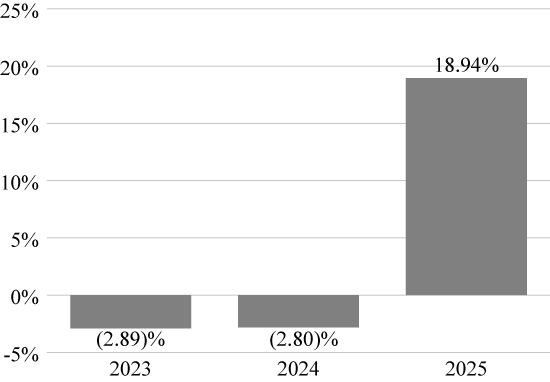
| th Quarter 2025 | ||
| - |
nd Quarter 2024 |
16
Average Annual Total Returns
(For the periods ended December 31, 2025)
| One Year | Since Inception | |
| Return Before Taxes | ||
| Return After Taxes on Distributions | ||
| Return
After Taxes on Distributions and Sale of Fund Shares |
||
| Bloomberg Global-Aggregate Total Return Index | ||
| ICE BofA SOFR Overnight Rate Index | ||
| SGA CTA Index | - |
- |
Management. IDX Advisors, LLC is the investment adviser to the Fund.
Portfolio Manager. Ben McMillan and Joshua Myers have managed the Fund since its inception.
Purchase and Sale of Fund Shares. The Fund offers Institutional Class shares only, which is offered by this Prospectus. The minimum investment for Institutional Class is $10,000. The Fund may waive these minimums at its discretion. Investors generally may meet the minimum investment amount for the Institutional Class by aggregating multiple accounts within the Fund if desired. There is no subsequent investment minimum. The Fund may, in the Adviser’s sole discretion, accept accounts with less than the minimum investment.
You can purchase or redeem shares directly from the Fund on any business day the NYSE is open by calling the Fund at 216-329-4271, where you may also obtain more information about purchasing or redeeming shares by mail, facsimile, or bank wire. The Fund has also authorized certain broker-dealers to accept purchase and redemption orders on its behalf. Investors who wish to purchase or redeem Fund shares through a broker-dealer should contact their broker-dealer directly.
Tax Information. For U.S. federal income tax purposes, the Fund’s distributions are taxable and will be taxed as ordinary income, capital gains, or, in some cases, qualified dividend income of individual shareholders subject to tax at maximum federal rates applicable to long-term capital gains, unless you are investing through a tax-deferred arrangement, such as a 401(k) plan or an IRA. Such tax-deferred arrangements may be subject to U.S. federal income tax at rates applicable to ordinary income upon withdrawal of monies from those arrangements.
Payments to Broker-Dealers and Other Financial Intermediaries. If you purchase shares of the Fund through a broker-dealer or other financial intermediary (such as a bank), the Fund may pay the intermediary for the sale of Fund shares and related services. These payments may create a conflict of interest by influencing the broker-dealer or other intermediary and your salesperson to recommend the Fund over another investment. Ask your salesperson or visit your financial intermediary’s website for more information.
17
Purchases through Broker-Dealers and Other Financial Intermediaries. You may be charged a fee if you effect transactions through a broker or agent. The Fund has authorized one or more brokers to receive on its behalf purchase and redemption orders. Such brokers are authorized to designate other intermediaries to receive purchase and redemption orders on the Fund’s behalf. The Fund will be deemed to have received a purchase or redemption order when an authorized broker or, if applicable, a broker’s authorized designee, receives the order. Customer orders will be priced at the Fund’s NAV next computed after they are received by an authorized broker or the broker’s authorized designee.
18
INVESTMENT OBJECTIVES, STRATEGIES, RISKS AND PORTFOLIO HOLDINGS
The Fund’s Investment Objectives and Principal Investment Strategies. This section of the Prospectus provides additional information about the investment practices and related risks of the Fund. The Fund’s investment objective may be changed without shareholder approval; however, the Fund will provide 60 days’ advance notice to shareholders before implementing a change in the Fund’s investment objective.
The Fund pursues its investment objective by investing globally across a wide range of asset classes, including commodities, equities, fixed income, digital assets, and currencies, and may take both long and short positions in each of the asset classes or Instruments (as defined below). While the Fund expects to invest about 30% to 50% in long and short positions of commodity-related companies, as defined below, its tactical allocation will include investments in other sectors. The Fund can invest in U.S. and foreign companies of any size, including issuers from emerging markets.
The Fund is actively managed and has flexibility to over-or underweight sectors, at the Adviser’s discretion. There is no stated limit on the percentage of assets the Fund can invest in any one sector, and at times the Fund may focus on a small number of sectors.
The Fund does not invest in commodities directly, rather, it invests in the equity and fixed-income securities of commodity-related companies whose operations relate to commodities, natural resources, energy, real estate, or other “hard assets,” and companies that provide services or have exposure to such businesses, and commodity-related derivatives and Instruments. The Fund can shift its allocation across asset classes and markets around the world by assessing their relative attractiveness, as determined the Adviser. This means the Fund may concentrate its investments in any one asset class or geographic region, subject to any limitations imposed by the federal securities and tax laws, including the Investment Company Act of 1940, as amended (the “1940 Act”).
Digital assets include direct (e.g., spot) or indirect (e.g., futures or operating companies) exposure to bitcoin, ether, or other digital assets (collectively, “Digital Assets”). The Fund defines “other digital assets” as cryptocurrencies and blockchain-based or decentralized assets that are traded on a digital exchange. These assets include, but are not limited to, digital currencies such as bitcoin and ethereum, as well as other tokens and digital representations of value created, stored, and exchanged on blockchain networks. These assets are characterized by their decentralized nature, meaning any single entity does not control them, and their transactions are recorded on a distributed ledger technology known as blockchain. The Fund does not directly invest in bitcoin, ether, or other digital assets or in any digital assets traded OTC, such as pooled investment vehicles or the OTC trusts.
Portfolio Construction.
IDX Advisors, LLC, (the “Adviser”) uses a bottom-up analysis process that considers quantitative and qualitative investment factors, including price and volume data (e.g., momentum and/or mean-reversion), macroeconomic data, fundamental valuation, term structure (e.g., carry), and other factors. Each of these factors is described in more detail in the statutory prospectus.
| ● | Momentum: Momentum strategies favor investments that have performed well over the past few months, seeking to capture the tendency that an asset’s recent performance will continue. The Fund will generally seek to buy assets that recently outperformed and sell those that recently underperformed relative to their historical averages and other asset classes. Examples of momentum measures include simple price momentum for selecting equities and price- and yield-based momentum for selecting fixed-income securities. |
19
| ● | Mean-Reversion: At some point in time, momentum may carry an asset far beyond its historic averages. In such cases, the Fund will shift from a momentum strategy to a mean-reversion strategies, which recognize that over certain time frames, investments that have performed very well or poorly exhibit a tendency to revert to their historic averages over time. The Fund may seek to sell investments (or reduce existing exposures) in assets that have demonstrated extreme recent outperformance relative to their historic averages and buy (or reduce short exposures) in assets that have extreme recent underperformance (e.g., “oversold” conditions). |
| ● | Macroeconomic Data: The Adviser seeks to evaluate the impact of macroeconomic news and macroeconomic momentum on the attractiveness of Instruments and asset classes around the world. Macroeconomic themes considered include but are not limited to, business cycles, international trade, monetary policy, investor sentiment, political developments, environmental trends, and asset-specific fundamentals. |
| ● | Fundamental valuation: The Adviser seeks to evaluate investments and favor those that appear comparatively cheap relative to those that appear expensive based on fundamental measures related to price. Over time, the Adviser believes that relatively cheap assets will outperform relatively expensive assets. |
| ● | Term-Structure: Carry strategies favor investments with higher yields over those with lower yields, seeking to capture the tendency for higher-yielding assets to provide higher returns than lower-yielding assets. The Fund will seek to buy high-yielding assets and sell low-yielding assets relative to similar investments globally and relative to their historical averages. An example of carry measures includes using interest rates to select currencies and fixed-income securities. |
The Adviser considers each of the primary investment factors (momentum, macroeconomic data, fundamental value, and term structure) when constructing the Fund’s portfolio. Over time, the Fund seeks to capture most of the upside participation in the asset classes through long positions, while limiting the downside exposure through short positions. The owner of a long position in an Instrument will benefit from an increase in the price of the underlying instrument. The owner of a short position in an Instrument will benefit from a decrease in the price of the underlying instrument. The Adviser will generally seek to allocate among instruments and asset classes in such a way that it enhances the risk-adjusted return relative to a long-only allocation. The Adviser expects this approach will reduce volatility and drawdowns while capturing the majority of the upside of the underlying markets.
Volatility is a statistical measurement of the dispersion of returns of an asset, as measured by the annualized standard deviation of its returns. The Adviser expects that the Fund’s annualized volatility will typically be lower than a long-only allocation, but the Fund’s actual volatility level in certain periods may be materially higher or lower depending on market conditions. Higher volatility generally indicates higher risk. The Adviser generally expects that the Fund’s performance will have a low correlation to the performance of global equity, fixed income, currency, and commodity markets over any given market cycle, but the Fund’s performance may correlate to the performance of any one or more of those markets over short-term periods.
The Fund will invest across sectors. In allocating assets among sectors, the Adviser will largely employ a trend-following approach that seeks to balance the allocation of risk (as measured by proprietary and established risk measures such as annualized standard deviation) over time. The Adviser uses its proprietary quantitative model to statistically gauge the strength of price trends. The model uses publicly available daily price information to evaluate momentum measures and determine appropriate allocations. The Adviser will also use its models to manage the allocation of investments across sectors based on the Adviser’s assessment of a sector’s risk and prevailing market conditions. Shifts in allocations among sectors will be determined following various quantitative signals based upon the Adviser’s research, that rely on the evaluation of technical and fundamental indicators, such as trends in historical prices, spreads between futures’ prices of differing expiration dates, supply/demand data, momentum, and macroeconomic data of commodity consuming countries.
20
During stressed or abnormal market conditions, including periods when the Adviser believes it is prudent to take a temporary defensive position, the Fund will reduce its exposure to certain asset classes significantly, including eliminating the asset class from the portfolio. The Fund defines stressed or abnormal market conditions as a significant drop in the price of the underlying assets over a short trading period. The targeted risk at any given point in time can vary based on a number of factors, including the Adviser’s systematic tactical views. The desired overall risk level of the Fund may be increased or decreased by the Adviser, subject to the Adviser’s risk controls which may result in the Adviser’s targeted risk level not being achieved in certain circumstances.
Derivatives and Instruments.
In seeking to achieve its investment objective, the Fund will enter into both long and short positions using derivative instruments such as futures, forwards, options, and swaps, including equity index futures, swaps on equity index futures, equity swaps, and options on equity indices, fixed income futures, bond and interest rate futures, and credit default index swaps (collectively, “Derivatives”). Futures and forward contracts are contractual agreements to buy or sell a particular currency, commodity, or financial instrument at a pre-determined price in the future.
The Fund may also invest in fixed-income securities, including U.S. Government securities, U.S. Government agency securities (including inflation-linked bonds, such as TIPS, short-term fixed-income securities, overnight or fixed-term repurchase agreements, money market fund shares corporate bonds, ETFs and “ETNs, foreign government bonds, and repurchase (“repo”) and reverse repo agreements. (collectively with Derivatives, the “Instruments”). Under a repo agreement, the Fund buys securities that the seller has agreed to buy back at a specified time and at a set price. Under a reverse repo agreement, the Fund sells securities to another party and agrees to repurchase them at a particular date and price. Leverage may be created when the Fund enters into reverse repo agreements, as noted in the Principal Risks below. The Fund will primarily invest in Derivatives for investment purposes, although it may do so for tax purposes.
The Fund may invest in Instruments listed on U.S. or non-U.S. exchanges, some of which could be denominated in currencies other than the U.S. dollar. Although the Fund is not required to hedge against currency value changes, it expects to hedge its non-U.S. currency exposure. The Adaptive Fund may invest in or have exposure to issuers of any size. The Fund may invest in or have exposure to U.S. or non-U.S. issuers. The Fund will either invest directly in the Instruments or indirectly by investing in the Adaptive Subsidiary (as described below) that invests in the Instruments.
The Fund’s use of Derivatives will have the economic effect of financial leverage. Leverage will magnify exposure to the movements in prices of an asset class underlying a Derivative, which will result in increased volatility. This means the Fund will have the potential for greater gains, as well as the potential for greater losses, than if the Fund did not use Derivatives that have a leveraging effect. For example, if the Adviser seeks to gain enhanced exposure to a specific asset class through a Derivative providing leveraged exposure to the class and that Derivative increases in value, the gain to the Fund will be magnified. If that investment decreases in value, however, the loss to the Fund will be magnified. As a result of the Fund’s strategy, the Fund may have highly leveraged exposure to one or more asset classes at times. A decline in the Fund’s assets due to losses magnified by the Derivatives providing leveraged exposure may require the Fund to liquidate portfolio positions to satisfy its obligations, to meet redemption requests, or to meet asset segregation requirements when it may not be advantageous to do so. While the Fund normally does not engage in any direct borrowing, leverage is implicit in the futures and other derivatives it trades. There is no assurance that the Fund’s use of Derivatives providing enhanced exposure will enable the Fund to achieve its investment objective. The 1940 Act and the rules and interpretations thereunder impose certain limitations on the Fund’s ability to use leverage.
21
The Fund intends to make investments through a wholly-owned and controlled subsidiary of the Fund (the “Subsidiary”) and may invest up to 25% of its total assets in the Subsidiary, which is organized under the laws of the Cayman Islands as an exempted company. Generally, the Subsidiary will invest primarily in Derivatives and other investments intended to serve as margin or collateral for the Subsidiary’s Derivative positions. The Fund will invest in the Subsidiary to gain exposure to the commodities, digital assets, and derivatives markets within the limitations of the federal tax laws, rules, and regulations that apply to registered investment companies. Unlike the Fund, the Subsidiary may invest without limitation in derivatives; however, the Subsidiary will comply with the same 1940 Act asset coverage requirements for its investments in derivatives that apply to the Fund’s transactions in derivatives. In addition, the Fund and the Subsidiary will be subject to the same fundamental investment restrictions on a consolidated basis and, to the extent applicable to the investment activities of the Subsidiary, it will follow the same compliance policies and procedures as the Fund. Unlike the Fund, the Subsidiary will not seek to qualify as a RIC under Subchapter M of the Code. The Fund is the sole shareholder of the Subsidiary and does not expect shares of it to be offered or sold to other investors.
Commodity Investments.
The Fund (including its Subsidiary) pursues its investment objective by allocating assets among various commodity sectors (including agricultural, energy, livestock, softs (e.g., non-grain agricultural products such as coffee, sugar, cocoa, etc.), and precious and base metals). Commodities are assets that have tangible properties, such as oil, metals, and agricultural products. The Fund will obtain exposure to commodity sectors by investing in commodity-linked Derivatives, directly or through the Subsidiary, not through direct investments in physical commodities. The Fund may also invest in ETFs, ETPs, ETNs, and commodity pools that provide exposure to such sectors. The Fund will limit its investments in other pooled investment vehicles so that no single pool represents more than 25% of the Fund’s total assets to satisfy asset diversification requirements under the Code.
Equity Investments.
The Fund may invest directly or indirectly in equity securities of issuers in any sector, including the commodity, financial, and technology sectors. While the Fund can hold equity securities such as common stocks, preferred stocks, convertible securities, warrants, depositary receipts, and other instruments whose price is linked to the value of common stock, The Fund will gain most of its equity exposure through ETFs.
For commodities, the Fund will invest in commodity-related companies whose operations relate to commodities, natural resources, energy, real estate or other “hard assets,” and companies that provide services or have exposure to such businesses. These companies include companies engaged in the exploration, ownership, production, refinement, processing, transportation, distribution or marketing of commodities and use them extensively in their products and companies that provide technology and services to commodity-related companies. This includes companies that are engaged in businesses such as integrated oil, oil, and gas exploration and production, energy services and technology, chemicals and oil products, coal and other consumable fuels, gold and precious metals, metals and minerals, forest products, agricultural chemicals and services, farmland, alternative energy sources, environmental services and agricultural products (including crop growers, owners of plantations, and companies that produce and process foods), as well as related transportation companies, equipment manufacturers, service providers and engineering, procurement and construction. companies.
Fixed Income Investments.
A significant portion of the assets of the Fund may be invested directly or indirectly in investment-grade fixed-income securities, cash, and cash equivalents with one year or less term to maturity and an average portfolio duration of one year or less. The Fund defines “investment-grade” as fixed-income securities being rated no lower than the A category by Standard & Poor’s Ratings Group, Moody’s Investors Service, or Fitch Ratings, Inc. The fixed income portion of the Fund is intended to provide liquidity and preserve capital, and to serve as margin or collateral for the Fund’s or e Subsidiary’s derivative positions. These cash or cash equivalent holdings also serve as collateral for the positions the Fund takes and earn income for the Fund. The Adviser seeks to develop an appropriate fixed-income portfolio by considering the differences in yields among securities of different maturities, market sectors, and issuers.
22
Additional Portfolio Information.
The Fund generally does not intend to close out, sell, or redeem its Instruments except (i) to meet redemptions or (ii) when an Instrument is nearing expiration, at which point the Fund will generally sell it and use the proceeds to buy another Instrument with a later expiration date to maintain its commodities exposure. This is commonly referred to as “rolling.”
The Fund’s strategy engages in frequent portfolio trading, which may result in a higher portfolio turnover rate than a fund with less frequent trading, and correspondingly greater transactional expenses, which are borne by the Fund and its shareholders, and may have adverse tax consequences on them. The Adviser considers the transaction costs associated with trading each Instrument and takes this into consideration when determining the appropriate frequency for trading. The Fund also employs sophisticated proprietary trading techniques to mitigate trading costs and the execution impact on the Fund.
Temporary Defensive Positions. The Fund may, from time to time, take temporary defensive positions that are inconsistent with the Fund’s principal investment strategies to respond to adverse market, economic, political, or other conditions. During such an unusual set of circumstances, the Fund may hold up to 100% of its portfolio in cash or cash equivalent positions. When the Fund takes a temporary defensive position, the Fund may not be able to achieve its investment objective.
Cash Position. The Fund may not always stay fully invested. For example, when the portfolio manager believes that market conditions are unfavorable for profitable investing, or when he is otherwise unable to locate attractive investment opportunities, the Fund’s cash or similar investments may increase. In other words, cash or similar investments generally are a residual – they represent the assets that remain after the Fund has committed available assets to desirable investment opportunities. When the Fund’s investments in cash or similar investments increase, it may not participate in market advance or declines to the same extent that it would if the Fund remained more fully invested. The Fund may also maintain cash positions to remain in compliance with certain regulations or margin requirements.
General Information Regarding Investing in the Fund. An investment in the Fund should not be considered a complete investment program. Your investment needs will depend largely on your financial resources and individual investment goals and objectives, and you should consult with your financial professional before making an investment in the Fund.
Additional Information Regarding Investment Strategies. Regarding any percentage restriction on investment or use of assets discussed in this prospectus, if such a percentage restriction is adhered to at the time a transaction is affected, a later increase or decrease in such percentage resulting from changes in values of securities or loans or amounts of net assets or security characteristics will not be considered a violation of the restriction. Any such changes in percentages do not require the sale of the security, but the Adviser will consider which action is in the best interest of the Fund and its shareholders, including the sale of the security.
23
Principal Risks of Investing in the Fund. All investments carry risks and an investment in the Fund is no exception. No investment strategy is successful all the time, and past performance is not necessarily indicative of future performance. You may lose money on your investment in the Fund. To help you understand the risks of investing in the Fund, the principal risks of an investment in the Fund are set forth below:
Market and Volatility Risk – The prices of Digital Assets, Derivatives, and commodities have historically been highly volatile. The value of the Fund’s investments in Digital Assets, Derivatives, and other Instruments that provide exposure to Digital Assets, commodities, and other asset classes could decline significantly and without warning, including to zero. If you are not prepared to accept significant and unexpected changes in the value of the Fund and the possibility that you could lose your entire investment in the Fund you should not invest in the Fund.
Bitcoin Risk – Bitcoin is a relatively new financial innovation and the market for bitcoin is subject to rapid price swings, changes, and uncertainty. These trading platforms are not registered as national securities exchanges under Section 6 of the Securities Exchange Act. Bitcoin and bitcoin Futures are relatively new investments, present unique and substantial risks, and historically have been subject to significant price volatility. The value of bitcoin has been, and may continue to be, substantially dependent on speculation, such that trading and investing bitcoin generally may not be based on fundamental analysis. The further development of the Bitcoin Network and the acceptance and use of bitcoin are subject to a variety of factors that are difficult to evaluate. The slowing, stopping, or reversing of the development of the Bitcoin Network or the acceptance of bitcoin may adversely affect the price of bitcoin. Bitcoin is subject to the risk of fraud, theft, manipulation, or security failures, operational or other problems that impact bitcoin trading venues. Additionally, if one or a coordinated group of miners were to gain control of 51% of the Bitcoin Network, they would have the ability to manipulate transactions, halt payments and fraudulently obtain bitcoin. A significant portion of bitcoin is held by a small number of holders sometimes referred to as “whales”. These holders can manipulate the price of bitcoin.
The Bitcoin protocol, which governs the operation of the Bitcoin blockchain, is open-source and maintained by a decentralized group of developers. While this open-source nature allows for ongoing review and improvement, it also means that the protocol may contain undiscovered flaws or vulnerabilities. Attackers could exploit these flaws to disrupt the Bitcoin Network, compromise the security of transactions, or create other forms of instability. If such vulnerabilities are discovered and exploited, they could undermine trust in the Bitcoin Network, negatively impact the value of bitcoin, and adversely affect the performance of investments in bitcoin and related assets.
Unlike the exchanges for more traditional assets, such as equity securities and futures contracts, bitcoin and bitcoin trading platforms are largely unregulated. As a result of the lack of regulation, individuals or groups may engage in fraud or market manipulation and investors may be more exposed to the risk of theft, fraud, and market manipulation than when investing in more traditional asset classes. Over the past several years, several bitcoin trading venues have been closed due to fraud, failure, or security breaches. Investors in bitcoin may have little or no recourse should such theft, fraud, or manipulation occur and could suffer significant losses. Legal or regulatory changes may negatively impact the operation of the Bitcoin Network or restrict the use of bitcoin. The realization of any of these risks could result in a decline in the acceptance of bitcoin and consequently a reduction in the value of bitcoin, bitcoin futures, and the Fund. Finally, the creation of a “fork” (as described above) or a substantial giveaway of bitcoin (sometimes referred to as an “air drop”) may result in a significant and unexpected decline in the value of bitcoin, and bitcoin futures. A number of factors impact the price and market for bitcoin and bitcoin Futures.
24
The Bitcoin blockchain, while established as the first decentralized crypto asset, faces significant challenges from the emergence of other public, permissionless blockchains that are designed to serve as alternative payment systems. Some of these alternative blockchains focus on enhancing privacy through advanced technologies like zero-knowledge cryptography, which allows for secure, anonymous transactions. These competing blockchains may offer advantages such as greater transaction privacy, faster processing times, and lower fees, which could attract users and reduce the demand for the Bitcoin Network. In addition to competition from alternative blockchains, the Bitcoin blockchain itself has inherent impediments and disadvantages as a payment network, including:
| 1. | Slowness of Transaction Processing and Finality: Bitcoin transactions can take several minutes to hours to process and achieve finality, particularly during periods of high network congestion. This slowness is due to the Bitcoin Network’s limited block size and the time required to confirm transactions through the proof-of-work consensus mechanism. |
| 2. | Variability of Transaction Fees: The cost of processing Bitcoin transactions is highly variable, depending on network demand. During periods of heavy use, transaction fees can increase significantly, making it expensive for users to conduct transactions on the Bitcoin Network. This variability can deter users from adopting Bitcoin as a reliable payment method. |
| 3. | Price Volatility: Bitcoin’s price is subject to significant volatility, which can undermine its utility as a stable medium of trading. This volatility makes it challenging for users and merchants to price goods and services in bitcoin, reducing its attractiveness as a payment network. |
These challenges and the emergence of alternative blockchains could negatively impact the adoption and usage of the Bitcoin Network as a payment system. As a result, the value of bitcoin may be adversely affected, which could, in turn, impact the performance of investments in bitcoin, bitcoin Futures, and related assets.
The further development and widespread use of the Bitcoin blockchain for its intended purposes as a payment network and decentralized crypto asset are increasingly dependent on “Layer 2” solutions. Layer 2 networks are protocols or technologies built on the existing Bitcoin blockchain to enhance scalability, speed, and efficiency. One of Bitcoin’s most prominent Layer 2 solutions is the Lightning Network.
Lightning Network is designed to enable faster and cheaper transactions by creating off-chain payment channels between users. These channels allow multiple transactions to occur between parties without requiring each transaction to be recorded on the Bitcoin blockchain. Only the opening and closing balances of the channel are recorded on the main blockchain, significantly reducing congestion and transaction fees.
However, the reliance on Layer 2 solutions like the Lightning Network poses certain risks and challenges to the Bitcoin blockchain, including:
| 1. | Adoption and Usability: The effectiveness of Layer 2 solutions depends on widespread adoption by users, developers, and merchants. If adoption is slow or limited, the benefits of these solutions may not be fully realized, potentially reducing their impact on the Bitcoin Network’s scalability and transaction speed. |
| 2. | Security Risks: While Layer 2 solutions aim to enhance the Bitcoin Network, they also introduce new security challenges. For example, the Lightning Network relies on smart contracts and off-chain transactions, which could be vulnerable to bugs, malicious attacks, or operational failures. Such risks could undermine the security and reliability of transactions conducted through Layer 2 networks. |
25
| 3. | Complexity and Centralization: Layer 2 solutions can add complexity to the overall Bitcoin ecosystem, making it more difficult for average users to participate. Additionally, there is a risk that the use of Layer 2 networks could lead to increased centralization if certain entities gain disproportionate control over the operation or development of these networks. |
These risks and challenges highlight the importance of successfully implementing and adopting Layer 2 solutions for the continued growth and utility of the Bitcoin blockchain. Any issues with Layer 2 networks could adversely affect the scalability and effectiveness of Bitcoin, potentially impacting its value and the performance of investments in bitcoin and related assets.
Finally, bitcoin and bitcoin Futures are also exposed to the instability of other speculative parts of the crypto assets industry. Events such as the collapse of TerraUSD in May 2022 and FTX Trading Ltd. in November 2022, while not directly related to the security or utility of the Bitcoin blockchain, can nonetheless trigger significant declines in the price of bitcoin or bitcoin Futures. These events highlight the interconnectedness of the broader crypto market and the potential for external shocks to impact the value of bitcoin and related Futures, regardless of its underlying technology or use case.
26
Blockchain Forks Risk – A blockchain fork occurs when protocol changes create two separate, incompatible versions, each with its own digital assets. This can lead to market disruption, price volatility, and competition between the resulting blockchains. Forks have occurred in both the Bitcoin and Ethereum Networks, creating new assets like Bitcoin Cash and Ethereum Classic. These events can negatively impact the value and liquidity of the original assets and their related futures, posing significant risks to investors.
Digital Asset Trading Platform Risk – Bitcoin, the Bitcoin Network, ether, the Ethereum Network, and Digital Asset trading venues are relatively new and, in most cases, largely unregulated. As a result of this lack of regulation, individuals, or groups may engage in insider trading, fraud, or market manipulation with respect to Digital Assets. Such manipulation could cause investors in Digital Assets to lose money, possibly the entire value of their investments. Additionally, some Digital Asset trading platforms may not comply with applicable law, and such non-compliance may cause such platforms to close operations in certain jurisdictions or be subject to regulatory investigations.
27
Digital Asset trading platforms, where bitcoin and ether are traded, are not regulated as exchanges under federal securities laws and may lack consistent regulatory oversight. As a result, these platforms are more susceptible to fraud, manipulation, and operational issues. Additionally, these crypto trading platforms are or may become subject to enforcement actions by regulatory authorities, which could impact their operations, liquidity, and the overall stability of the markets for these digital assets. Such enforcement actions may result in restrictions, fines, or other penalties that could adversely affect the trading of crypto assets, leading to increased volatility and potential losses for investors.
Over the past several years, some digital asset trading venues have been closed due to fraud, failure, or security breaches. The nature of the assets held at digital asset trading venues makes them appealing targets for hackers, and several digital asset trading venues have been victims of cybercrimes and other fraudulent activities. These activities have caused significant, in some cases total, losses for Digital Asset investors. Investors in Digital Assets may have little or no recourse should such theft, fraud, or manipulation occur. No central registry shows which individuals or entities own Digital Assets or the quantity of Digital Assets owned by any particular person or entity. No regulations in place would prevent a large holder of Digital Assets or a group of holders from selling their Digital Assets, which could depress the price of Digital Assets, or otherwise attempt to manipulate the price of Digital Assets. Events that reduce user confidence in Digital Assets and the fairness of digital asset trading venues could harm the price of Digital Assets and the value of an investment in the Fund.
If the crypto asset trading venues, which may serve as a pricing source for the calculation of the BBR or ETHUSD_RR that is used to value the Fund’s investments, become subject to onerous regulations or are subject to enforcement actions by regulatory authorities (including the Financial Crimes Enforcement Network (“FinCEN”), the U.S. Securities and Exchange Commission (“SEC”), CFTC, Financial Industry Regulatory Authority, Inc. (“FINRA”), the Consumer Financial Protection Bureau, the Department of Justice, the Department of Homeland Security, the Federal Bureau of Investigation, the Internal Revenue Service (“IRS”), the Office of the Comptroller of the Currency, the Federal Deposit Insurance Corporation, the Federal Reserve and state financial institution regulators), among other things, trading in bitcoin and ether may be concentrated in a smaller number of trading venues, which may materially impact the price, volatility, and trading volumes of bitcoin and ether. Additionally, the trading venues may be required to comply with tax, anti-money laundering, know-your-customer, and other regulatory requirements, compliance, and reporting obligations that may make it more costly to transact in or trade bitcoin and ether (which may materially impact price, volatility, or trading of bitcoin and ether more generally). Each of these events could harm bitcoin and ether Futures and the value of an investment in the Fund.
Digital Asset trading is fragmented across numerous crypto trading platforms, many of which are not regulated as exchanges under federal securities laws. This fragmentation can lead to higher volatility and price discrepancies across different platforms, increasing the likelihood of price differences and market manipulation. The lack of centralized oversight and regulation also heightens the risk of fraud and manipulation, as these platforms may not adhere to consistent standards for security, transparency, or market integrity. Market participants trading digital assets may seek to hedge or manage their exposure by taking offsetting positions in Digital Assets on these platforms. However, the fragmented nature of the market may require participants to analyze multiple prices, which may be inconsistent, quickly changing, and potentially subject to manipulation. This fragmentation also may require participants to fill their positions through multiple transactions on different platforms, increasing the cost, uncertainty, and risk of trading. These factors may reduce the effectiveness of using Digital Asset transactions to manage or offset positions in Digital Assets. Market participants who cannot fully or effectively hedge their positions in Digital Asset may widen bid-ask spreads on such contracts, potentially decreasing the trading volume and liquidity of these contracts and negatively impacting their price.
28
Digital Asset-Related Operating Company Risk – The Fund may invest in Digital Asset-related companies, which are companies that derive a significant portion of their revenue or hold substantial assets related to Digital Assets such as bitcoin, ether, or blockchain technology. However, the extent to which these companies have economic exposure to bitcoin, ether, or other Digital Assets may vary significantly. Some companies may derive a substantial portion of their revenue or assets from Digital Asset-related activities, while others may have limited exposure to these markets. This variability can affect the Fund’s exposure to Digital Assets and may influence its performance based on these companies’ underlying activities.
Investing in Digital Asset-related companies involves several risks, including variability in the economic exposure to bitcoin, ether, or other Digital Assets, non-blockchain or crypto-related activities, operational, and regulatory risks.
| ● | Companies with greater exposure to Digital Assets will be more directly affected by the volatility and regulatory risks associated with the Digital Asset markets. Conversely, companies with limited exposure may not benefit as much from positive developments in the Digital Asset space, potentially reducing the Fund’s overall exposure to the growth of these assets. |
| ● | Many Digital Asset-related companies may also engage in non-blockchain or non-crypto-related activities, which could introduce additional risks and uncertainties that are not directly related to Digital Assets. For example, a company that operates a crypto trading platform may also be involved in unrelated business ventures, such as traditional financial services or technology development. These non-crypto activities could negatively impact the company’s overall performance and, by extension, the performance of the Fund. Moreover, adverse developments in these other business areas could detract from the company’s focus on its Digital Asset-related operations, further affecting its financial results. |
| ● | Companies involved in the Digital Asset ecosystem may face operational challenges like technological issues, cybersecurity threats, and regulatory scrutiny. These risks can be amplified by the company’s involvement in Digital Assets, where the regulatory environment is still evolving, and the technology is complex and rapidly changing. Additionally, companies that diversify their operations across blockchain-related and traditional sectors may face difficulties managing these diverse business activities, adversely affecting their overall operational effectiveness. |
Many Digital Asset-related companies may operate in a rapidly evolving and uncertain regulatory environment, which could result in non-compliance with existing regulations and potential enforcement actions by regulatory authorities. Such actions, including fines, penalties, or business restrictions, could significantly impact these companies’ operations and, in turn, negatively affect the Fund’s performance.
Counterparty Risk — Investing in derivatives and repurchase agreements involves entering into contracts with third parties (i.e., counterparties). The use of derivatives and repurchase agreements involves risks that are different from those associated with ordinary portfolio securities transactions. The Fund will be subject to credit risk (i.e., the risk that a counterparty is or is perceived to be unwilling or unable to make timely payments or otherwise meet its contractual obligations) with respect to the amount it expects to receive from counterparties to derivatives and repurchase agreements entered into by the Fund. If a counterparty becomes bankrupt or fails to perform its obligations, or if any collateral posted by the counterparty for the benefit of the Fund is insufficient or there are delays in the Fund’s ability to access such collateral, the value of an investment in the Fund may decline. The counterparty to a listed futures contract is the derivatives clearing organization for the listed future. The listed future is held through a FCM acting on behalf of the Fund. Consequently, the counterparty risk on a listed futures contract is the creditworthiness of the FCM and the exchange’s clearing corporation.
29
Portfolio Turnover Risk — The Fund may incur high portfolio turnover to manage the Fund’s investment exposure. Additionally, active trading of the Fund’s shares may cause more frequent purchase and sales activities that could, in certain circumstances, increase the number of portfolio transactions. High levels of portfolio transactions increase brokerage and other transaction costs and may result in increased taxable capital gains. Each of these factors could have a negative impact on the performance of the Fund.
Tax Risk — In order to qualify for the special tax treatment accorded a RIC and its shareholders, the Fund must derive at least 90% of its gross income for each taxable year from “qualifying income,” meet certain asset diversification tests at the end of each taxable quarter, and meet annual distribution requirements. The Fund’s pursuit of its investment strategies will potentially be limited by the Fund’s intention to qualify for such treatment and could adversely affect the Fund’s ability to so qualify. The Fund can make certain investments, the treatment of which for these purposes is unclear. If, in any year, the Fund were to fail to qualify for the special tax treatment accorded a RIC and its shareholders, and were ineligible to or were not to cure such failure, the Fund would be taxed in the same manner as an ordinary corporation subject to U.S. federal income tax on all its income at the fund level. The resulting taxes could substantially reduce the Fund’s net assets and the amount of income available for distribution. In addition, to requalify for taxation as a RIC, the Fund could be required to recognize unrealized gains, pay substantial taxes and interest, and make certain distributions.
Non-Diversification Risk – The Fund is classified as “non-diversified” under 1940 Act. This means it can invest a relatively high percentage of its assets in the assets of a small number of issuers or in financial instruments with a single counterparty or a few counterparties. This may increase the Fund’s volatility and increase the risk that the Fund’s performance will decline based on the performance of a single issuer or the credit of a single counterparty. A non-diversified fund’s greater investment in a single issuer or asset type makes the Fund more susceptible to financial, economic, and market events impacting such issuer or asset type. For the Fund’s portfolio, a decline in the value of futures contracts will have a greater negative effect than a similar decline or default by a single security in a diversified portfolio.
ETF Risk – The Fund may invest in ETFs as part of its principal investment strategies. ETFs are subject to investment advisory and other expenses, which the Fund will indirectly pay. As a result, your cost of investing in the Fund will be higher than the cost of investing directly in ETFs and may be higher than other mutual funds that do not invest in such investments. ETFs are listed on national stock exchanges and are traded like stocks listed on an exchange. The market price for the Fund’s shares may deviate from the Fund’s NAV, particularly during times of market stress, with the result that investors may pay significantly more or receive significantly less for Fund shares than the Fund’s NAV, which is reflected in the bid and ask price for Fund shares or in the closing price.
| ● | Tracking Risk. ETFs in which the Fund invests will not be able to replicate exactly the performance of any indices or prices they track because the total return generated by the securities will be reduced by transaction costs incurred in adjusting the actual balance of the securities or derivatives. In addition, the index-tracking ETFs will incur expenses not incurred by their applicable indices. Certain securities comprising an index may temporarily be unavailable occasionally, further impeding the security’s ability to track an index. |
30
| ● | Authorized Participants Concentration Risk. The Fund may have limited financial institutions that may act as Authorized Participants. If those Authorized Participants exit the business or cannot process creation or redemption orders, Shares may trade at larger bid-ask spreads and/or premiums or discounts to NAV. Authorized Participant concentration risk may be heightened for a fund that invests in non-U.S. or other securities or instruments with lower trading volumes. |
| ● | Absence of Active Market Risk. Although Shares are listed for trading on a stock exchange, there is no assurance that an active trading market for them will develop or be maintained. Without an active trading market for Shares, they will likely trade with a wider bid/ask spread and at a greater premium or discount to NAV. |
| ● | Market Price Variance Risk. Fund Shares can be bought and sold in the secondary market at market prices, which may be higher or lower than the Fund’s NAV. When Shares trade at a price greater than NAV, they are said to trade at a “premium.” When they trade at a price less than NAV, they are said to trade at a “discount.” The market price of Shares fluctuates based on changes in the value of the Fund’s holdings and on the supply and demand for Shares. The market price of Shares may vary significantly from the Fund’s NAV, especially during market volatility. Further, to the extent that exchange specialists, market makers, Authorized Participants, or other market participants are unavailable or unable to trade the Fund’s Shares and/or create or redeem creation units premiums or discounts may increase. |
| ● | Trading Cost Risk. When buying or selling shares of the Fund in the secondary market, you will likely incur brokerage commission or other charges. In addition, you may incur the cost of the “spread,” also known as the bid-ask spread, which is the difference between what investors are willing to pay for Fund shares (the “bid” price) and the price at which they are willing to sell Fund shares (the “ask” price). The bid-ask spread varies over time based on, among other things, trading volume, market liquidity and market volatility. Because of the costs inherent in buying or selling Fund shares, frequent trading may detract significantly from investment results, and investment in Fund shares may not be advisable for investors who anticipate regularly making small investments due to the associated trading costs. |
| ● | Exchange Trading Risk. Trading in Shares on their listing exchange may be halted due to market conditions or for reasons that, in the view of the exchange, make trading in Shares inadvisable, such as extraordinary market volatility. Also, there is no assurance that Shares will continue to meet the exchange’s listing requirements, and Shares may be delisted. Like other listed securities, Shares of the Fund may be sold short, and short positions in Shares may place downward pressure on their market price. |
Other Investment Companies Risk - As with other investments, investments in other investment companies are subject to market and manager risk. In addition, if the Fund acquires shares of investment companies, shareholders bear both their proportionate share of expenses in the Fund (including management and advisory fees) and, indirectly, the investment companies’ expenses. The Fund may invest in money market mutual funds. An investment in a money market mutual fund is not insured or guaranteed by the Federal Deposit Insurance Corporation or any other government agency. Although money market mutual funds that invest in U.S. government securities seek to preserve the value of the Fund’s investment at $1.00 per share, it is possible to lose money by investing in a stable NAV money market mutual fund. Moreover, prime money market mutual funds must use floating NAVs that do not preserve the value of the Fund’s investment at $1.00 per share.
31
Commodities Risk – Exposure to the commodities markets may subject the Fund to greater volatility than investments in traditional securities. The value of commodity-linked derivative investments may be affected by changes in overall market movements, commodity index volatility, changes in interest rates, or factors affecting a particular industry or commodity, such as drought, floods, weather, embargoes, tariffs, and international economic, political, and regulatory developments. Additionally, the Fund may gain exposure to the commodities markets through investments in ETPs, the value of which may be influenced by, among other things, time to maturity, level of supply and demand for the product, volatility, and lack of liquidity in underlying markets, the performance of the reference instrument, changes in the issuer’s credit rating and economic, legal, political or geographic events that affect the reference instrument.
Derivatives Risk – In general, a derivative instrument typically involves leverage (i.e., it provides exposure to potential gain or loss from a change in the level of the market price of the underlying commodity, security, currency, or a basket or index of such investments) in a notional amount that exceeds the amount of cash or assets required to establish or maintain the derivative instrument. Adverse changes in the value or level of the underlying asset or index, which the Fund may not directly own, can result in a loss to the Fund substantially greater than the amount invested in the derivative itself. The use of derivative instruments also exposes the Fund to additional risks and transaction costs. These instruments come in many varieties and have a wide range of potential risks and rewards, and may include futures contracts, forward contracts, options, and swaps. A risk of the Fund’s use of derivatives is that the fluctuations in their values may not correlate perfectly with the overall commodities markets. Additionally, to the extent the Fund is required to segregate or “set aside” liquid assets or otherwise cover open positions with respect to certain derivative instruments, the Fund may be required to sell portfolio instruments to meet these asset segregation requirements. There is a possibility that segregation involving a large percentage of the Fund’s assets could impede portfolio management or the Fund’s ability to meet redemption requests or other current obligations.
| ● | Forward and Futures Contract Risk. The successful use of forward and futures contracts draws upon the Adviser’s skill and experience with respect to such instruments and is subject to special risk considerations. The primary risks associated with the use of forward and futures contracts, which may adversely affect the Fund’s NAV and total return, are (a) the imperfect correlation between the change in market value of the instruments held by the Fund and the price of the forward or futures contract; (b) possible lack of a liquid secondary market for a forward or futures contract and the resulting inability to close a forward or futures contract when desired; (c) losses caused by unanticipated market movements, which are potentially unlimited; (d) the Adviser’s inability to predict correctly the direction of securities prices, interest rates, currency exchange rates and other economic factors; (e) the possibility that the counterparty will default in the performance of its obligations; and (f) if the Fund has insufficient cash, it may have to sell securities from its portfolio to meet daily variation margin requirements, and the Fund may have to sell securities at a time when it may be disadvantageous to do so. |
| ● | Options Risk. An option is an agreement that, for a premium payment or fee, gives the option holder (the purchaser) the right but not the obligation to buy (a “call option”) or sell (a “put option”) the underlying asset (or settle for cash an amount based on an underlying asset, rate, or index) at a specified price (the “Exercise Price”) during a period of time or on a specified date. Investments in options are considered speculative. When the Fund purchases an option, it may lose the premium paid for it if the price of the underlying security or other assets decreased or remained the same (in the case of a call option) or increased or remained the same (in the case of a put option). If a put or call option purchased by the Fund were permitted to expire without being sold or exercised, its premium would represent a loss to the Fund. |
32
| ● | Repurchase Agreements Risk. The Fund may invest in repurchase agreements. When entering into a repurchase agreement, the Fund essentially makes a short-term loan to a qualified bank or broker-dealer. The Fund buys securities that the seller has agreed to buy back at a specified time and at a set price that includes interest. There is a risk that the seller will be unable to buy back the securities at the time required, and the Fund could experience delays in recovering amounts owed to it. |
| ● | Reverse Repurchase Agreements Risk. Reverse repurchase agreements involve the sale of securities held by the Fund with an agreement to repurchase the securities at an agreed-upon price, date, and interest payment. Reverse repurchase agreements involve the risk that the other party may fail to return the securities on time or at all. The Fund could lose money if it cannot recover the securities and the value of the collateral held by the Fund, including the value of the investments made with cash collateral, is less than the value of the securities. These events could also trigger adverse tax consequences to the Fund. Furthermore, reverse repurchase agreements involve the risks that (i) the interest income earned in the investment of the proceeds will be less than the interest expense, (ii) the market value of the securities retained in lieu of sale by the Fund may decline below the price of the securities the Fund has sold but is obligated to repurchase, and (iii) the market value of the securities sold will decline below the price at which the Fund is required to repurchase them. In addition, the use of reverse repurchase agreements may be regarded as leveraging. |
| ● | Short Selling Risk. If a security sold short or other instrument increases in price, the Fund may have to cover its short position at a higher price than the short sale price, resulting in a loss. Because losses on short sales arise from increases in the value of the security sold short, such losses are theoretically unlimited. The Fund may not be able to successfully implement its short sale strategy due to the limited availability of desired securities or for other reasons. |
| ● | Swap Risk. Swaps are subject to tracking risk because they may not be perfect substitutes for the instruments they are intended to hedge or replace. OTC swaps are subject to counterparty default. Leverage inherent in derivatives will tend to magnify the Fund’s losses. |
Fixed Income Securities Risk
| ● | Interest Rate Risk. Interest rate risk is the risk that prices of fixed-income securities generally increase when interest rates decline and decrease when interest rates increase. The Fund may lose money if short-term or long-term interest rates rise sharply or otherwise change in a manner not anticipated by the Adviser. |
| ● | Credit Risk. Credit risk refers to the possibility that the issuer of a security or the issuer of the reference asset of a derivative instrument will not be able to make principal and interest payments when due. Changes in an issuer’s credit rating or the market’s perception of an issuer’s creditworthiness may also affect the value of the Fund’s investment in that issuer. Securities rated in the four highest categories by the rating agencies are considered investment grade but they may also have some speculative characteristics. Investment grade ratings do not guarantee that the issuer will not default on its payment obligations or that bonds will not otherwise lose value. |
| ● | U.S. Government Securities Risk. Treasury obligations may differ in their interest rates, maturities, times of issuance, and other characteristics. Obligations of U.S. Government agencies and authorities are supported by varying degrees of credit but generally are not backed by the full faith and credit of the U.S. Government. No assurance can be given that the U.S. Government will provide financial support to its agencies and authorities if it is not obligated by law to do so. Some of the government agency securities the Fund may purchase are backed only by the credit of the government agency and not by full faith and credit of the United States. |
33
| ● | ETN Risk. Because ETNs are unsecured, unsubordinated debt securities, an investment in an ETN exposes the Fund to the risk that an ETN’s issuer may be unable to pay. In addition, the Fund will bear its proportionate share of the fees and expenses of the ETN, which may cause the Fund’s operating expenses to be higher and its performance to be lower. |
Foreign Investments Risk - Foreign investments often involve special risks that are not present in U.S. investments, which can increase the chances that the Fund will lose money. For example, the Fund may invest in foreign Instruments or hold cash in foreign banks and securities depositories, which may be recently organized or new to the foreign custody business and may be subject to only limited or no regulatory oversight. The economies of certain foreign markets may not compare favorably with the economy of the United States with respect to such issues as growth of gross national product, reinvestment of capital, resources, and balance of payments position. The governments of certain countries may prohibit or impose substantial restrictions on foreign investments in their capital markets or in certain industries. Many foreign governments do not supervise and regulate stock exchanges, brokers, and the sale of securities to the same extent as the United States and may not have laws to protect investors that are comparable to U.S. securities laws. Settlement and clearance procedures in certain foreign markets may result in delays in payment for or delivery of securities not typically associated with settlement and clearance of U.S. investments. The regulatory, financial reporting, accounting, recordkeeping, and auditing standards of foreign countries may differ, in some cases significantly, from U.S. standards.
| ● | Currency Risk. Currency risk is the risk that changes in currency exchange rates will negatively affect securities denominated in, and/or receiving revenues in, foreign currencies. The liquidity and trading value of foreign currencies could be affected by global economic factors, such as inflation, interest rate levels, and trade balances among countries, as well as the actions of sovereign governments and central banks. Adverse changes in currency exchange rates (relative to the U.S. dollar) may erode or reverse any potential gains from the Fund’s investments in securities denominated in a foreign currency or may widen existing losses. |
| ● | Sovereign Debt Risk. The Fund may invest in, or have exposure to, sovereign debt instruments. These investments are subject to the risk that a governmental entity may delay or refuse to pay interest or repay principal on its sovereign debt, due, for example, to cash flow problems, insufficient foreign currency reserves, political considerations, the relative size of the governmental entity’s debt position in relation to the economy or the failure to put in place economic reforms required by the International Monetary Fund or other multilateral agencies. If a governmental entity defaults, it may ask for more time in which to pay or for further loans. There is no legal process for collecting sovereign debt that a government does not pay nor are there bankruptcy proceedings through which all or part of the sovereign debt that a governmental entity has not repaid may be collected. |
| ● | Emerging Markets Risk. Emerging markets are riskier than more developed markets because they tend to develop unevenly and may never fully develop. Investments in emerging markets may be considered speculative. Emerging markets are more likely to experience hyperinflation and currency devaluations, which adversely affect returns to U.S. investors. In addition, many emerging securities markets have far lower trading volumes and less liquidity than developed markets. |
34
Leverage Risk - As part of the Fund’s principal investment strategy, the Fund will invest in Derivatives and other Instruments that provide the economic effect of financial leverage by creating additional investment exposure to the underlying instrument and the potential for greater loss. If the Fund uses leverage through activities such as purchasing Derivatives and other Instruments, the Fund has the risk that losses may exceed the net assets of the Fund. For example, reverse repos create leverage because the value of the securities sold may decline below the price at which the Fund is obligated to repurchase them, resulting in a loss. The Fund’s NAV while employing leverage will be more volatile and sensitive to market movements.
Liquidity Risk - Liquidity risk exists when particular investments of the Fund would be difficult to purchase or sell, possibly preventing the Fund from selling such illiquid securities at an advantageous time or price, or possibly requiring the Fund to dispose of other investments at unfavorable times or prices to satisfy its obligations.
Investment Strategy Risk - The Fund actively invests in Derivatives and other Instruments that provide exposure to various asset classes, including commodities. The Fund does not invest directly in or hold commodities. The price of Derivatives should be expected to differ from the current cash price of the underlying commodity, which is sometimes referred to as the “spot” price. Consequently, the performance of the Fund should be expected to perform differently from the spot price of commodities. These differences could be significant.
| ● | Active Management Risk — The Fund is actively managed, and its performance reflects the investment decisions that the Adviser makes for the Fund. The Adviser’s judgments about the Fund’s investments may prove to be incorrect. If the investments selected and strategies employed by the Fund fail to produce the intended results, the Fund could underperform or have negative returns as compared to other funds with a similar investment objective and/ or strategies. |
| ● | Model and Data Risk – Given the complexity of the strategies of the Fund, the Adviser relies heavily on quantitative models and information and data both proprietary and supplied by third parties (“Models and Data”). Models and Data are used to rank investments and provide risk management insights. The use of predictive models has inherent risks. Because predictive models are generally constructed based on historical data supplied by third parties, the success of relying on such models may depend heavily on the accuracy and reliability of the supplied historical data. In addition, there is an inherent risk that the quantitative models used by the adviser will not be successful in forecasting movements in industries, sectors, or companies or in determining the weighting of investment positions that will enable the Fund to achieve its investment objective. |
| ● | Subsidiary Risk – By investing in the Subsidiary, the Fund is indirectly exposed to the risks associated with the investments made by Subsidiary. Although the Subsidiary is not registered under the 1940 Act, they will provide investors with the same 1940 Act protections the Fund provides. |
Valuation Risk - In certain circumstances (e.g., if the Adviser believes market quotations do not accurately reflect the fair value of an investment, or a trading halt closes an exchange or market early), the Adviser may, subject to the policies and procedures established by the Fund’s Board of Trustees, choose to determine a fair value price as the basis for determining the market value of such investment for such day. The fair value of an investment determined by the Adviser may be different from other value determinations of the same investment. Portfolio investments that are valued using techniques other than market quotations, including “fair valued” investments, may be subject to greater fluctuation in their value from one day to the next than would be the case if market quotations were used. In addition, there is no assurance that the Fund could sell a portfolio investment for the value established for it at any time, and it is possible that the Fund would incur a loss because a portfolio investment is sold at a discount to its established value.
35
Sector Focus Risk – The Fund may invest a significant portion of its assets in a particular sector of the market, the Fund may be especially sensitive to factors and economic risks that specifically affect that sector. As a result, the Fund’s share price may fluctuate more widely than the share price of a fund that is more broadly invested across numerous sectors.
Equity Securities Risk - Common and preferred stocks represent equity ownership in a company. Equity markets are volatile. The price of equity securities will fluctuate and can decline and reduce the value of a portfolio investing in equities. The value of equity securities purchased by the Fund could decline if the financial condition of the companies the Fund invests in declines or if overall market and economic conditions deteriorate. The value of equity securities may also decline due to factors that affect a particular industry or industries, such as labor shortages or an increase in production costs and competitive conditions within an industry. In addition, the value may decline due to general market conditions that are not specifically related to a company or industry, such as real or perceived adverse economic conditions, changes in the general outlook for corporate earnings, changes in interest or currency rates, or generally adverse investor sentiment.
| ● | Small Cap Securities Risk. Small cap companies may have limited product lines or markets. They may be less financially secure than larger, more established companies. They may depend on a small number of key personnel. If a product fails or there are other adverse developments, or if management changes, the Fund’s investment in a small cap or emerging growth company may lose substantial value. In addition, it is more difficult to get information on smaller companies, which tend to be less well known, have shorter operating histories, do not have significant ownership by large investors, and are followed by relatively few securities analysts. The securities of small cap companies generally trade in lower volumes and are subject to greater and more unpredictable price changes than larger cap securities or the market. In addition, small cap securities may be particularly sensitive to changes in interest rates, borrowing costs and earnings. |
| ● | Mid Cap Securities Risk. The securities of mid cap companies generally trade in lower volumes and are generally subject to greater and less predictable price changes than the securities of larger capitalization companies. |
| ● | Large Cap Securities Risk. While large cap companies tend to be more stable than small or mid cap companies, they can still experience significant volatility. These companies may face challenges such as slower growth rates, market saturation, and operational risks that could negatively impact their stock prices. |
| ● | ETP Risk. Investing in ETPs carries several risks, including market risk, where the value of ETPs may fluctuate; tracking error, which can lead to returns differing from the underlying asset; and liquidity risk, making it difficult to buy or sell shares at desired prices. ETPs linked to Digital Assets like bitcoin and ether are subject to high price volatility and regulatory risk, with potential impacts from regulation changes. Additionally, ETPs may involve counterparty, issuer, and leverage risks, which can amplify gains and losses, increasing overall risk for the Fund. |
36
Hedging Transactions Risk - The Adviser, from time to time, employs various hedging techniques. The success of the Fund’s hedging strategy will be subject to the Adviser’s ability to correctly assess the degree of correlation between the performance of the instruments used in the hedging strategy and the performance of the investments in the portfolio being hedged. Since the characteristics of many securities change as markets change or time passes, the success of the Fund’s hedging strategy will also be subject to the Adviser’s ability to continually recalculate, readjust, and execute hedges in an efficient and timely manner. For a variety of reasons, the Adviser may not seek to establish a perfect correlation between such hedging instruments and the portfolio holdings being hedged. Such imperfect correlation may prevent the Fund from achieving the intended hedge or expose the Fund to risk of loss. In addition, it is not possible to hedge fully or perfectly against any risk, and hedging entails its own costs (such as trading commissions and fees).
Other Risks
Early Close/Late Close/Trading Halt Risk — An exchange or market may close early, close late, or issue trading halts on specific securities or financial instruments. As a result, the ability to trade certain securities or financial instruments may be restricted, which may result in the Fund being unable to trade those and other related financial instruments at all. In these circumstances, the Fund may be unable to rebalance its portfolio, may be unable to accurately price its investments and/or may incur substantial trading losses.
Cybersecurity Risk - In connection with the increased use of technologies such as the Internet and the dependence on computer systems to perform necessary business functions, the Fund may be susceptible to operational, information security, and related risks due to the possibility of cyber-attacks or other incidents. Cyber incidents may result from deliberate attacks or unintentional events. Cyber-attacks include, but are not limited to, infection by computer viruses or other malicious software code, gaining unauthorized access to systems, networks, or devices that are used to service the Fund’s operations through hacking or other means for the purpose of misappropriating assets or sensitive information, corrupting data or causing operational disruption. Cyber-attacks may also be carried out in a manner that does not require gaining unauthorized access, such as causing denial-of-service attacks (which can make a website unavailable) on the Fund’s website. In addition, authorized persons could inadvertently or intentionally release confidential or proprietary information stored on the Fund’s systems.
Cybersecurity failures or breaches by the Fund’s third-party service providers (including, but not limited to, the adviser, distributor, custodian, transfer agent and financial intermediaries) may cause disruptions and impact the service providers’ and the Fund’s business operations, potentially resulting in financial losses, the inability of a Fund’s shareholders to transact business and the Fund to process transactions, inability to calculate the Fund’s NAVs, violations of applicable privacy and other laws, regulatory fines, penalties, reputational damage, reimbursement or other compensation costs and/or additional compliance costs. The Fund and its shareholders could be negatively impacted because of successful cyber-attacks against, or security breakdowns of, the Fund or its third-party service providers.
The Fund may incur substantial costs to prevent or address cyber incidents in the future. In addition, there is a possibility that certain risks have not been adequately identified or prepared for. Furthermore, the Fund cannot directly control any cybersecurity plans and systems put in place by third-party service providers. Cybersecurity risks are also present for issuers of securities in which the Fund invests, which could result in material adverse consequences for such issuers, and may cause the Fund’s investment in such securities to lose value.
Natural Disaster/Epidemic Risk — Natural or environmental disasters, such as earthquakes, fires, floods, hurricanes, tsunamis, and other severe weather-related phenomena generally, and widespread disease, including pandemics and epidemics, have been and can be highly disruptive to economies and markets and have recently led, and may continue to lead, to increased market volatility and significant market losses. Such natural disaster and health crises could exacerbate political, social, and economic risks, and result in significant breakdowns, delays, shutdowns, social isolation, and other disruptions to important global, local, and regional supply chains affected, with potential corresponding results on the operating performance of the Fund and its investments. A climate of uncertainty and panic, including the contagion of infectious viruses or diseases, may adversely affect global, regional, and local economies and reduce the availability of potential investment opportunities, and increase the difficulty of performing due diligence and modeling market conditions, potentially reducing the accuracy of financial projections. Under these circumstances, the Fund may have difficulty achieving its investment objectives which may adversely impact Fund performance. Further, such events can be highly disruptive to economies and markets and significantly disrupt the operations of individual companies (including, but not limited to, the Adviser, third-party service providers, and counterparties), sectors, industries, markets, securities and commodity exchanges, currencies, interest and inflation rates, credit ratings, investor sentiment, and other factors affecting the value of the Fund’s investments. These factors can cause substantial market volatility, exchange trading suspensions and closures, changes in the availability of and the margin requirements for certain instruments, and can impact the ability of the Fund to complete redemptions and otherwise affect Fund performance and trading in the secondary market. A widespread crisis would also affect the global economy in ways that cannot necessarily be foreseen. How long such events will last and whether they will continue or recur cannot be predicted. Impacts from these could have a significant impact on the Fund’s performance, resulting in losses to your investment.
37
Operational Risk — The Fund and its service providers and financial intermediaries are subject to operational risks arising from, among other things, human error, systems and technology errors and disruptions, failed or inadequate controls, and fraud. These errors may adversely affect the Fund’s operations, including its ability to execute its investment process, calculate or disseminate its NAV or intraday indicative value in a timely manner, and process creations or redemptions. While the Fund seeks to minimize such events through controls and oversight, there may still be failures and the Fund may be unable to recover any damages associated with such failures. These failures may have a material adverse effect on the Fund’s returns. The Fund relies on order information provided by financial intermediaries to determine the net inflows and outflows. As a result, the Fund is subject to operational risks associated with reliance on those financial intermediaries and their data sources. Errors in the order information may result in the purchase or sale of the instruments in which the Fund invests in a manner that may be disadvantageous to the Fund.
Disclosure of Portfolio Holdings. The Fund’s policies and procedures with respect to the disclosure of the Fund’s portfolio securities are described in the Fund’s Statement of Additional Information (“SAI”) and on the Fund’s website at www.idx-funds.com.
MANAGEMENT
Investment Adviser. IDX Advisors, LLC, subject to the oversight of the Board, is responsible for the overall management and administration of the Fund’s business affairs. The Adviser commenced business operations in April 2019 and is registered with the SEC as an investment adviser. As of December 31, 2025, the Adviser had approximately $223 million in assets under management. The Adviser’s principal address is 9311 E Via de Ventura, Suite 105, Scottsdale, AZ 85258. The Adviser is a wholly-owned subsidiary of IDX Global, LLC.
The Adviser has entered into an investment advisory agreement with the Fund (the “Advisory Agreement”) under which the Adviser directs the management of the investments for the Fund, subject to the oversight of the Board. Under the Advisory Agreement, the Adviser is to receive annually 1.49% of the average daily net assets of the Fund.
38
A discussion regarding the basis for the Board’s approval of the Advisory Agreement for the Fund is available in the Fund’s Form N-CSR dated December 31, 2025.
The Adviser has entered into an expense limitation agreement with the Fund under which it has agreed to waive or reduce its fees and to assume other expenses (exclusive of interest, borrowing expenses, Shareholder service fees pursuant to a shareholder service plan, taxes, acquired fund fees and expenses, brokerage fees and commissions, dividend expenses on short sales, litigation expenses, and other expenditures which are capitalized in accordance with GAAP and other extraordinary expenses not incurred in the ordinary course of the Fund’s business) of the Fund in an amount that limits “Total Annual Fund Operating Expenses” to not more than 1.79% for the Fund, through at least April 30, 2027. Subject to approval by the Fund’s Board of Trustees, any waiver under the expense limitation agreement is subject to repayment by the Fund for three years after such fee waiver or expense reimbursements were incurred, if the Fund can make the repayment without exceeding the expense limitation in place at the time of the waiver or reimbursement and at the time of recoupment. Before April 30, 2027, this agreement may not be modified or terminated without the approval of the Board. This agreement will terminate automatically if the Advisory Agreement is terminated.
In addition to the advisory fees described above, the Adviser may also receive certain benefits from its management of the Fund in the form of brokerage or research services received from brokers under arrangements under Section 28(e) of the Securities Exchange Act of 1934, as amended (the “1934 Act”), and the terms of the Advisory Agreement. For a description of these potential benefits, see the description under “Portfolio Transactions and Brokerage Allocation—Brokerage Services” in the SAI.
Portfolio Manager. The portfolio managers are primarily responsible for the day-to-day operation of the Fund. Mr. McMillan has served as a portfolio manager for the Fund since its inception. Mr. Myers has served as a portfolio manager of the Fund since its inception.
More information about the portfolio managers’ compensation, other accounts managed by the portfolio manager, and the portfolio managers’ ownership of securities in the Fund are included in the SAI.
| PORTFOLIO MANAGER | PAST 5 YEARS OF BUSINESS EXPERIENCE |
Ben McMillan
|
Mr. McMillan is the Chief Investment Officer and Chief Technology Officer of the Adviser. He is a principal and founder of IDX Advisors, LLC, IDX Insights, LLC, and IDX Digital Assets, LLC. Mr. McMillan holds an MSc in Econometrics from the London School of Economics as well as an MA and BA in Economics from Boston University. |
| Joshua Myers | Mr. Myers is the Director of Research and Head of Trading for the Adviser. Mr. Myers earned a B.A. with a concentration in the Business Scholars Program from Hanover College. |
Board of Trustees. Trailmark Series Trust, formerly known as IDX Funds, is an open-end management investment company organized as a Delaware statutory trust on May 29, 2015. The Board supervises the operations of the Fund according to applicable state and federal law, and is responsible for the overall management of the Fund’s business affairs.
39
CUSTODIAN, ADMINISTRATOR, DISTRIBUTOR, AND TRANSFER AGENT
Custodian. U.S. Bank, NA (the “Custodian”) serves as the custodian of the Fund’s securities.
Fund Administrator and Transfer Agent. Gryphon 17, LLC, d/b/a Trailmark Fund Solutions (the “Administrator”) serves as the Fund’s administrator, fund accounting agent, transfer agent, and dividend-disbursing agent. As indicated below under the caption “Investing in the Fund,” the Administrator will handle your orders to purchase and redeem shares of the Fund, and will disburse dividends paid by the Fund.
Distribution of Shares. Foreside Fund Services, LLC (the “Distributor”) serves as the Fund’s principal underwriter. The Distributor may sell the Fund’s shares to or through qualified securities dealers or other approved entities. The Fund offers Institutional Class shares, which are available only to institutional investors and certain broker-dealers and financial institutions that have entered into appropriate arrangements with the Fund.
Certain Expenses. In addition to the investment advisory fees, the Fund pays all its expenses not assumed by the Adviser, which may include, without limitation, the fees and expenses of its independent accountants and of its legal counsel; the costs of printing and mailing to shareholders annual and semi-annual reports, proxy statements, prospectuses, statements of additional information and supplements thereto; the costs of printing registration statements; bank transaction charges and custodian’s fees; any proxy solicitors’ fees and expenses; filing fees; any federal, state or local income or other taxes; any interest; any membership fees of the Investment Company Institute and similar organizations; fidelity bond and Trustees’ liability insurance premiums; and any extraordinary expenses, such as indemnification payments or damages awarded in litigation or settlements made.
INVESTING IN THE FUND
Payments to Financial Intermediaries and Other Arrangements. The Adviser and its affiliates may also make payments for distribution and/or shareholder servicing activities from out of their own resources. The Adviser may also make payments for marketing, promotional or related expenses to financial intermediaries. The amount of these payments is determined by the Adviser and may be substantial. These payments are often referred to as “revenue-sharing payments.” In some circumstances, such payments may create an incentive for a financial intermediary or its employees or associated persons to recommend or offer shares of the Fund to you, rather than shares of another mutual fund. Please contact your financial intermediary for details about revenue-sharing payments it may receive.
Networking, Sub-Accounting, and Administrative Fees. Certain financial intermediaries may contract with the Fund, or their designees, to perform certain networking, recordkeeping, sub-accounting, or administrative services for shareholders of the Fund. In consideration for providing these services, the financial intermediaries will receive compensation, which is typically paid by the Fund. For accounts sold through financial intermediaries, it is the primary responsibility of the financial intermediary to ensure compliance with investment minimums. The Institutional Class shares pay an annual shareholder services fee of up to 0.15% of average daily net assets attributable to those share classes for shareholder servicing expenses under the Trust’s Shareholder Service Plan.
Minimum Initial Investment. Fund shares are sold and redeemed at NAV. Shares may be purchased by any account managed by the Adviser and any other institutional investor or any broker-dealer authorized to sell shares in the Fund. The minimum investment for the Institutional Class is $10,000. The Fund may, in the Adviser’s sole discretion, accept accounts with less than the minimum investment. Additionally, the minimum initial investment requirement may be waived or reduced for wrap programs and certain qualified retirement plans (excluding IRAs) sponsored by financial service firms that have entered into appropriate arrangements with the Fund, or otherwise by the Adviser in its sole discretion.
40
Pricing of Shares. The price at which you purchase or redeem shares is based on the next calculation of NAV after an order is received in good form. An order is in good form if it includes a complete application and payment in full of the purchase amount. A share class’s NAV is calculated by dividing the value of a share class’s total assets, less liabilities (including shares class expenses, which are accrued daily), by the total number of outstanding shares of each share class. The NAV per share class is normally determined at the time regular trading closes on the NYSE, currently 4:00 p.m. Eastern time, Monday through Friday, except when the NYSE closes earlier. The Fund does not calculate share class’s NAV on business holidays when the NYSE is closed.
The Fund’s NAV per share is published daily on www.idxfunds.com, which is publicly accessible. Shareholders and prospective investors can locate the Fund’s current NAV per share by visiting www.idxfunds.com.
The valuation of portfolio securities is determined in accordance with procedures established by, and under the direction of, the Trustees. In determining the value of the Fund’s total assets, portfolio securities are generally calculated at market value by quotations from the primary market in which they are traded. Instruments with maturities of 60 days or less are valued at amortized cost, which approximates market value. The Fund normally uses pricing services to obtain market quotations. Securities and assets for which representative market quotations are not readily available or that cannot be accurately valued using the Fund’s normal pricing procedures are valued at fair value as determined in good faith under policies approved by the Trustees. Fair value pricing may be used, for example, in situations where (i) a portfolio security, such as a small-cap stock, is so thinly traded that there have been no transactions for that stock over an extended period of time or the validity of a market quotation received is questionable; (ii) the exchange on which the portfolio security is principally traded closes early; (iii) trading of the particular portfolio security is halted; (iv) the security is a restricted security not registered under federal securities laws purchased through a private placement not eligible for resale; or (v) the security is purchased on a foreign exchange.
Pursuant to policies adopted by the Board, the Adviser is responsible for notifying the Board when it believes that fair value pricing is required for a particular security. The Fund’s policies regarding fair value pricing are intended to result in a calculation of the Fund’s NAV that fairly reflects portfolio security values as of the time of pricing. A portfolio security’s fair value price may differ from the price next available for that portfolio security using the Fund’s normal pricing procedure and may differ substantially from the price at which the portfolio security may be traded or sold. If such fair value price differs from the price that would have been determined using the Fund’s normal pricing procedures, a shareholder may receive more or less proceeds or shares from redemptions or purchases of Fund shares, respectively, than a shareholder would have otherwise received if the portfolio security was priced using the Fund’s normal pricing procedures. The performance of the Fund may also be affected if a portfolio security’s fair value price were to differ from the security’s price using the Fund’s normal pricing procedures. The Trustees monitor and evaluate the Fund’s use of fair value pricing.
The SEC adopted Rule 2a-5 under the 1940 Act, which establishes an updated regulatory framework for registered investment company fair valuation practices. The rule became effective on September 8, 2022. Under the new rule, a greater number of the Fund’s securities may be subject to fair value pricing. The Fund’s fair value policies and procedures and valuation practices were updated to comply with Rule 2a-5. Specifically, the Board designated the Adviser as the Fund’s “Valuation Designee” to make fair value determinations. The Adviser acts through its Rule 2a-5 Committee (the “Valuation Committee”) in accordance with the Trust’s and the Adviser’s policies and procedures (collectively, the “Valuation Procedures”). While fair value determinations will be based upon all available factors that the Valuation Committee deems relevant at the time of the determination, fair value represents only a good faith approximation of the value of an asset or liability. The fair value of one or more assets or liabilities may not, in retrospect, be the price at which those assets or liabilities could have been sold during the period in which the particular fair values were used in determining the Fund’s NAV. As a result, the Fund’s sale or redemption of its shares at NAV, at a time when a holding or holdings are valued by the Valuation Committee at fair value, may have the effect of diluting or increasing the economic interest of existing shareholders and may affect the amount of revenue received by the Advisor with respect to services for which it receives an asset-based fee. For more information on the Trust’s fair value procedures, please see the section titled “Net Asset Value” in the SAI.
41
Other Matters. Purchases and redemptions of shares by the same shareholder on the same day will be netted for the Fund. All redemption requests will be processed and payment with respect thereto will normally be made within seven days after tender. The Fund may suspend redemption, if permitted by the 1940 Act, for any period during which the NYSE is closed or during which trading is restricted by the SEC, or if the SEC declares that an emergency exists. Redemptions may also be suspended during other periods permitted by the SEC for the protection of the Fund’s shareholders. Additionally, during drastic economic and market changes, telephone redemption privileges may be difficult to implement. Also, if the Board determines that it would be detrimental to the best interest of the Fund’s remaining shareholders to make payment in cash, the Fund may pay redemption proceeds in whole or in part by a distribution-in-kind of readily marketable securities.
PURCHASING SHARES
Opening a New Account. To open an account with the Fund, take the following steps:
(1) Complete an Account Application. Be sure to indicate the type of account you wish to open and the amount of money you wish to invest. The application must contain your name, date of birth, address, and Social Security Number (“SSN”) or Taxpayer Identification Number (“TIN”). If you have applied for a SSN or TIN prior to completing your account application but you have not received your number, please indicate this on the application and include a copy of the form applying for the SSN or TIN. Taxes are not withheld from distributions to U.S. investors if certain IRS requirements regarding the SSN or TIN are met.
(2) Write a check or prepare a money order from a U.S. financial institution and payable in U.S. dollars. For regular mail orders, mail your completed application along with your check or money order made payable to the name of the Fund in which you are investing to:
IDX Adaptive Opportunities Fund
c/o Trailmark Fund Solutions
3000 Auburn Drive, Suite 410
Beachwood, OH 44122
If checks are returned due to insufficient funds or other reasons, the purchase order will not be accepted. The Fund will charge the prospective investor a $20 fee for canceled checks and may redeem Shares of the Fund already owned by the prospective investor or another identically registered account for such fee. The prospective investor will also be responsible for any losses or expenses incurred by the Fund or the Transfer Agent in connection with any canceled check.
Bank Wire Purchases. Purchases may also be made through bank wire orders. To establish a new account or add to an existing account by wire, please call 216-329-4271 for instructions.
42
Additional Investments. You may add to your account by mail or wire at any time by purchasing shares at the then-current public offering price. There is no subsequent investment minimum. Before adding funds by bank wire, please call the Fund at 216-329-4271 and follow the above directions for bank wire purchases. Please note that in most circumstances, there will be a bank charge for wire purchases. Mail orders should include, if possible, the “Invest by Mail” stub that is attached to your confirmation statement. Otherwise, please identify your account in a letter accompanying your purchase payment. The Fund may, at the Adviser’s sole discretion, accept additional investments for less than the minimum additional investment.
Automatic Investment Plan. Shareholders who have met the Fund’s minimum investment criteria may participate in the Fund’s automatic investment plans. The automatic investment plan enables shareholders to make regular monthly or quarterly investments in Institutional Class shares through automatic charges to shareholders’ checking accounts. With shareholder authorization and bank approval, the Fund will automatically charge the shareholder’s checking account for the amount specified, at the public offering price. The shareholder may change the amount of the investment or discontinue the plan at any time by notifying the Fund in writing.
Important Information about Procedures for Opening a New Account. Under the Uniting and Strengthening America by Providing Appropriate Tools Required to Intercept and Obstruct Terrorism Act of 2001 (USA Patriot Act of 2001), the Fund is required to obtain, verify, and record information to enable the Fund to form a reasonable belief as to the identity of each customer who opens an account. Consequently, when an investor opens an account, the Fund will ask for, among other things, the investor’s name, street address, date of birth (for an individual), social security or other tax identification number (or proof that the investor has filed for such a number), and other information that will allow the Fund to identify the investor. The Fund may also ask to see the investor’s driver’s license or other identifying documents. An investor’s account application will not be considered “complete” and, therefore, an account will not be opened and the investor’s money will not be invested until the Fund receives this required information. In addition, if after opening the investor’s account, the Fund is unable to verify the investor’s identity after reasonable efforts, as determined by the Fund in its sole discretion, the Fund may (i) restrict redemptions and further investments until the investor’s identity is verified; and (ii) close the investor’s account without notice and return the investor’s redemption proceeds to the investor. If the Fund closes an investor’s account because the Fund was unable to verify the investor’s identity, the Fund will value the account in accordance with its next NAV calculated after the investor’s account is closed. In that case, the investor’s redemption proceeds may be worth more or less than the investor’s original investment. The Fund will not be responsible for any losses incurred due to their inability to verify the identity of any investor opening an account.
Other Information. In connection with all purchases of Fund shares, we observe the following policies and procedures:
| ● | We price direct purchases based on the next public offering price (NAV) computed after your order is received. Direct purchase orders received by the Transfer Agent by the close of the regular session of the NYSE (generally 4:00 p.m., Eastern time) are confirmed at that day’s public offering price. Purchase orders received by dealers prior to the close of the regular session of the NYSE on any business day and transmitted to the Transfer Agent on that day are confirmed at the public offering price determined as of the close of the regular session of trading on the NYSE on that day. |
| ● | We do not accept third-party checks for any investments. |
| ● | We may open accounts for less than the minimum investment or change minimum investment requirements at any time. |
| ● | We may refuse to accept any purchase request for any reason or no reason. |
43
| ● | We mail you confirmations of all your purchases or redemptions of Fund shares. |
| ● | Certificates representing shares are not issued. |
The Fund does not consider the U.S. Postal Service or other independent delivery services to be its agent. Therefore, deposit in the mail or with such services, or receipt at the Fund’s post office box, of purchase orders or redemption requests does not constitute receipt by the Fund.
Share. The Fund offers Institutional Class shares only. Institutional Class shares are available only to institutional investors, certain broker-dealers, and financial institutions that have entered into appropriate arrangements with the Fund.
Institutional Class shares of the Fund are sold at NAV without an initial sales charge so that the full amount of your purchase payment may be immediately invested in the Fund. Institutional Class shares are available for investment only to institutional investors, broker-dealers, and financial institutions that have entered into appropriate arrangements with the Fund. These arrangements are generally limited to discretionary managed accounts, asset allocation, eligible retirement plans, or wrap products offered by broker-dealers and financial institutions. Their broker-dealer or financial institution may charge shareholders participating in these programs fees.
The Fund has adopted a Shareholder Services Plan (the “Shareholder Services Plan”) on behalf of its Institutional Class shares that allows it to make payments to financial intermediaries and other service providers for shareholder servicing and maintenance of shareholder accounts that are held in omnibus or networked accounts or a similar arrangement with a financial intermediary. These shareholder servicing and maintenance fees may not exceed 0.15% per year of the Fund’s average daily net assets for the Class’s shares and may not be used to pay for any services related to the distribution and sale of such shares.
Verification of Shareholder Transaction Statements. You must contact the Fund in writing regarding any errors or discrepancies within 60 days after the date of the statement confirming a transaction. The Fund may deny your ability to refute a transaction if it does not hear from you within 60 days after the confirmation statement date.
Non-Receipt of Purchase Wire/Insufficient Funds Policy. The Fund reserves the right to cancel a purchase if the check or electronic funds transfer does not clear your bank or if a wire is not received by the settlement date. The Fund may charge a fee for insufficient funds, and you may be responsible for any fees imposed by your bank and any losses that the Fund may incur because of the canceled purchase.
REDEEMING SHARES
Regular Mail Redemptions. Regular mail redemption requests should identify the name of the Fund and be addressed to:
IDX Adaptive Opportunities Fund
c/o Trailmark Fund Solutions
3000 Auburn Drive, Suite 410
Beachwood, OH 44122
44
Regular mail redemption requests should include the following:
(1) Your letter of instruction specifying the Fund, account number, and number of shares (or the dollar amount) to be redeemed. This request must be signed by all registered shareholders in the exact names in which they are registered;
(2) Any required signature guarantees (see “Medallion Signature Guarantees” below); and
(3) Other supporting legal documents, if required in the case of estates, trusts, guardianships, custodianships, corporations, pension or profit-sharing plans, and other entities.
Except as provided below, your redemption proceeds normally will be sent to you within seven days after receipt of your redemption request. However, the Fund may delay forwarding a redemption check for recently purchased shares while it determines whether the purchase payment will be honored. Such delay (which may take up to 15 calendar days from the date of purchase) may be reduced or avoided if the purchase is made by certified check or wire transfer. In all cases, the NAV, determined after receipt of the request for redemption, will be used to process the request.
The Fund expects to meet redemption requests through cash holdings or cash equivalents and anticipates using these holdings regularly. The Fund expects to pay redemption proceeds for shares redeemed within the following days after receipt by the Transfer Agent of a redemption request in proper form: (i) for payment by check, the Fund expects to mail the check within two business days; and (ii) for payment by wire or automated clearing house (“ACH”), the Fund expects to process the payment within two business days. Payment of redemption proceeds may take up to seven days as permitted under the 1940 Act. Under unusual circumstances, as permitted by the SEC, the Fund may suspend the right of redemption or delay payment of redemption proceeds for more than seven days. When shares are purchased by check, the proceeds from the redemption of those shares will not be paid until the purchase check has been converted to federal funds, which could take up to 15 calendar days.
To the extent cash holdings or cash equivalents are not available to meet redemption requests, the Fund will meet redemption requests by either (i) rebalancing its overweight securities or (ii) selling portfolio assets. In addition, if the Fund determines that it would be detrimental to the best interest of the Fund’s remaining shareholders to make payment in cash, the Fund may pay redemption proceeds in whole or in part by a distribution-in-kind of readily marketable securities.
Telephone and Bank Wire Redemptions. Unless you specifically decline the telephone transaction privileges on your account application, you may redeem shares of the Fund by calling 216-329-4271. The Fund may rely upon confirmation of redemption requests transmitted via facsimile (Fax# 816-817-3267). The confirmation instructions must include the following:
| (1) | Name of the Fund; |
| (2) | Shareholder name(s) and account number; |
| (3) | Number of shares or dollar amount to be redeemed; |
| (4) | Instructions for transmittal of redemption funds to the shareholder; and |
| (5) | Shareholder(s) signature(s) as it/they appear(s) on the application then on file with the Fund. |
You can choose to have redemption proceeds mailed to you at your address of record, your financial institution, or any other authorized person. Alternatively, you can have the proceeds sent by wire transfer to your financial institution ($5,000 minimum). The Fund, at its discretion, may choose to pass through any charges imposed by the Fund’s custodian for wire redemptions to redeeming shareholders. If this cost is passed through to redeeming shareholders by the Fund, the charge will be deducted automatically from your account by redemption of shares in your account. Your bank or brokerage firm may also impose a charge for processing the wire. If the wire transfer of funds is impossible or impractical, the redemption proceeds will be mailed to the designated account.
45
Redemption proceeds will only be sent to the financial institution account or person named in your Fund Shares Application currently on file with the Fund. Telephone redemption privileges authorize the Fund to act on telephone instructions from any person representing himself or herself as the investor and reasonably believed by the Fund to be genuine. The Fund will not be liable for any losses due to fraudulent or unauthorized instructions nor for following telephone instructions provided that the Fund follows reasonable procedures to ensure instructions are genuine.
Minimum Account Size. Due to the relatively high cost of maintaining small accounts, the Fund reserves the right to liquidate a shareholder’s account if, as a result of redemptions or transfers (but not required IRA distributions), the account’s balance falls below the minimum initial investment required (see “Minimum Initial Investment” above). The Fund will notify you if your account falls below the required minimum. If your account is not increased to the required level after a 30-day cure period, then the Fund may, at its discretion, liquidate the account.
Redemptions In Kind. The Fund expects to satisfy requests by using holdings of cash or cash equivalents or selling portfolio assets. Less often, and if the Adviser believes it is in the best interest of the Fund and its shareholders not to sell portfolio assets, the Fund may satisfy redemption requests by using short-term borrowing from the Fund’s custodian to the extent such arrangements are in place with the custodian. These methods normally will be used during both regular and stressed market conditions. In addition to paying redemption proceeds in cash, the Fund reserves the right to pay for a redemption in securities rather than cash, known as a “redemption in kind.” While the Fund does not intend, under normal circumstances, to redeem their shares by payment in kind, conditions may arise in the future that would, in the opinion of the Trustees, make it undesirable for the Fund to pay for all redemptions in cash. In such a case, the Trustees may authorize payment to be made in readily marketable portfolio securities of the Fund. Securities delivered in payment of redemptions would be valued at the same value assigned to them in computing the Fund’s NAV per share. Shareholders receiving them may incur brokerage costs when these securities are sold and will be subject to market risk until such securities are sold. An irrevocable election has been filed under Rule 18f-1 of the 1940 Act, wherein the Fund must pay redemptions in cash, rather than in kind, to any shareholder of record of the Fund who redeems during any 90 days, the lesser of (a) $250,000 or (b) 1% of the Fund’s NAV at the beginning of such period. Redemption requests over this limit may be satisfied in cash or in kind at the Fund’s election.
Medallion Signature Guarantees. To protect your account and the Fund from fraud, Medallion Signature Guarantees may be required to ensure that you have authorized a change in registration or standing instructions for your account. Medallion Signature Guarantees are generally required for (i) change of registration requests; (ii) requests to establish or to change exchange privileges or telephone and bank wire redemption service other than through your initial account application; (iii) transactions where proceeds from redemptions, dividends, or distributions are sent to an address or financial institution differing from the address or financial institution of record; and (iv) redemption requests over $50,000. Medallion Signature Guarantees are acceptable from a member bank of the Federal Reserve System, a savings and loan institution, a credit union (if authorized under state law), a registered broker-dealer, securities exchange, or association clearing agency and must appear on the written request for change of registration, establishment or change in exchange privileges, or redemption request.
46
Redemption Fees. The Fund will redeem your shares at the NAV next determined after your redemption request is received in proper form. The Fund charges no redemption fee. However, if a shareholder uses the services of a broker-dealer for the redemption, the broker-dealer may charge the shareholder for such services. The Fund reserves the right to impose or change redemption fees. If redemption fees are imposed in the future, the Fund reserves the right to waive such redemption fees.
Note: The Fund has the right to suspend or postpone redemptions of shares for any period (i) during which the NYSE or exchange is closed, other than customary weekend and holiday closings; (ii) during which trading on the NYSE or exchange is restricted; or (iii) during which (as determined by the SEC or other regulatory authority by rule or regulation) an emergency exists as a result of which disposal or valuation of portfolio securities is not reasonably practicable, or as otherwise permitted by the SEC or other regulatory authority.
ADDITIONAL INFORMATION ABOUT PURCHASES AND REDEMPTIONS
Purchases and Redemptions through Securities Firms. The Fund has authorized one or more brokers to accept purchase and redemption orders on its behalf, and such brokers are authorized to designate intermediaries to accept orders on behalf of the Fund. In addition, orders will be deemed received by the Fund when an authorized broker or broker-authorized designee accepts the purchase order or receives the redemption order. Orders will be priced at the next calculation of the Fund’s NAV after the authorized broker or broker-authorized designee receives the orders. A broker or agent may also charge investors a fee if shares are purchased through a broker or agent. The Fund is not responsible for ensuring that a broker carries out its obligations. You should look to the broker through whom you wish to invest for instructions on purchasing or redeeming the Fund’s shares.
Telephone Purchases by Securities Firms. Brokerage firms that are FINRA members may telephone the Transfer Agent at 216-329-4271 and buy shares for investors who have investments in the Fund through the brokerage firm’s account with the Fund. By electing telephone purchase privileges, FINRA member firms, on behalf of themselves and their clients, agree that neither the Fund nor the Transfer Agent shall be liable for following telephone instructions reasonably believed to be genuine. To be sure telephone instructions are genuine, the Fund and its agents send written confirmations of transactions to the broker that initiated the telephone purchase. As a result of these and other policies, the FINRA member firms may bear the risk of any loss in the event of such a transaction. However, it may be liable if the Transfer Agent fails to follow these established procedures. The Fund may modify or terminate these telephone privileges at any time.
Disruptive Trading and Market Timing. The Fund is not intended for or suitable for market timers, and market timers are discouraged from becoming investors. The ability of new shareholders to establish an account or for existing shareholders to add to their accounts is subject to modification or limitation if the Fund determines, in its sole opinion, that the shareholder or potential shareholder has engaged in frequent purchases or redemptions that may be indicative of market timing or otherwise disruptive trading (“Disruptive Trading”) which can have harmful effects for other shareholders. These risks and harmful effects include:
| ☐ | an adverse effect on portfolio management, as determined by the Adviser in its sole discretion, such as causing the Fund to maintain a higher level of cash than would otherwise be the case or causing the Fund to liquidate investments prematurely; and |
| ☐ | reducing returns to long-term shareholders through increased brokerage and administrative expenses. |
47
You should note that if the Fund invests in securities of foreign companies traded on U.S. exchanges, the Fund may be more susceptible to market timing than mutual funds investing primarily in U.S. companies.
The Board has approved certain market timing policies and procedures to protect shareholders from Disruptive Trading. Under these market timing policies and procedures, the Fund may monitor trading activity by shareholders and take specific steps to prevent Disruptive Trading. Generally, the Fund considers frequent roundtrip transactions in a shareholder account to constitute Disruptive Trading. A “roundtrip transaction” is one where a shareholder buys and then sells or sells and then buys shares within 30 days. While there is no specific limit on roundtrip transactions, the Fund reserves the right to (i) refuse any purchase order and/or (ii) restrict or terminate purchase privileges for shareholders or former shareholders, particularly in cases where the Fund determines that the shareholder or potential shareholder has engaged in more than one roundtrip transaction in the Fund within any rolling 30-day period.
In determining the frequency of roundtrip transactions, the Fund does not include purchases under dollar cost averaging or other similar programs, and the Fund will not count systematic withdrawals and/or automatic purchases, mandatory retirement distributions, and transactions initiated by a plan sponsor. The Fund will calculate roundtrip transactions at the shareholder level and may contact a shareholder to request an explanation of any activity that the Fund suspects is Disruptive Trading.
Notwithstanding the preceding, the Fund may also act if a shareholder’s trading activity (evaluated based on roundtrip trading or otherwise) is deemed Disruptive Trading by the Fund, even if applicable shares are held longer than 30 days. In addition, the Fund may, without prior notice, take whatever action it deems appropriate to comply with or take advantage of any state or federal regulatory requirement. The Fund cannot guarantee that its market timing policies and procedures will effectively detect and deter all Disruptive Trading.
OTHER IMPORTANT INFORMATION
Distributions, Dividends and Taxes
The following information is meant as a general summary for U.S. taxpayers. Additional tax information appears in the SAI. Shareholders should rely on their tax advisors for advice about federal, state, and local tax consequences of investing in the Fund.
The Fund will distribute all or substantially all its annual income and gains to its shareholders. Dividends paid by the Fund derived from net investment income, if any, will generally be paid annually, and capital gain distributions, if any, will be made at least annually. Absent instructions to pay distributions in cash, distributions will be reinvested automatically in additional shares (or fractions thereof) of the Fund. Although the Fund will not be taxed on the amounts they distribute, shareholders will generally be taxed on distributions, regardless of whether they are paid by the Fund in cash or reinvested in additional Fund shares.
A particular dividend distribution generally will be taxable as qualified dividend income, long-term capital gain, or ordinary income. Qualified dividend income includes dividends paid by U.S. corporations and certain qualifying foreign corporations provided the foreign corporation is not a passive foreign investment company. Any distribution resulting from such qualified dividend income received by the Fund will be designated as qualified dividend income. If the Fund designates a dividend distribution as qualified dividend income, it generally will be taxable to individual shareholders at the long-term capital gains tax rate provided certain holding period requirements are met. If the Fund designates a dividend distribution as a capital gains distribution, it generally will be taxable to shareholders as long-term capital gain, regardless of how long the shareholders have held their Fund shares. Short-term capital gains may be realized, and any distribution resulting from such gains will be considered ordinary income for federal tax purposes. All taxable dividends paid by the Fund other than those designated as qualified dividend income or capital gain distributions will be taxable as ordinary income to shareholders.
48
Taxable distributions the Fund pays to corporate shareholders will be taxed at corporate tax rates. Corporate shareholders may be entitled to a dividends received deduction (“DRD”) for a portion of the dividends paid and designated by the Fund as qualifying for the DRD.
If the Fund declares a dividend in October, November, or December but pays it in January, it will be taxable to shareholders as if the dividend had been received in the year it was declared. Every year, each shareholder will receive a statement detailing the tax status of any Fund distributions for that year. Distributions may be subject to state and local taxes, as well as federal taxes.
Generally, a shareholder who sells or redeems shares will realize a capital gain or loss, which will be long-term or short-term, depending upon the shareholder’s holding period for the Fund shares. An exchange of shares may be treated as a sale and may be subject to tax.
As with all mutual funds, the Fund may be required to withhold U.S. federal income tax at the fourth lowest rate for taxpayers filing as unmarried individuals (presently 24%) for all taxable distributions payable to shareholders who fail to provide the Fund with their correct taxpayer identification numbers or to make required certifications, or who have been notified by the IRS that they are subject to backup withholding. Backup withholding is not an additional tax; rather, it is a way in which the IRS ensures it will collect taxes otherwise due. Any amounts withheld may be credited against a shareholder’s U.S. federal income tax liability.
Shareholders should consult with their tax advisors to ensure that distributions and sale of Fund shares are treated appropriately on their income tax returns.
Cost Basis Reporting. Federal law requires that mutual fund companies report their shareholders’ cost basis, gain/loss, and holding period to the IRS on the Fund’s shareholders’ Consolidated Form 1099s when “covered” securities are sold. Covered securities are any RIC and/or dividend reinvestment plan shares acquired on or after January 1, 2012. The Fund has chosen Average Cost as its default tax lot identification method for all shareholders. A tax lot identification method is how the Fund will determine which specific shares are deemed to be sold when there are multiple purchases on different dates at differing NAVs. The entire position is not sold at one time. The Fund’s standing tax lot identification method covers shares that will be reported on your Consolidated Form 1099 if you do not select a specific tax lot identification method. You may choose a method different than the Fund’s standing method and will be able to do so at the time of your purchase or upon the sale of covered shares. Please refer to the appropriate IRS regulations or consult your tax adviser regarding your circumstances.
For those securities defined as “covered” under current IRS cost basis tax reporting regulations, the Fund is responsible for maintaining accurate cost basis and tax lot information for tax reporting purposes. The Fund is not responsible for the reliability or accuracy of the information for those securities that are not “covered.” The Fund and its service providers do not provide tax advice. You should consult independent sources, including a tax professional, concerning any decisions you may make concerning choosing a tax lot identification method.
49
FINANCIAL HIGHLIGHTS
The following table is intended to help you understand the financial performance of the Fund for the period shown. Certain information reflects financial results for a single Fund share. The total returns in the table represent the rate that an investor would have earned on an investment in the Fund (assuming reinvestment of all dividends and distributions). The consolidated financial information has been audited by the Fund’s independent registered public accounting firm, Cohen & Company, Ltd., whose report, along with the Fund’s consolidated financial statements, are included in the Annual Financial Statements and Other Information, which may be obtained at no charge by calling the Fund at 216-329-4271 or by visiting its website at www.idx-funds.com.
50
IDX Adaptive Opportunities Fund – Institutional Class
(Formerly, IDX Commodity Opportunities Fund)
Per Share Data and Ratios for a Share of Beneficial Interest Outstanding Throughout Each Year/Period Presented
|
IDX Adaptive Opportunities Fund |
||||||||||||||||
|
Year Ended |
Year Ended |
Year Ended |
Period Ended |
|||||||||||||
|
|
||||||||||||||||
|
Net Asset Value, Beginning of Year/Period |
$ |
8.87 |
|
$ |
9.46 |
|
$ |
9.92 |
|
$ |
10.00 |
|
||||
|
|
|
|
|
|
|
|
|
|||||||||
|
From investment operations: |
|
|
|
|
|
|
|
|
||||||||
|
Net investment income(2) |
|
0.12 |
|
|
0.17 |
|
|
0.26 |
|
|
0.03 |
|
||||
|
Net realized and unrealized gain/(loss) on investment activity |
|
1.52 |
|
|
(0.43 |
) |
|
(0.55 |
) |
|
(0.09 |
) |
||||
|
Total from investment operations |
|
1.64 |
|
|
(0.26 |
) |
|
(0.29 |
) |
|
(0.06 |
) |
||||
|
|
|
|
|
|
|
|
|
|||||||||
|
Less distributions from: |
|
|
|
|
|
|
|
|
||||||||
|
Net investment income |
|
(0.75 |
) |
|
(0.21 |
) |
|
(0.17 |
) |
|
(0.02 |
) |
||||
|
Net realized gain |
|
— |
|
|
(0.12 |
) |
|
(0.00 |
)(3) |
|
— |
|
||||
|
Total distributions |
|
(0.75 |
) |
|
(0.33 |
) |
|
(0.17 |
) |
|
(0.02 |
) |
||||
|
|
|
|
|
|
|
|
|
|||||||||
|
Net Asset Value, End of Year/Period |
$ |
9.76 |
|
$ |
8.87 |
|
$ |
9.46 |
|
$ |
9.92 |
|
||||
|
|
|
|
|
|
|
|
|
|||||||||
|
Total Return |
|
18.94 |
% |
|
(2.80 |
)% |
|
(2.89 |
)% |
|
(0.61 |
)%(4) |
||||
|
|
|
|
|
|
|
|
|
|||||||||
|
Ratios/Supplemental Data: |
|
|
|
|
|
|
|
|
||||||||
|
Net Asset Value, End of Year/Period (000s) |
$ |
31,124 |
|
$ |
27,642 |
|
$ |
54,924 |
|
$ |
16,215 |
|
||||
|
|
|
|
|
|
|
|
|
|||||||||
|
Ratio of net expenses to average net assets |
|
|
|
|
|
|
|
|
||||||||
|
Before waivers(6) |
|
2.74 |
% |
|
2.59 |
% |
|
2.49 |
% |
|
3.63 |
%(5) |
||||
|
After waivers(6) |
|
1.94 |
% |
|
1.94 |
% |
|
1.94 |
% |
|
1.84 |
%(5) |
||||
|
Ratio of net expenses to average net assets |
|
|
|
|
|
|
|
|
||||||||
|
Before waivers(7) |
|
2.59 |
% |
|
2.44 |
% |
|
2.34 |
% |
|
3.49 |
%(5) |
||||
|
After waivers(7) |
|
1.79 |
% |
|
1.79 |
% |
|
1.79 |
% |
|
1.69 |
%(5) |
||||
|
|
|
|
|
|
|
|
|
|||||||||
|
Ratio of net investment income to average net assets |
|
|
|
|
|
|
|
|
||||||||
|
Before waivers(6) |
|
0.48 |
% |
|
1.13 |
% |
|
2.15 |
% |
|
0.10 |
%(5) |
||||
|
After waivers(6) |
|
1.27 |
% |
|
1.79 |
% |
|
2.70 |
% |
|
1.89 |
%(5) |
||||
|
|
|
|
|
|
|
|
|
|||||||||
|
Portfolio Turnover Rate |
|
41.85 |
% |
|
290.55 |
% |
|
342.03 |
% |
|
176.26 |
%(4) |
||||
(1) The Fund commenced operations on November 1, 2022.
(2) Net investment income/(loss) per share has been calculated based on average shares outstanding during the year/period.
(3) Less than $0.01 per share.
(4) Not annualized.
(5) Annualized.
(6) Ratio includes shareholder servicing fees.
(7) Ratio excludes shareholder servicing fees.
51
PRIVACY NOTICE
| FACTS | WHAT DOES TRAILMARK SERIES TRUST DO WITH YOUR PERSONAL INFORMATION? | ||
| Why? | Financial companies choose how they share your personal information. Federal law gives consumers the right to limit some but not all sharing. Federal law also requires us to tell you how we collect, share, and protect your personal information. Please read this notice carefully to understand what we do. | ||
| What? | The types of personal information we collect and share depend on the product or service you have with us. This information can include: ☐ Social Security number ☐ Assets ☐ Retirement Assets ☐ Transaction History ☐ Checking Account Information ☐ Purchase History ☐ Account Balances ☐ Account Transactions ☐ Wire Transfer Instructions When you are no longer our customer, we continue to share your information as described in this notice. | ||
| How? | All financial companies need to share your personal information to run their everyday business. In the section below, we list the reasons financial companies can share their customers’ personal information; the reasons Trailmark Series Trust chooses to share; and whether you can limit this sharing. | ||
| Reasons we can share your personal information | Does Trailmark Series Trust share? | Can you limit this sharing? | |
For our everyday business purposes – Such as to process your transactions, maintain your account(s), respond to court orders and legal investigations, or report to credit bureaus |
Yes | No | |
For our marketing purposes – to offer our products and services to you |
No | We don’t share | |
| For joint marketing with other financial companies | No | We don’t share | |
For our affiliates’ everyday business purposes – information about your transactions and experiences |
No | We don’t share | |
For our affiliates’ everyday business purposes – information about your creditworthiness |
No | We don’t share | |
| For nonaffiliates to market to you | No | We don’t share | |
| Questions? | Call 216-329-4271 | ||
52
| Who we are | |
| Who is providing this notice? | Trailmark Series Trust Trailmark Fund Solutions (Transfer Agent) Foreside Fund Services, LLC (Distributor) |
| What we do | |
How does Trailmark Series Trust protect my personal information? |
To protect your personal information from unauthorized access and use, we use security measures that comply with federal law. These measures include computer safeguards and secured files and buildings.
Our service providers are held accountable for adhering to strict policies and procedures to prevent any misuse of your nonpublic personal information. |
How does Trailmark Series Trust collect my personal information? |
We collect your personal information, for example, when you ☐ Open an account ☐ Provide account information ☐ Give us your contact information ☐ Make deposits or withdrawals from your account ☐ Make a wire transfer ☐ Tell us where to send the money ☐ Tell us who receives the money ☐ Show your government-issued ID ☐ Show your driver’s license We also collect your personal information from other companies. |
| Why can’t I limit all sharing? | Federal law gives you the right to limit only ☐ Sharing for affiliates’ everyday business purposes – information about your creditworthiness ☐ Affiliates from using your information to market to you ☐ Sharing for nonaffiliates to market to you State laws and individual companies may give you additional rights to limit sharing. |
| Definitions | |
| Affiliates | Companies related by common ownership or control. They can be financial and nonfinancial companies. ☐ None |
| Nonaffiliates | Companies not related by common ownership or control. They can be financial and nonfinancial companies ☐ Trailmark Series Trust does not share with nonaffiliates so they can market to you. |
| Joint marketing | A formal agreement between nonaffiliated financial companies that together market financial products or services to you. ☐ Trailmark Series Trust does not jointly market. |
53
FOR MORE INFORMATION
Additional information about the Fund’s investments will be available in their annual and semi-annual reports to shareholders, when issued. In the Fund’s annual report, you will find a discussion of the market conditions and investment strategies that significantly affected the Fund’s performance during its last fiscal year. The Fund sends only one report to a household if more than one account has the same address. Contact the Transfer Agent if you do not want this policy to apply to you.
A SAI about the Fund has been filed with the SEC. The SAI (which is incorporated in its entirety by reference in this Prospectus) contains additional information about the Fund.
To request a free copy of the SAI, the Fund’s annual and semi-annual reports, and other information about the Fund, or to make inquiries about the Fund, write the Fund at IDX Adaptive Opportunities Fund, c/o Trailmark Fund Solutions, 3000 Auburn Drive, Suite 410, Beachwood, OH 44122, or call the Fund at 216-329-4271. The SAI is also available on the Fund’s website at www.idx-funds.com.
Reports and other information about the Fund is available on the EDGAR Database on the SEC’s Internet site at http://www.sec.gov, and copies of this information may be obtained, after paying a duplicating fee, by electronic request at the following e-mail address: publicinfo@sec.gov.
Investment Company Act File Number: 811-23089
54
IDX Adaptive Opportunities Fund
Institutional Class Shares (Ticker Symbol: COIDX)
series of Trailmark Series Trust
9311 E Via De Ventura, Suite 105
Scottsdale, AZ 85258
STATEMENT OF ADDITIONAL INFORMATION
April 30, 2026
This Statement of Additional Information (“SAI”) is not a prospectus, and it should be read in conjunction with the Fund’s prospectus dated April 30, 2026, as the same may be revised (the “Prospectus”) of the IDX Adaptive Opportunities Fund (the “Fund”). IDX Advisors LLC is the investment adviser (the “Adviser”) to the Fund. A copy of the Prospectus may be obtained by contacting the Fund at the address or telephone number below or by visiting the Adviser’s website at idxfunds.com.
IDX Adaptive Opportunities Fund
c/o Trailmark Fund Solutions
3000 Auburn Drive, Suite 410
Beachwood, OH 44122
216-329-4271
The
Fund’s audited financial statements and notes thereto for the fiscal year ended December 31, 2025, and the unqualified reports
of Cohen & Company, Ltd., the Fund’s independent registered public accounting firm, on such financial statements are
included in the Fund’s Form N-CSR for the fiscal year ended December 31, 2025, and are incorporated by reference into this
SAI. A copy of the annual report may be obtained without charge by calling or writing the Fund as shown above or by visiting the
Fund’s website at idxfunds.com.
TABLE OF CONTENTS
INVESTMENT OBJECTIVES, POLICIES AND RISKS
Trailmark Series Trust (formerly known as IDX Funds) (the “Trust”) was organized on May 29, 2015, as a Delaware statutory trust. The Fund is an open-end management investment company and a separate series of the Trust. The Prospectus describes the Fund’s investment objectives and principal investment strategies, as well as the principal investment risks of the Fund.
The Fund’s investment adviser is IDX Advisors, LLC. The Investment Company Act of 1940, as amended (the “1940 Act”), classifies mutual funds as either diversified or non-diversified. The Fund is classified as non-diversified.
The Fund’s principal investment objectives and strategies are discussed in the Prospectus under the Fund’s “Summary” sections and under the heading “Investment Objectives, Strategies, Risks and Portfolio Holdings.” To achieve its investment objective, the Fund generally makes investments of the sort described in the Prospectus. The Fund may also invest in certain types of securities or engage in certain investment activities, as generally discussed below. In addition, the Fund may be subject to additional risks in connection with its investments in such securities or because of the Fund’s investment strategies or activities. The following is not meant to be an exclusive list of all the securities and instruments in which the Fund may invest, the investment strategies or activities in which it may engage, or the risks associated with both. The Fund may invest in instruments and securities and engage in strategies or activities other than those listed below and may be subject to risks that are not described here. The following descriptions and policies supplement these descriptions and also include descriptions of certain types of investments that may be made by the Fund but are not principal investment strategies of the Fund.
General Investment Risks. All investments in securities and other financial instruments involve a risk of financial loss. No assurance can be given that the Fund’s investment program will be successful. Investors should carefully review the descriptions of the Fund’s investments and its risks described in the Prospectus and this Statement of Additional Information (“SAI”).
Borrowing. Borrowing creates an opportunity for increased return, but, at the same time, creates special risks. Furthermore, if the Fund engaged in borrowing, an increase in interest rates could reduce the value of the Fund’s shares by increasing the Fund’s interest expense.
Subject to the limitations described under “Investment Limitations” below, the Fund is permitted to borrow for temporary purposes and/or for investment purposes. Such a practice will result in leveraging of the Fund’s assets and may cause the Fund to liquidate portfolio positions when it would not be advantageous to do so. This borrowing may be secured or unsecured. Provisions of the 1940 Act require the Fund to maintain continuous asset coverage (that is, total assets including borrowings, less liabilities exclusive of borrowings) of 300% of the amount borrowed, with an exception for borrowings not in excess of 5% of the Fund’s total assets made for temporary administrative purposes. Any borrowings for temporary administrative purposes in excess of 5% of the Fund’s total assets will count against this asset coverage requirement. If the 300% asset coverage should decline as a result of market fluctuations or other reasons, the Fund may be required to sell some of its portfolio holdings within three days to reduce the debt and restore the 300% asset coverage, even though it may be disadvantageous from an investment standpoint if the Fund sells securities at that time. Borrowing will tend to exaggerate the effect on the net asset value of any increase or decrease in the market value of the Fund’s portfolio. Money borrowed will be subject to interest costs, which may or may not be recovered by appreciation of the securities purchased, if any. The Fund also may be required to maintain minimum average balances in connection with such borrowings or to pay a commitment or other fee to maintain a line of credit; either of these requirements would increase the cost of borrowing over the stated interest rate. The prospectus contains additional information regarding the Fund’s use of borrowing for investment purposes.
1
Exchange-Traded Funds and Other Similar Instruments. Shares of exchange-traded funds (“ETFs”) and other similar instruments may be purchased by the Fund. Generally, an ETF is an investment company that is registered under the 1940 Act and holds a portfolio of securities designed to track the performance of a particular index or index segment. Similar instruments, used by pools that are not investment companies, offer similar characteristics and may be designed to track the performance of an index or basket of securities of companies engaged in a particular market or sector. ETFs sell and redeem their shares at net asset value in large blocks (typically 50,000 of its shares) called “creation units.” Shares representing fractional interests in these creation units are listed for trading on national securities exchanges and can be purchased and sold in the secondary market in lots of any size at any time during the trading day.
Investments in ETFs and other similar instruments involve certain inherent risks generally associated with investments in a broadly-based portfolio of stocks, including: (i) risks that the general level of stock prices may decline, thereby adversely affecting the value of each unit of the ETF or other instrument; (ii) an ETF may not fully replicate the performance of its benchmark index because of temporary unavailability of certain index securities in the secondary market or discrepancies between the ETF and the index with respect to the weightings of securities or number of stocks held; (iii) an ETF may also be adversely affected by the performance of the specific index, market sector or group of industries on which it is based; and (iv) an ETF may not track an index as well as a traditional index mutual fund because ETFs are valued by the market and, therefore, there may be a difference between the market value and the ETF’s net asset value. The Market Neutral Fund may both purchase and effect short sales of shares of ETFs. These investments may be used for hedging purposes or to seek to increase total return (which is considered a speculative activity).
Because ETFs and pools that issue similar instruments incur various fees and expenses, the Fund’s investment in these instruments will involve certain indirect costs, as well as transaction costs, such as brokerage commissions. The Adviser will consider expenses associated with an investment in determining whether to invest in an ETF or other instrument. In the case of ETFs, which are investment companies, they invest substantially all of their assets in securities of various securities indices or a particular segment of a securities index. Most ETFs are listed and traded on the NYSE Arca, Inc. (“Arca”). The market price of ETFs is expected to fluctuate in accordance with both changes in the asset values of their underlying indices and the supply and demand of an ETF’s shares on the Arca. ETFs may trade at relatively modest discounts or premiums to net asset value. In general, most ETFs have a limited operating history, and information may be lacking regarding the actual performance and trading liquidity of such shares for extended periods or over complete market cycles. In addition, there is no assurance that the requirements of the Arca necessary to maintain the listing of ETFs in which the Fund invests will continue to be met or will remain unchanged. In the event substantial market or other disruptions affecting the shares of ETFs held by the Fund should occur in the future, the liquidity and value of the Fund’s shares could also be adversely affected. If such disruptions were to occur, the Fund could be required to reconsider the use of ETFs as part of its investment strategy.
The Fund may purchase securities of other investment companies to the extent permitted by the 1940 Act, the rules and regulations, and any applicable exemptive relief. It is the Fund’s policy that if shares of the Fund are purchased by another fund (including any other registered open-end investment company advised by the Adviser or its affiliates) in reliance on Section 12(d)(1)(G) of the 1940 Act, for so long as shares of the Fund are held by such other fund, the Fund will not purchase securities of a registered open-end investment company in reliance on Section 12(d)(1)(F) or Section 12(d)(1)(G) of the 1940 Act. The Fund may invest in other registered investment companies, such as mutual funds, closed-end funds, ETFs, and business development companies (an underlying fund) over statutory limits imposed by the 1940 Act in reliance on Rule 12d1-4 under the 1940 Act. These investments would be subject to the applicable conditions of Rule 12d1-4, which in part would affect or otherwise impose certain limits on the investments and operations of the underlying fund (notably such fund’s ability to invest in other investment companies and private funds, which include certain structured finance vehicles).
2
Government Securities. The Fund may invest a portion of the portfolio in U.S. government securities, defined to be U.S. government obligations such as U.S. Treasury notes, U.S. Treasury bonds, and U.S. Treasury bills, obligations guaranteed by the U.S. government such as Government National Mortgage Association (“GNMA”) as well as obligations of U.S. government authorities, agencies, and instrumentalities such as Federal National Mortgage Association (“FNMA”), Federal Home Loan Mortgage Corporation (“FHLMC”), Federal Housing Administration (“FHA”), Federal Farm Credit Bank (“FFCB”), Federal Home Loan Bank (“FHLB”), Student Loan Marketing Association (“SLMA”), and The Tennessee Valley Authority. U.S. government securities may be acquired subject to repurchase agreements. While obligations of some U.S. government-sponsored entities are supported by the full faith and credit of the U.S. government (e.g., GNMA), several are supported by the right of the issuer to borrow from the U.S. government (e.g., FNMA, FHLMC), and still others are supported only by the credit of the issuer itself (e.g., SLMA, FFCB). No assurance can be given that the U.S. government will provide financial support to U.S. government agencies or instrumentalities in the future other than as set forth above since it is not obligated to do so by law. The guarantee of the U.S. government does not extend to the yield or value of the Fund’s shares.
Fixed Income Securities. The Fund may invest in fixed-income securities. Fixed-income securities generally pay a specified rate of interest or dividends or a rate that is adjusted periodically by reference to some specified index or, market rate or other factor. Fixed-income securities may include securities issued by U.S. federal, state, local, and non-U.S. governments and other agencies and instrumentalities and by a wide range of private or corporate issuers. Fixed-income securities include, among others, bonds, notes, bills, debentures, convertible securities, bank obligations, mortgage and other asset-backed securities, loan participations and assignments, and commercial paper.
Because interest rates vary, it is impossible to predict the income of the Fund for any particular period. Except to the extent that values are affected independently by other factors, such as developments relating to a specific issuer or group of issuers, when interest rates decline, the value of a fixed-income portfolio can generally be expected to rise. Conversely, when interest rates rise, the value of a fixed-income portfolio can generally be expected to decline. Prices of longer-term securities generally increase or decrease more sharply than those of shorter-term securities in response to interest rate changes, particularly if such securities were purchased at a discount. It should be noted that the market values of securities rated below investment grade and comparable unrated securities tend to react less to fluctuations in interest rate levels than do those of higher-rated securities.
Investment in a Subsidiary. The Fund intends to achieve commodity exposure through investment in a wholly-owned subsidiary of the Fund (the “Subsidiary”) organized under the laws of the Cayman Islands. The Fund’s investment in its Subsidiary is intended to provide the Fund with exposure to commodity and financial markets in accordance with applicable rules and regulations. The Subsidiary may invest in derivatives, including futures, forwards, options, and other investments intended to serve as margin or collateral or otherwise support the Subsidiary’s derivatives positions. The Subsidiary is not registered under the 1940 Act and will not have all of the protections offered to investors in regulated investment companies (“RICs”). The Board, however, has oversight responsibility for the investment activities of the Fund, including its investment in its Subsidiary and the Fund’s role as the sole shareholder of the Subsidiary.
Changes in the laws of the United States and/or the Cayman Islands, under which the Fund and the Subsidiary are organized, respectively, could result in the inability of the Fund and/or its Subsidiary to operate as described in this SAI and could negatively affect the Fund and its shareholders. For example, the Cayman Islands does not currently impose any income, corporate or capital gains tax, estate duty, inheritance tax, gift tax, or withholding tax on the Subsidiary. If Cayman Islands law changes such that the Subsidiary must pay Cayman Islands taxes, Fund shareholders would likely suffer decreased investment returns. See “Taxation” below for more information.
3
Additionally, the regulation of the U.S. and non-U.S. derivatives markets has undergone substantial change in recent years, and such change may continue. Effective August 19, 2022 (the “Compliance Date”), Rule 18f-4 under the 1940 Act (the “Derivatives Rule”) replaced the asset segregation regime of Investment Company Act Release No. 10666 (“Release 10666”) with a new framework for the use of derivatives by registered funds. As of the Compliance Date, the SEC rescinded Release 10666 and withdrew no-action letters and similar guidance addressing a fund’s use of derivatives, and began requiring funds to satisfy the requirements of the Derivatives Rule. As a result, on or after the Compliance Date, the Fund is no longer required to engage in “segregation” or “coverage” techniques with respect to derivatives transactions and will instead comply with the applicable requirements of the Derivatives Rule.
The Derivatives Rule mandates that a fund adopt and implement (i) value-at-risk limitations (“VaR”), (ii) a written derivatives risk management program, (iii) new Board oversight responsibilities, and (iv) new reporting and recordkeeping requirements. If a fund’s derivative exposure is 10% or less of its net assets, excluding certain currency and interest rate hedging transactions, it can elect to be classified as a limited derivatives user (“Limited Derivatives User”) under the Derivatives Rule, in which case a fund is not subject to the full requirements of the Derivatives Rule. Limited Derivatives Users are excepted from VaR testing, implementing a derivatives risk management program, and certain Board oversight and reporting requirements mandated by the Derivatives Rule. However, a Limited Derivatives User is still required to implement written compliance policies and procedures reasonably designed to manage its derivatives risks.
The Derivatives Rule also provides special treatment for reverse repurchase agreements, similar financing transactions, and unfunded commitment agreements. Specifically, a fund may elect whether to treat reverse repurchase agreements and similar financing transactions as “derivatives transactions” subject to the requirements of the Derivatives Rule or as senior securities equivalent to bank borrowings for purposes of Section 18 of the 1940 Act. In addition, when-issued or forward-settling securities transactions that physically settle within 35 days are deemed not to involve a senior security.
The financial statements of the Subsidiary will be consolidated with the Fund’s financial statements in the Fund’s Annual and Semi-Annual Reports.
Money Market Instruments. The Fund may invest in money market instruments, including U.S. government obligations or corporate debt obligations (including those subject to repurchase agreements), provided that they are eligible to purchase from the Fund. Money market instruments also may include Banker’s Acceptances and Certificates of Deposit of domestic branches of U.S. banks, Commercial Paper, and Variable Amount Demand Master Notes (“Master Notes”). Banker’s Acceptances are time drafts drawn on and “accepted” by a bank. When a bank “accepts” such a time draft, it assumes liability for its payment. When the Fund acquires a Banker’s Acceptance, the bank that “accepted” the time draft is liable for payment of interest and principal when due. The Banker’s Acceptance carries the full faith and credit of such a bank. A Certificate of Deposit (“CD”) is an unsecured, interest-bearing debt obligation of a bank. Commercial Paper is an unsecured, short-term debt obligation of a bank, corporation, or other borrower. Maturities of Commercial Paper generally range from 2 to 270 days and are usually sold on a discounted basis rather than as an interest-bearing instrument. The Fund will invest in Commercial Paper only if it is rated in one of the top two rating categories by Moody’s, S&P, or Fitch, or if not rated, of equivalent quality in the Adviser’s opinion. Commercial Paper may include Master Notes of the same quality. Master Notes are unsecured obligations that are redeemable upon demand of the holder and which permit the investment of fluctuating amounts at varying rates of interest. Master Notes are acquired by the Fund only through the Master Note program of the Fund’s custodian bank, acting as administrator thereof. The Adviser will monitor, on a continuous basis, the earnings power, cash flow, and other liquidity ratios of the issuer of a Master Note held by the Fund.
4
Repurchase Agreements. The Fund may invest in repurchase agreements. A repurchase agreement is a short-term investment in which the purchaser acquires ownership of a U.S. government security, and the seller agrees to repurchase the security at a future time at a set price, thereby determining the yield during the purchaser’s holding period. Any repurchase transaction in which the Fund engages will require full collateralization of the seller’s obligation during the entire term of the repurchase agreement. In the event of bankruptcy or other default of the seller, the Fund could experience delays in liquidating the underlying security and losses in value.
Reverse Repurchase Agreements. The Fund may enter into “reverse” repurchase agreements to avoid selling securities during unfavorable market conditions and meet redemptions. Pursuant to a reverse repurchase agreement, the Fund will sell portfolio securities and agree to repurchase them from the buyer at a particular date and price. Whenever the Fund enters into a reverse repurchase agreement, it will establish a segregated account in which it will maintain liquid assets in an amount at least equal to the repurchase price marked to market daily (including accrued interest) and will subsequently monitor the account to ensure that such equivalent value is maintained. The Fund pays interest on amounts obtained pursuant to reverse repurchase agreements. Reverse repurchase agreements are considered borrowings by the Fund.
Illiquid Investments. The Fund may invest up to 15% of its net assets in illiquid securities, which are investments that cannot be sold or disposed of in the ordinary course of business within seven days at approximately the prices at which they are valued. Under the supervision of the Board of Trustees of the Trust (the “Board” or “Trustees”), the Adviser determines the liquidity of the Fund’s investments, and through reports from the Adviser, the Trustees monitor investments in illiquid instruments. In determining the liquidity of the Fund’s investments, the Adviser may consider various factors, including (1) the frequency of trades and quotations; (2) the number of dealers and prospective purchasers in the marketplace; (3) dealer undertakings to make a market; (4) the nature of the security (including any demand or tender features); and (5) the nature of the marketplace for trades (including the ability to assign or offset the Fund’s rights and obligations relating to the investment). If, through a change in values, net assets, or other circumstances, the Fund was in a position where more than 15% of its net assets were invested in illiquid securities, the Fund may take appropriate steps to protect the Fund’s liquidity as deemed necessary or advisable by the Fund. The Fund through the Valuation Designee, values illiquid securities using its fair value procedures (described below), but there can be no assurance that (i) the Fund will determine fair value for a private investment accurately; (ii) that the Fund will be able to sell private securities for the fair value determined by the Fund; or (iii) that the Fund will be able to sell such securities at all. Investment in illiquid securities poses risks of potential delays in resale and uncertainty in valuation. Limitations on resale may have an adverse effect on the marketability of portfolio securities, and the Fund may be unable to dispose of illiquid securities promptly or at reasonable prices.
INVESTMENT RESTRICTIONS
Fundamental Restrictions. The following is a description of the fundamental policies of the Fund that may not be changed without the vote of a majority of the Fund’s outstanding voting securities. Under the 1940 Act, the vote of a majority of the outstanding securities of a company means the vote, at the annual or a special meeting of the security holders of such company duly called: (A) of 67% or more of the voting securities present at such meeting, if the holders of more than 50% of the outstanding voting securities of such company are present or represented by proxy; or (B) of more than 50% of the outstanding voting securities of such company, whichever is less. The other restrictions set forth below, as well as the Fund’s investment objective and each of the other investment restrictions set forth in the Prospectus or this SAI and not designated as fundamental, are not fundamental policies and may be changed by the Board. The percentages set forth below and the percentage limitations set forth in the Prospectus apply at the time of the purchase of a security and shall not be considered violated unless an excess or deficiency occurs or exists immediately after and as a result of a purchase of such security. For purposes of the fundamental and non-fundamental restrictions set forth below, “total assets” means net assets, plus the amount of any borrowings for investment purposes.
5
The Fund may not:
(1) Invest more than 25% of its total assets at the time of purchase in the securities of one or more issuers conducting their principal business activities in the same industry or group of industries (excluding obligations issued or guaranteed by the U.S. Government or any state or territory of the United States or any of their agencies, instrumentalities or political subdivisions;
(2) Borrow money, except to the extent permitted under the 1940 Act (see “Borrowing” above);
(3) Make loans, except that the Fund may purchase or hold debt instruments in accordance with their investment objectives and policies; provided, however, this restriction does not apply to repurchase agreements or loans of portfolio securities;
(4) Act as an underwriter of securities of other issuers except that, in the disposition of portfolio securities, it may be deemed to be an underwriter under the federal securities laws;
(5) Purchase or sell real estate, although the Fund may purchase securities of issuers that deal in real estate, securities which are secured by interests in real estate, and securities which represent interests in real estate, and it may acquire and dispose of real estate or interests in real estate acquired through the exercise of its rights as a holder of debt obligations secured by real estate or interests therein;
(6) Purchase or sell physical commodities directly, except that the Fund may purchase and sell financial transactions not requiring the delivery of physical commodities, including but not limited to purchasing or selling commodity ETPs; and
(7) Issue senior securities, except for permitted borrowings or as otherwise permitted under the 1940 Act.
Restrictions (2) and (7) above shall be interpreted based upon no-action letters and other pronouncements of the staff of the SEC. Under current pronouncements, certain Fund positions may be excluded from the definition of “senior security” so long as the Fund maintains adequate cover, segregation of assets, or otherwise. See “Borrowing” above.
For the purposes of restriction (1) above, industry classifications are determined for the Fund in accordance with the industry or sub-industry classifications established by the Global Industry Classification Standard (“GICS”). The Fund may use other classification titles, standards, and systems from time to time, as determined to be in the best interests of shareholders. These classifications are not fundamental policies of the Fund. The Fund may use other classification titles, standards, and systems from time to time. The Fund will invest in underlying funds or ETFs that may concentrate assets in one or more industries. The Fund will consider the investments of the underlying funds and ETFs in which it invests to determine compliance with this fundamental restriction.
6
In addition, it is contrary to the Fund’s present policies, which may be changed without a shareholder vote, to purchase any illiquid security, including any securities whose disposition is restricted under federal securities laws and securities that are not readily marketable, if, as a result, more than 15% of the Fund’s total assets (based on then-current value) would then be invested in such securities. For purposes of this restriction, the staff of the SEC is presently of the view that repurchase agreements maturing in more than seven days are subject to this restriction. Until that position is revised, modified, or rescinded, the Fund will conduct its operations in a manner consistent with this view. This limitation on investment in illiquid securities does not apply to certain restricted securities, including securities pursuant to Rule 144A under the Securities Act and certain commercial paper that the Adviser has determined to be liquid under procedures approved by the Board.
PORTFOLIO TRANSACTIONS AND BROKERAGE ALLOCATION
Subject to the general supervision of the Trustees, the Adviser is responsible for making decisions with respect to and placing orders for all purchases and sales of portfolio securities for the Fund. The Adviser shall manage each Fund’s portfolio in accordance with the terms of the Investment Advisory Agreement by and between the Adviser and the Fund (the “Advisory Agreement”). Under the Advisory Agreement, the Adviser selects the securities and manages the investments for the Fund and also selects broker-dealers to execute portfolio transactions, all subject to the oversight of the Trustees. The Advisory Agreement is described in detail under “Management and Administration.” The Adviser serves as an investment adviser for a number of client accounts, including the Fund. Investment decisions for the Fund will be made independently from those for any other series of the Trust, if any, and for any other investment companies and accounts advised or managed by the Adviser.
Brokerage Selection. In selecting brokers to be used in portfolio transactions, the Adviser’s general guiding principle is to obtain the best overall execution for each trade, which is a combination of price and execution. With respect to execution, the Adviser considers a number of judgmental factors, including, without limitation, the actual handling of the order, the ability of the broker to settle the trade promptly and accurately, the financial standing of the broker, the ability of the broker to position stock to facilitate execution, the Adviser’s past experience with similar trades and other factors that may be unique to a particular order. Recognizing the value of these judgmental factors, the Adviser may select brokers who charge a brokerage commission that is higher than the lowest commission that might otherwise be available for any given trade. The Adviser may not consider sales of shares of the Fund as a factor in selecting brokers to execute portfolio transactions. The Adviser may, however, place portfolio transactions with brokers that promote or sell the Fund’s shares so long as such transactions are done in accordance with the policies and procedures established by the Trustees that are designed to ensure that the selection is based on the quality of the broker’s execution and not on the broker’s sales efforts.
Under Section 28(e) of the Securities Exchange Act of 1934, as amended (the “1934 Act”), and as provided in the Advisory Agreement, the Adviser is authorized to cause the Fund to pay a brokerage commission in excess of that which another broker might have charged for effecting the same transaction, in recognition of the value of brokerage and/or research services provided by the broker. The research received may include, without limitation: information on the United States and other world economies; information on specific industries, groups of securities, individual companies, political and other relevant news developments affecting markets and specific securities; technical and quantitative information about markets; analysis of proxy proposals affecting specific companies; accounting and performance systems that allow the Adviser to determine and track investment results; and trading systems that allow the Adviser to interface electronically with brokerage firms, custodians and other providers. Where a product or service has a mixed use among research, brokerage, and other purposes, the Adviser will make a reasonable allocation according to the uses and will pay for the non-research and non-brokerage functions in cash using its own funds.
7
The research and investment information services described above make available to the Adviser for its analysis and consideration the views and information of individuals and research staffs of other securities firms. These services may be useful to the Adviser in connection with advisory clients other than the Fund and not all such services may be useful to the Adviser in connection with the Fund. Although such information may be a useful supplement to the Adviser’s own investment information in rendering services to the Fund, the value of such research and services is not expected to reduce materially the expenses of the Adviser in the performance of its services under the Advisory Agreement and will not reduce the management fees payable to the Adviser by the Fund.
The Fund may invest in securities traded in the over-the-counter market. Transactions in the over-the-counter market are generally principal transactions with dealers, and the costs of such transactions involve dealer spreads rather than brokerage commissions. The Fund, where possible, deal directly with the dealers who make a market in the securities involved except in those circumstances where better prices and/or execution are available elsewhere. When a transaction involves exchange-listed securities, the Adviser considers the advisability of effecting the transaction with a broker that is not a member of the securities exchange on which the security to be purchased is listed or affecting the transaction in the institutional market.
The Fund paid the following brokerage commissions during the last three fiscal years:
| Fiscal Year Ended December 31 | Brokerage Commissions Paid by the Fund |
| 2023 | $16,236 |
| 2024 | $30,231 |
| 2025 | $14,654 |
Aggregated Trades. While investment decisions for the Fund are made independently of the Adviser’s other client accounts, the Adviser’s other client accounts may invest in the same securities as the Fund. To the extent permitted by law, the Adviser may aggregate the securities to be sold or purchased for the Fund with those to be sold or purchased for other investment companies or accounts in executing transactions. When a purchase or sale of the same security is made at substantially the same time on behalf of the Fund and another investment company or account, the transaction will be averaged as to price and available investments allocated as to amount in a manner which the Adviser believes to be equitable to the Fund and such other investment company or account. In some instances, this investment procedure may adversely affect the price paid or received by the Fund or the size of the position obtained or sold by the Fund.
Portfolio Turnover. The annualized portfolio turnover rate for the Fund is calculated by dividing the lesser of purchases or sales of portfolio securities for the reporting period by the monthly average value of the portfolio securities owned during the reporting period. The calculation excludes all securities whose maturities or expiration dates at the time of acquisition are one year or less. Portfolio turnover of the Fund may vary greatly from year to year as well as within a particular year and may be affected by cash requirements for redemption of shares and by requirements that enable the Fund to receive favorable tax treatment. Portfolio turnover will not be a limiting factor in making Fund decisions, and the Fund may engage in short-term trading to achieve its investment objectives.
8
For the years listed below, the portfolio turnover rates for the Fund were:
| Fiscal Year Ended December 31 | Portfolio Turnover Rate |
| 20241 | 290.55% |
| 20252 | 41.85% |
1 The Fund exhibited significantly higher portfolio turnover in 2024 as commodities markets were highly heterogeneous—marked by sharp, idiosyncratic divergences across sectors and individual assets that required frequent repositioning.
2 In contrast, the 2025 turnover dropped sharply because quantitative models effectively captured broad, sustained trends (particularly in precious and industrial metals), allowing the strategy to hold positions longer with less trading.
PORTFOLIO HOLDINGS DISCLOSURE
The Trustees have adopted policies to govern the circumstances under which disclosure regarding securities held by the Fund and disclosure of purchases and sales of such securities may be made to shareholders of the Trust or other persons. These policies include the following:
| ● | Public disclosure regarding the securities held by the Fund (“Portfolio Securities”) on a given day will not be made until the close of the next business day, at least 24 hours after such day. |
| ● | Public disclosure regarding the Fund’s Portfolio Securities is made quarterly through the Fund’s Semi-Annual and Annual Reports (“Official Reports”) and in the first and third quarters of each fiscal year as an exhibit to its reports on Form N-PORT. Other than the Official Reports, shareholders and other persons generally may not be provided with information regarding Portfolio Securities held, purchased, or sold by the Fund. |
| ● | Information regarding Portfolio Securities and other information regarding the investment activities of the Portfolio may be disclosed to rating and ranking organizations for use in connection with rating or ranking of the Trust or the Fund, but only if such disclosure has been publicly disclosed or approved in writing by the Chief Compliance Officer of the Trust (the “CCO”). The CCO will not approve arrangements prior to public disclosure unless persons receiving the information provide assurances that the information will not be used for inappropriate trading in Fund shares. |
| ● | The Trust’s policy relating to disclosure of the Trust’s holdings of Portfolio Securities does not prohibit (i) disclosure of information to the Trust’s investment adviser or to other Trust service providers, including but not limited to the Third Parties listed below or to brokers and dealers through which the Trust purchases and sells Portfolio Securities; and (ii) disclosure of holdings of or transactions in Portfolio Securities by the Fund that is made on the same basis to all Fund shareholders. This information is disclosed to third parties under conditions of confidentiality. “Conditions of confidentiality” include (i) confidentiality clauses in written agreements, (ii) confidentiality implied by the nature of the relationship (e.g., attorney-client relationship), (iii) confidentiality required by fiduciary or regulatory principles (e.g., custody relationships), and (iv) understandings or expectations between the parties that the information will be kept confidential. |
| ● | The CCO is required to approve any arrangements other than disclosure to service providers under which information relating to Portfolio Securities held by the Fund or purchased or sold by the Fund is disclosed to a shareholder or other person before disclosure in the Official Reports. In making such a determination, the CCO may consider, among other things, the information to be disclosed, the timing of the disclosure, the intended use of the information, whether the arrangement is reasonably necessary to aid in conducting the ongoing business of the Fund, and whether the arrangement will adversely affect the Trust, the Fund or its shareholders. The CCO will not approve such arrangements unless persons receiving the information provide assurances that the information will not be used for inappropriate trading in Fund shares. |
9
| ● | The CCO shall inform the Trustees of any special portfolio holdings disclosure arrangements that are approved by the CCO, as well as the rationale supporting approval. |
| ● | Neither the Trust’s investment adviser nor the Trust (or any affiliated person, employee, officer, trustee, or director of the investment adviser or the Trust) may receive any direct or indirect compensation in consideration of the disclosure of information relating to Portfolio Securities held, purchased, or sold by the Fund. |
“Third Parties” or a “Third Party” means a person other than a Service Provider, an employee of a Service Provider, a Trustee of the Trust, or an officer of the Fund.
“Service Providers” or a “Service Provider” includes, but is not limited to, the investment adviser, administrator, custodian, transfer agent, fund accountant, principal underwriter, software or technology service providers, pricing and proxy voting service providers, research and trading service providers, auditors, accountants, and legal counsel, or any other entity that has a need to know such information in order to fulfill their contractual obligations to provide services to the Fund.
In order to protect the Fund from any trading practices or other use by a Third Party that could harm the Fund, Portfolio Holdings’ and other Fund-specific information must not be selectively released or disclosed except under the circumstances described below.
The Board will periodically review the list of entities that have received, other than through public channels, Portfolio Holdings data, to ensure that the disclosure of the information was in the best interest of shareholders, identify any potential for conflicts of interest and evaluate the effectiveness of its current portfolio holding policy.
The identity of such entities is provided below:
| Name of Recipient | Frequency of Holdings Disclosure | Information Lag | Date of Information | Date Provided to Recipients |
| IDX Advisors, LLC (Adviser) | Daily | None | Daily | Daily |
| Gryphon 17, LLC, d/b/a Trailmark Fund Solutions (Administrator) | Daily | None | Daily | Daily |
U.S. Bank, N.A. (Custodian) |
Daily | None | Daily | Daily |
Cohen & Company, Ltd. (Independent Registered Public Accounting Firm) |
As needed | None | As needed | As needed |
Thompson Hine, LLP (Trust Counsel) |
As needed | None | As needed | As needed |
Broadridge (Proxy Voting Agent) |
Daily | None | As needed | As needed |
| Factset | Daily | None | Daily | Daily |
| Advent | Daily | None | Daily | Daily |
| Foreside Fund Services, LLC | Daily | None | Daily | Daily |
10
DESCRIPTION OF THE TRUST
The Trust is a Delaware statutory trust organized under the laws of the State of Delaware on May 29, 2015, and is registered with the U.S. Securities and Exchange Commission (the “SEC”) as an open-end management investment company. The Trust’s Agreement and Declaration of Trust (the “Declaration of Trust”) permits the Trust’s Board of Trustees (the “Board” or the “Trustees”) to issue an unlimited number of full and fractional shares of beneficial interest, which may be issued in any number of series. The Trust consists of various series that represent separate investment portfolios. The Board may from time to time issue other series, the assets and liabilities of which will be separate and distinct from any other series. This SAI relates only to the Fund.
Registration with the SEC does not involve supervision of the management or policies of the Fund. The Prospectus of the Fund and this SAI omit certain of the information contained in the Registration Statement filed with the SEC. Copies of such information may be obtained from the SEC upon payment of the prescribed fee or may be accessed free of charge at the SEC’s website at www.sec.gov.
The Fund commenced operations on November 1, 2022.
In the event of a liquidation or dissolution of the Trust or individual series, such as the Fund, shareholders of a particular series would be entitled to receive the assets available for distribution belonging to such series. Shareholders of a series are entitled to participate equally in the net distributable assets of the particular series involved on liquidation, based on the number of shares of the series that are held by each shareholder. If there are any assets, income, earnings, proceeds, funds, or payments that are not readily identifiable as belonging to any particular series, the Trustees shall allocate them among any one or more of the series as they, in their sole discretion, deem fair and equitable.
Shareholders are entitled to one vote for each full share and a fractional vote for each fractional share held. Shares have non-cumulative voting rights, which means that the holders of more than 50% of the shares voting for the election of Trustees can elect 100% of the Trustees, and in this event, the holders of the remaining shares voting will not be able to elect any Trustees. The rights of shareholders cannot be modified by less than a majority vote.
The Trustees will hold office indefinitely, except that: (1) any Trustee may resign or retire and (2) any Trustee may be removed: (a) any time by action of a majority of the Trustees at a duly constituted meeting; (b) at any meeting of shareholders of the Trust by a vote of two-thirds of the outstanding shares of the Trust; or (c) by a written declaration signed by shareholders holding not less than two-thirds of the outstanding shares of the Trust. In case a vacancy or an anticipated vacancy on the Board shall, for any reason, exist, the vacancy shall be filled by the affirmative vote of a majority of the remaining Trustees, subject to certain restrictions under the 1940 Act.
The Trust Instrument provides that the Trustees will not be liable in any event in connection with the affairs of the Trust, except as such liability may arise from a Trustee’s bad faith, willful misfeasance, gross negligence, or reckless disregard of duties. With the exceptions stated, the Trust Instrument provides that a Trustee or officer is entitled to be indemnified against all liability in connection with the affairs of the Trust.
11
The Trust will not hold an annual shareholders’ meeting unless required by law. There will normally be no annual meeting of shareholders in any year in which the election of Trustees by shareholders is not required by the 1940 Act. As set forth in the Trust’s By-Laws, shareholders of the Trust have the right, under certain conditions, to call a special meeting of shareholders, including a meeting to consider removing a Trustee.
BOARD OF TRUSTEES, OFFICERS, AND PRINCIPAL SHAREHOLDERS
The Trustees are responsible for the management and supervision of the Fund. The Trustees approve all significant agreements between the Trust, on behalf of the Fund, and those companies that furnish services to the Fund; review performance of the Fund; and oversee activities of the Fund. This section of the SAI provides information about the persons who serve as Trustees and Officers to the Trust and Funds, respectively, as well as the entities that provide services to the Fund.
Trustees and Officers. Following are the Trustees and Officers of the Trust, their year of birth and address, their present position with the Trust, and their principal occupation during the past five years. As described above under “Description of the Trust,” each of the Trustees of the Trust will generally hold office indefinitely. The Officers of the Trust will hold office indefinitely, except that: (1) any Officer may resign or retire and (2) any Officer may be removed at any time by written instrument signed by at least two-thirds of the number of Trustees prior to such removal. In case a vacancy or an anticipated vacancy on the Board shall, for any reason, exist, the vacancy shall be filled by the affirmative vote of a majority of the remaining Trustees, subject to certain restrictions under the 1940 Act. Those Trustees who are “interested persons” (as defined in the 1940 Act) by virtue of their affiliation with either the Trust or the Adviser are indicated in the table. The address of each Trustee and Officer is 3000 Auburn Drive, Suite 410, Beachwood, OH 44122.
| Name and Year of Birth | Position(s) Held with Trust |
Length of Service | Principal Occupation(s) During the Past 5 Years |
Number of Series Overseen | Other Directorships During the Past 5 Years |
| Independent Trustee | |||||
| Nicholas Carmi – 1966 | Trustee | Since 2021 | Head of the Exchange, Figure Markets, Inc. (2024-present); Chief Operating Officer, Lionsoul Global Inc. (2023-2024); Vice President, Institutional Markets, Circle Internet Financial LLC (2022-2024); Head of Financial Markets, BitGo Holdings (2019-2022) | 1 | None |
| Jay Nusblatt – 1961 | Trustee | Since
2025
|
Retired, (2023-present); Managing Director, Sales and Business Development, Donnelley Financial Solutions (2016-2023) | 1 | None |
| Independent Trustees | |||||
| Christopher MacLaren1 – 1978 | Trustee | Since 2025 | Founder and Managing Member of Gryphon 17, LLC (2021-present); Managing Director of Fund Administration and Accounting, Winbridge Partners, LLC (2018-2021) | 1 | None |
12
| Name and Year of Birth | Position(s) Held with Trust |
Length of Service | Principal Occupation(s) During the Past 5 Years |
Number of Series Overseen | Other Directorships During the Past 5 Years |
| Officers | |||||
| Brandon J. Byrd - 1981 | President, Anti-Money Laundering (“AML”) Officer
|
Since 2025
Since 2022
|
Director of Fund Operations, Trailmark Fund Solutions (2022-present); Chief Operating Officer, 360 Funds Trust/M3Sixty Funds Trust, M3Sixty Administration, LLC (2001-2021) | N/A | N/A |
| Jon Wowak - 1976 | Chief Compliance Officer | Since 2025 | Managing Director & Chief Compliance Officer, Gryphon Compliance Services, LLC (2023-present); Managing Directors, ACA Global (2022-2023); Chief Operating & Financial Officer, Cipperman Compliance Services LLC (2016-2022) | N/A | N/A |
| Rob Silva - 1966 | Treasurer | Since 2024 | Managing Director, Trailmark Fund Solutions (2023-present); Director of Fund Administration, Impax Asset Management, LLC (2014-2023); Director of Fund Administration, Pax Ellevate Management, LLC (2014-2021); Assistant Treasurer, Impax Series Trust I (2015-2023); Assistant Treasurer, Impax Series Trust III (2015-2023) | N/A | N/A |
| Troy Williamson – 1993 | Assistant Treasurer | Since 2025 | Manager, Trailmark Fund Solutions (2023-present); Senior Fund Administrator, Voya Investment Management (2019-2023) | N/A | N/A |
| 1 | Mr. MacLaren is an “interested person” of the Trust, as defined under the 1940 Act, by virtue of his position as Executive Chairman of the Trust’s Administrator. |
Board Structure. The Trust’s Board includes two independent Trustees. Mr. Nusblatt serves as Chairman of the Board. The Trustees have determined that the Trust’s current leadership structure is appropriate, as it allows Trust management to communicate with each independent Trustee as and when needed and permits each independent Trustee to be involved in each committee of the Board (each a “Committee”) as well as each Board function. With respect to risk oversight, the Board holds quarterly meetings each year to consider and address matters involving the Trust and the Fund. During these meetings, the Board receives reports from the Fund’s administrator, transfer agent and distributor, and Trust management, including the Trust’s President, Mr. Byrd, and the Trust’s CCO, Mr. Wowak, on regular quarterly items and, where appropriate and as needed, on specific issues. As part of its oversight function, the Board also may hold special meetings or communicate directly with the Trust’s officers to address matters arising between regular meetings. The Board has established a committee structure that includes an Audit Committee (discussed in more detail below). The Audit Committee is comprised entirely of independent Trustees.
13
Qualification of Trustees. The Board has considered each Trustee’s experience, qualifications, attributes, and skills considering the Board’s function and the Trust’s business and structure, and has determined that each Trustee possesses experience, qualifications, attributes, and skills that enable the Trustee to be an effective member of the Board. In this regard, the Board has considered the following specific experience, qualifications, attributes, and/or skills for each Trustee:
| Nicholas Carmi | Mr. Carmi brings over 30 years of experience in financial services in prime brokerage services. He has worked extensively in cryptocurrency, providing an additional perspective and understanding to fund investment strategies. He earned his BS and MS in Applied Mathematics and Statistics from Stoney Brook University. |
| Jay Nusblatt | Mr. Nusblatt is a retired financial services executive, having worked the majority of his career in the mutual fund industry. Mr. Nusblatt focused on fund accounting and administration, where he held a number of leadership roles at PNC Global Investment Servicing and The Bank of New York. He earned his MBA from Jefferson University (formerly, Philadelphia Textile) and a BA in Accounting from Babson College. |
| Christopher MacLaren | Mr. MacLaren has over 21 years of experience in the financial services industry. Mr. MacLaren founded Gryphon Fund Group, providing administration, transfer agency and compliance services to the registered fund industry. He earned his BA from Wittenberg University in Economics and his MS in Accountancy, Accounting and Audit. |
The Board has determined that each of the Trustees’ careers and background, combined with their interpersonal skills and general understanding of financial and other matters, enable the Trustees to effectively participate in and contribute to the Board’s functions and oversight of the Trust. References to the qualifications, attributes, and skills of Trustees are pursuant to requirements of the SEC, do not constitute holding out the Board or any Trustee as having any special expertise or experience, and shall not impose any greater responsibility on any such person or on the Board by reason thereof.
Trustee Standing Committees. The Trustees have established the following standing committees:
Audit Committee: All the Independent Trustees are members of the Audit Committee. The Audit Committee oversees the Fund’s accounting and financial reporting policies and practices, reviews the results of the annual audits of the Fund’s financial statements, and interacts with the Fund’s independent registered public accounting firm on behalf of all the Trustees. The Audit Committee also serves as the Trust’s qualified legal compliance committee. The Audit Committee operates pursuant to an Audit Committee Charter and meets periodically as necessary. The Audit Committee met twice during the past year.
Nominating and Corporate Governance Committee: All the Independent Trustees are members of the Nominating and Corporate Governance Committee. The Nominating and Corporate Governance Committee’s purposes, duties and powers are set forth in its written charter included as Appendix B. This charter also describes the process by which shareholders of the Trust may make nominations. The Nominating and Corporate Governance Committee met once during the past year.
14
Trustees’ Ownership of Fund Shares. The table below shows for each Trustee the amount of Fund equity securities beneficially owned by each Trustee and the aggregate value of all investments in equity securities of the Fund complex, as of a valuation date of December 31, 2025, and stated as one of the following ranges: A = None; B = $1-$10,000; C = 10,001-$50,000; D = $50,001-100,000; and E = over $100,000.
Dollar Range of Equity Securities in the Fund |
Aggregate Dollar Range of Equity Securities in All Registered Investment Companies Overseen by a Director in a Family of Investment Companies | |
| Independent Trustee | ||
| Jay Nusblatt | A | A |
| Nicholas Carmi | A | A |
| Chris MacLaren | A | A |
Compensation. Officers of the Trust and Trustees who are “interested persons” of the Trust or the Adviser will receive no salary or fees from the Trust. Trust officers and interested Trustees do receive compensation directly from certain service providers to the Trust. Each Independent Trustee received a fee of $12,000 each year, plus a fee of $1,000 per fund per Board meeting and $1,000 per fund per committee meeting attended, and $250 for each special telephonic or online meeting. The Trust reimburses each Trustee and officer for his or her travel and other expenses relating to attendance at such meetings. During the most recent fiscal year, the Trustees received the following compensation from the Fund.
| Name of Trustee | Aggregate Compensation From the Fund |
Pension or Retirement Benefits Accrued as Part of Fund Expenses | Estimated Annual Benefits Upon Retirement |
Total Compensation From Fund and Fund Complex Paid to Trustees |
| Independent Trustees | ||||
| Kelley J. Brennan* | $17,500 | None | N/A | $17,500 |
| Tobias Caldwell* | $17,500 | None | N/A | $17,500 |
| Nicholas Carmi | $29,500 | None | N/A | $29,500 |
| Jay Nusblatt | $17,500 | None | N/A | $17,500 |
| Interested Trustees | ||||
| Christopher MacLaren | $0 | N/A | N/A | $0 |
* Each of the Trustees serves as a Trustee to each Series of the Trust. Messrs. Brennan and Caldwell resigned as Trustees in May 2025.
Control Persons and Principal Holders of Securities. As of the date of this SAI, the Trustees and officers of the Trust as a group owned beneficially (i.e., directly or indirectly had voting and/or investment power) less than 1% of the then outstanding shares of the Fund.
15
A principal shareholder is any person who owns (either of record or beneficially) 5% or more of the outstanding shares of the Fund. A control person is one who owns, either directly or indirectly, more than 25% of the voting securities of the Fund or acknowledges the existence of such control. As a controlling shareholder, each of these persons could control the outcome of any proposal submitted to the shareholders for approval, including changes to the Fund’s fundamental policies or the terms of the investment advisory agreement. As of April 7, 2026, the following shareholders owned, of record or beneficially, 5% or more of the outstanding shares of the Fund.
| Name & Adress | Shares | Percentage of Fund Share |
Charles Schwab & Co., Inc. FBO 20510000 |
2,617,736.79 | 83.31% |
Wells Fargo Clearing Services A/C 5255-1144 |
226,886.02 | 7.22% |
EXPENSES
The Fund’s expenses include taxes, interest, fees and salaries of the Trust’s Trustees and officers who are not trustees, officers or employees of the Fund’s service contractors, SEC fees, state securities qualification fees, costs of preparing and printing prospectuses for regulatory purposes and for distribution to existing shareholders, advisory and administration fees, charges of the custodian and of the transfer and dividend disbursing agent, certain insurance premiums, outside auditing and legal expenses, costs of shareholder reports and shareholder meetings and any extraordinary expenses. The Fund also pays for brokerage fees and commissions (if any) in connection with the purchase and sale of portfolio securities.
MANAGEMENT AND ADMINISTRATION
Investment Adviser. IDX Advisors, LLC, subject to the authority of the Board, is responsible for the overall management and administration of the Fund’s business affairs. The Adviser supervises the Fund’s investments pursuant to an investment advisory agreement with the Trust with respect to the Fund. Under the investment advisory agreement with respect to the Fund, the Adviser receives a fee from the Fund calculated at the annual rate of 1.49% of the average daily net assets of the Fund. The investment advisory agreement is effective for an initial two-year period and will be renewed thereafter only so long as such renewal and continuance is specifically approved at least annually by the Trustees or by a vote of a majority of the Fund’s outstanding voting securities, provided the continuance is also approved by a majority of the Trustees who are not parties to the investment advisory agreements or interested persons of any such party.
The tables below provide the compensation paid to the Adviser by the Fund, including any fee waivers and expense reimbursements made by the Adviser during the fiscal year indicated:
Fiscal Year Ended December 31 |
Management Fees Accrued |
Management Fee Waivers |
Expense Reimbursements |
Net Management Fees Received by the Adviser |
| 2023 | $563,316 | ($210,383) | $0 | $352,933 |
| 2024 | $730,688 | ($320,438) | $0 | $410,250 |
| 2025 | $388,614 | ($207,161) | $0 | $181,453 |
Subject to the investment advisory agreement between the Trust and the Adviser with respect to the Fund, the Adviser manages the Fund’s investments subject to the approval of the Board and pays all the expenses of the Fund except costs of membership in trade associations, SEC registration fees and related expenses, brokerage, taxes, litigation expenses, fees and expenses of non-interested Trustees and extraordinary expenses. The Adviser manages the operations of the Fund and manages, or directs the management of, the Fund’s investments in accordance with the stated policies of the Fund, subject to the approval of the Trustees.
16
Under the Fund’s investment advisory agreement, the Adviser is not liable for any error of judgment or mistake of law or for any loss suffered by the Fund in connection with the performance of such investment advisory agreements, except a loss resulting from a breach of fiduciary duty with respect to the receipt of compensation for services; or a loss resulting from willful misfeasance, bad faith, or gross negligence on the part of the Adviser in the performance of its duties; or from its reckless disregard of its duties and obligations under the investment advisory agreements.
In addition to the management fee described above, the Adviser may also receive certain benefits from its management of the Fund in the form of brokerage or research services received from brokers under arrangements under Section 28(e) of the 1934 Act and the terms of the Fund’s investment advisory agreements. For a description of these potential benefits, see the description under “Portfolio Transactions And Brokerage Allocation -- Brokerage Selection.”
Portfolio Managers. The portfolio managers are responsible for the daily management of the Fund and are compensated with a base salary plus a discretionary bonus. The bonus is determined by the business unit’s revenue and profitability as well as the individual’s contribution to the business unit. The bonus is discretionary and is not based specifically on portfolio performance.
As of December 31, 2025, the portfolio managers were responsible for managing the following types of accounts (other than the Fund):
| Portfolio Manager | Type of Accounts | Total Number of Other Accounts Managed |
Total Assets of Other Accounts Managed |
Number
of Accounts Managed with Advisory Fee Based on Performance |
Total
Assets of Accounts Managed with Advisory Fee Based on Performance |
| Ben McMillan | Registered Investment Companies | 2 | $90,861,270 | 0 | $0 |
| Other Pooled Investment Vehicles | 0 | $0 | 0 | $0 | |
| Other Accounts | 48 | $288,647,655 | 0 | $0 | |
| Joshua Myers | Registered Investment Companies | 2 | $90,861,270 | 0 | $0 |
| Other Pooled Investment Vehicles | 0 | $0 | 0 | $0 | |
| Other Accounts | 48 | $288,647,655 | 0 | $0 |
17
Ownership of Securities. The table below shows the amount of Funds equity securities beneficially owned by each portfolio manager as of December 31, 2025, stated as one of the following ranges: A = None; B = $1-$10,000; C = $10,001-$50,000; D = $50,001-$100,000; E = $100,001-$500,000; F = $500,001-$1,000,000; and G = over $1,000,000.
| Portfolio Manager | Dollar Range of Equity Securities in the Fund |
| Ben McMillan | A |
| Joshua Myers | A |
Conflicts of Interest. As described above, the portfolio managers provide investment advisory and other services to clients other than the Fund. In addition, the portfolio managers may carry on investment activities for their own account(s) and/or the accounts of family members. Except as described above, none of the portfolio managers beneficially own any equity securities of the Fund. The Fund has no interest in these activities. As a result of the foregoing, the portfolio managers are engaged in substantial activities other than on behalf of the Fund, may have differing economic interests in respect to such activities, and may have conflicts of interest in allocating investment opportunities.
There may be circumstances under which the portfolio managers will cause one or more other accounts to commit a larger percentage of their assets to an investment opportunity than the percentage of the Fund’s assets that the portfolio manager commits to such investment. There also may be circumstances under which the portfolio managers purchase or sell an investment for the other accounts and do not purchase or sell the same investment for the Fund, or purchase or sell an investment for the Fund and do not purchase or sell the same investment for the other accounts. It is generally the Adviser’s policy that investment decisions for all accounts that a portfolio manager manages be made based on consideration of their respective investment objectives and policies and other needs and requirements affecting the accounts and that investment transactions and opportunities be fairly allocated among the Fund and other accounts. For example, the Adviser has written policies and procedures with respect to the allocation of block trades and/or investment opportunities among the Fund and other clients of the Adviser. When feasible, the portfolio managers will group or block various orders to more efficiently execute orders and receive reduced commissions in order to benefit the Fund and the Adviser’s other client accounts.
In connection with its management of the Fund, the Adviser has registered with the CFTC as a commodity pool operator (a “CPO”) and the Fund as a commodity pool under the Commodity Exchange Act (the “CEA”). Accordingly, for the Fund, the Adviser is subject to registration and regulation as a CPO under the CEA and must comply with various regulatory requirements under the CEA and the rules and regulations of the CFTC and the National Futures Association (“NFA”), including disclosure requirements and reporting and recordkeeping requirements. The Adviser is also subject to periodic inspections and audits by the NFA. Compliance with these regulatory requirements could adversely affect the Fund’s total return. In this regard, any further amendment to the CEA or its related regulations that subject the Adviser or the Fund to additional regulation may have adverse impacts on the Fund’s operations and expenses.
18
Administrator and Transfer Agent. Gryphon 17, LLC, d/b/a Trailmark Fund Solutions (the “Administrator”), with principal offices at 3000 Auburn Drive, Suite 410, Beachwood, OH 44122, provides accounting and administrative services for the Trust pursuant to a Master Services Agreement (“MSA”). Under the MSA, the Administrator is responsible for a wide variety of functions, including but not limited to (a) Fund accounting services; (b) financial statement preparation; (c) valuation of the Fund’s portfolio securities; (d) pricing the Fund’s shares; (e) assistance in preparing tax returns; (f) preparation and filing of required regulatory reports; and (g) coordination of Board and shareholder meetings. Gryphon Fund Group also serves as the Fund’s transfer agent (the “Transfer Agent”), which provides transfer agency, dividend disbursing agency, and shareholder servicing agency services for the Trust. Under the MSA, the Transfer Agent is responsible for a wide variety of functions, including but not limited to (a) communications with shareholders and (b) maintaining shareholder account records.
The Fund has adopted a Shareholder Services Plan on behalf of its Institutional Class shares to pay for shareholder support services from the Fund’s assets pursuant to a shareholder services agreement in an amount not to exceed 0.15% of the average daily net assets of the Fund attributable to the Class shares. Under the plan, the Fund may pay shareholder servicing fees to shareholder servicing agents who have entered into written shareholder servicing agreements with the Fund and perform shareholder servicing functions and maintenance of shareholder accounts on behalf of the Class’s shareholders. Such services include: (1) establishing and maintaining accounts and records relating to shareholders who invest in the class; (2) aggregating and processing purchase and redemption requests and transmitting such orders to the transfer agent; (3) providing shareholders with a service that invests the assets of their accounts in shares of the Fund pursuant to specific or pre-authorized instructions; (4) processing dividend and distribution payments from the Fund on behalf of shareholders; (5) providing information periodically to shareholders as to their ownership of shares or about other aspects of the operations of the Fund; (6) responding to shareholder inquiries concerning their investment; (7) providing sub-accounting with respect to shares of the Fund beneficially owned by shareholders or the information necessary for sub-accounting; (8) forwarding shareholder communications (such as proxies, shareholder reports, annual and semi-annual financial statements and dividend, distribution and tax notices); and (9) providing similar services as may reasonably be requested.
During the last three fiscal years, the Administrator received the following fees from the Fund for its services:
| Fiscal Year Ended December 31 | Administration | Fund Accounting | Transfer Agent |
| 2023 | $35,761 | $30,384 | $31,081 |
| 2024 | $55,000 | $55,518 | $19,957 |
| 2025 | $34,970 | $30,000 | $14,965 |
Distributor. Shares of the Fund are offered on a continuous basis through Foreside Fund Services, LLC (the “Distributor”), located at Three Canal Plaza, Suite 100, Portland, ME 04101, pursuant to a distribution agreement between the Distributor and the Fund. The Distributor is not obligated to sell any specific amount of Fund shares. The Distributor acts as the agent of the Trust in connection with the offering of shares of the Fund. The Distributor continually distributes shares of the Fund on a best-efforts basis. The Distributor has no obligation to sell any specific quantity of Fund shares. The Distributor and its officers cannot determine the investment policies or which securities are to be purchased or sold by the Trust. The Distributor is not compensated by the Fund but is instead compensated by the Adviser for certain distribution-related activities.
19
The Distributor may enter into agreements with selected broker-dealers, banks, or other financial intermediaries to distribute shares of the Fund. With respect to certain financial intermediaries and related fund “supermarket” platform arrangements, the Fund or the Adviser, rather than the Distributor, typically enter into such agreements.
These financial intermediaries may charge a fee for their services and may receive shareholder service or other fees from parties other than the Distributor. They may also act as processing agents and are responsible for promptly transmitting purchase, redemption, and other requests to the Fund.
Investors who purchase shares through financial intermediaries will be subject to the procedures of those intermediaries through which they purchase shares, which may include charges, investment minimums, cutoff times, and other restrictions in addition to, or different from, those listed herein. Information concerning any charges or services will be provided to customers by the financial intermediary through which they purchase shares. Investors purchasing shares of the Fund through financial intermediaries should acquaint themselves with their financial intermediary’s procedures and should read the Prospectus in conjunction with any materials and information provided by their financial intermediary. The financial intermediary, and not its customers, will be the shareholder of record, although customers may have the right to vote shares depending upon their arrangement with the intermediary. The Distributor does not receive compensation from the Fund for its distribution services. The Adviser pays the Distributor a fee for certain distribution-related services.
Custodian. U.S. Bank, NA (the “Custodian”) serves as custodian for the Fund’s assets. The Custodian acts as the depository for the Fund, safe keeps their portfolio securities, collects all income and other payments with respect to portfolio securities, disburses monies at the Fund’s request, and maintains records in connection with its duties as Custodian. For its services as Custodian, the Custodian is entitled to receive from the Fund an annual fee based on the average net assets of the Fund held by the Custodian plus additional out-of-pocket and transaction expenses incurred by the Fund.
Independent Registered Public Accounting Firm. The Trustees have selected the firm Cohen & Company, Ltd., 1350 Euclid Avenue, Suite 800, Cleveland, OH 44115, to serve as independent registered public accounting firm for the Fund to audit the annual financial statements of the Fund. Cohen & Co Advisory, LLC, an affiliate of Cohen & Company, Ltd., prepares the Fund’s tax returns.
Independent registered public accounting firm will audit the financial statements of the Fund at least once each year. Shareholders will receive annual audited and semi-annual (unaudited) reports when published and written confirmation of all transactions in their account. A copy of the most recent Annual Report will accompany the SAI whenever a shareholder or a prospective investor requests it.
Legal Counsel. Thompson Hine LLP, located at 3900 Key Center, 127 Public Square, Cleveland, OH, 44114, serves as legal counsel.
CODE OF ETHICS
The Trust and the Adviser each have adopted a code of ethics, as required by applicable law, which is designed to prevent affiliated persons of the Trust and the Adviser from engaging in deceptive, manipulative, or fraudulent activities in connection with securities held or to be acquired by the Fund (which may also be held by persons subject to a code). Each code permits the applicable entity’s employees and officers to invest in securities, subject to certain restrictions and pre-approval requirements. In addition, the Trust’s and Adviser’s codes require that portfolio managers and other investment personnel of the Adviser report their personal securities transactions and holdings, which are reviewed for compliance with the code of ethics.
20
PROXY VOTING POLICIES
The Trust has adopted a proxy voting and disclosure policy that delegates to the Adviser the authority to vote proxies for the Fund, subject to the Trustees’ oversight. Copies of the Adviser’s Proxy Voting Policy are included as Appendix A to this SAI.
Each year, the Fund is required to file Form N-PX stating how the Fund voted proxies relating to portfolio securities during the most recent 12-month period, which ended June 30, within 60 days after the end of such period. Information regarding how the Fund voted proxies as set forth in its most recent filing of Form N-PX will be available (1) without charge, upon request, by calling the Fund at 216-329-4271; and (2) on the SEC’s website at http://www.sec.gov.
PURCHASES, REDEMPTIONS, AND SPECIAL SHAREHOLDER SERVICES
Purchases. Reference is made to “Purchasing Shares” in the Prospectus for more information concerning how to purchase shares. Specifically, potential investors should refer to the Prospectus for information regarding purchasing shares by mail or bank wire, and for information regarding telephone orders. Potential investors should also refer to the Prospectus for information regarding the Fund’s Institutional shares, and its respective fees and expenses. The Prospectus also describes the Fund’s automatic investment plan and certain rights reserved by the Fund with respect to orders for Fund shares. The following information supplements the information regarding share purchases in the Prospectus:
Pricing of Orders. Shares of the Fund will be offered and sold on a continuous basis. The purchase price of shares of the Fund is based on the net asset value next determined after the order is received, subject to the order being accepted by the Fund in good form. Net asset value is normally determined at 4:00 p.m. Eastern time, as described under “Net Asset Value” below.
Regular Accounts. The regular account allows for voluntary investments to be made at any time. Available to individuals, custodians, corporations, trusts, estates, corporate retirement plans, and others, investors are free to make additions and withdrawals to or from their account as often as they wish. When an investor makes an initial investment in the Fund, a shareholder account is opened in accordance with the investor’s registration instructions. Each time there is a transaction in a shareholder account, such as an additional investment or the reinvestment of a dividend or distribution, the shareholder will receive a confirmation statement showing the current transaction and all prior transactions in the shareholder account during the calendar year to date, along with a summary of the status of the account as of the transaction date.
Purchases in Kind. The Fund may accept securities in lieu of cash in payment for the purchase of shares in the Fund. The acceptance of such securities is at the sole discretion of the Adviser based upon the suitability of the securities accepted for inclusion as a long-term investment of the Fund, the marketability of such securities, and other factors that the Adviser may deem appropriate. If accepted, the securities will be valued using the same criteria and methods as described in “Investing in the Fund – Pricing of Shares” in the Prospectus.
21
Share Certificates. The Fund normally does not issue stock certificates. Evidence of ownership of shares is provided through entry in the Fund’s share registry. Investors will receive periodic account statements (and, where applicable, purchase confirmations) that will show the number of shares owned.
Redemptions. Reference is made to “Redeeming Shares” in the Prospectus for more information concerning how to redeem shares. Specifically, investors wishing to redeem shares in the Fund should refer to the Prospectus for information regarding redeeming shares by mail, telephone/fax, or bank wire. The Prospectus also describes the Fund’s policy regarding accounts that fall below the Fund’s required minimums, redemptions in kind, signature guarantees, and other information about the Fund’s redemption policies. The following information supplements the information regarding share redemptions in the Prospectus:
Suspension of Redemption Privileges and Postponement of Payment. The Fund may suspend redemption privileges or postpone the date of payment (i) during any period that the New York Stock Exchange (“NYSE”) is closed for other than customary weekend and holiday closings or that trading on the NYSE is restricted as determined by the SEC; (ii) during any period when an emergency exists as defined by the rules of the SEC as a result of which it is not reasonably practicable for the Fund to dispose of securities owned by it, or to determine fairly the value of its assets; and (iii) for such other periods as the SEC may permit. The Fund may also suspend or postpone the recordation of the transfer of shares upon the occurrence of any of the foregoing conditions. Any redemption may be more or less than the shareholder’s cost depending on the market value of the securities held by the Fund. No charge is made by the Fund for redemptions other than the redemptions of shares held for less than 90 days and possible charge for wiring redemption proceeds.
Involuntary Redemptions. In addition to the situations described in the Prospectus under “Redeeming Shares,” the Fund may redeem shares involuntarily to reimburse the Fund for any loss sustained by reason of the failure of a shareholder to make full payment for shares purchased by the shareholder or to collect any charge relating to a transaction effected for the benefit of a shareholder which is applicable to Funds shares as provided in the Prospectus from time to time.
Additional Information. Following is additional information regarding certain services and features related to purchases, redemptions, and distribution of Fund shares. Investors who have questions about any of this information should call the Fund at 216-329-4271.
Transfer of Registration. To transfer shares to another owner, send a written request to the Fund:
IDX Adaptive Opportunities Fund
c/o Trailmark Fund Solutions
3000 Auburn Drive, Suite 410
Beachwood, OH 44122.
Your request should include the following: (1) the Fund’s name and existing account registration; (2) the signature(s) of the registered owner(s) exactly as the signature(s) appear(s) on the account registration; (3) the new account registration, address, social security or taxpayer identification number, and how dividends and capital gains are to be distributed; (4) signature guarantees (See the Prospectus under the heading “Redeeming Shares - Signature Guarantees”); and (5) any additional documents which are required for transfer by corporations, administrators, executors, trustees, guardians, etc. If you have any questions about transferring shares, call or write the Fund.
22
Mailing Shareholder Communications. Accounts having the same mailing address may consent in writing to sharing a single mailing of shareholder reports, proxy statements (but each such shareholder would receive his/her own proxy), and other Fund literature.
Dealers. Compensation may include financial assistance to dealers in connection with conferences, sales or training programs for their employees, seminars for the public, advertising campaigns regarding the Fund, and/or other dealer-sponsored special events, to the extent permitted under applicable law and the rules and regulations of the Financial Industry Regulatory Authority (“FINRA”). None of the aforementioned compensation is paid directly by the Fund or its shareholders, although the Distributor may use a portion of the payment it receives under the Distribution Plan to pay these expenses.
Additional Information About Redemptions. The right to redeem shares of the Fund can be suspended, and the payment of the redemption price deferred when the NYSE is closed (other than for customary weekend and holiday closings), during periods when trading on the NYSE is restricted as determined by the SEC, or during any emergency as determined by the SEC which makes it impracticable for the Fund to dispose of its securities or value its assets, or during any other period permitted by order of the SEC for the protection of investors.
Due to the relatively high cost of maintaining small accounts, the Fund reserves the right to liquidate a shareholder’s account if, because of redemptions or transfers (but not required Individual Retirement Account (“IRA”) distributions), the account’s balance falls below the minimum initial investment required for your type of account (see “Minimum Initial Investment” in the Prospectus). Prior to such a redemption, shareholders will be given 60 days’ written notice to make an additional purchase. However, no such redemption would be required by the Trust if the cause of the low account balance was a reduction in the net asset value of shares. No redemption fee will be imposed with respect to such involuntary redemptions.
The Fund does not intend, under normal circumstances, to redeem shares by payment in kind. It is possible, however, that conditions may arise in the future that would, in the opinion of the Trustees, make it undesirable for the Fund to pay for all redemptions in cash. In such a case, the Trustees may authorize payment to be made in readily marketable portfolio securities of the Fund. Securities delivered in payment of redemptions would be valued at the same value assigned to them in computing the net asset value per share. Shareholders receiving them would incur brokerage costs when these securities are sold.
NET ASSET VALUE
The net asset value and net asset value per share of the Fund normally is determined at the time regular trading closes on the NYSE (currently 4:00 p.m., New York time, Monday through Friday), except on business holidays when the NYSE is closed. The NYSE recognizes the following holidays: New Year’s Day, Martin Luther King, Jr. Day, President’s Day, Good Friday, Memorial Day, Juneteenth National Independence Day, Independence Day, Labor Day, Thanksgiving Day, and Christmas Day. Any other holiday recognized by the NYSE will be considered a business holiday on which the net asset value of shares of the Fund will not be calculated.
In computing the Fund’s net asset value, all liabilities incurred or accrued are deducted from its total assets. The resulting net assets are divided by the number of shares of the Fund outstanding at the time of the valuation and the result is the net asset value per share of the Fund.
23
The pricing and valuation of portfolio securities is determined in good faith in accordance with procedures established by, and under the direction of, the Trustees. The Fund’s investments are valued based on market value or, if no market value is readily available, based on the determination of the Adviser, which has been designated by the Board as the valuation designee for the Fund pursuant to Rule 2a-5 under the 1940 Act. Values are determined according to accepted accounting practices and all laws and regulations that apply. Using methods approved by the Trustees, the assets of the Fund are valued as follows:
| ● | Securities that are listed on a securities exchange are valued at the last quoted sales price at the time the valuation is made. Price information on listed securities is taken from the exchange where the security is primarily traded by the Fund. |
| ● | Securities that are listed on an exchange and which are not traded on the valuation date are valued at the bid price. Options held by the Fund for which no current quotations are readily available and which are not traded on the valuation date are valued at the mean price. |
| ● | Unlisted securities for which market quotations are readily available are valued at the latest quoted sales price, if available, at the time of valuation; otherwise, they are valued at the latest quoted bid price. |
| ● | Temporary cash investments with maturities of 60 days or less will be valued at amortized cost, which approximates market value. |
| ● | Securities for which no current quotations are readily available are valued at fair value as determined in good faith using methods approved by the Trustees. Securities may be valued based on prices provided by a pricing service when such prices are believed to reflect the fair market value of such securities. |
| ● | Securities may be valued based on prices provided by a pricing service when such prices are believed to reflect the fair value of such securities. |
Subject to the provisions of the Trust Instrument, determinations by the Trustees as to the direct and allocable liabilities of the Fund and the allocable portion of any general assets are conclusive. As described in the Prospectus, the Adviser is responsible for notifying the Trustees or the Trust’s Fair Value Committee valuing the Fund’s securities, including when it believes that fair value pricing is required for a particular security. The Board has designed the Adviser its valuation designee pursuant to Rule 2a-5 under the 1940 Act. The Adviser or its delegates may use independent pricing services to obtain valuations of securities. The pricing services rely primarily on prices of actual market transactions as well as on trade quotations obtained from third parties. Prices are generally determined using readily available market prices. If market prices are unavailable or believed to be unreliable, the Adviser will make a good faith determination as to the “fair value” of the security using procedures approved by the Trustees. The pricing services may use a matrix system to determine valuations of fixed-income securities when market prices are not readily available. This system considers such factors as security prices, yields, maturities, call features, ratings, and developments relating to specific securities when arriving at valuations. The procedures used by any such pricing service and its valuation results are reviewed by the Adviser as the valuation designee. The Fund may hold portfolio securities that are listed on foreign exchanges. Under certain circumstances, these investments may be valued under the Adviser’s fair value policies and procedures, such as when U.S. exchanges are open but a foreign exchange is closed. Securities with remaining maturities of 60 days or less may be valued by the amortized cost method, which involves valuing a security at its cost on the date of purchase and thereafter (absent unusual circumstances) assuming a constant amortization of maturity of any discount or premium, provided such amount approximates market value.
24
A description of these procedures and instructions is included in the Prospectus and is incorporated herein by reference. As explained in the Prospectus, because the Fund’s fair valuing of Restricted Securities is a determination of the amount that the owner might reasonably expect to receive for them upon their current sale, the Fund is subject to the risk that the Fund’s fair valued prices are not accurate and that the fair value price is not reflective of the value the Fund will receive upon a sale of the security.
ADDITIONAL TAX DISCLOSURE
The following discussion is a summary of certain U.S. federal income tax considerations affecting the Fund and its shareholders. The discussion reflects applicable federal income tax laws of the United States as of the date of this SAI, which tax laws may be changed or subject to new interpretations by the courts or the Internal Revenue Service (the “IRS”), possibly with retroactive effect. No attempt is made to present a detailed explanation of all U.S. income, estate or gift tax, or foreign, state, or local tax concerns affecting the Fund and its shareholders (including shareholders owning large positions in the Fund). The discussion set forth herein does not constitute tax advice. Investors are urged to consult their own tax advisors to determine the tax consequences to them of investing in the Fund.
In addition, no attempt is made to address tax concerns applicable to an investor with a special tax status such as a financial institution, real estate investment trust, insurance company, RIC, IRA, other tax-exempt entity, dealer in securities or non-U.S. investor. Furthermore, this discussion does not reflect the possible application of the alternative minimum tax (“AMT”). Unless otherwise noted, this discussion assumes shares of the Fund are held by U.S. shareholders and that such shares are held as capital assets.
A U.S. shareholder is a beneficial owner of shares of the Fund that are for U.S. federal income tax purposes:
| ● | a citizen or individual resident of the United States (including certain former citizens and former long-term residents); |
| ● | a corporation or other entity treated as a corporation for U.S. federal income tax purposes, created or organized in or under the laws of the United States or any state thereof or the District of Columbia; |
| ● | an estate, the income of which is subject to U.S. federal income taxation regardless of its source; or |
| ● | a trust with respect to which a court within the United States is able to exercise primary supervision over its administration and one or more U.S. shareholders have the authority to control all of its substantial decisions or the trust has made a valid election in effect under applicable Treasury regulations to be treated as a U.S. person. |
A “Non-U.S. shareholder” is a beneficial owner of shares of the Fund that is an individual, corporation, trust, or estate and is not a U.S. shareholder. If a partnership (including any entity treated as a partnership for U.S. federal income tax purposes) holds shares of the Fund, the tax treatment of a partner in the partnership generally depends upon the status of the partner and the activities of the partnership. A prospective shareholder who is a partner of a partnership holding the Fund shares should consult its tax advisors with respect to the purchase, ownership and disposition of its Fund shares.
Taxation as a RIC. The Fund intends to qualify and remain qualified as a RIC under the Internal Revenue Code of 1986, as amended (the “Internal Revenue Code”). The Fund will qualify as a RIC if, among other things, it meets the source-of-income and the asset-diversification requirements. With respect to the source-of-income requirement, the Fund must derive in each taxable year at least 90% of its gross income (including tax-exempt interest) from (i) dividends, interest, payments with respect to certain securities loans, gains from the sale or other disposition of stock, securities or foreign currencies, or other income (including but not limited to gains from options, futures, and forward contracts) derived with respect to its business of investing in such shares, securities or currencies and (ii) net income derived from an interest in a “qualified publicly traded partnership.” A “qualified publicly traded partnership” is generally defined as a publicly traded partnership under Internal Revenue Code section 7704. However, for these purposes, a qualified publicly traded partnership does not include a publicly traded partnership if 90% or more of its income is described in (i) above. Income derived from a partnership (other than a qualified publicly traded partnership) or trust is qualifying income to the extent such income is attributable to items of income of the partnership or trust, which would be qualifying income if realized by the Fund in the same manner as realized by the partnership or trust.
25
If a RIC fails this 90% source-of-income test it is no longer subject to a 21% penalty as long as such failure was due to reasonable cause and not willful neglect. Instead, the amount of the penalty for non-compliance is the amount by which the non-qualifying income exceeds one-ninth of the qualifying gross income.
With respect to the asset-diversification requirement, the Fund must diversify its holdings so that, at the end of each quarter of each taxable year, (i) at least 50% of the value of the Fund’s total assets is represented by cash and cash items, U.S. government securities, the securities of other RICs and other securities, if such other securities of any one issuer do not represent more than 5% of the value of the Fund’s total assets or more than 10% of the outstanding voting securities of such issuer, and (ii) not more than 25% of the value of the Fund’s total assets is invested in the securities other than U.S. government securities or the securities of other RICs of (a) one issuer, (b) two or more issuers that are controlled by the Fund and that are engaged in the same, similar or related trades or businesses, or (c) one or more qualified publicly traded partnerships.
If a RIC fails this asset-diversification test, such RIC, in addition to other cure provisions previously permitted, has a 6-month period to correct any failure without incurring a penalty if such failure is “de minimis,” meaning that the failure does not exceed the lesser of 1% of the RIC’s assets, or $10 million.
Similarly, if a RIC fails this asset-diversification test and the failure is not de minimis, a RIC can cure failure if: (a) the RIC files with the Treasury Department a description of each asset that causes the RIC to fail the diversification tests; (b) the failure is due to reasonable cause and not willful neglect; and (c) the failure is cured within six months (or such other period specified by the Treasury). In such cases, a tax is imposed on the RIC equal to the greater of (a) $50,000 or (b) an amount determined by multiplying the highest rate of tax (currently 21%) by the amount of net income generated during the period of diversification test failure by the assets that caused the RIC to fail the diversification test.
If the Fund qualifies as a RIC and distributes to its shareholders, for each taxable year, at least 90% of the sum of (i) its “investment company taxable income” as that term is defined in the Internal Revenue Code (which includes, among other things, dividends, taxable interest, the excess of any net short-term capital gains over net long-term capital losses and certain net foreign exchange gains as reduced by certain deductible expenses) without regard to the deduction for dividends paid, and (ii) the excess of its gross tax-exempt interest, if any, over certain deductions attributable to such interest that are otherwise disallowed, the Fund will be relieved of U.S. federal income tax on any income of the Fund, including long-term capital gains, distributed to shareholders. However, any ordinary income or capital gain retained by the Fund will be subject to U.S. federal income tax at regular corporate federal income tax rates (currently at a maximum rate of 21%). The Fund intends to distribute at least annually all or substantially all of its investment company taxable income, net tax-exempt interest, and net capital gain.
26
The Fund will generally be subject to a nondeductible 4% federal excise tax on the portion of its undistributed ordinary income with respect to each calendar year and undistributed capital gains if it fails to meet certain distribution requirements with respect to the one-year period ending on October 31 in that calendar year. To avoid the 4% federal excise tax, the required minimum distribution is generally equal to the sum of (i) 98% of the Fund’s ordinary income (computed on a calendar year basis), (ii) 98.2% of the Fund’s capital gain net income (generally computed for the one-year period ending on October 31) and (iii) any income realized, but not distributed, and on which we paid no federal income tax in preceding years. The Fund generally intends to make distributions in a timely manner in an amount at least equal to the required minimum distribution and, therefore, under normal market conditions, do not expect to be subject to this excise tax.
The Fund may be required to recognize taxable income in circumstances in which it does not receive cash. For example, if the Fund holds debt obligations that are treated under applicable tax rules as having original issue discount (such as debt instruments with payment in kind interest or, in certain cases, with increasing interest rates or that are issued with warrants), the Fund must include in income each year a portion of the original issue discount that accrues over the life of the obligation regardless of whether cash representing such income is received by the Fund in the same taxable year. Because any original issue discount accrued will be included in the Fund’s “investment company taxable income” (discussed above) for the year of accrual, the Fund may be required to make a distribution to its shareholders to satisfy the distribution requirement, even though it will not have received an amount of cash that corresponds with the income earned.
To the extent that the Fund has capital loss carryforwards from prior tax years, those carryforwards will reduce the net capital gains that can support the Fund’s distribution of Capital Gain Dividends. If the Fund uses net capital losses incurred in taxable years beginning on or before December 22, 2010 (pre-2011 losses), those carryforwards will not reduce the Fund’s current earnings and profits, as losses incurred in later years will. As a result, if the Fund then makes distributions of capital gains recognized during the current year in excess of net capital gains (as reduced by carryforwards), the portion of the excess equal to pre-2011 losses factoring into net capital gain will be taxable as an ordinary dividend distribution, even though that distributed excess amount would not have been subject to tax if retained by the Fund. Capital loss carryforwards are reduced to the extent they offset current-year net realized capital gains, whether the Fund retains or distributes such gains.
A RIC is generally permitted to carry forward net capital losses indefinitely and may allow losses to retain its original character (as short or long-term). For net capital losses recognized prior to such date, such losses are permitted to be carried forward up to 8 years and are characterized as short-term. These capital loss carryforwards may be utilized in future years to offset net realized capital gains of the Fund, if any, prior to distributing such gains to shareholders.
Gain or loss realized by the Fund from the sale or exchange of warrants acquired by the Fund, as well as any loss attributable to the lapse of such warrants, generally will be treated as capital gain or loss. Such gain or loss generally will be long-term or short-term, depending on how long the Fund held a particular warrant. Upon the exercise of a warrant acquired by the Fund, the Fund’s tax basis in the stock purchased under the warrant will equal the sum of the amount paid for the warrant plus the strike price paid on the exercise of the warrant. Except as set forth in “Failure to Qualify as a RIC,” the remainder of this discussion assumes that the Fund will qualify as a RIC for each taxable year.
Failure to Qualify as a RIC. If the Fund is unable to satisfy the 90% distribution requirement or otherwise fails to qualify as a RIC in any year, it will be subject to corporate level income tax on all of its income and gain, regardless of whether or not such income was distributed. Distributions to the Fund’s shareholders of such income and gain will not be deductible by the Fund when computing its taxable income. In such event, the Fund’s distributions, to the extent derived from the Fund’s current or accumulated earnings and profits, would constitute ordinary dividends, which would generally be eligible for the dividends received deduction available to corporate shareholders, and non-corporate shareholders would generally be able to treat such distributions as “qualified dividend income” eligible for reduced rates of U.S. federal income taxation provided in each case that certain holding period and other requirements are satisfied.
27
Distributions in excess of the Fund’s current and accumulated earnings and profits would be treated first as a return of capital to the extent of the shareholders’ tax basis in their Fund shares, and any remaining distributions would be treated as a capital gain. To qualify as a RIC in a subsequent taxable year, the Fund would be required to satisfy the source-of-income, the asset diversification, and the annual distribution requirements for that year and dispose of any earnings and profits from any year in which the Fund failed to qualify for tax treatment as a RIC. Subject to a limited exception applicable to RICs that qualified as such under the Internal Revenue Code for at least one year prior to disqualification and that requalify as a RIC no later than the second year following the non-qualifying year; the Fund would be subject to tax on any unrealized built-in gains in the assets held by it during the period in which the Fund failed to qualify for tax treatment as a RIC that are recognized within the subsequent ten years, unless the Fund made a special election to pay corporate-level tax on such built-in gain at the time of its requalification as a RIC.
Taxation for U.S. Shareholders. Distributions paid to U.S. shareholders by the Fund from its investment company taxable income (which is, generally, the Fund’s ordinary income plus net realized short-term capital gains in excess of net realized long-term capital losses) are generally taxable to U.S. shareholders as ordinary income to the extent of the Fund’s earnings and profits, whether paid in cash or reinvested in additional shares. Such distributions (if designated by the Fund) may qualify (i) for the dividends received deduction in the case of corporate shareholders under Section 243 of the Internal Revenue Code to the extent that the Fund’s income consists of dividend income from U.S. corporations, excluding distributions from tax-exempt organizations, exempt farmers’ cooperatives or real estate investment trusts or (ii) in the case of individual shareholders as qualified dividend income eligible to be taxed at reduced rates under Section 1(h)(11) of the Internal Revenue Code (which provides for a maximum 20% rate) to the extent that the Fund receives qualified dividend income, and provided in each case certain holding period and other requirements are met. Qualified dividend income is, in general, dividend income from taxable domestic corporations and qualified foreign corporations (e.g., generally, foreign corporations incorporated in a possession of the United States or in certain countries with a qualified comprehensive income tax treaty with the United States, or the stock with respect to which such dividend is paid is readily tradable on an established securities market in the United States). A qualified foreign corporation generally excludes any foreign corporation, which, for the taxable year of the corporation in which the dividend was paid or the preceding taxable year, is a passive foreign investment company. Distributions made to a U.S. shareholder from an excess of net long-term capital gains over net short-term capital losses (“capital gain dividends”), including capital gain dividends credited to such shareholder but retained by the Fund, are taxable to such shareholder as long-term capital gain if they have been properly designated by the Fund, regardless of the length of time such shareholder owned the shares of the Fund. The maximum tax rate on capital gain dividends received by individuals is generally 20%. Distributions in excess of the Fund’s earnings and profits will be treated by the U.S. shareholder, first, as a tax-free return of capital, which is applied against and will reduce the adjusted tax basis of the U.S. shareholder’s shares and, after such adjusted tax basis is reduced to zero, will constitute capital gain to the U.S. shareholder (assuming the shares are held as a capital asset). The Fund is not required to provide written notice designating the amount of any qualified dividend income or capital gain dividends and other distributions. The Form 1099 will instead serve this notice purpose.
As a RIC, the Fund will be subject to the AMT, but any items that are treated differently for AMT purposes must be apportioned between the Fund and the shareholders and this may affect the shareholders’ AMT liabilities. The Fund intends, in general, to apportion these items in the same proportion that dividends paid to each shareholder bear to the Fund’s taxable income (determined without regard to the dividends paid deduction.
28
For the purpose of determining (i) whether the annual distribution requirement is satisfied for any year and (ii) the amount of capital gain dividends paid for that year, the Fund may, under certain circumstances, elect to treat a dividend that is paid during the following taxable year as if it had been paid during the taxable year in question. If the Fund makes such an election, the U.S. shareholder will still be treated as receiving the dividend in the taxable year in which the distribution is made. However, any dividend declared by the Fund in October, November, or December of any calendar year, payable to shareholders of record on a specified date in such a month and actually paid during January of the following year, will be treated as if it had been received by the U.S. shareholders on December 31 of the year in which the dividend was declared.
The Fund intends to distribute all realized capital gains, if any, at least annually. If, however, the Fund retained any net capital gain, the Fund may designate the retained amount as undistributed capital gains in a notice to shareholders who, if subject to U.S. federal income tax on long-term capital gains, (i) will be required to include in income as long-term capital gain, their proportionate shares of such undistributed amount, and (ii) will be entitled to credit their proportionate shares of the federal income tax paid by the Fund on the undistributed amount against their U.S. federal income tax liabilities, if any, and to claim refunds to the extent the credit exceeds such liabilities. If such an event occurs, the tax basis of shares owned by a shareholder of the Fund will, for U.S. federal income tax purposes, generally be increased by the difference between the amount of undistributed net capital gain included in the shareholder’s gross income and the tax deemed paid by the shareholders.
Sales and other dispositions of the shares of the Fund generally are taxable events. U.S. shareholders should consult their own tax advisor with reference to their individual circumstances to determine whether any particular transaction in the shares of the Fund is properly treated as a sale or exchange for federal income tax purposes, as the following discussion assumes, and the tax treatment of any gains or losses recognized in such transactions. The sale or other disposition of shares of the Fund will generally result in capital gain or loss to the shareholder equal to the difference between the amount realized and his adjusted tax basis in the shares sold or exchanged and will be long-term capital gain or loss if the shares have been held for more than one year at the time of sale. Any loss upon the sale or exchange of shares held for six months or less will be treated as long-term capital loss to the extent of any capital gain dividends received (including amounts credited as an undistributed capital gain dividend) by such shareholders with respect to such shares. A loss realized on a sale or exchange of shares of the Fund generally will be disallowed if other substantially identical shares are acquired within a 61-day period beginning 30 days before and ending 30 days after the date that the shares are disposed of. In such a case, the basis of the shares acquired will be adjusted to reflect the disallowed loss. Present law taxes both long-term and short-term capital gain of corporations at the rates applicable to the ordinary income of corporations. For non-corporate taxpayers, short-term capital gain will currently be taxed at the rate applicable to ordinary income, currently a maximum of 21%, while long-term capital gain generally will be taxed at a maximum rate of 20%. Capital losses are subject to certain limitations.
Federal law requires that mutual fund companies report their shareholders’ cost basis, gain/loss, and holding period to the Internal Revenue Service on the Fund’s shareholders’ Consolidated Form 1099s when “covered” securities are sold. Covered securities are any RIC and/or dividend reinvestment plan shares acquired on or after January 1, 2012.
The Fund selected the Average Cost method as its standing (default) tax lot identification method for all shareholders. A tax lot identification method is the way the Fund will determine which specific shares are deemed to be sold when there are multiple purchases on different dates at differing net asset values, and the entire position is not sold at one time. The Fund’s standing tax lot identification method is the method covered shares will be reported on your Consolidated Form 1099 if you do not select a specific tax lot identification method. You may choose a method different than the Fund’s standing method and will be able to do so at the time of your purchase or upon the sale of covered shares. Please refer to the appropriate Internal Revenue Service regulations or consult your tax advisor with regard to your personal circumstances.
29
For those securities defined as “covered” under current Internal Revenue Service cost basis tax reporting regulations, the Fund is responsible for maintaining accurate cost basis and tax lot information for tax reporting purposes. The Fund is not responsible for the reliability or accuracy of the information for those securities that are not “covered.” The Fund and its service providers do not provide tax advice. You should consult independent sources, which may include a tax professional, with respect to any decisions you may make with respect to choosing a tax lot identification method.
For taxable years beginning after December 31, 2012, certain U.S. shareholders, including individuals and estates and trusts, will be subject to an additional 3.8% Medicare tax on all or a portion of their “net investment income,” which should include dividends from the Fund and net gains from the disposition of shares of the Fund. U.S. shareholders are urged to consult their own tax advisors regarding the implications of the additional Medicare tax resulting from an investment in the Fund.
Pay-In-Kind Securities. Payment-in-kind securities will and commodity-linked notes may give rise to income that is required to be distributed and is taxable even though the Fund holding the security receive no interest payment in cash on the security during the year.
If the Fund holds the foregoing kinds of securities, it may be required to pay out an amount that is greater than the total amount of cash interest the Fund actually received as an income distribution each year. Such distributions may be made from the cash assets of the Fund or by liquidation of portfolio securities, if necessary (including when it is not advantageous to do so). The Fund may realize gains or losses from such liquidations. In the event the Fund realizes net capital gains from such transactions, its shareholders may receive a larger capital gain distribution than they would in the absence of such transactions.
Tax-Exempt Shareholders. A tax-exempt shareholder could recognize UBTI by virtue of its investment in the Fund if shares in the Fund constitute debt-financed property in the hands of the tax-exempt shareholder within the meaning of Internal Revenue Code Section 514(b). Furthermore, a tax-exempt shareholder may recognize UBTI if the Fund recognizes “excess inclusion income” derived from direct or indirect investments in residual interests in REMICs or equity interests in TMPs if the amount of such income recognized by the Fund exceeds the Fund’s investment company taxable income (after taking into account deductions for dividends paid by the Fund).
In addition, special tax consequences apply to charitable remainder trusts (“CRTs”) that invest in RICs that invest directly or indirectly in residual interests in REMICs or equity interests in TMPs. Under legislation enacted in December 2006, a CRT (as defined in section 664 of the Internal Revenue Code) that realizes any UBTI for a taxable year must pay an excise tax annually of an amount equal to such UBTI. Under IRS guidance issued in October 2006, a CRT will not recognize UBTI solely as a result of investing in the Fund that recognize “excess inclusion income.” Rather, if at any time during any taxable year, a CRT (or one of certain other tax-exempt shareholders, such as the United States, a state or political subdivision, or an agency or instrumentality thereof, and certain energy cooperatives) is a record holder of a share in the Fund that recognizes “excess inclusion income,” then the RIC will be subject to a tax on that portion of its “excess inclusion income” for the taxable year that is allocable to such shareholders, at the highest federal corporate income tax rate. The extent to which this IRS guidance remains applicable in light of the December 2006 legislation is unclear. To the extent permitted under the 1940 Act, the Fund may elect to specially allocate any such tax to the applicable CRT or other shareholder and thus reduce such shareholder’s distributions for the year by the amount of the tax that relates to such shareholder’s interest in the Fund. The Fund has not yet determined whether such an election will be made. CRTs and other tax-exempt investors are urged to consult their tax advisers concerning the consequences of investing in the Fund.
30
Passive Foreign Investment Companies. A passive foreign investment company (“PFIC”) is any foreign corporation: (i) 75% or more of the gross income of which for the taxable year is passive income, or (ii) the average percentage of the assets of which (generally by value, but by adjusted tax basis in certain cases) that produce or are held for the production of passive income is at least 50%. Generally, passive income for this purpose means dividends, interest (including income equivalent to interest), royalties, rents, annuities, the excess of gains over losses from certain property transactions and commodities transactions, and foreign currency gains. Passive income for this purpose does not include rents and royalties received by the foreign corporation from active business and certain income received from related persons.
Equity investments by the Fund in certain PFICs could potentially subject the Fund to a U.S. federal income tax or other charges (including interest charges) on the distributions received from the PFIC or on proceeds received from the disposition of shares in the PFIC. This tax cannot be eliminated by making distributions to Funds shareholders. However, the Fund may elect to avoid the imposition of that tax. For example, if the Fund is in a position to and elect to treat a PFIC as a “qualified electing fund” (i.e., make a “QEF election”), the Fund will be required to include its share of the PFIC’s income and net capital gains annually, regardless of whether it receives any distribution from the PFIC. Alternatively, the Fund may make an election to mark the gains (and, to a limited extent, losses) in its PFIC holdings “to the market” as though it had sold and repurchased its holdings in those PFICs on the last day of the Fund’s taxable year. Such gains and losses are treated as ordinary income and loss. The QEF and mark-to-market elections may accelerate the recognition of income (without the receipt of cash) and increase the amount required to be distributed by the Fund to avoid taxation. Making either of these elections, therefore, may require the Fund to liquidate other investments (including when it is not advantageous to do so) to meet its distribution requirement, which also may accelerate the recognition of gain and affect the Fund’s total return. Dividends paid by PFICs will not be eligible to be treated as “qualified dividend income.”
Although the Fund’s Subsidiary is considered a PFIC, IRC Section 1297(d) states that a U.S. shareholder (such as the Fund) of a PFIC that is also considered a Controlled Foreign Corporation (“CFC”) will not be subject to the PFIC rules as long as the investment was acquired after December 31, 1997. Therefore, income distributed by the Subsidiary to the Fund is not subject to U.S. federal income tax or other charges and is considered qualified dividend income under the Internal Revenue Code.
Because it is not always possible to identify a foreign corporation as a PFIC, the Fund may incur the tax and interest charges described above in some instances, excluding the Subsidiary.
Foreign Currency Transactions. The Fund’s transactions in foreign currencies, foreign currency-denominated debt obligations, and certain foreign currency options, futures contracts, and forward contracts (and similar instruments) may give rise to ordinary income or loss to the extent such income or loss results from fluctuations in the value of the foreign currency concerned. Any such net gains could require a larger dividend toward the end of the calendar year. Any such net losses will generally reduce and potentially require the recharacterization of prior ordinary income distributions. Such ordinary income treatment may accelerate Fund distributions to shareholders and increase the distributions taxed to shareholders as ordinary income. Any net ordinary losses so created cannot be carried forward by the Fund to offset income or gains earned in subsequent taxable years.
Foreign Taxation. Income received by the Fund from sources within foreign countries may be subject to withholding and other taxes imposed by such countries. Tax conventions between certain countries and the U.S. may reduce or eliminate such taxes. The Fund is not expected to be eligible to pass through to shareholders a credit or deduction for such taxes.
31
Foreign Shareholders. Capital Gain Dividends are generally not subject to withholding of U.S. federal income tax. Absent a specific statutory exemption, dividends other than Capital Gain Dividends paid by the Fund to a shareholder that is not a “U.S. person” within the meaning of the Internal Revenue Code (such shareholder, a “foreign shareholder”) are subject to withholding of U.S. federal income tax at a rate of 30% (or lower applicable treaty rate) even if they are funded by income or gains (such as portfolio interest, short-term capital gains, or foreign-source dividend and interest income) that, if paid to a foreign person directly, would not be subject to withholding.
A RIC generally is not required to withhold any amounts (i) with respect to distributions (other than distributions to a foreign person (a) that does not provide a satisfactory statement that the beneficial owner is not a U.S. person, (b) to the extent that the dividend is attributable to certain interest on an obligation if the foreign person is the issuer or is a 10% shareholder of the issuer, (c) that is within a foreign country that has inadequate information exchange with the United States, or (d) to the extent the dividend is attributable to interest paid by a person that is a related person of the foreign person and the foreign person is a controlled foreign corporation) from U.S.-source interest income of types similar to those not subject to U.S. federal income tax if earned directly by an individual foreign person, to the extent such distributions are properly reported as such by the Fund in a written notice to shareholders (“interest-related dividends”), and (ii) with respect to distributions (other than (a) distributions to an individual foreign person who is present in the United States for a period or periods aggregating 183 days or more during the year of the distribution and (b) distributions subject to special rules regarding the disposition of U.S. real property interests as described below) of net short-term capital gains in excess of net long-term capital losses to the extent such distributions are properly reported by the RIC (“short-term capital gain dividends”). If the Fund invests in an underlying fund that pays such distributions to the Fund, such distributions retain their character as not subject to withholding if properly reported when paid by the Fund to foreign persons.
The Fund is permitted to report such part of its dividends as interest-related or short-term capital gain dividends as they are eligible, but it is not required to do so. These exemptions from withholding will not be available to foreign shareholders of Fund that do not currently report their dividends as interest-related or short-term capital gain dividends.
In the case of shares held through an intermediary, the intermediary may withhold even if the Fund reports all or a portion of a payment as an interest-related or short-term capital gain dividend to shareholders. Foreign persons should contact their intermediaries regarding the application of these rules to their accounts.
Under U.S. federal tax law, a beneficial holder of shares who is a foreign shareholder generally is not subject to U.S. federal income tax on gains (and is not allowed a deduction for losses) realized on the sale of shares of the Fund or on Capital Gain Dividends unless (i) such gain or dividend is effectively connected with the conduct of a trade or business carried on by such holder within the United States, (ii) in the case of an individual holder, the holder is present in the United States for a period or periods aggregating 183 days or more during the year of the sale, or the receipt of the Capital Gain Dividend and certain other conditions are met, or (iii) the special rules relating to gain attributable to the sale or exchange of “U.S. real property interests” (“USRPIs”) apply to the foreign shareholder’s sale of shares of the Fund or to the Capital Gain Dividend the foreign shareholder received (as described below).
Special rules would apply if the Fund was either a “U.S. real property holding corporation” (“USRPHC”) or would be a USRPHC but for the operation of certain exceptions to the definition thereof. Very generally, a USRPHC is a domestic corporation that holds USRPIs, the fair market value of which equals or exceeds 50% of the sum of the fair market values of the corporation’s USPRIs, interests in real property located outside the United States, and other assets. USRPIs are generally defined as any interest in U.S. real property and any interest (other than solely as a creditor) in a USRPHC or former USRPHC.
32
If the Fund was a USRPHC or would be a USRPHC but for the exceptions referred to above, any distributions by the Fund to a foreign shareholder (including, in certain cases, distributions made by the Fund in redemption of its shares) attributable to gains realized by the Fund on the disposition of USRPIs or to distributions received by the Fund from a lower-tier RIC or REIT that the Fund is required to treat as USRPI gain in its hands generally would be subject to U.S. tax withholding. In addition, such distributions could result in the foreign shareholder being required to file a U.S. tax return and pay tax on the distributions at regular U.S. federal income tax rates. The consequences to a foreign shareholder, including the rate of such withholding and the character of such distributions (e.g., as ordinary income or USRPI gain), would vary depending upon the extent of the foreign shareholder’s current and past ownership of the Fund. On and after January 1, 2012, this “look-through” USRPI treatment for distributions by the Fund, if it were either a USRPHC or would be a USRPHC but for the operation of the exceptions referred to above, to foreign shareholders applies only to those distributions that, in turn, are attributable to distributions received by the Fund from a lower-tier REIT, unless Congress enacts legislation providing otherwise.
In addition, if the Fund was a USRPHC or former USRPHC, it could be required to withhold U.S. tax on the proceeds of a share redemption by a greater-than-5% foreign shareholder, in which case such foreign shareholder generally would also be required to file U.S. tax returns and pay any additional taxes due in connection with the redemption.
Whether or not the Fund is characterized as a USRPHC will depend upon the nature and mix of the Fund’s assets. The Fund is not expected to be USRPHC. Foreign shareholders should consult their tax advisors concerning the application of these rules to their investment in the Fund.
If a beneficial holder of Fund shares who is a foreign shareholder has a trade or business in the United States, and the dividends are effectively connected with the beneficial holder’s conduct of that trade or business, the dividend will be subject to U.S. federal net income taxation at regular income tax rates.
If a beneficial holder of Fund shares who is a foreign shareholder is eligible for the benefits of a tax treaty, any effectively connected income or gain will generally be subject to U.S. federal income tax on a net basis only if it is also attributable to a permanent establishment maintained by that beneficial holder in the United States.
To qualify for any exemptions from withholding described above or for lower withholding tax rates under income tax treaties, or to establish an exemption from backup withholding, a foreign shareholder must comply with special certification and filing requirements relating to its non-US status (including, in general, furnishing an IRS Form W-8BEN or substitute form). Foreign shareholders in the Fund should consult their tax advisers in this regard.
A beneficial holder of Fund shares who is a foreign shareholder may be subject to state and local tax and to the U.S. federal estate tax in addition to the federal tax on income referred to above.
Backup Withholding. The Fund generally is required to withhold and remit to the U.S. Treasury a percentage of the taxable distributions and redemption proceeds paid to any individual shareholder who fails to properly furnish the Fund with a correct taxpayer identification number, who has under-reported dividend or interest income, or who fails to certify to the Fund that he or she is not subject to such withholding.
33
Backup withholding is not an additional tax. Any amounts withheld may be credited against the shareholder’s U.S. federal income tax liability, provided the appropriate information is furnished to the IRS.
Tax Shelter Reporting Regulations. Under U.S. Treasury regulations, if a shareholder recognizes a loss with respect to the Fund’s shares of $2 million or more for an individual shareholder or $10 million or more for a corporate shareholder, the shareholder must file with the IRS a disclosure statement on Form 8886. Direct shareholders of portfolio securities are, in many cases, excepted from this reporting requirement, but under current guidance, shareholders of a RIC are not excepted. Future guidance may extend the current exception from this reporting requirement to shareholders of most or all RICs. The fact that a loss is reportable under these regulations does not affect the legal determination of whether the taxpayer’s treatment of the loss is proper. Shareholders should consult their tax advisers to determine the applicability of these regulations in light of their individual circumstances.
Shareholder Reporting Obligations with Respect to Foreign Financial Assets. Certain individuals (and, if provided in future guidance, certain domestic entities) must disclose annually their interests in “specified foreign financial assets” on IRS Form 8938, which must be attached to their U.S. federal income tax returns for taxable years beginning after March 18, 2010. The IRS has released Form 8938, and individuals are now required to attach Form 8938 to their income tax returns if they meet the reporting thresholds for specified foreign financial assets. For tax years during which the filing of Form 8938 was suspended, individuals must attach the form to their next income tax return after the suspension. The specific circumstances under which a shareholder’s indirect interest in the Fund’s foreign financial assets must be reported will depend on IRS guidance and related Treasury regulations. Please consult with your tax advisor to determine whether you are required to file this form.
Other Reporting and Withholding Requirements. Rules enacted in March 2010 require the reporting to the IRS of direct and indirect ownership of foreign financial accounts and foreign entities by U.S. persons. Failure to provide this required information can result in a 30% withholding tax on certain payments (“withholdable payments”) made after December 31, 2012. Specifically, withholdable payments subject to this 30% withholding tax include payments of U.S.-source dividends and interest made on or after January 1, 2014, and payments of gross proceeds from the sale or other disposal of property that can produce U.S.-source dividends or interest made on or after January 1, 2015.
The IRS has issued only very preliminary guidance with respect to these new rules; their scope remains unclear and potentially subject to material change. Very generally, it is possible that distributions made by the Fund after the dates noted above (or such later dates as may be provided in future guidance) to a shareholder, including a distribution in redemption of shares and a distribution of income or gains otherwise exempt from withholding under the rules applicable to non-U.S. shareholders described above (e.g., Capital Gain Dividends, Short-Term Capital Gain Dividends, and interest-related dividends, as described above) will be subject to the new 30% withholding requirement. Payments to a foreign shareholder that is a “foreign financial institution” will generally be subject to withholding unless such shareholder enters into a timely agreement with the IRS. Payments to shareholders that are U.S. persons or foreign individuals will generally not be subject to withholding so long as such shareholders provide the Fund with such certifications or other documentation, including, to the extent required, with regard to such shareholders’ direct and indirect owners, as the Fund requires to comply with the new rules. Persons investing in the Fund through an intermediary should contact their intermediary regarding the application of the new reporting and withholding regime to their investments in the Fund.
Shareholders are urged to consult a tax advisor regarding this new reporting and withholding regime, in light of their particular circumstances.
34
Shares Purchased through Tax-Qualified Plans. Special tax rules apply to investments through defined contribution plans and other tax-qualified plans. Shareholders should consult their tax advisers to determine the suitability of shares of the Fund as an investment through such plans, as well as the precise effect of an investment on their particular tax situation.
Foreign Account Tax Compliance Act. Payments to a shareholder that is either a foreign financial institution (“FFI”) or a non-financial foreign entity (“NFFE”) within the meaning of the Foreign Account Tax Compliance Act (“FATCA”) may be subject to a generally nonrefundable 30% withholding tax on: (a) income dividends paid by the Fund after June 30, 2014, and (b) certain capital gain distributions and the proceeds arising from the sale of Fund shares paid by the Fund after December 31, 2016. FATCA withholding tax generally can be avoided: (a) by an FFI, subject to any applicable intergovernmental agreement or other exemption, if it enters into a valid agreement with the IRS to, among other requirements, report required information about certain direct and indirect ownership of foreign financial accounts held by U.S. persons with the FFI and (b) by an NFFE, if it: (i) certifies that it has no substantial U.S. persons as owners or (ii) if it does have such owners, reports information relating to them. The Fund may disclose the information that it receives from its shareholders to the IRS, non-U.S. taxing authorities, or other parties as necessary to comply with FATCA. Withholding may also be required if a foreign entity that is a shareholder of the Fund fails to provide the Fund with appropriate certifications or other documentation concerning its status under FATCA.
35
FINANCIAL INFORMATION
The Annual Report for the Fund for the fiscal year ended December 31, 2025, was filed with the SEC. The financial statements for the Fund for the fiscal year ended December 31, 2025 filed on Form N-CSR are incorporated by reference into this SAI. The financial statements and financial highlights for the Fund included in the Form N-CSR have been audited by the Fund’s independent registered public accounting firm, Cohen & Company, Ltd., whose report thereon also appears in the Form N-CSR and is also incorporated herein by reference. No other parts of the Form N-CSR are incorporated by reference herein. The financial statements in the Form N-CSR have been incorporated herein in reliance upon such report given upon the authority of such firm as experts in accounting and auditing.
You can receive free copies of shareholder reports, request other information, and discuss your questions about the Fund directly at:
| IDX Adaptive Opportunities Fund |
c/o Trailmark Fund Solutions 3000 Auburn Drive, Suite 410 |
| Beachwood, OH 44122 |
| Telephone: (216) 329-4271 |
| www.idx-funds.com |
36
APPENDIX A – PROXY VOTING POLICIES
PROXY VOTING POLICIES AND PROCEDURES FOR IDX FUNDS
IDX Advisors has adopted the following proxy voting policies and procedures (the “Proxy Voting Policy”) for the voting of proxies on behalf of client accounts for which IDX Advisors has voting discretion by contract, including the IDX Funds and IDX Shares series trusts (the “Funds”). Under this Proxy Voting Policy, shares are to be voted in a timely manner and in the best interests of the client. IDX Advisors’ CCO is responsible for monitoring compliance with these policies and procedures.
Pursuant to Section 12(d)(1)(E)(iii) of the investment Company Act of 1940, all proxies from Exchange Traded Funds (“ETFs”) or other Investment Companies voted by a Fund, registered in the name of the Fund, will have the following voting instructions typed on the proxy form: “Vote these shares in the same proportion as the vote of all other holders of such shares. The beneficial owner of these shares is a registered investment company.”
Routine issues will be voted with management in the majority of cases, while non-routine issues may be more frequently voted against management.
Routine issues include:
| ● | Uncontested elections of Directors, including the number and terms of office, attendance, and the number of meetings held. |
| ● | Selection and ratification of auditors. |
| ● | Stock splits, dividend, and fractional share issues. |
| ● | Application for listing of securities. |
| ● | Corporate name changes. |
| ● | Pollution, environment, or conservation issues. |
| ● | Employment issues. |
| ● | Restore or eliminate pre-emptive rights. |
| ● | Fees paid to auditors for consultants. |
| ● | Business abroad. |
| ● | Date and location of annual meeting. |
| ● | Contributions to charity or for education. |
| ● | All other items which are not expected to have a material adverse effect on the price of stock. |
| ● | Increases in authorized shares, common or preferred. |
| Non-Routine Issues include: |
| ● | Acquisitions, mergers, and spin-offs. |
| ● | Significant changes in the Articles of Incorporation or By-Laws, such as anti-takeover provisions, poison pills, and rights issues. |
A-1
| ● | Proxy fight or other control contest. |
| ● | Remuneration of management, directors, and employees. Employee Stock Option Plans. |
| ● | Cumulative voting issues. |
| ● | Golden parachute plans or any unusual compensation benefits to be awarded contingent upon the merger or acquisition of the particular company. |
In exercising his or her discretion, the IDX Advisors Operations Manager for each client account where shares are held may consider a variety of factors relating to the matter under consideration, the nature of the proposal and the company involved. As a result, the Operations Manager may vote in one manner in the case of one company and in a different manner in the case of another where, for example, the past history of the company, the character and integrity of its management, the role of outside directors, and the company’s record of producing performance for investors justifies a high degree of confidence in the company and the effect of the proposal on the value of the investment.
Similarly, poor past performance, uncertainties about management and future directions, and other factors may lead the Operations Manager to conclude that particular proposals present unacceptable investment risks and should not be supported. The Operations Manager also evaluates proposals in context. A particular proposal may be acceptable standing alone, but objectionable when part of an existing or proposed package. Special circumstances may also justify casting different votes for different clients with respect to the same proxy vote.
IDX Advisors may choose not to vote proxies in certain situations or for a Client. This may occur, for example, in situations where the exercise of voting rights could restrict the ability to freely trade the security in question (as is the case, for example, in certain foreign jurisdictions known as “blocking markets”). In addition, voting for certain international securities may involve unusual costs to clients. In other cases, it may not be possible to vote for certain proxies despite good faith efforts to do so, for instance when inadequate notice of the matter is provided. In the instance of loan securities, voting of proxies typically requires termination of the loan, so it is not usually in the best economic interests of clients to vote proxies on loaned securities. IDX Advisors typically will not, but reserves the right to, vote where share blocking restrictions, unusual costs or other barriers to efficient voting apply. If IDX Advisors does not vote, it would have made the determination that the cost of voting exceeds the expected benefit to the client. The Operations Manager shall record the reason for any proxy not being voted, which record shall be kept with the proxy voting records of IDX Advisors. If IDX Advisors determines that not voting a proxy for a security held in the Funds may be appropriate, IDX Advisors will follow the IDX Funds or ETF Opportunities Trust proxy voting policy.
IDX Advisors may occasionally be subject to conflicts of interest in the voting of proxies due to business or personal relationships with people having an interest in the outcome of certain votes. For example, IDX Advisors or its affiliates may provide custody, investment management, and related services to accounts owned or controlled by companies whose management is soliciting proxies. Occasionally, IDX Advisors may also have business or personal relationships with other proponents of proxy proposals, participants in proxy contests, corporate directors, or candidates for directorships. IDX Advisors may also be required to vote proxies for securities issued by its affiliates or on matters in which IDX Advisors has a direct financial interest, such as shareholder approval of a change in the advisory fees paid by a Fund.
A-2
Whether a relationship creates a material conflict will depend on the facts and circumstances. For example, even if the above-listed people do not attempt to persuade IDX Advisors how to vote, the “value of the relationship” to IDX Advisors may create a material conflict. If there is a known or potential conflict, in voting client proxies IDX Advisors will disclose all such conflicts to its clients and obtain their consent before voting. It is the responsibility of the CCO to review any potential conflicts of interest regularly.
If it is determined that the conflict of interest is not material, IDX Advisors may vote proxies notwithstanding the existence of a conflict. If the conflict of interest is determined to be material, either (i) the conflict shall be disclosed to the client and IDX Advisors shall follow the instructions of the client or (ii) IDX Advisors shall vote the issue in question based upon the recommendation of an independent third party under a contractual arrangement approved by the client.
IDX Advisors has implemented the following process to administer proxy voting on behalf of our Clients:
| ● | To avoid excessive storage space, IDX Advisors retains only one copy of each annual report and proxy statement received from the reporting companies. All others will not be retained. |
| ● | All proxy ballots are collected and grouped with that company’s annual report and proxy statement. |
| ● | Every proxy ballot is recorded via an Excel spreadsheet on the day of receipt by: |
| i. | Broker/dealer/custodian and account number |
| ii. | Date received in office of IDX Advisors |
| iii. | Stock symbol |
| iv. | Number of shares to be voted |
| v. | Voting deadline |
| vi. | Shareholder name – where possible |
| vii. | Proxy control number (on proxy statement) |
| ● | Once the individual company’s proxies are received, that company is assigned to a designated Portfolio Manager. |
| ● | For companies with 5000 shares/votes or more, the IDX Advisors Operations Manager for each client account where these shares are held will conduct an in-depth analysis of the entire proxy ballot and all corporate board proposals. This analysis will be conducted to avoid any actual or potential material conflicts of interest. If a conflict of interest is evident after in-depth analysis, Clients will be contacted prior to voting to discuss the exact nature of the conflict and to obtain consent prior to voting. The Operations Manager is responsible for maintaining evidence of client contact. |
A-3
| ● | For companies with fewer than 5000 shares/votes, the Operations Manager votes in the manner that he/she believes is in the best interest of the shareholder(s)/client(s). |
| ● | If for some reason, IDX Advisors determines that it is in the best interest of the client to refrain from voting (i.e., the expense of voting outweighs any benefit, etc.), then the Operations Manager maintains documentation to support the reasoning. The CCO is responsible for maintaining evidence of the supporting rational for abstaining and the client notification. |
| ● | After making his/her decision, the Operations Manager then electronically votes each ballot. |
| ● | After voting the proxy ballots, an electronic confirmation of the vote(s) cast is sent to the Managing Partner for his information and possibly comments. |
| ● | All electronic confirmations are printed, matched, and attached (by group) with the actual proxy ballots (ballot groupings). |
| ● | The reporting company’s annual report, proxy statement and ballot groupings are then preserved and maintained and available for retrieval if requested by any client/shareholder. |
| ● | Votes on nonroutine matters and votes against a management’s recommendations with respect to securities other than ETFs or other investment companies are subject to approval by the proxy manager. |
IDX Advisors prepares and maintains the following records of its proxy voting:
| ● | The proxy voting policies and procedures; |
| ● | Copies of proxy statements IDX Advisors received for client securities; |
| ● | A record of each vote IDX Advisors cast on behalf of a client; |
| ● | A copy of any document IDX Advisors created that was material to deciding on how to vote proxies on behalf of a client or that memorializes the basis for that decision; and |
| ● | A copy of each written client request for information on how IDX Advisors voted proxies on behalf of the client, and a copy of any written response by IDX Advisors to any (written or oral) client request for that information on behalf of the requesting client. |
Clients are informed how they may obtain these proxy voting policies and procedures through IDX Advisors’ Part 2A of Form ADV and in the Statement of Additional Information (“SAI”) and shareholder’s reports for Funds managed by IDX Advisors.
A report of proxies voted for the Funds(s) managed by IDX Advisors is made quarterly to the Funds’ Board, noting any proxies that were voted in exception to the Proxy Guidelines. IDX Advisors’ proxy voting record will also be filed on Form N-PX. An annual record of all proxy votes cast for Funds managed by IDX Advisors during the most recent 12 months ended June 30 can be obtained, free of charge, on the SEC’s website at ww.sec.gov.
A-4
APPENDIX B – NOMINATING AND CORPORATE GOVERNANCE COMMITTEE CHARTER
Nominating and Corporate Governance Committee Charter
Trailmark Series Trust
Nominating and Corporate Governance Committee Membership
| 1. | The Nominating and Corporate Governance Committee of Trailmark Series Trust (the “Trust”) shall be composed entirely of Independent Trustees. |
Board Nominations and Functions
| 1. | The Committee shall make nominations for Trustee membership on the Board of Trustees (the “Board”), including the Independent Trustees. The Committee shall evaluate candidates’ qualifications for Board membership and their independence from the investment advisers to the Trust’s series portfolios and the Trust’s other principal service providers. Persons selected as Independent Trustees must not be “interested person” as that term is defined in the Investment Company Act of 1940, nor shall Independent Trustee have any affiliations or associations that shall preclude them from voting as an Independent Trustee on matters involving approvals and continuations of Rule 12b-1 Plans, Investment Advisory Agreements and such other standards as the Committee shall deem appropriate. The Committee shall also consider the effect of any relationships beyond those delineated in the 1940 Act that might impair independence, e.g., business, financial or family relationships with managers or service providers. See Appendix A for Procedures with Respect to Nominees to the Board. |
| 2. | The Committee shall periodically review Board governance procedures and shall recommend any appropriate changes to the full Board of Trustees. |
| 3. | The Committee shall periodically review the composition of the Board of Trustees to determine whether it may be appropriate to add individuals with different backgrounds or skill sets from those already on the Board. |
| 4. | The Committee shall periodically review trustee compensation and shall recommend any appropriate changes to the Independent Trustees as a group. |
Committee Nominations and Functions
| 1. | The Committee shall make nominations for membership on all committees and shall review committee assignments at least annually. |
| 2. | The Committee shall review, as necessary, the responsibilities of any committees of the Board, whether there is a continuing need for each committee, whether there is a need for additional committees of the Board, and whether committees should be combined or reorganized. The Committee shall make recommendations for any such action to the full Board. |
B-1
Other Powers and Responsibilities
| 1. | The Committee shall have the resources and authority appropriate to discharge its responsibilities, including authority to retain special counsel and other experts or consultants at the expense of the Trust. |
| 2. | The Committee shall review this Charter at least annually and recommend any changes to the full Board of Trustees. |
B-2
APPENDIX A TO THE NOMINATING AND CORPORATE GOVERNANCE COMMITTEE CHARTER
Trailmark Series Trust
PROCEDURES WITH RESPECT TO NOMINEES TO THE BOARD
| I. | Identification of Candidates. When a vacancy on the Board of Trustees exists or is anticipated, and such vacancy is to be filled by an Independent Trustee, the Nominating and Corporate Governance Committee shall identify candidates by obtaining referrals from such sources as it may deem appropriate, which may include current Trustees, management of the Trust, counsel and other advisors to the Trustees, and shareholders of the Trust who submit recommendations in accordance with these procedures. In no event shall the Nominating and Corporate Governance Committee consider as a candidate to fill any such vacancy an individual recommended by any investment adviser of any series portfolio of the Trust, unless the Nominating and Corporate Governance Committee has invited management to make such a recommendation. |
| II. | Shareholder Candidates. The Nominating and Corporate Governance Committee shall, when identifying candidates for the position of Independent Trustee, consider any such candidate recommended by a shareholder if such recommendation contains: (i) sufficient background information concerning the candidate, including evidence the candidate is willing to serve as an Independent Trustee if selected for the position; and (ii) is received in a sufficiently timely manner as determined by the Nominating and Corporate Governance Committee in its discretion. Shareholders shall be directed to address any such recommendations in writing to the attention of the Nominating and Corporate Governance Committee, c/o the Secretary of the Trust. The Secretary shall retain copies of any shareholder recommendations which meet the foregoing requirements for a period of not more than 12 months following receipt. The Secretary shall have no obligation to acknowledge receipt of any shareholder recommendations. |
| III. | Evaluation of Candidates. In evaluating a candidate for a position on the Board of Trustees, including any candidate recommended by shareholders of the Trust, the Nominating and Corporate Governance Committee shall consider the following: (i) the candidate’s knowledge in matters relating to the mutual fund industry; (ii) any experience possessed by the candidate as a director or senior officer of public companies; (iii) the candidate’s educational background; (iv) the candidate’s reputation for high ethical standards and professional integrity; (v) any specific financial, technical or other expertise possessed by the candidate, and the extent to which such expertise would complement the Board’s existing mix of skills, core competencies and qualifications; (vi) the candidate’s perceived ability to contribute to the ongoing functions of the Board, including the candidate’s ability and commitment to attend meetings regularly and work collaboratively with other members of the Board; (vii) the candidate’s ability to qualify as an Independent Trustee and any other actual or potential conflicts of interest involving the candidate and the Trust; and (viii) such other factors as the Nominating and Corporate Governance Committee determines to be relevant in light of the existing composition of the Board and any anticipated vacancies. Prior to making a final recommendation to the Board, the Nominating and Corporate Governance Committee shall conduct personal interviews with those candidates it concludes are the most qualified candidates. |
B-3
PART C
FORM N-1A
OTHER INFORMATION
| ITEM 28. | Exhibits |
| (a)(1) | Agreement and Declaration of Trust (“Trust Instrument”), incorporated herein by reference to Registrant’s Registration Statement on Form N-1A filed August 20, 2015. | |
| (a)(2) | Amendment No. 1, dated August 17, 2016, to Trust Instrument, incorporated herein by reference to Registrant’s Pre-Effective Amendment No. 1 to Registration Statement on Form N-1A filed August 19, 2016. | |
| (a)(3) | Amendment No. 2, dated November 2, 2021, to Trust Instrument, incorporated herein by reference to Registrant’s Post-Effective Amendment No. 44 to Registration Statement on Form N-1A filed on November 10, 2021. | |
| (a)(4) | Amendment No. 3, dated July 29, 2025, to Trust Instrument, is filed herewith. | |
| (b)(1) | By-Laws, incorporated herein by reference to Registrant’s Pre-Effective Amendment No. 2 to Registration Statement on Form N-1A filed on September 23, 2016. | |
| (b)(2) | Amendment No. 1, dated August 17, 2016, to Bylaws, incorporated herein by reference to Registrant’s Pre-Effective Amendment No. 2 to Registration Statement on Form N-1A filed September 23, 2016. | |
| (b)(3) | Amendment No. 2, dated July 29, 2025, to Bylaws, is filed herewith. | |
| (c) | Articles II, VI, VII, VIII and IX of the Trust Instrument, Exhibit 28(a) hereto, and Articles II, VIII and IX of the By-Laws, Exhibit 28(b) hereto, defines the rights of holders of the securities being registered. (Certificates for shares are not issued.) | |
| (d)(1)(a) | Investment Advisory Agreement, dated November 11, 2021, between the Registrant, and IDX Advisors, LLC, incorporated herein by reference to Registrant’s Post-Effective Amendment No. 45 to Registration Statement on Form N-1A filed April 22, 2022. | |
| (d)(1)(b) | Amended Schedule A-1 to the Investment Advisory Agreement, dated February 23, 2026, is filed herewith. | |
| (e)(1) | Distribution Agreement, dated April 8, 2022, between the Registrant and Foreside Fund Services, LLC, incorporated herein by reference to Registrant’s Post-Effective Amendment No. 45 to Registration Statement on Form N-1A filed April 22, 2022. | |
| (e)(2) | Amendment 1 to the Distribution Agreement between the Registrant and Foreside Fund Services, LLC, incorporated herein by reference to Registrant’s Post-Effective Amendment No. 48 to Registration Statement on Form N-1A filed on April 28, 2023. | |
| (e)(3) | Amendment 2 to the Distribution Agreement between the Registrant and Foreside Fund Services, LLC, is filed herewith. | |
| (f) | Not Applicable. | |
| (g)(1) | Custody Agreement, dated January 5, 2021, between the Registrant and U.S. Bank National Association, incorporated herein by reference to Registrant’s Post-Effective Amendment No. 39 to Registration Statement on Form N-1A filed October 28, 2021. | |
| (g)(2) | Amendment No. 1 to the Custody Agreement between the Registrant, on behalf of the IDX Risk-Managed Digital Assets Strategy Fund (formerly, the IDX Risk-Managed Bitcoin Strategy Fund), and U.S. Bank National Association, incorporated herein by reference to Registrant’s Post-Effective Amendment No. 44 to Registration Statement on Form N-1A filed November 10, 2021. |
| (g)(3) | Amendment No. 2 to the Custody Agreement between the Registrant, on behalf of the IDX Commodities Strategy Fund, and U.S. Bank National Association, incorporated herein by reference to Registrant’s Post-Effective Amendment No. 48 to Registration Statement on Form N-1A filed on April 28, 2023. | |
| (g)(4) | Amendment No. 3 to the Custody Agreement between the Registrant, on behalf of the IDX Adaptive Opportunities Fund, and U.S. Bank National Association, filed herewith. | |
| (h)(1)(a) | Amended Master Services Agreement, dated April 18, 2022, between the Registrant, and Gryphon Fund Group, LLC, incorporated herein by reference to Registrant’s Post-Effective Amendment No. 49 to Registration Statement on Form N-1A filed on April 29, 2024. | |
| (h)(1)(b) | Amendment to the Master Services Agreement Schedule A, incorporated herein by reference to Registrant’s Post-Effective Amendment No. 47 to Registration Statement on Form N-1A filed on October 19, 2022. | |
| (h)(2)(a) | Amended Expense Limitation Agreement, dated October 19, 2022, between the Registrant and IDX Advisors, LLC, incorporated herein by reference to Registrant’s Post-Effective Amendment No. 48 to Registration Statement on Form N-1A filed on April 28, 2023. | |
| (h)(2)(b) | Amended Schedule A-1 to the Expense Limitation Agreement, is filed herewith. | |
| (h)(3) | Fund-of-Funds Investment Agreement, dated September 10, 2024 between the Registrant and VanEck ETF Trust, incorporated herein by reference to Registrant’s Post-Effective Amendment No. 54 to Registration Statement on Form N-1A filed on February 28, 2025. | |
| (i)(1) | Opinion and Consent of Thompson Hine, LLP, is filed herewith. | |
| (j) | Consent of Cohen & Co, Ltd., Independent Registered Public Accounting Firm, is filed herewith. | |
| (k) | Not applicable. | |
| (l) | Initial Subscription Agreement, incorporated herein by reference to Registrant’s Post-Effective Amendment No. 48 to Registration Statement on Form N-1A filed on April 28, 2023. | |
| (m) | Not applicable. | |
| (n) | Not applicable. | |
| (o) | Reserved. | |
| (p)(1) | Code of Ethics for the Registrant, filed herewith. | |
| (p)(2) | Code of Ethics for IDX Advisors, LLC, incorporated herein by reference to Registrant’s Post-Effective Amendment No. 50 to Registration Statement on Form N-1A filed on June 25, 2024. | |
| (p)(3) | Code of Ethics for Foreside Financial Group, LLC, incorporated herein by reference to Registrant’s Post-Effective Amendment No. 48 to Registration Statement on Form N-1A filed on April 28, 2023. | |
| (q)(1) | Copy of Power of Attorney, incorporated herein by reference to Registrant’s Post-Effective Amendment No. 54 to Registration Statement on Form N-1A filed on February 28, 2025. | |
| (q)(2) | Copy of Powers of Attorney, filed herewith. |
| ITEM 29. | Persons Controlled by or Under Common Control with the Registrant |
No person is controlled by or under common control with the Registrant.
| ITEM 30. | Indemnification |
As permitted by Section 17(h) and (i) of the Investment Company Act of 1940, as amended, officers, trustees, employees, and agents of the Registrant will not be liable to the Registrant, any shareholder, officer, trustee, employee, agent, or other person for any action or failure to act, except for bad faith, willful misfeasance, gross negligence, or reckless disregard of duties, and those individuals may be indemnified against liabilities in connection with the Registrant, subject to the same exceptions.
The Registrant’s Trust Instrument (Exhibit 28(a) to the Registrant Statement), investment advisory agreements (Exhibit 28(d) to the Registration Statement), distribution agreements (Exhibit 28(e) to the Registration Statement), and administration agreements (Exhibit 28(h) to the Registrant Statement) provide for indemnification of certain persons acting on behalf of the Registrant. The Registrant may, from time to time, enter other contractual arrangements that provide for indemnification.
Insofar as indemnification for liability arising under the Securities Act of 1933, as amended (the “1933 Act”), may be permitted to directors, officers, and controlling persons of the Registrant pursuant to the foregoing provisions, or otherwise, the Registrant has been advised that in the opinion of the U.S. Securities and Exchange Commission such indemnification is against public policy as expressed in the 1933 Act and is, therefore, unenforceable. In the event a claim for indemnification against such liabilities (other than the payment by the Registrant of expenses incurred or paid by a director, officer, or controlling person of the Registrant in the successful defenses of any action, suit, or proceeding) is asserted by such director, officer, or controlling person in connection with the securities being registered, the Registrant will, unless in the opinion of counsel the matter has been settled by controlling precedent, submit to court of appropriate jurisdiction the question whether such indemnification by it is against public policy as expressed in the 1933 Act and will be governed by the final adjudication of such issue.
| ITEM 31. | Business and Other Connections of the Investment Advisers |
The list required by this Item 31 as to any other business, profession, vocation, or employment of a substantial nature in which each of the investment advisers, and each director, officer or partner of such investment advisers, is or has been engaged within the last two fiscal years for his or her own account or in the capacity of director, officer, employee, partner or trustee, is incorporated herein by reference to Schedules A and D of each investment adviser’s Form ADV listed opposite such investment adviser’s name below, which is currently on file with the SEC as required by the Investment Advisers Act of 1940, as amended.
| Name of Investment Adviser | Form ADV File No. |
| IDX Advisors, LLC | 801-122480 |
| Item 32. | Foreside Fund Services, LLC |
| Item 32(a) | Foreside Fund Services, LLC (the “Distributor”) serves as principal underwriter for the following investment companies registered under the Investment Company Act of 1940, as amended: |
| 1. | AB Active ETFs, Inc. |
| 2. | ABS Long/Short Strategies Fund |
| 3. | ActivePassive Core Bond ETF, Series of Trust for Professional Managers |
| 4. | ActivePassive Intermediate Municipal Bond ETF, Series of Trust for Professional Managers |
| 5. | ActivePassive International Equity ETF, Series of Trust for Professional Managers |
| 6. | ActivePassive U.S. Equity ETF, Series of Trust for Professional Managers |
| 7. | AdvisorShares Trust |
| 8. | AFA Private Credit Fund |
| 9. | AGF Investments Trust |
| 10. | AIM ETF Products Trust |
| 11. | Alexis Practical Tactical ETF, Series of Listed Funds Trust |
| 12. | AlphaCentric Prime Meridian Income Fund |
| 13. | Alternative Strategies Income Fund |
| 14. | American Century ETF Trust |
| 15. | AMG ETF Trust |
| 16. | Amplify ETF Trust |
| 17. | Applied Finance Dividend Fund, Series of World Funds Trust |
| 18. | Applied Finance Explorer Fund, Series of World Funds Trust |
| 19. | Applied Finance Select Fund, Series of World Funds Trust |
| 20. | Ardian Access LLC |
| 21. | ARK ETF Trust |
| 22. | ARK Venture Fund |
| 23. | Bitwise Funds Trust |
| 24. | BondBloxx ETF Trust |
| 25. | Bramshill Multi-Strategy Income Fund, Series of Investment Managers Series Trust |
| 26. | Bridgeway Funds, Inc. |
| 27. | Brinker Capital Destinations Trust |
| 28. | Brookfield Real Assets Income Fund Inc. |
| 29. | Build Funds Trust |
| 30. | Calamos Convertible and High Income Fund |
| 31. | Calamos Convertible Opportunities and Income Fund |
| 32. | Calamos Dynamic Convertible and Income Fund |
| 33. | Calamos Global Dynamic Income Fund |
| 34. | Calamos Global Total Return Fund |
| 35. | Calamos Strategic Total Return Fund |
| 36. | Carlyle Tactical Private Credit Fund |
| 37. | Cascade Private Capital Fund |
| 38. | Catalyst/Perini Strategic Income Fund |
| 39. | CBRE Global Real Estate Income Fund |
| 40. | Center Coast Brookfield MLP & Energy Infrastructure Fund |
| 41. | Cliffwater Corporate Lending Fund |
| 42. | Cliffwater Enhanced Lending Fund |
| 43. | Coatue Innovative Strategies Fund |
| 44. | Cohen & Steers ETF Trust |
| 45. | Convergence Long/Short Equity ETF, Series of Trust for Professional Managers |
| 46. | CrossingBridge Ultra-Short Duration ETF, Series of Trust for Professional Managers |
| 47. | Curasset Capital Management Core Bond Fund, Series of World Funds Trust |
| 48. | Curasset Capital Management Limited Term Income Fund, Series of World Funds Trust |
| 49. | CYBER HORNET S&P 500® and Bitcoin 75/25 Strategy ETF, Series of CYBER HORNET Trust |
| 50. | Davis Fundamental ETF Trust |
| 51. | Defiance BMNR Option Income ETF, Series of ETF Series Solutions |
| 52. | Defiance Connective Technologies ETF, Series of ETF Series Solutions |
| 53. | Defiance Drone and Modern Warfare ETF, Series of ETF Series Solutions |
| 54. | Defiance Quantum ETF, Series of ETF Series Solutions |
| 55. | Defiance Retail Kings ETF, Series of ETF Series Solutions |
| 56. | Denali Structured Return Strategy Fund |
| 57. | Dodge & Cox Funds |
| 58. | DoubleLine ETF Trust |
| 59. | DoubleLine Income Solutions Fund |
| 60. | DoubleLine Opportunistic Credit Fund |
| 61. | DoubleLine Yield Opportunities Fund |
| 62. | DriveWealth ETF Trust |
| 63. | EIP Investment Trust |
| 64. | Ellington Income Opportunities Fund |
| 65. | ETF Opportunities Trust |
| 66. | Exchange Listed Funds Trust |
| 67. | Exchange Place Advisors Trust |
| 68. | FIS Trust |
| 69. | FlexShares Trust |
| 70. | Fortuna Hedged Bitcoin ETF, Series of Listed Funds Trust |
| 71. | Forum Funds |
| 72. | Forum Funds II |
| 73. | Forum Real Estate Income Fund |
| 74. | GMO ETF Trust |
| 75. | GoldenTree Opportunistic Credit Fund |
| 76. | Gramercy Emerging Markets Debt Fund, Series of Investment Managers Series Trust |
| 77. | Grayscale Funds Trust |
| 78. | Guinness Atkinson Funds |
| 79. | Harbor ETF Trust |
| 80. | Harris Oakmark ETF Trust |
| 81. | Hawaiian Tax-Free Trust |
| 82. | Horizon Kinetics Blockchain Development ETF, Series of Listed Funds Trust |
| 83. | Horizon Kinetics Energy and Remediation ETF, Series of Listed Funds Trust |
| 84. | Horizon Kinetics Inflation Beneficiaries ETF, Series of Listed Funds Trust |
| 85. | Horizon Kinetics Japan Owner Operator ETF, Series of Listed Funds Trust |
| 86. | Horizon Kinetics Medical ETF, Series of Listed Funds Trust |
| 87. | Horizon Kinetics SPAC Active ETF, Series of Listed Funds Trust |
| 88. | Horizon Kinetics Texas ETF, Series of Listed Funds Trust |
| 89. | Innovator ETFs Trust |
| 90. | Ironwood Institutional Multi-Strategy Fund LLC |
| 91. | Ironwood Multi-Strategy Fund LLC |
| 92. | Jensen Quality Growth ETF, Series of Trust for Professional Managers |
| 93. | John Hancock Exchange-Traded Fund Trust |
| 94. | Kurv ETF Trust |
| 95. | Lazard Active ETF Trust |
| 96. | LDR Real Estate Value-Opportunity Fund, Series of World Funds Trust |
| 97. | Lone Peak Value Fund, Series of World Funds Trust |
| 98. | Mairs & Power Balanced Fund, Series of Trust for Professional Managers |
| 99. | Mairs & Power Growth Fund, Series of Trust for Professional Managers |
| 100. | Mairs & Power Minnesota Municipal Bond ETF, Series of Trust for Professional Managers |
| 101. | Mairs & Power Small Cap Fund, Series of Trust for Professional Managers |
| 102. | Manor Investment Funds |
| 103. | MoA Funds Corporation |
| 104. | Moerus Worldwide Fund, Series of Northern Lights Fund Trust IV |
| 105. | Morgan Stanley ETF Trust |
| 106. | Morgan Stanley Pathway Large Cap Equity ETF, Series of Morgan Stanley Pathway Funds |
| 107. | Morgan Stanley Pathway Small-Mid Cap Equity ETF, Series of Morgan Stanley Pathway Funds |
| 108. | Morningstar Funds Trust |
| 109. | NEOS ETF Trust |
| 110. | Niagara Income Opportunities Fund |
| 111. | NXG Cushing® Midstream Energy Fund |
| 112. | NXG NextGen Infrastructure Income Fund |
| 113. | OTG Latin American Fund, Series of World Funds Trust |
| 114. | Overlay Shares Core Bond ETF, Series of Listed Funds Trust |
| 115. | Overlay Shares Foreign Equity ETF, Series of Listed Funds Trust |
| 116. | Overlay Shares Hedged Large Cap Equity ETF, Series of Listed Funds Trust |
| 117. | Overlay Shares Large Cap Equity ETF, Series of Listed Funds Trust |
| 118. | Overlay Shares Municipal Bond ETF, Series of Listed Funds Trust |
| 119. | Overlay Shares Short Term Bond ETF, Series of Listed Funds Trust |
| 120. | Overlay Shares Small Cap Equity ETF, Series of Listed Funds Trust |
| 121. | Palmer Square Funds Trust |
| 122. | Palmer Square Opportunistic Income Fund |
| 123. | Partners Group Private Income Opportunities, LLC |
| 124. | Perkins Discovery Fund, Series of World Funds Trust |
| 125. | Philotimo Focused Growth and Income Fund, Series of World Funds Trust |
| 126. | Plan Investment Fund, Inc. |
| 127. | Point Bridge America First ETF, Series of ETF Series Solutions |
| 128. | Precidian ETFs Trust |
| 129. | Rareview 2x Bull Cryptocurrency & Precious Metals ETF, Series of Collaborative Investment Series Trust |
| 130. | Rareview Dynamic Fixed Income ETF, Series of Collaborative Investment Series Trust |
| 131. | Rareview Systematic Equity ETF, Series of Collaborative Investment Series Trust |
| 132. | Rareview Tax Advantaged Income ETF, Series of Collaborative Investment Series Trust |
| 133. | Rareview Total Return Bond ETF, Series of Collaborative Investment Series Trust |
| 134. | Renaissance Capital Greenwich Funds |
| 135. | REX ETF Trust |
| 136. | Reynolds Funds, Inc. |
| 137. | RMB Investors Trust |
| 138. | Robinson Opportunistic Income Fund, Series of Investment Managers Series Trust |
| 139. | Robinson Tax Advantaged Income Fund, Series of Investment Managers Series Trust |
| 140. | Roundhill Ball Metaverse ETF, Series of Listed Funds Trust |
| 141. | Roundhill Cannabis ETF, Series of Listed Funds Trust |
| 142. | Roundhill ETF Trust |
| 143. | Roundhill Magnificent Seven ETF, Series of Listed Funds Trust |
| 144. | Roundhill Sports Betting & iGaming ETF, Series of Listed Funds Trust |
| 145. | Roundhill Video Games ETF, Series of Listed Funds Trust |
| 146. | Rule One Fund, Series of World Funds Trust |
| 147. | Russell Investments Exchange Traded Funds |
| 148. | Securian AM Real Asset Income Fund, Series of Investment Managers Series Trust |
| 149. | Six Circles Trust |
| 150. | Sound Shore Fund, Inc. |
| 151. | SP Funds Trust |
| 152. | Sparrow Funds |
| 153. | Spear Alpha ETF, Series of Listed Funds Trust |
| 154. | STF Tactical Growth & Income ETF, Series of Listed Funds Trust |
| 155. | STF Tactical Growth ETF, Series of Listed Funds Trust |
| 156. | Strategic Trust |
| 157. | Strategy Shares |
| 158. | Swan Hedged Equity US Large Cap ETF, Series of Listed Funds Trust |
| 159. | Tekla World Healthcare Fund |
| 160. | Tema ETF Trust |
| 161. | The 2023 ETF Series Trust |
| 162. | The Community Development Fund |
| 163. | The Cook & Bynum Fund, Series of World Funds Trust |
| 164. | The Private Shares Fund |
| 165. | The SPAC and New Issue ETF, Series of Collaborative Investment Series Trust |
| 166. | Third Avenue Trust |
| 167. | Third Avenue Variable Series Trust |
| 168. | Tidal Trust I |
| 169. | Tidal Trust II |
| 170. | Tidal Trust III |
| 171. | Tidal Trust IV |
| 172. | TIFF Investment Program |
| 173. | Timothy Plan High Dividend Stock ETF, Series of The Timothy Plan |
| 174. | Timothy Plan International ETF, Series of The Timothy Plan |
| 175. | Timothy Plan Market Neutral ETF, Series of The Timothy Plan |
| 176. | Timothy Plan US Large/Mid Cap Core ETF, Series of The Timothy Plan |
| 177. | Timothy Plan US Small Cap Core ETF, Series of The Timothy Plan |
| 178. | Total Fund Solution |
| 179. | Touchstone ETF Trust |
| 180. | Trailmark Series Trust |
| 181. | T-Rex 2X Inverse Bitcoin Daily Target ETF, Series of World Funds Trust |
| 182. | T-Rex 2x Inverse Ether Daily Target ETF, Series of World Funds Trust |
| 183. | T-Rex 2X Long Bitcoin Daily Target ETF, Series of World Funds Trust |
| 184. | T-Rex 2x Long Ether Daily Target ETF |
| 185. | U.S. Global Investors Funds |
| 186. | Union Street Partners Value Fund, Series of World Funds Trust |
| 187. | Vest Bitcoin Strategy Managed Volatility Fund, Series of World Funds Trust |
| 188. | Vest S&P 500® Dividend Aristocrats Target Income Fund, Series of World Funds Trust |
| 189. | Vest US Large Cap 10% Buffer Strategies Fund, Series of World Funds Trust |
| 190. | Vest US Large Cap 20% Buffer Strategies Fund, Series of World Funds Trust |
| 191. | Virtus Stone Harbor Emerging Markets Income Fund |
| 192. | Volatility Shares Trust |
| 193. | WEBs ETF Trust |
| 194. | Wedbush Series Trust |
| 195. | Wellington Global Multi-Strategy Fund |
| 196. | Wilshire Mutual Funds, Inc. |
| 197. | Wilshire Variable Insurance Trust |
| 198. | WisdomTree Trust |
| 199. | XAI Octagon Floating Rate & Alternative Income Term Trust |
| Item 32(b) | The following are the Officers and Manager of the Distributor, the Registrant’s underwriter. The Distributor’s main business address is 190 Middle Street, Suite 301, Portland, Maine 04101. |
NAME AND PRINCIPAL BUSINESS ADDRESS |
ADDRESS | POSITIONS WITH UNDERWRITER |
POSITIONS WITH REGISTRANT |
| Teresa Cowan | Three Canal Plaza, Suite 100 Portland, ME 04101 |
President and Manager | None |
| Chris Lanza | Three Canal Plaza, Suite 100 Portland, ME 04101 |
Vice President | None |
| Kate Macchia | Three Canal Plaza, Suite 100 Portland, ME 04101 |
Vice President | None |
| Alicia Strout | Three Canal Plaza, Suite 100 Portland, ME 04101 |
Vice President and Chief Compliance Officer | None |
| Kelly B. Whetstone | Three Canal Plaza, Suite 100 Portland, ME 04101 |
Secretary | None |
| Susan L. LaFond | Three Canal Plaza, Suite 100 Portland, ME 04101 |
Treasurer | None |
| Weston Sommers | Three Canal Plaza, Suite 100 Portland, ME 04101 |
Financial and Operations Principal and Chief Financial Officer | None |
| (c) | Not Applicable. |
| ITEM 33. | Location of Accounts and Records |
The Registrant maintains the records required to be maintained by it under Rules 31a-1(a), 31a-1(b) and 31a-2(a) under the Investment Company Act of 1940, as amended, at its principal executive offices 3000 Auburn Drive, Suite 410, Beachwood, OH 44122, except for those records that may be maintained pursuant to Rule 31a-3 at the offices of
| (i) | U.S. Bank, N.A., U.S. Bank Tower, 425 Walnut Street, Cincinnati, OH 45202 (records relating to its function as Custodian), |
| (ii) | Gryphon 17, LLC, 3000 Auburn Drive, Suite 410, Beachwood, OH 44122 (records relating to its function as Administrator, Fund Accountant, and Transfer Agent), and |
| (iii) | IDX Advisors, LLC, 9311 E Via De Ventura, Suite 105, Scottsdale, AZ 85258 (records relating to its function as investment adviser to the IDX Risk-Managed Digital Assets Fund and the IDX Adaptive Opportunities Fund). |
| ITEM 34. | Management Services |
None.
| ITEM 35. | Undertakings |
None.
Pursuant to the requirements of the Securities Act of 1933, as amended, and the Investment Company Act of 1940, as amended, the Registrant certifies that it meets all of the requirements for effectiveness of this the registration statement under Rule 485(b) under the Securities Act and has duly caused this to the Registrant’s registration statement to be signed on its behalf by the undersigned, thereunto duly authorized, in the City of Beachwood, and State of Ohio, on April 29, 2026.
| Trailmark Series Trust | |||
| By: | /s/ Brandon Byrd | ||
| Brandon Byrd, President | |||
Pursuant to the requirements of the Securities Act, this Post-Effective Amendment to the Registration Statement has been signed below by the following persons in the capacities and on the date indicated.
| * | April 29, 2026 | ||||
| Jay Nusblatt, Trustee | Date |
||||
| * | April 29, 2026 | ||||
| Nicholas Carmi, Trustee | Date |
||||
| * | April 29, 2026 | ||||
| Christopher MacLaren, Trustee | Date | ||||
| /s/ Brandon Byrd | April 29, 2026 | ||||
| Brandon Byrd, President | Date |
||||
| /s/ Robert Silva | April 29, 2026 | ||||
| Robert Silva, Treasurer | Date |
||||
| *By: | /s/ Brandon Byrd | April 29, 2026 | |||
| Brandon Byrd, President | Date | ||||
* Attorney-in-Fact - Pursuant to Powers of Attorney, as previously filed on February 28, 2025, and herewith.
EXHIBIT INDEX